

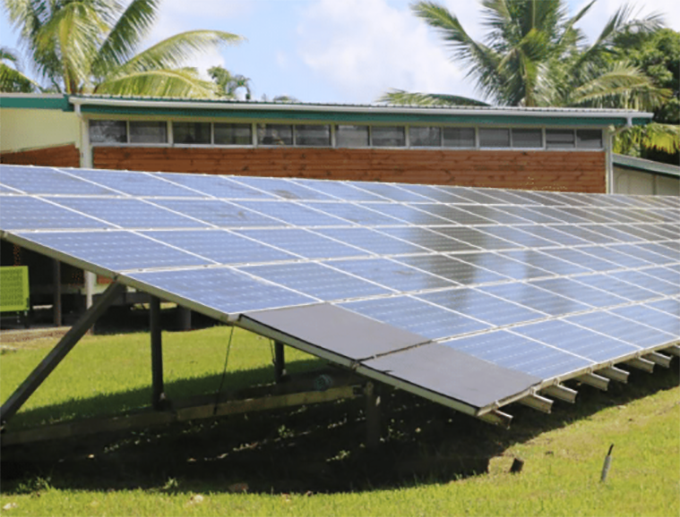
 The University of the South Pacific’s lower campus 45kw solar pv power system. Image: Hele Ikimotu/Bearing Witness
Solar panels the way to go for Pacific, says USP physics academic

By Hele Ikimotu in Suva
Affordable energy enhances the livelihood of Pacific communities, says an associate professor in physics at the Fiji-based University of the South Pacific.
Dr Atul Raturi presented a seminar as part of the Pacific Centre for Environment and Sustainable Development (PaCE-SD) seminar series about the use of solar energy in supporting sustainable development in the Pacific.
The deputy director of the centre, Dr Morgan Wairiu, said these seminars were a great opportunity for students to interact with.
“We encourage our students and staff to attend these to exchange their ideas and knowledge.
“At the same time are bringing the visibility of the programme to outside communities about what we are doing here at the centre.”
Dr Raturi’s seminar focused on global sustainable development goal SDG7 (access to affordable and clean energy). He said SDG7 was a main driver for many of the other development goals.
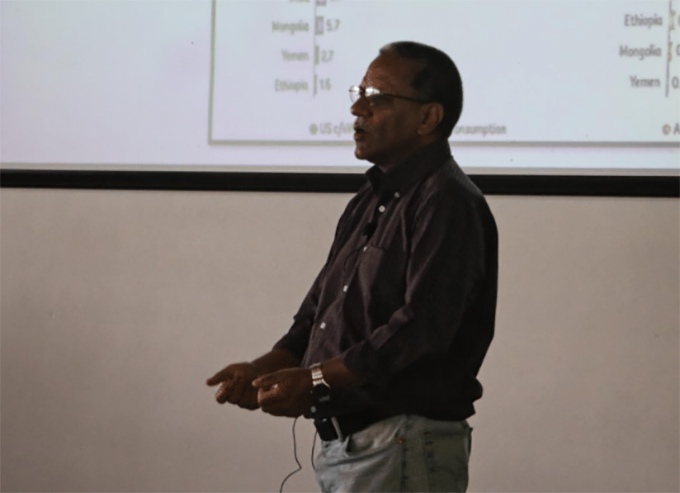 Dr Atul Raturi presenting his seminar at the USP campus in Suva, Fiji … multiple challenges. Image: Hele Ikimotu/Bearing Witness
‘Trilemma’ challenge
He said Pacific Island countries face a”trilemma” – energy poverty, climate change impacts and extreme fossil fuel dependence.
As a result, communities are suffering from the effects such as having a lack of access to clean water.
Dr Raturi said renewable energy development can help tackle these three challenges.
He spoke of how solar PV was on the rise and some of the USP community solar projects as examples of sustainable development.
He said it was important to be having discussions with small communities to understand where their struggles were.
“The challenge of these projects is that we have a good heart and good intentions and we know what we want to do, but the community doesn’t want it because they have other priorities,” he said.
Creating an opportunity
Dr Raturi said listening to helps create an opportunity to collaborate with them on aiding their needs.
“We need to have a discussion with them and then together form a project. This is why a talanoa is very important.”
The USP community solar projects has seen success in several Fijian communities – one significant project regarding solar energy and water in Yanuca Island.
The community had no access to fresh water and through the project, a solar thermal desalination system was installed in March last year.
This system was described by Dr Raturi as “simple” as villagers just bring sea water and fill up a tank which is pumped using the solar energy, then producing fresh water.
“On a good sunny day, the system produces about 200 litres of drinking water,” he said.
The solar water pumping systems have also been installed for some Fijian schools – Batiri Lagi, Namau, Korotolutolu and Kubulau.
Shared message
Dr Raturi shared what one of the head mistresses at Namau School had said about the project:
“The supply of clean and safe water without any fuel costs is recognised by the community and the benefits will be felt by the future generations of children attending this school.”
He said it was important to recognise how solar energy could play a vital role in tackling climate stresses in the Pacific, achieving some of the sustainable development goals and also leading towards aspirations regarding the Paris agreement.
Hele Ikimotu and Blessen Tom are in Fiji as part of the Pacific Media Centre’s Bearing Witness 2018 climate change project. They are collaborating with the University of the South Pacific.

Article by AsiaPacificReport.nz
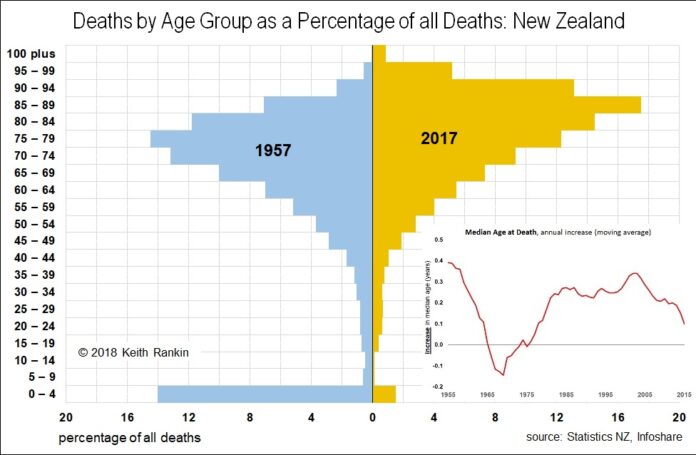
]]>Keith Rankin’s Chart for this Month: Ages at Death, New Zealand 1957 and 2017
Analysis by Keith Rankin.
This month’s chart (a comparative histogram) shows the impact – of both an aging population and rising life expectancy – on ages at death. The percentages shown basically represent the probability that the next person to die in New Zealand will be in a given age bracket.
The biggest change over the last 60 years has been the reduced numbers of deaths of babies and very young children. While this reduction is the biggest single reason for increased life expectancy at birth, the number of deaths at this age in the 1950s also reflects the sheer numbers of children in New Zealand in that decade.
Birth numbers in New Zealand picked up after 1935, so all the age groups under 20 in 1957 show higher deaths in large part because of higher age-specific populations, especially higher numbers relative to the numbers of older adults. We might also note that there was, from a 1957 perspective, an unusually large cohort of people aged in their 70s.
We see that deaths of people in their 20s represented a similar proportion in 1957 to 2017, indicating that there is a problem today with that age group; a problem that may presage future adverse mortality.
Today, nearly one-third of registered deaths are of people in their 80s. More than half of deaths are of people over 80 years old, compared to 22 percent in 1957. The main reason so many people die in their 80s is that they didn’t die younger. It is not necessarily the case that people in their 80s are healthier today than they were in 1957. The numbers of deaths of people aged 45 to 70 remain high, reflecting that these age groups now represent a substantially greater portion of the total population.
The inset chart shows changes to the median age at death, from the mid-1950s to the mid-2010s, when the median age at death increased from about 70 to about 80. The inset makes it look as though most of the increase in life expectancy happened from 1980 to 2010. However, median age at death is very much a lagging indicator of the health of a population. It was only after 1980 that the ratio of older people to younger people in the population changed substantially.
The general impression is that health gains are tapering off. The median age at death has only increased annually by 0.1 years-of-age, this decade. That is entirely accountable by the aging of the 1940-75 baby boom generations.
We should not complacently assume that “we are all living longer”, as a number of commentators do to justify raising the age of entitlement to New Zealand Superannuation. Clearly many people still die at less than 70 years of age, and will continue to do so.
I am guessing that the age-at-death histogram for New Zealand will change very little over the next decade or so, despite a still-rising median age of the living population. Most of the reasons for higher life expectancy since the 1940s have already had their impact. The future contains more downside risk than upside.]]>
Pacific nuclear activist-poet tells stories through culture – and her latest poem
Tuesday, April 17, 2018
Sylvia C. Frain reports from Hawai’i on the release of a poetry work focusing on the impact of nuclear activity in the Marshall Islands.
Nuclear activist, writer and poet Kathy Jetñil-Kijner from the Marshall Islands has launched her new poetry work which has a focus on nuclear weapons.
Her newest poem, “Anointed” can be seen as a short film by Dan Lin on YouTube.
At da Shop bookstore for the official launch of her poem, Jetñil-Kijner shared her writing process inspiration with the gathered audience. “I knew this poem could not be a broad nuclear weapons poem, but I needed to narrow the focus,” says Jetñil-Kijner.
The project, which has an aim to personalise the ban of nuclear weapons, began during a talk-story session with photojournalist Lin three years ago in a café. Jetñil-Kijner told Lin that she wanted to perform a poem on the radioactive dome located on what remains of the Runit Island in the Enewetak Atoll Chain. Lin, who before this project worked as “only a photojournalist,” agreed to document this collaborative “experiment”. Lin spoke of how Jetñil-Kijner’s previous poems had the “Kathy effect” which were filmed with only an iPhone and went viral across digital platforms.
However, they agreed that this story deserved more in-depth documentation. They partnered with the non-profit organisation, Pacific Resources for Education and Learning (PREL) and with the Okeanos Foundation, specialising in sustainable sea transport. Travelling by Walap/Vaka Motu/Ocean Canoe for 11 days, Okeanos Marshall Islands ensured that zero carbon emissions were used and the experience served as a way to connect with the sea.
Runit Island
The radioactive dome on Runit Island is one of 14 islands in the Enewetak Atoll Chain, and the farthest atoll in the Ralik chain of the Marshall Islands. Enewetak and surrounding area has been studied scientifically after the 43 nuclear bomb explosions (out of the 67 total nuclear tests in the Marshall Islands) by the United States between 1948-1958.
Dubbed the “Cactus Crater”, Runit Island has limited economic possibilities. It is not a tourist destination nor has ability to export goods. No one will visit or purchase products from a radioactive location. This leaves the community dependent on funding from the United States. While many are grateful, they truly want to self-sustaining future.
While conducting research for the poem, Jetñil-Kijner found that most of the literature is scientific and by journalists or researchers who do not include the voices of the local community or share the end results. Jetñil-Kijner wanted to create a poem focusing on the story of place beyond the association as a bombing site, and ask, “what is the island’s story?”
She learned from the elders that the island was considered the “pantry of the chiefs with lush vegetation, watermelons, and strong trees to build canoes”. As one of the remote atolls, the community consisted of navigators and canoe-builders with a thriving canoe culture.
Both Lin and Jetñil-Kijner said visiting the atolls was emotional and that approaching the dome felt like “visiting a sick relative you never met”.
The voyage included community discussions with elders and a writing workshop with the youth. Since the story of the dome is not usually a “happy one” the gatherings and workshops served as a method for the people to tell their stories not covered in the media or reported in US government documents.
Creating the poem with the community also required different protocols and Jetñil-Kijner thanked the community for generously sharing their knowledge and stories. She spoke to how the video connects the local community with a global audience across digital platforms.
Digital technology and the future
Despite the remote location and distance as an outer island, there is limited wi-fi and the community has access to Facebook. These technological advances help with visualising these previous unfamiliar spaces, including using a drone to capture aerial shots of the dome and the rows of replanted but radioactive coconut trees.
Supported by the Pacific Storytellers Cooperative, a digital platform for publishing Pacific voices, more young people are able to tell their stories online and foster relationships beyond the atoll.
The newest generation is raising awareness through the incorporation of cultural knowledge combined with new media technologies to tell their stories. Empowered young leaders continue to unpack the layers of the nuclear legacy while highlighting their unique community and culture.
The Anointed poem and film serves as an educational resource to highlight the nuclear legacy and ongoing environmental issues in the Marshall Islands. This piece also promotes community justice and is a visual learning tool. Jetñil-Kijner and Lin encourage others to share Anointed and to join the call to action to ban nuclear weapons.
This work is licensed under a Creative Commons Attribution-NonCommercial 3
CULTURE: Sylvia C. Frain: On Saturday, nuclear activist, writer and poet Kathy Jetñil-Kijner from the Marshall Islands launched her new poetry work which has a focus on nuclear weapons. Her newest poem, “Anointed” can be seen as a short film by Dan Lin on YouTube.
https://www.kathyjetnilkijiner.com/
Nuclear activist and poet Kathy Jetñil-Kijner … exploring the “pantry of the chiefs with lush vegetation, watermelons, and strong trees to build canoes”. Image: Kathy Jetñil-Kijner
Report by Pacific Media Centre ]]>
Bryce Edwards’ Political Roundup: NZ’s fraught balancing act on Syria bombing
Bryce Edwards’ Political Roundup: NZ’s fraught balancing act on Syria bombing
[caption id="attachment_13635" align="alignright" width="150"] Dr Bryce Edwards.[/caption]
Should New Zealand be giving support to Trump’s military intervention in the Middle East? New Zealand politicians and commentators are very divided on what the best course of action is. So far, the Government has tried to take a middle path, being highly diplomatic in its response to the US-UK-France bombing of Syria, with Prime Minister Jacinda Ardern saying that she “accepts” what has happened.
This very deliberate use of the word “accepts” is designed to be ambiguous. It can be taken as support for the bombings. On the other hand, Ardern has also couched her “acceptance” of the attacks within broader statements about the need for a UN-mandated approach to the civil war in Syria. Her comments fall well short of other countries who have more clearly sided with Trump, Macron and May. Nonetheless, this middling approach has produced criticisms from both sides of politics. And as the conflict continues, these hard criticisms suggest that Ardern may be forced to “get off the fence”. The leftwing criticisms of Ardern’s approach Chris Trotter, writes in The Press today that “New Zealand’s prime minister has chosen to talk out of both sides of her mouth”, and risks running foul of Aesop’s famous dictum that “He who tries to please everybody, ends up pleasing nobody” – see: Prime Minister Jacinda Ardern has a bob each way on bombing Syria. Trotter’s strong preference would have been for Ardern to have taken a principled stand against what he sees as the West’s illegal and disastrous military intervention in a region that has already been badly destabilised by a century of imperialism. He outlines an alternative course of action New Zealand could have taken, which he argues would have been more effective and morally superior. He concludes that “An opportunity to assume moral leadership and demonstrate political courage has been heedlessly squandered.” Also critical of Ardern’s statement is former Green MP Keith Locke, who contrasts the stance to Helen Clark distancing herself from the US invasion of Iraq: “In some ways Ardern’s comments are a step back from the stance of the Clark Labour government in 2003, when the Bush administration didn’t wait for weapons inspectors to complete their work before it invaded Iraq. But at least Helen Clark didn’t support that invasion” – see: Ardern wrong to “accept” US-led air strikes on Syria. The Greens get it right. Locke also points out that other leftwing parties such as the British Labour Party are firmly opposed to the bombings. And in fact, “Ardern’s support for the bombing won’t meet much favour when she arrives in Britain shortly. Most parties (Labour, Liberal Democrats, Scottish Nationalists and the Greens) have come out against the air strikes.” Leftwing blogger Steven Cowan also argues Ardern is undermining New Zealand’s so-called independent foreign policy, and is simply making this country “a pawn in the grand game of imperialism” – see: Jacinda Ardern: Supporting American militarism. Cowan says Ardern’s careful wording in response to the air strikes amounts to support: “She couldn’t quite manage to say that she supported it – perhaps she thought that might offend some of her liberal supporters – but, semantics aside, that’s what she meant when he said that she accepted the ‘reasons’ for the military strike.” But another blogger on the left, Martyn Bradbury, completely disagrees with this, and argues Ardern was merely stating a fact: “Jacinda ‘accepts’ the US attacked Syria the same way we ‘accept’ the sun will come up tomorrow – there was an inevitability to Trump’s violence. That’s not collusion, that’s a diplomatic statement of reality” – see: Painting Jacinda out as a war criminal. Bradbury also quips, “I don’t see Jacinda’s diplomacy as grounds to put her in front of a UN war crimes tribunal, although if we did, Golriz [Ghahraman] would be a great lawyer for her.” But it’s not only the “far left” criticising the Government for being too soft on the western intervention in Syria. The Labour Party’s Greg Presland says: “New Zealand has not provided that ringing endorsement [desired by Trump] although has gone quite close in the language used” – see: The Government’s response to the Syrian crisis. He condemns the bombings, saying “the attack is unjustified. The United Nations and all of the related entities are there to ensure that these sorts of issues are dealt with in a civilised way. The OPCW should have been allowed to inspect and report back. Bombing the sites is tantamount to obstruction of justice.” And despite the Government’s ambiguous “acceptance” of the bombing raids, the Greens have come out in condemnation, with Golriz Ghahraman stating that “The airstrikes must be seen for what they are: a continuation of a policy that protects American and western interests and a breach of international law” – see: Bombing Syria will never bring peace. NZ must stand up against ad hoc violence. She claims the bombings will worsen the situation for Syrians, prolonging the conflict, and says “What New Zealand can do is never support any nation on the East/West divide who sponsors violence.” The rightwing criticisms of Ardern’s approach Many on the political right believe that Ardern should have shown much greater support for the US-led bombings. Some of this criticism focuses on Ardern’s appeal to use the UN to resolve the issue. Newstalk ZB’s Mike Hosking says the UN has been a failure, questioning “just how many kids people like Assad have to kill with gas and nerve agent and chlorine before they wake up and realise the United Nations is, has and won’t be doing anything to stop it” – see: Diplomacy is a failed strategy. The National Party, too, thinks the Prime Minister is being too soft. Leader Simon Bridges has said “I think it could be a bit stronger – these words do matter in foreign affairs”, and “if you look at what Australia’s said, Turnbull, actually Trudeau, one of our best mates, they’ve all said they support, they strongly support” – see Dan Satherley’s NZ should support US-led strikes on Syria, UN is useless – Simon Bridges. This report says that Bridges “stopped short of saying he’d offer to put Kiwi troops on the ground if the US requested it”, and he admitted: “I think the honest truth is I just don’t know.” According to the Herald, Bridges also wasn’t necessarily saying “that New Zealand should go where the US went”, saying, “We do have to have an independent foreign policy” – see: NZ should have been stronger on Syrian strikes, says Bridges. The same article cites Bridges’ suspicion that the Government’s approach is being influenced by diplomacy and trade ties with Russia: “You also feel the hand of Russia in all of this and we know that our Government’s had a pretty weird response on that.” Bridges’ statements about a stronger response also seem out of line with National’s foreign affairs spokesperson, Todd McClay, who backed up Ardern, saying “The government has made a strong statement and the National Party supports that” – see RNZ: National supports PM’s ‘strong statement’ on chemical warfare. For two newspaper editorials on the subject today, see the Herald’s Has West made its message clear on chemical weapons?, which says New Zealand should “unequivocally support” the bombings, and the Otago Daily Times, which outlines how New Zealand “has followed the line of countries like Brazil, Peru and Argentina, nations which have looked towards the United Nations Security Council to find a way to prevent the escalation of military conflict in Syria” – see: A red line against chemical warfare. Finally, Newshub political editor Tova O’Brien is also disappointed by Jacinda Ardern’s ambiguous position on Syria, and puts forward the case for and against supporting military intervention – see: PM’s position firmly on the fence isn’t good enough. Her conclusion? “None of this is particularly bad – it’s just so, so far from good.”
]]>Dan McGarry: Want to lead in the Pacific? Try listening first

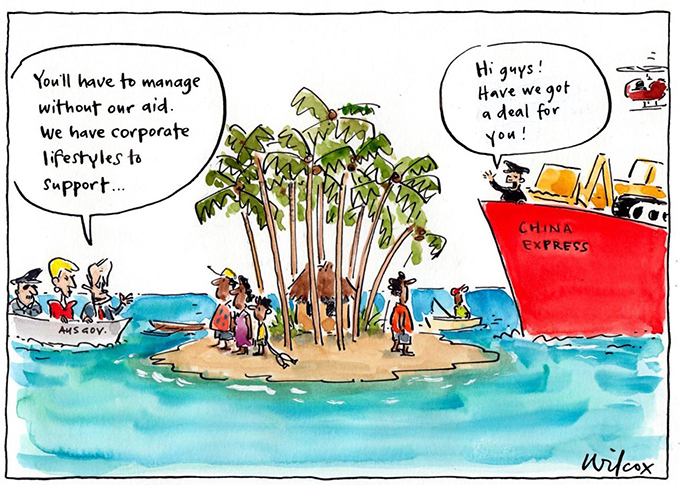 Cathy Wilcox’s Sydney Morning Herald cartoon is a showcase for everything that’s wrong with Australian foreign policy. Cartoon: Cathy Wilcox/SMH/VDP
By Dan McGarry in Port Vila
The average Australian’s conception of Pacific island nations is so limited it makes some of us wonder if they even want to understand. Our voices—and our reality—have been pointedly and repeatedly ignored in the media, and in the corridors of power.
An Australian news service breathlessly proclaims Chinese plans to build a military base only a short flight away from Brisbane, and the Canberra commentariat has kittens.
Vanuatu insiders say “it was never on the cards”.
“Yes, but it was discussed!” insist defence analysts.
“A base was never discussed and it would never happen,” says Vanuatu’s Foreign Minister.
“Yes, but a Chinese military presence is in the works!” insist the same analysts.
“Vanuatu would never agree to this and anyone who says otherwise is indulging in malicious speculation,” says Vanuatu’s Prime Minister.
“Cold warriors”
“Here’s the wharf where it’s going to happen!” announce Australian media, and a chorus of “cold warriors” claim that Australia is forsaking its God-given leadership role in the Pacific.
“We, uh, have our own leaders,” say Pacific islanders.
“Yes, but they’re drowning your countries in debt!” cry the politicos.
“Well, we’re not perfect, but there’s no crisis,” say our analysts. “Our debt to GDP ratio is less than half of Australia’s.”
“China is slyly using debt/equity swaps to take over your infrastructure!” Canberra cries.
“No, actually. Our loans don’t contain language that would allow that,” reply the islanders, who by this time are wondering why they even bother saying anything.
The Chinese Bases folderol is just the latest chorus in a litany of Australian indifference to Pacific voices. Every time some tendentious prat opens their mouth and starts telling the Pacific that what’s good for Australia is obviously good for us, the entire region sighs.
Collective eye roll
That jolt you just felt was a collective eye roll that nearly tipped the island.
Can we get something clear? If you want us to listen to you, you’ve got to listen to us.
It may have escaped your attention, but there was an earthquake in Papua New Guinea recently.
It affected over half a million people, killing 150 outright and leaving 270,000 in need of humanitarian assistance. The situation remains desperate, and the breakdown of law and order in some areas has made it impossible for aid organisations to work.
You can be forgiven for not knowing this. There were no Chinese warships involved.
As you read this, massive ash falls from an active volcano are forcing 11,000 Ni-Vanuatu to relocate for the second time in six months. Thousands may never return home. No Chinese warships were involved, so again, you might not have heard.
Make no mistake: When the Pacific is in need, Australia helps. It helps more than any other nation. But the overwhelming majority of Australians don’t seem to know or care that it does.
They don’t know
If they knew, they’d probably care. But they don’t know, so they have no reason to care.
This is the fault of the media. Specifically, it’s an editorial failure. Reporters are champing at the bit to share our stories, but producers and editors constantly baulk at the time and expense of reporting from and about the Pacific islands.
On the morning Vanuatu announced the evacuation of 11,000 people from the volcanic island of Ambae, the journos who broke the Chinese base story were still in Vanuatu. When told the news, they doubted that Fairfax would pay for them to go to Ambae to report on the exodus.
This is the same company that gladly paid a team to spend a week reporting on a defence analyst’s fever dreams, someone whom the team members themselves admitted might be paranoid.
The main difference between Beijing and Canberra is that Beijing listens. For better or for worse, Chinese diplomats listen to what Pacific leaders want. Often enough, they give it to them.
And more often than not, Australian pollies wait patiently for Pacific Islanders to finish speaking, then tell them what they need. There is a pervasive and deeply pernicious perception in the foreign policy establishment that Pacific voices don’t count.
Political cartoon
A recent political cartoon in the Sydney Morning Herald distils the attitude prettily.
An island with nothing but a grass shack and a few benighted dark people is deserted by its erstwhile benefactors, and left to the tender mercies of a shipload of Asian hucksters.
Without Julie Bishop and Malcolm Turnbull and the gang, we’re left helplessly clutching our cowrie shells.
The image is so absurdly parochial it borders on outright racism.
Who benefits from these Chinese wharves? We do! The people of Vanuatu. You might have heard of us. We live here.
Beginning this week, that wharf will be the landing point for thousands of people displaced by natural disaster. Australian relief ships will no doubt be welcomed, too.
Let’s see how many headlines our devastated lives derive.
My guess is zero—unless we invite the Chinese navy to help.
Dan McGarry is media director of the Vanuatu Daily Post group. This article is republished with permission.
Article by AsiaPacificReport.nz
]]>PMC’s radio show features Chinese ‘base’ claim, justice and diabetes

Pacific Media Watch Newsdesk
Pacific Media Centre director Professor David Robie blasted some of the global coverage of the alleged Chinese military base plans for Vanuatu, describing it as speculative and “scaremongering”.
He praised the Vanuatu Daily Post for giving the other side of the story and media director Dan McGarry for his in-depth “baseless rumours” article published in both The Guardian Australia and the Post.
Radio 95bFM’s Reuben McLaren talked to Dr Robie on the PMC’s weekly Southern Cross show.
Dr Robie also talked about Nauru abolishing its Appeal Court in Australia, a huge diabetes health bill blowout in Fiji, and the “mourning” in Suva over Fiji’s shock 14-0 loss to New Zealand in the Commonwealth Games sevens gold medal final.
The diabetes story was revealed by a final-year Wansolwara student journalist, Adi Ana Civavonovono, of the University of the South Pacific.
Southern Cross on PMC’s Soundcloud
Listen to Southern Cross:
Article by AsiaPacificReport.nz
]]>Newsletter: New Zealand Politics Daily – April 17 2018 – Today’s content
Newsletter: New Zealand Politics Daily – April 17 2018 – Today’s content
Editor’s Note: Here below is a list of the main issues currently under discussion in New Zealand and links to media coverage.
[caption id="attachment_297" align="aligncenter" width="640"] The Beehive and Parliament Buildings.[/caption]
Below are the links to the items online. The full text of these items are contained in the PDF file (click to download).
International relations and trade
Stacey Kirk (Stuff): Jacinda Ardern can count trade mission a success barring no late disasters
Claire Trevett (Herald): What PM Jacinda Ardern can learn from Germany’s ‘mother’ – Chancellor Angela Merkel
Stacey Kirk (Stuff):Jacinda Ardern leaves firebrand mark on Paris as she gets what she came for
Craig McCulloch (RNZ): Ardern hails trade ‘vision’, France’s macron to visit NZ
1News: Jacinda Ardern begins talks for ‘hugely significant’ proposed NZ-European Free Trade Agreement during meeting with French President in Paris
RNZ: France supports NZ-EU trade negotiations
Stacey Kirk (Stuff): Q+A: Free trade with the European Union – the holy grail almost in reach
Claire Trevett (Herald): PM Jacinda Ardern speaks at prestigious Paris university
Claire Trevett (Herald): Ardern, Trudeau and Macron: The young guns share Paris in the springtime
Stacey Kirk (Stuff): Jacinda Ardern meets German Chancellor Angela Merkel to talk trade, education and visas
Stuff: When it comes to trading with the US, we buy more than we sell
Syria
Alexander Gillespie (Herald): Air strike not right response to unproven use of chemical weapons
Chris Trotter (Stuff): Prime Minister Jacinda Ardern has a bob each way on bombing Syria
Nicolas Pirsoul (Newsroom): Some inconvenient truths about Syria
NZ Herald editorial: Has West made its message clear on chemical weapons?
ODT Editorial: A red line against chemical warfare
Herald: NZ’s Russian embassy releases Syria briefing
Health
Nicholas Jones (Herald): Revealed: Hundreds more missed from bowel cancer screening
Karen Brown (RNZ): No amount of apologies will give lost eyesight back – farmer
Jo Moir (Stuff): Health Minister and DHB clash over Middlemore Hospital building issues
Audrey Young (Herald): Leaked email contradicts Health Minister’s claim that he was briefed about only one leaky building at Middlemore
Anna Bracewell-Worrall (Newshub): Health Minister and DHB at odds over Middlemore Hospital
Kurt Bayer (Herald): Comedian Mike King praises Poppy Appeal for helping shine a light on mental health issues
1News: ‘I have sleepless nights’ – New Zealand war hero Willie Apiata opens up about his personal struggles
RNZ: National sexual harm helpline goes live
Phil Pennington (RNZ): Toxic foam: Govt admits new test to assess health impacts ‘essential’
RNZ: Chef beware: 90 percent of raw chicken contaminated
Environment, primary and extractive industries, animal welfare
RNZ: Davis on oil and gas exploration ban: ‘We’re stepping up’
Andrew Little (Taranaki Daily News): What do we do when we can no longer rely on the black stuff?
Bryce Edwards (Herald): Political Roundup: A bolder and greener government
David Farrar (Kiwiblog): Why the decision on oil and gas exploration was bad faith
No Right Turn: The cost of victory
Emma Hatton (RNZ): Appeal against South Taranaki mining plan begins in High Court
Stuff: Taranaki iron sand seabed mining consent reduced Māori interest to lip service, court told
Tom Pullar-Strecker (Stuff): Kiwis Against Seabed Mining promises to take case to Supreme Court if necessary
John McCrone (Press): A question of mana: Why a rūnanga took a dim view of a ‘lake saving’ project
David Williams (Newsroom): Agency tensions exposed
David Hall and Sam Lindsay (Stuff): We must spend more green to get more green
Richard Harman (Politik): Parker in the water wars again
Nikki Mandow (Newsroom): Why are we sparing crayfish but torturing rabbits?
RNZ: Rabbit killing virus kicks off in Otago
Anusha Bradley (RNZ): Federated Farmers slammed by judge for blocking GMO bans
Maja Burry (RNZ):Increase in visitors could close high country walkways
Parliament
1News: National regains lead in latest 1 NEWS Colmar Brunton poll after month of controversy for Labour
1News: Honeymoon over for Jacinda Ardern as Labour drops below National in latest 1 NEWS Colmar Brunton poll
1News: Simon Bridges yet to appeal to voters as a potential prime minister – 1 NEWS poll
Herald: PM Jacinda Ardern buoyed by latest 1 News/Colmar Brunton poll
Herald: Honeymoon over? Labour drops below National in latest poll
Laura Walters (Stuff): National overtakes Labour in latest TVNZ poll
Mike Hosking:Slippery slope for Labour as they slide in poll
Liam Hehir (Stuff): Written constitutions don’t necessarily bring order and freedom
Ben Smith (ODT): No reason to limit voter choices in a stable, democratic country
Greg Presland (The Standard): The Northcote by-election
1News:Simon Bridges ‘confident, but not overly confident’ National’s Dan Bidois will win Northcote by-election
RNZ: Northcote by-election: Meet the candidates
Mark Jennings (Newsroom): Parenting more important than politics: Lotu-Iiga
Transport and road safety
Interest: Phil Twyford says there is a “great deal of interest” from private capital providers investing in New Zealand’s transport infrastructure
Lucy Bennett (Herald): We’re open for business, Phil Twyford tells investors
Thomas Coughlan (Newsroom): Twyford’s way around budget rules
Benedict Collins (RNZ): Previous govt criticised for failing to set road accident targets
Henry Cooke (Stuff): 2015 road safety report urged safety targets, higher fines
Lucy Bennett (Herald): $800m in urgent work needed on roads: Twyford
Debrin Foxcroft (Stuff): Government looking at making wheel clamping illegal
RNZ: Watch: Minister speaks over ‘bottom feeder’ wheel clampers
Media
Gordon Campbell (Werewolf): On the prevailing media narratives about the Labour–led coalition
Barry Soper (Newstalk ZB): Social media reaction to my US visa rejection is baffling
Lincoln Tan (Herald): Herald reporter mistaken for a pimp, threatened with a loaded gun
Housing
Susan Edmunds (Stuff): Rents rise around the country as cost crunch goes on landlords
Eric Crampton (Spinoff): A policy in search of a problem: The lunacy of the foreign buyers ban
Tax
Geoff Simmons (Interest): On why we can’t have a fair and efficient tax system, as well as an exemption on owner occupied housing
Public Health Expert: A public health perspective on taxing harmful products
Scoop: Fair enough? How should New Zealanders be taxed?
Immigration
Lincoln Tan (Herald): Human trafficking: Brokers lure foreign sex workers to NZ with ‘half truths’
RNZ: ‘They chucked me in a cold cell for a couple of days’
Herald: Associate minister Kris Faafoi set to decide fate of Mark Middleton’s deportation order
Herald: Act leader David Seymour calls on Govt to intervene in Mark Middleton deportation case
No Right Turn: This is just wrong
Justice
Newsroom: ‘Repugnant’ committee pursuing female lawyer must go
Sam Hurley (Herald): Police protect judges at home from ‘intimidating’ Family Court protesters
Education
Elizabeth Rata (Newsroom): The basic flaw in our education system
Newshub: Tracey Martin defends Bill to restrict title of ‘teacher’
Chris Morris (ODT): Independent barrister to review student law camps
Joel MacManus (Critic): Students Pay Tribute To Departing Law Dean
Esme Hall (Critic): “Stress and Uncertainty” for Uni Staff Over Job Cuts
Christchurch
Herald: Christchurch quake claimant Peter Glasson’s hunger strike outside Southern Response offices
RNZ: Quake claimant goes on hunger strike: ‘We’ve had enough’
Joel Ineson (Stuff):‘Good luck with that’: Departing Bishop criticises cathedral restoration in swansong sermon
RNZ: Christchurch cathedral restoration: ‘People are more important than buildings’
Chris Hutching (Stuff): Chamber of Commerce urges greater pace of rebuild and ‘release’ of assets
RNZ: Christchurch City Council apologises to owners of menacing dogs
Auckland
Simon Wilson (Herald): The price of power in a stormy city
Russell Brown (Public Address): Paying for the storms to come
Herald: ‘Hazard fatigue’ may be behind severe weather warnings confusion
Herald: Activist Penny Bright’s home listed for mortgagee sale over unpaid rates
TVNZ/Spark RWC deal
Mark Jennings (Newsroom): Spark looks to convert Rugby World Cup try
Peter Griffin (RNZ): TVNZ/ Spark deal: Big risk but will it pay off?
Katie Scotcher (RNZ): Rural communities worried about missing out on RWC
RNZ: Spark, TVNZ secure Rugby World Cup, Women’s, Sevens, U-20
Other
Collette Devlin (Stuff): Sir Peter Jackson’s movie museum and Wellington convention centre costs balloon to $165m
Anna Connell (Newsroom): No exclusion clauses on hate
Richard Swainson (Manawatu Standard): Delamere has already lost Folau argument by taking it seriously]]>
The Beehive and Parliament Buildings.[/caption]
Below are the links to the items online. The full text of these items are contained in the PDF file (click to download).
International relations and trade
Stacey Kirk (Stuff): Jacinda Ardern can count trade mission a success barring no late disasters
Claire Trevett (Herald): What PM Jacinda Ardern can learn from Germany’s ‘mother’ – Chancellor Angela Merkel
Stacey Kirk (Stuff):Jacinda Ardern leaves firebrand mark on Paris as she gets what she came for
Craig McCulloch (RNZ): Ardern hails trade ‘vision’, France’s macron to visit NZ
1News: Jacinda Ardern begins talks for ‘hugely significant’ proposed NZ-European Free Trade Agreement during meeting with French President in Paris
RNZ: France supports NZ-EU trade negotiations
Stacey Kirk (Stuff): Q+A: Free trade with the European Union – the holy grail almost in reach
Claire Trevett (Herald): PM Jacinda Ardern speaks at prestigious Paris university
Claire Trevett (Herald): Ardern, Trudeau and Macron: The young guns share Paris in the springtime
Stacey Kirk (Stuff): Jacinda Ardern meets German Chancellor Angela Merkel to talk trade, education and visas
Stuff: When it comes to trading with the US, we buy more than we sell
Syria
Alexander Gillespie (Herald): Air strike not right response to unproven use of chemical weapons
Chris Trotter (Stuff): Prime Minister Jacinda Ardern has a bob each way on bombing Syria
Nicolas Pirsoul (Newsroom): Some inconvenient truths about Syria
NZ Herald editorial: Has West made its message clear on chemical weapons?
ODT Editorial: A red line against chemical warfare
Herald: NZ’s Russian embassy releases Syria briefing
Health
Nicholas Jones (Herald): Revealed: Hundreds more missed from bowel cancer screening
Karen Brown (RNZ): No amount of apologies will give lost eyesight back – farmer
Jo Moir (Stuff): Health Minister and DHB clash over Middlemore Hospital building issues
Audrey Young (Herald): Leaked email contradicts Health Minister’s claim that he was briefed about only one leaky building at Middlemore
Anna Bracewell-Worrall (Newshub): Health Minister and DHB at odds over Middlemore Hospital
Kurt Bayer (Herald): Comedian Mike King praises Poppy Appeal for helping shine a light on mental health issues
1News: ‘I have sleepless nights’ – New Zealand war hero Willie Apiata opens up about his personal struggles
RNZ: National sexual harm helpline goes live
Phil Pennington (RNZ): Toxic foam: Govt admits new test to assess health impacts ‘essential’
RNZ: Chef beware: 90 percent of raw chicken contaminated
Environment, primary and extractive industries, animal welfare
RNZ: Davis on oil and gas exploration ban: ‘We’re stepping up’
Andrew Little (Taranaki Daily News): What do we do when we can no longer rely on the black stuff?
Bryce Edwards (Herald): Political Roundup: A bolder and greener government
David Farrar (Kiwiblog): Why the decision on oil and gas exploration was bad faith
No Right Turn: The cost of victory
Emma Hatton (RNZ): Appeal against South Taranaki mining plan begins in High Court
Stuff: Taranaki iron sand seabed mining consent reduced Māori interest to lip service, court told
Tom Pullar-Strecker (Stuff): Kiwis Against Seabed Mining promises to take case to Supreme Court if necessary
John McCrone (Press): A question of mana: Why a rūnanga took a dim view of a ‘lake saving’ project
David Williams (Newsroom): Agency tensions exposed
David Hall and Sam Lindsay (Stuff): We must spend more green to get more green
Richard Harman (Politik): Parker in the water wars again
Nikki Mandow (Newsroom): Why are we sparing crayfish but torturing rabbits?
RNZ: Rabbit killing virus kicks off in Otago
Anusha Bradley (RNZ): Federated Farmers slammed by judge for blocking GMO bans
Maja Burry (RNZ):Increase in visitors could close high country walkways
Parliament
1News: National regains lead in latest 1 NEWS Colmar Brunton poll after month of controversy for Labour
1News: Honeymoon over for Jacinda Ardern as Labour drops below National in latest 1 NEWS Colmar Brunton poll
1News: Simon Bridges yet to appeal to voters as a potential prime minister – 1 NEWS poll
Herald: PM Jacinda Ardern buoyed by latest 1 News/Colmar Brunton poll
Herald: Honeymoon over? Labour drops below National in latest poll
Laura Walters (Stuff): National overtakes Labour in latest TVNZ poll
Mike Hosking:Slippery slope for Labour as they slide in poll
Liam Hehir (Stuff): Written constitutions don’t necessarily bring order and freedom
Ben Smith (ODT): No reason to limit voter choices in a stable, democratic country
Greg Presland (The Standard): The Northcote by-election
1News:Simon Bridges ‘confident, but not overly confident’ National’s Dan Bidois will win Northcote by-election
RNZ: Northcote by-election: Meet the candidates
Mark Jennings (Newsroom): Parenting more important than politics: Lotu-Iiga
Transport and road safety
Interest: Phil Twyford says there is a “great deal of interest” from private capital providers investing in New Zealand’s transport infrastructure
Lucy Bennett (Herald): We’re open for business, Phil Twyford tells investors
Thomas Coughlan (Newsroom): Twyford’s way around budget rules
Benedict Collins (RNZ): Previous govt criticised for failing to set road accident targets
Henry Cooke (Stuff): 2015 road safety report urged safety targets, higher fines
Lucy Bennett (Herald): $800m in urgent work needed on roads: Twyford
Debrin Foxcroft (Stuff): Government looking at making wheel clamping illegal
RNZ: Watch: Minister speaks over ‘bottom feeder’ wheel clampers
Media
Gordon Campbell (Werewolf): On the prevailing media narratives about the Labour–led coalition
Barry Soper (Newstalk ZB): Social media reaction to my US visa rejection is baffling
Lincoln Tan (Herald): Herald reporter mistaken for a pimp, threatened with a loaded gun
Housing
Susan Edmunds (Stuff): Rents rise around the country as cost crunch goes on landlords
Eric Crampton (Spinoff): A policy in search of a problem: The lunacy of the foreign buyers ban
Tax
Geoff Simmons (Interest): On why we can’t have a fair and efficient tax system, as well as an exemption on owner occupied housing
Public Health Expert: A public health perspective on taxing harmful products
Scoop: Fair enough? How should New Zealanders be taxed?
Immigration
Lincoln Tan (Herald): Human trafficking: Brokers lure foreign sex workers to NZ with ‘half truths’
RNZ: ‘They chucked me in a cold cell for a couple of days’
Herald: Associate minister Kris Faafoi set to decide fate of Mark Middleton’s deportation order
Herald: Act leader David Seymour calls on Govt to intervene in Mark Middleton deportation case
No Right Turn: This is just wrong
Justice
Newsroom: ‘Repugnant’ committee pursuing female lawyer must go
Sam Hurley (Herald): Police protect judges at home from ‘intimidating’ Family Court protesters
Education
Elizabeth Rata (Newsroom): The basic flaw in our education system
Newshub: Tracey Martin defends Bill to restrict title of ‘teacher’
Chris Morris (ODT): Independent barrister to review student law camps
Joel MacManus (Critic): Students Pay Tribute To Departing Law Dean
Esme Hall (Critic): “Stress and Uncertainty” for Uni Staff Over Job Cuts
Christchurch
Herald: Christchurch quake claimant Peter Glasson’s hunger strike outside Southern Response offices
RNZ: Quake claimant goes on hunger strike: ‘We’ve had enough’
Joel Ineson (Stuff):‘Good luck with that’: Departing Bishop criticises cathedral restoration in swansong sermon
RNZ: Christchurch cathedral restoration: ‘People are more important than buildings’
Chris Hutching (Stuff): Chamber of Commerce urges greater pace of rebuild and ‘release’ of assets
RNZ: Christchurch City Council apologises to owners of menacing dogs
Auckland
Simon Wilson (Herald): The price of power in a stormy city
Russell Brown (Public Address): Paying for the storms to come
Herald: ‘Hazard fatigue’ may be behind severe weather warnings confusion
Herald: Activist Penny Bright’s home listed for mortgagee sale over unpaid rates
TVNZ/Spark RWC deal
Mark Jennings (Newsroom): Spark looks to convert Rugby World Cup try
Peter Griffin (RNZ): TVNZ/ Spark deal: Big risk but will it pay off?
Katie Scotcher (RNZ): Rural communities worried about missing out on RWC
RNZ: Spark, TVNZ secure Rugby World Cup, Women’s, Sevens, U-20
Other
Collette Devlin (Stuff): Sir Peter Jackson’s movie museum and Wellington convention centre costs balloon to $165m
Anna Connell (Newsroom): No exclusion clauses on hate
Richard Swainson (Manawatu Standard): Delamere has already lost Folau argument by taking it seriously]]>
Newsletter: New Zealand Politics Daily – April 16 2018 – Today’s content
Newsletter: New Zealand Politics Daily – April 16 2018 – Today’s content
Editor’s Note: Here below is a list of the main issues currently under discussion in New Zealand and links to media coverage.
[caption id="attachment_297" align="aligncenter" width="640"] The Beehive and Parliament Buildings.[/caption]
Below are the links to the items online. The full text of these items are contained in the PDF file (click to download).
Oil & Gas exploration and environment
John Armstrong (1News): More than a touch of irony if Andrew Little becomes Jacinda Ardern’s Mr Fixit
Zaryd Wilson (Wanganui Chronicle): Editorial: Ripping the scab off oil exploration
ODT Editorial: Huge step on road to no gas
Southland Times Editorial: Not all sunsets are pretty
Martin van Beynen (Stuff): Government’s oil move atones for our environmental sins
James Renwick (The Conversation): New Zealand puts an end to new permits for exploration of deep-sea oil and gas reserves
Brad Flahive (Stuff): ‘Madness’ to search for more fossil fuels, but can NZ pay the price of giving
Dan Satherley (Newshub): Ending oil and gas extraction – what scientists think
Jo Moir (Stuff): Shane Jones looked a little green, and it wasn’t with envy
Nadine Higgins (Stuff):Jacinda’s ‘nuclear-free moment’ puts Government one step ahead of the public
Nicola Patrick (Herald): The dinosaurs are gone … and soon their fossils will be, too
Dan Satherley (Newshub): ‘No question there will be jobs gone’ over drilling ban – Simon Bridges
Dan Satherley (Newshub): Oil and gas exploration ban the ‘worst thing’ for climate – Judith Collins
Greg Presland (Standard): Dear Judith burning Oil and Gas is the worst thing for the climate
Madison Reidy (Stuff): Government still investigating options to fill oil and gas economic gap
1News: Banning gas exploration ‘has significant implications for long-term’ supply, says major gas user
Jacinda Ardern: Speech: Votes for women, nuclear-free, and now we can be world leaders on climate
Andrea Vance (1News): Attacks on DOC staff ‘more frequent and more acute’, with anti-1080 activists and freedom campers common culprits
Jamie Morton (Herald): Green spending offers NZ big opportunities – report
Dominion Post Editorial: Charging for water use
Dominic Harris (Stuff): Legal challenge over Environment Canterbury plan to help irrigation firm delay river flow rates
No Right Turn: Climate Change: The latest inventory
Housing
1News:‘It’s not OK’ – Revelation WINZ is housing homeless in tents ‘not surprising’ and is ‘indicative of under-resourced system’
Herald: Work and Income told to stop funding tents for homeless
Deena Coster (Stuff): Mental health patient left homeless by the state is languishing in prison
RNZ: Kiwibuild: Government focusing on prefab houses
Anuja Nadkarni (Stuff): More innovation expected in renting market
Brendon Harre: Unravelling the strands of the urbanisation debate
Syria
Golriz Ghahraman (Spinoff): Bombing Syria will never bring peace. NZ must stand up against ad hoc violence
Mike Hosking (Newstalk ZB): Diplomacy is a failed strategy
Keith Locke (Daily Blog): Adern wrong to “accept” US-led air strikes on Syria. The Greens get it right
Steven Cowan (Against the current): Jacinda Ardern: Supporting American militarism
Greg Presland (Standard): The Government’s response to the Syrian crisis
Jenna Lynch (Newshub): Prime Minister Jacinda Ardern pushes for UN veto power removal
RNZ: PM’s response to Syria should be stronger, Bridges says
Dan Satherley (Newshub): NZ should support US-led strikes on Syria, UN is useless – Simon Bridges
Herald: NZ should have been stronger on Syrian strikes, says Bridges
Michael Daly (Stuff): ‘Weirdness’ on Russia, means stronger position better on Syria, Bridges says
RNZ: National supports PM’s ‘strong statement’ on chemical warfare
RNZ: PM on Syria strikes: ‘Time to return to the table’
1News: PM says government ‘accepts’ US-led strikes in Syria but always favours ‘diplomatic efforts’
Herald: Prime Minister on Syria strike: NZ accepts why strike happened
Stuff: New Zealand ‘accepts’ reasoning behind US-led strike on Syria
Jordon Bond (Newstalk ZB): PM urges UN based resolution over airstrikes
International relations and trade
Claire Trevett (Herald): Prime Minister Jacinda Ardern arrives in Paris to push along trade talks
Stacey Kirk (Stuff): Stakes couldn’t be higher for PM’s first trade mission
Stacey Kirk (Stuff): Trade and security top of agenda when Jacinda Ardern meets French President
Newshub: Jacinda Ardern wants ‘wins’ from CHOGM
RNZ: PM’s Europe trip: What’s on the agenda?
Henry Cooke (Stuff): Government launches ‘Trade for All’ agenda for future agreements
Claire Trevett (Herald): Prime Minister Jacinda Ardern off to meet Merkel, May, Macron and Ma’am
Fran O’Sullivan (Herald): Doubters Trumped by positive results
Jane Patterson (RNZ): Cool response from Trade Minister to Trump’s TPP u-turn
Isaac Davison (Herald): US position on TPP still unclear, NZ Govt says after Trump’s apparent U-turn
Mitchell Alexander (Newshub): Prime Minister urged to immediately begin CPTPP talks with the US
Craig McCulloch (RNZ): NZ-EU trade deal negotiations tipped for May
Herald: Prime Minister Jacinda Ardern to meet the Queen, Prince Charles in London next week
RNZ: Prime Minister Jacinda Ardern to meet the Queen in London next week
Laura Walters (Stuff): Jacinda Ardern to have one-on-one meeting with the Queen
1News: Jacinda Ardern to meet the Queen at Buckingham Palace next week
Health
Simon Wilson (Herald): Lester Levy: The health boss who’s had enough
Cate Broughton (Stuff): Hysterectomy cancelled 40 mins before as hospitals fail to meet elective surgery targets
Wyatt Creech (Pundit): Behind Middlemore’s rotten walls are even bigger problems
Phil Pennington (RNZ): Middlemore set for ‘untested’ and ‘risky’ reconstruction
RNZ: Middlemore repair could be stressful for patients – union
Auckland Now: Work to begin on leaky south Auckland hospital ward
Dubby Henry (Herald): Dr David Clark says Counties Manukau DHB chairman has not stepped down from his role after Middlemore saga
Stuff: Counties Manukau Health acting chair Rabin Rabindran believed to have stepped aside
Stuff: The sick ironies of Princess Margaret Hospital
Aaron Leaman (Stuff): Patient demand pushes Waikato’s mental health services to capacity
Damien Grant (Stuff): Health boards enough to make you sick
Chloe Winter (Stuff): Alcohol should come with a health warning, argues expert
Karen Brown (RNZ): Margaret Wilson to chair panel on nurses pay
Cate Broughton (Press): Protesting nurses warn of ‘absolute crisis’
RNZ: St John boosts staff numbers following funding increase
Madison Reidy (Stuff): Medicinal cannabis hopefuls discuss how industry should roll out
Gabrielle Baker (Spinoff): How the Waitangi Tribunal can make a difference in Māori health
John Gibb (ODT): ACC looking poor to UN
Cate Broughton (Stuff): Less than 15 per cent of Kiwi women regularly screened for deadly cervical cancer – study
Race
Colin Peacock (RNZ): Taika’s blurt makes media mad as f***
David Slack (Stuff): What’s the objection to Taika Waititi speaking his mind?
Leonie Hayden (Spinoff): Grateful horis and model minorities: why don’t we know we’re racist?
Bill Ralston (Listener):On Taika Waititi’s ‘racist as f—‘ comment
Steve Braunias (Herald): The Secret Diary of The Storm
Lizzie Marvelly (Herald): Why is it shocking to say we’re racist?
Martin Hanson (Nelson Mail): Unpacking the meaning of racism
Dylan Cleaver and Liam Napier (Herald): Special report: White flight – A detailed look at race and Auckland rugby
Local government
Deena Coster (Stuff): Former mayor’s Māori representation mission garners national support
David Williams (Newsroom): Labour’s big miss in Canterbury
Janine Rankin (Manawatu Standard): Values are about more than just value for money
Todd Niall (RNZ): Insight: Digging deeper – Will residents pay up to fix Auckland?
John Boynton (RNZ): Hikoi first step in march to make Manurewa bilingual suburb
RNZ: Phil Goff recovering after unplanned surgery
Melissa Nightingale (Herald): Report: Lower Hutt missing out despite putting $1.2m into arts fund
Nicholas Boyack (Stuff): Hutt City spending millions on ending poverty for its poorest residents
Justice
Dale Husband (E-Tangata): Māorifying prisons isn’t the solution to too many Māori in prison
Liz Gordon: How to bring down prison numbers (the definitive guide)
Belinda Feek (Herald): Probe called ‘repugnant’: High court barrister calls for Law Society committee to be sacked
Deborah Mackenzie (Newsroom): Alarm over Law Society complaint
Northcote by-election
Richard Harman (Politik): Greens could trip Nats up in Northcote
Simon Wilson (Herald): Northcote Notebook: Young Maori men to the fore
Laine Moger (Stuff): National and Labour name candidates for Northcote by-election drag race
Newshub: Northcote by-election candidates ready to run
Lucy Bennett (Herlad): Dan Bidois to contest Northcote byelection for National
Herald: Shanan Halbert Labour’s pick for Northcote byelection
Government
Heather du Plessis-Allan (Herald): Labour faithful in their happy place
John Roughan (Herald): Labour sets about rewriting recent history
Kerre McIvor (Herald): Dreaming of Utopia on two wheels
National
Audrey Young (Herald): National leader Simon Bridges makes a good start at the worst job in politics
Bryan Gould: Life in opposition is not so easy
Toby Manhire (Spinoff): All the things National MPs think are virtue signaling
Migration
Lincoln Tan (Herald): Exposed: Human trafficking happening right here in NZ
Lincoln Tan (Herald): Human trafficking: Migrants lured to NZ with lucrative job offers exploited, forced into sex industry
Oliver Lewis (Stuff):‘Legally they don’t exist’: New Zealand’s stateless population of two
RNZ: Tweak to Australia’s immigration policy sees less overseas Asians
Shawn McAvinue (ODT): Immigrant fighting for unpaid wages
Kate Hawkesby (Newstalk ZB): Plan to deport Karla Cardno’s stepfather Mark Middleton is callous and heavy handed
Retirement and employment
Tamsyn Parker (Herald): Over 30pc of older workers have to work to pay bills
Rob Stock (Stuff): Half of people ‘want’ to work past 65, though many admit they’ll have to
Tamsyn Parker (Herald): Retirement Commissioner hits back at pension criticism
Troy Swann (Herald): How to fix New Zealand’s retirement savings shortfall
Jihee Junn (Spinoff): Five small businesses explain how and why they pay their staff a living wage
Education
Farah Hancock (Newsroom): Back to curriculum for school reports
John Gerritsen (RNZ): New rise in stagnating teacher training enrolments
Shane Cowlishaw (Newsroom): College spends fraction of budget on learning
Simon Collins (Herald): Female school principals finally overtake males in NZ schools
Herald: Proposed bill to restrict use of word ‘teacher’ would fine those not suitably qualified $2000
Richard Prebble (Herald): Rosy report card gets overlooked
RNZ: Students with disabilities still unable to access Vic Uni library
Will Harvie (Stuff): In science, ambiguity and the supernatural are anathema
Media
Hal Crawford (Spinoff): An Australian TV exec tells New Zealand what is (badly) wrong with its television
Barry Soper (Newstalk ZB): Nonsensical US visa rules are beyond me
Carolyne Meng-Yee (Herald): Broadcaster Barry Soper stopped from entering US
Steve Braunias (Spinoff): Wintec Press Club is dead, long live Hamilton Press Club
Stuff: TVNZ and Spark win Rugby World Cup rights
Transport and road safety
Dave Armstrong (Stuff): Let’s fix road toll, with some speed
Michael Daly (Stuff): As Government signals big light rail spend, public transport concerns grow in US
Imogen Neale (Papakura Courier): Political scrap breaks out over $1 billion Auckland road project
Mike Lee (Daily Blog): The March of Folly continues – Labour and the Greens fall into lock-step – the airport rail debacle
NZ Herald editorial:Toughen up on drones at airports
Defence
David Fisher (Herald): The Big Read: Behind the secrecy of the NZSAS, these are the issues the Hit & Run inquiry will investigate
Tracy Neal (RNZ): Former Moscow guard pleased with veteran recognition
Melanie Childs (Herald): Not All Wounds Bleed: Why we should all care this Poppy Day
Other
Kiri Dell (Spinoff): How warring egos are hobbling Māori land trusts
Thomas Coughlan (Newsroom): Commerce Commission set to grow teeth
Kathleen Kuehn (Newsroom): There’s a bigger brother watching you – and profiting from it
Brian Easton (Pundit): Do You Trust Your Community?
Emma Hatton (RNZ): Charity to offer interest-free loans to those in debt ‘traps’
Jacqui de Ruiter (Herald): Where are the women in abortion law-reform discussion?
Chris Hutching (Stuff): More than 100,000 ‘freedom campers’ in NZ last year
Max Towle (RNZ): Questions about sexual orientation and gender identity are closer to being included in the census
Oliver Brown (Telegraph): Laurel Hubbard case shows trans-athletes challenge is a taboo that is best left alone
Deborah Hill Cone (Herald): Why do the arts always lose out against sports
Stuff: Below the Beltway: A week in politics]]>
Bryce Edwards’ Political Roundup: A bolder and greener government

Bryce Edwards’ Political Roundup: A bolder and greener government
[caption id="attachment_13635" align="alignright" width="150"] Dr Bryce Edwards.[/caption]
The Labour-led government is looking bolder, smarter, and greener than it did a week ago. Its announcement of the ban on new gas and oil exploration in the seas around New Zealand has been viewed as a defining moment for the new government. But critics insist the policy is either intrinsically flawed, or doesn’t do enough.
[caption id="attachment_16195" align="alignleft" width="400"] Sedco Rig off Port Taranaki, New Plymouth with Paritutu Rock and Mt Taranaki in the background. Image courtesy of Oil and Gas New Zealand.[/caption]
Richard Harman has an excellent analysis of the new policy, saying “It may turn out to be a defining moment for Ardern’s Government; a bold rebranding that turns Labour a greener shade of red” – see: Defining moment for Ardern. As Jacinda Ardern put it to Harman, “We are bold… That will be a defining feature for us… We will be willing to take bold action, to take action, to take risks on the big stuff.”
Harman compares the policy to when Labour was last in government. At that time Ardern was working for Associate Minister of Energy, Harry Dynhoven, who “presided over an aggressive Government policy which saw it chase big international players, dangling tax incentives and reduced royalties in an attempt to kick-start interest in areas like the Great South Basin.”
Labour is now very much targeting the youth vote, which takes climate change very seriously. Harman says the latest announcement “was a relatively cheap policy to implement as it cemented in its youth vote base and paid its dues to the Greens.” And he points out that the exploration ban comes on the heels of the “Government Policy Statement on transport and ending of large-scale irrigation subsidies”.
The exploration ban is applauded by conservative commentator Martin van Beynen, who says “it demonstrates this Government is prepared to make uncomfortable changes we all know need to happen” – see: Government’s oil move atones for our environmental sins. He argues that such boldness, based on principle, will be respected by the public even if it is painful, because “the electorate can be surprisingly forgiving on points of principle”.
According to van Beynen, if this policy is successful it might well push the Government to go even bolder: “The stance also has the benefit of not appearing as a major cost item on Grant Robertson’s coming budget. With an important environmental notch on its belt, the Government might feel emboldened to deal more bravely with income inequality and poverty next. This will involve some real pain and might force the Government to throw off the shackles of the budgetary rules regarding spending as proportion of GDP.”
This article by van Beynen, like many others, emphasises Ardern’s claim that climate change is her generation’s nuclear free moment. Nadine Higgins says the decision is a “line in the sand” that will be challenging to many people, because this is a rare case of real “leadership” rather than the usual “reflectorship” that Labour and other parties typically practice, whereby they do what is popular rather than what is right – see: Jacinda’s ‘nuclear-free moment’ puts Government one step ahead of the public.
Higgins says, “There have been many reforms that went against the tide of public opinion at the time but were later lauded as a seminal moment in history that happened not a minute too soon… In the decades to come, I envisage us looking back on this week’s decision about oil and gas through a similar lens.”
Similarly, an editorial in the Wanganui Chronicle says that, although there is plenty of criticism of the new policy, “it may be that we look back on this ban the way we look back at our nuclear free stance, or being first to give women the vote, or the 1981 Springbok tour protests. Divisive at the time but we ripped the scab off and they’re now a source of pride” – see: Ripping the scab off oil exploration.
Is the policy really such a big deal?
Although the articles by Richard Harman and Martin van Beynen emphasise the boldness of the new oil and gas ban, they also make some very good points about its shortcomings. Harman suggests the Government might have simply made a virtue out of reality, as offshore exploration applications appear to have dried up anyhow: “the offshore petroleum exploration industry in New Zealand has been in the doldrums now for the past two years and that it may well have turned out that even if the Government had offered up blocks of ocean for exploration, there may have been no takers.”
He quotes a recent industry report: “Interest in New Zealand’s annual oil and gas block offers remains at an all-time low, declining from a peak of 15 new exploration permits awarded in 2014, to just one in each of the past two rounds.”
And van Beynen points out how slowly the change will occur, and that under the Government’s policy there might yet be a boom in offshore oil extraction: “The oil change was a bit like the last National Government announcing it was raising the age of superannuation to 67 in a year so far away that it was academic for most people. Radical change to the oil industry, it is not. About 30 existing exploration permits will continue until at least 2030 and viable oil and gas finds made under those permits could mean production for years after that. We could still have a massive oil industry off the coast of Canterbury and Southland and more onshore wells in Taranaki.”
Will the policy have any real impact?
The oil and gas extraction industry claims the change will do nothing for climate change, saying the problem can only be tackled at the “demand side” rather than the “supply side”. If New Zealand stops producing oil and gas, this will not necessarily reduce its use – but instead just lead to importing more energy.
This is also a point made by Hamish Rutherford: “This will feel good for environmental activists, but unless there are more significant moves to dampen demand, all this will do will be to grant more geopolitical power to countries in the Middle East and of the likes of Venezuela, holder of the world’s largest oil reserves” – see: A knock for the regions, but exploration end won’t curb NZ oil demand.
Rutherford says the ban will have “little or no impact on motorists or fliers. Until the Government takes steps to tax users of fossil fuels, the impact on the climate will be limited.” He argues that the policy “seems moderate”.
It is for this reason the National Party has been using the term “virtue signaling” about the ban, which is defined by an editorial in The Press as used to “refer to pious but empty gestures by the Left” – see: The virtues and vices of oil. The newspaper also criticises National for opposing the policy, even though The Press agrees the ban may have little impact: “a position must sometimes be taken because it is the right one. A moral example can be set. In this case, it is an example that has left the Opposition confused about whether to call it an empty gesture or wholesale destruction of a regional economy. It cannot be both.”
National has also argued the ban could be counter-productive, with Judith Collins alleging that it will actually lead to more coal being burnt, which is worse for the environment. For a discussion of this, see Dan Satherley’s Ending oil and gas extraction – what scientists think.
Another criticism that is gaining more resonance is about what the Government failed to do in announcing the new policy. According to Jo Moir, “It’s understood some in the Government executive are frustrated the announcement wasn’t made in the region most affected and that there was no clear strategy for explaining what comes next” – see: Shane Jones looked a little green, and it wasn’t with envy.
Having no transition plan for either the regions or for energy use seems unforgivable to Moir: “if you decide to mess around with one, you sure as hell need a good plan for the other. And that’s where the Government got it wrong this week – the messaging about why New Zealand needs to do its bit domestically by moving away from oil and gas exploration was fine, but the explanation of what it was being replaced with was non-existent.”
Moir adds: “Wanting to lead the way on the next big technology is one thing, but having a plan is another… a situation not too dissimilar to being told we’re moving you out of your house but we don’t have another one for you to move into.”
Political analyst John Armstrong also has concerns about the “failure of the Government to address a crucial aspect of the ban on offshore exploration”, explaining that “Ardern and her Administration were too busy basking in the glow of self-satisfaction when preaching to the converted” – see: More than a touch of irony if Andrew Little becomes Jacinda Ardern’s Mr Fixit.
Nonetheless, Armstrong says “Ardern deserves credit for sticking to her principles and delivering something of real substance in the struggle to cut greenhouse gas emissions. She also deserves praise for managing to forge an agreement with Labour’s partners in government which produced compromise on all sides and a meaningful end result.”
Finally, to see satire about oil and gas exploration and drilling, see my blog post, Cartoons about the environment and mining.]]>
Dr Bryce Edwards.[/caption]
The Labour-led government is looking bolder, smarter, and greener than it did a week ago. Its announcement of the ban on new gas and oil exploration in the seas around New Zealand has been viewed as a defining moment for the new government. But critics insist the policy is either intrinsically flawed, or doesn’t do enough.
[caption id="attachment_16195" align="alignleft" width="400"] Sedco Rig off Port Taranaki, New Plymouth with Paritutu Rock and Mt Taranaki in the background. Image courtesy of Oil and Gas New Zealand.[/caption]
Richard Harman has an excellent analysis of the new policy, saying “It may turn out to be a defining moment for Ardern’s Government; a bold rebranding that turns Labour a greener shade of red” – see: Defining moment for Ardern. As Jacinda Ardern put it to Harman, “We are bold… That will be a defining feature for us… We will be willing to take bold action, to take action, to take risks on the big stuff.”
Harman compares the policy to when Labour was last in government. At that time Ardern was working for Associate Minister of Energy, Harry Dynhoven, who “presided over an aggressive Government policy which saw it chase big international players, dangling tax incentives and reduced royalties in an attempt to kick-start interest in areas like the Great South Basin.”
Labour is now very much targeting the youth vote, which takes climate change very seriously. Harman says the latest announcement “was a relatively cheap policy to implement as it cemented in its youth vote base and paid its dues to the Greens.” And he points out that the exploration ban comes on the heels of the “Government Policy Statement on transport and ending of large-scale irrigation subsidies”.
The exploration ban is applauded by conservative commentator Martin van Beynen, who says “it demonstrates this Government is prepared to make uncomfortable changes we all know need to happen” – see: Government’s oil move atones for our environmental sins. He argues that such boldness, based on principle, will be respected by the public even if it is painful, because “the electorate can be surprisingly forgiving on points of principle”.
According to van Beynen, if this policy is successful it might well push the Government to go even bolder: “The stance also has the benefit of not appearing as a major cost item on Grant Robertson’s coming budget. With an important environmental notch on its belt, the Government might feel emboldened to deal more bravely with income inequality and poverty next. This will involve some real pain and might force the Government to throw off the shackles of the budgetary rules regarding spending as proportion of GDP.”
This article by van Beynen, like many others, emphasises Ardern’s claim that climate change is her generation’s nuclear free moment. Nadine Higgins says the decision is a “line in the sand” that will be challenging to many people, because this is a rare case of real “leadership” rather than the usual “reflectorship” that Labour and other parties typically practice, whereby they do what is popular rather than what is right – see: Jacinda’s ‘nuclear-free moment’ puts Government one step ahead of the public.
Higgins says, “There have been many reforms that went against the tide of public opinion at the time but were later lauded as a seminal moment in history that happened not a minute too soon… In the decades to come, I envisage us looking back on this week’s decision about oil and gas through a similar lens.”
Similarly, an editorial in the Wanganui Chronicle says that, although there is plenty of criticism of the new policy, “it may be that we look back on this ban the way we look back at our nuclear free stance, or being first to give women the vote, or the 1981 Springbok tour protests. Divisive at the time but we ripped the scab off and they’re now a source of pride” – see: Ripping the scab off oil exploration.
Is the policy really such a big deal?
Although the articles by Richard Harman and Martin van Beynen emphasise the boldness of the new oil and gas ban, they also make some very good points about its shortcomings. Harman suggests the Government might have simply made a virtue out of reality, as offshore exploration applications appear to have dried up anyhow: “the offshore petroleum exploration industry in New Zealand has been in the doldrums now for the past two years and that it may well have turned out that even if the Government had offered up blocks of ocean for exploration, there may have been no takers.”
He quotes a recent industry report: “Interest in New Zealand’s annual oil and gas block offers remains at an all-time low, declining from a peak of 15 new exploration permits awarded in 2014, to just one in each of the past two rounds.”
And van Beynen points out how slowly the change will occur, and that under the Government’s policy there might yet be a boom in offshore oil extraction: “The oil change was a bit like the last National Government announcing it was raising the age of superannuation to 67 in a year so far away that it was academic for most people. Radical change to the oil industry, it is not. About 30 existing exploration permits will continue until at least 2030 and viable oil and gas finds made under those permits could mean production for years after that. We could still have a massive oil industry off the coast of Canterbury and Southland and more onshore wells in Taranaki.”
Will the policy have any real impact?
The oil and gas extraction industry claims the change will do nothing for climate change, saying the problem can only be tackled at the “demand side” rather than the “supply side”. If New Zealand stops producing oil and gas, this will not necessarily reduce its use – but instead just lead to importing more energy.
This is also a point made by Hamish Rutherford: “This will feel good for environmental activists, but unless there are more significant moves to dampen demand, all this will do will be to grant more geopolitical power to countries in the Middle East and of the likes of Venezuela, holder of the world’s largest oil reserves” – see: A knock for the regions, but exploration end won’t curb NZ oil demand.
Rutherford says the ban will have “little or no impact on motorists or fliers. Until the Government takes steps to tax users of fossil fuels, the impact on the climate will be limited.” He argues that the policy “seems moderate”.
It is for this reason the National Party has been using the term “virtue signaling” about the ban, which is defined by an editorial in The Press as used to “refer to pious but empty gestures by the Left” – see: The virtues and vices of oil. The newspaper also criticises National for opposing the policy, even though The Press agrees the ban may have little impact: “a position must sometimes be taken because it is the right one. A moral example can be set. In this case, it is an example that has left the Opposition confused about whether to call it an empty gesture or wholesale destruction of a regional economy. It cannot be both.”
National has also argued the ban could be counter-productive, with Judith Collins alleging that it will actually lead to more coal being burnt, which is worse for the environment. For a discussion of this, see Dan Satherley’s Ending oil and gas extraction – what scientists think.
Another criticism that is gaining more resonance is about what the Government failed to do in announcing the new policy. According to Jo Moir, “It’s understood some in the Government executive are frustrated the announcement wasn’t made in the region most affected and that there was no clear strategy for explaining what comes next” – see: Shane Jones looked a little green, and it wasn’t with envy.
Having no transition plan for either the regions or for energy use seems unforgivable to Moir: “if you decide to mess around with one, you sure as hell need a good plan for the other. And that’s where the Government got it wrong this week – the messaging about why New Zealand needs to do its bit domestically by moving away from oil and gas exploration was fine, but the explanation of what it was being replaced with was non-existent.”
Moir adds: “Wanting to lead the way on the next big technology is one thing, but having a plan is another… a situation not too dissimilar to being told we’re moving you out of your house but we don’t have another one for you to move into.”
Political analyst John Armstrong also has concerns about the “failure of the Government to address a crucial aspect of the ban on offshore exploration”, explaining that “Ardern and her Administration were too busy basking in the glow of self-satisfaction when preaching to the converted” – see: More than a touch of irony if Andrew Little becomes Jacinda Ardern’s Mr Fixit.
Nonetheless, Armstrong says “Ardern deserves credit for sticking to her principles and delivering something of real substance in the struggle to cut greenhouse gas emissions. She also deserves praise for managing to forge an agreement with Labour’s partners in government which produced compromise on all sides and a meaningful end result.”
Finally, to see satire about oil and gas exploration and drilling, see my blog post, Cartoons about the environment and mining.]]>
Diabetes ‘ongoing disaster’ tops Fiji health bill at $124 million

 The increasing number of diabetes cases has raised red flags in the health sector, a burden Fiji health authorities hope to tackle through the media. Image: Creative Commons/Wansolwara
By Adi Ana Civavonovono in Suva
The estimated financial cost and economic burden of diabetes in Fiji reached a staggering $124 million (NZ$84 million) in 2014 with health experts sounding an urgent need for people to relook at their lifestyles and eating habits.
Dr Jone Hawea, a medical doctor and codirector of the Foundation for Rural Integrated Enterprise and Development, did not mince words when he told participants at the Media and Diabetes Advocacy Workshop in Suva last week about the reality of the disease he tagged as an “ongoing disaster”.
According to Dr Hawea, the total yearly financial cost of diabetes in Fiji in 2014 took into account factors such as the total productivity cost for patients and carers and excluded estimates such as private health care costs, out of pocket expenditures and other tangible indirect costs which were difficult to obtain.
“So you can imagine, the true financial cost is therefore very likely to be higher, a high estimate of about $180.3m,” he said at the Holiday Inn.
“Diabetes has the single highest impact on productivity of all non-communicable diseases in Fiji.”
He said diabetes imposed a huge financial and non-financial burden on Fiji’s economy, adding the latter amounted to more than 56,000 years of life lost because of ill-health, disability or premature death.
“Diabetes is largely preventable, so a large portion of these enormous and unnecessary costs can be averted,” Dr Hawea said.
Tangible solutions
While opening the workshop, Assistant Minister for Health Alex O’Connor said the gathering of media professionals and partners in health and wellness programmes was a platform to find tangible solutions to combat this major health issue.
“About 15 percent of Fiji’s adult population have diabetes and another 15 percent have impaired fasting glucose – these are people who have high blood sugar and are at risk of being diagnosed with diabetes,” O’Connor said.
Journalists from print and broadcast media as well as student journalists from the University of the South Pacific, civil society and non-governmental organisations, and the Fiji National University were part of the one-day event, which was organised by Diabetes Fiji in conjunction with the Ministry of Health.
Adi Ana Civavonovono is a final year journalism student at the University of the South Pacific reporting for Wansolwara News.
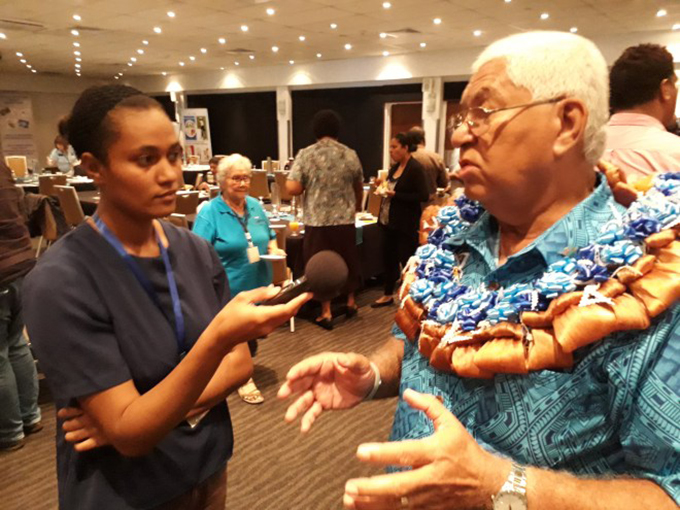 USP Journalism Programme’s final year student Adi Ana Civavonovono interviews Fiji’s Assistant Minister for Health and Medical Services Alex O’Connor at the Holiday Inn in Suva. Image: Wansolwara News
Article by AsiaPacificReport.nz
]]>PMC’s Bearing Witness 2018 crew arrive in Fiji
Touchdown Fiji … Last week: Our intrepid Pacific Media Centre Bearing Witness climate media team Blessen Tom (left below) and Hele Ikimotu Christopher prepping in Auckland before departure … Now: On the ground at the University of the South Pacific.
Touchdown Fiji … Last week: Our intrepid Pacific Media Centre Bearing Witness climate media team Blessen Tom (left below) and Hele Ikimotu Christopher prepping in Auckland before departure
Climate change continues to take its toll on small island nations such as Kiribati and Tuvalu. Image: File – Kiribati in 2009. Jodie Gatfield/AusAID/Wansolwara
Sunday, April 15, 2018
Report by Pacific Media Centre ]]>

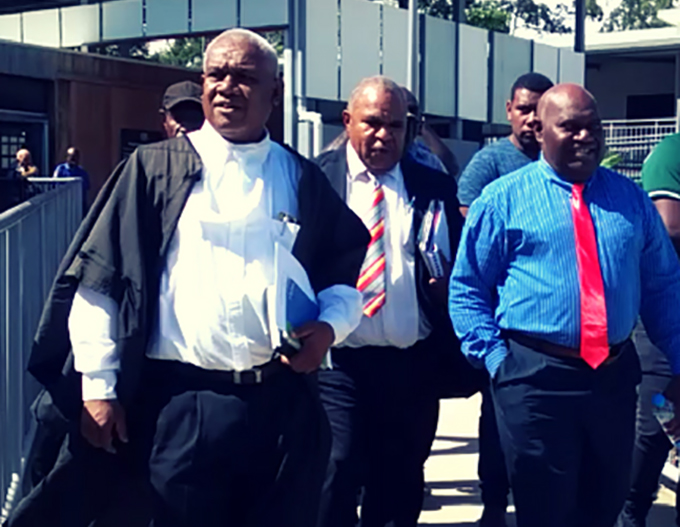

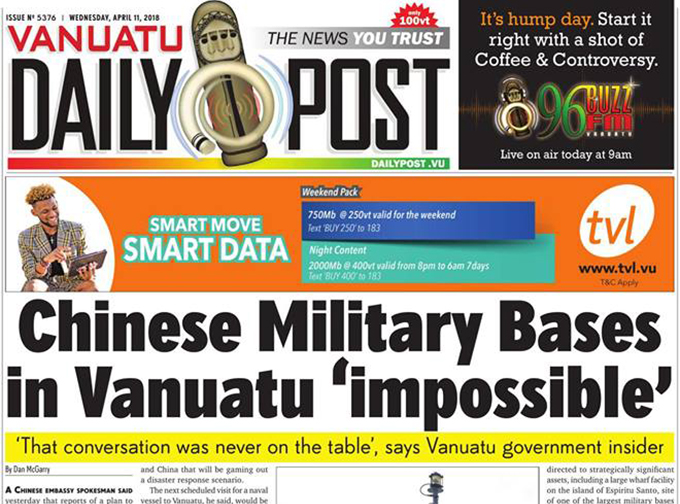
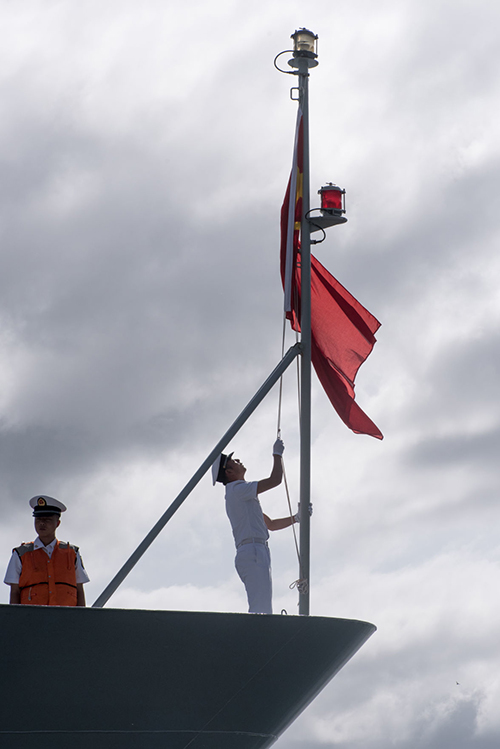 A Chinese sailor raises the red flag on the prow of a PLA Navy frigate during a visit to Vanuatu. Image: Dan McGarry/Vanuatu Daily Post
 An artist’s view of the completed Luganville wharf … source of the “base” controversy. Image: Shanghai Construction Group/VDP


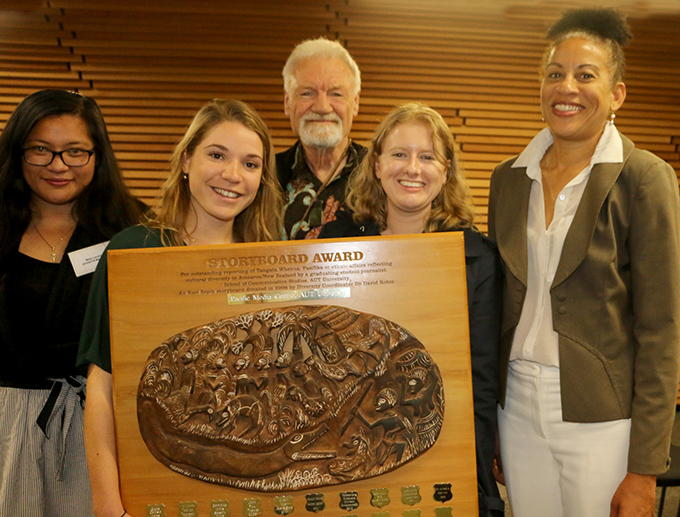
 John Foy Memorial Award for broadcast journalism Hele Ikimotu with his parents Grace and Jone at last night’s AUT communication studies awards. Image: Del Abcede/PMC
 Tagata Pasifika’s master of ceremonies John Pulu, an AUT graduate and past winner of the Storyboard for diversity journalism, entertained the audience with his witty remarks. Image: Del Abcede/PMC.

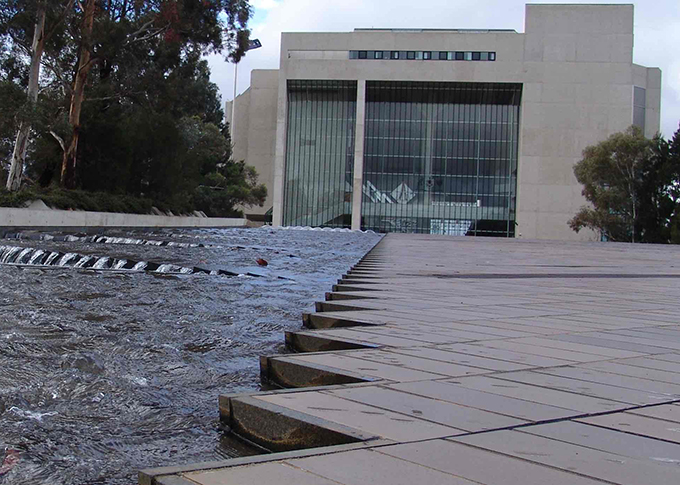

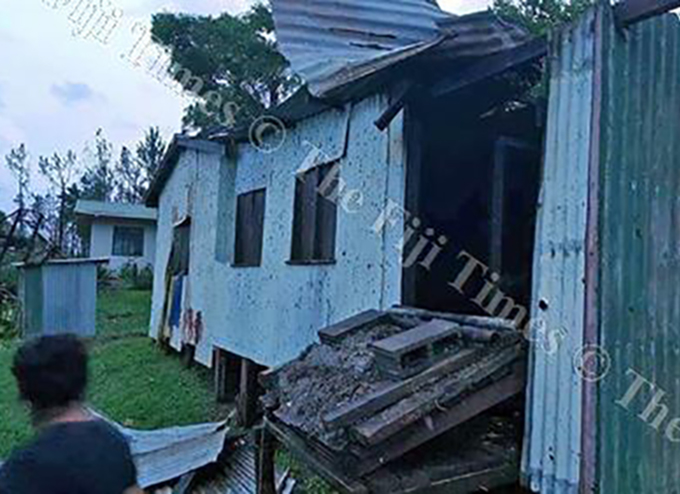

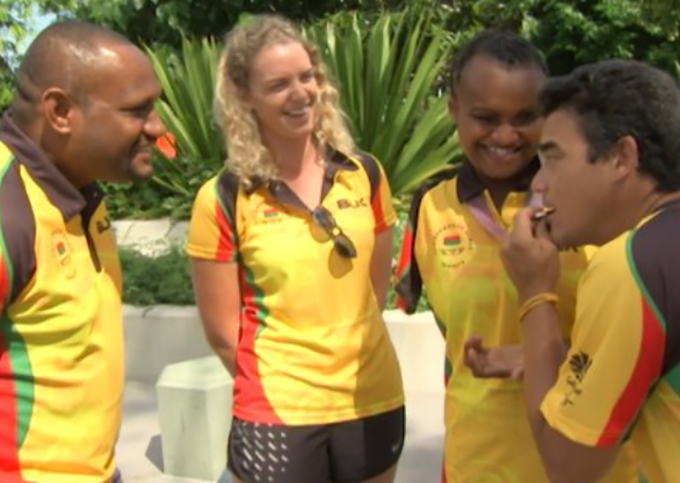
 Friana Kwevira, from Vanuatu, won bronze in the para-athletics womens F46 javelin. Image: SBS
 Lawn bowlers Aidan Zittersteijn and Taiki Paniani have won bronze. Image: SBS
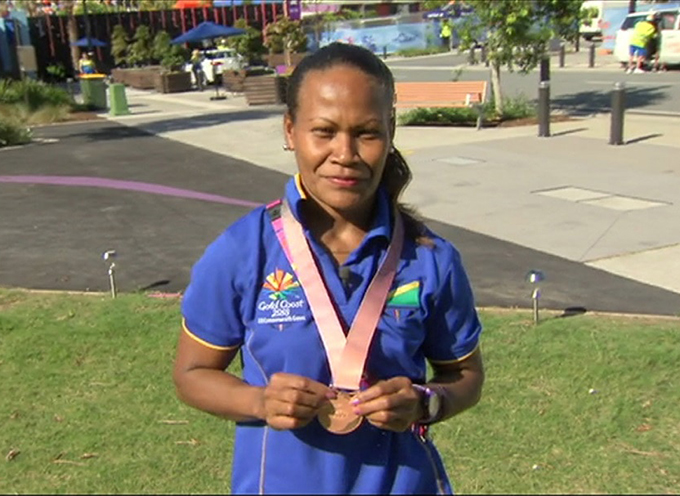 Jenly Wini is the woman behind Solomon Islands’ success. Image: SBS






 Prince Charles as a Vanuatu high chief. Image: Dan McGarry/Vanuatu Daily Post
 Prince Charles arriving at the Chiefs’ Nakamal in Port Vila. Image: Dan McGarry/Vanuatu Daily Post

 Police standing at the violent scene near Madang. Image: EMTV News
  A burnt out car used by police. Image: EMTV News






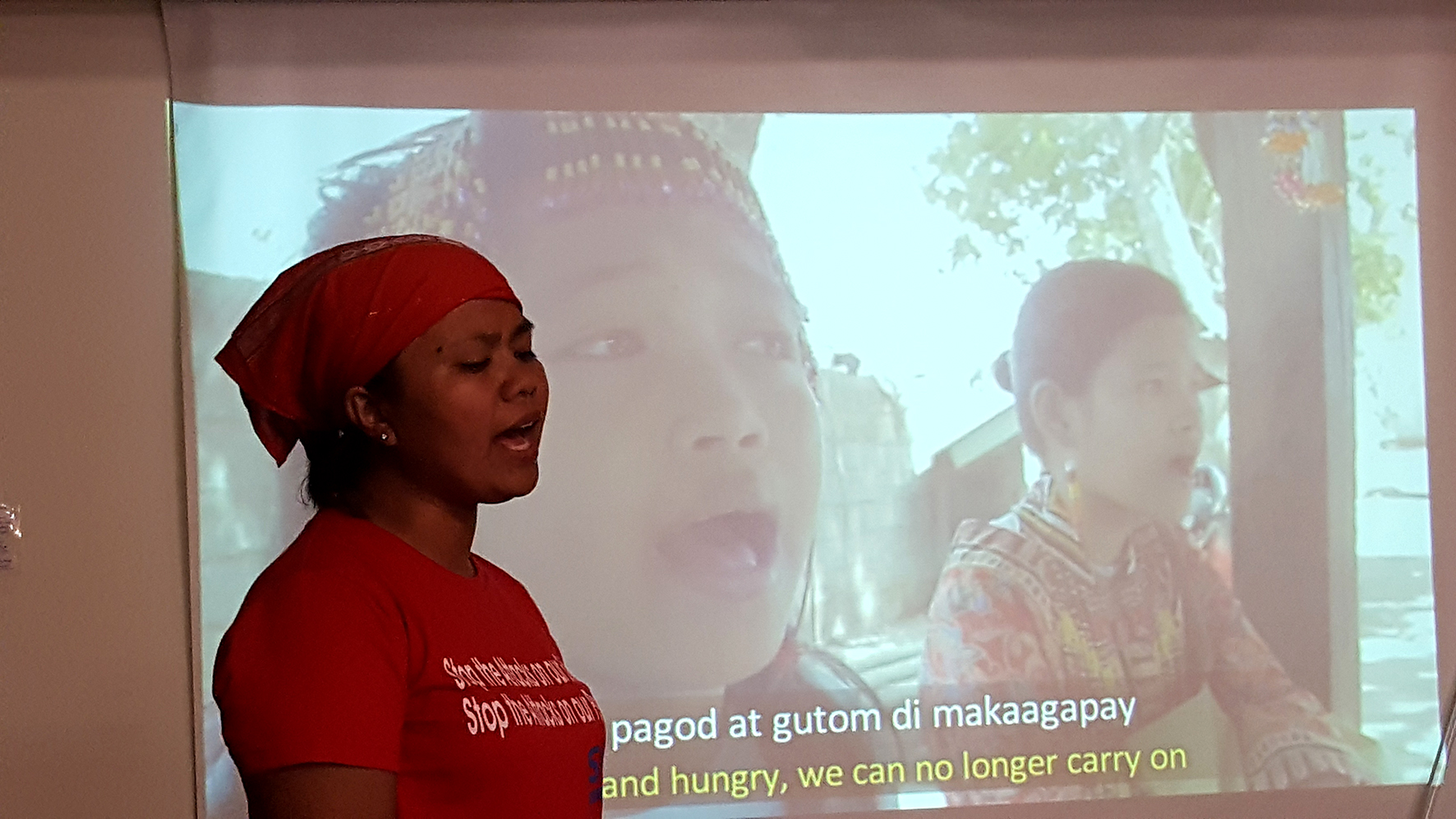
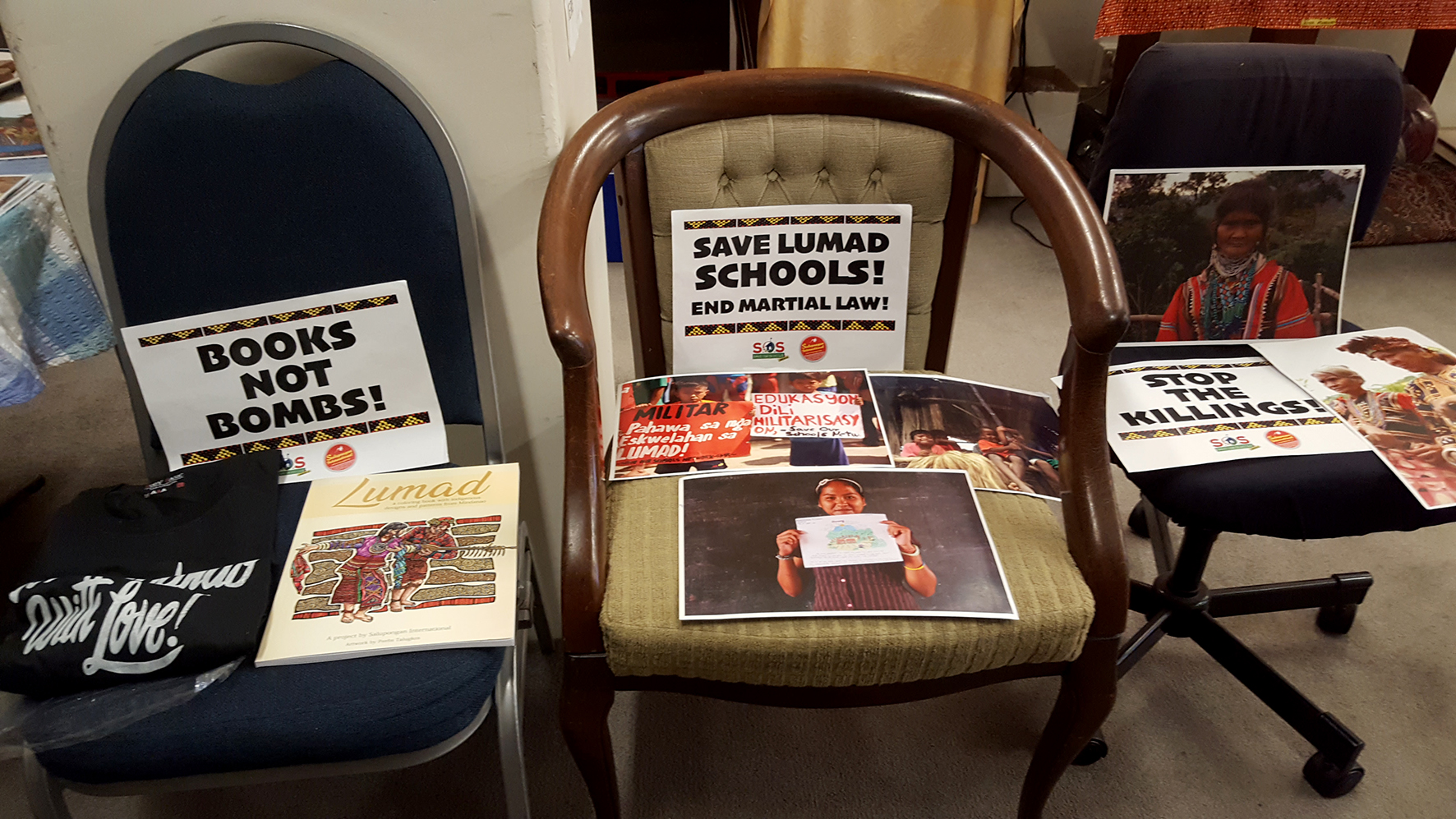

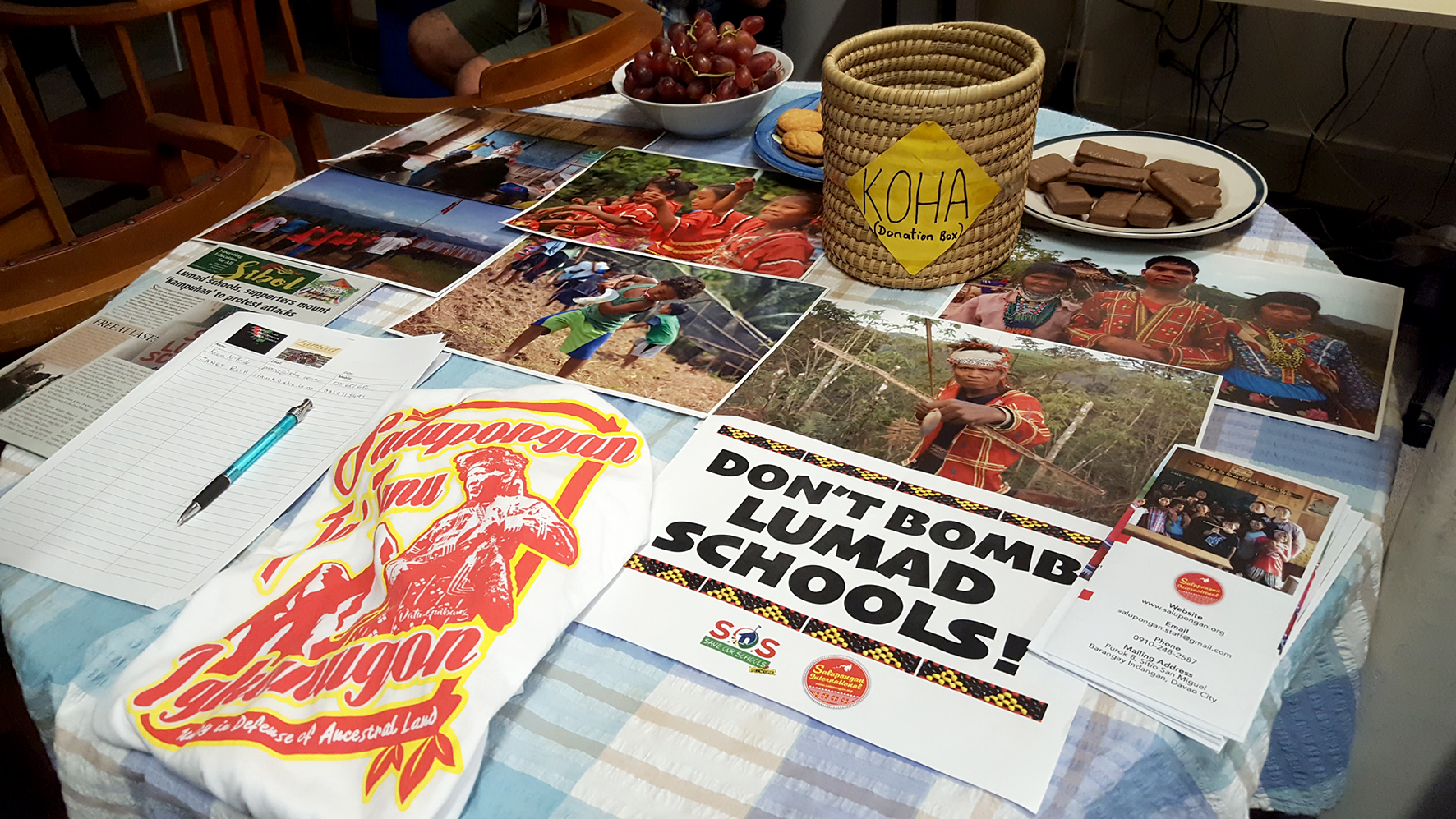
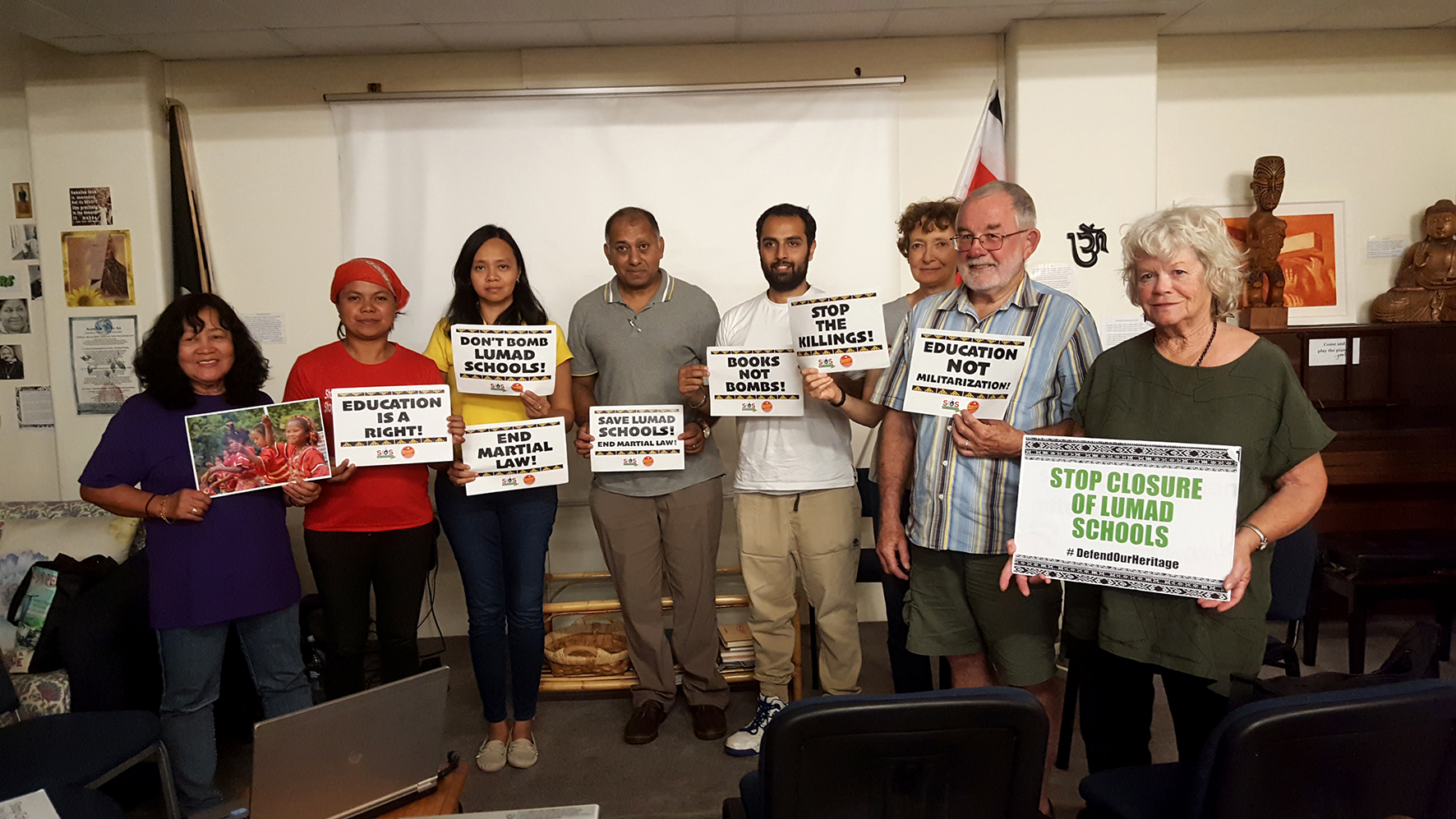

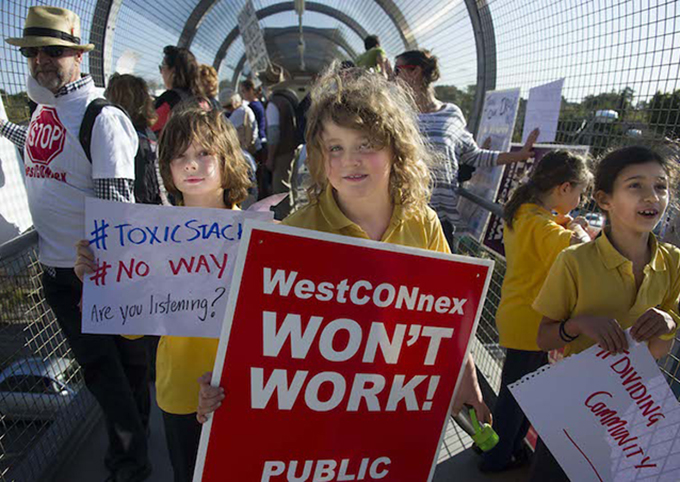 Protests in Haberfield before M4 East construction began. Image: Lorrie Graham
 A graphic of a WestConnex M4 interchange. Image: ABC
 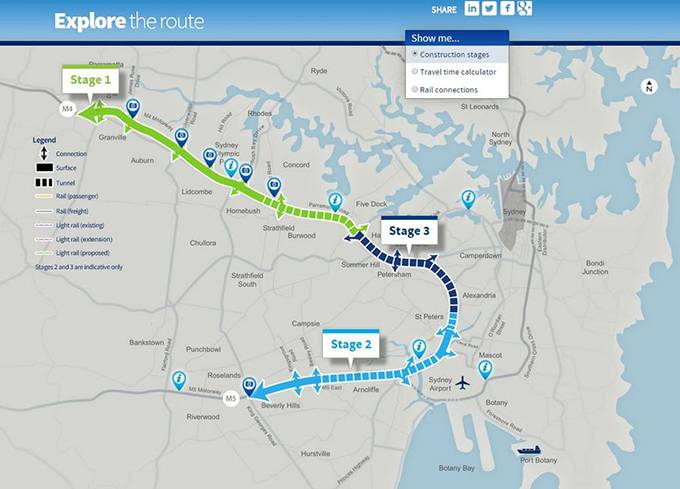 The WestConnex route. Image: The Conversation
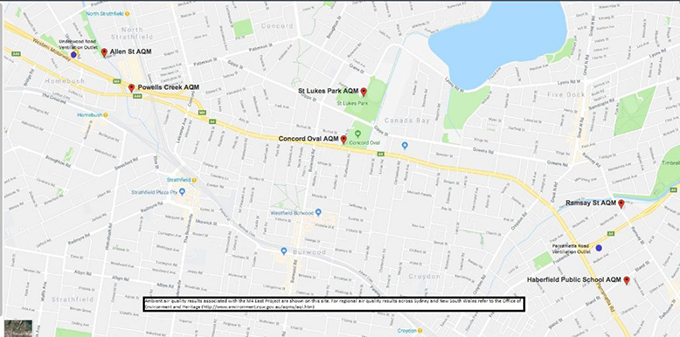 Map of monitoring stations for Westconnex monitoring site. Map: Wendy Bacon blog
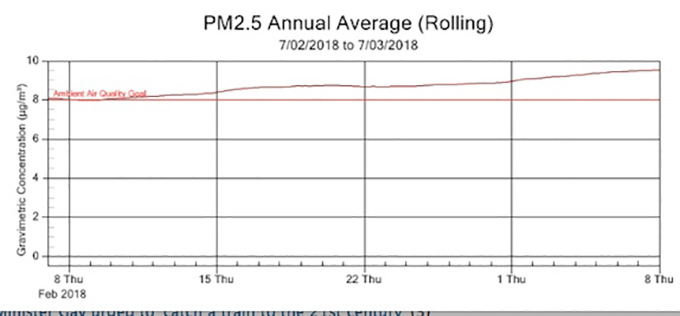 Search done on Ecotech website. Graph: Wendy Bacon blog
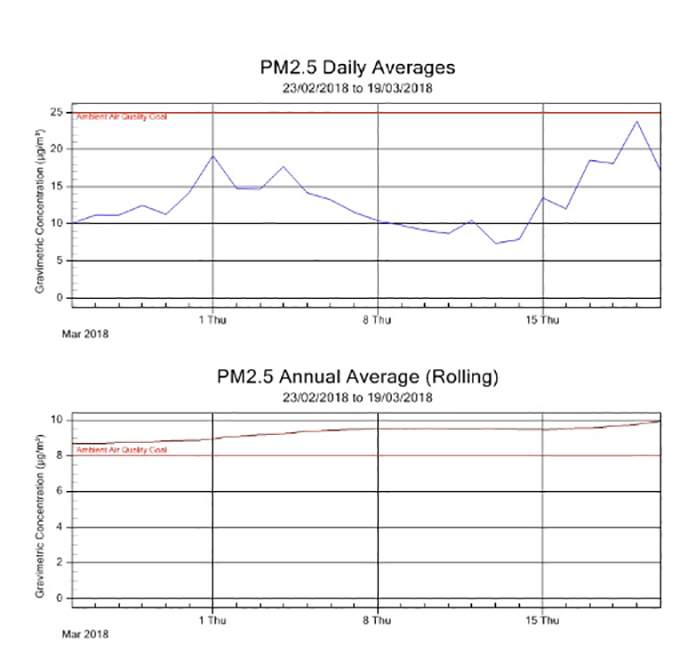
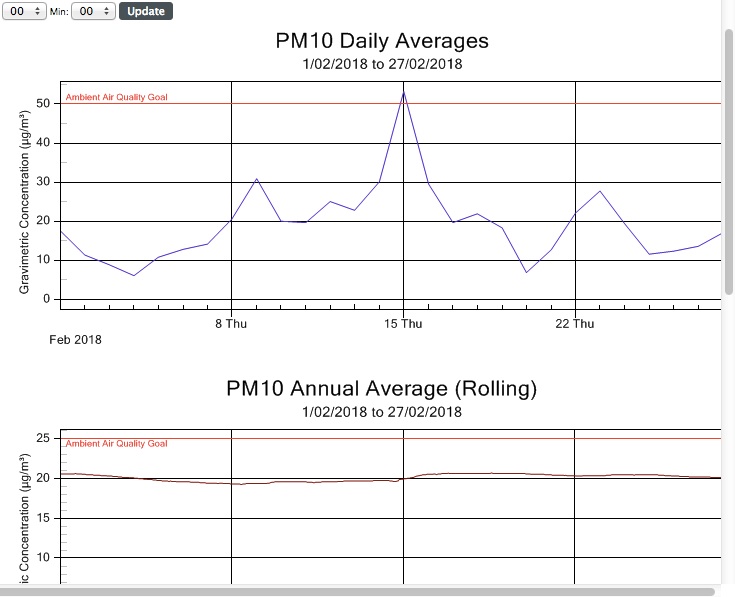 Haberfield Public School PM 10 search from website Feb 1-28.
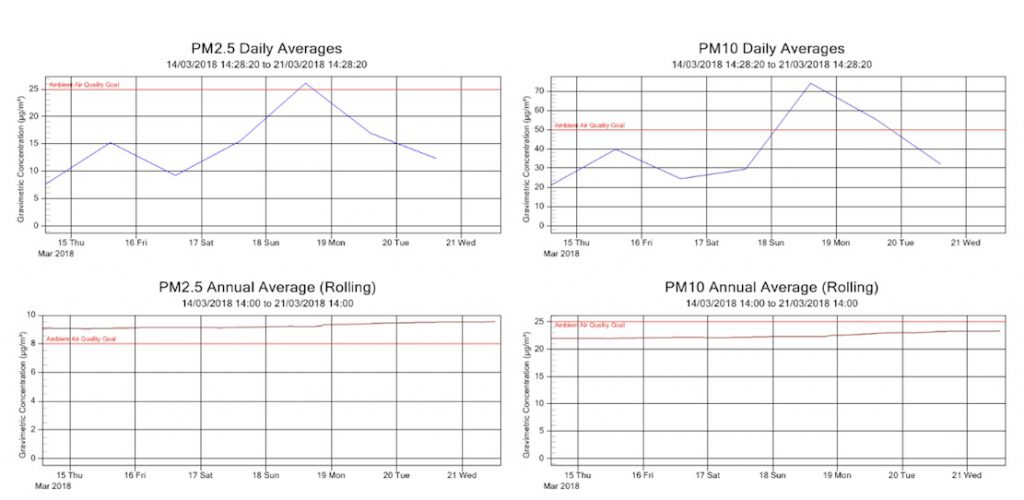
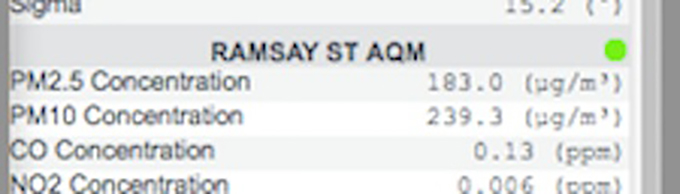 Snapshot from website at 10 pm March 18.
 Hundreds of people are living in apartments overlooking the construction site where the portals will be. There is no monitor on that side.



 Fritizi Junance Magbanua … “By blood I am also a Lumad. I see their plight, their hunger for education.” Image: Jean Bell/PMC
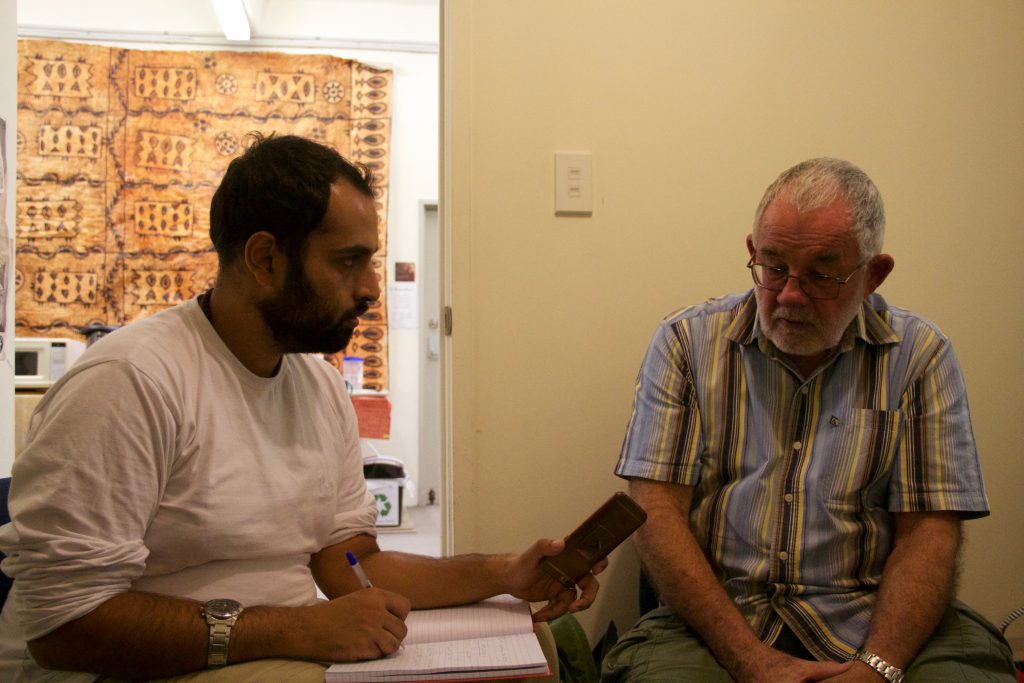 Student journalist Rahul Bhattarai (left) speaks with Pax Christi’s Kevin McBride about the Lumad’s struggle. Image: Jean Bell/PMC
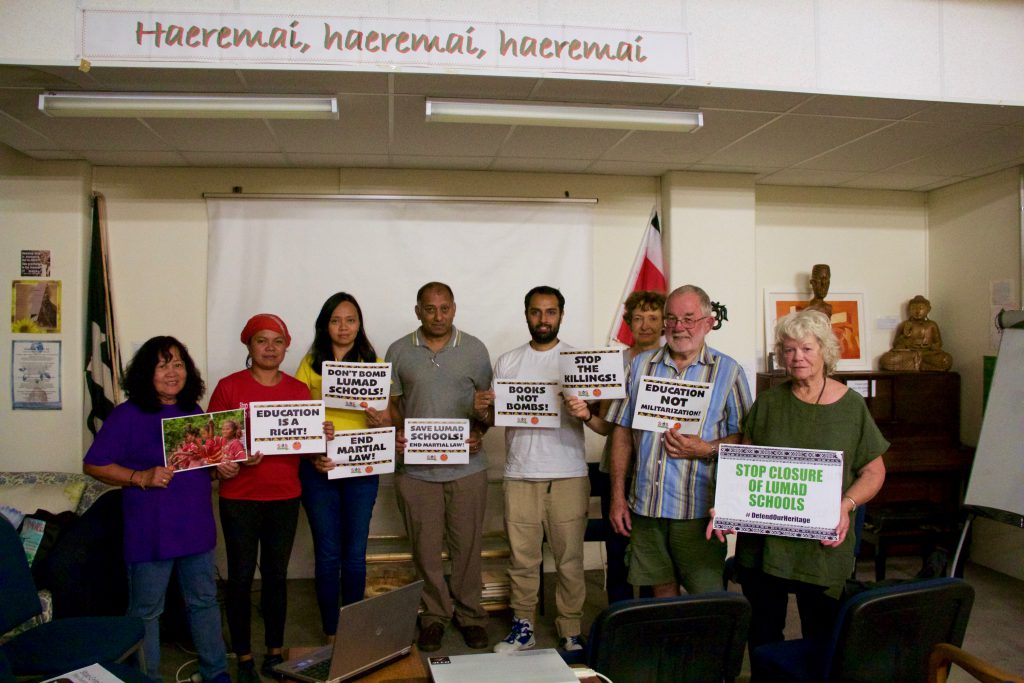 Human rights advocates at the Peace Place meeting last night. Image: Jean Bell/PMC
