
Page 987

PNG media suffers ‘overwhelming deference’, says freedom report

The Samoa Observer media freedom video, Journalism Without Fear or Favour.

By Sri Krishnamurthi, contributing editor of Pacific Media Watch

Papua New Guinea’s two daily newspapers – the PNG Post-Courier and The National – which dominate the market, demonstrated overwhelming deference to the office of former  Prime Minister Peter O’Neill, says a new report about the country’s media freedom.

Transparency International Papua New Guinea (TIPNG) released a preliminary statement from a research report on World Press Freedom Day last Sunday, saying it found “much wrong” with the PNG media. 

The full report, which says public trust in the media is eroding, will be available later in the year.

READ MORE: Pacific governments accused of using coronavirus crisis as cover for media crackdown

The global WPFD20 theme this year was “Journalism Without Fear or Favour” and the Transparency International statement featured media trends in Papua New Guinea and the issue of bias in reporting on governance issues among print media. 

– Partner –

Analysing a period from June 2017 to August 2018, the report examines the balance of coverage on governance issues in particular. 

“The threats to PNG’s media freedom are most obvious when it comes to major national events that require objective reporting in the public interest,” the statement said.

Hampered by other interests
“Recent instances where the ability of the media to report have been hampered by other interests (often political) include:

  • the 2017 national election;
  • the 2018 APEC Leaders Summit;
  • the 2019 Political Transition [after the ousting of O’Neill and the formation of a new government led by current Prime Minister James Marape]; and
  • the 2020 Covid-19 coronavirus pandemic public spending.

“Journalists in PNG are further disadvantaged by the lack of Right to Information (RTI) legislation to enable them to obtain public documents from the state.” the statement added.

“In the absence of a RTI law in PNG the media outlets are further beholden to political interests as sources of information – which further erodes public trust in news outlets.

Transparency International also said: While PNG has enjoyed a relatively free media, this has been under threat in recent years. For instance, the 2020 Reporters Without Borders (RSF)  World Press Freedom Index  assessed PNG to have a press whose independence is ‘endangered’, with a corresponding drop of eight places in rank since last year,” the report said. 

Interestingly one of the reasons cited by RSF for the diminished ranking is that journalists nonetheless continue to be dependent on the concerns of those who own their media.” 

‘Crisis on multiple fronts’
Commenting on the report, Scott Waide
, the Lae bureau chief of EMTV News,  told Pacific Media Watch “what we have here is a crisis on multiple fronts“.

Scott Waide
PNG television journalist Scott Waide … “Debate is stifled, journalists are threatened.” Image: EMTV

Debate is stifled, journalists are threatened, abused and ridiculed, editors, CEOs and board members are put under pressure – you are excluded from events or deliberately not informed,” he said. 

Politicians feel invincible because of the image we reinforce in the media. They want us to report the facts but  not  report the  why and how. They avoid live debates, or live interviews, unless  they feel they have some control over them.

They avoid interviews unless you push them into a corner, if they cannot fully control them, they will influence them.” 

Waide said he had given lectures on the misgiving of the PNG media which become beset with many problems. 

Politicians are put on a pedestal and adored, corruption is normalised and legalised. Politicians feel that government policy should not be questioned, and critical thinking  is largely absent in public debate.” 

The problems stemmed from the overall decline in the quality of training at universities where students took journalism as second or third choice. 

‘A constant void’
“As well as the s
teady exit of senior  journalists, taking with them years of accumulated institutional knowledge, younger journalists leave after an average of five years, there is always a constant void that needs filling in newsrooms and the absence of critical debate driven by the media,” he said. 

He pointed out there was a general absence of proactive action to question, analyse and explain bad government decisions, and fact checking of political statements was non-existent. 

The Transparency International report said: “To reach its potential, however, professional and ethical journalism standards need to be raised in the face of increasing political pressures.”

However, Waide was forthright in his assessment: “The solution is cross-sectoral and  can’t be done only by media organisations. 

Meanwhile, in Samoa similar problems were expressed by Samoa Observer editors and reporters of not being informed of press conferences by the government. 

The newspaper, one of the region’s leading advocates of media freedom, produced a video on social media speaking about the virtues of media on World Press Freedom Day. 

“You are talking about giving the media the ability to go out there and reach out to the masses, give them a voice, give them the ability to reach out to the leaders of this country, give them an opportunity to tell them this what you should do,” said co-editor Alexander Rheeney, who is also a former editor of the Post-Courier in Port Moresby. 

Samoa media ‘encroachments’
His co-editor, James Robertson, said: “There regular updates on this coronavirus situation in Samoa to which we are not invited, there are regular press conferences by the prime minister to which we are not allowed to send reporters to ask questions.” 

“And these are significant encroachments of press freedom in Samoa,” he said. 

 Rheeney was more philosophical, asking the reporters not to take their jobs for granted. 

 “I asked them not to clock-in in the morning and clock-out in the evening Monday to Friday without thinking about their work as reporters, and the power they have in their hands to change the lives of ordinary Samoans for the better and to influence government policy decisions for the benefit of the people,” he told Pacific Media Watch. 

There is a big difference between working for a daily newspaper that publishes ordinary news stories Monday to Friday without thinking about the ‘big picture issues’, unlike at the Samoa Observer where we urge our reporters to think outside the box. 

We strive to get our reporters to tell the bigger story and not just focus on news that gets fed from the Prime Minister’s Facebook livestream or at a press conference where the questions that matter don’t normally get asked,” he said. 

Print Friendly, PDF & Email

Article by AsiaPacificReport.nz

Aged care visitor guidelines balance residents’ rights and coronavirus risk – but may be hard to implement

Source: The Conversation (Au and NZ) – By Yun-Hee Jeon, Susan and Isaac Wakil Professor of Healthy Ageing, University of Sydney

One in four Australians who have died from COVID-19 is from an aged care facility.

These deaths show how fatal and fast the spread of the infection can be, and the extreme challenge of containing the virus once a positive case appears in aged care homes.

But there is also community pressure to ease social distancing rules for aged care residents and, for facilities that banned visits, to start allowing family members and friends to see their loved ones again.


Read more: Banning visitors to aged care during coronavirus raises several ethical questions – with no simple answers


To address these concerns, on Friday the aged care sector and consumer advocacy organisations released a draft visitor access code. The code aims to meet the needs of residents to see their families and friends while minimising any risk of spreading COVID-19.

But putting the code into practice will require more staff time to implement them. And while additional funding is on its way, existing workforce shortages may mean a delay to boosting the front-line workforce.

Rights and responsibilities of residents and visitors

According to the code, visitors should be provided with regular updates and information about what’s happening in the facility.

They should also have the option to talk to their loved one via video conference or telephone calls to supplement in-person visits.

But they can’t visit while they have cold or flu symptoms. They must also have had their flu vaccination, wash their hands, remain in the resident’s room or designated area, and to call ahead before visiting. They may also have their temperature taken on arrival.

The code says residents should have access to video conferencing or phone calls. Georg Arthur Pflueger /Unsplash

Each facility will create its own guidelines about where residents can have guests visit – whether it’s in a dedicated room, the resident’s room, a visiting window or something else.

Most visits should be brief. But residents in their final weeks of life and those with an established pattern of care from a family member or friend, for example to help them eat, should be allowed longer and/or more frequent visits.

The code states residents can continue to use public spaces in the facility, including outdoor spaces. But if there is an outbreak, they will need to be confined to their rooms.

Rights and responsibilities of providers

Facilities have the right to refuse entry to someone for a justifiable reason, and to move to lockdown if there is an outbreak.

They have a responsibility to ensure all staff have their flu shots, to facilitate video conferencing or phone calls with family and friends, and enable in-person visits.

These changes require more staff

All of these changes require additional staff to facilitate better communication, video conferencing and increased visits during the pandemic.

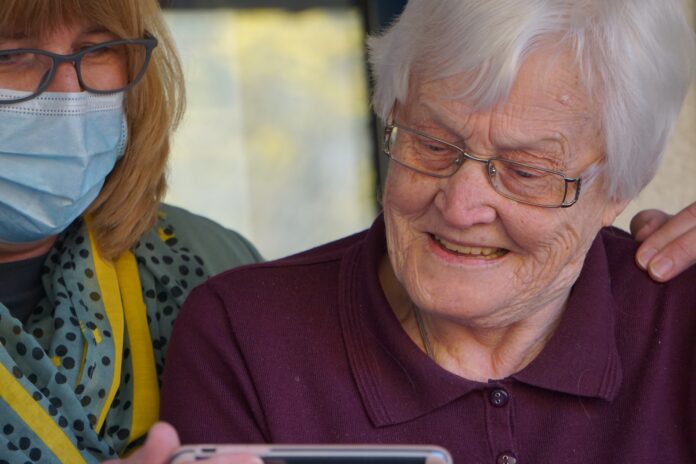
Use of new technologies requires a significant amount of staff time. Many residents would need help holding the phone or dialling the number, or using Zoom or Facetime and maintaining a video conversation online. For some residents, such technologies may be a whole new world of experience.


Read more: Our ailing aged care system shows you can’t skimp on nursing care


Taking bookings for visit times and screening visitors for temperature, flu vaccination status and hand sanitising takes considerable staff time. As does escorting visitors to the room and back out of the facility while ensuring they’re keeping physical distance throughout.

Staff increases will take time to implement

Residential aged care has long experienced workforce problems, including high staff turnover, failure to attract staff with sufficient qualification and training, and leadership issues, to name a few.

A timely and effective response to the COVID-19 outbreak is likely to be hampered by the sector’s existing challenges.

Implementing the guidelines will take up more staff time. Shutterstock

The Australian government, as the primary funder and regulator of the aged care system, has promised to inject more than A$850 million into the aged care sector in response to the COVID-19 pandemic to:

  • address workforce issues, through staff up-skilling, boosting numbers and helping to retain staff
  • support new services such as telehealth and the use of technologies to help residents and their families and friends communicate
  • continue to improve quality and safety.

However, it’s likely to take some time to see the real effect of this funding on the ground and across the whole sector.


Read more: Why are older people more at risk of coronavirus?


The draft code is a positive step in addressing some confusion around social distancing measures in aged care homes. Many providers have already been implementing the principles in the code, and beyond. But some haven’t.

Hopefully the code will be more broadly and consistently practised by all aged care providers.

Public consultations about the code are underway and close 3pm Thursday May 7. If you are a family member or friend of someone living in aged care, or you’re an aged care provider or staff member, you can raise concerns or views about the code here. The code is due to be finalised on May 11.

ref. Aged care visitor guidelines balance residents’ rights and coronavirus risk – but may be hard to implement – https://theconversation.com/aged-care-visitor-guidelines-balance-residents-rights-and-coronavirus-risk-but-may-be-hard-to-implement-137706

Why a trans-Tasman travel bubble makes a lot of sense for Australia and New Zealand

Source: The Conversation (Au and NZ) – By Freya Higgins-Desbiolles, Senior Lecturer in Tourism Management, University of South Australia

We are hearing increasing talk about a trans-Tasman “travel bubble”, which could see Australia and New Zealand open their borders to each other.

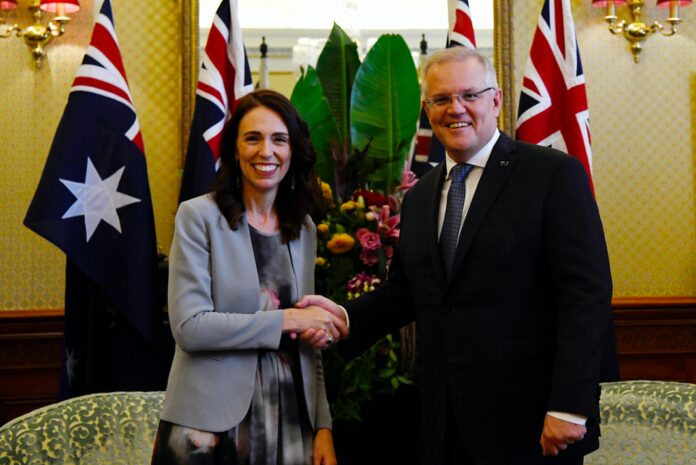
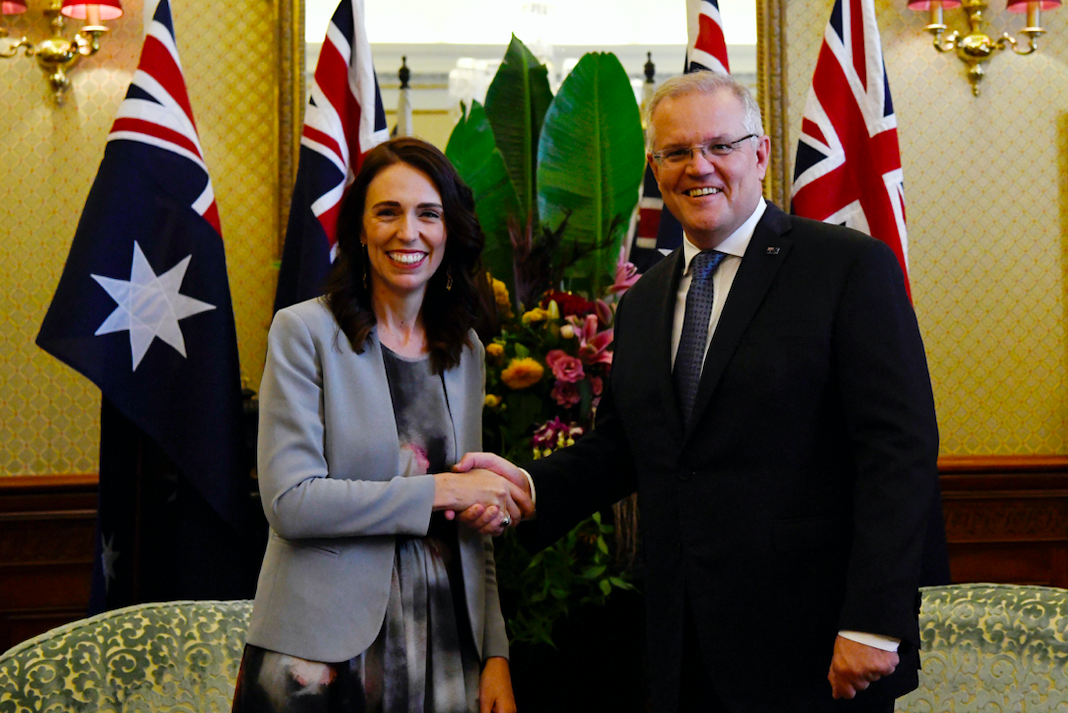
New Zealand Prime Minister Jacinda Ardern was a special guest at Australia’s national cabinet meeting on Tuesday, which discussed the possibility of setting up a travel safe zone.

Both Ardern and Australia’s Prime Minister Scott Morrison have cautioned a travel bubble will not happen immediately. After the meeting, Morrison said a safe zone is “still some time away”. But he also stressed, “it is important to flag it, because it is part of the road back”.


Read more: Reclaiming the streets? We all can have a say in the ‘new normal’ after coronavirus


What would a travel bubble mean in practice for Australia and New Zealand?

As tourism researchers in both countries, we see a travel bubble as a great opportunity to kick-start the post-COVID economic recovery, while also focusing on more sustainable tourism.

Why the trans-Tasman bubble makes sense

A travel bubble would see quarantine-free travel allowed between Australia and New Zealand.

The two neighbours have a unique opportunity to do this. Not only are they geographically isolated, both have so far had success containing – perhaps even eliminating – COVID-19 cases within their borders.

It is not yet known when international flows of tourists will be possible again. But it is understood that global tourism as we once knew it will not be possible until a COVID-19 vaccine is widely available.

Historically, limited travel circuits have been associated with former and current Communist states. Nevertheless, for Australia and New Zealand in 2020, the idea of a travel safe zone makes a lot of sense.

In 2018, New Zealand was Australia’s second largest inbound market for visitor arrivals and fourth largest market for visitor nights and total visitor spend. Australia is New Zealand’s largest visitor market, generating 1.5 million visitors a year as of 2017.

Australians make up more than half of international arrivals to New Zealand each year. Lukas Coch/AAP

The beauty of our shared travel markets is our visitors are generally repeat visitors who head to diverse regions. Because more than 70% of Australians book self-drive holidays, for example, their spending spreads more widely than some other visitors.

Australians seek skiing and adventure in Queenstown, wine in the Martinborough or Waiheke Island regions. They also support Australian sports teams competing in Auckland, Wellington and Dunedin. In reverse, lots of Kiwis head to the Gold Coast but also visit the Hunter Valley for wine or Melbourne, Sydney or Brisbane for sports events.

Starting to rebuild these markets while the rest of the world remains in lockdown would represent a huge boost to both economies.

What is needed to make a bubble work?

After the national cabinet meeting, Ardern stressed “there is still a lot of work to be done” before the travel safe zone idea can progress.

The key to a successful trans-Tasman travel arrangement will be sound planning and implementation.

Rigorous public health measures to facilitate safe travel will be essential, including being prepared for all travel to be halted again if the situation changes.


Read more: New roadmap gives Australia two paths out of COVID-19 lockdown: elimination or adaptation


Broad stakeholder involvement and coordination will be necessary, including between tourism commissions, airlines and airports, industry associations and a range of government agencies, to ensure any reopening is managed well.

Local councils and businesses must also be involved to ensure that the tourism restart is planned, coordinated and controlled.

A chance for greener travel

A trans-Tasman travel bubble could also lead to a change in both countries’ tourism strategies.

Like other countries, Australia and New Zealand have historically prioritised international tourists, particularly “high value travellers”, who spend more and stay longer.

A COVID-era focus on domestic and trans-Tasman travel will likely result in lower yield but could also lead to a more sustainable tourism future. Trans-Tasman travel is the least carbon emitting of our international markets, because it does not rely on long-haul flights.

A focus on domestic and trans-Tasman travel also provides a chance to create a greener tourism industry. Lukas Coch/ AAP

Trans-Tasman visitors also tend to have a lower carbon footprint at their destinations. In 2018, more than half of all Australian visitors to New Zealand (57%) were repeat visitors. Repeat visitors tend to spend more of their time at regional destinations, and less time incurring the carbon costs of transporting themselves around the country.

New Zealand has already begun to rethink its tourism economy to establish greater sustainability. A trans-Tasman bubble presents an opportunity to foster tourism with a lighter footprint.

Could the bubble be expanded?

There is a call for an extension of this travel bubble to the Pacific neighbourhood, where there are also low infection numbers.

Such a move would not only provide economic support to the Pacific community, it would also represent another step in the long process of restoring normality in different regions of the world.


Read more: The coronavirus survival challenge for NZ tourism: affordability and sustainability


Ardern has kept the door open on this aspect, but noted “at the moment, we are focused on Australia”. She has also cautioned about not introducing COVID-19 to parts of the Pacific untouched by coronavirus.

Even if it remains just Australia and New Zealand, any travel bubble will obviously elevate the risk of COVID-19 reinfection. So, public health priorities must trump the desire to kick-start economies, to make sure we don’t squander our success against coronavirus so far.

But if the governments and tourism industries can find the right balance between public health and economic needs, then Australia and New Zealand stand to benefit from a head start on the long road to economic recovery.

ref. Why a trans-Tasman travel bubble makes a lot of sense for Australia and New Zealand – https://theconversation.com/why-a-trans-tasman-travel-bubble-makes-a-lot-of-sense-for-australia-and-new-zealand-137878

Jury is out: why shifting to judge-alone trials is a flawed approach to criminal justice

Source: The Conversation (Au and NZ) – By Felicity Gerry, Professor and Queen’s Counsel, Deakin University

Last month, Victoria swiftly pushed through a bill introducing judge-only criminal trials as a short-term measure to tackle the absence of court sittings during the coronavirus lockdown.

The new law, which was cautiously welcomed by the state Criminal Bar Association, puts Victoria in line with other states that already have judge-only trials as a permanent option.

The ACT also passed an emergency bill last week approving judge-only trials temporarily.

In Victoria and other states, there is a requirement for the accused person to consent to such a trial. The new ACT law, however, allows a judge to order such a trial whether the accused agrees or not. This was not welcomed by the Law Council of Australia and is now the subject of a constitutional challenge.

Right to a fair trial

Jury trials have long been a staple of common law and one of the essential liberties of a free country.

In Australia, one of the few express constitutional rights is a trial by jury at the Commonwealth level. Richard Harding, former director of the Australian Institute of Criminology, has noted there is an expectation this right extends to jury trials on state indictments, too.

It seems, however, this deference is no longer being observed.

Such a significant change to the criminal justice system deserves much more public scrutiny than it has received.

Even with the ostensible consent of an individual to a judge-only trial, there is a real risk we lose a sense of public accountability for decisions at the state level and the methods used to accuse people of serious crime.


Read more: Courts are moving to video during coronavirus, but research shows it’s hard to get a fair trial remotely


In addition, these judge-only trials have been introduced in Victoria and the ACT during an emergency, without an audit of outstanding trials and a taskforce to look at alternative measures (such as fewer jurors). It is the prefect storm of short-term gain with the potential for long-term harm.

In the UK, where a similar backlog of trials has been exacerbated by the pandemic, some lawyers have urged the courts to adopt the Australian model and offer the judge-only trial option.

The Criminal Bar Association of England and Wales, however, has signalled its concerns about making any changes to the current jury system, saying,

There are so many imponderables that this pandemic should not be used as an excuse to rush into the great unknown where the risks are simply not worth taking, from what would be a wholescale change, volte-face to a tried and tested system that worked for at least the past 800 years.

Community engagement in justice is vital

It is also worth bearing in mind that jury service is an exercise in democracy. In cases where the public has a vested interest and the verdict could lead to a life-changing punishment, it is vital the community decides on a person’s guilt or innocence – and not a privileged professional.

Lord Devlin, a British judge well known for his stance against what he saw as injustice in the legal system, once said

a jury cannot fight tyranny outside the law, but it ensures that within the law liberty cannot be crushed.

More recently, in an appendix to a book about great trials at the Old Bailey, Sir Edward Bindloss wrote that

jurors serve a political function: they are lay people who administer the law as a direct act of citizen engagement.

Because criminal cases focus so much on people and their behaviours, there is a real value in the role members of the community play when they answer the call for public service on a jury.

More research needed on judge-alone trials

Then there is the question of finding the right balance on acquittal rates.

In 2009, there were only 53 judge-only trials in NSW out of a total of 575, or about 10%. The acquittal rate for judge-only trials was just 17.3% – far lower than the acquittal rate for jury trials of 43.8%.

By 2014, however, judge-only trials had become much more commonplace in the state, accounting for a quarter of all trials. And the acquittal rate was more even – 33.3% for judge-alone and 35.2% for jury trials.


Read more: Pandemic policing needs to be done with the public’s trust, not confusion


There might be a range of reasons for such differences in the statistics, which could be determined by thorough analysis of the cases themselves.

This shows the need for more analysis and study of judge-only trials to gauge their fairness before more permanent changes are made to state laws.

Guarding against biased decisions

We also need to consider the impact that changing or removing trial by jury will have on marginalised groups.

The Australian judiciary is well known for its lack of diversity. Because of this, is there a potential for judge-only trials to lead to biased decisions against certain minorities?

Research on the Diplock courts in Northern Ireland – judge-alone courts set up in the 1970s to address criminal cases during the Irish Troubles – has studied whether judges acting on their own could become “case-hardened” over time and thus biased against the accused.

The research also raised concerns that judges would decide the facts in cases and then draft their reasons in such a way as to make their decisions more difficult to appeal.

In South Africa, jury trials were abolished in 1969 due to racial bias against black people and a new system was set up with an option for two lay assessors to sit with the judge. These assessors are able to overrule the judge when it comes to a verdict on the facts of the case.

Judge-only trials in Australia have no similar checks from the community on the judicial process. In cases involving Indigenous people in Australia, it would be worth considering having Indigenous lay assessors similarly accompany judges who sit alone on trials.


Read more: Transmitting COVID-19 to another person could send you to prison for life. Here’s why this is worrisome


Instead of changing to judge-only trials, perhaps what is really needed is a more fundamental recognition of the disadvantages and vulnerabilities that many people face in the criminal justice system.

If this is something we’re committed to addressing, then verdicts that affect someone’s life should always come down to more than one person.

Even during a pandemic, it must still be possible to select a diverse group of jurors committed to public service to make sure trials are fair, even if, in the short term, they have to sit 1.5 meters apart.

ref. Jury is out: why shifting to judge-alone trials is a flawed approach to criminal justice – https://theconversation.com/jury-is-out-why-shifting-to-judge-alone-trials-is-a-flawed-approach-to-criminal-justice-137397

Dorothea Tanning – an unusual surrealist with an unique female gaze

Source: The Conversation (Au and NZ) – By Victoria Carruthers, Senior lecturer, Australian Catholic University

Woman? All they knew for sure was that they desired her. Désir, a gigantic five-letter word.

So commented American artist Dorothea Tanning recalling her time in the surrealist milieu of New York in the 1940s.

On a New York rooftop in 1938. Dorothea Tanning Estate

She had met German artist Max Ernst one day in 1942 when he came to her Manhattan apartment to look at some paintings for an all-woman show at Peggy Guggenheim’s gallery. He selected the only two completed works she had; they played chess and he never went home.

By the time Max knocked on her door, Tanning had seen the Fantastic Art, Dada and Surrealism exhibition at Museum of Modern Art in 1936 and was already a convert to surrealist imagery. She described it as “the infinitely faceted world I must have been waiting for”.

The fact the imagery of Dali, Man Ray and Duchamp and their ilk emphasised a “male gaze” did not deter her. While the male surrealists of the time objectified the female body and revelled in desire, Tanning’s work was notable for its interest in actual female experience while also exploring the unconscious – our inner most dreams – as well-springs of creativity.

From a place where nothing happened

Tanning was born in 1910 in Galesburg, Illinois, a town in which she declared “nothing ever happened but the wallpaper”. A self-taught creator, she sustained herself as a successful commercial artist while pursuing her own painting.

She was in New York as the surrealists began to arrive, exiled or rescued from a ravaged Europe, and she forged deep friendships with the likes of John Cage, Marcel Duchamp, Joseph Cornell and Lee Miller.

She and Ernst (who’d previously been married to Peggy Guggenheim) married in 1946 in a double ceremony with Man Ray and Juliet P. Browner. The couple moved to France in 1950s after Ernst relinquished his American citizenship in the rigid conservatism and nationalistic Cold War fervour of the McCarthy Era.

Eine Kleine Nachtmusik (1943) Dorothea Tanning Estate

Fluid spaces

Tanning developed her own visual language to explore her experiences in a world alive with emotional and psychological complexity. She aimed “to capture the moment, to accept it with all its complex identities”. She was interested in the fluid spaces in between realities – places of infinite possibility.

Accordingly, her characters are often caught in states of physical, emotional or psychological transformation. Her work demonstrates a preoccupation with thresholds, liminal and transitional spaces in which fantasy, reality, sensation and imagination converge. Her 1976 work Murmurs illustrates this.

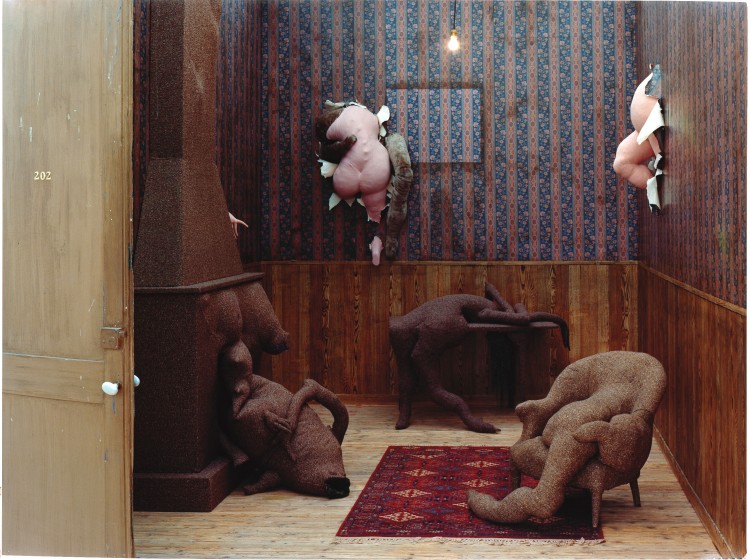
Her repeated motifs of doors, wallpaper and cloth are symbols of these thresholds that create otherworldy spaces. She was interested in how irrational events are folded into mundane, everyday interiors.

Hôtel du Pavot, Chambre 202 (Poppy Hotel, Room 202) 1970-73. Dorothea Tanning Estate

Tanning’s work satellites around the feminine form, its boundaries, movements, abstractions and sensations. She was fascinated with the lived experience of the female body in maternity or when confronted by violence. She depicted childhood and puberty in works like The Guest Room as both desired and dreaded.

Tanning explored relationship dynamics – in families, among strangers, in the bond between human and animals (particularly dogs) – through voluptuous surfaces of paint, cloth or tissue paper that convey a sense of perpetual transformation. In works like Family Portrait (1977) she visibly collapses the boundaries between her figures to engage the imagination of any viewer.

Tanning was the subject of a retrospective at London’s Tate last year.

Always creating

Tanning returned permanently to New York in 1980 soon after Ernst’s death. While she continued to make visual artwork, she increasingly turned her hand to writing, becoming an accomplished and well-published poet.

In a career spanning more than 70 years, her prodigious output included: painting, drawing, print and etching, sculptures, fabric installation, etchings, jewellery, costume and set designs, collage, memoirs, fiction and several volumes of poetry.

She was still producing extraordinary work when I met her in 2000 and began a friendship that lasted until her death in 2012. Her consummate skill as an artist was acknowledged among her peers throughout her life, and her work features in international galleries including Tate, San Francisco and New York Museums of Modern Art and the Pompidou Centre in Paris.

Tanning’s work has recently returned to the spotlight in recognition of its unique contribution to visual art. The first major retrospective of her work in 25 years was held at Museo Nacional Centro de Arte Reina Sofía in Spain and London’s Tate Modern last year. Her work was also included in the 2013 Venice Biennale.

Scholars have also begun paying attention to her work. In November, my monograph Dorothea Tanning: Transformations, the first devoted to her, traced her career’s recurrent themes and preoccupations. As an artist interested in exploring the richness of human experience from a feminine viewpoint, Tanning’s work occupies a singular position in the history of modern art.

ref. Dorothea Tanning – an unusual surrealist with an unique female gaze – https://theconversation.com/dorothea-tanning-an-unusual-surrealist-with-an-unique-female-gaze-131214

Pacific governments accused of using coronavirus crisis as cover for media crackdown

Source: The Conversation (Au and NZ) – By David Robie, Professor of Pacific Journalism, Director of the Pacific Media Centre, Auckland University of Technology

As fears grow over vulnerability to the coronavirus in parts of the Pacific, some governments stand accused of sheltering behind tough emergency or lockdown rules to silence criticism.

Already, several media freedom watchdogs and the United Nations have condemned countries – including Fiji and Papua New Guinea – for exploiting the crisis.

UN High Commissioner for Human Rights Michelle Bachelet has called on governments to stop using the pandemic as “a pretext to restrict information and stifle criticism”. She cites the International Press Institute’s tracking of at least 152 alleged media violations since the outbreak began in China last December.

This is no time to blame the messenger. Credible, accurate reporting is a lifeline for all of us.

According to a new report from the International Federation of Journalists, three out of four journalists worldwide have faced intimidation, obstruction or other restrictions covering the pandemic.

In April, Papua New Guinea police minister Bryan Kramer attacked two experienced journalists, saying they “can’t be trusted” and ought to be sacked.


Read more: Pacific countries score well in media freedom index, but reality is far worse


Kramer used his Kramer Report Facebook page to accuse Loop PNG political and business editor Freddy Mou and senior PNG Post-Courier journalist Gorethy Kenneth of misrepresenting a financial report by Treasurer Ian Ling-Stuckey. “Both journalists have close ties to the former Prime Minister Peter O’Neill,” Kramer wrote. “Both have been accused of publishing biased and misleading reports.”

PNG journalists Gorethy Kenneth and Freddy Mou. Loop PNG

Based on an interview with Ling-Stuckey, Mou’s story alleged the “bulk” of a 23 million kina (NZ$11 million) budget for COVID-19 operations was being used to hire cars and media consultants. Kenneth supported Mou by posting the interview video on social media.

Loop PNG stood by its “key facts”, saying any “misunderstanding” was “not deliberate or intentional”. Paris-based media freedom advocacy group Reporters Without Borders said the harassment was “unacceptable meddling”. The PNG Media Council called for greater “transparency”.

Ironically, Kramer has a reputation for political transparency rare in PNG. His blog pledges to tell the “inside story through in-depth investigative reporting” and boasts more than 128,000 readers in a country with low internet penetration.


Read more: When the state of exception becomes the norm, democracy is on a tightrope


PNG has eight confirmed COVID-19 cases but no deaths. However, there are fears that a serious outbreak could rapidly overwhelm the health system. Even before the pandemic, warned Human Rights Watch, “the fragile health system […] was underfunded and overwhelmed, with high rates of malaria, tuberculosis and diabetes”.

Human Rights Watch’s Georgie Bright points out that 80% of the PNG population is rural, the country has only 500 doctors, fewer than 4000 nurses and barely 5000 hospital beds.

The country has only 14 ventilators. A COVID-19 outbreak would be catastrophic.

Health officials also point to neighbouring Indonesian-ruled Melanesian provinces Papua and West Papua as a warning for PNG. Politicians worry about encroachments along the 820 kilometre locked-down but still porous border.

Reliable West Papuan data are hard to obtain as they are sometimes “hidden” within Indonesian statistics, but reports indicate 283 cases and seven deaths with totals rising. Only seven respiratory doctors and 73 ventilators are available for 45 hospitals with a regional population of 4 million.

The doctor in charge of the capital Jayapura’s COVID-19 Response Team, Silwanus Sumule, told The Jakarta Post:

I know this might sound harsh for some people but this is the fact – if you don’t want to die, don’t come to Papua.

Indonesian authorities warned in April that people illegally crossing borders would be shown “no mercy”, making reporting from the region particularly dangerous. Three days later, after PNG border police arrested nine “illegals”, East Sepik governor Allan Bird called for a “shoot to kill” order.

Prime Minister Voreqe Bainimarama with Brigadier-General Jone Kalouniwai (right). RSF/Fijileaks

While other Pacific countries such as Cook Islands, Samoa, Solomon Islands and Tonga remain COVID-19 free, elsewhere in the Pacific media are still struggling to report the crisis, especially in the American territory of Guam (148 cases and 5 deaths) and the French territories of New Caledonia (18 cases) and Tahiti (58 cases).


Read more: Why is it so hard to stop COVID-19 misinformation spreading on social media?


On Guam, when nearly 1000 infected crew members on the aircraft carrier USS Theodore Roosevelt were taken ashore, the captain who blew the whistle was relieved of his command. The Pacific Island Times has condemned a lack of transparency during a “news blackout” around a US$129 million federal relief budget.

In Fiji, where there have been 18 coronavirus cases with no deaths, Brigadier-General Ratu Jone Kalouniwai warned in the Fiji Sun that the government had “good reasons to stifle criticism” and for “curtailing freedom of […] the press” in response to curfew violations. Two radio personalities were arrested and charged over “malicious” social media comments.

Reporters Without Borders’ Asia-Pacific director Daniel Bastard said the comments “recall the worst time of the Fijian military dictatorship from 2006 to 2014”.

Launching its 2020 global Media Freedom Index, Reporters Without Borders recently warned that the pandemic “provides authoritarian governments with an opportunity to implement the notorious ‘shock syndrome’ – to impose measures that would be impossible in normal times.”

Although Pacific nations are not among the worst offenders on the index, with factual reporting of COVID-19 crucial for vulnerable societies, any suppression or censorship is a threat.

ref. Pacific governments accused of using coronavirus crisis as cover for media crackdown – https://theconversation.com/pacific-governments-accused-of-using-coronavirus-crisis-as-cover-for-media-crackdown-137700

Millions of products have been 3D printed for the coronavirus pandemic – but they bring risks

Source: The Conversation (Au and NZ) – By James Novak, Postdoctoral Research Fellow – Additive Manufacturing, Deakin University

With the COVID-19 pandemic, an urgent need has risen worldwide for specialised health and medical products. In a scramble to meet demand, “makers” in Australia and internationally have turned to 3D printing to address shortfalls.

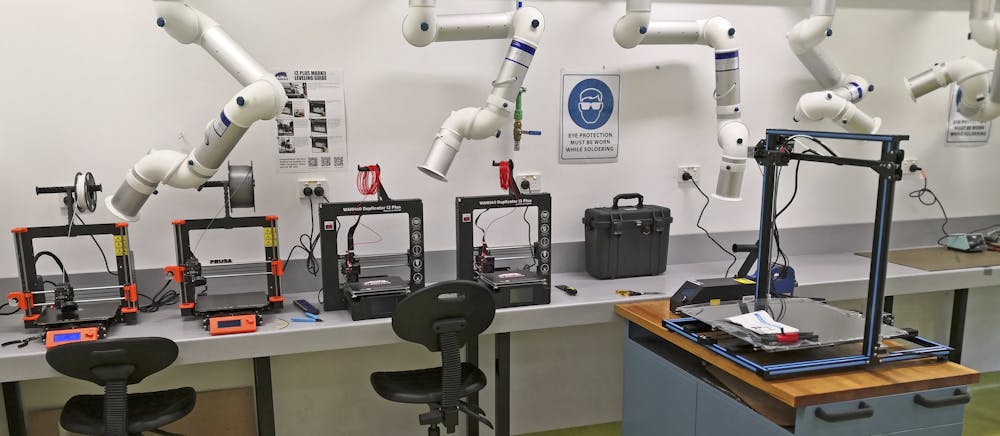
These days 3D printers aren’t uncommon. In 2016, an estimated 3% of Australian households owned one – not to mention those available in schools, universities, libraries, community makerspaces and businesses.

A collection of desktop 3D printers in the Deakin University 3DEC lab. James Novak

Across Europe and the United States, access to essential personal protective equipment (PPE) remains a concern, with nearly half of all doctors in the UK reportedly forced to source their own PPE.

In Australia, reports from March and early April showed hospital staff reusing PPE, and health-care workers sourcing PPE at hardware stores due to shortages.

The global supply chain for these vital products has been disrupted by widespread lockdowns and reduced travel. Now, 3D printing is proving more nimble and adaptable manufacturing methods. Unfortunately, it’s also less suited for producing large numbers of items, and there are unanswered questions about safety and quality control.


Read more: Five 3D printing myths


Sharing is caring

One of the earliest examples of 3D printing being used for pandemic-related purposes is from mid-February. One Chinese manufacturer made 3D-printed protective goggles for medics in Wuhan. With 50 3D printers working around the clock, they were producing about 300 pairs daily.

Designers, engineers, students, manufacturers, doctors and charities have used 3D printing to produce a variety of products including face shields, masks, ventilator components, hands-free door openers and nasal swabs.

Many designs are freely shared online through platforms such as the NIH 3D Print Exchange. This US-based 3D printing community recently partnered with the Food and Drug Administration (FDA) and the Department of Veterans Affairs, to assist with validating designs uploaded by the community. So far, 18 3D-printable products have been approved for clinical use (although this is not the same as FDA approval).

Such online platforms allow makers around the world not only to print products based on uploaded designs, but also to propose improvements and share them with others.

Makers are using various ways to 3D print medical supplies during COVID-19.

Just because you can, doesn’t mean you should

In a public health crisis of COVID-19’s magnitude, you may think having any PPE or medical equipment is better than none.

However, Australia’s Therapeutic Goods Administration (TGA) – our regulatory body for medical products – has not yet endorsed specific 3D-printed products for emergency use during COVID-19. Applications for this can be made by manufacturers registered with the TGA.

However, the TGA is providing guidelines which designers, engineers and manufacturers are working with. For example, Australian group COVID SOS aims to respond to direct requests by frontline medical workers for equipment they or their hospital need. So, local designers and manufacturers are directly connected to those in need.

3D printing provides a means to manufacture unique and specialised products on demand, in a process known as “distributed manufacturing”.

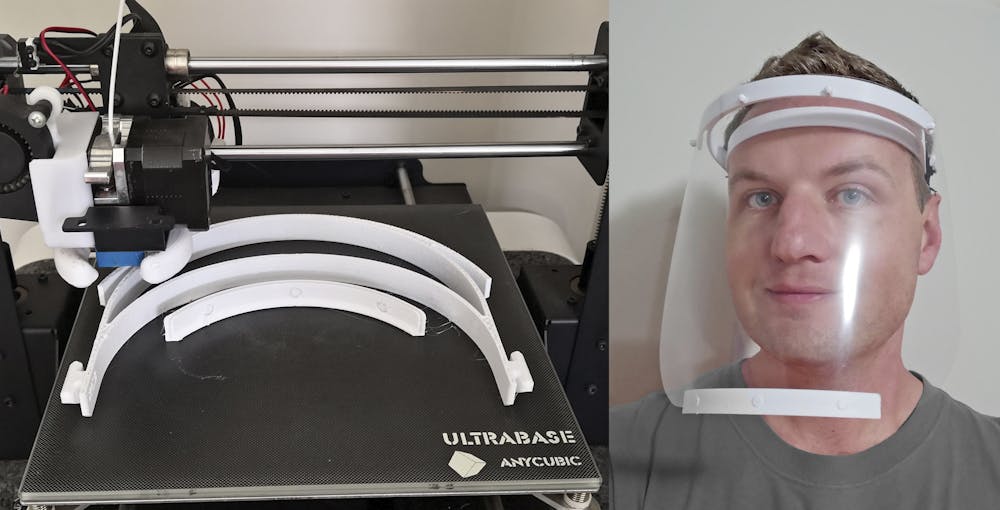
Unfortunately, compared with mass production methods, 3D printing is extremely slow. Certain types of 3D-printed face shields and masks take more than an hour to print on a standard desktop 3D printer. In comparison, the process of “injection moudling” in factory mass production takes mere seconds.

That said, 3D printing is flexible. Makers can print depending on what’s needed in their community. It also allows designers to improve over time and products can get better with each update. The popular Prusa face shield developed in the Czech Republic has already been 3D printed more than 100,000 times. It’s now on its third iteration, which is twice as fast to print as the previous version.

A Prusa RC3 face shield 3D printed on a desktop 3D printer. James Novak

Opportunity vs risk

But despite the good intent behind most 3D printing, there are complications.

Do these opportunities outweigh the risks of unregulated, untested product used for critical health care situations? For instance, if the SARS-CoV-2 virus can survive two to three days on plastic surfaces, it’s theoretically possible for an infected maker to transfer the virus to someone else via a 3D-printed product.

Medical products must be sterilised, but who will ensure this is done if traditional supply chains are bypassed? Also, some of the common materials makers use to 3D print, such as PLA, aren’t durable enough to withstand the high heat and chemicals used for sterilisation.

And if 3D-printed products are donated to hospitals in large batches, identifying and treating different materials accordingly would be challenging.

For my research, I’ve been tracking 3D-printed products produced for the pandemic. In a soon-to-be-published study, I identify 34 different designs for face shields shared online prior to April 1. So, how do medical practitioners know which design to trust?

If a patient or worker is injured while wearing one, or becomes infected with COVID-19, who is responsible? The original designer? The person who printed the product? The website hosting the design?

These complex issues will likely take years to resolve with health regulators. And with this comes a chance for Australia – as a figurehead in 3D printing education – to lead the creation of validated, open source databases for emergency 3D printing.


Read more: Can 3D printing rebuild manufacturing in Australia?


ref. Millions of products have been 3D printed for the coronavirus pandemic – but they bring risks – https://theconversation.com/millions-of-products-have-been-3d-printed-for-the-coronavirus-pandemic-but-they-bring-risks-137486

We can’t let coronavirus kill our cities. Here’s how we can save urban life

Source: The Conversation (Au and NZ) – By Jonathan Daly, Researcher, School of Architecture and Urban Design, RMIT University

The COVID-19 pandemic restrictions have reminded us of the vital role public space plays in supporting our physical and mental well-being. We need to move, to feel sunlight and fresh air, and to see, talk and even sing to other people.

Lockdowns and “social distancing” have limited our participation in public life and public space. As a result, cities around the world are reporting declines in health and well-being. We are seeing increases in depression, domestic violence, relationship breakdowns and divorces.


Read more: We don’t know what we’ve got till it’s gone – we must reclaim public space lost to the coronavirus crisis


What about the well-being of our cities? Avoiding walking and public transport in favour of cars could kill cities.

The trajectory of the pandemic suggests physical distancing could remain in place for some time. The subtle “step and slide” that people ordinarily use to negotiate their way through crowded urban spaces has given way to the very blunt act of “stop and cross”, as people try to avoid one another on footpaths that are too narrow.

We need to act swiftly to retrofit our public spaces so they are both safe and support social activity. Our goal must be to avoid a long-term legacy where people fear cities and other people. This is where approaches known as temporary and tactical urbanism come in as a way to quickly reconfigure public spaces to create places that are both safe and social.

As COVID-19’s impacts on public life become more evident, so has the abundance of street space left vacant by the substantial drop in vehicle traffic. Recognising this opportunity, cities around the world have begun repurposing street spaces for people.

Brunswick Street, Melbourne, as it is now and with proposed added space for walking and riding bikes (click on and drag the slider to compare images). Original image: David Hannah. Photoshopped image: Gianfranco Valverde/City of Melbourne. Author provided.

A global public space revolution?

Leading urban theorists, such as Jane Jacobs and Richard Sennett, have long argued that social interaction is the lifeblood of cities. The COVID-19 pandemic can be seen as an attack on urbanity itself.


Read more: Public spaces bind cities together. What happens when coronavirus forces us apart?


But social/physical distancing should not preclude social interaction. Major cities around the world are responding by reclaiming street spaces for people to safely walk and cycle. They are acting quickly, because the need to increase public space for people is more urgent than ever.

How can this be done? After all, urban design proposals usually take months or years to realise. Tactical urbanism approaches overcome this by drawing on a palette of low-cost, widely available and flexible materials, objects and structures to quickly create new forms of public space.

In London, Berlin, Bogota, Philadelphia, Minneapolis, Vancouver, Mexico City and Milan, paint and traffic cones are being used to create bike lanes. In Dublin, parking spaces and loading bays are being reclaimed in the city centre to provide more space for pedestrians. At a national level, New Zealand has created a tactical urbanism fund for emergency bike lanes and footpath widening.

So what’s happening in Australia? Not much at present. Yet we face the same problems, prompting calls for urgent action to reclaim public space for walking and cycling.


Read more: Physical distancing is here for a while – over 100 experts call for more safe walking and cycling space


Despite this, there has been little examination of locally specific design and implementation approaches that can rapidly deliver the urban spaces people need right now.

Making it happen

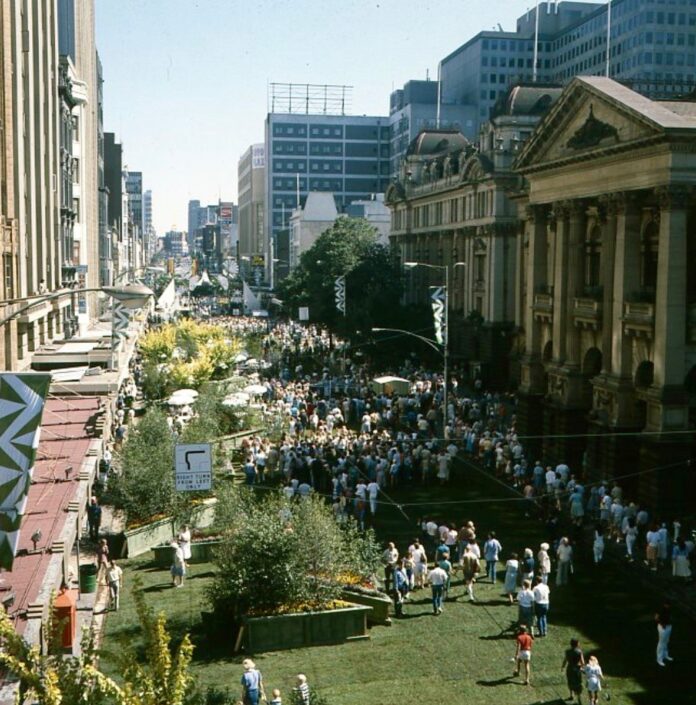
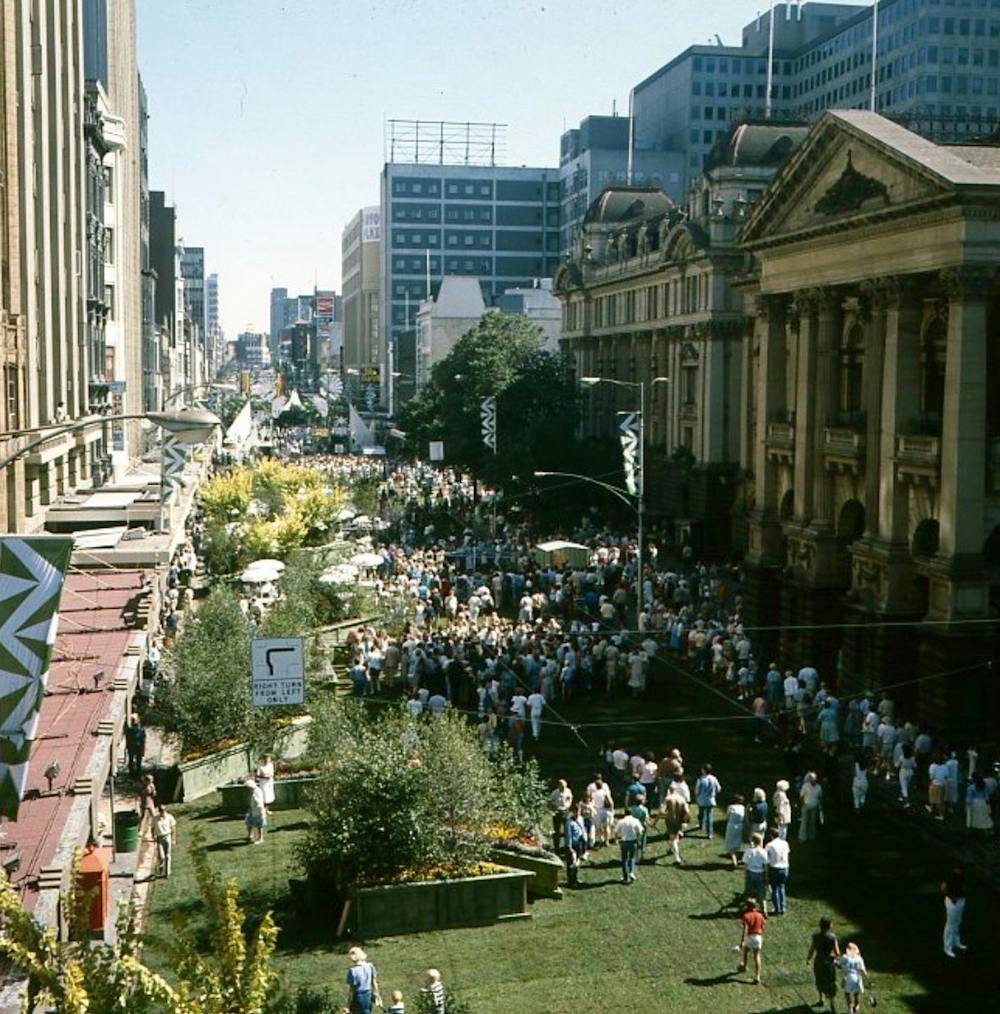
Temporary and tactical urbanism isn’t new to Australia. We’ve been doing it since the 1980s when Melbourne’s Swanston Street was transformed into a green oasis overnight. This helped to reimagine the city centre as a place designed for people, which shaped its long-term social and economic regeneration.

The Greening of Swanston Street in 1985. Victorian Ministry of Planning

Read more: How a three-decade remaking of the city revived the buzz of ‘Marvellous Melbourne’


This, and other more recent projects, have proven temporary and tactical urbanism adds value beyond physical activity and social interaction. Successful schemes can increase the vitality of streets and neighbourhoods, engage local communities and enhance a local sense of place.

Social enterprises and community groups are well placed to deliver such projects, because of their enthusiasm, agility and local networks. Governments also have a crucial role in enabling other actors and maximising public benefits. Every weekday between midday and 2pm, the City of Melbourne temporarily closes Little Collins Street between Swanston and Elizabeth streets with a removable bollard, giving over the street to pedestrians – it’s that easy!

Little Collins Street already becomes a place for pedestrians at lunchtime. City of Melbourne. Author provided., Author provided

Our cities’ urban spaces are full of such potential for greater flexibility, experimentation and innovation. For example, on-street parking can easily be converted into spaces for socialising and outdoor dining. A vacant space can become an outdoor cinema.

Elizabeth Street, Melbourne, as it is now and with added space for walking and riding bikes. Original image: Google Street View. Photoshopped image: Audrey Lopez. Author provided.

Temporary or permanent?

The COVID-19 pandemic and its associated restrictions have created an epic social experiment on a global scale. We argue that urbanity itself is at stake. What will cities be without the social interactions that enable us to exchange ideas, opinions, values and knowledge?

Can we afford to go back to the cities designed for cars that we have spent decades reshaping for people? If we don’t act now, the social life of cities that sustains our economy, creativity and culture is at risk.

We need to counter the social impacts of COVID-19 by experimenting at the micro scale of public space. Temporary and tactical urbanism offers simple, low-cost and agile solutions. We should act quickly to make streets safe and sociable during this crisis. The long-term health of people and cities depends on it.

ref. We can’t let coronavirus kill our cities. Here’s how we can save urban life – https://theconversation.com/we-cant-let-coronavirus-kill-our-cities-heres-how-we-can-save-urban-life-137063

It’s all about trust – and why I trust Jacinda over the coronavirus action

PACIFIC PANDEMIC DIARY: By Sri Krishnamurthi, self-isolating contributing editor of Pacific Media Watch

After nearly five weeks of alert level 4 covid-19 lockdown and a further week at level 3, there is only one voice most New Zealanders rely on – Prime Minster Jacinda Ardern. 

While there has been clamouring to get the economy going from the likes of former prime minister Sir John Key and opposition leader Simon Bridges, Jacinda Ardern has remained firm. 

Sir Key said during an interview on TV3’s Rebuilding Paradise with Paul Henry: “It’s crucially important we get to a freer, more open economy. In a funny kind of way, I think the levels system was a good idea and it did its job – it defined what we had to do, but in a lot of ways it defined what we couldn’t do.”

READ MORE: Al Jazeera’s coronavirus live updates – US could see 3000 deaths daily as economy reopens

Coronavirus
ASIA PACIFIC REPORT CORONAVIRUS UPDATES

However, there is no economy without healthy people, and Prime Minister Ardern realised that very early in the pandemic. 

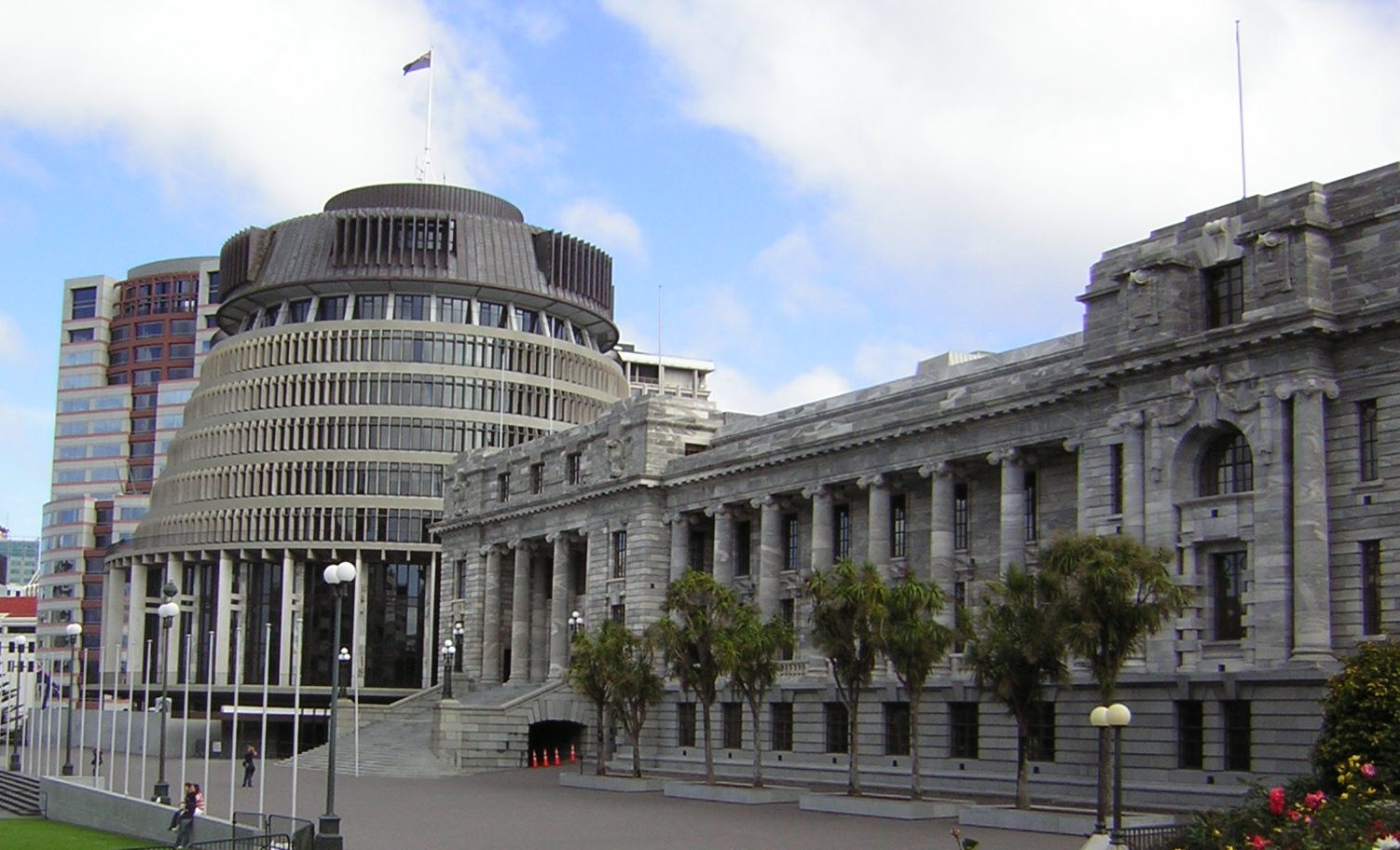
On March 23, Ardern stood on the Beehive Theatre stage to announce she was putting New Zealand into lockdown, she gave a warning with five words: “Tens of thousands could die.” 

– Partner –

I know for sure with underlying health conditions that I have that I would perish should I get covid-19. 

That’s why I have trusted the Prime Minister through this lockdown – and she has been proven right. Yesterday’s zero new cases for the first time in eight weeks is a good sign.

‘Proof from New Zealanders’
The thing that has probably given me confidence in our response has been the proof from New Zealanders today that as long as people see the need, people know why you’re making that decision, that you’re sharing all of the information, and people are coming on that journey with you then they will do extraordinary things,” she told The New Zealand Herald.

“It’s just been about trust. 

Sri Krishnamurthi
Working on this story remotely from home … postgraduate student author Sri Krishnamurthi. Image: PMC

“Human behaviour changes as long as people trust they have all the information they need to support the decision you are making on their behalf.” 

While Jacinda has cut back on her appearances on the Beehive Theatre stage, she does appear – if only to provide reassurance to the public just as she did during the Christchurch massacre last year and the White Island volcanic explosion. 

The level of trust she has engendered can be seen in Ardern’s popularity is at a record high, taking 65 percent of the preferred Prime Minister rating in the latest UMR poll which came out on May 1. 

Amnesty fpr overstayers call
Meanwhil
e Tonga’s Kaniva News  has called for an amnesty for New Zealand overstayers to help check virus spread. 

While not condoning remaining illegally in New Zealand, the leading Tongan news website says that overstayers’ families and children are particularly vulnerable in the current crisis. 

Papua New Guinea expects a spike of covid-19 cases this month – but so far no new cases have been detected in the country beyond the eight previously reported. 

In Guam, there are now 145 cases with five deaths, and there are now 1100 cases among the USS Theodore Roosevelt crew.

Northern Marianas has 14 cases with two deaths, French Polynesia now has 58 cases while Timor-Leste has 24 cases. 

Print Friendly, PDF & Email

Article by AsiaPacificReport.nz

The darknet – a wild west for fake coronavirus ‘cures’? The reality is more complicated (and regulated)

Source: The Conversation (Au and NZ) – By James Martin, Associate Professor in Criminology, Swinburne University of Technology

The coronavirus pandemic has spawned reports of unregulated health products and fake cures being sold on the dark web. These include black market PPE, illicit medications such as the widely touted “miracle” drug chloroquine, and fake COVID-19 “cures” including blood supposedly from recovered coronavirus patients.

These dealings have once again focused public attention on this little-understood section of the internet. Nearly a decade since it started being used on a significant scale, the dark web continues to be a lucrative safe haven for traders in a range of illegal goods and services, especially illicit drugs.

Black market trading on the dark web is carried out primarily through darknet marketplaces or cryptomarkets. These are anonymised trading platforms that directly connect buyers and sellers of a range of illegal goods and services – similar to legitimate trading websites such as eBay.

So how do darknet marketplaces work? And how much illegal trading of COVID-19-related products is happening via these online spaces?


Read more: Dark web, not dark alley: why drug sellers see the internet as a lucrative safe haven


Not a free-for-all

There are currently more than a dozen darknet marketplaces in operation. Protected by powerful encryption technology, authorities around the world have largely failed to contain their growth. A steadily increasing proportion of illicit drug users around the world report sourcing their drugs online. In Australia, we have one of the world’s highest concentrations of darknet drug vendors per capita.

Contrary to popular belief, cryptomarkets are not the “lawless spaces” they’re often presented as in the news. Market prohibitions exist on all mainstream cryptomarkets. Universally prohibited goods and services include: hitman services, trafficked human organs and snuff movies.

Although cryptomarkets lie outside the realm of state regulation, each one is set up and maintained by a central administrator who, along with employees or associates, is responsible for the market’s security, dispute resolution between buyers and sellers, and the charging of commissions on transactions.

Administrators are also ultimately responsible for determining what can and can’t be sold on their cryptomarket. These decisions are likely informed by:

  • the attitudes of the surrounding community comprising buyers and sellers
  • the extent of consumer demand and supply for certain products
  • the revenues a site makes from commissions charged on transactions
  • and the perceived “heat” that may be attracted from law enforcement in the trading of particularly dangerous illegal goods and services.

Read more: Illuminating the ‘dark web’


Experts delve into the dark web

A report from the Australian National University published last week looks at several hundred coronavirus-related products for sale across a dozen cryptomarkets, including supposed vaccines and antidotes.

While the study confirms some unscrupulous dark web traders are indeed exploiting the pandemic and seeking to defraud naïve customers, this information should be contextualised with a couple of important caveats.

Firstly, the number of dodgy covid-related products for sale on the dark web is relatively small. According to this research, they account for about 0.2% of all listed items. The overwhelming majority of products were those we are already familiar with – particularly illicit drugs such as cannabis and MDMA.

Also, while the study focused on products listed for sale, these are most likely listings for products that either do no exist or are listed with the specific intention to defraud a customer.

Thus, the actual sale of fake coronavirus “cures” on the dark web is likely minimal, at best.

A self-regulating entity

By far the most commonly traded products on cryptomarkets are illicit drugs. Smaller sub-markets exist for other products such as stolen credit card information and fraudulent identity documents.

This isn’t to say extraordinarily dangerous and disturbing content, such as child exploitation material, can’t be found on the dark web. Rather, the sites that trade in such “products” are segregated from mainstream cryptomarkets, in much the same way convicted paedophiles are segregated from mainstream prison populations.

Since the outbreak of the coronavirus, dark web journalist and author Eileen Ormsby reported some cryptomarkets have quickly imposed bans on vendors seeking to profit from the pandemic. For instance, the following was tweeted by one cryptomarket administrator:

Any vendor caught flogging goods as a “cure” to coronavirus will not only be permanently removed from this market but should be avoided like the Spanish Flu. You are about to ingest drugs from a stranger on the internet –- under no circumstances should you trust any vendor that is using COVID-19 as a marketing tool to peddle tangible/already questionable goods. I highly doubt many of you would fall for that shit to begin with but you know, dishonest practice is never a good sign and a sure sign to stay away.

So it seems, despite the activities of a few dodgy operators, the vast majority of dark web traders are steering clear of exploiting the pandemic for their own profit. Instead, they are sticking to trading in products they can genuinely supply, such as illicit drugs.


Read more: What is the dark web and how does it work?


ref. The darknet – a wild west for fake coronavirus ‘cures’? The reality is more complicated (and regulated) – https://theconversation.com/the-darknet-a-wild-west-for-fake-coronavirus-cures-the-reality-is-more-complicated-and-regulated-137608

Yes, it is time to rethink our immigration intake – to put more focus on families

Source: The Conversation (Au and NZ) – By Alex Reilly, Professor, University of Adelaide

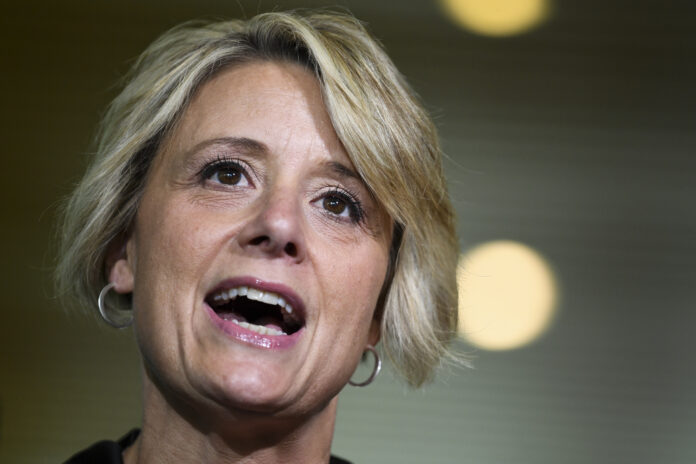
Kristina Keneally, Labor’s home affairs spokesperson, is calling for a reset on migration as we emerge from the coronavirus crisis.

She noted in an article over the weekend that migration had been responsible for “over half of Australia’s economic growth” since 2005.

However, she argued that in a post-COVID environment with a sluggish economy, we need to focus instead on skilling up Australian workers to perform the jobs in the health, hospitality and other industries that have been the focus of skilled migration in recent times.


Read more: There’s one big problem with Australia’s skilled migration program: many employers don’t want new migrants


Many economists disagree with Keneally’s connection between migration and the availability of local jobs. They point out that migrant workers contribute to overall economic growth, leading to a net increase in new jobs available for local workers.

There is also a risk that, despite her best intentions, Keneally’s rhetoric of “Australians first” will feed nationalist, anti-immigration sentiments that have no relationship to the economy and job opportunities.

A review of our migration intake is overdue

Keneally is right to call for a review of “the shape and size” of our migration intake, although not in the way she was suggesting.

At the top of this review should be a consideration of the balance between the two major streams of our migration program – skilled migrants and family migrants.

Current immigration policy favours skilled over family migrants, significantly underestimating the importance of family for the well-being and potentially the productivity of new migrants, as well as Australia’s long-term national interests.

There was a substantial shift in the balance between these streams from the mid-1990s to the mid-2000s.


Read more: Why Canada’s immigration system has been a success, and what Australia can learn from it


In 1995-96, permanent migration was comprised of 58% family, 25% skilled and 17% humanitarian migrants. A decade later, the overall migrant make-up had changed dramatically: 62% skilled, 29% family and 9% humanitarian.

These proportions have remained about the same ever since. In 2018-19, there were 109,713 migrants (62%) in the skilled stream, 47,247 (27%) in the family stream and 18,762 (11%) in the humanitarian stream.

At the same time, temporary migration of short-term skilled workers, working holiday makers, international students and New Zealanders on temporary special category visas has risen dramatically to over 1.2 million in December 2016.

If all temporary migrants with work rights had a job, they would constitute over 10% of the Australian workforce.

Immigration is about relationships

Preferencing skilled migrants over family migrants is the inverse of the US, where most migrants come via family connections. Unlike Australia, this also includes the potential for migrants to sponsor siblings.

What is sometimes lost in Australia, with a single-minded focus on migration to boost the economy, is that immigration is not only about economic growth. It is also about relationships.

Permanent migrants are future citizens. Migration builds community, and the ability of migrants to sponsor their broader family will deepen their connections and commitment to Australia.

The family migration program enables Australians to sponsor parents and children living overseas, partners, and in some cases their remaining relatives.


Read more: New research shows immigration has only a minor effect on wages


One of the effects of our focus on skilled migration has been the increase of new migrants with no extended family in Australia.

Although skilled worker visas allow for partners and children to accompany them, there is no provision for extended family. This makes these migrants potentially more vulnerable and isolated, less committed to Australia and, some have suggested, less productive as workers.

If they were allowed to enter Australia, these extended family members could offer emotional support and practical assistance to their loved ones working here, such as child care.

Most temporary migrant workers, meanwhile, have no entitlement to be accompanied by any family at all. Only some international students can have family accompany them as a support person while they study.

Kristina Keneally says Australia needs ‘a migration program that puts Australian workers first’. Lukas Coch/AAP

A growing waiting list for partners and parents

The difficulty skilled migrants have sponsoring their parents to migrate to Australia provides a dramatic example of just how restrictive current family migration options are.

In 2018-19, just 1,218 non-contributory parent visas were granted out of tens of thousands of applicants. The waiting period is at least 30 years, longer than many of these parents have left to live.

The home affairs website no longer provides waiting times, stating only

family migration visas are in high demand. It might take many years for this visa to be granted.

The waiting time for partner visas for all Australian citizens and permanent residents has also grown as the number of allocated placements has been cut. The home affairs website currently says 90% of applicants will be processed in 21 months.

Migration numbers are destined to drop dramatically as a result of the COVID-19 pandemic in 2020-21. When the economy and our borders open up, there is an opportunity to reflect on what is the best balance of skilled and family migration.

Attracting the most accomplished skilled migrants will undoubtedly continue to be a driver of migration policy.

However, in choosing numbers in the skilled and family streams, it is also vital the government factor in the role of extended family for the well-being and productivity of migrant workers, as well as the importance of family for community cohesion and a migrant’s sense of connection and commitment to Australia.

ref. Yes, it is time to rethink our immigration intake – to put more focus on families – https://theconversation.com/yes-it-is-time-to-rethink-our-immigration-intake-to-put-more-focus-on-families-137783

Why do women gain weight during menopause?

Source: The Conversation (Au and NZ) – By Nicholas Fuller, Charles Perkins Centre Research Program Leader, University of Sydney

For most women, perimenopause – the transition to menopause – begins in their 40s. The entire menopause process typically lasts around four years and begins with the ovaries making less estrogen.

A woman is considered to be post-menopausal when she hasn’t experienced a menstrual period for 12 months. This usually occurs between the ages of 46 to 52 years.


Read more: How to make work menopause-friendly: don’t think of it as a problem to be managed


Symptoms of menopause can include irregular periods, hot flushes, fatigue, tender breasts, night sweats, vaginal dryness, difficulty sleeping, changes in mood and lower libido.

During menopause, hormonal changes can affect the way fat is distributed in the body, but ageing is more likely to be the cause of any weight gain associated with menopause.

Gaining weight isn’t inevitable, though. There’s plenty you can do to combat weight gain as you age.

Ageing is more likely to be the cause of any weight gain associated with menopause. Monkey Business Images/ Shutterstock

Hormonal changes alter where the body deposits fat

Certain areas such as your stomach are more prone to weight gain during menopause. This is because the change in hormones, which lead to a higher testosterone-to-estrogen ratio, alters where the body deposits fat. Fat comes off the hips and is deposited around the middle.

But the hormonal changes involved in menopause aren’t the reason you gain weight.

A higher testosterone-to-estrogen ratio resulting from menopause can restribute weight from the hips to the middle. Maridav/ Shuttertock

Ageing is the real cause

The weight gain that comes with menopause is a by-product of ageing.

As we age, our body stops working as efficiently as it did before. Muscle mass starts to decrease – a process known as “sarcopenia” – and fat begins to increase.

And because muscle mass is one of the determining factors of how fast your metabolism will run, when your muscle mass decreases, your body starts to burn fewer calories at rest. This might make it more challenging to maintain your weight.


Read more: Trick or treat? Alternative therapies for menopause


As we age, we tend to continue with our same food habits but don’t increase our activity. In fact, aches and pains can make some people actively decrease theirs.

Not compensating for the ageing process and the change in body composition can lead to weight gain.

And this applies to men too – they are just as likely to gain weight due to this process known as sarcopenia.

Menopause and weight gain take their toll

Due to a change in body fat distribution and increase in waist circumference, menopause can also increase your risk of other health conditions.


Read more: Hot flashes? Night sweats? Progesterone can help reduce symptoms of menopause


Following menopause, your ovaries make very little of the hormones estrogen and progesterone. Estrogen helps to keep your blood vessels dilated – relaxed and open – which helps keep your cholesterol levels down.

Without estrogen, or with lower quantities, your bad cholesterol (known as low-density lipoprotein or LDL-cholesterol) starts to build up in your arteries. This can increase your risk of heart disease and stroke.

Having less estrogen also results in a loss of bone mass, putting you at risk of the disease osteoporosis, which makes your bones more prone to fractures.

What can you do?

Weight gain associated with ageing is not inevitable. There are a number of things you can do to maintain your weight as you age.

1. Exercise

Incorporate regular daily exercise, with a mixture of intensities and variety of activities. Try to include body-strengthening exercises two days per week.

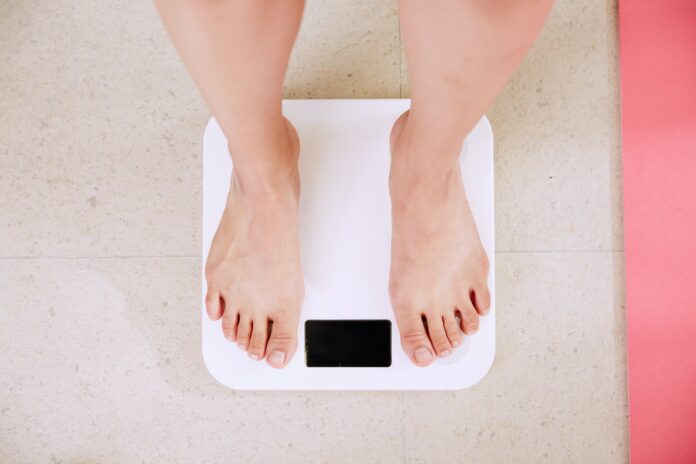
2. Weigh yourself – but not too much

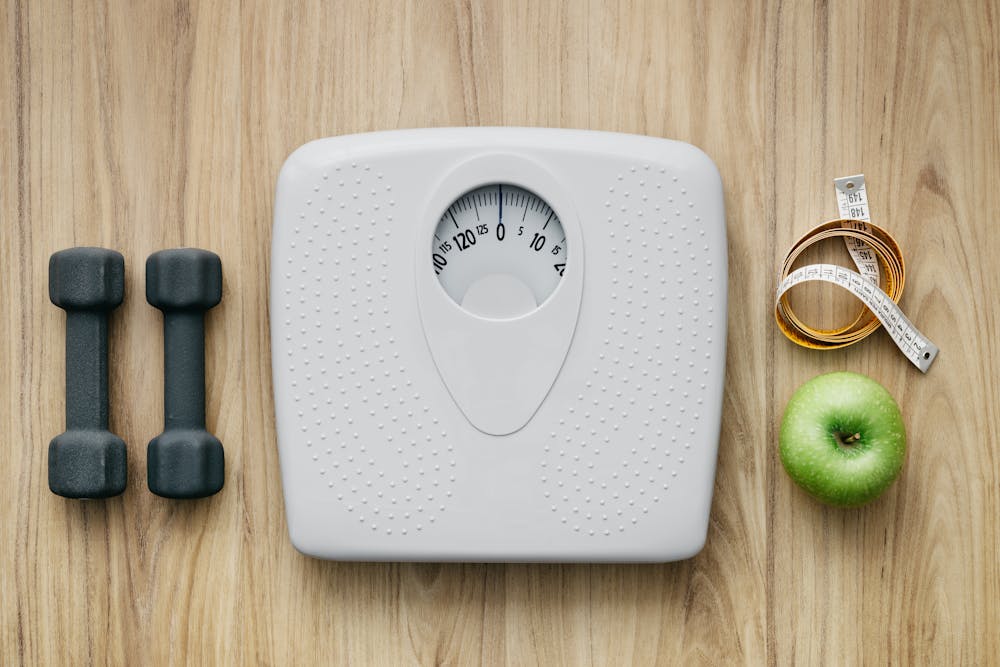
Weigh yourself once a week at the same time and day to monitor the trend over time. Any more than this will only create a fixation with weight. Day-to-day fluctuations in weight are to be expected.

Regularly weighing yourself can help you monitor your weight over time. Stock-Asso/ Shutterstock

3. Create positive habits

Create positive habits by replacing negative behaviours. For example, instead of mindlessly scrolling through social media of an evening or turning on the TV and comfort-eating, replace it with a positive behaviour, such as learning a new hobby, reading a book or going for a walk.


Read more: How to beat weight gain at menopause


4. Eat more slowly

Eat food away from technological distractions and slow down your food consumption.

Try using a teaspoon or chopsticks and chew your food thoroughly as slowing down your food consumption reduces the quantity consumed.

5. Switch off from technology:

Turn off technology after dusk to improve your sleep. Blue light emission from phones, tablets and other devices tell your brain it’s day, instead of night, which will keep you awake.

Lack of sleep (less than six hours per night) can compromise your decision-making abilities which might lead you to make unhealthy choices that contribute to weight gain.

6. Curb sugar cravings naturally

If you’re craving sugar you’re better off reaching for foods naturally high in sugar and fat first. Some great options are fruits, nuts, avocado and 100% nut butters. These foods release the same feel-good chemicals in the brain as processed and fast food and leave us feeling full.

Allow yourself your favourite treats, but keep them to once per week.

ref. Why do women gain weight during menopause? – https://theconversation.com/why-do-women-gain-weight-during-menopause-131564

New findings show Australian sheep face dangerous heat stress on export ships

Source: The Conversation (Au and NZ) – By Clive Phillips, Professor of Animal Welfare, Centre for Animal Welfare and Ethics, The University of Queensland

It’s been almost three years since thousands of Australian sheep died during a voyage from Australia to the Middle East. My group’s new research provides insight into the heat stress faced by sheep exported in recent years and casts further doubt on the industry’s future.

We found sheep experienced heat stress on more than half of voyages to the hottest port in the Middle East, Doha, over three summers from 2016 to 2018.

This is the first time the extent of heat stress in live sheep exports from Australia has been quantified, and the findings do not bode well. A federal government ban on exports during the Northern Hemisphere summer is already hurting the industry. And COVID-19 looks likely to affect the annual Hajj pilgrimage and Eid al-Adha religious holiday, when our sheep meat is in high demand.

The future of Australia’s live sheep export industry appears bleak. Sheep farmers would be wise to seriously explore alternatives.

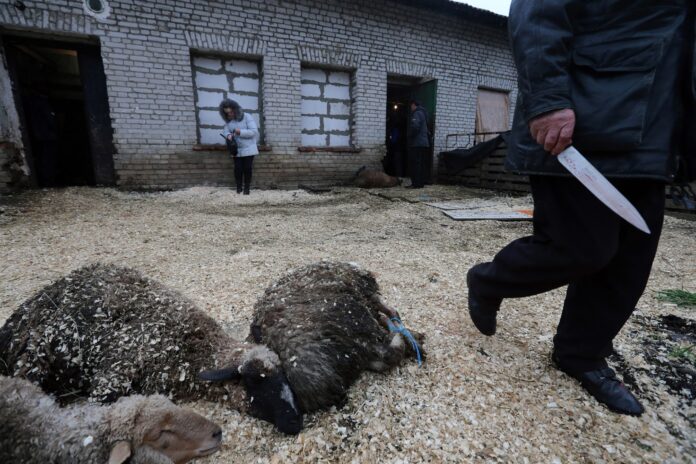
Sheep slaughter is at the centre of the Islamic Eid al-Adha festival. ANATOLY MALTSEV/EPA

Severe heat stress exposed

Australia to the Middle East is one of the world’s longest sea transport routes of live sheep for slaughter, usually taking about 20 days.

The welfare risk to sheep from heat stress is highest on voyages departing Australia in our winter, and arriving in the Persian Gulf in the Northern Hemisphere summer.

In April 2018, whistleblowers released video footage filmed the previous year showing shocking live export conditions on the Awassi Express ship. More than 2,400 sheep died on the voyage from Fremantle to the Middle East.


Read more: The ban on live sheep exports has just been lifted. Here’s what’s changed


The footage triggered public outrage. As part of its response, the federal agriculture department established a committee, of which I was a member, to assess the heat risk facing sheep exports to the Middle East.

The committee recommended measures to ensure sheep experienced heat stress on fewer than 2% of voyages. Subsequent research by my group would reveal just how far the industry is from that target.

Alarming findings

The federal government granted us access to temperature and mortality data from 14 voyages from Australia to the Middle East in May to December, between 2016 and 2018.

We wanted to know at what temperatures the welfare of the sheep began to be affected by heat stress.

To determine this, we analysed so-called “wet bulb temperatures” on the sheep decks. This measures not just air temperature but water vapour, which affects the levels of heat stress actually experienced at a particular temperature.

Wet bulb temperatures typically increased from 20℃ to 30℃ during the 14 voyages in the Northern Hemisphere summer. Ten out of 14 ships stopped at Doha in Qatar, the hottest of the four Gulf ports. There, daily maximum wet bulb temperatures from July to September exceed 27.5℃ half the time, at which point heat stress in sheep increases.

The wet bulb temperatures at Doha exceeded 32.2℃ 2% of the time, at which point sheep deaths are more common.

The sea journey from Australia to the Middle East is one of the world’s longest. Trevor Collens/AAP

Ships docking at Doha sit in the sun for about a day and a half while some sheep are unloaded, exposing those left on board to high temperatures.

The ban is not enough

The federal government recently banned sheep exports to the Middle East between June 1 and September 14 this year, due to heat stress risks. Shipments to Doha are banned from May 22 until September 22.

The government has argued that a longer ban would have too great an impact on the industry. But our results show mortality increases during voyages from September to November, compared with May. This suggests more sheep will die as a result of the shorter ban.

The government introduced other measures this year to try to improve sheep welfare on ships.

First, it will require temperature data to be recorded at two sheep pens per deck. However my group has shown this does not produce representative results.


Read more: Grattan on Friday: Live sheep exports tarnish Australia’s reputation and should be stopped


Second, sheep can be unloaded at no more than two ports. But our results suggest that it is not the number of ports that influenced sheep deaths, but whether sheep were kept in hot conditions on board at Doha.

The COVID-19 pandemic has struck a further blow to sheep welfare. The federal government requires that animal welfare audits are conducted at holding facilities in the destination countries. But quarantine requirements have made these checks difficult.

It’s also worth remembering that heat stress is not the only challenge sheep face en route to the Middle East. They usually have very little space and likely get stressed by ship motion.

A double whammy

The Australian live sheep export trade has declined from about 7 million per year in the late 1980s to about 1 million per year now.

Australia has recently been unable to meet the Middle East’s demand for sheep meat – a problem the industry blames partly on the export ban. Middle East buyers are increasingly turning to the horn of Africa, Europe and Asia.

Compounding this, COVID-19 looks set to force the cancellation of the annual Hajj pilgrimage to Mecca in Saudi Arabia culminating in Eid al-Adha – a sheep-eating festival usually celebrated by millions of Muslims.

The double whammy will particularly hurt Western Australia, which in 2019 handled 97% of sheep leaving Australian ports.

If the festival is not cancelled, Australian sheep may be sent early to be stockpiled alive in the Middle East, to avoid the export ban. This would leave them exposed to the high temperatures the Australian government has sought to protect them from on ships.

The annual Hajj pilgrimage looks set to be cancelled due to COVID-19. Ali Jarekji/Reuters

Looking ahead

Some Western Australian sheep farmers have seen the writing on the wall. In the short term, some are turning to alternative livestock, such as prime lamb or beef cattle for domestic consumption or export as carcasses. This has the added benefit of keeping processing jobs in Australia.

In the long term, farmers would do well to look at the rising popularity of vegetarianism and veganism, and the threat to conventional meat production posed by “clean” meat grown in labs.

Some sheep grazing has already been replaced by cropping, and this is likely to increase in future.

There is no quick fix to the problems facing live sheep exports from Australia. The sooner we shift our economic reliance to more humane alternatives, the better.


Read more: Can meat exports be made humane? Here are three key strategies


ref. New findings show Australian sheep face dangerous heat stress on export ships – https://theconversation.com/new-findings-show-australian-sheep-face-dangerous-heat-stress-on-export-ships-137598

Sanitising the city: does spraying the streets work against coronavirus?

Source: The Conversation (Au and NZ) – By Lisa Bricknell, Senior Lecturer in Environmental Health, CQUniversity Australia

As the COVID-19 pandemic has grown, you will probably have seen photos and video of workers in protective gear using high-pressure sprays to sanitise city streets. Spain has even taken the radical step of spraying bleach on beaches. You may have asked yourself if this really makes much difference to the risk of coronavirus transmission. If not, why would governments expend time, energy and dollars doing it?

Based on our knowledge of the conditions required for disinfectants to work, we suspect these activities are as much about authorities being seen to do something as about actually stopping the spread of COVID-19.

The likely effectiveness of spraying streets and other public places depends on how the virus spreads, how the disinfectants work and what conditions these are used in.

Spraying cities with disinfectant in Spain – Malaga in this case – appears to have done little to stop the spread of coronavirus. Jesus Merida/Sipa USA/AAP

How does the virus spread?

We now know the virus is spread mainly in two ways.

The first is through airborne droplets and aerosols that originate from infected individuals. The droplets are expelled into the air through a cough or sneeze and can infect another person who encounters them at close range. Droplets are larger and do not remain in the air for very long, quickly settling to the ground or another surface.

Aerosols are smaller and remain suspended for longer – up to three hours. Aerosols will rapidly dry out and disperse over time. This makes it less likely a person will be exposed to enough viral particles – known as the infectious dose – to be infected.


Read more: Coronavirus drifts through the air in microscopic droplets – here’s the science of infectious aerosols


The second way the disease is spread is via contamination of surfaces. When droplets settle, the virus can persist for varying periods, depending on the nature of the surface. For example, one study found the virus survives for up to 72 hours on plastic and stainless steel, 8 hours on copper and 4 hours on porous surfaces such as cardboard.

This experiment, however, was conducted under laboratory conditions indoors. So far, no information is available on how long the virus can survive outdoors. It’s also unknown how likely it is for you to become infected when you’re walking the city streets.


Read more: We know how long coronavirus survives on surfaces. Here’s what it means for handling money, food and more


How might disinfectant work?

We must also consider the process of disinfection. According to news reports, most authorities are using a diluted bleach solution to disinfect city areas. Research suggests the COVID-19 virus is susceptible to bleach, but it requires a contact time of about one minute to be effective.

Disinfectant is deactivated by a layer of organic matter on surfaces, including the same skin oils and sweat that leave fingerprints. Shutterstock

Even if the disinfectant reaches every outdoor surface likely to be touched by people, including areas shielded from the spray, there is still a problem with using bleach in the typical conditions encountered outdoors. Sunlight and the build-up of organic matter on surfaces will rapidly deactivate the chlorine, the active ingredient in bleach. This means the disinfectant would probably become ineffective before the virus is killed.

For the virus to infect a person, it needs to enter the body. This can occur when your hands have become contaminated by touching a surface and you put your hands to your face, near your nose or mouth. But when was the last time you touched the ground and then touched your face without washing your hands?

The average person is rarely going to come into direct contact with city streets and footpaths with their hands. That’s another reason spraying these surfaces with disinfectant is unlikely to be an effective control measure.

Commonly touched surfaces such as handrails and road-crossing buttons are more likely sources of infection but would have to be cleaned before being sanitised with bleach. This is because organic matter builds up on frequently touched surfaces, including the natural oils on human skin. Even if cleaning were undertaken prior to sanitising, this process would need to be continuous as the next time an infected person touches the surface it can be recontaminated.

Spraying disinfectant into the air will have the effect of reducing the amount of virus that is suspended as aerosols. However, this will have a very limited effect as the disinfectant will rapidly disperse. Aerosols will be reintroduced the next time an infected person travels through the area.

Another consideration is that the droplets of bleach in the spray can be corrosive and cause harmful respiratory effects when inhaled. Spraying should only be done when there are no people around.

In Moscow, convoys of trucks spray the streets of the Russian capital with disinfectant. Sergei Karpukhin/TASS/Sipa USA/AAP

A far more effective regime is to recommend stringent personal hygiene. This includes regular hand washing with soap and water and the use of alcohol-based sanitiser when hand washing isn’t possible.

Why, then, are countries spraying streets?

So, if spraying disinfectant in urban areas is unlikely to be effective, why are we seeing some countries doing this?

Without being privy to the decision-making process, it’s hard to say. There are, however, a couple of possibilities. One is that the authorities want to create an environment that is free from COVID-19 but aren’t following the science. A more likely reason is to help people feel safe because they see authorities taking action.

In a crisis, people are less likely to take on board information that challenges their current beliefs. Although the science indicates urban disinfection is probably ineffective, it’s likely the general public believes otherwise. As a result, spraying city streets might have the effect of allaying fears and building trust in government and the messages it distributes.

A possible downside of this, however, is people who feel their environment is safe might be less stringent about personal hygiene and physical distancing. These precautions are vital in preventing the virus spreading through the community; if people stop observing these behaviours, the virus is likely to spread much more quickly.

The take-away message from this is that, while urban disinfection may increase public confidence, it is likely to be ineffective in protecting the public from infection.

ref. Sanitising the city: does spraying the streets work against coronavirus? – https://theconversation.com/sanitising-the-city-does-spraying-the-streets-work-against-coronavirus-136966

Is slowing Australia’s population growth really the best way out of this crisis?

Source: The Conversation (Au and NZ) – By Gabriela D’Souza, Affiliate, Monash department of business statistics and econometrics, Monash University

After weeks of pressuring the government to do more to support temporary migrants who fall outside the criteria for government support, the opposition took a surprising stance in The Age and The Sydney Morning Herald on Sunday.

Labor immigration spokesperson Kristina Keneally called for a rethink of our migration program and asked:

when we restart our migration program, do we want migrants to return to Australia in the same numbers and in the same composition as before the crisis?

She said Australia’s answer should be “no”.

To me, as an economist, the answer should be a resounding “yes”.

Keneally’s piece covered a lot of ground – in addition to making claims about whether or not permanent migrants take the jobs of local workers (they don’t) she broached the topic of reconsidering our temporary migration intake and held open the possibility of further lowering our permanent intake.

Migration is a complex often convoluted area of policy

Temporary migrants can’t just turn up

Ms Keneally’s comments imply that coming to Australia as a temporary migrant is easy.

As the following (rather complex) flowchart indicates, it is anything but.

Ball, J 2019 Improving the current system, Effects of Temporary Migration, CEDA report

Temporary migration is uncapped: there are no in-principle limits on the number of temporary migrants who can come here. This is by design, so the program can meet the skill needs of our economy at any given time.

However, the government has a number of tools it uses to contain the program and target the right skills.

Keneally makes the point that the arrival of migrants has made it easier for businesses to ignore local talent.

But there are requirements that Australian businesses to tap into the Australian labour market before hiring from overseas.


Read more: The government is right – immigration helps us rather than harms us


She is right when she says unions and employers and the government should come together to identify looming skill shortages and deliver training and reskilling opportunities to Australian workers so they can fill Australian jobs.

But no matter how good our foresight and our education and training systems, we will always have needs for external expertise in areas of emerging importance.

Training local workers for projects that suddenly become important can take years, during which those projects would stall.

Permanent migrants don’t take Australian’s jobs

Keneally says Australia’s migration program has “hurt many Australian workers, contributing to unemployment, underemployment and low wage growth”.

Australian research finds this to be untrue.

Research I conducted for the Committee for the Economic Development of Australia updating research coducted by Robert Breunig, Nathan Deutscher and Hang Thi To for the Productivity Commission found that the impact of recent migrants (post 1996) on the employment prospects of Australian-born workers was close to zero.

If anything, the impact on wages and labour force participation of locals was positive.

Flexibility gives us an edge

Australia’s migration program is the envy of other countries. Indeed, its success has prompted Britain to consider changing its system to an Australian skills-based system assessed through points.

Temporary migration is certain to look very different over the next few years than it has over past few. That’s its purpose – to adapt to changing circumstances.


Read more: Blaming immigrants for unemployment, lower wages and high house prices is too simplistic


It is difficult to see how a sustained cut in temporary arrivals could assist our recovery.

The bridge to the other side of this downturn will depend on migration. It will depend on us continuing to welcome migrants.

ref. Is slowing Australia’s population growth really the best way out of this crisis? – https://theconversation.com/is-slowing-australias-population-growth-really-the-best-way-out-of-this-crisis-137779

Guide to the Classics: Mary Shelley’s The Last Man is a prophecy of life in a global pandemic

Source: The Conversation (Au and NZ) – By Olivia Murphy, Postdoctoral research fellow in English, University of Sydney

Mary Shelley is famous for one novel – her first, Frankenstein (1819). Its extraordinary career in adaptation began almost from the point of publication, and it has had a long afterlife as a keyword in our culture. Frankenstein speaks to us now in our fears of scientific overreach, our difficulties in recognising our shared humanity.

But her neglected later book The Last Man (1826) has the most to say to us in our present moment of crisis and global pandemic.

The Last Man is a novel of isolation: an isolation that reflected Shelley’s painful circumstances. The novel’s characters closely resemble the famous members of the Shelley-Byron circle, including Shelley’s husband, Percy Bysshe Shelley, his friend Lord Byron, and Mary’s stepsister (Byron’s sometime lover), Claire Clairmont.

By the time Shelley came to write the novel, all of them – along with all but one of her children – were dead. Once part of the most significant social circle of second-generation Romantic poet-intellectuals, Shelley now found herself almost alone in the world.

As it kills off character after character, The Last Man recreates this history of loss along with its author’s crushing sense of loneliness.

Mary Shelley (kneeling far left), Edward John Trelawny, Leigh Hunt and Lord Byron at the funeral of Percy Bysshe Shelley in 1882, painted by Louis Édouard Fournier c1889. Wikimedia Commons

Imagining extinction

The novel was not a critical success. It came, unluckily, after two decades of “last man” narratives.

Beginning in about 1805, these stories and poems came as a response to great cultural changes and new, unsettling discoveries that challenged how people thought about the place of the human race in the world. A new understanding of species extinction (the first recognised dinosaur was discovered around 1811) made people fear humans could also be extinguished from the Earth.

Two catastrophically depopulating events – the horrifying bloodshed of the Revolutionary and Napoleonic Wars (1792-1815), and the rapid global cooling caused by the massive eruption of Mount Tambora in 1815 – made human extinction seem a horrifyingly imminent possibility. Meditations on ruined empires abounded. Many writers began to imagine (or prophesy) the ruination of their own nations.

Unfortunately for Shelley, by 1826 what had once seemed a shocking imaginative response to unprecedented disaster had become a cliché.

A parodic poem like Thomas Hood’s The Last Man – also from 1826 – gives us an indication of the atmosphere in which Shelley published her own book. In Hood’s ballad, the last man is a hangman. Having executed his only companion, he now regrets he cannot hang himself:

For there is not another man alive,

In the world, to pull my legs!

In this hostile atmosphere, critics missed that Shelley’s novel was very different to the rash of last man narratives before it.

Consider Byron’s apocalyptic poem Darkness (1816), with its vision of a world devoid of movement or life of any kind:

Seasonless, herbless, treeless, manless, lifeless –

A lump of death – a chaos of hard clay.

In contrast to this total death, Shelley asks her readers to imagine a world in which only humans are becoming extinct. Attacked by a new, unstoppable plague, the human population collapses within a few years.

In their absence other species flourish. A rapidly decreasing band of survivors watches as the world begins to return to a state of conspicuous natural beauty, a global garden of Eden.

Mary Shelley imagined a world without humans could be a return of wild nature. Twilight in the Wilderness by Frederic Edwin Church, c1860. Wikimedia Commons

This is a new theme for fiction, one resembling films like A Quiet Place and Alfonso Cuarón’s Children of Men, or images of the depopulated Korean demilitarised zone and Chernobyl forest, those strange and beautiful landscapes where humans no longer dominate.

A world in crisis

Shelley was writing in a time of crisis – global famine following the Tambora eruption, and the first known cholera pandemic from 1817–1824. Cholera spread throughout the Indian subcontinent and across Asia until its terrifying progress stopped in the Middle East.

It’s disturbing today to read Shelley ventriloquising the complacent response from England to early signs of disease in its colonies. At first, Englishmen see “no immediate necessity for an earnest caution”. Their greatest fears are for the economy.

As mass deaths occur throughout (in Shelley’s time) Britain’s colonies and trading partners, bankers and merchants are bankrupted. The “prosperity of the nation”, Shelley writes, “was now shaken by frequent and extensive losses”.

In one brilliant set-piece, Shelley shows us how racist assumptions blind a smugly superior population to the danger headed its way:

Can it be true, each asked the other with wonder and dismay, that whole countries are laid waste, whole nations annihilated, by these disorders in nature? The vast cities of America, the fertile plains of Hindostan, the crowded abodes of the Chinese, are menaced with utter ruin. […] The air is empoisoned, and each human being inhales death even while in youth and health […] As yet western Europe was uninfected; would it always be so?

O, yes, it would – Countrymen, fear not! […] If perchance some stricken Asiatic come among us, plague dies with him, uncommunicated and innoxious. Let us weep for our brethren, though we can never experience his reverse.

Shelley quickly shows us this sense of racial superiority and immunity is unfounded: all people are united in their susceptibility to the fatal disease.

Eventually, the entire human population is engulfed:

I spread the whole earth out as a map before me. On no one spot on its surface could I put my finger and say, here is safety.

Throughout the novel Shelley’s characters remain, ironically, optimistic. They don’t know they’re in a book called The Last Man, and – with the exception of narrator Lionel Verney – their chances of survival are non-existent. They cling to a naïve hope this disaster will create new, idyllic forms of life, a more equitable and compassionate relationship between classes and within families.

But this is a mirage. Rather than making an effort to rebuild civilisation, those spared in the plague’s first wave adopt a selfish, hedonistic approach to life.

The “occupations of life were gone,” writes Shelley, “but the amusements remained; enjoyment might be protracted to the verge of the grave”.

No god in hopelessness

Shelley’s depopulated world quickly becomes a godless one. In Thomas Campbell’s poem The Last Man (1823) the sole surviving human defies a “darkening Universe” to:

quench his Immortality

Or shake his trust in God.

As they realise “the species of man must perish”, the victims of Shelley’s plague become bestial. Going against the grain of Enlightenment individualism, Shelley insists humanity is contingent on community. When the “vessel of society is wrecked” individual survivors give up all hope.


Read more: Explainer: the ideas of Kant


Shelley’s novel asks us to imagine a world in which humans become extinct and the world seems better for it, causing the last survivor to question his right to existence.

Ultimately, Shelley’s novel insists on two things: firstly, our humanity is defined not by art, or faith, or politics, but by the basis of our communities, our fellow-feeling and compassion.

Secondly, we belong to just one of many species on Earth, and we must learn to think of the natural world as existing not merely for the uses of humanity, but for its own sake.

We humans, Shelley’s novel makes clear, are expendable.

ref. Guide to the Classics: Mary Shelley’s The Last Man is a prophecy of life in a global pandemic – https://theconversation.com/guide-to-the-classics-mary-shelleys-the-last-man-is-a-prophecy-of-life-in-a-global-pandemic-136963

Josh Frydenberg warns against Australia turning protectionist after COVID

Source: The Conversation (Au and NZ) – By Michelle Grattan, Professorial Fellow, University of Canberra

Treasurer Josh Frydenberg will warn against the danger of a protectionist push in Australia as a result of the virus crisis, in a Tuesday speech that also stresses it is vital to get the country moving as soon as possible.

“There is a risk that protectionist sentiment re-emerges on the other side of the crisis, and for that we must be vigilant,” Frydenberg will tell the National Press Club. An extract of his address was released ahead of delivery.

The crisis has prompted a debate about Australia being too dependent on China in terms of both exports and imports, with calls for greater self-sufficiency.

Without mentioning China in the extract, Frydenberg says, “While we must always safeguard our national interest, we must also recognise the great benefits that have accrued to Australia as a trading nation”.

“Unleashing the power of dynamic, innovative, and open markets must be central to the recovery, with the private sector leading job creation, not government.”

As the national cabinet this week considers lifting some restrictions, Frydenberg says for every extra week they remain, “Treasury estimates that we will see close to a $4 billion reduction in economic activity from a combination of reduced workforce participation, productivity and consumption.

“This is equivalent to what around four million Australians on the median wage would earn in a week.”

“We must get people back into jobs and back into work.”

He points out the longer people are unemployed, the harder it is to rejoin the workforce – in the early 1990s, unemployment increased by 5% over three years, then took seven years to get back to its former level.

“As has been remarked, unemployment went up in the elevator, and went down by the stairs. In the current coronavirus, it is expected the unemployment rate will go up by around 5% in three months, let alone three years. It underlines the importance of getting people back to work as soon as possible to avoid the long-term economic and social impacts from a high unemployment rate.”

The national cabinet meets on Tuesday and Friday, with announcements on Friday about unwinding some restrictions.

JACINDA ARDERN JOINS TUESDAY’S NATIONAL CABINET

Biance De Marchi/AAP

New Zealand Prime Minister Jacinda Ardern has been invited to join Tuesday’s national cabinet meeting. She said on Monday the meeting would discuss “the creation of a trans-Tasman travel bubble”.

But Ardern added the caveat: “Don’t expect this to happen in a couple of weeks time”. The health gains made in New Zealand had to be locked in, she said.

When Ardern spoke to the media on Monday, New Zealand had had no new cases in the previous 24 hours. Its strategy is one of trying to eliminate the virus, while Australia’s strategy has been one of suppression.

Ardern said Tuesday’s meeting “is without precedent”; it highlighted “the mutual importance of our two countries, and economies, to each other.

“Both our countries’ strong record on fighting the virus has placed us in the enviable position of being able to plan the next stage in our economic rebuild, and to include tran-Tasman travel and engagement in our strategy.”

There will be discussion at the meeting of the progress of Australia’s COVIDSafe app. More than 4.5 million people have downloaded it so far.

National cabinet will also receive a presentation on COVID safe workplaces, which has been a project of the National COVID-19 Coordination Commission.

In his speech Frydenberg says when widespread restrictions were imposed in March Treasury estimated a 10-12% fall in GDP in the June quarter, the equivalent of about $50 billion.

If these restrictions had been akin to the eight-week lockdown in Europe, the impact on GDP could have been 24%, or $120 billion, in the June quarter, he says.

“This would have seen enormous stress on our financial system as a result of increased balance sheet impairments, widespread firm closures, higher unemployment and household debt. This was the cliff we were standing on.”

But notwithstanding Australia’s success in suppressing the virus and its unprecedented economic response, “our economic indicators are going to get considerably worse in the period ahead before they get better.

“Some of the hardest hit sectors like retail and hospitality are among the biggest employers, accounting for more than two million employees between them.”

Credit card data from the banks showed spending on arts and recreational services, accommodation and food services down about 60% and 70% respectively in late April compared to the year before.

“Despite the toilet paper boom and the record increase in retail trade in March due to panic buying, overall consumption, according to NAB data, has fallen 19.5% since the start of the year, with declines across all jurisdictions.”

Treasury forecasts unemployment doubling to 10% in the June quarter, but it could have been 15% without the JobKeeper package, Frydenberg says.

“The economic shock the world is confronting dwarfs the GFC,” he says.

He says Australia has the advantage of having made real progress in suppressing the virus’s spread without a full lockdown. Agriculture, mining and construction have continued – 85% of mining businesses were still operating this month.

“We are by no means out of this crisis,” Frydenberg says. “Nevertheless as we build to the recovery phase, we must also turn our minds to the changes that will be needed to further drive economic growth and employment.”

ref. Josh Frydenberg warns against Australia turning protectionist after COVID – https://theconversation.com/josh-frydenberg-warns-against-australia-turning-protectionist-after-covid-137810

Lockdown social cohesion likely to fall as ‘acute’ phase ends, say scientists

By RNZ News

The sense of national unity felt during the Covid-19 lockdown may disappear as social isolation and economic costs hit home, a report by leading social scientists warns.

Koi Tū: the Centre for Informed Futures from the University of Auckland has released a discussion paper outlining potential difficulties as restrictions lift.

It argues that social cohesion must be a key consideration for policymakers in a post-Covid-19 world.

READ MORE: Al Jazeera coronavirus live updates – Some countries begin easing lockdowns

Koi Tū director Sir Peter Gluckman said the level of community compliance and collective purpose shown during the fight against Covid-19 has rarely been seen outside wartime.

He warned this would likely begin to waver as the country moved out of the acute phase and the implications of the lockdown became apparent.

– Partner –

“Already, we’re seeing a rise in tension between conflicting economic and health interests. Sectors are starting to compete for attention. Some are in hurry to return to a pre-covid life; others see the opportunity for a major reset,” Sir Peter said.

“Many lives have been fundamentally changed, and for those people, the new ‘normal’ is full of huge uncertainty. That is where social cohesion will start to break down and the mental well-being of many will be further affected.”

Enhanced cohesion
As well as Sir Peter, the paper was written by Professor Paul Spoonley, Anne Bardsley, Tracey McIntosh, Rangimarie Hunia, Sarb Johal and Richie Poulton and informed by a larger group of mental health experts.

Professor Spoonley said enhanced cohesion was often seen in the initial response to major crises as communities pulled together against a common threat.

However, as the situation evolved over time, social cohesion could be lost and may even become worse than before the crisis.

“We cannot be complacent. Social cohesion is a major asset for New Zealand. A cohesive, safe and Covid-free country will enhance New Zealand’s global reputation and help project our place in the world – with positive flow on effects for our economy,” he said.

“But once lost, it becomes extremely difficult to restore, especially when there is both increased uncertainty and new forms of inequality.”

Sir Peter said that in the coming months and years, there would be many decisions made by government, individuals and businesses to recover from the crisis.

There would be a need to look for the advantages of the “new normal” that would emerge, he said.

No new NZ cases
There were no new cases of covid-19 confirmed in New Zealand today, but one probable case has been reclassified as confirmed.

Director-General of Health Dr Ashley Bloomfield said that meant New Zealand’s total of confirmed and probable cases remained the same at 1487. The total number of confirmed cases is 1137.

Dr Bloomfield said there had been no additional deaths, leaving New Zealand’s total at 20.

The last time there was 0 new cases was on March 16.

Yesterday 2473 tests were done. The total number of completed tests is 152,696.

There are seven cases in hospital, and none are intensive care.

The number of clusters in NZ remains at 16, three of them have now been closed as there have been no cases of community transmission in the past few days.

“Clearly these are encouraging figures today, but it is just one moment in time. The real test is later this week when we factor in the incubation period for the virus and the time it takes for people to display symptoms which is generally five to six days after exposure,” Dr Bloomfield said.

Covid-19 update graphic for May 4: RNZ
  • This article is republished by the Pacific Media Centre under a partnership agreement with RNZ.
  • If you have symptoms of the coronavirus, call the NZ Covid-19 Healthline on 0800 358 5453 (+64 9 358 5453 for international SIMs) or call your GP – don’t show up at a medical centre.
  • Follow RNZ’s coronavirus newsfeed
Print Friendly, PDF & Email

Article by AsiaPacificReport.nz

Can you get the COVID-19 coronavirus twice?

Source: The Conversation (Au and NZ) – By Sanjaya Senanayake, Associate Professor of Medicine, Infectious Diseases Physician, Australian National University

Governments are starting to lift restrictions and some are considering “immunity passports”, where all restrictions are lifted for those previously infected.

But are you immune from COVID-19 if you’ve already been infected?

Some infections never recur once you’ve had them, such as measles and smallpox. But you can get plenty of others again, such as influenza and tetanus.

So far, research suggests at least a proportion of people who have had COVID-19 will be protected from another infection – at least initially. But the science is far from certain. Here’s what we know so far.


Read more: Coronavirus: how long does it take to get sick? How infectious is it? Will you always have a fever? COVID-19 basics explained


First, a quick recap about antibodies

When we encounter an infection for the first time, our body needs to respond quickly to the threat. So within hours, it activates our innate immune system. This system is quick-acting but isn’t targeted to the specific threat.

The innate immune system’s attack distracts the infection while the body produces a more targeted but slower response against the infection, via the adaptive immune system.

The adaptive immune system produces antibodies to fight the infection. These are what we measure in the blood when trying to determine who has been exposed to SARS-CoV-2, the virus that causes COVID-19.

The body produces different types of antibodies to respond to different parts of the virus. But only some have the ability to stop the virus entering cells. These are called “neutralising antibodies”.

According to the World Health Organisation, people who recover from COVID-19 develop antibodies in their blood. But some people appear to have low levels of neutralising antibodies.

Regular blood tests can’t tell us everything we need to know about COVID-19 immunity. Shutterstock

To see if an antibody is a neutralising antibody, you need to do special laboratory tests to see the effect of the antibody in cells exposed to the virus.

But even if an antibody blood test could confirm neutralising antibodies, it doesn’t automatically mean the person is immune from further infection. Even though the antibody is present, for example, the quantities may be insufficient to work.

So a positive antibody blood test to COVID-19 doesn’t confirm if someone is immune to COVID-19 or not. It only tells us if a person has ever been exposed to COVID-19 – and even that depends on how sensitive and specific the antibody test is.

Why do some people test positive again?

There are reports from different countries of people hospitalised with COVID-19 who tested negative when they were discharged, before testing positive again.

However, a study from China found those who retested positive didn’t get any sicker. This suggests these people were intermittently shedding the virus and were at the tail end of their original illness, rather than getting a new COVID-19 infection.


Read more: Coronavirus: how accurate are coronavirus tests?


The nasal and throat swab test being used to detect the virus also can’t say whether the virus is alive or not; therefore, they could have just been shedding dead virus. This could explain why their close contacts didn’t become sick or test positive.

Do other coronaviruses generate immunity?

Four other types of human coronaviruses (HCoVs) – 229E, NL63, OC43 and HKU1 – cause about 15-30% of the common colds worldwide. Two of these – OC43 and HKU1 – are a subgroup of coronaviruses known as betacoronaviruses, as are SARS-CoV, MERS and SARS-CoV-2.

A study from 1990 found infection with human coronavirus 229E generated protective immunity from that particular virus. But one year later, as antibody levels declined, these people could be reinfected. The researchers hypothesised a cyclic pattern of infection, with people getting coronavirus infections every two to three years.

More recently, when researchers examined 128 samples from people who had recovered from SARS (severe acute respiratory syndrome, or SARS-CoV), they found 90% had strong neutralising antibodies, while 50% had positive T cell responses, meaning they were likely to be immune.

Those infected with SARS had some level of immunity. Shutterstock

Given this information about other coronaviruses, it’s likely that infection with SARS-CoV-2 provides some immunity from a second infection. But whether everyone becomes immune, and the duration of that immunity, are unknown.

Do other coronaviruses provide cross-immunity against COVID-19?

Cross-immunity is where immunity against one infection provides protection from another infection.

In one study, researchers tracked newborns up to 20 months of age. They found that infection with human coronavirus OC43 generated neutralising antibodies that may have protected against HKU1. In other words, it led to cross-immunity.


Read more: What does it mean to be immunocompromised? And why does this increase your risk of coronavirus?


If there is cross-immunity between HCoV-OC43 and HCoV-HKU1, which are both betacoronaviruses, it’s possible they could generate cross-immunity with the new betacoronavirus, SARS-CoV-2.

But unfortunately, the current tests for COVID-19 (nasal and throat swabs, and blood tests) can’t give us information about cross-immunity.

Why could cross-immunity be important?

Cross-immunity with the other two betacoronaviruses could partly explain some of the inconsistencies we see with COVID-19.

For example, why do some people under 50 years of age experience severe and even fatal illness with COVID-19, while others over 100 years old fully recover?

Given that immunity to these two other betacoronaviruses is widespread and probably fluctuates over time, people with COVID-19 may have had different antibody levels against HCoV-OC43 and HCoV-HKU1 when they were infected with SARS-CoV-2. This could have contributed to differing levels of severity of COVID-19 infection.

Cross-immunity from other coronaviruses might explain why some people get sicker than others. Shutterstock

It’s even possible that the presence of cross-immunity could have been harmful rather than protective, because it might lead to an over-exuberant immune response. This phenomenon can be seen in dengue, another viral infection.

Over time, the issue of immunity to COVID-19 will be resolved. But for now, scientists are still piecing the information together.

ref. Can you get the COVID-19 coronavirus twice? – https://theconversation.com/can-you-get-the-covid-19-coronavirus-twice-137309

Tonga drops five places in world free press rankings – ‘keep fighting’ call

Evening Report
Evening Report
Tonga drops five places in world free press rankings – ‘keep fighting’ call
Loading
/

Tonga has fallen five places to lie 50th in this year’s World Press Freedom Index.

In last year’s index, compiled by the Paris-based media freedom watchdog Reporters Without Borders (RSF), it was 45th out of 180 countries.

Tonga’s highest ranking was in 2016 when RSF placed it 37th.

READ MORE: Tough coronavirus controls threaten Pacific, global media freedom

Its lowest position was 66th in 2013.

The RSF report said Tongan politicians had not hesitated to sue media outlets, exposing them to the risk of heavy damages awards.

Some journalists said they were forced to censor themselves because of the threat of being bankrupted. In an effort to regulate “harmful” online content, especially on social media

– Partner –

Suspension of 3 workers
Earlier this year, the Pacific Freedom Forum said the suspension of three workers from the Tonga Broadcasting Commission had sent a chilling message to journalists at the public broadcaster.

RNZ reported that Setita Tu’ionetoa, Salamo Fulivai and Vilisoni Tu’iniua had been suspended over allegations they attempted to incite distrust in the government.

Forum co-chair Ofani Eremae said the suspensions would dissuade journalists from questioning the government.

“The message that is being sent to the workers or the journalists at Tonga Broadcasting is that ‘if you say something or do something that seems to be against the Tongan government you’re going to get suspended or you’re going to get sacked’,” he told RNZ.

Of Tonga’s closest neighbours,  Samoa is at 21st (down one place). However, RSF has warned that Samoa is in danger of losing its status as a model of regional press freedom.

The RSF noted that Parliament had reinstated a law in 2017 criminalising defamation. It said this had been used by  Prime Minister Tuilaepa Sailele Malielegaoi to attack journalists who criticised his government.

Fiji remains below Tonga at 52nd, unchanged from last year.

RSF said Fijian media were operating under the draconian 2010 Media Industry Development Decree, which had been turned into a law in 2018. Journalists who are judged to have violated the law’s vaguely worded provisions face severe penalties.

‘Keep fighting’
Professor David Robie, director of the Pacific Media Centre at Auckland University of Technology and a leading advocate of press freedom, said in a weekend World Press Freedom Day message it was vitally important to have free media across the region at this time of the coronavirus pandemic.

“Even in good times there is a tendency for Pacific governments not to understand role of media and how important it is to have good, reliable information,” he told the ABC’s Pacific Beat.

LISTEN: Pacific Beat talks to David Robie

“That’s the antidote to rumours on social media.”

Professor Robie said the 2020 RSF report is based largely on developments and information gathered over the previous year.

He said almost all countries in the region, including Australia and New Zealand, had dropped in this year’s RSF rankings. Australia was down five places to 26th (one place below Samoa) and New Zealand had slipped two places to ninth.

“Overall its looking bleak,” Professor Robie said.

He urged journalists to keep fighting for press freedom.

Media educator Dr Philip Cass is an adviser for Kaniva Tonga.

Print Friendly, PDF & Email

Article by AsiaPacificReport.nz
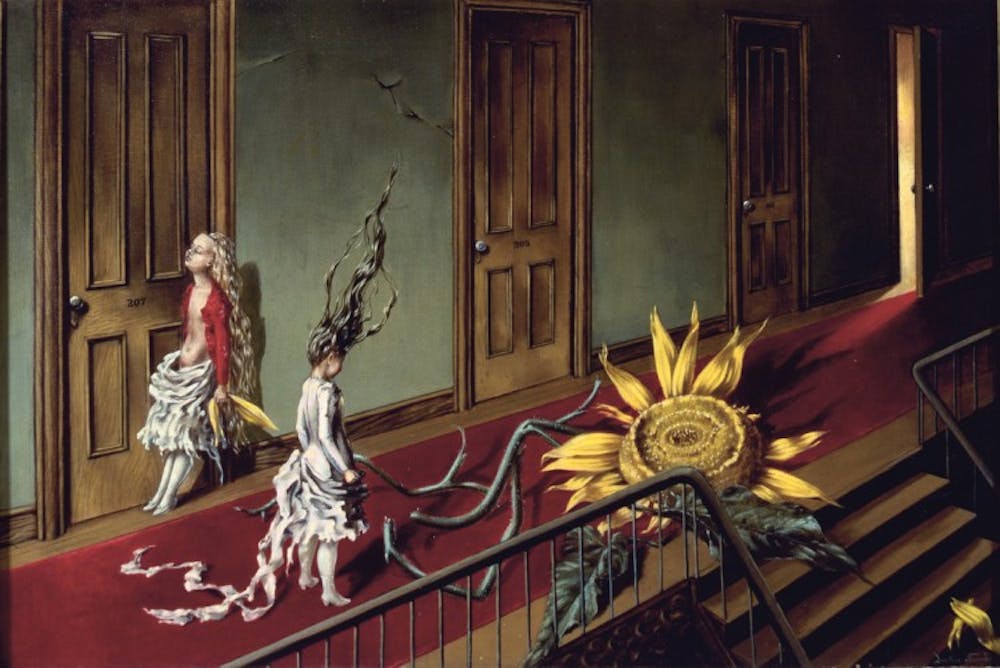
5 tips to help parents navigate the unique needs of children with autism learning from home

Source: The Conversation (Au and NZ) – By Amanda Webster, Senior Lecturer, Autism and Inclusive Education, University of Wollongong

Children on the autism spectrum will face unique challenges as they learn from home during the COVID-19 shutdown. These children process information and learn in different ways to their peers.

They may find it more difficult to independently complete tasks and struggle with managing their time. They are also more likely to have difficulty in writing tasks or ones involving high amounts of language and communication with others.

Children on the autism spectrum often associate specific tasks with locations. This might mean they resist doing schoolwork at home. Anxiety levels, which are often high in this group of students, may increase further due to changes in routine or uncertainty about what they should be learning.

General tips for schooling at home such as setting up a learning space, creating structure and routine, and becoming familiar with resources in the Australian Curriculum are good ideas. But parents of children on the autism spectrum may need additional strategies.


Read more: Trying to homeschool because of coronavirus? Here are 5 tips to help your child learn


Studies of students on the autism spectrum in distance education (studying at school without being physically present) or experiencing homework difficulties suggest several helpful strategies for parents.

1. Put together a homework plan

Students learning at home will likely need to engage in independent learning tasks such as completing worksheets or writing assignments. This is somewhat similar to doing homework assigned by a teacher.

But students on the autism spectrum often do less homework than their peers. And they report finding homework too hard, frustrating and overwhelming.

Parents helping their child may be confused about assignments from teachers if the communication is limited or unclear. Or they may find their child needs breaks and is unable to complete all their work.

These issues can increase children’s anxiety, lead to meltdowns and create tension between parents and children. Research shows creating a homework plan can help.


Read more: Children with autism may use memory differently. Understanding this could help us teach them


In a homework plan, a teacher clearly communicates to parents what the student needs to learn and which tasks can be prioritised over others.

Once parents know what specific knowledge and skills their child needs to learn, they can adjust the amount or nature of tasks to fit the needs of their child.

For example, a teacher sets out in a homework plan that at the end of the task, a student must be able to explain their knowledge about the early settlers. A parent may see their child is struggling to write a full essay.

In this case, the parent can adjust the task so their child can use puppets to tell and record the story instead.

Children on the autism spectrum may find it stressful to think about what may be going on in someone else’s mind. Using an outside tool, like a puppet, to tell another person’s story can take that pressure off.

2. Use your child’s special interests

Students on the autism spectrum often focus on special interests to calm themselves. Special interests can also be used to help them manage additional anxiety during the shutdown.

Research shows adapting teaching to incorporate students’ special interests can help students on the autism spectrum learn academic and social skills. For example, a teacher can use a student’s interest in Lego to help them learn maths skills such as fractions and measurements.

A child can be more interested in learning if they see it in the context of something important to them. Shutterstock

Special interests can also increase a student’s engagement in learning tasks, as they see them in the context of an activity that’s important to them.

A parent can help their child learn across the curriculum by using their special interest. For example, a student who is interested is space could work on a project in which they learn about early scientists who developed the solar system (history), write about the importance of space exploration (English, science) and design a new space station (maths, art).

3. Use technology

Technology-aided instruction can help students on the autism spectrum learn a range of skills. It can also help them understand task requirements, communicate their concerns and complete tasks.

Apps are an accessible and fairly inexpensive way to use technology. Apps may motivate students on the autism spectrum as they present information in ways that support their visual learning style.

Apps have been found to be effective in helping children on the autism spectrum learn language, literacy and numeracy skills. Apps can also be used to create schedules, checklists and language cards.

The Learning App Guide to Autism and Education provides parents with reviews for a number of apps grouped by skill areas and age groups. A parent can select the literacy group, for instance, and find apps for teaching spelling to children in lower primary grades.

4. Find ways to connect your child to others

Although students on the autism spectrum often experience difficulty in social situations, many say peer support can help make school a more positive experience. During the COVID-19 shutdown, classmates or friends can provide encouragement and information on learning tasks. This may decrease uncertainty and increase students’ confidence.


Read more: It’s 25 years since we redefined autism – here’s what we’ve learnt


Connecting with peers on the internet is particularly well-suited to students on the autism spectrum as it reduces sensory distractions and the amount of language required.

Students can use programs such as Discord or Google Hangouts to talk to their classmates, play games and work together on assignments.

5. Seek help and don’t try to do everything

Accessing support can help parents cope with feelings of isolation and anxiety. Education departments in Tasmania and Western Australia provide parents of children on the autism spectrum with activities and curriculum information. And Queensland provides specific learning strategies.

Homeschooling Special Needs Australia helps parents connect and provides links to sites specifically set up to help them during the COVID-19 shutdown.

Parents should can also use these sites to connect with other parents. These networks can decrease parent’s stress and help them connect with their child.

ref. 5 tips to help parents navigate the unique needs of children with autism learning from home – https://theconversation.com/5-tips-to-help-parents-navigate-the-unique-needs-of-children-with-autism-learning-from-home-135055

Creating new social divides: how coronavirus is reshaping how we see ourselves and the world around us

Source: The Conversation (Au and NZ) – By Ben Walker, Lecturer (Management), Te Herenga Waka — Victoria University of Wellington

The COVID-19 pandemic is a massive public health and economic crisis, but it is also reshaping how we see ourselves and the social world around us.

As borders have tightened around most countries, we may see further surges in nationalist attitudes and political regimes. And countries’ ongoing efforts to limit the spread of infection could mean that people with immunity gain privileged access to things like insurance, work, travel and leisure.

At worst, COVID-19 may carve new (and deepen existing) social divides and inequalities. At best, it could fast-track us to a better world – one where, for instance, workers’ pay and employment conditions better reflect their contribution to society.

This makes it imperative that we think critically about the identity changes induced by COVID-19, and consider their social, political and ethical ramifications.


Read more: More Australians are worried about a recession and an increasingly selfish society than about coronavirus itself


Mapping out identity

When it comes to defining our identity and figuring out our place in the world, we all draw on groups and categories that our culture and society deems most significant.

In this way, we build an “identity map”, which generally evolves slowly in response to gradual shifts in society. But COVID-19 is transforming many parts of our map at pace, while also forcing us to reckon with aspects of our identities that have always been with us.

Debates about locking down versus reopening countries have thrust political identities centre stage, especially in already politically divided nations such as the United States. New Zealand Prime Minister Jacinda Ardern has argued that pitting the economy against saving lives is a “false dichotomy”, yet certain commentators continue to do just that.

The crisis has also reawakened us to our national identities. The idea of “global citizenship” has gained popularity in recent decades, but COVID-19 highlights its limits, putting us all in our geopolitical places.

This year’s Olympic Games may have been postponed, but another competition of national identities is playing out online as countries’ coronavirus “curves” are compared in real time.

Tight border restrictions will likely remain for a significant time, making deeper reflection on our national identities inevitable. Considering the identity politics already associated with place and ethnicity, as evident in Brexit and the US election, the effects of COVID-19 bear careful consideration.


Read more: Reclaiming the streets? We all can have a say in the ‘new normal’ after coronavirus


Charting new territories

The pandemic is also putting new forms of identity on the map. In New Zealand, after five weeks in lockdown, the notion of “essential work” has become part of everyday language. As a result, workers previously classed as low skill (cleaners, supermarket workers, bus drivers) and subject to poor pay and working conditions, have been recast as heroic.

While the rest of us stay home, essential workers head to their jobs each day knowing they are at higher risk of infection, abuse and even death.

Essential work is both important and perilous, and its emergence as a new identity source presents politicians and industry leaders with an opportunity to make long-overdue improvements to pay and working conditions.

Immunity to COVID-19 also looms as a crucial identity issue. Those who develop immunity naturally (through infection and recovery) or attain it through vaccination may end up leading different lifestyles to those who don’t.

The idea that a person’s immunity status would be part of their identity would have been unthinkable a few months ago, but it is now a real possibility. The World Health Organization has cautioned against the introduction of “immunity passports” on medical grounds, but the idea of immunity-as-identity also raises tricky political, legal and ethical questions.

How can immunity be proven in a way that mitigates the risk of immunity forgery? Is there not an inherent contradiction in publicly promoting avoidance of the virus (via social distancing) while simultaneously conferring advantages (the ability to work, travel and socialise) on those exposed to it? How might old identities, such as nationality and social class, bear on the distribution of immunity on a global scale?

The COVID-19 pandemic will continue to redraw our maps of identity in unprecedented ways, leading us into unfamiliar social terrain. As it does, it is incumbent on us all to be thoughtful about these changes and alert to their consequences.

ref. Creating new social divides: how coronavirus is reshaping how we see ourselves and the world around us – https://theconversation.com/creating-new-social-divides-how-coronavirus-is-reshaping-how-we-see-ourselves-and-the-world-around-us-137485

Head On Festival review: every photograph tells a virtual story

Source: The Conversation (Au and NZ) – By Cherine Fahd, Director Photography, School of Design, University of Technology Sydney

Rather than cancel, organisers of the annual Head On Photo Festival announced they would deliver the 2020 program online.

This includes live-streaming artist talks, panel discussions, photography workshops and over 100 virtual exhibitions featuring international and Australian photographers.

The festival, established in 2008, showcases documentary photography, a style commonly associated with photojournalism and other forms of reportage. By definition, documentary images “appear unstaged”, portraying everyday scenes, world events, people and places, captured this year at a time of intense change and unprecedented events.

Element of surprise

Like many international photo festivals, there are conventional images galore. But thankfully, there are also a few surprises.

One such surprise is Anna Bedynska’s Clothes for Death, a series of affectionate portraits of individuals next to the clothes they have chosen for their burial outfits.

Anna Bedynska’s Clothes for Death. Head On Festival

Adopting an experimental mode of social documentary, Bedynska pushes the medium beyond traditional modes of social commentary from the outsider looking in. Instead, the project shows photography can start difficult conversations about taboo subjects in tender and ethical ways.

The portraits also note our human connection to clothing and how dressing, even in death, is an important part of self-expression.

Anna Bedynska’s Clothes for Death. Head On Festival

Conversely, The Art of Aging by Canadian photographer Arianne Clément is a series of black and white photographs of naked women over the age of 70. Yet another taboo subject – women of a certain age, or even over 30, rarely feature naked or otherwise in visual culture.

Consequently, The Art of Aging is a work of visual activism showing older women and their bodies to be just as sexually charged as their younger counterparts. Like the portrait of a woman laying on her bed with the air of a teenager, the look in her eye suggests she knows something we don’t.

There are also wonderful images of coupled intimacy, showing people over 70 in the context of their sexuality and desire for each other.

Arianne Clément’s The Art of Aging. Head On Festival

Changing bodies

Jimmy Pozarik was photographer-in-residence at Sydney Children’s Hospital when he photographed 25 patients who were receiving treatment for this Then and Now series.

Anyone who has spent time in hospital with a child will recognise the distress and trauma of the scenes, as well as the incredible fight for life that some children and their parents experience.

Jimmy Pozarik’s Then and Now. Head On Festival

Pozarik pairs the images taken during the residency with photographs from today. The images show the wonder of photography to document the way our bodies and appearances are transformed in time.

It is also worth an online visit to The UnKnowing … X by British photographer Richard Sawdon Smith. A series of black and white self-portraits present him costumed and role-playing, signalling erotic practices and the body in pain and power.

In accompanying notes, Smith candidly states:

As I approach my sixth decade, I’m reflecting on past lives and the unknown of the future, dipping into the dressing up box to create new and potentially different roles … The X of Unknowing … can be a kiss from me to you, a reference to non-binary, non-gendered specific pronouns, or referring to an undetermined space, both literally and metaphorically.

Imaginatively, erotically and ironically, Smith plays “a man approaching 60” in various guises that constitute a lifetime of playful self-knowledge.

Richard Sawdon Smith’s The Unknowing … X. Head On Festival

Canadian photographer Pierre Dalpé’s series Wigstock also illustrates the role of costuming, this time in an iconic New York City drag festival.

The inclusion of Smith and Dalpé’s distinctive works help us visualise queer bodies beyond the customary timeframe of Sydney’s Mardi Gras festival, evidencing Head On’s inclusivity and diversity.

Pierre Dalpé, Shotgun Wedding from the Wigstock series. Head On Festival

Big winners

The festival prides itself on supporting professional photographers as well as amateurs. Work submitted to the festival is judged without the photographers’ names or biographies. The images and proposals are considered on merit rather than reputation.

Fiona Wolf’s The Gift. Head On Festival

Festival award winners were announced on Friday night from thousands of submissions from 61 different countries and across three categories: portrait, landscape and student. Fiona Wolf won the portrait category for The Gift, RHW 2020, which showed the “modern family story of a girl born by a warrior woman to two loving dads”. Marcia Macmillan won the landscape category for Whimsical Warrior, a picture of her daughter running towards a dust storm. Student winner Joel Parkinson’s Within Without was a self-portrait reflecting on his transition from childhood to adulthood and “the last vestiges” of innocence.

Festival events encourage audience participation through live Q&A sessions and promise hands-on interaction in workshops.

Visual Storytelling in Portrait Photography with Oded Wagenstein (tonight at 6pm) is one of several workshops to look out for.

Timely panel discussions include Photography, Trauma & Healing on Thursday 7 May at 12pm and another on Alternative Facts; Falsifying the image in the era of deep fakes on Sunday 17 May also at 12pm.

From Nick Moir’s Watch and Act series. Head On Festival

Head On Photo Festival is online until 17 May 2020.

ref. Head On Festival review: every photograph tells a virtual story – https://theconversation.com/head-on-festival-review-every-photograph-tells-a-virtual-story-136607

Keith Rankin Chart Analysis – Covid19: New Cases and Casualties

Mostly the usual suspects with high death rates. Chart by Keith Rankin.

Analysis by Keith Rankin.

Mostly the usual suspects with high death rates. Chart by Keith Rankin.

These two charts show the total number of cases and deaths, by country, over the seven days ended 2 May 2020. In these charts a number of countries with populations below 50,000 have been omitted; countries which have shown in earlier charts.

The first chart is sequenced by death rates (orange). Generally it shows the countries that have featured in the past, suggesting that the pandemic continues to be concentrated in the same places – the economically developed countries that were too slow to act. We note that, when we extend the United Kingdom to the British Isles, that Ireland and the Isle of Man make strong appearances reflecting their interconnectedness. Further, the Channel Islands and Bermuda – functionally part of the United Kingdom – match these British territories.

We also see the appearance of Latin American countries: Ecuador, Peru and Brazil.

Arabian countries have very high recent caseloads. Chart by Keith Rankin.

The second chart shows the reappearance of Qatar, Bahrain, Kuwait, UAE; also, Singapore. And the inclusion of Saudi Arabia with them. These six countries continue to have low death rates. It seems likely that the Arabian countries will generally share the experience of Singapore; in many ways they are similar societies with similar economies. Also of note is the far-flung French enclave off the coast of Africa, Mayotte; the high-end tourist resort country, Maldives; a shipping, financial and tax avoidance centre in Latin America, Panama; and an ex-Soviet country which had previously pretended the problem did not exist; Belarus. And Russia. And another large Latin American country, Chile.

The countries that will probably show high death rates this week. Chart by Keith Rankin.

Here we see the incidence of Covid19 victims in hospital, classified as serious or critical. This is a good ‘flow’ measure of recent cases; contrast total cases and total deaths for which in many countries the data are now dominated by earlier cases. For this chart, I have excluded countries with less than 200,000 people.

Again we see the dominance of the usual suspects. Moldova, however, makes an unexpected appearance, suggesting an outbreak previously disguised by low testing. Indeed there are some other Eastern European countries that will probably appear on these charts if I repeat them next week.

Iran – an established Covid19 country – shows up here, suggesting that both its case count and death count are underreported. Brazil also shows up strongly, reflecting its status as a country that has underplayed Covid19. And Guadeloupe is a French outpost in the Caribbean, a region with a high Covid19 caseload, especially among the smallest Dutch, French and British outposts there. A number of the countries excluded because they are too small are in the Caribbean.

Finally, Canada is a country that features in all three charts. I am concerned for Canada. I was travelling through Canada at this time last year, and am somewhat distressed by Canada’s similar to the USA inability to manage the pandemic in time. Quebec and Ontario in particular reflect the high incidence of Covid19 in the northeast of the United States.

Coronavirus redundancies are understandable, but there are alternatives

Source: The Conversation (Au and NZ) – By Robyn Johns, Senior Lecturer in Human Resource Management and Industrial Relations, University of Technology Sydney

Redundancies are attractive to organisations in crisis. Although the payouts cost money upfront, they can reshape the remaining workforce to make it leaner and more fit for purpose.

On the other hand they can demoralise that workforce, and they are far from good for the rest of the economy.

One alternative, available to the employers of as many as 6.6 million Australians for the next six months, is JobKeeper.


Read more: JobKeeper is quick, dirty and effective: there was no time to make it perfect


Another is being tried with apparent success by Domain Group, the real estate listings and journalism firm majority owned by Nine Entertainment Holdings, which also owns newspapers including The Age and The Sydney Morning Herald.

Domain, and the real estate industry in general, has been hard hit by plummeting listings and plateauing home prices.

Project Zipline

Because it is part owned by the public and listed on the Australian Securities Exchange, it has had to explain its approach to shareholders.

Its April 26 announcement notes that about 45% of its cost base relates to staff and employee-related expenses.

“We had the option of taking the standard path of reducing hours, stand downs and redundancies, chief executive Jason Pellegrino explained on the Domain website.

He chose another option: Project Zipline

employees were offered the opportunity to participate in a share rights program whereby they could receive a percentage of their salary package over the next six months in share rights, or alternatively elect to reduce working hours

The target is a 20% reduction in staff costs, while retaining employee talent and “momentum for the long term”.

It’ll also help align the employees and the organisational interests.

Domain’s group director for employee experience, Rosalind Tregurtha says there has been a 90% take up of the options offered.

Sacrifices at the top

The executive leadership and board are role modelling by taking greater proportions of their own remuneration in share rights: 30% and 50%.

It has had to work quickly so the savings can start from May.

The work has included preparing information packs for managers and employees, briefing managers, asking employees to chose options, working with Link Market Services to get offers out and processing the changes for the more than 600 employees on the payroll.

Zipline is a case study of an organisation working quickly with its workers to find a solution that works.

It mightn’t work elsewhere. Other options for businesses include

  • offering greater work flexibility including shortened weeks and job sharing

  • freezing or limiting recruitment

  • restricting or banning overtime

  • increasing the scope of jobs

  • allowing employees to take accrued leave

  • directing employees to take unpaid leave under the government’s stand down provisions

  • seeking voluntary redundancies

Whatever option works the best, for many employers doing nothing is not an option.


Read more: Coronavirus lays bare the trauma of losing your job


It is important to consider, as Domain did, that while demand for their services might have slowed for a time, there is every likelihood that in the not too distant future things will pick up.

The firms that have done all they can to retain their industry knowledge and company experience will be the best placed for revival.

ref. Coronavirus redundancies are understandable, but there are alternatives – https://theconversation.com/coronavirus-redundancies-are-understandable-but-there-are-alternatives-137704

Reclaiming the streets? We all can have a say in the ‘new normal’ after coronavirus

Source: The Conversation (Au and NZ) – By Amelia Thorpe, Associate Professor in Law, UNSW

The dramatic recent shifts in the use of public space have led some to claim the coronavirus pandemic will permanently change cities. Among its many other impacts, COVID-19 has upturned established patterns of ordering city space.

Personally, the vibrancy of my local park has delighted me. It seems to be filled at almost any time of day by a wide variety of activities. I’m encouraged by the proliferation of new street stalls and entertained by the creativity of my neighbours’ efforts to maintain their gym routines: elastic bands attached to light posts, free weights carted to the park in shopping trolleys, a cross-trainer in the front yard.


Read more: How traffic signals favour cars and discourage walking


Automated allocation of crossing time for pedestrians has banished the ‘beg button’. Amelia Thorpe

I have been frustrated but also heartened by the six-week wait to get my daughter’s bike serviced. And I’m thrilled by the elevation of pedestrians and cyclists. Streets have been closed to cars, and time has been automatically allocated for pedestrians in the traffic-light cycle – no need for “beg buttons”!

Since at least the 1970s oil crisis, and especially since the more recent recognition of the global climate crisis, there have been calls to rethink the allocation of public space, and streets in particular, to produce more inclusive, resilient and sustainable forms of development. Compact city policies have been adopted (albeit unevenly) across Australia, yet implementation has been slow.

Might COVID-19 provide the impetus for more rapid change? Whether lasting changes do indeed eventuate will depend in large part on whether the pandemic has shifted popular expectations.

Public space is political

Public space is the quintessential site of politics. And it’s not just as a site for marches and assemblies where rights are demanded and disrupted. It’s also the everyday expression of collective decisions about how we live together, about who gets access to which space, and for what purposes, about the role of the state and the rights and responsibilities of citizens.

Those collective decisions are often highly contested, so the relative rights and responsibilities of citizens and their cities are subject to ongoing negotiation. The pandemic restrictions have brought issues like these to the fore. The rapid enactment of regulations to support social distancing has generated concerns about wide official discretion and compounding inequality.


Read more: We don’t know what we’ve got till it’s gone – we must reclaim public space lost to the coronavirus crisis


Yet the rules that regulate streets, parks and other public and semi-public spaces are always uneven. Popular understandings about the kinds of use (and users) that are and are not legitimate in public space significantly influence the ways those rules are interpreted – and sometimes amended.

Even under coronavirus restrictions, some of the policing of public space has been contested. Joel Carrett/AAP

Read more: Public spaces bind cities together. What happens when coronavirus forces us apart?


Understandings can shift. In the mid-20th century, for example, streets changed rapidly and radically: from shared spaces (for travel by pedestrians, streetcars, horses and carriages, but also for commerce, play and other forms of social exchange) to spaces reshaped around the needs of the car.

The rights and responsibilities of citizens and the state shifted too. Expectations about engineering for automobility overshadowed expectations of things like safe spaces to walk, cycle and gather, or comprehensive public transport systems

Who owns the city?

An important determinant of expectations about public space are understandings about ownership. Ownership encompasses not only the formal property rights that councils and other landowners use to control public space, but also the informal sense of ownership or belonging that enables certain users to control (or influence the control of) public space.

Ownership is closely connected to understandings about rights in public space, as well as agency and political voice in other settings. Some of the strongest resistance to COVID-19 restrictions has been from people claiming the public space in question is “theirs”.


Read more: Contested spaces: we shall fight on the beaches…


While ownership shapes activities in public space, those activities can also play a role in reshaping ownership. Even small-scale interventions by citizens and community groups can lead to significant shifts in understandings of ownership and legality. This in turn leads to changes in the regulation of urban space by planners, policymakers, police and other officials.

Exercising in Moore Park, Sydney, under coronavirus restrictions. What people choose to do in public spaces can influence understandings of what these spaces are for and how they are regulated. Amelia Thorpe, Author provided

Our cities won’t be the same again, but the shape of the “new normal” remains unclear. Whether COVID-19 will lead to more inclusive or sustainable cities will depend on how its disruptions are experienced.

Will shifts in the allocation and regulation of public space be understood as temporary inconveniences, or will they prompt a more fundamental re-evaluation of who “owns” the city? Might people take back the streets?

ref. Reclaiming the streets? We all can have a say in the ‘new normal’ after coronavirus – https://theconversation.com/reclaiming-the-streets-we-all-can-have-a-say-in-the-new-normal-after-coronavirus-137703

The coronavirus survival challenge for NZ tourism: affordability and sustainability

Source: The Conversation (Au and NZ) – By Sabrina Seeler, Postdoctoral Researcher, Nord University

With no international flights arriving for the foreseeable future, there is little doubt that, immediately post-COVID-19, the New Zealand tourism industry will rely entirely on domestic travel.

Without underplaying the impact the pandemic will have on discretionary spending, however, there may be a silver lining to the crisis.

New Zealand is in the fortunate position of having an already strong domestic tourism sector. Domestic tourists spent NZ$23.7 billion annually (or NZ$65 million a day) pre-COVID-19, compared to a total spend of NZ$12.7 billion (or NZ$47 million a day) by international visitors. Research pre-COVID-19 showed 65% of New Zealanders wanted to explore more of their country, a figure expected to increase.

True, New Zealanders generally don’t have the deep pockets international tourists have. Their higher overall spend is a reflection of their numbers, not their bank balances. But with the big ticket tourist attractions now missing the bigger spenders, the market will rule.

Regional tourism organisations, attractions and operators may need to rethink their offerings and their pricing. While tramping the great walks may be perfectly affordable for a family of four, taking the family on a whale watch, a bungy jump or a cruise on Milford Sound may not be – especially as parts of one big holiday. Indeed, it has been found that price is the major decision-making factor for 30% of New Zealanders when it comes to holidays.


Read more: We’re in the era of overtourism but there is a more sustainable way forward


So this is also an opportunity to give New Zealanders back a piece of the summer pie – not only for the COVID-19 recovery but in the longer term. Summers have tended to be characterised by a large influx of international tourists, with Kiwis settling for shoulder seasons (and unfavourable weather) to tramp the famous tracks when they are less crowded.

Attractions such as the famous Shotover Jet near Queenstown may have to adjust costs to suit Kiwi pockets. www.shutterstock.com

But domestic tourists who have grown accustomed to off-peak holidays away from high-cost destinations will soon tip the scales. Now is the time for operators to win back their hearts.

With New Zealand’s gradual easing of its strict lockdown (possibly to the stage of allowing non-essential travel by mid-May), tourism can clearly support the economic revival of local communities. The challenge is how to reinvent New Zealand tourism as an initially purely domestic industry.


Read more: This could be the end of the line for cruise ships


Overall, only a handful of New Zealand destinations have depended entirely on international tourists. These also happen to be the places most heavily associated with overtourism in the past. Given that the growth model driven by short-term, dollars-first business thinking has led to an unsustainable tourism market, might this also be a chance to restore some equilibrium?

That will mean no more killing the goose that lays the golden egg. Some hotspots, such as the Tongariro Alpine Crossing and Coromandel’s Hot Water Beach may be managed by restricting visitor numbers.

Such strategies have long been in place in other places, such as the booking requirement for the Milford Track. We have also seen tremendous problems associated with too many cruise ships in too small places. Akaroa is a prime example, and limiting both the number of visits and the size of vessels may be a feasible future strategy.

A cruise liner arrives at tiny Akaroa in the South Island: limiting the number of visits to small centres has already been proposed. www.shutterstock.com

As part of our own research (yet to be published) into the pressing issues of overtourism we conducted interviews with various tourism stakeholders around New Zealand, including city and regional councils, the Department of Conservation, residents and operators. This took place just before New Zealand’s strictest lockdown level was imposed, without any real foreknowledge of the eventual economic impact of COVID-19.


Read more: The end of global travel as we know it: an opportunity for sustainable tourism


Nonetheless, our interviewees shared very similar sentiments when it came to how the industry can evolve sustainably only if New Zealanders themselves embrace the behaviours they expect (and sometimes demand) of foreign tourists. According to our subjects, too many Kiwis still hold on to a past when the country’s population was half its current size and SUVs and large motorhomes didn’t crowd the roads and parking lots.

Initiatives such as the Tiaki Promise, which promote environmental and cultural sensitivity to tourists, have largely targeted international visitors. These now need to turn the lens inwards so that Kiwis become better ambassadors within their own backyard.

Kiwis love their country, but they will now need to truly discover what it has to offer, not only for a weekend of tramping or a quick getaway, but for their main summer holiday. And they will have to become better kaitiaki (or guardians) of their homeland in the process.

The absence of international tourists will be a huge challenge, but also an opportunity. When those foreign visitors are allowed to return, if we get it right, we will have found ways to grow – or limit – their numbers and their expectations so that our tourism industry can thrive as well as survive.

ref. The coronavirus survival challenge for NZ tourism: affordability and sustainability – https://theconversation.com/the-coronavirus-survival-challenge-for-nz-tourism-affordability-and-sustainability-137256

West Papuan church leader invited by Indonesian police to ‘clarify’ article

By Johnny Blades, RNZ Pacific’s Melanesian affairs correspondent

A West Papuan church leader has been “invited” by Indonesian police to “clarify” an article he wrote about a shooting incident in which a New Zealander was killed.

The shooting attack, which occurred at the offices of mining giant Freeport in Papua’s Mimika regency on March 30, resulted in the death of Graeme Wall and injuries to several other employees.

A faction of the West Papua Liberation Army claimed responsibility for the attack, as part of the pro-independence guerilla force’s ongoing campaign to target Freeport’s local operations.

READ MORE: Jailing of Jakarta Six fuels virus fears over Papuan political prisoners

However, the president of the Alliance of West Papuan Baptist Churches, Reverend Socratez Yoman, wrote an article a month ago, published by Majalah Wekonews, which suggested the Indonesian military could have engineered the attack to help its security agenda in the area.

He also said police and military were trying to discredit the Papuan independence movement.

– Partner –

Papua’s Police Chief Paulus Waterpauw said Reverend Yoman was invited to clarify his statement, which he claimed had implicated police in the shooting attack.

General Waterpauw said that if the church leader didn’t clarify or apologise for the accusation, he may be liable for spreading fake news.

‘Fake news’ imprisonment
Under Indonesia’s criminal code, people can be imprisoned for to six years for publishing or broadcasting “fake news or hoaxes resulting in a riot or disturbance”.

Reverend Yoman said he was served with a letter by police summoning him for a meeting at police headquarters in Jayapura. His lawyer, Aloysius Renwarin, attended the meeting last week on his behalf.

The article “clarification” meeting at Papua Police Headquarters in Jayapura on April 30. Image: Aloysius Renwarin/RNZ

The church leader said Renwarin relayed a request from police for another meeting with him in person, adding that General Waterpauw also told him via text message that his statement was “tendentious”.

Reverend Yoman based his article on a history of attacks in the region around Freeport where Indonesian military and police forces vied for lucrative security contracts.

Indonesian military forces in Mimika regency have been contending with a recent surge in attacks on their personnel by the Liberation Army whose guerilla fighters they continue to pursue

Last month, police arrested Ivan Sambom, a member of the West Papua National Committee, a pro-independence activist group, in relation to the attack at Freeport.

General Waterpauw said police were continuing their investigations.

The increase in violence comes as Mimika regency experiences an increase in the number of confirmed covid-19 cases. It now has 51 cases, a quarter of Papua province’s total confirmed cases, among a population which frequently travels back and forth from other parts of the republic.

Killing of university student pair
Meanwhile, families of two young West Papuan men shot dead near the Freeport mine are pushing for an independent probe into the incident.

Eden Bebari and Ronny Wandik were aged only 19 and 21 when they were shot dead during an encounter with security forces about halfway between the city of Timika and the Freeport gold mine two weeks ago.

The two university students’ families said their sons had gone fishing but were wrongly identified by Indonesian military as pro-West Papuan independence fighters.

A joint investigation by police and military is underway, according to General Waterpauw. But the families said military personnel should be sidelined from the probe. They urged police to ensure the safety of the victims’ families and witnesses, also asking authorities to allow the Human Rights Commission access to the regency.

In response to the families’ joint appeal to Freeport and authorities to allow human rights investigators access to the area, a spokesman from the mining company said it was not appropriate for Freeport to comment on an incident which took place outside its work area.

Following the killing of the two young men at Mile-34 (denotes distance along road between Timika and Freeport’s mine area), initial media claims that the two Papuans were linked to the Liberation Army fighters and armed have been strongly denied by families of the victims.

Together with Indonesia’s military commander in Papua, Herman Asaribab, General Waterpauw have appeared before the community to witness the bodies, and expressed condolences to the families.

The police chief told local media it was sometimes difficult for security forces to distinguish between armed “criminal groups” and ordinary citizens.

This article is republished by the Pacific Media Centre under a partnership agreement with RNZ.

Print Friendly, PDF & Email

Article by AsiaPacificReport.nz

Dinner to die for: how fish use their spines to fend off hungry seals

Source: The Conversation (Au and NZ) – By David Hocking, Postdoctoral fellow, Monash University

What price are you willing to pay for food?

For most of us, that’s a question about money. But what if the cost were actual pain, injury and death? For some seals and dolphins, this a real risk when hunting.

We took a close look at a New Zealand (or long-nosed) fur seal that stranded at Cape Conran in southeastern Australia, and discovered it had numerous severe facial injuries. These wounds were all caused by fish spines, and they show the high price these animals are willing to pay in pursuit of a meal.


Read more: Tackling the kraken: unique dolphin strategy delivers dangerous octopus for dinner


Victim or perpetrator?

When the unfortunate seal was first spotted dead on the beach, it was clear something was amiss: the animal was emaciated, and had a large fish spine stuck in its cheek.

Location where the seal was found in south-eastern Australia. David Hocking

A team of scientists from the Department of Environment, Land, Water and Planning (DELWP), Museums Victoria and Monash University decided to investigate, and took a CT scan of the seal’s head. The results were striking: fish spines had penetrated not just both cheeks, but also the nose and jaw muscles.

On closer examination, we also found ten stab wounds, likely from further fish spines that had been pulled out. The wounds were spread all over the face and throat, and at least some appear to have festered. They may have made feeding difficult, and ultimately may have caused the animal to starve.

These wounds were likely not the result of unprovoked attacks. They were probably inflicted by prey that simply did not want to be eaten.

3D computer models of the seal’s skull showing the position of the stingray barbs and ghostshark spines. David Hocking

How to fight off a hungry seal … or at least teach it a lesson

Many fish species have evolved elaborate defence systems against predators, such as venomous spines that can inflict painful wounds.

Our seal appears to have been done in by two species of cartilaginous fish. One was the elusive Australian ghostshark (also known as elephant fish), a distant relative of true sharks that has a large serrated spine on its back.

The other was a stingaree: a type of small stingray with a venomous tail barb that can be whipped around like a scorpion’s tail. Its sting is normally aimed at would-be predators, but sometimes also catches the feet of unwary humans.

Deadly prey: the Australian ghostshark and stingaree, both armed with sharp venomous spines. David Hocking
Sharp harpoon-like barb from the tail of a stingaree that was found embedded within the face of an unlucky New Zealand fur seal. David Hocking, CC BY-SA

How to eat a spiky fish

Until recently, most of what we knew about the diet New Zealand fur seals was based on bony remains left in their poo. This technique largely overlooks cartilaginous fish, whose skeletons are made of cartilage instead of bone. As a result, we didn’t realise fur seals target these creatures.

New studies of the DNA of devoured prey in the seals’ scats now suggest they commonly feed on ghostsharks. Stingarees and other rays are less common, but evidently still form part of their diet. So how do the seals handle such dangerous prey on a regular basis?

It all comes down to table manners. Ghostsharks and rays are too large to be swallowed whole, and hence must be broken into smaller chunks first. Fur seals achieve this by violently shaking their prey at the water’s surface, largely because their flippers are no longer capable of grasping and tearing.

Fur seals can eat small fish whole, but need to tear large prey into edible chunks.

Shaking a fish in the right way (for example by gripping it at the soft belly) may allow seals to kill and consume it without getting impaled. Nevertheless, some risk remains, whether because of struggling prey, poor technique, or simply bad luck. The wounds on our seal’s cheeks suggest that it may accidentally have slapped itself with a ghostshark spine while trying to tear it apart.

Australian ghostshark being eaten by an Australian fur seal belly first, thus avoiding the sharp spine on its back. Photo by Vincent Antony

Fish spines – a common problem?

One of the challenges we face as scientists is knowing how to interpret isolated observations. Are fish spines a common problem for fur seals, or was our individual just particularly unlucky? We don’t know.

New techniques like analysing DNA from scats means that we are only just beginning to get a better idea of the full range of prey marine mammals target. Likewise, medical imaging techniques such as CT scanning are rarely applied to marine mammal strandings, and injuries like the ones in our seal may often go unnoticed.

CT scans of the jaws of a wedgefish (Rhynchobatus sp.) from Dean et al. (2017) Dean et al. (2017)

Nevertheless, fish spine injuries have been observed in other ocean predators, including dolphins, killer whales, and rays. One wedgefish described in another recent study had as many as 62 spines embedded in its jaw! Now that we know what to look for, we may finally get a better idea of how common such injuries really are.

For now, this extraordinary example vividly demonstrates the choices and dangers wild animals face as they try to make a living. For our seal, the seafood ultimately won, but we will never know if the fish that killed it got away, or if the wounds they left are evidence of the seal’s last meal.


Read more: When mammals took to water they needed a few tricks to eat their underwater prey


ref. Dinner to die for: how fish use their spines to fend off hungry seals – https://theconversation.com/dinner-to-die-for-how-fish-use-their-spines-to-fend-off-hungry-seals-133627

Schools have been ideological battlegrounds in the past. In the coronavirus crisis, they are again

Source: The Conversation (Au and NZ) – By Chris Wallace, Visiting Fellow, School of History, ANU., Australian National University

Conflict between the federal and state governments broke into the open yesterday when Education Minister Dan Tehan attacked, and later apologised to, a premier over a sensitive element of the coronavirus pandemic’s management: school education.

The episode saw Tehan strenuously criticise Victorian Premier Daniel Andrews over his government’s refusal to allow face-to-face teaching for all students to resume in the state’s schools.

Tehan’s attack not only breached Prime Minister Scott Morrison’s advice so far in the pandemic that Australians should follow their premiers’ advice, but also, embarrassingly, came as the Victorian government announced that a Melbourne teacher had tested positive to COVID-19, with the resulting closure of the Meadowglen Primary School.

Schools should be peaceful sites for the education and development of our children – at least, that’s the ideal. For the past half-century, they have instead often been flashpoints for philosophical and political struggles that capitalise on the ferocious passion of parents wanting what’s best for their children.

Tehan’s intervention yesterday was a miscalculated escalation of the campaign the Morrison government began last week to pressure reluctant state governments to resume face-to-face teaching in government schools. It is something only the states can authorise, since they have constitutional authority over school education.

The Morrison government is also using its spending power in the private system to pressure private schools to do the same.


Read more: View from The Hill: So you wanted to spend more time with the kids?


Federal health advisers say face-to-face teaching is safe, judging on balance that its educational benefit outweighs what so far appears to be a modest health risk for most children. However, the resumption of face-to-face teaching is not merely a matter of teachers and children in classrooms. It’s also a trigger for mass people movement at a time the lockdown has not completed its job.

As Andrews said last week:

The vast majority of people know and understand that a million kids, from the Catholic, government and independent sector, roaming around Victoria going to and from school, tens of thousands of teachers, hundreds of thousands of parents doing drop-offs and pick-ups – that’s hardly staying at home, is it? It’s hardly consistent with doing anything other than spreading the virus.

The stand-off is the result of a steady shift over five decades in the pattern of school funding in Australia. Cheryl Saunders, emeritus professor of law at the University of Melbourne, argues it has led to a “bizarre division between the governance arrangements for public and private schools that … is now becoming unsustainable”.

She believes the conflict between the public health regulations being laid down by state governments to contain the spread of COVID-19, and the grant conditions being laid down by the Morrison government to pressure private schools back to face-to-face teaching, is ripe for a constitutional legal challenge.

Historically in Australia, government funding only went to free and secular public schools. The federal government, lacking constitutional responsibility for school education, did not fund them at all.

Conservative prime minister Robert Menzies broke with that tradition in 1964, initiating “state aid” for non-government schools. Two years later, at Gough Whitlam’s instigation, the Labor opposition changed its policy in that direction too.

Demographic as well as political factors drove this change. The post-war baby boom triggered a rapid expansion in school numbers that state governments, along with the Catholic school system, struggled to finance. Overcrowding and under-resourcing were rife.

Federal governments of both political persuasions sent money to the states for schools in the form of “tied grants”, with conditions attached. State governments were not compelled to accept the conditions attached to the grants, but if they did not, the money could be withheld. This system of tied grants over time vastly expanded federal spending on schools, but it did not change the federal government’s position from one of influence to one of authority over them.

There was also a profound difference between the Coalition and Labor approach to school funding. Coalition governments explicitly, and over time aggressively, favoured private schools. In contrast, Labor adopted a “needs-based” approach, allocating funding according to student need, irrespective of whether a school was government or private.

Liberal prime minister John Howard lavishly expanded private school spending. The dramatic growth in religious schools under his government, from Christian fundamentalist through to traditional Islamic schools, hastened the fragmentation of the Australian school system. Despite declining religious faith in Australia overall, taxpayers subsidise one of the highest concentrations of religious schools of any country in the developed world.

Once established, bloated federal spending on private schools has proved hard to unwind by the occasional Labor politician brave enough to propose even relatively modest changes to it. For example, Mark Latham proposed when Labor opposition leader to redistribute money from the richest private schools to needy government and non-government schools. With the LNP in power federally for 18 of the past 24 years, the pattern of massive federal private school spending has been cemented into the budget.

The Morrison government’s inability to direct schools to resume face-to-face teaching at this point in its management of the COVID-19 pandemic underlines its relative powerlessness, despite its massive spending on them. Saunders’ warning about the constitutional fragility of the government’s manipulation of grants to non-government schools to force the issue should give it pause for thought.


Read more: Sending children back to school during coronavirus has human rights implications


The contemporary history of the coronavirus crisis shows the premiers’ cautious approach overall has in any case been correct to date.

The decision in March of NSW Premier Gladys Berejiklian and Daniel Andrews to get out in front of the federal government’s foot-dragging over a lockdown gave Morrison little choice but to pivot behind the two biggest states on the issue.

The premiers’ informally coordinated action spurred a shift in federal stance that undoubtedly saved many lives. It also saved the Morrison government from the political embarrassment of what in retrospect was clearly a catastrophic crisis management misstep in the making.

The premiers may well be right, too, about holding off a bit longer on the resumption of face-to-face teaching at this point in the coronavirus curve.

ref. Schools have been ideological battlegrounds in the past. In the coronavirus crisis, they are again – https://theconversation.com/schools-have-been-ideological-battlegrounds-in-the-past-in-the-coronavirus-crisis-they-are-again-137250

These 4 diets are trending. We looked at the science (or lack of it) behind each one

Source: The Conversation (Au and NZ) – By Clare Collins, Professor in Nutrition and Dietetics, University of Newcastle

Diets claiming you’ll lose a huge amount of weight in next to no time pop up on social media relentlessly.

When a new diet promises dramatic results with little effort, or sells miraculous pills, potions or supplements guaranteed to melt body fat or speed a up sluggish metabolism – with testimonials touting success – then be sceptical.

We evaluated four current diet trends to see how their claims stack up against the science.


Read more: Health Check: six tips for losing weight without fad diets


Reverse dieting

Reverse dieting, referred to as “the diet after the diet”, involves increasing your energy intake in a gradual, step-wise way after you stop following a reduced energy diet.

The reverse diet is popular among bodybuilders and physique athletes trying to return to “normal” eating patterns without gaining extra weight.

The theory is that providing a small energy intake surplus may help restore circulating hormone levels and reverse any adverse change in the body’s energy expenditure, restoring it to pre-diet levels.

At the same time it tries to match energy intake to a person’s usual metabolic rate based on them being at a stable weight. The aim is to try not to store extra body fat due to consuming more kilojoules than are being used.

Diet trends are often not based on hard facts. i yunmai/Unsplash

Anecdotal reports of success using reverse dieting have seen it trending, but there are no studies specifically testing this diet for weight management.

Ideally, weight loss strategies should maximise any reduction in body fat stores while conserving or building muscle mass.

One review evaluated studies estimating the number of extra kilojoules needed daily to maximise muscles and minimise body fat stores, while also exercising to build muscles, called resistance training. They found limited evidence to guide recommendations.

Verdict? Fad diet.

The GAPS diet

The Gut And Psychology Syndrome (GAPS) diet starts with a strict elimination diet followed by maintenance and reintroduction phases that proponents suggest you follow over several years.

There is no scientific evidence to support the website claim that the diet could lift a “toxic fog off the brain to allow it to develop and function properly”.

The GAPS diet wasn’t specifically formulated for weight management; it’s rather promoted as a natural treatment for people with digestive problems or conditions that affect the brain, such as autism. But the blog reports some people have experienced positive weight changes, either weight loss or weight gain, as needed.

The diet recommends removing all grains, pasteurised dairy, starchy vegetables and refined carbohydrates and swapping these for fish, eggs, broths, stews and fermented foods.

The GAPS protocol also recommends a range of supplements including probiotics, essential fatty acids, digestive enzymes and cod liver oil which happen to be for sale on the website.

The GAPS diet says that increased intestinal permeability, or “holes in your gut” termed “leaky gut”, allow food components and bacteria to enter your blood, which it says then triggers neurological and psychological conditions including depression, autism and learning difficulties.

GAPS claims to heal a leaky gut by eliminating certain foods that trigger it and to improve digestive and psychological health.

While intestinal permeability is increased in some situations including pregnancy, during endurance exercise, or with the use of non-steroidal anti-inflammatory medication, there’s no evidence the GAPS diet regime resolves this.


Read more: The science behind diet trends like mono, charcoal detox, Noom and Fast800


Further, any bouts of diarrhoea experienced while following the GAPS diet are not “clearing you out”. There is no scientific evidence that any diarrhoea caused by following this diet is helpful.

Ultimately, this diet is extremely restrictive and puts you at risk of malnutrition. We strongly advise against it.

Verdict? Fad diet.

The HCG diet

Human chorionic gonadatropin (HCG) is a hormone produced during pregnancy and used in fertility treatments. HCG supplementation has also been used in athletes because it promotes testosterone production and builds muscle in males. It’s currently on the World Anti-Doping list of prohibited substances.

HCG is promoted as a weight loss supplement with older claims it could mobilise fat and suppress appetite. The original 1954 HCG trial had some positive results and triggered development of the current HCG diet.

The diet involves taking a HCG supplement, typically as liquid drops, while following a very low-energy diet of 2,000 kilojoules (500kcal) a day.

Since 1954, no studies have replicated the original findings. The conclusion? Weight loss is due to the large energy deficit. We don’t recommend this diet.

Verdict? Fad diet.

IIFYM (If It Fits Your Macros) diet

Instead of counting kilojoules, the IIFYM diet gets you to count your macronutrients (macros).

First you use their online calculator and fill in a range of questions related to your plans to manage your weight. You supply your email and it works out your daily macro needs and sends you a copy plus an “offer” for a personalised program with a money back guarantee.

You then monitor your daily intake of protein, carbohydrate and fat in grams coming from food and drinks (though you can count macros on any app).

Focus on where your macros are coming from rather than counting them. Shutterstock

Depending on a person’s goals, the diet may or may not include a daily kilojoule restriction.

There is no research specifically testing the IIFYM diet. But lots of research has tested whether certain macronutrient ratios are better for weight management. The short answer is no.

A review of 14 popular diets with varying macronutrient ratios found no specific diet was better than others in achieving weight loss over six months. Across all diets weight loss diminished by 12 months.


Read more: Health Check: ten ways to save 2,000 kilojoules and drop a clothes size


For weight loss, the key to success is achieving a total daily kilojoule restriction you can live with.

Focus on which foods your macros are coming from, rather than the ratio. Eating foods of higher nutritional quality, like vegetables, fruit, legumes and wholegrains, rather than energy-dense, nutrient-poor ultra-processed foods, means your total kilojoule intake will be lower.

Counting macros can inform food choices that boost diet quality and help lower kilojoule intake, but there’s no strong evidence behind this diet.

Verdict? Fad diet.

For personalised help to check whether you’re meeting your nutritional requirements, consult an Accredited Practising Dietitian. Due to COVID-19, Medicare have introduced rebated telehealth consultations for eligible people.


Read more: Health Check: what’s the best diet for weight loss?


If you’d like to learn more about weight loss, you can enrol in our free online course The Science of Weight Loss – Dispelling Diet Myths which begins on May 6.

ref. These 4 diets are trending. We looked at the science (or lack of it) behind each one – https://theconversation.com/these-4-diets-are-trending-we-looked-at-the-science-or-lack-of-it-behind-each-one-136045

Aren’t we in a drought? The Australian black coal industry uses enough water for over 5 million people

Source: The Conversation (Au and NZ) – By Ian Overton, Adjunct Associate Professor, Centre for Global Food and Resources, University of Adelaide

Water is a highly contested resource in this long, oppressive drought, and the coal industry is one of Australia’s biggest water users.

Research released today, funded by the Australian Conservation Foundation, has identified how much water coal mining and coal-fired power stations actually use in New South Wales and Queensland. The answer? About 383 billion litres of fresh water every year.


Read more: Cutting ‘green tape’ may be good politicking, but it’s bad policy. Here are 5 examples of regulation failure


That’s the same amount 5.2 million people, or more than the entire population of Greater Sydney, uses in the same period. And it’s about 120 times the water used by wind and solar to generate the same amount of electricity.

Monitoring how much water is used by industry is vital for sustainable water management. But a lack of transparency about how much water Australia’s coal industry uses makes this very difficult.

Adani’s controversial Carmichael mine in central Queensland was granted a water licence that allows the company to take as much groundwater as it wants, despite fears it will damage aquifers and groundwater-dependent rivers.

Now more than ever, we must make sure water use by coal mines and power stations are better monitored and managed.

Data on total water use by coal mines is not publicly available. Shutterstock

Why does coal need so much water?

Mines in NSW and Queensland account for 96% of Australia’s black coal production.

Almost all water used in coal mines is consumed and cannot be reused. Water is used for coal processing, handling and preparation, dust suppression, on-site facilities, irrigation, vehicle washing and more.

Coal mining’s water use rate equates to a total consumption of almost 225 billion litres a year in NSW and Queensland, which can be extrapolated to 234 billion litres for Australia, for black coal without considering brown coal.

About 80% of this water is freshwater from rainfall and runoff, extracted from rivers and water bodies, groundwater inflows or transferred from other mines. Mines are located in regions such as the Darling Downs, the Hunter River and the Namoi River in the Murray-Darling Basin.


Read more: When it comes to climate change, Australia’s mining giants are an accessory to the crime


The other 20% comes from water already contained in tailings (mine residue), recycled water or seepage from the mines.

The burning of coal to generate energy is also a large water user. Water use in coal-fired power stations is even harder to quantify, with a report from 2009 providing the only available data.

Water is used for cooling with power stations using either a once-through flow or recirculating water system.

The water consumed becomes toxic wastewater stored in ash ponds or is evaporated during cooling processes. Water withdrawn is returned to rivers which can damage aquatic life due to the increased temperature.

No transparency

Data on total water use by coal mines is not publicly available. Despite the development of Australian and international water accounting frameworks, there is no reporting to these standards in coal mine reports.

This lack of consistent and available data means water use by the coal industry, and its negative effects, is not widely reported or understood. The problem is compounded by complex regulatory frameworks that allow gaps in water-use reporting.

A patchwork of government agencies in each state regulate water licences, quality and discharge, coal mine planning, annual reviews of mine operations and water and environmental impacts. This means that problems can fall through the gaps.

Wind and solar energy uses 120 times less water to generate the same amount of electricity. AAP Image/Mick Tsikas

Digging for data

An analysis of annual reviews from 39 coal mines in NSW, provided data on water licences and details of water used in different parts of the mine.

Although they are part of mandatory reporting, the method of reporting water use is not standardised. The reviews are required to report against surface water and groundwater licences, but aren’t required to show a comprehensive water balanced account. Annual reviews for Queensland coal mines were not available.

Collated water use — both water consumption and water withdrawal – showed coal mining consumes approximately 653 litres for each tonne of coal produced.

This rate is 2.5 times more than a previous water-use rate of 250 litres per tonne, from research in 2010.


Read more: Why does the Carmichael coal mine need to use so much water?


Using this rate the total water consumed by coal mining is 40% more than the total amount of water reported for all types of mining in NSW and Queensland by the Australian Bureau of Statistics in the same year.

By the numbers

NSW and Queensland coal-fired power stations annually consume 158,300 megalitres of water. One megalitre is equivalent to one million litres.

A typical 1,000-megawatt coal-fired power station uses enough water in one year to meet the basic water needs of nearly 700,000 people. NSW and Queensland have 18,000 megawatts of capacity.

Author provided/The Conversation, CC BY-ND

Coal-fired generation uses significantly more water than other types of energy.

In total, coal mining and coal-fired power stations in NSW and Queensland consume 383 billion litres of freshwater a year – about 4.3% of all freshwater available in those states.

The value of this water is between A$770 million and A$2.49 billion (using a range of low to high security water licence costs).

They withdraw 2,353 billion litres of freshwater per year.

The problem with large water use

Coal mining is concentrated in a few regions, such as the Hunter Valley and the Bowen Basin, which are also important for farming and agriculture.

In NSW and Queensland, the coal industry withdraws about 30% as much water as is withdrawn for agriculture, and this is concentrated in the few regions.

Coal mining and power stations use water through licenses to access surface water and groundwater, and from unlicensed capturing of rainfall and runoff.

This can reduce stream flow and groundwater levels, which can threaten ecosystem habitats if not managed in context of other water users. Cumulative effects of multiple mines in one region can increase the risk to other water users.

The need for an holistic approach

A lack of available data remains a significant challenge to understanding the true impact of coal mining and coal-fired power on Australia’s water resources.

To improve transparency and increase trust in the coal industry, accounting for water consumed, withdrawn and impacted by coal mining should be standardised to report on full water account balances.

The coal industry should also be subject to mandatory monthly reporting and a single, open-access point of water data must be created. Comprehensive water modelling must be updated yearly and audited.


Read more: The government’s UNGI scheme: what it is and why Zali Steggall wants it investigated


Coal water use must be managed in a holistic manner with the elevation of water accounting to a single government agency or common database.

Australia has a scarce water supply, and our environment and economy depend on the sustainable and equitable sharing of this resource.

ref. Aren’t we in a drought? The Australian black coal industry uses enough water for over 5 million people – https://theconversation.com/arent-we-in-a-drought-the-australian-black-coal-industry-uses-enough-water-for-over-5-million-people-137591

COVID-19 increases risk to international students’ mental health. Australia urgently needs to step up

Source: The Conversation (Au and NZ) – By Hannah Soong, Senior Lecturer and Socio-cultural researcher, UniSA Education Futures, University of South Australia

The Victorian and ACT governments in recent days released support packages for international students facing hardship due to COVID-19.

Victoria has committed A$45 million under which international students could be eligible for relief payments of up to $1,100, co-contributed by Victorian universities. The ACT has committed A$450,000 to support vulnerable people on temporary visas and international students without income due to COVID-19.

The Northern Territory, Queensland, South Australia, Tasmania and Western Australia all have varying amounts of help available for international students – whether it be one-off payments, free mental health support or help with food and shelter.

These moves by the states are in stark contrast to the federal government. International students, most of whom are on temporary visas, have been excluded from the goverment’s A$130 billion stimulus package. And Prime Minister Scott Morrison said international students unable to support themselves could return to their home countries.

Such comments can put a sizeable dent in Australia’s international education reputation. The way Australia supports international students studying here now may cement its global reputation as a country of choice to study.

Recent reports show Australia’s competitors for international students – Britain, New Zealand, Canada and Ireland – have offered support to those in hardship. This includes access to government welfare and flexibility on visas.


Read more: 90,000 foreign graduates are stuck in Australia without financial support: it’s a humanitarian and economic crisis in the making


Even before this pandemic, international students were exposed to several unique hardships. These are compounded by COVID-19.

Not only are they stranded in a foreign country unable or unsure about going home, many have no or little support from family or close friends in Australia.

It is therefore critical for Australian universities to act collectively, swiftly and decisively to provide a model of care for international students’ well-being. And it’s important for the Prime Minister to show he understands their unique vulnerabilities.

How international students are vulnerable

There is a perception that the majority of Chinese international students come from wealthy households. But a study of 652 Chinese students revealed significant differences in both demographics and backgrounds, as well as sources of funding for their studies.

While the majority (67%) had their studies funded by parents, 17% funded them through personal savings. The majority of self-financed students experienced added emotional and psychological challenges during their studies overseas.

Chinese students make up the majority (around 40%) of international students in Australia, but tens of thousands also come from other Asian countries including India, Nepal, Vietnam and Pakistan.

About half of international students, who are private renters, rely on work to pay rent. Like many, they too have lost their jobs in the COVID-19 pandemic – but they are not eligible for JobKeeper wage subsidies.

On March 30, Scott Morrison announced the National Cabinet had agreed to put in place a six-month moratorium on evictions.

This helps but is only one part of the rental issue for international students. Many international students enrolled in Australia for study, are unable to return to their homeland. Nor are they allowed to break their leases early without penalty.

The spread of this coronavirus has unfortunately also accelerated racist sentiments against Asian Australians and international students from Asia. In February, a student who had returned from visiting family in Malaysia found she had been evicted from her rental, as her landlord assumed she had travelled to China for Chinese New Year.


Read more: Why coronavirus impacts are devastating for international students in private rental housing


The protracted uncertainty of not knowing if students can pursue or complete their studies or continue to pay their rent can significantly affect their mental health.

A recent report found due to culture, language and academic barriers international students are at a higher risk of mental ill-health than domestic students.

In 2019, the Victorian Coroners Prevention Unit found 27 international students died by suicide between 2009 and 2015 in the state. But the coroner said this was likely to be an underestimation.

After the Victorian Coroner’s finding, the state government appointed Orygen Youth Health to undertake research to formulate a model of care that looks at mental health support and services for international students.

What can Australia do?

Australia can lead the way by developing a model of care that is responsive to the needs of affected COVID-19 international students. It should be informed by policies and programs that prevent international students feeling a worsening sense of entrapment, or being boxed-in by their circumstances.

The Australian government must work closely with both international students and universities to formulate practical support designed to mitigate the drivers of mental distress. Support and assistance can be informed by our national mental health policy settings, and aim to ensure the widest possible range of proven interventions that promote well-being, and reduce mental distress and vulnerability


Read more: ‘I’m an international student in Australia. How do I tell my parents the pressure they put on me is too much?’


Financial support to ease pressure must be paralleled with culturally competent and easily accessible mental-health support. How Australia, as a society, responds and supports international students during the pandemic and its aftermath will be a defining moment for Australian international education.

In view of strengthening Australia as a trusted and reputable international education destination for current and future international students, COVID-19 provides us an opportunity to live out our depth of empathy, as an egalitarian and cosmopolitan society.

ref. COVID-19 increases risk to international students’ mental health. Australia urgently needs to step up – https://theconversation.com/covid-19-increases-risk-to-international-students-mental-health-australia-urgently-needs-to-step-up-137596

We’ve had a taste of disrupted food supplies – here are 5 ways we can avoid a repeat

Source: The Conversation (Au and NZ) – By Kimberley Reis, Lecturer, School of Environment and Science, Griffith University, Griffith University

When our reliance on supermarkets is seriously disrupted – for example, by spikes in demand due to panic buying or the flooding of distribution centres – we are left with few alternatives. Supermarkets are central to our everyday lives, but they have also become symbols of our vulnerability in times of disruption.

The COVID-19 crisis has caused us to rethink many things we took for granted. This includes the plentiful supply of a great variety of food at relatively stable prices in our supermarkets.


Read more: Grow your own: making Australian cities more food-secure


Until recently, if we thought about food security at all, it was more likely to conjure images of malnutrition in countries of the global south rather than empty supermarket shelves.

However, food insecurity exists in Australia. It can be experienced as hunger and also as feelings of anxiety about future food shortages.

The rise of supermarkets and global supply chains

Supermarkets were a 1930s success story that began during the Great Depression. The world’s first supermarket, King Kullen, opened with the enduring principle of “Pile it high, sell it low!” King Kullen became the standard model of supermarket operations with globally interconnected supply chains.

While this model epitomised the trend of globalisation, during the second world war more local food production was encouraged in the form of “victory gardens”. These made a significant contribution to food security during the war years. It was a demonstration of what can be achieved in times of crisis.

An Australian government ‘Grow your own’ campaign billboard from 1943. NAA C2829/2

Read more: Is it time to resurrect the wartime ‘Grow Your Own’ campaign?


‘What if’ questions help us build resilience

Contingency planning is about being clear on your Plan B or Plan C if Plan A hits trouble. It’s about asking the “what if” questions. As a planning tool, this enables systems to build resilience to disruption by identifying other pathways to achieve desired outcomes.

The difference between now and the 1930s is that today we are vastly more connected at a global scale. Within our food-supply chains, we can use the knowledge that comes from this greater connectivity to ask different “what if” questions.

Even before the coronavirus pandemic hit, some stores in bushfire-affected communities ran out of basic food supplies. Steve Jackovljevic/AAP

For example, what if a pandemic and a severe weather event overlapped, disrupting critical transport infrastructure? How could we adapt?

Or what if several Australian states experienced serious disruptions to food supply at the same time? How could we ensure timely resupply?

Recent experiences of empty supermarket shelves remind us of the importance of such questions.

Greater self-sufficiency is sensible and practical. Australia’s National Strategy for Disaster Resilience makes clear that we should understand the risks we live with – in this case, our deep-seated and often unquestioned dependency on long food-supply chains.


Read more: To protect fresh food supplies, here are the key steps to secure city foodbowls


The strategy also calls for authorities to help empower citizens to share responsibility where they can in building their own resilience to hardship. This taps into a primal urge, as we have seen in the recent spike in demand for seedlings and vegetable plants at nurseries as people take to home gardening, digging not so much for victory as for survival during a shutdown.

Strategies to prepare for the next crisis

These questions highlight the need to think about ways to complement and enhance existing arrangements for supplying food. Our research identifies several immediate opportunities to promote shorter food-supply chains and devise contingency food plans:

1. We can buy more locally produced food staples, support local producers at a farmers’ market, join a Community Supported Agriculture (CSA) group, or take advantage of online platforms that make a range of locally grown food more readily available.

2. Local businesses can embed contingency arrangements to ensure access to locally produced food within their business continuity plans, building greater capacity to keep business and local economies operating in difficult times.

3. Supermarkets can advocate for and support shorter food-supply chains by sourcing food products locally where possible and championing “buy local” campaigns.

4. An active undertaking to identify and map the regional food bowls of each city and township will support contingency plans.

5. Local councils can help make it possible to grow much more of the food we need, even in relatively dense towns and cities. This can range from potted herbs on apartment balconies, through to broccoli in suburban backyards to intensive farming operations in big industrial estate sheds or rooftops. Municipal parks that feature little more than lawn can devote some space to community gardens, while more rigorous land-use planning regimes can protect market gardening near urban centres.


Read more: Farming the suburbs – why can’t we grow food wherever we want?


Societies have faced significant food and health crises over the centuries. Now, though, we have almost real-time data on food production, stocks and supply chains. Would it not be sensible to strengthen local food systems that can complement our supermarkets and global networks?

If we don’t do this, the only lesson we will have learned from the coronavirus crisis is to start hoarding baked beans, toilet paper and hand sanitiser as soon as we first hear of a looming disaster.

ref. We’ve had a taste of disrupted food supplies – here are 5 ways we can avoid a repeat – https://theconversation.com/weve-had-a-taste-of-disrupted-food-supplies-here-are-5-ways-we-can-avoid-a-repeat-135822

Australia – Post-coronavirus, we’ll need a working tax system, not more taxes and not higher rates

Source: The Conversation (Au and NZ) – By Neil Warren, Emeritus Professor of Taxation, UNSW

Oliver Wendell Holmes Jr famously observed in 1927 that “taxes are what we pay for civilised society, including the chance to insure”.

Whilst tax as a price for civilised society is well understood, less appreciated is the second part of his observation – that tax provides a chance to insure against a crisis.

As nations emerge from the COVID-19 crisis with policies unthinkable just six months ago, and associated debts previously unimaginable, it is becoming clear that while some were well insured and able to respond rapidly, most were underinsured, exposing their civilisations to previously unthinkable risks.

In many ways Australia is an exemplar in its use of taxation to provide the “chance to insure”. It funds Medicare; the Pharmaceuticals Benefit Scheme; the Higher Education Loan Program; the Superannuation Guarantee Charge and contingency-based welfare payments.

COVID has exposed the weakness in our system

COVID-19 has exposed how underinsured Australia is in other ways. It will have to borrow heavily to protect the economy, but for many years won’t be able to impose the extra taxes that will be needed to pay down the debt.

Introducing new taxes or increasing existing tax rates would threaten what will be a fragile recovery.

The only realistic option is to review what Australia gives away, such as tax concessions, and what it fails to collect, as measured by the so-called tax gap.


Read more: Did you cheat on your taxes? Here’s why your days may be numbered


The tax gap is the difference between the amount the Tax Office collects and what we would have collected if every taxpayer was fully compliant with tax law.

In 2016-17, the Commonwealth raised A$389 billion in taxes, intentionally gave away an estimated $166 billion and unintentionally failed to collect a further $30-35 billion that the Tax Office knows of.

Mapping out a pathway to winding back government debt and funding programs to better insure our civilised society has to begin with ensuring those who are not currently carrying their fair share of the legislated tax burden do so through reforms to reduce non-compliance.

Many of us aren’t paying the tax we should

The Tax Office conservatively estimates that non-compliance for the taxes it has so far examined is equivalent to more than 8% of the tax revenue it collected in 2015-16.

The Treasury also estimates that tax concessions in 2017-18 were equivalent to 41% of Commonwealth government revenue, or more than 9% of GDP (although it cautions against adding estimates together as reducing one concession can affect the use of others).

Given the scale of the Commonwealth response to COVID-19, the government will need additional tax revenues of around 2.5% of GDP (about $50 billion) for some years.

This should not prove insurmountable. In comparison with other advanced economies, Australia is a relative low taxer with a total tax burden of 28.6% of GDP in 2017-18, well below the OECD average of about 34.5%.

There’s revenue going begging

The tax gap estimates show billions can be raised from integrity measures such as addressing overclaimed work-related expenses ($3 billion), unreported cash wages ($1 billion) unreported rental property net income ($2 billion) and unreported business income ($2-3 billion).

There’s much more available from reducing tax concessions, removing the personal tax-free threshold, winding back retirement savings concessions, and broadening the goods and service tax (especially from fully taxing the food that is already partially taxed).

Lower income groups affected by the changes should be compensated by improved targeting of expenditure programs.


Read more: Cabinet papers 1998-99: how the GST became unstoppable


Right now we’ve a near-universal welfare system and a targeted tax system.

The way out of our present problems is to make the tax system more universal and the welfare system more targeted.

New taxes and higher rates should be resisted, especially if made more palatable by more concessions.

What we are proposing would not only result in a tax system that was simpler and harder to escape – but one that was capable of funding the insurance we will need to preserve our society into the future

There’s no reason to think there won’t be another pandemic exposing the weaknesses in our tax system that remain.

ref. Post-coronavirus, we’ll need a working tax system, not more taxes and not higher rates – https://theconversation.com/post-coronavirus-well-need-a-working-tax-system-not-more-taxes-and-not-higher-rates-137232

Great time to try: knitting your first woolly scarf

Source: The Conversation (Au and NZ) – By Emily Brayshaw, Lecturer, Fashion and Design History, Theory, and Thinking, University of Technology Sydney

Being in isolation might be a great time to try something new. In this series, we get the basics on hobbies and activities to start while you’re spending more time at home.


First, a warning: knitting can be highly addictive.

The enduring popularity of knitting lies in its practicality, portability and the proof that it is very good for your mental health as means of meditation and relaxation.

Knitting is associated with comfort and the home, sources of stability for many people. People in self-isolation around the world are increasingly turning to knitting (and other crafts) to help them kill time and block out the COVID-19 crisis news for a while.

Even US sailors and marines deployed in the Persian Gulf have started a knitting club to help them cope with the stresses of being stuck on the US Bataan due to COVID-19.

The first cast

The origins of hand knitting are unclear, but surviving examples of its ancestor, a single-needle technique which became known as nålbinding in the 1970s, have been found in Israel dating back more than 8,500 years.

The ancient Egyptians used the single-needle knitting technique to make socks around 600 CE.

Nålbinding spread to Europe and became popular with the Vikings between 793–1066 CE in Scandinavia and the lands they invaded because it was an easily transportable, effective method to create sturdy, serviceable garments.

The knitting Madonna in The Buxtehude Altar, painted by Master Bertram (1345-1415). Wikimedia Commons

Early knitting needles were made from wood, bone and antler. By 1100 CE knitting had evolved and spread throughout North Africa and Europe to the looping and knotting technique on two needles that we still use today. The term “knitting“likely comes the Dutch word, “knutten”, which is from the Old-English verb, cnyttan, both words meaning “to knot”.

Many of the knitting techniques that we still use today were well established throughout Europe by the 1300s. And by the 15th century, the technique of knitting with four and five needles – to create a seamless, tubular-shaped garment – was also widespread.

Any type of yarn can be knitted using the two-stick method and people knitted silk, linen and cotton into luxurious garments, including jackets.

Examples of intricate hand knitting, including socks, vests and caps from the 12th to 17th centuries survive in museum collections, showing not only the craftsmanship involved in their creation, but the evolution of knitting as a highly-skilled, greatly-prized activity.

Commercial hand knitting was an early victim of the industrial revolution, with the invention of the first mechanical knitting machine in the 1589. But the skill of hand knitting survived into the 18th century by becoming an acceptable pastime for wealthy women to show their good taste and skill.

Complicated, delicate, hand-knitted garments were still prized in the 19th century because they could not be made on machines.

Hand knitting remained popular in the 20th century, in part due to mass efforts to knit garments, including jumpers and socks, for soldiers fighting in both world wars. Just a few months ago, people around the world knitted thousands of pouches for animals injured in Australia’s devastating bushfires.

Tips for beginners

Like many ancient skills, knitting is simple to learn. Luckily for everyone in lockdown, there are countless YouTube tutorials to help you get started.

When you’re new to knitting, working up a pattern with a fine yarn and small needles can be discouraging because it takes longer. It can also be tricky to hold smaller needles and yarn if you’re not used to it. Learning to knit using larger needles and chunky yarn allows you to master the action, and get that satisfying feeling of finishing your project more quickly.

The three basic techniques you need to know are how to cast on, do plain stitch (also known as knit stitch), and cast off. When you can do these three easy things, then you’ve got the skills you need to knit a scarf like a boss.

As you become more confident in your knitting, sites like Knitting for Dummies can give you the information you need to learn how to read a knitting pattern. You can try your hand at a basic beanie or even a basic jumper.

Joining an online knitting community like Ravelry can put you in touch with like-minded knitters, give you access to beautiful patterns, tips and tricks, and get you thinking about different yarns.

Chilly days call for cosy knits. Unsplash, CC BY

Starting with a scarf

This Simple chunky knit scarf pattern is a perfect beginner project and can be made in any colours you like.

The scarf has pointy ends. Bright colours provide extra cheer. Chelsea Iacopelli/Instagram

You’ll need:

  • Knitting Needles – 13mm or 9mm

  • Yarn – (6) Super Bulky

  • Gauge – 9 stitches = 4 inches

  • Finished Size – 180cm or as long as you like.

Key:

K = knit

KF&B = knit front and back to increase

K2tog = Knit two stitches together.

Instructions:

  • Cast on 2 stitches (2)

  • Row 1: KF&B 1, K1 (3)

  • Row 2: KF&B 2, K2 (4)

  • Rows 3-11: Continue to increase 1 at the beginning of each row until you have 12 stitches.

  • Continue to work the project in knit stitch until your scarf is the desired length.

  • Begin to create the end point …

  • K2tog 1, K to end (11)

  • K2tog 1, K to end (10)

  • Continue until you’ve got 1 stitch left on the needle. Cut the yarn and pull it through to make a knot.

Add some super cute pompoms to put on each end and voila! Cosy times and kudos.

ref. Great time to try: knitting your first woolly scarf – https://theconversation.com/great-time-to-try-knitting-your-first-woolly-scarf-136618

Stranded New Zealanders still hope for India flights – two new covid-19 cases

By RNZ Pacific

New Zealanders left behind in India are asking for additional repatriation flights to evacuate them, after the government did not have enough capacity to return everyone who wanted to come home in the face of the covid-19 coronavirus pandemic.

More than 700 citizens and permanent residents returned on the three flights from New Delhi and Mumbai, the Ministry of Foreign Affairs and Trade (MFAT) said, the last of which returned on April 30.

However, almost double that figure – 1360 people – expressed interest in the flights. Some people changed their mind, and others could not travel for a variety of reasons. The remainder were left behind and now have no clear path home.

READ MORE: Al Jazeera coronavirus live updates – Afghan fears virus may be spreading faster

“Due to high demand for the flight, we have unfortunately not been able to offer seats to all those who would have been eligible to travel to New Zealand,” an MFAT email to registered New Zealanders said, regarding the third flight from New Delhi.

“Until such time as commercial flights re-commence or other countries’ chartered flights become available to New Zealanders, we continue to encourage New Zealanders to stay safely where they are.”

– Partner –

Navjot Matharu’s 52-year-old mother is in New Delhi. She registered for the flights and was willing to pay but did not receive a ticket, and is now stuck. She’ is a permanent resident, unable to return to her full-time job or home.

Matharu said it had been a stressful situation, fearing there would not be any commercial flights available for months.

‘No more flights’
“[The government] haven’t said there aren’t any plans [for future flights], but they’ve just said ‘we’re looking into it’. I think it’s a nice way of saying ‘no more flights’,” he said.

He said he understood flights were complex to organise.

“I’m already grateful that they’ve done so much. They’ve still got 700 people out which is a big number. But now half of them are saying, ‘well you got those people out, why can’t you get us out?’.

“They’ve already done three flights so they have the process. People are willing to pay for it, so I don’t see why it is so hard to put on another few flights and get the rest of the people out as well,” he said.

Other governments – such as Australia – have some flights planned which New Zealanders can apply for. Thirty-four New Zealanders took up such offers leaving from Kolkata and Chennai.

“[If it] was 20 or 30 people [left in India] then ok sure, we’ll just have to suck it up until things get better. But unfortunately what I’ve seen is that a lot of people are still there and are willing to pay for the flights as well,” Matharu said.

Two new coronavirus cases
In other developments yesterday, the Ministry of Health reported just two cases to the country’s covid-19 total and the government said it had approved the fast tracking of large “shovel ready” projects, largely bypassing the Resource Management Act.

The two new cases of Covid-19 recorded over the previous 24 hours, were both linked to the St Margaret’s Hospital and Rest Home cluster in Auckland.

The Ministry of Health’s latest information shows there have been no new deaths or probable cases, taking the total number of confirmed and probable cases to 1487.

Three more people have recovered taking that total to 1266, meaning 85 percent of all cases are now considered as recovered.

Eight people are in hospital, none in intensive care.

A total of 4634 tests were completed, taking the total to 150,223.

  • This article is republished by the Pacific Media Centre under a partnership agreement with RNZ.
  • If you have symptoms of the coronavirus, call the NZ Covid-19 Healthline on 0800 358 5453 (+64 9 358 5453 for international SIMs) or call your GP – don’t show up at a medical centre.
  • Follow RNZ’s coronavirus newsfeed
Print Friendly, PDF & Email

Article by AsiaPacificReport.nz

View from The Hill: Yes Prime Minister…Dan Tehan withdraws his attack on Daniel Andrews’ leadership

Source: The Conversation (Au and NZ) – By Michelle Grattan, Professorial Fellow, University of Canberra

Scott Morrison was on the ball – and quickly on the phone. Hardly had education minister Dan Tehan finished giving Victorian premier Daniel Andrews a bollocking on the ABC’s Insiders than he received a call from the PM.

The Conversation understands that in his exchange with his leader, the minister’s tone was apologetic.

Not too long afterwards came a mea culpa from Tehan, the like of which we rarely see in politics.

Morrison might have wanted Tehan to deliver Andrews a touch-up, but not to go at him with a sledge hammer.

The federal government has been frustrated from the get-go with Andrews, who (with NSW’s Gladys Berejiklian) early on insisted on very tough measures generally, not just on schools.

Morrison would have liked schools fully open all through. As the weeks have passed he’s become increasingly annoyed with the slow progress back to normal. It’s a national patchwork, but the Victorian government is the most conservative, with online learning set to be maintained through term two, and classrooms available only for children for whom other arrangements can’t be made or who are vulnerable.

The federal government has direct control only over non-government schools and it has been using a mixture of threats and bribes – with Tehan the wielder of the (funding) whip and giver of (funding) sugar – to bend them to its will.

It’s against this background that Tehan gave his ill-judged interview on Sunday.

He was caught in knots from the start.

Parents should listen to the medical expert panel – made up of federal and state health officers – which said it was safe for schools to be open, he said.

But he struggled when confronted with Morrison’s April 16 advice that they should listen to their premiers. “If you live in Victoria, listen to the Victorian premier,” the PM said then.

David Speers put to Tehan that Victoria’s chief health officer’s advice had been not to re-open schools because keeping children at home could help suppress community transmission (it’s important to note the Victorian health advice is directed specifically to this issue of limiting wider community spread).

Speers asked: “coming back to what the Prime Minister said, should parents listen to their premier or not?” “This is a question for Dan Andrews,” Tehan replied, in a futile attempt to evade.

After more toing and froing, Tehan lashed out. “If the national medical expert advice is saying that it’s safe for children to be back in the classroom – then why wouldn’t they be?

“This is a failure of leadership by Dan Andrews, let’s be clear about that”.

Andrews was “jeopardising the national consensus”, Tehan said; unlike other states, Victoria had no plan. The children, especially the most disadvantaged, were suffering “and I think it’s time that we seriously call Dan Andrews out on this”.

It was actually Tehan who found himself called out – or called up.

Morrison has been biting his tongue over Andrews – a premier who is Labor, popular, and can’t be bullied – because the PM knows the benefit of the national cabinet and has learned, on occasion painfully, that the way to operate it effectively is to avoid over-reacting to differences within it.

In unfortunate timing, immediately after the Tehan outburst came a report that a Melbourne primary school will close from Monday to Wednesday after a music teacher has tested positive for COVID-19.

Tehan’s statement amounted to an abject admission he’d exceeded his brief.

Praising the co-operation of leaders at the national cabinet, he said it was “important to note that this will not always result in all states and territories and the federal government agreeing on all points.”

The consistent advice from the expert medical panel had been that schools could be fully open, he said.

“Notwithstanding this position, the Victorian Chief Health Officer has provided more cautious advice to the Victorian Premier, who has been acting on this advice in relation to Victorian state schools.”

Tehan said he, and many other politicians, had heard countless stories of parents struggling with home schooling, and he referenced the problems of children missing out on their education.

The minister maintained he’d been thinking of these things “when I expressed my personal frustration that more schools weren’t starting more in-class learning in my home state.

“It was this frustration that led me to overstep the mark in questioning Premier Andrews’ leadership on this matter and I withdraw”.

He promised to “continue working constructively with my state counterparts as they run their state school systems to support them with the best medical and education expert advice the federal government can offer”.

Once again, the Morrison government has had to bow to state opinion, and this time it’s been particularly embarrassing.

Whether Andrews’ stand on the substance of the issue will ultimately be seen by parents as the correct one is another matter.

ref. View from The Hill: Yes Prime Minister…Dan Tehan withdraws his attack on Daniel Andrews’ leadership – https://theconversation.com/view-from-the-hill-yes-prime-minister-dan-tehan-withdraws-his-attack-on-daniel-andrews-leadership-137767