Page 986

Researchers use ‘pre-prints’ to share coronavirus results quickly. But that can backfire

Source: The Conversation (Au and NZ) – By Danny Kingsley, Visiting Fellow, Australian National Centre for the Public Awareness of Science, Australian National University

As the world scrambles to understand COVID-19, multiple studies seem to offer a cure or new risk factor for the disease, only to be disproven a short time later.

One sensational news story claimed people with type A blood were more likely to catch the coronavirus. The story was soon debunked.

A common factor in these stories is the original research was published as a “pre-print”. But what is a pre-print and how should we be using them?


Read more: Coronavirus: are people with blood group A really at higher risk of catching COVID-19?


One clue is in the name. Pre-prints are versions of research papers available before they are formally published.

The term has been around for decades. In pre-internet days, physicists posted each other photocopied versions of draft papers for comment.

Once the internet came along, it was clearly more efficient to put these papers in a central location. In 1991 the very first electronic pre-print server was born, now called arXiv (pronounced “archive”).

This meant anyone with access to the internet could read and comment on the work. That pre-print server now holds almost 1.7 million papers.


Read more: What you need to know about how coronavirus is changing science


There has been something of an explosion of pre-print servers in the past few years.

One of the biggest after arXiv is its biological counterpart, bioRxiv, which launched in 2013. Even newer is medRxiv, launched last year.

Not surprisingly, the number of pre-prints published on these servers has also grown exponentially. And pre-prints specifically relating to COVID-19 have increased the numbers further.

So, what’s the problem? Isn’t it good that all this research is being made available? Well, yes and no.

Researchers need to share their coronavirus work quickly

In a rapidly changing environment such as a pandemic, it is important researchers know what kind of work is happening and who is doing it. Pre-prints allow them to find out quickly.

Researchers, who are the intended audience for these pre-prints, understand there can be a major difference between a pre-print and the final published version.

The public, including journalists, can also access these pre-prints as they’re openly available.

That’s very different to the vast majority of academic publications, which are held behind paywalls, with charges for a single viewing in the tens and sometimes hundreds of dollars for people without a subscription.


Read more: Open access and scholarly publishing: is it time to tear down the paywalls?


But the public, including journalists, is generally less aware of the provisional nature of the research commonly found on these pre-print servers.

This situation, with the media publishing items based on unproven information, has become so problematic that Australia’s chief scientist is urging the public to be wary of claims of breakthroughs.

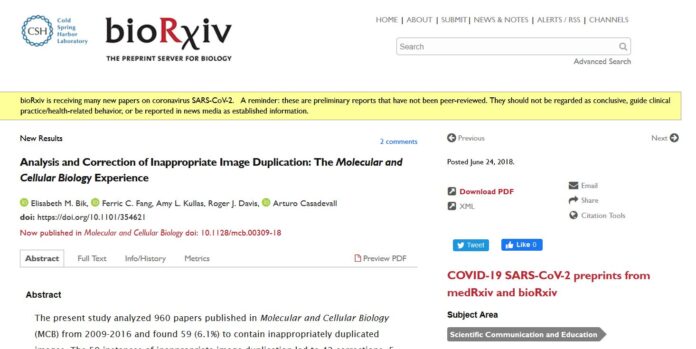
Pre-print servers themselves already point out the articles have not been peer reviewed and should not “be reported in news media as established information”, as seen in the yellow box below.
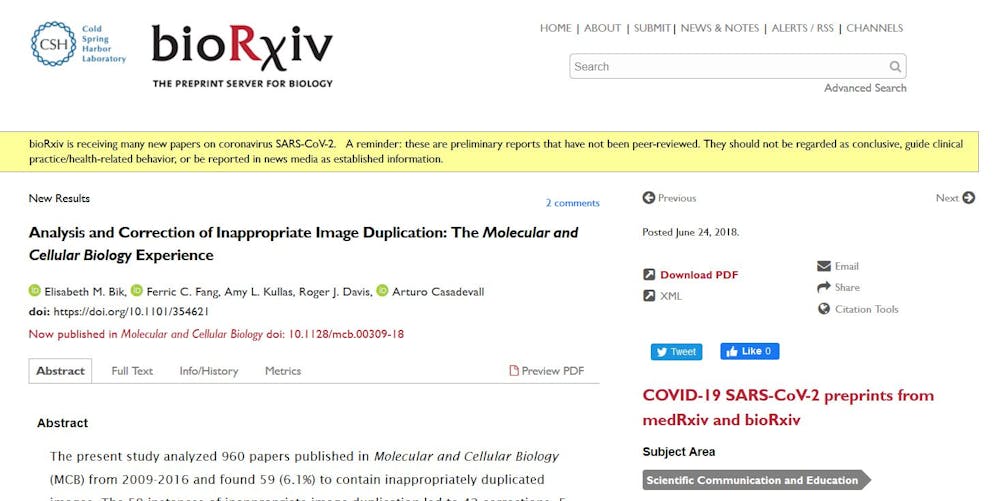
Pre-print servers warn that the research is preliminary. Screenshot/bioRxiv

The path to publication

Once a research project has discovered something, the research group will write it up as a paper which describes what they did, what they found and what makes this a new finding.

This paper is sometimes published as a pre-print. The paper is then submitted to a journal for consideration and the journal editors send it out to experts in the field to comment on the work – a process called peer review.

The reviewers send back their comments, which might request the authors add extra information to the paper, or sometimes do additional experiments. The researchers address these comments and resubmit the paper before it is published.

This can take a long time, from months to sometimes years before the paper is actually published. In the middle of a pandemic that’s a problem.


Read more: Covid-19: the rise of a global collective intelligence?


The academic publishing industry is trying to improve the flow of information. Many publishers are making COVID-19 related articles openly available.

Many publishers are also fast-tracking peer review. But even with this sped-up timeframe, the process still takes a while. Pre-prints are fast.

The thing to remember with pre-prints is they have not been peer reviewed. While many publications don’t change a great deal after peer review, some articles require considerable amendment or even withdrawal.

All of this doesn’t mean that what you read in a pre-print is rubbish. Actually, pre-prints are an important part of the publication process.

In fact, the prestigious journal Nature now encourages researchers to upload their paper as a pre-print. Other journals have similar policies.

So what can the public do?

When looking for information, ideally use published research – formatting and publisher logos are clues. But if you want to decide whether a pre-print contains valid information, try finding another article making similar claims.

So what happened with the blood type research? The original pre-print, published on March 16, had multiple comments. On March 27, a second version was uploaded, which emphasises “this is an early study with limitations”.

The system works, as long as you know what you are looking at.


Read more: No, 5G radiation doesn’t cause or spread the coronavirus. Saying it does is destructive


ref. Researchers use ‘pre-prints’ to share coronavirus results quickly. But that can backfire – https://theconversation.com/researchers-use-pre-prints-to-share-coronavirus-results-quickly-but-that-can-backfire-137501
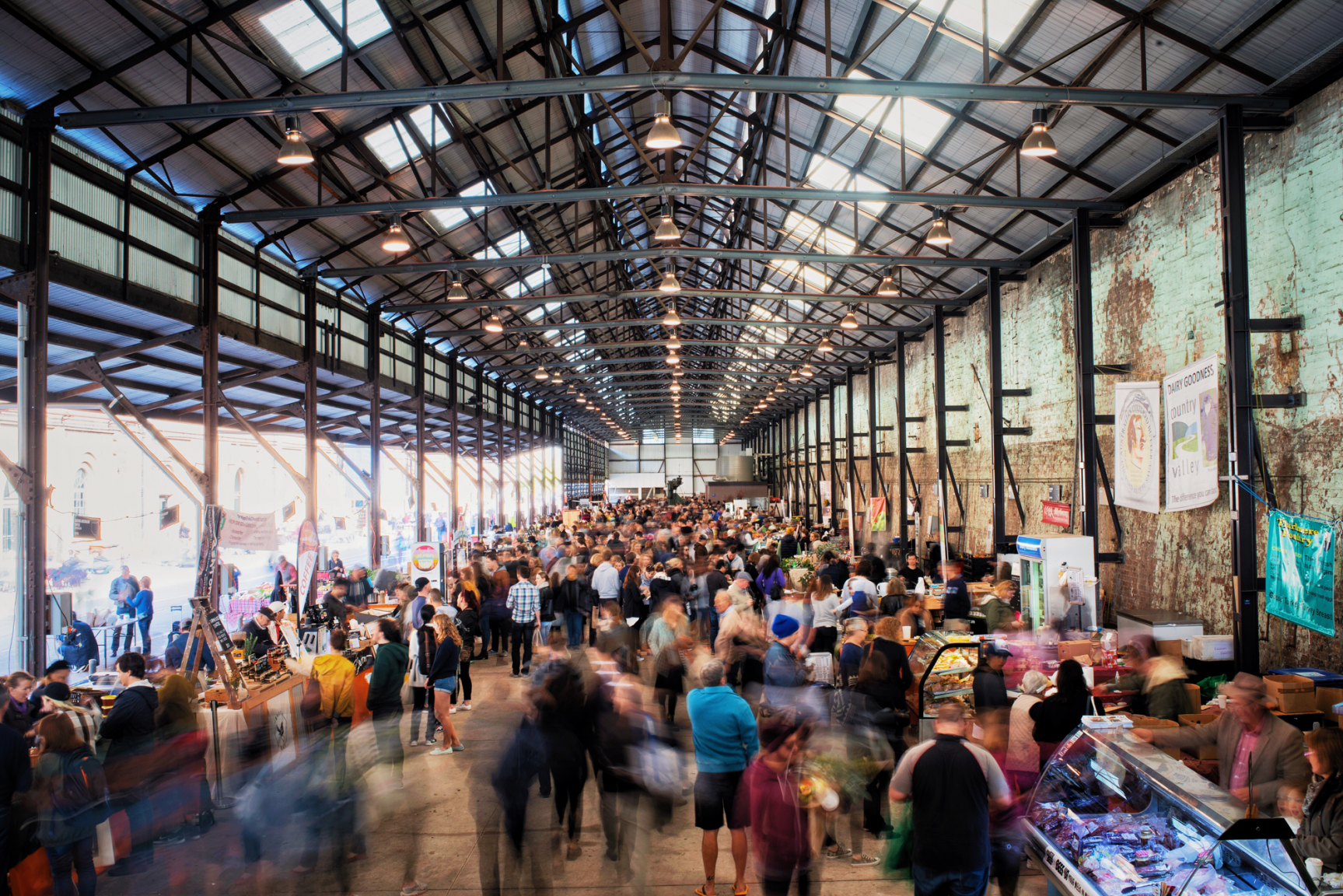
Carriageworks was in trouble before coronavirus – but this crisis could be an opportunity

Source: The Conversation (Au and NZ) – By Caroline Wake, Senior Lecturer in Theatre and Performance, UNSW

This week news broke that Carriageworks – Australia’s largest contemporary multi-arts centre – had gone into voluntary administration.

It’s sad but not surprising, as the organisation was struggling even in regular trading conditions. COVID-19 is not so much the spark, as the accelerant on a slow-burning fire. The organisation’s troubles are emblematic of an arts sector on the edge – but there might be a way forward.

The books

From 2012 to 2018, Carriageworks only once turned a profit, according to data available via the Australian Charities and Not-for-Profits Commission. That was in 2017, when it made A$205,778.

For every other year, the deficit has ranged from $34,691 (in 2012) to $559,236 (2018).
In 2018 – the most recent figures we have – Carriageworks received $3.8 million in government grants. The rest of its income – $7.8 million – came from goods and services, donations and bequests, and other revenue. So Carriageworks was generating 66% of its own income, a figure that had since risen to 75%, according to the board’s statement on May 5.

These are the income ratios that funding agencies across the country tell arts companies to adopt. Create NSW, for instance, expects organisations seeking over $140,000 in annual support to independently generate at least 50% of their income.

While this split may work when times are good, it doesn’t when times are bad. In fact, it leaves companies exposed, which is why Carriageworks has the wobbles. Similarly, Opera Australia is considering selling one of its buildings, and other companies have stood down their staff.


Read more: Carriageworks is my home away from home


The cast

Pity Carriageworks CEO, Blair French, who arrived in August. And acting chair Cass O’Connor, who joined the board in 2016.

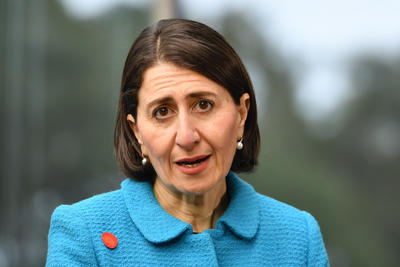
They, in turn, are dealing with an acting minister for the arts who is also the premier, Gladys Berejiklian. Former minister Don Harwin was known to meddle and prioritise classical music. He once ran a funding round where only 2.7% of applications were successful.

In Canberra, Communications Minister Paul Fletcher is saddled with a department that does not even have arts in its title.

Though the characters may change, the structural problem remains the same: chronic underfunding. Already highlighted by Esther Anatolitis, Jo Caust, Alison Croggon, Ben Eltham, and Julian Meyrick among others, it bears repeating.

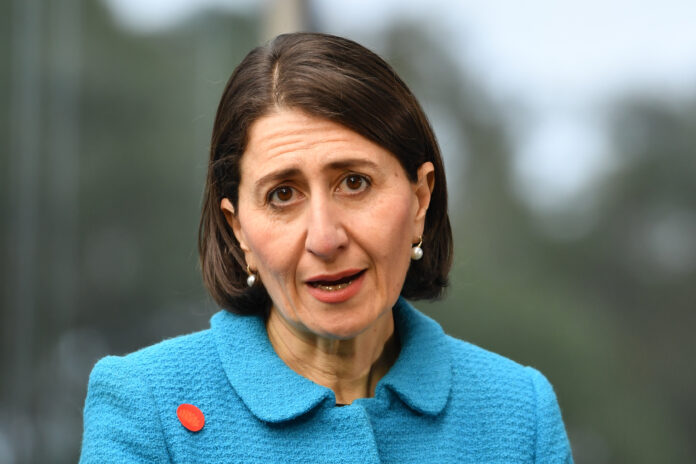
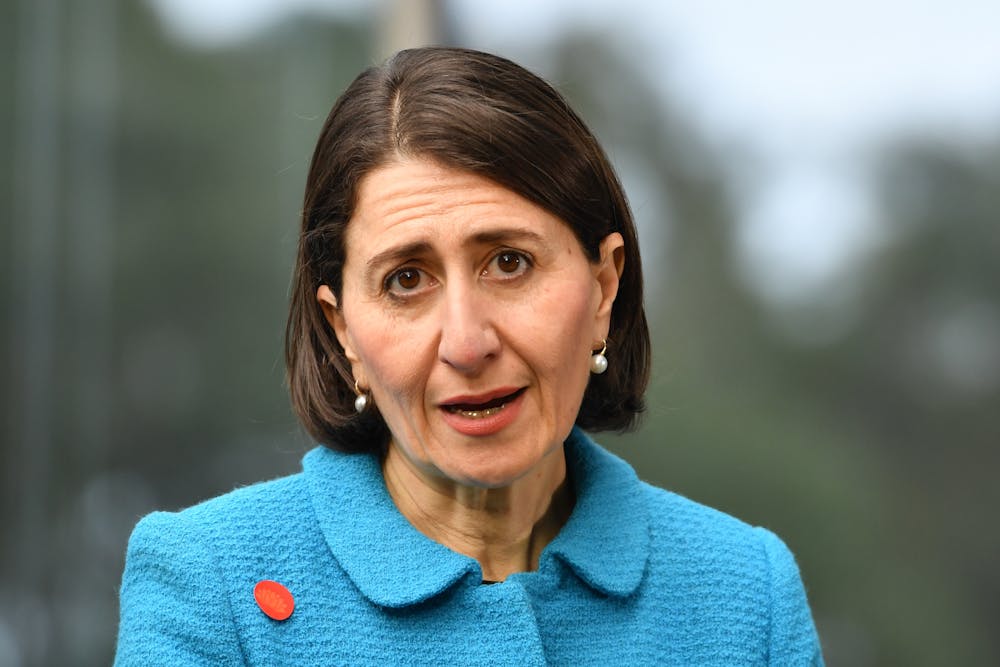
The NSW Acting Arts Minister is also its busy Premier, Gladys Berejiklian. AAP/Dean Lewins

Federal funds

Federal funding is falling, as detailed in the Australia Council for the Arts annual report.

In 2013-14, the Council had a grants budget of $199.2 million; in 2018-19, it has $186 million, a reduction 6.6% even without adjusting for inflation. The pain has not been evenly shared. In 2013-14, the 29 major performing arts groups received $103.1 million (51% of the funds available); in 2018-19, they received $113.6 million (61%).
Contrast this with the amount available for project funding, fellowships and awards: $45.3 million in 2013-14 (22.7% of available funds) and $23.5 million in 2018-19 (13%). Whereas the majors have had a 10% increase, individual artists and companies have had a 48% decrease. To borrow Alison Croggon’s example, between 2013 and 2016, grants for individuals dropped by 70%, from 1340 to 405.

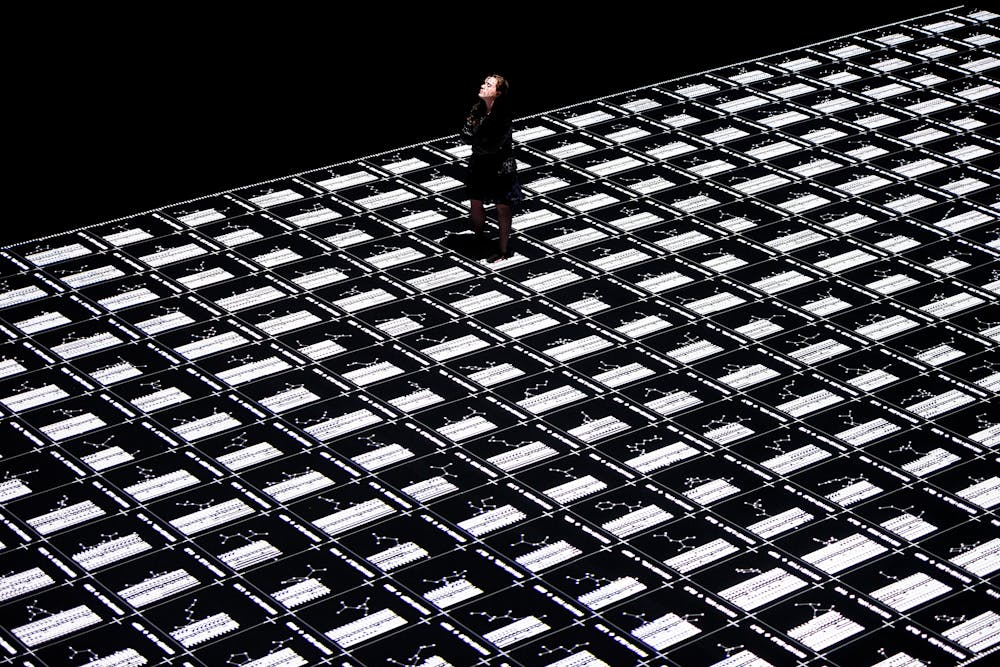
If Carriageworks can’t make it work, what of smaller organisations? Ryoji Ikeda installation micro/macro at Carriageworks in 2018. AAP/Dan Himbrechts

The funds for small-to-medium organisations look marginally better, growing from $22.8 million in 2013-14 to $28.7 million in 2018-19 – but the number of companies supported has dropped from 144 (2015) to 95 (2021-24), shrinking the sector by 34%.

Carriageworks is one of the lucky ones. It was listed in last month’s four-year funding announcements. We do not know how much they received, but we do know there is a $500,000 per annum cap – nowhere near enough to maintain a world-class, heritage-listed venue and deliver an ambitious program.

State support

Funding in NSW is harder to track. In the past six years, Create NSW has changed names, merged with Screen NSW, and bounced between four different departments.

Figures for 2013-14 can be found in the Department of Trade & Investment’s annual report, which indicates that Arts NSW – as it was then – allocated $53 million to arts and cultural development. Figures for 2018-19 are in the Department of Planning, Environment and Heritage’s annual report, and indicate that Create NSW allocated $55.4 million in arts grants, an increase of $2.4 million or 4.5%, again not adjusted for inflation.

“I guess it’s a bit of poetry in the world.” Rebecca Baumann’s Radiant Flux plays with light and structures at Carriageworks.

During this same period, the government launched its Cultural Infrastructure Plan, which committed $645 million to the Powerhouse in Parramatta, $245 million to the Walsh Bay Arts Precinct, $244 million to the Art Gallery of NSW’s Sydney Modern Project, $238 million to the Sydney Opera House renovations, $100 million to Parramatta Riverside Theatre’s redevelopment, $100 million to the Regional Cultural Fund, and $50.5 million for the Australian Museum’s expansion. The $1.6 billion total is a conservative estimate given several of these projects have since had budget blowouts.

This focus on infrastructure (buildings) comes at the expense of people and programs. The “edifice complex” is an old problem in the arts. It’s very one that produced Carriageworks, where the government spent on construction and then scrimped on commissions.

Spending all your money on buildings means there is none for emergencies. Governments in South Australia, Queensland, and Victoria have announced sector support packages of $1.5 million, $8 million and $16.8 million respectively. Create NSW has merely redirected $2 million of its existing budget to address the crisis.

What now for Carriageworks?

Reports suggest the Sydney Opera House may take over Carriageworks. This could work as the current Sydney Opera House head of programming, Fiona Winning, was artistic director of Performance Space from 1998 to 2008, when it moved to Carriageworks.

Meanwhile, the Media Entertainment and Arts Alliance has called for an urgent state rescue.

Carriageworks could become the first major Sydney venue to be led by Indigenous artists.

What about another option? There are already plans afoot for an Indigenous Cultural Hub) in the old Redfern Post Office. The government could build on these plans and turn Carriageworks into an Indigenous Arts Hub, making it the first major Sydney venue to be led by Aboriginal and Torres Strait Islander creatives and producers.

This idea has already been floated by various Aboriginal arts leaders, including Lily Shearer and Liza-Mare Syron. Bangarra Dance Theatre also expressed interest, when contemplating what to do while the Wharf is refurbished.

With proper consultation and support, a consortium of First Nations-led companies could create a Carriageworks properly embedded in local community.

Imagine what current head curator of Aboriginal programs, Hannah Donnelly, and resident company Moogahlin Performing Arts could do there. Or what Wesley Enoch and Brook Andrews, curators of the Sydney Festival and Biennale respectively, might dream up. Or what sort of writers festival Larissa Behrendt and Anita Heiss might program.

What looks like a bonfire could yet become a cultural burn. Carriageworks could emerge brighter, better, and braver.

ref. Carriageworks was in trouble before coronavirus – but this crisis could be an opportunity – https://theconversation.com/carriageworks-was-in-trouble-before-coronavirus-but-this-crisis-could-be-an-opportunity-137888

Moore’s environmental documentary storm – the truth behind the claims

ANALYSIS: By Ian Lowe of Griffith University

Documentary maker Michael Moore’s latest offering, Planet of the Humans, rightly argues that infinite growth on a finite planet is “suicide”. But the film’s bogus claims threaten to overshadow that message.

Planet of the Humans is directed and narrated by longtime Moore collaborator Jeff Gibbs. It makes particularly contentious claims about solar, wind and biomass (organic material which can be burnt for energy). Some claims are valid. Some are out of date, and some are just wrong.

The film triggered a storm after its free release on YouTube late last month. At the time of writing, it had been watched 6.5 million times.

READ MORE: Australia could fall apart under climate change. But there’s a way to avoid it

Climate sceptics here and abroad reacted with glee. Environmentalists say the film has caused untold damage when climate action has never been more urgent.

For 50 years, I have studied and written about energy supply and use, and its environmental consequences. So let’s take a look at how Planet of the Humans is flawed, and where it gets things right.

– Partner –

Where the film goes wrong
Critics have compiled a long list of questionable claims made in the film. I will examine three relating to renewable energy.

1. Solar panels take more energy to produce than they generate
It’s true that some energy is required to build solar panels. The same can be said of coal-fired power stations, oil refineries and gas pipelines.

But the claim that solar panels produce less energy than they generate in their lifetime has long been disproved. It would not be true even if, as the film says, solar panels converted just 8 percent of the energy they receive into electricity.

But that 8 percent figure is at least 20 years old. The solar panels now installed on more than two million Australian roofs typically operate at at 15-20 percent efficiency.

2. Renewables cannot replace fossil fuels
The film claims green energy is not replacing fossil fuels, and that coal plants cannot be replaced by renewables.

To disprove this claim we need look no further than Australia, where wind turbines and solar panels have significantly reduced our dependence on coal.

In South Australia, for example, the expansion of solar and wind has led to the closure of all coal-fired power stations.

The state now gets most of its power from solar and wind, exporting its surplus to Victoria when its old coal-fired power stations prove unreliable on hot summer days.

What’s more, a report released this week by the Australian Energy Market Operator (AEMO) said with the right regulations, renewables could at times supply 75 percent of electricity in the national electricity market by 2025.

3. Solar and wind need fossil fuel back-up
Some renewables systems use gas turbines to fill the gap when the wind isn’t blowing and the sun isn’t shining. However renewable energy storage is a cleaner option and is fast becoming cheaper and more widely used.

AEMO forecasts battery storage installations will rise from a low base today to reach 5.6 gigawatts by 2036–37. The costs of storage are also projected to fall faster than previously expected.

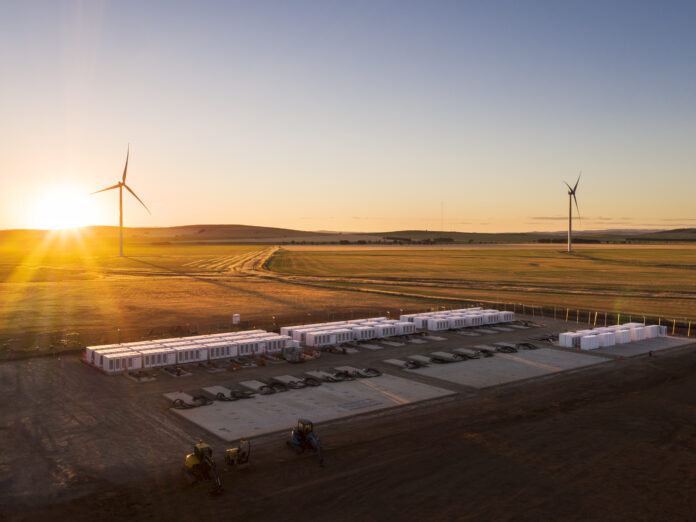
South Australia’s famous grid-scale Tesla battery is being expanded. And the New South Wales government’s pumped hydro plan shows how by 2040, the state could get 89 percent of its power from solar and wind, backed by pumped hydro storage.

In Australia on Easter Saturday this year, renewables supplied 50 percent of the national electricity market, which serves the vast majority of the population.

Countries such as New Zealand and Iceland essentially get all their power from renewables, backed up by storage (predominantly hydro).

And putting aside the federal government’s problematic Snowy 2.0 project, Australia could get all its energy from renewables with small-scale storage.

South Australia’s huge battery storage project is being expanded. Image: Hornsdale Power Reserve

What does the film get right?
Planet of the Humans makes several entirely valid points. Here are a few:

1. We need to deal with population growth
The film observes that population growth is the elephant in the room when it comes to climate change. It says politicians are reluctant to talk about limits to population growth “because that would be bad for business”.

As one observer in the film says, the people in charge are not nervous enough. I agree.

An increasing population means increasing demand for energy and other resources, accelerating climate change.

2. Biomass energy does more harm than good
While the film unfairly criticises the environmental benefits of solar energy, it is true that some so-called clean technologies are not green at all.

As the film asserts, destroying forests for biomass energy does more harm than good – due to loss of habitat, damage to water systems, and the time taken for some forests to recover from the removal of wood.

Most advocates of cleaner energy systems recognise the limitations of biomass as an energy source.

A still from the film, showing a biomass plant. Image: Planet of the Humans

3. Infinite growth on a finite planet is suicide
The film calculates the sum total of human demands on natural systems as about 1000 times what it was 200 years ago. It says there are 10 times as many people now, each using 100 times the resources, on average.

Experts have repeatedly warned that human demand for resources is damaging the natural systems that all life depends on.

For large parts of the world, the consequences could be catastrophic.

Get the message
Several other aspects of the film have been savaged by critics – not least its claims about emissions produced by electric cars, which had previously been debunked.

Personal attacks on two prominent US clean energy advocates, Bill McKibben and Al Gore, also detract from the film’s impact.

It is clear renewable energy has an important role to play in reducing greenhouse gas emissions and slowing climate change. But it will not solve the fundamental problem: that humans must live within Earth’s natural limits.

Those cheering the film’s criticism of renewables would do well to consider its overriding message.

The Conversation

Dr Ian Lowe is emeritus professor in the School of Science at Griffith University. This article is republished from The Conversation under a Creative Commons licence. Read the original article.

Print Friendly, PDF & Email

Article by AsiaPacificReport.nz

Popular Philippines radio show host ‘Rex Cornello’ shot dead in ambush

Pacific Media Watch

Reporters Without Borders (RSF) has urged the Philippine authorities to appoint a special independent team to investigate yesterday’s “shocking murder” of an investigative radio journalist with a reputation for covering corruption.

He was gunned down by two men on a motorcycle in Dumaguete City, the capital of the central province of Negros Oriental, reports RSF.

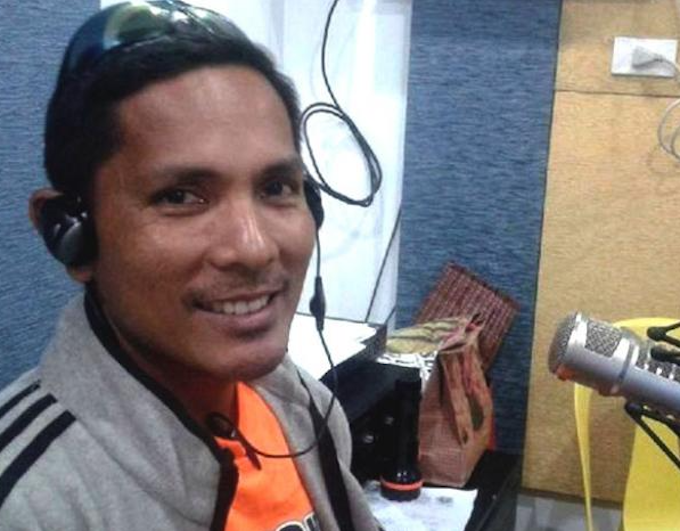
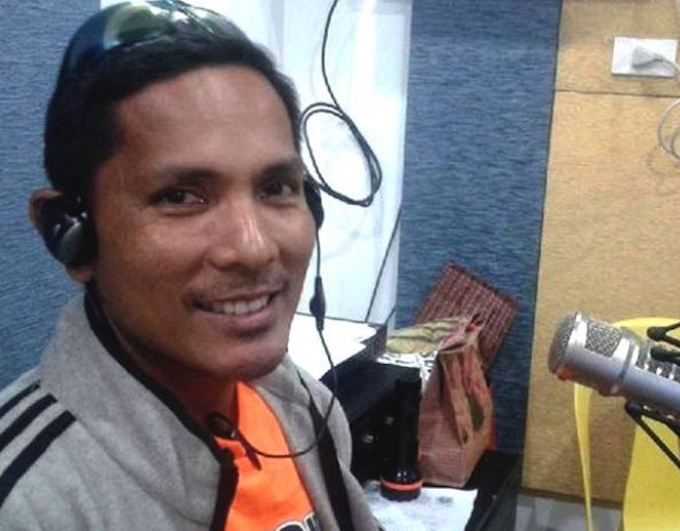
Cornelio Pepino, known to his listeners as Rex Corneliowas shot five times at close range at around 8.30 pm as he was driving home after presenting his programme Pokpokin Mo Baby! (Hit it baby!) on dyMD Energy FM 93.7. He died on the spot.

READ MORE: Top Philippines TV network told to close under Duterte pressure

Lieutenant Allen June Germondo, the police office in charge of the investigation, said he was examining the hypothesis that Pepino was killed in connection with his journalism.

As well as being a well-known radio show host, Pepino had a solid reputation as an investigative reporter in Negros Oriental.

– Partner –

He had exposed several cases of corruption, bribery and illegal mining. Negros Oriental governor Roel Degamo sued him for defamation in 2014, but he was finally acquitted in 2017.

“There is every reason to suspect that Cornelio Pepino was deliberately silenced because people were annoyed by his journalism,” said Daniel Bastard, the head of RSF’s Asia-Pacific desk.

“We urge the Presidential Task Force on Media Security to take charge of the investigation and to appoint an independent team to carry it out. The vicious cycle of crimes of violence against journalists and impunity must stop.”

16 journalists slain
Two other radio journalists have been gunned down in a similar manner by hitmen on motorcycles in the past two years in Dumaguete City. One was Dindo Generosoa radio commentator who criticised a popular local form of gambling and the associated corruption.
He was shot eight times last November.

The other was Edmund Sestosowho was shot in May 2018. He was well known for explaining local political conflicts in Negros Oriental.

The current Philippine administration boasts of having created a Presidential Task Force on Media Security as soon as Rodrigo Duterte became president in 2016. Nonetheless, if confirmed, Pepino will be the 16th journalist to have been killed in connection with their work since then.

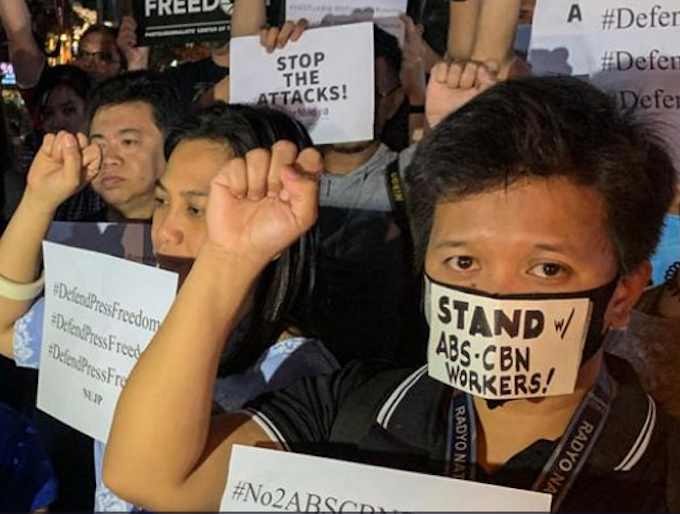
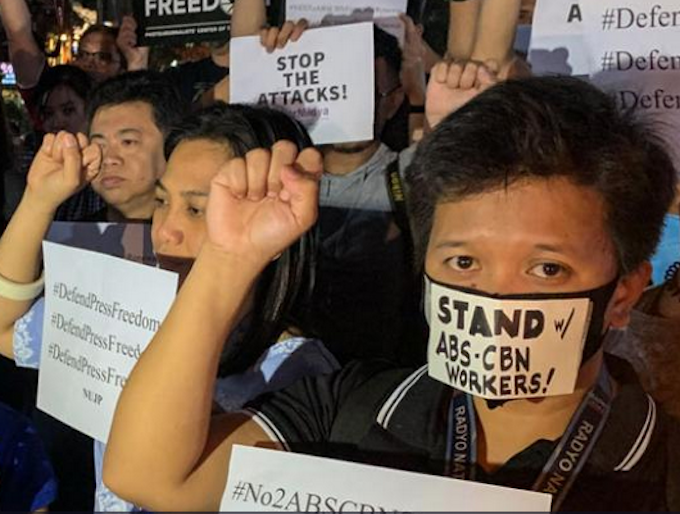
Pepino was slain on the same day that the National Telecommunications Commission ordered the country’s biggest TV and radio network, ABS-CBN, to stop operating with immediate effect.

ABS-CBN’s TV channels and radio stations did indeed stop broadcasting yesterday evening.

The Philippines is ranked 136th out of 180 countries in RSF’s 2020 World Press Freedom Index, two places lower than in 2019.

Print Friendly, PDF & Email

Article by AsiaPacificReport.nz

PNG judge condemns ‘brutality’ of rogue acts by disciplinary forces

Pacific Media Centre

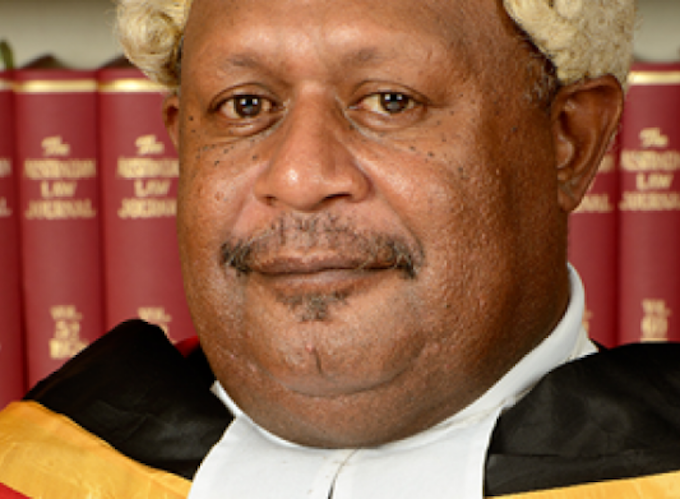
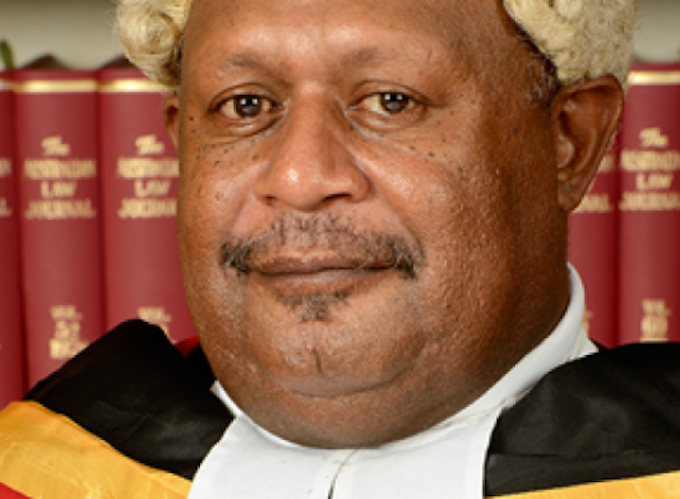
Offences perpetrated by members of Papua New Guinea’s disciplinary forces have become prevalent in the country during the coronavirus pandemic, says National Court judge Justice Panuel Mogish.

Justice Mogish, while sentencing PNG Defence Force soldier Nelson Pap at the Bomana National Court yesterday for causing grievous bodily harm to a woman under the influence of alcohol, said it was “unbecoming” of a soldier to act in such manner.

“The recent allegations of brutality committed by members of the disciplinary forces have become prevalent during the covid-19 operations,” he said, reports the PNG Post-Courier.

READ MORE: Al Jazeera coronavirus live updates – Trump now says task force to continue work

“Authorities are challenged to deal with those rogue officers, who act as a law unto themselves.

“The offender in this case was charged for a crime against an innocent woman.

– Partner –

“The same should apply to rogue officers.

“They should be swiftly dealt with to restore confidence and integrity in the various disciplines they serve.”

Suspended sentence
Pap was sentenced to three years and six months jail.

However, Justice Mogish suspended the entire sentence and placed him on a good behaviour bond for three years.

“In this case, an iron rod was used to assault the victim,” he said.

“I consider a sentence of three-and-a-half years appropriate.

“The offence committed by the offender was out of character and given the strong mitigating factors and, in particular, the absence of any intent or ulterior motive, I am convinced there is room for rehabilitation for the offender.

“A suspended sentence would be in order.”

Justice Mogish ordered that the sentence be suspended and the offender be placed on good behaviour bond for three years.

He ordered the offender to pay a fine of K1000 (NZ$485), recommended the offender be dealt with under the appropriate provision of the Defence Act, and that he refrain from consuming alcohol as part of his good behavior bond.

Print Friendly, PDF & Email

Article by AsiaPacificReport.nz

Online plagues, protein folding and spotting fake news: what games can teach us during the coronavirus pandemic

Source: The Conversation (Au and NZ) – By Heide Lukosch, Associate Professor, University of Canterbury

Most of us don’t take games too seriously. They are a way to unwind, or these days to maybe escape from the world of COVID-19 for a little while.

But games are also simulations in which real people play, make decisions and interact. This makes games powerful tools for learning and understanding complex situations, such as how diseases spread and even how to treat them.

The ‘corrupted blood’ incident

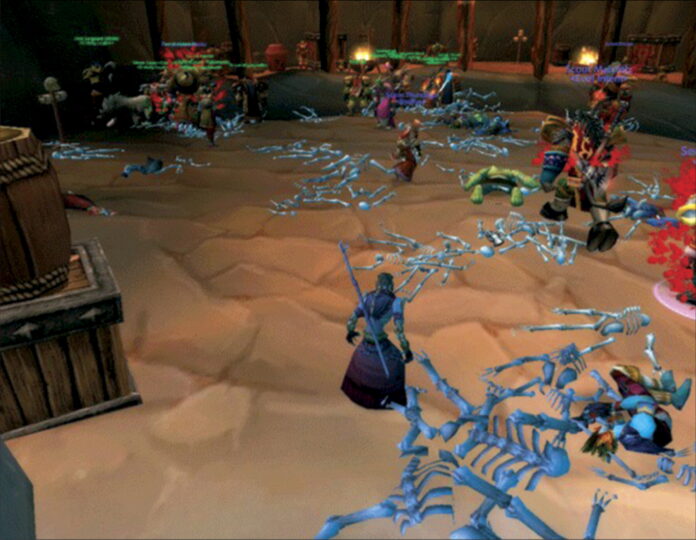
One of the first incidents that showed epidemiologists and health researchers that games could give them insight into the spread of infectious disease occurred in 2005. A bug in World of Warcraft unleashed an “infectious disease” among the game’s large community of online players.

It started with a new raid encounter in the game designed to allowed a small team of players to fight an enemy that could “infect” characters with a curse called “corrupted blood”. The curse would reduce their health over time, and spread from player to player in close proximity.

Normally, when the character either won or lost the battle, the curse would be lifted as they left the zone in which it took place. But a bug allowed players’ pets and minions to carry the curse into the game’s wider virtual world.

Suddenly the curse was spreading across nearly 4 million players, and the people who ran the game had little control. Is this starting to sound eerily familiar?

Epidemiologists had used models and simulations in their work before, but the World of Warcraft incident was unique because each avatar in the simulation was controlled by a human player. What’s more, players in the game exhibited the same behaviours that people do in response to a real-life pandemic.

Some players followed the advice of the publisher of the game to avoid infected areas. Others rebelled, some didn’t care, and some camped out in remote areas away from everyone else. These behaviours were studied in detail by Rutgers University epidemiologists Nina Fefferman and Eric Lofgren, who then published a paper on the potential using games as learning tools.

Games as simulations

There are also many other ways in which we can use games as simulations to develop our understanding of global health.

Entertainment games such as Pandemic very directly refer to what we are all experiencing right now. In this game, players collaborate in order to fight a virus –- and in its simplicity, it can illustrate why social cohesion is so vital in our global fight against the disease yet is also very difficult. The game teaches communication, collaboration, and decision-making skills in the context of crisis.


Read more: Playing Pandemic – the hit board game about the very thing we’re trying to avoid


Modelling and simulation – the use of formal, mathematical and often computerised calculations – support policy makers and world leaders to make the right decisions. These models serve as tools for critical choices such as closing borders and national lockdowns. It takes huge amounts of trustworthy data and deep expertise to develop and interpret such models.

A game like Pandemic, or World of Warcraft, lets players engage in simplified versions of such crisis situations and can offer insight into human behaviour in these conditions. The simplified yet realistic scenarios allow for interaction, and learning by doing, without the risk of real-world consequences.

Games as laboratories

Games can also help us to develop new medical solutions. In Foldit, players can individually interact with protein folding, an important process in molecular biology. It is difficult to simulate with computers, but it plays a role in drug discovery and understanding certain types of diseases. The game uses a large number of individual players and the highest scoring solutions are reviewed by scientists as potential new solutions.

The game takes a distributed computational approach similar to the SETI@Home project that let people lend their computers to the search for extraterrestrial intelligence. The twist is that each node is – again – a human mind considering solutions, and this model outperforms computational algorithms attempting the same task.

In one example, players were able to find an elusive HIV enzyme in just 3 weeks. The game is now being applied directly to searching for solutions to the coronavirus.

Games are also helping researchers better understand the spread of misinformation about COVID-19, in a project of the American University Game Lab. (One of the authors of this article is affiliated with the Game Lab.)

Their game, Factitious, is a simple game that asks players to read a small article and then decide if it is real or fake news, with points awarded for each correct response. With over a million plays, the recorded dataset offers key insights into how players view and categorise information.

The new pandemic edition of the game is already informing us of dangerous trends in rumours and misleading information at this difficult time.


Read more: Gaming fosters social connection at a time of physical distance


Finding the best way forward

Games may offer some much-needed escape and social connection in this time of physical distancing, but they are also incredible tools for learning more about the real world. In areas such as global health, they can act as very human simulations that help us plan for incredible situations and test multiple competing ideas to come up with the best way forward.

ref. Online plagues, protein folding and spotting fake news: what games can teach us during the coronavirus pandemic – https://theconversation.com/online-plagues-protein-folding-and-spotting-fake-news-what-games-can-teach-us-during-the-coronavirus-pandemic-137490

The coronavirus risk Australia is not talking about: testing our unlawful migrant workers

Source: The Conversation (Au and NZ) – By Marie Segrave, Associate Professor, Criminology, Monash University

As Australia starts to emerge from its coronavirus lockdown, authorities are on high alert for any fresh breakouts of the disease.

One of the risks we need to keep an eye on is hard to see: the tens of thousands of unlawful migrants who work here every day without a valid visa.

My research shows Australia’s unlawful migrant workers already face routine exploitation and in some cases, terrible work conditions. But the arrival of COVID-19 presents new and worrying health challenges, for them and the broader Australian population.


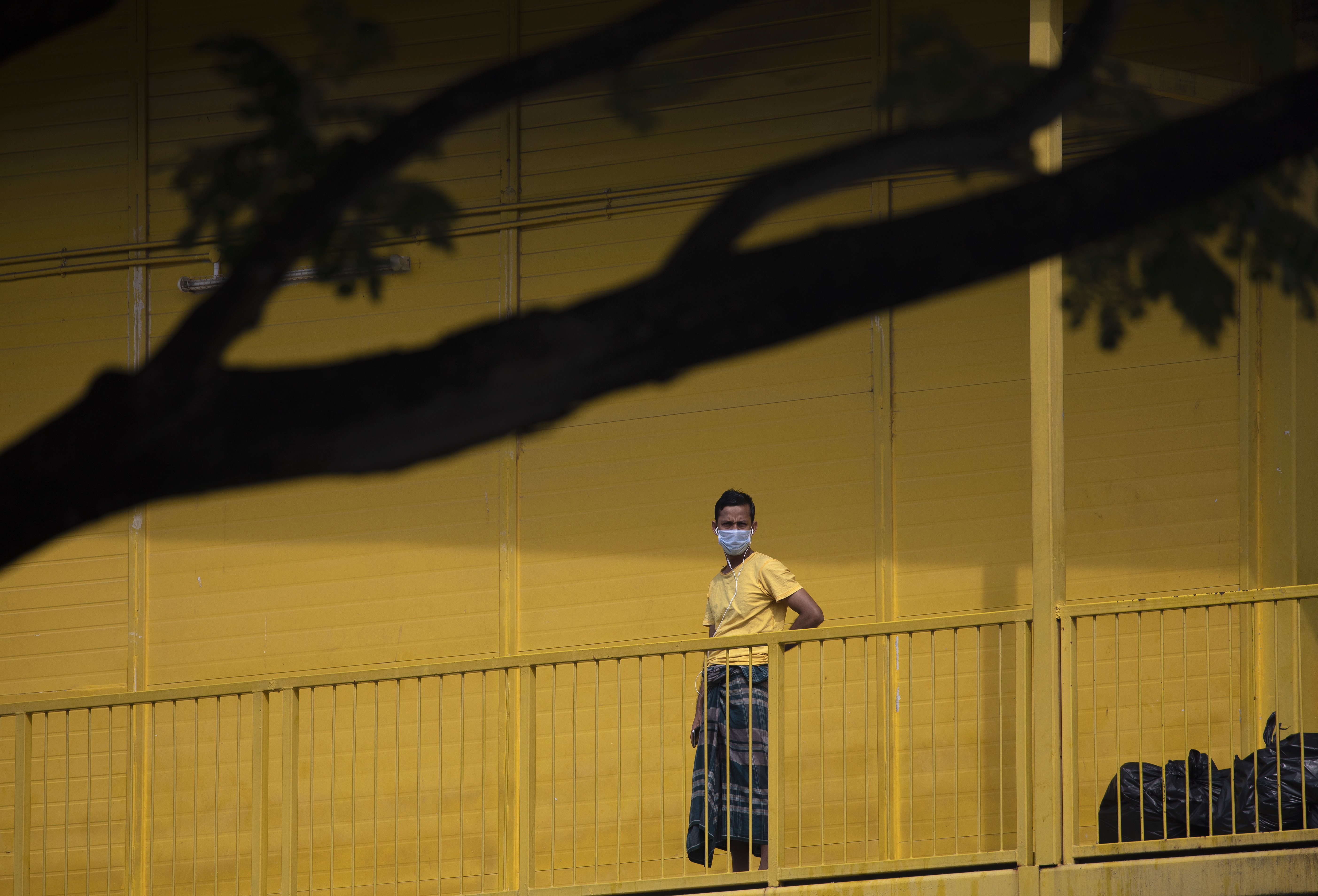
Read more: This is why Singapore’s coronavirus cases are growing: a look inside the dismal living conditions of migrant workers


In recent weeks, Singapore has gone from global poster child for tackling coronavirus, to the home of more than 19,000 cases, after infections took off among its migrant workers.

Singapore’s migrant workers live in purpose-built accommodation and are officially known to the government. In Australia, our unlawful migrant workers live under the radar, so are even harder to identify and support.

Unlawful migrant workers in Australia

There is little data about the precise numbers of people working in Australia illegally. The best estimate is still a 2011 report to the Gillard government suggesting there are between 50,000 and 100,000 non-citizens working here without permission.

This group is different from temporary visa holders, who are also facing their own financial struggles during the lockdown.

Unlawful migrants workers come to Australia on valid visas and then breach their visas conditions. This includes those who overstay their visas and those who come on a visa without work rights.

In my 2017 research across NSW and Victoria, I spoke to such people who worked in industries including domestic labour, agriculture, hospitality and commercial cleaning.

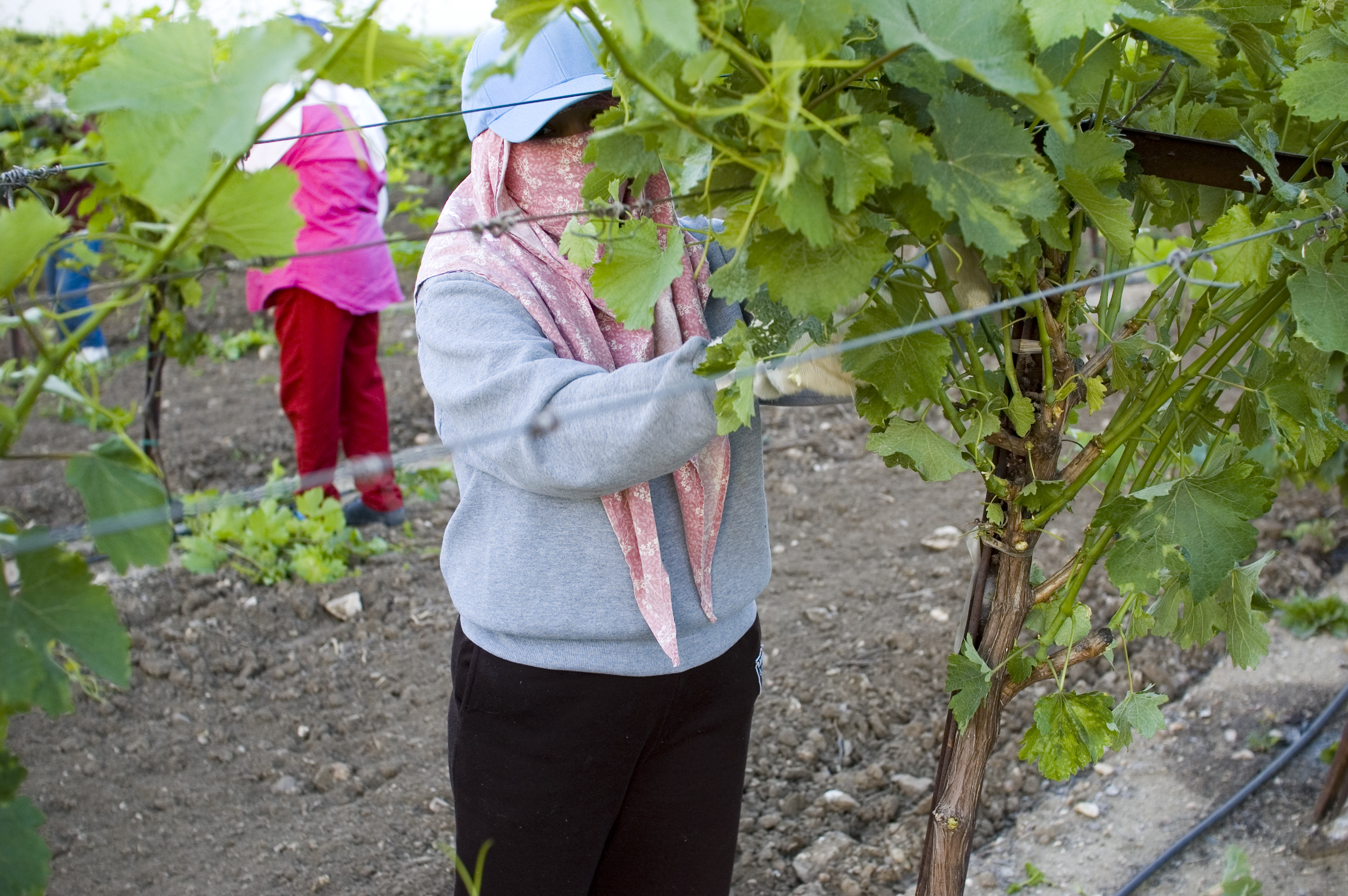
It is estimated that tens of thousands of people work in Australia without a valid visa in industries such as fruit picking. www.shutterstock.com

They described physical and verbal abuse, no or low pay, poor accommodation, withholding of passports and threats of being reported to immigration authorities.

The COVID-19 challenge

The arrival of COVID-19 presents new risks for unlawful workers in Australia.

They face destitution if work disappears and new opportunities fail to arrive. A key concern is that unlawful migrants will accept exploitative working conditions, with little or no pay, and no incentive to come forward for help.

In April, Prime Minister Scott Morrison told visitors to “return to their home countries” if they cannot support themselves in Australia.

However, this is not a solution for unlawful workers: it is not clear how people would leave or how they would pay for their travel. It is also likely many will be compelled to stay.


Read more: 6 countries, 6 curves: how nations that moved fast against COVID-19 avoided disaster


In my research, I spoke with people who had been in the country for a matter of days and people who had been in the country for close to 20 years – undocumented and working. Often they were sending money home to their family in their country of origin, with some setting up new homes and families in Australia.

Leaving is not a straightforward option.

The public health risks

Unlawful workers also present a public health risk for Australia during the COVID-19 pandemic.

Not only do they tend to live in overcrowded accommodation, they also tend to move around frequently, seeking work and better living conditions.

Critically, unlawful migrant workers are also reluctant to access community support – for any reason – due to fears they may be reported to immigration authorities and then detained and deported. My research found this group will actively avoid any contact with formal service providers from police to health care workers.

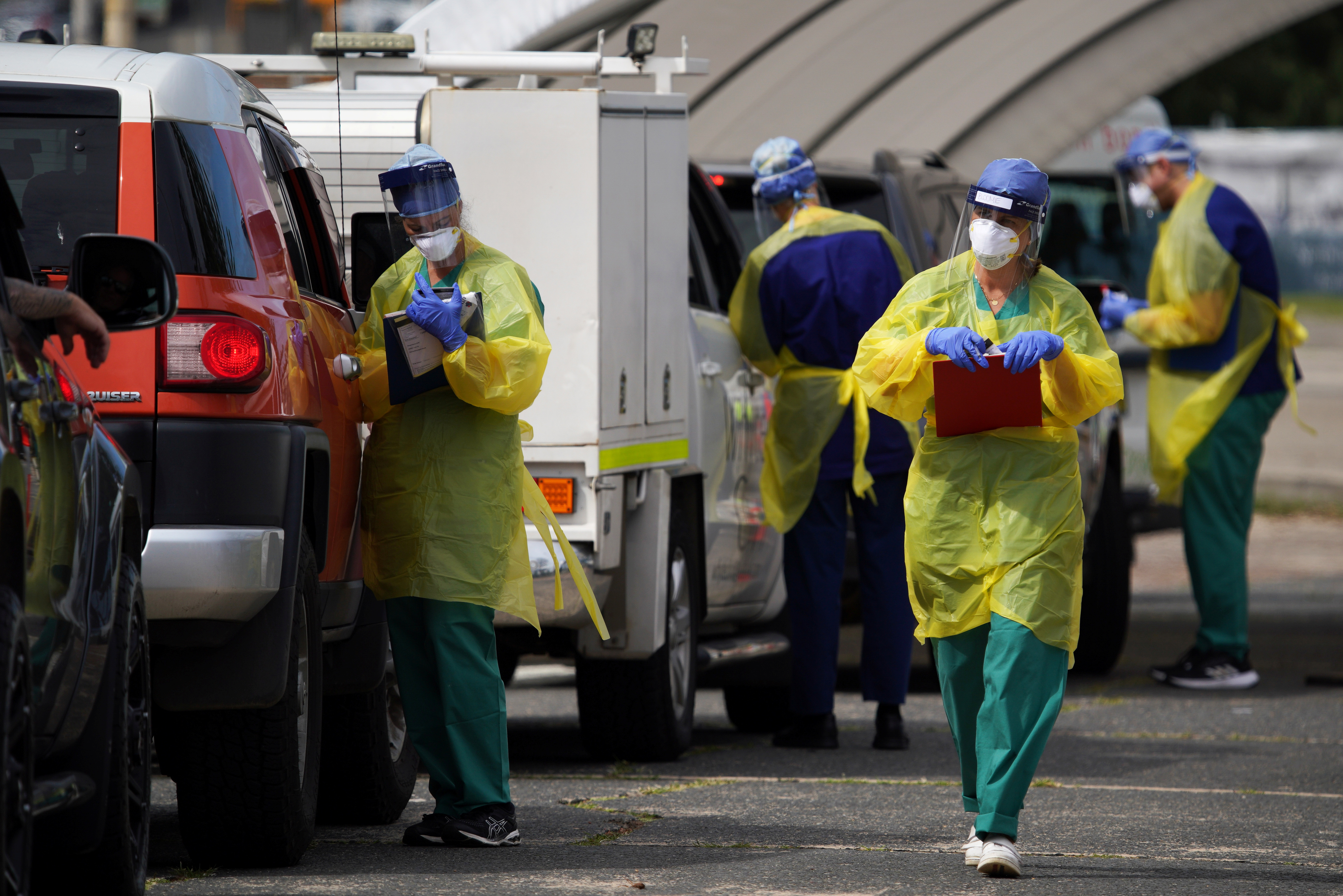
Unlawful migrant workers are unlikely to access healthcare services, such as COVID-19 testing, for fear of being reported to immigration authorities. Loren Elliott/ AAP

This reluctance presents a risk to their health and that of the broader community: if an unlawful migrant has COVID-19 symptoms, they are unlikely to access testing or health care.

As Australia starts to ease some lockdown restrictions and boosts testing for any signs of COVID-19, it is critical all relevant people in the community come forward if they have symptoms.

We need to build a ‘firewall’

Before the global pandemic, there has been growing recognition, at national and international levels, of the need for a firewall between protections for migrant workers and immigration processes.


Read more: Is slowing Australia’s population growth really the best way out of this crisis?


A firewall offers dedicated protection for undocumented workers to come forward – to seek health care, or police or other assistance in the context of workplace exploitation – with the clear understanding that their visa status will not be referred on to immigration authorities.

While my research did not find health services reporting unlawful migrants to the Australian Border Force, the role of a firewall is to ensure there is a formal commitment that this will not happen across any community service.

What we need to do now

In the short term, a formal firewall is unlikely because it would require a shift away from the Morrison government’s strong emphasis on border control.

But national and state leaders could send clear reassurances that we want all people to come forward to seek testing and health care workers will not be asking immigration-related questions.

Singapore has seen an increase in coronavirus cases after outbreaks among its migrant workers. How Hwee Young/ AAP

This then needs to filter down to localised programs. Proactive efforts to reach undocumented individuals and groups is detailed but necessary work and requires trust between parties.

If this message does not get through, we risk a quiet spread of COVID-19 among untested, unlawful residents, who live in close quarters and are often very mobile – and who are unlikely to come forward until they are very unwell.

Singapore’s situation shows what can happen when groups of migrant workers are not prioritised.

ref. The coronavirus risk Australia is not talking about: testing our unlawful migrant workers – https://theconversation.com/the-coronavirus-risk-australia-is-not-talking-about-testing-our-unlawful-migrant-workers-137268

1 in 5 Aussies over 45 live with chronic pain, but there are ways to ease the suffering

Source: The Conversation (Au and NZ) – By Michael Vagg, Conjoint Clinical Associate Professor, Deakin University School of Medicine and Specialist Pain Medicine Physician, Deakin University

Around 1.6 million Australians aged 45 or over have been living with persistent pain, according to newly released data from the Australian Institute of Health and Welfare.

The figures, which cover 2016-17, reveal that GP consultations for chronic pain increased by 67% in the preceding decade. The number of visits for lower back pain increased by 400,000.

Dealing with chronic pain also means you are likely to face longer hospital stays, much poorer mental health and are three times more likely than normal to be taking painkillers regularly. About 105,000 people were hospitalised with chronic pain in 2017-18, with a typical hospital stay three times longer than average.


Read more: Ouch! The drugs don’t work for back pain, but here’s what does


Behind those figures lies the human cost. As a clinical specialist in pain medicine, I see the jobs lost, the mortgage defaults, the superannuation withdrawals, and the family roles given up because of debilitating pain.

Lower back pain, migraine and pain following trauma are among the top 10 causes of years lost to disability worldwide, and this has barely changed over the past 20 years. Because chronic pain can happen at any stage of life, many people have to live with it for decades.

A 2019 Deloitte Access Economics report commissioned by advocacy group Painaustralia estimated the annual cost to Australia’s economy at A$139.3 billion per year, more than A$20 billion of which comes directly out of the pockets of pain patients.

A fresh approach

The most expensive and inefficient way to manage this national crisis is pretty much the way we are currently doing it. Chronic pain care is too fragmented and too often delivered by those without the most up-to-date training.

Yet most of the really effective treatments can be delivered at a relatively low cost and with low-tech means. Here are some potential solutions that pain doctors and researchers are confident will work.

  • Medications need to be carefully chosen and ruthlessly abandoned if they are not helping. The Pharmaceutical Benefits Scheme (PBS) currently spends more than A$170m a year on drugs such as sustained-release opioids and pregabalin. This could be reduced if more doctors prescribed them in accordance with best practice knowledge. This would help patients and taxpayers alike.

  • Skilled interventions such as inpatient infusions of medications like ketamine, or invasive procedures such as radiofrequency neurotomy, need to be provided according to appropriate quality standards so resources are not wasted and patients are not put at risk.

  • PBS funding should be extended to cover effective treatments for specific conditions such as migraines.

  • Proven treatments such as group pain programs and individual therapy sessions with credentialed allied health specialists need to be supported by Medicare. These are essential for building the self-management skills needed to reduce patients’ reliance on pain medication.

  • We need a massive investment in training and service redesign for agencies that deal with chronic pain as a result of work or transport injuries.

  • High-quality pain care should be viewed not as a luxury for hospitals, but an essential part of the health-care ecosystem. Pain care should be integrated throughout the public health system, in both acute and subacute care, where it can shorten inpatient stays and improve rehabilitation.

  • We should restrict access to low-value treatments like repeated surgery or medications that have not been working.


Read more: Needless treatments: spinal fusion surgery for lower back pain is costly and there’s little evidence it’ll work


In the void created by the huge unmet need and the limited availability of expert pain care, an industry of highly dubious usefulness has been allowed to flourish. Social media is full of false hope. Supplements such as glucosamine, curcumin and fish oil are not supported by credible studies, yet they are still promoted commercially as effective.

Dodgy arthritis “cures” and devices that claim to relieve pain using magnets or electricity are everywhere. Despite dismal supporting evidence, the medical cannabis industry continues to sell itself to chronic pain patients.


Read more: I’m taking glucosamine for my arthritis. So what’s behind the new advice to stop?


While the COVID-19 pandemic continues, it can be hard to focus on other health issues. But Australia already has a path to improving life for many thousands of chronic pain sufferers. The federal government has developed a strategic plan for pain management that offers a blueprint for future action.

The plan calls for upskilling of all primary care health professionals to help them recognise the early stages of a chronic pain problem and nip it in the bud. If implemented, it will bring the dream of timely access to well-resourced expert interdisciplinary pain teams in the regions and outer suburbs closer to reality.

Most importantly, we need a community-wide effort to destigmatise persistent pain and those who suffer from it. After all, the chances are you either have it or you live or work with someone who does.

ref. 1 in 5 Aussies over 45 live with chronic pain, but there are ways to ease the suffering – https://theconversation.com/1-in-5-aussies-over-45-live-with-chronic-pain-but-there-are-ways-to-ease-the-suffering-137891

3 times Michael Moore’s film Planet of the Humans gets the facts wrong (and 3 times it gets them right)

Source: The Conversation (Au and NZ) – By Ian Lowe, Emeritus Professor, School of Science, Griffith University

Documentary maker Michael Moore’s latest offering, Planet of the Humans, rightly argues that infinite growth on a finite planet is “suicide”. But the film’s bogus claims threaten to overshadow that message.

Planet of the Humans is directed and narrated by longtime Moore collaborator Jeff Gibbs. It makes particularly contentious claims about solar, wind and biomass (organic material which can be burnt for energy). Some claims are valid. Some are out of date, and some are just wrong.


Read more: Want an economic tonic, Mr Morrison? Use that stimulus money to turbocharge renewables


The film triggered a storm after its free release on YouTube late last month. At the time of writing, it had been watched 6.5 million times. Climate sceptics here and abroad reacted with glee. Environmentalists say the film has caused untold damage when climate action has never been more urgent.

For 50 years, I have studied and written about energy supply and use, and its environmental consequences. So let’s take a look at how Planet of the Humans is flawed, and where it gets things right.

Climate sceptics have welcomed a new documentary by filmmaker Michael Moore. Warren Toda/EPA

Where the film goes wrong

Critics have compiled a long list of questionable claims made in the film. I will examine three relating to renewable energy.

1. Solar panels take more energy to produce than they generate

It’s true that some energy is required to build solar panels. The same can be said of coal-fired power stations, oil refineries and gas pipelines.

But the claim that solar panels produce less energy than they generate in their lifetime has long been disproved. It would not be true even if, as the film says, solar panels converted just 8% of the energy they receive into electricity.

But that 8% figure is at least 20 years old. The solar panels now installed on more than two million Australian roofs typically operate at at 15-20% efficiency.

2. Renewables can’t replace fossil fuels

The film claims green energy is not replacing fossil fuels, and that coal plants cannot be replaced by renewables.

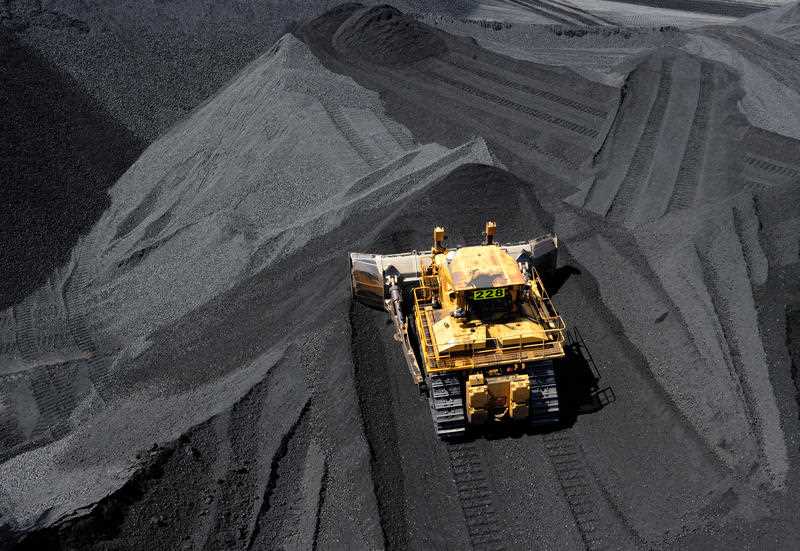
To disprove this claim we need look no further than Australia, where wind turbines and solar panels have significantly reduced our dependence on coal.

In South Australia, for example, the expansion of solar and wind has led to the closure of all coal-fired power stations.

The state now gets most of its power from solar and wind, exporting its surplus to Victoria when its old coal-fired power stations prove unreliable on hot summer days.

What’s more, a report released this week by the Australian Energy Market Operator (AEMO) said with the right regulations, renewables could at times supply 75% of electricity in the national electricity market by 2025.

Claims that renewables can’t displace coal are wrong. AAP

3. Solar and wind need fossil fuel back-up

Some renewables systems use gas turbines to fill the gap when the wind isn’t blowing and the sun isn’t shining. However renewable energy storage is a cleaner option and is fast becoming cheaper and more widely used.

AEMO forecasts battery storage installations will rise from a low base today to reach 5.6 gigawatts by 2036–37. The costs of storage are also projected to fall faster than previously expected.

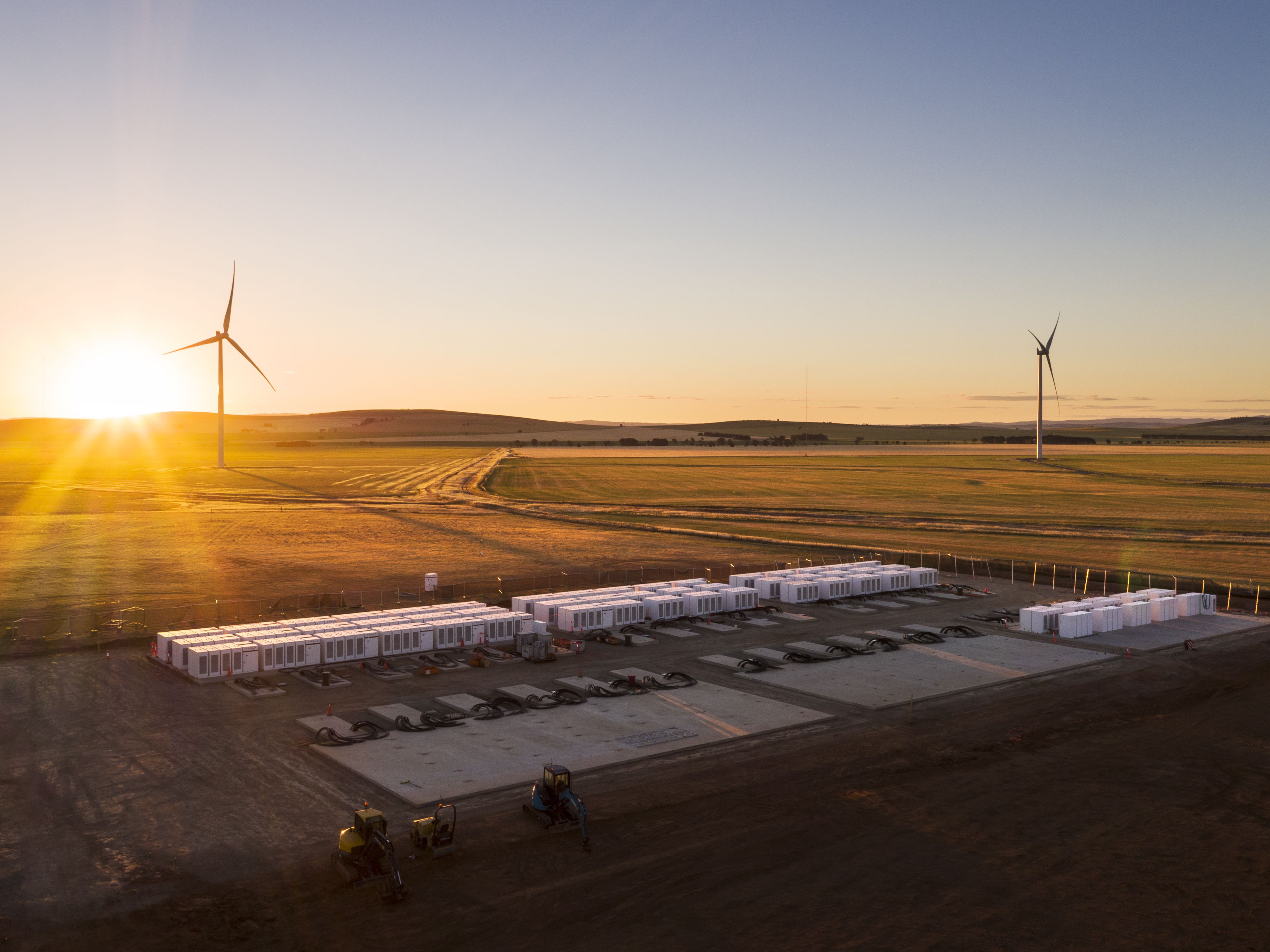
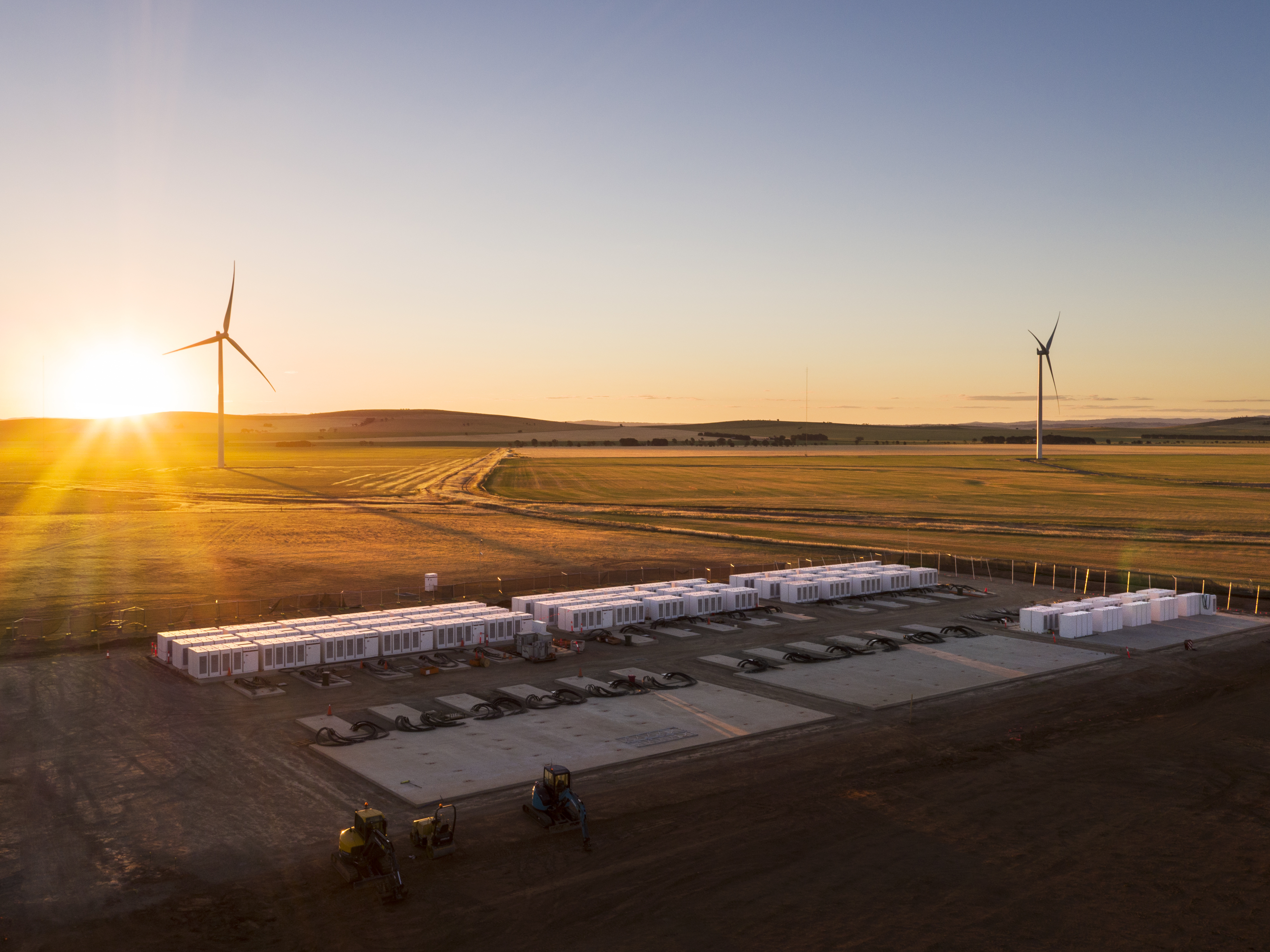
South Australia’s famous grid-scale Tesla battery is being expanded. And the New South Wales government’s pumped hydro plan shows how by 2040, the state could get 89% of its power from solar and wind, backed by pumped hydro storage.


Read more: How an Aussie invention could soon cut 5% of the world’s greenhouse gas emissions


In Australia on Easter Saturday this year, renewables supplied 50% of the national electricity market, which serves the vast majority of the population.

Countries such as New Zealand and Iceland essentially get all their power from renewables, backed up by storage (predominantly hydro).

And putting aside the federal government’s problematic Snowy 2.0 project, Australia could get all its energy from renewables with small-scale storage.

South Australia’s huge battery storage project is being expanded. Hornsdale Power Reserve

What does the film get right?

Planet of the Humans makes several entirely valid points. Here are a few:

1. We need to deal with population growth

The film observes that population growth is the elephant in the room when it comes to climate change. It says politicians are reluctant to talk about limits to population growth “because that would be bad for business”.

As one observer in the film says, the people in charge aren’t nervous enough. I agree.

An increasing population means increasing demand for energy and other resources, accelerating climate change.

2. Biomass energy does more harm than good

While the film unfairly criticises the environmental benefits of solar energy, it’s true that some so-called clean technologies are not green at all.

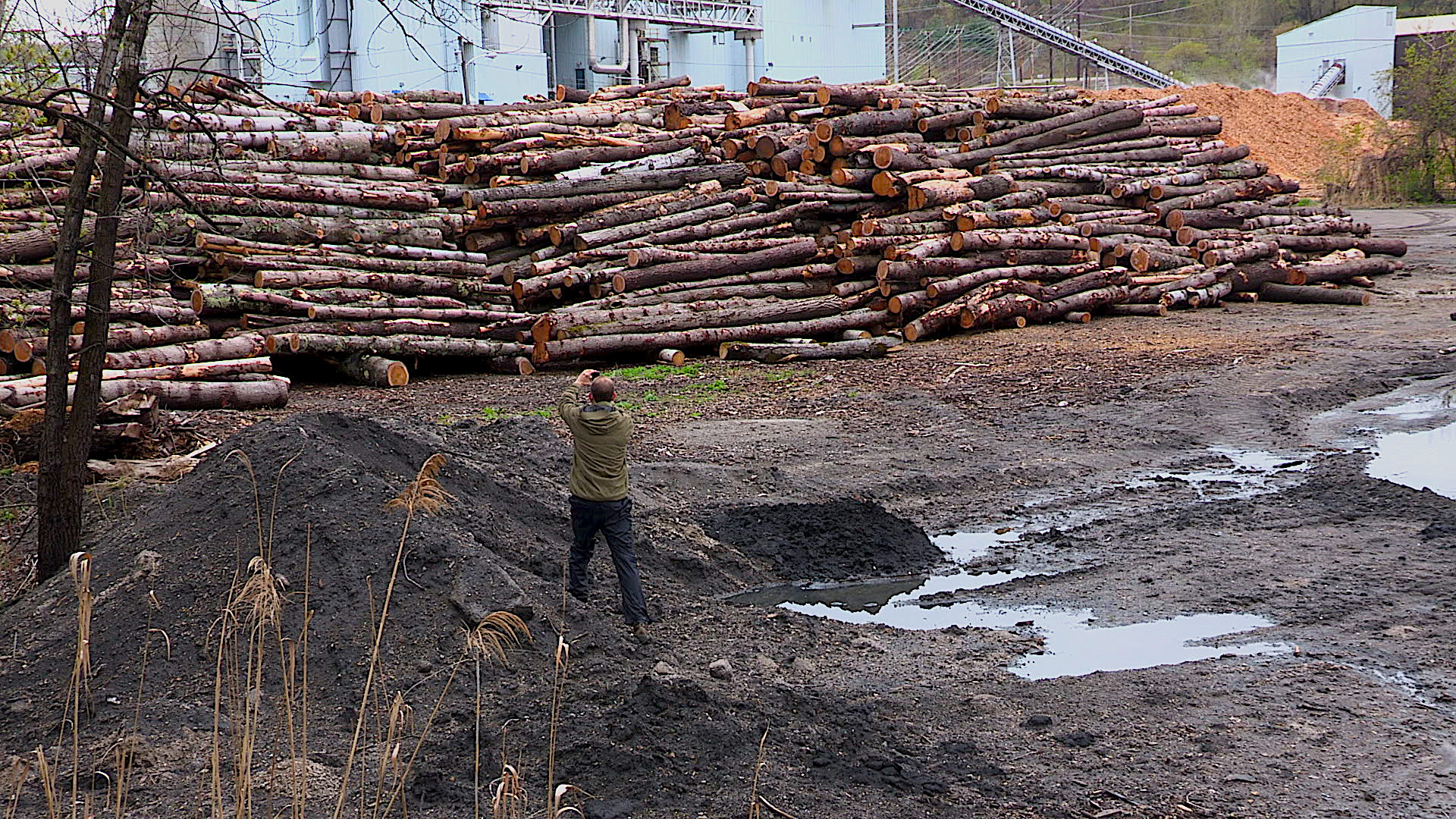
As the film asserts, destroying forests for biomass energy does more harm than good – due to loss of habitat, damage to water systems, and the time taken for some forests to recover from the removal of wood.

Most advocates of cleaner energy systems recognise the limitations of biomass as an energy source.

A still from the film, showing a biomass plant. Planet of the Humans

3. Infinite growth on a finite planet is suicide

The film calculates the sum total of human demands on natural systems as about 1,000 times what it was 200 years ago. It says there are ten times as many people now, each using 100 times the resources, on average.

Experts have repeatedly warned that human demand for resources is damaging the natural systems that all life depends on.

For large parts of the world, the consequences could be catastrophic.

Get the message

Several other aspects of the film have been savaged by critics – not least its claims about emissions produced by electric cars, which had previously been debunked.

Personal attacks on two prominent US clean energy advocates, Bill McKibben and Al Gore, also detract from the film’s impact.

It’s clear renewable energy has an important role to play in reducing greenhouse gas emissions and slowing climate change. But it won’t solve the fundamental problem: that humans must live within Earth’s natural limits.

Those cheering the film’s criticism of renewables would do well to consider its overriding message.


Read more: Australia could fall apart under climate change. But there’s a way to avoid it


ref. 3 times Michael Moore’s film Planet of the Humans gets the facts wrong (and 3 times it gets them right) – https://theconversation.com/3-times-michael-moores-film-planet-of-the-humans-gets-the-facts-wrong-and-3-times-it-gets-them-right-137890

Cities will endure, but urban design must adapt to coronavirus risks and fears

Source: The Conversation (Au and NZ) – By Silvia Tavares, Lecturer and Researcher, Urban Design and Town Planning, University of the Sunshine Coast

The long-term impacts of coronavirus on our cities are difficult to predict, but one thing is certain: cities won’t die. Diseases have been hugely influential in shaping our cities, history shows. Cities represent continuity regardless of crises – they endure, adapt and grow.


Read more: Cities lead the charge on the coronavirus front lines


Once we can have our old lives back we will likely return to familiar routines and our memories of lockdown and isolation will start to fade. While our lack of memory is arguably a resiliency resource, urban designers and planners have a long-term role in ensuring urban life is healthy. To fight infectious diseases, cities need well-ventilated urban spaces with good access to sunlight.

The design of these spaces, and public open spaces in particular, promotes different levels of sociability. Some spaces congregate community and are highly social. Others may act as urban retreats where people seek peace with their coffee and book.

How urban spaces perform during disease outbreaks now also demands our close attention.

What is urbanity and why does it matter?

Urban spaces are where communities come together. Urban planners and designers strive to generate a sense of belonging that makes people choose certain areas of a city or even a city itself. Urbanity refers to the public life that happens as a result of the exchanges and communication each space enables.

The combination of diversity and density achieve urbanity – it’s a product of diverse social opportunities in close proximity. This is why densifying cities has been a goal for achieving healthy, social and prosperous cities.

However, the risks of COVID-19 transmission have strengthened anti-density discourses. It is worth remembering, then, that ways of fighting disease, such as sanitation, were only possible because of the financial savings and infrastructure efficiencies enabled by denser cities. Density done right is safe. And it permits the human interactions and connections we need – and which we are now missing.

Once COVID-19 is less of a threat we will crave the normality of going back to our old lifestyles as much as possible. The role of urban planners and designers is then to create a background for public life to happen in social and healthy ways.

Learning from other disasters

Following the 2011 earthquake in Christchurch, New Zealand, where the CBD lost some 800 buildings, the community took a very different view of urban spaces. Crowded areas and tall buildings were a source of fear. The common attitude was to avoid density – what if another earthquake hit?


Read more: Christchurch five years on: have politicians helped or hindered the earthquake recovery?


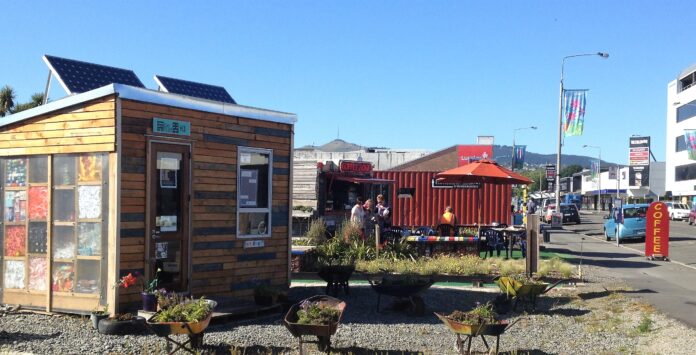
Urban designers and decision-makers learned that buildings and public spaces had to respond differently. Safe pop-up areas started to emerge. This new normal made some old quiet cafés and public open spaces resilient, while other pop-ups become popular retreat areas. These urban retreat areas were away from streets and tall buildings, and so offered a way of “being there” and being safe.

A park-like retreat space on South Colombo Street, Christchurch. Silvia Tavares, Author provided

Both the Christchurch earthquake and coronavirus have made people cautious about their safety in the city – because of their proximity to surrounding buildings and to other users of the space, respectively. Christchurch teaches us a lesson about “being together but apart”: cities are not made only of social spaces, and not all residents want the same thing.

People need choice in their use of urban spaces to feel secure and be safe. While larger social spaces are vibrant, support public transport and local economies, urban retreat spaces apply the idea of prospect and refuge: they meet our psychological needs to observe and be part of the public space (prospect) while feeling safe and removed from the scene (refuge).

Post-quake Christchurch showed how the social character and dynamics of urban spaces influenced the people these spaces attracted and how they behaved there.


Read more: Three years on: getting creative in post-quake Christchurch


Designing spaces with microclimates in mind

Another factor to consider is the influence of urban microclimates on the use and prosperity of public spaces.

The main activity of large urban social spaces is based upon the presence of people, social interaction and cultural exchange. The use and dynamics of these spaces are more predictable and consistent than for urban retreat spaces. Being close to transport or commercial uses often means weather conditions have less impact on social activity and interaction.

Shops along the street add to the local urbanity of Cashel Mall, Christchurch. Silvia Tavares, Author provided

When looking for peaceful experiences and personal space, however, people tend to choose urban retreat spaces. Here they have less tolerance of adverse conditions. The place itself is the attraction, so the microclimate and personal comfort are more significant factors in its use.

Understanding, harnessing and managing microclimate, sunlight and ventilation is a clear and known approach to fighting disease and to establishing safe and resilient urban spaces. Offering people choice in the ways they interact with their urban environments, while long considered important, is now essential.


Read more: City temperatures and city economics, a hidden relationship between sun and wind and profits


Broad engagement is essential to get it right

Redesigning our urban spaces to reassure users of their safety and provide community choice is not a straightforward process. Designs for the different forms and locations of urban retreat spaces must acknowledge community diversity and optimise microclimate.

While right now we might just want to hold on to all the good things we had pre-coronavirus, the nuances generated by the work of urban planners and designers are likely to make our lives safer. However, our responses cannot simply be reactive interventions such as warning signs, fencing, wider pathways and the like. Such approaches ultimately have implications for equity and quality of life.

We have long had a reactive, piecemeal approach to urban design and development. The current disaster presents an opportunity to establish safe, resilient and healthy urban spaces. It requires meaningful engagement across communities, designers and decision-makers now, before collective amnesia about COVID-19 sets in and we go back to business as usual.

ref. Cities will endure, but urban design must adapt to coronavirus risks and fears – https://theconversation.com/cities-will-endure-but-urban-design-must-adapt-to-coronavirus-risks-and-fears-135949

Bank dividends are bare. Here’s why some shareholders hate it more than they should

Source: The Conversation (Au and NZ) – By Kevin Davis, Professor of Finance, University of Melbourne

In bad news for retirees and others who depend on dividend cheques (and dividend imputation rebate cheques from the Tax Office) bank dividends have largely evaporated. But it’s not as bad as many commentators suggest, and actually good for some investors.

Westpac won’t be paying a dividend this half year. Nor will the ANZ, nor the Bank of Queensland.

The National Australia Bank will pay one, but only a third the usual size. The Commonwealth Bank’s different reporting dates mean it won’t have to make a decision until August.

The Financial Review believes the moves have taken A$9.8 billion in expected dividends and franking credits from bank shareholders to date.

The flip-side missed by many commentators and shareholders is that bank shares are worth more (maybe around $9.8 billion more) than if they had paid those dividends.

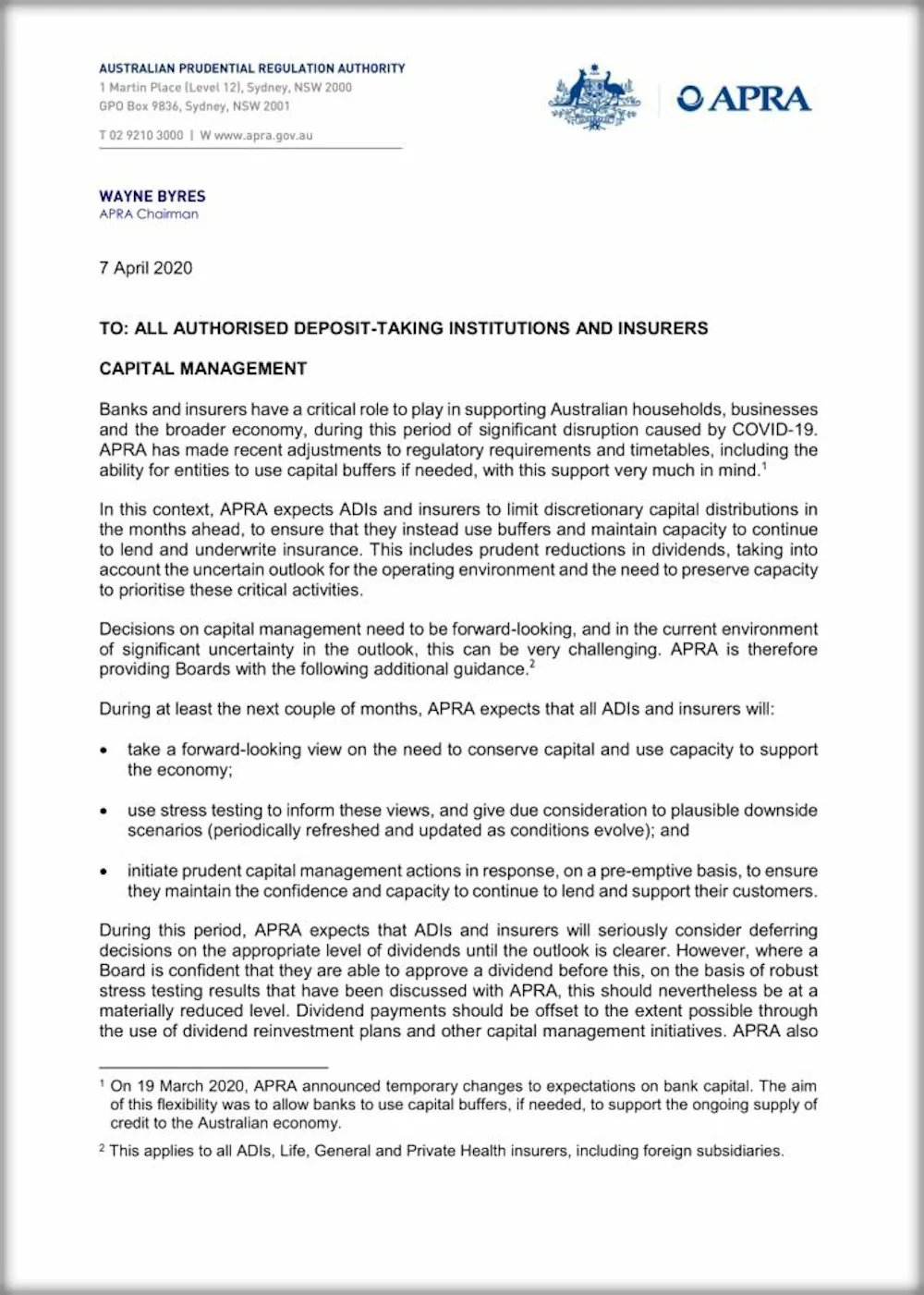
APRA letter to financial institutions, April 7, 2020

As it happens, the decisions follow pressure from the Prudential Regulation Authority which last month sent banks an unprecedented letter asking them to “seriously consider deferring decisions on the appropriate level of dividends”.

It isn’t what bank shareholders have come to expect.

The Commonwealth Bank’s dividend policy says it will aim to pay cash dividends at “strong and sustainable levels”, maximising dividend imputation cheques from the government by paying fully franked dividends.

The dividend reductions come after sharp collapses in share prices brought about by hits to current and expected future earnings and increased economic uncertainty.

But, as hard as it is to look beyond dividends, imputation cheques and the price of shares, what’s most important for the owners of shares are the earnings prospects for the banks long term. And here, as hard as it might be for some shareholders to accept, the suspension of dividends is a sensible strategy for the banks.

Cruel to be kind makes sense for banks

In making decisions about dividends in the wake of bad news, each bank had two options.

One was to keep paying dividends at previous levels.

That would have pushed the share price down further, as evidenced by the typical drop in a company’s share price after dividends have been paid.

With the funds paid out as dividends, and no longer part of the bank’s shareholders funds, each share becomes correspondingly worth less.


Read more: The last thing companies should be doing right now is paying dividends


It also puts the bank in a weaker position to weather unexpected loan losses if the COVID-19 storm turns out to be even worse than expected.

The other option was to scrap (or reduce) its dividend and avoid the ex-dividend date drop in its share price. It bolsters its capital strength and gives shareholders higher expected capital gains (or lower capital losses).

Broadly, the loss of dividends should be offset to some degree by a higher share price and higher capital gains.

But try telling shareholders that the dividends they have lost can be replaced by selling shares.

Tax makes retirees hate it

That they care is in part psychological. Shareholders view a bird (dividend) in the hand as better than one (a capital gain) in the bush.

Selling shares is seen as “dipping into one’s capital”, even though it has the same effect on the shareholder’s capital (the value of shares held) as taking a dividend.

Another reason shareholders care more than you might think is tax.

Typically (based on historical evidence) a franked dividend of $1 leads to a share price fall of around $1.


Read more: Deeming rates explained. What is deeming, how does it cut pensions, and why do we have it?


But for an investor on a zero tax rate (as many retirees are) that $1 dividend is actually worth around $1.43.

This is because the Tax Office rebates that investor 43 cents of tax previously paid by the bank, a so-called dividend imputation payment.

Selling $1.43 of shares to compensate for the lost dividend cash flow leaves them worse off.

Super funds on a low 15% tax rate are also likely to prefer payment of franked dividends since they can use the imputation credits to reduce tax on other investment income.

Tax makes other shareholders like it

High tax rate investors and foreign shareholders think quite differently.

For high tax rate investors, Australia’s practice of taxing only half of each capital gain can make the higher capital gains associated with higher share prices more attractive than receiving dividends on which they have to pay extra tax.

Foreign shareholders also generally prefer capital gains to franked dividends, since they can’t use Australia’s imputation credits.


Read more: Here’s a radical reform that could keep super and pay every retiree the full pension


Under any tax system where dividends and capital gains are taxed differently, deferring dividends hurts some investors and benefits others. Australia’s imputation tax system magnifies that effect, with low tax rate investors being losers.

As it happens, these features of the tax system took centre stage in last year’s election, in which Labor proposals to change both the rules regarding dividend imputation and capital gains were rejected by voters.

Longer term, investors might thank banks

The root cause of the hit to dividends is uncertainty about the future.

If economic conditions turn out worse than expected, banks will find themselves hesitant to make loans unless they have sufficient capital to absorb unexpected losses.

To the extent that they use that capital to help restore the health of the economy, all investors (including those reliant on future dividends) will be better off.

ref. Bank dividends are bare. Here’s why some shareholders hate it more than they should – https://theconversation.com/bank-dividends-are-bare-heres-why-some-shareholders-hate-it-more-than-they-should-137889

Museums are losing millions every week but they are already working hard to preserve coronavirus artefacts

Source: The Conversation (Au and NZ) – By Anna M. Kotarba-Morley, Lecturer, Archaeology, Flinders University

The COVID-19 pandemic has no borders and has caused the deaths of hundreds of thousands of citizens from countries across the globe. But this outbreak is not just having an effect on the societies of today, it is also impacting our past.

Cultural resources and heritage assets – from sites and monuments, historic gardens and parks, museums and galleries, to the intangible lifeways of traditional culture bearers – require ongoing safeguarding and maintenance in an overstretched world increasingly prone to major crises.

Meanwhile, the heritage sector is already working hard to preserve the COVID-19 moment, predicting that future generations will need documentary evidence, photographic archives and artefacts to help them understand this period of history.

Closed to visitors

The severity of the pandemic, and the infection control responses that followed, has caused great uncertainties and potential long-term knock-on effects within the sector, especially for smaller and medium-sized institutions and businesses.

A survey published by the Network of European Museum Organisations (NEMO) and communications within organisations such as the International Committee for Archaeological Heritage Management (ICAHM) show that the majority of European museums are closed, incurring significant losses of income. By the beginning of April, 650 museums from 41 countries had responded to the NEMO survey, reporting 92% of them were closed.

Large museums such as the Kunsthistorisches Museum in Vienna and the Rijksmuseum and Stedelijk Museum in Amsterdam are losing €100,000-€600,000 (A$168,700-A$1,012,000) per week. Only about 70% of staff are currently being retained on average at most of the institutions.

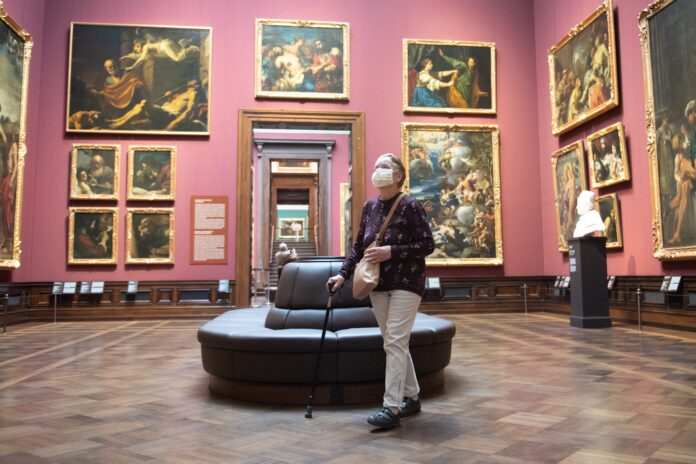
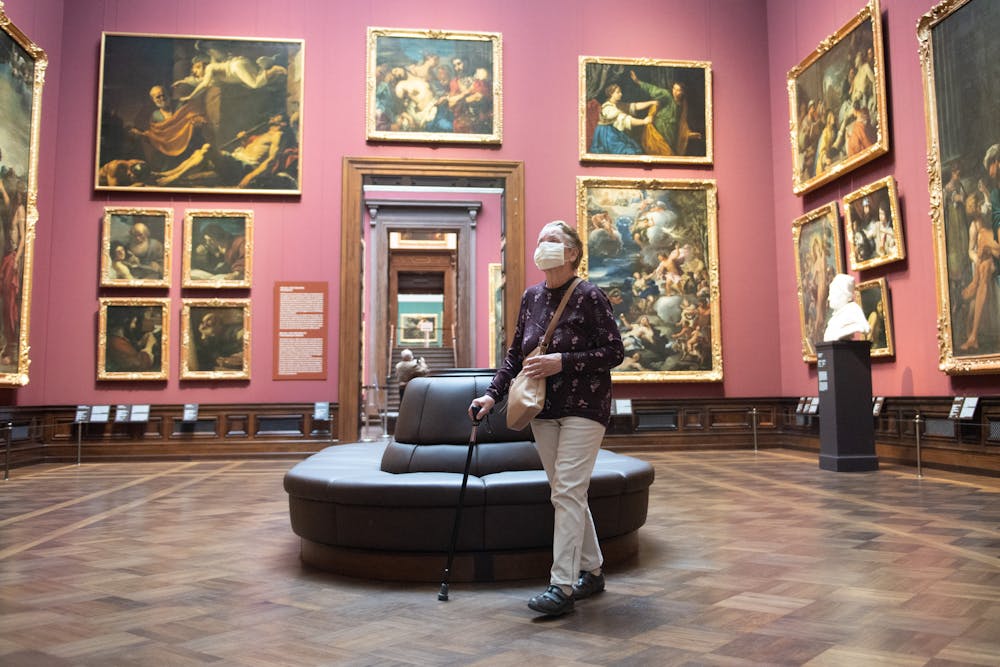
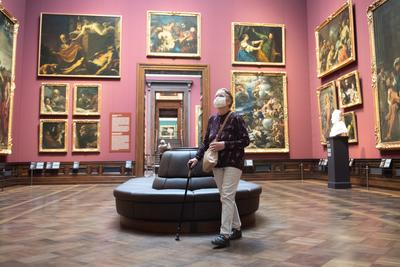
German museums have reopened but must balance safety with preservation of precious artefacts. Here, a masked visitor to the Old Masters Picture Gallery in Saxon, Dresden. Sebastian Kahnert/dpa-Zentralbild

Museums (both private and national) located in tourist areas have privately reported initial losses of 75-80% income based on the Heritage Sector Briefing to the UK government. Reports are also emerging of philanthropic income fall of 80-90% by heritage charities with many heading towards insolvency within weeks.

Cambodia’s Angkor Wat heritage site has lost 99.5% of its income in April compared to the same time last year.

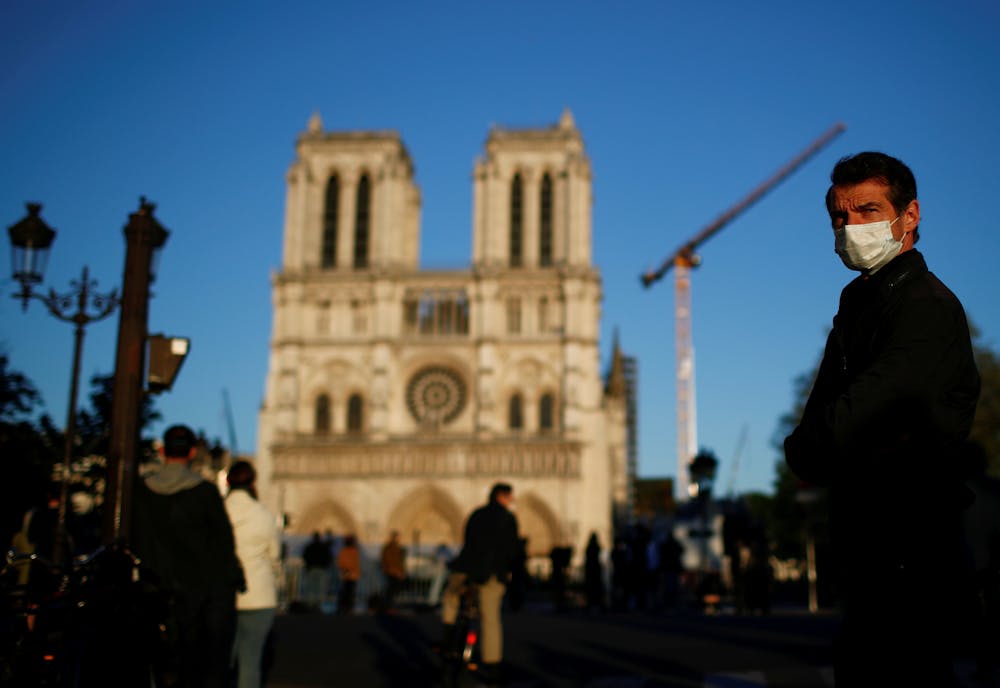
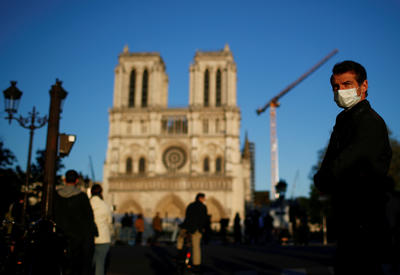
Meanwhile, restorations to the cathedral of Notre-Dame de Paris came to an abrupt halt due to coronavirus just prior to the first anniversary of the fierce fire that damaged it. Builders have since returned to the site.

COVID-19 shutdowns pressed pause on the restoration of Notre Dame in Paris. REUTERS/Gonzalo Fuentes

The situation is especially dire for culture bearers within remote and isolated indigenous communities still reeling from other catastrophes, such as the disastrous fires in Australia and the Amazon. Without means of social distancing these communities are at much higher risk of being infected and in turn their cultural custodianship affected.


Read more: Coronavirus: as culture moves online, regional organisations need help bridging the digital divide


The right to culture

It is interesting to think about how this crisis will reshape visitor experience in the future.

The NEMO survey reports that more than 60% of the museums have increased their online presence since they were closed due to social distancing measures, but only 13.4% have increased their budget for online activities. We have yet to see more data about online traffic in virtual museums and tours, but as it stands it is certainly showing signs of significant increase.

As highlighted in the preamble of the 2003 UNESCO Declaration:

cultural heritage is an important component of cultural identity and of social cohesion, so that its intentional destruction may have adverse consequences on human dignity and human rights.

The human right of access to and enjoyment of cultural heritage is guaranteed by international law, emphasised in the Human Rights Council in its recent Resolution 33/20 (2016) that notes:

the destruction of or damage to cultural heritage may have a detrimental and irreversible impact on the enjoyment of cultural rights.

Article 27 of the Universal Declaration of Human Rights states that:

everyone has the right freely to participate in the cultural life of the community, to enjoy the arts and to share in scientific advancement and its benefits.


Read more: Protecting heritage is a human right


In the future, generations will need the means to understand how the coronavirus pandemic affected our world, just as they can now reflect on the Spanish Flu or the Black Death.

Preserving a pandemic

Work is underway to preserve this legacy with organisations such as Historic England collecting “lockdown moments in living memories” through sourcing photographs from the public for their archive. Twitter account @Viral_Archive run by a number of academic archaeologists is following in a same vane with interesting theme of #VirtualShadows.

In the United States, the Smithsonian’s National Museum of American History has assembled a dedicated COVID-19 collection task force. They are already collecting objects including personal protection equipment such as N95 and homemade cloth masks, empty boxes (to show scarcity), and patients’ illustrations.

The National Museum of Australia has invited Australians to share their “experiences, stories, reflections and images of the COVID-19 pandemic” so curators can enhance the “national conversation about an event which is already a defining moment in our nation’s history”. The State Library of New South Wales is collecting images of life in isolation to “help tell this story to future generations”.

Citizen science is a great way to engage public and although such work is labour-intensive it can lead to more online traffic and potentially fill in financial deficits by enticing visitors back to the sites.

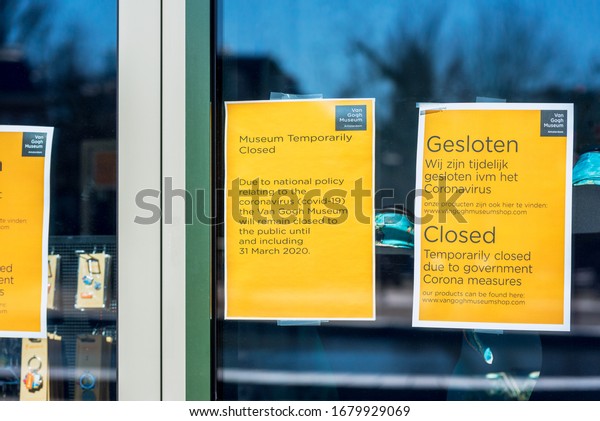
The closed Van Gogh Museum in Amsterdam, Netherlands on March 22. Shutterstock

Priorities here

The timing of the COVID-19 pandemic – occurring in the immediate aftermath of severe draught, catastrophic fire season and then floods, with inadequate intervening time for maintenance and conservation efforts – presents new challenges.

The federal government reports that in the financial year 2018-19, Australia generated A$60.8 billion in direct tourism gross domestic product (GDP). This represents a growth of 3.5% over the previous year – faster than the national GDP growth. Tourism directly employed 666,000 Australians making up 5% of Australia’s workforce. Museums and heritage sites are a significant pillar to tourism income and employment.

Even though the government assures us “heritage is all the things that make up Australia’s identity – our spirit and ingenuity, our historic buildings, and our unique, living landscapes” its placement within the Department of Agriculture, Water and Environment’s portfolio shows lack of prioritisation of the sector.

Given the struggles we are already seeing in the arts and culture sector, which has been recently moved to the portfolio of the Department of Infrastructure, Transport, Regional Development and Communications means that the future of our heritage (and our past) is far from certain.

ref. Museums are losing millions every week but they are already working hard to preserve coronavirus artefacts – https://theconversation.com/museums-are-losing-millions-every-week-but-they-are-already-working-hard-to-preserve-coronavirus-artefacts-137597

COVID crisis has produced many negatives but some positives too, including confidence in governments: ANU study

Source: The Conversation (Au and NZ) – By Michelle Grattan, Professorial Fellow, University of Canberra

Research by the Australian National University has found a big spike in the fear of becoming unemployed even among those who have kept their jobs in the COVID crisis.

Among the employed, the average expected probability of losing their job was 24.6% in the April study. This was almost twice as high as it has ever been since 2001.

More than one in four employed Australians assess the likelihood of losing their job in the coming year at more than 50%.

Many people are also worried about finding an equally good job if they were to lose their present one. The average expectation of finding a job at least as good was 41.4%; only 8.2% rated their chances of securing an equally good job at 100%.

The ANU study is the first longitudinal examination of the economic, political, social and mental impacts of the crisis, and is based on an ANUPoll of 3155 people between April 14 and 27. It also compares pre-crisis polling from earlier in the year. The researchers are Nicholas Biddle, Ben Edwards, Matthew Gray and Kate Sollis.

It found the decline in employment in the COVID crisis largest for those aged 18-24, while the oldest workers (65 and over) were also taking a relatively large hit.

These are the cohorts for which becoming unemployed is likely to have the biggest effect.

Gray said: “If previous periods of high unemployment are any guide, the effect on the young is likely to be felt throughout their working life, and those who leave the labour force when close to retirement age may never return”.

The study found the probability of remaining employed in April was much greater for professionals, clerical and administrative workers, machinery operators and drivers than for other workers.

Technicians and trades workers, community and personal services workers, sales workers and labourers who were working in February were less likely to be employed in April.

People who had been out of work for at least three months in the previous five years were less likely to stay employed than those who hadn’t been.

Trade union membership seems to be something of a protection against job loss, the study found, while being employed as a casual was associated with a substantially lower prospect of keeping employed.

While there was a fall of 9.1% in average household after tax income, the detailed picture was more complicated.

“The change in income is not uniform across the income distribution with increases in income at the bottom of the income distribution and declines in income for those who were at the top half of the income distribution,” the report says.

“There was an increase of 33.5% in per person after tax household income for the lowest income decile, and smaller increases for the second and third income deciles. The increase in income at the bottom end are almost certainly due to the increases in government financial assistance to households.

“There was little change in incomes for deciles 4 and 5 and then substantial falls for the higher income deciles.

“There were larger declines in income for 18 to 24 year olds. There were smaller declines for those who lived in the most advantaged neighbourhoods.

“Despite the falls in income, the proportion of Australians who said that they were finding it difficult or very difficult on their current income decreased from 26.7% in February to 22.8% in April 2020.

“This finding is explained by the increases in income at the bottom end of the income distribution.”

While the study documents the harm of the crisis on the job front, and in social isolation, psychological distress, and uncertainty about the future, it also found some upsides.

Confidence in government and the public service improved, and social trust rose.

Between January and April confidence in the federal government increased from 27.3% to 56.6%. State and territory governments enjoyed a boost – from 40.4% to 66.7%. Confidence in the public service rose from 48.8% to 64.8%.

“Social cohesion has improved between February and April 2020 based on measures that Australians think most people can be trusted, that people are fair and that people are helpful.”

The study says: “During times of economic stress and uncertainty, there is a real risk that social cohesion, trust in others, and confidence in the government will decline. There is no evidence for this (yet) in Australia, and if anything social cohesion has increased.

“Australians are more likely to think that their fellow Australians can be trusted, are generally fair, and are generally helpful than they were prior to the spread of COVID-19.

“Confidence in the government has also increased.

“What is perhaps most surprising is that satisfaction with the direction of the country has increased quite substantially not only since January 2020 when Australia was being wracked by bushfires, but also since October 2019.

“There is, of course, no guarantee that these trends will continue, especially if the economic slump drags on. In the short term though, there is consistently positive and improving views of Australians to each other, and to government.”

ref. COVID crisis has produced many negatives but some positives too, including confidence in governments: ANU study – https://theconversation.com/covid-crisis-has-produced-many-negatives-but-some-positives-too-including-confidence-in-governments-anu-study-138018

View from The Hill: Albanese would have no excuse for an Eden-Monaro loss after Coalition high flyers implode

Source: The Conversation (Au and NZ) – By Michelle Grattan, Professorial Fellow, University of Canberra

Anthony Albanese, who will campaign in Eden-Monaro on Thursday, has lost any possible claim to “underdog” status in the coming byelection.

The idea of Labor as underdog was always dubious in light of history, despite former member Mike Kelly’s personal vote. But the prospect of one or other of two NSW government high flyers having a tilt at the seat gave it some credibility.

Now, thanks to a rolling implosion within the Coalition parties, Labor starts as favourite to retain the seat, which it holds on a margin of less than 1%.

There’s a sting, however. If the favourite lost, defeat would carry even more serious implications for Albanese than a loss to a star candidate.

NSW Transport Minister Andrew Constance’s Wednesday withdrawal as a contender for Liberal preselection, a day after throwing his hat in the ring, took the Coalition parties’ shenanigans to an even higher level of farce.

The last several days have seen a political shootout between NSW Deputy Premier and Nationals leader John Barilaro and Constance. Both are damaged as well as a big blow having been dealt to the Morrison government’s aspiration to defy history (no federal government has taken a seat from an opposition at a byelection for a century).

It started with Barilaro’s plan to run for the seat, which includes his state electorate where he had a very strong vote last year.

Barilaro wanted the Liberal party to step aside for him, but that was not a goer. Then Constance, whom he hoped would support him, stayed in the frame as a potential Liberal candidate, even though it was clear the two NSW ministers couldn’t both run, especially given the state government’s narrow majority.

The Nationals put out research favouring Barilaro; the Liberals had competing research.

By Monday Barilaro had hoisted the white flag – of course citing the family.

He was furious – at federal Nationals leader Michael McCormack, for not helping him, and at Constance for impeding him.

A blistering text went to McCormack, leaked to Sky on Tuesday. On Wednesday the Daily Telegraph reported “Barilaro told a parliamentary colleague Mr Constance was a ‘c…’”.

Constance cited the story in his withdrawal.

He told a news conference: “Stuff that — I hadn’t signed up to contest federally to be called that type of smear.”

“Why would I sit here for the next five weeks defending that type of front page? You can’t.”

But he also said: “I don’t believe John means it. I had that discussion with him. We’ve cleared it up. I forgive him”.

In short, Constance was all over the place, and likely a mix of reasons caused his meltdown.

Despite a touch of wild speculation that Barilaro might rethink, he quickly dispelled any such suggestion, saying: “My decision not to seek preselection for the Eden-Monaro byelection has not changed”.

The other name on the government side who’d been mentioned, Liberal senator Jim Molan, also ruled himself out on Wednesday.

Molan never seemed likely to contest. But he issued a statement saying “no one has tried to force me to not nominate, nor was I ever intimidated by the prospect of competing in a preselection or in a campaign”.

The Liberals will be well behind Labor – which is running Bega mayor Kristy McBain – in beginning their campaigning.

Nominations for Liberal preselection close Friday and then they have to organise a rank and file ballot.

Fiona Kotvojs, who pushed Kelly close at last year’s election, is seeking endorsement.

Pru Gordon, from the National Farmers Federation, a former adviser to two trade ministers and a former official with the department of foreign affairs and trade, is also in the field. A third contender is Jerry Nockles, now at World Vision, who formerly worked for federal Liberals.

The Liberal candidate, whoever they may be, will inherit the legacy of a Coalition display of bad behaviour and self-absorption, which is not a good start when you are asking for votes in an electorate that’s faced drought and fire and now struggles to recover amid economic devastation.

ref. View from The Hill: Albanese would have no excuse for an Eden-Monaro loss after Coalition high flyers implode – https://theconversation.com/view-from-the-hill-albanese-would-have-no-excuse-for-an-eden-monaro-loss-after-coalition-high-flyers-implode-138047

Politics with Michelle Grattan: Nev Power on the role of business in a post-coronavirus world

Source: The Conversation (Au and NZ) – By Michelle Grattan, Professorial Fellow, University of Canberra

Nev Power, former head of “Twiggy” Forrest’s Fortescue Metals Group, is now the Chairman of the government’s National COVID-19 Coordination Commission.

The commission, set up by Scott Morrison in March, is working on mitigating the effects of the virus on jobs and businesses, and exploring opportunities to help get the country moving again in the post-virus future.

This week the national cabinet was briefed on its preparations for the COVID-safe workplaces.

It is also looking towards the big ideas.

With many calling for reform, Power advocates “tax benefits to companies that invest here in Australia”.

“If there are opportunities to incentivise companies to do that, and to accelerate that process, I think that would be very positive.

“This would be some form of investment allowance, or investment tax concessions that reward companies for investing directly in Australia rather than across-the-board tax reductions for those companies.”

Power sees a longer-term role for the national cabinet: “I think the national cabinet has been very successful and the results speak for themselves… I believe that there’s a great opportunity to keep it in place to help us accelerate the economy and to put through all of the changes that we need to make sure the economy comes back as quickly as possible.”

Additional audio

A List of Ways to Die, Lee Rosevere, from Free Music Archive.

Image:

Lukas Coch/AAP

ref. Politics with Michelle Grattan: Nev Power on the role of business in a post-coronavirus world – https://theconversation.com/politics-with-michelle-grattan-nev-power-on-the-role-of-business-in-a-post-coronavirus-world-138013

Does nicotine protect us against coronavirus?

Source: The Conversation (Au and NZ) – By Adrian Bauman, Sesquicentenary Professor, Public Health, University of Sydney

If you noticed headlines recently suggesting smoking could protect against COVID-19, you might have been surprised.

After all, we know smoking is bad for our health. It’s a leading risk factor for heart disease, lung disease and many cancers. Smoking also reduces our immunity, and makes us more susceptible to respiratory infections including pneumonia.

And smokers touch their mouth and face more, a risk for COVID-19 infection.

Initial observational findings suggested a history of smoking increased the risk of poor outcomes in COVID-19 patients, as the World Health Organisation and other bodies have identified.

But a recent paper which examined smoking rates among COVID-19 patients in a French hospital hypothesised smoking might make people less susceptible to COVID-19 infection.

So what can we make of this?


Read more: Smoking increases your coronavirus risk. There’s never been a better time to quit


What the study did

This study was a cross-sectional survey where the researchers assessed the exposure (smoking) and the outcome (COVID-19) at the same time. This type of research design can’t prove the exposure causes the outcome – only that there may be an association.

There were two groups included in the study – 343 inpatients treated for COVID-19 from February 28 to March 30, and 139 outpatients treated from March 23 to April 9. Among other data collected, participants were asked whether they were current smokers.

The researchers compared smoking rates in both groups with smoking rates in the general French population.

The results

The study found 4.4% of inpatients and 5.3% of outpatients with COVID-19 were smokers, after adjusting for differences in age and sex.

This was only a fraction of the prevalence seen in the general French population. Some 25.4% reportedly smoked daily in 2018.

The authors asserted:

current smokers have a very much lower probability of developing symptomatic or severe SARS-CoV-2 infection as compared to the general population.

The finding of lower rates of smokers among COVID-19 cases has been more recently described elsewhere, in a rapid review of 28 studies on smoking in COVID-19 patients from various countries.


Read more: Why do more men die from coronavirus than women?


The authors of the French study suggest the mechanism behind the protective effects of smoking could be found in nicotine.

SARS-CoV-2, the virus that causes COVID-19, gains entry into human cells by latching onto protein receptors called ACE2, which are found on certain cells’ surfaces.

The researchers have proposed nicotine attaches to the ACE2 receptors, thereby preventing the virus from attaching and potentially reducing the amount of virus that can get into a person’s lung cells.

The researchers are now planning to test their hypothesis in a randomised trial involving nicotine patches; though the trial is still awaiting approval from French health authorities.

So how should we interpret the results?

These counterintuitive results may be due to several biases, so let’s explore some alternative explanations.

First is what we call “selection bias”. The hospital patients may be less likely to be daily smokers than the general population. For example, health-care workers and those with existing chronic conditions were disproportionately represented in the inpatient sample – both of these groups usually show lower prevalence of current smoking.

Further, around 60% of the hospitalised patients in the study were ex-smokers (similar to the national prevalence). Some may have given up smoking very recently in response to the WHO declaring smoking as a risk factor for COVID-19. But they were classified as non-daily smokers in the study.

We can identify several biases in the study. Shutterstock

Second is what we call “social desirability bias”. COVID-19 patients may be more likely to deny smoking when asked about their smoking status in hospital, wanting to be seen by medical professionals as doing the right thing.

And data collection may have been incomplete for behavioural questions in busy hospitals overwhelmed by COVID-19 cases.

Finally, it’s important to note this paper has not yet been peer-reviewed.

Taken together, although there appears to be an association between smoking and COVID-19 in these hospital-based samples, there’s no evidence of a causal relationship – that is, that smoking prevents COVID-19.


Read more: Drug use may increase the risk of coronavirus. Here’s how to reduce the harms


Lots of research at pandemic speed

We must acknowledge this research has been conducted at “pandemic speed”, much faster than usual research time frames.

Normally it would be months between submission and publication – but in this case the researchers completed their observations and had the research published online within the same month.

An unintended consequence of the early release of research is that it may provoke undue community hope or belief in unproven treatments.

French authorities had to limit sales of nicotine treatments to avoid stockpiling after this study was published.


Read more: The smoke from autumn burn-offs could make coronavirus symptoms worse. It’s not worth the risk


We saw a similar phenomenon recently with the drug hydroxychloroquine, where supplies ran out for those who needed them after politicians proclaimed it as a cure for COVID-19.

So right now we need to put in extra effort to make sure early evidence is not misinterpreted or overstated.

As for the role of smoking in COVID-19 – this link requires substantially more research and critical appraisal. Because overall, smoking still kills. – Adrian Bauman, Melody Ding and Leah Shepherd

Blind peer review

On the whole, this Research Check represents a fair and balanced account of the study. The alternative explanations for the observation of low smoking status prevalence among the French hospital sample provided are possible.

One plausible explanation is error in recording smoking status. There is evidence of under-reporting and inaccurate reporting of smoking status within hospital samples, in general.

It’s unclear from the study what method was used to collect smoking status data. The authors simply state patients were “asked” and “data were collected in the context of care”. It’s important to know who asked the smoking status questions, what questions were asked, when they were asked, and what record keeping system was used.

Given clinical smoking status record keeping may not capture all smokers accurately, a better comparison would be to compare the 2020 data with pre-COVID-19 hospital patient data, rather than general population data which may have asked different questions. – Billie Bonevski


Research Checks interrogate newly published studies and how they’re reported in the media. The analysis is undertaken by one or more academics not involved with the study, and reviewed by another, to make sure it’s accurate.

ref. Does nicotine protect us against coronavirus? – https://theconversation.com/does-nicotine-protect-us-against-coronavirus-137488

Carriageworks is my home away from home

Source: The Conversation (Au and NZ) – By Cherine Fahd, Director Photography, School of Design, University of Technology Sydney

My home away from home is my studio space at Carriageworks in North Eveleigh, Sydney.

The studio is in a beautiful old building called The Clothing Store. Since February 2019, I have shared this space with some of Australia’s most celebrated contemporary artists.

Carriageworks established the residency program in 2017 through a partnership with Urban Growth NSW (now Infrastructure NSW), giving artists subsidised spaces in central Sydney to work.

My studio is in a beautiful old building called The Clothing Store at Carriageworks. Cherine Fahd, Author provided

But the studio offers far more than real estate. It gives us a unique communal experience that is closely connected to the cultural life of Carriageworks.

My affiliation with Carriageworks began long ago. Like many Sydneysiders, I have been a regular visitor since its inception in 2007.

I am often there to experience the more quirky events that rarely find a home in other venues in Sydney.

It is where I go to be with my children, to cultivate our familial connection beyond Netflix, to incorporate art, music and dance into our being together and to open their eyes to the wonders of all types of bodies in movement, the art of noise, and the unimaginable ways we can make the world together.

It is where I go to connect with Queer Sydney, to be myself in all my indefinable glory.

I take my students there to offer them a real-world classroom that immerses their imagination, presenting tactile hybrid forms of visual art, politics, technology and science.

UTS first-year Bachelor of Design Photography students visit Carriageworks in 2019. Cherine Fahd, Author provided

I particularly love visiting the Saturday farmers’ markets, to sit anonymously in the sun surrounded by children on scooters, dogs on leads, milk crates and the smell of sausages, flowers and miso soup. To watch people from all over Sydney learn pickling, to cook and to taste wine.

Carriageworks is not a conventional gallery or museum. It is a multi-arts centre and a creative community, a place where people come to be together to feel like they are part of something big but also unique.

Carriageworks farmers’ markets are a space for all of Sydney. Daniel Linnet/Carriageworks

The National biennial of contemporary art, Sydney Festival, Mardi Gras, Sydney Writers’ Festival, Fashion Week, Sydney Dance Company, Sydney Contemporary Art Fair and Vivid are just some of the big events Carriageworks hosts.


Read more: The National is a time capsule of new Australian art in uncertain times


Carriageworks is home to young Aboriginal people through Solid Ground, an initiative in conjunction with Blacktown Arts Centre that provides pathways through education, training and employment for Indigenous youth in Redfern, Waterloo and Blacktown.

It is home to much-loved resident companies like Sydney Chamber Opera and Force Majeure, and unique Indigenous companies such as Marrugeku and Moogahlin Performing Arts.

Carriageworks contributes to the renewal of urban space in Redfern by commissioning the South Eveleigh Public Art initiative, enriching local public spaces. Carriageworks established New Normal, a national strategy for the development of disability arts practice with Back to Back Theatre and Studio A.

Back to Back Theatre’s The Shadow Whose Prey the Hunter Becomes was performed at Carriageworks in September 2019. Zan Wimberley

The list goes on.

For six weeks, the Sydney arts sector has eagerly awaited news from the New South Wales government, hoping an announcement might be made in support of the institutions that support us.

Instead, we have seen Arts Minister Don Harwin quit after breaching coronavirus travel restrictions. With no replacement minister, Premier Gladys Berejiklian has taken on the job but remains ominously silent on the arts.

Since the outbreak of COVID-19, I, like thousands of artists from all disciplines across the country, have had long-term projects and events cancelled or postponed indefinitely.

Ironically, the project I have laboured over in my Carriageworks studio for the past 15 months is a live performance of public intimacy and of all things un-COVID – touching.

Called Ecdysis, the project was jointly commissioned by Carriageworks and Performance Space for the Liveworks Experimental Art Festival, which was scheduled for October.

With touching out of bounds, the project is unlikely to go ahead.

Ecdysis, video stills, 2019. Commissioned by Carriageworks and Performance Space for Liveworks Experimental Arts Festival 2020. Cherine Fahd, Author provided

Post-COVID, more than ever, we will need places where we can go to recover ourselves, to remember what it feels like to be together: to be touched emotionally, to be moved creatively and to be roused intellectually and physically.

Art is reparative. It brings people together, reminding us of our shared humanity and our long history on this planet together.

When social distancing is but a distant memory, Carriageworks, my home away from home, is where I want to be. I want you to look for me ready to perform Ecdysis, standing in the public gallery, all dressed in black.

I’ll invite you to dress in a blue coat, to sit down and let me wrap my arms around you, touching you ever so tenderly but tightly all the same.

ref. Carriageworks is my home away from home – https://theconversation.com/carriageworks-is-my-home-away-from-home-137885

IVF is changing now clinics have reopened. Here’s what to expect during the coronavirus pandemic

Source: The Conversation (Au and NZ) – By Karin Hammarberg, Senior Research Fellow, Global and Women’s Health, School of Public Health & Preventive Medicine, Monash University

IVF clinics are now open after a temporary closure due to the coronavirus pandemic. But in some states clinics are not yet operating at full capacity. You will also see some changes to your care.

This is what we know so far.


Read more: Good news on elective surgery, but dire warning on the economy


How events unfolded

In late March, non-urgent elective surgeries, including IVF services, were postponed. The idea was to avoid the spread of coronavirus, help the health system prepare for the expected influx of coronavirus patients, and to preserve stocks of personal protective equipment (PPE) such as masks and gowns.

Many people who were getting ready to start IVF or who were in the middle of a treatment cycle were distressed.

Some weeks later, as the famous curve had flattened, Prime Minister Scott Morrison announced IVF clinics could reopen:

[…] subject of course to capacity and other constraints that may exist in each jurisdiction.

Different rules in different states

Different states and territories implemented this announcement in different ways. In some states, IVF clinics have resumed normal services. But in others, there are restrictions on the number of egg collection procedures that can take place because they require hospital admission.

This means the number of women who can start treatment needing egg collection is limited and clinics might therefore prioritise women with the most urgent needs.


Read more: Considering using IVF to have a baby? Here’s what you need to know


However, women who want to have frozen embryos transferred should be able to have that done irrespective of where they live because it doesn’t involve a surgical procedure. It’s a simple procedure, similar to a pap smear, in which a thawed embryo is inserted into the woman’s uterus.

So existing and new patients should contact their clinic or treating specialist for advice on when their treatment can start.

Here’s how your care might change

Clinics are changing the way they operate in coming months to manage the risk of coronavirus transmission.

This is not only to protect patients and staff, but to limit the use of PPE, which might be needed elsewhere in the health system.

Clinics are minimising physical contact between patients and staff. So instead of meeting face-to-face, consultations with doctors, nurses, counsellors and accounting staff will be via phone or video conferencing wherever possible.

There will be fewer visits to the clinic and fewer people in the clinic (including in the waiting room) when patients attend. Appointments will be staggered so social distancing can be maintained.

To minimise the number of people in the clinic, some clinics won’t allow partners or other people to accompany women to appointments.

You will likely have your temperature checked before entering the clinic. Shutterstock

If patients do need to attend the clinic, they will be asked about possible coronavirus symptoms (fever, cough, shortness of breath, sore throat), whether they’ve had close contact with someone who has tested positive for COVID-19, and have their temperature checked.

The federal government’s advice on PPE in hospitals is that “it’s business as usual” and “additional COVID-19 specific precautions are not required” for procedures on patients who are not suspected of having COVID-19.

Is it safe to have IVF now?

People might worry about the risks of COVID-19 and whether it’s safe to embark on pregnancy right now.

Because COVID-19 has only been around for a short time, it’s hard to know how it might affect people’s fertility, and the health of pregnant women and their babies.

However, based on the latest evidence:

  • fever associated with COVID-19 can affect sperm quality for about three months, so may temporarily reduce fertility

  • pregnant women are not more likely to get infected by the coronavirus than other women, nor are they at higher risk for severe illness

  • women who become seriously ill with COVID-19 in late pregnancy are more likely than other pregnant women to deliver their babies prematurely

  • after birth, transmission of COVID-19 from mother to child has been reported, but there has been no indication these infants have any significant problems.

A recent study of 43 pregnant women in the USA who had been admitted to hospital and tested positive for COVID-19 found nearly nine out of 10 had mild disease.


Read more: Coronavirus while pregnant or giving birth: here’s what you need to know


Ready to start IVF?

For people who have been anxiously waiting to start IVF the good news is clinics have now reopened, albeit with reduced capacity in some states.

The bad news is that for some, the financial consequences of COVID-19 might mean they cannot afford IVF.

If you decide to postpone IVF for financial or other reasons, getting into shape will increase your chance of having a healthy baby when the time is right.


Read more: Should I drop my private health insurance during the pandemic?


ref. IVF is changing now clinics have reopened. Here’s what to expect during the coronavirus pandemic – https://theconversation.com/ivf-is-changing-now-clinics-have-reopened-heres-what-to-expect-during-the-coronavirus-pandemic-137709

Coronavirus hasn’t killed globalisation – it proves why we need it

Source: The Conversation (Au and NZ) – By Sunil Venaik, Associate Professor of International Business, The University of Queensland

In just a few months, COVID-19 travelled from China to more than 200 other countries, and has now killed more than 200,000 people. Some claim the pandemic sounds the death knell for globalisation – but in fact, it reveals the disasters that can arise when nations try to go it alone.

Examining where the world went right or wrong in its COVID-19 response may help mitigate another global crisis, climate change.

In the face of coronavirus’ global sweep, most national governments acted independently from each other, rather than in unison. Just as in global action on climate change, the responses of nations to the health crisis has largely been ad hoc, piecemeal and, in many cases, lethally ineffective.


Read more: Here are 5 ways to flatten the climate change curve while stuck at home


My recent research as an international business scholar has focused on finding the common threads of national cultures. My research shows that people around the world have many needs and aspirations in common, such as good health, education and employment. These are best fulfilled when world leaders work jointly with a global, rather than a national, mindset.

So let’s look at the lessons COVID-19 has taught the world, and how this might help the global effort to curb climate change.

Locals in Tuvalu, a Pacific island nation vulnerable to climate change. Like coronavirus, global warming does not respect borders. Mick Tsikas/AAP

Disunity is death

Following the COVID-19 outbreak in China, many countries imposed unilateral travel bans on Chinese arrivals, against advice from the World Health Organization.

The bans mirror the response of many nations during the west African Ebola epidemic which began in 2013. Research has shown that those travel and trade restrictions acted as a disincentive for nations to report outbreaks.

There are undoubtedly legitimate questions over China’s reporting on the coronavirus outbreak. However, travel bans may have made China more defensive and less willing to share vital information with the rest of the world.


Read more: Here are 5 ways to flatten the climate change curve while stuck at home


A shortage of vital supplies also exposed fractures in international cooperation. For example, France and Germany banned the export of medical equipment such as face masks, and the United States was accused of intercepting a shipment of medical supplies en route to Germany.

But where the world has cooperated to stop the spread of COVID-19, the benefits have been obvious. Collaboration between global health scientists has helped identify the virus’ genome sequence, and grow the virus in the lab.

Similarly on climate change, international unity is required if the world is to keep temperatures below 2℃ warming this century. But international climate meetings frequently end in disunity and despair. Meanwhile, global emissions creep ever higher.

Medical supplies from China being unloaded in East Timor. International cooperation is vital during the pandemic. ANTONIO DASIPARU/EPA

The butterfly effect

One person practising social distancing during the pandemic might think their effect is negligible. But coronavirus is highly infectious: on one estimate, a single person with coronavirus could eventually infect 59,000 others.

Similarly, many countries seek to avoid responsibility for taking climate action by claiming their contribution to the global problem is small. The Australian government, for example, repeatedly points out it contributes just 1.3% to the world’s emissions total.

But on a per capita basis, Australia is one of the world’s highest emitters. And as a rich, developed nation, we must be seen to be taking action on cutting emissions if poorer nations are expected to follow suit. So actions Australia takes will have major global consequences.

The developed world has a moral obligation to act on climate change, regardless of its emissions contribution. Federico Gambarini/EPA

Act quickly

In the two months it took the virus to spread from China and become a global pandemic, other nations could have readied themselves by amassing test kits, ventilators and personal protective equipment. But many nations did not adequately prepare.

For example the US was slow to implement a widespread testing regime, and Japan did not declare a nationwide state of emergency until mid-April.


Read more: From the bushfires to coronavirus, our old ‘normal’ is gone forever. So what’s next?


Of course the world has had a far longer time to adapt to and mitigate climate change. The time lag between emissions and their consequences is years, even centuries. There has been ample opportunity to take progressive and thoughtful corrective action against climate change. Instead, the crisis has been met with complacency.

As the COVID-19 experience has shown, the longer we delay action on climate mitigation, the more global, costly, and lethal the consequences.

US President Donald Trump, right, with Vice President Mike Pence. The US response to coronavirus has been criticised as too slow. Doug Mills/EPA

Challenges ahead

As others have noted, a major supplier of swabs used for coronavirus testing is based in Italy, and a German company is a primary supplier of chemicals needed for the tests. Many counties rely on foreign suppliers for ventilators, and an Indian firm – the world’s largest vaccine manufacturer – says once a COVID-19 vaccine is ready for mass production, it will supply large volumes to the world, at low cost.

It’s clear that international cooperation is critical for effective mass testing and treatment for the virus. Nations must work together to improve production and distribution, and resources must be shared.

So too is cooperation needed to deal with the worldwide economic downturn. The global recovery will be long and slow if nations adopt sovereign mindsets, putting up barriers to protect their own economies.

With the coronavirus as with climate change, working together is best way to secure humanity’s safety, health and well-being.

ref. Coronavirus hasn’t killed globalisation – it proves why we need it – https://theconversation.com/coronavirus-hasnt-killed-globalisation-it-proves-why-we-need-it-135077

Pacific governments accused of using virus crisis to cover media crackdown

ANALYSIS: By David Robie of the Pacific Media Centre, Auckland University of Technology

As fears grow over vulnerability to the coronavirus in parts of the Pacific, some governments stand accused of sheltering behind tough emergency or lockdown rules to silence criticism.

Already, several media freedom watchdogs and the United Nations have condemned countries – including Fiji and Papua New Guinea – for exploiting the crisis.

UN High Commissioner for Human Rights Michelle Bachelet has called on governments to stop using the pandemic as “a pretext to restrict information and stifle criticism”. She cites the International Press Institute’s tracking of at least 152 alleged media violations since the outbreak began in China last December.

This is no time to blame the messenger. Credible, accurate reporting is a lifeline for all of us.

READ MORE: Pacific countries score well in media freedom index, but reality is far worse

According to a new report from the International Federation of Journalists, three out of four journalists worldwide have faced intimidation, obstruction or other restrictions covering the pandemic.

– Partner –

In April, Papua New Guinea police minister Bryan Kramer attacked two experienced journalists, saying they “can’t be trusted” and ought to be sacked.

Kramer used his Kramer Report Facebook page to accuse Loop PNG political and business editor Freddy Mou and senior PNG Post-Courier journalist Gorethy Kenneth of misrepresenting a financial report by Treasurer Ian Ling-Stuckey. “Both journalists have close ties to the former Prime Minister Peter O’Neill,” Kramer wrote. “Both have been accused of publishing biased and misleading reports.”

PNG journalists Gorethy Kenneth and Freddy Mou. Image: Loop PNG

Based on an interview with Ling-Stuckey, Mou’s story alleged the “bulk” of a 23 million kina (NZ$11 million) budget for COVID-19 operations was being used to hire cars and media consultants. Kenneth supported Mou by posting the interview video on social media

‘Unaceptable meddling’
Loop PNG
stood by its “key facts”, saying any “misunderstanding” was “not deliberate or intentional”. Paris-based media freedom advocacy group Reporters Without Borders said the harassment was “unacceptable meddling”. The PNG Media Council called for greater “transparency”.

Ironically, Kramer has a reputation for political transparency rare in PNG. His blog pledges to tell the “inside story through in-depth investigative reporting” and boasts more than 128,000 readers in a country with low internet penetration.

PNG has eight confirmed COVID-19 cases but no deaths. However, there are fears that a serious outbreak could rapidly overwhelm the health system. Even before the pandemic, warned Human Rights Watch, “the fragile health system […] was underfunded and overwhelmed, with high rates of malaria, tuberculosis and diabetes”.

Human Rights Watch’s Georgie Bright points out that 80 percent of the PNG population is rural, the country has only 500 doctors, fewer than 4000 nurses and barely 5000 hospital beds.

The country has only 14 ventilators. A COVID-19 outbreak would be catastrophic.

Health officials also point to neighbouring Indonesian-ruled Melanesian provinces Papua and West Papua as a warning for PNG. Politicians worry about encroachments along the 820 km locked-down but still porous border.

Reliable West Papuan data are hard to obtain as they are sometimes “hidden” within Indonesian statistics, but reports indicate 283 cases and seven deaths with totals rising. Only seven respiratory doctors and 73 ventilators are available for 45 hospitals with a regional population of 4 million.

The doctor in charge of the capital Jayapura’s COVID-19 Response Team, Silwanus Sumule, told The Jakarta Post:

I know this might sound harsh for some people but this is the fact – if you don’t want to die, don’t come to Papua.

‘No mercy’ warning
Indonesian authorities warned in April that people illegally crossing borders would be shown “no mercy”, making reporting from the region particularly dangerous. Three days later, after PNG border police arrested nine “illegals”, East Sepik governor Allan Bird called for a “shoot to kill” order.

Prime Minister Voreqe Bainimarama with Brigadier-General Jone Kalouniwai (right). Image: RSF/Fijileaks

While other Pacific countries such as Cook Islands, Samoa, Solomon Islands and Tonga remain COVID-19 free, elsewhere in the Pacific media are still struggling to report the crisis, especially in the American territory of Guam (148 cases and 5 deaths) and the French territories of New Caledonia (18 cases) and Tahiti (58 cases).

On Guam, when nearly 1000 infected crew members on the aircraft carrier USS Theodore Roosevelt were taken ashore, the captain who blew the whistle was relieved of his command. The Pacific Island Times has condemned a lack of transparency during a “news blackout” around a US$129 million (NZ$213 million) federal relief budget.

In Fiji, where there have been 18 coronavirus cases with no deaths, Brigadier-General Ratu Jone Kalouniwai warned in the Fiji Sun that the government had “good reasons to stifle criticism” and for “curtailing freedom of […] the press” in response to curfew violations. Two radio personalities were arrested and charged over “malicious” social media comments.

Reporters Without Borders’ Asia-Pacific director Daniel Bastard said the comments “recall the worst time of the Fijian military dictatorship from 2006 to 2014”.

Launching its 2020 global Media Freedom Index, Reporters Without Borders recently warned that the pandemic “provides authoritarian governments with an opportunity to implement the notorious ‘shock syndrome’ – to impose measures that would be impossible in normal times.”

Although Pacific nations are not among the worst offenders on the index, with factual reporting of COVID-19 crucial for vulnerable societies, any suppression or censorship is a threat.The Conversation

Dr David Robie is professor of Pacific journalism and director of the Pacific Media Centre/Te Amokura at Auckland University of Technology. This article is republished from The Conversation under a Creative Commons licence. Read the original article.

Print Friendly, PDF & Email

Article by AsiaPacificReport.nz

Playing with the ‘new normal’ of life under coronavirus

Source: The Conversation (Au and NZ) – By Larissa Hjorth, Professor of Mobile Media and Games. Director of the Design & Creative Practice Platform., RMIT University

The COVID-19 pandemic has recalibrated everything: work, life and play. As work, schooling, socialising and play have moved into the digital and the confines of our homes, cities have become spaces for reimagining — especially as new sites for formal and informal play.

Playgrounds — once filled with children, parents, grandparents and animals — now look like crime scenes, with police tape and all. They have become forbidden territories, temporal lieux de memoirs of how we used to play. And as play goes into the home and digital, we are reminded of the importance of non-digital play in how we socialise and innovate.


Read more: Why working families need parks and playgrounds more than ever


As cities get reconfigured under pandemic restrictions, it is an important time to reflect not only on changing practices of work but also of play. What can be adapted and translated into the digital, and what can’t?

Play — as a form of creativity, sociality and innovation — is a crucial skill for future workforces. Play provides possibilities for reimagining the city. It draws out new and different connections between people, things, buildings and places. And playgrounds, rather than being spaces that set boundaries for play and non-play, remind us of the importance of play in the social fabric of healthy cities.

Play and the city

Cities have long been sites for play. Play scholars, urban theorists, designers and creative practitioners, to name a few, have discussed the important role of urban play and urban playgrounds. They show that play in cities has a complex and uneven history.

Movements such as the 1960s Situationist International and the New Games Movement in the early 1970s sought to turn the whole city into a playground for politics, environmentalism and sociality. These movements subverted traditional ideas of playgrounds as designated and separate areas.

Interestingly, we are now living in times that playgrounds have to become internalised in the home, if we have one. And while, for some, videogames have become a substitute for alternative sociality in a time of physical distancing, it does not replace the sensorial experience and learnings of non-digital play.

Playgrounds have long had an important role in representing cultural and social mores, reflecting the relational, political and psychological dimensions of the city. They expose how a society views childhood, control, leisure and space.

For example, in Denmark after the second world war, “junkyard” playgrounds were revolutionary sites for reclaiming urban spaces. Likewise, 1960s Situationist International’s practices such as dérive (drifting) transformed cities like Paris into multisensory playgrounds.


Read more: Psychogeography: a way to delve into the soul of a city


Such interventionist ways of producing urban playgrounds resonate with urban practices today — such as parkour, which subverts “normal” ways of navigating the city.

Over past decades, artists and designers have explored the city’s “playability”, thus expanding our territories of play and heightening their unevenness. Famous collectives such as Blast Theory transform the city into a theatre of life in which videogames are played through physical streets. Initiatives such as Playable Cities in Bristol, Tokyo and Melbourne (to name a few) demonstrate how urban play can choreograph innovative ways of being in the city that emphasise the social, relational and sensory experiences of urban environments.


Read more: Bringing back an old idea for smart cities – playing on the street


Playing with domestic cartographies

Now our mobility has been limited to domestic postage-stamp size, play is even more salient. As artist Kera Hill’s map poignantly shows, how can we playfully reimagine our habitat?

Artist Kera Hill’s ‘Commuting in Corona Times’. Kera Hill. Author provided.

What do our creative maps of our “sanity walks” (escaping Zoomlandia for walking on phone “feetings”) say about how cities might be reimagined by foot? How might a city be reimagined playfully via smell or as a playful space for listening and quiet? Or into a playground that celebrates multiculturalism?

Who (still) has the means to move playfully and turn fear and boredom into play? How can play transform mobility practices to celebrate walking rather than cars?


Read more: Superblocks are transforming Barcelona. They might work in Australian cities too


COVID-19 highlights the unevenness of city geography further, but also shows how we can reimagine play when pushed to the extreme and can (re)connect in hopeful ways. There are lessons to be learnt here. As we go back to the “new normal”, let play help engender our reimagining of cities as future sites for care and social innovation.

ref. Playing with the ‘new normal’ of life under coronavirus – https://theconversation.com/playing-with-the-new-normal-of-life-under-coronavirus-137481

Why self-determination is vital for Indigenous communities to beat coronavirus

Source: The Conversation (Au and NZ) – By Aileen Marwung Walsh, Senior Lecturer Indigenous Knowledges, Deakin University

Aboriginal and Torres Strait Islander people know very well the challenges of dealing with infectious diseases introduced from overseas to which the people have no immunity.

Historically, epidemics have brought a double threat: first to Indigenous health, then to Indigenous self-determination.

Compared to the past, this time Indigenous people have been more able to take measures to protect their communities from disease. Nevertheless, history shows community-controlled responses must remain a priority. To beat COVID-19, Indigenous self-determination is vital.

The beginning

At the beginning of European invasion, in 1788-89, Indigenous communities had to deal with a devastating smallpox epidemic. Since then, Aboriginal people have endured wave after wave of introduced diseases. The European invaders brought with them venereal diseases, colds and influenza, tuberculosis, measles and more.


Read more: The coronavirus supplement is the biggest boost to Indigenous incomes since Whitlam. It should be made permanent


In the 19th century, mass deaths in Aboriginal communities were reported whenever Europeans came into contact with them. Unfortunately, the fact so many died of disease has been used to minimise or deny that many were also killed in massacres. Aboriginal communities faced both massacre and disease, and disease became a tool of colonialism.

Captains Hunter, Collins & Johnston with Governor Phillip, Surgeon White &c. visiting a distressed female native of New South Wales at a hut near Port Jackson 1793. National Library of Australia

In February 1913, nearly a third of the population of the Tiwi Islands died in just two weeks. The epidemic began around Christmas 1912. A government medical inspector found that, of a population of 650 people, 187 had died.

The disease remained unidentified but its symptoms resembled measles. A Tiwi elder sang a song describing the typical progression of the disease:

[It] starts with feeling like snake walking up legs, the stomach and bloody diarrhoea, when reaches heart, no more eat, die.

In 1930, a white couple arrived at Gunbalanya, bringing their young daughter and whooping cough. The ensuing epidemic coincided with an outbreak of influenza and malaria and caused “several deaths” – the precise number is unknown as many died “in the bush”. The school was closed and, according to one missionary, the Aboriginal community was at fault, supposedly for their bad attitude:

The fault generally was their own ideas about sickness & some said our medicines were poisonous, & refused to come for them […] Some of the dormitory girls were very sick with malaria & other troubles, they were most difficult to help & not a smile only whine all the time, & did not seem to care if they lived or died, they were deep down in the valley of the shadow. [One woman] who was married last year had a bonny baby just before she took whooping cough, the baby died.

A whooping cough and measles “double-punch” epidemic later hit the Angurugu on Groote Eylandt in January 1950. Families fled to their homelands, hoping to escape the disease. The government put the community into lockdown, cutting off people from family and country.

Those who had to remain had little health care. The rudimentary “hospital” had a single missionary nurse tending 50 critically ill people. Of 240 community members, 175 were infected, and 19 babies died between Christmas and mid-January.

These waves of diseases could have been prevented or minimised through properly funded housing, sanitation and health care. As late as the 1960s at Wurrumiyanga, dysentery was causing devastating child mortality. As government officials noted:

The problem of hygiene at Bathurst Island Mission has virtually reached a state of emergency […] There are far too few lavatories for the number of people […] There have been 20 deaths of children at Bathurst Island since January last.

Excuses for exclusion?

Often the “cure” imposed on Aboriginal communities was worse than the disease. In Queensland, when Aboriginal people were suspected of having a venereal disease, they were exiled to Fantome Island north-east of Townsville. In Western Australia, they were sent to punitive lock hospitals or isolated islands such as Dorre and Bernier.

Relationships between Aboriginal women and white or Asian men were criminalised in the name of preventing the spread of disease in the Northern Territory in 1918.

As governments tackle coronavirus today, there is already evidence that Indigenous people have been disproportionately bearing the brunt of punitive measures and excessive restrictions to control its spread.

Although leprosy is often thought of as an ancient disease, until recently it had devastating effects on Indigenous communities. Much of the horror was due to the heavy-handed government restrictions on Aboriginal people. Those found to be infected were forcibly removed to leper colonies such as Channel Island in the Northern Territory until they died.

Naturally, people did all they could to evade detection, meaning disease was untreated and spread further. Many Aboriginal people today still remember their parents and grandparents who were taken away, never to return. The policy survived even after effective treatment for leprosy was discovered. The last leprosarium, Bungarum at Derby, did not close until 1986.

Derby Leprosarium Orchestra. Stuart Gore Collection, State Library of Western Australia

Aboriginal people know concerns about infection have been used to control even the most intimate details of their lives. Restrictions of movement, removal of family members and regulation of relationships and marriages have all been justified many times under the label of infection control. At the same time, Aboriginal people have lacked the resources, especially housing and sanitation, and decision-making power to control diseases on their own terms.

Indigenous communities’ success in managing COVID-19

Facing the threat of COVID-19, Indigenous communities rose to the challenge early, decisively and of their own initiative. Anangu Pitjantjatjara Yankunytjatjara (APY) Lands Traditional Owners restricted access to their region in early March (when the prime minister still planned to attend football matches).


Read more: Urban Aboriginal people face unique challenges in the fight against coronavirus


On March 19, the Combined Aboriginal Organisations of Alice Springs demanded a special control area for the Northern Territory. On March 20, the chief executive of the National Aboriginal Community Controlled Health Organisation, Pat Turner, called for better health resourcing with community control to face the virus. On March 24, Mapoon Aboriginal Shire implemented its own travel ban, again before governments acted (Australia’s international travel ban began on March 25).

Numerous land councils stopped issuing permits for visitors, again before government action on lockdowns. Tangentyre Council and Larrakia Nation implemented “Return to Country” programs to cover the cost of people wishing to return to their communities (see this report for details of Indigenous responses).

Communities have produced their own educational material in multiple formats in their own languages. (These are arguably sometimes more informative and direct than government communications.) The Northern Land Council produced YouTube videos in 17 languages. Language centres released COVID-19 information in Kunwinjku, Anindilyakwa and more, and Aboriginal Medical Services have released other resources.

We cannot let the response to COVID-19 erode the self-determination of Indigenous people as occurred with past epidemics. Indigenous communities have dealt with disease before. Not only are Indigenous communities taking COVID-19 seriously, they have been leading the way.

By respecting Indigenous authority and resourcing Indigenous communities, we stand a better chance of beating this disease.

ref. Why self-determination is vital for Indigenous communities to beat coronavirus – https://theconversation.com/why-self-determination-is-vital-for-indigenous-communities-to-beat-coronavirus-137611

Guaidó and the Failed Military Operation against Venezuela: A Story of Betrayal and Financial Corruption

Source: Council on Hemispheric Affairs – Analysis-Reportage

By Patricio Zamorano
From Washington DC

Now that we have had a few days to study the failed, illegal paramilitary incursion by a group of American and Venezuelan mercenaries into Venezuela, some key details have emerged in this incredible story. They reveal the internal dynamics of the country’s fractured, demoralized, and financially corrupt opposition. Much of the information was provided by the former U.S. soldier Jordan Goudreau, hired for “Operation Gideon” by Juan Guidó himself along with advisors Sergio Vergara, Juan José Rendón, and with the advice of attorney Manuel Retureta, all of them who signed the service plan to launch the paramilitary operation (called “General Services Agreement”).

A dozen paramilitaries were captured from Sunday May 3 to Monday May 4 in the coastal area of La Guaira and Chuao[1] with the help of fishermen. They include deserters from Venezuela’s armed forces and police, along with former U.S. soldiers. Eight of the mercenaries were killed by the country’s security forces.[2]

The trove of evidence makes it impossible for Guaidó and his advisors to deny their involvement in the contract for services. Not only are copies of the 8-pages General Services Agreement circulating on the internet,[3] there is also a recording of their phone conversation while they were signing it.[4]

Mercenaries captured in Chuao (Photo-credit: Government of Venezuela).

A multi-million dollar contract

U.S. mercenary Jordan Goudreau, owner of Florida Silvercorp USA Inc, which has been around for two years, is revealing all the inside information for the simple reason that Guaidó never paid the agreed upon fee, including a retainer of $US1.5 million. He claims that he only received US$50,000[5] through Rendón.

A native Canadian, Goudreau is a U.S. Army combat veteran of Iraq and Afghanistan. According to his simple website that centers around his personal image, Jordan Goudreau “has also planned and led international security teams for the President of the United States as well as the Secretary of Defense.”[6] According to a profile AP wrote about him,[7] that claim seems to be an exaggeration of his friendly relationship with Keith Schiller, who served as chief of security and bodyguard to Trump. Several interviews conducted by AP of people close to the mercenary suggest that Goudreau is politically naive, impulsive, and harbors delusions of grandeur.

Airing it all out in public

From all the extensive videotaped interviews of Goudreau, it is apparent that on the heels of a failed operation fraught with incompetence and which resulted in the deaths of several mercenaries, the soldier of fortune is rushing to reveal all to the world press in order to redirect blame towards Juan Guaidó. It is also clear that his public statements are motivated by the fact that his fees were not paid and he has no obligation to maintain confidentiality, because “At this point the contract has been completely fractured and nothing has been upheld on the side of the opposition (…) I have done everything that the contract outlines.”[8]

A big arsenal of weapons was confiscated from the mercenaries. (Photo-credit: Government of Venezuela)

The actual contract has over 70 pages according to Goudreau. The shorter General Services Agreement promises Silvercorp payment of over US$200 million[9] for overthrowing the government of Nicolás Maduro. According to the contractor, the money comes from the ample funds the U.S. has illegally confiscated from the Citgo oil company, owned by the Venezuelan State, and which has been transferred to Guaidó’s account.[10] Goudreau also cited the Rio Treaty (The Inter-American Treaty of Reciprocal Assistance, TIAR) as justification for the operation, which is the agreement the Venezuelan opposition has fruitlessly been trying to invoke in the Organization of American States (OAS) to spur military action against Venezuela.[11]

Goudreau criticizes Guaidó on moral grounds

The mercenary also questioned Guaidó’s character:

“They hurt us more than they helped us. At the beginning they said they were going to help us. You have these guys with access to millions of dollars. They were given 90 million dollars, 9 million of which were allocated towards defense. Look, they are going to deny all this. They knew there were guys in the frontier. You have 60 Venezuelans who were hungry, training, thinking about liberation, and they went and did it. Meanwhile your opposition government is making tons of money. I think there is a problem. When asked why he thinks Guaidó withdrew support for the attack, Goudreau added, I think there is a lot of money involved right now. When people are making money, they are comfortable. I don’t think there is a real incentive to free the country.[12]

The opposition’s growing disenchantment with Guaidó

Despite all the evidence against him, particularly the contractor’s complaints of non-payment and his apparent signature on the contract for services, the self-proclaimed president of Venezuela was quick to deny any involvement with the paramilitary operation.[13]

Identity documents that prove the presence of US former soldiers among the mercenaries. (Photo-credit: Government of Venezuela)

All of these revelations have two implications. First, they confirm the continuous charges made by the Maduro administration in recent years of the existence of a real paramilitary threat coming from Colombian soil.[14] Second, it drives a wedge of criticism among many in the opposition, particularly in the U.S., who have been coming down hard on Guaidó for abandoning the former Venezuelan military officers.[15] Even the journalist who interviewed Goudreau on video, Patricia Poleo, who is against the Chavista Maduro government, is being harshly criticized by the most extremist elements of the opposition.[16]

Criticism and scandal are familiar themes. This case is reminiscent of the abandonment of dozens of Venezuelan military deserters in Colombia, some with their families, after the frustrated fake “humanitarian aid” operation that was staged in February 2019 along the Colombian-Venezuelan border. On that occasion it came to light, and was confirmed by the Colombian intelligence services, that Guaidó’s team stole thousands of dollars that had been raised for that campaign. The Venezuelan deserters who were inspired by the opposition were abandoned in unpaid hotel rooms.[17]

The opposition is clearly willing to use paramilitary violence

This case proves several fundamental points: That Guaidó is handling large sums of money; his constant attacks on the Venezuelan government are to limited effect; and he has not managed to break the unity of the Venezuelan military. It is also clear that he is financing semi-clandestine private activities, with nothing to show for it so far. And he is willing to hire mercenary forces to launch adventurous military attacks that risk the lives of the participants and of civilians in Colombia and Venezuela.

While the moderate opposition forces continue to engage in talks with the government of Nicolás Maduro, an increasingly isolated hard-line faction continues in its efforts to uphold the U.S. sanctions, to validate foreign military intervention, and to launch paramilitary attacks.

It is also clear that incompetence and low morale are having a significant impact on the extremist opposition in Venezuela, which for some unknown reason, abandoned the group of mercenaries at the start of their attack on this Caribbean nation. The case is like so many such operations in the history of U.S. intervention in Latin America, when groups of mercenaries are abandoned at the last minute for reasons of political pragmatism, realistic military calculations predicting failure, money grabbing scandals, or simple military incompetence.

Contract (“General Services Agreement”) signed by Guaidó for more than 200 million dollars, to hire the services of mercenaries with the goal of overthrowing president Maduro, according to Jordan Goudreau statements (images provided by Goudreau to the press).

Leaving obvious clues: operational naiveté and the end of Guaidó

All of the recent scandals surrounding Guaidó have led to a significant withering of his support. There has been clear disappointment in his lack of results, while all the hundreds of millions of dollars the U.S. government has placed at the shadow government’s disposal have not paid off. It also shows that Guaidó is politically immature and inept, leaving such clear traces as a mercenary services contract signed in his handwriting at a law firm that cannot refute the legal evidence.

There is no doubt that this marks the beginning of the end of Guaidó’s influence with the hard liner sector of the  Venezuelan opposition and could perhaps bolster the position of the moderates who prefer a political solution over sanctions, violence, and outside intervention. This unfunded, ill-prepared military attack fraught with errors cost human lives—about eight soldiers perished, many of them young former soldiers and police officers shown on the videos of the ex-military fighters before the attack began.[18] All those who plotted to support or abandon this military action bear the blame.

The words of Jordan Goudreau leave no doubt about what much of the opposition is feeling now, after the failure of this pseudo-military adventure: “I have been a freedom fighter my whole life. I fought in Iraq, in Afghanistan, I am a decorated soldier. I have been shot at. But I have never ever in my life seen the back stabbing and the level of complete disregard for men in the field.”

This article was translated from the original in Spanish by Jill Clark-Gollub, COHA Assistant Editor/Translator.

Contract (“General Services Agreement”) signed by Guaidó for more than 200 million dollars, to hire the services of mercenaries with the goal of overthrowing president Maduro, according to Jordan Goudreau statements (images provided by Goudreau to the press)

End Notes

[1] “Hijo de Raúl Baduel se encuentra entre los detenidos en la embarcación de Chuao”,

https://www.elnacional.com/venezuela/hijo-de-raul-baduel-se-encuentra-entre-los-detenidos-en-la-embarcacion-de-chuao/

[2] “Ocho paramilitares fallecidos en incursión frustrada por La Guaira desde Colombia”, http://www.avn.info.ve/node/481798

[3] Ver varias fuentes: https://venezuelanalysis.com/news/14861, https://pbs.twimg.com/media/EXImw1yWkAA1a2B?format=jpg&name=medium, https://dialogosdelsur.operamundi.uol.com.br/america-latina/64517/venezuela-revelan-el-contrato-firmado-por-guaido-para-ejecutar-golpe-de-estado

[4] “Jordan Goudreau’s telephone conversation with Juan Guaidó, prior signed contract”, https://anoncandanga.com/jordan-goudreaus-telephone-conversation-with-juan-guaido-prior-signed-contract/

[5] “Ex-Green Beret Says Attempt to Oust Maduro Ongoing After Setback”, https://www.msn.com/en-us/news/world/ex-green-beret-says-plan-to-oust-venezuela-e2-80-99s-maduro-is-ongoing/ar-BB13AKhH

[6] https://www.silvercorpusa.com/about-jordan-goudreau

[7] “Ex-Green Beret led failed attempt to oust Venezuela’s Maduro,” https://apnews.com/79346b4e428676424c0e5669c80fc310

[8] “PRUEBA DE QUE GUAIDÓ FIRMÓ EL CONTRATO”, https://www.youtube.com/watch?v=1-L2VQPnZMI

[9]“Venezuela: revelan el contrato firmado por Guaidó para ejecutar golpe de Estado”, https://dialogosdelsur.operamundi.uol.com.br/america-latina/64517/venezuela-revelan-el-contrato-firmado-por-guaido-para-ejecutar-golpe-de-estado

[10] “Venezuela.- El ex boina verde acusado de la incursión naval en Venezuela dice que el plan contra Maduro sigue en marcha”, https://www.notimerica.com/politica/noticia-venezuela-ex-boina-verde-acusado-incursion-naval-venezuela-dice-plan-contra-maduro-sigue-marcha-20200505120944.html

[11] “PRUEBA DE QUE GUAIDÓ FIRMÓ EL CONTRATO”, https://www.youtube.com/watch?v=1-L2VQPnZMI

[12] “CÓMO IMPIDIÓ GUAIDÓ LA SALIDA DE MADURO | EXCLUSIVA OPERACIÓN GEDEON”, https://www.youtube.com/watch?v=mGsao-iBZGk

[13] “Guaidó niega vínculos con intento de invasión en Venezuela”, https://www.chicagotribune.com/espanol/sns-es-coronavirus-guaido-niega-vinculo-intento-invasion-venezuela-20200505-uiditc4i6nbdda3nyx24n26zee-story.html

[14] “Acusación de “campamento paramilitar” de Venezuela a Colombia”, https://www.trt.net.tr/espanol/espana-y-america-latina/2019/09/01/acusacion-de-campamento-paramilitar-de-venezuela-a-colombia-1261825

[15] “VIDEOS EXCLUSIVOS | Preparativos Operación GEDEÓN”, https://www.youtube.com/watch?v=PJGudB6zJv4

[16] “Patricia Poleo RESPONDE | Entrevista de Alejandro Marcano”, https://www.youtube.com/watch?v=VJ_p6ZyS7Pg&t=1s

[17] “Guaidó’s Star Fades as his Envoys to Colombia Allegedly Commit Fraud with Humanitarian Funds for Venezuela”,  http://www.coha.org/guaidos-star-fades-as-his-envoys-to-colombia-allegedly-commit-fraud-with-humanitarian-funds-for-venezuela/

[18] “VIDEOS EXCLUSIVOS | Preparativos Operación GEDEÓN”, https://www.youtube.com/watch?v=PJGudB6zJv4&t=549s

Coronavirus has boosted telehealth care in mental health, so let’s keep it up

Source: The Conversation (Au and NZ) – By Ian Hickie, Professor of Psychiatry, University of Sydney

Australia’s health system has embraced telehealth during the coronavirus pandemic, with patients getting care online, by video or by phone. But what happens to this post-pandemic is uncertain.

Unfortunately, the pandemic’s spatial isolation converted quickly into social isolation, and this created stress and anxiety for many. All of this means that after the pandemic, there will be a surge in demand for mental health services.


Read more: How to manage your blood pressure in isolation


This extra demand will put still more pressure on an already overloaded mental health system.

Digital help is on hand

It’s crucial that public and private mental health services adopt new technologies now to help meet this future demand.

Compelled by the massive health services dislocation accompanying the COVID-19 pandemic, Medicare this year finally moved to support for the most basic form of telehealth, supporting both telephone and video consultations.

That’s 144 years since Alexander Graham Bell produced the first working telephone in 1876. Let’s hope it doesn’t take quite as long for our general health care system, and particularly our mental health system, to incorporate the power of 21st-century digital technologies.


Read more: Want to Skype your GP to avoid exposure to the coronavirus? Here’s what you need to know about the new telehealth option


Australians are fortunate to have already benefited from many innovations in digital mental health care, such as moodgym, eHeadspace and Project Synergy, all offering online support to people in need.

This has been led by partnerships between major universities, non-government organisations and industry.

ReachOut was the world’s first online service when it launched in Australia in 1996 to reduce youth suicide.

Slow uptake of telehealth services

But telehealth systems have not been widely deployed or accessed. Of the 2.4 million visits to psychiatrists in 2018-19, only 66,000 involved telehealth.

Clearly too many Australians who seek mental health care do not gain the potential benefits of what’s available in telehealth innovation.

This failure is not unique to Australia. Pre-COVID-19, the World Economic Forum highlighted the massive gap in mental health service provision between developed and developing countries. It’s calling for rapid deployment of smarter, digitally enhanced health services.

The World Health Organization and every other major health body is warning of the urgent need to expand mental health services in response to the economic and social dislocation caused by the pandemic.

The cruel lesson of past economic recessions is that for people hit hardest, mental health deteriorates rapidly. Without a swift and targeted response, suicide attempts and death by suicide will increase.

A boost to the system

To prevent this in Australia, we need widespread social and welfare investments and a better mental health system.

Pre-COVID-19, the Productivity Commission in its draft report on Australian mental health care highlighted a lack of sustained investment (relative to the social and economic costs of poor mental health), poor coordination and a fundamental lack of responsiveness to the needs of those most affected.

It also called for more prevention and early intervention measures, particularly for children and young adults.

Australia has two separate mental health systems. State-based systems are highly focused on emergency departments and acute and compulsory care. These benefit principally the smaller number of people with very severe and persisting illnesses.

Private hospitals provide additional hospital beds to people with private health insurance, but also support day programs that cost a lot but provide limited value.

The upshot is that Australia has a missing middle – big service gaps for the people most in need of care.

We need more specialised but outpatient care and multidisciplinary care for those in need. That means GPs, psychiatrists, psychologists, nurses and other skilled health workers, working in coordinated team structures. These services are desperately needed in outer urban, regional and rural communities.

A digital future, now!

A digitally enhanced, 21st century-style mental health service may be the answer.

Smart digital systems, such as smartphone apps and other technologies, can help to assess quickly the level of need and direct people to the best available clinics.

They can help our highly talented mental health professionals provide better care. They also bring the world of other tools, peer support and enhanced social connections to the client, no matter where they are located.

Access to online forms of cognitive-behavioural therapy, such as those offered by Mindspot, THIS WAY UP and other evidence-based psychological interventions can be delivered to meet demand.

These innovations can bring real expertise to the lounge room of those in rural and regional areas who typically live most distant from quality face-to-face care.

In one of our research trials, a child and adolescent psychiatrist operating in Bogota, Colombia, was able to provide same-day specialised assessments to young people in Broken Hill, New South Wales.

Mental health services in Australia have already been radically transformed during the pandemic. Video-style consultations are now central to the work of mental health professionals.

Psychologists and psychiatrists all around the country are reaching out to their clients online. Many clients find it much more convenient and far less costly than attending regular clinics.

Time to act

The digital future is not just about making small changes. A digitally enhanced future for mental health involves a fundamental rethinking of models of care.


Read more: What can you use a telehealth consult for and when should you physically visit your GP?


Online or helpline-supported screening tools should be used to guide people along the best, evidence-based treatment path for them.

Primary health networks – the regional health authorities funded by the commonwealth to coordinate primary care – should ensure the services they commission are using digital technology appropriately and tracking the provision of care.

These new forms of digitally enabled care will make the whole mental health system more efficient, freeing up resources to help the backlog of Australians who need more intensive clinical care.

Australia’s governments must seize the opportunity that COVID-19 has created. Digital systems must now be viewed as essential health infrastructure, so that the most disadvantaged Australians move to the front of the queue.

ref. Coronavirus has boosted telehealth care in mental health, so let’s keep it up – https://theconversation.com/coronavirus-has-boosted-telehealth-care-in-mental-health-so-lets-keep-it-up-137381

Bridges ‘ignored’ proposals for Māori at Epidemic Committee, MP says

Former National Party leader, Simon Bridges. He's giving Collins as much support as she gave him when he was Leader of the Opposition.

By Te Aniwa Hurihanganui, RNZ News Te Manu Korihi reporter

Members of Parliament sitting on New Zealand’s Epidemic Response Committee say the chair, opposition National Party leader Simon Bridges, is to blame for the lack of Māori voices at the committee meetings.

The committee is tasked with challenging the government’s response to the covid-19 coronavirus epidemic, but in six weeks only two Māori organisations have been invited to speak.

Labour’s Ruth Dyson said she and other MPs had proposed a number of Māori spokespeople and organisations to appear at the committee, but most of those proposals had been ignored by Bridges.

READ MORE: Al Jazeera coronavirus live updates – US death toll surges to more than 70,000

“At the end of every meeting we have a discussion about further questions, further submitters, what we want to do and what key issues we want to see, and we have consistently raised the issue of under representation of Māori voices,” she said.

“We have put in written proposals to the chair of the committee, the honourable Simon Bridges, specifically linked to topics that have been agreed on like health, like education, like sport… We’ve made genuine proposals and to date they have not been successful.”

– Partner –

Dyson said Māori input at the committee was incredibly important.

‘For all of NZ’
“This is for all of New Zealand and we have to make sure that the most vulnerable, most disadvantaged, and likely most negatively impacted if things went badly wrong, should have their voices heard when we’re considering these issues,” she said.

“We will continue to raise these issues, but in the end the chair sets the agenda.”

Te Roopu Whakakaupapa Urutā, a group of more than 50 Māori health experts and policy specialists, and the iwi chairs forum criticised the committee earlier this week for ignoring their expertise and leaving them out.

However, that message seemed to have fallen on deaf ears yesterday when the committee met with the education sector and did not hear from a single Māori education provider.

In a statement, The Kōhanga Reo National Trust said it was disappointed the committee had not approached them to speak at the committee.

“Te Kōhanga Reo National Trust was not invited to participate in the Epidemic Response Committee’s education-themed select committee. It is disappointing the committee excluded Kōhanga Reo from the process. The trust is always ready to share our experiences especially when there is an opportunity to improve the lives, health and wellbeing of our mokopuna.”

Bridges cannot assure Māori will appear
Bridges said it was still his aspiration to hear from more Māori at the committee, and he was considering a day dedicated to hearing from Māori.

“It’s always the aspiration to hear from more folk at the committee, I can tell you quite clearly I probably have 50 proposals from really significant bodies and agencies who want to come along.”

But he could not give any assurances Māori would appear at the committee any time soon.

“It does depend a bit though on how long the committee goes for, we’re full this week of course,” he said.

Pressed on why only two Māori leaders have spoken to the committee, Bridges told RNZ Morning Report the committee had had a busy agenda and some leaders had spoken.

“I’m very focused on what Māori leadership are focused on.”

He agreed more should be on the committee but he couldn’t say when he would invite them.

“Look, I’m not going to decide the committee agenda in a radio interview.”

Green Party to keep pressing
While Dyson said Bridges had rejected proposals to have more Māori leaders on, he told Morning Report Dyson had never personally raised the issue with him.

Green Party co-leader and committee member Marama Davidson said she would keep pushing to make sure more Māori voices could be heard.

“We’re hearing more and more that the committee would actually benefit from at least a whole day of focus purely on the Māori response and Māori leadership to Covid-19… That is something we will continue to raise and ask for,” she said.

The Epidemic Response Committee is meeting with the New Zealand Cancer Society, Funeral Directors of New Zealand and representatives of the palliative care sector today.

No Māori group working in these fields have been invited.

  • This article is republished by the Pacific Media Centre under a partnership agreement with RNZ.
  • If you have symptoms of the coronavirus, call the NZ Covid-19 Healthline on 0800 358 5453 (+64 9 358 5453 for international SIMs) or call your GP – don’t show up at a medical centre.
  • Follow RNZ’s coronavirus newsfeed
Print Friendly, PDF & Email

Article by AsiaPacificReport.nz

Top Philippines TV network told to close under Duterte pressure

By Filipe F. Salvosa II in Manila

The National Telecommunications Commission (NTC) today issued a cease-and-desist order against ABS-CBN Corporation, the major television broadcaster in the Philippines, after its 25-year broadcast franchise expired on May 4.

The shutdown order, coming down amid the covid-19 coronavirus pandemic, places in danger some 11,000 jobs in the country’s biggest media network.

“Upon the expiration of RA (Republic Act) 7966 (ABS-CBN franchise), ABS-CBN Corporation no longer has a valid and subsisting congressional franchise,” the NTC order said.

READ MORE: RSF warns shutdown order a ‘fatal blow’ against media freedom if carried out

It said ABS-CBN should “immediately” shut down five AM radio stations, 18 FM radio stations, 42 TV stations, and 10 digital terrestrial television broadcasting stations “for implementation,” and comment within 10 days why its broadcast frequencies should not be pulled.

ABS-CBN said it would comply with the NTC order and shut down at 7 pm. The ABS-CBN News channel said it would continue brioadcasts as it was not covered by the NTC order.

– Partner –

On Sunday, Solicitor-General Jose Calida, an appointee of President Rodrigo Duterte, warned the NTC that it faced graft charges if it gave the Lopez-led ABS-CBN a provisional authority or temporary licence to operate.

The House Committee on Legislative Franchises had written to the NTC asking it to allow ABS-CBN to operate beyond the expiry date of its licence, while Congress deliberated on a new franchise.

Temporary licence expected
On March 10, the NTC assured the House panel that it would grant ABS-CBN a temporary licence, as this was the practice in the case of broadcast companies whose applications for franchise remained pending before lawmakers.

In February, Calida had asked the Supreme Court to void ABS-CBN’s franchise, citing supposed violations such as skirting the constitutional ban on foreign equity.

Duterte denies Calida was doing his bidding but in the past had threatened to shut down the network over an election ad dispute and critical news coverage.

Senators Franklin Drilon and Francis Pangilinan condemned the NTC’s action and urged ABS-CBN to seek redress from the Supreme Court.

Albay Republican Edcel Lagman said the exchanges between NTC and lawmakers in March seemed to be a charade and that the ultimate goal was to close ABS-CBN.

“I have explained this over and over again that the provisional authority is not the solution,” he told the ABS-CBN News channel.

Lagman said ABS-CBN’s shutdown was the “death knell” to freedom of the press and doomed the livelihoods of thousands of workers.

But not all is lost as Congress has resumed sessions and could tackle the ABS-CBN franchise, he said.

Felipe F. Salvosa is coordinator of the journalism programme at the University of Santo Tomas in the Philippines and publishes the independent news blog PressOne. He is also a contributor to Asia Pacific Report.

Print Friendly, PDF & Email

Article by AsiaPacificReport.nz

The COVIDSafe bill doesn’t go far enough to protect our privacy. Here’s what needs to change

Source: The Conversation (Au and NZ) – By Katharine Kemp, Senior Lecturer, Faculty of Law, UNSW, and Academic Lead, UNSW Grand Challenge on Trust, UNSW

The Australian government will need to correct earlier misstatements and improve privacy protections to gain the trust of the millions of Australians being called on to download the COVIDSafe contact tracing app.

The draft Privacy Amendment (Public Health Contact Information) Bill 2020, or the “COVIDSafe bill”, released yesterday, is the first step towards parliamentary legislation providing privacy protections for users of the app.

The COVIDSafe bill includes some significant improvements on the protections offered by federal health minister Greg Hunt’s current determination under the Biosecurity Act, which put rules in place to encourage uptake of the app. However, the bill falls short on other substantial concerns.

Improvements incorporated in the bill

The COVIDSafe bill includes several amendments to the privacy protections originally set out in the determination, which the legislation is intended to replace.

The bill, like the determination, would make it illegal to gather or use data collected by the app for purposes other than those specified. Such an offence would be punishable by up to five years in prison.

Importantly, the bill also permits individuals to take some enforcement action on their own behalf if the privacy protections are breached, rather than relying on the government to bring criminal proceedings. It does this by making a breach of those protections an “interference with privacy” under the Privacy Act. This means users can make a complaint to the federal privacy commissioner.

The bill also improves the kind of consent needed to upload a user’s list of contacts to the central data store, if the user tests positive for COVID-19. Instead of allowing anyone with control of a mobile phone to consent, the bill requires consent from the actual registered COVIDSafe user.

The legislation will also apply to state and territory health officials to cover data accessed for contact tracing purposes, in case they misuse it.


Read more: The COVIDSafe app was just one contact tracing option. These alternatives guarantee more privacy


Not 1.5 metres, not 15 minutes

A crucial problem with the bill is it allows the government to collect much more personal data than is necessary for contact tracing.

Just before the app’s release, federal services minister Stuart Roberts said the app would only collect data of other app users within 1.5 metres, for at least 15 minutes. He also said when a user tests positive the app would allow the user to consent to the upload of only those contacts.

Neither of these statements is true.

According to the Privacy Impact Assessment of COVIDSafe, the app collects and – with consent of a user who tests positive – uploads to the central data store, data about all other users who came within Bluetooth signal range even for a minute within the preceding 21 days.

While the Department of Health more recently said it would prevent state and territory health authorities from accessing contacts other than those that meet the “risk parameters”, the bill includes no data collection or use restrictions based on the distance or duration of contact.

The government should correct its misstatements and minimise the data collected and decrypted to that which is necessary, to the extent that is technically possible.

An overly narrow definition of protected data

The privacy protections in the bill only apply to certain data. And the definition of that data does not capture critical personal data created and used in the process of COVIDSafe contact tracing.

The bill defines “COVID app data” as data collected or generated through the operation of the app which has been stored on a mobile phone or device. This would include the encrypted contacts stored on a user’s phone.

But if the user tests positive and uploads those encrypted contacts to the national data store, the decrypted records of their contacts over the last 21 days do not clearly fall within that definition. Data transformed or derived from that data by state and territory health officers would also fall outside the definition.

“COVID app data” should be re-defined to expressly include these types of data.

No source code

Ministers have said COVIDSafe’s source code, or at least the parts of it which do not pose “security issues”, would be made available within a fortnight after the app’s release. Yet, there is no sign of this.

The full source code should be made public at least a week prior to the COVIDSafe Act being enacted so experts can identify weaknesses in privacy protections.

The bill also fails to provide any guarantee of independent scientific advice on whether the app is continuing to be of practical benefit, or should be terminated.

Loopholes in the rules against coercion

The bill contains some good protections against coercing people to download or use the COVIDSafe app, but these need to be strengthened, by preventing requirements to disclose installation of the app, and discriminatory conditions. This is especially necessary given various groups, including chambers of commerce, have already proposed (illegal) plans to make participation or entry conditional on app usage.

Some behavioural economists have proposed making government payments, tax break or other financial rewards dependent on individuals using the app. The bill should make clear that no discount, payment or other financial incentive may be conditional on a person downloading or using the app.

The government must abide by its promise that use of the COVIDSafe app is voluntary. Coercion or “pseudo-voluntary” agreement should not be used to circumvent this.

‘Google knows everything about you’ doesn’t cut it

Many have argued Australians who do not yet trust the COVIDSafe app should download it anyway since Google, Facebook, Uber or Amazon already “know far more about you”. But the fact that some entities are being investigated for data practices which disadvantage consumers is not a reason to diminish the need for privacy protections.

The harms from government invasions of privacy have even more dramatic and immediate impacts on our liberty.

Parliament will debate the COVIDSafe Bill in the sitting expected to start May 12, and a Senate Committee will continue to investigate it. Many are likely to wait for improved protections in the final legislation before making the choice to opt in.


Read more: Coronavirus contact-tracing apps: most of us won’t cooperate unless everyone does


ref. The COVIDSafe bill doesn’t go far enough to protect our privacy. Here’s what needs to change – https://theconversation.com/the-covidsafe-bill-doesnt-go-far-enough-to-protect-our-privacy-heres-what-needs-to-change-137880

Isaac Newton invented calculus in self-isolation during the Great Plague. He didn’t have kids to look after

Source: The Conversation (Au and NZ) – By Merryn McKinnon, Senior lecturer, Australian National University

The COVID-19 pandemic has revealed cracks in many areas of our society, but at the same time it offers the opportunity for a fundamental rethink of what we consider normal. One of these areas is academia.

The pandemic seems to be a fruitful time for research, with some academic journals reporting that article submissions are up by as much as 25%. But a closer look reveals that most of these submissions are coming from men, with work by women becoming less common.

Given the global challenges we face beyond coronavirus, academic institutions are vital to our future. Australian research and innovation will survive; it has thrived post-crisis before.

But it did this in spite of the inequities that existed, which continue to exclude some academics from contributing their full potential today. While it’s understandable that we want to return to normal, we should aspire to a better normal.


Read more: There are 10 catastrophic threats facing humans right now, and coronavirus is only one of them


The ‘good’ old days

Academia is not an even playing field. There are systemic inequalities that exist and persist in the academic workforce. Some are overt, like under-representation of women at senior leadership levels. Others draw on unseen social capital and ideas of “prestige” to provide a cumulative advantage to the select few.

Yet despite some efforts within the sector to create greater equity, progress has been slow. For some academics, these inequities have created chasms between opportunity and progress.

Determining merit

Academic merit is determined largely by publication output and grants. A potential silver lining of isolation for some academics may be the opportunity to focus on their research or finally get that paper written. A recent article from Inside Higher Ed magazine suggests this is the case, with editors of some journals reporting a 25% increase on submissions from the same time last year.

However the editors also note women are absent from this productivity push. Within academia, women – and all those with caring responsibilities – are at a disadvantage, even when schools and day care are open.

Isaac Newton, who self-isolated for two years during the Great Plague of the 1660s, was a commonly tweeted example of what could be achieved during isolation. It is probably fair to assume Newton was able to develop calculus and theories on optics because he wasn’t trying to look after kids and someone else was doing the cooking and cleaning.

Caring responsibilities and academia are largely incompatible, yet academics are evaluated and compared using the same metrics irrespective of their non-work commitments.

Flexible juggling

Flexible work arrangements are one means of trying to create equity, to help those with caring responsibilities to better balance their professional and private lives. But, before COVID, flexible working was not yet ‘mainstream’ – for either individuals or organisations.

One thing COVID-19 stay at home restrictions immediately showed is that, when the nature of the work allowed, flexible working arrangements became mainstream very quickly. The tertiary sector was well positioned to make this transition with just over 80% of these organisations reporting they had flexible working arrangement policies and strategies before COVID.

However flexible working conditions can only go so far, and academia is not a typical 9-to-5 job. In comparison to academics in other countries, Australian university academics have higher levels of work-related stress and burnout due to workload demands.

Within some institutions there is the expectation that saying no and protecting “family time” could be detrimental to career progression. This is no doubt worse for casual and non-tenured academic staff without job security.

These academics also need to generate their own publications and grant applications to demonstrate their merit. They do this often with high teaching loads, inadequate professional development and career support or, unfortunately now for some, without any means of income.

COVID restrictions have highlighted that despite attempts to create equity, the basic structures of academia still put an unequal burden onto some. Perhaps this signals an opportunity for academia to reconsider how it measures merit, and the ways in which those measures are pursued.


Read more: Coronavirus lessons from past crises: how WWI and WWII spurred scientific innovation in Australia


Reimagining research

The maxim of “publish or perish” has created a competitive, often unkind, research culture. Last year, the Wellcome Trust in the UK launched a campaign to “reimagine research” which director Jeremy Farrar states is driven by the realisation that “the relentless drive for research excellence has created a culture … that cares exclusively about what is achieved and not about how it is achieved”.

There are signs that COVID-19 could help to change this. The worldwide search for a solution has changed the way research is “done”. This includes increased collaborations which are needed to produce the best possible knowledge which can help manage COVID and the broader, equally urgent, challenges facing the world.

Rapid sharing of information – which has definite pros and cons – and journals removing paywalls has created easy access to COVID-related information for everyone. This represents an opportunity to transform science and offer an open research system where information is readily accessible to researchers and society.

To generate the best information, academia needs to attract and retain the best people. This means not using measures of merit that ultimately punish academics who have responsibilities outside work, or those who may not have the social capital to open otherwise obscured doors. This means having a work environment that meaningfully supports those attempting to establish themselves as researchers while juggling multiple casual roles to keep a roof over their heads.

It was Newton who said “if I have seen further it is by standing on the shoulders of giants”. If academia can build a system that lifts everyone up equally, who knows how far we could see?

ref. Isaac Newton invented calculus in self-isolation during the Great Plague. He didn’t have kids to look after – https://theconversation.com/isaac-newton-invented-calculus-in-self-isolation-during-the-great-plague-he-didnt-have-kids-to-look-after-137076

Coronavirus ‘news fatigue’ starts to bite for Australians in lockdown

Source: The Conversation (Au and NZ) – By Caroline Fisher, Deputy Director of the News and Media Research Centre, and Assistant Professor of Journalism, University of Canberra

During social isolation, Australians have been staying at home to stop the spread of COVID-19. This has resulted in an increase in news and media consumption. After weeks of restricted movement and social distancing, Australians are restless. Not only are they tired of being in lockdown, they are also feeling worn out by news about the coronavirus.

More than two-thirds of Australians (71%) say they are avoiding news about the coronavirus and this is largely driven by news fatigue. This figure is 9% higher than our usual rate of avoidance, according to the Digital News Report Australia 2019, which showed 62% of Australians avoid the news generally.


Read more: Coronavirus is a huge story, so journalists must apply the highest ethical standards in how they tell it


The findings are included in a report on Australians’ news and misinformation consumption during the COVID-19 outbreak. A national representative online survey of 2,196 Australians aged 18 and older was conducted by the News and Media Research Centre at the University of Canberra in April 2020.

News fatigue is driving avoidance. About half (52%) say they are tired of hearing about COVID-19, and 46% say they find the news coverage overwhelming. Women are more likely to avoid news about the coronavirus than men because they find it upsetting. Men are more likely to avoid it because they simply feel overwhelmed by the sheer volume of news.

While news about coronavirus has provided people with an important shared topic of conversation (53%), it has also made people feel more anxious (52%).

Women were much more likely to feel an increase in anxiety because of coronavirus news (59%) than men (44%), and younger people – Gen Y in particular – have found the news coverage more anxiety-inducing than older people. This seems odd given older people are more likely to suffer serious health effects. However, job losses, isolation from friends, school closures and uncertainty about the future impact on younger people more.

The report also finds a connection between news consumption and stockpiling. People who have been consuming more news than usual were more likely to say they had stocked up on essentials (41%), compared to those whose news access had stayed the same (23%) or decreased (26%).

Overall, news consumption has been much higher during this time. More than two-thirds of Australians (71%) say their news consumption has increased since the COVID-19 outbreak, and 70% say they have been accessing news about it more than once a day. Last year, the Digital News Report Australia 2019 showed only 56% accessed news more than once a day.

Concern about COVID-19 is driving this increase in news consumption – 78% of those who say they are worried about it have started watching, reading and listening to news more often.


Read more: How some Australian media are failing us on coronavirus


On a positive note, trust in news about COVID-19 is higher (53%) than trust in news in general. Last year, overall trust in news was much lower at 44%, according to the Digital News Report. While Australians have drawn information from a range of sources during the crisis, including the government and health experts, the news media have been their main source of information.

In comparison to the UK and US, the Australian news media and government have been regarded as performing better. Three-quarters (75%) of those surveyed think the government has done a good job informing them about the pandemic, compared to 63% of people in the UK and 45% in the US.

However, fewer people in the UK think the government has exaggerated this issue (11%) compared to 21% in the US and 18% here. Similarly, 33% in the UK think the news media have exaggerated the issue compared to 38% in the US and Australia.

Reuters Institute, CC BY-ND

While there has been a lot of talk about the “infodemic” that has accompanied the health pandemic, concern about misinformation is not high. Less than a quarter (23%) of people say they have encountered a lot of misinformation about the coronavirus, and 30% say they haven’t encountered much or at all. But around one-third (36%) say they have seen it occasionally. In most cases, people have said they encounter misinformation on social media.

The post-coronavirus recovery will likely see Australia emerge into a significantly changed media landscape, marked by great uncertainty over the future of journalism. However, the question remains whether COVID-19 will change attitudes towards news and information more permanently, or if the changes found in this survey will prove to be short-lived.

The online survey of 2,196 Australians aged 18 and older was conducted for the N&MRC by McNair yellowSquares from 18-22 April 2020. The final sample is reflective of the population that has access to the internet. We used a quota for gender, age, region and education, reflecting the Australian Bureau of Statistics 2016 Census for adults aged 18 or older. The data were weighted based on the quota. This research was supported by Deputy Vice-Chancellor Research and Innovation Strategic Funding, University of Canberra.

ref. Coronavirus ‘news fatigue’ starts to bite for Australians in lockdown – https://theconversation.com/coronavirus-news-fatigue-starts-to-bite-for-australians-in-lockdown-137780

5 reasons why Zoom meetings are so exhausting

Source: The Conversation (Au and NZ) – By Libby Sander, Assistant Professor of Organisational Behaviour, Bond Business School, Bond University

For many of us, working from home during COVID-19 has meant we are spending a lot of time on video meeting applications like Zoom. The effects of this have taken us by surprise.

Having giant heads staring at us up close for long periods can be off-putting for a lot of us. Never mind that we feel we should fix our iso-hair (COVID mullet anyone?), put on makeup, or get out of our pyjamas.

So why are online meetings more tiring than face-to-face ones?

People feel like they have to make more emotional effort to appear interested, and in the absence of many non-verbal cues, the intense focus on words and sustained eye contact is exhausting.


Read more: Here is why you might be feeling tired while on lockdown


Face-to-face meetings

Meetings in person are not only about the exchange of knowledge, they are also important rituals in the office. Rituals provide comfort, put us at ease, and are essential in building and maintaining rapport.

Face to face meetings are also important mechanisms for the communication of attitudes and feelings among business partners and colleagues.

Emotions precede and follow all our behaviours, and influence management decision-making. Sensitive topics are often canvassed, requiring us to notice subtleties and display empathy.

How are Zoom meetings different?

Our brains can only do so many things consciously at once, because we have limited working memory. In contrast, we can process much more information unconsciously, as we do with body language.

Meeting online increases our cognitive load because several of its features take up a lot of conscious capacity.


Read more: I had an idea in the 1980s and to my surprise, it changed education around the world


Video meetings take up a lot of cognitive resources, often leaving us feeling frustrated and drained. www.shutterstock.com

1. We miss out on a lot of non-verbal communication

Our feelings and attitudes are largely conveyed by non-verbal signals such as facial expressions, the tone and pitch of the voice, gestures, posture, and the distance between the communicators.

In a face-to-face meeting we process these cues largely automatically, and can still listen to the speaker at the same time.

But on a video chat, we need to work harder to process non-verbal cues. Paying more attention to these consumes a lot of energy. Our minds are together when our bodies feel we’re not. That dissonance, which causes people to have conflicting feelings, is exhausting.

Also, in face-to-face meetings we rely heavily on non-verbal cues to make emotional judgements, such as assessing whether a statement is credible. We automatically take in information such as, is the person fidgeting? Predominantly relying on verbal information to infer emotions is tiring.

2. What if the kids run in?

We feel anxious about our remote workspace and controlling events that might make us look bad to our colleagues. Will my Zoom background suddenly fail leaving my hoarding tendencies on full display?

And none of us want to be like Trinny Woodall, fashion guru and television presenter, who was doing a live stream when her partner walked naked across the room.

3. No water-cooler catch-ups

In person, we often meet people on the way to a meeting to catch up on issues or discuss our views before going in. We get coffee, and the simple act of relocating to a different room is energising.

But at home, we might be just working on a task and then we get on to Zoom, often without taking breaks.

Also, walking is known to improve creativity, highlighting the importance of discussions while walking to meetings, moving around during the meeting, and holding the now popular stand-up meetings. But we can’t walk on Zoom calls.

And where we meet matters. The physical environment acts as a cognitive scaffold – we attribute certain meanings to meeting rooms and this subtly changes our behaviour. This can include anchors to important topics such as creativity and problem solving.

4. Looking at our own face is stressful

The heightened emphasis on facial cues and the ability to see oneself, can also act as a stressor. Viewing our own negative facial expressions (like anger and disgust) can lead to more intense emotions than when viewing similar facial expressions in others.

Seeing our own face on screen can make us self-conscious because we are very aware of being watched. Reuters

5. Are you listening or are you frozen?

Silence in real life conversation is important and creates a natural rhythm. But in a video call, silence makes you anxious about the technology. Even a 1.2 second delay in responding online made people perceive the person talking as less friendly or focused.

In addition, frustration with people turning their microphones on and off, lagging connections and background noise mean the meeting rarely flows as smoothly.

It’s not all Zoom and doom

On the upside, social anxiety is positively correlated with feelings of comfort online. So for people who dread physical meetings, meeting online might be a welcome respite.

Meeting online might help people feel more relaxed if they tend to feel anxious socialising in-person. Eduardo Munoz/Reuters

And even though the increased focus on verbal information in video meetings can be mentally more draining, it might also have some potential positive side effects by reducing biases due social and emotional signals.

For instance, certain physical factors are linked to social dominance, such as height. But these factors are less apparent in video meetings, which could lead to increased emphasis on the merits of arguments.


Read more: Online social networks can help fight social anxiety


How can we reduce the fatigue?

With predictions that the new workplace “normal” will be very different from the old one, it seems that Zoom is here to stay. There are a number of steps we can take to reduce the negative effects of online video meetings.

Firstly, consider whether the meeting needs to happen. In some cases, shared document platforms with detailed comments can reduce the need to meet.

Limiting the number of Zoom meetings in a day can assist, as well as using messaging and email.

Sometimes, the phone is better. On the phone we only have to concentrate on one voice and can walk around which can help thinking.

This article is supported by the Judith Neilson Institute for Journalism and Ideas.

ref. 5 reasons why Zoom meetings are so exhausting – https://theconversation.com/5-reasons-why-zoom-meetings-are-so-exhausting-137404

Climate explained: how the climate impact of beef compares with plant-based alternatives

Source: The Conversation (Au and NZ) – By Alexandra Macmillan, Associate Professor Environment and Health, University of Otago

Climate Explained is a collaboration between The Conversation, Stuff and the New Zealand Science Media Centre to answer your questions about climate change.

If you have a question you’d like an expert to answer, please send it to climate.change@stuff.co.nz

I am wondering about the climate impact of vegan meat versus beef. How does a highly processed patty compare to butchered beef? How does agriculture of soy (if this is the ingredient) compare to grazing of beef?

Both Impossible Foods and Beyond Meat, two of the biggest players in the rapidly expanding meat alternatives market, claim their vegan burger patties (made primarily from a variety of plant proteins and oils) are 90% less climate polluting than a typical beef patty produced in the United States.

The lifecycle assessments underpinning these findings were funded by the companies themselves, but the results make sense in the context of international research, which has repeatedly shown plant foods are significantly less environmentally damaging than animal foods.

It is worth asking what these findings would look like if the impacts of plant-based meats had been compared with a beef patty produced from a grass-fed cattle farm, as is the case in New Zealand, instead of an industrialised feedlot operation that is commonplace in the United States.


Read more: Climate explained: will we be less healthy because of climate change?


A New Zealand perspective

Building on international research mainly carried out in the Northern Hemisphere, we recently completed a full assessment of the greenhouse gas emissions associated with different foods and dietary patterns in New Zealand.

Despite dominant narratives about the efficiency of New Zealand’s livestock production systems, we found the stark contrast between climate impacts of plant and animal foods is as relevant in New Zealand as it is elsewhere.

For example, we found 1 kilogram of beef purchased at the supermarket produces 14 times the emissions of whole, protein-rich plant foods like lentils, beans and chickpeas. Even the most emissions-intensive plant foods, such as rice, are still more than four times more climate-friendly than beef.

The New Zealand food emissions database: comparing the climate impact of commonly consumed food items in New Zealand. Drew et al., 2020

The climate impact of different foods is largely determined by the on-farm stage of production. Other lifecycle stages such as processing, packaging and transportation play a much smaller role.

Raising beef cattle, regardless of the production system, releases large quantities of methane as the animals belch the gas while they chew the cud. Nitrous oxide released from fertilisers and manure is another potent greenhouse gas that drives up beef’s overall climate footprint.

Climate impact of the New Zealand diet

Everyday food choices can make a difference to the overall climate impact of our diet. In our modelling of different eating patterns, we found every step New Zealand adults take towards eating a more plant-based diet results in lower emissions, better population health and reduced healthcare costs.

Climate impact of different dietary scenarios, as compared with the typical New Zealand diet. Drew et al., 2020

The graph above shows a range of dietary changes, which gradually replace animal-based and highly processed foods with plant-based alternatives. If all New Zealand adults were to adopt a vegan diet with no food wastage, we estimated diet-related emissions could be reduced by 42% and healthcare costs could drop by NZ$20 billion over the lifetime of the current New Zealand population.


Read more: A vegan meat revolution is coming to global fast food chains – and it could help save the planet


Redesigning the food system

The current global food system is wreaking havoc on both human and planetary health. Our work adds to an already strong body of international research that shows less harmful alternatives are possible.

As pressure mounts on governments around the world to help redesign our food systems, policymakers continue to show reluctance when it comes to supporting a transition toward plant-based diets.

Such inaction appears, in large part, to be driven by the propagation of deliberate misinformation by powerful food industry groups, which not only confuses consumers but undermines the development of healthy and sustainable public policy.

To address the multiple urgent environmental health issues we face, a shift towards a plant-based diet is something many individuals can do for their and the planet’s health, while also pressing for the organisational and policy changes needed to make such a shift affordable and accessible for everyone.

ref. Climate explained: how the climate impact of beef compares with plant-based alternatives – https://theconversation.com/climate-explained-how-the-climate-impact-of-beef-compares-with-plant-based-alternatives-137787

6,000 years of climate history: an ancient lake in the Murray-Darling has yielded its secrets

Source: The Conversation (Au and NZ) – By Hannah Power, Senior Lecturer in Coastal Science, University of Newcastle

For millions of years, the Murray River has flowed from the Australian Alps across the inland plains, winding through South Australia before emptying into the ocean. But the final leg of its journey once looked vastly different.

Our research released today conclusively shows what has long been suspected: 6,000 years ago, water levels in the Lower Murray River were so high that much of the system in South Australia comprised a huge lake.

We also uncovered an invaluable long-term record of floods and droughts in the Murray Darling Basin, by drilling deep into layers of silt and clay built up over 12,000 years.

Our findings point to how Australia’s most important river system might be altered by future sea level rise. What’s more, a better record of past floods and drought will help manage water use in Australia’s most important river system.

The Lower Murray River today and a computer-generated image of what Lake Mannum may have looked like between 5,000 and 8,500 years ago when sea levels were 2 metres higher than they are today. Original photo: Tom Hubble. Modified image: Kathirine Sentas.

Probing the past

Our climate is changing and sea levels are rising. Scientists are working hard to forecast what environments such as rivers and estuaries will look like under higher sea levels and, in Australia, more intense droughts and floods.

One way to do this is to look back to a period 5,000-8,000 years ago, to a point in the sea level cycle known as the Holocene highstand. The Holocene refers to the past 11,700 years or so of Earth’s history. The highstand is the point at which sea levels were highest.

Today, the Murray River crosses into South Australia and flows within a narrow valley, then gradually widens towards Lake Alexandrina where it empties into the sea.

But it wasn’t always this way. After the peak of the last glacial period 18,000 years ago, melting ice caused sea levels to rise from about 120 metres below today’s level. About 6,000 years ago, sea level peaked at two metres above today’s level.

Researchers have previously hypothesised that over several thousand years, the high sea level at the mouth of the Murray acted like a dam, causing water to back up in the river, creating a saltwater lake known as Lake Mannum.

Our research confirms that the lake existed, and that it was enormous – stretching from the mouth of the Murray to about 200 kilometres upstream near Swan Reach.

We used high resolution two- and three-dimensional modelling modelling of water levels and flows to confirm the presence of the lake, and how it formed.

Layers of history

The naturally still waters of Lake Mannum acted as a enormous trap for clay and silt discharged upstream. Under various conditions, such as floods, the sediment travelled downstream and settled to the lake’s floor.

Today, the climate history for the Murray-Darling Basin is written in these sediment layers.

Sediment core collected near Monteith in the Lower Murray River Valley showing lots of fine layers of mud. Scanned core images created by Anna Helfensdorfer.

We collected a 30 metre-long sediment core from the present day floodplain of the Lower Murray River.

The core contains an 11-metre section of sediment deposited on the floor of Lake Mannum between 8,500 and 5,000 years ago. Each metre took roughly 315 years to accumulate – about three millimetres a year.

We believe each layer in the core probably represents an episode of increased or decreased river flow.

Most layers were probably produced when snow melt from the Australian Alps in spring and summer transported mud along the river system. Some layers will represent large floods that came down the Murray River, while others will represent floods that flowed down the Darling.

Longer-term variations in the thickness of the layers may correspond to extended periods of wetter and drier weather.

The next phase of our research will involve a close analysis of the sediment layers to obtain a reliable, detailed, high resolution record of flood and drought in the Murray Darling Basin.

What can we learn?

As sea level dropped to modern levels over the last 5,000 years, the lake slowly drained and turned back into a river.

These days, the lower Murray River is intensively managed. Five barrages, or barriers, have been erected near the river mouth to keep the water fresh by preventing seawater from creeping in, and to maintain water levels. Significant volumes of water have been extracted for irrigation and domestic use.

Some people argue the barrages should be removed to restore the natural tidal estuary and allow sea water to influence lake levels. Their removal is unlikely in the near future. But our research gives insight into what could happen if the barrages were removed, and sea levels rise under climate change.

The Lower Murray River near Mannum confined within the Lower Murray Gorge. Photo: Tom Hubble

We expect the next step in our research, analysing the sediment cores, to provide valuable data on long-term river flows and indicate whether intense droughts, such as the Millenium drought, are more or less frequent than the once-in-a-century figure often suggested.

In future, water managers deciding on water allocations may benefit from knowing how much water has historically come down the system, and how often.

ref. 6,000 years of climate history: an ancient lake in the Murray-Darling has yielded its secrets – https://theconversation.com/6-000-years-of-climate-history-an-ancient-lake-in-the-murray-darling-has-yielded-its-secrets-133685

Universities have gone from being a place of privilege to a competitive market. What will they be after coronavirus?

Source: The Conversation (Au and NZ) – By Tamson Pietsch, Associate Professor, Social & Political Sciences, University of Technology Sydney

This essay is based on the first episode of the new UTS podcast series “The New Social Contract” that examines how the relationship between universities, the state and the public might be reshaped as we live through this global pandemic.


Younger Australians will bear the economic, social and environmental costs that come from the COVID-19 pandemic. They’re making sacrifices in the name of public health and to protect the old and vulnerable. The heavy lifting of rebuilding will also fall disproportionately to them.

Prime Minister Scott Morrison referred to these sacrifices as “a social contract”.

A social contract in this sense is not something that gets recorded in legislation, but more of an unstated agreement that comes from practice, policy and circumstance. It is a reciprocal relationship, in which obligation and benefits rest on all parties – though these aren’t always evenly distributed.

How Australia will fare in a post pandemic world depends on this relationship between institutions, society and the state. And universities have a crucial role to play, by providing public goods such as understanding, training and research.

The social contract for universities has changed several times. Its different versions can be seen in the decisions students have had to make on entering university at different points across the 20th century.

These decisions tell us a lot about how the social contract for universities in Australia has changed, and what might be possible as it changes again.

Early 1900s – the family

In 1910 a student, let’s call him Frederick, had his family at the centre of decision-making.

Frederick is from Bendigo where his father is a shopkeeper. He is eager to study Medicine at the University of Melbourne. But before he even sets foot on campus, he has to sort out his finances.

That he can even attend university is thanks to his uncle Jim, a successful doctor. His uncle is paying for Fred’s textbooks, microscope, accommodation, living expenses and tuition fees – though the latter are only a minor component of the costs.

Fred and his uncle both expect the university will provide an education on par with that offered in British universities – training that will enable Fred to attain the cultural capital necessary for middle-class society and the technical knowledge to practise as a doctor.

On graduation, he knows he is expected to make his uncle proud by returning to Bendigo and joining the family practice.

Frederick’s story reflects the broad terms of a social contract under which universities, which received about half of their funding from state governments, trained a relatively small cohort of professionals. In return for social status, these professionals provided expert services to a rapidly growing society.

State government annual grants supported universities as institutions that would build the society and economy of the new Australian nation.

The 1910 student has family at the forefront of his decision-making. (Students Ormond College, Melbourne University 1896/1902) James Fox Barnard/State Library Victoria

Research played a minor role, with some funding from private companies and state governments. As far as the student was concerned, the cost (or risk) of attending university was borne by the family (or other patron) and it was to the family obligations were owed.

Mid-20th century – employers

Forty years later, Margaret is one of a growing number of women entering university.

On her first day in a teaching degree at the University of Queensland, she meets chemistry student Eric. They find they have a lot in common. They have both joined UQ’s chapter of the Student Christian Movement, and have already signed contracts with their future employers who will financially support them during their studies.

The Queensland education department has awarded Margaret a bonded scholarship based on her high school matriculation results. Eric has taken a cadetship with the CSIRO.

After they graduate, both will have to work on their employers’ terms for three to five years.

Margaret’s and Eric’s stories reflect the terms of a social contract that emerged in the middle of the 20th century. Under this model, the costs of higher education could be borne by a student’s future employer such as government departments like the Postmaster-General or the railways, or private entities such as manufacturers and mining companies.

Connected to an expanding network of state secondary schools, this new pathway delivered benefits to students who would not otherwise have been able to go to university. This enabled them to join the ranks of the expanding white collar, salaried middle class, in return for a commitment to work.

The same logic underpinned the creation of two postwar Commonwealth programs: the Commonwealth Reconstruction Training Scheme, which enabled 21,000 ex-servicemen and women to receive a free tertiary education, and Commonwealth Scholarships, which covered fees and in some cases living expenses on the basis of secondary-school results.

Employers benefited, but so did the state, which saw this as a more directed way of providing funding to universities to produce skilled graduates in needed areas.

Eager to boost post-war development and in the strategic context of the Cold War, universities expanded research, helped by new direct grants from the Commonwealth.


Subscribe to the New Social Contract podcast on your favourite podcast app: Apple Podcast, Spotify, Stitcher


1970s – society

It’s 1975 and Daryl, having passed his high school matriculation exam, enrols in the recently opened Macquarie University without having to worry about finances at all.

Since 1974, fees have been abolished and, once Daryl fills out the right form, he can get student assistance for living expenses based on a means test rather than a competitive exam.

Like increasing numbers of his generation, Daryl decides to study science. But he can switch degrees if he finds he is better suited to another program.

He lives in a share-house with other students. With less pressure to pass every subject to keep his place, he enjoys his social life in an inner suburb. He forms a punk rock band with some university friends and, for a few years after graduation, tours pubs around Australia.

In the mid-20th century, the costs of higher education were often borne by the student’s employer. (First Students at Macquarie University, Sydney. 1967) Wikimedia Commons

Eventually Daryl settles into a job at the Australian Bureau of Statistics. He feels lucky to find employment in an expanding public sector during a period of economic stagnation.

The agreement Daryl made on entering university was not with his family or future employer, but with the state itself, when he applied for student assistance.

Prime Minister Gough Whitlam’s government abolished fees and reduced financial barriers to study. This reallocated the cost of higher education from state governments to the Commonwealth, and the benefit to society.

Daryl benefited because he got a secure job in the public service. And society benefited through his skilled employment and active participation in the cultural and social life of the nation.

The Commonwealth also funded research to support economic development, productivity and defence.

1990s – the individual

No one in Ashley’s family has ever been to university before. But the introduction of the new Higher Education Contribution Scheme (which means she doesn’t have to pay fees until she begins earning money) has opened places for people like her.

Conscious HECS is just a loan, Ashley wants a degree that gets her a job. That’s why she picks Communications. And because she’s interested in video production, she gets involved in the film society.

Ashley hopes this might give her an advantage in a very competitive industry. She doesn’t have much time for socialising, because she also has a part-time job to help pay her living expenses.

Ashley’s experience reflects a social contract ushered in during the late 1980s and early 1990s. With the reintroduction of student fees and creation of HECS, students knew they were paying a much larger contribution to their higher education.

They expected direct benefits in terms of future employment options and income. An emphasis on “human capital” came to the fore and universities were told to equip students with skills they could can take into the job market.

COVID-19 has pulled on the threads of the already worn fabric of higher education policy. (University funding cuts protest, 2017) Callum Godde/AAP

They also competed for a reduced amount of research dollars which were now distributed on the basis of competitive application through a newly created entity, the Australian Research Council.

And they competed with high paying international students whose numbers grew by 2,000% between 1986 and 2006, providing an extra non-government source of income.

Competition created national and global university rankings and research metrics as a way of measuring value. This social contract worked within the terms of the market economy.

2020 – a new social contract?

While on average, graduates earn more than non-graduates, a degree no longer guarantees employment. Going to university is more expensive that before, and its returns are less guaranteed to convert into personal benefits.

And COVID-19 has pulled on the threads of the already worn fabric of higher education policy.

The deferred nature of the HECS payment, use of market mechanisms to allocate value, and the enormous supplement that comes from international student fees, has pushed the idea of the social contract for higher education out of view.

After a summer of devastating fire, universities, society and even some Australian states have recognised the country needs a social and economic framework dedicated to the conditions of habitability.

To achieve that, care for the planet, and each other, must be at the heart of all we do.

COVID-19 has also revealed people’s willingness to participate in collective action is just as crucial to effecting transformation as is expertise.

What does that mean for universities? What is their purpose in the 21st century? What new set of obligations and expectations will students face? What should we ask of them? What role should government play?

These are the questions our sector should be asking as we face lengthening months and years in which the world higher education in Australia, and the lives of all those who rely on it, is likely to grow even more precarious.


Next week’s podcast will explore the current context of the crisis for the university sector.

Universities and the public in the 20th Century was made by Impact Studios at the University of Technology, Sydney – an audio production house combining academic research and audio storytelling.

ref. Universities have gone from being a place of privilege to a competitive market. What will they be after coronavirus? – https://theconversation.com/universities-have-gone-from-being-a-place-of-privilege-to-a-competitive-market-what-will-they-be-after-coronavirus-137877

The PM wants to fast-track mega-projects for pandemic recovery. Here’s why that’s a bad idea

Source: The Conversation (Au and NZ) – By Elizabeth Mossop, Dean of Design, Architecture and Building, University of Technology Sydney

Our governments are committing taxpayers to further debt as part of a planned recovery from the economic impacts of the coronavirus pandemic. Infrastructure spending is great for economic stimulus, but it has to be the right kind of infrastructure.

These are some of our largest public investments, so we want this public money to work a lot harder to create multiple rather than just singular benefits. As well as quickly providing jobs and the economic benefits of solving the problems of transport or energy supply, stimulus projects need to deliver broad, long-term community value, reduce inequality and help counter climate change.

The focus of fast-tracked infrastructure spending in the pandemic recovery should be many smaller-scale projects that provide these broader benefits. Hence these projects will provide greater value than the transport mega-projects that had already been proposed for economic stimulus.

For example, the high-speed rail project Labor has proposed will help decarbonise travel, but it won’t provide enough jobs in the short or medium term. Major road projects will cut commuting time for some drivers, but won’t provide widespread benefits or longer-term employment. New roads also increase emissions and often damage neighbourhoods.


Read more: Look beyond a silver bullet train for stimulus


Good infrastructure delivers broad benefits

Infrastructure projects are such significant economic engines they can incorporate community improvement without compromising their other outcomes.

The ways in which projects get planned and implemented hold the key. For example, projects should involve local businesses, give hiring preference to long-term unemployed people and use sustainable materials.

Infrastructure planning can integrate multiple functions. For example, water-management infrastructure (for drainage or flooding) can be designed to include open space, tree cover, recreation and cycleways. Streets can be designed as beautiful public spaces that include pedestrians, cyclists and cars, as well as tree canopy and water storage.

Good infrastructure used for employment creation and economic recovery looks like Roosevelt’s New Deal of the 1930s. These programs created a legacy of high-quality public infrastructure across the United States.

A “Green New Deal” approach in Australia could focus on smaller-scale projects, including:

This greenway traverses Sydney’s Inner West municipality.

These types of projects are fast to get going and labour-intensive. They can be implemented in both cities and regional areas. These projects can also build longer-term employment capacity and help with the transition of workers out of fossil fuel industry jobs.


Read more: The future of cities in the face of twin crises


Bigger isn’t necessarily better

The largest infrastructure projects, like those being proposed, are the riskiest in terms of cost blowouts and often deliver limited social and environmental value. In many instances their claimed economic value is also doubtful, as their costs are modelled inaccurately and their benefits and use are often vastly exaggerated.


Read more: Spectacular cost blowouts show need to keep governments honest on transport


One cause of cost blowouts is that governments are often reluctant to commit to spending in the early stages of major projects. This means commitments are often made before projects are well enough understood. Early spending to explore alternatives, understand impacts and consult widely can often realise projects more quickly and with more predictable outcomes that better serve the public interest.

The Morrison government is promoting the myth of fast-tracking through the cutting of red tape and green tape. This is not the key to faster project delivery. We have a decent system of development regulation, which attempts to balance the business interests of developers against the public good. The current crisis has illustrated very clearly the importance of the public values of liveability, preserving natural resources and easy access to open space and local centres.


Read more: Physical distancing is here for a while – over 100 experts call for more safe walking and cycling space


We must hold all our infrastructure projects to higher standards. Robust planning and environmental regulation are crucial to maximise the public benefit of projects. Effective community engagement ultimately leads to smoother implementation and better outcomes. Projects that work within planning regulations move more swiftly into implementation than projects that try to bypass them.

In this pandemic crisis we have seen governments move fast and effectively to change policy and implement large-scale programs to benefit the community. The economic rebuilding forced on us by the pandemic is an opportunity to show the same agility to rethink our approach to infrastructure as an engine to uplift our communities and improve life for all citizens.

ref. The PM wants to fast-track mega-projects for pandemic recovery. Here’s why that’s a bad idea – https://theconversation.com/the-pm-wants-to-fast-track-mega-projects-for-pandemic-recovery-heres-why-thats-a-bad-idea-136838

Beyond travel, a trans-Tasman bubble is an opportunity for Australia and NZ to reduce dependence on China

Source: The Conversation (Au and NZ) – By Hongzhi Gao, Associate professor, Te Herenga Waka — Victoria University of Wellington

When it comes to our economic over-reliance on China, New Zealand consumers need look no further than their most popular big box chain, The Warehouse. The familiar “big red shed” sourced about 60% of its home brand stock from China in 2017 – and a further NZ$62 million in products directly through offices in China, India and Bangladesh in 2019.

In Australia, many major chain stores as well as online retail giant kogan.com are in a similar position. Reliant on China for much of what they sell, including exclusive home-brand items, they are part of what has been described as the world’s most China-reliant economy.

The COVID-19 crisis has thrown Australian and New Zealand businesses’ dependence on China into stark relief. With countries reportedly competing with and undercutting each other to secure desperately needed medical supplies from China, many are now waking up to their economic exposure to a single manufacturing giant.

Understandably, discussions about creating a “trans-Tasman bubble” between Australia and New Zealand have focused on kick-starting economic activity in the short term, particularly through tourism. But both countries also need to take a longer-term view of boosting economic activity – including through increased manufacturing and trade integration.


Read more: High-tech shortages loom as coronavirus shutdowns hit manufacturers


The statistics support this. In 2018, 20% of global trade in the manufacturing of “intermediate” products (which need further processing before sale) came from China. Chinese manufacturing (including goods made from components made in China) also accounted for:

  • 35% of household goods
  • 46% of hi-tech goods
  • 54% of textiles and apparel
  • 38% of machinery, rubber and plastic
  • 20% of pharmaceuticals and medical goods
  • 42% of chemical products.

Australia and New Zealand are no exception, with China the number one trading partner of both. Australia earned 32.6% of its export income from China in 2019, mostly from natural resource products such as iron ores, coal and natural gas, as well as education and tourism.

Inside a Bunnings store in Australia: many of the shelves would be empty without goods sourced from China. www.shutterstock.com

From New Zealand, 23% of exports (worth NZ$20 billion) went to China in 2019, and much of the country’s manufacturing has moved to China over the past 20 years. The China factor in New Zealand supply chains is also crucial, with a fifth of exports containing Chinese components.

Supply shortages from China

The world is now paying a price for this dependence on China. Since the COVID-19 outbreak in early 2020 there has been volatility in the supply of products ranging from cars and Apple phones to food ingredients and hand sanitiser packaging.

More worryingly, availability of popular over-the-counter painkiller paracetamol was restricted due to Chinese factory closures. This is part of a bigger picture that shows Australia now importing over 90% of medicines and New Zealand importing close to NZ$1.59 billion in pharmaceutical products in 2019. Overall, both countries are extremely vulnerable to major supply chain disruptions of medical products.

For all these reasons, a cooperative trans-Tasman manufacturing strategy should be on the table right now and in any future bilateral trade policy conversations.

The big red shed: New Zealand’s Warehouse chain sources 60% of its products from China. www.shutterstock.com

Read more: Australia depends less on Chinese trade than some might think


Opportunities for Australia and NZ

Rather than each country focusing on product specialisation or setting industrial priorities in isolation, the two economies need to discuss how best to pool resources, add value and enhance the competitive advantage of strategic industries in the region as a whole.

Currently, trans-Tasman trade primarily involves natural resources and foodstuffs flowing from New Zealand to Australia, with motor vehicles, machinery and mechanical equipment flowing the other way. Manufacturing is skewed towards Australia, but closer regional integration would mean increased flows of capital, components and finished products between the countries. We have seen this already in the primary and service sectors but not much in the manufacturing sector, especially from New Zealand to Australia.

Medical technologies and telecommunications equipment manufacturing (both critical during the pandemic) stand out as potential new areas of economic integration. In that sense, it was heartening to see major medical tech companies such as Res-Med Australia and Fisher & Paykel Healthcare in New Zealand rapidly scale up their production capacities to build respiratory devices, ventilators, and other personal protective equipment products.


Read more: China turns on the charm and angers Trump as it eyes a global opportunity in coronavirus crisis


These brands enjoy a global technology edge, smart niche positioning and reputations for innovation. We need more of these inside a trans-Tasman trade and manufacturing bubble.

China still vital but balance is crucial

Key to successful regional integration will be the pooling of research and development (R&D) resources, mutual direct investment, subsidising R&D and manufacturing in emerging markets with profits from another (such as China), and value-adding specialisation in the supply chain. For example, Tait Communication in New Zealand recently invested in a new facility based in one of Australia’s largest science, technology and research centres.

Together, we can make a bigger pie.

None of this means cutting ties with China, which will remain the main importer of primary produce and food products from Australasia for the foreseeable future. And Chinese exports will still be vital. Fisher & Paykel Healthcare sells its products in about 120 countries, for example, but some of its key raw materials suppliers are Chinese.

Getting this dynamic balancing right will be key to Australia and New Zealand prospering in the inevitably uncertain – even divided – post-pandemic global business environment. And you never know, maybe one day we’ll see a “made in Australia and New Zealand” label in the aisles of The Warehouse and Bunnings.

ref. Beyond travel, a trans-Tasman bubble is an opportunity for Australia and NZ to reduce dependence on China – https://theconversation.com/beyond-travel-a-trans-tasman-bubble-is-an-opportunity-for-australia-and-nz-to-reduce-dependence-on-china-137062

From war elephants to cheap electronics: modern globalisation has its roots in ancient trade networks

Source: The Conversation (Au and NZ) – By Anna M. Kotarba-Morley, Lecturer, Archaeology, Flinders University

Many think of globalisation as a modern and corporate phenomenon, and it has been readily linked to the spread of coronavirus.

But globalisation isn’t new. Archaeological research shows it began in antiquity.

A global economy, with luxury consumerism and global interconnectivity, linked Europe, Africa and Asia at least 5,000 years ago and was widespread 2,000 years ago.

Over the past decade, archaeological excavations of ancient ports of trade have revealed prosperous networks of maritime and terrestrial trade that flourished in the ancient world.

Recent discoveries challenge our understanding of global economies and international connectivity through studies of architecture, excavated trade goods, and “ecofacts”: organic evidence (such as seeds, pollen or various sediments) associated with human activity.

Commercial ports and hubs linked the Indus Valley civilisation in South Asia with those of ancient Dilmun (current-day Bahrain) – a southern gate to Mesopotamia – some 4,500 years ago.

The Roman and Han empires – and everyone in between – were directly connected through outposts across the Indian Ocean some 2,000 years ago, foreshadowing our globalised world.

Common goods and exotic luxuries

Berenike, a small Roman city of about 2,000 inhabitants on the southern Red Sea coast of Egypt, was one of the key international trading hubs. The site was operational for over 800 years from its foundation by the Pharaoh Ptolemy II to bring African war elephants to Egypt.

The city was one of the starting points of the Periplus Maris Erythraei (Circumnavigation of the Red Sea), an ancient merchant guidebook written in the first century CE. Located strategically at the northernmost reach of the monsoon winds, Berenike received goods from across the Indian Ocean to be packed on camel caravans and transported along desert routes to the Nile. At the Nile port of Coptos, goods were reloaded onto riverine ships travelling to Alexandria and then across the Mediterranean.

A 1597 map depicting the locations of the Periplus of the Erythraean Sea. Wikimedia Commons

Excavations at Berenike have yielded organic remains, common trade goods and exotic luxuries. These attest to contacts as far north and west as Spain and Britain and as far south and east as southern Arabia, sub-Saharan Africa and Sri Lanka. Indirectly, these ports provided contact with Vietnam, Thailand and eastern Java.

It is believed Berenike fell into disuse around the sixth century CE due to the Plague of Justinian.

An excavation at Berenike. Anna M. Kotarba-Morley, Author provided

An interconnected world

Humans have been involved in seafaring since the Stone Age. Over time, shipbuilding and navigation technologies improved. More than 2,000 years ago, Indian, Arab and Roman seafarers mastered the monsoon routes.

By understanding Red Sea wind patterns and Indian Ocean monsoons, the journey to South Asia could be made without reliance on time-consuming coastal hopping.

Understanding of the winds and currents in the Red Sea, Asia and Europe was greatly improved in Roman times. Anna M. Kotarba-Morley, Author provided

In the late 15th and early 16th centuries, explorers like Christopher Columbus, Vasco de Gama and Ferdinand Magellan set out on journeys with an almost single-minded purpose: to acquire exotic spices. This “Age of Exploration” came long after far-distance trade bridged continents.

In July 1497, de Gama left Lisbon, arriving in the Kenyan port of Malindi in April. There, he hired an Arab mathematician, Ahmed Ibn Magid, who flawlessly navigated the monsoon route to the Indian port of Kozhikode.

After circumnavigating Africa and 23 days of open sea voyage, da Gama and Ibn Magid arrived on the Malabar Coast in a journey of under a year.

Similar journeys would also have taken just under a year in Roman times: by sea from Rome to Alexandria, by river from Alexandria to Coptos, by caravan from Coptos to a Red Sea port, and across the sea to India. Dependent upon monsoon winds, Roman merchants could undertake this journey only once a year in each direction.

In the 18th and early 19th centuries, improvements in shipbuilding and the opening of the Suez Canal reduced the journey from England to India to between four and six months, running all year round in both directions. Nowadays the Suez Canal records upward of 20,000 passages a year.

Today, powerful modern cargo ships take 20 days on the same route. You can fly from London to Mumbai in nine hours.

The unprecedented rapid spread of COVID-19 is just one of the many legacies of the globalised ancient world.

Internationalised old world

With borders closing and travel restrictions remaining widespread, many are questioning “modern” globalisation, but far-distance trade and exchange networks have interconnected the world since the Bronze Age (3300-1200 BCE).

A fresco of boats and a coastal village, dated between 1650 and 1500 BC. Wikimedia Commons

Ongoing archaeological investigations help shape important narratives relating to human mobility, placing modern debates about cross-cultural interchange, migrants-versus-expats narratives, global and local religions, forced and voluntary migration, as well as adaptation and assimilation patterns within a wider historical framework.


Read more: Will coronavirus be the turning point for globalisation?


In the world of growing political division, it is important to remember the ancient world, with all of its shortcomings, was open, tolerant and multiracial. It was not that strikingly different to the world of today.

ref. From war elephants to cheap electronics: modern globalisation has its roots in ancient trade networks – https://theconversation.com/from-war-elephants-to-cheap-electronics-modern-globalisation-has-its-roots-in-ancient-trade-networks-125483

View from The Hill: Juggling the curves as we ease the COVID restrictions

Source: The Conversation (Au and NZ) – By Michelle Grattan, Professorial Fellow, University of Canberra

With the COVID case curve currently close to the floor, Scott Morrison on Tuesday declared attention had to be directed firmly onto another curve.

“Thousands of Australian lives have been saved, when you look at the experience of how coronavirus has affected so many countries around the world,” he said in his update following national cabinet’s meeting.

“But we now need to get a million Australians back to work. That is the curve we need to address.”

There are multiple problems in – to use Industrial Relations Minister Christian Porter’s term – “re-animating” the squashed economy and its individual businesses.

And there is also a potential danger in the process.

The government and health officials are being frank in admitting they expect the number of COVID cases will rise as things re-open.

“When we move and start to ease some of these restrictions, of course you will see numbers increase in some areas, you will see outbreaks occur in other places, that is to be expected,” Morrison said.

“What matters is how you deal with it, and how you respond to it,” he said.

Cases could be managed in a strong health system.

In response to a question about schools, Morrison said: “So rather than be focused on how many more cases there would be, what we’re focused on is making sure we have the capacity to deal with the cases.”

At the early stage of the pandemic, even when case numbers were low, the government’s great fear was it did not have the health infrastructure in place to cope with an escalation.

Weeks of frantic activity buttressed these resources, physical and human, including with the much-discussed app (that still needs many more than the present about five million downloads).

But while the government acknowledges we’ll likely see COVID cases creep up again, it will put no figures on this.

Asked what the health advice was on numbers, Morrison said, “Nothing at this point because it all is a function of what restrictions [are lifted] and how quickly.”

In terms of the virus, we’re headed into a new chapter of uncertainty, though this time with our defences stronger and extra knowledge about the enemy.

The government likes to talk about crossing a bridge to the other side of the COVID crisis. Ahead is a narrow part of the bridge, where missteps or ill-judged acceleration of the journey out, could result in a fall into dark waters.

Hence the work (presented to the national cabinet meeting) being done with business to make workplaces fit for purpose, and to enable outbreaks to be dealt with quickly and properly.

The disaster would be for the virus to take off, leading to the re-imposition of restrictions that had been removed.

As they talk up the imperative of the other curve, both Morrison and Treasurer Josh Frydenberg are ramming home the message about the damage to the economy of prolonged restrictions.

Both made the point on Tuesday that for every extra week the restrictions remained, there would be about $4 billion reduction in economic activity.

National cabinet agreed to have a three-stage framework – with detail on Friday – “to gradually remove baseline restrictions” so Australians could “live in a COVID-19 safe economy”.

Note that is a “COVID safe” economy, not a “COVID free” one (unlike New Zealand’s ambition). As Morrison said, “We aren’t pursuing an eradication strategy”. The virus will still be lurking.

National cabinet aims for this “sustainable COVID-19 safe economy” to be reached in July.

But everyone won’t be marching at the same pace.

Individual states and territories will decide their timeframes for moving between steps and removing particular restrictions.

This reflects that different parts of the country are at different stages, and some leaders are more cautious.

Asked whether there was anything he could do to pressure some states to move faster, Morrison had two messages: that federal government authority was limited, and that state and territory leaders would be accountable to their own constituents for the decisions they take.

Indeed, it’s been very obvious these leaders are acutely aware of their responsibility and answerability, a factor in the stances of some on the vexed issue of schools, in defiance of Morrison’s arm twisting.

“We’re a federation and at the end of the day, states have sovereignty over decisions that fall specifically within their domain,” Morrison said.

“Every premier, every chief minister has to stand in front of their state and justify the decisions that they’re taking in terms of the extent of the restrictions that are in place. The trade off that they’re making between people having jobs and the impact on the containment of the coronavirus.

“Now, my view has always been this … Just having a low number of cases is not success. Particularly when you got a lot of people out of work … That is the curve that I’m looking to address,” he said.

“We’ve had great success on flattening the health curve, and that’s great and we all wanted that. But it has come at a price and we now have to start balancing that up.”

On and after Friday, following the next national cabinet meeting, we’ll see how that balancing act is going to play out.

ref. View from The Hill: Juggling the curves as we ease the COVID restrictions – https://theconversation.com/view-from-the-hill-juggling-the-curves-as-we-ease-the-covid-restrictions-137940

Eden-Monaro opens wounds in Nationals, with Barilaro attack on McCormack

Source: The Conversation (Au and NZ) – By Michelle Grattan, Professorial Fellow, University of Canberra

The Eden-Monaro byelection has triggered an extraordinarily bitter attack by NSW Deputy Premier John Barilaro on fellow National, deputy Prime Minister Michael McCormack.

In a message to McCormack, a furious Barilaro said, “You will never be acknowledged by me as our leader. You aren’t. You never will be”. He accused McCormack of feeling threatened by his (short-lived) bid to switch to federal politics.

After giving every indication last week he wanted to contest the byelection Barilaro on Monday announced he would not be seeking nomination.

This followed his failure to get the Liberals to make way, allowing him to be the only Coalition candidate. But he is also blaming McCormack for undermining him.

McCormack was known to be unenthusiastic about the prospect – in the event of a win – of having the volatile Barilaro in his federal party. This would have put more pressure on McCormack’s leadership, which pre-COVID was under strain after a failed bid to overthrow him by Barnaby Joyce. Publicly McCormack, while careful with his words, noted that if Barilaro decided “to put his hand up, he’s got to go through the pre-selection process. That is always the case with every National Party member.”

On Tuesday NSW Liberal Transport minister, Andrew Constance, from the state seat of Bega, which takes in a substantial part of Eden-Monaro in the south, announced his bid and is set to be the party’s candidate, although the Liberals still have a preselection open.

Constance will come to the byelection with the memory of his prominent role during the bushfires still fresh in the voters’ minds. At that time, he was sharply critical of Scott Morrison’s performance. But Morrison will be now be happy to have him as Liberal candidate, giving his local popularity.

In his vitriolic message, Barilaro said: “Michael. Please do not contact me. Your lack of public enthusiasm or support for my candidacy went a long way to my final decision.

“Don’t hide behind the ‘members will choose the candidate’ rubbish, as you were the only one saying such lines. Don’t you think my branches would have backed me in?

“To feel threatened by me clearly shows you have failed your team and failed as a leader.

“You will never be acknowledged by me as our leader. You aren’t. You never will be.

“The Nats had a chance to create history, to change momentum, and you had a candidate that was prepared to risk everything to make it happen.

“What did you risk? Nothing.

“Hope you are proud of yourself.”

In his Monday announcement Barilaro said: “The polling showed I could win but sometimes in this game, you let ego get in the way of good decisions and I’ve got to make the best decision for me, my family, for the people of NSW – more importantly for the people of Eden-Monaro”.

The Liberals argued Constance would have a better chance of taking the Labor seat than Balilaro, despite the fact the regional centre of Queanbeyan is in his state seat of Monaro, and he won every booth in his electorate at the NSW election last year.

Eden-Monaro became vacant because of the resignation of Labor’s Mike Kelly due to ill health. Labor has chosen Bega mayor Kristy McBain, who is considered a strong candidate.

The contest is seen as an important test for opposition leader Anthony Albanese.

Labor has history on its side – it is a century since a federal government took an opposition seat at a byelection.

In response to Barilaro’s attack McCormack said he respected his “personal decision not to contest the Eden-Monaro by-election due to family reasons.

“I have always supported the democratic election processes of the National Party of Australia. I wholeheartedly endorse the right of branches to select their local candidates first and foremost.

“My support of Mr Barilaro has been long standing and I respect his position as Deputy Premier and New South Wales Nationals’ Leader.”

ref. Eden-Monaro opens wounds in Nationals, with Barilaro attack on McCormack – https://theconversation.com/eden-monaro-opens-wounds-in-nationals-with-barilaro-attack-on-mccormack-137907