

OPINION: By Richard McLeod
Richard McLeod: Make our voices known against the euthanasia bill

Two years ago, the Parliamentary Health Select Committee investigating public attitudes to euthanasia and assisted suicide in New Zealand received a total of 21,000 submissions, 16,000 (80 percent) of which were opposed to their introduction into New Zealand law.
Last December, however, our Parliament voted through ACT Party leader David Seymour’s End Of Life Choice Bill at its first reading, 76-44. Seymour’s Bill is now before another Select Committee, which has called for public submissions to be filed no later than February 20.
What is Seymour’s End of Life Choice Bill?
The Bill seeks to legalise in NZ the killings by doctors of patients, if a patient requests it (euthanasia). It will also legalise doctors helping their patients to commit suicide (assisted suicide), or, as Seymour calls it, “assisted dying”).
Both of these acts have been crimes under New Zealand law for as long as we have been a country – the crimes of murder and of aiding and abetting a suicide.
If passed into law, the End of Life Choice Bill will allow any New Zealander who is diagnosed with a terminal illness likely to cause their death within 6 months to ask to be killed by a doctor or to be given medication enabling them to take their own life.
This “terminal illness” criterion is the one that we hear most about in the media, but it’s not the only criterion in the proposed law.
Another criterion
Another criterion exists for other medical conditions. The Bill also allows euthanasia and assisted suicide for people with physical and intellectual disabilities, mental illness (likely to include depression and schizophrenia), and even physical injuries.
If you lost your arm or leg in a car crash you could be eligible. Who decides eligibility? The doctor, assisted by the patient.
What are the “safeguards” against abuse? The Bill promises many but delivers few.
What are the protections against coercion, or pressure from family? Effectively none.
What will happen if doctors misdiagnose, or euthanise someone who might not have fit these vague criteria? Nothing – they won’t be prosecuted under the proposed law if they act in “good faith”.
Under the Seymour Bill, death certificates will be falsified to conceal the true cause of death. And doctors who refuse to comply with their obligations under the new law could be prosecuted, even imprisoned.
The “conscientious objection” clause, which Seymour promises will protect those countless doctors who wish to play no part in the facilitation of state-sanctioned killings or suicides (the NZ Medical Association has opposed the law), does not require a doctor to do anything to which they have a “conscientious objection”, but nevertheless requires that doctor to play a part in the euthanasia or suicide process by referring a requesting patient on to a group that can arrange their death.
Right soon becomes ‘duty’
Seymour claims his Bill will give eligible New Zealanders “choice”, and a “right to die”. But experience in other countries shows that a right to die for a few soon becomes a duty to die for many.
That’s why in the Netherlands, the first country to introduce euthanasia in 2002, the numbers of deaths started low, but from 2008 onwards suddenly began accelerating in alarming numbers.
Now it’s at over 7000 deaths each year, and the promised “safeguards”
are falling away dramatically.
Last year in the Netherlands, more than 400 patients were euthanised “involuntarily” – without their consent. Children can be euthanised if their parents give consent.
Have these developments satisfied those who campaigned for the law change in the Netherlands? No – now they’re clamouring to bring a new law change that would enable everyone over 65 years of age to access euthanasia or assisted suicide if they are “tired of living”.
Some slopes truly are slippery.
The problem with a law like this is that once we legalise euthanasia and assisted suicide for some, there’s no logical reason why it shouldn’t become available to others too – the “genie is out of the bottle” and it can’t be put it back in.
Risk for vulnerable
That is why increasing numbers of New Zealanders are deeply concerned about what Seymour’s Bill could, if passed into law, mean for many vulnerable New Zealanders – our elderly, our sick, our disabled, and our mentally unwell.
At a time when our country is reeling from record numbers of suicides each year, we are also now suddenly facing the prospect of a disturbing double-standard: the notion that suicide is acceptable for some New Zealanders but not others.
New Zealanders have the opportunity to write to the Select Committee to express their views on this Bill. It’s time to make our voices heard.
Richard McLeod is an Auckland lawyer and a commentator on euthanasia issues.

Article by AsiaPacificReport.nz]]>
Indonesian leader meets Rohingya refugees in Bangladesh, vows support

 Jakarta will continue its support for efforts to resolve the Rohingya crisis, says President Joko Widodo.
By Mahmut Atanur in Jakarta
Indonesian President Joko Widodo visited Rohingya refugee camps in Cox’s Bazar, southwestern district of Bangladesh, as part of his official visit to Bangladesh at the weekend.
During his visit on Sunday, Widodo said his country would continue to support Rohingya Muslims fleeing state persecution in Myanmar.
Earlier in the day, Widodo met Bangladeshi Prime Minister Sheikh Hasina in the capital Dhaka to discuss bilateral relations and the Rohingya issue.
During his meeting with Hasina, the leader of the largest Muslim populated country said Jakarta would continue its support to resolve the Rohingya crisis.
Indonesia’s attitude towards the solution of the Rohingya crisis in the United Nations and the UN Commission on Human Rights will continue in the international arena in the same manner, Widodo said.
He stressed a peaceful and swift solution of the issue on the basis of bilateral ties between Bangladeshi and Myanmar government.
Five agreements
During his visit, both countries signed five agreements in different sectors, including fishing, trade, diplomacy and energy.
Another agreement was signed between Bangladeshi oil company PetroBanla and Indonesian oil and gas company Pertamina, envisaging import of liquefied natural gas (LNG) from Indonesia.
More than 700,000 refugees, mostly children and women, have fled Myanmar since August 25, 2017, when Myanmar forces launched a bloody crackdown.
The Rohingya, described by the UN as the world’s most persecuted people, have faced heightened fears of attack since dozens were killed in communal violence in 2012.
At least 9000 Rohingya were killed in Rakhine state from August 25 to September 24, according to the medical charity Doctors Without Borders.
In a report published on December 12, 2017, the global humanitarian organisation said the deaths of 71.7 percent or 6700 Rohingya were caused by violence. They include 730 children below the age of 5.
The UN has documented mass gang rapes, killings — including of infants and young children — brutal beatings and disappearances committed by security personnel. In a report, UN investigators said such violations may have constituted crimes against humanity.
Article by AsiaPacificReport.nz
]]>OP-ED TURKEY: America Has Chosen the Wrong Partner

TURKEY: America Has Chosen the Wrong Partner Opinion by Mevlut Cavusoglu EDITOR’S NOTE: Mevlut Cavusoglu is Turkey’s minister of foreign affairs.
ANKARA, Turkey — The United States is bound to the Middle East by interests, but Turkey shares about 800 miles of border with Syria and Iraq alone. In this geography and beyond, Turkey and the United States share the goal of defeating terrorist organizations that threaten our nations.
Daesh (or the so-called Islamic State) has been our common enemy, and the victory against the group could not have been possible without Turkey’s active contributions. Those contributions continue even though the group has been defeated militarily in both Iraq and Syria.
The Turkish military was crucial in the liberation of the northern Syrian city of Jarabulus from Daesh in 2016. Turkey detained more than 10,000 members of Daesh and Qaeda affiliates, and deported around 5,800 terrorists while denying entry to more than 4,000 suspicious travelers. Daesh has lost territorial control in Syria and Iraq, but it still retains the capacity to inflict horrors. Turkish authorities recently carried out operations against Daesh cells and damaged its efforts to reorganize.
American officials have told us that the United States wants to remain engaged and needs boots on the ground in Syria to prevent the remnants of Daesh from regrouping. But fighting Daesh cannot and should not mean that we will not fight other terrorist groups in our region that which threaten our country and the security of our citizens.
An impasse has been created between us by the United States’ choice of local partner in this war: a group that the American government itself recognizes as a terrorist organization. The so-called People’s Protection Units, or Y.P.G., is simply the outlawed Kurdistan Workers’ Party terrorist organization by another name.
The groups have adopted different names and developed convoluted structures, but that does not cloak their reality. They are led by the same cadres, train in the same camps, share organizational and military structures, and use the same propaganda tools and financial resources.
The Kurdistan Workers’ Party, or P.K.K., directs the Y.P.G., and the P.K.K.’s suicide bombers are trained in Y.P.G. camps in Syria. To our dismay, the Y.P.G./P.K.K. terrorists across our borders in Iraq and Syria are using weapons and training provided by the United States.
The weapons confiscated by our security forces from P.K.K. terrorists have also been significantly increasing in both numbers and sophistication. A NATO ally arming a terrorist organization that is attacking another NATO ally is a fundamental breach of everything that NATO stands for. It is a policy anomaly that needs to be corrected. We have no doubt that the United States will see the damage this policy is inflicting on the credibility of the NATO alliance and correct its policy by putting its allies and long-term interests first again.
American reliance on the People’s Protection Units is a self-inflicted error when the United States already has a capable partner in Turkey. Turkey, however, cannot afford to wait for eventual and inevitable course corrections. Paying lip service to understanding Turkey’s security concerns does not remove those threats and dangers.
In the recent weeks, Turkish authorities have documented an increase in threats posed by the Y.P.G. and Daesh encampments in Syria. Terrorists in the Afrin region in Syria were menacing the lives and property of both the people of the region and Turks along the border. We had to act, and so Turkey has launched Operation Olive Branch against the terrorists in Afrin.
The operation has a clear objective: to ensure the security of our borders and neutralize the terrorists in Afrin. It is carried out on the basis of international law, in accordance with our right to self-defense.
The targets are the terrorists, their shelters, their weapons and related infrastructure. The Turkish Army is acting with utmost precaution to avoid harming civilians. We have already intensified our humanitarian efforts substantially, setting up camps to help the civilians fleeing Afrin.
We are already hosting over three million Syrians, and Turkish humanitarian agencies are helping those who need our support. Turkey will continue the mission until terrorists are wiped out.
Turkey will not consent to the creation of separatist enclaves or terrorist safe havens that threaten its national security and are against the will of the Syrian people.
Turkey has already been active in every political process that seeks a solution to the quagmire in Syria. Maintaining the territorial integrity of Syria is key to the peace efforts. Clearing terrorists means opening space for peace. We strive for a future that is free of terrorist entities, imploding neighbors, wars and humanitarian calamities in our region. Turkey deserves the respect and support of the United States in this essential fight.
Michael Powles: ‘Recolonising’ the Pacific would stir security backlash

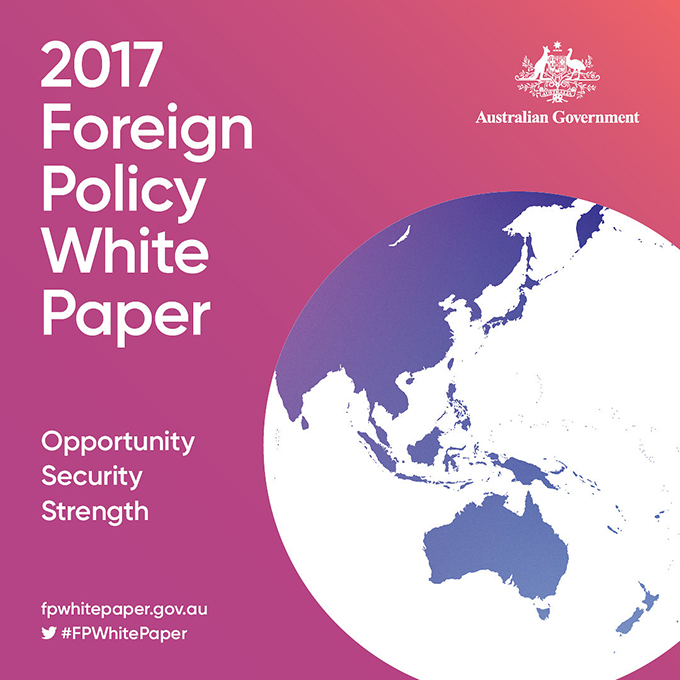 Australian Foreign Policy White Paper … “Opportunity, Security, Strength” but a step too far for New Zealand. Image: Aust govt
ANALYSIS: By Michael Powles with Anna Powles
Australia’s recent Foreign Policy White Paper says that Australia’s approach in the region will focus on “helping to integrate Pacific countries in the Australian and New Zealand economies and our security institutions”. Does this mean effectively a recolonisation of parts of the Pacific?
Terence O’Brien (Money, military keys to Australian foreign policy, December 15) refers to the Australian emphasis on the need for United States/Australian co-operation “to shape order” in the Asia Pacific.
O’Brien comments that the current aberrant behaviour of the Trump administration seems to be assumed by the White Paper to be a temporary phenomenon – “essentially bumps in the road on the highway of enlightened American-led progress”.
Few in New Zealand would agree the Trump administration is likely to change its ways. Recent presidential tweets suggest a determination to plumb new depths.
Many New Zealanders are puzzled by Prime Minister Malcolm Turnbull’s avowal that Australia and the Trump Administration are “joined at the hip” for security purposes.
Now, Australia is proposing changes which would have a profound impact on our own Pacific neighbourhood and on fundamental New Zealand interests.
“Integrating” Pacific countries into Australian and New Zealand institutions: to achieve anything, this would have to involve surrender of at least some sovereignty. It would be seen by many in the region as a form of recolonisation, a modern version of the way Britain colonised Fiji, New Zealand and others in the 19th century.
Compact-style arrangements
Australian analysts suggest this integration should be achieved by establishing arrangements with Nauru, Tuvalu and Kiribati along the lines of Compacts which the United States has with its former Trust Territories in the Pacific, Palau, Micronesia and the Marshall Islands.
In return for significant aid, these Pacific countries agree to deny access to their countries for all nations except the United States. The arrangements between New Zealand and the Cook Islands and Niue have also been mentioned.
But all these arrangements were negotiated by the United States and New Zealand respectively before the Pacific countries became independent or self-governing. For them to move to a more limited form of independence would be seen by many as a step backwards towards their colonial pasts; and at a time when the focus in the Pacific is on increased self-determination for Pacific Island countries, not less.
An experienced Australian commentator, Nic Maclellan, has suggested, however, that it’s folly to believe that Pacific countries would allow Australia to set the security agenda: “That horse has already bolted”.
One of the authors of this piece knows very well Kiribati, Nauru and Tuvalu, having visited many times. They are proud of their independence and to suggest in this 21st century that that should now be qualified or restricted is simply remarkable. There would be strong opposition.
Pacific leaders have become increasingly outspoken pursuing or defending their own interests.
Prime Minister Voreqe Bainimarama of Fiji has developed his reputation for this over several years.
Prime Minister Tuilaepa Sailele Malielegaoi of Samoa, current chair of the Pacific Islands Forum, has reacted angrily to the Australian government’s criticism of Chinese aid in the Pacific (“useless buildings” and “roads to nowhere”). The Prime Minister said these comments were “insulting to Pacific island leaders”.
Diminishing influence
The Australian initiative would hasten a trend which is already diminishing Australian and New Zealand influence in the region. Pacific island perceptions that the two countries are becoming less supportive of Pacific aspirations over recent years have already resulted in a significant backlash.
Climate change is understandably given a much higher priority by island countries than by Australia and New Zealand. Trenchant positions by these two countries have prevented the Pacific Islands Forum taking positions fully reflecting island countries’ intense concern about the potentially catastrophic impact of climate change on several Forum members.
A consequence has been an emphasis on island country roles outside the Pacific Islands Forum. This has given impetus to other regional groupings and there has been much talk of this “New Pacific Diplomacy”.
Without a change by Australia and New Zealand to more responsive reactions to island countries, giving them greater agency within the Pacific Islands Forum, this longstanding regional body is likely to continue to diminish in relative importance.
The new Australian policy, aimed at securing control of aspects of foreign policy in several island countries, will be seen as another, larger, step away from support for Pacific self-determination and agency.
The case against New Zealand supporting this latest Australian move is strong:
New Zealand support for national and regional self-determination in the Pacific, or “Pacific agency” as some call it, has been fundamental to its foreign policy for decades.
Significant break
Supporting this new initiative would be a significant break with this longstanding policy and would be deeply unpopular both in the region and overseas.
New Zealand’s relationships and influence in the Pacific would suffer from such a change, affecting also our influence on security issues – ironically the proposed policy is justified on security grounds.
New Zealand’s global reputation and influence, depending in part on our reputation and standing in our home region, would also suffer.
There is no evidence that interventions in the Pacific as proposed in the Australian Foreign Policy White Paper are actually necessary to preserve or ensure regional security, which is best served by effective collaborative diplomacy with Pacific partners.
Our Australian relationship is our most important and we should seek common policies where we can. This initiative, however, would be against fundamental New Zealand interests in our own neighbourhood. It would be a step too far.
Michael Powles, a former NZ diplomat, is a senior fellow of the Centre for Strategic Studies, Victoria University of Wellington. Dr Anna Powles is a senior lecturer at the Centre for Defence and Security Studies, Massey University, Wellington. They are currently writing a book about New Zealand’s role in the Pacific. This article was first published in The Dominion Post and has been republished by Asia Pacific Report with the permission of the authors.
Article by AsiaPacificReport.nz
]]>Indonesia prone to cyber attacks up to the 2025, says digital expert

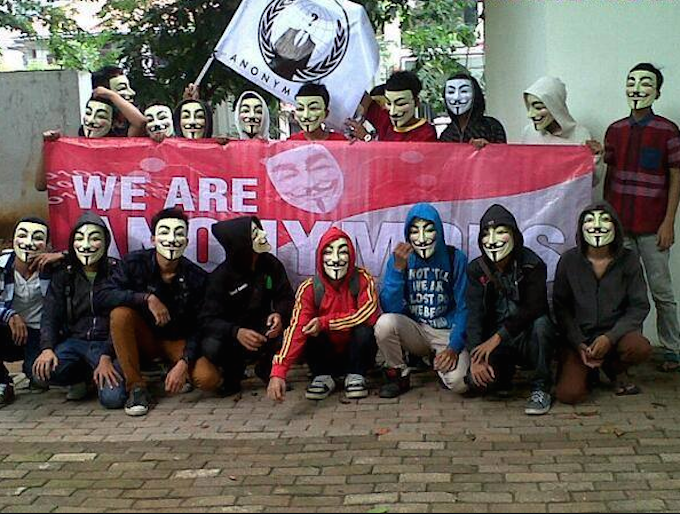 Anonymous Indonesia … cybersecurity in the country is regarded as being “in its infancy”. Image: Tech In Asia
Pacific Media Watch Newsdesk
Indonesia is predicted to be prone to cyber attacks from this year until 2025, says a media communication and technology consultant.
A.T. Kearney’s media communication and technology researcher Germaine Hoe Yen Yi says ASEAN countries, especially Indonesia, face this problem because of the shortage of digital experts.
“The low policy supervision, the lack of experts in the digital field, high susceptibility and low investments,” said Yen Yi during the Southeast Asia emergency security presentation in Jakarta last week.
A.T. Kearney is a global management consulting firm with offices in more than 40 countries.
From 10 ASEAN countries, only Singapore and Malaysia are considered among the most digitally advanced countries.
However, Philippines and Thailand are in their “development stage” regarding cybersecurity.
Indonesia’s cybersecurity is considered to be in its infancy, which includes its regulations, national strategy development, governance, and international partnership.
“Malaysia is expected to need more than 4000 cybersecurity experts by the year 2020 to fight against cybersecurity issues,” said Yen Yi.
Meanwhile, in investments, ASEAN countries still provides limited funding for cyber securities with an average of 0.07 percent from their gross domestic product.
Yen Yi said the number must be increased to 0.35 percent and 0.61 percent compared to their GDP in 2025.
Cisco ASEAN president Naveen Menon said that a county’s success in digitisation depended on its ability to resist cyber attack threats. He also urged stakeholders to unite and help build cybersecurity abilities.
Article by AsiaPacificReport.nz
]]>Bougainville autonomy ‘positive’ but improvements needed, says poll report

PNG’s NRI researchers present Bougainville referendum reports. Video: EMTV News
By Meriba Tulo in Port Moresby
The autonomous arrangements for Bougainville have been described as positive.
However, there is also room for improvement – among these, the need for the effective use of knowledge, capacity and time.
These were points highlighted this week during a presentation of two draft research reports into Bougainville’s referendum for next year.
The research has been conducted by Papua New Guinea’s National Research Institute (NRI) through its Bougainville Referendum Research Project.
According to PNGNRI Director Dr Osborne Sanida, these reports highlight some issues that the institute believes need to be considered by stakeholders from PNG as well as from the Autonomous Region of Bougainville.
The report on fiscal autonomy was spearheaded by Professor Satish Chand.
Professor Chand said an immediate need for Bougainville was to increase the capacity to fund its own budget – regardless of the level of autonomy it has now, or may have following the referendum.
Broader tax options
He said developmental taxation should be an option to consider in an effort to broaden the tax base for Bougainville.
Professor Chand said that given mining was still a controversial issue on the island – and that mining revenue might take a decade – the Autonomous Region should consider fisheries or agriculture as an alternative in increasing internal revenue.
Also released was a Draft Report on Political Autonomy presented by Martina Trettel.
This report considers the various forms of autonomy that are present in other jurisdictions, and compares these to the Bougainville experience.
According to Trettel, there is an imminent need for both the national government and the ABG to work an arrangement which may be beneficial for the island region in the immediate future, as well as post-referendum.
The report has highlighted the need for both governments to share the responsibilities of autonomy.
The research team has been presenting their findings to the Autonomous Bougainville Government this week.
Meriba Tulo is a senior reporter and presenter with EMTV and currently anchors Resource PNG and the daily National News. Asia Pacific Report republishes EMTV news reports with permission.
Article by AsiaPacificReport.nz
]]>Duterte vs Rappler: Declaration of war against Philippine media?

On The Listening Post this week: Rappler battles with authorities plus climate sceptics and the media platforms they get. Video: Al Jazeera
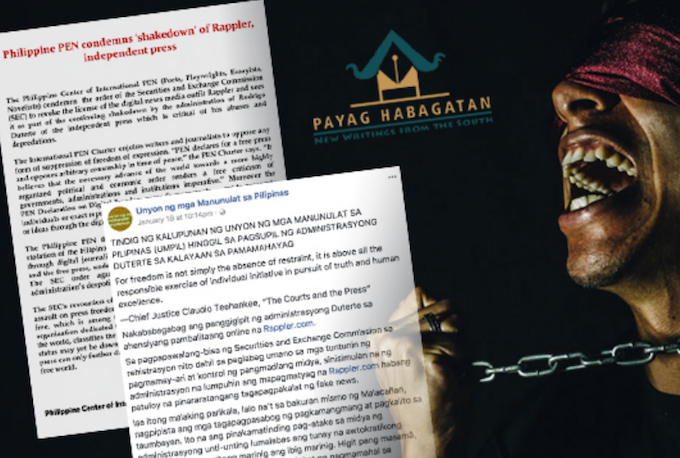
As Rappler, a popular Manila news website, battles with authorities, news media in the Philippines are feeling the chill.
Rappler has long been a thorn in the side of President Rodrigo Duterte because of its critical reporting.
Duterte has repeatedly accused Rappler of being run by Americans, which is illegal under Filipino law.
Now the site is facing a possible shut down over that allegation.
Duterte has made many thinly veiled threats against journalists since 2016, but does this official move against Rappler amount to the Duterte government issuing a formal declaration of war against the Filipino media?
Contributors:
Maria Ressa, CEO, Rappler
Marichu Lambino, lawyer and assistant professor, University of the Philippines
Harry Roque, Filipino president’s spokesperson
Nonoy Espina, journalist and National Union of Journalists (NUJ) board member
Article by AsiaPacificReport.nz
]]>Coups, globalisation and Fiji’s reset structures of ‘democracy’

BOOKS: David Robie, editor of Pacific Journalism Review
When Commodore (now rear admiral retired and an elected prime minister) Voreqe Bainimarama staged Fiji’s fourth “coup to end all coups” on 5 December 2006, it was widely misunderstood, misinterpreted and misrepresented by a legion of politicians, foreign affairs officials, journalists and even some historians.
A chorus of voices continually argued for the restoration of “democracy” – not only the flawed version of democracy that had persisted in various forms since independence from colonial Britain in 1970, but specifically the arguably illegal and unconstitutional government of merchant banker Laisenia Qarase that had been installed on the coattails of the third (attempted) coup in 2000.
Yet in spite of superficial appearances, Bainimarama’s 2006 coup contrasted sharply with its predecessors.
Bainimarama attempted to dodge the mistakes made by Sitiveni Rabuka after he carried out both of Fiji’s first two coups in 1987 while retaining the structures of power.
Instead, notes New Zealand historian Robbie Robertson who lived in Fiji for many years, Bainimarama “began to transform elements of Fiji: Taukei deference to tradition, the provision of golden eggs to sustain the old [chiefly] elite, the power enjoyed by the media and judiciary, rural neglect and infrastructural inertia” (p. 314). But that wasn’t all.
[H]e brazenly navigated international hostility to his illegal regime. Then, having accepted an independent process for developing a new constitution, he rejected its outcome, fearing it threatened his hold on power and would restore much of what he had undone. (Ibid.)
Bainimarama reset electoral rules, abolished communalism in order to pull the rug from under the old chiefly elite, and provided the first non-communal foundation for voting in Fiji.
 Landslide victory
Then he was voted in as legal prime minister of Fiji with an overwhelming personal majority and a landslide victory for his fledgling FijiFirst Party in September 2014. He left his critics in Australia and New Zealand floundering in his wake.
Robertson is well-qualified to write this well-timed book with Bainimarama due to be tested again this year with another election. He is a former history lecturer at the Suva-based regional University of the South Pacific at the time of Rabuka’s original coups (when I first met him).
He and his journalist wife Akosita Tamanisau wrote a definitive account of the 1987 events and the ousting of Dr Timoci Bavadra’s visionary and multiracial Fiji Labour Party-led government, Fiji: Shattered Coups (1988), ultimately leading to his expulsion from Fiji by the Rabuka regime. He also followed this up with Government by the Gun (2001) on the 2000 coup, and other titles.
Robertson later returned to Fiji as professor of Development Studies at USP and he has also been professor and head of Arts and Social Sciences at James Cook University in Townsville, Queensland, as well as holding posts at La Trobe University, the Australian National University and the University of Otago.
He has published widely on globalisation. He is thus able to bring a unique perspective on Fiji over three decades and is currently professor and dean of Arts, Social Sciences and Humanities at Swinburne University of Technology, Melbourne.
Since 2006, Fiji has slipped steadily away from Australian and New Zealand influence, as outlined by Robertson. However, this is a state of affairs blamed by Bainimarama on Canberra and Wellington for their failed and blind policies.
Even since the 2014 election, Bainimarama has maintained a “hardline” on the Pacific’s political architecture through his Pacific Islands Development Forum (PIDF) alternative to the Pacific Islands Forum (PIF), and on the Pacific Agreement on Closer Economic Relations (PACER) Plus trade deal.
‘Turned their backs’
While in Brisbane for an international conference in 2015, Bainimarama took the opportunity to remind his audience that Australia and New Zealand “as traditional friends had turned their backs on Fiji”. He added:
How much sooner we might have been able to return Fiji to parliamentary rule if we hadn’t expended so much effort on simply surviving … defending the status quo in Fiji was indefensible, intellectually and morally (p. 294).
For the first time in Fiji’s history, Bainimarama steered the country closer to a “standard model of liberal democracy” and away from the British colonial and race-based legacy.
“Government still remained the familiar goose,” writes Robertson, “but this time, its golden eggs were distributed more evenly than before”. The author attributes this to “bypassing chiefly hands” for tribal land lease monies, through welfare and educational programmes no longer race-bound, and through bold rural public road, water and electrification projects.
Admittedly, argues Robertson, like Ratu Sir Kamisese Mara (Fiji’s prime minister at independence and later president), Rabuka and Qarase, “Bainimarama had cronies and the military continues to benefit excessively from his ascendancy”. Nevertheless, Bainimarama’s “outstanding controversial achievement remains undoubtedly his rebooting of Fiji’s operating system in 2013”.
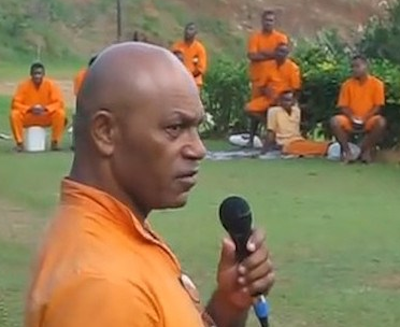 Coup 3 front man George Speight … jailed for treason. Image: Mai Life
Robertson’s scholarship is meticulous and drawn from an impressive range of sources, including his own work over more than three decades. One of the features of his latest book are his analysis of former British SAS Warrant Officer Lisoni Ligairi and the role of the First Meridian Squadron (renamed in 1999 from the “coup proof” Counter Revolutionary Warfare Unit – CRWU), and the “public face” of Coup 3, businessman George Speight, now serving a life sentence in prison for treason.
His reflections on and interpretations of the Republic of Fiji Military Forces Board of Inquiry (known as BoL) into the May 2000 coup are also extremely valuable. Much of this has never before been available in an annotated and tested published form, although it is available as full transcripts on the “Truth for Fiji” website.
‘Overlapping conspiracies’
As Robertson recalls, by mid-May, “there were many overlapping conspiracies afoot … Within the kava-infused wheels within wheels, coup whispers gained volume”. Ligairi’s role was pivotal but BoL put most of the blame for the coup on the RFMF for “allowing” one man so much power, especially one it considered ill-equipped to be a director and planner’ (p. 140).
The BoL testimony about the November 2000 CRWU mutiny before Bainimarama escaped with his life through a cassava patch, also fed into Robertson’s account, although he admits Colonel Jone Baledrokadroka’s ANU doctoral thesis is the best account on the topic, “Sacred King and Warrior Chief:The role of the military in Fiji politics”.
It was a bloody and confused affair, led by the once loyal [Captain Shane] Stevens, 40 CRWU soldiers, many reportedly intoxicated, seized weapons and took over the Officers Mess, Bainimarama’s office and administration complex, the national operations centre and the armoury in the early afternoon. They wanted hostages; above all they wanted Bainimarama. (p. 164)
The book is divided into four lengthy chapters plus an Introduction and Conclusion – 1. The Challenge of Inheritance about the flawed colonial legacy, 2. The Great Turning on Rabuka’s 1987 coups and the Taukei indigenous supremacy constitution, 3. Redux: The Season for Coups on Speight’s attempted (and partially successful) 2000 coup, and 4. Plus ça Change …? on Bainimarama’s political “reset”. (The Bainimarama success in outflanking his Pacific critics is perhaps best represented by his diplomatic success in co-hosting the “Pacific” global climate change summit in Bonn in 2017.)
One drawback from a journalism perspective is the less than compelling assessment of the role of the media over the period, considering the various controversies that dogged each coup, especially the Speight one when accusations were made against some journalists as having been too close to the coup makers.
One of Fiji’s best journalists and editors, arguably the outstanding investigative reporter of his era, Jo Nata, publisher of the Weekender, sided with Speight as a “media minder” and was jailed for treason.
However, while Robertson in several places acknowledges Nata’s place in Fiji as a journalist, there is no real examination of his role as journalist-turned-coup-propagandist. This ought to be a case study.
Robertson noted how Nata’s Weekender exposed “morality issues” in Rabuka’s cabinet in 1994 without naming names. The Review news and business magazine followed up with a full report in the April edition that year, naming a prominent female journalist who was sleeping with the post-coup prime minister, produced a love child and who still works for The Fiji Times today (p. 118).
Nata then promised a special issue on the 21 women Rabuka had had affairs with since stepping down from the military. However, after Police Commissioner Isikia Savua spoke to him, the issue never appeared. (A full account is in Pacific Journalism Review – The Review, 1994).
NBF debacle
Elsewhere in the book is an outline of the National Bank of Fiji (NBF) debacle that erupted when an audit was leaked to the media: “In fact, the press, particularly The Fiji Times and The Review, were pivotal in exposing the scandal.” Robertson added:
The Review had earlier been threatened with deregistration over its publication of Rabuka’s affair[s] in 1994; now both papers were threatened with Malaysian-style licensing laws to ensure that they remained respectful of Pacific cultural sensitivities and did not denigrate Fijian business acumen. (p. 121)
The bank collapsed in late 1995 owing more than $220 million or nearly 9 percent of Fiji’s GDP – an example of the nepotism, corruption and poor public administration that worsened in Fiji after Rabuka’s coups.
On Coup 1, Robertson recalls how apart from Rabuka’s masked soldiers inside Parliament, “other teams fanned out across the city to seize control of telecommunication power authorities, media outlets and the Government Buildings” (p. 65).
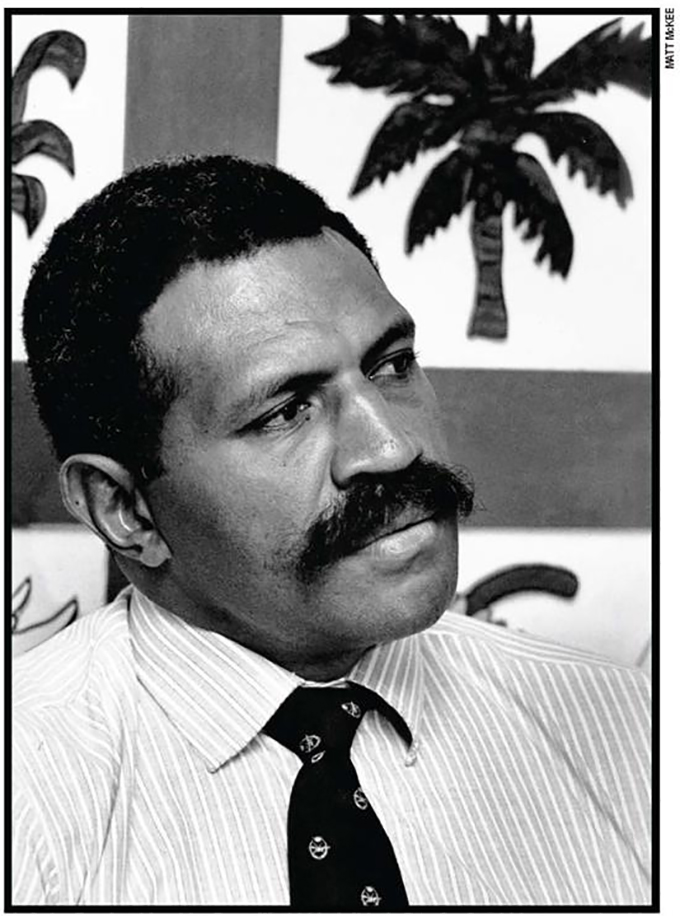 The 1987 Fiji military coups leader Sitiveni Rabuka as he was back then. Image: Matthew McKee/Pacific Journalism Review
But there is little reflective detail about Rabuka’s “seduction” of the Fiji and international journalists, or how after closing down the two daily newspapers, the neocolonial Fiji Times reopened while the original Fiji Sun opted to close down rather than publish under a military-backed regime.
About Coup 3, Robertson recalls “[Speight] was articulate and comfortable with the media – too comfortable, according to some journalists. They felt that this intimate media presence ‘aided the rebel leader’s propaganda fire … gave him political fuel’. They were not alone’ (p. 154) (see Robie, 2001).
On the introduction of the 2010 Fiji Media Industry Development Decree, which still casts a shadow over the country and is mainly responsible for the lowest Pacific “partly free” rankings in the global media freedom indexes, Robertson notes how it was “Singapore-inspired”. The decree “came out in early April 2010 for discussion and mandated that all media organisations had to be 90 percent locally owned. The implication for the News Corporation Fiji Times and for the 51 percent Australian-owned Daily Post were obvious” (p. 254).
The Fiji Times was bought by Mahendra Patel, long-standing director and owner of the Motibhai trading group. (He was later jailed for a year for “abuse of office” while chair of Post Fiji.) The Daily Post was closed down.
Facing a long history of harassment by various post-coup administrations (including a $100,000 fine in January 2009 for publishing a letter describing the judiciary as corrupt, and deportations of publishers), The Fiji Times is heading into this year’s elections facing a trial for alleged “sedition” confronting the newspaper.
In spite of my criticism of limitations on media content, The General’s Goose is an excellent book and should be mandatory background reading for any journalist covering South Pacific affairs, especially those likely to be involved in coverage of this year’s general election.
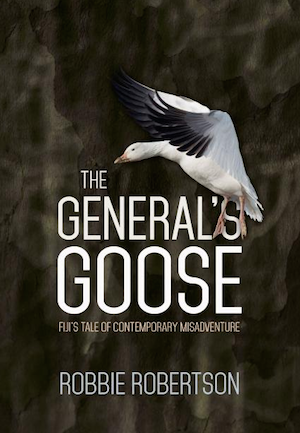
The General’s Goose: Fiji’s Tale of Contemporary Misadventure, by Robbie Robertson. Canberra: Australian National University. 2017. 366 pages. ISBN 9781760461270.
References
Baledrokadroka, J. (2012). The sacred king and warrior chief: The role of the military in Fiji politics. Unpublished doctoral thesis. Canberra: Australian National University.
Robertson, R., & Sutherland, W. (2001). Government by the gun: The unfinished business of Fiji’s 2000 coup. Sydney & London: Pluto Press & Zed Books.
Robertson, R., & Tamanisau, A. (1988). Fiji: Shattered coups. Sydney: Pluto Press.
Robie, D. (2001). Coup coup land: The press and the putsch in Fiji. Asia Pacific Media Educator, 10, 149-161. See also for an extensive media coverage examination of the 1987 Rabuka coups: Robie, D. (1989). Blood on their banner: Nationalist struggles in the South Pacific. London: Zed Books; 2006 coup and 2014 elections: Robie, D. (2016). ‘Unfree and unfair’?: Media intimidation in Fiji’s 2014 elections. In Ratuva, S., & Lawson, S. (Eds.), The people have spoken: The 2014 elections in Fiji. Canberra: ANU Press.
The Review (1994). Rabuka and the reporter. Pacific Journalism Review, 1(1), 20-22.
Article by AsiaPacificReport.nz
]]>Poor Vanuatu pay ruling risks negative impact on security, say upset police

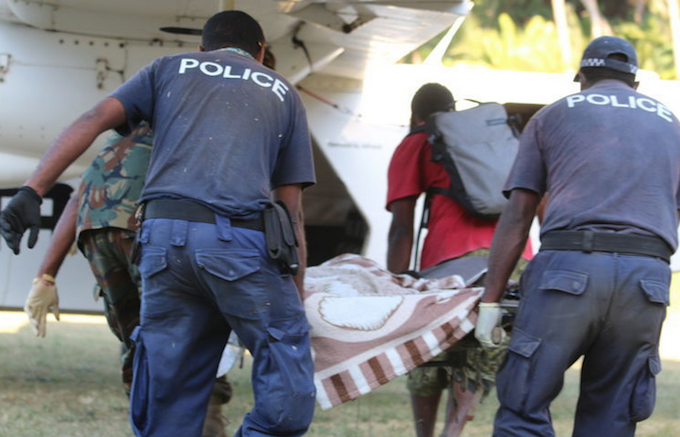 Vanuatu police in the Manaro rescue operation last year on Ambae. Image: Richard Nanua/Vanuatu Daily Post
By Richard M. Nanua in Port Vila
Some Vanuatu police officers have raised dissatisfaction on the implementation of the Government Remuneration Tribunal (GRT) ruling taking effect today, claiming it might negatively impact on security in the country.
After receiving a letter from the Police Commissioner, Albert Nalpini this week, police officers (lower ranking officers who did not want their names revealed) said they had all entitlements – such as detective, driver, prosecutor and sergeant allowances – removed with an increase that did not make any difference in their wages.
The unhappy police officers said that in their letters from the Commissioner, he had said the GRT report made a major determination that covered sworn police officers (Determination 15 of 2017).
The result of Determination 15 would be an overall increase in salary of VPF members to reflect market rates and to recognise the complexities and unique nature of policing work, they were told.
The determination also required that job-related allowances (JRAs) and take-home entitlements be incorporated into salary and no longer paid as a separate entitlement.
The GRT determination established that any salary adjustment would be in accordance with performance guidelines and budget availability.
The review of the salary increments would occur every three years rather than annually as in the previous situation.
‘Take-home pay’
The police force allowances that GRT has decided to remove are job-related allowances and other “take-home pay entitlements” that are to be absorbed into the revised salary rates.
But some police officers said that according to the new structure, the job related allowances – including the detective allowance, drivers allowance, instructor allowance, musician allowance, prosecutors allowance, tradesmen’s allowance, traffic examiners allowance, and sergeant allowance – had been wiped out from their entitlements.
They said that the take-home pay entitlements that were also taken from them are child allowances and housing allowances.
They are concerned that some of them will be affected with the change, especially the lowest paid in the force.
They said the senior police officers would benefit from the new structure but it was “a disaster” for police constables and the lowest ranks within the VPF.
Some of the police said that they had “put their lives on the line” every day for citizens.
They said that they were risking their lives for civilians who they did not even know they were attending dangerous situations.
Drug, murder cases
They deal with drug cases and burglars, rapists and murderers.
They get assaulted by criminals in what was a hard and dangerous job.
When the Daily Post gauged the view of some members of the public in town for their view, they appealed for a significant increase on the police wages.
Meanwhile, Internal Affairs Minister Andrew Napuat said he had reminded Commissioner Nalpini more than three times and Commander South, Jackson Noal, of any issue that may arise on the beginning of GRT pay that commences today.
The minister said he welcomed comments and anyone who was affected by the GRT, claiming if there was any dissatisfaction caused by that new structure then it was a top priority to deal with it.
He encouraged the unhappy police officers to talk to their superiors or to step into his office.
School teachers told the Daily Post yesterday that they were also affected.
They said that GRT was likely to affect teaching not only in Port Vila but Vanuatu as a whole.
The teachers said none of them were happy with this new structure that was only benefitting senior officers.
They appealed to the government to revisit or “hold” GRT pending a wider consultation.
Richard M. Nanua is a Vanuatu Daily Post journalist. Asia Pacific Report republishes VDP stories with permission.
Article by AsiaPacificReport.nz
]]>
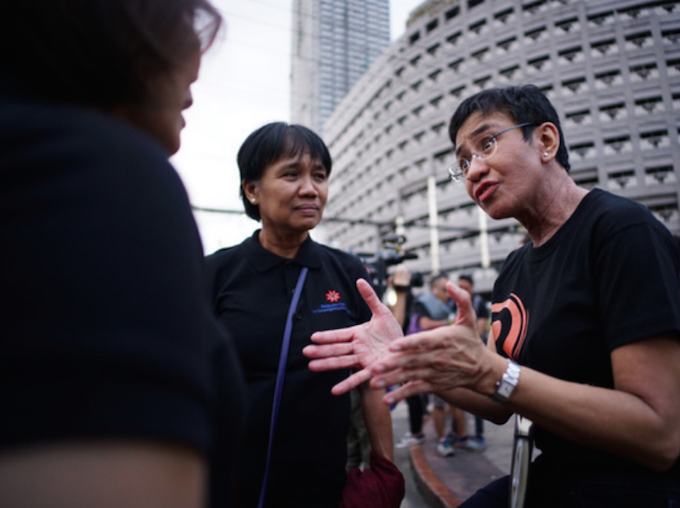 Rappler chief executive Maria Ressa (right) speaking to colleagues at the Black Friday for press freedom rally in Quezon City, Philippines. With her is Philippine Center for Investigative Journalism (PCIJ) executive director Malou Mangahas, who also spoke at the rally. Mangahas was recently in New Zealand for the Pacific Media Centre 10th anniversary celebration. Image: Rappler

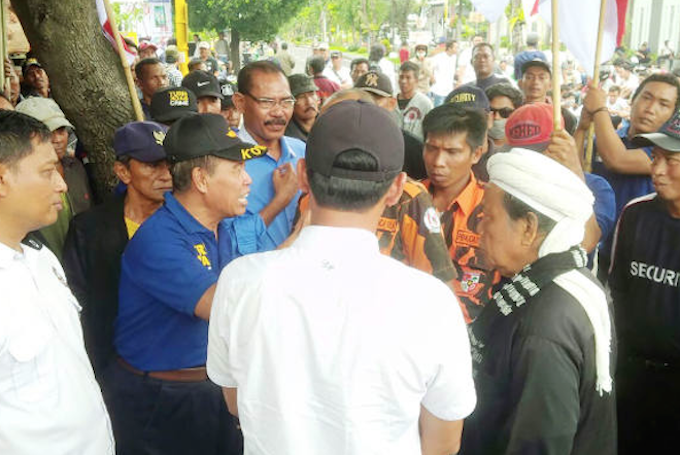
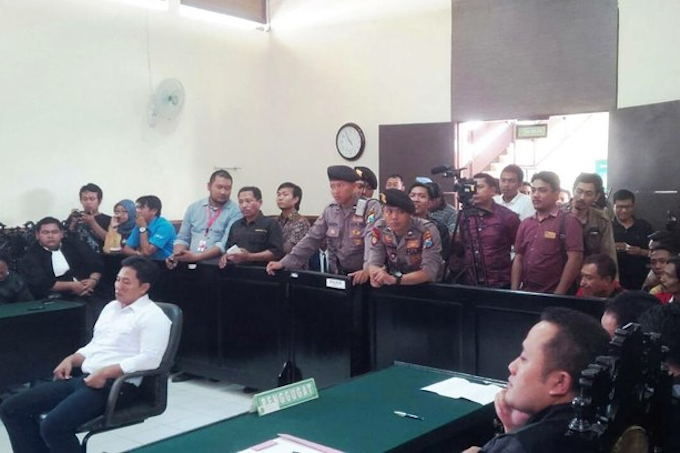 Hari Budiawan (alias Budi Pego – in white shirt) is sentenced to 10 months in prison at the Banyuwangi District Court in East Java, Indonesia, on Tuesday after being found guilty of a charge of spreading communism. Image: Yovinus Guntur/BenarNews













 Ahed with her mother Nariman … a family suffering again from the cruelty and injustice of the Israeli occupation. Image: Al Jazeera




 “There were probably not three magi [wide men] and they were not kings.” Image: The Conversation


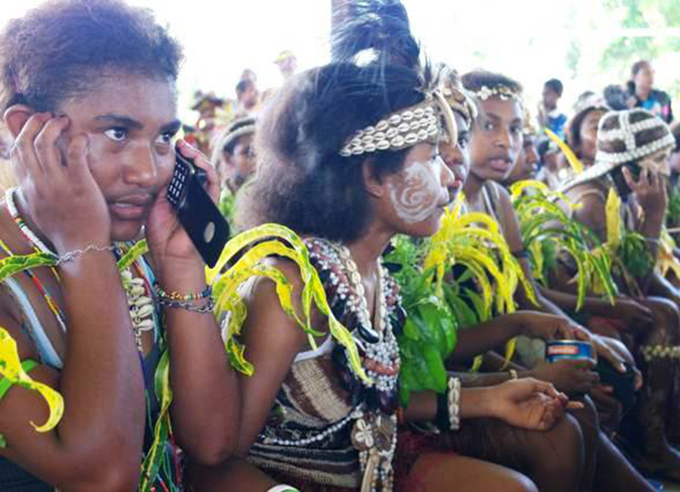

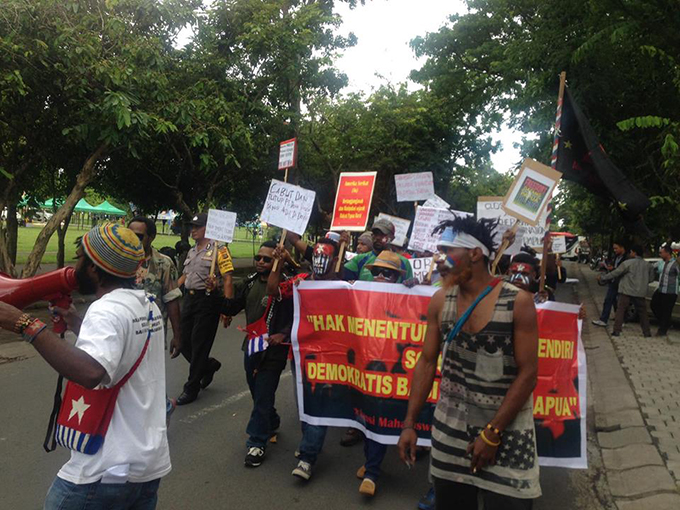
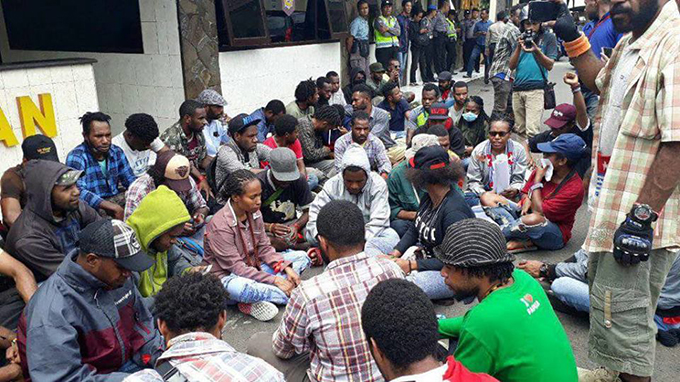 Demonstrators being arrested at a Free West Papua rally to reject “Operation Trikora” in Malang, Indonesia. Image: AMP
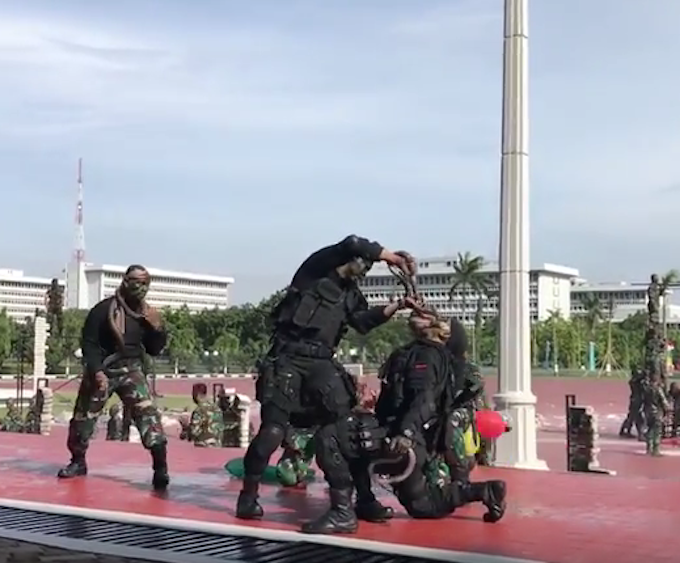
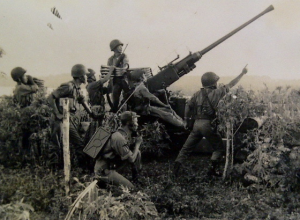 Indonesian forces in action during Operation Trikora in 1961. Image: Free West Papua Campaign
