Page 1197

Waste colonialism and plastic pollution targeted in NZ ‘pure’ campaign

By Sylvia C. Frain in Auckland

Aotearoa/New Zealand’s status as a “wasteful country” is one of the targets of the PURE 2018 tour launched in Auckland earlier this month.

More than 12 million metric tons of plastics enter oceans and waterways globally each year, directly impacting on New Zealand’s coastal communities, food sources, and sea birds.

New Zealand was recently ranked the world’s 10th most wasteful country, producing 3.68 kilos of waste per capita a day.

The launch began with a hui highlighting the current toxic impacts of plastic pollution on public health, food systems, and the oceanic environment.

The hui objectives:

  • Exploring plastic pollution on our shores
  • Hearing from all stakeholders in a search for solutions
  • Discussing potential national strategies for immediate action on long term solutions.

The trans-Oceanic collaboration, between Para Kore promoting the zero waste, Tina Ngata of the Non-Plastic Māori blog, the founders of the United States-based 5 Gyres Institute, and the Algalita Marine Research and Education organisation, receives support from Massey University and Okeanos, Foundation for the Sea.

The tour is creating strategies of for accountable management and plastic prevention. The discussion included understanding the “green washing” of recycling and how to envision a future of stopping all plastics at the source.

Tying plastic pollution into issues of social justice, decolonisation, and food security, presenter Dr Steph B. Borrelle said: “If we are serious about addressing plastic pollution as a global crisis, then we cannot ignore the issue of waste colonialism.

“Countries of privilege burden others with their consumerism then turn their backs on the consequences.”

The PURE tour around the country will continue to facilitate discussions and workshops and showcase the severity of plastic pollution.

The organisers are encouraging involvement from the community, iwi, youth, and educators and will conduct scientific sampling across Aotearoa.

Article by AsiaPacificReport.nz

]]>

Falling trees and downed power poles hinder Tonga’s Gita relief effort

By Kalino Latu. editor of Kaniva News

The Tongan government’s efforts to assess the extent of destruction by Tropical Cyclone Gita have been hindered by falling trees and downed power poles.

The Minister of Disaster Management, Poasi Tei, said teams of government assessors had been dispatched to villages and towns to report on damage caused by the category four cyclone.

However, they could not start their work immediately because the roads were blocked by debris and downed powerlines.

VIDEO: ‘This is pretty horrific’ – Barbara Dreaver describes Cyclone Gita as her most frightening cyclone experience in 30 years

It is expected the assessment would be completed by tomorrow, Tei told Kaniva News.

New Zealand and Australia have sent two aircraft carrying aid to Tonga.

Tei said he was thankful for the New Zealand and Australia’s assistance so far.

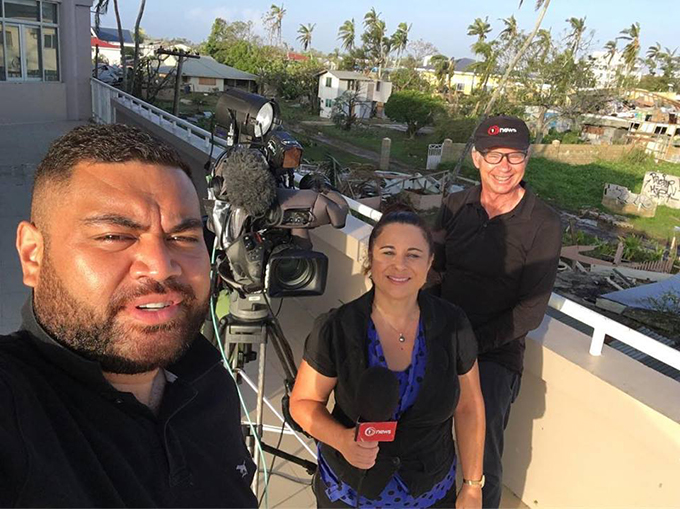
Two of the New Zealand Pasifika media contingent in Tonga at work – John Pulu of Tagata Pasifika and TV1 News Pacific correspondent Barbara Dreaver. Image: John Pulu/Facebook

Meanwhile, a 72-year-old man from Fua’amotu died suddenly in hospital while three people were seriously injured and 30 were admitted to hospital with minor injuries, Tei said.

Police offices flooded
Police Minister Māteni Tapueluelu said his ministerial office and some other police offices had been flooded.

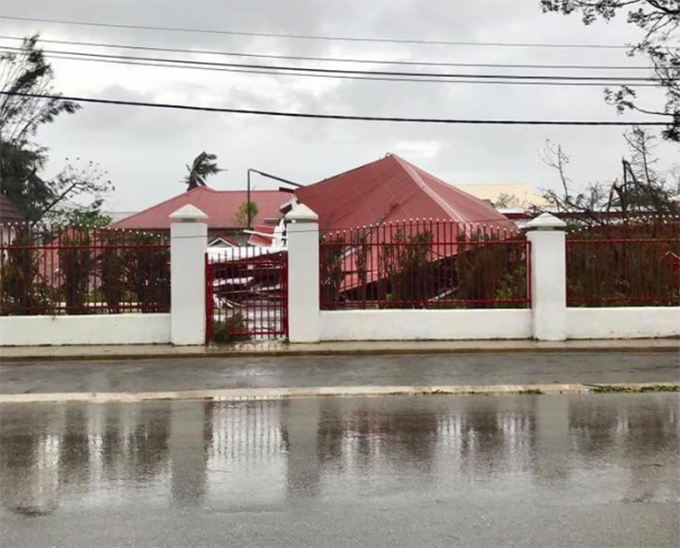
He said many school buildings had had their roofs ripped off when Cyclone Gita struck.

Tapueluelu said this afternoon attempts to get information from ‘Eua in the wake of Gita had failed because telephones and the internet were down.

Another aircraft from New Zealand will fly to Tonga to conduct a surveillance survey in ‘Eua.

He said police were trying to make contact with the island from Nakolo in Hahake because of their closeness but he has yet to be updated in it.

It has been estimated about 5700 people sought shelter in evacuation centres during the cyclone, and it is expected these numbers would increase substantially  last night.

About 80,000 people in Tonga, including 32,000 children, were at risk from Cyclone Gita, Unicef said.

In Fiji, The Fiji Times reports Gita was expected to be located about 140 km west-southwest of Ono-i-Lau, or 300km southeast of Kadavu last night.

Fiji Meteorological Services director Ravind Kumar said the storm continued to move further west heading towards New Zealand.

From New Zealand, RNZ reports Gita has been upgraded to category five, the highest possible, Fiji’s Meteorological service says. Follow RNZ’s live coverage.

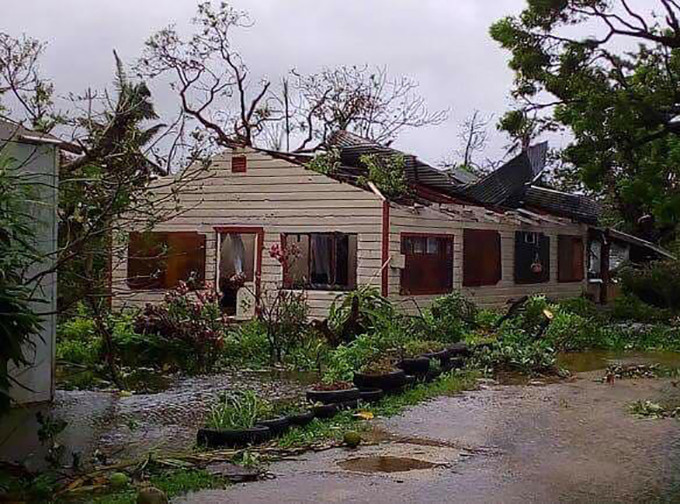
A house wrecked by the fury of Cyclone Gita. Image: Patimiosi Ngungutau/Kaniva News

Article by AsiaPacificReport.nz

]]>

Tonga welcomes NZ $750,000 aid offer in wake of Gita’s destruction

By Kalino Latu, editor of Kaniva News

The Tongan government has welcomed New Zealand’s offer to donate $750,000 and personnel assistance in the aftermath of Tropical Cyclone Gita’s destruction.

The NZ government has a military plane with assistance ready to go once it is safe to land in Tonga.

Tonga’s Minister of Police Māteni Tapueluelu told Kaniva News in Auckland the government of Prime Minister Jacinda Ardern had indicated yesterday before Cyclone Gita struck the kingdom last night that it stood by and was prepared.

Tapueluelu said the Tongan government was in the process of fulfilling procedural requirements before it could receive the donation and all assistance.

NZ Minister for Pacific People ‘Aupito William Sio said last night that while New Zealand was on standby mode ready to provide support to all Pacific countries affected by Cyclone Gita, “it will not respond unless requested by the affected Pacific government”.

Prime Minister Arden said the NZ government had a military plane and $750,000 ready to help cyclone-battered Tonga, Fairfax Media reported.

The NZ government had already pledged $50,000 to help but Prime Minister Jacinda Ardern told RNZ today a contingency fund had been signed off so there would be no “no hold up” when they knew where to use the funds.

The aftermath
Tonga’s main island Tongatapu and its island of ‘Eua were savaged by the category 4 tropical cyclone last night in what has been called the worst storm to hit the country in 60 years, with gusts of up to 278kmh.

Tongatapu and ‘Eua residents woke today to what “looks like a war zone” and are assessing the extensive damage left behind by destructive Cyclone Gita, with emergency services fearing there will be “more injuries if not deaths”.

New Zealand media said two deaths had been confirmed.

Gita brought gale-force wind gusts of up to 200km/h, record-breaking rainfall of more than 200mm in an hour, and surging tides threatening widespread floods.

Cyclone Gita’s “destructive core” battered the east coast, stripping palm trees bare, destroying businesses, churches, schools and leaving homes in ruins.

Devastating photos show buildings in Hihifo and Hahake areas of Tongatapu with roofs ripped off and homes inundated with water.

Tonga’s Parliament House was levelled and school buildings in Apifo’ou college have been ripped off.

Article by AsiaPacificReport.nz

]]>

Tropical Cyclone Gita leaves trail of destruction in Tonga

Pacific Media Centre Newsdesk

Severe Tropical Cyclone Gita has left a trail of destruction after hitting Tonga with 200 kph plus winds during the night.

RNZ reports that on the main island of Tongatapu in the kingdom, the category four cyclone had ripped roofs off houses, brought down trees, destroyed a Catholic church, and took the Tongan Met Office in Fua’amotu and the national radio station off line.

Roads across the island were blocked by debris and power lines were downed restricting relief efforts.

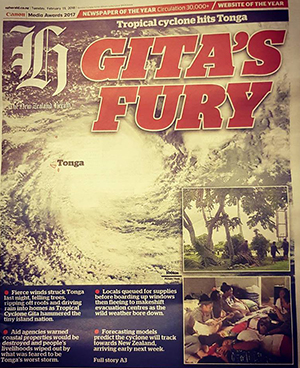
“Gita’s fury” … Today’s New Zealand Herald front page.

Last night, TV One’s Pacific correspondent Barbara Dreaver reported from the eye of the storm, saying: “It’s screaming like a freight train and it just keeps getting noisier and noisier”.

Speaking by telephone from her Nuku’alofa hotel room, she said the biggest danger for her were palm trees or sheet metal flying through the window.

“Compared to storms at home [in New Zealand], this just doesn’t compare. It’s like someone screaming out of control, the palm trees are bent over sideways, there’s a lot of variables in play. You’re completely at its mercy.”

Retired Tongan Navy officer Solomone Savelio reported on Twitter today:  “Lot of trees falling over on powerline, roads, houses. Expect power to be out for days in some areas. Some places [are] flooded. Some (mostly old houses or huts) have [roofs] blown off. 2 deaths so far. Unknown injuries. Hospital request 4 blood.”

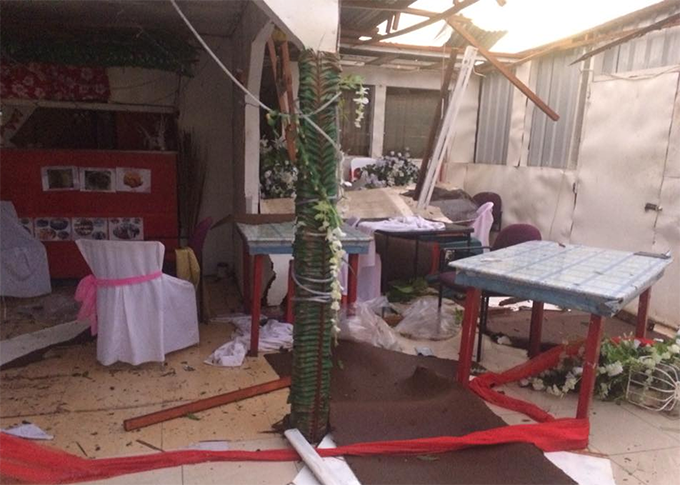
Damage in an unnamed Nuku’alofa hotel last night. Image: @SolomoneSavelio on Twitter
Tonga’s century-old Parliament destroyed by Tropical Cyclone Gita. Image: @SolomonSavelio on Twitter

Article by AsiaPacificReport.nz

]]>

Tonga under curfew as kingdom braces for fury of Cyclone Gita

By Kalino Latu, editor of Kaniva News

An overnight curfew was in place in Tonga tonight as the kingdom awaited the full force of Cyclone Gita, which was threatening to become a devastating category five storm.

Tropical Cyclone Gita bearing down on Tonga. Image: earth.nullschool.net

Tonga Police Commissioner Stephen Caldwell ordered a curfew in the central business district area of the capital Nuku’alofa between 9pm and 7am tomorrow.

The following roads set the perimetre for the CBD area – Tupoulahi Road to the east,
Mateialona Road to the south, Vaha’akolo Road to the west and Vuna Road to
the north.

READ MORE: TV One News’ Barbara Dreaver in the eye of the storm

“This is to further protect people and property, and we ask for public understanding and common sense to be used at this time.”

No one is allowed to enter the Nuku’alofa central business area apart from members of the Tropical Cyclone Gita Emergency Response Team.

Those who live within the CBD area were being urged to stay indoors, or get to an evacuation centre as soon as possible.

“We are urging people to seek refuge from this severe cyclone that could be the most powerful in the country’s history,” said Commissioner Caldwell.

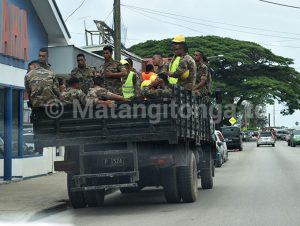
Tongan Defence Service troops preparing for Tropical Cyclone Gita. Image: Matangi Tonga

Police patrols will be joined by Tonga’s Armed Forces for full coverage of Tongatapu to ensure community awareness, public safety and to evacuate as necessary.

Key safety messages to the public:

  • Keep yourself and your family safe
  • Keep off the road
  • Stay at home if it’s safe
  • Get to an Evacuation Centre as soon as possible with food and water
  • Keep away from the Coastline
  • Make sure you have water, food, candles, torches, medical kit if you have them
  • Charge cell phones for emergency
  • Keep indoors, and away from flying debris

Republished with permission from Kaniva News.

Article by AsiaPacificReport.nz

]]>

PNG Mine Watch: Bougainville’s new ‘infamous’ Filipino mining company

Philippine President Rodrigo Duterte exposes “illegal favours” to mining tycoon Eric Gutierrez, whose company SR Metals Inc has now won an exploration contract on Bougainville. Archlight Productions video shot during 2016 presidential election campaign.

BACKGROUNDER: PNG Mine Watch

Mine Watch recently predicted that Bougainville President John Momis’ appetite for crooked foreign miners was very much alive. How right we were.

In a gushing column in the Post-Courier – which reads like a salivating love poem – it was announced that President Momis had teamed up with his former nemesis – money bridges all divides – Sam Kauona to bring in a Filipino mining company to explore 183 square kilometres of land.

The company is called, SR Metals Inc., and is led by Eric Gutierrez. It has come to “liberate” Bougainville from its bloody history, we are told.

READ MORE: Philippine mining company wins Bougainville search licence

SR Metals president and CEO Miguel Alberto Gutierrez … accused of “corruption, clientalism, and illegal mining” in the Philippines. Image: PNG Mine Watch

Now while we might want to believe the Post-Courier, John Momis and Sam Kauona, as entities of integrity who would never lie, the ever sceptical PNG Mine Watch team decided to look at the track record of SR Metals Inc. and Eric Gutierrez.

What did we find?

Report after report in the Filipino press accusing SR Metals and its chief of corruption, clientalism, and illegal mining.

Indeed we are told Gutierrez is very fond of funding politicians who are good for his business.

‘Duping government’
And, no less, he has been accused of using fraud to “dupe the government and their business partners of billions of pesos in mining revenues”. Guess they saw President Momis and Kauona coming.

To cap it off, the company SR Metals, has been fined for environmental violations.

And a Senate inquiry found the company “over-extracted 1.8 million tons of nickel ore”, in violation of regulations. 

Article by AsiaPacificReport.nz

]]>

Tonga declares state of emergency to face looming wrath of Cyclone Gita

Pacific Media Centre Newsdesk

Tonga has declared a state of emergency today in preparation for severe Tropical Cyclone Gita as it threatens to hit the southern part of the kingdom with a potential category 5 force tonight, reports Matangi Tonga.

Acting Prime Minister Semisi Sika announced the state of emergency at 10am, saying this was due to the destructive force winds and expected sea level rise brought by Gita.

The tropical cyclone, which has already caused widespread destruction in Samoa and American Samoa, is expected to hit Tonga about 7pm.

The state of emergency is to help prevent or minimise loss of lives, injury, damage to property and the environment, Matangi Tonga reported.

READ MORE: Tonga declares state of emergency – Matangi Tonga

Earlier, Kaniva Tonga reported that Tonga’s Minister of Police Māteni Tapueluelu said police had forced a hardware supplier to close down yesterday for breaching the country’s Sunday laws.

The minister said Pacific Timber and Hardware “opened without permission this morning [Sunday] and we had it closed down.”

His response came after Kaniva News reported yesterday two hardware suppliers opened temporarily for the public with Cyclone Gita approaching but they had no permits to do so.


Article by AsiaPacificReport.nz

]]>

FIJI: Islands Business ex-publisher, director, journalist grilled over story

Pacific Media Watch Newsdesk

Islands Business managing director Samisoni Pareti and journalist Nanise Volau have been questioned by Fiji police over a story published online by the Suva-based regional news magazine, IB reports.

This follows the article published by Islands Business about Magistrate Andrew See who ruled in favour of Air Terminal Services (ATS) workers locked out for more than a month over an airport industrial dispute.

The police questioning alert by IB on Facebook.

The police questioning alert by IB on Facebook.

Pareti and Volau are being questioned under Fiji’s Public Order Act.

Police “hope to lay charges of incitement”, IB reports on its Facebook page.

Former publisher Netani Rika who resigned in November to work full time for the church was questioned earlier today, the magazine said.Fiji goes to the polls in a general election later this year.

The controversial article:

CLOUD OVER MAGISTRATE IN ATS CASE

By Nanise Volau

AUTHORITIES are tight-lipped about the future of Magistrate Andrew See who presided over the dispute involving employees of Air Terminal Services.

Islands Business has been tipped off that Magistrate See’s contract has been terminated, three weeks after he ruled in favour of the employees.

Contacted in the Lautoka Magistrates Court a short time ago, Magistrate See, an Australian, declined to comment or answer any questions relating to his work.

He referred us instead to Chief Registrar Yohan Liyange in Suva.

Said Mr Liyanage: “This is news to me and I am not aware of any changes, but if you call me on Monday, I can give you an updated record.”

Sources however in Lautoka, where Magistrate See is based and in Suva, say the Australian Tribunal’s contract has not been renewed.

In his landmark decision on 20 January, Magistrate See ordered that the 225 workers of ATS be returned to work in accordance with the terms of their employment contract, and on a case-by-case basis, that ATS should ensure that the pay and entitlements of each employee were reviewed and, where necessary, reinstated,

See is a Brisbane-based lawyer and industrial relations consultant. He specialises in all aspects of workplace relations, including human resource management, industrial relations, workplace health and safety and discrimination.

He was appointed in 2011 as an ad hoc  Resident Magistrate in Fiji, where he sits on the Employment Relations Tribunal, the Tax Tribunal, the Customs Act Court of Review and the Judicial Services Commission Disciplinary Tribunal (non-judicial staff).

Article by AsiaPacificReport.nz

]]>

Mata’afa Keni Lesa: Cyclone Gita’s over but remember Ofa’s vengeance

OPINION: By Mata’afa Keni Lesa, editor of the Samoa Observer

Tropical Cyclone Gita has left just as quickly as it arrived on Friday night and yesterday morning.

Within six hours, it left hundreds of people devastated as a result of strong winds and flooding. Folks, it sends shivers down the spine to think what more damage it could have done if it stayed on a bit longer.

While it was predicted to be a Category 1 Cyclone, it felt more like a Category 3 at its strongest. We doubt many people had a decent sleep when the cyclone was at its peak.

READ MORE: NZ and Australia monitor path of Cyclone Gita after heavy damage in Samoa

The howling winds, the heavy rain and the floods that accompanied them were truly scary. Thank God it didn’t last long.

Mind you, for many people badly affected by heavy flooding, its irrelevant that Cyclone Gita was only in Samoa for a few hours. Heavy downpours for several days have once more taken its toll.

The flooding we again witnessed yesterday has to be among some of the worst we’ve seen in this country.

The worst affected areas appear to have been places close to the menacing Vaisigano river, which again showed just how devastating it can be in times like this.

Another Cyclone Evan
Looking at some of the early pictures
of the damage done, this is another Cyclone Evan and more. Images taken from other villages away from Apia showed that flooding was a major part of this cyclone and perhaps even more devastating than the winds.

When it comes to flooding, we thought we’d seen the worst during Cyclone Evan when it decimated areas like Lelata, Fa’atoiaand Vaisigano. Obviously not. This time it reached a lot more places – including as far as Moata’a.

And if scientists and climate change related predictions are anything to go by, flooding is something we will just have to get used to.

Truth be told, I guess the disappointment will have to be that the progress of work to try and avoid what happened during Cyclone Evan has not been quick enough to avoid a repeat.The fact is the same people who suffered back in 2012 have again been hit the hardest. It is heartbreaking to see.

Images of the damage that has again been done to iconic places like the Sheraton Samoa Aggie Grey’s Hotel are just heartbreaking. It was only a few years ago that they managed to recover from Evan and now they have been hit again.

And spare a thought for many other families in the areas – many of them having had to be evacuated.

The good news is that we have not been told of any casualties yet. When this piece was compiled last night, Prime Minister Tuilaepa Sa’ilele Malielegaoi confirmed that no report of any casualty has been brought to their attention.

But let’s not be complacent.

It is true that Cyclone Gita is moving away from us. But lessons from the past should always be a reminder to us that it’s not over until it is really over.

Remember what happened during Cyclone Ofa? Just when we thought that the worst was over, Ofa returned with a vengeance.

This is today’s editorial in the Samoa Observer.

Article by AsiaPacificReport.nz

]]>

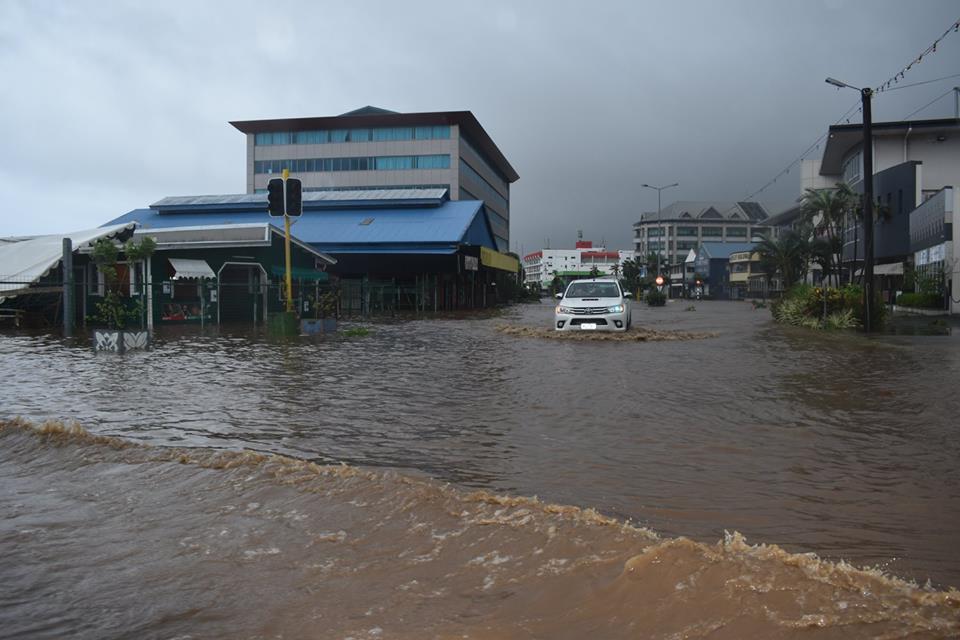
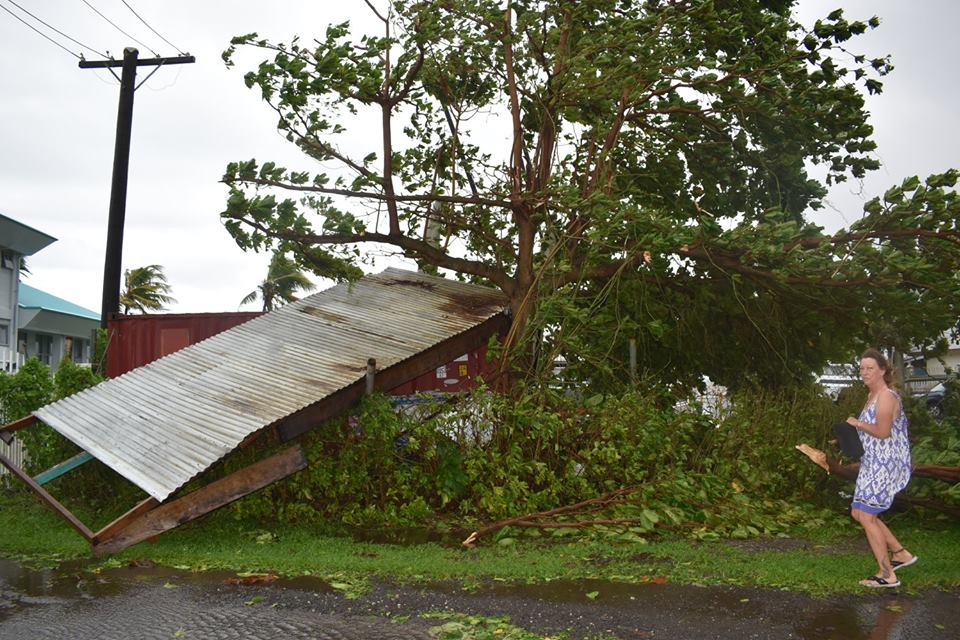
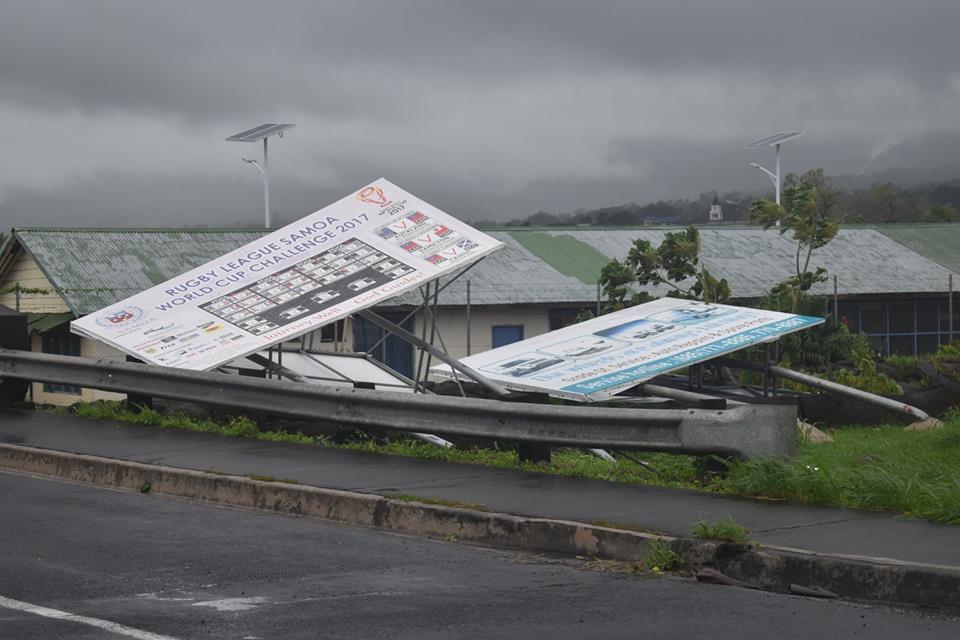
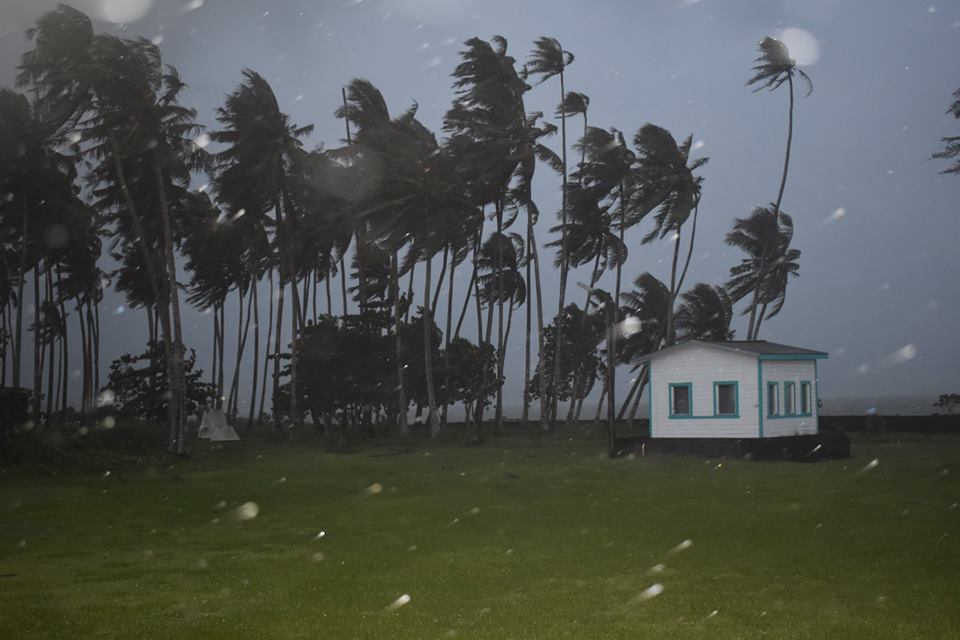
Gallery: Stay away from flooded areas, Samoa police warn after Cyclone Gita

Pacific Media Centre Newsdesk

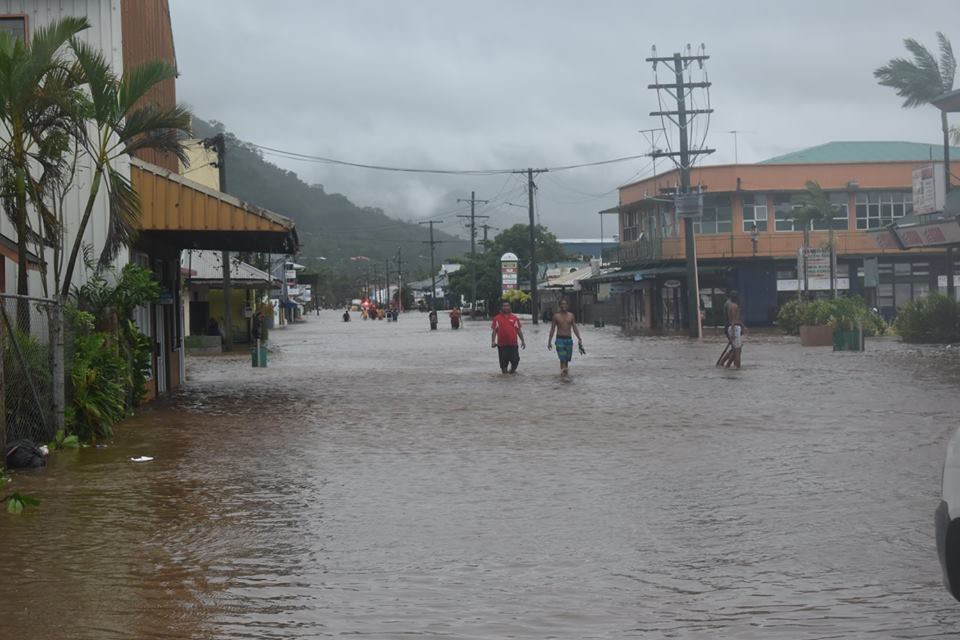
Tropical Cyclone Gita might be slowing moving away from Samoa but the danger is far from over and a state of disaster has been declared.

Gita, which has been lashing both Samoa and American Samoa with torrential rain and damaging winds, was upgraded to a category two as it caused flooding, landslides and blocked roads, reports Radio NZ.

The Samoa Observer reports police have warned people to take extra care.

“We urge members of the public to remain vigilant as we are experiencing rough weather due to cyclone Gita,” a police statement said in Apia.

“We advise families to remain indoors and not drive around Apia town area or near bridges and rivers. Flooding remains effective for all areas of Samoa.

“Overflowing rivers should not be crossed and we urge drivers not to put their lives or others at risk by trying to do so.”

Pictures of Cyclone Gita are from the Samoa Metereological Division.

Cyclone Gita hits Samoa
1 of 8
1. Street flooding in the capital Apia..
2. Apia street flooding.
3. Man wading with jandals.
4. Flooded palms in Apia.
5. Rooftop dumped by the wind gusts.
6. Flattened World Rugby league sign.
7. Rain squall streaks.
8. Wading in downtown Apia. Apia.

Article by AsiaPacificReport.nz

]]>

Foreign journalists ban over ferry disaster blamed on climate doco

What if your country was swallowed by the sea? Kiribati (pop. 100,000) is one of the first countries that must confront the main existential dilemma of our time – imminent annihilation from sea-level rise. This documentary, Anote’s Ark, has been blamed by Kiribati immigration officials for their block on foreign journalists.

Pacific Media Watch Newsdesk

A controversial climate change documentary showing at the Sundance Film Festival has been blamed for the Kiribati government blocking journalists from entering the country to report on the fatal sinking of a passenger ferry.

The MV Butiraoi broke in half and sank three weeks ago, with more than 90 people missing and presumed dead.

Newshub Pacific affairs correspondent Michael Morrah said his passport was confiscated when he and other Newshub staff landed in the country on Monday.

LISTEN:  NZ TV crew banned from reporting Kiribati ferry disaster – RNZ

They were told they were no longer to report on the sinking, because their reporting could impact on the country’s own investigation into the tragedy.

Australian Broadcasting Corporation journalists were also reportedly barred from travelling to Kiribati to report on the disaster.

According to Morrah, “the government’s recent hostility towards international press coverage appears to be rooted in the screening of a documentary at the Sundance Film Festival, Anote’s Ark.

“The country’s previous President, Anote Tong, was the subject of the film, which focused on climate change in Kiribati.

“In the doco, he spoke about why he had purchased land in Fiji and the serious and imminent threat of rising seas to the future of his people.  

“But his views don’t gel with the current President Taneti Mamau. In November Mamau said the idea of Kiribati sinking and becoming a deserted nation was ‘misleading and pessimistic’.” 

Article by AsiaPacificReport.nz

]]>

UN human rights chief to send mission to investigate abuses in Papua

By Sheany in Jakarta

The United Nations High Commission for Human Rights plans to send a mission to Indonesia’s easternmost province of Papua following reports of abuses against its indigenous population.

“I am also concerned about reports of excessive use of force by security forces, harassment, arbitrary arrests and detentions in Papua,” UN High Commissioner for Human Rights Zeid Ra’ad al-Hussein told reporters during his three-day visit to Indonesia.

He added that the Indonesian government had extended an invitation to the UN to visit Papua — the country’s poorest region.

READ MORE: UN rights chief warns ‘intolerance’ and political extremism making inroads in Indonesia

“I think it’s important for us to go and see ourselves what is happening there … and I hope we can do this as soon as possible,” Al-Hussein said.

Accounts of rights violations in Papua have prompted concerns from activists and the larger international community.

The government was earlier accused of restricting access for foreign correspondents to the region.

President Joko “Jokowi” Widodo’s administration has prioritised development in Papua through massive infrastructure projects aimed at boosting the province’s economic growth.

More recently, dozens of Papuans – mostly children – died from malnutrition-related diseases in the province’s Asmat district.

The health crisis has led to allegations that the government’s focus on development in the region does not serve the welfare of its population.

“They [the UN] can visit Papua. I told them that if they find faults, we will take action [to address them],” Coordinating Maritime Affairs Minister Luhut Pandjaitan said after his meeting with Al-Hussein.

The UN human rights chief also warned of the “dark clouds” of political extremism and intolerance that are building over Indonesia.

Al-Hussein highlighted the blasphemy laws that were used to imprison Jakarta’s governor last year, and planned new legislation that will criminalise gay sex.

“If Muslim societies expect others to fight against Islamophobia, we should be prepared to end discrimination at home too,” said al-Hussein, who is Muslim.

Sheany is a journalist with the Jakarta Globe.

Article by AsiaPacificReport.nz

]]>

Philippine mining company wins Bougainville search licence

By Franklin Kolma

The Autonomous Bougainville Government has granted its second mining exploration licence to a Philippine company in a low-key event at Tunania, the seaside home of Bougainville crisis commander of rebel forces Sam Kauona.

The event was set against the sombre double backdrop of the bloody crisis which had begun as a protest against mining giant Bougainville Copper in 1989 and a desperate race against time to get some serious investment on the ground before the referendum next June to decide the question of independence for the Autonomous Region.

Bougainville Exploration Licence No. 5 covering a 183 sq km area was launched by Bougainville President Dr John Momis with a plea to stand “united” and “strong”.

The echoes of the crisis were palpable here and brought a sombre note to an occasion that speaker, after speaker suggested, was “the turning point”, “a special milestone”, “a breakthrough”, and a fresh start”.

The silence and the people’s reactions spoke more forcefully than the speeches.

The people gathered in small silent groups under the shade of trees and coconut palms, more observers than participants, while the representatives of Philippine company, SR Metals Inc. battled it out in the clearing under the blazing sun, appearing to all like a graduating class of foreigners in some Bougainville initiation ceremony.

The chiefs of nine affected clans were first called out and they gave their blessing and permission for the forests to be disturbed in the interest of all during the exploration period.

Leap of faith
Then each speaker coaxed the people to leave their fears behind and take a leap of faith.

Sam Kauona said: “I fought for this 28 years ago. After going through many years of sacrifice and pain, we deserve to see the benefit of what we fought for. I as your general assure you. Do not be afraid. Let us move forward.”

Bougainville President Dr John Momis said: “Bougainville now stands at the threshold of a new social, economic, political, and moral order.

“Independence is imminent, just round the corner. But independence will not just happen.

“We dream dreams and we want to be free. We want to be free agents of development. We want to break away from the syndrome of dependency and economic exploitation and manipulation by those who have money because we treasure our people and their resources.

“But we need resources ourselves to do this. That is why Mr Gutierrez [manager of SR Metals], we are so grateful that you could have listened to my plea to have come to Bougainville.”

Bougainville South MP and Deputy Opposition Leader Timothy Masiu said: “This is a breakthrough. This is the day that our former leaders and our people have dreamt of and fought for. The wheels of change are starting now.”

Call for trust
“Masiu called on the people to trust in the leadership of the ABG and be responsible partners in all undertakings if there was to be real meaningful development.

“These people (mining company) have the expertise. They have the experience. They have the money. They will teach us how to do mining but only if we respect them and look after them.”

The SR Metals Inc Managing Director Eric Gutierrez said his people were ready but would mobilise only if the company was invited by the government and the people.

Mrs Kauona, representing women, said: “We mothers bore the burden of the mining industry here in Bougainville. 20,000 people have died because of this industry, because of Panguna mine.

“Our children have bathed this island with their blood. Today we celebrate because this new deal has been forged out of the expensive and fresh blood of our children.

“Papua New Guinea was sustained by Bougainville. We are doing the same thing. History has come around again. We are going to sustain the independence and livelihood of Bougainville.”

Frank Kolma is a senior journalist with the PNG Post-Courier.

Article by AsiaPacificReport.nz

]]>

OPINION: PyeongChang Olympics: a new cornerstone for peace and prosperity

]]>

OPINION: PyeongChang Olympics: a new cornerstone for peace and prosperity By Shamshad Akhtar EDITOR’S NOTE: Shamshad Akhtar is the Under-Secretary-General of the United Nations and Executive Secretary of Economic and Social Commission for Asia and the Pacific (ESCAP) [caption id="attachment_15853" align="alignright" width="300"] The 23rd Olympic Winter Games and 12th Paralympic Winter Games in PyeongChang, Korea, this February.[/caption] All eyes are on the 23rd Olympic Winter Games and 12th Paralympic Winter Games in PyeongChang this February. Top athletes will carry their national flags in an opening ceremony which has come to epitomize the international community. Sports fans worldwide eagerly await the Olympics, and this time there is cause for cautious optimism that sport diplomacy may lower tensions on the Korean Peninsula itself. Leaders, diplomats and citizens from the world over will witness North and South Korean athletes walking side by side. For this, there could be few better places than PyeongChang, which means peace (Pyeong) and prosperity (Chang): goals integral to the mission of the United Nations and the 2030 Sustainable Development Agenda. The Olympic and Paralympic Games attract people from around the world and help reinforce a set of unifying objectives. The goal of Olympism, as the Olympic Charter states, is “to place sport at the service of the harmonious development of humankind, with a view to promoting a peaceful society concerned with the preservation of human dignity”. Achieving sustainable peace and sustainable development are critical objectives and the Games in PyeongChang offer promise of peace and prosperity. In this spirit, the first Olympics in South Korea held in 1988 served to foster relationships at a time of rapid geopolitical shifts. These games featured many participating nations, including sizeable delegations from both the USA and USSR. The thaw in relations to which the Olympics contributed led to the establishment of diplomatic relations with neighbors such as Russia and China in the years following the games. The Republic of Korea became a member of the United Nations in 1991. The Olympics also heralded the economic transformation of the South Korean economy that is now known as “the Miracle on the Han River.” For the decade after the games, its economy grew at an average rate of around 8.5% per year, transforming the country from an aid recipient country to a key aid donor. The material improvement in the lives of people in South Korea was nothing short of a miracle. From 1960 to 1995, GDP per capita increased more than one hundred-fold, virtually eliminating absolute poverty from more than half of the population to less than 5%. This miracle was linked with another key value of the Olympics and the United Nations – international collaboration. South Korea successfully leveraged international aid, international trade, and international investment with its domestic ingenuity, to show the world it is possible to transform in one generation an agrarian economy into a dynamic technological and cultural producer. Along with the rapid economic transformation, social and environmental concerns have also risen to the fore. In recent years, we have seen South Korea make commendable steps towards environmental sustainability and inclusive social policies such as the aged pension. Integrating the economic, social and environmental dimensions is the cornerstone of the Sustainable Development Goals. South Korea is once again demonstrating to the world a way to achieve a more inclusive and sustainable prosperity. South Korea now stands as a valued member of the international community, generating cultural phenomena appreciated by young people around the world, playing a leadership role at the UN, and as a significant contributor of aid to developing countries. Olympic sports can support cultural, political and economic diplomacy in its efforts to achieving and sustaining peace. The Olympic Truce Resolution adopted by the United Nations is an example of using a momentous occasion in international sports, to build a stronger foundation for a more peaceful and inclusive world. The resolution urges all countries to respect the truce by creating a peaceful environment during the Olympic and Paralympic Games, and calls on all countries to work together, in good faith towards peace, human rights, and sustainable development. Opening of the direct dialogue between two countries of the Korean peninsula after the 2018 Olympics show cases a commitment to peace and prosperity. I wish South Korea a promising future and success in its endeavors to foster lasting peace and prosperity.]]>

Raglan Community Radio Interview: Seabed Mining – from Raglan To Papua New Guinea

Evening Report
Evening Report
Raglan Community Radio Interview: Seabed Mining - from Raglan To Papua New Guinea
Loading
/

Seabed Mining – from Raglan To Papua New Guinea by Raglan Community Radio –  – Broadcast date: 2018-02-08KASMseabed miningPapua New Guinea https://archive.org/download/SeabedMiningInPNGLucilleParuAndNatalieLowry180208/Seabed%20Mining%20in%20PNG%20-%20Lucille%20Paru%20and%20Natalie%20Lowry%20180208.mp3

***

In this webcast, Raglan Community Radio talks to Lucille Paru, a leader in PNG’s fight against Seabed Mining – and also New Zealander, Natalie Lowry, who is part of the same campaign. Both have been in Raglan meeting with New Zealand’s Against Seabed Mining group.]]>

Bryce Edwards’ Political Roundup: The real political controversy of Waitangi 2018 

]]>

Political Roundup: The real political controversy of Waitangi 2018 – Analysis by Dr Bryce Edwards

[caption id="attachment_13635" align="alignright" width="150"] Dr Bryce Edwards.[/caption] Lost amongst the focus on BBQs, relentless positivity, and eloquent speeches at Waitangi, a fascinating and important shift in Government-Maori relations appeared to be underway. Labour and Prime Minister Jacinda Ardern have been signalling that this Government is departing from the traditional culturalist and “race-based” approach to dealing with Maori deprivation and economic inequality. Instead, a more universal, economic-focused method will be used. The conventional approach of advancing Maori aspirations was epitomised by the Maori Party’s focus on culture, race, and sovereignty issues, and it appears to be on the way out.  [caption id="attachment_15463" align="alignright" width="640"] Waka Waitangi. Image: Wikimedia.[/caption] The Government’s shift away from a race and cultural approach Heralding what may be a highly controversial approach to “closing the gaps” in terms of Maori inequality, Jacinda Ardern made her most important speech at Waitangi by stating that the new Government would take a universalistic approach to inequality – by targeting everyone at the bottom, rather than specifically targeting Maori. Jacinda Ardern strongly emphasised the need to deal with the long list of social ills that have a disproportionate impact on Maori, but signalled that race-based methods were not the best way of moving forward. This is covered in Anna Bracewell-Worrall’s Govt promises to close the gaps – but not by targeting Maori. The article reports “that the Government won’t attempt to close those gaps by taking affirmative action for Maori.” And the prime minister is quoted explaining that “We are specifically targeting things like poverty. An actual by-product of that is it will positively impact Maori.” See also Bracewell-Worrall’s report on Ardern’s main speech in which she focused on the economic and social disparities she pledged to help fix – see: PM’s historic speech: The distance between our houses, Maori and Pakeha. Since then, the Finance Minister has confirmed this shift in approach to dealing with inequality. In an interview with Morning Report’s Guyon Espiner on Wednesday, Grant Robertson responded to questions about whether the Government would specifically target Maori in its programmes, saying: “Our focus is on reducing inequality overall” – you can listen to the six-minute interview here: Global market dive: Grant Robertson optimistic. Espiner sought clarification: “So there won’t be a specific Closing the Gaps type programme that we saw under Helen Clark? We’re not looking at heading off down that path?” Robertson replied: “That’s not the approach that we are taking. But we believe that we will be able to lift a significant number of Maori out of poverty, and increase employment outcomes, because of the approach we are taking.” Robertson went on to explain that the Government would keep some targeted funding for Maori, but stressed that a more universal approach would dominate: “Maori will benefit disproportionally from the families package – from those payments, because at the moment, unfortunately, Maori appear in those negative statistics. We’ve got a range of programmes coming down the line that will support Maori and the wider population as well. Where it’s appropriate, where there are programmes – particularly in an area like Corrections – where we know that we can have a real impact on that Maori prison population, then we’ll have a look at them. Similarly, with employment programmes. But in the end, Guyon, this is about reducing inequality overall. It’s about providing opportunities for all young people – and we know that Maori will benefit more from that, because unfortunately they are in those negative statistics.” Reactions to the shift away from a race-based approach Essentially, this new approach means directing resources and solutions to poor Maori “because they are poor” rather than “because they are Maori”. On Twitter, there’s been a surprisingly muted reaction to this apparent shift. Political commentator Morgan Godfery (@MorganGodfery) stated “I see some angst over this, but surely grant is right: the point is lifting everyone out of poverty, and universal works best”. Responding to this, Sam Gribben (@AotearoaSam) agreed: “Poverty is not just a Maori problem, the way to bring Maori up is to bring up all of the poor and the dispossessed. The best way to help any disadvantaged people is to… help disadvantaged people!” In RNZ interviews following on from Robertson’s, both Willie Jackson and John Tamihere reacted negatively against the notion that the Government was shifting in this direction – you can listen to the interviews with Jackson and Tamihere. Both have both been actively involved in recent years in contracting welfare and education function for the state, especially in terms of Whanau Ora and charter schools. Today’s Dominion Post editorial looks at this debate, saying “Robertson seems to have ruled out policies that specifically target Maori disadvantage or disparity. Instead, he believes that policies such as the families package, which are universal, will have a disproportionate benefit for Maori because of their economic disadvantage” – see: Government sends mixed messages to Maori. The editorial highlight’s that Tamihere “struggled with the possibility that Labour was in ‘retreat’ from promises made to Maori on the campaign trail”, and says “Tamihere disputed RNZ’s interpretations of Robertson’s comments and assured listeners that there will indeed be specific, targeted funding for Maori and the continuation of earlier policies like Whanau Ora.” The Dominion Post concludes with a guarded endorsement of Labour’s new approach: “it seems reasonable to argue, as Robertson does, that universal policies in areas such as health, employment and education will benefit Maori. But the Government also has to be careful to ensure that the images we saw in Waitangi this week are not remembered as hollow political theatre in 2020.” In other areas of the Government’s programme there is also a move away from the status quo in terms of dealing with Maori disadvantage and aspirations. Richard Harman reports that two strands can be identified: “The Government knows that there are two parallel strands of issues that they must deal with Maori. It is clear that they regained all the Maori seats because of a sense of a need for urgency among Maori to deal with immediate social problems – jobs, housing, health, ‘P’. And here they appear to be already making progress… But the other strand of Labour’s relationship, the constitutional issues, particularly with regards to sovereignty is more problematical” – see “New” Waitangi – But the old issues that inspired so much protest have not gone away. Chris Trotter noted, too, that Jacinda Ardern’s speeches at Waitangi – even to the more traditional Iwi Leaders Forum – were more about this economic approach than a traditional, cultural one – see: Can Sovereignty Be Shared? Here’s Trotter’s main observation about Ardern’s signal of where the Government is going on Maori issues: “Was she promising to turn that apparatus to the urgent task of uplifting Maori New Zealanders out of poverty, homelessness and the bitter legacy of 178 years of colonial oppression? Yes, she was. Was she proposing to unleash a constitutional revolution inspired by revisionist historians’ interpretation of the Waitangi Treaty? No, she was not. Jacinda’s speech to the Iwi Leaders Forum at the beginning of her five-day sojourn in the Far North made clear her government’s intentions. In short, these were all about dealing with Maori material deprivation. Iwi leaders intent on pushing forward ‘cultural’ issues – by which they mean constitutional issues – will very soon find they are pushing in vain.” Of course, this new focus on immediate economic inequality and disadvantage is unlikely to be well received by some Maori leaders. At Ratana last month, there was reportedly some push-back from the Ratana church. Jacinda Ardern asserted her “positive message about working with Maori to tackle the big issues, like homelessness, health and deprivation” – see Laura Walters’ Ratana offers support, special speaking rights, and a name for Jacinda Ardern’s baby. But the Wanganui Chronicle reported that the chair of the Ratana Church, Andre Meihana, “said a petition first presented to Parliament in the 1930s by TW Ratana still needs action. It asks that the Treaty of Waitangi be put into New Zealand law. Feeding and housing unfortunate people is important, but putting the treaty into ‘statute law’ should come first, he said” – see: Prime Minister warmly welcomed at Ratana Pa. Explaining the shift in the Government’s approach to Maori inequality  So why is the Government heading down this new route? Chris Trotter has also written this week about how Labour’s clean sweep of the Maori seats at the election, killing off the Maori Party in the process, has been influential on the direction of the party. He suggests that the Labour leadership has discovered the need to shift to a more class-based approach to Maori aspirations, and place less emphasis on the more cultural/sovereignty path of the Maori Party – see: How Labour reforged the alliance with Māori to pick off National’s support partners. Trotter points to the way Labour won back the Maori vote last year as being significant: “Willie Jackson and his team ran an unabashedly class-based campaign in the Maori seats. In terms of tone and imagery, their propaganda celebrated and spoke directly to the lives and aspirations of working-class Maori families. In startling contrast to Labour’s appeal to the general electorate, the party’s message to the Maori electorate was all about working-class jobs, working-class aspirations and working-class pride.” And today, the New Zealand Herald has an editorial which makes some similar points,  suggesting that the death of the Maori Party, and the return to Labour heralds the death of “the idea that Maori want a separate political identity in New Zealand” – see: Labour can even change some Maori customs. The editorial states: “Their verdict is undeniable, Labour is the party that represents the real interests and aspirations of Maori and those are the same as the interests and aspirations of all the lower paid or unemployed and underprivileged in New Zealand… The Maori Party believed these problems were best tackled by Maori self-help, whanau ora, but that does not seem to be Labour’s approach. It has brought Maori back inside a mainstream party and it may be a long time before an independent party is taken seriously again.” Similarly, a New Zealand Herald Waitangi Day editorial this week also spells out that this Government is shifting direction on these issues: “After five years of sustained economic growth, government over the next few years is going to be focused on those groups who it feels have not kept pace with prosperity”, and the “new Government wants to see a more equitable distribution of the fruits to iwi prosperity just as it does with the wealth of the whole economy” – see: Nation has much to celebrate and challenges ahead. The newspaper notes that the Treaty environment is now changing: “Governments have largely completed the long phase of negotiating compensation for colonial breaches. Most iwi, with the sad exception of the largest, Ngapuhi, have now not only acquired capital for their economic survival, their tribal administration, connections and identity have been strengthened in the process.” Of course, many on the political left have always been suspicious of the role of the biculturalism project and the Treaty settlement process in creating further inequality – especially in terms of inequality between Maori. And today, John Moore writes about how “this focus on culture, race, and sovereignty issues has failed to uplift the majority of Maori in terms of their economic position in New Zealand. And in fact, the emphasis on Treaty and cultural polices has occurred alongside an actual growth in Maori poverty” – see: Labour ditches the iwi elite. Similarly, Dougal McNeill of Victoria University of Wellington puts forward a Marxist perspective on why a focus on the racial categories of Maori and Pakeha is a backward way to bring about greater equality – see his recent blog post, There are no white people. Labour’s orientation to iwi elite Going hand-in-hand with this shift, Labour appears to be deliberately downgrading its relationship with iwi elites. On a purely symbolic or stylistic level, this could be seen in Jacinda Ardern’s striking decision to hold her Waitangi Day breakfast with the public – especially Ngapuhi – rather than the usual Iwi leaders invite-only breakfast at the Copthorne hotel. Jo Moir reported Ardern’s logic: “She said the alternative was holding a private breakfast with iwi leaders and she felt they’d spent a lot of time meeting with them and Tuesday was an opportunity to meet with the public” – see: The Prime Minister’s five days at Waitangi has gone off without a hitch or protest. Similar symbolism was apparent throughout the five days of Ardern’s visit to the Far North, with the PM spending much more time with ordinary people, and visiting small marae, rather than just seeing dignitaries. Peter de Graaf reported the reaction of the head of the local Maori Wardens, who Ardern had decided to visit: Dick Dargaville is quoted saying “It’s the first time we’ve had a Prime Minister who’s come up to talk to ordinary people. Usually it’s only the big boys that get to talk to them” – see: Prime Minister Jacinda Ardern breaks new ground at Waitangi. But there was substance to the symbolism. Labour appears to be much less inclined to work closely and compliantly with either the iwi-appointed leadership group, the Iwi Chairs Forum, or the smaller Iwi Leaders Group. As Mihingarangi Forbes explains, this is “a group of Maori charged with managing iwi trusts and businesses worth billions of dollars, not Maori struggling at the bottom of the barrel” – see: PM at Waitangi: A step ahead, but untested. For the last nine years these leaders have had a very close working relationship with the National Government and, in particular, with Bill English. As Annabelle Lee explains, “National has taken the concept of ‘rangatira ki te rangatira’ [meeting chief to chief] to the extreme, preferring the Iwi Leaders Forum as their primary point of contact with te ao Maori” – see: Why Jacinda Ardern’s decision to spend five days at Waitangi is a really big deal. But this government is much less keen on working so closely with such elites and, already, feathers have been ruffled. This is best covered by Claire Trevett in her article, Iwi leaders prepare for first meeting with PM Jacinda Ardern. According to Trevett, “Labour MPs have been critical of it in the past for failing to address social issues, describing it as elitist and unrepresentative of Maori. In December, Maori Development Minister Nanaia Mahuta said it was failing to do its job properly by focusing on issues such as water rights at the expense of social issues. She and Treaty Negotiations Minister Andrew Little have both told the forum to refocus its attentions on issues such as poverty and employment under Labour.” In this article, John Tamihere is quoted saying that iwi leaders’ would have to face major change, “after nine years of having their egos massaged by the National Government”, and would have to get used to different priorities: “So instead of talking about their trees and their fish and their water, I want them to start talking about their kids and their mokopuna.” In contrast, an urban Maori leader is seen to be more in sync with Labour’s approach: “Ngarimu Blair, deputy chairman of Ngati Whatua o Orakei, said he was pleased the new Government’s priorities were housing and poverty because they were major issues for Auckland Maori.” Trevett has also written about how the iwi chairs forum has reacted with alarm to these changes: “The iwi chairs forum wrote to Ardern last year out of concern about the attitude some new ministers were taking to the forum, including insisting it focus more on the social wellbeing of their people rather than Maori constitutional rights” – see: Warm welcome for PM Jacinda Ardern by iwi, but thorny issues await. The same article reports that following on from their meeting this week with the prime minister, “Ngapuhi leader Sonny Tau said he did not believe the Labour Government had fully understood the mandate of the iwi leaders and believed that because Labour had high support among Maori politically they represented Maoridom”. Tau challenged the notion that Labour MPs represented Maori: “One of the myths they had is that they have a significant mandate from Maori because they have the seven seats. And that’s a point. However, they are the Crown. They don’t represent the iwi.” The Government’s shift away from focusing on iwi property rights has also been signaled by Regional Development Minister Shane Jones. Sam Sachdeva reports: “Whereas English and his predecessor John Key seemed to focus on Article Two of the Treaty of Waitangi and property rights, Jones says the new government will have a greater emphasis on Article Three and the entitlements, rights and obligations of citizenship” – see: A fresh start at Waitangi? This might all end up in legal fights. 1News has obtained the letter from iwi leaders to the prime minister complaining about their change in direction, and threatening Supreme Court action if iwi rights to freshwater were not addressed – see TVNZ: Iwi leaders unhappy issues like water ownership aren’t on new Government’s radar. According to blogger Martyn Bradbury, all of these developments mean the tradition Maori elites are in trouble: “Many Maori live in urban areas and are not tribe affiliated. Their needs for better social services, jobs and the legacy issues created by colonialism trump Treaty deals which is offside to the goals of the Maori King or the Iwi Leaders Forum. With urban Maori having a far more powerful voice inside the new Government, those movements will need to see any extra resources making a dynamic impact on the poorest” – see: The joy of a leader who understands the Treaty & how Iwi Leaders have to acknowledge the political rise of Urban Māori. Finally, for an idea of how photographers, newspapers, and cartoonists have communicated the major political story of the week, see my blog post, Images and cartoons about Waitangi 2018.  ]]>

RSF condemns new gagging threats to outspoken Philippine media outlets

]]>

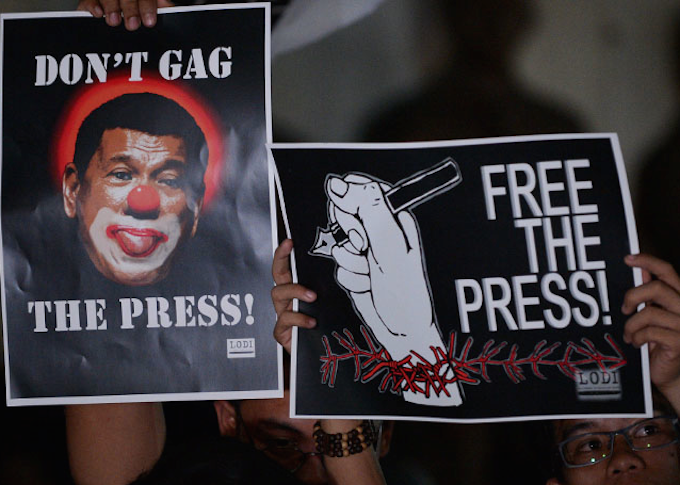
The National Union of Journalists of the Philippines (NUJP) is now organising regular “Black Friday” demonstrations in support of media outlets that have been the victims of government hostility. Image: RSF

Pacific Media Watch Newsdesk

Kodao Productions, a Philippine alternative news website, is still down after being the target of a cyber-attack six days ago and Reporters Without Borders (RSF) has condemned this new assault on media freedom in the Philippines.

The Paris-based media freedom watchdog is worried about this latest blow to media freedom, which comes against a backdrop of government hostility towards critical media outlets, including Catholic Church radio stations.

“Site currently not available” was the error message seen when trying to access the Kodao website.

READ MORE: UN critics join global outrage over Duterte’s Rappler ‘free press’ attack

But Pacific Media Watch reports that Kodao Productions now has a “defend press freedom” message posted on the page while the website’s news coverage still cannot be accessed.

As a result of a cyber-attack consisting of a malicious code injection at around midnight on February 1, the site is no longer able to post new content and readers cannot access past content.

-Partners-

The attack has come amid mounting tension between allies of President Rodrigo Duterte and media outlets of various ideological tendencies whose common feature is a readiness to criticise the quick-tempered president’s policies.

54 radio stations at risk
Concern is growing about the fate of Catholic Media Network, a nationwide network of 54 Catholic Church-run radio stations whose 25-year licence expired on 4 August 2017.

The licence renewal application was submitted on 24 January 2017 but has been blocked ever since in the House of Representatives, where it has yet to be put on the agenda of the relevant committee.

The Catholic Bishops’ Conference of the Philippines, which runs the network, now fears that the 54 radio stations could be shut down at any time.

“We urge Philippine parliamentarians to address the Catholic Media Network application so that this licence can finally be renewed,” said Daniel Bastard, head of RSF’s Asia-Pacific desk.

“It should be a mere formality, nothing more than a stamp on a four-page document. Given the Catholic Church’s criticism of the Duterte administration, this refusal to renew clearly seems to be politically motivated,” he said.

“Meanwhile, as Kodao is well known for its uncompromising criticism of the authorities, its suspension also has all the hallmarks of a reprisal against the free press.”

‘Dutertards’
The cyber-attack on Kodao could have been the work of President Duterte’s army of trolls, also known as “Dutertards”. According to a recent University of Oxford study, the president spent $200,000 on recruiting them.

Founded in 2000, Kodao Productions is known for its coverage of human rights, the environment and the decades-old, on-off peace talks between successive governments and the Maoist left.

Catholic Media Network, for its part, has often referred to the extrajudicial killings linked to the “war on drugs” waged by Duterte, which has already had an estimated death toll of more than 7000, according to Philippine media freedom monitoring groups.

On January 15, a government spokesman announced the withdrawal of the licence of Rappler, the country’s leading news website, which has appealed against the decision.

RSF referred the licence withdrawal to the United Nations, which responded 10 days later by expressing deep concern about this violation of media freedom.

The National Union of Journalists of the Philippines is now organising regular “Black Friday” demonstrations in support of media outlets that have been the victims of government hostility.

The Philippines is ranked 127th out of 180 countries in RSF’s 2017 World Press Freedom Index.

Cyber-attacked … Kodao Propductions and its #defendpressfreedom message. Image: PMC

Print Friendly, PDF & Email

Article by AsiaPacificReport.nz

]]>

A timely climate media strategy to empower citizens

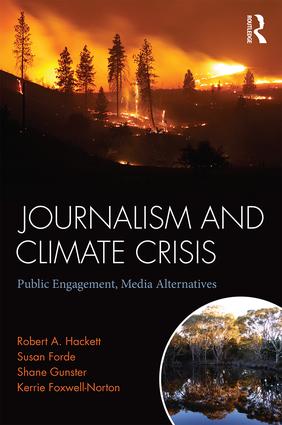
BOOKS: By David Robie, editor of Pacific Journalism Review

At the time of reviewing this important and timely book, Hurricane Irma had just ripped a trail of unprecedented destruction from Antigua, Barbuda and Saint Barthélemy in the eastern Caribbean to Florida with at least 81 deaths.

Florida involved one of the largest mass evacuations in US history, with nearly 7 million people being warned to seek shelter elsewhere. Seventy percent of Miami lost electricity at the height of the storm.

And Irma in turn had followed on the heels of Hurricane Harvey, which devastated a large swathe of Texas. This was the first major hurricane to hit US soil in more than a dozen years.

Seventy-one fatalities and more than US$70 billion in damage. Two wrecking storms of such destructive force hitting the US mainland in less than a fortnight. Unsurprisingly, President Donald Trump dismissed any link between climate change and the two hurricanes.

“We’ve had bigger storms than this,” he snorted, even though earlier he had “marvelled” at their historic size.

The catastrophic category 5 Hurricane Irma sparked an analysis of media responses by Carbon Brief and a forensic examination of the science of climate and Atlantic hurricanes. Citing three climate specialists in particular, the website concluded: ‘The strongest hurricanes have gotten stronger because of global warming’ (Multiple authors, 2017).

-Partners-

Florida’s global warming denier governor Rick Scott weathered criticism after the devastation to his state by still refusing to say—as he had done for seven years since he was first elected in 2010—if he believes man-made climate change is real (Caputo, 2017).

Rather ironic
This is all rather ironic given that at the time of completing Journalism and Climate Crisis: Public Engagement, Media Alternatives, the co-authors were writing in the context of massive wildfire ravages in the Canadian city of Fort McMurray—epicentre of one of the world’s most controversial energy mega-projects, the Alberta tar sands—and, on the other side of the globe, aggressive wildfires were savaging Australia with sharply increasing frequency and intensity.

Just a few years earlier, in 2009, 173 people had perished in the “Black Saturday” bushfires that engulfed the community of Kinglake in the state of Victoria. Disturbing coral bleaching was also damaging Australia’s popular tourist attraction Great Barrier Reef off the Queensland coast.

Noting that the reality of anthropogenic climate challenge can no longer be ignored, this book warns that neither can the “responsibility of journalism to inform, motivate and empower citizens to engage with the problem” (p. 2)

Journalism and Climate Crisis seeks to disrupt the status quo of the way climate change is reported in much of the world, especially Anglo countries such as Australia, Canada, New Zealand and the United States, and to offer strategies for community empowerment, action and hope in the digital age.

While much of the mainstream media, compromised as they are through their declining commercial models, offer little scope for change, the co-authors offer many examples of active communication success, mostly through alternative media.

The four co-authors are uniquely qualified for this collaborative volume. Robert A. Hackett is professor of communication at Simon Fraser University, Vancouver, and as a co-founder of NewsWatch Canada, and has been a leading writer on environmental and peace journalism models. He also contributed an issue-defining article in the July 2017 edition of Pacific Journalism Review on climate change and critical media models.

Susan Forde is director of the Griffith Centre for Social and Cultural Research and associate professor of journalism at Griffith University, Australia, and whose books include Challenging the News on alternative media. Shane Gunster is a colleague of Hackett at Simon Fraser University, where he is an associate professor in the School of Communication. Kerrie Foxwell-Norton is senior lecturer in journalism and media studies at Griffith University and a co-author of Developing Dialogue.

‘Normative touchstones’
The book is divided into seven chapters as well as an introduction to journalism models for climate crisis and a conclusion written by the co-authors. The first chapter is on Democracy, Climate Crisis and Journalism, looking at “normative touchstones”, followed by a chapter on Engaging Climate Communication, which examines audiences, frames, values and norms. The third chapter deals with Environmental Protest, Politics and Media Interactions.

Chapter four From Frames to Paradigms offers an in-depth comparative analysis of civic (or public) journalism, peace journalism and alternative media. This is followed by a British Columbia case study on Contesting Conflict with an examination of advocacy and alternative media in that province.

Chapter six analyses Australian independent news media and climate change in the context of COP21 when the historic Paris Agreement was forged. The final chapter looks at a Guardian Australia case study to demonstrate alternative approaches to environmental coverage. The conclusion offers a strategy for ‘media reform for climate action’.

Writing about “ordinary journalism in extraordinary times”, the authors argue that the conglomerates that “increasingly dominate media ownership are maximising short-term profits, stripping assets and disinvesting in news and thus have declining capacity and inclination to face up to the challenges of climate crisis”. Mirroring the arguments of McChesney and Nichols, for example, the authors state:

Working journalists are faced with tighter deadlines, heavier workloads, multiplatform demands, a 24/7 news hole to fill and a broader palette of topics to report. The result is predictable: fewer beat [rounds] reporters with specialised expertise, less investigative or accountability journalism, more pressure to act like stenographers, reporting competing claims rather than assessing their respective validity (p. 4).

However, the problem does not end there. It goes beyond the “crisis of journalism’s business model—Climate Crisis journalism faces additional barriers of institutional structure, class power and ideology”. Citing Naomi Klein’s argument for taking climate change seriously, they reaffirm the need for a positive role for government, a strengthened public sector and collective action—which is precisely why conservative political forces, especially in North America and Australia, prefer not to take it seriously.

The co-authors argue that journalism needs to rethink its mission to cover urgent political issues such as climate change. The problem is less about the informed citizen, and much more about empowering the public to be engaged. They are highly critical of how “elite media” in Australia and the US, for example, have privileged denialist opinion and vested interests, blaming them for widespread misinformation and disengagement. This is contrasted with Western Europe’s “vibrant and pluralistic” media systems.

The co-authors draw from the Christians et al. (2009) model of four normative democratic roles for journalism in their search for answers. While they critique the limited effectiveness of the traditional monitoring and the watchdog function of the media (and institutional biases of “objectivity”), they propose the facilitative role seeking to improve the quality of public life and the radical role foregrounding social injustice and abuses of power as being more helpful for climate crisis strategies. They give less emphasis to the collaborative role “in support for broader and dominant social purposes”, but this latter category is important in many developing countries, such as in the Pacific.

Their concluding and positive message is that global media reformers and environmentalists have a strong basis for common ground in seeking public support for alternative media and independent journalism as key pillars of democracy and climate communication.

Journalism and Climate Crisis: Public Engagement, Media Alternatives, edited by Robert A. Hackett, Susan Forde, Shane Gunster and Kerrie Foxwell-Norton. Abingdon, UK: Routledge. 2017. 204 pages. ISBN 978-1-1389-5039-9. This review was first published by Pacific Journalism Review.

Full references

Print Friendly, PDF & Email

Article by AsiaPacificReport.nz

]]>

‘We prayed with them until they died’ – stories of Kiribati ferry survival

]]>

Coming ashore … seven ferry disaster survivors reach Kiribati and tell their stories. Image: TVNZ video clip

By Barbara Dreaver, TVNZ’s Pacific correspondent

With 93 people still missing, the first reports of survival – and loss – are starting to emerge from the sunken ferry MV Butiraoi in Kiribati.

In the first interview with Radio Kiribati, one of only seven survivors Temake Ioane told how he had to watch his two children dying over several days.

Ioane said there were three explosions on the 17m catamaran and the third broke it in two.

LISTEN: Radio Kiribati Online

Many did not survive the sinking, but those who did managed to clamber on to three boats.

-Partners-

However, Ioane said the rubber boat was so overloaded it split in half, leaving only two small dinghies.

The father of two said he managed to get his two children on board one of them – along with more than 20 others who either were on board on clinging to the side.

Only seven survivors have been found and family members have attended a church service in Auckland.

Clinging to boat for 6 days
Speaking in I-Kiribati, Ioane, who himself was clinging to the side of the boat for six days, said the ones that floated alongside the boats were the first to die “we prayed with them until they died”.

It was on the sixth day, without food and water, that the old women and children on board the boat started to die.

The first was his three-year-old son Tauti Temwake and then his eight-year-old daughter Remwati. Others were delirious from lack of water and jumped off the dinghy thinking they were going to buy food, he said.

On the January 28, 10 days after the ferry set sail from the island of Nonouti, only seven survivors including Ioane were found by the NZ Air force P3 Orion.

Ioane said he last saw the other remaining dinghy with the captain on board and other survivors drifting towards land after the ferry sank.

They have not been found.

Barbara Dreaver is TVNZ’s 1 News Pacific correspondent. This article is republished with permission.

Print Friendly, PDF & Email

Article by AsiaPacificReport.nz

]]>

Crown breached Crimes Act over ‘depoliticising’ Treaty of Waitangi

]]>

Tiriti o Waitangi of 1840 … a “historical deception” that the British Crown gained sovereignty over New Zealand. Image: Steve Edwards

OPINION: By Steve Edwards

The New Zealand government’s ongoing failure to acknowledge that the British Crown did not gain sovereignty over New Zealand in 1840 is a breach of the Crimes Act.

In October 2014, this historical deception was made emphatically clear by the Waitangi Tribunal, which found that Māori did not sign away sovereignty when 512 chiefs, or rangatira, signed Te Tiriti o Waitangi of 1840.

LISTEN: PM says treaty must be treated as a ‘living document’ – Radio Waatea

Instead of the Crown spelling out to New Zealanders these essential truths since late 2014, it has deceitfully left intact this country’s fairy-tale creation myth that a cession of sovereignty occurred at Waitangi in those flaggy scenes of 1840.

Therefore, the Crown has breached section 240 of the Crimes Act, which covers deception to gain ownership or possession or control over property, or privilege, or to benefit economically, or cause loss to others.

Moreover, since the Waitangi Tribunal’s widely publicised investigation into the United Tribes’ 1835 Declaration of Independence and Te Tiriti o Waitangi, the Crown has pursued a deceptive strategy to avoid admitting that it has no legitimate claim to sovereign authority.

-Partners-

Steve Edwards is Pākehā, a television editor, and blogs on Snoopman News.

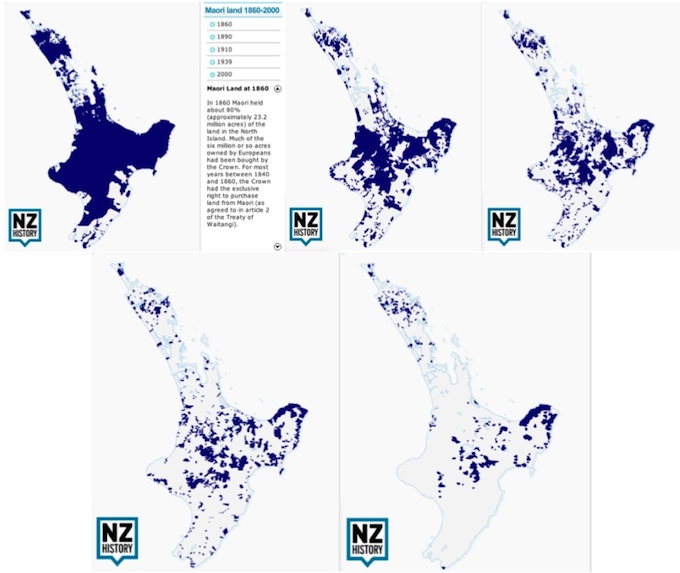
Māori land loss … These five maps show progressive structural dispossession in 1860, 1890, 1910, 1939 and 2000 over the North Island. Māori land is shaded in blue. Montage: NZ History
Print Friendly, PDF & Email

Article by AsiaPacificReport.nz

]]>

The Daily Blog: Jacinda’s Waitangi Day 2018 aroha creating a Māori legacy relationship

]]>

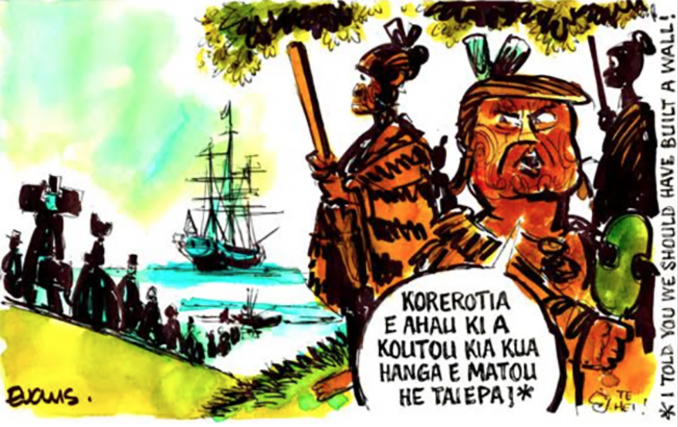
Cartoon: © Malcolm Evans/The Daily Blog

OPINION: By Martyn Bradbury, editor of The Daily Blog

Waitangi Day 2018 smells different doesn’t it?

It tastes different too.

No bitter “Māori privilege” nonsense from Don Brash and his shallow racism.

No spiteful “Let’s have a NZ day so we don’t have to feel guilty about the Treaty” whining from newspaper editorials.

READ MORE: PM Jacinda Ardern makes historic speech at Waitangi

No constant media barking up of predictions of aggression and protest.

-Partners-

Prime Minister Jacinda Ardern’s desire to show Waitangi Day the respect it deserves with a 5-day tour visiting every marae large and small alongside ministers meekly lined up to do the BBQ cooking for Waitangi Breakfast is building a movement of aroha among Māori which will create a legacy relationship that is going to dominate Māori politics.

The electricity when she visits marae is palpable and extraordinary. Her incredible ability to connect emotionally with people has generated a rapport among those packed marae she has visited in a way that will earn her devotion among voters while forgiving any shortcomings.

Political lifetime
If she makes this 5-day tour an annual event she will build a following that will see Māori voting Labour because of their relationship with Jacinda for her entire political lifetime.

Her being pregnant is just the emotional icing, Māori in Northland have taken to Jacinda with nothing short of joy and her visiting everywhere has conjured up an excitement that will bind.

They will speak about Jacinda passing through for decades to come.

This personal relationship is going to cement Labour Party dominance of the Māori electorates leaving any resurgent Māori Party under a new leader like Dr Lance O’Sullivan with only the right for political movement because Labour will totally dominate the Māori vote on the general roll and the Māori roll.

With Jacinda building a huge reservoir of Māori voter support and the Māori faction inside Labour now one of the most powerful factions inside Labour, this puts the Iwi Leaders Forum, the Māori King and the Public Service all in a troubling position.

Many Māori live in urban areas and are not tribe affiliated. Their needs for better social services, jobs and the legacy issues created by colonialism trump Treaty deals which is offside to the goals of the Māori King or the Iwi Leaders Forum. With urban Māori having a far more powerful voice inside the new government, those movements will need to see any extra resources making a dynamic impact on the poorest.

But there’s another segment who are about to face an existential threat – the Public Service.

Building of fiefdoms
Māori know first hand the structural racism of the social service providers who care more about the building of fiefdoms than the actual welfare of Māori. Already the Public Service is strangling ministers with ministerial suffocation but the new Māori faction aren’t going to accept that.

Māori social service providers offer a wealth of cultural initiatives that bring a holistic view to caring about people and the Public Service will either need to adapt to those new initiatives or they’ll face an ongoing battle with a Māori faction that knows damn well how the Public Service denigrate their people.

The crowds thronging Jacinda on every marae suggest it’s a fight the Public Service are going to lose.

Print Friendly, PDF & Email

Article by AsiaPacificReport.nz

]]>

United ULMWP executive confident of O’Neill’s West Papua support

]]>

New ULMWP executive endorsed in Port Vila … pleas for more European Union and ACP bloc support. Image: Vanuatu Daily Post

By Len Garae in Port Vila

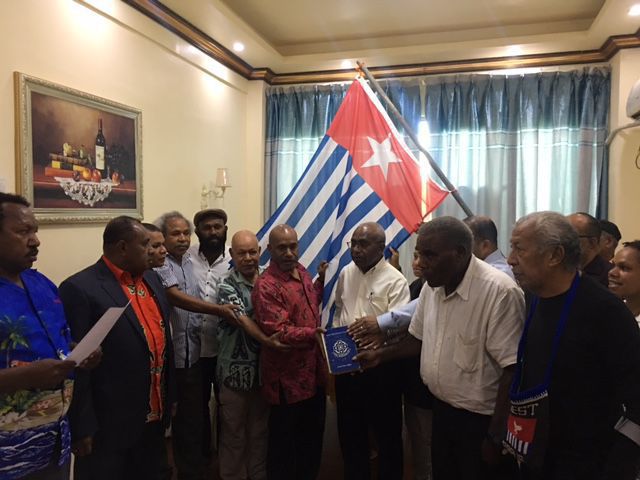
The executive of the United Liberation Movement for West Papua (ULMWP) has complied with Papua New Guinean Prime Minister Peter O’Neill’s request to unite and is confident he will vote to support West Papua’s application to become a full member of the Melanesian Spearhead Group.

O’Neill is chairman of the MSG in Port Moresby which is meeting next week.

ULMWP spokesman Jacob Rumbiak said its week-long meeting in Port Vila had resulted in the spirit for West Papua to be more determined, organised and unified than ever before to end the alleged genocide by Indonesia of their people in West Papua.

READ MORE: Asian rights body calls for more action over Papua health crisis

In its meeting, ULMWP has made changes in its leadership, structure, bylaws as well as membership.

Rumbiak said the executive produced clear job descriptions, agenda, action plan, tactics and and strategy.

-Partners-

“The agenda was submitted by the executive committee, endorsed by the legislative committee and approved by its judicial committee,” Rumbiak said.

While the ULMWP executive is attending the MSG meeting in Port Moresby next week, Rumbiak said Papuans were still dying at the hands of the colonial power Indonesia.

Poisoning incident
For example, last week yesterday a young leader of the National Parliament of West Papua, Wendi Wenda, 20, died in a suspected poisoning incident, Rumbiak said, translating from an international report.

Speaking for the Vanuatu Free West Papua Association executive committee and Vanuatu Christian Council, Job Dalesa called on all churches in Vanuatu to pray for West Papua.

“If West Papua is a global issue, then it also requires active global engagement as well,” Dalesa said.

“Australia also has to rethink its foreign policy regarding its bilateral defence cooperation with Indonesia when we speak of global engagement because, indirectly, Australia seems to be contributing towards reports of longstanding atrocities in West Papua.”

Dalesa also challenged PNG and Fiji to recognise the positions they had taken regarding West Papua.

In PNG, Dalesa said he believed the PNG Council of Churches would now adopt a more pro-active role to support West Papua.

At the European Union (EU) and the Africa Caribbean and Pacific (ACP) bloc in Brussels, Dalesa called on the government to keep the momentum going by appointing an “aggressive voice” in the absence of the former Ambassador to the EU, Roy Micky Joy, to “keep knocking and voicing West Papua’s plight” globally through the EU and ACP.

He reminded the government that the people of Vanuatu could do as much as they wanted at home and in the region, but that without concrete support from EU and ACP in Brussels, the West Papua issue would not advance internationally as fast and as effectively.

Len Garae is a senior journalist of the Vanuatu Daily Post. Daily Post articles are republished by Asia Pacific Report with permission.

Print Friendly, PDF & Email

Article by AsiaPacificReport.nz

]]>

Asian rights body calls for more action by Jakarta over Papuan health crisis

]]>

Al Jazeera’s Step Vaessen was given exclusive access to report on the measles outbreak from Asatat, in Indonesia’s Papua province.

Pacific Media Centre Newsdesk

The Asian Human Rights Commission (AHRC) has called for more action about the health crisis facing Asmat regency in Indonesian-ruled Papua.

The commission has blamed the Indonesian government “for this considerable loss of life”.

“The current efforts to address the problem are simply too little, too late,” it said in a statement from Hongkong.

So far, 68 children have died from measles and serious malnutrition in Asmat.

As reported by national media in Indonesia, the measles and malnutrition epidemic has affected 11 districts of Asmat regency: Swator, Aswi, Akat, Fayit, Pulau Tiga, Kolf Branza, Jetsy, Pantai Kasuari, Safan, Unirsarau, and Siret.

-Partners-

“Being the most remote areas of Asmat regency, victims in these districts have faced serious difficulties in obtaining access to medical facilities,” the AHRC statement said.

“Even in the regency’s capital, Agats, the Agats General Hospital (RSUD) is not equipped to deal with all the patients of measles and malnutrition.”

Patients in church
A category D hospital with limited facilities, paramedics and doctors, the hospital at present needed more medicine due to limited stock, and due to limited space, some patients have been hospitalised in the nearest church building, the AHRC statement said.

This circumstance showed how Papua had been left behind in terms of health facilities, infrastructure and development.

In Jakarta, Java island or other islands such as Sumatra and Bali, there were numerous public and private hospitals of type B and A, easy to access, the statement said.

Papua mostly has public hospitals of type D, especially in remote areas. There is a category A hospital in Jayapura city, the capital of Papua, but it is quite far from Agats and to reach Jayapura from Agats is not easy due to the lack of infrastructure.

“This situation clearly highlights how neither the central government of Indonesia in Jakarta, nor the local government in Papua province and Asmat regency have been able to develop an early warning system to prevent measles and malnutrition.”

Screen shots from an Al Jazeera report by Step Vaessen on the measles outbreak in Papua. Image: PMC

The AHRC said it was concerned that the epidemic could easily spread to other places in Papua, particularly in remote areas lacking in health facilities.

Since Papua was integrated into the Republic of Indonesia in 1969, Papua has remained the poorest and least developed province.

Citizens’ rights
As a state party to the International Covenant on Economic, Social and Cultural Rights, Indonesia was obligated to:

  • ensure its citizens’ rights to be free from hunger;
  • address the prevention, treatment and control of epidemic, endemic, occupational and other diseases; and
  • create conditions which would assure medical attention to all.

Similarly, national laws such as Law No. 36 of 2009 guaranteed the right to equal health access for all citizens, the AHRC said.

The commission said it viewed the current lack of health access and facilities in Papua – and the deaths of 68 children – as a clear violation of the Indonesian government’s responsibility towards its citizens.

“By not developing equal health care in Papua, the government is to blame for this considerable loss of life. The current efforts to address the problem are simply too little, too late,” the statement said.

The AHRC said the government should immediately announce a health emergency in Papua and open access for medical aid, including international medical support. It should also allow access to the media to ensure accountability and to monitor the eradication of the epidemic.

The government also needed an affirmative action policy to boost development of health access in Papua.

Priority for Papua
The assistance from the central government should not merely be limited to eradicating disease in Asmat regency, but should ensure that remote areas in Papua received priority in development of health access, facilities and infrastructure, the statement said.

The National Commission on Human Rights (Komnas HAM), the Minister of Health and Ombudsman of Republic of Indonesia, the House of Representatives, in particular Commission IX which concerns health, food and medicines, should take initiatives to monitor, evaluate and ensure the implementation of such policies, the AHRC said.

Local government should also open access for NGOs and media to monitor the recovery and development in remote areas.

The AHRC also urged the government to comprehensively ensure that all children, including pregnant mothers in Papua, particularly in Asmat regency, were given enough nutrition, food, and vaccines to prevent disease.

Print Friendly, PDF & Email

Article by AsiaPacificReport.nz

]]>

Coups, globalisation and tough questions for Fiji’s future

]]>

Report by Dr David Robie – Café Pacific.

The General’s Goose – three decades of Fiji “coup culture”. And what now with the second
post-coup election due this year?
REVIEW: By David Robie of Café Pacific
Author Dr Robbie Robertson … challenges “misconceptions”
about the Bainimarama regime and previous coups, and asks
fundamental questions about Fiji’s future.

When Commodore (now rear admiral retired and an elected prime minister) Voreqe Bainimarama staged Fiji’s fourth “coup to end all coups” on 5 December 2006, it was widely misunderstood, misinterpreted and misrepresented by a legion of politicians, foreign affairs officials, journalists and even some historians.

A chorus of voices continually argued for the restoration of “democracy” – not only the flawed version of democracy that had persisted in various forms since independence from colonial Britain in 1970, but specifically the arguably illegal and unconstitutional government of merchant banker Laisenia Qarase that had been installed on the coattails of the third (attempted) coup in 2000.

Yet in spite of superficial appearances, Bainimarama’s 2006 coup contrasted sharply with its predecessors.

Bainimarama attempted to dodge the mistakes made by Sitiveni Rabuka after he carried out both of Fiji’s first two coups in 1987 while retaining the structures of power.

Instead, notes New Zealand historian Robbie Robertson who lived in Fiji for many years, Bainimarama “began to transform elements of Fiji: Taukei deference to tradition, the provision of golden eggs to sustain the old [chiefly] elite, the power enjoyed by the media and judiciary, rural neglect and infrastructural inertia” (p. 314). But that wasn’t all.

[H]e brazenly navigated international hostility to his illegal regime. Then, having accepted an independent process for developing a new constitution, he rejected its outcome, fearing it threatened his hold on power and would restore much of what he had undone. (Ibid.)

Bainimarama reset electoral rules, abolished communalism in order to pull the rug from under the old chiefly elite, and provided the first non-communal foundation for voting in Fiji.

Landslide victory
Then he was voted in as legal prime minister of Fiji with an overwhelming personal majority and a landslide victory for his fledgling FijiFirst Party in September 2014. He left his critics in Australia and New Zealand floundering in his wake.

Robertson is well-qualified to write this well-timed book, The General’s Goose: Fiji’s Tale of Contemporary Misadventure, with Bainimarama due to be tested again this year with another election. He is a former history lecturer at the Suva-based regional University of the South Pacific at the time of Rabuka’s original coups (when I first met him).

He and his journalist wife Akosita Tamanisau wrote a definitive account of the 1987 events and the ousting of Dr Timoci Bavadra’s visionary and multiracial Fiji Labour Party-led government, Fiji: Shattered Coups (1988), ultimately leading to his expulsion from Fiji by the Rabuka regime. He also followed this up with Government by the Gun (2001) on the 2000 coup, and other titles.

Robertson later returned to Fiji as professor of Development Studies at USP and he has also been professor and head of Arts and Social Sciences at James Cook University in Townsville, Queensland, as well as holding posts at La Trobe University, the Australian National University and the University of Otago.

He has published widely on globalisation. He is thus able to bring a unique perspective on Fiji over three decades and is currently professor and dean of Arts, Social Sciences and Humanities at Swinburne University of Technology, Melbourne.

Since 2006, Fiji has slipped steadily away from Australian and New Zealand influence, as outlined by Robertson. However, this is a state of affairs blamed by Bainimarama on Canberra and Wellington for their failed and blind policies.

Even since the 2014 election, Bainimarama has maintained a “hardline” on the Pacific’s political architecture through his Pacific Islands Development Forum (PIDF) alternative to the Pacific Islands Forum (PIF), and on the Pacific Agreement on Closer Economic Relations (PACER) Plus trade deal.

‘Turned their backs’
While in Brisbane for an international conference in 2015, Bainimarama took the opportunity to remind his audience that Australia and New Zealand “as traditional friends had turned their backs on Fiji”. He added:

How much sooner we might have been able to return Fiji to parliamentary rule if we hadn’t expended so much effort on simply surviving … defending the status quo in Fiji was indefensible, intellectually and morally (p. 294).

For the first time in Fiji’s history, Bainimarama steered the country closer to a “standard model of liberal democracy” and away from the British colonial and race-based legacy.

“Government still remained the familiar goose,” writes Robertson, “but this time, its golden eggs were distributed more evenly than before”. The author attributes this to “bypassing chiefly hands” for tribal land lease monies, through welfare and educational programmes no longer race-bound, and through bold rural public road, water and electrification projects.

Fiji’s cast of coup leaders. Image: Coup 4.5
Admittedly, argues Robertson, like Ratu Sir Kamisese Mara (Fiji’s prime minister at independence and later president), Rabuka and Qarase, “Bainimarama had cronies and the military continues to benefit excessively from his ascendancy”. Nevertheless, Bainimarama’s “outstanding controversial achievement remains undoubtedly his rebooting of Fiji’s operating system in 2013”.

Robertson’s scholarship is meticulous and drawn from an impressive range of sources, including his own work over more than three decades. One of the features of his latest book are his analysis of former British SAS Warrant Officer Lisoni Ligairi and the role of the First Meridian Squadron (renamed in 1999 from the “coup proof” Counter Revolutionary Warfare Unit – CRWU), and the “public face” of Coup 3, businessman George Speight, now serving a life sentence in prison for treason.

His reflections on and interpretations of the Republic of Fiji Military Forces Board of Inquiry (known as BoI) into the May 2000 coup are also extremely valuable. Much of this has never before been available in an annotated and tested published form, although it is available as full transcripts on the “Truth for Fiji” website.

‘Overlapping conspiracies’
As Robertson recalls, by mid-May, “there were many overlapping conspiracies afoot … Within the kava-infused wheels within wheels, coup whispers gained volume”. Ligairi’s role was pivotal but BoI put most of the blame for the coup on the RFMF for “allowing” one man so much power, especially one it considered ill-equipped to be a director and planner’ (p. 140).

The BoI testimony about the November 2000 CRWU mutiny before Bainimarama escaped with his life through a cassava patch, also fed into Robertson’s account, although he admits Colonel Jone Baledrokadroka’s ANU doctoral thesis is the best account on the topic, “Sacred King and Warrior Chief:The role of the military in Fiji politics”.

It was a bloody and confused affair, led by the once loyal [Captain Shane] Stevens, 40 CRWU soldiers, many reportedly intoxicated, seized weapons and took over the Officers Mess, Bainimarama’s office and administration complex, the national operations centre and the armoury in the early afternoon. They wanted hostages; above all they wanted Bainimarama. (p. 164)

The book is divided into four lengthy chapters plus an Introduction and Conclusion – 1. The Challenge of Inheritance about the flawed colonial legacy, 2. The Great Turning on Rabuka’s 1987 coups and the Taukei indigenous supremacy constitution, 3. Redux: The Season for Coups on Speight’s attempted (and partially successful) 2000 coup, and 4. Plus ça Change …? on Bainimarama’s political “reset”. (The Bainimarama success in outflanking his Pacific critics is perhaps best represented by his diplomatic success in co-hosting the “Pacific” global climate change summit in Bonn in 2017.)

One drawback from a journalism perspective is the less than compelling assessment of the role of the media over the period, considering the various controversies that dogged each coup, especially the Speight one when accusations were made against some journalists as having been too close to the coup makers.

One of Fiji’s best journalists and editors, arguably the outstanding investigative reporter of his era, Jo Nata, publisher of the Weekender, sided with Speight as a “media minder” and was jailed for treason.

However, while Robertson in several places acknowledges Nata’s place in Fiji as a journalist, there is no real examination of his role as journalist-turned-coup-propagandist. This ought to be a case study.

Robertson noted how Nata’s Weekender exposed “morality issues” in Rabuka’s cabinet in 1994 without naming names. The Review news and business magazine followed up with a full report in the April edition that year, naming a prominent female journalist who was sleeping with the post-coup prime minister, produced a love child and who still works for The Fiji Times today (p. 118).

Nata then promised a special issue on the 21 women Rabuka had had affairs with since stepping down from the military. However, after Police Commissioner Isikia Savua spoke to him, the issue never appeared. (A full account is in Pacific Journalism ReviewThe Review, 1994).

Fiji Prime Minister Voreqe Bainimarama (right) with his Attorney-General Aiyaz Sayed-Khaiyum … facing an
uncertain challenge for their FijiFirst Party in this year’s election. Image: PMC
NBF debacle
Elsewhere in the book is an outline of the National Bank of Fiji (NBF) debacle that erupted when an audit was leaked to the media: “In fact, the press, particularly The Fiji Times and The Review, were pivotal in exposing the scandal.” Robertson added:

The Review had earlier been threatened with deregistration over its publication of Rabuka’s affair[s] in 1994; now both papers were threatened with Malaysian-style licensing laws to ensure that they remained respectful of Pacific cultural sensitivities and did not denigrate Fijian business acumen. (p. 121)

The bank collapsed in late 1995 owing more than $220 million or nearly 9 percent of Fiji’s GDP – an example of the nepotism, corruption and poor public administration that worsened in Fiji after Rabuka’s coups.

On Coup 1, Robertson recalls how apart from Rabuka’s masked soldiers inside Parliament, “other teams fanned out across the city to seize control of telecommunication power authorities, media outlets and the Government Buildings” (p. 65).

But there is little reflective detail about Rabuka’s “seduction” of the Fiji and international journalists, or how after closing down the two daily newspapers, the neocolonial Fiji Times reopened while the original Fiji Sun opted to close down rather than publish under a military-backed regime.

About Coup 3, Robertson recalls “[Speight] was articulate and comfortable with the media – too comfortable, according to some journalists. They felt that this intimate media presence ‘aided the rebel leader’s propaganda fire … gave him political fuel’. They were not alone’ (p. 154) (see Robie, 2001).

On the introduction of the 2010 Fiji Media Industry Development Decree, which still casts a shadow over the country and is mainly responsible for the lowest Pacific “partly free” rankings in the global media freedom indexes, Robertson notes how it was “Singapore-inspired”. The decree “came out in early April 2010 for discussion and mandated that all media organisations had to be 90 percent locally owned. The implication for the News Corporation Fiji Times and for the 51 percent Australian-owned Daily Post were obvious” (p. 254).

The Fiji Times was bought by Mahendra Patel, long-standing director and owner of the Motibhai trading group. (He was later jailed for a year for “abuse of office” while chair of Post Fiji.) The Daily Post was closed down.

Facing a long history of harassment by various post-coup administrations (including a $100,000 fine in January 2009 for publishing a letter describing the judiciary as corrupt, and deportations of publishers), The Fiji Times is heading into this year’s elections facing a trial for alleged “sedition” confronting the newspaper.

In spite of my criticism of limitations on media content, The General’s Goose is an excellent book and should be mandatory background reading for any journalist covering South Pacific affairs, especially those likely to be involved in coverage of this year’s general election in Fiji.

The General’s Goose: Fiji’s Tale of Contemporary Misadventure, by Robbie Robertson. Canberra: Australian National University. 2017. 366 pages. ISBN 9781760461270. This review was first published by Asia Pacific Report.

References
Baledrokadroka, J. (2012). The sacred king and warrior chief: The role of the military in Fiji politics. Unpublished doctoral thesis. Canberra: Australian National University.

Robertson, R., & Sutherland, W. (2001). Government by the gun: The unfinished business of Fiji’s 2000 coup. Sydney & London: Pluto Press & Zed Books.

Robertson, R., & Tamanisau, A. (1988). Fiji: Shattered coups. Sydney: Pluto Press.

Robie, D. (2001). Coup coup land: The press and the putsch in Fiji. Asia Pacific Media Educator, 10, 149-161. See also for an extensive media coverage examination of the 1987 Rabuka coups: Robie, D. (1989). Blood on their banner: Nationalist struggles in the South Pacific. London: Zed Books; 2006 coup and 2014 elections: Robie, D. (2016). ‘Unfree and unfair’?: Media intimidation in Fiji’s 2014 elections. In Ratuva, S., & Lawson, S. (Eds.), The people have spoken: The 2014 elections in Fiji. Canberra: ANU Press.

The Review (1994). Rabuka and the reporter. Pacific Journalism Review, 1(1), 20-22.

This article was first published on Café Pacific.]]>

Latest France rugby crisis sparks sense of deja vu for Les Bleus

]]>

Just as they did in Frédéric Michalak in 2001, France have put faith in a teenager who can act as a shining light at a time when darkness surrounds Les Bleus – Matthieu Jalibert. Image: L’Equipe

By Jack De Menezes in Paris

French rugby is going through a difficult period. The national team lacks direction, the head coach has just departed and has been replaced by a man tasked with triggering a revolution, the team are being given little to no chance of winning the next Rugby World Cup and the hopes of a nation lie on a 19-year-old half-back.

No, this isn’t the present. This is the start of the millennium, but the similarities to the 2018 Six Nations are remarkable.

For Bernard Laporte and Frédéric Michalak all those years ago, now read Jacques Brunel and Matthieu Jalibert.

But while there are a scary number of similarities, the big difference is that Laporte took over a side that had won a Six Nations Grand Slam double in 1997 and 1998, three years before he took the top job.

Brunel arrives with France having not won the title since 2010, and if they fail to cause the biggest of upsets this year, they will match their longest barren run since returning to the championship in 1951.

Despite the job appearing to be a poisoned chalice before his arrival, the vastly successful and experienced Guy Noves was sacked after just two years in the job following a string of “unacceptable” results.

-Partners-

To top things off, the French Rugby Union (FFR) are taking legal action against Noves for alleged “serious misconduct”, and last week their head office was raided by French police investigating Laporte – now the FFR president – regarding an alleged conflict of interest arising from his relationship with Top 14 side Montpellier.

Shining light
To say that French rugby is in a state right now is putting it lightly.

But, as they did in Michalak all those years ago, France have a teenager who can act as a shining light at a time when darkness surrounds Les Bleus.

Since Michalak made his debut in November, 2001, France’s roll call of fly-halves reads as follows: David Skrela, Francis Ntamack, Julien Peyrelongue, Alexandre Peclier, Francois Trinh-Duc, Lionel Beauxis, Thibault Lacroix, Jean-Marc Doussain, Camille Lopez, Remi Tales, Jules Plisson.

No pressure then, Matthieu.

Jalibert arrives on the international stage short on experience but big on potential.

This may be an exercise in blooding Jalibert for bigger challenges in the future given he has just 15 Top 14 appearances to his name, but then they don’t come much bigger than facing the Ireland in Paris in the Six Nations.

France have only lost one of those since 2001, and an expectant Parisian crowd does not anticipate a second tomorrow regardless of the state of the national team.

“We are not favourites but we hope that these two weeks we will have constructed a spirit or state of mind which will permit us to compete well, Brunel said.

“I am very happy that people either think we are not very good, even dreadful or just rank bad, and regarded as the fifth country in the tournament. That suits me very well.”

In other Six Nations games this weekend, Italy plays England in Rome and Wales faces Scotland.

Print Friendly, PDF & Email

Article by AsiaPacificReport.nz

]]>

‘Safe food’ governance in the aftermath of the Fukushima nuclear power plant disaster

Event date and time: 

Tuesday, March 13, 2018 – 16:30 18:00

PMC SEMINAR: Enacting ‘safe food’ through ruling discourse in the aftermath of Tokyo Electric Power Company’s Fukushima Daiichi nuclear power plant disaster

Presented by doctoral candidate Karly Burch

With the onset of Tokyo Electric Power Company’s (TEPCO’s) nuclear disaster in March 2011, imperceptible radionuclides re-emerged as objects of concern for many people living throughout the archipelago of Japan and immediately challenged the governance of “food safety” in Japan and around the world. In the days following the onset of the nuclear disaster, the Japanese government and mainstream media outlets began playing an important role in attempting to put “consumers” at ease about ingesting TEPCO’s radionuclides. Based on ethnographic fieldwork conducted in the Kansai region of Japan in 2016, this seminar explores how ruling discourses deployed by the Japanese government and mainstream media outlets appear in the everyday lives and lexicons of people living over 600km from the site of the nuclear disaster, providing a language for “correctly” discussing the possible presence of TEPCO’s radionuclides in the food they and their family members ingest.

Karly Burch, MSc
BA, University of California, Santa Barbara, United States, 2006
MSc, Norwegian University of Life Sciences
and Engineering School of Agriculture, Alimentation, Rural Development and Environment (ISARA-Lyon), 2012
PhD candidate at the University of Otago’s Te Whare Wānanga Otāgo
Centre for Sustainability・Kā Rakahau o Te Ao Tūroa
and Department of Sociology, Gender and Social Work・ Te Tari Āhua ā-iwi

When: Tuesday, March 13, 4.30pm-6pm
Where: WG907, Sir Paul Reeves communication precinct, AUT City Campus
Map & Contact Page: 

Contact for more information:
PMC Postdoctoral Researcher Dr Sylvia Frain
 

Report by Pacific Media Centre ]]>

New bill would make Australia worst in free world for criminalising journalism

]]>

Would the ABC’s publication of confidential cabinet documents be in breach of a proposed government bill? Image: Joel Carrett/The Conversation

By Dr Johan Lidberg in Melbourne

Australia is a world leader in passing the most amendments to existing and new anti-terror and security laws in the liberal democratic world. Since September 11, 2001, it has passed 54 laws.

The latest suggested addition is the Turnbull government’s crackdown on foreign interference. The bill has been heavily criticised by Australian Lawyers for Human Rights, Human Rights Watch, and major media organisations for being too heavy-handed and far-reaching in the limits it would place on freedom of expression and several other civil liberties.

The government’s own intelligence watchdog, the Inspector-General of Intelligence and Security, argues the bill is so widely worded that its own staff could break the law for handling documents they need to access to do their job.

READ MORE: New foreign interference laws will compound risks to whistleblowers and journalists

A case in point is whether the ABC’s publication of confidential and secret cabinet documents would be in breach of the proposed bill. Two filing cabinets full of thousands of confidential cabinet documents were given to the ABC by a source who, astonishingly, had bought them for small change at an op-shop in Canberra.

The ABC made an assessment and chose to publish a very limited number of the documents it deemed in the public interest. The ABC has so far clearly acted responsibly, and no documents that could harm Australia’s national security were in the first publication.

-Partners-

Some of the published documents are embarrassing for both the current and former Coalition and Labor governments, but that should not stop publication – rather, the opposite.

What the bill would mean
The foreign interference bill, in its current form, suggests it should be criminal for anyone to “receive” and “handle” certain national security information. It would seem that by just receiving the filing cabinets and assessing what to publish, the ABC staff would be in breach of the provisions suggested in the bill.

Furthermore, this makes an already heavy-handed whistleblower regime from an international perspective even more draconian. It is sure to lose Australia several places on the Press Freedom Index if implemented as suggested.

The bill is an overreach in many respects. But one of the worst aspects, from a transparency and accountability point of view, is that it seeks to extend the draconian Section 70 of the Commonwealth Crimes Act.

Section 70 makes it a crime, punishable by a maximum of two years in prison, for public servants to communicate or supply information to anyone outside government without permission. The ABC’s publication of the cabinet files clearly illustrates that media organisations with ethical and thorough editorial polices are perfectly capable of assessing what to publish.

The bigger picture is that the current bill is part of a pattern that started after the terrorist attacks in the US on September 11, 2001.

In our forthcoming book, In The Name of Security – Secrecy, Surveillance and Journalism, my colleagues and I assess how the anti-terror laws and mass surveillance technologies in the Five Eyes countries has impacted on in-depth public interest journalism. We also compare the Five Eyes with several BRICS countries and the situation in the European Union.

Fear-driven security
Our main conclusions are that the current fear-driven security environment has made it much harder for investigative journalists to hold governments and security agencies to account. This is partly due to anti-terror and security laws making it harder for whistleblowers to act.

Add to this the truly awesome powers of mass surveillance making it increasingly difficult for investigative journalists to grant anonymity to sources that require it for their own safety, and you end up with a very complex journalist-source situation.

Another important factor in Australia and the UK is that all national security agencies are exempt from Freedom of Information laws. This makes it virtually impossible to independently acquire information from the security branch of government.

The balance between national security and transparency is complex. As citizens, we want to feel safe and know what is being done to keep us safe. In our book, we have labelled this the “trust us” dilemma, meaning governments argue they can’t disclose what they are doing security-wise, lest the “bad guys” find out.

That leaves us needing to trust the government’s security actions and policies. But the problem is, how can we as citizens decide if we trust the government if we don’t have the information on which to base this decision?

There is no easy answer to this question. Political philosopher Giorgio Agamben takes our reasoning one step further when he argues that the liberal democratic world has been in a “state of exception” since September 11. This has granted powers to security agencies that are creeping increasingly closer to those of the totalitarian regimes in Europe in the 1930s.

‘Other’ enemy
Agamben traces various states of exception all the way back to Roman times. The pattern is similar through history: governments point to an “other” – often a hard-to-define enemy – as a reason for increased powers to the security apparatus. They are convinced they are doing the right thing.

The problem is that if we don’t roll back the strengthened security laws in times of lower threat, we start from a high level next time we enter a “state of exception”. This in turn can lead to a never-ending war on real or perceived threats where our cherished democratic civil liberties become part of the collateral damage.

If we allow the “state of exception” to become permanent, we risk allowing the terrorists to win.

Dr Johan Lidberg is an associate professor in the School of Media, Film and Journalism, Monash University, Melbourne, Australia. This article was first published by The Conversation on a Creative Commons licence and is republished with the author’s permission.

Print Friendly, PDF & Email

Article by AsiaPacificReport.nz

]]>

Politics Newsletter: New Zealand Politics Daily – February 1 2018

Politics Newsletter: New Zealand Politics Daily – February 1 2018 – Today’s content Editor’s Note: Here below is a list of the main issues currently under discussion in New Zealand and links to media coverage. [caption id="attachment_297" align="aligncenter" width="1600"] The Beehive and Parliament Buildings.[/caption] Below are the links to the items online. The full text of these items are contained in the PDF file (click to download). Newshub-Reid Research poll Anna Bracewell-Worrall: Newshub poll: Labour soars to popularity not seen for a decade Jenna Lynch: Newshub poll: Labour swallows NZ First whole Emma Hurley: Newshub poll: Kiwis unfazed by Prime Minister’s pregnancy Anna Bracewell-Worrall: Newshub poll: Bill English has solid backing as Opposition leader Tracy Watkins (Stuff): Wild political ride in first week back Claire Trevett (Herald): Poll: PM Jacinda Ardern gets big tick, National holds up Henry Cooke (Stuff): National remains ahead in first post-baby poll, but left bloc could govern alone Mike Hosking (Newstalk ZB): Winston Peters and NZ First are a busted flush David Farrar (Kiwiblog): Little baby bump Matthew Whitehead (Standard): Poll Watch: Reid Research Poll 2018-1-31 National Party Gordon Campbell (Werewolf): On National’s leadership rumbles Craig McCulloch (RNZ): English remains confident of leadership Barry Soper (Newstalk ZB): Proof of guilt is denial, and there are denials all around inside National  Audrey Young (Herald): Lose talk will ultimately destabilise English’s leadership Audrey Young (Herald): National leadership speculation reveals MPs unhappy with Steven Joyce Claire Trevett (Herald):  Bill English sentenced to leaving On His Own Terms Richard Harman (Politik): The Nats – does no news mean there is no news? Sam Sachdeva (Newsroom): Numbers don’t stack up for National spill Jane Patterson (RNZ): Frank conversations on National’s leaders Tim Watkin (Pundit): Predictable polls and bye-bye Bill Ben Thomas (Spinoff): The next National leader likely to fall? Not English, but his deputy Liam Hehir: Ben Thomas is right about this… Toby Manhire (Spinoff): The unstoppable ticking sound begins for Bill English and Paula Bennett Mark Sainsbury (Newshub): Ardern factor nudging National towards a leadership reboot Bryan Gould: The battle for National’s leadership Claire Trevett (Herald): National leader Bill English says leadership talk ‘rubbish’ Newstalk ZB: Bill English insists he is staying on as leader despite reports Derek Cheng (Herald): Bill English insists his National Party leadership not on the line Sam Sachdeva and Bernard Hickey (Newsroom): Bill English brushes off National leadership rumblings Stacey Kirk (Stuff): Bill English’s warning to Government overshadowed by leadership rumours RNZ: Bill English says leadership speculation ‘gossip’ Hamish Rutherford (Stuff): National’s problem may soon become how well the economy is performing Andy Fyers, Megan Fattey and Brad Flahive (Stuff): Truth or fable: Fact-checking Bill English’s big speech Derek Cheng (Herald): Bill English warns of downturn in job growth in State of Nation speech Herald: National leader Bill English delivers state of the nation speech Jason Walls (Interest): It was meant to be Bill English’s day, but the National leader’s State of the Nation speech was overshadowed by retirement speculation Newshub: Battle to replace Bill English: ‘It’s all on’ Tracy Watkins (Stuff): No surprise over National’s rumblings Tracy Watkins (Stuff): National knives are out over election loss TVNZ: MPs backs confident Bill English as leadership speculation spreads TVNZ: Nikki Kaye denies she’ll challenge Bill English but another National MP admits there’s been ‘some talk’ Government and child welfare Toby Manhire (Spinoff): No room for doubt that I can do this’: the Spinoff meets Jacinda Ardern TVNZ: Jacinda Ardern wants to ‘leave a legacy of a stronger, fairer, kinder New Zealand’ Newstalk ZB: Mike Hosking rates Ardern’s first 100 days Steve Maharey (Pundit): “Do it for all of us”. Can Labour save social democracy? Gordon Campbell (Werewolf): On the child poverty targets Dominion Post Editorial: It’s time for a bipartisan war against child poverty in New Zealand Herald Editorial: Child poverty targets may be too broad Audrey Young (Herald): Jacinda Ardern announces targets with plan to halve child poverty within 10 years RNZ: Ardern aims to halve child poverty in 10 years Tracy Watkins (Stuff): Government sets targets for reducing child poverty Emma Hurley (Newshub): Govt will halve child poverty within a decade – Prime Minister Jessica Tyson (Māori TV): Mixed reactions following PM’s Child Poverty Bill announcement Stacey Kirk (Stuff): Children’s Minister Tracey Martin says her mother was abandoned at age 2 RNZ: State abuse survivors on what they want out of inquiry: ‘He admitted it … I thought there would be consequences’ Medicinal cannabis legislation Benedict Collins (RNZ): Chloe Swarbrick: MPs out of touch over medicinal marijuana Derek Cheng (Herald): Green Party bill to provide greater access to medicinal cannabis falls short Kate Fitzgerald (Newshub): Greens medicinal cannabis Bill fails at first reading Liam Hehir: NZF to Greens: Thanks for betraying your principles on waka-jumping. Now drop dead. David Farrar (Kiwiblog): Swarbrick bill fails Susan Strongman (The Wireless): What you need to know about Parliament’s medicinal cannabis debate Henry Cooke (Stuff): Controversial medicinal cannabis bill expected to come down to the wire David Farrar: Government Medicinal Cannabis passes first reading without dissent Health Warwick Brunton (Newsroom): Doing mental health differently Richard McLeod (Evening Report): Make our voices known against the euthanasia bill Natalie Akoorie (Herald): Nigel Murray expenses scandal has prompted Canterbury DHB to audit spending Ruby Nyika (Stuff): Waikato DHB’s $21 million budget hole Education RNZ: Racism in schools: ‘We need to face up to that’ Simon Collins (Herald): ‘Racism exists, we feel little and bad’ – school student Stuff: How many New Zealand children are homeschooled? Economy and trade Bernard Hickey (Newsroom): Jacinda and Grant’s new Budget goalposts Richard Harman (Politik): The pressure is mounting Laura Walters (Stuff): NZ Government to lead world in measuring success with wellbeing measures Pattrick Smellie (BusinessDesk): Grant Robertson to deliver first Budget on May 17 Michael Reddell (Croaking Cassandra): Brian Easton and trade agreements Journalism and media RNZ: Veteran journalist Pat Booth dies, aged 88 Phil Taylor (Herald): Journalist Pat Booth dies aged 88 Harrison Christian (Auckland Now): Auckland journalist Pat Booth dies aged 87 Newshub: Pioneering investigative journalist Pat Booth dies, aged 87 Brian Edwards: On the Death of Pat Booth James Croot (Stuff): Seven Sharp: Is TVNZ1’s audience ready for Newsboy? Stuff: Six things you need to know about Jeremy Wells Stuff: Hilary Barry’s Seven Sharp co-presenter will be Jeremy Wells Tom Pullar-Strecker (Stuff): Stuff to push hard into digital markets after rebrand Stuff: Stuff’s journey from newspaper pioneer to website to ‘portfolio’ business Environment Mike Watson and Blanton Smith (Stuff): Greenpeace activists jump on Amazon Warrior support vessel as it arrives at Port Taranaki RNZ: Four Greenpeace protesters remain chained to a pole on the tender vessel Mermaid Searcher in Port Taranaki. Hawke’s Bay Today: Consent for Te Mata peak track criticised for ignoring cultural value Hawke’s Bay Today: Review critical of council processes around consenting Te Mata Peak track Victoria White (Herald): Ambitious path outlined for ‘carbon-neutral’ Hawke’s Bay Housing Ryan Dunlop (Herald): House prices cool off but not in provinces Interest: ANZ economists say even though house prices look ‘out of whack’ with incomes, they can’t see a sharp downward correction Anne Gibson (Herald): Lawyers fear $20k fines if foreign house-buyer ban passes Lorde’s Tel Aviv cancellation  Tia Goldenberg (Stuff): Israeli group suing New Zealanders who urged Lorde not to play Tel Aviv Herald: New Zealanders face legal action for allegedly causing cancellation of Lorde Israel concert Susan Strongman (The Wireless): Israeli Lorde fans are suing two New Zealand activists Oliver Holmes (Guardian): Lorde: Israeli fans sue activists over tour cancellation Other Gyles Beckford (RNZ): NZ’s financial transparency ranking improves Joanne Carroll (Press): Pike River Recovery Agency launching in Greymouth David Rankin (Herald): Treaty settlement still beyond Ngapuhi’s reach Belinda Feek (Herald): ‘Pretty bloody dumb’: Agriculture Minister Damien O’Connor’s reaction to Montana Wines Australian move Megan Gattey (Stuff): There’s no room for bigotry in sport, so why is harassment still rife? Madison Reidy (Stuff): All-weather racing track promised by Winston Peters Tamsyn Parker (Herald): KiwiSavers set for ‘ huge wake up’ over fees]]>

Bryce Edwards’ Political Roundup: Parliament’s conservatism on cannabis

Green Party member of Parliament, Chloe Swarbrick.

Political Roundup: Parliament’s conservatism on cannabis – Analysis by Dr Bryce Edwards.

[caption id="attachment_14974" align="aligncenter" width="2000"] Green Party MP Choe Swarbrick. Image: Courtesy of chloeswarbrick.co.nz.[/caption] [caption id="attachment_13635" align="alignright" width="150"] Dr Bryce Edwards.[/caption] New Zealand’s politicians are not very liberal on the issue of medical cannabis. That’s the main conclusion to be drawn from the heavy defeat last night of Green MP Chloe Swarbrick’s private members bill which would have produced a significant change to cannabis laws. The bill was defeated by 73 votes to 47 – a much wider margin than many were forecasting. Swarbrick is being reported this morning as saying “politicians have demonstrated how out of touch they are” by voting down her medicinal marijuana bill – see Benedict Collins’ Chloe Swarbrick: MPs out of touch over medicinal marijuana. She went further last night, saying “I think what’s been demonstrated in the House today is it is not a House of Representatives.” She added, “It was voted down today by quite a majority – so the National Party as well have really proved themselves to be quite conservative on that.” She might have added that many of her Government colleagues are also “conservative” on the issue – all nine New Zealand First MPs voted against her bill, as well as eight Labour MPs. Last night’s vote was an interesting test of how liberal the new Parliament is. Prime Minister Jacinda Ardern had already said that the vote on Swarbrick’s bill was going to be a useful test of the Parliament’s liberalism on the issue, comparing it to her own official Government bill which is a more moderate version: “Chloe Swarbrick’s goes a step further and we want to test whether there’s an appetite in Parliament to do that” – see the Herald’s PM Jacinda Ardern to support Green MP medicinal cannabis bill. But the conservativism of Parliament may be lessening. Henry Cooke notes that when a similar bill to Swarbrick’s was introduced by Metiria Turei in 2009, “it failed at its first reading 86-34” – see: Green Party’s medicinal marijuana bill gains Grey Power support, vote likely this week. Nonetheless, there is now an argument to be made that many other countries are leaving New Zealand behind in the area of drug law reform. And earlier this week, Nina Hindmarsh reported on public opinion, expert medical advice on reform, and how other countries are moving faster than us – see: Cannabis campaigners say New Zealand is lagging behind the rest of the world. Crucial to the heavy defeat of the Swarbrick bill was the fact that the Labour-led Government has introduced a different bill to Parliament which also concerns the supply of medical cannabis products. This passed unanimously the day before, with every party voting in favour. The Government’s success in gaining 120 votes for its bill is a testament to the legislation’s much more moderate nature. Thomas Coughlan explains the differences between the bills in his Newsroom article, Two paths to cannabis reform. Coughlan explains that the main differences are that the official government legislation will only pertain to those who are terminally ill – not those suffering chronic pain – and it would not allow patients to grow their own cannabis (with a doctor’s permission). Labour’s official bill therefore only amounts to a moderate adjustment to the status quo, which leaves many medical cannabis campaigners dissatisfied. A number of voices were critical of it being too “watered down”. Even Grey Power has criticised that bill for excluding those with chronic pain – see TVNZ’s Government’s medicinal cannabis bill too weak, GPs should be able to prescribe to anyone who needs it – Grey Power. Some Labour supporters have also challenged how progressive the legislation really is. Greg Presland, for example, says it’s too timid – see: National’s drug conscience. Conservative Christian lobby group Family First NZ has spoken out in favour of Labour’s bill, with spokesperson Bob McCoskrie praising it as “cautious and researched”, and complaining that Swarbrick’s bill amounted to “a grow-your-own-dope bill”, and should therefore be “chucked in the bin” – see Craig McCulloch’s MPs to vote on medicinal cannabis bills. McCulloch’s article also clarifies Grey Power’s very interesting political position: “Senior advocate group Grey Power is in the odd position of disagreeing with aspects of both bills, but still hoping they pass. Grey Power president Tom O’Connor said the government’s bill was too restrictive and had too many hoops to jump through. But he said the Greens’ effort went too far.” It also goes into the differences between the two bills. And it highlights the concerns of medical cannabis campaigners that politicians and the public would be confused by the existence of the two bills, leading to only the more conservative version being adopted. Medicinal cannabis user and campaigner Rebecca Reider is quoted: “I hope that MPs don’t get confused by the fact that two are coming up at once … we actually need them both. They do pretty different things.” This raises the question of whether Swarbrick’s bill would have been more successful had Labour not introduced their conservative bill, which had been watered-down in order to gain the support of coalition partner New Zealand First. Essentially this rival bill meant that many MPs who wanted to see some progress on medical cannabis liberalisation – and who otherwise might have supported the Swarbrick bill – were able to opt for the less contentious version, thereby being able to claim they were helping fix the problem without receiving any opprobrium from conservative opponents. Certainly, some MPs pointed to their support for the Government’s bill in justifying their vote against Swarbrick’s. Derek Cheng reports, for example, that “National MP Chris Bishop, who had earlier indicated support for the [Swarbrick] bill, was unmoved. He opposed it in the hope that the Government bill would be improved at select committee” – see: Green Party bill to provide greater access to medicinal cannabis falls short. Similarly, according to this article, National’s Nikki Kaye “said she would not vote for the bill, but pledged to work with the bill’s supporters to expand access in the Government bill to include those suffering from chronic pain”. She is also quoted as saying that “It’s one of the toughest political decisions I’ve ever had to make” and that she had never been so “deeply conflicted” about a bill. For more on why Bishop and Kaye voted against the Swarbrick bill (after earlier reports that they would support it), see Henry Cooke’s Chloe Swarbrick’s medicinal cannabis bill fails at first reading . Of course, there is now an expectation that the Government bill can be made much more progressive in the select committee process. And Thomas Coughlan suggests in his article on the two bills: “Eventually they’ll morph together” – see: Two paths to cannabis reform. He elaborates: “The Government’s bill will also mandate a review to take place in two years after the law commences to test its effectiveness and recommend further changes. That could mean the cannabis regime in put in place by the Government ends up being similar to what Swarbrick proposes within a few years.” In this regard, cannabis campaigner Chris Fowlie noted last week “a silvery-green lining even if the Greens’ Bill fails to pass” saying that the defeat of the Swarbrick bill “will flush out opponent’s arguments and provide a measure of where Parliament is at ahead of the vote on the Government’s own Bill. If it fails to pass that will increase pressure on the Govt to make substantial changes to their own lacklustre Bill” – see: MPs to vote on the Greens’ Medicinal Cannabis Bill next Wednesday 31st Jan. Finally, in case you think that all National Party supporters – or even the wider public – are against a liberal approach to medical cannabis reform, it’s well-worth reading David Farrar’s two blog posts on the matter. In his post, Grey Power backs Swarbrick bill, Farrar reports his own polling company’s research which shows overwhelming public support – including from National Party voters – for a more liberal cannabis laws. In a second blog post today, Farrar laments that no National Party MPs voted in favour, but also outlines how he thinks the Greens could have got the Swarbrick bill passed – see: Swarbrick bill fails.]]>

Pacific knowledge, smart media used to tackle mosquito-borne diseases

]]>

TechCamp in action … technology training and capacity-building workshops for Pacific health professionals. Image: US Embassy

By Dr Sylvia C. Frain of the Pacific Media Centre

An international TechCamp event, funded by the US Embassy in New Zealand and organised by the University of Otago’s Health Science division, has brought together public health professionals from across the Pacific to participate in technology training and capacity-building workshops.

Participants from Fiji, Cook Islands, Federated States of Micronesia, Marshall Islands, Niue, Palau, Papua New Guinea, Sāmoa, Solomon Islands and Tonga worked on developing local strategies to address mosquito-borne diseases and implement vector control on January 25-26.

Forty Pacific health communicators were trained in new media technologies to foster innovation and develop solutions to combat diseases such as zika and dengue fever.

The participants collaborated with other Pacific health workers to foster timely and accurate information to their communities, regional policy makers, and international funding bodies.

Smart phone strategies
One workshop, led by Mina Vilayleck of the French National Research Institute for Sustainable Development (Institut de Recherche pour le Développement), introduced smart phone interviewing techniques to health communicators from Aotearoa, Fiji, Hawai‘i and Palau.

As the communication adviser for the ePOP (e-Participatory Observers Project),  Vilayleck trains community members in photographic, video, and radio technologies to create impactful content to present to local, regional, and international communities and media outlets.

-Partners-

Based from New Caledonia, ePOP links science, society, and media, creating a platform to raise awareness, publicise online activities, and support action plans.

ePOP …. health storytelling with smartphones. Image: Sylvia Frain/PMC

ePOP is country-specific and flexible depending on the situation and context.

The project creates a community of observers who gather information to share, assists with creating an editorial narrative, and helps with new media production.

Local observers use smartphones to interview and document and gather comments to create content.

If needed, they send the raw visual data to ePOP which assists with the development of a storyline which includes bilingual text and local dialects.

This enables the communities to share with other intertropical countries facing similar challenges and enables them to exchange their experiences.

Training future trainers
In addition, ePOP conducts 3-day trainings in-country with the aim of “training future trainers” in the community.

The course covers how to create a storyboard and narrative before you film, how to use a smartphone and to always shoot horizontally, the importance of sound and ensuring that the light is behind you, video capturing basics of remaining stable and slow with your movements, asking the interviewee to remove their glasses and to wait three seconds before responding to making editing later easier, and editing and post-production.

The current Pilot Site 1, includes documentation points in New Caledonia, Fiji, Vanuatu, and Aotearoa New Zealand.

Specifically, for issues surrounding climate change, she emphasises the necessity of including local and indigenous knowledge along with new technologies to document the emotions and observations from the communities experiencing the changing environment.

The short videos communicate to the media and policy makers the resiliency of Pacific communities and highlights their perspectives and voices within climate change circles.

Vilayleck spoke of how receptive the youth are to this form of data collection and storytelling and adaptable to new technologies.

For her, the goal is to share the knowledge and ePOP is committed to community participatory approaches.

She encourages those working in the Pacific, and specifically in the Pilot 1 sites, to get in touch with her if interested in collaborating.

Dr Sylvia C. Frain is a postdoctoral research fellow with Auckland University of Technology’s Pacific Media Centre.

Print Friendly, PDF & Email

Article by AsiaPacificReport.nz

]]>

The ‘Girls of Revolution Street’ protest over Iran’s compulsory hijab laws

]]>

Women in hijab protest on Monday in Tehran on Monday. Images: Mashup of #دختران_خیابان_انقلاب from Omid Memarian’s Twitter post.

By Mahsa Alimardani of Global Voices

A spate of defiant Iranian women have taken to the streets of Tehran to protest against compulsory veiling.

Photos of their demonstrations have been widely circulated online under the hashtag #دختران_خیابان_انقلاب (translated to #Girls_of_Enghelab_Street). At least two women (of the six women appearing in the photos above) have been arrested.

The protests come on the heels of a similar move by an Iranian woman named Vida Movahed, who was arrested on December 27, 2017, after a photo of her silently waving her hijab above her unveiled head on Tehran’s Enghelab Street (“enghelab” means “revolution” in English) went viral.

Movahed was released from prison on January 27.

Following the 1979 Islamic Revolution, the hijab became compulsory in various stages. The law was first introduced in March 1979; Iranian women, initially in support of the revolution against the monarchy, came out in the hundreds of thousands to rally against it.

The following year it became mandatory in government and public offices until 1983, when it became mandatory for all women.

-Partners-

The photo of Movahed’s hijab protest, standing atop an electrical box on Enghelab Street, went viral in the context of a wave of anti-government protests that swept the country beginning on December 28, 2017.

But Movahed’s defiance was in fact a mistaken icon for the nationwide protests. She had in fact performed the act as part of her own singular protest on December 27, 2017, for the White Wednesday campaign, in which Iranian women posted photos online of themselves wearing white while discarding their headscarves with the hashtag #whitewednesday. This was part of the My Stealthy Freedom movement founded by exiled journalist Masih Alinejad against mandatory hijab for women.

Human rights organisations such as Amnesty International started to advocate for Movahed’s release after it became known she was arrested shortly after her stand on Enghelab Street’s electrical post. By January 28, Nasrin Sotoudeh, a human rights lawyer inside of Iran, known (and often persecuted) for defending activists and opposition members, announced on her Facebook page that Movahed had been released the previous day:

Translation Original Quote:

The girl from revolution street has been freed.

When I returned to the prosecutor’s office to follow up on the case of the girl of Enghelab Street, the head of the prosecutor’s office told me she was released. I am happy to hear that she returned home yesterday. I hope this judicial case will not be used to harass her for taking up her rights. She has done nothing to justify prosecution. Please do not lay your hands on her [directed at authorities].

A day after the news of Movahed’s release, several women emulated Movahed, standing on electrical posts on Engheblab Street (top right in mash up image).

An informed source told the Campaign for Human Rights in Iran that Narges Hosseini, one of the protesters on Enghelab street, was was arrested on January 29. #girls_ofRevolution

Other women took similar stands, taking off their hijabs on different streets in Tehran, and in one instance in Isfahan, a city in central Iran, according to crowd source reports on Nariman Gharib’s www.enghelabgirls.com. However, the symbolism of the initial protests taking place on Enghelab Street, translated into “Revolution Street”, was not lost on those following the events.

By the afternoon of January 30, several more women were spotted in Tehran taking off their veils, in addition to a man.

My Stealthy Freedom, which organised White Wednesday, the campaign that Movahed was participating in with her original act of defiance, was founded by Masih Alinejad. Alinejad and her movement are controversial in Iran, and sometimes subjected to smear campaigns by Iranian media, and associated with opposition activism inside of the country.

On the “My Stealthy Freedom” Facebook page, Alinejad welcomed those who had previously attacked her campaign but are now engaged in discussing and opposing compulsory hijab in light of the #girls_of_Enghelab_street:

Our #WhiteWednesdays campaign has been making an unstoppable impact and we are more than overjoyed. We are gratified to realize that the compulsory veil is no longer something than can be easily dismissed. It has always been an important issue as it relates to women’s freedom of choice. It is our most basic right. Our campaign has come a long way. We have also realized that people who attacked us yesterday are now onboard supporting our struggle. We warmly welcome them. We at my #StealthyFreedom do not judge people; our campaign is based on mutual respect.

One notable female voice on Iranian social media, Zahra Safyari, declared her support for the #Girls_of_Enghelab_Street and the right of Iranian women to choose to wear or not wear the hijab:

I am a chadori [wearer of a full-body-length cloak called a chador]. I have chosen for myself to be veiled, not for the force of my family, nor for my environment or conditions of my work. I am very happy with my choice but I am against mandatory hijab and I support the #Girls_of_Enghelab_Street. With religion and hijab there should be no force.

Safyari made a point to distance the protests from Masih Alinejad or any opposition movement aiming at overthrowing the Iranian establishment:

#Girls_of_Enghelab_Street are neither overthrowers, followers of Masih Alinejad, or the recipients of any money. They are the girls of this Iranian land who are following their basic rights.

Mahsa Alimardani is the Iran editor for Global Voices as well as an Iranian-Canadian internet researcher. Her focus is on the intersection of technology and human rights, especially as it pertains to freedom of expression and access to information inside Iran.

Print Friendly, PDF & Email

Article by AsiaPacificReport.nz

]]>

Keith Rankin Analysis: Chart for this Month – 2020 Election – Change or No Change?

Who's the winner? (Chart by Keith Rankin).

Keith Rankin Analysis: Chart for this Month – 2020 Election – Change or No Change?

With the political season having started already, and speculation already rife about the Opposition leadership, it’s timely to check out this distinctly possible scenario for the next election, in 2020.

The chart shows the total percentage vote for the governing parties, alongside the opposition percentage. The scenario is that the percentage vote for each bloc will be exactly the same in 2020 as in 2017. However, as a result of the ‘Jacinda effect’, and in light of the past electoral history of government support parties, I am suggesting there will be a small flow of votes from New Zealand First and Green in favour of Labour; enough to reduce the support parties’ support to four-point-something percent.

It means that increased support for Labour would propel National to a comfortable victory, in a Parliament with only National, Labour and Act.

Unless.

To avert this scenario, and to avert the suggestion of underhand political deals in the winter of 2020, Labour publicly commit this year to the following (and sensibly National would make a similar commitment).

Labour should commit to not standing a candidate against two ministers of any parties that hold multiple ministerial positions in a Labour-led government. (Where a support party has just one minister, then Labour would commit to not standing against him or her.)

In practice, it would mean for 2020 that Grant Robertson, Ruth Dyson and Willow-Jean Prime would contest as list-only MPs; and Labour would stand no candidate in Wairarapa. By facilitating James Shaw, Eugenie Sage, Winston Peters and Ron Mark to becoming electorate MPs, the result shown – with significantly more votes for the present government than the present opposition – would lead to no change of government.

PMC’s chair Camille Nakhid’s research bolsters migrant communities

When School of Social Sciences Associate Professor Camille Nakhid at Auckland University of Technology was asked by the E Tū Whānau Project to assist in a research project to evaluate its domestic violence programme, she didn’t hesitate as she was aware of the prevalence of domestic violence among migrant and refugee communities.

Dr Nakhid, who is also chair of the PMC Pacific Media Centre’s Advisory Board, recognised that domestic violence impacted on people from a range of cultural and religious backgrounds, and sought the experiences of a diverse group.

She spoke with young African Muslim men and women, and Middle Eastern women based in Auckland as well as a group of Latin American mothers, among others.

“One common thread that was evident was a ‘culture of silence’ that stopped women in particular from speaking out due to the shame and stigma,” Dr Nakhid said.

“There is also the perception for men from migrant and refugee communities that their status is undermined, due to being a minority in New Zealand.”

In her research on these issues, Dr Nakhid found that the E Tū Whānau programme’s exploration of Kaupapa Māori was beneficial to addressing the issue of domestic violence in these communities.

“Many migrant and refugee communities share similar values to Māori,” Camille said. “Māori values of aroha, community and family are very much aligned with Latin American and Muslim communities – much more so than European values.”

“Looking at what Māori were doing to address domestic violence in their communities, from a Māori perspective, the E Tū Whānau movement, whose kaupapa is inclusive and quick to embrace refugee and migrant communities was invaluable to the migrant and refugee communities.”

“A big part of E Tū Whānau’s philosophy is strengths-based. There is a shift in focus from the largely negative messaging associated with domestic violence awareness campaigns, to a more positive one.” Dr Nakhid said.

She was recognised for services to ethnic communities and education in the 2018 New Years Honours List, becoming a Member of the New Zealand Order of Merit.

This work is licensed under a Creative Commons Attribution-NonCommercial 3

Report by Pacific Media Centre ]]>

Richard McLeod: Make our voices known against the euthanasia bill

]]>

OPINION: By Richard McLeod

Two years ago, the Parliamentary Health Select Committee investigating public attitudes to euthanasia and assisted suicide in New Zealand received a total of 21,000 submissions, 16,000 (80 percent) of which were opposed to their introduction into New Zealand law. Last December, however, our Parliament voted through ACT Party leader David Seymour’s End Of Life Choice Bill at its first reading, 76-44. Seymour’s Bill is now before another Select Committee, which has called for public submissions to be filed no later than February 20. What is Seymour’s End of Life Choice Bill? The Bill seeks to legalise in NZ the killings by doctors of patients, if a patient requests it (euthanasia). It will also legalise doctors helping their patients to commit suicide (assisted suicide), or, as Seymour calls it, “assisted dying”). Both of these acts have been crimes under New Zealand law for as long as we have been a country – the crimes of murder and of aiding and abetting a suicide. If passed into law, the End of Life Choice Bill will allow any New Zealander who is diagnosed with a terminal illness likely to cause their death within 6 months to ask to be killed by a doctor or to be given medication enabling them to take their own life. This “terminal illness” criterion is the one that we hear most about in the media, but it’s not the only criterion in the proposed law. Another criterion Another criterion exists for other medical conditions. The Bill also allows euthanasia and assisted suicide for people with physical and intellectual disabilities, mental illness (likely to include depression and schizophrenia), and even physical injuries. If you lost your arm or leg in a car crash you could be eligible. Who decides eligibility? The doctor, assisted by the patient. What are the “safeguards” against abuse? The Bill promises many but delivers few. What are the protections against coercion, or pressure from family? Effectively none. What will happen if doctors misdiagnose, or euthanise someone who might not have fit these vague criteria? Nothing – they won’t be prosecuted under the proposed law if they act in “good faith”. Under the Seymour Bill, death certificates will be falsified to conceal the true cause of death. And doctors who refuse to comply with their obligations under the new law could be prosecuted, even imprisoned. The “conscientious objection” clause, which Seymour promises will protect those countless doctors who wish to play no part in the facilitation of state-sanctioned killings or suicides (the NZ Medical Association has opposed the law), does not require a doctor to do anything to which they have a “conscientious objection”, but nevertheless requires that doctor to play a part in the euthanasia or suicide process by referring a requesting patient on to a group that can arrange their death. Right soon becomes ‘duty’ Seymour claims his Bill will give eligible New Zealanders “choice”, and a “right to die”. But experience in other countries shows that a right to die for a few soon becomes a duty to die for many. That’s why in the Netherlands, the first country to introduce euthanasia in 2002, the numbers of deaths started low, but from 2008 onwards suddenly began accelerating in alarming numbers. Now it’s at over 7000 deaths each year, and the promised “safeguards” are falling away dramatically. Last year in the Netherlands, more than 400 patients were euthanised “involuntarily” – without their consent. Children can be euthanised if their parents give consent. Have these developments satisfied those who campaigned for the law change in the Netherlands? No – now they’re clamouring to bring a new law change that would enable everyone over 65 years of age to access euthanasia or assisted suicide if they are “tired of living”. Some slopes truly are slippery. The problem with a law like this is that once we legalise euthanasia and assisted suicide for some, there’s no logical reason why it shouldn’t become available to others too – the “genie is out of the bottle” and it can’t be put it back in. Risk for vulnerable That is why increasing numbers of New Zealanders are deeply concerned about what Seymour’s Bill could, if passed into law, mean for many vulnerable New Zealanders – our elderly, our sick, our disabled, and our mentally unwell. At a time when our country is reeling from record numbers of suicides each year, we are also now suddenly facing the prospect of a disturbing double-standard: the notion that suicide is acceptable for some New Zealanders but not others. New Zealanders have the opportunity to write to the Select Committee to express their views on this Bill. It’s time to make our voices heard. Richard McLeod is an Auckland lawyer and a commentator on euthanasia issues.
Print Friendly, PDF & Email
Article by AsiaPacificReport.nz]]>

Indonesian leader meets Rohingya refugees in Bangladesh, vows support

]]>

Jakarta will continue its support for efforts to resolve the Rohingya crisis, says President Joko Widodo.

By Mahmut Atanur in Jakarta

Indonesian President Joko Widodo visited Rohingya refugee camps in Cox’s Bazar, southwestern district of Bangladesh, as part of his official visit to Bangladesh at the weekend.

During his visit on Sunday, Widodo said his country would continue to support Rohingya Muslims fleeing state persecution in Myanmar.

Earlier in the day, Widodo met Bangladeshi Prime Minister Sheikh Hasina in the capital Dhaka to discuss bilateral relations and the Rohingya issue.

During his meeting with Hasina, the leader of the largest Muslim populated country said Jakarta would continue its support to resolve the Rohingya crisis.

Indonesia’s attitude towards the solution of the Rohingya crisis in the United Nations and the UN Commission on Human Rights will continue in the international arena in the same manner, Widodo said.

He stressed a peaceful and swift solution of the issue on the basis of bilateral ties between Bangladeshi and Myanmar government.

-Partners-

Five agreements
During his visit, both countries signed five agreements in different sectors, including fishing, trade, diplomacy and energy.

Another agreement was signed between Bangladeshi oil company PetroBanla and Indonesian oil and gas company Pertamina, envisaging import of liquefied natural gas (LNG) from Indonesia.

More than 700,000 refugees, mostly children and women, have fled Myanmar since August 25, 2017, when Myanmar forces launched a bloody crackdown.

The Rohingya, described by the UN as the world’s most persecuted people, have faced heightened fears of attack since dozens were killed in communal violence in 2012.

At least 9000 Rohingya were killed in Rakhine state from August 25 to September 24, according to the medical charity Doctors Without Borders.

In a report published on December 12, 2017, the global humanitarian organisation said the deaths of 71.7 percent or 6700 Rohingya were caused by violence. They include 730 children below the age of 5.

The UN has documented mass gang rapes, killings — including of infants and young children — brutal beatings and disappearances committed by security personnel. In a report, UN investigators said such violations may have constituted crimes against humanity.

Print Friendly, PDF & Email

Article by AsiaPacificReport.nz

]]>

OP-ED TURKEY: America Has Chosen the Wrong Partner

]]>

TURKEY: America Has Chosen the Wrong Partner Opinion by Mevlut Cavusoglu EDITOR’S NOTE: Mevlut Cavusoglu is Turkey’s minister of foreign affairs.

NATO.

ANKARA, Turkey — The United States is bound to the Middle East by interests, but Turkey shares about 800 miles of border with Syria and Iraq alone. In this geography and beyond, Turkey and the United States share the goal of defeating terrorist organizations that threaten our nations.

Daesh (or the so-called Islamic State) has been our common enemy, and the victory against the group could not have been possible without Turkey’s active contributions. Those contributions continue even though the group has been defeated militarily in both Iraq and Syria.

The Turkish military was crucial in the liberation of the northern Syrian city of Jarabulus from Daesh in 2016. Turkey detained more than 10,000 members of Daesh and Qaeda affiliates, and deported around 5,800 terrorists while denying entry to more than 4,000 suspicious travelers. Daesh has lost territorial control in Syria and Iraq, but it still retains the capacity to inflict horrors. Turkish authorities recently carried out operations against Daesh cells and damaged its efforts to reorganize.

American officials have told us that the United States wants to remain engaged and needs boots on the ground in Syria to prevent the remnants of Daesh from regrouping. But fighting Daesh cannot and should not mean that we will not fight other terrorist groups in our region that which threaten our country and the security of our citizens.

An impasse has been created between us by the United States’ choice of local partner in this war: a group that the American government itself recognizes as a terrorist organization. The so-called People’s Protection Units, or Y.P.G., is simply the outlawed Kurdistan Workers’ Party terrorist organization by another name.

The groups have adopted different names and developed convoluted structures, but that does not cloak their reality. They are led by the same cadres, train in the same camps, share organizational and military structures, and use the same propaganda tools and financial resources.

The Kurdistan Workers’ Party, or P.K.K., directs the Y.P.G., and the P.K.K.’s suicide bombers are trained in Y.P.G. camps in Syria. To our dismay, the Y.P.G./P.K.K. terrorists across our borders in Iraq and Syria are using weapons and training provided by the United States.

The weapons confiscated by our security forces from P.K.K. terrorists have also been significantly increasing in both numbers and sophistication. A NATO ally arming a terrorist organization that is attacking another NATO ally is a fundamental breach of everything that NATO stands for. It is a policy anomaly that needs to be corrected. We have no doubt that the United States will see the damage this policy is inflicting on the credibility of the NATO alliance and correct its policy by putting its allies and long-term interests first again.

American reliance on the People’s Protection Units is a self-inflicted error when the United States already has a capable partner in Turkey. Turkey, however, cannot afford to wait for eventual and inevitable course corrections. Paying lip service to understanding Turkey’s security concerns does not remove those threats and dangers.

In the recent weeks, Turkish authorities have documented an increase in threats posed by the Y.P.G. and Daesh encampments in Syria. Terrorists in the Afrin region in Syria were menacing the lives and property of both the people of the region and Turks along the border. We had to act, and so Turkey has launched Operation Olive Branch against the terrorists in Afrin.

The operation has a clear objective: to ensure the security of our borders and neutralize the terrorists in Afrin. It is carried out on the basis of international law, in accordance with our right to self-defense.

The targets are the terrorists, their shelters, their weapons and related infrastructure. The Turkish Army is acting with utmost precaution to avoid harming civilians. We have already intensified our humanitarian efforts substantially, setting up camps to help the civilians fleeing Afrin.

We are already hosting over three million Syrians, and Turkish humanitarian agencies are helping those who need our support. Turkey will continue the mission until terrorists are wiped out.

Turkey will not consent to the creation of separatist enclaves or terrorist safe havens that threaten its national security and are against the will of the Syrian people.

Turkey has already been active in every political process that seeks a solution to the quagmire in Syria. Maintaining the territorial integrity of Syria is key to the peace efforts. Clearing terrorists means opening space for peace. We strive for a future that is free of terrorist entities, imploding neighbors, wars and humanitarian calamities in our region. Turkey deserves the respect and support of the United States in this essential fight.

Michael Powles: ‘Recolonising’ the Pacific would stir security backlash

]]>

Australian Foreign Policy White Paper … “Opportunity, Security, Strength” but a step too far for New Zealand. Image: Aust govt

ANALYSIS: By Michael Powles with Anna Powles

Australia’s recent Foreign Policy White Paper says that Australia’s approach in the region will focus on “helping to integrate Pacific countries in the Australian and New Zealand economies and our security institutions”. Does this mean effectively a recolonisation of parts of the Pacific?

Terence O’Brien (Money, military keys to Australian foreign policy, December 15) refers to the Australian emphasis on the need for United States/Australian co-operation “to shape order” in the Asia Pacific.

O’Brien comments that the current aberrant behaviour of the Trump administration seems to be assumed by the White Paper to be a temporary phenomenon – “essentially bumps in the road on the highway of enlightened American-led progress”.

Few in New Zealand would agree the Trump administration is likely to change its ways. Recent presidential tweets suggest a determination to plumb new depths.

Many New Zealanders are puzzled by Prime Minister Malcolm Turnbull’s avowal that Australia and the Trump Administration are “joined at the hip” for security purposes.

Now, Australia is proposing changes which would have a profound impact on our own Pacific neighbourhood and on fundamental New Zealand interests.

-Partners-

“Integrating” Pacific countries into Australian and New Zealand institutions: to achieve anything, this would have to involve surrender of at least some sovereignty. It would be seen by many in the region as a form of recolonisation, a modern version of the way Britain colonised Fiji, New Zealand and others in the 19th century.

Compact-style arrangements
Australian analysts suggest this integration should be achieved by establishing arrangements with Nauru, Tuvalu and Kiribati along the lines of Compacts which the United States has with its former Trust Territories in the Pacific, Palau, Micronesia and the Marshall Islands.

In return for significant aid, these Pacific countries agree to deny access to their countries for all nations except the United States. The arrangements between New Zealand and the Cook Islands and Niue have also been mentioned.

But all these arrangements were negotiated by the United States and New Zealand respectively before the Pacific countries became independent or self-governing. For them to move to a more limited form of independence would be seen by many as a step backwards towards their colonial pasts; and at a time when the focus in the Pacific is on increased self-determination for Pacific Island countries, not less.

An experienced Australian commentator, Nic Maclellan, has suggested, however, that it’s folly to believe that Pacific countries would allow Australia to set the security agenda: “That horse has already bolted”.

One of the authors of this piece knows very well Kiribati, Nauru and Tuvalu, having visited many times. They are proud of their independence and to suggest in this 21st century that that should now be qualified or restricted is simply remarkable. There would be strong opposition.

Pacific leaders have become increasingly outspoken pursuing or defending their own interests.
Prime Minister Voreqe Bainimarama of Fiji has developed his reputation for this over several years.

Prime Minister Tuilaepa Sailele Malielegaoi of Samoa, current chair of the Pacific Islands Forum, has reacted angrily to the Australian government’s criticism of Chinese aid in the Pacific (“useless buildings” and “roads to nowhere”). The Prime Minister said these comments were “insulting to Pacific island leaders”.

Diminishing influence
The Australian initiative would hasten a trend which is already diminishing Australian and New Zealand influence in the region. Pacific island perceptions that the two countries are becoming less supportive of Pacific aspirations over recent years have already resulted in a significant backlash.

Climate change is understandably given a much higher priority by island countries than by Australia and New Zealand. Trenchant positions by these two countries have prevented the Pacific Islands Forum taking positions fully reflecting island countries’ intense concern about the potentially catastrophic impact of climate change on several Forum members.

A consequence has been an emphasis on island country roles outside the Pacific Islands Forum. This has given impetus to other regional groupings and there has been much talk of this “New Pacific Diplomacy”.

Without a change by Australia and New Zealand to more responsive reactions to island countries, giving them greater agency within the Pacific Islands Forum, this longstanding regional body is likely to continue to diminish in relative importance.

The new Australian policy, aimed at securing control of aspects of foreign policy in several island countries, will be seen as another, larger, step away from support for Pacific self-determination and agency.

The case against New Zealand supporting this latest Australian move is strong:

New Zealand support for national and regional self-determination in the Pacific, or “Pacific agency” as some call it, has been fundamental to its foreign policy for decades.

Significant break
Supporting this new initiative would be a significant break with this longstanding policy and would be deeply unpopular both in the region and overseas.

New Zealand’s relationships and influence in the Pacific would suffer from such a change, affecting also our influence on security issues – ironically the proposed policy is justified on security grounds.

New Zealand’s global reputation and influence, depending in part on our reputation and standing in our home region, would also suffer.

There is no evidence that interventions in the Pacific as proposed in the Australian Foreign Policy White Paper are actually necessary to preserve or ensure regional security, which is best served by effective collaborative diplomacy with Pacific partners.

Our Australian relationship is our most important and we should seek common policies where we can. This initiative, however, would be against fundamental New Zealand interests in our own neighbourhood. It would be a step too far.

Michael Powles, a former NZ diplomat, is a senior fellow of the Centre for Strategic Studies, Victoria University of Wellington. Dr Anna Powles is a senior lecturer at the Centre for Defence and Security Studies, Massey University, Wellington. They are currently writing a book about New Zealand’s role in the Pacific. This article was first published in The Dominion Post and has been republished by Asia Pacific Report with the permission of the authors.

Print Friendly, PDF & Email

Article by AsiaPacificReport.nz

]]>