Newsletter: New Zealand Politics Daily – July 5 2018 – Today’s content
Editor’s Note: Here below is a list of the main issues currently under discussion in New Zealand and links to media coverage.
[caption id="attachment_297" align="aligncenter" width="640"] The Beehive and Parliament Buildings.[/caption]
Housing
Henry Cooke (Stuff): Why the Government is letting the rich buy KiwiBuild homes
Jess Berentson-Shaw (RNZ): KiwiBuild risks embedding wealth and housing inequalities
Jenna Lynch (Newshub): Opinion: KiwiBuild a free-for-all
Thomas Coughlan (Newsroom): Twyford’s ‘middle-class aspirational’ plan
Barry Soper (Newstalk ZB): Kiwibuild shows the Kiwi housing dream is over
Henry Cooke (Stuff): KiwiBuild houses won’t sell with 10 per cent deposits, says broker
Brad Flahive (Stuff): KiwiBuild: How to get yourself in the running for the Government’s new homes
Dene Mackenzie (ODT): KiwiBuild eligibility parameters broad
Scott Yeoman (Bay of Plenty Times): Tauranga’s mayor and builder query KiwiBuild eligibility criteria
Jane Patterson (RNZ): Ballot will keep Kiwibuild equal, Twyford says
Henry Cooke (Stuff): KiwiBuild registration: More people than homes within hours
1News: Almost 6,000 registrations of interest for KiwiBuild homes, says Housing Minister
Sophia Duckor-Jones (RNZ): Thousands sign up for KiwiBuild in first day
Herald: KiwiBuild applications hit 1200 as Kiwis rush to get in
Jason Walls (Interest): Adams slams $180k KiwiBuild income cap – says it should be $130k
Alex Braae (Spinoff): Can you buy a Kiwibuild house?
Anusha Bradley (RNZ): Housing NZ tenant with kids forced to live in home with ‘safety issues’
Glenn McConnell (Stuff): If property managers can’t fix mouldy homes, are they just ripping off renters?
Chloe Winter (Stuff): Oxygen ordered to pay tenants after two-month delay in fixing leak
Gia Garrick (RNZ): Landlords will get creative with fees, MPs warned
RNZ: Methamphetamine contamination: Toxicologist Leo Schep explains the science
Katy Jones (Stuff): House values drop in “less buoyant” market
Danyl Mclauchlan (Spinoff): Did Bob Jones create the housing crisis? Revisiting his 1977 bestseller
Russell McVeagh review
Steph Dyhrberg (Newsroom): Russell McVeagh report makes for ‘savage reading’
Sam Sachdeva (Newsroom): Russell McVeagh slammed over sex assaults
RNZ: Russell McVeagh review: Women felt ‘intimidated, confused and uncomfortable
Frances Cook (Herald): ‘Out of control’: Junior Russell McVeagh staff faced drunken, sexually inappropriate behaviour: Dame Margaret Bazley
Tom Hunt (Stuff): Bazley report: A light shines into Russell McVeagh law firm and what it shows isn’t good
Newshub: Damning review into culture at Russell McVeagh released
Damian George (Stuff): Female staff at Russell McVeagh work function ‘thought they should have been safe’
Sasha Borissenko (Newsroom): Four things the Russell McVeagh review must address
GCSB spying in the Pacific
David Fisher (Herald): How the GCSB collects information about Kiwis through spying on the Pacific – and why it’s legal
Tracy Watkins (Stuff): Report confirms the GCSB was spying on the Pacific – but it’s legal
Jane Patterson (RNZ): GCSB intelligence-gathering in Pacific all legal – report
RNZ: NZ spy agency cleared of wrongdoing in new report
Newshub: GCSB cleared over allegations it spied on Kiwis working in Pacific
No Right Turn: The GCSB spied on the Pacific
David Farrar: IGIS says GCSB acted entirely properly with work in the Pacific
Employment
Teuila Fuatai (Newsroom): Pizza Hut stores profiled for migrant exploitation
Stuff: Fact check: Are public sector salaries higher?
Stuff: Over 16,000 have been unemployed for over a year
RNZ: Teachers’ strike: Pay rise needed to curb ‘crisis’
Carla Penman (Herald): Half of teachers at a south Auckland school on verge of quitting
Newshub: Teaching not seen as attractive career path anymore – strike negotiator
Logan Church (RNZ): Workers allegedly exploited at Christchurch water bottling plant Cloud Ocean Water
Logan Church (RNZ): Bottling company rejects claims of worker safety issues at plant
Matthew Rosenberg (Stuff): Long days, no annual leave, no breaks – courier drivers reveal difficulties of job
Business
Rebecca Howard (BusinessDesk): Shrinking profitability in business surveys sounds warning
MIchael Reddell: Falls in business confidence: 2000 and 2018
Banking industry
Tamsyn Parker (Herald): Customers being sold loans they can’t afford: Westpac worker
Tamsyn Parker (Herald): Third bank appoints female CEO
Welfare, poverty, inequality
Zac Fleming (RNZ): 20% of benefit fraud tip-offs have some legitimacy
Anusha Bradley (RNZ): Debts cancelled more often for pensioners than beneficiaries
Victoria University (Newsroom): ‘A full apology from the highest level of government’
Mānia Clarke (Māori TV): Swift capping on loan sharks needed
Mere McLean (Māori TV): Salvation Army Rotorua stepping in to help
Police and justice
Audrey Young (Herald): Police minister Stuart Nash says he would have conducted his own due diligence on Wally Haumaha
Newshub: Lawyer says Taser death victim likely one of the ‘vulnerable’
Newshub: Three agencies to investigate man who died in police custody
Newshub:Auckland police: Man dies after multiple Taserings
Melanie Earley (Stuff): Man dead after ‘violent’ struggle and arrest by Auckland police
RNZ: Man who was tasered, restrained died in police custody
Herald: Witness says man who died in police custody three days after being arrested and tasered was ‘out of control
Matt Stewart (Stuff): Cost of policing Wellington protests is skyrocketing
Phillipa Yalden (Stuff): Police stayed quiet for five weeks on rape in Hamilton CBD
Jarrod Gilbert (Herald): Crime is sophisticated, prevention needs to be too
RNZ: Sir Graham Panckhurst to review Scott Watson’s latest attempt to clear name
Government
John Tamihere (Herald): Peters right to pursue leak in court
Claire Trevett (Herald): National’s problem with Winston Peters’ heater bills
Hamish Rutherford (Stuff): Booming employment market gives Crown accounts another boost
Foreign investment
Richard Harman (Politik): Parker rejects Treasury advice
Jane Clifton (Listener): The Govt is making big moves on foreign speculators and Google’s low tax payment
Tax
Jason Walls (Interest): IMF calling on the Tax Working Group to introduce a land taxes to help give KiwiBuild a leg up
Herald: Bill will introduce automatic tax refunds
Education
Bali Haque (Herald): Tomorrows Schools review must deal with the market’s failure
Elizabeth Rata (Herald): NCEA’s fatal flaw is to assess projects before knowledge
Newshub: Government announces $49 million investment in Auckland schools
John Boynton (RNZ): Charter school closure will affect Māori
Audrey Young and Lucy Bennett (Herald): Maori educationist Sir Toby Curtis calls on PM to show some ‘aroha’ to charter schools
Kymberlee Fernandes and Adele Redmond (Stuff): Closure of charter schools ‘in breach’ of the Treaty of Waitangi, Māori educators claim
Anna Bracewell-Worrall (Newshub) Maori leader claims Govt ‘bullying’ charter schools, urges PM to show aroha
1News: ‘Where is the love for these students?’ – Chris Hipkins questioned by Nikki Kaye over partnership schools
Jono Galuszka (Stuff): Teacher with history of assaulting pupils struck off for twisting child’s nose
Catrin Owen (Stuff): Auckland teacher acquitted of sex charges against students
John Gerritsen (RNZ): Unitec council at risk of being fired with $100m losses forecast
Tom Pullar-Strecker (Stuff): Unitec in ‘extreme financial difficulty’
Scott Palmers (Newshub): The problem with student loans? Not enough interest – NZ Initiative
Impossible burger and meat-free diets
Philip Matthews (Press Editorial): Wake up and smell the meatless future
Winston Aldworth (Herald): Why MPs are wrong to criticise Air New Zealand’s Impossible Burger
Gia Garrick (RNZ): Acting Prime Minister Winston Peters hits out at fake meat burger
Lucy Bennett (Herald): Impossible burgers could be good for meat industry, says Damien O’Connor
Rachael Kelly (Southland Times): Southern MPs slam Air New Zealand’s meat-free burger option
RNZ: National MP slams Air NZ’s offer of meat-free burger
Herald: NZ First MP Mark Patterson criticises Air New Zealand over ‘Impossible burger’
Martyn Bradbury (Daily Blog): The ignorance of MPs criticising Air NZs impossible burger is impossibly terrifying
Madeleine Chapman (Spinoff): Fight back against the fake-meat traitors and live like me, a true NZ patriot
Siouxsie Wiles (Spinoff): How genetic modification helps the Impossible Burger take flight
Martin van Beynen (Stuff): Impossible burger? Artificial meat is having your cake and eating it
Joel Maxwell (Stuff): Time for some ribbing – but no meat
Primary industries
Esther Taunton (Stuff): How Greenpeace found an ally in Fonterra in fight against Mackenzie Basin dairy expansion
Esther Taunton (Stuff): Fonterra’s stance on Mackenzie dairy expansion ‘shows depth of negative feeling’
Farah Hancock (Newsroom): Govt officials weaken local forest rules
Kate Gudsell (RNZ): Ministry recommended pest weeds in oversight for Billion Tree plan
Guy Trafford (Interest): Is dairy NZ’s coal?
Herald: IHC ditches calf sale fundraising scheme amid Mycoplasma bovis fears
Catherine Groenestein (Stuff): Cattle classes cancelled at annual show due to M. Bovis risk
Environment
Anna Bracewell-Worrall (Newshub): Skeletons of giants: NZ’s sacred kauri in crisis
Lois Williams (RNZ): Pine forests could incubate kauri dieback, scientists warn
Anusha Bradley (RNZ): Te Mata Peak stoush escalates to High Court over track
Piers Fuller (Stuff): Town promises to do more to tackle air pollution, now linked to diabetes
Mike Hosking (Newstalk ZB): Banning plastic bags dabbling in faux answers
Health
Herald: Private investigators Thompson and Clark used by Auckland DHB to catch thieving employee
RNZ: Two million New Zealanders will be obese by the 2030s – study
Oliver Lewis (Stuff): ‘Wake-up’ call study shows ‘alarming’ increase in obesity rates
Emily Ford (Stuff): Māori health researcher says culture more important than losing weight
Lucy Bennett (Herald): Documents reveal ‘weak’ financial position of Counties Manukau DHB
Newshub: Middlemore Hospital emergency department nurses wearing security alarms as violence surges
Tom Hunt (Stuff): Ready for a big quake: Wellington Hospital plans to raid vending machines after earthquake
Ruby McAndrew and Thomas Manch (Stuff): Earthquake-prone building report finds Wairarapa Hospital may be at risk
Laine Moger (Stuff): ‘I hope you have very painful toothache’: Auckland DHB member’s outburst at anti-fluoride campaigners
Stuff: Having an invisible illness means always feeling judged
Jeremy Rees (Newsroom): Tales of death and dying, unplugged
Water quality
RNZ: Govt to slash red tape around drinking water quality rules
Laura Walters (Stuff): Law change planned to speed up changes to drinking water standards
Lucy Bennett (Herald): Health Minister David Clark admits safe drinking water may be costly
RNZ: Clutha water supply fails all standard levels
International relations and trade
Eleanor Ainge Roy and Ben Doherty (Guardian): Release teenager from Australian immigration detention, urges acting New Zealand PM
Ian Rintoul (RNZ): US zero tolerance policy is very close to home
Charles Finny (Stuff): NZ should put some feelers out on a trade deal with the US
Local government
Tina Law (Press): Ombudsman calls for Attorney-General to take action against Christchurch council for touch wall cost secrecy
Johnny Moore (Press): Christchurch ratepayers are unhappy with their Council but who will pay the price?
Logan Church (RNZ): Shortage of Christchurch events forces restructure
RNZ: Illegal oil dumping case goes to court
Film industry subsidies
Gordon Campbell: On subsidising the film industry
Rajneel Singh (Spinoff): Want to scrap Hollywood tax breaks? Fine, but RIP to our local film industry
Stats House
Phil Pennington (RNZ): Wgtn’s Statistics House floors not built as planned
Chloe Winter (Stuff): Expert panel told Wellington’s Statistics House not built to design
Defence
Sam Sachdeva (Newsroom): NZDF ‘puppet’ officer leaves Timor-Leste
Michael Morrah (Newshub): Bodies of military personnel killed in Malaysia to return home
No Right Turn: A colossal waste of money
Sam Hurley (Herald): Trial set for Commodore Alfred Keating in Washington embassy hidden camera case
Other
RNZ: Pasifika families in New Zealand need help to stop gambling – report
Tommy Livingston (Stuff): Kim Dotcom loses appeal against extradition
Eleanor Ainge Roy (Guardian): NZ National party appeals order to pay Eminem $600,000 in copyright battle
Sam Hurley (Herald): Labour Party camp indecent assault accused appears in court
Newshub: Labour Party camp sexual assault suspect pleads not guilty
Todd Niall (Stuff): Helen Clark’s concert opposition a ‘fall from grace’: Sir Ray Avery
RNZ: Sir Ray Avery defends plan for benefit concert at Eden Park
Scout Barbour-Evans (Spinoff): I’m pregnant and I’m going to be a dad
Duncan Greive (Spinoff): The richest group of New Zealanders just got some more government money
Herald: Are we really welcomed by Kiwis?’ When racism and refereeing collide
Herald: Friends remember Rangitoto College student who died in car accident with moving haka
Sam Hurley (Herald): Supreme Court allows Craig v Williams defamation appeal over compensation amount
RNZ: Colin Craig and Jordan Williams’ court battle continues
Simon Smith (Stuff): How much does a community get for having an alcohol monopoly?
RNZ: Beehive evacuated after fire]]>
The Beehive and Parliament Buildings.[/caption]
Housing
Henry Cooke (Stuff): Why the Government is letting the rich buy KiwiBuild homes
Jess Berentson-Shaw (RNZ): KiwiBuild risks embedding wealth and housing inequalities
Jenna Lynch (Newshub): Opinion: KiwiBuild a free-for-all
Thomas Coughlan (Newsroom): Twyford’s ‘middle-class aspirational’ plan
Barry Soper (Newstalk ZB): Kiwibuild shows the Kiwi housing dream is over
Henry Cooke (Stuff): KiwiBuild houses won’t sell with 10 per cent deposits, says broker
Brad Flahive (Stuff): KiwiBuild: How to get yourself in the running for the Government’s new homes
Dene Mackenzie (ODT): KiwiBuild eligibility parameters broad
Scott Yeoman (Bay of Plenty Times): Tauranga’s mayor and builder query KiwiBuild eligibility criteria
Jane Patterson (RNZ): Ballot will keep Kiwibuild equal, Twyford says
Henry Cooke (Stuff): KiwiBuild registration: More people than homes within hours
1News: Almost 6,000 registrations of interest for KiwiBuild homes, says Housing Minister
Sophia Duckor-Jones (RNZ): Thousands sign up for KiwiBuild in first day
Herald: KiwiBuild applications hit 1200 as Kiwis rush to get in
Jason Walls (Interest): Adams slams $180k KiwiBuild income cap – says it should be $130k
Alex Braae (Spinoff): Can you buy a Kiwibuild house?
Anusha Bradley (RNZ): Housing NZ tenant with kids forced to live in home with ‘safety issues’
Glenn McConnell (Stuff): If property managers can’t fix mouldy homes, are they just ripping off renters?
Chloe Winter (Stuff): Oxygen ordered to pay tenants after two-month delay in fixing leak
Gia Garrick (RNZ): Landlords will get creative with fees, MPs warned
RNZ: Methamphetamine contamination: Toxicologist Leo Schep explains the science
Katy Jones (Stuff): House values drop in “less buoyant” market
Danyl Mclauchlan (Spinoff): Did Bob Jones create the housing crisis? Revisiting his 1977 bestseller
Russell McVeagh review
Steph Dyhrberg (Newsroom): Russell McVeagh report makes for ‘savage reading’
Sam Sachdeva (Newsroom): Russell McVeagh slammed over sex assaults
RNZ: Russell McVeagh review: Women felt ‘intimidated, confused and uncomfortable
Frances Cook (Herald): ‘Out of control’: Junior Russell McVeagh staff faced drunken, sexually inappropriate behaviour: Dame Margaret Bazley
Tom Hunt (Stuff): Bazley report: A light shines into Russell McVeagh law firm and what it shows isn’t good
Newshub: Damning review into culture at Russell McVeagh released
Damian George (Stuff): Female staff at Russell McVeagh work function ‘thought they should have been safe’
Sasha Borissenko (Newsroom): Four things the Russell McVeagh review must address
GCSB spying in the Pacific
David Fisher (Herald): How the GCSB collects information about Kiwis through spying on the Pacific – and why it’s legal
Tracy Watkins (Stuff): Report confirms the GCSB was spying on the Pacific – but it’s legal
Jane Patterson (RNZ): GCSB intelligence-gathering in Pacific all legal – report
RNZ: NZ spy agency cleared of wrongdoing in new report
Newshub: GCSB cleared over allegations it spied on Kiwis working in Pacific
No Right Turn: The GCSB spied on the Pacific
David Farrar: IGIS says GCSB acted entirely properly with work in the Pacific
Employment
Teuila Fuatai (Newsroom): Pizza Hut stores profiled for migrant exploitation
Stuff: Fact check: Are public sector salaries higher?
Stuff: Over 16,000 have been unemployed for over a year
RNZ: Teachers’ strike: Pay rise needed to curb ‘crisis’
Carla Penman (Herald): Half of teachers at a south Auckland school on verge of quitting
Newshub: Teaching not seen as attractive career path anymore – strike negotiator
Logan Church (RNZ): Workers allegedly exploited at Christchurch water bottling plant Cloud Ocean Water
Logan Church (RNZ): Bottling company rejects claims of worker safety issues at plant
Matthew Rosenberg (Stuff): Long days, no annual leave, no breaks – courier drivers reveal difficulties of job
Business
Rebecca Howard (BusinessDesk): Shrinking profitability in business surveys sounds warning
MIchael Reddell: Falls in business confidence: 2000 and 2018
Banking industry
Tamsyn Parker (Herald): Customers being sold loans they can’t afford: Westpac worker
Tamsyn Parker (Herald): Third bank appoints female CEO
Welfare, poverty, inequality
Zac Fleming (RNZ): 20% of benefit fraud tip-offs have some legitimacy
Anusha Bradley (RNZ): Debts cancelled more often for pensioners than beneficiaries
Victoria University (Newsroom): ‘A full apology from the highest level of government’
Mānia Clarke (Māori TV): Swift capping on loan sharks needed
Mere McLean (Māori TV): Salvation Army Rotorua stepping in to help
Police and justice
Audrey Young (Herald): Police minister Stuart Nash says he would have conducted his own due diligence on Wally Haumaha
Newshub: Lawyer says Taser death victim likely one of the ‘vulnerable’
Newshub: Three agencies to investigate man who died in police custody
Newshub:Auckland police: Man dies after multiple Taserings
Melanie Earley (Stuff): Man dead after ‘violent’ struggle and arrest by Auckland police
RNZ: Man who was tasered, restrained died in police custody
Herald: Witness says man who died in police custody three days after being arrested and tasered was ‘out of control
Matt Stewart (Stuff): Cost of policing Wellington protests is skyrocketing
Phillipa Yalden (Stuff): Police stayed quiet for five weeks on rape in Hamilton CBD
Jarrod Gilbert (Herald): Crime is sophisticated, prevention needs to be too
RNZ: Sir Graham Panckhurst to review Scott Watson’s latest attempt to clear name
Government
John Tamihere (Herald): Peters right to pursue leak in court
Claire Trevett (Herald): National’s problem with Winston Peters’ heater bills
Hamish Rutherford (Stuff): Booming employment market gives Crown accounts another boost
Foreign investment
Richard Harman (Politik): Parker rejects Treasury advice
Jane Clifton (Listener): The Govt is making big moves on foreign speculators and Google’s low tax payment
Tax
Jason Walls (Interest): IMF calling on the Tax Working Group to introduce a land taxes to help give KiwiBuild a leg up
Herald: Bill will introduce automatic tax refunds
Education
Bali Haque (Herald): Tomorrows Schools review must deal with the market’s failure
Elizabeth Rata (Herald): NCEA’s fatal flaw is to assess projects before knowledge
Newshub: Government announces $49 million investment in Auckland schools
John Boynton (RNZ): Charter school closure will affect Māori
Audrey Young and Lucy Bennett (Herald): Maori educationist Sir Toby Curtis calls on PM to show some ‘aroha’ to charter schools
Kymberlee Fernandes and Adele Redmond (Stuff): Closure of charter schools ‘in breach’ of the Treaty of Waitangi, Māori educators claim
Anna Bracewell-Worrall (Newshub) Maori leader claims Govt ‘bullying’ charter schools, urges PM to show aroha
1News: ‘Where is the love for these students?’ – Chris Hipkins questioned by Nikki Kaye over partnership schools
Jono Galuszka (Stuff): Teacher with history of assaulting pupils struck off for twisting child’s nose
Catrin Owen (Stuff): Auckland teacher acquitted of sex charges against students
John Gerritsen (RNZ): Unitec council at risk of being fired with $100m losses forecast
Tom Pullar-Strecker (Stuff): Unitec in ‘extreme financial difficulty’
Scott Palmers (Newshub): The problem with student loans? Not enough interest – NZ Initiative
Impossible burger and meat-free diets
Philip Matthews (Press Editorial): Wake up and smell the meatless future
Winston Aldworth (Herald): Why MPs are wrong to criticise Air New Zealand’s Impossible Burger
Gia Garrick (RNZ): Acting Prime Minister Winston Peters hits out at fake meat burger
Lucy Bennett (Herald): Impossible burgers could be good for meat industry, says Damien O’Connor
Rachael Kelly (Southland Times): Southern MPs slam Air New Zealand’s meat-free burger option
RNZ: National MP slams Air NZ’s offer of meat-free burger
Herald: NZ First MP Mark Patterson criticises Air New Zealand over ‘Impossible burger’
Martyn Bradbury (Daily Blog): The ignorance of MPs criticising Air NZs impossible burger is impossibly terrifying
Madeleine Chapman (Spinoff): Fight back against the fake-meat traitors and live like me, a true NZ patriot
Siouxsie Wiles (Spinoff): How genetic modification helps the Impossible Burger take flight
Martin van Beynen (Stuff): Impossible burger? Artificial meat is having your cake and eating it
Joel Maxwell (Stuff): Time for some ribbing – but no meat
Primary industries
Esther Taunton (Stuff): How Greenpeace found an ally in Fonterra in fight against Mackenzie Basin dairy expansion
Esther Taunton (Stuff): Fonterra’s stance on Mackenzie dairy expansion ‘shows depth of negative feeling’
Farah Hancock (Newsroom): Govt officials weaken local forest rules
Kate Gudsell (RNZ): Ministry recommended pest weeds in oversight for Billion Tree plan
Guy Trafford (Interest): Is dairy NZ’s coal?
Herald: IHC ditches calf sale fundraising scheme amid Mycoplasma bovis fears
Catherine Groenestein (Stuff): Cattle classes cancelled at annual show due to M. Bovis risk
Environment
Anna Bracewell-Worrall (Newshub): Skeletons of giants: NZ’s sacred kauri in crisis
Lois Williams (RNZ): Pine forests could incubate kauri dieback, scientists warn
Anusha Bradley (RNZ): Te Mata Peak stoush escalates to High Court over track
Piers Fuller (Stuff): Town promises to do more to tackle air pollution, now linked to diabetes
Mike Hosking (Newstalk ZB): Banning plastic bags dabbling in faux answers
Health
Herald: Private investigators Thompson and Clark used by Auckland DHB to catch thieving employee
RNZ: Two million New Zealanders will be obese by the 2030s – study
Oliver Lewis (Stuff): ‘Wake-up’ call study shows ‘alarming’ increase in obesity rates
Emily Ford (Stuff): Māori health researcher says culture more important than losing weight
Lucy Bennett (Herald): Documents reveal ‘weak’ financial position of Counties Manukau DHB
Newshub: Middlemore Hospital emergency department nurses wearing security alarms as violence surges
Tom Hunt (Stuff): Ready for a big quake: Wellington Hospital plans to raid vending machines after earthquake
Ruby McAndrew and Thomas Manch (Stuff): Earthquake-prone building report finds Wairarapa Hospital may be at risk
Laine Moger (Stuff): ‘I hope you have very painful toothache’: Auckland DHB member’s outburst at anti-fluoride campaigners
Stuff: Having an invisible illness means always feeling judged
Jeremy Rees (Newsroom): Tales of death and dying, unplugged
Water quality
RNZ: Govt to slash red tape around drinking water quality rules
Laura Walters (Stuff): Law change planned to speed up changes to drinking water standards
Lucy Bennett (Herald): Health Minister David Clark admits safe drinking water may be costly
RNZ: Clutha water supply fails all standard levels
International relations and trade
Eleanor Ainge Roy and Ben Doherty (Guardian): Release teenager from Australian immigration detention, urges acting New Zealand PM
Ian Rintoul (RNZ): US zero tolerance policy is very close to home
Charles Finny (Stuff): NZ should put some feelers out on a trade deal with the US
Local government
Tina Law (Press): Ombudsman calls for Attorney-General to take action against Christchurch council for touch wall cost secrecy
Johnny Moore (Press): Christchurch ratepayers are unhappy with their Council but who will pay the price?
Logan Church (RNZ): Shortage of Christchurch events forces restructure
RNZ: Illegal oil dumping case goes to court
Film industry subsidies
Gordon Campbell: On subsidising the film industry
Rajneel Singh (Spinoff): Want to scrap Hollywood tax breaks? Fine, but RIP to our local film industry
Stats House
Phil Pennington (RNZ): Wgtn’s Statistics House floors not built as planned
Chloe Winter (Stuff): Expert panel told Wellington’s Statistics House not built to design
Defence
Sam Sachdeva (Newsroom): NZDF ‘puppet’ officer leaves Timor-Leste
Michael Morrah (Newshub): Bodies of military personnel killed in Malaysia to return home
No Right Turn: A colossal waste of money
Sam Hurley (Herald): Trial set for Commodore Alfred Keating in Washington embassy hidden camera case
Other
RNZ: Pasifika families in New Zealand need help to stop gambling – report
Tommy Livingston (Stuff): Kim Dotcom loses appeal against extradition
Eleanor Ainge Roy (Guardian): NZ National party appeals order to pay Eminem $600,000 in copyright battle
Sam Hurley (Herald): Labour Party camp indecent assault accused appears in court
Newshub: Labour Party camp sexual assault suspect pleads not guilty
Todd Niall (Stuff): Helen Clark’s concert opposition a ‘fall from grace’: Sir Ray Avery
RNZ: Sir Ray Avery defends plan for benefit concert at Eden Park
Scout Barbour-Evans (Spinoff): I’m pregnant and I’m going to be a dad
Duncan Greive (Spinoff): The richest group of New Zealanders just got some more government money
Herald: Are we really welcomed by Kiwis?’ When racism and refereeing collide
Herald: Friends remember Rangitoto College student who died in car accident with moving haka
Sam Hurley (Herald): Supreme Court allows Craig v Williams defamation appeal over compensation amount
RNZ: Colin Craig and Jordan Williams’ court battle continues
Simon Smith (Stuff): How much does a community get for having an alcohol monopoly?
RNZ: Beehive evacuated after fire]]>
Newsletter: New Zealand Politics Daily – July 4 2018 – Today’s content
Newsletter: New Zealand Politics Daily – July 4 2018 – Today’s content
Editor’s Note: Here below is a list of the main issues currently under discussion in New Zealand and links to media coverage.
[caption id="attachment_297" align="aligncenter" width="640"] The Beehive and Parliament Buildings.[/caption]
Police and justice
Herald: Editorial: Inquiry needs to ask hard questions of police appointment
Jared Savage and Phil Kitchin (Herald): Victim of Mt Maunganui rape calls for Wally Haumaha to resign as deputy police commissioner over comments
Talisa Kupenga (Māori TV): Haumaha’s apology “falls short” – Louise Nicholas
Herald: Peters explains Haumaha’s support for mates
1News: Watch: Fired up Winston Peters denies Wally Haumaha was NZ First Candidate in face of Simon Bridges’ questions
Stuff: Nats leader Simon Bridges talks about ties between NZ First and top cop
No Right Turn:The bigger crime?
Barry Soper (Newstalk ZB): Wally Haumaha’s past comes back to haunt him
Martyn Bradbury (Daily Blog): Sweet Jesus! Parents hide your children – it’s that one time of the year Mike Hosking is kinda right
Tracy Neal (RNZ): Couple targetted in 1080 investigation say faith in police destroyed
Martin van Beynen (Press): IPCA rules police used excessive force
Dal Dalgety (RNZ): Force used by police officer constituted assault – IPCA
Belinda Feek (Herald): Police guilty of using ‘excessive force’ in Ashburton arrest: IPCA
Emma Hurley (Newshub): Police used excessive force ‘leg-sweeping’ man in Ashburton – IPCA
No Right Turn: Still the obvious question
Rob Kidd (ODT): Senior police officer scolded but cleared
Tim Brown (RNZ): Senior Dunedin detective criticised over investigation
Brian Rudman (Herald): Govt has bob each way on penal policy
Martyn Bradbury (Daily Blog): Kelvin Davis – caught between a rock and a mega prison
RNZ: Head of the Family Court retires from the bench
Herald: National Party wants restrictions on how serious offenders spend compensation
Housing
Zane Small (Newshub): Who will be able to afford a KiwiBuild home?
RNZ: KiwiBuild eligibility: Couples can earn up to $180,000
Henry Cooke (Stuff): KiwiBuild: Couples earning up to $180k will be able to buy homes
1News: KiwiBuild home buyers must have income below $120,000 for singles, $180,000 for couples
Newshub: KiwiBuild income caps announced at $120,000 for singles and $180,000 for couples
Greg Ninness (Interest): KiwiBuild home buyers who meet the eligibility criteria will go into a ballot to be able to buy a home
Craig McCulloch (RNZ): Govt to impose max income cap on KiwiBuild buyers
Anne Gibson (Herald): Applicants can earn up to $180k to qualify for KiwiBuild homes
Jenna Lynch (Newshub): KiwiBuild income caps to be introduced
Mike Hosking (Newstalk ZB): Exactly who can afford Phil Twyford’s ‘affordable’ homes?
Anuja Nadkarni (Stuff): Sniffer dogs in apartments for random drug tests
Katie Doyle (RNZ): Tenancy Tribunal backs tenant against property manager Oxygen
Jenny Ling (Stuff):HNZ tenants intimidating Northland residents
Business
Bernard Hickey (Newsroom): React now to this confidence problem
Hamish Rutherford (Stuff): A war between big business and the unions could see everyone lose
Richard Harman (Politik): Peters sets out on facts offensive
Newshub: Winston Peters says business confidence report is ‘bias from a minority’
Liam Dann (Herald): Grant Robertson pushes back on business gloom
Bryce Edwards (Herald): Political Roundup: How has the Government got so offside with business so quickly
Liam Dann (Herald): Business getting even gloomier, latest survey shows
Patrick O’Meara (RNZ): Winter of discontent continues for business
BusinessDesk: NZ business confidence hits seven-year low
Emma Jolliff (Newshub): Business confidence slumps to a seven-year low – report
SImon Hartley (ODT): Businesses increasingly pessimistic
SImon Hartley (ODT): Otago business confidence ‘particularly downbeat’
Patrick O’Meara (RNZ): Investors confident after strong returns
Employment
Jordan Williams (Herald): Public servants are well paid compared to private sector
John Gerritsen (RNZ): Primary teachers vote to strike after rejecting pay offer
Adele Redmond (Stuff): Primary school teachers vote to strike, reject Government’s pay offer
Newshub: Striking teachers say pay rise offered is not enough
Newshub: Primary teachers to strike after rejecting pay offer
Greg Presland (Standard): The teachers’ strike
1News: Voting to begin by nurses on whether to accept latest DHB offer
1News: Gender Pay Principles ‘a really significant step’ towards closing gap
Welfare, inequality, poverty
RNZ: Call for review into ministry’s penalities for beneficiaries getting loans
Sam Hurley (Herald): Debt is not income: Solo mum of two wins landmark High Court battle against MSD
Zac Fleming (RNZ): Solo mum’s loans were not income – High Court ruling
Isobel Ewing (Newshub): Woman wins case against Ministry of Social Development over bank loans
Peter McKenzie (Newsroom): No shame in universalist agenda
1News: Winston Peters says he believes ‘in universality’ when asked if he would opt out of Winter Energy Payment
Newsroom: NZ loan sharks ‘a real underbelly’
RNZ: Checkpoint: Soup kitchen open-mic night a big success in South Auckland
International relations and trade
Claire Trevett and Lucy Bennett (Herald): Detained teen’s Australian lawyer pleased with Winston Peters’ comments
Claire Trevett (Herald): Acting PM Winston Peters challenges Australia on Kiwi teen’s detention
RNZ: Winton Peters says Australia is ignoring UN obligations on children
Conor Whitten (RNZ): Government clashes with Australia over New Zealand teen in adult detention
Laura Walters (Stuff): Acting PM Winston Peters says Australia should protect child rights
Laura Walters (Stuff): New $180m fund to help counter NZ’s ‘decreasing influence’ in Pacific
RNZ: Academic questions prominence of Pacific Islands Forum
RNZ: NZ parliamentary press gallery echoes outrage over Nauru ABC ban
Teuila Fuatai and Sam Sachdeva (Newsroom): SIS investigates Chinese student in Auckland
Herald: Acting PM unaware of SIS investigation into Chinese student
Dene Mackenzie (ODT): Spreading the word about Asia
Michael Reddell: The debate on PRC influence on Q&A
Education
Claire Trevett (Herald): Education Minister Chris Hipkins’ invitation to secondary principals over NCEA review
Newshub: Education Minister open to meeting principals challenging NCEA review
Herald: Treaty of Waitangi claim lodged over charter school closures
John Gerritsen (RNZ): Teacher union opposes charter school application
Shane Cowlishaw (Newsroom): Crumbling classrooms – how do we fix them?
Liz Gordon (Daily Blog): Who should run schools?
Te Aniwa Hurihanganui (RNZ): Emerging stars of kapa haka take to the stage
Anna Bracewell-Worrall (Newshub): Border arrests for student loan debtors ‘exacerbates the situation’ – Education Minister
ODT Editorial: The tertiary education game
Ruby Macandrew (Stuff): ‘Modest’ number of submissions received for Victoria University name change
Environment
Henry Cooke (Stuff): What is the NZ Government’s Zero Carbon Bill and will it do anything?
Wayne Mapp (Spinoff): National has signed up on zero emissions, but not the map to get there
RNZ: Kauri dieback in Waipoua Forest a ‘tragedy’ – scientist
Alison Mau (Stuf): Tāne Mahuta could soon be infected with fatal Kauri dieback disease
Marty Sharpe (Stuff): Environmental group taking council and winery to High Court over Te Mata Peak track
Anusha Bradley (RNZ): Ruataniwha dam scheme revival raises doubts in Hawke’s Bay
Newshub: Kaikōura earthquake a one-in-5000- to 10,000-year event, new research suggests
Tracy Neal (RNZ): Kaikōura earthquake research details scientific rarity
Local government
Robin Martin (RNZ): Mayoral pay packages now based on full-time role – Remuneration Authority
Nick Truebridge (Stuff): Auckland Council cannot find all online accommodation providers subject to new rates
Suneil Connor (Stuff): Airbnb set to keep growing in New Zealand despite council rules
Tim Murphy (Newsroom): Helen Clark opposes Eden Park charity gig
Herald: Former PM Helen Clark opposes Eden Park charity concert
Newshub: Tokoroa community not satisfied with changes to gambling policy
Kim Gillespie (Wanganui Chronicle): Editorial: South Taranaki fluoride court costs hard to swallow
Logan Church (RNZ): Court Theatre wins big in Performing Arts precinct
Newshub: Dunedin City Council orders family treehouse to be removed
Tim Miller (ODT): Council considers new sites
Primary industries
Lois Williams (RNZ): Northland sharemilker filmed striking cows loses job, home
Kate Gudsell (RNZ): Mackenzie Basin: Fonterra dairying criticism rejected
RNZ: Fonterra’s support ‘just words’ say Greenpeace
Transport
Todd Niall (Stuff): Analysis: Regional Fuel Tax cash poses the unanswerable question
Megan Sutherland (Newshub): Auckland’s fuel tax: South Islanders have been paying those prices for years
Grant Bradley (Herald): Air New Zealand serves Impossible Burger with no meat
Newstalk ZB: Politicians slam Air NZ over ‘meat free burger’
Gerard Hutching (Stuff): Air NZ’s Impossible Burger criticised by former primary industries minister
Newshub: Bus driver allegedly rams car in Wellington
Millie McCaughan (1News): Wellington taxi driver making it her mission to provide safer transport for women
Health
Tess Brunton (RNZ): Waitaki Plains locals enduring E coli contamination risk
John Boynton (RNZ): Wife of House of Shem founder waiting for apology from DHB
Peter de Graaf (Herald): Whangaroa health trust faces crisis as staff, bosses quit
Jamie Tahana (RNZ): Pacific nations ready for fight with sugar giants
Beck Vass (Herald): Not everyone gets a macaroni midwife like Jacinda’s
Jeremy Rees (Newsroom): Is assisted dying a Pākehā issue?
Government
Anna Bracewell-Worrall (Newshub): Winston Peters ‘understands’ comparison to Donald Trump
Henry Cooke (Stuff): Greens fill top backroom position with Pete Huggins
National Party
Melissa Nightingale (Herald): National Party argue costs for Eminem ‘Lose Yourself’ copyright breach
RNZ: Nats appeal to lower ‘Eminem-esque’ copyright damages
Ben Irwin (Newshub): National Party brings encore in Eminem court battle
Claire Trevett (Herald): New MP Dan Bidois’ tribute to the women who shaped his life
Film industry
Stephen Clarke (Spinoff): Peter Jackson’s war museum reeks of a $12 million indulgence of private passion
David Farrar: Film subsidies
Other
Tom Pullar-Strecker (Stuff): Tax Working Group warned off lowering company tax
Sally Rae (ODT): Husband can stay, wife must go, immigration says
Tom Hunt (Stuff): Defence Force reopens court of inquiry into Wairarapa Unimog death
Charlie Dreaver (RNZ): Rangatahi’s UN trip: ‘The UN is a western-built mechanism’
Melissa Nightingale (Herald): Te Papa collects NopeSisters T-shirts for Women’s Suffrage 125
Bryce Edwards (Newsroom Pro): The battle over transgender rights
Craig McCulloch (RNZ): New legislation clears way for NZ to patrol seas for drug smugglers
Peter Lyons (ODT): Let’s grow up and legalise dope
Jessica Wilson (Spinoff): Product recalls rarely work and it’s time we do something about it
John Boynton (RNZ): US business called out for selling fake mokomokai
Point of Order: Child-welfare question: can non-Maori really cope more comfortably with officials who remove their kids?
Northern Advocate: Well respected father of Northland based MP Shane Jones dies
Laine Moger (Stuff): National MP Nikki Kaye ‘incredibly’ saddened by stepbrother’s murder conviction
Tova O’Brien (Newshub): NZ will intervene if Nikki Kaye’s brother sentenced to death – Winston Peters]]>
Bryce Edwards’ Political Roundup: What’s driving down business confidence?

Bryce Edwards’ Political Roundup: What’s driving down business confidence?
[caption id="attachment_13635" align="alignright" width="150"] Dr Bryce Edwards.[/caption]
Business interests aren’t very happy at the moment. We know this from numerous “business confidence” surveys, media interviews with CEOs, and increasingly restive business groups. Of course, as discussed in yesterday’s Political Roundup column, much of this might be put down to “business bias” against a Labour government – quite simply, businesses are struggling with the pledge the government made when it came to power, that “capitalism must regain its human face”.
There is more to it than this, though. At the moment, there seem to be three main concerns for business: 1) A belief that this coalition government arrangement is unstable and unpredictable, 2) The oil and gas exploration decision, and 3) Proposed employment law reforms. These are all explored below.
Dr Bryce Edwards.[/caption]
Business interests aren’t very happy at the moment. We know this from numerous “business confidence” surveys, media interviews with CEOs, and increasingly restive business groups. Of course, as discussed in yesterday’s Political Roundup column, much of this might be put down to “business bias” against a Labour government – quite simply, businesses are struggling with the pledge the government made when it came to power, that “capitalism must regain its human face”.
There is more to it than this, though. At the moment, there seem to be three main concerns for business: 1) A belief that this coalition government arrangement is unstable and unpredictable, 2) The oil and gas exploration decision, and 3) Proposed employment law reforms. These are all explored below.
 1) An unstable and unpredictable coalition government arrangement
On Friday, veteran political journalist John Armstrong penned a hard-hitting TVNZ column that implores the new government to reflect on how its relationship with business is developing. Armstrong warns that despite the potential for this dynamic to lead to the government’s early demise, “Labour instead gives every impression that it cannot be bothered” with the problem – see: Ardern’s baby leave gives her time to give serious thought to Labour’s ‘cannot be bothered’ attitude to business sector.
Armstrong worries that Cabinet ministers are in an arrogant phase, believing they are “infallible”, and that “Ardern’s troops have become battle-hardened” with a strong belief in the need to “remain staunch rather than being seen to be caving in to employers hell-bent on blocking reform.” They don’t seem to realise, that “the Government’s honeymoon is long over.”
Although Armstrong puts some of the government’s relationship “disconnect” with business down to ideology (“Under the leadership of first Andrew Little and then Ardern, Labour has also undergone a marked shift to the left”), his most important point is that business doesn’t think the government’s reform agenda is clear and consistent enough, and “Business hates inconsistency. It hates uncertainty”.
Rightwing commentator Matthew Hooton also published a column on Friday that explained that falling business confidence is “driven by huge policy uncertainty”, which is further undermined by “questions about Government’s decision-making processes” – see: Business uncertainty to get worse.
The problem isn’t so much the Labour Party, according to Hooton, but the struggling New Zealand First and Green parties, whose fight for survival will necessitate asserting themselves with some bolder policy initiatives as time goes on: “As the election emerges on the horizon, the pressure on NZ First and the Greens to make ever-more outlandish demands will only increase and Labour’s ability to say no will decline. Even the most peculiar policy proposal or sudden carve-out for your competitor will become possible. No one can really anticipate what will happen. But only the most brave or reckless businesspeople will see the next two years as a good time to take a risk.”
The latest editorial in the Listener also says business has little problem with “fiscally conservative” Grant Robertson, and is instead more worried about his colleagues who have made a habit of taking “potshots” at business: “Robertson’s mission is to convince business it does not face wild policy lurches or instability. Yet fellow ministers have repeatedly undermined Robertson’s message. So far this is more a matter of careless and self-aggrandising rhetoric and poor communications than of actual business-hindering policy. But an understandable sense of enmity has ensued” – see: NZ’s falling business confidence reflects the true price of ministers’ potshots.
The Listener singles out Employment Minister Iain Lees-Galloway and “ad hominem attacks on Air New Zealand and Fonterra” from Regional Economic Development Minister Shane Jones.
2) The oil and gas exploration decision
The surprise decision of the Government to essentially ban further oil and gas exploration apparently still has many in the private sector reeling. This isn’t simply because they disagree with the actual decision, but because the decision-making process has scared them. Concern has actually increased as more information has come to light. Last month official documents were released that indicate the decision was made quickly, without proper Cabinet involvement, no industry consultation, and minimal advice from government department officials.
Matthew Hooton has been the biggest critic of the process in the media, suggesting that businesses are rightfully fearful that their own sectors could be vulnerable to similar interventions by the government. He wrote about this in detail last month in his column, Crisis-filled month triggered Ardern’s oil & gas move.
To Hooton, the decision involved very poor process, and was not actually driven by environmental considerations, but essentially by pragmatic and strategic considerations: “Could there be a more cavalier and shameful way for a Government to behave when making decisions affecting 8481 jobs, billions of dollars of exports and which it had been advised would most likely increase greenhouse emissions and thus worsen climate change? The reason for the urgency is suggested by its context. After Labour’s mishandling of the sexual assault allegations at its summer camp, Winston Peters’ inexplicable stance on the Russian chemical weapons attack in the UK, Phil Twyford’s comical Pt Chevalier KiwiBuild announcement, and the scandal involving Clare Curran and RNZ, Ardern was desperate for something — anything — to reassure her core supporters.”
These points were also made strongly by Fran O’Sullivan, who argued the decision was rushed in order to aid the PM’s diplomatic trip to Europe: “Ardern put her debut as a global climate change warrior ahead of making credible plans to transition New Zealand away from a reliance on fossil fuels towards clean energy. There’s no other way to interpret the documents and emails that have been released this week” – see: Ardern’s Orwellian move to ban exploration.
Although pro-business commentators might be expected to criticise the process, some on the political left were also unimpressed. The No Right Turn blogger said: “Like many, I welcomed this decision – we need to decarbonise, and slowly shutting down the oil industry is a necessary step to that. But the process they followed to do it all seems a bit Mickey Mouse” – see: Government by press conference.
The blogger condemned the PM’s decision not to involve Cabinet and government departments in such a controversial decision, pointing to the Cabinet Manual’s rules about this. He concluded: “fundamentally, this is not how decisions are supposed to be made in our system of government. And it raises the question of exactly why the government chose to sidestep Cabinet in this manner. And if it was to avoid their obligations under the Public Records Act and Official Information Act, then that is looking very dubious indeed.”
Many journalists have since reported that business leaders have been concerned about this episode of governance. But Hamish Rutherford has reported that Finance Minister Grant Robertson claims that few businesspeople raise the oil and gas decision with him: “On Tuesday he played down the degree to which the abrupt decision to end offering offshore oil permits has dented investment confidence, saying it was hardly ever raised with him. If that really was the case, that seems likely to be a sign that business has not yet become comfortable being candid with the finance minister” – see: To inspire confidence, Grant Robertson must do more than repeat the message.
3) Employment law reforms currently proposed
In all likelihood, the main problem that the business sector has with the new leftwing government is the perennial “class struggle” issue of wanting to retain its advantages over employees. With the Labour-led government carrying out all sorts of industrial relations reform, business is simply unhappy to have profitability under threat.
The chief executive of Wellington Chamber of Commerce, John Milford is fairly upfront about this, saying in a recent newspaper column on business confidence surveys, that “The problem for the Government is that confidence is not going to improve as long as they insist on pushing ahead with their proposed changes to industrial legislation” – see: Minister, concerns from business aren’t junk.
Milford makes it clear that employers regard the reforms as a backwards step: “What’s proposed is old thinking that’s threatening to take us back to the industrial strife of the 1970s.” And he outlines what they don’t like: “the Employment Relations Amendment Bill as it’s drafted that will further reduce flexibility and harm the growth prospects of businesses. They are provisions that allow union reps to enter a workplace without permission, force businesses to settle collective agreements even if they don’t or can’t agree, and force them to join a multi-employer collective agreement (MECA).”
So, some degree of union power is being restored by this government, and understandably this isn’t welcomed by those who might be negatively impacted. This has also been discussed by John Roughan: “The Government is on a mission to raise incomes at the lower levels and rightly so. It proposes to do so not just with steeper annual increases in the statutory minimum wage but by strengthening trade unions. This is probably what is keeping business confidence low, and rightly so” – see: Striking state servants will be chilling business confidence.
This is also dealt with in Liam Dann’s column, Business heads for winter of discontent. Here’s the main point: “Feedback from groups like the Employers and Manufacturer Association (EMA) and Business NZ suggests that despite a broad acceptance that the new Government is not radical, there is genuine concern about the impact of new labour laws. This is less about rises to the minimum wage and more related to issues like the repeal of the 90-day trial period for businesses with more than 20 staff and changes to collective bargaining rules which will give unions more clout in some workplaces.”
Fran O’Sullivan reports that business groups have launched a campaign against the reforms: “employer groups confirmed they are launching an advertising campaign which will include billboards, newspaper and digital advertising. The ‘Please Fix the Bill’ campaign is funded by BusinessNZ’s member groups” – see: Business returns to fighting the same old fight.
Finally, not all businesses are complaining about the Government. Today, Graham Adams writes about one big business that is very happy, and he quotes their latest annual report: “As a business, we are pleased with the youthfulness and energy of New Zealand’s new government. Given the problems they face, we are impressed with the speed at which they are coming to grips, and we wish them well” – see: Mainfreight: A dissenting business voice on the government .]]>
1) An unstable and unpredictable coalition government arrangement
On Friday, veteran political journalist John Armstrong penned a hard-hitting TVNZ column that implores the new government to reflect on how its relationship with business is developing. Armstrong warns that despite the potential for this dynamic to lead to the government’s early demise, “Labour instead gives every impression that it cannot be bothered” with the problem – see: Ardern’s baby leave gives her time to give serious thought to Labour’s ‘cannot be bothered’ attitude to business sector.
Armstrong worries that Cabinet ministers are in an arrogant phase, believing they are “infallible”, and that “Ardern’s troops have become battle-hardened” with a strong belief in the need to “remain staunch rather than being seen to be caving in to employers hell-bent on blocking reform.” They don’t seem to realise, that “the Government’s honeymoon is long over.”
Although Armstrong puts some of the government’s relationship “disconnect” with business down to ideology (“Under the leadership of first Andrew Little and then Ardern, Labour has also undergone a marked shift to the left”), his most important point is that business doesn’t think the government’s reform agenda is clear and consistent enough, and “Business hates inconsistency. It hates uncertainty”.
Rightwing commentator Matthew Hooton also published a column on Friday that explained that falling business confidence is “driven by huge policy uncertainty”, which is further undermined by “questions about Government’s decision-making processes” – see: Business uncertainty to get worse.
The problem isn’t so much the Labour Party, according to Hooton, but the struggling New Zealand First and Green parties, whose fight for survival will necessitate asserting themselves with some bolder policy initiatives as time goes on: “As the election emerges on the horizon, the pressure on NZ First and the Greens to make ever-more outlandish demands will only increase and Labour’s ability to say no will decline. Even the most peculiar policy proposal or sudden carve-out for your competitor will become possible. No one can really anticipate what will happen. But only the most brave or reckless businesspeople will see the next two years as a good time to take a risk.”
The latest editorial in the Listener also says business has little problem with “fiscally conservative” Grant Robertson, and is instead more worried about his colleagues who have made a habit of taking “potshots” at business: “Robertson’s mission is to convince business it does not face wild policy lurches or instability. Yet fellow ministers have repeatedly undermined Robertson’s message. So far this is more a matter of careless and self-aggrandising rhetoric and poor communications than of actual business-hindering policy. But an understandable sense of enmity has ensued” – see: NZ’s falling business confidence reflects the true price of ministers’ potshots.
The Listener singles out Employment Minister Iain Lees-Galloway and “ad hominem attacks on Air New Zealand and Fonterra” from Regional Economic Development Minister Shane Jones.
2) The oil and gas exploration decision
The surprise decision of the Government to essentially ban further oil and gas exploration apparently still has many in the private sector reeling. This isn’t simply because they disagree with the actual decision, but because the decision-making process has scared them. Concern has actually increased as more information has come to light. Last month official documents were released that indicate the decision was made quickly, without proper Cabinet involvement, no industry consultation, and minimal advice from government department officials.
Matthew Hooton has been the biggest critic of the process in the media, suggesting that businesses are rightfully fearful that their own sectors could be vulnerable to similar interventions by the government. He wrote about this in detail last month in his column, Crisis-filled month triggered Ardern’s oil & gas move.
To Hooton, the decision involved very poor process, and was not actually driven by environmental considerations, but essentially by pragmatic and strategic considerations: “Could there be a more cavalier and shameful way for a Government to behave when making decisions affecting 8481 jobs, billions of dollars of exports and which it had been advised would most likely increase greenhouse emissions and thus worsen climate change? The reason for the urgency is suggested by its context. After Labour’s mishandling of the sexual assault allegations at its summer camp, Winston Peters’ inexplicable stance on the Russian chemical weapons attack in the UK, Phil Twyford’s comical Pt Chevalier KiwiBuild announcement, and the scandal involving Clare Curran and RNZ, Ardern was desperate for something — anything — to reassure her core supporters.”
These points were also made strongly by Fran O’Sullivan, who argued the decision was rushed in order to aid the PM’s diplomatic trip to Europe: “Ardern put her debut as a global climate change warrior ahead of making credible plans to transition New Zealand away from a reliance on fossil fuels towards clean energy. There’s no other way to interpret the documents and emails that have been released this week” – see: Ardern’s Orwellian move to ban exploration.
Although pro-business commentators might be expected to criticise the process, some on the political left were also unimpressed. The No Right Turn blogger said: “Like many, I welcomed this decision – we need to decarbonise, and slowly shutting down the oil industry is a necessary step to that. But the process they followed to do it all seems a bit Mickey Mouse” – see: Government by press conference.
The blogger condemned the PM’s decision not to involve Cabinet and government departments in such a controversial decision, pointing to the Cabinet Manual’s rules about this. He concluded: “fundamentally, this is not how decisions are supposed to be made in our system of government. And it raises the question of exactly why the government chose to sidestep Cabinet in this manner. And if it was to avoid their obligations under the Public Records Act and Official Information Act, then that is looking very dubious indeed.”
Many journalists have since reported that business leaders have been concerned about this episode of governance. But Hamish Rutherford has reported that Finance Minister Grant Robertson claims that few businesspeople raise the oil and gas decision with him: “On Tuesday he played down the degree to which the abrupt decision to end offering offshore oil permits has dented investment confidence, saying it was hardly ever raised with him. If that really was the case, that seems likely to be a sign that business has not yet become comfortable being candid with the finance minister” – see: To inspire confidence, Grant Robertson must do more than repeat the message.
3) Employment law reforms currently proposed
In all likelihood, the main problem that the business sector has with the new leftwing government is the perennial “class struggle” issue of wanting to retain its advantages over employees. With the Labour-led government carrying out all sorts of industrial relations reform, business is simply unhappy to have profitability under threat.
The chief executive of Wellington Chamber of Commerce, John Milford is fairly upfront about this, saying in a recent newspaper column on business confidence surveys, that “The problem for the Government is that confidence is not going to improve as long as they insist on pushing ahead with their proposed changes to industrial legislation” – see: Minister, concerns from business aren’t junk.
Milford makes it clear that employers regard the reforms as a backwards step: “What’s proposed is old thinking that’s threatening to take us back to the industrial strife of the 1970s.” And he outlines what they don’t like: “the Employment Relations Amendment Bill as it’s drafted that will further reduce flexibility and harm the growth prospects of businesses. They are provisions that allow union reps to enter a workplace without permission, force businesses to settle collective agreements even if they don’t or can’t agree, and force them to join a multi-employer collective agreement (MECA).”
So, some degree of union power is being restored by this government, and understandably this isn’t welcomed by those who might be negatively impacted. This has also been discussed by John Roughan: “The Government is on a mission to raise incomes at the lower levels and rightly so. It proposes to do so not just with steeper annual increases in the statutory minimum wage but by strengthening trade unions. This is probably what is keeping business confidence low, and rightly so” – see: Striking state servants will be chilling business confidence.
This is also dealt with in Liam Dann’s column, Business heads for winter of discontent. Here’s the main point: “Feedback from groups like the Employers and Manufacturer Association (EMA) and Business NZ suggests that despite a broad acceptance that the new Government is not radical, there is genuine concern about the impact of new labour laws. This is less about rises to the minimum wage and more related to issues like the repeal of the 90-day trial period for businesses with more than 20 staff and changes to collective bargaining rules which will give unions more clout in some workplaces.”
Fran O’Sullivan reports that business groups have launched a campaign against the reforms: “employer groups confirmed they are launching an advertising campaign which will include billboards, newspaper and digital advertising. The ‘Please Fix the Bill’ campaign is funded by BusinessNZ’s member groups” – see: Business returns to fighting the same old fight.
Finally, not all businesses are complaining about the Government. Today, Graham Adams writes about one big business that is very happy, and he quotes their latest annual report: “As a business, we are pleased with the youthfulness and energy of New Zealand’s new government. Given the problems they face, we are impressed with the speed at which they are coming to grips, and we wish them well” – see: Mainfreight: A dissenting business voice on the government .]]>
Newsletter: New Zealand Politics Daily – July 3 2018 – Today’s content
Newsletter: New Zealand Politics Daily – July 3 2018 – Today’s content
Editor’s Note: Here below is a list of the main issues currently under discussion in New Zealand and links to media coverage.
[caption id="attachment_297" align="aligncenter" width="640"] The Beehive and Parliament Buildings.[/caption]
Corrections
RNZ: Peters defends Kelvin Davis over prison numbers mix-up
Anna Bracewell-Worrall (Newshub): Kelvin Davis and the case of confusion over prison population report
Audrey Young (Herald): Corrections Minister Kelvin Davis says ministers worked from official report on prison population
1News: ‘Politically dishonest’ – Bridges accuses government of ignoring report forecasting increase in prison muster – while they downsize Waikeria prison
Dan Satherley (Newshub): Prison numbers set to balloon, Ministry of Justice report claims
RNZ: Minister hadn’t seen inmate forecast before Waikeria decision
Point of Order: If keeping baddies banged up is the objective, Corrections data suggest prisons work well
Herald: Christchurch Prison inmate suffers serious injuries in assault by gang members
Police
1News: Winston Peters says ‘rational perspective’ needed as inquiry launched into appointment of deputy police commissioner
Audrey Young (Herald): Simon Bridges wants probe into appointment of Deputy Police Commissioner broadened
Gia Garrick (RNZ): National Party’s outcry over appointment of NZ First MP to inquiry role
Audrey Young and Jared Savage (Herald): Winston Peters outlines two broad issues at the heart of inquiry into Deputy Police Commissioner’s appointment
Laura Walters (Stuff): Govt releases broad terms of reference for top cop hiring probe
Herald: Top cop Wally Haumaha to remain Deputy Commissioner of Police during inquiry into his selection
Jared Savage (Herald): Simon Bridges says ‘conflict of interest’ in inquiry into promotion of Wally Haumaha, once closely linked to NZ First
Mike Hosking (Newstalk ZB): Deputy Police Commissioner Wally Haumaha and the witch-hunt into his appointment
Tom Furley (RNZ): Man’s drink-driving conviction overturned after police refused toilet access
National Party
David Fisher (Herald): 1080 blackmail suspects: Minister Nick Smith told us not to sue
Stuff: National Party appeals against $600,000 damages for using Eminem rip-off music
Primary industries
Farah Hanock (Newsroom): Sharemilker can still work with cows
Sarah Murphy (RNZ): Northland farm in spotlight again over allegations of mutilated cattle
Northern Advocate: Offal pit revealed on Mangapai farm at centre of animal abuse allegations
Gerard Hutching (Stuff): Why and how farmers kill their livestock
Keith Woodford (Interest): Official positions ignore the cascading evidence for early arrival of Mycoplasma bovis
ODT Editorial: Disease’s huge ramifications
Martyn Bradbury (Daily Blog): Is there anything MPI can’t screw up?
Simon Lusk (Whaleoil): Farmers and climate change
Business
Bryce Edwards (Herald): Political Roundup: Should politicians care about ‘business confidence’?
Hamish Rutherford (Stuff): Confidence falls with most companies warning of falling profit and investment plans
Graham Adams (Noted): Mainfreight: A dissenting business voice on the government
Dene Mackenzie (ODT): Shakier picture expected in business survey
Chris Hutching (Stuff): Smiths City’s $1.5m for unpaid meetings adds to red ink
International relations and trade
Richard Harman (Politik): Why the Ministry of Foreign Affairs lost the TPP debate and how it is now recovering
Michael Reddell: Eaqub on nationalism
Sam Sachdeva (Newsroom): NZDF officer suspended over Timor-Leste ‘puppet’ remarks
Thalia Kehoe Rowden (Spinoff): How you can help Australia’s caged children
Employment
Nita Blake-Persen (RNZ): Nurses begin voting on latest offer by District Health Boards
1News: Voting to begin by nurses on whether to accept latest DHB offer
RNZ: Nurses strike still on cards despite revised offer
Amy Wiggins (Herald): New Zealand Nurses organisations supports latest pay offer
Newshub: Will Kiwi nurses accept the DHBs latest pay offer?
Oliver Lewis (Stuff): Nurses’ union recommends offer that will put nursing ‘back on its feet’
Newshub: Nurses release details of latest DHB pay offer
1News: Gender Pay Principles ‘a really significant step’ towards closing gap
Claire Trevett (Herald): Parenting, caring to be recognised in bid to close pay gap in public service
Newshub: Government releases gender pay guidelines for public sector
Anuja Nadkarni (Stuff): MBIE starts collecting data on workplace harassment
Herald: ‘Be more understanding’: Boss complains about able-bodied staff not being allowed to park in spaces
Stuff: What do people do if they’re not employed?
Kiwisaver
Rob Stock (Stuff): KiwiSaver contribution ‘holidays’ to get shorter
Tamsyn Parker (Herald): The big changes coming to KiwiSaver
Education
John Gerritsen (RNZ): Secondary principals call for teacher-only day for NCEA review
Laura Walters (Stuff): A new approach to education consultation, and not everyone’s happy
Timaru Herald Editorial: Do Auckland school principals’ concerns reflect the whole country?
Herald: Disgruntled principals ‘welcome to get in touch’ – Education Minister Chris Hipkins
Kymberlee Fernandes (Stuff): South Auckland school leading way in Pasifika students’ science success
RNZ: Students allowed to go home after lockdown
Catherine Woulfe (Listener): The lax regulation of early childhood education centres must change, experts say
Anna Bracewell-Worrall (Newshub): No guarantee post-grad allowances will happen this term
Newshub: Govt to increase student loan borrowing limit for medical students
Laura Walters (Stuff): Medical students set to benefit from student loan cap changes
Elena McPhee (ODT: Approval, relief, for Otago students as loan extended
Te Kuru o te Marama Dewes (Māori TV): Student loan cap increase a welcome relief to Māori med students
Scott Palmer (Newshub): Revealed: Top 10 student loan borrowers owe more than $370k each
Transport
Russell Morrison (Stuff): The case for tolling Transmission Gully does not add up
Katie Doyle (RNZ): Transmission Gully toll considered by government to offset cost rise
Ben Irwin (Newshub): Government considers tolling new Transmission Gully motorway
No Right Turn: National’s ripoff road
Newshub: Calls to cheapen public transport as fuel tax kicks in
Herald: People seen stockpiling fuel before tax hike
1News: Winston Peters refuses to rule out Government funding of regional airports after Kāpiti gets new service
RNZ: Kāpiti to take flight again from next month
Housing
Dileepa Fonseka (Stuff): Auckland’s middle class plummeting down property ladder
Hamish Fletcher (Herald): More than half of Auckland households unable to buy ‘affordable’ $650k home, council says
RNZ: Experts call for government to focus on Māori affordable housing, not just Kiwibuild
Andrew King (Herald): Investment houses do not have an unfair tax advantage
Newshub: Majority of renting Kiwis want to ditch agency letting fees
1News: Asking prices for Auckland houses fall 2.4 per cent in a month back to 2017 levels, stable nationally
Greg Ninness (Interest): Property asking prices and new listings tumble on Realestate.co.nz
Guy Trafford (Interest): High Court ruling on PSA may have stinging repersussions for MPI on mycoplasma bovis claims
Health
Newshub: One in five Kiwis drinking water that doesn’t meet standards – report
Phil Pennington (RNZ): Counties-Manukau DHB with rotting buildings prioritised millions for IT overhaul
Logan Church (RNZ): Nurses at Christchurch’s Hillmorton Hospital worried safety problems putting off potential staff
RNZ: Aggressive breast cancer more common among Pasifika
RNZ: Middlemore to open new ward over winter
Emily Ford (Stuff): Staff flu jab uptake still below target at Auckland health boards
Cate Broughton (Stuff): Family voice needs to be heard mum tells mental health inquiry
Iulia Leilua (Māori TV): A lens on suicide
Euthanasia
Jeremy Rees (Newsroom): Assisted dying divides Anglican bishops
Jeremy Rees (Newsroom): What to call ending your life?
Māmari Stephens: Beyond the Bubble: conversations across the divide. Ep 1/2!
Welfare, inequality, poverty
Ben Leahy (Herald): Seven companies have been accused of helping lump Auckland families with debt
David Cormack (Herald): It’s expensive being poor
Barry Soper (Newstalk ZB): Baby bonus breeds welfare dependency
Tema Hemi (Māori TV): Extra dollars could be wasted
Eleanor Ainge Roy (Guardian): Jacinda Ardern welcomes new welfare reforms from the sofa with new baby
Joanne Carroll (Stuff): Work and Income apologises for using 60,000 wrong names
RNZ: Increase in demand for food parcels – Chch City Mission
Child welfare
Leigh-Marama McLachlan (RNZ): Whānau with children in state care lack clarity on rights
Tom Kitchin (ODT): Community gathers to farewell children’s village
Jo McKenzie-McLean (Stuff): Final farewell to Roxburgh children’s residential village
Kate Hawkesby (Newstalk ZB): Hero foster parents need more help, resources
Michelle Duff (Stuff): Malnourished kids are our responsibility
Environment
Kate Gudsell (RNZ): Environment Minister David Parker may reset water quality standards
John Boynton (RNZ): Great Barrier locals protest poison drop on Rakitū
Jono Edwards (ODT): Sir Alan concerned over wetland’s destruction
Shane Cowlishaw (Newsroom): China can lead on climate change: Shaw
Eleanor Ainge Roy (Guardian): New Zealand the most perilous place for seabirds due to plastic pollution
Al Williams (Timaru Herald): Greenpeace protesters charged after Mackenzie demonstration
Newshub: Anti-dairying activists who locked themselves to machinery cut free and arrested
Kristin Price (Herald): Greenpeace dairy farm protesters arrested by police in South Canterbury
Media and broadcasting
Sue Allen (Stuff): Campbell stays true to journalism
Martyn Bradbury (Daily Blog): After banning Winston, The AM Show then criticise him for not coming back??? WTF Duncan?
Local government
Newshub: Auckland’s new goal: Jobs, not ‘world’s most liveable city’
Todd Niall (Stuff): Auckland drops ‘most liveable city’ goal, making jobs the new focus
Anna Burns-Francis (1News): Council tells family to remove backyard tree house it says breaches Building Code
Technology
Richard MacManus (Newsroom): The hidden dangers of facial recognition
Bill Ralston (Listener): Where is New Zealand’s chief technology officer?
Other
Aaron Smale (Newsroom): An ironic case of foxes and henhouses
Anne Gibson (Herald): Foreign investors buy $2.1 billion of NZ assets in first five months of the year
Victoria University (Newsroom): NZ must do better against corruption
Morgan Godfery (Eureka St): All hail Queen Jacinda
Hannah Martin (Stuff): More than 1200 people seek support on sexual harm helpline in its first month
Hayden Donnell (Spinoff): One reporter’s doomed quest to use Google’s tax tactics
Paul Drum (Newsroom): Tourist tax’s time has come
Rachel Graham (RNZ): Decisions on Christchurch’s red zone move a step closer
Stuff: Māori Women’s Welfare League bid to oust head over rule change
Luke Kirkness (Herald): John Paul College First XV members violently attack bird in ‘horrific’ Snapchat story
Eva Corlett (RNZ): Old navy ship changes tack to protect ocean from warships leaking oil
Tim Miller (ODT): Pacifist’s memorial approved
Jennifer Dann (Herald): 12 Questions with David Seymour: I played the game pretty well
Newshub: NZ needs to rethink genetic engineering stance – experts
Amanda Saxtom (Stuff): Moving to NZ ‘the most humbling experience’ of her life, migrant says
David Farrier (Spinoff): ‘This thing is weird’: Get ready for New Zealand’s Gay Oscars
Brian Easton (Pundit): To Wed or not to Wed.
RNZ: National MP Nikki Kaye’s stepbrother convicted of murder in California
Herald: MP Nikki Kaye’s stepbrother convicted of murder]]>
Bryce Edwards’ Political Roundup: Should politicians care about “business confidence”?
Bryce Edwards’ Political Roundup: Should politicians care about “business confidence”?
[caption id="attachment_13635" align="alignleft" width="150"] Dr Bryce Edwards.[/caption]
The business community’s confidence in the economy – and therefore the Government – seems to have hit a new low recently. There have been dozens of articles published in the last couple of weeks highlighting business concerns. So how seriously should politicians take the constant surveys about business confidence?
A looming “Winter of discontent”?
According to the reports of political and business journalists there are genuine fears of an impending “Winter of discontent”, in which the business community signals its strong hostility to what the Labour-led government is doing, and thereby attempts to change its direction.
Comparisons are being made with the last time a Labour-led government came into power, in 2000, when business apparently went into opposition mode, fighting strongly against planned employment changes. This is best covered by Richard Harman in his column, Another winter of discontent?
Harman reports “BusinessNZ is warning of a drop in business confidence – raising questions about whether like the Clark Government, the Ardern Government faces a first-year winter of discontent from business.” And he suggests that the new Government might be about to revive the type of business-friendly charm offensive that Helen Clark and Michael Cullen used back in 2000, in order to woo back the support of CEOs.
For a reminder of exactly what happened, it’s worth reading Branko Marcetic’s Does Jacinda Ardern face a Helen Clark style winter of discontent?
According to Marcetic, although there are some parallels with 2000, the 2018 situation is not so severe: “If we’re currently reliving the events of 2000, this iteration has been far milder – perhaps more a ‘cold snap of discontent’ than a full-blown winter. Nothing so far matches the ferocity of the business revolt faced by Clark, nor the unceasing march of negative news coverage and even international condemnation from right-wing commentators her government faced. New Zealand businesses have surprisingly acquiesced to certain policies that were condemned 18 years ago, such as a higher minimum wage.”
A business-friendly government?
Marcetic suggests the Labour-led government has been surprisingly accommodating to business, and its leftwing reforms have been relatively mild.
This is also one of the main points made by Matthew Hooton, who wrote on Friday about how little business leaders have to fear from the new Minister of Finance: “Pity Finance Minister Grant Robertson. The former student leader, junior diplomat and political staffer has done almost everything right to avoid repeating the Winter of Discontent that rocked Helen Clark’s first term. He has assiduously networked with industry groups and tries hard to bond with businesspeople despite the enormous gulf between his outlook and theirs. His fiscal rules were designed to avoid allegations of profligacy to the extent of upsetting the Labour left” – see: Business uncertainty to get worse.
Hooton says Robertson has tried hard to pacify business, in part through very orthodox economic management, and suggests teachers and nurses wanting pay rises have greater reason to complain about the Minister of Finance than business. What’s more, he points out that the sharemarket is at a record high, changes to the Reserve Bank have been only “cosmetic”, free-trade agreements continue to be progressed, and even the feared cuts to immigration haven’t materialised.
In fact, the Finance Minister has already been assiduously cultivating business interests, according to Tracy Watkins: “Robertson has been living on the road since the Budget, cultivating and wooing business audiences and carrying on where he and Prime Minister Jacinda Ardern left off with their pre-Budget charm offensive on a sceptical business sector” – see: Less is more: Why Labour is happy to slow the pace of change.
Watkins suggests he’s doing well – “Robertson is an entertaining and engaging speaker” and his speeches are “about reassuring business…that the focus on the fundamentals hasn’t changed.”
She also points out that business should be relatively happy with the main way that the new government is carrying out change – with reviews and committees: “there’s no harm in slowing down the pace of change by putting big decisions out to consultation and expert review. It shows Labour is willing to be flexible and pragmatic. And it lets everyone take a breath. Sometimes in politics, less really is more.”
Hamish Rutherford has also been reporting on Robertson’s business charm offensive, saying that although the politician has great soundbites and is “polished” and “extremely on-message”, he also seems uncertain about how to turn around the perception problem of businesses – see: To inspire confidence, Grant Robertson must do more than repeat the message.
Business bias against Labour?
Should the numerous surveys about business confidence be taken that seriously? The accuracy of business perception as a useful gauge of the state of the economy has been questioned. The economic consulting business BERL has found a distinct lack of correlation between business confidence and the performance of the economy: “between 2000 and 2008, when Labour last led the government, business was pessimistic for 82 months, yet the economy grew on average 3.2% a year and the government recorded nine years of budget surpluses. In contrast from 2009 to 2017, when National led the government, business was optimistic for 87 months but the economy grew on average just 1.98% a year as the country felt the effects of the global financial crisis and the Canterbury earthquakes” – see Brent Edwards’s NBR article, Don’t read too much into business confidence surveys, economist says (paywalled).
BERL’s chief economist, Ganesh Nana is quoted saying that business confidence surveys “really reflect changes in government rather than changes in the economy.”
This is also the point CTU president Richard Wagstaff makes when he says such surveys are about partisan politics: “Business confidence is just a one-sided opinion poll of a handful of very wealthy people” – see: The views of business matter, but they are not a magic guide to the economy. Wagstaff suggests that in a democracy, such views should not carry more weight than those of ordinary voters: “Of course the views of business leaders do matter – exactly as much as the views of everyone else.”
For more on why it’s anti-democratic to pay so much attention to the “political tantrums” of business leaders, see Bryan Gould’s Business confidence – or confidence trick? He suggests that current CEOs simply have “their own axe to grind” over the National government losing power, because these employers are “pretty much in favour of profits and capital gains, and they don’t like trade unions or workers’ rights or higher wages very much.”
Here’s Gould’s main point: “Business sentiment, in other words, is not based on anything concrete but is rather a reflection of the disappointment felt by business leaders at having to deal with a Labour-led government – a matter of political prejudice rather than economic fact. It is almost as if, having lost the election, they want a second crack at it, to see whether they can unsettle the elected government and push it off its stride, through the simple mechanism of proclaiming that they don’t like it and would have preferred to carry on with the easy ride offered by the previous government.”
Can business concerns be ignored?
Even if they are unfounded and inaccurate, the problem for the government is business concerns can’t simply be ignored. And that’s one of the main themes of the reporting on “business confidence” – the idea that regardless of the justice of business perceptions, perception can become reality if businesses stop investing, stop employing more people and essentially “go on strike”.
As BERL’s Ganesh Nana puts it, “The concern is it becomes a self-fulfilling prophecy because businesses talk themselves into a bit of gloom and they see, or they hear, that other businesses are in a similar gloom so they put off decisions and that becomes a self-fulfilling prophecy, which can turn the economy into a spiral.”
For this reason, the latest Listener editorial declares “these business voices nevertheless need to be taken seriously – urgently. If they find reason to hold back on investment and expansion, their pessimism will hurt us all” – see: NZ’s falling business confidence reflects the true price of ministers’ potshots.
Finally, Chris Trotter explains that business confidence surveys are very real indeed, as they are “a sharp reminder about who it is that really runs the country”. Not only are the surveys a “winking warning-light on the capitalists’ dashboard”, they are the forerunner to an “investment strike”, which is the way that business interests ultimately assert their control over government policy – see: The Strike that Labour fears most.]]>
Newsletter: New Zealand Politics Daily – July 2 2018 – Today’s content
Newsletter: New Zealand Politics Daily – July 2 2018 – Today’s content
Editor’s Note: Here below is a list of the main issues currently under discussion in New Zealand and links to media coverage.
[caption id="attachment_297" align="aligncenter" width="640"] The Beehive and Parliament Buildings.[/caption]
Families Package takes effect
Stacey Kirk (Stuff): Families welcome boost to incomes but Govt will learn that voters bank the wins fast
Charlie Dreaver (RNZ): Govt’s families package takes effect: ‘Step in the right direction’
Thomas Coughlan (Newsroom): How today’s families package will work
Herald: Watch: Jacinda Ardern shares video holding Neve, talking on family package
Stuff: New mum Jacinda Ardern’s families package message from her couch
Newshub: Jacinda Ardern, baby in hand, shares ‘a few thoughts from the couch’
Damien Grant (Stuff): Nanny state insulates us from the consequences of failure
Lucy Bennett (Herald): Government’s Families Package takes effect today: More cash for families
Stacey Kirk (Stuff): Cautious optimism as New Zealand families get boost to pay packets
RNZ: Watch: Simon Bridges on govt’s families package
Newshub: ‘Poor’ spending choices in Govt’s families package – National
Newshub: Pay boost for care and support workers
Barry Soper (Newstalk ZB): Latest pensioner payment brings means testing back into focus
Point of Order: Dance lightly, Mr Seymour – and don’t tread on the Govt’s toes over power-bill relief
Primary industries
Gerard Hutching (Stuff): Shocking’ find of hundreds of dead cows and calves in offal pit on Northland farm
RNZ: Checkpoint: Cow beating: Agriculture Minister Damien O’Connor admits initial MPI response ‘not good enough’
Charlie Dreaver (RNZ): Cow beating video prompts Green Party push for stock monitoring cameras
Gary Orr (Newsroom): Animal welfare complex and demanding: MPI
Herald: Call for CCTV cameras in dairy sheds and slaughterhouses
Gerard Hutching (Stuff): Animal welfare activists demand cameras in every milking shed
Farah Hancock (Newsroom): Search launched on cow abuse farm
Newshub: Northland farmer who beat cows loses his job
Herald: Cow abuse on Northland farm: Owners speak out
Gerard Hutching (Stuff): Farm owners stop cow abuser from working with animals unsupervised
Jayne Marshall (Stuff): NZ’s animal welfare is a disgrace
Cleo Fraser (Newshub): Kiwifruit growers hope High Court ruling is a wakeup call for MPI
RNZ: Kiwifruit growers on MAF PSA finding: ‘You went from hero to zero’
RNZ: High Court partially upholds kiwifruit PSA claim
Cleo Fraser (Newshub): Government could have to pay out hundreds of millions to kiwifruit growers
Jacinda Ardern and Farming Leaders Group (Stuff): Farming leaders on board with zero carbon policy
Hamish Rutherford (Stuff): Farmers on zero carbon: let’s do this
Melissa Clark-Reynolds (Spinoff): Why there’s no rural-urban divide when it comes to caring about our environment
Andrea Vance (Stuff): Farmer says OIO decision unfair after it blocks sale of his $20m M. bovis farm
Police, justice and crime
RNZ: Corrections Minister Kelvin Davis changes inmate forecast comments
RNZ: Minister hadn’t seen inmate forecast before Waikeria decision
MIchael Daly and Laura Walters (Stuff): Minister unaware of prison population projections when Waikeria decision made
Audrey Young (Herald): Simon Bridges says scale-back of Waikeria prison flies in the face of latest prison projections
RNZ: Recruitment campaign producing results for Corrections
Jared Savage (Herald): Deputy Commissioner Wally Haumaha apologises to Louise Nicholas for comments
Matt Stewart (Stuff): Winston Peters says inquiry to be held into appointment of top cop Wally Haumaha
Emma Hurley (Newshub): Government to hold inquiry into Wally Haumaha appointment
RNZ: Police deputy commissioner ‘unreservedly apologises’ for Louise Nicholas remarks
Anna Bracewell-Worrall (Newshub): New top cop apologises for comments about Louise Nicholas
Kirsty Johnston (Herald): Deputy police commissioner should apologise for rape comments – survivor agency
No Right Turn: A shameful appointment
Laura Tupou (Newshub): NZ Police reject former cop’s MYRIVR social services app
Newshub: New Zealand policeman explains heartwarming graduation engagement
Hannah Bartlett (Stuff): Review pending for clogged Family Court
Giles Dexter (Newshub): New Lower Hutt café Trade School Kitchen helping ex-prisoners rebuild their lives
Joel Ineson (Stuff): First women’s rehab service to address urgent need
Herald Editorial: We must keep the heat on cocaine shipments
Sam Hurley (Herald): Big Read: Customs targets Mexican cartels with Budget funds
Herald: Crown seizes $314,000 in assets from Palmerston North drug syndicate
Media and broadcasting
Mark Jennings (Newsroom): Watch out TV3 – and TVNZ
Colin Peacock (RNZ): Media looks for meaning in Campbell career move
Tom Pullar-Strecker (Stuff): TVNZ on Campbell: Timing of his hire a coincidence
Toby Manhire (Spinoff): With John Campbell the latest, biggest name to quit, what’s going on at RNZ?
Damien Venuto (Herald): John Campbell’s return to the beat leaves presenter-shaped hole in RNZ’s video ambitions
Tim Murphy (Newsroom): MediaRoom: Who could replace John Campbell
Stuff: Checkpoint without John Campbell: Who will take over RNZ’s flagship show?
James Croot (Stuff): Why John Campbell’s move is great news (and current affairs) for TVNZ
Dani McDonald (Stuff): John Campbell’s career: From Sparky Plug to RNZ, Three and back again. Now onward to TVNZ
RNZ: Broadcaster John Campbell to leave RNZ
Jeremy Rose (RNZ): Mediawatch: The battle for hearts and minds on our op-ed pages
Laura Walters (Stuff): Winston Peters and media need to check their baggage at the door
Heather du Plessis-Allan (Herald): Baiting Winston Peters gets us nowhere
Jeremy Rose (RNZ): Mediawatch: Filling a news vacuum with political “comedy” (audio)
John Gibb (ODT): Pressure on Pacific journalists
Jack van Beynen (Stuff): In A Flash: Film upsets family of killed Elim student
International relations and trade
Audrey Young (Herald): Winston Peters calls for bold thinking about an independent foreign policy in 2018
Richard Harman (Politik): The Chinese puzzle – what Peters didn’t say
Sam Sachdeva (Newsroom): NZ must strengthen voice in Asia-Pacific: Peters
Sam Sachdeva (Newsroom): Rethinking the US view of China
Sri Krishnamurthi (Evening Report): Where in the world is the Pacific? NZ researchers talk strategy reset
RNZ: NZ’s foreign minister announces next steps in ‘Pacific reset’ aid strategy
Shamubeel Eaqub (Stuff): Forces of nationalism a spoke in the wheels of trade
Andrea Vance (Stuff): Former US official dismisses fear of New Zealand forced out of Five Eyes over China ties
Siah Hwee Ang (Stuff): China’s Belt and Road initiative is more than merely infrastructure
Matthew Rosenberg, Sara Meij and Andre Chumko (Stuff): KIWI Act passes in US Senate, paving way to reopening doors to skilled NZ migrants
Laura Walters (Stuff): NZ, UK call for accountability in chemical weapon attacks
RNZ: NZ, Hawaii and Rapa Nui admitted to Polynesian Leaders Group
AP: Plain packaging for cigarettes doesn’t break trade rules – WTO
Immigration and migrant exploitation
Peter Dunne (Newsroom): NZ’s hypocrisy on family reunifications
Stacey Kirk and Laura Walters (Stuff): NZ meets ‘minimum standards’ on human trafficking but US calls for tougher penalities
RNZ: Record turn out for residency ballot
Employment
Tania Page (1News): The Working Poor: In a job, but unable to make ends meet
RNZ: Call for employers to support and include older workers
Mānia Clarke (Māori TV): Hard-working kuia supports Ageing Workforce strategy
Hamish Rutherford (Stuff): If more money has been found for the nurses, unions will take the hint
Oliver Lewis (Stuff): Nurses’ strike called off after district health boards improve offer
RNZ: Nurses union calls off first strike after new offer from DHBs
Isaac Davison (Herald): First of two nurses’ strikes called off
Emma Hurley and Laura Macdonald (Newshub): Nurses call off planned July 5 strike after new offer
Charlotte Graham-McLay (Noted): As the nurses’ strike goes down to the wire, a staff survey reveals key concerns
Tom Pullar-Strecker (RNZ): Inland Revenue contact centre workers thought contracts were ‘a joke’
Newshub: Warehouse accused of swapping ‘Kiwi values’ for ‘Walmart morals’
John Minton (Daily Blog): Semi-hysterical bosses show government is on the right track
Anuja Nadkarni (Stuff): What it’s like working through the night, in the fading 24-hour industry
RNZ: Govt to collect workplace sexual harassment data
Frances Cook (Herald): DHB admin staff flashmob for pay equity
Katie Scotcher (RNZ): Being an intelligent woman of colour is a curse – NZ-born Fijian lawyer
Holly Ryan (Herald): Law profession has widest gender pay gap: YUDU survey
Business
Fran O’Sullivan (Herald): Business returns to fighting the same old fight
Richard Wagstaff (Stuff): The views of business matter, but they are not a magic guide to the economy
Point of Order: CTU economist shakes the confidence we place in confidence surveys
Bryan Gould: Business confidence – or confidence trick?
Chris Trotter: The Strike That Labour Fears Most
John Armstrong (1News): Ardern’s baby leave gives her time to give serious thought to Labour’s ‘cannot be bothered’ attitude to business sector
John Roughan (Herald): Striking state servants will be chilling business confidence
Anuja Nadkarni (Stuff): Industries making soaring returns on assets, highest since global financial crisis
Joshua Hitchcock (Spinoff): What the new year holds for Māori business
Brian Gaynor (Herald): Bring greater diversity to the boardroom
Sam Hurley (Herald): NZ banks, finance and law firms now liable under new money laundering laws
Gareth Vaughan (Interest): ‘Almost completely useless’ – excluding trusts from beneficial ownership regime
Government
Audrey Young (Herald): David Parker emerges with reputation not just intact but enhanced
Diana Wichtel (LIstener): Jacinda Ardern had a baby – and Mike Hosking had kittens
Van Badham (Guardian): Jacinda Ardern is the very hero the global left needs right now
1News: Inside Parliament: Government now ‘coming to grips’ with reality of being in power (video)
No Right Turn: The Minister for Open Government strikes again!
Steve Braunias (Herald): Secret Diary of The Prime Minister
Andrew Gunn (Stuff): Winston Peters given the keys to Beehive’s cellar of secret X-files
Angela Barnett (Stuff): Why did baby Neve get Clarke’s surname?
Parliament
Stuff: Below the Beltway: David Seymour’s loss is a win; Winston Peters chalks up a worthy week
1News: Watch: Meet the Wellington band made up of MPs – from both Labour and National
Audrey Malone (Stuff): KFC, babies, and tax – the new political podcast ‘Authorised By’
Claire Trevett (Herald): David Seymour’s post-Dancing with the Stars kindness, sunshine, and light
Audrey Malone (Stuff): Dancing With The Stars’ David Seymour: The ‘sex symbol for awkward sex’
Herald: Simon Bridges finishes a public meeting by shredding the drums
Retirement
RNZ: ‘Generation KiwiSaver’: Retirement reimagined
Tamsyn Parker (Herald): Force us to save more, Kiwi millennials tell Government
Chief Science Advisor
1News: ‘It is safe’ – Sir Peter Gluckman says no significant ecological or health concerns in genetic modification
1News: Conversation needed around the way NZ penalises criminals – Sir Peter Gluckman
RNZ: Sir Peter Gluckman: Meth fiasco shows science advisors crucial
RNZ: Saturday Morning: Sir Peter Gluckman ends role of Chief Science Advisor (audio)
Newshub: Incoming Chief Scientific Advisor says independence of her role is ‘critical’
Newshub: Interview: Juliet Gerrard (video)
Health
Herald Editorial: Health targets need to be published
Stacey Kirk (Stuff): Removal of health targets removes power from patients and public
Oliver Lewis (Stuff): Big private surgery bill after hospital delays
Tess Brunton (RNZ): Roxburgh Children’s village shuts after social service funding runs dry for Stand
Rachael Kelly (Southland Times): ‘Dear Jacinda: please keep our maternity centre open’
Andrew Owen (Stuff): Supreme Court decision on fluoride in water is welcomed
Don Rowe (Spinoff): Meet the NZ ad guru who wants to fix weed’s PR problem
ODT: Call to change health funding
Dave Macpherson (Daily Blog): Mental Health Inquiry Panel visiting our towns
Hadley Grace Robinson-Lewis (Daily Blog): Māori inequities in New-Zealand and the westernised health setting
Euthanasia
Jeremy Rees (Newsroom): Euthanasia submissions splinter over dementia
Jeremy Rees (Newsroom): Assisted dying’s risk of coercion
Jeremy Rees (Newsroom): Euthanasia: what the medics say
Jeremy Rees (Newsroom): Doctor: let MPs or mayors end lives
Jeremy Rees (Newsroom): End of Life Choice Bill: what does it say?
Sexual assault and harrassment
Eleanor Ainge Roy (Guardian): New Zealand: majority of callers to new sexual harm helpline are teenage girls
Georgina Campbell (Herald/Newstalk ZB):Speaking Secrets: Louise Nicholas ‘petrified’ visiting police college
Herald: Up to 17 formal complaints believed made to Law Society after Russell McVeagh sex claims
Sam Huggard (CTU): Missing in action – how men can stop sexual violence at work
Transport and road safety
Jared Nicoll (Stuff): Transmission Gully motorway looks likely to be user-pays after Labour shifts gears on tolling
Simon Wilson (Herald): The fuss about fuel taxes and the next big transport debate
RNZ: Explainer: How the fuel tax will affect Aucklanders
Tom Furley (RNZ): Truck drivers told to avoid refuelling in Auckland
Dileepa Fonseka (Stuff): Auckland regional fuel tax will raise millions per month but consumers will pay
Newshub: ‘They didn’t think about families’: New fuel tax affects single income households
Newshub: Spend fuel tax money on cheaper trains, not trams – lobby group
RNZ: Business frustrated with Auckland road project delays in face of fuel tax
RNZ: Auckland drivers queue for fuel ahead of tax
RNZ: Alcohol breathalysers now mandatory for repeat offenders
Claire Trevett (Herald): NZ First MP wants drink-driving limits lifted again
Laura Walters (Stuff): NZ First calls for repeal of lower drink-driving limits
Newshub: NZ First MP wants to raise the drink driving limit
Stuff: For Wellington commuters, bus is best
Emma Hatton (RNZ): More cars on the road with unsafe tyres following WOF changes
RNZ: Potentially dangerous airbags in twice as many cars as first thought
Housing and building industry
Henry Cooke (Stuff): Where KiwiBuild is at with one year to build 1000 houses
Henry Cooke (Stuff): How Stuff’s KiwiBuild tracker works
Mihingarangi Forbes (Newshub): Housing NZ sorry for meth evictions
Mihingarangi Forbes (Newshub): One addict’s story of being evicted by Housing NZ
Craig McCulloch (RNZ): Housing NZ chief executive Andrew McKenzie: Just two solo interviews in 20 months
Susan Edmunds (Stuff): Buyers surge into the market before ban on foreigners bites
Tim Brown (RNZ): Insight: The Cost of the Foreign Buyer Ban
Tim Brown (RNZ): Foreign buyer ban scuttles Queenstown affordable homes
Rob Stock (Stuff): Cost of home ownership goes through the roof
Susan Edmunds (Stuff): Auckland housing consents surge, but will it last?
RNZ: Abuse tagged in Blenheim emergency housing centre’s lawn
Collette Devlin (Dominion Post): Changes to Wellington’s Community Action Programme for social housing concern for residents
Meriana Johnsen (RNZ): NZ banks urged to offer low interest loans to eco-home builds
Renee Clayton (Stuff): Herald Homes and OneRoof apologise after backlash from ‘racist’ ads
Newshub: ‘Racist’ property ads boast high population of European neighbours
Newshub: Can prefabs solve housing crisis?
Matthew Tso (Stuff): Prefabs touted as way forward in cutting housing shortage say surveyors
Spinoff: The building industry should never be trusted to self-regulate
International film industry subsidies
Hearld Editorial: Wellywood bonanza may be an illusion
Matt Nippert (Herald): Inside Wellywood: How NZ taxpayers forked out $575 million for Hollywood to film here
Matt Nippert (Herald): Government mulls reining in ballooning Hollywood film subsidies
Matt Nippert (Herald): How Power Rangers baked a Kiwi pav to win $1.6 million
Matt Nippert (Herald): Taxpayers face $12.7m or higher bill for Sir Peter Jackson’s delayed WWI museum
Glen McConnell (Stuff): Govt warning: Without multi-million dollar Hollywood subsidies, film work will dry up
Alexia Russell (Newsroom): Show biz is big business for Auckland
Deborah Hill Cone (Herald): Arts should never be underestimated
Martyn Bradbury (Daily Blog): David Parker starts moving chess pieces in looming LOTR/Hobbit Law backlash
Mike Hosking (Herald): Wellywood film subsidies worth every cent
Education
Audrey Young (Herald): Education Minister Chris Hipkins will consider extension to NCEA review if four months isn’t enough
RNZ: Minister ‘disappointed’ by advert criticising NCEA review
Newshub: Education Minister Chris Hipkins defends NCEA review process
Libby Wilson (Stuff): Principals incensed over NCEA review process
Chelsea Boyle (Herald): NCEA review under fire: principals give it a failing grade
Newstalk ZB: Education Minister ‘disappointed’ by open letter criticising NCEA review
Newshub: High school principals challenge Education Minister Chis Hipkins over NCEA review
Newshub: Govt ‘not willing to listen’ to principals – National
Toby Curtis (Herald): Stop callous removal of our partnership schools
Cherie Howie (Herald): Fewer kids are walking and biking to school – an AA survey tells us why
Newshub: Why parents don’t let their kids walk to school anymore
Sarah Robson (RNZ): Student loan cap lifted to 10 years for long courses
Lucy Bennett (Herald): Government extends student loans for longer courses
Laura Walters (Stuff): Medical students set to benefit from student loan cap changes
Dominion Post Editorial: Expansion in times of contraction
Paul Barkle (Infometrics): Tertiary education: changes needed now
Child welfare
1News: Exclusive: ‘The system broke me’ says carer forced to give up foster parenting
Tova O’Brien (Newshub): Exclusive: An estimated 1000 babies go unregistered a year in NZ
Environment and conservation
Conan Young (RNZ): Plastic waste major threat to NZ seabirds
Sophie Bateman (Newshub): NZ oceans world’s worst for birds eating plastic
Herald: Seabird species at greatest risk from discarded plastic in NZ seas, conservationists say
Taranaki Daily News Editorial: Plastic bottles will soon follow plastic bags
Andrea Vance (Stuff): Government minister Meka Whaitiri not welcome on Bay of Plenty island
John Boynton (RNZ): Great Barrier locals protest poison drop on Rakitū
Tracy Neal (RNZ): Trapping course launched as part of predator free goal
Eric Frykberg (RNZ): ‘Work to be done’ on legitimising feral cat culls – Conservation Minister Eugenie Sage
1News: Should Kiwis get preferential treatment over tourists for booking our Great Walks
Newshub: New species, the Whenua Hou diving petrel, discovered near Stewart Island
Newshub: Great white sharks now ‘threatened’ in New Zealand
Meriana Johnsen (RNZ): Tolaga Bay forestry slash: Cleanup to take up to year, Forestry Owners Association calls for mill
Gerard Hindmarsh (Stuff): Is the hunt for oil contributing to Farewell Spit whale strandings?
Joanne Carroll (Stuff): Urgent calls for plastics ban, as recycling and composting plants run out of space
Rebecca Moore (Stuff): Internationally-renowned Kiwis back voyage to raise awareness of plastic polluting oceans
Defence
Jonathan Milne (SST): Join the army, see the world! The police, for better work stories!
Andrea Vance (Stuff): The Defence Force goes to war on Hit and Run graffiti
RNZ: Council removes graffiti critical of Defence Force
Phil Pennington (RNZ): Defence downplays foam risk at Whenuapai
RNZ: Pōwhiri welcomes Air Marshal Kevin Short as Chief of Defence Force, Lieutenant-General Tim Keating steps down
Consumer finance and protection
Catriona MacLennan (Newsroom): Loan sharks – the time has come
Newshub: Interview: Kris Faafoi (video)
ODT Editorial: Stopping predatory behaviour
Rob Stock (Stuff): Projects to develop te reo Māori money words and resources
Tom Pullar-Strecker (Stuff): No accountability when local numbers used for scam calls
Kurt Bayer (Herald): More Kiwi investors come forward fearing life-savings lost in suspected global scam
Local government
ODT Editorial: Consequences of council spending
Mike Lee (Daily Blog): Secret reports – plausible denial: Auckland Council’s Winter of Discontent
David Fisher (Herald): Mr Marina says access to waterfront will improve after land sales
Tracy Neal (RNZ): Tasman Council plans $6.5m hydroelectric power plant
Gender and sexuality
1News: Wellington transgender woman denied membership at female gym speaks to Q+A
1News: ‘I want to stand as a tane’ – South Auckland twins challenge traditional gender roles in kapa haka
Brad Flahive (Stuff): Concerns detailed in collective letter to LGBTI Awards
Emma Hurley (Newshub): Labour MP Tamati Coffey wants Minister for rainbow issues
NZ Anthem
Paul Little (Herald): Put our national anthem out of its misery
Ellen O’Dwyer (Stuff): Anthem girls say singing at All Blacks game would be the ‘ultimate honour’
Matariki
Newshub: Matariki kicks off with epic haka
Herald: Watch: Auckland Harbour Bridge lights up with special display to celebrate Matariki
The Spinoff TV: Let’s market Matariki!
Other
RNZ: Checkpoint: MPI, MSD botch Thompson and Clark OIA
George Block (ODT): Kiwibank asked to reconsider — Peters
Paula Penfold and Eugene Bingham (Stuff): Z Energy data breach: Minister Clare Curran alerted last year
Nicholas Jones (Herald): Concern forced adoption inquiry in ‘too hard’ basket
Dale Husband (E-Tangata): Leonie Pihama: Let’s start by returning the Waitara land
Thomas Mead (Newshub): Work to reinstate the ChristChurch Cathedral to begin by end of July
RNZ: Christ Church cathedral works set to begin
Evan Harding (Southland Times): Three ‘terrifying’ CBD buildings still tenanted
Newshub: How does the tourism industry feel about the Govt’s border tax?
Belinda McCammon (RNZ): ‘We’ve got to raise our game all the time’ – tourism boss
Jeremy Rose (RNZ): Mediawatch: Graphing New Zealand in 40,000 charts
Cherie Howie (Herald): The forgotten ‘First Baby’ of New Zealand: Huia Onslow, the 19th century son of New Zealand Governor William Hillier Onslow]]>
Jokowi, Mahathir discuss migrant worker protection, border deal

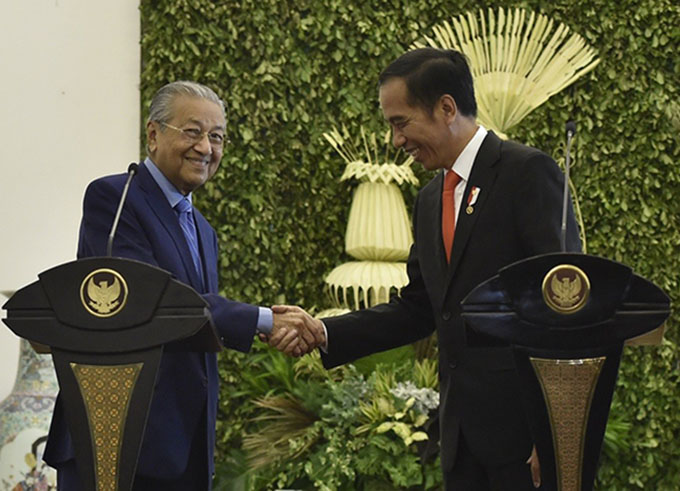 President Joko “Jokowi” Widodo (right) shakes hands with Malaysian Prime Minister Mahathir Mohamad after giving a joint statement at the Bogor Palace. Image: Puspa Perwitasari/Antara/Jakarta Post
By Marguerite Afra Sapiie in Jakarta
President Joko “Jokowi” Widodo and Malaysian Prime Minister Mahathir Mohamad have met for a bilateral talk, exploring issues ranging from education for Indonesian children in Malaysia to border negotiations.
Jokowi welcomed Mahathir at the Bogor Palace on Friday. This marked the first foreign visit of Mahathir, the world’s oldest elected leader, to an ASEAN country since he was sworn in as prime minister for the sixth time on May 10.
The two leaders held a tete-a-tete followed by a closed meeting between Indonesian and Malaysian delegations, during which they discussed various issues, such as strengthening bilateral relations.
Speaking in a joint statement, Jokowi said Indonesia and Malaysia shared the same commitment to promoting good governance and combating corruption.
They both agreed on the importance of connectivity and the settlement of unresolved border problems.
“[Indonesia] in particular called for the protection of Indonesian migrant workers in Malaysia, as well as the development of schools for Indonesian children in Malaysia,” Jokowi said.
Almost 2 million Indonesian migrant workers currently work in Malaysia.
Mahathir acknowledged the need for the children of Indonesian migrant workers in Malaysia to have their rights to education fulfilled. A number of schools had been established in Peninsular Malaysia, though more were needed, he said.
“However, schools for Indonesian children are not yet established in Sabah and Serawak and, therefore, we will improve this [situation],” Mahathir said, adding that his government was committed to working with Jakarta to resolve border issues.
Marguerite Afra Sapiie is a journalist with the Jakarta Post.

Article by AsiaPacificReport.nz
]]>Mendi mayhem destroyed 42,000 vaccine shots for PNG children

 The blazing Air Niugini Link PNG aircraft at Mendi airport. Image: EMTV News
By Sally Pokiton in Port Moresby
Papua New Guinea’s mayhem in the Southern Highlands capital of Mendi earlier this month caused destruction of 42,000 vaccine innoculations meant for children aged under 5.
The innoculations were ruined when the Air Niugini Dash 8 aircraft was set alight at Mendi airport.
A disgusted Emergency Controller of the Emergency Disaster Restoration Team, Dr Bill Hamblin, said the rampage also saw supplies stored in two warehouse in Mendi looted.
“Not only were supplies stolen up there and resold on the streets, but the plane that was destroyed was carrying vaccines for under 5-year-old children – 42,000 vaccines destroyed,” he said.
“Now we have no replacement for those in the country where UNICEF is trying to replace those at the moment.
“The people who do those sorts of acts don’t belong in our society, they belong behind bars,” Dr Hamblin said.
“I’ m looking forward to the arrest of those people and that they get to see the full force of the law.”
He thanked all development partners and countries in the region which supported the Emergency Disaster Restoration Team.
“We wholeheartedly thank them for the support they’ve put in, without them, the scale of disaster would have been much worse, people could have died needlessly,” Dr Hamblin added.
Sally Pokiton is a reporter for Loop PNG.
Article by AsiaPacificReport.nz
]]>Newsletter: New Zealand Politics Daily – June 29 2018 – Today’s content
Newsletter: New Zealand Politics Daily – June 29 2018 – Today’s content
Editor’s Note: Here below is a list of the main issues currently under discussion in New Zealand and links to media coverage.
[caption id="attachment_297" align="aligncenter" width="640"] The Beehive and Parliament Buildings.[/caption]
Primary industries
Sasha Borissenko (Newsroom): NZ animal welfare framework meaningless: expert
Farah Hancock and Melanie Reid (Newsroom): Farmwatch calls for cameras in cowsheds
Farah Hancock (Newsroom): ‘Abhorrent’ behaviour has no place in dairy industry
RNZ: MPI says it can’t legally secretly film for farm abuse
Herald: Animal welfare minister ‘disturbed’ by new abuse case
No Right Turn: MPI looks the other way on animal abuse
RNZ: ‘Heartbreaking’ footage of cow beating released by animal rights group
Newshub: Hidden cameras capture farmer’s sickening cow abuse
Esther Taunton (Stuff): MPI investigating after sharemilker filmed hitting cows with steel pipe
Eric Frykberg (RNZ): Kiwifruit growers could get huge payout from government
Tom Pullar-Strecker (Stuff): More PKE questions for Fonterra after Greepeace allegations
Marty Sharpe (Stuff): Fishing company director unsuccessful in appeal against conviction for going to sea without an observer
Tracy Neal (RNZ): Mycoplasma bovis fears rise in Nelson, Marlborough, Tasman
Dean Alexander (Southland Times): We are borrowing – no, taking – from the future
Health and wellbeing
Emily Ford and Jarred Williamson (Stuff): Buildings vs equipment: Middlemore Hospital weighs up its capital spend
Jo Moir (Stuff): State Services probe into conflict of interest allegations against senior health boss
RNZ: National’s Jami-Lee Ross hounds health minister David Clark over audit claims
RNZ: Christchurch Hospital: Ministry keeps quiet on cost overruns
Point of Order: Health targets come down – and so the critics fix their sights on David Clark
Te Aniwa Hurihanganui (RNZ): Stopping SI: Curbing high rates of pregnant Māori mothers smoking, and wahakura/pēpi pods
Emma Russell (Herald): Dying man and wife at ‘breaking point’ due to restrictions in family carers policy
Andrea Vance (Stuff): Facing up to an age old problem
Patrick Gower (Newshub): ‘I have glaucoma – I have been going blind’
Isaac Davison (Herald): AUT signs deal with PharmaCann to develop locally-made, cheaper medical cannabis
Amy Wiggins (Herald): New Zealand beverage industry to consider sugar reduction target after Australian pledge
Rachael Kelly (Southland Times): ‘Dear Jacinda: please keep our maternity centre open’
Housing
Herald: Correction and apology to David Parker
Claire Trevett (Herald): Housing Minister Phil Twyford wary KiwiBuild will be ‘state-backed gentrification’
Thomas Coughlan (Newsroom): KiwiBuilds for less than $650k in 2020
Sophie Boot (BusinessDesk): Phil Twyford hopes Kiwibuild will drive down construction costs
Jason Walls (Interest): Twyford wants to ‘drive down’ KiwiBuild price cap
Claire Trevett (Herald): 400 affordable homes tagged for Northcote development as KiwiBuild start date looms
Henry Cooke (Stuff): 400 KiwiBuild homes for large Goverment housing development in Northcote
Dan Satherley (Newshub): Can’t solve the housing crisis without crashing the price of housing – Brash
David Hargreaves (Interest): It’s great to see first home buyers getting into the market – but the risks are looking very real
RNZ: Tauranga’s Bella Vista development liquidators seek $4.1m
Employment
Hamish Rutherford (Stuff): Employees feel most secure in their jobs since before the financial crisis
Gordon Campbell (Werewolf): On putting the cost of the nurses (and teachers) pay rounds in perspective
Chris Trotter (Daily Blog): Employers On The Warpath
Richard Rudman (Politik): The cookbook from the past
Barry Soper (Newstalk ZB): Impatient unions flex their muscles with strike talk
Ryan Dunlop (Herald): Industrial action and strikes possible across nursing, MBIE, IRD and teaching
Oliver Lewis (Stuff): District health boards to cancel thousands of procedures ahead of nurses’ strikes
Herald: Massive strike by MBIE and IRD staff confirmed
Newshub: Strike on the cards after ‘bizarre’ pay offer from MBIE
John Lewis and Mike Houlahan (ODT): Teachers latest to threaten strike action
George Heagney (Manawatū Standard): Half-day strike a chance after teacher pay vote
Gia Garrick (RNZ): Domestic violence bill unfair to small businesses – National
Transport and road safety
Newshub: ‘Time for some rebalancing’: Business leader welcomes public transport push
1News: Government announces new $14 billion transport plan to free up Kiwis from gridlock traffic
Nick Truebridge (Stufff): Government upping transport investment, but Aucklanders face fuel tax double-whammy
Hamish Rutherford (Stuff): Transport Minister reveals the impact of new fuel taxes, critics dismiss his figures
Simon Wilson (Herald): Safety shares top spot in new transport priorities
Simon Wilson (Herald): Government announces 99 per cent rise in road safety spending
Thomas Coughlan (Newsroom): Bikes the loser in transport strategy
Newstalk ZB: Cabinet approves $4 billion transport plan
RNZ: Govt raises excise duty on fuel by 10.5 cents
Joe Ascroft (Herald): Fuel tax will hurt the poor more as a share of their income
Dan Satherley (Newshub): Labour MP and homeowner Louisa Wall ‘feels wonderful’ about the fuel tax as it will keep her rates down
Michael Reddell: Regressivity, petrol taxes, and ministerial PR
Simon Wilson (Herlad): Believe it – cycle lanes will be this city’s new arteries
Herald Editorial: Get cracking on road safety measures
Dan Satherley (Newshub): Should NZ’s highways have median barriers?
Newshub: 238 drivers pinged in three hours outside Masterton primary school
Justice and police
Jared Savage (Herald): Police Minister Stuart Nash unaware of ‘unacceptable’ comments before Wally Haumaha promoted to deputy commissioner
Jared Savage and Phil Kitchin (Herald): Louise Nicholas ‘hit the roof’ when Wally Haumaha appointed as deputy police commissioner
Vera Alves (Herald): Same-sex proposal makes for extra special graduation from Police College
Hawke’s Bay Today Editorial: No win situation for police if a driver flees
Tommy Livingston (Stuff): ‘Disappointment’ over $300K memorial to Justice Sir Robert Chambers
Hit & Run allegations
Sam Sachdeva (Newsroom):Inquiry into spy ties to ‘Hit & Run’
Andrea Vance (Stuff): Spy watchdog to probe Hit & Run claims
Herald: Spy watchdog to investigate intelligence agencies’ role in events described in Hit and Run
RNZ: Nine to Noon: Retiring Chief of NZ Defence Force
Government
Anna Bracewell-Worrall (Newshub): Advisory Group notes meeting subject to OIA, stops taking minutes
Newshub: New Zealand First website finally active after almost seven months
International relations
Laura Walter (Stuff): Hiroshima witness urges NZ to lead nuclear weapons elimination
Anna Bracewell-Worrall (Newshub): Never again: Atomic bomb witness urges New Zealand to lead on ending nuclear weapons
Michael Reddell: The PRC and New Zealand: an Australian perspective
Consumer finance, welfare, inequality
Newshub: Sick Kiwi woman’s unending nightmare of debt
Dale Owens (Newsroom): The war on payday loans
Mike Treen (Daily Blog): Changes to benefit sanctions regime welcome, but…
Parliament
RNZ: Phil Twyford told off by Speaker for ‘unacceptable’ abuse of process
Claire Trevett (Herald): Housing Minister Phil Twyford told off for cheeky answers to National’s Judith Collins
Henry Cooke (Stuff): Phil Twyford admonished by Speaker over inadequate answers to written questions
Jenna Lynch (Newshub): Phil Twyford told off for dodging KiwiBuild questions
Point of Order: Housing Minister Twyford is told to be succinct – but quality is beyond the Speaker’s control
Caroline Botting (House & Garden): Green Thinking: MP Chloe Swarbrick has never owned a car
Regional development
Tova O’Brien (Newshub): Leaked: Shane Jones’ ‘$1b fund’ is several hundred millions short
Stuff: Shane Jones’ $1 billion a year provincial fund is several hundred million short
Business/Economy
Brian Fallow (Herald): Debt danger puts economy at risk
Jamie Gray (Herald): Reserve Bank takes on more cautious stance as clouds appear
Matthew Hooton (Herald): Business uncertainty to get worse
Listener Editorial: NZ’s falling business confidence reflects the true price of ministers’ potshots
John Milford (Stuff): Minister, concerns from business aren’t junk
BusinessDesk: FMA questions NZX surveillance and expertise
Talisa Kupenga (Māori TV): Chinese welcome Māori business on leading online platform
Education
John Gerritsen (RNZ): NCEA pass rates drop in more accurate count
RNZ: ‘It’s about increasing equity in participation in tertiary education’
Edward Gay (RNZ): Alleged cheating services for students to pay $2m in settlement
No Right Turn: A shakedown
Chloe Winter (Stuff): Strong investor interest expected for Ministry of Education’s new Wellington home
Alexander Robertson (Herald): Nobel prize winner Thomas Nash becomes social entrepreneur in residence
Te reo Māori
Sally Blundell (Listener): Is te reo Māori on life support or a language about to go mainstream?
John Boynton (RNZ): Language the key to knowing a person – te reo Māori expert Sir Tīmoti Kāretu
Leo Horgan (Māori TV): Te Taura Whiri board gets first wahine chairperson
Newshub: Rotorua opens first bilingual English and Māori playground
Euthanasia
Jeremy Rees (Newsroom): Euthanasia bill should not go ahead: law firm
Jeremy Rees (Newsroom): ‘Allow people a choice over their manner of dying’
Sexual assault and abuse
Georgina Campbell (Herald/Newstalk ZB): Speaking Secets: Man tells of rape at Catholic school
Sasha Borissenko (Newsroom): Women lodge complaint against Russell McVeagh
Frances Cook (Herald): Teenagers swamp sexual assault helpline in first month of launch
Marama Davidson (Guardian): I had to tell my story of sexual abuse. Silence, shame and fear let it thrive
Immigration and refugees
Lincoln Tan (Herald): NZ identified as destination country for labour and sex trafficking
RNZ: Overstayer numbers up as immigration officers stretched
Torika Tokalau (Stuff): Family burgled shortly after moving to New Zealand for a safer life
Environment and conservation
Richard Harman (Politik): Endangered birds come home to roost
Conan Young (RNZ): New calicivirus strain in NZ longer than thought
Herald: Conservation Minister Eugenie Sage recommends taking power bill for ID on Great Walks
Valentina Dinica (Newsroom): If tourism levy the solution, what’s the problem?
Alice Wilkins (Newshub): NZ Govt yet to address single-use plastic bags, despite Australia’s progress
Mike Hosking (Newstalk ZB): Counter-intuitive Countdown’s fantastic plastic 15-cent bags
Taroi Black (Māori TV): World looks to Māori on environmental issues
Local government
Bernard Orsman (Herald): Council critics take another potshot at Phil Goff
Nick Truebridge, Todd Niall and Jackson Thomas (Stuff): Auckland Council signs off 10-year budget, as fuel tax continues to worry some councillors
Bernard Orsman (Herald): Auckland Council approves 10-year budget with 11.5c a litre petrol tax
RNZ: Auckland Council signs off on 10-year plan
Karoline Tuckey (Manawatū Standard): Mayor’s vote against 20-year plan ‘astounding’, Horowhenua councillors say
Collette Devlin (Dominion Post): Wellington council boss says Urban Development Authority should be integrated with transport
RNZ: Takaka grandstand to remain, community group takes reins
Newshub: Auckland Harbour Bridge to put on a light show for Matariki
Stuff: Auckland Harbour Bridge to light up for Matariki
Debrin Foxcroft (Western Leader): Local politician receives conflict of interest training after complaint
Multinational tax
Juha Saarinen (Herald): Tax-shirking multinationals face action
Dene Mackenzie (ODT): Multinationals told: Pay more tax on NZ income
IRD
Mike Treen (Daily Blog): Unite Union says IRD going rogue against Labour Government
RNZ: IRD to waive penalties over online payment glitches
Christchurch cathedral
Newshub: ChristChurch Cathedral announcement could finally bring clarity – Bob Parker
Newshub: ChristChurch Cathedral announcement due
Other
1News: John Campbell set to return to TV news with ‘roving brief’
Conan Young (RNZ): Sports survey shows low participation in club sports
Bayley Moor (Stuff): Māori Battalion museum to be built at Waitangi Treaty Grounds
Paul Gorman (ODT): Insider’s view of Kirk’s time in power
Ian Bassett (Herald): Abortion reformers need to explain why it should not be a crime
Phil Pennington (RNZ): Cladding consents causing delays in construction
Herald: Former Prime Minister Jenny Shipley shatters arm in nasty fall in Australia
Philip Matthew (Press Editorial): Leave our national anthem alone
Newshub: Drowning rates skyrocket despite law change
Herald: Synthetics death: sentence for supplier ‘incredibly light’ says MP backing harsher penalties
RNZ: Group considers taking action against Poi E video
Stuff: Dancing With The Stars: David Seymour sells ‘twerking suit’ for $10,000
Herald: David Seymour selling Dancing with the Stars twerking outfit
Victoria University (Newsroom): Anger, and the politics of blame]]>
Former PCF media intern welcomes Pacific newbies on NZ exchange

 Adi Anaesini Civavonovono of Fiji (left) and Elizabeth Osifelo of the Solomon Islands (both of the University of the South Pacific) against the green screen in the television studios during their visit to Auckland University of Technology this week. Behind them are the Pacific Cooperation Foundation’s Suzanne Suisuiki (partially hidden) along with AUT students Leilani Sitagata and Pauline Mago-King. Image: Del Abcede/PMC
By Rahul Bhattarai
It was a case of Pacific meets Pacific in AUT’s School of Communication Studies this week as one of the inaugural winners of the Pacific Cooperation Foundation internships welcomed this year’s new batch of four student journalists from Fiji, Samoa and Solomon Islands.
Pauline Mago-King of Papua New Guinea was a final year communication studies student in Madang when the internships began and she visited New Zealand in 2015 thanks to PCF.
Now she is a master’s degree student at Auckland University of Technology doing research into domestic violence and non-government organisation responses in her home country.
She says she knew the flexibility of the AUT programme was just right for her – “especially when you come from a country where there aren’t enough opportunities for a student to gain experience.”
AUT’s Pacific Media Centre hosted the PCF internship students and director Professor David Robie welcomed them, saying “we‘re just a small programme but with quite a reach, we have an audience of up to 20,000 on our Asia Pacific Report website”.
The PMC, with a small part-time team, covers the region with independent news as well as conducting out a discrete media research programme.
Three of the students on the two-week internship in New Zealand come from the University of the South Pacific and the student newspaper Wansolwara – Elizabeth Osifelo (Solomon Islands), Salote Qalubau and Adi Anaesini Civavonovono (both from Fiji). The fourth, Yumi Talaave, is from the National University of Samoa.
The interns toured AUT’s communications facilities, including the state-of-the-art television studies and control room.
 Pacific Media Centre student journalist Rahul Bhattarai and University of Samoa’s meet King Kong on the AUT television studio green screen. Image: David Robie/PMC
They then visited AUT’s journalism newsroom and media centre.
The students also watched the final editing stages of a short current affairs documentary by two AUT students involved in the PMC’s Bearing Witness climate change project.
Hele Ikimotu and Blessen Tom travelled to Rabi Island in the north of Fiji in April and filmed the documentary Banabans of Rabi: A Story of Survival in the hope of spreading awareness about the impact of climate change in the Pacific.
Their lecturers, Jim Marbrook and David Robie, hope to enter the documentary into film festivals and an earlier video by the students as part of the project gives a glimpse of life on the island.
Suzanne Suisuiki, communications manager of PCF, says these kinds of internships provide the opportunity for Pacific students to gain wider exposure and better understanding of media.
“We wanted interns who had a sense of appreciation of the media industry,” she said.
She plans to next year expand to the wider Pacific region, including Tonga and Papua New Guinea.
Two students were also selected from New Zealand to go to Fiji and Samoa.
 The Pacific Cooperation Foundation internship students with Pacific Media Centre students and staff at AUT this week. Image: Del Abcede/PMC
Article by AsiaPacificReport.nz
]]>Where in the world is the Pacific? NZ researchers talk strategy reset

A diverse group of scholars discuss resetting New Zealand’s Pacific-oriented foreign policy agenda. Video: NZ Institute of Pacific Research
By Sri Krishnamurthi
Debate has been lively and vigorous in response to the New Zealand government signalling a shift in foreign policy towards the Pacific Islands region.
To have a look closer at that debate the New Zealand Institute for Pacific Research (NZIPR) has brought together a diverse group of scholars from the University of Auckland who have research experience in the Pacific to discuss New Zealand’s Pacific-oriented foreign policy agenda, but more broadly to consider “where in the world is the Pacific?”
Associate Professor Yvonne Underhill-Sem (director of NZIPR and Development Studies, University of Auckland) chaired the discussion aptly titled “NZIPR Critical Conversation seminar”.
READ MORE: Browse RNZPR’s Lali blog
It was introduced by Professor Jenny Dixon (Deputy Vice-Chancellor, Strategic Engagement, University of Auckland) and featured Georgina Roberts (Ngāti Porou, Director of Pacific Connections at the Ministry of Foreign Affairs and Trade – MFAT), Associate Professor Damon Salesa (Pacific Studies at the Centre for Pacific Studies, University of Auckland), Dr Mark Busse (senior lecturer in Anthropology, University of Auckland), Dr Lisa Uperesa (senior lecturer in Pacific studies at the Centre for Pacific Studies, University of Auckland) and Associate Professor Chris Noonan (associate dean postgraduate international in the Faculty of Law, University of Auckland).
“The New Zealand government has invited everybody to think differently about how they do development in the Pacific and it came under this Pacific reset strategy. Winston Peters (Foreign Minister) took himself off to Australia to announce that this is what New Zealand is going to do,” Associate Professor Underhill-Sem said in her opening remarks.
“Since then there has been a lot of fabulous articles, discussion, blogs written about what does this all mean? What do we mean by a reset? And what are we resetting from – but more importantly what do we imagine the Pacific to be, how do we understand the Pacific?
“The question I’m asking [of the researchers] is what are the most meaningful boundaries that they undertake their research in, and hopefully we get an idea of how we can deal with some of the substantive development issues that really haven’t changed regardless of what the New Zealand government has done.
“We still have enduring development issues that need to be addressed.”
‘Shifting the dialogue’
Georgina Roberts of MFAT defined the Pacific reset as “shifting the dialogue” as the perspective of the Pacific changed.
“Statements were made at the beginning of March by the minister around needing to change the approach New Zealand takes with our region and moving from more of a donor-recipient relationship to one of partnership.
“It was about doing things differently, and that was to be underpinned by five key principles that was the basis of the reset, understanding, friendship, mutual benefit, collective ambition and sustainability.”
She said that meant the government had to interact, engage and collaborate with all the parties and stakeholders who had an interest in doing things better with their Pacific partners.
In the budget, the government had decided to allocate $714 million over the next four years in additional overseas assistance to mostly support the “Pacific reset”.
“Where will that money be spent? Climate change is a significant one, human development and this is an area of health and education for example, inclusive development and that means doing more to support youth and women in political representation and value issues, things like human rights, governance and democracy promotion – these are areas that haven’t gained as much attention in the previous years,” she said.
“There are a lot of challenges in our region.”
Working collectively
There were 30 government agencies that were involved in the Pacific and it was the government’s ambition to have them working collectively.
That led the discussion to the historical perspectives of the Pacific and what were the meaningful boundaries both geographically and temporally in the region, presented by Associate Professor Damon Salesa.
“New Zealanders don’t understand what New Zealand is. There are two New Zealands constitutionally – there is the New Zealand proper which is the New Zealand that most New Zealanders think of, that is North Island, South Island, Stewart Island and the Chatham Islands.
“But there is another constitutional entity called the realm of New Zealand which goes as far south as the Ross Territory and Antarctica and as far north as Tokelau, and includes the Cook Islands and Niue.
“So, part of that points out this other history of the New Zealand dollar, New Zealand language and New Zealand passport – those complexities remind us that even New Zealand is a contested, misunderstood concept for New Zealanders,” he said.
That meant there was a lot at stake with how New Zealanders defined the Pacific, and it was particularly important in terms of foreign policy.
It took in the definition of New Zealand’s Pacific, it was very specific in what the Pacific was.
“What New Zealand isn’t is, as seen by the Pacific people who live here.”
‘Two New Zealands’
“If we think about New Zealand as a nation the two most distinctive things about it, are Tangata Whenua (Māori ) and Tangata Pasifika (Pacific peoples). They are what make New Zealand not Australia or Canada. That is something very powerful about that way of being New Zealanders.
“For me the last frontier is finding a place for the Treaty (Treaty of Waitangi) in our foreign policy,” Associate Professor Salesa said.
Dr Mark Busse spoke about anthropological ways of defining the Pacific. He said there were two things that were important to consider – that even small communities, such as the one he lived in, in Papua New Guinea, were affected by international politics and international capitalism.
He said they had a profound impact on the lives of people living in those communities.
“I would suggest that the Pacific is less a geographical space or area, than a set of deep social and historical relationships, its people face large challenges, but I expect they will face those challenges by using values and knowledge that has been passed down over generations,” Dr Busse summed up.
What countries and territories, and their moving demographics and diaspora were considered around the Pacific to be in the Pacific, was Dr Lisa Uperesa’s discourse.
She said from the vantage point of the United States, ongoing migration of Pacific peoples, Micronesians, was shifting with people moving to Guam and Hawai’i.
Largest Pacific city
In the eyes of Americans, they would be surprised to hear that Auckland was the largest Pacific city in the world, the anthropologist and Pacific Studies senior lecturer said.
Her studies concentrated on Samoa and the fact that approximately 400,000 Samoans live abroad, primarily in the US, Australia and New Zealand, compared to 250,000 in American Samoa and independent Samoa.
“I focus on Samoan migration and mobility looking specifically at sport, and this has provided new boundaries of the definition of Pacific peoples and the way they move,” she said.
This project, she said, used sport to think about the history of migration and the place of sport in education and it also helped to reinforce the importance of place and importance of community history and agenda.
“The new Polynesian triangle includes cities like Auckland, Sydney, Honolulu, Los Angeles and Salt Lake City and in this vision the Pacific encompasses geographies and cartographies of presence, it is where Pacific people are,” she said.
Associate Professor Chris Noonan said that from a legal and trade perspective, the Pacific region didn’t exist.
“In the Pacific, the Pacific negotiations were supported by the Pacific Islands Forum Secretariat and funding from Europe through the Pacific Islands Forum Secretariat and negotiations took place because of institutional structures that were in place and not necessarily because the Pacific had a huge commonality,” said Associate Professor Noonan.
He outlined how and why the Pacific region negotiated both as a bloc and as individual countries.
Associate Professor Underhill-Sem said it was important that research in the Pacific was allowed to flourish and be given exposure through discussions like this “critical conversation”, which will be an on-going event on the NZIPR calendar.
Postgraduate AUT Pacific Media Centre students Sri Krishnamurthi and Blessen Tom (video) reported on the seminar in partnership with the NZ Institute for Pacific Research.
Article by AsiaPacificReport.nz
]]>Indonesia beefing up disputed Papua border force in bid for minerals

 Papua’s disputed border with Papua New Guinea … hunt on for mineral riches. Image: PNG Blogs
By Albert Agua in Waigani
Indonesia is driving towards the Papua New Guinea border because of a recent discovery of huge mineral deposits in the Star Mountain regency just at the back of Tabubil Ok Tedi mine.
“Reportedly, there is gold, copper, coal, and thorium – a safer radioactive chemical than uranium,” says president-director of PT Antam Tato Miraza, who was then Director of Development, reports Pusaka.
“Geological Survey shows its potential is good and promising.”
READ MORE: West Papua Liberation Army behind deadly Nduga attack
The core of the deposit is, however, found in the disputed area of the border between PNG and Indonesia.
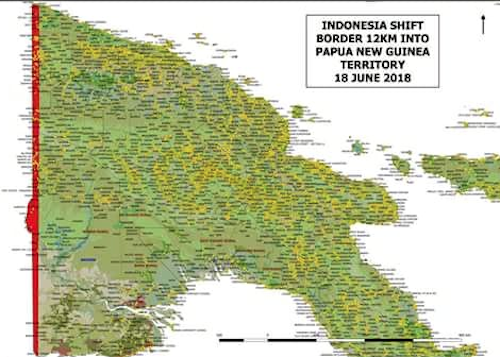 The claimed Papua border “shift” – the red zone near Ok Tedi mine. Source: PNG Blogs
Recently, Indonesian troops patrolled to Korkit and surveyed the land just around 40km from Ok Tedi, less than 10km from the border marker in the Korkit village to build another military base.
The citizens from Korkit village who are PNG citizens are moving into the new Indonesian village.
This is just 20km from the mineral deposit area.
Thorium, a weakly radioactive element that can be used as fuel in a nuclear power reactor, has been discovered in the disputed area and this has been the sole driver for Indonesians to force themselves into the disputed territory.
Also the “explorers” are actually the military carrying out the exploration.
The Indonesians have been transporting mining supplies to the area and the locals are prepared to wage war if the exploration continues under heavy military security.
Wutung border improvements
Meanwhile, major improvements in infrastructure and capacity are planned for the PNG-Papua border at Wutung, reports Loop PNG.
The improvements are planned as part of the PNG government’s West Sepik Special Economic Zone (SEZ).
National Planning Minister Richard Maru and delegates of a fact-finding mission to West Sepik visited the border area last week.
Loop PNG also reports that an international bus service and terminal are planned for the Wutung border post.
Albert Agua is an academic at the University of Papua New Guinea.
Article by AsiaPacificReport.nz
]]>Bainimarama attacks opposition ‘lies’ for promoting Fiji ethnic hatred

 Fiji Prime Minister Voreqe Bainimarama giving a public address. Image: The Fiji Times File
By RNZ Pacific
Fiji’s prime minister Voreqe Bainimarama has again hit out at opposition parties, calling them liars and accusing them of sowing division in the ethnically diverse country.
Bainimarama devoted much of his speech at the opening of a provincial council meeting in Fiji’s west to sharp criticism of his opponents.
He accused them of infighting, peddling lies and promoting hatred between different religious and ethnic communities.
In his most critical speech yet during election year, Bainimarama spoke out against talk of a Muslim or Chinese “takeover” of Fiji.
He said it made him angry to hear of Muslims being pitted against Hindus and provincialism in the indigenous iTaukei community.
Sayed-Khaiyum defended
He defended the Muslim Attorney-General, Aiyaz Sayed-Khaiyum, who he said had made great contributions to Fiji’s development and was a trusted partner and friend.
Bainimarama said Fiji Muslims, like every other citizen, were an integral part of the nation.
He said there was no chance of a Chinese takeover in Fiji and Fiji owed China only 10.6 percent of total national debt.
The prime minister said his government had delivered genuine change and that would be seen in the budget due to be delivered today.
With the election date still to be announced, Bainimarama urged people to use their vote wisely.
The Pacific Media Centre has a content sharing partnership with RNZ Pacific.
Article by AsiaPacificReport.nz
]]>

 Muhammad Yusuf’s death … “credibility of rule of law in Indonesia at stake,” says RSF. Image: RSF
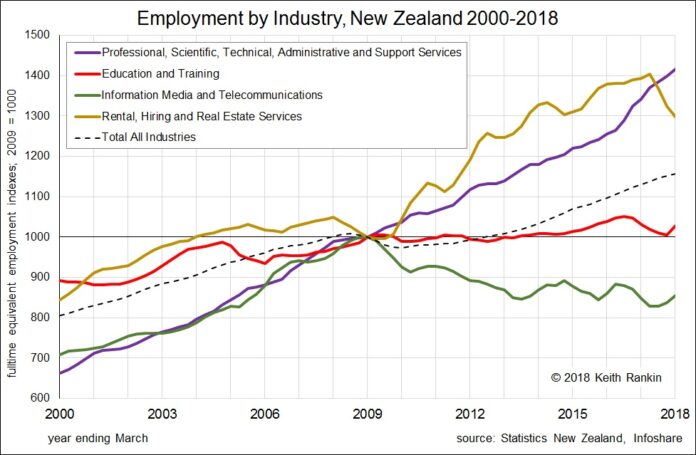




 Days after Cyclone Winston made landfall on Fiji’s largest island Viti Levu in February 2016, this was what was left of the Rakiraki Market. It used to house more than 200 vendors, but was devastated by the cyclone’s record-breaking winds. Pacific Islanders fear global warming will yield even more frequent and devastating storms in the future. Image: Anna Parinicbnd/UN Women
 University of the South Pacific’s Professor Elisabeth Holland. Image: 2°C





 “Tambay” Genesis Argoncillo died in police custody from “multiple blunt force trauma”. Image: Rappler cellphone


 PNG Prime Minister Peter O’Neill (centre left) meets Premier Li Keqiang in Beijing , China. Image: EMTVNews



 Part of the excavated road in the Angore area. Image: Michael Passingan/PNG News


 The MAG 58 Model 60-20 machine gun … “robust, deadly and effective”. Image: My Land, My Country blog
 Machine guns mounted on a cabin-top truck in the Southern Highlands. Image: PNGAttitude


 PNG Defence Force troops in the Southern Highlands after the Mendi rioting last week. Image: PNG Blogs


 The late Bernhard Marjen as a child in West Papua. Image: Sincha Dimara/My Land, My Country blog