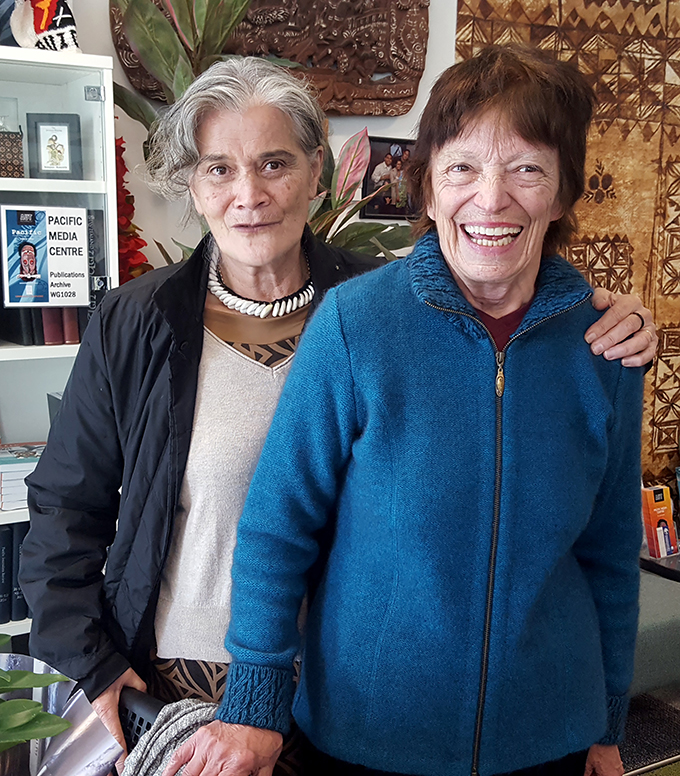
 Tui O’Sullivan (right) with Tagaloatele Peggy Fairbairn-Dunlop at the Pacific Media Centre recently when retiring. Image: Del Abcede/PMC
Lifetime of devotion to Māori and Pacific student success

PROFILE: By Leilani Sitagata
Educator and kuia Tui O’Sullivan has recently retired from Auckland University of Technology after close to 40 years of service.
Born and breed up North in the heart of Ahipara, she says choosing to do tertiary study was the right choice for her.
“Growing up as a young girl you were told to pick from three directions – academic, commercial or homecraft,” O’Sullivan says.
“I never had a burning desire to become a teacher, but it just seemed like the best fit for me to follow that path.”
Over the years, O’Sullivan (Te Rarawa and Ngati Kahu) gained a Bachelor of Arts, Master’s in Education (Māori), a Diploma in Ethics and a Diploma in Teaching.
“Coming from a town where you didn’t know names, but everyone was Aunty or Uncle, Auckland was by far a change of scenery.”
O’Sullivan was appointed as the first Māori academic at AUT, then AIT.
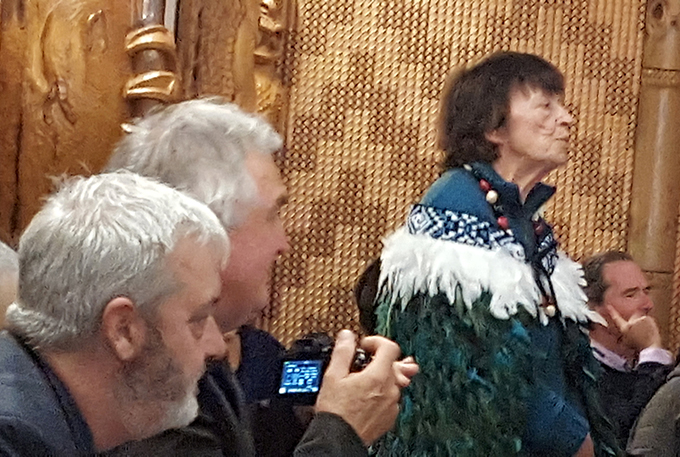 Tui O’Sullivan at her recent Auckland University of Technology farewell on Ngā Wai o Horotiu marae. Image: Del Abcede/PMC
Evening classes
She says she taught evening classes on literacy twice a week and had many people from the Pacific wanting to improve their written and oral skills.
“A number of them were members of church groups who wanted to polish up for competitions involving writing and speaking.”
Alongside the night classes, O’Sullivan was involved in the formation of the newspaper Password.
“We formed a newspaper which explained certain things about living in New Zealand, among other things like the Treaty of Waitangi and Māori culture.”
O’Sullivan says there was an increasing number of immigrants to her English classes and Password helped with their immersion into a new culture.
While working in general studies, she says she helped teach communications English and basic skills to full time students, predominantly young men.
However, women started to come along to O’Sullivan’s teaching and the numbers slowly grew.
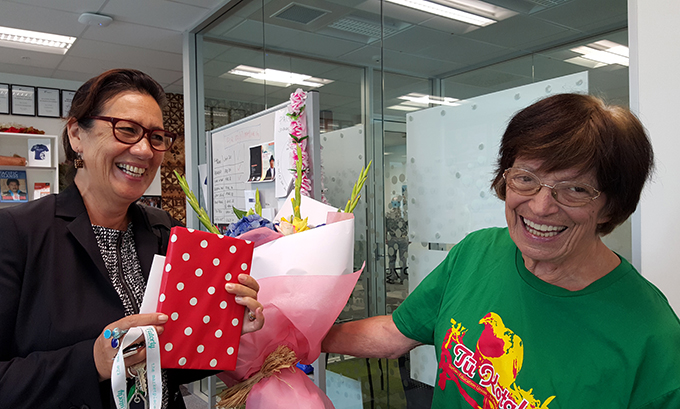 Tui O’Sullivan (right) with fellow foundation Pacific Media Centre advisory board member Isabella Rasch. Image: Del Abcede/PMC
First women’s group
O’Sullivan was part of the creation of the very first women’s group on campus.
“A senior lecturer approached a couple of us women staff asking if we could keep an eye out for the young women and be an ear should they need that.
“From there Women on Campus developed which looked after the interests of women students and staff members.”
She said they switched the name of the group over the years because what they originally chose didn’t have a ring to it.
“We were called Women’s Action Group for a while, but WAG didn’t sound too good.”
Another first for the university was the establishment of the Ngā Wai o Horotiu marae in 1997 which Tui said she’ll forever remember.
When the marae was officially opened more than 1000 people turned up to celebrate the momentous occasion.
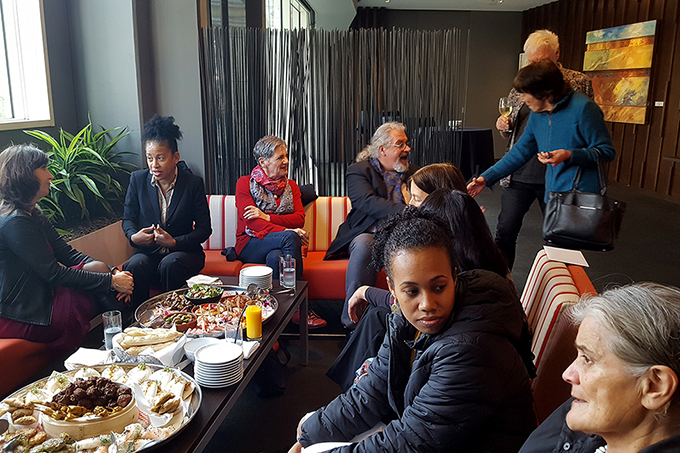 Students and staff at the Pacific Media Centre’s farewell for Tui O’Sullivan. Image: Del Abcede/PMC
Emphasis on diversity
The marae opening signified AUT acknowledging the Treaty of Waitangi and further emphasised the diversity within the university.
“The majority of staff here have had this willingness and openness to support and promote success for Māori and Pacific students.”
When asked what was one of the most gratifying times for her during her time at AUT, O’Sullivan simply says applauding the young people who cross the stage.
“I always seem to end up with lots of those lolly leis because people end up with so many, and they get off-loaded to me.”
O”Sullivan says that over the years she’s never missed a graduation for her faculty regardless of how many there are.
“Seeing students wearing their kakahu or family korowai, and others who have grown to learn more about their whakapapa and their place in the world.
“Those are the most rewarding times for me.”
O’Sullivan was the equity adviser for the Faculty of Creative Technologies and lectured in Te Tiriti o Waitangi and community issues. She was also a strong advocate of the Tertiary Education Union (TEU) and a foundation member of the advisory board for AUT’s Pacific Media Centre from 2007.
She insists she hasn’t left a legacy but has been part of an ever evolving journey that AUT is going through.
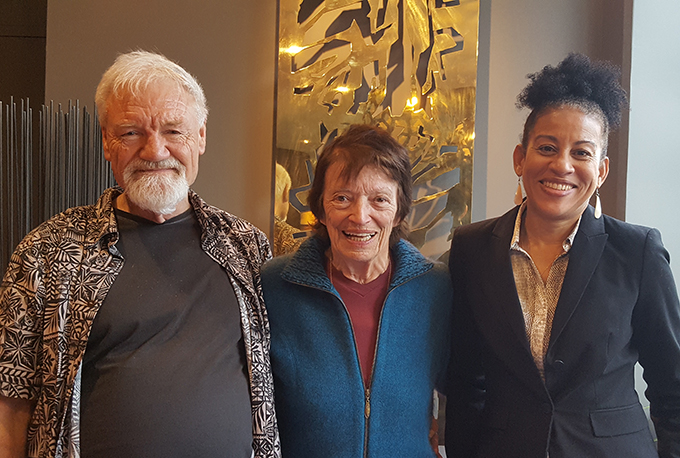 Tui O’Sullivan (centre) with Pacific Media Centre director Professor David Robie and advisory board chair Associate Professor Camille Nakhid. Image: Del Abcede/PMC

Article by AsiaPacificReport.nz
]]>New Caledonia celebrates Bastille Day and thinks about independence

By Dr Lee Duffield, recently in Kanaky/New Caledonia
The Quatorze Juillet (14 July) events in Noumea this month, as in any small French city, reflected the grand military parade down the Champs Elysees in Paris – ranks of soldiers and a senior officer taking the salute.
It was like a refrain from colonial times, kepis under the coconut palms, as if no breath of a wind of change was anywhere being felt.
The impression of total normality was strong also the evening before at the informal public celebrations concentrated on Noumea’s town square, the Place des Cocotiers.
READ MORE: Part 1 of a series of three articles on Kanaky/New Caledonia
This was patriotic enough, red-white-and-blue everywhere, (even with a can-can, and a visiting Army band from Australia), anticipating the joy of France’s victory in the World Cup football a few nights later. Mostly a big fete being enjoyed by a highly multicultural community.
Signs of the future
A taste of the inter-communal character of New Caledonia was given at the tail-end of the day’s parade, by a local cadet platoon slow-marching to a Melanesian chant.
It was not in the tradition of the Grande Armee of Napolean; it was imaginably the young officer corps of an independent country.
Not that a full independence is greatly expected from the coming vote, mandated under agreements made by the country’s political groups with the French government – the Matignon Accord (1988) and Noumea Accord (1998).
Opinion polls have been running strongly against it and even many in the indigenous Kanak community can be heard to say it is “not yet the time”.
Voices from other times
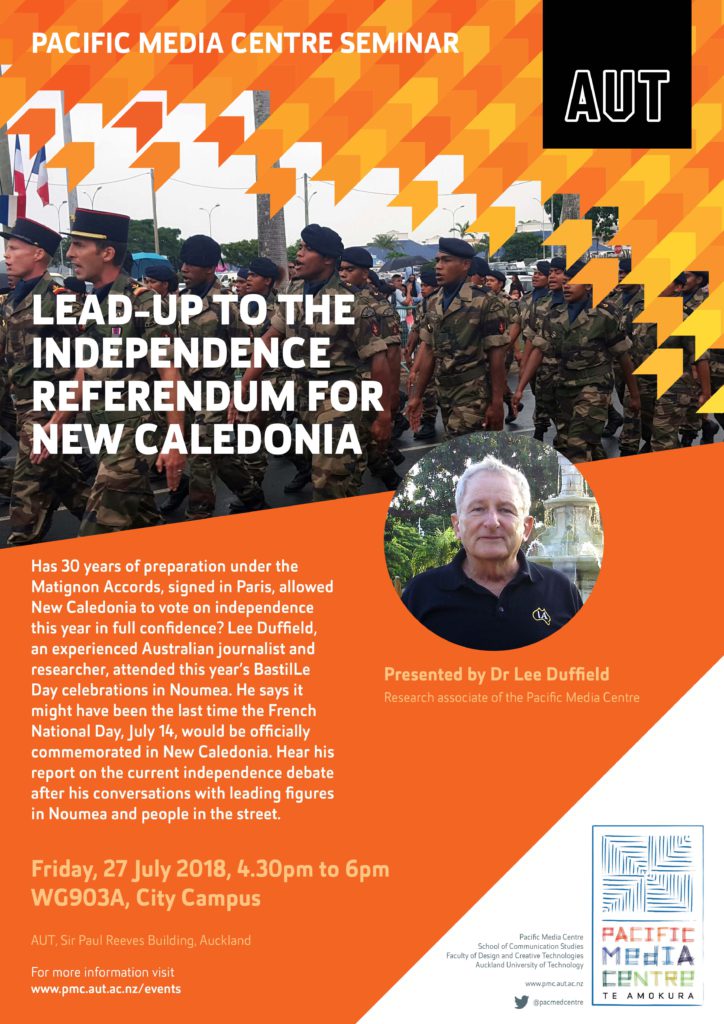 Dr Lee Duffield’s New Caledonia seminar to be hosted by the Pacific Media Centre at Auckland University of Technology today.
Certainly the weekend events of Bastille Day and then the World Cup made it “France Week”, not the best time to talk change.
“People realise the independence idea is not practical”, said “Jacques”, a fifth-generation member of the European settler society, the Caldoches.
A well-established and prominent business owner, he was uneasy about speaking under his own name on the divisive issue of the referendum – exposure would create difficulties of one kind or another.
But he was prepared to recite the standard analysis of the anti-indépendentiste cause, beginning with the observation that French investment and a high standard of living had won a lot of hearts.
“Even in the Loyalty Islands province, which is a big Kanak area, the opinion polls which always showed a strong ‘yes’ vote for independence – as much as 70 percent, are now showing 50/50 or even a slight ‘no’,” he says.
“Things have been slowly improving with the circumstances of life for most people, and I would agree some change and reform is a good thing, but slowly — it needs to be long-term.
“Women are helping. In the tribus, the villages, they do so much of the work providing for the household and raising children, and they are the practical ones.”
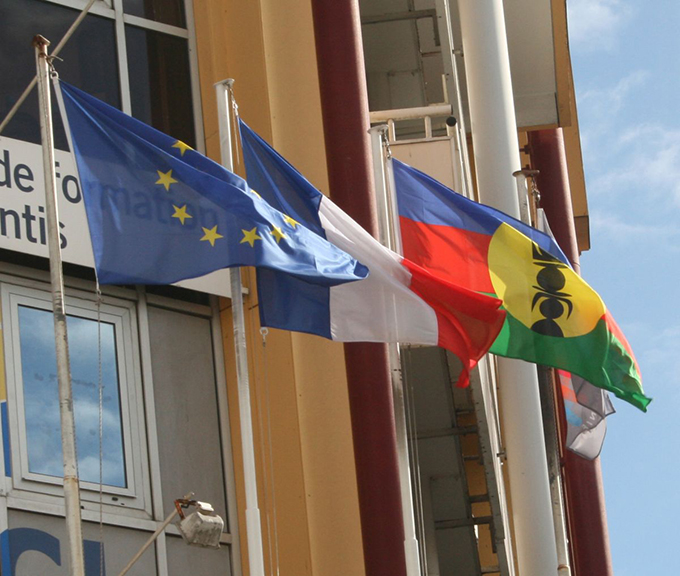 Three flags of Noumea – European Union, French tricolour and the independent Kanak ensign. Image: Lee Duffield
Keeping watch on the future
Jacques admits to being worried about what the future may hold, “only a little worried” over the idea of violence or revolt affecting his family.
He does take some comfort being able to tell of a precautionary doubling of the paramilitary Gendarmerie and National Police forces, reinforced from France with the approach of referendum day on November 4 – together with the availability of an extra intervention force in Tahiti.
Yet his most serious concern is about what can be agreed on next among the different parties.
“We don’t know what will take place after November 4, or what it will be like here in another 10 or 20 years.
“We definitely need a road map, and we should manage all this together.”
That is a common position of the Caldoche and the general settler community, which began falling back on prepared positions after the violent confrontations of the 1980s that brought new Caledonia close to civil war.
Even the most strongly “French loyalist” anti-indépendentiste parties, barring a few on the margins, want just the status quo – no fast forward but no winding back the clock.
They have committed to abiding by decisions of the referendum and have not talked of any attempts at stamping out the independence movement.
Gone are the days when the local European gentry had the ear of French ministers who were themselves brought up in the colonial era, and could hold off change.
New order
Instead the territory has been through 30 years of managed change, including ingenious and effective reforms, all falling short of a full independence, but all focused on the referendum process now about to start.
The changes:
- Power sharing in an elected territory parliament and executive Council, with both indépendentiste and anti-indépendentiste members.
- The formation of a consultative Senate for customary or traditional Kanak leadership (not unlike the body envisaged by Indigenous Australians in their Uluru proposals – struck down unexpectedly this year by Prime Ministerial decree). It gives additional representation to people from the Tribus, tribes or clans, who have a special customary legal status as well as their full French citizenship, and are subject to customary laws.
- Major funding of the government from France.
- A safety valve provision that says, independence will follow a “yes” vote, but after a “no” indépendentistes in the parliament can still get it reconvened, to have a second, or even third referendum.
- Three provinces with extensive powers and sustainable budgets set up after 1988, one of which (South province on the main island, Grande Terre) is predominantly “French”, the other two (North province and the Loyalty Islands) are Kanak territory and mostly run by local Kanak politicians.
Experience in government, money and Big Nickel
It all amounts to actual experience in governing a modern democratic state, more than just practising, with the idea that over the three decades the whole society would be “ready” for the decision to be taken at the referendum.
Money is important in setting up the lines of argument and conditioning people’s views about what they hope to obtain in their future.
Three big nickel mines with refining plants and modern ports produce more than 10 percent of the territory’s wealth but crucially well over 80 percent of its export earnings. All arguments come back to the importance of the industry to the economy and ways to get good returns that will benefit the local population.
The point is made everywhere on the anti-indépendentiste side and among neutral observers that actual independence would prompt likely reductions in French government support, over time, and a fall in investor confidence in France or countries like Australia.
Investment from China would almost certainly fill the gap – there is much worry about Chinese interest and ambitions in the Pacific region. Would a newly independent government, strapped for cash to provide benefits to its people, use its powers over immigration and economic policy to admit more participation from China?
What is the direct French financial commitment at this time?
Future security
France has already handed over all powers to the autonomous government in New Caledonia, except for military and foreign policy, immigration, police and currency – and the specific issue in this year’s referendum is whether those will be passed on as well.
The bulk of French national spending on the territory is to pay the soldiers, police and public servants including teachers – bringing up again the sound of marching boots on July 14.
Also various grants come to the local treasury through Paris, like $80 million over 4-5 years for economic development and professional development of personnel, from the European Union.
France is partnered with Australia and New Zealand in guaranteeing security in the South Pacific region. These have a protective role for the 278,000 French citizens in New Caledonia, but the regional connections are strong, so their decision-making this year is being watched closely far and wide.
Dr Lee Duffield is an independent Australian journalist and media academic. He is also a research associate of the Pacific Media Centre and on the Pacific Journalism Review editorial board. This article was first published by EU Australia, and the next two articles will be published by Asia Pacific Report over the weekend.
Article by AsiaPacificReport.nz
]]>An open letter to Israel: The global ‘blockade busters’ sail in peace

By Chris Graham on board the Al Awda
By the time you read this, I’ll be sailing on an old, converted fishing trawler from Sicily, Italy, headed for Gaza, Palestine, the tiny sea port in the bottom right corner of the Mediterranean Sea.
I’m on board the Al Awda as a journalist, covering the Freedom Flotilla to Gaza, an event staged every year or so to challenge the Israeli naval blockade that has been imposed on the Palestinian community for just over a decade.
Gaza is home to more than 2 million Palestinians. It’s a small strip of land that takes less than an hour to drive, from north to south. It borders Israel in the north, and Egypt in the south and is regarded as the world’s largest open air prison.
It’s called that because the people of Gaza do not have freedom of movement, like other global citizens. Their nation is occupied by Israel, which has prevented travel to and from by an air and land, in addition to the sea.
Israel’s rationale is that Hamas, the democratically elected leadership of Gaza, is a “terrorist” organisation that fires rockets.
Hamas does occasionally fire home-made, unguided rockets into Israel. Israel, by contrast, fires shells, sends drones, tanks, soldiers, naval ships, and American-built jet fighters. It has one of the most powerful armies on earth, as the body count – hopelessly one-sided in favour of Israel – should remind anyone.
That’s part of why I’m going to Gaza. I visited the West Bank in 2016, but was denied entry to Gaza by Israel. It is a nation with a long history of preventing journalists from scrutinising its actions.
Staring down Israeli army
I’m also going to report on the activists who are going to stare down one of the world’s great armies.
I’ve spent the past 10 days with dozens of them. I’m surprised at how inspired I’ve been.
In 2010, the Israeli Defence Force attacked the Mavi Marmara, a ship in the Flotilla with almost 700 activists on board. 10 were killed, at least six of them execution-style, including two journalists.
Israel was also subsequently found by the United Nations to have tortured hundreds of other activists in the days that followed.
The activists in the 2018 Flotilla also know that in the past few months, Israel has shot and killed more than 130 unarmed Palestinian protesters, during the Great Return protests, which have seen thousands more injured.
Footage of Palestinians – unarmed, waving flags – being sniped dead by Israeli soldiers on the other side of the border fence is shocking, and yet there has been barely any international response, including from Australia, which urged “both sides” to show restraint.
US ‘blind eye’
The Flotilla activists also know that there is little to no international sanction against Israel for its repeated violations of international and human rights law. Israel has a powerful friend in the United States, which routinely turns a blind eye to its violent excesses.
And yet, the 2018 Flotilla activists – featuring almost three dozen activists and three boats in total (a fourth has had to drop out) – are still prepared to get on boats and sail to Gaza, to try and break the Israeli blockade.
As a journalist, the threats I face are markedly reduced to those faced by the activists. I’m likely to be targeted in the initial raid by the Israelis, which, based on past experience, will be hyper-aggressive and violent.
But once the raid is over – once the Flotilla is under Israeli control – I’m likely to be treated far better than the activists on board.
I face at most a few days in jail, before being deported – ironically for illegally entering Israel. Of course, at no stage will I ever voluntarily enter Israel. I’m on a boat bound for Gaza, a city of another nation.
But instead, Israel will forcibly board the Flotilla in international waters, take the crew and passengers captive, and force them to an Israeli prison.
For this too, there will be no international sanction, although it pales into comparison compared to what the people of Gaza, and Palestinians in the West Bank face every day.
Deafening silence
The threat from Israel to journalists trying to report on the Freedom Flotilla is that all of your equipment will be confiscated, you’ll be jailed for a brief period, and you’ll then be deported, thus affecting international travel from that point forward.
But those threats are precisely why journalists should stare them down. They’re precisely why journalists should go on the Freedom Flotilla, and should find ways to get into Gaza, whether the Israeli military approve it or not.
Bad things happen when good people stay silent, as history well records. But horrendous things happen when media are prevented from scrutinising the actions of a state.
I hope to bring you stories from Gaza if the Flotilla breaks the blockade. But more likely, I’ll bring you stories of Israel once again flouting international and humanitarian law, and the deafening silence that inevitably follows from the international community.
I’ll file as soon as I’m able.
Chris Graham is the publisher and editor of New Matilda. He is the former founding managing editor of the National Indigenous Times and Tracker magazine. Graham has won a Walkley Award, a Walkley High Commendation and two Human Rights Awards for his reporting. Asia Pacific Report republishes this article with permission. New Zealand trade unionist Mike Treen is also on board the Al Awda.
Article by AsiaPacificReport.nz
]]>Mediterranean update from the Gaza ‘blockade busters’

Former Israeli Air Force “rescue” pilot Yonatan Shapira calls for a boycott of Israel. Video: RealNews
Pacific Media Centre Newsdesk
The three Gaza “blockade busting” flotilla boats (the Al Awda, Falistine and Freedom) with prominent human rights defenders representing nearly 20 countries, are now on the eastern Mediterranean heading for the port of Gaza.
The fourth boat the Mairaed will not continue with the flotilla at this time.
READ MORE: Fresh demand to end the blockade
Here is an update from the leading boat, the Al Awda, with the New Zealand representative, trade unionist Mike Treen, on board:
Update from the crew of #Alawda (25 July 2018):
“We have now sailed 5000 nautical miles from Bergen towards Gaza – with solidarity and medical equipment.
“Morale is high on board. It’s hard to understand how our politicians can sit to look at what happens when we see all that support from ordinary people who want to help other ordinary people. People who put human rights in front of political decisions.
“Put pressure on our elected officials, end the blockade and let us through. Greetings from the ship, 600 miles from breaking the blockade.”
Asia Pacific Report, through the Pacific Media Centre, is sharing Gaza Freedom Flotilla coverage with Kia Ora Gaza and Scoop Media.
Article by AsiaPacificReport.nz
]]>Sylvester Gawi: Papua New Guinea, a dream of the new Singapore?

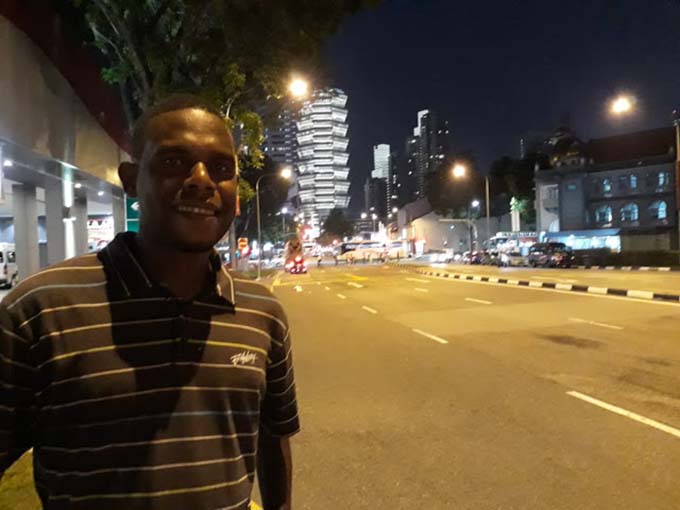 Silvester Gawi … “Our politicians should stop coming to Singapore for medical treatment alone, they should start focusing on making PNG become the next Singapore.” Image: Silvester Gawi
By Sylvester Gawi in Singapore
I hope you are reading this with ease and a positive mindset to help change the course of this beautiful country of ours – Papua New Guinea. My first time experience here has made me raise questions about how our economy has been mismanaged over the last 40years.
I’ve come to know this place from reading books, magazines, watching videos, documentaries and even looking it up on the internet.
From the countless travel magazines in secondhand shops in Lae in the 1990s to the LCD screens of the most sophisticated smartphones accessed by almost all school age kids in PNG today, Singapore has literally changed in front of our eyes.
I read with much interest about how Singapore has transformed itself from a small island nation to become one of the most developed countries in the world.
Singapore’s rise to power
Singapore has a rich history of civilisation. It was once colonised by the British empire. During the Second World War it was invaded by the Japanese, and later taken over again by the British after the war when Japan surrendered to the Allies.
The failure of Britain to defend Singapore during the war forced the people to cry for merdeka, or self governance. It 1963, Singapore became part of Malaysia, ending 144 years of British rule on the island.
Since gaining independence from Malaysia on August 9, 1965, Singapore has since progressed on to be the host of one of the biggest and busiest air and sea ports in the world.
Lessons for PNG
Papua New Guinea has some of the world’s largest natural resource deposits in gold, copper, timber and now the Liquefied Natural Gas (LNG) or the PNG LNG Project which is worth US$19 billion.
Papua New Guinea’s GDP per capita in 2017 was US$2401. The highest so far was in 2015 when our GDP per capita was US$2402.
Singapore’s GDP per capita continues to grow annually and it is now US$55,235.
Singapore has been able to made its way to becoming a developed country in just under 53 years of Independence. Its government subsidises housing, medical bills, education, public transport and so on, and increases economic opportunities for middle to low income earners.
It is an island country without any gold, copper, nickel mines, LNG project, organic coffee, timber or any other natural resources. It is a very strategic port of transition where goods and raw materials are brought here first then transported elsewhere across the world.
We also have the Lae port in PNG, which is one of the the most most strategic ports in the Southern Hemisphere. It is where cargoes from across the world transit into the Australia and even the Pacific.
The Lae port and the production line of businesses operating in Lae generates well over K111 million for the national government coffers annually as internal revenue. The Lae port serves as the only seaport that controls import of raw materials and exports of organic coffee, cocoa and other organic products for international markets.
Better roads, schools
We could have better roads being built, good schools, hospitals and life improving facilities for every tax payer in the city. Our SME sector should have fully flourished by now if we have the government putting its paper policy to work.
Squatter settlements and law and order won’t be major impediments for growth and development. People’s mindset would have changed and people’s movement in search for better service delivery would have been narrowed down.
Everyone here in Singapore respects each other despite their color, ethnicity and religion. There is no littering, loitering or even people sleeping on the streets. You will get caned by the police if you don’t dispose your rubbish in the right place.
The Singaporean government has made it its responsibility to ensure every citizen learns to appreciate and look after the environment. There are separate rubbish bins for biodegradable and non-biodegradable. No smoking in public or even spitting as you will be fined and dealt with accordingly.
All this boils down is a need to for a change in attitude in Papua New Guinea. If we change our attitude and start respecting each other and the environment we live in, we will create a good future for our children.
Since we don’t change ourselves, we have kept on voting self-centered individuals to represent our interest in Parliament for the last 40 years.
A politician once told me, he has plans and dreams to reclaim the beauty of the city he grew up in the early 70s. But he added that that dream would only be achievable if the people changed their mindset. Also one member of Parliament won’t make the change happen, it needs the majority to stand up for the people’s needs.
Last generation
“represent the last generation of Papua New Guinean kids who have used a kerosene lamp, a payphone, drank from a Coke bottle and listened to music on cassette players while growing up. We have anticipated so much to change for the better, but we are seeing it the other way around.
Life is getting tougher.
Our politicians should stop coming to Singapore for medical treatment alone, they should start focusing on making PNG become the next Singapore.
A wise man once said, if we continue to tell lies, it will surely become the truth. If the government can fool us for 40 years, they might continue to sell PNG’s resources for their own interest.
Sylvester Gawi is a Papua New Guinean journalist who blogs at Graun Blong Mi – My Land.
Article by AsiaPacificReport.nz
]]>Bid to unite Asia-Pacific press councils takes off in Timor-Leste

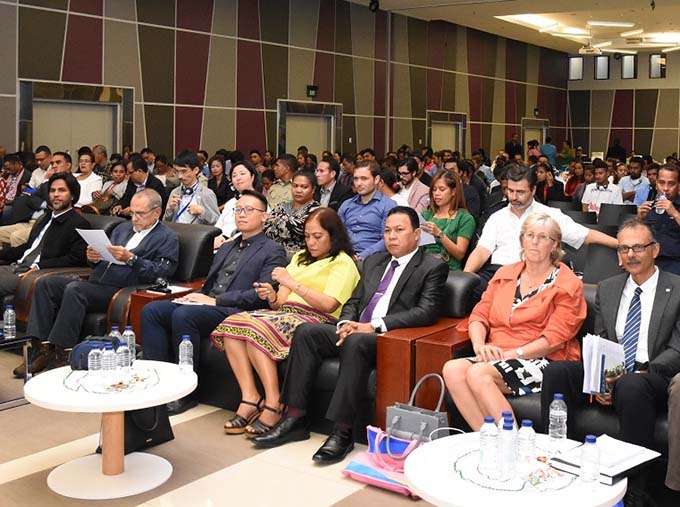 Former Timor-Leste President Jose Ramos-Horta (second from left) in the front row during the Dili Dialogue. Image: Bob Howarth/PMW
By Bob Howarth in Dili, Timor-Leste
The Dili Dialogue Forum, sponsored by UNESCO and organised by the Timor-Leste Press Council, will be held again next year after the inaugural successful one last week.
It is a forum of Asia/Pacific press councils and it hopes to become an alliance of all press councils in the region by next May. May 3 is World Press Freedom Day.
This year Indonesia, Papua New Guinea, Philippines, South East Asia Press Alliance (SEAPA) and Thailand were represented. It was held in an US$8 million auditorium (capacity 400) in the high-rise new Ministry of Finance building.
Topics included country reports of press freedom, ethics, training, social media issues and cybersecurity for journalists.
The TL Press Council impressed delegates.
Timor-Leste at 95 has the highest Asian ranking in Reporters Sans Frontiers World Press Freedom Index.
The TL Press Council was established two years ago with seven directors (two appointed by the government but possibly for the last time), mostly veteran newsmen.
Solid funding
It has solid funding sourced from the Timor-Leste government, United Nations Development Programme (UNDP), New Zealand, Japan and the Netherlands (but not Australia).
The council has 38 full time staff including media monitors, trainers, IT and a transport team with nine cars and 21 motorbikes in well-equipped premises (50 PCs) opposite Dili University.
The government has no influence over its operations and has enshrined freedom of speech in its national constitution.
The council runs regular monthly training and certification of graduates, backed by UNDP, for young reporters and students in all formats of print, TV and the most popular medium radio.
One objective is to become an avenue for resolution of media complaints instead of costly legal action, similar to Australia’s Press Council and New Zealand’s Media Council.
Current campaigns include lobbying Google to include Tetum, one official language alongside Portuguese, and seeking assistance from Facebook to include Tetum-speaking content monitors to quickly react to reported offensive posts, a major issue in the country’s recent elections.
Next year it is hoped countries such as Australia, New Zealand, Fiji, Samoa, Solomon islands and Vanuatu will attend the Dili Dialogue.
The next forum will be held on May 9-10 next year.
Bob Howarth, a media consultant and correspondent for Reporters Without Borders, was a delegate at the Dili Dialogue Forum and is a regular contributor to Pacific Media Watch.
Article by AsiaPacificReport.nz
]]>‘Blockade busters’ flotilla on way to help provide relief for Gaza

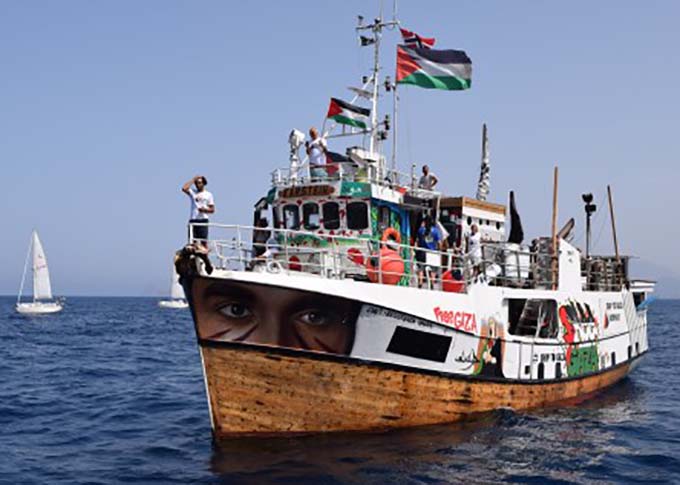 On their way … bound for Gaza. Image: Kia Ora Gaza
Pacific Media Centre Newsdesk
The four international Freedom Flotilla coalition boats have left Palermo in Sicily overnight in their bid to break the illegal Israeli blockade of Gaza.
A coalition statement said the boats that make up this year’s Freedom Flotilla are not only bringing much needed medical supplies with them, but the boats themselves will also be donated to the Union of Agricultural Work Committees (UAWC) that represents Gaza’s fishers) once they arrive in the Strip.
New Zealand unionist and peace activist Mike Treen is on board the Al Awda (Return) and is filing reports for Kia Ora Gaza.
Spokesperson for the Ship to Gaza-Sweden campaign Jeannette Escanilla said: “The illegal Israeli naval blockade has devastated the Palestinian economy, and in particular has hurt the fishing industry in Gaza, so these boats will provide important economic opportunities for Palestinians.”
The boats in this year’s “Just Future for Palestine” mission departed Sicily yesterday for the last leg to Gaza after more than 2 months at sea visiting 15 European ports.
Five times flotilla boats have successfully reached Gaza (before 2010) and organisers say they maintain the hope that it can be done again with this year’s mission, “but to do this we need our amazing network of passionate supporters to amplify our message”
Article by AsiaPacificReport.nz
]]>‘It’s up to God and the land’ on Vanuatu’s Ambae volcano isle

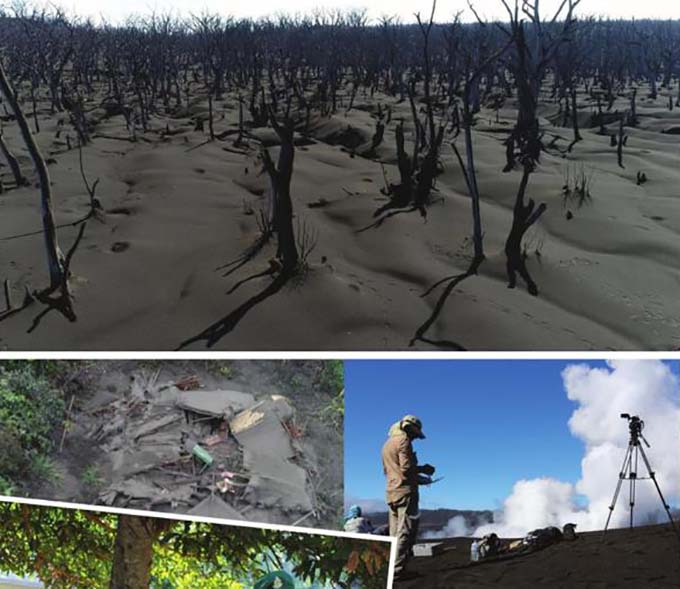 What the documentary team found on Ambae: “Volcanic ash is ever-present. Roads are carpeted with it, creating an uncannily smooth ride—where vehicles can still pass. Drone footage of an abandoned village on the approaches to the volcano shows a house constructed of timber and local materials that’s been flattened by the weight of ash upon it.” Image: Vanuatu Daily Post
By Dan McGarry in Port Vila
Over the course of a week earlier this month, a French/Ni-Vanuatu documentary team ventured to the summit of Ambae’s Mount Lombenben to see for themselves the effects of the Manaro-Vui volcano in Vanuatu.
What they saw was an island transformed.
One team member, a Ni-Vanuatu man, told the Vanuatu Daily Post how he had spoken to one Ambaean woman who was nearly ready to give up on trying to grow food.
READ MORE: Latest Ambae eruption produced worst ashfall
The crops kept dying, she said, and she kept planting. All she can do now, she told him, is hope that her garden would survive.
“It’s up to God and the land,” she said.
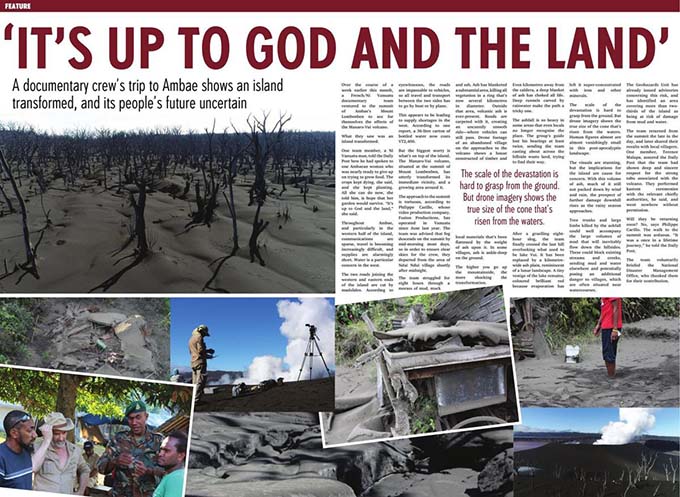 The Ambae volcano article as it appeared in the Vanuatu Daily Post at the weekend.
Throughout Ambae, and particularly in the western half of the island, communications are sparse, travel is becoming increasingly difficult, and supplies are alarmingly short. Water is a particular concern in the west.
The two roads joining the western and eastern ends of the island are cut by mudslides.
According to eyewitnesses, the roads are impassable to vehicles, so all travel and transport between the two sides has to go by boat or by plane.
Supply shortages
This appears to be leading to supply shortages in the west. According to one report, a 36-litre carton of bottled water now costs VT2400 (NZ$32).
But the biggest worry is what is on top of the island. The Manaro-Vui volcano, situated at the summit of Mount Lombenben, has utterly transformed its immediate vicinity, and a growing area around it.
The approach to the summit is tortuous, according to Philippe Carillo, whose video production company, Fusion Productions, has operated in Vanuatu since June last year.
The team was advised that fog descends on the summit by mid-morning most days, so in order to ensure clear skies for the crew, they departed from the area of Ndui Ndui village shortly after midnight.
The team struggled for eight hours through a morass of mud, muck and ash. Ash has blanketed a substantial area, killing all vegetation in a ring that’s now several kilometres in diameter.
Outside that area, volcanic ash is ever-present. Roads are carpeted with it, creating an uncannily smooth ride—where vehicles can still pass. Drone footage of an abandoned village on the approaches to the volcano shows a house constructed of timber and local materials that’s been flattened by the weight of ash upon it.
In some villages, ash is ankle-deep on the ground.
Shocking transformation
The higher you go up the mountainside, the more shocking the transformation. Even kilometres away from the caldera, a deep blanket of ash has choked all life. Deep runnels carved by rainwater make the path a tricky one.
The ashfall is so heavy in some areas that even locals no longer recognise the place. The group’s guide lost his bearings at least twice, sending the team casting about across the hillside waste land, trying to find their way.
After a gruelling eight-hour slog, the team finally crested the last hill overlooking what used to be lake Vui. It has been replaced by a kilometre-wide ash plain, reminiscent of a lunar landscape.
A tiny vestige of the lake remains, coloured brilliant red because evaporation has left it super-concentrated with iron and other minerals.
The scale of the devastation is hard to grasp from the ground. But drone imagery shows the true size of the cone that’s risen from the waters. Human figures almost are almost vanishingly small in this post-apocalyptic landscape.
The visuals are stunning, but the implications for the island are cause for concern. With this volume of ash, much of it still not packed down by wind and rain, the prospect of further damage downhill rises as the rainy season approaches.
Tree trunks and large limbs killed by the ashfall could well accompany the large volumes of mud that will inevitably flow down the hillsides. These could block existing streams and creeks, sending mud and water elsewhere and potentially posing an additional danger to villages, which are often situated near watercourses.
Mud damage risk
The Geohazards Unit has already issued advisories concerning this risk, and has identified an area covering more than two-thirds of the island as being at risk of damage from mud and water.
The team returned from the summit the late in the day, and later shared their results with local villagers. One member, Terence Malapa, assured the Daily Post that the team had shown deep and sincere respect for the strong tabu associated with the volcano.
They performed kastom ceremonies with the relevant chiefly authorities, he said, and went nowhere without permission.
Will they be returning soon? No, says Philippe Carillo. The walk to the summit was arduous.
“It was a once in a lifetime journey,” he said.
The team voluntarily briefed the National Disaster Management Office, who thanked them for their contribution.
Dan McGarry is media director of the Vanuatu Daily Post group. This article is republished with permission.
Article by AsiaPacificReport.nz
]]>
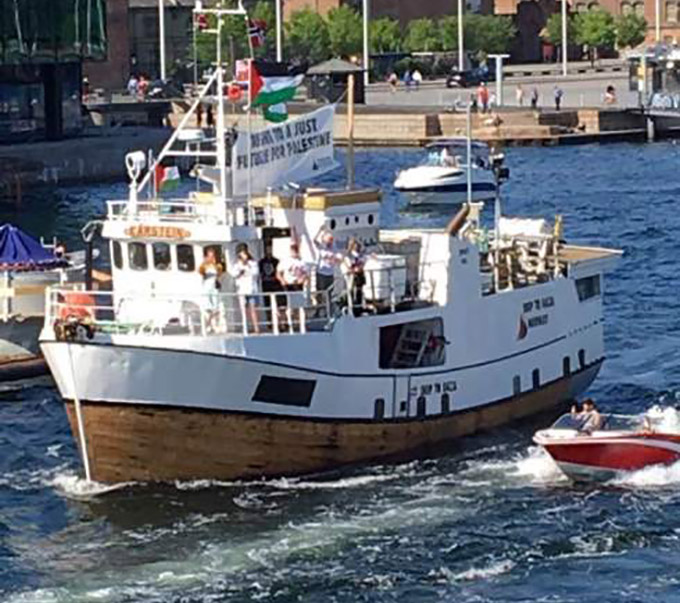 The Al Awda, one of the Gaza Freedom Flotilla’s four boats. Mike Treen is on board for the final leg of her voyage to Gaza. Image: Kia Ora Gaza
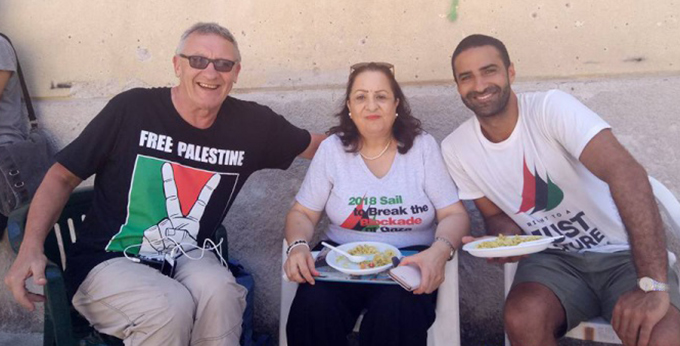 Mike Treen (left) and Youssef Sammour with the Palestinian Ambassador to Italy, Dr Mai Alkailla. Image: Kia Ora Gaza

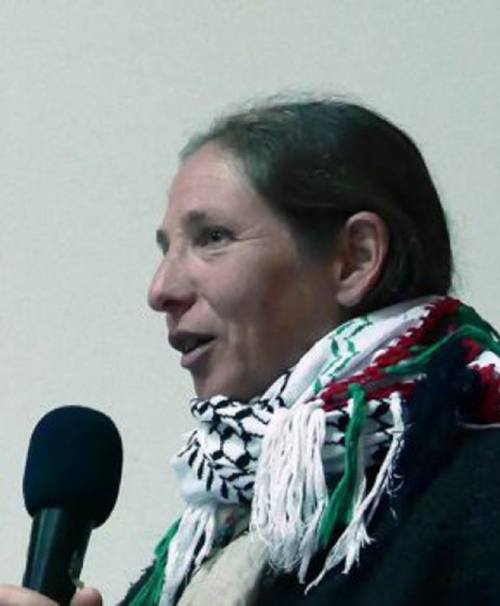 Canadian activist Ron Rousseau from Yukon … “as an Indigenous activist … we feel that it’s necessary to be defending Palestine.” Image: Scoop
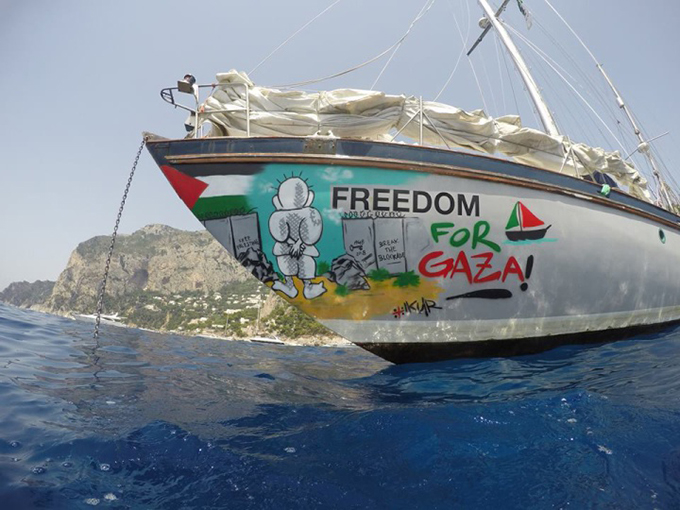 Youssef Sammour’s boat Freedom. Image: Lois Griffiths/Scoop

 A
A 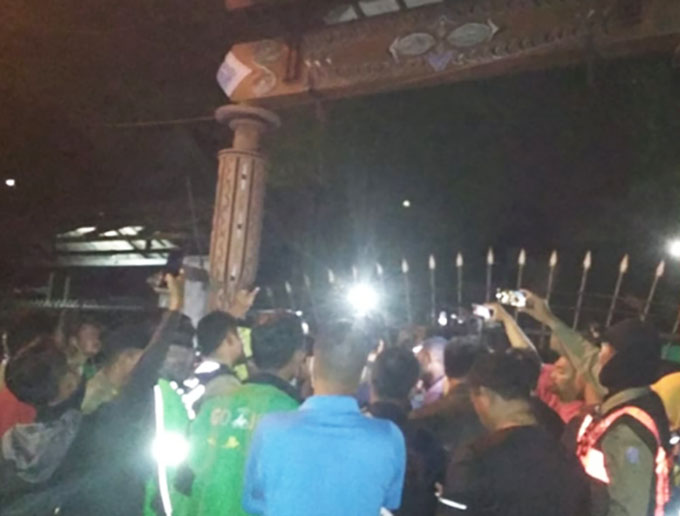 The scene at the Indonesian police raid on Papuan student quarters in Surabaya over the film Bloody Biak. Image: Suara.com

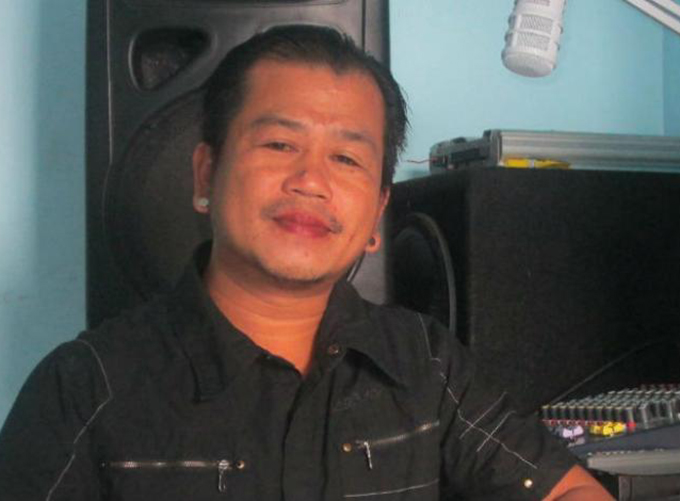









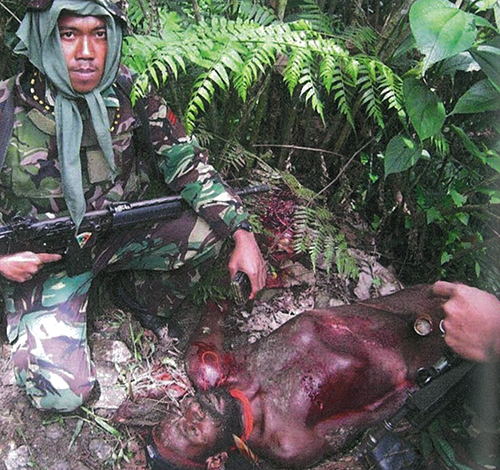 A “trophy photo” by an Indonesian soldier from Battalion 753 of a man he had shot from the Lani tribe in 2010. Image from Papua Blood
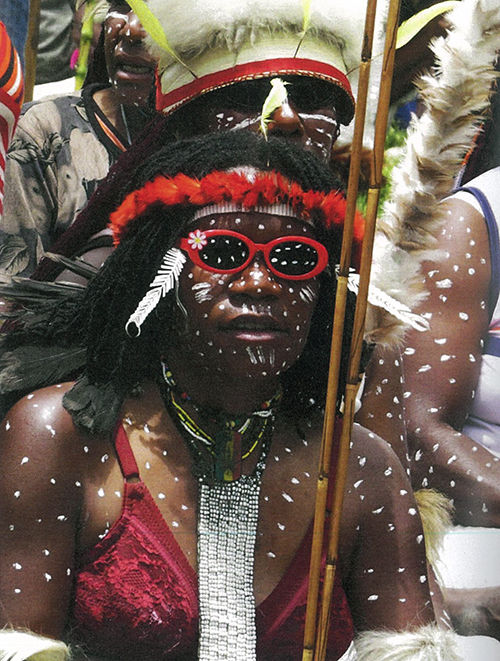 A local chief in red sunglasses and bra talks to his people about the dangers of Indonesian administration plans for Okika region. Image: Peter Bang
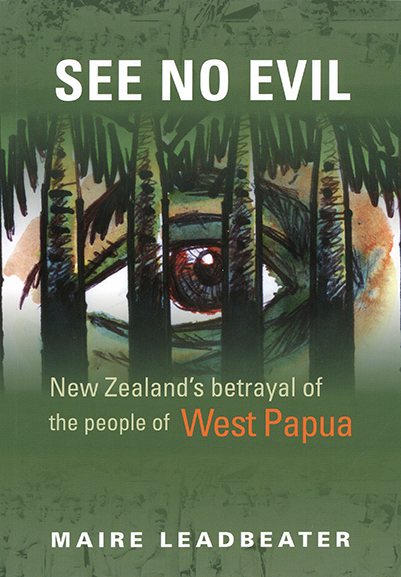
 A West Papua cartoon by Malcolm Evans (who also has a cartoon featured on the book cover) first published by Pacific Journalism Review in 2011. © Malcolm Evans



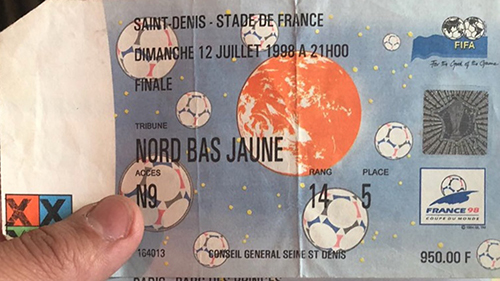 My ticket from the 1998 World Cup final between France and Brazil. Image: Marwan Bishara/Al Jazeera

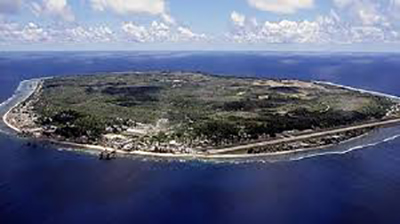 Nauru … restricted media access because of “very limited accommodation”. Image: LoopNauru




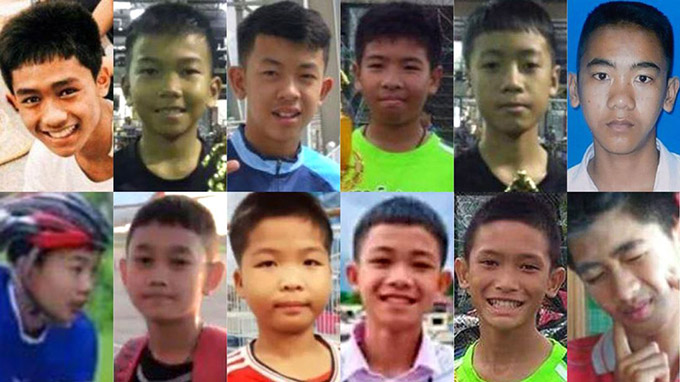 All rescued … the Thai boy cavers. Image: Bangkok Post

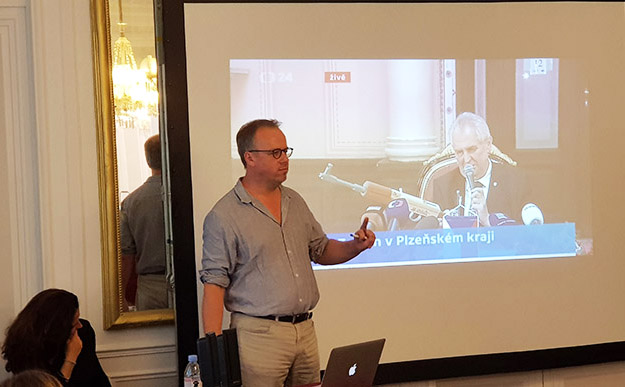 RSF’s Christophe Deloire talks of the Czech President’s anti-journalists gun “joke”. Image: David Robie/PMC
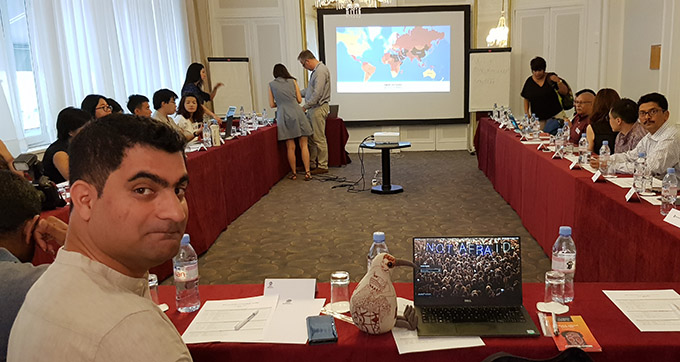 Asia-Pacific correspondents gather for the opening session of the RSF consultation in Paris. Image: David Robie/PMC
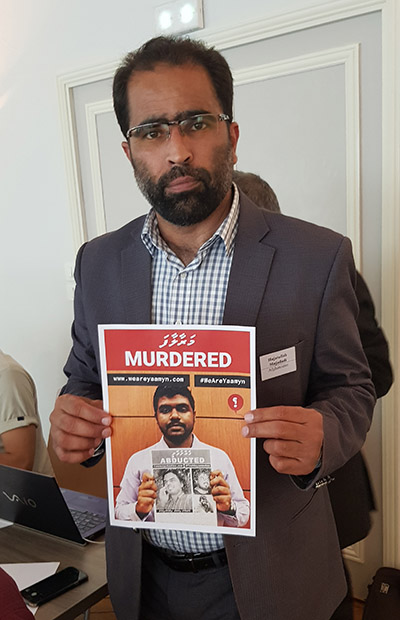 Afghan Independent Journalists’ Association vice-president Hujatullah Mujadidi holds an image of a murdered journalist at the Asia-Pacific consultation. Image: David Robie/PMC
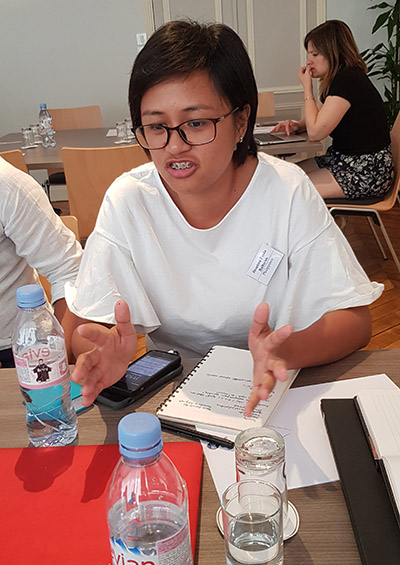 NUJP’s Jhoanna Ballaran … worrying situation in the Philippines. Image: David Robie/PMC
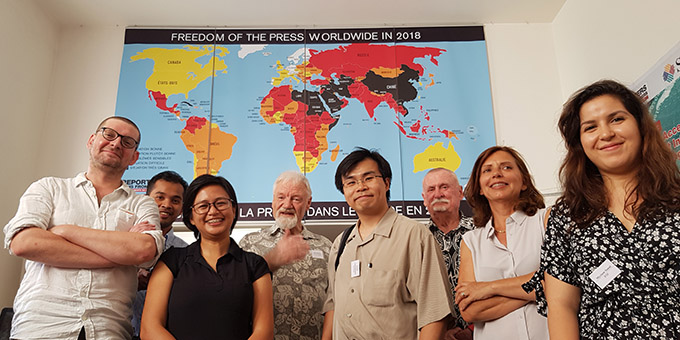 RSF’s Asia-Pacific director Daniel Bastard (left) and his colleague Myriam Sni (right) with some of the Pacific and Southeast Asian press defenders. Image: RSF
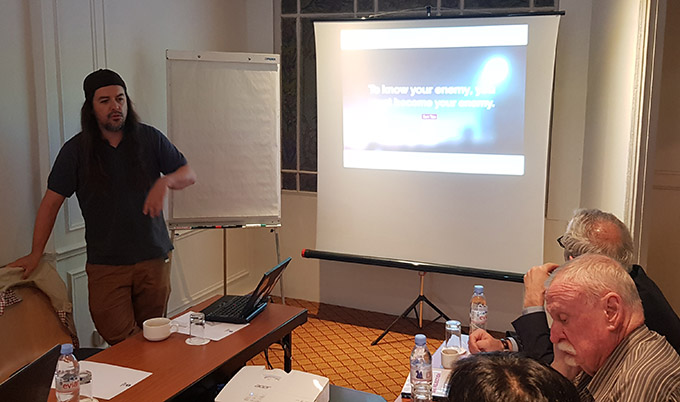 A workshop on online media security and “how to block hackers” by Nico Diaz of The Magma cited Chinese general and strategist Sun Tzu’s quote: “To know your enemy, you must become your enemy.” Image: David Robie


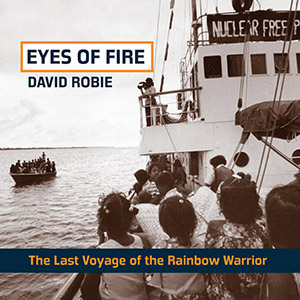
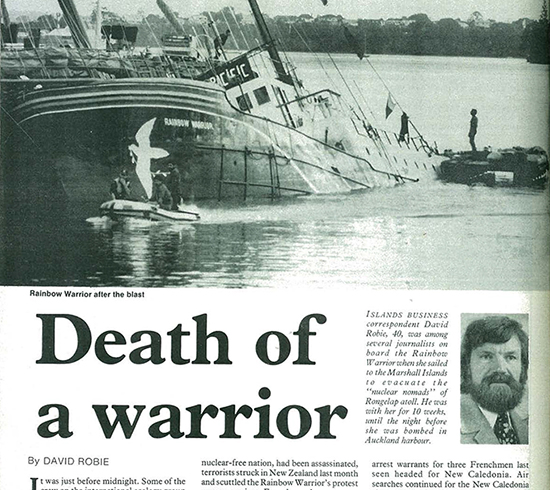
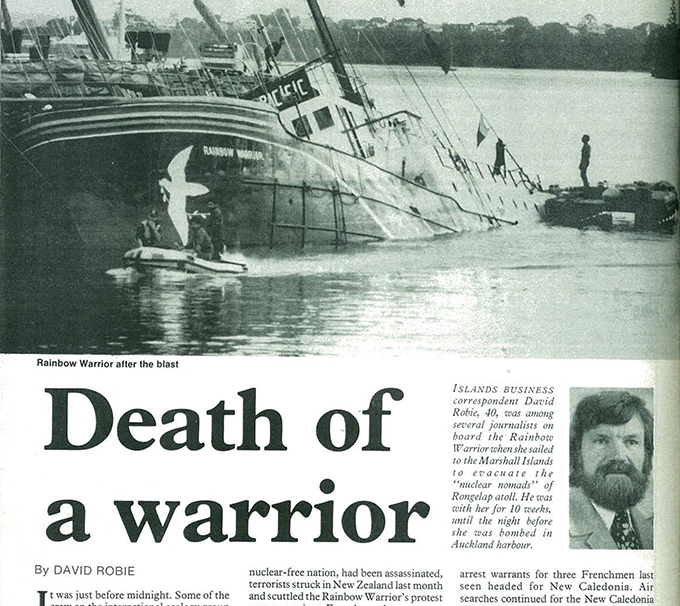 David Robie’s cover story for the Fiji-based Islands Business on the Rainbow Warrior bombing in August 1985. Image: PMC