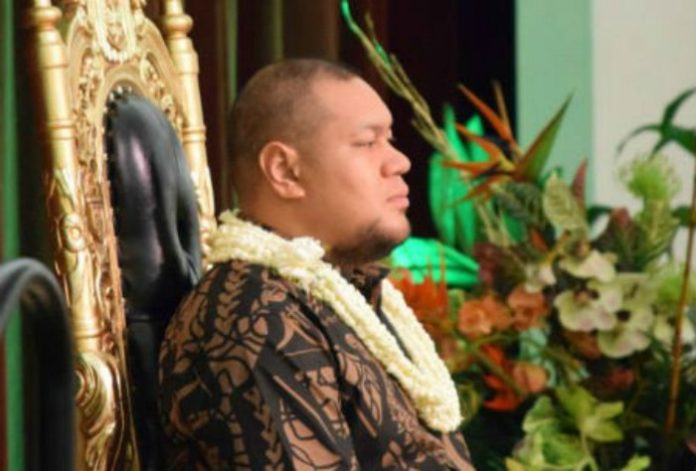
 Tiriti o Waitangi of 1840 … a “historical deception” that the British Crown gained sovereignty over New Zealand. Image: Steve Edwards
Crown breached Crimes Act over ‘depoliticising’ Treaty of Waitangi

OPINION: By Steve Edwards
The New Zealand government’s ongoing failure to acknowledge that the British Crown did not gain sovereignty over New Zealand in 1840 is a breach of the Crimes Act.
In October 2014, this historical deception was made emphatically clear by the Waitangi Tribunal, which found that Māori did not sign away sovereignty when 512 chiefs, or rangatira, signed Te Tiriti o Waitangi of 1840.
LISTEN: PM says treaty must be treated as a ‘living document’ – Radio Waatea
Instead of the Crown spelling out to New Zealanders these essential truths since late 2014, it has deceitfully left intact this country’s fairy-tale creation myth that a cession of sovereignty occurred at Waitangi in those flaggy scenes of 1840.
Therefore, the Crown has breached section 240 of the Crimes Act, which covers deception to gain ownership or possession or control over property, or privilege, or to benefit economically, or cause loss to others.
Moreover, since the Waitangi Tribunal’s widely publicised investigation into the United Tribes’ 1835 Declaration of Independence and Te Tiriti o Waitangi, the Crown has pursued a deceptive strategy to avoid admitting that it has no legitimate claim to sovereign authority.
Steve Edwards is Pākehā, a television editor, and blogs on Snoopman News.
 Māori land loss … These five maps show progressive structural dispossession in 1860, 1890, 1910, 1939 and 2000 over the North Island. Māori land is shaded in blue. Montage: NZ History

Article by AsiaPacificReport.nz
]]>The Daily Blog: Jacinda’s Waitangi Day 2018 aroha creating a Māori legacy relationship

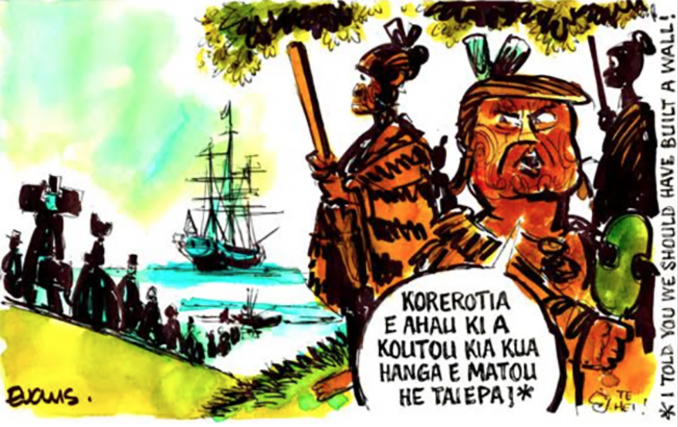 Cartoon: © Malcolm Evans/The Daily Blog
OPINION: By Martyn Bradbury, editor of The Daily Blog
Waitangi Day 2018 smells different doesn’t it?
It tastes different too.
No bitter “Māori privilege” nonsense from Don Brash and his shallow racism.
No spiteful “Let’s have a NZ day so we don’t have to feel guilty about the Treaty” whining from newspaper editorials.
READ MORE: PM Jacinda Ardern makes historic speech at Waitangi
No constant media barking up of predictions of aggression and protest.
Prime Minister Jacinda Ardern’s desire to show Waitangi Day the respect it deserves with a 5-day tour visiting every marae large and small alongside ministers meekly lined up to do the BBQ cooking for Waitangi Breakfast is building a movement of aroha among Māori which will create a legacy relationship that is going to dominate Māori politics.
The electricity when she visits marae is palpable and extraordinary. Her incredible ability to connect emotionally with people has generated a rapport among those packed marae she has visited in a way that will earn her devotion among voters while forgiving any shortcomings.
Political lifetime
If she makes this 5-day tour an annual event she will build a following that will see Māori voting Labour because of their relationship with Jacinda for her entire political lifetime.
Her being pregnant is just the emotional icing, Māori in Northland have taken to Jacinda with nothing short of joy and her visiting everywhere has conjured up an excitement that will bind.
They will speak about Jacinda passing through for decades to come.
This personal relationship is going to cement Labour Party dominance of the Māori electorates leaving any resurgent Māori Party under a new leader like Dr Lance O’Sullivan with only the right for political movement because Labour will totally dominate the Māori vote on the general roll and the Māori roll.
With Jacinda building a huge reservoir of Māori voter support and the Māori faction inside Labour now one of the most powerful factions inside Labour, this puts the Iwi Leaders Forum, the Māori King and the Public Service all in a troubling position.
Many Māori live in urban areas and are not tribe affiliated. Their needs for better social services, jobs and the legacy issues created by colonialism trump Treaty deals which is offside to the goals of the Māori King or the Iwi Leaders Forum. With urban Māori having a far more powerful voice inside the new government, those movements will need to see any extra resources making a dynamic impact on the poorest.
But there’s another segment who are about to face an existential threat – the Public Service.
Building of fiefdoms
Māori know first hand the structural racism of the social service providers who care more about the building of fiefdoms than the actual welfare of Māori. Already the Public Service is strangling ministers with ministerial suffocation but the new Māori faction aren’t going to accept that.
Māori social service providers offer a wealth of cultural initiatives that bring a holistic view to caring about people and the Public Service will either need to adapt to those new initiatives or they’ll face an ongoing battle with a Māori faction that knows damn well how the Public Service denigrate their people.
The crowds thronging Jacinda on every marae suggest it’s a fight the Public Service are going to lose.
Article by AsiaPacificReport.nz
]]>United ULMWP executive confident of O’Neill’s West Papua support

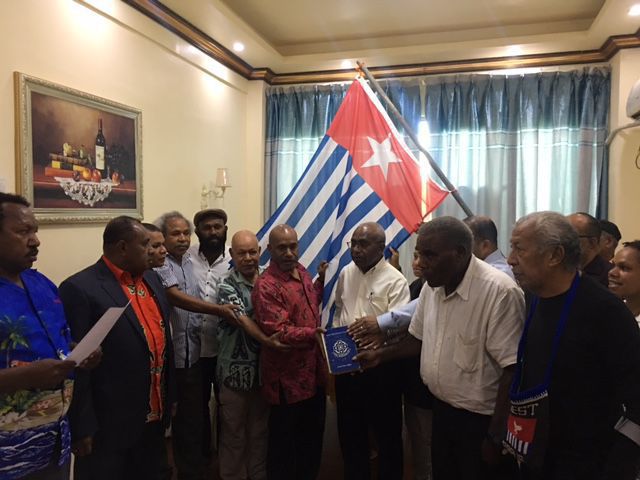 New ULMWP executive endorsed in Port Vila … pleas for more European Union and ACP bloc support. Image: Vanuatu Daily Post
By Len Garae in Port Vila
The executive of the United Liberation Movement for West Papua (ULMWP) has complied with Papua New Guinean Prime Minister Peter O’Neill’s request to unite and is confident he will vote to support West Papua’s application to become a full member of the Melanesian Spearhead Group.
O’Neill is chairman of the MSG in Port Moresby which is meeting next week.
ULMWP spokesman Jacob Rumbiak said its week-long meeting in Port Vila had resulted in the spirit for West Papua to be more determined, organised and unified than ever before to end the alleged genocide by Indonesia of their people in West Papua.
READ MORE: Asian rights body calls for more action over Papua health crisis
In its meeting, ULMWP has made changes in its leadership, structure, bylaws as well as membership.
Rumbiak said the executive produced clear job descriptions, agenda, action plan, tactics and and strategy.
“The agenda was submitted by the executive committee, endorsed by the legislative committee and approved by its judicial committee,” Rumbiak said.
While the ULMWP executive is attending the MSG meeting in Port Moresby next week, Rumbiak said Papuans were still dying at the hands of the colonial power Indonesia.
Poisoning incident
For example, last week yesterday a young leader of the National Parliament of West Papua, Wendi Wenda, 20, died in a suspected poisoning incident, Rumbiak said, translating from an international report.
Speaking for the Vanuatu Free West Papua Association executive committee and Vanuatu Christian Council, Job Dalesa called on all churches in Vanuatu to pray for West Papua.
“If West Papua is a global issue, then it also requires active global engagement as well,” Dalesa said.
“Australia also has to rethink its foreign policy regarding its bilateral defence cooperation with Indonesia when we speak of global engagement because, indirectly, Australia seems to be contributing towards reports of longstanding atrocities in West Papua.”
Dalesa also challenged PNG and Fiji to recognise the positions they had taken regarding West Papua.
In PNG, Dalesa said he believed the PNG Council of Churches would now adopt a more pro-active role to support West Papua.
At the European Union (EU) and the Africa Caribbean and Pacific (ACP) bloc in Brussels, Dalesa called on the government to keep the momentum going by appointing an “aggressive voice” in the absence of the former Ambassador to the EU, Roy Micky Joy, to “keep knocking and voicing West Papua’s plight” globally through the EU and ACP.
He reminded the government that the people of Vanuatu could do as much as they wanted at home and in the region, but that without concrete support from EU and ACP in Brussels, the West Papua issue would not advance internationally as fast and as effectively.
Len Garae is a senior journalist of the Vanuatu Daily Post. Daily Post articles are republished by Asia Pacific Report with permission.
Article by AsiaPacificReport.nz
]]>Asian rights body calls for more action by Jakarta over Papuan health crisis

Al Jazeera’s Step Vaessen was given exclusive access to report on the measles outbreak from Asatat, in Indonesia’s Papua province.
Pacific Media Centre Newsdesk
The Asian Human Rights Commission (AHRC) has called for more action about the health crisis facing Asmat regency in Indonesian-ruled Papua.
The commission has blamed the Indonesian government “for this considerable loss of life”.
“The current efforts to address the problem are simply too little, too late,” it said in a statement from Hongkong.
So far, 68 children have died from measles and serious malnutrition in Asmat.
As reported by national media in Indonesia, the measles and malnutrition epidemic has affected 11 districts of Asmat regency: Swator, Aswi, Akat, Fayit, Pulau Tiga, Kolf Branza, Jetsy, Pantai Kasuari, Safan, Unirsarau, and Siret.
“Being the most remote areas of Asmat regency, victims in these districts have faced serious difficulties in obtaining access to medical facilities,” the AHRC statement said.
“Even in the regency’s capital, Agats, the Agats General Hospital (RSUD) is not equipped to deal with all the patients of measles and malnutrition.”
Patients in church
A category D hospital with limited facilities, paramedics and doctors, the hospital at present needed more medicine due to limited stock, and due to limited space, some patients have been hospitalised in the nearest church building, the AHRC statement said.
This circumstance showed how Papua had been left behind in terms of health facilities, infrastructure and development.
In Jakarta, Java island or other islands such as Sumatra and Bali, there were numerous public and private hospitals of type B and A, easy to access, the statement said.
Papua mostly has public hospitals of type D, especially in remote areas. There is a category A hospital in Jayapura city, the capital of Papua, but it is quite far from Agats and to reach Jayapura from Agats is not easy due to the lack of infrastructure.
“This situation clearly highlights how neither the central government of Indonesia in Jakarta, nor the local government in Papua province and Asmat regency have been able to develop an early warning system to prevent measles and malnutrition.”
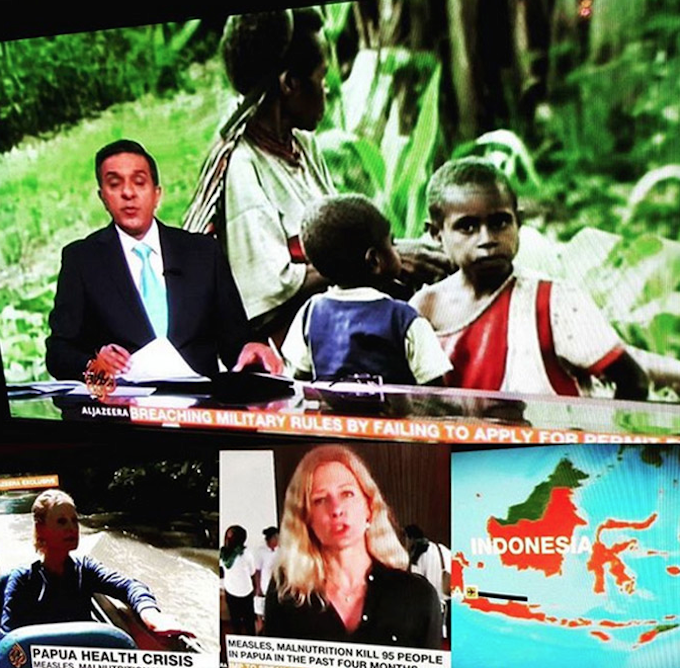 Screen shots from an Al Jazeera report by Step Vaessen on the measles outbreak in Papua. Image: PMC
The AHRC said it was concerned that the epidemic could easily spread to other places in Papua, particularly in remote areas lacking in health facilities.
Since Papua was integrated into the Republic of Indonesia in 1969, Papua has remained the poorest and least developed province.
Citizens’ rights
As a state party to the International Covenant on Economic, Social and Cultural Rights, Indonesia was obligated to:
- ensure its citizens’ rights to be free from hunger;
- address the prevention, treatment and control of epidemic, endemic, occupational and other diseases; and
- create conditions which would assure medical attention to all.
Similarly, national laws such as Law No. 36 of 2009 guaranteed the right to equal health access for all citizens, the AHRC said.
The commission said it viewed the current lack of health access and facilities in Papua – and the deaths of 68 children – as a clear violation of the Indonesian government’s responsibility towards its citizens.
“By not developing equal health care in Papua, the government is to blame for this considerable loss of life. The current efforts to address the problem are simply too little, too late,” the statement said.
The AHRC said the government should immediately announce a health emergency in Papua and open access for medical aid, including international medical support. It should also allow access to the media to ensure accountability and to monitor the eradication of the epidemic.
The government also needed an affirmative action policy to boost development of health access in Papua.
Priority for Papua
The assistance from the central government should not merely be limited to eradicating disease in Asmat regency, but should ensure that remote areas in Papua received priority in development of health access, facilities and infrastructure, the statement said.
The National Commission on Human Rights (Komnas HAM), the Minister of Health and Ombudsman of Republic of Indonesia, the House of Representatives, in particular Commission IX which concerns health, food and medicines, should take initiatives to monitor, evaluate and ensure the implementation of such policies, the AHRC said.
Local government should also open access for NGOs and media to monitor the recovery and development in remote areas.
The AHRC also urged the government to comprehensively ensure that all children, including pregnant mothers in Papua, particularly in Asmat regency, were given enough nutrition, food, and vaccines to prevent disease.
Article by AsiaPacificReport.nz
]]>Coups, globalisation and tough questions for Fiji’s future

Report by Dr David Robie – Café Pacific.
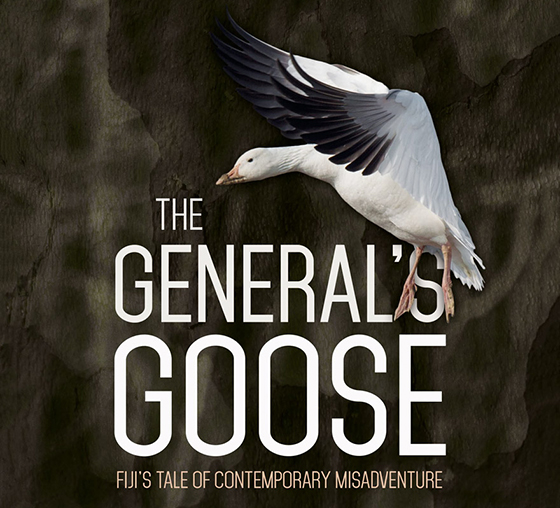 |
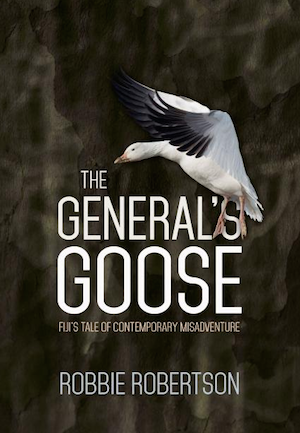
| The General’s Goose – three decades of Fiji “coup culture”. And what now with the second post-coup election due this year? |
REVIEW: By David Robie of Café Pacific
 |
|
| Author Dr Robbie Robertson … challenges “misconceptions” about the Bainimarama regime and previous coups, and asks fundamental questions about Fiji’s future. |
When Commodore (now rear admiral retired and an elected prime minister) Voreqe Bainimarama staged Fiji’s fourth “coup to end all coups” on 5 December 2006, it was widely misunderstood, misinterpreted and misrepresented by a legion of politicians, foreign affairs officials, journalists and even some historians.
A chorus of voices continually argued for the restoration of “democracy” – not only the flawed version of democracy that had persisted in various forms since independence from colonial Britain in 1970, but specifically the arguably illegal and unconstitutional government of merchant banker Laisenia Qarase that had been installed on the coattails of the third (attempted) coup in 2000.
Yet in spite of superficial appearances, Bainimarama’s 2006 coup contrasted sharply with its predecessors.
Bainimarama attempted to dodge the mistakes made by Sitiveni Rabuka after he carried out both of Fiji’s first two coups in 1987 while retaining the structures of power.
Instead, notes New Zealand historian Robbie Robertson who lived in Fiji for many years, Bainimarama “began to transform elements of Fiji: Taukei deference to tradition, the provision of golden eggs to sustain the old [chiefly] elite, the power enjoyed by the media and judiciary, rural neglect and infrastructural inertia” (p. 314). But that wasn’t all.
Bainimarama reset electoral rules, abolished communalism in order to pull the rug from under the old chiefly elite, and provided the first non-communal foundation for voting in Fiji.[H]e brazenly navigated international hostility to his illegal regime. Then, having accepted an independent process for developing a new constitution, he rejected its outcome, fearing it threatened his hold on power and would restore much of what he had undone. (Ibid.)
Landslide victory
Then he was voted in as legal prime minister of Fiji with an overwhelming personal majority and a landslide victory for his fledgling FijiFirst Party in September 2014. He left his critics in Australia and New Zealand floundering in his wake.
Robertson is well-qualified to write this well-timed book, The General’s Goose: Fiji’s Tale of Contemporary Misadventure, with Bainimarama due to be tested again this year with another election. He is a former history lecturer at the Suva-based regional University of the South Pacific at the time of Rabuka’s original coups (when I first met him).
He and his journalist wife Akosita Tamanisau wrote a definitive account of the 1987 events and the ousting of Dr Timoci Bavadra’s visionary and multiracial Fiji Labour Party-led government, Fiji: Shattered Coups (1988), ultimately leading to his expulsion from Fiji by the Rabuka regime. He also followed this up with Government by the Gun (2001) on the 2000 coup, and other titles.
Robertson later returned to Fiji as professor of Development Studies at USP and he has also been professor and head of Arts and Social Sciences at James Cook University in Townsville, Queensland, as well as holding posts at La Trobe University, the Australian National University and the University of Otago.
He has published widely on globalisation. He is thus able to bring a unique perspective on Fiji over three decades and is currently professor and dean of Arts, Social Sciences and Humanities at Swinburne University of Technology, Melbourne.
Since 2006, Fiji has slipped steadily away from Australian and New Zealand influence, as outlined by Robertson. However, this is a state of affairs blamed by Bainimarama on Canberra and Wellington for their failed and blind policies.
Even since the 2014 election, Bainimarama has maintained a “hardline” on the Pacific’s political architecture through his Pacific Islands Development Forum (PIDF) alternative to the Pacific Islands Forum (PIF), and on the Pacific Agreement on Closer Economic Relations (PACER) Plus trade deal.
‘Turned their backs’
While in Brisbane for an international conference in 2015, Bainimarama took the opportunity to remind his audience that Australia and New Zealand “as traditional friends had turned their backs on Fiji”. He added:
For the first time in Fiji’s history, Bainimarama steered the country closer to a “standard model of liberal democracy” and away from the British colonial and race-based legacy.How much sooner we might have been able to return Fiji to parliamentary rule if we hadn’t expended so much effort on simply surviving … defending the status quo in Fiji was indefensible, intellectually and morally (p. 294).
“Government still remained the familiar goose,” writes Robertson, “but this time, its golden eggs were distributed more evenly than before”. The author attributes this to “bypassing chiefly hands” for tribal land lease monies, through welfare and educational programmes no longer race-bound, and through bold rural public road, water and electrification projects.
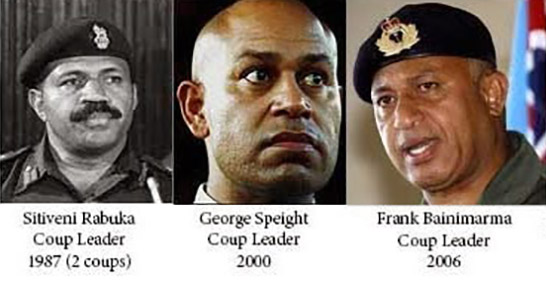 |
| Fiji’s cast of coup leaders. Image: Coup 4.5 |
Robertson’s scholarship is meticulous and drawn from an impressive range of sources, including his own work over more than three decades. One of the features of his latest book are his analysis of former British SAS Warrant Officer Lisoni Ligairi and the role of the First Meridian Squadron (renamed in 1999 from the “coup proof” Counter Revolutionary Warfare Unit – CRWU), and the “public face” of Coup 3, businessman George Speight, now serving a life sentence in prison for treason.
His reflections on and interpretations of the Republic of Fiji Military Forces Board of Inquiry (known as BoI) into the May 2000 coup are also extremely valuable. Much of this has never before been available in an annotated and tested published form, although it is available as full transcripts on the “Truth for Fiji” website.
‘Overlapping conspiracies’
As Robertson recalls, by mid-May, “there were many overlapping conspiracies afoot … Within the kava-infused wheels within wheels, coup whispers gained volume”. Ligairi’s role was pivotal but BoI put most of the blame for the coup on the RFMF for “allowing” one man so much power, especially one it considered ill-equipped to be a director and planner’ (p. 140).
The BoI testimony about the November 2000 CRWU mutiny before Bainimarama escaped with his life through a cassava patch, also fed into Robertson’s account, although he admits Colonel Jone Baledrokadroka’s ANU doctoral thesis is the best account on the topic, “Sacred King and Warrior Chief:The role of the military in Fiji politics”.
The book is divided into four lengthy chapters plus an Introduction and Conclusion – 1. The Challenge of Inheritance about the flawed colonial legacy, 2. The Great Turning on Rabuka’s 1987 coups and the Taukei indigenous supremacy constitution, 3. Redux: The Season for Coups on Speight’s attempted (and partially successful) 2000 coup, and 4. Plus ça Change …? on Bainimarama’s political “reset”. (The Bainimarama success in outflanking his Pacific critics is perhaps best represented by his diplomatic success in co-hosting the “Pacific” global climate change summit in Bonn in 2017.)It was a bloody and confused affair, led by the once loyal [Captain Shane] Stevens, 40 CRWU soldiers, many reportedly intoxicated, seized weapons and took over the Officers Mess, Bainimarama’s office and administration complex, the national operations centre and the armoury in the early afternoon. They wanted hostages; above all they wanted Bainimarama. (p. 164)
One drawback from a journalism perspective is the less than compelling assessment of the role of the media over the period, considering the various controversies that dogged each coup, especially the Speight one when accusations were made against some journalists as having been too close to the coup makers.
One of Fiji’s best journalists and editors, arguably the outstanding investigative reporter of his era, Jo Nata, publisher of the Weekender, sided with Speight as a “media minder” and was jailed for treason.
However, while Robertson in several places acknowledges Nata’s place in Fiji as a journalist, there is no real examination of his role as journalist-turned-coup-propagandist. This ought to be a case study.
Robertson noted how Nata’s Weekender exposed “morality issues” in Rabuka’s cabinet in 1994 without naming names. The Review news and business magazine followed up with a full report in the April edition that year, naming a prominent female journalist who was sleeping with the post-coup prime minister, produced a love child and who still works for The Fiji Times today (p. 118).
Nata then promised a special issue on the 21 women Rabuka had had affairs with since stepping down from the military. However, after Police Commissioner Isikia Savua spoke to him, the issue never appeared. (A full account is in Pacific Journalism Review – The Review, 1994).
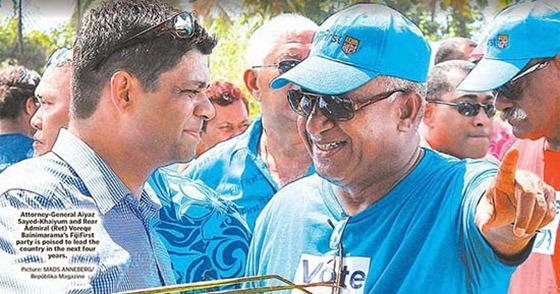 |
| Fiji Prime Minister Voreqe Bainimarama (right) with his Attorney-General Aiyaz Sayed-Khaiyum … facing an uncertain challenge for their FijiFirst Party in this year’s election. Image: PMC |
Elsewhere in the book is an outline of the National Bank of Fiji (NBF) debacle that erupted when an audit was leaked to the media: “In fact, the press, particularly The Fiji Times and The Review, were pivotal in exposing the scandal.” Robertson added:
The bank collapsed in late 1995 owing more than $220 million or nearly 9 percent of Fiji’s GDP – an example of the nepotism, corruption and poor public administration that worsened in Fiji after Rabuka’s coups.The Review had earlier been threatened with deregistration over its publication of Rabuka’s affair[s] in 1994; now both papers were threatened with Malaysian-style licensing laws to ensure that they remained respectful of Pacific cultural sensitivities and did not denigrate Fijian business acumen. (p. 121)
On Coup 1, Robertson recalls how apart from Rabuka’s masked soldiers inside Parliament, “other teams fanned out across the city to seize control of telecommunication power authorities, media outlets and the Government Buildings” (p. 65).
But there is little reflective detail about Rabuka’s “seduction” of the Fiji and international journalists, or how after closing down the two daily newspapers, the neocolonial Fiji Times reopened while the original Fiji Sun opted to close down rather than publish under a military-backed regime.
About Coup 3, Robertson recalls “[Speight] was articulate and comfortable with the media – too comfortable, according to some journalists. They felt that this intimate media presence ‘aided the rebel leader’s propaganda fire … gave him political fuel’. They were not alone’ (p. 154) (see Robie, 2001).
On the introduction of the 2010 Fiji Media Industry Development Decree, which still casts a shadow over the country and is mainly responsible for the lowest Pacific “partly free” rankings in the global media freedom indexes, Robertson notes how it was “Singapore-inspired”. The decree “came out in early April 2010 for discussion and mandated that all media organisations had to be 90 percent locally owned. The implication for the News Corporation Fiji Times and for the 51 percent Australian-owned Daily Post were obvious” (p. 254).
The Fiji Times was bought by Mahendra Patel, long-standing director and owner of the Motibhai trading group. (He was later jailed for a year for “abuse of office” while chair of Post Fiji.) The Daily Post was closed down.
Facing a long history of harassment by various post-coup administrations (including a $100,000 fine in January 2009 for publishing a letter describing the judiciary as corrupt, and deportations of publishers), The Fiji Times is heading into this year’s elections facing a trial for alleged “sedition” confronting the newspaper.
In spite of my criticism of limitations on media content, The General’s Goose is an excellent book and should be mandatory background reading for any journalist covering South Pacific affairs, especially those likely to be involved in coverage of this year’s general election in Fiji.
The General’s Goose: Fiji’s Tale of Contemporary Misadventure, by Robbie Robertson. Canberra: Australian National University. 2017. 366 pages. ISBN 9781760461270. This review was first published by Asia Pacific Report.
References
Baledrokadroka, J. (2012). The sacred king and warrior chief: The role of the military in Fiji politics. Unpublished doctoral thesis. Canberra: Australian National University.
Robertson, R., & Sutherland, W. (2001). Government by the gun: The unfinished business of Fiji’s 2000 coup. Sydney & London: Pluto Press & Zed Books.
Robertson, R., & Tamanisau, A. (1988). Fiji: Shattered coups. Sydney: Pluto Press.
Robie, D. (2001). Coup coup land: The press and the putsch in Fiji. Asia Pacific Media Educator, 10, 149-161. See also for an extensive media coverage examination of the 1987 Rabuka coups: Robie, D. (1989). Blood on their banner: Nationalist struggles in the South Pacific. London: Zed Books; 2006 coup and 2014 elections: Robie, D. (2016). ‘Unfree and unfair’?: Media intimidation in Fiji’s 2014 elections. In Ratuva, S., & Lawson, S. (Eds.), The people have spoken: The 2014 elections in Fiji. Canberra: ANU Press.
The Review (1994). Rabuka and the reporter. Pacific Journalism Review, 1(1), 20-22.
This article was first published on Café Pacific.]]>Latest France rugby crisis sparks sense of deja vu for Les Bleus

 Just as they did in Frédéric Michalak in 2001, France have put faith in a teenager who can act as a shining light at a time when darkness surrounds Les Bleus – Matthieu Jalibert. Image: L’Equipe
By Jack De Menezes in Paris
French rugby is going through a difficult period. The national team lacks direction, the head coach has just departed and has been replaced by a man tasked with triggering a revolution, the team are being given little to no chance of winning the next Rugby World Cup and the hopes of a nation lie on a 19-year-old half-back.
No, this isn’t the present. This is the start of the millennium, but the similarities to the 2018 Six Nations are remarkable.
For Bernard Laporte and Frédéric Michalak all those years ago, now read Jacques Brunel and Matthieu Jalibert.
But while there are a scary number of similarities, the big difference is that Laporte took over a side that had won a Six Nations Grand Slam double in 1997 and 1998, three years before he took the top job.
Brunel arrives with France having not won the title since 2010, and if they fail to cause the biggest of upsets this year, they will match their longest barren run since returning to the championship in 1951.
Despite the job appearing to be a poisoned chalice before his arrival, the vastly successful and experienced Guy Noves was sacked after just two years in the job following a string of “unacceptable” results.
To top things off, the French Rugby Union (FFR) are taking legal action against Noves for alleged “serious misconduct”, and last week their head office was raided by French police investigating Laporte – now the FFR president – regarding an alleged conflict of interest arising from his relationship with Top 14 side Montpellier.
Shining light
To say that French rugby is in a state right now is putting it lightly.
But, as they did in Michalak all those years ago, France have a teenager who can act as a shining light at a time when darkness surrounds Les Bleus.
Since Michalak made his debut in November, 2001, France’s roll call of fly-halves reads as follows: David Skrela, Francis Ntamack, Julien Peyrelongue, Alexandre Peclier, Francois Trinh-Duc, Lionel Beauxis, Thibault Lacroix, Jean-Marc Doussain, Camille Lopez, Remi Tales, Jules Plisson.
No pressure then, Matthieu.
Jalibert arrives on the international stage short on experience but big on potential.
This may be an exercise in blooding Jalibert for bigger challenges in the future given he has just 15 Top 14 appearances to his name, but then they don’t come much bigger than facing the Ireland in Paris in the Six Nations.
France have only lost one of those since 2001, and an expectant Parisian crowd does not anticipate a second tomorrow regardless of the state of the national team.
“We are not favourites but we hope that these two weeks we will have constructed a spirit or state of mind which will permit us to compete well, Brunel said.
“I am very happy that people either think we are not very good, even dreadful or just rank bad, and regarded as the fifth country in the tournament. That suits me very well.”
In other Six Nations games this weekend, Italy plays England in Rome and Wales faces Scotland.
Article by AsiaPacificReport.nz
]]>‘Safe food’ governance in the aftermath of the Fukushima nuclear power plant disaster
Event date and time:
Tuesday, March 13, 2018 – 16:30 – 18:00PMC SEMINAR: Enacting ‘safe food’ through ruling discourse in the aftermath of Tokyo Electric Power Company’s Fukushima Daiichi nuclear power plant disaster
Presented by doctoral candidate Karly Burch
With the onset of Tokyo Electric Power Company’s (TEPCO’s) nuclear disaster in March 2011, imperceptible radionuclides re-emerged as objects of concern for many people living throughout the archipelago of Japan and immediately challenged the governance of “food safety” in Japan and around the world. In the days following the onset of the nuclear disaster, the Japanese government and mainstream media outlets began playing an important role in attempting to put “consumers” at ease about ingesting TEPCO’s radionuclides. Based on ethnographic fieldwork conducted in the Kansai region of Japan in 2016, this seminar explores how ruling discourses deployed by the Japanese government and mainstream media outlets appear in the everyday lives and lexicons of people living over 600km from the site of the nuclear disaster, providing a language for “correctly” discussing the possible presence of TEPCO’s radionuclides in the food they and their family members ingest.
Karly Burch, MSc
BA, University of California, Santa Barbara, United States, 2006
MSc, Norwegian University of Life Sciences
and Engineering School of Agriculture, Alimentation, Rural Development and Environment (ISARA-Lyon), 2012
PhD candidate at the University of Otago’s Te Whare Wānanga Otāgo
Centre for Sustainability・Kā Rakahau o Te Ao Tūroa
and Department of Sociology, Gender and Social Work・ Te Tari Āhua ā-iwi
When: Tuesday, March 13, 4.30pm-6pm
Where: WG907, Sir Paul Reeves communication precinct, AUT City Campus
Map & Contact Page:
Contact for more information:
PMC Postdoctoral Researcher Dr Sylvia Frain
Report by Pacific Media Centre ]]>




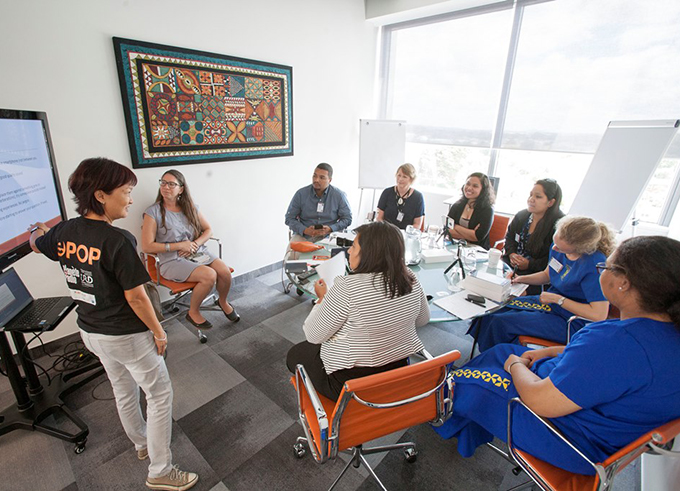
 ePOP …. health storytelling with smartphones. Image: Sylvia Frain/PMC









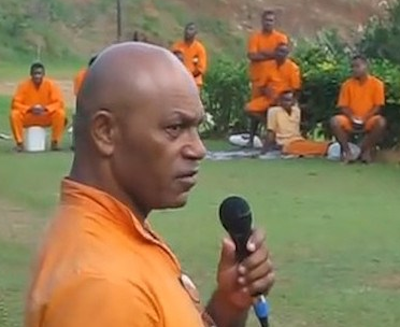 Coup 3 front man George Speight … jailed for treason. Image: Mai Life
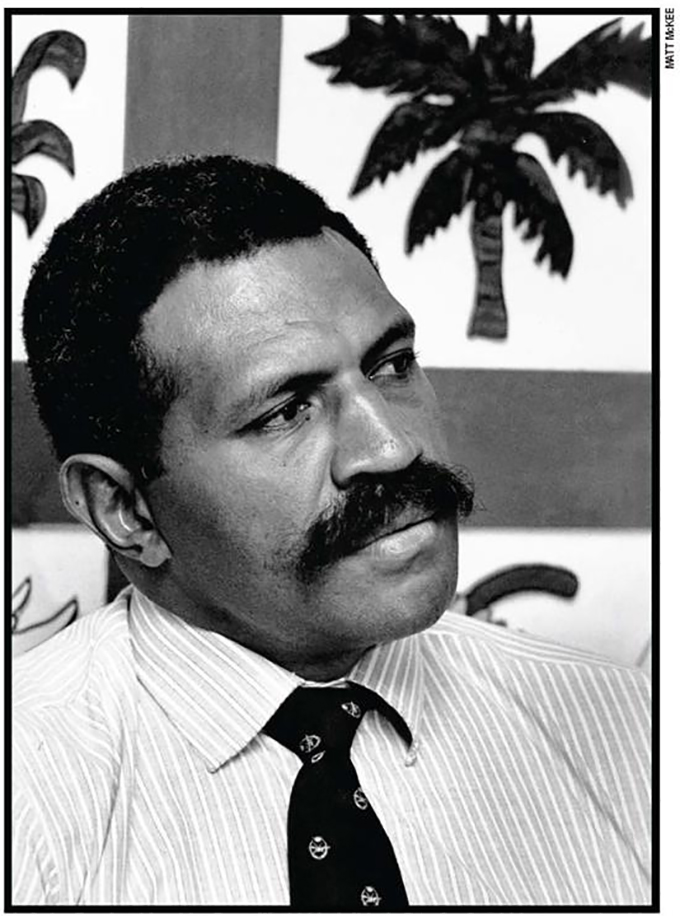 The 1987 Fiji military coups leader Sitiveni Rabuka as he was back then. Image: Matthew McKee/Pacific Journalism Review

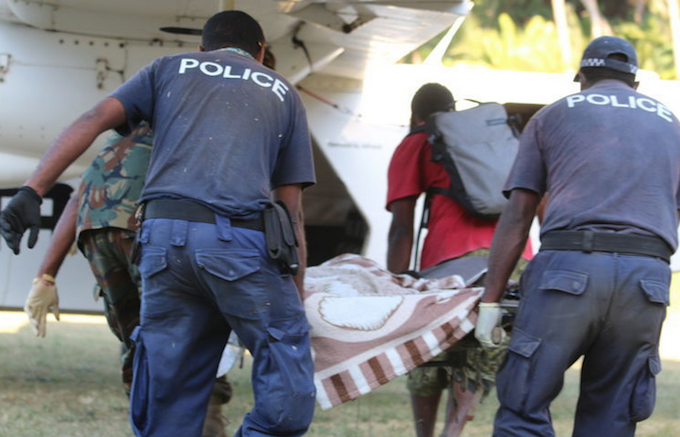

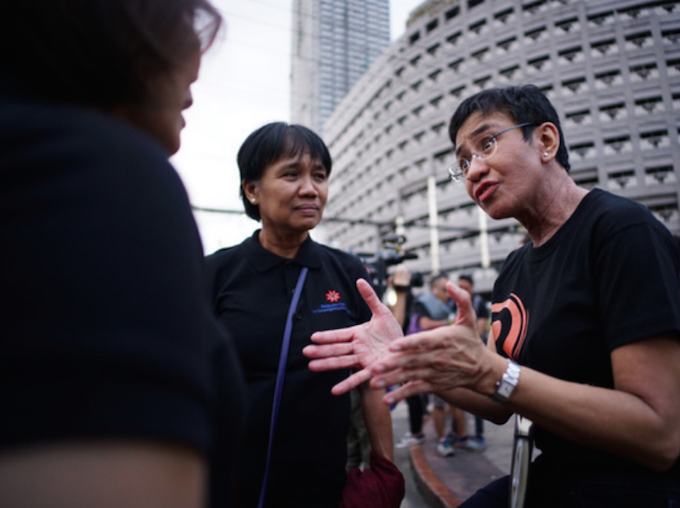 Rappler chief executive Maria Ressa (right) speaking to colleagues at the Black Friday for press freedom rally in Quezon City, Philippines. With her is Philippine Center for Investigative Journalism (PCIJ) executive director Malou Mangahas, who also spoke at the rally. Mangahas was recently in New Zealand for the Pacific Media Centre 10th anniversary celebration. Image: Rappler

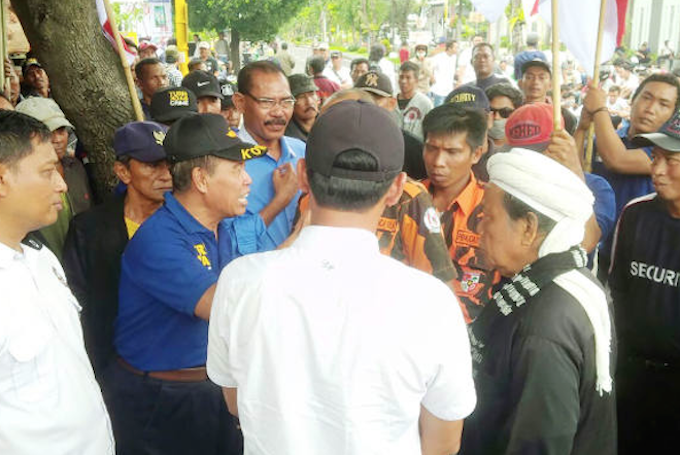
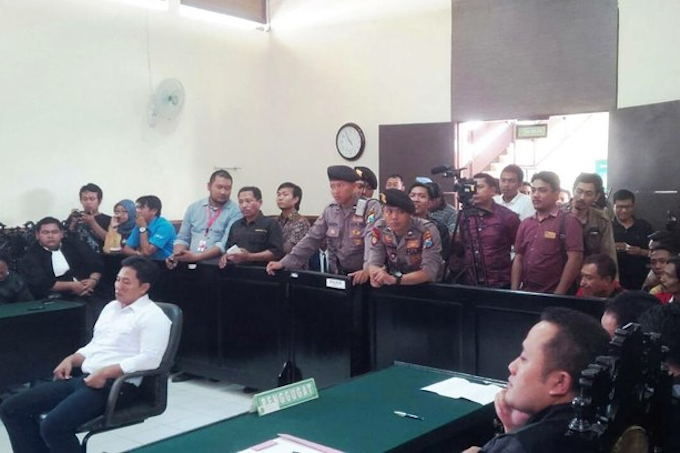 Hari Budiawan (alias Budi Pego – in white shirt) is sentenced to 10 months in prison at the Banyuwangi District Court in East Java, Indonesia, on Tuesday after being found guilty of a charge of spreading communism. Image: Yovinus Guntur/BenarNews