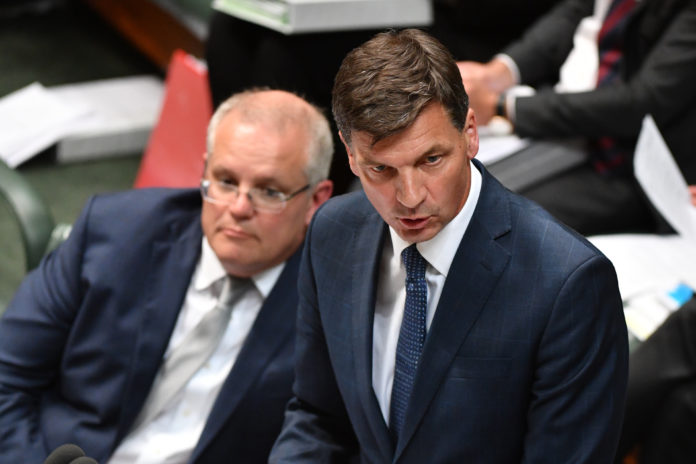
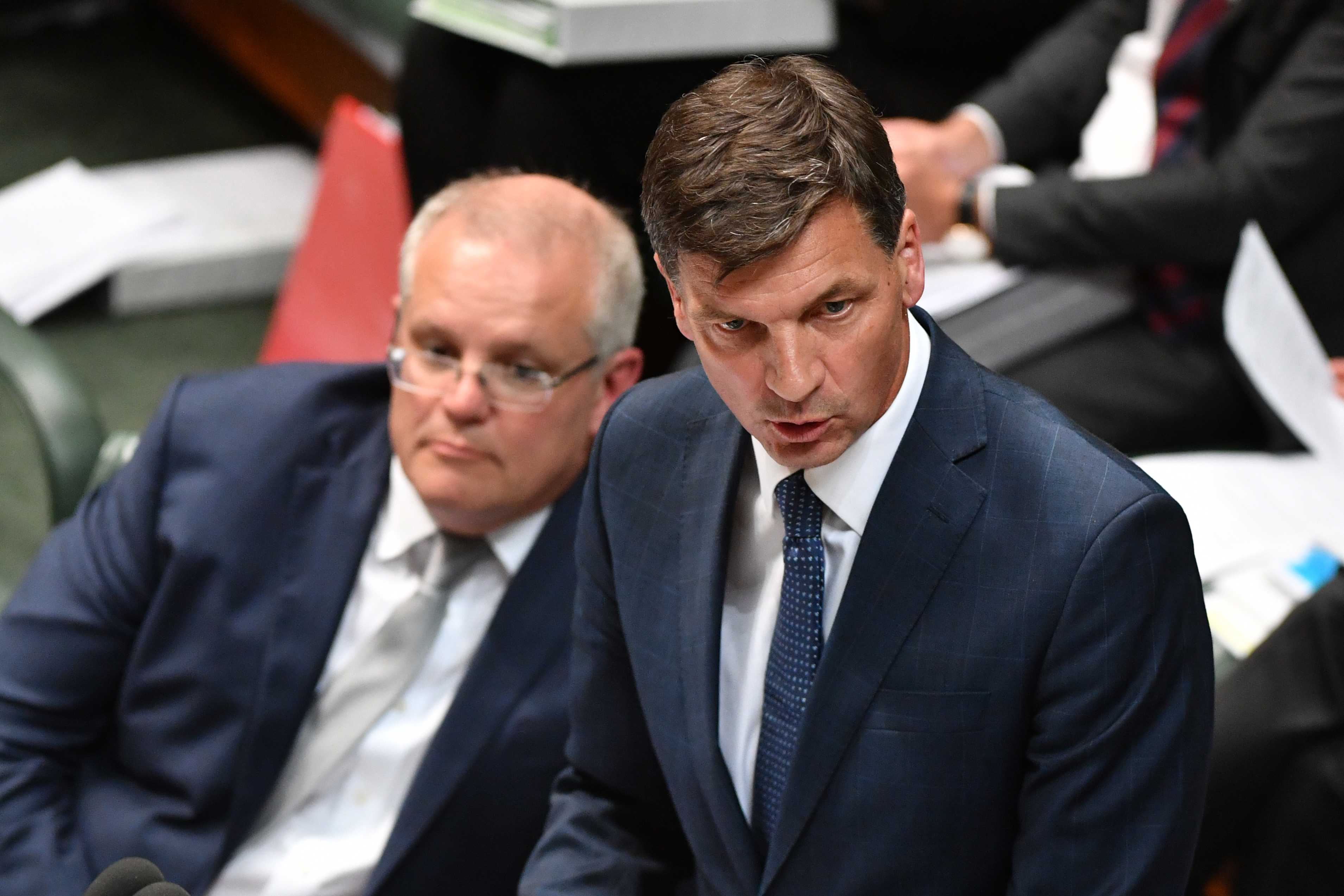
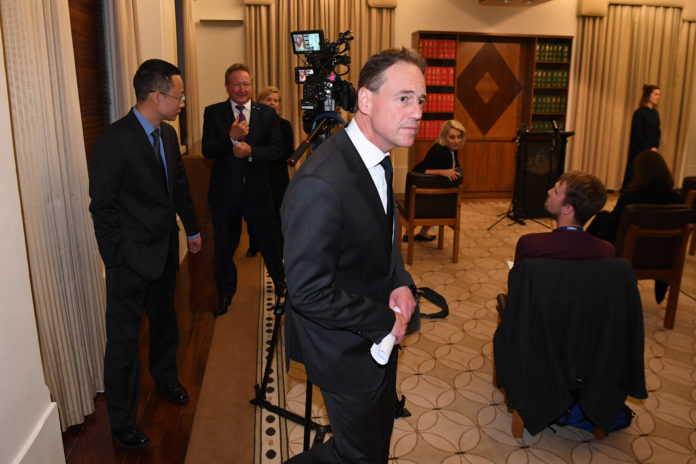
National cabinet has agreed to bring forward its review of COVID restrictions by a week to next Friday, but more downloads of the app are needed.
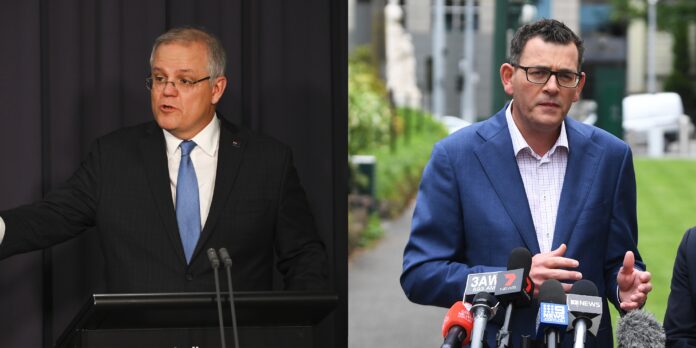
“Australians have earned an early mark through the work that they have done,” Scott Morrison told a news conference.
So far, 11 out of 15 conditions for reviewing restrictions are already on track to be met.
But one of those still outstanding is for enough people to download the COVIDSafe app.
“This is a critical issue for national cabinet when it comes to making decisions next Friday about how restrictions can be eased,” Morrison said.
As of late Friday there had been 3.6 million downloads. The app will speed up and make easier the tracing of an infected person’s contacts.
The government is reluctant to put a number on what is required for the app to be effective as part of containing the virus. “We haven’t put a target number on. It just needs to be higher and it has to be as high as it possibly can be,” Morrison said.
“We need that tool so we can open up the economy.
“So it’s pretty important that we get people downloading that app over the course of the next week. So it’s over to you Australia, as we go through this next seven days.”
Morrison declined to say what restrictions might be lifted first but indicated health and economic factors would be considered.
Recently there been fewer than 20 new COVID cases a day.
The government also announced another $205 million for the aged care sector as a one-off payment to facilities to support them in the costs being incurred in dealing with the COVID-19 crisis.
Some 23 facilities have been hit with outbreaks, with 15 now cleared.
National cabinet endorsed a draft code of conduct for the sector, following complaints from families, to “drive a more responsive and consistent approach to visitation and communication across residential aged care.”
The code “will also empower residents and their families to speak up and it will provide an agreed course of action to resolve complaints.”
Consultations with providers and consumers are being held until May 7.
At his news conference Morrison announced a huge fall in Australia’s net overseas migration.
“Off the 2018-19 year for net overseas migration, we’re expecting just over a 30% fall in 2019-20, the current financial year, and in 2021, an 85% fall off those 2018-19 levels as well.”
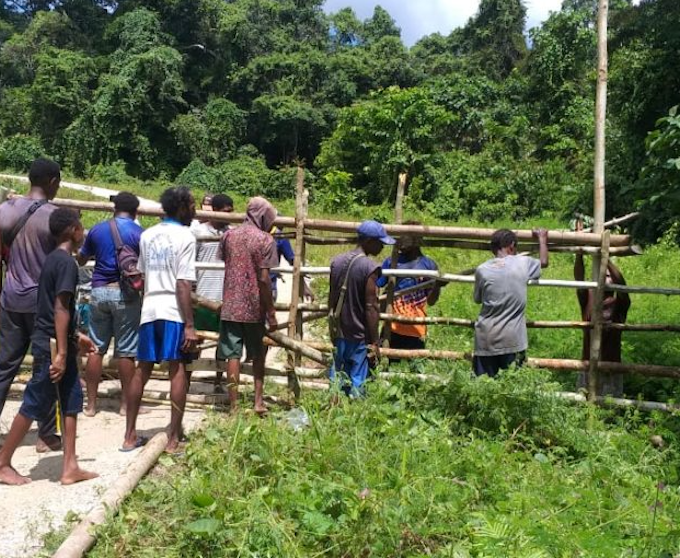
Community checkpoints have garnered support from New Zealand local councils, police and hundreds of volunteers determined to keep their communities safe – but they remain a polarising topic among some MPs.
A social justice advocate says it is underpinned by racism – and an effort to score cheap political points.
Community checkpoints were quickly erected across the country when alert level 4 began in March, with supporters declaring they were a necessary step to ensure vulnerable communities were kept safe.
Since then hundreds of volunteers, many of them Māori, in areas like Northland, the East Coast, Taranaki and Bay of Plenty, have spent their days stopping drivers and turning those who posed a risk away.
But they haven’t done it alone. Councils in Ōpōtiki, Taranaki, and Gisborne have publicly backed the checkpoints, and police have been deployed to help manage them too.
– Partner –
But that hasn’t stopped MPs, like National leader Simon Bridges, from calling them “illegal” and questioning whether they should be operating at all.
Police Commissioner Andrew Coster has repeatedly told MPs the checkpoints operating across the country are legal because police are present and operating them.
Information welcomed He has also welcomed any information about checkpoints where police are not present to ensure that they can work alongside communities to operate them safely and within the law.
Social justice advocate Julia Whaipooti said it was disappointing some MPs had used the community checkpoints as a ploy to score political points and undermine a successful movement led by Māori.
“What underpins this really is racism,” she said.
“Anything that involved Māori-led responses or iwi-led responses often becomes a political football and that’s really disappointing.
“Like Simon Bridges questioning to the police commissioner during this time, it really comes from a way to antagonise and incite racist views and fears from people, and to get cheap political points. That’s not what we need.”
She believed such opposition wouldn’t have existed had the checkpoints been led by Pākehā.
In a report released yesterday, the Human Rights Commission said the community checkpoints were a positive example of Treaty of Waitangi partnership in action.
Whaipooti agreed with this.
‘Tiriti relationship’ “Then community-led checkpoints, working with police, is a practical expression of the Tiriti relationship and I think that’s something to be upheld, and obviously the Human Right’s Commissioner has pointed that out as well.”
Bridges, in a statement, said he stood by everything he said at the Epidemic Response Committee meeting yesterday.
“It doesn’t matter whether these checkpoints are operated by Māori or Pākehā, they are illegal.”
Other MPs such as National’s Matt King and Act leader David Seymour have called for the checkpoints to be shut down, citing reports that some drivers felt unsafe and were being verbally abused.
But Deputy Police Commissioner Wally Haumaha said none of the complaints police had received, including a claim by Bridges that gang members were intimidating drivers in Maketu, have been substantiated.
“We’ve got staff to go in and investigate what those issues were all about. Of course, you’ve heard that there are gang members on these checkpoints but that just hasn’t been the case,” he said.
“I have had no reports of abuse come through to me.”
Distraction from virus spread He said the political discourse on the community checkpoints had been a distraction from the reason communities set them up in the first place.
“It’s been extraordinary that this has become a distraction from what has been in front of us,” Haumaha said.
“That’s about the prevention of the virus spreading. Some of these isolated communities didn’t have access to immediate medical services. The issues that they discussed were about the low immunity levels of their people, of their elderly, and of their pakeke.”
South Taranaki Mayor Phil Nixon said he hadn’t received any reports of drivers being abused, and he was thankful for what the local iwi were doing.
“I really support what they’re wanting to do to protect our community. They’re going to great lengths to look after us.”
Haumaha said police would continue to work alongside communities under alert level 3.
Decreased risk He said that may change under alert level 2, when the risk of transmission of the virus had decreased, and more cars were on the road.
Police have said they do not encourage community checkpoints, but are willing to work alongside communities should they deem a checkpoint necessary.
On their website, police say they would work alongside communities to ensure checkpoints do not prevent lawful use of the road.
“Where communities have determined to undertake checkpoints to prevent the spread of Covid-19, police are working with those communities and other agencies to ensure checkpoints are safe and not preventing lawful use of the road.
“Working in partnership with the local authority, the local Civil Defence Emergency Manager, local Iwi, community groups and police, we will assess whether checkpoints are needed or if there are other solutions.
“If covid-19 checkpoints for vulnerable communities are deemed necessary for the overall safety and wellbeing of a community, the will be operated by district police alongside community members and will be conducted in a safe manner, according to police operational guidelines and practices.”
Three new cases of covid-19 RNZ News reports that there have been three new cases of Covid-19 confirmed in New Zealand today, with no further deaths.
Director of Public Health Dr Caroline McElnay said one of the new cases was linked to overseas travel, one to a known case and one was under investigation.
Today’s news briefing. Video: RNZ News
There are six people in hospital, and none are in intensive care.
“We have 1252 cases that are reported as having recovered from Covid-19, which is an increase of 11 from yesterday, and so 85 percent of all our confirmed and probable cases are considered to be recovered.”
She said there are now a total of 1132 confirmed cases and 347 probable cases.
There are still 16 significant clusters, but Dr McElnay said one cluster has not seen new cases in 28 days and would be closed.
This article is republished by the Pacific Media Centre under a partnership agreement with RNZ.
If you havesymptomsof the coronavirus, call the NZ Covid-19 Healthline on 0800 358 5453 (+64 9 358 5453 for international SIMs) or call your GP – don’t show up at a medical centre.
There have been very few new covid-19 cases confirmed in the Pacific this week.
The total number of reported cases since March stands at 261, but because the number of people who have recovered continues to grow, the actual number of active cases is now less than 40.
The coronavirus emergency has left some people worried that governments are using it to control the media – a concern that comes as a new report from a media watchdog, Reporters Without Borders, has shown many countries in the Pacific – including Australia and New Zealand – have slipped in their latest media freedom rankings.
In this episode of Pacific Beat, we interview Pacific Media Centre director Professor David Robie on the challenges that he sees facing the region’s media.
– Partner –
The Samoa Victim Support Group, which is working around the clock to offer support and care to families who have been impacted by covid-19 restrictions, discuss their task.
A “virtual” global vote will take place over the weekend to decide who will be in the chair at the World Rugby Council and there is speculation that Fiji’s Prime Minister could have the final say in a vote that is reported to be too close to call.
And as lockdowns have prevented people from getting to gyms for exercise, a programme in the state of Queensland has been trying to get Pacific Islander and Maori kids and their families active while stuck at home.
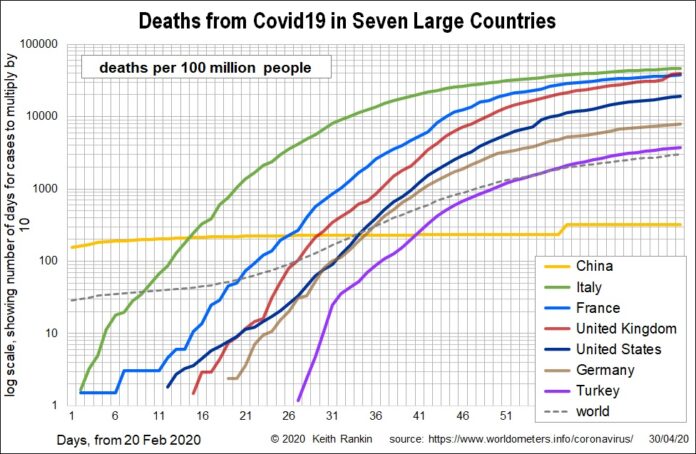
United Kingdom toll approaching Italy's. Chart by Keith Rankin.
Analysis by Keith Rankin.
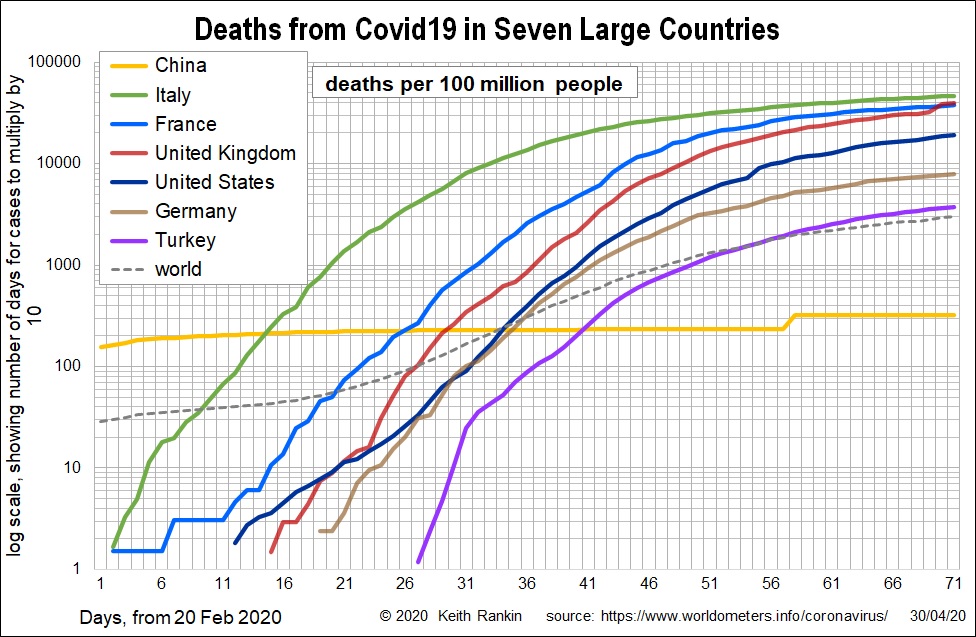
United Kingdom toll approaching Italy’s. Chart by Keith Rankin.
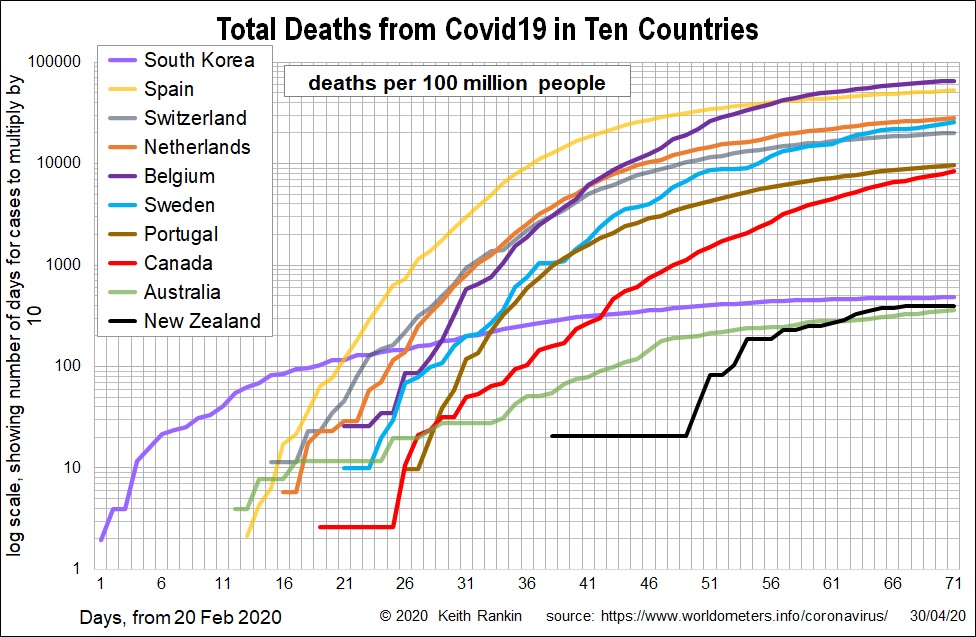
At the end of this week, I have represented the latest summary charts with a log 10 scale, rather than the previous log 2 scale. This means that, as well as accurately showing the exponential growth pattern, the charts now emphasise ten-fold increases of Covid19 fatalities. At the top of the scale, 100,000 deaths per 100 million people means one in a thousand people in a country dying directly from Covid19. While no country (other than little San Marino) has reached this death rate yet, Belgium (second chart) has come close. (New York City exceeds two deaths per thousand residents, and Milan would have at least twice that.)
The world’s present death rate is 30 per million. Of the world’s large countries, Turkey is closest to the world average, and the world incidence is likely to end up about the same as Turkey’s, probably at about 50 per million.
The United Kingdom’s death toll is already 400 per million, and will almost certainly exceed 500 per million, ten times the eventual toll for the world as a whole. All the other large countries, well above the world average, still have clearly rising death tolls.
Belgium heading for one in a thousand residents dead? Chart by Keith Rankin.
The second chart shows smaller countries, including New Zealand and Australia. While Spain and Belgium are the worst affected of these countries, we note that Sweden and Canada in particular are still showing uncontrolled growth of Covid19 deaths. Canada has well above the world average, and its fatalities will almost certainly reach 200 per million.
Switzerland and South Korea have stabilised. Australia may not have; there are distinct signs of a long tail there, much as South Korea had a month and a half ago. New Zealand’s present death toll is four in a million; let’s hope that it doesn’t overtake South Korea, at five in a million; that would be 25 New Zealand deaths, compared to the present 19.
An interesting side effect of the coronavirus pandemic is the number of people who say they are having vivid dreams.
Many are turning to blogs and social media to describe their experiences.
While such dreams can be confusing or distressing, dreaming is normal and considered helpful in processing our waking situation, which for many people is far from normal at the moment.
While we are sleeping
Adults are recommended to sleep for seven to nine hours to maintain optimal health and well-being.
When we sleep we go through different stages which cycle throughout the night. This includes light and deep sleep and a period known as rapid eye movement (REM) sleep, which features more prominently in the second half of the night. As the name implies, during REM sleep the eyes move rapidly.
Dreams can occur within all sleep stages but REM sleep is considered responsible for highly emotive and visual dreams.
We typically have several REM dream periods a night, yet we do not necessarily remember the experiences and content. Researchers have identified that REM sleep has unique properties that help us regulate our mood, performance and cognitive functioning.
Some say dreams act like a defence mechanism for our mental health, by giving us a simulated opportunity to work through our fears and to rehearse for stressful real-life events.
This global pandemic and associated restrictions may have impacts on how and when we sleep. This has positive effects for some and negative effects for others. Both situations can lead to heightened recollection of dreams.
Disrupted sleep and dreams
During this pandemic, studies from China and the UK show many people are reporting a heightened state of anxiety and are having shorter or more disturbed sleep.
Ruminating about the pandemic, either directly or via the media, just before going to bed can work against our need to relax and get a good night’s sleep. It may also provide fodder for dreams.
When we are sleep deprived, the pressure for REM sleep increases and so at the next sleep opportunity a so-called rebound in REM sleep occurs. During this time dreams are reportedly more vivid and emotional than usual.
If you’re working and learning from home on flexible schedules without the usual commute it means you avoid the morning rush and don’t need to get up so early. Heightened dream recall has been associated with having a longer sleep as well as waking more naturally from a state of REM sleep.
If you’re at home with other people you have a captive audience and time to exchange dream stories in the morning. The act of sharing dreams reinforces our memory of them. It might also prepare us to remember more on subsequent nights.
This has likely created a spike in dream recall and interest during this time.
The pandemic concerns
Dreaming can help us to cope mentally with our waking situation as well as simply reflect realities and concerns.
In this time of heightened alert and changing social norms, our brains have much more to process during sleep and dreaming. More stressful dream content is to be expected if we feel anxious or stressed in relation to the pandemic, or our working or family situations.
Hence more reports of dreams containing fear, embarrassment, social taboos, occupational stress, grief and loss, unreachable family, as well as more literal dreams around contamination or disease are being recorded.
An increase in unusual or vivid dreams and nightmares is not surprising. Such experiences have been reported before at times associated with sudden change, anxiety or trauma, such as the aftermath of the terrorist attacks in the US in 2001, or natural disasters or war.
Those with an anxiety disorder or experiencing the trauma first-hand are highly likely also to experience changes to dreams.
But such changes are also reported by those witnessing events like the 9/11 attacks second-hand or via the media.
Problems solved in dreams
One theory on dreams is they serve to process the emotional demands of the day, to commit experiences to memory, solve problems, adapt and learn.
This is achieved through the reactivation of particular brain areas during REM sleep and the consolidation of neural connections.
During REM the areas of the brain responsible for emotions, memory, behaviour and vision are reactivated (as opposed to those required for logical thinking, reasoning and movement, which remain in a state of rest).
The activity and connections made during dreaming are considered to be guided by the dreamer’s waking activities, exposures and stressors.
The neural activity has been proposed to synthesise learning and memory. The actual dream experience is more a by-product of this activity, which we assemble into a more logical narrative when the remainder of the brain attempts to catch up and reason with the activity on waking.
Please … go to sleep
If disrupted sleep and dreams are problematic or distressing for you, consider how your sleep schedule and behaviour has changed with the pandemic. Maybe seek advice for supporting your sleep and well-being during this time.
We are also conducting a survey concerning the sleep of people living in New Zealand. This explores factors affecting sleep during the pandemic, and participants can comment on their dreaming.
The federal government this week offered independent schools across the country an advance of A$3 billion if they committed to having at least half their students back in the classroom by June 1.
In the case of some states, particularly Victoria, this instruction is in direct contrast to that of the premiers. Victorian schools, following advice from the state’s Chief Health Officer, are committed to online learning for term two with children only attending schools if they have to, such as if their parents are essential workers.
Victoria’s education minister James Merlino has said the federal government is “forcing” independent schools to undermine the state’s strategy. In regard to schools, he said:
Let me be very clear, particularly to the federal government who do not run any schools, we will only transition back to face-to-face teaching for all students when that is the advice of the Victorian Chief Health Officer.
The federal government has consistently maintained the position it is safe for schools to remain open.
The federal government funds independent schools, and the state is in charge of public schools. But beyond these arrangements, is there anything in the Australian Constitution that might give the Commonwealth control over schools in a national emergency situation like the case of a pandemic?
What the Constitution allows the Commonwealth
The Australian Constitution was written in the 1890s and came into effect in 1901. It predates the first world war and the influenza pandemic that followed it.
There is no general emergency power, but it does give the Commonwealth power over “the naval and military defence of the Commonwealth” (s51(vi)). This power was used extensively in both world wars to control many aspects of life from curfews to bread prices.
The Commonwealth also has control of quarantine under s51(ix), but there is no mention of health or education – or indeed the economy – though there are some commercial powers such as over foreign, trading and financial corporations (s51(xx)).
There is a power under s51(xxiiiA) to provide benefits to students and others and for health and medical purposes.
How the Commonwealth can control the states
The Commonwealth and states have done a pretty good job of cooperating so far. The National Cabinet of Commonwealth ministers and state premiers (a concept not found in the Constitution) has made joint decisions on the public health response.
But the messaging on schools has been inconsistent with the federal government claiming it’s safe, while some premiers have taken their own route and transitioned to online learning.
Legally and constitutionally the Commonwealth can’t force schools to open. The fact it has attempted to induce independent schools to reopen by bringing forward a payment highlights that the Commonwealth’s involvement in education, as in so many areas, is through the power of the purse.
The Commonwealth has an almost unlimited power of taxation under s51(ii), together with its power under s96 to make grants to states “on such terms and conditions as the Parliament thinks fit”.
This reached an extreme in the Howard era when the Commonwealth made a payment to state schools conditional on them having at least an hour of physical education per week, and a flagpole.
To be allowed to operate, all schools must be registered with the respective school registration authority in each state or territory, which means states have jurisdiction over school operations. So, if Victoria or any other state decides to compel schools in the state to remain closed (or reopen), it has the power to do so.
What about in an emergency situation?
The Commonwealth’s power to act in an emergency was tested in the global financial crisis of 2008-10 when the Rudd government sent out a “Tax Bonus” payment to all taxpayers. This was challenged by constitutional law lecturer Bryan Pape as going beyond Commonwealth power.
The High Court, in Pape v Commissioner of Taxation, agreed the tax bonus was not authorised by the taxation power, but accepted that there was a global emergency and the payment was in response to it.
The executive power of the Commonwealth conferred by s61 of the Constitution extends to the power to expend public moneys for the purpose of avoiding or mitigating the large scale adverse effects of the circumstances affecting the national economy […]
Could the Commonwealth claim we are in a national emergency and kids must go back to school? That would be harder to argue than that they should stay home to avoid the virus. It would also be hard for the Commonwealth to argue that an economic imperative trumps a state’s judgement about what is safe for the community.
In the case of Rudd’s tax bonus, the Commonwealth was trying to send every taxpayer a cheque. That is a rather different matter to forcing taxpayers to send their children to school, especially against the wishes of the state.
Let’s hope the Commonwealth and states can reach agreement on this and together get the risk of transmission down to a level we can all accept.
But we may be getting tired for another reason. All those tiny decisions we make every day are multiplying and taking their toll.
Is it safe to nip out for milk? Should I download the COVIDSafe app? Is it OK to wear my pyjamas in a Zoom meeting?
All of these kinds of decisions are in addition to the familiar, everyday ones. What shall I have for breakfast? What shall I wear? Do I hassle the kids to brush their teeth?
One way to think about these extra decisions we’re making in isolation is in terms of “cognitive load”. We are trying to think about too many things at once, and our brains can only cope with a finite amount of information.
Researchers have been looking into our limited capacity for cognition or attention for decades.
Early research described a “bottleneck” through which information passes. We are forced to attend selectively to a portion of all the information available to our senses at a given time.
These ideas grew into research on “working memory”: there are limits on the number of mental actions or operations we can carry out. Think of remembering a phone or bank account number. Most people find it very hard to remember more than a few at once.
To measure the effects of cognitive load on decision-making, researchers vary the amount of information people are given, then look at the effects.
In one study, we asked participants to predict a sequence of simple events (whether a green or red square would appear at the top or bottom of a screen) while keeping track of a stream of numbers between the squares.
Think of this increase in cognitive load as a bit like trying to remember a phone number while compiling your shopping list.
When the cognitive load is not too great, people can successfully “divide and conquer” (by paying attention to one task first).
In our study, participants who had to learn the sequence and monitor the numbers made just as many successful predictions, on average, as those who only had to learn the sequence.
Presumably they divided their attention between keeping track of the simple sequence, and rehearsing the numbers.
More and more decisions take their toll
But when tasks become more taxing, decision making can start to deteriorate.
In another study, Swiss researchers used the monitoring task to examine the impact of cognitive load on risky choices. They asked participants to choose between pairs of gambles, such as:
A) 42% chance of $14 and 58% chance of $85, or
B) 8% chance of $24 or 92% chance of $44.
Participants made these choices both with their attention focused solely on the gambles, and, in another part of the experiment, while also keeping track of sequences of letters played to them via headphones.
The key finding was not that increasing cognitive load made people inherently more risk-seeking (tending to choose A) or risk-averse (B), but that it simply made them more inconsistent in their choices. Increased cognitive load made them switch.
The fruit salad or the cake? Well, it depends partly on your cognitive load.Shutterstock
It is a bit like choosing the fruit salad over the cake under normal circumstances, but switching to the cake when you are cognitively overloaded.
It is not because a higher cognitive load causes a genuine change in your preference for unhealthy food. Your decisions just get “noisier” or inconsistent when you have more on your mind.
‘To do two things at once is to do neither’
This proverbial wisdom (attributed to the Roman slave Publilius Syrus) rings true – with the caveat that we sometimes can do more than one thing if they are familiar, well-practised decisions.
But in the current business-not-as-usual context there are many new decisions we never thought we’d need to make (is it safe to walk in the park when it is busy?).
This unfamiliar territory means we need to take the time to adapt and recognise our cognitive limitations.
Although it might seem as though all those tiny decisions are mounting up, it perhaps isn’t just their number. The root cause of this additional cognitive load could be the undercurrent of additional uncertainty surrounding these novel decisions.
For some of us, the pandemic has displaced a bunch of decisions (do I have time to get to the bus stop?). But the ones that have replaced them are tinged with the anxiety surrounding the ultimate cost that we, or family members, might pay if we make the wrong decision.
So, it is no wonder these new decisions are taking their toll.
So what can I do?
Unless you have had ample experience with the situation, or the tasks you are trying to do are simple, then adding load is likely to leader to poorer, inconsistent or “noisier” decisions.
The pandemic has thrown us into highly unfamiliar territory, with a raft of new, emotionally tinged decisions to face.
The simple advice is to recognise this new complexity, and not feel you have to do everything at once. And “divide and conquer” by separating your decisions and giving each one the attention it – and you – deserve.
The horrific deaths of four Victorian police officers during seemingly routine traffic duties have brought the dangers of policing into sharp relief.
There are many threats to officers while they carry out their duties, some more extreme than others. In a declaration about the seriousness and risk of spitting, and just how common it is, states and territories have introduced additional laws (aside from common assault) to deal with people deliberately spitting, sneezing and coughing on police and other essential services personnel.
So, exactly how are our officers sustaining injuries and other medical conditions, and how often are officers dying in the line of duty?
The National Police Memorial honour roll commemorates Australian police officers who have been killed or died while on duty in recognition of their contribution to the Australian community. An examination of these fatalities from the past two decades provides some revealing insights.
There were 51 officer fatalities in Australia between 2000 and 2019, an average of two to three a year. Until the recent deaths in Victoria, there has not been so many deaths in Australia in a single year since the deaths of five officers in 2005. However, those fatalities were all separate incidents. Sadly, in 2001, four officers died in the same plane crash.
Officer fatalities have three main causes: accidents, assaults and health-related incidents. Similar to the recent Victorian fatalities, Australian police officers mostly died due to accidents (65% of all police fatalities), with road accidents being the leading cause.
These deaths tend to occur during seemingly low-risk activities such as general duties patrols. Most of these accidents involve motor vehicles (55%), while 21% involve motorcycles. However, as previously mentioned, there have been plane crashes (21%) and there was one accidental shooting.
It is notable that the number of overall officer fatalities decreased substantially after 2007. Before 2008, there was an average of 4.5 police deaths per year. But from 2008 onwards, the average fell to 1.25 deaths per year. This decrease is mostly due to the decrease in accidents, which dropped from an average of 3.25 per year to just 0.58 per year.
So what changed? This decrease might be explained by technological advances and changes to practices. For example, the Australian Design Rules changed motor vehicle safety standards to increase the safety of airbags in 2006.
Also, police forces adopted more helicopters into their fleets. The use of helicopters for police pursuits may reduce the necessity for officers to engage in high-risk vehicle pursuits, and therefore decrease the number of accidents.
Finally, an inquest into the death of Senior Constable Peter Wilson led to changes to roadside policing practices, which may also have contributed to the decrease in fatalities.
However, officers face not only accidents, but also assaults and homicides – not typically faced in most other occupations. In the past two decades, there were 14 assaults on police. While these were almost always shootings (11 of the 14 cases), in one incident the driver of a stolen vehicle purposefully swerved to hit an officer.
Furthermore, the stressful and physical nature of policing can lead to health-related fatalities. While mental health fatalities, such as suicide, are not included in the data, physical health-related incidents are included. Over the past 20 years, four officers have died due to health-related matters while on duty. Three of these cases involved a cardiovascular event such as a heart attack during training. In the fourth case an officer died from a respiratory illness.
This last fatality highlights current concerns during these coronavirus times. While the cause of this officer’s death is unknown, there are strong concerns for the safety of our officers who we rely upon in times of crisis and to protect our community.
Indeed, a recent study of significant events in Queensland found almost half (44%) of the officers involved in these events reported sustaining an injury. These mostly involved officers being spat on or bitten (36% of injuries reported). This is concerning because of the risk of viral infections (all these officers required testing for infection) and work-related anxiety.
The study argues these types of attacks are indicative of opportunistic assaults; that is, the offender takes advantage of the situation and attacks an officer. Furthermore, being spat on is often viewed as insulting and disgusting, which may cause negative reactions from police and society.
These figures only include the physical dangers of policing and do not include the mental toll on our officers. Tragic recent events have highlighted the high-risk nature of policing and the need to better understand the dangers involved in order to protect our officers from harm so they can protect us during times of crisis.
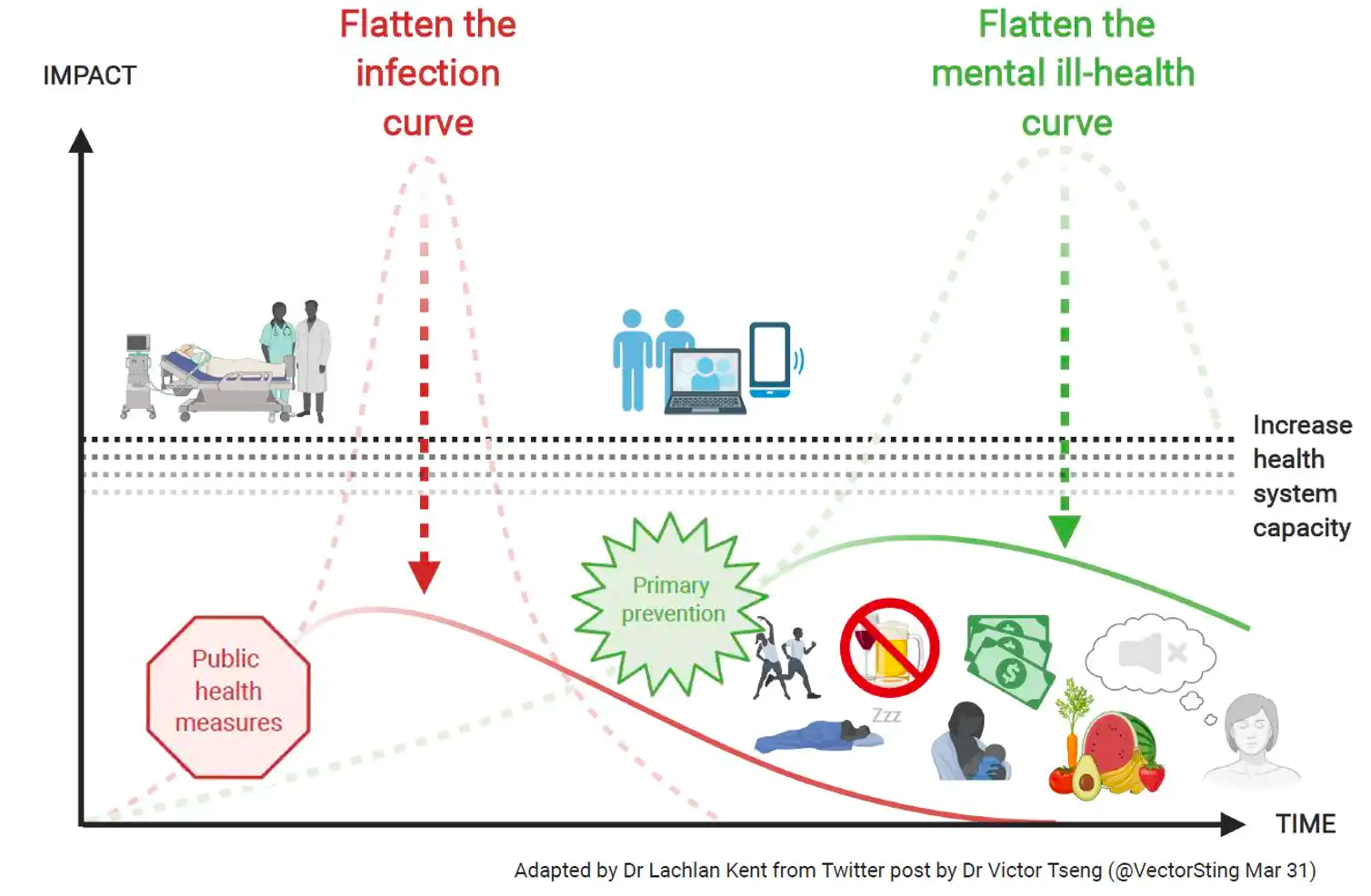
This can feel like we have little control, but there are several evidence-based protective measures we can take in the interim to ensure we are as healthy as possible to fight off infection and prevent mental health problems that escalate with uncertainty and stress.
There is recent evidence that some younger people suffer strokes after contracting the virus, but the majority of people who end up hospitalised, in intensive care or dying from COVID-19 have an underlying medical condition. One study showed 89% of those hospitalised in the US had at least one.
These underlying medical conditions include high blood pressure, high blood sugar (especially type 2 diabetes), excessive weight and lung conditions. An analysis of data from the UK National Health Service shows that of the first 2,204 COVID-19 patients admitted to intensive care units, 72.7% were either overweight or obese.
All of these health issues have been associated with our lifestyle including poor diet, lack of exercise, smoking, excessive alcohol and high stress.
It’s obvious we have created a society where being active, eating healthily, drinking less and keeping our stress under control is difficult. Perhaps it’s time to push back. This may be important for major conditions like heart disease and diabetes as well as the added threat we face from emerging infectious diseases.
One study shows only 12% of Americans are in optimal metabolic health, which means their blood pressure, blood glucose, weight and cholesterol are within a healthy range. This rate is likely similar in many Western countries.
There is now a body of evidence linking our unhealthy lifestyle with viral, especially respiratory diseases. High blood sugar reduces and impairs immune function. Excessive body fat is known to disrupt immune regulation and lead to chronic inflammation. Insulin resistance and pre-diabetes can delay and weaken the immune response to respiratory viruses.
If we are going to restrict and change our lifestyles for 12 to 18 months while we wait for a vaccine, and if we want to protect ourselves better now and in the future, we could address these lifestyle factors. They not only affect our recovery from viruses and respiratory infections, but are also the biggest cost to the quality of life in most countries.
Optimising the health of the nation must be at the forefront. And this is long overdue. There has been a substantial under-investment by most developed countries in preventive medicine to reduce chronic diseases and improve both longevity and quality of life through healthy lifestyles.
Healthy organisms are naturally resistant to infections. This is true in plants, animals and people. Maintaining optimal health is our best defences against a pandemic until a vaccine is available.
We identify three modifiable risk factors:
1. Diet
Research shows better nourished people are less likely to develop both mental and physical problems. Certain nutrients, such as vitamins C and D and zinc have been identified as essential for improving immunity across the lifespan. A better diet is associated with a lower chance of developing mental health problems in both children and adults. Low levels of specific nutrients, such as vitamin D, have been recognised as risk factors for COVID-19. These nutrients are easy (and cheap) to replenish.
What does it mean to be better nourished? Eating real whole foods – fruits and vegetables, nuts, legumes, fish and healthy fats and reducing the intake of ultra-processed foods.
2. Exercise
Being physically fit adds years to your life – and quality of life. High cardiorespiratory (lung and heart) fitness is also associated with less respiratory illness, and better survival from such illnesses.
How do you get fit? Set aside time and prioritise walking at a minimum, and more vigorous activity if possible, every day. Ideally, you would get outside and be with important others. The more the better, as long as you are not overdoing it for your individual fitness level.
3. Stress
Stress impairs our immunity. It disrupts the regulation of the cortisol response which can suppress immune function. Chronic stress can decrease the body’s lymphocytes (white blood cells that help fight off infection). The lower your lymphocyte count, the more at risk you are of catching a virus.
How do we lower stress? Meditation, yoga, mindfulness, cognitive-behaviour therapy, optimising sleep and eating well can all help in mitigating the negative impact of stress on our lives. Taking additional nutrients, such as the B vitamins, and the full breadth of minerals like magnesium, iron and zinc, during times of stress has a positive impact on overall stress levels.
Modifying lifestyle factors won’t eliminate COVID-19 but it can reduce the risk of death and help people to recover. And these factors can be in our control if we and our governments take the initiative.
Michelle Grattan talks with Assistant Professor Caroline Fisher (remotely) about the week in politics, including the communications effort behind the government’s contact tracing app, Australia’s call for an independent inquiry into the source of the coronavirus (and China’s pushback), and what the resignation of MP Mike Kelly means for Scott Morrison and Anthony Alabanese.
Notwithstanding some poignant and passionate speeches by particular individuals (notably New York Governor Andrew Cuomo), much of the discourse has focused on the economic, political and policy division, rather than grief for the victims.
This broadly sanguine response might be due to perceptions that it is mostly older people dying from coronavirus, although experts warn younger people can die too. Witness the relief at new reports that children under 10 have not accounted for a single transmission of the virus. The deaths of older people have been comparatively discounted, not the least because many were socially isolated even before the pandemic.
The Greeks of antiquity reflected on the death of the young and the old in some very creative mythical narratives. Greek myth reflects on and reminds us of some of the less attractive characteristics of human life and society, such as sickness, old age, death and war. In the ancient Greek world this made it harder to put old age and death into a corner and forget about it, which we tend to do.
Choosing when
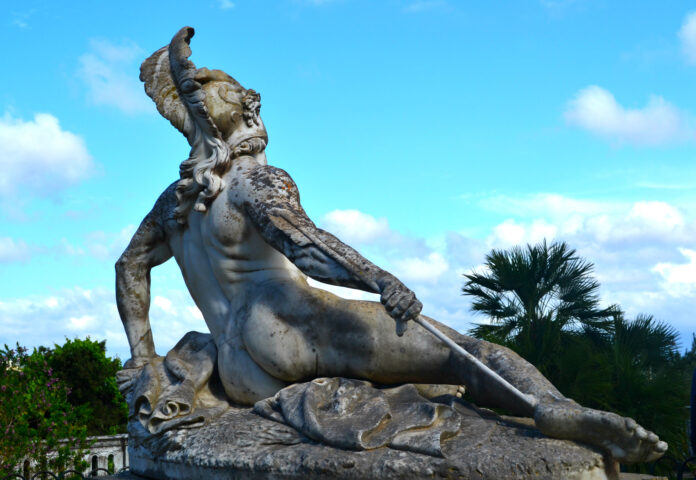
Achilles, the hero of Homer’s Iliad, actually has a choice in the timing of his life and death.
He can have a long life without heroic glory, back on the farm, or he can have a short life with undying fame and renown from his fighting at Troy. The fact that he chooses the latter makes him different from ordinary people like us.
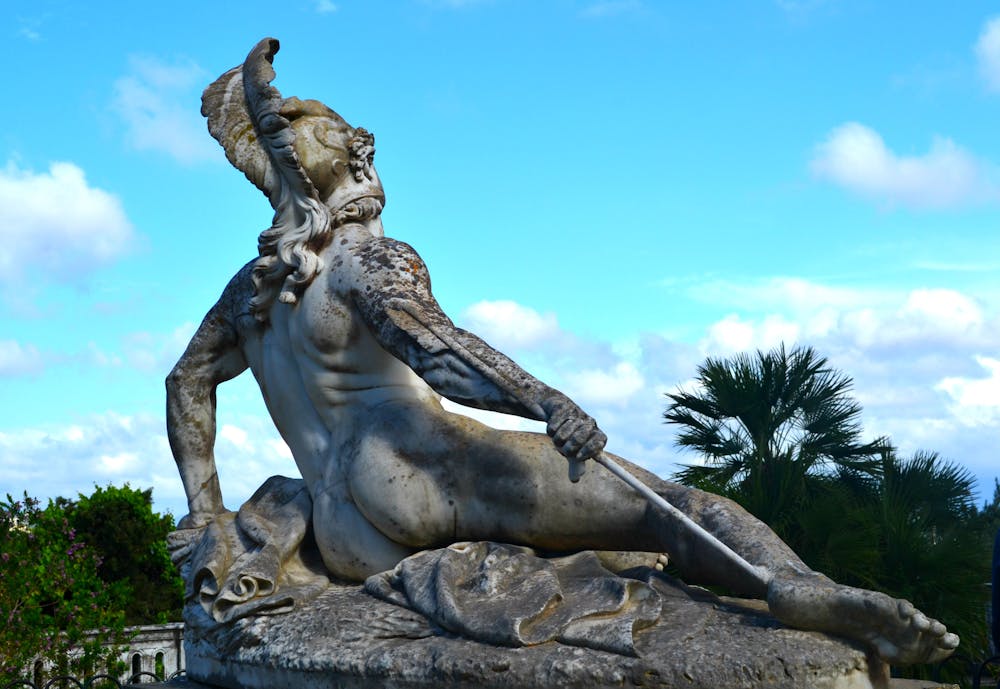
Achilles has a choice of when he dies, young or old. Ernst Herter’s 1884 sculpture Dying Achilles, Achilleion Palace, Corfu Island, Greece.Shutterstock/FURMANCHUK LARISA
Achilles’ heroism is fundamentally linked to his own personal choice of an early death. But it also means his desperate mother, the goddess Thetis, will have to mourn him eternally after seeing him for such a short time in life. Such is the pain for the loss of a child in war.
A play by the master Athenian dramatist Euripides is even more focused on young and old death. The play Alcestis was produced in Athens in 438 BC, making it the earliest surviving Euripidean play (about ten years before the plague at Athens).
In the play, the king of Thessaly – an appallingly self-interested person called Admetus – has previously done the god Apollo a favour, and so Apollo does Admetus a favour in return. He arranges for him to extend his life and avoid death in the short term, if he can find someone to take his place and die in his stead.
Admetus immediately asks his father or mother to die for him, based on the assumption that they are old and will presumably die soon anyway. But the father, Pheres, and his wife turn down Admetus, and so he has to prevail on his own wife, Alcestis, to die for him, which she agrees to do.
The story of the play is based around the day of her death and descent to the Underworld, with some rather comic twists and turns along the way. Death (Greek Thanatos) is a character in the play, and he is delighted to have a young victim, in Alcestis, rather than an old one. “They who die young yield me a greater prize,” he says.
There is a particularly spiteful encounter between Admetus and his father on the subject of young and old death:
Admetus:
Yet it would have been a beautiful deed for you to die for your son, and short indeed was the time left for you to live. My wife and I would have lived out our lives, and I should not now be here alone lamenting my misery.
Father:
I indeed begot you, and bred you up to be lord of this land, but I am not bound to die for you. It is not a law of our ancestors or of Hellas that fathers should die for their children! … You love to look upon the light of day – do you think your father hates it? I tell myself that we are a long time underground and that life is short, but sweet.
The Alcestis of Euripides, and other Greek myths, remind us, should we ever forget, that love of looking upon the light of day is a characteristic of human existence, both for the young and the very old.
Source: The Conversation (Au and NZ) – By Katie Pickles, Professor of History at the University of Canterbury and current Royal Society of New Zealand Te Apārangi James Cook Research Fellow, University of Canterbury
Captain James Cook arrived in the Pacific 250 years ago, triggering British colonisation of the region. We’re asking researchers to reflect on what happened and how it shapes us today. You can see other stories in the series here and an interactive here.
History is always selective, particularly when it is tied up with national identity. Certain stories are recovered, while others remain silent.
Intimate encounters are often muted, even though we know they played a central part in first encounters during the colonial era.
Tuia 250, a government-sponsored series of events to commemorate 250 years since Captain James Cook arrived in New Zealand, focused on Pacific voyaging and first onshore encounters between Māori and Pākehā (non-Māori) during 1769–70, at the expense of reconsidering private history.
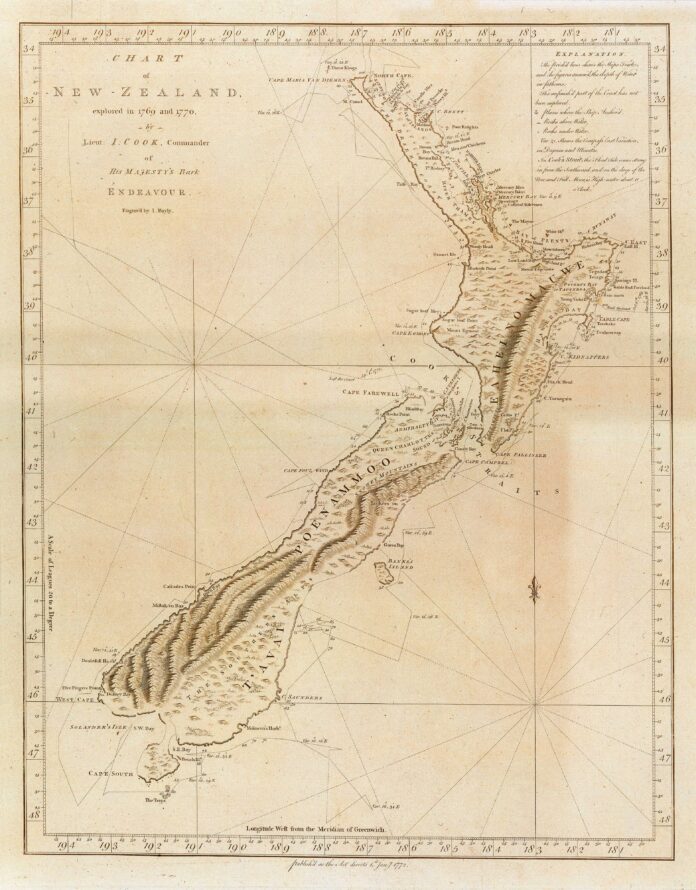
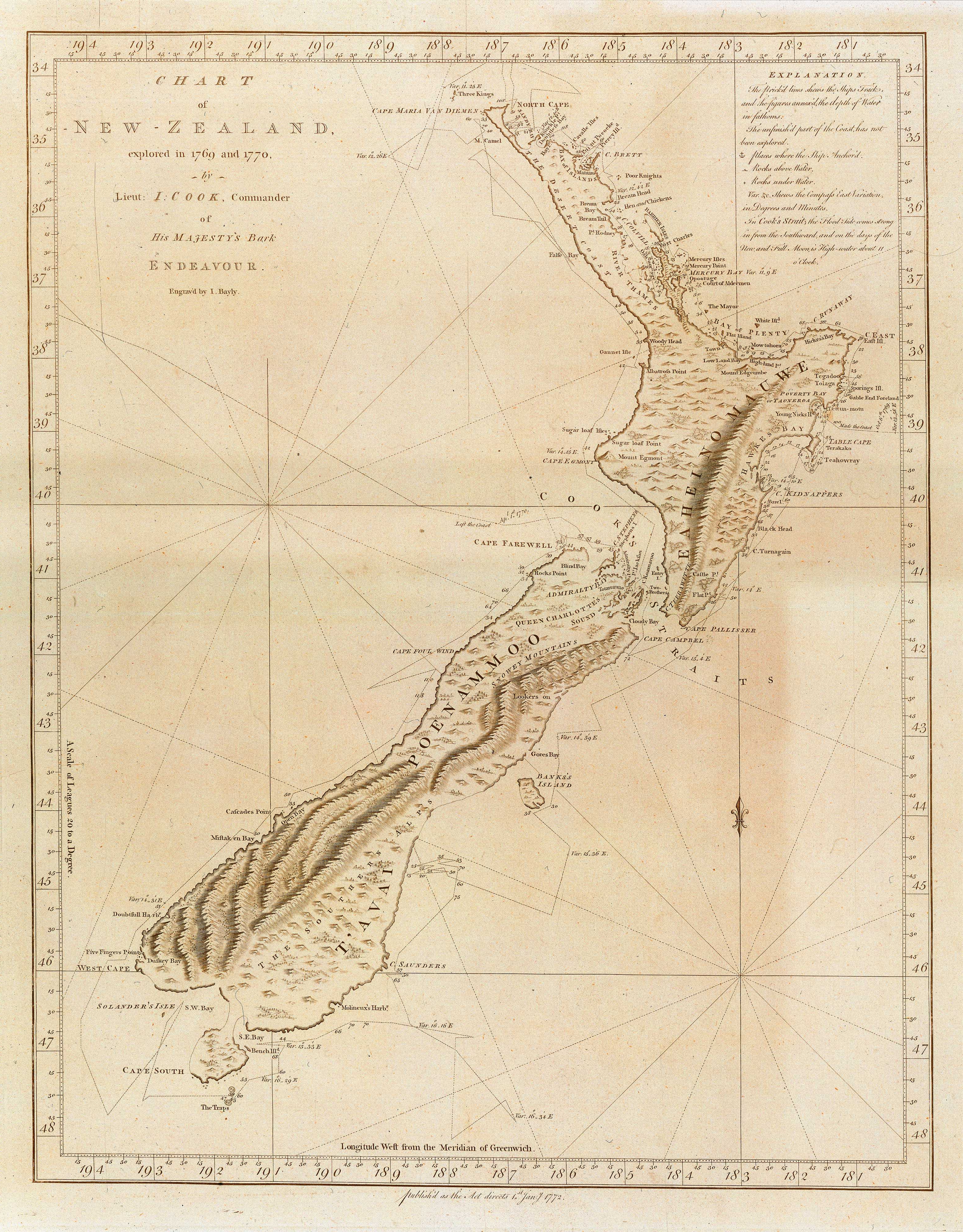
The laborious maps and longhand entries in explorers’ journals, their sketches of specimens gathered during their long journeys – these can all be seen as skillful antiques of a bygone era. But they also represent potent past tools of imperialism.
Tuia 250 was about both voyaging and encounter histories, but it seems that re-enacting traditional sailing was easier than restaging the intimate encounters that were central to the colonial enterprise.
Commemorations of voyages across the open oceans sailed clear of the awkward topic of intimacy. The history of intimate encounters remained consigned to a private space, perceived as outside of the making of history and national identity.
In her book The Trial of the Cannibal Dog, Salmond describes the Endeavour’s arrival at Anaura Bay, where Cook’s party went ashore, and the expedition’s official botanist Joseph Banks commented about Māori women being less accessible than Tahitian women.
Banks remarked ruefully that they ‘were as great coquettes as any Europeans could be and the young ones as skittish as unbroke fillies’. If the local women were reluctant to make love with the strangers, however, they were wise, because by Cook’s own reckoning several of his men had stubborn venereal infections, and at least half of the rest had contracted venereal diseases in Tahiti.
The sex industry began at first contact in 1769, and from the 1810s it became large and important – very probably preceding wool, gold and dairy products as New Zealand’s leading earner of overseas exchange.
Contemporary Western attitudes sometimes led to characterisations of more casual sexual activity between Māori women and visiting Pākehā men as ‘prostitution’, and in our own time such liaisons have been deemed to represent a ‘sex industry’. But these perceptions may be in large part the result of the different moral codes of the narrators and seeing sexual relationships through different lenses. Māori society may have more typically viewed short- to medium-term relationships with sailors or other visitors in terms of manaakitanga or the normal extension of hospitality with expectations of a courteous material response.
According to historians, Cook disapproved of the sexual behaviour of his officers and men, but was unable to stop it. In his journal, Cook wrote:
A connection with Women I allow because I cannot prevent it, but never encourage tho many Men are of opinion it is one of the greatest securities amongst Indians, and it may hold good when you intend to settle amongst them; but with travelers and strangers, it is generally otherwise and more men are betrayed than saved by having connection with their women, and how can it be otherwise since all their Views are selfish without the least mixture of regard or attachment whatever; at least my observations which have been pretty general, have not pointed out to me one instance to the contrary.
Sailors embodied the complex, disease-ridden, sexual shipboard culture of the 18th century, combined with western unequal attitudes towards women and the perception of Polynesian women as exotic.
As indigenous and cultural studies scholar Alice Te Punga Somerville puts it:
Gender is so central to the story of Cook. And how Cook, and everything that came after, has done so much to gender in this region.
Māori women were entangled in the encounters as two worlds met. First contact marked the beginning of changes to customary processes (tikanga Māori), ended pre-colonial balance and had profound effects on Māori women’s lives, as the work of indigenous scholar Ani Mikaere has shown.
Mikaere has argued that:
It is often assumed that, according to tikanga Māori, leadership was primarily the domain of men and that men in Māori society exercised power over women. However, evidence abounds which refutes the notion that traditional Māori society attached greater significance to male roles than to female roles.
It came to pass that Māori women, white women missionaries and settlers were all integral to history. As feminist scholar Anne McClintock pointed out of women in imperialism, they were not “hapless onlookers”. They were variously colonisers and colonised.
Just as women were a central part of those first encounters in 1769-70, they continued to be agents of history. Some women, as the helpmeets of Empire, taught generations of schoolchildren about Cook the hero as part of an imperial curriculum.
Navigating a shared future needs to recognise women’s part in colonial encounters. It needs to consider that in the present, as with the past, public and private spaces are interconnected.
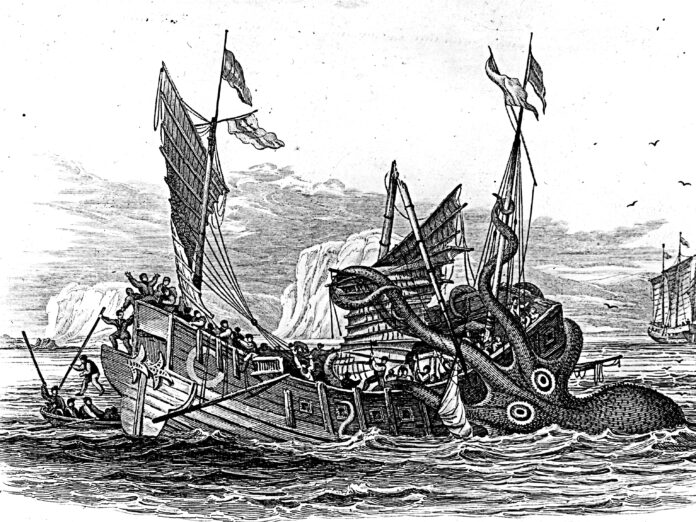
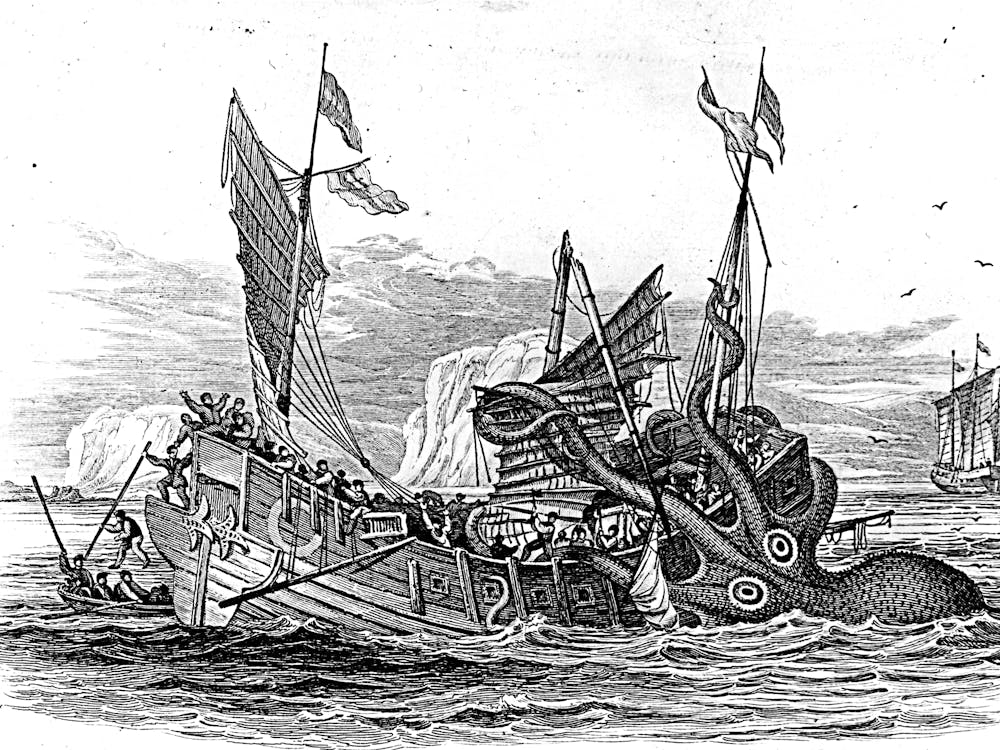
The colossal squid (Mesonychoteuthis hamiltoni) is the stuff of nightmares ripped straight out of the mind of a sleeping pirate. Picture the giant kraken wrapped around a ship and dragging it to the bottom of the sea!
People have seen colossal squid, but not very often. Colossal squid live in the Southern Ocean near Antarctica, and it was not until 1981 when the first whole animal was found. It was captured by a trawler near the coast of Antarctica.
A drawing from 1810 of the kraken sinking a merchant ship.Wikimedia Commons
Since then a few more have been captured by fishermen. You can see one today in a New Zealand museum, but they do not preserve well.
Colossal squid are the heaviest squid on the planet (but they’re not actually big enough to sink a pirate ship). The ones that have been found whole weighed nearly 500 kilograms – that’s almost the same as a grand piano.
But judging by the size of the squid beaks that have been found in the stomach of sperm whales, they can get a lot bigger. It is estimated they can weigh up to 700kg!
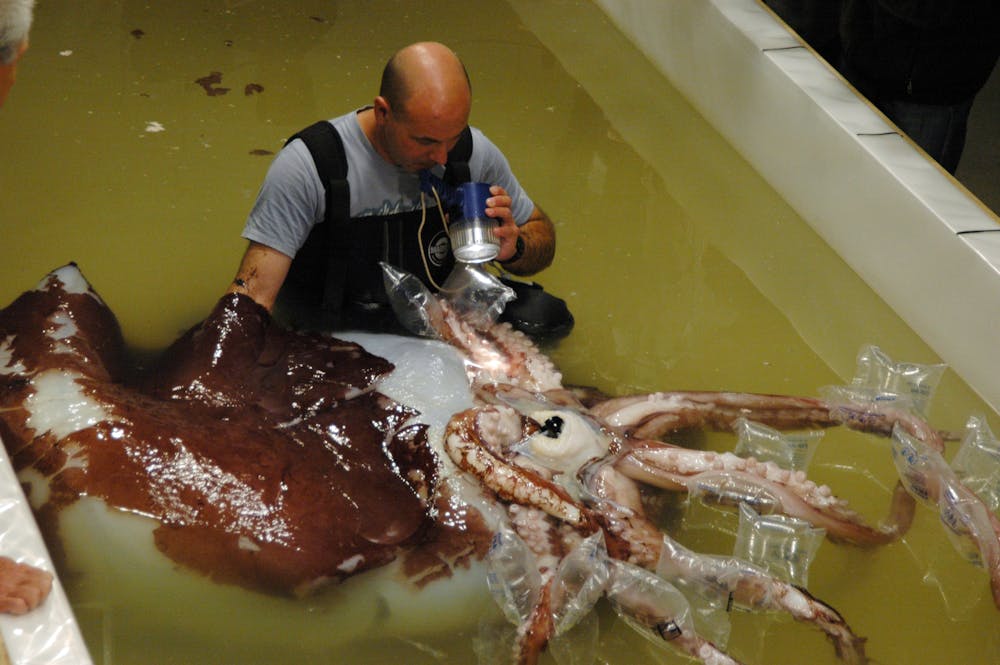
A close-up of the colossal squid specimen.Robson, 1925, collected 2003, Ross Sea, Antarctica. Te Papa (M.160614), CC BY-NC-ND
Colossal squid might be heavy, but they may not the longest squid in the world. They likely grow to around 10 metres long, which is still less than the giant squid, which can grow to more than 12 metres long. The giant squid has a smaller body and really long tentacles, so it doesn’t weigh as much.
They have huge eyes which can be 25 centimetres or more in diameter (as big as a soccer ball). That makes them the biggest animal eyes on the planet. Their eyes have built in headlights that help them see in the dark.
A scientist from New Zealand examining a colossal squid, which weighed a whopping 495 kg.AAP Image/Xavier La Canna
They are set slightly forward-facing so the colossal squid has “binocular vision”. This means it can judge distances when capturing prey. Their tentacles are armed with rotating hooks that allow them to grasp their prey.
Colossal squid are thought to feed mostly on fish and other squid in the deep parts of the Southern Ocean (more than 1,000 metres deep). At that depth, there is no sunlight and they might use light that can shine from their body (bioluminescence) to lure their prey.
Like all squid, they have a hard beak like a bird, which they use to munch their food. The beak is the only hard part of the squid’s body.
Would such a big animal actually be afraid of anything? Sperm whales are their major predator. It has been estimated that more than 75% of the diet of sperm whales is made up of colossal squid. That is a LOT of calamari!
Many sperm whales have scars on their bodies, caused by epic battles with colossal squid.
Hello, curious kids! Have you got a question you’d like an expert to answer? Ask an adult to send your question to curiouskids@theconversation.edu.au
A significant number of wealthy individuals have used the ability of self managed super funds (SMSFs) to borrow for property and other investments to supercharge their funds.
It is not something done by retail and industry funds.
According to freedom of information documents obtained by the Australian Financial Review, in 2018 the largest 100 self-managed super funds had borrowings averaging around A$10 million each.
Given the tax benefits granted to superannuation, this exploitation of the system by Australia’s super-wealthy is scandalous, albeit legal. In 2018 more than 200 members of those biggest 100 self-managed super funds were members of the Financial Review Rich List.
Along with other members of the 2014 Australian Financial System Inquiry chaired by David Murray, I voted enthusiastically for a recommendation to ban borrowing by funds.
Normally, borrowing creates risk
Unfortunately, after intense lobbying from the self-managed super fund sector, the Coalition government rejected that recommendation.
I am sure that each of the panel members put different weights on the arguments as to why “no leverage in super” would be good policy.
I focused on two.
First, leverage can lead to funds taking excessive risk, and it also enables some to “rort” the system by getting more assets into the tax-preferred status of super at the expense of the taxpayer
The second argument is about financial sector stability. Leveraged (indebted) financial institutions can be at risk of insolvency and exposed to runs by creditors. A highly levered financial system with lots of interconnectedness can face problems of fragility. Keeping super “un-levered”, as is generally the case for institutional super funds, would be good for stability.
These are not normal times
But even funds that can’t borrow, such as retail and industry funds, face problems if there is a “run” of members wishing to withdraw money.
That could arise because, believing that there are legislated limits on when members can access funds, they have invested significant amounts in longer term, illiquid assets such as toll roads, airports and office buildings in order to produce superior long term returns.
Changing the rules on when members can withdraw funds, such as with the current change to allow withdrawals of up to $20,000, pressures funds to sell off assets they had planned on holding to generate enough cash to meet withdrawals.
It isn’t a good time to be selling assets. Depressed sale prices mean the value of all members’ accounts will be further depressed.
Super funds could borrow to obtain the cash needed to meet withdrawals. But that would expose their members to considerable risk if asset prices fell further. They would have to have to pay back the loan from assets that were worth less.
For now, I’ve changed my mind
But if the liquidity problem is purely temporary, brought on by a temporary change in legislation, borrowing might not be such a bad option compared to a forced sale of assets.
While I have not changed my view on prohibiting borrowing in general, I think current circumstances warrant a limited exception.
That exception is that where there is a temporary liquidity problem, brought on by a government change in rules, the institutional super funds should be able to borrow from the Reserve Bank.
Banks can borrow from the Reserve Bank in emergencies. Why not super funds?
In this regard, I am at variance with commentators like David Murray and indeed the Reserve Bank itself. Moreover, I think there are reasonable arguments for making access to the Reserve Bank ongoing.
Bank access to the Reserve Bank, often referred to as the Reserve Bank being a “lender of last resort” is not about bailing out insolvent institutions. It is about providing temporary liquidity, at a price, to solvent, but illiquid institutions.
And the current issue is one of illiquidity, not insolvency. In principle at least, unlevered accumulation funds can’t go insolvent. If the value of assets falls, liabilities (amounts due to members) fall correspondingly.
The government should fix a problem it created
When an unexpected policy change creates a liquidity problem for super funds, it behoves policy makers to find a solution that avoids the need for funds to generate cash by selling assets at depressed prices.
Allowing super funds to borrow from the Reserve Bank using repurchase agreements would be such a solution. And since the need for liquidity is a consequence of the policy change, those borrowings should not attract a penalty interest rate.
It is important to note that these borrowings are different to the type we argued against in the financial system inquiry.
There, we were concerned about funds increasing the size of their portfolios by borrowing and taking on additional risks.
Here, the borrowings would enable funds to avoid shrinking their portfolios and enable them to reduce the risks and costs they (more precisely their members) face.
And consider making the fix permanent
My suggestion is that while borrowings by super funds should generally be prohibited, accessing temporary liquidity support from the Reserve Bank should not be part of that prohibition.
If access to such a facility is made ongoing, there would be a case for offering it at penalty interest rates and subjecting funds to liquidity regulation. But those are questions best left for reasoned discussion in more settled times.
Oh, and there has to be a severe crackdown on the ability of wealthy individuals to rort the tax benefits of super by borrowing through their self-managed super funds.
For the government to allow such borrowings but not support institutional funds by allowing borrowing from the Reserve Bank in times of crisis seems, at best, anomalous.
Source: Council on Hemispheric Affairs – Analysis-Reportage
By John Perry From Masaya, Nicaragua
“He’s not a doctor, I don’t think.” Trump had just finished a phone call with Juan Orlando Hernández (JOH), the de facto president of Honduras who runs a narco-state[1]. On April 30, JOH was indirectly implicated in drug and murder charges by the US Justice Department[2] in a case against a former chief police officer. This is merely the latest of several cases in which he is alleged to be involved, that include drug trafficking and money laundering[3], as well as protection of drug dealers[4]. The criminal charges have also affected his close family, among them his brother[5], including connections of both siblings with famous narco-dealer El Chapo[6]. His sister, Hilda Hernández, was also under investigation[7] in Honduras for embezzlement of public funds[8], at the time she died in a helicopter accident.
But as he is also the latest person to support Trump’s controversial views on the use of the antimalarial drug, hydroxychloroquine to fight the coronavirus, he appears to hold a special place among Washington’s closest allies in the region. JOH, it appears, had called to thank him, Trump said, perhaps for medical supplies which the US had sent to Honduras.[9]
While the US props up the regime, public order in Honduras is nearing collapse. It faces the epidemic with a health and social security system that has been drained of resources, both through rampant corruption[10] and because the government prioritises spending on the security forces. When 2,600 of the demoralised medical staff were chosen to tackle the virus, a quarter of them resigned.[11] Hernández has been using la manodura[12] (the firm hand) to enforce a lockdown and nightly curfews, provoking hunger and repressing the inevitable protests.[13] On April 24, three brothers selling bread were stopped by police[14]: one was shot dead and two injured. Food parcels handed out to some families only contain two days’ worth of supplies. The state is buying medical equipment at excessive prices[15] largely via companies owned by the president’s cronies.[16]
Neighbouring El Salvador’s economy is also seriously stressed by the pandemic. President Nayib Bukele, who ran under the banner of the right wing GANA party, was widely viewed as a reformist[17] when he took office last June, garnering votes from across the political spectrum. But since the election he has turned autocratic: on February 9 he threatened the country’s parliament, reluctant to approve even more spending on security forces, by marching troops into the chamber.[18] In early March, when El Salvador still had no confirmed virus cases, he imposed a complete ban on foreign travellers and sent locals returning from abroad into 30-day quarantine in make-shift hostels. A complete lockdown followed on March 22. To compensate those who now couldn’t work, Bukele promised a $300 handout to each family, which backfired when thousands of Salvadorans without bank accounts formed queues outside government offices. When the government could not accommodate the crowds and closed the offices, protests broke out and the security forces were deployed to restore order.
In addition to strengthening the security forces, Bukele seemed to have inadvertently given more power to El Salvador’s notorious gangs, who were enforcing his lockdown with baseball bats.[19] But in the wake of a new peak[20] in El Salvador’s notoriously high murder rate (22 in one day on April 24), he ordered an intensified crackdown on gang members in the country’s prisons.
The “northern triangle” countries of Honduras, El Salvador and Guatemala share common problems. Repressive governments are supported both by the US and by rich elites who disregard the poor majority’s need to work each day to put food on the table. Some 28,000 people[21] have been detained for breaching lockdowns. The traditional safety valve of these countries, migration to the US, has almost closed because of the tough measures introduced at Trump’s insistence, combined with fear of the virus. Hundreds of migrants are being sent back from the US and Mexico every week, exacerbating their countries’ economic crises and bringing large numbers of new virus cases.[22]
Nicaragua, though poorer than its neighbours, has some advantages in fighting the virus: limited emigration to the US, fewer tourists than before – after the violentprotests in 2018[23] – and a community-based health system that is accustomed to dealing with epidemics such as dengue. Its approach has been completely different, involving medical checks at the borders, travellers being quarantined and regularly checked for symptoms, testing, and contact tracing. Checkpoints were kept open to minimise informal crossing of the porous land borders, especially from Costa Rica where many Nicaraguans work.[24] Some 250,000 volunteer ‘brigadistas’ were trained to take part in health brigades to dispense advice and identify possible virus cases. Practically every household has been visited, often three or four times. Sanctions bar Nicaragua from receiving US aid or support from the World Bank but it is getting technical help from Cuba, Taiwan and South Korea, all of which had early experience in tackling the pandemic.
As I write, the live map of coronavirus cases in Central America[25] shows 8,880 cases and 286 deaths. By far the majority (6,378 cases) are in Panama, in part because it is the region’s transport hub but also because, as the richest country, it’s better equipped for testing and for producing reliable figures. The second highest, with 771 cases, is Honduras. At the other extreme are Belize with 18 cases and Nicaragua with 14. Belize has closed schools and some businesses but has held back from a full lockdown. Yet only Nicaragua and the other nearby country with a left-wing president[26], Mexico, have been criticised[27] for their voluntary approaches to social distancing. A Mexican market trader’s sign[28] summarises the dilemma facing all the regional governments, whatever their stance so far: “It’s hunger that’s going to kill me, not the coronavirus”.
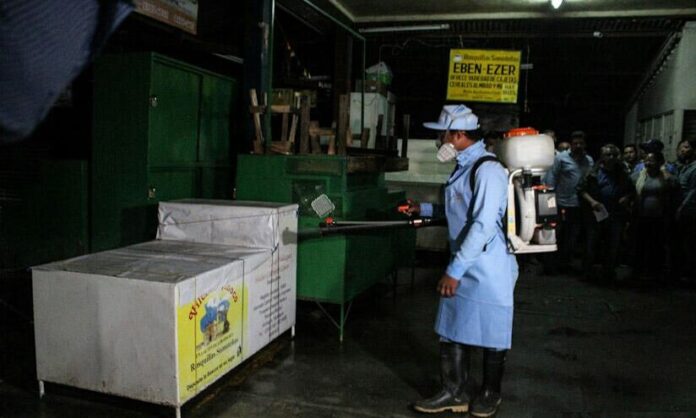
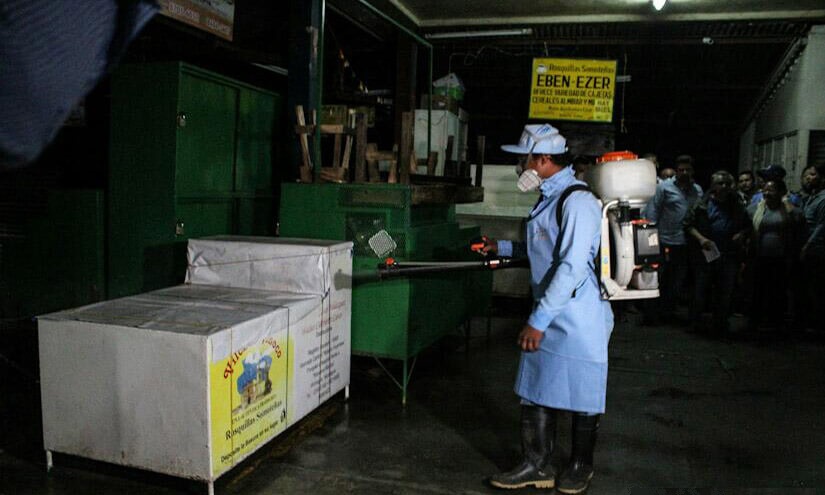
Photo Credit: Carlos Cortez, www.El19digital.com. A government worker cleans a market in Managua to combat the coronavirus
The COVID-19 pandemic has forced religious congregations to stay at home after the doors have been closed to their churches, synagogues, mosques, temples and gurdwaras across Australia.
But religious life has not stopped. Congregations are discovering new ways to meet virtually on plenty of online video platforms.
Google searches for the word “prayer” have skyrocketed in recent months, apparently in response to the coronavirus outbreak.
Prime Minister Scott Morrison, for one, said his “prayer knees were getting a good workout” as he prayed for the nation and for religious communities facing the closure of sacred meeting spaces due to the pandemic.
And it is not just traditional religious communities that are coming together in virtual assembly.
Spiritual and therapeutic activities, such as yoga, meditation, martial arts and conscious dance classes, are also moving online for those Australians, particularly younger people, who identify as spiritual but not religious.
A global meditation, for example, was held earlier this month via YouTube to send healing and love to those struggling to cope during the pandemic. Some yoga studios have even offered classes for free or via donation, challenging popular assumptions about links between spirituality and consumerism.
The resilience of these groups in the face of adversity backs up the argument of scholars such as Boston University sociologist Nancy T. Ammerman, who argue the spiritual and religious are not so distinct from one another as popular opinion would have us believe.
Religious and spiritual practices deliver something special when they are done socially – a deep sense of community and connection with something larger than ourselves.
A time to pray online
All religions are dependent on their cultural contexts. Throughout history, they have adapted to changed circumstances and new technology. This current move to embrace live-streaming and video-conferencing is no different.
In fact, in this rapidly developing crisis, religious leaders have at times been ahead of political leaders.
For example, while leaders in the UK were debating whether to embrace a “herd immunity” strategy for the country, the archbishop of Canterbury, Justin Welby, made the call to cancel in-person church services and move to live-streaming instead.
Mega-churches in Australia, such as Hillsong and Gracepoint, have also transitioned to live-streaming their services with relative ease.
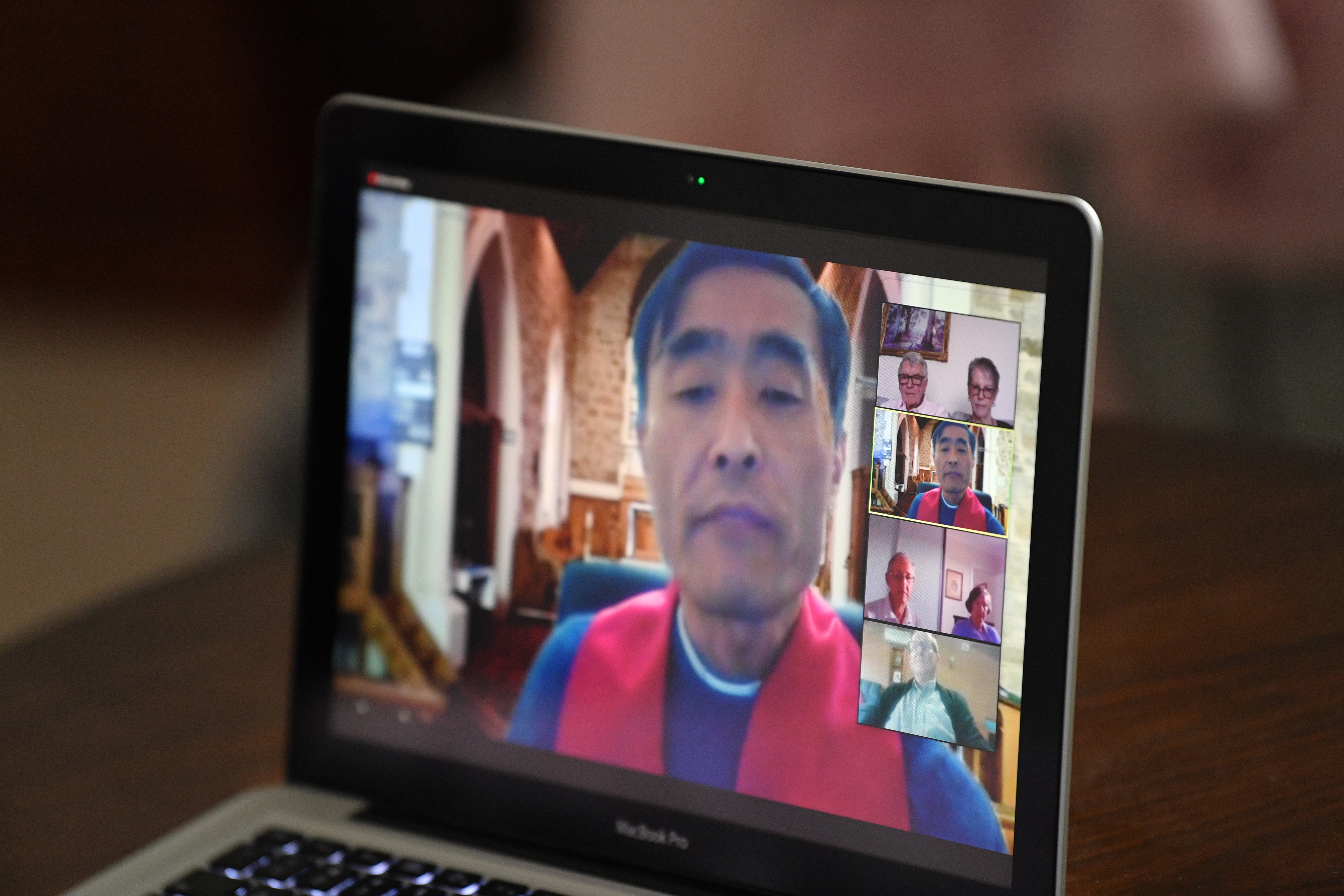
An Anglican priest leads Easter mass via web broadcast in Adelaide.David Mariuz/AAP
Many other faiths are doing the same. The Buddhist Society of Victoria has been live-streaming its Sunday talks for several years now and has recently shifted its guided meditations online.
Islamic leaders, meanwhile, have urged Muslims to stay home for the holy month of Ramadan, which began on Thursday, instead of breaking their fast in large gatherings in the evenings, as is customary.
The grand mufti of Australia has been offering weekly lessons following the Friday prayer since the start of the pandemic. These lessons will be expanded during Ramadan.
However, the Eid al-Fitr celebration at the end of Ramadan in late May will be a more muted affair. Normally, millions return to home towns and villages to celebrate with family, but none of this rich communal activity will be possible during the pandemic.
Social distancing at a mosque in Syria.YOUSSEF BADAWI/EPA
Not the same personal touch
While these technological changes have shown promise in meeting people’s more immediate spiritual concerns, months of self-isolation, rising unemployment and mounting death tolls will surely present fresh challenges.
Especially worrying is the fact religious groups have long assisted newly arrived immigrants to settle in Australia. With many international students and people on temporary work visas struggling to find work and affordable housing during the pandemic, online community outreach by religious groups will likely not be enough.
Some religious groups and individuals are still helping the most needy in person, abiding by social-distancing measures. Father Bob Maguire’s Community Pantry Warehouse in Melbourne, for instance, is still offering food packages, though its community meals in parks have been temporarily suspended.
And what about death and dying, of having to bid farewell online, and not being able to honour loved ones in funeral rites? The lack of these rituals, which bring people together, will surely affect the process of grieving.
Being able to leverage the digital domain to connect virtually is a great blessing in this crisis. But it is difficult to replace in-person human connection when we are at our most vulnerable.
Once we get through this, Australia’s rich religious and spiritual landscape will be awash again with colourful celebrations affirming the sanctity of real-world connection and community.
Nonetheless, some things will be forever changed by the crisis. And the new skills and online practices learned at this time will impact the ways Australians engage with the religious and spiritual into the future.
Source: The Conversation (Au and NZ) – By Nic Geard, Senior Lecturer, School of Computing and Information Systems, University of Melbourne; Senior Research Fellow, Doherty Institute for Infection and Immunity, University of Melbourne
By international standards, Australia has had considerable success in containing the COVID-19 outbreak. As the number of new cases continues to decline, several states have announced they will begin to ease restrictions.
But debate about when and how we can ease physical distancing measures safely remains ongoing.
Modifying restrictions too soon, or making too many changes concurrently, could easily see a resurgent second wave of COVID-19.
To prevent this, we need to ensure any new infections in the community are detected promptly, and their contacts traced to contain transmission as early as possible.
Sentinel surveillance – or testing randomly in the community – could help us with this.
Testing is key
Testing provides our window onto the extent of infection in a population: where we look determines what we see.
The differences in reported case numbers between different countries can be at least partially attributed to different levels of testing. For example, if testing is restricted only to patients in hospital, less severe cases won’t be counted.
To be confident transmission doesn’t increase as distancing measures are lifted, we will need to test broadly, and strategically, across the population.
Testing is a finite resource: health services need physical kits to conduct the tests, and laboratories need time and people to analyse samples. So testing efforts are concentrated where they’re most likely to aid control efforts.
The decision to test someone is guided by testing criteria, which in Australia are set at the state and territory level.
Testing will be particularly important as we start to ease restrictions.Shutterstock
In the early stages of Australia’s outbreak, the greatest risk of infection was among people arriving from overseas. Testing understandably focused on this group, as well as people who had been in contact with confirmed cases.
At that time, and since, Australia has maintained one of the highest rates of testing globally.
As the number of cases imported from overseas fell, attention shifted to transmission occurring in the community. From early April, testing criteria were expanded nationally to include any health-care and aged care workers who developed respiratory symptoms.
While we still have more to learn about the virus, there is evidence that infected people may be able to transmit infection to others before they develop symptoms.
This poses a challenge when public health surveillance is based on symptoms. By the time someone realises they’re sick and presents for testing, they may already have been shedding virus and infecting others.
Meanwhile, other people may experience trivial or no symptoms. We don’t know yet whether these people can spread infection.
Some people may have coronavirus but not show any symptoms.Joel Carrett/AAP
Physical distancing measures currently limit the number of contacts at risk from potentially infectious people without symptoms. Once we lift these measures the number of people we have contact with will increase.
So identifying infected people with no symptoms is crucial, especially now. We need to consider more active approaches to surveillance.
Enter sentinel surveillance
Sentinel surveillance involves testing people across the community, including those who are apparently well, in order to discover unseen transmission.
Often, sentinel surveillance programs involve a prearranged set of health-care providers. For example, the Victorian Sentinel Practice Influenza Network (VicSPIN) is a general practice-based program that provides information about the proportion of patients with influenza-like illness.
Government and public health agencies are still determining the appropriate design of a sentinel surveillance program for COVID-19 in Australia.
In the UK, where prevalence is much higher, there have been calls for mass testing of the entire population on a regular basis to help bring the outbreak under control. But such a resource-intensive approach would be challenging to implement.
It’s more likely a sentinel surveillance system in Australia would aim to test a geographically and demographically diverse sample of the population.
Additional emphasis may be placed on groups at higher risk should an outbreak occur, such as those in detention facilities or group residential settings.
Sentinel testing could involve, for example, testing every fifth person a particular GP sees on one day, every tenth person leaving a shopping centre on one day, or a selected group of frontline workers without symptoms.
While we don’t yet have a national timeline, sentinel surveillance is likely to form the next step in Australia’s testing regime.
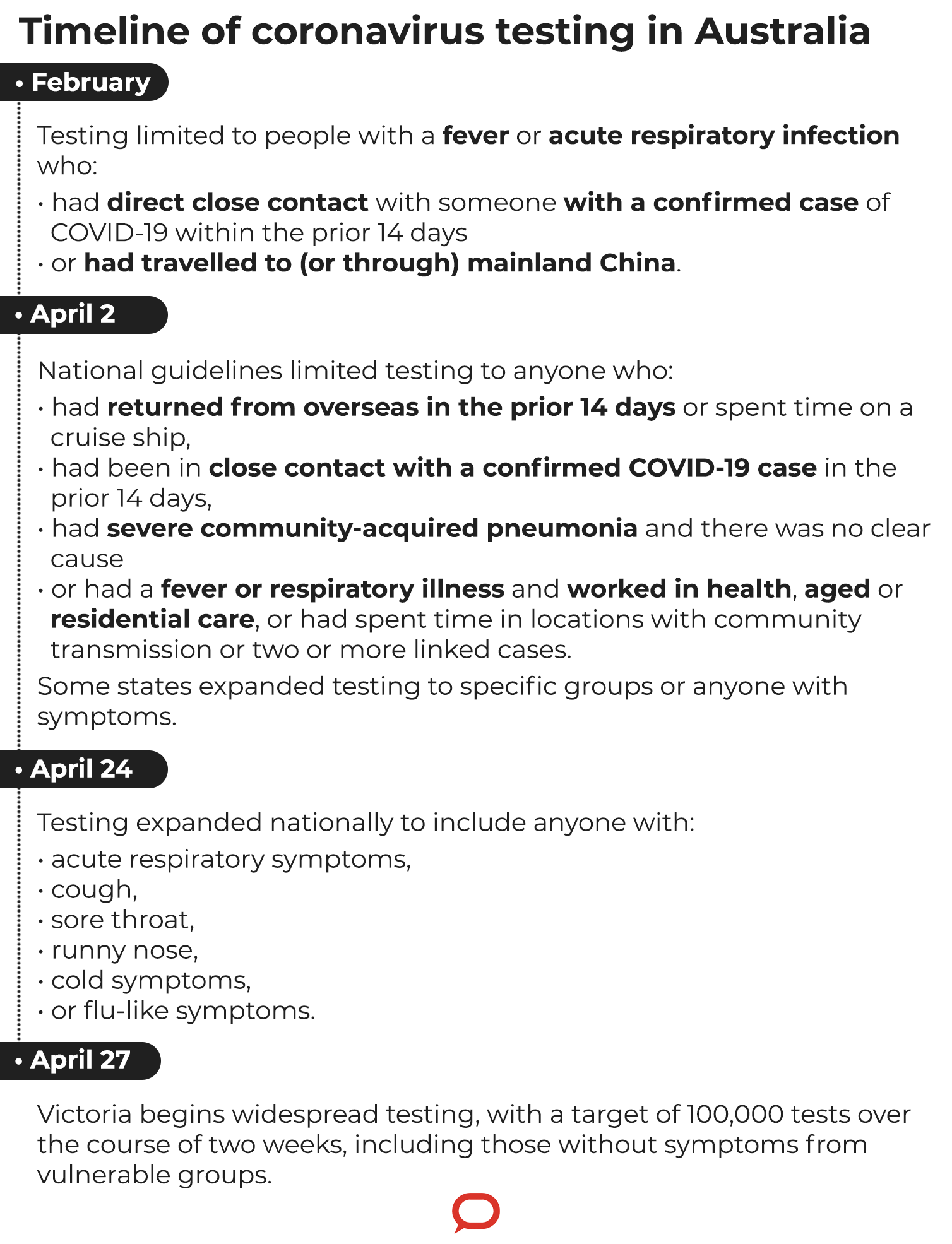
Victoria has already commenced wider scale testing, pledging to test up to 100,000 people over two weeks, including volunteers from vulnerable settings without symptoms.
Spoiler alert: this story describes a pivotal film scene that is designed to surprise the viewer.
LGBTQ films tend to provoke debates about authenticity, especially when it comes to sex: should it be represented explicitly or not? Portrait of a Lady on Fire (2019), the latest award-winning film from French director-screenwriter Céline Sciamma, refuses to choose, offering instead a funny and sophisticated response to the politics of lesbian representation. The film has just been released on disc and digital for enjoying in the privacy of lockdown.
Sciamma has a reputation for making films that encourage audiences to think differently about desire. Her first three films, Water Lilies (2007), Tomboy (2011) and Girlhood (2014), avoid triumphant coming out narratives. Instead, each follows the tentative and ambivalent experiences of their young queer protagonists as they negotiate hostile heteronormative worlds.
Sciamma’s latest film turns from adolescent coming-of-age drama to adult lesbian romance. Set in 18th-century France, Portrait of a Lady on Fire centres on the painter Marianne (Noémie Merlant) and the reluctant portrait subject with whom she falls in love. Resisting an arranged marriage, Héloïse (Adèle Haenel) refuses to pose for a painting for her future husband. Marianne is hired ostensibly to be a walking companion, but really to observe Héloïse and paint her in secret.
Across scenes of Marianne glancing surreptitiously at her subject, the film establishes a story of desire. Héloïse’s reciprocal gazes are freighted with homoerotic meaning.
Smoke is an erotic stand-in in Un Chant D’Amour (1950).IMDB
When the industry banned explicit representations of sex and so-called sex perversion under the auspices of the Production Code, filmmakers responded by developing a sophisticated system for representing desire and sex. A glance, gesture, line of dialogue or object could be coded with sexual meaning. Because it was “only” implicit or indirect, that meaning could be readily denied by Hollywood studios under pressure to offer wholesome entertainment.
The underground gay film A Song of Love (Jean Genet, France, 1950) exploits this representational history in a well-loved erotic scene in which a cigarette, and a thread of smoke, stand in for something else.
The legacy of classical Hollywood cinema is not over, but the stakes have changed. Now the question is not whether a mainstream film will make queer romance visible, but whether it will include queer sex.
Abdellatif Kechiche’s Blue Is the Warmest Colour (2013) outraged some lesbian critics for scenes regarded as too explicit and objectifying. On the other hand, Luca Guadagnino’s decision in Call Me By Your Name (2017) to coyly pan to an open window rather than show sex was castigated by influential critic D. A. Miller.
Some critics were outraged by explicit scenes in Blue Is the Warmest Colour (2013).IMDB
As the lovers lie in bed together, Hélöise proposes to Marianne they try a tincture of psychedelic herbs that promises to stop time. With an arm stretched upward, Hélöise takes some ointment and smears it along her armpit. The film then cuts abruptly to a close-up image of penetration. It’s puzzling at first, but as the camera drifts, we realise its source: Marianne’s finger held close under Hélöise’s armpit.
This visual joke plays on our desires to see sex, desires shaped in part by film style and genre.
Many have hailed the film as 2019’s best.
One of the conventions of lesbian film romance, exemplified by the cult classic Claire of the Moon (1992), is that audiences will spend the entire film suspended in anticipation, waiting for the climactic sex scene and its combined narrative and sexual release. In Portrait of a Lady on Fire, the image of sex arrives so suddenly in the scene and too soon in the story, it breaks with generic norms.
On one level, the image is a knowing gesture to classical Hollywood cinema imagery. Seemingly innocent body parts have a double meaning. Yet this image of sex goes further. Rather than evoking the raunchy sex scene of contemporary lesbian romance, it mimics the real sex scenes (both hetero and homo) popular in arthouse films since the 1990s.
Real, unsimulated sex scenes, typically organised around erection, penetration and orgasm, try to make sexual intimacy not only visible but authentic.
Instead of trying to guarantee the authenticity of her love scene in a similar way, Sciamma playfully draws attention to the convention itself, and the sexual identities and ideologies it tries to sustain. To refuse to see Sciamma’s scene as a real sex scene is to go along with dominant culture’s blind spots about sex: that it only happens in genitally focused zones of the body, that it always involves penetration of an orifice, and that it must culminate in orgasm.
Sciamma recognises and responds to these issues by veering in another direction. The scene interrupts the flow of our expectations to make visible a sex act that opens out to alternative erotic pleasures.
Sciamma’s film draws attention to cinematic conventions to upend what counts as sex. In a brief, startling, and exquisitely erotic moment, Portrait of a Lady on Fire plays with how we see (and think we see) sex between women.
Local authorities and indigenous communities in Indonesia’s Papua region have imposed a sweeping lockdown in an attempt to minimise the spread of the novel coronavirus.
The region, which comprises the provinces of West Papua and Papua, is the least developed in Indonesia, with scant public health facilities, poor road connectivity, and the highest rates of maternal and infant mortality in the country.
Faced with the challenge of containing a covid-19 outbreak in these circumstances, the provincial governments have temporarily restricted air and sea traffic into the region, with the exception of the freight traffic.
In the Papuan hinterland, indigenous communities have blocked road access into their villages for outsiders.
There are fears that a covid-19 outbreak here, particularly among the more than 300 indigenous tribes, could have a disastrous impact. The first case of infection among indigenous people has already occurred in the Brazilian Amazon.
Health authorities have reported a surge in the mining hub of Timika with 51 cases – the highest of any regency in the West Papuan region.
The total for Indonesia was 10,118 cases and 792 deaths.
Vulnerable communities In Papua province, where the travel restriction came into force on March 26, Governor Lukas Enembe said a full closure could be implemented for three indigenous territories in the province: Lapago, Meepago and Animha.
He said these communities were particularly “vulnerable” to infection.
In West Papua, authorities followed with their own travel restriction on March 30.
Activists have welcomed the measures to restrict arrivals from outside and to close off vulnerable areas, given the lack of adequate health care facilities in the region. The government has designated just five hospitals to treat covid-19 patients in the region — an area double the size of the United Kingdom and home to 4 million people.
Between them, the hospitals have access to a combined 60 ventilators, and have had to rely on the national government for supplies of personal protective equipment for health workers.
“Most of the tribes have small populations, so they are vulnerable to extinction when faced with the covid-19 pandemic,” Rukka Sumbolinggi, the general secretary of the Indigenous Peoples Alliance of the Archipelago (AMAN), said in a statement.
“Indigenous communities are unfamiliar with its spread and with the medication [needed] for patients.”
Franky Samperante, the executive director of the Pusaka Foundation, which works with indigenous communities, said residents in Papua’s Boven Digoel and Maybrat districts had closed off their villages to people from other areas. He added that indigenous communities were also carrying out traditional rituals that they believed could deflect bad energy.
“These people have heard some information about the coronavirus and the horrors of covid-19, and they are worried about it,” he told Mongabay.
These lockdowns will be important in preventing outsiders from bringing the virus into indigenous communities, said Christian Ari, director of the NGO Perkumpulan Silva Papua Lestari (PSPL). Members of these communities have strong social relationships, so practicing physical distancing once an infection has been recorded will be difficult, he said.
“If the government hadn’t taken strong actions there could be many deaths of Papuans, with implications for the political dynamic in Papua,” Christian said. “Papuans could take the view that they were being intentionally murdered by the state.”
Ari added that his team also had to deal misinformation making the rounds in these communities.
“Some people believe that the virus only attacks officials who travel out of town and not them,” he said.
Plantation restrictions called for Samperante called on authorities to also restrict the activities of plantation and mining companies operating in the vicinity of indigenous lands to mitigate the risk of infection by workers.
“The people can’t control these workers for development projects, and they are potential carriers of diseases that might infect the people in the villages,” he said.
Ari said the authorities should ensure the availability of food supplies for communities that had chosen to shut their villages off, including those accustomed to foraging in the forests.
He said food insecurity could compel members of these communities to leave their villages in search of food, thereby running the risk of encountering other people and possibly becoming infected.
But while activists see these restrictions as necessary, the national government in Jakarta has criticised the travel ban. The government insists only it has the power to impose such a measure, and to date has refused requests from other regions to impose lockdowns, citing dire economic impacts.
Ricky Ham Pagawak, the head of Papua province’s Central Mamberamo district, said the restrictions were legally valid and necessary to protect public health, and had been approved by local police and legislators.
“Whatever happens in Papua, Papuans are responsible, and the district heads, mayors and governors are responsible,” Pagawak said. “This is our people, our land, our country.”
Basten Gokkonis a Jakarta-based writer and contributor to Mongabay with an interest in wildlife conservation, renewable energy efforts, and indigenous peoples empowerment.
As Australia begins gradually to relax some of its containment measures (so-called nonpharmaceutical interventions or NPIs) we are confronted with a number of questions
when will children be back at school full time?
when might restaurants and pubs be open and will the public continue to respect social-distancing rules when they do?
do we have adequate testing and contact tracing to extinguish flare-ups in infections without reverting to harsher containment measures?
And more. They are hard and important questions.
But another one being asked is surprising: do lockdowns work?
The question has underpinned the position of lockdown sceptics such as Henry Ergas writing in the Australian and Christopher Joye,
The Australian’s Adam Creighton gave explicit voice to the question this week, writing that our excellent performance in keeping COVID-19 at bay had blinded some to the lack of evidence for lockdown restrictions
The human desire for ritual, and our laudable want to do the right thing, appear to underpin social distancing restrictions more than science.
It is odd that anyone should be seriously asking this question, and it is important to understand that the evidence most certainly does suggest that lockdowns work.
If we fail to accept it, our response to a second-wave outbreak, or to the next global pandemic, will be badly compromised.
It is also important to consider what constitutes “good evidence” when high-stakes decisions need to be made quickly.
The evidence is fairly clear
The gold standard is high quality evidence from randomised controlled trials subjected to peer review, but in emergencies there’s no time to wait for it.
It allows sceptics to point to uncertainly and cherry-pick low-quality evidence that supports their case.
As it happens, the cross-country evidence is fairly clear. Countries that locked down earlier have had better health outcomes, as the following chart from the Financial Times shows.
FT analysis for European Centre for Disease Control data.Financial Times
We don’t yet have the final word on this crisis, so it is also worth looking back to an earlier pandemic.
It found measures such as school closures and bans on public gatherings were (statistically significantly) associated with fewer excess deaths.
Cities that implemented NPIs earlier had lower peak mortality rates and lower total mortality. Also the cities that kept the NPIs in place the longest had the lowest mortality.
As the authors put it,
these findings demonstrate a strong association between early, sustained, and layered application of nonpharmaceutical interventions and mitigating the consequences of the 1918-19 influenza pandemic in the United States
A more recent study by economists at the Massachusetts Institute of Technology and the Federal Reserve finds the cities that adopted the most aggressive social distancing measures had the highest economic growth after the restrictions were lifted.
Moreover, cities that implemented NPIs 10 days earlier than other cities increased their manufacturing employment by 5% more than those that imposed restrictions later. The difference lasted through to 1923.
Overall they found an additional 50 days of social-distancing was associated with a 6.5% percent increase in manufacturing employment.
Sure, it’s not gold standard
As his evidence that there was no evidence to support the measures Australia had taken, Creighton cited a World Health Organisation report that summarised a number of studies of previous pandemics.
In fact, the World Health Organisation report said two things.
One was that randomised controlled trials are the best, but that they are not always possible or available.
No surprises there.
The second was in the form of a series of recommendations, based on the evidence it assessed.
In summary, the World Health Organisation looked at the evidence and recommended social distancing measures to avoid crowding, school and workplace closures, and internal travel restrictions.
It is true that at that stage it recommended against border closures, but if Creighton or his newspaper want to defend the docking of the Ruby Princess on March 19 on the basis of the report, they can go ahead.
In a crisis, evidence is never gold standard
In a crisis, decision makers don’t have the luxury of time. They have to act based on the best evidence they have.
Even if that evidence falls short of perfectly identified causal effects, it deserves to be interpreted in a scientific and dispassionate way.
Or to paraphrase the late US Senator Daniel Patrick Moynihan, “commentators are entitled to their own opinions but not to a wilful and purposeful misinterpretation of the facts”.
Those who misinterpret the evidence there is have COVID-19 on their hands.
For example, term 2 began this week in New South Wales. From week 3, children in government schools have been allocated a day per week when they should learn on site. In Western Australia, parents have been asked to decide if their children will return to the classroom, learn online from home or learn from home with hard copy materials. The situation in both states is to be reviewed around week 3.
In contrast, all Victorian students who can learn from home must do so. The ACT is also proceeding with online learning for all children who can be supervised at home.
Human rights relevant to schooling
Australia lacks a comprehensive human rights framework, although human rights laws have been passed in the ACT, Victoria and Queensland. Little commentary to date has considered the return to school in a human rights context.
Human rights are interconnected values. Many are relevant to this issue and the pandemic more broadly.
Under international law, all people have the right to the highest attainable standard of physical and mental health. The right to health extends beyond access to health care. Importantly in the context of the coronavirus pandemic, it includes a right to the prevention, treatment and control of disease.
All people, and particularly children, also have a right to education. This right is described as essential for people to participate effectively in a free society. Countries are obliged to protect the right by ensuring, at a minimum, free and compulsory primary education and a system of schools to provide equitable access to education at each level.
International law also confirms the right of all people not only to work, but to enjoy just and favourable conditions of work. This includes a right to safe and healthy working conditions.
Human rights issues arising from a return to the classroom
How can we balance human rights implications of a return to classroom learning, when rights may come into tension with each other?
Most human rights can be constrained, although not to the point where their essence is denied. Limitations on rights must be necessary in response to a pressing public or social need. They must also pursue a legitimate aim and be proportionate to that aim.
When we consider rights in tension at this time, it is clear a right to health must be the primary focus. A weakening of protective measures may heighten the risk of a second wave of the virus.
However, the advice for those who are at risk continues to be to stay at home. While some jurisdictions are moving to require in-person attendance, little has been said about how at-risk staff and students are to be protected at school or supported to continue in isolation.
Aspects of a return to school also pose mental health risks. Some students who require set daily routines may become anxious when required to attend only one day per week. Others, especially high school students in their final year, should perhaps be prioritised to return as a cohort in order to complete their education.
For teachers, there are significant workload implications in managing both in-class and online cohorts of students. The right of teachers to enjoy good mental health may also be compromised by a sense of risk in the return to classroom teaching. The potential for stress-related illnesses is obvious among parents, many of whom have found learning from home taxing on their mental health.
There is a widespread desire to support the right of students to education. Schools in Australia have mostly remained open throughout the peak of the crisis for children of essential workers and children who are safer at school than at home. This approach was a measured means of balancing rights to health and education and could be maintained for a longer period across the country.
It has been argued here that the “staggered” return to school in some states ought to prioritise the needs of children at certain key stages of learning.
We add that the most vulnerable children should also be prioritised. For example, greater equity in access to education at this time may call for special arrangements to include students with disabilities, chronic illnesses or mental health conditions. Students who lack at-home access to online learning could also be prioritised in a return to the classroom.
The physical environment in schools is a further complicating factor, particularly in terms of teachers’ rights to safe conditions of work. The prime minister is adamant schools are exempt from social-distancing requirements. Yet those states returning students to the classroom are implicitly undermining that message by setting maximum numbers and requiring staggered break times and other measures.
Many teachers feel confused and stressed about how they can do their work safely. This is unsurprising, given some states and other countries are taking much more cautious approaches to the health and safety of school staff.
No magic right answer
The balancing process between human rights values at this time is highly complex and beyond what we can hope to resolve in this article. And human rights analyses cannot deliver us a simple “right” answer as to how the return to classroom learning should be managed.
What human rights give us is another frame through which to consider these fundamental challenges. There are obvious economic and educational imperatives to prompt a return to classroom learning. Our national debate could be richer and more inclusive if it also included human rights claims.
Source: The Conversation (Au and NZ) – By Elizabeth Thurbon, Scientia Fellow and Associate Professor in International Relations / International Political Economy, UNSW
The chaos of COVID-19 has now hit global energy markets, creating an outcome unheard of in industrial history: negative oil prices. With the world’s largest economies largely in lockdown, demand for oil has stagnated.
Essentially, the negative prices mean oil producers are willing to pay for the oil to be taken off their hands because soon, they will have nowhere to store it.
Federal energy minister Angus Taylor has proposed a partial solution: Australia will spend A$94 million buying up oil, to bolster domestic supplies and help stabilise global prices.
That strategy is a fool’s path to energy security. Right now, the best way to shore up Australia’s future energy supplies is to invest economic stimulus money in renewables – essentially to manufacture our own energy security.
Prime Minister Scott Morrison with Angus Taylor, right, who wants Australia to buy surplus oil.Mick Tsikas/AAP
A flawed plan
Australia’s oil reserves have for years languished well below the International Energy Agency’s recommended 90 days. Taylor says his plan would address this, and help stabilise (read: push up) oil prices and restore faith in the global oil market on which Australia depends.
But the plan is undermined by a simple fact: unstable global oil prices have been a recurring problem for decades, largely for political reasons well beyond Australia’s control. We need look only to the price shocks triggered by the Yom-Kippur war of 1973, the Iraq war of 2003, and the Saudi drone attack of 2019 – to name just a few.
Price instability is all but guaranteed to increase in future, as climate change concerns drive insurers and investors away from fossil fuels and towards green energy.
The current chaos actually creates a much better opportunity for Australia: use the massive COVID-19 economic stimulus to manufacture real energy security in the form of renewables.
Buying large volumes of surplus oil will not ensure stable prices.Flickr
Renewables: a win-win
The price and supply of energy from fossil fuels is vulnerable to natural resource depletion, geopolitical tensions and climate change concerns. This is true not just for oil, but coal and gas too.
The only real path to energy security is manufactured energy such as solar panels, wind turbines, electrolysers, batteries and smart grids.
These technologies can turn infinite natural resources into energy, then store and distribute it to ensure stable supply.
For example, a large-scale battery in Victoria stores energy produced by the Gannawarra solar farm. The battery provides energy during peak times when there is no sun.
Manufacturing energy is also important from an economic security perspective, promoting the creation of high-tech, high-wage industries.
These industries can create thousands of skilled jobs and open up massive new export markets – all while helping to mitigate climate change. This reality has been accepted by major East Asian economies, including China to South Korea, for more than a decade.
The Australian government must use its enormous stimulus to help local companies dramatically expand their wind, solar, hydrogen and energy storage investments. This would satisfy domestic energy needs and grow the new green export markets ready and waiting in Asia.
Asia presents huge export potential for Australia’s renewable energy.DAN HIMBRECHTS/AAP
A jobs boon
There is no shortage of projects waiting to be turbocharged. The government could start with Sun Cable, linking Australia’s and Singapore’s clean energy markets via an undersea cable.
It could also kickstart Australia’s clean hydrogen industry. According to the government’s own National Hydrogen Strategy, developing hydrogen would dramatically reduce Australia’s oil import reliance and energy costs and vastly expand its clean energy exports.
By simply following its own strategy, the government could create about 7,600 skilled and semi-skilled jobs and add about A$11 billion each year to Australia’s gross domestic product to 2050.
The cheaper energy prices that follow could help Australia revive its techno-industrial base by making energy-intensive manufacturing a viable proposition once again.
According to leading economist Ross Garnaut, Australia could then bring home its long-lost materials-processing industries and re-emerge as a world-leading exporter of (clean) steel and aluminium.
Geopolitical benefits would also flow from Australia becoming a green hydrogen superpower, such as reducing our worrying export dependence on China.
An investment injection in renewables would be a huge jobs boost.Flickr
Seize the moment
The idea of using the COVID-19 stimulus to turbocharge Australia’s clean energy shift is not pie in the sky. Indeed, doing so is the explicit recommendation of the International Energy Agency, which this week noted:
These huge spending programmes are likely to be once-in-a-generation in scale and will shape countries’ infrastructure for decades to come… Governments can … achieve both short-term economic gains and long-term benefits by making clean energy part of their stimulus plans.
COVID-19 has undoubtedly been disastrous for Australia and the world. But it creates new opportunities in energy, economic security and climate action. To seize these opportunities, the Morrison government must chart a new industrial course for the nation by manufacturing Australia’s energy security.
Source: The Conversation (Au and NZ) – By Tan Yigitcanlar, Associate Professor of Urban Studies and Planning, Queensland University of Technology
Australia has borne the brunt of several major disasters in recent years, including drought, bushfires, floods and cyclones. The increasing use of social media is changing how we prepare for and respond to these disasters. Not only emergency services but also their social media are now much-sought-after sources of disaster information and warnings.
We studied Australian emergency services’ social media use in times of disaster. Social media can provide invaluable and time-critical information to both emergency services and communities at risk. But we also found problems.
The escalating use and importance of social media in disaster management raises an important question:
How effective are social media pages of Australian state emergency management organisations in meeting community expectations and needs?
To answer this question, QUT’s Urban Studies Lab investigated the community engagement approaches of social media pages maintained by various Australian emergency services. We placed Facebook and Twitter pages of New South Wales State Emergency Services (NSW-SES), Victoria State Emergency Services (VIC-SES) and Queensland Fire and Emergency Services (QLD-FES) under the microscope.
Examples of emergency services’ social media posts are shown below.
NSW-SES collecting data from the public through their posts.FacebookVIC-SES sharing weather warnings to inform the public.FacebookQLD-FES posting fire condition information to increase public awareness.FacebookQLD-FES showing the direction of a cyclone and warning the community.Facebook
Second, Facebook pages of emergency services attract more community attention than Twitter pages. Services need to make their Twitter pages more attractive as, unlike Facebook, Twitter allows streamlined data download for social media analytics. A widely used Twitter page of emergency service means more data for analysis and potentially more accurate policies and actions.
Third, Australia lacks a legal framework for the use of social media in emergency service operations. Developing these frameworks will help organisations maximise its use, especially in the case of financial matters such as donations.
Fourth, the credibility of public-generated information can sometimes be questionable. Authorities need to be able to respond rapidly to such information to avoid the spread of misinformation or “fake news” on social media.
Services could do more with social media
Our research highlighted that emergency services could use social media more effectively. We do not see these services analysing social media data to inform their activities before, during and after disasters.
In another study on the use of social media analytics for disaster management, we developed a novel approach to show how emergency services can identify disaster-affected areas using real-time social media data. For that study, we collected Twitter data with location information on the 2010-11 Queensland floods. We were able to identify disaster severity by analysing the emotional or sentiment values of tweets.
This work generated the disaster severity map show below. The map is over 90% accurate to actual figures in the report of the Queensland Floods Commission of Inquiry.
Disaster severity map created through Twitter analytics.Authors
Concerns about using social media to manage disaster
The second concern is information accuracy or “fake news” on social media. Evidently, sharing false information and rumours compromises the information social media provides. Social media images and videos tagged with location information can provide more reliable, eye-witness information.
Another concern is difficulty in receiving social media messages from severely affected areas. For instance, the disaster might have brought down internet or 4G/5G coverage, or people might have been evacuated from areas at risk. This might lead to limited social media posts from the actual disaster zone, with increasing numbers of posts from the places people are relocated.
In such a scenario, alternative social media analytics are on offer. We can use content analysis and sentiment analysis to determine the disaster location and impact.
How to make the most of social media
Social media and its applications are generating new and innovative ways to manage disasters and reduce their impacts. These include:
increasing community trust in emergency services by social media profiling
crowd-sourcing the collection and sharing of disaster information
Today, as we confront the COVID-19 pandemic, social media analytics are helping to ease its impacts. Artificial intelligence (AI) technologies are greatly reducing processing time for social media analytics. We believe the next-generation AI will enable us to undertake real-time social media analytics more accurately.
Two events this week have illustrated two fundamental tensions in Australia’s relationship with China.
The first event was China’s ambassador to Australia suggesting a Chinese boycott of Australian exports, due to Australia pursuing an independent inquiry into the early response to the COVID-19 outbreak.
In an interview on April 27, ambassador Cheng Jingye said Chinese tourists and students might have second thoughts about a country “not so friendly, even hostile”.
“And also,” Cheng added, “maybe the ordinary people will think why they should drink Australian wine or eat Australian beef.”
The second event was the “blindsiding” of federal health minister Greg Hunt at press conference with mining magnate Andrew Forrest on April 29, when Forrest invited China’s consul-general for Victoria and Tasmania to speak.
Health minister Greg Hunt, centre, departs the press conference in Melbourne on April 29, 2020. Behind him is China’s consul-general for Victoria and Tasmania, Long Zhou, and mining magnate Andrew Forrest.James Ross/AAP
The diplomatic kerfuffle wasn’t the most significant aspect. It was the point of the press conference: Forrest’s procurement through Chinese business contacts of 10 million coronavirus tests – increasing Australia’s testing capacity 20-fold.
These two events point to two fundamental realities about the economic relationship between China and Australia.
First, the two nations are deeply important to each other.
Second, this coronavirus pandemic has exposed the need to increase local manufacturing and reduce dependence on imports of critical supplies.
Australia’s recovery planning must include policies to underwrite local manufacturing capability. It means our economic relationship with China will change.
But despite the veiled threats from the Chinese government, and the desire in some parts of the Australian community for a split, a great economic decoupling is not an option.
Mutual dependence
Australia depends on exports to grow employment, tax revenue and welfare expenses.
About a quarter of all corporate tax revenue comes from mining. Most that is from exports to China, Australia’s largest trading partner by far. Coal and iron ore exports sales have been holding up well. Fortescue, in fact, expects to export more iron ore (177 million tonnes) this financial year.
There are no substitute markets of a similar scale to take up Australian exports in mineral resources, nor in agricultural produce or international education.
But China has few viable alternatives to Australia as well.
Certainly not in the supply of iron ore, gas and coal.
Not for agricultural produce, where Australia has high a reputation in China.
Nor for education. There are few English-speaking countries to begin with, and the biggest market for Chinese students, the United States, is looking decidedly more hostile and unsafe.
So our dependence is mutual. Decoupling won’t happen.
Onshoring on the agenda
But nor it is an option to return to the pre-COVID-19 status quo.
The model of Australia “being willing to export commodities and import finished goods is old and broken”, declared a member of the federal government’s new National COVID-19 Coordination Commission this week.
The commission was established last month to advise the government on “actions to anticipate and mitigate the economic and social effects of the global coronavirus pandemic”.
Liveris is a Darwin-born chemical engineer who rose to become chief executive of The Dow Chemical Company (now DowDupont, the world’s biggest chemical maker. Top of the agenda he signalled this week is “onshoring”. In other words, restoring local manufacturing capability.
Andrew Liveris, centre, with China’s vice-minister of industry and Information technology, Su Bo and the head of Japanese conglomerate Hitachi, Hiroaki Nakanishi in Beijing, March 2015.Wu Hong/EPA
“Australia drank the free-trade juice and decided that offshoring was OK. Well, that era is gone,” he said. “We’ve got to now realise we’ve got to really look at onshoring key capabilities.”
A new form of globalisation
There is a clear national interest in developing our own manufacturing in critical export industries such as health, cybertechnology, renewable energy and agribusiness.
Doing so will include Australia in a global trend to reduce reliance on one continent or one country.
Some might call this deglobalisation. It is not.
Diversifying production and bringing it closer to markets and consumers is simply a new form of globalisation.
To achieve it, Australian businessess will need to invest heavily in new technology to take advantage of digital manufacturing, automation and artificial intelligence.
With the possible exception of some critically important services or products, only globally competitive manufacturing will be sustainable. It will need to be high-tech and innovative manufacturing. It will not mean the return of traditional manufacturing industries.
We’ll still need each other
Australia needs China to make this transition.
Advanced digital manufacturing requires substantial investment in technological capability and production facilities. China is already manufacturing and exporting advanced production equipment.
China will also be a crucial market for any exports, with many opportunities for Australian manufacturers that align with demand in the huge Chinese market. Chinese investment will help develop these export opportunities, as it has with exports like dairy.
So neither Australia nor China stand to gain from decoupling the two economies. Our economic co-operation will change with onshoring. But mutual dependence will not.
Following the death of her elderly father, a close friend of mine recently asked if I would read a poem by Goethe at his funeral.
I didn’t know the man well. In fact, I had met him only once, seated in my friend’s car on a Fitzroy street on a sunny day several years ago. What struck me about him at the time was the mischievous smile he wore and the youthful sparkle in his eyes. I felt honoured to be invited to share in the celebration of his life.
Although my friend is near a generation younger than me, we are very close. I have known her since she was a shy but determined young person. She has since become an advocate for the rights of Indigenous people in Australia and the South Pacific. She is thoughtful and kind and fierce whenever the situation requires a “warrior woman”.
The funeral service took place at a community hall in the Dandenong Ranges, east of Melbourne. Family and friends of the man who had passed spoke, sang and prayed (in their own way) about the remarkable life of a person who had survived the ravages of war-torn Europe, the loss of loved ones, separation from family and an eventual migration to Australia, where he fell in love, raised a family and continued his lifelong passion for the natural world.
Before I left home for the funeral service, my wife, Sara, asked me, “Will you be okay?” My younger brother had died suddenly only weeks earlier, and I remained grief-stricken by the experience of finding him in the small government flat where he’d lived for two decades. I answered Sara’s question with a dismissive, “I’ll be fine”.
Of stone
And I was fine. Following the death of a person you love dearly, a person you yearn to see just once more, a person you want to say just one more goodbye to, isolation can become a tempting companion. You feel that nobody understands the depth of your grief.
Appointments, work, conversations with friends – they all make little sense. Mundane tasks become even more meaningless. My retreat into self-imposed isolation had become debilitating. Attending a funeral in the mountains was, if nothing else, an escape from my solitary confinement.
Cover image: Anna Di Mezza, Memory’s Persistence 2016
A few hours later I found myself in a room crackling with the energy of those who had gathered, along with the man who had bought us together for the day, who was resting in a wicker coffin at the front of the room. As I read the poem for him and his family, I thought again about my own brother and felt comforted, for the first time in weeks, that I was not alone. I was sharing a valued life among the living.
Following the burial at a local cemetery, we were invited back to the community hall, where we enjoyed food and stories about the life of my friend’s father. I noticed a wooden table where a range of items had been placed: books, hand tools, photographs and other secondhand objects you might find at a garage sale. My friend took me over to the table and explained that each of the items had belonged to her father and held particular significance for him and his family. I was invited to choose an object and take it home with me as an act of commemoration. I hesitated. It didn’t seem right that I should take something personal belonging to a man I’d hardly known.
My friend gently nudged me. “Go on, pick something,” she said.
My eye was drawn to an egg-shaped, ivory-coloured stone, speckled with an earthy pigment. I picked up the stone. It sat full and heavy in the palm of my right hand. I turned it over. Its centre was smudged with a dark stain. It appeared that someone may have held the stone in their hand and rubbed it (and rubbed it) with the back of a thumb.
“Can I have this?” I asked my friend.
“Of course,” she answered. “It’s a good choice for you.”
The stone now sits on my writing desk. I often hold it in my hand when I’m thinking about the words I want to write (as I’m doing now). I have thought with the stone about life and death and my love for my friend, who misses her father so deeply. The stone has affected my thoughts on climate justice, which is a key area of my academic and community research.
What I have come to understand about the stone is that it is stronger than me – and you. It is also patient and thoughtful to an extent that human society appears to be incapable of. If we manage to destroy ourselves in the future, and destroy non-human species and vital ecological systems in the process, it will be because we don’t possess the humility and wisdom of the stone. Unfortunately, many in positions of power and influence appear most ill-equipped to recognise this. The stone has invited me to reflect on love, and on death, including my own. The stone also reminds me that seemingly inanimate and soulless objects have guided me throughout my life, particularly when I am reaching for understanding.
‘The stone has invited me to reflect on love, and on death, including my own.’Scott Webb/Unsplash, CC BY
Foraging
If I wasn’t born to forage, I was taught to from a very young age. Growing up in the inner Melbourne suburb of Fitzroy in the early 1960s, we were very poor. (As poor as a Monty Python shoebox.) We were always a gleaning family, out of necessity. The open fire in our two-room terrace was fed with scraps of wood we gathered from the streets, empty houses and vacant blocks.
Coming home from school of an afternoon, if my older sister and I spotted an eight-foot long plank of wood, we’d pick it up, cart it home and add it to the woodpile in the yard. My brother and I collected scrap metal – lead, copper and brass – and sold it to a dealer who had a yard behind a pub on Brunswick Street.
I later came to cherish the narrative power of found objects through my grandmother, Alma, who introduced me to op shop fever, an ailment I continue to live with 60 years later. From the age of around four or five, hand-in-hand with my Nan, I’d walk from Fitzroy to the Salvation Army’s “Anchorage” in Abbotsford, around a mile and half in the imperial measurement of the time. The Salvos’ secondhand business could not be described as a “shop” or “store”, but a series of rusting corrugated-iron sheds on the bank of the Birrarung.
Each shed was dedicated to particular items: ornaments, household furniture, books and comics, and children’s clothing. Nan and I would move from shed to shed, with the rule that I could buy one book, one comic and one item of clothing. She liked to spend her time in the ornaments shed, searching for a vase, or a gravy dish perhaps, that she could add to the mirror-backed, glass-fronted cabinet in the front room of her Fitzroy house. Once an item went into the cabinet, it stayed there, never used and rarely touched – any item put into the cabinet was for “show”.
I loved my books and comics, but most of all I sought out a t-shirt or jumper, especially a warm woollen jumper, largely for practical purposes. Winters in our house and on our street were cold. A jumper provided warmth. A jumper purchased secondhand was my jumper, not one that had been handed down to me by my older brother. And when I put a thick woollen jumper over my head as a small child, my body felt protected, emotionally and physically. Woollen jumpers became my security blanket, and that desire for fabric has never left me.
I have a cupboard full of woollen jumpers at home. Some have been collected from the op shops I continue to visit each week. Others, bought new, are quite expensive. Any time I become particularly anxious, or feel the desire for “comfort clothes”, I put on one of my jumpers. (Summer is not my favourite season.) Recently, while experiencing a near emotional collapse, a crafted woollen object rescued me.
I was in a Victorian country town on an autumn morning as a guest of the Clunes Booktown Festival, which I’d been invited to some months previously. My younger brother had died a few weeks before the festival. I had begun to write about him, as it was my only means of understanding, if at all, what I was experiencing. I have since written about his death several times, with each essay building on the previous one, including conscious repetition (which I am doing now). The essays focus on walking country, travelling and remembering, with my brother at my side. Perhaps I am not repeating myself, but rather engaging in the act of reiteration as a means of paying my respect to his life?
Immediately after my brother’s death I cancelled several commitments, took weeks away from work and spent as much time as I could with my grieving mother. I had simply forgotten to cancel Clunes and felt obliged to attend when I was reminded about the festival only days before it was to begin. I drove there with Sara.
Clunes is a gold rush town in north-west Victoria and proudly carries the title of Booktown. On arrival, we parked the car alongside a bluestone church above the town. It was a cool and clear morning. Walking down the hill towards the festival, I suffered what I could only explain as an anxiety attack. I needed to sit down. I enjoy writing-and-reading festivals and I love the warmth of audiences. But, sitting on a bench in the main street of Clunes, I suddenly realised that I would be incapable of performing at all. I wanted to go home and hide. Sara suggested that a coffee might pick me up, although she was also ready to leave and drive me home if that was what I decided.
We went for a walk and I bought a café latte, an object of right-wing disdain. I took a sip and felt a little better. We spotted a craft stall selling woollen products: scarves, gloves and beanies. My eye was drawn to a naturally dyed beanie, chocolate and (sort of) aqua coloured, with a chocolate pompom on top. I picked the beanie up and held it in my hands. The wool was soft, the texture rich. With the permission of the woman standing behind the stall, I put the beanie on. It wrapped itself gently around my head. Feeling immediately comforted and secure, I smiled at Sara and said, “Let’s go.” We walked back up the hill, into the Clunes Town Hall, where we were met by a room crowded with generous people.
Gathering through the years
As we grow older, some of us begin to dispose of our possessions. Others continue to hoard. Thinking back to the table of objects at the funeral I attended, I experienced it as a generous and communal gesture, yet another act of reciprocity and energy.
My stone continues to teach me about the contrasts between humility and arrogance, between the world we are wilfully attacking and our self-destructive stupidity. The stone has also sharply focused my attention on the deep value of my relationships with other people. My friend who lost her father has been in a state of grief since his passing. When I hold the stone, or glance at it sitting on my desk, I think of my friend and I am reminded that she is in my care, as I am in hers. The thought strengthens me and gently reminds me to remain aware of my obligation to her. For this, I can thank the stone and the man who first picked it up and held it in his hand.
As I write this I am 62 years of age. (That’s old for an Aboriginal man!) I have five children, two grandchildren and a loving partner.
On July 4 1996, my grandmother, Alma, was in St Vincent’s Hospital in Fitzroy, dying of renal failure. Although I was a grown man, about to turn 40, I sat by the window of her room on the tenth floor, a child again, looking over the streets of our shared life. She passed away that night. My mother decided that our first task after her death was to empty out her Housing Commission flat and scrub it clean.
My grandmother’s flat was crowded with the objects she’d collected from op shops over 60 years. The family gathered at the door of my grandmother’s flat and my mother said, “Each of you pick something of love. The rest we pack up in boxes and drop at St Vincent de Paul’s in Collingwood”.
My initial thought was that it was reckless of my mother to sweep away Nan’s possessions so soon, and my older sister felt the same, whispering to me, “Shit. Nan’s not even cold yet”.
Our feelings shifted to acceptance, and subsequently deep satisfaction once each of us had chosen our love pieces. I picked a ceramic teapot mat, an ancient stone hot water bottle and a squat glass jar that my nan would fill with tomato sauce so that we could sit around her kitchen table and dip our hot chips into it.
A week later, I walked into the local op-shop and noticed a young woman pick up an orange flower vase that had belonged to my grandmother. She held it up admiringly. Light passed through the vase and the woman’s face glowed with happiness. She paid for the vase and took it home.
What’s left behind
When my brother died died last year, my two sisters performed the same ritual in his government flat. Whatever else might be said about a working-class Aboriginal-Irish family, we’re fucking spotlessly clean!
We took the goods we’d each decided to keep around the corner to my mother’s house. There were three guitars, two crucifixes and several books, including a copy of my short story collection Common People, which was sitting on the side table next to his bed on the morning I found him dead.
My sisters allowed me to take his acoustic guitar home as long as I promised that I would learn to play it. I walked home with the guitar under my arm, wondering what would happen to my own stuff when I died.
The books will continue to be treasured and read, I’m sure. I’m concerned for the bowls of collected pine cones scattered around the house.
My grandson, Archie, is 14 months old. Recently, I introduced him to the pine cones, naming them individually, hoping for attachment on his part. I took him on his first pine cone forage in Carlton Gardens. My motivation, of course, is that when I die and they come to sweep my life away, Archie will intervene, say, “Not so soon” and rescue my pine cones.
I don’t know what will happen to my woollen jumpers, scarves and beanies. If I was able to choreograph my own wake (as my mother has done in a lengthy list), or if this was a short story I was writing for you rather than nonfiction, I would die during a cold winter and my family would be gathered around a fire reminiscing about my life. My children, Erin, Siobhan, Drew, Grace and Nina, would each be wearing a “Tony Birch find” (as I refer to the jumpers); my grandkids, Isobel and Archie, would be each be wrapped in one of the many brightly coloured scarves I’ve collected; and Sara would be wearing the precious striped beanie that saved me on a beautiful morning in Clunes.
Australia is in an enviable position when compared with major world cities like New York, London and Madrid, each of which continues to deal with COVID-19 deaths in the thousands.
Although Australia has suffered 91 deaths, its daily rates of new cases are now in the low double figures or even single figures – evidence of very little community transmission in the country.
This means that unlike places that are still facing lockdown for weeks or months to come, Australia has some crucial imminent policy choices: how to balance the economic and social benefits of easing restrictions with the risks of a future spike in cases.
The Group of Eight, an affiliation of leading Australian research universities, this week published a major independent report describing a Roadmap to Recovery for the nation. It sets out some key policy choices, as well as a suite of recommendations to state and federal governments for the months ahead – specifically, beyond May 15, the extent of the federal government’s current restrictions.
The report invites the Australian government to choose between two contrasting but related strategies: “elimination” of COVID-19, and a “controlled adaptation strategy”.
Under the elimination scenario, Australia would continue its nationwide stay-home order (although restrictions currently vary between states) for two further weeks after daily cases reach zero. That means lockdown would last until the end of May or mid-June, given the current trends in cases. But beyond that many social distancing measures could be lifted relatively rapidly, due to minimal risk of community transmission. Travel restrictions would have to remain tight indefinitely, to prevent the possibility of reintroduction of the virus.
In the alternative, “controlled adaptation” strategy, the government would still use aggressive test-and-trace protocols to keep the number of new cases as low as possible. But lockdown restrictions would be lifted earlier – perhaps in the next couple of weeks – although the lifting would necessarily be gradual, with continued social distancing measures applied to shops, schools and workplaces.
Pros and cons
The advantages of elimination is that it prioritises Australians’ health while also affording a more rapid lifting of restrictions once it is deemed safe. For example, restaurants and cafes might perhaps return to serving sit-down customers once elimination has been achieved.
Controlled adaptation will involve more ongoing social distancing. Conceivably, even six months from now, shops and public transport might operate at restricted capacity so people aren’t crowded together. But the advantage of this approach may be in the long term: it prepares Australians for the fact that this virus will probably be circulating around the world for years, and we should adapt our behaviour accordingly.
Furthermore, with improved speed and availability of testing, an adaptation strategy would perhaps allow less stringent international travel restrictions later this year and into 2021. That would be a boon for Australia’s higher education industry, its immigration-dependent construction sector, and its (currently shrinking) overall population.
A ‘continuum’ of choice
Why does the report advocate two strategies, rather than backing just one? The report argues they are not distinct choices, but rather they lie “along a continuum” of strategic options.
So if the government opts to pursue elimination, it would still need to maintain testing and tracing capability in the longer term, as well as continuing to enforce some forms of social distancing even as other restrictions are lifted (for instance, it’s hard to imagine moshing at rock concerts being allowed anytime soon).
Conversely, pursuing a controlled adaptation strategy doesn’t mean Australia can’t also aim to bring cases to zero if possible, as many states are already recording zero cases for several days in a row.
The final exit from either strategy will involve a safe and effective vaccine. Neither allows for the growth of cases contemplated by other countries relying on immunity conferred by people infected with the virus.
Personally, I favour the end of the continuum that aims at controlled adaptation, rather than aiming for complete elimination of the virus in Australia. Elimination may prove elusive due to the long incubation period and high rate of asymptomatic cases of COVID-19.
But either way, it’s clearly important that cases are kept very low. While the disease disproportionately affects the old, people are still dying early and health economists have shown that an average of between 3 and 11 healthy life-years are still being lost per COVID-19 death.
The rapidly advancing scale and quality of testing and tracing capability should allow for the near-elimination of COVID-19 to continue with mild social distancing measures. Travel restrictions could be eased in the longer term as the pandemic (hopefully) wanes across the world.
Arguably most important of all is for the government to be agile in its approach to the crisis – to keep an eye on the situation both here and abroad, and react accordingly.
Source: The Conversation (Au and NZ) – By Karlheinz Peter, Lab Head, Atherothrombosis and Vascular Biology and Deputy Director, Baker Heart and Diabetes Institute; Interventional Cardiologist, Alfred Hospital; Professor of Medicine and Immunology, Monash University, Baker Heart and Diabetes Institute
As well as causing severe respiratory problems, there is mounting evidence COVID-19 causes abnormalities in blood clotting. Patients with severe COVID-19 infection appear to be at greater risk of developing blood clots in the veins and arteries.
Blood clots can occur deep in the veins of the leg (deep vein thrombosis) and can move to the lungs, causing a pulmonary embolism, which restricts blood flow and oxygen, and can be fatal.
Blood clots in arteries can cause heart attacks when they block blood supply to the heart, or strokes when they block oxygen supply to the brain.
So what is going on in the bodies of people with coronavirus? And what are clinicians doing to treat or prevent this complication?
What do these clots do?
Recent data from the Netherlands and France suggest that of the patients with coronavirus who are admitted to intensive care units (ICU), 30-70% develop blood clots in the deep veins of the legs, or in the lungs.
Around one in four coronavirus patients admitted to ICU will develop a pulmonary embolism.
These rates are much higher than we would usually see in patients requiring admission to ICU for reasons other than COVID-19.
Greater risk of stroke
Patients who present to hospital with COVID-19 are also more likely to have a stroke when compared with the general population.
Typically, the chance of having a stroke is associated with increasing age, as well as other risk factors such as high blood pressure, elevated cholesterol levels, or smoking.
Usually it’s older people who have strokes.Shutterstock
However, higher rates of strokes in patients with COVID-19 is somewhat unusual because it also seems to be happening in people under 50 years of age, with no other risk factors for stroke.
Low levels of oxygen
COVID-19 also appears to be associated with blood clots in the tiny blood vessels that are important for the transfer of oxygen in organs. Autopsy reports have shown elements of SARS-CoV-2, the virus causing COVID-19, in cells lining these small blood vessels in the lungs, kidney, and gut.
This may result in tiny blood clots in these small blood vessels that disturb normal blood flow and the ability of the blood to deliver oxygen to these organs.
Importantly, these small blood clots could reduce normal lung function. If these small blood clots reach the lungs it may prevent oxygen getting into the blood as efficiently as normal. This may explain why patients with severe COVID-19 can have very low oxygen levels.
Treating and diagnosing clots is difficult
When patients are admitted to hospital, for coronavirus or any other condition that leaves them bed-bound, it is common practice to administer low-dose blood thinners to prevent the development of blood clots.
However, given that patients with COVID-19 seem to be at a higher risk of developing blood clots, it’s currently being debated whether higher doses of blood thinners are required to prevent these clotting complications.
Trials are underway to attempt to answer this important question.
Higher doses of blood thinners might one day play a role in treating COVID-19.Shutterstock
Diagnosing these blood clots in patients with COVID-19 can also be particularly challenging.
Firstly, the symptoms of a worsening lung infection associated with the virus can be indistinguishable from the symptoms of a pulmonary embolism.
Another challenge in COVID-19 is that the virus can impact laboratory tests which may also be used to diagnose venous blood clots.
A good example of this is a test called D-dimer, which is a measure of clotting in the body. Normally, this test would be higher in almost everyone with new venous blood clots. However, people with severe COVID-19 infection can also have an elevated D-dimer simply due to the severe infection.
In some patients, this means that the test is no longer helpful to diagnose blood clots.
Why does COVID-19 cause blood clotting?
One theory is that the increased rate of blood clots in COVID-19 is simply a reflection of being particularly unwell and immobile.
However, the current data suggest the risk of blood clots is significantly greater in patients with COVID-19 than what is usually see in patients admitted to hospital and ICUs.
We still don’t know why clotting occurs.Shutterstock
Another potential explanation is that the virus is directly impacting on the cells lining our blood vessels. When the body fights an infection, the immune system becomes activated to try and kill the invader, and research shows an activated immune system can cause blood clots.
In severe COVID-19, the immune system appears to go into overdrive. This could lead to the unchecked activation of cells that typically stop blood clotting.
Another possibility is that the virus triggers blood clotting to provide it with a survival advantage.
The SARS virus, another member of the coronavirus family, can be further “activated” by a blood clotting protein, enabling the virus to more efficiently invade cells.
However, whether this is the case with COVID-19 remains to be investigated.
Intriguingly, preliminary research suggests that a commonly used blood thinner, heparin, may have antiviral effects by binding to SARS-CoV-2 and inhibiting a key protein the virus uses to latch onto cells.
What we know for sure is that blood-clotting complications are rapidly emerging as a significant threat from COVID-19. In this area, we still have much to learn about the virus, how it affects blood clotting, and the best options for prevention and treatment of these blood clots.
It’s been the summer and autumn from hell for very many of the voters in the NSW federal seat of Eden-Monaro, a Labor electorate on under 1% that forms an envelope around the nation’s capital.
Fire ravaged their beautiful bush and coastal lands and claimed homes. Just as the rebuilding started, the coronavirus stopped the tourist industry climbing back to its feet.
There haven’t even been the usual dollars from the Canberrans who own holiday houses around the seaside areas. The strict travel ban has prevented them commuting for their weekends. Now the coming snow season looms as financially bleak.
Amid all the pain Eden-Monaro’s voters wouldn’t welcome a fractious byelection. But they’ll be understanding about what’s triggered it.
Their popular local member, Mike Kelly, has had his own months of hell, with multiple operations and medical procedures due to health issues arising from his military service in Somalia, Bosnia-Herzegovina, Croatia, East Timor and Iraq.
As an emotional Kelly – who has respect across the political divide – told a news conference, he’s just not able any more to service a seat requiring much driving. He apologised to constituents for causing a byelection at this time.
Neither Anthony Albanese nor Scott Morrison would particularly want a test of strength right now. Byelections in marginal seats are unpredictable; a win can be gold, a loss a minor or major setback. Predictably, both leaders are trying to manage expectations down.
Morrison has had a personal polling boost from his handling of the virus crisis, although the Coalition and Labor remain neck and neck. Apart from narrow politics, his good ratings are coinage when the government has to make hard decisions, or appeal for community patience. He doesn’t want to lose any shine at the moment.
What if Labor holds the seat? That would suggest people aren’t translating their praise for the PM’s crisis management to wider endorsement of the government.
On the other hand, what if the ALP loses, when history is on its side? As everyone keeps saying, a government taking an opposition seat at a byelection last happened a century ago.
A loss would lead to soul searching in the ALP, reinforce the doubts held by Albanese’s critics, and make some in the party wonder if it did the right thing post-election, when he was endorsed without a contest. Remember, however, Labor rules now protect the leader to an extent (but only an extent), which they did not before 2013.
If the Liberals or Nationals won the seat, it would take Morrison’s majority from three to five (that’s including the speaker, who has a casting vote).
What if the victor was not a Liberal but NSW deputy premier John Barilaro, leader of the state Nationals, who appears set to run? Barilaro’s a fire cracker, with strong views and a loud voice.
His victory would mean the Liberals had lost out to their junior partner in a seat that’s a traditional Labor-Liberal battleground.
More important, Barilaro’s arrival in Canberra would unsettle deputy prime minister Michael McCormack. Barilaro wouldn’t take the gamble of seeking to switch parliaments if he didn’t have a lot of ambition.
Eden-Monaro is an electorate with a bit of everything, stretching from the regional centre of Queanbeyan, a dormatory for Canberra, through farming lands and mountains to the coast. From 1972 to 2013, it was hailed as a “bellwether”, going with the government of the day. Kelly, who held it from 2007-13, broke that link when he won it back in 2016.
As ABC electoral analyst Antony Green points out, as a bellwether, “it is a strangely unrepresentative seat. Outside of the ACT, Eden-Monaro has the nation’s highest proportion of residents employed by government, reflecting the large public service population in Queanbeyan, as well as a large number of residents serving in the military.”
Personal standing is important in this seat. Kelly has had a strong personal vote. Barilaro, who hold the state seat of Monaro, covering Queanbeyan, had 52% primary vote at the last NSW election, which shows his individual pull given the nature of the town is hardly usual Nationals’ heartland. In contrast, the Nationals polled 7% in Eden-Monaro in 2019.
Another well-known local, Andrew Constance, has been talked of for the Liberals. Constance, the NSW transport minister, holds the state seat of Bega; he was especially to the fore during the bushfires, when he was critical of Morrison’s performance.
Constance wouldn’t run if Barilaro does, and probably wouldn’t do so regardless. Constance’s house, for which he fought in the bushfires, is in the federal seat of Gilmore, and he’d be reluctant to move.
Also mentioned is Liberal senator Jim Molan. He’s a local, an ex-military man, and a skilled reaper of votes. But if he did become the Liberal candidate, it’s hard to see him being more attractive to potential Coalition voters than Barilaro.
Morrison this week flagged the Liberals would contest the seat and he expected a three-cornored context. But Barilaro on Thursday night argued strongly there should be only one candidate from the Coalition to maximise the government’s chances. “This is not the time for us to have an internal squabble,” he told Sky.
Another local with a profile, Kristy McBain, is touted as the Labor candidate. As mayor of Bega, she would start with good support in that part of the seat.
Questioned about issues, Kelly put climate change centre stage for Labor. More intense weather patterns and fires have given the climate issue a very practical face in Eden-Monaro. Labor will push the argument that with the virus, the government acts on the science – it should do the same on climate. Barilaro, though not a climate denier, attacked those who elevated the climate debate during the bushfires. He has focused on fuel reduction, and is a supporter of nuclear energy.
High on voters’ agendas will be jobs, reconstruction after the fires, and services. It’s a seat where the locals look for tangible results from their MPs, federal and state.
The virus will give a twist to campaigning. Albanese said he expects Speaker Tony Smith to announce the date of the byelection in the parliamentary week of 12-14 May. He anticipated it would be held late June.
How much the leaders will be able to get about the electorate physically is a moot point.
Morrison had an unhappy experience there in January, when he tried to shake some hands in Cobargo. “Well, he won’t have the handshake problem at the moment,” Albanese quipped on Thursday.
An immigration consultant is warning an entrenched underclass of unlawful workers will emerge unless the government provides emergency benefits to unemployed immigrants.
But immigration adviser Alain Koetsier said that was not a realistic option for many nationalities, who would be driven into bad situations.
He called on the Minister for Social Development Carmel Sepuloni to implement a section of the Social Security Act, enacted for epidemic situations, to allow emergency welfare payments to immigrants.
– Partner –
“If they run out of money, then they effectively have very little recourse other than potentially turning to the unlawful job market, and working under the table,” he said.
“If they do that, not only do they expose themselves to slave-like work conditions, but they drive down wages for New Zealand workers, and New Zealand businesses can expect to be undercut by competitors who use cheap or free migrant labour, so it has very negative consequences for the entire New Zealand economy.
Facing extreme poverty
“Hardworking and taxpaying migrant workers will face the worst consequences – if they refuse to work unlawfully, they face extreme poverty, if they choose to breach their visa conditions out of desperation, they face deportation or exploitation.”
Many immigrants had no way of going home because borders were closed or no flights were available, he said.
“These workers may remain unlawfully employed for many years, fearful of approaching authorities lest they be punished. We could see a large underclass of illegal workers become entrenched in the New Zealand economy in the long term.
“The government will not receive any tax from the illegal labour but will need to spend more to fix the problems that result. The economic recovery from Covid-19 will be much harder in such a situation.”
Immigrants needed help after paying taxes and establishing a life in New Zealand, he said.
“There is a strong humanitarian component as well, that these migrants many of them have poured a lot of money, life savings into the New Zealand economy, and that they now need our help,” he added.
“I think that all these taxpaying migrants who have contributed so much to our country also deserve a helping hand at this time of crisis.”
INZ directs workers to embassies Immigration New Zealand (INZ) continues to advise expats, who are not currently employed, and are experiencing financial difficulty during the pandemic to talk to their embassy or consulate for assistance.
“The government has agreed to relax visa conditions for a short period to allow temporary migrant workers and international students to further assist with our essential services during the Covid-19 response,” an INZ spokesperson said.
“Work visa holders with employer-specific work visas already employed in essential services will be able to vary their hours and be redeployed to do other roles within their current workplace.
“They can also perform their current role in a different workplace in the same region to help essential businesses keep operating while New Zealand remains at alert level 3 and for six weeks after that.
They said the government was also looking at a range of other options for temporary work visa holders and would make decisions as soon as possible.
Three new cases of covid-19
New Zealand has reported just three new cases of Covid-19 over the past 24 hours, the 12th day in a row the increase has remained in single digits.
Director General of Health Dr Ashley Bloomfield said seven people were in hospital, but none are in intensive care.
Dr Bloomfield said there was now a total of 1129 confirmed cases, with 347 probable cases.
He said an earlier probable case had been reclassified as not a case.
“There was a significant increase in testing yesterday, with 5867 tests performed and our new total of tests in 134,570,” he said.
Today’s media conference. Video: RNZ News
He said 1241 people had now recovered from the coronavirus, an increase of 12 from yesterday. He said 84 percent of cases had now recovered.
The number of significant clusters remained at 16, and the death toll stood at 19.
Prime Minister Jacinda Ardern said while people could now enjoy takeaways, it was vital distancing was occurring and people needed to stay at home if there was no proper reason to be outdoors.
She said there had been 185 breaches under alert level 3, including 81 in the past 24 hours and 48 new warnings.
Police have advised that after a bit of a spike in the first 24 hours of alert level 3, things have calmed down, she said.
“Please continue to act like you have the virus when you are out and about and if you see breaches, please report them.
“Now is not the time to loosen up our compliance.”
This article is republished by the Pacific Media Centre under a partnership agreement with RNZ.
If you havesymptomsof the coronavirus, call the NZ Covid-19 Healthline on 0800 358 5453 (+64 9 358 5453 for international SIMs) or call your GP – don’t show up at a medical centre.
This week, the US National Institute of Allergy and Infectious Diseases released findings of a clinical trial of the experimental antiviral drug remdesivir. This showed COVID-19 patients recovered more quickly and had an improved survival rate when taking the drug, compared with those given a placebo and standard care.
But these are just the preliminary results of one study. Other human trials have not shown similar results. Further trials are under way and will more definitively show whether remdesivir is a suitable and effective treatment for COVID-19.
Remdesivir is an experimental antiviral drug being developed by Gilead Sciences. Originally it was being developed as a treatment for Ebola, a viral infection that causes severe internal bleeding. But researchers are now interested in its potential to treat patients with COVID-19.
Remdesivir mimics a natural ingredient called adenosine of DNA and RNA, the latter being a molecule similar to DNA that is used to carry the genetic information of viruses. After the drug is activated in the body, it works by blocking a type of enzyme called a polymerase, which is needed to make DNA and RNA.
When you block the enzyme, the virus can’t make copies of itself, limiting the development of symptoms and spread of the disease.
It should be noted that no drug is perfectly safe, and remdesivir is no different. Studies undertaken so far suggest the drug may damage the liver and cause other short-term side effects such as nausea and vomiting.
These side effects need to be taken into consideration when treating COVID-19 patients who have other underlying conditions.
Remdesivir is being developed by US pharmaceutical company Gilead Sciences, and was originally created to treat Ebola.John G. Mabanglo/EPA
Clinical trials in US positive but only preliminary
This week the National Institute of Allergy and Infectious Diseases (NIAID) released the results of its trial using remdesivir for COVID-19 patients. They studied the effects of the drug on patients who were already infected with COVID-19 to see whether it helped them recover faster and improve their survival rate.
Adult patients hospitalised with COVID-19 were given daily injections of remdesivir. They were found to recover four days faster, an improvement of 31%, when compared with other patients who only received standard care and placebo.
The results also indicated that more patients survived the infection with remdesivir treatment, with the death rate dropping from 11.6% to 8%.
The results are significant enough that director of NIAID Anthony Fauci said it was an “ethical responsibility” for the remaining trial patients who were taking the placebo to be switched to the active drug.
But we need to treat the results of this trial with caution; for the moment they are only preliminary.
A data and safety panel has looked at the initial results, but they haven’t been peer-reviewed. During peer review, independent experts from the scientific community scrutinise the study design, methods, data produced, and the conclusions before the study is published in a medical journal.
Preliminary studies have shown positive results for remdesivir for treating COVID-19. But the findings are yet to be peer-reviewed.Ulrich Perrey/Pool/Reuters
How does it compare with other studies?
The results of other trials, such as one undertaken in China, have not shown the same promising results.
The Chinese study was published in the Lancet, considered one of the most influential medical journals in the world. This trial was a randomised, double-blind, placebo-controlled study which means that neither the researchers nor the patients knew if they’d been given the active drug or a placebo.
These types of studies can reduce some biases that can influence studies, but also help quantify the effectiveness of the drug.
But the study also had limitations that need to be recognised. The patients were not as seriously ill as those in the NIAID trial, and the study was terminated early because the outbreak in China was easing.
In the end, the study only collected data on 237 patients, compared with 1,063 patients in the NIAID trial. The authors acknowledge further study is needed in more seriously ill patients and with a larger sample size.
Doctors in the United Kingdom and other European countries have recently reported small but increasing numbers of critically ill children with features of both Kawasaki disease and toxic shock syndrome. These are uncommon conditions affecting the blood vessels.
England’s National Health Service (NHS) issued an alert to doctors as a result.
These children presented with fever, severe abdominal pain and/or a skin rash. Some also had inflammation of the coronary arteries which supply blood to the heart, and inflammation of the heart muscle itself.
Some, but not all, tested positive for SARS-CoV-2, the virus causing COVID-19.
But what is Kawasaki disease, and how might these cases be related to COVID-19?
Kawasaki disease
Kawasaki disease is an uncommon disease of childhood, typically occurring between six months and five years. It occurs less frequently in older children and rarely in adults.
Initially described in Japan in 1967, it is most common in North East Asia but is seen worldwide. In Australia, on average, one child is diagnosed with Kawasaki disease every day.
Kawasaki disease is a vasculitis or inflammation of blood vessels, resulting from excessive immune activation. We don’t know what causes it and there’s no diagnostic test. Diagnosis is based on the clinical features, which include:
prolonged fever
rash
red eyes
swollen or red hands and feet
sore, red or swollen lips or tongue
a swollen lymph node in the neck.
There’s about one diagnosis of Kawasaki disease in Australia every day.Shutterstock
The most serious complication of Kawasaki disease is damage to the coronary arteries, which in rare cases may be life-threatening. Timely treatment with a blood product containing purified immune proteins, called intravenous immunoglobulin (IVIG), reduces the risk of this complication from 25% to 5%.
Rarely, children with Kawasaki disease can present critically unwell with shock (low blood pressure) due to impaired heart muscle function – a serious condition called Kawasaki shock syndrome.
Kawasaki shock syndrome can resemble severe infection or toxic shock syndrome, a massive inflammatory response to toxins produced by certain bacteria. Toxic shock syndrome is also treated with IVIG, along with antibiotics.
While Kawasaki disease is generally an acute inflammatory disease and rarely recurs, patients who sustain more serious coronary artery damage may carry this with them through their lives. This may mean they have to take medications and are at higher risk of events like heart attacks.
So what does Kawasaki disease have to do with COVID-19?
Recently reported clusters of children with an illness resembling Kawasaki shock syndrome have emerged from the UK and other European countries.
Some of these children diagnosed with Kawasaki disease are testing positive for SARS-CoV-2, leading clinicians to consider a link between coronavirus and Kawasaki disease or Kawasaki shock syndrome.
Paediatricians have been looking for the cause of Kawasaki disease for more than 50 years. Many features of Kawasaki disease point to one or more infectious triggers; suggested causes have included common bacteria, viruses, fungi, and even carpet shampoo.
And this isn’t the first time Kawasaki disease has been linked to a coronavirus. In 2005, researchers from Yale University isolated a novel coronavirus (New Haven coronavirus, HCoV-NH) from eight out of 11 children with Kawasaki disease. But these findings couldn’t be replicated in other groups of children with Kawasaki disease.
However tempting it might be to conclude COVID-19 may trigger Kawasaki disease, we should be cautious. There are as yet few details on the cases and not all children had positive tests for SARS-CoV-2 – nor all the features of Kawasaki shock syndrome. Many children are also older than is typical of Kawasaki disease.
Further, both Kawasaki disease and COVID-19 cause illness via excessive inflammation – particularly of blood vessels. And both diseases can progress to a state of overwhelming whole-body inflammation sometimes called a cytokine storm. So it might be difficult to differentiate one disease from the other in their most severe forms.
Another possible explanation could be COVID-19 infection led to bacterial infection which then caused features similar to those of Kawasaki disease or toxic shock syndrome. (Bacterial infections may occur if a viral infection impairs the body’s defences against other infections.)
For the most part, children have escaped the more serious health consequences of coronavirus.Shutterstock
Should we be worried?
SARS-CoV-2 clearly hasn’t followed the textbook on how a respiratory virus “should” behave. Unlike other respiratory viruses (such as influenza) young children generally appear to have mild or no symptoms. Severe COVID-19 in children does happen, but is extremely rare.
Similarly, Kawasaki disease is uncommon – and toxic shock syndrome and Kawasaki shock syndrome even rarer still.
We may see cases of Kawasaki disease or Kawasaki shock syndrome linked to COVID-19 in Australia, but probably only a few.
Parents should be reassured COVID-19 is generally very mild in children. But it’s important if your child has features of serious illness you should come to hospital immediately – pandemic or no pandemic.
Clinicians should be vigilant for cases of this possible new association. As more information emerges, we’ll develop a clearer picture of whether and how SARS-CoV-2 might relate to Kawasaki disease. At present it remains an intriguing but unproven association.
On Mondays – or Tuesdays after public holidays – National Radio’s Kathryn Ryan runs a session called ‘Political Commentators’. On 28 April, from the right was regular commentator Matthew Hooton. From the left was Neal Jones who is listed as: “Chief of Staff to Labour Leader Jacinda Ardern, and prior to that was Chief of Staff to Andrew Little”.
It was good to hear Hooton now becoming something of an advocate for a Universal Basic Income (UBI), though (given past comments) I am not clear yet that he understands it fully.
It was concerning, however, to hear Jones – a man close to Prime Minister Jacinda Ardern – repeating falsehoods about Universal Basic Income. Jones said that a key problem with UBI is that it would be paid to New Zealand’s richest man, Graeme Hart. That comment reflects an attitude that is dismissive of universalism. Universalism is the basic principle that underpins democracy; and, more generally, underpins ‘horizontal equity’, the idea that we are all equal in our economic and other civil rights.
Perhaps even more importunately, Jones’ comment on Tuesday was false.
It was me who in 1991 first coined the term ‘Universal Basic Income’; my aim was to connect the established concept of ‘Basic Income’ (‘Citizens Income’ in the United Kingdom) with insights gleaned from New Zealand’s tradition of universal income support, as established in the 1938 Social Security reforms and as reaffirmed in the 1972 Royal Commission on Social Security.
The mechanism I envisaged in 1991 is: “a universal tax credit available to every adult – the universal basic income (UBI) – and a moderately high flat tax rate”.
(Refer to my ‘Briefing Paper’ From Universal Basic Income to Public Equity Dividends (2018) which in turn links to a report that links to, among other papers, my original 1991 University of Auckland Policy Discussion Paper. To the best of my knowledge, this was the first ever published use of the name ‘Universal Basic Income’. The name started to be used internationally after I presented a paper at the Basic Income European Network conference in Vienna in 1996.)
Since the 1990s, the concept of Universal Basic Income has become poorly defined, and tends to be seen, simplistically, as an unfunded handout, a kind of regularly paid ‘helicopter money’. In that sense, it is true that some proposals that use the name ‘Universal Basic Income’ would raise Graeme Hart’s income. But not all versions of UBI. In those versions that are truest to the underlying concept – Graeme Hart’s income would be unaffected.
So, once again, for the remainder of this essay, I am going to avoid the term ‘Universal Basic Income’. The term I will use here is ‘Universal Income Flat Tax’ (UIFT, if you will). This is a mechanism made up from a universal income and a single (flat) rate of income tax. Thus, the universal income is funded by the removal of the lower marginal tax rates. In the New Zealand case, that means the universal income replaces the 10.5%, 17.5% and 30% marginal tax concessions. With a single tax rate of 33% and a universal income of $175 per week, Graeme Hart would be completely unaffected, at least in the implementation phase. This represents a reconceptualisation of income tax rather than a redistribution of income.
The Mechanism at Work
Rather than labour the point about how we introduce the UIFT mechanism, it’s good to get the vision of the mechanism in action. It is a mechanism that addresses the issues of stability, precarity, equity, and sustainability. UIFT is not a sufficient panacea to cure all our economic ailments, just as the introduction of MMP did not remove the politics from politics. UIFT is, however, a mechanism that makes the necessary possible. It is an enabling mechanism for the evolution of liberal democracy. The Covid19 global emergency has shown more clearly than ever that our present ways of thinking about public finance are disabling, and as such threaten to bring about an end to liberal democracy in some parts of the world.
(Much of the disabling is due to the fact that many welfare benefits continue to be delivered to us in the form of tax exemptions, allowances, concessions and graduations. These are attractive to recipients because they are unconditional – they do not have to be applied for – and to policymakers because they barely contributes to public debates about social welfare. The big problem with this kind of benefit is that, when a person’s income declines, these tax-related benefits also decline. We tend to think of benefits as a cushion, or a safety net. These tax-related benefits represent the cushion being removed when we fall. The best benefits are cushions that are there for us when we fall, rather than cushions given to us when convalescing from an uncushioned fall.)
So, imagine that we already have in place a 33 percent income tax and a weekly basic universal income of $175. (For present beneficiaries, this $175 per week would represent the first $175 of their present benefit. This situation does not represent any substantial change from the income distribution we have become accustomed to. It is a conceptual change.)
How could we use this tax-benefit mechanism to address the four issues: stability; precarity; equity; sustainability?
Stability.
Stabilisation is the familiar issue of how societies use fiscal and monetary policies to manage normal economic downturns and upturns in the economy. Governments expect to pay more welfare benefits in an economic contraction (eg a recession), fewer benefits in an expansion. And governments expect to collect fewer taxes in a contraction, more taxes in an expansion. Thus, we expect the government to run budget deficits during contractions and budget surpluses during expansions.
When we have welfare benefits that are easy to access, this process is known as automatic stabilisation. While such automatic benefits are good for the recipients, they are especially good for the stability of the economy as a whole. (Countries that already had a system of benefits in place before the Great Depression of the 1930s – notably Sweden and the United Kingdom – emerged from that emergency comparatively quickly, in 1932. Other countries – for example France and the United States – were still in economic depression at the onset of World War 2.)
The more bureaucratic the process of accessing benefits – and the more conditional those benefits are – the less efficient is the stabilisation process. (Reliance on benefits delivered as tax concessions is especially destabilising, because these benefits are lost when they are most needed. A particularly egregious example of a destabilising benefit in New Zealand at present is the In-Work Tax Credit, which, as its name suggests, is lost when recipients lose their employment. Another such benefit is the KiwiSaver annual tax credit of $521, which is progressively lost as a person’s gross weekly income falls below $1,043.)
Under the UIFT mechanism, the full universal income is retained when a person loses their job, or suffers a reduction in wages. And it’s instant, a genuine cushion; not a subsequent palliative. Further, this cushion benefit cushions people with partners still in work; many people (especially married women) do not qualify at all for present targeted bureaucratic Work and Income benefits.
When there is an economic expansion, under this UIFT regime, government income tax revenue increases by 33 cents in the dollar for every extra dollar of gross income; thus, during a normal economic upturn, the government moves into surplus more quickly and more automatically.
Precarity.
Precarity is the situation where many people are employed on short-term contracts; some may be expected to be ‘on call’ without being compensated for that restricted time. It also refers to many the self-employed people – free-lancers and small business operatives – whose labour incomes fluctuate with little predictability.
For these people, a basic universal income works as a personal economic stabiliser – a cushion allowing some income tide-over during down times – with a higher marginal tax rate which offsets this cushion in the good times. With the UIFT mechanism in place, these people can remain self-reliant, and will have minimal need to engage the welfare bureaucracy which needs to prioritise those people with structural income incapacity.
Further, the unconditional benefit component of the UIFT creates some incentive for self-employed workers to retain work-life balance, by not overworking at certain times, and by not penalising them when they need some downtime, such as family time.
Equity.
Equity is a central component of democracy. And equity represents the equal ownership of productive resources. Private equity represents the equal ownership rights of the principals of private businesses. Public equity represents the equal ownership rights of all economic citizens over those many productive resources which are not privately owned. Equity-holders expect to receive an economic return on their equity. There is no law of economics that restricts this capitalist expectation to private shareholders.
The consequence of this liberal democratic reasoning is that the universal income component of UIFT can be properly understood as an economic dividend; interest on the public equity represented by the public commons. And it also means that a universal income that is basic (ie low) need not remain low under all possible future circumstances.
Just as political citizenship reflects the universal suffrage, one person one vote, so, in a mature democracy, economic citizenship requires a universal publicly-sourced private income. One person, one equity dividend. A reflection on equity principles suggests that the universal income part of the UIFT mechanism should be understood as a public equity dividend.
A universal publicly-sourced private income is capital income, not labour income. It is a social dividend, not a wage. It is a yield on public capital. It is social capitalism at work, not socialism.
The word ‘equitable’ must be associated with an equalising mechanism. Here we may consider both financial inequality and time inequality.
A liberal democratic dividend means that one substantial part of the economic pie is distributed equally, and that the remainder of the economic pie is distributed unequally in line with market forces. It means that people experiencing substantial declines in their market incomes retain a personal stake in their liberal democracy, through their rights to an income from the public share. And it means that people experiencing increases in their market incomes do not simultaneously draw increases from the public share. Financial inequality is mitigated.
Time inequality is addressed, because the inclusion of an unconditional universal income gives encouragement to the overworked to work less, and for the underworked to work more. Without such an equalising mechanism, workers, who also lose public benefits when they lose private incomes, are disincentivised from reducing their work overloads. Likewise, people with little or no work know that, with UIFT, they will retain their publicly-sourced private income when they take on increased market workloads. The overworked work less and the underworked work more. For the unemployed and the underemployed, a basic universal income is work enabling; it facilitates rather than restricts labour supply.
Sustainability.
This issue relates to both the issue of robots and the issue of climate change. It relates more generally to the possibilities of being able to enjoy high living standards in a more relaxed form, and having a supply-elastic economy. At present we try to have a full-capacity (ie, ‘maxed out’) growing economy where we have little choice but to overproduce and overconsume. At present, our overconsumption is someone else’s livelihood.
The robot concern is that our economies will become too productive. The only thing scary about that scenario is that, at present, we have no social mechanism to distribute the proceeds of that productivity. In the absence of such a mechanism, the endgame is extreme inequality, which means (among other things) extreme poverty. An advanced society with extreme poverty has high unemployment of bothpeople and robots.
How does a mature UIFT mechanism address this issue? It addresses the issue by both raising the amount of universal income and by raising the income tax rate. If done in a neutral manner, then the overall extent of economic inequality (measured by the Gini Coefficient) would be unchanged.
In order to avoid increased inequality, both the universal benefit amount and the tax rate would need to increase. This would be a simple reflection of increasing capital income relative to labour income; more gross income accruing to ownership relative to income accruing to effort.
(At this point we might note, Graeme Hart, as a likely robot investor, would be even richer than he is now, before tax. While the UIFT mechanism would give him an increased public equity dividend, he would also pay more income tax. The net effect of these three influences on Hart’s income should be that his ‘disposable income’ would increase at about the national average.)
As this process of rising incomes and rising income taxes unfolds, it means that the public share of the economic pie increases relative to the market share. This increases the willingness of the overworked to work less. And it increases the understanding that paid work is a cost rather than a benefit. Rising public equity dividends relative to total income gives the necessary signal to the entire workforce to work less for money, and to embark on more projects that may not deliver financial returns. More voluntary unemployment, less involuntary unemployment. More ‘slack’, in the sense that slack represents market supply elasticity. An economy with more slack has the capacity to increase production when it needs to. In normal times, liberal capitalist economies should not be ‘maxed-out’; only in certain types of emergency.
We can now imagine a democratic capitalist world order, in which people choose to both earn less and spend less, while being assured that basic economic needs are covered, as well as many higher-order needs. Ironically, in our Covid19 lockdowns many of us gained a sense of that, though missing the coffee and ambience of the local café. But not missing the wider rat-race.
It is this slower living – which we have seen briefly – that has the potential to bring about environmental sustainability. We have heard more birdsong. We have smelled the flowers. We have heard that the people in China have lately seen the stars in the firmament.
We can have a high productivity economy without maxing-out our countries’ GDPs. We just need a mechanism to make the necessary possible.
What is the First Step?
In New Zealand, the first step is to reconceptualise our tax-benefit system, and in the process to apply a little relief to those who work hard without receiving high wages. This step would have easily been funded through tax revenue in 2019, pre-Covid19. Today this first step should be funded – and immediately, eg through the 14 May 2020 Budget – by Reserve Bank credit, just as the emergency wage subsidies have been funded.
See my Five Examples for any further clarification about how the transition to UIFT would affect different people.
In many other countries, the process will be more difficult. They have more complexities to unravel (compared to New Zealand) in their present income-tax scales. Australia could make the transition quite easily, with a 37% tax rate and a basic universal income of $240 per week.
We need political commentators with open minds.
————————————–
References:
Universal Basic Income (or Basic Universal Income) and Covid19. Scoop or Evening Report, 7 April 2020.
Constructing a Social Wage and a Social Dividend from New Zealand’s tax-benefit system, paper presented to the Basic Income European Network (BIEN) international conference; Vienna, Austria, 12-14 September 1996.
(Note that in this paper, I used the terms ‘full universal basic income’ and ‘adequate universal basic income’. My use here of words such as ‘full’ and ‘adequate’ are suggestive of the aspiration that a basic income could be more than a basic dividend; rather a substitute for a wage, and therefore a possible disincentive to engage with the labour market. However my emphasis in this paper – and subsequent papers – was the ‘social dividend’, a basic universal income that might eventually evolve into a non-basic payment.)
The battle against the mental health consequences of the coronavirus pandemic is just beginning. Governments and researchers are mapping how best to prevent the predicted rise in mental health issues we face in coming months and beyond.
This involves not only preventing a wave of mental disorders from starting but also preventing increased difficulties in people already living with poor mental health.
Is more outreach the answer, where mental health teams proactively go into the community to visit people in their homes?
Do we best focus on social policies and economic support to ease the financial and mental health pressure of job losses, isolation and increased stress?
What other evidence-based ways of flattening the mental health curve are there? And once these services start, how do we make sure people actually use them?
Here’s what we face
People are already reporting psychological distress during the pandemic. And we’re just starting to collect Australian data. One preliminary study shows about 30% of survey participants have moderate to high levels of anxiety and depression. MoreAustralian surveys areunderway.
Without this urgently needed data, we cannot model the likely increase in mental health burden that lies ahead, and the impact various measures could have.
Flattening the mental health curve
The “two-pronged” approach Australia is using to deal with the virus – preventing transmission and ramping up our health-care system to cope – also provides an excellent blueprint for managing the pandemic’s mental health impacts.
We need to focus on preventing new cases of mental disorders and we need to increase the capacity of our mental health-care system to manage any increase in people needing help.
Here’s what we need to do to flatten the ‘other’ curve of mental health problems, to minimise distress and make sure our health system can cope.Author provided
The federal government has taken steps to increase the capacity of our mental health-care system.
These have included introducing Medicare items for telehealth mental health consultations, boosting existing phone and online support services for the public and frontline health workers, and extending access to some psychosocial support services for mental health clients in the community.
While these measures are vital, on their own they will not flatten the mental health curve. These services can help people recover once they have developed a mental disorder, but they do not prevent these conditions in the first place.
Some current policies are likely to help and need to continue
Federal government action to support people through the economic shocks of COVID-19 – including JobSeeker and JobKeeper payments, measures to reduce financial stress on mortgage holders and renters – will be crucial in flattening the mental health curve.
These policies must be kept in place for as long as possible if they are to prevent mental ill-health in the coming months and years. That’s because the links between unemployment or financial stress and mental health conditions are significant.
The government also needs to address some of the underlying issues that are key social determinants of mental health – to ensure equitable access to education, employment, and income and housing security – in the longer term (and beyond the current crisis).
This is vital if we are to address the higher rates of mental ill-health in less advantaged people.
So the federal government should consider a second mental health funding package to scale them up.
Here’s what the evidence says helps prevent mental ill-health in two major groups.
Children, young people, their parents and carers
The mental well-being of children, young people, their parents and carers should be a priority. Some parents are struggling with the loss of work. Others are working from home and home-schooling their children. All are less able to access their usual social supports.
Certain parenting programs can reduce the chance of conduct disorder, depression and anxiety among children. Many of these are designed for online delivery.
For instance, one evidence-based program helps parents learn useful strategies that are particularly important now they are spending more time with their teens under trying circumstances.
One evidence-based program helps parents and teens.Shutterstock
Programs that provide practical and emotional support can help reduce the stress many parents are feeling. There is evidence programs involving nurses visiting parents with young children at home can lessen the risk of child maltreatment and therefore subsequent mental health issues.
We also have evidence-based programs to help children and young people acquire the social and emotional skills that contribute to resilience.
Most of these resilience programs are designed for schools but are often poorly implemented due to the lack of time, resourcing and professional development to support schools and educators to deliver them.
So we need additional resources for schools and professional development for educators to better implement them.
Adults and older Australians
Adults also need strategies to promote their mental well-being, including self-care, and knowing when and how to ask for help.
As we are seeing, demand for mental health services in Australia has decreased and not increased, as expected, during the pandemic. This may reflect health concerns or difficulties people have accessing the right services. So we need to design service models that are safe and fit-for-purpose in the current climate.
Preventing work-related mental-health conditions is also important. This needs employers and employees to collaborate to reduce the chance of these conditions developing.
So evidence-based prevention programs are more relevant than ever as employers and employees confront new stressors, including changes in work practices caused by COVID-19.
People on the frontline of pandemic response efforts, such as health-care workers, should be a key target for prevention programs given the high levels of stress many have experienced.
The federal government has increased funding for the community visitors scheme, when volunteers visit older people to provide friendship and companionship, which is an excellent start.
Befriending initiatives could also work for other socially isolated people.
Where to next?
COVID-19 has disrupted our lives and our livelihoods, and the wide-ranging personal, social and economic impacts of this pandemic will continue to be felt for many months and years.
We already have a number of evidence-based approaches to prevent common mental health conditions and that can be scaled up immediately. We also need to support research to find new and more effective approaches.
But parallel efforts to encourage people to seek help if they are experiencing a mental health condition, and ensuring they get the right help, are also crucial.
This pandemic highlights the importance of innovation and trying to provide services in new and more accessible ways – whether through better use of digital mental health programs, telehealth consultations or outreach services – to ensure people can still access mental health supports and services how and when they need them during these difficult times.
If this article has raised issues for you, or if you’re concerned about someone you know, call Lifeline on 13 11 14.
In this pandemic it’s tempting to look for someone, or something, to blame. Bats are a common scapegoat and the community is misled to believe getting rid of them could be a quick fix. But are bats really the problem?
Australian bats have been in the news recently for two main reasons: the misplaced fear they might carry COVID-19, and overblown reports they carry a koala-killing virus.
This recent bad press has seen increased incidences of disturbing cruelty against Australia’s bats, as well as calls to cull or “move on” bats that live close to people. Because fewer bats would mean less disease, right? Wrong. Here’s why.
Debunking bad press
COVID-19 is caused by the SARS-CoV-2 virus. This virus is one of thousands of coronaviruses found in mammals all over the world, most with no impact on people.
A closely related virus has previously been identified in a species of horseshoe bat in China, so it’s probable the ancestor of the SARS-CoV-2 virus originated in bats.
While several coronaviruses have been detected in various Australian bat species, none are closely related to those viruses associated with zoonotic (animal-borne) diseases like COVID-19, SARS and MERS. And none have been recorded to infect people.
More contact between humans and wildlife, through activities such as unregulated wildlife trade can lead to potentially harmful novel viruses spilling over from their natural hosts into new species.Hume Field, Author provided
Australian bats also recently appeared in the news because of the discovery of a retrovirus in black flying-foxes related to koala immune deficiency syndrome. Some news outlets have falsely suggested bats pose a risk to koala populations.
But the original scientific paper clearly stated the proposed transmission from bats to koalas happened long ago, on evolutionary time scales. What we see in these species today are two separate viruses – there’s no evidence the virus detected in today’s bats can infect koalas, let alone cause disease.
All of our bat species are native and unique. Most are small, nocturnal, and call outside of the human hearing range, so the average Australian would be lucky to see more than a couple of species in their lifetime.
This is important to remember when it comes to thinking about how often they actually interact with people.
A selection of Australia’s bat diversity (Top row from left: grey-headed flying-fox; orange leaf-nosed bat; common blossom bat; southern myotis; Bottom row: golden-tipped bat; eastern horseshoe bat; common sheath-tailed bat; ghost bat)Justin Welbergen (grey-headed flying-fox, eastern horseshoe bat); Nicola Hanrahan (ghost bat); Bruce Thomson (golden-tipped bat); Steve Parish & Les Hall for remainder of species
Most Australians tend to think of “bats” as the two species of flying-foxes (or “fruit bats”) we commonly see in our cities: grey-headed flying-foxes (in the south) and black flying-foxes (in the north).
Flying-foxes show up in urban areas in search of food. Many residents equate seeing more flying-foxes to the species increasing in numbers, and are frustrated that the bats are classified as threatened.
In fact, grey-headed flying-foxes have experienced substantial population declines in recent years. While there are currently hundreds of thousands, historical data indicate that there were once millions.
Part of a flying-fox colony, asleep during the day before they fly out for breakfast at dusk.Justin Welbergen, Author provided
Nonetheless, bats are not always easy to live close to. Their fly-outs make for spectacular shows, but colonies can also create a lot of noise, smell and mess.
Managing bats in urban environments is no straightforward matter. Flying-foxes have complex movement dynamics, which makes “dispersing” them from urban areas extremely difficult.
Those who advocate for dispersals to be carried out often cite the Sydney and Melbourne Botanic Gardens as examples of successes. But these took place over months and years, large areas, and cost more than A$2 million each. Relatively cheaper dispersals have also been attempted, but ultimately failed.
There are the obvious animal ethics issues, but from a practical perspective, proposing we could cull (by shooting) flying-foxes in densely-populated urban areas to effectively reduce populations is also completely unrealistic.
What’s more, attempts at both dispersals and culling are known to have the undesirable effect of splintering colonies, and driving stressed bats into surrounding areas (parks, residential backyards, school grounds). Essentially, increasing people’s exposure to bats.
Physiological stress could also promote viral shedding. Flying-fox populations are already struggling to recover from severe food shortages, extreme heat events and bushfires. So advocating such actions is misguided, with the potential to amplify, rather than alleviate disease risk.
A Mexican free-tailed bat with insect prey, and a Christmas Island flying-fox covered in pollen.Flickr: US Department of Agriculture (left); Carol de Jong (right)
The fundamental issue is not the viruses in bats. SARS-CoV-2 is now a human virus, and we are responsible, knowingly or not, for its global spread.
The “epidemiological bridges” that we’ve inadvertently created – which increase our contact with wildlife through encroachment into natural areas, habitat destruction, and unregulated wildlife trade – are what’s really to blame.
Source: The Conversation (Au and NZ) – By Hamish McCallum, Professor, Griffith School of Environment and Acting Dean of Research, Griffith Sciences, Griffith University
Lord Robert “Bob” May, Baron May of Oxford, who has died aged 84, was one of the greatest Australian scientists of the past century.
He was awarded virtually every honour the British establishment could offer: a professorship at Oxford, the presidency of the Royal Society of London, a knighthood, a seat in the House of Lords, a role as chief scientific advisor to the UK government, and membership of the Order of Merit, a personal gift of the Queen restricted to only 24 living members.
Nevertheless, he remained a quintessential Australian, with a strong Australian accent and larrikin streak – he claimed to be the first person in the 350-year history of the Royal Society to get a swearword into its minutes.
May was born in Sydney in 1936 and originally trained as a physicist, becoming professor of theoretical physics at the University of Sydney in 1969. But in 1973 he shifted both continents and disciplines, becoming a professor of zoology at Princeton University, before moving to Oxford in 1988.
He brought the mathematical insights of a physicist to the then largely descriptive field of ecology, transforming it into a theoretical science with a firm mathematical basis. Nevertheless, he recognised the complexity of ecology in comparison with physics. I recall him saying “ecology is not rocket science – it’s much harder than that”.
His legacy is particularly important in the current crisis. The basic reproductive number of a disease, R0, is a statistical concept that permeates much of the discussion on how to manage the coronavirus pandemic. If we can reduce it to below one and maintain it there, we can eliminate the disease.
With his long-term collaborator, Professor Roy Anderson from Imperial College, May brought this concept to the management of infectious diseases more than 40 years ago. This distillation of a complex ecological process into a simple mathematical concept was typical of his scientific insight.
May made many other major contributions to ecology. One of his earliest insights, which remains crucially important today, is that complex ecosystems are not necessarily more resilient than simple ones.
Ecologists had assumed that diverse and complex ecosystems such as coral reefs and tropical rainforests were better able to resist disturbance. But May’s mathematical models showed this was not the case. As we enter an era of unprecedented human impact on the natural world, we would do well to remember this key insight.
May was also one of the leaders in developing chaos theory, showing that simple ecological systems can show extraordinarily complex and unpredictable behaviour.
More recently, he brought his ecologist’s perspective to bear on another type of complex, dynamic system, by analysing the behaviour of financial markets.
Robert May (front row, second from right; the author is second from right in the back row) loved walking in nature as well as studying it.Hamish McCallum, Author provided
Although he was in no way a field ecologist, he had a longstanding enthusiasm for nature. Until the final few years of his life, he organised annual walking trips to the European Alps with his ecological colleagues. Fit and wiry, not to mention intensely competitive, he was a hard man to beat to the top of a mountain.
Compared with his huge success in the UK, May remains comparatively unknown in his native Australia. However, he did receive our highest honour, a Companion of the Order of Australia, in 1998.
As the world grapples with the coronavirus pandemic, using the modelling methods he had a hand in developing, we should remember and appreciate his world-class contributions to science.
Since its release on Sunday, experts and members of the public alike have raised privacy concerns with the federal government’s COVIDSafe mobile app.
The contact tracing app aims to stop COVID-19’s spread by “tracing” interactions between users via Bluetooth, and alerting those who may have been in proximity with a confirmed case.
According to a recent poll commissioned by The Guardian, 57% of respondents said they were “concerned about the security of personal information collected” through COVIDSafe.
In its coronavirus response, the government has a golden opportunity to build public trust. There are other ways to build a digital contact tracing system, some of which would arguably raise fewer doubts about data security than the app.
All eyes on encryption
Incorporating advanced cryptography into COVIDSafe could have given Australian citizens a mathematical guarantee of their privacy, rather than a legal one.
This would let the government alert those who have been near a diagnosed person, without revealing other identifiers that could be used to trace back to them.
It’s currently unclear what encryption standards COVIDSafe is using, as the app’s source code has not been publicly released, and the government has been widely criticised for this. Once the code is available, researchers will be able to review and assess how safe users’ data is.
COVIDSafe is based on Singapore’s TraceTogether mobile app. Cybersecurity experts Chris Culnane, Eleanor McMurtry, Robert Merkel and Vanessa Teague have raised concerns over the app’s encryption standards.
If COVIDSafe has similar encryption standards – which we can’t know without the source code – it would be wrong to say the app’s data are encrypted. According to the experts, COVIDSafe shares a phone’s exact model number in plaintext with other users, whose phones store this detail alongside the original user’s corresponding unique ID.
The TraceTogether contact tracing app is part of Singapore’s effort to mitigate the spread of COVID-19. But according to the ABC, less than 20% of the population has downloaded it.Shutterstock
Tough tech techniques for privacy
US-based advocacy group The Open Technology Institute has argued in favour of a “differential privacy” method for encrypting contact tracing data. This involves injecting statistical “noise” into datasets, giving individuals plausible deniability if their data are leaked for purposes other than contact tracing.
Zero-knowledge proof is another option. In this computation technique, one party (the prover) proves to another party (the verifier) they know the value of a specific piece of information, without conveying any other information. Thus, it would “prove” necessary information such as who a user has been in proximity with, without revealing details such as their name, phone number, postcode, age, or other apps running on their phone.
Not on the cloud, but still an effective device
Some approaches to contact tracing involve specialised hardware. Simmel is a wearable pen-like contact tracing device. It’s being designed by a Singapore-based team, supported by the European Commission’s Next Generation Internet program. All data are stored in the device itself, so the user has full control of their trace history until they share it.
This provides citizens a tracing beacon they can give to health officials if diagnosed, but is otherwise not linked to them through phone data or personal identifiers.
Missed opportunity
The response to COVIDSafe has been varied. While the number of downloads has been promising since its release, iPhone users have faced a range of functionality issues. Federal police are also investigating a series of text message scams allegedly aiming to dupe users.
The federal government has not chosen a decentralised, open-source, privacy-first approach. A better response to contact tracing would have been to establish clearer user information requirements and interoperability specifications (standards allowing different technologies and data to interact).
Also, inviting the private sector to help develop solutions (backed by peer review) could have encouraged innovation and provided economic opportunities.
These legal regimes reveal a gap between the public’s and the government’s conceptions of “privacy”.
You may think privacy means the government won’t share your private information. But judging by its general approach, the government thinks privacy means it will only share your information if it has authorised itself to do so.
Fundamentally, once you’ve told the government something, it has broad latitude to share that information using legislative exemptions and permissions built up over decades. This is why, when it comes to data security, mathematical guarantees trump legal “guarantees”.
For example, data collected by COVIDSafe may be accessible to various government departments through the recent anti-encryption legislation, the Assistance and Access Act. And you could be prosecuted for not properly self-isolating, based on your COVIDSafe data.
A right to feel secure
Moving forward, we may see more iterations of contact tracing technology in Australia and around the world.
As our government considers what to do next, it must balance privacy considerations with public health. We shouldn’t be forced to choose one over another.
If you want to solve a problem quickly it helps to get many minds working together to find a solution, and that’s what happens in a hackathon.
It usually involves teams of people working over a short period of time to brainstorm an idea. But that’s not possible with the current advice to avoid gatherings thanks to the coronavirus pandemic.
That hasn’t stopped people embracing hackathons, this time to help solve some of the problems the pandemic itself has created. Instead of face-to-face meet-ups, though, people are doing them online in virtual hackathons.
In these times of uncertainty, people are trying to embrace creativity, innovation and collaboration to develop and implement solutions to the challenges of COVID-19.
How does a hackathon work?
A typical hackathon usually starts with describing a problem, sketching a possible solution to that problem, designing that solution and then launching a prototype.
All this usually takes place over 24 to 48 hours.
At the end you will be exhausted. But you will have worked with a very diverse team to conceive, build and refine a working solution that hopefully can address a significant problem in society.
Some people assume you need to be a software engineer to participate in the hackathon. This couldn’t be further from the truth. Techstars is an organisation that helps start-up companies and it has organised a coronavirus virtual hackathon calling on people including:
Developers, designers, marketers, nurses, doctors, students, scientists, teachers — anyone with an idea to tackle the challenges created by the global pandemic [is] welcome.
This is possible because virtual hackathons are creating an open online environment where people from around the world can apply their particular skill sets in a diverse team to solve a global problem in a short time.
A global effort
Garage48 is an organisation that helps set up hackathons. It says it has already helped more than 55 hackathons around the world that are trying to solve the global crisis of COVID-19.
Some of the most notable include:
Global Hack:this global hackathon had more than 12,000 participants from 100 countries. They worked on 500 life-changing projects including mental health, environment, governance and remote education solutions during COVID-19.
The winning team developed a solar-powered solution for accessible, affordable and barrier-free access to hand disinfection.
And the winner is: SunCrafter – solar-powered light disinfection.
MIT COVID-19 Challenge:this global hackathon had more than 1,500 participants from 90 countries. They worked on 238 solutions for issues such as education online, food availability and emergency responses during COVID-19.
One of the winning teams’ solution was to build a tele-health platform to allow the monitoring of vital signs such as heart rate and blood oxygen of patients at home to help ease pressure on hospital admissions.
Teams Australia
While some of these global hackathons are open to Australians, it doesn’t mean Australians can only participate in overseas hackathons. We have them here as well.
ACS Flatten the Curve Hack:the Australian Computer Society had more than 2,000 participants brainstorming over 48 hours to solve remote education, health system, future of work and mental health challenges during COVID-19.
One of the finalists was a team that built a computer game as a way to help children better understand COVID-19.
A finalist.
One of the reasons for the increase in virtual hackathons is that it is easy for people to participate online thanks to the technology underpinning them.
They also use Microsoft’s One Drive and Google Drive to share documents and files between team members.
Then using video-conferencing technology such as Zoom and Skype the teams can present the finalist to everyone around the world.
Your help is needed
Taking part in hackathons has a number of benefits, from financial awards to mentorship to turn a team’s prototype into a possible profitable firm.
Beyond these rewards, the COVID-19 hackathons empower everyday people with the opportunity to implement in a short time a solution to a problem that is impacting everyone’s family members and friends.
Signing up to virtual hackathons is as easy as signing up to Netflix. All you need to do is find the hackathon that is addressing a problem you are interested in and sign up.
You do not even need to prepare team members beforehand, as you will find team members during the hackathon who will become new friends by the end of the competition.
Australia has been lucky. We’ve had time to consider our response to COVID-19, based on what was happening in other countries, before it hit us.
We implemented restrictions that are likely to have saved many from dying of COVID-19. Fewer than 100 have died so far, a fraction of the number initially projected.
At this pivotal moment, we need to think carefully about how best to protect ourselves going forward.
We need to consider whether the costs of continued restrictions to prevent transmission of COVID-19 – costs that can be quantified in terms of human lives harmed and human lives lost – are worth the benefits.
It is unpopular to question the value of protecting Australians against COVID-19 when the world is in the middle of the pandemic.
Yet continuing the restrictions we have put in place will increase deaths from other causes, and decrease the quality of many lives.
Moving forward, we will need to make decisions that maximise the health and well-being of all Australians, including the most vulnerable. We will need to consider not only the deaths and suffering the restrictions prevent (the benefits), but also the deaths and suffering they bring about (the costs).
Benefit: lives saved
By Tuesday April 28, COVID-19 had killed 84 Australian residents, only a fraction of the 134,000 initially expected.
This striking outcome reflects both government restrictions and rapid responses by individuals, with the actual contribution of each uncertain.
Australia’s geography, environment, culture and demographic makeup are different from other countries which have had many more deaths, and this too might have contributed.
But the restrictions will have saved many lives that otherwise would have been taken by COVID-19.
In Sweden, which had no forced lockdown and only voluntary social distancing, around 2500 deaths have been attributed to COVID-19.
Adjusted for Australia’s higher population, that per-capita death rate would have produced about 6,000 COVID-19 Australian deaths by now, instead of 84.
The restrictions might have also saved lives by reducing things such as traffic and workplace accidents. Around 100 Australians die each month in road accidents and 14 in accidents at work.
Cost: lives lost to domestic violence
Concerns are emerging internationally about increased deaths due to COVID-19 restrictions. Despite reporting lags and uncertainty about the specific causes, the signs are worrying.
Australia’s record in domestic violence was shameful before the pandemic.
On average, one woman every week is killed by her current or ex-partner in Australia. One in every four Australian women has experienced emotional abuse from a current or former partner.
In the UK, deaths from domestic violence have more than doubled during COVID-19 restrictions. Calls to helplines for women have surged seven-fold.
In Australia, Google searches related to domestic violence almost doubled, with increasing calls from potential perpetrators of domestic violence.
Government restrictions have left many potential victims vulnerable inside their homes. Whilst the Australian government has pledged A$150 million to support those experiencing domestic violence during COVID-19, like Jobkeeper, the extra services may not be enough to fully fix the problems exacerbated by the shutdown.
Domestic violence not only leads to deaths, but also to increased suffering of victims, which can be quantified in units such as wellbeing-adjusted life years (known as WELLBYs).
These human costs are highly likely to be paid by young women and by mothers, creating inter-generational trauma, particularly within vulnerable populations.
By contrast, the median age of Australians who have died due to COVID-19 is 79.
Many had pre-existing heart and lung conditions and might not have benefited from costly and invasive interventions such as mechanical ventilation.
Cost: lives lost to suicide
Each year over 65,000 Australians attempt suicide. 3000 die by suicide. Suicide is the leading cause of death for Australians between the ages 15 and 44.
A recent study described coronavirus interventions as the “perfect storm” for increased suicide risk.
Although the COVID-19 crisis is still evolving, deaths by suicide climbed in the United States during the 1918–19 influenza pandemic, and among older people in Hong Kong during the 2003 SARS epidemic.
Another study concludes that suicide rates in Europe and the United States climb by about 1% for every one percentage point increase in unemployment. During the 2008 financial crisis Europe and the US recorded an extra 10,000 extra deaths by suicide. The authors expect twice as many extra deaths due to suicide over the next 24 months.
To the extent that this kind of increased human suffering is a result of COVID-19 restrictions, it should be counted in any assessment of whether to ease them.
Cost: lives lost to health care crowd-out
Arguably the biggest short-run health cost of our COVID-19 arrangements has flowed from the government’s preparation for a much greater burden on the health system than eventuated.
Private hospitals were brought under state control and non-urgent surgeries postponed. In the past week some have been restarted.
And there is growing evidence that people are avoiding seeking other forms of medical help because they are afraid of contracting COVID-19 or don’t want to burden health care providers.
In Britain, the number of people presenting at Accident and Emergency has fallen by one quarter. There is concern in the Britain and in Australia about excess deaths as a consequence.
In the UK there were 7,996 more registered deaths in the week ending April 10 than the five-year average for that period. COVID-19 accounted for 6213 of them, leaving an extra 1810 unexplained.
Are we prepared to do the maths?
There are undoubted health benefits from COVID-19 restrictions, including deaths averted and quality-adjusted life years saved. But there are also costs, which can be measured using the same metrics.
They include the consequences of lost education quality for the coronavirus cohort, and the long-run impact of a prolonged economic downturn.
Making decisions based on lives saved and lost is challenging, but not new.
Our government makes such decisions every day when it considers such things as how much to spend on cancer research or whether to fund a new drug through the pharmaceutical benefits scheme.
These decisions are typically made using quality-adjusted life years or numbers of deaths averted, allowing governments to directly compare lives with lives, and deaths with deaths.
Now that the first wave of the pandemic has peaked, it is time for governments to consider carefully their next moves.
Sharing the full equation they are using – including the real costs as well as the benefits of interventions – would enable the public to evaluate whether those decisions are being made with Australia’s best interests in mind.
If this article has raised issues for you, or if you’re concerned about someone you know, call Lifeline on 13 11 14.
Earlier this month, US President Donald Trump issued an executive order reaffirming that companies joining US mining activities on the moon would have property rights over lunar resources.
The order also made clear the US wasn’t bound by international treaties on the moon. Instead, the US would set up a bilateral or multilateral legal framework with other like-minded states to govern lunar mining activities.
This bold move by the Trump administration poses some challenging questions for Australia, given our past commitment to international space treaties and our current support the US Artemis lunar program.
Australia is a longstanding member of all five space treaties. Also, the terms “international” and “responsible” are two of the principles guiding the Australian Space Agency in designing and implementing its policies and programs.
As such, Australia will need to decide how it plans to respond to Trump’s move and how this will shape its future space policies. Will it continue to hold an “international” view toward the exploitation of resources from outer space?
Or can Australian companies “responsibly” take part in mining of the moon without contravening the country’s treaty obligations?
Space resources as a ‘common heritage of mankind’
The Trump administration’s proposal is potentially at odds with a key principle in the 1979 Moon Treaty known as the “common heritage of mankind” (CHM).
The CHM principle is an important part of other areas of international law, such as the UN Law of the Sea Convention, which sets restrictions on the mining of deep seabed areas that lie outside national marine boundaries. Specifically, it allows commercial mining, but only if the benefits are shared among different countries by the International Seabed Authority.
Under the Moon Treaty, the CHM principle similarly does not give exclusive property rights to any state or individual companies. Instead, it provides for the “equitable” international sharing of space resources.
The treaty also requires its state parties to negotiate international rules governing the exploitation and use of these resources.
As party to the Moon Treaty, Australia is obliged to follow these provisions. However, the US has never joined the treaty. It has criticised the CHM principle several times, and essentially does not support the idea of “equitable” sharing of space resources.
This is why the Trump administration is pursuing a separate framework to govern the exploitation and use of resources on the moon.
A difficult balancing act for Australia
There are now some concerns Australia could shift from its commitment to the CHM principle and side with the US view that states and companies should be permitted to freely exploit space resources.
Perhaps due to Australia’s obligations under the Moon Treaty, Prime Minister Scott Morrison did not say anything about the possibility of Australian involvement in mining on the moon when promising to support NASA’s Artemis program last September.
Instead, Morrison vaguely pledged $150 million investment into Australian businesses and new technologies to help the country become more competitive in the space industry and better support future US space missions to Mars and the moon.
NASA administrator Jim Bridenstine told the Australian Financial Review last year that Australian mining companies could have a very specific role to play in space.
…the lunar missions will rely on turning hundreds of millions of tons of mined water ice recently discovered on the moon into liquid forms of hydrogen and oxygen to power spacecraft. That autonomous capability of extracting resources is something that Australia has in its toolkit.
Although there have been no clear messages from the Australian mining industry about whether they have interest in mining on the moon, companies such as Rio Tinto have already been developing the relevant technologies.
When finalising a specific plan to implement its $150 million investment in space research, the Australian government needs to think carefully about how to comply with its treaty obligations, including CHM, while still supporting its approach to NASA’s lunar program.
Australia needs to decide what it values more – an outer space shared by all, or the profits from possible mining deals that come from a more exclusive approach to space.