Page 1192

Juffa accuses O’Neill government of ‘shutting down’ free speech in PNG

]]>

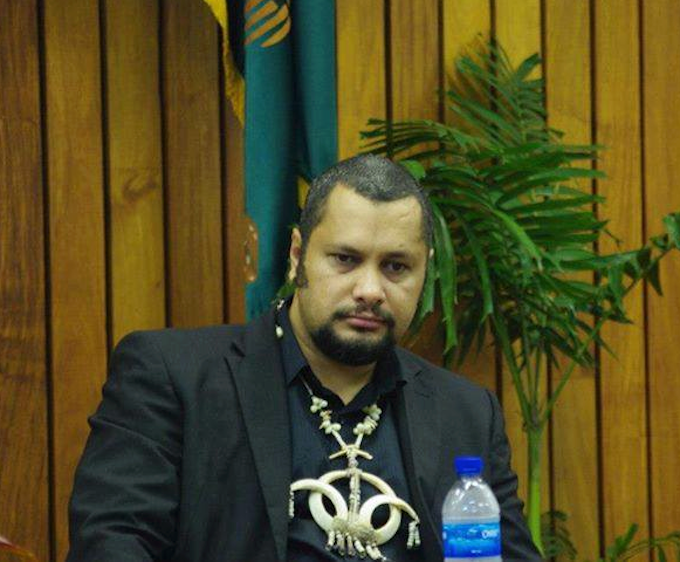
Oro Govenor Gary Juffa … not just about Facebook, a matter of democracy. Image: PNG Parliament

Pacific Media Centre Newsdesk

Oro Governor Garry Juffa says the people of PNG find it “frightening” and “alarming”  that the Papua New Guinea government is making a move towards shutting down their opportunity to have access to information and to speak freely.

He says the media freedom issue is not just about Facebook – it is about “fundamental democracy” and free speech in the country.

Juffa was responding to a Parliamentary Privileges Committee hearing about a criticism Opposition Madang MP Bryan Kramer made about Communications Minister Sam Basil in the controversy about a threatened shutdown of Facebook in Papua New Guinea for “research” into abuse.

“This criticism that they [givernment MPs] are complaining about, they are basically complaining about is their feelings of being hurt because of something that has offended them or has demeaned them in some ways, but this comes with the territory,” Juffa has said in the Post-Courier.

“When you are a leader you going to get criticised, that’s normal, [US President] Donald Trump gets criticised you know, the Australian Prime Minister gets criticised and they take it, they don’t go and refer these matters to the Parliamentary Privileges Committee in their countries, they don’t cry about it and demand apologies,” he said.

“We should be feeling hurt about the fact that we don’t have medicines in our aid posts and hospitals, we should be feeling hurt about the fact that our schools are shutting down because they are not getting funds they need, that our teachers are not being paid, we should be getting hurt about the fact that our economy is taking such a nose dive that ordinary Papua New Guineans are losing their homes, they are losing their business, they are not being paid, people are losing their jobs, these are the things that we need to be hurt about and expressing our concerns about.

-Partners-

‘World looking’
“But we have taken three days of Parliament over an issue because someone in Parliament is being hurt about what someone said about them, it’s quite ridiculous and in fact the world is now looking at Papua New Guinea and thinking what is going on in that country.

“This is not about Facebook.

“This is about the freedom of our people to have the opportunity to say what they want, I may not agree with what you say but we must always fight to protect your right to say it because that’s the fundamental hallmark of democracy.

“We are supposed to host APEC, I mean APEC nations that are coming here that promotes and subscribe to democracy will be aghast, will be shocked that here is a country that is deliberately moving to snuff out or stop the opportunity for its people to dissent.

“The Opposition walk-out from Parliament was a demonstration of our disgust at the fact that the government is deliberately moving against our peoples rights to express themselves.”

Print Friendly, PDF & Email

Article by AsiaPacificReport.nz

]]>

Keith Jackson: Did dumb just get dumber and Sam Basil dig a hole?

]]>

A near confrontation on the floor of Parliament on Friday, with the Papua New Guinea Opposition walking out in protest over the referral of Madang MP Bryan Kramer, to the Parliamentary Privileges Committee following a Facebook posting. Video: EMTV News

OPINION: By Keith Jackson in Noosa

Samuel H Basil, the man who might ban Papua New Guineans from Facebook, was not always such a stern opponent of the social media platform he now despises – a platform used by nearly a million of his fellow citizens.

Indeed it was only 18 months ago that Basil – who is now Communications Minister – posted on his own Facebook page: “FB users in PNG have used the medium to their advantage exposing corruption in government…. Everything is changing; people are taking their bloggers seriously and their politicians as comedians.”

Yes, bloggers serious; politicians comic.

READ MORE: Gary Juffa on the Kramer censoring – another attack on free speech

Then last week, having defected not only from his political base but seemingly from his former progressive and liberal ideas, Basil felt able to announce that Facebook could be banned for a month for some mysterious “research” – and maybe disposed of permanently, perhaps to be replaced by Basbook.

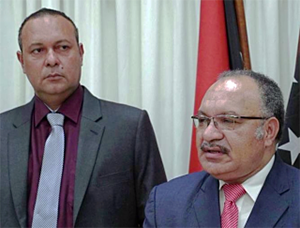
Communications Minister Sam Basil with Prime Minister Peter O’Neill – worried about the wellbeing of PNG or just politicians feelings being hurt? Image: PNG Attitude

-Partners-

An immediate worldwide flambé of curiosity then thrust the story into the news stratosphere, some journalists linking it with Papua New Guinea’s APEC forum later this year. Basil seemed to back away, then push the idea forward again so by week’s end what the government intends to do was very much up in the air.

But one thing did remain constant (see more stories on PNG Attitude) – the desire of most national politicians to get rid of the dreadful FB thing that is causing them so much grief with increasingly savvy and critical voters.

Among the small group of politicians fighting to keep Facebook alive is Madang MP Bryan Kramer who was cheeky enough (in a Facebook post of course) to allude to Basil in a headline which asked, “Did dumb just get dumber?”.

Parliamentary walkout
Affecting to have been taken aback, in Parliament the majority of members voted to refer Kramer to the Privileges Committee whereupon Opposition Leader Patrick Pruaitch and 23 other members walked out of the chamber in protest.

The committee will decide if Kramer’s post brought Parliament into disrepute.

Opposition Madang MP Bryan Kramer … controversial statement made outside Parliament on Facebook. Image: EMTV News

However, there is something of a problem – the committee is meant to investigate breaches of parliamentary privilege and Kramer’s statement was not made in Parliament.

“I think what is frightening and what is alarming for the people of PNG is a deliberate move towards shutting down their opportunities to have access to information and to also speak freely,” Pruaitch said.

“They [politicians] are complaining about their feelings being hurt.”

Meanwhile, in far away Uganda, Parliament has just passed a new social media tax which will charge a daily fee of 200 Ugandan shillings (about K1.75) to anyone using apps Facebook, WhatsApp and Twitter. That’s a hefty sum in a country where the average person earns K6 a day.

But, as with Sam Basil’s ill thought through proposition for Papua New Guinea, it is unclear in Uganda how social media use will be monitored and how the money will be collected.

Digging themselves deeper holes in their desire to rein in social media seems to be a developing political trait.

This article is republished by Asia Pacific Report with permission and was originally published by Keith Jackson’s blog PNG Attitude.

Print Friendly, PDF & Email

Article by AsiaPacificReport.nz

]]>

Vanuatu court orders release of ‘wanted’ Fiji man, seeks papers

]]>

Vanuatu’s Supreme Court … relevant documents from Fiji needed by June 12. Image: Vanuatu govt

By Royson Willie and Kizzy Kalsakau in Port Vila

Vanuatu’s Supreme Court has asked the police and immigration to release Fijian citizen Mohammed Rizwan and to substantiate the claim that he is a wanted man in Fiji.

Rizwan’s lawyer, Frederick Loughman, confirmed that yesterday’s conference in chambers saw the court directing for the relevant documentation from Fiji to be made available by June 12.

After the documents are submitted to the court as ordered by the court on Wednesday, then the matter would be listed for trial.

READ MORE: Contempt application filed in Vanuatu over attempt to deport Fijian

An application for contempt would be heard after this matter is heard.

One of the grounds for the application for contempt was that the agents of the government did not provide any formal legal instrument from the government of Fiji to substantiate their new grounds for deportation or the claim that Rizwan is a wanted man in Fiji.

-Partners-

Minister of Internal Affairs Andrew Napuat said the Immigration Act section 53 said the minister could carry out the removal of non-citizen without notice if the person was a wanted person in another country.

“That’s basically what we’re following,” Napuat said.

“We’re following what the law says.”

Discharged from hospital
The minister said Rizwan was discharged from hospital on Wednesday evening but there was another application to the Magistrate Court by the Acting Director of Immigration for Rizwan to be detained because he was allegedly a wanted person in Fiji.

The minister confirmed that Rizwan has a valid residence visa.

“He’s entitled to live in Vila but we don’t have a copy of his police clearance ever since he arrived.

“That’s something that we’re still investigating.

“We need that to come and other supporting documents from Fiji about his cases and that the Fijian authorities want him in Fiji so they can settle outstanding matters they have against him,” the minister alleged.

The minister said Rizwan’s detention and supervision after being discharged from the hospital was done by immigration officers.

“We don’t have any personal issues with the foreigners we’re dealing with.

‘Implementing the law’
“We’re just basically implementing the law, which has not been implemented in the past or may have been relaxed in the past.

“The funny thing though is when we are trying to implement the law and safeguard the interest, the sovereignty of Vanuatu and their nation there are some people that don’t see the logic behind the work the government is doing.

“Even if they are lawyers or politicians, they need to ask themselves, what do they want for this country?

“That’s the most important thing.

“Do they want this country to be a home for criminals, illegal immigrants, overstayers, those that do not have the appropriate papers to come into the country and work here?

“I believe that money should not be the factor that will drive the citizens of the country to do what they want to do.

“They need to look higher into seeing their country, their future, the future of the people, their children.

“It’s sad to see that when the government is trying to do things according to law and trying to protect the sovereignty and interest of the people, some people don’t see that as important,” the Internal Affairs Minister said.

The lawyer representing Rizwan had said his interest was to see that the law was adhered to at all times, even if it was a deportation carried out by the government, it must be done within the confines of Vanuatu laws.

The Pacific Media Centre has a content sharing arrangement with the Vanuatu Daily Post.

Print Friendly, PDF & Email

Article by AsiaPacificReport.nz

]]>

Scott Waide: Any Facebook shutdown in PNG dangerous on many levels

]]>

The Post-Courier story that stirred up the Facebook ban controversy … now mixed messages from the PNG government. Image: PMC screenshot of PC

OPINION: By Scott Waide in Lae

Maybe it was a slip of the tongue or a misinterpreted statement… But there is no doubt that whatever it was that Papua New Guinea’s Minister responsible for Communications and Information Technology, Sam Basil, said this week has created a storm now being reported on global media outlets.

While some commentators are screaming “fake news”, others are taking it all in as a fact.

What gave this statement its legitimacy was its publication on one of Papua New Guinea’s two dailies – the Post Courier. The online version of the story has been quoted numerous times that has become the top story out of Papua New Guinea in the last 24 hours.

READ MORE: Facebook shutdown outcry – ‘a mockery to APEC’

The country doesn’t usually make it into the tech pages of websites, but it has.

Matt Novak from Gizmodo wrote: “The (PNG) government also said that it’s exploring the creation of its own social media site to replace Facebook.”

-Partners-

John Russel from Techcrunch: “… the Facebook ban — however delicious it may sound given recent events — is not confirmed for Papua New Guinea. It remains a possibility once Basil has liaised with police.”

The suggestion to shut down Facebook is dangerous on many levels.

Papua New Guinea’s Facebook ‘ban’ … a global furore. Image: Scott Waide’s blog

PNG on back foot
Firstly, it places PNG on the back foot. It is a highly embarrassing position to be in as members of APEC discuss the region’s economic future with e-commerce and social media being a pivotal focus of the talks.

Any shutdown of Facebook for any length of time, is contrary to the spirit of the discussions where wider access to ICT forms the basis of future economic policies.

In Papua New Guinea, small businesses are starting to thrive. Their main avenue to sell to a wider customer base? Facebook pages. Not websites. Website developers charge a minimum of K2500 for a basic site. It is too big an amount for small businesses.

Not one to mince his words, the director of the Institute of National Affairs , Paul Barker, told The Fiji Times: “It would be a travesty if PNG sought to close down Facebook during the APEC month [in November], making PNG seem rather foolish, as it would be both an attack on embracing technology, undermining the information era and mechanisms for accountability, but also damaging business and welfare.

“Facebook is no longer just a platform for chatting to friends and relatives, and exchanging photos, it’s now a critical tool for information sharing and social auditing, and also a major platform for business, especially micro, small to medium enterprises (MSMEs).”

In Lae City where I live, Facebook is a primary means of reporting crimes to the police. The Lae Police Metropolitan Command has a Facebook page linked to its crime reporting systems and toll free number. It is an integral part of policing.

Primary disaster reporting tool
In Papua New Guinea, Facebook has become the primary disaster reporting tool used by rural communities.

In February, when the Highlands was struck by a 7.5 magnitude earthquake, the first pictures of the damage and deaths were posted on Facebook.

Yet it took at least two weeks before the National Disaster Center began collating the information that was readily available within 20 minutes of the disaster.

It is good that this debate is happening now instead of later.

Scott Waide’s blog columns are frequently published by Asia Pacific Report with permission. He is also EMTV deputy news editor based in Lae.

Print Friendly, PDF & Email

Article by AsiaPacificReport.nz

]]>

New Caledonia referendum offers chance to turn page, says journo

]]>

The Kanak flag and the French Tricolour …. an independence vote is due on November 4. Image: RNZ Pacific

By RNZ Pacific

This year’s referendum on independence from France is a chance to turn a new page on New Caledonia’s past, says a Kanak journalist.

The referendum is is due on November 4 – more than 30 years after a boycotted poll and subsequent violence which led to the 1988 Matignon Accord.

The agreement has allowed gradual progress towards independence to be finally decided this year.

READ MORE: 30 years on from the Ouvéa massacre

A 98 percent majority voted in favour of staying with France in the 1987 vote which was boycotted as the indigenous Kanaks waged a campaign for independence.

Violent conflict continued, including the Ouvéa massacre when 19 Kanaks and two French soldiers were killed but the 1998 Noumea Accord a decade later allowed gradual steps towards independence to be finally decided this year.

-Partners-

Andre Qaeaw of the Kanak-run station Radio Djiido said as the next referendum approached, the media had a role to play in keeping conflict at bay.

Speaking at the Pacific Media Summit in Tonga earlier this month, he said the situation did not need to be portrayed as confrontation between France and the Kanak people.

“People are influenced by [the] media. Plenty of media talk about the events as a confrontation – France against Kanak people or Pacific Ocean people,” he said.

‘We can change’
“What we are trying to do is show that we can change.

“We can also say that during the First World War, the Second World War, Oceanic people, they fight together with Australia, New Zealand and [the] French. So we have a common heritage so we are not obliged to be always in the binary confrontation point of view.”

“The challenge is to explain that we are not against France, we are not against another country.”

Andre Qaeaw of New Caledonia’s Radio Djiido … Kanaks don’t want to relive the events of 1988. Image: RNZ Pacific

Some politicians were inciting divisions, he said, but his people did not want to relive events like those of 1988.

“We try to be smarter, a new way of thinking things. We have Facebook, we have internet, we have tutors, we don’t have the same way of thinking [then] and now.

“We have to prepare the new generation,” Qaeaw said.

Pacific means peace, he pointed out and all people belonged.

“The Kanak people say we need to do better, to share and to think not only towards Noumea, the capital.

“We have 300 tribes. They don’t have water, they need schools, they need education and health.

“Pacific islanders, we just need that respect,” he said.

This RNZ Pacific news item is published under a content sharing agreement with the Pacific Media Centre.

Print Friendly, PDF & Email

Article by AsiaPacificReport.nz

]]>

Media and communications for the Floating Foundation

Event date and time: 

Thursday, June 21, 2018 – 16:30 18:00

Managing communications and social media for a Pacific charity comes with its challenges and rewards.

Archer-Mary will discuss her experience in communications for the Floating Foundation: www.floatingfoundation.net, a Registered New Zealand charity.

With a motto such as, “Research. Charity. Adventure”, the foundation “provides a platform for doctors, nurses, and marine scientists to help the environment and the peoples of this incredible ocean”.

Who: Archer-Mary Miller, Communications, Floating Foundation  
When: Thursday, 21 June 2018, 4.30-6pm  
Where: WG608, City Campus  

Contact: Sylvia.Frain@aut.ac.nz

More information: The Floating Foundation

Map for PMC and AUT

Report by Pacific Media Centre ]]>

Diabetes deaths in Fiji worst in the world, says watchdog

]]>

By RNZ’s Dateline Pacific

The latest life expectancy world rankings show Fiji has the highest death rate from diabetes in the world with 188 of 100,000 fatalities being attributed to the disease.

The head of Diabetes Fiji says the ranking highlights the magnitude of the problem and the need for a more proactive approach.

Jenny Meyer reports:

LISTEN TO DATELINE

Transcript
Project manager Viliame Qio says people are shying away from medical attention and treatment out of denial and so when they do come forward they have more severe complications from their illness.

He says there needs to be more community education about diabetes and many people turn to traditional healers for help first, which also delays effective treatment.

-Partners-

“We have three amputations that take place in a day in the major hospitals and the main reason is the people are presenting late, they come very late, they are not coming early. So we want to get people to be educated that they have to seek medical attention first before they resort to other traditional methods or herbal methods.”

Viliame Qio says diabetes is the leading cause of disability in Fiji and people need to heed the public health messages about poor eating habits and sedentary lifestyles.

Dr Jone Hawera is a Fijian surgeon and says the diabetes crisis is becoming more widespread now affecting people in rural areas and at younger ages.

‘Bottom of the cliff’
“Just last week we amputated half a foot of a 30-year-old i-Taukei female. It’s not only the rate that’s increasing it’s also the age group that’s involved with the amputations. And that means we have a big disabled and non productive population. The economic impacts that’s going to make for us is huge.”

Dr Hawera says he is part of a group of frustrated, demoralised, under-resourced health personnel working at the bottom of the cliff trying to deal with the ongoing diabetes crisis.

He says there are many factors affecting the rate of diabetes including issues like food security and climate change and policy makers must do more to turn the crisis around.

He says diabetes is a physical manifestation of social issues and preventative policies need to address these.

“It’s preventable and that’s the hope that we continue to have, we know that it’s preventable. A lot of these deaths are preventable. A lot of these complications like amputations are preventable. We are trying to improve our education and our awareness, making people really understand what diabetes is and what causes it and the many ways they can prevent complications once they have it.”

Dr Hawera says he would like to see diabetes education get to a point in Fiji where people are prevented from getting the disease in the first place.

Early detection vital
Viliame Qio says both education and early detection are vital to dealing with the crisis.

“The very important thing is that you get screened and secondly that you adopt a healthy lifestyle. Especially the eating habits.

“Our diet has been transitioning from healthy food to very fast food and with this fast food comes a sedentary lifestyle. We need people to be very health cautious, to be mindful of what they eat and be physically active.”

Fiji’s Ministry of Health says one in three Fijians has diabetes and there is a higher incidence in Fijians of Indian descent.

It encourages regular health checkups and says symptoms include frequent urination, feeling thirsty and hungry, fatigue, blurry vision and pain in the hands and feet.

This RNZ Pacific item is part of the content sharing arrangement with the Pacific Media Centre.

Print Friendly, PDF & Email

Article by AsiaPacificReport.nz

]]>

Indonesia plans to ramp up lobbying for UN Security Council seat

]]>

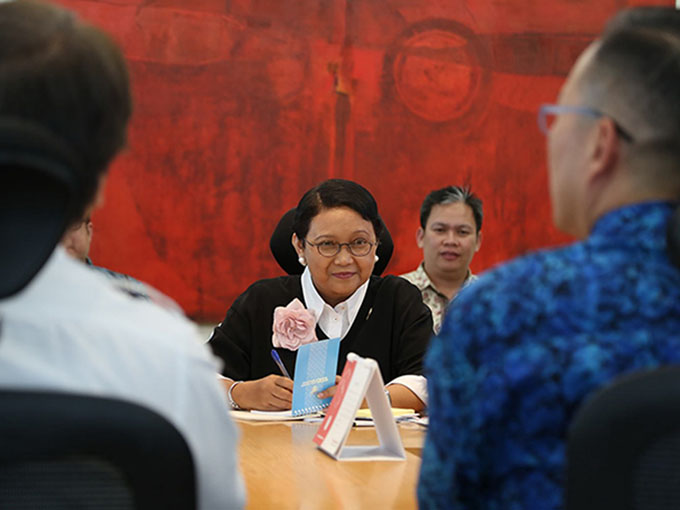
Indonesia’s Foreign Minister Retno Marsudi … prioritising contributions to peace, including in peace-keeping operations, and realising the Sustainable Development Goals. Image: P.J.LEO/Jakarta Post

By Dian Septiari in Jakarta

Indonesian Foreign Minister Retno Marsudi is set to lobby more countries to vote for her country in its campaign for a non-permanent seat on the United Nations Security Council ahead of the vote that will take place next week.

Retno said she would head for New York again on Sunday, a few days before voting day on June 8.

“On the 4th [Monday] there will a diplomatic reception at the United Nations headquarters, while on the 5th, 6th and the 7th I still have the chance for more lobbying before voting day,” she told reporters on the sidelines of an iftar (breaking-of-the-fast) event at the Foreign Ministry on Monday.

In the last two weeks, Retno has visited New York, Guyana, Argentina and Peru and attended forums, where she also talked about Indonesia’s campaign for the seat.

Retno expressed her optimism, counting on Indonesia’s track record and contributions to world’s peace.

“Hopefully with all the contributions well-documented, it will become the reason why the countries vote for Indonesia,” she said.

-Partners-

She said if Indonesia gained the seat, it would prioritise contributions to peace, including in peace-keeping operations, realising the Sustainable Development Goals and pushing for more cooperation to solve transnational organised crime.

  • Dian Septiari is a Jakarta Post journalist.

More Indonesia stories

Print Friendly, PDF & Email

Article by AsiaPacificReport.nz

]]>

PNG students in China say Facebook move is ‘irrelevant’ and damaging

]]>

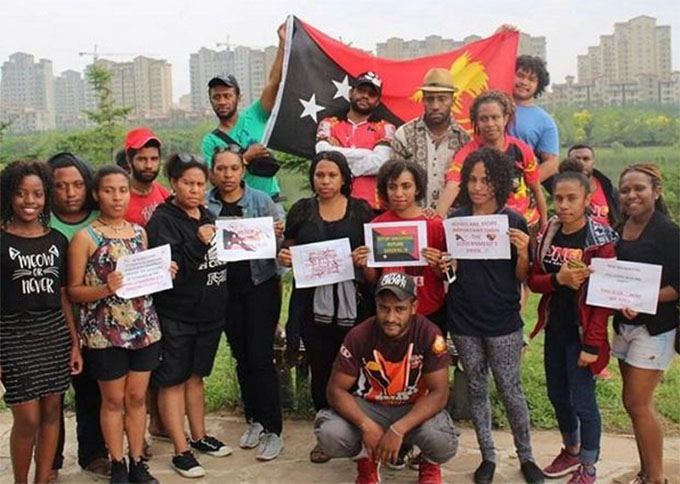
Papua New Guinean students in China protesting over a separate issue. A file picture of the Shenyang PNG Students Association members protesting over the shooting of students at the University of PNG in 2016. Image: Loop PNG

By Melisha Yafoi in Beijing

Students studying in Beijing, China, have described the move by Papua New Guinea’s Communications Minister Sam Basil to suspend Facebook for one month as “irrelevant” and damaging for education communications.

The students in a forum have expressed disappointment that there are more pressing issues that the government needs to address yet it is concerned about legislating freedom of speech for the people.

They said that being outside the country they were able to read information and connecting with family back home as many of the people do not have other social media platforms other than Facebook.

READ MORE: Facebook shutdown ‘a mockery to APEC’

They also said through Facebook, leaders were made accountable to their actions and were condemned publicly for their wrongdoing.

“Some people abuse it but the majority use this to express themselves. Why is government so worried about it. They have better things to do than wasting time to fb issue,”  Beijing PNG students vice-president Samuel Ray said.

-Partners-

“The real issues are out there. We have police brutality on the rise, car theft, rural urban drift, poverty, deteriorating infrastructure both school, road and heath services. Drug shortage, TFF policy not working well etc.”

It was also raised that it is obvious that the people have already lost their trust in the government. As a result there would be no positive result coming from this temporary suspension.

‘Top shots on toes’
“Most politicians, top government officials and top shots are always on their toes for being exposed of under the table deals,” the students said.

“Our national media (with due respect to the hard working media team) can sometimes be compromised by the government. Thus leaves social media, with no restrictions on people on what they post. A national social network isn’t a solution. Data of citizens shouldn’t rest in the hands of privileged individuals to manipulate.”

An international relations student suggested that PNG’s Communications and Information Technology Department should focus more on things like how to improve network services around the country and work on helping PNG catch up to the digital era rather than trying to keep PNG away from it.

She said shutting down Facebook will not solve anything and trying to analyse its positive or negative impacts was a waste of time and resources.

“The government, instead of choosing to totally shut down Facebook, should innovate ideas on establishing appropriate alternatives especially on the imposition of penalties on those abusive users of this social media platform,” another student said.

Melisha Yafoi is a contributor to the Post-Courier.

Print Friendly, PDF & Email

Article by AsiaPacificReport.nz

]]>

RSF strategic media freedom summit planned for Asia-Pacific

Event date and time: 

Wednesday, July 4, 2018 – 08:00 Friday, July 6, 2018 – 17:00

THE PACIFIC MEDIA CENTRE will be participating in a Reporters Without Borders (RSF) Asia Pacific region summit in Paris.

RSF is running training courses and assessing its work in the region.

Colleagues from Australia, Timor-Leste and the Pacific will be attending.

When: 4-6 July 2018
Where: Paris, France

RSF website

Report by Pacific Media Centre ]]>

Savu border unsolved, but Timor-Leste leader praises ‘amazing’ Indonesia link

]]>

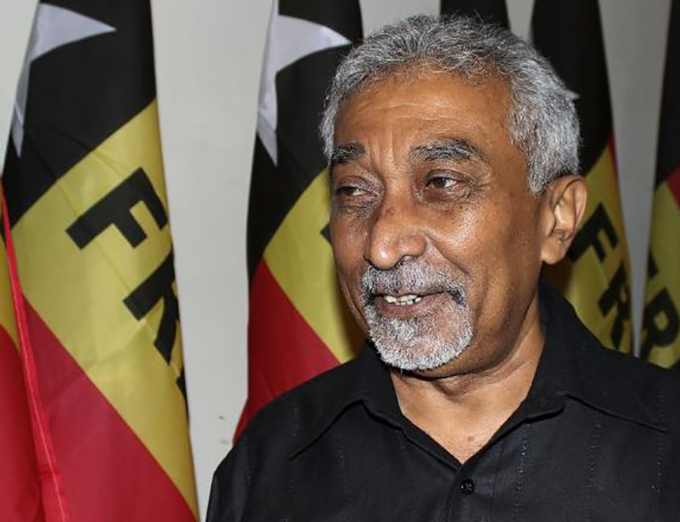
Fretilin’s former Prime Minister Dr Mari Alkatiri … “we look forward to guaranteed stability, ongoing development and to bring people out of poverty” in Timor-Leste. Image: Agora Timor

By Ismira Lutfia Tisnadibrata in Dili

East Timor’s outgoing Prime Minister Dr Mari Alkatiri says that after almost two decades of separation from Indonesia, the country’s relations with its neighbour continue to strengthen despite some unresolved issues.

Indonesia “is our biggest supporter,” he said.

Timor-Leste, also known as East Timor, celebrated the 16th anniversary of its hard-fought restoration to independence last week on May 20.

The day marked Timor-Leste regaining its independence after 24 years of Indonesia’s occupation, which invaded the country shortly following its independence from Portugal in November 1975 that political party Frente Revolucionária de Timor-Leste Independente (Fretilin) unilaterally declared.

In an exclusive interview at a hotel near Fretilin party’s headquarters, Dr Alkatiri, Fretilin’s secretary-general, described East Timor’s relationship with its former invader as “amazing, very good.”

“We still have some pending issues, such as maritime and land borders in Oecussi,” he said, referring to an East Timor coastal exclave surrounded by Indonesia’s East Nusa Tenggara province, which lies on the western part of Timor Island. East Timor is located on the island’s eastern half.

-Partners-

Oecussi is a special administrative zone and has been designated as special economic zone with Dr Alkatiri as its president.

Maritime border dispute
Dr Alkatiri, who also served as East Timor’s first prime minister from 2002 to 2006, said both countries need to solve the border issue soon because it would be difficult to define a maritime border on the Savu Sea without a clearly marked land border.

“But the goodwill from both governments is there,” he said, adding that successive governments of East Timor would continue to strengthen the relations between the two countries.

Dr Alkatiri described Indonesia as East Timor’s “biggest supporter” in its bid to become the 11th member of the Association of Southeast Asian Nations (ASEAN).

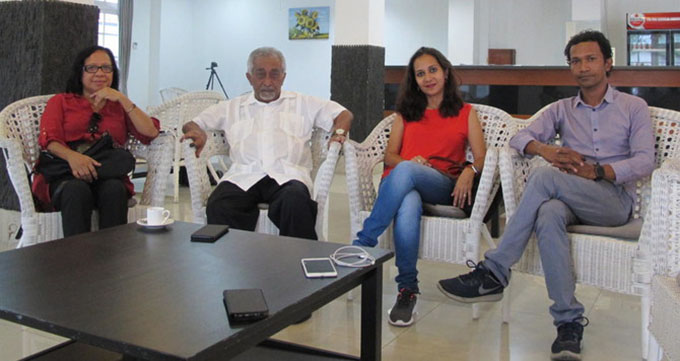
Outgoing Timor-Leste Prime Minister Dr Mari Alkatiri with his wife Marina Ribeiro Alkatiri, daughter Nurima Ribeiro Alkatiri and son-in-law Machel Silveira, pose for a photograph after an interview with Arab News at a hotel near the Fretilin party headquarters earlier this month. Image: AN

Dr Alkatiri, who has been serving his second term as prime minister since September last year, is a Muslim leader in a predominantly Catholic country. His family on his paternal grandfather’s side came from Hadramaut in Yemen.

“They came as traders at that time and decided to stay,” he said.

Dr Alkatiri’s maternal grandparents were Timorese who came from Baucau and Liquica districts. He is married to Marina Ribeiro and has three children.

De facto leader
Indonesia was one of the regional bloc’s founding countries when it was established in 1967, and is regarded as its de facto leader.

Indonesia endorsed East Timor’s ASEAN bid when it formally submitted its application in 2011 during Indonesia’s ASEAN chairmanship.

Singapore, the current chair, has been reluctant to welcome East Timor into the bloc, but has said it looked forward to East Timor meeting the requirements to allow it to become a member.

Singapore’s Prime Minister Lee Hsien Loong said after hosting an ASEAN leaders’ summit in April that the topic was discussed during the forum, but “there was no extended discussion of the matter in this meeting”.

Dr Alkatiri said that ASEAN membership is “a very long dream”.

So far, Timor-Leste has met two of the requirements to be an ASEAN member: The country is located in Southeast Asia and has embassies in all 10 member states.

“This is one of the few things that is a consensus between the leadership of Timor Leste, despite the differences,” he said.

Coalition rule
Dr Alkatiri’s apparent successor Xanana Gusmao, who is poised to serve as prime minister for the third time, said East Timor is doing its best to become an ASEAN member.

“We understand some (member) countries think we are not ready, but sooner or later, we will be a member,” Gusmao said in an interview at his party National Congress for Timorese Reconstruction (CNRT) headquarters.

CNRT led a three-party coalition that beat the shortlived, Fretilin-led minority government in the May 12 parliamentary election.

Dr Alkatiri said the most pressing need for East Timor, with almost half its 1.2 million population still living in poverty, was government investment in public infrastructure, such as education and health, and spending on basic living needs, such as community housing and clean water.

“This is a 16-year-old country. We still need to build the nation; we really need to strengthen the foundation of the nation, institutional, political foundation, everyone needs to join efforts to do it,” he said.

Print Friendly, PDF & Email

Article by AsiaPacificReport.nz

]]>

Dr Schram absconds on bail – claims PNG prosecution is ‘political’

]]>

Dr Albert Schram … his Netherlands passport was returned last week and he now says he will not go back to PNG to face trial with no guarantee of justice. Image: Dr Schram’s blog

By Keith Jackson in Noosa

In a shock development in Papua New Guinea’s Schram case, the former vice-chancellor of the PNG University of Technology has said he will not return to Papua New Guinea “until major changes occur in the country”.

Dr Schram said he has been the subject of a “political prosecution” and will forego bail rather than return to an uncertain legal future in PNG.

“[We entered] a parallel world where lies are truth and all people are blind, deaf and mute,” he wrote in Facebook of the charge of “false pretence” he is facing.

READ MORE: My arrest: Wrongful dismissal and malicious prosecution in PNG

“In this world, you are completely alone because there is no point in trying to have a reasonable conversation with anyone. A truly terrifying world, but the truth will set us free.”

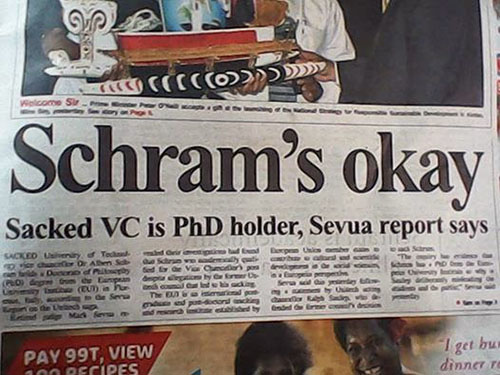
News story of the Sevua report backing Dr Schram in The National. Image: File

But Dr Schram said he will still go through “the costly process” of getting his original doctorate legalised and send it through diplomatic channels to the committal court in Waigani.

-Partners-

“This should clear all charges for ever,” he said.

Last Tuesday, against the wishes of police prosecutor Kila Tali, national court judge Panuel Mogish had varied Dr Schram’s bail conditions and ordered his passport be returned to enable him to travel to Italy to obtain the credentials which would have been prime evidence in a court hearing on a charge that Dr Schram engaged in “false pretence”.

Left at weekend
Dr Schram and his wife Paulina left Papua New Guinea on Saturday ostensibly to retrieve the doctoral qualifications from the European University Institute in Florence.

“We got out,” Dr Schram emailed me from Singapore yesterday, “probably not able to come back until major changes occur in the country.”

“In his judgement on May 22 on the bail conditions, the judge in the national court was deliberately explicit on the substantive case,” Dr Schram has written on his Facebook page.

“There is not a shred of primary evidence suggesting I have falsified anything, while there is overwhelming evidence that in fact my doctorate is genuine,” he said.

“Finally an independent judge has said what anyone with common sense could have concluded since the complaints were made in 2012.”

Dr Schram quoted Justice Mogish as writing in his judgement:

“In spite of this overwhelming evidence (presented by Dr Schram) Mr [Ralph] Saulep continues to dispute the authenticity of the applicant’s doctorate degree. I find this ridiculous and difficult to fathom especially when neither he or the police are in receipt of evidence from the European University Institute in Florence Italy, confirming their allegations and suspicions”.

The judge continued:

“The current charge, with respect, lacks the primary evidence to prove the elements of falsity. Whether they will have such evidence by the 12 June 2018 (the next hearing) is anyone’s guess. The reality is that they have failed to do so when the allegations were raised in 2012.”

Case ‘will be thrown out’
Dr Schram said: “It stands to reason the case will be thrown out at some point in time and my innocence will be established.

“All this is of course is damaging for police and the complainant – former pro chancellor Ralph Saulep….. Since the conditions for the settlement with the [current Unitech] Council, which included no criminal prosecution, have now been violated, I do not consider myself bound to this agreement.

“In any case, for justice to prevail and the people of PNG to be liberated from police abuse, I must describe the facts.”

Dr Schram said he and his wife Paulina “did not come to [PNG] to get rich but neither did we expect the financial ruin we are facing now.

“The legal fight with the [Unitech] Council for wrongful dismissal first and now the fight for my malicious prosecution by the police has drained all of our resources.”

He said he missed two job interviews because of his arrest and, when the charges are cleared, he will claim damages for “all the financial losses, opportunity costs and defamation of character I suffered”.

Dr Schram also said a parliamentary inquiry was warranted into police abuse in his case.

Police ‘need restructuring’
He concluded:

“Like for all of us academics, journalists and other knowledge workers who cannot return to the country, it makes us sad that until amends are made and the police have been restructured and [brought] under control, we will not be able to see our friends and our new and beloved family in PNG.”

When varying the bail conditions last week, Justice Mogish said it would be academic and career suicide for Dr Schram to abscond from bail and not return to PNG.

“I do not think any reasonable man would just walk away leaving a trail of serious allegations unanswered,” he said.

“His standing in the academic world would be seriously affected.”

Whether or not the judge’s words will be borne out, time will tell.

But it does seem that, given these dramatic circumstances, Dr Schram’s hopes for vindication are unlikely to be realised.

Small price to pay
Then again, Albert and Paulina Schram may feel this is a small price to pay.

They had found themselves is a totally powerless position on what appeared to be a trumped up charge in a country where they doubted the politics surrounding their predicament would allow justice to prevail no matter what the court decided.

This has emerged as something of a cautionary tale for outsiders who sail too close to Papua New Guinea’s political winds.

Keith Jackson is a retired journalist, broadcaster, administrator and media educator and has held senior positions in Australia and Papua New Guinea. This article was first published on his blog PNG Attitude and is republished by Asia Pacific Report with permission.

Print Friendly, PDF & Email

Article by AsiaPacificReport.nz

]]>

Newsletter: New Zealand Politics Daily – May 28 2018 – Today’s content

Newsletter: New Zealand Politics Daily – May 28 2018 – Today’s content Editor’s Note: Here below is a list of the main issues currently under discussion in New Zealand and links to media coverage. [caption id="attachment_297" align="aligncenter" width="640"] The Beehive and Parliament Buildings.[/caption] Today’s content Education Herald Editorial: Decile funding system changes in education will not be successful if made in isolation Laura Macdonald (Newshub): ‘You can actually focus on learning’: Educators respond to NCEA review Simon Collins (Herald): Auckland Grammar School headmaster slams NCEA changes as ‘dangerous’ and ‘irresponsible Simon Collins (Herald): NCEA reforms: external exams in Year 11 go, ‘pathway’ courses required at Levels 2 and 3 1News: Big ideas to shake-up NCEA released for public consultation, ‘to challenge thinking and provoke debate’ – Education Minister Jo Moir (Stuff): A complete overhaul of NCEA level one has been recommended to Government RNZ: ‘Big bold’ ideas to change NCEA – Education Minister Newshub: NCEA: Govt considers scrapping year 11 exams 1News: ‘Why isn’t it happening?’ – Education Minister questioned over promise of scrapping school donations Pete George: School donations another delayed promise Rowan Quinn (RNZ): PM behind industry’s push to get thousands of people into trades Stacey Morrison (E-Tangata): What I’d do if I was the boss of education Jessica Long (Stuff): Shifting homework habits could be helping New Zealand students find balance Andre Chumko (Stuff): Screaming Naenae College special needs student locked out of classroom Amber-Leigh Woolf (Stuff): Society needs libraries and they’re not dying, advocates say ODT: ‘Critic’ cover features censored letter from uni Joel Ineson (Stuff): Otago University student magazine Critic hits back at censorship with new edition Hamish McNeilly (Stuff): Critic magazine dumping prompts vocal rally at Otago University Tim Brown (RNZ): Students protest mag’s destruction: ‘we’re …fighting back’ Paul Little (Herald): No place for censorship, period Micoplasma bovis David Williams (Newsroom): MPI must rebuild trust RNZ: National did a ‘strong job’ dealing with M bovis outbreak – Bridges Andrea Fox (Herald): Between the devil and the deep: D-day for Mycoplasma bovis call Chris Bramwell (RNZ): M Bovis decision: D-Day for dairy and beef farmers Barry Soper (Newstalk ZB): Mycoplasma bovis outbreak will get worse before it gets better Tom O’Connor (Waikato Times): Heed the M bovis warning RNZ: MPI ‘slow, uncoordinated’, under-prepared in M bovis response Roger Smith (Stuff): MPI response system robust, says biosecurity head Duncan Garner (Stuff): Alert, alert, mad cows on loose, MPI in deep coma Newshub: Duncan Garner reveals bold new Mycoplasma bovis claims from ‘inside sources’ Michael Daly (Stuff): Mycoplasma bovis: Why it matters for all of us – not just farmers Andrea Vance (Stuff): Mycoplasma farmers living in the shadow of slaughter Gerard Hutching (Stuff): Ashburton farmer Frank Peters’ ‘beautiful’ calves killed to stop disease Andrea Vance (Stuff): Vet company says it was named in M. bovis outbreak as part of a ‘commercial vendetta’ Laura Tupou (Newshub): Waikato farmer reveals his cows have Mycoplasma bovis disease Andrea Vance (Stuff): Farmer says cows that escaped Government-owned farm may have given his heard M. bovis Fishing industry Elisabeth Slooten, Bruce Robertson, Glenn Simmons (The Conversation): New Zealand’s hoki fishery under scrutiny after claims of fish dumping, misreporting Martyn Bradbury (Daily Blog): Neoliberalism has mutated MPI into an agency that protects Industry from regulation – does Nash deserve the bash? No Right Turn: Total capture John Minto (Daily Blog): The infamous Talley Brothers – now thieving from the environment RNZ: ‘Slavery on an industrial scale’ in fishing industry Health Nita Blake-Persen (RNZ): Nurses strikes to go ahead: ‘We need 11 percent right now’ Michael Hayward (Stuff): Nurses decide to strike after union vote among 27,000 members Lucy Bennett (Herald): Nurses vote to strike if DHB pay offer not acceptable Lucy Bennett (Herald): Counties Manukau DHB tell of stretched resources at Middlemore in letter to Health Minister David Clark RNZ: Middlemore letter to minister: ‘Pulls no punches’ RNZ: Nurses share concerns raised by Middlemore letter Lucy Warhurst (Newshub): Middlemore Hospital exceeding bed capacity on daily basis – staff Newshub: Not enough in the Budget to fix Middlemore – Auckland Councillor Brittany Keogh (Herald): No disciplinary action in half of bullying, harassment cases at DHBs Carla Penman (Herald): People who attack paramedics could automatically be jailed under proposed tough new law Bruce Munro (ODT): Stopping the rot Oliver Lewis (Stuff): Otago University study highlights ‘giant’ issue of poor oral health for ageing Kiwis Newshub: Graphic health warnings for sugary drinks work Rebecca Stevenson (Spinoff): Bingeing, brawling and drunken sex: Is this responsible alcohol promotion? Laura Walters and Katie Kenny (Stuff): Will the inquiry really be the saviour of the mental health system? Mike Houlahan (ODT): More elderly with mental health issues Mikaela Collins (Northern Advocate): Reminder for Northlanders as rheumatic fever risks increases over winter Newshub: One in five Kiwis say their doctor has recommended unnecessary tests or treatment David Loughrey (ODT): Call for open discussion on menstruation Nick Smith (Nelson Mail): Why Nelson needs a new hospital Housing Ben Leahy (Herald): Rising rental prices creating a new class of ‘working poor’, support groups warn Martin van Beynen (Stuff): We have a housing problem – not a crisis Alexia Russell (Newsroom): ‘No capacity’ for KiwiBuild Susan Edmunds (Stuff): Govt ‘needs to check its magic wand’ over KiwiBuild targets RNZ: New stats to give fuller picture on overseas property buyers When Owen (1News): Hamilton ‘absolutely not’ over peak of homelessness – politicians under pressure for those needing emergency housing Kaitlin Ruddock (1News): Families facing homelessness in Marlborough move into converted Blenheim motel David Slack (Stuff): There’s no place like it Susan Edmunds (Stuff): Low interest rates no good to new borrowers Rob Stock (Stuff): London solution to Kiwi housing crisis International relations and trade Richard Harman (Politik): English denies China security breach as Washington criticises and Peters goes to Beijing David Fisher (Herald): China’s communists fund Jacinda Ardern’s Labour Party: What the United States Congress was told Newshub: Former CIA analyst says New Zealand should be kicked out of Five Eyes alliance Herald: Winston Peters: Next talks set for China Free Trade Agreement upgrade 1News: Winston Peters and China’s Foreign Minister hold bilateral meeting in Beijing with trade, security, North Korea on agenda Fran O’Sullivan (Herald): New Zealand can help ease tensions Liam Dann (Herald): Could New Zealand’s economy survive a China crisis? Stacey Kirk (Stuff): Winston Peters says NZ supports ‘deeply concerning’ findings of MH17 probe Herald: Foreign Affairs Minister Winston Peters says Russian role in deadly MH17 disaster ‘deeply concerning’ Gia Garrick (RNZ): Peters ‘deeply concerned’ over MH17 missile confirmation Moana Makapelu Lee (Māori TV): New Zealand’s Ngāi Tahu ambassador to Chile Jonathan Mitchell (RNZ): Asia – the great unknown for most New Zealanders Simon Draper (Herald): Survey shows we still don’t know much about Asia Vaimoana Tapaleao (Herald): Quiz reveals Kiwis’ lack of general knowledge of Asia Newshub poll Dan Satherley (Newshub): Poll result ‘heartening’ – Simon Bridges Tova O’Brien (Newshub): Simon Bridges failing to connect with voters – Newshub poll Tova O’Brien (Newshub): Judith Collins makes surprising appearance in preferred Prime Minister poll\ Tova O’Brien (Newshub): What do Kiwis think of Prime Minister Winston Peters? Tova O’Brien (Newshub): NZ First gone, Greens the new king-maker in latest Newshub poll Jo Moir (Stuff): Judith Collins joins preferred PM rankings – Labour, Greens still ahead in poll Stewart Sowman-Lund (Newstalk ZB): New poll brings bad news for Simon Bridges, NZ First Parliament Steve Braunias (Herald): Secret Diary of… Paula Bennett Tracy Watkins (Stuff): MPs behaving badly? What’s new about that? Heather du Plessis-Allan (Herald): A National embarrassment Bryce Edwards (Newstalk ZB): We need more ‘brawling’ in Parliament ODT Editorial: National’s empty actions Jason Walls (Interest): Is all the theatre & spectacle to make a point was worth it for the Nats? Stacey Kirk (Stuff): MPs behaving badly a drama where no one emerges clean Dan Satherley (Newshub): Judith Collins dreams of bringing back Lockwood Smith as Speaker Andrew Gunn (Stuff): Paula, Simon, Trevor and Gerry take turns on the naughty stool Tracy Watkins (Stuff): Below the beltway Jack van Beynen (Stuff): Dancing With The Stars NZ: Former PM the Key to ‘Twinkletoes’ Seymour’s success Government Phil Quin (Stuff): Shane Jones is Labour’s greatest re-election asset Claire Trevett (Herald): Post-Budget glow fades quickly as heartland problems pile up Bryce Edwards (Herald): Political Roundup: Is the new Government already failing Māori? Oscar Kightley (Stuff): Why Phil’s flight phone call rang a bell for me Jenna Lynch (Newshub): Did Phil Twyford break another aviation rule? Herald: Transport Minister Phil Twyford accused of standing on plane while seatbelt light on Dan Satherley (Newshub): Judith Collins’ role in bringing down Phil Twyford David Farrar: Referenda in 2019 Nicole Bremner (1News): Jacinda Ardern’s candid interview on impending motherhood – ‘focused on getting through the actual birth’ Mark Broatch (Guardian): Clarke Gayford on fatherhood, food and fending off shark National Tova O’Brien (Newshub): Judith Collins: The comeback queen Mike Williams (Hawke’s Bay Today): Divided views on Crusher but National’s not well Human Rights Commission Toby Manhire (Spinoff): Devastated but vindicated’: Devoy issues powerful rebuke as she exits Human Rights Commission Susan Devoy: How the Human Rights Commission can rebuild trust Stuff: Accused groper Kyle Stutter keeps top job amidst staff shake up at Human Rights Commission Andrew Beach (Stuff): Dame Susan Devoy says HRC staff should not have had to endure what they went through Herald: Dame Susan Devoy urges other staff to ‘take responsibility’ and step side at Human Rights Commission Gia Garrick (RNZ): Human Rights Commission undergoes shake-up Anna Bracewell-Worrall and Emma Hurley (Newshub): Susan Devoy and Jackie Blue to move on from Human Rights Commission Justice and police David Fisher (Herald): ‘Best guess’ on prison numbers caused inmate blowout Chester Borrows (Wanganui Chronicle): MPs must be brave enough to do what is right rather than what is popular Peter Dunne (Newsroom): The moral failure of a rising prison muster Nicola Russell (Newshub): Youth Court should include 19 to 20yr olds – Children’s Commissioner David Fisher (Herald): Ex-National MP Ross Meurant to the Head Hunters – gangs must join society or face becoming ‘exploding’ underclass of terrorism Shane Cowlishaw (Newsroom): Chief Judge: ‘Robbing Peter to pay Paul’ Ruby MacAndrew (Stuff): Criminal case backlog to surge as judges redistributed to Family Court RNZ: Judges pulled from criminal cases to work Family Court backlog Leah Te Whata (Māori TV): Māori Wardens seek operational autonomy Anusha Bradley (RNZ): Insight: Policing Domestic Violence – A New Direction Anusha Bradley (RNZ): App helps police combat family violence Jo Lines MacKenzie (Stuff): Public-private pilot trains Kiwi offenders for automotive jobs  Child welfare Finn Hogan (Newshub): Govt will have ‘failed completely’ if they don’t reform benefits – Andrew Becroft Celia Patrick (ODT): Collaboration will ensure ongoing care for south’s vulnerable children Elena McPhee (ODT): Better parental leave call Janika ter Ellen (Newshub): Phone line helps foster parents deal with difficult children Abortion RNZ: Abortion views in NZ yet ‘to be put to the test’ Newshub: NZ ‘doesn’t need referendum’ on abortion law – ex-PM Helen Clark Jo Moir (Stuff): Vote on abortion law reform could happen in NZ Parliament next year Newshub: Abortion debate: ‘Progressive’ Ireland set to leapfrog NZ Genevieve O’Halloran (Noted): As the Ireland referendum vote proves, when it comes to abortion, choice is key Liz Beddoe: Reproductive rights are a social work issue Pete George:Ireland abortion vote puts New Zealand law to shame Gambling Katie Scotcher (RNZ): Facial recognition tech to help curb problem gambling RNZ: Far North hotel scraps pokies after baby abandoned Chris Harrowell (Stuff): Rawene Hotel bans pokies after mum playing the machines left her baby outside Newstalk ZB: Pub owners take stand against pokies after mother leaves child to gamble Poverty and inequality Joel Ineson (Press): Two incomes not enough for Christchurch family seeking food parcels Dale Husband (E-Tangata): Brian Easton: Māori have been trapped in a poverty cycle Bastion Point Justine Murray (RNZ): Takaparawhā (Bastion Point) – 40 years on Mānia Clarke (Māori TV): Battle continues 40 years after Bastion protests Leonie Hayden (Spinoff): 40 years on from the occupation of Takaparawhā (Bastion Point) Cleo Fraser (Newshub): Commemoration mark 40 years since Bastion Point arrests Kingi Taurua dies Herald: Tributes flow for late Ngapuhi leader Kingi Taurua – a soldier, radical, ‘good bugger’ Florence Kerr (Stuff): Ngāpuhi leader Kingi Taurua is escorted by family back to Waitangi Environment RNZ: Govt to seek public feedback over mining ban proposal Maddison Northcott (Stuff): Anti-1080 activists claim pesticide supporters ‘terrorists’ RNZ: Activist’s threatening letter claims 1080 drop is terrorism Jamie Morton (Herald): Native bird numbers double during 20-year Department of Conservation pest control study Dominion Post Editorial: Tide is turning; we must turn with it Press Editorial: We need a new bag of tricks for those tricky bags Dominic Harris (Stuff): Compostable packaging ‘could do more harm than good’ Herald: Plastics recycler Astron gets $500,000 from Waste Minimisation Fund Oil and gas exploration Robin Martin (RNZ): PM reassures Taranaki locals after end of new oil and gas exploration Stephanie MItchell (Stuff): Prime Minister offers reassurance to oil and gas workers during Taranaki visit Herald: Taranaki leaders use Prime Minister Jacinda Ardern’s visit to appeal for help after oil and gas exploration announcement Ben Irwin (Newshub): Jacinda Ardern fronts Taranaki oil and gas workers in closed door meeting Pattrick Smellie (BusinessDesk): Top oil analyst slams ‘errors and misrepresentations’ in government’s offshore exploration ban Newsub: Oil workers can’t get mortgages thanks to ban – National Canterbury rebuild Liz McDonald (Press): Academic says poor state of Canterbury foundation repairs could prove catastrophic Rachel Graham (RNZ): Derelict Christchurch buildings in council ‘crosshairs’ Conan Young (RNZ): $150m Christchurch red zone plan unveiled Press Editorial: From red zone to green light Steven Cowan: Privatising the profits and socialising the cost Immigration and refugees Daniel McCulloch (Stuff): Australia’s Home Affairs Minister Peter Dutton says he could be open to NZ refugee deal No Right Turn: This is corrupt Lincoln Tan (Herald): Tough rules see migrants give up and go home Lincoln Tan (Herald): Grandmother who overstayed for more than 30 years granted residency Transport and road safety Newshub: As other countries’ road tolls slow down, New Zealand’s is on the rise Jodi Yeats (Auckland Now): Auckland Council’s red light cameras haven’t worked for years Auckland Now: Former PM Helen Clark calls for action on out-of-commission red light cameras Herald Editorial: Belated change in road safety priorities Christine Rose (Daily Blog): Why the Price of Oil is a Class Concern Mike Lee (Daily Blog): Trams to Auckland airport – is this really a Super idea? RNZ: Kāpiti Expressway continues to spring leaks Grant Bradley (Herald): Turbulence ahead: The Government move that could push up airfares Treaty settlements and Waitangi Tribunal Baden Vertongen (Pundit): It’s easy to be friends with one who shares the same opinions RNZ: Minister delays signing Pare Hauraki settlement Tracy Neal (RNZ):Iwi says unfair land deal locks them into forestry Herald: Talk to us, Waikato’s Te Arawa River Iwi Trust tells Treaty Negotiations Minister Andrew Little Jimmy Ellingham (Manawatu Standard): Pass the parcel game to avoid landbank budget responsibility not on Building standards and safety Edward Gay (RNZ): Construction company faces $3m fine for misleading customers Tim Shadbolt (Southland Times): Why I’m terrified of building collapse Jimmy Ellingham (Manawatu Standard): Pass the parcel game to avoid landbank budget responsibility not on Media Colin Peacock (RNZ): Mediawatch: Rural press in retreat in time of crisis Alex Braae (Spinoff): Print’s not dead yet: A community newspaper empire expands Colin Peacock (RNZ): AI and the media: coming ready or not Economy Brian Easton (Pundit): Of Foxes and Hedgehogs Jason Walls (Interest): Finance Minister says NZ won’t require unconventional monetary policy in the foreseeable future Defence Phil Pennington (RNZ): Toxic foam: Discrepancy in Defence Force reports Andrea Vance (Stuff): NZDF chief flew top brass around NZ on costly helicopter rides Jonathan Mitchell (RNZ): Urgent changes needed to better support veterans – report Arrun Soma (1News): Hundreds of Kiwi troops attend War Games in the Pacific Islands Local government and regions Todd Niall (RNZ): Legal expert backs councillors’ demand for full stadium report Joel Maxwell (Stuff): Thieving pākehā neighbours have been stealing our stuff for years Lizzie Marvelly (Herald): What is it that’s so threatening about a Māori voice? Herald: Wellington world’s most liveable city second year running Newshub: Wellington voted most liveable city for second year in a row RNZ: Most liveable city: ‘We’ve got the best coffee, the best beer’ Matthew Rosenberg (Auckland Now): ‘Please speak in a language 99% of us understand’: Racist remarks derail meeting about Auckland’s Mt Victoria Herald Editorial: Auckland – a city with more than one father Laurel Ketel (Nelson Mail): What is Richard Nixon’s life-sized statue doing in a Nelson town? Cherie Sivignon (Nelson Mail): Tasman mayor uses casting vote to quash calls for Waimea dam referendum Employment and work safety John Anthony (Stuff): Labour shortage could create ‘significant issue’ for Govt’s 1 billion tree target Cleo Fraser (Newshub): Unfairly dismissed painter still unpaid Charlie Dreaver (RNZ): Son of man crushed to death fears for other workers’ safety RNZ: Small boy has lucky escape from quad bike accident Business Anne Gibson (Herald): Revealed: Australia’s rich listers and their big-money links to NZ Liam Dann (Herald): Who’ll top our rich list in 20 years? Other Hamish Rutherford (Stuff): ACC calls in top Queen’s Counsel to review allegations Joanne Carroll (Press): West Coast waste-to-energy scheme ‘not reliant’ on Government funding Moana Maniapoto (E-Tangata): Of your moko you cannot be deprived Joanne Carroll (Stuff): Contractors sought for Pike River mine re-entry Maggie Barry (Wanganui Chronicle): Dignified death, yes, but check the detail Newshub: Protesters arrested after disrupting Israeli documentary Britt Mann and Chris McKeen (Stuff): 125 years of suffrage: Meet NZ’s next generation of rebel women Jamie Wall (RNZ): Black Ferns filled with hearts of gold, not pockets]]>

Time for Xanana Gusmao to step up and fix Timor-Leste’s problems

]]>

By Jose Belo in Dili, Timor-Leste

Timor-Leste’s parliamentary elections on May 12 have returned Xanana Gusmao to the Government Palace in Dili in an alliance that gives him enough votes to govern in his own right.

While Gusmao has won an election held only 10 months after the July 2017 poll, his CNRT (Party for Timorese Reconstruction Party) lost to FRETILIN (Revolutionary Front for an Independent East Timor) in the earlier election, albeit by a small margin. This forced him into an alliance with sometime rivals to secure the latest poll.

This suggests the people of Timor-Leste trust him, but they are not so happy with his previous government.

Timor-Leste voters sent a wake-up call to their leaders in the recent election. They are asking that the leaders, and most importantly, Gusmao, to continue governing but change their ways.

This all comes after a decade of high level government spending fueled by oil and gas riches. But questions remain. Has Timor-Leste gotten value for their money? Has the government’s spending priorities reflected the wishes and needs of ordinary Timorese voters?

Gusmao is seen as a leader with historical legitimacy, a man who has brought many good things to Timor-Leste since independence.

-Partners-

He resolved the 2006 political crisis, albeit despite being complicit in precipitating it, compensated petitioners, gave pensions to the veterans, initiated the beginnings of a social safety net for the poor, brought rural businesses into the private sector, brought electricity to the villages, and made many other positive changes.

Maritime victory
Most recently he won a victory for Timor-Leste’s maritime sovereignty with a boundary agreement with Australia although some see the deal as rushed for political expediency ahead of the recent poll.

But, there are complaints that the new government needs to address, and do so quickly in the first year of the new AMP (Alliance of Change and Progress) government.

Firstly, trust must be restored in the country’s leadership and to do that the lifetime pension for politicians needs to end. Office holders must likewise be held accountable through an annual declaration of assets.

Any forms of corruption must be stamped out among the country’s politicians and civil servants.

The people think, rightly, that leaders seek positions in order to make big salaries and look after themselves. Salaries and benefits need to be cut to reasonable levels. If the leaders give up benefits and stop corrupt activities then only then can the leaders ask people to work hard, sweat, and build a better country.

Secondly, the government must strengthen anti-corruption laws and pursue corruptors at all levels in Timorese society, from the remotest mountain village to Government Palace.

Looking ahead, Timor-Leste needs to move beyond its reliance on oil and gas and the government needs to prioritize the needs of the people who also need to become a community that can create wealth rather than just consume it.

Fund getting smaller
The Petroleum Fund was large but it is getting smaller and it will not last forever. Revenues from it could cease as early as 2026.

After ten years the country has built many things, but not enough for the land, human resources and environment. It is no small feat required of the people. We need to change focus.

Timorese are an agricultural people and it is a strength that needs to be prioritised and improved. More resources must be driven into building up the agricultural productivity and diversification. Funds need to be allocated to improving our farmers’ skills and their output so they can move from subsistence agriculture to agri-business.

Ordinary Timorese are not educated enough. Millions and millions have been spent on government scholarships to build the skills of technical experts, but the chiLdren have been left behind. The primary, secondary and tertiary educational institutions are underfunded and under prioritised.

The country would rather pay high tuition fees for international universities than improve the education of the 10-year-olds. This needs to stop or there will be a generation of Timorese who cannot contribute to the nation.

The country must change ways in the education sector to protect the future. School feeding programmes need improvement: a hungry child is not a child that can learn well.

The health of the people is poor, they are eating too much sugar and drinking too much beer. Timor-Leste need to dramatically improve public and preventative healthcare. The voters are asking for it.

Better health care
Rural clinics are an embarrassment. The country would rather send the rich and leaders to hospitals in Indonesia and Singapore than improve the standards of the children’s healthcare. It is not right nor is it wise. There can be no prosperity without good healthcare.

Timor-Leste needs to focus on its people in the rural areas. They need improved electricity access, improved rural roads, water and sanitation facilities. Improving these important assets will improve the ability of farmers and rural people to do business, the healthcare standards of people in the mountains and for schools to be where they should.

For sure, highways airports and bridges are important, but there needs to be a refocus on rural communities and their basic infrastructure needs such as water and sanitation.

About 65 percent of Timorese live next to or within sight of the sea. Timor-Leste has been negotiating maritime boundaries with Indonesia and managing new boundaries with Australia. With these boundaries come opportunities and challenges.

Future oil and gas resources need to be protected and developed very carefully. The fisheries can and should be an important source of sustainable income for Timorese for generations to come. The sea can also attract tourists to the coastal regions.

If Timor-Leste can protect and enhance its coastlines, tourists will be enticed to the villages creating jobs and income in a sustainable manner. But the sea can also bring problems. Rising sea levels, disasters, and smuggling. A coordinating ministry of maritime affairs is needed, just as Indonesia has done.

Again, there is much the Timorese need to do and they need to begin work today. The country just needs a trustworthy government to lead the way.

Jose Belo is an investigative journalist, publisher of Tempo Semanal and a commentator based in Dili, Timor-Leste. This article was first published by UCA News.

Print Friendly, PDF & Email

Article by AsiaPacificReport.nz

]]>

India’s ‘tribal’ minister visits NZ for relationships but skirts rape culture

]]>

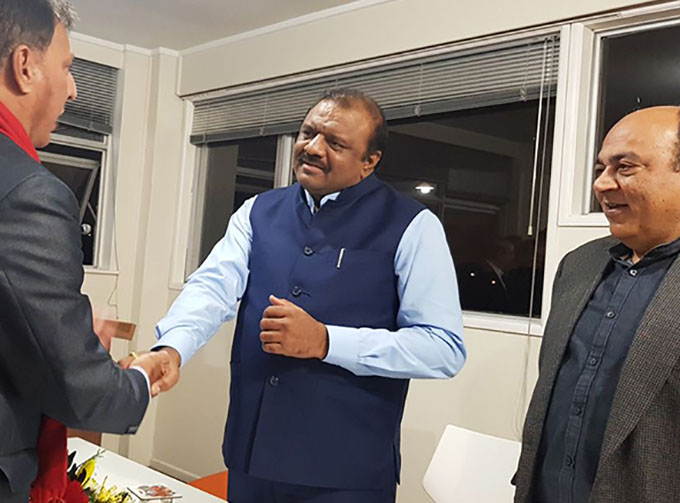
India’s Minister of State for Tribal Affairs Jasvantsinh Bhabhor greeting members of the community on his first visit to New Zealand. Image: Vandhna Bhan/Te Waha Nui

By Vandhna Bhan in Auckland

India’s Minister of State for Tribal Affairs Jasvantsinh Bhabhor visited Auckland briefly last Saturday to talk about building international relations, but avoided comment on the country’s rape culture.

In light of recent events where two teenage girls living in rural India have been violently raped and then set on fire, Bhabhor declined to comment and restated his visit to New Zealand was solely relationship building.

India’s Tribal Affairs sector focuses on issues in rural Indian communities such as farming, education and cultural laws – which cover how community elders make their own laws surrounding rape.

In one of the past cases, the society’s elders said they had already punished the rapist and murderer with “100 sit-ups” so police involvement was not needed.

India’s Prime Minister Narendra Modi has been criticised for his response and inaction over these incidents.

“Our government is committed to building cordial relationships to work towards the progress of all Indians,” said Bhabhor.

-Partners-

The brief stopover was en route to Samoa where the Indian government is working closely with Samoa’s medical centre.

First Samoan visit
High Commissioner Sanjiv Kohli said Bhabhor’s visit to Samoa is a first for any Indian minister in history.

“We have provided Samoa with their entire dialysis units and have even brought patients from Samoa to India for intensive surgeries.

“We are aiming to extend this aid to other countries,” said Kohli.

Twenty-eight-year-old Sukshant Nand who was present at the event said that the Indian minister failed to answer the big questions.

“The elephant in the room was rape culture in rural India which is a matter for Tribal Affairs, but here they are promoting their work in Samoa.

“There is work to be done in their own country,” said Nand.

Bhabhor said that they were taking “major steps” in areas such as demonetisation, GST, free electricity and electrification in rural communities.

However, it remained that both Bhabhor and Kohli were silent on rape issues.

Print Friendly, PDF & Email

Article by AsiaPacificReport.nz

]]>

Tony Alexander’s Weekly Economic Overview – 24 May 2018

]]>

Economic Analysis by Tony Alexander.

[caption id="attachment_11363" align="alignleft" width="150"] Tony Alexander, BNZ chief economist.[/caption]

Thursday May 24th 2018 – This week we start with a look at the data on retail spending growth and migration.

Both sets of data show things easing off but it would be premature to start getting down in the dumps about the economy.

Slowing Down? This week we learnt that during the March quarter core retail spending (excluding fuel and vehicles) rose by 0.6% in seasonally adjusted volume terms. This is a slowdown from unusually strong growth of 1.8% in the December quarter but it is too early to conclude that a new easing trend is necessarily in place beyond the pullback from the 2015-16 surge. Much of the slowdown will simply be a payback from the strong December quarter and if we average growth for the six month period the outcome of 1.2% a quarter is consistent with the average for the past year and a half. If we look at the best indicator of attitudes which consumers have toward how things are and where they are going we see that spending on store types selling mainly durable goods rose by 2.2% in the quarter. This was actually an acceleration from 1.5% growth during the December quarter. This again implies that treating the weak March quarter result as the start of an easing trend would not necessarily be correct. But as the graph above clearly shows, an earlier boom in spending growth has eased off slightly. Looking ahead we see an environment which will provide continuing support for growth in consumer spending. Demand for employees is very high so we would expect people to feel a high level of job security. Interest rates look set to remain low for a continuing very long time. Population growth remains strong (see below), and house prices continue to rise in most parts of the country though at slowing paces. House construction remains strong and that is good for sales of home furnishings etc. Yet there are reasons for retailers erring on the cautious side. Petrol prices have risen quite a bit recently and could go a tad higher. That saps spending available for other things. Of probably greater relevance for retailers however is the ongoing rise in competition from online sources, and the increased willingness and ease with which consumers can search for alternatives online. On top of that social media’s omnipresence means that bad stories about a retailer or their product can spread very easily. And any stories of sales weakness may build expectations of failure or deep discounting to such a level that people sit still simply waiting for such discounting to occur. Retailers also need to be aware of the increasing demand from consumers for environmentally friendly goods with a minimum of packaging. Plus staffing is becoming an increasingly problematic issue for many retailers. We more frequently see job vacancy signs in shop windows these days, and the rise in minimum wages will affect some. For others the issue might be the long-overdue crackdown on staff exploitation by some bad operators. This may be hitting others who following an inspection might lose staff who’s work visas have been discovered to be out of date. We also learnt this week that the population boost from net migration flows continues to ease off, largely because of a lift in the number of foreigners leaving the country. In April the net migration inflow amounted to 2,460 people which was down from 3,406 a year ago. The annual net migration gain now stands at 67,040 from a peak of 72,404 nine months ago. The speed of turnaround is so far fairly slow at an annual pace of near 7,000 but a small acceleration in the decline could be underway. Over the past three months the annualised net migration gain has fallen to 61,000 from 70,000 three months back. But we have to be careful about over-extrapolating monthly and even three monthly changes as things can move around quite a bit. This graph of monthly seasonally adjusted net inflows probably best shows the turnaround. Fundamentally speaking, a key driver for high net migration inflows of strong labour demand in New Zealand remains and is expected to persist for some years. This is highly relevant not just in terms of people coming in on work visas, but Aussies coming in at will and those of us already here choosing not to leave. The annual flow against Australia is interesting. It peaked at a record net loss of 40,000 people in 2012 but now stands at only a small loss of 162 in the past year. This is down from a gain of almost 2,000 in NZ’s favour late in 2016. The turnaround is minor but is likely to go further as jobs growth has been quite strong in Australia for the past year and a half with full-time employment in particular showing a turnaround from many weak years post-GFC. Housing I’ve been making number of presentations to people interested in the residential property market recently with more coming up. The questions people have are invariably centred around very specific things which have capacity to have some influence on the market. They ask about the changing brightline test, or the planned ban on foreign buying, or availability of bank finance. They are right at the coalface in the sector and their questions are quite specific. Rightly so. But that is not where I live my job. As an economist my job in every forum is to take people briefly away from their immediate concerns and try and show them the big long-term picture. Sometimes I say to audiences that I will speak about the things over which they have no influence but which will influence their outcomes. In the housing sector that means I am still writing and speaking about the same things I have been focussing on for a very long time. Consider this following collection of points. • “New Zealand has a shortage of dwellings and not an over-supply like the US, Ireland, Spain etc. That means the extent to which house prices would fall this cycle was always going to be limited. • Construction is at its weakest levels since 1965 near 14,000 per annum whereas 25,000 has been the average for the past decade. • Population growth is accelerating courtesy of rising net immigration (fewer people leaving so the mix is different from what we thought last year). • Interest rates are at very low levels – 40 year lows for floating mortgage rates. • The ability of housing construction to respond this cycle will be limited by the collapse of the finance company sector and its generous loans of money to property developers, plus tighter lending criteria by banks. • Investors have seen their equity investments and many others torn apart. The relative attractiveness therefore of housing from a psychological point of view has increased.” I wrote those comments in the August 20 2009 issue of the Weekly Overview. Here are some more detailed comments from the September 3 2009 issue. • “Average new house sizes are far larger than before so each “unit” of house involves 1.x units of older houses. With nothing else changing (ceteris paribus) average construction prices will be 1.x times higher. • There are more double income families now than in earlier years so price/income measures using average individual income measures are less relevant. One can easily adjust for this using household incomes however. • Average construction costs per meter are now higher than they used to be due to things such as tighter regulation of materials and construction personnel, compliance costs, insulation requirements, inspections, quarry availability and travelling distance for materials… • What we expect in a house is more than before – inside toilet(s), computer wiring, patios, … • Section sizes are smaller but land availability is worse than in the past so prices are higher. • Councils have not only moved to make section developers pay the full cost of services that will run to their area, but extras as well as a form of subsidy for existing ratepayers. • Availability of credit to individual buyers is far greater than in the old days so the pool of people who can consider making a purchase is greater than before, and if people choose they can access credit at an earlier age than before. • People’s awareness of the need to save for retirement has soared in the past 15 or so years so there is a constant nagging feeling that one needs to invest in something. Housing appears to be the default investment for Kiwis. • One could be wrong, but it appears harder in some locations to develop new subdivisions and therefore expand city boundaries (Auckland) than in the past. “ You can find these two old publications here: Page 7 in the former. https://www.mortgagerates.co.nz/files/WOAug20.pdf Page 10 in the latter. https://www.mortgagerates.co.nz/files/WOSept3.pdf And for your guide, here is the url containing our November 1 2012 listing of 19 reasons why Auckland house prices would keep rising. http://tonyalexander.co.nz/wpcontent/uploads/2013/02/WONovember-1.pdf Have any of the factors discussed above changed enough to alter the new housing fundamental of higher prices? From the first set we can note higher consents at 31,500 but population growth well exceeding anything we envisioned back then as net immigration flows have boomed. From the second list we can note that credit availability has tightened up for house buyers through LVRs and changes in bank self-imposed rules. But development finance has also tightened up. On the last point above, development of new subdivisions still looks like a nightmare. It is into the context of the long-term fundamentals like rapid population growth (see the net immigration graph trend line on page 3 above), hiking construction costs, desire/need to invest for long-term gain (that is the bit some people fail to grasp as they speak as if every investor were a speculator), and family changes that we need to place new developments. Some investors will be discouraged by the coming anti-investor legislation. But that won’t change the above fundamentals. Once the mix of investors has adjusted the availability of housing stock will worsen as young couples move out of family homes to displace tenants, rents will be higher because of higher costs, and the market will move back up again. Timing for Auckland? Probably within the next 18 months. Relevance for the rest of the country? Underpinning of recent price rises with upside potential slightly further down the track, but lost in the wash for the next 18 months as the lagged booms following Auckland’s earlier surge naturally end. Are You Seeing Something We Are Not? If so, email me at tony.alexander@bnz.co.nz with Housing Comment in the Subject line and let me know. If I Were A Borrower What Would I Do? Writing in this section has been a very boring exercise for some years and remains so even though we are seeing rises in US long-term interest rates. In theory such rises should place upward pressure on medium to long-term fixed interest rates in New Zealand. In practice we are yet to see that and it might take another 0.5% gain in the benchmark US ten year Treasury bond yield to cause a noticeable movement in average rates here. Were I still borrowing at the moment my inclination would be to fix at about the two year period with some spreading of forecasting uncertainty by locking some debt in for one year and a tad also for three years with some also floating to allow for cost-free early repayments should such become possible. Download document pdf 264kb
The Weekly Overview is written by Tony Alexander, Chief Economist at the Bank of New Zealand. The views expressed are my own and do not purport to represent the views of the BNZ. This edition has been solely moderated by Tony Alexander. To receive the Weekly Overview each Thursday night please sign up at www.tonyalexander.co.nz

]]>

Newsletter: New Zealand Politics Daily – May 25 2018 – Today’s content

Newsletter: New Zealand Politics Daily – May 25 2018 – Today’s content Editor’s Note: Here below is a list of the main issues currently under discussion in New Zealand and links to media coverage. [caption id="attachment_297" align="aligncenter" width="640"] The Beehive and Parliament Buildings.[/caption] Parliament Danyl Mclauchlan (Spinoff): How the Bennett vs Mallard standoff exposes a paradox at the heart of politics Graham Adams (Noted): Be like Mike: Lessons the National Party could learn from Hosking Philip Matthews (Press Editorial): Questioning the nature of Question Time Barry Soper (Newstalk ZB): Mallard is something of a contradiction Richard Harman (Politik): Peace breaks out at Parliament Chris Bramwell (RNZ): Keeping House: The role of the Speaker explained Chris Trotter (Daily Blog): Testing The Speaker 1News: Watch: ‘Like being a ref in a sports match’ – Jacinda Ardern sticks up for Speaker after National lose confidence in him Lucy Bennett and Isaac Davison (Herald): National considers no confidence motion against Speaker Trevor Mallard Anna Bracewell-Worrall (Newshub): ‘It’s got personal’: Paula Bennett says Speaker Mallard has personal vendetta Anna Bracewell-Worrall and Emma Hurley (Newshub): Paula Bennett booted out of Parliament in chaotic Question Time Isaac Davison (Herald): Another day, another walkout: Paula Bennett kicked out after argument with Speaker Trevor Mallard Henry Cooke (Stuff): Paula Bennett kicked out of Parliament as National filibuster Question Time RNZ: Tempers flare between National and speaker in Parliament Henry Cooke (Stuff): National’s ‘deadline’ approaches for Speaker to respond over remark Newshub: Paula Bennett slams Question Time as ‘warped quiz show’ Laura Walters (Stuff): When politicians hijack the pro-truth ‘fact check’ Housing John Armstrong (1News): Labour’s record so far on affordable housing builds is pathetic Matthew Hooton (Herald): KiwiBuild descends into farce Jenée Tibshraeny (Interest): Twyford: ‘We don’t intend to be reckless’ Jason Walls (Interest): Treasury stands by its KiwiBuild forecast, despite strong Government opposition Ben Leahy (Herald): Housing New Zealand home sits vacant and overgrown for six months as Auckland waiting list hits 3286 Herald: Hutt City councillors vote to address homelessness in their own back yard Amy Diamond (Herald): Homeless Tauranga family of eight move into transitional housing Rob Stock (Stuff): New Zealand’s curtains crisis Rob Stock (Stuff): Power is a feminist issue: Women suffer more in our cold homes than men Government Isaac Davison (Herald): Phil Twyford has a big job to do – he may need to show a bit more humility RNZ: Prime Minister Jacinda Ardern ‘deeply disappointed’ in Twyford over plane saga 1News: ‘He was visibly shaken’ – 1 NEWS political editor Jessica Mutch explains why Phil Twyford’s phone call from plane is a ‘big deal’ Tracy Watkins and Jo Moir (Stuff): Minister Phil Twyford apologises for Civil Aviation breach Craig McCulloch (RNZ): Transport Minister stripped of CAA role after phone call on plane Lucy Bennett (Herald): Phil Twyford offers to resign after inflight phone call Newstalk ZB: Twyford offers resignation after airplane phone call Listener: Is this the transformational government we were looking for? Brian Fallow (Herald): Budget buffer could come in handy Northcote by-election and online voting Alexia Russell (Newsroom): Ardern could be the difference in Northcote Martyn Bradbury (Daily Blog): New internal Labour poll for Northcote by-election bad news for Greens Jessica Tyson (Maori TV): Online strategy could see more rangatahi voting Auckland Now: Auckland Council pushes for online voting trial Human Rights Commission Dean Purcell (Herald): Big staff changes at Human Rights Commission Stuff: Dame Susan Devoy steps down from HRC Education and training Simon Collins (Herald): Shifting schools sets children back half a year – report Shane Cowlishaw (Newsroom): Stay of execution for deciles endorsed John Gerritsen (RNZ): Demise of school deciles cancelled for new plan RNZ: ‘Eventually decile system will go’ – Education Minister Roger Partridge (Stuff): An answer to New Zealand’s illiteracy enigma? Simon Collins (Herald): Builders seek an extra 2000 apprentices a year with new app Jennifer Eder (Stuff): Māori no longer ‘extra-curricular’ as bilingual school finds teacher Adele Redmond (Stuff): Auditor-general will not investigate concerns over charter schools’ closure, but other avenues remain Newstalk ZB: Dozens of Otago Uni support staff to lose jobs today Charlie Dreaver (RNZ): Victoria University name causes ‘issues for graduates’ Health Aaron Leaman (Stuff): Waikato DHB releases damning findings into SmartHealth Kyle MacDonald (Herald): Human Rights Commission complaint over David Seymour’s letter Herald: Cannabis law reform should consider the risks: Researcher Michael Daly (Stuff): Māori health boss calls for strategy to end cigarette sales Zane Small (Newshub): Challenging New Zealand’s harmful drinking culture Herald: Campaign ups the ante on drinking during pregnancy: ‘No alcohol means no risk to your baby’ Elspeth McLean (ODT): Concern at bowel cancers missed Nita Blake-Persen (RNZ): Nurses’ strike could still be on the cards as pay dispute continues Tova O’Brien (Newshub): Nurses preparing to strike this weekend – report Anna Bracewell-Worrall (Newshub): Recommendations for nurses’ pay rise ‘fall short’ RNZ: Nurses panel recommends pay rise to avoid strike Newstalk ZB: Nurses want pay parity with teachers Stacey Kirk (Stuff): Nurses say independent panel ‘falls short’ – cautiously awaiting new DHB offer Isaac Davison (Herald): NZ Nurses Organisation says Government-appointed panel’s recommendation of 3% pay rise does not go far enough Oliver Lewis (Stuff): Canterbury DHB announces November opening for Christchurch outpatients building Euthanasia Alison Balance (RNZ): A citizens’ jury on euthanasia Anneka Smith (Hawke’s Bay Today): Legalising voluntary euthanasia a slippery slope: Geriatrician Nicki Harper (Hawke’s Bay Today): Unbearable suffering can be avoided with good, safe laws Hawke’s Bay Today: Palliative care experts say euthanasia goes against core belief that death and dying are ‘natural part of life’ Primary industries Kate Nicol-Williams (1News): Cockroaches, no toilets and murder – Greenpeace alleges horrifying conditions on overseas tuna fishing vessels Isaac Davison (Herald): Ministry of Primary Industries defends decision not to prosecute companies for overfishing RNZ: MPI defends not prosecuting over hoki catch Tom Pullar-Strecker (Stuff): Fishing giants under-reported hoki catch by ‘thousands of tonnes’ Michael Morrah (Newshub): Leaked report details dodgy commercial fishing practices Eric Frykberg (RNZ): Solution for M bovis goes down to wire, expected to cost $1b Gordon Campbell: On the M bovis outbreak RNZ: Sharemilkers lose everything after raising alarm about M bovis Conor Whitten (Newshub): First farmers to report Mycoplasma bovis now living in caravan in Australia Andrea Fox (Herald): Cattle disease – farmers’ long journey is just starting Andrea Vance (Stuff): M. bovis predicted to bring about the end of sharemilking in New Zealand Guy Trafford (Interest): Dairy Report: D-day looms for the M Bovis decision as farmers get ready for cow moving day Zac Fleming (RNZ): Kiwifruit packing company describes jobs as ‘s*** work’ Gerard Hutching (Stuff):Zespri nears goal of selling Chinese-grown kiwifruit under own label Poverty and inequality Sarah Robson (RNZ): New child poverty law too narrow – community groups Carissa Allen (Spinoff): I’m a single mum living in poverty Cate Broughton (Press): Anti-begging signs appear around Christchurch’s BNZ centre Bastion Point 1News: ‘We were right’ – Hone Harawira reflects on Auckland’s Bastion Point occupation, 40 years since police forcibly ended it Martin Johnston (Herald): Fires that shaped Auckland hapū history: Bastion Point, 40 years on Martin Johnston (Herald): Solemn dawn ceremony to remember the end of the Bastion Point occupation in Auckland Martin Johnston (Herald): Auckland’s Bastion Point after 40 years: events to honour protesters, foster reconciliation John Boynton (RNZ): Bastion Point: Dawn ceremony marks 40 years since evictions John Boynton (RNZ): Remembering Bastion Pt: ‘Straight out of a Nazi war movie’ Melanie Earley (Auckland Now): Dawn service marks 40 years since eviction at Bastion Point Kingi Taurua dies RNZ: Ngāpuhi elder Kingi Taurua ‘was a very iconic person 1News: ‘A great loss to Maoridom’ – Hone Harawira pays tribute to late Ngapuhi elder Kingi Taurua Stuff: Ngāpuhi elder Kingi Taurua has died after battle with cancer RNZ: Ngāpuhi elder Kingi Taurua dies after a short illness Justice and police RNZ: Cop should not have tasered man in the back – watchdog No Right Turn: The police put themselves above the law, again Kirsty Lawrence (Stuff): Police launch new app to target family harm call-outs Tracey McIntosh (Newsroom): A chance to leave mass incarceration behind Finance industry regulation Tamsyn Parker (Herald): Life insurance firms ordered to prove themselves clean Nikki Mandow (Newsroom): Show us you’re clean: regulators to life insurers Jenée Tibshraeny (Interest): FMA and RBNZ give life insurance companies until June 22 to prove they aren’t mimicking the misconduct of some of their Australian parents Michael Reddell: Conduct among the regulators International relations and trade David Parker (Herald): Advancing NZ’s interests at the OECD Stephanie Honey (RNZ): EU-NZ trade deal a bright spot in gloomy times ODT Editorial: New Zealand’s free-trade future Kirk Hope (Stuff): A progressive and inclusive agreement with EU will bring benefits Privacy Herald: Editorial: Global framework desirable for Google, Facebook and other tech giants to address legal and privacy issues Tim Murphy (Newsroom): Privacy in spotlight as Europe rules take force Cultural debates Te Aniwa Hurihanganui (RNZ): Moko artist defends controversial work Leonie Pihama (Spinoff): Moko kauae is the right of all Māori women. It is not a right for anyone else Hawke’s Bay Today: Toi Tangata commends increased use of te reo Māori, but questions use in fast food outlets Te Mata Peak Marty Sharpe (Stuff): Te Mata Peak track supporters postpone their walk and say their intention was ‘misconstrued’ Astrid Austin (Hawke’s Bay Today): Craggy Range track supporters postpone walk to allow discussions Environment Laura Dooney (RNZ): Govt needs to do more on climate change – report Moana Makapelu Lee (Maori TV): New report finds how NZ must adapt to effects of Climate Change Sam Clarke (1News): Families in limbo after projected sea level rise puts home building on ice – ‘Only good for grazing goats’ Arun Soma (1News): Environment Ministry warns against using biodegradable and compostable bags Sapeer Mayron (RNZ): Minister ‘inclined towards’ ban on plastic bags Southland Times Editorial: Te Araroa: shame about the ending? Jaqueline Rowarth (Herald): Nostalgia is a trap that won’t save the environment Chris Hutching (Stuff): Ngai Tahu negotiates tighter environmental controls over Lyttelton Port’s dredging plans Local government Nick Truebridge (Press): Question hangs over Christchurch residents’ say on $300 million rebuild fund Kelly Makiha (Rotorua Daily Post): Court rules Rotorua Lakes Council overcharged rates for 94 inner city leaseholders Laura Dooney (RNZ): Wairarapa rates increases may ‘force people from their homes’ Sam Kilmister (Manawatū Standard): Manawatū District Council officials reject rural rates hike amid public pressure Melissa Nightingale (Herald): Call for special support service in Wellington for Māori victims of sex abuse Virginia Fallon (Stuff): Kāpiti councillor determined to keep job, despite indecent assault verdict Paul Lochore (Herald): ‘PR whitewash from council’ about building consent process Bernard Orsman (Herald): Retirement village planned in residential neighbourhood tests Auckland’s Unitary Plan Simon Wilson (Herald): New hope for West Lynn Transport Mitch McCann (Newshub): Government under pressure to intervene as fuel prices creep towards $3 a litre Alice Peacock (Herald): The ‘Gull effect’ fuels huge discrepancy in Auckland petrol prices Jessie Chiang (RNZ): Midwife spent $11,000 on petrol in past year Thomas Coughlan (Newsroom): Auckland Airport ‘a national disgrace’ RNZ: AirNZ takes fuel giants to court over pipeline damage Anne Marie May (RNZ): Half of recreational drone users ignore rules: report Tourism Jamie Morton (Herald): 1.7 million tourists in 12 months: Can New Zealand’s environment handle it? Sophia Duckor-Jones (RNZ): Tourists cause closure of South Island walking tracks Bruce Morris (Newsroom): Freedom camping: coming to a park near you Other Gill Bonnett (RNZ): NZ visas for Chinese bank’s clients fast-tracked Phil Pennington (RNZ): Engineer warns of lack of action over aluminium cladding Don Rowe (Spinoff): Minister pledges crackdown on offshore casinos that prey on Kiwi gamblers Holly Ryan (Herald): Foreign investment in New Zealand technology sector at record levels Phil Quin (Newsroom): Forget Folau – the kids are all right Sam Hurley (Herald): Minister of Defence was briefed on investigation into top military attaché in Washington Leith Huffadine (Stuff): Catholic Bishops lobbies Law Commission over proposed abortion law change Peter Matheson (ODT): Media blind to nature of religion Nicholas Jones (Herald): Forced adoption pain: ‘whoever is talking now is the tip of the iceberg’ Tracy Neal (RNZ): Kaikōura to ‘get on with it, get learning, and get back’ Sasha Borissenko (Newsroom): Tom Sainsbury uncensored Rebecca Howard (BusinessDesk): Adrian Orr says RBNZ needs to be ‘far more aggressive’ to shed gender imbalance Thomas Manch (Stuff): Survey of sexual harassment in legal profession reveals ‘concerning’ issue]]>

Bryce Edwards’ Political Roundup: Labour’s changing approach to Maori inequality

]]>

Bryce Edwards’ Political Roundup: Labour’s changing approach to Maori inequality

[caption id="attachment_13635" align="alignright" width="150"] Dr Bryce Edwards.[/caption] That Maori face severe disadvantage in New Zealand is a given. The debate really lies in how to deal with this inequality and deprivation. Right now, a significant political shift seems to be occurring, in which the once-dominant ideas of targeted programmes and separate Maori political vehicles are being replaced by a more universal approach.  [caption id="attachment_15463" align="aligncenter" width="640"] Waka Waitangi. Image: Wikimedia.[/caption] The latest sign came in last week’s Government Budget, which was conspicuously lacking in funding for “Maori development”. According to John Tamihere, writing in the Herald yesterday, the Whanau Ora programme “received zero funding in Budget 2018” and “for the first time in decades, Budget 2018 actually took money away from Māori. Te Puni Kokiri loses $3 million of baseline funding over the next four years” – see: Where’s the money for Māori, Jacinda? Tamihere looks at targeted vs universal funding and concludes that, while both approaches “have merit”, there is a need to “actually target Māori problems, with Māori solutions”. In fact, he makes the case that mainstream funding ends up being race-based: “This targeted racist-style of funding has to stop. It’s called mainstream or white stream funding because more funding is thrown at the Māori problem by non-Māori to fix Māori.” Tamihere highlights two very different models for dealing with Maori deprivation and disadvantage. These are important public policy concepts which have informed how New Zealand government and politics have operated in recent decades. The universal approach is based on political strategies in which Maori are largely treated the same as other ethnicities, and problems are dealt with on the basis of need, in the first instance, rather than culture, race, etc. In this broad strategy, social services and targeted programmes are directed to those in poverty or with particular illnesses, housing needs, or whatever. The theory is that, by virtue of addressing those most in need, this will also benefit Maori because Maori are disproportionately represented amongst New Zealand’s most disadvantaged populations. In an electoral sense, under this more “mainstream” approach, Maori vote for or join political parties on the basis of policy, rather than on the basis of ethnicity, and perhaps even go on the general roll. The Maori-specific approach is based on political strategies which accept Maori issues require a unique answer due to the complex and distinct situation of Maori. This approach also places a greater emphasis on cultural practices and sovereignty issues. This means that the provision of public services should be tailored for Maori, and ideally designed and delivered by Maori. A major driver of this approach lies in the failure of mainstream solutions to alleviate Maori inequality. Under this Maori-specific approach, Maori vote for and join parties that are explicitly set up for Maori interests and aspirations. Of course, the reality is much more complex than this simple dichotomy, and combinations of both approaches are used by governments. Nonetheless, the “universal vs Maori-specific” dualism does give a sense of some of the complexities of Maori and ethnic politics in New Zealand over recent decades. Very broadly, New Zealand government and politics has traditionally employed a more universal approach. But this began to change quite significantly in the 1980s, when frustration grew with the plight of Maori and demands for new strategies grew. Universalism became discredited for some, and governments and others moved more towards Maori-specific public policy. I examine this shift in a column this week on the Newsroom website – see: Labour’s move away from Maori-specific policies. Labour’s shift away from “race-based” politics In an earlier Political Roundup in February, I covered the Labour Party’s signalled shift away from “culturalist” or “race-based” politics in dealing with Maori inequality – see: The real political controversy of Waitangi 2018. This looked at Jacinda Ardern’s declaration at Waitangi that the new government would take a universalistic approach: “We are specifically targeting things like poverty. An actual by-product of that is it will positively impact Maori.” At the centre of much of the change in Maori politics is new Labour MP and Minister, Willie Jackson, who is playing a key role in changing Labour’s approach. He’s written a very informative post at the Daily Blog, in which he defends the Budget, and explains the changes going on – see: The Budget and Māori. Jackson starts off explaining that Labour believes in both universalism and a Maori-specific approach: “people must be clear that Governments run dual strategies for Māori. The first one is a universal strategy and the second one is a targeted strategy. Anybody who thinks that a Government should just have a targeted strategy funding Māori programmes and kaupapa only, is deluded, and more than likely a member of the Māori Party!” He then explains that Maori-specific public policy approaches tend to be based around a traditional and cultural world in which most Maori don’t actually live: “Although some of us practice things Māori every day and our whole world is about te ao Māori, we are sadly in the minority. Most Māori kids don’t speak Māori, don’t go to Māori schools, most Māori families don’t engage with the marae and most of our people are not on the Māori roll. That’s the reality, and that’s what we have to deal with in politics. So with that being the case we have to have policies that deal with that reality”. Jackson also argues that Labour won all seven Maori seats on the basis of appeals to universalism and traditional economic or class-based politics, and saw it as a priority to deal with ameliorating material poverty and deprivation before focusing on cultural or sovereignty issues. This is in line with comments Jackson made following last year’s election: “This waffle about foreshore and seabed is exactly that. I think most of our people don’t care – that’s why they voted against the Maori Party. They care about housing, health and education” – see John-Michael Swannix’s Most Māori don’t care about foreshore and seabed – Jackson. For an in-depth examination of how Willie Jackson, along with Shane Jones and Nanaia Mahuta are changing iwi-government relations, see Graham Cameron’s excellent article from March, Labour to Iwi Chairs Forum: ‘Iwi leaders need to catch up with the new world’. He argues that the traditional iwi leaders are out of favour in the new Maori political landscape, and future influential Maori leaders will be those who can show that they can help transform the lives of the poor. Not everyone agrees with this new approach, of course. The Maori Party have provided the best challenges to it. Marama Fox questions whether the new approach is appropriate, saying “Universality does not work, has not worked. It will have some benefits, but it would be greatly increased if it was targeted in the right direction” – see Jenna Lynch’s Labour could face backlash from Māori voters. Likewise, Maori Party president Che Wilson says “Mainstreaming Maori issues has shown over the decades it doesn’t work” – see 1News’ ‘It’s extremely disappointing, you know?’ – Labour MPs under fire over lack of targeted spending for Maori. This news report suggests that other Maori-specific funding is also vulnerable: “Targeted Maori spending for things like broadcasting, community and economic development are also under scrutiny”. Finally, for another account that is challenging for the new government and its more universal approach, see Joshua Hitchcock’s Why Māori need an apology from the new Labour government.]]>

O’Neill defends PNG government responses over Bougainville

]]>

Papua New Guinea’s government has defended its handling of preparations for the Bougainville referendum. Video: EMTV

By Meriba Tulo in Port Moresby

With just a year to go before the people of the Autonomous Region of Bougainville go to the polls to determine their political future, the Papua New Guinean government has defended its handling of preparations for this exercise.

During question time in Parliament yesterday, Prime Minister Peter O’Neill said the government, under his leadership, had done more for the Autonomous Region during his term than at any other time.

He said the next Joint Supervisory Body meeting would be of the utmost importance for the Bougainville referendum in June next year.

During question time, Member for South Bougainville Timothy Masiu asked a series of questions of the Prime Minister regarding the national government’s efforts in support of the Autonomous Region of Bougainville’s preparations for the referendum.

Of particular concern, according to Masiu, the recent appointment of a Minister Assisting the Prime Minister on Bougainville Affairs, which he claimed would cause challenges for the region on conducting the referendum.

-Partners-

The Prime Minister emphasised the steps taken by the parties – the national government, and the ABG – to have the Chairman of the Referendum Commission in place, as well as agreeing on the all-important referendum questions.

While there has been some sentiments regarding possible independence for Bougainville, the Prime Minister was quick to point out that it would be difficult to let go of the Autonomous Region, especially at a time when there was need for unity in Papua New Guinea.

The national government and Autonomous Bougainville government are due to meet in June for the Joint Supervisory Body meeting.

This meeting, scheduled to take place in Arawa, is expected to iron out several issues relating to the referendum, including the all-important question, or questions, which will be put to the people of Bougainville.

Meriba Tulo is an EMTV reporter. This story was first published by EMTV News and is republished here with permission.

Print Friendly, PDF & Email

Article by AsiaPacificReport.nz

]]>

PNG condemned for sorcery attacks, police brutality and over refugees

]]>

Refugees and asylum seekers on Papua New Guinea’s Manus Island have suffered repeated violent attacks and robberies by locals, says Human Rights Watch. Video: HRW

Pacific Media Watch Newsdesk

Papua New Guinea has been condemned for violent mob attacks on people accused of sorcery – especially women or girls, repeated assaults and robberies on refugees, failure to address police brutality and corruption in the latest country report by Human Rights Watch.

The New York-based rights watchdog flagged a Madang trial that began in March of 122 people accused of killing five men and two children suspected of witchcraft and serial attacks on women.

Almost 40 percent of the country’s 8 million people live in poverty, and the government is far too reliant on religious groups and non-government organisations to provide charitable services for the economic and social rights of citizens.

Among other key points of the chapter in its annual world report:

• The government has not taken sufficient steps to address gender inequality, violence, excessive use of force by police;
• Rates of family and sexual violence are among the highest in the world, and perpetrators are rarely prosecuted; and
• Papua New Guinea has one of the highest rates of maternal death in the world.

-Partners-

‘Electoral violence’
Last August, Peter O’Neill was reelected as prime minister following an “election marred by widespread electoral irregularities and violence”, Human Rights Watch says.

“Soldiers and extra police were sent to the Highlands in response to fighting triggered by the election, where dozens of people, including police, had been killed in election-related violence.

“Refugees and asylum seekers on Papua New Guinea’s Manus Island have suffered repeated violent attacks and robberies by locals, with inadequate hospital care on the island and no action by police.”

The watchdog says that more than three years after the 2013 Family Protection Act was adopted, Parliament in May finally passed regulations to implement the law, which criminalises domestic violence and allows victims to obtain protection orders.

However, police and prosecutors “rarely pursue investigations or criminal charges against people who commit family violence” — even in cases of attempted murder, serious injury, or repeated rape — and instead prefer to resolve such cases through mediation and/or payment of compensation.

Police often demand money (“for fuel”) from victims before acting, or simply ignore cases that occur in rural areas.

There is also a severe lack of services for people requiring assistance after having suffered family violence, such as safe houses, qualified counselors, case management, financial support, or legal aid, the report says.

Violent mobs
Violent mobs attacked individuals accused of sorcery or witchcraft, particularly women and girls.

In March, a trial involving 122 defendants began in Madang. The defendants were charged in connection with the killing of five men and two children suspected of sorcery in 2014, Human Rights Watch says.

The prosecution alleged that the men raided a village in search of sorcerers to kill, armed with “bush knives, bows and arrows, hunting spears, [and] home-made and factory-made shotguns.”

No further details were available at time of the watchdog’s report regarding the trial’s progress.

Papua New Guinea has one of the highest rates of maternal death in the world. Just over 50 percent of women and girls give birth in a health facility or with the help of a skilled birth attendant.

Although the PNG government supports universal access to contraception, two out of three women still cannot access contraception due to geographic, cultural, and economic barriers.

Abortion remains illegal in PNG, except when the mother’s life is at risk.

Police abuse rampant
Police abuse remained rampant in Papua New Guinea, says Human Rights Watch.

In May, police detained and assaulted a doctor at a police roadblock on his way home in Port Moresby. The case triggered a public outcry, but no one had been charged for the offence at time of writing.

Few police are ever held to account for beating or torturing criminal suspects, but in December 2016, a mobile squad commander was charged with the murder of a street vendor, six months after the alleged offence occurred.

A court granted him bail in January 2017. In September, police charged a former police officer with the 2013 murder of two people in Central Province.

Despite the ombudsman and police announcing investigations into the 2016 police shooting of eight university students during a protest in Port Moresby, at time of writing no police had been charged or disciplined and neither body had issued a report.

About 770 male asylum seekers and refugees from countries including Afghanistan, Bangladesh, Burma, and Iran, live on Manus Island.

Another 35 or so have signed settlement papers to remain in PNG, although only four of these are working and financially independent.

Temporary living
About 70 are temporarily living in Port Moresby. All were forcibly transferred to PNG by Australia since 2013, says Human Rights Watch.

Australia pays for their upkeep but refuses to resettle them, insisting refugees must settle in PNG or third countries, such as the United States.

Refugees and asylum seekers do not feel safe on Manus due to a spate of violent attacks by locals in the town of Lorengau.

Local youths attacked refugees and asylum seekers with bush knives, sticks, and rocks and robbed them of mobile phones and possessions.

Police failed to hold perpetrators to account.

In April, soldiers fired shots at the main regional processing center, injuring nine people including refugees and center staff.

Print Friendly, PDF & Email

Article by AsiaPacificReport.nz

]]>

Newsletter: New Zealand Politics Daily – May 24 2018 – Today’s content

Newsletter: New Zealand Politics Daily – May 24 2018 – Today’s content Editor’s Note: Here below is a list of the main issues currently under discussion in New Zealand and links to media coverage. [caption id="attachment_297" align="aligncenter" width="640"] The Beehive and Parliament Buildings.[/caption] Parliament Tracy Watkins (Stuff): Politics gets ugly at Parliamentary Question Time 1News: Allegations Prime Minister Jacinda Ardern called ‘stupid little girl’ leads to extraordinary stoush in corridors of power Barry Soper (Newstalk ZB): Paula Bennett packs a punch in Parliament’s bear pit Anna Bracewell-Worrall (Newshub): National issues letter of ‘serious concern’ over Speaker Trevor Mallard Herald: National Party and Speaker in open warfare over ‘stupid little girl’ comment 1News: Video: Gerry Brownlee has ‘serious concerns’ over Speaker’s handling of alleged sexist comment made about Jacinda Ardern by National MP in the House Craig McCulloch (RNZ): National voices concern over Speaker’s actions Henry Cooke (Stuff): National accuses Speaker of ‘pushing’ the ‘stupid little girl’ story Anna Bracewell-Worrall and Emma Hurley (Newshub): Paula Bennett storms out of Parliament during Question Time Claire Trevett (Herald): Paula Bennett’s Parliament walkout: ‘Sick of being treated like a child’ by Speaker 1News: Video: ‘Nah, I’m leaving, what a waste of time’ – exasperated Paula Bennett walks out of parliament after disagreement with Speaker Trevor Mallard Laura Walters (Stuff): Paula Bennett storms out of Question Time, saying Speaker’s rulings are ‘dangerous for democracy’  Lucy Bennett (Herald): Prime Minister Jacinda Ardern brushes off ‘very sexist’ remark Newstalk ZB: Bridges: Name-calling part of parliament Henry Cooke (Stuff): Simon Bridges says ‘no evidence’ one of his MPs called Jacinda Ardern ‘stupid little girl’ Emma Hurley and Jenna Lynch (Newshub):‘Settle petal’: Ron Mark told off for ‘sexist remark’ 1News: Watch: ‘Settle petal’ – Ron Mark scolded for ‘sexist remark’ in Parliament Jason Walls (Interest): Politicians at the pub: David Seymour – New Zealand’s most coordinated MP? Madeleine Chapman (Spinoff): A critical analysis of parliamentary power sits Privacy and profiling Katie Kenny (Stuff): All you need to know about the proposed privacy laws Tom Pullar-Strecker (Stuff): ‘Urgent’ algorithm stocktake will shed light on government profiling Possible referendum Benedict Collins (RNZ): PM won’t commit to law change if marijuana referendum successful No Right Turn: Bad faith Isaac Davison (Herald): Double whammy: Votes on legalising cannabis and euthanasia possible before the election Anna Bracewell-Worrall (Newshub): Mega referendum: Kiwis could vote on euthanasia and cannabis at the same time Budget and tax Bryce Edwards (Newsroom Pro): Labour’s move away from Maori-specific policies John Tamihere (Herald): Where’s the money for Māori, Jacinda? Māori TV: 7mil to support Māori landowners Stuff: How much tax is the Government collecting? International relations and trade Fran O’Sullivan (Herald): Not the time to be a bull in a China shop Herald Editorial: EU trade nod sends pointed message Stacey Kirk (Stuff): What’s good for NZ is good for the Govt – free trade with Europe is a big deal Herald: What the EU free trade deal would mean for NZ Tom Pullar Strecker (Stuff): Kiwi businesses see meat in EU trade deal Stacey Kirk (Stuff): Q+A: NZ’s major step toward free trade with the European Union Henry Cooke (Stuff): Parker: EU deal unlikely to be worth as much as China FTA Henry Cooke (Stuff): Green Party cautiously optimistic on EU trade deal Charles Finny (Stuff): Successive governments can take a bow over free trade talks with EU Joseph Nunweek (Spinoff): How at-risk young Kiwis in Australia are failed by Canberra and by Wellington Newshub: New Zealand needs to ‘call out’ Australian Government on homeless Kiwis Health Isaac Davison (Herald): Ban cigarette sales by 2025 and encourage vaping to hit smokefree goal, MPs told 1News: Experts tell Government to ban cigarette sales by 2025 as smoke free goal ‘a train wreck for Maori and Pacifica’ 1News: Smokefree activist says a ban on cigarettes would be premature: ‘You make criminals of people previously addicted’ Aaron Leaman (Stuff): Waikato DHB releases damning findings in to SmartHealth Natalie Akoorie (Herald): SmartHealth review finds failed virtual health app cost taxpayers $25.7m Farah Hancock (Newsroom): ‘Swiss cheese’ health system loses heart data Samantha Gee (Stuff): Fight to eliminate seclusion use the focus of Nelson campaigner’s cause Janine Rankin (Manawatu Standard): Team effort needed to turn off the tap on mental distress Justice and police Sam Hurley (Herald): ‘Considerable concern’ at Google’s unwillingness to follow court orders – Privacy Commissioner Laura Walters (Stuff): Police Minister Stuart Nash will struggle to add 1800 extra police by 2020 Jared Savage (Herald): Deputy Commissioner Viv Rickard leaves police after job advertised Chelsea Daniels (Newstalk ZB): Fears for children’s safety over delays caused by lack of security at south Auckland courthouses Housing Jane Patterson (RNZ): Labour and National go head to head over KiwiBuild Colleen Hawkes (Stuff): Opinion: Tax ghost houses and pour the money back into affordable housing Jenée Tibshraeny (Interest): Westpac’s David McLean says flat house prices for 20-30 years would gradually correct housing unaffordability without igniting ‘economic carnage’ a big price drop would cause Gia Garrick (RNZ): Dispute over proposed Epsom complex boils over Melanie Earley (Auckland Now): Epsom residents back David Seymour over social housing letter Newshub: What Housing New Zealand actually wants to do in Epsom Newshub: New state houses should be in ‘appropriate areas’, not in my hood – Mark Richardson Samantha Gee (Stuff): Struggle for social housing keeping many families under the yoke of poverty Amy Diamond (Bay of Plenty Times): Family of eight with premature babies living in Tauranga motel Chris Harrowell (Manukau Courier): Development will create up to 300 new homes in Manukau, south Auckland RNZ: Council announces 300-home development in S Akl Stuff: Real Estate Institute: Help renters by regulating property managers Jo McKenzie-McLean (Stuff): Cromwell residents outraged a ‘workers’ motel’ approved for neighbourhood 1News: Decision to force Wellington tenant to hand over profits shows there are ‘consequences’ for subletting properties you don’t own on Airbnb Transport Grant Bradley (Herald): Wealthy Auckland suburbs worst hit by airport flight path trial – changes made Ryan Dunlop (Herald): More than a dollar separates cheapest and most expensive fuel in NZ Herald: Paying through the nozzle: The place where 91 is already more than $3 a litre Alice Guy (Rotorua Daily Post): ‘Ground zero’ Rotorua petrol prices ‘remarkable’ as nationwide prices hit record high Richard Harman (Politik): The website policy wonks winning over the Beehive Bernard Orsman (Herald): Phil Twyford opts for more expensive light rail over buses to Auckland Airport   Primary industries Conan Young (RNZ):Fishing industry’s lies revealed in leaked report No Right Turn: Pervasive criminality II RNZ: First NZ farm with Mycoplasma bovis uses vet 1600km away Rachel Stewart (Herald): Farmers angry with MPI over Mycoplasma bovis Jo Moir (Stuff): Cabinet expected to choose eradication over containment of M bovis Jo Moir (Stuff): Police assisting M Bovis investigation by issuing warrants Tova O’Brien (Newshub): Mycoplasma bovis could cost New Zealand $1 billion Anna Bracewell-Worrall (Newshub): Here are the reasons you seriously need to start caring about Mycoplasma bovis Lucy Bennett (Herald): M. Bovis will not stop Gypsy Day, dairy industry’s annual moving day Nathan Guy (Newshub): The Mycoplasma bovis blame game achieves nothing Michael Hayward (Stuff): Canterbury farm that exploited workers under investigation for animal welfare issues Local government John Minto (Press): What is more important for Christchurch? A rugby stadium or social housing? Dominic Harris (Stuff): Elected council will return to Environment Canterbury next year Robin Martin (RNZ): Questions raised over mayor’s involvement in land-sale meeting Michael Barnett (Herald): Council, stay out of waste industry Ruby Macandrew (Dominion Post): Wellington City Council praised for plan to stamp out sexual assaults in the city RNZ: Kāpiti councillor found guilty of indecent assault RNZ: Kāpiti councillor convicted of sexual assault says he was set up Employment Gordon Campbell: On why we should be anxious about Artificial Intelligence Zac Fleming (RNZ): Kiwifruit ‘crisis’ – how hard is picking really? Donal Curtin: How competition benefits women’s pay Super Fund Sam Sachdeva (Newsroom): Government dismissive of Super Fund pay concerns Hamish Rutherford (Stuff): Super Fund wants exemption from law which would rein in CEO pay Herald: Super Fund fights for right to set chief executive’s pay Matt Whineray (Herald): Why light rail fits the super fund’s mandate Welfare, inequality and poverty Southland Times Editorial: Another season of shuddering indoor cold for many Kiwis MItchell Alexander (Newshub): Exclusive: Taxpayers to shell out millions to richest superannuitants Energy Pattrick Smellie (Stuff): To prepare for our electrical future: buy socks BusinessDesk: Cold, dry winters threaten move to renewables Education Simon Collins (Herald): School deciles survive for at least two more years as risk-based funding model is deferred Adele Redmond (Stuff): Government scraps plans to replace decile funding system for schools with risk index Lucy Bennett (Herald): Auditor-General will not investigate charter school complaints from Nikki Kaye RNZ: Auditor-General reject’s charter schools contract inquiry Matt Stewart (Stuff): Uni Association investigated allegations staffer sent penis pics to sexual violence workers Eric Crampton: Zero percent blues Critic menstruation issue Andrew Geddis (Spinoff): Is Otago University okay with censorship, or not? Philip Matthews (Press): Otago University: Critic and conscience or censor? Laura Cairns, Kyra Gillies, Sinead Gill, Laura Anderson, William Dreyer and Finn Campbell (Stuff): The menstrual magazine that broke the camel’s back Eleanor Ainge Roy (Guardian): Otago University seizes and destroys copies of student magazine that depict menstruation Genevieve O’Halloran (Noted): Otago University’s attempt to silence a women’s health issue was wrong – period. Hamish McNeilly (Stuff): University of Otago claims removing student period magazine was a staff member’s mistake Stuff: Controversial student magazine Critic goes up for auction on Trade Me Moko controversy Te Aniwa Hurihanganui (RNZ): Pākehā with facial moko divides Māori community Martyn Bradbury (Daily Blog): Ummmm, are we really getting angry today over this moko kauae? Newshub: Ngāpuhi leader David Rankin defends Pākehā woman Sally Anderson’s moko Newshub: Moko not for Pākehā, say Māori artists and academics Herald: Pākehā woman with tā moko accused of cultural appropriation 1News: ‘White privilege’ – Maori academic dismisses legitimacy of Sally Anderson’s moko as ‘business branding’ RNZ: Pākehā woman with facial moko draws backlash Defence Isaac Davison (Herald): PM Jacinda Ardern welcomes ‘minor’ transparency success after Defence Force discloses deployment details Sam Sachdeva (Newsroom): Boost for veterans on the cards Michael Daly (Stuff): Yes, New Zealand is hard to invade. But experts say there are ‘many subtle ways to attack a country’ Stuff: Air Vice-Marshal Kevin Short is the new chief of the Defence Force RNZ: New chief of Defence Force appointed Environment Ged Cann (Stuff): Expert panel critical of government’s climate change planning Jamie Morton (Herald): How New Zealand should be getting ready for climate change Monica Gerth and Scott Lawrence (Stuff): Our kauri trees are not fine: please support the rāhui Business Katie May Ruscoe (The Wireless): Why New Zealand made fashion is hanging by a thread Paul McBeth (BusinessDesk): NZ small businesses less upbeat about the future Te Aniwa Hurihanganui (RNZ): Young, female and Māori: The new business leaders taking over Other Glenn McConnell (Dominion Post): We should be protesting, but instead we’re pushing angry react Peter Hosking (Newsroom): Drop the politics from human rights Bevan Marten (Newsroom): The insurance reform to pay attention to Nikki Mandow (Newsroom): RB launches window on banks’ financials Talisa Kupega (Maori TV): Treaty expert disputes Jones’ Tribunal claims Mike Watson (Stuff): Oil and gas workers to meet PM on a ‘just transition’ from oil and gas Martin Johnston (Herald): Historian: Māori chief should replace John Logan Campbell as ‘Father of Auckland’ Tom Furley (RNZ): Family’s 40-year campaign to retrieve a war diary Jessica Long (Stuff): Anzac heroes’ stories to return to New Zealand after 44-year fight RNZ: Growth in participation of NZers in Pacific arts events Dani McDonald (Stuff): Creative NZ finds teenagers don’t enjoy the arts as much, government injects $5m Zane Small (Newshub): Hawke’s Bay McDonald’s reveals chain’s first Te Reo menu Stuff: Hastings McDonald’s first in NZ to feature menu in te reo Māori David Farrar (Kiwiblog): A vexatious complaint]]>

Newsletter: New Zealand Politics Daily – May 23 2018 – Today’s content

Newsletter: New Zealand Politics Daily – May 23 2018 – Today’s content Editor’s Note: Here below is a list of the main issues currently under discussion in New Zealand and links to media coverage. [caption id="attachment_297" align="aligncenter" width="640"] The Beehive and Parliament Buildings.[/caption] Justice and police Craig McCulloch (RNZ): Lawyers back minister’s claims people on bail blocked from homes Anna Bracewell-Worrall and Jenna Lynch (Newshub): Housing NZ, police accused of ‘cooperating’ to refuse to bail prisoners Henry Cooke (Stuff): Andrew Little says those bailed are being ‘routinely’ denied state homes. Phil Twyford disagrees Chris Bramwell (RNZ): HNZ needs to change policy on bailed offenders – Little 1News: ‘Doing it once, and doing it right’ – Andrew Little signals overhaul of criminal justice system in face of rising prison populations Barry Soper (Newstalk ZB): Govt’s clanger on sorting out the justice system Stacy Shortall (Stuff): We should educate prisoners – it works RNZ: PM: ‘We don’t favour mega-prisons’ Timaru Herald Editorial: Taking the time to get a prisons solution right is not a luxury Tania Sawicki Mead (Spinoff): Hurray, the witless super-prison plan is dead. But what will be done instead? Sam Sherwood (Stuff): Prisons in Christchurch get first dibs on extra beds Arthur Taylor (Daily Blog): Explosive new allegations about Christchurch Prison Laura Walters (Stuff): National calls on NZ First to join forces on hardline law and order issues Claire Trevett (Herald): National puts heat on NZ First over likely repeal of ‘three strikes’ law Sam Hurley (Herald): Google ‘thumbs its nose’ at New Zealand courts – lawyer Anusha Bradley (RNZ): Domestic violence callout every four minutes in NZ Housing Russell Brown: Protecting privilege in Epsom Isaac Davison (Herald): Act leader accused of prejudice after warning Epsom residents about future neighbours with ‘mental health issues’ Emma Hurley (Newshub): Mental Health Foundation slams David Seymour’s ‘stigmatising’ letter Henry Cooke (Stuff): David Seymour slammed for letter saying social housing tenants may have ‘mental health issues’ Ryan Dunlop (Herald): Mental Health Foundation slams Act leader David Seymour’s letter to Epsom residents Richard Harman (Politik): Developers rush to get Kiwibuild cash Nikki Mandow (Listener): The seven big threats to KiwiBuild Anna Bracewell-Worrall (Newshub): Phil Twyford backs down from ‘kids in Treasury’ statement Toby Manhire (Spinoff): No, Reuters, we don’t have tens of thousands sleeping in cars and on the street Chris Harrowell (Manukau Courier): Manukau Urban Māori Authority involved with south Auckland housing development RNZ: Housing confidence bounces back in new survey International relations and trade RNZ: EU-NZ free trade deal will bring ‘substantial improvements’ Herald: European Union gives green light to free-trade talks with Australia and New Zealand RNZ: NZ to begin free trade talks with EU next month Sam Sachdeva (Newsroom): EU approves launch of NZ trade talks Jane Patterson (RNZ): Trade agreement with EU: ‘one of the best deals that we could do’ Daniel Boffey  (Guardian): EU talks with Australia and New Zealand deal blow to UK free trade plans RNZ: Peters to travel to meet Chinese counterpart Australia-NZ relationship Phil Pennington (RNZ): NZ family in Australia struggle to survive: ‘It’s just not fair’ RNZ: Govt won’t pick up the tab in OZ – PM Mānia Clarke (Māori TV): Mahuta says homeless kiwis in Aus should return home Primary industries Gerard Hutching (Stuff): Government to announce Mycoplasma decision Monday Lucy Bennett (Herald): Decision on whether to keep culling M. bovis infected cattle will be made on Monday RNZ: All Mycoplasma Bovis cases traced back to single farm 1News: Number of farms under Mycoplasma bovis regulatory control jumps by 29 in two weeks RNZ: Northland farmers: M bovis spread is inevitable Jason Walls (Interest): Simon Bridges says he doesn’t want to use Mycoplasma bovis as a ‘political football’ RNZ: All you need to know about Mycoplasma bovis David Farrar: Another win for NZ First donors Eugene Beingham and Paula Penfold (Stuff): Questions over carbon monoxide treatment leaving frozen fish looking fresh Health and disability Craig McCulloch (RNZ): Euthanasia bill a ‘Clayton’s choice for disabled people’ Stacey Kirk (Stuff): Government appoints new Director General of Health RNZ: Acting CCDHB chief executive named Health Ministry head Eugene Bonthuys (Southland Times): The erosion of rural healthcare in the south Janine Rankin (Manawatu Standard): Health deficit grows as board faces ‘brutal’ expectations 1News: ‘Why did her Budget take $100 million out of mental health?’ Simon Bridges and Jacinda Ardern engage in tense exchange over priorities Katie Doyle (RNZ): ‘Serious conversation’ needed with Netflix – Chief Censor Pam Jones (ODT): ‘E-mob’ to flood PM with pleas Emma Russell (Herald): $10,000 donation: What they thought a scam was an ‘absolute godsend’ Tess NIchol (Herald): Rising petrol prices a ‘kick in the teeth’, midwife says Marjorie Cook (Stuff): Work not yet done for Save Our Wanaka Midwives group Local government John McCrone (Press): Passing the baton: Christchurch drifting while its power questions unanswered? Todd Niall (RNZ): Stadium report debacle shows Goff still learning council politics Brian Rudman (Herald): We don’t need a stadium – we need the St James Bernard Orsman (Herald): Ombudsman looking into complaints against Phil Goff over stadium report RNZ: Ombudsman considering stadium secrecy complaints Jackson Thomas (Auckland Now): Finance minister: money the issue in Auckland waterfront stadium debate Jackson Thomas (Auckland Now): Auckland Mayor Phil Goff under investigation over hoarding of stadium report Collette Devlin (Dominion Post): No apology from councillor accused of being ‘heavy handed’ over prevention of sexual violence in Wellington Tracy Neal (RNZ): Formal complaint after councillor’s zoo defunding outburst Nelson Mail Editorial: Park deliberations anything but good natured Skara Bohny, Hannah Bartlett and Cherie Sivignon (Nelson Mail): Concerns raised about councillor’s conflict of interest over Nelson’s Natureland Evan Harding (Southland Times): 4.91 per cent rates hike ‘outrageous’ Julian Lee (Stuff): Christchurch mayor wants chlorination levels reduced after public outcry over taste, smell Tom Hunt (Dominion Post): Homeless in the Hutt: Council pledges action Michael Reddell: Wasteful and ill-disciplined councils Māori wards Māori TV: Palmerston North Mayor disappointed at vote against Māori ward Newshub: Hobson’s Pledge using ‘scare tactics’ to block Māori Wards – Te Ururoa Flavell Employment Max Rashbrooke (Stuff): The working poor: A falling share of profits blights staff’s lives Shane Cowlishaw (Newsroom): Holidays Act changes possible Tom Furley (RNZ): Why more employers are bringing skilled migrants to NZ Inequality and poverty Rob Stock (Stuff): Being cold and rationing heating is now ‘normal’ in New Zealand Rachael Le Mesurier (Idealog): How we can end the poverty gap within our lifetime Ben Mack (Idealog): Wish we’d thought of that: Innovative ways of addressing poverty from around the globe Budget Brian Easton (Briefing Papers): Accounting for the government Muriel Newman: A Change in Direction Elections Bill Ralston (Listener): Why the by-election in Northcote won’t improve its traffic woes Ele Ludemann: Electoral law isn’t working Te Mata Peak Aroha Treacher (Māori TV): Craggy Range demonstrators make way to council steps Astrid Austin (Hawkes Bay Today): Local iwi descend upon Hastings District Council building Andre Chumko (Stuff): Te Mata Peak track supporters claim weekend walk is not a counter-protest Waitangi Tribunal Jo Moir (Stuff): Waitangi Tribunal has turned into a ‘mortgage broker looking for new business’ – Jones Talisa Kupenga (Māori TV): Shane Jones making bold moves to strip Waitangi Tribunal of crucial powers Transport Hamish Rutherford (Stuff): The Auckland fuel tax always looked doomed, just not quite this quickly Tess Nichol (Herald): Record high prices could backfire on petrol companies, says Consumer NZ ODT Editorial: Prepare for higher pump prices Liam Dann (Herald): Petrol prices only going one way – for now Claire Trevett (Herald): Government not budging on fuel tax hikes as prices soar Tess Nichol and Ryan Dunlop (Herald): Petrol prices around NZ: How does your town shape up? Damian George (Stuff): Two-thirds of survey respondents say Wellington’s public transport is below par Defence David Fisher (Herald): Defence minister Ron Mark ‘very disappointed’ NZDF made errors while trying to explain errors on NZSAS raid Sam Sachdeva (Newsroom): Defence Force trucks to find peace in pieces Media RNZ: Job losses indicated for Māori Television Elena McPhee (ODT): Otago Uni: Destroying magazines ‘was a mistake Stuff: Otago University proctor to explain censorship decision to Critic – Te Arohi editor Critic: An Open Letter On The Removal and Destruction of Latest Issue of Critic Magazine by the University of Otago: 17 Former Critic Editors Joel MacManus (Spinoff): Critic editor: why we made the Menstruation Issue ODT: Artist behind ‘Critic’ cover had no intention to offend John Lewis (ODT): Menstruation issue of ‘Critic’ taken, destroyed John Lewis and Elena McPhee (ODT): Critic magazine seized by proctor Sarah Robson (RNZ): Uni magazine pushes boundaries with menstruation cover Education Lucy Bennett (Herald): Cannons Creek School disappointed voluntary donations not scrapped in Budget 1News: Nikki Kaye questions Education Minister over school donation election promise Florence Kerr (Stuff): Education Council reveals the number of teachers disciplined for sexual misconduct Jessica Long and Jo Moir (Stuff): Teacher shortages at new low, according to secondary principals survey John Gerritsen (RNZ): Latin and Sculpture Scholarship exams in doubt Stuff: How much does the Government spend on education in NZ? Laura Borrowdale (Stuff): All teachers share responsibility for sex education, let’s support them David Farrar: NZUSA troubles Ben Martelli (Spinoff): Auckland Uni is funding climate change – but they’d rather you didn’t know Energy Grant Bradley (Herald): New Zealand’s energy future: It’s electrifying Hamish Rutherford (Stuff): Electricity demand set to double in climate change fight, posing pressure on grid Alison Andrew (Stuff): Preparing for New Zealand’s energy revolution Moko controversy 1News: ‘She’s more Maori than you’ll ever be’ – husband defends his Pakeha wife Sally Anderson’s moko Tony Wall (Stuff): Moko kauae are the ‘sole right’ of Māori women: Indigenous Women’s Collective Carmen Parahi (Stuff): Tā moko is not a fashion statement or scribble – it’s about birthright Tony Wall (Stuff): Life coach Sally Anderson faces backlash over her facial moko, removes it from branding Arts Jacinda Ardern (Herald): Why I want arts and culture integrated into all areas of NZ society Herald: Arts survey draws surprise result from young New Zealanders Herald: What the arts sector wants from government Other Phil Pennington (RNZ): Quality of Chinese steel used in skyscraper questioned Thomas Coughlan (Newsroom): Government signals insurance shake-up Benedict Collins (RNZ): NZ may vote on marijuana legalisation in 2019 Pete George: Government says it has no plans to reform the Official Information Act Murdoch Stephens (Spinoff): Why New Zealand can’t accept South African farmers in the refugee quota RNZ: ‘Nothing to fear’ with free Māori lessons at Chch restaurant Louis Day (Stuff):Sports Minister Grant Robertson pushing more support for professional women athletes Ngahuia Wade (Māori TV): 40 years on – Lens on Bastion Point Moana Makapelu Lee (Māori TV): Internet hate speech raises concerns Tom Pullar-Strecker (Stuff): Europe showing NZ the way on hate speech says Golriz Ghahraman David Williams (Newsroom): The next big climate challenges are social RNZ: Trust doubts benefit of retailers’ compost bag switch Derek Handley (Herald): It’s time for the New Zealand Enlightenment Herald: Most optimistic business leaders are young, female or Māori Mark Jennings (Newsroom): Israeli director to Palestine group: ‘Watch the film’ Diana Wichtel (Listener): Why Dame Anne Salmond is talking taonga]]>

Fiji Times Four ‘relieved’ sedition newspaper freedom ordeal is over

]]>

Fiji Times publisher Hank Arts waves to supporters and the media after he and two senior officials of the newspaper and a letter writer were acquitted of sedition charges in the Suva High Court yesterday. With him is a Fiji Times director, Rajesh Patel (left). Image: Jovesa Naisua/Fji Times

By Geraldine Panapasa, editor-in-chief of Wansolwara

“Relief!”

That was the word from Fiji Times Ltd publisher Hank Arts after High Court judge Justice Thushara Rajasinghe acquitted him and the company Fiji Times Ltd, Fiji Times editor-in-chief Fred Wesley, Nai Lalakai editor Anare Ravula and letter-writer Josaia Waqabaca of sedition charges at the High Court in Suva yesterday.

Speaking to Wansolwara News immediately after the verdict, Arts said they were happy with the judgment and relieved the case was over.

READ MORE: Not guilty – newspaper acquitted of sedition

“We have always said we are not anti-government and our success today is a reinforcement and confirmation that we are a good newspaper. Our staff are incredible,” he said.

Today’s Fiji Times front page.
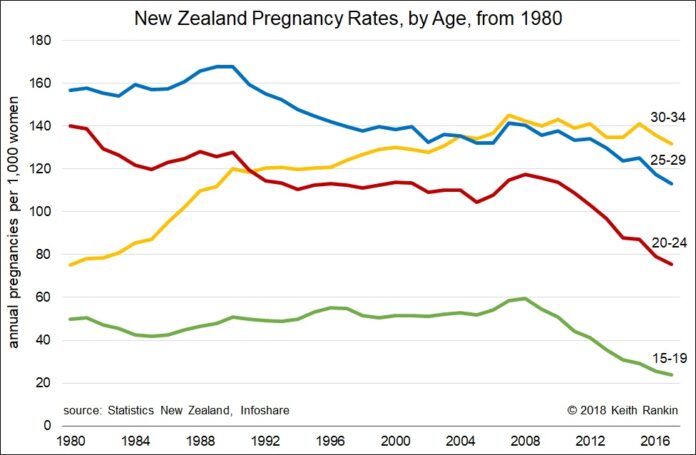
“Relief is the first comment I would make. We are so relieved and happy, but at the same time wonder how we had to go through all this—the human cost (of the case) is too high.”

-Partners-

When asked what the next step was for him considering that fact that he had missed his daughter’s wedding and his own anniversary as a result of the court case, Arts said light-heartedly: “I need a beer now.”

On a more serious note, Arts said The Fiji Times would focus on its strengths moving forward as this year was election year and next year would mark the company’s 150th anniversary.

According to Justice Rajasinghe, the prosecution failed to prove beyond reasonable doubt that the article in question was seditious.

In his judgment, Justice Rajasinghe said he did not find any reason to disagree with the unanimous not guilty opinion of the three assessors.

Justice Rajasinghe found the intention of Waqabaca’s article was to have national reconciliation and he said he did not find any evidence that Arts or Wesley saw the article or knew about it before it was printed.

Fiji Times Ltd was charged with one count of printing a seditious publication while Arts was charged with one count of publishing in the Nai Lalakai an article, which had content with a seditious intention to promote feelings of ill will and hostility between classes of the population, namely non-Muslims and Muslims.

Waqabaca was charged with one count of submitting for publication an article written by him with a seditious intention, while Ravula and Wesley were charged with one count each of having aided and abetted the publication of a letter in the Nai Lalakai newspaper on April 27, 2016, by failing to prevent its publication.

Wansolwara News is the online publication of the University of the South Pacific journalism programme and a partner of the Pacific Media Centre’s Asia Pacific Report.

Print Friendly, PDF & Email

Article by AsiaPacificReport.nz

]]>

Samoan opera singer sings praises for benefit of teenager hopefuls

]]>

Proud Samoan baritone Samson Setu … encouraging young students to choose opera. Image: Te Waha Nui

By Leilani Sitagata in Auckland

A baritone studying at Auckland University has been touring New Zealand singing the praises of opera to teenagers.

The fourth-year music student, Samson Setu, says he was “dragged” into opera by a teacher who loved the sound of his voice.

“When I sang in the school choir my teacher pulled me aside because she thought I sounded like a 30-year-old man,” he says.

He is one of the 2018 Dame Malvina Major emerging artists working with New Zealand Opera.

The programme includes an opera-in-schools tour, where he has been visiting schools in New Zealand to inspire students in pursuing a passion in the music industry.

The head of education at NZ Opera, Joanne Cole, says Opera in Schools is part of its wider education and outreach programme.

-Partners-

“It has been designed to break down the barriers that exist around opera and to bring new audiences to the genre.”

Setu says opera is not such a popular genre with youth-targeted stations as it’s not often on the radio so they don’t get the opportunity to hear it.

‘Looks elitist’
“From the outside it looks like an elitist art form and you don’t see many Pacific Islanders doing it.

“Sol3 Mio have made [opera] a bit more mainstream, they’ve opened the doors to this sort of music.”

He says the schools that are predominantly Pasifika have been extremely responsive to the tour so far.

Another University of Auckland music student, Denzel Panama, says opera is an amazing art form and sharing it with a young audience is special.

“I think a tour of this nature can only do good. It exposes so many young people to something that they might have never really experienced.”

The Opera in Schools programme is in its sixth year and travels to Wellington and Christchurch in July.

This article was first published on the AUT journalism studies website Te Waha Nui.

Print Friendly, PDF & Email

Article by AsiaPacificReport.nz

]]>

Fiji newspaper sedition trial – Fiji Times Four found not guilty

]]>

Not guilty … a Fiji Times celebration huddle outside the High Court in Suva today. Fiji Times editor-in-chief Fred Wesley is on the right. Image: The Fiji Times

Pacific Media Watch Newsdesk

The High Court in Suva has found the Fiji Times Ltd, its three senior executives and a letter writer not guilty of sedition, reports Timoci Vula in The Fiji Times.

High Court judge Justice Thushara Rajasinghe has found the Fiji Times Ltd, general manager Hank Arts, Fiji Times editor-in-chief Fred Wesley, Nai Lalakai editor Anare Ravula and letter writer Josefa Waqabaca not guilty and acquitted them accordingly in a jam-packed court room at Government Buildings in Suva today.

Vijay Narayan and Semi Turaga of Fijivillage report Justice Rajasinghe had ruled that the prosecution had failed to prove beyond reasonable doubt that the Nai Lalakai article was seditious.

The judge said he found the intention of Waqabaca’s article was to have national reconciliation.

Justice Rajasinghe said he did not find any evidence that Hank Arts saw the article or knew about it before it was printed.

The judge also said he did not find any evidence that Fred Wesley read or was aware of the article before it was printed, Fijivillage reports.

-Partners-

Justice Rajasinghe said he did not find any reason to disagree with the three assessors, reported Fijivillage.

All three assessors had earlier returned a not guilty opinion on all charges against Fiji Times Limited, publisher Hank Arts, contributor Josaia Waqabaca, editor-in-chief Fred Wesley and Nai Lalakai editor Anare Ravula.

All four had pleaded not guilty.

Print Friendly, PDF & Email

Article by AsiaPacificReport.nz

]]>

Newsletter: New Zealand Politics Daily – May 22 2018 – Today’s content

Newsletter: New Zealand Politics Daily – May 22 2018 – Today’s content Editor’s Note: Here below is a list of the main issues currently under discussion in New Zealand and links to media coverage. [caption id="attachment_297" align="aligncenter" width="640"] The Beehive and Parliament Buildings.[/caption]   Mycoplasma bovis and farming Isaac Davison (Herald): M. Bovis costs likely to rise beyond $85m Isaac Davison (Herald): Cow cull carries on as Govt continues to focus on M. Bovis eradication 1News: ‘Hope absolutely remains’ to eradicate Mycoplasma bovis as bill expected to grow Andrew McRae (RNZ): PM not ready to admit defeat in cow disease battle Andrea Fox (Herald): ‘She came across like she cared’: Farmers on Ardern 1News: Cow disease ‘could cost New Zealand, much, much more’ than thought – PM Conan Young (RNZ): Mycoplasma bovis: The spread, cost and response RNZ: A timeline of the Mycoplasma bovis spread around NZ Richard Harman (Politik): Mycoplasma: How it spread from a Southland farm Keith Woodford (Stuff): M bovis: Leave it to the farmers to manage Andrew McGiven (Stuff): Government compo fair for farmers with Mycoplasma bovis cattle disease Jill Galloway (Stuff): Mycoplasma bovis puts spoke in wheel when everything goes right for dairy farmers this autumn Esther Taunton (Taranaki Daily News): Farmers urged to take care moving stock to prevent spread of cattle disease RNZ: Insight: Farming and the Fight Against Climate Change Steven Carden (Herald): Farm changes only way to go Doug Edmeades (Stuff): ‘There must be a way to tax farmers?’ ‘No Minister’ Katie Scotcher (RNZ): Organic producers call for national standard Ewan Sargent (Stuff): Horrible death threat hangs over pet rabbits Fishing industry Andrea Vance (Stuff): Government drops plan to restrict deep sea trawling, protect orange roughy Andrea Vance (Stuff): Bottom trawling for orange roughy has scientists worried Eugene Bingham and Paula Penfold (Stuff): Caught Eugene Bingham and Paula Penfold (Stuff): Forced labour fishing tainting tuna supply Paula Penfold and Eugene Bingham (Stuff): Can customers force change in how tuna is fished? Paula Penfold (Stuff): Inside the grim prisons of Vanuatu Housing Isaac Davison (Herald): Act leader accused of prejudice after warning Epsom residents about future neighbours with ‘mental health issues’ Stuff: Treasury is wrong, Prime Minister Jacinda Ardern says Herald: PM Jacinda Ardern scolds Minister Phil Twyford for calling Treasury analysts ‘kids’ Jason Walls (Interest): Phil Twyford slammed Treasury officials, calling them ‘kids… disconnected from reality’ – the Prime Minister says he went too far No Right Turn: Why is Labour building houses for the rich? Ben Leahy (Herald): ‘You trust Housing NZ’: Upset mother claims her state home had holes in its walls Herald: Rents across New Zealand soar, hit new highs Bonnie Sumner (The Wireless): Is it too late to join the urban exodus? David Hargreaves (Interest): ASB Housing Confidence Survey finds expectations in the housing market have improved sharply Stuff: New Zealanders feel better about housing market Matt Shand (Stuff): National housing scandal brewing Justice and police Shane Cowlishaw (Newsroom): Waikeria decision reopens painful debate 1News: Rising prison population a ‘complete failure’, as next step to be decided for Waikeria Prison – PM Isaac Davison (Herald): Govt scraps plans for Waikeria mega-prison, but no decision on back-up plan 1News: One billion dollar prison plans still up in air as PM says inmate population ‘at maximum capacity’ 1News: Waikeria Prison expansion is ‘unfortunately’ needed and Government is ignoring the reality of high inmate numbers – Simon Bridges Ruby Nyika (Stuff): Waikeria prison bed increase crucial, Ōtorohanga mayor and David Bennett say Janet Yiakmis (ODT): Deprivation in formative years reflected in statistics Michael Neilson (Herald): Father of teen Bailey Patmore, who died in police pursuit crash, questions chase policy Health and disability NZ Herald editorial: The troubling case of Ashley Peacock Stuff: How many NZ adults can’t afford to visit a GP? Natalie Akoorie (Herald): Confidential statements made to SSC in Nigel Murray investigation may have to be released RNZ: Quake-strengthen cost to one Middlemore building starts at $70m Herald: Middlemore Hospital’s Galbraith building marked ‘earthquake prone’ Stuff: Middlemore’s Galbraith building confirmed earthquake prone, fix will cost more than $74m 1News: Should tobacco-style warnings be placed on alcohol sold in New Zealand? 1News: Researchers call for mandatory warning labels on alcohol after study finds wildly variable standards John Gibb (ODT): Study finds alcohol labelling `highly deficient’ Chloe Winter (Stuff): NZ Alcohol Beverages Council says education is the answer, not labels RNZ: Rural health workforce reaching crisis point Emma Russell (Herald): Ground-breaking child-cancer trial kicks off in New Zealand 1News: ‘You just have to cope for your child’s sake’ – Kiwi parents suffering as hospitals struggle with shortage of neonatal beds Jarred Williamson (Stuff): Flu season: Over half of staff not vaccinated at two Auckland health boards Hamish McNeilly (Stuff): Man turned away from Dunedin bar: ‘I am not dumb … my speech is impaired’ 1News: Is Ebola a threat to NZ? Expert discusses the chance of an outbreak here State care of children and family violence RNZ: Young children pushed to the brink by family violence Jess Cartwright (1News): Families devastated about closure of support villages for kids with emotional trauma    Stacey Kirk (Stuff): Fact or Fable: The Govt’s claims on family violence funding Euthanasia Thomas Coughlan (Newsroom): ‘End of life bill demeans the disabled’ Henry Cooke (Stuff): Campaigners want binding end-of-life choices allowed for in euthanasia bill RNZ: Mass of submissions delay euthanasia bill deadline Government Chris Trotter (Daily Blog): Budget 2018: Labour’s Pre-Emptive Capitulation To Kiwi Capitalism’s Discontent Alan Johnson (Daily Blog): Budget 2018 – Half of something and half of nothing Susan St John (Daily Blog): Does this budget turn the tide? Jenna Lynch (Newshub): Labour could face backlash from Māori voters Liam Hehir (Stuff): The country benefits from stable financial management 1News: ‘No’ – Simon Bridges laughs at the prospect of Winston Peters as PM Elections Claire Trevett (Herald): Sir Patrick Hogan’s election ad for NZ First under scrutiny RNZ: Electoral Commission looking into ad in horse racing mag David Farrar: Sir Patrick Hogan may be in trouble Eric Crampton: Costing policy Māori wards RNZ: Rejection of Māori wards: ‘It’s horrendous’ Moana Makapelu Lee (Māori TV): Four districts reject Māori wards Rotorua Daily Post: Whakatāne vote against Māori wards Jessica Tyson (Māori TV): Palmerston North votes against Māori wards David Farrar: You’re all racists No Right Turn: Palmerston North voters are racists too Local government Efeso Collins (Daily Blog): I’ve read the PWC Stadium report and it didn’t take me very long because so many words were redacted from the version I got! Jackson Thomas (Auckland Now): Auckland councillors ‘appalled’ by mayor’s handling of stadium report Dan Satherley (Newshub): Simon Bridges dismisses Auckland stadium talk as ‘weird’ No Right Turn: Conspiring against transparency Laura Dooney (RNZ): Wellington councillor fights for action on sexual assault Privacy and surveillance Rick Shera (Herald): Kiwis need right to be forgotten George Block (ODT): Claim: facial recognition at casino Richard MacManus (Newsroom): How we help Google train its robots Employment Chris Trotter: A Labour Code Worthy Of Inspection Jonathan Mitchell (RNZ): Employers told to pay minimum wage or risk prosecution Herald: Māori at greater risk of harmful work exposures than non-Māori Rob Stock (Stuff): Why women live longer than men, but retire earlier Logan Church (RNZ): OC work experience course: ‘I’ve found self pride’ Welfare Anna Bracewell (Newshub): Government scraps controversial contraceptive grants for beneficiaries Jo Moir (Stuff): National would scrap winter energy payment for pensioners and beneficiaries International relations and trade Sam Sachdeva (Newsroom): US praises ‘Pacific reset’, warns over debt Eleanor Ainge Roy (Guardian): MP blames Pacific ‘failed states’ for New Zealand’s drug problems Stephen Jacobi (Stuff): China’s big idea – the Belt and Road initiative – will need Kiwi smarts Banking sector 1News: ‘We need to look at this’ – Finance expert suspicious as Aussie banks rake in $5 billion from Kiwis Tamsyn Parker (Herald): Second New Zealand bank swamped by fraud and transaction disputes Michael Reddell: Orr defends himself Education Herald: Teacher shortage worse than ever before, secondary school principals survey finds Farah Hancock (Newsroom): Teachers get the bill for school resources Dave Armstrong (Dominion Post): Want performance? Put money where your mouth is Madison Reidy (Stuff): Filipino students duped, depressed by education promises Adele Redmond (Stuff): Pink Shirt Day doesn’t put the responsibility for stopping bullying where it belongs Herald: Wintec to reopen investigation into allegations about its CEO Annemarie Jutel and Douglas Booth (Newsroom): Time to give humanities respect they deserve Migration Liam Dann (Herald): Falling migration eases pressure on Govt Hamish Rutherford (Stuff): Migration falls to two-year low, even as arrivals continue to climb BusinessDesk: NZ annual net migration slows as more non-Kiwis leave Lincoln Tan (Herald): Asian gay community finds refuge in New Zealand Transport RNZ: Fuel prices hit record in Wellington, South Island Tina Law (Press): Drivers incorrectly fined for speeding on Christchurch road for seven years Kurt Bayer (Herald): Drivers incorrectly fined for ‘speeding’ on Christchurch road for the past seven years Other Deena Coster (Stuff): Law change sought to protect Parihaka name and story Rebecca Stevenson (Spinoff): Online genius or tailspin troll? Meet Todd Scott, NBR boss and tweeter-in-chief John Drinnan: Dysfunctional HRC Targets Hate And Disharmony Tom Hunt (Stuff): Invite includes the quote: ‘The best party has women with a past and young men with a future’ Stuff: The Maori economy continues to grow Lynda Chanwai-Earle (RNZ): Disowned, displaced and discovered: NZ’s Japanese War Brides Grant Bradley (Herald): Getting New Zealand on the map: The cup of coffee with a $6m pay-off 1News: Watch: Mini Jacinda Ardern sends message as hologram at Techweek’18 Nicole Lawton (Stuff): Prime Minister Jacinda Ardern opens Techweek’18 in Auckland as a hologram Newshub: New Zealand would benefit from rumoured Harry and Meghan visit – Jacinda Ardern Herald: PM Jacinda Ardern: Prince Harry and Meghan welcome to visit NZ in October 1News: ‘Royals absolutely have a standing invitation’ – Jacinda Ardern all smiles on Harry and Meghan’s rumoured NZ visit]]>

US looks at defence, foreign policy and impact of Chinese aid in Micronesia

]]>

Reagan Test Site at Kwajalein Atoll … implications for American defence and foreign policy interests of China’s economic aid in island nations under review. Image: RNZ Pacific

RNZ Pacific

The US Defense Department is to report to the US Congress by December 1 on a range of security concerns in the northern Pacific island groups that are affiliated with the US.

The department is reviewing the strategic importance of the Compacts of Free Association for the United States as part of a broad study of security issues related to the freely associated states of Palau, Federated States of Micronesia and the Marshall Islands.

All three nations have long-term treaties with the US that give Washington control of defence and security in an area of the North Pacific the size of the continental US.

The study is also evaluating the implications for American defence and foreign policy interests of China’s economic aid in these island nations.

The Congress directed the Defense Department to address security, defence and foreign policy issues related to the Micronesia area.

Concern over the impact of China in Micronesia is an underlying issue of the study.

-Partners-

China maintains diplomatic ties with the FSM, while Palau and the Marshall Islands are aligned with Taiwan.

This report is published under a content sharing agreement with RNZ Pacific.

Print Friendly, PDF & Email

Article by AsiaPacificReport.nz

]]>

Tommy Suharto: Indonesians are ‘longing’ for return to Suharto rule

]]>

Talk to Al Jazeera in the Field programme features Tommy Suharto.

Pacific Media Centre Newsdesk

The Suharto political dynasty is being revived in Indonesia, reports Al Jazeera.

Twenty years after the fall of the country’s notorious former President Mohamed Suharto, his youngest son is leading a new political party into next year’s elections.

Hutomo Mandala Putra, or “Tommy Suharto”, as he is commonly known, has been touring several Indonesian regions, even travelling to Solo to receive a royal title in an attempt to gain the support of would-be voters.

Suharto and his newly-formed Party Berkarya (Work Party) are focusing on the widening gap between rich and poor in Indonesia.

“We have gone through 20 years of reforms, but the situation has not improved,” he said. “Our national debt has increased, and the living conditions of our people have not improved significant[ly].”

-Partners-

Party Berkarya’s aim, according to Suharto, will be to “develop a people’s economy that will be controlled by the people and benefit the people to improve people’s welfare”.

Suharto is not worried that his father’s legacy of corruption and brutality will taint his campaign; he said that Indonesians were “longing” for the return.

Legacy of corruption
The United Nations and Transparency International have alleged that Mohamed Suharto stole more state assets than any other world leader, amounting to billions of dollars, a claim his son has denied.

“These figures are not true,” he claimed. “They have said that my father owns billions of dollars in Europe in a Swiss bank … nobody has provided any evidence. It was never proven.”

In 2015, Indonesia’s Supreme Court ordered the Suharto family to repay more than $400 million embezzled from a scholarship foundation, but the money is yet to be returned.

According to Suharto, the court’s ruling is impractical and does not take into account the government closure of a bank where much of the money was invested.

“How can foundations give money back to the government if these foundations are using donors’ money, not only [money] from the government, and this money has already been given to those receiving scholarships?” he says.

“The money that they are looking for is the money which was invested in Bank Duta. The bank has been closed by the government … [and] has bigger obligations towards its customers, of course, the customers are being prioritised.”

Tommy Suharto himself has been convicted of corruption but went into hiding to avoid jail. In 2002, he was again sentenced for ordering the murder of the Supreme Court judge who handed down his previous sentence.

Released early
He was released after serving four years of his 15-year sentence.

“I have done my term and, according to the laws, I now have the same rights as anyone else. I have the right to vote and the right to be elected,” he says.
Deadly paradise

More than one million Indonesians died during Mohamed Suharto’s rule, while thousands of others were jailed without legal process.

He stepped down in 1998, after 32 years in power, following a series of riots.

One thousand Indonesians are estimated to have died during the riots, which destroyed shopping malls and homes in the capital, Jakarta.

At least 150 ethnic Chinese women were raped in the violence, which began after the Asian financial crisis caused the stock market to crash, and escalated when soldiers shot four students at a university.

Military and political leaders said Mohamed Suharto had lost his grip and abandoned him, forcing him to step down.

Print Friendly, PDF & Email

Article by AsiaPacificReport.nz

]]>

Keith Rankin ‘s Chart for this Month: Pregnancy Rates, New Zealand 1980 to 2017

Chart for this Month: Pregnancy Rates, New Zealand 1980 to 2017.

Analysis by Keith Rankin

Pregnancy rates have been dropping in New Zealand, especially since 2008. While pregnancy rates among women in their twenties have been dropping since 1990, all age groups shown reveal a clear change in trend since 2008. (While not shown, it is also true that pregnancy rates for women over 35 have stabilised over the last decade, following substantial rises in the decades before 2008.)

Pregnancy rate statistics include terminations, but not miscarriages. When pregnancy trends change in this way, it could be due to either a health epidemic (eg a sudden and exacerbating fall in sperm counts), a change in contraception culture, or a change in sexual mores.

Increased infertility – especially male infertility – may be a part of the story, though it will only be a small part. This health issue cannot explain the clear turning point in the data, after 2008.

Increased general use of contraception may be part of the decline in pregnancies from 1990, amongst women in their twenties. Most of that will be linked to family planning; fewer planned pregnancies rather than fewer unplanned pregnancies. The need to repay Student Loans and to avoid incurring Child Support (both which began around 1990) will be a part of that explanation relating to fewer planned pregnancies since 1990 of women in their twenties. These are unlikely to be factors in the sharp downturn after 2008.

The most likely reason for the post-2008 trend is changes in sexual mores, specifically involving a reduction in heterosexual intimacy. This new trend is opposite to (and longer-lasting than) the change in pregnancy rates that occurred in the late 1980s. In the late 1980s, more relationships broke up, in the face of financial pressure. Also, in response to the same financial pressures (for example, very high mortgage interest rates), there was a renewed wave of female entry into the labour force, meaning that many people were forming new relationships and liaisons, leading to increases in sexual activity.

A reverse of this may have been happening this decade. While the global financial crisis may have been a trigger for change, the direct social impact of that crisis in New Zealand has been substantially less than the impact of the economic changes of the late 1980s and early 1990s.

However – with young people having become substantially less mobile (and far more likely to still be living in their parents’ homes), and women in their twenties more focussed on long-term careers than on shorter‑term financial contingencies – then forming the conventional heterosexual relationships that led to most pregnancies will have been deprioritised.

Now, more women in their thirties, having prioritised careers in their twenties, may be choosing to persist with those choices (knowing they will likely experience a childless future), at least so long as the ‘right man’ does not enter their lives. Possibly fewer women with ticking biological clocks are choosing male partners they may have misgivings about.

Finally, there may be a new wave of social puritanism this decade, leading to a less permissive society than those societies that prevailed in liberal democracies from the 1960s to the 1980s. Puritan waves have always existed in history. The rise of the smart phone and social media may have triggered the latest wave, leading to increased ‘remote’ social contact and less intimate contact. Many may have been somewhat desexualised by the easy and more personal access to pornography, for example through the now ubiquitous smartphones and laptops.

Whatever the precise mix of reasons, significant socio-demographic change has been taking place; change that has largely gone under the radar.

Hot off the press – Wansolwara marks USP’s 50th anniversary

]]>

Wansolwara supervising editor-in-chief Geraldine Panapasa, broadcast teaching assistant Eliki Drugunalevu and USP journalism programme co-ordinator Dr Shailendra Singh browse through the latest edition of Wansolwara alongside students Elizabeth Osifelo and Kritika Rukmani (right). Image: Koroi Tadulala/Wansolwara

By Elizabeth Osifelo in Suva

The first edition of the University of the South Pacific’s student journalist training newspaper Wansolwara for the year has hit the news stands and celebrates the institution’s half century of achievements as one of the most successful regional organisations with more than 63,000 alumni and 26 international accreditations.

The university has presented 64,000 qualifications over the past 50 years and more recently was seeking initial accreditation with the WASC Senior College and University Commission (WSCUC).

The 24-page special edition focused on USP’s 50th Anniversary and the “people power” behind the institution is one of two publications planned for the year and was printed as an insert in the Fiji Sun newspaper on Friday.

Wansolwara’s May edition hit the news stands today as an insert in the Fiji Sun. Image: Koroi Tadulala/Wansolwara News


Wansolwara supervising editor-in-chief Geraldine Panapasa said the publication was dedicated first and foremost to the people who had made USP what it has become today.

She said the first edition focused on academics, support staff and the people who, over time, had become a part of the USP family.

The second edition is expected to feature various graduates and their contribution to society.

-Partners-

Final-year journalism students worked closely with the editorial board on the production of the newspaper.

The editorial board comprises USP journalism programme co-ordinator Dr Shailendra Singh, broadcast teaching assistant Eliki Drugunalevu, Panapasa and student editor Drue Slatter.

The award-winning Wansolwara newspaper is the longest surviving student publication in the region with the largest circulation (more than 20,000) of any student newspaper in the Pacific and Australasia.

An e-copy of the publication can be found on www.wansolwaranews.com or on ISSUU.

Elizabeth Osifelo is a final-year journalism student at USP.

Print Friendly, PDF & Email

Article by AsiaPacificReport.nz

]]>

Indonesian military joint plan for greater role in counterterrorism

]]>

Members from the Indonesian military’s Armoured Division take part in a parade to mark the 72nd anniversary of the Indonesian military’s founding in Cilegon on October 5, 2017. Image: The Jakarta Post/Ricardo/AFP

By Marguerite Afra Sapiie and Nurul Fitri Ramadhani in Jakarta

Indonesia’s Presidential Chief of Staff Moeldoko has claimed that President Joko “Jokowi” Widodo had expressed his consent to bringing back to life the suspended military Joint Special Operations Command (Koopsusgab) tasked with countering terrorism.

The team, which included and will again include personnel of the Army’s Special Forces (Kopassus), the Navy’s Denjaka squad and the Air Force’s Bravo 90 special force, would be put on standby and be ready to be mobilised at any time when terror threats emerged, Moeldoko said.

“This joint force was well trained and prepared in terms of its capacity, and it could be deployed anywhere on the country’s soil as fast as possible […]. Its role would be to assist the National Police,” Moeldoko said.

READ MORE: Jokowi to issue perppu if House fails to revise terror law

His statement has followed a recent string of terrorist attacks that has thrust Indonesia into a state of paranoia.

The joint force was first established under Moeldoko when he served as the Indonesian Military (TNI) commander in 2015. The special command’s operations, however, were suspended under the leadership of Moeldoko’s successor, retired General Gatot Nurmantyo.

-Partners-

Further tasks of the special command would be discussed between TNI commander Air Chief Marshal Hadi Tjahjanto and National Police chief General Tito Karnavian, with the latter to have the final say on whether it needed the assistance of the TNI’s special team or not, Moeldoko said.

“This operation must be carried out for preventive purposes, so that the public can feel safe […]. We [the security apparatus] are ready to face any kind of situation, so people should put their trust in us and not worry,” he said.

Planned amendment
The revitalisation of the joint force did not require any new regulations, Moeldoko said, adding that the details about the command’s tasks would be adjusted with the planned amendment to the 2003 Terrorism Law.

The announcement came as the House of Representatives and the government began to clear up contentious articles that had caused deadlock in the deliberation of the Terrorism Law revision, including the legal definition of terrorism and the military’s level of involvement in counterterrorism operations.

A greater level of involvement has stirred debate among experts and human rights activists.

Seven ruling parties and the government had agreed on a definition of terrorism that included acts that had “political and ideological motives and threaten national security”, United Development Party (PPP) lawmaker Arsul Sani said.

More leeway
It is widely believed that such a definition would provide leeway for greater involvement of the TNI in counterterrorism efforts.

As the government and the lawmakers appear to be on the same page now, observers expect the bill to be passed into law in the near future.

Jokowi has recently said he would issue a regulation in lieu of law (Perppu) on the Terrorism Law if the House failed to conclude deliberations on the bill by June.

Members of a committee tasked with deliberating the bill said it was the leading opposition Gerindra Party and the Democratic Party, both political parties with strong military influence, that had demanded the inclusion of the contentious provisions.

“We support [the terrorism bill],” Gerindra chairman Prabowo Subianto said during his visit to the House.

Deliberation of the bill is believed to have been stalled mainly because of a tug-of-war between the TNI and the police, which led to division among political parties factions into pro-TNI and pro-police camps.

Print Friendly, PDF & Email

Article by AsiaPacificReport.nz

]]>