When a mother gives birth to twins, the offspring are not always identical or even the same gender. Known as fraternal twins, they represent a longstanding evolutionary puzzle.
Identical twins arise from a single fertilised egg that accidentally splits in two, but fraternal twins arise when two eggs are released and fertilised. Why this would happen was the puzzle.
In research published today in Nature Ecology & Evolution we used computer simulations and modelling to try to explain why natural selection favours releasing two eggs, despite the low survival of twins and the risks of twin births for mothers.
Why twins?
Since Michael Bulmer’s landmark 1970 book on the biology of twinning in humans, biologists have questioned whether double ovulation was favoured by natural selection or, like identical twins, was the result of an accident.
At first glance, this seems unlikely. The embryo splitting that produces identical twins is not heritable and the incidence of identical twinning does not vary with other aspects of human biology. It seems accidental in every sense of the word.
In contrast, the incidence of fraternal twinning changes with maternal age and is heritable.
Those do not sound like the characteristics of something accidental.
The twin disadvantage
In human populations without access to medical care there seems little benefit to having twins. Twins are more likely to die in childhood than single births. Mothers of twins also have an increased risk of dying in childbirth.
In common with other great apes, women seem to be built to give birth to one child at a time. So if twinning is costly, why has evolution not removed it?
Paradoxically, in high-fertility populations, the mothers of twins often have more offspring by the end of their lives than other mothers. This suggests having twins might have an evolutionary benefit, at least for mothers.
But, if this is the case, why are twins so rare?
Modelling mothers
To resolve these questions, together with colleagues Bob Black and Rick Smock, we constructed simulations and mathematical models fed with data on maternal, child and fetal survival from real populations.
This allowed us to do something otherwise impossible: control in the simulations and modelling whether women ovulated one or two eggs during their cycles. We also modelled different strategies, where we switched women from ovulating one egg to ovulating two at different ages.
We could then compare the number of surviving children for women with different patterns of ovulation.
Women who switched from single to double ovulation in their mid-20s had the most children survive in our models – more than those who always released a single egg, or always released two eggs.
Author provided
This suggests natural selection favours an unconscious switch from single to double ovulation with increasing age.
A strategy for prolonging fertility
The reason a switch is beneficial is fetal survival – the chance that a fertilised egg will result in a liveborn child – decreases rapidly as women age
So switching to releasing two eggs increases the chance at least one will result in a successful birth.
But what about twinning? Is it a side effect of selection favouring fertility in older women? To answer this question, we ran the simulations again, except now when women double ovulated the simulation removed one offspring before birth.
In these simulations, women who double ovulated throughout their lives, but never gave birth to twins, had more children survive than those who did have twins and switched from single to double ovulating.
Author provided
This suggests the ideal strategy would be to always double ovulate but never produce twins, so fraternal twins are an accidental side effect of a beneficial strategy of double ovulating.
When you’re in a medical emergency, you don’t typically think of calling a statistician. However, the COVID-19 outbreak has shown just how necessary a clear understanding of data and modelling is to help prevent the spread of disease.
One person understood this a long time ago. Were she alive today, Florence Nightingale would understand the importance of data in dealing with a public health emergency.
Nightingale is renowned for her career in nursing, but less well known for her pioneering work in medical statistics. But it was actually her statistical skills that led to Nightingale saving many more lives.
Upon arriving at the British military hospital in Turkey in 1856, Nightingale was horrified at the hospital’s conditions and a lack of clear hospital records.
Even the number of deaths was not recorded accurately. She soon discovered three different death registers existed, each giving a completely different account of the deaths among the soldiers. Using her statistical skills, Nightingale set to work to introduce new guidelines on how to record sickness and mortality across military hospitals.
This helped her better understand both the numbers and causes of deaths. Now, worldwide, there are similar standards for recording diseases, such as the International Classification of Diseases.
Outbreak monitoring
The ability to compare datasets from different places is critical to understanding outbreaks. One of the challenges in monitoring the COVID-19 pandemic has been the lack of standardised datasets experts can compare on the number of people infected. This is due to differences in testing rules in different countries.
More than 150 years after Nightingale pointed out the need to standardise datasets before comparing them, we are certain she would have something to say about this.
With her improved data, Nightingale put her statistical skills to use. She discovered deaths due to disease were more than seven times the number of deaths due to combat, because of unsanitary hospital conditions.
However, knowing numbers alone have limited persuasive powers, Nightingale used her skills in statistical communication to convince the British parliament of the need to act. She avoided the dry tables used by most statisticians of the time, and instead devised a novel graph to illustrate the impact of hospital and nursing practice reform on army mortality rates.
Florence Nightingale’s graph showing deaths due to disease, wounds and other causes in the Crimean War.Wikimedia/commons
Today, graphs remain one of the most effective ways to understand the effects of health care interventions, including those used to illustrate the effectiveness of physical distancing to curb COVID-19’s spread.
Flattening the curve is another way of saying slowing the spread. The epidemic is lengthened, but we reduce the number of severe cases, causing less burden on public health systems. The Conversation/CC BY ND
Florence Nightingale down under
Nightingale may not have travelled much after her wartime experience in Turkey, but she was engaged in improving public health in many countries, including Australia.
In 1868, Lucy Osburn headed the first team of nurses sent to Australia to establish Nightingale-style nursing. One of the team’s first tasks was to nurse Prince Alfred, Queen Victoria’s second son, who had been shot in an attempted assassination.
Nightingale never visited Australia herself, but this did not stop her using her usual tactics of requesting data from her wide network of contacts and drawing conclusions from what she found. She was a prolific correspondent – we have more than 12,000 of her letters, and those are only the ones which haven’t been burned, lost or otherwise destroyed.
Nightingale would surely have embraced 21st-century communication. We can imagine her sitting at her laptop tweeting under the moniker @ladywiththelamp.
A trailblazer for women
In 1858, Nightingale’s achievements in statistics were recognised by the Royal Statistical Society in the UK, when she became the first woman Fellow of the Society.
After Nightingale’s fellowship, it would be more than 100 years before a woman was elected President of the Royal Statistical Society, with Stella Cunliffe’s election in 1975. It was only in 1995 that the Statistical Society of Australia had a woman as president, with the election of Helen MacGillivray.
As in many STEM (Science, Technology, Engineering and Mathematics) disciplines, female statisticians are still fighting for equal recognition. To date, only two women have received the Statistical Society of Australia’s highest honour, the Pitman Medal.
Presidents of Statistical Societies in 2019. L-R: Karen Kafadar (American Statistical Association), Louise Ryan (International Biometric Society), Deborah Ashby (Royal Statistical Society), Helen MacGillivray (International Statistical Institute), Susan Ellenberg, Jessica Utts (former President of the American Statistical Association), Susan Murphy (Institute of Mathematical Statistics).Twitter/Author provided
Source: The Conversation (Au and NZ) – By Nick Bisley, Dean of Humanities and Social Sciences and Professor of International Relations at La Trobe University, La Trobe University
Even before the COVID-19 crisis upended the world, US-China relations had entered a particularly mistrustful and combative period.
While the mutual antagonism predated the Trump administration – Chinese President Xi Jinping had earlier ushered in a more assertive and ambitious approach to the world and the Obama administration recognised the limits to its engagement with China – the 45th US president took things to a new level.
In its 2017 national security strategy, the Trump administration openly stated that great power competition was the defining feature of the age and the contest with China was at the heart of US global strategy.
President Donald Trump then made good on his campaign bluster to launch a trade war with the PRC and sought to decouple aspects of US economic interdependence with Beijing.
Trump and Xi have rarely seen eye-to-eye since the US president came into office.OMER MESSINGER/EPA
Trump turns up the heat in an election year
The current global pandemic has created a human catastrophe not seen outside wartime. But rather than being a reason for China and the US to come together, COVID-19 has been an accelerant in their hostilities.
American resentment toward China has increased dramatically, stoked by the explicit efforts by the Trump administration to pin the blame for all aspects of the pandemic on the PRC.
Secretary of State Mike Pompeo has repeatedly sought to formalise criticism of China, such as in communiques at the G7. Just last week, he also declared the US had “significant evidence” the pandemic was not just a disaster unleashed by Chinese mismanagement, but had been manufactured in a laboratory in Wuhan.
Those in the administration and the private sector who had argued for a delinking of the US economy from China are now using the crisis to push harder for that goal.
It is now clear he will make the politicisation of China a central plank in his re-election campaign.
Beijing forcefully denies US ‘lies’
Elites in Beijing perceive this to be in line with Washington’s long-term efforts to contain China’s influence and curtail its growth. And Beijing’s defensiveness in the face of criticism over its handling of the pandemic has led it to adopt a new and more combative diplomatic tone.
On Saturday, Beijing issued its most forceful defence against what it called “preposterous allegations” by the US – an 11,000-word article denying everything from claims it under-reported case numbers to allegations the virus spread from eating bats.
The relationship between the world’s two biggest economies has deteriorated significantly, but not yet irretrievably so.
The friction is principally symbolic and, in theory at least, adept diplomacy and some walking back of the more overheated rhetoric could go a long way. The problem is the positioning in both Washington and Beijing is largely for domestic audiences. And both Xi and Trump see little domestic capital to gain if they moderate their positions.
In Beijing’s terms, China was the first to suffer from the virus. But for most of the rest of the world, the virus spread due to the PRC’s inability to manage the initial outbreak due to denial and cover-ups.
The world, rightly, wants not only an explanation but an understanding of the origins of the virus and how it spread to prevent future pandemics. Beijing, however, wants to present itself as a successful model in combating the virus and a source of much-needed medical equipment and money to support other countries’ efforts.
Medical aid from China arrives in Myanmar last month.NYEIN CHAN NAING/EPA
So far, China seems unlikely to accept any international inquiry. A recently leaked report commissioned by its Ministry of State Security, however, indicates Beijing is aware of the levels of international hostility directed towards it over its handling of the virus. The report said global anti-China sentiment is at its highest since the 1989 Tiananmen Square crackdown.
Consequently, it may yet shift its approach, which would certainly help lower the international temperature.
Who comes out of the pandemic on top?
All of this indicates the current crisis will not transform relations between the US and China in a positive way, but rather accelerate the competition between the two.
How this rivalry plays out and its implications for the world will depend on a couple key factors.
First, there’s the nature of the economic recovery. Who will recover faster and how bad will the damage be?
It seems most likely the US will have constrained capacity to project power globally and head off Chinese ambition after the pandemic subsides.
The US will likely emerge from the pandemic a slightly diminished power.Richard B. Levine/SIPA USA
But China will also be hobbled to some degree and unlikely to be able to simply replace the US in Asia. Its ambitious infrastructure and political capital-building exercise, the Belt and Road Initiative, is likely to be curtailed to some degree.
A second factor will be the extent to which each side is able to use the pandemic and its aftermath to build partnerships with countries around the world. This is particularly important as many nations – both rich and poor – will be facing truly dire economic circumstances.
Trump has famously questioned the benefits of alliances and strategic partnerships and, if re-elected, is likely to continue to damage one of the US’s greatest geopolitical assets.
China, on the other hand, will attempt to use its significant wealth and developmental capacity to strengthen its network of global partners. It remains to be seen, though, whether these efforts will outweigh a loss of global trust in China due to the pandemic.
The global financial crisis of 2007-08 dealt a blow to the finances, confidence and credibility of western powers.
COVID-19 is likely to have at least as big an effect. Not only will the global recovery occur in the context of a turbocharged geopolitical rivalry between two superpowers, it will be one in which the US is likely to be weaker and China stronger than before.
New Zealand’s 2020 budget will be one of the most significant in the country’s history. Whatever its content, it will be remembered alongside those of 1938 and 1991 as a pivotal event.
For any minister of finance, the stakes have never been higher and the problems facing the country never more dire. Over a few short weeks, Grant Robertson has put the New Zealand economy on life support. Now he will have to bring it back for a world all but unimaginable three months ago.
Given the cost of recovery, it’s unlikely any subsequent finance minister will get a second shot at it. The budget Robertson presents on May 14 will define this government in ways that are critical for the country’s future, even if it is only the first step on a longer road.
It will also mark the return of the budget as an event in itself. In recent decades we have almost forgotten just how important they used to be. Governments have deliberately downplayed their significance, releasing and spinning most of their goodies over the preceding weeks.
New Zealand finance minister Grant Robertson.AAP
Now, with New Zealanders having been asked to trust the government through eight weeks of lockdown, and as the rules are relaxed, economic and social fears for the future will overtake heartening tales of life in our “bubbles”.
In the post-war era most New Zealanders gathered around radios to hear budgets. They were delivered in the evening after work and with the pubs closed at 6pm. Many had by then queued to top up with petrol, buy cigarettes or take home some beer or spirits, in the expectation of a few pennies added to excise duties on these precious items.
In 1958, when Labour’s finance minister Arnold Nordmeyer did just this, then-opposition leader Keith Holyoake successfully condemned it as the “Black Budget”, setting a clear path to 12 years of National government after the next election.
Dramatic as that was, the budgets of 1938 and 1991 were far more important in laying down lasting policy directions. Many of them still underpin the expectations and challenges Grant Robertson faces in 2020.
In 1938, Michael Joseph Savage’s Labour government was facing re-election after its landslide victory in 1935. The budget outlined an expansive depression-driven programme of social security, caring for New Zealanders from the “cradle to the grave”.
That budget’s other big policy of economic protectionism did not survive the following decades. But the social security provisions, which created our current health system and introduced new benefits and consolidated others, remain a cornerstone of government spending today.
Half a century later, in 1991, the newly elected National government laid out a very different path, dramatically building on the direction set by the 1984-1990 Labour government.
National retreated from the promises of 1938, emphasising small government, market-driven policies, reduced benefits and a more competitive labour market. Low-income New Zealanders were to pay for what National demonised as decades of growth-stifling and wasteful state spending.
Finance minister Ruth Richardson with cabinet colleagues: her 1991 ‘mother of all budgets’ redefined the role of government.Alexander Turnbull Library
The more ambitious expectations of finance minister Ruth Richardson’s “mother of all budgets” were not met. New Zealand’s welfare state remained a far more significant safety net than she and her government had intended.
But her budget still refashioned the way government operated. It helped crystallise the belief that governments should balance their books and that taxes should not rise, even for the wealthy. The 1991 budget’s pursuit of surpluses, then still a dream for the future, also helped put New Zealand in a better financial position to face today’s crisis.
Offering hope by balancing security with freedom
In 1938, with New Zealand still emerging from depression, many in the Labour Party wanted more dramatic socialist reforms. In 1991, the more radical neo-liberal wing of the National Party won the day. Both budgets reflected intense ideological debates about policy which had been fermenting for years, if not decades. And both painted very different pictures of New Zealand’s future, as they attempted to resolve challenges inherited from the country’s past.
In 1938 it was a future marked by security from want or illness; in 1991 it was a future of free market competition.
In imagining a future for all New Zealanders in 2020, Robertson must balance these two competing aspirations. Both are deeply rooted in New Zealand’s past. But they must be applied to today’s situation beyond the immediate problems of limiting unemployment and its impact, sustaining small business and finding replacements for international tourism.
The budget must also aspire to longer-term solutions, including for climate change and social inequality. It cannot be backward looking – the world has changed in the past few weeks and some things may never return as they were. To succeed, it must draw on the degree of consensus and community that has already seen the country well placed to avoid the worst health impacts of the pandemic.
Above all, it will be crucial this budget promises a future that gives hope.
Source: Council on Hemispheric Affairs – Analysis-Reportage
By Alina Duarte From Mexico City
Behind that jovial image of a president who takes selfies at the U.N. and governs over social media stands a strategic ally of the United States who has little regard for human rights.
The social media presence of Salvadoran President Nayib Bukele has transcended his country’s borders on at least four occasions in recent weeks. The first was when he used the armed forces to militarize the national legislature; the second was a speech in which he announced measures he was taking to confront the Coronavirus pandemic, suggesting that his government’s response would be “an exemplary model” for handling the health crisis;[1]the third was when his name and statements about “the use of lethal force” against criminals accompanied images of prison inmates in their underwear, sitting on the floor, crowded together in rows, with a heavy military presence standing over them; and the fourth was when he spoke to René, lead singer of the Puerto Rican rap group Calle 13, whose relevance will be discussed in a moment.
These four events caused confusion among certain segments of the population, including some moderately progressive ones. And for those who are far removed from the situation in El Salvador or are deprived of real information by the media blockade against that Central American nation, the links between these events may seem contradictory or senseless. But they make complete sense. Bukele is much more than those four stellar examples, and that is where I would like to begin.
Bukele served as mayor of both Nuevo Cuscatlán and of San Salvador as a member of the Frente Farabundo Martí para la Liberación Nacional (FMLN), but in October of 2017 he was expelled from the party for “promoting internal divisions and defaming the political party.” He was also accused of physically and verbally attacking Council Member Xochitl Marchelli during a session of the San Salvador City Council.[2]
Inmates packed together at a jail in El Salvador (Photo: Twitter account of Osiris Luna Meza, Deputy Minister of Justice and Director General Ad Honorem of the Penitentiary System)
Bukele’s radical turn to the right
Once he was out of the FMLN, the right-wing ARENA party blocked his presidential ambitions through its electoral infrastructure. Bukele was also prevented from participating in the primary race of his Nuevas Ideas party, which had been created out of thin air for his presidential ambitions. So he then joined the Center-right GANA Party (Gran Alianza por la Unidad Nacional). This was the vehicle that allowed him to win the presidential election against the FMLN, which had been worn down by radical economic reforms that could not be fully enacted, as well as an unrelenting media campaign against the party during its two presidential terms. There was also the problem that the FMLN had made great strides in health and education for the most vulnerable population, but was unable to win over the new generation too young to remember the civil war that ended with the Chapultepec Accords of January 1992, when Nayib Bukele was just 10 years old. But the youth were won over by the discourse and youthful image of someone who portrays himself as an outsider and not a politician.
The results of the 2019 presidential election were irrefutable: Bukele won 53.1% of the 2,701,992 votes cast, posing a tremendous challenge to the FMLN and the Left. The historic revolutionary party came in a distant third place with just 14.41% of the vote. It was clear that Salvadorans were looking for “a change,” whether or not they knew which direction it was going, and they said so very clearly.
It did not take long for Bukele to show who his geopolitical friends and enemies are. He had already revealed this before arriving at the National Palace.
Close friend of Donald Trump and the Right in the Americas
Bukele is the son of a multi-million-dollar business owner, and although his paternal grandparents are Palestinian, he had already expressed his ideological and political affinity with the government of Israel while he was mayor.[3]As President he has expelled the Venezuelan diplomatic staff from the country, and at the Organization of American States (OAS) he supported the failed attempt to invoke the Inter-American Treaty of Mutual Assistance (Río Treaty) against the Bolivarian government.
The President never hid the fact that bilateral relations with the United States were the priority. He met with Donald Trump (whom he called “simpatico and cool”), and he accepted an agreement that was framed as a tool to fight organized crime, reduce illegal drug trafficking and human trafficking, and to strengthen border security. The agreement, however,.included the designation of El Salvador as “a safe third country” for Central American migrants seeking asylum in the United States. The conservative nature of his administration and its partnership—submission, actually—to the United States also led to a visit by Secretary of State Mike Pompeo to El Salvador.
Ever the pragmatist, Bukele made a State visit to the People’s Republic of China and is currently collaborating with the Mexican government to foster economic cooperation and development in the Northern Triangle of Central America. These political chess moves do not contradict his undoing of the alliances the FMLN administrations had established with the progressive governments of Latin America.
Using the military to pressure the National Assembly
Domestically, Bukele’s political practices have raised all kinds of red flags on more than one occasion.
He instructs government staffers in their daily activities by governing through social media. Donning a baseball cap worn backwards, the self-proclaimed “world’s coolest and best-looking president”[4] was the object of international scorn during this first media episode when he decided to have the military take over the National Assembly on February 9.[5]
With a military presence in the streets, Bukele arrived at the legislative chamber and, surrounded by soldiers, proceeded to pray to “pressure” lawmakers to authorize him to negotiate a US$109 million loan with the Central American Bank for Economic Integration to fund the third stage of his Territorial Control Plan.[6]The strategy seeks to militarize the country in the name of national security and resolve the crime problem with bullets, drones, and state-of-the-art technology, rather than by adequately addressing the prevailing structural inequality. As if that were not enough, there is insufficient transparency regarding the financial resources the legislature has already allocated to the plan.[7]
With a population of 6.4 million, of which 26.3%–or 1,683,200 people—are living in poverty, and 510,000 in extreme poverty,[8]Bukele has decided to implement the aforementioned Territorial Control Plan for a total cost of US$575 million by 2021.[9]
Political exploitation of COVID-19
Let’s go back to the four interlinked media episodes mentioned at the beginning of this article.
We discussed the military takeover of the National Assembly. The second episode is Bukele’s handling of the pandemic, which goes beyond his remarks that went viral on social media.
Bukele announced the “Plan for Response and Economic Relief in the Face of the National Emergency caused by COVID-19,”[10] which was extensively disseminated on social and conventional media. It established a US$300 subsidy for just over 1.5 million families and suspension of payments for such services as electricity, water, telephone, cable TV, and internet. It also announced postponement of rent and mortgage payments, and of consumer, credit card, and auto loan debts for three months. And it decreed that employers could not dismiss any employees during the time period, and were obliged to continue to pay their wages even if they were not working. The plan also opened lines of credit for micro, small, and medium-sized businesses. However, the testimony and complaints of the population began to refute the success of these measures. For example, not everyone received their $300,[11] and many of those who did not pay their bills in March, were billed late charges in April.[12]

“We are carrying out the plan of mixing members of the different criminal structures causing so much damage to the country in the same cells. Under this administration there will be no benefits or privileges for members of any criminal structure.” (Photo and text: Twitter account of Osiris Luna Meza, Deputy Minister of Justice and Director General Ad Honorem of the Penitentiary System.)
Serious violations of human rights
But the most serious and concerning issue is that behind Bukele’s rhetoric lie multiple violations of human rights that have received scant coverage in the international press.
The Committee in Solidarity with the People of El Salvador (CISPES) documented this extensively in its Special Report “Human Rights Violations Abound in El Salvador as President Bukele Responds to COVID-19.”[13]
In its report, CISPES gives details explaining how although measures were taken such as “obligatory quarantine in government-established centers for all air and land travelers returning to El Salvador,”
“… many of President Bukele’s subsequent actions have raised concerns. His more stringent measures in particular, such as military enforcement of a national stay-at-home order and arbitrary detention of people accused of violating the quarantine, have been denounced as exceeding the limits established by the Constitution of El Salvador.”
“While human rights organizations, progressive social movements, and civil society leaders in El Salvador agree that comprehensive protective and preventive measures are necessary, many are denouncing a rising tide of human rights violations stemming from the suspension of constitutional rights and use of force that has characterized the government’s response to the threat of COVID-19, as well as President Bukele’s flagrant dismissal of recent Supreme Court rulings intended to curb his detention policy.”
These complaints by human rights organizations and defenders have been growing by the day,[14]andthere is no doubt that coercion has been a key feature of Bukele’s measuresduring the pandemic. The data confirm this. As of May 5, while the number of COVID-19 cases grew to 587, including 14 deaths, the number detained for “violating lockdown” rose to 2,394.[15]Even after the Constitutional Chamber of the Supreme Court banned Bukele from detaining curfew violators and placing them in forced confinement or health detention, the President tweeted that he would not comply with the order: NO COURT DECISION is above the Salvadoran people’s constitutional right to life and health.”[16]
On May 5 the Legislative Assembly passed theLaw on the Regulation of Isolation, Quarantine, Observation, and Surveillance for COVID-19by a vote of 56 to 26. The law “declares the entire national territory an epidemic zone subject to health controls to fight the harm and spread of COVID-19.” Such controls include measures that continue to raise concerns about possible violations of the constitution.[17]
As if that were not enough, the conditions in which detainees are being held have caught the attention of human rights defenders. People say that once they are detained, they spend part of their confinement sleeping on the floor, and some have been held for over a month.[18]
“From now on, all the cells of all the gang members in our country will remain sealed. Now they can’t look out the cell door. This will prevent them from using signs to communicate with people passing in the hall. They are locked in the darkness with their friends from rival gangs.” (Photo and text from Nayib Bukele’s Twitter Account)
The United Nations certifies that there have been abuses by the Bukele administration
This situation has led Michelle Bachelet, UN High Commissioner for Human Rights, to assert that the government of Nayib Bukele “is not respecting the fundamental principles of the rule of law.”[19]
The suspension of civil liberties peaked when Bukele first decreed a two-week state of exception on March 15, and then extended it for another two weeks on March 29, allowing it to expire on April 14. Bukele and the right-wing legislators, without the backing of the FMLN, have been insisting on passing another state of exception, but these efforts were soon translated into the Draconian quarantine regulations that were signed into law on May 5..
With regard to the coercive dimension of the government’s public health policy,, Bachelet added that, “even in a state of emergency, some fundamental rights cannot be restricted or suspended, including the right not to suffer mistreatment and the fundamental guarantee against arbitrary detention.” The UN official also demanded that all alleged human rights violations within the context of the health crisis be investigated.[20]
Although the human rights violations by the Bukele administration during the pandemic have taken various forms and been amply documented, it is important to notice references to freedom of expression and access to information. Dozens such complaints have been filed with the Office of the Human Rights Ombudsman. For example, the public has been denied access to reports on complaints by those held in the quarantine centers, which reveal that many detainees have not been informed of the results of their Coronavirus tests.
Impact of the photos of inmates crowded together
A third media incident and perhaps the most controversial one came with the photos of prisoners packed body-to-body in jails, some of them wearing masks. But the most concerning thing was the authorization of the use of force in the streets.
The Bukele administration is not the only one that has taken advantage of the pandemic to violate human rights and further harass political dissidents. Jeanine Añez of Bolivia is a great example of that as she not only pursues those who disagree with her during the pandemic,[21]but also continues to perpetuate the consequences of the coup d’etat against Evo Morales by forcing former members of his government to remain in the Mexican Embassy in La Paz because she will not authorize safe conduct passes.[22]But unlike Bolivia, the situation in El Salvador has become a topic of international debate. As for the treatment of prisoners, El Salvador has bucked the trend set in countries such as Nicaragua (where it was announced that prisoners would be sent to home detention), and Mexico. In the latter country an Amnesty Law was enacted to release women convicted of interrupting a pregnancy. This law also benefits the doctors, surgeons, and midwives who helped them. Amnesty was also extended to those accused of possession and transport of narcotics if they were in a situation of vulnerability, as well as indigenous people who were convicted without due process guarantees.
To understand the magnitude of the concern about what is happening in El Salvador’s jails (called “ticking time bombs”[23]), it should be noted that the country has the world’s second highest per capita incarceration rate in the world, after only the United States. This adds to the fact that the country’s detention centers have a capacity of approximately 18,000 inmates but currently house more than 38,000. The presence of COVID-19 in these facilities could give rise to a large-scale crisis.
Implementing a policy to relieve overcrowding in Salvadoran jails poses a big challenge. The population certainly supports measures that keep gang criminals behind bars. But a selective policy that could, for example, place people convicted of non-violent civil crimes under house address could be a temporary solution to reduce overpopulation in corrections facilities.
Bukele’s use of lethal force on the streets
Amidst the pandemic there has been an outbreak of violence in the Central American country. Bukele has used this to intensify his “zero tolerance policy” against the gangs by not only “mixing” members of different gangs in the same cells, but also authorizing the use of lethal force by the police and the army in the streets.[24]The order for the use of lethal force clearly reveals Bukele’s authoritarianism as he has carried out these policies in defiance of the express statements by national and international human rights organizations, who have issued alerts regarding the seriousness of the government’s actions.
In what has become routine behavior, instead of acceding to the cries and recommendations of human rights agencies, Bukele defiantly does the opposite, such as sealing the cells of inmates. “Now they can’t look out the cell door. This will prevent them from using signs to communicate with people passing in the hall. They are locked in the darkness with their friends from rival gangs,”[25]he tweeted.
But there is another little noticed variable. While Bukele’s tweets and decisions may recall episodes in which authoritarianism led to dictatorships in Latin America in the 1960s and 1970s, or more recent suspensions of individual freedoms to contain popular unrest (such as by Sebastián Piñera in Chile, Lenín Moreno in Ecuador, and Iván Duque in Colombia), Bukele enjoys around 90% approval ratings in his country.[26] But no matter how high his current popularity, Bukele does not have the right to violate the human rights of the population or carry out actions that violate the law, the Constitution of El Salvador, and international law. Bukele seems to think that support in the polls gives him legal impunity to impose arbitrary and anti-democratic policies.
Despite the violations of human rights, the Salvadoran population seems to believe that an iron fist approach to the gang problem[27]is a successful way to stop violence. But that is nothing more than the success of the neoliberal and punitive narrative of fighting violence with repression, incarceration, punishment, and lethal force. This dehumanizing narrative is purported to be more successful than a policy of redistributing wealth and eliminating the inequality gap by increasing social spending on education, health, and housing. These kinds of progressive policies would give the marginalized sectors of the population an alternative other than gang affiliation.
The interview made it clear: Bukele is profoundly conservative
The fourth Nayib Bukele episode I wish to highlight was a social media interview with rapper René, also known as Residente, former vocalist with the group Calle 13.[28]Behind the facade of “Mr. Cool” and “everything’s under control,” Bukele revealed in this interview watched by young people from several Latin American countries that he holds views of which many outside El Salvador were unaware. For example, he is openly against a woman’s right to control her own body, specifically the right to terminate a pregnancy, and the President showed evidence of homophobia and transphobia.[29]During the interview in which Bukele said that “marriage is between a man and a woman,” he also said, “I do not favor abortion. I think that in the end, in the future, some day we will realize that we are committing genocide with abortions.” This statement did not sit well with the interviewer who said, “I do not agree with you.”
His personal views against marriage equality spurred a series of threats on social media against the LGBTI community in El Salvador.[30]Consequently, multiple organizations in the Salvadoran LGBTI Federation demanded that the Ministry of Justice and Security and the Attorney General’s Office investigate and “stop any public figures from making statements regarding LGBTI issues based on their personal and religious beliefs.”[31]
An organization that advocates for the rights of trans people,Comunicando y Capacitando Trans(COMCAVIS TRANS) says that between 2018 and September of 2019, 151 cases of forced displacement of LGBTI people in El Salvador has occurred. The Office of the United Nations High Commissioner for Refugees (UNHCR) has asked the Bukele administration to conduct investigations to ensure that hate crimes against this segment of the population do not enjoy impunity.[32]
Conclusions
There is mounting evidence that Nayib Bukele has not hesitated to violate the human rights of the population, openly practice authoritarianism, and illegally deploythe armed forces in an effort to increase and consolidate his personal power. To this end he uses and abuses El Salvador’s fragile democratic institutions. Proof of this is how he has used the COVID-19 pandemic to continue expanding authoritarian and illegal policies in violation of the population’s civil rights.
Furthermore, his policy of continuously incurring debt under the pretext of national security policy shows his ignorance of Latin American history. There is clear historical evidence that external debt and loans from international organizations (such as those Bukele is seeking), further entrenches the structural dependence of nations in the region.
Far from generating success through economic Independence, such international debt creates the exact opposite: austerity measures that condemn people to live in poverty. If such actions are not taken out of ignorance, then Bukele bears even more blame because he is acting as an agent to benefit the international financial institutions.
In addition, he operates as an ally of the United States by not hesitating to follow White House imperialist policies against progressive governments, such as support for the illegal occupation of Palestinian territory.
Given the now tarnished image of Bukele, at least on the international stage, the media is debating whether the Bukele administration is a success or failure. While Bukele commits systematic violations of human rights, outlets such as the Washington Post use an openly colonialist attitude when arguing that the United States should fix this, saying that, “The United States invested many years and billions of dollars in fostering democracy in El Salvador during and after its bloody civil war. It would be a tragedy if Mr. Trump allowed Mr. Bukele to undo that achievement on the pretext of fighting gangs and the pandemic.”[33]Although such narratives criticize Bukele, they grant the U.S. President the authority to decide on the internal affairs of other countries. Such discourse must be challenged to thwart the neo-colonization of El Salvador.
It must be said time and time again: Bukele not only poses a danger to the Salvadoran people, he also endangers the ability of progressive forces to construct a new world order in which human rights are protected, in which violence is addressed as a consequence of the structural inequality created by capitalism. This can only happen, however, when there is mutual respect among and solidarity among nations.
Alina Duarte is a COHA Senior Research Fellow.
Translated from the original Spanish by Jill Clark-Gollub.
(Cover photo: Twitter account of Osiris Luna Meza, Deputy Minister of Justice and Director General Ad Honorem of the Penitentiary System.)
[17] “Emiten ley para regular aislamiento, cuarentenas y vigilancia por COVID-19”, https://www.asamblea.gob.sv/node/10276 According to the summary of the law prepared by Mayra Escobar, the law establishes that “the entire population must remain in home protection. People may only leave their homes or residences to procure food, purchase medicines, medical treatment, urgent care for pets, and others seeking emergency care. If this provision is violated, such person shall be taken to a health establishment to conduct a medical evaluation. Once the procedure is completed and it is determined that the individual is a carrier of COVID-19, s/he shall be transferred to a containment center for the mandatory quarantine; meanwhile if the person is an asymptomatic carrier of the virus, the Ministry of Health (MINSAL) must determine whether the individual will be transferred to a containment center or to home quarantine.” Other authorized health and food activities are specified in the law.
[27] It should also be remembered that those gangs that are so widely condemned internationally, emerged in the 1980s in Los Angeles, California while there was a massive influx of Salvadorans into the U.S. fleeing the civil war underway in the Central American country. Through the U.S. deportation machinery thousands of those Salvadorans were sent back to their country and began using the criminal practices of kidnapping, extortion, and murder they had learned in the United States.
Improved demand including in the retail sector and the re-opening of schools will be the largest contributors to an estimated $9.4 billion monthly rise in GDP from the planned three-stage lifting of COVID restrictions, according to Treasury estimates.
The first stage of easing, which the states are now implementing at varying paces, will increase monthly GDP by an estimated $3.1 billion. Of this, $0.97 billion is estimated to come from stronger demand and $0.73 billion from reopening schools.
Easing of first stage restrictions is also set to see jobs increase by 252,500, with the second and third stage easing boosting employment by 275,100 and 323,200 respectively. The government has said it aims for a “COVID-safe economy” by July.
Treasurer Josh Frydenberg’s economic update to parliament on Tuesday will document the huge downturn caused by the virus, as well as providing estimates for the road back.
But he will not give a forecast for the massive deficit the October budget will contain. Only a few months ago Frydenberg expected to deliver a surplus in a budget that would have been brought down this Tuesday.
As people start to hit the shops, the largest single increase in monthly GDP from the three-stage easing is $2.9 billion expected to come from improved demand.
This is followed by $2.18 billion from schools opening, which allows more parents to return to work. The big number is one reason why Scott Morrison has been so strong on the need for schools to return to normal.
Victorian premier Daniel Andrews, the most conservative of the premiers on schools as well as other restrictions, is due to provide an update on Victoria schools reopening.
The coming weeks will be a delicate balance between the health and economic issues as restrictions are eased.
There is mounting impatience from some parts of business to move things faster, especially in Victoria.
Deputy Chief Medical Officer Paul Kelly warns of second-wave risk
But Deputy chief medical officer Paul Kelly told The Conversation on Monday “there is a very large risk of a second wave”.
Kelly said if a second wave developed there was the option of reintroducing some restrictions, though that could be “in a very measured and localised way” to deal with outbreaks, even if they were large.
Scott Morrison has made it clear he doesn’t want restrictions to have to be reimposed.
According to the government’s figures if NSW, instead of lifting restrictions, had to go back to those in place before the May 8 national cabinet meeting, it would cost its economy about $1.4 billion per week.
Frydenberg will say the government debt incurred to get the country through the recovery “will take many years to repay”, while indicating there has to be a limit to government support.
“Rebuilding consumer and business confidence will be key as the nation’s finances can only be sustained by a strong and growing market-led economy. Australians know there is no money tree. What we borrow today, we must pay back in the future,” he says in an extract of his statement issued ahead of delivery.
The emerging debate, as both sides of politics look to the other side of the crisis, will be over how big a role the government needs to play directly in the recovery.
Asked on Monday whether, in light of the success in containing the virus, the Treasury’s scheduled review into JobKeeper would assess whether to truncate or alter the program before its September expiry, Morrison said: “All of this is very premature. We are six weeks into a six-month program. And the impact of the virus, how it will impact on Australia in the months ahead with a reopening economy, is very much a work in progress. That’s why we’ve put this six-month lifeline in place.”
Morrison also said: “How that program can be adjusted to better support over that period, or if there are sectors that come under greater strain over a longer period of time, these are all things that the government is fully aware of. But we are not going to get ahead of ourselves”.
Frydenberg will highlight the “sobering” data of the economic plummet.
“In March, business and consumer confidence saw the largest declines on record. The ASX lost a third of its value in just four weeks.
“In April, surveys showed that job ads halved and activity in the construction, manufacturing and services sector had their largest ever month falls. New motor vehicle sales fell by 48%. Their largest ever fall. House sales by 40%.”
As part of the government’s response, “over $25 billion of support has already flowed to households and businesses in recent weeks, with more than $30 billion to flow next month”.
Treasury estimates that easing restrictions on cafes, restaurants, pubs and clubs will boost monthly GDP by $1.75 billion over the three steps. But the first stage boost of $0.5 billion reflects the slowness of the easing in this sector.
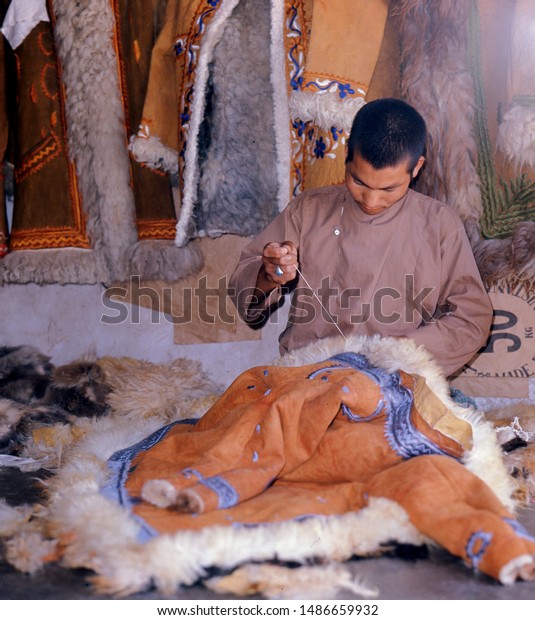
Domestic and international travel contributes only $0.72 billion increase in monthly GDP over the three stages, reflecting the closure of the international border for the foreseeable future as well as limitations on domestic travel and the depressed economy.
With restrictions eased, NSW would contribute $3.1 billion increase in monthly GDP over the three steps and Victoria $2.2 billion. For the first stage, the figures for NSW and Victoria are $1 billion and $717 million respectively.
Indicative split of coronavirus cost of $4B per week to the economy [based on restrictions in place before May 8]
She said retail, malls, cafes, restaurants, cinemas and other public spaces including playgrounds and gyms would be able to reopen on Thursday, May 14.
Schools would return to normal classes from next Monday, May 18, while bars would have to wait until Thursday, May 21, to reopen.
Covid positive traveller jailed
A woman who tested positive for covid-19 had been in an Auckland jail for 10 days after refusing to be examined when she arrived from the United States.
The woman in her 20s agreed to be tested when she appeared in court last Friday. She was bailed out after it was confirmed she had been tested but before the result was known.
Corrections told RNZ’s Checkpoint that during her time at Auckland Women’s Prison, the woman was quarantined and had no contact with other prisoners.
This article is republished by the Pacific Media Centre under a partnership agreement with RNZ.
If you havesymptomsof the coronavirus, call the NZ Covid-19 Healthline on 0800 358 5453 (+64 9 358 5453 for international SIMs) or call your GP – don’t show up at a medical centre.
When he landed in Australia in October 1957, Little Richard should have been on top of the world. In just two years, the wild showman had traded the chitlin’ circuit for an international audience. Instead, he was pondering his future – and reading the Bible.
A fast-talking American entrepreneur named Lee Gordon had organised the two-week package tour, which also included Gene Vincent and the Blue Caps, Eddie Cochran, and “the female Elvis” Alis Lesley. When the Blue Caps got stuck in Hawaii, the Sydney-based Dee Jays filled in – on the condition that their singer, a 21-year-old unknown named Johnny O’Keefe, could also do a few numbers.
“R. and R. may never come to Australia,” journalist Bernard Fletcher wrote the previous year, “but then, on the other hand, juvenile crazes have a habit of spreading.”
And spread it had. “[Rock and roll] is so far just a pleasant form of musical novelty to our youngsters,” one Perth journalist wrote in 1956, “and it is hoped it never reaches the hysterical, violent stage that is shocking America.”
A violent world
“Hundreds of screaming teenagers fought with each other to souvenir a shirt, tie, belt, socks and three sets of underwear which Little Richard stripped off and threw to them”, went the review in The Age. The singer finished in only a green turban and loose-fitting pyjama pants.
(Commentators were more bemused than alarmed: the Melbourne Herald called the stunt “an amusing and quite decent strip tease”.)
But it was the violence of the outside world that was troubling the singer: an exploitative recording industry, racialised violence of white supremacy in the US, and the looming threat of nuclear armageddon.
This final apocalyptic possibility proved too much for Little Richard’s fragile psyche. Already on edge with Great Britain conducting nuclear weapon tests at Maralinga in South Australia, the Soviets’ surprise satellite launch shook the singer. Here is what the consummate fabulist, who never failed to embellish a story, told biographer Charles White:
On our fifth date of the two-week tour […] forty thousand people came to see me at the municipal outdoor arena. That night Russia sent off that very first Sputnik. It looked as though the big ball of fire came directly over the stadium about two or three hundred feet above our heads. It shook my mind. It really shook my mind. I got up from the piano and said, “This is it. I am through. I am leaving show business to go back to God.”
The next day, Little Richard confirmed his conversion by throwing thousands of dollars’ worth of jewellery from the Stockton Ferry into the Hunter River. Cutting short the tour, he flew home to enrol in a theology program at Oakwood College in Huntsville, Alabama.
“I’m quitting showbiz, I wanna go straight,” the now Reverend Richard Penniman sang in 1960. “I wanna serve my Lord before it’s too late.”
As critic Ainslie Baker bemoaned in The Australian Women’s Weekly: “Little Richard was in great vogue among the rock-‘n-rolling fraternity until he retired to ponder upon the threat to the future of man posed by the nuclear age.”
While he returned to secular music in 1962, he never again visited Australia.
Nuclear music
True or not (and the singer told many different versions of this episode), this story suggests we look closer at music’s often forgotten Cold War context.
Rock ‘n’ roll fans “live in a world of mixed emotions”, Phyllis Battelle wrote in 1956.
Prosperity has built up financial security for them and their families, so they do not want. At the same time, they hear all the talk of world insecurity. Of psychiatry and psychology, of atomic warfare in abeyance. In the back of their minds, like an uncomfortable dream, is the inkling that living-for-today may be a wise course to follow.
This anxiety about young people and their place in an uncertain world travelled across the globe right alongside the big beat. And the stakes couldn’t be higher.
“During the past few years we have had numerous reports of bodgie activities in our larger cities,” one reader wrote in to Australian Women’s Day from Sunshine, Victoria in 1958.
“It’s not a matter to be pushed aside, either. After all, today’s youth will run tomorrow’s world.”
Many tributes to the late singer have included the curious saga of the rock ’n’ roll pioneer’s abrupt, if ultimately brief, retirement in Australia. His five-year departure for the gospel wilderness is not, however, merely a bit of trivia.
If today we can still hear a transgressive, liberatory power in Little Richard’s voice, we should also remember the political context that made that voice meaningful in the first place.
Rock ‘n’ roll mattered precisely because of the kind of world its young listeners inhabited – a world that frightened some of its most famous singers, too.
Source: The Conversation (Au and NZ) – By Weihuan Zhou, Senior Lecturer and member of Herbert Smith Freehills CIBEL Centre, Faculty of Law, UNSW Sydney, UNSW
Australia’s surprising call for an investigation into the origin of the coronavirus in China has provoked escalating threats of retaliation by China.
China started with a warning that Australia’s position might spark a Chinese consumer boycott.
It’s now threatening tariffs on Australian barley that would include a “dumping margin” of up to 73.6% and a “subsidy margin” of up to 6.9%.
The subsidy claims are thought to refer to drought support measures and Australia’s diesel fuel tax rebate.
Together with the dumping tariff (a penalty for allegedly selling barley too cheaply) they would amount to a tariff of 80.5%, effectively putting an end to Australian barely sales to China.
Australia’s exporters and the government have been given 10 days to respond.
There’s more to it than barley
A series of decisions and reactions to events that were perceived as anti-China has pushed relations between Australia and China to the verge of a historic low.
Each time, China has urged Australia to reconsider its position and on some occasions has threatened to retaliate.
Recent examples include Australia’s exclusion of Huawei from its 5G network for fear of the influence of the Chinese government on its activities, and the COVID-19 travel ban which singled out China when introduced on February 1 even though by then the virus had spread to other countries.
China targeted barley for good reasons.
Why barley?
China is Australia’s largest market for barley exports.
Between 2015 and 2018, China imported, on average, 4.6 million tonnes or A$1.3 billion of Australian barley accounting for over 70% of Australia’s barley exports.
A tariff increase would have significant impacts on Australia’s barley producers who are scattered over several Australian states, putting considerable political pressure on the Australian government.
China meanwhile has other suppliers from which to choose. It can restrict imports of Australian barley while continuing to buy barley from elsewhere.
And contrary to the claims by Trade Minister Simon Birmingham, the Chinese tariffs are not legally unjustifiable.
The tariffs would be the result of an ongoing anti-dumping investigation into barley exported from Australia that China’s Ministry of Commerce initiated on November 19, 2018.
Anti-dumping measures, which seek to prevent lower-priced imports from causing injury to domestic industries, are permitted under the rules of the World Trade Organisation and the China-Australia Free Trade Agreement.
Australia itself has been one of the most frequent users of anti-dumping measures, particularly against China.
The 2015 China-Australia Free Trade Agreement cut Chinese tariffs on Australian barley exports to zero. But it included an exemption: anti-dumping provisions that could increase the tariffs to any rate.
At the start of the 2018 investigation, China’s barley industry requested an anti-dumping tariff of 56.14%. The proposed rate was increased to 73.6% after investigations by Chinese authorities.
That is the investigation that authorities will finalise by May 19, the one started eighteen months ago, on November 19, 2018.
It began long before COVID-19, motivated among other things by Australia’s enthusiastic use of anti-dumping measures on products such as Chinese steel.
But its timing has made it a useful way to push Australia to change its anti-China position on an inquiry and on other matters in the future.
Since China’s investigation began, Chinese customers have become “very cautious about buying Australian barley” in the assessment of the Canadian barley industry which has benefited by selling Chinese customers barley they once would have sourced from Australia.
The actual imposition of the tariff will hurt more.
The only legal avenue for Australia to challenge it would be the World Trade Organisation’s dispute settlement mechanism which had been brought to a near halt by the United States refusing to appoint appellant judges and would in any case take years to process without a guaranteed win.
Even if Australia is successful, China may simply begin a reinvestigation which may maintain the original decision.
What’s the best way out?
Australia needs to take actions to ease the tensions and strengthen economic relationship with China.
Abundant evidence has shown that China will remain an irreplaceable Australian customer meaning it would be neither possible nor wise for Australia to decouple from China.
Diplomatic actions, such as the appointment of a special Australian China envoy, will be desirable but not sufficient. Australia has to ensure its future policy decisions are not biased against China.
To help, Australia could consider a gradual reduction of travel restrictions on China based on China’s success in fighting the virus and renewed more realistic assessment of the potential health risks posed by Chinese travellers.
Australia needs to be cautious in foreign investment decisions which have already been regarded as discriminatory against China before the pandemic.
The pandemic brought forth temporary changes of Australia’s foreign investment rules, making all proposals the subject of Foreign Investment Review Board scrutiny regardless of size.
While the changes applied to foreign investors from all countries, Australia’s decision to reject two from China has raised concerns about whether the decisions have been compromised by anti-China politics.
Instead of direct rejection, Australia might have been better off offering to approve them under conditions sufficient to address national interest concerns.
Australia should reassess its position on the 5G network to ensure it focuses on risks associated with 5G equipment rather than the nationality of 5G suppliers, as have Britain and the European Union.
These actions would signal a strong political will to repair the relationship that would build the foundation for the two economies to broaden and deepen economic engagement for mutual benefits.
More than 30 media freedom groups, journalists and academics have combined in an international statement today condemning the closure of the largest Philippine television network and calling on President Rodrigo Duterte to “urgently reinstate” the broadcaster.
In a statement by the Australian-based Alliance for Journalists’ Freedom (AJF), director Peter Greste said the Filipino public “greatly needs reliable information” amid the global covid-19 coronavirus pandemic.
“We cannot beat this virus without knowledge through transparency, and cooperation through communication,” he said.
Professor Greste said closing the broadcaster ABS-CBN at this time was “unconscionable”.
The signatories include the Australian Broadcasting Corporation (ABC), Community Broadcasting Association of Australia (CBAA), Dart Centre Asia Pacific, Journalism Education and Research Association of Australia (JERAA), Public Interest Journalism Initiative, RMIT, Sydney Morning Herald, The Guardian, University of Melbourne’s Centre for Media and Communication Law; and Rappler, the leading digital news website of the Philippines.
– Partner –
The only New Zealand signatory was Auckland University of Technology’s Pacific Media Centre.
Professor Greste, who is also UNESCO chair of journalism and communication at the University of Queensland, said in the statement:
The statement “At times of crisis, reliable information is a key part of society’s ability to cope and respond. In the context of the Covid19 pandemic, the closure of broadcaster ABS-CBN is unconscionable.
“Lack of a free media makes democracy vulnerable, fractures societies and undermines trust in institutions – especially in Government.
“The Filipino public greatly needs reliable information. This is particularly the case given the well documented vulnerability of the Philippines to fake news spread through Facebook.
“We cannot beat this virus without knowledge through transparency, and cooperation through communication.
“Governments have a responsibility to maintain their democratic and social systems, and a free media plays an essential role within that.
“The closure of ABS-CBN makes the Philippines a less healthy society, and also undermines the ability of the region and the world to respond to this crisis.
“We, the undersigned journalists, press freedom groups and media organisations have come together to call on you to urgently reinstate ABS-CBN’s operating license and make an ongoing commitment to press freedom.
“Join us in maintaining a regional and global standard.”
If you go to the Surrey Hills of northwest Tasmania, you’ll see a temperate rainforest dominated by sprawling trees with genetic links going back millions of years.
It’s a forest type many consider to be ancient “wilderness”. But this landscape once looked very different.
The only hints are a handful of small grassy plains dotting the estate and the occasional giant eucalypt with broad-branching limbs. This is an architecture that can only form in open paddock-like environments – now swarmed by rainforest trees.
These remnant grasslands are of immense conservation value, as they represent the last vestiges of a once more widespread subalpine “poa tussock” grassland ecosystem.
The temperate rainforest in Tasmania’s Surrey Hills are a legacy of colonialism.Author provided
Our new research shows these grasslands were the result of Palawa people who, for generation upon generation, actively and intelligently manicured this landscape against the ever-present tide of the rainforest expansion we see today.
This purposeful intervention demonstrates land ownership. It was their property. Their estate. Two hundred years of forced dispossession cannot erase millennia of land ownership and connection to country.
Myths of “wilderness” have no place on this continent when much of the land in Australia is culturally formed, created by millennia of Aboriginal burning – even the world renowned Tasmanian Wilderness World Heritage Area.
British impressions
Today, the Surrey Hills hosts a vast 60,000-hectare timber plantation. Areas outside the modern plantations on the Surrey Hills are home to rainforest.
On first seeing the Surrey Hills from atop St Valentine’s Peak in 1827, Henry Hellyer – surveyor for the Van Diemen’s Land company – extolled the splendour of the vista before him:
an excellent country, consisting of gently rising, dry, grassy hills […] They resemble English enclosures in many respects, being bounded by brooks between each, with belts of beautiful shrubs in every vale.
It will not in general average ten trees on an acre. There are many plains of several square miles without a single tree.
And when first setting food on the estate:
The kangaroo stood gazing at us like fawns, and in some instances came bounding towards us.
He went on to note how the landscape was recently burnt, “looking fresh and green in those places”.
It is possible that the natives by burning only one set of plains are enabled to keep the kangaroos more concentrated for their use, and I can in no way account for their burning only in this place, unless it is to serve them as a hunting place.
The landscape Hellyer described was one deliberately managed and maintained by Aboriginal people with fire. The familiarity of the kangaroo to humans, and the clear and abundant evidence of Aboriginal occupation in the area, implies these animals were more akin to livestock than “wild” animals.
A debated legacy
Critically, Hellyer’s accounts of this landscape were challenged later in the same year in a scathing report by Edward Curr, manager of the Van Diemen’s Land company and, later, a politician.
Curr criticised Hellyer for overstating the potential of the area to curry favour with his employers, for whom Hellyer was searching for sheep pasture in the new colony.
These ideas are criticised by those who either genuinely believe Aboriginal people merely subsisted on what was “naturally” available to them, or by those with other agendas aimed at denying how First Nations people owned, occupied and shaped Australia.
New research backs up Hellyer
We sought to directly test the observations of Hellyer in the Surrey Hills, using the remains of plants and fire (charcoal) stored in soils beneath the modern day rainforest.
Drilling in to the earth beneath modern rainforest, we found the deeper soils were full of the remains of grass, eucalypts and charcoal, while the upper more recent soil was dominated by rainforest and no charcoal.
Author provided
We drilled into more than 70 rainforest trees across two study sites, targeting two species that can live for more than 500 years: Myrtle Beech (Nothofagus cunninghami) and Celery-top Pine (Phyllocladus aspleniifolius).
None of the trees we measured were older than 180 years (from 1840). That’s just over a decade following Hellyer’s first glimpse of the Surrey Hills.
Our data unequivocally proves the landscape of the Surrey Hills was an open grassy eucalypt-savanna with regular fire under Aboriginal management prior to 1827.
Importantly, the speed at which rainforest invaded and captured this Indigenous constructed landscape shows the enormous workload Aboriginal people invested in holding back rainforest. For millennia, they used cultural burning to maintain a 60,000-hectare grassland.
Learning from the past
Our research challenges the central tenet underpinning the concept of terra nullius (vacant land) on which the tenuous and uneasy claims of sovereignty of white Australia over Aboriginal lands rests.
Our research drilled into the soil to learn what the landscape looked like before British invasion.Author provided
More than the political implications, this data reveals another impact of dispossession and denial of Indigenous agency in the creation of the Australian landscape.
Left unburnt, grassy ecosystems constructed by Indigenous people accumulate woody fuels, in Australia and elsewhere.
Forest has far more fuel than grassland and savanna ecosystems. Under the right set of climatic conditions, any fuel will burn and increasing fuel loads dramatically increases the potential for catastrophic bushfire.
That’s why Indigenous fire management could help save Australia from devastating disasters like the recent Black Summer.
Jack Mundey, who has died at the age of 90, was a pioneer of the Australian heritage movement. As well as contributing to labor and environmental politics, Mundey reconceived of the ways that Australians related to their cities and heritage places.
As the NSW Builders’ Labourers Federation (BLF) secretary, Mundey created the “green ban” (a term first used in 1973). No union member would work on a site subject to a green ban.
These bans were placed to give communities a say in development and to protect heritage and the environment. At a time of historically high union membership in the construction industry, a green ban effectively prevented development from proceeding.
By painting the traditional union “black ban” in a new colour, Mundey and the BLF created a new conception of urban and labor politics which highlighted community heritage concerns. As Mundey explained:
The adjective “green” was more apt than “black”. It also explained our wish to extend our help to other citizens, not to unionists alone.
Applying the first ban
The first green ban was applied in Sydney at Hunter’s Hill in 1971. A group of women founded “Battlers for Kelly’s Bush” to campaign against a proposed housing development by Melbourne firm A.V. Jennings. The housing estate was to be built on the Parramatta River at Kelly’s Bush, the last undeveloped open space in the area.
‘The Battlers for Kelly’s Bush’: Kath Lehany, Betty James, Miriam Hamilton and Monica Sheehan.Hunter’s Hill Trust
It was a typical housing project in this era of suburban expansion. But the rise of resident and civic groups fighting for heritage across Australia shifted the development terrain.
The Hunter’s Hill residents heard Mundey’s claim that workers “had a right to express an opinion on social questions relating to the building industry”. After a meeting between Mundey and the Battlers, a green ban was applied, eventually foiling the development. Kelly’s Bush was saved.
It did not matter that Hunter’s Hill was a solidly middle-class suburb. The green bans would be instituted on behalf of a range of communities.
Although goals of postwar urban planning for the welfare state included housing for all, full employment and exciting new environments, sizeable cracks in the vision were appearing in the 1960s. Planners and architects were increasingly criticised for being technocratic and adopting overly scientific and rationalised modes for urban design and development.
Their efforts were too often disconnected from communities and needlessly destroyed historic and natural environments. Widespread demolitions of commercial and public buildings in Australian CBDs and of terrace and free-standing homes in the inner suburbs were increasingly seen as unacceptable by the community.
Whelan the Wrecker was a favoured demolition firm in postwar Melbourne. Pictured here is Clarendon House, East Melbourne, in July 1961.John T. Collins/State Library of Victoria
More broadly, the late 1960s and early 1970s was a dramatic time for Australian social movements. Second-wave feminists, anti-Vietnam war protesters and historic and environmental conservationists rubbed shoulders during street marches. The federal Liberal Party had been in power for two decades and there was a great deal of energy among progressives for change.
An expanding movement
The Australian heritage movement was gaining momentum. National Trusts had been active in designating heritage places from the late 1940s. By the late 1960s, thousands of historic places were identified by National Trust classifications, metropolitan planning schemes and sympathetic governments and property owners.
However, a new generation of heritage activists had come to see the National Trusts as narrow in their architectural interests, tame in their advocacy methods, and led by a coterie of elites. Green bans were seen as a more effective means of safeguarding heritage and were swiftly expanded from Hunter’s Hill.
Mundey and his fellow unionists Joe Owens and Bob Pringle, as part of the broader green ban movement, engaged with the ten inner-suburban Melbourne resident groups that comprised the Committee for Urban Action, established in 1970, and the 40 such groups that in 1971 had formed the Coalition of Resident Action Groups in Sydney. From Woolloomooloo and Pott’s Point to Fitzroy and Collingwood, residents took to the streets to protest comprehensive urban renewal and freeway construction plans.
Residents protest at Woolloomooloo, Sydney, ca. 1973.City of Sydney Archives
Unions backed these citizen movements by placing green bans on these neighbourhoods. The green bans extended across Australia’s historic suburbs into the CBDs.
Perth’s Palace Hotel and The Mansions in Brisbane were subject to these efforts. In Sydney, Mundey was arrested during protests at The Rocks. In Melbourne, the City Baths, Mac’s Hotel, Victoria Market, Gothic Bank, Regent Theatre, Windsor Hotel, Princess Theatre, Collins Street and the Rialto precinct, and Tasma Terrace all received the attention of the union movement. (The Victorian National Trust would find a new home at Tasma Terrace despite the Australian National Trust movement’s reticence about supporting the radical green bans.)
The election of the Whitlam Government in 1973, a soon-to-be-declining economy and expanded heritage laws marked the beginning of the end for the green bans. Whitlam had been elected on a platform of protecting the national estate, incorporating built and natural heritage. These policies included curtailing urban development impacts on historic areas as well as maintaining green belts.
Is it any wonder that ‘green bans’ and other forms of direct action are not being resorted to more and more frequently? Governments must act to meet these demands, and act decisively, for they have delayed too long already.
The green bans were part of a decisive shift in Australian urbanism. Conservation became a mainstream planning, architectural and policy concern. The federal government passed heritage legislation in 1975, followed by every state over the next 16 years or so. Victoria was first in 1974.
The green bans remained in place as the urban development pipeline collapsed amid the economic shocks of the mid-1970s Oil Crisis. By the time construction picked up in the 1980s, tens of thousands of heritage places had potential statutory protections. A new specialist industry of conservation architects, planners and policymakers had emerged from the ranks of heritage activists.
Bondi Pavilion was the site of another heritage battle that Jack Mundey joined late in life.Marilia Ogayar/AAP
Green bans symbolised the democratic spirit of the 1970s Australian heritage movement. Countless places survived the closing moments of modernist urbanism because of them. The Australian heritage industry was built on the foundations of radical union activism.
For these reasons, there are often calls to re-apply green bans today. But the changed structure of cities, the economy and unionism make this unlikely. At a remarkable historic moment, Mundey’s green bans empowered people to claim their right to the heritage of their city.
Sports representatives are calling on New Zealand’s government not to return to normal when the nation begins to ease restrictions from Thursday this week. Instead, they argue, it is time to create a more even playing field by addressing chronic underfunding for women’s sports.
The Epidemic Response Committee focused on sports in one of its hearings last week and several sporting bodies argued that women’s sports will struggle to rebuild without substantial targeted financial support.
Netball NZ chief executive Jennie Wylie told the committee her sport has more than 350,000 players, many from under-privileged groups, and the recovery period presents an chance to prioritise equal access and support.
Getting sports up and running as soon as it’s safe will play a vital role in New Zealand’s economic and social recovery. Because sport is rebuilding in so many capacities, the time is right to create equality […] and New Zealanders should not squander the change to address the systemic inequities across sport.
Our research focus is on sport management and leadership, and on equity in sports and active recreation for girls and women. We have welcomed the momentum for achieving gender equity in sports before the coronavirus pandemic, and believe women should now be at the forefront of planning as we rebuild.
Before the pandemic, corporate sponsorship for women’s sport increased by 47% between 2013 and 2017, and investment in women’s professional leagues increased girls’ participation at the grassroots level.
Viewership for women’s sports was rising around the globe, including a 64% rise in TV ratings for the 2019 Women’s National Basketball Association season and a record 1.12 billion viewers for the women’s soccer World Cup final.
The coronavirus pandemic has changed the landscape, and international sports organisations are also concerned about its impact on women’s sport.
But as sports resume, this offers a chance for decision makers to change dominant narratives and structures away from the male-dominated model. Those working in women’s sports have always done the hard work — built, marketed and run our sports teams and programs – with limited funding and resources.
Diversity of thought is critical to rebuilding sports. It requires different models of collective leadership and a rethink of success going beyond winning and profit margins.
A sports management model developed in 2017 includes social, cultural and environmental benefits of sports – such as working with under-served communities to improve team and leadership skills – alongside a traditional focus on investment return. It also adds a focus on the United Nations’ Sustainable Development Goals.
We believe girls and women have a basic human right to physical activity and the UN’s development goals provide a framework for equity in sport. They clearly state that social inclusion means gender equality, human rights and the reduction of inequalities.
To achieve long-term sustainable and ethical outcomes for sports organisations, structural change designed for equity is critical, from the grassroots to the top level. There are some examples of progress, where girls and women are challenging the norms of traditionally masculine sports such as skate boarding.
We also need to explore alternative funding models to minimise reliance on broadcasting revenue and gambling returns. COVID-19 lockdown has shown us that physical activity is critical to health and well-being. It should be funded by government and commercial partners committed to equity.
As the coronavirus was spreading globally, in March 2020, UN Women joined with the International Olympic Committee to launch the Sports for Generation Equality Initiative to accelerate progress on making gender equality a reality.
Emerging from a pandemic should not be a return to the status quo, and this includes access to participation and competition in sports and physical activity. When sport resumes, we must regain momentum to truly advance gender equity for all girls and women. To do anything else wastes an unprecedented opportunity.
The problem, he said on Friday, is that it would be tempting to stay in lockdown tucked up under the doona forever.
And you know, you’ll never face any danger. But we’ve got to get out from under the doona at some time. And if not now, then when?
The treasurer Josh Frydenberg says continuing the lockdown is costing the economy A$4 billion per week.
Economists have sharply polarised positions.
To stay safe, or to live boldly
The preamble to an open letter by 265 Australian economists published in The Conversation last month said that to use those costs as a reason to end the lockdown would represent a “callous indifference to life”.
Others seem to think that the lives lost matter less than the huge economic and social costs staying locked down.
In between those extremes lies a huge band of uncertainty.
A more circumspect comparison of the risks of unlocking compared to the risks of staying locked down suggests that, in purely economic terms, the restrictions make good sense so far.
You start by putting a value on lives
One way to evaluate the merits of relaxing restrictions is to put a monetary value on the fatalities avoided, and compare that cost with the cost imposed by the restrictions.
Putting a monetary value on human life is often viewed as unsavoury. But, whether explicitly or implicitly, it is what is being done every time a government or non government entity makes a decision that affects the risk of increased mortality, from whether to put up a road sign to how to conduct hospital triage.
Being explicit gives some assurance that the proposed measures are proportional. It can alleviate fears that what’s proposed is an under or over reaction.
But numbers alone can not tell us what is the right thing to do. That requires making value judgements – which is the job of politicians.
It is nevertheless helpful to understand how the COVID-19 policy responses measure up to standards used in normal public health decision making.
Making this difficult is the is enormous uncertainty over some of the key variables.
It’s hard to know how many lives
A critical number is the infection fatality rate.
The Oxford Centre for Evidence Based Medicine puts the infection fatality rate at between 0.1% and 0.4% of the population.
For Australia, if 90% were infected, this implies 22,000 to 90,000 thousand fatalities.
This range could further be increased by as much as 50% if not enough intensive care units are available.
Professor Tony Blakely of the University of Melbourne, and Professor Nick Wilson of the University of Otago have reported a larger estimate of 134,000 fatalities.
For planning purposes the Department of Prime Minister and Cabinet values a full statistical life, when converted to 2019 dollars – allowing for inflation and growth – of approximately A$5.1 million.
Reasonable arguments could be made that it should be many times larger or smaller.
As an example, when the lone British sailor Tony Bullimore was rescued from the Antarctic Ocean by the HMAS Adelaide in 1997, the nation celebrated as he emerged from under the hull after hour days trapped in winds of up to 160 km per hour.
Australia’s defence minister dismissed any criticism of the cost.
“We have an international legal obligation. We have a moral obligation obviously to go and rescue people, whether in bushfires, cyclones or at sea,” he said.
In today’s dollars it cost about $10 million to save 57 year old Bullimore’s life. When age is factored in this represents a value that is many times more than the normal value of a full statsitical life used by the prime minister’s department.
A reference figure is $150 billion…
Nevertheless, taking $5.1 million as a conservative estimate of the value of a full life and reducing it by two thirds to take account of the fact that most of the people who die from COVID-19 are in the final third of their lives, gives a conservative cost of 90,000 COVID-19 fatalities in a “do-nothing” scenario of about $150 billion, or 8% of gross domestic product.
By comparison, at $4 billion per week, the economic cost of the first month of restrictions amounts to a little under 1% of gross domestic product.
Spending many times that much to avoid a health crisis that could cost 8% of gross domestic product, and perhaps much more, seems reasonable.
This makes Australia’s lockdown and social distancing regulations eminently justifiable by standard public policy criteria.
…which means we can’t keep doing this forever
But there’s a catch: continuing the regulations indefinitely isn’t an option.
Lockdowns make more sense if there is an exit strategy or end game – such as a vaccine or medical intervention.
Unfortunately, neither are likely within six to twelve months, if ever.
Like cures for cancer, it’s possible they will always remain just over the horizon.
This kind of indefinite time-frame would see the economic and social costs of restrictions rise over time and potentially exceed the statistical value of the lives saved, all the while leaving the vast majority of the population susceptible. Even if COVID-19 were eliminated in Australia, so that economic activity resumed, this would impose substantial costs on tourism and accommodation sectors – potentially for ever.
There is a danger of a double tragedy. Without a plan to exit and with no vaccine, we could find ourselves having spent 8% or more of gross domestic product in lockdowns and still face the threat of a national epidemic.
Waiting for a vaccine could become like having yet another go on the pokies – without a commitment to exit, you end up broke with nothing else to spend.
At the moment, the restrictions are justified in financial terms.
But rising economic and social costs mean we will need an exit strategy. This may simply mean learning to live with COVID-19.
With that end-game in mind, taking a cautious peeks out from under the doona soon, makes sense.
NZME is insisting a deal for it to purchase media rival Stuff is still on the cards, despite Stuff’s owner saying it has wrapped up talks with no deal.
Stuff and NZME are seeking leave to appeal the High Court decision blocking their merger.
NZME said today it was asking the government to allow it to buy Stuff for a nominal $1.
Stuff’s owner, Australia’s Nine Entertainment, responded that it had terminated talks with NZME over a purchase plan last week and no deal was in place.
In the latest twist, NZME has since told the NZX that it believed it was still in a “binding exclusive negotiation period with Nine and does not accept that exclusivity has been validly terminated.”
– Partner –
Stuff chief executive Sinead Boucher told staff this morning the announcement by NZME came as a surprise.
“There is no deal between NZME and Nine.
Clear no transaction message “We are really not sure why NZME took this step, given the clear message from our owners that there would be no transaction.”
She said she would get more information and share it during the day.
In its initial announcement this morning, NZME said it was seeking Commerce Commission approval and special legislation from the government by the end of the month to purchase Stuff.
The commission has previously declined clearance for a merger of the two companies, saying it would substantially lessen competition, both for advertisers and readers. That decision was subsequently upheld by the High Court and the Court of Appeal.
NZME said in this morning’s market announcement the acquisition of Stuff would lower the costs of producing news, and ensure a committed local news media outlet into the future.
NZME believed the New Zealand media sector was too small for the current number of quality participants, the statement said.
“Consolidation is urgent in the face of dramatically declining advertising revenue and current general economic conditions.
NZME thinks it is ‘best owner’ “NZME continues to believe that it is the best owner for Stuff as it is best placed to preserve mastheads, newsrooms and jobs. NZME considers that in the current New Zealand media landscape, NZME’s acquisition of Stuff will not substantially lessen competition in any market.”
Last month NZME, which owns The New Zealand Herald, regional papers and radio stations including Newstalk ZB, announced 200 jobs would go due to sliding advertising revenue amid the covid-19 downturn. It also asked the remaining staff to take a 15 percent pay cut for the next three months.
Stuff also asked its employees to take a pay cut. Stuff staff earning more than $50,000 were asked to take a 15 percent reduction, the executive team 25 percent, and chief executive Sinead Boucher cut her salary by 40 percent.
Stuff was bought by Australian-listed media group Nine Entertainment in late 2018 but has been on the sale block for months.
In November last year NZME confirmed it had been in talks with Nine about a possible purchase and had put a proposal to the government regarding a possible transaction including a “ringfence” agreement for Stuff’s editorial operations.
Between them, NZME and Stuff own most of New Zealand’s newspapers.
This article is republished by the Pacific Media Centre under a partnership agreement with RNZ.
If you havesymptomsof the coronavirus, call the NZ Covid-19 Healthline on 0800 358 5453 (+64 9 358 5453 for international SIMs) or call your GP – don’t show up at a medical centre.
Nothing our leaders can do now will return the economy to where it was before COVID-19. For one thing, international travel is likely to remain closed for a long time.
But there are things they can do, and on Friday the prime minister outlined a roadmap.
Of interest to us is whether it makes sense to reopen bars and restaurants.
The Australian Government committed A$320 billion over six months to support businesses and workers whose incomes has been hit by the COVID-19 pandemic.
Given the very low number of new cases of COVID-19, the assumption we have tested is that there would be a one in ten chance of a new outbreak requiring the reintroduction of restrictions.
We also assume that if there was a new outbreak, there would be a 95% chance it could be controlled by re-imposing restrictions on bars and restaurants and only a 5% chance it could not.
It’s a matter of probabilities
If the outbreak was controlled by reimposing restrictions (the 95% probability) we assume an extra 40 COVID-19 deaths and an extra four weeks of restrictions at a financial cost to the government of $6.8 billion.
If the outbreak was more severe and a broader set of restrictions are required (the 5% case) we assume an additional 200 deaths and extra cost to the government of $17 billion.
(We also assume that 25% of the government spending to support the hospitality industry would remain because a decision to reopen bars and restaurants would not result in the industry returning to it’s pre-COVID-19 state – many people would remain cautious about the risks of contracting COVID-19 or have become conditioned to less frequent socialising.)
When we weigh these costs by their probabilities we get expected costs to the government from reopening of $1.1 billion, compared to costs from keeping bars and restaurants closed for another week of $1.7 billion.
Is the $600 million per week value for money?
It suggests the government would be $600 million per week better off it it reopens bars and restaurants.
We would expect a number of extra COVID-19 deaths. Multiplying the probabilities of the extra deaths under each scenario by the likelihood of each scenario suggests there would be an extra 4.8 deaths if bars and restaurants are reopened this week.
Because the average age of people dying due to COVID-19 is around 80 years, and each might have around ten more years to live, the number of life years per week that would be lost as a result of the $600 million per week the government saved would be 48.
It suggests each life year saved as a result of keeping bars and restaurants closed costs around $12.5 million.
Decisions on whether government should fund health interventions are commonly based on an assessment of whether the health gains justify the additional costs.
As a ballpark figure, new measures are funded if they are shown to gain an additional life year at a cost of around $50,000.
This suggests that by keeping bars and restaurants closed the government is paying 250 times more than it would usually pay to gain a life year.
It is funding that doesn’t pass the usual test
A separate guideline used by Australian governments to assess regulations and infrastructure projects puts the value of a statistical life year at $200,389 in today’s dollars.
This suggests that by keeping bars and restaurants closed the government is paying 60 times more than it would usually pay to save a life.
It’s why we think governments should reopen them, next week.
Like all such analyses, ours depends on the assumptions used.
We have put a spreadsheet of our decision tree online to allow readers to experiment with different ones.
Our analysis leaves much out. It includes neither the negative impact of COVID-19 on people’s quality of life, nor the negative impact of shutting bars and restaurants on people’s health and quality of life.
It gives us an indication of how many life years the government is saving for the $600 million per week it is costing it to keep bars and restaurants closed.
It suggests the government could save many more life years by spending the money in a different way.
In recent years, the biggest increases in Australia’s prison population have come from people convicted of sexual offences. From 2017-18, this segment of the prison population increased by 10%. The following year, it was up again by 7%.
As a corollary, more and more sexual offenders are being released from prisons back to our communities. Understandably, a great deal of public concern often accompanies the release of sexual offenders, especially those who have committed offences against children.
Despite this, very few programs exist to support sexual offenders as they reintegrate into the community, thereby making society safer by reducing their risk of reoffending.
Our recent research examined one rare exception: Adelaide’s Circles of Support and Accountability (CoSA) program.
Because it is vital to understand how victim/survivors of sexual violence feel about the release of offenders from prison and their reintegration into society, we also interviewed 33 of them in our work.
Our study was the first of its kind; no prior research has been conducted on this topic in Australia.
What community-based outreach looks like
CoSA was founded in Canada in 1994 and now operates in parts of the US, UK, the Netherlands and several other countries. The Adelaide program, launched in 2015, is the first of its kind in Australia.
The program is comprised of small groups of trained community volunteers who support people who have committed sexual offences (usually against children) to reintegrate into the community after prison.
The organisation’s core belief is that helping an ex-prisoner (known as a “core member”) in this way will reduce the likelihood of recidivism. It has two mottos: “no one is disposable” and “no more victims”.
In other words, even those people who have sexually offended should be offered a dignified and humane response once they have “done their time”.
International research has shown that CoSA programs have reduced sexual recidivism. A study in Minnesota comparing 50 sex offenders in CoSA and 50 others in a control group found that the rate of re-arrest for the core members was 88% lower than for those not in the program.
As the Adelaide program is so new, it is too early to gauge definitively whether it has had an effect on recidivism here.
How volunteers engage offenders after prison
Our study involved interviewing core members in the Adelaide program, as well as staff, volunteers and other stakeholders. We also examined program documentation, such as the minutes of CoSA meetings.
Our aim was to understand how the program worked and identify key ways it could be improved in the future.
Volunteers come from a variety of backgrounds, including students, former criminal justice professionals and even victim/survivors of sexual violence. All share a commitment to making the community safer. They are also carefully screened and receive training in the causes and effects of sexual offending, criminal justice processes and the CoSA model.
The program depends on a lot of face-to-face time between core members and volunteers. They are often in daily contact during the initial period following the offender’s release from prison and then usually meet weekly.
During these discussions, volunteers provide support to help core members stick to their release conditions and feel less lonely and isolated. They also watch out for any “red flags”, such as reduced engagement with the CoSA program, and importantly, encourage offenders to accept responsibility for the crimes they’ve committed.
Volunteers also work with core members to minimise the stresses they face, such as conflicts with authorities and neighbours, and financial or familial problems. This is critical because research has shown that these types of stresses and conflicts often lead to sexual reoffending.
What victim/survivors of sexual violence think
Victim/survivors had a diverse range of views on offenders rebuilding their lives after prison. For some, the release of perpetrators was an inevitability, and because of this, they were largely supportive of efforts to reintegrate them into society. As one put it,
What’s the alternative? We can’t keep them in prison forever.
Understandably, others would prefer to see perpetrators remain behind bars.
I think they should all rot. I don’t think they should be given any assistance whatsoever.
Despite these differences, victim/survivors were unanimous about one thing: they wanted to ensure their perpetrators did not harm anyone else. To this end, most of our interviewees were supportive of practical measures to prevent recidivism, rather than seeking revenge for past offences.
We also asked victim/survivors their thoughts about the CoSA program specifically. Views were again mixed, although most were supportive of the program due to its focus on preventing future sexual harm by supporting offenders to reintegrate into society.
Victim/survivors also liked the increased monitoring from volunteers that CoSA provides. As one of the participants said,
If they’ve got support and people are watching out for them, and watching over them I … think it’s a good thing.
Indeed, a handful even indicated they would personally support and even volunteer for CoSA.
I see myself in the longer-term future maybe even considering looking into helping because … at least something is being done.
Reducing sexual recidivism is in everyone’s best interests. Our research suggests that engaging community volunteers is an effective way of meeting this aim.
Moreover, while governments may be reluctant to support sexual offenders to reintegrate due to concerns about what victim/survivors think, our research shows most victim/survivors endorse the CoSA motto: no more victims.
Friday night’s incident presented several critical challenges:
Accuracy vs speed: We had a situation that could have turned nasty if we had carelessly pumped out information as demanded by social media users. Yes. There is a place for breaking news and being first with information. However, given the situation [on Saturday], accuracy was of primary importance. I personally issued instructions to be careful of how we handled the situation.
Any sensationalism could have got us an enormous amount of traffic…. and… contributed to tipping the city into chaos jeopardising the negotiation work that was being done by senior PNG Defence Force (PNGDF) and Royal PNG Constabulary (RPNGC) commanders behind the scenes. In short, we could have added to the complication and contributed to more deaths, had we not been careful.
– Partner –
Papua New Guinea is different. We all know that. I am urging everyone to look at the big picture in circumstances like this. Do not succumb to the lust for breaking news and dead bodies. As I said, there is a place for it.
Yesterday [Saturday], in my opinion, was not the place for it. We lost one senior police officer, and bear in mind, a human being with a family, a tribe and colleagues who could have taken a different course of action.
There is an editorial team made up of the head of news, the online editor, myself and other senior reporters that works everyday to verify incoming content. It is a lengthy ongoing process. It’s not “poor journalism”. it’s actually good journalism to verify and check sources. Good journalism is about accuracy and balance.
We have to care about our country.
News cannot, always, be handled like what you see in America, Australia and other countries. Our team always tries to take into account the wider impact on the community. A community made up of families, clans and tribes. That is a difficult task with no room for selfishness and sensationalism.
Verification: While many will want to jump at the opportunity to share information circulated, we have to verify the details of what happened. We presented an honest, unsensationalised account of that happened also clearly stating that it was a developing story and that we would provide updates as things happened. There is nothing wrong with being honest and cautious.
We placed reporters at Port Moresby General Hospital to verify that a death had occurred then sought clarification from the RPNGC command and the police minister. We shared when we were sure everything we had was accurate.
Live broadcast (controlled and uncontrolled situations): Quite a few people demanded “live coverage” of the shootout. Unfortunatley, it rarely happens in real life in UNCONTROLLED situations like a shootout. Some said we should be “risking our lives” to get accurate information. While I have team members who can do that, the answer for me as a team leader is NO.
I don’t have to explain this, but there are so many misconceptions related to this that sometimes, the comments border on fictional expectations. We don’t usually go to a scene and prepare for a police shootout to happen.
Let’s be realistic.
Scott Waide is a frequent contributor to the Pacific Media Centre’s Asia Pacific Report. Here he gives some insight into journalists’ dilemmas with news judgement, ethics and responsibility in Papua New Guinea in response to social media criticism of EMTV News coverage. The comment was first published on his Facebook page.
As New Zealand prepares to go to alert level 2 in the covid-19 coronavirus pandemic, the attention turns to the recovery of the economy – and we must spare a thought for the economies of the Pacific.
Most of the Pacific relies on tourism, as does New Zealand, however devastation of the industry has rendered it almost non-recoverable.
As Ingrid Leary, who was director for New Zealand and the Pacific for the UK cultural relations organisation British Council for 11 years, says, the recovery is going to be “tricky” for the Pacific.
She has a deep love for the Pacific, in particular Fiji, having gone there in 1997 and helped develop the University of the South Pacific journalism school with the Pacific Media Centre’s Professor David Robie for several years.
– Partner –
Leary understands the Pacific’s estimated US$4.2 billion tourism industry has been destroyed and with no social welfare to fall back on this leaves the people of the Pacific facing poverty and unemployment.
“The question of Pacific tourism is very tricky and yes thousands of jobs are lost, as indeed in New Zealand as well,” she says.
Tourism ‘devastated’ “The tourism industry has been devastated by covid-19 and it is going to take a lot of imagination and rethinking to get the industry back up and running.
“I think some of the answers will be around eco-tourism and also making use of the fact most Pacific Islanders didn’t experience any cases of covid-19,” Leary told Pacific Media Watch.
She hopes that the trans-Tasman bubble can be extended to the Pacific in due time.
“So, promoting tourism within the region and when New Zealand and Australia form a bubble then perhaps extending that bubble to the Pacific when it is safe to do so, so there can be regional tourism and regional travel,” says the award-winning former television journalist who went to Banda Aceh after the 2004 tsunami and covered the devastation there.
“And that climate change and climate orientated services and products are very much at the centre of that tourism offer,” says Leary, who is also a lawyer.
Ironically, covid-19 might be a blessing in disguise for the environment and climate change when it comes to rethinking tourism, she thinks.
“If that does happen then covid-19 in the tourism sector might be a blessing in the Pacific because the rate of destruction of the environment through climate change was so massive as the Fijian government knows and has led on,” she says.
Projecting the environment “Having a reset and having tourism being done differently so that it protects the environment and the communities which survive on it would be a fantastic long-term outcome from what is otherwise been a devastating pandemic,” she said.
No one can doubt her sincerity, as I found out myself when returning to Fiji after 30 years away.
“Recently, in my role with the British Council I was working on a project to vision the new art gallery with the Fijian government,” she recalls.
But it is the next sentence which left me gobsmacked – here is a woman who doesn’t just love the islands but belongs there.
“Every time I got off the plane the familiar smell of Fiji, warmth and vibe just reminded me that I was home again, my second home and that feeling will never leave me.
“I love Fiji. I have two Rotuman children from my time in Fiji. As much as it is my second home, Fiji has such complex cultures, and politically and there are always surprises and for that reason I will always find Fiji fascinating,” Leary says.
The expectation is that the tourism industry will take at least two years to get back on its feet.
Pacific tourism report The Ministry of Foreign Affairs and Trade (MFAT) commissioned a report in conjunction with the Pacific Tourism Organisation (SPTO) titled “Pacific Tourism: Covid19 Impact & Recovery, Sector Status Report: Phase 1B” which was released last week on May 5.
The major focus on countries in the report are Cook Islands, Fiji, Niue, Samoa, Solomon Islands, Vanuatu and Tonga.
The report says: “At this time, all tourism in the Pacific has ceased. All borders to Pacific countries, including New Zealand, are closed to commercial air traffic and cruise ships.
“There are currently no commercial air services, and global tourism has halted. Flights are operating on a charter basis only.
“Currently, there are no cases of covid-19 in Cook Islands, Niue, Vanuatu, Tonga, Samoa, Solomon Islands, Tuvalu.
“There are confirmed covid-19 cases in Fiji, French Polynesia, New Caledonia and PNG.
“Impact on all Pacific nations is significant, with the tourism sector and all associated businesses and sectors effectively shut down commercially and in maintenance mode at best,” the report says.
For instance, Fiji’s economy is projected to shrink by 4.9 percent in 2020, Cook Islands 2.2 percent, Samoa 3 percent, Tonga zero growth, Vanuatu 1 percent and Tuvalu 2.7 percent.
“If there were limited cases and no travel restrictions, New Zealanders are willing to travel,” the report goes on to say.
Impact of Covid-19 on death rates in countries analysed by New York Times. Chart by Keith Rankin.
Analysis by Keith Rankin.
Today’s chart shows (in grey) the estimated impact of Covid-19 on mortality rates in the selected countries. For most of these countries, the ‘excess death’ procedure provides an estimate of underreporting in underreporting countries compared to those with the most comprehensive reporting.
Some of these extra deaths may have occurred as an indirect result of Covid-19 – eg non-treatment for other conditions – and not themselves due to coronavirus infection. There is however evidence that deaths unattributable to Covid19 have reduced; for example, March would in other years have been a peak month, in these countries, for seasonal influenza deaths among the aged and others with comorbidity issues.
This exercise is comparable with my Smithometer exercise, where I was able to show that, for a two-week period in 1918 coinciding with the Black Flu, mortality was occurring at ten times the usual rate.
We see quite clearly that Belgium, Spain and United Kingdom have the greatest Covid19 mortality, closely followed by Italy, Netherlands and France. Netherlands appears to be the worst underreporting offender; it is much closer to its neighbour Belgium than the reported data suggest.
Sweden, which has one of the worst reported Covid19 death rates, at least reports its deaths in a comprehensive manner.
The data from Germany, Denmark and Norway suggest that there has been a decrease in deaths unrelated to Covid19. I means that in the worst affected countries, their lockdowns will have prevented a number of these other deaths (eg influenza deaths, accidents). So the actual number of deaths resulting from the Covid19 pandemic will have been higher in all countries than the grey columns in the chart indicate (as is clearly the case in Germany, Denmark and Norway).
In Norway, Covid19 has actually reduced the total number of deaths in that country in March, despite 161 people dying of Covid19. (Covid19 actually saved about 200 other lives in Norway!)
While the New York Times data does not give an estimate for the United States, it does estimate New York City’s mortality. New York City’s actual death rate from Covid19 is more than three times higher than that of Belgium, and is almost certainly higher than that of Brussels, Belgium’s most affected city. (While New York is unlikely to be as badly afflicted as Milan, it will be closing in on that Italian city.) New York’s officially reported deaths appear to be about 80 percent of all its deaths attributable to Covid19.
Working out an eventual death total for Covid19 may have to wait until the year 2030, because many indirect deaths will occur in later years. This exercise will be made more difficult, because, over the decade, there will also be many other deaths that will not happen, thanks to Covid19’s influence on our lifestyles.
People love creating words — in times of crisis it’s a “sick” (in the good sense) way of pulling through.
From childhood, our “linguistic life has been one willingly given over to language play” (in the words of David Crystal). In fact, scientists have recently found learning new words can stimulate exactly those same pleasure circuits in our brain as sex, gambling, drugs and eating (the pleasure-associated region called the ventral striatum).
We’re leximaniacs at heart and, while the behaviour can occasionally seem dark, we can learn a thing or two by reflecting on those playful coinages that get us through “dicky” times.
Tom, Dick and Miley: in the ‘grippe’ of language play
In the past, hard times birthed playful rhymes. The 1930s Depression gave us playful reduplications based on Australian landmarks and towns – “ain’t no work in Bourke”; “everything’s wrong at Wollongong”; “things are crook at Tallarook”.
Wherever we’re facing the possibility of being “dicky” or “Tom (and) Dick” (rhyming slang for “sick”), we take comfort in language play. It’s one thing to feel “crook”, but it’s another thing again to feel as “crook as Rookwood” (a cemetery in Sydney) or to have a “wog” (synonymous with “bug”, likely from “pollywog”, and unrelated to the Italian/Greek “wog”).
Remedies may be found in language’s abilities to translate sores into plasters, to paraphrase William Gouge’s 1631 sermon on the plague. New slang enables us to face our fears head-on — just as when the Parisians began calling a late-18th century influenza “la grippe” to reflect the “seizing” effect it had on people. The word was subsequently taken up in British and American English.
In these times of COVID-19, there are the usual suspects: shortenings like “sanny” (hand sanitizer) and “iso” (isolation), abbreviations like BCV (before corona virus) and WFH (working from home), also compounds “corona moaner” (the whingers) and “zoombombing” (the intrusion into a video conference).
Plenty of nouns have been “verbed” too — the toilet paper/pasta/tinned tomatoes have been “magpied”. Even rhyming slang has made a bit of a comeback with Miley Cyrus lending her name to the virus (already end-clipped to “the Miley”). Some combine more than one process — “the isodesk” (or is that “the isobar”) is where many of us are currently spending our days.
Slanguage in the coronaverse: what’s new?
What is interesting about COVID-lingo is the large number of creations that are blended expressions formed by combining two existing words. The new portmanteau then incorporates meaningful characteristics from both. Newly spawned “coronials” (corona + millennials) has the predicted baby boom in late 2020 already covered.
“Blursday” has been around since at least 2007 but originally described the day spent hung over — it’s now been pressed into service because no one knows what day of the week it is anymore. The official disease name itself, “COVID”, is somewhere between a blend and an acronym because it takes in vowels to make the abbreviation pronounceable (CO from corona, VI from virus and D from disease).
True, we’ve been doing this sort of thing for centuries — “flush” (flash + gush) dates from the 1500s. But it’s never been a terribly significant method of coinage. John Algeo’s study of neologisms over a 50-year period (1941–91) showed blends counting for only 5% of the new words. Tony Thorne’s impressive collection of over 100 COVID-related terms has around 34% blends, and the figure increases to more than 40% if we consider only slang.
Not only have blends become much more common, the nature of the mixing process has changed too. Rather than combining splinters of words, as in “coronials”, most of these corona-inspired mixes combine full words merged with parts of others. The “quarantini” keeps the word “quarantine” intact and follows it with just a hint of “martini” (and for that extra boost to the immune system you can rim the glass with vitamin C powder). Many of these have bubbled up over the past few weeks — “lexit” or “covexit” (the strategies around exiting lockdown and economic hardship), “coronacation” (working from home) and so on.
Humour: from the gallows to quarantimes
Humour emerges as a prevailing feature of these blends, even more so when the overlap is total. In “covidiot” (the one who ignores public health advice and probably hoards toilet paper), both “covid” and “idiot” remain intact. There’s been a flourishing of these types of blend — “covideo party”, “coronapocalypse”, “covidivorce” to name just a few.
Clearly, there is a fair bit of dark comedy in the jokes and memes that abound on the internet, and in many of these coinages too — compounds like “coronacoma” (for the period of shutdown, or that deliciously long quarantine sleep) and “boomer remover” (used by younger generations for the devastation of the baby boomer demographic).
Callous, heartless, yes. But humour is often used as a means of coming to terms with the less happy aspects of our existence. People use the levity as a way of disarming anxiety and discomfort by downgrading what it is they cannot cope with.
Certainly, gallows humour has always featured large in hospital slang (diagnoses like GOK “God only knows” and PFO “pissed and fell over”). For those who have to deal with dying and death every day, it is perhaps the only way to stay sane. COVID challenges us all to confront the biological limits of our own bodies – and these days humour provides the much-needed societal safety valve.
So what will come of these creations? The vast majority will fall victim to “verbicide”, as slang expressions always do.
The massive economic disruption brought by COVID-19 has revealed that for many, economic security is an illusion. And our biggest vulnerability is housing costs – the biggest expense for most households.
This fact is pertinent when we consider the crucial task of how to create a more resilient and sustainable economy after the crisis.
We mustn’t forget COVID-19 is actually a crisis within a much bigger and more complex crisis – climate change and environmental degradation.
Prime Minister Scott Morrison on Friday flagged the first stage in loosened coronavirus restrictions, expected to boost Australia’s economy by more than A$3 billion a month.
But we believe bouncing back to a path of untrammelled economic growth is no solution at all.
The coronavirus has highlighted the economic insecurity of many.Loren Elliott/Reuters
A tragic paradox
Rich nations such as Australia must permanently reduce and stabilise economic growth – and with it, resource and energy demands – to maintain a liveable planet.
But here lies the tragic paradox. How can we deliberately orchestrate an economic slowdown, when the COVID-19 experience has caused so much personal pain and left many unable to pay rent and bills?
Governments and banks have taken immediate steps to keep people afloat, such as stimulus spending on unemployment benefits, a six-month freeze on mortgage repayments and a ban on certain rental evictions.
These stopgap measures show the emerging housing crisis is unprecedented and serious – but they are merely band-aid solutions to personal economic insecurity.
What’s more, they ignore the obvious environmental devastation wrought by a growing economy. It’s clear we must look for other solutions.
The coronavirus left thousands of people unemployed.Joel Carrett/AAP
The voluntary program would first be offered to eligible people either living in public housing, or at the top of the waiting list. If a pilot proved successful, and as public housing investment increased, the program could be offered more widely.
Participants would be paid a modest living wage in exchange for about 15 hours of local community service each week. This work could include growing food, maintaining the neighbourhood, helping to run sharing schemes such as a community tool bank, or even building new homes under expert guidance.
The payment and associated activities would replace a person’s unemployment benefits and job-seeking obligations.
Such a program would provide a secure home and livelihood to the poorest members of society. It would also provide real-world examples of alternative ways of meeting basic human needs, and governing access to land.
This proposal is built on the basic premise that land (just like air and water) was not created by the market and so should not be a commodity. Access to land for housing should be a human right granted to all, not just to those who can afford it.
Tending to community gardens is one way citizens can become more self-sufficient.TASS/Sipa USA
Urban commons, such as the R-Urban project in Paris, demonstrate how everyday citizens can create an alternative economy. There, several hundred people co-manage land that includes a small farm for collective use, a recycling plant and cooperative eco-housing.
This is not a new concept. Local collaboration on common land is humanity’s oldest and most widespread mode of economic operation. For First Australians, it underpinned their way of life for tens of thousands of years.
And in Britain, people lived and locally collaborated on common land for many thousands of years before it became privatised.
Our proposal is about creating new futures based on common land, not a return to the past. It would initially involve the unemployed in public housing. But it could be expanded to include others alienated from the market: victims of the automation of jobs, the globalisation of labour – such as manufactured goods being increasingly produced in developing nations – or the decline in polluting industries such as fossil fuels.
The R-Urban project in Paris, which includes a small farm.Flickr
We need a new ‘golden age’ for public housing
Scaling up new land governance arrangements to the point where they influence the broader economy would require a huge expansion in public housing.
We call on governments to be innovative and ambitious. Building a more resilient and sustainable future requires the courage to experiment with new housing and living arrangements. Now is the time to act.
Almost all (97%) school principals in Australia work overtime. More than 70% work more than 56 hours per week during school terms and 25 hours each week of the holidays.
The latest yearly report on the well-being of Australian principals provides a sobering picture of harassment, violence, burnout and mental-health concerns. More than 2,000 Australian principals participated in the 2019 survey.
More than 40% of principals reported being a victim of physical violence in 2019 compared to 27.3% in 2011. Threats of violence toward principals have increased from 37.8% in 2011 to 51.0% in 2019.
Parents are the main offenders of threats, bullying, sexual harassment, conflicts and gossip. Students were responsible for most actual instances of physical violence. These included hitting principals during a meltdown or throwing broken glass.
School principals recognise, promote and build the leadership capacity of staff, students, parents and the community. Research shows school principals play a role in teachers’ well-being. And teachers’ well-being affects student achievement and motivation.
This means improving school principals’ well-being isn’t only important in its own right. It’s important for the school’s other staff and students.
What the survey found
Most school principals told us they had been subjected to two or more types of offensive behaviour in the last 12 months.
Over the last nine years of our surveys, a growing percentage of school principals have been exposed to behaviours such as bullying, physical violence, gossip and slander, sexual harassment, threats of violence and verbal harassment.
Principals told us of parents sometimes threatening them with lawyers or going on social media to downgrade the school. Principals reported being micromanaged by the department, being forced out of school and humiliated by regional management.
In the 2019 survey, principals said they experienced levels of burnout, stress and sleep difficulties that were all at least 1.6 times higher than the general population.
Since our first principal well-being survey in 2011, principals have consistently reported “the sheer quantity of work” and “the lack of time to focus on teaching and learning” as their main sources of stress.
The increasing demands for accountability also cause distress because principals simply do not have enough time to do the “real work” of school leadership – facilitating teaching and learning.
One WA primary school principal told us
The role of Principal is becoming increasingly complex and difficult. Some of this is due to the unrealistic expectations from parents and their lack of support for the school in regard to behaviour management. I feel we have become a toothless tiger. The department of education also places unrealistic expectations on schools with many mandated administrative tasks that take us away from our core business of leading a school.
In 2019, principals reported the mental health issues of students as their third highest source of stress. They reported job demands, on average, to be 1.6 times higher than for people in the general population.
A secondary school principal from NSW said:
I have significant concerns with the prevalence of students, staff and parents that are now presenting with a myriad of mental health conditions within the workplace. The management of these conditions/situations constitutes a significant part of my job on a daily basis. It takes a large toll on my own mental health and well-being, and that of my wife who has to listen to the vast amount of war stories on a daily basis.
What needs to be done
In 2017, Victoria was the first state to implement substantial changes to work practices consistent with the recommendations from our survey. The government allocated A$4 million to conduct principal health checks and implement well-being strategies which included a principal mentoring program, an early intervention program and free health consultations. It also appointed a principal health and well-being expert to the Victorian Department of Education and Training.
Victoria now has the lowest number of principal reports of self-harm, poor quality of life and poor occupational health. Victorian principals also reported the highest level of job satisfaction.
The Northern Territory also implemented substantial, evidence-based changes to their system in 2019 in line with our recommendations. And Queensland will put in place similar solutions this year.
Both the NT and Queensland’s measures emerged from an extensive top to bottom review of their education systems. Our survey shows the Northern Territory now reports the equal lowest number of serious ill-health indicators along with Victoria, and the second highest level of job satisfaction in the country.
We anticipate Queensland’s new workplace changes will also show marked improvement in subsequent surveys.
These results suggest systematic approaches to the challenges of education make the greatest difference to school principals, and not approaches which seek to address challenges of any specific school setting.
The COVID-19 pandemic has demonstrated the massive amount of responsibility and strain endured by Australia’s educational staff. Principals were responsible for keeping schools open (or in the case of private schools, making the call to close them). They were also responsible for everybody adhering to social distancing guidelines to keep staff and students safe.
And they had to oversee the implementation of a system (online and in hard copy) to provide home-schooled students with adequate learning materials to keep up with the curriculum.
We believe the COVID-19 pandemic could herald a positive shift in community attitudes toward school leaders. It seems, the national school shutdown from COVID-19 restrictions have reminded communities of the vital role school leaders play.
Source: The Conversation (Au and NZ) – By Rosemary Jean Kennedy, Adjunct Associate Professor of Architecture and Urban Design, Queensland University of Technology
Retirement villages – walled, gated and separate seniors’ enclaves – have had their day. The word “retirement” is redundant and engagement between people of all ages is high. That’s how participants in the Longevity By Design Challenge envisage life in Australia in 2050.
Their challenge was to identify ways to prepare and adapt Australian cities to capitalise on older Australians living longer, healthier and more productive lives. Their vision, outlined in this article, offers a positive contrast to much of the commentary on “ageing Australia”.
We have been repeatedly warned about a looming “crisis” when by 2050 one in four Australians will be 65 or older. They have been portrayed as dependent non-contributors, unable to take care of themselves. This scenario of doom is based on underlying assumptions that everyone over 65 wants to, can or should stop any kind of productive contribution to Australia.
Now, older people are healthier, working for longer – whether paid, volunteering, flexible, part-time, full-time or launching start-ups – or are in learning programs. By 2030 all of the baby boomers will have turned 65. At this time Generation X will start their contribution to the expanding older cohort.
Australian society will be better positioned to navigate this future if we make the most of the significant opportunities baby boomers present. They are living much longer, want to remain productive and engaged throughout their adult lives, and have a valuable cache of knowledge and skills.
One way to support economic and social participation is to reconsider the factors – physical, regulatory and financial – that determine how our buildings, suburbs and streets are organised.
Conventional urban development models rely on short-term development finance. It delivers suburban cities of individual houses with a need for private transportation. For many households (not just seniors) distance and lack of mobility are barriers to participation, resulting in isolation and loneliness.
The Longevity by Design Challenge brought new perspectives to preparing and adapting Australian cities to capitalise on the “longevity” phenomenon over coming decades. The challenge asked:
How do we best leverage the extra 30 years of life and unleash the social and economic potential of people 65+ to contribute to Australia’s prosperity?
In February 2020, 121 professionals (of all ages) from 60 built environment design and senior living organisations, along with several older people, took part in the challenge. They explored how baby boomers will change the landscape of living, learning, working and playing. Sixteen cross-disciplinary creative teams considered what longevity could look like in this new environment in which buildings and neighbourhoods are remade.
Multi-generational, cross-disciplinary teams at work on the Longevity by Design Challenge.The University of Queensland, Author provided
Good design begins with people. Together the participants concluded that designing for older people is actually “inclusive design”. Everyone wants the same things for a good life: autonomy and choice, purpose, family and friends, good health and financial security.
Teams were presented with one of three locations representing typical middle and outer suburbs. They were challenged to transform buildings and neighbourhoods to make the most of longevity opportunities.
The teams used principles of social and physical connectedness with the aim of increasing choices and improving circumstances for people at all stages of life. Key design priorities were “mix” – of places, uses, people and generations – and “heart”, which placed people at the centre of the narrative.
converting typical house blocks to “super blocks” where multiple generations can live
Superblocks created by converting three houses into five multi-generational residences.Architectus with Feros Care, Aspire 4 Life, S Wyeth and M Denver, Author provided
adopting finance development models using long-term capital, rather than short-term debt, for greater financial and community returns.
The Longevity Urban CommunitY concept (LUCY) of the sort that might evolve using long-term equity. Clusters of multi-residential buildings with a mix of commercial and community uses at ground level form a network of pedestrian streets, parks and plazas. Housing design blends individual needs for privacy, and collective needs for community.Deicke Richards, Vee Design, Pradella Property Ventures, N Whichelow, Condev Construction and Bolton Clarke. Images: Peter Richards, Deicke Richards, Author provided
Neighbourhoods could be retrofitted over 30 years. This would require changes to local government planning codes and innovations by the finance sector.
Other teams designed interconnected environments using links between natural, built and technological assets. They designed spaces to enable people over 65 to continue to make creative and productive contributions.
By creating inclusive infrastructure, such as closely connected living and learning “micro-neighbourhoods”, people of all ages remain the “heart” of the economic, social and cultural life of communities. A mobility “ecosystem”, including automated buses and electric ride sharing, could connect specialist knowledge and skill centres to local hubs.
Tek Trak embraces autonomous and electric vehicle technology to radically alter the way. we get around.Elevation Architecture, Urban Strategies and Milanovic Neale, Author provided
Making inclusive neighbourhoods happen
While autonomous vehicle technology might provide more equal access to mobility and transportation, the designers warned that transforming conventional settings of houses and cars to walkable neighbourhoods and autonomous vehicles will be gradual. It depends on two things:
urban planning that ensures everyone has good access to safer transport alternatives rather than traffic-centric layouts
long-term equity financed by “future-focused” lenders.
In this model, lenders are less focused on short-term returns. Instead, they have a greater focus on quality design as a catalyst for more development. In a virtuous circle, attractive development that places people close to community activities and businesses generates greater “footfall”. That in turn creates more business opportunities that make financially viable communities.
The Longevity by Design Challenge identified a range of opportunities to create a vibrant “longevity” economy by including people of all ages. Small, incremental and affordable changes towards resilient and age-friendly communities can transform perceived burdens into real assets.
Planning communities to embrace, not exclude, people over 65 has all kinds of benefits for Australia.
One of the haunting images of this pandemic will be stationary cruise ships – deadly carriers of COVID-19 – at anchor in harbours and unwanted. Docked in ports and feared.
The news of the dramatic spread of the virus on the Diamond Princess from early February made the news real for many Australians who’d enjoyed holidays on the seas. Quarantined in Yokohama, Japan, over 700 of the ship’s crew and passengers became infected. To date, 14 deaths have been recorded.
The Diamond Princess’s sister ship, the Ruby Princess, brought the pandemic to Australian shores. Now under criminal investigation, the events of the Ruby Princess forced a spotlight on the petri dish cruise ships can become. The ship has been linked to 21 deaths.
Merchant ships carrying rats with infected fleas were transmitters of the Plague of Justinian (541-542 AD) that devastated the Byzantine Empire.
Ships carrying grain from Egypt were home to flea-infested rats that fed off the granaries. Contantinople was especially inflicted, with estimates as high as 5,000 casualties a day. Globally, up to 50 million people are estimated to have been killed – half the world’s population.
The Black Death was also carried by rats on merchant ships through the trade routes of Europe. It struck Europe in 1347, when 12 ships docked at the Sicilian port of Messina.
The people of Tournai bury victims of the Black Death.Wikimedia Commons
Subsequently called “death ships”, those on board were either dead or sick. Soon, the Black Death spread to ports around the world, such as Marseilles, Rome and Florence, and by 1348 had reached London with devastating impact.
The Italian writer, poet and scholar, Giovanni Boccaccio, wrote how terror swept through Florence with relatives deserting infected family members. Almost inconceivably, he wrote, “fathers and mothers refused to nurse their own children, as though they did not belong to them”.
Ships started being turned away from European ports in 1347. Venice was the first city to close, with those permitted to enter forced into a 40-day quarantine: the word “quarantine” derives from the Italian quarantena, or 40 days.
By January 1349, mass graves proliferated outside of London to bury the increasing numbers of dead.
Army and naval ships, as well as travellers around the globe, also carried cholera pandemics throughout the 19th century. In the first pandemic in 1817, British army and navy ships are believed to have spread cholera beyond India where the outbreaks originated.
Egyptians boarding boats on the Nile during a cholera epidemic, drawn by CL Auguste (1841-1905.)Wellcome Collection, CC BY
By the 1820s, cholera had spread throughout Asia, reaching Thailand, Indonesia, China and Japan through shipping. British troops spread it to the Persian Gulf, eventually moving through Turkey and Syria.
Subsequent outbreaks from the 1820s through to the 1860s relied on trade and troops to spread the disease across continents.
At war with the Spanish Flu
The Spanish influenza of 1918-1919 was originally carried by soldiers on overcrowded troop ships during the first world war. The rate of transmission on these ships was rapid, and soldiers died in large numbers.
One New Zealand rifleman wrote in his diary in September 1918:
More deaths and burials total now 42. A crying shame but it is only to be expected when human beings are herded together the way they have been on this boat.
The SS Port Darwin returned from Europe, docked at Portsea, Victoria. Soldiers are waiting to pass through a fumigation chamber to protect Australia against the Spanish Flu.Australian War Memorial
The flu was transmitted throughout Europe in France, Great Britain, Italy and Spain. Three-quarters of French troops and over half of British troops fell ill in 1918. Hundreds of thousands of US soldiers travelling on troop ships across the Atlantic and back provided the perfect conditions for transmission.
The fate of cruising
A new and lethal carrier in the 21st century has emerged in the pleasure industry of cruise ships. The explosion of cruise holidays in the past 20 years has led to a proliferation of luxury liners plying the seas.
Passengers quarantined on the Diamond Princess, February 19 2020.Toru Hanai/EPA
Like historical pandemics, the current crisis shares the characteristic of rapid spread through ships.
The unknown is in what form cruise ships will continue to operate. Unlike the port-to-port trade and armed forces that carried viruses across continents centuries ago, the services cruise lines offer are non-essential.
Whatever happens, the global spread of COVID-19 reminds us “death ships” are an enduring feature of the history of pandemics.
In March, amateur scientists in Sydney announced they had created a COVID-19 test kit that is simpler, faster, and cheaper than existing tests. While the test has not yet been approved by regulators, if effective it could play a role in scaling up the world’s coronavirus testing capability.
The test’s creators, associated with a “community lab for citizen scientists” called Biofoundry, are part of a growing international movement of “biohackers” with roots stretching back 30 years or more. Biohacking, also known as DIY biology, takes cues from computer-hacking culture and uses the tools of biological science and biotechnology to carry out experiments and make tools outside any formal research institution.
But biohacking is under threat as governments, wary of potential risks, pass laws to restrict it. A more balanced approach is needed, for the benefit of science and society.
As biohacking has gained increased visibility, it has also attracted increased scrutiny. Media coverage has played up the risks of biohacking, whether from malice (“bioterror”) or by accident (“bioerror”).
Local and national governments have also sought to legislate against the practice.
In August 2019, politicians in California introduced a law that forbids the use of CRISPR gene-editing kits outside professional labs. Australia has some of the world’s most stringent regulations, with the Office of the Gene Technology Regulator monitoring the use of genetically modified organisms and risks to public health and safety.
But such anxieties around biohacking are largely unfounded.
Ellen Jorgensen, co-founder of the Genspace community lab in New York, argues that such responses overestimate the abilities biohackers and underestimate their ethical standards. Research shows shows the great majority of biohackers (92%) work within community laboratories, many of which operate under the Ethical Code for Safe Amateur Bioscience drawn up by the community in 2011.
One way to think of biohackers is as what the Belgian philosopher Isabelle Stengers calls “connoisseurs of science”.
Somewhere between an expert and an amateur, a connoisseur is able to relate to scientific knowledge and practice in an informed way, but can also pose new questions that scientists are unable to.
Connoisseurs can hold scientists to account and challenge them when they skip over concerns. They highlight how science might be done better. Like other pursuits such as music or sport, science can benefit from a strong and vibrant culture of connoisseurs.
Biohackers are an important node in the relationship between science institutions and wider society. Stengers highlights how it is not enough for there to be a relationship between science and society. It is the nature and quality of this relationship that matters.
A two-way relationship
Traditional models of science communication assume a one-way relationship between science and society at large, with scientists transmitting knowledge to a public who passively receive it. Biohackers instead engage people as active participants in the production and transformation of scientific knowledge.
Biohacking labs like BioFoundry and Genspace encourage hands-on engagement with biotechnologies through classes and open workshops, as well as projects on local environmental pollution.
Biohackers are also making discoveries that advance our understanding of current scientific problems. From devising coronavirus tests to making science equipment out of everyday items and producing open-source insulin, biohackers are reshaping the sense of where scientific innovation happens.
While biohacking can produce great benefits, the risks can’t be neglected. The question is how best to address them.
While laws and regulations are necessary to prevent malicious or dangerous practice, their overuse can also push biohackers underground to tinker in the shadows. Bringing biohackers into the fold of existing institutions is another approach, although this could threaten the ability of biohackers to pose tough questions.
In addition to law, ethical guidelines and codes drawn up by the biohacking community themselves offer a productive way forward.
For Stengers, an “ethical” relationship is not based on the domination or capture of one group by another. It instead involves symbiotic modes of engagement in which practices flourish together and transform each other.
A balance between law and ethics is necessary. The 2011 code of ethics drawn up by biohackers in North America and Europe is a first step toward what a more open, transparent, and respectful culture of collaboration could look like.
In the US we have seen experiments with a more open and symbiotic relationship between the FBI and the biohacking community in recent years.
But this is just the beginning of a conversation that is in danger of stalling. There is much to lose if it does.
Anthony Albanese says Australia must use the pandemic experience to move to a more resilient society, creating more permanent jobs and revitalising high value manufacturing.
In his fifth “vision statement”, delivered against the background of the government foreshadowing an extensive post-crisis reform agenda, Albanese is giving a broad outline of Labor’s priorities for change.
The Monday speech, issued ahead of delivery, comes a day before parliament resumes for a three-day sitting expected to be more combative than the previous two one-day sittings. It also precedes Josh Frydenberg’s economic update on Tuesday – the day the treasurer was, pre-pandemic, due to deliver the budget, now delayed until October.
Referring to the government’s “SnapBack” terminology, Albanese says: “Let’s not SnapBack to insecure work, to jobseekers stuck in poverty, to scientists being ignored.”
“It’s no time for a ‘SnapBack’ to the Liberal agenda of cutting services, suppressing wages and undermining job security.
“This pandemic has shown that Labor’s values of fairness and security and our belief in the power of government to shape change to the advantage of working people are the right ones.
“A constrained fiscal position does mean difficult choices. But a reform agenda that doesn’t work for all Australians isn’t one we should pursue”.
Albanese says Labor has been constructive during the crisis, not allowing “the perfect to be the enemy of the good”; he contrasts its approach with the Coalition’s negativity against the Labor government during the global financial crisis.
While Australians have been getting through the crisis together, it has been tougher for some than others, including those who have lost jobs and businesses, he says.
“Sharing the sacrifice to get through the crisis together has to mean working to secure a recovery in which no one is left behind.
“We have to be clear in recognising that those with the least, have suffered the most through this crisis – something that must change.
“It’s critical that we are still saying , ‘we’re all in this together’, after the lockdown has come to an end,” Albanese says.
“We must move forward to having not just survived the pandemic, but having learned from it.
“To secure a more resilient society, given just how quickly things can change, through no fault of anyone.
“To better recognise the contributions of unsung heroes, like our cleaners, supermarket workers and delivery workers. To honour our health and aged care workers.
“To recognise that young people have done more than their share.
“Young people deserve better than an economy and society that consigns them to a lifetime of low wages, job insecurity, and unaffordable housing.
“We must ensure that what emerges is a society that no longer seems stacked against them, or denies them the opportunity and economic security of older generations”.
Albanese says this is a once-in-a-political lifetime event that “creates once-in-a-century opportunity to renew and revitalise the federation” and “a once-in-a-generation chance to shape our economy so it works for people and deepens the meaning of a fair go”.
“We must build more permanent jobs, an industrial relations system that promotes co-operation, productivity improvements and shared benefits,” he says.
“We must revitalise high value Australian manufacturing using our clean energy resources.”
He also urges nation building infrastructure including high speed rail and the local construction of trains; a decentralisation strategy including restoring public service jobs in agencies such as Centrelink that deliver services to regional areas; a conservation program to boost regional employment; and governments working with the private sector and superannuation funds to deliver investment in social and affordable housing.
“A housing construction package should include funding to make it easier for essential workers to find affordable rental accommodation closer to work.”
Albanese says that “too much of the risk in our economy has been shifted onto those with the least capacity to manage in tougher times.
“The broadest burden has been put on the narrowest shoulders.
“Our economy has become riskier, and we need to think through what that means for us all.
“We need to realise that a good society can’t thrive when the balance between risk and security falls out of step.”
Albanese says there needs to be an emphasis on growth, “because only inclusive economic growth can raise our living standards.
“We need to put more emphasis on secure employment – especially for the next generation of younger workers who nowadays have little idea of the meaning of reliable income or holiday pay”.
Australia has an historic opportunity to build a new, export-focused manufacturing sector based on renewable energy.
As a bonus, it could enable a less politically fraught conversation about climate change. Global action on climate change is in Australia’s national interest.
The changing climate is already reducing profits for Australian farmers. Tens of thousands of jobs depend on the again-bleached Great Barrier Reef.
But for too long, political leaders have struggled to balance the national interest with the legitimate concerns of Australians who live and work in regions that host coal mining and other carbon-intensive industries – most notably central Queensland and the Hunter Valley in NSW.
This climate conundrum has greatly complicated the national debate about climate change: neither commitments to a “just transition” to a low-emissions future, nor promises of coal exports in perpetuity, have proven convincing, leaving regional jobs in the lurch.
Australians want industry
In the 2019 federal election, voters in these carbon regions, perhaps fearing for their livelihoods, seemingly rejected Labor’s more ambitious climate policies.
But with 85% of our black coal exported each year, decisions made in Beijing and New Delhi matter more to these communities than decisions made in Canberra.
Australia needs a credible plan to replace carbon jobs as the world decarbonises, and ideally the new jobs will offer similar salaries, need similar skills, and be located in similar places.
This is the key to cracking the climate conundrum: a plan based on sound economics that can offer hope to communities that currently depend on carbon-intensive activities.
A new Grattan Institute report, Start with steel, finds that manufacturing green steel for export is the largest job opportunity for these regions of Australia.
We can start with steel
Green steel can be made by using renewable energy to produce hydrogen, and then using that hydrogen in place of metallurgical coal in the steelmaking process.
The byproduct is water, rather than carbon dioxide.
Winding back the 7% of global emissions that come from steel production will require creating demand for low-emissions steel.
Australia has far better renewable resources than many of our major Asian trading partners, allowing us to make low-emissions hydrogen more cheaply, and therefore to make cheaper green steel.
And because hydrogen is expensive to transport, it makes sense to use it to make green steel here rather than exporting it to make green steel somewhere else.
The Pilbara in Western Australia is the world’s largest iron ore province, which makes it look like the natural place to make green steel.
But it is difficult to attract workers to remote Western Australia. Making green steel for export would require large industrial workforces like those in central Queensland and the Hunter Valley.
Our calculations suggest that the availability of reasonably-priced labour on the east coast of Australia more than outweighs the cost of shipping iron ore from Western Australia to turn it into green steel there.
If Australia captured just 7% of the global steel market, it could create 25,000 ongoing manufacturing jobs.
Seven per cent is much higher than the 0.3% of globally-traded steel that Australia produces today – but it is much less than our share of iron ore production, which is 38%.
Crucially, the opportunity does not rely on leaps of faith or endless subsidies – it is one of the few economically-credible ways to make the low-emissions steel the world will need if it gets serious about tackling climate change.
We should act quickly
There are also opportunities for Australia’s regions to manufacture biofuels for aviation and use renewable hydrogen to make ammonia.
The markets for these products are less certain, but if the world moves decisively to limit emissions, the projects that respond will deliver thousands of jobs.
Governments cannot single-handedly create these industries, and nor should they.
Instead, they should focus on bringing down the cost of the key intermediate product – hydrogen – by funding pre-commercial studies of geological structures suitable for storing hydrogen cheaply.
And they should invest in Australia’s low-emissions steel making capabilities by partly funding a flagship project that uses the direct reduction technology needed to use hydrogen to make steel.
The politics of climate change skewered a decade’s worth of prime ministers. And an inability to communicate the costs of action – and why they’re justified – contributed to a would-be prime minister losing an unlosable election.
Green steel offers Australia a reset button: a chance to get bipartisan cooperation to tackle a wicked problem that threatens our national interest.
We’ve heard plenty about the climate crisis. It’s time to talk about the opportunities.
The federal government has laid out a three-step guide for the states and territories for relaxing the physical distancing measures that have served Australia so well. We need to get back to school, work and play.
Australia is one of the lucky countries, blessed by being “girt by sea”, with a little bit more time to respond to the COVID-19 pandemic – and some good, strong early leadership (such as closing the border to China). We have used that time well, getting the case numbers down to not much more than New Zealand’s low rate, even though they faced a more severe lockdown. Some states, such as WA, may even have succeeded in eliminating community transmission.
Morrison’s language last week of expecting ongoing outbreaks suggests the goal is not to eliminate, but to suppress case numbers. This means accepting there will be grumbling transmission of the virus that pops up here and there as (hopefully) small outbreaks we can stamp out. But there is a risk of things getting out of control, with a second wave of infections possibly much greater than the first.
Think of it like a seesaw. On one side we have things we want back – the kids at school, going back to work, going to the pub, playing team sports. The problem is each one of these things will make it easier for the virus to circulate. If we went straight back to our old normal ways, it’s inevitable COVID-19 would take off as an epidemic that would swamp our health system – and cause substantial illness and death. We are not going to do that.
So we have to stack the other side of the seesaw with the counterbalancing of really good surveillance systems, testing, keeping our distance, and contact tracing (in which case, yes, the COVID-Safe App can help here).
With each of these things together, it will in theory allow us to get out and about without the epidemic taking off again.
But we do need to remember it is a theory the world has not tested before. We need to approach this cautiously, learn as we go, and generate the evidence in real time.
How do we do that? By relaxing measures in batches. Hit “release” on the first tranche, then monitor what happens very closely for three to four weeks. (And do not stuff it up by muddying the waters with more loosening ups before the three to four-week window has passed.)
If by three to four weeks, there has not been an unacceptable surge in cases, then release the next tranche and repeat the cycle. If and when the case load gets too high, we then have reached the tipping point for the seesaw – and we will need to stabilise or even tighten up again.
Thus the stepped proposal by the federal government looks like a good framework to follow.
The issue, though, is how far we can get before the seesaw looks like it is tipping. We may get a rude shock; we may not get much of our liberty back before we have to equilibrate, and even go back into lock-down if there is a strong surge in cases.
The fear that is often mentioned is that of a “second wave” of infections that could surpass the first. That will happen in the states and territories that have not eliminated the virus if we open up too rapidly – hence the need for a stepped approach that can be stopped at or before the tipping point that will lead to an unacceptable second wave.
What is an acceptable level of community transmission in Australia?
Understandably, no politician has been brave enough to state publicly how much of an increase in cases is acceptable. But we will find out once restrictions are relaxed and cases start to inevitably rise.
The “acceptable” number of cases we want to remain under might be as low at ten cases per day – a number that would see low levels of death and severe illness. Alternatively, and perhaps better, we may use the number of outbreaks – something like no more than one new outbreak per week in each state or territory.
An outbreak could be defined as one new case with no detectable infection source, through to dozens of infections from the same source (as per the current abattoir outbreak in Victoria).
Learning to live with the virus in this suppression world is likely to be hard work. Which gives reason to pause and ask “is elimination really off the table?” For the country as a whole, probably. The government (and society) has decided to trade off the risk of more infections for some of our freedoms back. Which is understandable.
Everything about COVID-19 is calculated risk-taking. While some states, such as WA, may have achieved elimination, most have not. So loosening up now will likely mean elimination is unachievable, and suppression our only path forward.
Source: The Conversation (Au and NZ) – By Rebecca Sheehan, Lecturer in the Sociology of Gender and Program Director of Gender Studies, Macquarie University
Little Richard was washing dishes at a Greyhound bus station in Macon, Georgia when he wrote Tutti Frutti, Good Golly Miss Molly and Long Tall Sally. The singer, who died Saturday at 87, sent the songs as demos to Specialty Records.
Soon he was having lunch with talent scout Robert “Bumps” Blackwell at a New Orleans nightclub, leaping onto the piano and belting out:
Tutti Frutti, good booty
if it don’t fit, don’t force it
you can grease it, take it easy
tutti frutti, good booty.
Watching the flamboyant performer sing about the pleasures of anal sex, Blackwell knew he had a hit.
The recorded lyrics were toned down for the conservative 1950s, but Little Richard’s wild whoops and falsetto screeches infused the song with the saucy spirit of the original.
Long Tall Sally then Tutti Frutti from the film Don’t Knock The Rock.
Preaching as Princess Lavonne
Born Richard Wayne Penniman and nicknamed for his smallness as a child, Little Richard was one of 12 children. He developed his charismatic singing, piano and performance styles playing in black and Pentecostal churches.
He was thrown out of home at age 13 by his father who didn’t like his loudness, in music or dress – a clear rejection of his queerness. As a teenager Little Richard performed in minstrel shows across the American South as the drag queen Princess Lavonne.
He brought his charismatic style and drag persona into his showmanship as Little Richard, with a camp style that enabled him to call himself the “king and queen of the blues”.
Historian Marybeth Hamilton argues Little Richard came out “of a black gay world and a tradition of black drag performance that formed an integral part of the culture of rhythm and blues”. Even when young audiences didn’t understand his lyrics, he “made the drag queen’s sly ironies part of every white teenager’s soundtrack”.
He described his songs as ballads that covered a range of experiences. The term “molly” in Good Golly Miss Molly referred to a male sex worker. Long Tall Sally was about a drunk woman Richard used to see as a child. Lucille was about a female impersonator.
Lucille in 1957.
Threatening the status quo
Little Richard confronted audiences with his suggestive lyrics and sexually charged sound, his gender bending falsetto, high hair and makeup, and his blackness.
Journalist Jeff Greenfield recalled his parents’ horror when he picked up the 1957 debut record Here’s Little Richard.
On a yellow background, a tight shot of a Negro face bathed in sweat, the beads of perspiration clearly visible, mouth wide open in a rictus of sexual joy, hair flowing endlessly from the head.
In conservative, racially segregated, 1950s America, when interracial marriage was illegal, and homosexuality was a crime, Little Richard’s popularity embodied the perceived dangers of the new generation’s music. There was particular concern that young people would be influenced into alternative lifestyles including via mixing across lines of race and class at dance halls.
To counter the perceived threat he posed to conservative white America, Richard worked to present himself as so outré, so out there – dressing as the pope and the Queen at different performances – as to present no menace.
Little Richard’s 1957 debut album.Wikipedia/Speciality
After he had a religious epiphany during his Australian tour, he took a break from music, returning in the 1960s. This was the first of many times he quit rock ‘n’ roll for God.
Despite having once described himself as gay and “omnisexual”, in the final years of his life Richard called gay and trans identities “unnatural”, a position that hurt some of his queer fans.
Generations
Little Richard’s urgent, intense delivery, the drama of his falsetto, his exuberant costuming and moves, his howling wildness, influenced generations of musicians and figures including Muhammad Ali.
Artists who owe enormous debts to his influence include Tina Turner, Bob Dylan, The Beatles, Rolling Stones, Bob Dylan, Otis Reading, Jimi Hendrix, James Brown, Patti Smith, Led Zeppelin, Elton John, Prince and Bruce Springsteen. Following news of his death, artists from Bob Dylan to Paul McCartney to Janelle Monáe posted tributes on social media.
In 1991, as part of the campaign to get Little Richard recognised with a Grammy award, David Bowie said, “without him, I think myself and half of my contemporaries wouldn’t be playing music”.
For younger generations, his name might not be as recognisable as those of his peers like Elvis Presley. This is in part likely the result of Richard’s own ambivalent relationship with rock ’n’ roll. But it’s also the result of the combined impact of racism, homophobia, and respectability politics. For some (including himself) he was at various times, too queer, too black, too feminine, too close to the devil.
And yet his gift lay, through music, in transmuting this otherness into a transcendent, shared permission to be free.
As one 1970 reviewer described his stage performance, Little Richard was “mesmerizing because he hits the cosmic mainline, a source of radiant energy that has the power to dissolve the ghosts of identity”.
As Little Richard sang it: “A-wop-bop-a-loo-bop-a-lop-bam-boom”.
Former Papua New Guinea Defence Force commander Jerry Singirok has condemned the killing of a senior police officer allegedly by off-duty soldiers.
He used social media last night to distribute a message of condemnation of the killing of Senior Inspector Tovere with a photo of himself with two other former commanders, Peter Ilau and Ted Diro, reports the PNG Post-Courier.
“As the duly appointed secretary-general of PNG Flag Officers’ League, on behalf of the former commanders PNGDF, we condemn the killing of a senior police officer,” he said.
Former PNG Defence Force commanders Peter Ilau (from left), Ted Diro and Jerry Singirok … call for an inquiry into “morale and discipline” of the military. Image: PNG Post-Courier/FB
“We call on the government of the day to step up the control of the PNGDF as we have noted a serious decline in morale and discipline.
“We call for an independent inquiry [into] the command and control of the PNGDF, including aspect [sic] of fair recruitment and management of public funds,” Singirok said.
– Partner –
“Failing that, we can never recover from the current quagmire.”
Papua New Guinea currently has at state of emergency in place with 18 positive cases of covid-19 reported but no deaths. However, authorities do not know if there is any community spread and the method of testing is being changed.
A report from Acting Assistant Commissioner of Police Anthony Wagambie Jr said he did not foresee any more trouble between the two disciplinary forces.
Sergeant identified He said one Defence Force sergeant had been identified by military police.
”Others will be identified if any. The officer is on the run and will be brought in by MP [military police],” he said.
Senior Inspector Tovere, the police commander for National Capital District (NCD) Zone Three, died after he was allegedly attacked by drunk off-duty military personnel on Friday at the ATS Settlement in the capital of Port Moresby, according to FM100 News.
Acting Deputy Police Commissioner Operations Donald Yamasombi told the radio station Tovere had died at Port Moresby General Hospital.
According to Yamasombie, Tovere was responding to reports of the sale of alcohol by a black market at the settlement when he was attacked.
Yamasombi strongly called on all police personnel in Port Moresby to refrain from carrying out any retaliatory acts.
Police officer’s body escorted Forty-six police vehicles with sirens and lights blazing left the National Fraud Squad office at Konedobu around 7pm last night escorting Tovere’s body in a funeral home van to 9 Mile where he remained overnight, Acting Metropolitan Commander Chris Tamari said.
Assistant Commissioner Wagambie Jr’s report said: “[The] situation from our end is now quiet. All units have been contained and back to normal duties.”
He recounted what happened yesterday morning: “Police units had congregated at 3 Mile Hospital after learning of the death of our senior officer.
“We told them to go to Boroko Station so they would be briefed and to remain calm. However some units broke away and went straight to ATW against our directives,” Wagambie said.
He said Superintendent Tamari and he followed them there and met Colonel Eddie Mirou and got the units to withdraw.
” There was a small confrontation before we had arrived. All units returned to Boroko where acting Metsupt and I talked to them.
”[We] explained to them that they must not enter any Army Barracks. PNGDF is working on it,” Wagambie said.
Rappler publisher and chief editor Maria Ressa was critical today of the Philippines administration under President Rodrigo Duterte for its focus on “security” rather than public health in the global covid-19 coronavirus pandemic.
Asked by presenter Kim Hill how the Philippine capital was faring under the pandemic restrictions, Ressa said the Philippines government was “still more focused on security rather than public health”.
Rappler publisher Maria Ressa … fighting for democracy and media freedom. Image: RNZ
Acknowledging that levels of testing had increased in her homeland as in many other countries, she added, “It’s just that our president quite early on said, ‘shoot them dead’ if [dissenters] violate the quarantine. It is as crazy as that!”
Kim Hill: “And have there been any shot dead?”
– Partner –
“There have been three cases since President Duterte said that on April 1.
“Just a week ago a former colonel in the military with PTSD was stopped at a checkpoint by police – who are dressed like the military and wearing fatigues … and they shot and killed him.
“And then just this Sunday … there was this Spanish man who the police tried to arrest in his own home and that is unconstitutional.”
Ressa added, “Again it is an abuse, an over-reliance on violence and arrests. We have had 30,000 arrests since lockdown at a time when the courts are not working.
Ressa’s work exposing government corruption and the misdeeds of the powerful has put her on a collision course with the ‘strongman’ government of President Duterte.
Lead investigative journalist She spent nearly 20 years working as CNN’s lead investigative journalist in Southeast Asia before setting up the independent website Rappler in her homeland.
Now, in what critics describe as a politically motivated prosecution, she’s being accused of cyber-libel and tax evasion. The prominent human rights lawyer Amal Clooney is among her admirers, and is defending her at her trial
“This is my 34th year as a journalist and I would never have thought I would be arrested for doing my job. I was arrested twice in a five-week period, then I was detained once – experiences I wish I didn’t have, but it gave me a clear personal experience of the abuse of power.”
Ressa said they were politically motivated charges meant to stifle press freedom.
Source: Council on Hemispheric Affairs – Analysis-Reportage
Analysis by Patricio Zamorano From Washington DC
New information divulged this week reveals that Juan Guaidó was designated as “commander and chief” of the mercenary operation that completely unraveled on the shores of Venezuela. The 41 page contract that formed the basis of the already known eight page General Services Agreement was published by the Washington Post[1] this week.
This more complete document confirms what the mercenary and head of SilverCorp, Inc., Jordan Goudreau, had already revealed to the media: the agreement was aimed at “planning and executing an operation to capture/detain/remove Nicolas Maduro (heretoafter “Primary Objective”) remove the current Regime and install the recognized Venezuelan President Juan Guaido.”
The document provides complete information about the money that would be invested (212 million dollars), and the payments and commissions that SilverCorp would receive from Guaidó’s team, which includes Juan José Rendón, Sergio Vergara and attorney Manuel Retureta.
The document also explains the promised retainer of 1.5 million dollars that Goudreau has been complaining about publicly since the failed operation last Sunday, May 3.
What has not been said: information about the operation was published two days before the attack
There is an important detail that the world press has not analysed. One AP article[2] which details the preparations for the attack was published Friday May 1, two days before the attempt to invade Venezuela was launched from Colombia. The article provides particulars on the presence of three paramilitary groups (deserters from the Venezuelan armed forces and police) in Colombia and explains how this operation had been foiled and aborted. It clearly names Jordan Goudreau, including a profile on the mercenary and many other details about the planned attack. No Colombian nor US authority mobilized to neutralize the illegal paramilitary camps.
This document also appears to confirm that Goudreau, despite the exposure of the planned incursion by the press, still proceeded with the attack, irresponsibly putting at risk the lives of those involved. It also shows that neither US intelligence agencies, nor the Colombian police, nor even Guaidó’s team took action to stop the attack.
One can extrapolate two possible reasons for this. Allowing the operation to move forward, without directly committing to SilverCorp, would show the actual consequences of the operation (whether a success or failure). The operation could also expose the government of Maduro to world criticism if it produced fatalities on one side or the other. What is certain is that all of these scenarios, “whether above or under the table” in the words of Rendón on CNN, were discussed extensively with Guaidó and his advisors with the aim of illegally overthrowing Maduro. Rendón told CNN in Spanish that “they analysed all of the scenarios; alliances with other countries, their own actions, uprisings of people from within, of the soldiers that are there, the eventual use of actors that are outside, retired soldiers. All these scenarios were produced, as the president said well, we are analysing things above and below the table.”[3]
Guaidó was leader of the operations
The most important theme of this story, which the Washington Post does not even mention in its article, is what is described on page 39 of the contract.
Under the title “ATTACHMENT N: CHAIN OF COMMAND,” the document includes the following:
Commander in Chief – President Juan Guaidó
Overall Project Supervisor – Sergio Vergara
Chief Strategist: Juan Jose Rendon
On Site Commander – To be determined
The page is signed by Guaidó’s advisors and there is a large black box that surely hides compromising information about SilverCorp.
Denial is followed by selective recognition
The evidence is very clear that Guaidó’s team has decided to change its strategy. The first reaction of Guaidó was to deny that he was involved in the disastrous operation[4] in the face of the cost of lives of eight mercenaries, former Venezuelan soldiers, and the capture of numerous paramilitaries, including two US former soldiers. Guaidó’s team however, publicly acknowledged this week their involvement, but they tried to discredit SilverCorp as if it had acted on its own. Nevertheless Rendón recognized that he had paid 50 thousand dollars to the mercenary company[5] of Florida and that his signature on the document is legitimate.
The big question is what will be the response of the legal authorities in the US and Colombia. So far there has been no arrest, despite the fact that all of the details of the operation and the violations of law committed are clear and irrefutable.
In the coming days it will become evident whether the governments of Trump and Duque in Colombia opt for the strategy of impunity. This scandal without doubt weakens in an important way the illegal policy of sanctions and the dirty campaign supported by the hard-line Venezuelan opposition that has broken with the strategy of dialogue that other more moderate anti-Chavista sectors continue to advance in Caracas.
The Reserve Bank’s long-awaited two-year forecasts for jobs, wages and growth are frightening, but I fear they are not frightening enough.
The bank looks two years ahead every three months. The last set of forecasts, released at the start of February, mentioned coronavirus mainly as a source of “uncertainty”.
That’s how much things have changed.
Back then economic growth was going to climb over time, consumers were going to start opening their wallets again (household spending had been incredibly weak) and unemployment was going to plunge below 5%.
The forecasts released on Friday come in three sets – “baseline”, a quicker economic recovery, and a slower recovery.
“Baseline”, the central set with which we will concern ourselves here, is both shocking, and disconcertingly encouraging.
On employment, it predicts a drop of more than 7% in the first half of this year, most of it in the “June quarter”, the three months of April, May and June that we are in the middle of.
Thirteen million of us were employed in March, making a drop of 7%, a drop of 900,000. Put differently, one in every 13 of us will lose their jobs.
Herder to believe is that by December next year 6% of the workforce will have got hem back.
It sounds like what the prime minister referred to earlier in the crisis as a “snapback”, the economy snapping back to where it was.
The reason I fear the baseline forecasts aren’t frightening enough is that they are partly built on a return to form for household spending, which accounts for 65% of gross domestic product.
After diving 15% mainly in this quarter we are asked to believe it will climb back 13% in the year that follows.
Maybe. But here’s another theory. While we’ve been restricted in movement or without jobs we’ve become used to spending less (and used to flying less, and used to hanging onto our cars for longer and hanging on to the money we’ve got).
My suspicion is that these behaviours can be learned, and we’ve been doing them long enough to learn them.
During the global financial crisis we tightened our belts and then kept them tight for years, saving far more than the offical forecasts expected, in part because we had been shocked and felt certain about the future.
A recovery that had been forecast to be V-shaped looked more like a flat-bottomed boat when graphed. It’s a picture I find more believable than a snapback.
We are unlikley to have been back where we would have been for a very long time.
For the first time since dictator Ferdinand Marcos declared Martial Law in the Philippines in 1972, ABS-CBN Channel 2 was this week forced to go off the air, reports Rappler.
The National Telecommunications Commission (NTC) served a cease and desist order that shut down the broadcasting operation of the free Channel 2, as well as major channels and radio stations operated by the network.
– Partner –
ABS-CBN News has reported that Solicitor-General Jose Calida pressured the National Telecommunications Commission (NTC) to issue a cease and desist order, despite earlier promises by the NTC leaders that it would allow the network to provisionally air after its franchise expired on May 4.
Speaker Alan Peter Cayetano, who is being blamed for the shutdown, has given the same observation.
Rappler justice reporter Lian Buan talks to ABS-CBN’s Mike Navallo who broke the report, and who covers the justice beat, as the broadcast giant finds itself figuring in the Duterte administration’s legal actions against dissenters.
Members and officers of the Baguio Correspondents and Broadcasters Club and NUJP Baguio Benguet held a protest rally against the government closure of ABS-CBN in front of the Baguio City Hall. They used their facemasks to send the message of solidarity. Image: Mau Victa/Rappler
Solomon Islands students studying at universities in Fiji have braved the rain to donate food, clothing and cash to 18 families who were badly affected by last month’s Tropical Cyclone Harold.
Solomon Islands Students Association (SISA) president Peter Maclean and Solomon Islands Education Attaché to Fiji Francis Tavava led the relief distribution programme this week with the help of an officer from the Fiji National Disaster Management Office.
“We know that Fiji government has taken care of us over the past months, during the peak of covid-19 and TC Harold and we want to assist in a small way to give back to the people and government of Fiji for being good to us,” he said.
Tavava said the donation was made possible through the contributions from Solomon Islands students when the call was made after TC Harold.
– Partner –
NDMO Central branch district officer Vatia Vasuca said the government and operational centres had been working tirelessly to help TC Harold victims restore their lives and move forward.
He told the SISA disaster relief distribution team that the donation contributed well towards the government’s ongoing relief programme effort.
‘Assistance a bonus’ “Your assistance is a bonus to our ongoing effort and ambition to help the families get back on their lives and move forward,” he said.
Student leader Maclean said the damage caused by TC Harold was immense and the students were pleased to be able to visit affected families.
He said the visit was a memory students from the Solomon Islands would cherish.
“I must acknowledge the students who came up with the idea to raise funds and help our host government and its people who gave us an opportunity to come and study here,” he said.
“During each presentation it was mentioned to each affected families by the NMDO team leader that these were the humble donations from SISA. The term ‘Solomon Islands’ was consistently used and it was moving to see how respective families were so emotional to receive their necessities.
“This shows that the great value of kindness, respect and compassion of Melanesianhood is still in the hearts of our students,” Maclean said.
“My humble acknowledgement goes to all parents, families, people, leaders, mentors and communities back in Solomon Islands for positively nurturing these respective SISA students to be noble thinkers and actors.”
Ben Bilua is a final-year Solomon Islands journalism student at the University of the South Pacific’s Laucala campus in Suva, Fiji. He is also the online student editor of Wansolwara, USP Journalism’s student training newspaper and online publications.
After 81 years of publication,The NZ Listener, one of the Bauer Media stable of publications, closed last month when the Germany-based publisher shut down its New Zealand operation. In this article, Jeremy Rees reflects on the report of a Commission of Inquiry that investigated a decision by the Board of the New Zealand Broadcasting Corporation on 25 July 1972 to terminate the editorship of Alexander MacLeod with three months’ pay, effective immediately. The Listener had only had three editors since its launch as a broadcasting guide in 1939. Its founder Oliver Duff and successor Monty Holcroft, the revered editor of 18 years, built it up as a magazine of culture, arts and current events on top of its monopoly of listings of radio and television programmes. Both men managed to establish a sturdy independence for the magazine which was still the official journal of the New Zealand Broadcasting Service, later to become the New Zealand Broadcasting Corporation.
Five years ago, when I left The New Zealand Herald after 15 years employment, I decided I would leave carrying my belongings packed in a brown cardboard box.
It is not quite as odd as it sounds now. One of the most common images after the Global Financial Crisis was employees leaving the office with their belongings packed in a distinctive box. You can search it now.
Enron? There are the employees leaving with cardboard boxes. Lehman Brothers? The same cardboard box. Freddie Mac and Fannie Mae? Same thing. Every time I looked at press agency photos of people leaving work, I looked for the cardboard box.
So, when I left the Herald for another job in 2015, I bought myself the cardboard box and packed up my few things. I said goodbye to colleagues, had a drink or two and then picked up the box, took it home and stored it in the attic.
Some years later, I found it. It didn’t look how I remembered. On the outside was written in felt pen, “Library, bin”. I had picked up the wrong one. Inside were dozens of unwanted and browning reports from the 1960 and 1970s. My box was long gone to the landfill. I had the reports even the Herald Library didn’t want.
– Partner –
During the Covid-19 lockdown, I climbed into the attic to toss it out. But, curious and with a bit of time to kill, I decided to pick one report to see if it was interesting. I picked out the 19772 Report of the Commission of Inquiry into the Dismissal of the Editor of the New Zealand Listener.
On 25 July 1972, the Board of the New Zealand Broadcasting Corporation decided to terminate the editorship of Alexander MacLeod, with three months’ pay, effective immediately. The Listener had only had three editors since its launch as a broadcasting guide in 1939. Its founder Oliver Duff and successor Monty Holcroft, the revered editor of 18 years, built it up as a magazine of culture, arts and current events on top of its monopoly of listings of radio and television programmes. Both men managed to establish a sturdy independence for the magazine which was still the official journal of the New Zealand Broadcasting Service, later to become the New Zealand Broadcasting Corporation.
So, the dismissal of the editor was a sizable event.
Straight away, news reports raised the possibility of political interference.
Turbulent year The year 1972 was a turbulent one. It was the year of Nixon in China, anti-Vietnam War protests. In New Zealand, the Holyoake years were ending, the electorate tired of National after 12 years; there were protests about the impending 1973 Springbok tour. On all these issues, MacLeod was a liberal. His editorials would later be characterised as “idealistic liberalism”.
Some of his editorials worried the board. They thought they lacked “balance”.
By all accounts, MacLeod was a good journalist, but Te Ara Encyclopedia of New Zealand describes him as “erratic”. He had been recruited from England to replace Holcroft and immediately increased The Listener’s foreign coverage. Witnesses praised his literary ability. He took his weekly editorial very seriously as a public figure.
At the same time, the board had been warned of some troubling dealings with staff. The Public Service Association forwarded staff complaints about him. There was a falling out with a “sub-editor in Auckland”. In another incident, MacLeod objected to the choice of the “Listener Appointments Committee” (one of three Listener committees cited in the report) of a new “Listener Secretary/Typiste”. He threatened to give her no work if she was hired. She didn’t stay long.
Into this volatile mix was thrown a magazine redesign. The “Listener Sales Committee” (another committee) wanted change to arrest circulation declines, maybe even a change of direction. It had discussed the possibility of running a little less culture and current events and a bit more entertainment and listings, like the BBC’s Radio Times. It proposed a “popular magazine of good quality and not subject to criticism over controversial editorials”. Did it really need an editorial? The board said it would consider it.
In early July, the NZBC Board formally asked its editor for his thoughts on the editorials. It invited him to the meeting of July 25 to discuss the matter.
The result was unexpected and fateful.
Oddly rambling missive A week before the meeting, MacLeod sent the board a letter. Ostensibly setting out his views on editorials, it is an oddly rambling missive, setting out a series of complaints, among them that the Director-General of Broadcasting had not acted properly according to the Listener Staff Manual in a staff dispute.
MacLeod goes on to say that he does not wish to speak to the board about editorials; he only wants to be heard if the board decides to drop them. The later commission report pointed out it was not quite clear if he was coming to the July 25 meeting or not.
Certainly, the board thought he was. It was one of the first items of business. The board duly convened at 11 am, on the floor above The Listener editor’s office.
At 11.20 am, the board’s secretary rang MacLeod’s secretary and asked that he come up. The editor rang back to say he was busy. He said he had indicated he couldn’t come. At 11.35 am, the chairman asked the secretary to ring again. He got through and asked him to come up. MacLeod again said no. He had had no notice of the meeting, he had no wish to speak, he couldn’t leave his desk as The Listener was going to press in two hours. At 11.45 am, the editor wrote a note to the chairman. “I am short of staff and my presence here is absolutely required. No disrespect is intended, it is merely for professional reasons I cannot leave.” He went on to say that he had had his say in his letter and only needed to talk to the board if it “did certain things”.
At 12.55 pm the board wrote a note to the editor directing him to come at 2.30 pm. MacLeod did not see it at first; he had gone to a lunch meeting of the New Zealand Institute of International Affairs to hear the speaker. When he found it, he wrote another letter to the board upstairs. “I regret that for reasons I have already explained—namely that this is a press day and my chief sub-editor and chief reporter are both absent—it will not be possible to attend.”
(The chief Subeditor gave evidence to the commission that the editor had given him the rest of the day off and said he could handle the magazine himself.)
At 2.50 pm, the board secretary rang the editor and, in effect, told him to get up to the board now. The secretary said he told the editor to “drop everything” and “come right up”. In the language of the commission he was told that the direction to attend was “absolute and unqualified”. MacLeod replied, he couldn’t right now but he could come at 4 pm.
Telephoned their lawyers At some point in all these to-ings and fro-ings, Mrs MacLeod came to the office for two hours and she and her husband telephoned their lawyers.
By mid-afternoon, the board had had enough.
At that point the board passed a motion: “the employment of Mr A J MacLeod, editor, New Zealand Listener, be terminated on three months’ notice.”
And it resolved he be relieved of his duties forthwith.
Into this fraught moment, dropped one last letter from MacLeod downstairs. He said his editorial duties should have passed by 4 pm: “This is to confirm my availability.”
Such a dramatic action was always going to make headlines and raise questions. A few weeks later, the National Government of “Gentleman Jack” Marshall ordered a Commission of Inquiry under Ernest Albert Lee, OBE, a retired Christchurch judge, perhaps best known for his work in getting the Totalisator Agency Board (TAB) established. He was to determine if the board had acted properly and if was there any political interference.
One by one, the board members gave evidence to the inquiry that they had lost confidence in MacLeod. In different ways, they felt he was challenging their authority and had to go. One felt that there would only be ‘chaos’ if officers could ignore the board.
Letters, notes respectful MacLeod’s lawyers claimed the editor’s letters and notes to the board were at all times respectful. And anyway, they asked, why couldn’t the Director-General of Broadcasting, who was at the meeting, just walk downstairs and talk to MacLeod, rather than summoning him repeatedly?
Commissioner Lee found that the editor’s behaviour was “completely inexcusable”.
“He obviously had made up his mind…. he would go in his own time.”
Lee found that MacLeod had enough time to go to a lunch meeting, have his wife in the office for two hours, write notes to the board, ring his solicitor and give his chief sub half a day off, but couldn’t walk up the stairs to talk about editorials.
“It seems to me that it was not the editor’s privilege to decide if he would go or not.” And as for the board going down to see the editor, there was no reason at all for them to “go cap-in-hand” to an employee.
But was the board influenced by politics?
Commissioner Lee was attracted to the somewhat tortured argument that the board could not have been political because if it was it wouldn’t have done something as stupid as sacking a liberal editor just months before the 1972 General Election.
Political affiliations snapshot Interestingly, he does provide a snapshot of the political affiliations of the NZBC Board. First up its chair, Major-General Walter McKinnon, who had just retired as the NZ Military’s Chief of General Staff. He was also the father of the McKinnon siblings who have been prominent in politics, diplomacy and public life. Don McKinnon was the Deputy Prime Minister under Jim Bolger and a former Secretary-General of the Commonwealth.
Commissioner Lee finds that the chairman bent over backwards on July 25 to ask the editor to attend but as to politics, he had little interest. “He made a small annual payment to an electorate branch of the National Party but had never participated in any political activity.”
Another member, Mrs McNab, had been active for National for 20 years and was a Dominion Councillor. Melville Tronson had been a National Party member for “8 or 9” years and had once been asked to be a candidate but declined. B E Brill was a National Dominion Councillor and became the National MP for Kapiti as Barry Brill.
Set against that was James Collins who was non-political; his interest lay in sales marketing. The inquiry report drily points out that Collins had made just one reference to The Listener in his time on the board, when he had suggested it explore every avenue to get more radio ads. “That was the sole reference he ever made to The Listener.”
Lastly, Reverend K Ihaka had once been asked to stand for Labour in Northern Māori but said no and pointed out that he dealt with all sorts of people from different parties.
So, was the decision to sack the editor political? Definitely not, concludes Commissioner Lee. His investigation finds the board felt it was dealing with a turbulent editor, who was challenging their authority by refusing to appear. He finds no direct evidence of interference.
But it’s hard not to escape MacLeod’s counter-argument in the commission report. The board may have acted with no political intent, but the editor believed his job was becoming politicised. MacLeod’s view seems to have been that great issues of war, racism and politics were being debated in the country and The New Zealand Listener had to be in the centre of them. The board said it never interfered in Listener editorials but it had also become concerned about “balance”.
Government ownership a problem At least part of the problem seems to have stemmed from the government ownership of a magazine which dealt with current affairs. Throughout the commission, board members question how The Listener sat within the 1961 Broadcasting Act which demanded equitable, balanced reporting on radio and television. They were often exercised how their magazine could have opinionated editorials when radio and TV didn’t.
A year earlier, the “Listener Committee” (the third committee of The Listener mentioned to the inquiry) wrote a report to MacLeod saying The Listener had to maintain balance “along the same lines as the corporation is required by statute to follow in the its broadcast programmes”.
And just a month before the July board meeting, the Listener Committee had met (along with MacLeod) to discuss ways to make the paper more popular and to criticise “the controversial character of editorials”—it not being a broadcasting function to “express any particular point of view”. MacLeod said he remembered being told by a board member his editorials were “politically embarrassing” to the NZBC.
Board members told the inquiry they could recall conversations about some of MacLeod’s editorials. General McKinnnon remembered phoning MacLeod to offer information about the Vietnam War for which the editor he said was “grateful”. MacLeod, on the other hand, claimed McKinnon rang him after every anti-Vietnam War editorial, I “have no hesitation in saying…pressures were exerted”.
MacLeod remembered every discussion of an editorial; General McKinnon felt they were hardly discussed by the board all.
Things weren’t helped by a cover story on the impending Springbok tour showing some All Blacks with the headline, “No tour”. MacLeod said the Director-General of Broadcasting objected to it as “politically slanted journalism”.
Furthermore, MacLeod had angered the NZBC by suggesting in an editorial it had caved in to political pressure to “balance” a news report on losses in Vietnam. His editorial was thought disloyal to colleagues in the NZBC.
A sensitive time All of this came at a sensitive time when the government was discussing whether to allow a second TV channel.
Perhaps, a different man may have handled all this differently. In his writings presented to the Commission of Inquiry, MacLeod comes across as a prickly and difficult cove. And the pressure seems to have crystallised in his mind around his editorial freedom. Commissioner Lee rather harshly calls it his “blind jealousy of his editorial role”.
So how independent could an editor be, especially the editor of a publicly funded magazine? The commission sort several views. One of its oddities is that MacLeod seemed to find his greatest support from experts outside the media, particularly a Victoria University business professor with the wonderful name of Stewart Wilfred Nivison Ransom. His argument appears to be that editors are likely to be single-minded, ambitious and aggressive, so harmonious relations with boards are unlikely. If there was conflict with the Broadcasting Act then maybe the act should be changed—or ignored.
At this point, Commissioner Lee grants Ransom his own exclamation mark of disapproval, the only one in the report!
Much more to his liking was the evidence of former New Zealand Herald editor, Orton Sutherland Hintz. He quotes him approvingly at length (although with a Christchurch judge’s knowledge of the media north of the Waimakariri he refers to Hintz’s paper as the “Auckland Herald”). Hintz argued that editorial independence was not absolute, that it is set by the direction of the proprietor or the board. And that editorials are not the view of the editor alone; they represent the view of the journal. In other words, the editor and an editorial are subject to the board’s policies.
If an editor received a directive from the board, they had three options; put it into effect, resign, or refuse and be dismissed. Hintz was firm; the board had the absolute right to keep an eye on the content of The Listener.
He did not believe the number of times the board sought to speak to MacLeod about his editorials was excessive.
The commissioner’s verdict In the end, the Commission of Inquiry found completely in favour of the board. Sitting on a box in my attic marked “Library. Bin”, I read the conclusions. They have the rhythm of a tumbril drumbeat.
Did the New Zealand Broadcasting Corporation act properly in dismissing Alexander Joseph MacLeod as editor? The answer, said Commissioner Lee, was Yes.
Was any political interference or influence brought to bear on the corporation in making its decision? The answer was No.
Was the corporation influenced by any political consideration? The answer again No.
The report was delivered to His Excellency Sir Edward Denis Blundell, Knight Grand Cross of the Most Distinguished Order of Saint Michael and Saint Gorge, Knight Commander of the most Excellent Order of the British Empire, Governor-General and Commander-in-Chief in and over New Zealand on the 13th day of October 1972. And that was largely that.
The country was in the midst of an election; six weeks later National’s long reign was ended by Norman Kirk’s Labour. Within a few months Kirk withdrew New Zealand troops from Vietnam, recognised China and ended the proposed 1973 Springbok tour.
Some 48 years later, reading a brown cardboard box of old reports, I haven’t been able to get one image out of my head. It’s like a film shot of a building with the outer wall removed to show the floors. On one floor, the Board of the New Zealand Broadcasting Corporation. One floor below, an editor, joined occasionally by his wife, putting The Listener to bed and steadfastly refusing to walk upstairs to defend editorials.
Jeremy Rees is a journalist of some 30 years experience. Currently an executive editor at Radio New Zealand, he has been a former editor of theWeekend Heraldand editor of nzherald.co.nz This article has been published by the Pacific Media Centre’s Asia Pacific Report by arrangement withPacific Journalism Review.
Scott Morrison has warned of a potentially rocky road as COVID restrictions are lifted to reopen the economy, saying the process must proceed even in the face of expected fresh outbreaks.
“This is a complex and very uncertain environment. But we cannot allow our fear of going backwards from stopping us from going forwards,” he said, unveiling a plan agreed by national cabinet, but to be implemented at different rates in different states and territories.
Morrison made it clear he would be opposed to reimposing restrictions once the unwinding was underway.
The aim is a “Covid-safe economy” in July. According to Treasury, 851,000 jobs would be restored in the months ahead.
The “road map” has three steps, laying down baselines for restarting activities.
In the first stage, rolled out any time from now, people can have up to five visitors to their house and gatherings of up to 10 will be allowed outside of the home.
Small restaurants and cafes can reopen, but only with up to 10 customers at a time.
Playgrounds can open, as well as libraries and community centres; outdoor bootcamps can restart and auctions will be permitted.
Local and regional travel for recreation will be allowed.
On the work front, the advice is “work from home if it works for you and your employer”, which Morrison described as “a difference in emphasis” compared with the stronger encouragement previously for people to work from home.
Under the relaxed rules, funerals can have up to 30 attendees outdoors and 20 indoors, and weddings 10 people in addition to the couple and the celebrant.
Step two will allow outside gatherings up to 20 people, and gatherings up to 20 in re-opened indoor gyms, beauty salons, cinemas, theatres and amusement parks, galleries and museums.
Cafes and restaurants will be able to seat up to 20 people at one time.
States and territories may allow larger numbers in some circumstances.
Some interstate recreational travel would be considered, depending on the jurisdiction.
The third stage sees gatherings up to 100 allowed and people returning to their workplaces. Food courts, cafes and restaurants will be able to operate with up to 100 people, as will saunas and bathhouses. All interstate travel will be permitted.
In this stage consideration will be given to opening bar areas. Strip clubs and brothels would remain closed.
There would be consideration in this stage of travel between Australia and New Zealand, Pacific Island travel and travel arrangements for international students.
Morrison said the pace of lifting restrictions “will totally be up to the states and territories. They’ll be responsible for setting their own timetable and communicating that to their citizens and residents in their own states and territories.”
He also said premiers and chief ministers “have asked me to stress there should be no expectation of step one starting on day one, unless they are indeed already there”.
Moving on these steps would take some preparation, he said.
Movement from one step to the next would depend on three criteria – that the medical evidence suggested further easing wouldn’t be an undue risk, widespread testing was identifying community transmission, and public health actions were able to trace cases and trap local outbreaks.
“Testing, tracing, trapping, as they were saying in the Northern Territory recently,” Morrison said.
National cabinet will review progress every three weeks.
Asked whether, when expected fresh outbreaks came, states, territories and Australians needed to hold their nerve and not snap back to tighter restrictions, Morrison replied without hesitation, “yes”.
But he also made it clear if there was a widespread outbreak the government would take the health advice.
Morrison said Australia’s health system and testing and tracing arrangements put it in a good position.
In this plan to lift restrictions, “we walk before we run. We know we need to be careful to preserve our gains”.
But “if we wish to reclaim the ground we lost, we cannot be too timid. There will be risks. There will be challenges. There will be outbreaks, there will be more cases, there will be setbacks,” he said.
“Not everything will go to plan. There will be inconsistencies. States will and must move at their own pace, and will cut and paste out of this plan to suit their local circumstances. There will undoubtedly be some human error. No-one is perfect. Everyone is doing their best.”
Victorian premier Daniel Andrews, who has been the most conservative of the premiers, said he would not make announcements until next week.
He also hinted he might open schools – which in Victoria are providing distance learning to all but a few students – earlier than the current arrangement. Victoria has angered the federal government with its hard line on schools. The national health advice has been that schools can be safely open and Morrison has pushed that issue.
NSW also will not act before next week, with premier Gladys Berejiklian noting the state had already moved to lift some restrictions.
The state breakdown of the Treasury forecast for the jobs restored in coming months is: NSW 280,000, Victoria 216,000, Queensland 174,000, South Australia 55,000, Western Australia 85,000, Tasmania 18,000, Northern Territory 9000, ACT 14,000.
This chart shows four recovering countries, including two of the first major outbreaks after China (South Korea and Italy), and the putative Australasian bubble.
The chart shows daily average new cases, using seven-day rolling averages. Thus Italy is approaching 2000 new cases a day per 100 million people. Because Italy has a population of 60 million, this translates to 1,200 new daily cases. This is still alarmingly high for a country which has had falling daily cases for 40 days.
South Korea started its exponential path four days before Italy, but turned the growth down after 12 days. Thus, its slow long tail has a much lower daily caseload than does Italy’s.
New Zealand and Australia both look much like South Korea. One concern, however, is a recent rise in cases in Australia; I understand it’s mainly a new cluster in Melbourne. (I also note that Australia’s Covid19 testing per person is now significantly lower than New Zealand’s, despite Australia initially leading the way. I detect some complacency across the Tasman.
I am not sure that New Zealand should open up to Australia first. Further, I am nervous about opening up the Queenstown ski-fields to Australians. My preference would be for New Zealand to first open up to the ‘clean’ Pacific countries, including Fiji which has had no new cases since 20 April (though excluding French Polynesia). (As a form of self-interested aid, New Zealand should extend its Covid19 testing regime to these countries.) Only after that should New Zealand consider offering to join with Australia to form an Oceanian bubble; that is, a conditional offer based on Australia proving that it is safe.
Canada’s long head. Chart by Keith Rankin.
The second chart suggests that the world as a whole has yet to reach its tail. The rate of exponential growth has not changed in the last four weeks. Canada is representative of this problem, with a much higher caseload and an exponential death rate of increase clearly higher than the world’s rate. (For Canada’s above average death rate, note that the red dotted line is higher than the indigo dotted line. And for Canada’s higher growth rate of Covid19 deaths, we note that the red dotted line is steeper than its indigo counterpart.)
Canada is showing what might have happened in New Zealand, just as Italy shows what might have happened in South Korea. Canada serves as a counterfactual for Australia and New Zealand. Canada is the evidence that New Zealand’s Level 4 shutdown was needed.
South Korea gives New Zealand the evidence that a shift down to smart restrictions – using a Level 2 ‘hammer’ rather than a Level 4 ‘sledgehammer’ – can be effective from now, even if there are some new cases. South Korea was even able to hold a general election recently.
Canada is New Zealand’s rear-vision counterfactual. South Korea can be New Zealand’s fore-vision crystal ball, so long as New Zealand plays its policy cards right. South Korea is a month ahead. The most important difference though is that Korea is not moving into winter. I think New Zealand should keep its ski-season domestic, and keep close tabs on the après-ski. After all, much of the European Covid19 epidemic seems to have spread from the skifields of The Alps.