Source: The Conversation (Au and NZ) – By Sharon Bessell, Professor of Public Policy, Crawford School of Public Policy, Australian National University
A lack of access to a household toilet and clean water are putting many people in parts of Indonesia at risk of infection from the coronavirus.
These findings come from a study we carried out in 2018 that examined multidimensional poverty in South Sulawesi, Indonesia. Here we draw on data from one district, where we surveyed 2,881 women and men over the age of 16 years.
The study used the Individual Deprivation Measure (IDM) to assess 15 dimensions of poverty including household access to a toilet and hand-washing facilities with adequate water and soap.
The results are relevant now, as responses to the pandemic include increased hygiene, particularly hand washing, and physical distancing or isolation.
Barriers to hand washing
One-quarter of people surveyed reported having no place in their house or yard to wash their hands. There was a clear urban-rural divide: just over 30% of people living in rural areas had no place in their home to wash their hands, compared to about 8% in urban areas.
Access to hand-washing facilities varied dramatically between regions. As might be expected, the more remote the region and the more difficult the access, the greater the level of deprivation.
The islands off the west coast of South Sulawesi, which are part of the Pangkajene and Islands Regency, are so remote they are often missed from household and poverty surveys. The IDM study found 59% of people living in the islands had no access to hand-washing facilities at home.
Having to go outside the home to wash hands has serious health implications as it shows people are unable to maintain the standards of hygiene necessary to protect themselves and their families. In the context of COVID-19 that may be deadly.
Access to soap is also challenging. Around 13% of people reported not being able to use soap to wash their hands. The percentage of people with sufficient water but unable to use soap was higher in urban areas (15.9%) than in rural areas (12.4%). People in rural areas were far more likely to lack both soap and water.
These findings show poverty prevents people from exercising levels of hygiene needed to stem the spread of coronavirus in both rural and urban areas – but the issues are different in each, and so must be the responses.
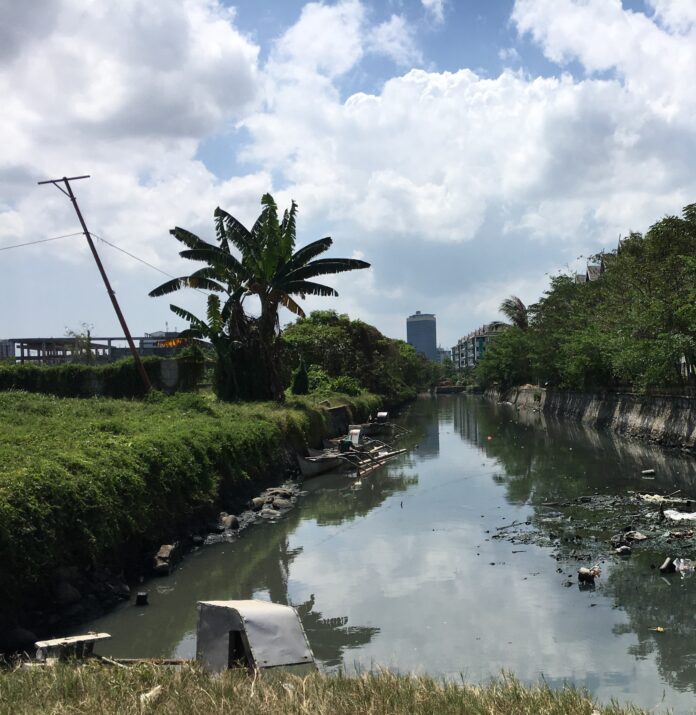
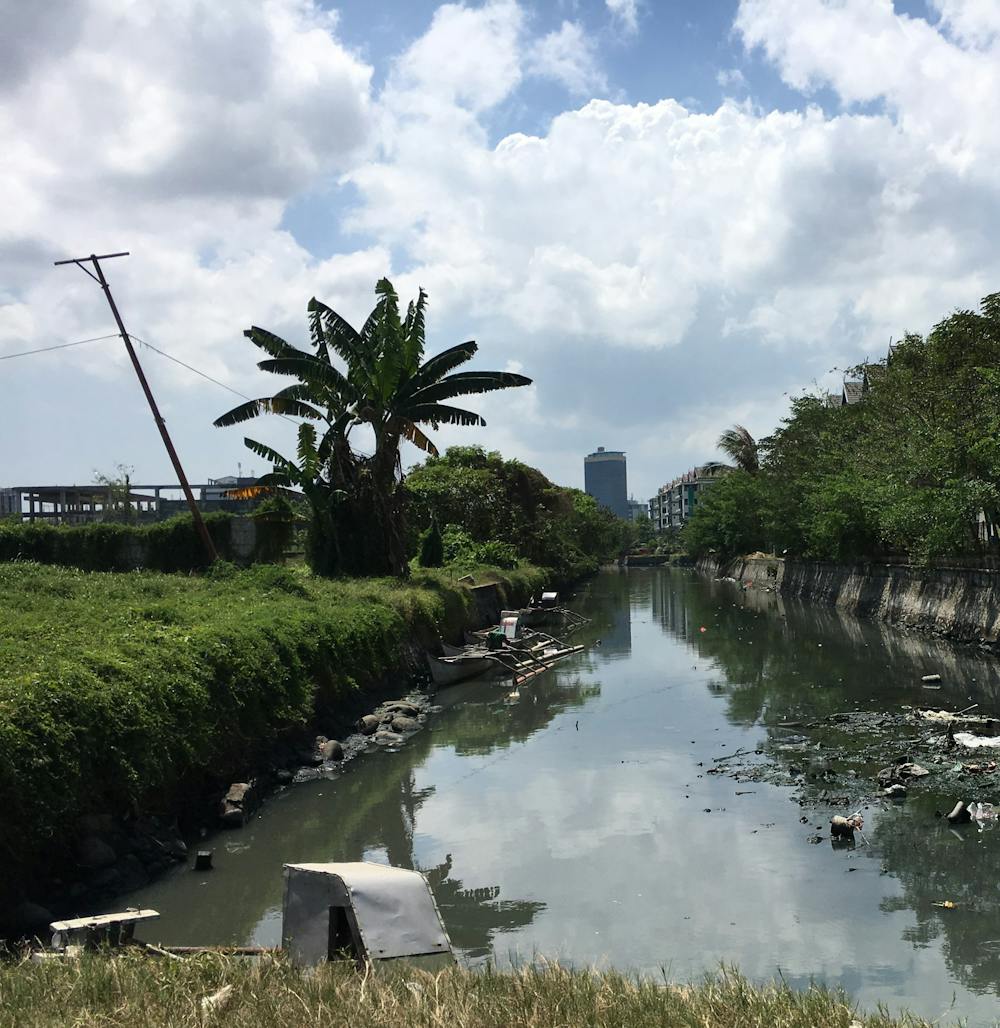
An open drain in Makassar city, Sulawesi.Sharon Bessell, Author provided
Barriers to physical isolation
The IDM survey asked about issues that prevent people from being able to isolate themselves.
A lack of access to private toilet facilities was a significant reason people had to go into public spaces. Almost one-quarter of respondents did not have access to private toilet facilities (in their own house or yard).
Lack of access to toilets was concentrated in rural areas where almost 29% of people reported no access, compared to less than 3% in urban areas. Almost 9% of respondents used only public toilets, with men (10.1%) more likely than women (6.9%) to rely on public toilets.
Almost 6% of people used toilets shared with other households. Women (7.2%) were more likely than men (3.9%) to use private shared toilets.
In these situations it is not possible for people to physically isolate. The most basic human functions require people to interact in spaces shared with others and in conditions of poor hygiene.
Our findings showed more than one-quarter of people surveyed needed to go out regularly to collect water for household use. This increased to one-third of people in rural areas and was just over 10% of people in urban areas.
People in rural areas were twice as likely as those in urban areas to report not always having water for domestic use, such as washing clothes and dishes. Almost 13% of respondents reported not having enough containers to carry or store enough water for more than one day.
Almost 19% of respondents said their home was too crowded to be able to live comfortably. This was more likely a problem in rural areas, but one in ten people in urban areas reported significant overcrowding in their homes.
This poses a very significant problem: even if people can remain in their homes, overcrowding means they must be in very close physical proximity to others.
The pandemic challenge
The pressures to go into public spaces for water or to access toilets, combined with overcrowding within homes, indicate the high risks faced by those who are poor. The option to physically isolate is not available.
The challenges facing Indonesia are enormous. With sufficient political will, planning and resources it is possible to ensure people have soap for hand washing, particularly in urban areas where access issues are less acute.
Providing people with access to hand-washing and toilet facilities in their homes is a massive infrastructure and social equity project, which cannot be achieved in the short term. Providing safe, public access points is now a matter of urgency, as is greater public awareness.
Despite these sobering findings, Indonesia is better placed than many countries. Poverty (measured by consumption expenditure) has been declining over time and fell below 10% of the population in 2019.
In some regions, such as sub-Saharan Africa and South Asia, poverty is far higher and the challenges will be far greater.
The authors would like to acknowledge the contributions and support of the members of the Australian National University-Individual Deprivation Measure Program team, particularly Janet Hunt, Mandy Yap, Masud Hasan, Helen Suich and Trang Pham.
In order to answer this question, we first to need to understand what elimination means in the context of disease, and how it differs from control and eradication.
Disease control is when we see a reduction in disease incidence and prevalence (new cases and current cases) as a result of public health measures. The reduction does not mean to zero cases, but rather to an acceptable level.
Unfortunately, there’s no consensus on what is acceptable. It can differ from disease to disease and from jurisdiction to jurisdiction.
As an example, there were only 81 cases of measles reported in Australia in 2017. Measles is considered under control in Australia.
Conversely, measles is not regarded as controlled in New Zealand, where there was an outbreak in 2019. From January 1, 2019, to February 21, 2020, New Zealand recorded 2,194 measles cases.
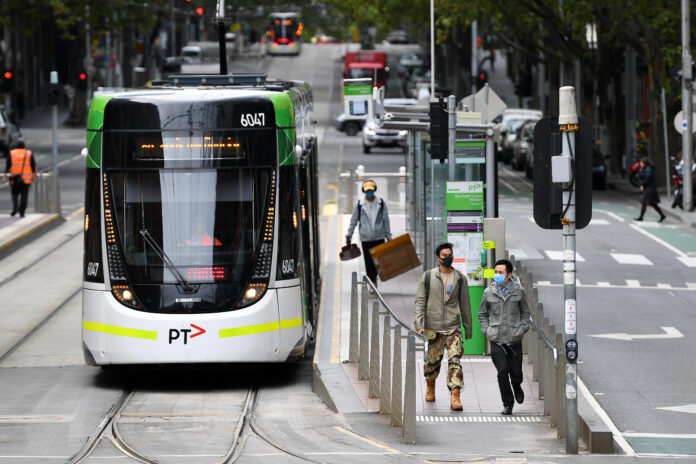
We’ve successfully flattened the curve. But what comes next?James Ross/AAP
For disease elimination, there must be zero new cases of the disease in a defined geographic area. There is no defined time period this needs to be sustained for – it usually depends on the incubation period of the disease (the time between being exposed to the virus and the onset of symptoms).
For example, the South Australian government is looking for 28 days of no new coronavirus cases (twice the incubation period of COVID-19) before they will consider it eliminated.
Even when a disease has been eliminated, we continue intervention measures such as border controls and surveillance testing to ensure it doesn’t come back.
For example, in Australia, we have successfully eliminated rubella (German measles). But we maintain an immunisation schedule and disease surveillance program.
Finally, disease eradication is when there is zero incidence worldwide of a disease following deliberate efforts to get rid of it. In this scenario, we no longer need intervention measures.
Only two infectious diseases have been declared eradicated by the World Health Organisation – smallpox in 1980 and rinderpest (a disease in cattle caused by the paramyxovirus) in 2011.
Guinea worm disease is also close with a total of just 19 human cases from January to June 2019 across two African countries.
What stage are we at with COVID-19?
In Australia and New Zealand we currently have COVID-19 under control.
Importantly, in Australia, the effective reproduction number (Reff) is close to zero. Estimates of Reff come from mathematical modelling, which has not been published for New Zealand, but the Reff is likely to be close to zero in New Zealand too.
The Reff is the average number of people each infected person infects. So a Reff of 2 means on average, each person with COVID-19 infects two others.
If the Reff is greater than 1 the epidemic continues; if the Reff is equal to 1 it becomes endemic (that is, it grumbles along on a permanent basis); and if the Reff is lower than 1, the epidemic dies out.
In both Australia and New Zealand we have found almost all of the imported cases, quarantined them, and undertaken contact tracing. Based on extensive community testing, there also appear to be very few community-acquired cases.
The next step in both countries will be sentinel surveillance, where random testing is carried out in selected groups. Hopefully in time these results will be able to show us COVID-19 has been eliminated.
The development of a vaccine can help control and eliminate a disease.Shutterstock
It’s unlikely COVID-19 will ever be eradicated
To be eradicated, a disease needs to be both preventable and treatable. At the moment, we neither have anything to prevent COVID-19 (such as a vaccine) nor any proven treatments (such as antivirals).
Even if a vaccine does become available, SARS-CoV-2 (the virus that causes COVID-19) easily mutates. So we would be in a situation like we are with influenza, where we need annual vaccinations targeting the circulating strains.
The other factor making COVID-19 very difficult if not impossible to eradicate is the fact many infected people have few or no symptoms, and people could still be infectious even with no symptoms. This makes case detection very difficult.
At least with smallpox, it was easy to see whether someone was infected, as their body was covered in pustules (fluid-containing swellings).
So while we may well be on the path to elimination in Australia and New Zealand, eradication is a different ball game.
Australia’s competitive volume housing construction sector is busy spruiking various upgrades and packages to sell the appealing notions of lifestyle and luxury on a budget. Along with sparkling stone benchtops and alfresco dining areas, some builders use sustainability and energy-efficiency features to entice customers. However, our recent study found the ways some volume builders promote energy efficiency and sustainability could mislead consumers and breach the Australian Consumer Law.
Understanding the stars
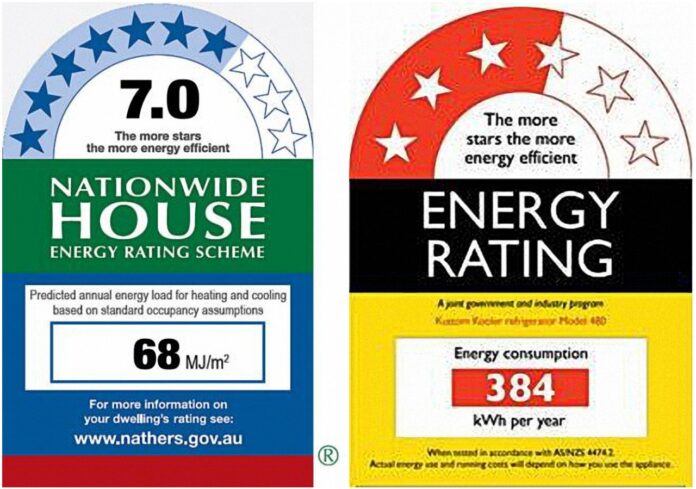
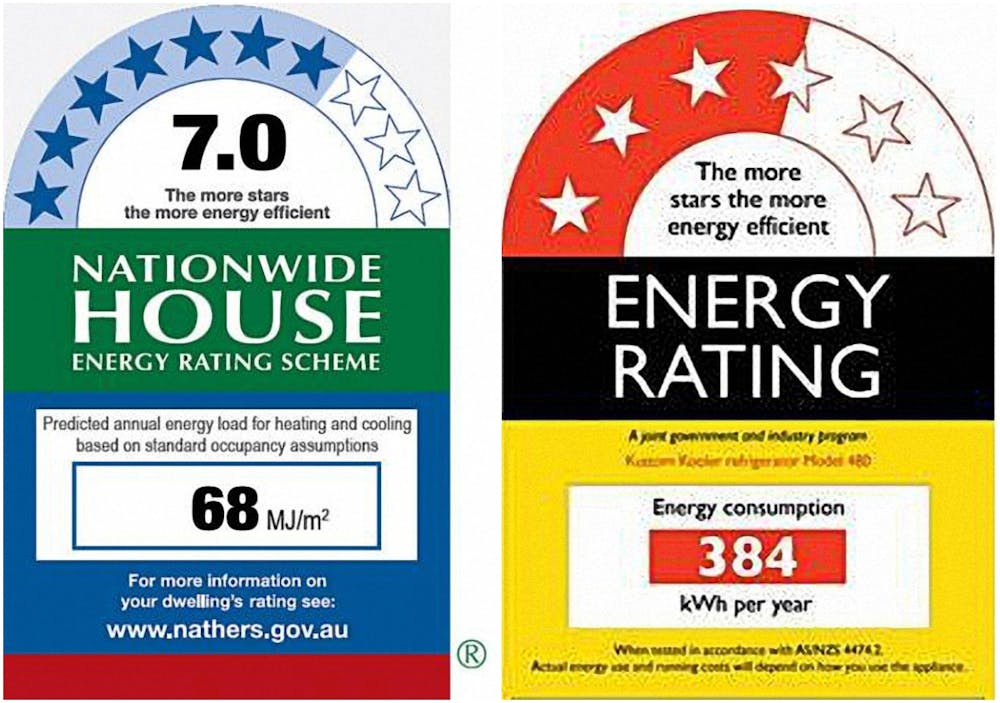
Stars are a simple shorthand or “measuring tape” to help consumers to quickly and easily identify the energy efficiency of each home, and to compare one house to another. Under the Nationwide House Energy Rating Scheme (NatHERS) the best rating is ten stars. Six stars is the regulatory minimum required of most new homes in Australia.
NatHERS (on the left) uses a ten-star scale, on which six stars is the minimum standard for most new homes built in Australia. Other six-star energy rating systems, such as for home appliances (right), add to the potential for confusion about the use of NatHERS stars.NatHERS, Energy Rating/Commonwealth of Australia
Most new home buyers are not well versed in building design or energy efficiency regulations. They tend to rely on industry experts such as builders when making such decisions about their new home.
We wanted to find out how Australia’s volume home builders communicated to consumers about energy ratings. Were they meeting their obligations under the Australian Consumer Law?
A person must not, in trade or commerce, engage in conduct that is misleading or deceptive or is likely to mislead or deceive.
As the Australian Competition and Consumer Commission’s guide on green marketing points out, when making statements about green initiatives the overall impression to a typical audience is most important. It cautions businesses:
You should be careful that the overall impression you create about the goods or services you sell is not misleading. In other words, it is not enough for each representation to be technically or narrowly correct. It is just as important to look at the overall impression created in the minds of average consumers in the target audience.
What we found
Our study examined the websites of Australia’s largest volume home builders to see how they explained the energy efficiency of their homes to potential buyers. We found logos and language that could mislead consumers about the energy-efficiency performance of those homes.
No websites we examined actually used the official NatHERS logo. Instead, some builders had created their own version of a six-star logo. Each example we found showed a grouping of six stars only, suggesting a rating of six out of six was the best rating.
Buyers are likely to interpret these logos as meaning six stars is superior or excellent performance, rather than the minimum performance benchmark that applies to all new homes. One logo went further, claiming six-star “sustainability” – when a NatHERS rating only measures thermal energy efficiency.
We also found statements on websites that inaccurately equated a six-star rating with a high energy performance. The website of one builder suggested six stars was a “superior” measure of service or quality. Another linked six stars with broader sustainability performance and commitment (not just thermal energy efficiency). One volume builder even described a six-star rating as an “award”!
In each case these statements could easily be misinterpreted as meaning the home was an exceptional product offering, rather than meeting the basic industry standard.
These volume home builder websites use logos and language that imply a high level of energy efficiency or a superior product offering, rather than simply indicating compliance with the minimum regulatory standard that applies to all new homes. As a result, home buyers are likely to be misled about the energy efficiency of these new homes.
Our research does not seek to suggest volume home builders have deliberately set out to mislead potential buyers. However, Section 18(1) is concerned with effect rather than intent. While builders may not intend to mislead buyers, this may be an outcome of current advertising practices.
Therefore, as we point out to both volume home builders and new home buyers, any information about house energy ratings needs to be clear and accurate. It should reinforce that six stars is the minimum standard that applies, not the best.
Energy-efficiency measures such as star ratings for new homes are an important part of efforts to reduce Australia’s energy demand and minimise contributions to climate change. Misleading statements about house energy ratings not only risk breaching the Australian Consumer Law, but also weaken community trust in star ratings and in the information the home-building industry provides. It’s time to review the spruiking.
Source: The Conversation (Au and NZ) – By Ilan Noy, Professor and Chair in the Economics of Disasters, Te Herenga Waka — Victoria University of Wellington
With New Zealand’s May 14 budget expected to chart the way out of the economic crisis, Finance Minister Grant Robertson should be looking to the past as well as the future. Finance ministers elsewhere are facing similar decisions, many even more constrained than New Zealand’s.
But the common claim that we live in “unprecedented times” is not entirely true. Social distancing and other dramatic interruptions to our lives are nothing new.
One clear precedent is the SARS epidemic that hit Singapore, China, Hong Kong, and Taiwan in 2003. Other more localised but catastrophic examples, such as the Haiti earthquake of 2010 or the 2004 Indian Ocean tsunami, are also instructive.
What is different is the scale of the current crisis. Economies everywhere are in freefall and unemployment is rising. Gross domestic product figures for the first quarter of 2020 show economic declines not seen since WWII. The second quarter is predicted to be even worse.
The challenge for governments is to manage both expectations and spending to drive recovery. Despite the fast-tracking of so-called “shovel-ready” construction projects, that does not necessarily mean infrastructural spending is a magic bullet.
An alphabet of possible recoveries
There are four plausible recovery trajectories. A V-shaped recovery suggests the affected economies will rebound rapidly after lockdown. A U-shaped recovery entails a similar return to normality but after a longer downturn.
The W describes a second hit to the economy, most likely from a second wave of infections (as happened in the second winter of the catastrophic 1918-1919 flu pandemic) but potentially also caused by misguided economic policies. Most worrisome here would be premature withdrawal of government spending support.
The worst case is L-shaped, in which the economy takes many years to come back.
Recovery from SARS was V-shaped in all the affected economies. While SARS spread to many fewer places and disappeared more quickly than our present nemesis, social distancing in the four affected countries was not dramatically different. Fear at the time was as palpable as it is now.
Taiwan, Hong Kong and Singapore all experienced a dip in GDP growth in the first half of 2003. But by the third quarter their economies were growing fast again. Statistical analysis we did for the Asian Development Bank found the epidemic did not have any longer-term adverse effect on these three economies.
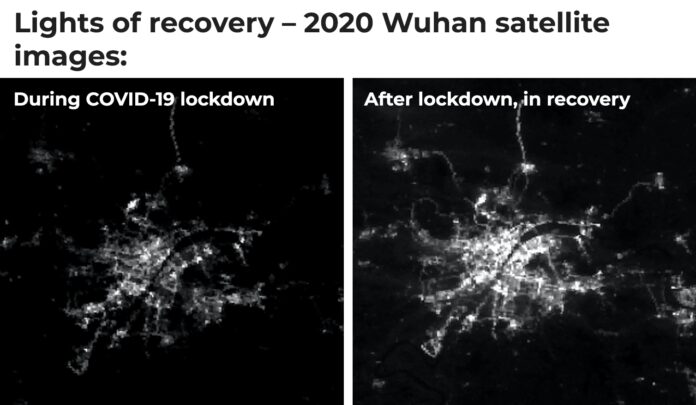
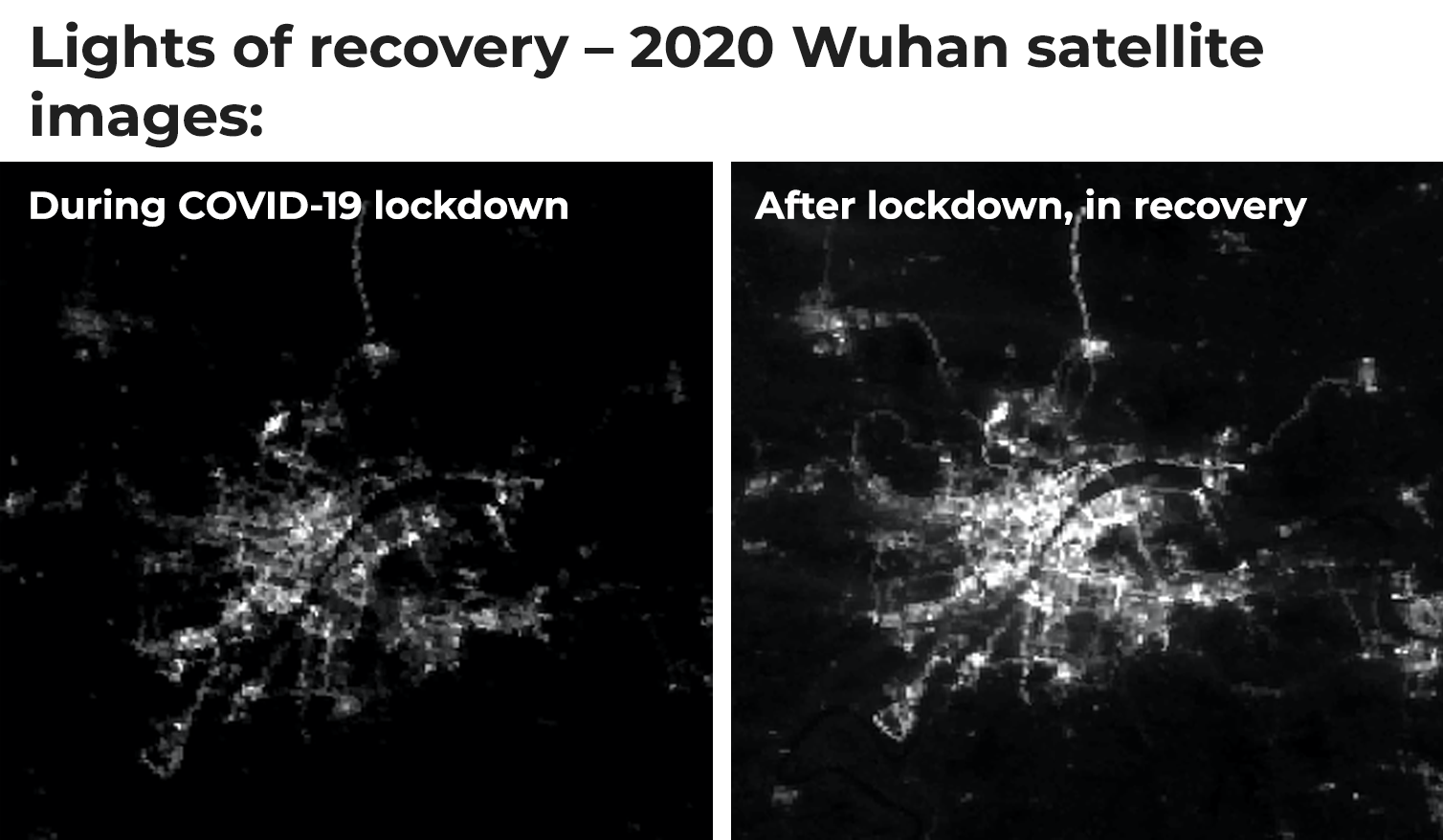
China is a much bigger country, but even when we looked at its two hardest-hit regions, Guangdong and Beijing, the picture was the same – a V. We could see this from economic data from the Chinese National Bureau of Statistics, and with satellite images of night-time light emitted by urban-industrial areas.
These data suggest there was some re-orienting of economic activity after the SARS epidemic (as observed in the diminished night-light) but very little long-lasting effect on aggregate incomes. The same rebound may be happening right now in Wuhan which emerged from lockdown in March this year.
SARS affected, drastically but briefly, only a few countries in East Asia (and Toronto, due to travel-borne infection). Each had the institutional capacity and financial resources to successfully mobilise recovery once the infection had been vanquished.
The data from recoveries after other types of disasters tell a similar story. Except for very poor and chaotically-governed places (such as Haiti), countries tend to recover quite rapidly. This is true for Indonesia and Sri Lanka, hardest hit by the 2004 Indian Ocean tsunami. Their recovery was fuelled by generous assistance from abroad and large mobilisations at home.
Targeted funding and managing fear to recover faster
Two main observations emerge in this rear-view mirror. The first is that the targeting of recovery funding is crucial. After previous shocks, when regions or cities failed to recover completely, it was usually because the recovery was under-resourced or funding was mis-targeted.
Unlike a natural disaster, the damage associated with COVID-19 is not to infrastructure. It is to employment in specific sectors such as tourism and culture. Policies should therefore target the maintenance of labour markets (even if it means sustaining them on life support) rather than spending on more infrastructure.
“Shovel-ready” projects were critical after the 2008 global financial crisis, when the disruption was largely to the construction/housing sector. A construction injection now will not provide work for most of people who have lost their jobs in restaurants, hotels, retail, or travel.
Spending on better and greener infrastructure, when the existing infrastructure is crumbling or dangerous, is good policy in and of itself. But it will not provide the necessary antidote to our current malaise.
Secondly, recovery depends crucially on expectations. In those cases where the shock significantly increased the fear of future shocks, recovery was slower. Households and businesses were more reluctant to buy and invest.
Without assurances that we have “solved” COVID-19 – with a vaccine or effective control – a full recovery is going to be impossible. The longer it takes, the more our recovery will be shaped like a drawn-out U rather than a V. As the Economist magazine recently put it, we will have a 90% economy.
Without a good public health response we might even risk a W, where a second wave of infection requires further harsh but necessary social distancing.
Without managing expectations about a COVID-free future, and without aggressive but well-targeted government action, the post-pandemic trajectory will look like an L. That will put a far greater burden on future generations than any debt governments might take on now to develop a vaccine or keep businesses afloat and people on payrolls.
Will the number of lives saved as a result of the COVID-19 restrictions be outweighed by the deaths from an economic recession?
This is a vital question to answer for governments responding to the current global tragedy.
Without numbers, there’s no obvious way of working out whether the economic impacts of the lock-down could be more harmful than the virus.
With health economics consultant Daniel West, I have attempted to estimate the numbers involved in Australia.
The estimates we have used for increased deaths from a lockdown-induced recession are at the high end of the likely scale. The estimates we have used for deaths from COVID19 if the lockdown ends are at the low end.
Our analysis suggests that continuing strict restrictions in order to eradicate COVID-19 is likely to lead to eight times fewer total deaths than an immediate return to life as normal.
Lives the lock-down could cost
The most obvious deaths likely to follow from a lock-down-induced recession are suicides.
Studies in 26 European countries over four decades suggest that increases in unemployment of more than 3% are associated with increases in suicides by 4.45%.
A similar relationship was found in Australia during the global financial crisis.
The projections for increases in unemployment if the lock-down continues are grim, some pointing to an unemployment rate of up to 15% which might not return to normal for up to a decade.
To account for the prospect that the coming recession will be more severe than most, we have used double the highest European estimate of the relationship between increased unemployment and suicide.
This estimate suggests that an increase in the unemployment rate to 15% followed by a gradual decline over ten years would produce a distressing 2,761 extra deaths due to suicide.
Loneliness takes lives too
Continued restrictions could also significantly increase loneliness, which, for those who are lonely, can increase deaths from all-causes by between 15% and 29%.
Research suggests that quarantine can increase the number of people showing psychological distress by about 20%, an estimate we have used as a proxy for the effect of loneliness, even though the lock-down restrictions are less severe than quarantine.
This points to an additional 4,015 deaths associated with loneliness from a lock-down of six months.
Although it would be reasonable to assume that a recession would increase the number of deaths from other causes, studies show this isn’t the case. Research into “all-cause mortality” consistently shows declines in deaths during recessions, due in part to a reduced number of heart attacks.
The current lock-down might also increase deaths in specific ways, such as deaths from alcohol abuse.
On the other hand, if hospitals are overwhelmed by COVID-19 cases, deaths from non-COVID-19 injuries and illnesses will increase as people cannot access health care.
Because we have no data on these offsetting possibilities, we have assumed they are roughly matched in size.
It is also worth noting that although we assume lock-down restrictions will hurt our economy more severely, cities that implemented more severe restrictions during the 1918 Spanish flu had economies that bounced back faster after the pandemic.
Lives the lock-down might save
We have estimated the number of deaths from COVID-19, suicide and loneliness under three different scenarios
an immediate return to life as normal, while still quarantining suspected cases
an easing of restrictions that allows the virus to slowly spread in order to achieve so-called herd immunity
the maintenance of restrictions until the virus is contained, followed by extensive tracking and tracing aimed at eliminating the virus
Scenario 1. Return to normal
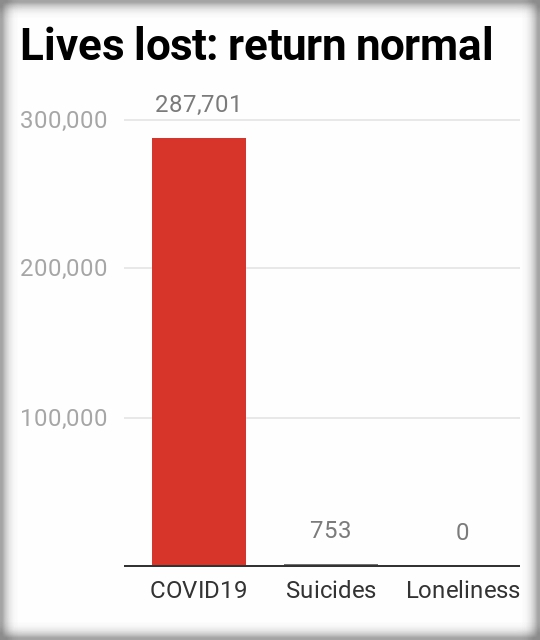
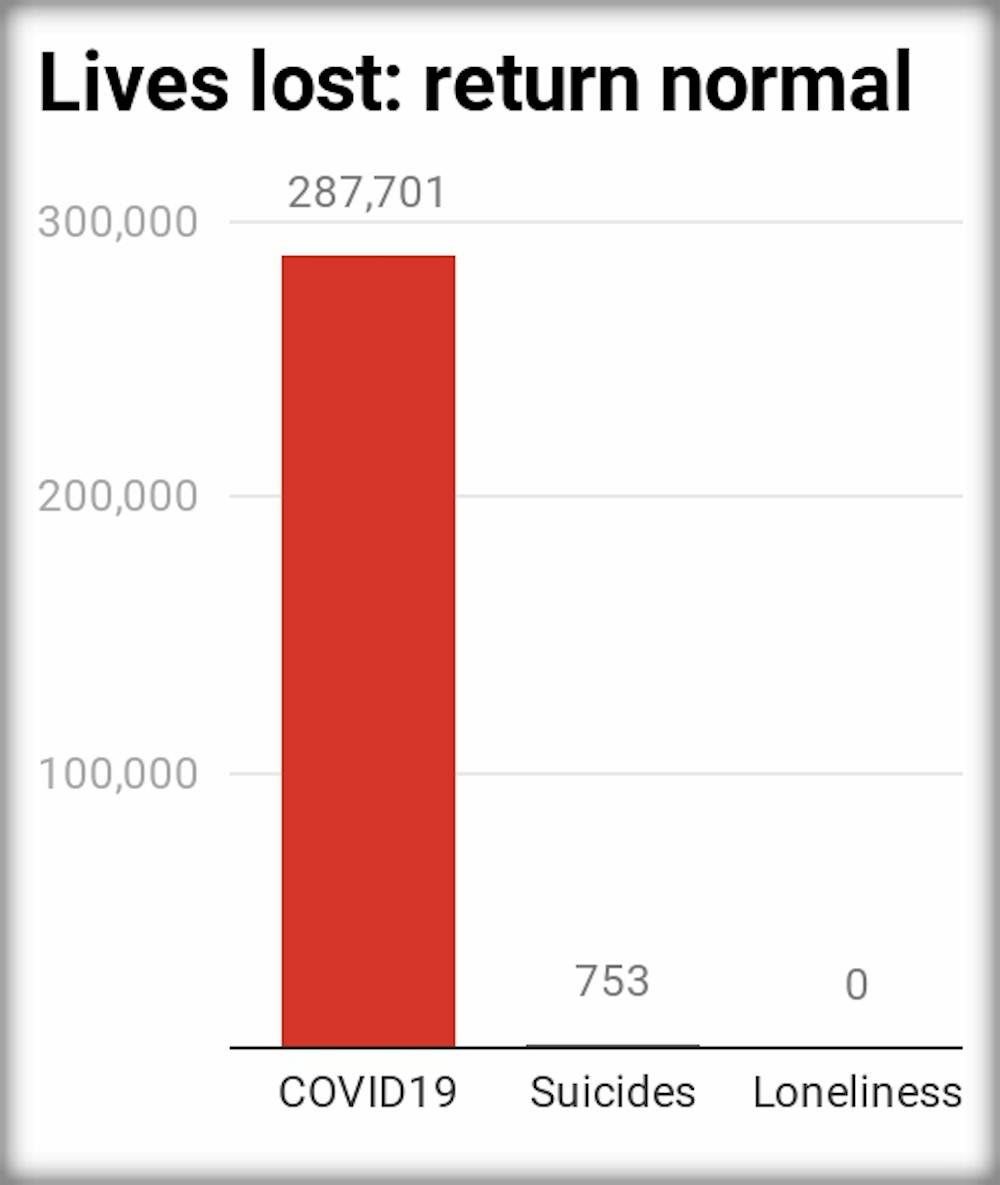
With no lock-down measures other than the quarantine of suspected cases, the government believes 68% of people would contract the virus. Our estimates suggest this would result in more than 287,000 deaths from COVID-19 as the health system could not cope with the volume.
We assume this would produce a recession lasting five years instead of ten, with 10% initial unemployment and an associated 753 extra deaths from suicide.
Scenario 2. Herd immunity
The government says that to achieve herd immunity, about 60% of people would need to eventually contract the virus. If it is done slowly, intensive care units will not be overwhelmed, keeping the death rate per infection low.
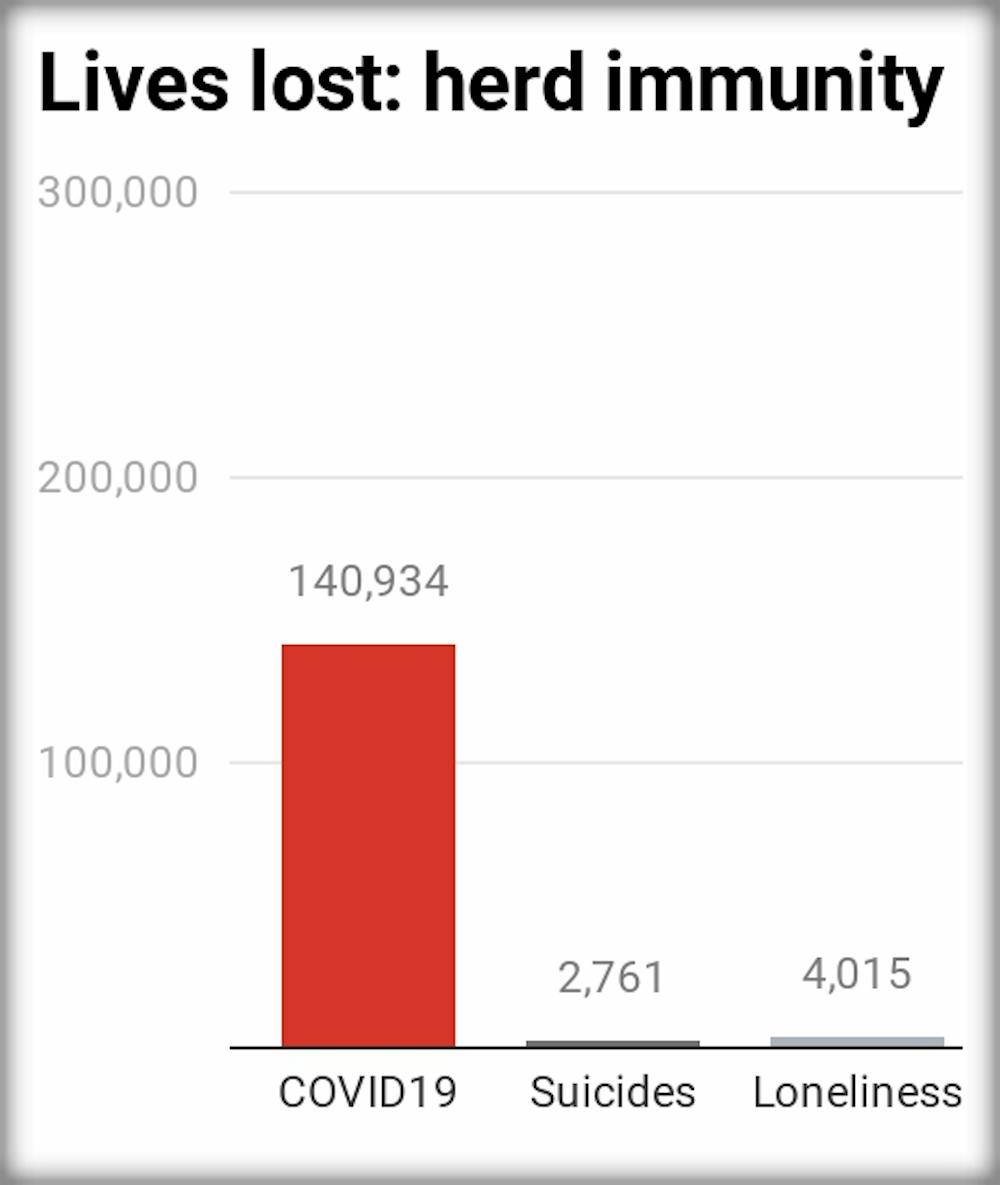
Our estimates suggest the strategy would lead to 141,000 deaths from COVID-19.
We assume this would result in a deep recession of ten years with 15% initial unemployment and an associated 4,015 deaths from loneliness and 2,761 deaths from suicide.
Scenario 3. Eradication
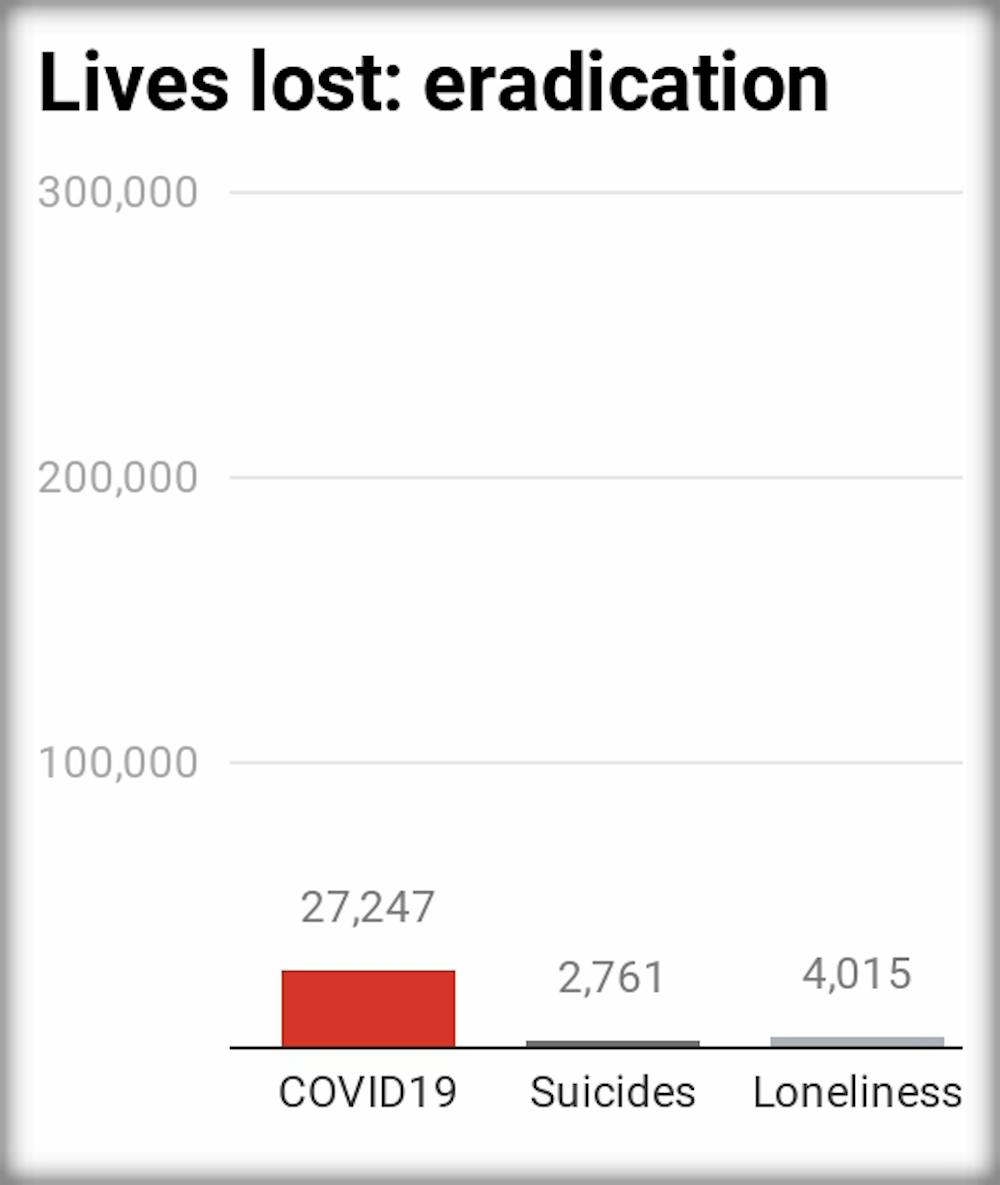
Under the eradication scenario, 11.6% of people would be expected to contract the virus, resulting in 27,000 deaths from COVID-19.
As with the herd immunity strategy, we have assumed a deep recession over ten years with 15% initial unemployment and an associated 4,015 deaths from loneliness and 2,761 from suicide.
Note that given Australia’s current success, it is very possible that with continued prudent restrictions, the number of deaths due to COVID19 will be well below 27,000.
The calculus of death
Regardless of the strategy, the estimated number of deaths from COVID-19 far exceeds the estimated number of deaths from suicide and loneliness.
Despite assuming that an immediate return to life as normal would prevent all further deaths from loneliness and 70% of deaths from the increased suicide rate associated with high unemployment, the life as normal scenario is predicted to result in by far the highest overall number of deaths: 288,000.
This is almost twice the number of deaths predicted for the herd immunity scenario (148,000) and more than eight times as many as eradication (34,000).
The Brain and Mind Centre at the University of Sydney has reported larger estimates for suicides from increased unemployment: an extra 750 to 1,500 suicides per year for five years. The top end of this range projects an extra 7,500 suicides, almost three times our estimate.
Even using this higher estimate, the number of lives that would be lost from COVID-19 without lock-down measures would dwarf the number of extra suicides.
People are understandably concerned about what the lock-down will do to their jobs, businesses and investments. That damage extends beyond lives lost.
The lives that will be lost are important. The implementation of preventative measures will be vital to reduce the risk of suicide.
Yet our calculations clearly suggest that, when it comes to human lives, far fewer will be lost by continuing restrictions than would be lost by ending them now.
If this article has raised issues for you, or if you’re concerned about someone you know, call Lifeline on 13 11 14.
This article was produced in collaboration with Daniel West. An extended version can be found here.
Movie characters – like Greek heroes – are typically faster, stronger, braver and better looking than those of us in the audience who stare on in admiration. We watch as obstacles are overcome and goals achieved, attracted by the beauty and goodness in the cinematic story world.
But, should movie characters cough as they go about their extraordinary business, you can just about guarantee they will be dead before the end of the film. The screen cough, it seems, is fatal.
In the time of COVID-19, the screen cough takes on new significance. A low budget Canadian film made early this year is thought to be the first movie about coronavirus. It features a woman getting into a lift with others and the confrontations that ensue when she starts coughing.
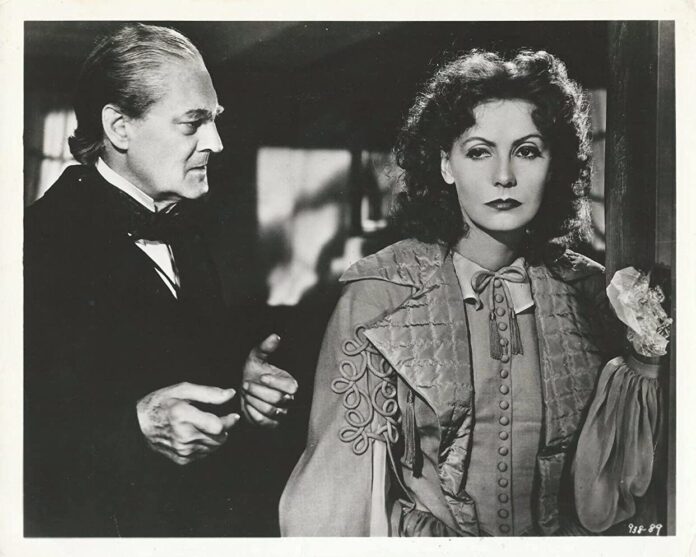
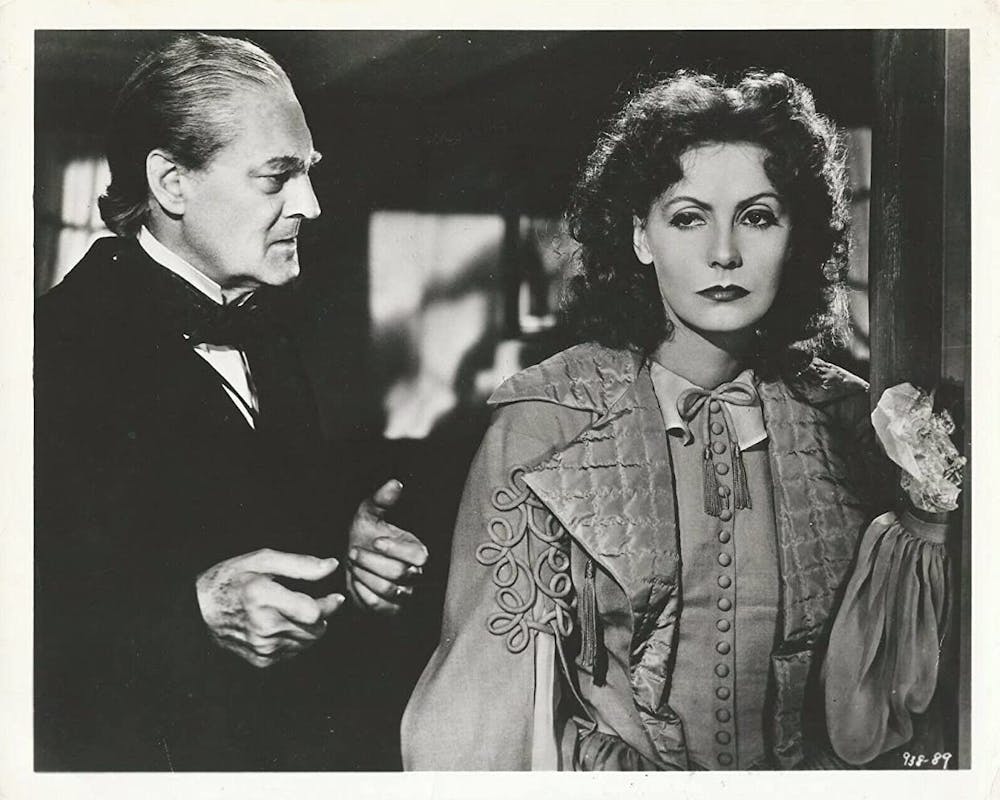
From Marguerite Gauthier (played by Greta Garbo) in the 1936 movie Camille, to Boris Shcherbina (Stellan Skarsgard) in the HBO series Chernobyl (2019), coughing on screen has deadly significance.
In the dramatic opening moments of the first episode of The Crown (2016), there is only darkness and silence … until we hear the sound of a dreadful hacking cough. Fade in to reveal King George V (Jared Harris, who also coughed in Chernobyl) in his bathroom, looking concerned. He coughs some more. Terribly sorry, your Majesty, but you’ll be dead before the end of Episode 2.
Satine (Nicole Kidman) coughs in Moulin Rouge (2000)
Nicole Kidman, as Satine in Baz Luhrmann’s Moulin Rouge (2001) coughs on page 35 of the screenplay. Well, she has been singing and dancing vigorously in front of Christian (Ewen McGregor) in a steamy Parisian nightclub, so perhaps it’s just a question of fitness.
“Oh, these silly costumes” she says to those gathered around her, in an attempt to explain her breathlessness. But it’s neither the clothes nor the exertion: the screen cough means she is doomed to die 83 pages later, in her lover’s arms, afflicted like Garbo’s Marguerite with tuberculosis.
That cough belongs to Beth Emhoff (Gwyneth Paltrow) and, sure enough, she doesn’t make it very far into the movie. The virus that takes her to an early screen grave also infects Erin Mears (Kate Winslet) who coughs while on the phone to her boss (Laurence Fishbourne). His look is enough to confirm our fears and within a few scenes her lifeless form is being zipped into a body bag.
Erin Mears (Kate Winslet) coughs in Contagion (2011).
Many others have succumbed to the incurable screen cough of death, including even Yoda in Return of the Jedi (1983). To be fair, Yoda is 900 years old and knows he’s about to die. “Soon,” he splutters to Luke Skywalker, “I will rest. Yes, forever sleep” and promptly becomes one with the Force.
Selling it
The screen cough is a phenomenon so well known by screenwriters that it’s become the subject of parody. Mitchell & Webb played with the trope in a BBC sketch named The Man Who Has A Cough And It’s Just A Cough And He’s Fine in 2008.
Alec Baldwin went one step further on Saturday Night Live in 2009 with an actors studio-style breakdown on how to sell your impending death effectively, starting with the fateful cough. The sketch – First Coughs: Mastering the Art of Foreshadowing Your Character’s Death – starts with step one: say “it’s only a cold”. Sometime later, the actor should emphatically state, “I don’t need any damn doctors!”. The final step is complex but mightily effective: “cough into a handkerchief, notice that there’s blood on it, look around nervously, then quickly shove it back in your pocket and hurry on your way”.
When I see these send-ups, of course I laugh, but with a tinge of resentment: parody is both celebration and humiliation. I can’t help but think that I’ll never again be able to see the beautiful & dramatic subtlety of a well placed screen cough without a snigger.
The Man Who Has A Cough And It’s Just A Cough And He’s Fine (2008)
Smoke signals
The art of signalling a future event in narration is a literary device apparent in the earliest ancient stories. It comes in many forms, from prophesy, dreams and omens to portents and apprehensions.
In the 4000-year-old poetic work, Epic of Gilgamesh, dreams predict the hero’s victorious battle with a great bull as well as his friend’s tragic death. Early in Sophocles’s play Oedipus Rex, a blind prophet riddles the truth of the story to come. The Bible is full of prophecy, none more memorable than Jesus’s prediction in The Gospel of John that one of his disciples would betray him.
Driven by our need for certainty, we value knowing what may lie ahead. Facing open time, with all its possibilities, takes courage and – from budgets to prayers – we seek to gain a sense of control over our future. It’s unsurprising that we find pleasure in stories where foreshadowing signals what will happen, from storytellers who sneak the future into the present.
Gotta hanky Greta? Since Garbo in Camille (1936) the onscreen cough has been a bad omen.IMDB
The ability to manipulate the direction of time is fundamental to sophisticated narration. Merely explaining what happens next – the way time works in real life – is not enough when it comes to entertainment. There’s nothing more tedious than a story that proceeds along the lines of “this happens, then this, then this” and so on. Novelist E. M. Forster – who wrote A Room with a View, Howard’s End and A Passage to India – famously decreed that this kind of primitive narration causes listeners to fall asleep or rise up to kill the storyteller.
To avoid such a fate, skilled narrators use foreshadowing to create tension, build anticipation and hook the audience into a belief that there’s something of interest to follow. We instinctively know that everything in a story has been planned and the author has determined the destiny of each character, so we intuitively look for the signs and the structures that will take us towards closure, including moments of foreshadowing.
They can be subtle and poetic (a storm or a shooting star), psychological (a character worrying about something that has yet to be revealed) or concrete, like the appearance of a deadly weapon. But common to all these forms of foreshadowing is that we see them as the future pointing backwards. The grief to come has caused the present storm; bad news the anxiety; the body at the end of the film requires the gun at the start.
Alfred Hitchcock knew only too well the importance of being able to play with time. Imagine four people seated at a table having a conversation about football for five minutes, when suddenly a bomb goes off. That’s five minutes of boredom followed by a surprise. What’s in it for the audience, says Hitchcock, is only “ten seconds of shock”. But take the same scene and show the audience the bomb at the beginning, and the conversation about football becomes an exercise in suspense and high anxiety.
Orson Welles plays out this idea in the famous opening scene of Touch of Evil (1958), showing us a bomb set to go off in three minutes. It’s then hidden in the boot of a car that moves erratically through a busy crowd. We hold our breath wondering where the car will be when the time is up.
Opening Scene of Touch of Evil (1958)
The cough is a timebomb
The screen cough is also the ticking of a bomb, leaving both character and audience unsure when it will go off. One of the most dramatic screen coughs occurs in Three Billboards Outside Ebbing, Missouri (2017). It’s revealed early in the movie that police chief Willoughby (Woody Harrelson) has terminal pancreatic cancer, but it’s a brutal shock when he violently coughs blood over Mildred Hayes (Francis McDormand).
In a strangely poignant sequence, writer/director Martin McDonagh opts for Willoughby to take his own life rather than let the disease run its course: he knows what lies ahead after that dreadful coughing incident.
Storytellers have a delicate balancing act to maintain when it comes to foreshadowing. Too oblique or poetic and the audience struggles to see the connection between the signalling moment and the signalled event, or perhaps only recognises it retrospectively. Because the screen cough is linked to both a specific individual (the sufferer) and a specific outcome (death), it’s necessary to be subtle when using it as a narrative device.
Perhaps we are now beyond subtlety. The combination of our current hyper-vigilance of respiratory symptoms and the increasing awareness of the function of the screen cough, risks it becoming a dreadful cliche, a trope in need of a innovative makeover. Like the good guys wearing white hats in Westerns, and detectives smoking excessively in film noir, it may just be time to give the screen cough a breather.
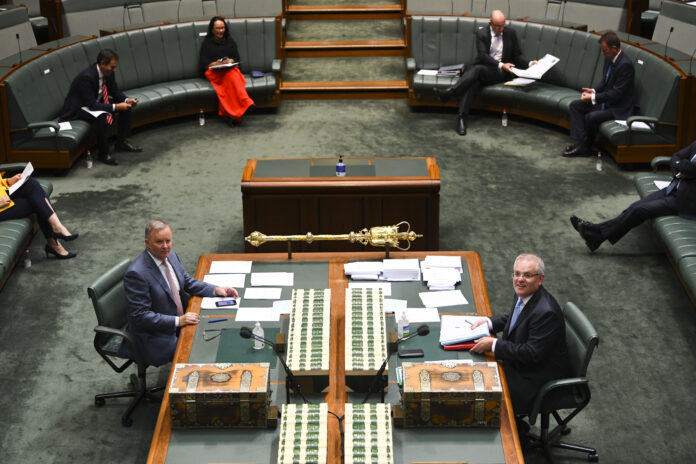
Coincidentally, as the economy takes some early steps towards reopening, parliament will meet next week for what is being billed as a “normal” sitting – though that’s a relative term these days.
The two recent one-day meetings (March 23, April 8) were entirely devoted to passing COVID rescue measures; the tone was sombre, partisanship minimal. This will be a three-day sitting (Tuesday to Thursday); announcing it last month, Scott Morrison described it as a “trial week”, with the aim of “having the parliament meet again on a regular basis”.
Labor and many commentators argued parliament should have sat all through. After all, businesses were encouraged to keep operating where they could, so why not this business house of the nation?
But at least we have a compromise. In late March, it had been intended to have no sittings until August. It now seems likely there’ll be a week or two in June before the usual winter recess.
Next week will still be a socially-distanced parliament. Only 75-77 MPs will be permitted in the House of Representatives chamber at any one time, about half the full complement.
While there’ll be more House members in Canberra, a system of revolving “pairs” will see some members in the chamber while others are not. The Senate will be slimmed down as well.
There’ll also be socially-distanced party meetings (that could be automatic in the aggro ranks of the Nationals). In recent weeks the Coalition has been having “tele-townhalls” with its members hearing briefings from Morrison, Deputy Prime Minister Michael McCormack, Treasurer Josh Frydenberg and Health Minister Greg Hunt, and given an opportunity to ask questions.
For Labor, the tactical judgment to be made will be how much to politically distance from the government.
One Labor source predicts we’ll see a “transition” week. “People say politics will have to return at some point. But people are still in the ‘can it be co-operative’ phase,” he says.
It’s a fine line. In these times, the public want their politicians to work together, to avoid unseemly brawling. The high degree of bipartisanship over COVID measures has likely been a factor in the rise in trust in government reflected in surveys, the most recent from the Australian National University on Thursday.
Nevertheless, Labor can’t afford to just be head-nodders, even in relation to pandemic measures, such as the COVIDSafe app.
The main legislation of the week will be for the app, which the opposition supports while having questions.
The Senate committee inquiring into the government’s response to the pandemic this week heard evidence about the app’s technical issues.
The government is also refusing to give a target for downloads. After suggestions a 40% download was needed for effectiveness (though it was never clear what it was 40% of) the government now says there’s no “target”. Nevertheless, more information about the efficacy of various rates of downloads is needed.
The legislation for the app has been released, and contains strong privacy protections. But already there’s pressure from some employers to be able to force workers to download it.
That is prohibited, and the government must make it very clear that leaning on employees to do so will not be tolerated. Otherwise people will lose confidence in what has the promise of being a useful tool.
Parliamentary question times next week are expected to be somewhat more combative than during the one-day sittings, but not like the shouty pre-COVID days.
Against the background of the shambles on the conservative side this week with the carry-ons by the NSW state National John Barilaro and the Liberal Andrew Constance, Anthony Albanese must decide how to pitch Labor’s use of the House to prosecute the Eden-Monaro byelection – for which Speaker Tony Smith may announce a date next week.
The infighting on the other side provides tempting material but Labor might be wise to keep to on-the-ground issues, in particular the ins and outs of the bushfire recovery.
It can leave it to the media to highlight the shenanigans. Certainly eyes will be on the demeanour of the Nationals, to see whether Barilaro’s attack on McCormack has re-ignited tensions in the federal party.
The fire recovery issue is potent in Eden-Monaro. Agriculture Minister David Littleproud has flagged an announcement in the next few days (which the government says was in the pipeline before the byelection loomed). He will also make a statement to parliament.
The government’s legislative program, apart from the app, will comprise non-controversial “rats and mice” bills. Divisive matters like the “ensuring integrity” anti-union legislation won’t be there.
Apart from the privacy legislation and bushfires, the main item on the government’s agenda will be Frydenberg’s Tuesday economic report to parliament, including the effect of easing restrictions.
Ahead of this, Friday’s Reserve Bank quarterly forecasts on economic growth, unemployment, wages and other measures for the coming two years will present a grim picture.
Meanwhile Albanese will begin setting up a major debate with the government when he delivers his fifth “vision statement”, outlining ideas for the post-Covid world.
In his speech, delivered to caucus on Monday, he’ll make it clear this will be a world in which a Labor government could not fund the sort of generous spending to which it was committed at the last election.
COVID is giving Albanese the opportunity – the cover, if you like – to complete the pivot to the more fiscally conservative position that he began to spell out in the aftermath of last year’s defeat.
He is also planning to have the party come up with a broad suite of policy ideas by the October budget. The government wants to make that budget policy-heavy; Albanese is anxious to be able to pack a punch in his reply.
The public’s attention next week, however, is likely to be less on the doings in Canberra and more on what’s happening on the ground.
Friday’s national cabinet sets parameters and stages for lifting restrictions. But how the process unfolds will differ between states; those decisions will be variously greeted with jubilation, criticism and controversy as life cranks up again but not fast enough for some.
“We are borrowing tens of billions of dollars from our children and grandchildren to get us through the Covid crisis…”. (James Shaw in interview on Radio New Zealand’s Nine to Noon, 23 April 2020)
Debtors and Creditors
Keith Rankin.
Literally, for me to be in debt to somebody means that the ‘somebody’ (the creditor, maybe my friend) has incurred a sacrifice so that I (the debtor) can access some want or need today that I am not otherwise entitled to.We accept that people will not normally make such sacrifices without compensation, and that such compensation is called ‘interest’.
A good example would be if both my friend and I wanted to buy a bicycle. He could afford a basic bicycle now, and I cannot. But I claim to have a more immediate need for a bicycle now. So he lends me enough money so that I can buy a basic bicycle now, and, over time, repay him with interest. As a result, a year later he gets to buy a better bicycle – one with bells and whistles – on account of the interest he receives from me. He makes a present sacrifice (a year without a bicycle), and gains a future reward (a bicycle with bells and whistles). I make a future sacrifice (no bells and whistles), and gain a present reward (a bicycle).
In this financial view of debt, my friend both saved (ie did not spend) and invested (gained a yield in return for a sacrifice). A finance professional would say that my friend had invested in me by buying my ‘bond’. An economist might tolerate that view of my friend as an ‘investor’ if I only wanted my bicycle for pleasure. But, if I needed my bicycle to run a courier business, then I would be the investor, not my friend. To a financial analyst, the words ‘saving’ and ‘investing’ are synonyms. To an economic analyst, ‘saving’ and ‘investing’ are antonyms; to an economist ‘investment’ is the process of purchasing goods and services (spending) that help someone to run a business. To a financial analyst, ‘investment’ is the process of purchasing a promise (which is saving, not spending).
This example shows how the language of finance is somewhat murky, and why so many people give up on trying to understand finance, and how they often extend that abstinence by giving up on economics too.
We may also note that, this bicycle example of a debt transaction explains why many people believe that it is impossible to have negative interest rates; this view is that interest is compensation for sacrifice. This is the prevailing view of financial analysis. (We may note that financial analysts extoll the magic of compounded interest; that by making repeated sacrifices ‘investors’ can accumulate rewards at an exponential growth rate. One catch is that investors must abstain from the enjoyment of their rewards. Another catch is something economists call ‘negative real interest rates’.)
Economists, on the other hand, understand my bicycle example as inter-temporal trade (trade between the present and the future) and that interest is the price that balances supply and demand for such trade. Thus, in economics, interest rates can be positive or negative. Further economists like to talk about ‘real interest rates’ (essentially the contracted interest rate minus the rate of inflation), and accept that, for much of history, real interest rates have been negative. (So much for the alchemy of compound interest!)
(As an aside, for much of the 2010s’ decade, Switzerland had both deflation – falling prices, eg annual inflation of minus one percent – and negative interest rates, eg minus half a percent. When those numbers applied, real interest rates were positive; minus half a percent minusminus one percent equals plus half a percent!)
Saving as Insurance
The reality is that finance is not really about savers making sacrifices. For example, most retirement savings are not spent by old people enjoying their bells and whistles in the last years of their lives. Rather, most private retirement savings ends up in the savers’ estates. In many cases it is their adult children who spend what their deceased parents did not; in perhaps more cases, the inherited money is left in the bank and forms part of the inheritors’ estates. (In matters of inheritance, who is the ‘inheritee’?)
By and large it is high-income people who save; people who do not have to make sacrifices and by and large do not make sacrifices. (Traditional misers – such as Dickens’ Scrooge – may appear to make sacrifices by living miserly lives; but those lives represent their choices. Others may stay in basic cabins when they go on holiday, despite the fact that they could easily afford much better accommodation; again, these frugal lifestyles represent preferences, not sacrifices.)
Most savers do not save for a ‘sunny day’; they are rich enough to not need to save for things they really want. The real reason that most people save is for a ‘rainy day’, as a precaution in case something goes wrong in the future. Their sacrifice is akin to an insurance premium; and it’s a very small sacrifice given that most savers do not live noticeably frugal lives.
What they do want is to be sure that they can withdraw some or all of their savings when it rains very hard. As such, they face a general problem that exists with all insurance. My insurance works when it rains on me, but not on other people. My family or myself gain a payout when my rainy day happens (it could be my death).
What happens when it rains on everybody at the same time? In Christchurch in 2011 the insurance industry could not cope. Further, even Christchurch people with mortgage-free houses and lots of money in the bank had to compete for the services of builders and plumbers and the like. The constraint on happiness was the shortage of essential workers and essential equipment; and an unsafe environment where many workers (including essential workers) were unable to ply their trades. There are times when money cannot buy happiness. The insurance industry’s solution is reinsurance; insurance companies ensuring themselves against large claims.
Neither conventional insurance nor lots of money in the bank can guarantee policyholders or savers security in times of war, pestilence or famine. These are cases when it doesn’t just rain on everyone in your city; rather, it rains on everyone everywhere. When the supply chains are broken, attempts by savers to spend their money result in inflation, maybe hyperinflation. A million dollars of savings is worthless when inflation reaches one billion percent.
Saving represents the creditor side of transactions for with the other parties are debtors. The debtors get extra happiness today; the creditors expect to get extra happiness in the future. A particularly important form of happiness is economic security. (When Cinderella married her prince and lived happily ever after, we may assume that she got three meals a day and a roof over her head; her marriage was like a pauper winning lotto; having a sense of economic security is a very important form of happiness.)
When supply chains are broken, government spending to resurrect and recreate supply chains, and to ensure everyone can access those supply chains, becomes all-important. Such government spending is necessarily debt-funded, except perhaps in a few countries where governments (such as Norway or Saudi Arabia) have large sovereign wealth funds. Governments are insurers of last resort; refer David Moss (2002), When All Else Fails.
James Shaw, co-leader of the New Zealand Green Party
What do we make of Shaw’s claim that we are borrowing from our grandchildren? Does it make sense? Will there be some future financial reckoning which might have an adverse impact on our children? If our grandchildren are debtors, will they have to make sacrifices to settle this debt? Or are they creditors who may become victim to a default? A literal interpretation of Shaw’s statement is that our grandchildren are creditors, not debtors. Creditors by definition gain their benefits in the future, having made sacrifices in the present.
Certainly, there is no shortage of economic commentators who suggest that in the future all this ‘borrowed money’ will have to be ‘paid back’. I think Shaw was making the point that we need to spend wisely, equipping our grandchildren so that they will be able to pay the money back rather than default on debt contracts signed by their grandparents. That makes them debtors, not creditors. Who will they pay the money back to?
They will owe the money to themselves. There need be no reckoning after all.
By ‘we’, Shaw means the New Zealand government. The New Zealand government clearly is the debtor, here, the government of course being a proxy for the New Zealand people.
It sounds as if Shaw really means the opposite of what he said, that our grandchildren will be debtors, in the sense that they will inherit government’s debts incurred by their grandparents. I think that Shaw was trying to say that our grandchildren may inherit a government debt to GDP ratio of (say) 100 percent, and that they will have to pay higher taxes in order to get that ratio down to the 20 percent of GDP that this somewhat austere government believes is appropriate.
Government Debt
Government debt comes in four categories; that is, there are four different possible classes of creditor. Some creditors are less benign than others.
In the first case a government borrows directly or indirectly from its Reserve Bank (aka ‘central bank’), creating what some commentators call ‘monetised debt’. The debtors are the economic citizens of New Zealand, who also happen to be the shareholders of the Reserve Bank. So long as the resultant spending is done to ease the problem of a broken supply chain, and to pay benefits to ensure that all the resident population can draw sustenance from that supply chain, then the putative sacrifice (inflation) becomes less likely, not more likely.
In the second case, a national government borrows from that nation’s private savers, either directly (as in the historic cases of war bonds) or indirectly through the commercial banks. Interest rates may be high, low, zero, or negative. In the latter three cases, there is a surfeit of private savings and the government is acting as borrower of last resort. Private savers like this arrangement, because it is an alternative to increased taxation. The government spends while private savers refrain from spending; the savers are not making a sacrifice because they would have been savers anyway. The advantage for the savers – the creditors – is that they can still access their savings when individual savers face individual crises; this they could not do had they paid tax to the government instead of lending to the government. (This is the Japanese solution, where Japanese lend to their own government at minimal interest rates; they do this in preference to paying higher taxes. The massive Japanese government debt to its own middle class has many economic benefits to all concerned, and few detriments. Japan is not constrained by this debt.)
The third case does not apply in New Zealand, but certainly does in the European Union. This in when the governments of some European Union states are in financial debt to middle class savers mainly resident in other European Union states. In a well-functioning Union, such debt would be comparable to Japan’s government debt. But in Europe the north-south schism is such that this has become a huge problem, albeit an artificial problem.
The fourth case is when sovereign governments are in financial debt to unambiguously foreign creditors. In these situations, creditors may to take it upon themselves to throw their weight around; in particular to make unreasonable and unsustainable demands on debtor governments.
Thus, the problem that can arise from government debt is principally a political one, that relates to the creditor-debtor relationship, and the inequalities that reflect an asymmetrical creditor-debtor relationship.
So, what do we make of James Shaw’s statement? Covid19 sacrifices have been made by all the world’s people, in terms of direct or indirect health outcomes, in terms of lost liberty and induced agoraphobia, in terms of public policy mistakes in many countries, in terms of compromised livelihoods, and in terms of lost benefits which were tied to persons’ now-precarious market incomes. The increased public debt is required to offset these sacrifices.
There is no obvious creditor sacrifice. Rather, for those people with the capacity and preference to be creditors (especially in the second case sense above), government as borrower in a time of few viable private debtors may enable interest to be paid at positive interest rates; so there is a clear creditor reward. As for most debt contracts, the outcome is win-win.
A Constructive Rhetoric around Debt
Debt need not be the bogey which it is often portrayed as. The principal return on coming government emergency outlays will of course be the resurrected and reimagined supply chains, and the incomes (including tax revenues) they generate. Our children and grandchildren will be foremost among those beneficiaries. We can credit them.
Instead of invoking the debt bogey, Mr. Shaw, you could say:
“We are investing tens of billions of dollars for the benefit of our children and grandchildren. May their lives be stable, equitable, and sustainable.”
The Journalism Education and Research Association of Australia (JERAA) has called on the Australian government to make strong diplomatic representations to Philippine President Rodrigo Duterte to reinstate ABS-CBN’s television operating licence.
It has also urged Duterte to make an ongoing commitment to press freedom – particularly now at the height of the covid-19 coronavirus pandemic.
The Duterte administration ordered the closure of ABS-CBN this week after its operating licence lapsed on May 4. ABS-CBN is a private enterprise whose network reaches internationally, providing a service to Filipinos around the world.
This is the third media organisation that has been “interfered” with in the four years since Duterte was sworn in as President and stated: “Just because you’re a journalist, you’re not exempt from assassination, if you are a son of a bitch.”
– Partner –
Duterte’s actions are having a chilling effect on Philippine media freedom, encouraging self-censorship by reporters and media outlets fearful of government reprisals for critical reporting at a time when the media’s role in reporting the pandemic is vital, Dr Wake said in the statement.
Even before this closure, the Philippines had dropped two further places on the RSF World Press Freedom Index, now sitting at 136th (Australia is situated at number 26 by comparison).
Background: President Duterte has labelled broadcaster ABS-CBN and the Philippine Daily Inquirer as “sons of whores”, and warned of repercussions over their criticism of him.
The Philippine Daily Inquirer had been one of the most vocal critics of the administration and its former owners, despite being one of the wealthy scions in the country, did not interfere in the editorial content.
The Duterte administration has also conducted a judicial harassment campaign against Rappler chief editor and publisher Maria Ressa and her online news outlet, one of the country’s most prominent independent news organisations.
Rappler angered Duterte with its criticism of him and by publishing a transcript of a call with Donald Trump, during which the US President praised Duterte’s murderous “drug war” and invited him to the White House, the JERAA statement said.
Ressa and her staff have received threats of death, sexual assault and more.
The persecution of Philippine journalists has been accompanied by online harassment campaigns waged by pro-Duterte troll armies, which also launched cyber-attacks on alternative news websites and the site of the National Union of Journalists of the Philippines.
The Australian government’s COVIDSafe app has been up and running for almost a fortnight, with more than five million downloads.
Unfortunately, since its release many users – particularly those with iPhones – have been in the dark about how well the app works.
Digital Transformation Agency head Randall Brugeaud has now admitted the app’s effectiveness on iPhones “deteriorates and the quality of the connection is not as good” when the phone is locked, and the app is running in the background.
There has also been confusion regarding where user data is sent, how it’s stored, and who can access it.
Conflicts with other apps
Using Bluetooth, COVIDSafe collects anonymous IDs from others who are also using the app, assuming you come into range with them (and their smartphone) for a period of at least 15 minutes.
It’s likely COVIDSafe isn’t the only app that uses Bluetooth on your phone. So once you’ve enabled Bluetooth, other apps may start using it and collecting information without your knowledge.
Bluetooth is also energy-intensive, and can quickly drain phone batteries, especially if more than one app is using it. For this reason, some may be reluctant to opt in.
There have also been reports of conflicts with specialised medical devices. Diabetes Australia has received reports of users encountering problems using Bluetooth-enabled glucose monitors at the same time as the COVIDSafe app.
Many apps require a Bluetooth connection and can track your location without actually using GPS.
Bluetooth “beacons” are progressively being deployed in public spaces – with one example in Melbourne supporting visually impaired shoppers. Some apps can use these to log locations you have visited or passed through. They can then transfer this information to their servers, often for marketing purposes.
To avoid apps using Bluetooth without your knowledge, you should deny Bluetooth permission for all apps in your phone’s settings, and then grant permissions individually.
If privacy is a priority, you should also read the privacy policy of all apps you download, so you know how they collect and use your information.
Issues with iPhones
The iPhone operating system (iOS), depending on the version, doesn’t allow COVIDSafe to work properly in the background. The only solution is to leave the app running in the foreground. And if your iPhone is locked, COVIDSafe may not be recording all the necessary data.
You can change your settings to stop your iPhone going into sleep mode. But this again will drain your battery more rapidly.
Brugeaud said older models of iPhones would also be less capable of picking up Bluetooth signals via the app.
It’s expected these issues will be fixed following the integration of contact tracing technology developed by Google and Apple, which Brugeaud said would be done within the next few weeks.
If a user tests positive for COVID-19 and consents to their data being uploaded, the information is then held by the federal government on an Amazon Web Services server in Australia.
Data from the app is stored on a user’s device and transmitted in an encrypted form to the server. Although it’s technically possible to intercept such communications, the data would still be encrypted and therefore offer little value to an attacker.
That said, it’s reassuring the Amazon data centre (based in Sydney) has achieved a very high level of security as verified by the Australian Cyber Security Centre.
Not even a court order during an investigation of an alleged crime would be allowed to be used [to access the data].
Although the determination and proposed legislation clearly define the who and how of access to COVIDSafe data, past history indicates the government may not be best placed to look after our data.
It seems the government has gone to great lengths to promote the security and privacy of COVIDSafe. However, the government commissioned the development of the app, so someone will have the means to obtain the information stored within the system – the “keys” to the vault.
If the government did covertly obtain access to the data, it’s unlikely we would find out.
And while contact information stored on user devices is deleted on a 21-day rolling basis, the Department of Health has said data sent to Amazon’s server will “be destroyed at the end of the pandemic”. It’s unclear how such a date would be determined.
Ultimately, it comes down to trust – something which seems to be in short supply.
When the report of the world-leading, five-year investigation was presented to the governor-general in December 2017, large sections of three volumes were blacked out. They had been redacted so as not to prejudice a number of ongoing or forthcoming criminal proceedings, including the cases against Cardinal George Pell.
The three redacted volumes were the report of Case Study 28 (on church authorities in Ballarat), the report of Case Study 35 (on the Catholic Archdiocese of Melbourne) and Volume 16, Book 2 of the final report, which focused on the Catholic Church generally.
The majority of the redactions related to what Pell knew about accusations of clerical child sexual abuse against various clergy in Ballarat and Melbourne, and what he could and should have done at the time. They remained redacted while he was facing legal action in relation to child sexual abuse allegations against himself.
Victorian police announced they were charging Pell with a series of offences in June 2017. Almost half the charges were dropped due to insufficient evidence, including after the death of one complainant, and another being ruled medically unfit to give evidence.
Pell was convicted in December 2018 of five counts of sexually abusing two boys in St. Patrick’s Cathedral in the 1990s. Additional charges relating to allegations of sexual misconduct in Ballarat were dropped.
Pell’s conviction was upheld on appeal to the Supreme Court of Victoria in June 2019, but overturned in a final appeal to the High Court last month.
In an interview with Sky News commentator Andrew Bolt after his acquittal, Pell said he would “be very surprised if there’s any bad findings against me at all” in the redacted material in the royal commission’s report.
This is not the case.
What Pell should have done in Ballarat
Pell was ordained a priest in 1966, and seven years later was appointed as episcopal vicar responsible for education in the diocese of Ballarat.
Of his time in Ballarat, Pell claimed to have been ignorant of the horrific abuses of the now notorious convicted child sex offender Gerald Ridsdale and Christian Brothers who were teaching in Ballarat schools.
Gerald Ridsdale giving evidence during the child sex abuse royal commission’s Ballarat inquiry.Royal Commission/PR handout image
But the royal commission found otherwise, saying they were
satisfied that by 1973 Cardinal Pell was not only conscious of child sexual abuse by clergy but that he also had considered measures of avoiding situations which might provoke gossip about it.
The commission also did not accept Pell’s evidence that Bishop Ronald Mulkearns lied to him and the other consultors about
the true reason for moving Ridsdale – namely, his sexual activity with children.
The commissioners accepted evidence that pupils at St Patrick’s College, Ballarat, told Pell that Christian Brother Edward Dowlan was touching boys there. They further accepted that Pell
said words to the effect of ‘Don’t be ridiculous’ and walked away.
Pell claimed to have no recollection of these events and did not accept that he had been told of Dowlan’s abuse in 1974.
Failure to report Father Searson
Pell was appointed auxiliary bishop of Melbourne in 1987. Two years later, he was handed a list of grievances and allegations about a priest, Peter Searson.
The complaints about Searson’s violent, threatening and sexually abusive behaviour are shocking. In his evidence before the commission, Pell accepted that
Father Searson should have been stood down or removed from the parish.
Yet, he simultaneously did not think that it was his place to investigate the allegations against Searson. According to the report,
Cardinal Pell’s evidence was that he could not recall recommending a particular course of action to the archbishop. He conceded that, in retrospect, he might have been ‘a bit more pushy’ with all of the parties involved.
The commissioners are scathing of Pell’s inaction in this case. They rejected that this view could only have come to him “in retrospect”. They wrote:
on the basis of what was known to Bishop Pell in 1989, it ought to have been obvious to him at the time. He should have advised the archbishop to remove Father Searson and he did not do so.
Pell was responsible for “the welfare of the children in the Catholic community of his region” and he failed to take action to secure their safety.
The commissioners describe this case as indicative of
a failure of the system in place to properly respond to complaints, including taking responsible action about those complaints.
The now-unredacted report is stark and methodical in documenting Pell’s knowledge of allegations of abuse, and his consistent and repeated failures to report and investigate that abuse. As priest, vicar, bishop and archbishop, he did not do his job to protect the children under his care.
None of the information revealed in the unredacted volumes released today is new. Neither does it transform our understanding of the individual and systemic failures of major institutions like the Catholic Church to respond appropriately to allegations of child sexual abuse.
But it may be some comfort to survivors that the detailed investigation of this horrific history is no longer blacked out, and the full details of the investigation have been made known.
It will be tempting for some to overlook the climate change challenge in the rush to restart the economy after the pandemic.
Federal energy minister Angus Taylor has flagged he wants to develop Australia’s gas-fired power to help boost the economy. And conservative political strategist Sir Lynton Crosby recently argued business survival is more important than environment, social and governance matters.
But the pandemic is not a reason to weaken the commitments to net zero emissions. In fact, climate action is a vital protection against further global shocks, especially as governments plan their post-pandemic stimulus packages.
The economic shock from climate change
The devastation the virus has inflicted is a reminder of our vulnerability and the importance of prevention and mitigation.
It’s a point bolstered by fresh evidence about the scale of economic shock we might face if we fail to meet the targets of the Paris Agreement.
A major study published in Nature Communications last month put a dollar value on the cost of climate inaction. If we don’t prevent the planet warming, we can expect a bill of between US$150 trillion and US$792 trillion by 2100. That’s up to A$1,231 trillion in Australian dollars.
The predicted “global shock” would be even more financially catastrophic than coronavirus.
The research, however, also points out some good news. The limitation of global warming to 1.5℃ would deliver a corresponding boost, with the global economy growing by US$616 trillion compared to inaction.
Big businesses on board
The economic cost of the shutdowns imposed to address the coronavirus pandemic have not been compared to the value of the lives saved.
Climate change action, on the other hand, has repeatedly been found to pass traditional cost-benefit tests. The solutions are known to already be available and effective if deployed in time.
What’s more, new research – with Nobel prize winner Joseph Stiglitz and leading climate economist Nicholas Stern at the helm – shows climate mitigation actions deliver maximum economic growth multiplier benefits from a stimulus perspective.
It found spending on new green energy projects generates twice as many jobs for every dollar invested, compared with equivalent allocations to fossil fuel projects.
Climate action, then, is vital for the economy. That’s why a remarkable list of business leaders have just added their names to a call for stimulus funds to be invested in what they call “the economy of the future”.
This includes chief executives, chairs and senior executives from major organisations including Rio Tinto, BP, Shell, Allianz and HSBC, together with the Energy Transitions Commission (a global group of companies and experts working towards low-carbon energy systems).
They’re urging for massive investments in renewable power systems, a boost for green buildings and green infrastructure, targeted support for innovative low-carbon activities and other similar measures.
In Europe, a coalition of chief executives, politicians and academics is calling for major investment in projects to make the European Union the “world’s first climate-neutral continent” by 2050.
They say the need for state intervention in the wake of the pandemic provides an unparalleled chance to build economies that are sustainable, resilient and dynamic.
Representatives of global companies have signed the “green recovery” platform. These include PepsiCo, Microsoft, Enel, E.ON, Volvo Group, L’Oréal, Danone, Ikea and more.
Technology is getting better
Boosting the economy with climate action is a message our recent research from ClimateWorks Australia reinforces. It shows how we can achieve the Paris targets with technologies already available.
But we can only do it if government, business and consumer decisions support the accelerated deployment of these technologies, and only if we roll out mature zero-emissions technology solutions more quickly across all sectors (not just electricity), and invest in development and commercialisation of emerging solutions in harder-to-abate sectors.
Across all sectors of the Australian economy, technology provides opportunities to decarbonise, and has rapidly improved.
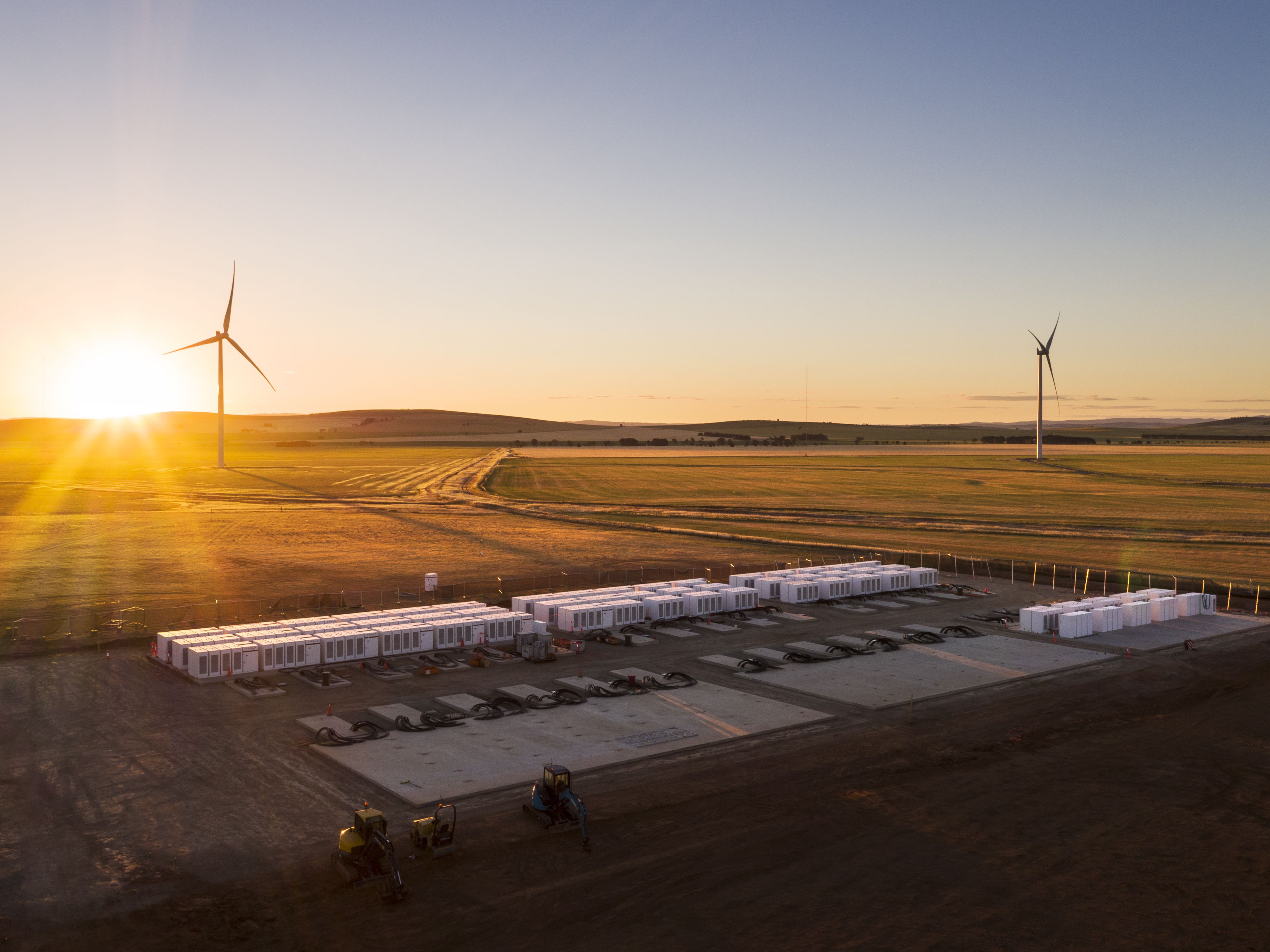
For example, advances in lithium ion technology mean high-tech batteries cost only a fifth of what they did ten years ago. So it’s easier and cheaper to store electricity than ever before – even as renewables now offer a consistently cheaper source of generation than fossil fuels.
Lithium ion batteries have come a long way in a short time.Shutterstock
Innovations like that have changed the game. A new Australian Energy Market Operator study makes clear that, within five years, Australia can run a power grid in which 75% of electricity comes from wind and solar.
A clean stimulus package
Measures these pathways involve are ideally suited to a stimulus package. Governments could create jobs and spur industry, while modernising the economy for the challenges ahead.
How? By building charging infrastructure to support electric vehicles powered by renewables; encouraging investment in sustainable agriculture, fertiliser management and carbon forestry; deploying PV and battery systems across city buildings; or embracing any number of other “shovel ready” solutions.
Through this pandemic we’ve witnessed how people have learned new approaches and switched mindsets almost as quickly as the COVID-19 pandemic lockdowns and social distancing restrictions began.
Just as we’re remembering to wash our hands more than we used to, coming out of the pandemic, it will pay to be more attentive about remembering to choose the zero-emissions option at every step.
We stand at a crossroads. If government stimulus packages around the world favour carbon-intensive practices and miss the moment to modernise and decarbonise, we will lock ourselves into a warming future.
If, however, we rise to the challenge, we can use the recovery from one crisis to simultaneously address another.
Spitting. Name-calling. Physical assaults. The outbreak of COVID-19 has coincided with a dramatic escalation in racially motivated incidents towards people of Asian descent around the world.
US President Donald Trump has fuelled these attacks with his strident criticisms of China’s handling of the pandemic, unsubstantiated claims the virus originated in a lab in Wuhan and constant references to COVID-19 as “the Chinese virus”.
While this rhetoric has certainly been on the rise since the pandemic began, anti-Asian sentiment of this sort is nothing new. And it springs at least partly from deeply entrenched stereotypes about Chinese cultural practices, a topic I have researched extensively.
Some of these stereotypes have historically characterised China as a place rife with sickness and Chinese people as inherently vulnerable to disease.
In fact, the country itself used to be referred to as the “Sick Man of Asia”, a derogatory phrase that gained momentum in the late 19th century following China’s losses in the Opium Wars. (The phrase was used both literally to describe poor health and figuratively to describe poor governance.)
But as is so often the case, these stereotypes derive from misconceptions and misinformation. And in this case, the source of misinformation can be traced with remarkable precision to the politically charged observations of western visitors to China dating back to the late 1700s.
Recognising how these stereotypes evolved can help us understand – and hopefully defuse – some of the anti-Chinese vitriol being espoused around COVID-19 today.
How rumours start: the case of smallpox
Unfortunately, scapegoats are common when epidemics break out. Take the plague, for example, which in medieval Europe was blamed on Jewish communities accused of spreading the disease by poisoning wells.
And for a long time, many Europeans and Americans believed China was the “cradle of smallpox”, an idea that circulated widely in numerous journals, travelogues and official reports from the early 1800s onwards.
In 1838, for instance, the travel writer Charles Toogood Downing wrote of smallpox,
this dreadful malady is supposed to have originated among the Chinese, and to have spread westward in a gradual manner among the natives of Western Asia, until it became as prevalent with the people of Europe, as among those of the Centre Kingdom.
Downing got his information from a single, unreliable source: a late 18th century essay by the French Jesuit missionary, Pierre Martial Cibot.
Cibot composed the essay, “De la petite vérole” (“On Smallpox”), in Beijing in the late 1760s, but it didn’t reach Paris until around 1772. The essay begins with the punchy proclamation that smallpox had existed in China for three millennia, and claims to summarise what Cibot describes as
many very knowledgeable and very boring [Chinese] essays on the origin and the cause of smallpox.
Cibot was disdainful of Chinese medicine, as well, dismissing the “pathetic stupidity” and “lunacy and inconsistency” of traditional treatments.
Checking the facts
Yet, contrary to Cibot’s claims, the mechanisms put in place to respond to smallpox by the Manchu rulers of the Qing dynasty were actually very advanced.
As early as 1622, imperial Manchu bannermen had implemented a precursor to our modern-day coronavirus tracing apps, with squad leaders required to report anyone showing symptoms of smallpox.
Safety guidelines were established to prevent the spread of smallpox when offers of tribute were brought from visiting dignitaries and when arranging audiences with the emperor. Military officers who had acquired immunity to smallpox were chosen to deploy to regions where the disease was active.
Both the Kangxi and Qianlong emperors were inoculated against smallpox, as were other members of the imperial retinue.
In fact, inoculation specialists held official government posts, and new specialists were actively recruited. In 1739, Qianlong even sponsored the compilation of a medical encyclopedia with detailed chapters on smallpox prophylaxis – the very same book on which Cibot later claimed to base much of his essay.
In all these ways, Chinese responses to smallpox were light years ahead of those in France during the same period.
Image from the Qing-era encyclopedia on different expressions of smallpox in children.The Afterlife of Images: Translating the Pathological Body Between China and the West; Author provided
Eighteenth-century fake news
Given China’s obvious achievements in dealing with smallpox, why then would Cibot portray the situation so harshly? As always, it comes down to cultural differences and politics.
When Cibot left for Beijing in 1758, inoculation had become the subject of heated debate between the French church and Enlightenment thinkers.
The debate centred on the fact that inoculation (as opposed to the practice of vaccination, which came later) involved deliberately infecting people with small amounts of the disease to stimulate an immune response. So while inoculation sometimes caused smallpox and death, often it successfully protected the patient from a more serious case.
Intellectuals like Voltaire favoured legalising inoculation in France, but the church interpreted it as interfering with divine will. The controversy ended abruptly in 1774 when Louis XVI witnessed Louis XV’s gruesome death from smallpox and had himself inoculated.
In Cibot’s day, China also occupied a powerful position with regard to trade and culture. Many Europeans viewed China not just as a desirable trading partner, but as a source of medical knowledge and even a model of government.
So in composing his essay, Cibot faced a serious dilemma: If he represented Chinese responses to the disease too sympathetically, he risked contradicting the church and lending ammunition to Enlightenment thinkers who wanted to study Chinese inoculation methods.
Cibot found a way out by arging the longtime presence of smallpox in China proved that inoculation had failed. According to Cibot, China was not a source of cures, but a source of disease – and not worth emulating.
Unfortunately, Cibot’s text went on to become one of the most-cited western sources on Chinese smallpox in the 19th and 20th centuries, appearing in numerous bibliographies. It also directly contributed to the creation of the stereotype that China was the “Sick Man of Asia”.
Portrait of Emperor Qianlong in court dress.Wikimedia Commons
The more things change…
More than 200 years later, the political tensions between China and the west over COVID-19 and the disinformation being spread online about the origins of the virus feel uncannily familiar.
The old French adage that “the more things change, the more they stay the same” seems, well, more true than ever.
Yet the old adage doesn’t teach us to be passive. If the story of smallpox reveals nothing else, it’s that rhetoric remains powerful across history, its afterlife having consequences for real people and real lives.
Source: The Conversation (Au and NZ) – By Danny Kingsley, Visiting Fellow, Australian National Centre for the Public Awareness of Science, Australian National University
As the world scrambles to understand COVID-19, multiple studies seem to offer a cure or new risk factor for the disease, only to be disproven a short time later.
One sensational news story claimed people with type A blood were more likely to catch the coronavirus. The story was soon debunked.
A common factor in these stories is the original research was published as a “pre-print”. But what is a pre-print and how should we be using them?
One clue is in the name. Pre-prints are versions of research papers available before they are formally published.
The term has been around for decades. In pre-internet days, physicists posted each other photocopied versions of draft papers for comment.
Once the internet came along, it was clearly more efficient to put these papers in a central location. In 1991 the very first electronic pre-print server was born, now called arXiv (pronounced “archive”).
This meant anyone with access to the internet could read and comment on the work. That pre-print server now holds almost 1.7 million papers.
There has been something of an explosion of pre-print servers in the past few years.
One of the biggest after arXiv is its biological counterpart, bioRxiv, which launched in 2013. Even newer is medRxiv, launched last year.
Not surprisingly, the number of pre-prints published on these servers has also grown exponentially. And pre-prints specifically relating to COVID-19 have increased the numbers further.
So, what’s the problem? Isn’t it good that all this research is being made available? Well, yes and no.
Researchers need to share their coronavirus work quickly
In a rapidly changing environment such as a pandemic, it is important researchers know what kind of work is happening and who is doing it. Pre-prints allow them to find out quickly.
Researchers, who are the intended audience for these pre-prints, understand there can be a major difference between a pre-print and the final published version.
The public, including journalists, can also access these pre-prints as they’re openly available.
That’s very different to the vast majority of academic publications, which are held behind paywalls, with charges for a single viewing in the tens and sometimes hundreds of dollars for people without a subscription.
But the public, including journalists, is generally less aware of the provisional nature of the research commonly found on these pre-print servers.
This situation, with the media publishing items based on unproven information, has become so problematic that Australia’s chief scientist is urging the public to be wary of claims of breakthroughs.
Pre-print servers themselves already point out the articles have not been peer reviewed and should not “be reported in news media as established information”, as seen in the yellow box below.
Pre-print servers warn that the research is preliminary.Screenshot/bioRxiv
The path to publication
Once a research project has discovered something, the research group will write it up as a paper which describes what they did, what they found and what makes this a new finding.
This paper is sometimes published as a pre-print. The paper is then submitted to a journal for consideration and the journal editors send it out to experts in the field to comment on the work – a process called peer review.
The reviewers send back their comments, which might request the authors add extra information to the paper, or sometimes do additional experiments. The researchers address these comments and resubmit the paper before it is published.
This can take a long time, from months to sometimes years before the paper is actually published. In the middle of a pandemic that’s a problem.
The academic publishing industry is trying to improve the flow of information. Many publishers are making COVID-19 related articles openly available.
Many publishers are also fast-tracking peer review. But even with this sped-up timeframe, the process still takes a while. Pre-prints are fast.
The thing to remember with pre-prints is they have not been peer reviewed. While many publications don’t change a great deal after peer review, some articles require considerable amendment or even withdrawal.
All of this doesn’t mean that what you read in a pre-print is rubbish. Actually, pre-prints are an important part of the publication process.
In fact, the prestigious journal Nature now encourages researchers to upload their paper as a pre-print. Other journals have similar policies.
So what can the public do?
When looking for information, ideally use published research – formatting and publisher logos are clues. But if you want to decide whether a pre-print contains valid information, try finding another article making similar claims.
So what happened with the blood type research? The original pre-print, published on March 16, had multiple comments. On March 27, a second version was uploaded, which emphasises “this is an early study with limitations”.
The system works, as long as you know what you are looking at.
This week news broke that Carriageworks – Australia’s largest contemporary multi-arts centre – had gone into voluntary administration.
It’s sad but not surprising, as the organisation was struggling even in regular trading conditions. COVID-19 is not so much the spark, as the accelerant on a slow-burning fire. The organisation’s troubles are emblematic of an arts sector on the edge – but there might be a way forward.
For every other year, the deficit has ranged from $34,691 (in 2012) to $559,236 (2018).
In 2018 – the most recent figures we have – Carriageworks received $3.8 million in government grants. The rest of its income – $7.8 million – came from goods and services, donations and bequests, and other revenue. So Carriageworks was generating 66% of its own income, a figure that had since risen to 75%, according to the board’s statement on May 5.
These are the income ratios that funding agencies across the country tell arts companies to adopt. Create NSW, for instance, expects organisations seeking over $140,000 in annual support to independently generate at least 50% of their income.
While this split may work when times are good, it doesn’t when times are bad. In fact, it leaves companies exposed, which is why Carriageworks has the wobbles. Similarly, Opera Australia is considering selling one of its buildings, and other companies have stood down their staff.
Pity Carriageworks CEO, Blair French, who arrived in August. And acting chair Cass O’Connor, who joined the board in 2016.
They, in turn, are dealing with an acting minister for the arts who is also the premier, Gladys Berejiklian. Former minister Don Harwin was known to meddle and prioritise classical music. He once ran a funding round where only 2.7% of applications were successful.
In Canberra, Communications Minister Paul Fletcher is saddled with a department that does not even have arts in its title.
The NSW Acting Arts Minister is also its busy Premier, Gladys Berejiklian.AAP/Dean Lewins
Federal funds
Federal funding is falling, as detailed in the Australia Council for the Arts annual report.
In 2013-14, the Council had a grants budget of $199.2 million; in 2018-19, it has $186 million, a reduction 6.6% even without adjusting for inflation. The pain has not been evenly shared. In 2013-14, the 29 major performing arts groups received $103.1 million (51% of the funds available); in 2018-19, they received $113.6 million (61%).
Contrast this with the amount available for project funding, fellowships and awards: $45.3 million in 2013-14 (22.7% of available funds) and $23.5 million in 2018-19 (13%). Whereas the majors have had a 10% increase, individual artists and companies have had a 48% decrease. To borrow Alison Croggon’s example, between 2013 and 2016, grants for individuals dropped by 70%, from 1340 to 405.
If Carriageworks can’t make it work, what of smaller organisations? Ryoji Ikeda installation micro/macro at Carriageworks in 2018.AAP/Dan Himbrechts
The funds for small-to-medium organisations look marginally better, growing from $22.8 million in 2013-14 to $28.7 million in 2018-19 – but the number of companies supported has dropped from 144 (2015) to 95 (2021-24), shrinking the sector by 34%.
Carriageworks is one of the lucky ones. It was listed in last month’s four-year funding announcements. We do not know how much they received, but we do know there is a $500,000 per annum cap – nowhere near enough to maintain a world-class, heritage-listed venue and deliver an ambitious program.
State support
Funding in NSW is harder to track. In the past six years, Create NSW has changed names, merged with Screen NSW, and bounced between four different departments.
“I guess it’s a bit of poetry in the world.” Rebecca Baumann’s Radiant Flux plays with light and structures at Carriageworks.
During this same period, the government launched its Cultural Infrastructure Plan, which committed $645 million to the Powerhouse in Parramatta, $245 million to the Walsh Bay Arts Precinct, $244 million to the Art Gallery of NSW’s Sydney Modern Project, $238 million to the Sydney Opera House renovations, $100 million to Parramatta Riverside Theatre’s redevelopment, $100 million to the Regional Cultural Fund, and $50.5 million for the Australian Museum’s expansion. The $1.6 billion total is a conservative estimate given several of these projects have since had budget blowouts.
This focus on infrastructure (buildings) comes at the expense of people and programs. The “edifice complex” is an old problem in the arts. It’s very one that produced Carriageworks, where the government spent on construction and then scrimped on commissions.
Spending all your money on buildings means there is none for emergencies. Governments in South Australia, Queensland, and Victoria have announced sector support packages of $1.5 million, $8 million and $16.8 million respectively. Create NSW has merely redirected $2 million of its existing budget to address the crisis.
What now for Carriageworks?
Reports suggest the Sydney Opera House may take over Carriageworks. This could work as the current Sydney Opera House head of programming, Fiona Winning, was artistic director of Performance Space from 1998 to 2008, when it moved to Carriageworks.
Meanwhile, the Media Entertainment and Arts Alliance has called for an urgent state rescue.
Carriageworks could become the first major Sydney venue to be led by Indigenous artists.
What about another option? There are already plans afoot for an Indigenous Cultural Hub) in the old Redfern Post Office. The government could build on these plans and turn Carriageworks into an Indigenous Arts Hub, making it the first major Sydney venue to be led by Aboriginal and Torres Strait Islander creatives and producers.
This idea has already been floated by various Aboriginal arts leaders, including Lily Shearer and Liza-Mare Syron. Bangarra Dance Theatre also expressed interest, when contemplating what to do while the Wharf is refurbished.
With proper consultation and support, a consortium of First Nations-led companies could create a Carriageworks properly embedded in local community.
Imagine what current head curator of Aboriginal programs, Hannah Donnelly, and resident company Moogahlin Performing Arts could do there. Or what Wesley Enoch and Brook Andrews, curators of the Sydney Festival and Biennale respectively, might dream up. Or what sort of writers festival Larissa Behrendt and Anita Heiss might program.
What looks like a bonfire could yet become a cultural burn. Carriageworks could emerge brighter, better, and braver.
Documentary maker Michael Moore’s latest offering, Planet of the Humans, rightly argues that infinite growth on a finite planet is “suicide”. But the film’s bogus claims threaten to overshadow that message.
Planet of the Humans is directed and narrated by longtime Moore collaborator Jeff Gibbs. It makes particularly contentious claims about solar, wind and biomass (organic material which can be burnt for energy). Some claims are valid. Some are out of date, and some are just wrong.
The film triggered a storm after its free release on YouTube late last month. At the time of writing, it had been watched 6.5 million times.
Climate sceptics here and abroad reacted with glee. Environmentalists say the film has caused untold damage when climate action has never been more urgent.
For 50 years, I have studied and written about energy supply and use, and its environmental consequences. So let’s take a look at how Planet of the Humans is flawed, and where it gets things right.
– Partner –
Where the film goes wrong Critics have compiled a long list of questionable claims made in the film. I will examine three relating to renewable energy.
1. Solar panels take more energy to produce than they generate It’s true that some energy is required to build solar panels. The same can be said of coal-fired power stations, oil refineries and gas pipelines.
But the claim that solar panels produce less energy than they generate in their lifetime has long been disproved. It would not be true even if, as the film says, solar panels converted just 8 percent of the energy they receive into electricity.
But that 8 percent figure is at least 20 years old. The solar panels now installed on more than two million Australian roofs typically operate at at 15-20 percent efficiency.
2. Renewables cannot replace fossil fuels The film claims green energy is not replacing fossil fuels, and that coal plants cannot be replaced by renewables.
To disprove this claim we need look no further than Australia, where wind turbines and solar panels have significantly reduced our dependence on coal.
In South Australia, for example, the expansion of solar and wind has led to the closure of all coal-fired power stations.
The state now gets most of its power from solar and wind, exporting its surplus to Victoria when its old coal-fired power stations prove unreliable on hot summer days.
What’s more, a report released this week by the Australian Energy Market Operator (AEMO) said with the right regulations, renewables could at times supply 75 percent of electricity in the national electricity market by 2025.
3. Solar and wind need fossil fuel back-up Some renewables systems use gas turbines to fill the gap when the wind isn’t blowing and the sun isn’t shining. However renewable energy storage is a cleaner option and is fast becoming cheaper and more widely used.
AEMO forecasts battery storage installations will rise from a low base today to reach 5.6 gigawatts by 2036–37. The costs of storage are also projected to fall faster than previously expected.
South Australia’s famous grid-scale Tesla battery is being expanded. And the New South Wales government’s pumped hydro plan shows how by 2040, the state could get 89 percent of its power from solar and wind, backed by pumped hydro storage.
In Australia on Easter Saturday this year, renewables supplied 50 percent of the national electricity market, which serves the vast majority of the population.
Countries such as New Zealand and Iceland essentially get all their power from renewables, backed up by storage (predominantly hydro).
And putting aside the federal government’s problematic Snowy 2.0 project, Australia could get all its energy from renewables with small-scale storage.
South Australia’s huge battery storage project is being expanded. Image: Hornsdale Power Reserve
What does the film get right? Planet of the Humans makes several entirely valid points. Here are a few:
1. We need to deal with population growth The film observes that population growth is the elephant in the room when it comes to climate change. It says politicians are reluctant to talk about limits to population growth “because that would be bad for business”.
As one observer in the film says, the people in charge are not nervous enough. I agree.
An increasing population means increasing demand for energy and other resources, accelerating climate change.
2. Biomass energy does more harm than good While the film unfairly criticises the environmental benefits of solar energy, it is true that some so-called clean technologies are not green at all.
As the film asserts, destroying forests for biomass energy does more harm than good – due to loss of habitat, damage to water systems, and the time taken for some forests to recover from the removal of wood.
Most advocates of cleaner energy systems recognise the limitations of biomass as an energy source.
A still from the film, showing a biomass plant. Image: Planet of the Humans
3. Infinite growth on a finite planet is suicide The film calculates the sum total of human demands on natural systems as about 1000 times what it was 200 years ago. It says there are 10 times as many people now, each using 100 times the resources, on average.
Experts have repeatedly warned that human demand for resources is damaging the natural systems that all life depends on.
Get the message Several other aspects of the film have been savaged by critics – not least its claims about emissions produced by electric cars, which had previously been debunked.
Personal attacks on two prominent US clean energy advocates, Bill McKibben and Al Gore, also detract from the film’s impact.
It is clear renewable energy has an important role to play in reducing greenhouse gas emissions and slowing climate change. But it will not solve the fundamental problem: that humans must live within Earth’s natural limits.
Those cheering the film’s criticism of renewables would do well to consider its overriding message.
Reporters Without Borders (RSF) has urged the Philippine authorities to appoint a special independent team to investigate yesterday’s “shocking murder” of an investigative radio journalist with a reputation for covering corruption.
He was gunned down by two men on a motorcycle in Dumaguete City, the capital of the central province of Negros Oriental, reports RSF.
Cornelio Pepino, known to his listeners as Rex Cornelio, was shot five times at close range at around 8.30 pm as he was driving home after presenting his programme Pokpokin Mo Baby! (Hit it baby!) on dyMD Energy FM 93.7. He died on the spot.
As well as being a well-known radio show host, Pepino had a solid reputation as an investigative reporter in Negros Oriental.
– Partner –
He had exposed several cases of corruption, bribery and illegal mining. Negros Oriental governor Roel Degamo sued him for defamation in 2014, but he was finally acquitted in 2017.
“There is every reason to suspect that Cornelio Pepino was deliberately silenced because people were annoyed by his journalism,” said Daniel Bastard, the head of RSF’s Asia-Pacific desk.
“We urge the Presidential Task Force on Media Security to take charge of the investigation and to appoint an independent team to carry it out. The vicious cycle of crimes of violence against journalists and impunity must stop.”
16 journalists slain Two other radio journalists have been gunned down in a similar manner by hitmen on motorcycles in the past two years in Dumaguete City. One was Dindo Generoso, a radio commentator who criticised a popular local form of gambling and the associated corruption. He was shot eight times last November.
The other was Edmund Sestoso, who was shot in May 2018. He was well known for explaining local political conflicts in Negros Oriental.
The current Philippine administration boasts of having created a Presidential Task Force on Media Security as soon as Rodrigo Duterte became president in 2016. Nonetheless, if confirmed, Pepino will be the 16th journalist to have been killed in connection with their work since then.
Pepino was slain on the same day that the National Telecommunications Commission ordered the country’s biggest TV and radio network, ABS-CBN, to stop operating with immediate effect.
ABS-CBN’s TV channels and radio stations did indeed stop broadcasting yesterday evening.
Offences perpetrated by members of Papua New Guinea’s disciplinary forces have become prevalent in the country during the coronavirus pandemic, says National Court judge Justice Panuel Mogish.
Justice Mogish, while sentencing PNG Defence Force soldier Nelson Pap at the Bomana National Court yesterday for causing grievous bodily harm to a woman under the influence of alcohol, said it was “unbecoming” of a soldier to act in such manner.
“The recent allegations of brutality committed by members of the disciplinary forces have become prevalent during the covid-19 operations,” he said, reports the PNG Post-Courier.
“Authorities are challenged to deal with those rogue officers, who act as a law unto themselves.
“The offender in this case was charged for a crime against an innocent woman.
– Partner –
“The same should apply to rogue officers.
“They should be swiftly dealt with to restore confidence and integrity in the various disciplines they serve.”
Suspended sentence Pap was sentenced to three years and six months jail.
However, Justice Mogish suspended the entire sentence and placed him on a good behaviour bond for three years.
“In this case, an iron rod was used to assault the victim,” he said.
“I consider a sentence of three-and-a-half years appropriate.
“The offence committed by the offender was out of character and given the strong mitigating factors and, in particular, the absence of any intent or ulterior motive, I am convinced there is room for rehabilitation for the offender.
“A suspended sentence would be in order.”
Justice Mogish ordered that the sentence be suspended and the offender be placed on good behaviour bond for three years.
He ordered the offender to pay a fine of K1000 (NZ$485), recommended the offender be dealt with under the appropriate provision of the Defence Act, and that he refrain from consuming alcohol as part of his good behavior bond.
Most of us don’t take games too seriously. They are a way to unwind, or these days to maybe escape from the world of COVID-19 for a little while.
But games are also simulations in which real people play, make decisions and interact. This makes games powerful tools for learning and understanding complex situations, such as how diseases spread and even how to treat them.
The ‘corrupted blood’ incident
One of the first incidents that showed epidemiologists and health researchers that games could give them insight into the spread of infectious disease occurred in 2005. A bug in World of Warcraft unleashed an “infectious disease” among the game’s large community of online players.
It started with a new raid encounter in the game designed to allowed a small team of players to fight an enemy that could “infect” characters with a curse called “corrupted blood”. The curse would reduce their health over time, and spread from player to player in close proximity.
Normally, when the character either won or lost the battle, the curse would be lifted as they left the zone in which it took place. But a bug allowed players’ pets and minions to carry the curse into the game’s wider virtual world.
Suddenly the curse was spreading across nearly 4 million players, and the people who ran the game had little control. Is this starting to sound eerily familiar?
Epidemiologists had used models and simulations in their work before, but the World of Warcraft incident was unique because each avatar in the simulation was controlled by a human player. What’s more, players in the game exhibited the same behaviours that people do in response to a real-life pandemic.
There are also many other ways in which we can use games as simulations to develop our understanding of global health.
Entertainment games such as Pandemic very directly refer to what we are all experiencing right now. In this game, players collaborate in order to fight a virus –- and in its simplicity, it can illustrate why social cohesion is so vital in our global fight against the disease yet is also very difficult. The game teaches communication, collaboration, and decision-making skills in the context of crisis.
Modelling and simulation – the use of formal, mathematical and often computerised calculations – support policy makers and world leaders to make the right decisions. These models serve as tools for critical choices such as closing borders and national lockdowns. It takes huge amounts of trustworthy data and deep expertise to develop and interpret such models.
A game like Pandemic, or World of Warcraft, lets players engage in simplified versions of such crisis situations and can offer insight into human behaviour in these conditions. The simplified yet realistic scenarios allow for interaction, and learning by doing, without the risk of real-world consequences.
Games as laboratories
Games can also help us to develop new medical solutions. In Foldit, players can individually interact with protein folding, an important process in molecular biology. It is difficult to simulate with computers, but it plays a role in drug discovery and understanding certain types of diseases. The game uses a large number of individual players and the highest scoring solutions are reviewed by scientists as potential new solutions.
The game takes a distributed computational approach similar to the SETI@Home project that let people lend their computers to the search for extraterrestrial intelligence. The twist is that each node is – again – a human mind considering solutions, and this model outperforms computational algorithms attempting the same task.
Games are also helping researchers better understand the spread of misinformation about COVID-19, in a project of the American University Game Lab. (One of the authors of this article is affiliated with the Game Lab.)
Their game, Factitious, is a simple game that asks players to read a small article and then decide if it is real or fake news, with points awarded for each correct response. With over a million plays, the recorded dataset offers key insights into how players view and categorise information.
The new pandemic edition of the game is already informing us of dangerous trends in rumours and misleading information at this difficult time.
Games may offer some much-needed escape and social connection in this time of physical distancing, but they are also incredible tools for learning more about the real world. In areas such as global health, they can act as very human simulations that help us plan for incredible situations and test multiple competing ideas to come up with the best way forward.
One of the risks we need to keep an eye on is hard to see: the tens of thousands of unlawful migrants who work here every day without a valid visa.
My research shows Australia’s unlawful migrant workers already face routine exploitation and in some cases, terrible work conditions. But the arrival of COVID-19 presents new and worrying health challenges, for them and the broader Australian population.
Singapore’s migrant workers live in purpose-built accommodation and are officially known to the government. In Australia, our unlawful migrant workers live under the radar, so are even harder to identify and support.
Unlawful migrant workers in Australia
There is little data about the precise numbers of people working in Australia illegally. The best estimate is still a 2011 report to the Gillard government suggesting there are between 50,000 and 100,000 non-citizens working here without permission.
Unlawful migrants workers come to Australia on valid visas and then breach their visas conditions. This includes those who overstay their visas and those who come on a visa without work rights.
In my 2017 research across NSW and Victoria, I spoke to such people who worked in industries including domestic labour, agriculture, hospitality and commercial cleaning.
It is estimated that tens of thousands of people work in Australia without a valid visa in industries such as fruit picking.www.shutterstock.com
They described physical and verbal abuse, no or low pay, poor accommodation, withholding of passports and threats of being reported to immigration authorities.
The COVID-19 challenge
The arrival of COVID-19 presents new risks for unlawful workers in Australia.
They face destitution if work disappears and new opportunities fail to arrive. A key concern is that unlawful migrants will accept exploitative working conditions, with little or no pay, and no incentive to come forward for help.
However, this is not a solution for unlawful workers: it is not clear how people would leave or how they would pay for their travel. It is also likely many will be compelled to stay.
In my research, I spoke with people who had been in the country for a matter of days and people who had been in the country for close to 20 years – undocumented and working. Often they were sending money home to their family in their country of origin, with some setting up new homes and families in Australia.
Leaving is not a straightforward option.
The public health risks
Unlawful workers also present a public health risk for Australia during the COVID-19 pandemic.
Not only do they tend to live in overcrowded accommodation, they also tend to move around frequently, seeking work and better living conditions.
Critically, unlawful migrant workers are also reluctant to access community support – for any reason – due to fears they may be reported to immigration authorities and then detained and deported. My research found this group will actively avoid any contact with formal service providers from police to health care workers.
Unlawful migrant workers are unlikely to access healthcare services, such as COVID-19 testing, for fear of being reported to immigration authorities.Loren Elliott/ AAP
This reluctance presents a risk to their health and that of the broader community: if an unlawful migrant has COVID-19 symptoms, they are unlikely to access testing or health care.
As Australia starts to ease some lockdown restrictions and boosts testing for any signs of COVID-19, it is critical all relevant people in the community come forward if they have symptoms.
We need to build a ‘firewall’
Before the global pandemic, there has been growing recognition, at national and international levels, of the need for a firewall between protections for migrant workers and immigration processes.
A firewall offers dedicated protection for undocumented workers to come forward – to seek health care, or police or other assistance in the context of workplace exploitation – with the clear understanding that their visa status will not be referred on to immigration authorities.
While my research did not find health services reporting unlawful migrants to the Australian Border Force, the role of a firewall is to ensure there is a formal commitment that this will not happen across any community service.
What we need to do now
In the short term, a formal firewall is unlikely because it would require a shift away from the Morrison government’s strong emphasis on border control.
But national and state leaders could send clear reassurances that we want all people to come forward to seek testing and health care workers will not be asking immigration-related questions.
Singapore has seen an increase in coronavirus cases after outbreaks among its migrant workers.How Hwee Young/ AAP
This then needs to filter down to localised programs. Proactive efforts to reach undocumented individuals and groups is detailed but necessary work and requires trust between parties.
If this message does not get through, we risk a quiet spread of COVID-19 among untested, unlawful residents, who live in close quarters and are often very mobile – and who are unlikely to come forward until they are very unwell.
Singapore’s situation shows what can happen when groups of migrant workers are not prioritised.
Source: The Conversation (Au and NZ) – By Michael Vagg, Conjoint Clinical Associate Professor, Deakin University School of Medicine and Specialist Pain Medicine Physician, Deakin University
Around 1.6 million Australians aged 45 or over have been living with persistent pain, according to newly released data from the Australian Institute of Health and Welfare.
The figures, which cover 2016-17, reveal that GP consultations for chronic pain increased by 67% in the preceding decade. The number of visits for lower back pain increased by 400,000.
Dealing with chronic pain also means you are likely to face longer hospital stays, much poorer mental health and are three times more likely than normal to be taking painkillers regularly. About 105,000 people were hospitalised with chronic pain in 2017-18, with a typical hospital stay three times longer than average.
Behind those figures lies the human cost. As a clinical specialist in pain medicine, I see the jobs lost, the mortgage defaults, the superannuation withdrawals, and the family roles given up because of debilitating pain.
Lower back pain, migraine and pain following trauma are among the top 10 causes of years lost to disability worldwide, and this has barely changed over the past 20 years. Because chronic pain can happen at any stage of life, many people have to live with it for decades.
A 2019 Deloitte Access Economics report commissioned by advocacy group Painaustralia estimated the annual cost to Australia’s economy at A$139.3 billion per year, more than A$20 billion of which comes directly out of the pockets of pain patients.
A fresh approach
The most expensive and inefficient way to manage this national crisis is pretty much the way we are currently doing it. Chronic pain care is too fragmented and too often delivered by those without the most up-to-date training.
Yet most of the really effective treatments can be delivered at a relatively low cost and with low-tech means. Here are some potential solutions that pain doctors and researchers are confident will work.
Medications need to be carefully chosen and ruthlessly abandoned if they are not helping. The Pharmaceutical Benefits Scheme (PBS) currently spends more than A$170m a year on drugs such as sustained-release opioids and pregabalin. This could be reduced if more doctors prescribed them in accordance with best practice knowledge. This would help patients and taxpayers alike.
Skilled interventions such as inpatient infusions of medications like ketamine, or invasive procedures such as radiofrequency neurotomy, need to be provided according to appropriate quality standards so resources are not wasted and patients are not put at risk.
PBS funding should be extended to cover effective treatments for specific conditions such as migraines.
Proven treatments such as group pain programs and individual therapy sessions with credentialed allied health specialists need to be supported by Medicare. These are essential for building the self-management skills needed to reduce patients’ reliance on pain medication.
We need a massive investment in training and service redesign for agencies that deal with chronic pain as a result of work or transport injuries.
High-quality pain care should be viewed not as a luxury for hospitals, but an essential part of the health-care ecosystem. Pain care should be integrated throughout the public health system, in both acute and subacute care, where it can shorten inpatient stays and improve rehabilitation.
We should restrict access to low-value treatments like repeated surgery or medications that have not been working.
In the void created by the huge unmet need and the limited availability of expert pain care, an industry of highly dubious usefulness has been allowed to flourish. Social media is full of false hope. Supplements such as glucosamine, curcumin and fish oil are not supported by credible studies, yet they are still promoted commercially as effective.
Dodgy arthritis “cures” and devices that claim to relieve pain using magnets or electricity are everywhere. Despite dismal supporting evidence, the medical cannabis industry continues to sell itself to chronic pain patients.
While the COVID-19 pandemic continues, it can be hard to focus on other health issues. But Australia already has a path to improving life for many thousands of chronic pain sufferers. The federal government has developed a strategic plan for pain management that offers a blueprint for future action.
The plan calls for upskilling of all primary care health professionals to help them recognise the early stages of a chronic pain problem and nip it in the bud. If implemented, it will bring the dream of timely access to well-resourced expert interdisciplinary pain teams in the regions and outer suburbs closer to reality.
Most importantly, we need a community-wide effort to destigmatise persistent pain and those who suffer from it. After all, the chances are you either have it or you live or work with someone who does.
Documentary maker Michael Moore’s latest offering, Planet of the Humans, rightly argues that infinite growth on a finite planet is “suicide”. But the film’s bogus claims threaten to overshadow that message.
Planet of the Humans is directed and narrated by longtime Moore collaborator Jeff Gibbs. It makes particularly contentious claims about solar, wind and biomass (organic material which can be burnt for energy). Some claims are valid. Some are out of date, and some are just wrong.
The film triggered a storm after its free release on YouTube late last month. At the time of writing, it had been watched 6.5 million times. Climate sceptics here and abroad reacted with glee. Environmentalists say the film has caused untold damage when climate action has never been more urgent.
For 50 years, I have studied and written about energy supply and use, and its environmental consequences. So let’s take a look at how Planet of the Humans is flawed, and where it gets things right.
Climate sceptics have welcomed a new documentary by filmmaker Michael Moore.Warren Toda/EPA
Where the film goes wrong
Critics have compiled a long list of questionable claims made in the film. I will examine three relating to renewable energy.
1. Solar panels take more energy to produce than they generate
It’s true that some energy is required to build solar panels. The same can be said of coal-fired power stations, oil refineries and gas pipelines.
But the claim that solar panels produce less energy than they generate in their lifetime has long been disproved. It would not be true even if, as the film says, solar panels converted just 8% of the energy they receive into electricity.
But that 8% figure is at least 20 years old. The solar panels now installed on more than two million Australian roofs typically operate at at 15-20% efficiency.
2. Renewables can’t replace fossil fuels
The film claims green energy is not replacing fossil fuels, and that coal plants cannot be replaced by renewables.
To disprove this claim we need look no further than Australia, where wind turbines and solar panels have significantly reduced our dependence on coal.
In South Australia, for example, the expansion of solar and wind has led to the closure of all coal-fired power stations.
The state now gets most of its power from solar and wind, exporting its surplus to Victoria when its old coal-fired power stations prove unreliable on hot summer days.
What’s more, a report released this week by the Australian Energy Market Operator (AEMO) said with the right regulations, renewables could at times supply 75% of electricity in the national electricity market by 2025.
Claims that renewables can’t displace coal are wrong.AAP
3. Solar and wind need fossil fuel back-up
Some renewables systems use gas turbines to fill the gap when the wind isn’t blowing and the sun isn’t shining. However renewable energy storage is a cleaner option and is fast becoming cheaper and more widely used.
AEMO forecasts battery storage installations will rise from a low base today to reach 5.6 gigawatts by 2036–37. The costs of storage are also projected to fall faster than previously expected.
South Australia’s famous grid-scale Tesla battery is being expanded. And the New South Wales government’s pumped hydro plan shows how by 2040, the state could get 89% of its power from solar and wind, backed by pumped hydro storage.
In Australia on Easter Saturday this year, renewables supplied 50% of the national electricity market, which serves the vast majority of the population.
Countries such as New Zealand and Iceland essentially get all their power from renewables, backed up by storage (predominantly hydro).
And putting aside the federal government’s problematic Snowy 2.0 project, Australia could get all its energy from renewables with small-scale storage.
South Australia’s huge battery storage project is being expanded.Hornsdale Power Reserve
What does the film get right?
Planet of the Humans makes several entirely valid points. Here are a few:
1. We need to deal with population growth
The film observes that population growth is the elephant in the room when it comes to climate change. It says politicians are reluctant to talk about limits to population growth “because that would be bad for business”.
As one observer in the film says, the people in charge aren’t nervous enough. I agree.
An increasing population means increasing demand for energy and other resources, accelerating climate change.
2. Biomass energy does more harm than good
While the film unfairly criticises the environmental benefits of solar energy, it’s true that some so-called clean technologies are not green at all.
As the film asserts, destroying forests for biomass energy does more harm than good – due to loss of habitat, damage to water systems, and the time taken for some forests to recover from the removal of wood.
Most advocates of cleaner energy systems recognise the limitations of biomass as an energy source.
A still from the film, showing a biomass plant.Planet of the Humans
3. Infinite growth on a finite planet is suicide
The film calculates the sum total of human demands on natural systems as about 1,000 times what it was 200 years ago. It says there are ten times as many people now, each using 100 times the resources, on average.
Experts have repeatedly warned that human demand for resources is damaging the natural systems that all life depends on.
Several other aspects of the film have been savaged by critics – not least its claims about emissions produced by electric cars, which had previously been debunked.
Personal attacks on two prominent US clean energy advocates, Bill McKibben and Al Gore, also detract from the film’s impact.
It’s clear renewable energy has an important role to play in reducing greenhouse gas emissions and slowing climate change. But it won’t solve the fundamental problem: that humans must live within Earth’s natural limits.
Those cheering the film’s criticism of renewables would do well to consider its overriding message.
Source: The Conversation (Au and NZ) – By Silvia Tavares, Lecturer and Researcher, Urban Design and Town Planning, University of the Sunshine Coast
The long-term impacts of coronavirus on our cities are difficult to predict, but one thing is certain: cities won’t die. Diseases have been hugely influential in shaping our cities, history shows. Cities represent continuity regardless of crises – they endure, adapt and grow.
Once we can have our old lives back we will likely return to familiar routines and our memories of lockdown and isolation will start to fade. While our lack of memory is arguably a resiliency resource, urban designers and planners have a long-term role in ensuring urban life is healthy. To fight infectious diseases, cities need well-ventilated urban spaces with good access to sunlight.
The design of these spaces, and public open spaces in particular, promotes different levels of sociability. Some spaces congregate community and are highly social. Others may act as urban retreats where people seek peace with their coffee and book.
How urban spaces perform during disease outbreaks now also demands our close attention.
What is urbanity and why does it matter?
Urban spaces are where communities come together. Urban planners and designers strive to generate a sense of belonging that makes people choose certain areas of a city or even a city itself. Urbanity refers to the public life that happens as a result of the exchanges and communication each space enables.
The combination of diversity and density achieve urbanity – it’s a product of diverse social opportunities in close proximity. This is why densifying cities has been a goal for achieving healthy, social and prosperous cities.
Once COVID-19 is less of a threat we will crave the normality of going back to our old lifestyles as much as possible. The role of urban planners and designers is then to create a background for public life to happen in social and healthy ways.
Learning from other disasters
Following the 2011 earthquake in Christchurch, New Zealand, where the CBD lost some 800 buildings, the community took a very different view of urban spaces. Crowded areas and tall buildings were a source of fear. The common attitude was to avoid density – what if another earthquake hit?
Urban designers and decision-makers learned that buildings and public spaces had to respond differently. Safe pop-up areas started to emerge. This new normal made some old quiet cafés and public open spaces resilient, while other pop-ups become popular retreat areas. These urban retreat areas were away from streets and tall buildings, and so offered a way of “being there” and being safe.
A park-like retreat space on South Colombo Street, Christchurch.Silvia Tavares, Author provided
Both the Christchurch earthquake and coronavirus have made people cautious about their safety in the city – because of their proximity to surrounding buildings and to other users of the space, respectively. Christchurch teaches us a lesson about “being together but apart”: cities are not made only of social spaces, and not all residents want the same thing.
People need choice in their use of urban spaces to feel secure and be safe. While larger social spaces are vibrant, support public transport and local economies, urban retreat spaces apply the idea of prospect and refuge: they meet our psychological needs to observe and be part of the public space (prospect) while feeling safe and removed from the scene (refuge).
Post-quake Christchurch showed how the social character and dynamics of urban spaces influenced the people these spaces attracted and how they behaved there.
Another factor to consider is the influence of urban microclimates on the use and prosperity of public spaces.
The main activity of large urban social spaces is based upon the presence of people, social interaction and cultural exchange. The use and dynamics of these spaces are more predictable and consistent than for urban retreat spaces. Being close to transport or commercial uses often means weather conditions have less impact on social activity and interaction.
Shops along the street add to the local urbanity of Cashel Mall, Christchurch.Silvia Tavares, Author provided
When looking for peaceful experiences and personal space, however, people tend to choose urban retreat spaces. Here they have less tolerance of adverse conditions. The place itself is the attraction, so the microclimate and personal comfort are more significant factors in its use.
Understanding, harnessing and managing microclimate, sunlight and ventilation is a clear and known approach to fighting disease and to establishing safe and resilient urban spaces. Offering people choice in the ways they interact with their urban environments, while long considered important, is now essential.
Redesigning our urban spaces to reassure users of their safety and provide community choice is not a straightforward process. Designs for the different forms and locations of urban retreat spaces must acknowledge community diversity and optimise microclimate.
While right now we might just want to hold on to all the good things we had pre-coronavirus, the nuances generated by the work of urban planners and designers are likely to make our lives safer. However, our responses cannot simply be reactive interventions such as warning signs, fencing, wider pathways and the like. Such approaches ultimately have implications for equity and quality of life.
We have long had a reactive, piecemeal approach to urban design and development. The current disaster presents an opportunity to establish safe, resilient and healthy urban spaces. It requires meaningful engagement across communities, designers and decision-makers now, before collective amnesia about COVID-19 sets in and we go back to business as usual.
In bad news for retirees and others who depend on dividend cheques (and dividend imputation rebate cheques from the Tax Office) bank dividends have largely evaporated. But it’s not as bad as many commentators suggest, and actually good for some investors.
The National Australia Bank will pay one, but only a third the usual size. The Commonwealth Bank’s different reporting dates mean it won’t have to make a decision until August.
The Financial Review believes the moves have taken A$9.8 billion in expected dividends and franking credits from bank shareholders to date.
The flip-side missed by many commentators and shareholders is that bank shares are worth more (maybe around $9.8 billion more) than if they had paid those dividends.
As it happens, the decisions follow pressure from the Prudential Regulation Authority which last month sent banks an unprecedented letter asking them to “seriously consider deferring decisions on the appropriate level of dividends”.
It isn’t what bank shareholders have come to expect.
The Commonwealth Bank’s dividend policy says it will aim to pay cash dividends at “strong and sustainable levels”, maximising dividend imputation cheques from the government by paying fully franked dividends.
The dividend reductions come after sharp collapses in share prices brought about by hits to current and expected future earnings and increased economic uncertainty.
But, as hard as it is to look beyond dividends, imputation cheques and the price of shares, what’s most important for the owners of shares are the earnings prospects for the banks long term. And here, as hard as it might be for some shareholders to accept, the suspension of dividends is a sensible strategy for the banks.
Cruel to be kind makes sense for banks
In making decisions about dividends in the wake of bad news, each bank had two options.
One was to keep paying dividends at previous levels.
That would have pushed the share price down further, as evidenced by the typical drop in a company’s share price after dividends have been paid.
With the funds paid out as dividends, and no longer part of the bank’s shareholders funds, each share becomes correspondingly worth less.
It also puts the bank in a weaker position to weather unexpected loan losses if the COVID-19 storm turns out to be even worse than expected.
The other option was to scrap (or reduce) its dividend and avoid the ex-dividend date drop in its share price. It bolsters its capital strength and gives shareholders higher expected capital gains (or lower capital losses).
Broadly, the loss of dividends should be offset to some degree by a higher share price and higher capital gains.
But try telling shareholders that the dividends they have lost can be replaced by selling shares.
Tax makes retirees hate it
That they care is in part psychological. Shareholders view a bird (dividend) in the hand as better than one (a capital gain) in the bush.
Selling shares is seen as “dipping into one’s capital”, even though it has the same effect on the shareholder’s capital (the value of shares held) as taking a dividend.
Another reason shareholders care more than you might think is tax.
Typically (based on historical evidence) a franked dividend of $1 leads to a share price fall of around $1.
But for an investor on a zero tax rate (as many retirees are) that $1 dividend is actually worth around $1.43.
This is because the Tax Office rebates that investor 43 cents of tax previously paid by the bank, a so-called dividend imputation payment.
Selling $1.43 of shares to compensate for the lost dividend cash flow leaves them worse off.
Super funds on a low 15% tax rate are also likely to prefer payment of franked dividends since they can use the imputation credits to reduce tax on other investment income.
Tax makes other shareholders like it
High tax rate investors and foreign shareholders think quite differently.
For high tax rate investors, Australia’s practice of taxing only half of each capital gain can make the higher capital gains associated with higher share prices more attractive than receiving dividends on which they have to pay extra tax.
Foreign shareholders also generally prefer capital gains to franked dividends, since they can’t use Australia’s imputation credits.
Under any tax system where dividends and capital gains are taxed differently, deferring dividends hurts some investors and benefits others. Australia’s imputation tax system magnifies that effect, with low tax rate investors being losers.
As it happens, these features of the tax system took centre stage in last year’s election, in which Labor proposals to change both the rules regarding dividend imputation and capital gains were rejected by voters.
Longer term, investors might thank banks
The root cause of the hit to dividends is uncertainty about the future.
If economic conditions turn out worse than expected, banks will find themselves hesitant to make loans unless they have sufficient capital to absorb unexpected losses.
To the extent that they use that capital to help restore the health of the economy, all investors (including those reliant on future dividends) will be better off.
The COVID-19 pandemic has no borders and has caused the deaths of hundreds of thousands of citizens from countries across the globe. But this outbreak is not just having an effect on the societies of today, it is also impacting our past.
Cultural resources and heritage assets – from sites and monuments, historic gardens and parks, museums and galleries, to the intangible lifeways of traditional culture bearers – require ongoing safeguarding and maintenance in an overstretched world increasingly prone to major crises.
Meanwhile, the heritage sector is already working hard to preserve the COVID-19 moment, predicting that future generations will need documentary evidence, photographic archives and artefacts to help them understand this period of history.
Closed to visitors
The severity of the pandemic, and the infection control responses that followed, has caused great uncertainties and potential long-term knock-on effects within the sector, especially for smaller and medium-sized institutions and businesses.
A survey published by the Network of European Museum Organisations (NEMO) and communications within organisations such as the International Committee for Archaeological Heritage Management (ICAHM) show that the majority of European museums are closed, incurring significant losses of income. By the beginning of April, 650 museums from 41 countries had responded to the NEMO survey, reporting 92% of them were closed.
Large museums such as the Kunsthistorisches Museum in Vienna and the Rijksmuseum and Stedelijk Museum in Amsterdam are losing €100,000-€600,000 (A$168,700-A$1,012,000) per week. Only about 70% of staff are currently being retained on average at most of the institutions.
German museums have reopened but must balance safety with preservation of precious artefacts. Here, a masked visitor to the Old Masters Picture Gallery in Saxon, Dresden.Sebastian Kahnert/dpa-Zentralbild
Museums (both private and national) located in tourist areas have privately reported initial losses of 75-80% income based on the Heritage Sector Briefing to the UK government. Reports are also emerging of philanthropic income fall of 80-90% by heritage charities with many heading towards insolvency within weeks.
Meanwhile, restorations to the cathedral of Notre-Dame de Paris came to an abrupt halt due to coronavirus just prior to the first anniversary of the fierce fire that damaged it. Builders have since returned to the site.
COVID-19 shutdowns pressed pause on the restoration of Notre Dame in Paris.REUTERS/Gonzalo Fuentes
The situation is especially dire for culture bearers within remote and isolated indigenous communities still reeling from other catastrophes, such as the disastrous fires in Australia and the Amazon. Without means of social distancing these communities are at much higher risk of being infected and in turn their cultural custodianship affected.
It is interesting to think about how this crisis will reshape visitor experience in the future.
The NEMO survey reports that more than 60% of the museums have increased their online presence since they were closed due to social distancing measures, but only 13.4% have increased their budget for online activities. We have yet to see more data about online traffic in virtual museums and tours, but as it stands it is certainly showing signs of significant increase.
cultural heritage is an important component of cultural identity and of social cohesion, so that its intentional destruction may have adverse consequences on human dignity and human rights.
everyone has the right freely to participate in the cultural life of the community, to enjoy the arts and to share in scientific advancement and its benefits.
Work is underway to preserve this legacy with organisations such as Historic England collecting “lockdown moments in living memories” through sourcing photographs from the public for their archive. Twitter account @Viral_Archive run by a number of academic archaeologists is following in a same vane with interesting theme of #VirtualShadows.
In the United States, the Smithsonian’s National Museum of American History has assembled a dedicated COVID-19 collection task force. They are already collecting objects including personal protection equipment such as N95 and homemade cloth masks, empty boxes (to show scarcity), and patients’ illustrations.
The National Museum of Australia has invited Australians to share their “experiences, stories, reflections and images of the COVID-19 pandemic” so curators can enhance the “national conversation about an event which is already a defining moment in our nation’s history”. The State Library of New South Wales is collecting images of life in isolation to “help tell this story to future generations”.
Citizen science is a great way to engage public and although such work is labour-intensive it can lead to more online traffic and potentially fill in financial deficits by enticing visitors back to the sites.
The closed Van Gogh Museum in Amsterdam, Netherlands on March 22.Shutterstock
Priorities here
The timing of the COVID-19 pandemic – occurring in the immediate aftermath of severe draught, catastrophic fire season and then floods, with inadequate intervening time for maintenance and conservation efforts – presents new challenges.
The federal government reports that in the financial year 2018-19, Australia generated A$60.8 billion in direct tourism gross domestic product (GDP). This represents a growth of 3.5% over the previous year – faster than the national GDP growth. Tourism directly employed 666,000 Australians making up 5% of Australia’s workforce. Museums and heritage sites are a significant pillar to tourism income and employment.
Even though the government assures us “heritage is all the things that make up Australia’s identity – our spirit and ingenuity, our historic buildings, and our unique, living landscapes” its placement within the Department of Agriculture, Water and Environment’s portfolio shows lack of prioritisation of the sector.
Given the struggles we are already seeing in the arts and culture sector, which has been recently moved to the portfolio of the Department of Infrastructure, Transport, Regional Development and Communications means that the future of our heritage (and our past) is far from certain.
Research by the Australian National University has found a big spike in the fear of becoming unemployed even among those who have kept their jobs in the COVID crisis.
Among the employed, the average expected probability of losing their job was 24.6% in the April study. This was almost twice as high as it has ever been since 2001.
More than one in four employed Australians assess the likelihood of losing their job in the coming year at more than 50%.
Many people are also worried about finding an equally good job if they were to lose their present one. The average expectation of finding a job at least as good was 41.4%; only 8.2% rated their chances of securing an equally good job at 100%.
The ANU study is the first longitudinal examination of the economic, political, social and mental impacts of the crisis, and is based on an ANUPoll of 3155 people between April 14 and 27. It also compares pre-crisis polling from earlier in the year. The researchers are Nicholas Biddle, Ben Edwards, Matthew Gray and Kate Sollis.
It found the decline in employment in the COVID crisis largest for those aged 18-24, while the oldest workers (65 and over) were also taking a relatively large hit.
These are the cohorts for which becoming unemployed is likely to have the biggest effect.
Gray said: “If previous periods of high unemployment are any guide, the effect on the young is likely to be felt throughout their working life, and those who leave the labour force when close to retirement age may never return”.
The study found the probability of remaining employed in April was much greater for professionals, clerical and administrative workers, machinery operators and drivers than for other workers.
Technicians and trades workers, community and personal services workers, sales workers and labourers who were working in February were less likely to be employed in April.
People who had been out of work for at least three months in the previous five years were less likely to stay employed than those who hadn’t been.
Trade union membership seems to be something of a protection against job loss, the study found, while being employed as a casual was associated with a substantially lower prospect of keeping employed.
While there was a fall of 9.1% in average household after tax income, the detailed picture was more complicated.
“The change in income is not uniform across the income distribution with increases in income at the bottom of the income distribution and declines in income for those who were at the top half of the income distribution,” the report says.
“There was an increase of 33.5% in per person after tax household income for the lowest income decile, and smaller increases for the second and third income deciles. The increase in income at the bottom end are almost certainly due to the increases in government financial assistance to households.
“There was little change in incomes for deciles 4 and 5 and then substantial falls for the higher income deciles.
“There were larger declines in income for 18 to 24 year olds. There were smaller declines for those who lived in the most advantaged neighbourhoods.
“Despite the falls in income, the proportion of Australians who said that they were finding it difficult or very difficult on their current income decreased from 26.7% in February to 22.8% in April 2020.
“This finding is explained by the increases in income at the bottom end of the income distribution.”
While the study documents the harm of the crisis on the job front, and in social isolation, psychological distress, and uncertainty about the future, it also found some upsides.
Confidence in government and the public service improved, and social trust rose.
Between January and April confidence in the federal government increased from 27.3% to 56.6%. State and territory governments enjoyed a boost – from 40.4% to 66.7%. Confidence in the public service rose from 48.8% to 64.8%.
“Social cohesion has improved between February and April 2020 based on measures that Australians think most people can be trusted, that people are fair and that people are helpful.”
The study says: “During times of economic stress and uncertainty, there is a real risk that social cohesion, trust in others, and confidence in the government will decline. There is no evidence for this (yet) in Australia, and if anything social cohesion has increased.
“Australians are more likely to think that their fellow Australians can be trusted, are generally fair, and are generally helpful than they were prior to the spread of COVID-19.
“Confidence in the government has also increased.
“What is perhaps most surprising is that satisfaction with the direction of the country has increased quite substantially not only since January 2020 when Australia was being wracked by bushfires, but also since October 2019.
“There is, of course, no guarantee that these trends will continue, especially if the economic slump drags on. In the short term though, there is consistently positive and improving views of Australians to each other, and to government.”
Anthony Albanese, who will campaign in Eden-Monaro on Thursday, has lost any possible claim to “underdog” status in the coming byelection.
The idea of Labor as underdog was always dubious in light of history, despite former member Mike Kelly’s personal vote. But the prospect of one or other of two NSW government high flyers having a tilt at the seat gave it some credibility.
Now, thanks to a rolling implosion within the Coalition parties, Labor starts as favourite to retain the seat, which it holds on a margin of less than 1%.
There’s a sting, however. If the favourite lost, defeat would carry even more serious implications for Albanese than a loss to a star candidate.
NSW Transport Minister Andrew Constance’s Wednesday withdrawal as a contender for Liberal preselection, a day after throwing his hat in the ring, took the Coalition parties’ shenanigans to an even higher level of farce.
The last several days have seen a political shootout between NSW Deputy Premier and Nationals leader John Barilaro and Constance. Both are damaged as well as a big blow having been dealt to the Morrison government’s aspiration to defy history (no federal government has taken a seat from an opposition at a byelection for a century).
It started with Barilaro’s plan to run for the seat, which includes his state electorate where he had a very strong vote last year.
Barilaro wanted the Liberal party to step aside for him, but that was not a goer. Then Constance, whom he hoped would support him, stayed in the frame as a potential Liberal candidate, even though it was clear the two NSW ministers couldn’t both run, especially given the state government’s narrow majority.
The Nationals put out research favouring Barilaro; the Liberals had competing research.
By Monday Barilaro had hoisted the white flag – of course citing the family.
He was furious – at federal Nationals leader Michael McCormack, for not helping him, and at Constance for impeding him.
A blistering text went to McCormack, leaked to Sky on Tuesday. On Wednesday the Daily Telegraph reported “Barilaro told a parliamentary colleague Mr Constance was a ‘c…’”.
Constance cited the story in his withdrawal.
He told a news conference: “Stuff that — I hadn’t signed up to contest federally to be called that type of smear.”
“Why would I sit here for the next five weeks defending that type of front page? You can’t.”
But he also said: “I don’t believe John means it. I had that discussion with him. We’ve cleared it up. I forgive him”.
In short, Constance was all over the place, and likely a mix of reasons caused his meltdown.
Despite a touch of wild speculation that Barilaro might rethink, he quickly dispelled any such suggestion, saying: “My decision not to seek preselection for the Eden-Monaro byelection has not changed”.
The other name on the government side who’d been mentioned, Liberal senator Jim Molan, also ruled himself out on Wednesday.
Molan never seemed likely to contest. But he issued a statement saying “no one has tried to force me to not nominate, nor was I ever intimidated by the prospect of competing in a preselection or in a campaign”.
The Liberals will be well behind Labor – which is running Bega mayor Kristy McBain – in beginning their campaigning.
Nominations for Liberal preselection close Friday and then they have to organise a rank and file ballot.
Fiona Kotvojs, who pushed Kelly close at last year’s election, is seeking endorsement.
Pru Gordon, from the National Farmers Federation, a former adviser to two trade ministers and a former official with the department of foreign affairs and trade, is also in the field. A third contender is Jerry Nockles, now at World Vision, who formerly worked for federal Liberals.
The Liberal candidate, whoever they may be, will inherit the legacy of a Coalition display of bad behaviour and self-absorption, which is not a good start when you are asking for votes in an electorate that’s faced drought and fire and now struggles to recover amid economic devastation.
Nev Power, former head of “Twiggy” Forrest’s Fortescue Metals Group, is now the Chairman of the government’s National COVID-19 Coordination Commission.
The commission, set up by Scott Morrison in March, is working on mitigating the effects of the virus on jobs and businesses, and exploring opportunities to help get the country moving again in the post-virus future.
This week the national cabinet was briefed on its preparations for the COVID-safe workplaces.
It is also looking towards the big ideas.
With many calling for reform, Power advocates “tax benefits to companies that invest here in Australia”.
“If there are opportunities to incentivise companies to do that, and to accelerate that process, I think that would be very positive.
“This would be some form of investment allowance, or investment tax concessions that reward companies for investing directly in Australia rather than across-the-board tax reductions for those companies.”
Power sees a longer-term role for the national cabinet: “I think the national cabinet has been very successful and the results speak for themselves… I believe that there’s a great opportunity to keep it in place to help us accelerate the economy and to put through all of the changes that we need to make sure the economy comes back as quickly as possible.”
After all, we know smoking is bad for our health. It’s a leading risk factor for heart disease, lung disease and many cancers. Smoking also reduces our immunity, and makes us more susceptible to respiratory infections including pneumonia.
And smokers touch their mouth and face more, a risk for COVID-19 infection.
But a recent paper which examined smoking rates among COVID-19 patients in a French hospital hypothesised smoking might make people less susceptible to COVID-19 infection.
This study was a cross-sectional survey where the researchers assessed the exposure (smoking) and the outcome (COVID-19) at the same time. This type of research design can’t prove the exposure causes the outcome – only that there may be an association.
There were two groups included in the study – 343 inpatients treated for COVID-19 from February 28 to March 30, and 139 outpatients treated from March 23 to April 9. Among other data collected, participants were asked whether they were current smokers.
The researchers compared smoking rates in both groups with smoking rates in the general French population.
The results
The study found 4.4% of inpatients and 5.3% of outpatients with COVID-19 were smokers, after adjusting for differences in age and sex.
This was only a fraction of the prevalence seen in the general French population. Some 25.4% reportedly smoked daily in 2018.
The authors asserted:
current smokers have a very much lower probability of developing symptomatic or severe SARS-CoV-2 infection as compared to the general population.
The finding of lower rates of smokers among COVID-19 cases has been more recently described elsewhere, in a rapid review of 28 studies on smoking in COVID-19 patients from various countries.
The authors of the French study suggest the mechanism behind the protective effects of smoking could be found in nicotine.
SARS-CoV-2, the virus that causes COVID-19, gains entry into human cells by latching onto protein receptors called ACE2, which are found on certain cells’ surfaces.
The researchers have proposed nicotine attaches to the ACE2 receptors, thereby preventing the virus from attaching and potentially reducing the amount of virus that can get into a person’s lung cells.
The researchers are now planning to test their hypothesis in a randomised trial involving nicotine patches; though the trial is still awaiting approval from French health authorities.
So how should we interpret the results?
These counterintuitive results may be due to several biases, so let’s explore some alternative explanations.
First is what we call “selection bias”. The hospital patients may be less likely to be daily smokers than the general population. For example, health-care workers and those with existing chronic conditions were disproportionately represented in the inpatient sample – both of these groups usually show lower prevalence of current smoking.
Further, around 60% of the hospitalised patients in the study were ex-smokers (similar to the national prevalence). Some may have given up smoking very recently in response to the WHO declaring smoking as a risk factor for COVID-19. But they were classified as non-daily smokers in the study.
We can identify several biases in the study.Shutterstock
Second is what we call “social desirability bias”. COVID-19 patients may be more likely to deny smoking when asked about their smoking status in hospital, wanting to be seen by medical professionals as doing the right thing.
And data collection may have been incomplete for behavioural questions in busy hospitals overwhelmed by COVID-19 cases.
Finally, it’s important to note this paper has not yet been peer-reviewed.
Taken together, although there appears to be an association between smoking and COVID-19 in these hospital-based samples, there’s no evidence of a causal relationship – that is, that smoking prevents COVID-19.
We must acknowledge this research has been conducted at “pandemic speed”, much faster than usual research time frames.
Normally it would be months between submission and publication – but in this case the researchers completed their observations and had the research published online within the same month.
An unintended consequence of the early release of research is that it may provoke undue community hope or belief in unproven treatments.
We saw a similar phenomenon recently with the drug hydroxychloroquine, where supplies ran out for those who needed them after politicians proclaimed it as a cure for COVID-19.
So right now we need to put in extra effort to make sure early evidence is not misinterpreted or overstated.
As for the role of smoking in COVID-19 – this link requires substantially more research and critical appraisal. Because overall, smoking still kills. – Adrian Bauman, Melody Ding and Leah Shepherd
Blind peer review
On the whole, this Research Check represents a fair and balanced account of the study. The alternative explanations for the observation of low smoking status prevalence among the French hospital sample provided are possible.
One plausible explanation is error in recording smoking status. There is evidence of under-reporting and inaccurate reporting of smoking status within hospital samples, in general.
It’s unclear from the study what method was used to collect smoking status data. The authors simply state patients were “asked” and “data were collected in the context of care”. It’s important to know who asked the smoking status questions, what questions were asked, when they were asked, and what record keeping system was used.
Given clinical smoking status record keeping may not capture all smokers accurately, a better comparison would be to compare the 2020 data with pre-COVID-19 hospital patient data, rather than general population data which may have asked different questions. – Billie Bonevski
Research Checks interrogate newly published studies and how they’re reported in the media. The analysis is undertaken by one or more academics not involved with the study, and reviewed by another, to make sure it’s accurate.
My home away from home is my studio space at Carriageworks in North Eveleigh, Sydney.
The studio is in a beautiful old building called The Clothing Store. Since February 2019, I have shared this space with some of Australia’s most celebrated contemporary artists.
Carriageworks established the residency program in 2017 through a partnership with Urban Growth NSW (now Infrastructure NSW), giving artists subsidised spaces in central Sydney to work.
My studio is in a beautiful old building called The Clothing Store at Carriageworks.Cherine Fahd, Author provided
But the studio offers far more than real estate. It gives us a unique communal experience that is closely connected to the cultural life of Carriageworks.
My affiliation with Carriageworks began long ago. Like many Sydneysiders, I have been a regular visitor since its inception in 2007.
I am often there to experience the more quirky events that rarely find a home in other venues in Sydney.
It is where I go to be with my children, to cultivate our familial connection beyond Netflix, to incorporate art, music and dance into our being together and to open their eyes to the wonders of all types of bodies in movement, the art of noise, and the unimaginable ways we can make the world together.
It is where I go to connect with Queer Sydney, to be myself in all my indefinable glory.
I take my students there to offer them a real-world classroom that immerses their imagination, presenting tactile hybrid forms of visual art, politics, technology and science.
UTS first-year Bachelor of Design Photography students visit Carriageworks in 2019.Cherine Fahd, Author provided
I particularly love visiting the Saturday farmers’ markets, to sit anonymously in the sun surrounded by children on scooters, dogs on leads, milk crates and the smell of sausages, flowers and miso soup. To watch people from all over Sydney learn pickling, to cook and to taste wine.
Carriageworks is not a conventional gallery or museum. It is a multi-arts centre and a creative community, a place where people come to be together to feel like they are part of something big but also unique.
Carriageworks farmers’ markets are a space for all of Sydney.Daniel Linnet/Carriageworks
The National biennial of contemporary art, Sydney Festival, Mardi Gras, Sydney Writers’ Festival, Fashion Week, Sydney Dance Company, Sydney Contemporary Art Fair and Vivid are just some of the big events Carriageworks hosts.
Carriageworks is home to young Aboriginal people through Solid Ground, an initiative in conjunction with Blacktown Arts Centre that provides pathways through education, training and employment for Indigenous youth in Redfern, Waterloo and Blacktown.
It is home to much-loved resident companies like Sydney Chamber Opera and Force Majeure, and unique Indigenous companies such as Marrugeku and Moogahlin Performing Arts.
Carriageworks contributes to the renewal of urban space in Redfern by commissioning the South Eveleigh Public Art initiative, enriching local public spaces. Carriageworks established New Normal, a national strategy for the development of disability arts practice with Back to Back Theatre and Studio A.
Back to Back Theatre’s The Shadow Whose Prey the Hunter Becomes was performed at Carriageworks in September 2019.Zan Wimberley
The list goes on.
For six weeks, the Sydney arts sector has eagerly awaited news from the New South Wales government, hoping an announcement might be made in support of the institutions that support us.
Instead, we have seen Arts Minister Don Harwin quit after breaching coronavirus travel restrictions. With no replacement minister, Premier Gladys Berejiklian has taken on the job but remains ominously silent on the arts.
Since the outbreak of COVID-19, I, like thousands of artists from all disciplines across the country, have had long-term projects and events cancelled or postponed indefinitely.
Ironically, the project I have laboured over in my Carriageworks studio for the past 15 months is a live performance of public intimacy and of all things un-COVID – touching.
Called Ecdysis, the project was jointly commissioned by Carriageworks and Performance Space for the Liveworks Experimental Art Festival, which was scheduled for October.
With touching out of bounds, the project is unlikely to go ahead.
Ecdysis, video stills, 2019. Commissioned by Carriageworks and Performance Space for Liveworks Experimental Arts Festival 2020.Cherine Fahd, Author provided
Post-COVID, more than ever, we will need places where we can go to recover ourselves, to remember what it feels like to be together: to be touched emotionally, to be moved creatively and to be roused intellectually and physically.
Art is reparative. It brings people together, reminding us of our shared humanity and our long history on this planet together.
When social distancing is but a distant memory, Carriageworks, my home away from home, is where I want to be. I want you to look for me ready to perform Ecdysis, standing in the public gallery, all dressed in black.
I’ll invite you to dress in a blue coat, to sit down and let me wrap my arms around you, touching you ever so tenderly but tightly all the same.
Source: The Conversation (Au and NZ) – By Karin Hammarberg, Senior Research Fellow, Global and Women’s Health, School of Public Health & Preventive Medicine, Monash University
IVF clinics are now open after a temporary closure due to the coronavirus pandemic. But in some states clinics are not yet operating at full capacity. You will also see some changes to your care.
In late March, non-urgent elective surgeries, including IVF services, were postponed. The idea was to avoid the spread of coronavirus, help the health system prepare for the expected influx of coronavirus patients, and to preserve stocks of personal protective equipment (PPE) such as masks and gowns.
Many people who were getting ready to start IVF or who were in the middle of a treatment cycle were distressed.
Some weeks later, as the famous curve had flattened, Prime Minister Scott Morrison announced IVF clinics could reopen:
[…] subject of course to capacity and other constraints that may exist in each jurisdiction.
Different rules in different states
Different states and territories implemented this announcement in different ways. In some states, IVF clinics have resumed normal services. But in others, there are restrictions on the number of egg collection procedures that can take place because they require hospital admission.
This means the number of women who can start treatment needing egg collection is limited and clinics might therefore prioritise women with the most urgent needs.
However, women who want to have frozen embryos transferred should be able to have that done irrespective of where they live because it doesn’t involve a surgical procedure. It’s a simple procedure, similar to a pap smear, in which a thawed embryo is inserted into the woman’s uterus.
So existing and new patients should contact their clinic or treating specialist for advice on when their treatment can start.
Here’s how your care might change
Clinics are changing the way they operate in coming months to manage the risk of coronavirus transmission.
This is not only to protect patients and staff, but to limit the use of PPE, which might be needed elsewhere in the health system.
Clinics are minimising physical contact between patients and staff. So instead of meeting face-to-face, consultations with doctors, nurses, counsellors and accounting staff will be via phone or video conferencing wherever possible.
There will be fewer visits to the clinic and fewer people in the clinic (including in the waiting room) when patients attend. Appointments will be staggered so social distancing can be maintained.
To minimise the number of people in the clinic, some clinics won’t allow partners or other people to accompany women to appointments.
You will likely have your temperature checked before entering the clinic.Shutterstock
If patients do need to attend the clinic, they will be asked about possible coronavirus symptoms (fever, cough, shortness of breath, sore throat), whether they’ve had close contact with someone who has tested positive for COVID-19, and have their temperature checked.
The federal government’s advice on PPE in hospitals is that “it’s business as usual” and “additional COVID-19 specific precautions are not required” for procedures on patients who are not suspected of having COVID-19.
Is it safe to have IVF now?
People might worry about the risks of COVID-19 and whether it’s safe to embark on pregnancy right now.
Because COVID-19 has only been around for a short time, it’s hard to know how it might affect people’s fertility, and the health of pregnant women and their babies.
fever associated with COVID-19 can affect sperm quality for about three months, so may temporarily reduce fertility
pregnant women are not more likely to get infected by the coronavirus than other women, nor are they at higher risk for severe illness
women who become seriously ill with COVID-19 in late pregnancy are more likely than other pregnant women to deliver their babies prematurely
after birth, transmission of COVID-19 from mother to child has been reported, but there has been no indication these infants have any significant problems.
A recent study of 43 pregnant women in the USA who had been admitted to hospital and tested positive for COVID-19 found nearly nine out of 10 had mild disease.
For people who have been anxiously waiting to start IVF the good news is clinics have now reopened, albeit with reduced capacity in some states.
The bad news is that for some, the financial consequences of COVID-19 might mean they cannot afford IVF.
If you decide to postpone IVF for financial or other reasons, getting into shape will increase your chance of having a healthy baby when the time is right.
In just a few months, COVID-19 travelled from China to more than 200 other countries, and has now killed more than 200,000 people. Some claim the pandemic sounds the death knell for globalisation – but in fact, it reveals the disasters that can arise when nations try to go it alone.
Examining where the world went right or wrong in its COVID-19 response may help mitigate another global crisis, climate change.
In the face of coronavirus’ global sweep, most national governments acted independently from each other, rather than in unison. Just as in global action on climate change, the responses of nations to the health crisis has largely been ad hoc, piecemeal and, in many cases, lethally ineffective.
My recent research as an international business scholar has focused on finding the common threads of national cultures. My research shows that people around the world have many needs and aspirations in common, such as good health, education and employment. These are best fulfilled when world leaders work jointly with a global, rather than a national, mindset.
So let’s look at the lessons COVID-19 has taught the world, and how this might help the global effort to curb climate change.
Locals in Tuvalu, a Pacific island nation vulnerable to climate change. Like coronavirus, global warming does not respect borders.Mick Tsikas/AAP
Disunity is death
Following the COVID-19 outbreak in China, many countries imposed unilateral travel bans on Chinese arrivals, against advice from the World Health Organization.
The bans mirror the response of many nations during the west African Ebola epidemic which began in 2013. Research has shown that those travel and trade restrictions acted as a disincentive for nations to report outbreaks.
There are undoubtedly legitimate questions over China’s reporting on the coronavirus outbreak. However, travel bans may have made China more defensive and less willing to share vital information with the rest of the world.
A shortage of vital supplies also exposed fractures in international cooperation. For example, France and Germany banned the export of medical equipment such as face masks, and the United States was accused of intercepting a shipment of medical supplies en route to Germany.
But where the world has cooperated to stop the spread of COVID-19, the benefits have been obvious. Collaboration between global health scientists has helped identify the virus’ genome sequence, and grow the virus in the lab.
Similarly on climate change, international unity is required if the world is to keep temperatures below 2℃ warming this century. But international climate meetings frequently end in disunity and despair. Meanwhile, global emissions creep ever higher.
Medical supplies from China being unloaded in East Timor. International cooperation is vital during the pandemic.ANTONIO DASIPARU/EPA
The butterfly effect
One person practising social distancing during the pandemic might think their effect is negligible. But coronavirus is highly infectious: on one estimate, a single person with coronavirus could eventually infect 59,000 others.
Similarly, many countries seek to avoid responsibility for taking climate action by claiming their contribution to the global problem is small. The Australian government, for example, repeatedly points out it contributes just 1.3% to the world’s emissions total.
But on a per capita basis, Australia is one of the world’s highest emitters. And as a rich, developed nation, we must be seen to be taking action on cutting emissions if poorer nations are expected to follow suit. So actions Australia takes will have major global consequences.
The developed world has a moral obligation to act on climate change, regardless of its emissions contribution.Federico Gambarini/EPA
Act quickly
In the two months it took the virus to spread from China and become a global pandemic, other nations could have readied themselves by amassing test kits, ventilators and personal protective equipment. But many nations did not adequately prepare.
For example the US was slow to implement a widespread testing regime, and Japan did not declare a nationwide state of emergency until mid-April.
Of course the world has had a far longer time to adapt to and mitigate climate change. The time lag between emissions and their consequences is years, even centuries. There has been ample opportunity to take progressive and thoughtful corrective action against climate change. Instead, the crisis has been met with complacency.
As the COVID-19 experience has shown, the longer we delay action on climate mitigation, the more global, costly, and lethal the consequences.
US President Donald Trump, right, with Vice President Mike Pence. The US response to coronavirus has been criticised as too slow.Doug Mills/EPA
Challenges ahead
As others have noted, a major supplier of swabs used for coronavirus testing is based in Italy, and a German company is a primary supplier of chemicals needed for the tests. Many counties rely on foreign suppliers for ventilators, and an Indian firm – the world’s largest vaccine manufacturer – says once a COVID-19 vaccine is ready for mass production, it will supply large volumes to the world, at low cost.
It’s clear that international cooperation is critical for effective mass testing and treatment for the virus. Nations must work together to improve production and distribution, and resources must be shared.
So too is cooperation needed to deal with the worldwide economic downturn. The global recovery will be long and slow if nations adopt sovereign mindsets, putting up barriers to protect their own economies.
With the coronavirus as with climate change, working together is best way to secure humanity’s safety, health and well-being.
As fears grow over vulnerability to the coronavirus in parts of the Pacific, some governments stand accused of sheltering behind tough emergency or lockdown rules to silence criticism.
Already, several media freedom watchdogs and the United Nations have condemned countries – including Fiji and Papua New Guinea – for exploiting the crisis.
UN High Commissioner for Human Rights Michelle Bachelet has called on governments to stop using the pandemic as “a pretext to restrict information and stifle criticism”. She cites the International Press Institute’s tracking of at least 152 alleged media violations since the outbreak began in China last December.
This is no time to blame the messenger. Credible, accurate reporting is a lifeline for all of us.
According to a new report from the International Federation of Journalists, three out of four journalists worldwide have faced intimidation, obstruction or other restrictions covering the pandemic.
– Partner –
In April, Papua New Guinea police minister Bryan Kramer attacked two experienced journalists, saying they “can’t be trusted” and ought to be sacked.
Kramer used his Kramer Report Facebook page to accuse Loop PNG political and business editor Freddy Mou and senior PNG Post-Courier journalist Gorethy Kenneth of misrepresenting a financial report by Treasurer Ian Ling-Stuckey. “Both journalists have close ties to the former Prime Minister Peter O’Neill,” Kramer wrote. “Both have been accused of publishing biased and misleading reports.”
PNG journalists Gorethy Kenneth and Freddy Mou. Image: Loop PNG
Based on an interview with Ling-Stuckey, Mou’s story alleged the “bulk” of a 23 million kina (NZ$11 million) budget for COVID-19 operations was being used to hire cars and media consultants. Kenneth supported Mou by posting the interview video on social media
‘Unaceptable meddling’ Loop PNG stood by its “key facts”, saying any “misunderstanding” was “not deliberate or intentional”. Paris-based media freedom advocacy group Reporters Without Borders said the harassment was “unacceptable meddling”. The PNG Media Council called for greater “transparency”.
Ironically, Kramer has a reputation for political transparency rare in PNG. His blog pledges to tell the “inside story through in-depth investigative reporting” and boasts more than 128,000 readers in a country with low internet penetration.
PNG has eight confirmed COVID-19 cases but no deaths. However, there are fears that a serious outbreak could rapidly overwhelm the health system. Even before the pandemic, warned Human Rights Watch, “the fragile health system […] was underfunded and overwhelmed, with high rates of malaria, tuberculosis and diabetes”.
Human Rights Watch’s Georgie Bright points out that 80 percent of the PNG population is rural, the country has only 500 doctors, fewer than 4000 nurses and barely 5000 hospital beds.
The country has only 14 ventilators. A COVID-19 outbreak would be catastrophic.
Health officials also point to neighbouring Indonesian-ruled Melanesian provinces Papua and West Papua as a warning for PNG. Politicians worry about encroachments along the 820 km locked-down but still porous border.
Reliable West Papuan data are hard to obtain as they are sometimes “hidden” within Indonesian statistics, but reports indicate 283 cases and seven deaths with totals rising. Only seven respiratory doctors and 73 ventilators are available for 45 hospitals with a regional population of 4 million.
The doctor in charge of the capital Jayapura’s COVID-19 Response Team, Silwanus Sumule, toldThe Jakarta Post:
I know this might sound harsh for some people but this is the fact – if you don’t want to die, don’t come to Papua.
‘No mercy’ warning Indonesian authorities warned in April that people illegally crossing borders would be shown “no mercy”, making reporting from the region particularly dangerous. Three days later, after PNG border police arrested nine “illegals”, East Sepik governor Allan Bird called for a “shoot to kill” order.
Prime Minister Voreqe Bainimarama with Brigadier-General Jone Kalouniwai (right). Image: RSF/Fijileaks
While other Pacific countries such as Cook Islands, Samoa, Solomon Islands and Tonga remain COVID-19 free, elsewhere in the Pacific media are still struggling to report the crisis, especially in the American territory of Guam (148 cases and 5 deaths) and the French territories of New Caledonia (18 cases) and Tahiti (58 cases).
On Guam, when nearly 1000 infected crew members on the aircraft carrier USS Theodore Roosevelt were taken ashore, the captain who blew the whistle was relieved of his command. The Pacific Island Times has condemned a lack of transparency during a “news blackout” around a US$129 million (NZ$213 million) federal relief budget.
In Fiji, where there have been 18 coronavirus cases with no deaths, Brigadier-General Ratu Jone Kalouniwai warned in the Fiji Sun that the government had “good reasons to stifle criticism” and for “curtailing freedom of […] the press” in response to curfew violations. Two radio personalities were arrested and charged over “malicious” social media comments.
Reporters Without Borders’ Asia-Pacific director Daniel Bastard said the comments “recall the worst time of the Fijian military dictatorship from 2006 to 2014”.
Launching its 2020 global Media Freedom Index, Reporters Without Borders recently warned that the pandemic “provides authoritarian governments with an opportunity to implement the notorious ‘shock syndrome’ – to impose measures that would be impossible in normal times.”
Although Pacific nations are not among the worst offenders on the index, with factual reporting of COVID-19 crucial for vulnerable societies, any suppression or censorship is a threat.
Source: The Conversation (Au and NZ) – By Larissa Hjorth, Professor of Mobile Media and Games. Director of the Design & Creative Practice Platform., RMIT University
The COVID-19 pandemic has recalibrated everything: work, life and play. As work, schooling, socialising and play have moved into the digital and the confines of our homes, cities have become spaces for reimagining — especially as new sites for formal and informal play.
Playgrounds — once filled with children, parents, grandparents and animals — now look like crime scenes, with police tape and all. They have become forbidden territories, temporal lieux de memoirs of how we used to play. And as play goes into the home and digital, we are reminded of the importance of non-digital play in how we socialise and innovate.
As cities get reconfigured under pandemic restrictions, it is an important time to reflect not only on changing practices of work but also of play. What can be adapted and translated into the digital, and what can’t?
Play — as a form of creativity, sociality and innovation — is a crucial skill for future workforces. Play provides possibilities for reimagining the city. It draws out new and different connections between people, things, buildings and places. And playgrounds, rather than being spaces that set boundaries for play and non-play, remind us of the importance of play in the social fabric of healthy cities.
Play and the city
Cities have long been sites for play. Play scholars, urban theorists, designers and creative practitioners, to name a few, have discussed the important role of urban play and urban playgrounds. They show that play in cities has a complex and uneven history.
Movements such as the 1960s Situationist International and the New Games Movement in the early 1970s sought to turn the whole city into a playground for politics, environmentalism and sociality. These movements subverted traditional ideas of playgrounds as designated and separate areas.
Interestingly, we are now living in times that playgrounds have to become internalised in the home, if we have one. And while, for some, videogames have become a substitute for alternative sociality in a time of physical distancing, it does not replace the sensorial experience and learnings of non-digital play.
Playgrounds have long had an important role in representing cultural and social mores, reflecting the relational, political and psychological dimensions of the city. They expose how a society views childhood, control, leisure and space.
For example, in Denmark after the second world war, “junkyard” playgrounds were revolutionary sites for reclaiming urban spaces. Likewise, 1960s Situationist International’s practices such as dérive (drifting) transformed cities like Paris into multisensory playgrounds.
Such interventionist ways of producing urban playgrounds resonate with urban practices today — such as parkour, which subverts “normal” ways of navigating the city.
Over past decades, artists and designers have explored the city’s “playability”, thus expanding our territories of play and heightening their unevenness. Famous collectives such as Blast Theory transform the city into a theatre of life in which videogames are played through physical streets. Initiatives such as Playable Cities in Bristol, Tokyo and Melbourne (to name a few) demonstrate how urban play can choreograph innovative ways of being in the city that emphasise the social, relational and sensory experiences of urban environments.
Now our mobility has been limited to domestic postage-stamp size, play is even more salient. As artist Kera Hill’s map poignantly shows, how can we playfully reimagine our habitat?
What do our creative maps of our “sanity walks” (escaping Zoomlandia for walking on phone “feetings”) say about how cities might be reimagined by foot? How might a city be reimagined playfully via smell or as a playful space for listening and quiet? Or into a playground that celebrates multiculturalism?
Who (still) has the means to move playfully and turn fear and boredom into play? How can play transform mobility practices to celebrate walking rather than cars?
COVID-19 highlights the unevenness of city geography further, but also shows how we can reimagine play when pushed to the extreme and can (re)connect in hopeful ways. There are lessons to be learnt here. As we go back to the “new normal”, let play help engender our reimagining of cities as future sites for care and social innovation.
Aboriginal and Torres Strait Islander people know very well the challenges of dealing with infectious diseases introduced from overseas to which the people have no immunity.
Historically, epidemics have brought a double threat: first to Indigenous health, then to Indigenous self-determination.
Compared to the past, this time Indigenous people have been more able to take measures to protect their communities from disease. Nevertheless, history shows community-controlled responses must remain a priority. To beat COVID-19, Indigenous self-determination is vital.
The beginning
At the beginning of European invasion, in 1788-89, Indigenous communities had to deal with a devastating smallpox epidemic. Since then, Aboriginal people have endured wave after wave of introduced diseases. The European invaders brought with them venereal diseases, colds and influenza, tuberculosis, measles and more.
In the 19th century, mass deaths in Aboriginal communities were reported whenever Europeans came into contact with them. Unfortunately, the fact so many died of disease has been used to minimise or deny that many were also killed in massacres. Aboriginal communities faced both massacre and disease, and disease became a tool of colonialism.
Captains Hunter, Collins & Johnston with Governor Phillip, Surgeon White &c. visiting a distressed female native of New South Wales at a hut near Port Jackson 1793.National Library of Australia
In February 1913, nearly a third of the population of the Tiwi Islands died in just two weeks. The epidemic began around Christmas 1912. A government medical inspector found that, of a population of 650 people, 187 had died.
The disease remained unidentified but its symptoms resembled measles. A Tiwi elder sang a song describing the typical progression of the disease:
[It] starts with feeling like snake walking up legs, the stomach and bloody diarrhoea, when reaches heart, no more eat, die.
In 1930, a white couple arrived at Gunbalanya, bringing their young daughter and whooping cough. The ensuing epidemic coincided with an outbreak of influenza and malaria and caused “several deaths” – the precise number is unknown as many died “in the bush”. The school was closed and, according to one missionary, the Aboriginal community was at fault, supposedly for their bad attitude:
The fault generally was their own ideas about sickness & some said our medicines were poisonous, & refused to come for them […] Some of the dormitory girls were very sick with malaria & other troubles, they were most difficult to help & not a smile only whine all the time, & did not seem to care if they lived or died, they were deep down in the valley of the shadow. [One woman] who was married last year had a bonny baby just before she took whooping cough, the baby died.
A whooping cough and measles “double-punch” epidemic later hit the Angurugu on Groote Eylandt in January 1950. Families fled to their homelands, hoping to escape the disease. The government put the community into lockdown, cutting off people from family and country.
Those who had to remain had little health care. The rudimentary “hospital” had a single missionary nurse tending 50 critically ill people. Of 240 community members, 175 were infected, and 19 babies died between Christmas and mid-January.
These waves of diseases could have been prevented or minimised through properly funded housing, sanitation and health care. As late as the 1960s at Wurrumiyanga, dysentery was causing devastating child mortality. As government officials noted:
The problem of hygiene at Bathurst Island Mission has virtually reached a state of emergency […] There are far too few lavatories for the number of people […] There have been 20 deaths of children at Bathurst Island since January last.
Excuses for exclusion?
Often the “cure” imposed on Aboriginal communities was worse than the disease. In Queensland, when Aboriginal people were suspected of having a venereal disease, they were exiled to Fantome Island north-east of Townsville. In Western Australia, they were sent to punitive lock hospitals or isolated islands such as Dorre and Bernier.
Relationships between Aboriginal women and white or Asian men were criminalised in the name of preventing the spread of disease in the Northern Territory in 1918.
Although leprosy is often thought of as an ancient disease, until recently it had devastating effects on Indigenous communities. Much of the horror was due to the heavy-handed government restrictions on Aboriginal people. Those found to be infected were forcibly removed to leper colonies such as Channel Island in the Northern Territory until they died.
Naturally, people did all they could to evade detection, meaning disease was untreated and spread further. Many Aboriginal people today still remember their parents and grandparents who were taken away, never to return. The policy survived even after effective treatment for leprosy was discovered. The last leprosarium, Bungarum at Derby, did not close until 1986.
Derby Leprosarium Orchestra.Stuart Gore Collection, State Library of Western Australia
Aboriginal people know concerns about infection have been used to control even the most intimate details of their lives. Restrictions of movement, removal of family members and regulation of relationships and marriages have all been justified many times under the label of infection control. At the same time, Aboriginal people have lacked the resources, especially housing and sanitation, and decision-making power to control diseases on their own terms.
Indigenous communities’ success in managing COVID-19
Facing the threat of COVID-19, Indigenous communities rose to the challenge early, decisively and of their own initiative. Anangu Pitjantjatjara Yankunytjatjara (APY) Lands Traditional Owners restricted access to their region in early March (when the prime minister still planned to attend football matches).
On March 19, the Combined Aboriginal Organisations of Alice Springs demanded a special control area for the Northern Territory. On March 20, the chief executive of the National Aboriginal Community Controlled Health Organisation, Pat Turner, called for better health resourcing with community control to face the virus. On March 24, Mapoon Aboriginal Shire implemented its own travel ban, again before governments acted (Australia’s international travel ban began on March 25).
Numerous land councils stopped issuing permits for visitors, again before government action on lockdowns. Tangentyre Council and Larrakia Nation implemented “Return to Country” programs to cover the cost of people wishing to return to their communities (see this report for details of Indigenous responses).
Communities have produced their own educational material in multiple formats in their own languages. (These are arguably sometimes more informative and direct than government communications.) The Northern Land Council produced YouTube videos in 17 languages. Language centres released COVID-19 information in Kunwinjku, Anindilyakwa and more, and Aboriginal Medical Services have released other resources.
We cannot let the response to COVID-19 erode the self-determination of Indigenous people as occurred with past epidemics. Indigenous communities have dealt with disease before. Not only are Indigenous communities taking COVID-19 seriously, they have been leading the way.
By respecting Indigenous authority and resourcing Indigenous communities, we stand a better chance of beating this disease.
Source: Council on Hemispheric Affairs – Analysis-Reportage
By Patricio Zamorano From Washington DC
Now that we have had a few days to study the failed, illegal paramilitary incursion by a group of American and Venezuelan mercenaries into Venezuela, some key details have emerged in this incredible story. They reveal the internal dynamics of the country’s fractured, demoralized, and financially corrupt opposition. Much of the information was provided by the former U.S. soldier Jordan Goudreau, hired for “Operation Gideon” by Juan Guidó himself along with advisors Sergio Vergara, Juan José Rendón, and with the advice of attorney Manuel Retureta, all of them who signed the service plan to launch the paramilitary operation (called “General Services Agreement”).
A dozen paramilitaries were captured from Sunday May 3 to Monday May 4 in the coastal area of La Guaira and Chuao[1] with the help of fishermen. They include deserters from Venezuela’s armed forces and police, along with former U.S. soldiers. Eight of the mercenaries were killed by the country’s security forces.[2]
The trove of evidence makes it impossible for Guaidó and his advisors to deny their involvement in the contract for services. Not only are copies of the 8-pages General Services Agreement circulating on the internet,[3] there is also a recording of their phone conversation while they were signing it.[4]
Mercenaries captured in Chuao (Photo-credit: Government of Venezuela).
A multi-million dollar contract
U.S. mercenary Jordan Goudreau, owner of Florida Silvercorp USA Inc, which has been around for two years, is revealing all the inside information for the simple reason that Guaidó never paid the agreed upon fee, including a retainer of $US1.5 million. He claims that he only received US$50,000[5] through Rendón.
A native Canadian, Goudreau is a U.S. Army combat veteran of Iraq and Afghanistan. According to his simple website that centers around his personal image, Jordan Goudreau “has also planned and led international security teams for the President of the United States as well as the Secretary of Defense.”[6] According to a profile AP wrote about him,[7] that claim seems to be an exaggeration of his friendly relationship with Keith Schiller, who served as chief of security and bodyguard to Trump. Several interviews conducted by AP of people close to the mercenary suggest that Goudreau is politically naive, impulsive, and harbors delusions of grandeur.
Airing it all out in public
From all the extensive videotaped interviews of Goudreau, it is apparent that on the heels of a failed operation fraught with incompetence and which resulted in the deaths of several mercenaries, the soldier of fortune is rushing to reveal all to the world press in order to redirect blame towards Juan Guaidó. It is also clear that his public statements are motivated by the fact that his fees were not paid and he has no obligation to maintain confidentiality, because “At this point the contract has been completely fractured and nothing has been upheld on the side of the opposition (…) I have done everything that the contract outlines.”[8]
A big arsenal of weapons was confiscated from the mercenaries. (Photo-credit: Government of Venezuela)
The actual contract has over 70 pages according to Goudreau. The shorter General Services Agreement promises Silvercorp payment of over US$200 million[9] for overthrowing the government of Nicolás Maduro. According to the contractor, the money comes from the ample funds the U.S. has illegally confiscated from the Citgo oil company, owned by the Venezuelan State, and which has been transferred to Guaidó’s account.[10] Goudreau also cited the Rio Treaty (The Inter-American Treaty of Reciprocal Assistance, TIAR) as justification for the operation, which is the agreement the Venezuelan opposition has fruitlessly been trying to invoke in the Organization of American States (OAS) to spur military action against Venezuela.[11]
Goudreau criticizes Guaidó on moral grounds
The mercenary also questioned Guaidó’s character:
“They hurt us more than they helped us. At the beginning they said they were going to help us. You have these guys with access to millions of dollars. They were given 90 million dollars, 9 million of which were allocated towards defense. Look, they are going to deny all this. They knew there were guys in the frontier. You have 60 Venezuelans who were hungry, training, thinking about liberation, and they went and did it. Meanwhile your opposition government is making tons of money. I think there is a problem.” When asked why he thinks Guaidó withdrew support for the attack, Goudreau added, “I think there is a lot of money involved right now. When people are making money, they are comfortable. I don’t think there is a real incentive to free” the country.[12]
The opposition’s growing disenchantment with Guaidó
Despite all the evidence against him, particularly the contractor’s complaints of non-payment and his apparent signature on the contract for services, the self-proclaimed president of Venezuela was quick to deny any involvement with the paramilitary operation.[13]
Identity documents that prove the presence of US former soldiers among the mercenaries. (Photo-credit: Government of Venezuela)
All of these revelations have two implications. First, they confirm the continuous charges made by the Maduro administration in recent years of the existence of a real paramilitary threat coming from Colombian soil.[14] Second, it drives a wedge of criticism among many in the opposition, particularly in the U.S., who have been coming down hard on Guaidó for abandoning the former Venezuelan military officers.[15] Even the journalist who interviewed Goudreau on video, Patricia Poleo, who is against the Chavista Maduro government, is being harshly criticized by the most extremist elements of the opposition.[16]
Criticism and scandal are familiar themes. This case is reminiscent of the abandonment of dozens of Venezuelan military deserters in Colombia, some with their families, after the frustrated fake “humanitarian aid” operation that was staged in February 2019 along the Colombian-Venezuelan border. On that occasion it came to light, and was confirmed by the Colombian intelligence services, that Guaidó’s team stole thousands of dollars that had been raised for that campaign. The Venezuelan deserters who were inspired by the opposition were abandoned in unpaid hotel rooms.[17]
The opposition is clearly willing to use paramilitary violence
This case proves several fundamental points: That Guaidó is handling large sums of money; his constant attacks on the Venezuelan government are to limited effect; and he has not managed to break the unity of the Venezuelan military. It is also clear that he is financing semi-clandestine private activities, with nothing to show for it so far. And he is willing to hire mercenary forces to launch adventurous military attacks that risk the lives of the participants and of civilians in Colombia and Venezuela.
While the moderate opposition forces continue to engage in talks with the government of Nicolás Maduro, an increasingly isolated hard-line faction continues in its efforts to uphold the U.S. sanctions, to validate foreign military intervention, and to launch paramilitary attacks.
It is also clear that incompetence and low morale are having a significant impact on the extremist opposition in Venezuela, which for some unknown reason, abandoned the group of mercenaries at the start of their attack on this Caribbean nation. The case is like so many such operations in the history of U.S. intervention in Latin America, when groups of mercenaries are abandoned at the last minute for reasons of political pragmatism, realistic military calculations predicting failure, money grabbing scandals, or simple military incompetence.
Contract (“General Services Agreement”) signed by Guaidó for more than 200 million dollars, to hire the services of mercenaries with the goal of overthrowing president Maduro, according to Jordan Goudreau statements (images provided by Goudreau to the press).
Leaving obvious clues: operational naiveté and the end of Guaidó
All of the recent scandals surrounding Guaidó have led to a significant withering of his support. There has been clear disappointment in his lack of results, while all the hundreds of millions of dollars the U.S. government has placed at the shadow government’s disposal have not paid off. It also shows that Guaidó is politically immature and inept, leaving such clear traces as a mercenary services contract signed in his handwriting at a law firm that cannot refute the legal evidence.
There is no doubt that this marks the beginning of the end of Guaidó’s influence with the hard liner sector of the Venezuelan opposition and could perhaps bolster the position of the moderates who prefer a political solution over sanctions, violence, and outside intervention. This unfunded, ill-prepared military attack fraught with errors cost human lives—about eight soldiers perished, many of them young former soldiers and police officers shown on the videos of the ex-military fighters before the attack began.[18] All those who plotted to support or abandon this military action bear the blame.
The words of Jordan Goudreau leave no doubt about what much of the opposition is feeling now, after the failure of this pseudo-military adventure: “I have been a freedom fighter my whole life. I fought in Iraq, in Afghanistan, I am a decorated soldier. I have been shot at. But I have never ever in my life seen the back stabbing and the level of complete disregard for men in the field.”
This article was translated from the original in Spanish by Jill Clark-Gollub, COHA Assistant Editor/Translator.
Contract (“General Services Agreement”) signed by Guaidó for more than 200 million dollars, to hire the services of mercenaries with the goal of overthrowing president Maduro, according to Jordan Goudreau statements (images provided by Goudreau to the press)
End Notes
[1] “Hijo de Raúl Baduel se encuentra entre los detenidos en la embarcación de Chuao”,
Australia’s health system has embraced telehealth during the coronavirus pandemic, with patients getting care online, by video or by phone. But what happens to this post-pandemic is uncertain.
Unfortunately, the pandemic’s spatial isolation converted quickly into social isolation, and this created stress and anxiety for many. All of this means that after the pandemic, there will be a surge in demand for mental health services.
This extra demand will put still more pressure on an already overloaded mental health system.
Digital help is on hand
It’s crucial that public and private mental health services adopt new technologies now to help meet this future demand.
Compelled by the massive health services dislocation accompanying the COVID-19 pandemic, Medicare this year finally moved to support for the most basic form of telehealth, supporting both telephone and video consultations.
That’s 144 years since Alexander Graham Bell produced the first working telephone in 1876. Let’s hope it doesn’t take quite as long for our general health care system, and particularly our mental health system, to incorporate the power of 21st-century digital technologies.
Australians are fortunate to have already benefited from many innovations in digital mental health care, such as moodgym, eHeadspace and Project Synergy, all offering online support to people in need.
This has been led by partnerships between major universities, non-government organisations and industry.
ReachOut was the world’s first online service when it launched in Australia in 1996 to reduce youth suicide.
Clearly too many Australians who seek mental health care do not gain the potential benefits of what’s available in telehealth innovation.
This failure is not unique to Australia. Pre-COVID-19, the World Economic Forum highlighted the massive gap in mental health service provision between developed and developing countries. It’s calling for rapid deployment of smarter, digitally enhanced health services.
The World Health Organization and every other major health body is warning of the urgent need to expand mental health services in response to the economic and social dislocation caused by the pandemic.
To prevent this in Australia, we need widespread social and welfare investments and a better mental health system.
Pre-COVID-19, the Productivity Commission in its draft report on Australian mental health care highlighted a lack of sustained investment (relative to the social and economic costs of poor mental health), poor coordination and a fundamental lack of responsiveness to the needs of those most affected.
It also called for more prevention and early intervention measures, particularly for children and young adults.
Australia has two separate mental health systems. State-based systems are highly focused on emergency departments and acute and compulsory care. These benefit principally the smaller number of people with very severe and persisting illnesses.
Private hospitals provide additional hospital beds to people with private health insurance, but also support day programs that cost a lot but provide limited value.
The upshot is that Australia has a missing middle – big service gaps for the people most in need of care.
We need more specialised but outpatient care and multidisciplinary care for those in need. That means GPs, psychiatrists, psychologists, nurses and other skilled health workers, working in coordinated team structures. These services are desperately needed in outer urban, regional and rural communities.
A digital future, now!
A digitally enhanced, 21st century-style mental health service may be the answer.
Smart digital systems, such as smartphone apps and other technologies, can help to assess quickly the level of need and direct people to the best available clinics.
They can help our highly talented mental health professionals provide better care. They also bring the world of other tools, peer support and enhanced social connections to the client, no matter where they are located.
These innovations can bring real expertise to the lounge room of those in rural and regional areas who typically live most distant from quality face-to-face care.
In one of our research trials, a child and adolescent psychiatrist operating in Bogota, Colombia, was able to provide same-day specialised assessments to young people in Broken Hill, New South Wales.
Mental health services in Australia have already been radically transformed during the pandemic. Video-style consultations are now central to the work of mental health professionals.
Psychologists and psychiatrists all around the country are reaching out to their clients online. Many clients find it much more convenient and far less costly than attending regular clinics.
Time to act
The digital future is not just about making small changes. A digitally enhanced future for mental health involves a fundamental rethinking of models of care.
Online or helpline-supported screening tools should be used to guide people along the best, evidence-based treatment path for them.
Primary health networks – the regional health authorities funded by the commonwealth to coordinate primary care – should ensure the services they commission are using digital technology appropriately and tracking the provision of care.
These new forms of digitally enabled care will make the whole mental health system more efficient, freeing up resources to help the backlog of Australians who need more intensive clinical care.
Australia’s governments must seize the opportunity that COVID-19 has created. Digital systems must now be viewed as essential health infrastructure, so that the most disadvantaged Australians move to the front of the queue.
Members of Parliament sitting on New Zealand’s Epidemic Response Committee say the chair, opposition National Party leader Simon Bridges, is to blame for the lack of Māori voices at the committee meetings.
The committee is tasked with challenging the government’s response to the covid-19 coronavirus epidemic, but in six weeks only two Māori organisations have been invited to speak.
Labour’s Ruth Dyson said she and other MPs had proposed a number of Māori spokespeople and organisations to appear at the committee, but most of those proposals had been ignored by Bridges.
“At the end of every meeting we have a discussion about further questions, further submitters, what we want to do and what key issues we want to see, and we have consistently raised the issue of under representation of Māori voices,” she said.
“We have put in written proposals to the chair of the committee, the honourable Simon Bridges, specifically linked to topics that have been agreed on like health, like education, like sport… We’ve made genuine proposals and to date they have not been successful.”
– Partner –
Dyson said Māori input at the committee was incredibly important.
‘For all of NZ’ “This is for all of New Zealand and we have to make sure that the most vulnerable, most disadvantaged, and likely most negatively impacted if things went badly wrong, should have their voices heard when we’re considering these issues,” she said.
“We will continue to raise these issues, but in the end the chair sets the agenda.”
Te Roopu Whakakaupapa Urutā, a group of more than 50 Māori health experts and policy specialists, and the iwi chairs forum criticised the committee earlier this week for ignoring their expertise and leaving them out.
However, that message seemed to have fallen on deaf ears yesterday when the committee met with the education sector and did not hear from a single Māori education provider.
In a statement, The Kōhanga Reo National Trust said it was disappointed the committee had not approached them to speak at the committee.
“Te Kōhanga Reo National Trust was not invited to participate in the Epidemic Response Committee’s education-themed select committee. It is disappointing the committee excluded Kōhanga Reo from the process. The trust is always ready to share our experiences especially when there is an opportunity to improve the lives, health and wellbeing of our mokopuna.”
Bridges cannot assure Māori will appear Bridges said it was still his aspiration to hear from more Māori at the committee, and he was considering a day dedicated to hearing from Māori.
“It’s always the aspiration to hear from more folk at the committee, I can tell you quite clearly I probably have 50 proposals from really significant bodies and agencies who want to come along.”
But he could not give any assurances Māori would appear at the committee any time soon.
“It does depend a bit though on how long the committee goes for, we’re full this week of course,” he said.
Pressed on why only two Māori leaders have spoken to the committee, Bridges told RNZ Morning Report the committee had had a busy agenda and some leaders had spoken.
“I’m very focused on what Māori leadership are focused on.”
He agreed more should be on the committee but he couldn’t say when he would invite them.
“Look, I’m not going to decide the committee agenda in a radio interview.”
Green Party to keep pressing While Dyson said Bridges had rejected proposals to have more Māori leaders on, he told Morning Report Dyson had never personally raised the issue with him.
Green Party co-leader and committee member Marama Davidson said she would keep pushing to make sure more Māori voices could be heard.
“We’re hearing more and more that the committee would actually benefit from at least a whole day of focus purely on the Māori response and Māori leadership to Covid-19… That is something we will continue to raise and ask for,” she said.
The Epidemic Response Committee is meeting with the New Zealand Cancer Society, Funeral Directors of New Zealand and representatives of the palliative care sector today.
No Māori group working in these fields have been invited.
This article is republished by the Pacific Media Centre under a partnership agreement with RNZ.
If you havesymptomsof the coronavirus, call the NZ Covid-19 Healthline on 0800 358 5453 (+64 9 358 5453 for international SIMs) or call your GP – don’t show up at a medical centre.