

Politics Newsletter: New Zealand Politics Daily – 07 December 2017 – Today’s content
Editor’s Note: Here below is a list of the main issues currently under discussion in New Zealand and links to media coverage.
[caption id="attachment_297" align="aligncenter" width="1600"] The Beehive and Parliament Buildings.[/caption]
Below are the links to the items online. The full text of these items are contained in the PDF file (click to download).
NZ’s Drinking water
Charlie Mitchell (Stuff): Drinking water inquiry finds a culture of carelessness and complacency
Tracy Watkins (Stuff): Damning water inquiry should be a wake up call
RNZ: 800,000 at risk after ‘mess’ left by previous govt – Parker
Herald:Inquiry slams Ministry of Health, local councils for systemic failure on water standards
Tracy Watkins (Stuff): More than 750,000 Kiwis exposed to potentially unsafe drinking water
Mei Heron (RNZ): Clean water: ‘It’s the communities that have to pay’
Sam Sachdeva (Newsroom): Battle brewing over water treatment cost
1News: David Parker accuses previous government of ‘failing New Zealanders’ for not addressing water treatment issues
Herald: Inquiry: More than 700,000 Kiwis may be drinking unsafe water
Cleo Fraser (Newshub): 700,000 Kiwis could be drinking unsafe water – report
Katie Bradford (1News): Twenty per cent of New Zealand drinking water ‘at risk’, report calls for urgent treatment of all supplies
Sam Sachdeva (Newsroom): Report backs mandatory water treatment
Dominic Harris (Stuff): Chlorinating Christchurch’s drinking water could cost $100m – council
Samantha Olley (Newstalk ZB): ‘Chicken sandwiches more regulated than water’
Marty Sharpe (DominionPost): Napier council admits it was ‘overly conservative’ and decides to hold meeting items in public
Astrid Austrid (Hawkes Bay Today): Treated water a ‘reality’ after the Havelock North gastro crisis
RNZ: Napier council accused of ignoring residents
RNZ: Asbestos found in water supply of South Canterbury town
Health
Stacey Kirk (Stuff): Scorecard full of failure in scathing Health Ministry review by public service watchdog
Richard Harman (Politik): Damning review of Ministry
RNZ: Health Ministry ‘needs to be accountable’
Herald: Review slams Ministry of Health, demands changes
Jenna Lynch (Newshub): Damning report labels Health Ministry leadership ‘invisible’
RNZ: Health Ministry review an ‘indictment’ – David Clark
Mandy Te (East and Bays Courier): Auckland District Health Board spends more than $170,000 on ‘values’ rebrand
Aaron Leaman (Stuff): Speculation grows over new Waikato DHB chair
Mike Hosking (Herald): Do we really need 20 district health boards?
Victoria University post-election conference
Colin James: When the “losers won” – and the loser lost: the first post-baby-boomer election
Jo Moir (Stuff): Political leaders on the good, the bad and the ugly of the 2017 election campaign
Audrey Young (Herald): Steven Joyce says he would have advised against leaking Winston Peters’ super details
1News: ‘I thought, what have I done?’ – Steven Joyce reveals how he found out John Key stood down
1News: Winston Peters: Coalition with National Party would have been the ‘much easier choice’
Audrey Young (Herald): Peter Dunne urges new generation in Parliament to turn New Zealand into republic
Henry Cooke (Stuff): Peter Dunne challenges politicians to create New Zealand republic
Emma Hurley (Newshub): Peter Dunne calls for New Zealand to become a Republic in final speech
1News: Peter Dunne urges NZ to cut ‘umbilical cord’ with England during valedictory speech
Gwynn Compton (Libertas Digital): Dunne challenges NZ to become a republic, but can we do it?
No Right Turn: Time for a republic
Liam Hehir (Medium): A revolution built on an inferiority complex
Laura Walters (Stuff): Te Ururoa Flavell: movement for independent Māori Party will come again
Emma Hurley (Newshub): What’s right for Māori is right for the country – Te Ururoa Flavell
Anna Bracewell-Worrall (Newshub): Let’s do this: How I accidentally helped Labour come up with their campaign slogan
Overseas influence on NZ politics
Michael Reddell (Croaking Cassandra): Shameless and shameful
Chris Bramwell (RNZ): NZ unlikely to follow Oz move to ban foreign donations
Herald: PM Jacinda Ardern discounts Chinese influence
Herald: NZ urged to follow Australia’s crackdown on foreign influence
Education
NZ Herald editorial: Time to take a serious look at our literacy
RNZ: Teachers, principals blame standards for reading drop
Chris Hipkins (Herald): Fees free is good for New Zealanders and good for New Zealand – Labour
Paul Goldsmith (Stuff): Government’s tertiary priorities hard to understand
Sara Vui-Talitu (RNZ): Pacific students bewildered, out of pocket
RNZ: Students, staff feel cheated over PIPA closure
Simon Collins (Herald): Kindergarten revolt: Shift to fee-paying daycare scrapped
Employment and work for the dole
Chis McDowall (Spinoff): The wage gap in New Zealand: a visual timeline
Liam Dann (Herald): Nearly half of employers relying on migrants to fill vacancies
Alexa Cook (RNZ): Landcorp launches safety programme after deaths
Lloyd Burr (Newshub): Greens back down on abolishing all benefit sanctions
Lloyd Burr (Newshub): Work-for-minimum-wage scheme a ‘test’ for the Greens
Claire Trevett (Herald): The perplexing case of Shane Jones’ ne’er-do-well nephs
Teuila Fuatai (Newsroom): South Auckland’s paid parental leave pioneers
Government
Patrick Smellie (Stuff): The game the new Government always plays with the old
Barry Soper (Newstalk ZB): Labour making hay while the sun shines
RNZ: Pacific women MPs inspired by New Zealand PM
CTV building collapse
Michael Wright (Stuff): CTV victims’ families seek meeting with Prime Minister over lack of criminal charges
RNZ: CTV families consider legal action
Phil Pennington (RNZ): Arcane law an obstacle to CTV prosecutions
Herald: CTV families seek legal advice on how to force police to review decision not to prosecute
Bryce Edwards (Newsroom): People are right to be angry about the CTV disaster
Reserve Bank
Bernard Hickey (Newsroom): The Reserve Bank is losing its lodestar
Michael Reddell (Croaking Cassandra): More excuses for a job not well done
Environment
Newshub: Climate change’s threat to Auckland’s wildlife
Julie Iles (Stuff): Premiums to rise after record year of weather-related insurance claims
David Farrar (Kiwiblog): 0.17% not 1%
Justice and police
Jarrod Gilbert (Herald): Our prisons are in crisis
Kirsty Lawrence (Stuff): Manawatū Prison inmates feel unsafe
Tony Wall (Stuff): IPCA considers changing the way it reports on police shootings
Catrin Owen (Stuff): Labour MP Michael Wood pushing for more community policing and reopening police kiosks
Transport
Hamish Rutherford (Stuff): NZ motorists pay a high price with petrol the most expensive in the OECD – report
Andrea Vance (1News): Government prepares to battle soaring fuel prices in wake of blistering new report that says Kiwis overpaying at the pump
BusinessDesk (Newsroom): Government to further probe fuel prices
Lorna Thornber (Stuff): Luxury train to travel length of New Zealand needs government help, expert says
Inequality and poverty
Stacey Kirk (Stuff): Why we shouldn’t celebrate child poverty falling for first time in years just yet
RNZ: Number of children in poverty dropping, but still severe – report
Corazon Miller (Herald): Report: fewer children in poverty this year – but more work still needed
Eva Corlett (RNZ): Aucklanders already lining up for Xmas food parcels
Salvation Army report
Virginia Fallon (Stuff): ‘Come and see us’: Vulnerable New Zealand communities feel forgotten, report says
Jonathan Guildford (Stuff): Salvation Army report outlines New Zealand’s most forgotten communities
Kate Pereyra-Garcia (RNZ): Smaller communities feel ‘forgotten’ – report
Newshub: We need good parents, not more benefits – Duncan Garner
Other
Jessie Chiang (RNZ): Detained Kiwis say they are being offered cash to leave Australia
Mike Hosking (Herald): Havelock North water, petrol prices reveal incompetent public service
Joshua Hitchcock (Spinoff): Deloitte’s Top 10 Māori organisations: let’s celebrate their success
Dominion Post Editorial: No room for prima donnas in fight over capital’s movie museum
John Drinnan (ZagZigger): Let’s Make The Public Media Debate Non-Partisan
RNZ: Transport fraudster also scammed MSD
Megan Gattey (Stuff): Small town Kiwis are the most generous – Oxfam
RNZ: Please tell us that is not your quote of the year]]>
The Beehive and Parliament Buildings.[/caption]
Below are the links to the items online. The full text of these items are contained in the PDF file (click to download).
NZ’s Drinking water
Charlie Mitchell (Stuff): Drinking water inquiry finds a culture of carelessness and complacency
Tracy Watkins (Stuff): Damning water inquiry should be a wake up call
RNZ: 800,000 at risk after ‘mess’ left by previous govt – Parker
Herald:Inquiry slams Ministry of Health, local councils for systemic failure on water standards
Tracy Watkins (Stuff): More than 750,000 Kiwis exposed to potentially unsafe drinking water
Mei Heron (RNZ): Clean water: ‘It’s the communities that have to pay’
Sam Sachdeva (Newsroom): Battle brewing over water treatment cost
1News: David Parker accuses previous government of ‘failing New Zealanders’ for not addressing water treatment issues
Herald: Inquiry: More than 700,000 Kiwis may be drinking unsafe water
Cleo Fraser (Newshub): 700,000 Kiwis could be drinking unsafe water – report
Katie Bradford (1News): Twenty per cent of New Zealand drinking water ‘at risk’, report calls for urgent treatment of all supplies
Sam Sachdeva (Newsroom): Report backs mandatory water treatment
Dominic Harris (Stuff): Chlorinating Christchurch’s drinking water could cost $100m – council
Samantha Olley (Newstalk ZB): ‘Chicken sandwiches more regulated than water’
Marty Sharpe (DominionPost): Napier council admits it was ‘overly conservative’ and decides to hold meeting items in public
Astrid Austrid (Hawkes Bay Today): Treated water a ‘reality’ after the Havelock North gastro crisis
RNZ: Napier council accused of ignoring residents
RNZ: Asbestos found in water supply of South Canterbury town
Health
Stacey Kirk (Stuff): Scorecard full of failure in scathing Health Ministry review by public service watchdog
Richard Harman (Politik): Damning review of Ministry
RNZ: Health Ministry ‘needs to be accountable’
Herald: Review slams Ministry of Health, demands changes
Jenna Lynch (Newshub): Damning report labels Health Ministry leadership ‘invisible’
RNZ: Health Ministry review an ‘indictment’ – David Clark
Mandy Te (East and Bays Courier): Auckland District Health Board spends more than $170,000 on ‘values’ rebrand
Aaron Leaman (Stuff): Speculation grows over new Waikato DHB chair
Mike Hosking (Herald): Do we really need 20 district health boards?
Victoria University post-election conference
Colin James: When the “losers won” – and the loser lost: the first post-baby-boomer election
Jo Moir (Stuff): Political leaders on the good, the bad and the ugly of the 2017 election campaign
Audrey Young (Herald): Steven Joyce says he would have advised against leaking Winston Peters’ super details
1News: ‘I thought, what have I done?’ – Steven Joyce reveals how he found out John Key stood down
1News: Winston Peters: Coalition with National Party would have been the ‘much easier choice’
Audrey Young (Herald): Peter Dunne urges new generation in Parliament to turn New Zealand into republic
Henry Cooke (Stuff): Peter Dunne challenges politicians to create New Zealand republic
Emma Hurley (Newshub): Peter Dunne calls for New Zealand to become a Republic in final speech
1News: Peter Dunne urges NZ to cut ‘umbilical cord’ with England during valedictory speech
Gwynn Compton (Libertas Digital): Dunne challenges NZ to become a republic, but can we do it?
No Right Turn: Time for a republic
Liam Hehir (Medium): A revolution built on an inferiority complex
Laura Walters (Stuff): Te Ururoa Flavell: movement for independent Māori Party will come again
Emma Hurley (Newshub): What’s right for Māori is right for the country – Te Ururoa Flavell
Anna Bracewell-Worrall (Newshub): Let’s do this: How I accidentally helped Labour come up with their campaign slogan
Overseas influence on NZ politics
Michael Reddell (Croaking Cassandra): Shameless and shameful
Chris Bramwell (RNZ): NZ unlikely to follow Oz move to ban foreign donations
Herald: PM Jacinda Ardern discounts Chinese influence
Herald: NZ urged to follow Australia’s crackdown on foreign influence
Education
NZ Herald editorial: Time to take a serious look at our literacy
RNZ: Teachers, principals blame standards for reading drop
Chris Hipkins (Herald): Fees free is good for New Zealanders and good for New Zealand – Labour
Paul Goldsmith (Stuff): Government’s tertiary priorities hard to understand
Sara Vui-Talitu (RNZ): Pacific students bewildered, out of pocket
RNZ: Students, staff feel cheated over PIPA closure
Simon Collins (Herald): Kindergarten revolt: Shift to fee-paying daycare scrapped
Employment and work for the dole
Chis McDowall (Spinoff): The wage gap in New Zealand: a visual timeline
Liam Dann (Herald): Nearly half of employers relying on migrants to fill vacancies
Alexa Cook (RNZ): Landcorp launches safety programme after deaths
Lloyd Burr (Newshub): Greens back down on abolishing all benefit sanctions
Lloyd Burr (Newshub): Work-for-minimum-wage scheme a ‘test’ for the Greens
Claire Trevett (Herald): The perplexing case of Shane Jones’ ne’er-do-well nephs
Teuila Fuatai (Newsroom): South Auckland’s paid parental leave pioneers
Government
Patrick Smellie (Stuff): The game the new Government always plays with the old
Barry Soper (Newstalk ZB): Labour making hay while the sun shines
RNZ: Pacific women MPs inspired by New Zealand PM
CTV building collapse
Michael Wright (Stuff): CTV victims’ families seek meeting with Prime Minister over lack of criminal charges
RNZ: CTV families consider legal action
Phil Pennington (RNZ): Arcane law an obstacle to CTV prosecutions
Herald: CTV families seek legal advice on how to force police to review decision not to prosecute
Bryce Edwards (Newsroom): People are right to be angry about the CTV disaster
Reserve Bank
Bernard Hickey (Newsroom): The Reserve Bank is losing its lodestar
Michael Reddell (Croaking Cassandra): More excuses for a job not well done
Environment
Newshub: Climate change’s threat to Auckland’s wildlife
Julie Iles (Stuff): Premiums to rise after record year of weather-related insurance claims
David Farrar (Kiwiblog): 0.17% not 1%
Justice and police
Jarrod Gilbert (Herald): Our prisons are in crisis
Kirsty Lawrence (Stuff): Manawatū Prison inmates feel unsafe
Tony Wall (Stuff): IPCA considers changing the way it reports on police shootings
Catrin Owen (Stuff): Labour MP Michael Wood pushing for more community policing and reopening police kiosks
Transport
Hamish Rutherford (Stuff): NZ motorists pay a high price with petrol the most expensive in the OECD – report
Andrea Vance (1News): Government prepares to battle soaring fuel prices in wake of blistering new report that says Kiwis overpaying at the pump
BusinessDesk (Newsroom): Government to further probe fuel prices
Lorna Thornber (Stuff): Luxury train to travel length of New Zealand needs government help, expert says
Inequality and poverty
Stacey Kirk (Stuff): Why we shouldn’t celebrate child poverty falling for first time in years just yet
RNZ: Number of children in poverty dropping, but still severe – report
Corazon Miller (Herald): Report: fewer children in poverty this year – but more work still needed
Eva Corlett (RNZ): Aucklanders already lining up for Xmas food parcels
Salvation Army report
Virginia Fallon (Stuff): ‘Come and see us’: Vulnerable New Zealand communities feel forgotten, report says
Jonathan Guildford (Stuff): Salvation Army report outlines New Zealand’s most forgotten communities
Kate Pereyra-Garcia (RNZ): Smaller communities feel ‘forgotten’ – report
Newshub: We need good parents, not more benefits – Duncan Garner
Other
Jessie Chiang (RNZ): Detained Kiwis say they are being offered cash to leave Australia
Mike Hosking (Herald): Havelock North water, petrol prices reveal incompetent public service
Joshua Hitchcock (Spinoff): Deloitte’s Top 10 Māori organisations: let’s celebrate their success
Dominion Post Editorial: No room for prima donnas in fight over capital’s movie museum
John Drinnan (ZagZigger): Let’s Make The Public Media Debate Non-Partisan
RNZ: Transport fraudster also scammed MSD
Megan Gattey (Stuff): Small town Kiwis are the most generous – Oxfam
RNZ: Please tell us that is not your quote of the year]]>
Jakarta rally calls for Freeport closure, West Papua self-determination

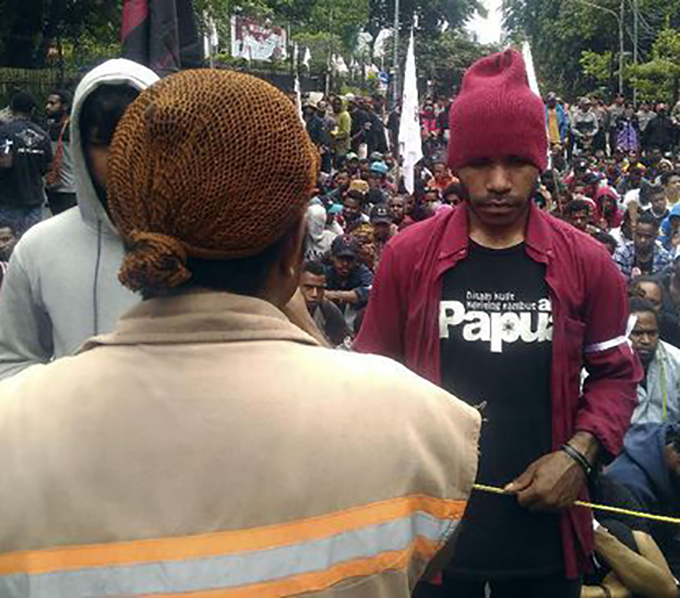 The Papua “freedom” protest near the office of LBH Jakarta on Friday. It ended without causing any incident between protesters and police. Image: Dhio Faiz/CNN Indonesia
By Dhio Faiz in Jakarta
A demonstration held in Jakarta by hundreds of students and youth from the Papua Student Alliance (AMP) and the Indonesian People’s Front for West Papua (FRI-WP) ended peacefully.
The action last Friday began at 6.30am with a march from the Jakarta Legal Aid Foundation (LBH Jakarta) offices in Central Jakarta to the offices of PT Freeport Indonesia.
The protesters only got as far as 20m, however, before they were blocked by hundreds of fully equipped police.
An advocacy team from the LBH Jakarta then asked police not to break up the demonstration by force with a guarantee that the rally would proceed peacefully.
The police then gave the protesting groups a time limit of until 11am to hold an action in front of the Megaria bus stop.
The protesters, accompanied by the LBH advocacy team, were eventually able to hold a peaceful action in front of the Megaria bus stop.
During the action they read out a six-point statement.
Close Freeport demand
First, they demanded the closure of the Freeport gold-and-copper mine in Papua and called on the government give the Papuan people the right to self-determination.
Next they asked for support for the United Liberation Movement for West Papua (ULMWP) to join the Melanesian Spearhead Group (MSG), the Pacific Islands Forum (PIF) and the United Nations.
Finally, they called for the Indonesian people to support Papua’s struggle for self-determination.
After reading out the statement and giving flowers to police as symbol of peace, the protesters began disbanding.
They also cleaned up the left over rubble from the rally then returned to the LBH Jakarta offices.
Translated by James Balowski for the Indoleft News Service from the original CNN Indonesia article. Delayed publication. The original title of the article was “Aksi Tuntut Pembebasan Papua di Jakarta Berakhir Damai“.

Article by AsiaPacificReport.nz
]]>Indonesia must step up focus on human rights, says Amnesty

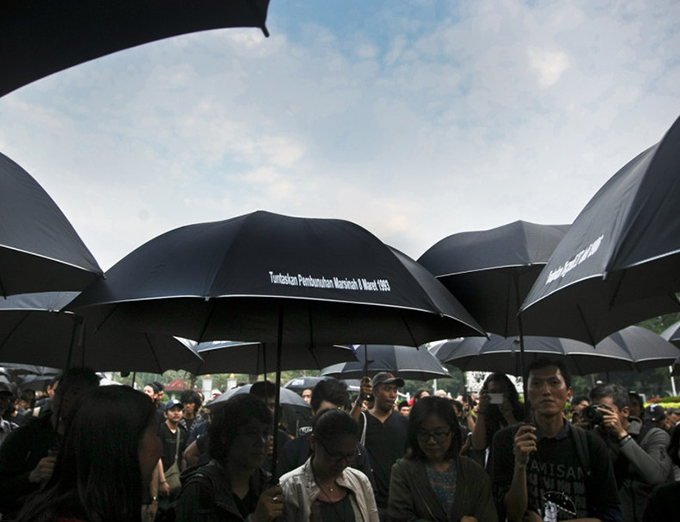 The 500th Kamisan protest across the Presidential Palace last month. The silent protest, or the black umbrella protest, which came to be known as Kamisan protest held by victims of human rights violations. Image: Yudha Baskoro/Jakarta Globe
By Sheany in Jakarta
With its official launch in the country set for today, Amnesty International Indonesia has emphasised the need for the government to step up focus on human rights issues and warned that neglecting human right violations can impede the country’s growth.
Speaking at a press conference in Menteng, Central Jakarta, the chairman of the board for Amnesty International Indonesia, Todung Mulya Lubis, said that despite progress in democracy, political life and the economy, Indonesia still needed to pay more attention to human rights issues.
“There’s still plenty that must be done to resolve past human rights violations […] Indonesia won’t have smooth progress if those remain unresolved, it will always obstruct the way,” Todung said.
The London-based organisation hopes to push Indonesia to be a global player in upholding human rights with its local chapter.
“Amnesty International Indonesia wants to urge Indonesia to take a global role in the human rights movement. That’s one of our dreams,” said Monica Tanuhandaru, one of the board members.
She emphasised that economic development in Asia, Southeast Asia and Indonesia would be “meaningless without justice of human rights.”
However, as the world bears witness to changing political dynamics across the globe, it is no longer solely the role of the government to ensure protection of human rights. Rather, it should be the product of a collective act from all members of society.
“[The] state is becoming weaker and weaker. Efforts to uphold and protect human rights must be done by civil society, but this doesn’t mean that we deny the existence of the state,” Todung said.
Uniting all movements
Amnesty International Indonesia hopes to “unite all human rights movements that are present in Indonesia,” especially as it aims to urge the government to resolve human rights violations.
For decades, the Indonesian government has provided little clarity on how it will address past human rights violations, including violations allegedly committed in 1965 and 1998, as well as those resulting from conflicts in Papua, West Papua and Timor-Leste.
Promises that these violations will be duly addressed was popular among candidates during the country’s last presidential campaigns, but real commitments to human rights from the current administration seem to have been overridden by priorities on other aspects, such as the economy and infrastructure development.
Sidarto Danusubroto, a member of the Presidential Advisory Board (Wantimpres), said that telling the truth in Indonesia was “not a simple process” and would likely require a long time.
While the government has programmes for human rights, it was facing “economic issues” that must be resolved, he said.
“I’m afraid that if the government also has to resolve past human rights violations, current programmes for the economy will weaken,” Sidarto said.
Countries like South Africa and Chile, Sidarto said, had “built their memories of human rights” through museums.
‘Dark past’
He reflected on the importance of these countries being able “to admit their dark past without the need to hide,” and expressed his hopes that Indonesia would eventually get there.
“I hope, one day, we’ll get there – where we don’t have to be ashamed to speak of our dark past,” Sidarto said.
Amnesty International Indonesia will launch its #JoinForces initiative on December 7, coinciding with the 517th Kamisan – a silent protest in front of the State Palace in Central Jakarta – as a form of solidarity to the protesters who have been demanding that the Indonesian government solve past cases of human rights abuses.
This had been initiated by friends and family members of 1998 student activist victims every Thursday afternoon for the past 10 years.
The organisation will also host simultaneous events across Indonesia between today and December 10, including in Bandung (West Java), Solo (Central Java) and Makassar (South Sulawesi).
The initiative is focused on combating growing “scapegoat” politics and the rise of negative populism that the organisation said had “undermined the basic rights of minority groups.”
Article by AsiaPacificReport.nz
]]>PNG’s opposition blasts O’Neill over ‘fake budget, fake revenues’

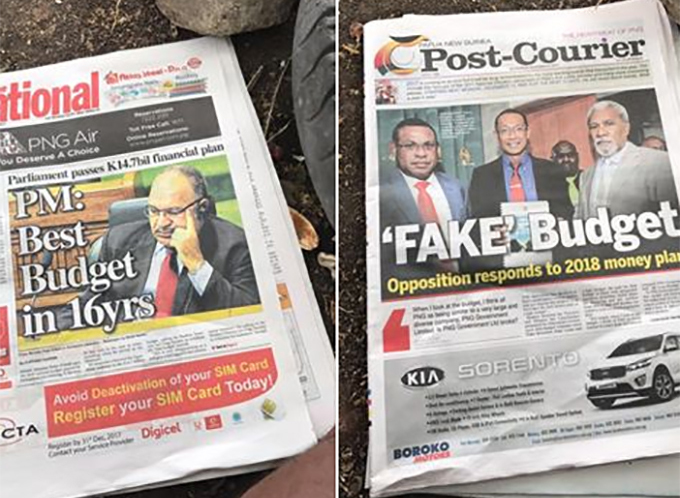 A tale of two newspapers … contrasting front page views of the Papua New Guinea Budget. Image: Screenshot/The Pacific Newsroom
Pacific Media Centre Newsdesk
Papua New Guinea’s opposition has declared it will fight a good fight to expose and oppose what it describes the 2018 state money plan as a “fake budget”, reports the PNG Post-Courier.
However, the rival daily newspaper, The National, quotes Prime Minister Peter O’Neill as decribing the K14.7 billion (NZ$6.6 billion) Budget as Papua New Guinea’s “best in 16 years”.
The opposition’s Shadow Minister for Treasury and Finance Ian Ling-Stuckey presented the “alternative government” 2018 Budget response titled “Fake Revenues, Fake Loans and a Fake Budget”, the Post-Courier reported.
He said the 2018 Budget was filled with misguided spending priorities, failed plans for financing and yet another huge deficit that would burden “our children” with too much expensive debt.
“Put simply, when I look at the budget, I think of PNG as being similar to a very large and diverse company-PNG Government Limited,” Ling-Stuckey said.
“Is PNG Government Ltd broke? Our people are feeling the pain through a lack of jobs, a lack of incomes, a lack of foreign exchange and a lack of important government services.”
Ling Stuckey said that since 2011 debt had grown from K8 billion (NZ$3.6 billion) to more than K24 billion (NZ$10.8 billion) in just five years.
‘Fake revenue’
“The 2018 Budget has, at this early stage, some K2 billion in ‘fake revenue’. This is not the ‘building block’ that the Minister for Treasury promised. So where is this K2 billion in fake revenue?”
He said to assume that revenues were going to increase as much as 20 percent from K10.6 billion to K12.7 billion in 2017 was wrong.
He said the opposition supported the increase in health expenditure of K285 million but relative to the 2015 Budget, health had been cut by 16 percent in real terms.
“It’s no wonder our health services are declining. It is good that more funds are being provided for medical supplies. However, the underlying issue is a lack of transparent competitive tendering in the medical supply contract,” he said.
Ling Stuckey said the biggest winners in this budget were interest costs, administration, health and APEC.
“Are some of these really the right priorities at this time of severe economic pain and failing government services?
‘Bad signal’
However, The National’s Clifford Faiparik reported that Prime Minister O’Neill criticised the opposition budget response, calling on Ling-Stuckey to withdraw his “fake budget” remark.
“This is very disappointing as it will give a bad signal to our international investors. I’m calling on the Shadow Treasury Ian Ling- Stuckey to withdraw his statement,” he said.
“This is by far one of the best budgets that I have ever seen since I have been in this Parliament for 16 years now. That includes the budget that I have presented as well.”
O’Neill had served as a treasurer in the Sir Michael Somare-led government.
“I say this because this budget is now putting us on a course to make sure that this country’s economic base and growth will be such that it can be self-sustainable,” he said.
“So it is quite disappointing that some of the terminologies that he [Ling-Stuckey] used are unbecoming of leaders of this honourable House. We have to be careful of how we portray the image of our country, our parliament and ourselves.
“Sometimes for short political convenience and point-scoring we say things and do things that are not really in the best interest of our country. We have to be constructive.”
The Post-Courier and The National are Papua New Guinea’s only two daily newspapers.
Article by AsiaPacificReport.nz
]]>PMC’s Bearing Witness project reporters win Dart trauma award

The Bearing Witness video and the prizewinning multimedia package.
Pacific Media Watch Newsdesk
The Pacific Media Centre’s Bearing Witness climate change project has won the Dart Asia-Pacific Prize for Journalism and Trauma at the annual Ossie Awards in Student Journalism presented at the Journalism Education and Research Association of Australia (JERAA) annual conference at Newcastle University last night.
 PMC journalists Julie Cleaver and Kendall Hutt received the award for a multimedia feature on the Fijian village of Tukuraki, which was hit by a deadly landslide and two cyclones in the space of five years.
Cleaver and Hutt travelled to the village in the highlands of Ba, Viti Levu, in April to trace its journey of recovery as the first inland village to be relocated due to climate change.
Dart Centre Asia-Pacific director Cait McMahon praised the pair for their sensitivity in reporting the story of Vilimaina Botitu and her family.
“Cleaver and Hutt’s victim-focused story of climate change in Fiji through the eyes of one woman and her family’s tragedy was sensitive, well researched and of a high professional standard,” she said.
“The story was informative, and introduced a difficult-to-report climate change story in a very personal yet non-gratuitous way.
“The modality of hearing the survivor’s voice without interference from the journalist resulted in a well-produced and intelligently edited piece,” McMahon said.
Victim, survivor focus
The Dart Centre Asia-Pacific award is for reporting on the impact of violence, crime, disaster and other traumatic events on individuals, families and communities. Entries should focus on the experience of victims and survivors as well as contribute to public understanding of trauma-related issues.
Cleaver and Hutt were in Fiji on the Bearing Witness project, a collaborative venture between the University of the South Pacific’s journalism programme, the Pacific Centre for the Environment and Sustainable Development (PaCE-SD), the Auckland University of Technology’s Pacific Media Centre and documentary collective Te Ara Motuhenga.
Bearing Witness seeks to provide an alternative framing of climate change, focusing on resilience and human rights.
Article by AsiaPacificReport.nz
]]>Politics Newsletter: New Zealand Politics Daily – 06 December 2017 – Today’s content
Politics Newsletter: New Zealand Politics Daily – 06 December 2017 – Today’s content
Editor’s Note: Here below is a list of the main issues currently under discussion in New Zealand and links to media coverage.
[caption id="attachment_297" align="aligncenter" width="1600"] The Beehive and Parliament Buildings.[/caption]
Below are the links to the items online. The full text of these items are contained in the PDF file (click to download).
Education
Adele Redmond and Jo Moir (Stuff): International report shows children’s literacy suffered under National Standards
Simon Collins (Herald): Kiwi kids’ reading levels slide to record low
Adele Redmond (Stuff): NZQA to discuss math exam that left students in tears after teachers’ open letter
John Gerritsen (RNZ): School leavers back fee-free tertiary policy
Simon Collins (Herald): About 80,000 expected to get fees-free study in 2018
Jane Patterson (RNZ): Govt reveals who will benefit from new ‘fees-free’ policy
Shane Cowlishaw (Newsroom): No age limit on first-year-free policy
Max Towle (Wireless): Free fees for first-time students, but who exactly is eligible?
Laura Walters and Jo Moir (Stuff): Government confirms details of its flagship education policy, and 80,000 will benefit in 2018
Anna Bracewell-Worrall and Lloyd Burr (Newshub): People on work visas entitled to fees-free apprenticeships and industry training
Florence Kerr (Stuff): Education minister asks for briefing on Wintec
Florence Kerr (Stuff): Wintec spent over $4 million in financial settlements with staff
Health
Dominion Post Editorial: Chai Chuah had no choice but to resign
Stacey Kirk (Stuff): ‘It was Chai Chuah’s choice’: Director-General of Health not pushed, minister says
Eileen Goodwin (ODT): South Islanders, nurses missing from Clark’s health advisory group
Herald: National leader Bill English: ‘unreasonable expectations’ await next health boss
Natalie Akoorie (Herald): Nigel Murray got green light for high salary
Emma Hatton (RNZ): Acupuncturists reject study on misleading claims
Jessica Long (Stuff): Health of deaf Kiwis hindered by lack of interpreters, study finds
Employment and work for the dole
Gordon Campbell (Werewolf): On saying ‘work for the dole,’ nicely
Chris Bramwell (RNZ): PM rejects claim of ‘divisive issue’ over jobs scheme
1News: Shane Jones channels Romeo and Juliet while defending work-for-the-dole proposal – ‘A rose by any other name is just as sweet’
Anna Bracewell-Worrall (Newshub): Australia’s work for the dole scheme’s 2 percent success rate
Government
Herald Editorial: Public’s right to know is core tenet
Craig McCulloch (RNZ): Calls to combat foreign political influence
Newshub: PM Jacinda Ardern expects to meet Ombudsman over document
Economy
Richard Harman (Politik): An end to inflation?
Rebecca Howard (BusinessDesk): RBNZ considers tweaking monetary policy as low inflation persists
Hamish Rutherford (Stuff): Crown accounts in deficit, but debt tracking below expectations
Peter Lyons (Herald): The cult of growth and manic materialism
Environment
Ged Cann (Stuff): Kiwis want a ban on the bag, and legislation is looking increasingly likely
No Right Turn: Stopping the beast
Jessie Chiang (RNZ): Kauri dieback: Council could hold second vote
Helen King (Stuff): Auckland Council votes against full closure of Wāitakere Ranges
RNZ: Kauri dieback: council votes against Waitakere closure
Herald: Auckland Council backs kauri dieback exclusion zone in Waitakere Ranges
Simon Wilson (Spinoff): The battle to save the Waitakere Kauri
Robin Martin (RNZ): Anti-1080 letter claims sika release
Herald: Department of Conservation calls in police over anti-1080 group’s threats
Emma Jolliff (Newshub): 1080 protesters threaten to ‘bring down’ DoC helicopters
PM’s Al Gore interview
Barry Soper (Newstalk ZB): Climate change
Claire Trevett (Herald): New Zealand ready to stand up on climate change Jacinda Ardern says
Isobel Ewing (Newshub): Jacinda Ardern: Climate change goes beyond politics
Claire Trevett (Herald): Al Gore to Jacinda Ardern: ‘Everybody in the world is pulling for you.’
Laura Walters (Stuff): Al Gore lauds Prime Minister Jacinda Ardern on climate change action
Chris Bramwell (RNZ): Gore to PM: ‘You’re a breath of fresh air’
1News: Watch: ‘I don’t want to gush here’ – Al Gore can’t stop heaping praise on Jacinda Ardern during climate change interview
1News: Watch: ‘I got to know the culture’ – Al Gore tells Jacinda Ardern how he served alongside Maori during Vietnam War
Housing
Anna Bracewell-Worrall (Newshub): National spent $50m putting homeless in hotels
1News: Housing Minister labels previous government’s emergency housing policy a ‘ticking time bomb’
RNZ: Twyford slams National’s emergency housing blowout
Susan Edmunds (Stuff): Auckland Council may get more powers to force people to sell their houses
Newshub: Landlords to score tenants with rating system
Australia
Katarina Williams (Stuff): Only those with genuine NZ links should be deported from Australia, PM says
Herald: PM Jacinda Ardern: Australia deportees must have roots in New Zealand
Herald: PM Jacinda Ardern denies Labour is a soft touch for people smugglers
RNZ: ‘Kwaussie’ named Australia’s 2017 word of the year
China
Henry Cooke (Stuff): Winston Peters says western world is too hard on China over freedom issues
Audrey Young (Herald): Remember Janis Joplin before judging China too harshly says Winston Peters
Newshub: ‘In some ways the Chinese have a lot to teach us’ – Winston Peters
Talisa Kupenga (Māori TV): Māori business interest at NZ-China mayoral talks
Justice
RNZ: Prison violence ‘unacceptable in a civilised country’
Kirsty Johnston (Herald): Violence at New Zealand prisons highlighted in Ombudsman’s latest torture reports
Oliver Lewis and Sam Sherwood (Stuff): Ombudsman report lays out ‘unacceptable’ conditions at Christchurch Men’s Prison
Jonathan Underhill (Herald): Prison company locks up $8.2m annual profit
Media
Tim Murphy (Newsroom): Why media diversity matters
David Farrar (Kiwiblog): Peters vs the media
John Drinnan (ZagZigger): Minister And RNZ News Boss Breakfast At The Astoria
David Farrar (Kiwiblog): The growing threat to free speech
RNZ: ‘The conversation still goes on’
Ian Grant (Dominion Post): Cartoonists living dangerously as insecure regimes equate satire with sedition
Primary industries
Jonathan Underhill (Herald): Farmer confidence drops 41 per cent
RNZ: Farming confidence plummets – survey
Brad Markham (Stuff): It’s time to protect our supply of horticultural produce
Transport
Laura Walters and Hamish Rutherford (Stuff): Minister joins AA call for petrol price cut
Hamish Rutherford (Stuff): AA calls for petrol price cut, claims margins are well above average
Tess Nichol (Herald: AA calls on fuel companies to cut petrol prices – saying Govt needs to step in if they won’t
Gender
Susan Edmunds (Stuff): Policy aims to propel more women lawyers to top roles
Emile Donovan (RNZ): Lawyers set ‘achievable’ gender balance target
Heta Gardiner (Māori TV): More women managers, more money – report
Chloe Winter and Laura Walters (Stuff): More women in top jobs would give an $881 million boost to NZ: report
Salvation Army report
Kate Pereyra-Garcia (RNZ): Smaller communities feel ‘forgotten’ – report
Newshub: Low-income communities ‘forgotten’ – study
Newshub: We need good parents, not more benefits – Duncan Garner
Other
Sam Sachdeva (Newsroom): Volunteer push likely after Civil Defence review
Laura Walters (Stuff): Pike River Recovery Agency allows for maximum accountability – Labour
Mike Hosking (Herald): Is the Commerce Commission out of touch?
Hamish Fletcher (Herald): Retirees rely on state pension as savings run out
Herald: America’s Cup: Team NZ accused of ‘corporate blackmail’ by former director
Tom Pullar Strecker (Stuff): Government may protect workers who dob in bad behaviour to the media
No Right Turn: Time to strengthen whistleblower protections
Shannon Haunui-Thompson (RNZ): Iwi to take Crown to Supreme Court
Zac Fleming (RNZ): Where refugees go when they arrive in New Zealand
Stephen Day (Spinoff): Does the Property (Relationships) Act work for modern families?
Geoff Vause (Marlborough Express): Building owners confused by quake risk process
Jo Moir (Stuff): British High Commissioner Jonathan Sinclair off to work for Boris Johnson
Joanna Norris (Press): Government support essential to complete Christchurch’s rebuild at pace]]>
Keith Rankin Analysis: Chart for this Month: The Public Debt League
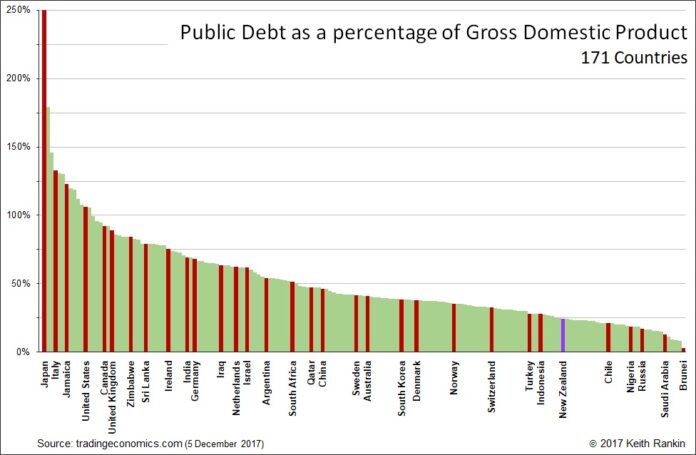
Chart for this Month: The Public Debt League – Analysis by Keith Rankin.
The new government claims to have solutions to our many social and economic problems. Yet it persists with the view that reducing public debt takes priority over any of these problems. Seems to me like they wish to spend the 2020s in Opposition.
This month’s chart shows the public debt to GDP ratio for all 171 countries covered by tradingeconomics.com that have public debt data. Public debt includes the debt of governments at all levels; not just central government. And we should note that many countries with substantial levels of public debt are creditor countries overall; it’s just that the government component of those countries’ economies offsets their private sector creditor status.
The highlighted countries here are all ones which New Zealand is familiar with.
The first point to notice is that there are countries with strong economies and countries with weak economies across the whole spectrum. The overall impression, however, is that countries that we look to as economic exemplars are more likely to be towards the left (higher debt) of the public debt spectrum.
New Zealand, at 25% of GDP, comes in at 139 out of 171 in the public debt league. The only OECD (developed) countries that have less public debt are Luxembourg and Estonia. The other counties in the 24% to 26% range are Peru, Bulgaria, Guatemala, Eritrea, Cameroon and Liberia.
Why do we want to join Kazakhstan, Algeria and Palestine, which are at the 20% mark? The governments of Canada and the United Kingdom, with public debt at 90% of GDP, have triple-A credit ratings. Their governments can borrow money at close to 0% interest despite their high public debt.
Japan’s government borrows from its people at 0%. Indeed Japan, with public debt at 250% of GDP, has plenty of ongoing public spending, including the Rugby World Cup and the Olympic Games. Japan’s government, like New Zealand’s, has a double-A credit rating.
Without public debt, the world economy would be in a state of complete collapse. If all governments were like ours, aiming for the bottom of the public debt league (right hand side of the chart), then this would truly be a race to the bottom.
Philippine clergy appeal for justice over assassination of retired priest

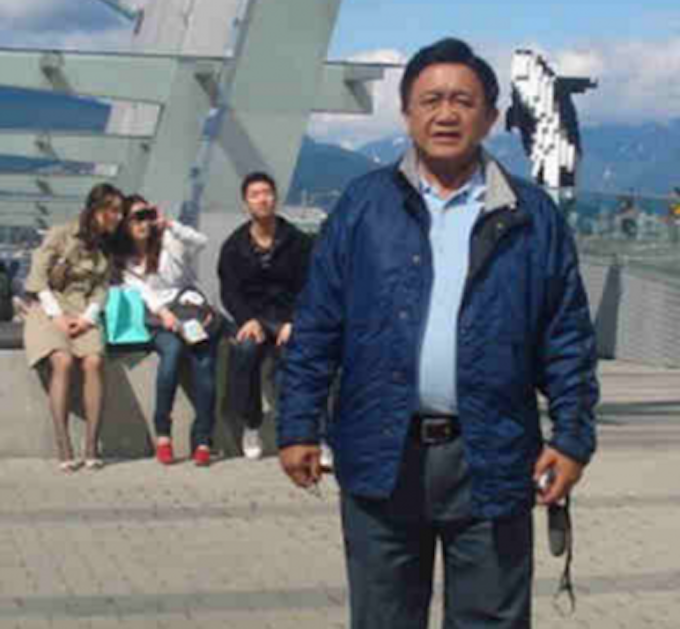 The 72-year-old retired Nueva Ecija Catholic priest Marcelito ‘Tito’ Paez … dedicated most of his life to defending the rights of Filipinos. Image: File photo/Interaksyon
By InterAksyon with Cris Sansano in Manila
Nueva Ecija priests led by Bishop Robero Mallari are appealing to the administration of President Rodrigo Duterte to seek justice for the death of 72-year-old retired Filipino social activist priest Marcelito “Tito” Paez who has been gunned down by unidentified assailants in Jaen town.
The slain priest visited New Zealand in November 1990 as a member of the Philippine delegation to the Nuclear-Free and Independent Pacific (NFIP) conference at Pawarenga marae, north of Hokianga.
“Kami ay nanawagan na sa mga kinauukulan sa pamahalaan na bigyang linaw at katarungan ang kanyang kamatayan [We are calling on authorities in the government to shed light on the killing and give justice to his death],” the priests said in a statement signed yesterday by Bishop Mallari.
READ MORE: Duterte declares New People’s Army a ‘terrorist group’
Two motorcycle-riding attackers killed Paez in Sitio Sanggalang, Barangay Lambakin, on Monday.
The victim was on his way home to Barangay Baloc in Sto. Domingo, Nueva Ecija and was onboard a Toyota Innova with plate number AAB 2391 around 8 p.m. when the attackers shot Paez with a .45-calibre pistol.
He was rushed to a hospital in San Leonardo, Nueva Ecija, but died there while undergoing treatment.
A day before he was slain, Paez helped facilitate the release of political detainee Rommel Tucay, a peasant union organiser of the Alyansa ng Magbubukid sa Gitnang Luzon, who was abducted and tortured in March 2017 allegedly by state security forces.
Championed peasant rights
Paez dedicated most of his life to defending the rights of Filipinos, especially the rights of poor workers and peasants, according to the Roman Catholic Diocese of San Jose, Nueva Ecija where Paez served as a priest starting in 1984 when the parish was established until he retired in 2015.
“Sa kanyang paglilingkod sa Simbahan, siya ay aktibong nakisangkot sa mga usaping panlipunan, lalo na sa mga usapin na may kinalaman sa karapatang pantao, magsasaka, at mahihirap [In serving the Church, he involved himself in social issues, especially on those that had to do with human rights, farmers, and the poor],” said Mallari.
The bishop added that Paez was also part of the Catholic Church’s Social Action Commission and headed a unit within it called Justice and Peace Office, whose main goal is to help ensure the rights of the poor and the marginalised, especially that of workers and farmers.
Paez, former parish priest of Guimba town, was also the coordinator of the Rural Missionaries of the Philippines in Central Luzon.
In the 1980s, Paez also became a leader of the Central Luzon Alliance for a Sovereign Philippines, which campaigned for the removal of the US military bases in the region.
The left-leaning Bagong Alyansang Makabayan yesterday condemned “in the strongest terms” the killing of Paez, who the group said was among the founders of Bayan in Central Luzon and “the first Catholic priest to be killed under the Duterte regime”.
Bayan denounces killings
Bayan also denounced the killing of Pastor Novelito Quinones, who was slain reportedly in Mindoro last Sunday, during an anti-rebel police operation in the province.
“He was later made to appear as a member of the NPA (New People’s Army) even his congregation attests otherwise” the group said.
Bayan likewise condemned the attempt to serve a warrant of arrest against PISTON transport group leader George San Mateo “who faces trumped up charges for allegedly violating Commonwealth Act 146, a law that dates back to 1936.”
“The case is pure harassment and indication,” it said.
“These attacks come in the wake of Duterte’s threats of a crackdown of legal activists, and his slandering of mass organisations as mere legal fronts of the CPP (Communist Party of the Philippines),” said Bayan.
Article by AsiaPacificReport.nz
]]>Politics Newsletter: New Zealand Politics Daily – 05 December 2017 – Today’s content
Politics Newsletter: New Zealand Politics Daily – 05 December 2017 – Today’s content
Editor’s Note: Here below is a list of the main issues currently under discussion in New Zealand and links to media coverage.
[caption id="attachment_297" align="aligncenter" width="1600"] The Beehive and Parliament Buildings.[/caption]
Below are the links to the items online. The full text of these items are contained in the PDF file (click to download).
Employment and work for the dole
Dominion Post Editorial: The hard politics of work for the dole schemes
NZ Herald editorial: Jones’ work scheme deserves a chance
ODT Editorial: Working yourself off the couch
Southland Times Editorial: Circle the couches, guys
Max Towle (The Wireless): A town that hopes Shane Jones can deliver the jobs he’s promising
Tom Furley (RNZ): Unemployed in Northland: ‘I was doing everything I could’
Barry Soper (Newstalk ZB): Work for the dole scheme will be a test for Shane Jones
Lloyd Burr (Newshub): Conflict and confusion over Government’s tree-planting scheme
Dan Satherley (Newshub): ‘Work-for-the-dole’ plans actually ‘work-for-minimum-wage’ – Ardern
1News: NZ First’s push for work for the dole scheme causes tension in coalition government
1News: ‘You’re asking me to jump the gun’ – Jacinda Ardern cagey on forcing those on benefits into work
1News: Shane Jones’ work-for-the-dole proposal ‘precarious and insecure’ employment – poverty action group
Dean Nathan (Māori TV): Jones calls for ‘work for dole’ scheme
1News: ‘It’s a talk-back radio public policy solution’ – work-for-the-dole scheme drawing skepticism
Richard Harman (Politik): Shane Jones and Willie Jackson agree (and disagree) on Maori unemployment
RNZ: Young beneficiaries have ‘chaotic lives’ – English
Northland Age: Shane Jones’s employment scheme faces uphill battle
Herald: Just Water CEO Tony Falkenstein says job hunters failing to show
Stuff: How much are NZ households earning from wages and salaries?
Mike Treen (Daily Blog): Poverty and inequality won’t be challenged by Tax working group
Government
Shane Cowlishaw (Newsroom): Shane Jones: The billion dollar man
Toby Manhire (Spinoff): Jacinda Ardern’s greatest challenge may be the egos in her own cabinet
Gwynn Compton (Libertas Digital): Coalition Cabinet MIA, Shane Jones goes rogue
Colin James (ODT): A population challenge bigger than just numbers
Derek Cheng (Herald): Jacinda Ardern ‘will absolutely co-operate with the Ombudsman’ over unreleased coalition document
RNZ: ‘Demonstrable difference’ in OIA delays – ombudsman
Herald: Ombudsman steps in over unreleased coalition document, asks PM for response
Martyn Bradbury (Daily Blog): Shane Jones knew exactly who he was talking to and why Labour will fight to stop coalition document from being released
The Standard: Making official Information flow again
Parliament
Dan Satherley (Newshub): Todd Barclay’s holiday won’t result in law change – Jacinda Ardern
Newswire: 34 MPs receive $40,000 ‘golden handshake’
David Farrar (Kiwiblog): Trans-Tasman on the new MPs
Ken Orr (Stuff): Should the Parliamentary Prayer Be Amended?
Education
Craig McCulloch (RNZ): Govt to detail free year of tertiary plan
David Cohen (RNZ): Is NZ in danger of being too educated?
Florence Kerr (Stuff): Former senior staff member asks Education Minister Chris Hipkins for Wintec probe
Karoline Tuckey (Manawatu Standard): Professors say planned staff cuts will dent Massey University’s reputation
Simon Collins (Herald): NZQA agrees to talk about controversial maths exam
Rosie Gordon (Newstalk ZB): Students left in tears after funding cut to training provider
Michael Fallow (Stuff): Dowie assails Govt’s post-secondary funding plans
Health
Karen Brown (RNZ): Health Minister David Clark on director-general’s resignation
Herald: Health Minister sets up urgent expert group to examine system
Stuff: Government to urgently establish new health advisory group
Stacey Kirk (Stuff): Director-General of Health steps down, hunt for new health boss starts
Herald: Director General of Health Chai Chuah resigns
RNZ: Director-general of health quits
David Farrar (Kiwiblog): Clark pushes out Chuah
Eileen Goodwin (ODT): Disgraced Waikato boss claimed DHB merger credit
Natalie Akoorie (Herald): Waikato health chief had bid for new medical school in Canada
Mandy Te (Central Leader): Tax on highly processed foods needed on top of sugar tax, Exercise NZ says
Mike Wesley-Smith (Newshub): UN involved in Manawatu abuse investigation
Kurt Bayer (Herald): Navy veteran who won compensation battle after linking his Parkinson’s to chemical exposure speaks out for first time
Graham Adams (Noted): Who speaks for doctors on euthanasia?
Mike Yardley (Stuff): Watching my uncle die – and his mood swings – confirmed my opposition to euthanasia
Environment
David Fisher (Herald): Conservation minister opposes GM-rodent plan
David Fisher (Herald): The Big Read: What happened when one expert killer was visited by the US military’s science agency
Ged Cann (Stuff): How plastic bags clog our seas and kill birds, turtles and sea mammals
Laura Walters (Stuff): Government bans production and sale of all microbeads
Herald: Microbeads ban announced by Government
Jamie Morton (Herald): Waitakeres rahui keeping people away – iwi
David Hall (Briefing Papers): Changing climate, changing minds
Patrick Barkham (Guardian): Clean, green New Zealand is a lie – and a warning for Britain’s countryside
Primary industries
James Paul (Stuff): Nash coy on fisheries changes, after report calls for major overhaul
RNZ: Robots could soon take over dangerous forestry jobs
Media
John Drinnan (ZagZigger): RNZ: From Red Radio To Celebrity Radio Spinoff
Newstalk ZB: Leighton Smith to retire, Kerre McIvor to take over Newstalk ZB morning slot
Herald: Leighton Smith calls it a day next year after provoking punters for a generation
Duncan Grieve (Spinoff): A farewell to Leighton Smith, NZ radio’s crankiest uncle
Hamish McNeilly (Stuff): TVNZ stretched in lower South Island as reporter quits
Housing
Collette Devlin (Stuff): Government backs Wellington City Council’s plans for a capital housing strategy
Joe Jeffries (Spinoff): Build, build, build: Why housing supply matters
David Hargreaves (Interest): If Phil Twyford follows through on the sentiments then the housing sector may be facing an even bigger shake up than people realise
Australia
Dominic Harris (Stuff): Australian deportation rules are ‘like Trump’s Mexican border’
Katarina Williams (Stuff): A quarter of Kiwis deported from Australia in the past two years have reoffended
Katherine Murphy (Guardian): Turnbull government scrambles after losing vote on New Zealand refugee offer
RNZ: Turnbull govt revokes temporarily passed refugee motion
Herald: Manus refugees prefer NZ to resettlement in US
Conan Young (RNZ): Are Manus Island asylum seekers a threat to Australia?
Pike River
Laura Walters (Stuff): Pike River Recovery Agency chief executive liable if re-entry goes wrong, not Andrew Little
David Williams (Newsroom): Solid Energy’s forlorn hope over Pike re-entry
Police
Nicole Lawton (Stuff): Police recruitment video reaches 14 million people, with over 1000 signing up
No Right Turn: Our police are still rotten
Te reo Māori
Kris Taylor (RNZ): The more you know, the more you know you don’t know
Martyn Bradbury (Waatea News): How should we respond to Don Brash’s criticism of Te Reo on Radio NZ
Brian Edwards:An Apology
CTV building collapse
Michael Wright (Stuff): Victims’ families to protest lack of charges over CTV building collapse
1News: ‘Come and stand in solidarity’ – Families to protest police decision not to prosecute over CTV building collapse
RNZ: Protest planned over CTV decision
Christchurch
Herald: PM Jacinda Ardern announces urgent legislation for ChristChurch Cathedral
Stuff: Urgent Christchurch Cathedral legislation to be introduced to Parliament
RNZ: Govt to fast-track Cathedral rebuild
1News: Watch: Protesters wearing mock prison clothes march through Christchurch mall over quake claims
Julian Lee (Stuff): ChristchurchNZ boss sounds alarm on anchor projects pace
Cycleways
Mike Hosking (Herald): Why cycleways lead only to frustration, anger, protest and ill-will
Dan Satherley (Newshub): Anti-cycleway protester compares opponent to the Nazis
Other
Ric Stevens (Press Editorial): Regional decline means it is time to think beyond just economic development
Tom O’Connor (Waikato Times): Pay rises and rates increases
Nicole Moreham (Newsroom): Where private ends and public begins
Catherine Hutton (RNZ): Budget blowout: Great War Exhibition leaves ministry in debt
Karl du Fresne: A rampant culture of entitlement
Chris Trotter (Stuff): How politicians exploit Māori dysfunction to weaponise Pākehā racism
Hamish Rutherford (Stuff): Competition watchdog could get power to conduct probes without Government approval
David McLean (Stuff): We need more women at the top
Tamsyn Parker (Herald): Why NZ is missing out on a $900m per year economic boost
essie Chiang (RNZ): Kiwibank closure: ‘I feel as if I’ve been issued a death sentence’
Herald: Jacinda Ardern ends engagement speculation
Stuff: PM Jacinda Ardern quashes speculation she got engaged at the weekend]]>
Philippine media freedom riskier, traumatic under Duterte, says PCIJ director

By Kendall Hutt in Auckland
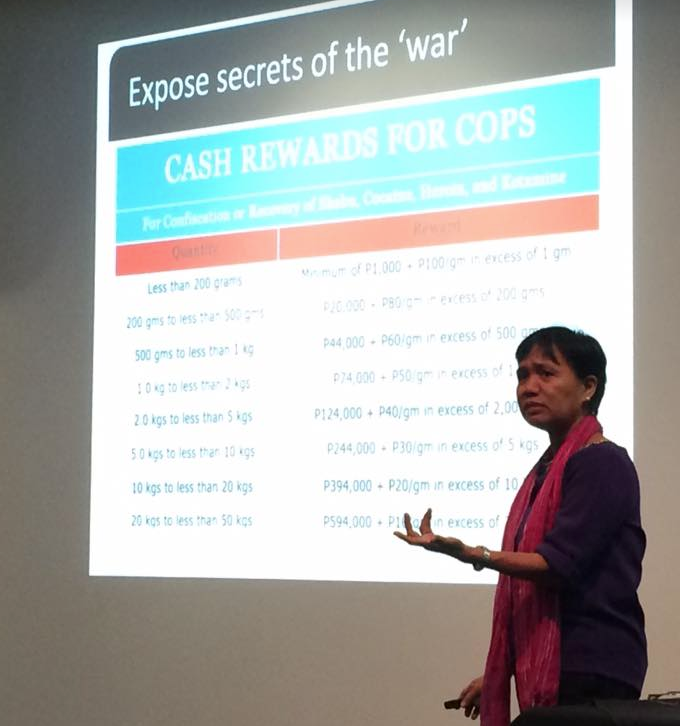
Being a journalist in the Philippines has become a lot tougher, riskier and traumatic in the face of President Rodrigo Duterte’s so-called “war on drugs” which has seen more than 7000 people killed in the Philippines in the last 18 months, says a leading media researcher and advocate.
In a narrative “singularly dominated by the police”, says Malou Mangahas, executive director of the Philippine Center for Investigative Journalism (PCIJ), the face of journalism in the Philippines has begun to feel the impact.
Mangahas told the audience of the ‘Journalism under duress in Asia-Pacific’ panel during the Pacific Media Centre’s 10th anniversary event one of the “freest” and “most rambunctious” media in Asia was facing serious challenges.
“The media in the Philippines right now is suffering from severe psychological trauma for seeing dead bodies, observing the terrible grief of family members of those who have been killed in the war on drugs by our president of only 16 months,” she said.
Mangahas said journalists in the Philippines had become “first responders” in a war which had seen institutions falter and the rule of law challenged.
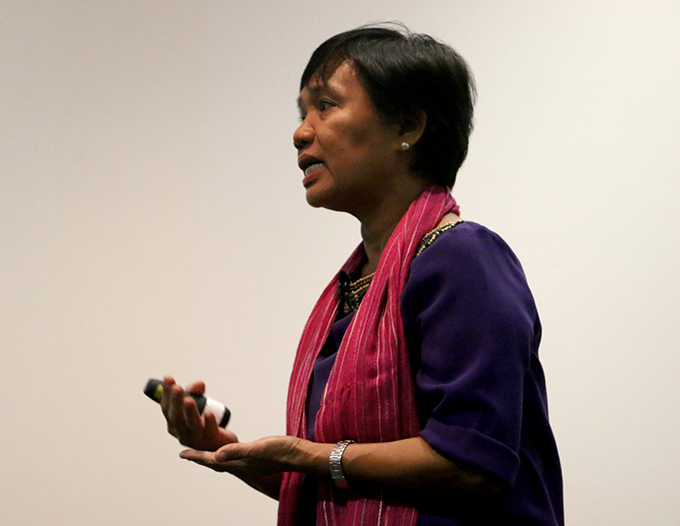 Journalists “first responders” in Duterte’s drug war … PCIJ executive director Malou Mangahas. Image: Kendall Hutt/PMC
“The rule of law is weak in the Philippines. This happens, this aberration – Duterte, the war on drugs, the martial law on Marawi – because we have many broken institutions in the Philippines.”
Although impunity was a problem in the drug war, Mangahas said accountability was a “twin problem” which the media had failed to uphold in a story “written and dramatic in numbers”.
‘Nobody owns up’
“People are getting killed but nobody owns up. Nobody gets jailed for what he has done. Cases are not even filed or pursued in court up to prosecution and conviction.
“I think we have gone wrong, we have not reported enough about our people,” she said.
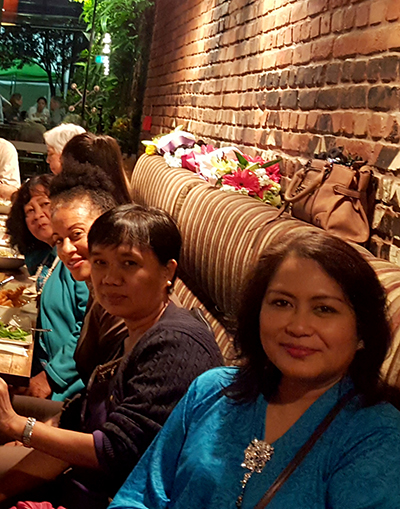 PCIJ’s Malou Mangahas (second from right) with PMC advisory board member Khairiah Rahman in Auckland. Image: Venus Abcede/PMC
Mangahas said that reporting on justice and rule of law, a “very difficult thing for a journalist to do”, had become harder under Duterte’s drug war, as journalists had to retrace their steps.
PCIJ’s executive director said that the drug war had called attention to the role of the journalist in the Philippines, which a “virulent social media community” had seized upon.
The war on drugs had seen “trolls” call out reputable media organisations such as Rappler and the Philippine Daily Inquirer as “fake news”.
Mangahas said she did not like to see journalism diminished by the “loose term” and warned fake news was a form of misinformation, propaganda, spin and hate speech.
“People never think about what it includes, what it excludes.
‘Open to opaqueness’
“News is never, ever fake,” she said.
Mangahas said a general shift from “open to opaqueness” now characterised media freedom in the Asia-Pacific region.
“Historically in the last 20 years, nations of the Asia-Pacific region have moved from open to opaque.
“In many parts of the region what we’re observing is a general push-back.”
Johnny Blades, a senior journalist at Radio New Zealand International, spoke about the media and Melanesia, especially Indonesian-ruled West Papua.
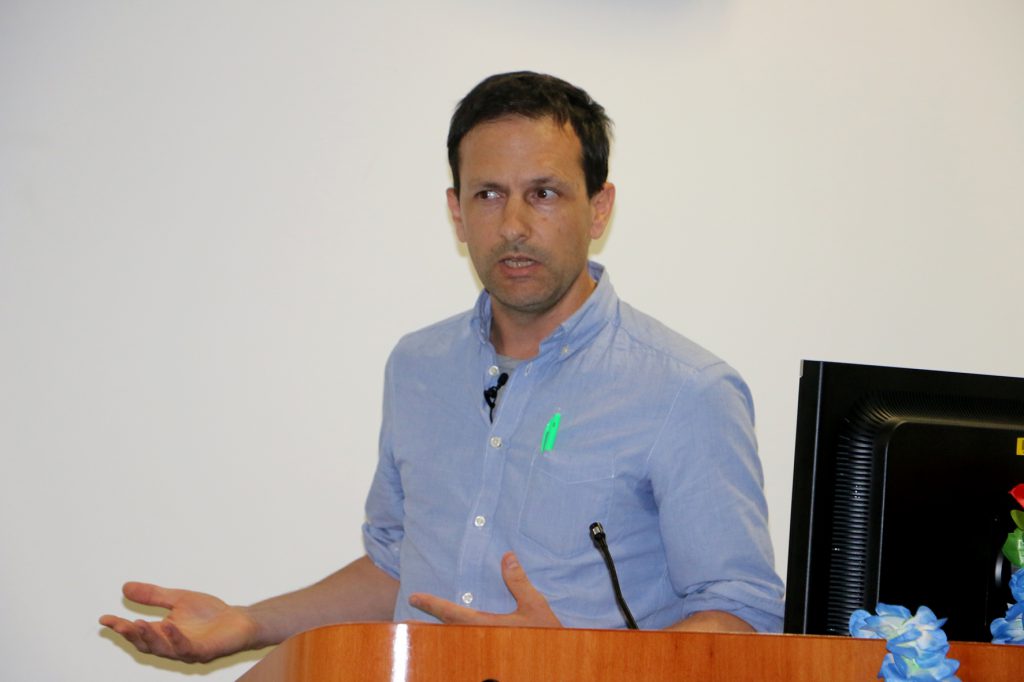 RNZI’s Johnny Blades … Jokowi “not running the show” in West Papua. Image: Kendall Hutt/PMC
Among a handful of New Zealand journalists to travel to West Papua, Blades explained that despite President Joko “Jokowi” Widodo’s best intentions of loosening media restrictions, there was a lack of cohesion about Widodo’s “Papua policy” in various state agencies.
“Out there in Papua it’s not Jokowi running the show, it’s more likely to be the military and the police.
‘Unlikely to quell discontent’
“His focus on development is unlikely to quell the discontent with Indonesian rule among Papuans and that, to a large degree, relates to their historic core grievance about what they see as an illegitimate self-determination process,” Blades said.
Despite the “dominating” presence of security forces and an “uneasy reality” and “terrible tension”, Blades said he was grateful for the chance to have gone there.
“I never thought I’d get to West Papua.
“I was really blown away by the beauty of West Papua. It’s indigenous people are truly magnificent people,” he said.
Introducing the panel, the chair, PMC director Professor David Robie, said how both the Philippine crisis and the Indonesian human rights violations in West Papua had been virtually ignored by the mainstream media in New Zealand.
He said the PMC’s media products Pacific Media Watch freedom project and Asia Pacific Report had tried hard to balance these blind spots.
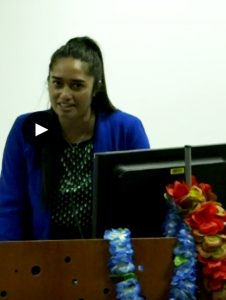 AUT honours graduate and Tagata Pasifika journalist as MC for the Pacific Media Centre event. Image: Screenshot/PMC livestreaming
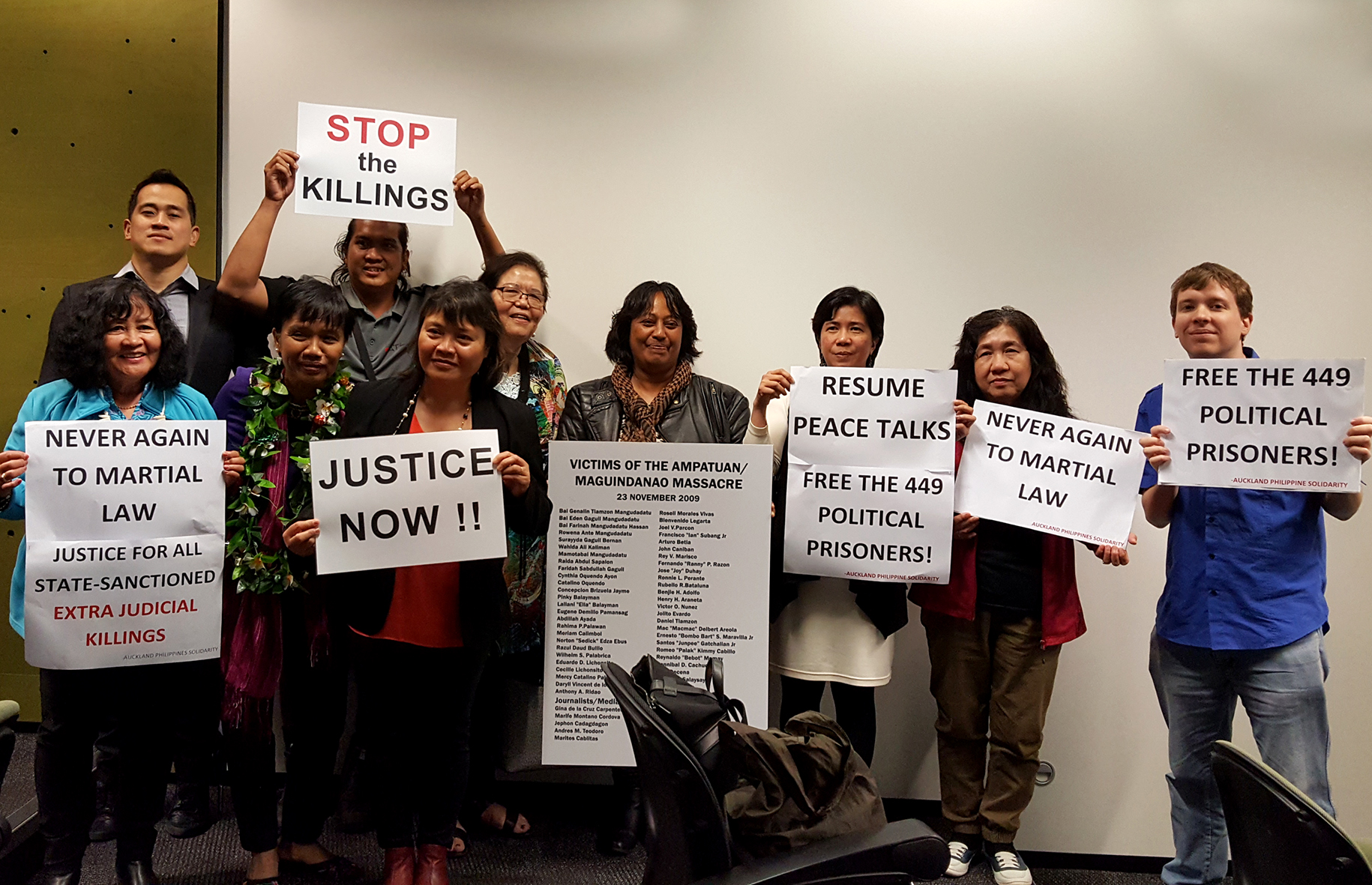
A minute’s silence was held to remember the victims of extrajudicial killings in the Philippines, while protesters held “Stop the killing” placards.
At the start of the panel, AUT graduate Sasya Wreksono introduced her special video to mark the anniversary, saying “I hope you get the feeling of the commitment, the drive and the passion that goes into the Pacific Media Centre”.
Evening MC Alistar Kata, an honours graduate and former Pacific Media Watch editor, added: “I would imagine, Sasya, it wasn’t easy to fit 10 years of stuff and content into two and half minutes!”.
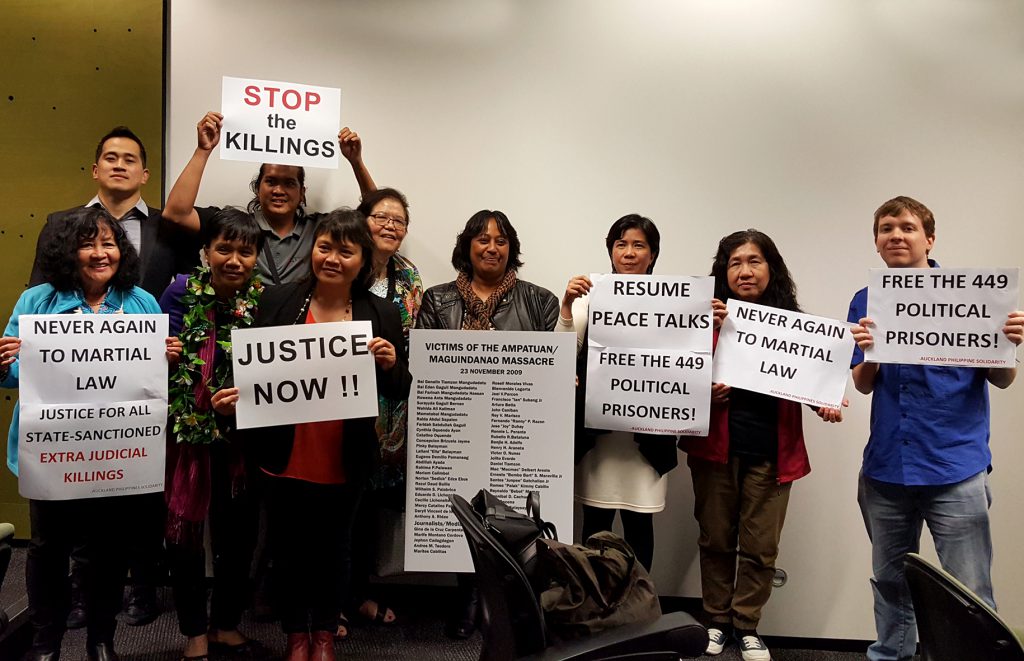 A vigil for the victims of the 2009 Ampatuan massacre and as a protest against the extrajudicial killings in the Philippines. Image: Venus Abcede/PMC
Article by AsiaPacificReport.nz
]]>Pacific Media Centre turns ten, talks media freedom under violent threat



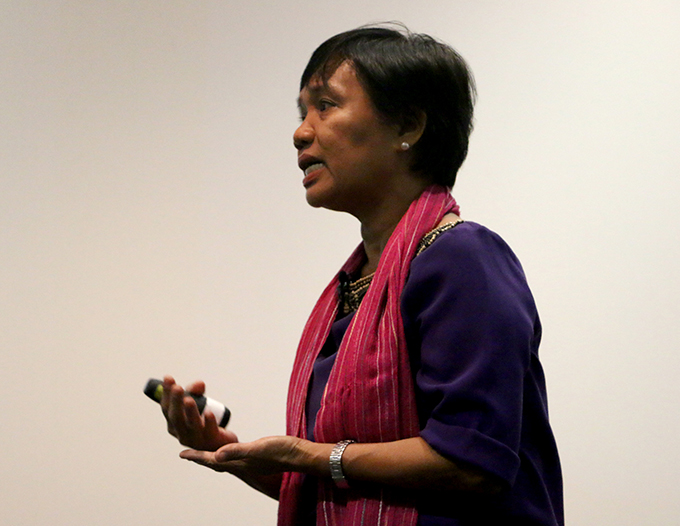 PCIJ’s Malou Mangahas speaking at the AUT Pacific Media Centre summit “Journalism Under Duress” in Auckland. Image: Kendall Hutt /PMC
Auckland University of Technology’s Pacific Media Centre has marked its tenth anniversary with a seminar discussing two of the wider region’s most critical media freedom crises.
The “Journalism Under Duress” seminar examined media freedom and human rights in Philippines and Indonesia’s Papua region, otherwise known as West Papua.
 Pacific Media Centre 10 Years On video.
The executive director of the Philippine Center for Investigative Journalism, Malou Mangahas spoke about extrajudicial killings and an ongoing spate of murders of journalists in her country.
Threats to journalists in the Philippines have been on the rise since President Rodrigo Duterte came to power last year. However, according to Mangahas, his “war on drugs” has seen more than 7000 people killed, over often spurious allegations that they were drug dealers.
LISTEN: PCIJ’s Malou Mangahas interviewed by RNZ Mediawatch
In the discussion about West Papua, the PMC seminar heard that access to the Indonesian region for foreign journalists, while still restricted, remained critical for helping Papuan voices to be heard.
Many West Papuans did not trust Indonesian national media outlets in their coverage of Papua, while independent journalists in this region face regular threats by security forces for covering sensitive issues.
The Pacific Media Centre and its two associated news and current affairs websites, Pacific Media Watch and Asia Pacific Report (previously Pacific Scoop), are among the few New Zealand media outlets to cover West Papua.
Research, media production
As well as a range of media books over the past decade, the PMC also publishes the long-running research journal Pacific Journalism Review.
“The Pacific Media Centre is rather unique in a New Zealand university context because it combines the attributes of a research and publication unit, and is also a media producer,” said the PMC director Professor David Robie.
“The PMC provides a publishing environment for aspiring and young journalists to develop specialist expertise and skills in the Pacific region which is hugely beneficial for our mainstream media. All our graduates go on to very successful international careers.
“We also provide an important independent outlet for the untold stories of our region,” he said.
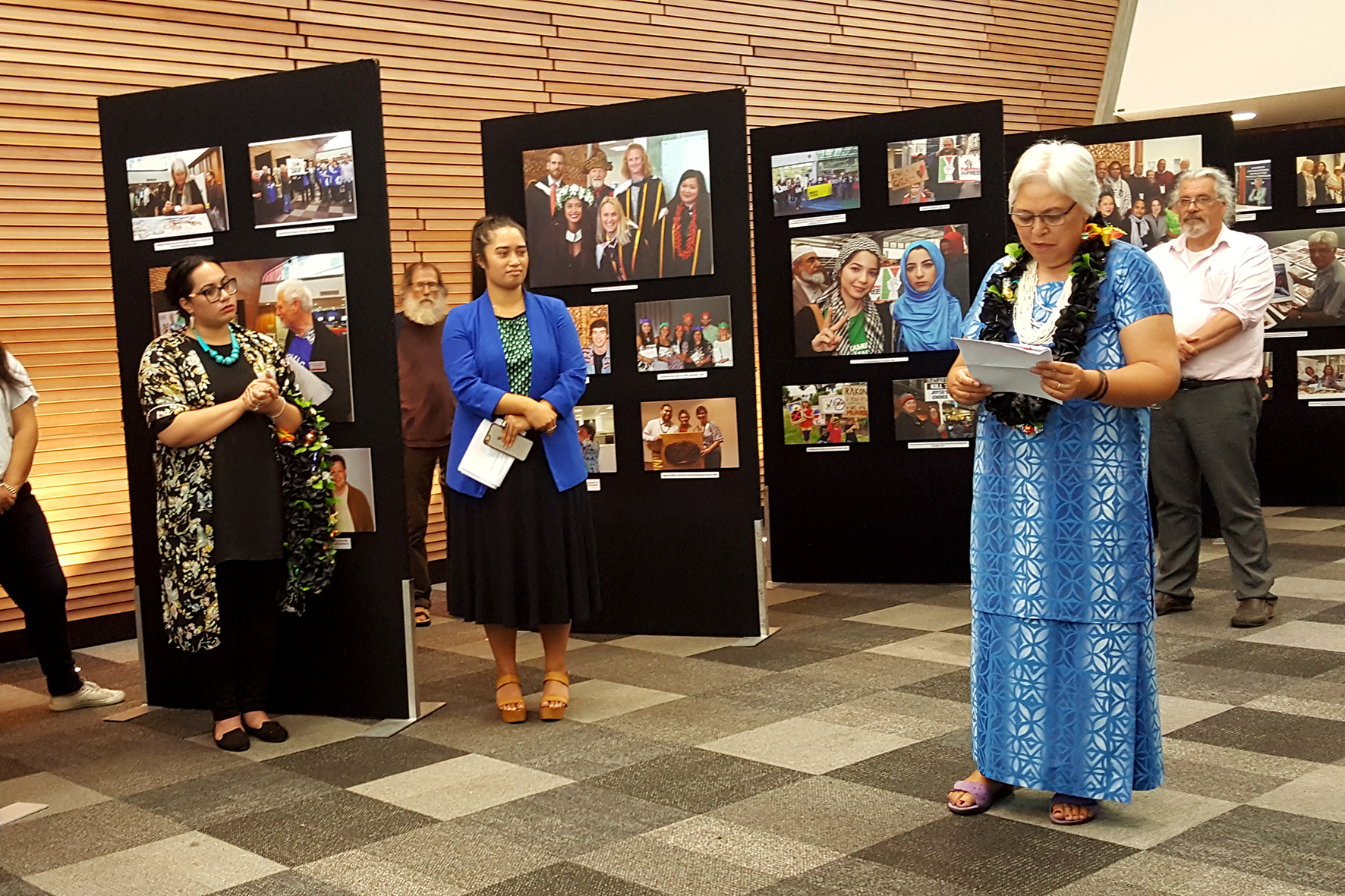
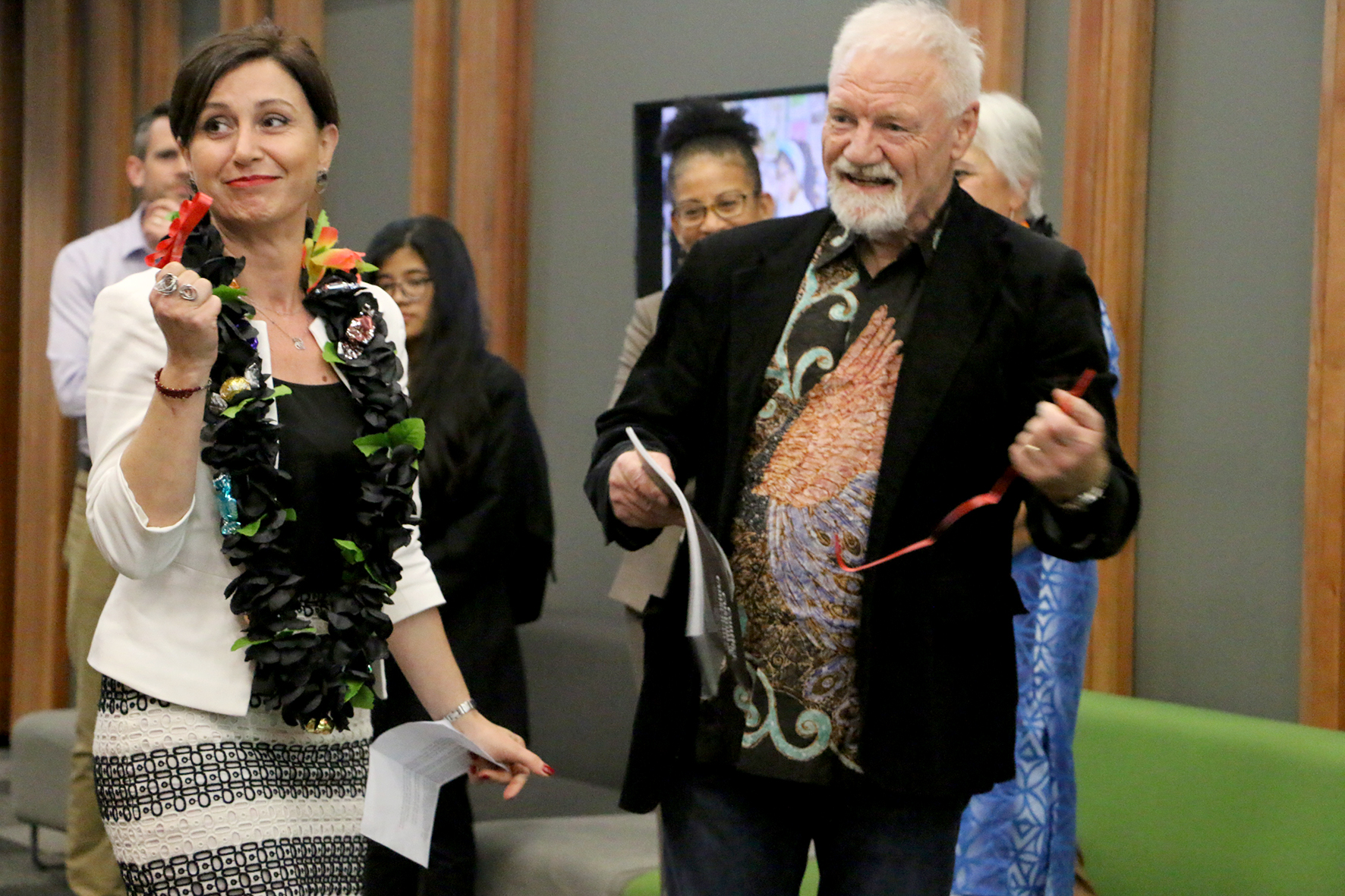
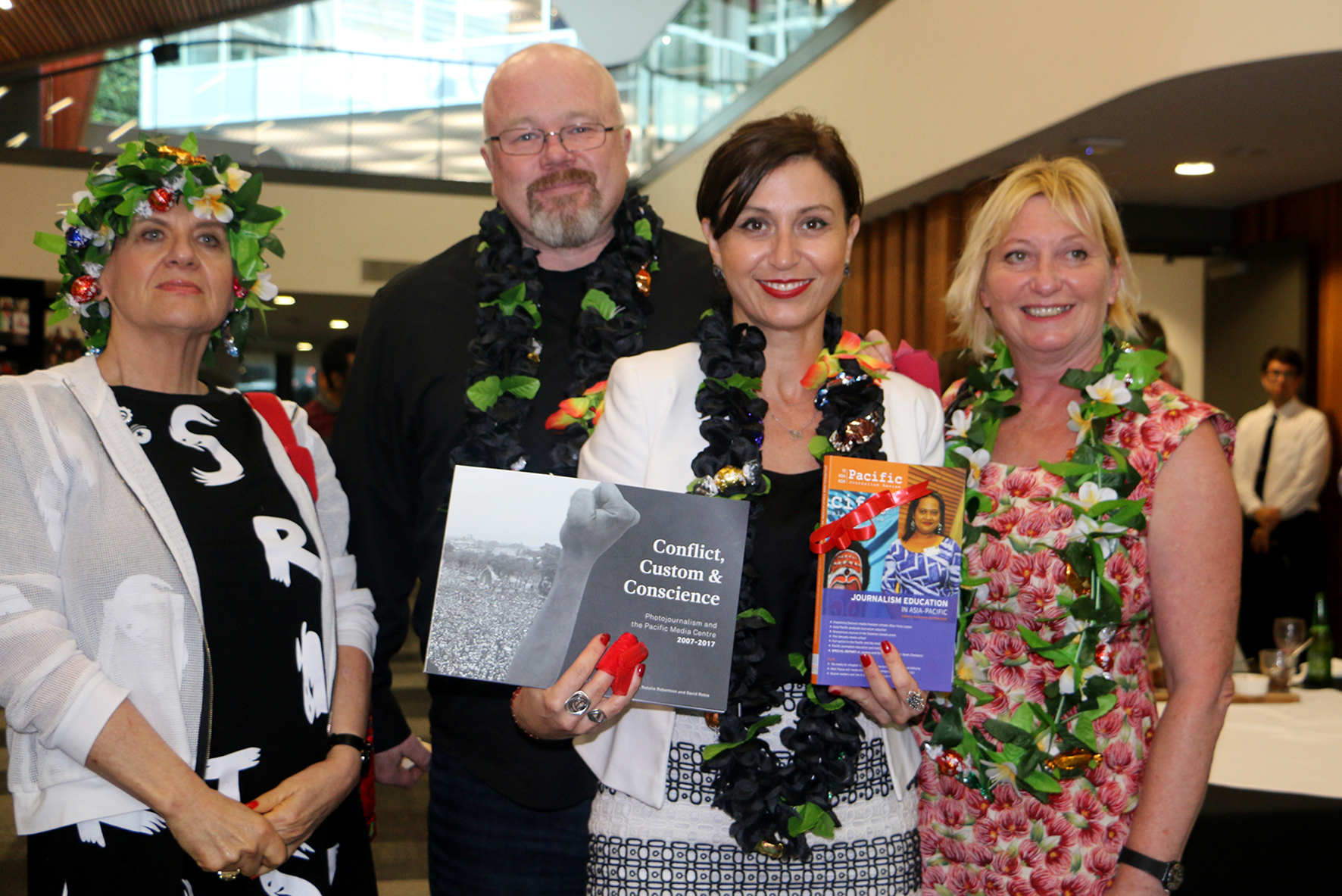
Earlier, the head of the School of Communication Studies at AUT, Professor Berrin Yanıkkaya launched the book Conflict, Custom & Conscience: Photojournalism and the Pacific Media Centre 2007-2017, as well as the latest edition of the Pacific Journalism Review.
She said Dr Robie and his PMC colleagues had created “a channel for the voiceless to have a voice, a platform for the unseen to be seen”.
RNZ International report republished by Asia Pacific Report with permission.
Article by AsiaPacificReport.nz
]]>














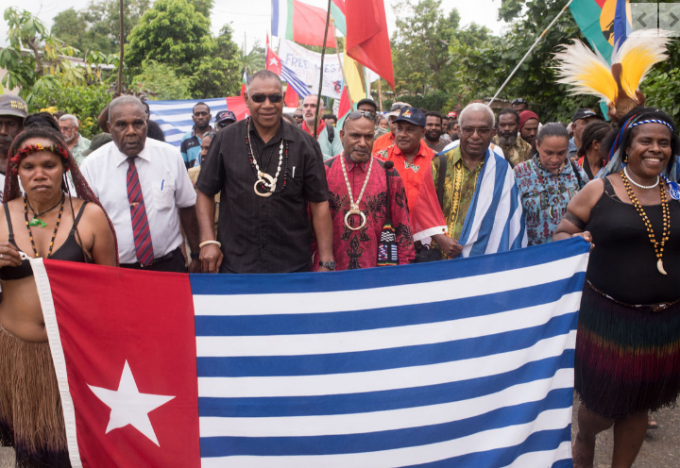
 Papua’s Morning Star and Vanuatu flags flying together at the Crow’s Nest in Port Vila. Image: Screenshot/AWPA

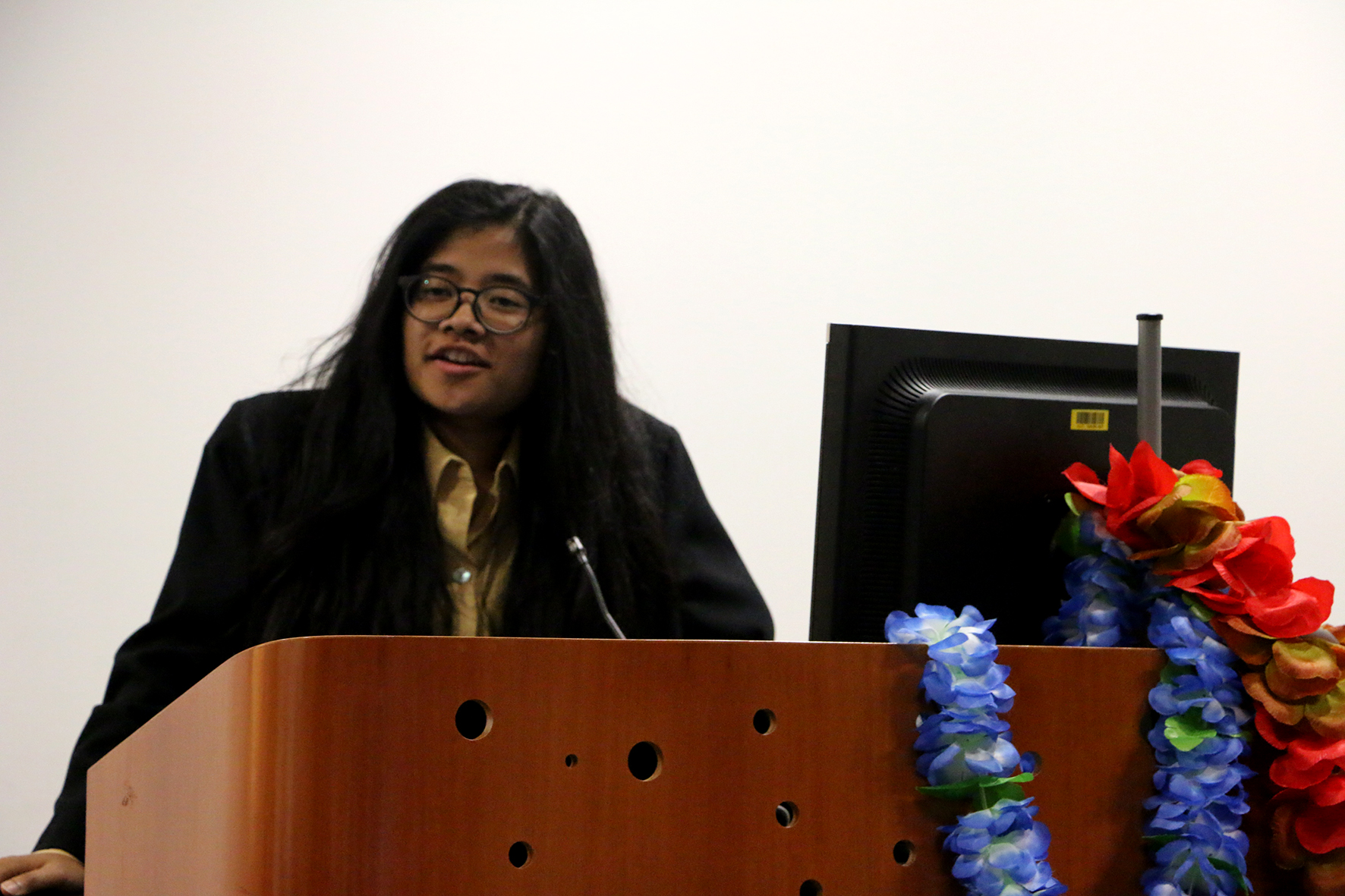
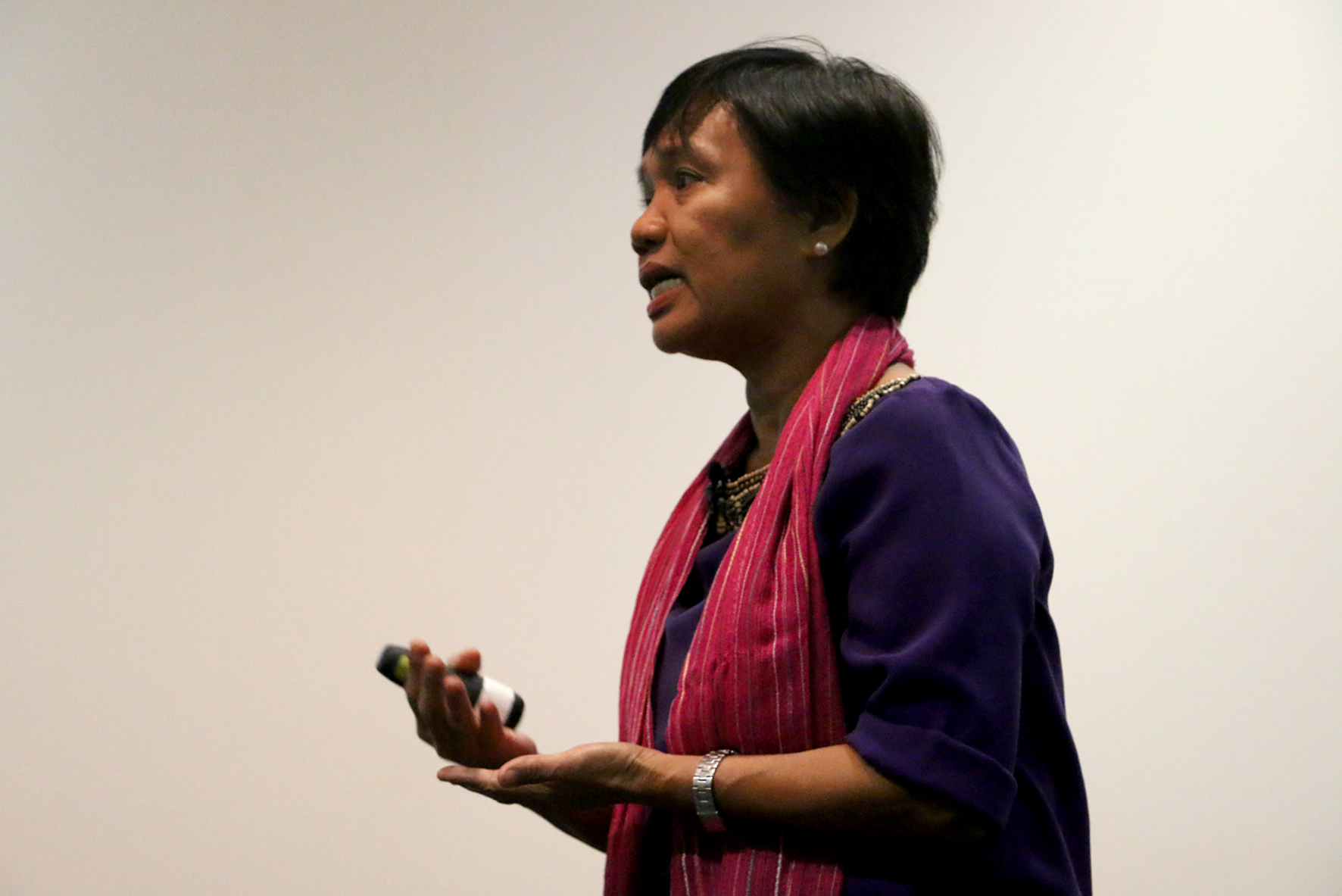
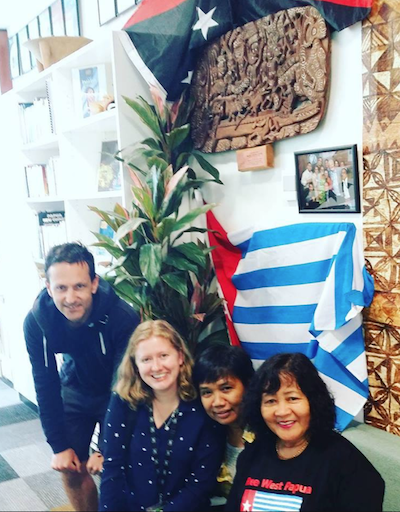 PCIJ’s Malou Mangahas (centre) at the Pacific Media Centre with RNZ’s Johnny Blades, Pacific Media Watch’s Kendall Hutt and PMC’s Del Abcede. Image: David Robie/PMC

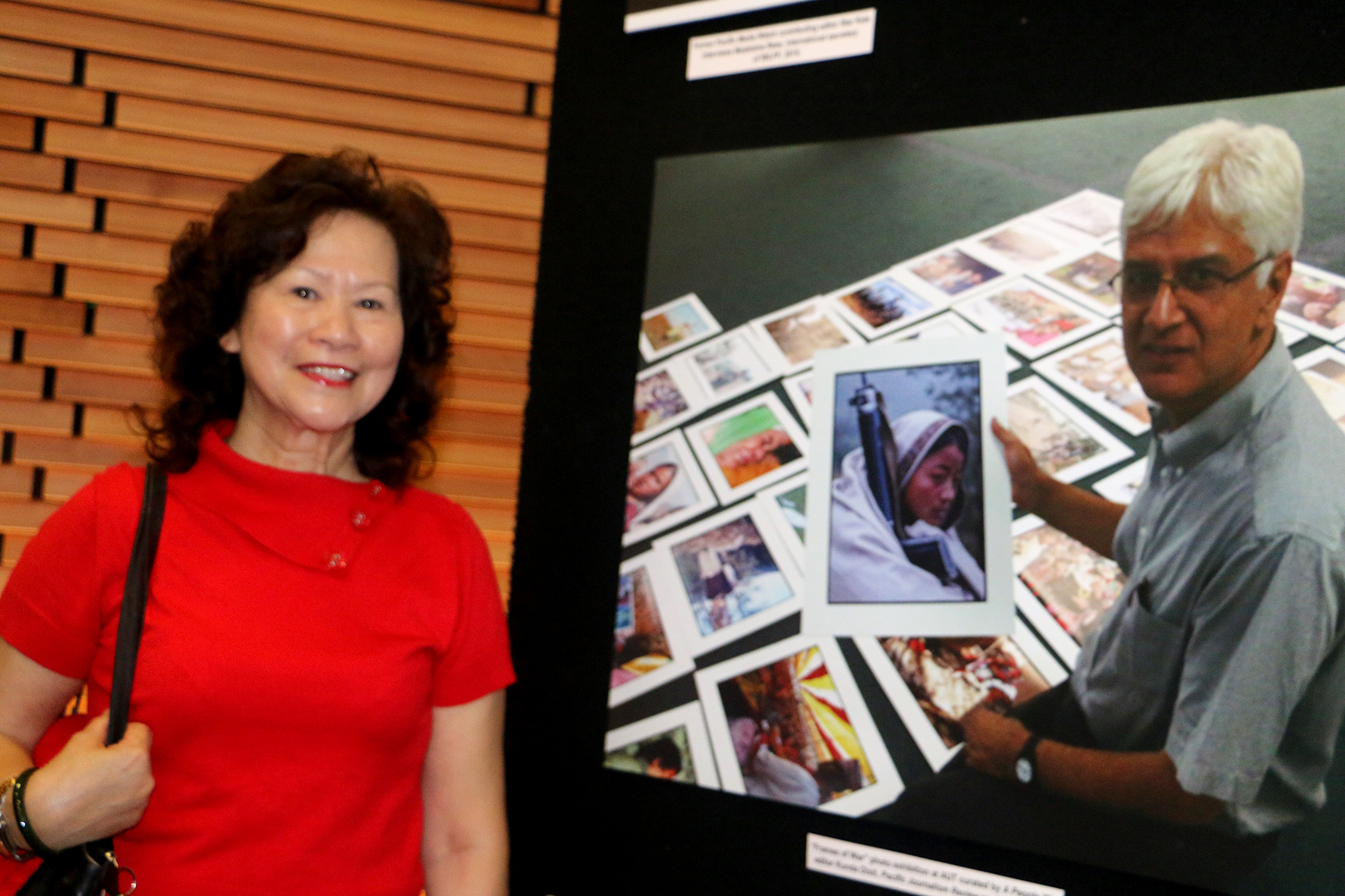
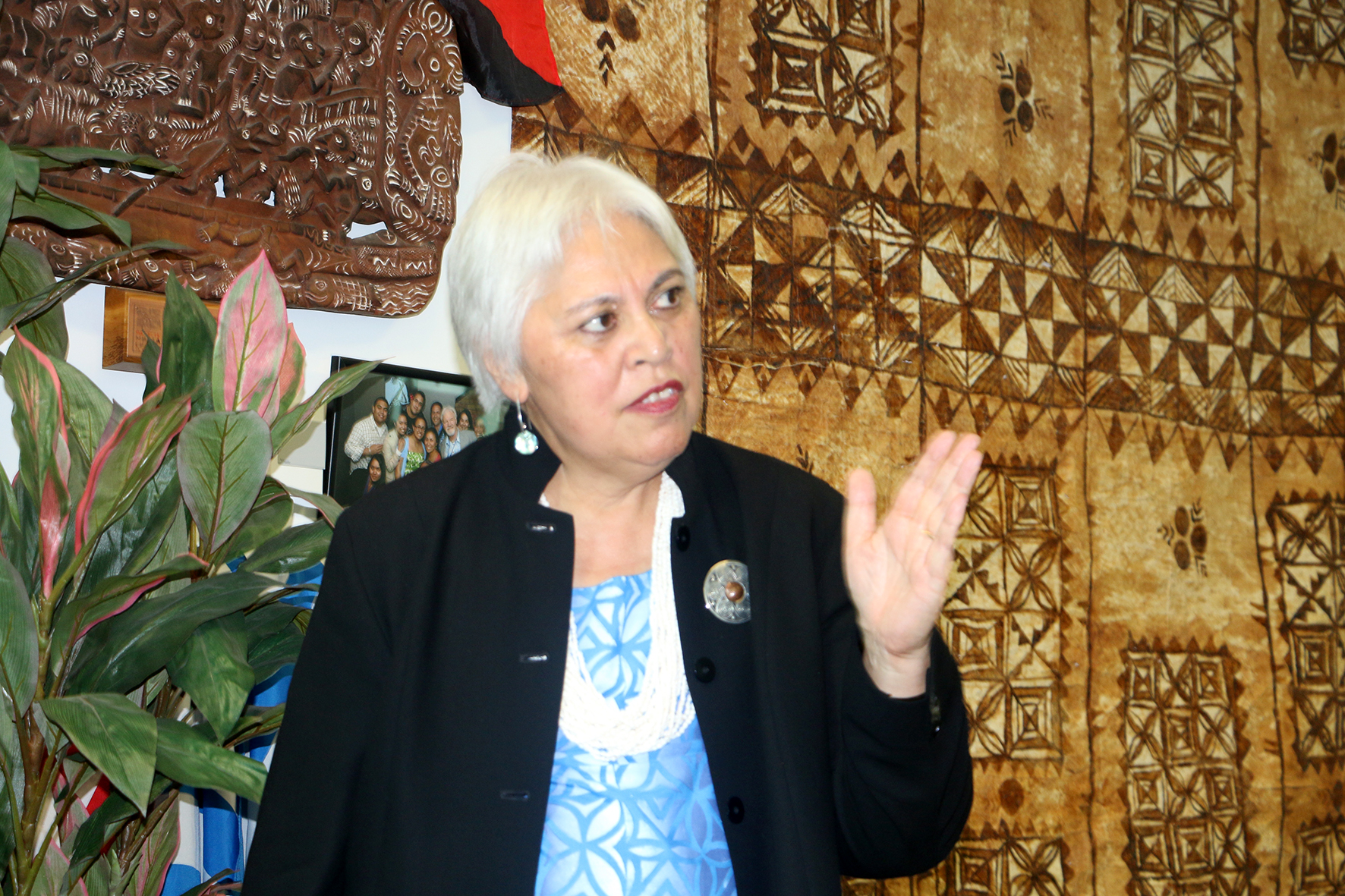
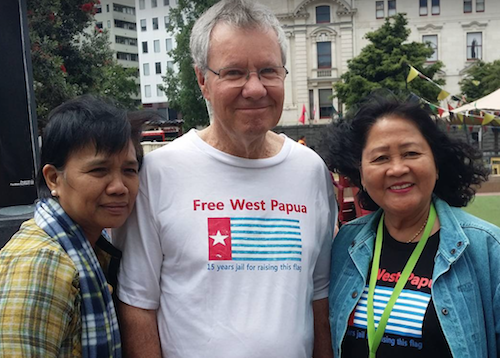 Retired Green MP Keith Locke, an outspoken supporter of West Papuans, with Philippine Center for Investigative Journalism (PCIJ) executive director Malou Mangahas (left) and the Pacific Media Centre’s Del Abcede. Image: Cafe Pacific

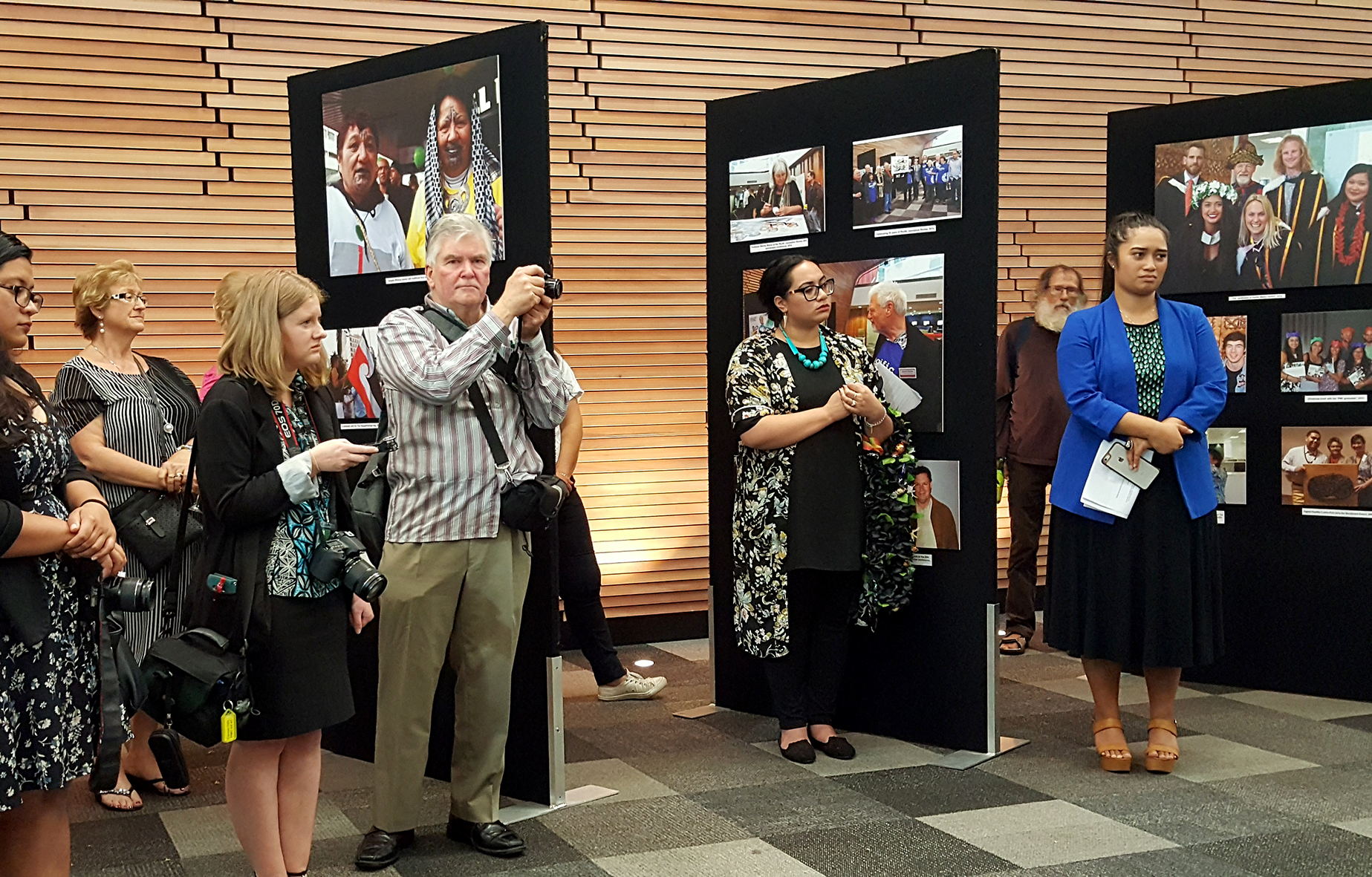
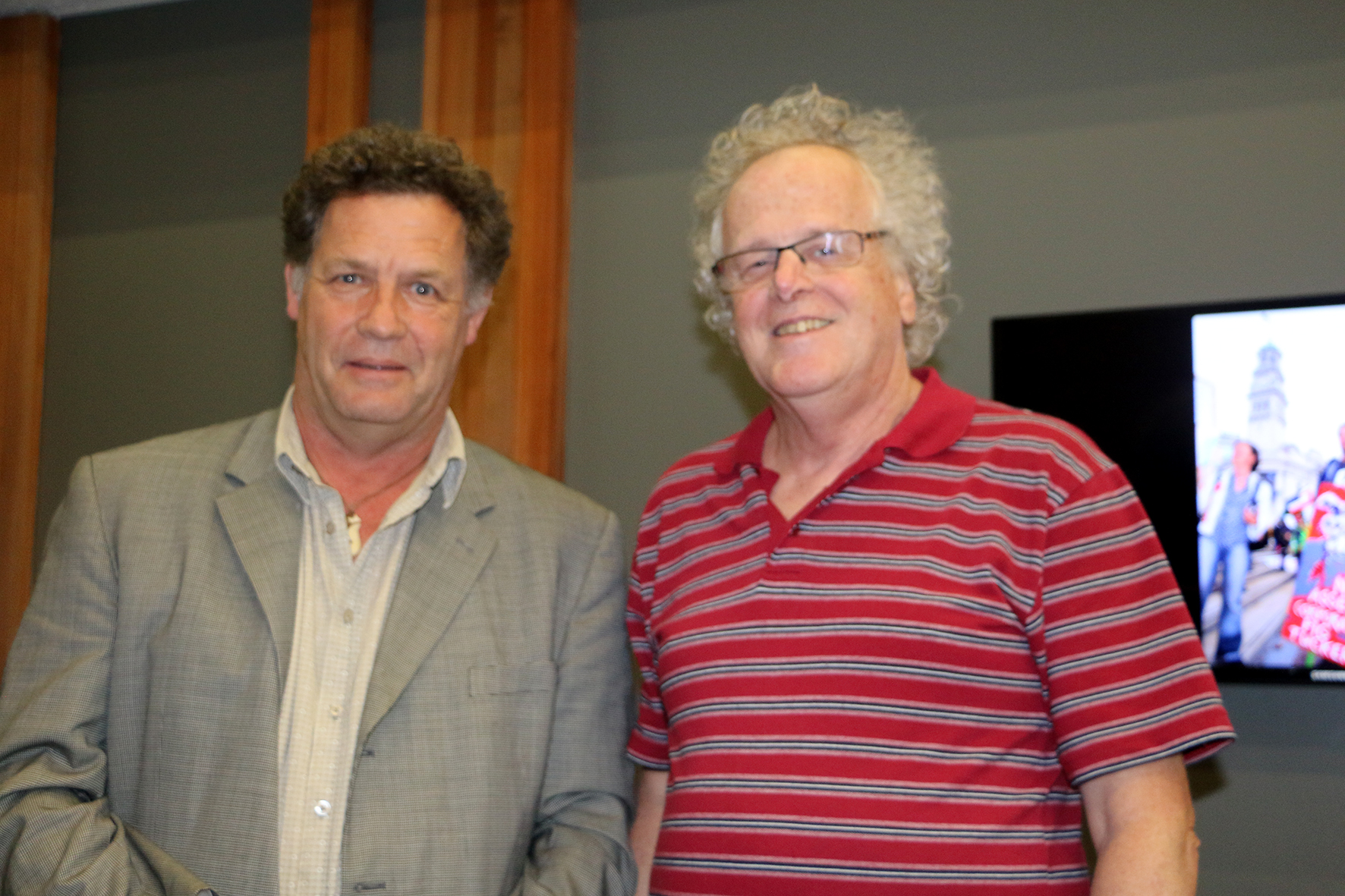
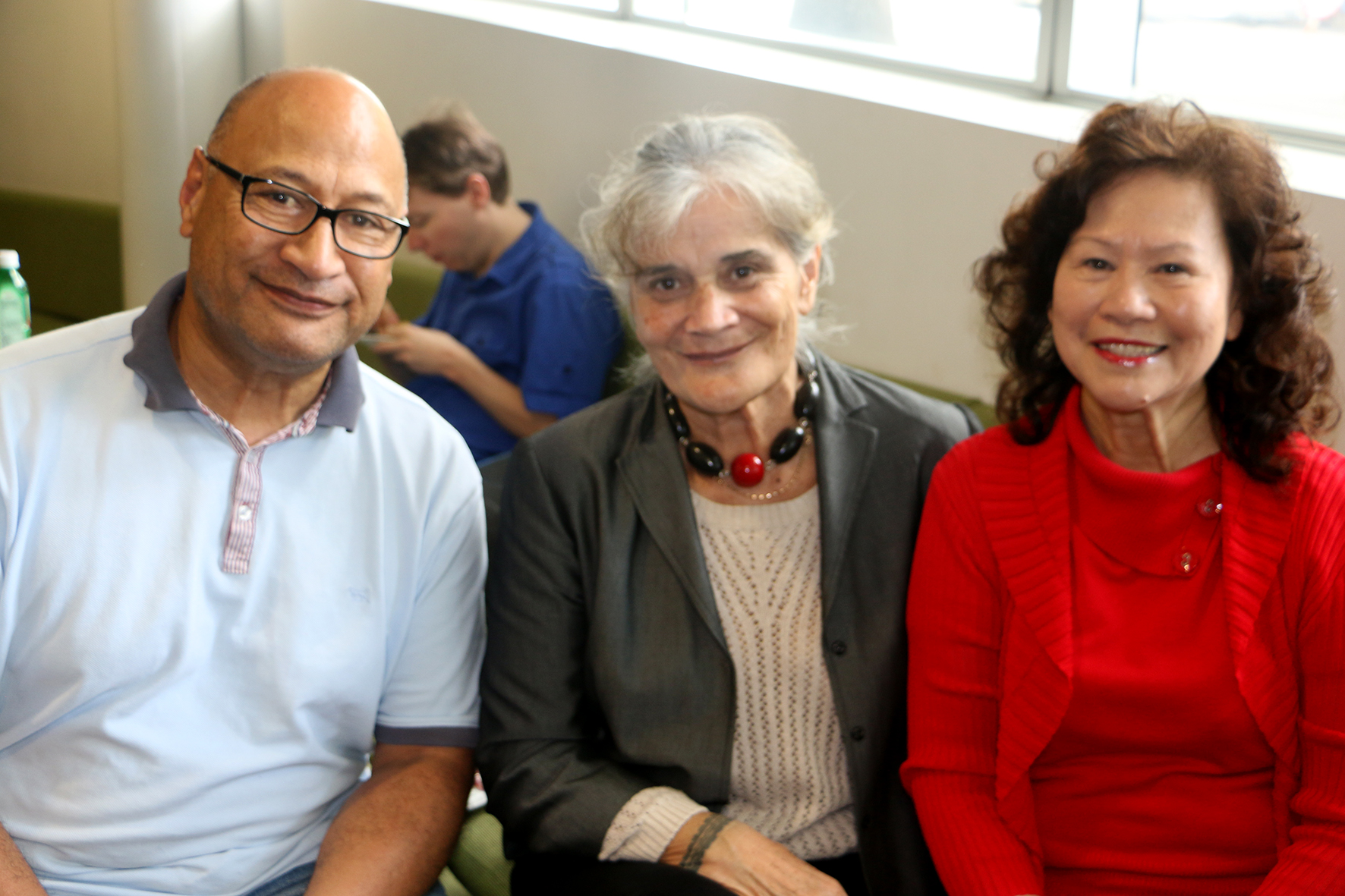
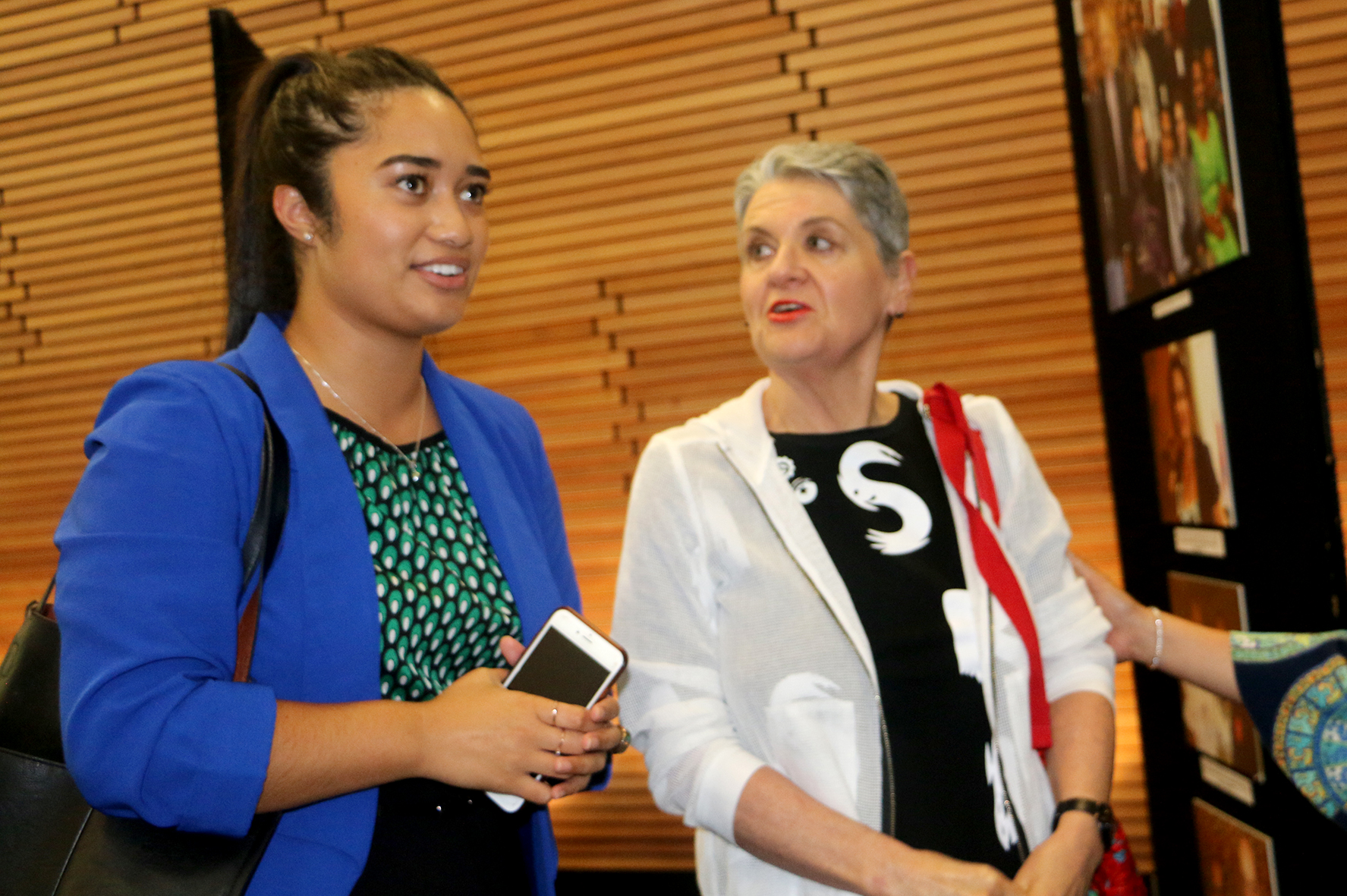
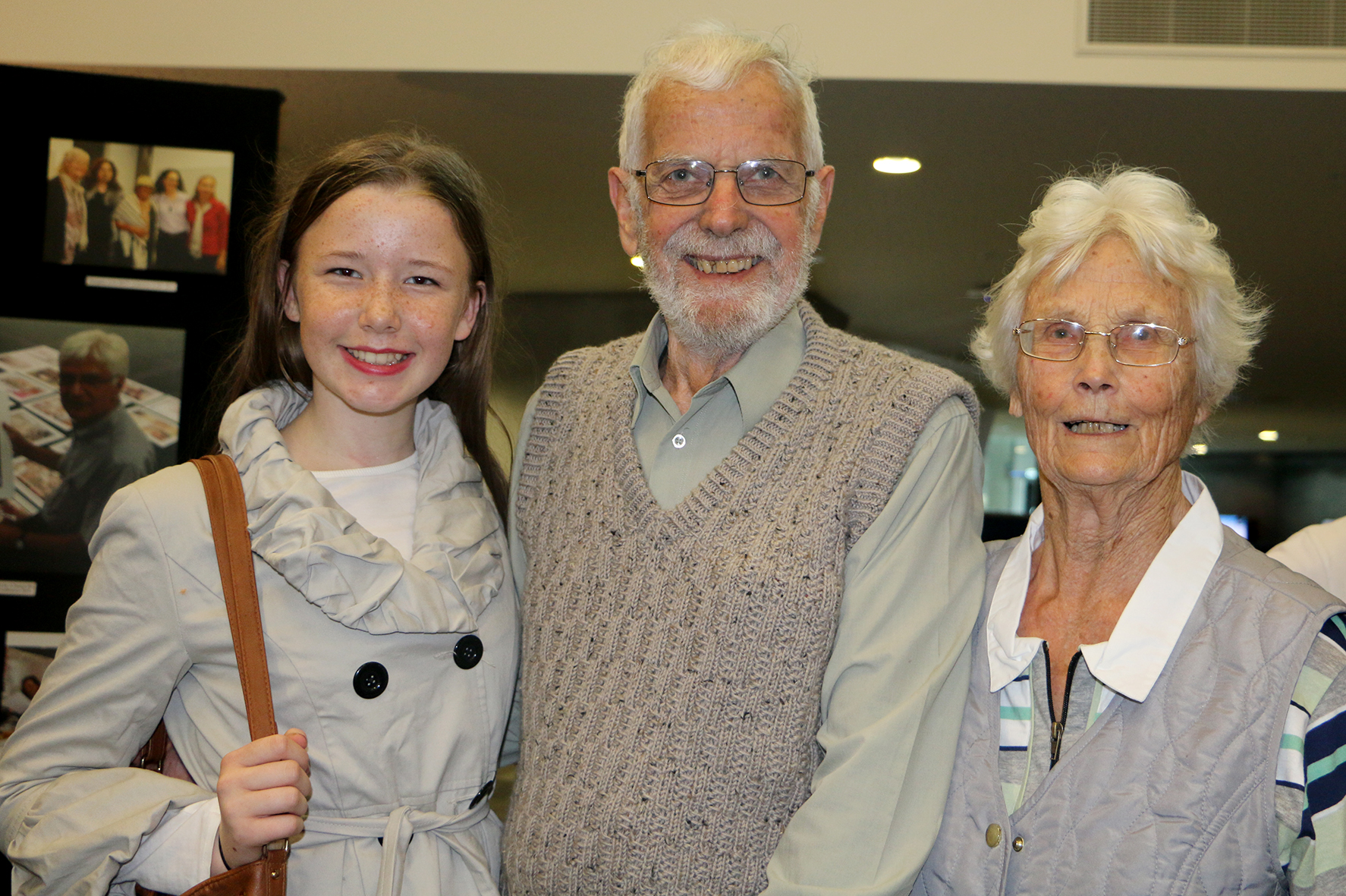
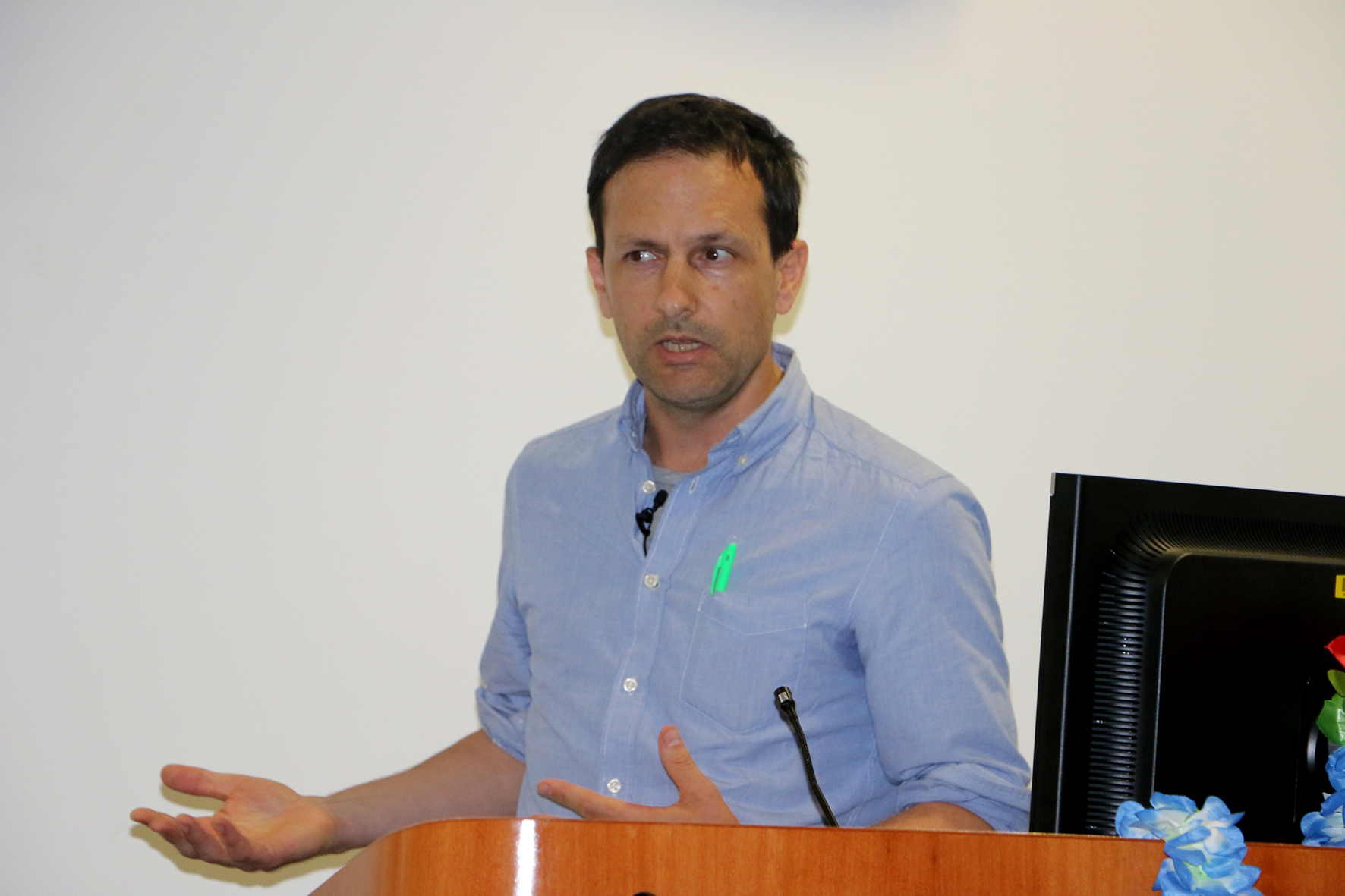
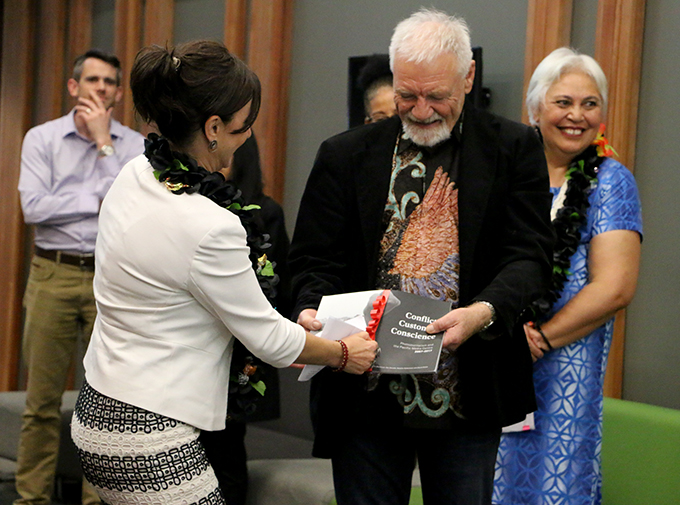 Dr Berrin Yanıkkaya launches Conflict, Custom & Conscience with PMC director Professor David Robie and Assistant Vice-Chancellor (Pasifika) Laumanuvao Winnie Laban last night. Image: Kendall Hutt/PMC
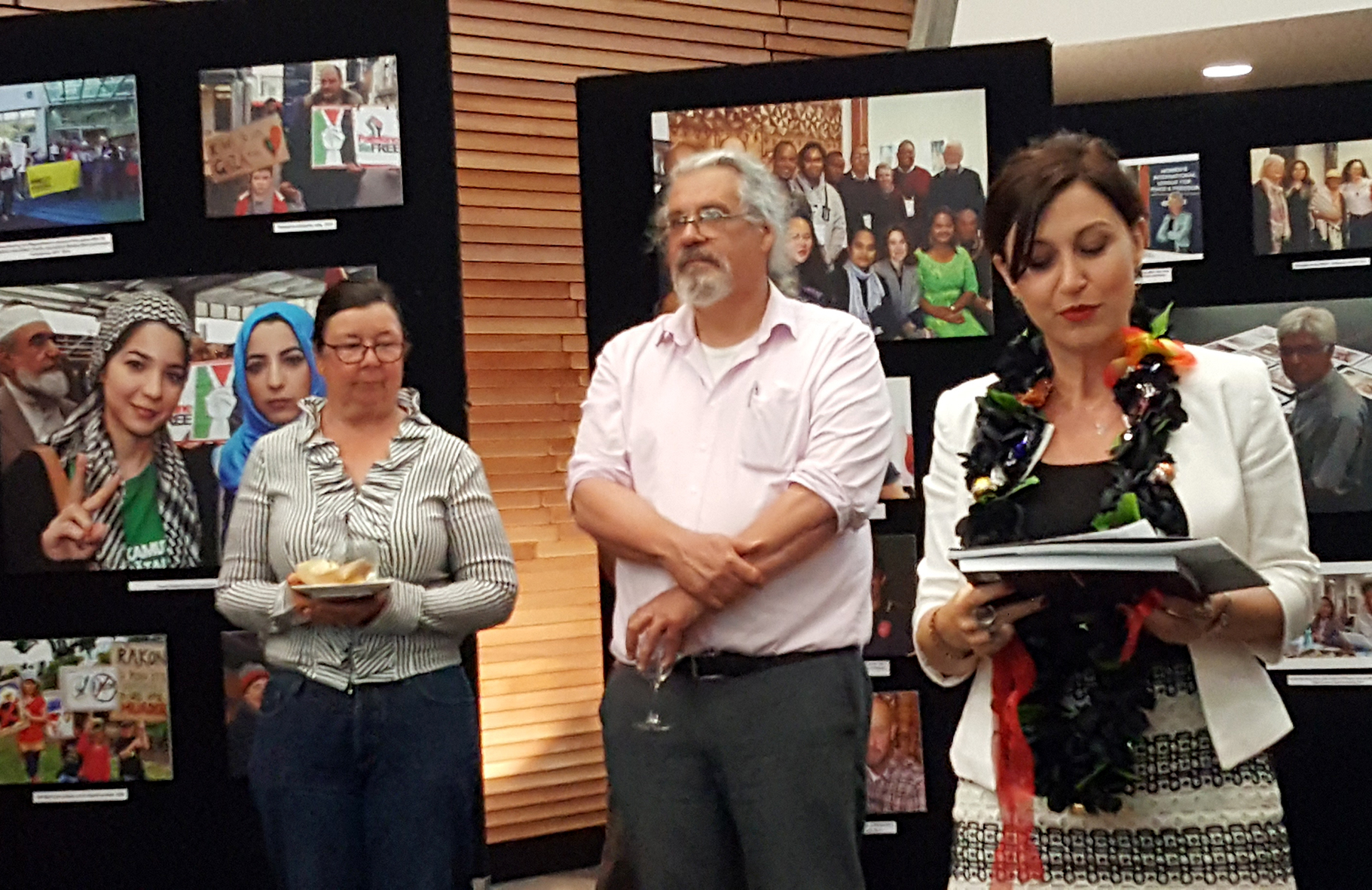
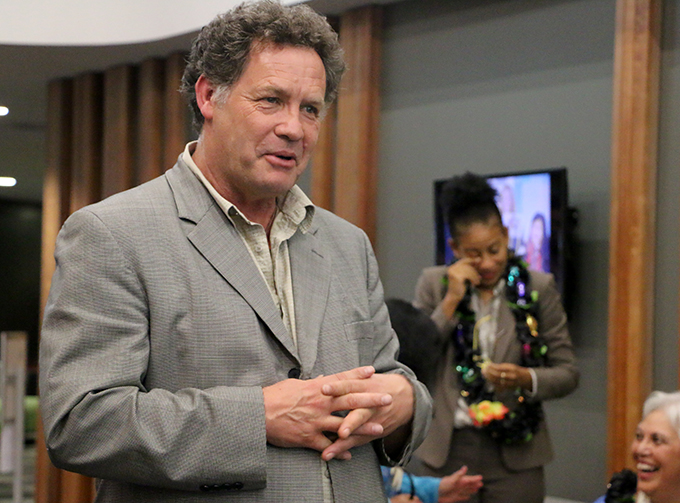 Award-winning documentary maker Jim Marbrook says Conflict, Custom & Conscience speaks to three major themes. Image: Kendall Hutt/PMC
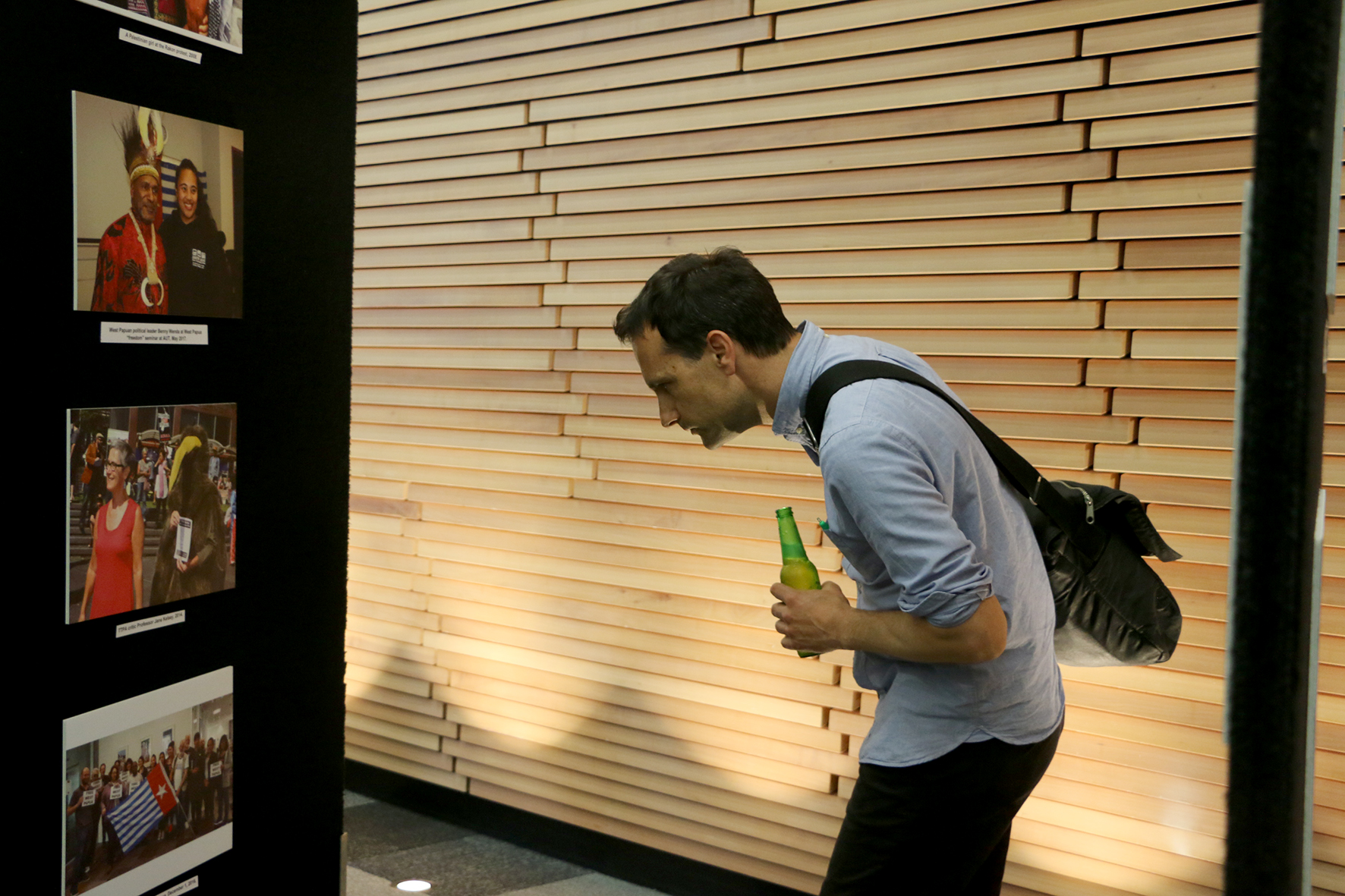
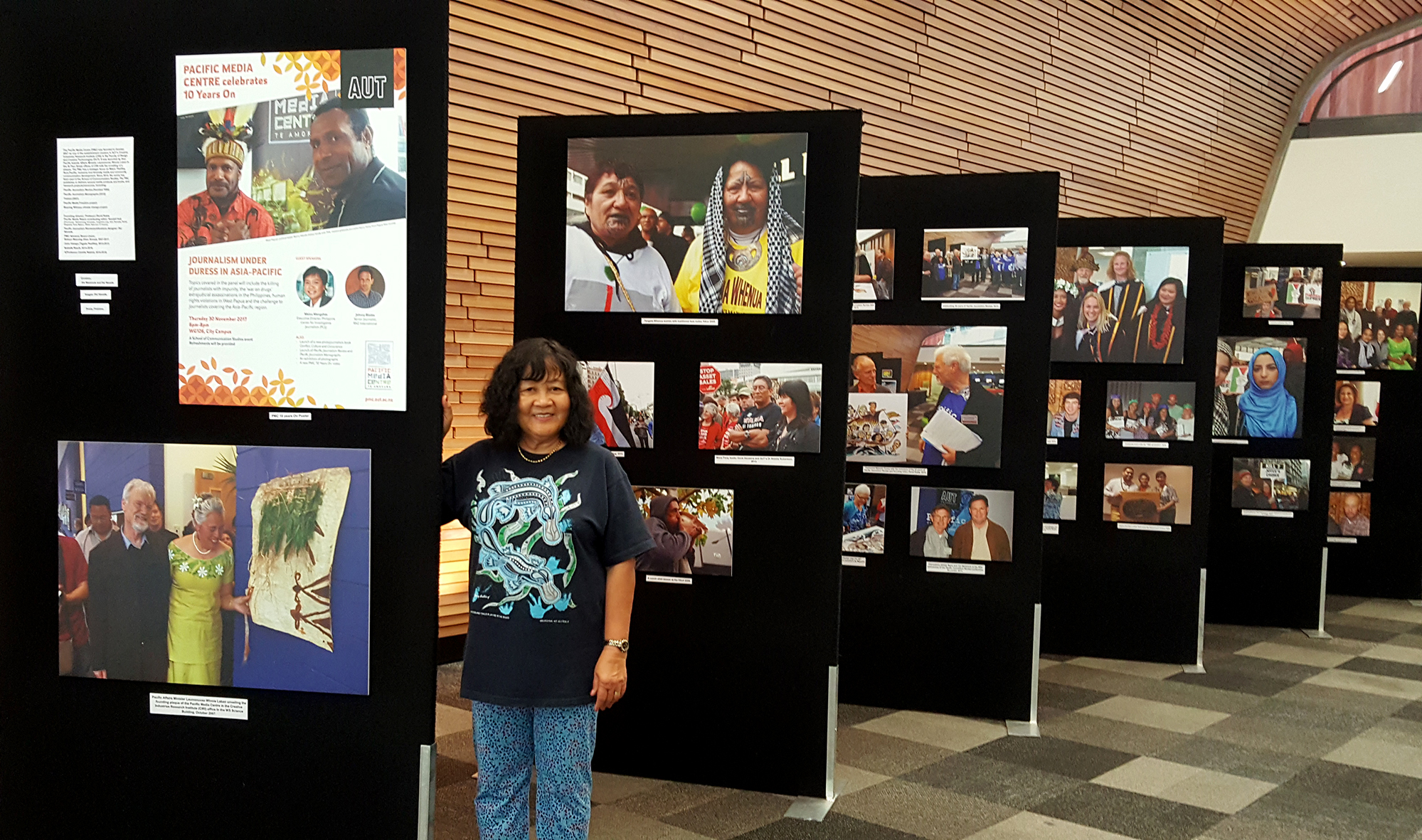
 PMC’s Del Abcede and favourite photograph of the ’10 Years On’ exhibition – a pair of young Palestinian women. Image: Kendall Hutt/PMC
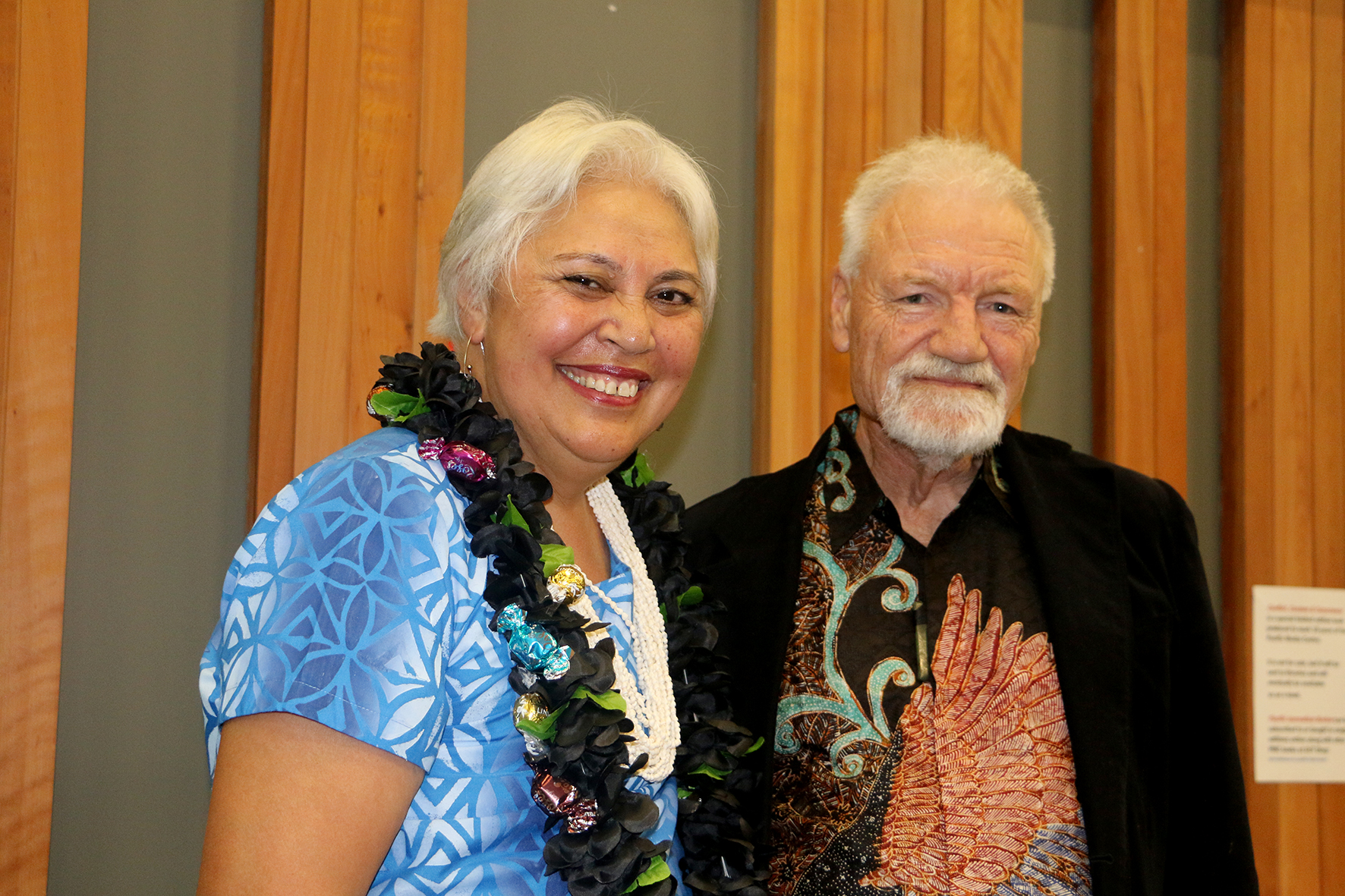
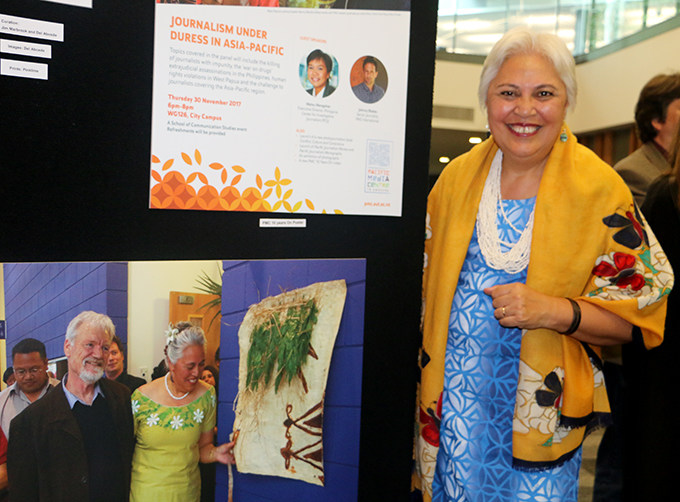 Luamanuvao Winnie Laban 10 years on congratulates the “beautiful frangipanis” that have developed. Image: Del Abcede/PMC



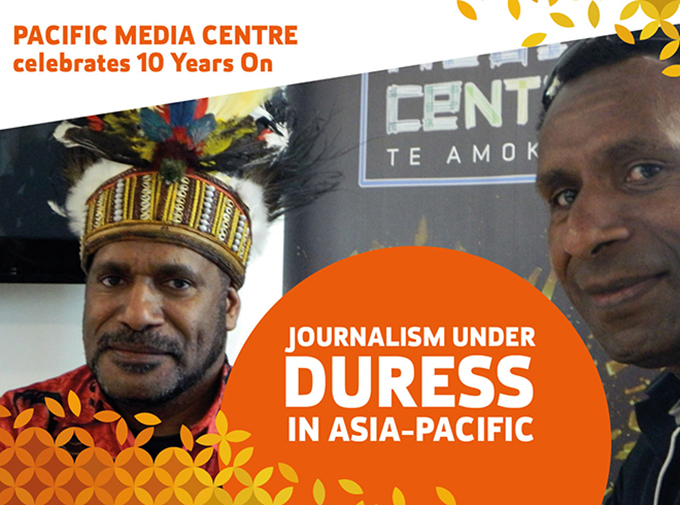







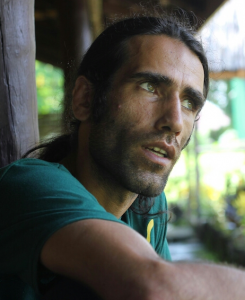 Behrouz Boochani … refugee journalist “targeted” by authorities on Manus Island. Image: Refugee Alternatives


