Page 1193

PNG court overturns loggers ban on custom landowners entering own land

]]>

Landowners win six-year legal battle in Pomio District, site of a controversial Special Agriculture Business Lease (SABL) where large tracts of rainforest have been logged and replaced by oil palm plantations. Image: Scott Waide/EMTV

By Scott Waide in Lae

A group of customary landowners in Papua New Guinea has regained access to their land following a significant legal victory against supporters of a Malaysian logging company.

Seven people from Pomio in East New Britain have been barred from entering their land for the past six years after a restraining order was issued against them in 2012.

The landowners include Paul Pavol Palusualrea and Nobert Pames who have been vocal against “land grabbing” and widespread deforestation in the remote district.

The National Court in Kokopo set aside the restraining orders after finding that there was a lack of evidence.

The landowners were represented by lawyers from the Center for Environmental Law and Community Rights (CELCOR).

“We are happy to have won the case for our clients who are from the forested
communities of West Pomio, whose resources have been exploited through SABL. They are now able to move freely on the land that is rightly theirs and continue the SABL campaigns of ridding the logging giants,” said lawyer Everlyn Wohuinangu.

Oil palm plantations
The Pomio District is the site of a controversial Special Agriculture Business Lease (SABL) where large tracts of rainforest have been logged and replaced by oil palm plantations.

-Partners-

The dispute over the logging and land grabbing triggered the six-year legal battle between the landowners and local companies sponsored by the Malaysian logging company.

The court victory is also important for customary landowners in other parts of the country who are battling multi-national loggers.

“The restraining orders were nothing more than intimidation of local people,” said CELCOR director Peter Bosip.

“It stopped them from accessing land to grow food and to hunt.

“There has also been instances of police intimidation and intimidation by other parties.

“Other landowners should see this and stand firm in pursuing recognition of their rights. This was, simply, a suppression of their constitutional rights.”

Scott Waide is deputy editor of EMTV News based in Lae, Papua New Guinea. This article was first published on his blog My Land, My Country and is republished by Asia Pacific Report with permission.

Print Friendly, PDF & Email

Article by AsiaPacificReport.nz

]]>

Why data power of social media giants like Facebook troubles human rights

]]>

By Sarah Joseph in Melbourne

Facebook has had a bad few weeks. The social media giant had to apologise for failing to protect the personal data of millions of users from being accessed by data mining company Cambridge Analytica.

Outrage is brewing over its admission to spying on people via their Android phones. Its stock price plummeted, while millions deleted their accounts in disgust.

Facebook has also faced scrutiny over its failure to prevent the spread of “fake news” on its platforms, including via an apparent orchestrated Russian propaganda effort to influence the 2016 US presidential election.

Facebook’s actions – or inactions – facilitated breaches of privacy and human rights associated with democratic governance. But it might be that its business model – and those of its social media peers generally – is simply incompatible with human rights.

The good
In some ways, social media has been a boon for human rights – most obviously for freedom of speech.

Previously, the so-called “marketplace of ideas” was technically available to all (in “free” countries), but was in reality dominated by the elites.

-Partners-

While all could equally exercise the right to free speech, we lacked equal voice. Gatekeepers, especially in the form of the mainstream media, largely controlled the conversation.

But today, anybody with internet access can broadcast information and opinions to the whole world. While not all will be listened to, social media is expanding the boundaries of what is said and received in public.

The marketplace of ideas must effectively be bigger and broader, and more diverse.

Social media enhances the effectiveness of non-mainstream political movements, public assemblies and demonstrations, especially in countries that exercise tight controls over civil and political rights, or have very poor news sources.

Social media played a major role in co-ordinating the massive protests that brought down dictatorships in Tunisia and Egypt, as well as large revolts in Spain, Greece, Israel, South Korea, and the Occupy movement.

More recently, it has facilitated the rapid growth of the #MeToo and #neveragain movements, among others.

READ MORE: #MeToo is not enough: it has yet to shift the power imbalances that would bring about gender equality

The bad and the ugly
But the social media “free speech” machines can create human rights difficulties. Those newly empowered voices are not necessarily desirable voices.

The United Nations recently found that Facebook had been a major platform for spreading hatred against the Rohingya in Myanmar, which in turn led to ethnic cleansing and crimes against humanity.

Video sharing site YouTube seems to automatically guide viewers to the fringiest versions of what they might be searching for. A search on vegetarianism might lead to veganism; jogging to ultra-marathons; Donald Trump’s popularity to white supremacist rants; and Hillary Clinton to 9/11 “trutherism”.

YouTube, via its algorithm’s natural and probably unintended impacts, “may be one of the most powerful radicalising instruments of the 21st century”, with all the attendant human rights abuses that might follow.

The business model and human rights
Human rights abuses might be embedded in the business model that has evolved for social media companies in their second decade.

Essentially, those models are based on the collection and use for marketing purposes of their users’ data. And the data they have is extraordinary in its profiling capacities, and in the consequent unprecedented knowledge base and potential power it grants to these private actors.

Indirect political influence is commonly exercised, even in the most credible democracies, by private bodies such as major corporations. This power can be partially constrained by “anti-trust laws” that promote competition and prevent undue market dominance.

Anti-trust measures could, for example, be used to hive off Instagram from Facebook, or YouTube from Google. But these companies’ power essentially arises from the sheer number of their users: in late 2017, Facebook was reported as having more than 2.2 billion active users. Anti-trust measures do not seek to cap the number of a company’s customers, as opposed to its acquisitions.

Power through knowledge
In 2010, Facebook conducted an experiment by randomly deploying a non-partisan “I voted” button into 61 million feeds during the US mid-term elections. That simple action led to 340,000 more votes, or about 0.14 percent of the US voting population. This number can swing an election. A bigger sample would lead to even more votes.

So Facebook knows how to deploy the button to sway an election, which would clearly be lamentable.

However, the mere possession of that knowledge makes Facebook a political player. It now knows that button’s the political impact, the types of people it is likely to motivate, and the party that’s favoured by its deployment and non-deployment, and at what times of day.

It might seem inherently incompatible with democracy for that knowledge to be vested in a private body. Yet the retention of such data is the essence of Facebook’s ability to make money and run a viable business.

Microtargeting
A study has shown that a computer knows more about a person’s personality than their friends or flatmates from an analysis of 70 “likes”, and more than their family from 150 likes. From 300 likes it can outperform one’s spouse.

This enables the micro-targeting of people for marketing messages – whether those messages market a product, a political party or a cause. This is Facebook’s product, from which it generates billions of dollars. It enables extremely effective advertising and the manipulation of its users.

This is so even without Cambridge Analytica’s underhanded methods.

Advertising is manipulative: that is its point. Yet it is a long bow to label all advertising as a breach of human rights.

Advertising is available to all with the means to pay. Social media micro-targeting has become another battleground where money is used to attract customers and, in the political arena, influence and mobilise voters.

While the influence of money in politics is pervasive – and probably inherently undemocratic – it seems unlikely that spending money to deploy social media to boost an electoral message is any more a breach of human rights than other overt political uses of money.

Yet the extraordinary scale and precision of its manipulative reach might justify differential treatment of social media compared to other advertising, as its manipulative political effects arguably undermine democratic choices.

As with mass data collection, perhaps it may eventually be concluded that that reach is simply incompatible with democratic and human rights.

‘Fake news’
Finally, there is the issue of the spread of misinformation.

While paid advertising may not breach human rights, “fake news” distorts and poisons democratic debate. It is one thing for millions of voters to be influenced by precisely targeted social media messages, but another for maliciously false messages to influence and manipulate millions – whether paid for or not.

In a Declaration on Fake News, several UN and regional human rights experts said fake news interfered with the right to know and receive information – part of the general right to freedom of expression.

Its mass dissemination may also distort rights to participate in public affairs. Russia and Cambridge Analytica (assuming allegations in both cases to be true) have demonstrated how social media can be “weaponised” in unanticipated ways.

Yet it is difficult to know how social media companies should deal with fake news. The suppression of fake news is the suppression of speech – a human right in itself.

The preferred solution outlined in the Declaration on Fake News is to develop technology and digital literacy to enable readers to more easily identify fake news.

The human rights community seems to be trusting that the proliferation of fake news in the marketplace of ideas can be corrected with better ideas rather than censorship.

However, one cannot be complacent in assuming that “better speech” triumphs over fake news. A recent study concluded fake news on social media:

… diffused significantly farther, faster, deeper, and more broadly than the truth in all categories of information.

Also, internet “bots” apparently spread true and false news at the same rate, which indicates that:

… false news spreads more than the truth because humans, not robots, are more likely to spread it.

The depressing truth may be that human nature is attracted to fake stories over the more mundane true ones, often because they satisfy predetermined biases, prejudices and desires. And social media now facilitates their wildfire spread to an unprecedented degree.

Perhaps social media’s purpose – the posting and sharing of speech – cannot help but generate a distorted and tainted marketplace of fake ideas that undermine political debate and choices, and perhaps human rights.

What next?
It is premature to assert the very collection of massive amounts of data is irreconcilable with the right to privacy (and even rights relating to democratic governance).

Similarly, it is premature to decide that micro-targeting manipulates the political sphere beyond the bounds of democratic human rights.

Finally, it may be that better speech and corrective technology will help to undo fake news’ negative impacts: it is premature to assume that such solutions won’t work.

However, by the time such conclusions may be reached, it may be too late to do much about it. It may be an example where government regulation and international human rights law – and even business acumen and expertise – lags too far behind technological developments to appreciate their human rights dangers.

At the very least, we must now seriously question the business models that have emerged from the dominant social media platforms.

Maybe the internet should be rewired from the grassroots, rather than be led by digital oligarchs’ business needs.

Dr Sarah Joseph is director of the Castan Centre for Human Rights Law, Monash University, in Melbourne, Australia.This article was first published by The Conversation and has been republished by Asia Pacific Report under a Creative Commons licence.

Print Friendly, PDF & Email

Article by AsiaPacificReport.nz

]]>

PNG police shoot dead 3 suspects in botched Lae armed robbery

]]>

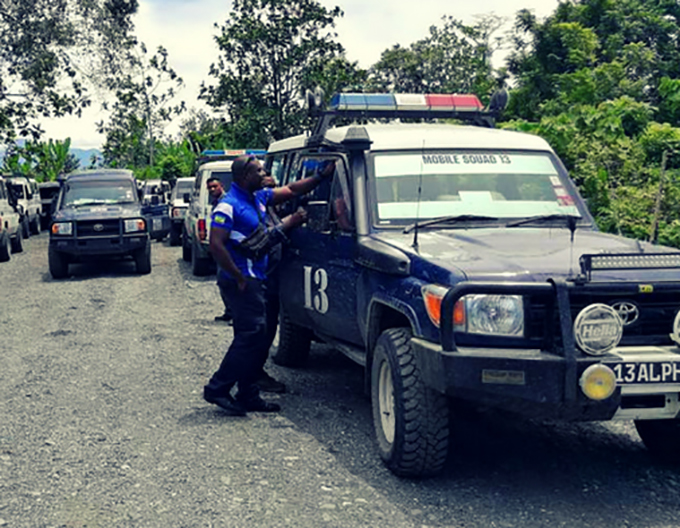
PNG police mobile squad vehicles at the robbery chase scene in Lae yesterday. Image: Loop PNG

Pacific Media Centre Newsdesk

Three suspected members of an armed criminal gang in Papua New Guinea’s second city of Lae are dead following a botched armed robbery,  the PNG Post-Courier reports.

One of the gang members is lucky to be alive and is being treated at the Angau Memorial Hospital following a shoot-out with police at Downtown Lae yesterday morning.

Franco Nebas and Bradley Mariori report that the wounded included a police officer who suffered pellet wounds and the Chinese owner of the shop during the attempted hold-up at the city’s shopping centre.

Lae police metropolitan commander Chief Superintendent Anthony Wagambie Jr said the police chased the criminals from downtown, through Airways Avenue, on to China Town, and Bumbu Bridge, ending up at Busurum compound.

Wagambie said that in the running gun battle, police killed three armed men and wounded one on the left leg.

Loop PNG website’s Imelda Wavik reports that the suspects opened fire on police while travelling at high speed.

-Partners-

“A bullet penetrated the windscreen of a pursuing police vehicle and wednt out the back window, while another bullet hit the roof of the vehicle,” she reported.

“A [policeman] on board sustained pellet wounds to his left arm.

“Police could not immediately open fire for fear of injuring bystanders.”

Five armed men
Chief Superintendent Wagambie said the robbery took place about 9.30am when five armed men held up one of the owners of an Asian-owned shop at Downtown Lae, the Post-Courier said.

A police traffic unit on patrol near the scene was alerted when a shot was fired by the criminals at the security guards while the robbery was in progress.

The traffic unit alerted other units to block off escape routes but the criminals managed to drive through the road blocks, firing at the police while travelling at high speed, the Post-Courier said.

Wagambie said that a police vehicle in pursuit was shot at, the bullet penetrated the windscreen and wounded a police officer.

“Police could not return fire immediately because of the large number of people walking on the road as they have been instructed not to endanger the lives of public in such instances,” he said.

Meanwhile the escaping suspects abandoned the vehicle at Busurum Compound and escaped on foot while still firing at the police.

Wagambie said a lone special response unit member who sighted the suspects at the back of Malahang Technical College was fired upon and was forced to engage in a shoot-out with the four suspects.

He said from the shoot-out they were pushed further into the area between Sipaia and Hanta Compound.

Factory and home-made guns
Wagambie said they managed to retrieve two factory-made guns and a home-made gun and live ammunition in the vehicle used in the robbery.

“We believe there was also a high-powered rifle used, judging from the distance and impact the police vehicle received when fired upon by the suspects.

“I am warning criminal gangs in Lae, not to try such daring robberies. The response time for police now is fast. The criminals were quite daring to shoot at police, not only in one instance, but on more than seven encounters with police on vehicle pursuits and on foot.

“I could have lost a couple of good policemen … but thank God for his protection.

“A lot of members and the public could have been injured in the reckless shooting carried out by the escaping gang. Our police investigators are still working on the case.

“I lastly thank all of the police personnel in Lae who all did their part by backing up each other,” Wagambie said.

The Post-Courier reports that in a related incident, quick intervention by police stopped another attempted robbery near Kumalu wet crossing.

Gunshots were exchanged between police and the criminals, Bulolo police station commander Leo Kaikas said that the suspects were eventually caught arrested and locked up at Mumeng police station.

Franco Nebas and Bradley Mariori are PNG Post-Courier reporters and Imelda Wavik reports for Loop PNG.

Print Friendly, PDF & Email

Article by AsiaPacificReport.nz

]]>

‘We’re stuck in the river – please come quickly’ cry before being swept away

]]>

Tragically drowned … Sheenal Mudliar , pictured with her surviving husband Sandeep Mudliar. Image: The Fiji Times

By Felix Chaudhary in Lautoka

“We’re stuck in the river, please come quickly.”

These were the last words spoken by a distraught daughter to her father-in-law as floods engulfed the vehicle she was travelling in.

Sheenal Mudliar, 25, and her father, Veer Goundar, had left Damodran Mudliar’s Uciwai home in Nadi about 4.30am on Sunday for Nadi International Airport to pick up her younger brother who was arriving from New Zealand.

About 15 minutes later she was calling for help.

“The rain was pouring and the wind was also quite strong, and when I got to the Uciwai Bridge at about 5.10am, I couldn’t see anything,” the distraught canegrower said.

“My daughter-in-law’s voice kept going round and round in my head and I got out of my car with a friend and we crossed to the bridge to try and look for them.”

-Partners-

Mudliar said the current was strong which made the search difficult.

‘We kept looking’
“We kept looking for about half-an-hour and when the water level went down a little bit, I drove to Nawai Police Post and reported the matter.”

Sheenal’s husband, Sandeep, was too grief-stricken to speak about the tragedy.

A search party organised by the family with the assistance of nearby villagers recovered Mudliar’s body at 9.30am on Sunday and Goundar was found about 4.30pm the same day.

Mudliar said the family was awaiting police to complete post-mortem examinations before making funeral arrangements.

Evacuation centres not ready
Evacuation centres were unprepared for the flooding and responses were slow.

No water, no food and no assistance for infants, young children and the elderly was the scene at St Andrews Primary School, Nadi, yesterday.

More than 500 people sought shelter there early Sunday morning after the Nawaka and Namotomoto rivers broke their banks.

Between the hours of 5am to 8am, residents of Nawaka Village and Nawajikuma and Nawaka tramline settlements waded through waist deep fast-flowing floodwater to seek shelter at St Andrews.

However, when they got to the school, the gates were locked.

The evacuees said they had no option but to climb over and enter the school.

“They had nowhere else to go and they only know St Andrews, it’s a safe place for them,” said Litia Taylor, a Nawaka resident and community liaison.

Evacuees reduced
When The Fiji Times arrived at the school yesterday morning, the number of evacuees had been reduced to 275.

“When evacuees arrived here, the school had not been informed that it was to open as an evacuation centre.

“We had people sitting in the veranda, many of them were shivering because they were wet from the floodwaters and we had mothers with young children who had no warm clothes or food.

“The classrooms were opened up about 11am.

“I have assisted government teams that visit St Andrews during past disasters and this has got to be the worst situation we have ever faced.

“There was no drinking water and whatever was coming out of the taps was brown and dirty.

“What was very disappointing is that no one from the District Officer Nadi’s office has visited the school to see what the needs are.”

When contacted yesterday morning, acting DO Nadi Faiyaz Ali said he was in Nausori and was making his way to Nadi.

Ali said his team was on the ground and conducting assessments of all evacuation centres in Nadi.

‘Worse than 2009 floods’
Local Government Minister Parveen Kumar described the crisis as worse than the 2009 floods, reports The Fiji Times‘ Shayal Devi.

He said this after surveying Ba’s central business district and residential areas that had been hit by floods from Tropical Cyclone Josie.

He provided meals and rations as part of immediate relief assistance.

“I can say without any hesitation that this is worse than 2009,” Kumar said.

“Every household has the same story in a sense that within a few minutes, the water came in and they were not able to save anything.”

Lautoka-based Felix Chaudhary is a senior journalist with The Fiji Times.

Print Friendly, PDF & Email

Article by AsiaPacificReport.nz

]]>

‘Scary’ floodwaters engulf homes in western Fiji as 4 die over Easter

]]>

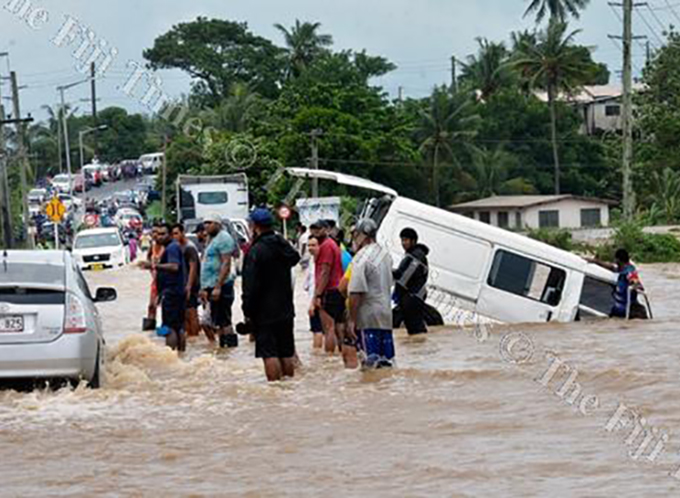
A vehicle is swept away into a drain by strong currents at Waimalika in Sabeto, Nadi, in western Fiji yesterday. Image: Baljeet Singh/The Fiji Times

By Felix Chaudhary in Lautoka

“It was scary, we’ve never seen anything like it.”

That’s how a Natabua, Lautoka, man described the experience residents had as they fled to higher ground early yesterday after “raging floodwaters” engulfed their homes.

Tropical Cyclone Josie never made landfall but the storm dumped a lethal amount of rainfall over Easter weekend that resulted in four confirmed deaths and one missing person’s report.

As life-threatening floodwaters continued to rise late yesterday in at least two towns in the Western Division, the National Disaster Management Office confirmed that 18 evacuation centres had been activated in Nadi, Lautoka and Nadroga.

Late yesterday the police also advised people living in low-lying areas and near waterways to move to higher ground.

Punishing and unrelenting overnight rain drenched the entire Western Division, flooding many homes, sweeping away cars, disrupting flights, damaging crops, and forcing the closure of many roads.

-Partners-

The first reported tragedy was that of Sheenal Mudliar, 25, and her father Veer Gounder, 55.

They were travelling in a vehicle that was swept off a bridge at Uciwai on the outskirts of Nadi yesterday morning.

Police recover bodies
Police managed to recover both bodies yesterday.

In Ba, Saroj Lata, 50, of Vatulaulau, reportedly lost her life while attempting to flee floodwaters that had engulfed her home. The body of a 55-year-old male was also recovered in Lautoka.

In Nadi, 21-year-old hotel worker Ilaisa Nabou went missing while attempting to cross a waterway in Sabeto.

Meanwhile, yesterday afternoon the Navua River also broke its banks.

In Lautoka, Sekiva Knight said the homes located on the corner of the Queens and Natabua roads were almost completely engulfed by floodwater.

“That place usually floods on the road and in their compounds,” he said.

“This is the first time that the floodwaters covered their homes with up to almost 2m of water.

Water to ceiling
“Some of the houses had water almost up to the ceiling.

“People were awoken by the floods at about 5am and they just got up, grabbed their loved ones and ran.

“They had no time to collect any belongings or valuables, they even left their cars behind.”

Knight said a Chinese family was trapped inside their home and were unable to leave because of the strength of the current.

He said military officers rescued the family about 7am.

Also in Lautoka, residents of Qaliwalu settlement were forced to flee their homes at about 4am after the Saru river burst its banks.

Ravindra Lal, a resident, helped evacuate three families and moved them to higher ground.

“This settlement always floods but this time the flood was different,” he said.

“It came in so fast and the current was so strong. They have lost everything.”

Resurrection services
Serafina Silaitoga reports from Labasa that hundreds of Fijians braved the rainy and cold weather condition to celebrate Christian resurrection church services in the North over Easter weekend.

Believers of the Nasea Methodist Church Sunday School programme that included primary and secondary school students organised a weekend camp aimed at enhancing their spiritual growth.

Catholics travelled from around the northern island of Vanua Levu to be part of the resurrection mass on Saturday night in Labasa, many sitting bravely in partially wet clothes during the service.

Felix Chaudhary is a senior Fiji Times journalist.

Print Friendly, PDF & Email

Article by AsiaPacificReport.nz

]]>

Demo at Freeport office in Jakarta calls for self-determination for West Papua

]]>

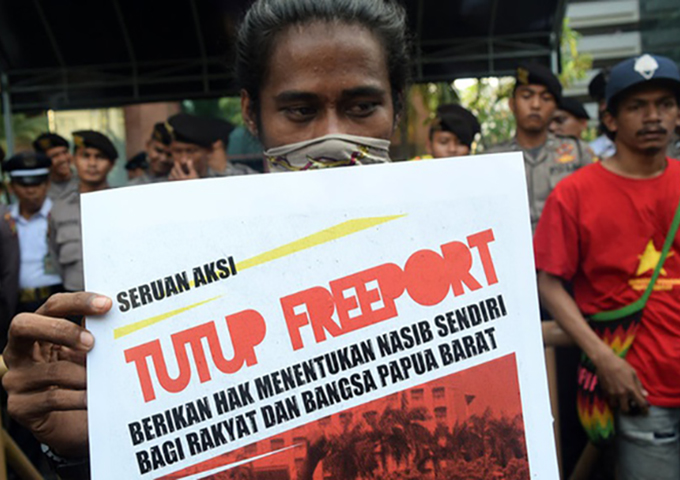
Papuan protesters outside the offices of PT Freeport Indonesia in South Jakarta last Thursday. Image: Tirto.id

By Tony Firman in Jakarta

Calls for West Papuan self-determination were prominent during a demonstration in front of the offices of PT Freeport Indonesia in the Kuningan area of South Jakarta at the start of Easter.

The action was held by about 70 protesters from the Papuan Student Alliance (AMP) and the Indonesian People’s Front for West Papua (FRI-WP) who held the demonstration last Thursday to demand the closure of the Freeport copper and gold mine in Papua.

FRI-WP spokesperson Surya Anta said that the international community must take a position on the forced incorporation of West Papua into the Unitary State of the Republic of Indonesia (NKRI).

“Since May 1, 1963, until now, West Papua was removed from the Dutch decolonisation list without the West Papuan people’s knowledge,” said Anta.

Surya also accused Freeport of being an entry point for the colonisation of West Papua on the grounds that the first work contract between Freeport and Indonesia was signed in 1967.

Meanwhile, the Act of Free Choice (Pepera) which resulted in the incorporation of West Papua into the Indonesia was held in 1969.

-Partners-

Anta said that the Pepera was manipulated and undemocratic.

No prosperity or peace
Dorlince Iyowau, a resident of the mining town of Timika who took part in the action, added that Freeport’s presence in Papua had not brought prosperity or peace to the West Papuan people.

“Violence against the people and damage to the environment by waste tailings discarded into the Ajkwa River is a concrete form of Freeport’s colonial presence”, said Iyowau.

In a media release received by Tirto, the FRI-WP and the AMP made nine demands, three of which were:

  • the closure of PT Freeport,
  • the withdrawal of the TNI (Indonesian military) and Polri (National
    Police) from Papua, and
  • self-determination for the people of Papua

The media release also stated that based on a report by the Papuan Institute for Human Rights Studies and Advocacy (Elsham) in 2002, numerous cases of violence had been committed by security forces in Papua.

The report noted that thousands of people had died, scores had disappeared and hundreds more had been arrested and tortured.

In addition to this, it also noted places of worship that had been burnt down, villages and other locations that had been destroyed, many of which have yet to be properly documented.

The demonstrators began leaving the Freeport offices at around 3.15 pm. Similar actions are planned to take place simultaneously next Saturday in several different cities, including Yogyakarta and Semarang (Central Java), Bandung (West Java), Surabaya and Malang (East Java), Makassar (South Sulawesi), Palu (Central Sulawesi), Ternate (North
Maluku) and Papua itself.

Tony Firman is a reporter for Tirto news website in Indonesia.

Translated by James Balowski for the Indoleft News Service. The original title of the article was “Demo di Kantor Freeport Juga Serukan Penentuan Nasib West Papua“.

Print Friendly, PDF & Email

Article by AsiaPacificReport.nz

]]>

Indonesian state governor Nur Alam jailed for 12 years over eco-bribery

]]>

Suspended Southeast Sulawesi governor Nur Alam … jail sentence for bribery connected to mining licences. Image: Kurnia Sari Aziza/Kompas.com/Jakarta Post

By Moses Ompusunggu in Jakarta

Indonesia’s Jakarta Corruption Court has sentenced suspended Southeast Sulawesi governor Nur Alam to 12 years in prison in a case linked to several mining licences that led to environmental destruction in Buton, Southeast Sulawesi.

The court, which also ordered Nur to pay a fine of Rp 1 billion (US$72,700) and restitution of Rp 2.7 billion last Wednesday, found the National Mandate Party (PAN) politician guilty of misusing his authority to grant mining licences between 2009 and 2014 to nickel miner PT Anugerah Harisma Barakah (AHB) in which he owns a 2 percent stake under the name of his aide.

Corruption Eradication Commission (KPK) prosecutors called for a sentence of 18 years.

Presiding judge Diah Siti Basariah said there had been mitigating factors behind the court’s verdict, such as Nur’s many awards he received while serving as governor.

The state losses, Rp 1.5 trillion, were also lower than the Rp 4.3 trillion the prosecutors argued in their indictment, which included Rp 2.7 trillion in environmental destruction caused by the miner.

Environmental destruction
The panel of judges said the environmental destruction was not Nur’s responsibility, but the company’s.

-Partners-

The company had tried to rehabilitate the area, the judges said.

The court also stripped him of his political rights for five years after he serves his time in prison, which was sought by KPK prosecutors.

Nur denied any wrongdoing and said he would “waste no time” to appeal against the verdict.

“I hope the respected judge can consider that I deserve a sense of justice because I have served as a state apparatus and given my best while on duty,” he added.

Moses Ompusunggu is a Jakarta Post journalist.

Print Friendly, PDF & Email

Article by AsiaPacificReport.nz

]]>

Newsletter: New Zealand Politics Daily – March 28 2018 – Today’s content

Newsletter: New Zealand Politics Daily – March 28 2018 – Today’s content Editor’s Note: Here below is a list of the main issues currently under discussion in New Zealand and links to media coverage. [caption id="attachment_297" align="aligncenter" width="640"] The Beehive and Parliament Buildings.[/caption] Below are the links to the items online. The full text of these items are contained in the PDF file (click to download). Carol Hirschfeld resignation Herald: Hirschfeld, Curran texts: Cafe meeting organised via text Henry Cooke (Stuff): Clare Curran releases text messages with Carol Hirschfeld Laura Walters (Stuff): Melissa Lee was given a heads up about Carol Hirschfeld’s resignation John Drinnan (Herald): Carol Hirschfeld affair a bad look for RNZ Tracy Watkins and Henry Cooke (Stuff): RNZ saga could hinge on Curran-Hirschfeld texts RNZ: Curran has ‘a lot of questions to answer’ over meeting – National MP Newshub: Carol Hirschfeld scandal could claim more scalps – commentator Richard Harman (Politik): Minister still under a cloud Peter Thompson (Herald): Carol Hirschfeld’s resignation may rattle plans for RNZ+ Tracy Watkins (Stuff): Problems keep arriving at Prime Minister Jacinda Ardern’s door Claire Trevett (Herald): Clare Curran clumsy, foolish but PM won’t sack her Claire Trevett (Herald): Carol Hirschfeld, Clare Curran meeting more than a storm in coffee cup Fran O’Sullivan (Herald): Jacinda Ardern could take leaf out of Clark playbook Colin Peacock (RNZ): RNZ shock also rocks government Brigitte Morten (RNZ): Minister’s media meeting mess a mire for PM Jenna Lynch (Newshub): ‘Informal’ Hirschfeld meeting was scheduled in Minister’s diary for an hour Laura Watlers and Henry Cooke (Stuff): Curran’s ‘informal’ meeting with Carol Hirschfeld planned for an hour Laura Walters (Stuff): Anatomy of a resignation – how a cup of coffee led to Carol Hirschfeld’s resignation Damien Venuto (Herald): ‘Red Radio’ conspirators now have a smoking gun Mike Hosking: Radio New Zealand meetings scandal involves millions of our dollars Derek Cheng (Herald): Broadcasting Minister Clare Curran’s meeting with Carol Hirschfeld in spotlight Derek Cheng (RNZ): Radio New Zealand chairman Richard Griffin says Carol Hirschfeld stuck to meeting claim for four months RNZ: Curran on Hirschfeld’s resignation: ‘It was not a secret meeting’ Anna Bracewell-Worrall (Newshub): Hirschfeld resignation: Clare Curran to stay on as Minister 1News: Broadcasting Minister Clare Curran won’t resign in wake of ‘unofficial’ meeting with RNZ manager Carol Hirschfeld Toby Manhire (Spinoff): RNZ’s content chief resigns over meeting with broadcasting minister Herald: Broadcaster Carol Hirschfeld to resign immediately after Curran meeting saga Talisa Kupenga (Maori TV): RNZ’s Carol Hirschfeld resigns Andrew Geddis (Pundit): RNZ, Hirschfeld and Curran let the clichés come out to play … NZ and Russian diplomats  RNZ/BBC: PM’s spy comments make NZ ‘a laughing stock’ Barry Soper (Newstalk ZB): Why it’s ridiculous to say we haven’t got any Russian spies The Telegraph: New Zealand says it can’t find Russian spies to expel RNZ/BBC: NZ only Five Eyes’ member not to retaliate against Russia Sam Sachdeva (Newsroom): Ardern: No Russian spies in NZ Laura Walter (Stuff): SIS says no Russian spies in NZ, Govt shares international partners’ ‘serious concern’ National Stacey Kirk (Stuff): National’s ‘Mr Fixit’ Steven Joyce says goodbye to Parliament Sam Sachdeva (Newsroom): Joyce bows out after 10 years at the top Derek Cheng (Herald): Joyce wraps up Parliamentary career with laughs and tears RNZ: Steven Joyce gives valedictory speech Gwynn Compton (Libertas Digital): How National can win Northcote 1News: National Party calling for Northcote candidates to replace Jonathan Coleman Newshub: National Party on hunt to fill Jonathan Coleman’s Northcote seat Jo Moir (Stuff): Lance O’Sullivan joining the National Party not the ‘right call’ – Bridges Jenny Marcroft bullying accusation Derek Cheng (Herald): New Zealand First MP Jenny Marcroft accused of bullying National MP over billion-dollar fund Stacey Kirk and Jo Moir (Stuff): Junior NZ First MP trying to use Govt fund to heavy Opposition ‘acting alone’ – PM RNZ: NZ First MP Jenny Macroft silent over bullying accusation Government agency spying 1News: Probe into use of private investigators to include MBIE after 1 NEWS report Herald: State Services Commission investigation into quake damage ‘spies’ will include ministry RNZ: SSC inquiry into spying widened to include MBIE Health RNZ: Hospital building issues not raised due to budget restraints Herald: Ministry of Health charge against tobacco giant’s HEETS product dismissed by judge Damian George (Stuff): Court dismisses charges against Philip Morris over sale of non-burning tobacco sticks RNZ: DHBs ‘just can’t afford to pay’ amount sought by nurses Elizabeth Alice (Spinoff): What nurses are fighting for Wanganui Chronicle: Bulls drinking water safe despite chemicals, tests show Phil Pennington (RNZ): Contamination in Bulls proves mysterious Lucy Bennett (Herald): Coroners required to consider cultural values under new bill Lucy Bennett (Herald): Grieving wife denied chance to wipe dead husband’s face clean Fiona Thomas (NZ Doctor): Transgender health pathways but no reassignment surgery for NZ RNZ: Peter FitzSimons calls on rugby players to donate their brains Newshub: Bay of Plenty community pleads for drug rehab services Housing Thomas Coughlan (RNZ): Renters shouldn’t take the vote for granted Andrew Dikeson (Herald): Comment: Bright line test a capital gains tax by stealth Newshub: Public housing for Asian seniors opens in Auckland suburb Panmure Henry Cooke (Stuff): Government will support insurer-opposed change to renters liability for careless damage Chris Harrowell (Auckland Now): Group builds house on vacant council land in Auckland to protest homelessness Reserve Bank  Bernard Hickey (Newsroom): Horse whisperers hard at work Keith Rankin (Daily Blog): The Government’s new ‘Employment’ Contract Existential Crisis Michael Reddell (Croaking Cassandra): Revisiting 1996 Poverty and inequality  Claire Trevett (Herald): PM Jacinda Ardern sets ‘ambitious’ short-term child poverty goals 1News: PM sets new 3-year targets to reduce child poverty: ‘our children deserve nothing less’ Transport and road safety Simon Maude and Megan Gattey (Stuff): ‘Reckless behaviour’ causes half of fatal and serious road crashes, AA report finds Newshub: Unintentional errors killing New Zealand motorists Matt Stewart (Stuff): Passengers shocked to find Wellington bus security cameras aren’t switched on America’s Cup and Auckland Brian Rudman (Herald): At last, a Govt that treats Auckland as part of New Zealand NZ Herald editorial: Costly America’s Cup decision looks like the right one Eric Crampton (Spinoff): Give us our red socks, and $212m public money, for the 2021 Economist’s Cup RNZ: Benefits already visible from America’s Cup deal – industry RNZ: Can Auckland’s infrastructure ever catch up? Alice Peacock (Herald): New survey results show majority of Aucklanders not sold on regional fuel tax Stuff: One step closer to Auckland Regional Fuel Tax, as Bill gets first Parliament reading Farah Hancock (Newsroom): Pay now – or watch the decline of Auckland’s green backyard Drones Meghan Lawrence (Herald): Civil Aviation Authority statistics show small percentage of drone complaints result in disciplinary measures Dileepa Fonseka (Stuff): Air NZ calls for tougher drone restrictions after near-miss with plane Tom Furley (RNZ): Drone near miss: ‘Height of stupidity’ Primary industries RNZ: Farmer fears delays over M Bovis compensation Eric Frykberg (RNZ): Cuts to crayfish catch expected to have serious industry consequences Environment Shane Cowlishaw (Newsroom): The end is nigh for oil exploration Lucy Bennett (Herald): Oil and gas exploration body yet to be consulted on block offers RNZ: Fears for Wellington sanctuary after myrtle rust found nearby Leith Huffadine (Stuff): Takeaway coffee cup solutions: Fixing the problem Employment Joe Bennett (Dominion Post): I could have saved Fonterra half a billion dollars Rob Stock (Stuff): Sky City pledges to pay workers at least $20 an hour by 2020 RNZ: SkyCity commits to $20 an hour wage ahead of schedule Stuff: Men earn at least $3000 more than women every quarter Justice Michael Bott (Stuff): We need to protect the presumption of innocence, says top barrister Nicola Russell (Newshub): Widespread harassment being ‘swept under the carpet’ – former lawyer Olivia Wensley Education 1News: Exclusive: Charges laid against Auckland international education provider for passing students who deserved to fail Marie Russell (Herald): When should New Zealand schools have guns? Simon Collins (Herald): Evolve Education childcare chain launches cut-out guns for kids Jimmy Ellingham (Stuff): Schools need to be accountable to the taxpayer Local government RNZ: Changes must be made to the way Māori wards are decided on, Local Government New Zealand says Herald: Audit NZ confirms it will review ‘unusual’ process taken by Hamilton City Council over new urban park Collette Devlin (Stuff): How much to cross the road? Wellington plans $40,000 pedestrian crossing Bob Jones petition Derek Cheng (Herald): 68,000-strong petition to end Sir Bob Jones’ knighthood RNZ: Over 65,000 sign petition to strip Sir Bob Jones of knighthood Other Aaron Smale (Spinoff): New Zealand’s problem with Māori boys Susan Edmunds (Stuff): Building pressure is on – are corners being cut? Margrett Vissers (Stiuff): In defence of science and our Treaty: a reply to Bob Brockie Rose Davis (Waiheke Marketplace): Racism complaints surface on Waiheke Island]]>

Keith Rankin Analysis – The Government’s new ‘Employment’ Contract

]]>

Keith Rankin Analysis – The Government’s new ‘Employment’ Contract [caption id="attachment_4080" align="aligncenter" width="530"] Reserve Bank of New Zealand.[/caption] [caption id="attachment_1450" align="alignright" width="150"] Keith Rankin.[/caption] The government has got it badly wrong with the new Policy Targets Agreement, its contract with the Reserve Bank about monetary policy. Perhaps inadvertently, the emphasis is now on maximising employment, not living standards. Maximising employment is not the same as minimising unemployment. The Reserve Bank’s main role is to maintain the stability of the monetary system, essentially to ensure that there is enough money circulating (and sometimes to ensure there’s not too much money circulating) to ensure that full employment GDP (gross domestic product) can be purchased. The Reserve Bank’s role is to facilitate the circulation of money. Indeed, the cycling and recycling of money is the role of the banking system as a whole; to ensure that money in circulation grows in tandem with market output. In the years from the mid-1970s to 2008, the world’s Reserve Banks came to see their role as essentially constraining the growth of the money supply. Since 2008 their role has been mainly to expand the amount of money in circulation. The (generally) two percent inflation target indicated to bureaucrat bankers whether the growth of circulating money should be constrained (seen as necessary if actual and/or expected inflation was above the 2% target) or should be stimulated (seen as necessary if actual and/or expected inflation was below the 2% target). In reality, the indicator that guided monetary policy had been the ‘natural rate of unemployment’, which has consistently been regarded, in New Zealand, as between three and four percent of the workforce. For public consumption, an inflation target was always better than an unemployment target. Imagine a government supporting a Reserve Bank which was actively trying to raise the unemployment rate. (Indeed there are many people who cannot quite get their heads around the idea that central banks do – and are now mandated to – raise the inflation rate; they have been doing that since the 2008 global financial crisis. We were brought up with the idea that inflation was bad, period.) So far so good, and the new government contract means that the Reserve Bank will in practice be doing much as it has already been doing, albeit with a change of style reflecting a new man (Adrian Orr) at the helm. The big new problem is that, rather than seeking to maintain full employment (which is widely understood to mean three to four percent unemployment), the government wants the Reserve Bank to support “maximum sustainable employment”. This is not at all the same thing as maintaining full employment, by any definition of ‘full employment’. Rather the new language of ‘maximum employment’, if taken literally, indicates a supercharged growth agenda. Does “sustainable” mean a willingness to sustain three percent unemployed? Or is it meant to relate to a sustainable natural environment? It’s probably little more than a buzz‑word to placate the Green Party. The working age population is conventionally divided into three groups: the employed, the unemployed, and the non-workforce. The new language of ’employment maximisation’ says it is bad to be either unemployed or in the non‑workforce. The language of ‘full employment’ says it is good to be either employed or in the non‑workforce. The status of the non-workforce has been further undermined through the use of the phrase ‘maximum employment’ in high-level contractual language. Until today, the accepted economic mantra is that we work to live. The new mantra is that we live to work. Under the new refrain, paid toil (ie labour) is good, productivity dividends that increase our free time are bad. In the developed world, from 1840 to 1970, we understood improved living standards primarily as achieving reductions in necessary work; as creating leisure. Samuel Parnell, in Wellington in 1840, persuaded citizens that at least 8 hours of each day should be devoted to activities other than labouring and sleeping. That enlightened view – equating rising living standards with increased leisure and the capacity to enjoy it – changed from the late 1970s with the advent of neoliberalism. While the cultural transition from ‘work to live’ to ‘live to work’ took place in New Zealand in the 1980s and 1990s, it was actually advanced by Roger Douglas in the early 1970s with a superannuation scheme that elevated work – and the rewards from work – way above all other contributions to our social, whanau and individual wellbeing. Indeed, today’s mental health crisis springs from the mix of constantly cajoling people to labour, while making it in practice extraordinarily difficult for our most vulnerable to meet that expectation. Further, many who do meet that expectation – people toiling for a living – are not exempted from poverty. The Reserve Bank’s contract with the government could target ‘full employment’ in the context of a society where rising productivity would be steadily reducing (not raising) the number of hours in our lifetimes that we commit to performing and preparing for paid work. In 1972 – when equal pay was introduced – 40 hours of labour in a week, plus universal social benefits, could support a whanau of five people. A labour maximisation policy cannot, by definition, achieve anything like that.]]>

Life after the PNG quakes and more really tough decisions ahead

]]>

SPECIAL REPORT: Anton Lutz in Mougulu profiles what life is like on the border of Western Province and Hela at the epicentre three weeks after Papua New Guinea’s earthquakes.

This week a disaster relief team operating out of Mougulu in Western Province demonstrated how key partnerships can lead directly to efficient outcomes.

As the largest earthquake in more than 100 years rocked the centre of New Guinea in the early hours of February 26, I lay petrified in my bed, listening as things fell all through the house.

As the shock waves subsided, I flipped on my phone and checked in with my friends in Mt Hagen, Goroka, Lae. They were shaken, but ok. But we were the fortunate ones.

Days passed and every day we learned more of what had befallen the people nearer the epicentre. I knew I had to do something to help the people most affected. I contacted Mission Aviation Fellowship (MAF) and my longtime friend Sally Lloyd, a woman who not only grew up in Mougulu where her parents have served the Biami people for 50 years, but who has devoted much of her adult life to continuing that legacy and selflessly serving her people in that area.

“I want to help. Is there anything you think I can help with?” I asked. “Yes!” was the reply.

Anton Lutz … “I want to help”. Image: Anton Lutz

Preparing for the journey to Mougulu
By the time March 4 came around, I was in Hagen coming up to speed on the information that was coming in on the HF radio network and through the MAF pilots who were working in the affected areas southwest of the earthquake.

-Partners-

Following meetings with MAF and the PNG Defence Force (PNGDF) and their Australian Defence Force(ADF) counterparts on March 5, a plan was formed that Sally and I would go to Mougulu in Western Province and form part of a forward operating base to help MAF and MAF’s partners facilitate the disaster relief work.

I bought some tinfish and rice and charged up my phone.

That night, Sally told me the good news that Ok Tedi Mining Ltd (OTML) was working with the office of the MP for North Fly, James Donald, and that a helicopter and pilot would be ready to assist our work the next morning.

On March 6, we were picked up by a helicopter in Hagen and taken to Huya and Dodomona, two of the worst affected places on this side of Mt Sisa. Sally wanted to stay overnight with the people at Huya so that she could get a good sense of what was happening there.

I reckoned I could do a night with the refugees at Dodomona; after all, what’s the worst that could happen?

Earthquake strikes
Our assessment process involved meeting with the ward councillors and pastors, the village recorders and the local leaders. We did earthquake education, listened, prayed with them and asked about health problems, displaced persons, damages to houses and gardens, injured and missing persons, deaths.

By the time midnight struck, I was fast asleep, but only just.

Just in time to be lifted out of bed by a 6.7M earthquake detonating under Dodomona like a nuclear bomb.

By the time I got out of the house, part of it had fallen. The aid post which had stood for 38 years had fallen to the ground. People had minor injuries and were standing in the dark, afraid to go near the houses that they’d been sleeping in moments before.

A pile of mumu stones that I’d stood on to take a photo six hours earlier had vibrated so fiercely that the stones were now spread out all over the village. But we had it easy.

Over at Huya, Sally and the refugees huddled on the airstrip as the cliffs in the distance gave way, weakened a week earlier by the 7.5M, and huge landslides now fell, one after the other, for hours. The noise of a rushing howling wind thundered down on them.

People cried out in fear. The slopes below the airstrip fell away into the river. Cracks opened in the airstrip as the shock waves went on and on.

At dawn we surveyed the damage. We cared for those we could and arranged for medevacs for those who needed more than first aid.

Later that day we met up in Mougulu with team volunteer Samson Suale, MP James Donald, North Fly Project Officer Larry Franklin and officers from the Western Province Disaster Office and the North Fly District Disaster Office.

As a matter of high priority, even before coffee, I related my findings from Dodomona to the group. People were missing and presumed dead. Others were believed to be trapped and dying on the other side of a treacherous, mud-choked river.

We looked at each other. “Let’s go!” several of us said at once.

Cracks in the ground in Western Province close to the border with Helu. Image: Anton Lutz

The clean-up begins
That was nearly three weeks ago. Every day since has been that intense, that focused, that full-on.

We found the “dead” people. They weren’t dead. We found the missing people. We conducted our community assessments in 26 locations from Tinahae in the north to Fogomaiyu in the south, carefully identifying and communicating which locations which will need ongoing aid and which will not.

We learned which people were displaced, where they were moving, and what they were fleeing.

We moved patients who needed help to the health center at Mougulu. Nearly 20 of them. We rescued a woman with cerebral palsy who had been abandoned by her community as they fled. She was alone for nearly four days before I came in the helicopter to take her back to where her community had fled.

We’ve dismantled the fallen aid post at Dodomona and rebuilt it in three days. Take what is fallen, make something useful out of it, get on with life.

Two newly graduated community health workers volunteered to treat patients there with medicines that we got out of Hagen. They’re there now, treating yaws, grille, diarrhea and so many sores.

We’ve installed water tanks at Dodomona, Adumari and Huya. We’ve helped the Rural Airstrip Agency conduct a two-day technical assessment of the fractures in the airstrip at Huya which will allow a plan to be put in place for its repair and re-opening.

We’ve given people the tools they’ll need to rebuild houses, gardens, lives. Hundreds of tools, thousands of packets of nails.

An airstrip working team at Mougulu Airport. Image: Anton Lutz

And, of course, we’ve delivered aid. Food aid. Water. Tarpaulins, tents, pots and blankets. Family hygiene kits. All donated by individuals, churches, business houses, CARE International, the North Fly MP’s Office, OTML. All of it flown by Adventist Aviation Services, MAF, Summer Institute of Linguistics (SI), and the ADF Chinooks.

This natural disaster has highlighted what many of us have known all along, that there are people living on the outer edges of Papua New Guinea. People like you and me.

People, however, who do not have soap or salt, a school or an aid post. People whose lives have been shattered by the mountain collapsing beneath them and who must now survive long enough to rebuild.

For the people gathered now at Adumari, Dodomona, Huya and Walagu, perhaps their greatest need now is that their plight is not politicised nor impeded by infighting among the aid groups.

They have a long road ahead of them as they decide whether or not to permanently abandon their damaged homes and villages, and if so, how to build new lives that are full of meaning and possibility.

Our small team here at Mougulu has shown how cooperation and transparency can achieve significant outcomes and I, for one, am proud that I was part of that.

Anton Lutz is an American missionary living in Papua New Guinea. This article was first published on Scott Waide’s blog My Land, My Country and has been republished by Asia Pacific Report with permission.

Print Friendly, PDF & Email

Article by AsiaPacificReport.nz

]]>

Indonesian ambassador hits back at Herald columnist’s ‘baseless’ claim

]]>

NZ Prime Minister Jacinda Ardern … Indonesia “satisfied with level of service and attention … and welcome” by NZ. Image: Jakarta Post/AFP

By Tama Salim in Jakarta

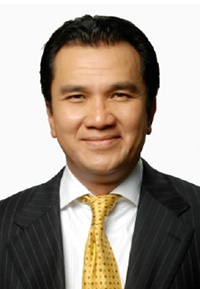
Indonesian Ambassador Tantowi Yahya has dismissed allegations that President Joko “Jokowi” Widodo had acted disrespectfully toward Prime Minister Jacinda Ardern by declining to speak in public during last week’s state visit to New Zealand.

His statement was a response to a commentary in The New Zealand Herald by political editor Audrey Young, who painted Jokowi’s visit as “shameful” because the President reportedly “failed to present himself in some manner to the public of New Zealand”.

Indonesian Ambassador to NZ Tantowi Yahya … NZ Herald artIcle “distortion of the truth”. Image: Asian Forum

In the written statement sent to The Jakarta Post yesterday, Tantowi said the decision for the two leaders not to hold a joint press conference was, in fact, proposed by the New Zealand Ministry of Foreign Affairs and Trade (MFAT) and adopted unanimously.

READ MORE: Visiting leaders show disrespect, says Audrey Young

Young claimed in her column that the MFAT proposed a joint conference, but “the Indonesians declined”.

Tantowi said the two sides had agreed to publish a joint statement that reflected the results of the leaders’ talks on their respective online portals.

-Partners-

“As guests, we respect the position taken by our host. We fully supported [the proposal], as there was nothing wrong with it,” Tantowi said.

“We were very satisfied with the level of service and attention, as well as the warm welcome that the government of New Zealand has afforded us.”

President Jokowi’s visit to New Zealand on March 18-19 was the first by an Indonesian leader in 13 years, and marked 60 years of diplomatic relations. The two nations agreed to upgrade their ties to a comprehensive partnership, and committed to increasing two-way trade to NZ$4 billion (US$2.9 billion) by 2024.

Testament to hard work
The success of the visit, Tantowi said, was a testament to the hard work and thorough preparations that both sides expended.

However, the backlash arising from Young’s comments on President Jokowi prompted the Indonesian Embassy in Wellington to protest strongly and demand clarification over the report, which the ambassador lambasted as “baseless” and a “distortion of the truth”.

The commentary claims that the President reportedly declined to meet with the press and to give a statement following bilateral talks with Prime Minister Ardern on March 19.

“The author took this as a sign of disrespect on the part of President Jokowi; that’s a very pretentious thing to say,” said Tantowi.

“As president of the third largest democracy in the world, Joko Widodo upholds freedom of expression and independence of the press,” the statement said.

Widodo ‘short-changed’ NZ
Meanwhile, West Papua Action Auckland spokesperson Maire Leadbeater defended columnist Young, saying President Widodo had “short-changed New Zealand by his public silence”.

In an open letter to the Herald, she said:

“Audrey Young is right; Indonesian President Widodo short-changed New Zealanders by his public silence, a poor start to celebrations for New Zealand and Indonesia’s 60 years of diplomatic relations, or ‘Sixty years as friends for good’.

“In 1960, before Indonesia took over West Papua, Prime Minister Walter Nash proposed that the two halves of the New Guinea Island should be placed under joint trusteeship and prepared for eventual independence as one country.

“He did not prevail, but he stood up to the Indonesian Ambassador who came over from Canberra to remonstrate with him. His idea had merit and Papuan leaders still talk wistfully about one united country: West Papua and Papua New Guinea, ‘from Sorong to Samarai’.

“Since then from a West Papua perspective, there has been little good about the relationship. In the remote Asmat region dozens of children died recently from a combination of measles and malnutrition. This kind of health and environmental neglect added to such crimes as extrajudicial killings has led academics to use the term ‘slow genocide’.

“New Zealand needs to be friends with the powerless as well as the political elite and territorial integrity should not be allowed to trump genocide.”

Print Friendly, PDF & Email

Article by AsiaPacificReport.nz

]]>

OP-ED: Turkey’s Foreign Minister Details Its Resolve in the Conflict Against Terrorism and DAESH

Article by H.E. Mr. Mevlüt Çavuşoğlu, Minister of Foreign Affairs published in Le Monde entitled “Turkey: The best ally for the security of Europe”, 20 March 2018

EDITOR’S NOTE: This is an unofficial English translation of the original French text.

***

[caption id="attachment_16095" align="alignleft" width="300"] Mevlüt Çavuşoğlu, Turkey’s Minister of Foreign Affairs.[/caption]

Nowadays, the hardest challenges European countries confront are fighting against terrorist organizations such as DAESH and the management of migration flows. Turkey continues to hold an essential role within the context of international efforts in overcoming these challenges.

It is Turkey, who has enabled the European Union (EU) to regulate the Syrian migration flow. Turkey has not only hosted three and a half million Syrian refugees, but also saved the lives of thousands of people by halting their risky attempts to get across the Aegean Sea in order to reach Western Europe.

Turkey is one of the first countries to recognize DAESH as a terrorist organization. Moreover, our country is a member of the International Coalition, established to counter DAESH.

Whereas some Western countries have not been able to control even the transiting of jihadists through their airports, Turkey has denied the entry of more than four thousand suspected travelers on her territory; deported almost six thousand terrorists; arrested more than ten thousand DAESH and Al-Qaida members; and exerted great efforts to ensure the security of her 911 kilometers long land border with Syria.

While other coalition members have not gone beyond a very symbolic presence on the field, only Turkey has fought with her land forces against DAESH alongside with the Free Syrian Army since 2016. 

Operation “Euphrates Shield” is an exceptional -even unique- operation to serve as a model in this respect, which was directed by the Turkish Army and ensured the liberation of Jarabulus, Al-Bab and surrounding cities, as well as the peaceful return of hundreds of thousands of Syrians back home.

In that case, could we say that Turkey, against which the Europeans lean their back in terms of their security, is understood correctly? Could we say that our country’s actions are conveyed correctly and that they are appreciated? Unfortunately, this is not the case.

Anti-Turkey discourse prevalent in the West today, is a partial reflection of the increase in xenophobia and Islamophobia, which are fed by Western extremists’ instrumentalization of migrant flows. Furthermore, some unscrupulous politicians, with the goal of satisfying their voters, have tried to conceal their anti-Muslim and xenophobic messages, disguised as their “political truthfulness” in their opposition against Turkey’s EU accession.

This discourse also stems from those underestimating threats faced by Turkey in recent years, and blaming its leaders of becoming authoritarian, and violating individual rights in an unfounded way. However, which European country could have further respected these rights in the face of violent acts by terrorist organizations such as DAESH and PKK/PYD/YPG that have taken control of the frontier areas; the bloody coup attempt by Fethullah Gülen and his terrorist organization on 15 July 2016; the threats and challenges Turkey has faced, such as the economic and social burden of Syrian refugees at Turkish taxpayers’ expense? Actually, no country except for Turkey could have better dealt with such various challenges simultaneously.

Turkey, which is a founding member of the Council of Europe in Strasbourg, is a party to the European Convention on Human Rights. This Convention guarantees that individual rights of all citizens are respected by also the Turkish Justice as in other European countries. Accordingly, no one could allege that these rights are less respected in Turkey than in any other country in Europe.

Thanks to its determination, Turkey today manages to prevent terrorist organizations such as DAESH or PKK/PYD/YPG from taking any action on her territory. Advances recorded in the fight against FETO will soon allow the Turkish Government to lift the state of emergency. One can recall that it took seven hundred and nineteen days to end the state of emergency in France.

Today, Turkey enjoys a sound political stability and has the highest economic growth rate among European countries. Turkey, welcoming nearly forty million tourists each year, also continues to be one of the world’s safest tourist destinations.

Turkey’s priority, as a country exerting every effort in finding a political solution in Syria, is to eliminate any terrorist presence on her border with this country, which also constitutes the border of Europe and NATO with the Middle East.

Operation “Olive Branch” conducted in Afrin against the PKK/PYD/YPG and their associate DAESH, will therefore continue until this goal is fully achieved. At all costs, Turkey will not allow this terrorist organization to occupy Syrian territory on her borderline and will do her best to demonstrate the gravity of their mistake to her allies who falsely think that using PKK/PYD/YPG terrorists as mercenaries in their so-called fight against DAESH is a good idea.

Our allies will realize that Turkey is, and will remain, their best ally for the security of Europe and the region.

]]>

Newsletter: New Zealand Politics Daily – March 27 2018 – Today’s content

Newsletter: New Zealand Politics Daily – March 27 2018 – Today’s content Editor’s Note: Here below is a list of the main issues currently under discussion in New Zealand and links to media coverage. [caption id="attachment_297" align="aligncenter" width="640"] The Beehive and Parliament Buildings.[/caption] Below are the links to the items online. The full text of these items are contained in the PDF file (click to download). Health Dave Macpherson: What can happen to self-entitled health sector bureaucrats, or what goes round comes round…. Natalie Akoorie (Herald): Dave Macpherson wants answers on DHB chair’s failure to disclose advice to sack Nigel Murray Lucy Bennett (Herald): Youth smoking at all-time low but rates still double for Maori: Ash Rachel Thomas (Stuff): No room for complacency if we’re to reach kick smoking by 2025, Helen Clark says Phil Pennington (RNZ): MP demands immediate rot monitoring at Middlemore 1News: Jacinda Ardern says she ‘shouldn’t and won’t’ get involved in nurses pay dispute as negotiations continue Stuff: Jacinda Ardern won’t say if nurses underpaid amid pay dispute Frances Cook (Herald): Nurses reject pay offer, delegates to meet to discuss strike action RNZ: Nurses and midwives vote no to 2% pay rise deal Rachel Thomas (Stuff): Nurses reject latest pay offer, will vote on whether to strike Stuff: My advice? Stay away from nursing Mike Hosking (Newstalk ZB): Nurses destined to remain on poor pay if mass unionism continues to dominate profession Kate Hawkesby (Newstalk ZB): I’m with the nurses as they consider a strike – they deserve far more than a pathetic 2% pay rise Lance O’Sullivan (Herald): Why I’m moving my business to Auckland Claire Trevett (Herald): Dr Lance O’Sullivan to ship health business out of Kaitaia Logan Church (RNZ): Christchurch chlorination regime begins RNZ: Fijian women in NZ’s access to contraception worse those in Fiji Herald: More help for substance abuse needed in the North Island, according to new study Annemarie Quill (Bay of Plenty Times): Bay of Plenty has the most cannabis dependence in New Zealand Housing Jessie Chiang (RNZ): Residents say Mt Albert already ‘bursting at the seams’ NZ Herald editorial: Affordable houses will need to be well designed Susan Edmunds (Stuff): KiwiBuild unlikely to change local prices Herald: Mt Albert housing plan could triple school rolls in next few years RNZ: Mt Albert KiwiBuild homes: Private sector needs help – Twyford Zoe Madden-Smith (Te Waha Nui): Vending machines give homeless some independence back Reserve Bank  Gordon Campbell (Scoop): On the hype about the Reserve Bank’s new Governor Thomas Coughlan (Newsroom): A new Governor with an extra target RNZ: Govt gives RBNZ biggest shakeup in 30 years Richard Harman (Politik): More trouble for the Reserve Bank Brian Gaynor (Herald): Bank boards a vital cog in NZ economy Media RNZ: Carol Hirschfeld resigns over meeting minister Herald: Carol Hirschfield has resigned Laura Walter (RNZ) RNZ senior manager Carol Hirschfeld resigns over meeting with minister David Farrar (KIwiblog): The Curran Hirschfeld meeting was not a chance encounter No Right turn: A coverup unravels Colin Peacock (RNZ): End of an era is nigh for Sky Mark Jennings (Newsroom): Love and loyalty cost Fellet at Sky TV Rukuwai Tipene-Allen (Māori TV): A fresh look at Māori media NZ and Russian diplomats  RNZ: Watch: PM on Russian diplomats – ‘We would expel them’ Herald: PM Jacinda Ardern: Why NZ is not expelling Russia diplomats 1News: No Russian spies in New Zealand, says Jacinda Ardern David Farrar (Kiwiblog): NZ missing in action Government Jane Bowron (Stuff): Keeping up with Jones, and his new mates Craig McCulloch (RNZ): Nats out for blood over Marcroft-Mitchell dust-up 1News: National MP accuses NZ First of threatening to withhold funding – but Winston Peters says it was a ‘misunderstanding’ Craig McCulloch (RNZ): NZ First MP instructed to apologise to National Party Sam Sachdeva (Newsroom): ‘Rotten politics’ accusations over provincial fund Claire Trevett (Herald): National MP Mark Mitchell: ‘Rotten politics’ from NZ First MP over regions fund Stacey Kirk (Stuff): National accuses NZ First MP of holding regional projects to ransom Yvette McCullough (Newstalk ZB): NZ First accused of threatening other MPs Emma Hurley and Jenna Lynch (Newshub): National MP Mark Mitchell alleges NZ First told him to keep quiet over Provincial Growth Fund Barry Soper (Newstalk ZB): The trouble with being blip on the radar Henry Cooke (Stuff): Prime Minister Jacinda Ardern on the hunt for new press secretary Herald: PM Jacinda Ardern on hunt for new chief spin doctor Stuff: ‘It’s just not cricket’: PM Jacinda Ardern weighs in on ball tampering scandal Julie Ann Genter on “old white men” Julie Anne Genter (Stuff): Older, white men have a lot to contribute; they’re not the only ones Chris Trotter (Stuff): Gender diversity easier to campaign for than class diversity 1News: Don Brash and Jess Moloney talk ‘old, white men’ on boards – ‘I want women to be given an equal shot at life’ Megan Sutherland (Newshub): Minister for Women Julie Anne Genter stands by ‘old white men’ comments Newshub: Man lodges complaint to Human Rights Commission over Julie Anne Genter’s ‘old white men’ comments Susan Strongman (The Wireless): Minister for Women’s comments about older white men ‘racist, ageist and sexist’ Newshub: ‘Older men have got a lot to contribute’ – Simon Bridges Greens co-leadership contest Henry Cooke (Stuff): Battle for the future of the Green Party comes to a close Talisa Kupenga (Māori TV): Final debate marks end of Green Party Co-leadership campaigns Alex Birchall: A Staunch Warning to the Green Party National and Northcote by-election Liam Hehir (Stuiff): Coleman exit positive move for new-era National Party Gwynn Compton (Libertas Digital): How Labour can win Northcote Stacey Kirk (Stuff): Michael Woodhouse new Opposition health spokesman Lucy Bennett (Herald): Woodhouse named National’s health spokesman following Coleman’s departure Justice RNZ: Legal battle over prisoner voting ban heard at Supreme Court Tom Hunt (Stuff): Wellington #metoo blogger says she’s been ‘blacklisted’ by a Government agency Kim Dotcom  Ryan Dunlop (Herald): Crown refusal to give Dotcom information on him had ‘no proper basis’ Human Rights Review Tribunal rules RNZ: Crown to pay $90,000 for Kim Dotcom privacy breach Newshub: Kim Dotcom wins Human Rights Tribunal case, declares extradition bid ‘over’ Stuff: Government must pay $90K to Kim Dotcom after tribunal rules it breached his privacy No Right Turn: $90,000 Poverty and inequality  Dominion Post Editorial: Treading sorry path to poverty Julie Chapman (Stuff): Walking in the shoes of Kiwi kids in need is not that easy Adam Jacobson (Stuff): WINZ’s ‘toxic work culture’ impacting Auckland beneficiaries, advocacy group says Primary industries Thomas Mead (Newshub): World’s top climate scientists deliver warning for Kiwi farmers Newshub: Sustainability of New Zealand’s dairy industry under question Dominic Harris (Stuff): Changing agricultural practices key to cutting greenhouse emissions – James Shaw Conan Young (RNZ): Mycoplasma bovis: ‘Could take up to three years to wipe it out completely’ RNZ: MPI calls for cull of 22,000 M. bovis infected cattle Jamie Morton (Herald): Backing for plan to slaughter 20,000 cattle to stop disease Alexa Cook (RNZ): No farmers caught in stock truck checkpoint Stuff: Forestry and mining the only industries where women consistently paid more Environment Pattrick Smellie (Herald): NZ govt planning ‘long transition’ away from fossil fuel, Minister tells oil conference Hamish Rutherford (Stuff): Jacinda Ardern said to describe gas as a ‘crutch’ preventing move to renewables Amanda Larsson (Stuff): Time to take the pedal off the gas, says Greenpeace campaigner Cameron Madgwick (Stuff): We’ll forgo the economic benefits of producing our own energy if we ban exploration, says industry boss Katarina Williams, Ged Cann and Hamish Rutherford (Stuff): Protesters blockade petrol and gas exploration conference in Wellington RNZ: Protesters blocking access to oil and gas conference Katie Scotcher (RNZ): ‘We need to leave all new fossil fuels in the ground’ – protester Herald: Activists plan blockade of annual oil industry conference in Wellington Nita Blake-Persen (RNZ): ‘Supergrans’ to take on oil industry Tom O’Connor (Waikato Times): ‘Only fittest and fortunate survive’ Education Simon Collins (Herald): School restraint rules ‘undermine adult authority’ – Family First Stuff: Vanguard first charter school to apply to become special character school Brad Flahive (Stuff): Parent furious pupils have to find teacher to use school toilets Royal Commission into state care abuse Lucy Bennett (Herald): Churches seek inclusion in Royal Commission on state care abuse Laura Walters (Stuff): Sharing abuse stories without hope of accountability ‘feels hollow’ – Anglican Church America’s Cup Simon Wilson (Herald): America’s Cup base plan is a triumph for Auckland Todd Niall (RNZ): 11th-hour America’s Cup deal: $100 million bill may rise Herald: ‘Plenty of wind shifts’ leading up to confirmed America’s Cup plan Newshub: Auckland confirmed to host America’s Cup RNZ: Taxpayers to contribute $114m to new America’s Cup deal Employment Holly Ryan (Herald): SkyCity set to offer employees $20 minimum wage by 2020 Sarah Harris (Herald): Few Kiwi dads taking paid parental leave for fatherhood Air NZ RNZ:Air NZ to close its Hamilton engineering base in May RNZ: Kāpiti locals fear loss of flights will jeopardise airport Other 1News: Exclusive: More than 10,000 overstayers in NZ and Immigration not actively looking for most of them Stuff: Petition to strip Sir Bob Jones of knighthood presented to Parliament RNZ: Capital gains gets tick from Aus tax expert Michael Barnett (Herald): Local Government is failing Auckland and failing New Zealand RNZ: Protest over council plan to sell part of a golf course RNZ: Supreme Court hearing granted to iwi over Crown land sale Sharon Forbes (The Conversation): Trust and profitability: how some NZ brands are shortchanging domestic customers]]>

NZ to give $6 million boost for USPNet telecommunications upgrade

]]>

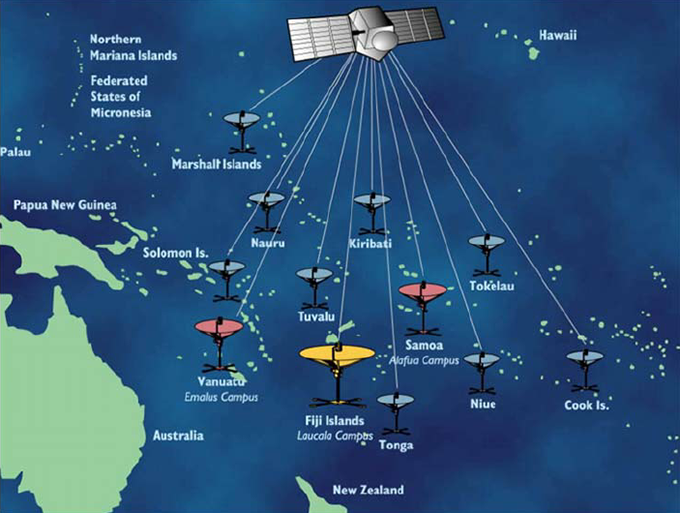
USPNet … the regional University of the South Pacific’s satellite educational communications system. Image: USP

By Salote Qalubau in Suva

The New Zealand government has committed $NZ6 million ($F8.84 million) to improve the University of the South Pacific’s digital e-learning sector.

The commitment was revealed by USP Vice-Chancellor Professor Rajesh Chandra during the unveiling of the Royal New Zealand Air Force (RNZAF) commemorative monument at the Laucala campus last week.

The grant is expected to boost USPNet and ICT developments.

“New Zealand contributed significantly to the development of USPNet and to ICT development that strengthened links between all our campuses and greatly improved both the administrative communication and the teaching capacity of USP,” he said.

“We are very grateful that NZ has made a grant of $NZ6 million to totally re-engineer USPNet and replace all the satellite dishes to create a 21st century learning network for the Pacific Islands. This is a special contribution from NZ to mark our 50th anniversary.”

Air force base campus
Meanwhile, New Zealand Defence Minister Ron Mark also announced two new developments in Fiji and New Zealand’s defence relationship when he joined more than 100 ex-5 Squadron servicemen and women for the unveiling of the commemorative monument to mark the land that was once home to the RNZAF 32 years ago.

-Partners-

“The New Zealand government announced the deployment of both the Royal New Zealand Navy inshore and offshore patrol vessels to Fiji later this year. The first, the IPV will be here in May, the OPV will follow after that,” he said.

“These and the deployment of the two technical advisers from the New Zealand Army and the Royal New Zealand Navy are two examples of our collaborative approach to supporting the development of our respective forces.”

Mark said he was also honoured to be able to commemorate the unveiling of the monument and the university’s 50th anniversary.

“Both of these partnerships are very important to New Zealand,” he said.

Salote Qalubau is a final year University of the South Pacific journalism student reporting for Wansolwara News.

Print Friendly, PDF & Email

Article by AsiaPacificReport.nz

]]>

Lawyer Paul Paraka hits back at PNG state with ‘citizens’ rights’ lawsuit

]]>

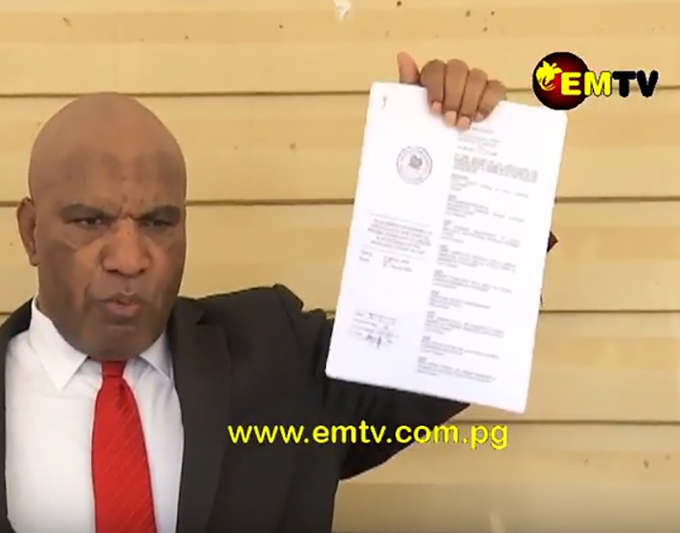
Lawyer Paul Paraka announces he will go to court to clear himself and claim for damages. Video: EMTV News

Pacific Media Centre Newsdesk

Embattled Papua New Guinean lawyer Paul Paraka has challenged the government with a lawsuit citing a section of the constitution never previously used for “breaching his citizen rights”, reports the PNG Post-Courier.

He has applied to the courts using a constitutional section that could imprison ministers, members of the anti-corruption Task Force Sweep, head of state agencies and banks for up to 10 years imprisonment for a breach of his rights as a citizen.

Paraka, who has made headlines since 2013 is testing Section 23 for a breach of Constitution that has never been exercised in the country since independence in 1975.

READ MORE: Controversial PNG lawyer seeks hefty damages payment

He is also seeking hundreds of millions of kina damages in the affair – known locally as as the Paraka saga – against the state, its agents and those individuals involved, reports Jeffrey Elapa.

Lawyer Paul Paraka with his lawsuit documents at the weekend. Image: Screen grab from EMTV News

-Partners-

Paraka, who once owned one of the biggest law firms in the country prior to the controversial saga, said it was now his time to “declare war” on the state through the powers of the rule of law, seeking damages and justice from the court.

He said he was seeking orders from the court to invalidate all actions of the National Executive Council (NEC) and Task Force Sweep team and is seeking damages and compensation for the total loss of business, and seeks compensation from individual government officials and the state for almost half of the country’s annual budget allocation from a different category of damages.

During a media brief at the weekend, Paraka said he went to court to seek imprisonment terms imposed on those responsible. Section 23 deals with an abuse of the Constitution, imposing a jail term of up to 10 years.

Arrested and charged
Paraka was arrested and charged by the Task Force Sweep team in October 2013 in relation to the payment of legal costs by the state which were claimed to have been paid when there was a Supreme Court restraining order in place.

Paraka Lawyers had branches in all the 22 provinces with its headquarters occupying three floors at the Mogoru Moto Building in the capital of Port Moresby, and employed close to 2000 employees.

Paul Paraka said his company undertook over 6000 legal briefs for the state for a period of seven years from the year 2000, resulting in more than 30,000 legal invoices rendered to the state and were paid.

He said the payments, the subject of the allegations, were properly and lawfully authorised by the former Attorney-General and Solicitor-General for payment.

A National Court Order also authorised the payments.

Paraka said the sweep team alleged foul in the payments, alleging there was a Supreme Court order.

“If there was a Supreme Court order then it should have been a breach of contempt of court offence and is not a criminal offence,” Elapa quoted Paraka as saying.

Sweep team ‘wrong’
Paraka told the Post-Courier the sweep team was wrong, there was no Supreme Court order restraining the payment and that the National Court order that directed the payment was not challenged by the state.

He said the five NEC decisions to appoint a sweep team were unlawful and unconstitutional and also did not give any specific instructions to investigate Paul Paraka Lawyers.

He said as a result he was “destroyed badly” and went through “one of the hardest times in life” and was now seeking justice to get his business and his money back and to get his name cleared.

Print Friendly, PDF & Email

Article by AsiaPacificReport.nz

]]>

Tide of Change – documentary by USP students explores climate action

]]>

The Tide of Change climate adaptation documentary by university of the South Pacific student journalists. Video: Wansolwara

Pacific Media Watch Newsdesk

The people of Natawaru Settlement in Fiji have seen their humble livelihoods grow more precarious as the effects of climate change take their toll.

From rising seas, depleted fish stocks and rising temperatures, the community is faced with a struggle for survival.

However, the people, who live near Fiji’s second city Lautoka on Viti Levu island, have declared themselves a “violence free community”.

Tide of Change is a short documentary film by student journalists at the University of the South Pacific: Koroi Tadulala, Aachal Chand, Mitieli Baleiwai, Venina Rakautoga and Kaelyn Dakuibure

Producer: Dr Olivier Jutel

Print Friendly, PDF & Email

Article by AsiaPacificReport.nz

]]>

Asia-Pacific media must ‘empower people’ on climate action, says PMC

]]>

Apriline Widani of the Centre for Southeast Asia Social Studies (CESASS) at the Universitas Gadjah Mada talks to the Pacific Media Centre director Professor David Robie about climate change, the media and the Bearing Witness project in Fiji. Video: CESASS

Pacific Media Watch Newsdesk

News media need to empower people over climate change and to encourage them to take action in their communities and press governments to do more, says a New Zealand environmental journalist and advocate.

Professor David Robie, director of the Pacific Media Centre at Auckland University of Technology, told researchers at a recent seminar at Indonesia’s Universitas Gadjah Mada in Yogyakarta that journalists in the Asia-Pacific region needed to step up to the mark.

“We are rapidly running out of time,” he said in an interview with UGM’s Centre for Southeast Asia Social Studies (CESASS).

“The news media itself is not terribly good when it comes to long term planning, and long-term issues. It tends to respond to immediate issues and consequences. It lacks the attention span for longer term challenges.”

Climate change was not just a simple “news round” but an issue of planetary survival.

-Partners-

There were examples in some countries of where the media was working quite well to empower people.

“The micro states in the Pacific have taken a lead in this way.”

He spoke about the achievements in the Pacific – especially Fiji leading up to COP23 in Bonn – and also about the PMC’s award-winning Bearing Witness climate journalism project in partnership with the University of the South Pacific.

Print Friendly, PDF & Email

Article by AsiaPacificReport.nz

]]>

Bryce Edwards’ Political Roundup: Populist Shane Jones Vs Corporate Air NZ

]]>

Bryce Edwards’ Political Roundup: Populist Shane Jones Vs Corporate Air NZ

[caption id="attachment_13635" align="alignright" width="150"] Dr Bryce Edwards.[/caption] Shane Jones is just what New Zealand First needs at the moment – a polarising campaigner who can show his party is in touch with those parts of New Zealand not well served by corporates such as Air New Zealand. His campaign against the national carrier is straight out of the “populist playbook”, in which you identify an issue on which the public is hurting, a target for blame, and you colourfully go full blast on the issue, with little regard to propriety or political etiquette.  [caption id="attachment_14813" align="alignleft" width="220"] Hon. Shane Jones – New Zealand First MP and Cabinet Minister.[/caption] Audrey Young writes that Jones “is fast becoming the primary branding agent for New Zealand First”, and in “a single day he probably got the party back to 5 per cent and lifted his brand as a champion for the regions” – see: Air NZ attack scores bullseye for brand Jones. She says Jones has learned from mentor Winston Peters that it’s best to personalise your complaint: “it is not enough to condemn institutions for their decisions but to imbue them with a malign intent or neglect, or venal individuals, or to paint them as elites who care not one jot for ordinary folk.” The popular success of the campaign is also discussed by Tracy Watkins, who says Jones appears to be immune to the usual “bureaucratic capture” which neuters new ministers – see: Barack Obama’s NZ trip may have backfired for airline Pause. Jones’ populist campaign was timed perfectly, given that Barack Obama was being hosted by the airline in an extravagant corporate visit: “The contrast between the glossy publicity shots and the airline’s cutbacks in regional New Zealand – ironically, including Northland, where Obama was flown by helicopter for his golf round – was stark. Jones’ assault on the airline for corporate arrogance and abandoning the ‘real’ New Zealand couldn’t have been timed better.” The result has been a storm of publicity, and a chorus of support too big to be ignored. Perhaps the most surprising backing came from libertarian rightwing columnist Damien Grant, who wrote yesterday that “Jones’ chastising the current board for failing to meet the implicit obligation of servicing the economic needs of the wider economy is historically and economically sound. The person who is out of step is Tony Carter, the current chair” – see: Shane Jones right to clip wings of Air NZ board. Grant, who is an expert in company law, argues that the idea of Air New Zealand as an independent company that has “an arm’s length shareholder dispassionately waiting for its dividend cheque” is nonsense. Instead, he points out that the whole existence of the airline is based on the state’s continued protection of it, and that it therefore “exists to help build the local economy.” He advises Jones to ignore the conservative critics. The Dominion Post published an equally enthusiastic editorial, which also points out the airline’s debt to New Zealand for its bailout in 2001: “Jones is right to highlight that cutbacks in flights and services run counter to regional development – his job – and represent a sorry trend. He’s right to suggest, albeit forcefully, that Air NZ should consider its role and impact in all of New Zealand, not just the most accessible and profitable bits. And also the weight of any possible ‘debt’ owed to a nation that bailed the company out of trouble and still owns a majority shareholding. He’s right to be a voice and an advocate for a large part of the country that often struggles for traction inside the Beltway” – see: Jones doing his job – advocating for regions. For the Dominion Post, it doesn’t matter so much that Jones is technically in the wrong in attempting to push around an independent company that is only part-owned by the state. The newspaper salutes him for tackling an issue that other politicians ignore: “Jones has again inspired worthy debate, and debate inspires and invigorates a robust democracy.” Jones’ message will resonate strongly in the provinces, and many in the regions will be cheering him on. Some mayors are already expressing their support – see, for example, RNZ’s Regional mayors support Shane Jones’ Air NZ callout. Former Northland mayor Wayne Brown points out that rural New Zealanders “coughed up” their share of taxes in 2001 to help bailout the airline: “Those people all get called on to tip their tax in when Air New Zealand gets into trouble, which they do occasionally and will do again… If they’re going to be backed up by the New Zealand public they have an obligation to serve the New Zealand public” – see Grant Bradley’s Message from the Far North to Air NZ: ‘You’ve got the bloody money to fly to Kaitaia’. Despite getting a small telling off from Prime Minister Jacinda Ardern, as well as a rather technocratic putdown from Finance Minister Grant Robertson, Jones’ stance is also gaining some support from within his former party. After all, Jones is playing a role of being something of “Labour’s conscience” – standing up for those being neglected at the margins. Therefore, it wasn’t surprising to see Labour politicians eventually start backing him up. According to Peter Wilson, “It now appears to have dawned on Labour, somewhat belatedly, that Jones is getting traction and probably votes as well. Transport Minister Phil Twyford, a Cabinet heavyweight, decided on Friday it was time he got in on the act” – see: Shane Jones’ plain-speaking a play for the regions. Twyford is quoted: “Shane was expressing a view that was entirely consistent with what our government stands for – the regions cannot put up with the constant retrenchment and cutting back of infrastructure and services”, and that Air New Zealand has “an obligation to listen to the views of the major shareholder and take those views into account.” National also saw the light, with Richard Harman explaining on Thursday that “National’s first reaction to Jones’ comments was to criticise him. But by yesterday morning some of their MPs were starting to get calls from provincial members of the party advising them to back off” – see: Tensions at the top. National MP Nathan Guy has been campaigning on the issue, in terms of Air New Zealand’s withdrawal from his own electorate on the Kapiti Coast. And a former provincial National MP wrote wholeheartedly in support of Jones, saying “Shane Jones is only letting the shareholders’ views get through to the board, and he is quite right to do so. That is what representation is all about” – see Chester Borrows’ Air NZ can’t complain about Shane Jones’ withering criticism. Like others, Borrows points out that “politics kept Air New Zealand alive when they were about to breathe their last gasp. They can’t complain now politics wants payback.” Writing in the latest Listener, even Jane Clifton, who might normally be inclined to mock Jones’ campaign, shows some sympathy: “this has the makings of a classic big business versus the little people fight. In this economy, Air NZ is more an unavoidable public utility, like power and water services, than a mere player in a competitive market. Since the global financial crisis, it hasn’t seemed quite so Pollyannaish for politicians to demand social responsibility from businesses.” Of course, not all commentators have been championing Jones. And plenty of experts have pointed out the impropriety of a minister campaigning in ways they regard as contrary to Cabinet rules and commercial logic. In terms of the latter, the must-read is Martin van Beynen’s Shane Jones is the hot air beneath our wings. Finally, for parody, see Andrew Gunn’s Welcome to your Air New Zealand flight Mr Jones, and my blog post, Cartoons about Shane Jones vs Air New Zealand.]]>

Newsletter: New Zealand Politics Daily – March 26 2018 – Today’s content

Newsletter: New Zealand Politics Daily – March 26 2018 – Today’s content Editor’s Note: Here below is a list of the main issues currently under discussion in New Zealand and links to media coverage. [caption id="attachment_297" align="aligncenter" width="640"] The Beehive and Parliament Buildings.[/caption] Below are the links to the items online. The full text of these items are contained in the PDF file (click to download). Health Nicholas Jones (Herald): Rest homes investigation: bedsore deaths, expired medication, hungry residents Nicholas Jones (Herald): Vulnerable elderly restrained in chairs all day: documents Nicholas Jones (Herald): Rest home changes ‘on table’ after residents left hungry, in pain Herald Editorial: Rest home watchdog required Deena Coster (Stuff): The unhealthy pressure on our health system Natalie Akoorie (Herald): Waikato DHB chairman told to fire Nigel Murray if unauthorised spending found Karen Brown (RNZ): DHB staff intimidated by Nigel Murray – report Natalie Akoorie (Herald): Should appointed members of Waikato DHB be sacked over Nigel Murray resignation decision? Natalie Akoorie (Herald): Doctors’ union defends DHB chiefs – Nigel Murray’s behaviour ‘not typical’ Aaron Leaman and Florence Kerr (Stuff): Waikato DHB members go to ground following damning Nigel Murray report ODT: Short time for huge task — specialist Rachel Thomas (Stuff): Health minister pours water on public-private partnership offer for elective surgeries RNZ: Counties Manukau DHB says it’s not monitoring rotting walls Jamie Morton (Herald): Liggins study: Maori, Pacific babies with heart defect worse off Cecile Meier (Stuff): New mums deserve better care Tracy Neal (RNZ): Hospice may have to charge users Katie Doyle (RNZ): Number of pokie machines in Māori communities ‘hugely disproportionate’ Stephen Berry (Spinoff): Pharmac’s anti-HIV drug subsidy is an own goal for LGBT Neville Blampied and Robert Hughes (Stuff): The problems with anecdotal evidence Air NZ  Aaron Leaman, Thomas Manch, Hannah Martin and Tara Shaskey (Stuff): Air New Zealand shuttering one of last engineer hubs in regions as public anger grows Jonathan Milne (Stuff): Obama says global businesses must care for the little people; Air NZ should take note Audrey Young (Herald): Air NZ attack scores bullseye for brand Jones Tracy Watkins (Stuff): Barack Obama’s NZ trip may have backfired for airline Brian Gould (Herald): Air NZ must be told marooning towns not part of plan RNZ: Air NZ ‘has lost the identity as NZ’s national carrier’ Jason Walls (Interest): NZ First MP Shane Jones’ calculated pot shots at Air New Zealand an attempt to garner voter support in the regions Damien Grant (Stuff): Shane Jones right to clip wings of Air NZ board Ged Cann (Stuff): Cut Kāpiti service could leave Wellington region vulnerable in case of natural disasters RNZ: Otaki MP: No “plan C” for Kāpiti flights Andrew Gunn (Stuff): Welcome to your Air New Zealand flight Mr Jones Housing  Bruce Morris (Newsroom): Phil the Builder makes his first big deal Russell Brown (Public Address): The Unitec project: Something new, with a rolling start Mike Hosking (Newstalk ZB): KiwiBuild ‘suburb’ will look like a dump in a decade RNZ: Taxpayers to help pay for new Auckland housing project RNZ: Auckland housing plan nothing new – Bridges Dan Satherley (Newshub): We planned those KiwiBuild homes – National 1News: ‘We are going to change the market dynamic’ – Housing Minister announces new build in Auckland to meet promise Alice Peacock (Herald): ‘The end of the beginning’: Mt Albert housing development will help address Auckland’s housing crisis RNZ: Thousands of new homes to be built in Mt Albert Newshub: First KiwiBuild houses announced Herald: 3000 to 4000 low cost homes to be built on Unitec land in central Auckland Auckland Now: 4000 homes to be built in Mt Albert Greg Groufsky (ODT): Building homes – not just new houses RNZ: Family facing homelessness ask ‘what’s happened to NZ?’ Lucy Telfar Barnard (RNZ): Letting fees: goodbye and good riddance Henry Cooke (Stuff): Will banning letting fees raise rents? Anne Gibson (Herald): Letting fee axe could reignite rental auctions: Landlord Derek Cheng (Herald): Cutting letting fees will push up rents, National Party warns Reserve Bank  Anna Bracewell-Worrall and Jenna Lynch (Newshub): An idiot’s guide to today’s changes at the Reserve Bank BusinessDesk: Reserve Bank ends total focus on price stability Liam Dann (Herald): Will big Reserve Bank reforms move your rates? Patrick O’Meara (RNZ): Changes to the way interest rates are set to be revealed Michael Reddell (Croaking Cassandra): On the new PTA Liam Dann (Herald): Who is the new Reserve Bank Governor? Richard Harman (Politik): Treasury- Reserve Bank power struggle Dominion Post Editorial: Adrian Orr becomes Reserve Bank governor at a time of change Michael Reddell (Croaking Cassandra): On aspects of Reserve Bank reform Environment Pattrick Smellie (Stuff): Nothing the oil industry doesn’t already know 1News: Russel Norman says PM accepting Greenpeace petition to end oil exploration raises hopes Gareth Hughes (Stuff): We need to end oil exploration in New Zealand Grant Bradley (Herald): Oil and gas chiefs meet as Government mulls future of the sector Jonathan Young (Stuff): Gas exports would reduce global emissions Brian Easton (Pundit): Are We Boiling Frogs? Julian Lee (Press): Environment Canterbury has given an infringement notice to itself for polluting a stream Phil Pennington (RNZ): Toxic foam: Defence Force didn’t tell council of water risks 1News: Government claims it’s not getting value for money consulting with iwi on water policy Leith Huffadine (Stuff): Why millions of coffee cups end up in rubbish dumps Heather Roy: Where’s the Truth in Recycling? RNZ: Virus to be released to wild rabbits in Waikato Justice and legal profession Graeme Edgeler (Public Address): Voting disqualifications Melissa Nightingale (Herald): Prisoners’ right to vote entrenched in electoral act, lawyer says Newshub: Double-bunking at women’s prison not acceptable – Ombudsman 1News: Concerns raised over ‘double bunking’ of prisoners at overcrowded NZ prisons Arthur Taylor (Daily Blog): Corrections Is Cramming Them in Tighter Than Sardines! Derek Cheng (Herald): Govt set to pay compensation for another miscarriage of justice – with top-up for inflation Jono Galuszka (Stuff): National leader Simon Bridges talks up ‘tough on crime’ stance Ruth Hill (RNZ):Judges worst offenders in law harassment survey RNZ: Bullying in the courtroom: ‘We want to stop it’ Charlotte Carter (Herald):“Bullying of counsel is not acceptable” – Chief Justice responds to damning law survey Stuff: Chief Justice Dame Sian Elias rebukes judges after revelations of widespread bullying Olivia Wensley (Herald): Law’s dirty little secret is exposed. Olivia Wensley explains how to make real change Anuja Nadkarni (Stuff): Legal workplaces must do more to achieve gender equality, report says Transport and road safety  Damian George (Stuff): Government-funded report advocated cheaper Wellington rail fares – but it was never published Adam Jacobson (Auckland Now): Government introduces regional fuel tax legislation Andrew McRae (RNZ): Dangerous road: ‘Our lives don’t seem to matter’ Newshub: Northland’s SH1 washout blamed on underfunding Jonathan Coleman and National Mark Sainsbury (Newshub): Self-serving Coleman treating taxpayers like chumps Gwynn Compton (Libertas Digital): Labour has every chance to win Northcote by-election RNZ: Jonathan Coleman hangs up on hospital rot interview Toby Manhire (Spinoff): Revealed: what Jonathan Coleman was thinking this morning Newstalk ZB: Coleman’s departure gives National an opportunity Newshub: David Carter, Nick Smith could be next to go – Matthew Hooton Leah Te Whata (Māori TV): National Party leader Simon Bridges returns to marae Talisa Kupenga (Māori TV): National to entice Māori vote through Kahurangi Blue groups Jesse King (Wanganui Chronicle): National leader Simon Bridges talks Obama in Whanganui Herald: National leader Simon Bridges gets down at Pasifika Newshub: Simon Bridges’ ‘unbelievea-bull’ Instagram mistake Parliament  Jo Moir (Stuff): Māori being able to vote for any party the key message after Hosking got it wrong Craig McCulloch (RNZ): Māori voters get to choose between Māori and general rolls Lucy Bennett (Herald): Chance to choose general or Māori electoral roll Bronwyn E Wood and Nick Munn (The Conversation): How lowering the voting age to 16 could save democracy Andrew Sealey (Stuff): Sixteen is the future age of reason and responsibility Derek Cheng (Herald): Labour and National talk to real people, steer clear of Cambridge Analytica-style data services Stuff: Below the Beltway: A week in politics Philip Matthews (Stuff): Week in Review: Obamania or Baracknophobia? Government  John Armstrong (1News): Jacinda Ardern has appeared flustered, even rattled, during the first crises to hit her Government Heather du Plessis-Allan (Herald): Who needs friends like Labour’s coalition partners? Paul Little (Herald): Government should tackle bigger issues than blasphemy Sonia Mazey and Jeremy Richardson (Stuff): Taking your time and being deliberative can avoid policy blunders in a wired world Stacey Kirk (Stuff): Greens volunteer to be cannon fodder Chris Trotter (Bowalley Road): Asking The Right Questions. Herald: Ed Sheeran pays visit to Prime Minister Jacinda Ardern for a cuppa and scones Julie Ann Genter on “old white men”  Steven Cowan: The trickle down feminism of Julie Ann Genter Dominion Post Editorial: Genter on gender: maybe a little gentler? John Drinnan (ZagZigger): Genter Talks Like An Activist, Not A Minister David Farrar (Kiwiblog): Minister wants old white men to eff off and die Jazial Crossley (Spinoff): Yes, we need more diversity on boards – and that isn’t anti-white men Newshub: ‘Old white men’ should make way for others – Julie Anne Genter Stuff: Julie Anne Genter comments on old white men ‘silly’: Bridges Pete George (Your NZ): Overreaction to silly Genter ‘old white men’ comments International relations and trade  Audrey Young (Herald): Visiting leaders show disrespect by failing to share platform with Jacinda Ardern Colin Peacock (RNZ): How Widodo went under the radar Gordon Campbell (Werewolf): On a trade war with China Audrey Young (Herald): Too much uncertainty on US trade for NZ to take a position, says Trade Minister Parker RNZ: Lack of clarity around US tariff decisions – Trade Minister 1News: Looming US-China trade war ‘very worrying’ for NZ says senior economist, trade expert Herald: Todd McClay blasts Government over delayed steel tariff response Dave Armstrong (Stuff): Free trade between morality and economic might Laura Walters (Stuff): PM’s dad Ross Ardern to become Administrator of Tokelau Obama visit  Finlay Macdonald (RNZ): Obama’s visit to NZ: ‘He came, he saw, he putted’ Colin Peacock (RNZ): Obamamania in overdrive Claire Trevett (Herald): Obama out: Sir John Key’s hunt for the elusive tweet begins Steve Braunias (Herald): The Secret Diary of Barack Obama David Slack (Stuff): My old mate Barack Obama Damien Venuto (Herald): Which Barack Obama sponsor got the best bang for its buck in New Zealand? Newshub: Obama was ‘hungover, sunburnt and really tired’ – Patrick Gower Duncan Garner (Stuff): Dear Mr President, sorry about the moaners Dileepa Fonseka (Stuff): Sir John Key really is Obama’s bro and other highlights of Barack Obama’s first trip to NZ Steven Cowan (Against the current): The media go gaga over Obama Oscar Kightley (Stuff): I cringed as I watched us fawn over Obama RNZ: Barack Obama impressed after meeting Māori wahine leaders Anuja Nadkarni (Stuff): Business leaders on their night with Barack Obama Samantha Olley (Rotorua Daily Post): Rotorua mayor Steve Chadwick: Barack Obama dinner ‘profound and deep’ Newshub: The odd reason Simon Bridges was surprised by Barack Obama Herald: Former US President Barack Obama’s third and final day in New Zealand Employment Mike Treen: Billions owed in leave – Why are we wating? Ruth Hill (RNZ): Govt dismisses officials’ warnings over minimum wage bump Derek Cheng (Herald): Minimum wage rise to $16.50 at the end of next week could cost 3000 jobs, says MBIE Susan Edmunds (Stuff): Construction industry facing shortfall of thousands of workers Cleo Fraser (Newshub): Dad living in car 160km from family to pay bills Jennifer Eder (Stuff): Living wage announced for Te Pūtahitanga o Te Waipounamu employees Chloe Winter (Stuff): Survey finds 18-24 year-olds worried about getting a job in digital world Education  Lois Williams (RNZ): Troubled kids ‘likely to end up in jail … unless they get help’ Herald on Sunday editorial: Cook Is trip for teachers looks excessive Brittany Keogh (Herald): Blockhouse Bay Intermediate defends $20,000 teachers’ trip to Cook Islands Herald: Dame Susan Devoy criticises Christchurch school’s ‘dress as refugees’ day Newshub:‘Dress as refugees’ day defended by school principal John Gerritsen (RNZ): Immigration names poor-performing education agents Privacy and Facebook Madison Reidy (Stuff): Andrew Little gives more power to the Privacy Commissioner in new bill Liam Dann (Herald): Facebook scandal – Welcome to Orwell’s 1984 Ged Cann (Stuff): Kiwi software developer accuses Facebook of recording texts and calls outside its app RNZ: Facebook must ensure apps are following the rules – Internet NZ Deborah Hill Cone: Shall I #deletefacebook? Would it matter? ODT Editorial: Are we just too hooked on Facebook? Tax  Tom Pullar-Strecker (Stuff): There could be a silver lining for savers from capital gains tax Tom Pullar-Strecker (Stuff): The Tax Working Group will end with the PM turning down a capital gains tax, expert says Thomas Coughlan (Newsroom): How do you tax Apple? Very carefully Michael Reddell (Croaking Cassandra): So much company tax, so little investment Economy Fran O’Sullivan (Herald): Bank sees investment potential in NZ Cameron Bagrie (Stuff): We need a ruthless obsession with lifting productivity Plunket  Matt Stewart (Stuff): Plunket controversy deepens as the lawyers are called in Eugene Bonthuys (Southland Times): Plunket aims to reassure local branches Local government  Dave Cull (Stuff): It’s not sustainable for ratepayers to pick up bill for tourists Southland Times Editorial: SDC had democratic intimacy issues Joanne Carroll (Stuff): West Coast councils fight back against ‘unelected’ governance group Jackson Thomas (Central Leader): Auckland activist Penny Bright has ‘no legal leg to stand on’, university lecturer says Other  1News: Exclusive: More than 10,000 overstayers in NZ and Immigration not actively looking for most of them Colin Peacock (RNZ): Good data journalism makes lots of important information easily  Paul Drum (Herald): Government needs to woo small business Bob Brockie (Stuff): The Treaty has no place in scientific endeavor Maja Burry (RNZ): Farmers face checkpoints in effort to stop cattle disease Dale Husband (E-Tangata): Sharon Hawke: The media were there to discredit us — and they did that very well David Belgrave (Spinoff): This isn’t the first time New Zealand has denied a citizen their passport Phil Pennington (RNZ): Churches push for inclusion in Royal Commission into abuse Phil Pennington (RNZ): NZ Catholic Church still keeping issues behind closed doors Te Aniwa Hurihanganui (RNZ): Public outrage at Wildfoods Festival’s advertising Laura O’Connell Rapira: Why we are supporting Renae Maihi’s petition to revoke Bob Jones’ knighthood Newshub: Young New Zealanders organise their own ‘March for Our Lives’]]>

Widodo and West Papuan human rights fall under NZ media radar

]]>

Protesters for a free West Papua sing at New Zealand’s Parliament while Prime Minister Jacinda Ardern and Indonesian President Joko Widowo were meeting on Monday. Image: Screen grab from RNZ Pacific video

BRIEFING: By Colin Peacock of RNZ Mediawatch

While a former US President’s visit preoccupied the New Zealand media this week, the state visit of the current president of Indonesia went mostly under the radar. You’ll look in vain for reports about what was discussed at top-level talks about important issues.

Just before former US President Barack Obama flew in to New Zealand, a leader described as “Indonesia’s Obama” by Stuff this week touched down on Monday.

Indonesian President Joko Widodo represents the world’s fourth most populous country and he is an interesting leader. The former furniture maker is a heavy metal fan only turned to politics 12 years ago.

Briefing the reporters last Monday, Prime Minister Jacinda Ardern told reporters: “Indonesia is an incredibly important potential economic partner for New Zealand.”

LISTEN TO RNZ MEDIAWATCH

READ MORE: Open letter to PM Ardern: Raise Papua human rights crimes with Jokowi

-Partners-

She went on to say that she had also raised some political sensitive issues including “freedom of speech and access of foreign media in the Papua region.”

The Indonesian Embassy promoted the state visit via social media.

That media freedom issue is important for the disputed Melanesian territory of West Papua. Reporters have found it very difficult to get in to find out what’s going on there.

Stuff, The New Zealand Herald, RNZ and Newshub all noted in their preview pieces that West Papua independence activists had been urging the Prime Minister to raise the issue too.

Witty remarks
On day one of the visit, most media outlets covered the photo opportunities and scheduled walkabouts in Wellington. President Widodo’s witty remarks about Indonesian coffee and New Zealand sheep made for a big headline in the Herald the next day.

RNZ Pacific reported that the President and his team were greeted by Free West Papua protesters and flag-waving Indonesian patriots on parliament grounds, who tried to drown out each other’s songs.

A sing-off on the steps of the New Zealand Parliament between protestors and Indonesians during President Joko Widodo’s visit to Wellington on Monday. Image: Johnny Blades/RNZ Pacific

A video of that by RNZ posted on Facebook has been viewed more than 35,000 times.

So far, so good.

But you’ll look in vain for media reports about what was said at those bilateral talks.

Photos were taken on behalf of all media by one photographer when the Indonesians met jacinda Ardern. Judging by the smiles on all the faces, it was going well at that point.

Similarly smiley pictures of a meeting with Simon Bridges appeared on his Twitter feed and that of the Indonesian Embassy afterwards.

Reporters ushered out
But the media reports of both meetings say reporters were ushered out of the room as President Widodo began to speak.

RNZ reported that the Indonesian government had requested “media opportunities for questions . . . were kept to a bare minimum”.

Joko Widodo and Jacinda Ardern did not hold a press conference.

“I’m advised—that as far as the Ministry of Foreign Affairs recalls, there has been never a requirement for post bilateral stand-ups. They’ve always been case by case,” Jacinda Ardern told reporters earlier

A joint statement was released on Tuesday covering areas of cooperation and common ground.

It said both leaders reaffirmed other’s “sovereignty and territorial integrity” – not a comfort to those who hoped he would be pressed on independence for West Papua.

But that was a document drafted by diplomats – not by journalists

No change
In his preview of Joko Widodo’s visit, on Scoop.co.nz Gordon Campbell predicted it would not change a situation once described by David Lange years ago.

“He had said it was almost impossible to get New Zealand to think about the huge nation sitting right on our doorstep,” Campbell wrote.

It seems he is still right about that.

And Joko Widodo seems capable of handling the media.

On The Panel on RNZ National last Tuesday Jim Mora noted Joko Widodo brought the house down with thoughts about politics and the media during a speech last week in Australia.

“Since the arrival of Netflix the politicians have no choice but to turn politics into reality TV, because if we don’t, all of you will watch House of Cards and Stranger Things instead of watching us,” he said.

Republished from RNZ Mediawatch by Pacific Media Watch.

Print Friendly, PDF & Email

Article by AsiaPacificReport.nz

]]>

John Minto: Barack Obama – ‘Yes, We Can’ champion of the rich

]]>

Barack Obama bailed out the banks, increased weapons production and delivered 10 times more drone strikes than his predecessor George Bush. Cartoon: Malcolm Evans/The Daily Blog

OPINION: By John Minto

Former US President Barack Obama won office decisively on the basis of a fervent campaign driven by his supporters believing he would bring real change.

Obama’s two terms did nothing of the sort.

He was elected US President in 2008, in the middle of the global financial crisis. It was a deeper capitalist crisis than most and widespread disenchantment, frustration and anger threatened to force politicians to regulate capitalism and end neoliberalism.

READ MORE: Obama’s celebrity star power

The reign of the rich was under intense pressure. Billionaire wealth and power rich were endangered.

Around the globe ordinary people were demanding governments not use state funds to bailout the banks at the heart of the crisis. Anger at obscene wealth alongside poverty and growing inequality was finding public expression through the likes of the Occupy movement.

-Partners-

What was to be done?

It was Barack Obama who rode to the rescue – a fresh-faced political orator talking of the imperative for change and promising a transformation in US politics.

“Yes, We Can” said Obama.

Hope and vision
Ordinary people flocked to his message of hope and a vision for a better world.

But behind it all his campaign was heavily backed by big business donations – more than even for the Republicans. Their donations were given on the basis of assurances Obama would calm things down, bail out capitalism and continue the exploitation of low and middle-income families for the benefit of the rich.

Obama bailed out the banks, increased weapons production and delivered 10 times more drone strikes than his predecessor George Bush.

I’m not a student of American political history, but I haven’t come across another US President where there has been a greater gulf between promise and delivery. Obama was a huge disappointment to ordinary people but a champion of the rich.

It shouldn’t be a surprise that his visit to New Zealand this week is in the company of the rich and the very rich. They owe him.

It’s disappointing all the same to see the childlike fawning of politicians and media representatives to this visit.

In New Zealand Prime Minister Jacinda Ardern’s case it’s not so surprising.

“Yes we can” and “Let’s do this” have a similar ring.

John Minto is an independent Christchurch media commentator and activist.

Print Friendly, PDF & Email

Article by AsiaPacificReport.nz

]]>

Graduating USP student journalists tell of hard work, sacrifices on way

]]>

Three of the USP journalism graduates, Vilimaina Naqelevuki (from left), Chrisnrita Aumanu and Anishma Prasad, with their scrolls at the National Gymnasium in Suva. Image: Koroi Tadulala/Wansolwara

By Mereoni Mili in Suva

It was a proud moment for six journalism students who graduated from the University of the South Pacific in Suva this week.

For Chrisnrita Aumanu, a journalism student from the Solomon Islands, being away from home was challenging but worth the sacrifice after receiving her Bachelor of Arts degree from Fiji President Jioji Konrote at the National Gymnasium.

“I feel so over the moon and extremely thankful that I’ve managed to come this far and finally get my degree,” she said.

Aumanu, double majoring in journalism and information systems, thanked her parents and husband for their support on her big day, adding they were her “biggest supporters from day one”.

“I’ve seen how far my parents had gone to support me. This has also challenged me to keep on going with my studies, not only at this level but beyond,” said Aumanu.

Aumanu, former editor of USP’s journalism award-winning student training newspaper Wansolwara, thanked Dr Shailendra Singh, coordinator of the journalism programme and the head of information systems for helping her with her studies.

-Partners-

“I would like to thank the head of schools and teaching assistants who helped me with the problems I faced,” she said.

Sacrificed six years
Another journalism student, Anishma Prasad, said she sacrificed six years to get her degree and the end result was overwhelming.

“At times I felt I would never see a degree in my hand but today I feel happy and content that I have achieved one of the biggest things in my life and I was able to fight my battles,” Prasad said.

Being the eldest of three, Prasad put her studies on hold to look after her sick mother and family.

The Bachelor of Arts double major in journalism and politics also worked part-time to pay for her studies.

Despite the challenges she faced, Prasad was determined to complete her studies.

The Nausori student said her biggest inspiration were her parents who fought all the challenges that came their way.

Her advice to students was to stay determined and focused on the path ahead.

“It is not easy but if I can do it, anyone can. If you’re determined to finish what you’ve started, you will never lose hope,” she said.

For Linda Filiai from Tonga, studying in Fiji was not easy at first because of “culture shock”, but with the help of her friend, she overcame this.

Filiai said receiving a degree was what every USP student looked forward to because great education would improve the standard of living.

“The reason behind my success today is the fact that I wanted a better life for my family,” said Filiai.

Other journalism students who graduated with their BA degree were Vilimaina Naqelevuki, Ruci Vakamino and Travis Ronnie.

The USP journalism programme has produced more than 200 graduates working in various media roles throughout the Pacific and globally.

Mereoni Mili is a student journalist with Wansolwara newspaper of the University of the South Pacific regional journalism programme.

Print Friendly, PDF & Email

Article by AsiaPacificReport.nz

]]>

Vanuatu Daily Post editor wins top award for leadership among women

]]>

Vanuatu Daily Post editor Jane Joshua … winner of this year’s Hanson Mataskelekele award for leadership among women. Image: Dan McGarry/Vanuatu Daily Post

Pacific Media Watch Newsdesk

Vanuatu Daily Post editor Jane Joshua, a journalist who has set new standards for social justice and human rights reporting in her country, has been awarded the Hanson Mataskelekele Award for leadership among women.

“We are immensely proud to congratulate Jane,” said the Daily Post media group director Dan McGarry.

Joshua became editor of the Daily Post in February after working for the newspaper for many years.

“From the beginning, she demonstrated her top-flight journalistic skills. Her reporting has provided an essential addition to the public dialogue,” said McGarry.

“Her reporting of human rights abuses among the country’s prison population contributed to fundamental changes in how our incarcerated population are treated.”

Joshua broke a story detailing the contents of the Commission of Inquiry into the fatal sinking of the local vessel MGY, in which charges of manslaughter were laid against the owner, captain and a crew member of the ship.

-Partners-

Outcry led to reforms
An outcry following this commission of inquiry report led to the creation of a Maritime Regulator and the current wholesale reform of the maritime sector.

Her work as associate editor had recently contributed significantly to the Daily Post company’s expanded radio news and current affairs programming, and its burgeoning presence on social media.

The Daily Post news group is widely regarded as the most reputable source of information and news about Vanuatu in social media today.

“Our social media news coverage has reached as many as 120,000 people in a single day,” said McGarry.

Jane Joshua has written nearly 270 front page stories in the last four years alone.

Her elevation to the rank of editor made her one of few women in the top rank of the news media establishment in the Pacific islands. She is the first woman to occupy the role of editor at this newspaper.

Print Friendly, PDF & Email

Article by AsiaPacificReport.nz

]]>

Tongan ban on girls playing rugby and boxing ‘not our policy’, says Pohiva

]]>

A ban on girls playing rugby in state schools in Tonga has polarised public opinion. Image: Matangi Tonga Online

By Kalino Latu, editor of Kaniva News

Tonga’s Prime Minister ‘Akilisi Pohiva disagrees with a decision by his Minister of Education to ban girls from Tonga High School boxing or playing rugby.

He said the decision was not in line with his government’s policy.

“It is the government’s responsibility to provide opportunities for all the students to participate in all sports,” the Prime Minister said.

“It is for the individual students and their parents to decide whether or not they should participate in a particular sport like rugby and boxing.”

Education Minister Penisimani Fifita and his education authority had imposed the ban.

Meanwhile, a former Catholic principal said that if Catholic schools agreed with the Ministry’s decision it would be “a disgrace” for the church.

-Partners-

Fr ‘Aisake Vaisima, who was principal of ‘Apifo’ou College before he left Tonga for Fiji for a new role in January, told Kaniva News the Catholic church’s education authority had not banned its school girls from taking part in boxing and rugby.

The comments came after a controversial letter from the Ministry of Education and Training was leaked to news media, sparking an outrage that polarised international news as far away as New Zealand, Australia and the United Kingdom.

Majority not affected
It is understood the ban does not affect the majority of school girls in Tonga, especially at the church and private schools which are attended by 90 percent of all students in the kingdom.

In the letter, an education authority told the principal of Tonga High School, a government-sponsored institute, that a decision had been made by the Director of Education to ban its girls from participating in rugby and boxing.

The letter, which was written in Tongan, was dated March 15.

It Tongan it said:

“Ko hono ‘uhinga he ‘oku fepaki ia mo ‘etau ‘ulungaanga fakafonua ki hono tauhi ke molumalu ‘a ha’a fafine, ‘o taau mo e tala tukufakaholo na’e fatu’aki ‘a e fakava’e na’e fakatoka talu pea mei ono’aho ‘o kehe ai ‘a Tonga pea mei ha toe fonua ‘i he Pasifiki pea mo mamani.”

This translates into English as: “The reason is because it is against our culture to keep women dignified so it still upholds the tradition of which its basis had been set out since the olden days making Tonga exceptional in the Pacific and the world.”

Prime Minister Pohiva, said the letter from the Ministry of Education and Training to Tonga High School “purporting to ban girls from participating in rugby and boxing is not Tongan Government policy,” his office said in a statement this afternoon.

“Sports is good for the health and the wellbeing of the people and this government, like previous governments, actively encourages the participation of every Tongan student in all sports without discrimination.”

International reaction
New Zealand Prime Minister Jacinda Ardern has expressed her disapproval over the ban.

Ardern said New Zealand’s aid support for sports in Tonga would not be threatened, but she disagreed with the directive.

“As a school student I played touch rugby and I would encourage all young women to engage in whatever sporting code they are interested in,” Ardern said.

“We provide funding via MFAT to Tonga to encourage children’s participation in sports. A young woman will still be able to do that through their villages, even if this dictate is made by these schools.”

The New Zealand-funded Sports for Health Rugby Programme was launched at Kolomotu’a Community Rugby Field in February.

Known as Quick Rip, it was intended to focus on girls and boys aged 13 – 18 years of age.

New Zealand provided NZ$4 million to support efforts in four Pacific countries, including Tonga, to reduce the rate of non-communicable diseases in the Pacific.

Some people on Facebook supported the ministry’s move and said rugby and boxing were sports for men only and Tongan girls should not take part in them.

Kaniva News has a sharing arrangement with Asia Pacific Report.

Print Friendly, PDF & Email

Article by AsiaPacificReport.nz

]]>

Bryce Edwards’ Political Roundup: The Battle for Trust in NZ politics

]]>

Bryce Edwards’ Political Roundup: The Battle for Trust in NZ politics [caption id="attachment_13635" align="alignright" width="150"] Dr Bryce Edwards.[/caption]

Over the last decade there’s been a stunning slump in levels of public trust for authorities around the globe. When society becomes more suspicious of public institutions, there is increased chance of political upheaval and change – which can be a good or bad thing, depending on your point of view. And the political change that results from distrust can take many forms. It means that, even here in New Zealand, it’s worth keeping a close eye on how the public perceives the major institutions of society. For more than a decade, surveys have indicated there is a fair degree of discontent in New Zealand, especially towards elites. 

Acumen-Edelman’s latest annual survey provides a barometer on trust for New Zealand institutions. It shows that government continues to be widely distrusted, with only half of the 1150 New Zealanders surveyed saying they trusted the institution of government. You can read the full report here: The Battle for Truth. This level of trust in government was actually up on the last survey carried out as part of the global Edelman Trust Barometer. Last year the trust figure was only 46%, and it has since risen to 51%. Perhaps this increase can be explained by the fact that the survey took place in the middle of November last year, soon after the spectacular general election campaign, and a change of government. The public had been engaged in the democratic process, and the campaign was widely viewed as the most interesting in living memory. Nonetheless, it’s worth reflecting upon the fact that half of New Zealanders distrust the political institution that runs society. Certainly, the Minister of Open Government, Clare Curran has taken notice. She’s been reported as saying “I think that the real issue with the survey is that almost half of Kiwis don’t trust the Government, and that’s not good enough, and it’s something we want to be doing more work on” – see Chloe Winter’s How businesses, media, Government work on gaining public trust. Of course, it’s always hard to ascertain exactly how distrust of government breaks down across society. A unique part of the annual Edelman Trust survey is that it breaks down the figures to show how much trust the “informed public” has, compared to the “general public”. The “informed public” seems to be defined as those who have a strong knowledge and consumption of news. On this measure, trust in government fell six points, from 63% to 57%. The survey also shows other societal institutions to be even less trusted. Media, business, NGOs were also deemed untrustworthy by the public – trust for NGOs was down to 48%, for business it was down to 47%, and for the media it was up slightly to 31%. Coverage of all this is found in Chloe Winter’s Kiwis have become a little more trusting. As Winter explains, New Zealand rates well internationally on this index, scoring 44 points, just ahead of the United States which fell nine points over the last year. There’s a particular focus in this year’s report on the New Zealand public not trusting the media. As Winter reports, “About 64 per cent of respondents could not recognise journalism from rumour, and they were also struggling to tell if a piece of news was produced by a respected media organisation.” Furthermore, “many people feel media is more focused on providing entertainment to attract larger audiences. This is leading to a disengaged population with half of those surveyed saying they consume news less than weekly.” The Chief Executive of Acumen Republic, Adelle Keely elaborates, saying “In terms of its top trust-building mandates, New Zealanders expect media to be guarding information quality (63%) and educate people on important issues (59%), however feel the media is performing best at providing society with entertainment (61%).” Trust in Non-Government Organisations (NGOs) was also low, according to the survey, with only 48 per cent having confidence in them (down from 51 per cent), and their performance being judged as poor. Acumen’s Keely provides an interesting commentary on this: “There is no doubt that NGOs are tackling the more complex and difficult issues that are not easily solved so it’s hard to attain high performance scores, but we also think the fact that many NGOs receive funding from government has placed them in a compromising position. They cannot afford to be too outspoken for fear of this having repercussions.” More survey evidence about public distrust can be found in the New Zealand General Social Survey, run by Statistics New Zealand. The latest results on political participation were released in January, and showed that “29 per cent of people in New Zealand rated their trust in Parliament as low” – see the Herald’s Trust in political system lowest among Maori, Stats NZ survey finds. However, conversely, “Thirty per cent of the New Zealand population rated their trust in Parliament as high, and a further 9 per cent rated their trust very high”. This survey, taken under the previous National Government, also showed that a third of people “felt they could not influence Government decisions”, while about 25 per cent thought the public’s influence on decision-making was high, and another four per cent thought it was “very high”. In general, on all of these measures, “Maori had a more pessimistic outlook than the general population.” Arguably, children are even more pessimistic. A Unicef survey released back in November showed that “More than 90 per cent of New Zealand’s children believe the world would be a better place if politicians listened to them” and “six out of 10 Kiwi kids don’t trust adults and world leaders to make good decisions for children” – see Brad Flahive’s Less than half of Kiwi kids trust adults and world leaders, survey says. It’s not all bad news, however, and a few weeks ago survey evidence was released by the Auckland Council to show that citizens are becoming more satisfied with the performance of local government there – although the figures are still rather negative. RNZ reports: “Dissatisfaction was down to 27 percent from 35 percent… Trust in council decision making rose to 22 percent from 15 percent, while distrust fell from 47 percent to 39 percent” – see: Small improvement in public view of Akl Council – survey. There’s also an argument to be made that much of the public’s distrust of authority and politicians is simply due to the media’s negative reporting on our institutions of power. This is an explanation put forward today by Chris Trotter, who says: “The mainstream news media’s dwindling share of the advertising dollar drives it inexorably towards the sensational, scandalous, salacious and bizarre ‘clickbait’ upon which its profitability increasingly depends.” The effect of this, he argues, is a corrosion of the public’s orientation to politicians, who have been unfairly painted by cynical political journalists – see: The Political economy of mainstream political journalism. Finally, Geoffrey Palmer has long talked about the crisis of confidence in New Zealand democracy, and about how important public trust is to the health of democracy. His latest book, Towards Democracy Renewal, co-written with Andrew Butler, is published next month. He recently gave a Ted Talk on these issues, proclaiming: “People have less faith in democracy than they used to. They feel disconnected from it. They don’t feel that the decisions are being made in their interests. And, of course, it is very important in a democracy, if people don’t have confidence in it, then you are going to have all sorts of problems. That’s what’s happening in Western countries – and we’re not immune from that. We’ve got to repair our democracy while we’ve got time.” You can watch the full 14-minute talk here: Constitutional change and democratic renewal.

]]>

Newsletter: New Zealand Politics Daily – March 23 2018 – Today’s content

Newsletter: New Zealand Politics Daily – March 23 2018 – Today’s content Editor’s Note: Here below is a list of the main issues currently under discussion in New Zealand and links to media coverage. [caption id="attachment_297" align="aligncenter" width="640"] The Beehive and Parliament Buildings.[/caption] Below are the links to the items online. The full text of these items are contained in the PDF file (click to download). Health RNZ: Nigel Murray saga: DHB board member believes more money owed Herald: Nigel Murray lost his job in Canada before taking up CEO at Waikato DHB Jonathan MacKenzie (Waikato Times): Chronic failure at Waikato DHB needs a cure Mike Hosking (Herald): Murray fiasco show health system ripe for reboot Natalie Akoorie (Herald): Waikato DHB board member says Murray and Simcock should take responsibility for expenses debacle Florence Kerr and Aaron Leaman (Stuff): Reference checks on disgraced Waikato DHB boss Nigel Murray missed ‘red flag’ Natalie Akoorie and Frances Cook (Herald): Nigel Murray expenses saga: Bob Simcock says he is ‘scapegoat’ for inquiry Mei Heron (RNZ): Hospital rot: Health Minister has frank words for DHB Phil Penington and Ruth Hill (RNZ): Hospital rot: Health Minister demands answers Phil Pennington and Ruth Hill (RNZ):Hospital buildings full of rot and mould Amy Wiggins (Herald): Toxic black mould, fungus and bacteria growing in leaky Middlemore Hospital buildings Newshub: Manukau DHB slammed for slow progress on rotting Middlemore Hospital buildings Emma Espiner (Newsroom): NZ dental care: the rotten truth Mandy Te (Stuff): District health boards funding more weight loss surgeries than Ministry of Health Charlie Dreaver (RNZ): Long, ‘painful’ wait for change following suicides in DHB care RNZ: DHB admits stats wrong in tense public meeting Newshub: Smoke-free homes cut teen smoking Stuff: Half of New Zealand children not walking or cycling to school Newhsub: New Zealanders’ health hurt by car focus – study RNZ: ‘I wish I never met Nigel Murray’ – former DHB chair Ewan Sargent (Stuff): Supermarket cancels $3.99 bottle of wine special Shane Jones and Air NZ  Jane Patterson (RNZ): Power Play: Air NZ face-off highlights pitfalls for coalition Chester Borrows (Herald): Air NZ can’t complain about Shane Jones’ withering criticism Herald: Shane Jones defies PM, claims Air NZ boss wants to be National MP Mark Dawson (Wanganui Chronicle): Editorial: Shane Jones delivers a few home truths about our so-called ‘national carrier’ ODT Editorial: Ill advised intervention by Jones Matthew Hooton (Herald): Flying in the face of reason Martyn Bradbury (Daily Blog):The Jonesy is right about Air NZ and why NZ First’s regional investment is so important Derek Cheng (RNZ): Opposition leader attacks Jones for slagging off Air NZ and then going to Obama dinner Barry Soper (Newstalk ZB): Shane Jones and the hint of hypocrisy Jonathan Coleman resigns  Press Editorial: By-election will test both Government and Opposition Henry Cooke (Stuff): By-Election: Labour candidate Shanan Halbert keen to run in Northcote again Stacey Kirk and Jo Moir (Stuff): National’s Jonathan Coleman calls time on Parliament, sparking a by-election in Northcote No Right Turn: Public service for private gain Derek Cheng (Herald): National MP Jonathan Coleman quits politics to run Acurity private hospital RNZ: National MP Jonathan Coleman to quit politics Emma Hurley and Lloyd Burr (Newshub): National MP Jonathan Coleman resigns from politics David Farrar (Kiwiblog): Coleman quitting politics National Richard Harman (Politik): National divided on tax cuts Yvette McCullough (Newstalk ZB): Coleman won’t be the last to go Alex Braae (Spinoff): The home stretch: Odds on which National MPs won’t survive the term Government  and integrity Chris Trotter (Daily Blog): Are Labour and NZ First Partners in Populism – Or Not? Gwynn Compton (Libertas Digital): Government’s tough two weeks unlikely to hit poll numbers Gordon Campbell (Werewolf): On the Ardern/Bridges problems with credibility Bryce Edwards (Herald): Political Roundup: The battle for trust in NZ politics Environment  Eric Frykberg (RNZ): Scientists call on EPA to ban herbicide Benedict Collins (RNZ): Green MP accused of ministerial interference Jacinda Ardern (Dominion Post): I lived through fast economic change in the 80s. We won’t repeat that with our move to cleaner energy future Jane Matthews (Taranaki Daily News): Petroleum protesters plan to attend country’s biggest oil and gas conference in Wellington Dan Satherley (Newshub):Where climate change will hit NZ hardest revealed in new interactive map John Cousins (Bay of Plenty Times): New disease strain unleashed against rabbits Animal welfare  Michael Morrah (Newshub): Head of NZ Racing ‘uncomfortable’ with inactivity on animal welfare Katie Doyle (RNZ): Minister rejects rodeo ban, but ‘open’ to new evidence Zac Fleming (RNZ): Rodeos breach Animal Welfare Act, report finds Primary industries  Bernard Hickey (Newsroom): The Spierings-Wilson era no great success RNZ: ‘Appalling’ Fonterra result a case for NZer boss – economist Rod Oram (Newsroom):‘Fonterra’s selective and unrealistic view’ No Right Turn: Pervasive criminality RNZ: Another victory in case for mānuka’s NZ origin Auckland Bernard Orsman (Herald): Phil Goff knows best when it comes to business class travel RNZ: Akl councillors vote down ‘inhumane’ flight restrictions Bernard Orsman (Herald): Auckland councillors vote to keep business class travel for staff Jackson Thomas (Central Leader): Auckland Council’s ‘wild spending’ on travel needs to be tightened up, councillor says Todd Niall (RNZ): Ombudsman probes Akl Council over report release delay Simon Wilson (Herald): Why is council short changing the arts and sport? Isobel Ewing (Newshub): Aussie billionaire’s superyacht contaminates Auckland’s waterfront Julie Iles (Stuff): Auckland’s economy has topped $100 billion Justice RNZ: No choice but to double bunk at Arohata – Corrections Derek Cheng (Herald): Ombudsman Peter Boshier slams Corrections over double-bunking RNZ: Critical report spurs prison facelift RNZ: New book challenges perceptions of ‘fair’ judicial system Drugs RNZ: Synthetic cannabis petition delivered by dead son’s father Benedict Collins (RNZ): War on drugs has failed – Helen Clark Lucy Bennett (Herald): Helen Clark backs festival drug-testing and injecting rooms Housing RNZ: Rent bidding ‘an unacceptable practice’ – Housing Minister Henry Cooke (Stuff): Phil Twyford introduces bill to ban letting fees Herald: No more gouging renters as letting fees to go: Housing Minister Phil Twyford Mark Story (Hawkes Bay Today): Editorial: Home is where the bach is Greg Groufsky (ODT): Building homes – not just new houses John Boyton (RNZ): Glen Innes exhibition a reminder of the past Transport and road safety  Listener: On the misguided crusade to make bike helmets optional Herald: Legislation for a regional fuel tax introduced to Parliament by Transport Minister Phil Twyford Herald: Report: Lives being lost due to transport strategies in NZ cities Karl du Fresne (Dominion Post): Signs of contempt and confusion Education  Liz Gordon (Daily Blog): The definitive guide to NOT scrapping school deciles Simon Collins (Herald):Cheap air fares blamed for school attendance falling to new low RNZ: School attendence drop blamed on illness Karoline Tuckey (Manawatū Standard): Teacher shortage threatens future of workshop classes in Manawatū Herald: Kiwi dad’s rant on ‘outrageous’ school uniform prices goes viral Employment Madison Reidy (Stuff): Bill to stop ‘temp agencies’ exploiting workers passes Victoria University (Newsroom): We need to talk about workplace bullying Sarah Dowie (Southland Times): Time running out to halt employment law changes Obama visit  John Minto: Barack Obama – champion of the rich Tracy Watkins (Stuff): Parenting advice from Barack Obama to Prime Minister Jacinda Ardern RNZ: Obama-generated publicity for NZ: ‘A real coup’ Johnny Moore (Stuff): The fuss over the visit by sell-out Barack Obama is just plain yucky Herald: Revealed: Barack Obama’s speech at New Zealand’s exclusive dinner party of the year Herald: Newstalk ZB’s Mike Hosking on Barack Obama’s Auckland dinner: ‘4 out of 10’ Stuff: Garner: So close to Obama ‘I could see the detail on his big gold wedding ring’   Adam Dudding (Stuff): Revealed! The REAL reason Obama came to New Zealand RNZ: Privilege to welcome Obama – Ardern Claire Trevett (Herald): Obama leaves today after one last glimpse of Auckland – but few got to glimpse him Newshub:Barack Obama’s advice to Prime Minister Jacinda Ardern Derek Cheng (Herald): Barack Obama tells National leader Simon Bridges that Sir John Key a ‘terrible golf cheat’ Stuff: Barack Obama calls National’s leader Simon Bridges, on John Key’s phone Facebook and Cambridge Analytica Kate Hawkesby (Newstalk ZB): Facebook scandal a slap in the face for users Newshub: The secret file that tells you what data Facebook has on you Media Chris Trotter (Daily Blog): The Political Economy of Mainstream Political Journalism John Drinnan (Herald): Women making the news Simon Pound (Spinoff): Alex Clark and Duncan Greive on how crowdfunding can support good journalism Māori TV:Māori Television Board welcomes new director Other Lucy Bennett (Herald): SIS and GCSB reports reveal over 100 warrants in force to keep tabs on Kiwis and foreigners Illya McLellan (Dominion Post): Kahungunu ki Wairarapa and Crown take big step in $93 million settlement RNZ: Cadbury’s Dunedin factory turns out final sweets today RNZ: Plunket criticism unfair, fundraiser says Herald: Abortion Rights Aotearoa releases diagram that shows complexity of accessing an abortion Brian Fallow (Herald): Tax sends the wrong message on saving Phil Pennngton (RNZ): Cheap Chinese, Malaysian steel not dumped – Ministry Emile Donovan (RNZ): Insurance advisers’ knuckles rapped over shoddy practices Adele Redmond (Stuff): Minister for Women Julie Anne Genter says old white men should ‘move on’ from company boards Clare Curran (Southland Times): Census means govt makes better decisions Te Aniwa Hurihanganui (RNZ): Inspiring rangatahi to fly to the United Nations 1News: Dr Lance O’Sullivan now taking 12 Kiwi students to UN due to ‘calibre’ of applications Shane Jones criticises Air NZ  Press Editorial: Jones doing his job – advocating for regions RNZ: Regional mayors support Shane Jones’ Air NZ callout Andrew Geddis (Spinoff): Does Shane Jones want Air New Zealand to break the law? Lloyd Burr (Newstalk ZB): Air NZ boss wants to lead National Hamish Rutherford (Stuff): Government should front up and say if Shane Jones’ Air NZ crusade is all talk Grant Bradley (Herald): Why Air NZ is the politicians’ favourite whipping boy Nick Leggett (Stuff): Jones-Air NZ spat a chance for Govt to rethink how it uses its slice of airline Mike Hosking (Herald): Shane Jones’ Air New Zealand attack overflew the mark Amanda Cropp (Stuff): Jones told to face economic facts following broadside attacking Air NZ Derek Cheng (Herald): PM reprimands Shane Jones for calling for Air NZ sackings Jane Patterson (RNZ): Jones’ Air NZ comments ‘a step too far’ – PM Sam Sachdeva (Newsroom):Jones rebuked over Air NZ attacks Newshub: Minister Shane Jones wants heads to roll over Air New Zealand flight feud Henry Cooke (Stuff): Shane Jones accepted Air New Zealand hospitality, say Nats 1News: Shane Jones to attend Air NZ’s Obama dinner, despite blasting the airline Derek Cheng (Herald): National to Shane Jones: Stop bullying Air NZ Kate Hawkesby (Herald): Shane Jones’ bully boy Air NZ tactics fly in the face of good governance Environment  Jane Patterson (RNZ): Future mining permits a delicate balance for government Alexander Gillespie (Stuff): Oil and gas question a litmus test for PM on commitment to climate change 1News: ‘Most of that question was incorrect’ – Jacinda Ardern snaps back at Simon Bridges’ energy question Eloise Gibson (Newsroom): No action on rising seas without law change Newstalk ZB: Charities board denies Greenpeace charity status Primary Industries  Michael Morrah (Newshub): Report reveals illegal Kaikoura fishing activity Farah Hancock (Newsroom): Forestry industry ‘tick’ belies a different standard Mark Jennings (Newsroom): Battle of the barns Susan Edmunds (Stuff): Spierings: Some good initiatives but farmers say he never ‘got’ them David Hargreaves (Interest): Fonterra’s orchestration of the announcement of CEO Theo Spierings departure was symphony-like RNZ: Fonterra boss Theo Spierings to step down Gyles Beckford (RNZ): Fonterra profit tumbles on writedowns Nikki Mandow (Newsroom): Fonterra CEO going after big loss Lois Williams (RNZ): Avocado growers’ water take divides Northland communities Government Richard Harman (Politik): Tensions at the top Hamish Rutherford (Stuff): Prime Minister Jacinda Ardern promised intervention, but is delivering uncertainty Bryce Edwards (Herald): Political Roundup: The logic of the Greens’ question-time giveaway Tax and economy Bernard Hickey (Newsroom): Why a land tax is the best tax reform Craig McCulloch (RNZ): No need for ‘sledgehammer’ tax avoidance rules – Westpac Jenée Tibshraeny (Interest): How future governments’ policies and spending priorities will be shaped by both wellbeing and GDP being factored into their decision-making Obama visit Michael Daly and Leith Huffadine (Stuff): Should Barack Obama get red-carpet treatment for his private NZ trip? Patrick Gower (Newshub): Sir Peter Jackson, Sir John Key dine with Barack Obama at The Landing Claire Trevett (Herald): A President, a former Prime Minister and a peacock Madison Reidy and Anuja Nadkarni (Stuff): Obama’s dinner guest list is a who’s who of business and politics Tracy Watkins (Stuff): Obama watch – the guest list that really counts Herald: Mayors, Members of Parliament marked to dine with former US president Barack Obama 1News: John Key reveals he was the ‘bait’ that lured Barack Obama to New Zealand after many years of private text messages Zizi Sparks (Rotorua Daily Post): Rotorua women to meet Obama at exclusive Auckland brunch Māori TV: Wāhine Toa group to meet Obama Eva Corlett (RNZ): Obama and Key tee off during fleeting NZ visit Herald: ”Team NZ won’: Barack Obama lost his first golf game, John Key says Steven Kilgallon (Stuff): Where Barack Obama and John Key could have played: A tale of two golf courses Peter de Graaf (Northern Advocate): Barack Obama breezes through Northland for 24-hour visit Claire Trevett (Herald): The verdict: Former US President Barack Obama’s first impressions Herald: Former US President Barack Obama’s first taste of New Zealand Sam Hurley (Herald): Chief High Court Justice rules against Barack Obama subpoena in Kim Dotcom case The Listener: What US presidents thought about New Zealand Privacy Bill  Derek Cheng (Herald): All companies to report privacy breaches under new bill but no big penalties if firms own up No Right Turn: Replacing the Privacy Act Justice Shane Cowlishaw (Newsroom): Human rights law change ‘repugnant’ Teuila Fuatai (Newsroom): Family Court’s handling of violence under scrutiny Nigel Murray and Waikato DHB Natalie Akoorie (Herald): Half of health boss Nigel Murray’s claims for travel and accommodation unjustified – State Services Commissioner Natalie Akoorie (Herald): Details of Nigel Murray’s spending of taxpayer money made public Aaron Leaman and Florence Kerr (Stuff): SSC investigation finds Waikato health boss Nigel Murray, DHB wanting Natalie Akoorie (Herald): Nigel Murray claimed a large relocation expense once before Aaron Leaman (Stuff): Renewed focus on health boss Nigel Murray’s track record Dan Satherley and Brooke Hobson (Newshub): More than half of former Waikato DHB CEO Nigel Murray’s spending unjustified – report Health Phil Pennington (RNZ): Hospital buildings full of rot and mould Stuff: ‘Health rationing’ possible in the face of looming diabetes rates Rob Beaglehole (Stuff): We can’t trust Big Soda to look after our kids Olly Munro (Stuff): New Zealand Beverage Council: ‘We know we’re part of the problem’ Rachel Thomas (Stuff): The Sugar Fix: Pre-schoolers get free education through sugar tax Rachel Thomas (Stuff): Berkeley’s sugar tax saves school gardens and launches ‘health parties’ Simon Maude (Stuff): ‘Deep concerns’ over ministry’s bowel cancer response RNZ: Bowel screening review head appointed Cecile Meier (Stuff): Typist spends six days in Christchurch Hospital waiting for ‘urgent’ thumb surgery, only to be told she doesn’t need it SIS Audrey Young (Herald): New Zealand’s terror-risk watch list remains steady at 30 to 40, spy chief tells MPs Tracy Watkins (Stuff): SIS boss: Some Islamic State extremists grow up, marry, move on RNZ: Foreign states attempt to access sensitive NZ information Drugs  Matt Stewart (Stuff): Cannabis should be decriminalised and taxed to pay for synthetics and meth treatment, says justice advocate Derek Cheng (Herald): Bill to toughen penalty for supplying synthetic drugs passes first reading Local government Dan Satherley (Newshub): Economy or business-class? Auckland Council set to decide John Tamihere (Herald): Where do our rates go? With the council, you never know Robin Martin (RNZ): New Plymouth water supply upgrade to cost millions Thomas Manch (Stuff): Hamilton City Councillors smell a rat in allegations of preferential treatment by CEO RNZ: Barking mad? Pets welcomed on Wgtn’s public transport Defence  Herald: NZDF staff asked to ‘tell the truth’ after alleged SAS operation cover-up No Right Turn: Pointed criticism Andrew McRae (RNZ):RNZAF to unveil flying boat monument in Fiji Education  Karoline Tuckey (Manawatū Standard): Academic says schools should be open about how they spend public money Jai Breitnauer (North & South): The curious incident of the boy in the headlines Helen King (Stuff): Government announces extra funding for teacher refresher courses after original money snapped up Julia Batchelor-Smith (Stuff): Universal free lunches mean poor, hungry kids aren’t stigmatized Cambridge Analytica Tom Pullar-Strecker (Stuff): Facebook investigations gain another follower Stuff: Will Easton runs Facebook Australia and New Zealand, and he’s staying quiet Damien Venuto (Herald): Controversial data firm Cambridge Analytica linked with The Warehouse RNZ: Explainer: Why you should care about Cambridge Analytica Other Newshub: Rodeo is illegal, report from lawyer group claims Rosemary McLeod (Dominion Post): You can’t make too big a thing of the Young Labour camp misconduct Talisa Kupenga (Māori TV): Govt open to adding Māori representative to Public Media Advisory Board RNZ: More claims of spying by Thompson and Clark Newshub: Pike river re-entry ‘genuinely possible’ – Govt advisor]]>

How Philippine state surveillance is used as a tool to silence critics

BRIEFING: Special report by Jodesz Gavilan and Sofia Tomacruz in Manila

Human rights activists say that the conduct of both physical and communication surveillance is prone to abuse and is a violation of a citizen’s right to privacy. If left unchecked, it can lead to ‘far worse attacks.’

  • Human rights groups say the administrations of Gloria Macapagal Arroyo and Rodrigo Duterte are similar in their “intensity” of use of state surveillance
  • The conduct of state surveillance can lead to abuse and violate a citizen’s right to privacy
  • The secrecy surrounding state surveillance in the Philippines makes it hard to hold accountable state agents who violate the right to privacy
  • The Commission on Human Rights can help those placed under state surveillance without probable cause because they can conduct investigations and issue subpoenas to state agents

READ MORE: State surveillance – a necessary evil?

State surveillance is not new to the Philippines. Administrations across history have engaged in this monitoring to protect national security – to prevent terrorism, rebellions, and attacks.

The conduct of both physical and communication surveillance, however, can lead to abuse and violation of a citizen’s rights to privacy when left unchecked. It also plays a role in silencing dissent and valid criticism, according to human rights activists.

Two administrations post-Marcos stand out when it comes to state surveillance – those of Gloria Macapagal Arroyo and President Rodrigo Duterte.

While the Arroyo administration allegedly had a so-called “Order of Battle” (OB), Amnesty International Philippines chairperson Ritz Lee Santos said that the Duterte version is reportedly called “persons of interest”.

-Partners-

The list allegedly includes activists and individuals the administration deemed to be critical.

There are several ways by which surveillance can be carried out, such as through wiretapping, bugging, or physical monitoring.

Human rights groups forced to go ‘old-school’
“We have monitored several instances of physical surveillance,” said Kaparatan secretary general Cristina Palabay. “May nagmamanman, may naghihintay sa amin sa labas (there are people on tailing us, waiting outside) so we had to cancel some meetings, of course, because you can never tell what’s next.”

One of these incidents includes the discovery of a tracking device in Karapatan’s service van. It was discovered after they got the vehicle back from custody at the Manila Police District during the Association of Southeast Asian Nations (ASEAN) Summit in November 2017.

There were also many hacking attempts of the social media accounts of several human rights activists, according to Santos.

“There are attempts to hack my account, even my email address,” Santos recalled in a mix of English and Filipino. “Because I have this setting on my phone, I get informed if there are attempts to open my email or social media account.”

Karapatan, meanwhile, now refers to their office as a “fixed point” – or a place vulnerable to electronic and physical surveillance. The group fears that their cellphones and landlines have been compromised, exposing their conversations with clients and other groups.

Because of these threats, Palabay said that as much as possible, they do everything “old school.”

Kapag may mga bagay na tingin namin ay hindi na dapat sinasabi online, we go old school (If there are things that we think shouldn’t be said online, we go old school),” she said. “Offline. No phones, landline, internet.”

Laws and terrorism
Under the 1987 Philippine Constitution, the privacy of communication and correspondence shall be inviolable “except upon lawful order of the court, or when public safety or order requires otherwise, as prescribed by law.”

There are also laws such as the Anti-Wiretapping law and the Cybercrime Prevention Act that prevent instances of communication interference without a court order.

However, human rights defenders point out the Human Security Act which says that interception and recording of “any communication, message, conversation, discussion, or spoken or written words,” with the use of any type of surveillance equipment or any means suitable is allowed in cases of terrorism.

This is what scares members of progressive groups – especially with the latest move of the Philippine government seeking to tag at least 600 individuals as terrorists. The list includes alleged leaders and members of the Communist Party of the Philippines (CPP) and the New People’s Army (NPA).

The government also wants to label as terrorist several human rights workers such as United Nations rapporteur on the rights of indigenous peoples Victoria Tauli Corpuz, Karapatan national executive committee member Elisa Tita Lubi, and Jose Molintas, former Asia representative to the UN Expert Mechanism on the Rights of Indigenous Peoples (EMRIP), among others.

Privacy violations, watchdog role compromised
For many critics, this reflects the Duterte administration’s overall stance against dissent. Human rights organisations and those who have called out government policies – especially the violent war on drugs – have been continually threatened and demonised by the President himself.

Human rights workers main job is to ensure that people – and the government – realise the importance of following due process and protecting rights enshrined in the 1987 Philippine Constitution and various international treaties.

Because they act as watchdogs of the state, placing them under state surveillance is not just a violation of their rights but also an interference of their work, according to Santos.

“If there’s really surveillance and those who are placed under it have no records of criminal offence, are not enemies of the state, and are just exercising their right to say something for or against the government, then there are insecurities,” he said.

Palabay, meanwhile, said that vilifying human rights defenders often goes hand in hand with surveillance. In many cases, several of these incidents lead to far worse attacks just to silence dissent and beyond an act of intimidation by state agents.

Palaging may physical tapos kasabay niyan ‘yung public vilification sa amin (There’s always physical surveillance partnered with public vilification),” she said. “Kapag hindi na nila mapatahimik (when they know people cannot be silenced), they will try to file cases, and if that doesn’t work, they go on to worst forms of attacks like attempted murder. Sometimes they succeed.”

This was echoed by Jam Jacob, legal and policy adviser for technology and rights advocacy group Foundation for Media Alternatives.

“Surveillance is a violation of privacy, a prelude to more human rights violations like desaparacidos, those abducted,” he explained. “Sa umpisa, tinitiktikan sila, minamanmanan, paano iyong routine nila (At first, they’ll being tailed, monitored, what their routines are).”

READ MORE: ‘Demonizing’ human rights under Duterte

Philippines dangerous for human rights defenders

The Philippines is often referred to as one of the most dangerous countries in the world to be a human rights defender. In 2017, Front Line Defenders said in its annual report that 80% of deaths of human rights defenders took place in 4 countries: Brazil, Colombia, Mexico, and the Philippines.

Meanwhile, at least 4 human rights workers have been killed under the Duterte administration so far: Karapatan Negros Oriental coordinator Elisa Badayos, Bicol paralegal Edwin Pura, Catholic priest Father Marcelito Paez, and Moro human rights activist Billamin Turabin Hasan.

Since 2001, at least 40 human rights workers of Karapatan have been killed.

It doesn’t help that the President himself have threatened human rights workers in the past.

One of these days, kayong human rights, kayo ang imbestigahin ko, totoo, conspiracy,” he said on August 16, 2017. “Sabihin mo pulis, barilin mo na ‘yang kasali diyan. If they are obstructing justice, you shoot them. Para makita talaga kung anong klaseng human right… Galit ako sa inyo. Because hindi niyo tinitimpla kung anong klaseng papasukan ninyo. Basta human rights.”

(One of these days, I will investigate you human rights, conspiracy. Tell them, ‘Police, shoot those who are part of it’ so they can see the kinds of human rights. I’m mad at you; you don’t look at what you’re getting into, all about human rights.)

Where to go?
The cloak of secrecy surrounding state surveillance and how it is done in the Philippines makes it hard to fully realize how capable the government is in monitoring individuals and groups. This makes it difficult to hold accountable state agents who violate the right to privacy.

Santos recalled there were several times during formal gatherings or national conferences where they tried to confront state agents about surveillance. They, however, always refuse to admit or deny they engage in this act.

The lack of accountability mechanism, according to Jacob, makes the whole system of state surveillance prone to abuse. It can even lead to others – such as journalists, students, and any individual or groups seen as “destabiliser” by the government – to being monitored.

“So if it is necessary, to some extent yes but is it prone to abuse? Yes, also, especially if it continues to operate the way it is,” he explained. “It’s okay if it’s used to monitor legitimate internal threats to the state, but not individuals or groups who voice out valid criticism.”

“It should not be free rein, like without at all mechanisms to keep things in check,” Jacob added.

What can be done?
According to the Commission on Human Rights, individuals who feel like they are placed under state surveillance can avail of their help.

Mandated by the Constitution to investigate alleged human rights violations by the state, it can issue subpoenas on state agents who can in turn produce documents that can help their case buildups.

“Malalaman natin kung lawful ba ang operation na surveillance on a person or group,” said Richard Laron of CHR’s legal department. “Are they armed with a mission order? Baka naman intimidation iyan? Legitimate ba? Lawful ba? May basis ba yan?

(We can find out if the surveillance operation on a person or group is lawful. Are they armed with a mission order? Maybe that’s only intimidation? Is it legitimate? Lawful? Is there any basis?)

But the fact still stands that conducting state surveillance on a person without probable cause or “verified information” is tantamount to violating his or her rights.

“If there’s no probable cause or certain specific or verified information you’re engaging in any unlawful activity, the conduct of state surveillance is unlawful or arbitrary,” CHR lawyer Arlene Ven said.

Privacy violation only counts if ‘life-threatening’
Another remedy that can be invoked is the writ of habeas data. A petition for this writ, a remedy against “gathering, collecting or storing of data or information” through surveillance, can be filed before a regional trial court.

Jacob, however, warns that securing this writ can be very hard.

“Kung mapu-prove mo lang na na-violate ang iyong privacy pero wala naman corresponding threat to your life, liberty, and security, walang writ na ibibigay sa’yo (If you can only prove that your right to privacy was violated but it has no corresponding threat to your life, liberty, and security, the courts will not issue a writ),” he said.

While legal remedies is always on the table, human rights organisations often resort to more safety protocols in line with the continuous threats and state surveillance.

Karapatan, example, ramped up their physical and digital security through trainings. Sweeps for any bug or listening device in their office are conducted more frequently, and they’ve worked out ways to protect the data they use for work.

Going through the principle of strength and security in numbers, between 50-100 people join the group’s fact-finding missions – especially in militarised areas in the Philippines.

Human rights organisations will continue to fight
But despite the danger heightened by the administration’s continuous threats, human rights organisations say they will not stop doing their job in depending the rights of marginalised communities under what critics call a “repressive” regime.

Siyempre hindi na mawawala iyong takot at palaging nandoon iyon,” Palabay said. “Pero sa totoo lang, kaya medyo hindi kami ganoon katakot, wala ito sa mga naranasan ng mga tinutulungan namin.“(Fear is always there but these are nothing compared to the abuses the people we help experience.)

But in a country where democracy is reportedly backsliding, it might only be a matter of time before state surveillance starts targeting ordinary citizens.

Jodesz Gavilan and Sofia Tomacruz have compiled this article as part of a special report series for the independent website Rappler. The website is fighting for survival against a “war on press freedom” being waged by the Duterte government in the Philippines. Read the full series here. Rappler has been running a campaign under the slogan “Support a free and fearless media” for the past six months.

Print Friendly, PDF & Email

Article by AsiaPacificReport.nz

]]>

Protests sweep Indonesia over new law criminalising ‘criticism’ of MPs

Members of the Indonesia Catholic Students Association (PMKRI) place a freedom of speech coffin in front of the Parliament building during a protest in Manila last week. Image: Gun Halilintar/PMKRI

By Ryan Dagur in Jakarta

A wave of protests has swept Indonesia in recent days after legislation criminalising criticism of lawmakers took effect last week.

President Joko Widodo has also come under fire for not taking decisive action against the law, labeled by many as a threat to democracy.

The new law follows a string of others in Southeast Asia criminalising criticism of monarchs and legislators — notably in Thailand and Cambodia — further curbing freedom of speech.

READ MORE: RSF condemns ‘disrespect’ criticism ban over Jakarta Parliament

A number of Indonesian rights groups have filed for a judicial review in the Constitutional Court against the law.

The law says Parliament’s Ethics Council can take legal action against individuals, groups or legal entities that “disrespect the dignity” of lawmakers and Parliament as an institution. It also can order police to forcibly summon individuals for questioning.

-Partners-

An online petition at Change.org supported by a coalition of civil society groups, including Indonesia Corruption Watch, the Legislative Monitoring Committee and the Association for Election and Democracy has received significant backing.

Dhenok Pratiwi, campaign manager at Change.org said the petition has collected almost 215,000 signatures over the last four days.

Biggest national petition
“This is the biggest national petition and the fastest supported by the public,” she said on Tuesday.

Hendrik Rosdinar, coordinator of the civil society coalition said the law is “a disaster for Indonesian citizens,” because “anyone who criticizes parliament will have to prepare for a prison sentence.”

A large number of other groups have called for judicial review, including Forum of Law and Constitutional Studies, Indonesian Solidarity Party and students from the University of Indonesia.

Dini Purwono from the Indonesian Solidarity Party’s said the law “endangers justice and democracy.”

“Parliament members have acted against the constitution and the principle of equality before the law,” she told ucanews.com.

Criticism of Widodo
Amid the outcry since Parliament passed the bill on February 13, Widodo has expressed concerns about the legislation.

He also did not sign the law. But the president’s hands were largely tied as once a law is passed by Parliament, he does not have the power of veto and, without his signature, it automatically goes into effect after 30 days.

Widodo told reporters on Monday that he would back a judicial review of the law.

However, he has come under fire from rights activists who condemned him for not spotting what the law would entail during the drafting and revision process.

He was also criticised for not introducing legislation correcting a number of controversial articles in the law.

“His is an ambiguous attitude, as he said he did not want to sign it [the law] because of public opposition to it, but at the same time he does not want to find a way out of this,” said Donal Fariz, coordinator of Indonesia Corruption Watch.

He said Widodo had thrown that responsibility to society.

“Society has to fix the mistake that has been made by parliament and the government,” Fariz said.

House Speaker Bambang Soesatyo said lawmakers would accept the result of a judicial review.

Print Friendly, PDF & Email

Article by AsiaPacificReport.nz

]]>

Bryce Edwards’ Political Roundup: The logic of the Greens’ question-time giveaway

Bryce Edwards’ Political Roundup: The logic of the Greens’ question-time giveaway

[caption id="attachment_13635" align="alignright" width="150"] Dr Bryce Edwards.[/caption] Even many Green supporters are bewildered and unhappy about James Shaw’s announcement that the party has given away their allocation of parliamentary questions to National. On the face of it, this highly unusual decision to help the National Party looks mad, and certain to have negative repercussions for the Greens and the government. There may, however, be method in their madness. Below is a discussion about some of the possible motives behind the unorthodox decision. A principled approach to democracy and parliamentary reform? [caption id="attachment_3483" align="aligncenter" width="614"] New Zealand Parliament.[/caption] Greens co-leader James Shaw has been very clear about his principled reasons for giving up the party’s allocated parliamentary questions to the National Party Opposition. As he explained on Monday, “Well we’ve said for many years that we felt patsy questions were a waste of everyone’s time. Now that we’re in Government we have the opportunity to make a small gesture about how we reform Parliamentary process” – see Finn Hogan’s Green Party split over James Shaw handing questions to National. In this interview, Shaw admits that some supporters are unhappy with the move, but “there are people who are really partisan and they’re really tribal”. And he challenges those who espouse the need for political reform, but are against it if it benefits others: “if you only believe in the principle of reforming question time when you’re in Opposition and not when you’re in Government then you don’t really believe in the principle”. It’s a good argument, but many supporters question whether taking this principled stance needed to involve giving more power to the National Party. As Claire Trevett writes, “foregoing patsies may be seen as principled but it does not necessarily mean a party should give its questions to the enemy to use instead” – see: The Green Party’s patsies Prohibition. Trevett points to a Green volunteer tweeting sarcastically about being “really glad that my hard work will be reflected in Judith Collins getting more airtime in Parliament.” Alternative suggestions have included crowdsourcing the Greens’ questions to the public, or just not using the allocated questions at all. Nor will a principled approach necessarily see the Greens rewarded with greater electoral support. This is discussed best by Henry Cooke in his article, Greens leader James Shaw doesn’t want politics to be war, but it is. He points out that politics is intrinsically dirty and tough, and that scrupulous fairness and principles around process won’t resonate with many who just want effectiveness from the Greens. On the other hand, less partisan voters might appreciate the attempt to be different: “Plenty of people hate how politics is done in this country”. Cooke also points out how the giveaway of the questions dovetails with other recent Green initiatives to improve integrity in the political system. This point is also taken up by Jo Moir, who emphasises that the Greens quickly need to differentiate themselves more from Labour and New Zealand First, and their campaign on issues of democracy and accountability might prove strategically smart – see: There’s nothing charitable about the Green Party’s deal with National. Some commentators have commended the Greens on their principled stance. The No Right Turn blogger, says “The purpose of Question Time is not for the government to praise itself or attack the opposition through patsy questions, but to hold the government to account. And that’s a necessary task, whether you like the current government or not. Governments which are not held to account get lazy and incompetent, which is bad for everybody. While National won’t be asking the sorts of questions the Greens would ask, and will ignore establishment issues, they will at least be approaching things from the outside and a position as a critic – which is something the Greens simply cannot do any more as a support party with Ministers outside Cabinet” – see: Holding the government to account. Making a virtue of having their hands tied in government? In jettisoning their parliamentary question allocations, the Greens are essentially admitting that they aren’t properly able to use those questions to hold their own government to account. In one sense, this decision therefore rids the party of an awkward charade that the party has been having to go through, of asking patsy questions each week in Parliament. In fact, this issue lays bare the bigger reality that the party isn’t really able to pretend to be outside of its own government anymore. The Greens are facing up to the practicalities of being part of the coalition. It’s probable that the party’s decision is not entirely altruistic, but helps the party avoid being between a rock and a hard place. A New Zealand Herald editorial argues, “The Greens’ leadership has taken this decision in their assessment of the Green’s interest. They want the party to be seen to be inside a government, not taking a critical attitude to the Government in Parliament every sitting day” – see: Greens want to be a governing party, not a questioning one. But couldn’t the Greens just “ask harder questions” rather than patsy ones? That’s the challenge being put by a lot of the political left. Former Green MP, Keith Locke, makes this argument well in his blog post, Why Green MPs shouldn’t give their parliamentary questions to National. He suggests some examples of questions and topics the party should be focusing on in order to put the heat on Labour and New Zealand First. And he uses the example of Hone Harawira asking tough questions of National when his own Maori Party was in coalition government. That last example is, of course, illuminating. Harawira’s critical stance within government couldn’t be maintained. Inevitably, when parties in government apply public pressure to their own coalition, it produces various forms of destabilisation. Any useful questions asked by the Greens – anything probing at all – will ultimately be very badly received by their coalition partners. New Zealand First aligned blogger, Curwen Ares Rolinson, has written about this, saying “were the Greens to *actually* put serious heat and/or screws upon the Labour-NZF Government they nominally support, then the Media would start blowing it out of all proportion into some sort of over-hyped ‘collapse of the Government imminent’ campaign” – see: On The Greens’ Transition From Voice In The Wilderness To Ventriloquism Through Handing Their Questions To National. He argues that the decision by the Greens will be well-received by New Zealand First and Labour, as a sign the Greens won’t make trouble for the new government. The Greens seem to have accepted that having signed up to be in the government, the public role of holding their own side to account is untenable. Having made the decision to take ministerial roles, they simply can no longer pretend to be in opposition. For blogger Steven Cowan, this is reminiscent of the Greens also signing up to Labour’s Budget Responsibility Rules, which imposed constraints on both parties being able to shift too far away from National’s fiscal policies – see: The cyan party. Cowan points out that just as the Greens can no longer hold the government to account, they also can’t criticise the prime minister for refusing to put up taxes, even if, as the Ardern admitted in the weekend, it limits their fight to reduce child poverty. Influencing the current Green Party co-leadership contest? James Shaw’s highly unusual announcement has occurred right in the last stages of the Green Party’s co-leadership race, in which Marama Davidson is up against Julie Anne Genter. And some are arguing that the timing is no coincidence. For the best argument about how the question time decision might impact on the co-leadership race, see Chris Trotter’s Questioning the Greens. He argues that, rather than being motivated by democracy, it’s the pragmatic wing of the party (the so-called “realos”) attempting to undermine the chances of Davidson (from the “fundis” wing) winning the contest. Here’s Trotter’s main point: “One of the more substantial planks in Marama’s election platform has been her argument that as a Green MP without ministerial responsibilities, she will be well-placed to raise the issues, and voice the concerns, that are exercising the Green Party membership. How would that be done? Well, she could ask questions of the Labour-NZ First Coalition Government… But, just how effective could Marama be if there were no questions to ask? The idea of putting a muzzle on the Greens’ fundi faction would have enormous appeal to those realo members of the party determined not to blow this long-awaited opportunity to demonstrate that Green Ministers can make a real difference.” Finally, if you’re confused about all this debate over parliamentary “question time”, and “patsy questions”, Henry Cooke has put together an excellent explainer – see: What is Question Time, and do we need it any more?]]>

Newsletter: New Zealand Politics Daily – March 21 2018 – Today’s content

Newsletter: New Zealand Politics Daily – March 21 2018 – Today’s content Editor’s Note: Here below is a list of the main issues currently under discussion in New Zealand and links to media coverage. [caption id="attachment_297" align="aligncenter" width="640"] The Beehive and Parliament Buildings.[/caption] Below are the links to the items online. The full text of these items are contained in the PDF file (click to download). Environment  Benedict Collins (RNZ): EPA warned about scientist’s behavior James Renwick (Spinoff): Quit the oil drip: NZ can be the leader on fossil fuels the world desperately needs Dominion Post Editorial: Drilling down to find some meaning Lucy Bennett (Herald): Peters: NZ First won’t compromise on oil and gas permits position Finn Hogan (Newshub): James Shaw will be ‘disappointed’ if PM grants more oil and gas exploration permits Hamish Rutherford (Stuff): Greenpeace says Ardern has ‘the benefit of the doubt’ over end to oil 1News: PM rejects Bridge’s claim her oil exploration message to activists just a political stunt Jamie Morton (Herald): PM’s oil and gas remarks will have ‘chilling effect’ – MP Mike Watson (Stuff): Taranaki oil sector ready to move away from fossil fuel exploration Robin Martin (RNZ): PM’s oil and gas comments cause anxiety in Taranaki Lucy Bennett (Herald): There are other resources besides oil and gas, Ardern says Hamish Rutherford (Stuff): Jacinda Ardern says ‘everything’ is on the table in decision on oil exploration Rebecca Macfie (Listener): Why cross-party support on climate change is vital for New Zealand No Right Turn: Climate change: The necessary transition David Farrar (Kiwiblog): Will the Government ban cars? Jamie Morton (Herald): Dolphin deaths prompt order to fast-track protection plan Conan Young (RNZ): Five Hector’s dolphins killed in fisher’s net Andrea Vance (1News): Fishing methods in spotlight after five endangered dolphins found dead Jo Moir (Stuff): Five Hector’s dolphins die in fishing nets prompting acceleration of protection measures Shane Jones criticises Air NZ  Bryan Gould: What matters to our “national” airline – profits or customers Mei Heron (RNZ): Govt has ‘means and mechanisms’ to influence Air NZ Henry Cooke (Stuff): Shane Jones calls for Air NZ chair to step down, asks CEO to step down or shut up Herald: Shane Jones takes aim at Air New Zealand board, CEO Christopher Luxon RNZ: Air NZ’s attitude towards provinces needs to improve – Minister Jo Moir (Stuff): Shane Jones continues war of words with Air NZ as chairman hits back Rukuwai Tipene-Allen (Maori TV): Air NZ focusing on profit, not people – Shane Jones Grant Bradley (Herald): Air New Zealand tells Government to back off after Shane Jones’ criticism Jonathan Underhill (BusinessDesk): Air NZ tells Shane Jones to butt out over axing routes Derek Cheng (Herald): Regional Development Minister Shane Jones blasts Air NZ: ‘Used car salesmen treat provinces better’ Derek Cheng (Herald): PM defends minister’s swipe at Air NZ cutting regional flights Greens-National Question Time deal Damon Rusden (Newsroom): Principle and practicality; Greens walk fine line Henry Cooke (Stuff): What is Question Time, and do we need it any more? Steven Cowan (Against the current): The cyan party Martyn Bradbury (Daily Blog): Green Party Political Polyamory Government  Tim Murphy (Newsroom): Ardern is the Helen Key of politics Barry Soper (Newstalk ZB): Ardern and the ‘experts’ Martyn Bradbury (Daily Blog):Oh come on everyone – how is it a surprise that Labour/Greens/NZ First had no idea what to do? Shamubeel Eaqub (Stuff): Policy flip-flopping on the road to progress Michael Reddell: Eaqub on NZ policymaking 1News: Simon Bridges accuses Jacinda Ardern of failing to meet Government’s ‘high bar’ of taxpayer spending over Chatham Islands trip Parliament Audrey Young (Herald): Team Bridges goes head-to-head with Team Ardern in Question Time Graeme Edgeler (Public address): A submission on the Electoral (Integrity) Amendment bill Anna Bracewell-Worrall (Newshub): NZ First website broken since November after someone moved a folder David Farrar (Kiwiblog): January/February 2018 public polls Economy and tax Bernard Hickey (Newsroom): The political maths of tax is shifting Tom Pullar-Strecker (Stuff): NZ could follow Europe and impose revenue tax on likes of Google and Facebook Michael Reddell: Taxes, housing, and economic underperformance RNZ: ‘Healthy’ growth in government balance sheet Richard Harman (Politik): What should the Government own? Chris Hutching (Stuff): Post election blues gone as investment and consumer confidence jumps RNZ: Consumer confidence back to normal Rebecca Howard (Newsroom): Only one in nine companies investing in R&D International relations and trade  Brian Rudman (Herald): Going back to the future Chris Trotter (Stuff): Why is the world not more outraged by the chemical attacks of the West? Newshub: Why Jacinda Ardern won’t call Vladimir Putin about his Russian election win Nick Collins (Herald): Trump’s tariffs will see more steel dumped on markets like ours Justice and police Laura Walters (Stuff): Police Minister says cops concerned about stress and workload, not pay Craig McCulloch (RNZ): Outdated blasphemy law to be repealed No Right Turn: Repealing Blasphemous Libel Stuff: Man guilty of kissing stranger faces seven-year jail sentence under ‘third strike’ law Sexual misconduct allegations and MeToo Claire Trevett (Herald): Labour MP Liz Craig believed processes in place for summer camp party Newshub: MP ‘absolutely dismayed’ at Young Labour assault claims Susan Hornsby-Geluk (Stuff): Employers must understand how to handle #metoo complaints Herald: Hospitality workers join #MeToo movement to counter sexual harassment Health Dubby Henry (Herald): DHBs, nursing union ‘hopeful’ strikes can be avoided but preparing for worst Jessie Chiang (RNZ): Nurses’ protest Facebook page nearly shut down twice Laura Keys (Stuff): Nurses have your lives in our hands – but we’re burnt out Michelle Duff (Stuff):Staff shortages leave mothers in labour helping one another Scott Yeoman (Herald): ‘Save Midwives’ meeting in Tauranga called off after MPs cancel Herald: Nigel Murray was put on leave instead of suspension during expenses investigation Dubby Henry (Herald): Thirteen-year-old with Crohn’s disease takes toilet fight to Parliament Herald: Police respond to claims they did not attend staff assaults at Christchurch’s Hillmorton Hospital Drugs Newshub: Medical cannabis users ‘too afraid’ of police to submit on Bill Derek Cheng (Herald): Tougher sentences for psychoactive drug to pass first hurdle Herald and Daily Mail: FBI catches students selling drugs through New Zealand on dark web Local government Todd Niall (RNZ): LGOIMA: When old news grows ripe Margaret Stanley (Herald): Let’s keep Auckland green Libby Wilson (Stuff): Hamilton councillors get new behaviour rules Herald: Hamilton mayor says developers won’t take advantage of council -‘they’re not the profiteering type’ Media Rachel Stewart (Herald): Journalists need to champion the weather Marc Wilson (Listener):How your views are shaped by the websites you visit RNZ: Stuff to launch online movie streaming platform Obama visit Stuff: John Key hoping to be on same golf team as Barack Obama New Zealand Herald editorial: It is an honour to have Obama here Mike Hosking (Newstalk ZB): Barack Obama visit highlights Labour’s shameful stance on foreign buyers Claire Trevett (Herald): Former US President Barack Obama arrives in New Zealand Tracy Watkins (Stuff): Barack Obama and John Key’s bromance endures Herald: Mega-move: Kim Dotcom’s bid to get Obama to appear in court over NZ damages case 1News: ‘I think he’s going to thoroughly enjoy it’ – Sir John Key set to take Barack Obama ‘for a bit of a bash’ around some of NZ’s great golf courses Dileepa Fonseka and Craig Hoyle (Auckland Now): The man who said no to Barack Obama: Mayors accept offers to spend time with ex-US president, except one RNZ: Sam Neill to host conversation with Barack Obama Chris Liddell White House appointment Fran O’Sullivan (Herald): Liddell climbing White House ladder Tom Pullar-Strecker (Stuff): Jacinda Ardern plays down value of NZ’s Trump connection Liam Dann (Herald): Why would Liddell even want a job with Trump? Tom Pullar-Strecker (Stuff): Who is Chris Liddell? RNZ: Chris Liddell: From Waikato to the White House Eleanor Ainge Roy (Guardian): Who is Chris Liddell? New Zealander went from ‘Hobbiton’ to Trump’s White House Alex Braae (Spinoff): How does Chris Liddell fit into Trump’s White House? Crown-Māori relations and culture Simon Maude (Stuff): ‘Force to be reckoned with’ Auckland iwi remembers RNZ: Āpihai Te Kawau treaty signing commemorated Talisa Kupenga (Māori TV): Deadline looms for Crown Māori Language Strategy Talisa Kupenga (Māori TV): Public input sought to shape Crown-Māori relations Donna-Lee Biddle (Stuff): Westside Stories: What’s Waikato-Tainui’s role in helping Huntly? Alex Birchall: Waitangi Day: New Directions in Maori Politics?  Nicole Hawkins (The Spinoff): You can’t copyright culture, but damn I wish you could Brendaniel Weir (The Spinoff): Can Pākehā authors write Māori characters? Should they? Earthquake politics Michael Wright (Stuff): No charge over fatal earthquake building collapse ‘absolutely gut-wrenching’, father says Thomas Coughlan (Newsroom): Taxpayers to foot bigger EQC bill Newswire:Earthquake Commission set to undergo numerous changes Michael Hayward (Stuff): EQC’s liability cap increasing to $150k, claim time limit extending to two years David Williams (Newsroom):Inner-city apartments eyed for KiwiBuild Hit and Run in Afghanistan Herald: NZDF confirms photos in ‘Hit & Run’ was where Operation Burnham took place Martyn Bradbury (Daily Blog): Herald catch NZDF out in war crime lie Housing Henry Cooke (Stuff): Housing Minister asks Statistics NZ to measure homelessness more often Lee-Anne Duncan (Spinoff): In the census, do the homeless count? RNZ: Government plans count of homeless Education Jai Breitnauer (Listener): A Wellington school’s struggle to fund its special needs programme Astrid Austin (Hawke’s Bay Today): Education review to begin in Havelock North Laurel Stowell (Wanganui Chronicle): Rangitikei iwi buys Turakina Maori Girls’ College Florence Kerr (Stuff): Former Wintec HR adviser wants auditor-general investigation widened Plunket Kate Hawkesby (Newstalk ZB): Plunket has lost its way by turning corporate 1News: Jacinda Ardern defends Plunket’s business model amid $180K plus salaries: ‘What the taxpayer funds the taxpayer gets’ 1News: The real problem with Plunket’s finances is lack of transparency, says Taypayers’ Union after complaints about organisation’s spending Road safety Stuff: Driven to death: NZ’s abysmal road toll RNZ: Feedback sought on dangerous stretch of road Phil Pennington (RNZ): Authorities face logjam for urgent safety checks Other Mark Jennings and Melanie Reid (Newsroom): Free-range egg supplier under investigation Shane Cowlishaw (Newsroom): Forgotten labour-hire bill resurrected Paul Mitchell (Stuff): ‘Lost child’ hopes to live to see apology for abuse in New Zealand Nikki Mandow and Farah Hancock (Newsroom): Hanover’s Mark Hotchin selling $9m+ Waiheke pad Susan Devoy (Stuff): Sharing people’s stories of racial prejudice leads to tolerance Alexa Cook (RNZ): Struggle to find enough homes for Kaimanawa horses Herald: Arrest after hunting dogs died in torched stolen vehicle in Northland Jess Berentson-Shaw (Spinoff): Mark Richardson says being a parent is ‘not a job’. But why not? Martyn Bradbury (Daily Blog): Did the National Party use Cambridge Analytica through Thiel’s Palantir in the 2017 election? Pete George: Was New Zealand’s election rigged by foreign powers?]]>

Mackenzie Smith: Indonesia’s Pacific neglect highlights NZ media problem

President Joko Widodo ordered military and medical teams to several locations across the vast Papua region to treat the sick and undertake a mass immunisation campaign during the measles outbreak. Image: Medical Xpress

OPINION: Mackenzie Smith reviews two months living in Indonesia as a journalist.

In Indonesia, I expected to broaden my understanding and realisation of Asia and its importance to New Zealand. And in a way I did. But more than anything, the experience reinforced for me why engaging with and respecting the Pacific is paramount for New Zealand.

My first week at AFP news agency’s Jakarta bureau coincided, tragically, with the deaths of as many as 100 people, mostly toddlers, in Papua from a measles outbreak.

The crisis, sparked by poor conditions and increasing local reliance on imported foods, represented “decades of neglect” by Indonesia following its annexation of the region.

READ MORE: West Papua protest during Jokowi’s visit to NZ

AFP committed significant resources to covering this, including sending a team of reporters to a remote Papuan village. Along with assistance from us folks that manned the fort in Jakarta, they produced what I believe was the definitive coverage of that health crisis.

It was genuinely humbling to be a part of. Papua, after all, has faced decades of neglect from the international media too, New Zealand included.

-Partners-

While RNZ Pacific does a fantastic job, it is not enough and, as pointed out by some, it is too partisan at times.

Diversity is needed when we cover events of international significance. Yet Papua is of particular and unique significance to New Zealand.

Siding with colonial past?
Having played a key role in the decolonisation of the Pacific, if we cannot continue this, including by acknowledging Papua as a Pacific and Melanesian nation, then surely we are siding with our colonial past (and present).

New Zealand’s foreign policy is changing dramatically, and not just under the direction of a new government in place.

As recent speeches by Prime Minister Jacinda Ardern and Foreign Minister Winston Peters have indicated, policy shifts towards the Pacific are motivated at least partly by the increasing sway Asia has there.

And although veiled references to China were highlighted by analysts, its long arm is not the only one in play in the Pacific.

There is a need now to be more savvy than ever towards Asia, if only for the sake of the Pacific. And for all the importance of politics in setting the pace of national dialogue, journalists too play a significant role.

The New Zealand media’s restraint, for example, in covering revelations of China’s political influence activities from Anne-Marie Brady has been remarkable. Just look at Australia, they are going nuts over there.

The media certainly prodded officials during the government’s recent Pacific tour over China’s growing influence there but it was a long way from the “roads to nowhere” white elephant rhetoric coming from across the ditch.

Hope for Asia-Pacific voices
There is hope for how we cover the Asia-Pacific and for the voices we give air to.

So it feels like a good time to arrive back as an “Asia-savvy” journalist – savviness being a term I share the Asia New Zealand Foundation’s fondness for – but an even better time to be a Pacific-savvy journalist.

While both regions demand our attention, one neighbours us and one we sit in. How the two interact will define New Zealand’s foreign policy mandate for the foreseeable future.

There was no happy resolution to Papua’s health crisis; it merely petered out, media coverage in its final days giving way to the detainment of a rather foolhardy journalist who had set out to cover it, rather than the real issues at hand.

And, as observers told AFP, the deaths are doomed to be repeated unless drastic action is taken.

The day before Indonesia declared the crisis over, in an unrelated incident a 61-year-old woman was shot dead by military police in Papua.

As the Foundation’s Pip McLachlan has pointed out, “we need to talk about Asia”. But we also need to talk about the Pacific.

Mackenzie Smith spent six weeks working in Jakarta on the Australian Consortium for In-Country Indonesia Studies Journalism Professional Practicum. His participation was funded by the Asia New Zealand Foundation’s media programme. Views expressed are personal to the author.

Print Friendly, PDF & Email

Article by AsiaPacificReport.nz

]]>

Changing politics trigger predictions for Fiji’s first woman prime minister

Lenora Qereqeretabua, 2018 National Federation Party’s provisional candidate Picture: http://www.fijitimes.com/story.aspx?id=433103

Pacific Media Centre Newsdesk

Fiji might see its first woman prime minister after this year’s general election, predicts New Zealand-based political sociologist, Professor Steven Ratuva.

Following in the tracks of New Zealand Prime Minister Jacinda Ardern, Prof Ratuva believes politics in Fiji was drifting away from the old patriarch-type where men led in the political arena.

“Politics is shifting away from the old patriarch-type to the paradigm-shifting women who have been able to break through the glass ceiling like Jacinda Ardern,” he said.

Prof Ratuva said for Fiji’s upcoming general election, women such as National Federation Party’s Lenora Qereqeretabua, Social Democratic Liberal Party’s Lynda Tabuya and Tanya Waqanika, were strong provisional candidates.

“They are all young, ambitious and smart and they represent the new generation of women politicians who will no doubt become dominant voices in Fijian politics.

He said the three women in particular had become dominant voices in the country.

-Partners-

“Interestingly, Lynda Tabuya, Lenora Qereqeretabua and Tanya Waqanika are all from Kadavu Island where I also come from and they bring with them the critical and intelligent voices from the south of Fiji, which is still one of the least developed parts of the country in terms of infrastructure such as roads.”

Prof Ratuva said the lead-up to the polls would be interesting with many parties yet to announce their women candidates.

‘Anything possible’
Last night, Fiji Women’s Crisis Centre co-ordinator Shamima Ali said with the shift in the ideologies of the public, anything in Fijian politics was possible, including the election of a woman PM.

Ms Ali said she’d love to see a woman taking charge of the country.

She believes the country needs to get away from its traditional thinking and support women candidates who think outside the box and address pressing issues.

Ms Ali said Fijians needed to look at things realistically, and support and young intelligent women to garner for a seat in Parliament.

Print Friendly, PDF & Email

Article by AsiaPacificReport.nz

]]>

Governor Juffa, police crack down on PNG’s Collingwood Bay illegal logging

“When fully laden, a ship like this leaves Papua New Guinea shores every week with stolen forest resources. Shipped by transnational criminal cartels posing as developers. When filled, one of these shipments rakes in between K6 million and K7 million for the pirates … every week.,” writes Governor Juffa on Instagram. Image: Juffa/Instagram

By Scott Waide in Port Moresby

Over the course of the past month, Oro Governor Gary Juffa has been at the forefront of a crackdown on illegal loggers in Collingwood Bay of Oro Province.

The operation has gathered a lot of public support from people who have been subjected to various injustices, including company workers and landowners.

Up to 16 foreign workers have been arrested. Police have also impounded machines and other equipment.

READ MORE: Governor Gary Juffa speaks out against ‘criminal logging cartels’

“They were in fact quite relieved that we got to them,” Juffa said. “Apparently, they had not been paid.”

According to the Oro Governor, the Forest Minister cancelled permits to the operation.

-Partners-

However, the operation is still continuing with logs being shipped out of the province.

Theft of resources’
Juffa has also hit out at the PNG Forest Authority for its complacency:

“Our investigations reveal that PNGFA is negligent in its efforts and has been facilitating the theft of our forest resources for decades.

“It is complicit in the transnational crimes being committed and those who process the paperwork are in fact accomplices.

“PNGFA is, in fact, failing miserably, in its mandate and is in fact assisting transnational criminal cartels steal our forest resources. What is the point of an organisation we pay for with our taxes to serve transnational criminal cartels and sell us out?”

Collingwood Bay was one of the first areas marked as a Special Agriculture Business Lease (SABL). Landowners protested and took the matter to court and won.

Print Friendly, PDF & Email

Article by AsiaPacificReport.nz

]]>

Australian lawyer accused of ‘bullying’ in Vanuatu court clash with journalists

Australian-born lawyer Dane Thornburgh (hands on hips) outside the Magistrates Court with VBTC reporter Richard Nanua during the confrontation in Port Vila. Image: Vanuatu Daily Post

Vanuatu Daily Post in Port Vila

Australian-born lawyer Dane Thornburgh, who has offices in Vanuatu and Australia, employed bullying tactics yesterday morning in a tense confrontation with local journalists.

Thornburgh accused a veteran Vanuatu Broadcasting and Television Corporation (VBTC) journalist outside the Magistrates Court of trespassing on his property.

Thornburgh was seen speaking hands on hips with Richard Nanua, who later told the Vanuatu Daily Post that Thornburgh claimed to have seen him trespassing on his property yesterday morning.

This was flatly denied by Nanua. The VBTC journalist confirmed that this was not the first time he had been confronted by the lawyer.

In December 2017, when Nanua was employed at the Daily Post, Thornburgh wrote to a lawyer acting for the newspaper, alleging that “both Ms Jackson and I have been followed around lately by a mysterious person.”

It transpired that Nanua was being accused of stalking behaviour for his presence at the Magistrates Court and other work-related places.

-Partners-

Thornburgh threatened to file for a restraining order at that time, but failed to do so.

Prior to the argument with the VBTC staff, Thornburgh was seen in an intense discussion with the Public Prosecutor outside the Magistrates Courtroom, opposite the Vanuatu National Provident Fund (VNPF).

Close range photos
When Daily Post media director Dan McGarry arrived at the court compound with his camera, an unhappy Thornburgh and Jackson approached him and captured photos of him at a very close range.

The Australian lawyer who is practising law in Vanuatu was reported by the Daily Post to be allegedly implicated in the act of extortion contrary to section 138 of the Penal Code Act [CAP 135] which carries up to 14 years imprisonment as its maximum penalty.

Jackson is facing one count of complicity to extortion, contrary to section 3 and 138 of the Penal Code Act [CAP 135].

Yesterday morning, Thornburgh sought request from Senior Magistrate Moses Peter for non-publication on March 22, 2018, with reasons to exclude media coverage, particularly from the Daily Post. The application was approved by Senior Magistrate Peter.

The preliminary inquiry into this case has been adjourned to April 3, 2018.

Print Friendly, PDF & Email

Article by AsiaPacificReport.nz

]]>

Politics Newsletter: New Zealand Politics Daily – March 20 2018 – Today’s content

Politics Newsletter: New Zealand Politics Daily – March 20 2018 – Today’s content Editor’s Note: Here below is a list of the main issues currently under discussion in New Zealand and links to media coverage. [caption id="attachment_297" align="aligncenter" width="640"] The Beehive and Parliament Buildings.[/caption] Below are the links to the items online. The full text of these items are contained in the PDF file (click to download). Environment  Audrey Young (Herald): Banning oil and gas exploration a question of when, not if Richard Harman (Politik): Political oil RNZ: Watch: Ardern clarifies oil exploration remarks Chris Bramwell (RNZ): Bridges tells PM to be ‘honest’ about oil and gas plans Lucy Bennett (Herald): Prime Minister Jacinda Ardern says the world has moved on in terms of fossil fuels Lucy Bennett (Herald): Jacinda Ardern says she needs more time to consider oil exploration ban Emma Hurley (Newshub): Government ‘actively considering’ Greenpeace petition to end oil and gas exploration Hamish Rutherford (Stuff): Ardern says Government ‘actively considering’ call to end oil exploration Jane Patterson (RNZ): Govt considers oil and gas exploration permits Greg Presland (Standard): Ardern suggests that oil exploration may cease Mei Heron (RNZ): Govt issues warning to smelters over toxic waste Ian Telfer (RNZ): Tiwai smelter’s toxic waste to be exported Thomas Anderson and Jonathan Boston (Dominion Post): Why New Zealand should ban internal combustion engines Rachel Graham (RNZ): Hurunui council wants to buy shares in irrigation project Greens give Question Time allowance to National Claire Trevett (Herald): The Green Party’s patsies Prohibition Henry Cooke (Stuff): Greens leader James Shaw doesn’t want politics to be war, but it is Herald Editorial: Greens want to be a governing party, not a questioning one Chris Trotter (Daily Blog): Questioning The Greens Brigitte Morten (RNZ): What the Greens-National deal reveals Curwen Ares Rolinson (Daily Blog): On The Greens’ Transition From Voice In The Wilderness To Ventriloquism Through Handing Their Questions To National Greg Presland (Standard): Greens give National their primary questions for oral answer No Right Turn: Holding the government to account Standard: Green Party statements on giving their parliamentary Questions to the Opposition RNZ: Nats, Greens ‘can work together’ – Bridges Rosie Gordon (Newstalk ZB): Green Party’s Question Time move ‘unprecedented’ 1News: Green Party’s gift to National a ‘no strings attached’ deal – Simon Bridges Dan Satherley (Newshub): Greens sick of asking ‘patsy’ questions – Bridges Derek Cheng (Herald): Bridges pours cold water on National-Green coalition Herald: National Party accepts Green Party offer of questions, but says it’s not a sign of a new partnership David Farrar (Kiwiblog): Smart move from the Greens Tax and economy  Bernard Hickey (Newsroom): Our economically cancerous addiction Andrew Coleman (Herald): Taxing retirement savings inflates the price of houses Muriel Newman (NZCPR): A Tax Sham Frank Newman (NZCPRO): The Future of Tax Colin James (ODT): Multidisciplinary approach feature of Treasury’s ‘wellbeing economics’ International relations and trade Richard Harman (Politik): Indonesian President gets support from Ardern Claire Trevett (Herald): PM Jacinda Ardern talks trade and human rights with Indonesia President Joko Widodo RNZ: Ardern to raise human rights issues with Indonesia’s President Derek Cheng (Herald): Indonesian President Joko Widodo visits Pukeahu National War Memorial RNZ: NZ seeks exemption from US steel and aluminium tariffs Justice Stuff: Government scraps ‘year and a day’ rule from Crimes Act Derek Cheng (Herald): Government to repeal ‘year and a day’ law that stymied CTV collapse prosecutions Newshub: ‘Year and a day’ law to be repealed by Government John Walker (Spinoff): Whose fault is it when the young and vulnerable offend? Anneke Smith (Hawke’s Bay Today): Children’s Commissioner: kids in cells ‘not an acceptable practice’ Eleanor Ainge Roy (Guardian): New Zealand gay rights activists demand compensation over convictions Bridget Grace (Newshub): High-profile prisoners take Corrections to court over ‘unlawful’ strip search Kendra Cox (Reimagining Social Work): Professionals against prisons Aotearoa Money laundering Anuja Nadkarni (Stuff): More than $1 billion is laundered in NZ every year: Police Patrick O’Meara (RNZ): Criminals launder $1.35b a year in NZ Nikki Mandow (BusinessDesk): More than $1.35b of illicit money a year heads to New Zealand for laundering Police Graham Adams (Noted): Why the IPCA report into illegal euthanasia checkpoint is alarming Mike Yardley (Stuff): Would drivers be as likely to flee if NZ police were armed? Primary industries Conan Young (RNZ): MPI accused of failing to protect seabirds Rod Oram: Revolutionary new foods challenge ‘natural’ farm products Alexa Cook (RNZ): Primary sector exports set to have a successful year Elena McPhee (ODT): New strain of calicivirus released on the Taieri National Mei Heron (RNZ): National apologises for mass database sign-up Newshub: National Party apologises for error that added thousands to database Guy Williams (ODT): MP says adding petitioners to donors’ list an error Laura Walters (Stuff): Petitioners added to National Party’s mailing list without permission Thomas Coughlan (Newsroom): Why National should embrace true conservatism Sexual misconduct allegations Jo Moir (Stuff): Labour Party review of sexual assault handling to take up to three months Craig McCulloch (RNZ): Details of Labour’s sexual assault review revealed  Bryce Edwards (Herald): Political Roundup: Labour’s victim-led approach under scrutiny Bill Ralston (Listener): What the sexual harassment allegations mean for the Labour Party 1News: Human Rights Commission again in firing line over sexual harassment David Farrar (Kiwiblog): Chapman Tripp under fire, but should they be? Health Conan Young (RNZ): Call for Govt to increase dentist subsidies to help poor Gordon Campbell (Werewolf): On the (looming) nurses’ strike Isobel Ewing (Newshub): Nurses to strike if no improvement on pay, working conditions Cecile Meier (Stuff): Mental health nurses assaulted at Christchurch’s Hillmorton Hospital after police do not respond to call for help Te Aniwa Hurihanganui (RNZ): Māori narratives an alternative to western mental health system ODT Editorial: Cycle-helmet foolishness Michelle Duff (Stuff): Where is the best place in New Zealand to give birth? Andrew Marshall (Southland Times): Maternity downgrade may breach ministry guidelines Spinoff: ‘We have two lives in our hands and we’re paid less than minimum wage’ Herald: Fijian women’s reproductive health worse in NZ than Fiji Kiri Gillespie (Bay of Plenty Times): Bay of Plenty’s looming aged care crisis Mava Enoka (The Wireless): A drug experiment gone wrong? Tobacco retailing  Sally Murphy (RNZ): Dairy owners not sold on cigarette vending machines Tom O’Connor (Waikato Times): Tobacco tax link can’t be ignored Nikki Preston (Herald): Tobacco giant blames govt for rise in violent dairy robberies, calls for minimum jail sentences Newshub: David Seymour says National, Labour will be responsible if dairy owners die 1News: David Seymour calls $1.7b in tobacco tax ‘blood money’ after violent dairy robberies Auckland Herald: Auckland Council to sell activist Penny Bright’s house to reclaim unpaid rates Todd Niall (RNZ): Auckland cruise terminal management may be anti-competitive Bernard Orsman (Herald): Auckland Council not valuing sport, recreation and heritage buildings, say advocates Herald: Mercer best-city survey: Auckland third, Wellington 15th Media Liam Hehir (Stuff): Content-sharing agreement between RNZ and The Spinoff muddies public radio waters Colin Peacock (RNZ): Publisher puts a cat among the pigeons Anna Connell (Newsroom): Media philanthropy – the way forward? Newshub: Lloyd Burr announced as Newshub’s Europe Correspondent Stuff: Newshub reporter Lloyd Burr moving to London to become Europe correspondent Herald: MediaWorks counters Aussie report saying Oaktree is poised to sell the business John Drinnan (MediaWeek): NZ Media News: Sky TV, Stuff closures, National Business Review, Radio NZ, The Newsroom Obama visit Patrick Gower (Newshub): Extensive media ban for Barack Obama’s NZ visit 1News: Barack Obama not talking to media at all during New Zealand visit Eva Corlett (RNZ): Obama’s NZ visit: What’s on the agenda David Cohen (RNZ): Golfing links: Pacing the photo-ops with US presidents Herald: Key on Obama: ‘He was desperately keen to come’ Claire Trevett (Herald): Former US Ambassador returns to NZ to play golf with Obama Chris Liddell White House appointment Herald: Kiwi businessman Chris Liddell promoted to top White House role RNZ: NZ-born businessman named Trump’s deputy chief of staff Jenna Johnson (Stuff): Christopher Liddell named White House deputy chief of staff for policy Other Phil Pennington (RNZ): MBIE re-hires former chief exec on contract Peter de Graaf (Northern Advocate): Air New Zealand feels Shane Jones’ wrath over axed regional air links Anuja Nadkarni (Stuff): Immigration NZ aware of marriage visa sham claims David Williams (Newsroom): 3% of households missed out on census code Herald: Prefab homes a big hurdle for first-home buyers Eleanor Ainge Roy (Guardian): Blood, sweat and protests: on the rodeo trail in New Zealand Jo Cribb (Stuff): Women in sport: Still too much a field of dreams]]>

Bryce Edwards’ Political Roundup: Labour’s victim-led approach under scrutiny

Prime Minister of New Zealand, Jacinda Ardern.

Political Roundup: Labour’s victim-led approach under scrutiny

[caption id="attachment_13635" align="alignright" width="150"] Dr Bryce Edwards.[/caption] Labour has justified its handling of the youth summer camp sexual misconduct controversy as the party taking a “victim-led” approach. It has received support for its stance from a number of quarters, including Wellington Sexual Abuse HELP. But there has also been strong criticism of the party’s approach. Some believe it has required that those in the know keep other interested parties “in the dark”. And there have been questions about whether it’s even a genuine stance, or just a self-interested justification for inaction and an attempted cover up. [caption id="attachment_15325" align="aligncenter" width="800"] Prime Minister of New Zealand, Jacinda Ardern.[/caption] Labour’s victim-led approach to sexual misconduct Labour’s response to the youth camp controversy involved keeping the matter from at least three, arguably, interested parties: parents, the police, and the prime minister. General Secretary Andrew Kirton and Prime Minister Jacinda Ardern have explained that this decision to keep information around the alleged sexual misconduct at the Waihi summer camp private was based on the contemporary best-practice of a victim-led approach. This philosophy means that the victims are given the control over what information is passed on, when and to whom. For more on why a victim-lead approach is taken in these situations, see Laura Walters and Jo Moir’s Sexual abuse support organisation says Labour right not to tell parents. This article explains: “It was up to the survivors whether to tell anyone about an incident, or report it to police. This gave them autonomy and control over the situation. Telling other parties on their behalf risked re-traumatising the victims.” It’s a polarising approach. According to Audrey Young, social liberal voters will be applauding this method. She says: “Despite Ardern’s small-town credentials and Christian upbringing, she is a trendy urban liberal and they are the people who will be most impressed with her performance this week” – see: A week Jacinda Ardern will want to forget. Young points out that although Ardern has been contrite on many aspects of the Labour camp issue, she has stood her ground on the party’s victim-led argument: “Ardern has criticised the party for being tardy in offering the victims support but she has never said the parents should have been told or that she should have told earlier.” According to Young, Ardern “has been out of touch with the mainstream on this issue.” She says a very different approach would be taken National and New Zealand First, and even Helen Clark would have been more conservative: “Over nine years in Government she developed a way of handling sensitive issues with a potentially criminal component. She would refer the matter to the police or for investigation and then decline all comment on the basis that the police were considering it… Helen Clark had no compunction about criticising colleagues or the party when it fell short of what the mainstream public would expect.” To illustrate National’s approach to this issue, see Newshub’s report, ‘I’d rip their throats out’ – Judith Collins tears into Labour’s handling of Waihi camp incident. The senior National MP claims: “I’d actually rip their throats out for doing that, if it was my kid, I really would. Obviously not physically, but you might as well. That’s what I’d want to do”. And on Labour’s victim-led approach: “I cannot believe they’d sit there saying, ‘Let’s not widen the circle.’ Why not? This is the culture of secrecy that actually breeds this sort of behaviour.” With Labour “adopting this impeccably ‘progressive’ stance”, Chris Trotter says party leaders “have forced Labour back into the same perilous political position it took up to defend the so-called ‘anti-smacking’ legislation. Morally-speaking, that was unquestionably the right thing to do. Politically-speaking, it was the height of folly” – see: School for scandal. Trotter suggests this decision to keep so many interested parties “in the dark” will be at strong variance with the views of “the ordinary Kiwi parent of a teenage daughter or son”, and a backlash is likely. One newspaper editorial is scathing of Labour’s progressive approach, suggesting it is out of sync with the current climate of openness about sexual misconduct, and parents, police, and the PM should have been informed – see the Dominion Post’s Labour should have fronted on sexual misconduct. Here’s the newspaper’s argument: “it’s worth remembering one thing: 16-year-olds are, in the eyes of many, still children. Even if the teenagers objected to it being taken any further, the adults in the room should have stepped up, acknowledged their duty of care, and informed the parents. That would have been a more reasonable basis on which all parties could have made a decision around taking it further. Society sometimes struggles with this concept, but parents still have a role to play in their children’s life. Possibly a right. Instead, Labour has left itself isolated and at least one victim feeling like they’ve not had enough support. The party usurped the role of the law enforcers in deciding what may or may not be criminal activity.” In contrast, the Herald’s editorial on the topic endorses the victim-led approach: “Social workers say they are guided by the wishes of victims of this age when it comes to informing their parents. While that might not be a popular policy it seems a reasonable one. Not all parents would handle the information well and even if they did, young people have a right to keep personal experiences private even from their parents. Professionals can do no more than encourage them to confide in those who care for them” – see: Labour should not lose faith in its youth. Newstalk ZB’s political editor, Barry Soper, has disagreed with keeping the matter from parents, saying he has “personal experience of being molested by a close family friend as a teenager” – see: Labour scandals big issues raised. He explains that his own “lack of trauma is as a result of talking to and being counselled by my mum which is what these youngsters would be well advised to do”. Doubts about Labour’s motivations in claiming a victim-led approach Some commentators have challenged the authenticity of Labour’s justification for keeping the sexual misconduct allegations from parents, police, and the PM. For example, the Dominion Post editorial (above) claims that Labour’s reference to a victim-led approach is “possibly just a little convenient”, in that it clearly benefited the party “when it largely kept the issue ‘in-house’.” The newspaper says while Labour has appealed to high principles in explaining itself, “the hierarchy’s considered, ‘victim-led’ approach carried an element of political calibration. We’ll leave readers to draw their own conclusions on that.” The biggest problem with Labour’s claim to be victim-led is the fact that their help for the victims appears to have been extraordinarily little and far too late. For this reason, Tim Murphy – the co-editor of Newsroom, which originally broke the Labour camp story – has expressed incredulity at Labour’s claim to be taking a victim-led approach – see: How bad is bad enough? Murphy’s main point is worth quoting at length, beginning with the issue of Andrew Kirton not contacting relevant parties when the story was about to break: “Before the issue became public on Monday, he had a number of hours to contact the Prime Minister and/or the victims, before the story was published. He did not do so. He claimed on John Campbell’s Checkpoint programme that evening that Labour had offered for the victims to go to the police. By Wednesday he was retracting, saying the party had not been clear on that to the victims. He claimed the victims had been talked to about raising it with parents. That too is in dispute. He claimed professional advice was sought, implying that was soon after the assaults. The advice was sought weeks later. Offers of counselling were made only last Saturday night. The unravelling of the initial defence does not suggest the general secretary, President or party apparatus was as supportive of the victims as it claims. There were weeks without contact. What came was too little, too late.” So, was Labour largely putting its own political interests ahead of the victims? That’s how veteran political journalist John Armstrong reads it, saying “Keeping everyone in the dark also suited Labour’s best interests” – see: Jacinda Ardern looked like she was no longer in control during Labour’s week from hell. Armstrong says: “In its inept handling of this dreadful episode, Labour justifiably stands accused of putting self-interest and political convenience ahead of the welfare of the victims of the alleged assaults.” Stuff’s political editor Tracy Watkins also has doubts that Labour took a truly victim-led approach, saying “only now has one of the alleged victims laid a complaint with the police. Clearly if there had been appropriate support from the start that young person would have felt their treatment was serious enough to warrant a police investigation” – see: Jacinda Ardern has political capital to burn but Labour shouldn’t squander it. She suggests the initial reaction of the Labour hierarchy to the controversy appears far from being victim-led: “the initial attitude of the senior rank and file appears to have been that it was a just boozy party that got out of hand. That was borne out by Kirton’s comments about the embarrassment of the alleged perpetrator seemingly once he had sobered up. That attitude explains the weeks of inaction that followed, which have only fed the perception of a cover-up and given the story time to brew in social media and among the ranks of Young Labour activists.” One Labour Youth camp attendee has spoken out about the lack of help from the party, and labelled them “hypocritical” – see Derek Cheng’s Witness: People were vomiting in the toilets and bushes from too much boozing at Young Labour summer camp. According to this account, “People at the camp were told about a helpline they could call, but he said mobile coverage was so limited that the helpline was practically pointless.” The activist is quoted, saying, “They told us on the morning of day three to send a text, because it was more likely to get through.” Furthermore, the article says that “An email from Young Labour to the victims in the days that followed was not good enough”, with the Labour camp participant saying, “There was no offer to talk to parents or support in making a police report. There was no phone call follow-up.” The impression that has emerged is that party officials left Labour Youth to sort it out themselves. Barry Soper comments: “The biggest failure of the Labour Party’s general secretary Andrew Kirton it seems was to leave the youngsters to sort it out themselves – and to only take it seriously when Cabinet Minister Megan Woods was written to by one if the four” – see: Gulping PM Jacinda Ardern learns political lesson the hard way. This account of Labour Party inaction is backed up RNZ political editor, Jane Patterson, who says “Kirton initially left it up to the youth wing of the party to deal with. The upshot of that was a delay in communicating properly with the victims and bringing in professional support, just one of the failings in the way this has been dealt with” – see: Mishandling of sex assault complaints a political mess. Patterson adds: “Kirton’s first approach to the sexual abuse support agency HELP was also only made the day after someone involved in the incident contacted Cabinet minister Megan Woods – in other words once the circle was starting to widen.” On the question of whether the PM should have been informed, Audrey Young is incredulous that Andrew Kirton has suggested doing so “would have been for “political management” reasons, not helping the victims” – see: Ardern missed an opportunity to call out bungled response to assaults. Young says that the opposite is actually the case – that it was precisely out of the needs of “political management” the PM was kept out of the loop: “Her lack of knowledge now means she does not carry the blame for the initial clumsy handling of it. Ardern is also free from any claims of a cover-up.” Essentially, this meant that the prime minister was able to escape – to some extent – being embroiled in the whole damaging controversy – see Chris Trotter’s The theory and practice of plausible deniability. Finally, cartoonists have been treading very carefully on this issue – mostly by not drawing on the matter – here’s my blog post aggregating what currently exists – see: Cartoons about the Labour Party camp controversy.]]>

Politics Newsletter: New Zealand Politics Daily – March 19 2018 – Today’s content

Politics Newsletter: New Zealand Politics Daily – March 19 2018 – Today’s content Editor’s Note: Here below is a list of the main issues currently under discussion in New Zealand and links to media coverage. [caption id="attachment_297" align="aligncenter" width="640"] The Beehive and Parliament Buildings.[/caption] Below are the links to the items online. The full text of these items are contained in the PDF file (click to download). Government agency spying Nick Truebridge (Stuff): Southern Response approached disgruntled claimant Cam Preston’s employer with unproven allegations Stuff: Doug Martin to lead investigation into Southern Response’s use of private investigator RNZ: SSC appoints senior public servant to investigate spying allegations Anna Bracewell-Worrall and Ben Irwin (Newshub): Government to look into use of spies by State agencies Leith Huffadine and Megan Gattey (Stuff): Greenpeace calls for Govt inquiry into spy agency to include MBIE Anna Bracewell-Worrall (Newshub): Greenpeace calls for Govt inquiry into Christchurch spying to include MBIE Martyn Bradbury (Daily Blog): So the NZ State hired dirty corporate spies for big oil??? No Right Turn: MBIE conspires with spies Greens give Question Time allowance to National Keith Locke (Daily Blog): Why Green MPs shouldn’t give their parliamentary questions to National Jo Moir (Stuff): There’s nothing charitable about the Green Party’s deal with National Martyn Bradbury (Daily Blog): The Greens have managed to self sabotage themselves with the glee of a depressed goth Kamikaze pilot Whaleoil: The Green party hand National a magazine full of extra rounds Edward Willis (Great Government): To be a credible Opposition Derek Cheng (Herald): Bridges pours cold water on National-Green coalition Herald: National Party accepts Green Party offer of questions, but says it’s not a sign of a new partnership 1News: ‘It’s a waste of time’ – Green Party hands over primary questions in Parliament to National 1News: Jacinda Ardern’s horror week gets worse with Green Party’s shock announcement RNZ: Question time deal sets govt up for rough ride Jo Moir (Stuff): Green Party co-leader James Shaw has done a deal with National Derek Cheng (Herald): Greens and National do deal over Parliament’s Question Time Amanda Jane Robinson (Newshub): Greens give their Question Time quota to National Newshub: ‘We’ll hold the Govt to account’: Simon Bridges reacts to question time increase David Farrar (Kiwiblog): Smart move from the Greens Labour summer camp allegations Colin Peacock (RNZ): Summer camp scandal sparks flood of opinion Audrey Young (Herald): A week Jacinda Ardern will want to forget Tracy Watkins (Stuff): Jacinda Ardern has political capital to burn but Labour shouldn’t squander it Derek Cheng (Herald): General secretary Andrew Kirton’s political ambitions have taken a knock this week Duncan Garner (Herald): Labour president should walk the plank over ‘gobsmackingly incompetent’ handling of camp saga Heather du Plessis-Allan (Herald): Jacinda Ardern fails big test after Labour camp scandal 1News: ‘It’s a moot point’ – PM defends Labour Party general secretary keeping sexual assault allegations from her 1News: Full interview: Prime Minister Jacinda Ardern sits down with Corin Dann after a challenging week for her leadership Herald: Prime Minister Jacinda Arden continues to back Labour Party general secretary Andrew Kirton over summer camp scandal Herald: ‘Sacking isn’t the only way’: Jacinda Ardern on sexual assault allegations Jo Moir (Stuff): Young Nats not immune to ‘boozy over-indulgence’, says long-time party member 1News: Jacinda Ardern says Labour lawyer available to all sex assault complainants as she acknowledges third alleged incident involving her party Lizzie Marvelly (Herald):Labour camp scandal bigger than politics Legal profession sexual misconduct allegations and MeToo Spinoff: ‘Open secrets run rife’: what’s forgotten in the rush to judge Russell McVeagh Tim Murphy (Newsroom): Russell McVeagh off $16m Auckland roster RNZ: Chapman Tripp investigates sex allegation Susan Strongman (The Wireless): Law firms ‘blacklist’ #MeToo blog Press Editorial: The law benefits from female perspectives Tess Nichol (Herald): If you think #MeToo’s gone too far, you’re still not listening Pani Farvid (Herald): Sick of not having a voice and not being heard? #MeToo Lee Umbers (Herald): #MeToo sees surge in Kiwi women seeking help International relations and trade Derek Cheng (Herald): PM Jacinda Ardern to talk trade with Indonesian President Joko Widodo Stuff: Indonesian president’s visit marks 60 years of relations with NZ RNZ: NZ govt considers further measures against Russia BBC/RNZ: Russian response to nerve attack ‘cynical, sarcastic’ – Ardern Derek Cheng (Herald): Govt steps back from Russia free trade deal following chemical attack Tracy Watkins and Jo Moir (Stuff): Trade talks with Russia put on ice after spy’s poisoning in UK Jane Clifton (Listener): What’s with Winston’s crush on Russia? Stacey Kirk (Stuff): No room for diplomatic shades of grey on Russia – NZ’s choice is black and white Malcolm McKinnon (Stuff): This is not a new Cold War – or is it? Gwynn Compton (Libertas Digital): Ardern stumbles badly on Putin-Peters axis Mike Smith (Standard): Russian to Judgment Jo Moir (Stuff): ‘Poisoned’ ex-KGB agent seeking help of Prime Minister Jacinda Ardern Fran O’Sullivan (Herald): Turnbull shows limits of Anzac slogans Michael Reddell (Croaking Cassandra): What do we want with the Belt and Road? Simon Draper (Stuff): NZ has big role in shaping Asia RNZ: $3m of aid for quake-struck PNG Sam Hurley (Herald): Brazilian consulate tells nationals caught importing drugs they’ll be out in 2 years Edward Gay (RNZ): Brazilian drug mule to NZ: ‘He’s made a terrible mistake’ Steven Cowan (Against the current): Bashing Bernie Parliament and integrity issues RNZ: National apologises for mass database sign-up Andrew Geddis (Pundit): A submission on the Electoral (Integrity) Amendment Act Gwynn Compton (Libertas Digital): In opposition to the Electoral Integrity Amendment Bill Hai Xin (Constitution Aotearoa): A lower voting age would be fairer and more consistent Dileepa Fonseka (Stuff): Political rifts in the Chinese community as politicians battle over defamation Stuff: Below the Beltway: A week in politics Talisa Kupenga (Māori TV): A week of political highs and lows Don Rowe (Spinoff): Let’s do this? A horror week for the Labour government Public Service Richard Harman (Politik): Rules for public servants Hamish Rutherford (Stuff): ACC chairwoman Dame Paula Rebstock quiet on CEO pay row Crown-Māori relationship and Māori seats Graham Cameron (Spinoff): Labour to Iwi Chairs Forum: ‘Iwi leaders need to catch up with the new world’ Leah Te Whata (Māori TV): National to consider running candidates in Māori seats Health and disability Michelle Duff (Stuff): Is New Zealand’s maternity care system at breaking point? Cecile Meier and Michelle Duff (Stuff): Hospital overcrowding puts most vulnerable babies at risk Cate Broughton (Stuff): Kiwi nurses and midwives ready to reject pay deal Alexa Cook (RNZ): Rural midwife crisis ‘unfair’ for pregnant women Sarah Harris (Herald): Aged-care providers battle loneliness as New Zealand population ages Sarah Harris (Herald): 87-year-old marathon runner Jim Douglas combats loneliness with exercise Adam Jacobson (Stuff): Absence of mental health related questions in census a ‘missed opportunity’ Teuila Fuatai (Newsroom): Why we need more Māori and Pacific doctors RNZ: Govt launches dengue fever awareness campaign Aaron Leaman (Stuff): Raising awareness in hospitals lifts New Zealand’s organ donation rates Alison Mau (Stuff): Wheelchairs with flat tyres, cups up high, pedal bins in disabled loos 1News: Government measures restricting use of surgical mesh a ‘smokescreen’ – campaigners Cate Broughton (Stuff): Surgical mesh group asks Jacinda Ardern to intervene in ‘medical disaster’ Damien Grant (Stuff): Make helmet arguments about freedom, not safety Tom Hunt (Dominion Post): Meagre turnout for helmet ‘ride for choice’ protest Justice John Campbell and Michelle Cooke (RNZ): Justice Minister seeks to repeal ‘one year and a day’ law Cate Broughton (Stuff): Government acts to change ‘one year, one day’ law that stopped CTV building engineers being charged RNZ: Widower welcomes plans to repeal ‘one year and a day’ law Ella Prendergast (Newshub): Government faces dilemma over run-down Waikeria Prison 1News: ‘There should be no right to silence’ – Call for caregivers to be charged when family stays silent over child abuse Michelle Duff (Stuff): On her deathbed, domestic violence victim challenges Family Court failings Michelle Duff (Stuff): She thought the court would protect her. She was wrong RNZ: No compo for men convicted of homosexuality Marty Sharpe (Stuff): Prison accused of ignoring judge’s orders to produce prisoner in court Education John Gerritsen (RNZ): Early childhood teacher shortages ‘reaching crisis point’ John Gerritsen (RNZ):Insight: Dangerous Daycares John Gerritsen (RNZ): Low early childhood staffing could be ‘toxic’ – advocates Harrison Christian, Hamish McNeilly and Katy Jones (Stuff): Crowded schools ordered to enforce zones to make space for local kids RNZ: Govt touts stronger Singapore education links Simon Collins (Herald): School reports make way for online ‘real-time’ technology Natalie Akoorie (Herald): School principal and board chair accused of bullying Lynda Chanwai-Earle (RNZ): Slavery through education Lincoln Tan (Herald): School launch $200-an-hour English course – taught by Chinese teachers Inequality and poverty Nicola Russell (Newshub): No more money available for child poverty reduction – Prime Minister Steven Cowan (Against the current): Jacinda Ardern pleads poverty in the fight against poverty Defence Matt Nippert (Herald): Ombudsman forces release of defence spending on spy software Sam Warburton (Pundit): How we found the NZDF was wrong on Hit & Run 1News: ‘Were they work related? They were’ – PM backs Ron Mark’s ‘transparent’ NZDF travel Lloyd Burr (Newshub): Jacinda Ardern defends Ron Mark’s use of Defence craft Newshub: Defence aircraft ‘not an Uber service’ – former Defence Minister Mark Mitchell Employment Madison Reidy (Stuff): Illegal migrant prostitutes too ‘terrified’ to report exploitation RNZ: Restaurant chain exploited, underpaid workers for years Susan Edmunds (Stuff): Low-waged jobs are demanding, require skill: Wonder why they’re hard to fill? Andrew Ashton (Hawke’s Bay Today): Immigration Minister Iain Lees-Galloway in Hawke’s Bay to discuss labour shortage Gavin Scott (Overland): The radical potential of a universal basic income: a reply to Ben Kunkler Tamsyn Parker (Herald): Tool to help employers track staff sleep and exercise Superannuation Laura Tupou (RNZ): Easier NZ super access to ease pressure – Cook Islanders Laura Tupou (RNZ): Law change to grant 170 Pacific Islanders NZ super Susan Edmunds (Stuff): The pension debate: Is the Super Fund reducing the burden or ripping us off? Dan Satherley (Newshub): Why Gareth Morgan wants you to give him your super payments Tax Tom Pullar-Strecker (Stuff): Tax choice comes down to type of political battle Labour wants to fight ODT Editorial: New taxes on the way? No Right Turn: The flip side of new taxes David Farrar (Kiwiblog): A value capture tax has merit Regional development Peter de Graaf (Northern Advocate): Shane Jones commits $6.7m to Bay of Islands airport, wharves RNZ: $7m infrastructure upgrade for Bay of Islands Newshub: Why Shane Jones is spending $6m on a nursery Police Dominion Post Editorial: Police cannot justify road blocks with claims of good intent Gareth Vaughan (Interest): Shell companies, the role of company and trust service providers, and alternative banking platforms highlighted in NZ Police money laundering report Housing Liam Dann (Herald): House price lull doesn’t fix problem for first home buyers Dan Satherley (Newshub):‘No one cares’ about National’s housing record – Judith Collins Chris Hutching (Stuff): Prefabrication doesn’t solve all building problems Interest: Housing Minister anticipating significant chuck of the Government’s KiwiBuild homes will be prefabricated and bringing overseas companies to NZ to get the work done John Roil (Hawke’s Bay Today): Are we facing housing Armageddon? RNZ: Dunedin is latest council to target short term room lets Liz Wylie (Wanganui Chronicle): Whanganui mum of six just wants a healthy home for her family Primary industries Ged Cann (Stuff): Greater observations and cameras on fishing vessels is needed, report finds Christine Rose (Daily Blog):What price is dolphin protection? Election donations? Conflicts of Interest? David Williams (Newsroom): Tough Mackenzie farm rules start to bite Auckland Todd Niall (RNZ): Questions over tardy release of Auckland Council report Alexia Russell (Newsroom): Phil Goff’s legacy plan – 1000 clean beaches Bernard Orsman (Herald): Big plan for 23,300 new homes in Auckland making slow progress Bernard Orsman (Herald): America’s Cup poll: Aucklanders don’t want rugby-field size extension into Waitemata Harbour Simon Wilson (Herald): What’s the real reason Mt Eden retailers are opposed to bigger bus stops? Duncan Greive (Spinoff): Memo, Mike Hosking – no one’s forcing you to live in an apartment Transport Shane Cowlishaw (Newsroom): Air NZ charging Aussies half the price RNZ: NZTA decides on Manawatū Gorge route option Dominion Post Editorial: Switching on the power of preparation Obama visit Jack Fletcher (Stuff): Barack Obama set to meet Jacinda Ardern and John Key during his first visit to NZ Danielle McLaughlin (Stuff): President Obama will bring a welcome reminder of US grace to NZ Simon Maude (Stuff): Ex-president Barack Obama to stay at rich-lister’s Northland getaway Audrey Young (Herald): Obama to join John and Max Key for a round of golf on NZ trip Environment Tim Brown (RNZ): Lake Hāwea residents barricade freedom campers Andrew McRae (RNZ): Debate over mangroves in Coromandel goes to Parliament 1News: Canterbury water stoush: Should foreign company be allowed to extract 24 million litres a day from Christchurch to sell overseas? Other NZ Herald editorial: Economy slowing on political uncertainty Martyn van Beynen (Stuff): Who are the better human beings – left or right? RNZ: Te Papa’s Toi Art ‘a huge milestone’ RNZ: Liquor licensing decision undermines local councils – mayor Stuff: Hamilton City Council looking at how best to manage alcohol sales David Cohen (RNZ): Changing sexual politics: the 1954 Mazengarb Report Craig Hoyle (Stuff): Māori Women’s Welfare League faces six-figure legal bill as members seek to oust president Rukuwai Tipene-Allen (Māori TV): Calls for MWWL president to stand down RNZ: Female role models in sport need to be celebrated – Minister Edward Gay (RNZ): NZ firm that breached UN sanctions waits for fine]]>

‘Decolonize Oceania! Free Guåhan!’: Communicating resistance at the 2016 Festival of Pacific Arts

Pacific Media Centre
Sylvia C. Frain

It’s time we confronted the fact that, for nearly 400 years, the state of the island has also been colonial.  It is the unchanged and unrepentant shadow cast upon our unshackled destiny.  (Pacific Daily News, ‘Transcript of Gov. Calvo’s remarks during the annual State of the Island Address,’ March 31, 2016, http://www.guampdn.com.)

Guåhan (Guam) Governor Eddie Baza Calvo made these remarks during the annual State of the Island Address delivered on March 7, 2016.  His speech also mentioned issues such as: self-determination, the US military buildup plans for the island, and the 12th Festival of the Pacific Arts. Calvo’s speech focused on the Festival, held in Guåhan from May 22-June 4, 2016:

Over 3,000 Pacific artists will join ours in the world’s most beautiful display of solidarity, fellowship, and progress. This is a time for us, my dear people, to rediscover our roots and bond in the glory of our history and our customs.  Celebrate the talent and courage of Guam’s greatest thinkers and masters of our traditions. Discover just how brilliant this Pacific Ocean shines with the cultures and talents of islanders throughout.

Calvo’s words touch on colonialism, culture, history, and tradition.  Such discourse at once signals the specificity of the struggle for Guåhan to face and confront its colonial political status and ongoing militarization, while also marking FestPac as an event that would hold expansive possibilities for connecting the island with other peoples throughout Oceania. 

Oceania Resistance Researcher profile

Na’puti, Tiara R. & Frain, Sylvia C. (2017). ‘Decolonize Oceania! Free Guåhan!’ Communicating resistance at the 2016 Festival of Pacific Arts. Amerasia Journal, 43(3), 2-34. Paper available at: https://doi.org/10.17953/aj.43.3.

Monday, March 19, 2018

Report by Pacific Media Centre ]]>