A View from Afar: In this week’s podcast Selwyn Manning and Paul Buchanan discuss:
The latest information on the Israel/Palestine conflict. Also, they will discuss the underlying causes of hostilities:
What caused the most recent hostilities to flare?
Is Israel guilty of an indiscriminate and disproportionate military operations against Gaza?
Is Hamas guilty of inciting Israel to strike Gaza by shooting rockets into Israeli cities?
Israel states Hamas is responsible for its own civilian deaths (a high percentage of fatalities are Palestinian children) and that Hamas uses civilians as a shield. Is this simply spin, designed to justify disproportionate airstrikes and bombings of civilian homes, schools, medical centres, media offices?
It appears all factions and parties in Israel’s Knesset are unified and in support of its prime minister, Benjamin Netanyahu. But are Palestinian political parties unified? Is this relevant in the current circumstances?
What about the law? Does international humanitarian law provide a framework for justice, should it be accepted that war crimes have been committed? Is it possible for victims of either side to seek recourse via the International Criminal Court (ICC)? If not, is there a body where recourse to justice can be sought?
Why is the United Nations Security Council being rendered impotent by the United States on this most serious matter?
Is there justification in claims that new US President Joe Biden is hypocritical by his accusing China of human rights abuses, while overlooking Israel’s occupation of Palestinian Territories and the removal of Palestinian families from their homes to make way for expansion of Israeli settler communities?
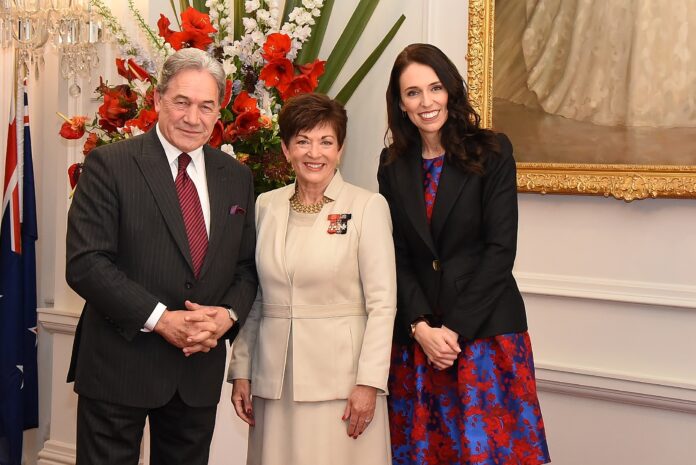
And what of New Zealand Government’s response so far? NZ Prime Minister Jacinda Ardern this week called for a ceasefire from both sides and commented that while Israel has the right (like any nation) to defend itself, that the severity of its airstrikes are disproportionate to the threat from Hamas.
Where does this position lead to?
At the end of the day, children and innocent people are dying, unnecessarily. What solutions exist to stop this conflict?
At the United Nations, France is calling for a new resolution that will demand a ceasefire and also ensure humanitarian aid is able to get through Israel’s blockade and into Gaza. If successful, is this the beginning of a cooling of hostilities?
WE INVITE YOU TO PARTICIPATE WHILE WE ARE LIVE WITH COMMENTS AND QUESTIONS IN THE RECORDING OF THIS PODCAST:
You can comment on this debate by clicking on one of these social media channels and interacting in the social media’s comment area. Here are the links:
Threat.Technology placed A View from Afar at 9th in its 20 Best Defence Security Podcasts of 2021 category. You can follow A View from Afar via our affiliate syndicators.
In last week’s budget, $17.7 billion was allocated to the aged care sector, in response to the damning findings of the Royal Commission into Aged Care Quality & Safety.
The commission’s final report painted a grim picture of a sector in need of sweeping overhaul – with people in residential care requiring a more supportive – and in some cases safer – environment, and people at home desperately short of enough care packages.
The government’s response includes an additional 80,000 homecare packages, funding for better staffing (including a mandate of 200 minutes of care for each resident, each day), and a commitment to a new aged care act.
Richard Colbeck, Minister for Senior Australians and Aged Care Services, as well as Minister for Sport, joins the podcast to discuss aged care policy, and the coming Olympics.
One big question in aged care, which hasn’t been tackled, is whether wealthier people should contribute more to funding their costs. Colbeck says “we’ve had a really close look at that” and “there’s probably more work to do in that space”.
“But I think there’s broad acceptance that where people can afford to make a contribution to support them as they age, they should do so. We’ll continue to consider that.”
The Tokyo Summer Olympics, originally slated for 2020 but now due to commence in July, have attracted considerable criticism given the state of coronavirus in Japan. Only recently the nation’s lockdown was extended, with new cases in the thousands being reported daily, and there are strong calls for the games to be abandoned.
Colbeck concedes “there will be COVID” at the Olympics. But the International Olympic Committee has “made arrangements” for any athlete or official who contracts the virus. He also described the work of the medical team at the Australian Institute of Sport as “world-leading”.
Source: The Conversation (Au and NZ) – By C Raina MacIntyre, Professor of Global Biosecurity, NHMRC Principal Research Fellow, Head, Biosecurity Program, Kirby Institute, UNSW
The small archipelago nation of Seychelles, northeast of Madagascar in the Indian Ocean, has emerged as the world’s most vaccinated country for COVID-19.
How can this be happening? There are several possible explanations:
the herd immunity threshold has not been reached — 62% vaccination is likely not adequate with the vaccines being used
herd immunity is unreachable due to inadequate efficacy of the two vaccines being used
variants that escape vaccine protection are dominant in Seychelles
the B1617 Indian variant is spreading, which appears to be more infectious than other variants
mass failures of the cold-chain logistics needed for transport and storage, which rendered the vaccines ineffective.
What does the country’s experience teach us about variants, vaccine efficacy and herd immunity?
Let’s break this down.
Variants can escape vaccine protection
There are reports of the South African B.1.351 variant circulating in Seychelles. This variant shows the greatest ability to escape vaccine protection of all COVID variants so far.
However, no comprehensive surveillance exists in the country to know what proportion of cases are due to the South African variant.
The UK variant B117, which is more contagious than the original strain, became the dominant variant in the United States. But the US still achieved a dramatic reduction in COVID-19 cases through vaccination, with most people receiving the Pfizer and Moderna vaccines.
Israel, where the UK variant was dominant, also has a very high vaccination rate, having vaccinated nearly 60% of its population with Pfizer. It found 92% effectiveness against any infection including asymptomatic infection, and Israel has seen a large drop in new cases.
The United Kingdom has used a combination of Pfizer and AstraZeneca vaccines. More than 50% of the population have had a single dose and almost 30% are fully vaccinated. The country has also seen a significant decline in case numbers.
Seychelles needs to conduct urgent genome sequencing and surveillance to see what contribution variants of concern are making, and whether the Indian variant is present.
If the South African variant is dominant, the country needs to use a vaccine that works well against it. Many companies are making boosters targeted to this variant, but for now, Pfizer would be an option. In Qatar, local researchers found Pfizer had 75% effectiveness against the South African variant.
Our research at the Kirby Institute showed that, in New South Wales, Australia, using a vaccine with 90% efficacy against all infection means herd immunity could be achieved if 66% of the population was vaccinated.
However, using lower efficacy vaccines means more people need to be vaccinated. If the vaccine is 60% effective, the proportion needing to be vaccinated rises to 100%.
When you get an efficacy of less than 60%, herd immunity is not achievable.
However, these calculations were done for the regular COVID-19 caused by the D614G variant which dominated in 2020. This has a reproductive number (R0) of 2.5, meaning people infected with the virus on average infect 2.5 others.
But the B117 variant is 43-90% more contagious than D614G, so the R0 may be up to 4.75. This will require higher vaccination rates to control spread.
What’s more, the Indian variant B1617 has been estimated to be at least 50% more contagious than B117, which could take the R0 to over 7, and takes us into uncharted territory.
This could explain the catastrophic situation in India, but also raises the stakes for vaccination, as lower efficacy vaccines will not be able to contain such highly transmissible variants effectively.
A UK modelling study found using very low efficacy vaccines would result in the economy barely breaking even over ten years because it would fail to control transmission. On the other hand, using very high efficacy vaccines would result in much better economic outcomes.
More contagious variants mean more people need to be vaccinated to achieve herd immunity.Matthias Schrader/AP/AAP
Vaccinating the world is the only way to end the pandemic
As the pandemic continues to worsen in some parts of the world, the risk increases of more dangerous mutations that are vaccine-resistant or too contagious to control with current vaccines.
Keeping up with mutations is like whack-a-mole while the pandemic is raging.
The take-home message for our pandemic exit strategy is that the sooner we get the whole world vaccinated, the sooner we will control emergence of new variants.
Last year, the Eurovision Song Contest was cancelled for the first time in its then 64-year history. This year’s Eurovision is a socially distanced affair, with frequent COVID testing of participants.
The Ahoy Arena in Rotterdam, where the contest is being held, has a capacity of 15,000 but the audience has been capped at 3,500 for each show. Interestingly, it does not look as socially distanced as expected. Shots of the crowd in the first semi-final on Tuesday (Wednesday in Australia), showed people seated side by side, with a few gaps between groups.
As a precaution, each participating country shot a “live-on-tape” performance to be used as a backup if their delegation could not travel to Rotterdam. Australia’s act Montaigne (Jess Cerro) filmed a performance of her song Technicolour in Sydney in March. SBS decided not to send a team to the contest due to travel concerns in the pandemic.
It was a slick production with an excellent vocal performance, but unfortunately, Montaigne did not make it through to the grand final. Some suggest the live-on-tape performance hindered Australia’s chances. Montaigne herself seemed to acknowledge this in a tweet where she said, “we were at a severe disadvantage”.
The performance was actually cut seamlessly into the live production; you could hear the crowd cheering while viewing Montaigne on a large screen in the arena. But while her song Techicolour had its fans, its hyperpop styling also divided casual viewers.
All voting is split 50/50 between the jury and public. The jury voters had watched the first semi-finalists and voted the day before on a private stream. The public voted on the broadcast show. As juries watch the whole production on screen there is little difference in how they experience an in-arena performance and a live-on-tape performance anyway.
Thirty-nine countries are participating this year. No one has yet dropped out because of COVID-19, but some – notably Armenia and Belarus – are absent for other reasons, including political ones.
Montaigne and all other delegations filmed their live-on-tape performances in March under the watchful eye of representatives from the host broadcasters, the European Broadcasting Union, and independent voting observers. They were given one hour to film three attempts, with the best of the three to be used if necessary.
So far, Australia is the only participant to have used a taped performance. This is the first time Australia hasn’t qualified since entering the contest in 2015 (when it went straight into the grand final as a special guest). Still, Montaigne’s non-qualification should not be interpreted as an indictment of the live-on-tape model.
Although we are accustomed to seeing a large audience cheering and waving flags, this is actually a recent development at Eurovision. Before 1998, it was staged in smaller venues. An audience was present, but seated rather sedately. In the early 2000s especially, Eurovision became synonymous with larger crowds in arena stadiums, giving more of a live concert feel.
Eurovision was once performed in smaller venues. When ABBA won in 1974, the concert was held at the Brighton Dome with a capacity of 2,100.AP Photo/Robert Dear
Attending the contest is a pilgrimage for fans. Still, it is in essence a television show — albeit one filmed in front of a live studio audience. The staging of several performances this year – most notably Ireland and Greece – reminded us of this through their heavy use of screen overlays of animated graphics (Ireland) and green screen (Greece).
Lesley Roy’s performance for Ireland involved intricate camera perspectives through small shadow boxes on stage as well as a screen overlay edited into the broadcast.
Greece’s Stefania performed in front of a green screen backdrop alongside backup dancers partially clad in green clothing. For the in-arena audience, the effect was no doubt strange and almost comical. For those at home, Stefania appeared on a purple stage, dancing alongside disembodied pants and shirts.
Such performances are designed with the television audience in mind. Even without these staging choices, each act is carefully choreographed to maximise the broadcast effect. This is most frequently seen in direct-to-camera singing.
The final 2021 production choices also illustrate new ways to understand a live broadcast show in a time of pandemic. The artists’ green room, where they gather during the event, was more prominent this year. While the crowd’s cheers were heard (amplified by a “cheer” function on the Eurovision app for those watching at home), they were at a distance from the performers.
Indeed to the at-home viewer watching the first semi-final, there was very little beyond the physical stage itself to distinguish between the in-arena performances and Montaigne’s live-on-tape submission.
An expensive endeavour
Filming live-on-tape suggests how Eurovision might be held in the future, making it more inclusive and environmentally friendly. Upon logging into the virtual press room, for instance, journalists this year were informed of the carbon emissions they saved by not travelling to the contest.
And the virtual Eurovision Village – usually a physical public space in the host city, offering extra performances and exhibitions – means Eurofans from around the world can be part of the on-site activities online.
Most importantly, participation is an expensive endeavour. It involves the cost not just of the production, but travel and accommodation for delegations, usually stationed in the host city for two to three weeks. Some smaller nations, such as Bulgaria and Montenegro, participate only intermittently for economic reasons.
Maintaining some sort of flexibility between staged and taped performances might enable more countries to participate more regularly in Eurovision. This might even allow the contest to become a more global event.
In this series, we look at under-acknowledged women through the ages.
The women of the tropical north Queensland frontier were a varied lot and included Melanesian indentured labourers brought to work on sugar cane plantations. Annie Etinside was one of them.
Evidence today of the indentured labourers who once toiled on the plantation is found in small signposts such as one at “The Gardens”, formerly a small Melanesian village on the outskirts of Halifax. Here lived a few families who were not later repatriated to their islands.
Far fewer women than men were recruited as indentured labourers. In 1906, when forced repatriation of these labourers began, only 14 Melanesian women and 500 men remained on the Herbert. Annie, one of those 14, did not live in The Gardens community. Her life took a very different course.
Available records reveal a woman of colour who defied all odds to participate in a predominantly white community. Yet Annie remains an enigma.
The “frontier” is generally thought of as a masculine space. In part this is because most frontier history has been written by European men, who tended not to notice women beyond their domestic arrangements, if at all. Fleshing out the lives of pioneering frontier women is difficult enough if they are white, let alone for women of colour.
The first Melanesian men were brought to the Herbert River district around 1872; women came about ten years later. Annie appears to have been among them. While some islanders volunteered, others were secured against their own will by deceit and even kidnapping.
They were paid, and at the end of the three-year indenture period could either return to their islands, re-indenture, or work freely in the sugar industry on a set wage. Following the existing record trail leaves many questions unanswered about when Annie arrived and where from.
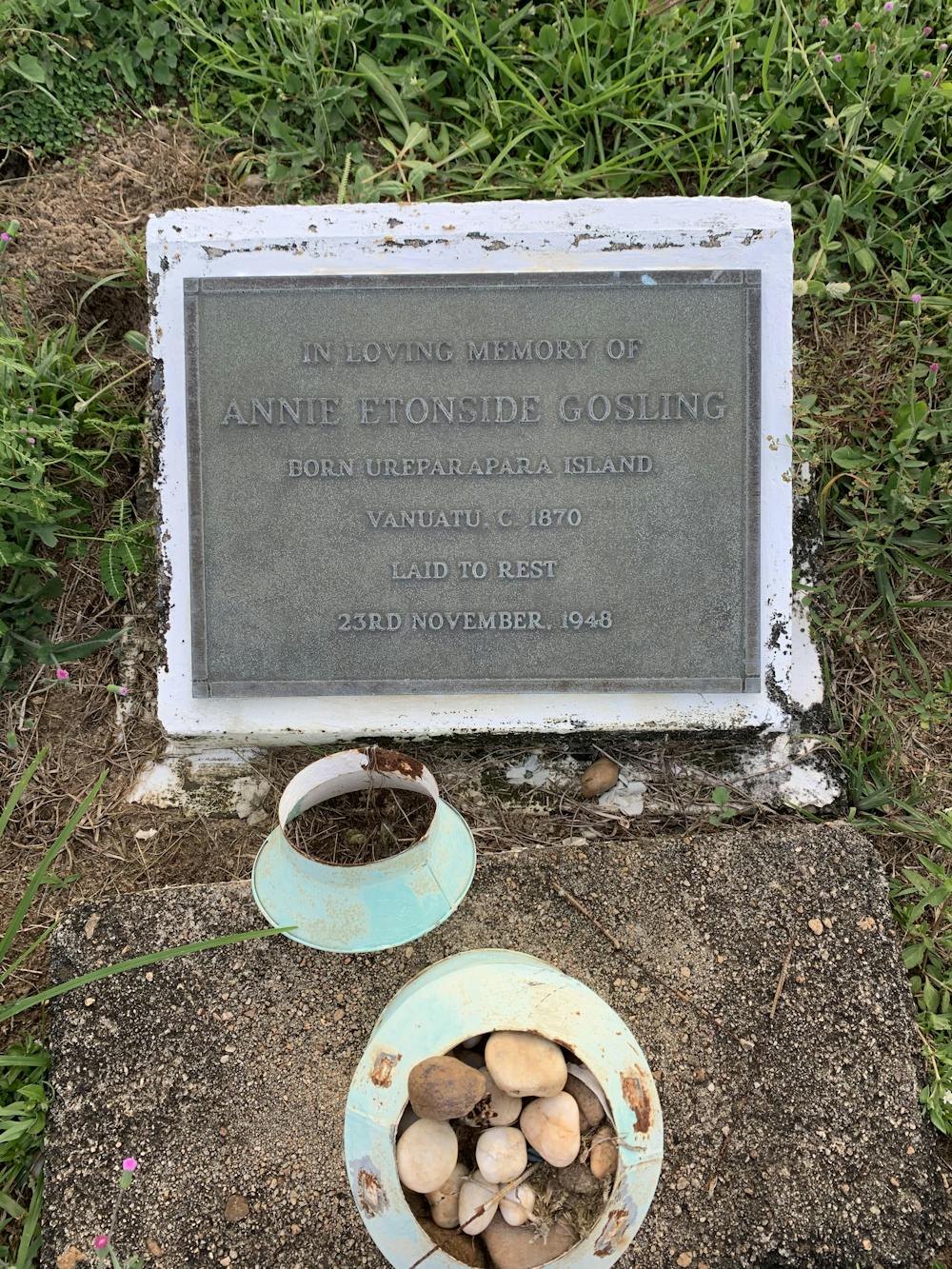
Annie’s headstone.Author provided
In the Halifax cemetery, her simple headstone tells us she came from Ureparapara (the third largest island in the Banks group of northern Vanuatu). Yet her death certificate records her as born on “Lambue South Sea Island”. Her marriage certificate records her birth as “Burra Burra South Sea Island”. Neither of these locations can be identified, but the latter may be a corruption of Buka Buka.
A register was kept listing the names of recruited labourers and other details. The only Etinside on this register is a man brought over on November 5, 1888 from Ureparapara. We don’t know if this was Annie, mistakenly recorded as a male.
Details of Annie’s arrival are further muddied by the information provided on her gravestone, marriage and death certificates. According to these, she was born around 1870, so would have arrived in Australia in 1881 as an 11-year-old.
Indentured women were employed both in fields and houses by small farmers, and on plantations. Annie’s obituary, published in the Herbert River Express, says she was first engaged as housemaid to Norwegian sugar cane farmer Johan (John) Ingebright Alm and his wife Antonia, then to an English farmer, Francis Herron and his wife Lucinda.
By 1884, she was housemaid to George Gosling who had migrated from Britain in 1881. George was an overseer of indentured labour gangs, then farmed on leased land and in his own right, turning a piece of land called “Poverty Flat” by locals into a successful farm, Rosedale.
George and Annie Gosling, circa 1885.Albert and Rachel Garlando
Annie married Gosling in 1898 in a civil ceremony. By this time, she had borne him two children. The children’s birth records are the first bearing the name Etenside (misspelt). At this point, Annie may have begun to feel unsafe. The Aboriginal Protection and Restrictions of the Sale of Opium Act of 1897 had just been passed.
Without an official record to prove she had arrived as an indentured labourer, officials could have identified Annie as Aboriginal. This would have meant restriction of her movements and associations; her children, as mixed race and born out of wedlock, could have been taken from her.
The indentured labour scheme was never meant to permit Melanesian people to settle permanently in Australia. In 1901 the White Australia policy legislated to stop the scheme. From the end of 1906, all Melanesian indentured labourers were to be forcibly deported back to their islands, except for those with exemption tickets.
Marriage offered Annie protection. Rather than social disapproval, it seems to have met with tolerance, even if expressed in a patronising way. One Cairns newspaper described her with tongue in cheek as Gosling’s “little black duck”.
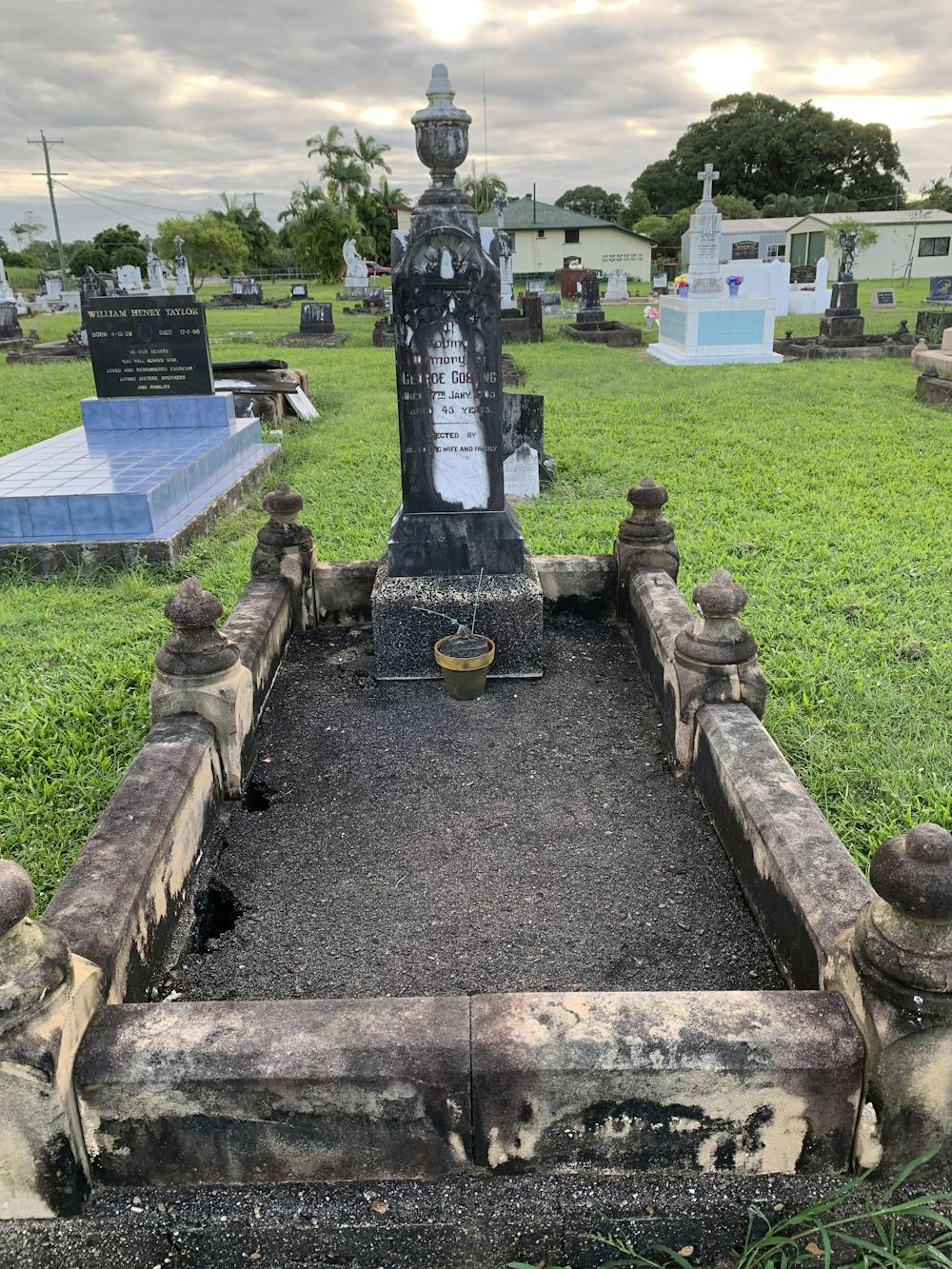
George Gosling’s headstone.Author provided
Annie and Gosling had three more children although tragedy struck on January 17, 1905, when Gosling died of malaria at the age of 45. Annie was left with five young children, the youngest only eight days old. On Gosling’s death, Annie was recognised as his lawful widow, inheriting all his estate. The success of his farm can be partly attributed to her. On the Herbert, small farmers depended on wives and children for all field labour, apart from cane harvesting.
Annie had another child in 1907, who she named Robert Gosling. She went on to marry William John Davey on February 17, 1909. But one month after their marriage, she registered the death of little Robert. Davey died on August 30, in the same year. After his death she reverted to using the name Gosling.
Remarkable feats
Despite her “alien” status, Annie integrated herself successfully into the largely white social fabric of Halifax, becoming a respected member of the community at a time of institutionalised racism. She participated in civic life, was registered on the electoral roll and ran a farm.
Her children attended the Halifax State School, her sons farmed and held jobs at the sugar mills (unusual for children of indentured labourers) and her children married Anglo-Australians, Europeans and Asians.
Annie’s were remarkable feats, given the prevailing racial attitudes and prohibitions regarding land ownership, education and constitutional rights. They indicate her determination to be recognised as an accountable, independent and hard-working member of society, regardless of her skin colour.
When Annie died on November 23, 1948 at the recorded age of 78, she was described in the Herbert River Express as a “grand old pioneer”.
Source: The Conversation (Au and NZ) – By Ben White, Professor of End-of-Life Law and Regulation, Australian Centre for Health Law Research, Queensland University of Technology
In New South Wales, independent MP Alex Greenwich is drafting a voluntary assisted dying law. It’s due to be released in July for consultation.
The Australian Capital Territory and the Northern Territory don’t have legislative power to pass laws about voluntary assisted dying. But there are active efforts to repeal the Commonwealth law that prohibits the territories considering it.
In preparing the draft legislation, the Queensland Law Reform Commission had the opportunity to reflect on the emerging body of evidence about how the Victorian law is operating in practice.
While the safeguards in Victoria’s voluntary assisted dying system are working to ensure only eligible patients can access it, questions have been raised about challenges in accessing the law. For example, some people don’t necessarily know the option exists, while navigating the eligibility assessment process can be demanding.
Background like this from Victoria’s experience led the commission to recommend some departures from laws enacted elsewhere in Australia.
In Victoria, voluntary assisted dying laws have been operating for almost two years.Shutterstock
The commission’s approach aimed to design “the best legal framework for a voluntary assisted dying scheme in Queensland” and not to be “constrained by similar laws in other Australian states”.
In other words, the focus was on designing optimal law, rather than simply adopting another state’s law because it happened to be passed first.
How is Queensland’s proposed law different?
Some features are common to all Australian voluntary assisted dying laws. For example, eligibility criteria broadly include requirements that a person has an advanced and progressive condition that will cause death, and they are suffering intolerably from it. The person must also be an adult, have decision-making capacity, be acting voluntarily and satisfy various residency requirements.
The Queensland proposal’s eligibility criteria are different in relation to the person’s life expectancy. A person is eligible for voluntary assisted dying under the Queensland bill if they are expected to die within 12 months. Under other Australian models, the period is six months, except for progressive neurological conditions, in which case it’s 12 months.
Although some commentators (including us) question the need for a designated time period, a 12-month limit is a more coherent approach than the existing six or 12-month approach elsewhere.
First, it’s very hard to justify having different time limits to access voluntary assisted dying depending on the nature of your illness.
Second, a longer eligibility period allows a person who is diagnosed with a medical condition more time to apply for voluntary assisted dying. This may allow patients to start the application process a little earlier, and reduce the likelihood they may die before accessing voluntary assisted dying (given the process can take some time).
Another novel feature is the Queensland bill limits the ability of institutions to object to voluntary assisted dying. This is an Australian-first as Victorian, Western Australian and Tasmanian laws only deal with permitting individual health professionals to conscientiously object.
This is important because there’s evidence in Victoria that institutions are blocking access to voluntary assisted dying. One media report described a Catholic hospice barring access to pharmacists delivering the voluntary assisted dying medication to a patient.
The commission recommends creating legislative processes so eligible patients’ access to voluntary assisted dying is not unreasonably hindered by institutional objections.
A person could be eligible for voluntary assisted dying under Queensland’s proposal if they are expected to die within 12 months.Shutterstock
Will the Queensland bill become law?
After the bill is tabled in Queensland parliament next week, it will be referred to the Parliamentary Health Committee (which originally recommended reform). That committee will have a consultation period of 12 weeks.
Parliament is expected to vote on the bill in September, and if the law is passed, it will likely come into effect in January 2023. As in other states, a period of implementation ensures the voluntary assisted dying system is ready before the law takes effect.
As is usually the case in such debates, both major parties have offered their MPs a conscience vote. Although Queensland is the only Australian state never to have considered a voluntary assisted dying bill, its single house of parliament may mean the law is more likely to pass.
Further, given the growing national trend to permit voluntary assisted dying and the careful and measured law reform process, we anticipate Queensland is likely to pass voluntary assisted dying laws this year.
The ruling by Australia’s Fair Work Commission that online food delivery platform Deliveroo unfairly dismissed driver Diego Franco marks a major shift in the Australian “gig” economy.
What’s most significant is the commission has ruled Franco was, in fact, an employee of Deliveroo, not an independent contractor – the legal strategy platform companies use to avoid employer obligations and shirk paying employee entitlements such as a minimum wage and leave entitlements.
With Deliveroo’s rival Menulog having committed in April to trial an employment model for its riders working in Sydney’s CBD, the ruling further swings the pendulum towards employment rights for “gig workers”.
Franco took his case to the Fair Work Commission (Australia’s industrial relations tribunal) after Deliveroo terminated his account in April 2020. He had delivered food in Sydney for the platform since April 2017. Deliveroo’s reason for termination was he had delivered food orders too slowly.
With support from the Transport Workers Union, Franco lodged an unfair dismissal claim. Deliveroo’s lawyers sought to thwart the claim on the basis that he was a contractor. Only if he was an employee could the commission rule on whether he had been unfairly dismissed.
So Franco’s case required him first to demonstrate he was not a contractor but an employee. Then he had to show Deliveroo had unfairly dismissed him.
Commissioner Ian Cambridge’s ruling in Franco’s favour on both these points was based on a full analysis of the workplace controls that platforms can exercise over workers. That analysis was more extensive than previous Fair Work Commission decisions – including in December 2017, May 2018, July 2019 and April 2020 – that had ruled delivery drivers and riders need not be treated as employees.
Diego Franco, the food delivery rider Australia’s Fair Work Commission has ruled was unfairly dismissed by Deliveroo.Transport Workers Union/AAP
Exercising control
The Fair Work Commission decides whether a worker should be classified as an employee or contractor by looking at multiple factors to form an overall picture (or “smell test”) of the work relationship. A key indicator is “control”.
In this case, Commissioner Cambridge considered both the level of control Deliveroo exercised over Franco and also its “capacity” to exercise control. This went further than previous decisions.
Deliveroo, like other platforms, uses algorithms in managing its workforce. While its lawyers argued its algorithms did not use performance data to allocate work, it did use performance data in deciding to terminate Franco’s account.
This highlighted how such apps collect data that could be used to control workers.
Previous commission rulings against gig workers being classified as employees have found couriers have considerable control over their work because they can, for instance, decide where and when to make themselves available for deliveries. Francos’ case, however, showed the “economic reality” of the circumstances significantly constrained his autonomy.
On that basis, Commissioner Cambridge ruled Deliveroo had significant actual, or potential, control over how work was performed, when work was done and who received work. This suggested the platform acted like an employer.
Multi-apping not a barrier
Another key aspect of the ruling was rejecting Deliveroo’s argument Franco could not be an employee because he was working for other platforms at the same time. This practice, known as “multi-apping”, is common in the gig economy due to the struggle of earning enough money just working for one platform.
Commissioner Cambridge ruled multi-apping was merely “an example of the phenomenon of change that new technology is bringing to the traditional arrangements for employment”.
The overall picture, he said, was that Franco “was not carrying on a trade or business of his own, or on his own behalf. Instead, he was working in Deliveroo’s business as part of that business.” In short, he was an employee.
Callous conduct
Commissioner Cambridge was also highly critical of Deliveroo terminating Franco’s contract via email, describing this conduct as “callous”.
Whether Franco was a contractor or not, he said, “basic human dignity requires that a matter of such gravity should be conveyed personally”.
He also criticised the company for not informing Franco of the expected performance standards, for not giving Franco adequate warning about the consequence of slow deliveries, and not affording Franco procedural justice such as giving him an opportunity to respond before being terminated.
This meant Franco, an employee, had been unfairly dismissed and was to be reinstated.
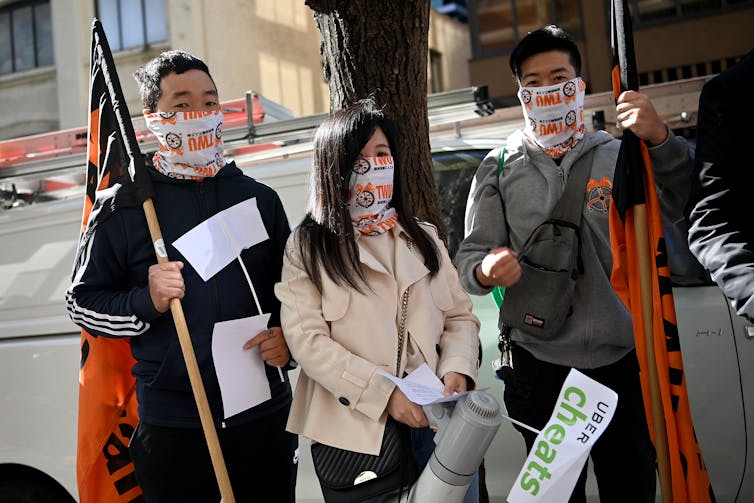
Demonstrators in Sydney protest the lack of rights for food delivery workers, Wednesday, May 19 2021.Bianca De Marchi/AAP
What are the wider consequences
This case highlights the need for properly designed and implemented human and algorithmic management processes to ensure a level of job quality even in the context of digitally intermediated “gig” work.
It goes further than that, however.
Ruling that Franco was an employee and not a contractor reflects a broader global trend. More and more gig workers are pushing back against the contractual arrangements of gig-economy platforms – and courts are agreeing.
In recent months there have been several major decisions. In March, the UK Supreme Court ruled two Uber drivers were workers (a different classification to being an employee, but with more rights than an independent contractor).
In February, Deliveroo lost an appeal against a Netherlands ruling its couriers are employees.
Although Deliveroo is likely to appeal the Fair Work Commission ruling, this case is another sign the thin ice on which “gig” platforms have been skating for years is cracking.
Straight denial of climate change is now relatively rare. Most people believe it is happening and is a serious problem. But many rank other issues — healthcare and the economy — as more important.
This means people can’t be easily classified as either deniers or believers when it comes to climate change. In my research, I focused on understanding the complexity of climate opinion in light of the slow political response to climate change around the world.
I conducted an online survey in the UK and found 78% of respondents were extremely or fairly certain climate change is happening.
But when asked to rank eight issues (climate change, healthcare, education, crime, immigration, economy, terrorism and poverty) from most to least important to the country, 38% ranked climate change as least important, with a further 15% placing it seventh out of eight.
Recent pledges from a number of large countries to reach net zero in greenhouse gas emissions by 2050 have led Climate Action Tracker to project that limiting warming to 2℃ by 2100 may be possible.
Although this progress is heartening, it has taken many years to reach this point and the challenges in actually meeting these emission targets cannot be overstated.
Climate ranking in other countries
I found similar results in other countries. Based on a Eurobarometer survey of 27,901 European Union citizens, a majority of the populations in all EU member countries are concerned about climate change, but only 43% across the EU rank it in the top four most important issues for the world. There are some differences between countries — climate change tends to be ranked higher in Nordic countries and lower in Eastern Europe.
Fewer than 5% of 3,445 respondents in the 2017 New Zealand Election Study said the environment was the most important election issue and an even smaller number specifically mentioned climate change.
Why are some people more engaged with climate change than others? People’s worldview or ideology seem to be particularly important.
In many countries — including, as illustrated in my research, the UK and New Zealand — there are partisan and political divides in climate change with supporters of right-wing parties less likely to support climate change policies or to see it as an important issue.
People who support free-market economics, hold authoritarian attitudes or have exclusionary attitudes towards minorities are also less likely to engage with climate change.
Consequences for climate policy
In democracies, politicians often respond to public opinion; ignoring it risks being voted out at the next election. But the degree to which they do so depends on how important the issue is to the public relative to other issues.
If people are not thinking about an issue when they go to vote, politicians are less likely to give that issue much attention. As my research shows, people in most countries don’t give climate change a high importance ranking, and politicians are therefore not under enough public pressure to take the difficult steps required to combat climate change.
There are other reasons for the slow political response to climate change, besides the low importance of climate change among the public. Vested interests, such as fossil fuel companies, are undoubtedly involved in slowing the adoption of strong climate policies in many countries.
Although only a minority of the population, climate change deniers may also make some politicians hesitate to act. But, regardless of the influence of vested interests and deniers, it is difficult for politicians to act on climate change when the public believes other issues are more important.
Understanding the relationship between public opinion and climate policy can help focus the efforts of climate campaigners. Perhaps less attention could be paid to the influence of vested interests.
Given the deep ideological reasons climate change deniers have for their disbelief, it’s unlikely they will be convinced otherwise. Fortunately, this may not be required to move climate policy forward.
As my research reveals, the majority of the public want action on climate change but tend to be more concerned about other issues. Campaigners might find it useful to focus their attention on persuading this section of the population about the urgency of climate action.
New Zealand Parliament Buildings, Wellington, New Zealand.
Editor’s Note: Here below is a list of the main issues currently under discussion in New Zealand and links to media coverage. Click here to subscribe to Bryce Edwards’ Political Roundup and New Zealand Politics Daily.
China’s Zhurong rover landed safely on Mars on May 15, making China only the third country to successfully land a rover on the red planet.
More impressively still, China is the first Mars-going nation to carry out an orbiting, landing and rovering operation as its first mission.
Planetary scientist Roberto Orosei told Nature China is “doing in a single go what NASA took decades to do”, while astrophysicist Jonathon McDowell described China’s decision to include a rover in its maiden Mars outing as a “very gutsy move”.
Where did it land?
Zhurong, named after the god of fire in Chinese mythology, separated from the Tianwen-1 orbiter and touched down close to the site of previous NASA missions, on a vast plain called Utopia Planitia.
This area of Mars was formed billions of years ago, when a martian meteorite smashed into the planet’s surface. The surrounding area is largely featureless, covered mostly in volcanic material.
Zhurong is not the first rover to explore this region. In 1976, NASA’s Viking 2 lander touched down further north within the Utopia Planitia basin, returning high-resolution images of the martian surface and analysing soil samples.
The Viking 2 lander lacked the ability to investigate any further than its initial landing site. But the Zhurong rover should be well equipped to roam farther afield during its mission.
What will it do?
The mission’s three-month scientific program will begin once the Zhurong rover disembarks from the landing craft and begins its journey across the martian surface. The 240-kilogram, six-wheeled rover is equipped with six individual scientific instruments, and has four large solar panels, giving it the appearance of a “blue butterfly”.
Zhurong’s design, instruments and technology on board Zhurong are comparable to those on board NASA’s twin rovers Spirit and Opportunity, which touched down in January 2004. Although Zhurong is not at the cutting edge of current space exploration technology, the sheer speed of this program’s development since its initiation in 2006 is awe-inspiring.
A replica of the Zhurong rover, on display in the National Museum, Beijing.Ng Han Guan/AP
Like the many Mars rovers before it, Zhurong will probe this alien planet’s environment, and search for signs of water ice on the surface.
The mission is expected to survey four aspects of its local environmnet:
topography and geological structure
soil structure and possible presence of water ice
chemical composition, minerals and rock types
physical characteristics of the atmosphere and the rocky surface.
Zhurong will thus help build a more complete geological picture of the red planet’s history. And, in a genuine first for Martian exploration, it is equipped with a magnetometer to measure the planet’s magnetic field. This is an important study that will help address why Mars has lost much of its atmosphere, leaving its landscape so barren.
The Tianwen-1 mission is just one of an impressive list of accomplishments by the China National Space Administration in the past year. Its other feats include launching dozens of Long March rockets, each with multiple payloads, including that of the Chang’e 5 lunar probe, which brought Moon rocks back to Earth for the first time since the end of NASA’s Apollo program in the 1970s.
Last month, China launched the first stage of its Tiangong space station, which next year is set to become the world’s second long-term home for humans in space. The momentous launch didn’t go off without a hitch, however, as debris from the launch vehicle made an uncontrolled re-entry back to Earth, eventually splashing down in the Indian Ocean.
Thankfully no one was hurt in that incident, but it is a timely reminder that China’s accelerating pace of space missions and rocket launches need to be carefully managed.
This year of activity has solidified China’s powerful presence in space, and we are only seeing the beginning of its ambitious future. By 2045, China hopes to become a leading space power, as outlined in the 2018 Aerospace Science and Technology Corporations route map.
In the coming years we can look forward to seeing China launch crewed missions to the Tiangong space station, and in the coming decades can expect to see China join other space-faring nations in missions back to the Moon and Mars.
Source: The Conversation (Au and NZ) – By Amrita Malhi, Visiting Fellow, Coral Bell School of Asia Pacific Affairs; Senior Adviser Geoeconomics, Save the Children, Australian National University
The latest IMF and World Bank reports show a global economic boom gathering steam. This is thanks to US$16 trillion in fiscal stimulus packages spent mostly across the world’s rich nations since the pandemic began.
After the reversal of 2020, the global economy is now projected to grow by 6% in 2021, powered by strong growth in the US and China, which are forecast to grow by 6% and 8%, respectively.
Australians are not missing out, thanks to A$311 billion in public spending. The federal budget’s GDP growth forecast is 4.25% in 2021. Unemployment is forecast to fall to below 5% by mid-2023.
Before we get ahead of ourselves, however, we should consider the risks the pandemic continues to pose, not only to our recovery but the global boom the world’s rich nations have generated.
New variants could lead to COVID surge
As a rich nation surrounded by developing countries, Australia can see these risks around its region, not only in India, but also Southeast Asia and the Pacific.
The first of these risks is that all our forecasts and projections assume the progress of successful vaccination programs, not only in Australia but around the world. Yet, the virus is potentially adapting more quickly than developing countries are able to vaccinate their populations.
The B.1.617 virus variant has become the dominant strain in India and spread to some 40 countries, including many in Southeast Asia.
Indonesia is particularly vulnerable. The vaccine rollout here has been sluggish, with just under 14 million people having received their first dose so far. The government has set an ambitious target of vaccinating 181 million people by next March, but it will struggle to reach this target.
Indonesia’s vaccine rollout has been slow and disorganised, falling well short of its targets.DEDI SINUHAJI/EPA
Although the government prohibited travel during the recent Eid holiday, data suggests at least 1.5 million left homes before the ban, causing one epidemiologist to warn of a COVID “timebomb” in the country.
The government is already warning the appearance of the B.1.617 variant (and others) could cause the country to miss its growth target of between 4.5% and 5.3% this year, if the poor are unable to work due to new mobility restrictions.
Millions more have fallen into extreme poverty
The second risk to a post-pandemic global recovery is many developing nations are simply not benefiting from the start of the economic rebound.
Last year, 100 million people — mostly in South Asia — were on the brink of extreme poverty. This could rise to as many as 150 million people this year. As a result, millions of children could drop out of school this year around the world.
Argentina’s poverty rate rose to 42% last year.Juan Ignacio Roncoroni/EPA
The Pacific Island countries have been badly affected, not only by the economic effects of border closures, but in the case of PNG, by the virus itself. With many reliant on tourism, commodities, and remittances, the Pacific Island countries’ economies shrank by 11% in 2020 collectively.
Fiji’s GDP contracted by a massive 19%, while in typhoon-affected Vanuatu, the economy shrank by 10%.
The effects on human development outcomes are immediately obvious. In PNG, 52% of families surveyed by the World Bank in 2020 indicated they were sending fewer children to school because of reduced incomes.
More broadly, across East Asia and the Pacific, students are expected to lose 0.8 Learning-Adjusted Years of Schooling (LAYS) — a measure that combines quantity and quality of schooling — between January 2020 and December 2021. This is almost half their school time over two years.
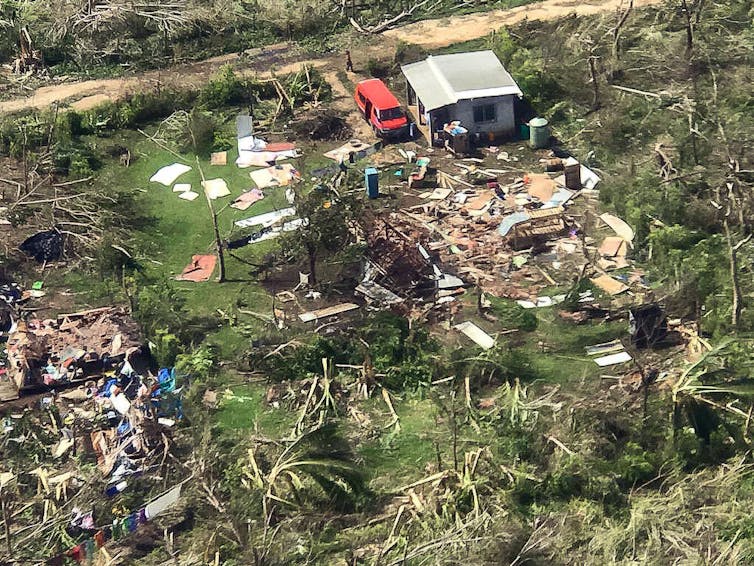
Half of Vanuatu’s population was made homeless from last year’s cyclone. Rebuilding has been slow.Luke Ebbs/Save the Children
Australia’s aid spending still not enough
Unlike Australia, many developing countries cannot free up large amounts of public money to invest in stimulating their economies. For them to join in the global recovery, they will need assistance.
Australia’s response is helping to some extent. Australia invested an extra A$479.7 million in international development spending in 2020–21 above its notional baseline allocation of $4 billion per annum.
In 2021–22, it is projecting a total investment of $4.34 billion. This is still extra, but it represents a cut in real terms of 5% on the previous year.
Compared to other wealthy nations, however, Australia is still not giving much. Australia’s investment in Official Development Assistance (ODA) as a proportion of gross national income is 0.21% in 2021–22, much lower than the OECD average of 0.32%.
Given the scale of need and the pace of development in our region, Australia will very likely offer more as the financial year progresses.
Greater stimulus spending and social protection schemes
But Australia also needs to do much more to mobilise other forms of funding to assist its neighbours’ economic recoveries.
One thing Canberra is doing right is investing some of its ODA in social protection schemes around the region, including an A$18 million Partnerships for Social Protection package for the Pacific that will scale up assistance to vulnerable households.
Australia has also issued a concessional loan to Indonesia, which it stipulates includes money for strengthening Indonesia’s health and social protection systems.
On top of this investment, Australia should use its access to global forums to advocate for more assistance to developing countries, especially in Asia and the Pacific.
One such forum is the G7+, where Australia says it wants to promote prosperity and security in the Indo-Pacific.
Another is the coming G20 summit in Italy in October, where Australia will have an opportunity to advocate for debt relief and restructuring for developing countries. This will allow them to free up cash for stimulus schemes like JobKeeper and JobSeeker, which protected many of us in Australia over the past year.
Australia is already meeting with the United States’ new aid administrator, Samantha Power, to discuss more cooperation on this front, including through the informal Quad alliance (which also includes Japan and India).
Australia should also continue to advocate to multilateral banks and funding agencies to invest real cash in new and additional stimulus packages and social protection systems around the region.
These systems could fund universal child benefits to keep children schooled and properly fed, protecting the advances our neighbours have made over the past 40 years of economic development.
Key to our own security and prosperity is our neighbours’ resilience to shocks like the COVID-19 pandemic and economic downturn.
Australia will need to allocate more money from its own coffers — and encourage more giving from the rest of the developed world — to stimulate our neighbours’ economies. Only then will we see a global economic recovery where everyone benefits — not just the wealthy.
My colleages’ and my efforts to develop a screening test for the early detection of ovarian cancer capable of saving lives arrived at a sad moment last week. The final trial results of the research I’ve focused on for 36 years, published in The Lancet, found early ovarian cancer detection doesn’t save lives.
The advances we have seen in science and technology over the past three decades have been nothing short of phenomenal. Each smartphone has more computational power than NASA had at its disposal during the moon landings. In medicine, researchers have sequenced the human genome, created life-saving treatment for HIV and rapidly developed vaccines for COVID-19.
There have been significant improvements in ovarian cancer treatment involving surgery and chemotherapy, but the sad and frustrating truth is of the four women diagnosed with ovarian cancer in Australia each day, three will eventually die from the disease.
The diagnosis of ovarian cancer is dependent on women reporting symptoms to their doctor. However, few develop symptoms until they have advanced stage cancer, by which time the outlook is poor. Of all women’s cancers, ovarian cancer has the lowest survival rate, with just 46% of patients in Australia surviving five years. For breast cancer, it’s now 91%.
Back in the 80s
I was motivated to improve the outcome for women with ovarian cancer by my experience as a junior doctor in London in 1985. I was training with a brilliant surgeon who undertook operations for many women with ovarian cancer. In spite of the exhaustive surgery and the chemotherapy that followed, we saw far too many women suffer and die from ovarian cancer.
That experience inspired me to initiate a program of research designed to find a screening test to detect this cancer early. Women with the earliest stage of ovarian cancer had survival rates of 70%, but less than 20% of women with ovarian cancer were diagnosed that early.
My hypothesis was that if we could detect more cancers at an early stage it would save lives.
We saw too many women suffer and die from ovarian cancer.Shutterstock
Based on evidence from other cancers, there was reason to be hopeful and two potential tests were available – a blood test called CA 125 and the use of ultrasound scanning which was then widely used in obstetrics.
Over the next 15 years, working with colleagues in the United Kingdom and United States, I developed and refined the screening tests and had great hope for what we called “multimodal screening”. This involved a “risk of ovarian cancer algorithm” for interpreting the change in blood levels of CA 125 over time to identify women who had a rising pattern, indicating an elevated risk of ovarian cancer. Women with an elevated risk could then have a secondary test involving ultrasound scanning.
During those 15 years, we published convincing evidencein studies involving over 50,000 women that this approach to screening was safe, acceptable to women, could detect over 85% of the cancers early and would probably be cost effective if sufficient lives were saved.
Promising early results
Before advocating screening of the general population, a massive trial would be needed to determine whether the screening would actually save lives.
The trial needed to involve screening and follow up of approximately 200,000 women for around 20 years. This would eventually include 2,000 women with ovarian cancer – enough to determine whether or not screening saved lives.
The trial involved great numbers of participants.Shutterstock
Work got underway in the United Kingdom in 2000 and optimism grew as initial results confirmed the ability of multimodal screening to detect cancer early in over 85% of cases.
By 2015, the preliminary mortality data were available and were tantalising. The curves hinted at a 20% or more reduction in deaths from ovarian cancer, but the findings did not quite reach statistical significance. So another five years of painstaking follow up was needed.
But to our surprise and despair, that did not reduce the number of deaths from ovarian cancer. All it seemed to do was to bring forward the time of diagnosis of the cancers in these women, without improving their survival.
Under the multimodal screening program, women were first given a blood test for levels of CA 125.Shutterstock
This is deeply disappointing. Disappointing of course for those who like myself have dedicated much of their professional lives to this effort, but much more importantly for the women across the world who we had hoped would have access to an effective screening test able to save lives.
The hope had been to deploy ovarian cancer screening for women in the general population alongside breast and cervical cancer screening, but that will not happen – for a while at least.
Why didn’t early detection save lives?
To answer that, we need to further analyse samples and data from the trial. Our suspicion is that the women whose cancers were detected early by screening had more aggressive cancers than those (the 10%) whose cancers were detected early without screening, on the basis of symptoms.
So even with early detection, their cancers progressed relentlessly despite them receiving the best available surgery and chemotherapy.
If that is the case, we are likely to require screening tests which can detect ovarian cancer even earlier than our algorithm, which we estimate picks up ovarian cancer 18 to 24 months early. Saving lives may require a test capable of picking up the cancers five or more years early.
Fortunately, there are exciting avenues of research involving advances in protein and DNA technologies which researchers in Australia and around the world are exploring. So there is hope.
But realistically, given the five-plus years needed to develop better screening tests and the ten to 15-plus years needed to have enough cases to conduct another large randomised trial, the solution is likely to be more than 20 years away.
Still, we’ve learnt a lot
This massive commitment of expertise, time, energy and funding has most definitely not been wasted. Much has been achieved along the way in this 36-year journey in developing ways to assess risk, diagnose cancer and prevent ovarian cancer which are now used in clinical practice.
New generations of researchers have been trained. The data and the blood bank collected is available to all researchers seeking new and better screening tests and is a unique resource. And the ability to detect ovarian cancer early may be invaluable in assessing new treatments.
I feel privileged to have led this effort and will always be grateful to the collaborators, researchers, health professionals, funding agencies and above all the 200,000 women who took part in the trial.
I feel a deep sadness that lives will not yet be saved by ovarian cancer screening, but I’m confident the next generation of researchers will build on our work and find approaches to screening and treatment of ovarian cancer which dramatically reduce the loss and suffering caused by this insidious disease.
There’s a weedkiller used in Australia that’s so toxic, one sip could kill you. It’s called paraquat and debate is brewing over whether it should be banned.
Paraquat is already outlawed in many places around the world. The Australian Pesticides and Veterinary Medicines Authority has been reviewing paraquat’s use here for more than two decades, and its final decision is due later this year.
We are medical and environmental scientists, and have researched the harmful effects of paraquat, even when it’s used within the recommended safety range. We strongly believe the highly toxic chemical should be banned in Australia.
The potentially lethal effects on humans are well known. In Australia in 2012, for example, a farmer died after a herbicide containing paraquat accidentally sprayed into his mouth. And our research has found paraquat also causes serious environmental damage.
Paraquat is used to spray crops, but can harm humans and wildlife.Shutterstock
Paraquat: the story so far
Paraquat, branded as Gramoxone, has been used since the 1950s. It’s mostly deployed to control grass and weeds around crops such as rice, cotton and soybeans.
Paraquat is registered as a schedule 7 poison on the national registration scheme, meaning its use is strictly regulated.
Australia’s biggest supplier of paraquat says it should not be banned, insisting herbicides containing it are “safe for people and the environment when used for their intended purpose and according to the registered label instructions”.
Farmers have also argued against a ban, saying it would force them to use more expensive, less effective alternatives and reduce crop yield.
Paraquat has been banned in more than 50 countries, including the United Kingdom, China, Thailand and European Union nations. However, it’s still widely used by farmers in the developing world, and in Australia and the United States.
Paraquat is now banned in Thailand, among other nations.Shutterstock
A chemical peril
Paraquat is a non-selective herbicide, which means it kills plants indiscriminately. It does so by inhibiting photosynthesis, the process by which plants convert sunlight into chemical energy.
Paraquat stays in the environment for a long time. It’s well known for causing collateral damage to plants and animals. For example, even at very low concentrations, paraquat has been found to harm the growth of honey bee eggs.
Exposure to living organisms can occur by spray drift or when paraquat is sprayed on crops then reaches surface and underground sources of drinking water.
Paraquat can have unintended consequences for biological organisms and the environment, particular in waterways. Our recent paper summarised the evidence of the harmful effects of paraquat at realistic field concentrations.
We found evidence that paraquat can severely inhibit healthy bacterial growth in aquatic environments, which in turn affects nutrient cycling and the decomposition of organic matter.
The research also shows paraquat can distort tropical freshwater plankton communities by negatively impacting metabolic diversity and reducing phytoplankton growth.
In fish, paraquat has been found to lead to a death rate of common carp three times higher than the weed it is used to control.
Research shows paraquat kills common carp at a higher rate than the weed it’s meant to control.Shutterstock
‘One sip can kill’
In addition to the environmental effects, of course, paraquat is highly toxic to humans. A small accidental sip can be fatal and there is no antidote.
The US Centers for Disease Control and Prevention says paraquat is a leading cause of fatal poisoning in parts of Asia, the Pacific Islands, and South and Central Americas.
Paraquat enters the body through the skin, digestive system or lungs. If ingested in sufficient amounts, it causes lung damage, leading to pulmonary fibrosis and death through respiratory failure. The liver and kidney can also fail.
Several recent incidents in Australia demonstrate the risks of paraquat poisoning due to human error, even within the current strict regulations.
According to news reports, the Queensland farmer poisoned by paraquat in 2012 was filling a pressure pump to control weeds on his property. The unit cracked and paraquat sprayed over his body and face, entering his mouth.
In 2017, an adult with autism took a sip from a Coke bottle used to store paraquat. The bottle had been left in a disabled toilet at a sports ground in New South Wales. The man was initially given 12 hours to live, but fortunately recovered after two weeks in hospital.
A Queensland farmer died in 2012 after paraquat accidentally sprayed in his face when he filled a pressure pump.Shutterstock
Paraquat: not worth the risk
There’s a growing awareness of the threats posed by global chemical use. In fact, a paper released this week suggests the potential risk to humanity is on a scale equivalent to climate change.
Paraquat is no doubt an effective herbicide. However, in our view, the risks it poses to humans and the environment do not outweigh the agricultural benefits.
Current regulation in Australia has not prevented harm from paraquat. It’s time for Australia to join the movement towards a global ban on this toxic chemical.
By June 2020, the COVID-19 crisis had forced schools to close in 188 countries, disrupting the learning of more than 1.7 billion children. The OECD estimated the impact of these school closures would be at least two months of lost teaching for half of primary and secondary school students.
In Australia, modelling by the Grattan Institute estimated disadvantaged students — including those from low socioeconomic families, Indigenous backgrounds and remote communities — had lost around two months learning during the remote learning period in Victoria.
Evidence suggests some groups of students, such as students in the most disadvantaged schools, have felt the effects of lockdowns more than others. Evidence also suggests small-group tuition can make a difference. But this is only the case if the tutoring itself is evidence-based.
Between March and September 2020, we surveyed 492 teachers and school leaders from 414 schools across New South Wales, South Australia, Victoria and Queensland about their use of evidence — particularly research-based evidence. Our sample included primary, secondary, combined (K-12) and special schools. They included a spread of government, Catholic and independent schools.
While the study was not specifically prompted by the pandemic, our emphasis on the use of research evidence became particularly relevant as schools — like the rest of the world — grappled with the virus.
While most educators said they regularly consulted evidence, only 43% did so for university-based research. Participants cited a lack of time and a lack of access to the evidence they needed.
Less than half regularly consult university research
School leaders and teachers involved in tutoring initiatives — and teaching more broadly — have to make nuanced decisions about how best to address learning.
They must draw on various sources of evidence to understand how different factors have influenced their students’ learning and then decide on the most effective way forward.
A key question, therefore, is how confident and able are our leaders and teachers to use evidence to inform their responses to the effects of COVID-19?
what types of research and evidence teachers and school leaders value
how and why they source different kinds of evidence
whether and how they use research in their practice
what they believe “using research well” in practice means.
Over two-thirds of survey participants (70%) said they had recently used evidence in their practice. Most consulted with familiar and readily available evidence types such as “student data” (77%) and “policy and curriculum documents” (72%).
Remote learning set many students back, especially those from disadvantaged groups.Shutterstock
But respondents used research-based sources much less frequently. Only 43% said they regularly consulted “research disseminated from universities” and 36% engaged with “university-based advice or guidance”.
Nearly half (43%) of respondents indicated “teacher observations and experience should be prioritised over research”. These educators were less likely to source research-related evidence types.
We also asked educators to reflect on the evidence types they have used in relation to “a specific initiative related to improving student outcomes that [they or their] colleagues have started to use in [their] schools or classrooms in the past 12 months”.
Some answers related to COVID-specific initiatives such as the transition to online learning and the best learning platforms to use. Others spoke about interventions to address poor student behaviour or phonic programs to improve literacy.
Schools need to help
Educators reported three particular challenges in relation to using research: access, organisational culture and confidence.
First, many said they didn’t have sufficient access to research (68%), or adequate time to access and review it (76%). More than three-quarters (76%) also indicated they can’t keep up with new and emerging research, such as studies of the educational impacts of the pandemic.
Second, organisational cultures are important supports for enabling the use of research. Respondents reported they use research-related sources more often when their schools had processes designed to support their research use.
Finally, many respondents reported lacking confidence in their own skills and capacities to use research.
The success of the tutoring programs being used by schools to help students recover post-COVID-19 will depend heavily on the quality of the tutoring they provide.
Our findings suggest evidence use can play a key role in improving the quality of teaching, both in COVID-19 tutoring programs and classrooms generally. But this can only happen when educators feel they have the appropriate access, support and confidence to make evidence-informed judgments and practices.
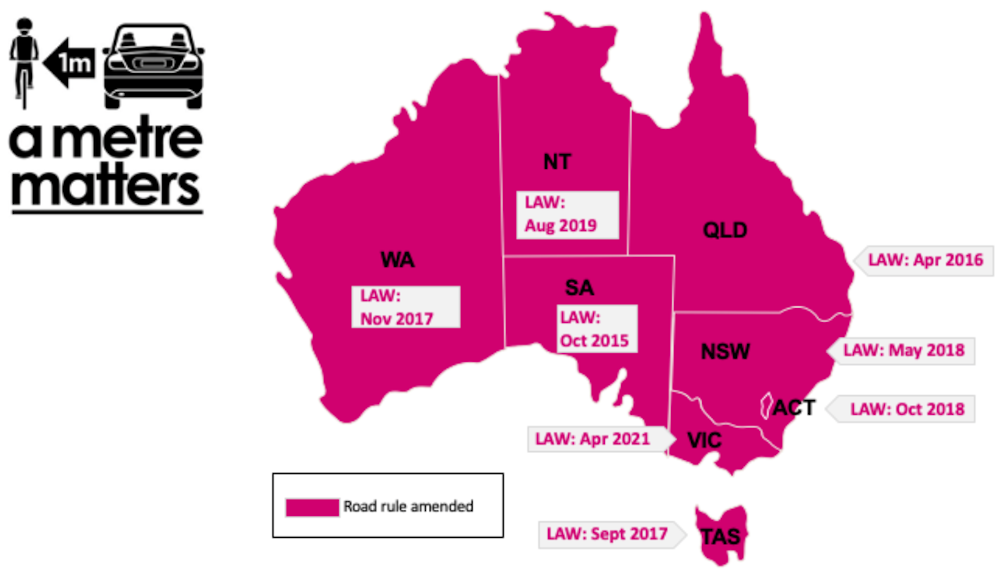
To protect cyclists on the roads, state governments in Australia have introduced laws that set a minimum space drivers must give cyclists when overtaking them. These laws are now in place nationwide, with Victoria the final state to join the ranks last month. But do these passing distance laws actually change drivers’ behaviour towards cyclists?
Our research set out to answer this question by evaluating Western Australia’s passing distance law introduced in 2017. We found that since the law took effect drivers do indeed report giving cyclists more space when overtaking. However, there were possible unintended consequences. Drivers also self-reported more aggressive behaviour directed at cyclists, such as beeping horns or swearing.
Passing distance laws are based on the understanding that close overtaking by cars greatly increases the risk of accidents involving cyclists and motor vehicles. Previously, drivers had to use their own judgement in providing “sufficient” space when overtaking cyclists. Now the laws instead specify a minimum distance.
In Australia, the distance is usually 1 metre on roads with speed limits less than 60km/h and 1.5 metres on roads with higher speed limits.
Laws requiring that motorists observe a minimum passing distance when overtaking cyclists now apply across Australia.Amy Gillett Foundation
Lawmakers understand that legislation can also send important social signals: cyclists are legitimate road users, and the road is a safe place to cycle.
Clearly, it would be desirable for more people to take up cycling. Why is this not happening?
Partly, low cycling rates might be due to the risks involved in cycling. Cyclist fatalities and injuries have been on the rise in Australia in recent years. We know this is not related to the roads becoming more dangerous for everybody, because car driver deaths have been decreasing over the same time.
As well as objective safety, cycling participation is also related to whether people perceive cycling to be safe. Part of this perception comes from how other road users treat cyclists. Unfortunately, cyclists report motorists direct a fair amount of aggressive behaviour at them.
So what difference do these laws make?
Our study in WA confirms what others have found: passing distance laws make overtaking by cars safer for cyclists.
However, we found the law may have the unintended side effect of increased aggressive behaviour towards cyclists.
There are several possible explanations for these unintended changes. We think it is an issue of culture: Australia is a car-centric society. Many car drivers in Australia believe cyclists do not belong on the roads.
Passing distance laws signal that cyclists are deserving of space and may “force” drivers to give cyclists more space, against their beliefs. Some drivers may give cyclists more space to comply with the law, but counter any discomfort they experience by being more aggressive towards cyclists.
Drivers often experience frustration with having to overtake cyclists and other slow road users. The law may have actually drawn attention to this frustration, which in turn may have contributed to more aggressive behaviour among drivers.
An increase in driver aggression directed at cyclists appears to be an unintended consequence of the laws.Shutterstock
We also found cycling rates have remained stable since the passing distance law was introduced. Unfortunately, this suggests the law did not translate into greater enthusiasm for cycling.
What can be done to improve the situation?
If these laws have these side effects, what else can we do?
It seems passing distance laws are effective in regulating the specific behaviour of overtaking cyclists. This is great news for cyclists’ safety. However, to make cycling safer overall, and to increase cycling rates, further measures to complement these laws are needed.
Changing drivers’ deeply ingrained beliefs and attitudes towards cyclists may be a longer process, but one worth embarking on. Infrastructure and road layouts also matter and can play a role in shifting priorities away from cars.
Infrastructure that plans space for cyclists would reduce the number of interactions between cyclists and drivers. It also signals that cyclists have a right to this space.
Public policy is an inexact science. Most new laws will have some unintended consequences. Our study confirms the importance of careful evaluation of such laws. It shows the passing distance law is a great first step, but more can be done to protect cyclists on the roads.
We got an awful lot right during the COVID crisis — an awful lot that we couldn’t have got right just a few years earlier.
Which is another way of saying we were incredibly lucky.
Had COVID attacked during the 1980s there would have been no way to make a messenger RNA vaccine, not even for animals.
The national broadband network wouldn’t have been thought of. It wasn’t complete until 2020.
Even three years earlier, in 2017, the NBN reached only half of Australia’s 10 million households.
Had COVID struck then, before the broadband network was complete, working from home, telehealth and home schooling might have been impossible for many Australians, with devastating educational and other consequences.
And had it struck just a few years earlier still, we wouldn’t have learnt from the global financial crisis.
War Games
Australia’s handling of the GFC was exemplary, as evidenced by the fact that in much of the rest of the world it isn’t called the GFC, but The Great Recession.
Getting that crisis right owed something to a happy accident, as Ken Henry, head of the treasury at the time, explained on Monday at a seminar organised by the Institute of Public Administration.
A few years before the crisis in 2004 he was sitting in a room with senior officials discussing “some macroeconomic topic” when his deputy Martin Parkinson, sitting on his right, poked him with his left elbow.
“Martin said: you know it’s just occurred to me that you and I are probably the only people in this room who have ever experienced a recession — maybe we should have a workshop on that, what we would do if there was another crisis”.
The early 1990s recession was handled badly
Parkinson and treasury secretary Henry had worked for the Hawke and Keating governments during the early 1990s recession which scarred the Australians who it threw out of work for a decade.
In a series of “war games” held away from the treasury building, they and other officials determined that next time they should advise the government to quickly abandon budget discipline and fight what was coming with overwhelming force.
As Henry put it: “no matter how great the importance of fiscal discipline in establishing policy credibility, it is nothing compared to the loss of credibility associated with a recession”.
If the treasury didn’t tell the government this, the government would catch on anyway and sideline it for advisers who would.
Megan Aponte-Payne, Steven Kennedy, David Gruen, Ken Henry, Malcolm Edey, Meghan Quinn and David Tune at the GFC seminar.Isabelle Franklin
“I came out of those discussions determined that if Australia were to confront a large negative shock during my tenure as secretary, the treasury would seek to put itself front and centre in advising the government,” Henry said.
“We would not be taking seats in the back row by counselling a government to rely on monetary policy, the exchange rate, or automatic stabilisers.”
As for the idea of “proportionate response”, which was still being counselled by some in the early stages of COVID last year, Henry said the word “proportionate” could be applied to a response, but never to preemption.
Preemption is not proportionate
“If you want to preempt something, you don’t talk about being proportionate,” he said. “I remember some commentators saying you should wait until you see the ‘whites of the eyes’ before taking action. “I wouldn’t know what action to take at that stage, presumably it would be to run as fast as you could, I just don’t know.”
The key thing was to get money into Australian’s hands immediately. Spending on infrastructure (spending on almost anything other than households) would take too long.
During the financial crisis Labor got money into households’ hands by handing out cheques. During COVID the Coalition did it by doubling benefits and routing payments through employers and calling them JobKeeper.
Bandwidth matters
Henry, and David Tune who was head of the finance department at the time, told the conference that attempting to do other things as part of getting money out the door got in the way, among them insulating homes and building school halls.
Governments have limited “bandwidth” or “thinking space”, and during the GFC the Rudd government was also considering taking over hospitals, taxing carbon, reforming the tax system and building the NBN.
The Morrison government seems to have learnt that lesson, but it doesn’t seem to have learnt another, which is that the Commonwealth isn’t good at managing projects.
The Commonwealth can’t run projects…
Whether it’s vaccinations or quarantine or insulating homes, projects are best managed by state governments who have actual experience of running things.
Another important lesson, reinforced during COVID is that in practical terms the ability of the Reserve Bank to support the government in keeping a recession at bay might be unlimited.
The Reserve Bank deputy governor at the time Malcolm Edey told the conference that the next step after low interest rates and buying government bonds is direct “money-financed fiscal expansion”, where the bank creates money for the government to spend.
…but its financial power is unlimited
With all of the government’s borrowing now in Australian dollars, and most private overseas borrowing effectively in Australian dollars because it has been hedged against exchange rate movements, and with the debt ceiling gone, there’s no limit to the force and speed with which the government can stave off a recession.
The current treasury secretary Steven Kennedy conceded that in one way fighting the COVID recession had been easier than fighting the GFC.
COVID had a clear start date. The GFC had a rolling series of starts that made it hard to be sure the worst hadn’t passed.
And perhaps because of that, we discovered what Australians can do.
Treasury Deputy Secretary Meghan Quinn praised the banks for deferring payments on $250 million of loans, Coles and Woolworths for working together to stock each other’s stores and the private and public health systems for working together in a way that wouldn’t have been thought possible before the pandemic.
Dame Nellie Melba, who appears on our $100 note, was born Helen Porter Mitchell in the Melbourne suburb of Richmond on May 19, 1861.
An operatic soprano with a voice described as sparklingly clear, her career would take her across the world, from Russia to America, but she always returned home.
This extraordinary Australian was arguably our first celebrity. While her singing is famed, she was a complex woman who shaped her own career, far more interesting than her culinary namesakes — Melba Toast and Peach Melba — might suggest.
On her 160th birthday, here are five things you may not know about her.
1. She avidly pursued the perfect portrait
Rupert Bunny, Madame Melba (c. 1902), oil on canvas.National Gallery of Victoria
Melba was aware of the relationship between image and celebrity, and pursued the “perfect” portrait for years.
The most well known painting of Melba today is by Rupert Bunny, exhibited at the Royal Academy in 1902.
But biographer Ann Blainey reports Melba told her friends no one — save Bunny himself — liked the portrait when it was completed.
One of the most striking photographs of Melba was taken by Harold Cazneaux in 1922.
Looking at this image very closely, there appears to be the 19th century equivalent of photoshopping. Melba’s jawline has been subtly reshaped: a little visual nip and tuck.
Melba photographed by Harold Cazneaux in 1922, at the age of 62. Her jawline has been altered to create a more ‘flattering’ line.Trove
In what could be characterised as a form of “pre-mythologising”, Melba commissioned a bust by Bertram Mackennal. When the bust was completed in 1899, she promptly gifted it to the National Gallery of Victoria, saying:
may I express the hope that I am not wholly forgotten in our beloved country.
Bertram Mackennal, Melba 1899. Marble, 198.5 × 61.3 × 61.5 cm.National Gallery of Victoria, Melbourne. Gift of Madame Melba, 1900
2. She was shrewd with money
A clever business woman, who always controlled her own interests, Melba only engaged managers for short periods of time in foreign markets.
According to one of her biographers, Joseph Wechsberg, Melba had no time for dinner invitations that carried the implication of a little performance. Once at the party, she would announce she would sing, but only if they would “sign a little cheque”.
She once quoted a fee of £500 to an American socialite who asked her to dinner and to sing afterwards — A$71,000 today.
3. Her OBE was not for her singing
Melba lost five relatives at Gallipoli, and in 1915 she single-handedly spearheaded a charitable endeavour in the form of Melba’s Gift Book of Australian Art in support of Belgian war relief efforts.
Filled with colour plate illustrations from significant Australian artists and writers such as Arthur Streeton, Norman Lindsay and Henry Lawson, the front cover is inscribed with the words “the entire profits from the sale of this book will be devoted by Madam Melba to the Belgian Relief Fund”.
Melba spoke passionately about her love for Belgium in the opening pages of the book:
[…] I made my debut there; my first appearance in opera was in Brussels, and I can still hear the cheers of my first audience, the kindly, warm-hearted Belgians whose generous recognition of the unknown artist from distant Australia gave me hope and courage to persevere.
While Melba is known for her astonishing musical talent, she became a Dame in 1918 in recognition of this charitable work.
4. She was a gossip magazine staple
Celebrity needs both fame and commodity, and Melba ensured her renown reached far beyond the concert hall. Even Australians who could have never heard her sing because they lived in regional areas were avid consumers of her as a product.
You could buy cartes-de-visite of her in costume, or eagerly read newspaper and magazine gossip about her poorly concealed affair with the Duc d’Orleans. From 1904, recordings of her singing could be purchased; and in 1926 she published her own vocal method: a hit with singing students, and still used today.
Melba photographed on stage at Melba’s Farewell to Opera, La Boheme, Monday October 13th, 1924.State Library Victoria
The latter term was also used by the press after her death in 1931. This description of Melba speaks to the collective pride and ownership Australians felt about her.
This pride endures today: where there are highways, tunnels, concert halls, suburbs and streets named after her — as well as her face on our $100 note.
Melba has appeared on Australia’s $100 note since 1996.Reserve Bank of Australia
5. But she didn’t always love being a celebrity
Melba was fatigued at times by the pressure of singing roles as she aged, and had two extended periods of rest in Switzerland in 1890 and 1897 to recover from vocal nodules.
Melba and other dignitaries in the foreground with a large orchestra and choir extending back to the organ pipes at a Nellie Melba Performance in the Organ Gallery, Exhibition Building, Melbourne, 1907.Museums Victoria
While she did seek fame, carefully moulding the image she provided to the public, Melba would come to know its darker side. She remarked in her biography, “everybody who has known fame has also known the agonies which fame brought”.
Source: The Conversation (Au and NZ) – By Jagadish Thaker, Senior Lecturer, School of Communication, Journalism and Marketing, Massey University
More than two in five New Zealanders (41%) say incidents of racism have increased during the COVID-19 pandemic, according to a national survey carried out in February and March this year.
The experience of racism is skewed towards Māori, Pasifika and people of Asian descent, about half of whom say racism has been on the rise, compared with about a third of European New Zealanders.
Of the 1,083 survey participants, more than half (52%) say racism has remained the same and 7% say it has decreased.
Discrimination and racism
The pandemic has led to a global increase in anti-Asian hate. At the same time, ethnic minorities are also disproportionately affected by severe disease and deaths due to COVID-19. Death rates among minority ethnic groups were two or more times greater than for the white population in the United Kingdom. In New Zealand, Māori and Pasifika were about two times more likely to die of COVID-19.
About two in five respondents said they have witnessed other people discriminate against individuals because of how they looked or spoke English. About a quarter reported experiencing discrimination due to their ethnic origin in a variety of contexts, including at government departments, workplaces, when dealing with the commercial sector and when accessing health care.
Māori and Pasifika reported experiencing discrimination most often when dealing with government departments.
People of Asian descent reported experiencing discrimination most often when applying for work, in their workplace, and when shopping or visiting restaurants.
The survey results align with the New Zealand Human Rights Commission’s recent survey. Four in ten (39%) of the 1,904 respondents have experienced discrimination since the start of the COVID-19 outbreak. Māori and ethnic Chinese reported most instances of discrimination.
Negative online comments or abuse targeting people like them was the most prevalent, followed by instances of staring and increased physical distancing in public places.
Attitudes towards immigration
In our survey, many New Zealanders showed favourable attitudes towards immigrants. More than 80% of survey respondents said the contribution of immigrants from the UK to New Zealand’s economy and culture has been very or somewhat good.
A majority also said immigrants from other countries have contributed positively to New Zealand, including those from South Africa (74%), Fiji (71%), China (66%) and India (64%).
However, there was strong support to reduce or stop immigration following COVID-19. More than three in four somewhat or strongly supported reducing immigration from countries that have managed their response to the coronavirus poorly, such as the United States.
A majority also supported reducing or stopping immigrants and tourists from China, and more than three in five (64%) also supported (somewhat or strongly) reducing or stopping international students from countries such as China.
More than six in ten (61%) supported reducing or stopping immigration from all countries — a result slightly lower than a similar national survey conducted in June and July 2020 (69%).
In the past, New Zealand has consistently ranked among countries most accepting of migrants. It is possible the opposition to immigration may subside as the world recovers from the pandemic.
Racism is no joke
The Human Rights Commission received more than 100 complaints about racism following the first COVID-19 lockdown. In response, it launched the Racism is No Joke campaign to address racism towards Chinese and other Asian communities.
It also launched the Voice of Racism website to provide real examples of racist statements New Zealanders have experienced or witnessed.
Racism is an everyday experience for many ethnic minorities. But we can challenge it through dialogue and cooperation, and by establishing relationships with people who are different from ourselves to reduce prejudice.
Source: The Conversation (Au and NZ) – By Kate C. Prickett, Director of the Roy McKenzie Centre for the Study of Families and Children, Te Herenga Waka — Victoria University of Wellington
Finance Minister Grant Robertson’s promise of a “recovery and well-being budget” is an apt recognition of the current social and economic reality.
Although life feels relatively normal in New Zealand compared with the havoc COVID-19 continues to wreak internationally, the cost of our policy response and the impact of the pandemic recession haven’t been shared equally.
While detail is still scarce, Robertson has made it clear child well-being will be a key focus of this year’s budget. Indeed, it will be a priority for the new Implementation Unit being established to oversee government-wide delivery of key initiatives.
The emphasis on children and their families is well placed: child poverty levels barely budged in the year prior to the pandemic. Moreover, the first Child and Youth Well-being Strategy Annual Report, released last week, highlighted the lack of well-being experienced by a large group of children.
And we know the pandemic hasn’t been kind to families. Research we conducted last year showed families with children – particularly low-income families – were more likely to have lost jobs or income during the nationwide lockdown in March-April 2020 compared with homes without children.
Majority of low-income working families yet to recover
Following our lockdown data collection, we went back to our survey respondents in March this year to see how people were doing a year on from lockdown.
What we found was predictable, but no less striking. Only 45% of those low-income families with children (pre-pandemic household incomes of NZ$50,000 or less per year) with at least one parent working prior to lockdown had those same parents still employed and bringing home the same or greater weekly pay one year later.
More than 20% of those families had a parent who was employed pre-pandemic but looking for a job in March 2021, while 8% percent had a working parent drop out of the labour market altogether.
A further 26% were still working but bringing home less pay — either from a wage cut, taking on a lower-paid job, or working fewer hours.
While income loss was still prevalent across the income spectrum, higher-income families were far more likely to report all the working parents in the home had either maintained or increased their income. They were also far less likely to have previously employed parents still looking for work.
Mothers hit hardest
Although New Zealand’s pandemic policy response likely saved working mothers from the more severe impacts on women’s employment seen internationally, the recovery has been slower for Kiwi mothers.
Of those in our sample who were employed prior to the lockdown, only 65% of all mothers, and 60% of single mothers, reported stable or increased weekly take-home pay a year later. This compares to 71% of fathers.
Close to 20% of single mothers who were working pre-pandemic reported being unemployed and searching for a job one year on (compared to 7.5% of mothers and 4.3% of fathers generally). And 10% of pre-pandemic employed mothers with partners said they were no longer working or looking for work at all.
The fact no single mothers who were employed pre-pandemic were classified as “not in the labour force” by March 2021 is probably related to our survey’s smaller sample size. But the finding is indicative of the precarious position single mothers hold: not working is not an option.
Economic recovery and well-being
Economic recovery and the population’s well-being go hand in hand: economic and financial precariousness and stress affect our health and well-being.
Parents in our sample who were unemployed a year on from lockdown were two to four times more likely to report feeling depressed throughout the day and much less likely to report positive feelings of enjoyment and happiness.
Unsurprisingly, those parents who were employed in March 2021, and had similar or better incomes, were the least likely to report feeling depressed or worried.
Recovery should recognise those who sacrificed most
Budget 2021 is a chance to recognise and rectify the unequal burden the COVID-19 pandemic has placed on families with children, and low-income families specifically.
Policies and programs that redistribute money to low-income families and increase their bottom line will be essential. This should include indexing Working For Families payments to wage growth and disentangling tax credits from work and benefits. That way, all low-income families will receive the financial support they need.
Also essential will be combating those expenses – notably housing and childcare – that eat away at family incomes and make New Zealand one of the least affordable places to live.
Policies that support working mothers, such as diversifying “shovel ready” state-supported jobs and further shoring up the early childcare sector, are essential for helping women back to work.
And while low-income working families have experienced a slower economic recovery, it’s worse still for those unable to work and relying on welfare. They are unlikely to have a fair shot at joining in the recovery.
Indeed, the delay in enacting the expert recommendations for welfare reform prolongs devastating hardship for many of our children.
When New Zealand went into lockdown the same rules applied to everyone. But we knew the economic shock wouldn’t be distributed equally. Here’s hoping Budget 2021 delivers a recovery that recognises families and whānau who’ve sacrificed the most.
The struggle to decide Samoa’s government is headed back to court, as both main political parties continue to stand firm on their beliefs following a Supreme Court ruling dismissing a call for a second election.
A move by the Electoral Commission to add an appointed women’s seat, awarded to the incumbent Human Rights Protection Party (HRPP), was also thrown out.
In a brief televised statement following the ruling, the leader of the Faatuatua I le Atua Samoa ua Tasi (FAST) party, Fiame Naomi Mata’afa, called on the Clerk of Parliament to convene a sitting of the House so members can be sworn in and a new government formed under her leadership – “as the Prime Minister elect” – to carry out the business of governing.
Fiame said that the rule of law had prevailed.
“We now have answers to our cries for relief, the Supreme Court has now pronounced the law. We must now obey and act in accordance with the law,” she said.
Fiame also called on all public servants, including all heads of ministries and government organisations, to carry out their duties “independently and impartially”.
HRPP remains in power Caretaker Prime Minister Tuilaepa Sa’ilele Malielegaoi said his government would remain in power and carry on the business of governing until all election related matters before the courts were dealt with.
Caretaker Prime Minister Tuilaepa Sa’ilele Malielegaoi versus leader of the FAST party Fiame Naomi Mata’afa … 75 petition cases mean power struggle will drag on in courts. Image: Tipi Autagavaia/RNZ Pacific
Caretaker Prime Minister Tuilaepa Sa’ilele Malielegaoi versus leader of the FAST party Fiame Naomi Mata’afa … 75 petition cases mean power struggle will drag on in courts.Image: Tipi Autagavaia/RNZ Pacific
In a televised broadcast on Monday evening, Tuilaepa told the country there would be an appeal against the Supreme Court’s ruling against the decisions taken by the Head of State and the Electoral Commissioner.
Tuilaepa, head of the HRPP, said the verdict on the decision to invoke the additional women’s seat in the House had not dealt with the main issue at hand.
“For these reasons, these decisions will be appealed,” he said.
The unanimous verdict reached by a panel of justices of the Supreme Court on Monday now gives the Faatuatua ile Atua Samoa ua Tasi (F.A.S.T.) party the majority to form Government with 26 seats to their rivals, the Human Rights Protection Party’s 25. https://t.co/N8GenKD48a
According to Tuilaepa, 28 election petitions were filed after the elections as well as 28 counter suits, and all needed to be dealt with by the courts.
He also revealed 19 more cases had been filed last Friday by HRPP against the FAST party.
“That is 75 cases, and these include criminal charges against their leaders,” he said.
Petitions go ahead Tuilaepa said the election petitions would go ahead, and there would be many by-elections called in the weeks to come.
He pointed out that would drag the process further, but that his government had offered the best way forward by accepting the Head of State’s call for fresh elections.
He also revealed that HRPP lawyers had offered to drop all election petitions and head to new elections, but that had been rejected by FAST lawyers.
“So we will now continue with these cases,” he said.
It is not clear when the petitions will start to be heard in the Supreme Court, but Chief Justice Satiu Simativa Perese two weeks ago told lawyers handling the cases to prepare for the hearings.
This article is republished under a community partnership agreement with RNZ.
Tomorrow I will move a motion calling on the New Zealand Parliament to join the Green Party in recognising the rights of the Palestinian people to self-determination and statehood.
This is about acknowledging the humanity and dignity of Palestinians at a time when they are facing extreme violence and degradation, once again, at the hands of Israeli occupying forces.
The harrowing violence we are witnessing in Gaza and East Jerusalem are part of an ongoing atrocity against the Palestinian people.
Green MP Golriz Ghahraman speaking at the Auckland Nakba rally on Saturday … “we should have responded strongly at the very start of what was very violent systemic attacks on the Palestinian population in East Jerusalem”. Image: David Robie/APR
Violence against civilians, whether committed by Hamas or the Israeli Defence Force (IDF) must be condemned in the strongest terms, but the massively disproportionate death toll — more than 200 Palestinian deaths, 50 of them children, and 10 Israelis, including two children — speaks to the context of a powerful military force indiscriminately attacking a trapped community.
The path forward from the latest bout of violence must be lasting peace, supported by the international community.
Statehood as part of a two-state solution would uphold and celebrate the inherent rights and dignity of Palestinians.
It would allow that strong and resilient community to move forward to a future where Palestinian children can look forward to building their lives free from violence, with hopes and dreams that they so richly deserve.
This is a longstanding Green Party kaupapa that we hope the House will unanimously support.
Golriz Ghahraman is a Green Party list MP and spokesperson on foreign affairs and social justice issues. She is an Iranian-Kiwi refugee and made history as the first ever refugee to be sworn in as an MP in New Zealand.
Israeli settlers’ aggressive takeover of Palestinian homes in Jerusalem is part of a decades-long struggle, writes أيمن حسونة about Israel’s system of apartheid leading up to the current crisis, translated by Yasmeen Omera.
“If I don’t steal your house, someone else will.”
This is how an Israeli settler called “Yakob” responded to the Jerusalemite journalist Muna El Kurd when she asked him to leave the garden of her home in Jerusalem’s Sheikh Jarrah neighborhood.
The video of the exchange Kurd posted on her Instagram page was shared on many news pages and sites, going viral and becoming iconic of the oppression her family—and the neighbourhood—currently faces.
— Abed? #SaveSheikhJarrah (@Abd_HajYahia) May 1, 2021
Since El Kurd posted her video, tensions in the occupied Palestinian territories have flared up to the worst level in years. The blockaded enclave of Gaza has been pounded by Israeli airstrikes as Muslims marked the end of Ramadan, their holy month of fasting.
So far, at least 212 people, including 61 children, have been killed in Gaza so far since the latest violence began more than a week ago. Some 1500 Palestinians were also wounded.
Ten Israelis, including two children, have been killed as Hamas, which governs Gaza, fired hundreds of rockets on Israeli-occupied territories, in response to earlier Israeli provocation.
Meanwhile, hundreds of Jerusalemites have been wounded by occupation forces who have clamped down on protesters and worshippers in the past weeks.
The tensions in Jerusalem coincided with the start of Ramadan on May 13. Occupation Israeli forces set up barricades to block Jerusalemites from accessing the area of Bab Al-Amud, preventing them from observing a longtime ritual of casual gatherings in that part of the Old City.
This was followed by Israeli forces’ storming of Al Aqsa Mosque in Jerusalem’s Old City, one of Islam’s holiest sites, firing tear gas and stun grenades and wounding many, and coincided with Israeli settlers appropriating the homes of Palestinians in Jerusalem’s Sheikh Jarrah neighbourhood, citing Israeli court verdicts.
Sheikh Jarrah: a decades-old struggle The struggle over Sheikh Jarrah dates back to 1948, when representatives of the then-nascent state of Israel tried to storm the neighborhood, displace its people and destroy their homes. They were prevented from doing so by the British forces, which were protecting the city of Jerusalem at the time.
Fast-forward to the Six-Day War—also known as the June 1967 War—when Israeli forces occupied the West Bank, including Jerusalem and its environs.
This despite Palestine’s United Nations-backed claim to at least part of the city as its capital.
“We will not leave” written on the walls of a Palestinian family’s home, at risk of being evicted by Israeli settlers. Image: Osama Eid. Creative Commons
The neighbourhood of Sheikh Jarrah, located to the north of Jerusalem’s Old City, contains one of the main arteries linking the concentration of the city’s Jewish population in the city to Hebrew University. Seizing control of the neighbourhood would bring the entire eastern side of Jerusalem under Israel’s authority.
The expulsion of Palestinians goes back to the period 1948-1967, when Jerusalem was under Jordanian control. In 1956, the Jordanian authorities, in cooperation with the United Nations Relief and Works Agency for Palestine Refugees (UNRWA), constructed housing for 28 refugee families in Sheikh Jarrah. The Jordanian Ministry of Construction and Development provided the land, with the proviso that construction took place through the UNRWA and that ownership of the homes would be transferred to their residents three years after the completion of construction. But this did not happen until 1967, when Jordan lost control of the West Bank.
أيام قليلة تفصلنا عن قرار محكمة الاحتلال بإخلاء حي #الشيخ_جراح او تأجيله. أكثر من 500 فلسطيني موزعين على 28 عائلة يواجهون شبح نكبة جديدة وتهجير قسري. لنعلي أصواتنا دعماّ وإسنادا لأهلنا في الحي المقدسي. #انقذوا_حي_الشيخ_جراحpic.twitter.com/XjDc6pL541
A few days separate us from the occupation court’s decision to evacuate the Sheikh Jarrah’s neighborhood #الشيخ_جراح or postpone it. More than 500 Palestinians over 28 families face the spectre of a new catastrophe and forced displacement. Let’s raise our voices to support our people in the Jerusalem’s neighborhood. #انقذوا_حي_الشيخ_جراح pic.twitter.com/XjDc6pL541 — فلسطين27 (@Pal_27KM) April 30, 2021
With Jerusalem under Israeli control, Israeli settler organizations began occupying houses whose residents happened to be absent at the time, even if temporarily. The Shatti family, for example, lost their house while they were away on a visit to Kuwait in 1967.
In 1972, two Israeli societies comprising Ashkenazi and Sephardic Jews went to the Israeli Land Registry Department claiming ownership of the area of Karm Al-Jaouni in Sheikh Jarrah. The claim was based on a purchase document allegedly dating from the Ottoman period. The societies were granted ownership of the land.
Between 1974-1975, the two societies then filed a lawsuit in an attempt to force four families to evacuate their homes. The Israeli court dismissed the cases because the residents were tenants protected by law.
But the lawsuits resumed again in 1982, this time against 23 families, 17 of whom retained an Israeli lawyer, Tosya Cohen. In 1991, however, Cohen shocked his clients by concluding a deal with the two settler societies, recognising their ownership of the land. Cohen’s recognition created a legal precedent that paved the way for the two societies to strip Palestinians such as the Hanoun and Ghawi families of their homes.
An initial court decision directed these two families to pay rent to the plaintiffs, and although they complied, they were expelled in 2002. In 2003, the two societies sold their share in the land to an investment company. The change in ownership allowed the Hanoun and Ghawi families to appeal their expulsion, enabling them to return to their homes until the case was adjudicated.
Mona ElKurd’s family has been the target of lawsuits since the beginning of the 1990s. After numerous rulings, the last of which was in 2009, Israeli settlers were granted the right to appropriate the ElKurd’s house. Since that time, ElKurd family has been sharing their home with the settlers who appropriated it, leaving them with only 50 metres to live in.
More recently, in October 2020, El Kurd, Al Qasim, Al Jauni and Al Skafi families received evacuations notifications from the Israeli Magistrate’s Court. In September, three other families—Hammad, Dajani, and Al Dawoudi—received similar notifications, bringing the total of people facing threats of eviction from their homes to 55. These decisions were suspended until February 2021, during which an evacuation order was issued to be carried out by Thursday, May 6, 2021, resulting in the current escalation.
Sheikh Jarrah residents ‘can’t breathe’ As tensions brewed, Palestinians took to social media to speak about the oppression they’re facing.
Bentzi Gopstein (Lehava), one of the “Death To Arabs” march organizers, is coming to Sheikh Jarrah tonight at 8:30 pm. #SaveSheikhJarrah from colonial violence. https://t.co/ov5rqBjDVE
The phrase “I can’t breathe”—the last words uttered by George Floyd as he was killed by police last year in Minnesota—is trending on social media among Palestinian users and sympathisers, as Israeli occupation forces violently cracked down on those expressing solidarity with the evicted residents of Sheikh Jarrah.
In a gesture of solidarity with residents of Sheikh Jarrah, Jerusalemites broke their fast every day of Ramadan in front of houses whose residents were being made to evacuate. This prompted Itamar Ben Ghafir, a member of Israel’s Knesset and leader of the Israeli far-right party Otzma Yehudit, to participate in a gathering in the district on May 6, the day set by the court to evacuate these houses, where he made the provocative announcement that he would relocate his office to Sheikh Jarrah to confront the “Arab extremists”.
When a crowd of Palestinians gathered to express their rejection of the parliamentarian’s incitements, a settler pepper-sprayed the Palestinians, an act documented in many video clips.
A settler sprays the guys with pepper spray, and the guys didn’t disappoint #انقذو_حي_الشيخ_جراح
#SaveSheikhJarrah pic.twitter.com/pmNArc0bFy
— شجاعية (@shejae3a) May 6, 2021
Israeli occupation forces intervened and arrested several Palestinians.
The Palestinian Ministry of Foreign Affairs presented the official documents containing details of the displacement operations carried out by Israel to the International Criminal Court on May 5, but the confrontations on the ground are not expected to abate.
On May 10, an Israeli court postponed a session scheduled that day to decide the fate of Palestinian residents of Sheikh Jarrah. Announcing that the date of the upcoming session would be set within 30 days, the court permitted families facing eviction to remain in their houses until the session is held.
Muna El Kurd, whose Instagram video has turned her into an emblem of the struggle of Sheikh Jarrah’s residents, wrote:
We should not stop. Freezing [the decision] is not cancelling it.. The movement of Sheikh Jarrah is a popular and global movement against displacement and colonization in Jerusalem and all of Palestine. We must raise our voices, and intensify efforts through our presence and solidarity in Sheikh Jarrah neighbourhood, and intensify our voice on social media platforms, because the violence of the colonial occupation is prevalent and its outbreak in our cities has not been frozen.
أيمن حسونة and Yasmeen Omera are Global Voices contributors.Republished with permission from Global Voices under a Creative Commons licence.
So far, the New Zealand government has been remarkably silent about the Gaza-Israel conflict. Foreign Minister Nanaia Mahuta could be helping meditate for peace, Geoffrey Miller writes.
The growing Gaza crisis is testing Nanaia Mahuta’s recent assertion that New Zealand has an independent foreign policy.
The conflict between Israel and Hamas-controlled Gaza could be a golden opportunity for Mahuta to take the lead and forge her own path on the world stage.
New Zealand could be following Norway’s example and helping to broker a ceasefire and mediate wider peace attempts in the region.
But if anything, New Zealand’s response to the growing Israeli-Palestinian crisis to date appears to be slower and lower-key than that of its traditional English-speaking partners.
As of Monday morning, Mahuta’s public reaction appears to have been largely limited to a tweet and – in diplomatic terms – a fairly standard, 180-word written statement.
?? is deeply concerned about the deteriorating situation in Jerusalem and Gaza. We call for rapid de-escalation from ?? and ??. We call on Israel to cease demolitions and evictions and for both sides to halt steps which undermine prospects for a two state solution.
Mahuta has largely echoed the calls of others calling for de-escalation in the crisis.
Notably, she does not appear to have given any TV or radio interviews about the topic.
NZ Foreign Minister Nanaia Mahuta has largely echoed the calls of others calling for de-escalation in the crisis. Image: Dom Thomas/RNZ
Late PM comments For her part, Prime Minister Jacinda Ardern’s first comments on the crisis appear to have been made in a scheduled weekly TV interview on Monday morning – nearly a full week after Israel began launching airstrikes on Gaza, in response to the firing of rockets into Israeli territory by Hamas.
Ardern, who talked of her “despair” at the conflict, seems to have been the last of the Five Eyes leaders to comment on the crisis publicly.
Overall, it appears the government would prefer not to become involved in a distant conflict that – to many – appears intractable and unsolvable.
Other NZ parliamentarians – with the notable exception of Green MPs, especially Golriz Ghahraman – appear to be taking much the same position. According to Hansard, the conflict did not even rate a mention in the New Zealand Parliament last week – in stark contrast to its Australian, British and Canadian counterparts, which all debated the issue.
Neither did New Zealand’s public statements differ greatly in tone or substance from those made by other Five Eyes countries.
Marise Payne, Australia’s Foreign Minister, called for de-escalation at a joint press conference with US Secretary of State Antony Blinken in Washington on Thursday. And Canada and the United Kingdom have both have issued similar statements at prime ministerial and foreign minister level.
Mediation role? Other countries are trying to find a solution to the crisis, including Egypt, Qatar, Russia and the US.
Each country has its own potential advantages in mediation: Qatar and Egypt have traditionally held the ear of Hamas, for instance, while Israel is most likely to listen to its closest ally, the United States.
But there is plenty of scope for others to become involved.
For example, China last week worked with non-permanent United Nations Security Council (UNSC) members Tunisia and Norway in repeated attempts to try and find agreement on a joint statement on the crisis – efforts that were ultimately blocked by the United States.
New Zealand, too, could also play a more active role in brokering a solution.
Ardern’s heartfelt response to the conflict on Monday morning resembled that of a political commentator and observer, rather than of a participant in international affairs.
The conflict was tragic, but ultimately for others to solve – or at least that was the impression she gave.
More active earlier role But New Zealand has played a more active role in the Israeli-Palestinian conflict before. As Professor Robert Patman pointed out on Sunday, New Zealand co-sponsored UNSC Resolution 2334 in 2016 that condemned Israeli settlements in the West Bank. The move prompted Israel to recall its ambassador from Wellington and sever diplomatic ties with New Zealand for six months as a symbolic punishment.
Despite this history, New Zealand still has a good chance of being seen as an honest broker by all parties.
With most other smaller Western democracies falling under the EU’s umbrella, New Zealand is one of only a handful of countries with the credibility and neutrality to talk to both sides.
The fact that New Zealand has recently distanced itself from the Five Eyes alliance – and New Zealand’s overall good working relationship with China – would help to remove any impression of bias towards a particular side.
Moreover, New Zealand has designated only Hamas’s military wing as a terrorist entity, rather than the organisation as a whole – unlike the EU, US, Canada and Japan.
And Jacinda Ardern’s own personal star power and diplomatic clout – as shown again by her leadership of the Christchurch Call meeting at the weekend – would also help New Zealand win friends and influence people at the negotiating table.
Nordic template? A template for New Zealand’s involvement could come from another small democracy – Norway. The Nordic country – also a ‘team of five million’ – has remained an active player in the Israeli-Palestinian peace process since the Oslo Accords were signed in 1993.
In the current crisis, Norway is again trying to help – its top diplomat Tor Wennesland is playing a leading role, under secondment to the UN.
Stop the fire immediately. We’re escalating towards a full scale war. Leaders on all sides have to take the responsibility of deescalation. The cost of war in Gaza is devastating & is being paid by ordinary people. UN is working w/ all sides to restore calm. Stop the violence now
For New Zealand, former Labour leader David Shearer – who has extensive experience in the Middle East and once headed the UN Office for the Coordination of Humanitarian Affairs in Jerusalem – could be the ideal equivalent appointee. David Shearer with children in Koch
David Shearer could be an ideal choice for a mediation role in the Israeli-Palestinian conflict, Geoffrey Miller writes. Photo: Supplied
Shearer is now back in New Zealand after finishing up at his job as the head of the UN mission in South Sudan – and he spoke at length about the Gaza conflict in a TV interview on Sunday.
Could New Zealand be the Norway of the South?
Absolutely – if it wants to be.
Geoffrey Miller is an international analyst at the Democracy Project. He has lived and travelled extensively in the Middle East and is a fluent Arabic speaker.This article is republished under a community partnership agreement with RNZ.
Auckland University of Technology has denied it is sidelining the Pacific Media Centre in the School of Communication Studies, but it is yet to announce the new leadership following disputes over office space and a succession plan.
The multi-disciplinary research and professional development unit was founded in 2007 by Professor David Robie with a focus on Pacific media research and producing stories of marginalised communities in New Zealand and the Asia-Pacific region.
The centre also housed several outlets that provided journalists covering regional issues and Pasifika researchers a space to publish their work, such as the academic journal Pacific Journalism Review and the award-winning Pacific Media Watch.
Dr Robie retired last December as the centre’s director but the position was not filled immediately. There have been no updates from the PMC’s website, YouTube and Soundcloud channels since, while Southern Cross, the weekly radio segment produced by the PMC on 95bFM’s The Wire at Auckland University has not had a new episode since last August.
Only one month after his retirement, Dr Robie was told that the PMC’s office on the 10th floor of the WG Building had been emptied of its awards, theses, books and other memorabilia, with people involved with the centre not being notified or consulted about the move.
The Pacific Newsroom reported that the contents, including a traditional carved Papua New Guinean storyboard presented by then Pacific Island Affairs Minister Luamanuvao Dame Winnie Laban to celebrate the centre’s opening in October 2007, had been removed “with the lack of a coherent explanation from AUT”.
Dr Robie told Debate in April that there was a gap between what was said by AUT and “reality”, saying that the office being cleared out affirmed a lack of commitment by the university for the PMC’s future.
He also said a succession plan drawn up several years ago that had involved “headhunting” possible successors before his sabbatical in 2019 so the candidate could familiarise themselves with the role before formally taking over, but AUT did not follow through on this.
The Pacific Media Centre office in AUT’s Sir Paul Reeves Building … stripped clean in February. Image: PMC
‘Opportunity wasted by the school’ “This opportunity was wasted by the school and by the time I left, nobody had been prepared for continuity and the very able and talented people still working hard for the centre were not given support,” he said.
“This is unconscionable in my view.
“The school needs to listen to the vision of the stakeholders and treat them with respect.”
The move was also criticised by journalists and academics, with the influential Sydney-based Australia Asia Pacific Media Initiative (AAPMI) advocacy group calling on AUT’s vice-chancellor Derek McCormack in an open letter in February to ensure that the PMC would continue to be developed “at a time when Pacific journalism is under existential threat”.
Meanwhile, Dr Camille Nakhid, the chair of the PMC’s advisory board and an associate professor in AUT’s School of Social Sciences and Public Policy, told The Spinoff that she believed the PMC directorship should be advertised externally to “attract a range of qualified candidates”.
Dr Rosser Johnson, the head of AUT’s School of Communications Studies, told Debate at the end of April that the office “relocation” was due to security reasons and the PMC’s “new space” on the 12th floor of the WG Building has “twice as much office space” for students and affiliate researchers.
The new PMC leadership had been expected to be announced in April, but has been again delayed.
‘Expensive specialist gear’ “There’s one department who uses specialist gear that is very expensive and we have a very high level of risk around that gear,” Dr Johnson said.
“We had to consider the space that the Pacific Media Centre was in because it can be made secure through two sets of security doors.”
The school also scheduled two faculty and school-wide planning days to talk with people who would be affected.
Dr Johnson said the School had opted for an expression of interest approach within the department to fill Dr Robie’s position because the original plan did not follow protocol. An external hiring freeze imposed by AUT last year and the part-time nature of the PMC’s directorship meant the school preferred to look internally.
“David [Robie] was asking if it was possible for us to shoulder-tap two or three people to be co-directors but the School is supposed to have a transparent process where everyone who wants to be considered can be considered.
“If you want to grow and develop a research culture, it makes sense to look internally first.”
Dr Johnson also said he respected the care and commitment Dr Robie had towards the PMC, but insisted the school had no intention to shape the centre’s future direction, as the responsibility would fall on the next director.
Justin Wong is a postgraduate student journalist at AUT. He is also the student news reporter at AUT’sDebatemagazine and the presenter of The Wire on student radio station 95bFM at the University of Auckland. This article is republished with permission from Debate.
The new elections in Samoa called by the Head of State for this Friday, May 21, cannot proceed as they were not called under any legal authority and is accordingly voided, the Supreme Court has ruled.
So concluded the 28-page court ruling delivered by Chief Justice Satiu Simativa Perese this afternoon.
The other presiding judges were Justice Vui Clarence Nelson and Justice Tafaoimalo Leilani Tuala Warren.
“We respectfully tender our view and judgment that the Head of State does not have the power to call for a fresh elections as he did on 4 May 2021 for 21 May 2021,” said the Chief Justice.
The decision also highlighted that:
There is no lawful basis for the Head of State calling for a new election on 21 May 2021;
The writ issued under section 52 of the Electoral Act 2016, dated is not issued under any legal authority and is accordingly voided;
The declaration made above means the result of the April 2021 general election and the relevant writs associated to the results continues to be valid and lawful;
The Head of States attention is directed to the requirements of Article 52 and the Head of States obligations under the Constitution to call a meeting of the Legislative Assembly within 45 days of the holding of the general election.
The Faatuatua i le Atua Samoa ua Tasi – FAST Party challenged the Head of State’s proclamation as unconstitutional and unlawful and the case was heard by the court last Friday.
Acted for best outcome for Samoa The Chief Justice said that the Head of State provided his reasons for the proclamation and acted on what he believed was the best outcome for Samoa.
“There is no basis for any suggestions that the Head of State acted with malevolence,” the Chief Judge said.
Based on the issues raised from this legal challenge, the Chief Justice said that the court was mindful that the office of the Head of State should have access to public funding and resources and independent legal advice.
“In the 21st century, the burden of the office has greatly increased, and much of the work is concerned with implementing the government of the day’s advice, and in that regard it is appropriate for the Head of State to receive advice from the Attorney-General as mentioned in Article 44(2),” said Chief Justice Satiu.
As for costs, 20,000 talā (NZ$11,000) was awarded to the applicants to be paid within 30 days of delivering the decision.
Outside court, the FAST Party Deputy leader, Laaulialemalietoa Leuatea Polataivao said the decision had opened up everything and he acknowledged the country’s support and prayers as well as the lawyers.
The FAST leading counsel, former Attorney-General, Taulapapa Brenda Heather Latū, said the decision meant no election as proclaimed by the Head of State.
FAST celebrating In front of the court front steps, hundreds of FAST supporters in bright red were waving Samoan flags and singing hymns once the decision was relayed to them.
La’auli and the lawyers met with the supporters and thanked them for their support and invited them all to the FAST Party camp for the evening prayer service.
It was the FAST party’s second victory in court in one day. Later in the evening, caretaker Prime Minister Tuilaepa Sa’ilele Malielegaoi said on the state owned radio that the decisions would be appealed.
Tuilaepa also did not acknowledge the 26 members FAST claimed to have, saying the Human Rights Protection Party (HRPP) had 25 members to FAST’s 24 plus two Independents.
Samoa’s Supreme Court has thrown out the Head of State’s decision to call a second election, clearing the path for the newcomer FAST party to form a government.
Announcing the second election earlier this month, Tuimaleali’ifano Va’aletoa Sualauvi II told Samoans it was the best way to break the political deadlock that emerged after last month’s election.
However, the court today found that he had no constitutional power to call for the election while outstanding matters relating to April’s election were still unresolved.
The sixth women’s seat had created the deadlock between FAST and the caretaker government HRPP party following last month’s general election.
The Electoral Office last month added the extra seat purportedly to meet a provision in the constitution that 10 percent of seats are reserved for women. The five elected women’s seats corresponded to 9.8 percent of the 51-member House.
That extra seat was appointed to the caretaker HRPP government, creating a 26-all deadlock.
But the Supreme Court today returned a unanimous verdict ruling that decision was unconstitutional.
The constitution describes the women’s representation for its 51 electoral constituencies as “a minimum of 10 percent of the Members of the Legislative Assembly specified under clause (1) which for the avoidance of doubt is presently 5”.
#BREAKING: Samoa’s election deadlock has finally been broken after the Supreme Court overruled the appointment of Aliimalemanu Alofa Tuuau as an additional Member of Parliament unconstitutional. https://t.co/p9PVXGVD79
New Zealand’s opposition National Party leader Judith Collins has suffered a sharp dip in support in the preferred prime minister stakes, in the latest Newshub Reid Research poll.
The new poll has Labour on 52.7 percent while National has improved slightly to 27 percent support – an increase of 1.4 percentage points on election night.
Prime Minister Jacinda Ardern is on 48.1 percent in the preferred prime minister stakes, while Collins has slipped to 5.6 percent – a drop of 12.8 percent.
This is despite plenty of media coverage since she began accusing the government of introducing separatism for Māori “by stealth” when dealing with poverty and lack of opportunity in New Zealand.
Labour keeps its majority stranglehold on Parliament on 52.7 percent, up 2.7 points on the election result.
The Green Party is on 7.1 percent – down 0.8 – and ACT is just below on 6.9 percent, down 0.7.
The Māori Party remains on 1.2.
The poll was conducted between 7 and 13 May with a margin of error of 3.1 percent.
The foreign spokesperson for New Zealand’s Green Party, Golriz Ghahraman, is “disappointed” by the government’s response to escalating attacks by Israel on the Gaza enclave, reports TVNZ News.
It comes amid the destruction at the weekend on a Gaza building which was headquarters of international media organisations, including the Qatar-based Al Jazeera TV network and US-based Associated Press news agency.
As the conflict reaches its seventh day, at least 192 people, including 58 children and 34 women, have been killed in the Gaza Strip in the past week. Forty two were killed yesterday alone in the deadliest day so far.
More than 1200 others have been wounded. In the occupied West Bank, Israeli forces have killed at least 13 Palestinians.
“I’ve been disappointed at the New Zealand government response over the [past] six days. I think we should have responded strongly at the very start of what was very violent systemic attacks on the Palestinian population in East Jerusalem, that was backed by the Israel government,” Ghahraman said.
“We then had some retaliation and now have a full-on bombardment of a civilian population in Gaza by one of the world’s most powerful militaries.
“This is an atrocity and it’s absolutely not good enough that the New Zealand government hasn’t condemned it,” Ghahraman says.
She said she viewed the conflict from her background as an international criminal lawyer.
‘Our focus on casualties’ “Our focus is always obviously on civilian casualties and civilian protection.
“Gaza is a trapped population in the context of an occupation. Israel has obligations in humanitarian law to that population every single day. They [Gaza population] don’t have the ability to leave.
“And now over the past few days, what we’ve seen is the occupying force becoming the aggressor,” Ghahraman says.
The former United Nations lawyer said New Zealand had an “obligation” to respond to civilians being killed in what she called an “absolute breach of international humanitarian law”.
New Zealand’s Foreign Affairs Minister Nanaia Mahuta has expressed concern over the attacks on both sides, but has not definitively addressed how the government is stepping in, reported TVNZ’s Jane Nixon.
“As we have previously said, Aotearoa New Zealand is very concerned about the ongoing violence in Israel, the Gaza Strip and the West Bank,” she said in a statement to TVNZ News.
“What’s important is ensuring that that all sides exercise restraint to prevent further civilian casualties and work towards a ceasefire. This is our number one priority for the region.
Calling for ‘rapid de-escalation’ “We are continuing to work alongside the international community, continue to call for rapid de-escalation and for all sides to adhere to international law and international humanitarian law.
“As an international community we need to work to ensure there is a stop in hostilities. We are continuing to raise concerns through international and diplomatic channels,” Mahuta said.
It comes as the Israeli consulate in New Zealand released a press statement today calling on the New Zealand government to “join the many members of the international community who have strongly supported Israel’s right to defend itself”.
Israel’s Prime Minister also issued a tweet today, thanking 25 nations, including Australia – but not New Zealand – for supporting the nation.
A 47-year-old Sydney man has died in India after contracting COVID-19.
This news comes amid anger after the first repatriation flight from India following the controversial travel ban arrived in Darwin half empty on Saturday. Some 40 passengers tested positive for COVID-19 meaning neither they, nor their close contacts, were allowed to travel.
There’s no suggestion the Sydney man was due to board that flight, or any subsequent repatriation flight. But his case puts a spotlight on the current situation in India, where countless Australians are imploring the government to bring them home from a country in deep COVID crisis.
I would argue we can, and should, bring home at least some COVID-positive Australians — particularly those at highest risk of needing hospital-level care.
Weighing up the risks
Since Saturday’s repatriation flight, there’s also been controversy over the reliability of the tests which deemed so many passengers ineligible to travel. It’s critical the Australian government irons this out to ensure pre-flight testing is as accurate as possible.
Although, even if all passengers do test negative before flying, we still can’t guarantee a flight out of India, or any country, will have no positive cases on board. There’s a blind spot in testing between the time a person is exposed and when testing will reveal the infection. This gap could be up to ten days, but for most would be two to three days.
We know even with pre-flight screening requirements up to 1% of passengers are positive by the time they arrive in Australia.
At least if we know certain passengers are COVID positive at the time of boarding, we can manage the risk of transmission in transit.
Despite our best efforts, we can’t rule out the risk of transmission if there are COVID-positive travellers on a flight.
However, transmission on planes appears to have been relatively infrequent. Recent reports of high positive rates on arrival and in quarantine may signal high rates of pre-flight exposure and transmission in transit — it’s hard to assess to what degree on-board transmission is a factor.
Although we know being in an enclosed space with someone with COVID-19 for a long time is high risk, the air in the cabin is filtered and turned over very regularly and therefore protects against viral spread. This could be why transmission on flights is not as common as we might expect.
That said, if we do knowingly put COVID-positive people on a flight with other passengers and crew, it would be important to take extra precautions.
In the age of COVID, there’s always some level of risk associated with taking a flight.Shutterstock
All crew on repatriation flights should be vaccinated regardless. To minimise the risk further, all crew dealing directly with COVID-positive passengers should be wearing full personal protective equipment (PPE).
COVID-positive passengers should be seated in a separate section of the plane to those who have tested COVID negative. An analysis of possible on-board transmission during a flight from London to Hanoi demonstrated most infection risk was restricted to the business class section, with attack rates dropping when people were two or more seats apart.
Commissioning large planes with more space to spread passengers out and group them according to risk would help in this regard.
It’s already a requirement that everyone on board must wear a mask unless eating or drinking. Of course, none of this eliminates the risk completely, just as negative tests might still allow someone incubating the virus on board.
It would also be important to consider end-to-end safety including using separate buses from the airport for COVID-positive patients.
Another option would be dedicated flights for COVID-positive passengers.
Either way, it’s essential to have medical staff on board to provide care for travellers, if needed, and oversee infection control.
Accommodating COVID-positive returned travellers in quarantine
At present, Howard Springs, the Darwin quarantine facility housing returned Australians from India, is aiming to keep the number of COVID-positive residents at 50 or below.
Over time, COVID cases are increasingly likely to be asymptomatic or have mild disease if more people are vaccinated, and therefore shouldn’t need high levels of medical care. If most can stay in normal quarantine accommodation, maybe this could see the number of positive cases Howard Springs can accommodate increased.
If there’s a sound reason for this cap to remain as is, we should still use this capacity to enable evacuation of known cases at high risk of needing hospital care in India.
India is continuing to record thousands of new COVID cases every day.Anupam Nath/AP
Sticking to a cap of 50 would likely mean we couldn’t accommodate every COVID-positive Australian who wanted to return home. But we could prioritise those at greatest risk of serious COVID disease, such as older people and those with underlying illnesses. Medical professionals would be on the ground to decide who qualifies as the highest priority.
We need to shift our mindset
Would we feel we had balanced the risks well if our thorough off-shore screening were to result in only a few positive cases in Howard Springs this month, while some people left in India were to die as a result of the virus and inadequate hospital care?
We pat ourselves on the back for what we achieved in containing the first wave by moving hard and fast, and rightly so. But as we’ve learnt more about the virus, we have become more determined to simply keep it out rather than use our knowledge and increased public health response capacity to control it.
We are now vulnerable and are resorting to inhumane steps to protect ourselves. Given the devastating situation in India, I believe it’s time to step back and weight up the true costs of the “zero tolerance” strategy underpinning our approach to repatriation.
The world is now 18 months into the COVID-19 pandemic and we’ve yet to find a single drug that can stop the virus. At best, we can treat the effects of the virus through oxygen therapy for those who can’t breathe, and with drugs that reduce the inflammation associated with the infection.
The technology is based on “short interfering RNA”, which prevents the virus from replicating inside human cells. They found a 99.9% drop in the number of virus particles in the mice they studied.
The researchers hypothesise the drug could be injected into patients daily for up to five days, for example for sick patients in hospital, or as a once-off if someone has just been exposed to the coronavirus; however, there’s no data on this specifically, so it’s speculative for now.
While the results are very promising, the technology has only been tested in mice. Human clinical trials will take some time to complete before we know whether a drug will be approved by the government.
How viruses work
Viruses are tricky to treat because they are biological molecules made of the same types of materials as the human body. Virus particles are just packets of information on how to make more virus, encoded in a molecule called “ribonucleic acid” or RNA (although some contain DNA instead) within a protein coating.
Once a virus particle penetrates into a cell, it either hijacks the machinery of the cell to make copies of itself, or in some cases, has its RNA copied into the host cell’s DNA. Either way, the cell becomes a manufacturing facility making hundreds and thousands of copies of the virus.
So the best way to stop a virus is to stop its RNA information being copied and transcribed by the cell.
We already have drugs capable of doing this for specific viruses. A drug called PrEP (pre-exposure prophylaxis) is available as a prophylactic against infection with HIV and the development of AIDS. A prophylactic can prevent a disease before it takes hold in the body.
The PrEP medicine works because the two active ingredients it contains, tenofovir and emtricitabine, block a molecule called reverse transcriptase which the virus needs to embed the RNA information into human DNA. Unfortunately, neither drug works to block COVID-19.
Short interfering RNA
Unlike PrEP, the new technology is particularly clever because it uses a molecule called short/small interfering RNA or “siRNA” to prevent the reading and copying of the virus information. This siRNA was specifically designed to recognise a sequence of the coronavirus’ own RNA that is common across COVID-variants.
This means the siRNA can seek out and lock onto the viral RNA because it perfectly complements it, regardless of the COVID-19 strain. When it locks with the virus RNA, the viral information becomes trapped and can’t be copied, or it causes the RNA to be cut and degraded.
At this point there is no virus production, and our immune system can just mop up the small number of virus particles floating around the body.
To prove their technology, the researchers enclosed their siRNA in lipid nanoparticles, which are essentially tiny fat-like particles. Without this protective coating, the siRNA would be destroyed in the blood stream before it could lock onto the virus. Lipid nanoparticles are also used in the formulation of the Pfizer and Moderna COVID-19 vaccines.
With the protective nanoparticle shell, the siRNA could then be delivered via a water-based injection into veins.
When the researchers administered the siRNA to mice that had been infected with COVID-19, they found the mice didn’t lose as much weight when compared with untreated mice. Weight loss was an indicator of how sick the mice were.
The researchers also found a 99.9% drop in the number of virus particles in the mice.
On occasion, when biological molecules are injected into the blood stream, this can trigger a severe allergic reaction called anaphylaxis. Importantly, the researchers found their siRNA didn’t trigger an immune response in the mice, and therefore will be unlikely to cause anaphylaxis.
So as well as being effective, the technology appears to be relatively safe.
So far, no antivirals have proven effective at treating COVID-19.Rafiq Maqbool/AP/AAP
Will this drug be available soon?
As promising as the results are, we shouldn’t get our hopes up that a drug will be available any time soon. Data derived from animal tests doesn’t always translate to success in humans. Often, the way an animal’s body processes a drug can be different from the human body, and it ends up being ineffective.
Also, animal tests are just the first step in a long regulatory process to prove a drug works and is safe. Even with accelerated clinical trials and fast-tracked assessment from governments, an approved drug is still a year or more away.
Buried in last week’s budget was money for rehabilitating the Rum Jungle uranium mine near Darwin. The exact sum was not disclosed.
Rum Jungle used to be a household name. It was Australia’s first large-scale uranium mine and supplied the US and British nuclear weapons programs during the Cold War.
Today, the mine is better known for extensively polluting the Finniss River after it closed in 1971. Despite a major rehabilitation project by the Commonwealth in the 1980s, the damage to the local environment is ongoing.
I first visited Rum Jungle in 2004, and it was a colourful mess, to say the least. Over later years, I saw it worsen. Instead of a river bed, there were salt crusts containing heavy metals and radioactive material. Pools of water were rich reds and aqua greens — hallmarks of water pollution. Healthy aquatic species were nowhere to be found, like an ecological desert.
The government’s second rehabilitation attempt is significant, as it recognises mine rehabilitation isn’t always successful, even if it appears so at first.
Rum Jungle serves as a warning: rehabilitation shouldn’t be an afterthought, but carefully planned, invested in and monitored for many, many years. Otherwise, as we’ve seen, it’ll be left up to future taxpayers to fix.
Rehabilitation of Rum Jungle began in the 1980s.Mick Stanic/Flickr, CC BY-NC-SA
The mine was owned by the federal government, but was operated under contract by a former subsidiary of Rio Tinto. Back then, there were no meaningful environmental regulations in place for mining, especially for a military project.
The waste rock and tailings (processed ore) at Rum Jungle contains significant amounts of iron sulfide, called “pyrite”. When mining exposes the pyrite to water and oxygen, a chemical reaction occurs generating so-called “acidic mine drainage”. This drainage is rich in acid, salts, heavy metals and radioactive material (radionuclides), such as copper, zinc and uranium.
Acid drainage seeping from waste rock, plus acidic liquid waste from the process plant, caused fish and macroinvertebrates (bugs, worms, crustaceans) to die out, and riverbank vegetation to decline. By the time the mine closed in 1971, the region was a well-known ecological wasteland.
Once an ecosystem, now a wasteland.Gavin Mudd, Author provided
When mines close, the modern approach is to rehabilitate them to an acceptable condition, with the aim of minimal ongoing environmental damage. But after working in environmental engineering across Australia for 26 years, I’ve seen few mines completely rehabilitated — let alone successfully.
Many Australian mines have major problems with acid mine drainage. This includes legacy mines from historical, unregulated times (Mount Morgan, Captains Flat, Mount Lyell) and modern mines built under stricter environmental requirements (Mount Todd, Redbank, McArthur River).
This is why Rum Jungle is so important: it was one of the very few mines once thought to have been rehabilitated successfully.
Salts litter the bed of the Finniss River.Gavin Mudd, Author provided
So what went wrong?
From 1983 to 1986, the government spent some A$18.6 million (about $55.5 million in 2020 value) to reduce acid drainage and restore the Finniss River ecology. Specially engineered soil covers were placed over the waste rock to reduce water and oxygen getting into the pyrite.
The engineering project was widely promoted as successful through conferences and academic studies, with water quality monitoring showing that the metals polluting the Finniss had substantially subsided. But this lasted only for a decade.
First, the design was insufficient to reduce infiltration of water during the wet season (thicker covers should have been used). Second, the covers weren’t built to design in parts (they were thinner and with the wrong type of soils).
The first reason is understandable, we’d never done this before. But the second is not acceptable, as the thinner covers and wrong soils made it easier for water and oxygen to get into the waste rock and generate more polluting acid mine drainage.
The iron-tainted red hues of the Finniss River near the waste rock dumps leaking acid mine drainage.Gavin Mudd, Author providedThe copper-tainted green hues of the Finniss River near the waste rock dumps leaking acid mine drainage.Gavin Mudd, Author provided
The stakes are higher
There are literally thousands of recent and still-operating mines around Australia, where acid mine drainage remains a minor or extreme risk. Other, now closed, acid drainage sites have taken decades to bring under control, such as Brukunga in South Australia, Captain’s Flat in NSW, and Agricola in Queensland.
We got it wrong with Rum Jungle, which generated less than 20 million tonnes of mine waste. Modern mines, such as Mount Whaleback in the Pilbara, now involve billions of tonnes — and we have dozens of them. Getting even a small part of modern mine rehabilitation wrong could, at worst, mean billions of tonnes of mine waste polluting for centuries.
The federal budget did not disclose how much rehabilitation of Rum Jungle would cost taxpayers.AAP Image/Darren England
So what’s the alternative? Let’s take the former Woodcutters lead-zinc mine, which operated from 1985 to 1999, as an example.
Given its acid drainage risks, the mine’s rehabilitation involved placing reactive waste into the open pit, rather than using soil covers. “Backfilling” such wastes into pits makes good sense, as the pyrite is deeper and not exposed to oxygen, substantially reducing acid drainage risks.
Backfilling isn’t commonly used because it’s widely perceived in the industry as expensive. Clearly, we need to better assess rehabilitation costs and benefits to justify long-term options, steering clear of short-term, lowest-cost approaches.
The Woodcutters experience shows such thinking can be done to improve the chances for successfully restoring the environment.
The plan this time includes backfilling waste rock into the open pits, and engineering much more sophisticated soil covers. It will need to be monitored for decades.
And the cost of it? Well, that was kept confidential in the budget due to sensitive commercial negotiations.
But based on my experiences, I reckon they’d be lucky to get any change from half a billion dollars. Let’s hope we get it right this time.
For any serious artist, funding the production of ambitious works — let alone finding the resources to keep yourself alive during the process — can be daunting.
However, if studio expenses, rent, and the cost of living are taken care of, an artist is free to fulfil their aesthetic aspirations. The old model of patronage exemplified by the great Italian families of the Renaissance, such as the Medicis, was on Western Australian artist Simon Gilby’s mind when he contacted businessmen and art collectors Ron Wise and Lloyd Horn 15 years ago. He was seeking financial support for two years to create a body of new work.
The Medici family of Florence helped support Michelangelo, creator of the statue David.Wikimedia Commons
Wise and Horn stepped up. They invited five other collectors – all successful businessmen and women – to join them in providing Gilby with the funds to make what he describes as life-sized, figurative sculptures.
These seven members of the group – dubbed The Syndicate by Gilby – each contributed $14,000. They made regular studio visits to see him at work. It was a learning experience for all.
Gilby produced ten free standing figures fabricated from welded steel. They included men and women frozen in time, some punctured by skeletal fish, others with their heads in cages and the mythical figure Daphne transforming into a laurel tree. It was a remarkable tour-de-force.
At the end, The Syndicate members met and drew lots. The first person chose an available work they would like to own; then the next, and so on. An exhibition followed.
That first commission was intended to be a one-off, but its success led the group to continue. Since then, it has assisted four WA artists, Peter Dailey, Stuart Elliot and Paul Kaptein.
Each artist has been given the opportunity to create works with the confidence of a guaranteed pre-sale. However, as Horn explains,
I’ve always stressed upon The Syndicate members that the idea of the project is to support the artist and that they should look upon the work they receive at the end of the commission as a bonus.
The Syndicate commits to support an artist for two years to complete a project framed around figurative sculptures.
WA has an established history of figurative sculpture, which can be traced back to Pietro Porcelli. He peppered the state with statues of well known men — explorer and politician John Forrest, engineer C.Y. O’Connor, politician Sir James Lee Steere — at the turn of the last century.
Porcelli working on a statue of Irish engineer C.Y. O’Connor, circa 1910.Wikimedia Commons
This figurative tradition was revived in the early 1960s by Hans Arkeveld. Focussing on life-size, figurative work also makes it easier to understand what you’re getting at the end of the project, says Horn. “Everyone knows what to expect.”
While the schedule has blown out on occasions, the collectors allowed each artist the time required to complete their project.
The artists are encouraged to seek additional support from local and national funding bodies, but The Syndicate ensures an exhibition and catalogue are included as part of the package. This level of philanthropic beneficence is remarkable. The opportunities it has provided to each of the four artists has enabled the creation of an outstanding body of works — body being the operative word.
Paul Kaptein is the latest sculptor to benefit from The Syndicate’s largesse, pushing his practice into entirely new territory. It has enabled him to tackle the practicalities of making multiple large works in cast concrete.
These new cast works have a fragility that marks them out from their carved predecessors. Dismembered and reconfigured, they seem adrift in the world, glowing luminously within the light-drenched interior.
All These Mountains Will Melt at Dawn depicts a semi-naked torso rising from the ground with another man’s feet standing on his soles. His body is fit, his muscles toned and his arms resolutely at his side, though his skin seems flayed and in tatters.
Although dismembered, the body retains its dignity and strength. Who is this man, and how do we approach him? What support can we offer? What does he need from us?
These existential questions are palpable and unsettling. Thanks to The Syndicate, Kaptein’s work will stand as a record of our disruptive and distressing times.
Generously, the project continues with the announcement that Linde Ivimey will be the fifth artist supported by the group.
The first women to be invited, Ivimey’s figurative works, which use recycled materials, including bone and skin, are unlikely to be life-sized due to her methodology of combining techniques such as sewing, crochet and welding. But they will continue to unsettle and disturb.
Paul Kaptein’s exhibition All These Mountains Will Melt At Dawn at the Old Customs House Gallery in Fremantle runs till the end of May.
Climate Explained is a collaboration between The Conversation, Stuff and the New Zealand Science Media Centre to answer your questions about climate change.
But the key point to note is that we simply cannot continue to produce greenhouse gases and the demand for natural gas, as for coal and oil, will soon have to decline rapidly.
In its draft package of recommendations to the government, New Zealand’s Climate Change Commission has called for a stop to new connections to the natural gas grid for commercial and residential buildings after 2025.
In that context, comparing the retail price of gas with electricity is not useful unless all other costs and likely future trends are considered.
Natural gas is extracted from gas fields and processed to “scrub” out other gases and condensates. The resulting gas, mainly methane, is then distributed through pipelines.
In New Zealand, natural gas is reticulated around much of the North Island, but it is not available in the South Island, where bottled liquid petroleum gas (LPG) is the alternative.
LPG is pressurised butane and propane that come from the scrubbed natural gas condensates as well as from oil refineries. A few cars such as taxis still use LPG, as do gas barbecues.
Natural gas is also combusted in gas-fired power stations to generate electricity. In New Zealand, this accounts for around 15% of total generation. Large volumes of gas are purchased relatively cheaply by power-generating companies and the electricity is then distributed through the grid to homes and businesses.
Cost comparison
The retail cost of electricity varies but is typically around 25 cents per kWh (also known as “c/unit”) for domestic users. Some retailers offer cheaper rates during “off-peak” times (to heat water for example).
The retail price for natural gas also varies and can be around 8c/kWh in Auckland or 5c/kWh in Wellington. If used for cooking, it can be cheaper than electricity. But to heat a building, an electric heat pump can be a cheaper option than a gas heater.
A heat pump concentrates the heat taken from the outside air and “pumps” it into the house very efficiently. One kWh of electricity consumed to run a heat pump can produce 3-4kWh of heat energy inside the house. It can also run the process in reverse and cool the air inside during hot summer days.
When comparing the cost of gas with electricity, two other cost factors must be considered. Under New Zealand’s Emissions Trading Scheme, there is a cost on the carbon dioxide produced when the gas is combusted because, like LPG, it is a fossil fuel and produces greenhouse gases.
The current cost per tonne of carbon dioxide emitted is around NZ$35 (or around 1c per kWh of gas), but it is likely to increase significantly over the next few years. This will be added to domestic gas bills. Electricity bills are less affected by carbon price rises because (more than 80% of electricity) in New Zealand is generated from low-carbon renewable resources.
The other cost to consider is the fixed connection charge for having a gas pipeline coming into the house. This cost also varies, but in Auckland some customers pay $1.15 per day. In Wellington, some pay $1.60 per day.
A house running fully on electricity will avoid this fixed cost. There will be a fixed daily supply charge for the electricity connection but most homes have to pay this anyway in order to have lighting and electrical appliances.
Additional risks
When gas is combusted inside a building to provide heat, the process consumes oxygen and produces water vapour. If ventilation is poor, oxygen levels drop and carbon monoxide is also produced, which can lead to poisonous air.
The water vapour results in condensation, obvious on windows at certain times of the day. That, too, can lead to unhealthy mould in poorly ventilated homes.
And there are further risks with gas. As exemplified by an explosion last year in a Christchurch home, natural gas (methane) is volatile as well as toxic. Of course there are also risks with using electricity, though fairly rare, such as getting an electric shock or vermin eating through plastic cable coverings and shorting the wires, which can start fires.
While gas may appear cheaper, this applies only to certain energy uses (such as cooking). Overall, the cost of gas is likely to rise significantly in the near future.
The Climate Change Commission’s final advice to government is due at the end of May and will provide a time frame for the end of new gas connections — but there is no intention to disconnect existing gas supplies to buildings at this stage.
With more countries considering joining the Comprehensive and Progressive Agreement for Trans-Pacific Partnership (CPTPP), New Zealand urgently needs a real public debate on the future of such trade and investment agreements.
In February this year the UK formally applied to join as part of its quest for post-Brexit free trade agreements. Reportedly, Thailand, South Korea, the Philippines, Taiwan and even China are to varying degrees considering membership.
Coverage of these developments is often overly simplistic, treating expansion as a notch in the belt for those who see the CPTPP as shaping the 21st century’s global trade rules.
Behind the headlines, the reality is more complex. Given the CPTPP restricts governments’ ability to regulate their own economies in return for notional benefits, it warrants closer scrutiny from all sides.
But the secrecy surrounding possible new memberships makes scrutiny difficult, just as it earlier hindered independent assessments of the Trans-Pacific Partnership Agreement (TPPA) and subsequent CPTPP negotiations.
Blueprint for a neoliberal trade agenda
The original TPPA was always intended as a blueprint for future trade relations across the Asia-Pacific region (with the now-abandoned Transatlantic Trade and Investment Partnership proposing similar rules for US-EU trade).
New Zealand was primarily committed to the TPPA as an opportunity to secure a free trade agreement (FTA) with the United States, regardless of the costs.
Despite vociferous public protest against its potential to erode national sovereignty, which forced discussion out of the shadows, the National government signed the TPPA anyway.
The Labour, New Zealand First and Green parties all opposed its ratification in the select committee, as did Māori in the Waitangi Tribunal. National ignored them again, ratifying the text in May 2017.
Singapore’s Minister for Trade and Industry Lim Hng Kiang with New Zealand Prime Minister John Key after signing the Trans Pacific Partnership in Auckland in 2016.GettyImages
Labour does a U-turn
Before the 2017 election, with the TPPA’s public support in tatters, the Labour Party was keen to paint itself as part of the increasingly popular movement against corporate-led globalisation.
The Labour Party wishes to protest in the strongest terms at the government’s failure to effectively represent the long-term interests of New Zealand in the Trans-Pacific Partnership negotiations.
And yet when the incoming Trump Administration stepped back from the TPPA in early 2017, Labour turned cheerleader for a slightly modified CPTPP agreement.
In government Labour argued the necessary changes had been made to make the agreement acceptable, but in reality hardly anything had changed.
A few provisions, mainly on intellectual property rights, were suspended but not withdrawn, while a series of side letters of questionable legal value meant investors from Australia and Peru could not challenge New Zealand laws or decisions directly in dubious offshore tribunals.
But investors from other parties to the CPTPP – Japan, Singapore, Brunei, Malaysia, Chile, Canada and Vietnam – could still bring controversial investor-state disputes.
What’s more, the Labour government never withdrew ratification of the TPPA, and rolled out the same economic modelling it had previously stridently criticised to justify its new-look CPTPP.
On the same side: Prime Minister Jacinda Ardern and deputy Winston Peters at a cabinet meeting after forming a coalition government in 2017.GettyImages
What’s in it for New Zealand?
Countries wanting to join the CPTPP need agreement from existing parties, one by one. Each of the 11 member countries can extract a price beyond what is already in the CPTPP.
That level of bargaining makes it extremely difficult to secure new exemptions or concessions, or even equivalent protections for regulation of investments, services or government procurement contracts in the agreement’s various schedules. In reality, countries wanting to join will have to give a lot more.
New Zealand, for example, has described a bilateral free trade agreement as a “stepping stone” to the UK joining the CPTPP. What price will New Zealand demand? More market access for agriculture (despite the recognised need to diversify the economy and markets) and no investor-state disputes.
The UK wants fewer limits on its financial and professional services firms, stronger intellectual property rights for its pharmaceutical, manufacturing and media industries, more access to government procurement, inclusion of investor-state dispute settlement or an equivalent, and more.
Why would New Zealand make such a deal? Because of the bipartisan belief that more free trade agreements are always better, regardless of the evidence showing they compound the risks to regulatory sovereignty.
Why would the UK put itself through this? Partly because its political leaders and trade officials are driven by the same ideology. Partly because it needs to show it can replace EU membership with other “special relationships”.
Ironically, Brexit was sold as restoring UK sovereignty, whereas the CPTPP would take even more of it away. But the familiar veil of secrecy prevents scrutiny and an objective cost-benefit analysis.
Another free trade merry-go-round
What about the likes of Thailand, the Philippines or South Korea? All three already have multiple FTAs with most CPTPP parties.
New Zealand, for example, has an FTA with South Korea, which is also a party to the Regional Comprehensive Economic Partnership (RCEP) just signed this year. The Philippines is a party to the New Zealand-Australia FTA with ASEAN and the RCEP. New Zealand has a bilateral FTA with Thailand as well.
It’s hard to imagine why those countries would give New Zealand greater market access than they were prepared to already, especially in the RCEP, and accept the CPTPP’s more onerous restrictions on their domestic policies and laws. Yet reports suggest they are eager to engage in this Faustian bargain.
The CPTPP risks becoming another merry-go-round in the largely secretive circus of free trade agreements. Countries seem willing to climb on board without prior public scrutiny or any compelling rationale.
It’s time to pull back the curtains and have an open and honest debate about the kind of trade relations New Zealand and other nations really need for the 21st century.
Australia’s parliament is considering legislation to give new powers to the Australian Criminal Intelligence Commission (ACIC) and the Australian Federal Police. These powers will allow them to modify online data, monitor network activity, and take over online accounts in some circumstances.
Last week, in a submission to parliament regarding the proposed powers, ACIC made an inaccurate and concerning claim about privacy and information security. ACIC claimed “there is no legitimate reason for a law-abiding member of the community to own or use an encrypted communication platform”.
Encrypted communication platforms, including WhatsApp, Signal, Facetime and iMessage, are in common use, allowing users to send messages that can only be read by the intended recipients. There are many legitimate reasons law-abiding people may use them. And surveillance systems, no matter how well-intentioned, may have negative effects and be used for different purposes or by different people than those they were designed for.
Surveillance systems often produce unintended effects.
In 1849, the authorities at Tasmania’s Port Arthur penal colony built the Separate Prison, intended as a humane and enlightened method of imprisonment. Based on the ideas of Jeremy Bentham’s Panopticon, the design emphasised constant surveillance and psychological control rather than corporal punishment. However, many inmates suffered serious psychological problems resulting from the lack of normal communication with others.
From 2006 onwards, Facebook developed a privacy-invading apparatus intended to facilitate making money through targeted advertising. Facebook’s system has since been abused by Cambridge Analytica and others for political manipulation, with disastrous consequences for some democracies.
In 2018, Australia’s parliament passed the Telecommunications and Other Legislation Amendment (Assistance and Access) Act, with the ostensible purpose of helping police to catch terrorists, paedophiles and other serious criminals. The act gave the Australian Federal Police powers to “add, copy, delete or alter” material on computers. These powers were used the following year to raid the Australian Broadcasting Corporation in connection with a story on alleged war crimes in Afghanistan.
Australian Federal Police raided ABC offices in Sydney in 2019.David Gray / AAP
These examples demonstrate two facts about security and surveillance. First, surveillance may be used by people of any moral character. Second, a surveillance mechanism may be used by different people, or may achieve a completely different effect, from its original design.
We therefore need to consider what avoiding, undermining or even outlawing the use of encrypted platforms would mean for law-abiding members of the community.
Encryption limits the power of security agencies
There are already laws that decide who is allowed to listen to communications taking place over a telecommunications network. While such communications are generally protected, law enforcement and national security agencies can be authorised to intercept them.
However, where communications are encrypted, agencies will not automatically be able to retrieve the content of the conversations they intercept. The Telecommunications and Other Legislation Amendment (Assistance and Access) Act 2018 was passed to enable agencies to get assistance to try to maintain their ability to get access to the (unencrypted) content of communications. For example, they can ask that one or more forms of electronic protection be removed.
There are also federal, state and territory laws that can require people to assist law enforcement and national security agencies in accessing (unencrypted) data. There are also numerous proposals to clarify these laws, extend state powers and even to prevent the use of encryption in certain circumstances.
More surveillance power is not always better
While people may hold different views on particular proposals about state powers and encryption, there are some things on which we should all be able to agree.
First, facts matter. If the ACIC is wrong about lawful uses of encryption, its assertion should be withdrawn or discounted.
Second, people need both security and privacy. In fact, privacy can facilitate security (the more people know about you, the easier it is to trick you, track you and/or harm you).
Third, law enforcement and national security agencies need some surveillance powers to do their jobs. Most of the time, this contributes to the social good of public safety.
Fourth, more is not necessarily better when it comes to surveillance powers. We must ask what purpose the powers serve, whether they are reasonably necessary for achieving that purpose, whether they are likely to achieve the purpose, what negative consequences might result, and whether the powers are proportionate.
Lawful use of encrypted communication is common
We can only develop good policy in this area if we have the facts on lawful uses of encryption.
There are many good reasons for law-abiding citizens to use end-to-end encrypted communication platforms. Parents may send photos or videos of their children to trusted friends or relatives, but prefer not to share them with third parties. The explosion of telehealth during the COVID-19 pandemic has led many patients to clarify that they do not want their consultation with their doctor to be shared with an intermediary such as Facebook or Google (or Huawei or WeChat).
Even the New South Wales iVote online voting system — hardly a standout example of excessive security given that it contained a defect that potentially allowed vote manipulation to take place — advertises the use of end-to-end encryption to protect the privacy of votes in transit. The necessity of privacy to protect a citizen’s right to vote without coercion is one of the oldest examples of legal privacy requirements.
Undermining encryption will hurt legitimate users
As law-abiding citizens do have legitimate reasons to rely on end-to-end encryption, we should develop laws and policies around government surveillance accordingly. Any legislation that undermines information security across the board will have an impact on lawful users as well as criminals.
There will likely be significant disagreement in the community about where to go from there. But we have to get the facts right first.
We should not consider legislation to deliberately undermine the communications security of all individuals without acknowledging the potential harm this could cause to law-abiding citizens.
Source: The Conversation (Au and NZ) – By Mehmet Ulubasoglu, Professor of Economics, Head of the Department of Economics and Director of the Centre for Energy, the Environment and Natural Disasters, Deakin University
The Australian government’s latest budget has committed A$210 million for a new climate information service, $600 million for a new agency to promote natural disaster recovery and resilience, and $10 billion for a reinsurance fund to reduce insurance premiums in northern Australia.
That money split is symptomatic of a general focus on the impact of natural disasters – thinking about their costs in terms of direct damage to the built environment.
Lost homes and infrastructure, of course, do need to be replaced; and insurance claims do provide a neat way to calculate a tangible cost to a fire or flood.
But just because insurance numbers are solid and straightforward, we shouldn’t ignore that disasters have broader flow-on economic impacts that can’t really be insured against.
A farmer might be able to claim for a crop lost directly in flood, for example, but how to insure against the decline in output the next year?
And what insurance policy can protect the lowest paid or women from having their average incomes in disaster-affected being suppressed for up to five years?
To investigate the impact of natural disasters, I and colleagues from Curtin University, the University of Melbourne’s Centre for Disaster Management and Public Safety, and Ghent University in Belgium analysed data for 47 major floods and 36 major bushfires in Australia from 1978 to 2014.
This research used data by economic sector from the Australian Bureau of Statistics. The bureau divides the economy into 18 industry sectors. We focused on the ten most relevant: agriculture; construction; mining; manufacturing; recreation; retail; real estate and financial services; transport, storage and communications; utilities (electricity, gas, water and waste); and the public sector.
Beginning with state-level data on the total value of goods and services of each sector, we then used statistical techniques to estimate how much, on average, floods and bush fires changed these values in the disaster year and the following year.
Floods do the most damage
Floods had the most far-reaching effects. On average, a typical major flood in our study reduced a state’s output in the following sectors in both the year of the disaster and the subsequent year. The effects over the two years (compared to other states that did not have a disaster) were:
in mining, down 12.8% in the first year, 12% in the second
in agricultural, down 5.6% in the first year, 6.2% in the second
in construction, down 3.2% in the first year, 1.5% in the second
in property and financial services, down 3.62% in the first year only
in wholesale/retail trade, down 2.34% in the second year only
in recreation, down 2.93% in the second year only.
Three sectors related to relief and recovery had higher economic output:
public and emergency management, up 1.6% in the first year, 4.2% in the second
utility services, up 4.4% in the first year, 3.1% in the second
transport, storage and communications, up 1% in the first year, 2.1% in the second.
Little effect was detected for manufacturing.
Bushfires have different impacts
Severe bushfires reduced output in the construction and transport, storage and communications sectors. Our analysis showed little impact on mining, manufacturing, finance and property or agricultural output.
The finding on agriculture, in particular, might seem counter-intuitive. It is likely due to fires mostly affecting forested areas and the fire season being in summer, when most crops have already been harvested.
Somewhat surprisingly, fires had no notable effect on recreation, utilities or public sector and emergency management outputs in the sectoral data.
The only sector showing an increase in output was wholesale/retail trade. This increased an average 7.68%.
Bushfires have quite different economic impacts to floods.Sean Davey/AAP
Disasters increase inequality
Another way to measure the lingering and less obvious economic effects of disasters is through changes in individual incomes.
In different research using Australian census data from 2006, 2011 and 2016, we have found incomes can be suppressed for many years after a disaster.
Following Victoria’s 2009 Black Saturday bushfires, for example, we found the average annual incomes for agricultural workers in fire-ravaged areas was $8,000 lower over the following two years. For workers in accommodation and food services, the average income was $4,600 lower for two years.
For some groups, lower incomes persisted far longer. The average income for women in areas affected by the Black Saturday fires was $2,500-$3,000 lower until at least 2016 – the limit of our study. (We found no change in average incomes for men).
For the bottom third of income earners – earning an average of about $26,000 a year – incomes were suppressed by about $2,200 a year up to 2016. The average income of the highest third of earners – earning an average of about $51,000 a year – also dropped in the two years following (by about $4,400) but returned to their pre-disaster levels by 2016.
These figures show how natural disasters increase inequality.
With the frequency and severity of natural disasters predicted to increase, the economic flow-on effects will also increase.
Understanding their full economic impacts and accounting for all their social costs– is crucial to ensure policies help the sectors and groups who need it most. We need mitigation. We need resilience. We also need to do what we can on prevention, through supporting international efforts to limit the drivers of more extreme weather events.
This story is part of a series The Conversation is running on the nexus between disaster, disadvantage and resilience. You can read the rest of the stories here.
Schoolchildren are told democracy, especially Australian parliamentary democracy, is a great and glorious thing. Question Time, in which our elected representatives ask questions of the government of the day, is meant to be emblematic of all that is best in that democracy.
Australian parliamentary democracy is a form of the Westminster system, and one of the key features of that system is that parliament keeps the government of the day accountable by scrutinising its actions.
In a democracy, the people have a right to know just how well the government is performing. Question Time is meant to be central to ensuring government accountability.
That, of course, is the ideal. The reality is somewhat different. Question Time is now often seen as something of an embarrassment, in which government and opposition members manoeuvre for political advantage. The tone and the outcome are often less than edifying.
Governments too often spend their time avoiding answering questions asked by the opposition and using the questions asked by their own supporters (known as “Dorothy Dixers”) to paint a rosy picture of their performance.
It would not be so bad if Question Time was, like so much parliament does, largely outside of public view. Instead, it is the primary means through which parliament displays itself to the public, so it becomes the public face of parliament.
So instead of an advertisement for the virtues of Australian parliamentary democracy, Question Time is instead a running sore that oozes many unsavoury aspects of parliamentary behaviour into the wider public sphere.
In light of this, a parliamentary committee has released a report on ways of improving question time. The aim is to make it, as committee chair Ross Vasta puts it in his foreword,
offer greater opportunities for scrutiny, and show parliamentarians as better role models.
There are two issues here: one is that Question Time does not enable proper scrutiny of the government. The other is enhancing the public profile of parliamentarians.
To this end, the recommendations have much to commend themselves. They seek to:
restrict the use of Dorothy Dixers by preventing ministers attacking opposition policies as part of their answers
allow a non-government member to ask a supplementary question, a follow-on question for clarification
allow at least ten questions from opposition MPs
increase the number of constituency questions from government members
reduce the time limit for all questions to 30 seconds and all answers to two minutes.
Regarding the “role model” issue, the report recommends that the Speaker should tell an MP who behaves in an unbecoming matter to leave the chamber for one or three hours.
It also recommends a trial of “very limited use of mobile phones” by MPs during Question Time. From an image perspective, a parliamentarian sitting and fiddling with his or her phone during a televised Question Time is not desirable.
The real issue is whether these reforms will actually create greater scrutiny and a better image of parliament. There is no doubt the authors of this report genuinely want both of these things. However, one wonders whether this goal could be achieved by what is essentially “tinkering” with procedural mechanisms. As with any institution, parliament is much more than the rules and regulations its members follow.
It also has an animating culture that influences how people deal with those rules and regulations. As with all Westminster systems, the Australian parliament is adversarial in nature. It relies on a certain amount of conflict between the government of the day and the opposition. For quite some time, the focus of that conflict has been Question Time.
Question Time is where the prime minister establishes his or her credentials as leader, and where the opposition leader seeks to dent the reputation of the prime minister and establish his or her credentials as a better alternative. It is a crucial arena in the ongoing battle of politics.
Question Time is caught between the high-minded civic conception of politics and the reality of the struggle for dominance in our adversarial system of politics.
It is difficult to measure such things, but one could argue that Australian politics has become more adversarial over the past 25 years. Politics, as exemplified by such things as conflict between those seeking to become prime minister, has become quite brutal at times.
Given recent debates about the treatment of women in Parliament House, one wonders if the real issue may be the desirability of an adversarial culture underpinning the conduct of politics in Australia.
Perhaps, rather than seeking to reform such institutions as Question Time, we should be looking more closely at the values that animate our political life. At the moment, it would seem to be the case that winning the political battle and establishing dominance are far more important than developing policies that benefit the public, and which can be scrutinised in a calm and rational fashion.
Drought over the last two decades has dealt a heavy blow to the wheatbelt of Western Australia, the country’s most productive grain-growing region. Since 2000, winter rainfall has plummeted by almost 20% and shifted grain-growing areas towards the coast.
Our recent research, however, found these dry conditions are nothing out of the ordinary for the region.
In fact, after analysing rings in centuries-old tree trunks, we found the region has seen far worse “megadroughts” over the last 700 years. Australia’s instrumental climate records only cover the last 120 or so years (at best), which means these historic droughts may not have previously been known to science.
Our research also found the 20th century was the wettest of the last seven centuries in the wheatbelt. This is important, because it means scientists have likely been underestimating the actual risk of drought – and this will be exacerbated by climate change.
What we can learn from ancient trees
We estimate the risk of extreme climate events, such as droughts, cyclones and floods, based on what we know from instrumental climate records from weather stations. Extending climate records by hundreds or even thousands of years means scientists would be able to get a much better understanding of climate variability and the risk of extreme events.
Callitris trees overlooking a salt lake. We pulled a column of wood from these tree trunks to investigate past climate changes in the region.Alison O’Donnell, Author provided
Thankfully we can do just that in many parts of the world using proxy records — things like tree rings, corals, stalagmites and ice cores in Antarctica. These record evidence of past climate conditions as they grow.
For example, trees typically create a new layer of growth (“growth ring”) around their trunks, just beneath the bark, each year. The amount of growth generally depends on how much rain falls in the year. The more it rains, the more growth and the wider the ring.
Tree rings of Callitris columellaris.Alison O’Donnell, Author provided
We used growth rings of native cypress trees (Callitris columellaris) near a large salt lake at the eastern edge the wheatbelt region. These trees can live for up to 1,000 years, perhaps even longer.
We can examine the growth rings of living trees without cutting them down by carefully drilling a small hole into the trunk and extracting a column (“core”) of wood about the size of a drinking straw. By measuring the ring widths, we developed a timeline of tree growth and used this to work out how much rain fell in each year of a tree’s life.
This method allowed us to reconstruct the last 668 years of autumn-winter rainfall in the wheatbelt.
A tree borer – a hollow drill used to extract ‘cores’ of wood from tree trunks.Alison O’Donnell, Author provided
A history of megadroughts
One of the most pressing questions for the wheatbelt is whether the decline in autumn-winter rainfall observed in recent decades is unusual or extreme. Our extended record of rainfall lets us answer this question.
Yes, rainfall since 2000 was below the 668-year average — but it was not extremely low.
The last two decades may seem particularly bad because our expectations of rainfall in the wheatbelt are likely based on memories of higher rainfall. But this frequent wet weather has actually been the anomaly. Our tree rings revealed the 20th century was wetter than any other in the last 700 years, with 12% more rain in the autumn-winter seasons on average than the 19th century.
Before the 20th century, the wheatbelt saw five droughts that were longer and more severe than any we’ve experienced in living memory, or have recorded in instrumental records. This includes two dry periods in the late 18th and 19th centuries that persisted for more than 30 years, making them “megadroughts”.
While the most recent dry period has persisted for almost two decades so far, rainfall during this period is at least 10% higher than it was in the two historical megadroughts.
This suggests prolonged droughts are a natural and relatively common feature of the wheatbelt’s climate.
An aerial view of the tree-ring site, home to trees that can live up to 1,000 years.Hannah Etchells, Author provided
So how does human-caused climate change play into this?
It’s likely both natural climate variability and human-caused climate change contributed to the wheatbelt’s recent decline in rainfall. Unfortunately, it’s also likely their combined influence will lead to even less rainfall in the near future.
What happens now?
Our findings have important implications for assessing the risk of drought. It’s now clear we need to look beyond these instrumental records to more accurately estimate the risk of droughts for the wheatbelt.
But currently, proxy climate records like tree rings aren’t generally used in drought risk models, as there aren’t many of them in the regions scientists want to research.
Improving risk estimates leads to better informed decisions around preparing for and managing the effects of droughts and future natural disasters.
Our findings are a confronting prospect for the future of farming in the wheatbelt.
Australian farmers have shown tremendous innovation in their ability to adapt in the face of drought, with many shifting from livestock to crops. This resilience will be critical as farmers face a drier, more difficult future.
New Zealand Parliament Buildings, Wellington, New Zealand.
Editor’s Note: Here below is a list of the main issues currently under discussion in New Zealand and links to media coverage. Click here to subscribe to Bryce Edwards’ Political Roundup and New Zealand Politics Daily.
The latest outbreak of conflict in Gaza and Israel is escalating rapidly. At the time of writing, at least 192 Palestinians are reported dead, including 58 children. Ten Israelis are reported dead, including two children.
Hamas is firing rockets into Israel from Gaza. Some cause casualties, while many are intercepted by Israeli anti-missile systems or fall short of the border. Israel is conducting aerial and artillery bombardment of Palestinian targets. In recent days, it has destroyed a building that housed the Associated Press and Al Jazeera offices in Gaza, and levelled multiple Palestinian homes.
The conflict is the most intense outbreak of violence since the 2014 Israel-Gaza war. Prime Minister Benjamin Netanyahu said Israel will do “whatever it takes to restore order and quiet” and this could take some time.
The question of Palestinian statehood and the enduring Israeli-Palestinian conflict is the perennial dilemma of the international legal system. The failure of the international community to bring about a resolution in the decades-long conflict reflects the highly politicised nature of international law.
Even though the International Criminal Court’s chief prosecutor opened an investigation into alleged war crimes in the conflict two months ago — and is closely watching the current violence for potential crimes — legal accountability will likely remain elusive.
Smoke rises from an Israeli airstrike in Gaza.MOHAMMED SABER/EPA
Palestine’s status in the international community
Statehood is the preeminent status of an entity under international law. It grants the fullest range of rights and carries key assumptions, including freedom from interference with territorial integrity.
Palestine, in contrast, claims a right to statehood but lacks effective statehood. The international legal position is clear — the Palestinian people are entitled to self-determination and statehood but they have been living under Israel’s occupation since 1967.
On this basis, in 2012, Palestine’s UN standing was upgraded to the special status of “non-member observer state”. Although the majority of UN General Assembly members expressed their hope this would lead to actual statehood for Palestine, a two-state solution to the conflict appears less likely as time goes on.
A rocket fired from Gaza heads toward Israel.MOHAMMED SABER/EPA
UN Security Council response
The UN Security Council is charged with promoting and preserving international peace and security. It has frequently addressed the conflict involving Israel and Palestine in the past.
The Security Council met in an emergency session on Sunday, with UN Secretary-General António Guterres calling for an immediate ceasefire and warning of “an uncontainable security and humanitarian crisis”. Over 38,000 Palestinians are internally displaced in the Gaza Strip following the recent surge in hostilities.
Jordanian Foreign Minister Ayman Safadi argued Israeli settlement activities violate international law and stand in the way of peace. Palestinian Foreign Minister Riyad al-Maliki accused Israel of committing war crimes and crimes against humanity, and pursuing a policy of apartheid.
Israel’s UN ambassador, Gilad Erdan, meanwhile, accused Hamas of targeting civilians as a power play against the Palestinian Authority.
Israeli ambassador Gilad Erdan virtually addresses the UN Security Council.JASON SZENES/EPA
The council took no action in this special session. The US, one of five permanent members with veto power, has a track record of resisting action in relation to Israel. China’s Foreign Minister Wang Yi said it was regrettable the US was blocking the council from making a statement with “one voice”.
US officials are maintaining their position that Israel is exercising its right to self-defence against Hamas terror attacks.
This conflict comes in the wake of a significant development in international criminal law. In 2015, Palestine acceded to the Rome Statute that established the International Criminal Court (ICC). Palestine also accepted ICC jurisdiction over alleged crimes committed in its territory since June 2014.
In February, the ICC determined its jurisdiction extended to the Occupied Palestinian Territories. Its office of the prosecutor then initiated an investigation into the “situation in Palestine”. Prosecutor Fatou Bensouda said her office would seek justice for crimes committed against Palestinian and Israeli victims.
Human Rights Watch alleges Israel is also engaged in crimes against humanity in the form of apartheid and persecution.
The ICC probe will likely encompass the 2014 war, border clashes in 2018, and Israeli settlement activities in the West Bank. It will also examine whether Hamas and other groups in Gaza have committed war crimes by firing rockets at Israel.
Obstacles to accountability
Accountability for international crimes is complicated for non-state actors like Hamas. Indiscriminate attacks on civilian targets undoubtedly violate the laws of war. Yet, Hamas is not acting on behalf of a Palestinian state, nor does the Palestinian Authority have the capacity to halt its actions.
As for Israel, the American alliance has been a constant obstacle to accountability. However, some important trends are emerging within American Jewish communities and the Democratic Party.
Many American Jews are showing increasing scepticism about Netanyahu’s unflinching prosecution of Israel’s conflict with Hamas. Liberal Jewish lobbyists are challenging the Biden administration to oppose Israeli efforts to evict Palestinians in East Jerusalem.
Some prominent Democratic politicians now publicly oppose the position that Israel’s right to self-defence must be asserted by the US, regardless of whether its military actions are proportionate. Senator Bernie Sanders wrote this week:
the fact of the matter is that Israel remains the one sovereign authority in the land of Israel and Palestine, and rather than preparing for peace and justice, it has been entrenching its unequal and undemocratic control.
Prominent progressive congresswoman Alexandria Ocasio-Cortez also asked why the US could not stand up to Israel, which she called an “apartheid state”.
The ICC investigation certainly opens a new and legally intriguing avenue. But previous efforts at truth and peace-building indicate little cause for hope.
President Joe Biden, for one, has a long-established position in favour of Israel’s right to defend itself.
Israel is also not a member of the ICC and rejects the court’s jurisdiction over its territory and nationals.
The long war persists. International law — hamstrung by its own institutions, entrenched power relations and politicisation — offers no clear or quick solution.