Page 1008

PNG deploys ships and soldiers to Manam for emergency evacuation

]]>

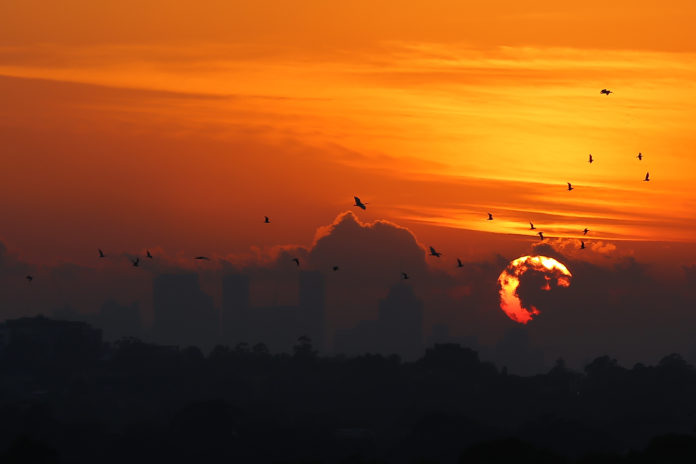
The Manam volcano eruption. Image: Scott Waide/EMTV News

By Scott Waide in Lae

Madang Governor Peter Yama confirmed today that at least two Papua New Guinea Defence Force vessels were being sent to conduct emergency evacuations from Manam Island following the volcanic eruption yesterday.

“The Prime Minister has been very supportive since the he was informed,” the Madang governor said.

Yama was in Port Moresby to mobilise additional support from the national government.

READ MORE: PNG volcano erupts, forcing villagers to flee

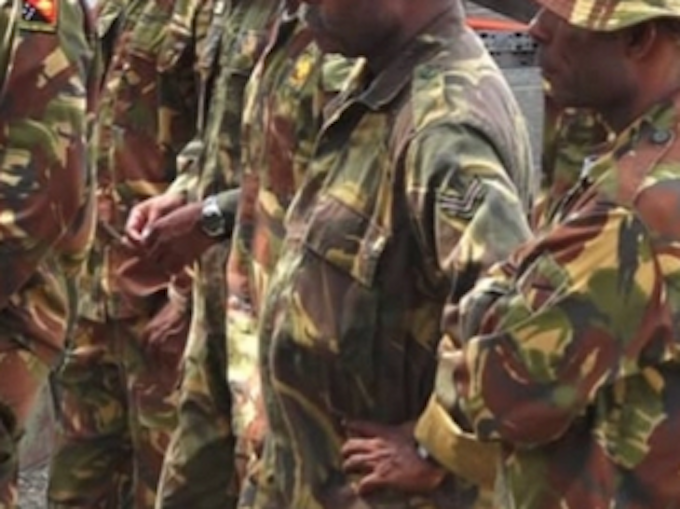
“A platoon from the Engineering Battalion is traveling to Madang. HMS Dreger and Port Moresby have been allocated for the evacuation operation. Two officers from the PNGDF Headquarters are traveling to Madang to assist the Provincial Administrator.”

Government officers from Bogia district in Madang were deployed to Manam early yesterday after the volcano erupted.

-Partners-

The Acting Provincial Administrator, John Bivi, said his officers had been in close contact with village elders since the eruption.

“This eruption is different. There are two craters that have erupted and lava flow has happened. This is problematic.,” he said.

Houses collapsed
Manam Islander James Sukua, who contacted his family yesterday, said several trees and at least two houses had collapsed during the heavy ash fall.

At least two houses along the path of the lava flow were destroyed.

“Rain and ash fell in the morning in places like Baliau, Bien Station and Kuluguma. No casualties [were] reported.”

The Rabaul Volcano observatory reported that the ash column rose 15 km from the volcano.

The observatory also warned pilots to stay clear of the Manam airspace over the next 12 hours.

“Additional volcanic activity is possible in the coming days. Individuals planning to travel to Manam are advised to avoid the areas affected and to wear respiratory gear and covering clothing.”

About 2000 people live on the island.

Scott Waide is chief of the EMTV News bureau in Lae. This article was first published on his blog My Land, My Country and is republished by Asia Pacific Report with permission.

Print Friendly, PDF & Email

Article by AsiaPacificReport.nz

]]>

Jokowi unmoved by growing support for ‘noise’ blasphemy case woman

]]>

Meiliana, a Chinese-Indonesian woman of the Buddhist faith, who has been sentenced to 18 months in jail for complaining about the volume of the adzan (Islamic call to prayer) from a speaker at a mosque near her house in Tanjungbalai, North Sumatra. Image: Jakarta Post

By Christie Stefanie in Jakarta

President Joko “Jokowi” Widodo says he respects the verdict handed down by an Indonesian local court against an ethnic Chinese woman, Meiliana, who was sentenced to 18 months in jail after being found guilty of blasphemy.

According to Widodo, if there are those who disagree with the verdict then Meiliana can lodge an appeal against the ruling by the Medan District Court

“Yes, an appeal process is available,” Widodo said after meeting with the Bishops Council of Indonesia (KWI) in Jakarta on Friday.

READ MORE: Woman jailed in Indonesia for complaining call to prayer is to loud

Speaking on behalf of the 44-year-old Meiliana, who wept in court after the sentencing, her legal attorney Ranto Sibarani said she would soon launch an appeal against the verdict.

Widodo said even as the head of the nation he was not above the law and was unable to intervene in the case.

-Partners-

This is because even he had recently been found guilty of negligence in a lawsuit over the burning of forests and land by the Palangkaraya High Court.

“I am unable to intervene in legal affairs that are related to the authority of the courts. I myself have only just been found guilty by a court in Palangkaraya over a [forest] fire,” said Widodo laughing.

President Widodo … found guilty by a court in Palangkaraya over a Kalimantan forest fire. Image: Jakarta Post

Forest fire case
The Palangkaraya High Court recently found Widodo guilty of violating the law in a West Kalimantan forest and land fire case.

The other defendants in the case included Environment and Forestry Minister Siti Nurbaya, Agricultural Minister Andi Amran Sulaiman, Agriculture and Land Spatial Planning Minister Sofyan Djalil, Health Minister Nila F. Moeloek, Central Kalimantan Governor Sugianto Sabran and the Central Kalimantan Regional House of Representatives (DPRD).

The defendants are currently preparing to submit an appeal with the Supreme Court.

The Pacific Media Centre reports that the last few days have seen a massive outpouring of support for Meiliana, a Chinese-Indonesian woman of the Buddhist faith who was sentenced to 18 months for complaining about the volume of the adzan (Islamic call to prayer) from a speaker at a mosque near her house in Tanjungbalai, North Sumatra.

An online petition addressed to Widodo, which was launched on August 22 calling for Meiliana to be freed, has already been signed by more than 100,000 people.

The petition also requests that the panel of judges that sentenced Meiliana be reviewed and that the Ministry of Religious Affairs issue a regulation on the use of loudspeakers by mosques, which it has since done.

Translated by James Balowski for the Indoleft News Service. The original title of the article was “Tak Bisa Intervensi Hukum, Jokowi Sarankan Meiliana Banding”.

Print Friendly, PDF & Email

Article by AsiaPacificReport.nz

]]>

PNG’s Manam volcano erupts again, forcing islanders to evacuate

]]>

The new Manam eruption today. Image: Scott Waide blog

Pacific Media Centre Newsdesk

Manam volcano in Papua New Guinea has erupted again, reports journalist Scott Waide on his blog.

This is his blog’s picture of the eruption early today.

Islanders reported that ash and other debris from the eruption was so thick that sunlight had been totally blocked for a few hours, Waide said.

Manam islander Mina Kamboanga said the villagers were forced to use lights to get around.

Loop PNG reports Peter Sukua, a local community leader from Baliau village on Manam island, said the volcano had spewed ashes and lava.

He said more than 2000 islanders were in shock over the eruption and were evacuating the island.

-Partners-

Sukua called on the Disaster Authority in Madang to respond quickly.

Manam volcano is located 13 km off the northern coast of Papua New Guinea near Bogia town and is one of PNG’s most active.

A pyroclastic flow at the volcano on 3 December 1996 killed 13 people in the village of Budua.

Print Friendly, PDF & Email

Article by AsiaPacificReport.nz

]]>

Fiji judge orders retrial in ‘hate graffiti’ spray painting sedition case

]]>

Former Fiji United Freedom Party (FUFP) leader Jagath Karunaratne (left) and ex-SODELPA whip Mosese Bulitavu in court in Suva yesterday. The judge ruled a retrial because a “substantial miscarriage of justice” had been carried out. Image: Jessica Savike /Fiji Times

By Jessica Savike in Suva

Fiji High Court judge Justice Vinsent Perera has ordered a retrial of former opposition SODELPA parliamentarian Mosese Bulitavu and Fiji United Freedom Party president Jagath Karunaratne in a case of alleged sedition over political graffiti.

The pair had appealed against their conviction and sentence of almost two and a half years each.

Bulitavu had been sentenced by Suva Magistrate Deepika Prakash to two years, five months and 13 days imprisonment, and Karunaratne was sentenced to two years, five months and 16 days imprisonment after being found guilty of sedition.

It is alleged the two were involved in spray painting words in different places between Nausori and Suva with the seditious intention of bringing into hatred or contempt, or to excite disaffection, against the government of Fiji.

It is alleged they did this with others between the August 1-27, 2011.

Justice Perera ruled in court yesterday there had been a substantial miscarriage of justice.

-Partners-

He said the magistrate breached or did not follow fundamental legal principles.

More than one person
Justice Perrera said it was clear the words were not spray painted by Karunaratne and Bulitavu, adding that the offence had been committed by more than one person.

The judge noted the citings of case laws by Magistrate Prakash, saying she had not followed them, and that it was clear she had not made a finding of the alleged act.

He set aside the conviction and allowed the appeal.

Bulitavu and Karunaratne have been released on bail.

The matter has been adjourned to September 24 and will be called before Chief Magistrate Usaia Ratuvili.

Print Friendly, PDF & Email

Article by AsiaPacificReport.nz

]]>

Students, migrants boost Nepalese community in NZ by 1000%

]]>

A Nepali family at a Nepalese New Year’s celebration: Sujata Nepal (from left), Nepal Adhikary, Aarna Adhikary and Ashish Adhikary. Image: Rahul Bhattarai/Te Waha Nui

By Rahul Bhattarai in Auckland

Almost 17,000 Nepalese people are now living in New Zealand following a sharp increase of migration from the Himalayas country, according to Statistics New Zealand’s latest figures.

In 2013, there were approximately 1600 Nepalese people in the country, but five years later that figure has increased by almost 1000 percent.

Of those living in the Auckland region, the majority have typically settled in the Puketapapa local board area in Mount Roskill (16.4 percent), Henderson-Massey local board area (14.1 percent), and Waitemata local board area (11.3 percent).

The president of New Zealand Nepal Society (NZNS), Dinesh Khadka, said 60 percent were international students and 40 percent were long-term residents who were on visas or work permits.

“Approximately 9000 [Nepalese] people live in Auckland and the rest are dispersed across various parts of New Zealand,” said Dinesh Khadka.

Two communities
NZNS is one of two Nepalese community organisations in Auckland, with a registered membership of 280 families.

-Partners-

The other is the New Zealand Nepal Association with 100 registered members.

A national festival will be held in Auckland on October 13 when Nepalese will celebrate Dashain, a national festival, which symbolises the victory of good over evil.

Dashain takes place over 10 days, when family members and friends come together and enjoy traditional cuisine, play cards, fly paper kites and play on a traditional bamboo swing.

Rahul Bhattarai is a student journalist on AUT’s Postgraduate Diploma in Communication Studies and also a part-time reporter for the Pacific Media Centre’s Pacific Media Watch freedom project. This article was first published by Te Waha Nui.

Print Friendly, PDF & Email

Article by AsiaPacificReport.nz

]]>

Newsletter: New Zealand Politics Daily – August 24 2018

Newsletter: New Zealand Politics Daily – August 24 2018 Editor’s Note: Here below is a list of the main issues currently under discussion in New Zealand and links to media coverage. [caption id="attachment_297" align="aligncenter" width="640"] The Beehive and Parliament Buildings.[/caption] Simon Bridges expenses leak Jane Patterson (RNZ): Leak saga reveals a party with serious internal problems RNZ: Bridges: Police know identity of texter claiming expense leak 1News: ‘Ultimately, I don’t know who this is’ – Simon Bridges says police know the identity of expenses leaker RNZ: Watch: Simon Bridges reacts to expense leak development Newshub: Simon Bridges wants investigation into leaker continued despite mental health plea Jason Walls (Interest): Bridges’ leaker investigation to continue, despite police knowing their identity Jo Moir (RNZ): Exclusive: Text plea to call off Bridges expense leak inquiry Herald: National Party member claims they leaked Simon Bridges’ expenses: report Newshub: Simon Bridges’ expenses leaker sends anonymous text pleading for end to inquiry Herald: Mallard responds to alleged National Party text on Simon Bridges expenses leak Cameron Slater: Who’s National’s dirty little leaker? Herald: Former solicitor-general Michael Heron, QC, to lead Simon Bridges’ expenses leak inquiry Stacey Kirk (Stuff): Former solicitor general to investigate leak of Simon Bridges’ expenses RNZ: Former solicitor-general to lead inquiry into Bridges’ expenses leak Lucy Bennett (Herald): Release of ministers’ expenses delayed by Internal Affairs oversight Justice and police David Fisher (Herald): Kelvin Davis: Letting prisoners vote brings them closer to society and takes them further from crime Tom Noakes-Dunca (Newsroom): Keep talking until justice is done Rosemary McLeod (Stuff): If you feel your life is valueless, why wouldn’t you turn to drugs, crime and junk food Chris Trotter (Daily Blog): The Summit Of Folly: Why ‘Middle New Zealand” Will Have The Last Word On Crime And Punishment Asher Emanuel (Spinoff): Media are critical in criminal justice thinking. So how did they cover the big summit? Dan Satherley (Newshub): Labour MP defends justice summit Martyn Bradbury (Daily Blog): Nothing will derail Justice reform like the Woke Left Liz Gordon (Daily Blog): Another cat rescued from dangerous tree David Fisher (Herald): Act’s David Seymour says give inmates access to key programmes blocked by glitch in Three Strikes law 1News: Inside Parliament: A close-up look at the Government’s Criminal Justice Summit (video) RNZ: ‘Restoring mana’ can cut Māori prison numbers – Little Jim Rose (Herald): Andrew Little’s view put to test by world trends David Farrar: An excellent case for the first maximum no parole sentence Phil Pennington (RNZ): Family Court judges raised concerns with new Ministry 10 times Education Simon Collins (Herald): $65m Government bailouts for Unitec and Whitireia polytechnics John Gerritsen (RNZ): Unitec and Whitireia need massive government bailouts Newshub: Auckland’s Unitec and Whitireia get millions in Government boost Jessica Long (Stuff): Poor financial health sees Government stump up with cash for Whitireia, Unitec Josephine Franks (Stuff): $50 million cash injection for Unitec Hamish McNeilly (Stuff): Otago uni redundancies cost $11.3m over five years John Milford (Stuff): The gap between what business needs and what is being taught in our institutions Peter McKenzie (Newsroom): Why students are so angry about mental health 1News: Wellington students lauch #MeToo blog in bid to make university experience safer Leah Te Whata (Māori TV): Hato Petera closure not certain Eden More (RNZ): ‘The question is, what happens next?’ Simon Collins (Herald): Hato Petera College supporters urge Education Minister Chris Hipkins to keep the school open Eden More (RNZ): Local iwi fight for Māori catholic school to stay open Kendall Hutt (Stuff): Education Minister Chris Hipkins hears from community on future of Hato Pētera College Cherie Sivignon (Stuff): Salisbury School tips roll increase after Government announces wider access Herald: Rosehill College school brawl: Mongrel Mob and Black Power at centre of claims Tarannum Shaikh and Melanie Earley (Stuff): Police called to Auckland’s Rosehill College after reports of students fighting Newshub: Auckland’s Rosehill College goes into lockdown amid school fight Newshub: Rosehill College brawl: Alarming new footage captures scale of frenzied punch-up Debbie Jamieson (Stuff): Cross country run optional at some schools to look after children’s ’emotional wellbeing’ Tema Hemi (Māori TV): Making maths fun for tamariki Alice Angeloni (Stuff): Learning support strike a far cry from teacher strike Jai Breitnauer (Spinoff): The treatment of teacher aids is a feminist issue Mike Watson (Stuff): Hacker uses fake invoice to steal $53,000 earmarked for child care centre Greg Boyed, depression 1News: Greg Boyed’s Banana news colleagues pay touching tribute to much loved presenter Herald: Newstalk ZB’s Niva Retimanu remembers long-time friend Greg Boyed Belinda Feek (Herald): Employers and colleagues play important role in care, Rawdon Christie about mate Greg Boyed Stuff: Greg Boyed: Managers have a duty to care for employees, says Rawdon Christie Herald: Greg Boyed’s death raises issues of mental health in the workplace – most employers won’t know Belinda Feek (Herald): ‘He was a trusted voice’ – Mental Health Foundation Philip Matthews (Press Editorial): There really is depression in New Zealand Bill Ralston (Stuff): Many of us knew Greg Boyed. We didn’t know he had struggled for years with depression Belinda Feek (Herald): More support needed for those with low to moderate mental illness Stuff: Depression isn’t always visible – here’s how you can help Mānia Clarke (Māori TV): Depression: a silent battle Zoe Hunter (Bay of Plenty Times): Greg Boyed’s death sparks reminder to reach out to loved ones Eleanor Ainge Roy *Guardian): ‘We need to change’: Death of New Zealand newsreader puts spotlight on depression Aaron Hendry (Spinoff): Stop whispering: It’s time we all started talking openly about suicide Newshub: Former Waitakere Mayor Sir Bob Harvey opens up about his struggle with depression Foreign affairs and trade Richard Harman (Politik): What happens if the Australians elect Donald Trump Lucy Bennett (Herald): TransTasman relationship strong regardless who Australian leader, Ardern says Stuff: Jacinda Ardern weighs in to reassure NZ over Australia’s leadership drama Barry Soper (Newstalk ZB): Aussie politicians – they like a blood soaked carpet Mitch McCann (Newshub): Julie Bishop entering Australian leadership race – reports Gareth Hughes (Spinoff): The ‘Straya spills prove that MMP was one of the best decisions NZ ever made Dan Satherley (Newshub): Australia’s constant leadership spills prove just how good MMP is – Labour MP RNZ: NZ Foreign Minister goes to Vanuatu Amber-Leigh Woolf (Stuff): Polish President opens square in memory of Polish orphans Eva Corlett (RNZ): Polish president faces protest on Wellington visit Primary industries 1News: Concerns raised over intensive winter feeding after cattle left unable to move in knee-deep mud RNZ Checkpoint: NZ’s largest feedlot: ‘We take great care of our animals’ Don Rowe (Spinoff): Why you should give a damn about feedlots Herald: MPI issues M. bovis notice to Anzco Foods’ Five Star Beef feedlot in Canterbury Julie Iles (Stuff): Five Star Beef notified of 44 suspected cases of Mycoplasma bovis on feedlot Mike Joy (Newsroom):Why irrigation dams are a dumb idea Herald Editorial: Farmers face a tougher climate Moana Makapelu Lee (Māori TV): Govt initiative to support farmers and farming practices Health Laine Moger (Stuff): Prime Minister Jacinda Ardern visits midwives following $305m announcement Newshub: Auckland hospitals get $305m for repairs and upgrades 1News: PM announces Auckland DHB hospitals to get $305 million infrastructure upgrade RNZ: Auckland hospital buildings to get $305m upgrade Libby Wilson (Stuff): New mental health unit: on Waikato Hospital grounds, or not? Emma Russell (Herald): Middlemore Hospital staff raise concerns over bosses ‘relaxed response’ to swine flu outbreak Oliver Lewis (Stuff): Nurses accuse health board of failing to take sexual harassment seriously Oliver Lewis (Stuff): Planning changes result in delays for stranded mental health services Alexander Gillespie (Dominion Post): Medicinal cannabis drugs should be in doctors’ toolbox Shereen Moloney (Herald): Let’s rethink dementia approach Catherine Harris (Stuff): Plumbers raise flag over lead contamination in drinking water from dodgy taps George Heagney (Dominion Post): Helpful or harmful: euthanasia debate comes to Manawatū Newshub: David Seymour invites Winston Peters and Marama Davidson to jump off a building with him MP salaries John Armstrong (1News): Ardern’s freeze on MPs’ pay defused a political time-bomb – but praise was unjustified 1News: Inside Parliament opinion: Was Jacinda Ardern’s call to freeze MPs’ pay a reaction to recent strikes? (video) Scott Palmer (Newshub): How much are New Zealand’s MPs really worth? Michael Reddell: Paying MPs TOP Matthew Hooton (Herald): Fewer tweets, more bold ideas from The Opportunities Party Bryce Edwards (Herald): Political Roundup: Who’s going to vote for TOP? Government Peter Dunne (Newsroom): Greens paying for not playing hard to get Lucy Bennett (Herald): No independent advice on Provincial Growth Fund coalition commitments Kyle MacDonald (Herald):Is Jacinda Ardern guilty of ‘virtue signalling’? Environment and conservation Amber-Leigh Woolf (Stuff): New Zealand’s native frogs are in ‘grave danger’ and face extinction, report says Lois Williams (RNZ): DOC and scientists hatch plan to tackle kauri dieback in Northland Jessica Tyson (Māori TV): Calls for Māui dolphin protection at top of the South Island Isobel Ewing (Newshub): Fairy tern nesting: NZ’s most endangered bird gets helping hand Jamie Morton (Herald): The colour of our lakes – as seen from space Andrew McRae (RNZ): Approval given for wasp to be used if there is a brown stink bug invasion Dave Nicoll (Southland Times): Conservation board wants more support for DOC 1News: Where will New Zealand’s next Great Walk be? Stuff: Waikato River Authority joins forces with Rowing NZ to help restore Lake Karapiro Daniel Hutchinson (Stuff): Professor says Lake Taupō should be lowered for flood protection Dominic Harris (Stuff): Final straw looming as Christchurch wages war on plastic Newshub: Christchurch City Council plans to make the Garden City plastic straw free by 2019 Colin Williscroft (Southland Times): 100% Pure NZ ad man says subdivision will destroy goose that laid the golden egg Media Jim Tucker (Taranaki Daily News): Why freedom of speech survives, and a tribute to Warwick Roger Tim Murphy (Newsroom): The $36 million question Herald: NZME posts $23.2m EBITDA, chief executive Michael Boggs expands on paywall plans RNZ: NZME profit falls by more than half 1News: TVNZ announces lift in earnings, reporting a strong year for audience and advertising Tamsyn Parker (Herald): TVNZ gives staff $1000 bonus as profit jumps to $5.1m Herald: Sky TV reports $240 million loss, sheds 11,000 more subscribers Gyle Beckford (RNZ): Sky TV reports hefty loss after $360m write-off Housing Corzaon Miller (Herald): Death on the Street: Homeless die from asthma, hypothermia and other treatable conditions Thomas Manch and Collette Devlin (Stuff): Wellington Night Shelter seeks Government funding for remodelling Jenée Tibshraeny (Interest): A housing stocktake by Auckland Council’s chief economist Jared Nicoll (Dominion Post): Recycling bin request sees council discover house that wasn’t being charged rates Jacob McSweeny (Wanganui Chronicle): The Rent Centre fined $34,000 for not lodging bonds and other breaches of tenancy law Jacob McSweeny (Wanganui Chronicle): The Rent Centre director says company has cleaned up its act Transport Kate Gudsell (RNZ): Air New Zealand urged to rethink services to regions Grant Bradley (Herald): More challenges ahead, Auckland Airport boss tells passengers Katie Fitzgerald (Newshub): Skypath advocate welcomes funding announcement from Government Jessie Chiang (RNZ): SkyPath still has safety issues, say community groups Nick Truebridge (Stuff): Government announces it will fund and build SkyPath along Auckland Harbour Bridge, but cannot give completion date RNZ: SkyPath across Auckland Harbour Bridge to get $67m in funding Dan Satherley (Newshub): Government pledges $67m to build SkyPath cycleway Dan Dalgety (RNZ): Canterbury councils team up for carbon neutral public transport Newshub: Christchurch’s billion dollar regional public transport plan Simon Wilson (Herald): How to fix the hospital bus Newstalk ZBWatch: Adorable video shows family of ducks crossing Auckland’s Northern Motorway Local government Talisa Kupenga (Māori TV): Gisborne District Councillor accused of racist remarks named RNZ: Councillor denies making racist comments Herald: Auckland Council rates team to reach out to revaluation objectors Charlie Dreaver (RNZ): Parking fees cause council argument over church and state Todd Niall (Stuff): Waiheke politician takes leave of absence over charges Dominic Harris (Press): UV treatment to replace chlorine at key Chch water pump station Banking Tamsyn Parker (Herald): Hard sell at the bank – has it gone too far? Tamsyn Parker (Herald): Bankrupt farmer calls for NZ bank inquiry Hamish Rutherford (Stuff): NZ Super and ACC issue legal threat to NZ Post over Kiwibank’s IT troubles Building and construction, safety Newshub: Insurance Council concerned over lack of fire safety in tall buildings Phil Pennington (RNZ): Fire protection measures need revamp – Insurance Council Thomas Mead (Newshub): Christchurch building company goes under David Hargreaves (Interest): Fletcher Building CEO says Government’s flagship housing programme is both a threat and an opportunity for his company Robin Martin (RNZ): New Plymouth stadium owner considering legal options Other Peter Dunne: National is beginning to look exposed 1News: Aliens unlikely in our lifetime but ‘could be down the road for our successors’ Mike Hosking (Newstalk ZB): 12 million reasons why this Government earthquake payouts are dangerously naive Brian Fallow (Herald): Migration torrent slows – but only just Bayley Moor (Stuff): Former MP Dover Samuels said Ngāpuhi leadership ‘mana munching’ Alice Angeloni (Marlborough Express): Green around the edges: Green Party members take winter ‘hiatus’ Herald: Fire trucks told to slowdown or risk police prosecution, union warns Koroi Hawkins (RNZ): Helen Clark urges Solomons parties to support women]]>

Opposition MP files criminal complaint over PNG election

]]>

By RNZ Pacific

A Papua New Guinea opposition MP has filed a criminal complaint against the Electoral Commissioner for alleged misdeeds in last year’s general election.

Madang Open’s Bryan Kramer yesterday filed a formal complaint about Commissioner Patilias Gamato with the National Fraud and Anti-Corruption Directorate.

Kramer’s complaint focuses on the election in the provincial seat of Southern Highlands.

He said Gamato’s premature declaration of a result was an act of electoral fraud that must not be allowed to be “swept under the carpet”.

One of the most controversial results in an election hampered with irregularities, it sparked deadly violence among supporters of rival candidates in the province.

Tensions have lingered, and a court ruling in June which upheld Southern Highlands provincial governor William Powi’s election triggered a rampage by protesters who torched an airplane, courthouse and the governor’s residence.

-Partners-

Kramer has filed a similar complaint with the Ombudsman Commission.

This article is republished under the Pacific Media Centre’s content partnership with Radio New Zealand.

Article by AsiaPacificReport.nz

]]>

Why Papuans feel differently about Indonesia’s Independence Day

]]>

A Papuan protester with a hand painted version of the Morning Star independence flag. Jayapura police chief says the use of Morning Star attributes could be linked to “treason”. Image: Free West Papua Campaign

By Ivany Atina Arbi and Nethy Dharma Somba in Jakarta and Jayapura

The 73rd celebration of Indonesia’s Independence Day last week was tinged with reports on actions from some Papuans outside and inside the provinces which upset authorities over their perceived refusal to celebrate Indonesia’s independence from the Dutch.

On August 15, a clash occurred between Papuan students and mass organisation members on Jl. Kalasan in Surabaya, East Java, as the students reportedly refused to raise the country’s red-and-white flag in front of their dormitory.

The men demanded the Papuan students comply with a regulation mandating the raising of the Indonesian flag every August 17.

READ MORE: Indonesian police detain 49 in attack on dormitory

A release signed by Azizul Amri of the National Students Front and Nies Tabuni of the Papuan Students Association in Surabaya said the students actually did not object to raising the flag.

They accused people from the mass organisations of attacking their dormitory before the dialogue between them had concluded.

-Partners-

According to the students, about 30 people from mass organisations asked them to raise the Indonesian flag. The students claimed they did not object to it but they needed time to “coordinate” with the dormitory’s caretaker, who was out of Surabaya at that time.

A clash ensued, in which a man was injured.

The Indonesian flag controversy: According to the Papuan students, about 30 people from mass organisations asked them to raise the Indonesian flag. The students claimed they did not object to it but they needed time to “coordinate” with the dormitory’s caretaker, who was out of Surabaya at that time. Image: Aman Rochman/Jakarta Post

Dormitory attack
Basuki, one of the mass organisation members, said as quoted by kompas.com that one of his men had been attacked by a dormitory resident wielding a sharp weapon.

The students said in their release that three members of the organisations had beat one student. The student later ran to the kitchen to retrieve a machete.

He brandished the weapon and the men ran away in a panic.

“One of them collided with another and he hurt himself from a fall,” the release stated.

Surabaya police officers then visited the scene and took dozens of students living in the dormitory to police headquarters for questioning.

But by Thursday, the students had returned to the dorm, and none of them were taken into custody.

“As many as 48 students have been returned to the dorm,” said Surabaya police criminal unit chief Senior Comrmander Sudamiran. He said the police would first gather evidence about the injured man.

Indonesian flag
After the clash, local residents of Jl. Kalasan eventually raised Indonesia’s flag in front of the dormitory, named Kemasan III.

Separately, during the orientation event for freshmen at Cendrawasih University in Jayapura, Papua, on August 14 and 15, senior students required the freshmen to chant free Papua slogans and bring Morning Star attributes to the campus.

The Morning Star refers to the flag used by the Papuan independence movement.

During the opening ceremony of the event, the seniors reportedly prohibited the freshmen from singing Jakarta’s national anthem, “Indonesia Raya”.

The university’s rector, Apolo Safanpo, confirmed the incident, accusing some people of imposing their “political motives” on the orientation event.

“The intruders required the freshmen to bring Morning Star attributes and chant slogans contrary to Indonesia’s ideology,” Apolo said, adding that the orientation events had been halted.

Meanwhile, Jayapura police chief Senior Commander Gustav Urbinas said the use of Morning Star attributes could be linked to treason, and therefore he had called Cendrawasih University student executive body chairman Ferry Kombo and the chairman of orientation events Agus Helembo to the police headquarters.

‘Asked for explanations’
“We asked for some explanations about the use of Morning Star attributes and the chanting of free Papua slogans,” Agus said.

Both of the students had signed a statement citing that they would not let the same incident happen again at their university, or else they would be prosecuted for “treason”.

A prominent youth figure in Papua, Samuel Tabuni, who is also the director of the Papua Language Institute, said what happened at Cendrawasih University was the students’ “spontaneous action to show their intention to create a future that is free from all threats”.

According to a 2018 Amnesty International report titled “‘Don’t bother, just let him die’: Killing with impunity in Papua”, unlawful killings by security forces remains high in Papua even after the 1998 reform began.

Amnesty International has recorded 69 cases of alleged unlawful killings between January 2010 and February, with 95 victims. Eighty-five of them were native Papuans, the report said.

The Jakarta Post provides an Indonesian perspective on events in West Papua.

Print Friendly, PDF & Email

Article by AsiaPacificReport.nz

]]>

Newsletter: New Zealand Politics Daily – August 23 2018

Newsletter: New Zealand Politics Daily – August 23 2018 Editor’s Note: Here below is a list of the main issues currently under discussion in New Zealand and links to media coverage. [caption id="attachment_297" align="aligncenter" width="640"] The Beehive and Parliament Buildings.[/caption] Justice and police Herald Editorial: Maori prison rate shows system has to change Sam Sachdeva (Newsroom): Talk over, real tests ahead for justice reform Sam Sachdeva (Newsroom): Systemic concerns outlined at justice summit Tova O’Brien (Newshub): Justice Minister Andrew Little considers holding victim-only summit Moana Makapelu Lee (Māori TV): Govt to implement changes in criminal rehabilitation David Fisher (Herald): Mum of murdered Christchurch 3-year old slams ‘racist’ criminal justice system summit Matt Stewart (Stuff): Mother of murdered Christchurch 3-year-old slams Government’s criminal justice summit Gia Garrick (RNZ): Heated exchanges at justice forum as Govt promises change David Fisher (Herald): National leader Simon Bridges changes his mind on Three Strikes law Martyn Bradbury (Daily Blog): Prison reform: Jacinda’s other nuclear free moment – 6 issues that need consideration Kirsty Johnston (Herald): Police to sexual assault victim: Prosecution ‘not worth the stress’ for all involved Newshub: ‘More police can stop crime’: Justice Minister Andrew Little defends 1800 new cops Sharon Reece (ODT): Collaborative response to family harm Greg Boyed 1News: Breakfast team pays tribute to ‘kind and caring’ Greg Boyed 1News: Seven Sharp pays tribute to TVNZ broadcaster Greg Boyed who died suddenly, aged 48 Stuff: ‘Rest in peace, dear friend’: 1 News team pays tribute to Greg Boyed Herald: 1 News, Seven Sharp with emotional tributes to Greg Boyed Rachel Grunwell (Herald): Greg Boyed fought hard to keep depression at bay, friend Rachel Grunwell writes Herald: TVNZ presenter Daniel Faitaua’s emotional tribute to beloved colleague Greg Boyed RNZ: Tributes flow for Greg Boyed: ‘People felt connected to him’ Stuff: Greg Boyed: A life on screen Paul Buchanan: Rest thee well, Greg. Samantha Motion (Bay of Plenty Times): Bay of Plenty people pay tribute to Te Puke raised TVNZ broadcaster Greg Boyed after his death Newshub: Mike King explains why mental illness is hard to see Newshub: Duncan Garner says depression needs to be taken seriously following death of Greg Boyed Barry Soper (Newstalk ZB): Greg Boyed and the silent disease of depression Brodie Kane (Newshub): Greg Boyed lit up the world of those around him Andrew Dickens (Herald): Greg Boyed was a true broadcaster Alison Mau (Stuff): Greg Boyed earned the trust of his audience Newshub: Jesse Mulligan shares moment he learned of Greg Boyed’s death Natalie Akoorie (Herald): Greg Boyed’s sudden death shocks nation, devastates family and friends Natalie Akoorie (Herald): Mental Health Foundation urges human contact for vulnerable following Greg Boyed’s death Martyn Bradbury (Daily Blog): Reflecting on Greg Boyed’s tragic passing and the mental health of men in their 40s Foreign affairs and trade Chris Bramwell (RNZ): PM softens language on meeting with refugees on Nauru Tracy Watkins (Stuff): Aussie leadership spill bad news for Kiwis Richard Harman (Politik): Fair suck of the sav, Pete Mitch McCann (Newshub): Revealed: The numbers of crimes committed by Kiwis deported from Australia Tracy Watkins (Stuff): Did you really just say that? Julie Bishop to Winston Peters  Newshub: Video: Winston Peters foils Julie Bishop’s attempts to end press conference Lucy Bennett (Herald): Foreign Affairs Minister Winston Peters calls for fair go for Kiwis in Australia Lucy Bennett (Herald): Winston Peters snaps at reporter who asks about leadership crisis in Canberra 1News: Watch: Winston Peters tells Australian journalist he won’t be ‘inveigled’ into Aussie political commentary Laura Walters (Stuff): Aus immigration minister’s exit could present opportunity for refugees Gerald McGhie (Herald): We need to reset attitudes as well as policies towards the Pacific Martin van Beynen (Stuff): Antarctica NZ board to protect privacy of disgraced CEO MP and public sector salaries ODT Editorial: Freeze will not warm swing voters Stacey KIrk (Stuff): Politicians’ pay around the world: How our MPs’ salaries stack up Craig McCulloch (RNZ): Public sector chiefs could be paid more under changes Max Rashbrooke (RNZ): What should happen next with public service bosses’ salaries Uninsured Red Zone homeowners to receive pay out Newshub: National criticises uninsured Christchurch red zone payments Newstsalk ZB: Redzone payout not about insurance (audio) Business Pattrick Smellie (Stuff): Odds stacked against those depending on Govt contracts John Tamihere (Herald): Where’s the business backbone? The Opportunities Party Geoff Simmons (Spinoff): The demonisation of TOP 2.0 is political tribalism at its worst Bryce Edwards (Newsroom): Why TOP will struggle Pete George: Can The Opportunities Party make a new impression? Defence 1News: Chief of Defence Force ‘appalled’ after violent crime victims’ names released, including 10-year-old boy Laura Walters (Stuff): Govt buys new navy ship with remaining money after frigate blowout Lucy Bennett (Herald): Navy to buy second-hand vessel from Norway for dive and hydrographic duties 1News: Pictures: Government to spend $103 million on new vessel for the Navy RNZ: New support vessel purchased for the Navy Jonathan Mitchell (RNZ): LAVs get special treatment during patient wait for buyer Kirsty Lawrence (Stuff): Defence forum protesters say ‘weapons expo’ violates city’s peace status Health Libby Wilson (Stuff): New ward to ease emergency department pressure at Waikato Hospital Mike Houlahan (ODT): Review found host of problems with ward Danielle Clent (Stuff): Treatment funded in Australia, but NZ brother misses out Housing Ben Leahy (Herald): Lack of funding for affordable housing squeezing 200,000 families out of cities: advocate Julie Iles (Stuff): Housing NZ debt collectors continued to pursue tenants for meth damage Marty Sharpe (Stuff): HNZ ‘infill’ house squeezed onto property may force cerebral palsy sufferer out 1News: Rotorua homeless shelter opens after community effort Corazon Miller (Herald): Death on the Street: He spoke for the voiceless 1News: Whanganui property management company fined more than $30k by Tenancy Tribunal Servicemen, baby boy repatriated John Boynton (RNZ): Fallen soldier ‘buried beside his loving parents’ John Boynton (RNZ): Body of All Blacks’ legend’s son returns to Tikitiki Talisa Kupenga (Māori TV): Sergeant George Nepia returns to Rangitukia Raniera Harrison (Māori TV): Northland homecoming for SAS trooper after 62 years Mere McLean (Māori TV):Soldier and son Tuterangi Kawha returns home Julie Anne Genter has a son Guardian: Cycle of life: New Zealand MP gives birth to boy after riding to hospital 1News: Prime Minister congratulates Julie Anne Genter, welcomes baby to ‘parliamentary play group’ Employment Julie Iles (Stuff): Spark slashes staff costs under Agile working structure Anuja Nadkarni (Stuff): Businessman who exploited migrant workers must pay $120k after liquidation Environment and conservation Emma Hatton (RNZ): Thousands of protected species seized at the border Robin Martin (RNZ): Affco meat company fined $66k for illegal wastewater discharge Pat Deavoll (Stuff): Emissions Trading Scheme revisions seen as timely by forest owners Bridie Chetwin-Kelly (Newshub): ‘We’re not satisfied’: Plastic Free NZ unveils action plan, urges Govt to do more The Wireless: Journey of a plastic bag Bayley Moor (Stuff): Kauri “insurance policy” considered Jenny Ling (Stuff): Dogs the number one kiwi killer – fact or myth and misinformation? Matthew Littlewood (Stuff): Fish and Game suggests catch restrictions as salmon numbers decline Anneke Smith (RNZ): Rarest bird in the country gets a helping hand Primary industries Esther Taunton (Stuff): Milking it: Taking calves from their mothers keeps the dairy industry going Martin Taylor (Stuff): Milking it: The price of dairy should not be dirty rivers No Right Turn: Time to end feedlots Gerard Hutching (Stuff): Fonterra weighs up whether to build processing plants in China Gerald Piddock (Stuff): Dairy Goat Co-operative first to benefit from new Government fund 1News: Warnings against collecting shellfish extended for parts of the country following spread of toxic algae Education Josephine Franks (Stuff): Students at Auckland school angry at digital testing Josephine Franks (Stuff): Think teachers are whingeing? Visit my school, says Auckland decile-1 principal Jake McKee Cagney (Stuff): Thames childcare centre under investigation, Ministry of Education suspends license Florence Kerr (Stuff): Auditor General’s probe into Wintec assisted by whistleblowers Elena McPhee (ODT): Flat initiation warning: ‘I fear someone will die’ Katie Doyle (RNZ): ‘Dangerous, antisocial and often unlawful behaviour’ Newshub: University of Otago Proctor’s grim warning against student initiations Jessica Long (Stuff): Uni students demand better mental health support from Government  1News: Hundreds call for increased funding to tertiary mental health services Jessica Long (Stuff): Victoria University of Wellington students launch #metoo blog to gauge sexual harassment problem Newshub: Victoria University students to start publishing their own MeToo blog Farah Hancock (Newsroom): World-first digital teacher in NZ schools Building and construction John Anthony and Rebecca Stevenson (Stuff): Fletcher Building posts $190m loss as costs rise Nona Pelletier (RNZ): Fletcher Building announces $190m loss Kīngitanga Māori TV: Tuku Morgan speaks out about his scathing letter to King Tuheitia Mānia Clarke (Māori TV): Tuku Morgan fronts on his claims RNZ: Kiingitanga supporters: ‘The reality is it’s about the kaupapa’ History RNZ: Pacific history a focus of new fellowship Sophie Bateman (Newshub):Jewish Council condemns Nazi re-enactors in Auckland park Cathedral restoration Charlie Gates (Stuff): Christ Church Cathedral restoration deal signed, start date and budget unclear RNZ: Parties commit to cathedral rebuild Annabelle Tukia (Newshub): Christ Church Cathedral rebuild takes step forwards Gangs Kate Fitzgerald (Newshub): Gang rep Denis O’Reilly tells Duncan Garner to calm down after ‘brainless scumbag’ rant Newshub: Who is Denis O’Reilly? David Garrett: Gangs are changing alright – for the worst Transport Newshub: Wheel clamping crackdown not enough – Dog and Lemon Guide editor Clive Matthew-Wilson Newshub: Wheel clamping crackdown welcomed Debrin Foxcroft (Stuff): Government announces new measures to crack down on ‘unscrupulous’ wheel clampers Carla Penman (Herald): ‘The law has been sadly lacking’: Govt locks in on clamping complaints RNZ: Wheel clamping fees capped to stop ‘cowboy’ companies 1News: Government stepping up battle against those who wheel-clamp vehicles Janika ter Ellen (Newshub): New penalties to crackdown on ‘cowboy wheel clampers’ Herald: Tensions flare between bus drivers and company over toilet claims Andrea Vance (Stuff): Expect delays: full body x-ray scanners coming to New Zealand airports Kim Griggs (RNZ): Air NZ Dreamliner engine failure: Cockpit transcript released Collette Devlin (Dominion Post): Wellington officials plan to bust ‘ghost buses’ and improve timetables Local government Todd Niall (Stuff): Stage half-empty as curtain rises on Howick by-election Michael Neilson (Herald): Gisborne district councillor Malcolm MacLean denies Māori comment, says colleague trying to ‘discredit’ him Matthew Rosenberg (Stuff): Controversial Takapuna town centre car park development to go ahead Melanie Earley (Stuff): Waiheke local board member charged over ‘unconsented’ work on Auckland home Other Chris Morris (ODT): No decision yet on inquiry scope Jo Moir (RNZ): Racing industry to get govt funding for multiple all-weather tracks Phil Pennington (RNZ): Carpenters could be the key to fixing quake-prone buildings John Drinnan: RNZ Too Shy-Shy On Another PR Tie Anna Whyte (1News): Period poverty ‘a human rights issue’ says Green MP Golriz Ghahraman, as some girls miss out on school Newshub: Paula Bennett recounts cruel bet pub-goers made about her weight 1News: Website aiming to make freedom camping rules clear to visitors – and Kiwis Paul Mitchell (Stuff): BNZ bank withdraws from Pahīatua after 130 years Cecile Meier (Stuff): Urinal survey suggests homophobia and transphobia issues among Christchurch male pubgoers Donna-Lee Biddle (Stuff): Waikato law firm learns te reo Māori Anuja Nadkarni (Stuff): Vodafone faces charges for billing customers after their contracts finished RNZ: Development’s opponents want to protect environment and history Stuff: Shelly Bay development in hands of Court of Appeal judges Hayden Donnell (Spinoff): How NZ news livestreams became overwhelmed by anti-1080 activists David Farrar: Chris Bishop speech at Massey 1News: With discounts becoming ‘the new normal’, are Kiwis being ripped off by supermarkets?]]>

Newsletter: New Zealand Politics Daily – August 22 2018

Newsletter: New Zealand Politics Daily – August 22 2018 Editor’s Note: Here below is a list of the main issues currently under discussion in New Zealand and links to media coverage. [caption id="attachment_297" align="aligncenter" width="640"] The Beehive and Parliament Buildings.[/caption] Justice Guyon Espiner (RNZ): Reducing prison numbers ‘one mighty challenge’ for Little Sam Sachdeva (Newsroom): Much talk, some action at justice summit’s first day Māori TV: Solutions not just talk wanted from criminal justice summit David Fisher (Herald): Minister of Corrections Kelvin Davis issues heartfelt call to change level of Māori imprisonment 1News: ‘It’s our fault he spent nearly half a century in a gang’ – Corrections Minister tells story of reformed prisoner Moana Makapelu Lee (Māori TV): Kelvin Davis says change needed to fix ‘broken’ justice system Newshub: Public have ‘wrong end of the stick’ on justice reform – Chester Borrows RNZ: Māori must lead change in the justice system, says minister Tova O’Brien (Newshub): Government wants to lower Māori prison stats but hasn’t set specific target David Fisher (Herald): ‘Where are Māori?’: Utu star Anzac Wallace disrupts Government’s criminal justice summit Matt Stewart (Stuff): Justice summit starts with pleas for better Māori representation in reforms 1News: Number of Māori women locked up in New Zealand prisons ‘shameful’ – law academic Moana Jackson 1News: Jacinda Ardern wants ‘heavily politicised’ justice system based more on evidence than public reaction to crimes David Fisher (Herald): 100 dangerous inmates released without going through reintegration programmes Sam Hurley (Herald): NZ’s first maximum three-strikes sentence handed down to Whanganui stabber Kirsty Lawrence (Stuff): Man sent to prison for seven years under three-strikes law Salary freeze for MPs Dominion Post Editorial: Oh, to be an ordinary MP on average pay Bryce Edwards (Herald): Political Roundup: How much should we pay politicians? Leith Huffadine (Stuff): Politicians’ pay v yours: How MPs’ salaries compare to other occupations Gordon Campbel: On MP pay and the REAL p.c. danger zone Martyn Bradbury (Daily Blog): Freezing MP salaries, 1800 new cops and new major infrastructure body – new Government take control of narrative Eleanor Ainge Roy (Guardian): Jacinda Ardern freezes New Zealand MPs’ pay to tackle rich-poor divide David Farrar: No pay rises for MPs Point of Order: The public might approve but political pay freeze won’t shrink inequality Public Sector performance bonuses scrapped Thomas Coughlan (Newsroom): Top public servants lose performance pay Laura Walters (Stuff): Government stamps out performance bonuses for public sector bosses Herald: Chris Hipkins moves to end performance pay for public sector chief executives RNZ: Public service performance bonuses scrapped Jason Walls (Interest): Govt ends performance pay for public sector CEOs Emma Hurley (Newshub): Government scraps bonus pay scheme for public service bosses Uninsured Red Zone homeowners to receive pay out Michael Hayward and Liz McDonald (Stuff): Red-zoned ‘Quake Outcasts’ to be paid – but not all will go Rebecca Howard (Newsroom): Government to make new ‘red zone’ payment for uninsured homes Dan Dalgety (RNZ): Lifeline for Christchurch property owners Newshub: Government to pay $12m to uninsured Christchurch red zone homeowners Primary industries Rachel Stewart (Herald): Animal cruelty – a storm is coming RNZ: Feedlots haven’t been properly policed by regional councils – Minister RNZ: Federated Farmers hits back at ‘vegan fundamentalists’ SAFE Richard Harman (Politik): Bridges told to get tougher Phil Taylor (Herald): Fishy money: Deal done on cash seized in flawed fraud investigation Chris Hutching (Stuff): NZ breakfast cereals ‘safe’ from weedkiller ingredient glyphosate Heather Chalmers (Stuff): Calf rearer changes tactics after Mycoplasma bovis battle Rob Stock (Stuff): Milking it: There’s no such thing as a budget cow, so what is budget milk?  Anna Campbell (ODT): Genetic engineering in food: a blanket ‘no’ misses benefits Greg Boyed has died Herald: TVNZ news presenter Greg Boyed, who was battling depression, dies in Europe Stuff: TVNZ news anchor Greg Boyed has died RNZ: Broadcaster Greg Boyed dies in Switzerland 1News: TVNZ broadcaster Greg Boyed dies Health Nicholas Jones (Herald): Revealed: Bowel cancer diagnosed years after screening failure Elspeth McLean (Herald): Bowel screening programme misses too many cancers, says expert Elspeth McLean (Herald): Bowel cancer society wants more information Elspeth McLean (Herald): ‘All clear’ brochure may have falsely reassured ill patients RNZ Nine to Noon: Oral health services ‘failing children’ Grant McLachlan (Herald): Fragmented social services are not helping us well Oliver Lewis (Stuff): Acute services building delays cause ‘significant pressure’ Jessica Tyson and Kawe Roes (Māori TV): New bikes for kids from cycling doctor Kaitlin Ruddock (1News): Nelson mental health workers walk off job over ‘years’ of employment contract issues Housing Craig McCulloch (RNZ): Tenants still paying meth debts a month after report Ethan Donnell  (Spinoff): Mould, sweet mould: inside New Zealand’s damp housing crisis Nick Truebridge (Stuff): Auckland Council looks for more cash to get homeless off streets as forecast paints grim picture Sophia Duckor-Jones (RNZ): Makeshift homeless shelter shuts down a week early Anne Gibson (Herald): ‘It takes their life savings’: Elderly residents struggling with leaky buildings Astrid Austin (Hawke’s Bay Today): Housing New Zealand properties in Maraenui, Napier, under 24/7 watch Servicemen, baby boy repatriated Andrew McRae (RNZ): Repatriation a time for rejoicing but hurtful – campaigner Andrew McRae (RNZ): Families now have their loved ones home Andrew McRae (RNZ): Caskets of fallen soldiers return to New Zealand Jessica Tyson (Māori TV): Remains of NZDF personnel returned to NZ today Talisa Kupenga (Māori TV): Repatriated personnel receive warm welcome home Emma Cropper (Newshub): Baby among Vietnam War bodies finally returned to NZ Grace Cocker (Newshub): 27 bodies arrive back in New Zealand from Malaysia Media and broadcasting Russell Brown: NZ On Air and the bill that does bugger-all Regan Paranihi (Māori TV): Call for Māori ministers to support Te Ūpoko o te Ika Te Aniwa Hurihanganui (RNZ): Closure of Māori radio station ‘unimaginable’ Stuff: Former broadcaster Rachel Smalley now manager at government housing programme KiwiBuild Foreign affairs and trade John Armstrong (1News): If Peter Dutton becomes Australia’s PM it means bad news for NZ in general, Jacinda Ardern in particular Barry Soper (Newstalk ZB): Australian leadership becomes a toxic waste dump Kate Gudsell (RNZ): Dutton’s hardline treatment of refugees and asylum seekers ‘besmirched Australia’ 1News: Jacinda Ardern not letting Australian Govt’s ructions get in the way of ‘good and strong relationships’ RNZ: Dutton resignation: Too early to know effect on trans-Tasman 1News: New Zealand becoming a ‘dumping ground’ for Aussie bikies and criminals, professor warns Audrey Young (Herald): Simon Bridges warns Winston Peters: Keep out of Aussie leadership crisis Point of Order: China will be on the agenda in talks between Winston Peters and Julie Bishop Martin van Beynen (Stuff): Irate husband sparked investigation into Antarctica NZ chief executive Newshub: Antarctica New Zealand CEO Peter Beggs fired after investigation into his conduct Julie Anne Genter has a son Herald: Green MP Julie Anne Genter – who rode to hospital 42 weeks pregnant – gives birth to son Cecile Meier (Stuff); Green Party MP Julie Anne Genter becomes a mum for first time RNZ: Julie Anne Genter gives birth to son Newshub: Jacinda Ardern congratulates Julie Anne Genter on birth of child Act and TOP Chris Trotter: Act’s Populist Soufflé Unlikely To Rise Twice Bryce Edwards (Newsroom Pro): Why TOP will struggle Migration Liam Dann (Herald): Kiwis head back to Australia as net migration slows Greg Ninness (Interest): Annual New Zealand migration gain still at historically high levels but easing back compared to the last two years Samantha Gee (Stuff): Caregiver shortages loom as immigration changes hit Gill Bonnett (RNZ: Couple who divorced and entered into sham marriages avoid deportation Defence Luke Appleby (1News): Kiwi personnel in Iraq mission rack up military charges Herald: New chiefs appointed for all three branches of the armed forces Education Simon Collins (Herald): Hipkins to hear last-ditch $47m bid to save Hato Petera College 1News: Whanganui parents frustrated teacher brings baby to class, childcare expert says it’s ‘an opportunity’ to learn Emma Hatton (RNZ): Learning support specialists take strike action for first time Newshub: Learning support specialists’ strike kicks off in Auckland Susan Hornsby-Geluk (Stuff): There is a case to extend teachers strike notice period to two weeks Adele Redmond (Stuff): Lincoln, Canty unis look to merge as Lincoln struggles to meet goals Newshub: Lincoln University and University of Canterbury expected to merge Regan Paranihi (Māori TV): Awanuiārangi deputy CEO appointed to Oxford role Kīngitanga Mānia Clarke (Māori TV): Māori King delivers blunt message to critics Leigh-Marama McLachlan (RNZ): Māori King speaks out about claims against his office Stuff: Warning: Hole being dug for Tuheitia to be filled by those with the shovel Local government Jenny LIng (Stuff): Far North council aims to recoup $20m unpaid rates from Māori land owners Kendall Hutt (Stuff): Disappointment as local board member’s bid for transparency fails by a whisker Collette Devlin (Stuff): Wellington City Councillors to vote on axing free weekend parking Jessica Long (Stuff): Wellington parking wardens issue 77,421 tickets in last financial year Environment and conservation RNZ: Markers could have saved tourist, coroner says Newshub: Department of Conservation could have avoided tourist’s death – Coroner Earthquake strengthening Phil Pennington (RNZ): ‘Our town could be destroyed by legislation rather than an earthquake’ Phil Pennington and Richard Tindillier (RNZ): North Island towns fight ‘destruction by legislation’ (video) Building and construction John Anthony and Rebecca Stevenson (Stuff): Fletcher Building posts $190m loss as costs rise Thomas Coughlan (Newsroom): Inside an industry’s crisis of confidence Other ODT Editorial: Equal choices for all parents Ryan Greenaway-McGrevy (Newsroom): Equal pay starts with transparency Phil Pennington (RNZ): Diverse fire standards create ‘confusion and risk to the public’ ODT: Struggle for equality not done yet Jessie Chiang (RNZ): Police promise better protection of ethnic communities Hamish Rutherford (Stuff): Crown may be getting more in dividends now than before electricity company sales Chloe Ranford (Stuff): ‘Super Rugby’ approach leads the pack as Government looks to improve water standards Fran O’Sullivan (Herald): Has Mixed-Ownership Models got the answer to funding? Paul Goldsmith (Herald): Universities are in danger of becoming intolerant Michael Reddell: The Minister of Finance champions an economic strategy Mere McLean (Māori TV): Sharing ideas and showcasing success – Indigenous Business Forum Hayden Donnell (Spinoff): Some things Pike River’s Peter Whittall could feel guilt over Rob Stock (Stuff): Why I hate ‘sales’ and ‘specials’ Chris Morrie (ODT):‘It’s indefensible’ Newshub: 70 New Zealand venues temporarily ‘pausing their pokies’ for gambling awareness Tess Brunton (RNZ): Site revamp proves a valuable tool to guide visitors on freedom camping Brian Rudman (Herald): Debate on mana of proposed Waitangi museum cuts both ways Jenesa Jeram (Herald):If it bleeds, it leads but it may not be poverty]]>

Former BRA and BLF fighters break arrows to heal Bougainville wounds

]]>

Breaking bows and arrows … the people of Haku show their commitment to the future of Bougainville. Image: Radio New Dawn FM News

By Aloysius Laukai in Buka

The people of Haku have demonstrated their commitment to the Bougainville peace process by reconciling former fighters from the Bougainville Revolutionary Army and the Buka Liberation Front ahead of their mass reconciliation next week.

The ex-fighters and commanders broke bows and arrows in a traditional ceremony marking reconciliation before next year’s referendum on independence.

At the height of the Bougainville conflict, the people of Haku formed the Buka Liberation Front (BLF), which later changed into the Bougainville Resistance Forces after many atrocities were being committed to the ordinary citizens of Bougainville.

They then went to Nissan island to get support from the PNG Defence Force soldiers who were stationed there.

The reconciliation at Luli village was attended by both the Bougainville Revolutionary Army (BRA) and BLF commanders and their soldiers.

They broke bows and arrows in front of their chiefs to show their commitment to peace and unity for Bougainville leading up to the referendum on independence next June.

-Partners-

BLF commander Donald Hamao said that the people of Haku were committed to the future of Bougainville and wanted to end yesterday what they had started 28 years earlier when they had formed the resistance force in 1990.

No time for war
Mathew Gales, commander of the BRA, also said there was no time for war on Bougainville. He called on the people of Haku and Bougainville to look at the “big picture ahead” and create peace in their communities.

The reconciliation included flag raising ceremony speeches and activities.

Haku will do a big reconciliation ceremony next Thursday at Eltupan village, the place were fierce fighting between the two factions took place at the height of the Bougainville conflict.

The ceremony was co-sponsored by the chairman of the Bougainville Import Export Group which operates SOLMAL in Buka town, Jason Fong.

Other sponsors included the ex-combatants member for North Bougainville, Ben Malatan,  and the national member for North Bougainville, William Nakin.

Aloysius Laukai is editor of New Dawn FM News community radio.

Print Friendly, PDF & Email

Article by AsiaPacificReport.nz

]]>

Pioneering Samoan academic wins key social sciences role at UNESCO

]]>

Tagaloatele Professor Peggy Fairbairn-Dunlop … research and training in development and family issues across the Pacific region. Image: AUT

By RNZ Pacific

A leading Samoan academic from Auckland University of Technology has been appointed to a key role at New Zealand’s branch of United Nations culture agency UNESCO.

Tagaloatele Professor Peggy Fairbairn-Dunlop, foundation professor of Pacific studies at AUT, is well known for her research and training in development and family issues across the region.

She has been appointed NZ’s next Commissioner for Social Sciences with Unesco’s National Commission.

“In my eldership, you have time to do or devote more attention to things where you can indulge in what you want to do and so, yes, as a commissioner of social science with UNESCO will be another little avenue,” she said.

Prior to AUT, Tagaloatele Professor Peggy Fairbairn-Dunlop was the inaugural director of Va’aomanu Pasifika at Victoria University in Wellington.

She has also been the president of PACIFICA, a network for Pacific women in New Zealand, served on numerous committees and received a number of awards and recognition for her work.

-Partners-

This article is republished under the Pacific Media Centre’s content partnership with Radio New Zealand.

Print Friendly, PDF & Email

Article by AsiaPacificReport.nz

]]>

Ex-Bougainville VP blasts Canberra’s ‘top down’ interference in referendum

]]>

Bougainville MP Joseph Watawi … “Australians attempting to hijack our political system.” Image: Twitter

Pacific Media Centre Newsdesk

A former Bougainville regional vice-president has condemned Australia for political interference over the independence referendum process, saying Canberra would be better served dumping their diplomatic and aid corps in favour of “a drunk rugby team”.

Bougainville is preparing for a referendum on independence to be held on June 15 next year.

Joseph Watawi, Bougainville Member for Selau and former vice-president of the Autonomous Bougainville Government (ABG), Joseph Watawi has accused Canberra of “tokenistic efforts” and contrasted Australia with New Zealand’s “trusted and respected” role because of its cultural awareness.

Watawi is chair of Bougainville’s parliamentary select committee responsible for the referendum preparation, weapons disposal, peace and unification.

“Without consultation, the Australian government has sent ‘advisers’ to all of our political offices while making only tokenistic efforts to actually help the people here,” he said in a statement.

“Let us not be naive, Australian aid is not about helping people but about gaining political power and influence. The problem is that in Melanesian cultures the only way for outsiders like Australians to gain political power and influence is to actually start at the grassroots and help people and communities.”

-Partners-

Watawi said the “top down approach” of the Australians in “attempting to hijack our political system merely confirms the suspicions of many Bougainville people that the Australian programme is one of spying and jockeying for position over our natural resources in the lead up to next year’s independence referendum”.

Real task
The real task facing the Australian government and their representativeness was to deal with Australia’s legacy issues.

“It was the Australian-owned mine at Panguna that started the Bougainville war that led to the deaths of at least 10,000 Bougainvilleans and it was Australian helicopters and pilots who contributed to that death toll [by] shooting people from the air and burning villages,” Watawi said.

“Australia [had] also contributed to the naval blockade of southern Bougainville, stopping essential food and medical supplies from reaching civilians in the conflict area.

“In the past 10 years we Bougainvilleans have put a lot of work into the reconciliation process among our various factions and language groups. Australia, as one of the key causes of the war, has been noticeably absent from this process.

“If you go to the Panguna [mine] pit today and ask the women who are the traditional landowners there they will tell you that in the life the wealthiest mine on the planet at the time, they did not get paid enough to buy food from the mine supermarket

“If Australia is genuine about rebuilding its relationship with us they need to send us useful people like nurses, doctors, teachers, engineers – not bureaucrats,” Watawi said.

“Australia would have won more power and influence here if they had sent us a drunk rugby team rather than their current batch of bureaucrats.

“Compare this to New Zealand [which has] slowly and carefully with great cultural awareness built the Bougainville police force and law and justice sector since the signing of the peace agreement in 2001,” Watawi said.

“The result is that New Zealand is a trusted and respected international partner and member of our community.”

Print Friendly, PDF & Email

Article by AsiaPacificReport.nz

]]>

Bryce Edwards’ Political Roundup: How much should we pay politicians?

Prime Minister of New Zealand, Jacinda Ardern.

Bryce Edwards’ Political Roundup: How much should we pay politicians?

[caption id="attachment_13635" align="alignright" width="150"] Dr Bryce Edwards.[/caption] It’s hard to find anyone who disagrees with Prime Minister Jacinda Ardern’s decision to freeze politician pay and review how increases are given. This indicates how the decision really was a no-brainer for the new government. They get kudos for what seems to be a benevolent and self-sacrificing move, and they avoid what would have been an uncomfortable comparison as the Government attempts to keep a lid on other public sector wage claims.  [caption id="attachment_15325" align="aligncenter" width="800"] Prime Minister of New Zealand, Jacinda Ardern.[/caption] But despite the support for the announcement, there are still big questions to be asked about how much politicians should be paid, and how increases should be decided. In announcing the pay freeze and review, Ardern put forward a strong and admirable explanation for the decision. She stated: “We do not believe, given that we are at the upper end of the scale, that we should be receiving that sort of increase”, and “This is an absolute acknowledgement that we are high income earners compared to other New Zealanders… we are not comfortable with that and this is our response”. But “don’t rush to pull out the violin” says Stuff political journalist Stacey Kirk, who thinks it was simply an “astute” move on the part of Ardern, and the rest of Parliament were also smart enough to go along with it: “any MP who had the temerity to moan about the loss of a 3 per cent hike to their $175,000-plus salary would quickly find themselves with a target on their back” – see: MPs need more pay like a hole in the head. More importantly, the pay decision was clearly made in the context of the current rounds of public servant pay claims, which the Government is trying its hardest to limit. Hence, Kirk says, “As the head of a Cabinet engaged in trying to haggle down the pay demands of teachers, a $13,792 pay rise for Ardern would just about be enough to spark civil unrest at the next march if pay negotiations find little progress.” Others are also cynical about the freeze. Barry Soper points out that the new Government Cabinet ministers have, after all, just received a doubling of their pay: “A move like this is easy for a new Cabinet to sign off, given they’re now all on the pig’s back when it comes to their pay packets, earning more than many of them would ever have thought possible. So it was easy for Ardern to sound altruistic, maintaining the move was all about her Government’s values” – see: Pay freeze an easy move for Jacinda Ardern to sound altruistic. Are politicians paid too much? Hopefully the Government’s pay freeze decision will now spark a bigger discussion on politician pay, and what the right level of remuneration is. This is what I argued today on RNZ’s Morning Report, in an interview with Guyon Espiner and Darien Fenton – you can listen to the eight-minute item here: MPs’ pay freeze: Smart politics? Part of what I argued was the democratic problem of having our political representatives in the top one per cent of income earners. It means those politicians become more divorced from the lives of ordinary voters. This is a point also put by blogger No Right Turn in response to the pay freeze: “their high pay and the fact that they get a pay increase year after year no matter what they do puts them on a different planet from most New Zealanders” – see: Frozen. And he suggests the best way forward is “indexing their pay to the median wage”. Similarly, Greg Presland points to some details of MP pay which suggest that remuneration for MPs has got out of kilter: “Bryan Bruce has the details: ‘Backbench MPs are about to earn $163,961 a year. The top of the pay scale for teachers is $78,000.’ If we turn the pay clock back to 1979, Backbenchers and experienced teachers earned roughly the same amount ($18,000 a year) Now the basic MP’s salary is more than twice as much as what a senior teacher earns” – see: Ardern announces salary freeze for MPs. So, is it right that MPs are earning so much more than ordinary workers? One MP has spoken out strongly about this increasing inequality. Chloe Swarbrick said in an interview late last year, “I think politicians in regard to the rest of society are overpaid and I feel pretty gross about it” – see 1News’ ‘Feel pretty gross about it’ – Chloe Swarbrick says politicians overpaid in regards to the rest of society. Swarbrick explains how this change occurred: “Since certain reforms in the 1980s what we have seen is this massive divergence where politicians have been looking after themselves”. Furthermore, “She says part of the weird and gross feeling about her wages comes from knowing there is such inequality in New Zealand, with people living on the streets while others are in a far more privileged position.” There have been some other recent signs that politician pay is extremely lucrative in New Zealand. In May, a study was released which showed that our prime minister is relatively highly paid: “New figures show Prime Minister Jacinda Ardern is the fifth highest paid leader in all OECD countries. Consultancy group IG studied the annual base pay of 32 member countries to figure out where each head of government sits. Ms Ardern earns NZ$491,117 (USD $339,862) per annum, more than Canadian Prime Minister Justin Trudeau and UK Prime Minister Theresa May” – see: Jacinda Ardern 5th highest paid leader in OECD. Other reports suggest that MP remuneration is fairly decent. According to one financial adviser, each backbench MP should be able to save about $45,000 each year – see this and other details of their salary packages in Rob Stock’s Life hacks from the Beehive: saving on an MP’s salary. And even after politicians depart office, they all get further lucrative benefits. For example, “As a former Prime Minister, Sir John Key will get $51,725 a year for the rest of his life, a taxpayer-funded car, and free travel if he is carrying out duties as a former leader. It is not known whether he is claiming this entitlement. His predecessors Helen Clark, Jim Bolger and Jenny Shipley have all benefited from it” – see: Former MPs and their perks – salary, free travel and taxpayer-funded cars. How should their pay be increased? The article above also reports that “Former MPs and their partners spend about $700,000 a year” on domestic and local travel, which longer-serving politicians such as Annette King, Murray McCully, Maurice Williamson, and Peter Dunne qualify for. Dunne went on the AM Show today to defend MP pay, agree with the pay freeze, and suggest a different way to determine the increases – see: MP salaries need fixed three year terms – Peter Dunne. There are other ideas being thrown into the mix about how to decide on MP pay increases. The best article covering this is Stacey Kirk’s Government freezes MPs pay amid multiple pay negotiations with educators, police. This explains some other recent changes to pay increases – such as when Prime Minister John Key had the law altered in 2015 to reduce the annual increases. Green co-leader Marama Davidson has suggested that future pay increases should only be the same dollar amount – not percent – that the average worker gets: “MPs are paid well above the average worker, so giving them a percentage rise accentuates their higher pay. When it is right for MPs to get a rise, they should get the same in dollar terms as what the average worker receives.” Perhaps we actually need an ongoing pay freeze for MPs, according to Gordon Campbell who has responded to the pay freeze news saying, “the restraint is long overdue. Arguably, MPs are well placed to take at least a five year holiday from inflation adjustments at least” – see: On MP pay. Here’s Campbell’s main point about the upcoming review of how politician pay is set: “If this exercise is to mean anything of lasting value, the government may have to be brave enough to declare that the current pay (plus perks) packages for MPs have hit a ceiling beyond which evidence of significant hardship would be required before the pay needle is allowed to swing upwards, again. In other words, why not declare the freeze is semi-permanent? Certainly, the freeze shouldn’t be used mainly as a gambit to deny senior teachers – who once used to be paid the same as MPs but who are now paid less than half what first term MPs receive – a leverage point in their current pay negotiations.” Finally, there is one commentator who disagrees with the pay freeze – Newstalk ZB’s Mike Hosking has written a colourful column putting the case that MPs, ministers and the prime minister aren’t actually paid enough. And he likes the idea of bulk-funding the political parties in Parliament so that they can decide the performance pay of each politician: “Pay a party a lump sum and they hand it out to MPs based on talent. Not a bad idea. Potentially full of acrimony and because of it, political fall out. But at least it attempted to differentiate skill sets” – see: MPs’ pay freeze nothing more than PR fluff.]]>

Village on the broken mountain – the plight of PNG’s quake-hit Highlands

]]>
Evening Report
Evening Report
Village on the broken mountain – the plight of PNG’s quake-hit Highlands
Loading
/

Special report by Johnny Blades of RNZ Pacific

“We have no home, our village is devastated, therefore I have to move my people to another location.”

The words of the village leader from a remote earthquake-affected village in Papua New Guinea’s Highlands region had an unmistakable desperation.

LISTEN: More on Dateline Pacific (duration 6m40s)

Richard Don’s Yalanda village in Nipa-Kutubu district of Southern Highlands province was largely ruined in February’s magnitude 7.5 quake in the region.

We met him at the Moro airfield near Lake Kutubu. My colleague Koroi Hawkins and I had cadged a couple of seats on a helicopter used by the team leading PNG’s earthquake relief effort.

The chopper was flying around the quake-affected region, offering us startling views of collapsed mountainsides and deformed valleys. The quake and its significant aftershocks had caused many major landslides and landslips.

-Partners-

The slides and slips had taken out a number of villages, and destroyed countless structures. The disaster is estimated to have killed at least 180 people, although in a remote region like this, nobody can give an exact figure.

Richard Don … six people from his Yalanda village died in the earthquake. Image: Koroi Hawkins/RNZ Pacific

Badly isolated
When we picked him up at Moro, Richard Don told us that six people from his village had died in the disaster. The village, he explained, was now badly isolated as the main road and bridge which led to Yalanda’s general area had been cut off.

It wasn’t until we flew in with him to the remaining part of Yalanda village, perched as it is on the top of a small mountain, that the precariousness of this community’s position became clear.

The landslips which undermined the flanks of the village had taken huts, foot bridges and food gardens. Homes were collapsed or teetering on the hillside.

We walked up to the top, the village square, where dozens of villagers assembled, carrying axes and small children. Richard Don introduced us to them and they greeted us warmly. Little pigs and dogs wandered by. The kids who milled around had an almost forlorn look about them.

Don said Yalanda’s villagers, of whom there were 1300 in total, feared another big quake and sought to relocate to another location “where it’s more flatter, more good place, for them to resettle themselves”.

The mountain top village of Yalanda. Image: Koroi Hawkins/RNZ Pacific

“But there are a lot of things to be done, like a road. We require a road network to be completed. I have already given the request to the prime minister.”

PNG’s Prime Minister Peter O’Neill visited Yalanda shortly after the initial quake and was aware of the village’s situation.

Basic supplies
The company Oil Search, a well established player in the local oil and gas sector, had given assistance with basic supplies and logistical support.

Don also mentioned that Yalanda had received help from the World Food Programme, the Red Cross and governments of Australia and New Zealand.

The team led by PNG’s Emergency Controller, Dr Bill Hamblin, has been helping co-ordinate relief in the region and had distributed many re-starter kits to affected communities to help them move gradually into recovery phase. However, villages like Yalanda were not easy to get to.

The village leader indicated the Yalanda community was aware that its request for infrastructure assistance, and help in relocating, would take time to process.

They had already begun clearing trees and establishing food gardens at a new village base at nearby Endela. A few people had already set up temporary, crude huts to live in at this base.

Other villagers had gone to stay at a care centre several kilometres away in Baguale. But around 800 remain in and around this desolate mountain village.

I spoke to a local pastor who conveyed in Tok Pisin (PNG language, or at least his community’s variation of it) how the Yalanda people had lived on this beautiful mountain for centuries, and that moving away would cause great sadness.

Village ‘bagarup’
But a young woman called Ruth Jeff told us in no uncertain terms how relocation was inevitable, because everything about the village was now broken, or in Tok Pisin “bagarup”.

“Bridge bagarap, road bagarap, house bagarap, haus-sik (medical hut) bagarap, garden bagarap. Children feel sick, feel worried, shocked,” she said, indicating the villagers had much work to do to re-establish their homes.

Richard Don presented us with a ten-page report detailing Yalanda’s situation, their relocation plans, request for help and description of assistance required, including items such as water tanks, tarpaulins and ‘spiritual development’.

The villagers we met were effusive in their gratitude for the help they’d received so far. A United Nations consultant who had flown with us in the helicopter was thrilled to find a wrapper for a World Food Programme muesli bar to take back with him as evidence that their assistance had, in this case, reached its target.

Yet the Yalanda community was struggling with food and medical shortages. They were also in desperate need of water tanks and tarpaulins among other relief items.

“My village, my people, I’m very worried, we need to have that road,” Richard Don noted.

“We’ve run out of food. We made a garden, but that can’t be harvest within a month or two. So at the moment we’re very hungry now, and most of the people are really suffering.”

Pilot anxious
The time to leave rolled around quickly. The pilot was looking anxious for us to leave, as we needed to fly back to Mt Hagen before the weather packed in.

As we got in the chopper, dozens of villagers sat on the hilltop, smiling and waving at us. The visit had served as little more than a quick situation update for the relief team representative. Still, the locals seemed grateful for the opportunity to get word out about their plight.

They kept waving as we ascended. The chopper whipped up dirt and debris, trees thrashed around dramatically, and a pig ran away frantically across the village square.
The earthquake disaster has left many Highlanders facing an uncertain future.

I could still see the villagers waving as we flew off and away, until they faded like dots into the brown and green of the mountain.

Johnny Blades and Koroi Hawkins of RNZ Pacific recently travelled to Papua New Guinea for a series of special reports. This article is republished under the Pacific Media Centre’s publishing partnership with Radio New Zealand.

Print Friendly, PDF & Email

Article by AsiaPacificReport.nz

]]>

Newsletter: New Zealand Politics Daily – August 21 2018

Newsletter: New Zealand Politics Daily – August 21 2018 Editor’s Note: Here below is a list of the main issues currently under discussion in New Zealand and links to media coverage. [caption id="attachment_297" align="aligncenter" width="640"] The Beehive and Parliament Buildings.[/caption] Salary freeze for MPs Stacey Kirk (Stuff): MPs need more pay like a hole in the head Barry Soper (Newstalk ZB): Pay freeze an easy move for Jacinda Ardern to sound altruistic Mike Hosking: MPs’ pay freeze nothing more than PR fluff Newshub: Government considering changing MP pay rises to every three years Newshub: MP salaries need fixed three year terms – Peter Dunne 1News: Jacinda Ardern says raising MP salaries is ‘not keeping with public expectations’ RNZ: MPs’ pay freeze about doing what’s right – PM Chris Bramwell (RNZ): Broad political support for MP pay freeze Audrey Young (Herald): Watch: Prime Minister Jacinda Ardern announces salary freeze for MPs Sam Sachdeva (Newsroom): Pay freeze for MPs following ‘unacceptable’ proposal 1News: Jacinda Ardern announces a pay freeze on MP salaries, after Remuneration Authority recommends 3 per cent hike Stacey Kirk (Stuff): Government freezes MPs pay amid multiple pay negotiations with educators, police Chris Bramwell (RNZ): MPs’ salaries to be frozen for a year Jason Walls (Interest): PM freezes MPs pay increases until she can find a ‘fairer formula’ Emma Hurley (Newshub): Government to freeze MPs’ salaries, allowances for a year Newstalk ZB: Grant Robertson: Closing gap between highest and lowest paid ‘priority’ (audio) No Right Turn: Frozen Greg Presland (The Standard): Ardern announces salary freeze for MPs Justice 1News: Jacinda Ardern wants ‘heavily politicised’ justice system based more on evidence than public reaction to crimes Gia Garrick (RNZ): ‘We’ve talked about this for decades and still haven’t made changes’ Sam Sachdeva (Stuff): Politics and sentiment: the challenge of justice reform David Fisher (Herald): Prisons a ‘moral and fiscal failure’ Prime Minister Jacinda Ardern says 1News: ‘We all realise that prisons are a moral and fiscal failure’ – Jacinda Ardern opens Criminal Justice Summit Stacey Kirk (Stuff): Govt’s criminal justice summit launched with promise of long-term reform Garth McVicar (Herald): Prison summit will ignore a prime cause of crime Colin Williscroft (Stuff): National forensics plan raises miscarriage of justice fears Herald: New contracts will improve coronial post-mortem services across NZ – Ministry of Justice Police Newshub: Meth, family violence, and gang crime: What south Auckland’s new cops face on frontline Kate Gudsell (RNZ): New police officers need to ‘walk alongside the community’ Jessica Tyson (Māori TV): Extra police officers won’t make NZ safer says advocacy group Herald: Police Commissioner Mike Bush announces 1800 new cops Newshub: Where the extra 1800 police officers will go Laura Walters (Stuff): Where the extra 1800 cops are going 1News: Police numbers see ‘significant boost’ after 1800 added around country RNZ: ‘A huge difference to combat the methamphetamine scourge’ The Opportunities Party Richard Harman (Politik): Why TOP will not be much help to National Liam Hehir (Stuff): Opportunities Party faces significant challenges Toby Manhire (Spinoff): TOP is not dead after all, and Simon Bridges is pretty damn happy about that Brigitte Morten (RNZ): TOP’s resurgence: What are its prospects? RNZ: TOP revives plans to contest 2020 election Michael Daly (Stuff): The Opportunities Party decides it isn’t riding off into the sunset Greens Chris Trotter (Daily Blog): This Is Your Green Captain: We Are Going Down. Bryce Edwards (Herald): Political Roundup: The Green Party goes greener Yvette McCullough (Newstalk ZB): Is slow progress worth the payoff for the Greens? 1News: Mining on DOC land, protecting fallen native timber and water rights – where the Green Party sits 1News: Green Party ‘really happy with the wins’, says James Shaw, despite having to swallow dead rat Herald: Pregnant Julie Anne Genter’s cycle to hospital makes world-wide headlines Newshub: Green MP Julie Anne Genter’s bike ride to give birth draws global attention Steven Cowan: A bluer shade of green  No Right Turn: Small victories Waste Lisette Reymer (Newshub): Former working group exasperated by Government’s new waste scheme Andrew Dickens (Newstalk ZB): Greens’ waste policy too simplistic RNZ: Tyres pollution: Some collectors ignore disposal rules Jessica Tyson (Māori TV): Govt’s new programme to tackle NZ’s waste problem 1News: Government expands waste minimisation plan with $3.1m grant Gerald Piddock (Stuff): A blueprint for solving New Zealand’s waste problem Carla Penman (Herald): 40,000 tonnes of Auckland’s plastic waste to be turned into concrete from end of 2019 Foreign affairs and trade Audrey Young (Herald): Jacinda Ardern turns up heat over asylum seekers as Peters heads to Canberra in the midst of political turmoil 1News: Winston Peters talks trans-Tasman friendship ahead of Canberra meeting with Australian counterparts Philip Matthews (Press Editorial): Taking the Nauru kids makes moral and political sense Laura Walters (Stuff): Jacinda Ardern: NZ can’t save kids detained on Nauru Chris Bramwell (RNZ): Plea to save families on Nauru: ‘This is an emergency for those children’ James Harris (Spinoff): In a few days, NZ has a chance to rescue the betrayed children of Nauru Martin van Beynen (Stuff): Antarctica NZ chief executive Peter Beggs was sacked RNZ:Antarctica NZ head resigns Māori seats Dan Satherley (Newshub): NZ First may back entrenchment of Māori seats – if there’s a referendum first Point of Order: All this politicking about Māori seats – will Massey staff and students be able to discuss it? Primary and extractive industries BusinessDesk: Onshore exploration date shifts as Govt buffers position Zac Fleming (RNZ): SAFE calls for end to feedlots Jennifer Eder (Stuff): Dirty dairy report: Compliance team scores ‘C’ for ‘see you next year’ Christine Mckay (Hawke’s Bay Today): Horizons’ proposed One Plan changes could avert $105m hit to Tararua economy Farah Hancock (Newsroom): Tōtara project sets sights on sustainable timber Tim Miller (ODT): Protests too late: farm owner Keith Woodford (Interest): Why is Fonterra so bad at international ventures? Carla Penman (Herald): Buy your milk at dairies, force supermarkets to compete on price, says Federated Farmers Business, economy Grant Robertson (Herald): Govt’s aim an economy fit for the 21st century RNZ: Investor confidence at two-year low – survey Herald: New Zealand’s boardroom diversity debate ‘stuck’, says Mai Chen BusinessDesk: Scant FMA oversight drags out investigations ‘in deepest secrecy’ Health Logan Church RNZ): Ageing population puts pressure on dementia beds RNZ: Dementia sufferers in care lack legal safeguards – report Herald: New report raises human rights concerns for elderly people held in secure dementia units Ripeka Timutimu (Māori TV): Government to regulate vaping Dave Armstrong (Stuff): If dental professionals, hardly fringe radicals, are calling for a tax on sugar we should at least listen Hannah Martin (Stuff): ‘The rot needs to stop’: school dental services failing New Zealand children Bernard Orsman (Herald): Elderly rise up against axing of bus drop-off point at Greenlane Clinical Centre Ben Strang (RNZ): Hospital’s poor care of teen who died after car crash: report Imran Ali (Herald): Whangārei medical centre offers patients video consultations Education Simon Collins (Herald): Year 13 ‘dual pathways’ scrapped to fund 1060 extra trades academies places Simon Collins (Herald): Botany Downs College students rebel against digital NCEA exam Simon Collins (Herald): Ngāti Paoa group ‘repossesses’ Northcote’s Hato Petera College 1News: Around 850 specialist school workers including psychologists and speech therapists to strike today Adele Redmond (Stuff): School support specialists set to strike in protest of low pay and high caseloads Alwyn Poole (Stuff): Striking teachers have lost the war, even if they win a small pay battle Zizi Sparks (Rotorua Daily Post): Several Rotorua principals to leave positions in 2018 Zoe Hunter (Bay of Plenty Times): Heavy workload leads Kaimai School principal Dane Robertson to quit Kate Hawkesby (Newstalk ZB): When principals quit to drive a tow truck we have a problem Jacob McSweeny (Wanganui Chronicle): Parents frustrated teacher’s baby in classroom but Kaitoke School says it has been congratulated for ‘holistic’ approach to teaching Tom Hunt (Stuff): Teacher sexually harassed by Upper Hutt students speaks out about upskirt incident Mānia Clarke (Māori TV): TWOA welcomes new CEO Te Ururoa Flavell Regan Paranihi (Māori TV): Te Ururoa Flavell set to start new role at TWoA Nikki Preston (Herald): Waikato polytech chief executive on sick leave for extended period Michelle Duff (Stuff): No problem with sexual misconduct policy, Victoria University of Wellington tells students Housing ODT Editorial: The foreign ownership conundrum Zane Small (Newshub): NZ’s foreign buyers’ ban influenced by ‘new US Civil War’ – author Catherine Harris (Stuff): Is regulation looming for property managers? One says yes. Paul MItchell (Manawatū Standard): Palmerston North’s Watson Real Estate calls for regulation of ‘Wild West’ of property management Treaty settlements Kim Webby (Māori TV): Treaty process ‘dirty deals, done dirt cheap’ Moana Makapelu Lee (Māori TV): Tauranga Moana says talks with Hauraki ‘pointless Leigh-Marama McLachlan (RNZ): ‘We did not want to be held ransom by a process’ Immigration and refugees Sophie Bateman (Newshub): Fijian woman charged with human trafficking to New Zealand 1News: Fijian woman charged with human trafficking to NZ where victims were ‘heavily exploited’ RNZ: Woman in Fiji remanded over NZ human trafficking case RNZ: Women Caring for Women Free speech, debate Martin van Beynen: Taboo subjects need the fresh air of discussion Janet Anderson-Bidois (Herald): Free speech debate needs to get facts right David Farrar: Massey academic laments deplatforming Jonny Wilkinson (Northern Advocate): Shedding a different light on speech marks Grant Shimmin (Stuff): In the digital age, discernment is as important to democracy as free speech Wayne Hope (Daily Blog): Clash of Civilities – review of Dr Cornel West & Douglas Murray Local government Andre Chumko (Stuff): Racism row at Gisborne council: ‘Not enough Māori killed’ comment leads to rally Phil Pennington (RNZ): Towns seek to break away from Horowhenua District Council 1News: Tauranga City Council reach settlement with one owner of property in failed Bella Vista subdivision 1News: Council to spend $30,000 on Northland cleanup after historic site discovered with illegally dumped rubbish Laura Dooney (RNZ): Push to keep free weekend parking in Wellington Environment and conservation Georgia May (Hawke’s Bay Today): Rainbow Warrior coming to Napier as Greenpeace celebrates oil and gas ban Southland Times Editorial: Who, can we say, is asking? Newshub: Illegal species trade targeting New Zealand 1News: Leopard seal left badly bloodied in suspected dog attack near Wellington Emma Moffett (RNZ): Time to step up to save NZ whitebait Waatea News: Maori sidelined in whitebait debate Fallen servicemen, baby boy repatriated NIta Blake-Persen (RNZ): Ceremony in Malaysia marks return of NZ soldiers’ remains Newshub: 3mo baby’s body arrives back in New Zealand Transport Aimee Shaw (Herald): Why Auckland Mobil stations 2km apart have a 19 cents per litre fuel-price difference Laura Tupou (Newshub): Aucklanders say motorway repairs are damaging their homes 1News: South Auckland homeowners claim motorway widening work damaging their homes Tim Murphy (Newsroom): Air NZ 787 engines still under scrutiny Katie Doyle (RNZ): New Kāpiti flight service to Auckland begins Tom Furley (RNZ): Global pilot shortage affects NZ Tourism 1News: Tourism industry moves to attract more young workers to stave off threat to NZ’s biggest earner RNZ: French Polynesia hails Māori investment in Tahiti tourism Jacinda Ardern Lyn Webster (Waikato Times): Feel a bit ripped off by Ardern Newshub: Jacinda Ardern reveals the extent baby Neve has changed her and partner Clarke Gayford’s sleep Other 1News: Disabled people three times less likely to be employed Joel Ineson (Stuff): Work and Income promotes ‘patronising’ investigator who wrongfully axed mother’s benefit BusinessDesk: Robertson targets the missing million in upcoming KiwiSaver review 1News: ‘Unfinished business’ – Pike River families furious Peter Whittall won’t admit guilt ahead of possible manslaughter charges Raniera Harrison (Māori TV): Ministerial calls for axing of Waitangi National Trust financial arm Patrick O”Meara (RNZ): Kiwis love a bargain, but are we getting ripped off? Simon Wilson (Herald) Warwick Roger: A storyteller’s devotion to good journalism John Minto (Daily Blog): Imagine if the rich listers paid the same tax rates as beneficiaries… RNZ: Helen Clark in Solomons to encourage women candidates Joel Maxwell (Dominion Post): You’re never too old to become a better you Richard MacManus (Newsroom): More to crowdfunding than just free beer Newshub: Lawyer campaigning for parents to be allowed to name kids Justice Stuff: HELL pizza tackles discrimination against LGBTIQA+ community]]>

Bryce Edwards’ Political Roundup: The Green Party goes greener

]]>

Bryce Edwards’ Political Roundup: The Green Party goes greener 

[caption id="attachment_13635" align="alignright" width="150"] Dr Bryce Edwards.[/caption] Those who want the Green Party to focus primarily on the environment should be very happy with the direction the party is heading in. Over the last ten months in government – and especially during the weekend – it has become clear that the party is more about the environment than ever before and much less focused on economic and social issues. [caption id="attachment_16876" align="alignleft" width="300"] New Zealand Green Party co-leader, Marama Davidson.[/caption] The conference in the weekend presented the party at its most green ever. All of the main issues that the leadership and membership focused on were environmental. Unlike last year’s conference where Metiria Turei unveiled an incredibly leftwing welfare policy – and dramatically confessed to welfare fraud – at this conference the talk was all about climate change, conservation, landfill waste issues, and water bottling. For the best account of how the party has returned to an environmental focus, see Henry Cooke’s Bruised Green Party go back to basics at annual conference. He points to the two major announcements on water and waste, saying these “catered entirely to the more environmentally-focused wing of the party”. Cooke suggests the focus is strategic: “With the party facing a raft of criticism from the commentariat that it was forgetting the ‘Green’ in the party’s name, launching some solid environmental policies made sense. The water testing stuff, clearly aimed at big foreign water bottlers, was some of the most populist policy the Greens have had in years, and will be well-received across the country.” Of course, the Greens have always been a complex coalition of many different factions and philosophies. This was expressed colourfully on Friday in Matthew Hooton’s column, in which he detailed the historic divisions in the party, and how they appear to be resurfacing – see: Cracks in the Green revolution. Hooton argues that the party has traditionally done very well to keep the various factions working coherently together, but multiple fault-lines in the party are becoming harder to paper over. He suggests the current co-leadership duo are less able to work together in the yin-and-yang fashion that Russel Norman and Metiria Turei achieved. Furthermore, he believes Marama Davidson’s more radical supporters are in the ascendancy. It seems, however, that the opposite is the case – that the environmentalists are now firmly in control – and, indeed, there’s a much more moderate atmosphere in the party. This has led some to warn the party about losing its radical edge, or even some of its voters. Former MP Catherine Delahunty emphasised how important it is that the Greens don’t become perceived as just being “‘Labour Lite” – see Lucy Bennett’s Uncomfortable discussions to be had at Green Party AGM. Sue Bradford, also a former Green MP, commented during the weekend that the party was becoming “less and less the party of choice for people on the ecological and social justice side of the Greens”. So, is the party vulnerable to losing its more leftwing members and voters? Henry Cooke reports that “A new movement called Organise Aotearoa, to the left of the Greens, has sprung up to soak up some of those who might be less comfortable with the compromises.” Jason Walls has recently argued that the party’s wins in government have heavily favoured the environmental faction: “If you side more with the environmentalists, it has been a good first nine months for the Greens… From the perspective of the Greens greener supporters, all is well. But on the other side of the coin, the party is having a few teething issues” – see: The Greens’ 5% polling puts them on the precipice of oblivion and with simmering issues within the party. Walls says this imbalance isn’t currently a problem: “there is nowhere for New Zealand’s more socially progressive voters to go apart from the Green Party”. However, “if a socially progressive party were to rise, it could plausibly siphon votes away from disenfranchised former Greens supporters and ultimately lead to the Party’s demise.” This is also a position held by leftwing political commentator Gordon Campbell: “Before 2020, the Greens will need major gains that set them apart from Labour. Especially on the social justice front, where it risks looking entirely redundant” – see: On National’s obsolescence and the Greens’ dilemma. Campbell is uneasy with the Greens’ continued endorsement of Labour’s conservative fiscal policies: “The Greens did not have to sign up last year to the Budget Responsibility Rules that continue to restrict the government’s ability to meet social needs. They chose to do so back then, and they’re choosing right now not to revisit that decision.” A damage-control conference The Green leadership will be very pleased with how the conference went at the weekend, because in the end there was very little infighting or pushback from the membership’s leftwing. Instead, the MPs were able to convince assembled activists that the progress made and concessions won within government far outweighed the compromises and shortcomings. Davidson and Shaw were able to point to a list of environmental wins, including the current process of crafting climate change legislation, establishing the Interim Climate Change Committee, the ban on plastic bags, setting up a Green Investment Fund with $100m, more funding for public transport, and most of all, the ban on new permits for oil and gas exploration. This doesn’t mean there weren’t challenges for the MPs and leadership, who had to answer some questions about selling out its ideology and principles – especially on their support for the so-called Waka-Jumping Bill. As Henry Cooke explains, much of this sales job fell to Marama Davidson, who has the responsibility of keeping peace between the wider party and its ministers in government – see: Green Party’s first conference in Government a chance to show why it’s worth them being there. Do the Greens need to get more radical? A number of commentators have pointed to the Greens getting fewer policy wins than the New Zealand First party, and the fact that they haven’t been able to make more of the environmental wins they have achieved. For Guyon Espiner it’s a case of the MPs simply needing to use the “weapon the Green Party appear reluctant to use: Its voice” – see: The Green Party needs to speak up. Many are pointing to the need for Davidson, in particular, to speak up more. And although Espiner agrees, he says others should too: “As a backbencher Ms Davidson is completely free to speak her mind. Even the Green ministers are largely free of the constraints of collective responsibility, in that it only applies to their portfolios.” Similarly, Sam Sachdeva has said the Greens need louder voice in government. He argues that “The party may need to fight its corner more often if it is to survive and thrive”. In particular, “A dead rat or two may be palatable, but the Greens must show they can choose their own cuisine when they want to.” According to Gordon Campbell, a return to a more principled-focus is necessary because “much of the Greens appeal has been based on the notion that its core values are not up for bargaining. That’s one reason why the deal on the waka jumping law has been so harmful.” He says that “the Greens are going to need to display a backbone. If it is to survive, the self-declared party of principles will have to demonstrate a greater willingness to fight for them.” Finally, recently the Green MPs have become more aggressive and dissatisfied with how the media is covering the party. For example, Conservation Minister Eugenie Sage retorted to one journalist asking hard questions: “If you want to sit in this seat, then perhaps you should stand for election.” And for the latest push back against the media, see RadioLive’s Reporting on Marama’s speech ‘disgraceful’ – James Shaw.]]>

Newsletter: New Zealand Politics Daily – August 20 2018

Newsletter: New Zealand Politics Daily – August 20 2018 Editor’s Note: Here below is a list of the main issues currently under discussion in New Zealand and links to media coverage. [caption id="attachment_297" align="aligncenter" width="640"] The Beehive and Parliament Buildings.[/caption] Green Party Henry Cooke (Stuff): Bruised Green Party go back to basics at annual conference 1News: Green Party ‘really happy with the wins’, says James Shaw, despite having to swallow dead rat Thomas Coughlan (Newsroom): Government worth an occasional deceased rodent Audrey Young (Herald): Winston Peters’ obsession on defections has soured the Greens’ start in Government Gia Garrick (RNZ): Green leadership stands firm on Waka Jumping Bill at AGM Newshub: ‘I’ve made my point’ – Marama Davidson says she won’t use C-word in public anymore 1News: James Shaw ‘really furious’ female colleagues Marama Davidson and Golriz Ghahraman are subjected to threats online Henry Cooke (Stuff): Waka Jumping: Former MPs hope Greens conference will make party pull support Lucy Bennett (Herald): Green Party concludes two-day annual general meeting in Palmerston North Martyn Bradbury (Daily Blog): Wellington Paranormal: Sage Incompetence & Fitzsimons Naivety – Green Party Conference descends into omnishambles Martyn Bradbury (Daily Blog): It’s the media’s fault for covering the reclaiming of the C word fiasco? RNZ: Water announcement disappointing – campaigner 1News: Green Party pushes to have ‘water extraction’ assessed in future Overseas Investment applications Jenna Lynch (Newshub): Green Party wants review of selling water access to overseas buyers Lucy Bennett (Herald): Water-bottling announcement a highlight of Green Party AGM Lucy Bennett (Herald): Greens gain concession in review of Act to consider water bottling Henry Cooke (Stuff): Greens push for ‘water test’ on foreign land sales in bid to stop bottling plants Herald: Greens target foreign land buyers bottling NZ water in review of Overseas Investment Act  1News: Green Party pushes to have ‘water extraction’ assessed in future Overseas Investment applications Newshub: National accuses Greens of hypocrisy over water Lucy Bennett (Herald): Local councils welcome work on reducing waste going to landfills Thomas Coughlan (Newsroom): Greens’ war on waste Lucy Bennett (Herald): Green Party tackles mountain of waste going to New Zealand’s landfills Gia Garrick (RNZ): Greens want to tackle waste by increasing landfill levies Andrea Vance (Stuff): Government tackles tyred old problem Gia Garrick (RNZ): Greens to get tougher on dumping of tyres and lithium batteries RNZ: Simon Bridges says Greens’ waste commitment is ‘vague words’ Lisette Reymer (Newshub): Green Party’s new waste scheme savaged as ‘tyre tax’ by National Gia Garrick (RNZ): Green Party AGM: ‘We now have a shot at delivering’ Henry Cooke (Stuff):James Shaw opens Green Party conference: We’re ‘just getting warmed up’ Lucy Bennett (Herald): Green Party co-leader James Shaw speaks at party’s AGM in Palmerston North Lucy Bennett (Herald): Uncomfortable discussions to be had at Green Party AGM Henry Cooke (Stuff): Green Party’s first conference in Government a chance to show why its worth them being there Chris Bramwell (RNZ): Can the Greens survive being part of the establishment? AAP (Guardian): New Zealand’s minister for women cycles to hospital to give birth Stuff: Green MP Julie Anne Genter bikes to hospital to be induced Herald: Green MP Julie Anne Genter cycles to hospital for an induction to ‘finally have this baby’ Dan Satherley (Newshub): Julie Anne Genter cycles to hospital to give birth 1News: MP Julie Anne Genter cycles to hospital to have her baby – ‘Wish us luck!’ RNZ: Green party minister bikes to hospital to have baby The Opportunities Party Jenée Tibshraeny (Interest): ‘What I am doing right now is pretty much career suicide for an economist. There’s no going back’ – TOP’s new leader Geoff Simmons Dan Satherley (Newshub): The Opportunities Party lives on, with new leader Geoff Simmons 1News: The Opportunities Party stages a comeback, naming new leader and new role for Gareth Morgan Herald: The Opportunities Party to contest 2020 election after all National Simon Wilson (Herald): Back to the future – the challenge facing National John Armstrong (1News): Simon Bridges’ travel spending ‘was state funding of a political party in drag’ Colin Peacock (RNZ): Spending scoop highlights the pros and cons of leaks Dan Satherley (Newshub): Expenses leak came from a Govt that wants to distract – Simon Bridges Tracy Watkins (Stuff): Bridges doesn’t need a formal inquiry into limogate Stacey Kirk (Stuff): Searching for the silver linings in Simon Bridges’ playbook 1News: Simon Bridges’ expenses leak like ‘a game of Cluedo’ – 1 NEWS political reporter Jane Bowron (Stuff): Smears, conjecture and collective consternation over Bridges spend-up leak Steve Braunias (Herald): The secret diary of … Simon Bridges Andrew Gunn (Stuff): Getting to the bottom of Bridges’ expenses Dan Satherley (Newshub): National now backs water levy Finn Hogan (Newshub): National ‘too scared’ for cannabis reform while in Govt – Peter Dunne Jeremy Elwood & Michele A’Court (Stuff): Opposition for the sake of it? Yeah, nah NZ First 1News: Winston Peters renews his push for referendum on future of Māori seats Herald Editorial: Embarrassing waka jumping bill doesn’t put NZ first Nick Smith (Spinoff): Winston Peters’ $300,000 fealty clause is an affront to our democracy Lucy Bennett (Herald): Ron Mark backs Winston Peters on approach Simon Bridges made to him 1News: ‘Outright nonsense from Winston Peters’ – Simon Bridges denies asking NZ First’s Ron Mark to join National Henry Cooke (Stuff): Winston Peters says Simon Bridges tried to poach his MP Ron Mark Newshub: NZ First claims Simon Bridges tried to do deal over Wairarapa seat Parliament Lachy Paterson (ODT): It’s about how best to represent Maori interests Daniela Maoate-Cox (RNZ): Māori seats? What are they? Lucy Bennett (Herald):National MP Nick Smith upset over Labour MP Kris Faafoi’s ‘offensive’ comment Emma Hurley (Newshub): Labour MP Willow-Jean Prime speaks out after being told not to speak te reo 1News: Labour’s Willow-Jean Prime defends right to speak Te Reo in Parliament after emailer tells her to ‘say it in English’ Budget Jason Walls (Interest): Before the 2020 election, Robertson must decide if Labour will stick with the Budget Responsibility Rules, or ditch them Daniela Maoate-Cox (RNZ): All about the money money money: Budget 2018 passed Act 1News: Inside Parliament podcast: ACT rebrand would ‘have to be a massive splash’ Coiln Peacock (RNZ) Mediawatch: Keeping up the Act Foreign affairs and trade Grant Bayldon (Stuff): Dear Prime Minister, Evacuate the kids off Nauru Laura Walters (Stuff): Calls for PM to bring Nauru refugee kids to NZ Chelsea Boyle (Herald): Plea for PM to reach out to Nauru and take on refugees 1News: Exclusive: NZ and Pacific countries lobby for WHO regional director as Asian influence puts candidate in doubt Edward Gay (RNZ): Visit with seriously ill partner turned down, says NZ detainee Gerard Hutching (Stuff): Saudi agribusiness hub stalled after neighbour objects to abattoir Martin van Beynen, Cate Broughton and Thomas Manch (Stuff): Antarctica NZ chief executive resigns suddenly after boardroom discussions Brian Easton (Pundit): Uneasy Lies the Head That Wears the Global Crown Newshub: Is Jacinda Ardern failing to speak out on international issues? Simon Draper (Stuff): China’s mysterious Belt and Road Initiative 1News: ‘A very humble man’ – Former Prime Minister Helen Clark remembers the work of Kofi Annan Newshub: Former PM Helen Clark remembers Kofi Annan Herald: Helen Clark remembers Kofi Annan as ‘leading statesperson of our time’ Justice and police David Fisher (Herald): The politics of crime – how the hunt for votes filled our prisons and threatens Minister of Justice Andrew Little’s plans for reform 1News: Justice system ‘not doing the job properly’ as prison population rises and reoffending remains high Asher Emanuel (Spinoff): ‘It clearly isn’t working’: Andrew Little on his crusade to reform criminal justice 1News: Simon Bridges dismisses Government justice summit as a ‘talk fest’ – says it will lead to a ‘softening’ of laws Laura Walters (Stuff): Experts question make-up of criminal justice advisory group ahead of summit Gia Garrick (RNZ): Kelvin Davis: ‘Ngāpuhi ‘most incarcerated tribe in the world’ Leigh-Marama McLachlan (RNZ): Man arrested at Work and Income office hours after leaving prison Jared Savage (Herald): Power, politicians and police – What the inquiry into the appointment of Deputy Commissioner Wally Haumaha is really about Peter Dunne (Newsroom): Haumaha affair a test for the PM Herald: Inmates blocked from parole by Three Strikes may be staying away from the help that makes them less dangerous Sam Hurley (Herald): Nearly 900 complaints against judges in three years – judicial conduct report Herald: Pathologists warn: murders may not be detected after national forensic pathology service dismantled Anneke Smith (RNZ): Courts seek to assist those with disabilities to better access support while in justice system Sam Sachdeva (Newsroom): The hurdles to housing a sex offender Isaac Davison (Herald): Corrections failed to notify schools of nearby placement of sex offender Isaac Davison (Herald): High-risk sex offender housed near Epsom schools following release from prison Newshub: Sex offender housed near three Auckland schools after prison release ActionStation: Māori perspectives on the justice system – They’re our whānau — a report in the making Newshub: Some ethnic communities feel unsafe in Auckland 1News: Can police force you to unlock your social accounts? No, says privacy lawyer Charlotte Carter (Stuff): Cost of living in Auckland driving police officers out of the super city Housing Shamubeel Eaqub (RNZ): Banning foreigners: wasted policy effort ODT Editorial: The foreign ownership conundrum Eleanor Ainge Roy (Guardian): ‘Stress is huge’: New Zealand’s foreign buyers ban brings home scale of crisis Anuja Nadkarni and Catherine Harris (Stuff): Chinese investors spooked by foreign buyer ban, says website Lucy Warhurst (Newshub): Auckland family begs Labour to keep promise to wipe emergency accommodation debt 1News: Demand still growing two years after Auckland marae opened doors to homeless Liam Dann (Herald): Will Auckland property follow the Sydney slump? Newshub: Judith Collins calls Housing New Zealand’s focus on post 2000 homes ‘dopey’ Thomas Manch (Stuff): Housing New Zealand fixes ‘swamp’ state house after tenant raises voice Laine Moger (Stuff): Housing New Zealand family sleeps on living room floor to keep warm Chris Harrowell (Stuff): Manukau bus station in south Auckland sheltering rough sleepers at night Health Newshub: Elderly Kiwis being detained in locked units Mike Houlahan (ODT): Melanomas possibly missed RNZ: Children of smokers ‘risk adult disease’ Tom Hunt (Stuff): Alcohol harm more than triple the cost of all Treaty claims so far – economist  RNZ: Insight: Foetal Alcohol – Damaging Baby Brains Philippa Tolley (RNZ): Alcohol packaging needs warning for pregnant women – experts ODT Editorial: The risks of herbicide exposure Mike Houlahan (ODT): Study: media affects health funding ideas Libby Wilson (Stuff): Cambridge’s St Kilda Care Home gets surprise inspection Mandy Te (Stuff): Study finds growing resistance to antibiotics in New Zealand RNZ: New Zealanders consuming lots of antibiotics without benefit – study Cleo Fraser (Newshub): Recent study shows New Zealanders over-consuming antibiotics Nicholas Jones (Herald): Warning over hospital meals: ‘Significant risk’ to some patients Raniera Harrison (Māori TV): National Māori genetics research centre unveiled in Kaitāia Herald: Sir John Key puts up Hawaii home for a week to help top Auckland detective Sarah Cato’s cancer fight Dan Dalgety (RNZ): Aretha Franklin’s death shines light on treatment options in NZ Amber-Leigh Woolf (Stuff):Engineering New Zealand call out complacency on drinking water quality Cate Broughton (Stuff): Mentally ill asked to cook noodles to prove they can live on their own Samantha Gee (Stuff): Youth mental health crisis team changes approved by Ministry of Health Kaitlin Ruddock (1News): Controversial restructure of after-hours mental health hotline for Nelson’s young to go ahead Helen Harvey (Stuff): The rise and rise of mental illness among our young 1News: Number of New Zealanders using anti-depressants for other conditions has surged Euthanasia RNZ: Disabilities Commissioner concerned about End of Life Choice bill Carolyn Moynihan (Stuff): No human dignity in killing or being killed Environment and conservation Cherie Sivignon (Nelson Mail): Greens to oppose, Labour to back Waimea dam local bill No Right Turn: Labour supports Muldoonism The Standard: No Waimea dam Anneke Smith (RNZ): Supreme Court ruling protects ‘precious’ Coromandel land Scott Palmer (Newshub): What is 1080, and why do people oppose it? Kurt Bayer (Herald): Poison drops on Molesworth Station suspended after 1080 drop kills dozens of red deer Stuff: Online post says 1080 poison placed at Palmerston North pools and public parks Peter Griffin (Listener): Was former EPA chief scientist Jacqueline Rowarth muzzled? Talisa Kupenga (Māori TV): Marginal and erosion-prone land target of carbon trade scheme Dominic Harris (Stuff): Pollution blamed as Christchurch waterways fall short of quality standards Jono Galuszka (Stuff): Fish and Game tells Horizons to worry about important water issues before trout Brendan McMahon (Greymouth Star): Recyclables to be dumped as landfill at tipping point Thomas Neitzert (Spinoff): Why compostable plastics may be no better for the environment Dave Nicoll (Southland Times): DOC publish redacted documents as part of move to be more ‘transparent’ 1News: New moveable hut planned for Aoraki/Mt Cook National Park Samantha Gee (Stuff): Repairs in storm-hit Abel Tasman National Park hit $1 million mark RNZ: Bay of Plenty: Warning issued over toxic algal bloom Tess Brunton (RNZ): Marine mammal tours begin in Otago Harbour Primary industries Tova O’Brien (NEwshub): Farmers slam MPI’s response to Mycoplasma bovis as an ‘absolutely bloody disgrace’ Mere McLean (Māori TV): Māori Trust Dairy Operation supports new legislation Esther Taunton (Stuff): Law changes give MPI more power in wake of cattle disease Moana Makapelu Lee (Māori TV): No search warrant required to inspect properties for mycoplasma bovis Gerald Piddock (Stuff): Monitoring all Waikato dairy farms would cause a huge rates hike Susan Edmunds (Stuff): Milking it: NZ’s milk price: Who’s getting rich? Anuja Nadkarni (Stuff): Milking It: From the farm to the shelf  Andrew McRae (RNZ): ‘Whistleblowers’ in animal abuse cases need protection – SAFE Eric Frykberg (RNZ): Nurseries and orchards face a $1.5 billion loss, says lawyer Guy Trafford (Interest): Two issues that can no longer be ignored LIam Dann (Herald): Economy Hub: Can our farmers rescue the economy? David Hargreaves (Interest): The Government needs to concede that the creation of Fonterra was the wrong thing to do and start again Fran O’Sullivan (Herald): Why we need grown-ups to lead Fonterra Gerard Hutching (Stuff): Fonterra has destroyed shareholder value: farmers Immigration Anneke Smith (RNZ): ‘Tolerance towards migrants, contact is the most important factor’ RNZ: Immigration policy needs to return to first principles – minister RNZ: Christchurch to be a refugee settlement location again Oliver Lewis (Stuff): Christchurch reinstated as refugee settlement location Katie Fitzgerald and Dave Goosselink (Newshub): Christchurch reinstated as refugee resettlement location Chelsea Boyle (Herald): Christchurch restored as a refugee settlement location Alex Braae (Spinoff): Christchurch open for refugee resettlement, but quota remains underfilled Education Simon Collins (Herald): Tighter University Entrance rules lift university pass rates RNZ: Fee rises for university and polytech students capped at 2 percent John Gerritsen (RNZ): Trade training groups vie with universities for school-leavers Adele Redmond (Stuff):‘Expressions of interest’ sought for Lincoln University, sources claim Aaron Leaman (Stuff): Uni students told to switch off laptops, smartphones during lectures Andre Chumko (Stuff): Women face fraud charges following investigation into Hawke’s Bay kura Tema Hemi (Māori TV): $20mil to build new school for Manukura George Heagney (Manawatū Standard): Manukura gets $20m for new school site Southland Times Editorial: Prosecutions to improve parenting? Education sector pay claims Martyn Bradbury (Daily Blog): Teachers Union falls into same trap as Nurses Union John Roughan (Herald): Teachers’ pay reflects the way they bargain Damien Grant (Stuff): Decades of bureaucratic hand-wringing has delivered a broken system Josephine Franks (Stuff): Teachers with 40 years’ experience stuck on $59,600 because of pay ‘inequality’ 1News: Negotiations must be settled to avoid two-day teacher strike, say National 1News: Over 500 education specialists set to strike next week – ‘Prioritise the needs of children’ Emma Hurley and Alex Baird (Newshub): 550 learning support specialists to strike on Tuesday Emma Hatton (RNZ): Education Ministry special needs staff to strike Infrastructure Richard Harman (Poltik); Jones reinvents the Ministry of Works Dominic Harris (Press): Super-regions or a special tax – how the Government plans to fix New Zealand’s broken water systems Newshub:Interview: Shane Jones (video) Herald: National criticises Government’s infrastructure plan after Shane Jones appears on Newshub Newshub: Interview: Katie Black (video) Thomas Coughlan (Newsroom): Govt in the dark on infrastructure threats 1News: Independent infrastructure entity to be created to provide ‘certainty’ for industry John Anthony (Stuff): Government to set up infrastructure agency to tackle deficit Jason Walls (Interest): Shane Jones ‘opens NZ for business’ with new infrastructure agency RNZ: Long-term strategic thinking was neglected – infrastructure boss RNZ: New infrastructure agency proposed to improve planning, investment Employment Tom Hunt (Stuff): WorkSafe fails to take a prosecution on a single bullying case Catherine Harris and Julie Iles (Stuff): Complacency rises in workplace health and safety, and we’re all to blame RNZ: Scoring system for sick days ‘dubious legally, morally’ Laine Moger (Stuf): Domestic violence bill: Survivor questions its practicality in the workplace Stuff: My boss treated my miscarriage like it was a holiday Stuff: Unlimited sick leave keeping Kiwi employees more honest than not Miranda Burdon (Stuff): Last year only 324 men took parental leave, and it’s an issue Rob Stock (Stuff): Hire women, and men work harder Guy Williams (Stuff): Stop saying the gender pay gap doesn’t exist Free speech, debate Stuart McCutcheon (Herald): Free speech debate must be of higher standard Matt Stewart (Stuff): Free speech battle brews between feminist and trans-activist groups Moana Jackson (E-Tangata): Rethinking free speech Martyn Bradbury (Daily Blog): Review: Dr Cornel West and Douglas Murray: Polarised Media and Broadcasting Regan Paranihi (Māori TV): Unified support for longest-running Māori radio station Te Aniwa Hurihanganui (RNZ): Māori radio station battles iwi to stay open Francine Chen (Spinoff): The new national newspaper devoted to making the invisible visible Mike Hosking (Newstalk ZB): Let us watch what we want – why NZ On Air needs reining in Tom O’Connor (Waikato Times): Opinion: Social media needs regulating Herald: Prime Minister Jacinda Ardern to guest edit Suffrage NZ Herald Lizzie Marvelly (Herald): Why British journo has no place in haka debate Warwick Roger dies Bob Harvey (Spinoff): Warwick Roger, Metro founder and giant of NZ journalism Martin Johnston (Herald): Journalists remember Metro magazine’s ‘crusading’, ‘pioneering’ founding editor Warwick Roger who has died Herald: Celebrated journalist and Metro magazine founder Warwick Roger dies Glen McConnell (Stuff): Metro magazine founder Warwick Roger dies RNZ: Metro magazine founder dies at 72 1News: Metro magazine founder Warwick Roger dies aged 72 Communication Ben Thomas (Spinoff): The evidence-based case for more PR in politics Jess Berentson-Shaw (Newshub): Opinion: Why do facts fail? Jess Berentson-Shaw (University of Auckland): Can we teach critical thinking in a post-truth world? Jamie Morton (Herald): A matter of fact: Fighting fake news in a post-truth world Stuff: Kiwi companies pack feel-good images into annual reports Deborah Hill Cone (Herald): Let’s not descend to Parliament’s level Kīngitanga John Boynton (RNZ): Koroneihana wrong time to bring up misspending allegations RNZ: Fraud allegations put aside at Māori King’s koroneihana celebrations RNZ Checkpoint: Rangi McLean supports Māori king coronation media ban Mānia Clarke (Māori TV): Kiingitanga commences Coronation celebrations Treaty settlements Nicholas Jones (Herald): Confidential Treaty settlement document left on Wellington train Mānia Clarke (RNZ): Urban Ngāpuhi want say in proposed treaty mandate Poverty and inequality Stuff: Government monitoring families package impact, amid ‘heartbreaking’ deprivation Māori TV: Record number of food items sent out to schools Hannah Ross (Stuff): Call for fewer pokies near poor communites Transport Hamish Rutherford (Stuff): As pricing changes, AA warns price spreading will be ‘fatal’ for regional fuel tax Chris Knox (Herald): Insights: Who is paying Auckland’s fuel tax? Finn Hogan (Newshub): Transport revolution coming faster than we think – expert Jessica Long (Stuff): Justice Ministry apologises over Wellington’s ‘mess’ of a bus system tweet Virginia Fallon (Stuff): Kāpiti’s new airline takes off: Air Chathams launches new Auckland route Local government Katie Doyle (RNZ): Councillor: Apology for ‘not enough were killed’ comment inadequate Herald: ‘Not enough were killed’: No sanctions for Gisborne councillors over alleged Māori comment 1News: Tauranga City Council taking court action over failed Bella Vista development Matt Shand (Stuff): Companies linked to Bella Vista Homes continued selling houses Matt Shand (Stuff): Bella Vista financials didn’t add up, say ex-staffers and contractors Taroi Black (Māori TV): Tira Hou Marae gets makeover Newshub: Is Auckland performing? (video) Thomas Manch (Stuff): Prominent residents to reveal their dreams for Wellington city Colin Williscroft (Press): Rates bill jumps $1000 after council reviews status of granny flat Liz McDonald (Press): Project 8011 plans to repopulate central Christchurch Drugs Bryan Cadogan (Stuff): It’s time the lower South Island woke up Max Harris (Spinoff): ‘Aren’t we all drug users after all?’: What drug law reform in Portugal can teach NZ Tourism 1News: Tourist spending sees jump of close to $900 million from last year Grant Bradley (Herald): Boom time: Visitor spending up by $880 million Amanda Cropp (Stuf): West Coast rūnanga aims to make freedom camping user-pays Pacific communities RNZ: Pasifika opinions sought in New Zealand survey Meriana Johnsen (RNZ): Call for better Pacific support in New Zealand’s far south Other Northern Advocate: Jones calls for change at Waitangi Treaty Grounds trust Chris Hutching (Stuff): What does it mean for homeowners faced with new risk-based insurance? Indira Stewart (RNZ): Auckland youth hubs face closure despite popularity Philip Matthews (Press Editorial): Don Brash and the cloak of respectability Stuff: Weaver may ‘throw TV out the window’ if Don Brash wins NZer of the Year Tom Pullar-Strecker (Stuff): Steel mesh class action could snowball with fresh court action, law firm forecasts Greg Ninness (Interest): Auckland company fined $540,000 for claiming steel reinforcing mesh met earthquake standards when it didn’t RNZ: Company fined half million for misleading on quake strengthening products Aaron Hendry (Noted): The stigma of being a young solo mum: ‘Don’t judge me – talk to me’ David Farrar: Special medals for public servants Te Kuru o te Marama Dewes (Māori TV): Ngāti Oneone re-tell accurate histories of their district Max Christoffersen (Waikato Times): Opinion: Animal abuse should be city business RNZ: Debate over right to change gender on birth certificates Jonathan Marshall (Stuff): Pike River boss Peter Whittall guilt-free, living in Australia Michael Graham (Herald): Kiwi soldier Michael Graham tells of secret SAS missions RNZ: New house to help prevent violence to open in Papakura RNZ: Plaudits for Shane Jones should be offset by his antics at Question Time Herald: PM and former PM catches up amid filming for Women’s Suffrage campaign Herald: Andrew Little opens up about his New Zealand-famous beard Hamish Rutherford (Stuff): Chow brothers ‘treated like naughty children’ in removal from Rich List Astrid Austin (Hawke’s Bay Today): Brian Tamaki: Hawke’s Bay men asked to ‘man up’]]>

Second expat vice-chancellor flees ‘for safety’ as PNG universities turn nasty

]]>

Professor John Warren … forced to leave PNG as threats and lawlessness descend on universities targeting senior expatriate administrators. Image: PNG Attitude

By Keith Jackson

A letter from the former vice-chancellor of Papua New Guinea’s University of Natural Resources and Environment (UNRE) in Rabaul says senior staff urged him to leave the country for his own safety after a scurrilous attempt had been made to level trumped up criminal charges against him.

A member of UNRE staff has revealed a letter to the university’s council which explains to its members exactly why Professor John Warren left hurriedly and without formal ceremony this month, with the experience of former University of Technology vice-chancellor Dr Albert Schram fresh in his mind.

Earlier this year, there were attempts to detain Dr Schram in PNG as an act of vengeance following his identification of corrupt practices at Unitech.

READ MORE: Albert Schram: My wrongful dismissal and malicious prosecution – a warning

Dr Schram was later able to leave the country when he realised a conspiracy against him was beginning to take shape and was able to regain his passport and return to Italy.

In his letter to the university council, Prof Warren says he hopes it will clarify the circumstances surrounding the events that led to his sudden departure which occurred after the UNRE chancellor Kenneth Sumbuk accused him of spreading rumours that he (Sumbuk) wanted to take over the university.

-Partners-

“On five separate occasions he mentioned the possibility of reporting me to the police over this,” Prof Warren wrote.

“Although I was aware of rumours that the chancellor wanted to be vice-chancellor, they had not been circulated by me. In fact I considered them trivial gossip.

‘Very disturbed’
“However, I was very disturbed by the chancellor’s repeated threats to report me to the police.”

At a hastily-called council meeting on July 26, Prof Warren’s authority was constantly undermined and normal protocols and procedures ignored and ridiculed by the chancellor. It seems council members themselves also failed to assist, resolve or regularise matters.

“By the end of the meeting my job had become untenable, and I submitted my resignation the following day,” Warren wrote.

Prevailed upon to remain for a transition period by PNG Higher Education Secretary Fr Jan Czuba, Prof Warren at first agreed but was then informed by senior UNRE staff that they were concerned about his safety if he remained.

The same afternoon he received news that a court order was about to be served on him and, after consulting the British High Commission and his lawyer, and with the Schram case in mind, he decided that “although the charges were ludicrous, I should leave PNG as quickly and quietly as possible”.

He added: “This I did, regrettably without being able to say goodbye to my many close friends and colleagues.

“My decision to accept the position of vice-chancellor at UNRE was not motivated by financial or career reasons,” Prof Warren said.

‘Significant reduction’
“I took a significant reduction in salary when moving to UNRE and have no ambition to work in academia following this appointment.

“I was motivated purely by a desire to help UNRE improve as an organisation, to enhance the education received by its students, and to promote the sustainable use of natural resources in PNG.”

Since his departure, angry UNRE students have been boycotting classes and demanding an explanation of the events that led to his departure.

But Prof Warren will not be coming back. “Under no circumstances will I be returning to UNRE as vice-chancellor,” he said.

In his letter to the university council, he accused it of repeatedly overturning decisions it had no authority to make.

“It is extremely poor governance for council to undermine the authority of the vice-chancellor unless there is a significant disciplinary issue,” he said.

“If you were unhappy with my performance, you should have said so and I would have been happy to step down. Instead you took over the responsibilities of the CEO.”

Making up rules
Prof Warren said council members should consider their positions.

He did not say this, but it can be observed here, that the chancellor and council should be sacked and the operations of Fr Czuba’s struggling higher education authority put under scrutiny.

However, with PNG rapidly becoming a place where people make up their own rules as the normal functioning of organisations breaks down, none of this will happen,

The prospects of PNG’s higher education system recovering and strengthening through the application of qualified, competent and dedicated leadership seem a long way off.

Keith Jackson is a retired educator, teacher, civil servant, police maker and broadcaster who lived for many years in Papua New Guinea, but who also had experience in Fiji, India, Indonesia, Maldives and the Philippines. His blog PNG Attitude was established to address a major issue – “the silence that, for too long after PNG independence in 1975, existed between Papua New Guineans and Australians.”

Print Friendly, PDF & Email

Article by AsiaPacificReport.nz

]]>

NZ and Pacific countries contest Asian influence for WHO regional director

]]>

Hundreds of millions of health dollars are at stake as the Pacific region grapples with a number of crises including diabetes and even the re-emergence of polio. Image: TVNZ

By Barbara Dreaver

Battlelines are being drawn as New Zealand and Pacific countries lobby for an important appointment at the World Health Organisation.

The region’s health ministers had all agreed to support a Pasifika candidate, but offers of aid and influence from Asian countries have left that in doubt.

Hundreds of millions of health dollars are at stake as the region grapples with a number of crises including diabetes and even the re-emergence of polio.

The regional director nominee, Dr Colin Tukuitonga, says the small island communities do not get a fair deal from the World Health Organisation.

“People complain about resource limitations, there is never enough money. The voice of the islands is often drowned out by the voices of the bigger Asian countries,” he said.

It is why New Zealand has nominated Dr Tukuitonga as the WHO regional director.

-Partners-

At a recent meeting, Pacific health ministers unanimously agreed to support that nomination.

Sudden change
But things suddenly changed. Both the Solomon Islands and Papua New Guinea have gone back on their agreement, publicly expressing commitment to Japan.

“This is an opportunity to remain united and influence a particularly important position for the health of the people of the region. And clearly we have two members who haven’t honoured their commitment to regionalism,” Dr Tukuitonga said.

Foreign Affairs Minister Winston Peters says the government hopes that the Solomon Islands and Papua New Guinea “will this time sign up for their own neighbourhood rather than bargain their vote off somewhere else for alternative reasons”.

Coincidentally, Japan has made aid offers to island countries, including a major international airport extension and rebuild for the Solomon Islands.

“A free airport does not improve the health of the Pacific people,” Peters said.

Dr Tukuitonga said: “Some of our island members are very vulnerable, very susceptible to these offers. And that’s the unfortunate thing I think.”

Nonetheless there’s been solid support for Dr Tukuitonga who’s pledging to fight for a region he’s already dedicated to.

Projected decline
“WHO budget is projected to decline. There’s a lot to be said about getting a fair share for our region because if you do that then you have a better chance of allocating a decent level of resource to our island members,” he said.

Peters said: “We start with a huge asset on our side. We have got the right candidate.”

It would be an historic win for the Pacific as the role has always been held by Asia.

Thirty countries will decide if the time is right for change in October.

Barbara Dreaver is the Pacific affairs correspondent of Television New Zealand. This article is republished with permission.

Print Friendly, PDF & Email

Article by AsiaPacificReport.nz

]]>

Rodrigo Duterte’s killing season now opens fire on Lumads and the Left

]]>

By Bong S Sarmiento in Mindanao

Tactics used to target Filipino drug suspects are now being deployed against leftist activists and alleged supporters of an outlawed communist movement

Last year, Philippine President Rodrigo Duterte threatened to bomb the schools of indigenous Lumad people in mountainous areas of the southern island of Mindanao for allegedly teaching communism to students.

The threat represented a violent reversal for the tough-talking leader, who famously said on the campaign trail in 2016 that if elected he would become the country’s first “leftist president.”
READ MORE: Manila brands volunteer teachers as ‘terrorists’, say Lumad activists

Upon taking office, the Mindanao native prioritised pursuing peace with the leftist Communist Party of the Philippines (CPP) and its armed wing New People’s Army (NPA). Formed in 1969, the NPA has been at war against the government ever since.

Duterte’s peace initiative, like those of his predecessors, quickly fell apart amid new firefights between rebels and government troops.

-Partners-

The president abandoned the peace effort last year and designated both the CPP and NPA as “terrorist organisations”, a punitive upgrade from their previous classifications as “illegal organisations.”

The shift has opened the way for a new offensive against the country’s leftists, a campaign of harassment some see as an extension of his brutal war on drugs. ”

16,000 deaths
The anti-drug drive has resulted in as many as 16,000 deaths, many in police shoot-outs with alleged drug suspects, according to rights groups.

In January, Duterte vowed to pursue left-wing organisations for allegedly acting as fronts for the outlawed communist movement. Weeks later, Duterte stirred a backlash for his unbridled threat to “shoot in the vagina” female NPA fighters.

Duterte’s crude and violent threats against communist rebels has put leftist activists and ethnic minority Lumad communities situated in known NPA-controlled territories spread across Mindanao in the government’s firing line.

In December, eight Lumad tribe members were killed during a military operation against the NPA in Lake Sebu town in South Cotabato province. Authorities later closed the village’s school on suspicion that it was teaching communism to students.

The Save our Schools Network, an umbrella group of child-focused nongovernmental organisations and church-based groups, has documented 225 military “attacks” on Lumad schools since last year.

John Timothy Romero, spokesperson for the Centre for Lumad Advocacy, Networking and Services (CLANS), a civil society group, said 33 formal and non-formal Lumad-run schools in Central Mindanao have been closed by authorities since last year, affecting nearly 4600 primary and secondary school students.

Local military officials accused the schools of teaching subversion and communism, and justified the closures because they lacked proper Department of Education licences. Romero denied the schools were used to propagate communism, although he admitted that NPA rebels have a presence in the affected areas.

‘Caught in the war’
“We’re operating in remote mountain areas where communist rebels are around, but that does not mean that we are NPA supporters. We are just caught in the war between the military and the NPA,” he said.

A local court in Northern Luzon, an area where the NPA is also active, ordered the arrest of four prominent leftists – Satur Ocampo, Teddy Casino, Rafael Ocampo and Liza Maza – on murder charges. Maza currently heads the government’s National Anti-Poverty Commission.

The court ruled out the murder case against the four on August 13 due to insufficient evidence.

Ryan Amper, spokesperson for the Stand for Human Rights Mindanao group, stressed the crackdown against leftists, human rights activists and environmental defenders is part and parcel of the Duterte government’s rising political persecution.

Amper says that “Oplan Tokhang”, Duterte’s anti-drug policy that has morphed into a seemingly unmitigated killing spree against illegal drug users and pushers, is now being deployed against left-leaning activists, community leaders and Lumads who resist big mining and plantation operations in Mindanao.

“We have verified incidents where the military knocked on the houses of suspected NPA rebels or supporters and asked them to surrender,” Amper said.

He said in several cases those identified as NPA supporters, including some who opposed big mining operations, were eventually killed by unidentified gunmen.

State agent killers
Amper’s group has recorded at least 140 killings of activists and Lumad tribal leaders, allegedly perpetrated by state agents, since Duterte came to power.

Duterte’s anti-drug drive has killed at least 4075 in legitimate police operations, according to official data up to March 2018. More than 16,000 potentially related deaths recorded through the end of 2017 were classified as “cases under investigation.”

Oplan Tokhang was derived from the two Visayan words “toktok” (knock) and “hangyo” (plead). With tactics derived from Duterte’s Davao City when he served as mayor, the operations involve police officers knocking on the doors of alleged drug suspects and pleading for them to surrender and undergo rehabilitation.

Amber says those tactics have been transformed into “political tokhang”, whereby more than 600 mostly leftist activists in Mindanao have been slapped with allegedly fabricated charges, mostly by the military, since Duterte assumed power in June 2016.

“This political tokhang is meant to silence the dissent of activists and community leaders,’ Amper said.

Amper blamed the growing number of cases filed against activists on the Inter-Agency Committee on Legal Action, which was created by the Philippine National Police and the Armed Forces of the Philippines in October 2017. The mechanism aims to strengthen intelligence-gathering, investigations, prosecutions and monitoring of perceived “threat” groups in the country.

Captain Arvin Encinas, spokesperson of the 6th Infantry Division based in Central Mindanao, denied accusations that the military has filed fabricated charges against those critical of the government or its associated business interests.

‘Evidence-backed’
“Our charges are backed with evidence,” he said. Encinas also acknowledged that there has been a surge in cases filed against believed militants and community leaders since the military intensified its operations against the NPA in response to Duterte’s call to “crush” the insurgents.

The allegedly “manufactured” charges filed against suspected communist rebels and their activist supporters include murder, frustrated murder, serious illegal detention, alarm and scandal, public disorder, grave coercion and obstruction of justice, among others.

So far, the government has sought to declare  more than 600 individuals as “terrorists” in the mounting crackdown against the communist movement under the Human Security Act of 2007, which critics said puts named persons on a virtual “hit list” for state agents.

From a high of 25,000 combatants in the 1980s, the military estimates there are now around 3700 NPA guerillas under arms, mostly operating in Mindanao, a region prone to various types of insurgencies.

The military hopes to reduce the NPA’s numbers by half this year through programs that include payments for surrendered firearms and livelihood assistance schemes that help fighters transition to live peacefully in mainstream society.

For Amper and others, Duterte’s regime is laying the groundwork for mass arrests and even political killings by filing false charges against political dissenters.

Activists are fighting back through protests. Last month, a Lumad group barricaded the entrance of the Department of Education in Central Mindanao with a coffin bearing the remains of their dead tribal leader, Pakingan Gantangan.

Cardiac arrest
Gantangan died of cardiac arrest on July 21 while participating in a months-long picket protest seeking permits for dozens of schools serving Lumad communities that had been closed by the government for operating without licenses.

They recently dismantled their picket after reaching an agreement with education officials.

Gantangan’s daughter, Jolita Tolino, a volunteer teacher for the school operated by CLANS in their remote community in Sultan Kudarat province’s Kalamansig town, was arrested by the military earlier this year on charges of murder and frustrated murder.

Her family claims the charges are fabricated.

Bong S. Sarmiento is a Philippines-based journalist with the Asia Times.

Print Friendly, PDF & Email

Article by AsiaPacificReport.nz

]]>

Pacific Journalism Review ‘launch’ of our ‘disasters, cyclones and communication’ edition with UGM

An excerpt from the latest PJR cover.

Event date and time: 

Friday, August 31, 2018 – 16:30 17:30

A SPECIAL LAUNCH OF THE COLLABORATIVE EDITION OF PJR WITH CESASS AT UGM
Pacific Journalism Review is collaborating with the Center for Southeast Asian Social Studies at the Universitas Gadjah Mada in Yogyakarta, Indonesia.

What: Launching of Pacific Journalism Review

When: August 31, 4.30-5.30pm, Pacific Media Centre, WG1028

Who: TBC

Report by Pacific Media Centre ]]>

Indonesian president’s belated call for tolerance leaves minorities at risk

]]>

Indonesian President Joko Widodo gestures during an interview at the presidential palace in Jakarta, Indonesia. Image: Human Rights Watch/R file

By Phelim Kine

Indonesian President Joko “Jokowi” Widodo did something extraordinary in his annual State of the Nation address this week – he issued a plea for tolerance.

“I am sure if the Indonesian people want to remain united, tolerant, and care for their fellow children of the nation, then Indonesia is no longer just a name or picture of a chain of islands on a world map, but rather a force respected by other nations in the world,” Jokowi said.

That reference, in a speech otherwise dominated by upbeat references to infrastructure spending commitments and economic growth projections, suggests a rare, if ambiguous, public recognition by Jokowi of the worsening harassment and discrimination targeting the country’s religious and sexual minorities.

Religious minorities are particularly vulnerable, because of the country’s dangerously ambiguous blasphemy law.

The law’s latest victim is a Buddhist woman facing a possible 18-month prison term for complaining about the loudspeaker volume of a neighborhood mosque.

The surge since 2016 of anti-LGBT rhetoric by government officials, as well as moves to criminalise same-sex relations are linked to a worsening of the country’s HIV epidemic.
-Partners-

Jokowi’s tolerance plea om Thursday is even more remarkable given that he has largely turned a blind eye to LGBT discrimination, and the role of government officials in fomenting it.

Longstanding commitment
Jokowi also used his speech to reiterate a longstanding commitment to “resolve cases of past rights abuses and to improve protection of human rights to prevent similar cases from taking place in the future”.

However, he did not provide any details or timetable for their resolution.

Jokowi’s first-time reference to tolerance in his annual national address might indicate some recognition that he has failed to translate his rhetorical support for human rights into meaningful policy initiatives.

He could also be responding to criticism from domestic human rights activists of his recent choice for his vice presidential running mate, Ma’ruf Amin, a conservative cleric who has played a major role in fueling discrimination against religious and gender minorities.

Jokowi’s challenge now is to back his rhetoric of toleration with substantive policies that will protect vulnerable populations and bring rights abusers to justice.

Phelim Kine is deputy director, Asia Division, of Human Rights Watch.

Print Friendly, PDF & Email

Article by AsiaPacificReport.nz

]]>

Tough dilemmas face soldiers on peacekeeping duties, says ex-colonel

]]>

An image from Baniyan, Afghanistan, during former Colonel Richard Hall’s public lecture about the role of peacekeeping. Image: Richard Hall

By Rahul Bhattarai

Military forces on peacekeeping duties often face dilemmas that are difficult to resolve, says a retired colonel who is now an education consultant.

Colonel Richard Hall, who retired from the British Army after 25 years’ service, peacekeeping roles in several countries, and led a New Zealand mission to Afghanistan in 2008/9, told an audience at Auckland University of Technology he had faced a challenge when a local tribal chief asked for security for young schoolchildren.

The chief was running a small school where he was teaching young children, but he was getting death threats from the Taliban who wanted him to stop teaching.

READ MORE: 10 years, eight lives, and $300 in Bamiyan – was New Zealand’s time in Afghanistan worth it?

Colonel Hall had to decline the request.

“Sadly, I couldn’t,” he said.

-Partners-

This kind of dilemma was rather common for military officers, especially when they were engaged in an operation with limited military resources or mandate that did not allow such activity, said Hall.

He was speaking at a public event organised by the Auckland branch of the United Nations Association of New Zealand on the theme “peacekeeping and the use of force”.

Former Colonel Richard Hall speaking on the dilemmas of peacekeeping. Image: David Robie/PMC

‘Victors’ peace’
Hall said World War 2 was a “victors’ peace” and the United Nations Charter was written by the Allies who had won the war – China, France, United Kingdom, United States and the Soviet Union were the principal authors.

They “preserved” their power through enabling a veto in the Security Council. That gave them the ability to influence their “common interest”.

“It wasn’t long before the political divide between the East and West came out,” he said.

This was when the permanent members were often in complete disagreement with each other.

The common interest became difficult, and often it led to the creation of “mandates” by the UN.

“Those [mandates] were a compromise, they were weakly worded to avoid a veto,” Hall said.

This was a major concern as it caused lots of difficulties for the people on the ground, including confusion over the role of UN peacekeeping force.

The public generally confuse the UN’s role with providing security to the host country, but that is incorrect.

Peacekeeping job
The key aspect of peacekeeping operation was the UN being totally impartial.

It was not about taking sides – except for two exceptions; the Korean War in 1950 and the war against the Iraqi invasion of Kuwait in 1990.

The UN tried to bring various sides of a conflict together through a political process to reach a peace agreement – while the military worked in the background facilitating the process.

UN Charter’s chapter six is devoted to the peaceful settlements of disputes.

“Political negotiation between warring parties were the preeminent way of resolving conflicts”, Hall said.

Some roles for the military in peacekeeping tended to be completely unarmed or lightly armed troops doing a “couple of things”.

Hall said the UN military might be observers ensuring there was going to be a ceasefire agreement, or they might be creating a buffer zone between warring factions to prevent the conflict reigniting due to breach of a ceasefire.

Health impact
UN peacekeeping soldiers also suffered seriously from post-traumatic stress disorder as they were not allowed to intervene.

According to the United Nations (UN) Principles of Peacekeeping, there are three basic principles that set UN peacekeeping operations apart as a tool for maintaining international peace and security – consent of the parties, impartiality and non-use of force except in self-defence, and defence of the mandate.

UN peacekeeping forces were not allowed to engage in any kind of offensive, unless it is for self-defence which created a huge problem for their mental well-being, Hall said.

Soldiers witness “killing and raping” and they could not do anything about it and that caused more psychological distress.

Hall said that if the public did not support the mission, that was demoralising for soldiers.

“They feel they have been committed to an operation and there is no political, moral support from the government of the day and also the general population,” he said.

Referring to the Vietnam War and how much New Zealand soldiers had gone through, “you [the public] let down those soldiers very, very badly”.

“It wasn’t their fault that they were there, they were filling a mandate,” he added.

Hall has been decorated with the New Zealand Order of Merit and has had a distinguished military career with service in Bosnia, Cyprus, Kosovo, Middle East and Northern Ireland as well as Afghanistan.

He was seconded to the British Foreign and Commonwealth Office to establish regional peacekeeping centres in Africa, working extensively with local military, politicians and NGOs.

Hall’s book A Long Road to Progress: Dispatches from a Kiwi Commander in Afghanistan is an autobiographical account.

Currently he is a senior educational consultant in the deputy vice-chancellor’s office at Auckland University of Technology.

Afghan women under the watchful eye of a soldier. Image: Richard Hall
Print Friendly, PDF & Email

Article by AsiaPacificReport.nz

]]>

Indonesian police break up Papuan ‘New York’ pact protest in Ternate

]]>

Papuan protesters arguing with local Indonesian police in Ternate, North Maluku, about the rights to a public demonstration. Image: FRI-WP/Suara Papua

By Arnold Belau in Jayapura

Police have violently broken up a peaceful action being held by the Indonesian People’s Front for West Papua (FRI-WP) in Ternate, North Maluku, this week.

Action coordinator Rudhy Pravda said the action by 22 protesters on Wednesday was to mark 56 years since the signing of the New York Agreement on August 15, 1962, enabling Indonesia to rule the former territory of Netherlands New Guinea

Pravda said the FRI-WP had followed legal guidelines by submitting a notification with Ternate district police (Polres) three days before the action.

Police responded however with a written rejection on the grounds that the action conflicted with the sovereignty of the Unitary State of the Republic of Indonesia (NKRI).

“We said that we would still hold the action no matter what the consequences. Given the situation we held the action but with the position that we would accept bear the risk from Ternate Polres,” Pravda said.

“Before the action was broken up, we held negotiations with police. Several FRI-PW members were interrogated by four plain-clothes intelligence officers while they were waiting for protesters to arrive.

-Partners-

“They tried to intimidate the protest leaders, saying that they were not allowed to hold an action and if they insisted on protesting they must be prepared to accept the risk.

‘You want to die?’
“They said, ‘if you want to die please go ahead’,” Pravda said.

Pravda said the information on plans to block and break up the rally was obtained from protesters attending an earlier rally at the same location. He said that they wanted to negotiate with police but were instead threatened and intimidated.

“Then before they had even unpacked campaign materials for the action, they were surrounded by plain-clothes intelligence officers and uniformed police who banned them from holding the protest, and denying them a chance to negotiate their legal rights.

“I was pushed and shoved and a female demonstrator was also pushed and shoved, and they tried to use violence. The female action coordinator was pulled and grabbed by intelligence officers.

“Although we were determined to continue with the action they outnumbered us so in the end we weren’t able to hold the action,” Pravda said.

Field coordinator Gamaria Mansur said that in addition to breaking up the action, police also confiscated and tore up protest materials such as banners, placards and propaganda.

She added that earlier there had been an argument between protesters and police.

Protesters intimidated
“Police intimidated protesters with threats, saying, ‘do you want to die?’ and calling us traitors and so on.

“I was also pulled and grabbed, then after I shouted I was finally let go”, she said.

When sought for confirmation on the incident, FRI-WP chairperson Surya Anta said he strongly condemned the violent actions by police in Ternate.

“We strongly condemn it. The police’s actions in prohibiting and breaking up the action violate Indonesia’s own laws and regulations on freedom of expression,” he said.

About submitting this report for publication, Ternate police chief Assistance Superintendent Azhari Juanda, who was contacted by Suara Papua through his official Facebook account, has yet to responded.

Background
Following the launch of the Trikora military operation which was aimed at harassing and forcing the Dutch out of Netherlands New Guinea in 1961-62 and under the threat that Indonesia would move from armed infiltrations to a large-scale military attack, US sponsored negotiations that led to the signing of the New York Agreement on August 15, 1962.

The Netherlands agreed to hand over administration of Western New Guinea to Indonesia pending a UN administered plebiscite.

Seven years later under the newly installed Suharto dictatorship, the treaty led to the so-call “Act of Free Choice” in 1969 in which 1025 hand-picked Papuans “voted” at gun-point for the territory remain part of Indonesia.

An abridged translation by James Balowski for the Indoleft News Service. The original title of the article was “Polisi Bubarkan Aksi FRI-West Papua di Ternate”.

Print Friendly, PDF & Email

Article by AsiaPacificReport.nz

]]>

Newsletter: New Zealand Politics Daily – August 17 2018

Newsletter: New Zealand Politics Daily – August 17 2018 Editor’s Note: Here below is a list of the main issues currently under discussion in New Zealand and links to media coverage. [caption id="attachment_297" align="aligncenter" width="640"] The Beehive and Parliament Buildings.[/caption] Housing Hamish Rutherford (Stuff): Foreign buyer ban comes as Reserve Bank pours a little petrol on the housing market Anuja Nadkarni (Stuff): Who does the foreign buyer ban affect and will it make housing more affordable? Tom Furley (RNZ): ‘Foreign buyers will continue to be an important part of the market’ Zane Small (Newshub): How the world reacted to New Zealand’s foreign buyers’ ban David Hargreaves (Interest): Top Chinese property website says if anyone has been driving up house prices, ‘it’s your rich dad and uncle, not rich Chinese’ Guy Schrubsole (Guardian): There’s no need for New Zealand-style xenophobia to curb UK house prices Ryan Boswell (1News): Housing New Zealand accused of making a ‘mockery’ of the housing crisis by rejecting homes because of their age 1News: Watch: Housing Minister to look into claims state housing tenants renting out rooms on Airbnb Chelsea Boyle (Herald): ‘Entrepreneurial’ state-house Airbnb case a storm in a teacup, says housing minister Ben Leahy (Herald): It is not a question of whether Auckland’s house prices fall, but by how much: Analyst Mike Hosking (Newstalk ZB): Time to stop the housing hysteria Greg Ninness (Interest): ‘Ongoing uncertainty in the housing market is fuelling caution about market prospects’ – ASB Housing Confidence Survey Collette Devlin (Dominion Post): Shelly Bay height debacle spurs Wellington City councillors to vote 8-7 against special housing areas National Dan Satherley (Newshub): Simon Bridges expenses leak: ‘Chatter’ centred on National MP Jane Patterson (RNZ): Bridges leak: Stakes are high for MPs amid investigation Herald Editorial: Bridges’ expenses leak inquiry is another excessive expense RNZ: Simon Bridges expense leak: what we know so far Mike Hosking (Newstalk ZB): Simon Bridges skulduggery – expenses leaker the real story Newshub: ‘Promise. Win. Fail. Apologise’: David Seymour rips into National’s ‘failure’ in Government Government, NZ First, Greens Jenna Lynch (Newshub): Jacinda Ardern sets sights on 2020, angles for deal with NZ First in Wairarapa Lucy Bennett (Herald): Winston Peters claims Simon Bridges tried to do a deal with Ron Mark Wayne Mapp (Spinoff): Ardern says she wants radical transformation. Time to start believing she means it Jo Moir (RNZ): PM on Māori relations: ‘I think our relationships are strong’ Piers Fuller (Stuff): Babies, bread and boomers on PM’s first regional visit back Herald: Baby Neve’s first ever radio interview Lucy Bennett (Herald): NZ First MPs sign $300,000 contract to stop party-hopping Laura Walters (Stuff): NZ First MPs could end up $300k out of pocket if they flout party rules Craig McCulloch (RNZ): Nick Smith lodges complaint over NZ First’s good behaviour contract 1News: National says NZ First party rule turns MPs into ‘bonded slaves’ No Right Turn: A contempt of Parliament? Matthew Hooton (Herald): Cracks in the green revolution MPs’ expenses Henry Cooke (Stuff): Full list of MPs’ expenses shows spending topped $2.1 million RNZ: MPs’ spending expenses revealed Emma Hurley (Newshub): Parliament expenses released: Top 10 spenders 1News: List of New Zealand MPs’ expenses released Lucy Bennett (Herald): MPs’ travel and accommodation expenses for past quarter released 1News: Jacinda Ardern says Labour is ‘trying our best’ to keep MP expenses down Parliament Liam Hehir (Newsroom): More is more for MP numbers Andrew Dickens (Newstalk ZB): Parliament is a circus and I’d be laughing if it wasn’t so tragic Morgan Godfery (Mãui Street): The Māori Party want Rawiri Waititi. Can he win back Waiariki? Environment and conservation Jessica Tyson (Māori TV): Iwi leaders reject govt freshwater initiative RNZ: Govt admits it wants final say on water body Audrey Young (Herald): Iwi boycott of alternative water group is followed by demand for talks by Ngai Tahu Jennifer Eder (Stuff): Iwi consider fire foam risks at air force base in land rights sale David Williams (Newsroom): Green light for Mackenzie station tourism plans Tess Brunton (RNZ): Protesters dressed as cows oppose Mackenzie Basin farm Jamie Morton (Herald): Researcher launches petition to close all kauri forests Mere McLean (Māori TV): Four of five whitebait species are at risk Don Rowe (Spinoff): You wouldn’t eat a kiwi – so why is whitebait okay? Kate Gudsell (RNZ): Ban on whitebaiting would force black market trade – fishing group Talisa Kupenga (Māori TV): DOC failed to consult iwi regarding cow burial on Motutapu Island – Conservation Minister Jacqueline Rowarth (Herald): Enough of the bee-apocalypse stories Dave De Lorean (Stuff): We’re banning bags, but what about all the other single-use plastic? Farah Hancock (Newsroom): Plastic, paper, or polypropylene? It’s complicated No Right Turn: More pillage Euthanasia Sam Sachdeva (Newsroom): High-profile passion in euthanasia debate Chelsea Boyle (Herald): The euthanasia debate: NZ’s most vocal proponents and opponents weigh in Thomas Manch (Stuff): Lecretia Seales’ husband, Matt Vickers, seeks a tempered End of Life Choice Bill Anna Whyte (1News):In this bill there are no consequences’ – Sir Bill English speaks out against proposed euthanasia legislation, supporter Matt Vickers wants restrictions Emma Hurley (Newshub): Sir Bill English and Dr Mary English visit Parliament to oppose assisted dying Health Belinda Feek (Herald): Unannounced inspection discovers issues remain rife at St Kilda Care Home, Cambridge Ruth Hill (RNZ): Waikato elderly care home found to have further problems RNZ: Higher alcohol tax needed to reduce harm – economist Rachael Kelly (Southland Times): Minister under fire over Lumsden Maternity downgrade Kate Nicol-Williams (1News): Jacinda Ardern meets with intergenerational playgroup in Wairarapa, helping alleviate loneliness in the elderly Newshub: ‘Interesting but concerning’: NZ antipsychotic use up 50 percent in under a decade Education and pay negotiations Bryan Gould: Teachers’ strike Jessica Long (Stuff): Primary teachers union appears to back down on rolling strike threat Nelson Mail Editorial: What lessons do we take from the teachers’ strike Kirsty Gilroy (Stuff): Teachers hide behind ‘public smiles and private agony’ Dan Satherley (Newshub): How teachers’ pay has fallen behind over the decades Mike Hosking (Newstalk ZB): It’s time for striking teachers to get real Katarina Williams (Stuff): School support specialists next group to strike after ‘insulting’ Ministry pay offer Adele Redmond (Stuff): Rare truancy prosecution a case of ‘last resort’ Retirement, Kiwisaver and superannuation Michael Littlewood (Herald): Our pensions are affordable for future taxpayers Tamsyn Parker (Herald): Most Kiwis fail to notice changes to KiwiSaver statements Madison Reidy (RNZ): More ‘work to do’ on KiwiSaver fee transparency – regulator Geoff Pearman (Southland Times): The end of retirement as we’ve known it Employment Southland Times Editorial: Is Alliance a dire hirer? Gordon Campbell: On another reason to loathe and detest HR departments Hamish Rutherford (Stuff): New Zealander of the year Kristine Bartlett left ‘ropeable’ by labour law campaign Michael Reddell: Not very useful data at all Rob Campbell (Stuff): We can’t leave it to women to fix inequality in the workplace Ben Strang (rNZ): Cafe opens doors of opportunity for released inmates Free speech and debate Simon Wilson (Herald): The speaker’s pulpit is open for business Henry Cooke (Stuff): US firebrand Cornel West on why the left must keep debating the right David Cumin and Paul Moon (Herald): Law against hate speech helped Hitler’s rise Derek Alan Woodard-Lehman (ODT): Contempt has no place in free speech debate Jonathan Tracy (Hawke’s Bay Today): Free speech or ‘no platform’? – a classicist’s plea Herald: ‘If I had a dollar per click’: Herald cartoonist’s free speech cartoon goes viral Police and justice Jared Savage (Herald): Chris Bishop asks for State Services Commission inquiry into three conflicting statements about Wally Haumaha bullying allegations Rosemary McLeod (Stuff): Nicholas’ role in the Haumaha controversy leaves me uneasy Meghan Lawrence (Herald): ‘Cocktail of disabilities’: Judges to develop new model for youth offenders 1News: ACC to spend $1.7m on accommodation and counselling service for male domestic abusers Michael Allan and Ben Leahy (Herald): Family violence is up but prosecutions are ‘disturbingly’ down, new figures show 1News: Cop justified in shooting man who brandished wood wrapped in singlet at officers, police watchdog finds Matthew Rosenberg (Stuff): Ex-NZ Police area commander speaks out over 173 per cent increase in injuries and deaths in his old patch Edward Gay (RNZ): NZer deported from Australia turns to crime to pay for family visit Primary industries Gia Garrick (RNZ): Rushed legislation on animal tracking system faces scrutiny Newshub: Fears changes to NAIT could be too little too late to stop Mycoplasma bovis Herald: National blasts Government over rushed NAIT changes to fight M. bovis Dan Satherley (Newshub):Labour using law it called ‘dreadful’ to target farmers – Collins Esther Taunton (Stuff): Call for action after whistle-blowers report death threats Eric Frykberg (RNZ): Ministry accused of seven-year delay in check-up on biosecurity facility Patrick O’Meara (RNZ): Fonterra urged to dust off plan to split business in two Kīngitanga John Boynton (RNZ): Media banned from Māori King’s koroneihana celebrations Leo Horgan (Māori TV): Media banned from Koroneihana 2018 Regan Paranihi (Māori TV): King Tuheitia set to commemorate his 12-year reign Mānia Clarke (Māori TV): Loyalists hit back at King’s former advisor Inequality and poverty Newshub: Record number of food aid requests as New Zealand families starve Steven Cowan: Good times for NZ’s rich elite Foreign affairs and trade RNZ: NZ advises Pacific countries to ask China for debt forgiveness Richard Harman (Politik): Our champion bureaucrats Jenée Tibshraeny (Interest): UK Investment Minister says British infrastructure firms will ‘literally help build NZ’s future’ Construction, RMA reform, infrastructure Thomas Coughlan (Newsroom): Saving the construction industry RNZ: Forcing builders into risky contracts: ‘How crazy is that?’ Jason Walls (Interest): Twyford’s action plan to abate construction sector woes Catherine Harris (Stuff): National, Govt spar over solutions for the construction crisis Charlie Dreaver (RNZ): Construction and business leaders: Not enough skilled workers Catherine Harris (Stuff): Construction bosses say industry is doing badly, even terribly Jason Walls (Interest): Opposition Leader Simon Bridges says National will have a ‘significant’ RMA bill ready some time in 2019 Henry Cooke (Stuff): National Party starts prepping RMA reform bill for 2019 Susan Freeman-Greene (Spinoff): It’s not only engineers who have a stake in engineering a better New Zealand Alexia Riussell (Newsroom): All talk, no action on infrastructure problems Richard Harman (Politik): Paying for the sewage Business, economy Thomas Coughlan (Newsroom): Why should only paid work count? Brian Fallow (Herald): How ready is NZ to face the next crisis? Christian Hawkesby (Interest): Adrian Orr-led regime at the Reserve Bank may result in increased volatility in interest rates and foreign exchange markets Newshub: Revealed: The companies that receive most complaints in New Zealand Aimee Shaw (Herald): Revealed: New Zealand’s most complained about companies Kirk Hope (Stuff): Evidence that a downturn in business confidence is impacting actual activity is now indisputable Jess Berentson-Shaw and Tze Ming Mok (Newshub): What is business confidence – and does it even matter? Local government Tom Hunt (Dominion Post): Councillors do not eat dogs – Wellington City Council’s curious memo Skara Bohny (Nelson Mail): Hole in Nelson council staff reporting of $8m “even more concern than Greenmeadows” Matthew Theunissen (RNZ): Major recycler urges councils to pitch in to deal with rubbish crisis Christchurch Sam Clarke (1News): Construction underway on Christchurch’s half-billion dollar convention centre – ‘A 21st century building’ RNZ: Delay for earthworks at Christchurch’s Metro sports facility Media and Broadcasting Tim Murphy (Newsroom): The price of premium Herald journalism Tom Pullar-Strecker (Stuff): NZ on Air criticised for providing only the edited highlights Moana Makapelu Lee (Māori TV): Te Māngai Pāho and NZ on Air to report all rating Philip Matthews (Press Editorial): The media is not the enemy NZ Servicemen repatriation, memorial Talisa Kupenga (Māori TV): Family devastated NZDF unable to repatriate brother’s remains Te Kuru o te Marama Dewes (Māori TV): C Company descendants support A Company memorial house Transport Amber-Leigh Woolf (Stuff): Wellington bus drivers tell councillors they’re tired, and it’s a risk to public safety Newshub: Road safety campaigners say speed limit should be lowered to 30km/h in certain areas RNZ: Wellington bus route reinstated after complaints Other Tommy Livingston (Stuff): Children’s Minister ‘alarmed’ at numbers of proven child abuse David Fisher (Herald): Māori leaders pitch to Māori landowners – let us pay to plant trees and we will share the carbon credit profits Newshub: Auditor-General asked to look into Tokoroa pokie mega venue Chris Hutching (Stuff): What is the Overseas Investment Office and why is it controversial? Robin Martin (RNZ): Whanganui heritage building saved from demolition Laura Dooney (RNZ): Wellington submarine pipe to supply water in an emergency Anusha Bradley (RNZ): Tolaga Bay: Council says MetService didn’t warn about deluge Jo Cribb (Herald): Russell McVeagh report a wake-up call for many Kyle MacDonald (Herald): Why gay conversion therapy should be banned Meriana Johnsen (RNZ): ‘The South Island does not stop in Christchurch’ Herald: Westpac NZ issues 30,000 replacement cards due to fraud risk linked to Ticketmaster security breach Stuff: Westpac cancels and re-issues 30,000 cards after ‘low risk’ Ticketmaster fraud Jonathan Guildford (Press): Helen Clark to feature at upcoming Word Christchurch festival]]>

‘Staggering’ drop in PNG’s resource sector revenue hits development

]]>

Papua New Guinea’s mining, oil and gas sector … “precipitous decline in resource revenues” for the whole country. Images: Ramu Mine

By Glenn Banks and Martyn Namorong in Port Moresby

Government revenues from Papua New Guinea’s mining, oil and gas sector have essentially dried up.

With the ongoing effects of the devastating earthquake in Hela province, the eruption of election-related violence in the Southern Highlands, a significant budget shortfall, and a foreign exchange crisis driving business confidence down, the resources of the government are severely stretched… and the massively expensive APEC meeting looms in November.

In this context, the drop in government revenue from the resource sector is staggering. And accounts in significant part for the growing fiscal stress.

In 2006-2008, according to Bank of Papua New Guinea figures, the government collected more than K2 billion (NZ$0.9 billion) annually from the sector by way of taxes and dividends, on mineral exports that had just topped K10 billion (NZ$4.6 billion) for the first time.

In 2017, the figure is just K400 million (NZ$180 million) on exports of K25 billion (NZ$11.5 billion) – a revenue reduction of more than 80 percent in the same time that exports have increased by 150 percent.

Government dividends and corporate taxes made up just 1.6 percent of the value of exports in 2017 (and that was a significant increase over 2015 and 2016).

-Partners-

If we take the long-term average share of the value of exports that the government has received (at a little over 10 percent), this points to a potential ‘‘hole’’ of at least K8 billion over the past four years, an amount that would go a long way to covering the current fiscal deficit.

Some precedents
There are some precedents for the rapid drop in government revenues from the sector. In 1990 and 1991 – just as the ‘‘resources boom’’ triggered by the Porgera gold mine and oil production at the Kutubu oilfield began – revenues collapsed, largely due to the closure of the Bougainville copper mine in 1989; and again, briefly in 2009 due to the onset of the global financial crisis in 2008.

But neither of these has been as deep or as sustained as the current hole.

A full explanation of the precipitous decline in resource revenues is beyond the scope of this analysis.

Clearly, a number of factors are involved, including a fall in commodity prices, major construction and expansion costs (which attract accelerated depreciation provisions) and generous tax deals.

The revenue dry-up of the past four years also reveals that the state bears a disproportionate share of the risks associated with resource projects and investments. If we go back to the original intent of the post-Independence mineral policy, it was to translate mineral wealth into broad-based development across the whole country:
“…known mineral resources should be developed for the revenue they can provide to the government” (PNG Department of Finance 1977: 2).

This clearly has not happened in the last four years. And certainly the Treasurer cannot be critiqued for commissioning yet another fiscal review: this seems appropriate, although whether it effectively addresses broader issues of a “fair share” of mineral wealth remaining in PNG remains to be seen.

While there is much less money coming from the resources sector, there is at least better data than there used to be. The Extractive Industries Transparency Initiative (EITI) is a global initiative begun in 2002 to give transparency to what were regarded as often opaque flows of resource revenues from multinational companies in the extractives sector (especially oil) to the state in the countries in which they were operating.

Voluntary initiative
It is a voluntary initiative in which countries (and companies) can elect to become a “candidate” country, and so long as they are able to be compliant with EITI standards, they can be admitted as a full member of EITI.

The key requirement is to be able to report in a reliable way (through third party audits) on the revenues paid by companies, and reconcile these with payments received by the different arms of the state.

The involvement of all parties – companies, governments and civil society – and public communication around the event and its products is also seen as central to both transparency and raising awareness of the nature of resource revenues and their destination.

Papua New Guinesa initiated its involvement in EITI in 2012. Four annual EITI reports have so far been produced (for the years 2013 to 2016). These reports provide an increasingly rigorous and transparent set of data on flows from the sector to the government, and identify additional revenue streams to the government than what BPNG use (and have used for the past 40 years).

When all the additional revenue streams that EITI identify are included, the total share of the value of mineral exports rises to around 6.5 percent for 2017, up from the 1.6 percent based on the BPNG data.

EITI is not without its problems and the most recent PNG country report identifies areas where it needs to be strengthened in PNG, and a focus on companies rather than operations can lead to the obfuscation of total flows and payments from each mine, oil and gasfield.

In the PNG context, an examination of the sub-national flows and audit trails is also significant, and an initial study into this is underway.

This article was originally published in the PNG Post-Courier.

Print Friendly, PDF & Email

Article by AsiaPacificReport.nz

]]>

Malcolm Evans – Neo-Israel

]]>

Always happiest with a pencil in his hand, Malcolm Evans has been a professional cartoonist since the 60s and is one of the best in New Zealand. Approaching that milestone himself now, he tells everyone he’s twenty eight and often behaves like someone half that age. His cartoons are featured in The Daily Blog, Asia Pacific Report, Pacific Journalism Review and many publications.

Article by AsiaPacificReport.nz

]]>

Nuclear free and independent Pacific – how the zone began 33 years ago and what now?

Report by Dr David Robie – Café Pacific. –  

From Pacific Media Watch

RADIO 531pi Breakfast Talanoa host Ma’a Brian Sagala has talked about the Rarotonga Treaty with Café Pacific publisher David Robie.

It was hugely significant for the Pacific. It was sort of like a threshold for the Pacific really standing up to the big powers and predated New Zealand’s nuclear-free law.

It was a huge step forward. It was not only a declaration against France, which was detonating nuclear weapons at the time, but also against the US and Britain that had also conducted many nuclear tests in the Pacific.

The South Pacific Nuclear Free Pacific Zone Treaty 33 years ago ushered in a radical era for the Pacific, which predated NZ’s own nuclear-free law.

The Treaty of Rarotonga formalise the Pacific nuclear-free zone on 6 August 1985 and New Zealand’s own New Zealand Nuclear Free Zone, Disarmament and Arms Control Act followed two years later on 8 June 1987.

David also talks about the Rainbow Warrior’s humanitarian voyage to Rongelap to help the islanders move to another home across the Pacific Ocean. He is the author of the book Eyes of Fire about nuclear testing in the Pacific.


This article was first published on Café Pacific.]]>

Indonesian police arrest 49 in attack, vandalising of Papuan dormitory

]]>

The 49 arrested Papuan students in Surabaya police station after the protest. Image: Suara Papua

By Bastian Tebai in Surabaya

Indonesian police last night arrested 49 Papuan students who live at the Kamasan Papuan Dormitory in the East Java provincial capital of Surabaya and they are being held at the district police headquarters (Polrestabes).

There were two reasons for the arrests, according to information gathered by Suara Papua news service.

First, opposition by mass organisations (ormas) to planned peaceful demonstrations rejecting the 1962 New York Agreement which were held earlier this morning, in which the Papuan student dormitory was the gathering point for protesters.

Second, the residents of the dormitory refused to put up the national Indinesian flag in front of the dormitory as part of the August 17 national celebrations of Indonesian independence tomorrow because they said they “did not feel part of” the Indonesian state.

Local residents, the ormas and police ended up forcing the Papuan students to fly the red-and-white Indonesian flag.

Yesterday afternoon, Papuan students were involved in a clash with a combined group of police and ormas who vandalised and then demolished the front gate of the Papuan dormitory.

-Partners-

A number of ormas joined police in the incident, including the militant Patriot Garuda, the Pancasila Youth (Pemuda Pancasila) and the Bastions of the Unitary State of the Republic of Indonesia (Benteng NKRI) groups.

According to information gathered by the Surabaya Legal Aid Foundation (LBH), these “reactionary” groups earlier attacked the Papuan students who were refusing to put up the national flag.

Students defend themselves
The Papuan students living at the dormitory tried to defend themselves and, according to several media reports, one ormas member was injured by a sharp instrument.

Since then, the dormitory has been surrounded by police and “reactionary ormas”. Later in the evening, police arrived and tried to arrest several Papuan students resulting in an argument that continued until 11pm last night.

In the end, all of the Papuan students – 49 people – were taken away and held at the Surabaya district police office.

Papuan Student Alliance (AMP) secretary-general Albert Mungguar told Suara Papua the incident that occurred in Surabaya was the same as that which was carried out by the Indonesian military against the people of Papua.

“Nationalism is not something that can be forced. Nationalism is related to ideology, it is born out of the people’s consciousness.” Mungguar said.

“If today the Papuan people and Papuan students don’t want to fly the red-and-white flag, what should be done by the state and its citizens is to ask, why don’t Papuan students have a sense of Indonesian nationalism, not to pressure them, force them, like they were possessed by the Devil, enforcing their view though acts of violence.”

Unconditional release
Regarding the 49 Papuan students, who were still being held at the Surabaya district police office today, the AMP is demanding their unconditional release in the name of upholding human rights and the principles of democracy.

“We condemn the repressive actions by police, in this case the Surabaya Polrestabes and reactionary ormas. And we call for the immediate release of our 49 comrades who were arrested for no rational reason,” said Mungguar.

Earlier in the day, simulations actions were held in several cities in Java and Bali coordinated by the AMP rejecting the New York Agreement which was signed on August 15, 1962.

Pacific Media Centre notes:
Following the launch of the Trikora military operation which was aimed at harassing and forcing the Dutch out of Netherlands New Guinea in 1961-62 and under the threat that Indonesia would move from armed infiltrations to a large-scale military attack, US sponsored negotiations that led to the signing of the New York Agreement on August 15, 1962. Under this agreement, the Netherlands agreed to hand over administration of Western New Guinea to Indonesia pending a UN administered plebiscite.

Seven years later under the newly installed Suharto dictatorship, the treaty led to the so-called “Act of Free Choice” in 1969 in which 1025 hand-picked Papuans “voted” at gun-point for the territory remain part of Indonesia.

Bastian Tebai is a Suara Papua journalist.

Translated by James Balowski for the Indoleft News Service. The original title of the article was “Asrama Papua di Surabaya Dikepung, 49 Penghuni Diangkut ke Polrestabes“.

The wrecked entrance to the Kamasan Papuan Dormitory in Surabaya, Indonesia. Image: Suara Papua
Print Friendly, PDF & Email

Article by AsiaPacificReport.nz

]]>

Newsletter: New Zealand Politics Daily – August 16 2018

Newsletter: New Zealand Politics Daily – August 16 2018 Editor’s Note: Here below is a list of the main issues currently under discussion in New Zealand and links to media coverage. [caption id="attachment_297" align="aligncenter" width="640"] The Beehive and Parliament Buildings.[/caption] Primary teachers’ strike RNZ: Hipkins: Teachers’ pay demand ‘out of kilter’ Dan Satherley (Newshub): Two years to solve teacher shortage – Education Minister Chris Hipkins Tracy Watkins (Stuff): Will she, won’t she? PM Jacinda Ardern’s political gamble with teachers Southland Times Editorial: Powerful tensions complicate teachers’ strike Wayne Smith (Newsroom): Reinvest in teachers, NZ Farah Hancock (Newsroom): Teachers just want time to teach Mike Hosking (Newstalk ZB): How teaching can be made a better career Kate Hawkesby (Newstalk ZB): Not all teachers are created equal Press Editorial: Lessons from the teachers’ strike Andy Fyers (Stuff): Are teachers’ salaries falling behind other Kiwi workers? Brad Flahive (Stuff): Teachers’ strike: How does a state teacher’s lot compare with private sector and educators around the world? Lisette Reymer (Newshub): Chris Hipkins ‘concerned’ by stance of striking teachers Simon Collins (Herald): Teachers look for new pay offer to avert further strike Stuff: Primary teachers and principals strike for first time since 1994 Herald: Teachers’ fresh threat of two-day strike, PM Jacinda Ardern speaks to Parliament rally Stuff: Jacinda Ardern changes her mind, and meets teachers at Parliament Emma Hurley (Newshub): Prime Minister Jacinda Ardern makes impromptu speech to striking teachers Aaron Leaman (Stuff): Primary school teachers, principal warn more strike action on the cards RNZ: Teachers prepared for two-day strike 1News:‘We want to fix this’ – teachers union says today’s nationwide strike is a ‘symptom of under-funding’ Eleanor Ainge Roy (Guardian): ‘Crisis point’: New Zealand hit by primary school teacher strike Josephine Franks (Stuff): Teaching is a ‘sweet gig’ – there’s no reason to strike, says deputy principal Simon Collins (Herald): Our boisterous, passionate, bicultural teachers Herald: Educators arrive in droves at Parliament as thousands strike Anna Whyte (1News): ‘Teachers deserve more!’ Thousands hit Wellington streets, rally outside Parliament in protest Rukuwai Tipene-Allen (Māori TV): Auckland brought to a halt as teachers rally on Queen St Alice Angeloni (Stuff): Striking teachers march to Twisted Sister anthem ‘We’re not going to take it!’  Sophie Bateman (Newshub): The best signs from the teachers’ strike RNZ: Striking teachers rally around the country: as it happened Raniera Harrison (Māori TV): Northland primary teachers ‘bearing the brunt’ of social issues National Sam Sachdeva (Newsroom): Will ‘Limogate’ investigation reach top gear? ODT Editorial: The NZ electorate wants personality Jo Moir (RNZ): Simon Bridges spending leak: Consensus over need for inquiry Lucy Bennett (Herald): Simon Bridges expenses leak: MPs will be asked to sign waiver allowing computer searches Anna Bracewell-Worrall , Emma Hurley and Tova O’Brien (Newshub): Leak of Simon Bridges’ expenses to be investigated Henry Cooke (Stuff): QC to conduct leak investigation into Simon Bridges’ expenses Lucy Bennett (Herald): Inquiry to be launched into Simon Bridges’ leaked expenses Chris Bramwell (RNZ): Inquiry launched into leak on Simon Bridges’ expenses Moana Makapelu Lee (Māori TV): Inquiry into who leaked Simon Bridges’ travel expenses Newshub: All the National MPs’ expenses revealed Tova O’Brien (Newshub): Simon Bridges’ response to limogate borders on arrogance Newshub: Tova O’Brien says ‘anyone’ could have leaked Simon Bridges’ expenses Lucy Bennett (Herald): National leader Simon Bridges’ call for leak inquiry dismissed by NZ First leader Winston Peters Newshub: NZ First MP Darroch Ball’s bizarre presentation on expenses leak in Parliament Don Brash (Herald): Empty promises – Why I don’t rate John Key’s legacy Housing Dan Satherley (Newshub): Banning foreign buyers is a ‘point of principle’ – Trade Minister David Parker Dan Satherley (Newshub): Building, not banning, will fix housing crisis – economist Eleanor Ainge Roy (Guardian): ‘Tenants on our own land’: New Zealand bans sale of homes to foreign buyers 1News: Foreign buyers ban passed by Parliament Craig McCulloch (RNZ): Foreign buyer ban helps kiwi home ownership – govt Jessica Long (Stuff): Labour’s Bill to curb foreigners buying New Zealand houses becomes law Herald: Landmark foreign buyer ban bill passes into law Stephen Selwood (Herald): How to get a $650,000 KiwiBuild-style house down to an affordable $300,000 David Hargreaves (Interest): Westpac’s chief economist abruptly changes tack and now forecasts a house price rally early next year Jason Walls (Interest): Twyford says KiwiBuild homes ‘least affected’ by adverse housing market moves Anuja Nadkarni (Stuff): Quinovic ‘by far the worst experience’ renter has ever had Infrastructure Pattrick Smellie (Stuff): Gloom begone, as private finance eyes NZ’s infrastructure pie Fran O’Sullivan (Herald):Infrastructure Minister wants ‘NZ Incs’ to invest Paul Goodwin (Herald): Government should increase near-term debt to fund critical infrastructure Tony Garnier (Herald): Get this show on the road … Herald: Getting the best bang for our buck Herald: NZTA’s Fergus Gammie spell’s out light rail’s place in Auckland’s future Bill Bennett (Herald): Project Pipeline uncertainty key concern for NZ infrastructure industry Herald: Overcoming hurdles so Chinese companies can invest in NZ infrastructure Gabrielle Penn (Herald): Kiwi women challenge infrastructure’s old boys club Tim McCready (Herald): Is New Zealand prepared for artificial intelligence on its roads and infrastructure? The Standard: Building Nations Health Newshub: New Zealand needs to double tax on alcohol – economist Catherine Harris (RNZ): Higher alcohol tax needed to reduce harm – economist Zane Small (Newshub): ‘Rethink your drink’: Dentist Dr Ehrlich warns alcoholic beverages cause tooth erosion 1News: School dental service ‘isn’t working’ says Dental Association as ‘massive sugar epidemic’ ruins Kiwi kids’ teeth 1News: Big changes needed to fix strained hospital emergency wards in NZ, expert says Ruby McAndrew (Stuff): Missed cancer symptoms prompt overhaul of health boards’ IT systems Anne Marie May (RNZ): Victims of birth control device Essure want accountability Hannah Ross (Stuff): Hospital car parking slammed as unfair, as woman pays up to $200 a week Police and justice Audrey Young (Herald): Shane Jones takes exception to National’s references to ‘whānau links’ to NZ First deputy Gia Garrick (RNZ): National questions ‘offensive’, says Shane Jones Charlie Dreaver (RNZ): Emergency call handlers fear being penalised for sick days Tony Wall and Blair Ensor (Stuff): Residents of a motel where sex offender Ron Jeffries was housed react with horror to his placement Tema Hemi (Māori TV): Coroner service to leave Taranaki Ben Leahy (Herald): Auckland centre helping reduce family violence by working with perpetrators expands service Parliament Maria Bargh and Andrew Geddis (Spinoff): What now for the Māori seats? Glen McConnell (Stuff): Politicians muzzling Māori – a tradition older than Māori seats themselves David Farrar: General roll gains a little David Seymour (Stuff): Oversupply of Cabinet ministers makes it hard to fathom where accountability begins and ends Audrey Young (Herald): Simon Bridges called ‘chauvinistic pig’ during Question Time by Education Minister Chris Hipkins Anna Bracewell-Worrall (Newshub): Simon Bridges called a ‘chauvinistic pig’ after implying the PM is told what to say Free speech Liam Hehir (Pundit): Is Don Brash really different from those Canadians? Bryce Edwards (Newsroom): The left wing case for political freedoms Paul Mitchell (Stuff): Massey University student politics club wants to bring Brash back David Farrar: Massey loses a guest lecturer Environment and conservation Lucy Bennett (Herald): Shane Jones backs proposed local bill to harvest dead trees on conservation land Joanne Carroll (Stuff): Bid to have windblown timber harvested from West Coast conservation land Herald: Waikato Regional Council in mediation with landowner over race-based policy claim 1News: Forest and Bird calls for a halt to commercial whitebaiting Thomas Mead (Newshub): Forest & Bird calls for ban on ‘unsustainable’ whitebait fishing Mike Watson (Stuff): Ban on whitebait sales could increase black market trade No Right Turn: Climate change: Fixing the ETS Tim Murphy (Newsroom): Marine reserve pollution within rules Amber-Leigh Woolf (Stuff): Lifestyles of cats and dogs must change for Wellington to become predator-free Nick Truebridge (Stuff): Mayors want taxpayer cash to explore keeping all paper and cardboard recycling onshore Amber-Leigh Woolf (Stuff): Plastic bag makers say their product isn’t to blame for damaging the environment Newshub: How to break New Zealand’s addiction to plastic bags (video) Primary industries Gia Garrick (RNZ): Animal tracking legislation to be debated under urgency Eva Corlett (RNZ): Pukekohe grower: ‘We’re really the last frontier’ Andrea Fox (Herald): MPI says oyster biosecurity claims compo not guaranteed Hamish Rutherford (Stuff): As Fonterra’s troubles mount, its chief executive says goodbye, from a distance Andrea Fox (Herald): Fonterra top job appointment sends strong message to the market Jamie Gray (Herald): Surprises keep coming at Fonterra with interim CEO appointment RNZ: New Fonterra chairman says no doubt of strategy change NBR Rich List Damien Venuto (Herald): ‘A bit rich’: Union says NBR Rich List shows deep divide in NZ Herald: NBR rich list 2018: Wealthiest Kiwis revealed John Anthony (Stuff): Supermarket owners banking super profits, NBR Rich List shows Henry Oliver (Spinoff): Notes from New Richland: Nine takeaways from the NBR Rich List Kīngitanga John Boynton (RNZ): Calls for action after allegations against King Tūheitia’s ex-advisor Jo Lines-MacKenzie (Stuff): Ngāruwāhia community disappointed by allegations of King’s office spend-up Māori TV: Peeni Henare reflects on 12 years since death of Māori Queen Employment Tess Brunton (RNZ): Union admonish meatworks’ hiring overseas workers Naomi Arnold (The Wireless): How getting a job turned into a series of tests Aimee Shaw (Herald): The gender pay gap closing, figures show – but will it ever completely close? Rob Stock (Stuff): Millennial voices stifled by employers, Global Women research finds Media Thomas Coughlan (Newroom): Lee urges broadcaster transparency BusinessDesk: Fairfax slashes value of NZ business as Nine merger looms Tom Pullar-Strecker (Stuff): Stuff Limited revenues fall despite strong digital growth Moana Makapelu Lee (Māori TV): Te Ūpoko radio station facing potential closure Freedom camping Tess Brunton (RNZ): Better facilities on the way for campers this summer Christina Persico (Stuff): Government gives $8.5 million for freedom camping infrastructure Katie Bradford (1News): Councils getting government funding to deal with freedom campers Herald: Government puts forward $8.5m for freedom camping fixes Logan Church (RNZ): Hanmer Springs businesses push to alter freedom camping bylaw Local government Tim McCready (Herald): Proposals that hold water Hayden Donnell (Spinoff): Consultation is overrated: why we should stop letting idiots guide us Daisy Hudson (Mountain Scene): Legal action for mayor ‘not a council-related matter’ Tim Brown (RNZ): Queenstown’s mayor taken to court by liquidators Waitangi National Trust fraud allegations Yvonne Tahana (1News): Dapper clothes and a $130,000 BMW – man accused of defrauding Waitangi Treaty Grounds trust of $1.2 million dubbed himself ‘Wallace the Tory’ on social media Stuff: Former employee alleged to have fleeced $1.2 million from the Waitangi National Trust Newshub: Former Waitangi National Trust worker charged over $1.2m alleged fraud Other Richard Harman (Politik): What Labour is really planning to do Eva Corlett (RNZ): Need for food assistance on the rise Martin Fisher (Herald): Now a significant time in history of Treaty settlements Lucy Bennett (Herald): Commerce Minister Kris Faafoi looking at Tim Fairhall’s KiwiSaver case Mason Durie (Wanganui  Chronicle): Dame Tariana Turia’s place in Maoridom Herald: Prime Minister helps launch Kiwi stories on global stage Caroline Moratti (Critic): David with the Stars – Dance Superstar David Seymour strips his soul bare Barrie Smith (Stuff): Nation has spared the rod and spoiled the child, leading to increased criminal offending Rob Berg (Stuff): The bias of the New Zealand Government against Israel MItchell Alexander (Newshub): Few opting out of the Government’s winter energy payments Lincoln Tan (Herald): Immigration advisers targeted in credit card fraud Te Aniwa Hurihanganui (RNZ): Kiwi singer stuns Māori Affairs Committee with performance Laura Dooney (RNZ): Sir Peter Jackson’s movie museum plan dropped Warren Gamble (Nelson Mail): Economic development minister Shane Jones lets loose on Waimea dam funding Lois Williams (RNZ): Whangarei developers eye up council arts fund Jonathan Mitchell (RNZ): ‘Stop the lies’ graffiti takes aim at Defence Force]]>

NZ teacher ‘superheroes’ call for a better deal in first strike in 24 years

]]>

Multimedia story by Leilani Sitagata in Auckland

About 30,000 primary and intermediate school teachers and principals went on strike for the first time in almost a quarter century today.

A total of 1479 schools were closed – about threequarters of the number in New Zealand – with an impact on more than 400,000 children across the country.

Thousands of parents took the day off work to look after the children in the first teacher strike since 1994.

Many children too part in the protests with placards declaring “It’s time for more teachers so our kids get the education they deserve” and “Teachers are superheroes”.

The rallies sought attention from Prime Minister Jacinda Ardern’s government for better pay, conditions and incentives to attract new teachers.

Ardern said in a speech on the steps of Parliament that the teachers had gone on strike “too early” and more negotiations were needed.

-Partners-

Leilani Sitagata is a reporter on the Pacific Media Centre’s Pacific Media Watch freedom project.

Print Friendly, PDF & Email

Article by AsiaPacificReport.nz

]]>

Dan McGarry: Fighting for media freedom and truth in the Pacific

]]>

When the host country Nauru banned the pool broadcaster, ABC, from the Pacific Islands summit set for next month, it was condemned widely for an attack on freedom on the media. Lee Duffield recently paid a visit to Dan McGarry, media director of the Vanuatu Daily Post, who took a lead, declaring his outlet would no longer go.

The Vanuatu-based journalist who pulled the plug on the Nauru government for interfering with media freedom was having a typical full day at the office and elsewhere around Port Vila.

Time was being taken up by the major event for his newspaper’s market, of a Chinese goodwill ship in port giving out free health care to thousands of citizens and a revival of trouble over the earthquake on Ambae Island.

He had joined the Prime Minister, Charlot Salwai, on board the hospital ship, Peace Ark, together with a Chinese Rear-Admiral, Guan Bailin, recognising the visit as both a community happening and another part of China’s highly active influence-building.

On Ambae, where thousands have had to be evacuated since the earthquake and volcanic eruption a year ago, talk of a need for fresh evacuations was being matched with criticism of government relief efforts by the Opposition.

Day in the life
Dan McGarry characterised this as a day in the life of a Pacific Islands journalist, something like the experience of a country journalist in Australia, where the audience, contacts, critics and personal friends are the same people.

“Except that there are different cultures and you are reporting on national affairs.”

-Partners-

Life is tough enough for many people in the small island states – or “big ocean” states, as some like to say – with limited development and economic opportunity.

Add in the deeds of political leaders across the region partial to power without much responsibility, standing on their dignity, adverse to free circulation of information and life gets more difficult for all — especially the small number of media professionals trying to get out essential truths.

Pulling the plug
Awareness of getting out the truth on government interference promoted McGarry’s decision early in July to cancel his media outlet’s participation in the coming Pacific Islands Forum in Nauru.

The Nauru government had announced its ban on a media pool for the summit during 1-9 September, because the joint broadcaster for the group was the Australian ABC.

It said the broadcaster was biased against it; its coverage of a Nauru election had come to interference in domestic politics and it had given the island’s President some tough scrutiny – “harassment” – evidently over issues linked to the asylum seeker camps there.

The ban was condemned by several Australian and Pacific media groups, including the Media and Entertainment Arts Alliance (MEAA) and the Pacific Media Centre, the Canberra Press Gallery has had to consider a boycott on going, but News Corp broke ranks, citing its own dislike of the ABC.

Getting advice
In Port Vila, Dan McGarry was hearing advice from esteemed colleagues in his region that getting information was paramount, so never do a comprehensive boycott of an event.

McGarry’s response was defiant:

“That would apply with the Australian gallery together. But for outside media to take a position might have some additional effect. The Pacific Forum had been questionable to begin with. At the last Forum, in Samoa late last year, media access was severely restricted on any substantial stuff.

“Climate change was really the only issue, where the Pacific nations at the Paris Climate Change meeting had all wanted a standard of 1.5 degrees maximum warming, but this time failed to produce any consensus, not even a position statement.

“Considering media freedoms in the Pacific, it is not so bad here in Vanuatu. In other places, not so much. In Papua New Guinea they are compliant with government, a lot of information they are just not publishing, the Fiji Times is facing an existential threat and Nauru is a black hole.”

Thanks to the ABC
He also acknowledged the strategic role that has been played by the ABC and Radio Australia in preserving and getting out news.

“For following democratic norms, the ABC is one of our firm allies in the Pacific. Without such a strong relationship we would not have any kind of regional news to speak of. We have relied on them to get out stories that we cannot safely publish, as in the past with physical attacks on our own publisher.”

(Marc Neil-Jones who, after several incidents in 2009 with editor Royson Willie, was assaulted after publishing on scandals in the prisons system.)

“We could rely on them in a political crisis. It would help to have an ABC reporter in the room, and similarly they would not face political reprisals. We need them as they need us and I am on Australian radio on a fairly frequent basis.”

He said there was some hope the Nauru government might be getting prevailed upon to quietly change its position, by other governments.

“They might be able to bring them back; it would be in the ‘Pacific way’.”

Profile
Dan McGarry, from a family that had recently migrated to Canada from Ireland, arrived in Vanuatu in 2003 as a technology specialist with non-government organisations working on development.

As chief technologist with the Pacific Institute of Public Policy, he had worked on capacity building projects and civil society.

“It was assisting lawmakers in prioritising, visualising and making open processes, for budgets, fisheries or health care”, and three years ago, “with a reputation for neutrality”, was appointed media director of the Vanuatu Daily Post group.

With the practice of “ear to the ground” journalism, he lists developments in a range of fields where information builds up, not always ready for publication.

Comments
Some comments:

On competition for influence between China and the “West”:
• Australia was “back in the infrastructure game”, after stepping back from development aid commitments, following the report of a Chinese naval base for Vanuatu.

• On that, he’d published criticism of the late awakening in Australia over the military base story, with commentators there dismissing repeated denials — signs of general disinterest in South Pacific business:

“The average Australian’s conception of Pacific island nations is so limited it makes some of us wonder if they even want to understand. Our voices – and our reality – have been pointedly and repeatedly ignored in the media and in the corridors of power.”

• Australia’s main undertaking, a A$40 million road-building project for the Port Vila city area, had been close to a “high profile debacle”; set back by cyclone damage and other delays, it had lost some 20 pe cent of its nominal value through currency fluctuations, and he believed had been slowed by contractors lacking experience in developing countries.

• Australia had overcome competition to secure a telecommunications equipment upgrade for the country.

• China had been running an expansionary programme, “but they do not always get what they want.”

On corruption:
• All contracts and tenders came under scrutiny, but news sources tended to agree the overall level of corruption had declined.

“Sometimes when decisions are made that you cannot understand, you think that would be something that could explain it.”

• Even with the roads projects, there had to be “murmurings”, but no source had information leading to publication.

• China’s problem for this year would be with the large numbers of its citizens lining up to buy Vanuatu passports through a system of agencies. Mainly useful for evading travel restrictions placed on Chinese passports in several countries, these had been selling for sometimes $A155,000.

• He has made a graphic depicting exponential growth in the passports revenue trade pushing to more than $90 million a year, bringing massive impacts on the small economy if it develops.

On the independence referendum in New Caledonia:

• While the Melanesian countries including Vanuatu were supporting a “Yes” vote in the poll this November, the Kanak independence movement, the FLNKS, did not look to be pressing hard enough for fresh backing.

“There is a bit of national empathy with the three Melanesian independence movements that are active – Bougainville, West Papua and New Caledonia – but not a lot of advocacy here. My impression is there is some indifference among many in the New Caledonia movement, compared to the movement from West Papua, who see a need to be out there and see the media as allies.”

• He said New Caledonia was appearing in regular regional news, such as reports on police actions in demonstrations, and there were signs of some capital being moved out, as with a Vanuatu company obtaining $A5 million dollars from the French territory for financial restructuring.

On stable government and politics in Vanuatu:
• While the government had kept together and weathered no-confidence motions, in the country’s multi-party system it would have to work on taking that through to elections in 2020.

• Already one opposition group had been working systematically to build up a financial base for a strong election campaign. The Foreign Minister, Ralph Regenvanu, with his new Land and Justice Party, had made gains and would be considering it was his time. The incumbent Prime Minister, Charlot Salwai, was a quiet performer, but had so far managed to unite divided French speakers to build a political base.

Political journalist and academic Dr Lee Duffield is an editorial board member of Pacific Journalism Review and a research associate of the Pacific Media Centre. This article was first published by the Australian Independent and is republished by Asia Pacific Report with the permission of the author.

Print Friendly, PDF & Email

Article by AsiaPacificReport.nz

]]>

RSF calls on Nauru to allow banned ABC to cover Pacific Islands Forum

]]>

ABC ban … “The Nauruan government should not be allowed to dictate who fills the positions in an Australian media pool.” Image: David Robie/PMC

By Reporters Without Borders

Reporters Without Borders (RSF) has called on Nauru to rescind its decision to bar Australia’s public radio and TV broadcaster, ABC, from covering the Pacific Islands Forum that is being hosted there next month.

Journalists must be able to work with complete freedom, the Paris-based media freedom watchdog RSF said.

Nauru’s government has cited “harassment” and “lack of respect towards our president” as grounds for banning the ABC from covering this annual meeting of 18 South and North Pacific island nations, which usually receives a great deal of media coverage due on September 1-9.

READ MORE: Nauru media ban on ABC targets Australian detention centre gag

A three-member Australian press pool had been envisaged, with ABC providing the TV coverage, until the Nauruan authorities announced that no ABC representative would be allowed into the country because of the broadcaster’s “continued biased and false reporting about our country.”

“The grounds given by Nauru’s authorities are completely specious, so we urge them to rescind this decision and to provide ABC with press accreditation,” said Daniel Bastard, head of RSF’s Asia-Pacific desk.

-Partners-

“This island has become a news and information black hole because of the refugee processing centre it hosts for the Australian government. We also condemn the hypocritical silence from the Australian authorities, who have not lifted a finger to defend their public broadcaster.”

When asked about the ban on the ABC, Australian Prime Minister Malcolm Turnbull simply described it as “regrettable,” making it clear that his government was not going to try to persuade Nauru to allow journalists to work there freely

This small island nation is often described as a “Pacific gulag” or “Australia’s Guantanamo” because it allows Australia to operate a refugee detention centre there in exchange for millions of Australian dollars.

The UN has often criticised conditions in the camp.

Journalists are clearly unwelcome in Nauru. As RSF noted in its recent report on the obstacles to media coverage of refugee routes, Nauru charges 8000 euros for a visa application that is not refundable even when the visa is denied, which is usually the case.

And to further limit media attention, Nauru found another radical solution – blocking access to Facebook for three years.

Australia is ranked 19th out of 180 countries in RSF’s 2018 World Press Freedom Index.

The Pacific Media Centre’s Pacific Media Watch freedom project collaborates with Reporters Without Borders.

Print Friendly, PDF & Email

Article by AsiaPacificReport.nz

]]>

Ralph Regenvanu: Pacific regionalism, climate finance and women in politics

]]>

Tess Newton Cain talks to Ralph Regenvanu

During a recent trip to Port Vila, Tess Newton Cain caught up with Ralph Regenvanu, Minister for Foreign Affairs, International Cooperation and External Trade in the Vanuatu government.

Regenvanu describes himself as a Port Vila citizen. He has lived for most of his life in the capital of Vanuatu, other than for a period of time when he was studying in Australia (he holds an honours degree in anthropology and development studies from the Australian National University (ANU).

He spent more than a decade as director of the Vanuatu Cultural Centre, prior to a return to university in 2007, this time to study law at the University of the South Pacific. Then his political career took off:

Halfway through my degree, I stood for election, and I got in at the end of 2008 as an independent candidate. And myself and the others who were with me in the political journey set up the Graon mo Jastis Pati in 2010.

This is Minister Regenvanu’s third term in Parliament and he has held a number of portfolios since 2008. He took over as Minister for Foreign Affairs in December 2017.

So, what are Vanuatu’s foreign policy priorities and what would he like to see his ministry achieve during his tenure as its leader? Significantly, the minister points to internal matters as being more significant than external issues:

-Partners-

The biggest issues of this ministry are not so much external issues. The biggest issues of the Ministry of Foreign Affairs are the internal coordination of the government so that we can strategically approach our international relations and diplomacy. So, at the moment, it is quite difficult to effectively strategise about how Vanuatu places itself in the world, especially the most important thing for us on the horizon is the LDC graduation in 2020.

More opportunities
The minister explained that he thinks there are more opportunities for Vanuatu to work strategically bilaterally, regionally and globally. This is what will be required as the impacts of Least Developed Country (LDC) graduation take effect after 2020.

Therefore, he is focused on getting the internal infrastructure right between his ministry, the Prime Minister’s Office (which is responsible for aid coordination), the Ministry of Finance and Economic Management, and the Ministry of Agriculture, Livestock, Forestry, Fisheries and Biosecurity (which has carriage of the EDF11 program).

Politics in Vanuatu and voter behaviour tends to focus on the hyper-local issues so how can the work of the Foreign Minister and his Ministry be translated into messages that resonate with the urban voters of Port Vila, which is where Minister Regenvanu’s constituency sits?

…the best way to really make people appreciate our foreign relations is, of course, all the aid projects, right? And being able to show that they are well chosen, have high impact on the lives of people, that they’re conducted in a manner which is transparent, and they’re done efficiently. And that brings me back to what I originally said about being very strategic in how we organise ourselves internally to get projects, attract the right kind of projects and the right kind of conditions that we want.

The second aspect of foreign affairs that the minister believes resonates with voters is one that is essentially part of the DNA of Vanuatu:

There is, of course, the very popular issue in Vanuatu of West Papua, and that’s also something which governments need to take heed of, in terms of the very, very popular support for the independence of West Papua in Vanuatu, which is translated into one of our foreign affairs objectives.

A third, emerging, narrative is around the growing awareness of the impacts of climate change in Vanuatu. On that note, we discussed recent statements the minister had made regarding climate finance and, in particular, the issue of compensation for loss and damage.

Frustration over key issues
He expressed a certain amount of frustration with the actions (or lack thereof) of developed countries in relation to some key issues:

You’ve got to play the game that you yourself agreed to. So, when it comes to the Green Climate Fund, for example,… it’s a very poor effort by the developed countries who’ve said that they would contribute. Let alone, talking about loss and damage, which has absolutely no contributions, even though that was also an agreement made by all the countries…

I reminded the minister he had previously expressed to me a degree of scepticism about the value of regional organisations such as the Pacific Islands Forum and the Pacific Islands Development Forum (PIDF). What are his current views on this?

I think the Pacific Islands Forum is definitely useful, especially in terms of articulating common positions and being a conduit for development finance, accessing larger facilities and so on… I can’t say the same about the MSG [Melanesian Spearhead Group]. I think the MSG is… it’s disappointing, to say the least and there’s a question of its relevance.

The minister accepts that Vanuatu has a particular interest in the MSG, but says that ongoing support depends on management decisions made in the next little while. While the decision on the membership application of the United Liberation Movement for West Papua (ULMWP) is top of that list, there are other concerns around management of the organisation as well. As for the PIDF?

We’re currently not a member. And we’re just — I suppose we’re just watching it to see — we’re really more invested in the Forum at this stage.

Last, but not least, we turned to the issue of increased participation of women in political decision-making. This is an issue on which Minister Regenvanu has long been very vocal. Further to his contribution to getting temporary special measures included in municipal elections in Port Vila and Luganville, what is next in this space?

Gender political space
…the next step is going for political party legislation, which is what we’re working on now, to get a new bill through Parliament, which provides for the regulation of political parties. At the moment, we have nothing like that in Vanuatu. So, just a very simple law that says you have to register a political party according to certain criteria… And then in that legislation, I think, is room to create measures… by which women can get more representation.

Minister Regenvanu continues to be a prominent and influential member of the Vanuatu Parliament and government. We will be watching his political progress with interest.

Dr Tess Newton Cain is the principal of TNC Pacific Consulting and is a visiting fellow at the Development Policy Centre in the Crawford School of Public Policy at the ANU College of Asia and the Pacific at the Australian National University. She is a citizen of Vanuatu where she lived for almost 20 years and is now based in Brisbane.

Print Friendly, PDF & Email

Article by AsiaPacificReport.nz

]]>

Mission accomplished: Why ‘blockade buster’ boats to Gaza still succeed

]]>

ANALYSIS: By Ramzy Baroud, recently in New Zealand

When Mike Treen, the national director of the Unite Union in New Zealand, arrived at the airport in Auckland earlier this month, a group of people were anxiously waiting for him at the terminal with Palestinian flags and flowers. They hugged him, chanted for Palestinian freedom and performed the customary indigenous haka dance.

For them, Mike, as all of those who set sail aboard the Freedom Flotilla to Gaza last July, were heroes.

But the truth is Mike Treen and his comrades were not the only heroes for braving the sea with the aim of breaking the hermetic Israeli military blockade on the impoverished and isolated Gaza Strip.

READ MORE: Freedom Flotilla activist: Israel soldiers beat us, stripped us, then robbed us

Without those who were present at the Auckland airport, upon Mike’s arrival on August 1, and without the thousands of supporters all across the world who have mobilised as a community – held numerous meetings, raised funds, created a powerful media discourse, and so on – Treen’s attempted trip to Gaza would not have been possible in the first place.

The first boats to successfully break the Gaza siege, in October 2008 were the Free Gaza and the Liberty. They carried 44 people from 17 countries. The activists wanted to push their countries to acknowledge the illegality of the Israeli blockade on Gaza and to, eventually, challenge the siege.

-Partners-

Their triumphant arrival in Gaza 10 years ago, marked a historic moment for the international solidarity movement, a moment, perhaps, unparalleled. Since then, Israel has launched several massive and deadly wars on Gaza.

The first war took place merely weeks after the arrival of the first boats, followed by another war in 2012 and, the deadliest of them all, in 2014. The siege grew tighter.

Also, since then, many attempts have been made at breaking the siege. Between 2008 and 2016, 31 boats have sailed to Gaza from many destinations, all intercepted, their cargo seized and their passengers mistreated.

The most tragic of these incidents was in May 2010 when the Israeli navy attacked the Mavi Marmara ship – which sailed alongside other boats – killing 10 activists and wounding many more.

Even then, the stream of solidarity boats continued to arrive, not only unhindered by the fear of Israeli retribution, but also stronger in their resolve. Palestinians consider the killed activists as “martyrs” to be added to their own growing list of martyrs.

However, none of the boats made it to Gaza; so why keep on trying?

Crowds gather to meet the crew of the Freedom Flotilla ship as they prepare to leave for Gaza. Image: Middle East Monitor

Last May, I arrived in New Zealand as part of a book tour that took me to other countries as well. However, in New Zealand, a relatively small Pacific island nation with a population that does not exceed five million people, the solidarity with Palestine was exceptional.

I asked about the strong Palestine solidarity work in New Zealand, inquiring with the coordinator for Kia Ora Gaza, Roger Fowler, who, at the time, was busy with final preparations for the Freedom Flotilla.

In New Zealand, he said, “for many years support for the Palestinian struggle lingered, often perceived as being too distant, and falsely portrayed as being ‘too complicated’. But the global outrage at Israel’s murderous attack on the Mavi Marmara-led humanitarian flotilla to Gaza in 2010 was a major turning-point that changed all that.”

Fowler, himself, along with other New Zealand activists joined the Lifeline to Gaza convoy soon after the attack on the Mavi Marmara, reaching Gaza with three ambulances, packed with badly needed medicine, as the Israeli siege also deprived the Strip of hospital equipment and urgently needed medicine.

Coordinating all of this was not a simple task as it also needed to be streamlined with the global efforts for the convoy, which included the dispatching of 140 other ambulances and 300 activists arriving from 30 countries.

There were many moving scenes as Palestinians learned how far we had come from to offer solidarity – their Israel overlords had told the Palestinians for years that nobody cared about them, which is a big line.

Fowler told me.

I also spoke with Mike Treen upon his return from his Gaza sea journey. Treen is a seasoned activist, who works daily at defending the rights of workers from across the country. He sees his struggle for workers’ rights in New Zealand as part and parcel of his global solidarity outlook as well.

“In my role as part of the union movement in this country, I was also able to explain [to New Zealanders] that innocent working people [in Gaza] are the victims of this siege and that Israel has driven unemployment to over 50 per cent for working people – one of the highest rates in the world,” he told me.

Treen, just like Fowler, understands that the boat solidarity is not merely an issue of providing urgently needed supplies, but as a well-coordinated effort at exposing the evils of the Israeli blockade. He said:

“Unless Israel is directly bombing Gaza, the siege and its hideous human implications simply drop off the radar of public consciousness.”

And this is precisely the real mission of the Gaza flotillas: While Israel wants to normalise the Gaza siege as it is currently normalising its Occupation and Apartheid regimes, the solidarity movement has created a counter discourse that constantly foils Israeli plans.

In other words, whether the boats arrive on the Gaza coast or are hijacked by the Israeli navy, it makes little difference.

The power and effectiveness of this kind of solidarity goes even beyond Gaza and Palestine.

“Our involvement in international solidarity endeavours, such as the Freedom Flotillas has, in turn, sparked a resurgence in other important elements of building the strength of the world-wide movement for justice.”

Fowler told me, soon after Treen’s return to New Zealand.

Mike Treen also has his work cut out for him as he is now busy engaging the media and various communities in New Zealand, sharing his experiences on the boat, which led to his arrest, beating, tasering and deportation.

And like the horrific Apartheid regime in South Africa, the Israeli Apartheid will collapse, too, because Palestinians continue to resist and because millions of people, like Mike and Roger, are standing by their side.

Dr Ramzy Baroud is author of The Last Earth: A Palestinian Story and visited New Zealand in May.

#FreedomFlotilla

Print Friendly, PDF & Email

Article by AsiaPacificReport.nz

]]>

Graphic Fiji crash images highlight need for social media education

]]>

The Raiova family lay flowers at the accident site at Nabou, Nadroga, last week which has now claimed the lives of seven Fijians. They hoped to fulfil the wishes of their daughter, Paulini Raiova, 16, who had hoped all along to visit the site and pay respect after having witnessed on social media the wreckage caused by this tragic accident. Image: Reinal Chand/Fiji Times

By Leilani Sitagata in Auckland

A viral spread of photos and videos from last week’s fatal crash at Nabou has highlighted a need for education surrounding the use of social media in Fiji.

University of the South Pacific’s senior lecturer and coordinator of journalism Dr Shailendra Singh told Asia Pacific Report this was “not a first” for something to be spread across social media.

“It highlights a bigger problem and the lack of action to address it,” he said.

READ MORE: Family shocked at gruesome images

“There is need for a national education campaign on how to use social media in a responsible manner.”

The death toll from the tragic minivan crash now stands at seven and at least 25 people received medical treatment. Many social media postings carried gruesome close-ups of the dead victims.

-Partners-

Dr Singh said mainstream news outlets in Fiji did not use graphic images of the deceased because of ethical reasons.

“None of the mainstream news media carried such images because it’s against professional ethics.”

However, the public did not have the same obligations as the media when it came to what they posted on social media, said Dr Singh.

‘Not bound by rules’
“The public users of social media re not bound by any such rules or ethics.”

USP journalism student Anaseini Civavonovono said that in this digital era with the rapid evolution of technology there was an increased concern for their use.

“Smartphones allow people to stay connected always but the challenge is how (ethically) they use it.”

A big problem that comes with the connectedness of technology is the need to be first, said Civavonovono.

“The trend now is not only about geobragging, but how fast a user can update their post and being the first person to provide the update.”

Save the Children Fiji CEO Iris Low-Mackenzie said people should have more tact before sharing on social media.

“This is a sign that it’s time to evaluate our social media habits because some of the deceased are children, children who belong to families, who have friends and a whole network around them, and to be circulating these horrific videos is very inhumane and insensitive.”

Posts upsetting
Family member of one of the young men who survived the car crash Kasanita Bilitaki told Asia Pacific Report it was upsetting to see the many posts about the tragic event.

“I felt so disgusted by those who were posting graphic images and videos on social media, even before the families knew about the crash had the audacity to do that.”

“It was as if our morals as itaukei went quickly out the door for a few likes on social media.”
Bilitaki said she was thankful that her cousin Jacob Vunicagi was recovering in hospital, but said her family was saddened by the spread of explicit posts on Facebook.

“They were disappointed that people went through all that effort to post up graphic images about the other victims that died instantly.”

Harvard University student and intern for UNICEF Pacific Sruthi Palaniappan witnessed the accident and said although she was in shock, that did not stop her from trying to help.

‘Tried my best’
“I tried my best to help by assisting a woman out of a car, calling the ambulance, and providing water and a towel that I had.

“I remember feeling so helpless in the moment as no one around me was a trained medical professional and I wanted to do more to help but did not know how.”

Since the tragic event, Palaniappan said she was compelled to start a GoFundMe page to raise funds to support those affected.

“The lives of these families will never be the same.

“My heart goes out to the affected families, and I wish them all the strength.”

Leilani Sitagata is a reporter for the Pacific Media Centre’s Pacific Media Watch project.

Print Friendly, PDF & Email

Article by AsiaPacificReport.nz

]]>

Protests over ‘captive’ photojournalist, Confucius film featured on 95bfm

]]>

Pacific Media Watch Newsdesk

Radio 95bfm Jemima Huston is joined by AUT Pacific Media Centre director Professor David Robie and reporter Rahul Bhattarai about the centre’s Asia Pacific Report news stories and issues being covered.

Topics include: the detention of a Bangladeshi photojournalist, in an ongoing protest in Bangladesh; the screening of the controversial movie In the Name of Confucius; ABC’s Asia Pacific shortwave radio cutbacks; and Vanuatu appointing a special envoy for West Papua.

LISTEN: Full PMC Southern Cross radio programme

Print Friendly, PDF & Email

Article by AsiaPacificReport.nz

]]>

Eight die in Papua plane crash – teenager boy lone survivor

]]>

Wreckage of the plane that crashed near Paniai, Papua, close to the Papua New Guinea border on Saturday. Image: Jakarta Post

By Nethy Dharma Somba in Jayapura

A plane crashed in the mountainous Gunung Menuk area in Pegunungan Bintang regency of Indonesia’s Papua province on Saturday, killing eight people on board, including the pilot and co-pilot  – but a 12-year-old boy survived.

Rescuers who reached the aircraft at dawn said they found the boy alive among the wreckage.

The crash was near Oksibil close to the border with Papua New Guinea.

“The survivor, identified as J, 12, has been evacuated from the crash site and taken to a hospital in Oksibil district to receive treatment for his broken right hand,” Pegunungan Bintang police chief Adjunct Commander Michael Mumbunan said yesterday.

He said the victim’s bodies were also being transported to Oksibil.

The Swiss-built plane, operated by PT Martha Buana Abadi, was found on Sunday at 6.15 am local time, according to Jayapura Search and Rescue Agency spokesman Yadianto.

-Partners-

The plane departed from Tanah Merah airport in Boven Digul on Saturday at 1.42 pm and was scheduled to arrive at Oksibil airport at 2.20 pm.

“It took eight hours for search and rescue personnel to reach the crash site – comprising a two-hour drive and a six-hour trek through Kampung Okatem to Gunung Menuk,” Yadianto said.

In 2015, a Trigana Air twin turboprop plane crashed near Oksibil, killing all 54 on board.

Nethy Dharma Somba is a Jayapura-based reporter of the English-language Jakarta Post.

Print Friendly, PDF & Email

Article by AsiaPacificReport.nz

]]>

- ADVERT -

MIL PODCASTS
Bookmark
| Follow | Subscribe Listen on Apple Podcasts

Foreign policy + Intel + Security

Subscribe | Follow | Bookmark
and join Buchanan & Manning LIVE Thursdays @ midday

MIL Public Webcast Service


- Advertisement -
- Advertisement -
- Advertisement -
- Advertisement -
- Advertisement -