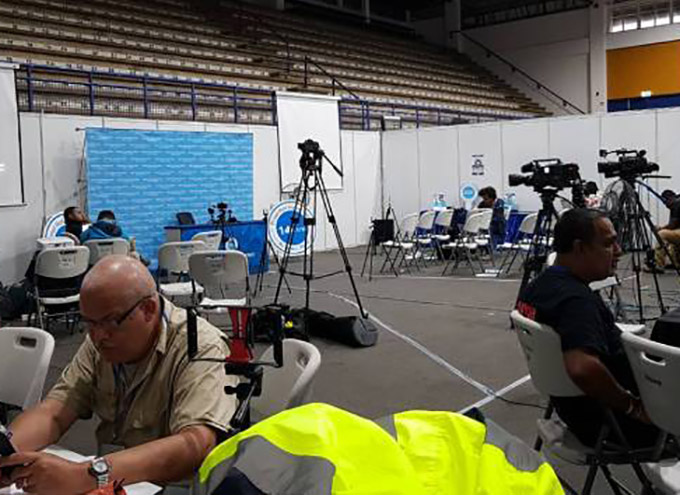
 Media representatives on standby at Fiji’s National Results Centre in Suva. Image: Eliki Drugunalevu/Wansolwara
Fiji poll campaign blackout period to end at 6pm tomorrow

By Wansolwara Staff
The Fiji general election campaign blackout period is expected to end at 6pm tomorrow after the final votes are cast by 7498 voters at 22 polling venues that had to close on election day as a result of bad weather.
Final results tabulation was continuing today.
Initially, heavy rain and strong winds made 23 polling venues inaccessible to voters, prompting the Fijian Elections Office and Electoral Commission to announce the adjournment of voting in those affected areas on November 14.
READ MORE: Counting continues after Fiji poll
 The closure of those 23 polling venues meant 7852 voters were unable to cast their ballots at the time.
As of yesterday, Supervisor of Elections Mohammed Saneem said there were now 7498 voters yet to cast their votes at 22 polling venues.
He said any breaches to the Electoral Act regarding the blackout period would be reported to the Fiji Independent Commission Against Corruption.
Saneem also clarified that the release of provisional results could potentially influence the decision of voters who have yet to cast their votes.
However, he said the release of the provisional results also showed how transparent the election process was.
Saneem also addressed concerns about voters whose day of worship fell on Saturday, the day set for the polling to commence for the adjourned polling venues, saying they were looking into this issue.
In response to a statement released by four political parties, namely Social Democratic Liberal Party, Fiji Labour Party, National Federation Party and United Fiji Party, claiming the tabulation process was not transparent as political party agents and candidates were not shown the documents from which the provisional results were posted on the National Results Tally, Saneem said those parties misunderstood the tabulation process.
“When they came for the (election) training we told them that tabulation on the provisional results would be done by mobile calls by our officials from the fields. In order to verify the process, we will be doing the data entry here and the parties can follow through from the field themselves,” Saneem said.
“The final result is where the parties are given the photocopies of the documents used for data entry.
“A printout is also given to them post-entry of the results. The provisional results, we’ve always said, would be phone call results entered directly into the system and updated as required by law so I think it is all a failure to understand the electoral process.”
Saneem said they could not speculate a specific time for the completion of counting but assured the public they “will do it as early as possible”.
This article is republished under the content sharing arrangement of USP’s Wansolwara student journalism newspaper and AUT’s Pacific Media Centre.

Article by AsiaPacificReport.nz
]]>Explainer: how the Antarctic Circumpolar Current helps keep Antarctica frozen

Source: The Conversation (Au and NZ) – By Helen Phillips, Senior Research Fellow, Institute for Marine and Antarctic Studies, University of Tasmania
The Antarctic Circumpolar Current, or ACC, is the strongest ocean current on our planet. It extends from the sea surface to the bottom of the ocean, and encircles Antarctica.
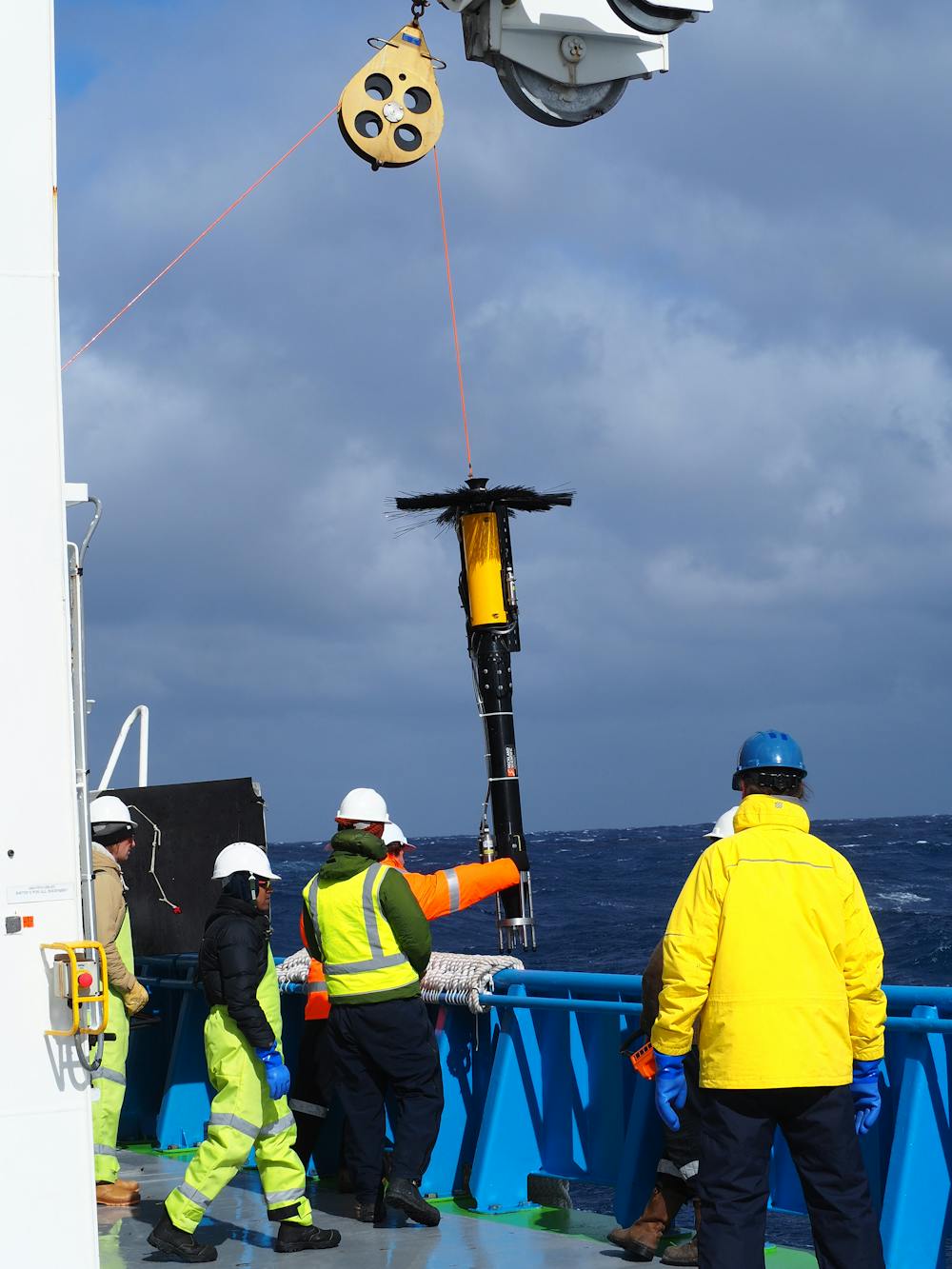
Scientists deploying a vertical microstructure profiler (VMP-2000), which measures temperature, salinity, pressure and turbulence, from RV Investigator in the Antarctic Circumpolar Current, November 2018. Nathan BindoffIt is vital for Earth’s health because it keeps Antarctica cool and frozen. It is also changing as the world’s climate warms. Scientists like us are studying the current to find out how it might affect the future of Antarctica’s ice sheets, and the world’s sea levels.
The ACC carries an estimated 165 million to 182 million cubic metres of water every second (a unit also called a “Sverdrup”) from west to east, more than 100 times the flow of all the rivers on Earth. It provides the main connection between the Indian, Pacific and Atlantic Oceans.
The tightest geographical constriction through which the current flows is Drake Passage, where only 800 km separates South America from Antarctica. While elsewhere the ACC appears to have a broad domain, it must also navigate steep undersea mountains that constrain its path and steer it north and south across the Southern Ocean.
What is the Antarctic Circumpolar Current?
A satellite view over Antarctica reveals a frozen continent surrounded by icy waters. Moving northward, away from Antarctica, the water temperatures rise slowly at first and then rapidly across a sharp gradient. It is the ACC that maintains this boundary.
Map of the ocean surface temperature as measured by satellites and analysed by the European Copernicus Marine Services. The sea ice extent around the antarctic continent for this day appears in light blue. The two black lines indicate the long term position of the southern and northern front of the Antarctic Circumpolar Current.The ACC is created by the combined effects of strong westerly winds across the Southern Ocean, and the big change in surface temperatures between the Equator and the poles.
Ocean density increases as water gets colder and as it gets more salty. The warm, salty surface waters of the subtropics are much lighter than the cold, fresher waters close to Antarctica. We can imagine that the depth of constant density levels slopes up towards Antarctica.
The westerly winds make this slope steeper, and the ACC rides eastward along it, faster where the slope is steeper, and weaker where it’s flatter.
Fronts and bottom water
In the ACC there are sharp changes in water density known as fronts. The Subantarctic Front to the north and Polar Front further south are the two main fronts of the ACC (the black lines in the images). Both are known to split into two or three branches in some parts of the Southern Ocean, and merge together in other parts.
Scientists can figure out the density and speed of the current by measuring the ocean’s height, using altimeters. For instance, denser waters sit lower and lighter waters stand taller, and differences between the height of the sea surface give the speed of the current.
Map of how fast the waters around Antarctica are moving in an easterly direction. It is produced using 23 years of satellite altimetry (ocean height) observations as provided by the European Copernicus Marine Services. Author providedThe path of the ACC is a meandering one, because of the steering effect of the sea floor, and also because of instabilities in the current.
The ACC also plays a part in the meridional (or global) overturning circulation, which brings deep waters formed in the North Atlantic southward into the Southern Ocean. Once there it becomes known as Circumpolar Deep Water, and is carried around Antarctica by the ACC. It slowly rises toward the surface south of the Polar Front.
Once it surfaces, some of the water flows northward again and sinks north of the Subarctic Front. The remaining part flows toward Antarctica where it is transformed into the densest water in the ocean, sinking to the sea floor and flowing northward in the abyss as Antarctic Bottom Water. These pathways are the main way that the oceans absorb heat and carbon dioxide and sequester it in the deep ocean.
Changing current
The ACC is not immune to climate change. The Southern Ocean has warmed and freshened in the upper 2,000 m. Rapid warming and freshening has also been found in the Antarctic Bottom Water, the deepest layer of the ocean.
Waters south of the Polar Front are becoming fresher due to increased rainfall there, and waters to the north of the Polar Front are becoming saltier due to increased evaporation. These changes are caused by human activity, primarily through adding greenhouse gases to the atmosphere, and depletion of the ozone layer. The ozone hole is now recovering but greenhouse gases continue to rise globally.
Winds have strengthened by about 40% over the Southern Ocean over the past 40 years. Surprisingly, this has not translated into an increase in the strength of the ACC. Instead there has been an increase in eddies that move heat towards the pole, particularly in hotspots such as Drake Passage, Kerguelen Plateau, and between Tasmania and New Zealand.
We have observed much change already. The question now is how this increased transfer of heat across the ACC will impact the stability of the Antarctic ice sheet, and consequently the rate of global sea-level rise.
– ref. Explainer: how the Antarctic Circumpolar Current helps keep Antarctica frozen – http://theconversation.com/explainer-how-the-antarctic-circumpolar-current-helps-keep-antarctica-frozen-106164]]>Why you like coffee, and I choose tea – it’s in the genes
Source: The Conversation (Au and NZ) – By Daniel Liang-Dar Hwang, Postdoctoral Researcher, The University of Queensland
Do you drink freshly brewed coffee to start off your day? Or is a cup of English breakfast tea a better option for you?
Your choice could be a result of your genes, and how they affect your experience of bitter flavours.
Published today, our new study shows that the liklihood of a person being a coffee drinker or a tea drinker is linked with the presence or absence of key genes that shape how bitter flavours taste.
Read more: Health Check: why do I get a headache when I haven’t had my coffee?
Mmmmm tastes bitter
Tea and coffee generally taste bitter because they contain bitter-tasting substances such as caffeine. Quinine is another substance that contributes to the bitterness of coffee, and is also found in tonic water.
A recent study by my colleagues and I revealed bitter taste receptor genes that are responsible for the perception of caffeine, quinine and a man-made bitter substance propylthiouracil (PROP). This latter molecule has the same bitterness as Brussels sprouts (for those of us who can taste it).
We knew from previous research that inherited factors play a role in the amount of coffee and tea a person drinks a day, and that the ability to digest caffeine plays an important role in the people’s consumption of caffeinated beverages.
But we didn’t know whether genes for bitter taste perception were involved in determining consumption of bitter-tasting beverages. Previous studies with small sample sizes reported no or inconsistent relationships.
In this new study, we examined the consumption of coffee and tea in a large Biobank cohort of more than 400,000 men and women aged 37 to 73 in the UK for whom we also had data about their bitter receptor genes.
We employed a method commonly used in epidemiology called “Mendelian randomisation” to compare coffee and tea intake between people who did or did not carry particular bitter taste receptor genes.
Caffeine ‘super-tasters’
Compared to an average person, we showed that people who carried the bitter taste receptor for caffeine were more likely to be heavy coffee drinkers, meaning they drank more than four cups of coffee a day. Every extra copy of the bitter taste receptor gene lead to a 20% higher chance of being a heavy coffee drinker. These “super-tasters” of caffeine also drank less tea.
As caffeine contributes to not only the bitterness of coffee but also its perceived strength and texture, people who are better at detecting caffeine may find coffee more enjoyable and flavourful.
In contrast, people who carried the bitter taste receptors for quinine or PROP drank less coffee and more tea. Compared to an average person, every extra copy of the quinine or PROP receptor gene was linked with a 9% or 4% higher chance of being a heavy tea drinker (meaning they drank more than 5 cups of tea a day).
Read more: I’ve always wondered: why does lemon juice lighten the colour of tea?
When there is a need for caffeine, “super-tasters” of quinine and PROP could choose tea over coffee because they tend to be more sensitive to overall bitterness.
Don’t blame your genes
In this study we demonstrated that genes for bitter taste perception are linked with the amount of coffee and tea we drink.
We’re interested to see if this finding could lead to future studies investigating whether “super-tasters” of bitter molecules are more or less prone to drink high and perhaps even unhealthy amounts of coffee and tea, or other drinks containing bitter molecules.
But we can’t blame everything on your genes. Even if as a child or right now you dislike the bitterness of coffee or tea, you may have noticed that your taste and dietary behaviour change over time as you grow.
So, even if you carried the “wrong” genes in terms of tasting bitter flavours, you could still learn to enjoy deliciously bitter-tasting foods and beverages.
Read more: Want to eat better? You might be able to train yourself to change your tastes
– ref. Why you like coffee, and I choose tea – it’s in the genes – http://theconversation.com/why-you-like-coffee-and-i-choose-tea-its-in-the-genes-106854]]>
How Australia’s NRA-inspired gun lobby is trying to chip away at gun control laws, state by state
Source: The Conversation (Au and NZ) – By George Rennie, Lecturer in Politics, University of Melbourne
One of the more noticeable ad campaigns in the upcoming Victoria state election comes from a seemingly unlikely source. The Shooting Industry Foundation of Australia (SIFA) seeks to unwind Australia’s gun regulations, and knows that state governments are as good a place as any to start.
SIFA is a key part of Australia’s gun lobby, and uses the same tactics as its American equivalent, the National Rifle Association (NRA). Like the NRA, SIFA seeks to co-opt democratic norms to force change, even when it is directly at odds with overwhelming public opinion.
SIFA’s “Not Happy Dan” television ad.
The NRA playbook
A common misconception about the NRA is that it’s a “grass-roots” organisation. This implies that policy comes from its many paid members, and then works its way up to the leaders, who dutifully implement the will of their constituents.
Not so: the NRA’s policies are set by America’s gun industry, which has a vested (financial) interest in lax gun laws. The gun industry controls the NRA’s board and appoints its directors (they are not democratically elected by NRA members), and also dictates policy. This is why the NRA resists almost any calls for stricter gun control, even though NRA members themselves favour some restrictions (such as tougher background checks), not to mention the wider American electorate.
Meanwhile, along with its prevalence of guns, America suffers a mass shooting nine out of every 10 days on average and a shocking number of school massacres.
Read more: Oversimplifying gun control issues can pose a real threat to community safety
So, how can the NRA get its way, in spite of so many problems, and being so widely disliked?
It succeeds because it uses America’s representative political system to get its way. The NRA knows that policy is made through leverage: financially supported groups of elected officials can promote its policies, even when the wider public favours tighter gun control laws and Democrats make efforts to try to pass them.
It also uses sophisticated advertisements, and “education” campaigns to muddy the waters and spread misinformation on the efficacy of gun control. (Needless to say, the NRA suggests gun control doesn’t work, despite significant evidence that it does.)
SIFA and the Australian gun lobby
There are some similarities between the NRA and SIFA – and some key differences.
Like the NRA, SIFA is also backed by the gun industry, such as the Beretta family (who are adamant that guns are inextricably linked to freedom) and NIOA (a major gun importer in Australia that was featured in a recent 4 Corners special on the gun industry).
As with the NRA, SIFA is also willing to use a range of tools to get its way. And, as with America, the power to make gun control laws in Australia rests with the states, as well as the federal government.
Yet, SIFA knows there is little support in Australia for weak gun control laws and adopting the NRA’s more aggressive stances would backfire. Australians would react very negatively to an overt push to relax gun laws.
So, the group instead claims it wants to “simplify, not weaken” gun laws (though its principle sources of funding do indeed want to “weaken” rather than merely “simplify” these statutes).
And, when SIFA launched advertisements ahead of the Victoria election, they were not designed to change people’s minds on gun control. Instead, the ad blitz has relied on the catchy, if derivative, slogan “Not Happy Dan”, made famous by the “Not Happy Jan” Yellow Pages ads. And its focus is not on gun control, but rather the performance and competency of the Labor Government.
Read more: What the NRA can teach us about the art of public persuasion
The campaign is designed to weaken Labor, which favours tighter gun control, perhaps with the hope that any newly elected independents in the state will be pro-gun. SIFA knows that if the balance of power rests with a handful of independents after the election, especially those from parties like the Shooters, Fishers and Farmers Party, then there is a possibility that Australia’s highly effective gun control laws can be slowly unwound.
Given SIFA had the same strategy last year in the Queensland election, it seems clear it has a strategy to try to influence Australian politics wherever it can. And with its financial backers continuing to win government contracts in Australia, it is also likely SIFA will have no shortage of funding in the future.
The “Flick ‘Em” campaign in last year’s Queensland election, funded by SIFA.
Undoing hard-won change
On the eve of the Victoria election, Melbourne was shocked by an attack by a madman with a knife on Bourke Street in the CDB. But the city also remembers what happened when a madman went on a rampage with a gun 30 years ago, not far away on Hoddle Street. Seven people were killed and 19 wounded.
This memory, along with many others, sits in stark contrast to the conspicuous lack of gun deaths following the introduction of tighter gun laws in Australia in 1996. This fundamentally underpins much of the country’s resistance to weaker gun laws, and the gun lobby knows it.
Read more: The arguments that carried Australia’s 1996 gun law reforms
America’s guns laws were weakened through a gradual process. This involved the patient undermining of the popular will through the passage of favourable laws in state legislatures – the blocking of others – and a continuing narrative that linked guns with freedom and gun control with an evil or “nanny” state.
The Australian gun lobby has learnt from this American example, and its methods emulate it. Expect to see more from SIFA in the lead-up to other elections in the future – Australia’s very own NRA.
– ref. How Australia’s NRA-inspired gun lobby is trying to chip away at gun control laws, state by state – http://theconversation.com/how-australias-nra-inspired-gun-lobby-is-trying-to-chip-away-at-gun-control-laws-state-by-state-105667]]>Omega-3 supplements in pregnancy reduce the risk of premature birth
Source: The Conversation (Au and NZ) – By Philippa Middleton, Associate Professor, South Australian Health & Medical Research Institute
Pregnant women who increase their intake of omega-3 long-chain fatty acids are less likely to have a premature birth, according to a Cochrane Review published today.
Most pregnancies last between 38 and 42 weeks, but if a baby arrives before 37 weeks, the chances of poorer health for that baby increase. One in 12 babies in Australia are born prematurely – before 37 weeks.
The earlier a baby is born, the higher the risk of poor health, and a small number of babies don’t survive.
Read more: Mums and dads of very preterm babies more likely to be depressed
Some premature babies have to spend the first weeks or months of life in special intensive care units in hospital. Premature babies can develop conditions that last a lifetime, including problems with their lungs, gut, and immune system, and vision and hearing loss.
Problems with behaviour and learning are also more common in children born too early. These consequences result in substantial costs to health care systems and to families of premature babies.
What did we find?
The Cochrane Review, led by our research team at the South Australian Health and Medical Research Institute, included 70 randomised trials with nearly 20,000 women.
It found increasing the daily intake of omega-3 long-chain fatty acids during pregnancy:
-
lowers the risk of having a premature baby (birth before 37 weeks) by 11%, from 134 per 1,000 to 119 per 1,000 births
-
lowers the risk of having an early premature baby (birth before 34 weeks) by 42%, from 46 per 1,000 to 27 per 1,000 births.
Most of the trials were conducted in high-income countries (Australia, the United States, England, The Netherlands and Denmark) and included women who were both at normal and high risk for poor pregnancy outcomes. Most women studied were pregnant with one baby.
The trials generally used supplements containing the omega-3 long-chain fatty acids docosahexaenoic acid (DHA) and eicosapentaenoic acid (EPA).
Omega-3 supplements reduce the risk of an early premature birth from 46 per 1,000 to 21. Aditya RomansaRisk of premature birth
The causes of premature birth are still not well understood. But we know that when a pregnant woman’s labour starts, powerful hormones called prostaglandins take hold.
Sometimes women produce high amounts of prostaglandins, and those produced from omega-6 fats can make birth come too early.
Read more: Despite new findings, the jury is still out on whether omega-3 supplements reduce heart attacks
So where does omega-3 come in?
In the 1980s, researchers noticed women in Denmark had shorter pregnancies and more premature babies than their neighbours in the Faroe Islands who eat much more fish. The omega-3 long-chain fatty acids in fish seemed to be responsible – they are thought to help prevent premature birth by reducing the potency of prostaglandins that can trigger early birth.
Our review shows supplementation with omega-3 long-chain fatty acids during pregnancy is one of the few safe and effective strategies capable of preventing early labour and premature birth.
Fish or supplements?
Most of the trials included in this Cochrane review that reported on premature birth used omega-3 supplements, rather than dietary changes.
It is difficult to get the amount of the omega-3 long-chain fatty acids used in the many trials from food alone, unless you regularly eat fatty fish such as salmon, sardines or mackerel. To get the recommended amount of DHA that was used in many trials, you would need to eat at least two to three 150g serves of salmon every week.
The advice for pregnant women expecting a single baby is to consume daily fish oil supplements containing at least 500mg of DHA, starting at 12 weeks of pregnancy. The supplement does not need to contain more than 1000mg DHA+EPA. There appears to be no extra benefit of higher doses.
This advice is currently being integrated into national clinical practice pregnancy guidelines.
Read more: You can’t rely on fish oil supplements in pregnancy to make your children smarter
– ref. Omega-3 supplements in pregnancy reduce the risk of premature birth – http://theconversation.com/omega-3-supplements-in-pregnancy-reduce-the-risk-of-premature-birth-106777]]>
Explainer: why the Antarctic Circumpolar Current is so important for keeping Antarctica frozen
Source: The Conversation (Au and NZ) – By Helen Phillips, Senior Research Fellow, Institute for Marine and Antarctic Studies, University of Tasmania
The Antarctic Circumpolar Current, or ACC, is the strongest ocean current on our planet. It extends from the sea surface to the bottom of the ocean, and encircles Antarctica.
Scientists deploying a vertical microstructure profiler (VMP-2000), which measures XXXXXX, from RV Investigator in the Antarctic Circumpolar Current, November 2018. Nathan BindoffIt is vital for Earth’s health because it keeps Antarctica cool and frozen. It is also changing as the world’s climate warms. Scientists like us are studying the current to find out how it might affect the future of Antarctica’s ice sheets, and the world’s sea levels.
The ACC carries an estimated 165 million to 182 million cubic metres of water every second (a unit also called a “Sverdrup”) from west to east, more than 100 times the flow of all the rivers on Earth. It provides the main connection between the Indian, Pacific and Atlantic Oceans.
The tightest geographical constriction through which the current flows is Drake Passage, where only 800 km separates South America from Antarctica. While elsewhere the ACC appears to have a broad domain, it must also navigate steep undersea mountains that constrain its path and steer it north and south across the Southern Ocean.
What is the Antarctic Circumpolar Current?
A satellite view over Antarctica reveals a frozen continent surrounded by icy waters. Moving northward, away from Antarctica, the water temperatures rise slowly at first and then rapidly across a sharp gradient. It is the ACC that maintains this boundary.
Map of the ocean surface temperature as measured by satellites and analysed by the European Copernicus Marine Services. The sea ice extent around the antarctic continent for this day appears in light blue. The two black lines indicate the long term position of the southern and northern front of the Antarctic Circumpolar Current.The ACC is created by the combined effects of strong westerly winds across the Southern Ocean, and the big change in surface temperatures between the Equator and the poles.
Ocean density increases as water gets colder and as it gets more salty. The warm, salty surface waters of the subtropics are much lighter than the cold, fresher waters close to Antarctica. We can imagine that the depth of constant density levels slopes up towards Antarctica.
The westerly winds make this slope steeper, and the ACC rides eastward along it, faster where the slope is steeper, and weaker where it’s flatter.
Fronts and bottom water
In the ACC there are sharp changes in water density known as fronts. The Subantarctic Front to the north and Polar Front further south are the two main fronts of the ACC (the black lines in the images). Both are known to split into two or three branches in some parts of the Southern Ocean, and merge together in other parts.
Scientists can figure out the density and speed of the current by measuring the ocean’s height, using altimeters. For instance, denser waters sit lower and lighter waters stand taller, and differences between the height of the sea surface give the speed of the current.
Map of how fast the waters around Antarctica are moving in an easterly direction. It is produced using 23 years of satellite altimetry (ocean height) observations as provided by the European Copernicus Marine Services. Author providedThe path of the ACC is a meandering one, because of the steering effect of the sea floor, and also because of instabilities in the current.
The ACC also plays a part in the meridional (or global) overturning circulation, which brings deep waters formed in the North Atlantic southward into the Southern Ocean. Once there it becomes known as Circumpolar Deep Water, and is carried around Antarctica by the ACC. It slowly rises toward the surface south of the Polar Front.
Once it surfaces, some of the water flows northward again and sinks north of the Subarctic Front. The remaining part flows toward Antarctica where it is transformed into the densest water in the ocean, sinking to the sea floor and flowing northward in the abyss as Antarctic Bottom Water. These pathways are the main way that the oceans absorb heat and carbon dioxide and sequester it in the deep ocean.
Changing current
The ACC is not immune to climate change. The Southern Ocean has warmed and freshened in the upper 2,000 m. Rapid warming and freshening has also been found in the Antarctic Bottom Water, the deepest layer of the ocean.
Waters south of the Polar Front are becoming fresher due to increased rainfall there, and waters to the north of the Polar Front are becoming saltier due to increased evaporation. These changes are caused by human activity, primarily through adding greenhouse gases to the atmosphere, and depletion of the ozone layer. The ozone hole is now recovering but greenhouse gases continue to rise globally.
Winds have strengthened by about 40% over the Southern Ocean over the past 40 years. Surprisingly, this has not translated into an increase in the strength of the ACC. Instead there has been an increase in eddies that move heat towards the pole, particularly in hotspots such as Drake Passage, Kerguelen Plateau, and between Tasmania and New Zealand.
We have observed much change already. The question now is how this increased transfer of heat across the ACC will impact the stability of the Antarctic ice sheet, and consequently the rate of global sea-level rise.
– ref. Explainer: why the Antarctic Circumpolar Current is so important for keeping Antarctica frozen – http://theconversation.com/explainer-why-the-antarctic-circumpolar-current-is-so-important-for-keeping-antarctica-frozen-106164]]>Children in the car era: bad for them and the planet
Source: The Conversation (Au and NZ) – By Hulya Gilbert, PhD Candidate, University of South Australia
Children today spend more time in cars than previous generations. They also spend less time playing on the streets and in unstructured and unsupervised activity outdoors. The lack of opportunities for physical activity and the loss of freedom to explore their local neighbourhood is bad news for children’s physical, social and mental well-being.
Read more: City-by-city analysis shows our capitals aren’t liveable for many residents
Though equally important, the environmental cost of these trends is not well understood. As rapid urbanisation extends across the globe, transport planning continues to be challenging. Transport is one of the biggest sources of greenhouse gas emissions. And 46% of transport-related emissions come from private vehicles.
We know surprisingly little, however, about the detailed reasons for individual private car use. An international study highlights that households with children have higher rates of car ownership and use. In Australia, official statistics on transport pay a great deal of attention to the “journey to work”, but car travel that can be attributed to child-related activities has not been fully explored.
Research on children’s travel patterns tends to focus on the “journey to school”. While school trips are important, this provides only a narrow image of children’s actual travel patterns. They also make many trips to non-school destinations and extracurricular activities such as sport, music and dance classes.
We recently reviewed local government policies related to sustainable mobility and child-and-youth-friendly cities. Our review found little consideration of children and young people in transport planning policies across Australia. This is despite the fact that the decline in their walking and cycling rates was widely recognised.
Read more: Australian cities are far from being meccas for walking and cycling
Why are walking and cycling rates decreasing?
Several factors contribute to lower rates of walking and cycling among children and their limited use of public transport. These range from urban form to social and economic conditions.
Australian suburbs typically have low density and segregated land uses, which privilege the car over other travel modes. This situation is worse in outer suburbs which have limited public transport and poor provision for walking and cycling. These outer suburbs are also more likely to have lower socio-economic status and a larger proportion of families with children.
All together, these suburban conditions add to the social disadvantage resulting from limited access to services and activities that are critical for families with children. This further encourages private car use.
Read more: Designing suburbs to cut car use closes gaps in health and wealth
Changing social structures mean families usually are on tight schedules. These changes include increases in employment for women and in the number of both single-parent families and families where both parents are in paid work. Because the car is relatively cheap and easy to use for individual mobility in Australian cities, it is generally the uncontested way to manage these schedules.
In addition, the increased individualisation as a common characteristic of Western societies usually means parents are expected to provide strict supervision of children’s movements. In the conditions described above, the most practical way to do this is usually to drive them in a car.
Of course this increases the number of cars on our streets, particularly around schools and other common destinations for children. This then perpetuates parents’ concerns about traffic safety, leading in turn to even more private car use.
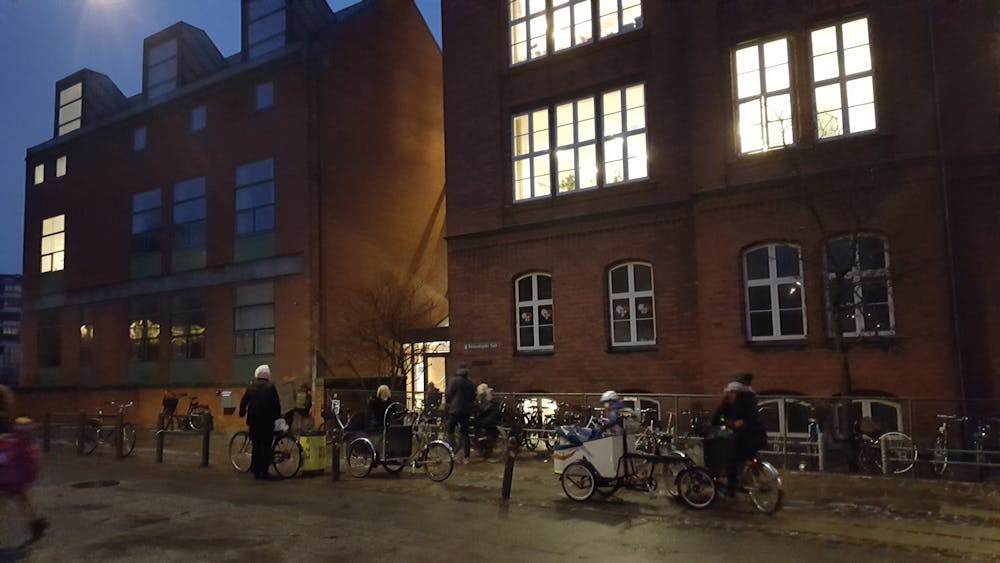
Notice the difference? Drop-off time at an inner-city Copenhagen school. Hulya Gilbert, Author providedRead more: Young people want walkable neighbourhoods, but safety is a worry
Child-centred sustainable mobility
What is perhaps most striking about the trend towards chauffeuring children is that these facts are seemingly becoming accepted as unavoidable outcomes of modern society. They are largely ignored in transport planning.
We have argued that children have a pivotal role in sustainable mobility. Greater attention to the mobility needs of families with children will produce many social and environmental benefits.
The importance of children’s role in sustainable mobility can be grouped under two themes.
First, children’s needs in today’s lifestyles mean they have an active role in contributing to increased private car use. The daily lives of families with children offer a good example of the context in which carbon-intensive travel patterns occur. If their mobility needs can be met more sustainably (even partially) we are likely to achieve significant carbon savings.
Second, and perhaps more importantly, children have a role as catalysts for behavioural change towards sustainable cities. This is because childhood is a key stage for establishing sustainable travel habits as opposed to “trying to modify already ingrained habits later in life”.
A better understanding of children’s travel patterns would provide a solid foundation for sustainable mobility policies. Planning and transport policies that are responsive to children’s specific needs are likely to have more effective and longer-lasting outcomes, with many related benefits for social sustainability and public health.
– ref. Children in the car era: bad for them and the planet – http://theconversation.com/children-in-the-car-era-bad-for-them-and-the-planet-105377]]>A tip for bankers ahead of the royal commission: be more like doctors
Source: The Conversation (Au and NZ) – By Warren Hogan, Industry Professor, University of Technology Sydney
The financial services royal commission resumes for its final round of hearings on Monday, and reappearing before Justice Hayne will be the chief executives each of the big six institutions he has in his sights: the Commonwealth Bank, Westpac, AMP, Macquarie, ANZ, and the National Australia Bank.
At issue are shocking abuses of trust, and when the government responds after receiving the report in February it will be under pressure to introduce tighter rules that more closely regulate bankers’ behaviour.
There’s another, better, path it could follow. It could loosen the rules and treat bankers more like doctors.
Crude attempts to regulate behaviour fail
We trust doctors, not because their behaviour is tightly regulated but because it is self-regulated. As professionals they strive to be trustworthy, in the same way as citizens who don’t cheat on their social security claims, or restaurant customers who don’t eat without paying.
A regulation imposed on top of a relationship of trust can ruin it.
In a famous study titled A Fine Is A Price, economists Uri Gneezy and Aldo Rustichini examined what happened when an Israeli daycare centre attempted to impose fines on parents who picked up their children late.
Read more: Five steps business can take to ensure aggressive performance targets don’t drive bad behaviour
Surprisingly, the trial of the fine resulted in more, rather than fewer, late pickups.
In the eyes of the late parents, the fine changed late pickups from bad behaviour into an acceptable outcome of cost-benefit analysis. They simply interpreted the fine as a babysitting cost, and weighed it against the benefit of arriving when it suited them. Moral motivations were crowded out.
Doctors take vows
Professionals with ethics take vows to honour their duty to their clients, even where the costs of doing so are greater than the benefits of not doing so.
Service providers who don’t take ethics seriously weigh the costs and benefits of acting in the interests of their clients versus acting in their own interests. This ‘moral optimization’ may take account of ethics, but only if it pays.
Many financial services workers don’t take ethics seriously partly because they have been trained in economics or finance – disciplines which teach that cost-benefit analysis applies to everything.
A start would be to train them better. Their teachers could listen to the words of the creator of much of the theory used to justify performance pay, Michael Jensen of Harvard:
We teach our students the importance of conducting a cost-benefit analysis in everything they do. In most cases, this is useful – but not when it comes to behaving with integrity.
When integrity is at stake it is better to replace moral optimization with moral prioritization, by giving priority to moral principles like telling the truth or looking after vulnerable clients.
Money changes things
Recent research on the psychological power of money suggests that financial market participants are at risk of negative ethical tendencies when money is used as an incentive, or even when they are just reminded of its importance, so-called money priming.
Money is used as an incentive to in order overcome the so-called principal-agent problem in which agents, (workers or chief executives) are tempted to put they own interests ahead of those of the firm they work for.
It can work, but if high-powered financial incentives communicate that the recipient’s only goal should be to maximise profit, then a culture of material self-interest takes hold, constrained at best by the letter of the law. And this crowds out other interests, such as those of their customers.
This means high-powered financial incentives can solve one kind of untrustworthiness, but only by creating another.
Professionals such as doctors and teachers solve the principal agent problem in another way: through ethics.
Banking could be a profession
Rather than further regulation, we propose a greater focus on ethics through a program of professionalisation, including:
-
Establishing an interim professional body run by outsiders who come with a proven ethic of serving the public in fields such as education or health. After five years the finance industry can apply to the government to staff and run the body itself, subject to performance.
-
A winding back of regulation in order to signal that “you are professionals who have to take responsibility for ethical judgements”. The professional body could stand down senior managers deemed to be showing commitment to the new culture.
-
A fundamental change of bonuses so that they become incentives for ethical behaviour. We suggest an automatic bonus payment of 10-20% of total pay. It could be withheld for two reasons: either poor financial performance of the firm, or an ethical breach. In effect, it would be a negative bonus. Multiple ethical breaches would result in the loss of professional status and employment.
Regulation hasn’t worked
Automatic bonuses remove the extreme money priming of the finance industry, and they can be helpful in maintaining employment in the event of a downturn. They can simply be reduced instead of laying off staff, as happened during the global financial crisis.
Boosting regulation and boosting the capability of regulators, as many say they want, could work against developing the ethics and the trust that makes other professions work.
– ref. A tip for bankers ahead of the royal commission: be more like doctors – http://theconversation.com/a-tip-for-bankers-ahead-of-the-royal-commission-be-more-like-doctors-106927]]>Friday essay: turning up the level of civilisation
Source: The Conversation (Au and NZ) – By Julianne Schultz, Founding Editor of Griffith REVIEW; Professor, Griffith Centre for Social and Cultural Research, Griffith University
In October 2005 Stephen Colbert was just starting his eponymous show. It is somewhat chilling to realise that this was when he came up with the word truthiness: it seems so now.
It has taken a while to reach maturity and morphed into the even more menacing trumpiness. Truthiness captures the slippery world inhabited by those unencumbered by books, or facts, context or complexity – for those who just know with their heart rather than their heads – where things can just feel truthful.
Who would have thought that a little more than a decade later, the White House would be occupied by a man who makes the Colbert character seem almost reasonable. Quaintly charming. Trumpiness captures something even more sinister, statements that don’t even have to feel truthful, apparently ignorant rough-hewn words, weaponised for effect. Whatever comes out – alarmingly frequently words that sound as though they emanated from the crib sheet of a propaganda handbook.
In defining these words, Colbert provided a helpful predictor for a president who according to the Washington Post last week, had made 6,420 false or misleading comments in 649 days. That is industrial scale deception – small lies told over and over, medium sized lies that have become a new global lingua franca and big lies that take even his most ardent supporters by surprise and sometimes force a sort of retraction or denial – sort of, but only after they have already infiltrated the virtual world and got a life of their own.
This is not normal. It is not the way we have come to expect even a tainted public sphere, distorted by the commercialisation of public attention, to operate. The president’s mantra of fake news is, as he has admitted, a deliberate and determined effort to undermine confidence in what remains of a rigorous public sphere and professional journalism that takes itself seriously. In the unregulated, “more insidious” domain of the internet this is particularly dangerous.
Such industrial scale deception is at odds with the norms that characterise any flourishing civilisation. If truth is irrelevant to discourse, trust is not merely dented it is destroyed. Other norms of acceptable behaviour cannot be far away. What is happening now, goes well beyond spin or hollow speech. The New York Times correspondent Roger Cohen describes it as “corrosive, corrupting and contagious”.
In the shrunken global village this has dangerous implications everywhere, for public and personal behaviour. If the so called, “leader of the free world” can talk the way he does, without regard to fact or feeling, the level of civilisation is turned down everywhere he is heard.
What we are witnessing is behaviour contrary to the long-established moral core of a civilised society, arguably giving succour to evil, and deliberately destroying trust.
Democracy in retreat
So how did it come to this?
It is easy to feel that the world is going to hell in a handbasket – the news of catastrophe and disaster, the inflammatory US president, the distortion of social media, the global instability of superpower realignment, the palpable threat of climate change, the rise of authoritarian leaders – and that is for starters.
Freedom House, the Washington-based NGO, has been monitoring global freedom since 1941, when a very different US President articulated an expansive ethic that has since prevailed in “kin countries” and beyond. With the second world war in full, murderous, destructive fury, President Roosevelt declared that as human beings, all people were entitled to freedom of speech and expression, freedom to worship their god in their own way, freedom from want and freedom from fear. At the time it was ambitious rhetoric, demonstrably at odds with the wartime experience. But it provided guiding principles for a different future.
Last month in a very different context, Freedom House reported that around the world, political and civil rights sunk to their lowest level for a decade.
For the twelfth year in a row, democratic setbacks outnumbered gains. Democracy is in crisis. Values are under assault and in retreat in country after country. Young people are losing faith in politics. Trust has been eroded by commerce and the calcification of institutions. Millions of people are living without the rights we take for granted as a measure of civil, liberal, democratic society. Even nations that like to pride themselves on a deep democratic history are slipping on the scale, as trust in institutions is eroded and checks and balances slip out of equilibrium and technology remakes the way things are done.
This is most notable in the United States, which fell to 86 out of 100 on a scale measuring a wide range of political and individual rights and the rule of law, and the United Kingdom, which slipped to 94. Australia and NZ scored 98, with the virtuous Scandinavians topping with perfect scores.
This trend line is a matter of real concern, because it is contrary to the previous trajectory.
Until relatively recently, enhanced civil and political rights were what was expected, giving comfort to those of us who “hope the arc of history bends towards greater emancipation, equality and freedom”.
Taking a wider view of the state of the globe provides a slightly more reassuring message, that that arc may still be bending the right way. But the tension between individual rights and popular will is fertile territory for authoritarian leaders and their shadow puppets.
Survival is deep in our make up, means we dwell on the negative, alert to threats and dangers, ready to respond to fear. But as Stephen Pinker and Kishore Mahbubani loudly proclaim, the bigger picture is not as bad as we might be inclined to think with one ear cocked to the latest news bulletin and an eye on the real Donald Trump’s twitter feed.
The Human Development Index shows that as a species we are living longer and better. Life expectancy at birth worldwide is now 71 years, and 80 in the developed world; for most of human existence most people died around 30. Global extreme poverty has declined to 9.6% of the world’s population; still limiting the lives of too many, but 200 years ago, 90% lived in extreme poverty. In just the last 30 years, the proportion of the global population living with such deprivation has declined by 75%. Equally unappreciated is the fact that 90% of the world’s population under the age of 25 can read and write, including girls. For most of the history of Europe, no more than 15% of the people could read and write, mostly men.
So despite the truthiness feeling that things are going wrong, a lot is going right, for a lot of people, in a lot of countries. But this is a moment at risk of being squandered.
‘Reason sweeteened by values’
Which invites the question of what is at stake, how might the level of civilisation here be turned up, by whom, and to what end?
This was a question addressed by Robert Menzies when in 1959, as Prime Minister, he approved the formation of the Humanities Council, the precursor of the Australian Academy of Humanities. At the time, with the Cold War in full swing, and the memory of the hot war still smoking, Menzies declared the Humanities Council would provide,
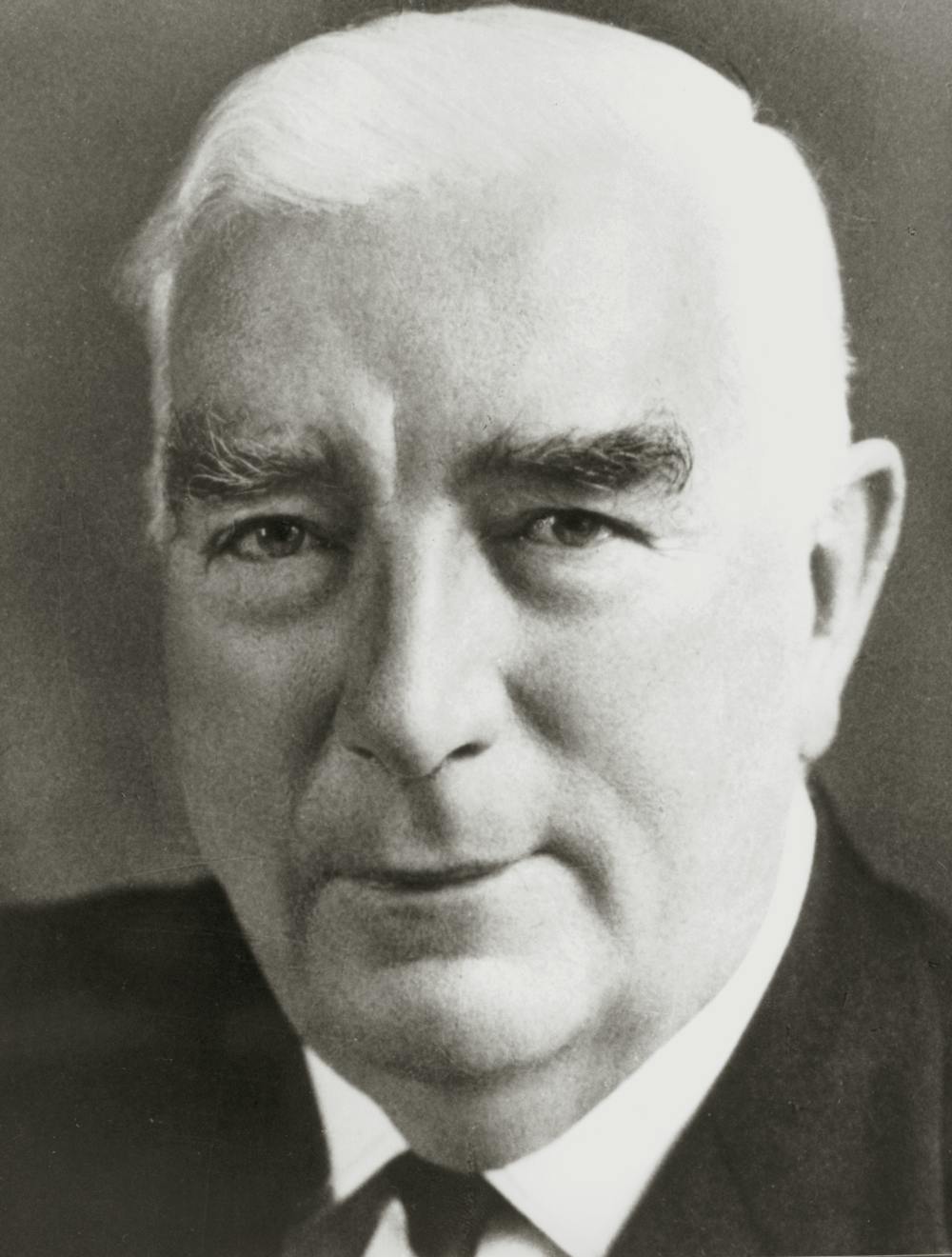
Robert Menzies: saw a key role for the ‘humane studies’. AAPWisdom, a sense of proportion, sanity of judgement, a faith in the capacity of man to rise to higher mental and spiritual levels. We live dangerously in the world of ideas, just as we do in the world of international conflict. If we are to escape this modern barbarism, humane studies must come back into their own, not as the enemies of science, but as its guides and philosophic friends.
Now we are more often likely to hear prominent politicians pillorying the humanities as esoteric and truth-defying, and humanities scholars as ideologues in cahoots with self-aggrandizing scientists who are addressing the existential crisis of climate change for personal gain.
To attack the university system at precisely the moment when it reaches more people, when its impact on the social, cultural and economic wellbeing of the nation has never been higher, seems perverse. Based on medium-sized lies, madness even, from the zone of truthiness.
As the debate triggered by the Ramsay proposal has shown there is a lot at stake. For all the noise in the press, the very fact that there are lots of different ways of approaching the study of civilisations, has not been addressed except by snide, often ill-informed or defensive comments about “relativism”.
I am not a scholar of civilisations or a philosopher, but I am aware of some of the complexity of these debates. The need to define civilisation, and to allow the notion of civilisations, has preoccupied fine minds, and lead to different conclusions. Are there six civilisations, as Samuel Huntington suggested remained when he wrote his most famous essay The Clash of Civilisations? Or the 26, not including the civilisation of the first Australians, which Arnold Toynbee had identified a few decades earlier in his monumental work A Study of History.
Some maintain that civilisations are shaped by religion, others by culture, cities, language, ideology, identity or as a response by human beings to nature.
Civilisations flower and die. Some leave artefacts, buildings and monuments that endure. Others leave stories, philosophies, language, knowledge and ways of being that echo and resonate long after. Some just disappear, some suicide. Others grow and respond to interaction, adapting and changing as they go. And we now know, many leave a measurable trail in the polar ice, as the recent discovery of the traces of lead from Ancient Rome from 1100 BCE revealed.
As Kenneth Clark reputedly said after devoting his life to popularising the study of civilisation, “I don’t know what it is, but I recognise it when I see it.”
A full moon rises behind the Propylaia of the ancient Acropolis of Athens, Greece, November 2016. Civilisations flower and die. Andrea Bonetti/EPAI like to think of it as a shorthand for the way human beings coexist with each other, the world they have created and the natural environment which makes it possible. While recognising the contestability of values, I like the positive humanity of Clive Bell’s notion of “reason sweetened by values” and RG Collingwood’s, “mental process toward ideal social relationships of civility”.
For me, civilisation is pluralist, contestable, open, polite, robust; buttressed by law, culture and institutions and maintained by sustainable economic conditions across time and place.
The need for a bill of rights
The barbarism of the second world war galvanised the creation of civilising mechanisms and institutions. They varied from country to country, with different impacts , but the intention was generally to expand rights and enhance democracy.
The Universal Declaration of Human Rights, which will turn 70 on the 10th of December, was the most singular global response: its 30 rights recognise and spell out “the inherent dignity and equal and inalienable rights of all members of the human family”. Its symbolic power exceeds its legal effect, as George Williams has written. It forms part of customary international law and is seen as binding on all nations. It been translated into 500 languages. Australia has ratified two of the most important subsequent conventions which grew under its umbrella to define political and civil; social, economic and cultural rights – so it is not without effect here.
Read more: Ten photos that changed how we see human rights
The Universal Declaration may well have faults and limits. Some regard it as “human rights imperialism” used by the West to run the world in ways that will protect and promote its interests. But when expansively applied, rather than as an embodiment of Western hegemony, it remains the best organising principle for civility that humanity has yet been devised. Ask women in Asia, India and the Middle East, democrats in Turkey, Hungary and Poland, activists in China or journalists in Russia.
“Without it”, as a Turkish-born scholar recently wrote, “we have few conceptual tools to oppose populism, nationalism, chauvinism and isolationism”.
Australians played an important role in the creation of the Declaration, but we have been tardy about its application. Ours is the only democratic nation which does not have a bill of rights – the only one. This is something that demands pause for thought. It is something we need to address if we are to foster an ethic for a distinctive, hybrid Australian civilisation.
An early morning view of Parliament House. Australia is the only democratic nation without a bill of rights. Lukas Coch/AAPIt is probably worth noting in passing that some of the most strident opponents of an Australian bill of rights are also amongst the most vociferous promoters of a narrowly defined agenda to study western civilisation. It is easy in this environment to forget that the demographics are with those of us who see the arc of history bending up. Surveys show most Australians would welcome a formalisation of rights.
Surely a clear statement of rights and responsibilities is central to any attempt to define a civilisation and the way we co-exist, respectfully, sustainably, creatively.
More than a pale shadow
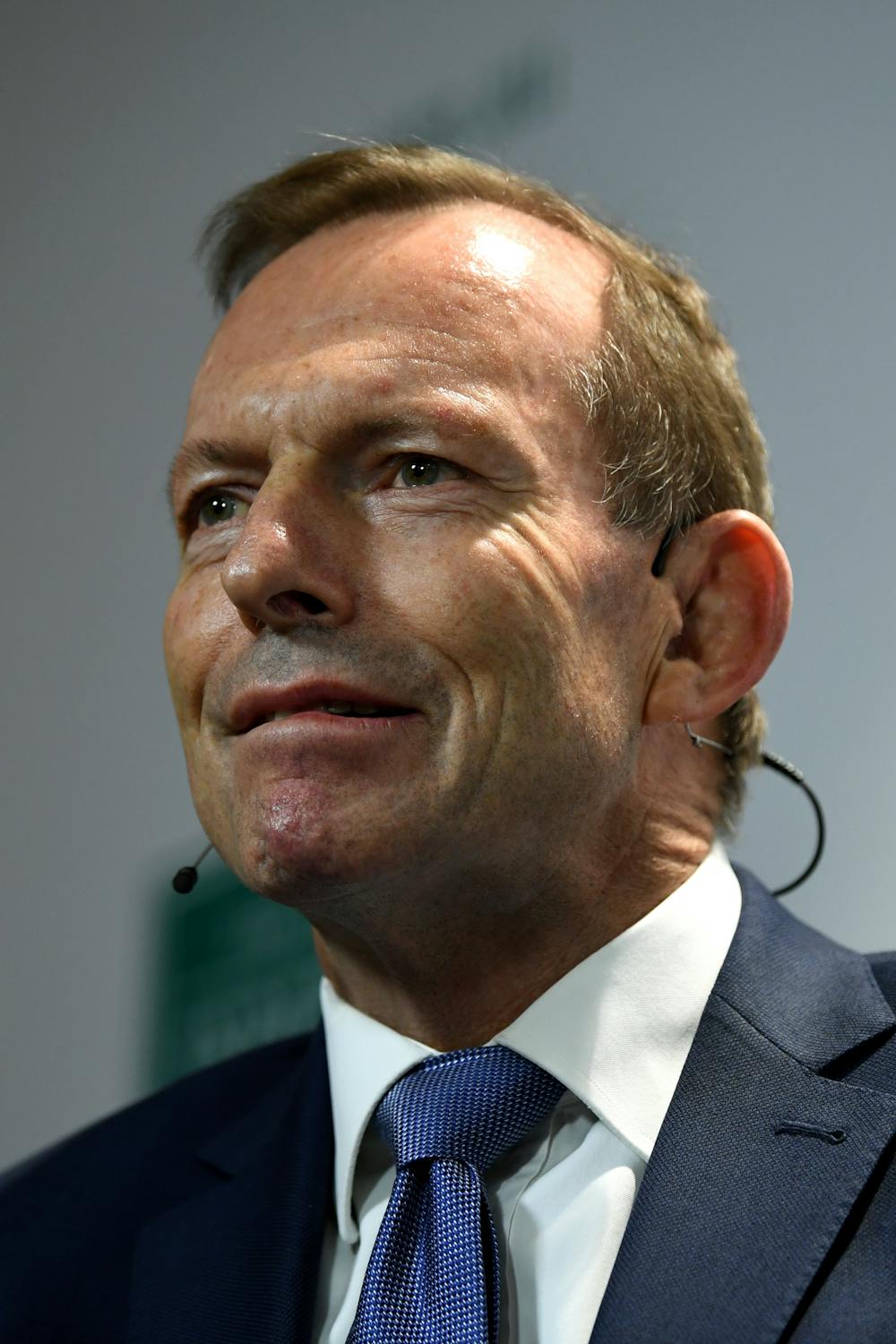
Tony Abbott: ‘a long march through our institutions’. Joel Carrett/AAP“Person by person the world does change,” Tony Abbott wrote in his essay for Quadrant that marked the beginning of the end of the Ramsay program at ANU. In his final paragraph, the former prime minister suggested that the “hundred bright young Australians” who received the proposed scholarships “might change the world”, and begin “a much more invigorating long march through our institutions!”
That makes me a little nervous. It sounds a bit like a fifth column, though I doubt that the students would be willing fodder for such a scheme. I suspect that if they were to embark on such a long march, they, like me, would prefer an open, inclusive, contested, respectful, non-ideological journey, grounded in the unique nature of this place as home to the oldest living civilisations, a product of British colonialism, the creation of people from every continent and our own imagining.
This country has a lot going for it, but we seem stuck in neutral. We need to regain ambition. To foster a remarkable country, one which learns from the mistakes of past and displaces complacent caution to imagine and create a robust, inclusive, generous, rights-based democratic order that will work well in the very different world of the 21st century.
It won’t come from politicians. It will, if history is a guide, be something that is worked up on the ground, in our universities, in our institutions, in our justice system, in business, community groups and on social media. As it takes shape, the politicians will follow and carry it forward.
There is a lot at stake. Person by person, we can help to turn the level of civilisation up in this place, so that it becomes much more than a pale shadow of the worst of the rest of the world.
This article is an excerpt of the 49th Academy Lecture delivered by Professor Julianne Schultz AM FAHA as part of the Australian Academy of the Humanities Symposium, ‘Clash of Civilisations: Where are we now?’ held at the State Library of NSW on 15 November 2018. The full lecture will be published in the 2019 edition of the Academy’s journal, Humanities Australia.
– ref. Friday essay: turning up the level of civilisation – http://theconversation.com/friday-essay-turning-up-the-level-of-civilisation-106857]]>Grattan on Friday: Morrison government brings back memories of McMahon days
Source: The Conversation (Au and NZ) – By Michelle Grattan, Professorial Fellow, University of Canberra
As the Morrison government thrashes around trying to stave off defeat or just save the furniture, it reminds one historian of the ill-fated McMahon administration.
The run up to the Coalition’s 1972 ousting is detailed in a just-released life of Billy McMahon, titled Tiberius with a Telephone. McMahon, often rated at or near the bottom in rankings of modern Australian PMs, has been long overdue for a biography – now he has a 776-page tome.
Author Patrick Mullins, of the University of Canberra, says the “similarities between now and then are too conspicuous to ignore”. These include a history of leadership instability, party disunity, depleted Liberal finances, confused, reactive and inconsistent policy directions, a credible opposition and a feeling for change in the electorate.
Admittedly, as Mullins says, there are differences. Morrison has a benign economic environment, support in important sections of the media, and a much better image than the widely-ridiculed McMahon.
But the fundamental point is that those were desperate days for the Coalition and so are these. “McMahon was in survival mode,” says Mullins, and the same could be said of Morrison.
Mullins’ observation of the McMahon government – “For every achievement and move towards new policy there was another fight, another muddle, another problem that should never have been cause for concern” – resonates when assessing the present one.
A government on the ropes acts impulsively, looking to the moment, compromising sound policy-making and broader, longer-term interests.
So it has been with Morrison’s suggestion Australia would consider moving its embassy to Jerusalem, a proposal born out of political expediency that’s brought him grief this week.
The Indonesian displeasure was felt as soon as the announcement was made before the Wentworth byelection. Subsequently, things have just got worse.
The free trade agreement with Indonesia, which Australia originally hoped would be signed this week when Morrison was in Singapore for the start of the summit season, has become hostage to the embassy decision.
Earlier the government tried to fudge the signing delay by a faux nonchalance about timing. Nobody was fooled. Now in public and private comments, Indonesia has made its position clear in the past few days, to Morrison’s embarrassment.
Malaysian Prime Minister Mahathir Mohamad also piled on, saying he’d pointed out to Morrison that “adding to the cause for terrorism is not going to be helpful”.
Rather than having an easy ride on his international round, the embassy issue has put Morrison on the back foot.
There was no immediate way out. The government still has to declare what it will do. Morrison says a “process” is underway – presumably bureaucrats’ advice is being sought and examined, after they were initially bypassed. There’s to be a decision before Christmas.
This can’t end happily. Morrison is caught between, on the one hand, the right of the Liberal party and the Jewish lobby, and on the other, the strongly-held view of our biggest neighbour in particular.
And the angst has been all for nothing – Wentworth was lost.
The Jerusalem question isn’t the government’s only looming no-win decision. It has yet to provide a response to the religious freedom report, a time bomb left by Malcolm Turnbull, who set the inquiry up to placate the right.
In the meantime negotiations with Labor remain unfinished over legislation announced by Morrison (pre-Wentworth) to prevent discrimination against gay students.
The still-suppressed report has brought little but controversy for the government, and backfired on the right, even before we have a policy from it.
Yet this week we have a new inquiry that reflects ideology more than need, with Education Minister Dan Tehan’s announcement of a review of freedom of speech in universities.
The right has been agitated about the unwelcome receptions some conservative speakers have received from demonstrators on campuses.
Adding to the right’s broader anger with universities was the conservative Ramsay Centre’s failure to persuade the prestigious Australian National University to accept funding for a proposed course on western civilisation, which came with conditions the ANU felt would compromise its academic autonomy.
The freedom-of-speech inquiry seems little more than another manifestation of the culture wars, symptomatic of the anti-intellectual stance of some of the Liberal hardliners, who see tertiary institutions as seeding grounds for the left.
Tehan said the inquiry, undertaken by former chief justice Robert French, would “outline realistic and practical options that could be considered to better promote and protect freedom of expression and freedom of intellectual inquiry”.
It will “review existing material regarding free speech, including codes of conduct, enterprise agreements, policy statements and strategic plans”. French is to report in four months, so before a May election.
Catriona Jackson, chief executive of Universities Australia, says vice-chancellors “are questioning of the rationale for the review” – they “do not see there is an issue to address. Every day on university campuses across the country there is vigorous debate across a wide range of issues,” she says.
This inquiry could end up producing fresh pinch points for the government, like the freedom of religion one has. At the least, it seems an odd priority – the issue wouldn’t engage too many ordinary voters.
That’s in contrast to energy policy, undisputed core business for government and public. But this remains ad hoc and fraught, as the government goes about strong-arming companies on price and searching for opportunities to support new investment in so-called “fair dinkum” power.
The highly interventionist approach is problematic on two fronts: it is contrary to Liberal philosophy, and it’s unlikely to be effective.
The Grattan Institute’s Tony Wood says: “In the absence of a stable climate policy and good management of the electricity market we seem to be left with nothing more than threats, which are easy to make but hard to implement, and subsidies, which may be popular but make no sense from a policy perspective”.
A politically-inspired thought-bubble with serious fallout, an unnecessary bow to the right, a core policy that’s unfit for purpose. Taken together the embassy issue, the free speech review, and the energy shemozzle point to a survival strategy that’s not cutting it. Just as McMahon’s didn’t.
– ref. Grattan on Friday: Morrison government brings back memories of McMahon days – http://theconversation.com/grattan-on-friday-morrison-government-brings-back-memories-of-mcmahon-days-107033]]>Chinese president bound for PNG as controversy mounts over APEC 2018

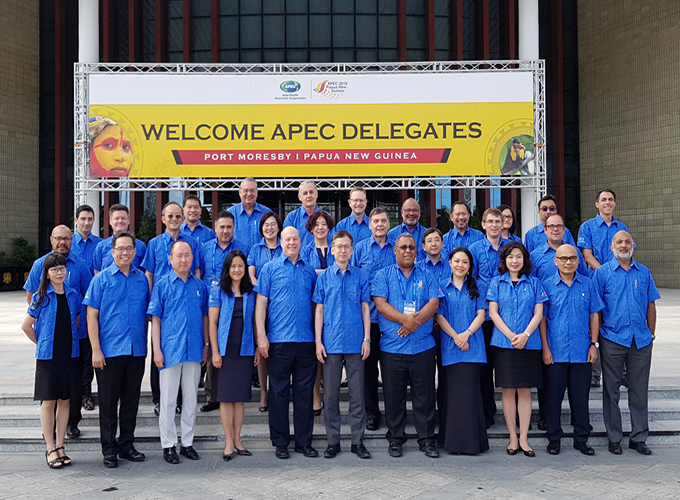 APEC officials prepare to welcome foreign delegates from 23 countries. Image: Apec.org
Pacific Media Centre Newsdesk
Chinese President Xi Jinping left Beijing today for state visits to Papua New Guinea, Brunei and the Philippines – and the Asia-Pacific Economic Cooperation (APEC) leaders summit in Port Moresby.
During Xi’s stay in Papua New Guinea, he will also meet with leaders from the Pacific countries that have established diplomatic ties with China amid growing political rivalries over the region, reports Xinhua news agency.
Xi was invited to pay the visits by Governor-General of Papua New Guinea Bob Dadae and APEC host Prime Minister Peter O’Neill, Brunei’s Sultan Hassanal Bolkiah, and Philippine President Rodrigo Duterte.
 He is arriving amid growing controvesy over the extravagant spending for APEC and allegations of corruption in a nation troubled by deep crises over education and health.
More than 200 Chinese media personals are already making tracks to be in PNG for the state Visit and the APEC summit.
Meanwhile, opposition Kavieng MP Ian Ling-Stuckey has severely criticised PNG’s 2019 Budget.
He said too much money had been spent on a Port Moresby-centred APEC, but now was the time to deliver the policies that could tap into all of the potential benefits of APEC and distribute them throughout the country.
The cost of the two-day APEC for PNG is reportedly more than 200 million kina (about NZ$90 million).
‘Opportunity squandered’
“This opportunity has been squandered. Instead, the 2019 Budget has dished up anti-APEC policies such as new taxes on trade and protectionist language,” Ling-Stuckey said.
“We have demonstrated that we are not being honest in our budget policy with misleading facts and hidden figures.
“This is a big-spending and fiscally irresponsible budget that abandons our new fiscal anchors. This is a disappointing day for the children of PNG, and the O’Neill/Abel government should be ashamed.
“The alternative government is a supporter of APEC. However, we have not been supportive of the expensive way that it has been implemented with numerous questions about contracts that should be referred to auditors.
“Unfortunately, items such as the Maseratis and Bentleys have unnecessarily damaged our international reputation.
As PNG prepared for its first APEC summit, it also expected to have 10,000 delegates to arrive for this meeting, reports EMTV News.
More then 1000 APEC officers are deployed in various parts of the city to ensure the safety of the visitors.
More than 100 foreign nationals arrived on Monday and the number was expected to increase rapidly over the next few days.
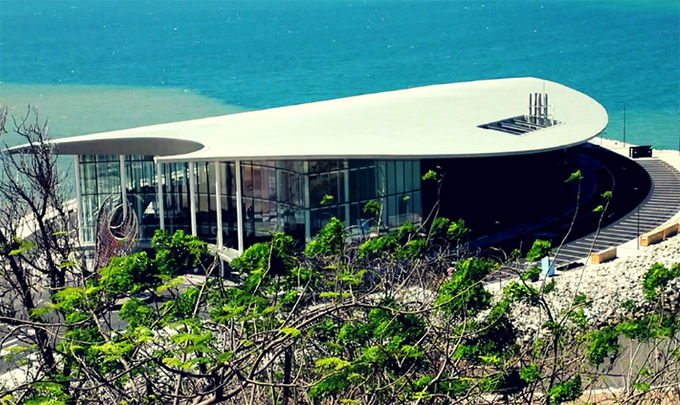 APEC Haus … Port Moresby’s custom-designed convention centre especially built for the Asia-Pacific economic leaders’ summit. Image: PNG Govt
Article by AsiaPacificReport.nz
]]>Bryce Edwards’ Political Roundup: Have the rules of the game changed in media and politics?

Bryce Edwards’ Political Roundup: Have the rules of the game changed in media and politics?
[caption id="attachment_13635" align="alignleft" width="150"] Dr Bryce Edwards.[/caption]
Is it really time to “move on” from the Jami-Lee Ross mega-scandal? Certainly, that’s what National leader Simon Bridges has been saying over the last week. There are others outside of the National Party who also have an interest in “moving on”.
Some in the media have been sympathetic to Bridges’ plea to stop focusing on the saga. Last week The Press newspaper published an editorial expressing horror at how the scandal had consumed us all: “this is cheap entertainment, delivered in bite-sized, episodic morsels. But now we are potentially actors, not just observers, in a slow-motion train wreck” – see: Turn away from the train wreck.
[caption id="attachment_18102" align="aligncenter" width="960"]
Dr Bryce Edwards.[/caption]
Is it really time to “move on” from the Jami-Lee Ross mega-scandal? Certainly, that’s what National leader Simon Bridges has been saying over the last week. There are others outside of the National Party who also have an interest in “moving on”.
Some in the media have been sympathetic to Bridges’ plea to stop focusing on the saga. Last week The Press newspaper published an editorial expressing horror at how the scandal had consumed us all: “this is cheap entertainment, delivered in bite-sized, episodic morsels. But now we are potentially actors, not just observers, in a slow-motion train wreck” – see: Turn away from the train wreck.
[caption id="attachment_18102" align="aligncenter" width="960"] Former National Party MP, and current independent Member of Parliament, Jami-Lee Ross.[/caption]
The newspaper suggests the scandal has become a tragedy, and Bridges’ call should be heeded, for the good of everyone: “it may be good advice for the rest of us to consider. How far down do we want to go in following one man’s descent? Ross and whoever is behind him have had the stage, they’ve had their 15 minutes of infamy. Now it’s exit stage right. And not just for Ross’ sake.”
This is not a view shared by all media. The Southland Times proclaimed bluntly in the weekend that ‘Moving on’ is not acceptable.
The hard-hitting editorial states: “There’s nothing worse than politicians who are hypocrites, and right now the National Party falls right into that category. If you ever wanted to read about a cop-out, here’s a cracker one for you. The National Party, it seems, is ‘moving on’. Well, surely the public deserves more than the glib response that came from its chief press secretary on Friday.”
Stuff journalist Martin van Beynen raises concerns that both journalists and the public likely have about how the media should continue to cover the story, asking: How do we handle a mentally unwell MP?
Here’s his main point: “Journalists are now in an invidious position. Let’s assume Ross, looking poised and comfortable, calls a press conference to announce more revelations about his former friends in the National Party. Do we ignore him because of his underlying illness and advise him to seek help or do we treat him as a flawed individual, assume his mental illness in under control, and report what he has to say, based on its merits? According to some of the pundits, journalists apparently have to be politically correct social workers as well as reporting events and their background.”
What should journalists and politicians leave out of the public sphere?
We have learnt a lot more about politics and politicians from the scandal. And now there is the question about whether we have learnt too much. This is something politicians and journalists have always had to grapple with – having to decide what to make public, and what to leave hidden.
Early on in the scandal, Danyl Mclauchlan wrote an excellent summary and discussion of what the whole episode meant, in which he pushed the point that it was very significant, because “So much of what happens in politics never makes it into the media” – see: The uniquely damaging betrayals of Jami-Lee Ross.
Many people argue, Mclauchlan says, that “Politics should be about policy and values”, when in fact “for professional politicians ‘values’ are mostly just a form of marketing”. Therefore a focus on policy and values can just be a disingenuous way of avoiding the reality of what politics is really about. That’s why the particulars of this scandal are important: “We’re learning a lot about some of the people who run our country, or who aspire to, because we’re – briefly – seeing them as they really are, not as they want to be seen.”
I also discussed some of this in an opinion piece, explaining how politicians generally have an informal pact of silence, which journalists also abide by, when it comes to certain topics – especially the “no go zones” of allegations of sexual improprieties and political finance corruption – but on occasions such as this there is a breakdown of those norms and conventions – see: The dangerously escalating political scandal wars between Simon Bridges and Jami-Lee Ross.
It can be both democratically useful and dangerous when these conventions breakdown, allowing the public to see much more of what goes on behind the scenes, including in politicians’ private lives. This was discussed further by RNZ’s Jeremy Rose, who suggested that if such a code of silence does exist, “then there is a real crisis of democracy” – see: Politics, sex and the media.
Is the delineation between the public and private lives of politicians breaking down?
The above article also quotes me from an appearance on TVNZ’s Q+A, about the media’s traditional boundaries between public and private lives: “We used to have a very strong delineation between reporting on politics and personal lives of politicians. The media did not go there, the politicians didn’t go there. They didn’t really used to bring up what’s going on beneath the bed sheets but of course now that Jami-Lee Ross has been in this situation, they sort of have to in a sense.”
In response, Rose asks: “So are we seeing an erosion of that convention?” And he points to various examples from his own employer as evidence that perhaps this is the case: “on Wednesday RNZ Morning Report presenter Susie Ferguson ended her interview with National Party leader Simon Bridges with this question: ‘Have you done anything that wouldn’t pass Paula Bennett’s test of ‘behaviour acceptable of a married MP?’ Simon Bridges’ replied ‘No’. And the interview ended. It was an unfair question.”
Also at RNZ, Colin Peacock continues to ask questions about how much journalists should be reporting on the details of the scandal – see: Meltdowns, blow-ups and blowback as MP goes rogue, in which he argues newsrooms will have to work out what is in the public interest as the scandal continues.
Peacock’s audio Mediawatch item from Sunday, JLR’s greatest hits keep coming, deals further with different opinions on what should be covered.
It includes a vivid statement from Newshub’s Duncan Garner who argues that both Ross and Bridges deserved scrutiny from the media and public: “It’s unbecoming, isn’t it, of the national’s representatives? And both men look simply ridiculous. But that’s what happens with the dance of the desperates turns to rolling around in the mud – fighting for their careers in the gutter, where the truth struggles to exist… I’ve never seen so much dirty, filthy laundry, and tawdry secrets dragged into the public arena before. This is most certainly unprecedented. It’s not some unseemly struggle over the direction of the party or the policies, it’s about twisted ambition, promises, dirty digging, and careers going nowhere fast.”
Allegations by and about Jami-Lee Ross have changed the game
Certainly, Jami-Lee Ross believes that conventions over keeping private lives out of politics and the media have been destroyed. After the Newsroom story was published with allegations from four women about their experiences with Ross, he hit back, saying: “A scab has been picked on the parliamentary personal issues. It has long been a case where personal matters are kept private, but the rules of the game have changed” – see: National MP Jami-Lee Ross admits to affairs with two women, vows to stay in Parliament.
Furthermore, he said: “There’s a lot of bed-hopping that goes on down in that Parliament. There’s a lot of behaviour that a lot of people would want kept secret and has been kept secret until now. But the way in which we now play politics is that we lift the bed-sheets.”
In an interview with the Herald’s Kirsty Johnston, Ross warned that, with the breakdown of conventions, more would now come out: “Half the Beehive were having inappropriate relationships, he said, but until now, that aspect of political life had been off limits… But those rules have changed in Parliament now. Things that were previously never discussed are now being discussed” – see: Volatile but not abusive: National MP Jami-Lee Ross speaks out about affair with fellow MP.
The charge of hypocrisy is now clearly one that Ross feels entitled to use in outing other MPs: “If the standard is that behaviour is no longer such that someone could continue as an MP then I’d suggest … that one out of three maybe one out of two MPs would have to question their behaviour as well.”
Stuff political editor Tracy Watkins also argues that an important line in politics and media has been crossed, and a return might now be impossible: “The bombshell Newsroom story that two women alleged they’d had had toxic sexual relationships with Ross pushed the nuclear button on their release. Ross accuses National of feeding Newsroom the story, alleging that one of the sources was an MP and two of them work for the party. The story certainly sent shock waves through Parliament. Labour MPs were just as rocked as their National counterparts. There was a feeling that a line in New Zealand politics had finally been crossed. And a fear that there may be no going back. Parliament is never short of gossip about affairs between MPs, between MPs and their staffers – and, yes, journalists as well. The parties all have dirt files. But they rarely use it. It’s called the nuclear option for a reason. All that has changed” – see: The Jami-Lee Ross saga – dirty, ugly, nasty politics with no end in sight.
Undoubtedly there will be many who see this breakdown of convention as a welcome development. For example, conservative blogger Ewen McQueen says: “MPs and journalists alike much prefer the code of silence that keeps the rest of us in the dark. We are told the reason for the secrecy is to protect MPs’ families. It is a reason that appears noble but which is merely self-serving” – see: Time to break Wellington’s code of silence.
So, are the media playing the role of “morality police” when they don’t report on the behaviour of politicians? McQueen seems to think so, arguing the public should be the judge: “The code of silence also insults the public of New Zealand who have a right to know the true character of the people they are being asked to vote for… The Wellington establishment arrogantly assumes we have no need to know and such matters are not relevant to public life. This is a lie.”
Finally, for the best discussion on questions of the delineation between public and private lives of politicians, see Tim Watkin’s blog post, Don’t give me culture – the question of character. He argues that the Jami-Lee Ross controversies raise the question, “how much does character and integrity matter?” Watkin suggests “Maybe we just want the right to know what our leaders are really like and for it to be up to us whether or not we want to vote for them – flaws and all.”]]>
Former National Party MP, and current independent Member of Parliament, Jami-Lee Ross.[/caption]
The newspaper suggests the scandal has become a tragedy, and Bridges’ call should be heeded, for the good of everyone: “it may be good advice for the rest of us to consider. How far down do we want to go in following one man’s descent? Ross and whoever is behind him have had the stage, they’ve had their 15 minutes of infamy. Now it’s exit stage right. And not just for Ross’ sake.”
This is not a view shared by all media. The Southland Times proclaimed bluntly in the weekend that ‘Moving on’ is not acceptable.
The hard-hitting editorial states: “There’s nothing worse than politicians who are hypocrites, and right now the National Party falls right into that category. If you ever wanted to read about a cop-out, here’s a cracker one for you. The National Party, it seems, is ‘moving on’. Well, surely the public deserves more than the glib response that came from its chief press secretary on Friday.”
Stuff journalist Martin van Beynen raises concerns that both journalists and the public likely have about how the media should continue to cover the story, asking: How do we handle a mentally unwell MP?
Here’s his main point: “Journalists are now in an invidious position. Let’s assume Ross, looking poised and comfortable, calls a press conference to announce more revelations about his former friends in the National Party. Do we ignore him because of his underlying illness and advise him to seek help or do we treat him as a flawed individual, assume his mental illness in under control, and report what he has to say, based on its merits? According to some of the pundits, journalists apparently have to be politically correct social workers as well as reporting events and their background.”
What should journalists and politicians leave out of the public sphere?
We have learnt a lot more about politics and politicians from the scandal. And now there is the question about whether we have learnt too much. This is something politicians and journalists have always had to grapple with – having to decide what to make public, and what to leave hidden.
Early on in the scandal, Danyl Mclauchlan wrote an excellent summary and discussion of what the whole episode meant, in which he pushed the point that it was very significant, because “So much of what happens in politics never makes it into the media” – see: The uniquely damaging betrayals of Jami-Lee Ross.
Many people argue, Mclauchlan says, that “Politics should be about policy and values”, when in fact “for professional politicians ‘values’ are mostly just a form of marketing”. Therefore a focus on policy and values can just be a disingenuous way of avoiding the reality of what politics is really about. That’s why the particulars of this scandal are important: “We’re learning a lot about some of the people who run our country, or who aspire to, because we’re – briefly – seeing them as they really are, not as they want to be seen.”
I also discussed some of this in an opinion piece, explaining how politicians generally have an informal pact of silence, which journalists also abide by, when it comes to certain topics – especially the “no go zones” of allegations of sexual improprieties and political finance corruption – but on occasions such as this there is a breakdown of those norms and conventions – see: The dangerously escalating political scandal wars between Simon Bridges and Jami-Lee Ross.
It can be both democratically useful and dangerous when these conventions breakdown, allowing the public to see much more of what goes on behind the scenes, including in politicians’ private lives. This was discussed further by RNZ’s Jeremy Rose, who suggested that if such a code of silence does exist, “then there is a real crisis of democracy” – see: Politics, sex and the media.
Is the delineation between the public and private lives of politicians breaking down?
The above article also quotes me from an appearance on TVNZ’s Q+A, about the media’s traditional boundaries between public and private lives: “We used to have a very strong delineation between reporting on politics and personal lives of politicians. The media did not go there, the politicians didn’t go there. They didn’t really used to bring up what’s going on beneath the bed sheets but of course now that Jami-Lee Ross has been in this situation, they sort of have to in a sense.”
In response, Rose asks: “So are we seeing an erosion of that convention?” And he points to various examples from his own employer as evidence that perhaps this is the case: “on Wednesday RNZ Morning Report presenter Susie Ferguson ended her interview with National Party leader Simon Bridges with this question: ‘Have you done anything that wouldn’t pass Paula Bennett’s test of ‘behaviour acceptable of a married MP?’ Simon Bridges’ replied ‘No’. And the interview ended. It was an unfair question.”
Also at RNZ, Colin Peacock continues to ask questions about how much journalists should be reporting on the details of the scandal – see: Meltdowns, blow-ups and blowback as MP goes rogue, in which he argues newsrooms will have to work out what is in the public interest as the scandal continues.
Peacock’s audio Mediawatch item from Sunday, JLR’s greatest hits keep coming, deals further with different opinions on what should be covered.
It includes a vivid statement from Newshub’s Duncan Garner who argues that both Ross and Bridges deserved scrutiny from the media and public: “It’s unbecoming, isn’t it, of the national’s representatives? And both men look simply ridiculous. But that’s what happens with the dance of the desperates turns to rolling around in the mud – fighting for their careers in the gutter, where the truth struggles to exist… I’ve never seen so much dirty, filthy laundry, and tawdry secrets dragged into the public arena before. This is most certainly unprecedented. It’s not some unseemly struggle over the direction of the party or the policies, it’s about twisted ambition, promises, dirty digging, and careers going nowhere fast.”
Allegations by and about Jami-Lee Ross have changed the game
Certainly, Jami-Lee Ross believes that conventions over keeping private lives out of politics and the media have been destroyed. After the Newsroom story was published with allegations from four women about their experiences with Ross, he hit back, saying: “A scab has been picked on the parliamentary personal issues. It has long been a case where personal matters are kept private, but the rules of the game have changed” – see: National MP Jami-Lee Ross admits to affairs with two women, vows to stay in Parliament.
Furthermore, he said: “There’s a lot of bed-hopping that goes on down in that Parliament. There’s a lot of behaviour that a lot of people would want kept secret and has been kept secret until now. But the way in which we now play politics is that we lift the bed-sheets.”
In an interview with the Herald’s Kirsty Johnston, Ross warned that, with the breakdown of conventions, more would now come out: “Half the Beehive were having inappropriate relationships, he said, but until now, that aspect of political life had been off limits… But those rules have changed in Parliament now. Things that were previously never discussed are now being discussed” – see: Volatile but not abusive: National MP Jami-Lee Ross speaks out about affair with fellow MP.
The charge of hypocrisy is now clearly one that Ross feels entitled to use in outing other MPs: “If the standard is that behaviour is no longer such that someone could continue as an MP then I’d suggest … that one out of three maybe one out of two MPs would have to question their behaviour as well.”
Stuff political editor Tracy Watkins also argues that an important line in politics and media has been crossed, and a return might now be impossible: “The bombshell Newsroom story that two women alleged they’d had had toxic sexual relationships with Ross pushed the nuclear button on their release. Ross accuses National of feeding Newsroom the story, alleging that one of the sources was an MP and two of them work for the party. The story certainly sent shock waves through Parliament. Labour MPs were just as rocked as their National counterparts. There was a feeling that a line in New Zealand politics had finally been crossed. And a fear that there may be no going back. Parliament is never short of gossip about affairs between MPs, between MPs and their staffers – and, yes, journalists as well. The parties all have dirt files. But they rarely use it. It’s called the nuclear option for a reason. All that has changed” – see: The Jami-Lee Ross saga – dirty, ugly, nasty politics with no end in sight.
Undoubtedly there will be many who see this breakdown of convention as a welcome development. For example, conservative blogger Ewen McQueen says: “MPs and journalists alike much prefer the code of silence that keeps the rest of us in the dark. We are told the reason for the secrecy is to protect MPs’ families. It is a reason that appears noble but which is merely self-serving” – see: Time to break Wellington’s code of silence.
So, are the media playing the role of “morality police” when they don’t report on the behaviour of politicians? McQueen seems to think so, arguing the public should be the judge: “The code of silence also insults the public of New Zealand who have a right to know the true character of the people they are being asked to vote for… The Wellington establishment arrogantly assumes we have no need to know and such matters are not relevant to public life. This is a lie.”
Finally, for the best discussion on questions of the delineation between public and private lives of politicians, see Tim Watkin’s blog post, Don’t give me culture – the question of character. He argues that the Jami-Lee Ross controversies raise the question, “how much does character and integrity matter?” Watkin suggests “Maybe we just want the right to know what our leaders are really like and for it to be up to us whether or not we want to vote for them – flaws and all.”]]>
Newsletter: New Zealand Politics Daily – November 15 2018
Newsletter: New Zealand Politics Daily – November 15 2018
Editor’s Note: Here below is a list of the main issues currently under discussion in New Zealand and links to media coverage.
[caption id="attachment_297" align="aligncenter" width="640"] The Beehive and Parliament Buildings.[/caption]
Pike River
Rebecca Macfie (Spinoff): A victory for the Pike River families – and for those who live by their labour
Mike Hosking (Newstalk ZB): Is the Pike River Mine fight worth it?
John Campbell (1News): Is NZ a country where we can accept the deaths of 29 people at work?
Peter Dunne: A long journey lies ahead
Katie Fitzgerald (Newshub): Hard to reconcile National and Labour’s differing responses to Pike River – Tova O’Brien
Press Editorial: Pike River decision is a victory for justice
Herald Editorial: Expensive Pike River re-entry plan does not go very far
Claire Trevett (Herald: Finally, things are the right way up for Pike River families
Zane Small (Newshub): How criminal charges could be laid after Pike River re-entry
Conan Young (RNZ): Checkpoint: Pike River re-entry plan ‘victory for the little people’
Anna Whyte (1News): Workplace deaths since Pike River disaster ‘simply not good enough’ – Anna Osborne
Patrick Gower (Newshub): Rob Fyfe compares Pike River to Erebus, calls for public apology
RNZ: Pike River Mine re-entry: How it will happen
Thomas Coughlan (Newsroom): Going into the mountain: how the Pike River recovery works
Joanne Carroll (Stuff): Pike Agency: Single-entry option cheapest and least complex
John Campbell (1News): Pike River families softly wept as re-entry was announced by Government, John Campbell reports
Lucy Bennett (Herald): Government announces re-entry to Pike River Mine will go ahead
Lucy Bennett (Herald): Police involved in Pike River re-entry for coroner and criminal probe
Moana Makapelu Lee (Māori TV): Hapū welcome re-entry of Pike River Mine
AP: New Zealand crews to re-enter mine 8 years after 29 killed
No Right Turn: Keeping a promise
Foreign affairs and trade
Audrey Young (Herald): Ardern and Pence: A tale of two bilateral meetings with Aung San Suu Kyi
Barry Soper (Newstalk ZB): Jacinda Ardern and Mike Pence had quite a lot in common
Laura Walters (Newsroom): The rise of the Quad
Audrey Young (Herald): Jacinda Ardern and Scott Morrison begin with ‘Bunnings diplomacy’
Jenna Lynch and Sophie Bateman (Newshub): ‘Onions on top’: Jacinda Ardern, Scott Morrison make hilarious pact on Bunnings sausage sizzles at ASEAN
1News: PM Jacinda Ardern and Aussie counterpart discuss Bunnings’ bizarre sausage sizzle decree – ‘I’ve had a few phone calls’
Laura Walters (Newsroom): NZ employs ‘barbecue diplomacy’ with new Aussie PM
Audrey Young (Herald): No dancing to the Bhangra beats just yet after RCEP pushed out to next year
Audrey Young (Herald): Jacinda Ardern offers Aung San Suu Kyi NZ help to resolve plight of Rohingyas
Jessica Mutch McKay (1News): Jacinda Ardern meets with Myanmar’s leader, voices concern on Rohingya situation
RNZ: PM meets with Myanmar leader at Singapore summit
Laura Walters (Newsroom): NZ offers assistance to Myanmar
Zane Small (Newshub):Jacinda Ardern offers NZ’s help to resolve Myanmar’s Rohingya crisis
Katie Fitzgerald (Stuff): Jacinda Ardern has subtle dig at Donald Trump in BBC interview
1News: Jacinda Ardern says she aspires to restore reputation of politicians during Singapore TV appearance
RNZ: PM to challenge US tariffs rationale at summit
Harrison Christian (Stuff): Chinese embassy denies families of Uighur Kiwis are being held in internment camps
Kirsty Needham (Sydney Morning Herald): China warns countries not to obstruct its ‘friendship’ with Pacific nations
RNZ: Former MP Annette King becomes High Commissioner to Australia
Stacey Kirk (Stuff): Dame Annette King given top diplomatic posting to Australia
Herald: Dame Annette King named as next High Commissioner to Australia
Peter Dunne (Newsroom): We should continue to be fearless in pursuit of peace
Housing
Alan Johnson (Spinoff):The trickledown farce of Kiwibuild obscures a much more urgent housing crisis
Pattrick Smellie (Stuff): Where are all the new house buyers?
1News: Māori Housing Unit created to improve ownership opportunities
Newstalk ZB: Phil Twyford establishes dedicated Maori housing unit
Mānia Clarke (Māori TV): New govt unit announced for Māori housing
Virginia Fallon (Stuff): Iwi could become landlords – then owners – of 900 Porirua state homes
1News: London’s Westminster council bans new homes larger than 150sqm – should Auckland follow suit?
Tim Brown (RNZ): Housing crisis in Central Otago and Queenstown Lakes forces young families out of region
Tim Brown (RNZ): Low-income property developer helps community meet housing demand
Sophie Bateman (Newshub): Quinovic introduces new fee after letting fees banned
Susan Edmunds (Herald):‘Tenancy fees’ for landlords replace banned letting fees
Muriel Newman: Housing Affordability – Lottery or Reform
Frank Newman: High rise rents and housing costs
RNZ: Hobsonville Point residents fear promised reserve could become another development
Education and child welfare
ODT Editorial: We need to talk about teaching
Lucy Bennett (Herald): Education Ministry refuses to pay for teacher registration while no agreements with unions in force
RNZ: Christchurch teachers on strike: ‘It was never about the money’
Adele Redmond (Stuff): Canterbury teachers on strike push for time to teach, not a pay bump
Māori TV: Striking for children with additional needs
Ruby Macandrew (Stuff): Hundreds of overseas teachers ready for schools to recruit for 2019
Peter Hughes (Daily Blog): Listen to our Teachers I say
Donna Goss (Stuff): This is why I left my job as a Kiwi teacher
Vaughan Gunson (Northern Advocate): Will teacher strike action force the government to concede further ground?
Fiona Connor (Newshub):Stand Strong NZ: ‘Sorry isn’t enough’ – Bullies told Manawatū 6yo they’d kill his baby brother
Simon Henderson (ODT): Children’s camp news ‘final blow’
Juliet McGhie (Stuff): Schoolgirls crammed in like ‘sardines’ on Auckland school bus
Jessica Long (Stuff): Victoria University staff ‘surprised’ by email inviting everyone to take redundancy
BusinessDesk: Falling enrolments prompts voluntary redundancy call at Victoria University
Josh Williams (Stuff): Apprentices earn $165,000 more than uni graduates by the age of 28
Mikaela Collins (Northern Advocate): International students add $50m to Northland’s economy
Employment
Stephen Blumenfeld (Victoria University of Wellington): Lies, damned lies, and statistics! Comments on the recent wave of strike activity
Libby Wilson (Stuff): No physio for 24 hours: Waikato strike adds to a cluster as worker issues hit tipping point
Tom Pullar-Strecker (Stuff): Feeble whistleblower reforms would keep lid on free speech
Willie Jackson (Daily Blog): The lowest unemployment rate in almost a decade an incredible result
Kate Hawkesby (Newstalk ZB): The gender pay gap – I may as well be working for free
Health
Nicholas Jones (Herald): Exclusive: serious concern over preschool checks as conditions not picked-up
Kirsty Lawrence (Stuff): Palmerston North couple to bend politicians’ ears over cancer medication funding
Rebecca Moore (Stuff): Terminally ill woman relying on donations to extend life by months
Karen Brown (RNZ): Rise in Meningococcal cases: ‘The pattern is of concern’
Mike Houlahan (ODT): Nurse inconsistency hard for patients
Tema Hemi (Māori TV): From ‘survival mode’ to an indigenous future
Damien Venuto (Herald): Comment: The problem with moaning about Bunnings
RNZ: Marion Nestle – How food companies skew food research
Herald: Study: Third of world’s food goes to waste
Royal Commission into child abuse in state care
Stephen Winter (Newsroom): The widening challenge of the state care abuse inquiry
Chris Morris (ODT): Survivor criticises PM on expanded inquiry
Elizabeth Stanley (Herald): Inquiry into state care could be clouded by church issues
Leigh-Marama McLachlan (RNZ): Fears Māori voice will be lost as abuse inquiry widens scope
Government
Phil Pennington (RNZ): Govt spending on contractors millions more than thought
Whanganui Chronicle: Shane Jones announces $48m funding for aviation and rail in Whanganui and Manawatu
Karel Sroubek residency decision
Martyn Bradbury (Daily Blog): Wait, what? A National Party Member is now in a relationship with Karel Sroubek’s ex???
Collette Devlin (Stuff): Immigration probe into Karel Sroubek’s residency completed but will be reviewed
Derek Cheng (Herald): Czech drug-smuggler Karel Sroubek has nine days to respond to Immigration NZ’s finding
National Party
Guyon Espiner (RNZ): National Party misses the mark in its key target
Jason Walls (Herald): The Simon Bridges-ordered internal review of National will be done before the year’s end
Billion Trees Project
RNZ: Trees ordered before Ngāti Hine deal struck in Crown-iwi venture – nursery
Raniera Harrison (Māori TV): Jones warns Ngāti Hine over taxpayer-funded blunder
Environment and conservation
Dominic Harris (Stuff): Public could have a say in bottling firm’s bid to use deep bore
Farah Hancock (Newsroom): NZ’s super-sized weed problem
Angie Skerrett (Newshub): New rabbit calicivirus spreads across New Zealand with confirmed cases in Waikato
Wayne Linklater (Newsroom): Do conservationists care enough about people?
Tess Brunton (RNZ):Waitaki’s proposed geopark: A lot more than cool rocks
Jono Edwards (ODT): Penguin decline may be halting
Primary industries
Stuff: Dairy farm company fined over effluent
Maja Burry (RNZ): Canterbury A&P show goes ahead, cows and all
Local government
Grant Miller (Manawatū Standard): Horowhenua councillors erred and they should put this right
Phil Pennington (RNZ): Judge on council email block: ‘Who knows what issues not attended’
Kiri Gillespie (Bay of Plenty Times): ‘Unforgivable’ – Homeless react to Tauranga ban on begging and rough sleeping
Samantha Motion (Herald): Slim majority votes to ban begging, rough sleeping near shops, eateries in Tauranga CBDs
Aaron Leaman (Stuff): Hamilton developers say red tape, planning rules hindering city growth
Auckland
John Anthony and Liu Chen (Stuff): Chinese speaking buyers offered first dibs on ‘top secret’ luxury apartment planned for Auckland
Jessie Chiang (RNZ): Private pipes blamed for leaking human waste onto Auckland beaches
Zane Small (Newshub): Auckland Santa Parade funding drops in favour of Pride Parade, Diwali
Vanita Prasad (Newsroom): Auckland Santa Parade to lose public events funding
Transport
Mike Lee (Herald): Twyford is relying on a limited range of light rail ‘experts’
Todd Niall (Stuff): Big growth eyed up for Auckland public transport use
Jolisa Gracewood (Spinoff): The truth about those ‘exaggerated’ Auckland cycling numbers
Vera Alves (Herald): The real reason cycle lanes are always empty
Nita Blake-Persen (RNZ): E-scooter safety campaign rolled out in Auckland
Newshub: Auckland Council ‘looking at’ 10km/h speed limit for Lime scooters
Herald: Fun police? Auckland Council looks to crack down on e-scooter safety
Anuja Nadkarni (Stuff): Auckland Council wants to reduce Lime speed limit to 10kmh
Tim Miller (ODT): Dunedin could have Lime e-scooters by Christmas
1News: Auckland truckies hit the road for second time in protest at rising fuel prices
Melanie Earley (Stuff): ‘Fuel tax creates poverty’: truckies hit the road for second time in fuel tax protest
Immigration
Eva Corlett (RNZ): Immigration contact centre: ‘I’m sorry, I can’t hear you’
Joseph Cederwall (Scoop): Christchurch Investor Couple Separated by INZ for 3 Years?
Dileepa Fonseka (Stuff): Bangladeshi seeks asylum in New Zealand by pretending to be a Rohingya Muslim
Gender
Felix Desmarais (Stuff): Proposed changes to the way gender is declared on birth certificates sparks debate
Felix Desmarais (Stuff): Non-binary finery: the Kiwis whose gender doesn’t fit in a ‘neat little box’
NZ to host Women’s Rugby World Cup in 2021
RNZ: Palmer instrumental in successful World Cup bid – Tew
Newshub: Rugby: New Zealand wins 2021 Women’s World Cup bid
1News: New Zealand to host Women’s Rugby World Cup
RNZ: New Zealand to host 2021 women’s Rugby World Cup
Other
Harrison Christian (Stuff): Not fit for prison: The journey of a mentally disabled woman through the criminal justice system
Phil Quin (Dominion Post): Politicians: It’s called accountability, not ‘dirty politics’
Eric Crampton: Bias toward action?
Logan Church (RNZ): Checkpoint: Kaikōura property owners in limbo two years after quake
Liz MacDonald (Stuff): Last chance to comment on Christchurch red zone stirs water debate
Simon Chapple (Newsroom): Splitting up hard enough without this law proposal
Arrun Soma (1News): Should Kiwi women get the pension later because they’re living longer?
Edward Ellison (Spinoff): A response to ‘The Parihaka prisoners and the legend of the caves’
Bob McCoskrie (Stuff): Legalised dope is a licence for Big Marijuana to exploit young people
Tony Orman (Stuff): What does GDP really say about progress?
Sam Hurley (Newshub): Air force ‘secret agent’ re-sentenced for stealing classified material
Point of Order: It’s too soon to put some GGs out to pasture – so let’s put them in charge of inquiries
David Clarkson (Stuff): Man with intellectual ‘limitations’ sentenced for multiple votes
Kurt Bayer (Herald): Christchurch man admits voting 11 times in last year’s General Election
RNZ: Checkpoint: Mum shocked by $7000 internet bill
Eric Crampton: Complicated Gains Tax
Marta Steeman (Stuff): Dunedin’s Contego is tackling the time-bomb of poor passive fire protection
Julie Iles (Stuff): Court decision over $13,000 bill leaves energy providers vulnerable to expensive claims
Cherie Sivignon (Stuff): Kiwibank branch closure a ‘brutal kick in the guts’ for residents of Nelson suburb
Nic Rawlence (The Conversation): Taxonomy, the science of naming things, is under threat]]>
The Beehive and Parliament Buildings.[/caption]
Pike River
Rebecca Macfie (Spinoff): A victory for the Pike River families – and for those who live by their labour
Mike Hosking (Newstalk ZB): Is the Pike River Mine fight worth it?
John Campbell (1News): Is NZ a country where we can accept the deaths of 29 people at work?
Peter Dunne: A long journey lies ahead
Katie Fitzgerald (Newshub): Hard to reconcile National and Labour’s differing responses to Pike River – Tova O’Brien
Press Editorial: Pike River decision is a victory for justice
Herald Editorial: Expensive Pike River re-entry plan does not go very far
Claire Trevett (Herald: Finally, things are the right way up for Pike River families
Zane Small (Newshub): How criminal charges could be laid after Pike River re-entry
Conan Young (RNZ): Checkpoint: Pike River re-entry plan ‘victory for the little people’
Anna Whyte (1News): Workplace deaths since Pike River disaster ‘simply not good enough’ – Anna Osborne
Patrick Gower (Newshub): Rob Fyfe compares Pike River to Erebus, calls for public apology
RNZ: Pike River Mine re-entry: How it will happen
Thomas Coughlan (Newsroom): Going into the mountain: how the Pike River recovery works
Joanne Carroll (Stuff): Pike Agency: Single-entry option cheapest and least complex
John Campbell (1News): Pike River families softly wept as re-entry was announced by Government, John Campbell reports
Lucy Bennett (Herald): Government announces re-entry to Pike River Mine will go ahead
Lucy Bennett (Herald): Police involved in Pike River re-entry for coroner and criminal probe
Moana Makapelu Lee (Māori TV): Hapū welcome re-entry of Pike River Mine
AP: New Zealand crews to re-enter mine 8 years after 29 killed
No Right Turn: Keeping a promise
Foreign affairs and trade
Audrey Young (Herald): Ardern and Pence: A tale of two bilateral meetings with Aung San Suu Kyi
Barry Soper (Newstalk ZB): Jacinda Ardern and Mike Pence had quite a lot in common
Laura Walters (Newsroom): The rise of the Quad
Audrey Young (Herald): Jacinda Ardern and Scott Morrison begin with ‘Bunnings diplomacy’
Jenna Lynch and Sophie Bateman (Newshub): ‘Onions on top’: Jacinda Ardern, Scott Morrison make hilarious pact on Bunnings sausage sizzles at ASEAN
1News: PM Jacinda Ardern and Aussie counterpart discuss Bunnings’ bizarre sausage sizzle decree – ‘I’ve had a few phone calls’
Laura Walters (Newsroom): NZ employs ‘barbecue diplomacy’ with new Aussie PM
Audrey Young (Herald): No dancing to the Bhangra beats just yet after RCEP pushed out to next year
Audrey Young (Herald): Jacinda Ardern offers Aung San Suu Kyi NZ help to resolve plight of Rohingyas
Jessica Mutch McKay (1News): Jacinda Ardern meets with Myanmar’s leader, voices concern on Rohingya situation
RNZ: PM meets with Myanmar leader at Singapore summit
Laura Walters (Newsroom): NZ offers assistance to Myanmar
Zane Small (Newshub):Jacinda Ardern offers NZ’s help to resolve Myanmar’s Rohingya crisis
Katie Fitzgerald (Stuff): Jacinda Ardern has subtle dig at Donald Trump in BBC interview
1News: Jacinda Ardern says she aspires to restore reputation of politicians during Singapore TV appearance
RNZ: PM to challenge US tariffs rationale at summit
Harrison Christian (Stuff): Chinese embassy denies families of Uighur Kiwis are being held in internment camps
Kirsty Needham (Sydney Morning Herald): China warns countries not to obstruct its ‘friendship’ with Pacific nations
RNZ: Former MP Annette King becomes High Commissioner to Australia
Stacey Kirk (Stuff): Dame Annette King given top diplomatic posting to Australia
Herald: Dame Annette King named as next High Commissioner to Australia
Peter Dunne (Newsroom): We should continue to be fearless in pursuit of peace
Housing
Alan Johnson (Spinoff):The trickledown farce of Kiwibuild obscures a much more urgent housing crisis
Pattrick Smellie (Stuff): Where are all the new house buyers?
1News: Māori Housing Unit created to improve ownership opportunities
Newstalk ZB: Phil Twyford establishes dedicated Maori housing unit
Mānia Clarke (Māori TV): New govt unit announced for Māori housing
Virginia Fallon (Stuff): Iwi could become landlords – then owners – of 900 Porirua state homes
1News: London’s Westminster council bans new homes larger than 150sqm – should Auckland follow suit?
Tim Brown (RNZ): Housing crisis in Central Otago and Queenstown Lakes forces young families out of region
Tim Brown (RNZ): Low-income property developer helps community meet housing demand
Sophie Bateman (Newshub): Quinovic introduces new fee after letting fees banned
Susan Edmunds (Herald):‘Tenancy fees’ for landlords replace banned letting fees
Muriel Newman: Housing Affordability – Lottery or Reform
Frank Newman: High rise rents and housing costs
RNZ: Hobsonville Point residents fear promised reserve could become another development
Education and child welfare
ODT Editorial: We need to talk about teaching
Lucy Bennett (Herald): Education Ministry refuses to pay for teacher registration while no agreements with unions in force
RNZ: Christchurch teachers on strike: ‘It was never about the money’
Adele Redmond (Stuff): Canterbury teachers on strike push for time to teach, not a pay bump
Māori TV: Striking for children with additional needs
Ruby Macandrew (Stuff): Hundreds of overseas teachers ready for schools to recruit for 2019
Peter Hughes (Daily Blog): Listen to our Teachers I say
Donna Goss (Stuff): This is why I left my job as a Kiwi teacher
Vaughan Gunson (Northern Advocate): Will teacher strike action force the government to concede further ground?
Fiona Connor (Newshub):Stand Strong NZ: ‘Sorry isn’t enough’ – Bullies told Manawatū 6yo they’d kill his baby brother
Simon Henderson (ODT): Children’s camp news ‘final blow’
Juliet McGhie (Stuff): Schoolgirls crammed in like ‘sardines’ on Auckland school bus
Jessica Long (Stuff): Victoria University staff ‘surprised’ by email inviting everyone to take redundancy
BusinessDesk: Falling enrolments prompts voluntary redundancy call at Victoria University
Josh Williams (Stuff): Apprentices earn $165,000 more than uni graduates by the age of 28
Mikaela Collins (Northern Advocate): International students add $50m to Northland’s economy
Employment
Stephen Blumenfeld (Victoria University of Wellington): Lies, damned lies, and statistics! Comments on the recent wave of strike activity
Libby Wilson (Stuff): No physio for 24 hours: Waikato strike adds to a cluster as worker issues hit tipping point
Tom Pullar-Strecker (Stuff): Feeble whistleblower reforms would keep lid on free speech
Willie Jackson (Daily Blog): The lowest unemployment rate in almost a decade an incredible result
Kate Hawkesby (Newstalk ZB): The gender pay gap – I may as well be working for free
Health
Nicholas Jones (Herald): Exclusive: serious concern over preschool checks as conditions not picked-up
Kirsty Lawrence (Stuff): Palmerston North couple to bend politicians’ ears over cancer medication funding
Rebecca Moore (Stuff): Terminally ill woman relying on donations to extend life by months
Karen Brown (RNZ): Rise in Meningococcal cases: ‘The pattern is of concern’
Mike Houlahan (ODT): Nurse inconsistency hard for patients
Tema Hemi (Māori TV): From ‘survival mode’ to an indigenous future
Damien Venuto (Herald): Comment: The problem with moaning about Bunnings
RNZ: Marion Nestle – How food companies skew food research
Herald: Study: Third of world’s food goes to waste
Royal Commission into child abuse in state care
Stephen Winter (Newsroom): The widening challenge of the state care abuse inquiry
Chris Morris (ODT): Survivor criticises PM on expanded inquiry
Elizabeth Stanley (Herald): Inquiry into state care could be clouded by church issues
Leigh-Marama McLachlan (RNZ): Fears Māori voice will be lost as abuse inquiry widens scope
Government
Phil Pennington (RNZ): Govt spending on contractors millions more than thought
Whanganui Chronicle: Shane Jones announces $48m funding for aviation and rail in Whanganui and Manawatu
Karel Sroubek residency decision
Martyn Bradbury (Daily Blog): Wait, what? A National Party Member is now in a relationship with Karel Sroubek’s ex???
Collette Devlin (Stuff): Immigration probe into Karel Sroubek’s residency completed but will be reviewed
Derek Cheng (Herald): Czech drug-smuggler Karel Sroubek has nine days to respond to Immigration NZ’s finding
National Party
Guyon Espiner (RNZ): National Party misses the mark in its key target
Jason Walls (Herald): The Simon Bridges-ordered internal review of National will be done before the year’s end
Billion Trees Project
RNZ: Trees ordered before Ngāti Hine deal struck in Crown-iwi venture – nursery
Raniera Harrison (Māori TV): Jones warns Ngāti Hine over taxpayer-funded blunder
Environment and conservation
Dominic Harris (Stuff): Public could have a say in bottling firm’s bid to use deep bore
Farah Hancock (Newsroom): NZ’s super-sized weed problem
Angie Skerrett (Newshub): New rabbit calicivirus spreads across New Zealand with confirmed cases in Waikato
Wayne Linklater (Newsroom): Do conservationists care enough about people?
Tess Brunton (RNZ):Waitaki’s proposed geopark: A lot more than cool rocks
Jono Edwards (ODT): Penguin decline may be halting
Primary industries
Stuff: Dairy farm company fined over effluent
Maja Burry (RNZ): Canterbury A&P show goes ahead, cows and all
Local government
Grant Miller (Manawatū Standard): Horowhenua councillors erred and they should put this right
Phil Pennington (RNZ): Judge on council email block: ‘Who knows what issues not attended’
Kiri Gillespie (Bay of Plenty Times): ‘Unforgivable’ – Homeless react to Tauranga ban on begging and rough sleeping
Samantha Motion (Herald): Slim majority votes to ban begging, rough sleeping near shops, eateries in Tauranga CBDs
Aaron Leaman (Stuff): Hamilton developers say red tape, planning rules hindering city growth
Auckland
John Anthony and Liu Chen (Stuff): Chinese speaking buyers offered first dibs on ‘top secret’ luxury apartment planned for Auckland
Jessie Chiang (RNZ): Private pipes blamed for leaking human waste onto Auckland beaches
Zane Small (Newshub): Auckland Santa Parade funding drops in favour of Pride Parade, Diwali
Vanita Prasad (Newsroom): Auckland Santa Parade to lose public events funding
Transport
Mike Lee (Herald): Twyford is relying on a limited range of light rail ‘experts’
Todd Niall (Stuff): Big growth eyed up for Auckland public transport use
Jolisa Gracewood (Spinoff): The truth about those ‘exaggerated’ Auckland cycling numbers
Vera Alves (Herald): The real reason cycle lanes are always empty
Nita Blake-Persen (RNZ): E-scooter safety campaign rolled out in Auckland
Newshub: Auckland Council ‘looking at’ 10km/h speed limit for Lime scooters
Herald: Fun police? Auckland Council looks to crack down on e-scooter safety
Anuja Nadkarni (Stuff): Auckland Council wants to reduce Lime speed limit to 10kmh
Tim Miller (ODT): Dunedin could have Lime e-scooters by Christmas
1News: Auckland truckies hit the road for second time in protest at rising fuel prices
Melanie Earley (Stuff): ‘Fuel tax creates poverty’: truckies hit the road for second time in fuel tax protest
Immigration
Eva Corlett (RNZ): Immigration contact centre: ‘I’m sorry, I can’t hear you’
Joseph Cederwall (Scoop): Christchurch Investor Couple Separated by INZ for 3 Years?
Dileepa Fonseka (Stuff): Bangladeshi seeks asylum in New Zealand by pretending to be a Rohingya Muslim
Gender
Felix Desmarais (Stuff): Proposed changes to the way gender is declared on birth certificates sparks debate
Felix Desmarais (Stuff): Non-binary finery: the Kiwis whose gender doesn’t fit in a ‘neat little box’
NZ to host Women’s Rugby World Cup in 2021
RNZ: Palmer instrumental in successful World Cup bid – Tew
Newshub: Rugby: New Zealand wins 2021 Women’s World Cup bid
1News: New Zealand to host Women’s Rugby World Cup
RNZ: New Zealand to host 2021 women’s Rugby World Cup
Other
Harrison Christian (Stuff): Not fit for prison: The journey of a mentally disabled woman through the criminal justice system
Phil Quin (Dominion Post): Politicians: It’s called accountability, not ‘dirty politics’
Eric Crampton: Bias toward action?
Logan Church (RNZ): Checkpoint: Kaikōura property owners in limbo two years after quake
Liz MacDonald (Stuff): Last chance to comment on Christchurch red zone stirs water debate
Simon Chapple (Newsroom): Splitting up hard enough without this law proposal
Arrun Soma (1News): Should Kiwi women get the pension later because they’re living longer?
Edward Ellison (Spinoff): A response to ‘The Parihaka prisoners and the legend of the caves’
Bob McCoskrie (Stuff): Legalised dope is a licence for Big Marijuana to exploit young people
Tony Orman (Stuff): What does GDP really say about progress?
Sam Hurley (Newshub): Air force ‘secret agent’ re-sentenced for stealing classified material
Point of Order: It’s too soon to put some GGs out to pasture – so let’s put them in charge of inquiries
David Clarkson (Stuff): Man with intellectual ‘limitations’ sentenced for multiple votes
Kurt Bayer (Herald): Christchurch man admits voting 11 times in last year’s General Election
RNZ: Checkpoint: Mum shocked by $7000 internet bill
Eric Crampton: Complicated Gains Tax
Marta Steeman (Stuff): Dunedin’s Contego is tackling the time-bomb of poor passive fire protection
Julie Iles (Stuff): Court decision over $13,000 bill leaves energy providers vulnerable to expensive claims
Cherie Sivignon (Stuff): Kiwibank branch closure a ‘brutal kick in the guts’ for residents of Nelson suburb
Nic Rawlence (The Conversation): Taxonomy, the science of naming things, is under threat]]>
Why early diagnosis of autism should lead to early intervention
Source: The Conversation (Au and NZ) – By Hannah Waddington, Lecturer in Educational Psychology, Victoria University of Wellington
Research suggests children can be reliably diagnosed with autism before the age of two. It also shows that many of the behavioural symptoms of autism are present before the age of one.
These behaviours include decreased interest in social interaction, delayed development of speech and intentional communication, a lack of age-appropriate sound development, and unusual visual fixations.
Preliminary results of a study in the Wellington region indicate most children are diagnosed when they are around three years old. However, there is arguably little point of providing early diagnosis if it does not lead to evidence-based early intervention.
Read more: New autism guidelines aim to improve diagnostics and access to services
Early start
The Early Start Denver Model (ESDM) is a promising therapy for very young children (between one and five years) with, or at risk for, autism. ESDM uses play and games to build positive relationships in which the children are encouraged to boost language, social and cognitive skills.
Where ESDM differs most from traditional intervention is that behavioural teaching techniques are embedded within this play. This includes providing clear cues for a behaviour, and rewarding that behaviour. Parents, therapists and teachers can use ESDM techniques within the children’s play and daily routines to help them reach developmentally appropriate milestones.
For example, a child who does not yet talk, may be learning to reach for preferred items. A child who has a lot of language may be learning to answer questions like “what is your name?”.
Initial research conducted in the United States, where the model was developed, suggests that ESDM is particularly effective when implemented for more than 15 hours a week by trained therapists in the home environment.
Improved cognition in early childhood
The model was adopted in Australia where the government funds autism specific early childhood centres. Research conducted in these centres indicates that children receiving ESDM intervention from trained therapists show greater improvements in understanding and cognitive skills than children who were not receiving treatment.
Read more: New autism guidelines aim to improve diagnostics and access to services
In New Zealand there is no government funding for such therapy. As a result, the cost of providing this intensive level of early intervention is beyond the budget of most families. There is also a lack of trained professionals with the technical expertise to implement such therapies.
For these reasons, we are working with the Autism Intervention Trust and Autism New Zealand to develop a New Zealand-specific low-intensity approach to delivering ESDM. The team is using the research of what is effective overseas and is applying it within a New Zealand context.
Mainstream schooling
New Zealand takes an inclusive approach to education. The main goal of the research programme therefore is for children with autism and their families to receive support earlier so that they can get a better start in their development and go on to mainstream schools.
One project involves training kindergarten teachers in ESDM. Inclusion of ESDM strategies in kindergartens is the biggest unknown because there is little teacher training in New Zealand around how to best support children with autism in mainstream settings.
A second project involves providing parent coaching and then adding on a small amount of one-on-one therapy. This will provide some preliminary evidence as to whether adding a minimal amount of one-on-one therapy is any more beneficial that just coaching parents.
Each project involves examining specific measures of communication, imitation (a key early learning skill children with autism typically struggle with) and social engagement with others.
Other countries with little government funding and support for children with autism and their families have taken a similar approach to providing ESDM therapy at a lower intensity. The research suggests that just a few hours of therapy can lead to positive outcomes.
– ref. Why early diagnosis of autism should lead to early intervention – http://theconversation.com/why-early-diagnosis-of-autism-should-lead-to-early-intervention-106611]]>Politics with Michelle Grattan: Derryn Hinch on a national ICAC and the Victorian election
Source: The Conversation (Au and NZ) – By Michelle Grattan, Professorial Fellow, University of Canberra
The Senate this week passed a motion calling for the government to establish a federal anti-corruption commission. The government is more likely to beef up existing institutions but Justice Party senator Derryn Hinch, who has been a strong advocate for a national ICAC, says “that would be wrong.” “We have to have an independent national body to look into us [politicians] and to public servants and to various agencies,” he told The Conversation.
Hinch – who is long odds in his battle to hold his seat at the election – is running candidates in the Victorian state election. He hopes to get “one or two” of his team elected to the upper house.
In Victoria he predicts a Labor win, although he doesn’t “think they deserve to.” Federally, he says “I would be one of the few people in this building who still thinks the Libs are in with a chance”.
– ref. Politics with Michelle Grattan: Derryn Hinch on a national ICAC and the Victorian election – http://theconversation.com/politics-with-michelle-grattan-derryn-hinch-on-a-national-icac-and-the-victorian-election-107016]]>There’s no need for the ‘Chicago principles’ in Australian universities to protect freedom of speech
Source: The Conversation (Au and NZ) – By Katharine Gelber, Professor of Politics and Public Policy, The University of Queensland
This week the government asked former High Court Chief Justice Robert French to head an inquiry into free speech on universities. Education minister Dan Tehan claimed it was because concerns had been raised about people shutting down the views of those they disagree with, and security costs for controversial speakers on campus.
Universities are accusing the minister of “jumping to the wrong conclusions”, based on misleading and selective media reports.
Justice French is being asked to review the “rules and regulations protecting freedom of speech on university campuses”. This will include codes of conduct, enterprise agreements, policy statements and strategic plans. This is despite the fact universities already protect freedom of speech and, relatedly, academic freedom.
The Minister suggested Australia could consider adopting an Australian version of the “Chicago statement”. So what is the Chicago statement, and would Australian universities benefit from adopting it?
Read more: Four fundamental principles for upholding freedom of speech on campus
The Chicago statement
In 2014, the President (equivalent to the Vice Chancellor of an Australian university) of the University of Chicago convened a committee, chaired by highly acclaimed free speech scholar Professor Geoffrey Stone, to draft a statement that would articulate the university’s commitment to “free, robust, and uninhibited debate and deliberation”.
The university took this step in response to free speech controversies on university campuses in the United States. Examples include disinviting controversial speakers, pressure on faculty to make public apologies for statements some considered offensive, demands for the removal of historic statues or monuments, and the existence of campus speech codes which prohibit students from engaging in hate speech on the ground of race, sexuality, or gender.
The Chicago statement recognises free speech on campus as an issue that goes to the core mission of the university as a place of learning. It defends free and open inquiry in all matters, and guarantees the broadest possible latitude to speak, write, listen, challenge, and learn.
Minister for Education Dan Tehan has ordered an inquiry into freedom of speech on campus. AAP/Mick TsikasRead more: The great irony in punishing universities for ‘failing’ to uphold freedom of speech
It also recognises that freedom of speech does not mean people can say whatever they want, wherever they want. It permits restrictions on speech that violates the law, is defamatory, threatens or harasses, invades privacy or confidentiality, or is incompatible with the functioning of a university.
The statement is a well-articulated and clear enunciation of three things:
1) the importance of freedom of speech to learning
2) the recognition that free speech must have limits
3) the articulation that any such limits must be carefully and narrowly circumscribed.
As of February 2018 the Chicago statement had been adopted by 34 other universities in the US. But this still leaves around 1,600 universities that have not signed up, possibly because their existing policies already support the same views.
Do Australian universities need it?
Shortly before Justice French was invited by the government to conduct a review into free speech in Australian universities, he gave a speech on the issue.
He recognised that even a detailed and prescriptive charter would not provide a framework in which difficult cases can be clearly and uncontroversially resolved. Nevertheless, he was open to the possibility of legislative intervention to impose “protective rules”.
However, if the Chicago principles were to form the basis for any such legislative intervention, they would be unlikely to be of benefit in resolving the issues with which the minister appears to be concerned.
This is for two reasons. First, Australian universities already protect free speech in accordance with principles very similar to those enunciated in the Chicago principles. All universities are required by Australian law to uphold “free intellectual inquiry in relation to learning, teaching and research”. Universities’ codes of conduct already uphold the right of students to engage in critical and open inquiry.
The second reason is that the Chicago principles recognise that free speech is not a reason for protecting unlawful conduct. Australia and the US have wildly different views on what constitutes unlawful speech-based conduct. Here, speech is able to be regulated to a far greater degree than in the US.
This means that all the current, valid, restrictions on speech that exist in Australia would be untouched by applying the Chicago principles. For example, Australia possesses comprehensive anti-vilification laws federally, in every state and in the ACT, which prohibit public hate speech. These would be unaffected.
Applying the principles here would also make no difference to other restrictions on speech in Australia, such as laws barring journalists from reporting in certain instances, which present far greater risks to free speech than anything that’s occurred on campus of late.
This inquiry is expensive and unnecessary. There is no good evidence we have a problem with free speech on our campuses. Justice French’s review will take four months. While we await the outcome, university staff will no doubt continue to uphold their existing commitments to robust and open debate in learning, teaching, research and engagement.
– ref. There’s no need for the ‘Chicago principles’ in Australian universities to protect freedom of speech – http://theconversation.com/theres-no-need-for-the-chicago-principles-in-australian-universities-to-protect-freedom-of-speech-107001]]>Marriage has changed dramatically throughout history, but gender inequalities remain

Source: The Conversation (Au and NZ) – By Michelle Brady, Senior Research Fellow in Sociology, The University of Queensland
One year ago, Australians were asked “Should the law be changed to allow same-sex couples to marry?”. The answer was a resounding “yes” – more than 60% of those who expressed a view backed marriage equality.
The anniversary of this historic moment offers an opportunity to reflect on how marriage as an institution has changed in Australia and other Western democratic countries over the last few hundred years, as well as the ways it remains stubbornly the same.
Many of those who argued for the “no” vote asserted that Australia should retain “the traditional definition of marriage”. But our research on the history of marriage and divorce shows that the tradition of marriage has actually changed a lot since the 18th century.
Although much progress has been made, gender inequality within relationships continues to be a problem, particularly if couples prefer to live together without getting married.
Women have gained more rights
Historically, marriage was the key way families passed on status, wealth and property from generation to generation.
The institution of marriage also came with strongly prescribed gender roles. Women’s sexuality, rights and access to financial resources were strictly controlled in marriages. Regardless of whether a family was poor or wealthy, women’s bodies and labour were regarded as the property of their husbands in the 18th and 19th century. Prior to the 20th century married women lost their identities and many of their individual rights.
Read more: If we’re serious about supporting working families, here are three policies we need to enact now
In the mid-20th century, however, many laws that explicitly discriminated against women were reformed in most Western democratic countries. Wives gained their own legal and economic status within marriage. The decline in the influence of religion also played a role in marriage laws becoming more “gender neutral”.
Though Western countries have removed laws that explicitly discriminate against women, gendered consequences remain.
For instance, society continues to promote different roles for men and women within the family following the birth of a child. Women take on much more of the housework and childcare duties. And married women, in particular, do more of the housework on average than women in cohabiting relationships with men.
But cohabiting couples have fewer legal rights
Today, the laws in most Western democratic countries recognise a diversity of family types. At the same time, couples in cohabiting relationships continue to have fewer rights, entitlements and obligations compared with married couples.
Read more: Explainer: what legal benefits do married couples have that de facto couples do not?
As a result, cohabiting women are overall more likely than married women to experience relationship dissolution, single parenthood and poverty.
For example, no country legally obliges cohabiting couples to financially support a partner staying home to look after children. Like married women, cohabiting women are more likely than their partners to take time out of the workforce to care for children. And the lack of legal protection makes women in cohabiting relationships economically vulnerable.
Another example is the difference in laws around financial settlement and the division of wealth after a relationship breaks down. In most countries, women in marriages who take on a home-maker role can seek to claim a share of their spouse’s property if their relationship dissolves. Women in cohabiting relationships, however, often have no similar rights or very limited rights.
Paternity is another issue for cohabiting couples. Many countries do not automatically assign paternity of children – and the assumption of shared custody of children – to cohabiting fathers.
Australia, however, is somewhat of an exception in offering more protections to cohabiting couples.
Here, couples who have cohabited for at least two years or have a child together are protected by the federal family law’s property division regulations. These laws take into account both partners’ non-financial contributions to a relationship (such as caring for children) and their future needs.
The court also has discretionary power after the breakdown of a relationship to give one partner a share of property held solely in their former partner’s name, such as a superannuation fund.
And fathers in de facto relationships do not have to take extra steps to establish paternity and shared custody of children. This makes it easier for fathers to obtain shared custody if a relationship breaks down and for mothers to seek child support.
These laws give Australian women in cohabiting relationships greater financial protections. However, there are limits to these protections. The laws do not apply to cohabiting relationships of less than two years, for example, unless the couple has a child together.
The appeal of marriage to same-sex couples
Research has found that because Australia offers such strong legal and social recognition of de facto relationships, LGBT activists initially focused their efforts on gaining de facto recognition of same-sex relationships, rather than marriage equality.
LGBT activists didn’t really start focusing on marriage until 2004, when the Australian government altered the Australian Marriage Act of 1961. By strictly defining marriage as “the union of a man and a woman to the exclusion of all others”, the government offended many in the LGBT community and helped spark the desire for change.
Read more: A year since the marriage equality vote, much has been gained – and there is still much to be done
The symbolic importance of marriage in the LGBT community also gradually increased, resulting in more LGBT attention on gaining marriage equality.
Today, the extent to which marriage appeals more to gay men or lesbians depends on a range of factors.
Lesbians have accounted for the majority of same-sex marriages in Australia so far. Jill Kindt (left) and Jo Grant were the first. Dan Peled/AAPSo far, lesbians have accounted for the majority of same-sex marriages in Australia. This may be because in the context of a limited social safety net compared to other countries, women may value the marginally better financial protections offered by marriage given they are more likely than gay men to have children. For all the debate about “the traditional definition of marriage”, our research finds that marriage has always been a constantly evolving and changing institution. Same sex marriage is just the latest change.
But more progress can be made. Even though we have finally addressed inequality for same-sex couples, and laws relating to marriage no longer explicitly discriminate against men or women, gender inequality within the institution of marriage continues to be a problem.
– ref. Marriage has changed dramatically throughout history, but gender inequalities remain – http://theconversation.com/marriage-has-changed-dramatically-throughout-history-but-gender-inequalities-remain-106346]]>Toilets of the future must be designed with people in mind, not technology

Source: The Conversation (Au and NZ) – By Dani J Barrington, Lecturer in Water, Sanitation and Health, University of Leeds
Most of you reading this article probably have a comfortable toilet that you use on a daily basis. As Steve Sugden wrote:
In more developed areas of the world we have forgotten the horrors of using a disgusting toilet and we now take for granted that toilets are comfortable, well lit, smell-free, private, pleasant places to defecate. They are places where we can “go in peace”.
There are two “golden rules” of our (overwhelmingly waterborne) sanitation systems that make them useful for improving human health:
-
they immediately separate us from our waste
-
they transport that waste away for treatment, stopping it from polluting the environment or making people sick.
Read more: Why queues for women’s toilets are longer than men’s
The flush toilet and waterborne sewerage system were developed to allow users to “flush and forget”. But around four and a half billion people don’t have access to a sanitation system that follows the golden rules. That’s because waterborne sewerage systems aren’t suitable everywhere.
These require large volumes of water for flushing, kilometres of underground pipes and treatment infrastructure, and the personnel to operate and maintain the system. Scientists and engineers around the world are developing alternative sanitation systems to address these challenges.
A promotional video for the Bill & Melinda Gates Foundation’s Water, Sanitation and Hygiene project.New toilet tech
There are some amazing new toilet technologies that aren’t waterborne systems, but still follow the golden rules. Many of these new designs not only treat waste to make it safe, but also transform it into useful products like clean water, fertilisers, electricity and animal feed.
Many of them don’t require sewerage systems at all, and instead process the waste on-site (in the household or toilet block). This increases the resilience of the sanitation system. If floods (or other disasters) prevent the system from processing waste, the problem is likely to be contained within the household, rather than affecting an entire city.
Some systems transport waste via pipes to nearby community scale treatment plants, which allow people to reuse the nutrients and water in their waste.
Others involve the collection of waste from households or toilet blocks to be treated at a larger, off-site plant, which offers economies of scale.
Several of these “non-sewered sanitation” technologies were showcased at the Reinvented Toilet Expo in Beijing earlier this month.
Read more: Can you catch germs from a public toilet seat?
Different locations have different needs
There is no single technology that will work in every community.
Open sewerage runs along the back of housing in some parts of South East Asia.In water-scarce areas, people are aware of the wastefulness of flushing clean water down a toilet. In those locations, reusing water for flushing will be an important benefit.
In areas without reliable mains electricity, small-scale production of electricity from a sanitation system can be valuable for lighting, charging mobile phones or simply for running the treatment process.
Using nutrients from waste as fertiliser or animal feed will be unacceptable in some cultures, no matter how safe it is proved to be.
In every case, the time and expertise required to operate and maintain these systems must be considered. That means looking beyond the treatment process to the wider system, including government policies and businesses, as well as the availability of spare parts and local skilled personnel.
Local experts are essential
Clearly, technology is only part of the solution. But there is also a social science to sanitation engineering.
Many new sanitation technologies are being tested in the communities that are expected to be future customers. Researchers have been working with these potential users to identify what works, and more importantly, what doesn’t work with these technologies. The perspectives of both the toilet user and the operator of the sanitation system are taken into account.
Community members play a vital role and contribute to the design process. Nobody is going to use a toilet that they don’t like – as many festival-goers and campers will attest.
Read more: Why your tourist toilet habits are bad for locals – and the environment
Sanitation technology developers give themselves the best possible chance of success when they work with communities to understand their needs and to test early prototypes. Community members are experts in their local context. Sadly this knowledge often goes unrecognised, but it’s critical to designing systems that work sustainably.
There are too many examples of “failed aid” projects, where sanitation systems have been installed without consulting local people, and then abandoned by the community after the project team has departed.
Although there are many exciting treatment processes being proposed for collecting and treating human waste, it is important to recognise that technology is only part of the equation. When proposing sanitation systems, technology developers must remember that they are designing for real people, considering community members as co-designers with important contributions to make.
– ref. Toilets of the future must be designed with people in mind, not technology – http://theconversation.com/toilets-of-the-future-must-be-designed-with-people-in-mind-not-technology-106610]]>Fiji Elections Office begins final entry as provisional results stopped

 Fiji’s Supervisor of Elections Mohammed Saneem today shortly before announcing final provisional results at the stopping of counting. Image: FEO FB screenshot
By Sri Krishnamurthi in Suva
The Fiji Elections Office (FEO) has entered a new phase towards the results of the 2018 elections by stopping the release of progressive results this morning.
With the targeted 70 percent of the vote counted, the final data entry can now be input with the final results to be released once that has been completed, Supervisor of Elections Mohammed Saneem said.
“We have reached that benchmark, but this does not mean that counting has stopped, this does not mean that we will be counting again, this does not mean that the results will only be for 70 percent of the polling places,” said Saneem.
READ MORE: Fiji’s Banimarama maintains commanding provisional lead
“So, the provisional results that we have been announcing all night are actual results from those polling places and we are stopping that this morning, because we have received up to 70 percent of the results and voters are now able to understand the dynamic of the results of the election.”
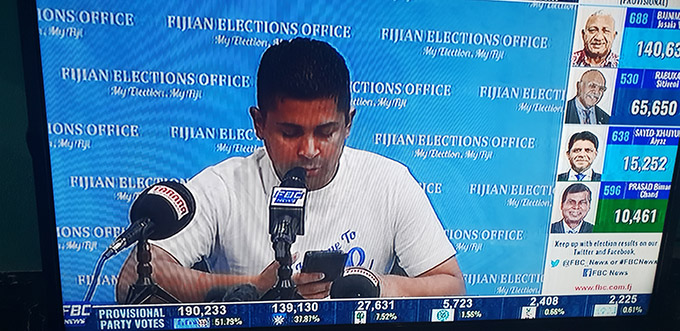 Fiji’s Supervisor of Elections Mohammed Saneem announcing final provisional results at the close of counting today after 70 percent of the vote had been completed. Image: Sri Krishnamurthi FEO screenshot
Saneem said votes had been counted at all polling venues where votes were cast yesterday, except at the 23 polling venues where polling had been adjourned because of inclement weather causing flooding.
The FEO were yet to receive the results from 224 polling stations while 1586 were counted by 7am this morning.
Saneem said there were valid reasons for not receiving phone calls with the results.
Materials packed
“The other thing is some presiding officers have directly packed their materials, so they did not call, that does not matter because we have reached our target of more than 70 percent for provisionals,” Saneem said.
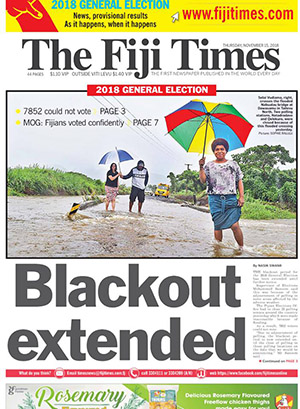 The Fiji Times front page today.
“The total voters that we have received in those polling stations is 370,450 and with that we have now roughly 61 percent turnout in the Central Division, 53 percent in the Eastern Division, 59 percent in the Northern Division and 60 percent in the Western Division,” he said.
“We still have to receive pre-poll counting data which is about 360 or so polling station that are yet to be counted in pre-poll and the 224 that are have not sent us the provisional data.”
The final results will be used to allocate seats for the new Parliament.
When the provisional results were stopped, FijiFirst had a majority of 191,266 (51.63%), SODELPA had 140,963 (38.05%) and National Federation Party 27,769 votes, with all seemingly winning seats in the new Parliament.
Other parties have not reached the threshold of 5 percent to win seats.
Sri Krishnamurthi is a journalist and Postgraduate Diploma in Communication Studies student at Auckland University of Technology. He is attached to the University of the South Pacific’s Journalism Programme, filing for USP’s Wansolwara News and the AUT Pacific Media Centre’s Asia Pacific Report.
Article by AsiaPacificReport.nz
]]>Cambodians await crucial tribunal finding into 1970s brutal Khmer Rouge regime
Source: The Conversation (Au and NZ) – By Rachel Hughes, Senior Research Fellow, School of Geography, University of Melbourne
A day of judgement is fast approaching for two now-elderly central figures in the Khmer Rouge regime of the 1970s. But part of the judgement due on Friday, a legal finding on genocide, also has the potential to unsettle understandings of the past in current-day Cambodia.
Those in the tribunal dock are Nuon Chea, 92, a man known as Brother Number Two (second in command to Pol Pot, who died in 1998) and Khieu Samphan, 87, the former head of state. The pair, the last survivors of the top Khmer Rouge leadership, are already serving life jail terms after being convicted of crimes against humanity at the same tribunal in 2014.
Khmer Rouge rule, which aimed to turn Cambodia into a back-to-basics, agrarian state, resulted in the deaths of an estimated 1.7 to 2.2 million Cambodians through execution, starvation and disease.
The Khmer Rouge were ousted in 1979 by anti-Khmer Rouge Cambodian “Renakse” forces that were supported by Vietnam. However, their role as liberators was lost on many outside Cambodia, and the new socialist nation was ostracised by Western nations and regional groupings such as ASEAN.
Khieu Samphan, one of two central figures in the dock over atrocities committed during the Khmer Rouge regime. Nhet Sok Heng/EPACambodians now await the latest findings.
Sovannarom, 50, works as an interpreter and taxi driver in Phnom Penh. He lost his brother during the Khmer Rouge regime and while he is in favour of the United Nations-supported Khmer Rouge Tribunal, he wishes more people other than the former senior leaders of the Khmer Rouge were being put on trial.
University-graduate Rotanak, 32, was born after the regime but has closely monitored the tribunal’s progress. She is confident it will satisfy many demands for justice, but worried that the expectations of victims who have participated in the current case, known as Case 002/02, may not be fully met.
On Friday, the Khmer Rouge Tribunal (KRT), officially known as the Extraordinary Chambers in the Courts of Cambodia (ECCC), will issue a summary of its judgement in the second trial against the two former senior Khmer Rouge leaders, who stand accused of genocide, crimes against humanity, and war crimes. Whether or not the specific charge of genocide is upheld, many Cambodians may be surprised or confused by this part of the judgement given the legal complexities. In short, genocide in international law is more narrowly defined than the popular understanding of the concept.
The current case includes charges covering acts at work sites, cooperatives and security centres, as well as internal purges and the regulation of marriage. But these are being prosecuted as crimes against humanity and war crimes, not as genocide. The only charges of genocide in the case relate to crimes against two ethnic minorities in Cambodia, the Cham (a Muslim minority) and ethnic Vietnamese.
A 2014 photograph of Nuon Chea, a man known as Brother Number Two. Nhet Sok Heng/EPAUnder international law, genocide occurs where there has been a “special intent […] to destroy, in whole or in part, a national, ethnical, racial, or religious group, as such”. For the most part, there were no national, ethnic, racial, or religious distinctions between the victims and the alleged perpetrators. Thus, the experiences of suffering of the wider Cambodian population do not formally meet the legal criteria for genocide.
But references to genocide appeared soon after 1979 in expert and mass media accounts of Khmer Rouge rule of Cambodia. Most famously in the English-speaking world, journalist John Pilger’s articles and documentaries drew explicit parallels between the crimes of Hitler in mid-century Europe and those of Pol Pot in 1970s Cambodia: a genocide in which infamous security centre S-21 was a “Cambodian Auschwitz”.
Within Cambodia, one of the early priorities of the government that replaced the Khmer Rouge regime was to convene a tribunal. Only months after Phnom Penh was liberated, the People’s Revolutionary Tribunal found Khmer Rouge leaders Pol Pot and Ieng Sary (tried in absentia) guilty of genocide. Ieng Sary was also charged in the same case as Nuon Chea and Khieu Samphan but died in 2013. The 1979 tribunal proceedings were broadcast in Cambodia, helping to entrench a popular understanding of Khmer Rouge rule as genocidal.
The legacy of this trial is contested. Some authors argue that it was the first attempt globally to bring the specific charge of genocide. International opinion, however, was stacked against the new Phnom Penh government. In the wake of the Vietnam War, Western nations and groupings publicly opposed Vietnam’s actions in Cambodia, seen as an invasion and occupation. In addition to these Cold War complexities, there are those who argue the trial simply failed to meet due process standards.
But there is more to the wider contestation than Cold War politics or due process concerns. John Quigley, a young American expert in international law, was invited to Cambodia to address the 1979 tribunal. His opinion was, and remains, that genocide against the broader population did occur.
The problem with most legal interpretations of the Genocide Convention, he argues, is a confusion of intent and motive, the view that an actor “must proceed out of hatred for the target group”. But “a person who kills members of a group from which he is not distinguished by religion, nationality, or ethnicity, with intent to destroy at least a part of that group, would seem to commit the act of genocide as defined by the Genocide Convention”, he writes.
In contrast, Marcel Lemonde, in his capacity as Co-Investigating Judge at the ECCC has explained in an interview published in 2014:
To establish that a genocide occurred, a group needs to have been identified […] and that group cannot be the quasi entirety of the population – otherwise the notion no longer makes sense.
How to judge what happened in Cambodia from 1975 to 1979 thus goes to the heart of how genocide is defined and understood.
The finding in relation to genocide this Friday is thus likely to provoke debate and confusion. If genocide is not found, the two minority groups in question, and especially the civil parties (participating victims in the case) among them, will be bitterly disappointed. Yet, if genocide is found to have been committed against them, the exclusivity of the finding is likely to jar with understandings held by the majority ethnic Khmer population.
Read more: A scholar’s journey to understand the needs of Pol Pot’s survivors
The confusion is compounded by further complexity in relation to the status of ethnic Vietnamese in contemporary Cambodia. Ethnic Vietnamese in Cambodia are among the most precarious groups in the country, and have recently had new state measures applied against them.
How might a genocide ruling that foregrounds the experience of this group affect their current political status? In an increasingly xenophobic political climate, a genocide finding that appears to grant special status has the potential to be politicised with the aim of provoking hostility.
If genocide is not found, these groups and many other Cambodians will be left wondering why the legal reckoning does not accord with long standing popular discourse.
While the trials were intended to bring legal clarity into the debate about the Khmer Rouge crimes, confusion around the genocide ruling is likely to affect the ongoing legacies of this significant tribunal.
And after the dismissal of the charges against another suspect, it seems more likely this Friday’s judgement hearing will be the last of the trial chamber.
– ref. Cambodians await crucial tribunal finding into 1970s brutal Khmer Rouge regime – http://theconversation.com/cambodians-await-crucial-tribunal-finding-into-1970s-brutal-khmer-rouge-regime-106078]]>Rainbow pride flag’s still flying, taking on new forms and meanings in our cities

Source: The Conversation (Au and NZ) – By Thomas Stoddard, PhD Candidate, School of Design, University of Technology Sydney
A year ago, on November 15, the Australian Bureau of Statistics announced the result of the postal survey on same-sex marriage equality, a resounding Yes with 61.6% of the vote. Leading up to the announcement, the LBGTQIA+ community endured agonised tension. They had to argue fiercely for the legitimacy of their relationships as well as their identities.
A rainbow flag on a front fence in Sydney’s inner west. Joel Carrett/AAPDuring that debate a new visual landscape of signs and interventions became part of many urban environments. The rainbow pride flag began to appear at both public and private sites as a very visible sign of pride and affirmation.
In the past year the flag has clearly escaped the pole or the street bunting of pride festival times to become ever present. Post-plebiscite, we are reminded of the same-sex marriage vote, and that issues for queer people continue.
Read more: A year since the marriage equality vote, much has been gained – and there is still much to be done
Gilbert Baker originally designed the rainbow flag in 1979 for the San Francisco Pride Parade. Its purpose was to express the visibility and values of the gay and lesbian community. The flag’s colours represent healing, serenity, sex and nature.
Since then, the flag has undergone many remixes by different parts of the queer community to create further visibility for the diversity inherent in it.
Transgender woman and activist Monica Helms designed the transgender pride flag in 1999, retaining the stripe motif, but focusing on blue, pink and white to illustrate a spectrum of gender.
Monica Helms talks about designing the trans pride flag.A more recent design is the pansexual pride flag, designed by a Tumblr user known as Jasper in 2010. First disseminated on the site, it has become the most widely seen specific flag of the community, reused across the internet.
Read more: Explainer: what does it mean to be ‘cisgender’?
What’s in a flag?
Cloth flags are significant cultural spatial markers. Affected by air, wind and light, static cloth is transformed in the slightest breeze, becoming alive and suggesting change as well as permanence.
The rainbow pride flag’s emphatic stripes activate a sense of colour and change, evoking new narratives and possibilities. The flag took on new cultural, social and political meaning as it moved from the air and onto homes and commercial premises.
Some flags, like one hung in the window of The Bank pub in Newtown, were emblazoned with YES in the centre. This left no questions about what the flag was supposed to represent – it was very specific about its contemporary political motivation.
An example of the flag leaving the fixed place of the pole is at 73 Liberty Street in Stanmore in Sydney’s inner west. Originally painted a shade of yellow beige, the house was transformed into a radiant spectrum of rainbow pride colours, with a black and white flag emblazoned with “Yes!” hung on the front. Visit it today and the colours remain as vibrant as ever.
73 Liberty Street in Stanmore. Tom Stoddard, Author providedThe boldness of the flag’s colours radically alters the experience of moving past the generally bland facades of inner-city Sydney. We are now confronted by an eye-catching spectrum, the aesthetic energy of colour and space.
Bold colour, often spurned and even banned in some heritage suburbs such as Paddington, takes on a new uplifting vision. At stake is visibility. LGBTQIA+ communities do not appear and disappear at moments of political debates, but continue to actualise and make visible pride in their existence.
Read more: Coming out at work is not a one-off event
A politicised existence necessitates this, as the fight for equality is ongoing. The painted house is a visible urban marker that the queer community is here to stay.
So what is the significance of these persistent visual markers? On the one hand, their visual presence indicates the importance of a political debate undertaken more than one year ago.
More subtly it marks a cultural shift, where expression, be it personal or as a collective, affirms a community. Design and activism in these forms can become expressions of civic values, as space and place become the mouthpiece for cultural and social sentiments and statements.
The flag leaves the pole: stickers around Marrickville, Sydney. Tom Stoddard, Author providedThat isn’t to say that the static flag does not possess power in its own right. Various activist-designers have transformed it into other forms that create direct dialogues with the public. The rainbow flag stripes become a framing device for statements and declarations that are intrinsically tied to the language of the debate.
Stickers have long been used as spatially flexible political objects, free from flagpoles or other prerequisite structures. From letterboxes to window frames, remixed versions of the flag take a message or sentiment to any place, public or private.
This rethinking of the hierarchy of designated spaces for communication is an exciting evolution for the form and intention of the rainbow pride flag. As it evolves from one icon into a variety of others, it populates the city with queer statements and traces.
Last year the pride flag was used as an effective rallying call to express outwardly, publicly and explicitly that same-sex relationships (marriage or otherwise) are as valid as any heterosexual relationship. It will be interesting to see where the pride flag takes the Australian queer community next and, in turn, where the community takes the flag.
– ref. Rainbow pride flag’s still flying, taking on new forms and meanings in our cities – http://theconversation.com/rainbow-pride-flags-still-flying-taking-on-new-forms-and-meanings-in-our-cities-104930]]>Fiji authorities caught out by social media trolls, poll fake news

 Fiji Media Industry Development Authority (MIDA) chair Ashwin Raj (left) and Supervisor of Elections Mohammed Saneem at a press conference in Suva. Image: Jonacani Lalakobau/Fiji Times
By Sri Krishnamurthi in Suva
Like a possum in headlights, the Fiji media authorities appear to have been caught out by social media trolls and fake news, admits Ashwin Raj, chairperson of the Media Industry Development Authority (MIDA).
Fake news, a term made infamous by US president Donald Trump, has proved to be the bane of the elections in Fiji – and the authorities had not anticipated having to deal with ferocity of it.
“It is a completely new terrain, last elections (2014) we weren’t talking about fake news; social media is now saturated with this stuff,” said Raj.
READ MORE: Report fake page to Facebook plea from Fiji Times editor
“This is now a completely new phenomenon. Obviously we know who the culprits are, why they are doing it and what they are doing.”
The extension of the media blackout to allow for 23 venues and 7,852 voters to vote at a date yet to be announced meant people had to be vigilant not to be taken in by social media trolls or fake news.
“Wait for official authorised results that will come from the Fijian Elections Office (FEO), be very mindful that people will take to the social media and spread rumours about lawlessness and instil fear, so it very important that we go to the official sources,” said Raj.
“We’ve had members of various political parties who actually forwarded to us news items, which in their estimation constitutes fake news and has coloured a certain perception about the various political parties.
‘Everybody is concerned’
“We’ve also had concerns from the mainstream media that have been brought to our attention. One of the things that have come out of this is that everybody, despite their political differences, ideological disposition, political proclivities are actually concerned about the proliferation of fake news.
“What that has done in terms of the campaign, public knowledge and so on; if anything, this is why we must resort to the mainstream media as the veritable site of truth.
“This is why we need something like the 48-hour blackout period. This is why we need the mainstream media that is going to be the voice of reason, help the public delineate fact from fiction,” said the verbose Raj.
He said force of law would be brought to bear on those who indulged in the dark arts of social media.
“We are in the process of investigating, until we have concluded that process, I’m not going to make a series of statements in relation to that. We will be reporting it to the relevant agencies in due course,” he said.
“There is a whole bunch of stuff going on. There are elements in it that simply constitute criminal acts, when you threaten somebody with sexual assault because you disagree with their political views.
“When you threaten the life, safety and security of people that is simply a criminal act. Then there are other things that are basically fiction and the sort. That can be easily discredited if people produce facts.
Blackout period
“So, the transgressions vary.”
He reminded the people of the ongoing blackout period.
“We are still in the blackout period, the public needs to remember that 7,852 voters in 23 polling venues have yet to cast their votes it is imperative that people do not give any credence to fake news.
“This is where the role of media is very important is dispelling any fiction that might be out there, particular so when it comes to the results,” said Raj.
Nothing could have prepared them from the effects of a tyrant social media.
Sri Krishnamurthi is a journalist and Postgraduate Diploma in Communication Studies student at Auckland University of Technology. He is attached to the University of the South Pacific’s Journalism Programme, filing for USP’s Wansolwara News and the AUT Pacific Media Centre’s Asia Pacific Report.
Article by AsiaPacificReport.nz
]]>Fiji’s Bainimarama maintains strong poll lead, 618 stations to be counted

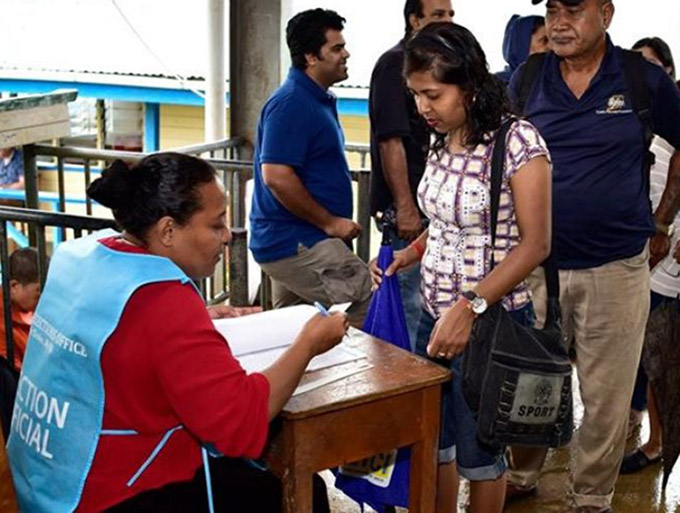 Fiji’s National Results Centre has been releasing provisional results from votes cast at 2170 polling venues. Image: Wansolwara
By Wansolwara Staff
Prime Minister Voreqe Bainimarama has maintained a strong lead early today in Fiji’s general election, polling 140,631 votes from 1552 of 2170 stations being counted at the National Results Centre in Suva.
Opposition SODELPA leader Sitiveni Rabuka has so far raked in 65,650 votes followed by Aiyaz Sayed-Khaiyum with 15,252 and Biman Prasad on 10,461 at 5.50am.
In a surprising twist, Lynda Tabuya has climbed a few votes up, sitting on 7197 votes so far followed by Alipate Nagata with 5270 and Ro Teimumu Kepa with 4699 votes.
Parveen Bala closes in with 4429 followed by Mosese Bulitavu with 4176, Atonio Lalabalavu with 3198, Niko Nawaikula with 3095, Viliame Gavoka on 2929 and Savenaca Narube with 2439.
The provisional results by candidates were released via the Fijian Elections Office FEO App, which is compatible with smartphones and can be downloaded from Google Play and Apple Store.
In terms of provisional results by party from the 1552 stations counted so far, FijiFirst Party is still in the lead with 190,233 votes (51.79 percent). Other results out of the FEO App as of 5.50am today include:
Social Democratic Liberal Party – 139,130 (40.19%)
National Federation Party – 27,631 (7.52%)
Unity Fiji – 5723 (1.56%)
Fiji Labour Party – 2408 (0.66%)
Humanity Opportunity Prosperity Equality – 2225 (0.61%)
The announcement of provisional results will end at 7am but counting will continue until the final results are tallied and released from the National Results Centre at the FMF Gymnasium in Suva.
This article is republished under the content sharing arrangement of USP’s Wansolwara student journalism newspaper and AUT’s Pacific Media Centre.
 Provisional progress results in the Fiji general election at 6.20am today. Source: FEO
Article by AsiaPacificReport.nz
]]>


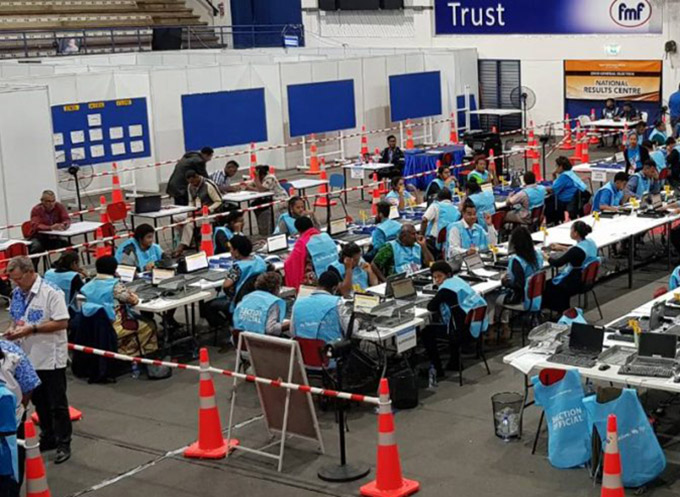
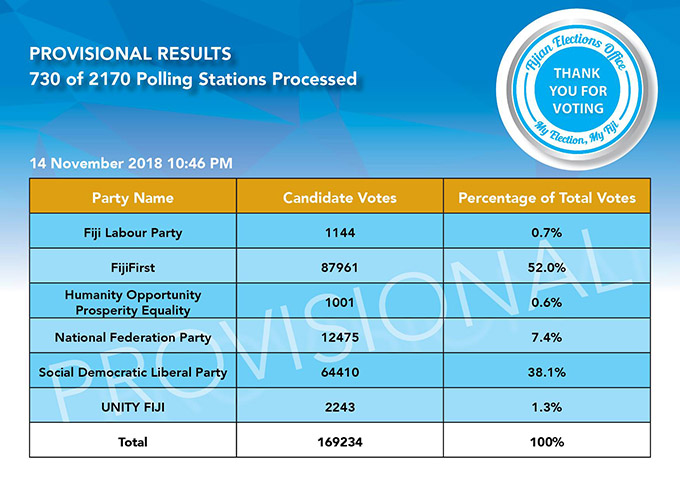 Sixth update of Provisional Results as at 14th November 2018 10.46pm
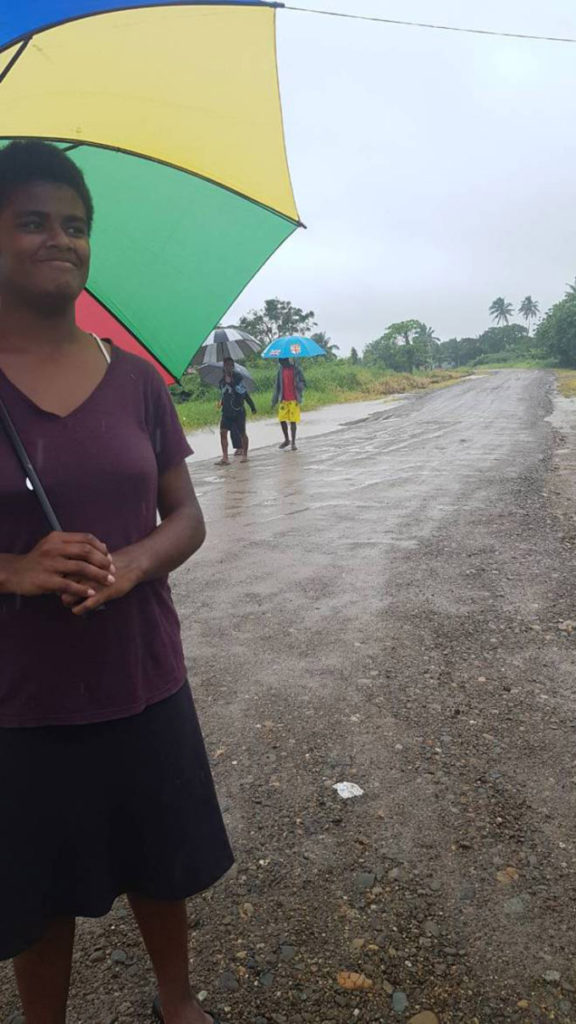 Young voters brave the cold weather to cast their vote in Wainibokasi today after public buses failed to turn up. These voters walked for more than an hour before a bus finally arrived. Image: Mereoni Mili/Wansolwara

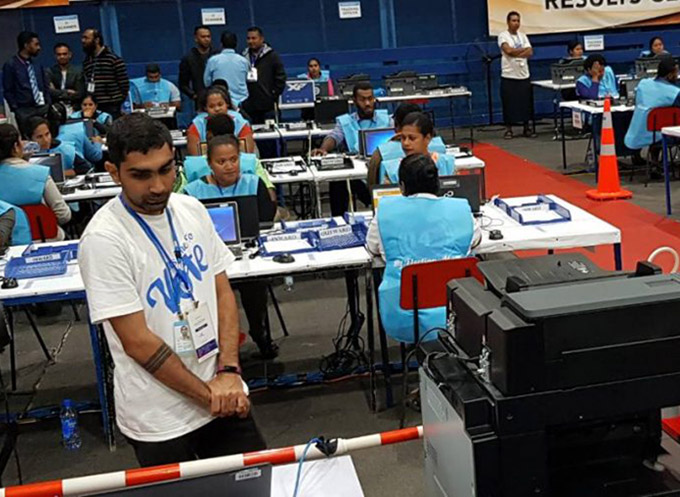
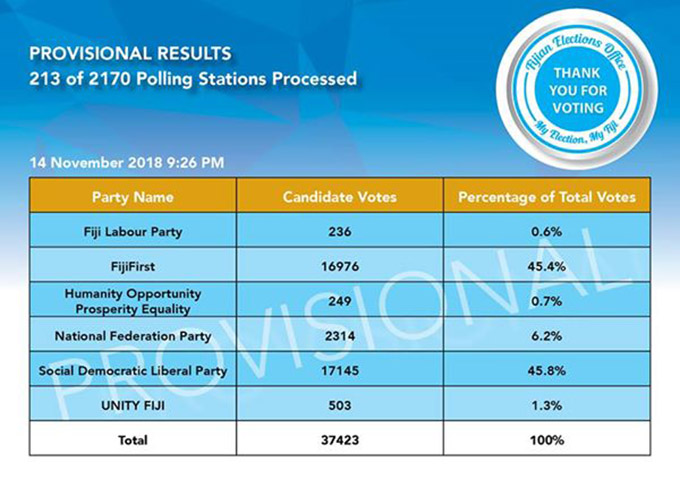 The third provisional results update in the Fiji general election. Source: FEO


 Former Fiji rugby coach urges Fijians to vote in spite of the weather. Image: Sri Krishnamurthi FB/PMC


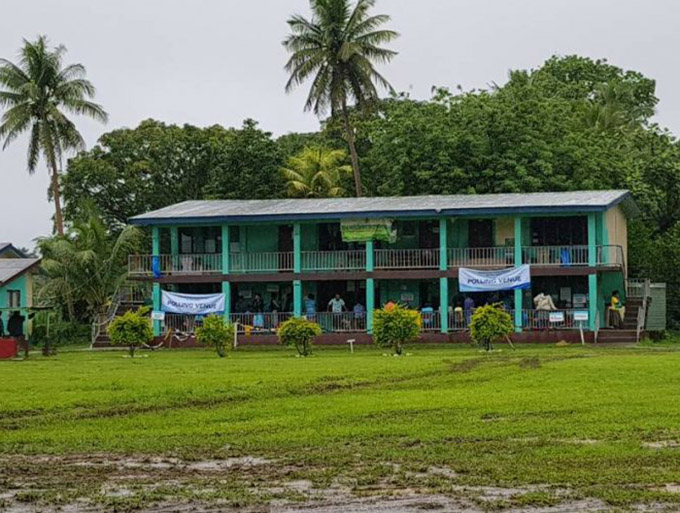
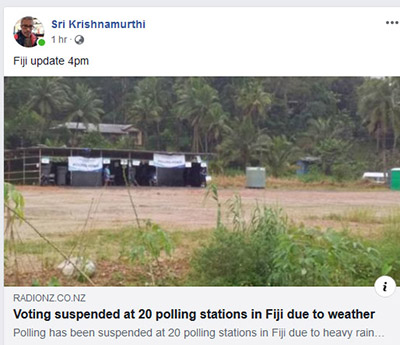 Earlier report – voting suspended in 20 Fiji polling venues. Image: Sri Krishnamurthi FB/PMC