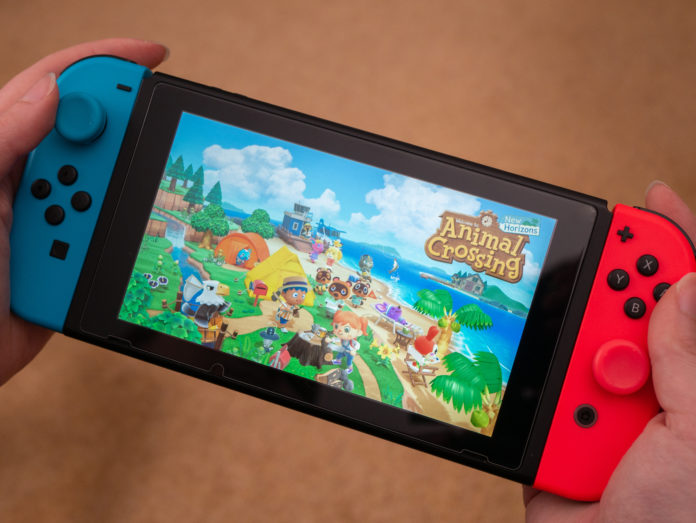
The same week social distancing measures were announced in Australia (March 16 – March 22), sales of game consoles leaped 285.6%. Prior to this, sales were declining month on month.
We’ve also seen a 278.5% spike in physical game sales, spurred by the release of Doom Eternal and Animal Crossing: New Horizons. COVID-19 is clearly having an impact on our shopping habits beyond toilet paper.
Looking at the games leaping up the UK charts in late March, the top five (which all enjoyed a 200%+ bump in sales) provide robust multiplayer experiences. Apart from Doom and Animal Crossing, we see the latest releases from Call of Duty, FIFA, and Mario Kart. These games aren’t simply about escaping reality, but about going somewhere together.
Yet, to those who aren’t already avid players, video games might be viewed as juvenile – a waste of time lacking redemptive qualities. In the era of the quantified self, where we’re pushed to use technology to track and “optimise” ourselves endlessly, even those who do enjoy games may feel guilty for not being more “productive”.
On the contrary, we have found video games help satisfy fundamental psychological needs, and therefore have enormous value for all ages.
autonomy is about feeling you have choices, can act in accordance with your values, and pursue meaningful goals
competence is about feeling effective and capable of overcoming problems
relatedness is about feeling connected to others.
The satisfaction of these basic psychological needs leads to greater well-being and motivation. If being stuck at home is reducing your happiness and well-being, this could be due to reduced satisfaction of one or more of these needs. For instance, your sense of autonomy may be undermined when forced to self-isolate, as you can’t partake in many of your usual activities.
Your sense of competence might have also taken a hit, by missing out on the daily “wins” that can come through leisure pursuits or problem-solving at work. You also likely can’t see your colleagues, neighbours, friends, and family as often, which can undermine feelings of relatedness.
Fortunately, many of us have found other ways of satisfying these needs through technology, such as using webcams and microphones to have online interactions. It’s not the same as a face-to-face meeting, but it helps maintain connection and satisfies our desire for relatedness.
What games provide
Video games can also satisfy these needs and may be a great way to spend some time during this crisis.
They offer a clearly defined “sense of progress and achievability”, as Jennifer Scheurle explains. This is especially valuable during lockdown when your days may feel monotonous.
Research suggests gamers can also feel a sense of relatedness with virtual characters and the game world itself, adding to the overall enjoyment of playing. Caring about a character and their plight (relatedness) motivates players to help them (autonomy), and enhances their sense of competence when they succeed.
While playing games is psychologically valuable, it’s important to do so in moderation. The Child Mind Institute recommends about one to two (maximum) hours per day of gaming for children. For kids older than six, they encourage parents to “determine the appropriate amount of time”.
While there is no universal consensus on how much gaming is “too much” for adults, the answer is likely less to do with hours of play, and more to do with being aware of one’s susceptibility to video game addiction. That said, research suggests only about 1-3% of gamers are at risk of addiction. If you are concerned, you can try this test that was trialled in a paper published by the International Journal of Health and Addiction.
If life in lockdown is creating a sense of ennui for you, consider playing video games to keep your basic psychological needs satisfied. If you’re already playing, keep doing it (in moderation) without feeling guilty.
And if you see yourself as “not much of a gamer”, still consider giving it a try. The range of digital games is enormously broad, and there are many onlineguides for beginners wanting to get in on the action.
As part of the government’s response to the COVID-19 pandemic, all elective surgeries across Australia have been temporarily cancelled.
Elective surgery is non-urgent surgery people choose (elect) to have: things like cataract surgery, joint replacement, tonsillectomy, hernia repair and cosmetic surgery.
There are more than two million hospital admissions involving elective surgery in Australia each year; two-thirds in private hospitals and one-third in public hospitals. Accordingly, elective surgeries make up a huge part of overall health expenditure.
So when they stop all of a sudden, it’s a big deal.
People who were booked in for surgery will simply have to wait. Because their surgery was deemed non-urgent, this might not be too bad if the shutdown lasts for six weeks. But what if it lasts for six months?
Private patients will face delays that are probably less than the usual waiting lists in public hospitals (up to 12 months for elective surgery), but public patients may have to wait even longer.
This large scale halt on elective surgeries is unprecedented, so we don’t have any data on what kinds of consequences we might expect. But research suggests people who wait for surgery can deteriorate proportional to the length of time they wait. So a few risks come to mind.
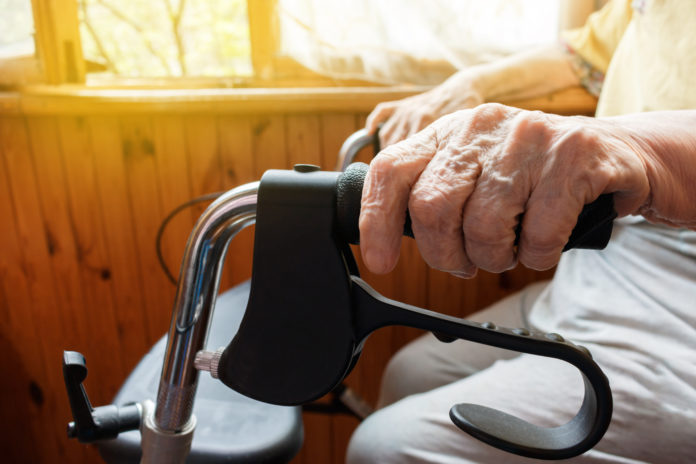
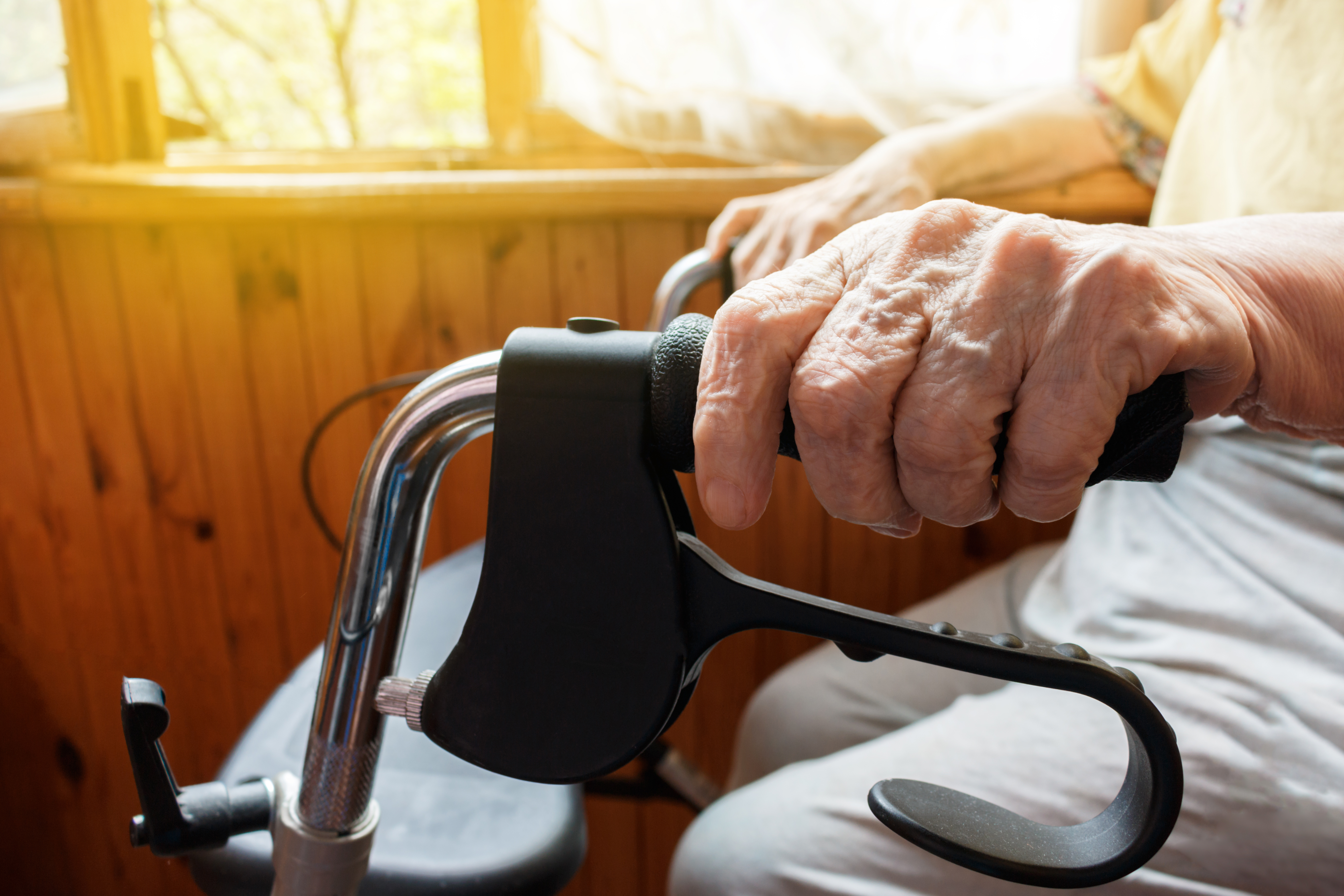
People waiting for elective surgeries may have to cope for longer with restricted mobility and pain.Shutterstock
Patients may need to rely on strong pain medications for a longer time, and could be more likely to become dependent on these.
Older people in particular may have to cope for longer with restricted mobility while waiting for a hip replacement. Or they may be at increased risk of falls due to poor eyesight while waiting to have their cataracts fixed.
So while this move has been designed to reduce pressure on our hospitals, we may end up with more acute presentations to emergency departments.
It’s not all bad news
Some people, however, might find their condition improves. While cataracts won’t clear up on their own, many elective procedures are done for conditions that can improve without surgery.
My area of specialty is orthopaedics, the branch of surgery concerned with conditions involving the musculoskeletal system.
My colleagues and I currently have a review in press looking at studies where patients have been randomised to surgery or no surgery for chronic musculoskeletal pain. These procedures include spine fusions and decompressions for back and leg pain, carpal tunnel decompression, arthroscopic surgery for shoulder and knee pain, and joint replacement surgery.
We found only 14% of the studies showed surgery was clearly better than not doing the surgery. In most studies it was a toss-up, or the patients who had surgery fared worse.
Even elective procedures we know to be effective, such as knee replacements, have alternatives. One study compared patients who underwent knee replacement surgery to patients who didn’t, where both groups were given a 12-week physiotherapy program.
While the surgery group demonstrated better results, those treated without surgery also improved. And two-thirds had avoided surgery up to two years later.
Maximising patient education about the risks and benefits of treatment options using specially designed “decision aids” is another technique that has reduced the uptake of elective surgery.
In New South Wales, education and non-surgical treatment for people on waiting lists for knee replacements has resulted in more than 10% of patients coming off the waiting list because of improved symptoms. (Weight loss alone can significantly reduce symptoms from knee arthritis.)
Decision aids are not not commonly used for elective surgery in Australia but could be taken up more widely.
Surgery isn’t always the only option.Shutterstock
What will happen after the pandemic?
We will obviously see an increase in elective surgery once the ban is lifted, but I predict the increase will not equate to the decline during this shutdown.
First, the demand for surgery is generated during surgical consultations, and these have declined considerably.
Second, financial strain will mean people will be less likely to agree to any out of pocket costs, and possibly fewer people will be insured.
Finally, people will realise they might not need the surgery. In effect, we may be “flattening the curve” of post-virus elective surgery partly by realising much of it can be avoided.
But unless the forces that dictate our usual rates of elective surgery change, the rates will eventually return to normal. This is because we have a health system that drives specific, quantifiable treatments for diagnosed conditions.
For example, the system is geared at providing and reimbursing knee replacements, not the education, weight loss and exercise programs that might reduce the need for them.
There is considerable room to lower the rates of many common elective procedures, even without a forced shutdown.
Source: The Conversation (Au and NZ) – By Christine Jenkins, Professor, Respiratory Medicine, UNSW Sydney and Clinical Professor at the University of Sydney, George Institute for Global Health
The new respiratory coronavirus COVID-19 is particularly worrying for the 2.7 million Australians who already suffer from asthma. That’s roughly one in nine people.
Viral respiratory infections, in particular those that cause the common cold, typically trigger flareups of asthma. They are the main reason for asthma episodes in both children and adults during autumn and winter.
So it’s natural for asthmatics to fear they may be more at risk during the coronavirus pandemic.
We don’t yet know if people with asthma are more susceptible to serious outcomes if they get COVID-19.
But there’s plenty asthmatics can do to minimise the impact of any viral infection, whether it’s the common cold or coronavirus.
Good asthma control
Asthma is characterised by inflammation in the lining of the lung’s air passages. For most asthmatic adults and some asthmatic children, the condition is long-term.
Asthmatic airway inflammation persists over time, even between acute attacks, and contributes significantly to day-to-day symptoms for some people.
If this airway inflammation is not treated, it can result in progressive narrowing of the airways. Normal lung function may never return.
Having “good asthma control” is the key starting point to reducing your risk.
That includes:
having minimal or no day-to-day symptoms
no night-time waking
no asthma attacks and
good lung function, such that you can do all your normal daily activities without any limitation.
Good asthma control is eminently achievable with regular medication (both relievers and preventers).
Relievers are bronchodilators, meaning they act rapidly to relax the muscle in the airways and open the breathing passages to enable normal breathing.
Salbutamol (Ventolin or Asmol) is by far the best known and widely used, typically as an aerosol inhaler (often referred to as a puffer).
Preventers include Breo, Symbicort, Flutiform, Seretide and Flixotide.
The most commonly used preventer asthma medications in Australia contain an inhaled corticosteroid (which is anti-inflammatory) and a long-acting bronchodilator, which is a symptom controller – an ideal combination.
Proper preventer use may result in so few symptoms you might not need to take reliever medications for many weeks or even months.
People who are prescribed regular asthma preventer medications should continue to take them throughout the COVID-19 season to maximise their chances of staying well. Stopping these medications may increase the risk of having poorly controlled asthma and risk a severe attack or even hospital admission.
Proper preventer use is crucial.Shutterstock
Stop panic-buying medications
Sadly, there has been a recent run on the reliever salbutamol in Australian pharmacies. While it’s vital people check the expiry date on their salbutamol canister, there is no need to stockpile these inhalers.
The less we panic-buy, the more likely there will be plenty of salbutamol available for those who need it.
Stay healthy, minimise the risk
To minimise your risk of a flare-up with any respiratory virus, including coronavirus, you should:
take your preventer medication every day as prescribed
make sure you know where your salbutamol inhaler is and that it hasn’t expired
check in with your doctor to make sure your asthma control is as good as it can be, and that your current medications and doses are appropriate
make sure you have an up to date written asthma action plan, and keep it handy
remember to have your flu shot.
Written action plans mean you can step up your treatment if symptoms worsen. They provide guidance about when to start additional treatments such as a course of the anti-inflammatory corticosteroid prednisone or when to contact a doctor.
Your GP can help you recognise early symptoms of an asthma attack or flare-up, write a new plan and discuss the best way manage your attacks so you know exactly what to do if your symptoms increase.
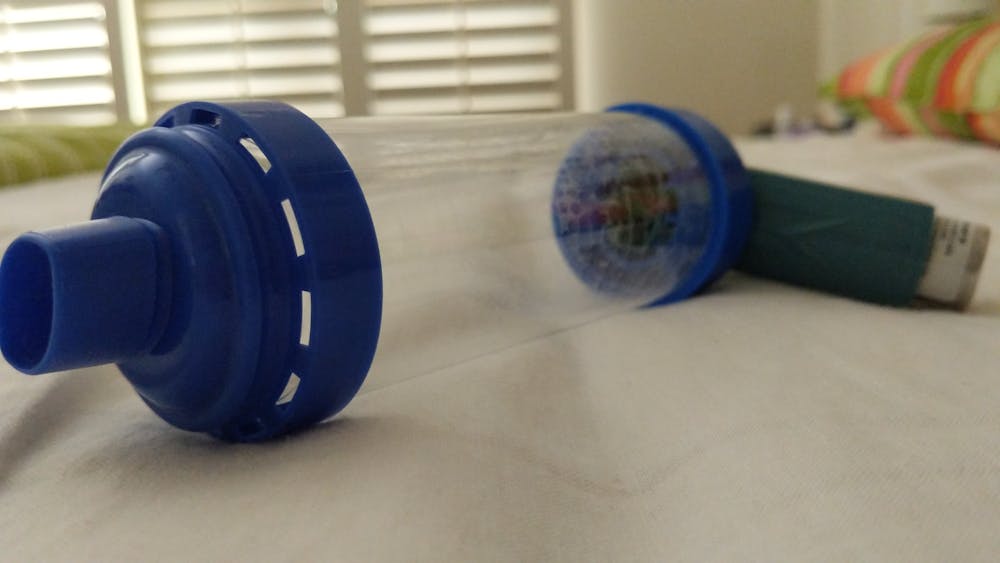
A spacer helps asthmatics take their inhaler medication if they have difficulty breathing.The Conversation, CC BY-ND
Your action plan should include advice to use a puffer and spacer during a flare-up of asthma, but not a nebuliser.
During the first SARS epidemic in 2003, health-care workers reportedly became ill due to exposure to aerosol-producing procedures such as nebulising bronchodilator medications.
We know that SARS CoV-2, the current pandemic virus, can spread rapidly this way and so nebulisers should not be used to treat asthma attacks at home or in hospital.
Good asthma control maximises the chances that if you do get coronavirus, it will have minimal impact. It doesn’t, however, remove the risk of a serious episode completely.
If your usual asthma medications are not working for you, seek medical advice promptly. Meanwhile, keep doing all you can to reduce your risk of catching coronavirus in the first place by social distancing and washing hands frequently.
It is expected that police will monitor the movement of people and anyone found to be loitering will be arrested.
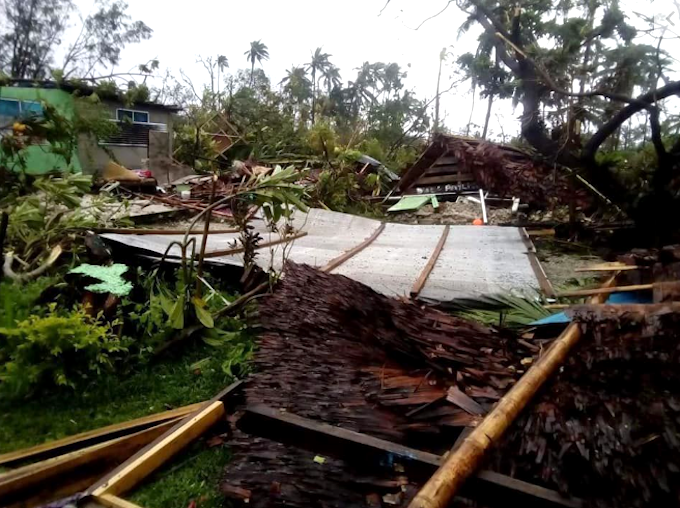
Soko had earlier confirmed that Fijians evacuating due to TC Harold would be assisted by the disciplined forces.
Fiji’s National Disaster Management Director Vasiti Soko … police will monitor movement and arrest loiterers. Image: FBC NewsRising Nadi river levels on western Viti Levu island. Image: FBC twitter
The cyclone was located about 115 km south of Nadi, or about 85 km west-northwest of Kadavu, at 11.00am today.
Close to its centre, the cyclone was estimated to have average winds up to 175 km/h with momentary gusts to 250 km/hr. The cyclone was currently moving east-southeast at about 36 km/hr.
A tropical cyclone warning remained in force for southern parts of Viti Levu – from Momi through to Coral Coast to Pacific Harbour, Beqa, Vatulele, Kadavu, Matuku, Vatoa and Ono-i-lau.
A storm warning remained in force for the rest of Viti Llevu, Lomaiviti, Moala, Totoya, Vanuavatu and the rest of Southern Lau group.
A gale warning remained in force in Yasawa and the Mamanuca group, for the rest of the Lau group, Vanua Levu, Taveuni and nearby smaller islands.
A strong wind warning remained in force for the rest of Fiji.
The tropical cyclone is hitting Fiji while the country is in restrictions over the global Covid-19 coronavirus pandemic. So far 15 infection cases have been reported and Suva was already in lockdown.
Maggie Boyleis senior multimedia journalist on FBC News.
Fiji now has 15 coronavirus cases after a single new case has been confirmed by Prime Minister Voreqe Bainimarama.
The new case was one of 25 samples that were tested at the molecular lab and is the husband of an existing patient from Lautoka – the Zumba classmate of patient number one.
Bainimarama said on Monday this was a case they had expected for some time, adding the 33-year-old man did not develop any symptoms until after he was safely in isolation and posed no risk to the public.
“This is the sixth transmission that can be traced back to our first case. There are now 15 cases of Covid-19 in Fiji and all our patients remain in stable condition,” he said.
According to the Prime Minister, the Fijian national who recently travelled to Uruguay and smuggled his way into the Lautoka confined area had tested negative for the virus.
– Partner –
The man caused panic when the fever-screening team discovered his travel history paired with a fever and other symptoms.
‘Raised serious red flags’ “This raised serious red flags and jeopardised the lifting of restrictions in some areas of Lautoka – for those reasons we locked down the Kashmir area in Lautoka where he resided,” Bainimarama said.
“Despite his irresponsible [action], which will still be investigated, he was among the 24 tests that came back negative, meaning all of the Lautoka confined area now has the freedom to move into and out of the area, including Kashmir.
“Lifting of the lockdown does not mean life is going back to normal. The 8pm-5am nationwide curfew applies everywhere. The ban on all social gatherings applies everywhere.
“The requirement to keep a safe distance of two metres applies everywhere. Our police officers are stepping up surveillance in Lautoka from today to make sure no one takes this as an opportunity to skirt any of our directives.”
Tackling a health crisis such as COVID-19, with society in lockdown can’t help but place families under strain.
It’s been reported family violence notifications to police nearly tripled in some areas of China’s Hubei province (where SARS-CoV-2, the virus that causes COVID-19 originated) during the lockdown in February.
Some family violence organisations in Australia are already reporting a rise in demand for services.
The federal government recently announced A$1.1 billion for mental health services, domestic violence support and Medicare assistance for people at home, and emergency food relief. This support is welcome but more practical and creative measures are also required to protect vulnerable families.
COVID-19 and vulnerable children
Prior to the pandemic, in 2018-19, about 170,000 children aged up to 17 years (around 30 out of 1,000) received child protection services. These services include investigations, which may or may not lead to substantiated cases of child abuse or neglect, care and protection orders, or out-of-home care placements.
Most of these children remain in their families of origin with social workers from government and community agencies, as well as teaching, medical and other professionals supporting these families and monitoring children’s safety.
But the social structures and services which normally support children and families – such as schools, parenting or mother’s groups, and family services – have been removed or are operating at reduced capacity.
Reduced service provision will amplify the pre-existing and COVID-19 related challenges that impact children’s safety. These include parental substance misuse, mental health problems and neglect.
Hard-to-detect types of abuse, such as child sexual abuse, are likely to increase. Studies show social isolation increases the risk for vulnerable children, allowing perpetrators greater ability to employ grooming strategies.
Existing family stress will be magnified through widespread job and income loss, food security issues in regional areas and medication shortages. The need for families to spend extended periods of time together in confined spaces will only add to the pressure, testing relationships and potentially exacerbating mental-health issues and aggressive behaviours.
One concern is that as families become more isolated due to the pandemic, children already at risk will be hidden at the same time that they are facing heightened danger from violence, abuse and neglect in their homes.
A recently released Canadian review of the literature on child welfare issues during pandemics found a number of challenges will confront welfare, family and community services. These include:
a decrease in in-home family support services, which reduces chances to detect and respond to health and care concerns
limits on substance abuse and addiction services
reduced visitation and reunification processes with parents, for children in out-of-home care
substantial court delays, including with child protection orders to determine if a child will return home or remain in out-of-home care
a decreased capacity among the major agencies who report child maltreatment and domestic violence, such as education and health, resulting in decreased detection of serious safety threats
a reduction in the capacity of police and child protection services to investigate and respond to serious safety threats.
At June 2019, there were 44,900 children in out-of-home care. Most of these children were in home-based care, with just over half cared for by relatives, such as grandparents, who are at higher risk of more severe effects of COVID-19.
Around 30% of children in out-of-home care also live with a disability or mental health issue. These children require high levels of support, which places extra pressure on carers who may be homeschooling while coping with reduced childcare and respite support.
What needs to be done
Government and community agencies are facing unprecedented and significant challenges. There is a real risk of some services and supports, that are essential to child safety, being overlooked as our attention is focused on COVID-19.
Governments can employ a number of strategies to minimise the risk of further exacerbating issues in vulnerable families. These include:
continued and sustained financial support for families who suffer income and job loss, through timely access to unemployment benefits. This support must be enabled as soon as possible to reduce heightened individual and family stress
online consultations for mental health and addiction, so service provision is broader than just tele-health but includes community based support services. This can assist families in self-isolation to reduce symptom escalation and enable triaging of in-person support for those who need it
provide urgent support to service providers to develop policy on how to safely sustain service provision in the event of a community “lockdown”. Like health services, social services are essential for maintaining child and community safety.
use creative strategies to provide refuges and emergency accommodation for those seeking safety. Empty hotels and Airbnb rooms could be used for women and children at-risk. Regional community strategies will also be required to address this need with restricted travel being imposed
create flexible, innovative strategies, such as respite services and child care provisions for in-home support for families and carers who are vulnerable or who have children with high care needs.
extend care this year for young people turning 18 so they can remain in out-of-home care placements with foster and relative carers. Currently children in out-of-home care are required to leave their placements when they turn 18.
increase the workforce capacity for welfare and community agencies – downturns in other sectors may enable a boost in this workforce. For example people working in youth recreation who have lost their jobs could assist in youth support agencies as they have working with children checks and youth experience. Training will be challenging but not impossible.
encourage everyone who can to provide support to neighbours and friends who may be struggling. A phone call, virtual chat or a food delivery can make a huge difference.
This is a challenging time for everyone, but especially so for those already vulnerable. Australia can employ innovative strategies to address the health and safety concerns for our most vulnerable children and families.
The National Sexual Assault, Family & Domestic Violence Counselling Line – 1800 RESPECT (1800 737 732) – is available 24 hours a day, seven days a week for any Australian who has experienced, or is at risk of, family and domestic violence and/or sexual assault.
Source: The Conversation (Au and NZ) – By Sarah Bekessy, Professor in Sustainability and Urban Planning, Leader, Interdisciplinary Conservation Science Research Group (ICON Science), RMIT University
Intriguing things sometimes happen in places deserted by people. Plants creep back, animals return, and slowly, birdsong fills the air.
The coronavirus pandemic means public spaces the world over have been temporarily abandoned. Major roads are all but empty and public squares are eerily quiet.
In response, nature is in some cases “taking over towns”. Some reports – such as dolphins spotted in Venice – are fake news. But others are legitimate.
Of course, COVID-19 has taken a devastating toll on humanity, and this is nothing to be celebrated. But as Australians stay at home and our streets fall quiet, let’s consider how wildlife might respond.
Animals the world over are creeping back into cities deserted due to COVID-19.SOHAIL SHAHZAD/EPA
The resilience of nature
Throughout history, nature has shown a propensity for reclaiming land once humans have departed.
Ecological succession can occur when humans abandon cities. This is where short-lived “pioneer” species initially occupy sites and are replaced over time by shrubs and trees, ultimately supporting more diverse wildlife.
It’s hard to predict exactly how healthy and biodiverse these systems can become, but they will almost certainly be examples of “novel ecosystems”, having crossed irreversible thresholds due to human impact, such as vegetation reclaiming an abandoned building.“
A butterfly on a floor in front of visitors in protective shoes at the Chernobyl nuclear power plant in April 2018.SERGEY DOLZHENKO/EPA
Quieter, darker, greener cities
Cities can be hostile places for urban wildlife due to fragmented habitat, pollution, road collisions and disturbance from and conflict with people. But under a coronavirus lockdown, these threats are greatly reduced.
Light pollution may also fall in cities as a result of coronavirus – such as if office buildings turn off overnight lighting and sportsgrounds are empty.
This would benefit nocturnal species such as moths and bats. Artificial light can interfere with reproduction, predator and prey interactions, and migration.
At the end of March, traffic congestion in Sydney and Melbourne was reportedly down more than 30% on last year. Fewer cars and trams would benefit species that communicate acoustically (such as frogs and birds).
Empty roads near Circular Quay, in Sydney on March 27 this year.JAMES GOURLEY/AAP
Fewer people actively using city spaces may mean less disturbance of urban bird nesting sites, especially those that are routinely removed from commercial properties.
Depending on whether authorities see weed control as an “essential service”, streets may soon look a bit greener.
Weeds often get a bad rap for taking over gardens and roadsides. However some, such as dandelions, provide excellent flowering resources for native bees, butterflies and birds.
Deserted roads could potentially add to existing wildlife “corridors” or strips of vegetation along rivers and streams. This would allow species to move from one place to another – potentially recolonising areas.
What next?
Once traffic returns to levels observed before the pandemic, we should preserve observed animal movements using safe passage strategies such as vegetated overpasses that connect bisected habitat or adequately sized underpasses to allow wildlife to safely cross under large, busy roads.
Nature can reclaim places that have been totally abandoned for years, creating novel ecosystems.Pixabay, CC BY
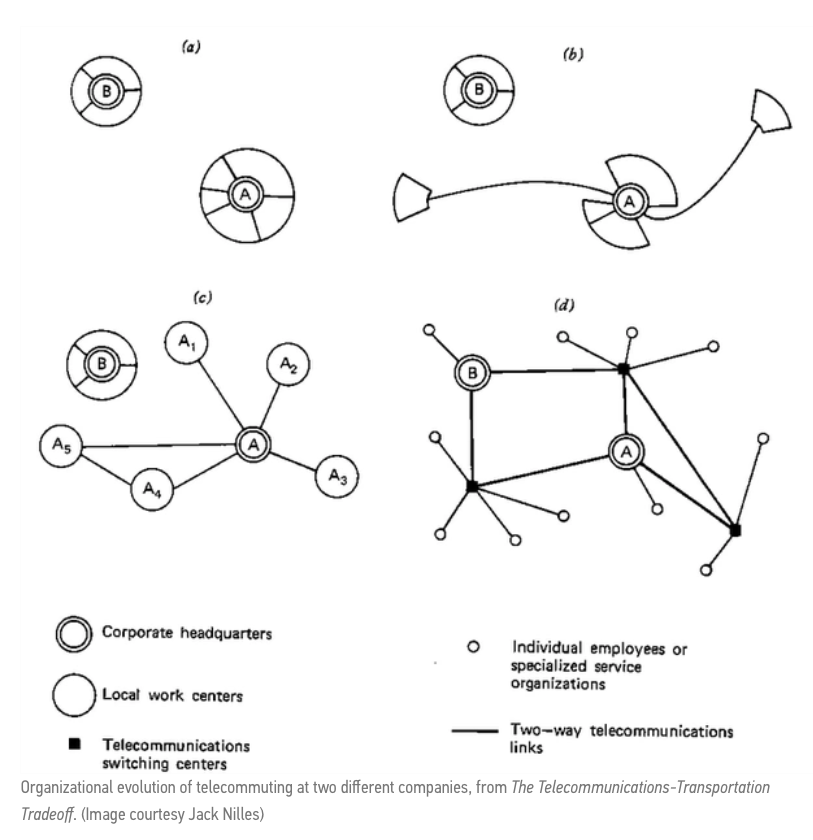
In the longer term, this crisis may bring innovation in business communication and human behavioural change – including reduced work travel. This could influence land use changes in cities, potentially giving space back to nature.
The current need for people to stay at home might be triggering a human disconnection from nature. In some cases, this can lead people to become emotionally distanced from what happens to their natural environment. This could be ameliorated by exercising in local parks or other natural environments.
You can also use your time at home to positively contribute to wildlife in your urban area. If you’re looking to keep kids entertained, try developing a “re-naturing” plan that aims to care for, or bring back, a species or ecosystems.
There are also many ways to retrofit your home, garden or balcony to help plants and animals.
Or discover the incredible species living alongside us by simply paying attention to nature near your home.
The National Cabinet announced a moratorium on evictions just over a week ago in response to the COVID-19 pandemic. As government ministers and commentators have tried to make clear, it’s intended only to stop evictions – not rent payments. But the sudden losses of jobs and incomes mean many households cannot continue to pay pre-crisis rents.
Tenants are seeking rent reductions or waivers from their landlords, with disturbingly mixed results. It is time for governments to step in and resolve the issue, by legally mandating rent reductions across the board.
Recent analysis of renter and landlord household finances clearly shows the latter group are much better placed to take a financial hit from this pandemic.
Up to now the prime minister has encouraged tenants and landlords to make individual arrangements. In the absence of any government guidance, agents’ and tenants’ representatives agree on this much: the situation is a mess.
Some landlords and agents are responding sympathetically. Others are hesitant, apparently wary voluntary reductions may void their insurance. Some are insisting on full payment, or even increasing rents. And some were advising tenants to draw on their superannuation to pay rent – until ASIC warned them off.
Why should government step in?
Yesterday the National Cabinet addressed commercial tenancies, but again left aside residential tenancies. It is within the power of state and territory governments to sort this mess out. They could legislate to reduce rents to some fraction of current rents or to zero – a complete suspension of rent liabilities for the declared duration of the pandemic.
With federal government co-operation, mortgage interest could receive the same treatment: mandatorily reduced or suspended for the pandemic, with principal repayments deferred.
This is the appropriate response to the peculiar nature of this crisis. The key point here is that government is deliberately suppressing economic activity to prevent transmission of the virus. With household incomes much reduced – and governments trying to top them up with new payments – it makes sense also to reduce household outflows.
A look at renter and landlord finances
The biggest household expenses to reduce are rent and interest. Here’s a quick sketch of incomes and outflows in the Australian private rental sector, using the latest available figures from the ABS, the ATO, the Productivity Commission and detailed analysis of previous rounds of data last year by Kath Hulse, Margaret Reynolds and me.
About 2.5 million Australian households rent privately. Just over half are in the bottom 40% of households by income. About one-third are low-income households paying more than 30% of their income in rent – and that’s before the COVID-19 income losses.
Private renters pay about A$43 billion a year in rent to another, smaller group of households: Australia’s 1.3 million landlord households.
A little more than half of that rental income, A$22 billion, flows right out again to banks, as interest payments on investment loans. For 60% of landlords the interest outflow, plus other property-related expenses, is greater than their rental income: they are negatively geared. For them, rental income is not about putting food on the table; it is part-funding their investment or speculation in property.
This negatively geared group receives high incomes from work and other sources. Leaving aside their net rental losses, they have an average annual taxable income of about A$94,000, versus A$54,000 for non-landlords. Landlords’ other incomes may have taken a COVID-19 hit, but the most common occupations for this group – general managers, registered nurses and accountants – have probably fared better than the casual and gig workers.
Landlords who derive a net positive rental income mostly receive other income too. Their average annual taxable income is A$66,000 before net rent is added.
A relative few landlords, 16%, are post-retirement age. They may well rely on rental income for consumption, but, on average, they are rich, with almost A$3 million in net wealth.
A final point about landlords: they are more likely to have a partner than non-landlords. Presumably, then, they have access to shared resources when times are tough. The average disposable household income for landlords is A$135,000 a year, versus A$82,000 for non-landlords.
So, were tenants’ rental outflows reduced, landlord households are relatively well-positioned to bear a reduction in their rental incomes.
How to ease the burden on landlords
Landlords would, of course, also want to reduce their own outflows. They have probably already done so, because the pandemic has closed so many discretionary spending opportunities.
Another outflow – the A$3 billion a year they spend on real estate agents – would also be reduced, because agent fees are mostly calculated as a proportion of rent. This would cause pain for agents, but many of their activities – inspecting properties, handling eviction proceedings, conducting marketing campaigns – are not needed in a pandemic. JobKeeper payments could support their businesses.
The biggest pain would be the interest outflow. But let’s reduce or suspend interest too, for both owner-occupiers and landlords. This would reduce income for banks, which would have a problem when their own liabilities to whole funders come due.
And at that point a really useful negotiation could take place between banks and the Australian government. They could “sit down, talk to each other and work this out” – as the PM has suggested to millions of individuals – to keep finance operating, in return for reformed service and a public equity stake.
In ordinary times, rents and interest have a controversial role in the economy. They extract value from productive actors in the economy for the benefit of owners of property and financial assets, and are the object of speculation. But, as the political economist David Harvey observes, they also have a co-ordinating role that drives competition and future production.
But these are not ordinary times. For the moment, at least, we don’t need rent to co-ordinate what the economy must do. We need to produce the essentials and whatever else can be safely done at home, with the rest of production in hibernation. And we need to ensure households retain enough income for the essentials, with reductions in income equitably shared.
Governments everywhere face the challenge of getting people to stay home so they can limit the spread of coronavirus. In order to make their messages more effective, governments must ensure these appeals resonate with the cultural values of their audience.
Not all Australians have taken Prime Minister Scott Morrison’s pleas for them to stay at home and practice social distancing seriously.
We have seen people head to the beach with their friends, or host BBQs in their backyards.
One explanation for this might be mixed messages coming from government. But our research explored another explanation: when appeals don’t tally closely with our cultural values, we are less inclined to listen.
Australians, along with US and UK citizens, tend to fit within what is known as an individualist culture. This is one that values independence, individual freedom and the pursuit of personal goals more than social relationships.
In contrast, the collectivist cultures in countries like China and Japan value interdependence and social relationships more than individual freedoms and goals. This framework for cross-cultural communication was developed by Geert Hofstede, an academic and researcher for IBM.
A government appeal asking people to practice social distancing because it will protect everyone in the community may work very well in collectivist cultures, but may not be as effective in individualist cultures. This might explain those Australians ignoring the message that “we’re all in this together”.
We tested this effect recently by showing two types of appeals to an online panel of 200 American study participants recruited via Amazon’s Mechanical Turk crowdsourcing platform. Both appeals requested citizens to stay home and practice social distancing to contain the COVID-19 crisis. But one asked them to do this in order to protect and preserve the freedom of the public. And the other focused on doing this in order to keep their community safe.
The responses showed that participants were more willing to comply with the appeal that asked them to practice social distancing to preserve their long-term personal freedom rather than an appeal which focused on keeping their community safe.
Australians, like Americans, tend to be individualists. So the results of our study extend to Australians, who would also place greater value on their personal freedoms and individual goals.
Another aspect of culture that can impact effectiveness of communication is deference to authority, also known as power distance. Power distance describes how much the less powerful members of a community or organisation accept that power is distributed unequally. Typically, Western cultures are low in their power distance belief and tend to emphasise equal distribution of power. This is not the case for Asian cultures, which are high in power distance and thus have greater respect for authority and hierarchy.
As a result of this difference, a message from an authority figure is expected to be more impactful in a country such as Japan. But this is less likely in a country like Australia, where deference to authority is lower. Message source (such as Prime Minister Scott Morrison’s blunt directive to stop panic buying) is unlikely to be a critical factor to its success in this context.
Data from several studies shows that individuals from high power distance cultures (those who accept authority) find marketing messages from CEOs to be more believable and authentic compared to regular brand messages. Such differences are not noted in consumers from low power distance cultures.
Culture plays a critical role in effective communication. Message content that takes into account the cultural values of its audience should be more effective compared to one that does not.
In the current situation, appeals need to remind the public to take the lockdown measures seriously so the spread of COVID-19 can be contained but also so people can get back their freedoms and return to their Australian way of life sooner rather than later. And this message need not necessarily come from the top.
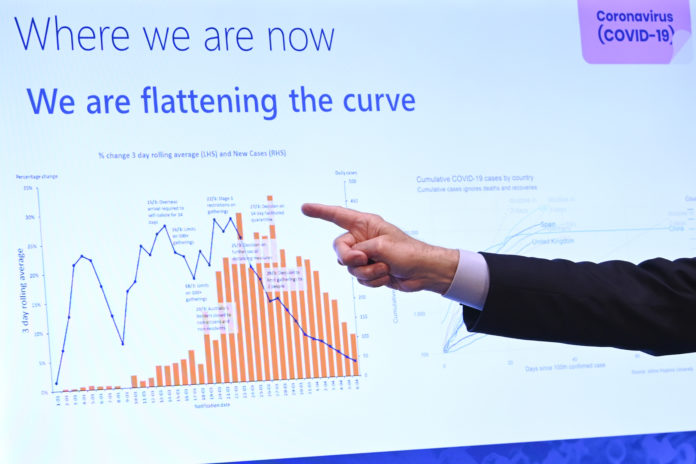
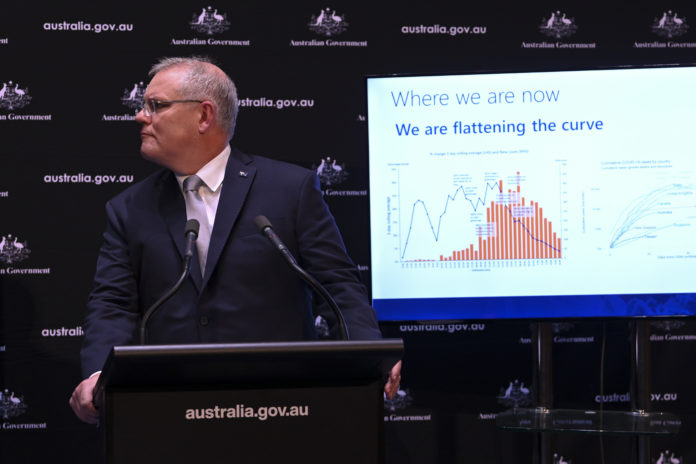
Australia is on track to flatten the curve of coronavirus cases, which will allow our health system to cope with increasing demand for intensive care unit (ICU) beds, recently released modelling confirms.
The modelling, produced by the Doherty Institute, was delivered to government in February but only released publicly yesterday.
In a press conference before the release, Prime Minister Scott Morrison and Chief Medical Officer Brendan Murphy emphasised the modelling was theoretical and used international data.
International data is still useful – the public health advice on tobacco, for example, is derived mostly from non-Australian studies.
But the way an epidemic plays out is context-specific. The way Australians hang out together, for instance, is different from the way Chinese people socialise. This changes fundamental parameters, such as how many people someone with COVID-19 can be expected to infect.
So what does the modelling tell us and what are we yet to determine?
What scenarios were modelled?
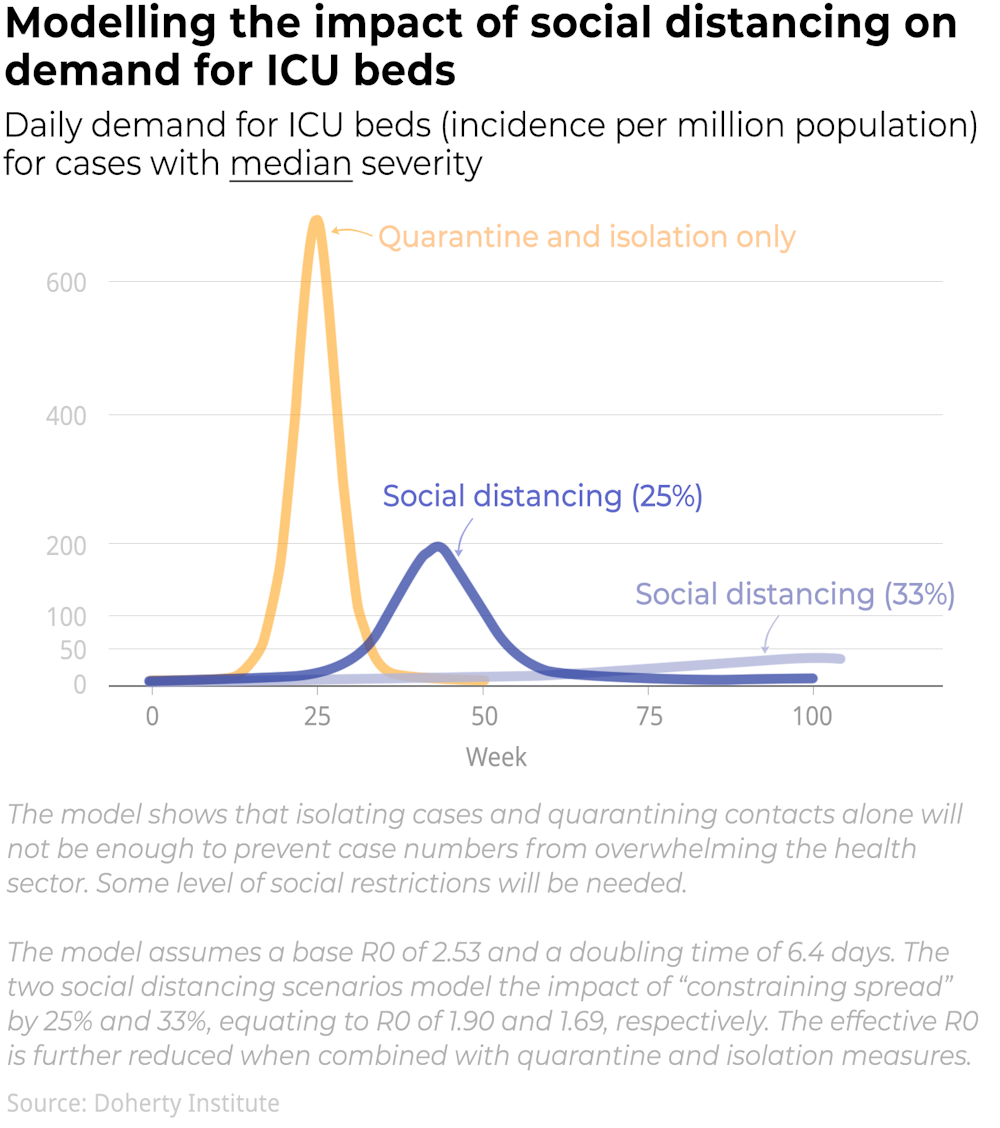
The more applicable of the two papers released yesterday aimed to estimate how much ICU and hospital capacity would be exceeded (in both percentage terms, and number of days) for various scenarios of how the epidemic unfolds.
The three scenarios were:
unmitigated spread (just “let the epidemic rip”). Peak daily ICU demand would be 35,000 a day, greatly exceeding Australia’s expanded ICU capacity of 7,000 beds
quarantine and isolation of cases scenario. The number of ICU beds needed during the peak would be 17,000 a day, still exceeding Australia’s expanded capacity
a quarantine and isolation scenario, plus social distancing at two levels of intensity. Daily ICU bed demand would peak at below 5,000.
Australia was never going to allow unmitigated spread and has implemented quarantine and isolation of cases. And in terms of social distancing, Australia has already exceeded the measures in the paper’s more intense scenario.
The government delivered good news yesterday on Australia’s efforts to contain COVID-19.Lukas Coch/AAP
What do we learn from the modelling?
As we’ve learnt over the past month from simpler models and back-of-the-envelope calculations, ICU capacity is under grave threat of overload for anything other than a carefully designed, tested and monitored package of case isolation, quarantine and physical distancing.
Physical distancing is essential to flatten the curve enough to avoid ICU overload if we elect to let this epidemic wash through society to achieve herd immunity.
Importantly, in all scenarios primary care and general hospital ward capacity were never (even remotely) threatened.
Accordingly, and correctly, the chief medical officer emphasised it’s important that people with existing chronic diseases (such as heart and respiratory disease) keep getting routine medical check-ups, so their conditions don’t deteriorate and require hospitalisation down the track.
If someone experiences sudden shortness of breath or chest pain, they still should be ringing 000 and getting assessed.
Life goes on, as do the vast array of other threats to our health that we can mitigate. And we have the capacity to keep doing this.
The bigger question is what comes next, and this wasn’t addressed in the modelling papers.
The prime minister and chief medical officer urged Australians not to relax their current social distancing actions.
But Morrison noted there was a financial and societal limit to endless mitigation. In other words, we need to get through this, but within sensible resource limits.
The government wants to use this position of “relative calm” to make decisions about where to next. As Brendan Murphy said:
We are on a life raft. We now have to chart the course of where we take that life raft. The National Cabinet wants considered advice on all the directions. We don’t have those answers yet.
When will we be ready to ease social distancing restrictions?Shutterstock
How can modelling help us decide?
Essentially, we need different, better and more models than we saw yesterday. Some of this work for the government is underway and will be released in coming weeks. But we also need two things:
1. Agent-based modelling
This is modelling of individuals bouncing around society like balls in a pin ball machine.
Yesterday’s model used equations applied to groups of people. But it can’t easily model the impact of separate interventions, such as school closures versus reducing gathering sizes.
Agent-based models offer more options. If we know, for example, that citizen A reduces their social contacts with people from 15 contacts a day of more than five minutes duration within 1.5 metres, to two such contacts while working from home, then we can (and should) model that.
We need many different agent-based models from many different research groups. Australians aren’t going to stay in lockdown indefinitely so the more models and sources of information, the better.
We need models that include more than just the COVID-19 transmission dynamics. We need models that weigh up the consequences of both the epidemic, and our potential societal cures to the epidemic.
There is a real risk the societal cure we choose may do more harm. Lockdowns, for example, cause drops in GDP and increases in unemployment. That feeds back on to changes in suicide and heart disease. We need to quantify that, and weigh it up.
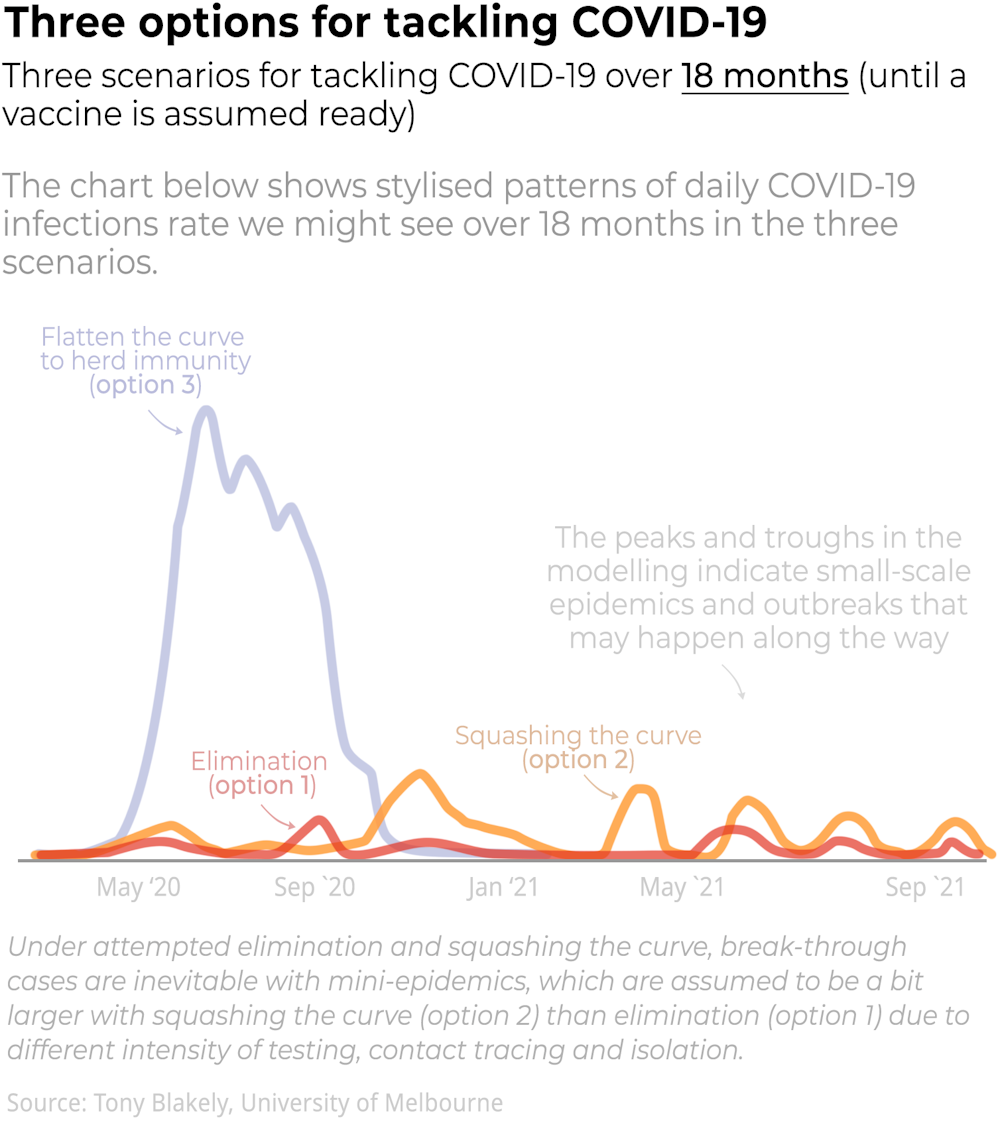
My team and many others around the country are building simple but useful models to help Australia decide on the way forward. There are three main options:
should we go all-in and aim for elimination (with the fall back of option 2 or 3 if this fails)?
should we keep squashing the curve, as we are doing successfully now, and wait 18 months for a vaccine?
should we meticulously plan for a relaxation of distancing measures (while protecting our elderly and those with chronic conditions), let the case numbers rise so our ICU can cope, and ride this flattened curve out to herd immunity within, say, the next six months?
In the past, the courts were ideal breeding grounds for spreading disease. In what became known as the “Black Assize”, a deadly fever that swept through prisons and courts in England in 1586, 11 of 12 jurors in one trial died. So did a number of judges and constables.
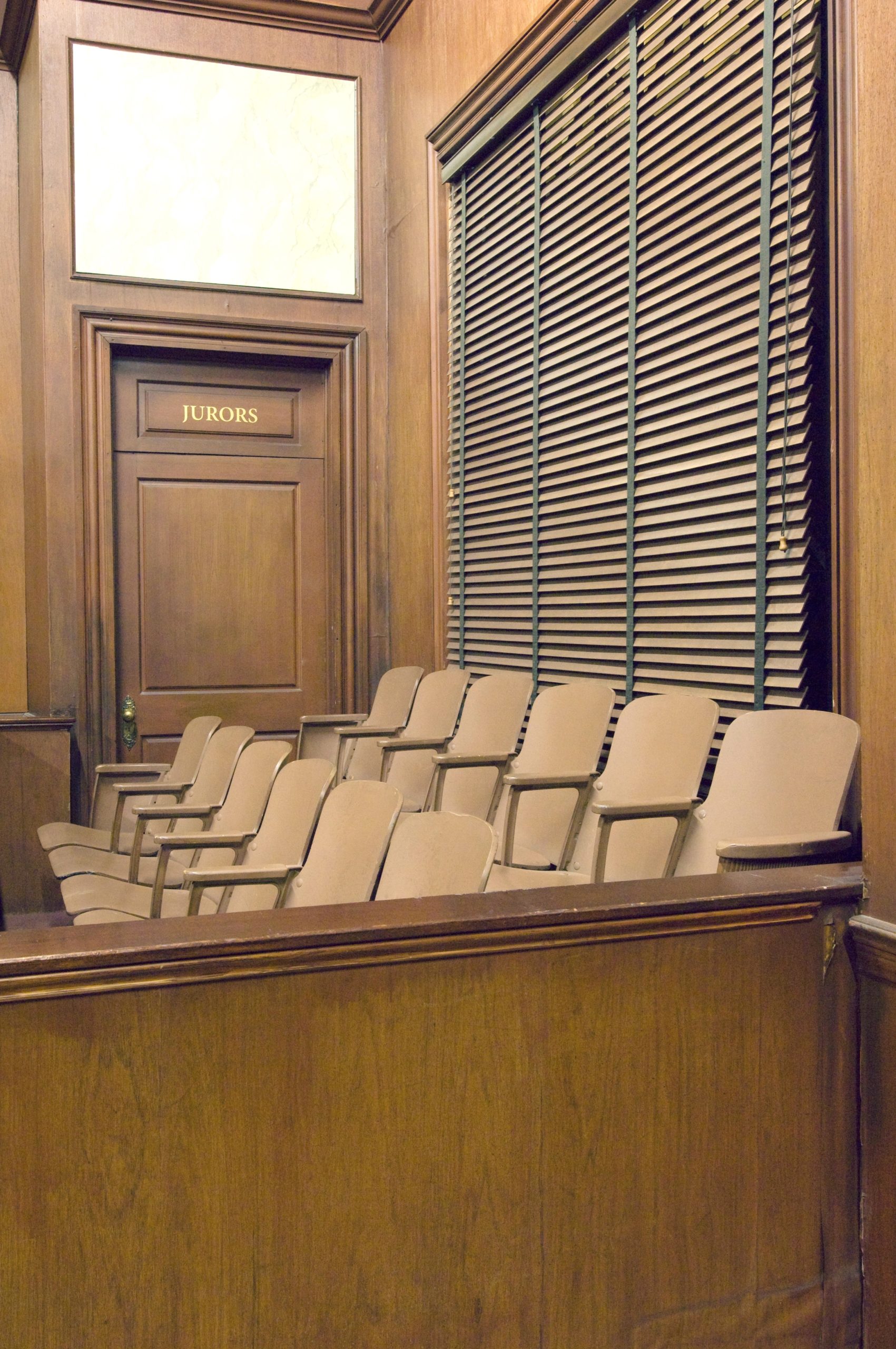
In the current coronavirus pandemic, Australian courts are taking no chances, with NSW, Victoria and other states announcing there will be no new jury trials until further notice.
But many courts are rapidly increasing the use of video for other essential hearings. States and territories are also developing new protocols for how to use video in their courtrooms.
In a sense, the courts have been preparing for an outbreak like this for some time. Witnesses and defendants routinely appear in court via video link, as do judicial officers in Northern Territory and South Australia courts. Tribunals have been using video for even longer.
Our research, however, suggests that attempts to translate courtroom interactions to a video-mediated process do not always work. Introducing monitors into the courtroom requires a reimagining of courtroom spaces, social cues, symbols and performances.
Does appearing remotely hurt defendants?
In the case of vulnerable witnesses like sexual assault victims and children, there is little to no evidence that testimony via video (from a special room located in the court building) impacts a jury’s verdict, though users themselves report challenges with such a set-up.
In one of our studies, we simulated a criminal trial in which mock jurors were randomly assigned to different configurations, including:
a defendant sitting in the dock in the courtroom,
a defendant sitting beside their lawyer in the courtroom,
a defendant appearing remotely on their own (as they would in most standard remote hearings),
or a defendant appearing with their lawyer in a video hearing, with the prosecutor also appearing on video.
We found defendants appearing via video were no more likely to be found guilty than if they were sitting beside their lawyers in court.
However, if the defendant was isolated in a dock – the normal situation in most courts – he was significantly more likely to be considered guilty. It seems that isolation in the dock is worse for defendants than isolation on a screen.
Other research, however, points to different issues with video hearings. In criminal matters, defendants who appear remotely from police custody or jail are more likely to have a higher bail set, plead guilty and receive longer sentences than those who appear in person.
Similarly, asylum seekers appearing remotely from detention are less likely to actively participate in their tribunal hearing and more likely to be deported .
Some defendants have reported feeling disorientated, not being able to hear or understand the proceedings and lacking confidence in the fairness of the hearing.
One reason is the design of a remote criminal hearing is inherently imbalanced. The judge, prosecutor and often defence counsel, as well as court staff and members of the public, are all grouped together in the actual courtroom, while the defendant is alone on a screen.
In this lopsided configuration, it may be hard for the defendant to feel as if they are a part of the proceedings or for those in the courtroom to feel the defendant’s presence.
How different designs and protocols can help
In a 2013 study on remote participation in court, we produced a set of guidelines to help address some of the shortcomings of video technology.
These included putting the remote participant in a room with a window or piece of artwork, which helps to reduce their stress levels. Additionally, making introductions at the start of the hearing and ensuring everyone can see and hear can also make people feel more at ease.
Now, with coronavirus making it impossible for physical gatherings of any kind, we need to reimagine courtrooms as a completely virtual space where all parties meet on the same plane.
This has already been piloted in some instances. In 2018, the UK Ministry of Justice trialled the country’s first-ever “video hearings” in the tax tribunal, where appellants and representatives from the tax office attended remotely from their home or office.
As an independent evaluator of this pilot, we found participants were able to access their hearings easily, understood the proceedings and considered the format to be appropriately formal. This was despite the fact they experienced frequent technical disruptions.
In particular, participants benefited from a “dry run” before the hearing to iron out issues with sound or video, and by the judge making introductions and getting the parties ready at the start.
There were also important design elements that improved the experience for participants, including the introduction of a virtual “waiting room” where they were kept informed about the timing of their case.
The immersive virtual courtroom
In the future, technology will allow us to create an immersive courtroom experience.
Working with a range of justice partners, we developed a proof of concept of such a virtual courtroom at the Queensland Supreme Court in 2016, showing judges and other stakeholders how could work.
In this set-up, all the participants – the judge, defendant, lawyers, witnesses and jurors – were seated in pods or video suites surrounded by screens with the other participants around them.
Of course, once the world returns to a semblance of normalcy after the pandemic, courts will go back to places where people meet together in a room. But the lessons learned from this time are vital.
We can reimagine courts in a virtual space. Paying attention to key design principles and modifying the way we conduct court rituals on video will allow for effective participation in the courts of the future.
Australia is effectively in lockdown. Public gatherings of more than two people are banned and people are only permitted to leave home for a limited set of reasons.
The recent tough measures appear to be having some effect and the daily growth rate of new cases is now slowing.
Although this is an encouraging indication we may be starting to reverse the epidemic, we need now to start thinking about if, when and how we relax our current aggressive control measures.
Achieving control buys time and allows us to learn more about the virus and the successes and failures of other countries.
But until an effective vaccine arrives, the majority of the population will still lack immunity to COVID-19. This is essentially identical to the position we were in when the first imported cases of the coronavirus arrived in Australia.
While there has been debate about the speed at which restrictions have been introduced, there has been less discussion about how and when these measures can be relaxed without causing another spike in infections.
We outline four broad options available for coming out of lockdown once we have gained initial control:
option 1: we could relax lockdown measures completely, prioritising a return to normal social and economic freedoms over suppressing infection
option 2: we could limit community transmission and ensure case rates remain very low until a vaccine is developed
option 3: we could push to completely eradicate the virus and avoid rebound when social distancing measures are relaxed, as long as borders remain closed
option 4: we could relax some measures and allow infection to continue in a very controlled manner, while protecting the vulnerable.
Each of these four approaches is associated with huge risks.
The second option involves keeping case numbers to a trickle until a vaccine arrives – squashing the curve to a flat line but not eliminating transmission completely. This appears to be the path we are now pursuing, but it is not yet clear whether we will be able to reopen businesses, restaurants and even schools while still allowing low-level transmission to continue.
If we continue this path, we should recognise that some form of lockdown is likely. We could gradually release the brakes, but any suggestion of an upswing would be met with renewed suppression efforts. We could continually be putting out spot-fires and intermittently returning to strict lockdown until a vaccine arrives.
The third option involves an attempt to completely eradicate all circulating virus. Although we may be able to return to our previous lives, we would remain highly vulnerable to recurrence through importation if we were to reopen our borders.
If we were to pursue this path, extensive public engagement would be essential. We would need to remain in lockdown for many weeks after the last case has been reported and the rationale for pushing through towards eradication needs to be communicated clearly.
It is unclear if this is the strategy pursued by China, but its promising case numbers demonstrate the value of strict and prolonged lockdown. The rebound risk of this strategy will only be tested once strict lockdown measures are released.
The fourth option may include carefully controlled transmission of the SARS-CoV-2 virus in select low-risk groups, which is an extremely dangerous path.
However, the almost complete absence of mortality in children and young adults may allow us to consider ways by which we can increase population-wide immunity, while protecting the vulnerable to avoid the huge rates of death seen in the elderly.
The term “herd immunity” has generated considerable controversy since the start of this pandemic. But ensuring a significant proportion of the population develop natural immunity to the virus – in a controlled manner – could be the only way to slow its spread while returning to our previous lifestyles, in the absence of an effective vaccine.
We still need to understand better the risks posed to young people from natural infection, as well as the strength and duration of natural immunity. But current indications are the disease is relatively benign in healthy, young people and that they do acquire immunity. This very distinctive pattern may provide a key to coming out of lockdown while minimising risks – if an effective vaccine fails to materialise in the near future.
This option would need to be carefully controlled to ensure the virus cannot spread to the elderly and the vulnerable. How this could be achieved remains to be considered, but could involve the creation of environments in which transmission can be carefully facilitated among healthy young volunteers, without any risk of spread to the general community.
Natural immunity in a substantial proportion of the younger generation would allow those individuals to get on with their lives without putting others at risk. It would also slow any recurrent outbreaks that may occur once lockdown restrictions are relaxed.
Although there are no easy answers, we need to actively debate our exit strategy now, and collect the necessary information to guide our decision making. We may have to consider different solutions in different environments, but with an overarching strategy that is nationally coordinated.
Former Chief Justice Sir Arnold Amet … emergency powers up to controller alone. Video: EMTV News
By Martha Louis in Madang
Papua New Guinea’s former Chief Justice Sir Arnold Amet says the state of emergency (SoE) in the country means that no other authority has any ability or powers to make any orders, apart from the Controller.
Amet explained only the controller had the power to make any orders for the management of the state of emergency.
Sir Arnold Amet was at a stakeholders’ meeting with the Covid-19 technical team for Madang when explaining the SoE powers.
– Partner –
The former chief justice said no provincial governments or even governor had the power to make any other order.
No other authority had any legal ability to make any other kind of laws nor issue any laws, only the controller had the power.
Adding that if any other orders were issued that went against the orders of the controller they must be brought in line with the emergency orders and directions as directed by the controller.
Authorisation needed for curfews Sir Arnold explained provincial authorities that wanted to impose additional measures like curfews must get the authorisation from the controller before executing any additional measures.
Amet said provincial governments and provincial coordination centre were not allowed to make any media statements regarding the National Emergency unless authorised by the emergency controller.
EMTV News reports that Prime Minister James Marape announced on Monday that Papua New Guinea had its first locally-detected Covid-19 case.
Three and a half weeks after it had announced its first case, an expatriate worker who was returning to the country, and who had travelled through Spain and Singapore before landing in Port Moresby, and transiting to Lae.
This second Covid-19 positive case was detected in East New Britain.
Prime Minister Marape explained to the media, and the country, that the 40-year-old woman, who had a history of asthma, had presented flu-like symptoms at Nonga Base Hospital on the March 23.
Martha Louis is a crime and court reporter with the EMTV News bureau in Lae. The Pacific Media Centre republishes EMTV News articles with permission.
By Florencio Miranda Ximenes and Antónia Gusmão in Dili
Timor-Leste’s Prime Minister Taur Matan Ruak has explained the decision to dismiss the vice-health minister, saying he lost trust in her to do the job.
The President dismissed Élia António de Araújo dos Reis Amaral from her post on Friday, following a request from the prime minister.
“I no longer wish to work with her. I have only one answer: I lost my trust in her, and Ms Élia’s work is done,” Matan Ruak told reporters.
The position of health minister has remained vacant since President Lú-Olo declined to swear-in Xanana Gusmão’s preferred candidate for the post in 2018. Amaral, as vice-health minister, has been the de-facto minister since then.
The PM said her colleague, Vice-Minister for Strategic Health Development Bonifacio Maukoli Dos Reis has assumed her responsibilities.
– Partner –
“Currently, we’re yet to [choose] someone to take over as vice-minister of health. Bonifácio will watch over health matters [for now],” he said.
President Lú-Olo’s decree, issued on Friday afternoon, gave no explanation of the reasons for the dismissal. The prime minister did not offer an explanation publicly until this morning.
The decision follows a disagreement between Amaral and the newly-appointed Centre of Integrated Crisis Management, which has taken over her role leading the Covid-19 outbreak response.
Last week, the prime minister appointed former Health Minister Dr Rui Aráujo as spokesman for the centre. When consecutive press conferences held by Amaral and Dr Araújo gave conflicting data, senior government figures were reportedly furious at the junior minister.
The Prime Minister has sought to clarify who is assigned to speak on the Covid-19 response. The spokespeople are:
Capt. Pedro Klamar Fuik, from the F-FDTL Naval Branch
Sérgo Lobo, former health minister
Dr Rui Maria de Araújo, another former health minister and the official spokesman of the group
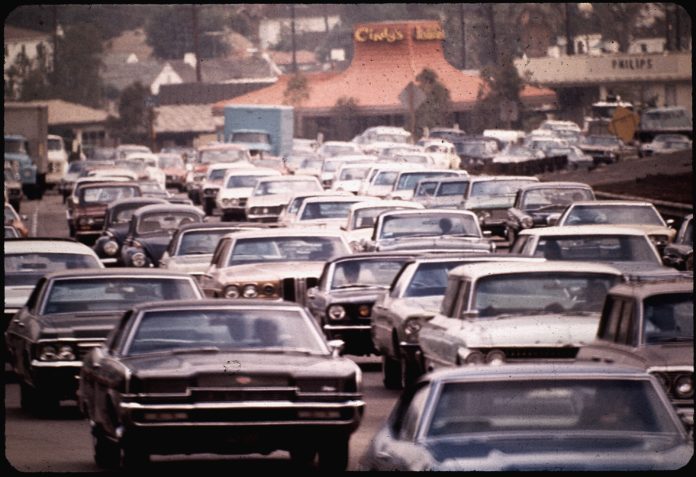
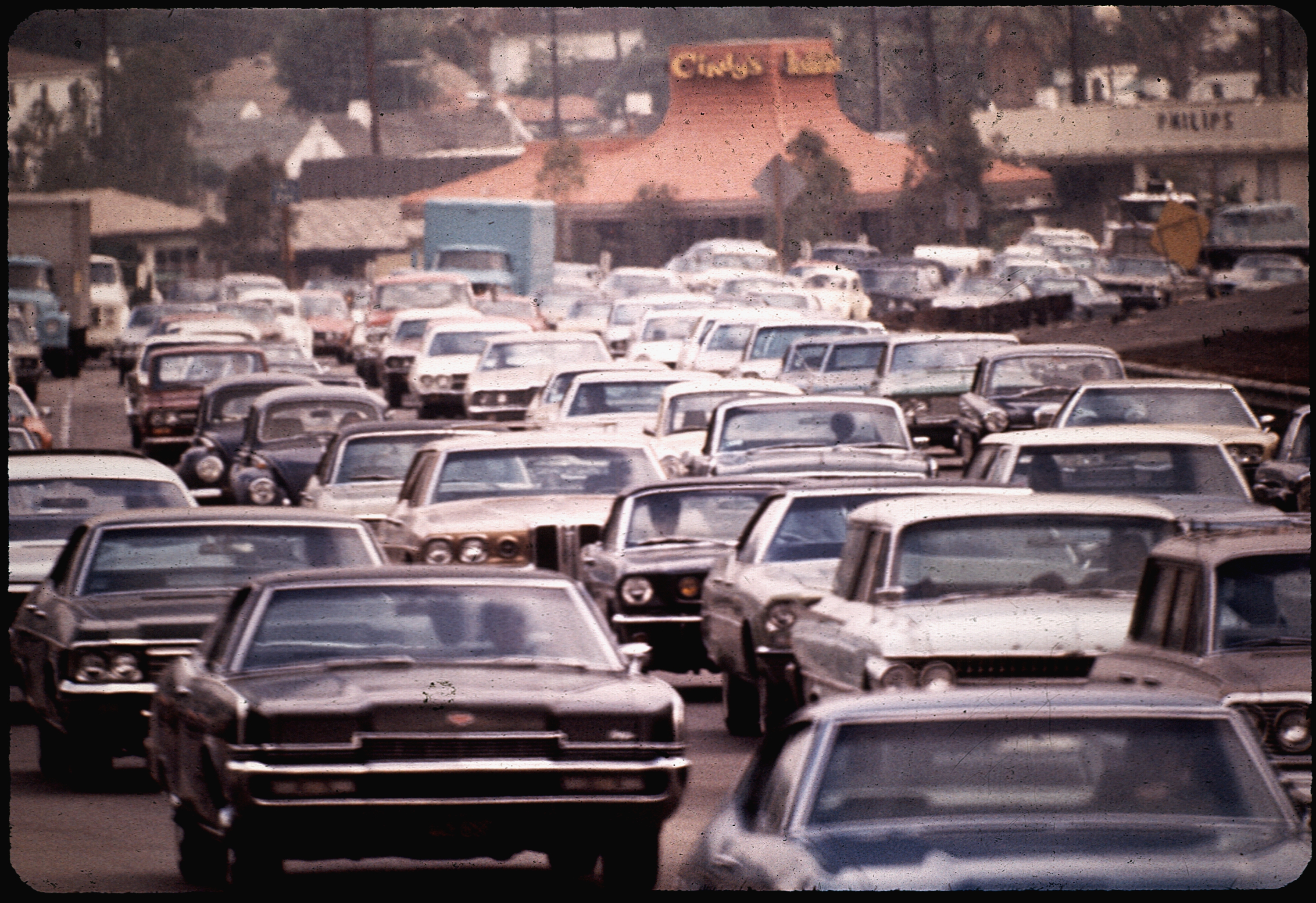
Traffic jams may have disappeared from our roads as people stay home during the COVID-19 pandemic, but we can be confident they will be back. Scientists have studied traffic and congestion for decades.
We know a lot about how traffic jams form, how they spill from one road to another, and also how can we stop them happening and help cities recover.
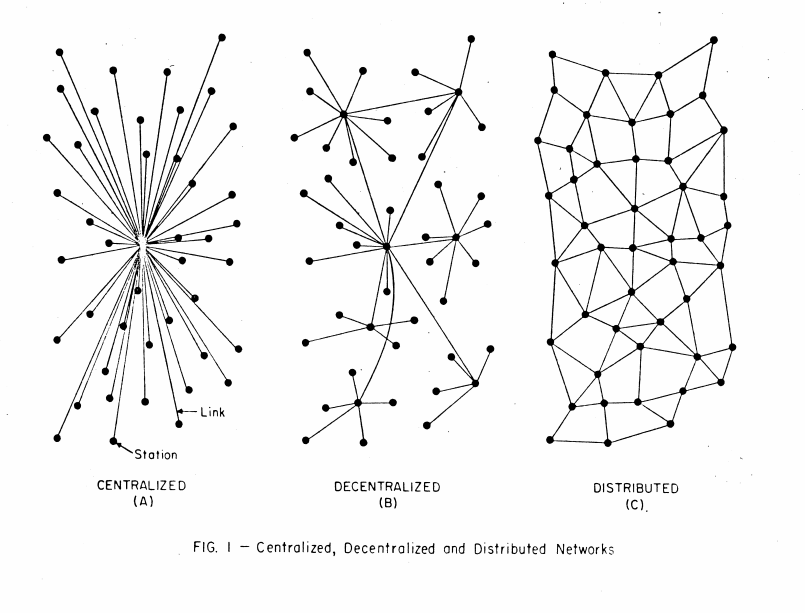
Our research shows that traffic congestion spreads through a city like a disease. Using this insight we have created a simple model based on a contagion model often used to predict the spread of illness, which produces results quickly and can help traffic controllers respond in real time to traffic jams.
The study, carried out with colleagues at the University of California, Berkeley, and Johns Hopkins University, is published in Nature Communications today.
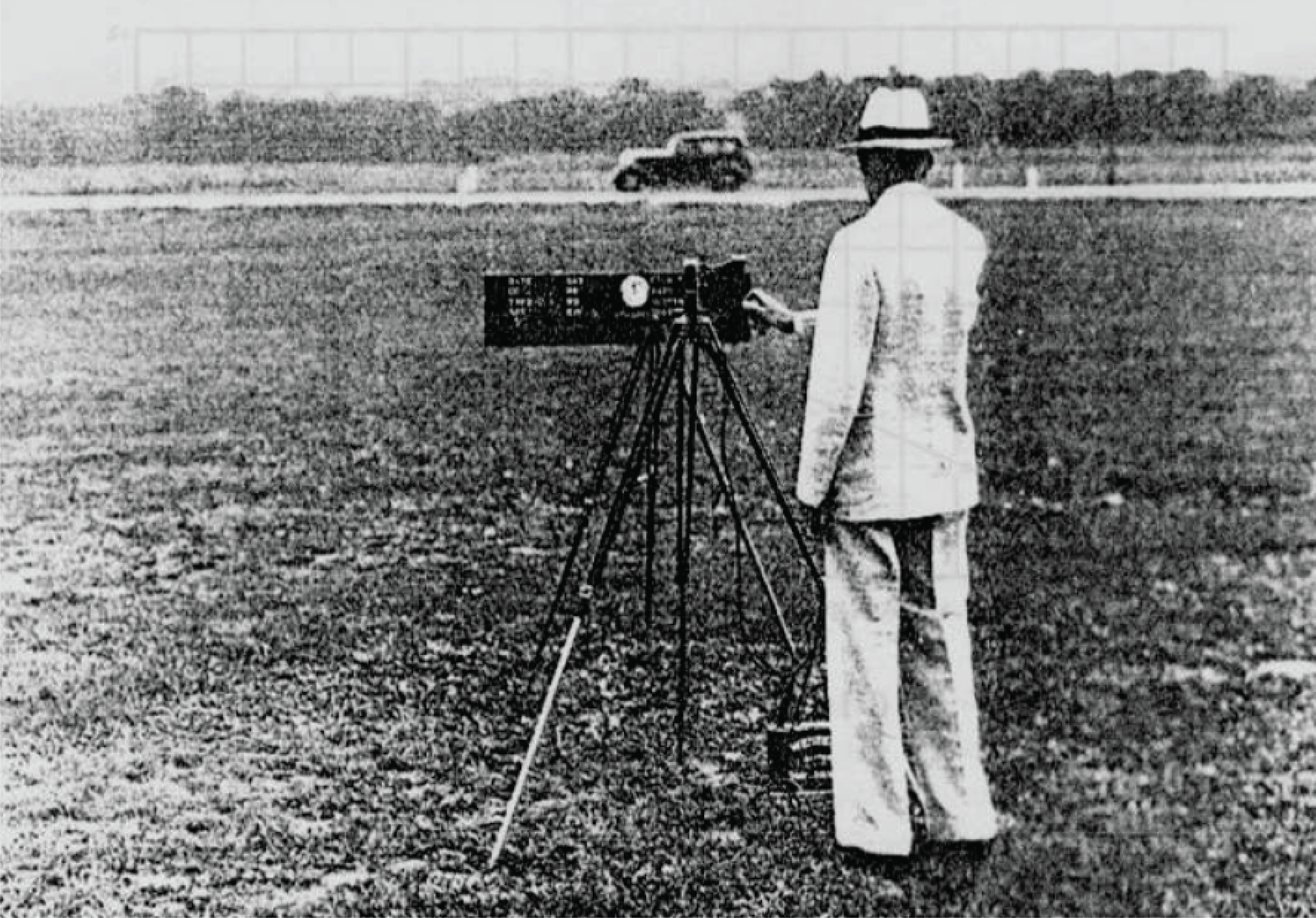
Pioneering traffic researcher Bruce Greenshields using a movie camera to measure traffic flow in 1933.75 Years of the Fundamental Diagram for Traffic Flow Theory, Transportation Research Circular, Number E-C149, June 2011
The first simple description of traffic flow based on observations was published in 1933 by the American researcher Bruce Greenshields. This was only 25 years after the production of the first Ford Model T in 1908.
Greenshields used a movie camera to take consecutive pictures with a constant time interval to measure traffic. Since then, numerous data collection and modelling techniques have been developed.
Today, the most advanced method to measure and monitor traffic in cities uses anonymous location data from mobile phones with sophisticated mathematical and computer simulation models. The most recent example of such powerful data sources and analysis techniques are the community mobility reports recently released by Google, which show changes in mobility in cities around the world due to the spread of COVID-19.
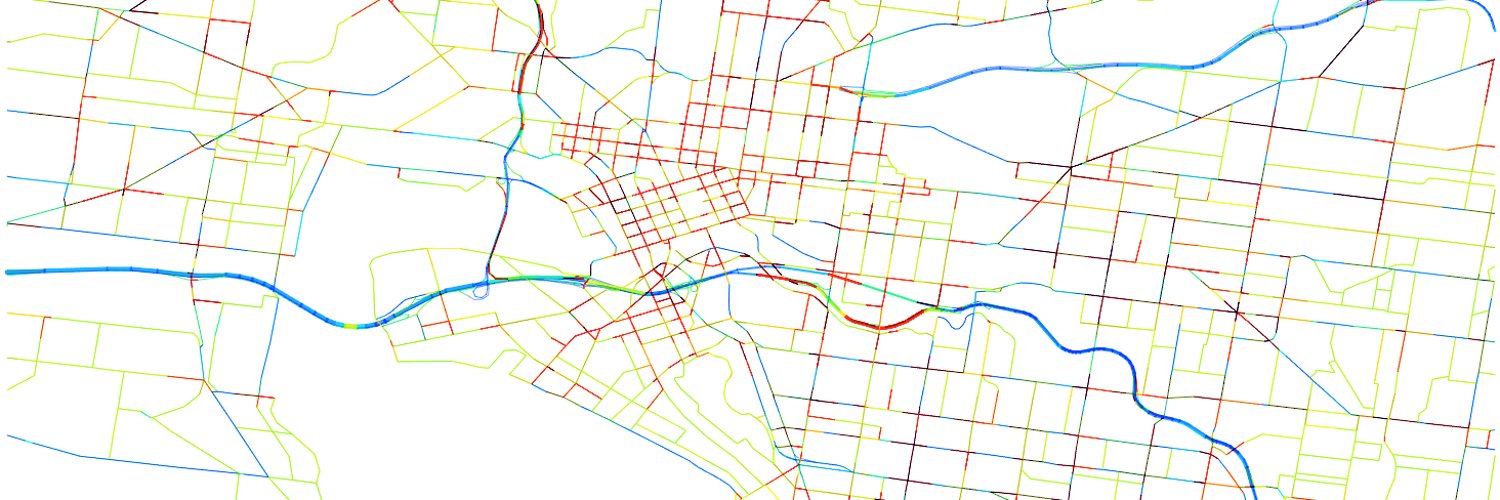
The DynaMel model describes traffic flow in Melbourne.University of New South Wales (UNSW Sydney)
Big traffic, big computing
Many existing models describe traffic well but require so much computational power that it is difficult to use them in real time for traffic control. In a large metropolitan area, these models often take tens of minutes or hours to run, even using cloud-based and other high-performance computing technologies.
While this may not sound like a big deal for transport planning purposes, it is actually one of the biggest hurdles for their use in practice for traffic operations and control. To overcome this challenge, scientists have more recently started searching for simpler ways of describing and predicting urban traffic congestion.
Traffic jams are contagious
Scientists use contagion models to describe the spread of an infectious disease in a population, as well as things like the spread of a computer or mobile phone virus through the internet and the spread of news or misinformation on social media.
We have shown that a similar modelling framework can be used to describe how traffic jams spread in cities. We adopted what is called the susceptible-infected-recovered (SIR) model, commonly used in epidemics, and applied it to traffic jams in Sydney, Melbourne, New York, Chicago, Montreal and Paris.
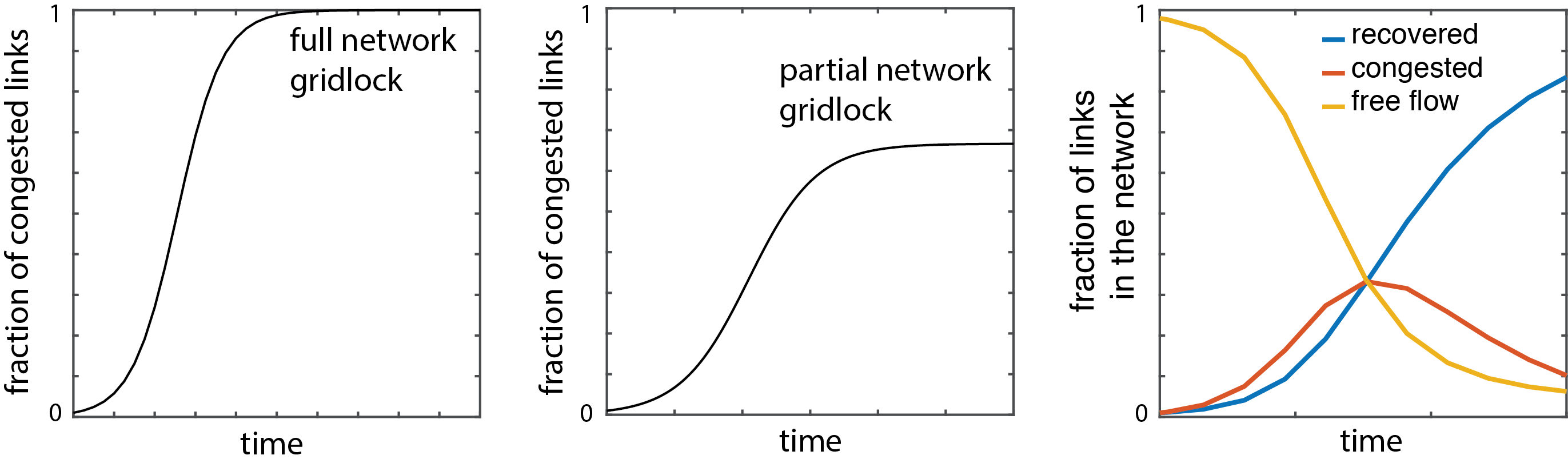
In the traditional model, epidemiologists divide a population into groups of people who are susceptible to a disease, people who are infected, and people who have recovered. In ours, we divide a road network into free-flowing roads, congested roads, and recovered roads.
Every road in the network belongs to one of these categories, and the state of traffic on each one can change over time. A free flow link might become congested and a congested link could become recovered as time passes.
Our new model shows that the spread of traffic congestion can be characterised with a universal measure similar to the basic reproduction number, known as R0 in the epidemic models. This number represents how quickly congestion spreads through a city, independent of the topology, urban form and network structure of the city.
We empirically verified our results with traffic data from Google and a computer simulation model of the Melbourne metropolitan area.
The model shows how congestion and recovery spread through a traffic network.University of New South Wales (UNSW Sydney)
How the contagion model can help
The new findings can be used for adaptive and predictive control of congestion in cities. While the model does not specify which streets are congested, it provides aggregate information on what percentage of links in the network are congested.
This information can be used to develop control strategies to cut down how long the congestion lasts or to keep the number of congested roads below an acceptable threshold.
Potential congestion mitigation strategies that could benefit from these findings include perimeter traffic control of city centres, improving signal timing and removal of bottlenecks.
Source: The Conversation (Au and NZ) – By Tim Lindsey, Malcolm Smith Professor of Asian Law and Director of the Centre for Indonesian Law, Islam and Society, University of Melbourne
Almost no one thinks Indonesia is handling the COVID-19 pandemic well.
Until early March, the government claimed it had no cases of infection, something the eccentric health minister, Terawan Agus Putranto, attributed to prayer. The home affairs minister urged the public to eat more bean sprouts and broccoli, while President Joko Widodo (Jokowi) sang the praises of jamu, traditional herbal remedies.
The government had been in denial. Terawan dismissed as “insulting” a report by Harvard University researchers saying Indonesia must have unreported cases. As recently as last Friday, another minister was still arguing the virus cannot survive in tropical climates.
Jokowi was apparently more concerned about the threat the virus posed to trade, investment and tourism. In February, when many countries were imposing tough travel restrictions, he planned to offer discounts of up to 30% to attract tourists. His government even allocated almost A$8 million to pay social media influencers for tourism promotions.
On March 2, Indonesia finally acknowledged COVID-19 had reached the archipelago. Jokowi admitted, as many suspected, his government had withheld information from the public “to avoid panic”.
And then it finally began to act. The government banned mass gatherings, imposed so-called “large-scale social restrictions” and barred foreigners from entering the country. It announced it will release 30,000 prisoners from the country’s notoriously overcrowded and unhealthy prisons and will spend an additional A$40 billion on medical needs, social support and relief for small and medium businesses
Last week, Jokowi even toyed with the idea of declaring a civil emergency (similar to martial law) before quickly backtracking.
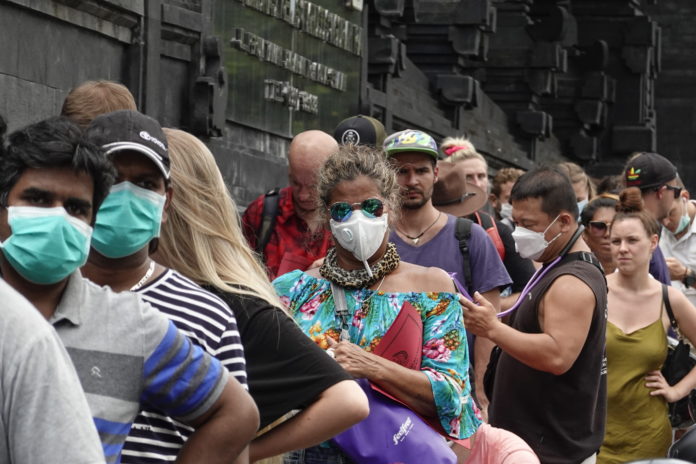
Foreign travellers lined up outside a visa office in Bali last month.MADE NAGI/EPA
Just how bad is the situation?
It is not hard to see why Jokowi finally admitted what most Indonesians guessed long ago, but we still don’t have all the facts.
Indonesia has recorded more than 2,400 infections and 209 deaths, but these figures are based on just 11,500 tests, a tiny sample in a nation of nearly 270 million.
There are indications many cases and deaths are going undetected. Reuters examined data from Jakarta’s Department of Parks and Cemeteries and found 4,400 burials were conducted in the province in March, an increase of 40% above normal levels.
But even by the conservative official figures, the mortality rate of 9% is one of the highest in the world, although this could be because of insufficient testing.
In any case, scientists at the University of Indonesia have predicted that if stricter measures do not start immediately, the situation could spin out of control, with up to 240,000 deaths by the end of April.
Tragically, widespread testing, proper treatment and tough and effective social isolation measures are unlikely to happen soon.
The government is scrambling to prepare its health system to cope, but this looks like an impossible task. Indonesia has just four doctors and 12 hospital beds per 1,000 people, and less than three intensive care beds per 100,000. These levels are way below World Health Organisation or Asia-Pacific standards.
An extreme shortage of ventilators will likely result in many avoidable deaths, especially in regional areas.
A specialist COVID-19 hospital has been opened in Jakarta, and the old Vietnamese refugee camp on Galang Island is being refurbished to create another.
But it will take a lot more than this if hundreds of thousands are infected – not least because Indonesia is a respiratory disease tinderbox. It has one of the highest proportions of male smokers in the world, and its five leading causes of death are all tobacco-related. The bad relations between the Ministry of Health and doctors won’t help either.
Even social isolation will be extraordinarily difficult in such a densely populated country with a laissez-faire attitude to rules and a tradition of bribing police. Moreover, [up to 70% of the workforce] is employed in the informal sector and many live hand-to-mouth. Working from home may simply not be an option for them.
To make matters worse, millions have been preparing for mudik, the traditional visit home for Muslims in the lead-up to the Idul Fitri (Eid) celebration on May 23. Last year, more than 18 million Indonesians travelled during this time. It is hard to imagine an event more likely to trigger a catastrophic outbreak.
Jokowi’s many balancing acts
Jokowi has warned of the dangers of mudik, but seems reluctant to take tough measures to prevent it.
He is in no-win situation. If he does ban mudik he will be a target for criticism from political enemies who like to portray him as an insincere Muslim. If he doesn’t, he will be attacked for exposing millions to the virus.
Already, Anies Baswedan, the high-profile governor of Jakarta, has criticised Jokowi’s handling of the crisis, calling for much tougher measures to reduce the spread of the virus.
But Jokowi appears to have again put economic considerations before public health, opting instead for “large-scale social restrictions” rather than quarantines or banning mudik outright.
Stricter regional quarantines or lockdowns would undoubtedly depress economic activity. What’s more, under the 2018 Health Quarantine Law, the government would then incur the huge costs of being responsible for all the basic needs of citizens in those areas.
Jokowi visits a new temporary hospital for COVID-19 patients in Jakarta.HAFIDZ MUBARAK/POOL/EPA
It would also concern Jokowi that the virus has triggered an outburst of anti-Chinese hate speech, never far below the surface in Indonesia. Online trolls are accusing the Chinese of introducing the virus to Indonesia and wealthier Chinese of fleeing to the safety of Singapore. There have already been violent protests against Chinese workers in a number of locations.
Jokowi’s close association with former Jakarta governor Basuki Tjahaja Purnama, an ethnic Chinese Christian, coupled with the president’s determined courting of Chinese investment, will make Jokowi vulnerable if anti-Chinese sentiment escalates further.
But it also suggests Jokowi is aware of the political dangers COVID-19 may create for him. Worryingly, the police seem more concerned with chasing down the president’s online critics than taking actions that might help to prevent the spread of the virus.
The Indonesian government has a mess on its hands – one largely of its own making. Sadly, its people will likely pay a very high price for the months its leaders spent denying the obvious.
Source: The Conversation (Au and NZ) – By Rod Lamberts, Deputy Director, Australian National Centre for Public Awareness of Science, Australian National University
Good news: COVID-19 is not the only thing going on right now!
Bad news: while we’ve all been deep in the corona-hole, the climate crisis has been ticking along in the background, and there are many things you may have missed.
Fair enough – it’s what people do. When we are faced with immediate, unambiguous threats, we all focus on what’s confronting us right now. The loss of winter snow in five or ten years looks trivial against images of hospitals pushed to breaking point now.
As humans, we also tend to prefer smaller, short-term rewards over larger long-term ones. It’s why some people would risk illness and possible prosecution (or worse, public shaming) to go to the beach with their friends even weeks after social distancing messages have become ubiquitous.
But while we might need to ignore climate change right now if only to save our sanity, it certainly hasn’t been ignoring us.
So here’s what you may have missed while coronavirus dominates the news cycle.
Heatwave in Antarctica
Antarctica is experiencing alarmingly balmy weather.Shutterstock
On February 6 this year, the northernmost part of Antarctica set a new maximum temperature record of 18.4℃. That’s a pleasant temperature for an early autumn day in Canberra, but a record for Antarctica, beating the old record by nearly 1℃.
That’s alarming, but not as alarming as the 20.75℃ reported just three days later to the east of the Antarctic Peninsula at Marambio station on Seymour Island.
The Intergovernmental Panel on Climate Change has warned a global average temperature rise of 1.5℃ could wipe out 90% of the world’s coral.
As the world looks less likely to keep temperature rises to 1.5℃, in 2019 the five-year outlook for Australia’s Great Barrier Reef was downgraded from “poor” to “very poor”. The downgrading came in the wake of two mass bleaching events, one in 2016 and another in 2017, damaging two-thirds of the reef.
Of course, extreme Antarctic temperatures and reef bleaching are the products of human-induced climate change writ large.
But in the short time since the COVID-19 crisis began, several examples of environmental vandalism have been deliberately and specifically set in motion as well.
The Berejiklian government in New South Wales has just approved the extension of coal mining by Peabody Energy – a significant funder of climate change denial – under one of Greater Sydney’s reservoirs. This is the first time such an approval has been granted in two decades.
The NSW government has approved a coal mining extension for Peabody Energy.AAP Image/Joel Carrett
While environmental groups have pointed to significant local environmental impacts – arguing mining like this can cause subsidence in the reservoir up to 25 years after the mining is finished – the mine also means more fossil carbon will be spewed into our atmosphere.
Peabody Energy argues this coal will be used in steel-making rather than energy production. But it’s still more coal that should be left in the ground. And despite what many argue, you don’t need to use coal to make steel.
In Victoria, the Andrews government has announced it will introduce new laws into Parliament for what it calls the “orderly restart” of onshore gas exploration. In this legislation, conventional gas exploration will be permitted, but an existing temporary ban on fracking and coal seam gas drilling will be made permanent.
The Victorian government has overturned the temporary ban on onshore gas exploration.AAP Image/Michael Dodge
The announcement followed a three-year investigation led by Victoria’s lead scientist, Amanda Caples. It found gas reserves in Victoria “could be extracted without harming the environment”.
Sure, you could probably do that (though the word “could” is working pretty hard there, what with local environmental impacts and the problem of fugitive emissions). But extraction is only a fraction of the problem of natural gas. It’s the subsequent burning that matters.
Meanwhile, in the United States, the Trump administration is taking the axe to some key pieces of environmental legislation.
One is an Obama-era car pollution standard, which required an average 5% reduction in greenhouse emissions annually from cars and light truck fleets. Instead, the Trump administration’s “Safer Affordable Fuel Efficient Vehicles” requires just 1.5%.
Trump’s administration is axing important environment legislation.EPA/Tasos Katopodis
The health impact of this will be stark. According to the Environmental Defense Fund, the shift will mean 18,500 premature deaths, 250,000 more asthma attacks, 350,000 more other respiratory problems, and US$190 billion in additional health costs between now and 2050.
And then there are the climate costs: if manufacturers followed the Trump administration’s new looser guidelines it would add 1.5 billion tonnes of carbon dioxide to the atmosphere, the equivalent of 17 additional coal-fired power plants.
The challenges COVID-19 presents right now are huge. But they will pass.
The challenges of climate change are not being met with anything like COVID-19 intensity. For now, that makes perfect sense. COVID-19 is unambiguously today. Against this imperative, climate change is still tomorrow.
But like hangovers after a large celebration, tomorrows come sooner than we expect, and they never forgive us for yesterday’s behaviour.
Local governments are not eligible for the JobKeeper Payment, while major industries like construction are. Although the JobKeeper scheme has been broadly welcomed, it is a mystery to business why Australia’s 537 local councils, which provide vital support for industries like construction, are not eligible. The failure to include local councils (and their wholly owned corporations) will undermine the economic and social impact these policies are meant to have.
This just doesn’t make sense to business or local government. Business and industry are depending on their partnerships with local government to get through the coronavirus crisis. But local councils, which employ almost 200,000 people, are already laying off thousands.
Since construction directly employs about 1.2 million people (9.2% of the workforce) and indirectly many more, construction sites remain “exempt” as the government closes down all non-essential businesses to combat coronavirus. As Urban Taskforce chief executive Tom Forrest said:
The building and construction industry will be a critical player in driving the economy through this crisis.
The federal government’s A$130 billion wage subsidy will cover businesses paying their employees A$1,500 a fortnight each for up to six months. Private businesses (including not-for-profits) will be eligible for the subsidy if they meet the criteria.
Local government misses out. Yet revenues have been hit extremely hard since local government raises only 3.6% of its income from taxation and 90% from its own sources. These include rates and fees for services – many of which have had to close.
As a result, city council revenues have plummeted. For example, Blacktown City Council in Sydney estimates its monthly revenue has fallen by about A$1.7 million. The council employs around 2,300 people who serve a population of 400,000 people.
Like all local governments, it is responsible for a wide range of critical local services that support industries like construction that are exempt from current shutdowns. Councils provide planning and development approvals, childcare centres (26 in Blacktown’s case), waste management, infrastructure (such as roads and footpaths, parks, sporting grounds and swimming pools), housing, community amenities, transport and communications, recreation and culture and general public services.
The majority of freight tasks, which are central to keeping the economy going, start and finish on local government-controlled roads. These roads add up to about 662,000km in length – about 75% of the total national road length. Of 251.2 billion kilometres travelled in 2016, 142.1 billion occurred in capital cities.
Local councils also fund and support major construction projects. To return to the example of Blacktown, the A$76.5 million Warrick Lane development is part of the city centre transformation, which will provide major economic and social benefits for the people of Blacktown.
The Warrick Lane redevelopment is a major construction project that wouldn’t be happening if not for the city council.
Another Blacktown City project is the International Centre of Training Excellence, a multisport high-performance education, sports medicine and accelerated recovery facility. It’s due to open in 2022.
Nationwide, local government owns and manages non-financial assets with an estimated written-down value of A$408 billion in 2015-16. Operational spending by councils totalled about A$35 billion in that year.
Local government spending goes into providing industry support and services across the nation. If you take these services and supports away you undermine government efforts to stimulate industries like construction to get us through this crisis and recover from it.
You also introduce the risk that development approvals are granted without thorough assessments. That’s likely to lead to new problems down the line.
As the federal government says, keeping people in work and businesses open will lay the foundations for a stronger economic recovery once the coronavirus crisis passes. But local government support is key to this strategy. Most people would be concerned to know their local councils are not being supported in the same way as private businesses – some of which have accumulated millions in profits and are incorporated overseas.
The federal government rightly talks about partnership, collaboration and collective responsibility to get through this crisis. Local council activities are critical to the productivity, well-being and liveability of local communities and cumulatively to the nation at this time.
Disaster management experience and guidelines tell us the response to any crisis must be bottom-up as well as top-down. This means local government’s role is crucial. How can this be achieved without a functioning local government supporting industry and communities to get through this pandemic?
If you’re working from home for the first time, you might be asking yourself why you didn’t get to do this years ago.
The benefits of remote work have been discussed for nearly half a century. Many thinkers predicted a near future where work moves to the worker, rather than the worker to the work.
In 1969, Alan Kiron, a staff scientist at the US Patent Office, wrote in The Washington Post about how computers and new communication tools could change life and work. He called this “dominetics” – a combination of domicile, connections and electronics. The term never caught on, but the idea did.
Amid the 1973 OPEC oil crisis and skyrocketing fuel prices, a University of Southern California research group led by Jack Nilles conducted one of the first major studies of what Nilles would call “telecommuting”.
Nilles’s team studied a Los Angeles-based insurance company with more than 2,000 employees. Each worker travelled 34.4 kilometres a day on average, at a total cost (in 1974 prices) of US$2.73 million a year.
Their study, published in 1976, concluded technology would soon make it more economical for organisations to decentralise using telecommuting. But Nilles also came to understand that “technology was not the limiting factor in the acceptance of telecommuting”.
Satellite work
Still, technology was a factor. This was a time when telephones and telefax machines were the only telecommunications equipment most people knew. Very few homes had personal computers, let alone access to the early internet. So the book focused more on redesigning work to let employees commute to local satellite offices.
Nilles illustrated the idea with the diagrams below.
Jack Nilles’s diagrams for teleworking.
The principles were similar to the early architecture of the internet, whose designers were also interested in system resilience (notably a communications network that could survive nuclear attack).
Baran’s 1962 diagrams of the internet as a distributed communications network.A magazine advertisement for the Apple II computer in December 1977.Apple Computer Inc/Wikimedia
Home telecommuting became more viable as the personal computer market exploded in the late 1970s. Apple’s breakthrough Apple II, for example, was released in 1977.
In 1980 futurist Alvin Toffler, author of the 1970 book Future Shock, predicted in his sequel, The Third Wave, that the home would “assume a startling new importance” in the information age, becoming “a central unit in the society of tomorrow – a unit with enhanced rather than diminished economic, medical, educational and social functions”.
Here comes the internet
Toffler accurately saw technology’s potential, but it would be some time before remote working became relatively easy. Consider what sending an email involved in 1984:
How to send an email 1980s style. Electronic message writing down the phone line first shown on Thames TV’s computer program Database in 1984.
But with the growth in the internet, management guru Peter Drucker felt confident enough by 1993 to declare commuting to the office obsolete:
It is now infinitely easier, cheaper and faster to do what the 19th century could not do: move information, and with it office work, to where the people are. The tools to do so are already here: the telephone, two-way video, electronic mail, the fax machine, the personal computer, the modem, and so on.
Vision versus reality
Despite the technology, the growth in working from home has been slow. A large survey of Anglo countries by IBM in 2014 found just 9% of employees teleworked at least some of the time, with about half of those doing it full-time or most of the time. Data from Australia and US suggest the proportion was still less than 20% at the end of 2019.
Australian statistics state almost a third of people do some work from home. But this inflates the number by including all those who work at home to catch up on work from the office.
There are have been two main barriers to greater uptake.
One, as Nilles himself acknowledged, is organisational culture.
How we organise often lags behind what technology permits. Many organisations still cling to traditional ideas about managing people. If managers can’t see their employees working, they assume they won’t be.
The second problem is more intractable.
People actually like to be around each other. We’re social creatures. Indeed, a direct consequence of remote work is the the co-working movement, a response to the psychological and social challenges of working alone from home.
Even the technology companies that make teleworking and electronic cottages possible remain wedded to central offices. In 2013 Yahoo’s new chief executive, Marissa Mayer, discouraged employees from working from home, because “people are more collaborative and innovative when they’re together face to face”.
Apple founder Steve Job was also apparently obsessed with having physical office space that encouraged staff mingling. This reportedly including stressing over details like bathroom locations so personal encounters would occur.
What about the future?
These challenges remain.
But circumstances should assist at least with the organisational and cultural barriers. Home working is simply, for now, the new reality. Businesses have no choice but to make it work.
After at least six months, it’s easy to imagine some of this will stick.
The issue of social needs will be thornier. As Toffler himself said, “it would be a mistake to underestimate the need for direct face-to-face contact in business, and all the subliminal and nonverbal communication that accompanies that contact”.
Perhaps the future will look a bit more like Nilles’s idea, with the growth of local co-working spaces, designed not overcome the limits of technology but to meet our needs as social beings.
When a literary luminary such as Thomas Kenneally declares so early in 2020 that he is certain a “more original” novel “will not be published this year”, the reviewer faces a challenge. The book in question is The Dictionary of Lost Words, the debut novel by South Australian writer Pip Williams.
Occasionally, I finish a book that I want to immediately read again, such as Alan Bennett’s delectably quirky book, The Uncommon Reader, which I have re-read several times.
I have now read Williams’s book twice. I raced through it the first time to see how it would turn out and needed to read it a second time to pick up what I had missed the first time round. In its 383 pages it covers a timespan of more than 100 years: 1882–1989.
Truth in fiction
The novel is set mainly in Oxford, but events occur in Bath, Shropshire, and Adelaide, Australia.
It is based on true events, the central one being the compilation of Oxford University Press’s New English Dictionary (now the Oxford English Dictionary) by a team of lexicographers led by Sir James Murray, and helped by all of his 11 children.
Murray began compiling the dictionary in 1879. It was unfinished at his death in 1915 and completed by his fellow editors in 1928. The second edition appeared in 1989; it is currently being completely revised.
Other historical figures who play key roles in the novel are printer Horace Hart and lexicographer Henry Bradley, who succeeded Murray.
Author Pip Williams speaks about her novel.
Women’s words
Williams’s fictional central character, Esme Nicoll, born in 1882, lives with her father Harry, a lexicographer who works on the dictionary in a corrugated iron shed, grandly called the Scriptorium. It sits in the garden of Murray’s house, Sunnyside, at 78 Banbury Road in Oxford. Esme has lost her mother at a very young age.
She spends her days beneath the sorting table in the “scrippy”, where the lexicographers sort and assess the potential contributions sent to Murray by volunteers following his worldwide appeal for words to be included in the new dictionary.
One day, a lexicographer drops off a slip of paper. It falls under the table and Esme rescues it. She places it inside a small wooden suitcase kept under the bed of the Murrays’ housemaid Lizzie. The word is “bondmaid”, which is exactly what Lizzie is. Lizzie supplies her own entry: “Bonded for life by love, devotion or obligation. I’ve been a bondmaid to you since you were small, Essymay, and I’ve been glad for every day of it”. The word is not discovered to be missing until 1901.
Over several years, Esme secretes a trunkful of words:
My case is like the Dictionary, I thought. Except it’s full of words that no one wants or understands, words that would be lost if I hadn’t found them.
Esme and Lizzie also collect words from stallholders in Oxford’s Covered Market, many of them “vulgar”.
Esme‘s gathered words comprise the book published many years later, titled in the novel as Women’s Words and Their Meanings, after Lizzie passes Esme’s collection on to a compositor at the Press. However, when Esme subsequently presents a copy of the volume to an editor who takes over after Murray’s death, he rejects it as unscholarly and not a “topic of importance”, confirming Esme’s experience that “all words are not equal”.
She responds to him: “you are not the arbiter of knowledge, sir. It is not for you to judge the importance of these words, simply allow others to do so”.
Williams grafts an emotional story onto other historical figures and interweaves the themes of women’s equality and the suffrage movement. The suffragist-suffragette divide is layered into the narrative when Esme’s actor friend, Tilda, heeds Emmeline Pankhurst’s “deeds, not words” call to action and ends up committing arson.
A minor character is Esme’s godmother Edith, whose earnest epistles to Esme and her Dad move the plot along, including a painful episode when Esme is treated harshly at a Scottish boarding school. Esme undergoes many changes in fortune, finding some happiness as the story unfolds.
Judge the book
Reviewing this book, I’m reminded of a quote in Putnam’s Monthly magazine of American literature, science and art from April 1855:
I proclaim to all the inhabitants of the land that they cannot trust to what our periodicals say of a new book. Instead of being able by reading the criticism to judge the book, it is now necessary to read the book in order to judge the criticism.
My advice to readers is similar: experience The Dictionary of Lost Words for yourselves rather than getting swept away by the hype. Don’t gobble it, as I did the first time round – savour its heart-wrenching detail.
Unfortunately, a close read does reveal the need for a tighter copy edit. “Radcliffe” is spelt two different ways on opposite pages; “braille” is misspelt; the main street in Oxford is known as “the High” rather than “High Street”. I circled (in pencil) dozens of instances of my pet peeve “different to”.
Regardless, it has had an astonishing pickup by international publishers, who clearly expect it to be a commercial success. It will certainly be a popular book-club choice. Time will tell whether it takes its place beside literary classics.
Armida Salsiah Alisjahbana is the United Nations Under-Secretary-General and Executive Secretary of ESCAP.
Op-Ed by Armida Salsiah Alisjahbana
Armida Salsiah Alisjahbana is the United Nations Under-Secretary-General and Executive Secretary of ESCAP.
The unprecedented public health emergency triggered by the COVID -19 pandemic and its multi-faceted impact on people’s lives around the world is taking a heavy toll on Asia and the Pacific.
Countries in our region are striving to mitigate the massive socioeconomic impact of the pandemic, which is also expected to affect the region’s economic health. In its annual Economic and Social Survey of Asia and the Pacific 2020 launched today, the United Nations Economic and Social Commission for Asia and the Pacific (ESCAP) expects growth in Asia-Pacific developing economies to slow down significantly this year.
Bold investments to sustain the region’s physical and economic well-being are imperative. The Survey advises policymakers to protect the economic health of the region with measures that support affected businesses and households and prevent economic contagion. To tackle COVID-19 in developing Asia-Pacific countries, the Survey also calls for an estimated increase in health emergency spending by $880 million per year through to 2030. Fiscal support will be crucial in enhancing health responders’ ability to monitor the spread of the pandemic and caring for infected people. ESCAP is also calling on Asia-Pacific countries to consider setting up a regional health emergency preparedness fund.
The pandemic is also an opportunity for us to rethink our economic growth path that has come at a heavy cost to people and planet. According to the latest ESCAP assessment on implementing the 2030 Agenda for Sustainable Development, Asia and the Pacific is not on track to achieve any of the 17 Sustainable Development Goals (SDG) by 2030, with regression on several environmental Goals.
This stands in stark contrast with the region’s impressive gains in material prosperity, which have been powered by intensive resource use. We are currently paying the price amid a public health emergency in a region with 97 of the 100 most air-polluted cities in the world and 5 of the 10 countries most vulnerable to climate change. Economic policymaking is understandably focused on maximizing growth to reduce poverty and create jobs. Yet, we need to question this when the methods of growth undermine its sustainability over the long term.
The 2020 Survey is proposing a transition towards a growth path that ensures we bequeath a healthy planet to future generations. It is calling for a shift in the paradigm of production and consumption, which is at the core of all economic activities.
To bring about this fundamental shift in the way we produce and consume, we need to adopt the motto of ‘no more business as usual’ for all stakeholders in planetary well-being, namely governments, businesses and consumers. Policymakers should not lose sight of a looming climate crisis, but rather design economic stimulus packages with social inclusion and environmental sustainability built into every decision.
The Survey identifies challenges and constraints to making this switch for each group of stakeholders. The good news is that it is possible to take on these challenges and align the goals of all stakeholders with the 2030 Agenda’s goal of sustainability.
In particular, the Survey urges governments in the region to embed sustainability in policymaking and implementation, transition out of fossil fuel dependency and support the greening of finance. The region continues to provide $240 billion worth of annual subsidies to fossil fuels while investments in renewables remain at $150 billion.
Businesses can integrate sustainability by factoring in environmental, social and governance aspects in investment analysis and decisions. Carbon pricing will be a key tool to reduce emissions and mitigate climate-related risks. The region is already a leader in adopting the emerging sustainable business paradigms of the shared economy and circular economy.
All of us as consumers must understand the importance of switching to sustainable lifestyles. This will begin with increasing awareness of the impact of consumer choices on people and planet. Governments will have to play a significant role in encouraging consumer choices through positive reinforcements, small suggestions and eco-labelling of products.
Integrating sustainability also requires international collaboration, given the interconnected world in which we live. Asia-Pacific governments need to coordinate their climate action, particularly the development of climate-related standards and policies. Having achieved so much, yet also at the risk of losing so much, the Asia-Pacific region stands at a pivotal moment in its development journey. The next phase of its economic transformation should be more sustainable, with cleaner production and less material-intensive lifestyles.
With headwinds to the region’s development journey strengthened by the COVID-19 pandemic, let us heed the United Nations Secretary General’s call to mobilize for a decade of action to build a sustainable and resilient future.
Armida Salsiah Alisjahbana is the United Nations Under-Secretary-General and Executive Secretary of ESCAP
Scott Morrison has made clear his view that any attempt to eliminate COVID-19 entirely in Australia would carry too high an economic cost, while Chief Medical Officer Brendan Murphy says such an aim would require “very aggressive” long-term border control.
The national cabinet will soon receive advice from its medical experts on various scenarios for the way ahead, but the Prime Minister, speaking at a joint news conference with Murphy on Tuesday, effectively ruled out the most ambitious.
New Zealand is trying for elimination, but has had to go into a stringent lockdown to pursue it. Elimination was the policy adopted in the source of the virus – Wuhan in China.
Morrison has been focused throughout on achieving a balance between health and economic considerations, summed up in his mantra that it is all about “saving lives and saving livelihoods”.
Murphy was asked, in light of Australia so far having a relatively limited number of cases, what would be the advantages of trying to eliminate the virus altogether.
He said that was one of the options available but the issue was “then you don’t have any immunity in the population and you really have to control your borders in a very aggressive way and that might be for a long time.”
“What is clear about the way countries are responding to this virus is that there is no clear right answer. There are lots of potential paths.”
He said national cabinet had asked its advisers, the Australian Health Protection Principal Committee, to produce a range of scenarios. “The good thing is that we can do that now in a position of relative calm,” he said.
Currently, the strategy was to identify, control and isolate all cases.
“That may be the long-term strategy. But we have to look at all of those potential options. There is no clear path.
“Unlike pandemic influenza, where the strategy was to control and contain until the vaccine came, because we knew the vaccine would come, we don’t know if and when a vaccine will come with this virus. If it does, that’s a beautiful way out. So, we have to look at a range of different potential scenarios. … But there is no single right answer.”
Morrison added to Murphy’s answer, stressing the national cabinet “has to also consider the ability to actually continue to run the country under such a scenario”.
He said “the economic lifeline” of measures being provided had “a finite life”.
Obviously if a scenario involved a timeline beyond all the governments’ capacity to support it, “that would render such an option not workable”.
Asked what proportion of the population would need to have developed immunity before the situation could start returning to normal, Murphy said there was no benchmark.
“Some people believe you need over 50% immunity, to up to 60%.
“To be clear, we are not pursuing a path of ‘herd immunity’, we are pursuing a path of control and suppression. But if you did want to get that sort of level of immunity to prevent transmission, it’s probably at that level.
“But we don’t know yet, that’s modelled on other viruses, there’s no community in the world that has very high immunity as yet.”
The national cabinet released modelling, done by the Doherty Institute, but it was theoretical and did not include Australian data.
Now that there is a cohort of approaching 6000 Australian cases, modelling on the Australian position will be done in coming weeks and the government says it will be released.
According to the material released: “The initial modelling shows a scenario of an uncontrolled outbreak. In that scenario, peak daily Intensive Care Unit (ICU) bed demand is 35,000, which would greatly exceed Australia’s expanded capacity of 7,000 ICU beds.
“With isolation and quarantine, demand is reduced to 17,000 ICU beds at its peak, still well above expanded capacity. With isolation, quarantine and social isolation daily demand is reduced to below 5,000.”
The government has been much encouraged by the flattening of the curve of new COVID-19 cases but the next few weeks remain critical, and both Morrison and Murphy implored Australians to abide by the distancing and stay-at-home rules over the Easter holidays.
Although the growth in case numbers has been lowered and most cases have come from overseas or are linked to arrivals, Murphy said “the thing that worries us most of all is the more than 500 people who have acquired this virus from someone in the community that doesn’t know they’ve had it.
“That means that there are people walking around in our communities who can be transmitting this virus without knowing they’ve had it. That is why we cannot relax what we’ve been doing” or “”it could all come undone”.
Morrison said that easing of restrictions – when that happened – could be at a different pace in different parts of the country, with some states watching trials in others.
Tuesday’s national cabinet meeting ticked off on a code for commercial tenancies, which will be legislated at the state and territory level. It applies for small and medium sized businesses.
It provides for rent reductions “based on the tenant’s decline in turnover to ensure that the burden is shared between landlords and tenants.
“The code provides a proportionate and measured burden share between the two parties while still allowing tenants and landlords to agree to tailored, bespoke and appropriate temporary arrangements that take account of their particular circumstances.”
The federal government is waiving rents for small and medium enterprises and not-for-profit tenants in its properties.
Morrison said residential tenancies will be dealt with directly by each state and territory.
On Wednesday parliament – with much reduced numbers – meets to pass the government’s $130 billion wage subsidy package. The government has made some minor changes after representations from the ACTU but has not given any substantial ground.
During the one-day sitting, Labor will move to establish a Senate committee to inquire into all aspects of the government’s response to Covid-19 .
Labor senator Katy Gallagher tweeted: “Australians need the committee to provide transparency, scrutiny and accountability over the huge expenditure of public money as well as significant changes to the way that we’re all living as a requirement of this pandemic and the Government’s response to it”.
Meanwhile it has been confirmed Year 12 will go ahead for students.
Education Minister Dan Tehan said after a meeting with state counterparts that “we agreed that Year 12 students will get a leaving certificate for 2020. There will be no Year 13. There will be no mass repeating of Year 12.
“We want Year 12 students to finish their education and next year go to university, undertake vocational training or enter the workforce.” The ministers will discuss more details on Thursday.
A conspiracy theory claiming 5G can spread the coronavirus is making the rounds on social media. The myth supposedly gained traction when a Belgian doctor linked the “dangers” of 5G technology to the virus during an interview in January.
Closer to home, Facebook group Stop5G Australia (with more than 31,700 members) has various posts linking the disease’s spread to 5G technology.
Members of the Stop5G Australia Facebook group share posts and videos claiming 5G helps spread COVID-19.Facebook
Peddling such misinformation is not only wrong, it’s destructive.
The Guardian reported that since Thursday at least 20 mobile phone masts across the UK have been torched or otherwise vandalised. Mobile network representative MobileUK published an open letter stating:
We have experienced cases of vandals setting fire to mobile masts, disrupting critical infrastructure and spreading false information suggesting a connection between 5G and the COVID-19 pandemic.
Celebrities – stick to what you know
Many outlets and people have rushed to debunk this myth, including federal minister for communications, cyber safety and the arts Paul Fletcher. But myriad groups and public figures continue to perpetuate it.
Actor Woody Harrelson and singer Keri Hilson have both shared content with fans suggesting a link between 5G and COVID-19.
Stop5G Australia members have claimed the Ruby Princess cruiseliner’s link to 600 reported infections and 11 deaths is because cruises are “radiation saturated”. That’s wrong.
A screenshot of posts from the Stop5G Australia Facebook group.https://www.facebook.com/groups/Stop5GAustralia/?ref=br_rs
One petition is calling on the Australia government to stop 5G’s rollout because the technology can supposedly “negatively affect your immune system” (a claim for which there is exactly zero evidence). It has received more than 27,000 signatures.
How 5G radio signals (radiation) work
The difference between 5G and previous generations of mobile services (4G, 3G) is that the latter uses lower radio frequencies (in the 6 gigahertz range), whereas 5G uses frequencies in the 30–300 gigahertz range.
In the 30-300 gigahertz range, there’s not enough energy to break chemical bonds or remove electrons when in contact with human tissue. Thus, this range is referred to as “non-ionising” electromagnetic radiation.
It’s approved by the federal government’s Australian Radiation Protection and Nuclear Safety Agency as not having the negative health effects of more intense radiation.
Radiation can come into contact with the skin, for example, when we put a 5G mobile to our ear to make a call. This is when we’re most exposed to non-ionising radiation. But this exposure is well below the recommended safety level.
5G radiation can’t penetrate skin, or allow a virus to penetrate skin. There is no evidence 5G radio frequencies cause or exacerbate the spread of the coronavirus.
Also, the protein shell of the virus is incapable of hijacking 5G radio signals. This is because radiation and viruses exist in different forms that do not interact. One is a biological phenomenon and the other exists on the electromagnetic spectrum.
5G radio waves are called millimetre waves, because their wavelength is measured in millimetres. Because these waves are short, 5G cell towers need to be relatively close together – about 250 metres apart. They are organised as a collection of small cells (a cell is an area covered by radio signals).
For 5G to cover a larger geographic area, more base stations are needed in comparison to 4G. This increase in the number of base stations, and their proximity to humans, is one factor that may stir unfounded fears about 5G’s potential health impacts.
Your phone may be dangerous, but its radiation isn’t
COVID-19 spreads through small droplets released from the nose or mouth of an infected person when they cough, spit, sneeze, talk or exhale. Transmission occurs when the droplets come into contact with the nose, eyes or mouth of a healthy person.
So if an infectious person speaks through a phone held near their mouth, enough infectious droplets may land on its surface to make it capable of spreading the virus. This is why it’s not advisable to share mobiles during a pandemic. You should also regularly disinfect your mobile.
Addressing this myth is critical as property is now being damaged, and individuals attacked. Physical and verbal threats to broadband engineers can be added to a long list of assaults on health workers.
At a time when millions are relying on fast internet to work and study from home, vital telecommunications infrastructure is at risk of being destroyed. Conspiracy theories have motivated arson attacks on 5G towers in Belfast, Liverpool and Birmingham.
Youtube has announced it will devote resources to removing content linking 5G technology to COVID-19.
The announcement came after fingers werepointed at one video, published on March 18 (and viewed more than 668,000 times), in which an American doctor claims incorrectly that Africa is less affected by COVID-19 because it’s not a 5G region. The video remained online at the time of publishing this article.
Even regional distribution, though South Island is worse. Chart by Keith Rankin.
Analysis by Keith Rankin.
Even regional distribution, though South Island is worse. Chart by Keith Rankin.
New Zealand now has sufficient case data to get a sense of its regional distribution of Covid19. Surprisingly, Auckland is not dominant, unlike the main business cities in other countries such as London, New York, Milan and Sydney. Certainly, internationally, Covid19 is very much a city disease.
The New Zealand regional chart shows both total cases by region, and cases adjusted for identified clusters. The idea is that clusters could have happened anywhere, and in themselves overstate the community incidences in the regions with clusters.
We see that the regions with the highest incidences of Covid19 are those relatively affluent areas, which are the most Pakeha-dominant. (This is born out by ethnicity estimates, fore which minority ethnic groups are all underrepresented in the present Covid19 data.)
Auckland’s incidence of Covid19 may be surprisingly low in part because of its high ethnic East Asian and Pacific populations.
If we disregard the Ruby Princess cluster in Hawkes Bay, then 8 of the bottom 9 regions are in the North Island; the exception is the West Coast.
When New Zealand moves from Level 4 shutdown to Level 3 or Level 3.5, it looks as though all regions should be treated equally. Even Otago/Southland – the worst affected – is not dramatically worse than the other regions.
Chart Update: New Zealand with Australia, Canada, and United States. We can see that New Zealand and Australian case data have converged. Chart by Keith Rankin.
The second chart is an update of the one that compares New Zealand with Australia, Canada, and United States. We can see that New Zealand and Australian case data have converged, and it is likely to stay that way. Both these countries have very low percentages of positive test results; a ratio of cases to tests of less than 0.02; it is much worse in the USA where the ratio is 0.19. Canada has a case ratio of 0.05. New Zealand has tested 0.8 percent of the population, similar to Canada but less than Australia. The USA, which has tested less than 0.6 percent, clearly has a much higher unknown incidence of Covid19 than Canada, which in turn has a substantially higher unknown incidence than New Zealand and Australia.
It is looking increasingly like New Zealand and Australia will approach the winter in good health.
Is David Clark the best possible Minister of Health to be leading New Zealand through the Coronavirus crisis? Confidence in Clark has plummeted with today’s revelation that the Health minister made another recreational trip during the lockdown that appears to breach the Government’s own rules.
The Prime Minister has decided not to accept his resignation, citing the “massive disruption” this would cause to the Government’s attempts to combat the spread of Covid-19 – see Eleanor Ainge Roy’s report today for the Guardian: New Zealand health minister demoted after beach visit broke lockdown rules.
The PM has been clear she would have liked to have got rid of Clark, saying “Under normal conditions, I would sack the minister of health. What he did was wrong, and there are no excuses.”
For example, Patterson says, he can obviously no longer front health messages about lockdown rules, and she asks whether keeping Clark in place will “prove to be too much of a distraction for Jacinda Ardern at such a crucial time?” She also points out that “Even the fact he’s obviously only still a minister because New Zealand is in the middle of the crisis is hardly confidence-inducing and further undermines his authority and credibility.”
The problem for Ardern is the lack of obvious replacements. Patterson explains: “None of the associate ministers, Jenny Salesa, Peeni Henare or the Greens Julie Anne Genter has the experience or seniority to take over as the lead minister. Bringing in another minister Ardern could trust to do the job would require them getting up to speed very quickly with a complex portfolio at the most extraordinary of times, plus any knock on implications for that minister’s own portfolios.”
According to Herald political editor Audrey Young, Clark’s sacking is now just a matter of time, and it’s “very unlikely” he can stay in his role until the election – in fact he may have to go before the crisis is over. She says “Ardern or Finance Minister Grant Robertson could take over the portfolio themselves as a short-term bridging position” – see: Why Health Minister David Clark can’t last (paywalled).
Young says Ardern will be “incandescent with fury” at the “no-win position” Clark has put her in, forcing her to deal with a political crisis in the middle of a health crisis, which is “unforgiveable”. Ardern knows keeping Clark on could make her look weak, and she could have just gone for the easy option of firing him, but that would not be “in the best interests of resolving the health crisis”.
Stuff political journalist Henry Cooke also suggests the more pragmatic choice would have been to get rid of Clark: “Politically the right option would be to simply accept it and send him to the backbench. That rips the band-aid off. You don’t have to spend the next two days batting off questions about Clark”, but putting in a new minister would be very difficult – see:Jacinda Ardern should fire David Clark as soon as this is over.
And who would replace Clark? Cooke discusses the problem: “There isn’t really an heir apparent to take on the role, as there is absolutely no way that Ardern would hand it to either of the associates: Health is too important of a portfolio to be handed to a Green MP like Julie Anne Genter, or someone with as little clout as Jenny Salesa.”
Cooke says it’s appropriate that Ardern has taken action against her minister, as the issue wasn’t about to blow over: “This is not an apologise and move on sort of sin. This is the Health Minister breaking and undermining an extremely stringent set of rules his own government has put in place for health purposes. It fulfils every stereotype of politicians as people who are happy to write rules but not abide by them.”
What’s more, being Health Minister, Clark should have been entirely on top of the new rules: “He should know these rules inside-out. The Government is currently intervening in the public’s lives to a degree no Government has done in a lifetime, with the full power of the police behind them – they need to be absolutely squeaky clean on this stuff themselves.”
Cooke also raises a question that others have been commenting on – why Clark hasn’t been part of the Government’s crisis response in Wellington: “You’d be forgiven for forgetting that Clark was the health minister still, given he’s fronted a tiny amount of the daily press briefings and has been holed up in Dunedin ever since the lockdown began. Many politicians would see this as the month that would make their career; Clark decided it would be the month for him to ruin his. His own top civil servant is now a national celebrity while he’s an embarrassment to his boss.”
Clark’s decision to depart Wellington is also discussed today by Newsroom’s Sam Sachdeva: “From the outset, it seemed odd that Clark had not based himself in Wellington for the duration of the lockdown. For all that technology can offer, there is a reason why Ardern chose not to return to Auckland” and it speaks “volumes of Ardern’s confidence in him that she was happy with that arrangement” in which he worked from his Dunedin home – see: Clark’s career all but over after lockdown breaches.
More generally, Sachdeva argues Clark was never well suited to be Health minister: “He came into the job with no real health experience to speak of; while his mother was a GP, the ‘Dr’ honorific in front of his name comes from a PhD in theology rather than any medical qualifications. Clark has exercised questionable judgment in the past too, most notably a decision to head overseas for a family holiday in the days before a nationwide nurses’ strike in mid-2018. More generally, he has never seemed entirely comfortable fielding difficult questions from opposition MPs or the media, frequently giving the impression of a deer in the headlights.”
Clark’s performance during the Coronavirus crisis had already been questioned much earlier on. A number of bloggers and commentators suggested he wasn’t taking the pandemic seriously enough or communicating it well – see, for instance, Martyn Bradbury’s report on one of his Breakfast TV appearances in early March:David Clark vs John Campbell – worst interview ever.
About the same time, Chris Trotter argued Clark needed to step up and take more control of the crisis and fronting the Government’s response. He implored the PM to work out whether she needed him by her side, or whether she needed a new Minister of Health: “Having an effective and trustworthy Health Minister standing at her side for the duration of the fightback is essential. If that role isn’t one David Clark feels up to playing, then he, or Jacinda, should urgently arrange for it to be given to somebody else” – see: A helluva job: the political machinations of the coronavirus crisis during an election year.
Trotter warned the PM that Clark wasn’t up to the job and might cause problems: “In terms of potential cock-ups, the Prime Minister needs to keep a particularly close watch on her Health Minister, David Clark. A more ‘political’ politician than Clark would already have stepped forward to make the challenge of Covid-19 his own. Unfortunately, Clark has an unfortunate reputation for being ‘guided’ almost entirely by his officials. Certainly, he has displayed a consistent unwillingness to be held to account by the news media.”
Then when the mountain-biking controversy broke, a number of commentators suggested he might need to go, because his slip-ups undermined the Government’s all-important lockdown rules and messages. For instance, Heather du Plessis-Allan argued the PM needed to take action: “If she wants the rest of us to take these rules seriously for the next three weeks, she’s going to have to set an example” – see: David Clark doesn’t deserve it, but he should be fired.
At that stage Du Plessis-Allan also raised the question of whether Clark was actually relevant to the management of the crisis: “The fact that he’s in Dunedin when the country’s response to the biggest health crisis in 102 years is being run out of Wellington tells you everything.”
Criticisms of Clark were dismissed last week by a Press newspaper editorial, which said those calling for him to be sanctioned or sacked were “mischief-making” and seem “petty and contrived” – see: Making mountain bikes out of molehills.
However, the editorial argued that Clark’s bigger mistake was his decision to leave Wellington during the crisis: “There is much more substance to the criticism that at a time when New Zealand is facing its greatest health crisis in a century, the Government’s Minister of Health should have been in Wellington and making himself available to the media alongside Ardern and Finance Minister Grant Robertson. While there is a logic behind limiting the number of messengers, and putting the best communicators and most senior ministers in front of the public, the Health Minister’s absence from the capital during the crisis seems unusual.”
Finally, former Act MP Heather Roy stands up for David Clark and argues that “going to the beach with his family in their bubble on day 3 of lockdown when everyone was settling into a new normal is hardly a cardinal sin”. She says that the controversy is the sorry outcome of the fact that “We’re constantly being told what to do, or what we shouldn’t be doing” – see: New Zealand’s narks, the new normal.
The High Court today quashed the conviction of Cardinal George Pell, who had originally been found guilty on a number of charges by a jury of 12 people.
His defence counsel, Bret Walker SC, had argued before the High Court that the convictions in 2018 were unsound because it was not open to the jury to find Pell guilty beyond reasonable doubt.
He argued to the High Court the “sheer unlikelihood” of events and times aligning in the way that had been put forth by the prosecution to the trial judge and jury. He argued the story of the complainant could not be credible.
The High Court has now agreed.
A jury decides, but then …
Remember that, prior to the verdict, a jury of a dozen men and women had deliberated for almost five days before returning their verdicts of guilty on all five charges.
How is it that a jury’s decision, after hearing all the evidence (with the exception of Pell himself) and deliberating for a considerable period of time, can be subverted by the opinion of an appeal court 16 months later?
To answer this question we need to look briefly at the appeal grounds that apply in the higher criminal courts. There are two broad grounds of appeal against conviction. Each is found in both the common law and legislation that pertains to these matters.
The first, and far more common, is that there has been an error of law (or fact) in the way that the trial has been conducted, the way evidence has been wrongly admitted, or the way the judge has incorrectly summed up to the jury.
The less common basis of appeal is the verdict of the jury is unreasonable, or cannot be supported, given the evidence. The Pell appeal proceeded on this basis, and succeeded.
Reluctance to overturn juries
Appeal judges have traditionally shown a marked reluctance to overturn jury verdicts. The failed High Court appeal by Michael and Lindy Chamberlain in 1984 against their convictions for murdering their daughter comes quickly to mind. (They were later exonerated.)
Judges of the High Court have long wrestled with the difficulty of subverting the important role of the jury. In 1997, then Chief Justice Gerard Brennan put the position thus:
… the courts accept the jury as the possessor of both the skills and the advantages that are required to reach a proper verdict. In my respectful opinion, any contrary approach denies the importance of trial by jury and is inconsistent with the constitutional function which the jury performs.
Nevertheless, there may be exceptional cases where it appears that, despite its skills and advantages and the due observance of all relevant rules of law and procedure, the jury must have fallen into error.
There has long been a tradition of upholding the existence of the jury as the fundamental underpinning of the value, strength and reliability of our system of criminal justice.
I have always thought this a slightly odd observation given that magistrates, not juries, determine the vast majority of criminal cases that arrive for trial in Australia’s courts.
But in the higher courts judgment by one’s peers has always been a bulwark against the idea of a star chamber where decisions about an accused person’s guilt or innocence are made unfairly and capriciously.
A jury of your peers
The stability of the jury as an integral part of the justice system has never been seriously questioned. Advocates for the retention of the jury often recite the well-known case of Bushell in England in 1670 when two Quakers, William Penn and William Mead, were arrested and charged with unlawful assembly.
The jury stood steadfastly against the wishes of the judge who wanted to convict the two preachers. The judge was ultimately rebuffed. The jury was vindicated and its place in the criminal justice process was cemented.
But in cases such as Pell, the High Court has reinforced the notion that, despite the jury having the primary responsibility of determining the guilt or innocence of a person on trial, its responsibility can be subject to a higher order.
This is because, ultimately, the appeal courts have been given an overriding responsibility of determining for themselves whether a jury decision is a safe decision that has not been infected with the hue and cry or matters outside the evidence that was put to them.
Whatever one may think of the Pell decision, it is appropriate there be such a final arbiter in the justice process.
But one victim of this appeal result may be a loss of public confidence in the jury system. At the other end of the spectrum, others may lose confidence in the justice system itself.
I trust that neither is the outcome. But one could be excused for feeling a general uneasiness about the fact that, for all the store we place on juries in determining issues of guilt and innocence, their role can be dispensed with so easily.
Fitbit recently released data showing a global decrease in physical activity levels among users of its activity trackers compared to the same time last year.
As we navigate the coronavirus pandemic, this is not altogether surprising. We’re getting less of the “incidental exercise” we normally get from going about our day-to-day activities, and many of our routine exercise options have been curtailed.
While we don’t know for sure how long our lifestyles will be affected in this way, we do know periods of reduced physical activity can affect our health.
To understand why the consequences of inactivity could be worse for some people, it’s first important to understand the concept of cardiorespiratory fitness.
Cardiorespiratory fitness provides an indication of our overall health. It tells us how effectively different systems in our body are working together, for example how the lungs and heart transport oxygen to the muscles during activity.
The amount of physical activity we do influences our cardiorespiratory fitness, along with our age. Cardiorespiratory fitness generally peaks in our 20s and then steadily declines as we get older. If we’re inactive, our cardiorespiratory fitness will decline more quickly.
As we get older, our cardiorespiratory fitness declines.Shutterstock
One study looked at five young healthy men who were confined to bed rest for three weeks. On average, their cardiorespiratory fitness decreased 27% over this relatively short period.
These same men were tested 30 years later. Notably, three decades of normal ageing had less effect on cardiorespiratory fitness (11% reduction) than three weeks of bed rest.
This study demonstrates even relatively short periods of inactivity can rapidly age the cardiorespiratory system.
But the news isn’t all bad. Resuming physical activity after periods of inactivity can restore cardiorespiratory fitness, while being physically active can slow the decline in cardiorespiratory fitness associated with normal ageing.
Staying active at home
Generally, we know older adults and people with chronic health conditions (such as heart disease or type 2 diabetes) have lower cardiorespiratory fitness compared to younger active adults.
This can heighten the risk of health issues like another heart disease event or stroke, and admission to hospital.
While many older people and those with chronic health conditions have been encouraged to stay home during the COVID-19 pandemic, it’s still possible for this group to remain physically active. Here are some tips:
set a regular time to exercise each day, such as when you wake up or before having lunch, so it becomes routine
aim to accumulate 30 minutes of exercise on most if not all days. This doesn’t have to all be done at once but could be spread across the day (for example, in three ten-minute sessions)
use your phone to track your activity. See how many steps you do in a “typical” day during social distancing, then try to increase that number by 100 steps per day. You should aim for at least 5,000 steps a day
take any opportunity to get in some activity throughout the day. Take the stairs if you can, or walk around the house while talking on the phone
try to minimise prolonged periods of sedentary time by getting up and moving at least every 30 minutes, for example during the TV ad breaks
incorporate additional activity into your day through housework and gardening.
First, put on appropriate footwear (runners) to minimise any potential knee, ankle or foot injuries. Also ensure you have a water bottle close by to stay hydrated.
It may be useful to have a chair or bench nearby in case you run into any balance issues during the exercises.
Start with five minutes of gentle warm up such as a leisurely walk around the back garden or walking up and down the hallway or stairs
then pick up the pace a little for another ten minutes of cardio – such as brisk walking, or skipping or marching on the spot if space is limited. You should work at an intensity that makes you huff and puff, but at which you could still hold a short conversation with someone next to you
next, complete a circuit program. This means doing one set of six to eight exercises (such as squats, push ups, step ups, bicep curls or calf raises) and then repeating the circuit three times
these exercises can be done mainly using your own body weight, or for some exercises you can use dumbbells or substitutes such as bottles of water or cans of soup
start with as many repetitions as you can manage and work up to 10-15 repetitions of each exercise
perform each exercise at a controlled tempo (for example, take two seconds to squat down and two seconds to stand up again)
finish with five minutes of gentle cool down similar to your warm up.
If you have diabetes, check your blood sugar levels before, during and after you exercise, and avoid injecting insulin into exercising limbs.
If you have a heart condition, it’s important to warm up and cool down properly and take adequate rests (about 45 seconds) after you complete the total repetitions for each exercise.
For people with cancer, consider your current health status before you start exercising, as cancers and associated treatments may affect your ability to perform some activities.
Museums, galleries and artist collectives around the world are shutting their doors and moving online in response to coronavirus. But engaging with audiences online requires access, skills and investment.
My research with remote Aboriginal art centres in the Northern Territory and community museums in Victoria shows moving to digital can widen the gap between urban and regional organisations.
Local spaces are vital. They ensure our national story is about more than the metropolitan, allowing artists to create – and audiences to engage with – local art and history. These art centres and museums bring communities together.
This cannot be replicated online.
Australia’s digital divide influences the ability of museums and galleries to move online, and the ability of audiences to find them there.
Cultural organisations that cannot produce digital content risk getting left behind. If we don’t support regional and rural organisations in their move online – or relieve them from this pressure entirely – we run the risk of losing them.
More than metropolitan
Community museums are critical in collecting, preserving and enabling access to local history. Across Victoria, these community organisations hold around 10 million items.
Aboriginal art centres produce some of Australia’s best contemporary art, generating A$53 million in sales between 2008 and 2012.
Digital platforms can make these contributions to our cultural life more accessible – particularly in these times of physical distancing. But artists in remote Aboriginal art centres and volunteer retirees running community museums are the most likely to experience digital disadvantage and the most likely to be left behind.
A digital divide
Australians are more likely to be digitally excluded when Indigenous, living in remote areas, or over the age of 65.
Over 30% of Indigenous artists practising out of art centres are over 55, and are most likely to be earning from their art over 65. These remote centres have poor access to web-capable devices and have low-quality internet connections.
The digital divide also exists for local audiences with access issues of their own.
Although most art centres and community museums have active websites and social media accounts, these are unlikely to be truly engaging or interactive.
Art centres tend to focus their digital platforms outside the community on commercial sales. Community museums focus on information about opening hours and events. They rarely have the expertise or capacity to create detailed online catalogues for audiences.
Exclusionary consequences
Cultural participation is fragmented along demographic and geographic lines. Cities house the majority of our major institutions, with city dwellers dominating visitation.
Digital inequality ensures barriers remain even for online collections. Regional and rural organisations are unlikely to have the specific skills, resourcing and devices to move fully online.
Under social distancing, cultural organisations that cannot produce digital content risk being left behind. This will disproportionately impact regional and rural organisations.
These organisations are critical for preserving the diversity of Australian stories. Aboriginal art centres and community museums provide spaces where the local is solidified. Communities are formed, documented, responded to and shared.
If these organisations cannot host the same web presence as major metropolitan institutions, even local audiences could divert their attention to the cities. Our local cultural organisations might go the way of our disappearing regional newspapers.
To survive the coming months, these organisations need targeted support to move online. Or a reprieve from the pressure to be completely digitally accessible: not all cultural consumption can happen online.
These physical community spaces will be more important than ever once social isolation rules are lifted.
Source: The Conversation (Au and NZ) – By Steven Hamilton, Visiting Fellow, Tax and Transfer Policy Institute, Crawford School of Public Policy, Australian National University
No Australian government has ever spent A$130 billion so quickly.
Last Tuesday, when the Prime Minister announced the government would subsidise six million jobs for six months to the tune of $1,500 a fortnight, the nation’s economists were left speechless.
Today, the government unveiled the legislation to be considered by the parliament tomorrow.
In ordinary times, there wouldn’t be a lot of support for a $130 billion wage subsidy. But these aren’t ordinary times.
Whole sectors of the economy have shut down, either directly as part of the health response to the pandemic, or indirectly as part of a wave of knock-on effects.
The JobKeeper wage subsidies will give direct support to the worst-affected businesses and jobs, helping to keep the economic damage to a minimum. The package isn’t perfect. But it’s a far better response than had been feared.
It will help keep the Australian economy afloat over the next six months, putting it in a position to bounce back when health officials deem it safe to reopen parts of the economy for business.
It has three key features:
businesses get $1,500 per fortnight per worker (only for those workers who were employed on March 1. Short-term casuals with the business and some visa holders are excluded)
the employer has to keep those workers on the books and pay them at least $1,500 per fortnight
it only applies to businesses whose revenue has collapsed by at least 30% (15% for charities and not-for-profits, 50% for the largest businesses, with banks excluded).
To be effective, it has to deliver on three goals:
to support workers’ incomes through the crisis
to keep workers attached to firms, preserving as many job-specific skills and as much know-how as possible
to prevent wide-scale business failures which could turn a short and sharp recession into a long and painful depression.
Importantly, this means if it’s working well, both workers and employers will get something out of the deal.
At firms that would otherwise have shut down, workers will benefit considerably.
Many workers will get paid more
The $1,500 payment will give them much more than the Newstart payment they would have received if laid off, even the doubled Newstart (now called JobSeeker) which for six months has been paired with a Coronavirus supplement lifting it from $565.70 to $1,115.60 per fortnight.
And for the one third of workers otherwise earning less than $1,500 per fortnight, the JobKeeper payment will be a pay rise. If the subsidy keeps their firm afloat, they’ll keep their job and be paid even more than before for the next six months.
It’s possible those earning more than $1,500 per fortnight will earn less than they did before in pay and benefits, depending on what the government does with the Fair Work Act.
Exactly how it works out for workers who get JobKeeper will depend on the labour market. On one hand, they will be more attractive to employers because their employment comes with a big subsidy that new hires don’t bring with them. On the other hand, they might have few alternative employers to turn to. Jobs might be hard to find.
They’ll get to keep their jobs
Regardless, even if their pay is reduced, their situation will be much better than under the renamed Newstart. And to the extent that cutting their pay helps to keep the firm viable, it will secure a job for them on the other side.
Employers will also benefit. If a business stays open, it will get the benefit of its workers’ labour for free or at a big discount. It might look like corporate welfare, but it’s a feature, not a bug.
A key objective of the scheme is to plug the hole in firms’ revenues to prevent them going under. Most would have been viable if it weren’t for the necessary public health measures governments have taken. Allowing them to fail would mean a pointless destruction of valuable resources.
The wage subsidy is somewhat crude and inevitably there will be some waste. Some firms will be given more money than they need, some workers will be given more, some less.
It was never going to be perfect
Given more time, the treasury could have designed something better targeted, less wasteful. It didn’t have it. The economy has never experienced so sudden a collapse.
But there are a few simple things the government could do to make it better.
It could include short-term casuals and visa holders, and it should take care not to weaken the Fair Work Act.
JobKeeper won’t prevent a serious contraction in the Australian economy, but it should give us a very good chance to bounce back on the other side.
We would like to thank Jeff Borland for his comments on a draft version of this article.
While the Vanuatu government is investing its resources in tackling the coronavirus pandemic threat, it is now stretching its resources to tackle other natural disasters posing threats to the lives of the people – Cyclone Harold still moving over the country after lashing Santo and constant ash fall from Mt Yasur on Tanna.
Torba and Sanma Provinces suffered flooding and damage from the cyclone.
A lot of people were evacuated as the cyclone brought strong winds, destructive storm surges and heavy rainfall that resulted in flooding.
It made landfall in the south-western coast of Santo and caused damage to infrastructure that could be costly to recover.
Buildings were damaged, communication networks and electricity have been disrupted since yesterday.
– Partner –
The government lifted its Covid-19 physical distancing restriction to allow mass gathering of people in evacuation centers.
Cyclone Harold was upgraded to category 5 yesterday morning and is expected to gain strength as it continues on its forecasted path towards Fiji.
Store food, water advice People are advised to store enough food and water and those in unsafe shelters and risky areas are advised to move out to safety.
Authorities in the affected provinces have provided evacuation centres to many families. At the Torba Provincial Headquarter in Sola, Vanualava, families have taken shelter in evacuation centres for several days now.
Director of the National Disaster Management Office (NDMO), Abraham Nasak, said: “This is a very challenging time having experience Covid-19 restrictions and Cyclone Harold impacts at the same time”.
Apart from COVID-19 and Cyclone Harold, NDMO is also coordinating response to the Teouma flooding and Tanna ash fall due to the increase in its activity recently.
Secretary-General (SG) of the TAFEA Provincial Government Council (TPGC) Joe Iautim stressed that the ash fall impacts on communities at the Whitesands area in southeast and a few in north Tanna was severe.
“People in these parts of the island are exposed to volcanic ash all year around and often go without food for several months. They rely on the market to buy crops to eat,” he said.
SG Iautim conveyed that a team from NDMO led by the Senior Provincial Liaison Officer of NDMO, Philip Meto, were in Tanna for the rapid assessment, following a request from communities and the TAFEA NDMO Office.
Ash assessment He said assessment covered other areas that usually experience ash fall and volcanic gases following the wind direction.
NDMO’s Senior Provincial Liaison Officer, Meto, said rapid assessment had been completed awaiting decision from the National Disaster Committee (NDC).
NDMO Director Nasak has assured NDC will consider relief response to the affected families once the State of Emergency (SOE) put in place for Covid-19 ends on Thursday this week.
Director of the Public Health Department Len Tarivonda said the Health Cluster partners were ready to support NDMO response plan for Cyclone Harold.
Cyclone Harold was moving in a south-southeast direction towards central Vanuatu as of yesterday. It is expected to leave Vanuatu by mid-week.
The Pacific Media Centre republishes articles by arrangement with the Vanuatu Daily Post.
New Zealand has 54 new confirmed and probable cases of Covid-19, bringing the total number of cases to 1160, the Health Ministry has confirmed.
Today’s new figure is down from the 67 new cases reported yesterday.
With 65 people recovering in the past day, today is also the first day that recoveries have exceeded new cases in New Zealand, meaning the country’s number of current cases has decreased for the first time since the lockdown began.
Speaking at today’s media conference, Director-General of Health Dr Ashley Bloomfield said 241 people had now recovered from the coronavirus.
He said there were 12 people in hospital – four of them are in ICUs in Wellington, Waitematā, Counties and Southern, and one of them was in a critical condition.
– Partner –
Today’s coronavirus NZ government media conference. Video: RNZ News
Dr Bloomfield also said 42,826 tests had been undertaken to date, and 2 percent of cases so far had been linked to community transmission.
He said the World Health Organisation (WHO) had updated its advice on the use of masks, particularly in the general population.
“In summary, the WHO does not recommend the use of medical masks by the general public, except in particular circumstances where someone is sick and wearing a mask to protect others, or someone who is caring for a sick person and the mask can help to protect them.”
New cases expected level Dr Bloomfield said the Ministry of Health was expecting the number of new cases of Covid-19 to stay level.
He said there were now five more people in the Marist cluster, a larger increase in the Bluff cluster and one more in the Matamata cluster. There were no new clusters, he said.
Dr Bloomfield also gave an update on the number of breaches of the lockdown reported by police.
“There have been 291 breaches of the CDEM Act or the Health Act, 16 people have been prosecuted, 263 warnings and 10 youth referrals.”
Prime Minister Jacinda Ardern also spoke at today’s media conference and said the case rates had suggested the level four lockdown was working.
“For the moment, we do appear, at this early stage, to be on track.”
Yesterday the prime minister made it clear the alert level four Covid-19 lockdown would go for the full four weeks, and she said today it was more important than ever that people stayed home.
‘Not time to change’ “Now is not the time to change any of our behaviours.”
She also spoke about the actions of Health Minister David Clark and said that while they were wrong, his knowledge and skills were required to take on Covid-19 and this was the only reason he had maintained his Health portfolio.
“He must pay the price.”
Ardern also gave an update on the Wage Subsidy Scheme – saying it had helped more than 1 million New Zealanders, with $6.6 billion paid out – and said she had written to British Prime Minister Boris Johnson after she heard he had developed Covid-19.
This article is republished by the Pacific Media Centre under a partnership agreement with RNZ.
If you havesymptomsof the coronavirus, call the NZ Covid-19 Healthline on 0800 358 5453 (+64 9 358 5453 for international SIMs) or call your GP – don’t show up at a medical centre.
Many newspapers betrayed their readers during the Great Depression and now some are doing so again during the coronavirus pandemic.
During the Depression, Australia’s major daily newspapers loudly resisted calls for economic stimulus to revive the economy. Even the tabloids – whose working class audiences were feeling the full brunt of unemployment – campaigned instead for government spending cuts that hit their readers hard.
Self-interest was behind this. The companies and individuals behind Australia’s most popular daily newspapers in the early 1930s were bondholders who had lent enormous sums of money to Australian governments before the Depression.
So had banks, trustee and life insurance companies that were allied with newspaper owners, and also major newspaper advertisers.
If Australian governments had not made severe cuts to spending and instead injected money into the economy through welfare and job creation projects, they would not have been able to pay back their debts. Domestic bondholders would have lost millions in interest payments.
– Partner –
Now, we see some news outlets again betraying their readers by prioritising business over public health.
In the Murdoch News Corp/Fox Corporation stable in the US, Fox News downplayed the spread of the virus for as long as it could.
Its presenters ridiculed predictions about its impact as coming from “panic pushers” and liberals out to damage Trump, while the Wall Street Journal editorialised that shutdowns might be safeguarding public health but “at the cost of its economic health”.
Trump jumped on cue and began spouting the same shameful rhetoric that the cure might be worse than the disease because of its economic impact. He wanted Americans back to work by Easter.
The Sun newspaper’s ‘House Arrest’ lockdown edition. Image: The Conversation
Murdoch’s Sun in the UK represented shutdowns there with a bleak front page calling them “HOUSE ARREST” and showing a padlock over the Union Jack.
In the Murdoch outlets in Australia, these views are being faithfully reproduced by Andrew Bolt of the Herald Sun and Sky News. Bolt’s column on March 30 was headed “Aussies should be back at work in two weeks”.
During the Great Depression, the mainstream press strongly reflected the economic conservatism of bankers, economists and business leaders. The most vehement outlets were the Argus and the Herald in Melbourne, The Sydney Morning Herald and the Daily Telegraph in Sydney, the Mercury in Hobart, and the BrisbaneTelegraph and BrisbaneCourier. They attacked the Scullin Labor government’s plan to reflate the economy through government stimulus as “economic insanity”, “a dangerous experiment”, “grotesque and menacing”.
But in a turn of phrase that even those papers might have found too hysterical, Bolt recently described economic stimulus packages during coronavirus as “Marxism”. This is despite the fact that economic stimulus is now so widely accepted as part of a mainstream economic toolkit that conservative politicians are using it in Australia, the UK and the US.
Sky News host Alan Jones has also downplayed the virus, saying “we are living in the age of hysteria” and that he wants to see the emphasis placed on protecting people “in nursing homes and hospitals instead of schools and football stadiums”.
Sky News video: ‘We are living in the age of hysteria.’
Right-wing commentators – presumably working from home themselves – are keen to get everyone back to work in the midst of a pandemic, even though the medical advice says otherwise.
The usual pretence that they are on the side of their audience falls away at a time of crisis. They are representing the interests of business – particularly their own.
Media companies that were already financially fragile are extremely worried about coronavirus. The sudden halt to business has meant the loss of advertising revenue, possibly for a long period, but also the loss of reader income. This means people have less to spend on media and on buying advertisers’ products.
Combined with this is the dramatic loss of sport (of vital importance to the struggling Foxtel, Kayo Sports and tabloid newspapers) and also the end of house auctions when real estate sections and real estate websites were one of the few remaining bright spots for the newspaper groups. The bread-and-butter events that newspapers cover, from entertainment and leisure to restaurant and movies, have stopped, and nobody knows for how long.
These are unprecedented and menacing threats to commercial media groups. At News Corp, there is the added pressure of a transition in leadership from the 89-year-old Rupert Murdoch to his son, Lachlan Murdoch, a less tested – and less trusted – leader who is unlikely to have the business nous of his father or even his grandfather, Keith Murdoch.
As a journalist and editor, Keith Murdoch was one of those who promoted business interests during the Depression. Rupert’s father was also a vehement conscriptionist during the first and second world wars. Although Keith never signed up for military service himself, he propagandised, almost obsessively, for conscription and called on other men to make a sacrifice for a greater cause.
We need to beware the media commentators of today, anti-science and anti-expertise armchair generals, who likewise call on their fellow citizens to do things they won’t do themselves.
The coronavirus might make Easter celebrations a little subdued this year, but that doesn’t mean going without chocolate eggs. In fact, South Australia’s chief public health officer Nicola Spurrier reportedly said people should partake in the Easter treats “to cheer ourselves up … I’ve certainly got a good supply of chocolate eggs already”.
But before you fill your shopping trolley (online or virtual) with chocolate, we urge you to think twice about whether it’s ethically produced.
Most chocolate consumed globally, including in Australia, comes from the Ivory Coast and Ghana in West Africa – which together account for about 60% of global cocoa supply.
More work is needed by big chocolate companies to ensure cocoa is produced sustainably and fairly.CHRISTOF KRACKHARDT
Spotlight on Nestlé
The US Department of Labor has estimated that 2 million children carry out hazardous work on cocoa farms in Ghana and the Ivory Coast.
Our research has examined Nestlé, which claims its chocolate produced for specific markets is sustainably sourced and produced. A number of its chocolate products are certified through the UTZ and Fairtrade schemes.
Nestlé has adopted the Fair Labor Association (FLA) code of conduct that forbids child or forced child labour, and requires certain health and safety standards, reasonable hours of work and fair pay. Nestlé’s Cocoa Plan also outlines the company’s commitment to sustainability in its Ivory Coast cocoa supply chain.
But a 2016 FLA report said 80% of Nestlé’s cocoa procurement took place outside this plan. Of this part of the supply chain, just 30% was monitored by certification systems.
For the 70% of Nestlé cocoa farms outside certification programs, there was no evidence of training on labour standards or monitoring of working conditions. Assessors also found issues such as child labour, and health and safety issues.
More recently, Nestlé has stated its cocoa plan now covers 44% of its global cocoa supply, and the company is committed to sourcing 100% of cocoa under the plan by 2025.
On the issue of child labour, Nestlé last year reported it was “not proud” to have found more than 18,000 children doing hazardous work since a monitoring and remediation system began in 2012.
However the company would continue trying to eradicate the practice, including “helping children to stop doing unacceptable activities and, where needed, helping them to access quality education.”
Cocoa producers in West Africa are often poorly paid and subject to dangerous working conditions.Wikimedia
Sweet sorrow: an industry problem
Other big chocolate players, such as Mars, Cadbury (owned by Mondelēz International), Hershey and Ferrero are also exposed to problems facing cocoa farming.
Many are taking action. Mars recently supported Ghana and the Ivory Coast in setting a floor price for cocoa, to increase the money paid to farmers.
In 2012, Ferrero promised to remove slavery from its cocoa supply by 2020.
Others have made moves towards better certification, including Hershey, which says it pays certification premiums to farmer groups who meet labour standards.
But despite years of pledges, progress across the sector is slow. The Washington Post last year reported major chocolate companies had missed deadlines to remove child labour from their cocoa supply chains in 2005, 2008 and 2010. It said brands such as Hershey, Mars and Nestlé could still not guarantee their chocolates were produced without child labour.
Child labour issues continue to plague the chocolate industry.Public Domain Pictures
Bad for the planet
Cocoa farming is a major driver of deforestation as farmers cut down trees to clear farmland. For example in 2017, the Guardian reported cocoa traders selling to Mars, Nestlé, Mondelez and other big brands had sourced beans grown illegally inside protected rainforest areas in the Ivory Coast.
Rising demand for chocolate – particularly in India and China – also encourages farmers to increase cocoa yield by using fertilisers and pesticides.
A 2018 study found the chocolate industry in the UK produces the equivalent of more than 2 million tonnes of carbon dioxide each year. It took into account chocolate’s ingredients, manufacturing, packaging and waste.
And research last year by the CSIRO showed it takes 21 litres of water to produce a small chocolate bar.
In response to the problem, Mars and Nestlé have pledged to make their cocoa supply chain sustainable by 2025. Ferrero has committed to source 100% sustainable cocoa beans by 2020, and Mondelēz intends to reduce greenhouse gas emissions by 10% by 2025, based on 2018 levels.
But pledges do not necessarily transform into action. At a United Nations climate change conference in November 2017, big chocolate producers and the governments of Ghana and the Ivory Coast committed to stopping deforestation for cocoa production. A year later, satellite mapping reportedly revealed thousands more hectares of rainforest in West Africa had been razed.
Instead, choose chocolate independently certified by the Rainforest Alliance, UTZ or Fairtrade. This increases the chance that the cocoa was produced with minimal environmental damage, and workers are treated well.
If you can, check if the company has direct connections with producers, which means farmers are more likely to be fairly paid.
The centerpiece of the Commonwealth government’s COVID-19 economic stimulus program is JobKeeper. Priced at A$130 billion, it will pay eligible employers $1,500 per fortnight for each eligible employee for up to six months.
The aim, according to the government fact sheet, is to
support employers to maintain their connection to their employees (as) these connections will enable business to reactivate their operations quickly – without having to rehire staff – when the crisis is over
But excluded from the scheme are workers on temporary visas (except for New Zealand citizens on Special Category Subclass 444 visas – they’re included).
This exclusion is wrong for four reasons.
1. It penalises the businesses that employ temporary workers
The exclusion of temporary visa holders discriminates against the businesses that employ them.
Given there are close to 900,000 temporary visa holders with work rights (excluding New Zealand citizens) the discrimination will have a serious impact.
It will be particularly severe in industries that significantly rely on temporary migrants: among them hospitality (international students), agriculture (working holiday makers), health and aged care (workers on Temporary Skill Shortage visas).
The exclusion of temporary visa holders from JobKeeper will bring about distortions within and between industries. It will likely result in the closure of businesses that rely upon temporary migrants.
2. It breaches fundamental rights
Equal rights at work – regardless of migrant status – is a key principle of
This principle underpins Australia’s Fair Work Act which treats migrant workers as within its scope.
JobKeeper, which provides a workplace benefit through wage subsidies, departs from this principle.
Not only does it set a dangerous precedent, it is a particularly egregious breach.
Denial of the JobKeeper payment will mean the loss of jobs and livelihoods for many or most temporary visa holders.
Some will be forced to attempt to return to their countries of origin, which in some cases are less safe than Australia.
Among them are Italian working holiday visa holders.
3. Many of those affected are members of the community
Temporary visa holders are only temporary in the sense that they have a limited right to stay.
Swinburne University’s Peter Mares has characterised Australia’s shift to temporary migration as “permanent” in two senses: it is an enduring change, and it has resulted in temporary visa holders residing in Australia for extended periods of time.
Philosopher Joseph Carens has rightly argued that such extended periods of residence provide a basis for community membership, given the contributions given and connections made, regardless of migration status.
Asking temporary visa holders to “go home” not only fails to recognise membership of the Australian community but also misses the fundamental point that Australia is home to many of these temporary visa holders.
This ought not be hard to understand: most overseas Australians would consider their country of residence to be their home.
The position of overseas Australians (of which there are hundreds of thousands) suggests another important perspective: the Golden Rule.
How would we view the actions of foreign governments that insisted that overseas Australians “go home” if they had insufficient funds due to COVID-19 restrictions imposed by these very governments?
4. It undermines the fight against COVID-19
The hardship resulting from the temporary visa holder exclusion will undermine public health measures.
Temporary visa holders will increasingly swell the number of homelessness.
It is hard to “stay at home” if you don’t have one. Financial desperation will drive some to continue working even if unwell.
Other adverse consequences are likely. Desperate temporary visa holders will become exposed wage theft of the kind exposed by the 7-Eleven scandal, slowing Australia’s labour market recovery.
The recovery of higher education will be slowed down if international students are impoverished and unable to pay the fees necessary to continue their studies.
Temporary migrant workers ought to be part of JobKeeper, just as are other Australian residents and New Zealanders on temporary visas.
Excluding them breaches their fundamental rights, fails to recognise the community membership of many of them, and it will undermine Australia’s efforts to fight COVID-19.
The High Court today granted Cardinal George Pell special leave to appeal, and unanimously allowed the appeal. In other words, Pell won. His convictions were quashed and he will be released from prison.
Pell’s prosecution has been socially explosive and legally complex. The cardinal’s convictions by unanimous jury verdicts were a landmark event in Australian history. The High Court’s decision will be, too – both for the legal world and for society more broadly.
For many, it will be impossible to understand how the unanimous jury verdicts of guilty, further supported by a Court of Appeal majority of two judges, can now be overturned.
The High Court decision may undermine confidence in the legal system, especially in child sexual abuse prosecutions.
Civil legal actions against Pell are ongoing, so his legal battles aren’t over yet. More civil lawsuits may well follow, especially after the release of the Royal Commission’s findings about his conduct in Ballarat.
This case is exceptionally complex. It is important for the public to understand the legal process and key issues.
This High Court appeal did not ask whether Pell committed the offences. It asked whether the two majority judges in the Victorian Court of Appeal, in dismissing Pell’s earlier appeal, made an error about the nature of the correct legal principles, or their application.
Here is a summary of the key events.
The jury decision
In 2018, a jury unanimously found Pell guilty “beyond reasonable doubt” of five child sexual offences. This standard of proof is high, but does not require absolute proof. The jury believed the complainant, and rejected Pell’s defence.
The Court of Appeal decision
Pell argued the verdicts “could not be supported on the whole of the evidence”. The question for the court was not whether it thought Pell was guilty, but whether (in its opinion after reviewing all the evidence) it was “open to the jury” to be satisfied beyond reasonable doubt the accused was guilty.
Jury decisions cannot be undermined without exceptional circumstances. Pell had to show more than the jury “might have” had a reasonable doubt. He had to show the evidence “precluded” a guilty verdict.
When a complainant is credible, and their account is detailed, plausible, and consistent, it is difficult to show a jury must have had a reasonable doubt.
To meet the standard of “beyond reasonable doubt”, evidence is assessed as a whole. Every piece of evidence does not itself have to be proved to that standard. It is “open to the jury” to convict even if aspects of the evidence are “imperfect”.
All three Court of Appeal judges thoroughly and independently considered all the evidence. Two judges thought the verdict was open to the jury, and one did not.
In other words, two judges thought it was open to the jury to be satisfied beyond reasonable doubt the accused was guilty – and one did not.
A court sketch of Cardinal George Pell at the Supreme Court of Victoria last year.Jeff Hayes/AAP
The case goes to the High Court
The High Court allowed “special leave to appeal”. This is unusual, as special leave applications arguing an unreasonable verdict are frequently refused, including in child sexual offence cases.
It can only grant leave if the case involves a question of legal principle, or if – as found here – there’s a question of the administration of justice.
Pell claimed the Court of Appeal misapplied the legal test, causing a miscarriage of justice.
The question for the High Court in whether to give special leave was not whether Pell was guilty, or whether the jury was right.
It was whether the case involved an issue engaging the interests of the administration of justice.
The High Court found the interests of the administration of justice required their involvement. This does not itself indicate any view about Pell’s guilt.
What did Pell argue in the High Court?
Pell argued the Victorian majority judgment’s application of the “open to the jury” test was wrong.
He argued they effectively required him to prove it was impossible for the offending to occur, reversing the onus and standard of proof. He argued the majority’s belief in the complainant was not enough to overcome evidence about lack of opportunity to commit the offences.
He also argued there was sufficient doubt about whether the offending was possible, as the complainant’s account required them to be alone in the sacristy for five to six minutes.
There was enough doubt about this, his legal team argued, the majority on the Court of Appeal incorrectly found it was open to the jury to find the offending occurred during this period.
The Crown rejected these claims. They argued there was no reversal of the onus of proof, and the majority judges were justified in concluding the evidence about lack of opportunity was not persuasive enough to create a doubt that “obliged” the jury to find him not guilty.
Supporters of abuse victims outside the Victoria Supreme Court building in August. Today’s decision was handed down in a near-empty High Court building.Julian Smith/AAP
Pell won today on a legal technicality
Based on their summary reasons, the High Court found the Court of Appeal majority judgment did not apply sufficiently cogent reasoning when it assessed the evidence.
In their full reasons, the High Court concluded an independent assessment of the evidence by the Court of Appeal should have concluded there ought to have been sufficient doubt in the jury’s minds to preclude the verdict from being open.
They found the majority’s judgment failed to consider whether there was a reasonable possibility the offending had not taken place, such that there ought to have been a reasonable doubt as to Pell’s guilt.
They also found that despite the complainant’s credibility and reliability, the evidence of the witnesses required the jury, acting rationally, to have entertained a reasonable doubt as to Pell’s guilt.
It is difficult to reconcile this outcome with the fact this is exactly the conclusion the jury did make. The jury’s conclusion was further supported by the Appeal Court majority judgment’s careful and extensive evaluation of that same evidence.
The High Court has given claims about lack of opportunity an elevated technical legal status that outweighs the jury’s belief in Pell’s testimony and their evident discounting of Pell’s claimed lack of opportunity. This appears perilously close to re-trial by the court.
A jury found the cardinal guilty beyond reasonable doubt of five offences.
In doing so, the jury assessed the testimony and credibility of the complainant. They also considered the strength of the claims made by the cardinal about the timing of his whereabouts, who was with him at the relevant times and whether the offences could have happened.
The jury saw and heard all the evidence, in the context of the trial. It was their legal function to make this decision.
Careful analysis of the full reasoning of the High Court is required to fully assess it. But for now, this extraordinary outcome is strange justice indeed.
Pell has won today on a legal technicality, but he will continue to be assailed by multiple lawsuits.
In contrast, the complainant has been believed by a jury, by a majority judgment, and by a substantial body of public opinion.
The unfolding COVID-19 situation has brought many changes to school education. NAPLAN tests have been cancelled for 2020 and most children are learning online.
Education minister Dan Tehan is meeting with the states on what to do with year 12 exams and criteria for university entry. One option flagged is for universities to look at a mixture of students’ year 11 and year 12 assessments to date.
With regards to the end of school qualification in New South Wales, the Higher School Certificate (HSC), the state’s education board has already given
principals or system authorities the power to make decisions about the number and weighting of HSC formal assessment tasks for their school in 2020.
The board went on to say it “affirms its complete trust in principals and teachers”.
This is similar to what was done in the UK. Their GCSE and A-level exams have been cancelled and replaced with teacher assessment, based on low-stakes testing, coursework and class performance.
While Australia should be looking at creative solutions for assessing students’ end of school results and criteria for university entry, a focus on teacher assessments may be problematic.
Teachers can be prone to a phenomenon known as grade inflation. This is essentially where students are awarded higher marks without demonstrating higher levels of mastery.
Our research showed teachers in private schools are more likely to inflate grades due to pressure from students and parents.
Grade inflation is a worldwide problem, both in schools and universities. As the Atlantic reports, a US study of the history of college grading found, in the early 1960s, an A grade was awarded in colleges nationwide 15% of the time. But today, an A is the most common grade given in college – the percentage of A grades has tripled, to 45% nationwide.
In Australia, year 12 exams – which are weighted heavily in the total score for a student’s school certificate – are marked externally. But in the US, all grades are given to students by their teachers. For extra credit, students may take external Advanced Placement (AP) exams.
At the end of their final school year, or year 12 equivalent, US students’ grades are averaged out to provide a Grade Point Average (GPA).
Students who wish to apply to a college or university will most likely have to take an external Scholastic Aptitude Test (SAT) or an American College Test (ACT) – general tests to evaluate their written, verbal and mathematical and/or scientific reasoning skills. While these tests are used as criteria for admission to most US colleges or universities, many institutions are now test-optional, meaning they don’t require such tests at all.
While every institution balances and counts the “absolute merit” of GPA and test scores in its own way, admissions offices seem to question the grading system and search for other metrics. They acknowledge the average US teacher experiences a great deal of pressure from students and parents anxious about college admissions.
Such pressures are more prevalent in wealthier, white and private schools.
Teachers facing pressure
Our research showed how inflated expectations of students and parents led to teachers’ ethical grading dilemmas in one private prestigious school in the US. We found teachers engaged in “grade massaging” due to either an “ethic of care” toward their students (due to concern about their students’ motivation, psychology or life prospects) or due to extensive school or parent pressures.
One science teacher told us parents feel “they are paying and they deserve for their kids to get As”. As a result, she noted, there is substantial
pressure on teachers to inflate grades, to give do-overs and all that kind of thing.
Another math teacher admitted to “overlooking” a struggling student’s missing work and shoddy study habits, giving her a B+ so she “could just finish the year”.
And another English teacher lamented
there is a moral thing that I need to figure out with myself […] We just take part in this thing […] I am a partner in crime […]
These cases are not unique. Another study showed highly-ranked US public schools, which served mainly middle and upper-middle class students, advanced those they initially identified as having the most privileged background by marking others’ work harsher.
The latter students had a disadvantage when trying to enter elite universities, compared to equivalent students in less prestigious schools.
Research shows Australian low socioeconomic schools offer students less access to the core academic curriculum subjects that are important for university entry. Students from disadvantaged backgrounds are less likely to complete year 12, and are increasingly locked out of competitive education and job markets.
Unethical practices can also be found in our schools. A study that explored Australian private schools’ strategies of self promotion revealed how they have taken certain statistics or results out of a larger context (“partial reporting”) to give themselves a successful image. Another study discussed how schools manipulating NAPLAN data to secure a good image.
A petition to cancel year 12 exams this year has received thousands of signatures. While weighing up the prospects of this, governments must consider the implications to society, and particularly how this might affect more disadvantaged students.
Although pressing times are calling, teachers should not be left to their own devices to deal with parents, community and other school pressures. Social inequality is already here. Do we really want to take the risk of increasing it?
Source: Council on Hemispheric Affairs – Analysis-Reportage
By Danny Shaw From New York
In the midst of the public health emergency ripping through the world, the United Nations and progressive forces throughout the Americas have called for a unified effort, transcending ideological differences, in defense of human life in the face of the COVID-10 pandemic. Russia and China have answered this call by providing logistical and material support to both third world and first world nations, including Europe and the United States. Cuba has continued to deploy its international medical mission in those countries hardest hit by the novel coronavirus.
Yet, Washington not only continues to impose economic sanctions which block urgently needed medical supplies to Venezuela and other nations which resist US domination; the US is now threatening military intervention against Caracas in a bid to overthrow the constitutional government of President Nicolás Maduro.
Venezuela now faces a perfect storm. At this moment thousands of Venezuelans seek repatriation. The US economic war has intensified, with a naval blockade underway to maximize the collective pain. Hostile paramilitary groups are training in camps along the Colombian-Venezuelan border. A dearth of chemical additives has caused a gasoline shortage; and the novel coronavirus has now spread to some of the popular barrios of Caracas. All this is happening at the very time a dialogue between the government and moderate opposition has been making significant progress and legislative elections are being planned for later this year.
President Maduro, facing an increasingly bellicose posture by the United States military, has written to the US American people urging peace and cooperation. It appears that Washington does not want to give mutual respect and co-existence a chance. Given the recent US–Colombian military exercises and the US naval presence off the coast of Venezuela, Caracas is bracing for some sort of provocation or false positive that could ignite an escalating conflict.
Intrigue on the High Seas
According to Venezuelan authorities, on March 29th, at 23:55, close to the Island of La Tortuga, the Coast Guard spotted and established contact with the German-owned Resolute cruise liner.[1] La Tortuga is 85 kilometers from the state of Miranda.[2] Following diplomatic protocols, the Venezuelans inquired as to why the unauthorized ship was in its territorial waters. The responding captain speaking in English reported that there were “thirty two crew” on board, according to audio that has been released. The captain of the Resolute ignored the Coast Guard’s orders “to detain their movement.”[3] According to Venezuelan Navy Commander Giuseppe Alessandrello, the Coast Guard boat, the Naiguatá, then intercepted the cruise liner and sought to lead it to the closest Venezuelan island to inquire about its destiny. The Venezuelan’s followed a gradual escalation protocol which ultimately involved firing warning shots. The cruise ship which flew the flag of Portugal switched course abruptly and intentionally rammed the coast guard ship several times with a force of 8,400 tons. The purpose-built polar expedition vessel with the capacity to break ice in the Arctic intentionally sank the Naiguatá. Amidst the pandemonium, someone fired shots from the foreign vessel. With the sailors jumping from the capsized ship and life jackets scattered in the ocean, the Resolute fled towards Curaçao.[4] They shut off their Automatic System of Investigation until they arrived in that Dutch colony. The Venezuelan sailors survived because of their training and the prompt arrival of their comrades in other boats to save them.[5]
Prevention and containment measures have been intense in Venezuela. So far, the country has 165 people infected by COVID-19 and 7 deaths (Photo Credit: Presidency of Venezuela)
The BBC and CNN ran headlines claiming that the Venezuelan coast guard intentionally rammed into this innocent cruise liner and fired on the tourists. CNN waited several days before even picking up the story.[6] The BBC reported that Columbia Cruise Services-operated Resolute, “was carrying out routine engine maintenance”[7] when the Coast Guard slammed into it. As if the Venezuelan leadership suffered from unfounded paranoia, the BBC wrote “President Nicolás Maduro has previously accused the United States and other countries of plotting to overthrow him.”
More Questions than Answers
The confrontation raises a number of questions. Why was a cruise liner touring the Caribbean during the coronavirus pandemic? With Trump’s highly publicized announcement of encircling Venezuela with the US Navy because of supposed “drug concerns,” what cruise ship would recklessly drift so close to Venezuela?[8] Why didn’t the Resolute heed orders and follow international protocols even after the Coast Guard warned they would escalate and use force if necessary? Were there mercenaries aboard? The Venezuelan leadership has not concluded its investigation. Since this incident occurred in the context of a US naval presence, the Bolivarian militias and the entire civic-military alliance have been placed on high alert. [9]
Prelude to military aggression?
On March 26th, Attorney General William Barr announced the Department of Justice’s indictment of Nicolás Maduro and other Venezuelan leaders for “narco-terrorism, corruption, money laundering, and drug trafficking.”[10] On April 1st, Trump sent the US navy “to crack down on “counter-narcotics operations, [and] also aimed at denying funds to Maduro and his closest allies.”[11]
The mainstream media has echoed the far-right’s preposterous claim that Venezuela has been charged with flooding America’s streets with drugs.[12] Breaking with the official line, a Newsweek article challenged the administration’s argument that the US Navy is taking up these aggressive positions to stop drug smugglers from capitalizing on the coronavirus pandemic to send more drugs to the US. According to Newsweek, the White House shifted its messaging: “Rather than saying the mission was intended to stop traffickers from exploiting the pandemic, an official linked it to stopping the proliferation of the disease.”[13] It is striking that the mainstream media has not made more of the fact that most of the production and export of cocaine come out of Colombia, a close ally of the US. ,[14]
Thousands of Refugees Return Home
As the U.S. intensifies its military and economic threats and attacks on the Bolivarian revolution, Venezuela faces a humanitarian challenge– the return of thousands of its citizens from neighboring neoliberal states. At a time when all nations need maximum solidarity, xenophobia and economic hardship faced by Venezuelan immigrants in Peru, Chile, Colombia and Ecuador, have led to a growing exodus back to Venezuela.
Around 1.8 million Venezuelans now live in Colombia. Since many of these immigrants work in the informal sector, they receive no assistance as these markets are either reduced or closed on account of the coronavirus pandemic. Many Venezuelans have found themselves without a source of income, which on average was a mere $8 a day, and without public assistance.[15] Now that public buses are shut down, if the Venezuelan government cannot offer transportation, many are braving the elements and walking back to their homeland. The Colombian government has not offered any food, water or transportation to families gearing up for the two to three-week journey home. Bloomberg news reported on the arduous trek back but ignored the xenophobia and the role the US-led international blockade had on creating this refugee crisis.”[16]
In response to the flow of returning Venezuelan immigrants in a time of pandemic, the Maduro administration has set up testing sites on the border to determine who may be carrying the virus. [17] Authorities announced “The Bolivarian Shield Safe Health 2020” plan to provide housing and COVID-19 testing for the thousands of Venezuelans crossing the border.[18] Those who test positive will be referred to Centinelas Hospitals and those who are asymptomatic will stay in one of 21 hotels in the state of Táchira. As of right now, Venezuela has a relatively low number of COVID-19 positive citizens at 165, and 7 deaths.[19] Medical officials are taking the utmost care to ensure that the influx of returning refugees does not introduce hundreds of new contagious individuals into the population.
These refugees, of the economic sanctions and depressed oil prices which have stalled Venezuela’s efforts to implement more economic reforms, are returning without any illusions about the inhospitable conditions which they had to endure in their host countries. Maduro sent Conviasa planes[20] to retrieve 100 Venezuelans who voluntarily returned from the Dominican Republic.[21] He offered to do the same for any Venezuelans in the US who wanted to return, stating: “We are keeping track of all of our countrymen and women who are victims of xenophobia and have decided to return to Venezuela, their homeland. We extend our arms to you as we have millions of people who have found in our country peace and hope. Welcome home!”[22] Trump ignored the offer.
The Bolivarian Shield Safe Health effort is consistent with Venezuela’s nationwide effort to contain the spread of COVID-19. Not only is there a national quarantine, the government is being proactive in trying to identify infected persons nationwide by means of a survey, the Patria Poll, which is linked to a national identification card. The Patria poll was lauded by the World Health Organization (WHO) for its ability to detect infections early on.[23] Jorge Rodríguez, Minister of Communication and Information, reported the following: “Of 17,13,4230 people who filled out the surveys, 111,877 showed some type of symptom, allowing for massive early detection intervention. Of those 111,887, we visited 92,237 of them. 8,115 showed some type of symptom: coughing, nasal congestion, headaches and throat pain.” All of these measures demonstrate that despite the sanctions, which make it more difficult for this South American nation to obtain medical supplies, the government has quickly mobilized its limited resources in an effort to curtail the spread of COVID-19.
The Naval Blockade
The Naval blockade further restricts Venezuela’s access to key imports to keep its economy running. The vice president of Economics, Tareck el Aissami, explained how the US naval blockade seeks to undermine the country’s access to fuel supplies: “With this perverse naval blockade and recurring intimidation of potential suppliers, the U.S. is impeding the supply of chemical additives and spare parts necessary for the productive process that distributes fuel throughout our national territory.”[24]
Should a military attack occur, Colombia would likely provide the proxy paramilitaries and eventually be drawn into a larger conflict. This has raised alarm bells in the Colombian legislature.[25] The bellicose posture of the U.S. and its allies in the region has also drawn the condemnation of the Human Rights Network,[26] Russia,[27] Mexico[28] and other state and non-state actors around the world.
Conclusion
With UN Secretary-General António Guterres calling for a global ceasefire in order to unite efforts against COVID-19, a US Panama or Grenada style invasion of Venezuela would involve a high political cost and have an unpredictable outcome. It also appears that a number of Colombian lawmakers have no appetite for a proxy war launched from Colombia. So it is likely, for the moment at least, that the US naval blockade is aimed at increasing the devastating impact of the economic sanctions at the very time Venezuela is battling a pandemic which threatens the entire world. Despite two decades of attacks on the Bolivarian revolution, Washington may once again be underestimating the determination of the Venezuelan civic-military alliance to resist foreign domination and choose its own destiny, even against all odds.
Danny Shaw is an academic at City University of New York and Senior Research Fellow at COHA
[4] Press Conference of Vladimir Padrino López and Nicolás Maduro on March 31st, 2020. “Supuesto barco de pasajeros embiste y hunde a buque de la armada y se refugia en Curazao”, https://www.youtube.com/watch?v=79BImCkclPE
[9] US intelligence has done everything to find a crack in the Bolivarian armed forces. They have been unsuccessful. Despite the crippling effect of hyperinflation and hoarding by anti-Bolivarian actors, Chavismo is still strong at the state level and among different segments of the working class. This is interesting to contrast with the Bolivian armed forces which did not come out in defense of Evo Morales against the coup. Venezuela continues to push forward through its own “special period” but the Bolivarian spirit is strong. The leadership and masses continue to study Hugo Chávez and how he dealt with these very threats. The slogan and hashtag this week throughout Venezuela was #FuriaBolivariana.
[20] Conviasa is the nationalized and sanctioned Venezuelan airline. The Secretary of State of Venezuela stated that some 500 Venezuelans wanted to come home from the United States.
On March 26, a joint statement published by the American Society of Anaesthesiologists advised in regards to COVID-19 patients that:
… sharing mechanical ventilators should not be attempted because it cannot be done safely with current equipment.
Ventilators help a patient breathe by assisting the lungs to inhale and exhale air. These machines are used to treat patients suffering from conditions including pneumonia, brain injury and stroke.
The SARS-CoV-2 virus (which causes the COVID-19 disease) attacks the respiratory system. When infected, a patient’s ability to breathe is compromised. In mild cases, breathing or respiratory support can be provided using noninvasive means, such as delivering oxygen-rich air through a face mask.
In more severe cases, when a patient suffers acute respiratory distress, an invasive form of respiratory support is required. This is provided through an artificial airway. A tube attached to a ventilator is inserted into the patient’s the mouth or nose (and down the windpipe), or via a surgically-made hole in the neck.
The principle function of a ventilator is to pump or blow oxygen-rich air into the lungs; this is referred to as “oxygenation”. Ventilators also assist in the removal of carbon dioxide from the lungs, and this is referred to as “ventilation”.
One basic type of ventilator is the Bag Valve Mask (BVM). The BVM, also known as the Ambu Bag, is operated manually by a person squeezing a self-inflating bladder. This is an essential tool for ambulance crews, first responders and critical care units. It is light, compact and easy to use.
However, in situations where a steady and controlled air exchange (oxygen in, carbon dioxide out) is needed, mechanical ventilators are required. These look like a quintessential medical product.
The Conversation/EPA/AAP
A mechanical ventilator comprises a computerised box that sits on top of a mobile trolley. There is an array of screens, dials, data cables, power cords and gas tubes. Modern mechanical ventilators are highly complex and sophisticated pieces of equipment. Their increased complexity in comparison with the Ambu Bag allows a superior level of care.
The extra features and control measures of mechanical ventilators allow adjustments such as:
how long inhalation for a patient lasts
how much air is received
how often air is received
the concentration of oxygen within the air (air is about 21% oxygen, but in some cases the percentage of oxygen is increased)
how much pressure the patient’s lungs are inflated to
the temperature and humidity of the air.
Ventilators – a DIY project?
Making a mechanical ventilator requires considerable expertise in research, design and manufacturing. To make a commercial mechanical ventilator means ensuring reliability, serviceability and adherence to strict regulatory standards.
All of this is vital, as mechanical ventilators are often used in life and death situations. And this is why, like other specialist medical devices, they are not cheap. One mechanical ventilator can cost up to US$50,000 (about A$82,000).
Responding to a global need in mechanical ventilators, various groups from around the world have emerged with alternative ventilator designs, each claiming their design works and can be manufactured quickly and cheaply.
A number of these DIY mechanical ventilators are based on the Ambu Bag design, including open lung ventilation and proposals from Triple 8 Racing, Richard Branson’s aerospace company Virgin Orbit and British home and garden appliance company Gtech.
However, instead of relying on manual activation like the Ambu Bag bladder, these designs use mechanical automation to press and release the bladder at desired intervals. Some basic controls are available, but the most significant advantage is their inherent simplicity.
Big players join the race
More complex ventilator proposals have also appeared. The Mechanical Ventilator Milano (MVM) was inspired by a 1960s design and uses the pressurised medical oxygen available in hospitals to drive the ventilator. This simplifies the unit considerably, as it doesn’t need a motor.
The MVM was designed by more than one hundred academics and researchers from around the world. It even features a control system enabled through wifi connectivity.
One proposal that more closely mirrors existing ventilators was developed by Dyson, following an urgent request from British Prime Minister Boris Johnson, who was moved to ICU last night as he battles COVID-19. The Dyson ventilator, unsurprisingly, incorporates a motor from one of its iconic vacuum cleaners.
Dyson is an internationally recognised design and manufacturing company. Pivoting its resources to a mechanical ventilator is not as difficult as it would be for other companies. After all, managing the movement of air is a core function of Dyson’s products (mainly vacuum cleaners, fans and hair dryers).
Importantly, Dyson will only release its ventilator once it meets British health authority specifications.
But while the race to design and manufacture much-needed ventilators continues, health workers on the front lines must make do with what they have. Let’s hope these collective efforts can soon alleviate some of their stress.