None of us would be here without our placenta, the remarkable fetal organ that nourished and sustained us before birth. But despite its importance, the placenta is among the least studied organs and we don’t fully understand how it grows and functions.
This is problematic, because in one in ten pregnancies, the placenta functions poorly, leading to pregnancy disorders such as fetal growth restriction (FGR), when a baby’s growth slows dramatically or stops. Across Australia and New Zealand, this affects more than 30,000 pregnancies each year, and growth-restricted babies are four times more likely to be stillborn.
Modern ultrasound imaging tools and new technologies such as fetal DNA testing in maternal blood cannot yet predict which pregnancies are at risk of fetal growth restriction until after the baby’s growth slows down.
To help improve early detection and prediction of at-risk pregnancies, we have developed a virtual placenta – a computer-based representation of the organ – by piecing together a wide range of clinical and laboratory data from pregnancies that go well and those that don’t.
The placenta has several functions. It delivers nutrients and oxygen from the mother’s blood to the baby, removes wastes from the baby back to mum, and produces important hormones that adapt mum’s body to pregnancy. Māori have always understood its value, referring to the placenta as the whenua, which nourishes the baby as the whenua (land) nourishes the people.
We know there are some important factors, including smoking, that can affect a baby’s growth. But pregnancy disorders can occur in healthy women with no risk factors, and in a culture where mothers are often quick to blame themselves, it’s important for women to know that growth restriction hardly ever occurs because of something they did or did not do.
The most common way to estimate fetal growth is by a tape measure on mum’s stomach, but the technique is only 10% sensitive, and even less so in patients who carry more body fat. More than half of the babies struggling to grow well are not detected before delivery.
Virtual organs to detect health issues
We need to do better at detecting fetal growth issues. The earlier doctors know these babies are at risk, the better. While treatment options are currently limited, doctors can monitor the pregnancy more closely and make informed decisions about when to deliver.
This is not straightforward, as both the mother’s and baby’s physiology can change quickly in pregnancy, and we can’t ask pregnant mothers to have more tests, or ultrasounds, or to undergo procedures that might put the pregnancy at risk (like using radiation in a CT scan).
The virtual placenta allows us to look more closely at pregnancy without adding to the burden of tests an expectant mother needs to undergo, and without costing the healthcare system an excessive amount.
Virtual organs, or indeed virtual humans, are not a new concept. For several decades scientists have been combining anatomical knowledge with the principles of physics to predict how changes in anatomy affect organ function. An example includes how changes in blood vessels affect how hard a heart has to pump to circulate blood around the body.
Simple virtual pregnancy models have guided interpretation of ultrasound since the start of routine use in pregnancy in the 1980s.
Virtual clinical trials are also emerging where it is possible to experiment on a computer-based organ to predict outcomes before new treatments are trialled on real people. This reduces animal testing and the cost of clinical trials.
Earlier detection of problems
An illustration of a virtual placenta, with large arteries branching like a tree to deliver fetal blood to the site of exchange. Author provided
The placenta is like a dense forest of trees. The baby’s own blood vessels are inside the branches of these trees, while blood from mum’s uterus flows around the outside. How blood flows in both these circulations is critical for good exchange.
Only recently has technology allowed virtual placentas to include the detail of this blood flow and exchange, which can’t be measured directly. This is allowing scientists to make strides towards understanding how features of placentas that restrict a baby’s growth show up in imaging like ultrasound or MRI.
Finding cost-effective ways to predict and detect fetal growth restriction will go a long way to helping our smallest babies. Predicting which pregnancies are at risk in early pregnancy is especially important, as this is when the placenta is growing rapidly, and therapies delivered in early pregnancy are more likely to bolster placental function. For example, simple and safe therapies such as aspirin are effective at reducing fetal growth restriction, but only if started before 16 weeks of pregnancy.
As we cannot predict FGR in early pregnancy, much of what we know about restricted growth in utero comes from studies in late pregnancy, and assessment of placentas after delivery. Applying our anatomical understanding of earlier stages of placental development allows us to virtually “turn back the clock” and consider early contributors to poor placental function, and how we can measure these by ultrasound.
We hope to use this knowledge to develop new ways to predict at-risk pregnancies, so we can help prevent growth issues, and give all babies a better start to life.
Alys Clark receives funding from the Health Research Council of New Zealand and the Royal Society Te Aparangi and Ministry of Business, Innovation and Employment (New Zealand).
Jo James receives funding from the Royal Society Te Apārangi, the Nurture Foundation for Reproductive Research and the RANZCOG Mercia Barnes Trust.
As university students wait on their mid-year exam results, some will no doubt be thinking about more than just passing. Since COVID-19 pushed teaching and testing online last year, the issue of cheating has come into sharper focus.
Recent reports of University of Auckland students allegedly cheating in online exams highlighted the potential for dishonesty in a trust-based system.
But the problem also highlights a tension between cultures: the increasingly online world of higher education, and the everyday world of students.
This has made “cheating” in exams a more complex and evolving question than it once was. It also has implications for the credibility and value of university education and how we perceive student learning.
Traditionally, entry to university exams was controlled using student identity card photo checks. Set in large rooms, exams were invigilated to ensure students couldn’t communicate with each other in order to cheat.
Everyone had their place, and what students could take into the room was described and restricted. Teachers set the exams, the students sat them, exams were marked and final grades given — simple enough.
COVID-19 changed all that. For institutions where “blended” (face-to-face and online) learning had already been integrated, the digital switch was not so dramatic. But teachers and students who relied on paper-based or face-to-face teaching and learning faced something of a crisis: how to integrate existing practices with new technology.
A rushed revolution
Of course, the adjustment wasn’t equal. While some teachers and many students could quickly grab the latest device, connect to wi-fi and carry on, others struggled to access workable devices and internet connections.
Universities, teachers and students had to engage with software that couldn’t cope. Meanwhile, new software was evolving as fast as COVID. We shouldn’t be surprised if the university behemoth struggled to adapt or change fast enough.
Often, paper-based exams were simply transferred into online learning systems with little restructuring to suit the changed circumstances.
Incidences of cheating didn’t appear as prevalent at the end of 2020’s first trimester/semester — possibly because everyone was caught on the hop by what was happening.
However, students have shown they can cope with rapid change. Resourceful and adaptable, they have created their own ways of working and systems for information exchange. They form remote and close study groups, work collaboratively and draw on each other’s strengths.
Essentially, they are demonstrating the innovative, adaptable learning skills our education system and future employers expect of them. So why should we be surprised if students apply the same approach to online examinations?
Collaboration or cheating? Students have demonstrated the innovative, adaptable learning skills employers value. www.shutterstock.com
Encouraging collaboration
Universities often struggle to explain to students why academic integrity is important (the University of Otago being an exception). Unfortunately, most university policies conflate academic integrity and academic misconduct.
We would argue that definitions of collusion as “working with others when it is not a group assignment” and “providing information to other students” are out of step with the new teaching and learning environment and its expectations.
Furthermore, we know learning collaboratively encourages higher-order understanding — yet the current environment continues to require individual assessment of students.
If education systems and teachers can’t provide specific guidance about preparing for and sitting online exams, what are the grounds for accusations of cheating? These grey areas reflect the generally opaque nature of the post-COVID world.
Specifically, what exactly is wrong with students discussing problems, proposing solutions and presenting their own interpretation as their answer?
Exams must evolve
In the networked world, the line between what is original and what is adapted is more blurred every day. It isn’t always possible to decide what is original and unique in order to give it individual credit.
If exams are designed to assess higher-order cognitive development – demonstrating individual ability to synthesise and apply knowledge – surely collaboration can be the vehicle for what educationalist John Biggs calls deeper learning. Can’t examination practices change to capture this?
Rather than universities continuing to define student activities via traditional regulation, perhaps instead educators need to think strategically to tap into this new student energy.
University exams need to check for individual (or collective) application, evaluation and synthesis of knowledge, not just rote learning and recall of study notes.
It is evident the tertiary environment is evolving and students have demonstrated their creativity in banding together to solve problems in a modern way. Now is the time for examiners and exams to get smarter, too.
Traditional ways of operating are behind us. We need to keep moving forward — away from the comfortable and into the confusing jungle of synthesised, regenerated and expanding knowledge.
The authors do not work for, consult, own shares in or receive funding from any company or organisation that would benefit from this article, and have disclosed no relevant affiliations beyond their academic appointment.
The Senate on Tuesday night disallowed a government regulation that would have allowed the Australian Renewable Energy Agency (ARENA) to invest in technologies such as carbon capture and storage and blue hydrogen using fossil fuel.
Labor, Greens and crossbench votes defeated the regulation, so preventing the expansion of ARENA’s remit beyond its present area of solar and wind renewable energy.
The regulation would have enabled ARENA to support a wide range of technologies.
They would have included energy efficiency projects, carbon capture technologies, blue hydrogen from gas using CCS, energy storage technologies to back up renewable energy, technologies that reduce emissions from aluminium and steel, and soil carbon.
The $192.5 million new funding involved included money for electric vehicle charging infrastructure, microgrids in rural and regional areas, and technologies to make heavy trucks more fuel efficient and to reduce the energy consumption of heavy industry.
Energy minister Angus Taylor tweeted after the vote: “Labor have shown their true colours – opposing investment in new clean technologies which will create jobs and economic opportunities”.
Greens leader Adam Bandt said the disallowance was “a massive blow to this coal and gas-fired government”.
“First the Liberals tried to abolish ARENA and then redirect its funds to coal and gas, but by backing the Greens motion, the Senate has just saved ARENA,” Bandt said.
Labor’s energy spokesman Chris Bowen tweeted: “The LNP keeps attacking ARENA and the CEFC [Clean Energy Finance Corporation] and Labor will continue to defend them”.
Mark Vaile declines chancellor position after campaign over coal connection
Education Minister Alan Tudge and outspoken Labor MP Joel Fitzgibbon have condemned the campaign that led former deputy prime minister Mark Vaile to withdrew from becoming University of Newcastle chancellor because of his association with the coal industry.
University staff, alumni and a group of donors to the university reacted strongly at the prospect of Vaile, who is chairman of Whitehaven Coal, taking the position.
The university is committed to becoming carbon neutral by 2025, a policy Vaile had said he supported.
But after the backlash he said, “I’ve just taken the view that it’s in the best interests of the university and the community that it serves if I decline the invitation and withdraw from the process.”
Tudge said it was very concerning Vaile had “been forced to turn down this role because of ideological pressure”.
“At a time when we are trying to promote and enforce free speech and academic freedom on campus, we should not have a very competent person forced out of an important job because of this cancel culture,” Tudge said.
Fitzgibbon, who represents the seat of Hunter, went further. “A new form of McCarthyism has crept into Australian culture and it’s alive and well in the Hunter region, deep in coal economy heartland”, he told parliament on Tuesday night..
He said “this 21st Century version of the Cold War doctrine has been on display at our local university where a quite extraordinary, misleading, ideological, and shrill campaign” resulted in Vaile declining the offer to be chancellor.
Fitzgibbon said “the crime” Vaile had been “publicly shamed for” was his association with the coal industry.
“It’s a slippery slope. Today the excessive progressives target those associated with the coal industry. No doubt tomorrow it will be anyone associated with the oil, gas, and fuel refining industries. What’s next? The meat processing industry? The steel manufacturing sector?”
Fitzgibbon pointed out that while chairing Whitehaven Coal, Vaile also chaired an investment fund which had $1 billion worth of wind and solar technologies under management.
Vaile was deputy prime minister from 2005 to 2007.
Michelle Grattan does not work for, consult, own shares in or receive funding from any company or organisation that would benefit from this article, and has disclosed no relevant affiliations beyond their academic appointment.
China’s aggressive stands and the sharp deterioration of the bilateral relationship are flowing through strongly to produce record negativity by Australians towards our biggest trading partner.
The Lowy Institute’s annual poll for the first time finds most Australians (52%) see “a military conflict between the United States and China over Taiwan” as a critical threat. This is 17 points up on just a year before.
More than half (56%) think Australia-China relations pose a critical threat.
The poll, “Understanding Australian attitudes to the world”, was done in the second half of March with a sample of 2222. The report is authored by Natasha Kassam. The results on climate and COVID have already been published.
China-Australia relations have plummeted in recent years, with obstacles currently in place against a range of Australian exports, frequent denunciations of Australia by China, and its government’s continued refusal to return Australian ministers’ calls.
Since the poll was taken, the bilateral relationship has worsened; Scott Morrison at the G7 emphasised the challenge China presented and rallied support for resisting its economic coercion.
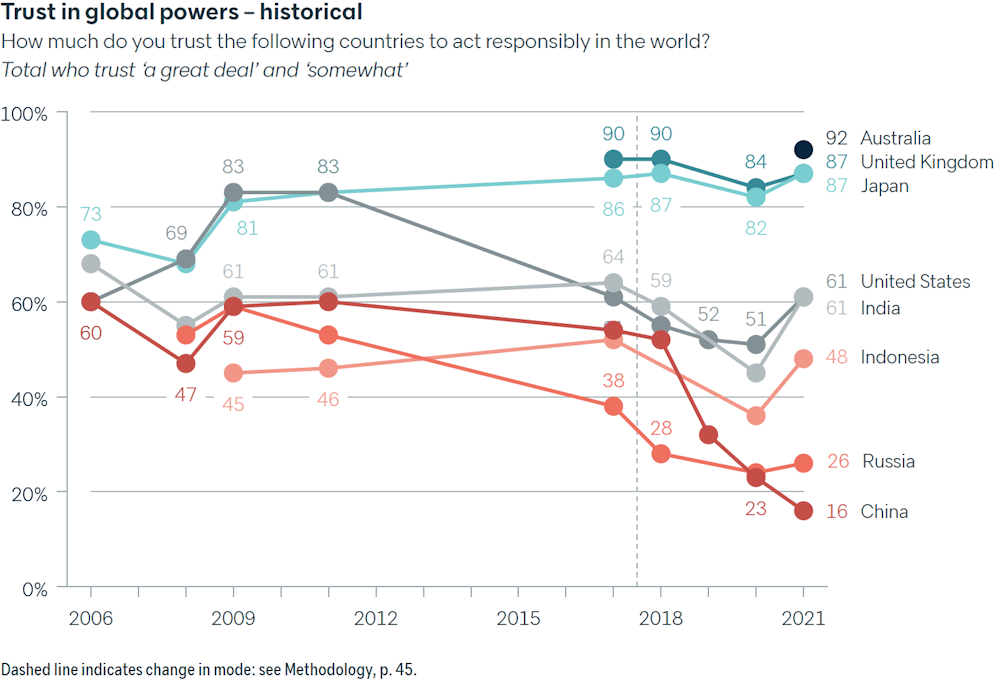
Trust in China has continued “its steep decline” according to the poll, reaching a new low. Only 16% of Australians trust China to act responsibly in the world, a 7-point decline from last year. As recently as 2018, 52% trusted China.
Lowy Institute
Just 10% of Australians have confidence in China’s president Xi Jinping to “do the right thing regarding world affairs”. This has halved since 2020 (22%) and fallen 33 points since 2018.
While people were critical of China on almost everything they were asked about in the poll, a majority do not want Australia dragged into a military conflict between China and the United States – 57% say Australia should remain neutral in such a conflict, well above the 41% who believe Australia should support the US.
There is a big age difference on this question: only 21% of those aged 18-29 say Australia should support the US in a conflict, but 58% of those over 60 believe it should.
In one small sign of optimism about China, 72% say it is possible for Australia to have good relations with both the US and China – although this is 15 points lower than in 2013.
China has fallen to the bottom of the Lowy Institute’s “feelings thermometer”, with a 7-point drop to 32 degrees – a 26 degree decline from 2018. This compares, for instance, with the rating of India (56 degrees), Indonesia (55 degrees), and the US (62 degrees),
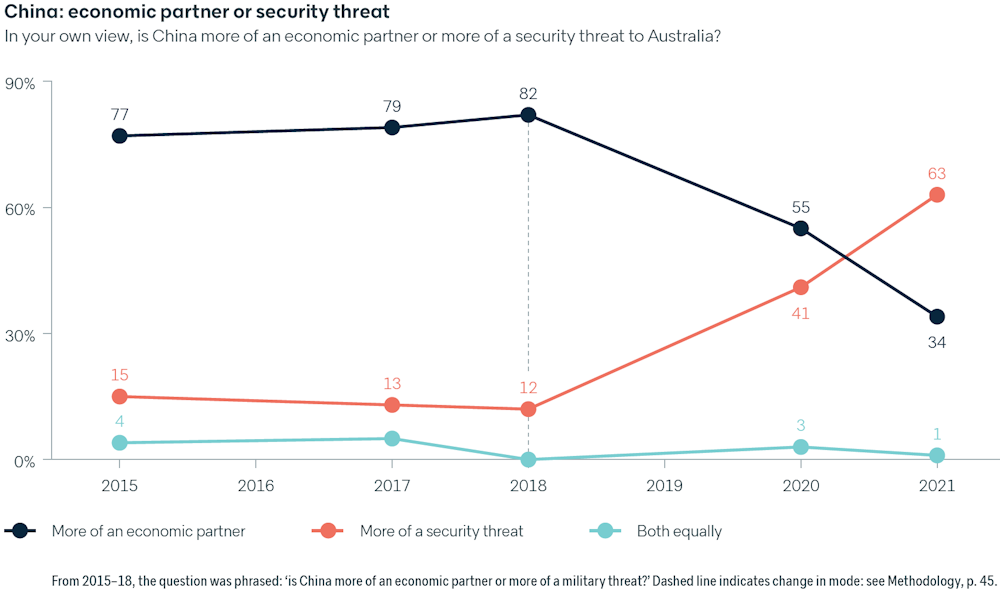
Asked whether China is more of an economic partner to Australia or a security threat, more than six in ten (63%) see China as “more of a security threat” – a 22-point rise from last year. In contrast, only a third (34%) say China is “more of an economic partner to Australia”. This is 21 points lower than last year.
Lowy Institute
Some 56% believe China is more to blame than Australia for the bilateral tensions, although 38% attribute blame equally.
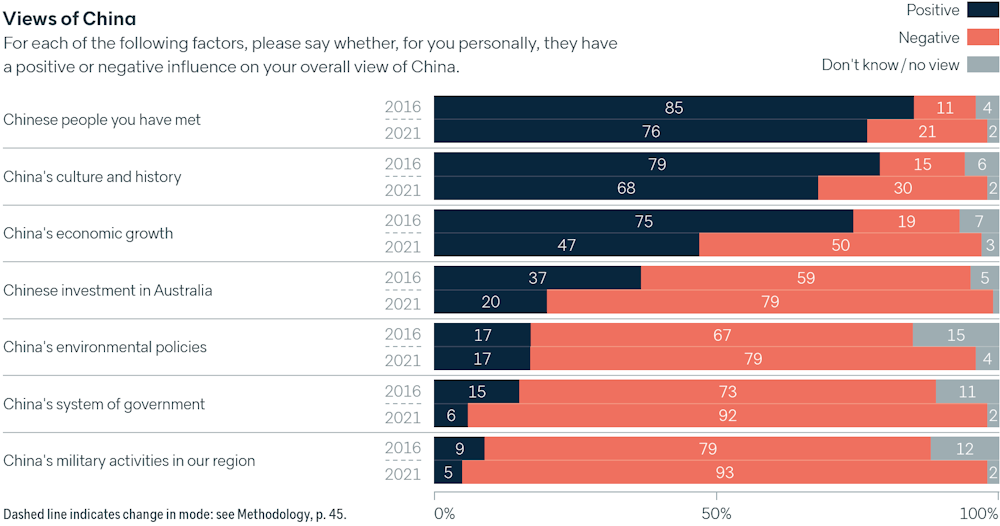
Having an increasingly negative influence on views of China are its investment in Australia (79%), its environmental policies (79%), its system of government (92%) and its military activity in the region (93%).
Lowy Institute
“Even in relation to China’s strong economic growth story, Australian attitudes have shifted significantly in recent years’, the Lowy report says.
“In 2021, less than half the population (47%) say China’s economic growth has a positive influence on their view of China, a steep 28-point fall since 2016’”
The replacement of US president Donald Trump by Joe Biden has been wholeheartedly welcomed by Australians, the poll shows.
Some 69% have confidence in Biden to do the right thing regarding world affairs, 39 points higher than Australians’ confidence in Trump last year. More than six in ten (61%) now trust the US, 10 points higher than last year, but 22 points lower than reached in Barack Obama’s presidency.
There is strong support for the importance of the US alliance (78%), steady since last year) and confidence America would come to Australia’s defence if it were under threat (75%).
Commenting on the poll results, Kassam said “Australia’s China story has changed dramatically since 2018, from one of economic opportunity to concerns about foreign interference and human rights.
“Views of China are to some extent inseparable from the crackdown in Hong Kong, the detention of Uighurs, the disappearance of Australian citizens in China …” she said.
“A year of targeted economic coercion has clearly left its mark on the Australian public, and in a remarkable shift, now even China’s economic growth is seen as a negative. It would also appear that the uptick in China’s military incursions in the Taiwan Strait has not gone unnoticed by the Australian public, though the majority would still prefer to avoid a conflict between the superpowers.”
Michelle Grattan ne travaille pas, ne conseille pas, ne possède pas de parts, ne reçoit pas de fonds d’une organisation qui pourrait tirer profit de cet article, et n’a déclaré aucune autre affiliation que son organisme de recherche.
What is Philippine President Rodrigo Duterte’s solution to vaccine hesitancy among Filipinos? Threaten them with jail time.
Duterte, in a meeting with pandemic task force officials yesterday said he would order the arrest of people who refused to get vaccinated.
“Kung ayaw mo magpabakuna, ipaaresto kita at ang bakuna, itusok ko sa puwet mo. Putang ina, bwisit kayo,” said an irate Duterte in edited footage of the meeting aired on television.
(If you don’t want to get vaccinated, I’ll have you arrested then I’ll inject a vaccine into your buttocks.)
“Magpabakuna kayo or ipakulong ko kayo sa selda (Get vaccinated or I’ll jail you in a cell),” he added.
He has also threatened to inject them with the version of anti-parasitic medicine Ivermectin intended for animals.
Duterte said his justification for such a drastic measure as arrest was the state of national emergency he declared over the country due to covid-19 and the dangers posed by unvaccinated people as possible “carriers” of the disease.
He conceded it was a “strong-arm” tactic for which he would find a legal way to enforce.
“I will think it over very hard, legally of course, in pursuance of a policy of crisis, this health issue,” said Duterte.
The President also said he would tell local government officials to “find” those who were unwilling to get vaccinated.
“I will order all the barangay captains to have a tally of all the people who refuse to be vaccinated,” said Duterte, adding that the Department of the Interior and Local Government should supervise the effort.
The Duterte administration is already notorious for its use of barangay lists to keep tabs on suspected drug users and peddlers, many of whom have ended up killed either in police operations or by unknown assailants.
Harshest vaccination policy If Duterte makes good on his threat, his would probably be the harshest penalty globally for people unwilling to get vaccinated against covid-19 and would likely raise human rights concerns.
In Indonesia, its capital Jakarta announced it would fine people who refused to get vaccinated.
Will coercion and threat work among a majority of Filipinos unsure about getting their jabs? A Social Weather Stations survey conducted from late April to early May found that only three out of 10 Filipinos were willing to get vaccinated.
The top reason for this unwillingness was fear of side effects of vaccines being used — the most common is the Chinese Sinovac — and the belief that the vaccines were not safe or effective, according to SWS.
Lawmakers and civil society organisations have called on the government to ramp up its vaccination information drive to counter vaccine hesitancy.
Pacific Media Watch reports that the Philippines has logged at least 1.35 million infections and over 23,500 deaths since the pandemic began, but under 6 percent of its roughly 108 million residents have been inoculated with at least one dose.
The republic has now secured the delivery of 113 million doses from five vaccine manufacturers: Sinovac with 26 million doses, Sputnik V with 10 million doses, 20 million doses from Moderna, 17 million doses from AstraZeneca — and now a deal for 40 million doses from Pfizer.
Pia Ranadacovers the Office of the President and Bangsamoro regional issues for Rappler. While helping out with desk duties, she also watches the environment sector and the local government of Quezon City. Rappler articles are republished by Asia Pacific Report with permission.
Political tension is rising in New Caledonia as a third referendum on independence from France is planned in December.
The decolonisation process under the 1998 Noumea Accord is nearing its conclusion and scenarios are being drawn up for how to deal with the result.
In 2018 and 2020, a majority voted against independence, but the winning margin shrank from 56.7 percent to 53.3 percent, leaving the electorate as divided as ever.
The path to the third referendum has been fraught as no consensus for a date could be found, with Paris ruling out the period straddling next year’s French presidential election.
In 2018, the date of the first referendum was approved in an unanimous vote by New Caledonia’s Congress.
Last year, because of the emergence of covid-19, the vote was slightly delayed but Paris chose October as a compromise between the dates proposed by the rival sides.
This year, anti-independence parties wanted the vote to be held as soon as possible while the pro-independence parties wanted it to be held as late as officially possible, which is by October 2022.
Early referendum date Although the Noumea Accord stipulates a two-year gap between the votes, Overseas Minister Sebastien Lecornu announced in Paris earlier this month that the referendum would be held on December 12.
The announcement came after a meeting with New Caledonian leaders invited to Paris last month to canvass the territory’s future.
While anti-independence politicians have in the main welcomed the date, the pro-independence side keeps describing the choice as a “unilateral decision”.
Daniel Goa of the Caledonian Union said the date chosen by France was one to “suit itself’” and “to respond favourably to the ‘no’ supporters, giving them to hope for an easier victory.”
He added that those who “think of purging the question of independence by shortening the referendum deadlines are seriously mistaken”.
Louis Mapou of the pro-independence UNI, which stayed away from the Paris talks, told Radio Oceane his side “is mobilising to continue to demand that the referendum be held in 2022”.
No compromise “Neither of the two camps will ever submit to the convictions of the other and whatever the result, our convictions and those of the separatists will not vary”, he warned.
At the Paris meeting, Lecornu discussed France’s outline of what the legal, economic and financial implications of a “yes” or a “no” vote would be.
Both options raise complex issues, be they short or long-term.
Within the next few weeks, the Paris meeting will be followed by an official sitting of the signatories to the Noumea Accord although the exact date and venue are yet to be announced.
Usually convened once a year and chaired by the French prime minister, the meeting will allow the parties to table their agendas and discuss the final phase of the Accord.
The post-Accord challenges have been raised by Lecornu at the Paris meeting, describing them as vital for voters to know when they cast their ballots.
He has also spoken of a post-referendum “convergence period” to June 2023 in case of a no-vote, which would be followed by another referendum on a new arrangement with France.
“There is a contradiction between the lapsing and irreversibility of the Noumea Accord. The two concepts cannot be made to coexist. Either the Accord is void or it is irreversible”, he noted.
Louis Mapou said the parties making up UNI will soon vote on whether to boycott any additional referendum as suggested by Lecornu.
He hinted at the stance taken by the pro-independence side in 1987 when a French-run plebiscite was rendered pointless by the wholesale absence of Kanak voters.
This article is republished under a community partnership agreement with RNZ.
“Pacific Studies” has been included in a raft of new proposed NCEA achievement standard subjects in New Zealand, now up for public consultation. It is proposed with Vagahau Niue and Gagana Tokelau as part of the government’s NCEA upcoming reforms — the biggest shakeup of the qualification.
The option of learning Pasifika histories has provided hope to students like i-Kiribati Naumi Teinabo (Maiana, Nikunau), who has never learnt a Pacific strand once in her social studies classes.
The Mahurangi College Year 13 who only this year started learning about New Zealand histories, said the social studies curriculum has not served Pasifika learners.
Auckland University Pacific studies scholar Hollyanna Ainea said: “It comes into a loss, sort of like identity, in like our place as Pasifika in New Zealand. So we’re focusing on more European history and stuff instead of what’s actually important to us.”
But she said should Pacific studies be offered in New Zealand schools, that teachers must be culturally competent.
“It also comes down to the different resources that teachers are offered as well because you know, they’re already time restricted and they’re also having to find different ways to educate students on different topics,” she said.
Willingness to research “But it also comes down to their willingness to research and know how to handle these different conversations regarding Pasifika history, Māori history.
“There’s this massive disconnection between understanding how we as tagata o le moana or tagata o le whenua, perceive our oral histories, our connections with the land, connections with the sea and that also kind of contributes to our ignorance to how these different inequities have come about over time because even though these are events that have happened in the past, they still affect us today.”
Ainea said all students who enrolled in Pacific studies would use the learning everywhere they go, with everyone, every day.
She said Pasifika students would especially benefit from a subject that helped them grow in their identity.
Ben Curtis is a history teacher at De La Salle College with a predominantly Pasifika school roll.
He admitted as a Palagi man, his teaching was not founded in lived experience. However, he had only ever taught Māori and Pasifika topics, which he said was received better by his predominantly Pasifika students.
He said topics like the Dawn Raids and Te Tiriti o Waitangi, had been important in reminding students of where and who they come from.
Engagement of young people “The engagement of young people when they learn about Māori history through a Māori context and worldview is a lot more powerful than learning history that’s really disconnected with any cultural identity that you know, New Zealanders have, and particularly Māori and Pacific students.”
With the help of some teachers, Teinabo recently began lunchtime tutorials for Pasifika students with a yearning to learn about their heritage.
The tutorials have proved a hit with small Pasifika student community. So far, they’ve discussed the destruction of Banaba and the Mau.
Teinabo said she would tell her Year 9-self that being i-Kiribati was nothing short of beautiful and was something to share with her classmates.
“Just remember myself as I am is enough… I should be able to appreciate and want to want to show my culture and be strong in my culture’.”
Pacific studies along with Vagahau Niue and Gagana Tokelau, are a number of proposed new subjects which form the government’s NCEA reform, the biggest shakeup of the qualification since it began in 2002.
Ākonga, kaiako and extended whānau can provide feedback through an online survey, which closes on August 11.
This article is republished under a community partnership agreement with RNZ.
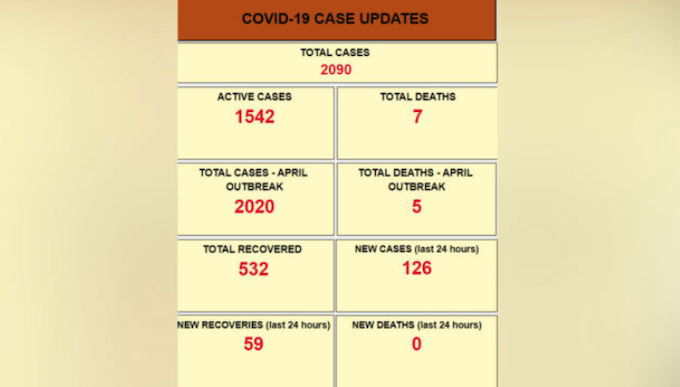
Fiji recorded 126 new cases of covid-19 in the 24-hour period ending at 8am yesterday with another death as the pandemic continues to take hold.
The Ministry of Health said the 42-year-old man died at the Colonial War Memorial Hospital (CWMH).
He was admitted to hospital with leptospirosis and also tested positive for covid-19 during his admission.
Health Secretary Dr James Fong said the man’s death was being investigated by his doctors to determine if it would be classified as a covid-19 death.
Dr Fong said 59 recoveries had also been recorded and there were now 1542 active cases in isolation.
He added that the number of covid-19 cases recorded since April this year had increased to 2020.
This meant that the total cases recorded since Fiji registered its first case last year stood at 2090.
Dr Fong said to date there had been 532 recoveries and seven deaths due to covid-19 in Fiji.
Five of the deaths were recorded during the current outbreak with eight covid-19 positive patients haing died from pre-existing non-covid-19 related illnesses.
The Health Secretary said one death was currently under investigation.
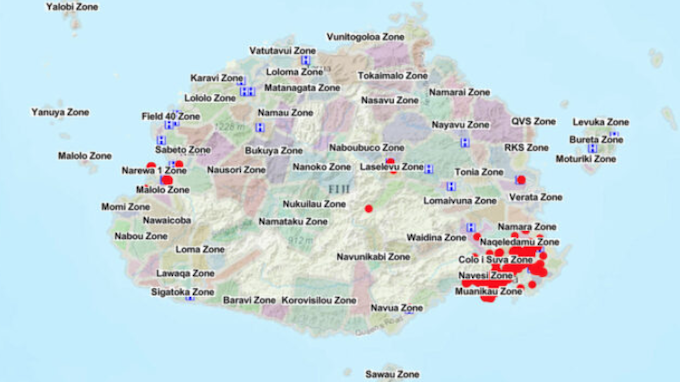
Fiji covid-19 clusters on Viti Levu as cases continue. Image: FBC/Fiji govtFiji covid-19 statistics as at 21 June 2021. Image: FBC/Fiji govt
All across the South Pacific, tribute is being paid to broadcaster and journalist Shiu Singh who has died in his home in Suva, Fiji.
The sad news will be carried throughout Micronesia, Polynesia and Melanesia via media networks such as PACNEWS, which was pioneered and built up over years of dedicated hard work by Singh.
In the 1960s, as Singh began a term of service in the RNZAF, his homeland Fiji and many other Pacific colonies of Britain, USA, New Zealand and Australia were preparing to become self-governing or independent, but were hindered because their only communication links were with their colonial masters.
Pacific Islanders heard no news from or about their neighbours, and had no chance to talk with each other, swap advice, exchange experiences.
In the 1970s, Singh, now back in Fiji with a fine reputation as a current affairs broadcaster set about changing that state of affairs.
Soon after helping to establish the Pacific Islands News Association (PINA) he took on the daunting task of gathering, editing, compiling and re-distributing Pacific news right across our region. It is largely because of his dedication and professionalism that PACNEWS exists today.
Singh overcame many challenges, including a threat by Fiji’s military government to censor bulletins and destroy the credibility he had worked so hard to establish.
His response was to say goodbye to his beloved Prabha and family and – after a two-day hiatus – resume the much valued PACNEWS from a new home in Vanuatu.
We mourn the passing of an outstanding public broadcaster who gave great service to Pacific people in the course of a distinguished career marked by reliability, honesty, impartiality and extremely hard work.
Vinaka vaka levu, Shiu. May you rest in peace.
This article is republished under a community partnership agreement with RNZ.
Australia has been producing doses of AstraZeneca since March, but this vaccine is no longer recommended for those aged under 60 because of the small but serious risk of clotting.
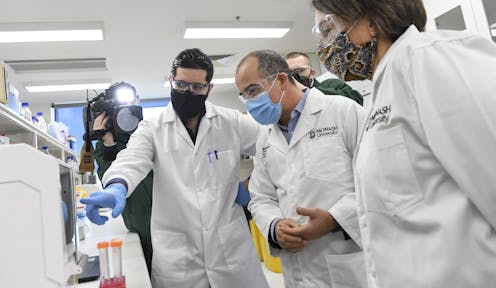
Now a research team at Monash University, led by Professor of Pharmaceutical Biology Colin Pouton, hopes to develop a new mRNA vaccine, which works by the same principles as the Pfizer vaccine, and could be manufactured locally.
So how would the vaccine work? What hurdles do the researchers need to overcome to make it a reality? And when could it become available?
It’s based on existing technology
Before COVID, the researchers were developing mRNA vaccines against a variety of viruses and diseases, and testing the technology in mice. After the pandemic hit, they pivoted their skills and technology and started work on an mRNA vaccine against COVID-19.
The vaccine is an mRNA vaccine, like the ones by Pfizer and Moderna. These vaccines prompt your body to produce the virus’ spike protein, to which your immune system makes antibodies against.
But the Monash mRNA vaccine is a little bit different, as it directs our cells to only make a small part of the spike protein, the “receptor binding domain”, which is the most important part allowing the virus to enter our cells.
The receptor binding domain, or tip of the spike protein, is also the part that’s quickly mutating to form the different variants of concern. Directly targeting this part makes sense to get the most variant-specific response.
How do mRNA vaccines work again?
MRNA vaccines work as instructions, telling our cells to make certain proteins. If these proteins are foreign to our bodies, our immune system will recognise them and mount an immune response. Over time, immune memory is developed, meaning when we encounter the virus, our immune system will clear it.
The researchers began modelling the vaccine off the original strain of the virus, first discovered in Wuhan. But they’ve since adjusted their sequence to model the shot off the Beta variant, first discovered in South Africa. This adjustment was made partly because the neutralising antibodies from patients infected with the Wuhan strain are least effective against the Beta variant.
Our current crop of approved COVID vaccines protect well against the Alpha variant, first found in the United Kingdom, and the Delta variant, first discovered in India. But because the Beta variant is good at evading immunity from vaccines, it’s more likely than most other variants to surge when vaccine protection begins to wane.
For these reasons, there’s a stronger clinical need for Beta variant vaccines.
This quick adjustment of the sequence demonstrates how flexible the mRNA technology is. It’s easy to change the sequence of the vaccine to adapt to new variants of the virus that have emerged, and might emerge in future. This ability to quickly change the sequence is similar for DNA vaccines like AstraZeneca, but harder for traditional and protein-based vaccines.
As with all other mRNA vaccines, the RNA will be broken down in the body over the course of a day or so. The vaccine doesn’t stay in your body over the long term. You gain immunity as your immune system learns how to respond to the short burst of proteins your body makes. When you get the second dose of mRNA vaccine, the immune memory is reinforced.
The group has tested this vaccine in mice, and says its results are really promising.
Based on these pre-clinical results, the Victorian government has given the project A$5 million. The money has come out of a A$50 million research fund earmarked to support local mRNA vaccine development.
The A$5 million will help pay for a manufacturer in Europe to make a sufficient amount of the mRNA for the phase 1 trials. This material will then be shipped via ultra-cold storage to Australia, and a local company is going to package the RNA into “lipid nanoparticles” which allows the mRNA to get into human cells.
What are the next steps?
Phase 1 trials to check the vaccine is safe in humans will begin in October or November this year, and will initially include 150 volunteers.
If the vaccine passes this trial, it will move to phase 2 and 3 trials which require tens of thousands of participants. The primary aim of these later stage trials will be to see if the vaccine can reduce the severity of COVID-19 disease, while also checking it’s still safe.
These later stage trials are quicker to complete if conducted in areas with (unfortunately) high community transmission. One reason we saw Pfizer and Moderna’s vaccines approved so quickly was because trials took place in countries where the virus was rampant. If and when this vaccine goes to phase 2 and 3 trials, Australia will hopefully not be in a situation with widespread transmission. So the team may need to involve international partners and recruit participants overseas.
However, there may also be alternative metrics to measure how well a vaccine is working. Researchers can look at study volunteers’ blood to see how many, and the type of, antibodies they’re producing. This could work as a proxy for measuring efficacy. But it’s not clear if Australia’s drug regulator, the Therapeutic Goods Administration, would approve the vaccine without the traditional exposure model.
The team will also compare their mRNA vaccine directly with Pfizer, in a side-by-side comparison, to see how stable it is and how well it elicits antibodies against the virus.
So when can we get it into our arms? It’s uncertain how long the full suite of trials will take, but probably not for a couple of years. It’s possible the vaccine will not make it past phase 1 or 2 trials, although with the similarity in methodology to the Pfizer and Moderna vaccines, both of which are safe, this is less likely.
Why we need Australian-made vaccines
This is an important step in developing Australia’s sovereign capacity for mRNA vaccine production, and for the newly developing Australian RNA biotechnology sector as a whole. It’s likely we’ll need booster shots for some years to come, so we need to develop local manufacturing capability.
I sincerely hope it’s successful, but even if it’s not, it’s creating a pipeline for onshore mRNA vaccine development.
What’s more, mRNA vaccines are the new gold standard and the next generation vaccine technology. It’s likely we’ll see more pandemics and novel viruses in future, so that adds to the argument for having local mRNA vaccine capacity.
We don’t know how much the federal government paid for the Pfizer and Moderna vaccines, but it’s likely to have been much more costly than making it here. If we can make it ourselves more cheaply, we’re at a real advantage.
Archa Fox receives funding from the Australian Research Council and the NHMRC. She is on the Board of Directors of the International RNA Society (2020-21), is the Chair of the RNA Network of Australia, and is a member of the Australian RNA Production Consortium (ARPC), a group that also has as it’s members, Colin Pouton and Damian Purcell, researchers who are developing and testing the mRNA vaccine that is discussed in this article.
As well as Michelle Grattan’s usual interviews with experts and politicians about the news of the day, Politics with Michelle Grattan now includes “Word from The Hill”, where all things political will be discussed with members of The Conversations’s politics team.
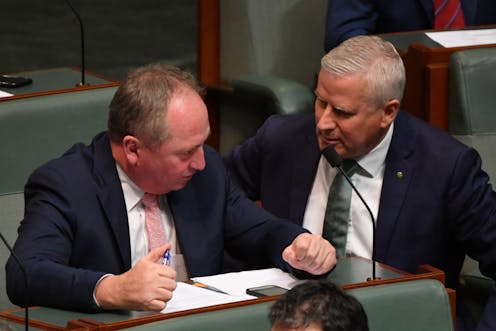
In this episode, politics + society editor Amanda Dunn and Michelle dive into the National party spill, which resulted in Barnaby Joyce grabbing back his old leadership job, what this means for the Nationals at the election, and the climate change policy position this puts Scott Morrison in.
They also discuss the recommendation by UNESCO to list the Great Barrier Reef as “in danger”, and the suggestion by the government this classification was politically motivated.
Michelle Grattan does not work for, consult, own shares in or receive funding from any company or organisation that would benefit from this article, and has disclosed no relevant affiliations beyond their academic appointment.
Source: The Conversation (Au and NZ) – By David Coghill, Financial Markets Foundation Chair of Developmental Mental Health, The University of Melbourne
Around one in 30 Australians (or 3.4% of the population) have attention-defecit hyperactivity disorder (ADHD). Yet it remains a poorly understood and highly stigmatised disorder.
Our new paper, which reviews the research on community attitudes about ADHD, found misconceptions are common and affect the way people with ADHD are treated and see themselves.
Stigma is an underestimated risk factor for other negative outcomes in ADHD, including the development of additional mental health disorders such as anxiety, depression, alcohol and substance abuse, and eating disorders.
Stigma is also likely to contribute to the increased the risk of suicide, with people with ADHD three times more likely than the rest of the population to take their own life.
Early recognition and treatment of ADHD significantly improves the physical, mental and social outcomes of people with the condition who, like everyone else, deserve to live full and rewarding lives.
No, ADHD isn’t caused by too much TV
Our review of the research found many people erroneously attribute ADHD symptoms – particularly in children – to exposure to TV or the internet, lack of parental affection, or being from a broken home.
People with ADHD have persistent patterns of hyperactive, impulsive and inattentive behaviour that are out of step with the rest of their development. This can affect their ability to function and participate in activities at home, at school or work, and in the broader community.
ADHD can affect your ability to concentrate. Shutterstock
There are clear criteria for diagnosing ADHD, and a diagnosis should only be made by a specialist clinician following a comprehensive medical, developmental and mental health review.
No, ADHD isn’t routinely overdiagnosed
Our review of the research found three-quarters of Australian study participants believe the disorder is overdiagnosed.
Based on the international research, an estimated 850,000 Australians are living with ADHD.
Yet current rates of diagnosis are much lower than this, particularly in adults where fewer than one in ten have received a diagnosis.
There is also widespread scepticism in the community about the use of medicines to treat ADHD.
Medication is only one part of the management of ADHD which should always include educational, psychological and social support.
Although rates of medication treatment have increased over the years, less than one-third of Australian children with ADHD and fewer than one in ten adults with the condition are currently receiving medication. This is much lower than expected, based on international guidelines.
How this stigma feels
People with ADHD can struggle with day-to-day things other people find easy, with little understanding and acknowledgement from others.
Typical examples include butting in to others’ conversations and activities, leaving tasks half done, being forgetful, losing things, and not being able to follow instructions.
The response to these behaviours from family, teachers and friends is often negative, critical and relentless. They’re constantly reminded of just how much they struggle with the day-to-day things most people find easy.
People with ADHD know they’re being judged. Shutterstock
Our review found young people are particularly affected by this judgement and stigma. They’re aware they’re viewed by others in a negative light because of their ADHD and they commonly feel different, devalued, embarrassed, unconfident, inadequate, or incompetent.
Some respond to this constant criticism by acting out with disruptive and delinquent behaviours, which of course usually just escalates the situation.
Stigma can be a barrier to treatment
The perception and experience of stigma can influence whether a parent decides to have their child assessed for ADHD, and can leave parents underestimating the risks associated with untreated ADHD.
The confusion about what parents should believe can also affect their ability to make informed decisions about the diagnosis and treatment of their child. This is concerning because parents play a vital role in ensuring health professionals properly recognise and support their child’s health needs.
When diagnosis is delayed until adulthood, people with ADHD are four times more likely to die early than the rest of the population. This not only reflects the increased risk of suicide, but also an increase in serious accidents which arise due to impulsive behaviours.
When we treat people with ADHD, many of these problems dramatically improve. It’s not uncommon for someone who has recently started on treatment to say, “wow, I didn’t know life was meant to be like this”.
Treatment also improves the physical, mental and social well-being for children and adults with the disorder.
If this article has raised issues for you, or if you’re concerned about someone you know, call Lifeline on 13 11 14 or visit Headspace.
David Coghill has consulted for and received research funding from Takeda and consulted for Novartis and Medice. I have received research funding from the Australian ADHD Professionals Association and the National Health and Medical Research Council. I am Vice President of the Australian ADHD Professionals Association and a member of the European ADHD Guidelines Group.
Alison Poulton receives funding from Brain Mind Centre University of Sydney; Australian Women and Children’s Research Foundation. She is affiliated with Australian ADHD Professionals Association; World Federation of ADHD.
Louise Brown has consulted for and received payment from the National ADHD Consumer Forum and ADHD Australia, and funding assistance from the ADHD Foundation UK. I am an Associate Director on the Australia ADHD Professionals Board, the Consumer Advisor for an ADHD research team at Deakin University, and a Curtin University Ph.D. candidate.
Mark Bellgrove receives funding from the National Health and Medical Research Council of Australia (NHMRC), the Australian Research Council (ARC), the Medical Research Future Fund (MRFF), the Office of Naval Research Global (ONR Global), and the Australian ADHD Professionals Association (AADPA).
I am President of the Australian ADHD Professionals Association and am currently the Project Lead for the development of an evidence-based guideline for ADHD, following the NHMRC endorsed process.
The Australian Senate yesterday voted in support of a motion calling on the federal government to reject critical race theory from the national curriculum.
The motion was moved by Senator Pauline Hanson. Critical race theory, or CRT, is an academic theory developed primarily by Black scholars and activists to highlight the systemic and institutional nature of racism.
The motion comes after concerns reported in some media, such as The Australian, that the proposed draft national curriculum’s is “preoccupied with the oppression, discrimination and struggles of Indigenous Australians”.
A draft of the proposed revised national curriculum was released at the end of April. New revisions include a more accurate reflection of the historical record of First Nations people’s experience with colonisation, with a commitment to “truth telling”. This means in part recognising that Australia’s First Nations peoples experienced the British arrival as an “invasion”. (It also classifies as an invasion according to international law at the time.)
After the release of the draft curriculum, a conservative think tank claimed there were signs critical race theory was creeping into schools.
Critical race theory is an academic framework that is not part of the Australian curriculum. Learning how, for example, First Nations Australians experienced colonisation is expanding knowledge and understanding about our history. It is not necessarily a direct influence of critical race theory.
Every time race is mentioned in an educational context, it does not mean CRT is being applied.
It’s important the historical and ongoing legacies of colonialism and racial disparities are discussed in the Australian curriculum. Seeking to restrict this discussion by misrepresenting critical race theory is a move copied from conservative United States playbooks.
What is critical race theory?
Critical race theory is a collection of theoretical frameworks, which provide lenses through which to examine structural and institutional racism.
Within critical race theory, racism is viewed as more than just individual prejudices. Instead, it is considered to include a wide range of social practices deeply embedded in policies, laws and institutions.
Critical race theory was developed from the 1960s and 1970s by legal scholars applying sociological critical theory in their work, although the term “CRT” did not emerge until the late 1980s.
Critical race theorists including Kimberlé Crenshaw, Derrick Bell and Patricia Williams investigated how and why racial disparities persisted in the United States. They did so through analysing these disparities in the legal and criminal justice system, as well how education and employment opportunities (or lack theoreof) impacted generational wealth accumulation.
Interpretations of critical race theory are diverse as it is a growing body of scholarship. These are not formulated by theorists into specific doctrines, manifestos or sets of practices. But some general principles underpin CRT.
They include:
Race is understood as a “social construct” rather than a biological reality. That is, supposed “racial” differences between groups of humans are founded in our social experience rather than our genetics (this is well supported by scientific evidence)
“systemic racism” means social institutions and practices unwittingly contribute to and maintain white supremacy. “Invisible” everyday practices perpetuate racial inequality and inequity in health, education and the law
everyone has multiple, overlapping aspects of their identity which may impact their life experiences. These include race, gender, age, class, sexual orientation, disability and nationality. This suggests many people understand or interpret their life experiences through this “intersectional” lens
critical race theory encourages reflection on normalised ways of doing things, especially to question who benefits from systemic privilege and why.
Opponents of critical race theory sometimes claim it creates division and discord between people. For example, they claim critical race theory is intended to make people with privileged identities, such as being white, “hate themselves” or feel shame and guilt for their whiteness.
Critical race theorists and practitioners argue the framework can bring people together by highlighting the causes of the deep racial rifts that already divide our societies. And that it can prepare people for the work of overcoming injustice through reflection.
Where is this coming from?
Since Donald Trump’s win in the 2016 US presidential election, the agenda of right-wing and conservative political and media actors in Australia has been heavily shaped by their US counterparts. Trump and other right-wing US actors have promoted broad misrepresentations of critical race theory.
For instance, Trump has claimed the “left’s vile new theory” (that is, critical race theory) teaches students that “judging people by the color of their skin is actually a good idea” and that the US is “systemically evil”. He claims “this deeply unnatural effort has progressed from telling children that their history is evil to telling Americans that they are evil”. Neither is true.
Misinterpretations of critical race theory were an implied factor in Trump blocking funding for diversity and equity training in 2020, because it contained “divisive concepts” such as racial stereotyping and critical race theory.
In the past few months, Republican legislators in more than 20 US states have proposed and voted for bills banning critical race theory in primary and secondary schools and/or colleges and universities. Bills against critical race theory have become law in eight states and are set to become law in a further nine.
It is important to understand these moves in the context of a systemic push-back against calls for racial justice in the wake of the Black Lives Matter movement’s resurgence in 2020.
What does the Senate motion mean?
Hanson’s motion does not reflect a homegrown issue with critical race theory. It is the latest example in a series of divisive stunts. This includes her unsuccessful previous attempt to import right-wing racist rhetoric into a Senate bill.
The Senate is not responsible for creating the Australian curriculum. The Australian National Curriculum is developed by the Australian Curriculum, Assessment and Reporting Authority (ACARA), a national but independent statutory body.
The current curriculum took many years and extensive consultation to develop. New content cannot simply be added or removed by any one institution or organisation, including the Senate. The proposed revised curriculum was similarly drafted based on wide consultation with relevant stakeholders and educational experts.
State and territory governments are responsible for implementing the curriculum in schools in their jurisdiction. The way different states require the curriculum to be implemented can differ and individual schools have some flexibility in deciding which programs and resources to use in delivering it.
But critical race theory is complicated and not suited for delivery directly in the K-12 curriculum. Teachers would be unlikely to refer to it or require students to read the work of legal scholars.
However, general concepts about racial inequality, and discussion of historic and contemporary forms of racism, can be understood — even by young children. Teaching these issues effectively and sensitively may overlap with the general principles of CRT without necessarily being directly influenced by this theoretical framework.
Les auteurs ne travaillent pas, ne conseillent pas, ne possèdent pas de parts, ne reçoivent pas de fonds d’une organisation qui pourrait tirer profit de cet article, et n’ont déclaré aucune autre affiliation que leur organisme de recherche.
Barnaby Joyce has an answer to those who say Australia should commit to net zero carbon emissions by 2050. He says 2050 is too far away to be sure of anything.
As he put it in February while a backbencher, “many of the politicians and commentators talking about a 2050 aspiration will be dead by then”.
The man he replaced as deputy prime minister, Michael McCormack, said much the same thing at about the same time.
He was “not worried about what might happen in 30 years’ time”.
While edging Australia ever closer to endorsing a target for 2050, Prime Minister Scott Morrison used the same line of reasoning.
Australia’s goal was to reach net zero emissions as soon as possible, and preferably by 2050.
Near enough to forecast
“But when we get there, when we get there, whether in Australia or anywhere else, that will depend on the advances made in science and technology needed to commercially transform not just advanced economies and countries, but the developing world as well.”
For all of these leaders, 2050 was simply too far into the future to have a sensible view about.
So what are we to make of what will happen next Monday?
Shortly after 10am Treasurer Josh Frydenberg will release a set of official projections that will go way out into the future, to 2061 rather than 2050.
It’ll be the fifth set of official projections going out 40 years — the fifth so-called intergenerational report.
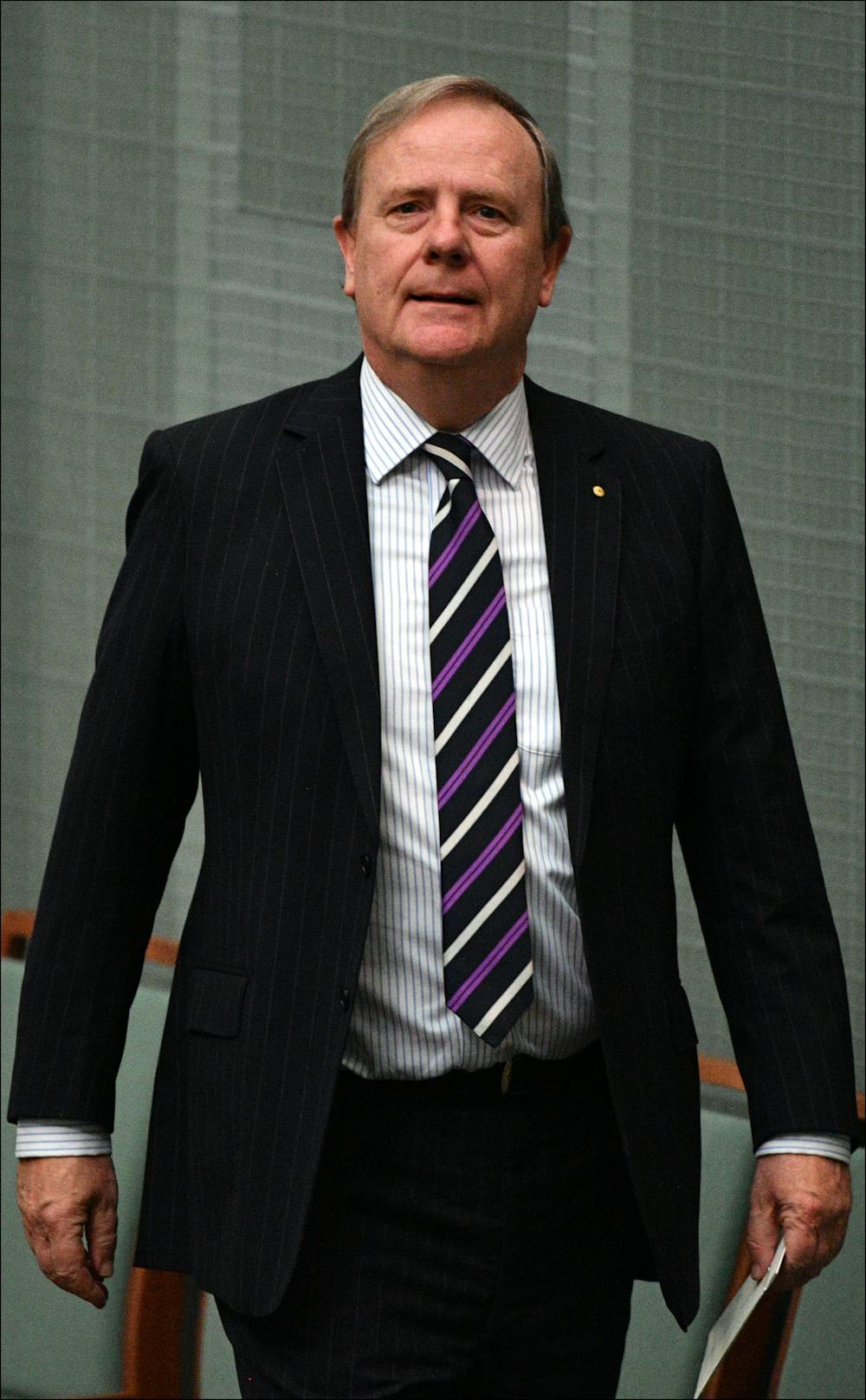
Former treasurer Peter Costello, the father of Australia’s system of intergenerational reports. MICK TSIKAS/AAP
The first, produced by Prime Minister John Howard and his treasurer Peter Costello in 2002, set out projections to 2042.
The Howard government mandated the five-yearly intergenerational reports as part of its Charter of Budget Honesty.
The idea was that it wasn’t good enough to examine the impact of government policies just a handful of years into the future, as happened each budget night. If problems were set to build up over time — say over 40 years — budgets wouldn’t give you a handle on them until it was too late.
The Charter of Budget Honest Act made clear that the intergenerational reports were to deal with more than demographic change.
The first identified increasing spending on new health care technologies unrelated to demographic change as the greatest threat to government finances.
Climate change feeds into the IGR
And that first John Howard and Peter Costello report included a sharp warning about climate change, noting that “early action to prevent environmental damage, rather than later action to remedy it, is likely to reduce long-term costs”.
In 2010 the third intergenerational report had an entire chapter on climate change. The report was entitled Australia to 2050.
The fourth (Abbott government) intergenerational report in 2015 was prescient in its warning about the Great Barrier Reef, describing protection of it as a “significant challenge over coming decades”.
Frydenberg’s 180-page report will also include a chapter on climate change, one that looks beyond 2050.
It will doubtless include the sort of disclaimers all intergenerational reports have had — that projections on the basis of unchanged settings aren’t forecasts. Part of their purpose is to warn what will happen if settings aren’t changed.
The first warned that steadily-rising spending on new medical technologies along with a rapidly ageing population would boost the need for tax by 5% of GDP.
As governments took measures to wind back the growth in spending (including lifting the pension age) those needs shrank in future intergenerational reports, to about 3% of GDP.
Challenges manageable…
To date, each report has found we will have no difficulty finding the money.
The first pointed to living standards 90% higher in 40 years time.
The fourth, using the same metric of real GDP per person but assuming lower productivity growth, pointed to living standards 80% higher.
With so much uncertain, the assumptions in Frydenberg’s report will tell us a lot about where the treasury thinks we are going and what might need to change.
A big concern in the first report was that as the population of older Australians grew, the number of people of traditional working age available to serve each one would shrink, roughly halving.
…if we’re given notice
That concern was overstated somewhat because at the same time the number of young people who needed serving would shrink.
Twenty years on, it is clear that our population isn’t ageing nearly as quickly as had been expected, in part because we’ve been importing many more (relatively young) migrants than expected.
In the year before COVID net overseas migration reached 241,300 per year. The first intergenerational report had expected only 90,000 per year.
On the other hand our productivity growth — the amount produced per hour of work — has been abysmal. Before COVID it fell to 0.4% per year. The first intergenerational report had assumed 1.75%.
And the first assumptions about wage growth seem positively quaint. The first intergenerational report expected 4.25% per year. Before COVID we got 2.1%
There’s no doubt that the assumptions and projections in Monday’s intergenerational report will also seem quaint several decades down the track. But it’s important to make them. The future arrives more quickly than we think.
Peter Martin does not work for, consult, own shares in or receive funding from any company or organisation that would benefit from this article, and has disclosed no relevant affiliations beyond their academic appointment.
Two former National Party leaders attempted to reignite their political careers in the past few days. John Anderson, leader from 1999 to 2005, was unsuccessful in his attempt to secure Senate pre-selection for New South Wales. In recent times Anderson has garnered considerable respect for his role in Australian public intellectual life with his web-based interview program, Conversations with John Anderson.
At the same time, Barnaby Joyce was successful in his attempt to regain the leadership of the federal Nationals. Joyce lost the leadership in 2018 following revelations of his affair with staffer Vikki Campion and other claims of sexual harassment, which he denies. Joyce is back after spending three years in the sin bin.
There are great contrasts between Anderson and Joyce. Anderson takes ideas seriously and has himself suffered a number of tragedies during his life, including the infant death of his youngest child. He is a man of great dignity and gravity and, at 64, would have been a great addition to the Australian Senate. He has no leadership ambitions.
Barnaby Joyce is, well, Barnaby Joyce, a flamboyant populist who has the capacity to make Australian political life interesting and keep himself in the headlines. He is also a polarising figure. His return to the leadership of the Nationals occurred because he had the numbers, but the majority in his favour was thin.
At a time of great concern about the treatment of women in parliament, he would also appear to have “form”, and one must wonder what message his return to the leadership sends to the women of the bush. Of course, the reality is the National Party is so dominant in many of the seats it holds that Joyce’s reputation in such matters doesn’t really matter.
But the real question is: why has Joyce returned? The Liberal Party in recent times has changed leaders largely because the incumbent was perceived to have lost popularity with the electorate. This explains why Scott Morrison spends so much time in pursuit of public approval.
For the Nationals, the situation is different. They have a small, but fairly stable, number of seats, most of which they would be unlikely to lose, at least outside Queensland. The Nationals leader is not regularly scrutinised in terms of their popularity. The leader does not have to appeal to a wide range of people across the country, just to a certain constituency.
This means that fights over the leadership are generated largely by personal ambition and policy issues. In this case, the leadership change seems to have been all about Joyce’s desire to be leader and the issue of climate change.
There can be no doubt that Joyce’s colourful personality has an appeal in certain quarters. Certainly Peta Credlin, herself a product of rural Australia, welcomed his return as Nationals leader. In a government full of grey bureaucratic types, perhaps personified by the likes of Greg Hunt and Josh Frydenberg, Joyce looks like someone brimming with energy, the sort of energy that appeals to non-metropolitan Australians.
This brings us back to the contrast between Anderson and Joyce. I find that students look back to the Howard era as one of stability before the period of flux and change that began with Kevin Rudd. This is a common perception. Anderson, as a leader from that period, symbolises a certain solidity that many would say has been lost.
Joyce, on the other hand, may well be judged by history as the sort of leader that the post-Howard era threw up; more about style than substance. Barnaby stands alongside Rudd, Abbott, Turnbull and Morrison as a symbol of the strange ways that developed in Australia political life since 2007. not GIllard?
If that is true, then the return of Joyce seems only to indicate that Australia politics is still caught in the culture that emerged in the post-Howard era. It is a political culture of personal ambition, a certain nastiness, as exemplified by the experiences of women in parliament and an obsession with popularity as expressed through polls.
The failure of the Nationals to find a place for John Anderson in its Senate team is another example of this political culture. At this point in time, we need sane sensible voices in our political life, voices that are not obsessed with personal ambition. Our politicians do not yet seem to have learned the lessons of the past 15 years.
Gregory Melleuish receives funding from the Australian Research Council.
In implementing this important new initiative, it is critical to consult Aboriginal communities about what culturally appropriate housing looks like. In the past, public housing policies have often been imposed on Aboriginal communities based on non-Aboriginal ideals of good housing.
However, past policies have not done enough to ensure Aboriginal people have adequate housing — it continues to lag behind non-Aboriginal housing across Australia.
Barriers to housing for Aboriginal and Torres Strait Islander people
In 2020, the National Agreement on Closing the Gap included housing among its 16 key socio-economic targets to improve life outcomes for Aboriginal and Torres Strait Islander people.
a much higher proportion of Aboriginal and Torres Strait Islander people live in overcrowded and public housing
only 42% own their own home compared with 65% of non-Indigenous households
housing shortages are predicted to increase to 90,901 dwellings across Australia by 2031, of which 65,000 are in NSW
However, the use of financial metrics (such as the amount of money spent on Aboriginal housing) to determine the success of Aborginal housing policies can sometimes present a deceiving and biased view of the impact they have on Aboriginal communities.
It is critical the success of any Aboriginal policy is measured in a way which reflects Aboriginal cultural connections to country and kinship. These measurements should not reflect non-Aboriginal values of individualism and materialism, which typically guide government assessments of success and failure.
This budget is not just about dollars; it is about our commitment to ensure funding is directed to the areas where it can make the most difference for Aboriginal communities across our state.
It remains to be seen, though, whether the NSW government has the tools and knowledge to assess and communicate the success of policies affecting Aboriginal people in this way.
Important lessons for Aboriginal housing policy
Our research at the Indigenous Infrastructure and Sustainable Housing Alliance, in partnership with the NSW Department of Planning, Industry and Environment, shows decent housing is critical for the health and well-being of Aboriginal communities.
The negative impacts of culturally inappropriate and poor-quality housing on the health and well-being of Aboriginal and Torres Strait Islander people, especially young people, has been well-known for many decades.
Well-intentioned housing policies that are inappropriately designed and implemented can represent yet another form of controlling and monitoring of Aboriginal communities.
We have found a large number of housing problems for Aboriginal people, which can be summarised into four main areas:
overcrowding
ageing housing stock
poor quality construction and maintenance (especially waterproofing)
inappropriate standardised designs which do not reflect Aboriginal cultural values and family structures.
Our evaluation of the NSW’s Roads to Home Program also highlights the importance of addressing underlying infrastructure deficiencies in Aboriginal communities.
Poorly maintained and constructed roads, footpaths, drains, and electricity and telecommunications systems present potential risks to peoples’ health, safety, security and wellbeing. And this, in turn, creates structural disadvantage and further isolates them from surrounding non-Aboriginal communities
It is good to see much-needed upgrades to infrastructure, such as drainage, roads and footpaths, continuing at a cost of $34.1 million over three years under the program.
The program also invests in road and infrastructure upgrades in Aboriginal communities, such as former reserves and missions. It commenced in July 2019, with ten communities being initially upgraded over a four-year period at a cost of $54.8 million.
What culturally responsive housing can look like
We have developed a series of design principles to inform culturally responsive housing designs currently under development in northwestern NSW.
These principles can be simplified under three main headings:
orientation (building and block orientation)
house layout (how the house is laid out internally)
materials (durability, ease of maintenance)
To address the legacy of past Aboriginal housing policies new Aboriginal housing should reflect the diverse cultures, climate variations and environments of Aboriginal communities. They must not be built around the traditional, western, nuclear family model. Housing should be resilient, sustainable and provide flexible and adaptable spaces for extended families and community activities.
Importantly, they must also comply with the Building Code of Australia since too much Aboriginal housing has been built below Australian standards.
In building community resilience, hope and prosperity, our research also shows any new Aboriginal housing should also be implemented alongside social procurement policies. This ensures future projects provide meaningful and sustainable training and employment opportunities for the people who live in these communities.
Most importantly, Aboriginal housing policies should be developed and implemented in close consultation with Aboriginal people, recognising each community’s unique cultures, needs and priorities.
Martin Loosemore receives funding from the Australian Research Council, NSW Department of Planning, Industry and Environment
Campbell Drake has received research funding from the NSW Aboriginal Housing Office and The NSW Department of Planning Industry & Environment.
John Evans receives funding from the NSW Department of Planning Industry and Environment and the Australian Research Council.
Sara Wilkinson receives funding from the ARC, the Kamprad Foundation, Sweden, Aboriginal Housing Office (AHO) and Dept of Planning Industry & Environment (DPIE).
New Zealand’s medicines regulator Medsafe has granted provisional approval of the Pfizer vaccine for youth aged 12 to 15, and Prime Minister Jacinda Ardern expects cabinet approval to follow next week.
Once cabinet approves, 12-15-year-olds will become eligible for vaccination towards the end of the year, after older groups have had their turn.
Although children are at lower risk of serious illness or death from COVID-19 than older people, it is still essential to vaccinate them for two reasons.
First, if children catch the virus they can spread it to other people, including higher-risk groups or people who can’t be vaccinated for medical reasons. Several countries have seen outbreaks start in young people and spread into older age groups, causing significant hospitalisations and deaths.
Second, although the risk of death is very small, children can still suffer significant long-term health complications as a result of COVID-19, often known as long COVID. This has been shown to affect a significant proportion of people, even in younger age groups.
The Medsafe approval is based on solid data showing the vaccine is safe and highly effective for this age group. It follows similar moves in Europe, the US and Canada.
Vaccinating teenagers reduces their risk of getting sick and of passing the virus to others. By getting vaccinated, we are protecting not only ourselves, but also those around us.
How children fit into New Zealand’s rollout plan
In New Zealand, 265,000 children are in the 12-15 age group, accounting for just over 5% of the population. Add that to the 80% who are older than 16, and the Pfizer vaccine now has Medsafe approval for use in 85% of the population. This is good news because we will need really high vaccination rates to have a chance of reaching population immunity (sometime called herd immunity).
The vaccine is not mandatory and it’s likely not everyone will want to take it. This means we might need to vaccinate some children in younger age groups. Trials are currently underway to assess if the vaccine is appropriate for children aged six to 11. Director General of Health Ashley Bloomfield said Medsafe would consider the trial results once available.
There is a strong relationship between age and risk of severe COVID-19. It makes sense for the general rollout to start with older people and gradually work through the age groups, as Ardern announced last week. There may be exceptions — teenagers living with border workers or who have underlying health conditions could be offered the vaccine earlier in the rollout.
There are also other risk factors. We know that as a result of longstanding systemic racism in the healthcare system, Māori and Pacific people are at higher risk of needing hospital treatment for COVID-19. Therefore, an equitable rollout should ensure Māori and Pacific communities are prioritised for early access to the vaccine.
At the moment, New Zealand’s population is like a pile of dry kindling: sparks of COVID-19 from countries around the world are constantly threatening to set it ablaze. Vaccinating our population is like dousing that kindling pile with a hose.
To begin with, the wood is still dry enough that a spark landing in the wrong place could set it alight. But eventually, once the wood is wet enough, there might be a bit of smouldering here and there, but the fire won’t be able to take off.
The government has laid out its side of the bargain: the plan is to offer the vaccine to everyone by the end of the year. Ardern said New Zealand’s pre-purchase orders of the Pfizer vaccine will deliver enough doses during the rest of the year to offer two doses to 12-15-years-olds without anyone else missing out.
Now it’s up to all of us to do our bit and get vaccinated when our turn comes. Everyone who gets vaccinated is making a contribution to our collective immunity against the virus.
The higher we can get our collective immunity, the better protected we will be as a community, and the more options we’ll have for safely allowing international travel to resume. Vaccinating young people will be an important part of this effort and this latest announcement marks a significant step on the long journey towards the end of the COVID-19 pandemic.
Michael Plank is affiliated with the University of Canterbury and receives funding from the Ministry of Business, Innovation and Employment (MBIE) and Te Pūnaha Matatini, New Zealand’s Centre of Research Excellence in complex systems.
Red Cross Covid-19 coordinator Lauren Bird, who is based in Suva, said many people felt back in April there was light at the end of the tunnel.
But she said this recent outbreak had reset the clock.
The bulk of cases were in the Suva-Nausori corridor, where about a third of the population is based, Bird said.
Community transmission big concern “The community transmission is a big concern and this is also happening on the back of Fiji already suffering with the borders closed for the year, people had already lost income of livelihoods.”
RNZ Pacific correspondent Lice Movono, who is in Suva, said the Fijian government was reluctant to go into a national lockdown.
“To explain it very simply, they can’t afford the national lockdown,” she said.
“They’re saying that restricting people from being able to go back to work and re-open businesses means from a public perspective they can’t take their health into their own hands, in terms of being able to put food on the table.”
To respond to the unfolding situation, the New Zealand government signed off an additional support package.
“The assistance includes up to $5 million for the government to deliver covid-19 operations, and $5 million to local civil society organisations working directly with households to mitigate poverty risks, including through the provision of food rations,” said Foreign Affairs Minister Nanaia Mahuta.
New Zealand is sending two medical specialists to join Australia’s medical assistance team (AUSMAT) in Fiji.
Seven days in MIQ “They will spend some seven days in MIQ and then a 28-day assignment which helps do two things, effectively support the on the ground response, but also undertake a bit of assessment about what else is required,” Mahuta said.
An anaesthetist was part of the six-member Ausmat team that arrived tonight.
Mahuta said a Defence Force infectious disease specialist will be deployed in the near future.
As Fiji grapples with the outbreak, the Health Ministry is continuing its vaccine roll-out, with another 50,000 doses of the AstraZeneca vaccine arriving on Saturday as part of the Australian government’s support of one million doses.
New Zealand has pledged half a million doses, which Mahuta said was expected to arrive from July.
However, Prime Minister Jacinda Ardern noted AstraZeneca was yet to be approved by Medsafe.
“Until they’re approved in New Zealand, we are unable to pass on those doses, so instead we have been working with Australia, who are able to help them with doses sooner into Fiji,” she said.
Fiji now has more than 1500 active cases in isolation since this outbreak in April. Five people have also died since then.
This article is republished under a community partnership agreement with RNZ.
When I ring home to West Papua, my village people often ask me about the rumours that they have heard, of an upcoming Melanesian Spearhead Group (MSG) meeting. They ask, “When is the MSG meeting?” and if West Papua will be accepted as a full member.
I tell them that I don’t know, and then, with a dispirited voice, they say to me that they will continue to pray for our membership.
I respond the way I do because of two things: I truly don’t know of any proposed dates for the meeting, and I also don’t want to give false hope to the West Papuan people.
The MSG often changes the date of their scheduled meetings at the last second, which unfortunately is becoming the norm for it.
The foreign ministerial meetings and Leaders’ Summit of this regional body was scheduled for June 15 to June 17, 2021, but, unfortunately, it has been postponed again.
It is now being rescheduled for June 22 to June 25, with no guarantee that this new date won’t be postponed further.
Past Leader Summits were held in 2018 and February 2019, just before covid-19 hit in Suva, Fiji, where the ULMWP leaders addressed the meeting.
Another significant year In 2016 it was another significant year for both MSG and West Papua. The Leaders’ Summit was held in July that year in Honiara, the capital of the Solomon Islands, and was supposed to be the moment that everyone thought West Papua would be finally accepted as a full member.
The Melanesian Spearhead Group headquarters in Port Vila, Vanuatu … membership rejected in 2016 due to some criteria issue that West Papua did not meet. Image: Jamie Tahana /RNZ
But, again, it was rejected due to some criteria issue that West Papua did not meet.
The semantic rhetoric in the media surrounding this momentous point of West Papua national liberation – advocated by the United Liberation Movement for West Papua (ULMWP) back then – gave a lot of false hope and disappointment to the Papuan people.
The climate at that time was forecast with anxiety and anticipation, like expecting your team to score a goal in the final of the FIFA World Cup. Hundreds of Papuans were fasting and praying in West Papua, supported by grassroot solidarities across Oceania.
But tragically, the MSG leaders failed to score the goal everyone had cheered for.
This tragedy was captured in the words of Melanesian leaders at that time. Joe Natuman, then Vanuatu’s deputy prime minister, said that “West Papua was sold out for 30 pieces of silver”, as reported by Asia-Pacific Report on July 20.
“West Papuans sold out for ’30 pieces of silver’, says Natuman” – Asia Pacific Report, 20 July 2016. Image: APR
At that time, the MSG’s Director-General Amena Yauvoli said: “I believe the MSG Secretariat has been working hard to formalise membership criteria from observer to full member.” Unfortunately, this hard work, never bore any fruit.
Other forces at work Even though it was justifiable to grant ULMWP’s full membership in MSG, as expressed by Prime Minister Manasseh Sogovare when he hosted four Melanesian prime ministers of Papua New Guinea, Solomon Islands, Vanuatu and Fiji during the 23rd MSG Special Leader’s Summit in Honiara in 2016, there were other forces at work behind the scenes: sorting out the criteria of what constitutes “Melanesia”.
Given these unfolding events regarding the fate of Melanesia, the late Grand Chief Michael Somare, one of the key founding fathers of the independent state of Papua New Guinea and MSG, also said on 14 July 2016: “We must make the right choice on West Papua.”
In the same week, the Vanuatu Ambassador to Brussels at that time, Roy Mickey Joy, said, “The Melanesian Spearhead Group is too politicised; it has lost its Melanesian integrity and what it stood for.”
For the Melanesian leaders, changing and postponing dates and sorting criteria for MSG’s membership seems inconsequential, but it is a matter of life and death for Papuans.
Unfortunately, this tragic drama is playing out like a horror movie wherein innocent people are being chased by a monster, desperate to seek and enter a safe family home, but refused entry.
Many Melanesian prominent leaders are passing away
Deaths of leaders These tragedies have also been marked by the recent loss of many of the Melanesian leaders. For decades, they dedicated their lives to open the MSG’s door for the abandoned Melanesian family – Papuans.
On 4 September 2014, Dr John Ondawame, one of the exiled Free Papua Movement (OPM) leaders who tirelessly lobbied the MSG leaders and countries, died in Port Vila. Another prominent Vanuatu-based West Papuan independent leader, Andy Ayamiseba, died in Canberra in February 2020.
Tongan Prime minister ‘Akilisi Pohiva, an outspoken proponent of West Papua’s cause, also died in 2019. We have recently lost Grand Chief Michael Somare, the founder of MSG and the state of Papua New Guinea, in 2021.
In West Papua, Klemen Tinal, the Vice-Governor of Papua’s province, from the Damal tribe of Papua’s central highlands, died in Jakarta on 21 May 2021. Papuans can only lament these tragic losses with endless grief as many prominent churches and tribal and independent leaders continue to die in this war.
Adding to these heartaches, the people of West Papua and Vanuatu also lost another great leader. Pastor Allen Nafuki, a prominent social justice campaigner, died on Sunday, 13 June 2021 — just two days before another proposed MSG meeting, which has now been rescheduled again, for June 22.
GOD WILL NEVER SLEEP FOR WEST PAPUA, MASSAGE FROM MR,ALAN NAFUKI BEFORE HE DIEhttps://t.co/bch3Ki9mQ4
Pastor Nafuki was responsible for bringing warring factions of Papuan resistance groups together in Port Vila in 2014, which helped precipitate much of the ULMWP’s international success. Vanuatu, West Papua, and communities across Oceania mourn the loss of this great beacon of hope for our region.
Shared the Papuan burden Saturday, June 19, was announced as the day of mourning for Pastor Nafuki in West Papua. His picture and words of condolences have been printed and displayed across West Papua as they mourn for the great loss of their great father and friend who shared their burden for four decades.
The ULMWP leadership paid their tributes to the late Pastor Nafuki through ULMWP’s executive director Markus Haluk’s words: “Reverend Nafuki is a father, shepherd and figure of truth for both Vanuatu and West Papua.”
In another statement, ULMWP interim President Benny Wenda, said: “This is a great loss – but we also celebrate his legacy. He helped combine the destiny of the people of West Papua with the Republic of Vanuatu and helped bring about Papuan unity in 2014.”
Papuans and their solidarity groups continue to put pressure on MSG
Despite these tragedies and losses, Papuans and their solidary groups still fix their eyes on MSG.
Matthew C Wale, the Solomon Islands opposition leader, tweeted:
“MSG Leaders cannot continue to postpone the admission of West Papua into the group. It’s time the word ‘Spearhead’ in the title is given meaningful use. 30 pieces of silver & a mercenary approach cannot be the way decide the application for full membership.”
Free West Papua Campaign Facebook page has also been inundated with photos of Papuans holding banners supporting West Papua admission into MSG. Image: Free West Papua campaign
Bring West Papua back to the Melanesian family Bring West Papua back to the Melanesian family is the main message Papuans are trying to convey to the Melanesian leaders across the social media world. Although Melanesia itself is a colonial invention, Papuans take their identity as part of Melanesia seriously. They feel threatened by the large influx of Indonesian migrants into their ancestral land.
In response to these growing demands, the MSG leaders granted observer status to ULMWP in 2015. However, Papuans insist that elevating it to full membership status will boost their confidence as they carry their cause to the wider world.
This will legitimise the home-based regional support before asking anyone else for help. It also means someone out there recognises the 60 years of tragedy, as the world kicked West Papua around as they saw fit for their own selfish interests.
The beginning of Papuan tragedies The modern history of West Papua since 1963 has been tainted with tragic stories of betrayal. It started when the Dutch prepared Papuans for independence on December 1, 1961, but then withdrew without saying anything.
The controversial New York Agreement followed this betrayal in 1962, which gave the green light to Indonesia to re-colonise West Papua, sealing its fate with a sham Act of Free Choice in 1969.
Ever since, Papuans have been trying to share these stories with the world, unfortunately, their fate was ultimately decided during that agreement. Two prominent Papuan leaders, Willem Zonggonau and Clemens Runawery, fled West Papua to Papua New Guinea to fly to New York to inform the United Nations that the Act of Free Choice was corrupt, but were stopped by the Australian government.
The cover-ups of these betrayals and prohibition of international media and the UN to visit West Papua persist. Unlike the Palestinians, Papuan stories hardly make global headline news, remaining a secret war of the 21st century somewhere between Asia and the Pacific.
The Greeks and MSG’s tragedies Today, West Papuans and their solidarity groups around the world continue to knock on the MSG’s doors. But the fact that the MSG leaders are reluctant to open their arms and embrace Papuans as part of their larger Melanesian nation-states, only adds another episode of tragedy in their liberation stories.
The MSG’s decisions on ULMWP’s application for full membership are not in the hands of some celestial beings beyond human comprehension. These decisions that affect human lives are in the hands of individuals just like you and I, with family and conscience.
This is true to what’s been happening in MSG and true to what had happened in the New York Agreement in 1962 or any other meetings held between the Netherlands, Indonesia, and Western governments about Papua’s fate.
Mortal human beings, titled leaders, ministers, kings, and queens continue to make decisions that bring calamities to human lives, driven by self-deluded, egotistical importance, righteousness, greed, and power.
We make wrong decisions for the right reasons and make right decisions for the wrong reasons, or sometimes are unable to make any decision at all, with all sorts of reasons, influenced by misleading information, misjudgement, and misunderstanding. Ancient Greeks wrote about these tragedies in the fifth century BC, but these tragedies are still unfolding in front of our eyes.
Although the famous Greek Tragedy was set in a distant past in different cultural contexts, the basic theme is still relevant today because it tells us about the decisions we make about our relationship with other people, the consequences, and the unfairness of life itself.
What happened and what is still happening to West Papuan people reflect these tragedies – being cheated, mistreated for decades, and forgotten by nations around the world as they turn their back on their fellow humans. MSG’s indecisiveness about West Papua’s full membership adds to this prolonged history of mistreatment of the Papuan people.
MSG is at a crossroads These are uncertain times as humankind is slowly but surely being re-programmed to think and feel specific ways under the cursed covid-19 pandemic. It seems that the old world is dying, and a new one is being born, and we are in the middle of it – at a crossroads, gazing at some cataclysmic collapse looming all around.
In this kind of climactic moment, a hero is needed to make bold decisions and set a precedent for future generations. These pressures compel us to reflect on these tragedies and ask why the Melanesian Spearhead Group was formed in the first place over 40 years ago.
Was it to save Melanesia? Or destroy it?
Overdue smile In Port Vila, October 2016, when Sogovare met and told Pastor Nafuki and West Papuan leaders Jacob Rumbiak, Benny Wenda, and Andy Ayamiseba about granting West Papua full membership, according to the Vanuatu Daily Post, the pastor “smiled a long overdue smile and breathed a sigh of relief, saying, ‘Now I can go to my home island of Erromango and have a peaceful sleep with my grandchildren, with no disturbance whatsoever’.”
The beloved Pastor Nafuki, the chairman of Vanuatu Free West Papua Association, died on Sunday, 13 June 2021, just two days before when the MSG meeting was due, which has been postponed for another week.
He is now certainly at peace on his island with his family, but the thing that thrilled him to utter these words, West Papua membership in MSG, is still unresolved.
How long will the MSG leaders drag out these overdue smiles, tragedies, and betrayals? What should I tell Papuan villages who fast and pray every day for your decision?
Should I tell them I don’t know? Or say, “yes, your prayers have been answered”, that the rest of the Melanesian family has now welcomed West Papua?
West Papuans have been waiting a painfully long time for recognition, for salvation, for independence.
Yamin Kogoya is a West Papuan academic who has a Master of Applied Anthropology and Participatory Development from the Australian National University who contributes to Asia Pacific Report. From the Lani tribe in the Papuan Highlands, he is currently living in Brisbane, Queensland, Australia.
A Fiji family is mourning the loss of their son after he was killed in the devastating tornado that hit South Auckland on Saturday.
Mechanic Janesh Prasad was working at a freight hub when the tornado swept him up and he struck a container.
Prasad was carrying out repairs when the tornado hit.
He leaves a wife and two children aged 13 and 10.
Family friend Reg Prasad described him as a much-loved man.
“It’s an absolutely terrible shock to his family and his wife is absolutely shattered,” Reg Prasad said.
“Wonderful person — he’s got two beautiful kids, young kids growing up.
“He’s just one of these people who just helps out other people in this world, and a wonderful husband to Mala.
“The daughter is obviously very distressed. The younger son, it hasn’t sunk in quite yet,” Reg Prasad said.
Devastation caused by the South Auckland tornado at the weekend. Image: Ben Wilson/RNZ
Janesh Prasad hails from Fiji’s northern town of Labasa.
His father, Ram Naresh, told local media the family was devastated and had been left without any means of support.
Naresh said Janesh was his eldest son and the family breadwinner.
Janesh had lived in Vuci, Nausori, before leaving for New Zealand in 2014, Naresh said.
The 75-year-old said he last spoke with his son two weeks ago and Janesh was concerned about his parent’s well-being due to the covid-19 outbreak in Fiji.
Naresh said his son was a hardworking man who looked after his family well.
Naresh said he would have to rely on the government to take care of his 67-year-old wife and their disabled daughter.
He also said he would not be able to attend his son’s funeral due to the covid restrictions.
Meanwhile, Reg Prasad has started a Givealittle page to support the family. By Monday, it had raised NZ$44,000.
“We are just so grateful for all New Zealanders to support this family,” he said.
“We’ve had people bringing food, supporting, strangers coming up to the houses and helping out, got a huge network of support coming in at the moment.”
A blessing took place on Sunday at the site where Janesh Prasad had died.
This article is republished under a community partnership agreement with RNZ.
Fiji’s covid-19 cases continue to escalate as medical authorities have recorded another record breaking 166 new people now infected with covid-19 and a death at the Colonial War Memorial (CWM) Hospital in the capital Suva.
The Fiji government has stopped providing information about where the case increases are and the Health Secretary Dr James Fong admitted that community transmission was now “broad”.
The latest death is a 77-year-old man detected by a CWM screening team at his home where he had been bed-ridden for several months.
Despite that he had pre-existing medical conditions, doctors assessing clinical data have attributed the cause of death to covid-19. He represents the seventh to die from the virus, the fifth in this outbreak alone.
Cases in the small township of Lami just outside the capital continues to increase and so measures to ensure safe passage of people from affected containment zones to safe areas on the main island Viti Levu and to other islands is a focus of the government.
“The current priority is therefore to prevent the export of cases into the other non-containment zones. As such any request to move outside of the Central Division to other areas of Viti Levu and from Viti Levu to Vanua Levu and the Maritime zone needs to be strictly regulated,” Dr Fong said.
“Pre-departure swab tests and Quarantine capability are being expanded and strengthened to reduce the risk of spread within and beyond the main island, Viti Levu.”
Dr Fong said the majority of the weekend’s new cases were linked to existing clusters so the government would post heat maps on its digital platforms “to delineate case distribution within the Central and Western divisions.”
He added everyone should practise Covid Safe measures when they left their homes irrespective of where they lived or were going.
Vaccination roll-out continues The Ministry of Health vaccination teams continue to roll out as another 50,000 doses of Astrazeneca arrived in Fiji on Saturday night as part of the Australian Government Support.
Vaccination now moves onto the outer islands of the Northern and Eastern Divisions of the country.
Fiji’s vaccine of choice remains AstraZeneca despite the fact that the Australian government, from which it receives the majority of its supply, has recommended the discontinued use of the vaccine for its under 60-year-olds.
Australian Health Minister Greg Hunt announced earlier this week the AstraZeneca vaccine would be recommended for use in people over 60 and those under 60 would now be offered the Pfizer shot.
The Australian federal government accepted advice from the Australian Technical Advisory Group on Immunisation (ATAGI) after two women died from an extremely rare blood clotting disorder and 60 Australians out of the 3.8 million who got the shot developed blood clots.
Meanwhile the Australian government has provided Fiji with 250,000 Australian-manufactured AstraZeneca vaccines as part of its commitment of 1 million vaccines to its Pacific neighbour.
In response to concerns about Australia’s change of vaccine policy, the World Health Organisation Representative Office in the Pacific and the Ministry of Health Fiji put out a joint statement to say that after vaccinating 256,018 people (44 percent of the adult population) with one dose of AstraZeneca and administering two doses to 17,990 people, there were no confirmed cases of serious adverse effects.
Effective response measure The WHO/MOH said covid-19 vaccination remains one of Fiji’s most effective response measures.
“Australia’s decision does not change the approach for us here in Fiji. Given the current community transmission and Covid-19 variant, all unvaccinated individuals are at risk from the virus.”
“It is also important to remember that serious adverse events following immunization with the AstraZeneca vaccine remain rare events.”
Further, the WHO continues to recommend Oxford-AstraZeneca vaccines “for individuals aged 18 years and over. These vaccines have undergone the strictest safety and quality control trials and have reached the exacting standards of safety, purity, and effectiveness. Nothing is left to chance,” the statement said.
This article is republished under a community partnership agreement with RNZ.
The United Liberation Movement for West Papua (ULMWP) has held national mourning ceremonies at the weekend for the death of Vanuatu independence campaigner Father Allen Nafuki and prayed for the Papuan people to be accepted as full members of the Melanesian Spearhead Group (MSG).
The closing ceremonies were held in both Jayapura and at the ULMWP office in Wamena on Saturday.
“Interim President Benny Wenda announced national mourning with Vanuatu. Today, we close our mourning with our brother Vanuatu,” said Markus Haluk, head of the ULMWP Office in West Papua, in his closing remarks.
Pastor Allen Nafuki … highly regarded in West Papua. Image: ULMWP
The ceremony in Wamena was marked by slaughtering 6 pigs, while in Jayapura 2 pigs were slaughtered with traditional Melanesian earth oven cooking — known as “bakar batu” in West Papua and as “mumu” in other parts of Melanesia.
Haluk said that the closing of mourning also started with prayer and fasting for 9 days. The people of West Papua together with the prayer group also performed a koronka prayer in support of the forthcoming MSG meeting.
The head of the ULMWP Legislature, Edison Waromi, said that the joint prayer to close and escort the spirit of Pastor Allen Nafuki was an important part of the series of struggles of the Papuan people to be free from Indonesian colonialism.
Pastor Allen was regarded highly by the people of West Papua, as an advocate for Papuan independence with the governments of Melanesian countries throughout his life.
“Prayer and fasting are also important because the power of prayer is the power of struggle. Consistent prayer while carrying out acts of liberation will become a reality,” said Waromi.
“With prayers and fasting, the Papuan people with the ULMWP will be accepted as full members of the MSG.”
This article has been translated by an Asia Pacific Report correspondent from Tabloid Jubi and is republished with permission.
The last week has been full of debate over plans to make a film about the 2019 terrorist attacks on two Christchurch mosques. The vast majority of media coverage has focused on opposition to the film. These criticisms need to be taken seriously. But a strong case can be made in favour of a film that is about peace, tolerance, compassion, and against hate.
The case against the film
A number of strongly worded and argued cases have been made against the film. The main three complaints are that the film focuses on the wrong subject (because it deals with the aftermath of the tragedy including Prime Minister Jacinda Ardern’s handling of the crisis), the film is being made “too soon” after the horrific day, and the Muslim community in Christchurch has not been consulted.
Yesterday, one of the strongest criticisms was published – that of Mohamed Moustafa, whose father was killed in the terrorist attack. He says that if we focus on Ardern’s leadership of the crisis, which he says was only displaying “basic humanity”, then “we are inadvertently lowering the bar” – see:Terror film a squandered opportunity to ask questions we’ve never had answers to.
Moustafa predicts the film will be a “whitewashed” account “where a false narrative of white saviourism is preached”. He argues the storytellers show “arrogance, entitlement and self-interest”. And since the attack, “Not much has changed in terms of racism and Islamophobia in this country.” He says: “The truth is that we still have a long way to go in this country before we can even consider telling this story.”
Similarly, journalist and poet Mohamed Hassan condemns the movie project for allegedly choosing Ardern as a focus: “In its essence, it is a story about an act of white supremacy that is centred around white voices, white feelings and white heroism. The irony is nauseating” – see: They are not us and it hurts to be props in a Hollywood movie.
He believes that in the aftermath, the “country was being held up as a beacon of tolerance and peace”, with Ardern’s “They are us” phrase being nothing “more than just another tourism slogan”.
One of the organisers of the petition to get the film’s production shut down, Guled Mire, wrote a hard-hitting column, saying: “They Are Us is another example of lazy filmmaking that seeks to drive the same old narrative [of negativity about Muslims]. It seeks to whitewash the murder of 51 people and the permanent scars left on so many more. What we do not need is for Hollywood to appropriate, rewrite and shove another white saviour narrative down our throats. At the very worst, the film represents torture porn” – see: We won’t stop until white saviour film shut down.
Mire also asserts that Ardern’s leadership during the terrorism crisis doesn’t warrant attention: “there is nothing to celebrate about the actions of Ardern in the initial days following March 15. She simply did what is required from a leader.” And he criticises Ardern for not opposing the “grotesque” film more strongly. He says he wants to “see the deplatforming of this movie”, and “Ardern’s Government must ensure there will be no opportunity for the creators to access subsidies to develop” it.
Journalist Saziah Bashir is also unhappy that Ardern’s role in the story has received so much attention, and says it doesn’t deserve celebration: “How can we celebrate this tragedy as something that was ultimately a triumph because someone got a pretty photo of Ardern in a hijab and it inspired some graffiti art and a light show in Dubai?” See her opinion piece: They are (using) us: ‘How is it okay for others to profit off our pain?’.
Overall, for Bashir the film is “exploitative”, in “bad taste”, and she asks this about the film: “how can we be certain the violence won’t be glorified?”
A number of political commentators have come out strongly against the film. Newstalk ZB’s Jack Tame says the director, Andrew Niccol, “has actually written or directed two of my all-time favourite films” but in this case “I will not be paying $21 to go to They Are Us” because of the apparent Hollywood-style focus on Ardern – see: They Are Us movie wrong to focus on Jacinda Ardern.
Politicians have also been critical. Most notably, Ardern has said: “There are plenty of stories from March 15 that could be told, but I don’t consider mine to be one of them.” Christchurch Mayor, Lianne Dalziel, says that she’s “outraged” by the project, and film workers will not be welcome in her city. And Green MP Golriz Ghahraman has been tweeting in condemnation of the film, including saying “This is white supremacy” – see Emily Brookes’Jacinda Ardern on Christchurch mosque attacks film: ‘My story is not the one to be told’.
A lot of the above accounts are based on certain assumptions about the film and about the production so far, and some of these have turned out not to be true. It appears that many critics have put their trust in a Hollywood media report about the producer’s fundraising attempts. Is it possible critics have jumped the gun by speaking out in condemnation before any real details of the filming are known?
While a full announcement has not been made, a statement was put out late last week by the producers of the film and the Muslim Association of Canterbury which set the record straight – see: Christchurch mosque shooting movie: They Are Us movie producers to meet with more victims. This shows that the film does not intend to focus on Jacinda Ardern, and the Muslim community has, in fact, been consulted about the film, including the Imams of the two mosques in Christchurch.
Producer Ayman Jamal – who has a background in producing films telling Muslim stories – explained that despite allegations Ardern would be the centre of the story, there is no one hero in the film. Instead, he explains the focus: “Collectively, the New Zealand people from diverse backgrounds showed us – the rest of the world – that together they turned an horrific terrorist attack to unity, love and compassion by sticking together and affirming that they are all one and in this together.” Furthermore, according to this report, “The synopsis reveals the attacks will be shown – but that the scenes depicted will be the acts of heroism and sacrifice carried out by ordinary people that day.”
This story also reports the Muslim Association of Canterbury acknowledged that producers had spoken with local Imams. Jamal has been quoted saying that over a year ago the production spoke to “Imam Gamal Fouda of Al Noor Mosque and Imam Alabi Lateef Zikrullah of Linwood Mosque and over 20 other victims of the March 15th [2019] attack”, but “At the time the Christchurch Muslim community was going through a lot, and we were engaging only with those families who were ready to share their story with us at that time” – see Emily Brookes’They Are Us producers consulted Christchurch Imams, but ‘deeply regret’ not doing more.
According to this report, the producers and the Muslim Association of Canterbury plan to continue to work together on the project, and Jamal has expressed his deep regret that more consultations have not yet taken place.
Despite the avalanche of feelings expressed against the They Are Us film being made – something that blogger Martyn Bradbury has described as Orwellian “cancel culture” – there are a number of voices arguing that such a film is needed.
Writing in Stuff newspapers today journalist Lana Hart, who has already told the story of March 15 in a radio series, argues that the They Are Us producers might have got some elements wrong, but there is a strong case for making films about tragedies like March 15 – see: It’s not the film. It’s the approach to the film.
Here’s Hart’s main point: “Could a film, like art, serve the greater purpose of helping us make sense of the world? Imagine you didn’t live in Christchurch or New Zealand but cared about the issues and people affected by the massacre. In Dublin or Mecca, you are as horrified by what happened here as we locals are. Maybe you want to know more. Maybe you need energy and purpose to address the underlying reasons for the attacks. From outside Aotearoa, you have a genuine curiosity about the people, facts, and responses to the tragedy. A sensitively-produced film holds the potential to spread important messages to a global audience interested in what happened here.”
Hart quotes another film specialist, Matt Mueller, saying “Hasn’t art always been about processing human trauma and making sense of the senseless?” She also draws attention to some great film storytelling about other tragedies, such as the 1999 Columbine High School massacre and the 2011 Norwegian killings.
For the must-read defence of the film being made, see Chris Trotter’s Nobody owns the Christchurch tragedy. He argues the story of Ardern’s response should be central to a film about what happened in Christchurch: “Ardern’s reaction to the Christchurch shootings was as close to perfect as human-beings get. The world was by turns astonished and uplifted by her words and gestures. Ardern allowed humanity to rise above the evil of the terrorist’s actions.”
He argues the positive story about how the nation drew together in condemnation of the tragedy is a problem for some on the political left who want to paint New Zealand as deeply racist and Islamophobic. Essentially, Trotter’s argument is that those objecting to the film project have a problem with the unifying They Are Us message.
Herald columnist John Roughan also thinks Ardern’s leadership was heroic and worthy of focus, saying it’s “hard to see how she could not be” a heroine of the film – see: It is not too soon for the Christchurch mosque attacks to be focus of film (paywalled). He says: “Ardern’s response had a profound effect on the world. Two years on, it’s even possible to say she changed history that day.”
Roughan says that what happened “needs some reflection while it remains fresh in the memory. It is also hard to see how the story could fail to do justice to the victims and the survivors, as [the critics] fear.”
Columnist Mike Yardley does wonder if the film project is happening too soon and has the right focus, but says it should be allowed to be made – see:Movie plan breathtakingly crass, but should it be cancelled?. He concludes the filmmakers should be free to make it, and the audience free to stay away from the screenings: “Yes, They Are Us makes me squirm. But should it fall prey to cancel culture? The woke want it shut down, but freedom of speech isn’t confined to what we agree with, or what chimes with our sensibilities. If you don’t support it, spurn it. Don’t go to it and don’t view it.”
Blogger Martyn Bradbury has written a number of posts defending the film project, and criticising those who want it shut down. For instance, see: The woke cancellation of a movie they haven’t seen is ugly & why Golriz’s definition of white supremacy is terrifying. He says, “I think this movie focusing on the leadership of a young white female Prime Minister using kindness and empathy in the aftermath of a white supremacists terror attack is the exact movie the world needs right now.”
Other filmmakers have also been interviewed about how movies can be made in a sensitive and appropriate way, and whether they should be made at all. For example, Emile Donovan has interviewed Robert Sarkies, the producer of Out of the Blue (about Aramoana), about these ethical difficulties, and found that opponents of his film actually became supportive – see: The minefield of portraying real life tragedy on screen.
Similarly, see Emily Brookes’‘What people don’t want is to be exploited’: The people who’ve made films about Kiwi tragedies. In this, David Stubbs, who directed the TV series on the Bain family murders, Black Hands, says such films are not usually made for great profit or fame: “From my experience it’s generally about finding the truth in complex stories and honouring the legacy of victims.”
Finally, for a very different analysis of the problems with the potential They Are Us film, economist Eric Crampton looks at whether such a film – which is likely to receive government subsidies to be made – would count as an “election advertisement” if it’s released during the 2023 election year – see: Mosque attacks film: Movies about politicians should not be taxpayer-funded.
It is all around us. Every day in our lives we are in contact with it. In fact, we are made from it: ancient stardust.
All the atoms around us have witnessed the most violent explosions in the universe. Their journeys through space are the longest, roughest and loneliest voyages imaginable.
The hydrogen in the water we drink is the lightest of all the elements, and it dates back to the Big Bang at the beginning of the universe. Heavier elements, like the iron in our blood and the oxygen in the air we breathe, were forged in stars and ejected when they exploded at the end of their lives.
Dust from distant stellar explosions is still falling on Earth in a gentle, almost imperceptible rain. In my research, I hunt for traces of this dust to learn about how exploding stars have affected Earth’s history – and perhaps discover clues about the origin of the universe’s heaviest elements.
Hunting atoms
For many years my colleagues and I have been searching for fresh stardust (or any other kind of interstellar dust) across the giant dustbin we call home: Earth. We need dust that has fallen relatively recently (in cosmic terms), because then we have a chance of tracing it back to an event and a location like a particular exploding star.
Specifically, we are looking for atoms of iron-60 (or ⁶⁰Fe), a radioactive isotope of iron. Iron-60 is very rare on Earth, as it is mainly produced in massive stars and is found in minor quantities in cosmic dust and meteorites. However, it has a half-life of 2.6 million years, which means the atoms that do arrive here stick around for a long while before decaying.
Only a tiny amount of iron-60 rains down on Earth: each square centimetre of the planet’s surface receives a few atoms per year. If you stuck your tongue out for a full year, you might taste only a handful of atoms of iron-60.
To find iron-60, we need the help of nature: areas of Earth’s surface that are largely undisturbed and form a “geological archive” that concentrates and stores the iron-60 over time.
Traces beneath the sea
Iron-60 from the stars was first discovered in 2004, in layers of deep-ocean rock called “ferromanganese crust”. These hard iron-containing layers develop very slowly: in a million years, the crust will only grow by a few millimetres.
These geological vaults kept their iron-60 until samples are taken and studied using an ultra-sensitive technique called accelerator mass spectrometry.
The iron-60 found in 2004 suggested Earth had experienced an influx of interstellar dust from an exploding star (or supernova) about 2 million years ago. In 2016, this was confirmed by several independent studies of ocean sediments, deep-sea crusts and even rocks from the Moon.
More recently, traces of iron-60 found in seabeds revealed another influx of interstellar dust around 7 million years ago.
So we know Earth was impacted by at least two nearby stellar explosions in the past several million years. The collected data further indicated some iron-60 might still have been raining down on Earth within the past couple of hundred thousand years.
Is interstellar dust still falling today?
The search for interstellar dust in recent times is more challenging because nature is not helping us a lot anymore.
First, there is no concentration of iron-60 possible over a time period of a few years. This means we need to take a sample over a much larger area to find a useful number of iron-60 atoms.
Second, since humans invented nuclear weapons and other nuclear technology, there are many new radioactive isotopes present on Earth. So there is a slight chance that any iron-60 you find today might have been created by humans rather than exploding stars.
There are not many places to look for recent interstellar dust by its iron-60 signature, but one of them is in the pure snow of remote Antarctica. Still, you need to collect several hundred kilograms of snow for a big enough sample to reliably measure whether or not it contains interstellar iron-60.
In 2019, we analysed 500 kilograms of Antarctic snow and found 10 atoms of iron-60. The snow we collected was no more than 20 years old, and was about the amount that would fall in one year over 6 square meters of ground in Antarctica.
The iron-60 was of interstellar origin and perfectly within the expectations from previous measurements, and we also excluded human nuclear activity as the source. This was the first evidence that there is still interstellar dust from supernovae raining down on us every day.
We were able to confirm this result and extend it over the past 35,000 years by searching in ocean sediments. Combining all the evidence, we now have a record of interstellar dust influxes, on a scale of years, thousands of years, and millions of years.
The record we have of iron-60 influxes on Earth and the Moon. The vertical axis shows how many atoms of iron-60 were falling on one square centimetre in a year, and the horizontal axis shows the time in thousands of years before the present. The time window around 100,000 years ago is still largely unexplored.
The future of ancient stardust
What’s next in the hunt for stardust? First off, we still have a gap in the data in the 100,000-year range that needs to be filled to fully understand the origin and connection of the observed influxes.
Another line of inquiry is to use what we know about influxes of iron-60 to hunt for something much heavier, plutonium-244. This is the longest-lived radioactive isotope of plutonium with a half-life of 81 million years.
Like around half of the elements heavier than iron, plutonium-244 is created by a series of nuclear reactions called the astrophysical r-process. However, though scientists understand how this process works, yet we don’t know where in the universe these heavy elements are produced.
Supernovae were believed to entail the right conditions for the r-process to occur, but there is also some evidence suggesting that many of the heavy elements may instead be produced when neutron stars collide.
One way to shed light on this question is to look for plutonium-244 in the same places where we have found iron-60, which we know comes from supernovae.
In my PhD research I will go back to the roots of iron-60 hunting, the ferromanganese crusts. If we find that plutonium-244 follows the iron-60, it might point towards a stellar r-process. The hunt is ongoing.
Dominik Koll works for the Australian National University. He receives funding from AINSE.
Source: The Conversation (Au and NZ) – By Julie Anne Lee, Professor in Marketing, Founding Director of the Centre for Human and Cultural Values, and Director of Research at the UWA Business School, The University of Western Australia
James Gourley/AAP
The COVID-19 pandemic has already changed so many things about our society and our lives. While some of the impacts can be seen clearly and straight away, others take more digging.
Our new research, based on surveys with Australians before and during the pandemic, suggests COVID also shifted our values. This is surprising because values in adulthood rarely change.
It is also concerning as it showed as a society, we have become less caring and less open to new ideas.
Our research
As part of a larger project at the Centre for Human and Cultural Values, we asked Australian adults aged 18-75 how important different values are in their life.
We asked the same questions to the same group in 2017, 2018, and 2019. When the pandemic started, we were able to ask them the questions early on (April, 2020) and again in November-December 2020. During the pandemic, we also asked how worried respondents were about getting the virus.
Values in adulthood rarely change, but can be shifted by major events. Erik Anderson/AAP
We began with a near nationally representative sample of more than 2,300 people, who answered our survey from 2017 onwards. More than half (1,440 people) also responded in the last round in November-December 2020.
This gave us a rare opportunity to look at what impact the pandemic may have had on Australians’ values.
What are values?
Values are broad goals relating to things we think are desirable or worthy, like kindness, safety, adventure or success. There are no “bad” values, but our values can lead us to prioritise very different things.
We may not think about our values all the time, but they direct our way of thinking, and even our behaviour. They direct everyday decisions, such as whether to help a friend in need, or throw an item in the recycling bin. They also guide major decisions, such as which party to vote for, and which profession to choose.
Self-transcendence — seeking to care for the welfare of others and nature
Self-enhancement — seeking self-interest through ambition, success, and control
Conservatism — seeking to preserve the status quo through traditions, compliance, and security
Openness to change — seeking creativity, independence, novelty, and excitement
We care less about others
Our research found the values that motivate us to care for people and for nature (“self-transcendence”) were stable before 2020 and very early in the pandemic. But they decreased significantly in importance by late 2020.
One possible explanation is people who worried about what COVID might mean for them became especially less caring about the people around them. After suffering months of worry, lockdowns, border closures, and social distancing, people were less likely to prioritise others over themselves.
We are more conservative
We also found values that prioritise maintaining the status quo (“conservation”) were stable prior to COVID, but increased in importance early in 2020.
When the pandemic started, Australians immediately started prioritising safety and security, and traditions around one’s family, culture and religion. The increased importance of conservative values may have helped to motivate compliance with the new pandemic health and safety rules.
Again, this trend happened more in people who were worried about getting COVID early in the pandemic.
While the increase in importance of these more conservative values lingered later in the pandemic, this increase was no longer associated with worry over getting COVID.
In fact, it was somewhat surprising that the increase in more conservative values lingered throughout 2020, given that the pandemic situation in Australia was largely under control. This shows the pervasiveness of subtle changes taking place as a consequence of the pandemic.
Reassessing our priorities
Early in the pandemic, as more conservative values increased in importance, opposing values like adventure, excitement and enjoyment (“openness to change”) became less important for Australians.
Later in 2020, in contrast to the more conservative values that remained more important than before the pandemic, the importance of “openness to change” values began to change.
While people continued to disregard values that promote pleasure and enjoyment, values that prioritise independence and intellectual pursuits increased in importance. This suggests the pandemic restrictions may have led people to critically examine what’s important in life, and to seek out interesting things they can do independently of others.
COVID has changed us — and done it quickly
Our study shows major events such as the COVID pandemic can change values in society in a relatively short period of time.
Central to these value changes appear to be worries about getting infected, which was linked to more conservative values, less openness values, and decreased importance of values related to caring about others and the environment.
The pandemic saw people less likely to prioritise others over themselves. Darren England/AAP
As values have been linked with social and political opinions and voting, these changes have important implications for Australian society.
Australians may vote more conservatively as a result. It’s noted that pandemic elections have seen Australians back incumbents (whether they be Coalition or Labor). Although interestingly, both the successful Queensland and West Australian ALP governments have had very tough state border regimes.
If these value changes linger on, we might see people objecting more to immigration, caring less about human rights, and being less likely to enact random acts of kindness. Indeed, separate survey results have already shown many Australians back the strict international border controls during COVID.
We may also see less volunteering and donations to a wide range of causes. We know volunteering rates have dropped since COVID hit Australia, and are yet to recover.
Our findings suggest the pandemic has significantly affected our values. Follow up surveys will be critical to understand our values as we emerge from the pandemic.
maya.benishweisman@mail.huji.ac.il receives funding from Jacobs Foundation, The Israeli Science Foundation, The U.S.-Israel Binational Science Foundation (BSF)
Ella Daniel and Ronald Fischer do not work for, consult, own shares in or receive funding from any company or organisation that would benefit from this article, and have disclosed no relevant affiliations beyond their academic appointment.
Alongside logistical and supply issues, vaccine hesitancy has been a notable hurdle in Australia’s troubled vaccine rollout.
The news the Australian Technical Advisory Group on Immunisation (ATAGI) now recommends Pfizer over AstraZeneca for everyone under 60, owing to a rare blood clotting disorder, is proving another blow to vaccine confidence.
With active local COVID cases in Victoria and New South Wales, it’s timely to be considering all possible factors which may be contributing to vaccine hesitancy.
One is the media. While news reports of vaccine hesitancy may well be describing genuine community concerns, they could be inadvertently fuelling COVID vaccine fears.
Why are some Australians reluctant to get a COVID vaccine?
While Australians perceive their environment is safe and relatively free from COVID-19, some will remain unmotivated to have the jab. They may hesitate to be immunised as they believe the vaccine could pose a greater risk than the virus itself.
This is not the case. ATAGI’s evolving recommendations ensure the benefit of getting vaccinated against COVID outweighs the risk for every age group.
Fear, meanwhile, is a behavioural motivator. The latest outbreak in Melbourne saw record numbers of Victorians turn up for vaccination.
A Griffith University survey conducted in the middle of 2020 found 68% of people would take a COVID-19 vaccine if one was available. Those who said they wouldn’t had concerns regarding side effects, quality of testing, and speed of vaccine development.
So we can see even when community transmission in Australia was higher, and before we knew about rare adverse events like the blood clots, safety was a key concern.
Vaccine hesitancy can stem from concerns about the safety of the vaccine. Shutterstock
Reporting on vaccine hesitancy could worsen the problem
For the past several months, it seems as though every other day there’s been a new report or survey in the news, revealing x proportion of people are hesitant about getting a COVID vaccine.
Our attitudes and behaviours are shaped by what others in society do — social norms. A recent study found university students in the United States who perceived their peers felt COVID-19 vaccination was important were more likely to report they intended to get a vaccine themselves.
Similarly, it’s important to acknowledge there’s a real danger hesitancy and delay in vaccination, when reported widely in the media, could catch on to more people.
A review of 34 studies found the way parents interpreted media reports about vaccination depended on their pre-existing beliefs. For example, a report of a “rare” side effect might reassure parents who already believed vaccine benefits outweigh risks, whereas the same report could discourage parents who were already concerned about side effects.
Indeed, humans are prone to confirmation bias — paying more attention to information that fits with prior beliefs. Seeking and considering evidence which goes against our beliefs is hard for our brains.
But the media can help with this in the way they frame their reports. For example, emphasising that the majority of Australians want to and intend to vaccinate is a better option than focusing on the number who don’t.
For people already hesitating, another report could further shift the balance away from vaccination. So reporters should think carefully about the way they present vaccine hesitancy stories (and the need to present them in the first instance).
Reporting on vaccine safety also must be handled carefully
In Italy, media reporting about a small number of deaths following a batch of influenza vaccines in the winter of 2014/2015 was linked to a 10% reduction in influenza vaccination among people 65 and older compared to the previous season.
These deaths were quickly confirmed as unrelated to vaccination, but it seems the early reports had a significant effect on behaviour.
In a global study, three of 13 national and state level immunisation managers interviewed said “negative information conveyed in the mass media” contributed to vaccine hesitancy in their countries.
On the flip side, media reports about influenza and vaccination can also increase vaccination uptake. In this study, careful data analysis showed higher numbers of news reports with “influenza” or “flu” in the headline corresponded with higher flu vaccination uptake in the same year.
Media coverage about vaccines can both help and hinder vaccine confidence. Shutterstock
What should the media aim for in reporting on COVID vaccination?
Any reporting on Australians’ inclination to vaccinate should reinforce what is in fact the social norm — the intention of the majority to receive a COVID vaccine.
Further, media reporting on COVID vaccines should be careful to contextualise the benefits alongside the risks, and regularly remind consumers of reliable sources such as federal and state health departments and ATAGI.
And while the media must be cognisant of its role, the government needs to act quickly to reverse the hesitancy trend. People are looking for reasons to have the jab; they are desperate for a national roadmap out of COVID-19.
If Australians could see how becoming vaccinated would contribute to economic prosperity (for example, reopening tourism and international education), and facilitate other things returning to normal, such as our ability to travel overseas, they would be motivated into action.
The authors do not work for, consult, own shares in or receive funding from any company or organization that would benefit from this article, and have disclosed no relevant affiliations beyond their academic appointment.
My heart sank last week to see conservative Australian commentator Alan Jones championing a contentious book about climate science which has gained traction in the United States.
BenBella Books
The book, titled Unsettled: What Climate Science Tells Us, What It Doesn’t, and Why It Matters, is authored by US theoretical physicist Steven Koonin. Notably, Koonin is not a climate scientist.
As the title suggests, the book’s bold central theme is that climate science is far from settled, and should not be relied on to make policy choices in areas such as energy, transport and economics.
Jones cited Koonin’s book in a Daily Telegraph column last week. He decried the “nonsense” of governments in Australia and abroad aiming for net-zero carbon emissions, saying it was as though Koonin’s book “didn’t exist”.
So does the book hold up? I have been researching and writing about climate change since the 1980s. I wanted to give the book a fair reading, so I put any preconceived thoughts aside and tried to fairly weigh up Koonin’s arguments. If true, they would be very important findings.
Koonin frames his book as a brave attempt to reveal how the climate science we’ve been relying on all these years is, in fact, uncertain. But the book’s major flaw is to imply these uncertainties are news to climate scientists.
This is patently untrue. Science is never settled. But there is enough confidence in the science to justify significant climate action.
Scientific uncertainty does not justify climate inaction. Shutterstock
Uncertainty is par for the course
Koonin opens the book by saying he accepts that Earth is warming, and humans are contributing to this. But he muddies the waters with passages such as the following:
Past variations of surface temperature and ocean heat content do not at all disprove that the (approximately 1℃) rise in the global average surface temperature anomaly since 1880 is due to humans, but they do show that there are powerful natural forces driving the climate as well.
In other words, Koonin says, the real question is “to what extent this warming is being caused by humans”.
The book’s author, Steven Koonin, is not a climate scientist. Kelly Kollar
No rational person could deny that natural forces drive the climate. The climate record shows significant climate changes long before humans existed; clearly we’re not responsible for the planet being much warmer many millions of years ago.
However the five assessment reports of the Intergovernmental Panel on Climate Change have expressed steadily increasing confidence that humans are the dominant cause of global warming this century.
Koonin attacks former US secretary of state and now Biden climate envoy, John Kerry, who once said of climate change “the science is unequivocal”.
It is true to say climate science is somewhat uncertain. Science is always a work in progress. Scientific integrity demands a willingness to look carefully at new data and theories to see if they require us to revise what we thought we knew.
But Koonin is wrong to imply scientists are somehow unaware of, or deny, this uncertainty. To the contrary, I have heard decision-makers express exasperation when we scientists seek to qualify our advice on the basis that our knowledge is limited.
Every reputable climate scientist I know is always willing to look at new data. But policy-makers must make decisions based on the current scientific understanding.
Koonin states, accurately, that few in the general public receive scientific information directly from research papers. Most people receive climate change information after it’s been filtered by governments and the media – which, in Koonin’s mind, often overstate the seriousness of climate change.
However Koonin fails to note the opposite forces at play – governments and media organisations, such as the Murdoch press in Australia and Fox News in the US, which systematically misreport climate science and underestimate the climate threat.
Humans are the dominant cause of global warming this century. Shutterstock
Ignorance is not bliss
Koonin concludes by questioning the wisdom of reaching net-zero emissions in the second half of this century – a central goal of the Paris Agreement. He argues that when one balances the cost and efficacy of slashing emissions “against the certainties and uncertainties in climate science”, the net-zero goal looks implausible and unfeasible.
This is effectively an assertion that ignorance is bliss: because we don’t have perfect understanding that allows us to make exact projections about the future climate, we should not take serious action to reduce emissions.
Koonin proposes a different response: for society to adapt to a changing climate, and embrace “geoengineering” technology to artificially control Earth’s climate.
Both adaptation and geoengineering have their place in the climate response. But neither are sufficient substitutes for dramatically cutting carbon emissions.
The world must urgently reduce emissions. Shutterstock
Proceed with caution
Under the Hawke government, science minister Barry Jones was one of the first public figures in Australia to sound warnings about climate change.
Jones and I both appeared on a panel at a landmark climate conference in 1987. I recall Jones, when asked how decision-makers should respond, said we should consider the consequences of both acting and not acting.
If policymakers acted on inaccurate climate science, Jones argued, the worst that would happen is our energy would be cleaner – albeit, at that time, more expensive. But if the science was right and we ignored it, the consequences could be catastrophic.
Jones was essentially describing the precautionary principle, which is contained in a number of international treaties including the UN’s Rio Declaration, which states:
Where there are threats of serious or irreversible damage, lack of full scientific certainty shall not be used as a reason for postponing cost-effective measures to prevent environmental degradation.
The principle demands we act to avoid disastrous outcomes, even if the science is uncertain. Because the uncertainty works both ways: things might get worse than we expect, rather than better.
The fundamental point of Koonin’s book is true, but irrelevant. The science is not settled – but we know enough to act decisively.
Ian Lowe receives funding from the Australian Research Council for a study of intimidation of scientists, including climate scientists. He was president of the Australian Conservation Foundation from 2004 to 2014.
Our newly published research on the costs of university study fails to support estimates used by the Australian government to justify its Job-Ready Graduates Package. The legislated policy directly linked funding to the cost of teaching, which the government also used to justify increased HECS student contributions in some subjects. Our findings indicate teaching costs could be significantly lower than the government policy settings imply.
In June 2020, the then federal education minister, Dan Tehan, announced an extra 39,000 university places by 2023 and 100,000 by 2030. To fund these places, he said:
“[…] we will address the misalignment between the cost of teaching a degree and the revenue that a university receives to teach it. We will reform the system so that the student contribution and the Commonwealth contribution actually equals the cost of teaching that degree.”
For our research, we took one discipline, business, for which tuition fees increased by 30%. We sought to investigate whether an undergraduate degree did cost the claimed A$15,600 a year to teach.
Course costings were questioned from the start
The proposed mechanisms of the Job-Ready Graduates legislation were criticised in many of the 280 submissions to the Education and Employment Legislation Committee inquiry into the bill.
In its submission, the Department of Education, Skills and Employment (DESE) said its consultant’s (Deloitte) costings “informed” the calibration by the Commonwealth. Deloitte’s data collection used questionnaires for a sample of universities.
Opposition Senator Kim Carr questioned these costings:
“The underlying data used to calculate [the] cost of provision [of education] far exceeds the limitations of the data identified in the Deloitte report […] What further work has the department conducted to ensure this policy change is based on reliable data?”
The department referred the senator back to the 2019 Deloitte report. It gave no response about data reliability.
A DESE official advised one author on May 10 2021 that the consultants were unaware of the Job-Ready Graduates legislation when undertaking their analysis.
One commentator wrote: “Few people in the higher education sector found the figures plausible (and to be fair, Deloitte themselves put caveats around the data). A common complaint is that the report over-estimates the cost to universities of delivering business, law and many humanities courses.”
The report’s caveats were understandable and reasonable. The critical question becomes: why was a questionnaire-based dataset, with several significant caveats disclosed, used as the basis for the multi-billion-dollar funding program?
Data on costs exist, but requests for access failed
Studying the production costs of education is complex and requires valid and reliable data because of the joint and common costs. DESE holds a significant dataset known as “Datamart”. This was not used for its costing analysis. When we were not given access to this data, we needed an alternative to examine the cost of business education.
Budgetary data from 283 US public university business schools was used instead. While not optimal, this dataset is a reasonable proxy. The US public higher education system is not a low-cost provider, so its costs are likely higher than Australia’s.
Using actual budgetary data allowed us to control for the impact of the costs of:
graduate education
research training (PhDs)
university research.
A limitation of our dataset is the absence of university-level overhead costs. A positive is that we could measure potentially differing costs between research-intensive and teaching-focused institutions.
Our results show that, excluding all overheads (at university and school levels), the average (mean) cost per undergraduate student per year is about $A2,700. Significant differences exist between research and teaching-focused universities.
An intriguing result was the high cost of research publications, ranging from $A110,000 when published in “regular” scholarly journals to over $A400,000 for “elite” publications, and varying between research and teaching-focused schools.
What about overheads?
We re-estimated our results in several ways. Only when the school’s overheads, research and research training costs are “loaded” into the cost of education did the cost of undergraduate business education increase to something greater than $A5,000 a year. This amount is likely over-estimated since this approach treats research and research training as valueless byproducts of teaching.
We provided our preliminary results to DESE. The department correctly noted the exclusion of university-level overheads, saying overheads “would presumably be a reasonably large component of the cost”. However, the difference between our estimate of A$2,700 and DESE’s A$15,600 is substantial.
If DESE’s observations on overheads explain this difference, more than eight dollars in ten is spent on “overheads” (at university and school levels). If such a small percentage of teaching costs is directed to “frontline” teaching activities, that implies considerable inefficiency in our universities. We do not believe these inefficiencies exist on such a scale.
An alternative position is that these eight dollars are not all spent on “overheads”. Instead, some of this money subsidises other activities, potentially including teaching of other disciplines and/or research.
Of the many implications of our findings, we raise only one. If the cost of business education is actually much lower than estimated, and if one believes university funding is a “zero-sum” game – meaning there are no large overall surpluses or deficits – then could other fields be undercosted and therefore underfunded? Such fields might include science or technology or involve clinical and practical components, such as nursing.
Why transparency about costings matters
A policy of identifying the cost of education and linking it to funding allows for a more transparent and open market. However, the implementation needs repair.
Who cares? Australian business undergraduates should because their tuition fees are paying for activities other than their education.
Universities should care. This study raises the prospect that their activities in science, technology and clinical care fields may be undercosted and underfunded.
The government should also care. False costings will undermine the very misalignment it wanted to eliminate.
Keith A Houghton has previously received funding from the Australian Research Council under the Linkage and Discovery programs.
Christine Jubb has previously received funding from the Australian Research Council under the Linkage and Discovery programs.
Source: The Conversation (Au and NZ) – By Abraham Leung, Transport Academic Partnership (TAP) and Transport Innovation and Research Hub (TIRH), Postdoctoral Research Fellow, Cities Research Institute, Griffith University
Shared e-scooters are becoming common across Australia and in major cities around the world. Initial safety concerns about e-scooters left some councils wary, but early results from a research survey shows major benefits from e-scooters for tourists and local economies.
Our research team at Griffith University’s Cities Research Institute partnered with Neuron Mobility to conduct a survey of Townsville tourists between December 2020 and February 2021. The survey collected shopping and travel patterns of 140 visiting e-scooter users, as well as the patterns of 80 Townsville residents (see the interactive map below). Some of these users had bought multi-day subscription passes.
We analysed the visiting e-scooter users’ travel and spending behaviours. Though their e-scooter hire costs were identical, the visitors who rode the e-scooters the most spent more money in Townsville each day. The more avid e-scooter users (the top third by distance travelled) spent 41% more per day than those in the bottom third for use.
The avid users completed on median 11 e-scooter trips, covering nearly 26km each, while in Townsville. The map above shows how these visitors dispersed, experiencing more local destinations in the city.
Many of these trips (60%) would have been completed by walking if e-scooters were unavailable. They would have taken longer to complete each trip on foot, thus limiting the total number of destinations visited. Other trips wouldn’t have occurred at all. One user commented:
“We enjoyed being able to travel to areas that we would not normally have seen or were too far to walk in a reasonable amount of time.”
Many of these users said they did not need to use a car thanks to the e-scooters. This meant they were able to travel the Townsville CBD and the Strand without clogging the already busy roadways.
Across all the e-scooter users surveyed, most (69%) had never ridden an e-scooter before, but 91% reported they were easy to use. Confirming the positive impact of e-scooters on both city image and visitor experience, 93% said they enjoyed travelling within Townsville.
“It was amazing to see so many people enjoying scootering along the Strand and the mix of pedestrians and scooters worked well.”
Boomers on scooters – and it’s mostly women
A major misconception is that e-scooter riders tend to be younger and mostly men. Our survey found instead that 46% of the visitors who used the e-scooters were over the age of 40, many of them much older than that. The majority (55%) were female.
Of the visitors, avid users spent more money at restaurants and cafes, dining in. Light users spent a greater proportion on shopping and services.
When asked, visitors tended to be very positive about the e-scooter experience:
“Particularly liked the weekly pass which was extremely cost-effective. Would highly recommend and will use again.”
“A great option for a first-time visitor to Townsville to quickly see the sights and get my bearings of local attraction(s).”
Of the few negative issues raised, some visitors wanted the service area in which the e-scooters could operate expanded. Others would like some signage at preferred scooter parking locations to make drop-offs easier.
The word cloud above maps the words most commonly used by respondents to describe their experience with e-scooters in Townsville.
To sum up, our research finds:
e-scooter sharing schemes are a convenient and enjoyable way for tourists to explore a city
many users are travelling 26km or more on e-scooters while in town
e-scooters assist tourist dispersal
e-scooter use encourages tourist spending.
More questions to be answered
Our methods have been applied in Townsville only. We have also not yet compared tourist outcomes across different forms of mobility. But, on the face of it, there is now a case that tourist cities that adopt e-scooter sharing are boosting their image and tourism economy.
There are many things that we still don’t know about e-scooters and tourism. What is the scale of these benefits? How might cities calculate them when assessing mobility proposals?
When tourists disperse more widely, are they spending more in local “mum and dad” businesses and less in multinationals? What are the best pricing packages and bundles for tourists? And how can these technologies be further improved, and integrated with other modes of transport, to provide seamless, integrated mobility for urban tourists?
We will try to answer these questions in future. But for now, at least, it looks like e-scootering has been a major win for Townsville.
Abraham Leung’s research at Griffith Cities Research Institute is funded by the Transport Academic Partnership (Queensland Department of Transport and Main Roads, The Motor Accident and Insurance Commission) and Transport Innovation and Research Hub (Brisbane City Council). He is also an active member of AITPM and PedBikeTrans.
Benjamin Kaufman is completing his PhD research at Griffith Cities Research Institute in partnership with the Queensland Queensland Department of Transport and Main Roads. He is the Managing Consultant at Microtransit Consulting which has performed analyses for the micromobility operator Bird. He is also an active member of AITPM and PedBikeTrans industry groups.
Elaine Chiao Ling Yang does not work for, consult, own shares in or receive funding from any company or organisation that would benefit from this article, and has disclosed no relevant affiliations beyond her academic appointment.
Matthew Burke receives funding from the Australian Research Council, the Queensland Department of Transport and Main Roads, the Motor Accident and Insurance Commission, Brisbane City Council, and the City of Gold Coast. Matthew is a member of the Queensland Government’s Fares Advisory Panel, Cycling Advisory Group and Bus Safety Forum, the Brisbane Lord Mayor’s Transport Strategy External Advisory Group, and the City of Gold Coast’s Active Transport Committee. Matthew is a member of scientific committees with the Australasian Transport Research Forum, the Eastern Asia Society for Transportation Studies and the Transportation Research Board of the US National Academy of Sciences. He has been part of the Institute’s collaboration with Neuron Mobility since their arrival in Australia.
This project was funded by Griffith University but the research team is extremely grateful to Neuron Mobility for their support and their willingness to share de-identified data.
The views expressed are solely those of the authors and do not represent the views of any institution. All errors and omissions are the authors’ alone.
Myanmar’s democracy movement wants the international community to get tough on the military junta. But if history is any indicator, that’s not going to happen.
Western nations have responded with suspending arms sales and “targeted sanctions” aimed at hurting individual members of the military elite. But for Myanmar’s regional neighbours it’s still largely business as usual.
Australia’s position is emblematic.
Normally it would be expected to follow the lead of friends and allies such as the US, Britain, Canada and the European Union. They have prohibited dealings with businesses controlled by Myanmar’s military, and targeted key junta officials and their families through asset freezes and travel bans.
But citing “national interest”, Australia has declined to follow, on the basis no other countries in the region are taking such measures.
Which is true. At their meeting in Jakarta in April, the leaders of the Association of Southeast Nations (ASEAN) – of which Myanmar has been a member since 1997 – backed “constructive engagement” and “constructive dialogue”. This echoes the stance taken through Myanmar’s previous two decades of military rule.
Protesters in Yangon call on ASEAN to support the democratic wishes of Myanmar’s people on April 24 2021. AP
China, meanwhile, has said it supports Myanmar “choosing a development path that suits its own circumstances”. Its veto power on the UN Security Council makes any global consensus on sanctions unlikely.
We’ve been through all this before, from the time the US and European Union imposed sanctions against Myanmar in September 1988, following the military’s brutal suppression of democracy protests known as the 8888 uprising.
After thousands of civilians were killed, the Reagan administration suspended all aid and arms sales. More sanctions came with subsequent developments – the coup d’tat that established the junta known as the State Law and Order Restoration Council (SLORC), the house arrest of democracy leader Aung San Suu Kyi in 1989, the refusal to hand over power to the Suu Kyi-led National League for Democracy following elections in 1990, and so on.
In 1996 the Clinton administration suspended visas for “persons who formulate, implement, or benefit from policies that impede Burma’s transition to democracy”, and in 1997 banned US businesses making new investments in Myanmar. In 2003 the US Congress banned imports from Myanmar and prohibited US nationals from providing financial services to the country. In 2008 it banned imports of any jadeite and ruby originating from Myanmar.
To varying degrees other Western nations followed suit. The European Union, for example, imposed an arms embargo and visa bans on top-ranking military personnel and their families in 1996. It then banned imports of timber, metals and precious stones from Myanmar in 2007.
Australia supported such measures with restrictions on financial transactions and visa and travel bans on top-ranking officials, though never prohibited trade and investment relations.
An official handout shows Myanmar’s de facto leader Min Aung Hlaing, right, meeting Brunei’s Second Minister of Foreign Affairs, Erywan Yusof, at the presidential house in Naypyitaw on June 4 2021. Myanmar Ministry of Information/EPA
Business as usual
But for Myanmar’s Asian neighbours it was business as usual.
China forged a closer, if sometimes tense, relationship. ASEAN talked about “constructive engagement”. When it welcomed Myanmar into the fold in 1997, Malaysia’s prime minister Mahathir Mohamad explained: “We can’t wait until they put their house in order before admitting them.” In the assessment of human rights scholars such as Catherine Shanahan Renshaw: “The influence of ASEAN was negligible in encouraging Myanmar’s transition to democracy.”
In this context, critics thought the sanctions pointless. Leon Hadar of the libertarian US Cato Institute, for example, argued in 1998 that “unilateral trade and investment sanctions” had been a failure on all fronts.
International trade unions and human rights organisations disagreed, arguing the sanctions were important pressure points for improving human rights in the country.
Even so, most observers recognised broader sanctions such as bans and restrictions on imports from Myanmar had wreaked “collateral damage” on the very people they were meant to help. A US state department analysis in 2004 estimated the 2003 import ban had led to the loss of 50,000 to 60,000 jobs in Myanmar’s garment manufacturing industry.
Is it possible to do better this time – for the US, Europe and a few other countries to more effectively target the regime without hurting the people of Myanmar?
We believe it is.
First, the Americans, British and Europeans have great influence over the global financial system. As noted by Human Rights Watch:
Sanctions imposed by the US, UK, the EU, and other jurisdictions can have extremely broad international consequences. The majority of the world’s financial institutions and banks are based in these jurisdictions, have shares that are traded on their securities exchanges, or otherwise have connections that make them subject to relevant sanctions or regulations enforcing them.
The United Nations special rapporteur on the situation of human rights in Myanmar, former US congressman Thomas Andrews, has suggested the US ban on financial dealings with junta leaders means any non-US bank or other entity could face criminal and civil penalties if they “wilfully facilitate US dollar transactions” that benefit the Myanmar regime.
Even without China’s support, there is much that can be done to financially isolate Myanmar’s junta.
The second reason is the pressure that civil society – human rights activists and so on – can now put on on multinational corporations. Companies already feeling such heat for links with military companies in Myanmar include the South Korean steel maker POSCO and Indian resources giant Adani Group.
A prime example is the Myanmar Oil and Gas Enterprise, a state-owned enterprise that provides Myanmar’s government an estimated US$1.5 billion a year. Its foreign partners include Chevron (US) and Total (France).
Cutting off the regime’s access to money will weaken the military’s grip on power. Even with collateral damage, it is “constructive disengagement” that the people of Myanmar are actually asking for in their struggle to restore their fledgling democracy.
Htwe Htwe Thein has received funding for Myanmar research from the Australian Research Council.
Michael Gillan has received funding for Myanmar research from the Australian Research Council.
Source: The Conversation (Au and NZ) – By Emlyn Dodd, Assistant Director of Archaeology, British School at Rome; Honorary Postdoctoral Fellow, Macquarie University; Research Affiliate, Australian Archaeological Institute at Athens, Macquarie University
Located about 50 kilometres north of Rome, the ancient city of Falerii Novi lies buried beneath agricultural fields and olive groves. City walls still stand in an almost complete circuit and visitors pass through the monumental western gate to enter the site.
The findings from detailed ground-penetrating radar mapping were published a year ago. Now the real business of digging has begun.
At the ancient site, our teams have already discovered remnants of daily life from more than 2,000 years ago. We hope excavation will yield rare insight into antiquity with its preserved urban layout, just like at the buried city of Pompeii.
A ‘new’ city
Ancient authors Polybius and Livy tell us the city was founded by Rome in 241 BCE, following the defeat of a revolt led by the inhabitants of nearby Falerii Veteres (now Civita Castellana). According to one source, 12th-century chronicler Zonaras, Rome forcibly resettled the defeated Faliscans to a less defensible location — Falerii Novi or “new Falerii”. Its construction, intimately associated with the Roman road Via Amerina, is a rare example of preserved Roman Republican urban planning.
The city was occupied through Roman antiquity and to the early medieval period (6th and 7th centuries CE). It was on a key strategic trading route leading north from Rome, perhaps from Ponte Milvio, through central Italy.
We know little of its later history, except that the still-standing church of Santa Maria di Falleri was founded by Benedictines in 1036, disbanded in 1392 and the building was in ruins by 1571. It is now largely restored with excavated Roman roads visible beneath the floor.
When and how Falerii Novi became buried remains a mystery. How did such a large walled city become covered in so much soil? And what happened in late antiquity to cause its abandonment? The current dig may answer those questions too.
The church of Santa Maria di Falleri in 1972. Wikimedia Commons
Three scattered attempts at excavation have been made previously. From 1821–30 a Polish team explored around the theatre area and in a (now lost) residential and commercial street-side strip. Towards the end of the 19th century work was attempted at a number of locations near city gates. And local Soprintendenzaarchaeologists looked at an area on the western flank of the suspected forum from 1969-75.
The site’s historical importance and immense potential, alongside developing technology, led to renewed archaeological attempts.
From 1997–8, topographic survey and surface collection were combined with magnetometry to get a broader sense of the city’s urban layout, chronology and neighbourhoods. This revealed structures including theatres, bathhouses, villas, temples and a forum a few feet under the ground.
Later, this was extended outside the city walls, revealing tombs, buildings and roads leading towards an amphitheatre.
Ground-penetrating radar map of buried structures at Falerii Novi, entire city on right and detail of possible bathhouse on left. L. Verdonck, Google Earth, Antiquity Journal
Recently a survey of the entire city using cutting-edge ground-penetrating radar produced sharper images and created a three-dimensional rendering of sub-surface features. Completely new structures were revealed, including a colossal structure, over 100 metres long, thought to be a colonnaded temple against the north city wall.
The detailed map produced by these efforts is now being used to pin-point excavation areas.
We have opened a series of over 120 small test pits across the site. These will provide an initial understanding of various neighbourhoods — domestic, productive, religious, civic — along with chronological and spatial densities of habitation and material.
We start digging at 8am, stopping for breaks through the heat of the day, and finishing around 4pm. The work is sweaty and dirty in the hot Italian summer, but the promise of this site excites and energises everyone.
Sampling via test pits is under way but larger trenches will follow. B. Fochetti, Author provided
Work so far has revealed clues to the early occupancy of the site soon after founding in 241 BCE. What archaeologists call “black gloss ware” — a typical type of Roman Republican pottery — has been pulled out of test pits. Small pieces of Roman glass, metal slag and other ceramics are also present. Pieces of shimmering, iridescent green-glazed medieval pottery were also found, highlighting continued, post-Roman occupancy.
Next, larger-scale trenches will be opened at areas of interest. Perhaps around domestic structures and insulae (groups of buildings). Revealing the macellum marketplace, might tell us what was bought and sold, what commercial structures looked like and who was engaged in these activities. A taberna (typically a one-room shop) on the edge of the central forum may tell us about the goods and services on offer.
A team from Ghent University is following up previous work on site with Cambridge University. This year they are taking core samples (called augering) up to 5 metres below the current ground level. This gives archaeologists a snapshot of the site across time: human impacts on the landscape, environmental data, habitation and material changes.
Analysing core samples from up to 5m below the surface. A. Hoffelinck
Early results are starting to show the very real and profound effect of Roman settlement in the area. Pottery from cores also indicates occupancy over a long time, perhaps even earlier than told to us by Polybius and Livy.
Work will continue in 2022 when the first large trenches are opened and a new view of life at Roman Falerii Novi is illuminated.
Emlyn Dodd receives funding from the Australian Academy of the Humanities, Macquarie University, Australian Archaeological Institute at Athens (AAIA), Australasian Society for Classical Studies, and the British School at Athens. He is affiliated with Macquarie University, the AAIA and Centre for Ancient Cultural Heritage and Environment.
The author wishes to acknowledge and thank Stephen Kay (BSR), Margaret Andrews (Harvard) and Seth Bernard (Toronto), as well as the team from Ghent University.
One central reason why the Nationals have installed Barnaby Joyce, with all the risks and baggage he carries, is because they want someone who’ll stand up to Scott Morrison.
The minor Coalition partner is after greater influence in government, and especially more acknowledgement and credit for decisions that affect their rural and regional supporters.
One Nationals source predicted Morrison would “be furious” at the change, “because he won’t have a patsy”.
This was a harsh reference to the accommodating Michael McCormack, who wasn’t seen to ever wrestle Morrison (although McCormack argued that in private they didn’t always agree).
Morrison will be looking for a bright side. Joyce will be an asset, they’re saying in prime ministerial circles, in Queensland, the Hunter, and the Northern Territory.
Whatever Morrison’s private reaction to the unceremonious dumping of McCormack, the PM knows he is confronted with a much tougher customer.
It’s too early to say just how hard Joyce will play, but one measure of the man’s determination is that he has achieved this resurrection at all.
When he quit in 2018, after an allegation of sexual harassment (which he denies) and a scandal over an extramarital affair with a staffer (now his partner and mother of his two sons) there seemed virtually no chance the party would ever go back to him.
Joyce said after his Monday win he hoped he returned to the leadership “a better person”. The question is whether he will be a better leader.
He’ll have to discipline himself, and his tongue, and his staff will need to ensure he does. Leaving aside his personal life, he wasn’t always politically undisciplined as deputy prime minister, but he had lapses.
And he has been able to get away with saying almost anything since he’s been on the backbench, because his more outrageous comments were just discounted as “crazy Barnaby”. Now all his words will be closely monitored.
Everyone acknowledges Joyce’s campaigning ability. He’s larger-than-life and people, especially in the country, warm to a “character”.
Except this time round he has the “women problem”, which concerns some colleagues.
The harassment complaint made by well-known rural woman Catherine Marriott was never resolved to her satisfaction.
Nationals assistant minister Michelle Landry told news.com.au before the vote, “I think that if he became leader again there would be women out there that would be unhappy with that.
“There were women out there who made accusations, none of that was ever proven but I do know there [are] women who would not be happy.”
Joyce returns to the leadership when the debate about sexual harassment and the treatment of women is on the front line of politics in a way it wasn’t before.
Reuniting the shambolic Nationals, who have been consumed with bitterness and infighting, won’t be easy. Some people will be angry and alienated, although they won’t have an alternative to coalesce around.
Joyce and deputy leader David Littleproud will need to work closely. Littleproud no doubt harboured the long-shot ambition he might emerge as leader on Monday – if McCormack resigned and left the way for him to run against Joyce.
It was not to be, and Littleproud has signed up to the new regime. It’s his best option. He’s 44, so has time to wait. If he’s patient, he can hope eventually to inherit the leadership if the Coalition remains in government, or win it in opposition.
The crucial relationship for Joyce to manage is with Morrison – promoting an agenda on behalf of the Nationals but not to the extent of creating destructive divisions that harm the entire government.
For his part, Morrison has to decide when to resist Joyce’s demands, and when to accede or compromise. In failing to allow McCormack visible victories, the PM weakened him and stirred Nationals’ resentment.
Immediate issues for Joyce will be ministerial changes, and what demands he might pursue in the new Coalition agreement he’ll conclude with Morrison.
The party’s Senate leader, Bridget McKenzie, is expected to return to the frontbench. Morrison made McKenzie the fall girl in the sports rorts affairs. Presumably he’ll take the pragmatic view she’s served her time.
The stretch point for Morrison and Joyce will be the net zero 2050 target.
Morrison has been inching towards embracing 2050 as a firm target before the November Glasgow climate conference. The feeling by some Nationals that McCormack would probably roll over was one factor in his demise.
Joyce said after his Monday victory he will be guided by his party on this issue.
Only a minority in the Nationals would favour endorsing the target – including most notably Littleproud (if agriculture was adequately looked after). But many in the farming sector are looking for a progressive climate policy.
Morrison must decide whether to press the case for firming the commitment, as Joe Biden and Boris Johnson urge him to do, or stay with his present loose wording of net zero “preferably” by 2050, to avoid a fight with the Nationals.
Joyce has varying voices in his party and its broader constituency. But his own view, as of February this year, was clearly stated in an article written with Nationals senator Matt Canavan and published in The Australian: “Even before you consider the impact on our mining and manufacturing industries, a net-zero emissions policy would destroy any hope of expanding Australian farming. If the Nationals supported net-zero emissions we would cease to be a party that could credibly represent farmers.”
Yet again, the climate issue has played its part in the fall of a leader. Once more, it remains a dangerous irritant to be dealt with within the Coalition, which will test both leaders and their relations.
Michelle Grattan does not work for, consult, own shares in or receive funding from any company or organisation that would benefit from this article, and has disclosed no relevant affiliations beyond their academic appointment.
Last weekend, China reached a milestone of having administered more than one billion doses of its homegrown COVID-19 vaccines, the majority of which were developed by local companies Sinovac and Sinopharm.
But what do we know about these vaccines? How do they work, are they safe, and how effective are they in the real world?
What type of vaccine are they?
Both are inactivated virus vaccines. This means they’re made from viral particles produced in a lab, which are then inactivated so they can’t infect you with COVID-19. Many other vaccines use similar platforms, including injectable polio, Hepatitis A and flu vaccines.
Both companies use similar technology, and the vaccines are mixed with an adjuvant, which is a substance added to vaccines to stimulate a stronger immune response.
The vaccines contain many proteins the immune system can respond to, stimulating the production of antibodies to fight COVID-19.
Side-effects common after most other COVID-19 vaccines, such as fever and fatigue, were found to be uncommon after Sinovac or Sinopharm.
Once vaccines are approved and being used in large populations, they’re continuously monitored for very rare side effects. No significant safety concerns have been identified amid Sinovac’s rollout in China, Brazil, Indonesia and Chile.
In saying that, there were very low numbers of adverse events identified overall, which would suggest substantial under-reporting.
For example, there were only 49 serious adverse events reported following 35.8 million Sinovac doses administered in China.
In a population of that size, we’d expect to see a larger number of illnesses and deaths recorded in the few weeks after vaccination just by coincidence alone, even if not causally related to the vaccine.
A potential side effect of particular concern is what’s called “vaccine-associated enhanced disease”. This is a very rare side effect of some other vaccines which use a similar “inactivated” technology to the Sinopharm and Sinovac vaccines.
It occurs when a vaccinated person is exposed to the virus and develops a serious inflammatory condition, and results in them getting more severe symptoms than they would have without the vaccination.
Sinovac’s efficacy at preventing symptomatic infection was 51% in Brazil, 67% in Chile, 65% in Indonesia, and 84% in Turkey. The differences in results may be due to different variants circulating in each country at the time and differences in the populations included in the studies.
As with all the COVID-19 vaccines for which data are available, efficacy against the more severe outcomes is greater. Efficacy against hospitalisation for Sinovac in Chile, Brazil and Turkey was 85%, 100% and 100%, respectively.
However, few elderly people with underlying health issues were enrolled into these studies.
For Sinopharm, efficacy against hospitalisation was 79%, although few women were enrolled in these studies.
How effective are they in the real world?
Data published in April from a large real world study in Chile suggests Sinovac is 67% effective in preventing symptomatic COVID-19 infection. It’s effectiveness against hospitalisation was 85%, ICU admission 89%, and death 80%.
Sinopharm’s effectiveness against symptomatic infection in Bahrain was 90%.
However, it’s concerning there have been increases in infections in some countries where these vaccines have been extensively used, but detailed reports are not available.
For example, Seychelles has fully vaccinated 68% of its population, mostly with Sinopharm and the remainder with AstraZeneca.
Seychelles has recently experienced a surge in cases, which suggests the herd immunity threshold may not have been reached. The exact threshold for this is unknown but is influenced by variants in circulation, the number of people vaccinated, and the effectiveness of the vaccines.
Bahrain and the United Arab Emirates have also achieved high vaccination coverage, predominantly with Sinopharm. They also experienced recent COVID-19 surges, and are offering a booster dose of Pfizer six months after two Sinopharm doses, because of concerns two doses of Sinopharm may not provide sufficient protection.
However, there’s no data publicly available to determine whether this mix and match schedule is safe and produces a protective immune response.
In Mongolia, the rapid vaccine rollout of four different vaccines, including Sinopharm, suggests initial good effectiveness but a recent increase in cases suggests short-term protection only, and perhaps little effect on transmission.
There’s increasing concern about surging cases in Indonesia. Almost all health workers have been vaccinated with the Sinovac vaccine but some are now developing severe disease.
Chile has also achieved high vaccine coverage, mostly with Sinovac. Around 75% of the adult population has received one dose, and 58% two doses.
Despite this, a current surge in infections and consistent high numbers of deaths has prompted a blanket lockdown across the capital, Santiago. The spread may be related to the more transmissible Gamma variant, which first emerged in Brazil.
Both vaccines are effective against severe COVID-19.
However, it is critical that researchers and health authorities determine vaccine effectiveness against variants and their effect on transmission, and their safety profiles. For countries that have community transmission this includes “vaccine-associated enhanced disease”.
As for any vaccine, we also need to understand how effective these vaccines are in older people, adolescents, pregnant women and immunocompromised groups, and how long protection lasts.
We need as many vaccines as possible to tackle the pandemic. But now these vaccines are in widespread use and will be further distributed by COVAX, a global alliance which provides vaccine doses to low-and middle-income nations, it’s essential the safety and effectiveness of all vaccines continues to be closely monitored.
Fiona Russell receives funding from NHMRC, the Wellcome Trust, the World Health Organization, the Bill & Melinda Gates Foundation and DFAT.
John Hart does not work for, consult, own shares in or receive funding from any company or organisation that would benefit from this article, and has disclosed no relevant affiliations beyond their academic appointment.
Source: The Conversation (Au and NZ) – By Taren Sanders, Research Fellow, Institute for Positive Psychology and Education, Australian Catholic University
Australian children are among the least active in the world. In a recent study, Aussie kids ranked 140th out of 146 countries for physical activity.
And in 2018, a physical activity “report card” gave Australian children a D-minus for overall physical activity levels. The grade was based on only 18% of young people meeting the physical activity guidelines — 60 minutes of moderate-to-vigorous physical activity each day.
We developed and tested a program that trains teachers and schools to enhance the physical activity of their students long-term. And it costs just a fraction of some government policies that have shown limited results.
Government policies not meeting their goals
State policies typically require primary schools to provide students with at least two hours of planned physical activity each week. This doesn’t just have to be physical education classes and can include sport, energiser breaks and more active lessons. Still, many schools fail to meet these recommendations.
Australian children’s competency in fundamental movements are alarmingly low. For example, governments recommend children master an overarm throw by year 4 because it’s a gateway to many sports. Yet, evidence suggests 75% of year 6 girls have still failed to master this skill.
To address these problems, schools and governments have spent a lot of money on attempting to increase physical activity in kids.
For example, the New South Wales government recently spent $207 million over four years to subsidise children who enrol in sport outside of school. The Active Kids policy gives each eligible child a $100 voucher for the cost of sports registration, membership expenses and fees for physical activities such as swimming, dance lessons and athletics.
These vouchers do appear to be effective for children who use them. But an evaluation showed a substantial number of parents in socially disadvantaged groups didn’t know about the program, or just weren’t engaging with it. This is arguably the group who needs them most.
Higher socioeconomic families are more likely to use sports vouchers. Shutterstock
Plus, the vouchers cover only a few hours of sport per week. Children spend the rest of their time with their parents and teachers. And we know 85% of Australian adults don’t meet the required physical activity guidelines.
Teachers can be trained to help
Teachers have a lot on their plates, but equipping teachers to promote physical activity can have long-lasting benefits. Teachers can pass on new skills to thousands of students over their career.
The skills teachers can learn don’t have to be complicated. For example:
Many teachers already use some of these strategies, but promoting them more widely is a cost-effective way of getting children moving without compromising other school priorities.
How we know it works
We compared the fitness of students that received a specific intervention in four primary schools, with students in four primary schools that carried on as usual. In total, 25 classes including 460 children participated in the study (199 children in the intervention group and 261 in control group).
The interventions involved several phases, including training teachers in strategies such as the ones above, giving kids awards for progress and enhancing school policies themselves to encourage fitness. We provided some basic equipment to schools like balls, markers and sashes.
Kids can be encouraged to be more active at breaktimes. Shutterstock
In the schools that received the interventions, students’ fitness, physical activity, and fundamental movement skills improved significantly more than in the schools that carried on as usual. That is, children spent about 13 more minutes per day doing moderate-to-vigorous activity (huffing and puffing) and, as a result, were better at running, throwing, jumping and catching.
Training teachers led to more student physical activity, higher fitness, and better mastery of key skills.
To make things cheaper and easier to scale, we then moved most of the teacher professional learning online, and used some digital technologies to give teachers extra feedback. Teachers received some face-to-face support, with specialist physical education teachers giving each teacher an hour of mentoring.
Our revised program, iPLAY, doubled the usual fitness gains children got over a two-year period. It worked twice as well in children from lower socioeconomic backgrounds, and it only cost $16.50 per student per year.
Being so affordable, our small team was able to deliver the training to 189 Australian schools.
Our calculations show we could improve the health of Australia’s 2 million primary school children for just one-third of the the cost of the four-year Active Kids program in NSW.
And, by supporting teachers, we are building capacity in schools for the long-term.
Taren Sanders receives funding from the Australian Research Council, Sport Australia, and the NSW Department of Education.
Chris Lonsdale works for Australian Catholic University. He receives funding from the National Health and Medical Research Council, Medical Research Future Fund, Australian Research Council, NSW Department of Education, and Australian Sports Commission.
David Lubans receives funding from the National Health and Medical Research Council, Australian Research Council, New South Wales Department of Education, Medical Research Future Fund, NSW Office of Sport and Australian Heart Foundation.
Michael Noetel receives funding from Australian Research Council, Sport Australia, the Medical Research Future Fund, and New South Wales Department of Education. He is a director of Effective Altruism Australia.
Philip D. Parker receives funding from National Health and Medical Research Council, Australian Research Council, NSW Department of Education, NT Department of Education, and Australian Sports Commission
Journalism has rarely had a fiercer critic, nor a finer practitioner than the longtime writer for The New Yorker, Janet Malcolm, who died last week aged 86.
Some might quibble with the description of Malcolm as a journalist, but journalism is a far more supple practice than commonly believed. One list of the best American journalism of the 20th century, for instance, had Carl Bernstein and Bob Woodward’s Watergate reporting for The Washington Post ranked highly, but the top place went to John Hersey’s Hiroshima.
Published in 1946 in The New Yorker, Hersey’s 31,000-word article revealed in horrifying details the experiences of the victims of the first atomic bomb. It was also a pioneering, influential piece of what we would now call narrative non-fiction.
Malcolm began contributing to the magazine 17 years later, in 1963.
Over the next nearly six decades, she wrote many long reported pieces, profiles and essays that were published first in the magazine, then as books. Few journalists’ work has had as much influence on the way people thought about a range of topics – psychoanalysis, journalism, biography and the law.
She achieved this through a formidably sharp intelligence and sentences that were, as the magazine’s current editor, David Remnick, wrote last week, “clear as gin, spare as arrows, like no one else’s”.
Every journalist who is not too stupid or too full of himself [sic] to notice what is going on knows that what he does is morally indefensible. He is a kind of confidence man, preying on people’s vanity, ignorance, or loneliness, gaining their trust and betraying them without remorse.
When this was published, journalists exploded in outrage, not least because Malcolm had pierced the omertà observed by journalists concerning how they went about their work. There are all sorts of legitimate qualifications to be made about Malcolm’s insight, but more than three decades later it remains a key prod to any journalist, especially those working on longer projects, to reflect on the messy complexities inherent in the relationship between themselves and their sources.
Helen Garner’s ‘shard of horror’
Malcolm’s influence extends to Australia, primarily through Helen Garner, who came to fame through her fiction but forged a second career as one of the nation’s foremost practitioners of narrative non-fiction, and a highly controversial one, too.
When Garner read The Journalist and the Murderer, she said it immediately struck a chord. “It sends a shard of horror right through you,” she said in an interview for Meanjin in 2012.
Later in the same interview with Sonya Voumard, she talked about her debt to Malcolm when writing The First Stone (1995), her still much-debated account of a sexual harassment case at Melbourne University’s Ormond College in the early 1990s.
She recalled interviewing a retired judge who had once chaired the Ormond College council and was a “tough, smart old lawyer” who revealed little. As they talked and drank tea, Garner found herself gobbling up the homemade shortbread biscuits he had provided.
After she’d had three, he put the lid on the jar, saying “I didn’t do that to keep you out”, but he had.
Garner recalled:
It wouldn’t have occurred to me, unless I’d read Janet Malcolm, to put a Freudian interpretation on his closing the jar – I mean Freudian in the sense that people are always doing and saying things that enact their real purpose. He would have thought the incident was about biscuits. But unconsciously he was indicating to me that he was in charge of how much would be given and taken.
A writer of unusual intellectual courage
At that stage Garner had been reading Malcolm’s The Silent Woman (1993), her excoriating attack on biography in general and the industry surrounding the short life and tragic death of Sylvia Plath in particular.
In it, Malcolm likens biographers to professional burglars:
The voyeurism and busybodyism that impel writers and readers of biography alike are obscured by an apparatus of scholarship designed to give the enterprise an appearance of banklike blandness and solidity.
Readers, as well as biographers, are skewered for colluding in the exciting, forbidden undertaking of “tiptoeing down the corridor together, to stand in front of the bedroom door and try to peep through the keyhole”.
Biographers were as outraged as journalists had been a few years earlier. Readers don’t appear to have objected. They — we — seem to think Malcolm must be talking about other readers, the voyeuristic ones. She couldn’t possibly be talking about us.
But she was, of course. One of the paradoxes of Malcolm’s work is she continued to practice the crafts that she forensically critiques — journalism and biography. For some, this might amount to hypocrisy. To me, it underscores her intellectual courage, taking seriously the power and influence inherent in the practice of these two forms, and refusing to shelter behind loyalty to her tribe.
Which brings me to my favourite rhetorical aria of Malcolm’s, also from The Silent Woman:
The narratives of journalism (significantly called ‘stories’), like those of mythology and folklore, derive their power from their firm undeviating sympathies and antipathies. Cinderella must remain good and the stepsisters bad. ‘Second stepsister not so bad after all’ is not a good story.
Malcolm refused to write fairytales. Her stories may be as sharp as arrows; they also fly true.
Matthew Ricketson does not work for, consult, own shares in or receive funding from any company or organisation that would benefit from this article, and has disclosed no relevant affiliations beyond their academic appointment.
This is the latest development in an unusually tumultuous period for the junior Coalition partner, beginning with Joyce’s reluctant resignation in 2018 and punctuated by his unsuccessful leadership challenge in February 2020 and ongoing discord and rebellion over climate policy.
All this from a party that has a long history of relatively stable leadership, being out of the national media and settling disagreements with the Liberals behind closed doors
Some might argue the instability in recent years is the result of Joyce’s personality, ambition and behaviours. As well as the media’s focus on leadership and the contagious nature of leadership instability in other parties over the last decade.
But there are also other factors to consider.
Party differentiation
The federal Coalition has the characteristics of one party while formally remaining separate entities, which has been a successful, but unusual political arrangement.
In Canberra, party leaders largely act as one party, negotiating policy outcomes or implementing decisions. When in government, the Nationals leader gets the deputy prime ministership, Nationals MPs sit in Cabinet and there are joint party room meetings and joint Senate tickets.
Yet the Liberals and Nationals also have their own separate party room meetings and occasionally compete against each other for lower house seats when a previous member does not recontest a seat. During election season, the Nationals go on “the Wombat trail” as partial policy independents.
On the campaign trail, the Nationals speak the language of rural populism with its tropes of rural disadvantage and urban indifference or hostility, with the “urban enermy” implicitly including the Liberal Party.
The problem here
The problem for the Nationals is they struggle to deliver adequate agricultural support and rural services in a post-deregulation world. So they have no signature programs that show their policy value.
They fight for residual programs such as drought support or regional funding that are limited in scope, time and impact and subject to considerable criticism as to effectiveness and fairness.
The Nationals need new generation signature issues that deliver for regions, while still representing the values and aspirations of an earlier Australia. For example, large-scale irrigation projects and mining developments, but even many Liberals don’t want these.
Meanwhile, their vocal support for the coal industry only holds sway among select voters (and turns off others).
Geography
The Nationals are also trying to overcome geographical divides. At the federal level, National Party power is split between Queensland and NSW. The latter generally dominates party leadership, contributing to easily animated northern resentments.
The formation of the Liberal National Party (LNP) in Queensland in 2008 further complicated matters.
It created a party now pressing for greater influence within the Coalition, especially after the 2019 federal election, where the LNP was seen to have “delivered” government for the Coalition.
The results in the so-called “coal seats” of central Queensland (such as Flynn and Dawson) have given further encouragement to the resources focus. Joyce, though now a NSW representative, started his political career in Queensland and it is presumed much of his support for his leadership challenges came from the sunshine state.
Leadership
Balancing the Coalition relationship, with different strands of the Nationals’ base is a difficult task for a leader. And is seen as a significant reason for Joyce’s return.
Last century, longstanding National leaders, such as John McEwan and Doug Anthony, possessed combinations of strong personality, electoral leverage, political acumen and good relationships with the Liberal (or predecessor parties) leaders. From 1922 to 1984, the average length of tenure of a Nationals leader was more than 12 years, with two of them serving more than 17 years.
No other party comes close to this record of keeping multiple leaders in office for long periods — and this now seems a historical quirk. Since 1988, there has been an increased rate of turnover, though most transitions still occurred reasonably peacefully.
More recent leaders have been confronted with the declining electoral position of the Nationals and the discontent of people in the bush. Most — such as Tim Fischer, John Anderson and Warren Truss — opted for being collaborative Coalition partners and keeping disputes behind closed doors. McCormack was also of that persuasion (and indeed, was criticised for not pushing back enough).
This means he could be characterised as too close to the Liberals and too accommodating. The other approach is more public signalling of the differentiation and more implicit threats of splitting the Coalition.
Policy tightrope
The Nationals then, must operate in the zone between tight cooperation and political competition.
The Liberals need them to form government but if skirmishes break into open disagreement and competition, the Liberals may lose majority government and the Nationals would face an existential threat.
Since quitting the leadership, Joyce has never been far from the spotlight. Darren Pateman/AAP
Open competition at the state level in Victoria (in the 1930s-50s) and Queensland (in the 1980s) did yield some increased power in the short run for the Nationals. But this was followed by long periods out of government.
As a standalone party in Western Australia, they got a signature program (“royalties for regions”) in 2008 but no sustained increase in either state or federal representation. Voters in southern NSW and northern and western Victoria have also shown that they will elect rural Liberals, which is one of many threats to Nationals’ parliamentary representation.
In amongst this, rebel Nationals — such as George Christensen and Matt Canavan — have not necessarily picked issues that are easy for a modern Coalition government to give way to. Arguing for more coal fire power stations goes against international political trends and the sciences around climate change.
Under the new leadership of United States President Joe Biden, global cooperation on emissions is likely to step up and pull Australia along with it. Business is moving ahead of government in investment decisions on energy and even the National Farmers Federation want an emissions reduction strategy.
Marriage of convenience
Earlier this year, Joyce characterised the Coalition as a “marriage of convenience”.
This may be so, but a love match is unlikely (otherwise the parties would merge) and a divorce would come at a huge cost.
As Joyce resumes leadership of the Nationals, he now takes on the difficulties of keeping the party relevant, united and electable as we head towards the next federal election.
Geoff Cockfield does not work for, consult, own shares in or receive funding from any company or organisation that would benefit from this article, and has disclosed no relevant affiliations beyond their academic appointment.
Barnaby Joyce has blasted Michael McCormack out to seize back his old job of Nationals leader.
Joyce’s win, which automatically makes him deputy prime minister, has major implications and challenges for Scott Morrison, who had been hoping the more malleable McCormack would survive.
Joyce is a hardliner on issues such as climate change and coal. On a very different front, he recently declared the Bileola Tamil family should be allowed return to the town.
He is a formidable retail politician and will seek to strongly differentiate the Nationals from the Liberals in the run up to the election.
He may also want to renegotiate with Morrison the detail of the Coalition agreement. He has to deal with Morrison, who is in isolation after his trip, remotely.
As Joyce takes over the Nationals in parliament, Morrison this week will be handling question time via videolink.
David Littleproud remains as deputy Nationals leader. What changes Joyce will make to the Nationals ministerial line up are yet to be revealed.
But their Senate leader, Bridget McKenzie, who was forced out of cabinet at Morrison’s insistence after the sports rorts affair, appears likely to be brought back. Matt Canavan, a former resources minister, said ahead of the vote he was not seeking to return to the frontbench.
At Monday morning’s Nationals party room meeting, the spill was moved by Canavan, a Joyce loyalist, and David Gillespie, a backbencher from NSW.
There had been constant criticism among Nationals of McCormack’s performance, with many of them feeling he did not stand up to Morrison firmly enough.
Feeling against McCormack has intensified since the budget, when discontented Nationals believed the minor party had not received proper acknowledgement, particularly in the government’s infrastructure announcements.
Some Nationals have become particularly concerned at Morrison’s slow but steady move towards embracing a “net zero 2050” target. Nationals Resources Minister Keith Pitt and McKenzie both came out publicly last week declaring this was not the Nationals policy.
The Nationals were also dismayed by McCormack’s embarrassing performances in parliament when acting prime minister last week.
Joyce became deputy prime minister in February 2016 after Warren Truss resigned. He quit as leader in February 2018, amid a scandal over his extra-marital affair with his now partner Vikki Campion, and a claim of sexual harassment, which he denied.
In 2017 he had to fight a byelection for his seat of New England after he was disqualified by the High Court during the dual citizenship crisis. He had been a dual New Zealand citizen and so ineligible to be a candidate at the 2016 election, the court found.
Asked on radio before the vote whether he was happy with McCormack’s performance as Nationals leader, Morrison said, “Absolutely. I’ve got a wonderful partnership with Michael. We’ve worked very closely together and provided great, stable leadership for Australia”.
McCormack said after the vote that it had been a privilege to serve and this was what democracy looked like.
Michelle Grattan does not work for, consult, own shares in or receive funding from any company or organisation that would benefit from this article, and has disclosed no relevant affiliations beyond their academic appointment.
A job – any job – is generally thought of as better than no job at all. Consequently, low-paid work is often considered a “stepping stone” to a higher-paid job. But how easily do low-paid workers climb up the pay scale, really?
Our new research suggests past studies may have considerably overstated the chances of moving from low to higher pay. This has significant implications for understanding labour market behaviour.
Given the NZ$3.3 billion increase in welfare payments announced in New Zealand’s recent budget – dubbed the “biggest lift in a generation” – and the ongoing focus on inequality and minimum wage rates, how we measure income mobility is increasingly important.
In particular, what are some of the characteristics of the low-paid workforce? How likely or unlikely is it that an individual can transition from low to higher pay?
Past research has described low-paid work as a stepping stone if there is a greater chance of moving to higher pay relative to someone who is unemployed.
Furthermore, the data have suggested relatively high likelihoods of making the transition from low to higher pay — estimates range from 47% to nearly 90%, based on studies from the UK, Australia and Germany.
However, this research has mostly had to rely on survey data based on individual responses to an annual set of questions. This means we can only observe a snapshot of any given labour market once a year.
When determining whether an individual is unemployed, low paid or higher paid, a lot of information between those annual surveys falls into the unknown.
What traditional research misses
Why does this matter? It helps to imagine three different individuals, with different labour market experiences, answering a survey about their employment status in October 2019 and again in October 2020:
one was low paid in the first survey and remained in low pay every month until the second survey
the second oscillated between low and higher pay between surveys but happened to be in low pay at each survey point
the third regularly moves between low pay and unemployment but is also in low pay at the time of each survey.
Because of the lack of information between survey time points, all three individuals will fall into the same category. In turn, this may influence estimates of movement out of low pay.
First, we mimicked conventional earlier research by looking at the labour market from only one month each year. Through this lens, New Zealand looks similar to Australia, with the probability of moving from low pay to higher pay estimated to be 74%.
When we use the detailed monthly income records, however, it is clear the picture is not as rosy. Most importantly, the likelihood of moving from low pay to higher pay is much lower than traditional methods suggest.
In fact, for those who have been in low-paid work for all of the prior 12 months, we found the likelihood of them moving into higher pay in the following month was only 28%. Being continuously in low-paid work, it seems, means it isn’t easy to climb out.
A limited stepping stone
On the other hand, our research confirms the stepping-stone effect does exist in the New Zealand labour market: compared to being unemployed, you’re more likely to move into higher pay from being low paid.
Specifically, someone unemployed for the previous 12 months has only a 1% probability of moving into higher pay in the next month. That compares to 28% for those in low-paid employment for all of the previous 12 months.
Moving from low-paid work to better pay may be difficult, but moving from an unemployment benefit to higher pay is even less likely. GettyImages
Overall, our research highlights the value of detailed, high-frequency, integrated data in assessing the nuances in the labour market landscape.
On top of that, it illustrates the real difficulty in climbing the wage ladder for those in long-term low-paid work. This suggests policymakers should focus on pathways to wage growth, as well as on job creation itself.
Gail Pacheco is a Commissioner at the NZ Productivity Commission
Alexander Plum and Kabir Dasgupta do not work for, consult, own shares in or receive funding from any company or organisation that would benefit from this article, and have disclosed no relevant affiliations beyond their academic appointment.
Australia’s top economists overwhelmingly back government measures to speed the transition to electric cars in order to meet emission reduction targets.
An exclusive poll of 62 of Australia’s preeminent economists — selected by their peers — finds 51 back measures to boost the take-up of electric cars including subsidising public charging stations, subsidising the purchase of all-electric vehicles, and setting a date to ban the import of traditionally-powered cars.
Only 11 oppose such measures, three of them because they prefer a carbon tax.
Six of the 51 who supported special measures said they did so reluctantly, as their preferred alternative would be a carbon price or a carbon tax, rather than subsidising “one alternative out of many to reduce emissions”.
Cars account for roughly half of Australia’s transport emissions, making them about 8% of Australia’s total emissions.
Yet Australia’s take-up of electric vehicles is dwarfed by the rest of the world.
On one measure, all-electric cars accounted for just 0.7% of new car sales in Australia in 2020 compared to 5% in China and 3.5% in the European Union.
Australia has no domestic car industry to protect, meaning industry policy concerns needn’t hold back the transition.
Norway plans to outlaw new petrol car sales from 2025; Denmark, the Netherlands, Ireland and Israel from 2030; and California and Britain from 2035.
Asked whether Australia should take action to speed the transition, eight in ten of the 62 economists selected by the Economic Society said it should.
Economic Society of Australia/The Conversation, CC BY-ND
The results represent a departure for a profession whose usual advice is to avoid interfering with markets.
One participant, University of NSW professor Gigi Foster said an important question needed to be answered in order to justify government intervention: “what is the market failure here?”
The market failure was pollution, imposing costs on the community beyond the drivers of conventionally-powered cars and on the planet by pushing up global temperatures.
Broad support: subsidies for charging points
If it wasn’t to be dealt with by a carbon price, measures that sped up the switchover to electric vehicles could achieve some of the same effect.
By far the most popular measure of six presented to the panellists who supported government action was subsidising public charging points, backed by 84%.
The next most popular was removing the luxury car tax from electric-only vehicles. At present the 35% tax applies to cars valued at more than $69,152, and $79,659 for fuel-efficient vehicles.
43% supported making charging points compulsory in new homes and new car parks. 39% supported setting a date to ban the import of petrol and diesel cars.
Matthew Butlin, who chairs South Australia’s Productivity Commission, noted that much of Australia was not urban and unlikely to be served by charging points for some time.
Without government measures to speed the installation of remote charging stations, many buyers would be reluctant to go electric, even if most of their driving was in cities.
When they were in place, there would be a good case for banning the import of petrol and diesel vehicles, but not until then.
Others wanted to hold off on banning the import of conventionally-powered cars until Australia had a lower-emissions mix of electricity.
Macquarie University’s Lisa Magnani said that with three quarters of Australia’s electricity generated from coal, electric vehicles created considerable emissions.
The Grattan Institute’s Danielle Wood disagreed, saying “network effects” built a case for switching over early.
Network effects build on themselves
The more people switched, the more charging stations would be built and the lower electric vehicle prices would drop, driving more people to switch, and increasing the benefits of decarbonising the electricity supply.
The sooner Australia swapped over, the easier it would be to get to net zero emissions by 2050 without the need for a “cash for clunkers” style scheme to buy back polluting vehicles.
Setting 2035 as the date for banning imports of petrol-powered cars as recommended this year by the International Energy Agency would give buyers time to adjust while the charging infrastructure developed.
Tax specialist John Freebairn said electric cars were already heavily subsidised by escaping the fuel excise used to fund roads, despite the efforts of some states to plug the gap.
Sydney University economist Stefanie Schurer argued on the other hand bulky and polluting sport utility vehicles were effectively subsidised because of the tax benefits they attracted when used for work.
Former Liberal Party leader John Hewson who heads the Crawford School of Public Policy said smoothing the transition had become urgent.
Smooth transition now “urgent”
It took only ten years from 1903-13 for the United States to switch from horse-drawn to petrol-driven vehicles, and technology take-up was quicker today, particularly in Australia.
Other economists surveyed noted that there was much that could be done to reduce harmful emissions in addition to going electric.
Sue Richardson said Australia should impose serious limits on the tailpipe emissions of new cars. Australia is unusual among developed nations in not having such a limit, making it a favoured market for high-emission cars.
Rana Roy said a better approach would be to limit transport itself through remote working and efforts to encourage walking and cycling. Subsidies for electric cars could send such moves backwards.
When responses to the survey were weighted by the confidence respondents had in them on a scale of 1 to 10, support of special measures to drive the transition remained about as strong, backed by eight in ten of the economists surveyed.
Economic Society of Australia/The Conversation, CC BY-ND
Detailed responses:
Peter Martin does not work for, consult, own shares in or receive funding from any company or organization that would benefit from this article, and has disclosed no relevant affiliations beyond their academic appointment.
Have you ever chatted with a friend about buying a certain item and been targeted with an ad for that same item the next day? If so, you may have wondered whether your smartphone was “listening” to you.
But is it really? Well, it’s no coincidence the item you’d been interested in was the same one you were targeted with.
But that doesn’t mean your device is actually listening to your conversations — it doesn’t need to. There’s a good chance you’re already giving it all the information it needs.
Can phones hear?
Most of us regularly disclose our information to a wide range of websites and apps. We do this when we grant them certain permissions, or allow “cookies” to track our online activities.
So-called “first-party cookies” allow websites to “remember” certain details about our interaction with the site. For instance, login cookies let you save your login details so you don’t have to re-enter them each time.
Third-party cookies, however, are created by domains that are external to the site you’re visiting. The third party will often be a marketing company in a partnership with the first-party website or app.
The latter will host the marketer’s ads and grant it access to data it collects from you (which you will have given it permission to do — perhaps by clicking on some innocuous looking popup).
As such, the advertiser can build a picture of your life: your routines, wants and needs. These companies constantly seek to gauge the popularity of their products and how this varies based on factors such as a customer’s age, gender, height, weight, job and hobbies.
By classifying and clustering this information, advertisers improve their recommendation algorithms, using something called recommender systemsto target the right customers with the right ads.
Computers work behind the scenes
There are several machine-learning techniques in artificial intelligence (AI) that help systems filter and analyse your data, such as data clustering, classification, association and reinforcement learning (RL).
An RL agent can train itself based on feedback gained from user interactions, akin to how a young child will learn to repeat an action if it leads to a reward.
By viewing or pressing “like” on a social media post, you send a reward signal to an RL agent confirming you’re attracted to the post — or perhaps interested in the person who posted it. Either way, a message is sent to the RL agent about your personal interests and preferences.
If you start actively liking posts about “mindfulness” on a social platform, its system will learn to send you advertisements for companies that can offer related products and content.
Ad recommendations may be based on other data, too, including but not limited to:
other ads you clicked on through the platform
personal details you provided the platform (such as your age, email address, gender, location and which devices you access the platform on)
information shared with the platform by other advertisers or marketing partners that already have you as a customer
specific pages or groups you have joined or “liked” on the platform.
In fact, AI algorithms can help marketers take huge pools of data and use them to construct your entire social network, ranking people around you based on how much you “care about” (interact with) them.
They can then start to target you with ads based on not only your own data, but on data collected from your friends and family members using the same platforms as you.
For example, Facebook might be able to recommend you something your friend recently bought. It didn’t need to “listen” to a conversation between you and your friend to do this.
Exercising your right to privacy is a choice
While app providers are supposed to provide clear terms and conditions to users about how they collect, store and use data, nowadays it’s on users to be careful about which permissions they give to the apps and sites they use.
When in doubt, give permissions on an as-needed basis. It makes sense to give WhatsApp access to your camera and microphone, as it can’t provide some of its services without this. But not all apps and services will ask for only what is necessary.
Perhaps you don’t mind receiving targeted ads based on your data, and may find it appealing. Research has shown people with a more “utilitarian” (or practical) worldview actually prefer recommendations from AI to those from humans.
That said, it’s possible AI recommendations can constrain people’s choices and minimise serendipity in the long term. By presenting consumers with algorithmically curated choices of what to watch, read and stream, companies may be implicitly keeping our tastes and lifestyle within a narrower frame.
Don’t want to be predicted? Don’t be predictable
There are some simple tips you can follow to limit the amount of data you share online. First, you should review your phone’s app permissions regularly.
Also, think twice before an app or website asks you for certain permissions, or to allow cookies. Wherever possible, avoid using your social media accounts to connect or log in to other sites and services. In most cases there will be an option to sign up via email, which could even be a burner email.
Once you do start the sign-in process, remember you only have to share as much information as is needed. And if you’re sensitive about privacy, perhaps consider installing a virtual private network (VPN) on your device. This will mask your IP address and encrypt your online activities.
Try it yourself
If you still think your phone is listening to you, there’s a simple experiment you can try.
Go to your phone’s settings and restrict access to your microphone for all your apps. Pick a product you know you haven’t searched for in any of your devices and talk about it out loud at some length with another person.
Make sure you repeat this process a few times. If you still don’t get any targeted ads within the next few day, this suggests your phone isn’t really “listening” to you.
It has other ways of finding out what’s on your mind.
Dana Rezazadegan is affiliated with Swinburne University of Technology. She is Superstar of STEM at Science and Technology Australia and Honorary fellow at Macquarie University.