Road tripping with a geologist is a little different. While you’re probably reading road signs and dodging roadkill, we’re reading road cuttings and deciphering the history of the area over the previous millions — or even billions — of years.
Geology has shaped the Australian landscape. In Victoria where I live, for example, the western plains are pockmarked by Australia’s youngest volcanoes, while the east of the state has been pushed up to form the mountains of the Great Dividing Range.
Along the southern margin of the state are fossilised braided rivers, relics of when Australia drifted away from Antarctica. Evidence of this event extends into Tasmania, where dolerite, a rock that signifies this rift, looms in enormous columns over Hobart from Mount Wellington.
This probably won’t surprise anyone who knows me, but I have rocks peppered around my house that I’ve collected on my travels. Every time I look at them, I not only think about how the rocks were formed, I’m also reminded of the trip when I collected them.
With international and even state borders set to remain closed for a while longer, this is the perfect time to take a great Australian road trip, become a rock detective, and build up your rock collection while you’re at it.
To help you get started, I’ve listed five rocks any great Australian rock collection should have.
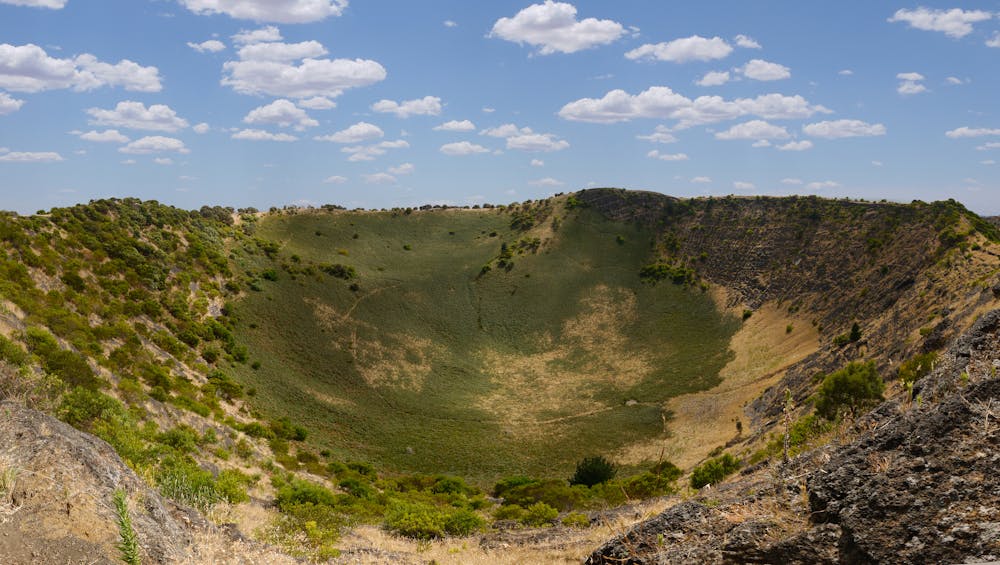
The crater of an erupted volcano near Mount Gambier in Victoria. Shutterstock
1. Mantle xenoliths
Western Victoria
The youngest rocks in Australia are those that erupted out of Australia’s youngest volcano in Mount Gambier, South Australia, 4,000 to 8,000 years ago. That volcano is the culmination of an enormous field of volcanoes that span central and western Victoria.
In western Victoria, the volcanoes were formed from magma that ascended from the Earth’s mantle — the layer between the Earth’s core and crust. While the magma was rising, it tore off chunks of the surrounding mantle rock and transported it to the surface. We can find these chunks of the mantle — or mantle xenoliths (xeno = foreign, lith = rock) — in cooled lava today in western Victoria.
At first, these rocks look like any other piece of black or brown basalt, but then you turn them over or crack them open and there’s a blob of bright green rock staring back at you. The mantle rock inside is comprised mainly of olivine, which is a green mineral, and some black/brown pyroxene.
Green mantle xenolith (xeno = foreign, lith = rock) encased in cooled basaltic lava from Mount Shadwell, Victoria. Dr Melanie Finch, Author provided
Mantle xenoliths are a great place to start your rock collection because not only will they be your very own piece of Earth’s mantle, but you can find them yourself through a bit of fossicking around some of the volcanoes in western Victoria.
2. Meteorites
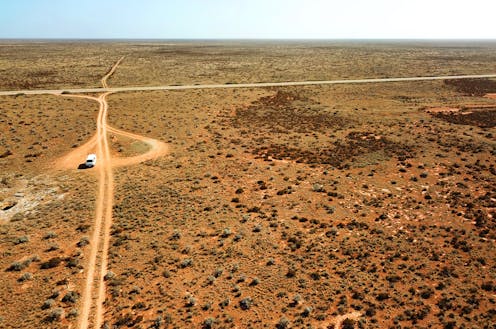
The Nullarbor Desert, South Australia and Western Australia
The Nullarbor is a desert plain region which straddles the border of South Australia and Western Australia.
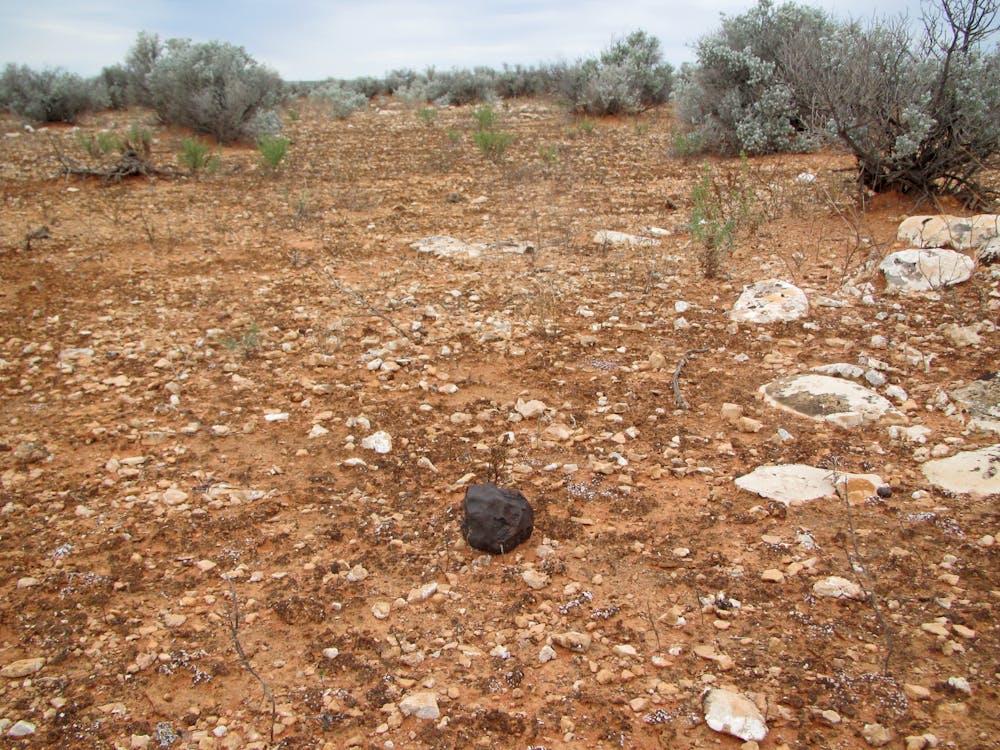
The dry environment is ideal for preserving meteorites that fall to Earth, and the light colour of the limestone country rock and lack of vegetation means the black and brown meteorites are easier to see.
A black meteorite standing out against the white limestone of the Nullarbor Plain. Professor Andy Tomkins, Author provided
Even if you don’t have a great eye for spotting meteorites hiding in plain sight, you can do as the geologists do and use a magnet on a stick to help you. Most meteorites are iron-rich, so wandering around with a magnet hovering over the surface is a good way to pick them up.
You’ve probably heard of Broken Hill because of the large silver, lead and zinc mine there. But the geological conditions that created the ore deposit around 1.7 billion years ago also made some beautiful rocks.
A visit to Broken Hill’s Albert Kersten Mining and Minerals Museum will demonstrate the vast array of unusual minerals found in the region, some of them described for the first time at this locality.
If you’re seeking your own chunk of Broken Hill’s geological history, Round Hill is the place for you. Just a short way out of the town centre, you’ll find beautiful red garnets surrounded by patches of white minerals (quartz and feldspar).
A large garnet from the Broken Hill region. Professor Andy Tomkins, Author provided
These rocks started out as sand and mud, and record the history of being buried and heated to over 700℃ deep below the Earth’s surface. This process caused the rock to start melting and created the striking stripey, garnet-rich rocks we find there today.
4. Banded iron formation
Western Australia
Banded iron formation is a layered sedimentary rock mainly comprised of alternating bands of chert (a sedimentary rock made of quartz) that’s often red in colour and silver to black iron oxide. It is the main host of iron ore, and can be found in several regions in Western Australia.
Geologists believe they formed on a continental shelf, where thick continental crust extends out into the ocean and then drops away to oceanic crust.
Banded iron formation is exciting because it no longer forms on Earth today, meaning it records an ancient process that we no longer see happening.
It is thought to have formed in ancient oceans, which were starting to increase in oxygen content at the time. It records the chemical input of these oceans, as well as sediments from the continent and volcanoes on the ocean floor.
5. Dinosaur fossils
Central and western Queensland
Oh to have been in Queensland 100 million years ago! Judging by the fossils found in parts of the state, it would have been a cornucopia of dinosaur activity.
And if you’re really lucky, you might even have dinosaur bones on your property, like the huge, long-necked sauropod discovered just this year on a Queensland cattle farm.
The Australian Age of Dinosaurs Museum in Winton, Queensland, is home to the largest collection of Australian dinosaur fossils. (Note: not a real dinosaur.) Shutterstock
When building your Australian rock collection, remember to check first if fossicking is allowed in the area. When you find an interesting rock, your state or territory geological survey might be able to help with identifying it.
I am Banaban. I come from an ancestry of survivors and a once rich land.
However, Banaba died to make other nations live. The Banabans though are proud survivors and we maintain that we are a race that still lives.
Google will tell you my ancestral home of Banaba is part of Kiribati.
Though the current generation has Kiribati blood, our island of Banaba was never birthed into this world as part of Kiribati.
Before the advent of colonialism, we have always held our own identity.
When it comes to the Kiribati Independence Day on July 12, what’s a celebratory moment for I-Kiribati is a painful one for the Banabans.
When Kiribati gained independence from the British Crown, it claimed Banaba as part of its territory, and Britain handed Banaba to Kiribati.
Painful relationship The relationship between Banaba and Kiribati became the most painful one that many do not know about.
Colonial political history is painful, but we move forward and know that we as Banabans continue to live.
This is my story and I share bits of it in the light of Kiribati Language week or Kiribati Independence week.
The Banabans have always stood firmly in our roots as Banabans.
This is not to take away from Kiribati language week and the celebration of the culture, but this is an opportunity to educate people about the Banabans because it can be easy to dismiss who we are and slot us under the “Kiribati” category.
Unfortunately, some could say: What Banabans? Without a language? Yes, Banabans speak the Kiribati language; an educated person knows that language can be lost, especially when a group becomes dominated by another due to invasions, dominations and relationships.
Language is not the only marker of racial identity.
Environmental injustice Banaba was once filled with phosphate and it became victim to one of the world’s largest environmental injustices.
In 1900, the discovery of phosphate on Banaba by New Zealander Albert Ellis caused the beginning of systemic mining by the British Phosphate Commission (BPC).
Not many Kiwis know that New Zealand was part of the BPC.
New Zealand’s poor lands became viable agricultural lands from phosphate mined from my ancestral island of Banaba. I guess you could say that the land of Banaba died so New Zealand could live.
The Māori say: Ka mate kāinga tahi, ka ora kāinga rua, or a first home dies, a second home lives.
During World War II, Japan invaded Banaba. It was an era of horror.
Hele Ikimotu’s grandaunt Nanoua Tebeia being interviewed for the Pacific Media Centre’s Bearing Witness documentary Banabans of Rabi – A Story of Survival in 2018. Image: Hele Ikimotu
Banabans were literally killed mercilessly for breaking curfew rules.
Shipped off as slaves Banabans were shipped off to islands occupied by Japan to work as slaves.
When the war ended, my people held onto the hope that they could return to normal life in Banaba.
However, the colonial government gathered the Banabans in Tarawa and advised them that Banaba was uninhabitable due to the Japanese bombing.
The Banabans were promised a new land with beautiful homes, food in plenty and beautiful, tropical weather.
Bought out of their own phosphate royalties, Rabi island in Fiji became their new home.
Arriving on 15 December 1945, they saw no homes, no food, no tropical weather. They were given tents in a cow paddock during hurricane season.
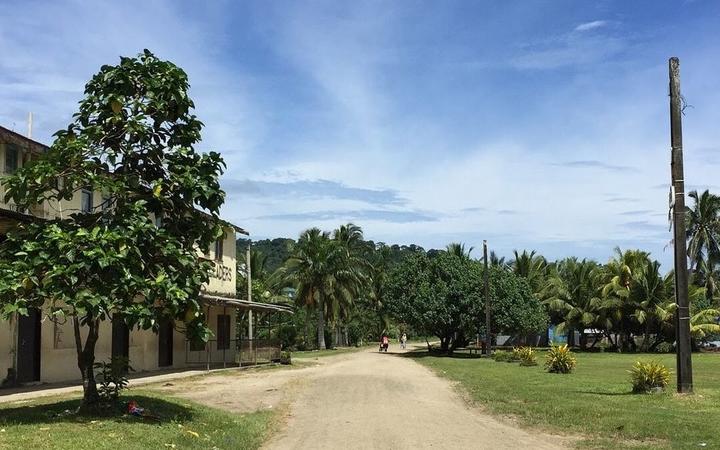
In 2018, I had the opportunity to visit Rabi when I was in Fiji for the Pacific Media Centre’s Bearing Witness Climate Change Project. An assignment to create a documentary piece instantly made me think of Rabi, the island my mother comes from.
From NZ to Rabi After a few phone calls to my mother in New Zealand, we started putting things into place to make it happen. By the grace of God, my mum and stepdad managed to fly over to Fiji to embark on this journey with me.
The journey from New Zealand to Rabi went like this: plane, car, bus, ferry, car, bus, ferry.
Upon arrival in Rabi, my uncle Aretana welcomed us home.
Rabi life is simply relaxing.
This trip was monumental for me. It affirmed who I was as a Banaban.
Despite the atrocities my people faced, they still hold onto their faith, they still sing and dance and they still smile.
However, I am still angry.
Rabi Island … “My people’s blood and bones are on the land I live on now.” Image: Image: Hele Ikimotu
Destroying Banaba My people’s blood and bones are on the land I live on now.
New Zealand, Australia and the UK must be held to account for the part they played in destroying Banaba and rendering the Banaban race like it never existed.
The BPC governments today need to acknowledge what they did and be part of the solution in rebuilding Banaba and offering aid to the Banabans on Banaba and Rabi.
Ruled by Kiribati and Fiji we are a small community that cannot do it alone.
The Fiji-Banabans and the NZ-Banaban diaspora would love to return to Banaba, but we’re a long way from this reality. I hope it happens one day. Even a visit.
I am Banaban. I am the product of a resilient community. I come from an ancestry of survivors.
Banabans of Rabi – A Story of Survival, a short documentary by Hele Ikimotu and Blessen Tom while on assignment during their PMC 2018 Bearing Witness climate change project in Fiji.
Hele Christopher-Ikimotu is a youth worker for a Pasifika NGO. He has a Bachelor of Communication Studies (Journalism) and a Postgraduate Diploma in Communication Studies. He travelled to Rabi in 2018 with the support of the AUT Pacific Media Centre’s Bearing Witness Project. This article is republished under a community partnership agreement with RNZ.
Papua New Guinea’s biggest bank — Bank South Pacific with major branch networks across the Pacific region — is the subject of regulatory action by the country’s banking regulator BPNG over failure to comply with anti-money laundering regulations, reports the PNGPost-Courier.
The Financial Analysis and Supervision Unit (FASU) of the Central Bank yesterday took regulatory action against the BSP Financial Group Ltd for alleged non-compliance.
The action includes the issuance of a formal warning under section 100 of the Anti-Money Laundering and Counter Terrorist Financing Act 2015, an enforceable undertaking from BSP that it will remove and replace certain executive management staff and for the BSP to engage an external auditor to determine the full extent of the underlying good governance and best business practice issues that were identified during the onsite inspection by FASU.
The external auditor’s examination will cover enhanced customer due diligence practices employed by BSP on all high risk and politically exposed people who are customers of BSP.
The director of the Financial Analysis and Supervision Unit of the Central Bank, Benny Popoitai, said in a media release: “The nature of BSP’s non-compliance is serious enough for FASU to have issued an infringement notice, however, FASU has chosen to apply a formal warning instead, making this the first occasion of regulatory action undertaken by FASU against BSP.”
Among the alleged breaches detailed by FASU were BSP’s alleged failure to:
conduct ongoing due diligence in respect of all of its business relationships in contravention of section 17(1) of the Act;
ensure that transactions carried out on behalf of its customers are consistent with its knowledge of the customer, the customer’s commercial or personal activities and risk profile contrary to section 17(2)(b) of the Act;
ensure that ongoing enhanced due diligence is conducted with respect to politically exposed persons in accordance with section 29(b) of the Act;
conduct enhanced customer due diligence in accordance with the requirements of sections 27 and 28 of the Act where it had taken the view that the customer was a politically exposed person contrary to section 26(1) of the Act;
obtain information relating to the source of the assets or the wealth of the customer when conducting enhanced due diligence contrary to section 27(b) of the Act;
take reasonable steps to verify information relating to the source of the assets or the wealth of the customer contrary to section 28(b) of the Act; and
take all reasonable steps to identify whether a customer or beneficial owner is a politically exposed person contrary to section 29(1) of the Act.
According to Wikipedia, BSP has 35 branches throughout Papua New Guinea and in eight other countries.
Outside PNG, the bank’s operations span Cambodia, Cook Islands, Fiji, Laos, Samoa, Solomon Islands, Tonga and Vanuatu. It also has correspondent banking relationships with Bank of America and Wells Fargo.
Commonwealth Bank of Australia (CBA) and National Australia Bank (NAB) provide correspondent banking services to BSP in Australia, providing a gateway for BSP’s clients from across the Pacific to transfer money in and out of Australia.
BSP employs more than 3000 people and services more than 650,000 business banking customers throughout the Pacific.
On site inspections The FASU media release said the unit had conducted on site inspections on BSP in 2019 and late last year it had issued the bank with a “show cause notice” requiring it to explain why FASU should not impose enforcement action.
BSP’s response to FASU was a blanket denial without any acknowledgement of the deficiencies highlighted.
This, said Popoitai, had left FASU with no choice but to apply regulatory measures.
He also said: “FASU expects BSP to co-operate with the regulatory measures imposed.”
Penalties for breaching this Act are a fine of up to K500,000 (NZ$205,000) or imprisonment for a term not exceeding 5 years or both, or a fine of K1 million (NZ$410,000) for a body corporate, for each offence.
When contacted, BSP’s chief executive officer Robin Fleming told the Post-Courier: “At this stage BSP is unable to comment.”
However, in a later statement to the Australian Securities Exchange today, the BSP group insisted it has complied with the regulations and was considering its “legal options”.
According to the Australian Financial Review, an enforceable undertaking is being sought with the bank to “remove and replace certain executive management staff”. This is understood to include Fleming.
BSP will also be required to hire an external auditor to ensure it complies with anti-money laundering laws in the future.
The Solomon Islands government has kicked off its full rollout of its nationwide covid vaccination strategy.
Prime Minister Manasseh Sogavare said in his nationwide address that with the increasing threat from the highly transmissible delta variant of covid-19, the government had decided to implement a full rollout of vaccination in all provinces for all adults aged over 18.
“We have now reached the stage where we must roll-out our covid-19 vaccination throughout the nation for all adults that are 18 years of age and over,” he said.
Sogavare said the strategy was to vaccinate all eligible adults in the country to ensure that the risk of widespread community transmission was minimised if the delta variant entered the country.
The Prime Minister said the level of risk had also been raised and that every person travelling to Solomon Islands from high-risk countries or countries with community transmission of covid-19 must be fully vaccinated before they would be allowed into the country.
Prime Minister Sogavare said more than 100,000 doses of AstraZeneca and Sinopharm vaccines were available with development partners committed to supply more doses.
He said the Ministry of Health had recently conducted a “training of trainers” workshop’ for all provincial health directors, doctors, nurses, data, and registration officers in the past weeks as the national covid-19 vaccination rollout commences.
Further training “The trained provincial teams will conduct further training for provincial health workers in their respective provinces throughout this month of July to support their provincial covid-19 vaccination roll out,” he said.
Prime Minister Sogavare said that as part of the nationwide strategy, 131 newly registered nurses had also been trained in covid-19 treatment, including vaccination.
He said many of them would be deployed to the provinces to support the provincial teams in rolling out the vaccination.
“I thank the Ministry of Health senior executive for their leadership in coordinating the national vaccination roll-out plan with all the provincial health directors and their teams,” he said.
Prime Minister Sogavare also acknowledged the lord mayor and his executive for taking the lead in the national covid-19 vaccination rollout in Honiara last week.
Meanwhile, the Prime Minister has reiterated his call for all adults 18 years and over living in and around Honiara to get their vaccinations at the Central Field Hospital and other outreach vaccination centers.
The national covid-19 vaccination rollout programme for Guadalcanal province also started last week at Malanago ward.
Several “outreach vaccination sites” had been set up in Malanago ward in Central Guadalcanal.
The mobile vaccination team would travel to other wards after the rollout programme in Malanago ward was completed.
Australian organisations are a soft target for ransomware attacks, say experts who yesterday issued a fresh warning that the government needs to do more to stop agencies and businesses falling prey to cyber-crime. But in truth, the danger has been growing worldwide for more than three decades.
Despite being a relatively new concept to the public, ransomware has roots in the late 1980s and has evolved significantly over the past decade, reaping billions of dollars in ill-gotten gains.
With names like Bad Rabbit, Chimera and GoldenEye, ransomware has established a mythical quality with an allure of mystery and fascination. Unless, of course, you are the target.
Victims have few options available to them; refusing to pay the ransom depends on having good enough backup practices to recover the corrupted or stolen data.
According to a study by security company Coveware, 51% of businesses surveyed were hit with some type of ransomware in 2020. More concerningly still, typical ransom demands are climbing dramatically, from an average of US$6,000 in 2018, to US$84,000 in 2019, and a staggering US$178,000 in 2020.
A brief history of ransomware
The first known example of ransomware dates back to 1988-89. Joseph Popp, a biologist, distributed floppy disks containing a survey (the “AIDS Information Introductory Diskette”) to determine AIDS infection risks. Some 20,000 of them were reportedly distributed at a World Health Organization conference and via postal mailing lists. Unbeknown to those receiving the disks, it contained a virus of its own. The AIDS Trojan lay dormant on systems before locking users’ files and demanding a “licence fee” to restore access.
The 1989 AIDS Trojan (PC Cyborg) ransom demand. Joseph L. Popp, AIDS Information Trojan author, Public domain, via Wikimedia Commons
Although the malware was inelegant and easily undone, it drew media attention at the time as a new type of cyber threat. The demand for payment (by cheque to a PO box in Panama) was primitive by comparison with modern approaches, which call for funds to be transferred electronically, often in cryptocurrencies.
It was well over a decade before ransomware truly began to proliferate. In the mid-2000s, stronger encryption allowed for more effective ransom campaigns with the use of asymmetric cryptography (in which two keys are used: one to encrypt, and a second, kept secret by the criminals, to decrypt), which meant even skilled systems administrators could no longer extract the keys from the malware.
In 2013, CryptoLocker malware rose to global dominance, partly supported by the GameOver Zeus botnet. Cryptolocker encrypted users’ files, sending the unlock key to a server controlled by the criminals with a three-day deadline before the key was destroyed. The network was shut down in 2014, thanks to a major global law enforcement effort called Operation Tovar. It is estimated to have impacted more than 250,000 victims and potentially garnered 42,000 Bitcoin, worth around US$2 billion at today’s valuation.
CryptoLocker ransom demand. Nikolai Grigorik, CC BY-SA 4.0 https://creativecommons.org/licenses/by-sa/4.0, via Wikimedia Commons
In 2016 there were several high-profile incidents involving the Petya ransomware, which prevented users from accessing their hard drives. It was one of the first significant examples of Ransomware as a Service, whereby criminal gangs “sell” their ransomware tools as a managed service.
Petya ransom demand. Unknown criminal. Notify the authorities, in case of discovery. Public domain, via Wikimedia Commons
The following year saw arguably the most notorious ransomware attack of all time: the WannaCry attack. It struck hundreds of thousands of computers, including an estimated 70,000 systems at the UK National Health Service. The global impact of WannaCry has been estimated at up to US$4 billion.
Wannacry ransom demand with integrated multi-language support. Screenshot of a WannaCry ransomware attack on Windows 8. Public domain, via Wikimedia Commons
More recent still was the Ryuk ransomware, which targeted local councils and national government agencies. But cyber-criminals have also attacked specific private companies, including the United States’ largest refined oil distribution network, Colonial Pipeline, the multinational meat processor JBS Foods, and Australia’s Channel Nine network.
Is all ransomware the same?
There are hundreds of types of ransomware, but they fit into a few broad categories:
Crypto ransomware
In modern crypto ransomware attacks, the malware encrypts users’ files (“locking” the files to make them unreadable) and will typically involve a “key” to unlock the files being stored on a remote server controlled by the cyber-criminals. Early variants would require the victim to buy software to unlock the files.
Locker ransomware
Locker ransomware is usually a more complex type of malware that targets a user’s entire operating system (such as Windows, macOS or Android), hampering their ability to use their device. Examples can include preventing the computer from booting, or forcing a ransom demand window to appear in the foreground and preventing interaction with the other applications.
Although files are not encrypted, the system is typically unusable by most users (as you would likely need another system or software to extract the files). In some cases the ransom demands refer to government agencies with threats of investigations relating to tax fraud, possession of child abuse materials, or terrorist activities.
A fake FBI ‘seize’ notice designed to convince victims to pay the ‘fine’. Motormille2, CC BY-SA 4.0 https://creativecommons.org/licenses/by-sa/4.0, via Wikimedia Commons
Leakware
In a leakware attack, the data are not encrypted but instead are stolen from the victim and held by cyber-criminals. It is the threat of public release alone that is used to secure a ransom payment. From 2020 to 2021, reported occurrences of non-encrypted ransoms have doubled.
Double extortion
Double extortion is an alarming development whereby not only is a payment required to secure release of encrypted organisation data, but there is the added threat of public release.
Screenshots from Cl0p leaks website providing access to stolen Transport NSW files (web version is not redacted). Author provided
This approach typically involves data being stolen from the organisation during the malware infection process, then sent to servers run by the cyber-criminals. To encourage payment, extracts may be posted on public-facing websites to prove possession of the data – coupled with threats to publish the remaining data.
Ransomware as a Service (RaaS)
Early ransomware was developed by individuals but, as with all software, ransomware has come of age. It is now a multibillion-dollar industry (an estimated US$20 billion in 2020) and is every bit as well designed and implemented as any commercial software.
Ransomware as a Service is here – and cheaper than you may think!
Just as Microsoft’s Office 365 has developed into a service, where instead of buying the software, you pay a monthly or yearly subscription, so has ransomware. Ransomware as a Service (RaaS) allows criminals to obtain services, typically in return for a cut of the ransom.
Most law enforcement agencies recommend against ransom payments (just as many governments will not negotiate with terrorists), because it is likely to encourage future attacks. But many organisations nevertheless do pay up. Interestingly, the public sector hands over up to ten times more money to release their files than victims in the private sector.
Paying a ransom is frequently seen as the lesser of two evils, particularly for smaller organisations that would otherwise be shut down entirely by the disruption to their systems. Or, if you are lucky, the malware will already have a publicly available antidote.
But paying the ransom doesn’t guarantee you’ll get all your data back. By one estimate, an average of 65% of data was typically recovered after paying the ransom, and only 8% of organisations managed to restore all of it.
With criminal groups now reaping multimillion-dollar profits, ransomware attacks are likely to target larger organisations where the rewards are richer, perhaps focusing on holders of valuable intellectual property such as the health-care and medical research sectors. The Internet of Things (IoT) will likely be a target for cyber-criminals, with global networks of connected devices held to ransom.
While big organisations are likely to have appropriate technical safeguards, user education is still key – a lapse of judgement from a single person can still bring an organisation to its knees. For smaller companies, seeking (and following) cyber advice is crucial.
Given the huge scale on which cyber-criminals are now operating, we have to hope law enforcement and software security engineers can stay one step ahead.
The authors do not work for, consult, own shares in or receive funding from any company or organisation that would benefit from this article, and have disclosed no relevant affiliations beyond their academic appointment.
Source: The Conversation (Au and NZ) – By Greg Barton, Chair in Global Islamic Politics, Alfred Deakin Institute for Citizenship and Globalisation, Deakin University
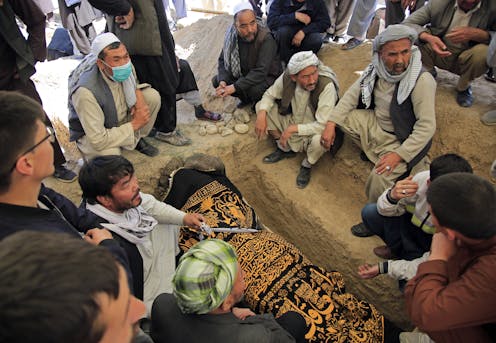
Afghan men bury a victim of deadly bombings near a girls’ school in May.Mariam Zuhaib/AP
The imminent fall of Afghanistan is more than a national disaster. It is not just that the gains made in the past two decades, at the cost of tens of thousands of lives and trillions of dollars, look certain to be reversed as the Taliban advances.
The Taliban’s victory is also al-Qaeda’s victory, and it has global implications.
Even before the US military completes the final steps of its troop withdrawal, the Taliban is surging. It is now reported to control 212 districts — more than half of Afghanistan’s 407 districts. This is triple the territory it controlled on May 1. The Taliban has seized 51 districts since the start of July alone.
The Taliban is currently contesting a further 119 districts, leaving the government with control over just 76, or little more than 20%.
And the government-held territory is surrounded. Almost the entire circular national highway is in the hands of the Taliban, meaning the cities under government control can only safely be reached by air.
Afghanistan has fallen
US President Joe Biden and political leaders in Kabul talk optimistically of a fightback to reverse the surge. But Afghan moral has collapsed along with the fabric of national security.
When the US military quietly snuck out of Bagram Airbase in the early hours of July 2, they did not just turn off the lights, they extinguished what hope that remained.
The Afghan military is stuck in a Catch-22 situation. Without air support, it cannot maintain logistic supply lines and medivac support for its troops across Afghanistan’s mountainous expanses.
At the same time, Afghanistan’s scarce reserves of US-trained pilots are at risk of assassination from Taliban death squads, with at least seven gunned down while off base in recent months.
Whether the Taliban swiftly moves to take Kabul now, or remains content with encircling the capital and other cities, it is clear: Afghanistan has fallen.
‘War against the US will be continuing on all fronts’
Biden was dealt a very weak hand by his predecessor. The “peace agreement” between the Taliban and the Trump administration (but not the government of Afghanistan) committed the US to draw down all remaining 13,000 troops by May 2021, along with NATO troops.
In return, the Taliban “pledged” to prevent its longtime ally, al-Qaeda, from operating out of Afghanistan, and to refrain from attacking international forces before their withdrawal.
The Taliban did refrain from targeting foreign troops, but at the same time stepped up its attacks on Afghan forces and leading civil society figures, with a particular focus on assassinating women and girls, and members of the largely Shia Hazara community.
A man cries over the body of a victim of deadly bombing at the entrance to a girls’ school in the Afghan capital in May. Mariam Zuhaib/AP
Critics of the “peace process” with the Taliban, including former US generals and security officials, have argued that, with no real checks and balances on the Taliban breaking off its lifelong relationship with al-Qaeda, the deal represented mere window dressing to dignify a US exit.
On February 21 2020, The New York Times published an eloquent opinion piece attributed to Sirajuddin Haqqani as the “deputy leader of the Taliban”. What the Times did not disclose is he is the son of Jalaluddin Haqqani, the founder of the infamous al-Qaeda-allied Haqqani Network. And that the US has designated Sirajuddin a terrorist and offered US$10 million for information on his whereabouts.
In the piece, Sirajuddin opined:
I am confident that, liberated from foreign domination and interference, we together will find a way to build an Islamic system in which all Afghans have equal rights, where the rights of women that are granted by Islam — from the right to education to the right to work — are protected, and where merit is the basis for equal opportunity.
We are also aware of concerns about the potential of Afghanistan being used by disruptive groups to threaten regional and world security. But these concerns are inflated […]
But as attacks have continued unabated in Afghanistan, few believe the sincerity of Sirajuddin’s words. In fact, the piece was harshly criticised by numerous US officials, one of whom called it “blatant propaganda”.
Then in April of this year, Saleem Mehsud, a CNN reporter in Pakistan, conducted an interview through intermediaries with two al-Qaeda figures. It underscores the close relationship between al-Qaeda and the Taliban — both the Afghan Taliban and Pakistani Taliban (TTP):
The Americans are now defeated […] Now the organisation of Pakistani Taliban and their leadership not only moving forward in the light of Sharia but also making better decisions based on past experiences and recent successes have been made possible by the same unity and adherence to Sharia and Wisdom […]
Thanks to Afghans for the protection of comrades-in-arms, many such jihadi fronts have been successfully operating in different parts of the Islamic world for a long time […]
Ominously, the al-Qaeda spokesmen warned:
war against the US will be continuing on all other fronts unless they are expelled from the rest of the Islamic world.
A safe haven for terrorists again
Biden has justified withdrawing from Afghanistan by asserting the US military had accomplished its goal of ousting al-Qaeda from its safe haven in Afghanistan.
But Robert Gates, who served as secretary of defence from 2006–11, confessed in a recent New York Times op-ed:
There is little doubt the United States made strategic mistakes in Afghanistan. We vastly underestimated the challenge of changing an ancient culture and of nation building in a historically highly decentralised country. We never figured out what to do about the Taliban safe haven in Pakistan.
Despite ongoing negotiations, I do not believe the Taliban will settle for a partial victory or for participation in a coalition government. They want total control, and they still maintain ties to al Qaeda […]
Gates’s comments echo a UN monitoring team report released in June that claimed al-Qaeda is already present across Afghanistan, especially along the border with Pakistan, and is led by Osama Mahmood under al-Qaeda’s Jabhat-al-Nasr wing:
19 members of the group have been relocated to more remote areas by the Taliban to avoid potential exposure and targeting
al-Qaeda maintains contact with the Taliban but has minimised overt communications with Taliban leadership in an effort to ‘lay low’ and not jeopardise the Taliban’s diplomatic position vis-a-vis the Doha agreement [with the US].
Both al-Qaeda, which is estimated to have 400-600 fighters in Afghanistan and Pakistan, and the Taliban are playing the long game. Their patience will have tragic implications for the Afghan people. But that is just the beginning of the problem.
Afghanistan was the birthplace of al-Qaeda in 1988. The group gave rise to terrorist networks around the world, including Southeast Asia’s Jemaah Islamiyah, formed in Afghanistan in 1993, and Al Qaeda in Iraq, which morphed into the Islamic State in Iraq in 2006.
A Taliban-controlled Afghanistan — a return of the Islamic Emirate of Afghanistan — will be much larger and prove much more durable than the IS caliphate in Syria and Iraq could ever have been. This will be a powerful inspiration for jihadi terrorists everywhere.
And there will be little to prevent it becoming a safe haven for training and equipping terrorists from around the world.
Greg Barton receives funding from the Australian Research Council. And he is engaged in a range of projects working to understand and counter violent extremism in Australia and in Southeast Asia that are funded by the Australian government.
When was the last time you swallowed a pill, be it a tablet or capsule? This morning or sometime in the past week? Now, can you remember the very first time you had to take a pill? Probably not.
Unlike your first kiss, there is usually nothing remarkable about the first time you take a pill. But taking solid medicines orally does not come naturally and chances are you had to be taught how to do it. And because you don’t remember how you were taught it can be hard for parents to figure out how to teach their kids to do it too.
But here’s how to make the learning process fun and safe.
Before trying to teach your child to swallow a pill, first see if your child really needs to learn.
Most medicines commonly used by children under 12 years of age are readily available as formulations other than pills. These include liquids, suspensions, chewable tablets and suppositories. The liquids and suspensions usually come in palatable flavours.
Doctors can also write prescriptions to allow pharmacists to compound (make up) some drugs usually available as a pill into a suspension instead.
If these options aren’t available, you will need to teach your child to swallow a pill. You’ll also need to go down this path as your child gets older, their weight increases, and some of the child-friendly formulations are no longer suitable. That’s because the higher doses often needed can be impractical to give using children’s products. So it would be much easier and cheaper to use a tablet or a capsule.
However, don’t be tempted to crush or break a pill for them, or ask them to chew it, unless your pharmacist has given the go-ahead for that medicine. This can affect the way the medicine is absorbed, which could lead to an overdose.
Teaching relaxation techniques, learning by imitation or modelling, and learning by repetition and exercise are all useful ways to teach pill swallowing. However, turning it into a game is popular.
First of all, this method is NOT suitable for children under five. The mechanics of swallowing are too difficult for them to understand and both you and the child are likely to end up frustrated. Also, the younger they are, the smaller their throat and the likelihood something will get stuck.
The basis of the game is to start your child trying to swallow very small, everyday foodstuffs and work your way up to things the size of a pill. Lollies (candy) are best because you don’t have to convince your child to play the game.
More importantly, lollies are water soluble so if there are any problems you can ask your child to have a big drink of water to break it apart. If you don’t know if the lolly is water soluble, test it first in a glass of water to see if it dissolves.
Start your child on the smallest sized lolly. Ask them to sit up straight, facing forward, without tilting their head up or down. Ask them to take a sip of water before each lolly, to get them prepared for the swallowing action. Then ask them to place the lolly on their tongue (towards the back is best) and take another sip to wash it down.
If they can swallow that, move up to the next size. But if they can’t, ask them to chew and swallow it, and try again.
Our version of the game uses lollies available in Australia, increasing in size: sprinkles (such as hundreds and thousands), Nerds, Tic Tacs, M&Ms (normal, not peanut or crispy), and then snakes.
With snakes, you can cut off and swallow the head, about the size of a pill, before cutting up pieces of the body to the same size.
Some dos
do joke around and make the activity fun. Get family involved as children need to be comfortable when playing
do make sure it’s the only activity they are doing. You want your child’s full attention
do give praise. The game is all about building confidence
do put the lolly into a soft food stuff if you want. Some children find lollies, or even real pills, easier to swallow if they are in a small spoonful of pureed fruit or custard. Don’t use peanut butter as that is sticky and hard to swallow
do consolidate their skill when they are finally successful. Once they can swallow a tablet or capsule sized lollie, keep your child’s confidence up by asking them to swallow an age-appropriate vitamin pill every now and then.
Some don’ts
don’t stop on a stuck point. If your child has difficulty with a particular sized lolly that day drop back down to the size they can do so you finish on a win
don’t use a sultana or peanut-based lolly. These do not dissolve in water and if they get stuck, become be a choking hazard
don’t ask children to lay on their back. This can make it more difficult to swallow. Instead just have them sit up straight. If they like, they can tilt their head forward to place the lolly in their mouth, and then when they are ready to swallow, they can tilt their head slightly back to help it go down.
Final take-home advice
Teaching your child to swallow a pill is not easy and is likely to take weeks. Most kids will get stuck at one size of lolly at some stage. And they’ll likely not be able to swallow the largest lolly the first time they try.
This is normal, so persevere and keep the game fun. Your child will get there.
Associate Professor Wheate in the past has received funding from the ACT Cancer Council, Tenovus Scotland, Medical Research Scotland, Scottish Crucible, and the Scottish Universities Life Sciences Alliance. He is Fellow of the Royal Australian Chemical Institute and a member of the Australasian Pharmaceutical Science Association. Nial is science director of the medicinal cannabis company Canngea Pty Ltd, a board member of the Australian Medicinal Cannabis Association, and a Standards Australia committee member for sunscreen agents.
Elise Schubert is a registered pharmacist and also receives a scholarship from the University of Sydney and Canngea Pty Ltd.
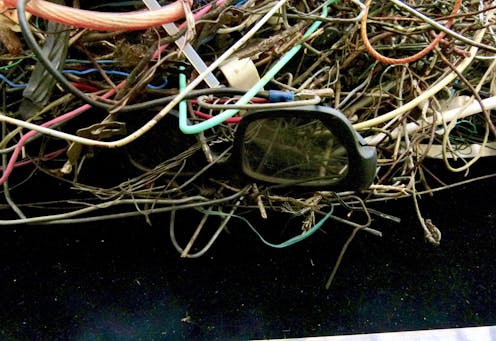
This, if you can believe it, is part of a magpie nest. Kathy Townsend, Author provided
Environmental scientists see flora, fauna and phenomena the rest of us rarely do. In this series, we’ve invited them to share their unique photos from the field.
When we opened a box supplied by museum curators, our research team audibly gasped. Inside was a huge Australian magpie nest from 2018.
It was more than a metre wide and made up of the strangest assortment of items, including wire coat hangers, headphones, saw blades and plastic 3D glasses — a mix of detritus reflecting our modern lifestyle.
This was one of almost 900 Australian nest specimens dating back over 195 years that we inspected for our recent, world-first study.
We estimate that today, around 30% of Australian bird nests incorporate human-made materials (primarily plastics). We also noted a steady increase in nest parasites over this period.
It’s clear the types of debris the birds use has reflected changes in society over time. They highlight the unexpected and far-reaching ways Australians impact their environment, and put birds in danger.
The full magpie nest from 2018 that was collected outside a construction site. Kathy Townsend, Author provided
The first synthetic item
Birds and humans have been sharing spaces and habitats throughout history.
It’s well known birds incorporate material from their environment into their nests, making them ideal indicators of environmental changes and human activity. It’s also well known, particularly among scientists, that museum collections can provide unique insight into environmental changes through time and space.
Compare the magpie nest above to this natural butcherbird nest from 1894. Butcherbirds are in the same family as magpies. Dominique Potvin, Author provided
With this in mind, our international team investigated Australian museum bird nest specimens collected between 1823 and 2018. Sourced from Museums Victoria and CSIRO’s Crace Site in Canberra, we inspected a total of 892 nests from 224 different bird species.
Australian birds generate an amazing array of nest types. Rufous fantails, for example, build delicately woven structures made of fine grass and spiderwebs, while welcome swallows and white-winged choughs create nests out of mud, which dry incredibly hard and can be used year after year.
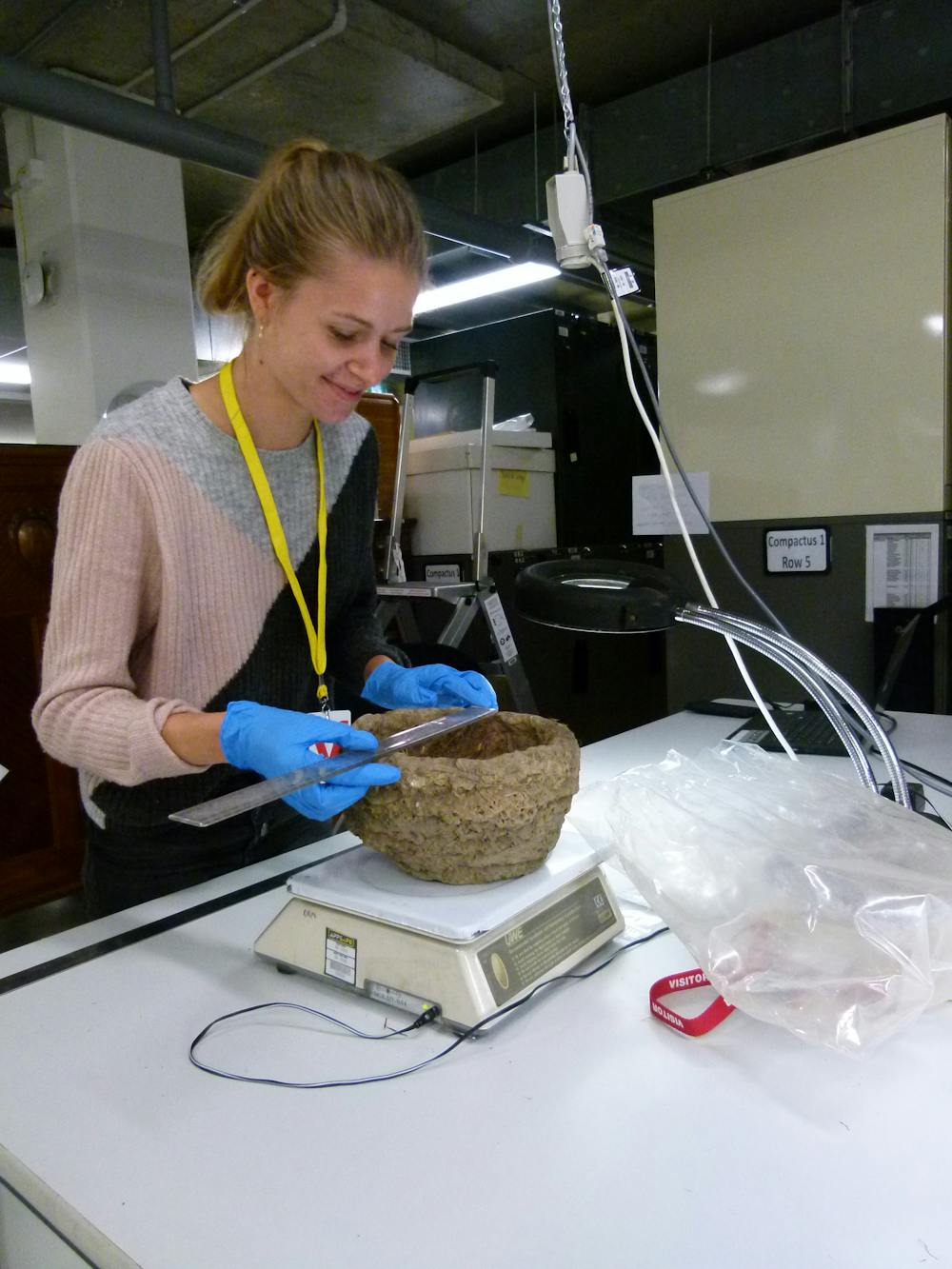
A woven egg cup nest from 1870, made of grass and spiderwebs, by the rufous fantail. Kathy Townsend, Author provided Fabiola Opitz, a member of our research team, measuring mudnest collected circ. 1933 of a whitewinged chough. These mudnests can last for years. Dominique Potvin, Author provided
Before the 1950s, human-made debris found in the nests consisted of degradable items such as cotton thread and paper.
This changed in 1956, when we found the first synthetic item in a bird nest from Melbourne: a piece of polyester string. This appearance correlates with the increased availability of plastic polymers across Australian society, seven years after the end of the second world war.
Australian magpies earn their name
We also determined, based on collection date and using historical maps, whether the nests came from natural, rural or urban landscapes. And it turns out the nest’s location, when it was built, and the species that made it largely determined whether human-made materials were present.
The nest of a noisy miner found on the Sunshine Coast, Queensland, in 2020 with plastic string. Kathy Townsend, Author provided
Our study found nests built close to urban areas or farmland after the 1950s by birds from the families Craticidae (Australian magpies and butcherbirds), Passeridae (old world or “true” sparrows) and Pycnonotidae (bulbuls) had significantly more human-made debris.
Familiar to many an urban bird enthusiast, these species tend to adapt quickly to new environments. The incorporation of human materials in nests is likely one example of this behavioural flexibility.
The research team also had access to ten bowerbird bowers from the family Ptilonorhynchidae, spanning more than 100 years. Male bowerbirds are known for creating elaborate structures, decorated with a range of colourful items to attract a mate.
A silvereye or gerygong nest from 2019. Kathy Townsend, Author provided
In the 1890s, the birds decorated their bowers with natural items such as flowers and berries. Newspaper scraps were the only human-produced items we identified.
This changed dramatically 100 years later, where the most sought-after items included brightly coloured plastics, such as straws, pen lids and bottle caps.
A satin bowerbird collecting blue junk. Video: BBC Wildlife.
But there are tragic consequences
When birds weave non-biodegradable materials — such as fishing line and polymer rope — into their nests, it increases the risk of entanglement, amputation and even accumulation of plastics in the gut of nestlings.
For example, we found evidence of one pallid cuckoo juvenile dying in 1981 after it was entangled in plastic twine used by its adoptive bell miner parents.
This is the bell miner nest with twine that caused the cuckoo chick to die, according to the museum notes. Dominique Potvin, Author provided
Plastic was not the only issue. We found the prevalence of nest parasites that attack the young chicks also increased by about 25% over the last 195 years.
Nest parasites can kill huge numbers of nestlings. Recent research into the forty-spotted pardalote in Tasmania, a threatened species, has shown nest parasites kill up to 81% of its nestlings.
What has caused this increase isn’t clear. However, the team determined it wasn’t directly linked to urban or rural habitat type, or the presence of human-made materials in the nest. This goes against the findings of other studies, which show a decrease of parasites in nests that incorporated items such as cigarettes.
Interestingly, we did find eucalyptus leaves might deter parasites, as nests that incorporated them were less likely to show evidence of parasitism.
An eastern yellow robin nest from 2003, with eucalyptus leaves, lichen, spider webs and no parasites. Eastern yellow robins are specialist nest builders that don’t tend to stray from using specific natural items. Kathy Townsend, Author provided This nest from 1932 is from an Australian magpie, using eucalyptus leaves. Kathy Townsend, Author provided
It may be, therefore, that sticking with certain natural materials is not only better for the safety of nest inhabitants, but also may have an added effect of pest control.
Stop littering, please
While most are aware of how plastics harm sea life, our study is one of the first to show the impact goes further to harm animals living in our own backyard. If the trend continues, the future for Australian birds looks bleak.
However, we can all do something about it.
A weebill or mistletoe bird’s woven nest from 1941, with tufts of spider webs and plant fluff. Kathy Townsend, Author provided
It is as simple as being responsible for our rubbish and supporting proposed legislation and campaigns for moving away from single-use plastics.
The team had access to nests from 224 different species, which equates to only about a quarter of Australia’s total of 830 bird species.
Kathy Ann Townsend and her co-authors received funding for this project from DAAD (Deutscher Akademischer Austauschdienst – Translation: German Academic Exchange Service) and the University of the Sunshine Coast.
Dominique Potvin does not work for, consult, own shares in or receive funding from any company or organization that would benefit from this article, and has disclosed no relevant affiliations beyond their academic appointment.
Social distancing and lockdowns have disrupted university study for the past 18 months. Students are understandably stressed as shown by a dramatic drop in student satisfaction across Australia reported in the annual Student Experience Survey. Federal Education Minister Alan Tudge has drawn attention to this in calling for a “return” to on-campus study.
But the world is increasingly digital. Old notions of lecture halls will not help graduates to thrive in their careers. We need university study that supports students to succeed by preparing them for a digital future.
Many studies have reported that work will become more blended, with less time spent in the office as working from home increases. The COVID-19 pandemic dramatically accelerated this trend.
Diverse industries have found they can move online effectively, making it an authentic workplace. Telehealth has become the default option for consulting your GP, while the first place to find a service or product is an online search engine. Professionals need to translate their skills into any environment – physical or virtual – and have confidence to use new spaces and formats.
Professionals in the real world, including doctors, must now be prepared to work in a blended environment of online and physical interactions. Shutterstock
What about the impacts on learning?
Learning is created through interactions – with teachers, peers and information. Decades of research show learners learn best when learning is active, engaging, relevant
and intentionally designed. Those principles are true wherever the learning happens: on campus, online or in the workplace.
The real question is how to balance the best of online with the best of on-campus and workplace delivery.
Universities are already pursuing this path. University study has been blended for more than two decades as study resources, activities and assessments were moved to subject and course websites in virtual learning environments.
At first, the aim was to organise learning for access anywhere and anytime. Today, digital learning environments have become far more sophisticated. They now also offer tools for group learning, projects and creativity.
Online learning during the pandemic was often a compromise. Good learning design takes time as teachers create curriculum, resources and assessment to suit their learners and the discipline. In March 2020, like most Australian universities, academics at my institution, Deakin University, had one week to rebuild our courses to allow our 41,000 on-campus students to keep studying. Of course, many of the activities we had planned became impossible and online substitutes were quickly developed over following weeks.
This global rapid shift was dubbed “emergency remote teaching” by US professor Charles Hodges and colleagues. They warned we should be careful not to judge online learning by this experience.
Good online learning creates a sense of community. It engages students with rich resources and activities. It helps learners to find study buddies and places for their independent work.
However, engagement looks different online. Instead of meeting in a café, students chat online to share ideas and solve problems as they do in their daily lives. Social learning can happen on campus or online.
Some activities work best online, others in person
Some activities should always be online. For a start, contemporary information is digital. Although we enjoy their physical spaces, university libraries are now essentially digital with the vast majority of books, journals and images provided and used online. Data sets, too, are largely digital and analysed with digital tools ranging from spreadsheets to sophisticated software.
Digital learning is great for exploration. The world is at your fingertips, and computers never get tired of practising foundation skills with you.
Other activities need to be in physical space. Using specialist equipment or experiencing a workplace often means being in a purpose-built space. Being in the field develops observation skills and provides more sensory inputs to consider. Collaborating with peers in the same room develops human interaction skills using different social cues from the ones we have online.
Online work can augment these activities with focused preparation and follow-up.
Build on the best of recent experiments
The emergency remote teaching response has pushed teaching teams to consider alternative ways to learn. They have trialled and refined new online activities. Many teachers report they will keep at least some of these.
Professor Eric Mazur at Harvard is famous for his use of peer instruction to make classes active and social. He reports his online model developed during 2020 has improved learning and support so convincingly that he intends to continue with that format. Breaking assumptions about what works best has opened the door to a better understanding of online teaching.
Students in all education sectors have struggled with emergency remote teaching and its backdrop of disrupted life. They have reported difficulties with online provision, lack of motivation, loneliness and decreased mental well-being.
Universities must work to counter the negative impacts on students of emergency remote teaching by refining their online learning offerings. Shutterstock
But universities are refining their courses. When students experience well-designed online learning over time, they build familiarity and confidence. We asked campus-enrolled students at Deakin about their experience of study during the pandemic with regular “pulse-check” surveys. Their feedback shows their confidence in online study and assessment has increased strongly over the past 18 months as they built skills and familiarity.
As we move to more sustainable models for today’s learners, universities are rethinking learning activities. Sitting and listening to the sage on the stage is being replaced by active learning using real-world information and scenarios.
We need to invest in intentional learning design that combines the best of online and on-campus delivery. This will show students they can learn, thrive and build the skills they need however they study.
Elizabeth Johnson does not work for, consult, own shares in or receive funding from any company or organisation that would benefit from this article, and has disclosed no relevant affiliations beyond their academic appointment.
It almost seems too good to be true: a major trial in Iceland shows that cutting the standard five-day week to four days for the same pay needn’t cost employers a cent (or, to be accurate, a krona).
Unfortunately it is too good to be true.
While even highly reputable media outlets such as the BBC have reported on the “overwhelming success” of large-scale trials of a four-day week in Iceland from 2015 to 2019, that’s not actually the case.
The truth is less spectacular — interesting and important enough in its own right, but not quite living up to the media spin, including that these trials have led to the widespread adoption of a four-day work week in Iceland.
Four hours at best
The media reports are based on a report co-published by Iceland’s Alda (Association for Democracy and Sustainability) and Britain’s Autonomy think tank about two trials involving Reykjavík City Council and the Icelandic government. The trials covered 66 workplaces and about 2,500 workers.
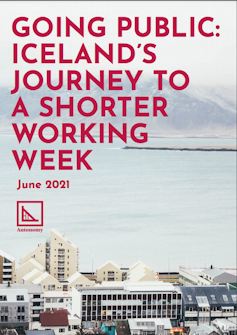
They did not involve a four-day work week. This is indicated by the report’s title – Going Public: Iceland’s journey to a shorter working week. In fact the document of more 80 pages refers to a four-day week just twice, in its first two paragraphs, and only then as a reference point for what the trials were actually about:
In recent years, calls for shorter working hours without a reduction in pay — often framed in terms of a ‘four-day week’ — have become increasingly prominent across Europe.
Going Public: Iceland’s Journey to a Shorter Working Week, June 2021. https://autonomy.work/portfolio/icelandsww/
Read on to the third paragraph and you’ll learn the study “involved two large-scale trials of shorter working hours — in which workers moved from a 40-hour to a 35- or 36-hour week, without reduced pay”.
A four-day week trial would have involved reducing the working week by seven to eight hours. Instead the maximum reduction in these trials was just four hours. In 61 of the 66 workplaces it was one to three hours.
Which is not to say the results – no adverse effect on output or services delivered – is unimpressive. Nor is the upshot. As a result of the trials, unions and employers have formalised country-wide agreements to make reduced working hours permanent.
But these have provided for a reduction of just 35 minutes a week in the private sector and 65 minutes in the public sector (though larger reductions are available for shift workers). That’s a long way from making a four-day week the norm.
In interpreting the results of such studies, we always need to be cautious.
In regard to this and similar experiments, it is always possible the “Hawthorne effect” might have been at work. This effect refers to 1930s experiments with factory workers in the US that showed how their awareness of being the subject of experiments affected their behaviour, and hence productivity levels.
Could this have been at work in the Iceland trials? The work units involved volunteers to take part in the experiments and so might well have been motivated to make them work as intended. This may not be replicated in more widespread changed working arrangements.
Workers could, of course, be expected to enjoy reduced working hours, but would they replicate the working practices required to maintain productivity levels?
This depends on the nature of these changed working practices and their sustainability. This in turn may depend on whether enhancements in productivity are achieved by harder or more intensive working or by “smarter” working and/or improved equipment. This all calls for further research.
Furthermore, in service-industry settings such as the Iceland examples, a control sample of similar workplaces should ideally be monitored to be sure of the reliability of the conclusions drawn.
A four-day week won’t come easy
Despite these words of caution, there is still a strong case to be made for a four-day week. It’s a case I’ve argued previously in my book Whatever Happened to the Leisure Society? (Routledge, 2019).
There is no reason why the long-term march towards reduced working hours should stop at the arbitrary “standard” figure of five days and 40 hours established in the post-World War II period.
Experiments will continue. I’ve written previously in The Conversation about some of these in Japan and New Zealand. The Autonomy think tank has counted a dozen, most of them by smallish “creative” agencies but also by consulting heavyweight KPMG.
But I don’t think widespread adoption of the four-day week will come easily or necessarily all in one go. Instead it’s going to have to come incrementally.
It took half of the 20th century and a great deal of campaigning against concerted employer opposition for workers in Western industrial societies to reduce their standard working week from 60 hours over six days to 40 hours over five days.
It’s just not likely to come as effortlessly as these misleading reports suggest.
Anthony Veal does not work for, consult, own shares in or receive funding from any company or organisation that would benefit from this article, and has disclosed no relevant affiliations beyond their academic appointment.
Of the countless documentaries about the Olympic Games, two have long held their place on the podium.
The first is Olympia (1938), Leni Riefenstahl’s landmark two-part film about the controversial 1936 Berlin Games. Funded by the Nazi regime and made with the backing of the International Olympic Committee, it is both a monumental propaganda piece and a majestic celebration of athletic strength and beauty.
The second is Kon Ichikawa’s far lesser known, but no less audacious, Tokyo Olympiad (1965).
Ichikawa was a prolific and renown director, best known for The Burmese Harp (1956) and Fires on the Plain (1959) — a pair of bleak, but humanistic, anti-war films — and the stylistically daring An Actor’s Revenge (1963).
Tokyo Olympiad was his first documentary. He held little interest in sport, let alone the Olympics, when he scored the gig.
For his homework, he studied Riefenstahl’s film exhaustively.
Like Riefenstahl, Ichikawa employed a vast array of techniques to showcase athletic feats with an abstract grandeur. And, like his predecessor, he was granted a wealth of access and resources: he had at his disposal more than 100 cameras, cutting-edge equipment and a small army of technicians.
Besides the historical and political context, there remains a crucial difference between the two documentaries. Fascism infused the Berlin Games and Riefenstahl’s film elevated the Olympics to mythic proportions, portraying athletes as something bordering on supernatural.
In Tokyo Olympiad, the athletes — like the spectators and officials given almost equal attention — come across as human. No more, and no less.
Other than an occasional caption or narration, there is minimal effort to inform the viewer who won what at the 1964 Tokyo Games. While some key events receive their due coverage — Ethiopian Abebe Bikila’s marathon victory is given an epic treatment — others don’t get so much as a mention.
Tokyo Olympiad isn’t a film of facts and statistics. Ichikawa depicted events not necessarily as they happened, but as he saw them to be.
The wrestling is a claustrophobic tangling of limbs. The walking race a comical dance of bobbing heads and swaying butts. The rifle competition is reduced to a series of Sergio Leone-esque close-ups of eyes deep in concentration.
‘The wrestling is a claustrophobic tangling of limbs.’ Tokyo Olympiad/IMDB
Despite the massive scope and scale of the production, Tokyo Olympiad is as committed to highlighting minutiae as to presenting spectacle.
There’s the fascinating, twitchy ritual of Soviet shot-putter Adolf Varanauskas before he makes the throw. The curious sight of Japanese hurdler Ikuko Yoda placing a lemon on the starting block. And the blistered and bleeding soles of marathon runners who collapse after they limp to the finish line.
When English runner Ann Packer wins the 800 metre final, Ichikawa replays the end of the race in slow motion with the soundtrack stripped almost bare, capturing the moment she smiles at her fiancé watching from the sidelines.
‘Ichikawa dedicates as many close-ups to spectators as he does to competitors.’ Tokyo Olympiad/IMDB
Ichikawa dedicates as many close-ups to spectators as he does to competitors. He delights in watching officials scrambling to ensure events run smoothly. He crafts impressionistic interludes: a frenzied montage of typewriters in the press room; a melancholic passage showing the rain beginning to fall.
Winners and losers
The 1964 Tokyo Olympics embodied the optimism of Japan’s triumphant economic and social transformation in the two decades after the second world war. But there’s little flag-waving in Ichikawa’s film. The city is hardly shown. The Japanese team’s 16 gold medals (behind only the US and USSR) is underplayed.
The Japanese authorities who commissioned the film were expecting a straightforward documentary which faithfully recorded results and promoted the nation’s achievements. They were unimpressed by Ichikawa’s artistry.
Their disapproval did not affect audiences’ enthusiasm. Tokyo Olympiad was watched by 23 million people upon its release in Japan, holding the box-office attendance record until Hiyao Miyazaki’s Spirited Away in 2001.
Ichikawa’s refusal to bow to patriotic impulses wasn’t a simple act of defiance (ironically, Japanese leftists also criticised the film for being too nationalistic). His stance was consistent: he celebrated the underdogs and the losers as much as the winners; he privileged individuals over the nations they represented.
American Billy Mills won the 10,000 metre race, but in Tokyo Olympiad images of lesser athletes linger just as strongly. A runner’s surprise at getting lapped is captured in a freeze frame; a dejected participant is shown unable to finish. A competitor from Ceylon (now Sri Lanka) comes dead last, but receives a rousing ovation as he runs the final lap alone.
‘Ichikawa privileged individuals over the nations they represented.’ Tokyo Olimpiad/IMDB
Elsewhere, Ichikawa devotes a lengthy section to the middle-distance runner Ahmed Issa, one of just two representatives from the newly independent Chad. Issa doesn’t qualify for the final, but Ichikawa is drawn to his quiet dignity and resilience. He follows the athlete as he arrives in Tokyo, wanders the streets, runs his race, and eats alone in the mess hall after bowing out of the competition.
This emphasis on an unknown athlete from a little-known nation, whom history likely would’ve forgotten otherwise, speaks volumes about Ichikawa’s priorities.
Tokyo Olympiad mark II
The celebrated Japanese director Naomi Kawase has been commissioned to make the official 2021 documentary. Her assignment may be the toughest yet.
The optimism that surrounded the 1964 Games is in short supply. Most in Japan oppose the Olympics going ahead. Medical experts continue to warn of the dangers of pressing on. If Kawase points her cameras at the stands, they will be empty.
Kawase has huge shoes to fill. She’ll be following in the footsteps of a fellow Japanese director who made one of the great sporting documentaries — if not simply one of the great documentaries.
But she will, no doubt, make the 2021 Games her own.
The restored Tokyo Olympiad can be streamed on the International Olympic Committee website.
Kenta McGrath does not work for, consult, own shares in or receive funding from any company or organisation that would benefit from this article, and has disclosed no relevant affiliations beyond their academic appointment.
Hate speech regulation is hard to get right. As media law specialist Steven Price has pointed out, the challenge for a democratic society lies in targeting the harm hate speech is claimed to do while not capturing other legitimate forms of speech too broadly.
It’s true, the scope, enforcement and effectiveness of hate speech law must be calibrated carefully. But these are practical and mechanical questions about how hate speech laws might operate, not assertions that the harm in hate speech is something the law cannot regulate.
While I accept these practical difficulties exist, in my view the harm done by hate speech is clearly something the law should be concerned with. But we also can’t ignore persistent scepticism about the appropriateness of using the law to regulate this kind of speech.
When the Race Relations Commissioner floated the possibility of hate speech reforms in 2017, ACT Party leader David Seymour argued there were already adequate laws controlling defamation or inciting violence:
Those things are already illegal. Anything further is actually censorship and we should be just as worried about the state starting to decide what is acceptable to say as we should be about people saying nasty things.
The link to violence
The insistence on a link to inciting violence being a prerequisite for curbing free speech has been repeated several times since the government announced its intention to reform hate speech law after the Christchurch mosque attacks.
Opposition Leader Judith Collins has promised “the National Party will reverse any attempts Jacinda Ardern’s government makes to criminalise speech beyond the threshold of ‘inciting violence’.”
Similarly, when a division of Auckland Council cancelled a venue booking for controversial Canadian speakers Lauren Southern and Stefan Molyneux in 2019, a spokesperson for the Free Speech Coalition said the organisation accepted “genuine hate speech” that incited violence or illegal activity should be blocked.
But curbing free debate under threat of disruption is neither desirable nor acceptable in a free and democratic society.
Not everyone who is sceptical about hate speech law reform takes this line. But it demands attention when the leaders of both major opposition parties and a significant lobby group insist a link to violence is required before hate speech regulation can be justified.
What other speech laws do
The problem with the argument, however, is that this isn’t how we treat many other existing forms of speech regulation in New Zealand law.
Defamation, for example, addresses the harm to a person’s reputation and the related effects this has on one’s ability to interact with friends, family, colleagues and the wider world.
The harm to those social bonds caused by defamation is seen as sufficient justification in itself to allow for civil damages to be recovered. No link to violence at all is required.
Similar protections exist under laws governing invasion of privacy. These allow people to be sued if they share private facts about another person in a highly offensive way.
The harm here is to the dignity and autonomy of the affected person. Again, no link to violence is required, even remotely.
Catalyst for change: the report of the Royal Commission of Inquiry into the terrorist attack on Christchurch mosques. GettyImages
Forms of harmful speech
One might argue these are civil wrongs and the proposed hate speech laws include criminal liability. But civil hate speech regulation is also proposed. Conversely, we already criminalise many kinds of speech with no link to physical violence.
Obtaining by deception and blackmail are two obvious examples. These focus on speech which, without threats of violence, causes a loss to the victim and/or a benefit to the offender.
No link to violence is required — in fact, no financial loss is required. The core of the harm covered by these offences is to the autonomy of the victim, which has been compromised by blackmail or fraudulent statements.
More generally, a diffuse public interest is upheld by offences such as perjury, which deals with systemic harm to the administration of justice, and public order offences, which uphold our collective right to enjoy public spaces.
None of these requires a link to violence. Moreover, the interests being protected – dignity, autonomy, collective public good – are exactly the sorts of things influential legal theorists argue are protected by regulating hate speech.
In my view, then, the argument that a link to violence is a precondition of hate speech regulation is wrong.
This is not to say there are no good arguments against the government’s proposed reforms. This is hard to get right, and there are things that can and should be changed.
As Steven Price has also pointed out, the proposal is oddly equivocal about whether speech intended to cause hatred also has to cause (or be likely to cause) hatred in society.
As well, serious thought needs to be given to whether the the potential inclusion of every group protected from discrimination under section 21 of the Human Rights Act is overly broad in the context of hate speech regulation.
We should focus on those very real concerns – public submissions on the proposed legislation close August 6 – rather than insist on a threshold for speech regulation that our legal tradition simply does not require.
Eddie Clark does not work for, consult, own shares in or receive funding from any company or organization that would benefit from this article, and has disclosed no relevant affiliations beyond their academic appointment.
Source: The Conversation (Au and NZ) – By Jagadish Thaker, Senior Lecturer, School of Communication, Journalism and Marketing, Massey University
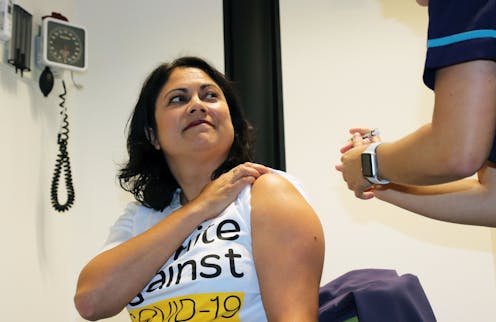
Associate health minister Ayesha Verrall receives the Pfizer vaccine.Lynn Grieveson – Newsroom/Newsroom via Getty Images
New Zealanders’ intention to get a COVID-19 vaccine is at its highest since last year, at 81% of the adult population, according to our latest research.
Ministry of Health surveys, which have been tracking public acceptance of COVID-19 vaccines since last year, also confirm the potential uptake has increased to 80% in May, up from 77% in April and 69% in March this year.
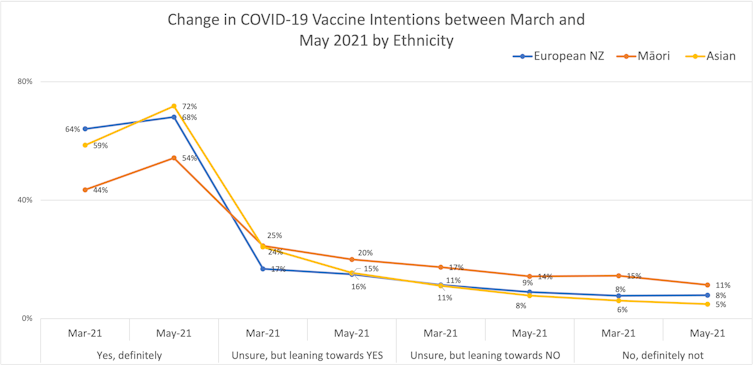
Our longitudinal survey, conducted between March and May, shows an increase by six percentage points among those who will “definitely” take the vaccine to protect themselves and their communities, to 67% in May compared to 61% in March.
The increase is visible across gender, age, education and ethnicity. Among Māori, we see a 10% increase among those “definitely” willing to be vaccinated, from 44% in March to 54% in May.
However, the number of people who say “definitely not” to vaccination remains relatively steady, dropping only slightly to 8% in May, from 9% in March.
The uptick in vaccination intentions is good news, but recent modelling suggests we will need to reach much higher vaccination rates to protect the population from the more transmissible Delta strain.
Of the survey respondents, fewer than a third (27%) have often or very often heard or read the government’s COVID-19 vaccination communication campaign on the radio, in newspapers or on social media in the last month. About four in ten people (43%) have often or very often heard about the campaign on television.
This lack of exposure is worrying. When we asked people who are hesitant or sceptical about vaccination what information they would need to change their mind, 30% said they’d want more information from the government. This is a substantial increase from 18% in March and suggests a low campaign reach.
The most frequently cited information request was for more vaccine safety data. This remained at 30% between March and May. In contrast, there was a sharp decline in the need to see other people take the vaccine first, from 21% in March to 8% in May.
Drop in COVID-19 safety behaviours
We also surveyed participants about the measures they take to protect themselves. The largest decline we observed was in mask wearing, from 64% in March who always, often or sometimes wore a mask in public to 50% in May.
More than three in four respondents continue to use the contact tracing app, down slightly from 78% in March to 76% in May, but encouraging others to use the app has declined from 73% to 66%.
The World Health Organization advises even fully vaccinated people should continue to follow COVID-19 safety behaviours, such as wearing masks in public places.
Misinformation continues to influence people’s decisions, but campaigns to correct it appear to have an impact.
Of the people who watched a misinformation correction video, featuring Auckland GP and advocate for Māori health Rawiri Jansen, 66% said they would definitely take the vaccine, compared to 62% who watched a misinformation video popular among vaccine sceptics on social media channels. The order of watching misinformation and correction does not seem to matter.
The effect of watching a misinformation correction video (just once) appears small, but it highlights the need for continued communication campaigns to address misinformation about the safety, efficacy and regulatory approval of COVID-19 vaccines.
Challenges for the vaccination programme
In several countries, vaccination rates have stalled after an initial uptick.
In the UK, vaccination rates have reduced by 50% recently, primarily due to lack of enthusiasm among the young. In the US, vaccination rates fell just short of President Biden’s target of getting at least 70% of the adult population partly vaccinated before Independence Day on July 4.
Worryingly, the vaccination rates are uneven between US states, and nearly all Americans dying of COVID-19 are unvaccinated.
This has led President Biden to launch a “wartime effort” to vaccinate the country, including door-to-door outreach, vaccination clinics at workplaces, and urging employers to offer paid time off.
Some US states have offered scholarships, million-dollar lottery tickets, free beers and even shotguns as incentives to increase the vaccination rate.
New Zealand is likely to face similar hurdles. While it may be easier to motivate some hesitant people by improving vaccine access and providing services such as paid leave, it will be difficult to reach those with high distrust in government and health experts.
Communities that have been neglected in conversations about health policies may see the vaccination effort more as a benefit to the government rather than a concern for their own and their community’s well-being. Placing vaccination campaigns with trusted community members will help, as we have seen when more than a thousand Pacific people turned up to be vaccinated when the clinic was organised with help from their community and held at their church.
Jagadish Thaker receives funding from Massey University.
The Morrison and Berejiklian governments have unveiled a joint support package for businesses and workers, as the Sydney lockdown is set to extend to and probably beyond a fourth week.
But the assistance has set off a row between the Andrews and Morrison governments, with Victoria resentful about its earlier treatment and the federal government accusing it of taking a politicised approach compared with NSW’s constructive one.
As the level of the outbreak continues high in NSW – 89 new cases in the community announced on Tuesday – a support payment will be available for businesses, which is set to cost about $500 million a week. This cost will be equally shared between the federal and NSW governments.
For individuals, from week four of a lockdown in a hot spot declared by the Commonwealth, the COVID disaster payment will rise from $500 to $600 if a person has lost 20 or more hours of work a week. The amount will go from $325 to $375 if the hours lost are between eight and 20.
The payment will also be available to people in NSW outside Commonwealth-declared hotspots where they meet the eligibility criteria – but in these cases the NSW government will fund the cost.
Businesses eligible for assistance will be those with an annual turnover between $75,000 and $50 million, which can demonstrate a 30% decline in turnover, compared with an equivalent two week period in 2019.
Businesses will receive payments ranging from $1,500 and $10,000 a week, based on their payroll, with non-employing businesses such as sole traders receiving $1000 a week.
Up to 500,000 entities are expected to be eligible, which employ more than three million people. The assistance will be available to not-for-profit entities. Those receiving the payment will have to maintain their workforces at current levels.
Scott Morrison, speaking at a news conference with NSW premier Gladys Berejiklian and state treasurer Dominic Perrottet, said the aid would go as long as the lockdown required.
The federal government – under earlier criticism for being more anxious to help NSW than it had been to assist Victoria, when it was slow with an announcement – emphasised that the new payments would apply to other states if they were to be in similar circumstances.
But the Victorian government reacted sharply.
“Victorians are rightly sick and tired of having to beg for every scrap of support from the federal government,” a spokesperson said in a statement.
“It shouldn’t take a crisis in Sydney for the Prime Minister to take action but we are seeing the same double standard time and time again. His job is not to be the Prime Minister for NSW.
“We had to shame the federal government into doing their job and providing income support for Victorian workers when we battled the Delta strain earlier this year. Their position at the time was a disgrace.
“If they had bothered to think about this at the time and work with Victoria, they’d already have had a practical framework in place when NSW went into lockdown and more people would have got the support they need earlier,” the statement said.
The Morrison government hit back, contrasting what it described as different attitudes by Victoria and NSW.
“The NSW government has worked constructively with the Commonwealth to support their households and businesses while the Victorian government’s politicised approach has unfortunately been to issue decrees by media instead of picking up the phone to find solutions as a partnership,” a federal spokesperson said.
The spokesperson said Victorian received the same support for its two week circuit breaker lockdown as had NSW for its first two weeks.
“As the pandemic has evolved and as the situation in NSW has gone beyond those two weeks, the Commonwealth’s support has also evolved. If Victoria were to go into another extended lockdown, it would receive the same support as is being offered to NSW.”
The spokesperson said that during the recent Victorian lockdown, the Commonwealth offered to share all costs with the state. “Victoria declined, and asked for the Commonwealth to handle income support while they would support businesses.”
Treasurer Josh Frydenberg told the ABC on Tuesday night, people were sick of Victorian Premier Dan Andrews’ “whingeing”.
Under the package for NSW, the Commonwealth is providing some business tax relief and the NSW government is giving some payroll relief and protection against evictions.
The package also contains $17.35 million for mental health support. Among organisations to receive funding will be headspace and Kids Helpline.
The Australian Technical Advisory Group on Immunisation (ATAGI) on Tuesday released new advice on AstraZeneca in light of the Sydney outbreak.
It said in the context of an outbreak where the supply of Pfizer was constrained, people under 60 who don’t have immediate access to Pfizer should “reassess the benefits to them and their contacts from being vaccinated with COVID-19 Vaccine AstraZeneca, versus the rare risk of a serious side effect”.
It also said in outbreak situations those who had received a first AZ shot more than four weeks ago should get their second dose as soon as possible, rather than waiting the preferred 12 weeks.
Michelle Grattan does not work for, consult, own shares in or receive funding from any company or organisation that would benefit from this article, and has disclosed no relevant affiliations beyond their academic appointment.
Source: The Conversation (Au and NZ) – By Steven Hamilton, Visiting Fellow, Tax and Transfer Policy Institute, Crawford School of Public Policy, Australian National University
The economic support package announced by Prime Minister Scott Morrison and NSW Premier Gladys Berejiklian is exactly what is needed, and just in the nick of time.
In a number of ways, in fact, it is more fit for purpose than the JobKeeper and JobSeeker policies that played such a key role in shielding the nation from the worst economic impacts of the COVID-19 pandemic.
There is support for workers who lose their jobs or have their hours cut, and incentives for affected businesses to keep their workers on the payroll.
In the face of what looks set to be an extended lockdown for Sydney, significant support was clearly needed. The federal government has rightly resisted calls to reinstate the JobKeeper wage subsidy, and opted instead for a new, more flexible scheme better suited to the circumstances.
There are two key planks of support, working together.
The first is payments for individuals. For Melbourne’s lockdown in late May and early June the federal government provided up to A$500 a week to those losing more than 20 hours of work a week. It is boosting this to $600 a week. For those losing eight to 20 hours a week, the payment is increasing from $325 to $375. The liquid assets test that applied to the Victorian payments has been scrapped.
Critically, any worker who loses enough hours is eligible. That means the payment can help virtually all workers losing work due to the lockdown, at least to some degree, and gives businesses the flexibility to scale down by reducing hours while minimising the impact on workers. We can squabble about the generosity of the payment, but it is more than double the rate of JobSeeker.
Importantly, it means the cost of the lockdown is being shared by the federal and state governments, rather than just falling on businesses and workers. This provides confidence that lockdown decisions will be made entirely in accordance with the public health advice.
Payments to businesses
The second plank is a partnership between the federal and state governments to revive the cash-flow boost instituted at the beginning of the pandemic, before the federal government introduced JobKeeper.
Only businesses with annual turnover between $75,000 and $50 million are eligible. For those suffering a 30% decline in annual turnover (compared to pre-pandemic times), the payment will cover 40% of their payroll costs up to a maximum of $10,000 a week. To qualify, however, they must not lay off any staff.
This emulates one of the best features of JobKeeper by maintaining the connection between employers and employees through the crisis to speed the recovery once restrictions lift.
In his press conference, the Prime Minister described the measures as targeted, timely, proportionate, scalable and able to be administered quickly and simply.
It’s hard to disagree.
One aspect that’s a big improvement over JobKeeper is that the turnover test is based on actual turnover, rather than projected turnover or trailing turnover, as with the earlier schemes. This should see the money better targeted to the businesses genuinely in need.
Another improvement is that it drops the cumbersome JobKeeper approach of paying employers a per-employee subsidy they were then expected to pass on to each worker at a fixed rate regardless of actual hours. This time businesses will get a payroll subsidy they can use however they see fit — so long as they don’t lay anyone off.
This should maximise flexibility, and minimise business failures and layoffs. And compliance should be straightforward to enforce via Business Activity Statements and Single Touch Payroll records.
But it is all a bit reactive
I do, however, see one negative.
Just as many ordinary Australians seem to have assumed and behaved as though the pandemic was behind us, so did the federal government in configuring its fiscal support measures earlier this year.
It was right to end the JobSeeker supplement and JobKeeper as the economy recovered. But it was wrong not to replace them with a suite of more flexible, contingent measures to be triggered in the event of future lockdowns. It should have foreseen the possibility of a future prolonged lockdown and been prepared for it, rather than be forced to play catch-up.
Following the announcement of these measures, the federal minister for government services, Linda Reynolds, said “our response will continue to evolve”. But what businesses and consumers have needed all along is certainty — to know that if things go pear-shaped there’s a plan and they will be looked after.
Without that certainty, consumers will hold back on spending and businesses will hold back on investment, putting a brake on the economic recovery.
Every Australian consumer, worker and business — in every Australian state and territory — needs to know today exactly how they’ll be supported should things get a lot worse or go on a lot longer than currently expected.
Steven Hamilton is Chief Economist at Blueprint Institute.
We now have excess death data for most of western Europe, until the end of June 2021. The peaks are all due to Covid19.
We can see clearly that the pandemic in Europe began simultaneously in Italy and Spain, and almost certainly in January 2020. While we are yet to even try to tell the story about how Covid19 got to these two countries, it is most likely to have been due to multiple incursions by air from China, possibly in some cases via Chinese territories such as Macau and Hong Kong.
In the case of Italy, it seems like to have been due to economic ties; in particular the area around Milan in Italy is that country’s technological and entrepreneurial hub. Travel to the World Economic Forum in the Swiss Alps city of Davos, may have been part of the story. Certainly, Covid19 soon got from the Milan area to the ski resorts in the Alps. And from these resorts – in the February school holidays – Covid19 got into northwest Europe.
In the case of Spain, it seems likely – in mid-late-January – to have been a preferred European destination for wealthy Chinese tourists and covid-evacuees. Indeed I understand that a Wuhan football team evacuated to the south of Spain. Portugal was not nearly as affected as Spain, initially. Covid19 travelled mainly by air.
I am guessing that England got the covid-bug both from the Alps, and from English people who live in the south of Spain; such British people travel frequently by air between Spain and England. In Belgium covid seems to have been brought in mainly by holidaying Eurocrats, and then unwittingly transmitted into the rest homes for the elderly.
The subsequent dynamic, for these countries, was mainly summer travel within Europe. We see that, from the three months ended October 2020, Portugal’s excess deaths closely match England’s. (In the period before that, Portugal’s inability to shake-off Covid19 was most likely linked to its relationship with Brazil.)
We also note that the early second wave in Spain is likely to have originated in England, which is a large country whose people enjoy flying to places like Spain and Greece; England still had more active covid than did other northwestern European countries when intra-European tourism restarted. Greece seems to have got Covid19 this way, although it’s 2021 experience seems to be more linked to its East Europe neighbours than to West Europe.
The later timing of West Europe’s second wave in Italy and Belgium looks to be linked to returning tourists. The second chart, below, shows France, Netherlands and Luxembourg peaking at the same time as Italy and Belgium.
Chart by Keith Rankin.
The other important dynamic in West Europe’s second wave is the youth tourist wave from the United States. Young Americans have certain particularly favoured destinations: Barcelona, Paris, Amsterdam, Prague (in Czechia), and Switzerland. We see early beginnings of the West Europe’s second wave in France, Netherlands and especially Czechia. Czechia’s wave was the important link to the rest of East Europe. Czechia aside, it is Switzerland that easily suffered the most in West Europe’s second wave of Covid19. (Note that smaller tourist-oriented countries will generally show greater amplitudes of variation; the tourist impact in Switzerland is greater per capita than is the tourist impact in France.)
West Europe’s Third Wave
The third wave has begun, with England leading the way. The countries most affected by West Europe’s third wave so far are ranked (in the world, per capita), for the seven days ending 11 July :
United Kingdom (9th for cases, 79th for deaths)
Ireland (55th, 111st)
Channel Islands (6th, 159th=)
Gibraltar (19th, 159th=)
Portugal (21st, 68th)
Spain (15th, 95th)
Andorra (18th, 159th=)
Netherlands (14th, 133rd)
Denmark (60th, 139th)
Luxembourg (28th, 103rd)
Greece (39th, 65th)
Cyprus (3rd, 120th) [ may be connected to Russia]
Time will tell whether the death rates will rise dramatically in response to recent high case numbers.
The hope will be that the case-fatality ratios will be much less this time, thanks to the vaccination of older and more vulnerable people, and thanks to it being summer. Indeed, this phase should be the beginning of the end of the pandemic, because the seasonal intermingling of people – young people in particular – will give widespread immunity to the young unvaccinated population; including, crucially, the many vaccine resistant people in Europe.
The proof will be the coming northern autumn and winter. If this works out, Covid19 will become a variant of the common cold, as the ‘Russian flu’ of 1889-90 (most likely a coronavirus) became. I am sure that this summer intermingling of young people is the critical final step to the resolution of this pandemic.
The most probable reason why this optimal scenario may not happen will be if winter booster vaccinations are not provided to the already vaccinated population.
—————
Note: New Zealand and MIQ
New Zealand will need to have higher regular Covid19 vaccinations, given the likely substantially lower level of ongoing immunity in the younger population. Further, all is generally far from well in this southern Garden of Eden.
The big scandal at present is the paucity of places in MIQ (managed isolation and quarantine). On the surface the government has taken a rather cruel approach to people who need to travel to New Zealand, and to people in New Zealand who are not deemed to be permanent residents.
While the word ‘cruel’ is probably apt, in an important sense the government may have been ‘hoisted by its own petard’. The present single-party government of New Zealand practices the ideology of economic nationalism – a closely related dogma to that of mercantilism – which means that it is philosophically opposed to immigration. The problem is that the government’s MIQ program is hamstrung by a labour shortage; a shortage that can only be resolved, in the short and medium term, by immigration. We need to expand MIQ before we can expand MIQ; Catch22.
Earlier this month, the Australian government announced a four-phase plan to return us to something resembling normality. Under this plan, Prime Minister Scott Morrison said, we will eventually treat COVID-19 “like the flu”.
The hope is vaccines will allow us to live with some transmission without many people getting seriously ill or dying.
But death and hospitalisation aren’t the only outcomes of COVID-19 we need to prevent. New research shows even young people can be left with chronic health problems after infection.
COVID-19 will always be a very different disease to the flu. We should aim to stamp it out like measles, not let it spread.
A common misconception
Many people think only the elderly are at risk from COVID-19. Looking at the statistics, it’s easy to see why that misconception came about.
A study of people who tested positive for COVID-19 during the second wave in the United Kingdom found only around 1% of children and 2-3% of young adults had to be hospitalised. In contrast, more than 10% of those aged over 60 needed to go to hospital.
A study of people who were hospitalised for COVID-19 during the first wave in the UK found these patients were four times more likely to be readmitted to hospital and eight times more likely to die than a matched control group over an average follow-up period of four to five months.
The researchers found these people were particularly likely to develop diabetes, heart disease and kidney disease.
People can also experience complications after having the flu, but we’re seeing this more frequently with COVID-19, and the complications are more serious.
Even people who aren’t unwell enough to go to hospital with COVID-19 can experience complications.
A Sydney study found one-third of people with mild-to-moderate COVID-19 were left with persistent symptoms lasting at least two months, including fatigue and shortness of breath. More than 10% had impaired lung function.
This potentially life-altering condition has a name: long COVID.
They estimate nearly one million people are currently living with long COVID in the UK, and 40% of them have been living with the condition for over one year. Two-thirds report being adversely affected in their day-to-day activities as a result of long COVID, and 18% report they are limited a lot.
While children are very unlikely to die from COVID-19, the Office for National Statistics estimate 7-8% of children and adolescents who get infected will develop long COVID.
The condition is so common that the UK’s National Health Service is opening 15 long COVID clinics for children.
What does this mean for Australia?
COVID-19 is a very different disease to influenza, and our reopening plan should ensure it doesn’t get a foothold in Australia. The alternative would have huge economic and social costs, owing to the large number of people likely to be left with chronic health problems.
We can work towards reopening safely by first reaching herd immunity through vaccination.
With the emergence of more transmissible variants such as the Delta variant, we’ll likely need to vaccinate more than 90% of the population to achieve herd immunity. This is an ambitious goal, but we already achieve it as part of routine vaccination for measles in childhood.
Some have suggested vaccinating adults may be sufficient to reach herd immunity, but Israel has shown us this isn’t the case. New outbreaks linked to schools have forced the country to bring back a mask mandate and step up vaccination in adolescents.
To reach herd immunity, we’ll need to vaccinate children and adolescents against COVID-19. Shutterstock
What else do we need to do?
It will take time to achieve herd immunity in Australia. So we’ll need to keep a strong quarantine system in place until we’ve got the job done.
We’ll also need to closely watch the situation overseas and be prepared to roll out a third booster dose in response to emerging variants.
We should also be prepared to give people who have received the AstraZeneca vaccine a third booster dose of the Pfizer vaccine, when supplies are available.
Inevitably, Australia will experience future outbreaks of COVID-19, just as we sometimes do with measles. But we should have a very low tolerance for the degree of transmission we’re prepared to accept.
Zoë Hyde does not work for, consult, own shares in or receive funding from any company or organisation that would benefit from this article, and has disclosed no relevant affiliations beyond their academic appointment.
We all know action on climate change is urgently needed. But that doesn’t mean a forest should be razed to build a wind farm. Nor should vast fields of a single crop be grown year after year – reducing the number of other species that can live there – even if the plant is used to produce renewable bio-fuel.
Climate change and biodiversity loss are the two greatest challenges to humanity and our planet. But they’re often dealt with by separate laws and policies, which can lead to perverse, unwanted outcomes.
Clearly, this siloed approach must change. This was recognised in a draft plan by the Convention on Biological Diversity, released overnight, which stated that biodiversity should not be harmed by efforts to tackle climate change.
But how do we ensure solutions to one of these wicked problems does not worsen the other? Some 50 of the world’s leading researchers on biodiversity and climate have released a report which sought to answer this question. Below, I outline, the conundrums we tackled and the solutions we came up with.
Climate solutions should not lower the variety of species found on Earth. Shutterstock
A world-first collaboration
Our report, released last month, represents the first ever collaboration between the world’s largest research and policy communities on biodiversity and climate – the Intergovernmental Science-Policy Platform on Biodiversity and Ecosystem Services (IPBES) and the Intergovernmental Panel on Climate Change (IPCC).
IPBES is an independent intergovernmental body that synthesises evidence on the state of biodiversity, ecosystems and natures’ contributions to people. The IPCC is the United Nations body for assessing climate science.
The word “biodiversity” refers to the variety of living things: all the animals, plants and tiny micro-organisms on Earth, including the genetic information they contain and the ecosystems they form.
Biodiversity loss, then, is a reduction in the variety of species in an ecosystem, a geographic area or the planet as a whole. Biodiversity, including extinctions, is currently declining at rates unprecedented in human history.
There’s a growing recognition that climate, biodiversity and human well-being are inextricably linked.
To date, biodiversity loss has largely been caused by human actions which harm land, rivers and oceans. However, research suggests worsening climate change will be the main cause of global biodiversity loss this century.
For example, climate change is causing marine heatwaves which threaten the existence of the Great Barrier Reef. Climate change also makes bushfires more intense and frequent, pushing species closer to extinction.
Biodiversity loss can also make climate change worse. For example, forests store large amounts of carbon, and their destruction is a key source of greenhouse gas emissions.
Cutting down trees reduces biodiversity and makes climate change worse. Shutterstock
Robbing Peter to pay Paul
Bioenergy crops such as corn, canola and soybeans can be processed and used as a fuel for heat or energy. This can provide an alternative energy source to fossil fuels. And forest plantations storing carbon dioxide can be an effective way to reduce atmospheric carbon levels.
But these climate solutions can be bad for nature. Crop or forest monocultures greatly diminish the diversity of other plant and animal species the land can support. Such practices can also degrade ecosystems and damage native species.
Similarly, renewable energy technologies can harm biodiversity. For example, large-scale solar plants across vast areas of land can destroy animal habitat and disrupt wildlife movement.
Crucially, climate and biodiversity interventions can also be harmful to human well-being. Many communities in developing countries rely directly on nature for their everyday needs. Efforts to protect biodiversity by locking up natural areas in forest reserves can deprive local people of their lands and erode their food security.
What must be done?
Our report sets out key steps to protecting the climate, biodiversity and human well-being in unison. I outline these below.
By storing carbon in forests, wetlands and other ecosystems, nature can do a lot to tackle climate change. But it can’t do everything. Ambitious reductions in greenhouse gas emissions are needed across multiple sectors of the global economy. Without this, it will be virtually impossible to restore and protect natural ecosystems.
Increase sustainable agricultural and forestry practices
Food systems contribute up to one-third of total human-caused greenhouse gas emissions. The agricultural sector must urgently reduce waste. And if humans, particularly those in rich countries, eat less meat this will also help address emissions and biodiversity loss. In the forestry sector, careful species selection and management can mitigate climate while being good for biodiversity.
Eliminate harmful subsidies
Government subsidies for activities that harm the environment, such as burning fossil fuels, should be removed.
Subsidies that support the fossil fuel industry should be scrapped. Shutterstock
Delivering a revolution
The above measures will not be easily achieved. And they are each contingent on revolutionary economic and societal shifts.
Unsustainable consumption and production are key causes of climate change and biodiversity loss. Our report calls for a shift in individual and societal values away from materialism. We must also challenge the dominant worldview which equates continuous economic growth with human well-being.
Justice and equity must be at the centre of our new ways of being. Indigenous and local communities should lead the stewardship of forest, lands and seas. And system-wide change should not disproportionately impact the already disadvantaged.
And all this will require coordinated action at local, national and global scales. This must integrate multiple knowledge systems and worldviews.
A bright future for people and nature is possible. But achieving win-wins across climate, biodiversity and society requires urgent, transformative and just action which addresses not only the symptoms, but the causes of our greatest problems.
Climate explained is a collaboration between The Conversation, Stuff and the New Zealand Science Media Centre to answer your questions about climate change.
In recent decades, has New Zealand lost forest (both native and exotic) or gained it, courtesy of the One Billion Trees programme? What about natural habitats like wetlands?
Apart from wetlands, land above the treeline, coastal dunes and a few other exceptions, New Zealand was once covered in forests from Cape Reinga to Bluff.
So was Europe, which basically consisted of a single forest from Sicily in southern Italy to the North Cape in Norway, before human intervention.
But since people arrived in New Zealand some 850 years ago, about three quarters of the country’s native forest area has been lost. About half of the loss happened before Europeans arrived, mostly through burning to clear large areas of native bush.
Most of New Zealand was once covered in native forest. Shutterstock/Latitude Creative
In recent decades, the loss of native forest has slowed down. For example, in the first decade of the 21st century, we lost roughly 16,000 hectares of native forest, which translates to a loss of about 0.2% of the remaining total area covered in native forest (about 7.5 million hectares). The error associated with such estimates is considerable, though, because land cover is complex and highly fragmented.
According to Global Forest Watch, the drivers behind the more recent losses of native forests include exotic plantation forests, urban developments and wildfires. Indeed, the total land area dedicated to exotic plantation forests increased by about 200,000 hectares per decade between 1990 and 2017.
Commercial plantations of exotic pines have replaces native forests. Shutterstock/Cloudia Spinner
The project’s aim is to double the current planting rate and plant one billion trees between 2018 and 2028. The latest report shows about a quarter of this goal has been achieved in terms of the number of trees planted. In regards to forest area, 25,557 hectares have been reforested, about half of it with natives.
This is a remarkable achievement in light of the losses cited above and the short duration of the programme.
About a quarter of a billion trees have been planted so far, half of it native species. Shutterstock/Kira Volkov
Saving remaining peat bogs
We think of forests as our guardians of carbon — and indeed, an aged New Zealand forest can hold about 350 tonnes of carbon per hectare. But intact peat bogs, such as the Kopuatai dome in the Waikato region, can hold up to 1,400 tonnes of carbon per hectare.
But peat bogs only store carbon if they remain wet. Once drained, they begin to emit carbon dioxide. Almost half of New Zealand’s peatlands are in the Waikato, but of a total of 89,000 hectares only 19,400 hectares remain in a natural state.
The Kopuatai dome is New Zealand’s largest intact peat bog. Georgie Glover-Clark, CC BY-SA
The Kopuatai bog itself is surrounded by dairy farms operating on drained peat. Collectively, the Waikato’s drained peatlands produce 10-33 tonnes of CO₂-equivalent emissions per hectare each year.
The draining of peatlands in the Waikato region did far more damage, in terms of carbon emissions, than a small loss of forest area.
But nevertheless, planting trees and increasing our forest area is an important and necessary contribution to climate mitigation, and often comes with a myriad of other benefits, far beyond carbon sequestration.
Sometimes it’s as easy as planting your own fruit trees around your house. They will capture carbon for years to come, and keep you from buying fruit that has been transported thousands of kilometres.
They might even motivate you to reduce food waste. Globally, about 25-30% of food goes to waste. If we reduced food waste, we could save agricultural land multiple times the size of New Zealand and plant trees there instead.
Sebastian Leuzinger receives funding from The Royal Society.
What could be so bad about answering a few emails in the evening? Perhaps something urgent pops up, we are tidying up an issue from the day, or trying to get ahead for tomorrow. Always being online and available is one of the ways we demonstrate our work ethic and professionalism.
But the creep of digital communications into our entire lives is not as harmless as we think.
Our new research shows how prevalent out-of-hours communication is in the Australian university sector. And how damaging it is to our mental and physical health.
Our research
Colleagues and I are studying how digital communication impacts work stress, work-life balance, health and sleep in the university sector.
We surveyed more than 2,200 academic and professional employees across 40 universities from June to November 2020. We specifically looked at universities given the advancing technological changes in the sector and importance of universities to our economic, social and cultural prosperity.
Our results
We found high levels of stress along, with a significant amount of out-of-hours communication. This includes:
21% of respondents had supervisors who expected them to respond to work-related texts, calls and emails after work
55% sent digital communication about work in the evenings to colleagues
30% sent work-related digital communication to colleagues on the weekends, while expecting a same-day response.
Employees who had supervisors expecting them to respond to work messages after work, compared to groups who did not, reported higher levels of psychological distress (70.4% compared to 45.2%) and emotional exhaustion (63.5% compared to 35.2%). They also reported physical health symptoms, such as headaches and back pain (22.1% compared to 11.5%).
It’s not just horrible bosses
We also found the same pattern when it came to contact between colleagues.
Groups of employees who felt that they had to respond to work messages from colleagues outside of work hours, compared to groups who did not, also reported higher levels of psychological distress (75.9% compared to 39.3%). They also reported higher levels of emotional exhaustion (65.9% compared to 35.7%) and physical health symptoms (22.1% compared to 12.5%).
Although the project team surveyed university employees, this is likely to reflect a society-wide problem of digital communication out-of-work hours. An Australia Institute survey last year showed Australians were working 5.3 hours of unpaid overtime on average per week, up from 4.6 hours the year before.
Notably, 31% of employees in our sample reported a moderate or severe psychological disorder, and 62% said they thought the “psychosocial safety climate” – of their workplace — the degree to which it protected their psychological health — was “poor”.
By comparison, an estimated 20% of Australian adults have experienced a common mental disorder in the previous 12 months. A 2014 beyondblue survey, suggested 52% of employees find their workplace mentally healthy.
What does this mean?
The personal and social implications of blurred boundaries between home and work are serious. When employees are answering calls or responding to emails at home, this affects their recovery from work – both mentally and physically.
If you’re always checking emails, this means less space to recover from work. Joel Carrett/AAP
Being in a constant state of hyper-vigilance awaiting work notifications at home can affect metabolism and immunity, creating susceptibility to serious health problems such as infection, high blood pressure and depression. In fact, recent research by the World Health Organisation and International Labour Organisation suggest that long work hours may even increase the risk of heart disease and stroke.
Another problem is that when we get work calls or emails out of hours, this also reduces the time for recovery activities such as social interaction, physical exercise and spending time in natural settings.
These are critical activities to maintain physical and particularly psychological health. The personal and social ramifications of work intrusion into home life also have the potential to hurt family relationships, and community supports, like volunteering.
Next steps
So what needs to happen now?
We can focus on the immediate problem and reduce the extent of digital connectivity out of work hours. Negotiating work conditions to address the problem like the Victoria Police has recently done is a good start. Amending the National Employment Standards to enforce the “right to disconnect” will also protect vulnerable low paid, non-unionised workers who do not have the capacity to negotiate their own work conditions.
But while these industrial regulations prevent managers from getting in touch, it won’t change the behaviour of colleagues hassling each other. Or the inward pressure many of us feel to work out of hours.
Workplace expert professor Maureen Dollard argues the problem of digital connectivity outside of standard work hours reflects a broader issue around the workplace culture and psychological health. When an organisation values productivity over psychological health, then employees will feel more pressure to manage unrealistic deadlines.
Ultimately, our problem with out-of-hours emails and messaging reflects broader societal issues relating to the pressures of productivity, job insecurity and diminishing work resources.
This work is supported by an Australian Research Council Discovery Grant (DP190100853) (CIs Kurt Lushington, Tony Winefield, Silvia Pignata and Arnold Bakker) and the Australian Research Council Laureate Fellowship (FL200100025) awarded to Maureen Dollard. Research team members who have contributed to this work include Amy Zadow, Rachael Potter, Ali Afsharian and Amy Parkin.
Another 13 crew from the quarantined fishing vessel Viking Bay have tested positive to covid-19, New Zealand’s Ministry of Health says.
Two crew had previously been reported as confirmed with the virus.
All 15 mariners have been transferred to an a quarantine facility onshore in Wellington.
Five remained on board to maintain the safety of the vessel and have returned negative test results so far. The ministry said they would be tested again in coming days.
Of the crew who had now returned a positive result, 12 were regarded as being in the early stages of their infection. One returned a result indicating either a very early infection or a historical infection.
The initial two mariners to test positive were in a group of nine who arrived in Auckland on 5 July without having to quarantine. They had provided negative covid-19 tests before they flew into Auckland and had been driven to New Plymouth as part of the ship’s crew change.
One of the crew was confirmed last week to have the delta variant. No link had been shown between this case and any other cases previously identified in New Zealand, the ministry said.
Genome sequencing begins Genome sequencing of the 13 positive test results will begin today.
Slightly over half of the crew had been at sea since February.
The ministry said plans were in case any of the five crew members remaining on the Viking Bay developed symptoms or be confirmed with covid-19.
Bringing the ship back into port and transferring the crew to an onshore quarantine facility allowed the public health risks to be managed appropriately, and the crew to be kept in isolation until they had completed their 14 days isolation and recovered, the ministry said in a statement.
This article is republished under a community partnership agreement with RNZ.
Villagers and surrounding farmers in Labasa on Fiji’s Vanua Levu island turned up in big numbers for the covid-19 vaccination drive held at Nakorowiri village.
Opposition SODELPA parliamentarian Mosese Bulitavu gave his house for medical officials to use for the AstraZeneca vaccination drive.
“The villagers came in numbers volunteering themselves to get the jab and we are so thankful to the vaccination team for their commitment,” Bulitavu said.
“This vaccination drive happened because we have pledged in the village to break the chain of community transmission by getting vaccinated so we are protected.
“Our loved ones and those around us too will get protected when we are vaccinated.”
Samoa’s HRPP party — the country’s caretaker government — has now lost six seats since the April 9 general election, with eight byelections to come.
The incoming FAST Party government holds 26 seats to the HRPP’s 19.
FAST, which won the election but has been stymied in its efforts to assume power by the HRPP, continues to hold a majority of the 51 seats in the Parliament.
The caretaker government has lost six seats during the electoral petitions while a further two are to be contested again at the agreement of candidates.
Today, as the electoral petitions continue to come before the court, three HRPP candidates who had won their seats, agreed to resign, ahead of facing the judge, and so force byelections.
The HRPP’s Tuila’epa Sa’ilele Malielegaoi has been pushing for a new general election to solve the political impasse since he first prompted the crisis by refusing to step down.
Meanwhile, a Supreme Court hearing set to determine if Tuila’epa will face criminal contempt proceedings has been delayed.
Tuilaepa, the attorney-general, Parliament’s former speaker and its clerk were to appear for preventing Parliament from convening on May 24 as the court ordered.
The court is to probe the roles played by the four in defying the May 23 order that the 17th Parliament convene the next day and members be sworn in.
The contempt citation was brought by FAST, but its lawyers today sought a delay in proceedings.
This article is republished under a community partnership agreement with RNZ.
Following a recent storm surge in Wellington, some media coverage expressed surprise that 30cm of sea-level rise – an unavoidable amount projected to happen by the middle of this century – would turn a one-in-100-year coastal flood into an annual event.
Our research survey, published last week, confirms that many New Zealanders (38.2%) indeed underestimate current and projected sea-level rise. But it also shows a similar proportion (35%) overestimate it, and only about about a quarter (26.9%) are in line with current understanding of sea-level rise.
Our study is part of the public engagement research of the NZ SeaRise programme, which is co-led by Richard Levy and Tim Naish. We surveyed a representative sample of New Zealand adults. The finding that a significant number of New Zealanders overestimate sea-level rise might seem positive at first, as it could lead people to be more prepared, but the evidence indicates that’s not the case.
Overestimating the risk of sea-level rise can be as much a problem as underestimating it, because it can lead to public anxiety and feelings of helplessness, rather than motivation to take action to mitigate and adapt.
Confusion about sea-level rise projections
In 2019, the Intergovernmental Panel on Climate Change (IPCC) reported that between 1902 and 2015, global sea level rose by 16cm on average. The process has been accelerating in recent decades, as ice loss from the Greenland and Antarctic ice sheets has increased.
According to the IPCC, the planet will likely experience 0.24-0.32m of sea-level rise by 2050. What happens beyond 2050 depends on how successful we are at reducing carbon emissions.
In 2017, the Ministry for the Environment published projections for New Zealand of 0.46–1.05m of sea-level rise by 2100, depending on how quickly global carbon emissions are reduced.
The NZ SeaRise programme is working to finetune projections because the sea doesn’t rise universally along the coastline.
Rising seas exacerbate coastal erosion. Shutterstock/S Curtis
But before we start sharing these new projections, we wanted to find out what people already knew. The survey asked New Zealanders to indicate what they knew about the amount, rate and causes of sea-level rise.
Apart from the question about current sea-level rise, we asked about projections to 2100. Nearly 75% of respondents selected options that were in line with scientifically plausible projections, from “up to 40cm” to “up to 2m”. But 19% of respondents overestimated sea-level rise projections to 2100, selecting “up to 5m” (10.7%) or “more than 5m” (8.2%).
When asked how much global sea levels could rise by 2100 under “a scientifically credible worst-case scenario”, only 33.1% of respondents gave an answer in line with current science, answering “1m or more” (16.7%) or “2m or more” (16.4%).
Another 22.5% of respondents underestimated the worst-case scenario by selecting “up to 1m”, while 37.4% overestimated it, selecting “5m or more” (18%) or higher (19.4%). In fact, “15m or more” by 2100 (selected by 6.8%) would defy physical laws around how fast ice can melt, even under extreme temperature forcing.
Respondents were also asked to identify and rank the major causes of sea-level rise from a list of ten items. Here, 28.7% of respondents erroneously identified melting sea ice (which does not directly contribute to sea-level rise) as their top ranked cause.
While Arctic sea ice is reducing, the melting of floating ice doesn’t directly contribute to sea-level rise. Vincent LECOMTE/Gamma-Rapho via Getty Images
The public’s association of melting sea ice with sea-level rise may be due to the significant media coverage given to melting sea ice in the Arctic, rather than the factors contributing to sea-level rise, such as melting of land-based ice sheets and glaciers, the expansion of the ocean as it warms, and land subsidence.
Katy Kelly/GNS Science/NZ SeaRise porgramme, CC BY-ND
Respondents who overestimated the amount and speed of sea-level rise were more likely to express greater concern. But concern is not always helpful. A focus on extreme (and often unsound) projections of sea-level rise can lead to more anxiety instead of greater motivation to act.
Nevertheless, our research shows New Zealanders are aware of, and concerned about, 21st-century sea-level rise, which is already affecting coastal communities and infrastructure.
Site specific projections
The NZ SeaRise programme is preparing a set of location-specific sea-level rise projections, taking into account global and regional projections of sea-level changes and new knowledge of local vertical land movements, including subsidence and earthquake uplift.
New Zealand straddles a tectonic plate boundary and the land moves up and down as a result. This movement can be large and rapid during major earthquakes, but is relatively continuous along most coastal regions between earthquakes.
For example, measurements from satellites show that today, regions of the lower east coast of the North Island are going down at rates up to 8mm per year and areas along the central Bay of Plenty coast are rising at rates over 10mm per year. Sea-level rise is amplified in places where land is subsiding and dampened where it is going up.
Adding continuous estimates of vertical land movement to our sea-level projections shows future increases in the frequency of coastal flooding due to global sea-level rise will happen decades sooner than expected in areas that are going down, and vice versa.
Criticisms of the “deficit model” of science communication show that encouraging action on an issue – such as sea-level rise – is not as simple as ensuring that people are fully informed. But it is essential they have access to reliable scientific information that can inform their decisions.
Our goal is to provide location-specific projections so all New Zealanders have the information they need to help with decisions and discussions about how we manage life on the coast.
Rebecca Priestley receives funding from the NZ Ministry for Business Innovation and Employment through the NZ SeaRise Programme
Richard Levy receives funding from the NZ Ministry for Business Innovation and Employment through the NZ SeaRise Programme
Taciano L. Milfont receives funding from the Biological Heritage National Science.
Timothy Naish receives funding from the NZ Ministry for Business Innovation and Employment through the NZ SeaRise Programme.
Zoë Heine receives funding from the NZ Ministry for Business Innovation and Employment through the NZ SeaRise Programme
Venus has returned to our evening skies and is looking lovely in the north-west after sunset. Tonight, July 13, it will pair up with the red planet Mars and just above the two planets will be the waxing crescent Moon.
Wherever you are in Australia, find a location that has a good view of the north-west horizon to see the conjunction. Venus will be visible during dusk, but you need to wait until the sky darkens to have a chance to see faint Mars.
Mars will appear just above and to the left of Venus. The best viewing opportunity will be from about 6:30pm , with the planets setting an hour later.
Look towards the north-west horizon after sunset on July 13 to see Venus, Mars and the crescent Moon. Museums Victoria/Stellarium
Venus is dazzling, so it is easy to see why it’s known as the “evening star”. Just look towards the north-west horizon after sunset and you can’t miss it.
Mars, on the other hand, is looking fairly faint. The red planet has been in the north-west sky for the past few months and while it was bright and red earlier in the year, it has been fading quite considerably as its orbit takes it away from Earth.
On Tuesday evening, the pair will appear so close together, they will fit within the field of view of a telescope or pair of binoculars. Yet in reality, they are millions of kilometres apart – Venus will be around 210 million km from Earth and Mars a more distant 370 million km.
The eyes of Baayami
Aboriginal Australians have witnessed close pairings of Venus and Mars for thousands of years and for the Euahlayi people of northern New South Wales it has particular significance.
This cosmic pairing represents the eyes of Baayami, the supreme creation ancestor. As one Euahlayi elder describes:
During the day, the eyes of Maliyan (the eaglehawk) are the eyes of Baayami. During the night, Maliyan’s eyes are Venus and Mars, which become the eyes of Baayami. Because one is red (Mars), and one is blue and green (Venus).
Euahlayi people would have seen Venus flash green, which is an interesting phenomenon that occurs as Venus is setting and its bright light is scattered by the Earth’s atmosphere. When it does this it also twinkles. Elders describe the planet as an old man who told a crude joke and is animatedly laughing to himself.
The event is also linked to ceremony. Euahlayi people follow part of a Songline mapped out in the stars to travel to a place near Quilpie, 430 km northwest of Goodooga in western Queensland. Bringing with them a green and blue opal, representing Venus, they meet the local Maranganji people, who provide a red stone signifying Mars.
Venus and Mars are Earth’s closest neighbours and yet they evolved so differently to our planet – one too hot and the other too cold.
Billions of years ago, it’s likely this trio of rocky planets all had oceans covering their surfaces. But on our two neighbours, those oceans have dried up.
For Venus, new modelling suggests that volcanic activity could have been the likely cause. Over a short period of time, so much carbon dioxide was pumped into the atmosphere that it could not be re-absorbed by the rocks. This triggered a runaway greenhouse effect and turned Venus into the hot, hellish world we know today.
For Mars it’s a different story. Back when water was flowing on Mars, the planet was much warmer because its atmosphere was more substantial. However over billions of years, the solar wind made up of particles from the Sun has blown away much of that atmosphere. Mars doesn’t have a magnetic field like Earth to deflect the solar wind and the planet’s low gravity makes it easier for the gases to escape.
Artist’s rendition of a solar storm hitting Mars and stripping ions from the upper atmosphere. NASA/GSFC
The atmosphere is now so thin that liquid water can no longer exist on the Martian surface. Some water may have escaped along with the atmosphere, but the majority seems to be locked up in the Martian rocks and frozen underground.
Leo, the lion
As you observe the planets and in particular the Moon, you may notice an arrangement of stars that looks like an upside-down question mark. That’s the mane of Leo, the lion.
Leo, with Leo Minor above, as depicted in Urania’s Mirror, a set of constellation cards published in London c.1825. Wikipedia
Leo is one of the original Greek constellations and also one of the 12 constellations of the zodiac. The zodiac is a band of constellations that maps the path of the Sun (known as the ecliptic), and therefore the Moon and planets can be found passing through these constellations throughout the year.
From our vantage point in the southern hemisphere, Leo appears upside-down. In fact, all the constellations, and even the Moon, are viewed “upside-down”, because we live on a sphere.
The brightest star in the constellation of Leo is Regulus, often called the “little king”.
In Wardaman astronomy (from west of Katherine, Northern Territory), Regulus is called Moroborronggo. Uncle Yidumduma Bill Harney describes it as the creation dog. Right now, we are seeing Moroborronggo setting in the west, but back in April when the star is seen rising in the east at sunset, it brings special significance as it marks the start of the Wardaman calendar, when the monsoon rains begin to ease.
Duane W. Hamacher receives funding from the Australian Research Council, the Laby Foundation, the Pierce Bequest, and the Indigenous Knowledge Institute at the University of Melbourne. He is also president of the Australian Association for Astronomy in Culture (Triple-AC), a charitable not-for-profit organisation.
Tanya Hill does not work for, consult, own shares in or receive funding from any company or organisation that would benefit from this article, and has disclosed no relevant affiliations beyond their academic appointment.
The high level of fast food consumption in Australia is a serious health concern. Accordingly, the marketing tactics of the fast food industry warrant close attention.
Our new study, published today, examined the price promotions offered by the biggest fast food chains in Australia.
We found the “combination meal deals” and “limited time” offers from the major chains provide strong incentives for people to over-consume unhealthy food and drinks.
It’s time governments took policy action to limit price promotions on unhealthy food.
Fast food consumption
Of all food prepared outside the home, fast food outlets are the most popular and represent almost half of the eating-out industry’s revenue.
Over 80% of Australians aged over 14 years regularly consume fast food. Adolescents are the highest consumers.
We monitored the price promotions offered by some of the major chains over a three month period. We did this by going in-store, and visiting their websites and online apps.
We included all “limited time” offers, where an item is offered at a reduced price for a limited time. Current examples include KFC’s “$8 Bucket Tuesdays” and Nando’s “$12 WTF Tenders”.
We also looked at the “combination meal deals”, or combo deals, on offer. These deals provide a bundle discount if you buy multiple items. Most commonly, combo deals consist of a main meal item (such as a burger), a side (such as chips), and a drink. There’s often a choice of different options and sizes (such as small, medium and large) for the side and drink.
We also looked at the amount of energy (kilojoules, or kJ) included as part of each offer, and compared it to the average recommended daily energy intake, which is 8,700kJ per day for adults.
Junk food price promotions are prominent
We found major fast food chains offer a wide range of price promotions. We observed over 500 combo deals and almost 200 limited time offers across the ten chains.
The limited time offers provide an average discount of 42%. And combo deals provide price reductions of up to 45% relative to the price of individual items.
All of the limited time offers were on products classified as unhealthy, making it difficult to get a deal and avoid unhealthy food.
We found the energy content of combo deals was often very high, with some deals providing an astonishing 90% of the average recommended daily energy intake for adults.
The energy content of combo deals varied substantially based on the particular side and drink options selected.
If the highest-energy side and drink options (such as large chips and a 600ml bottle of sugary drink) were selected, the average energy content of each combo deal was almost 6,000kJ. This is almost 70% of the recommended daily energy intake for adults.
Even when the lowest-energy options (such as a salad and water) were selected, almost 70% of combo deals provided more than a third of the average recommended daily energy intake for adults.
Critically, we found the energy content of combo deals could almost be cut in half if the lowest-energy side and drink options were selected.
Fast foods chains are promoting unhealthy meals to children
Several of the fast food chains offered combo deals on their children’s menus.
Over 80% of these children’s combo deals were classified as unhealthy. Most of them included high-energy side and drink options, at a substantial price discount compared to the standalone items.
These promotions were in place despite six of the chains signing an industry pledge to reduce marketing of unhealthy foods to children.
What does this mean for our health?
The extensive use of price promotions by major fast food chains in Australia is strongly encouraging the purchase of unhealthy foods and over-consumption of kilojoules.
If we want the Australian population to be healthier, we need to change the way fast food chains are allowed to promote junk food.
We need policy action
Some Australian politicians have recognised fast food price promotions as a pressing health issue.
For example, in 2019, then-Queensland Health Minister Steve Miles likened $1 frozen sugary drinks to “the sugar equivalent of flooding our suburbs with crack cocaine”.
What’s needed now is higher standards for the way junk food is promoted.
A potential option is to make healthier items (like water and salads) the default selections as part of combo deals. This would likely nudge people to consume healthier options, while still providing a range of choices.
Another option is for the government to ban price promotions on unhealthy foods altogether. This would mirror recent policy action in the UK, where “two-for-one” junk food specials in supermarkets are set to be outlawed from April 2022.
There’s a real opportunity for the federal government to include such measures as part of the National Obesity Strategy which is currently being finalised.
Gary Sacks receives funding from the National Heart Foundation of Australia, National Health and Medical Research Council, Australian Research Council and VicHealth.
Lily Grigsby-Duffy receives funding from a scholarship from the National Health and Medical Research Council (NHMRC) Centre for Research Excellence in Reducing Salt Intake Using Food Policy Interventions (APP1117300)
Evelyn Suk Yi Looi does not work for, consult, own shares in or receive funding from any company or organisation that would benefit from this article, and has disclosed no relevant affiliations beyond their academic appointment.
Tasmanian devil populations have been devastated over the past 25 years due to devil facial tumour disease, an infectious cancer. But the Tasmanian government does not support relocating uninfected wild devil populations to the Australian mainland.
Wildlife vigilantes have, however, already illegally moved Tasmanian devils off the island — an illegal practice known as “covert rewilding”. They may well might try again.
Our recent research has examined this possibility. We found a covert devil population could remain undetected on the Australian mainland for years, by which time it may be too large and widely distributed to be eradicated.
In fact, it’s possible such rewilding has already occurred, and the calls of covert devils may already be echoing across the Australian Alps or Victoria’s Highlands.
A facial tumour disease is devastating Tasmanian devil populations. Sarah Peck/AAP
What is covert rewilding?
Rewilding is the movement of a species back to a location it once existed in, either to maintain ecosystem functioning or prevent the extinction of that species.
In most countries, rewilding decisions rest with public servants in regulatory agencies, who are generally risk-averse. Rewilding proposals are generally denied, for reasons such as the need to protect other vulnerable species or prevent human-wildlife conflicts.
The overwhelming majority of conservationists operate strictly within the law. But in some cases, guerrilla conservationists take matters into their own hands.
Conclusive evidence of covert rewilding is hard to come by, for obvious reasons. But examples exist.
At Devon in the United Kingdom, beavers were discovered in 2007 in a river catchment, after an official application to reintroduce the species was resisted by government and farmers. Multiple sources believed the reappearance was the result of covert rewilding by so-called “beaver bombers”.
Similarly in the early 2000s, conservationists in Belgium illegally released beavers at two locations, where the animals subsequently formed permanent populations.
Covert rewilders released beavers to a Devon river. Shutterstock
Guerrilla conservationists have also covertly relocated populations of polecats in Scotland and the Eurasian lynx in Switzerland and France.
And in Australia in 1996, unknown people covertly released Tasmanian devils onto Badger Island in Bass Strait. The devils were brought to the island by ferry and plane, and once there quickly multiplied. Their descendants were later taken back to Tasmania by officials.
Cancer-free devils have been released into wildlife refuges on the mainland under sanctioned programs, but not into the wild.
Tasmanian devils were once found in the wild across mainland Australia. Three devils were found in Victoria between 1912 and 1991, raising the possibility they were taken from Tasmania and deliberately released.
Devils are easy to catch in traps, and can tolerate captivity and transport. The Badger Island population, for example, was trapped from wild populations then taken to the island by ferry and plane. And the Australian mainland contains an abundance of suitable devil habitat.
Introducing species to ecosystems — or reintroducing species that once lived there — carries substantial ecological risks. We do not advocate for or against covert rewilding. But the practice is likely to continue, and it’s important to gain a better understanding of it.
In particular, if authorities wish to halt covert rewilding before it gets out of control, it’s important to identify and monitor the most attractive release locations.
Cancer-free Tasmanian devils have been released into mainland wildlife refuges, but not the wild. Cristian Prieto/WildArk
Spreading across the landscape
A key goal of a covert rewilding is to establish a population that, by the time it is discovered, is too large to eradicate.
Our modelling involved the hypothetical release of 40 devils at a wide range of locations across Victoria and New South Wales. We modelled how the covert population began to grow, how long it would take to be detected, and how governments could and would respond.
We calculated the annual probability of detection based on the density of the road network and the presence of towns, which affects the chance of the animals being spotted by motorists or hikers.
According to our model’s forecasts, a well-planned covert rewilding of Tasmanian devils could remain hidden for more than a decade. By the time it was noticed, the population would have increased to more than 3,000.
Three remote locations emerged as best suited to covert rewilding: two in Victoria’s Alpine National Park and one in Wollemi National Park in New South Wales. These areas had the best combination of suitable habitat, rapid spread rates and low detectability.
Yellow represents ideal covert rewilding sites for Tasmanian devils on the Australian mainland. Author provided
For example, following a release in Alpine National Park, the model predicted discovery by humans after 26 years, by which time the devil population would number 2,200 individuals, spread across 2,800 square kilometres. An earlier detection could easily occur, but there was a 95% chance the population would remain undetected for at least six years — reaching 100 individuals spread across 700 square kilometres.
Once two decades pass before discovery, removal would be expensive and challenging (both logistically and politically).
The lengthy detection lags we identified have been borne out by real-world precedents involving covert rewilding. That means if devils have been illegally reintroduced to the Australian mainland in the past two decades, we probably wouldn’t even know it.
Tasmanian devils may be roaming the mainland undetected. Shutterstock
Playing devil’s advocate
Additional regulation and enforcement might not dissuade guerrilla conservationists. Very few cases involving the illegal movement of wildlife in Australia lead to convictions. And some guerrilla conservationists are not deterred by fines.
From a legal perspective, covert rewilding is hard to stop because Australia’s regulatory framework is full of gaps. For example, the federal government considers species regulation to be a problem for the states, while the states consider the regulation of cross-border species relocations to be a federal problem. Rewilding, and particularly covert rewilding, falls between the cracks.
Covert rewildings typically come after official permission is denied. Often, it’s done without sufficient knowledge of the environment, species interactions and local interests.
It’s worth considering, then, if a more permissive attitude to official rewilding is needed. To quote a British beaver conservationist: “If we don’t do an official reintroduction, it’ll happen anyway”.
The Fête de la Fédération at Champ de Mars on July 14, 1790. Woodcut by Helman, from a picture by C. Monet, Painter of the King Bibliothèque nationale de France
French people travelling to or living in English-speaking countries are sometimes surprised when asked about their plans for “Bastille Day”: they refer to the day as Quatorze Juillet (14 July).
France’s National Day is not really about the storming of the Bastille, and the day’s English language name conveys a misleading image. But it gives us an interesting glimpse into how the English-speaking world imagines France’s revolutionary past.
The most common misconceptions about the French National Day are that it is a celebration of the anniversary of the storming of the Bastille on July 14 1789, and commemorates the official beginning of the French Revolution.
It is, in fact, a far more complex story.
Jean-Pierre Houël (1735–1813), The Storming of the Bastille, 1789. Bibliothèque nationale de France
While English speakers refer to Bastille Day, in France the day is intimately related to a different historical event: the Fête de la Fédération (Festival of the Federation), a mass gathering held on July 14 1790.
In 1789, the people of Paris attacked the Bastille: a political prison, a symbol of the monarchy and an armoury. The citizens aimed to seize weapons, ammunition and powder to fight the royal troops stationed in the vicinity of Paris.
1790’s Fête de la Fédération was designed to inaugurate a new era which abolished absolutism and gave birth to a French constitutional monarchy.
Tens of thousands of people from all provinces converged on the Champ-de-Mars in Paris to attend a military parade led by Lafayette, a mass celebrated by Talleyrand, and a collective oath-taking culminating in short but rousing speeches from King Louis XVI and Marie-Antoinette.
Oath of La Fayaette at the Fête de la Fédération, 14 July 1790, painter unknown, c1790-1791. musée de la Révolution française
It was not an annual event: simply a day to herald in a period of national unity.
Less than three years later, the king and queen’s heads would meet the guillotine’s blade and the constitutional monarchy was replaced with the French First Republic.
An ever-moving date
France has had many days of national celebration, each reflecting the politics of its time.
Napoleon I (Emperor from 1804 to 1814) declared citizens should celebrate August 15: the date of his name day and of the Assumption of Mary.
The imperial decree that proclaimed August 15 (Napoleon’s name day) as National Day. Bibliothèque nationale de France
Under the Restoration (1814-1830), the regime celebrated its kings on their name days: Louis XVIII (1814-1824) on August 25 and Charles X (1824-1830) on May 24.
The July Monarchy (1830-1848) under Louis-Philippe I celebrated its birth in the heat of the “Three Glorious Days” of July 27 to 29 1830.
The Second Republic (1848-1852) adopted May 4, the first meeting of the National Constituent Assembly in 1848. Another new political regime celebrated itself once again.
Under the Second Empire (1852-1870), Napoleon III returned France’s national day to August 15: his name day.
In a little less than a century, France changed its national day half a dozen times.
New symbols for a new era
The disastrous and humiliating defeat France suffered against Prussia in 1871 led to the fall of Napoleon III and the advent of the French Third Republic, which needed its own new symbols.
For almost 15 years, there was fierce conflict between partisans of a monarchy and those in favour of a republican regime. The memory of the French Revolution became one of their main battlegrounds, and the choice of a national day an object of dispute.
Some advocated for July 15, the name day of the last Bourbon pretender, Henri, Count of Chambord, in the hopes of an imminent restoration.
Left-wing radicals pushed for January 21, the anniversary of Louis XVI’s beheading in 1793.
Others wanted to celebrate the Tennis Court Oath, which signalled France’s rupture with feudalism on June 20 1789.
In the spring of 1880, politician Benjamin Raspail submitted a motion to declare July 14 the national day: a date shared between the Fête de la Fédération — a symbol of unity for the right — and the left-oriented image of the storming of the Bastille.
Thanks to the ambiguity of the date, the motion was passed into law — without specifying which Quatorze Juillet was to be commemorated. Raspail’s motion received the parliament’s approval based on the connection to the Fête, but the question of meaning was left open.
Bastille Day Today
Quatorze Juillet inextricably embodies the curious and divisive legacy the French Revolution carries for the French. Beneath the veneer of celebrations, the question of the intrinsic nature of the Revolution and whether its goals — Liberté, Egalité, Fraternité — have been achieved is often relegated to the background.
It isn’t a day for reflection or politics. It is a day of leisurely family activities and celebrations, adorned with a lavish military parade displaying French power on the Champs-Elysées. In the evening, fireworks and popular dances known as Bal des pompiers (the Firemen’s Ball) take place throughout the country.
It is a time for fraternal celebrations, very much the ambition of the original Fête de la Fédération. References to the storming of the Bastille are invisible or near-invisible. The Revolution is seldom mentioned in the presidential interview.
Symbols of the 1789 Revolution are still the subject of contradictory interpretations and public controversy, as the recent Yellow Vests movement has shown. It is precisely this carefully maintained ambiguity in Quatorze Juillet which has enabled its endurance as France’s National Day: it can mean many things to many people.
The French can project their own understanding of what is being celebrated. They can choose between the storming of the Bastille and the people; the Fête de la Fédération and national unity; and everything in between.
Or they can simply enjoy a day off and admire the fireworks with their friends and family, oblivious to the complex story behind July 14.
The authors do not work for, consult, own shares in or receive funding from any company or organisation that would benefit from this article, and have disclosed no relevant affiliations beyond their academic appointment.
British and Indonesian human rights defender Carmel Budiardjo, founder of TAPOL watchdog and the movement’s driving force for many decades, has died peacefully aged 96.
TAPOL said in an announcement that she had died on Saturday and would greatly missed by an extensive network of people whose lives had been “touched — and sometimes transformed — by her passionate and determined campaigning for human rights, justice and democracy in Indonesia, East Timor, Aceh and West Papua”.
For many, she had been a great mentor as well as a beloved friend, TAPOL said.
TAPOL stands for “tahanan politik” or “political prisoners” in Indonesian.
Budiardjo, a British citizen then living in Indonesia, was imprisoned without trial by Indonesian authorities following former President Suharto’s rise to power in 1965.
An Amnesty International prisoner of conscience, Budiardjo was released after three years’ imprisonment and she returned to the UK.
In 1973, she founded TAPOL to campaign for the release of the tens of thousands of political prisoners following the 1965 atrocities by the Suharto regime and in support of the relatives of the hundreds of thousands who were killed.
Raised awareness of atrocities Budiardjo was determined to raise international awareness about those atrocities and injustices in which many Western countries, including the UK, were “complicit in their attempts to halt what they saw as the rise of communism”.
Over the next three decades, TAPOL’s work broadened to encompass wider issues of human rights, peace and democracy in Indonesia, including in Aceh, East Timor and the contested Melanesian territory of West Papua.
“Wherever possible, and despite the extreme repression of the New Order regime, we built close relationships and collaboration with the very brave human rights defenders and pro-democracy campaigners there,” said TAPOL.
In 1995, Budiardjo received the Right Livelihood Award, after being nominated by the International Federation for East Timor.
With awareness growing also of the environmental damage being wrought by the regime on nature and local communities, in 1988 Budiardjo helped set up a sister organisation, Down to Earth, to fight for ecological justice.
Later, in 2007, Budiardjo and TAPOL were also founder members of the London Mining Network, established to support communities harmed by London-based mining companies.
“As Indonesia became more democratic during the 2000s, we increasingly turned our attention to the region of West Papua. There, human rights violations have continued, largely out-of-sight and un-discussed within Indonesia as well as internationally,” said TAPOL.
John Rumbiak Award For TAPOL’s international work on West Papua, Budiardjo also received the John Rumbiak Human Rights Defender Award and was honoured as an “Eldest Daughter of Papua” by leaders of West Papuan civil society in 2011.
TAPOL is still today very much as Budiardjo set it up — a small organisation/network of committed staff, volunteers and collaborators, all aiming for a big impact.
“We remain committed to her ideals of promoting justice and equality across Indonesia, and are deeply grateful for all that she contributed and taught us,” the TAPOL statement said.
“Our thoughts and sincere condolences for this huge, sad loss go to Carmel’s family in particular, but also to all those across the globe who knew and loved her.”
A 15-year-old girl has become Fiji’s youngest death due to the covid-19 coronavirus pandemic, taking the total of deaths due to the virus to 58.
Health Secretary Dr James Fong has confirmed this after an investigation by medical personnel classified the case as another covid-19 death.
The girl from Colo-I-Suva was declared dead on arrival by the attending medical officer at the Raiwaqa Health Centre last week.
“This means that she either died at home or on her way to the health facility. Her family reported that she had been feeling unwell for two days,” Dr Fong said.
“Her symptoms included cough, shortness of breath, and chest pain.
“She was not vaccinated — she was not in the target population of people 18 years and over that are eligible to receive the vaccine.”
Two other covid deaths today Her case was announced along with two other covid-19 deaths in the past day.
“The first covid-19 death we are reporting today is a 56-year-old woman from Vatuwaqa who died at home.
“The second covid-19 death was an 87-year-old woman from Nasinu. She presented to the FEMAT field hospital in severe respiratory distress. Her condition worsened at the FEMAT field hospital and she died two days after admission.
Both these patients were not vaccinated with the AstraZeneca vaccine, donated by New Zealand and Australia, which the Health Ministry is administering to all eligible people around the country.
This brings the total deaths due to the virus to 58, with 56 of these deaths coming during the outbreak that started in April this year.
Separately, there have been 26 covid-19 positive patients who died from serious medical conditions that they had before they contracted the virus. These cases are not classified by the ministry as covid-19 deaths.
New daily record A total of 9310 people are battling the delta variant of the virus in the country after it recorded a new daily high record of 873 cases ending at 8 am today while 132 recoveries were made.
“The 7-day average of new cases per day is 696 cases per day or 787 cases per million population per day.
With daily increases in cases, the ministry has seen an increase in severe cases of covid-19 and increasing deaths
The ministry has vaccinated 353,355 adults with their first dose of the vaccine and 66,643 have received their second doses as of July 11.
Percentage-wise, this means that 60.2 percent of the target population have received at least one dose and 11.4 percent are now fully vaccinated nationwide.
“With increasing daily cases, hospitalisations, and deaths, we are asking all Fijians to get vaccinated as soon as possible.”
Fiji’s covid-19 cases stand at 11,385 with only 1991 recoveries since March last year.
Josefa Babitu is a final-year student journalist at the University of the South Pacific (USP). He is also the current student editor for Wansolwara, USP Journalism’s student training newspaper and online publication. He is a contributor to Asia Pacific Report.
Part of the joy of a musical is that song and dance can occur anywhere and everywhere. Not just on the stage but in the bedroom, to the Wild West and on the streets of New York.
Classic musicals set in New York often take dancing to the streets.
In On The Town (1949, based on the 1944 stage musical), Frank Sinatra and Gene Kelly (who also choreographed the movie) play sailors on shore leave in the big city. In West Side Story (1961, based on the 1957 stage show) two rival gangs, the white American Jets and the Peurto-Rican Sharks play out the story of Romeo and Juliet on the Upper West Side, dancing to Jerome Robbins’ choreography.
This is also the case with In The Heights, an adaptation of the 2008 stage show written by Lin-Manuel Miranda (the creator of the Broadway-smash Hamilton) and Quiara Alegría Hudes.
Set in the largely working class Latinx neighbourhood of Washington Heights in Upper Manhattan, all the characters wish for a better life: Usnavi plans to move to the Dominican Republic to set up his dad’s old beachside bar; Vanessa dreams of becoming a high-end fashion designer downtown; Nina carries the weight of the neighbourhood expectations at Stanford University in California.
And throughout all of this, they dance and sing.
Miranda’s songbook draws on references from Latin, to hip-hop and rap, and Christopher Scott’s choreography also traverses a wide range of styles from breakdancing and popping, to ballet and Jamaican dancehall.
They both extensively reference classical musicals, too.
Busby Berkeley’s water ballet
Spontaneous song and dance is the most enjoyable part of many movie musicals, and a defining element of early examples of the genre.
In the classical Hollywood period from the 1930s to the 1950s, the film musical was in its prime. Musicals brought large crowds to the cinema, drawing on stage musicals, vaudeville, cabaret and operettas, melding them together with camerawork and editing to wow audiences.
The energy of Broadway choreography was enhanced by camerawork that allowed the audience to get up close with the dancers. One of the major choreographers and directors of this era was Busby Berkeley.
Berkeley’s work was designed to be filmed from above, with his dancers creating beautiful kaleidoscopic choreography.
During In The Heights’ number “96,000”, the whole block performs in a water ballet at the local pool, reminiscent of Berkeley’ Million Dollar Mermaid (1952).
“96,000” is quite the technical feat. It took director Jon M. Chu three days to shoot with 700 extras in New York’s public Highbridge Pool. He also had to deal with thunderstorms and New York City restrictions on drone photography which required the use of a crane.
West Side Story won ten Academy Awards, including Best Picture — the most of any film musical — and was lauded for Robbins’ incredible choreography.
Robbins used dance as an integral part of the storytelling to express the simmering tensions between characters. In In The Heights, choreography is again used to express the excitement of budding romance, frustration and grief.
During “The Club”, Usnavi competes for Vanessa’s attention with male club-goers who all want to dance with her. Scott’s snappy Latin choreography echoes “Dance at the Gym (Mambo)” from West Side Story, where building tension between the two gangs is expressed through their fight over space on the dance floor.
Fred Astaire’s defiance of gravity
Nina and Benny’s final emotional farewell number, “When the Sun Goes Down” takes them up the side of a building in a nod to Astaire dancing on the walls in Royal Wedding (1951).
The couple start on the balcony looking at the George Washington Bridge dominating the skyline. As the song swells, their love for each other helps them defy gravity to spin and twirl up the apartment block to the roof thanks to special effects.
Astaire’s original number, “You’re All the World to Me”, required the set to be built in a revolving barrel with the camera mounted in place.
The whole neighbourhood in joy
There is a sense of spontaneity to the musical numbers in In The Heights. They appear to be immediate, unfiltered outbursts of emotion.
In the opening eight minutes, the sounds of the block — gates closing, Usnavi jangling his keys, a man hosing the streets — is all rhythm and music for the opening number. Even the piragua man selling his shaved ice dessert on the street (played by Miranda himself) joins the chorus.
An entire neighbourhood joining in on a number is a typical gimmick of the film musical. It is such a trope it is often referenced in non-musical films, like when Joseph Gordon Levitt’s good mood inspires a crowded park of people to dance with him through the streets in 500 Days of Summer (2009).
In In The Heights, during a heat wave at the height of a neighbourhood blackout, Daniela gets the block back up on its feet and celebrating their culture. Everyone joins in on “Carnaval del Barrio”, in joyous community celebration.
The spectacular energy and vibrancy of this number is what musicals ultimately aim for in the audience: to get them up and dancing on the street.
Phoebe Macrossan does not work for, consult, own shares in or receive funding from any company or organisation that would benefit from this article, and has disclosed no relevant affiliations beyond their academic appointment.
On Sunday July 11, the federal government released two new COVID-19 campaigns.
The first, shared across Australia, is a call to “arm yourself” (and others) against the virus by getting vaccinated as soon as you’re eligible.
The second is a graphic fear appeal, broadcast only in New South Wales, which shows a young woman in a hospital bed struggling to breathe. The advert has the caption: “COVID-19 can affect anyone. Stay home. Get tested. Book your vaccination”.
It’s clearly intended to leave the NSW audience shaken by the severity of the virus, and with the knowledge that residents, particularly younger people, are susceptible to the virus.
It’s easy to see why fear-based campaigns are appealing. Some may even think focusing the public’s attention on the severity of COVID is necessary to combat complacency in the wake of the low number of deaths in Australia overall.
Unfortunately, a fear appeal about COVID, particularly in NSW at this point in time, is highly unlikely to be effective, and certainly not as effective as some other approaches could be.
Fear appeals can have unintended consequences
The underlying assumption of fear appeals is that, when people are confronted emotionally with the potential severity of a threat, they will act accordingly to prevent it. The reasoning is simple enough, but it’s only true when certain other conditions are met.
This COVID vaccine advert addresses motivation, but it ignores other key elements of behaviour change. That is, do people have the capability and opportunity to make the change(s)?
When one or both are absent, people are likely to react defensively. They tend to become more, not less, distressed, and this doesn’t necessarily translate to behaviour change.
Indeed, increasing fear may actually be unhelpful. Fear drives panic, stigma and further fears. It acts as a barrier to an effective community response.
Fear can discourage people from adopting protective behaviours, such as hand hygiene, physical distancing or self-isolation; from seeking health-care for screening or treatment; and from disclosing their illness, to avoid discrimination and/or abuse. There are also numerous accounts of people panic-buying in supermarkets.
Threatening communications are effective only when people have high “self-efficacy” to undertake the behaviours. This means the target audience needs to be confident they can actually change their behaviours.
Can people change their behaviour in this context?
When we examine the three behaviours the federal government promotes in this campaign, it’s clear that capability and opportunity are, at best, variable across the community.
Let’s take a look:
1. “Stay home”
People’s ability to stay home is based not only on their perception of threat, but also on their personal, economic and social circumstances.
For example, it has been evident during the pandemic that some people cannot or do not stay at home because they have insecure or low-paid work with no sick leave entitlements.
When people know they have engaged in potentially risky behaviours, like shopping or visiting family and friends, they are likely to be anxious about what a COVID test will reveal. This can lead to avoidance of the test.
They may well also be concerned about the potential consequences beyond the threat to their health. They might wonder whether they will be punished with fines they cannot afford, or shamed by the media for their behaviour.
Australia’s problem with vaccine hesitancy is well-documented. But, we need strategies to encourage people to make the right decisions, not beat them into submission.
Especially so, given the federal government’s vaccine supply and rollout program, which is currently an international embarrassment. According to the latest figures, Australia has delivered 35 vaccine doses per 100 people. That compares to 126 in Israel, 118 in the UK, 99 in the USA, and 44 worldwide.
It’s also unethical to use distressing campaigns when many people, particularly younger people, are already experiencing considerable mental health impacts due to the pandemic. When many don’t have the financial security to stay at home. When they are genuinely confused by the risks associated with the vaccines, and many remain unable to access the vaccine. When the reality is the Australian health-care system has the capacity (currently) to ensure no-one would be left alone in hospital gasping for breath.
It’s not surprising young people (and many others) are already expressing their outrage at this government advert.
We need the government to leave behind the draconian fear appeals of the 1980s, and instead embrace the lessons learned about “gain-framing” from multiple, evidence-based mass communication campaigns.
Gain-framed messages focus on the positive consequences of adopting the behaviour rather than on the losses associated with not doing the behaviour.
Recent COVID vaccine campaigns in Europe have been uplifting. Some dare us to dream of a COVID-free future, for example one French campaign.
And some, like one UK campaign, even use a little humour.
At this point in the pandemic, we don’t need scare tactics. What we need is for everyone to feel encouraged, empowered and supported to do the right thing to protect their own health and that of the wider NSW and Australian community.
And we need governments to understand and use the theory and evidence supporting an effective approach.
Jane Speight is funded by and affiliated with, Diabetes Victoria, which supports, empowers and campaigns for people affected by diabetes in Victoria.
Throughout the world, people with diabetes and other chronic conditions have been disproportionately impacted by the COVID-19 pandemic.
Greater Sydney is in its third week of lockdown, with no clear end in sight. The situation calls for support both for businesses and households suffering severe income loss in the weeks ahead.
Greater Sydney makes up about one-fifth of the Australian population, so is a significant chunk of our economy and community.
It’s worth noting when the (now extinct) Coronavirus Supplement was announced on March 22 2020, there were 179 new cases per day for all of Australia. When the (also now extinct) JobKeeper Payment was announced a week later, there were 383 new cases per day.
There were 112 new cases announced in NSW alone on Monday.
A federal government responsibility
In June, Prime Minister Scott Morrison indicated business support was a state government responsibility. But income support for households is a federal government responsibility.
In 2020, the Morrison government showed great flexibility. JobKeeper supported employers to maintain part-wages for workers who would otherwise be stood down, and the Coronavirus Supplement gave additional support to those who lost their jobs.
Sydney had been in lockdown since June 26. Mick Tsikas/AAP
These programs went a long way towards addressing a weakness of Australia’s social security system — the lack of insurance against sudden income loss when workers are laid off (for whatever reason). Indeed, for a while, the Coronavirus Supplement also worked to address another major weakness, the below-poverty line income for the long-term unemployed.
JobKeeper and the Coronavirus Supplement ended earlier this year. Most recently, the federal government has built on existing schemes to assist people during natural disasters, to support those during lockdowns or quarantine.
The last few months in Melbourne and Sydney show the COVID crisis is far from finished. Morrison has flagged that further financial support is being considered by the government. Treasury is reportedly working on options.
There are currently two main forms of support.
The COVID-19 Disaster Payment
The first main support is the COVID-19 Disaster Payment. This kicks in once a lockdown has gone on for more than a week. For those losing under 20 hours work, the payment is $325 per week, and for those losing 20 hours or more of work, the payment is $500 per week.
There are several eligibility criteria: recipients must be unable to attend work and have lost income, they can’t have access to appropriate paid leave and they can’t be receiving an income support payment, a state pandemic payment or the Pandemic Leave Disaster Payment for the same period.
Last week, Morrison announced the liquid assets limit of $10,000 would be waived from the third week of a lockdown.
Pandemic leave payment
The second key support is the Pandemic Leave Disaster Payment, where an appropriate local health authority has told people to self-isolate or quarantine, or for those who need to care for someone with COVID-19. This includes Australian residents and those with a working visa.
The payment is $1,500 for each 14-day period someone needs to self-isolate or quarantine. A new claim must be made each 14-day period and Services Australia has set up accelerated application processes.
As with the COVID disaster payment, those with any income from paid work or other leave entitlements, or on income support payments, are not eligible.
How adequate are these measures?
Whether support is adequate depends on the spread of the virus and its economic impact in coming weeks. But there are already gaps in support.
It is confusing to have two payments at different levels, with people required to quarantine receiving greater support than those locked down, even when financial losses may be similar.
The Delta variant has turned the Sydney CBD into a ghost town. Mick Tsikas/AAP
As we have already noted, both payments have significant exclusions. With the COVID-19 payment, apart from being unavailable for the first week, people must submit a new claim for each additional week of lockdown.
What about those already on welfare?
While the government increased the base rate of JobSeeker Payment earlier this year, Australia still has the second lowest “replacement rate” (relative to wages) for the unemployed in all OECD countries.
Another significant gap is most of the current help cannot go to people already receiving income support, although many of them may lose income in lockdown.
Welfare recipients who have to go into isolation or quarantine can access a one-off crisis payment (equal to a week’s pay at the maximum basic rate of their payment), but this is only available twice in a six month period.
According to Australian government data, in May, nearly one in four people receiving Youth Allowance (Other) and more than 20% of those receiving JobSeeker had part-time earnings, which is crucial to help people paying rent and bills. If they lose earnings, their benefits will increase, but by less than half the earnings lost.
Business support
We keep hearing reports about how small business is suffering badly.
Small businesses have many fixed costs — most notably rent — that will not be supported. More generally, so far, most of the costs of the lockdowns have been borne by either employees, employers in locked down industries, or government.
But a wider sharing of the costs via rent and interest moratoriums for affected businesses and households should be considered. This requires co-ordinated action by the state and federal governments.
Importantly, state governments are looking at their own measures. Last week, Victoria announced it would trial up to five days of sick or carer’s leave, at minimum wage rates, to workers in high-risk industries, including aged care, cleaners, supermarket workers, hospitality workers and security guards. However, this will not start until early 2022.
NSW has been pushing the federal government to jointly devise a new scheme to save jobs. An announcement is expected imminently.
Whatever this is, governments need to be realistic about what businesses and households are facing. The longer lockdown lasts, the more people will need longer-term solutions to costs they can’t get away from, like mortages, rents and basic living expenses.
Peter Whiteford has received funding from the Australian Research Council and the Department of Social Services. He is a Policy Advisor to the Australian Council of Social Service and a Fellow of the Centre for Policy Development.
Bruce Bradbury has received funding from the Australian Research Council as well as from a number of government bodies and non-profit research foundations. He is currently participating in the Poverty and Inequality research partnership between UNSW and the Australian Council of Social Service.
Australia’s new ‘Arm Yourself’ COVID-19 vaccination campaign advertisement.Australian Government
The Australian government’s new national vaccination advertisements have been described as exciting as a bowl of leftover cereal, with all the urgency of a stubbed toe. “It will be very difficult for Shaun Micallef to send this ad up,” said Opposition leader Anthony Albanese when asked about them on Sunday morning television.
He’s not wrong.
The “Arm Yourself” campaign — featuring various upper arms showing a bandaid and iterations of the same message to arm “yourself”, “your family”, “your community” — could easily come from a presentation by Karsten Leith, the kravat-wearing marketing consultant in the ABC comedy series Utopia.
The adverts have apparently been in the can for months, put on ice due to there being little point encouraging anyone to join an already long queue for vaccines.
Australia’s new ‘Arm Yourself’ COVID-19 vaccination campaign advertisement.
Now that they are being wheeled out, it is hard to know exactly what they are meant to achieve. With all the allure of airline safety videos, they fly in the face of decades of research on effective advertising. They do little to engage the hesitant.
Nor is the “graphic” side campaign for Sydney-siders, portraying a distressed young woman on a ventilator in a hospital bed gasping for air, any better. To be persuasive and change attitudes and behaviours, advertising campaigns must astutely balance rational and emotional appeals.
Blending rational and emotional
For decades researchers have studied how advertising can influence people’s decision-making. A cornerstone contribution to this is the “hierarchy of effects model”, which suggests audiences go through both cognitive (rational) and affective (emotional) stages before they act (respond to the advertisement).
The most effective way to motivate behaviour is to blend the rational with an emotional message.
It addresses safety concerns but in a humorous way — through an
“informative disco” sung by a well-known and beloved character from the popular sit-com Phua Chu Kang Pte Ltd, which aired on Singaporean television from 1997 to 2007.
Singapore’s Get Your Shot, Steady Pom Pi Pi’ music video to promote vaccination.
This layering of emotional and rational appeals through a colourful, slapstick performance drives home the call to action to “faster go and vaccinate”. The video has been viewed more than 1.5 million times on YouTube to date (Singapore has a population of about 5.7 million).
The Victorian government did something similar with its campaign to encourage adherence to hygiene and distancing rules during the state’s lockdown in 2020. That featured Magda Szubanski’s character Sharon from the iconic Kath and Kim sitcom.
Another good example of integrating rational and emotional appeals is New Zealand’s Ka Kite, COVID (“see you, COVID”) campaign. Though without the “star power” of the Singapore campaign, it features instantly likeable and relatable characters — including cheeky teens and jazzercise dancers — to emphasise the idea of ordinary Kiwis coming together to protect themselves and the community.
New Zealand’s Ka Kite vaccination campaign ad.
It also offers a key motivator for getting vaccinated. In the ad, a health worker describes a vaccination centre as “the metaphorical door to freedom”. Scenes frame the different ways a return to normal can be enjoyed — from being reunited with family members to children playing together and a couple planning their wedding.
It drives home the rationale that vaccination benefits the entire community through three highly engaging emotional appeals to New Zealanders — their sense of belonging, humour and optimism. This brings home the campaign tagline to “Unite against COVID-19”.
Getting the balance right
The Australian Government’s vaccination messaging is struggling to finding this balance.
In it infectious diseases physician Dr Nick Coatsworth promotes the vaccine as backed by experts, closely monitored for safety by the Therapeutic Goods Association and “free, simple, and the best way to protect ourselves against COVID-19”.
Dr Nick Coatsworth in the Australian government’s first COVID-19 vaccination promotion campaign.
It was criticised as boring, sterile and too densely informative, making an ineffective call to action. It has been viewed on YouTube fewer than 1,200 times.
The new “graphic” advertisement for Sydney audiences swings in the other extreme, by relying solely on stimulating an emotional response through fear.
Australia has a long tradition of fear appeals in public health campaigns. The most famous is the “Grim Reaper” advert in the 1980s. This campaign was certainly memorable, but the evidence from research in more recent decades about the effectiveness of fear-based messages is mixed. Studies show they don’t necessarily stimulate action.
The new national “Arm Yourself” campaign is arguably even worse — failing to effectively executive either an emotional or rational appeal. It provides little information beyond a metaphoric battle slogan. Its primary call to action is to visit a website. It lacks the powerful imagery, stirring music or relatable characters needed to engage the audience.
The government’s story is that this phase of the campaign is focused on encouraging Australians to get vaccinated. If that’s the case, it needs to go back to the standard advertising playbook.
This is another missed opportunity to alleviate fears and align with the broader pandemic messaging of community spirit and solidarity to encourage a high uptake of the vaccine by Australians of all ages.
Para penulis tidak bekerja, menjadi konsultan, memiliki saham atau menerima dana dari perusahaan atau organisasi mana pun yang akan mengambil untung dari artikel ini, dan telah mengungkapkan bahwa ia tidak memiliki afiliasi di luar afiliasi akademis yang telah disebut di atas.
A senior Aboriginal man is being vaccinated against COVID-19.PR Handout Image/AAP
This year, just five cases of COVID-19 have been recorded among Aboriginal and Torres Strait Islander people in Australia. This good result is due to both significant government support measures and prompt and effective action by Aboriginal and Torres Strait Islander leaders and organisations.
As the highly contagious Delta variant spreads in Australia, the task of ensuring all Australians are vaccinated becomes even more urgent. But since the vaccine rollout began in late February, only about 9% of Australians have been fully vaccinated.
The Delta variant is a particular concern for higher-risk populations, including Aboriginal and Torres Strait Islanders. Vaccinations of First Nations people must be carried out more quickly.
And in light of the elite Sydney private school erroneously giving all Year 12 students vaccines that were intended only for First Nations students, there’s also a need for stricter guidelines and better oversight.
When questioned about the mistake this week, NSW Health Minister Brad Hazzard demanded that critics “move on”. But authorities should not dismiss public concern that vaccines are not being distributed to those who need them most.
To ensure this, the vaccination rollout for First Nations people needs to involve Aboriginal community-controlled health organisations in the planning and implementation. We have already seen that when community-controlled organisations take control, vaccine delivery is successful and communities feel safer.
In March, a vaccine implementation plan for Aboriginal and Torres Strait Islander peoples was published by the federal health department. The publication iterated the urgent need for Aboriginal and Torres Strait Islander people to be a high priority in the rollout.
First Nations people over the age of 55 have been able to get vaccinated since March. It’s also been a little over a month since Aboriginal and Torres Strait Islander people aged between 16 to 49 years have been eligible for COVID-19 vaccines.
However, there is currently limited publicly available data on just how many vaccines have actually been distributed to Aboriginal and Torres Strait Islander people so far.
In Queensland, about 5,277 total vaccines have been distributed in the Torres Strait and Cape York, where just under two-thirds of the population is Aboriginal and/or Torres Strait Islander.
In the Northern Territory, 17% of the total population was fully vaccinated as of July 7. In remote areas, 26% of residents had received their first dose at the start of the month.
This is good news for Aboriginal and Torres Strait Islander people in the territory, who make up just under a third of the total population.
While the media has reported on vaccine hesitancy in Aboriginal and Torres Strait Islander communities, there is anecdotal evidence that hesitancy is actually decreasing and that remote community clinics are vaccinating many First Nations people.
This includes the Mala’la clinic at Maningrida in Arnhem Land where media reports say 50 people were vaccinated across three days in July. The clinic became community-run in March of this year after 45 years of government oversight.
This success highlights the importance of having Aboriginal and Torres Strait Islander organisations involved in the rollout. This involves recognising that self-determination, as well as health information being delivered in first languages, results in improved uptake of services and better health outcomes.
Despite this, there is evidence First Nations people are not being sufficiently included in planning and implementation of the rollout.
For example, a meeting of the national COVID vaccine taskforce last week excluded the National Aboriginal Community Controlled Health Organisation. The Aboriginal and Torres Strait Islander Advisory Group on COVID-19 was also excluded from the discussion.
Pat Turner, the head of the National Aboriginal Community Controlled Health Organisation, said the lack of First Nations inclusion was “deeply concerning”.
The vaccine rollout must be managed so First Nations people and other vulnerable groups are prioritised. This means securing better vaccine supplies and putting Aboriginal and Torres Strait Islander people at the heart of decision-making.
Kalinda Griffiths receives funding from the National Health and Medical Research Council, the Australian Research Council and the Ramaciotti Foundations. She is also ‘Thinker in Residence’ for the Australian Health Promotion Association of Australia.
Let’s say a new irrigation scheme is proposed and all the land it’ll take up needs to be cleared — trees felled, soil upturned, and habitats destroyed. Water will also have to be allocated. Would the economic gain of the scheme outweigh the damage to the environment?
This is the kind of question so-called “land accounts” grapple with. Land accounts are a type of “environmental account”, which measures our interactions with the environment by recording them as transactions. They help us understand the environmental and economic outcomes of land use decisions.
Environmental accounting, for which Australia has a national strategy, seeks to integrate environmental and economic data to ensure sustainable decision making. Last month, the Australian Bureau of Statistics released the country’s first national land account under the strategy, describing it as “experimental”.
Environmental accounting could be a game changer for conserving nature, but the account released by the ABS falls flat. It’s yet another example of Australia’s environmental policy culture: we develop or adopt good ideas, but then just tinker with them, or even discard them.
A (really) long time coming
Environmental accounting has been a long time coming and dates back to the 1980s. It’s closely related to sustainable development, and in fact, the two ideas developed in parallel.
Then, in March this year, the international standard was finally extended to cover ecosystem accounting.
So, how are environmental accounts used?
“National accounts” are a way to measure the economic activity of Australia and they tell us our gross domestic product (GDP). Linking existing national accounts to environmental accounts means important decisions can capture environmental and economic outcomes, obviously making for better decisions.
For example, the case for orienting a stimulus package towards investing in renewable energy and land restoration will be much stronger if it can quantify not only economic benefits, but gains to natural assets, such as through revegetation.
Gains to natural assets, such as revegetation, should be measured alongside economic gains. Shutterstock
Stuck in ‘experimental’ mode
Australia, through the ABS, was an early mover in developing environmental accounting. It has produced experimental accounts since the mid-1990s.
Some countries are now taking significant steps to produce and apply accounts. And a communiqué issued by the G7 in May endorses the UN’s SEEA and encourages making nature a regular part of all decision-making – in other words, “mainstreaming nature”. This is something for which SEEA is ideal.
It’s no accident this communiqué emerged from London. The UK is a leader in the field of applying accounting to environmental and economic management. It had a Natural Capital Committee for some years and its 25-year environmental plan provides for further account development, including for urban areas, fisheries and forestry.
Australian governments, on the other hand, have been slow to use environmental accounts. They took until 2018 to agree on an unambitious national strategy, which specified “intermediate” outcomes, only to 2023.
These targets include such policy basics as making environmental information for accounts “findable” and “accessible”. This is not far removed from what federal and state governments first signed up to in an agreement 30 years ago.
And the strategy places the holy grail of policy integration “into the future” beyond 2023 — for example, off into the never-never. As a result, we are on a slow track and seemingly stuck in “experimental” mode.
So, what’s the problem with the new land account?
The new land account is a very small step. While it has gathered a lot of information in one place, it tells us little, and essentially repackages old information (the newest data is for 2016).
It’s also in a format that cannot be integrated with national accounts, or even with other environmental accounts so far produced in Australia, such as those covering waste, water, energy and greenhouse gas emissions.
Integration of environmental and economic information is the raison d’etre for the international system. So how did this happen?
The new land account from the ABS can’t be integrated with other environmental accounts, such as accounts for greenhouse gas emissions. So what’s the point of it? Shutterstock
For accounts produced outside the ABS (such as for greenhouse gas emissions), different accounting frameworks were used, so this is understandable, though unfortunate. For the land accounts, it is less understandable and we can only speculate.
Not being able to integrate the land, water and national accounts means the environmental-economic trade-offs cannot be assessed. It seems the government is struggling to integrate an exercise of integration!
Governments fiddle while the planet burns
Australia’s 2021 intergenerational report, released last month, shows how far we are from producing good environmental information.
The environment section of the report acknowledges climate change and biodiversity loss as major problems, and the need to account for and maintain natural capital. But it goes on to do little more than make general observations and recite standard government talking points about existing policies.
If the report was informed by comprehensive environmental accounts, it could support the modelling of environmental trends going forward. This would give us a real sense of likely changes to natural capital and its impact on the economy.
But there are no plans for such an approach. In fact, this kind of “high potential, low ambition” approach to environmental policy is something of a trademark for this government. Another example is the recent cherry picking of recommendations from an independent review of Australia’s environment law.
While such an approach may deliver a successful political placebo, it is a formula for policy failure.
Just how loud will the wake-up call have to be? Recently, a climate-change-induced “heat dome” hit western North America. Lytton, Canada, which is closer to the North Pole than the equator, shattered temperature records with a staggering 49.6℃, before being decimated by wildfire.
If only such disasters, including our own Black Summer, would raise policy ambition more than the temperature.
The authors do not work for, consult, own shares in or receive funding from any company or organization that would benefit from this article, and have disclosed no relevant affiliations beyond their academic appointment.
Headline: Nuclear Strategy in a post-deterrence age. – 36th Parallel Assessments
Nuclear weapons are in the news again, this time because recent satellite photos reveal that China is constructing large nuclear missile silo “farms” in its Northwestern desert regions. This has occasioned alarm in Western security circles and re-focused attention on the concept of nuclear deterrence. This essay will address some of the basic concepts involved in nuclear strategy and deterrence, then offer some thoughts on the contemporary state of play. First, though, a personal anecdote by way of introduction to the subject.
While pursuing my Ph.D. I was a student of one of the US’s original nuclear strategists, someone who had been a targeter during the planning for the nuclear attacks on Hiroshima and Nagasaki. In his old age he taught nuclear strategy and wrote several books and articles that outlined the logic of nuclear deterrence that obtained from the end of WW2 through the early 1980s (One was titled “Moving Toward Life in a Nuclear Armed Crowd”). It was from him that I learned that the original logic of deterrence, Mutual Assured Destruction (MAD) was being replaced as early as the late 1970s with something known as Flexible Response. That evolution continues to this day, with additional nuclear armed actors now factored into the equation.
I had already met some strategic analysts and active and retired military officers during my MA studies at a different university, something that had introduced me to the concept of MAD and piqued my interest enough to want to study under the famous nuclear strategist. Over the ensuing years after I graduated and before I immigrated to NZ I encountered several Air Force missile officers and Navy submariners who at various stages in their careers were responsible for deploying nuclear weapons in operational environments with the real possibility of their being ordered to launch. Without exception these were very sober people, and although they would not share secrets with me they confirmed in casual conversations that US nuclear strategy had come a long way since they days of dumb bombs and MAD.
One things that has remained constant, however, is the deterrent nature of nuclear weapons. The bottom line is that nuclear weapons, although offensive rather than defensive in nature due to their characteristics, are never to be used in anger. They are a form of protective shield for the States that have them, and designed to ward off attacks by more powerful actors or actors that may be inclined to launch nuclear strikes in opportunistic or otherwise irrational fashion. There is an old saying (often attributed to my former professor) in the nuclear strategic community that a maniac with one nuke puts everyone else in check. That is not exactly true for a variety of reasons, but having even a small but demonstrable nuclear force greatly complicates the strategic calculations and physical costs of would-be aggressors. Think of it this way: what if Saddam Hussein did in fact have nuclear weapons and could have delivered them on top of the Soviet SCUD replicas in his arsenal to other regional capitals? What if Gaddafi had that capability? How about the DPRK today or Iran down the road? Would anyone attack them knowing that they could and would retaliate with nukes but without being certain that an attack would fully eliminate their nuclear weapons before use? Who and under what circumstances would take that risk?
Then there is the NonProliferation Treaty (NPT). Entered into force in 1970 it recognized five nuclear states–the US, UK. Soviet Union (now Russia) China and France. They are included in the NPT in spite of their weapons status, so the intention of the NPT was to cement that status quo and direct non-proliferation efforts at other aspiring nuclear powers. Responsibility for controlling nuclear arsenals in the five nuclear states was left to their respective governments. The latter produced the strategic arms limitations (SALT 1 and 2 and START 1 and 2) treaties and intermediate range ballistic missile (INF) agreements between the US and the USSR/Russian Federation. Less significant arms control agreements have been signed, but no other multilateral nuclear arms limitation agreements have entered into force and over the years four countries have violated the NPT and developed their own nuclear arsenals: India, Israel, North Korea and Pakistan. Iran may be on the cusp of doing so and from time to time threatens to do exactly that. To their credit, Argentina and Brazil began to develop their respective nuclear weapons programs but abandoned them by mutual consent in the 1980s. South Africa is reported to have detonated a nuclear device in the 1980s but never went on to developing a full-fledged weapons program.
When I arrived in NZ in 1997 I was surprised to learn that many Kiwis still believed that MAD remainedl the operative logic behind nuclear deterrence. In some quarters it remains a common belief even to this day. Rather than revisit the history of nuclear deterrence and strategy, I thought it would be worth while to break it down into component parts in order to get to the state of play in the current age.
First, a glossary:
ICBM: Intercontinental Ballistic Missile. With ranges over 5,500 kilometres (currently reaching 15,000 kilometres), these missiles are the most powerful weapons ever developed. They are multi-stage boosters that use solid fuels that eliminate the need for rapid fuelling required by boosters that use liquid propellants and are launched into low altitude space orbits before re-entering the earth’s atmosphere and engaging targets. They are the subject of the START Treaties between the US and Russia.
IRBM: Intermediate Range Ballistic Missile. Boosters that have a maximum range of 5,500 kilometres. They are single stage, high altitude liquid or solid fuel propelled and may be armed with conventional as well as nuclear warheads. They are the subject of the INF Treaty between the US and Russia, but dozens of countries now deploy them with conventional warheads.
SLBM: Sea launched ballistic missile. These are boosters launched from surface or sub-surface maritime platforms. They can be ICBM or IRBM in nature and be propelled by solid or liquid fuels (note that liquid fuels are more unstable than solid fuels and hence riskier to deploy). Many SLMBs are conventionally armed but the ones under closest scrutiny are nuclear tipped. SLBMS may be used in “depressed trajectory” targeting where warhead throw-weight (see below) is traded off for the increased speed of a lower altitude path, thereby reducing the time between launch and impact. A scenario for such is a submarine penetrating close to hostile territory (say, a Russian submarine moving undetected close to the US East Coast) in order to reduce the warning time between the firing of an SLBM and the impact on designated strike targets.
TRIAD: The three legs of a nuclear force, comprised of air, sea and land-based launchers. The concept underpinning the triad is akin to putting eggs into different baskets, in this case in order to promote force dispersion, redundancy and second strike capabilities (see below). ICBMs (land) and SLBMs (sea) have longer reach; air-launched platforms have more flexibility in delivery and targeting options but are more vulnerable (this may change once space-based weapons systems are fully operationalised). The core idea is that a triad makes it difficult for an opponent to “kill” all of a nation’s nuclear forces, especially submarine-based boosters and those located in missile silos buried in thick concrete underground silos or deployed in other “hardened” facilities in remote locations. This allows a State to weather an attack, survive, and respond in devastating kind. That logic is at the core of MAD, but in the contemporary era there is a twist to it.
Throw-weight: The amount (weight) of fissile material a given warhead, also measured in kilotons or megatons of equivalent high explosive. The “Fat Man” plutonium (P-239) bomb that destroyed Nagasaki had a fissile core of 6 kilograms enriched P-239 and a throw weight equivalent to 21 kilotons of TNT. The “Little Boy” enriched uranium bomb that destroyed Hiroshima contained 64 kilos of U-235 with a throw weight of 15 kilotons equivalent TNT. “Fat Man” was ten times more efficient that “Little Boy” in its weight to yield ratio, so became the core of the US nuclear arsenal for a decade after WW2.
MIRV: Multiple Independent Re-entry Vehicles. These are the warheads placed in the nose cone of an ICBM or SLBM. They can vary from 3-15 depending on the range of the booster and the throw-weights of the warheads. When the nose cone separates from the final stage of the booster, each warhead tracks to a different pre-programmed target or, if redundancy is deemed necessary (say, against a “hardened” command and control facility), tracks to a target “cluster” that can be hit more than once.
MARV: Manoeuvrable re-entry vehicles. Same principle as with MIRVs, but the warheads are guided in real time by human operators and can switch targets while in flight.
Circular Error Probable (CEP): The circular radius around a target in which a warhead is likely to hit. In the Nagasaki bombing the “Fat Man” bomb exploded at 508 meters above a tennis court located 3 kilometres away from its designated target (an airfield). It killed 140,000 people instantly. In the 1970s a Russian ICBM with a payload throw weight of 18-25 megatons (MT) was believed to have a CEP of +/-1 mile after a flight of 10-15,000 kilometres. Today, with various precision-guidance systems, the CEP for a US ICBM carrying <1 MT over 12000 kilometres is less than ten meters (most US nuclear weapons are less than 1 megaton in explosive strength). For cruise missiles and MARVs, CEPs are close to zero. In practice this means that throw weights can be reduced as accuracy increases. Along with advances in computer modelling, that is the main reason why the sort of large megatonnage weapons and huge thermonuclear explosions that characterised nuclear testing in the Pacific in the 1950s-1980s are no longer seen today.
Counter-value strike: These involve nuclear strikes against population-heavy targets like cities and large urban centres. They use mid to low altitude air bursts in order to maximize blast damage on soft (non-hardened) objects and structures and help radioactive dispersal via air currents, thereby increasing human lethality. Their military value may be negligible but the physical and psychological impact of high value strikes is devastating to the targeted community whether they survive or not. The desired effect is to either annihilate an enemy society or reduce it to a hyper-vulnerable defenseless mass that can be subjugated. Although justified as military targets, Hiroshima and Nagasaki were the victims of counter-value strikes.
Counter-force strike: These involve nuclear strikes against military targets, to include opposing nuclear and conventional armed forces and command, control, communications, computing and intelligence (C4I) centres. Ground-level and penetrative (bunker busting) strikes using shaped warheads focus the kinetic effect of nuclear blasts in order to overcome hardened defenses and structures and, as a secondary effect, reduce civilian collateral damage (because hardened many military-security sites are located away from population centres ). As with counter-value strikes, the characteristics of the target determine the throw weights deployed against them. The desired effect is to terminally degrade a States’s military capability and hold populations hostage to subsequent strikes pursuant to negotiating advantageous surrender terms.
First Strike/Pre-emptive strike: Launching a nuclear attack on an opponent without having been attacked first. This may be caused by imminent defeat in a conventional conflict or in an effort to prevent a nuclear strike, but in any case the concept is married to the notion of a
Second Strike/Retaliatory strike: A nuclear response to a nuclear attack. The premise is that the a State, via its deployment of a hardened and stealthy Triad, will be able to survive a first or pre-emptive strike and retaliate against a first strike opponent. Since the first strike opponent will have used most of not all of its nuclear arsenal in order to prevail without retaliation, failure to do so opens it (and the society that it represents) up to a devastating, even existentially threatening response.
Mutual Assured Destruction (MAD): The logic of deterrence underpinning the first 35 years of nuclear strategy and the so-called “balance of terror.” The logic is based on the first strike, second strike sequence outlined above and on the use of counter-value targeting matrixes.
Flexible Response: Premised on counter-force targeting, this is the strategic logic of nuclear deterrence for the large nuclear powers since the late 1970s/early 1980s. It is based on the belief that a full range of nuclear forces, from artillery fired battlefield nukes to strategic weapons, enhances the de-escalatory logic of deterrence through the full spectrum of force because the escalatory potential of first use in battlefield contexts can be limited to the tactical level and therefore avoid unchecked strategic confrontations. Even so, making it easier to introduce nuclear weapons into battlefields or low intensity conflicts can potentially escalate into strategic exchanges, depending on the command and control structures involved, so it places a premium on command and control self-discipline even in the face of conventional defeat or certain death.
Miniaturisation: The reduction in size of objects, in this case of nuclear weapons and their delivery systems. “Nano” military technologies and platforms are already on battlefields, in the skies and out in space. Warheads are getting smaller, delivery systems more stealthy and less detectable, and C4I systems more sophisticated yet simpler to use. This all augers poorly for strategic arms control efforts.
Recent satellite imagery confirms that the PRC is building ICBM missile silo farms in Inner Mongolia and Gansu Province, adding to existing farms in Xinjiang and Qinghai Provinces. This will help strengthen the land based component of its triad because the silo farms’ remote locations are at the limits of US land-based ICBM ranges, will force the US to divert its current ICBMs from other targeting priorities, and are undoubtably hardened. If the silos in each farm are connected by underground transport as well as C4I systems, then the PRC can even play a shell game whereby it moves missiles between silos without having to fill all of them (that assumes that US and other Western sensor systems, be they infrared/thermal or radiation detecting, as well as less sophisticated intelligence gathering methods, are incapable of differentiating between “live” and “cold” silos). The Chinese Navy deploys SLBM carrying submarines and has a host of IRBMs as well, so the combination produced by doubling its land-based ICBMs is yet another measure of its move into Great Power status.
Photo: Federation of American Scientists/Digital Globe (Maxar).
Contrary to much has been written, this may not necessarily be a bad thing if the PRC uses its strengthened land-based missiles as bargaining chips in renewed strategic arms limitation negotiations with the US, Russia and possibly other nuclear powers. Unlike the US, the PRC has a “no first strike” policy regarding its nuclear weapons. Whether one takes them at their word, the Chinese appear to have embraced the deterrent character of nuclear weapons, and given their recent upgrades, may feel more inclined to talk about arms control from a position of strength. In other words, they now have leverage, if not the inclination to use it.
Smaller nuclear states have slightly different logics. France and the UK are heavily reliant on their submarine forces for strategic nuclear deterrence because their land masses are too small for deploying a robust and redundant ICBM fleet. They also tie themselves to the US nuclear umbrella, something that seems increasingly questionable now that Donald Trump has exposed deep flaws in the US political system that undermine its position as a reliable ally. The latter is also true for non-nuclear states like South Korea and Taiwan that have US security and mutual defense guarantees.
Then there are the newer nuclear states. India and Pakistan (which does not have ICBMs at this point) are basically fixated on each other when it comes to nuclear targeting. India’s border conflicts with the PRC and Pakistan’s ties to China complicate the picture in the event of war between the two South Asian neighbours, but for the moment the second-strike, counter-value logic of nuclear deterrence appears to apply to them.
Israel and the DPRK are a different kettle of fish. It is an open secret that Israel has nuclear tipped ICBMs/IRBMs and the will to pre-emptively use them on Iran should Iran drive closer to a nuclear weapons capability of its own. In fact, it has a strong incentive to strike Iranian nuclear and other military facilities before the latter acquires its own nuclear weapons. After all, who will retaliate in kind against Israel given the US security guarantee extended to it? The question is whether, should it launch a first strike on Iran arguing that the Iranians were about to attack them (and Israel has a history of pre-emptive strikes against adversaries), that will open the escalatory Pandora’s box. The answer is probably not, although a counter-value first strike against, say, Teheran might prompt an Iranian to respond on its behalf. But if nuclear retaliation on behalf of the Iranians is not an option, who might come to Iran’s aid and by what means? Would China and Russia risk nuclear escalation by retaliating with conventional force against Israel, thereby bringing the US into the fray? What if Iran responds unexpectedly but not entirely surprisingly by attacking the Saudis, Emiratis or Jordanians (or US regional installations) rather than try to get back at Israel itself? Where will that end?
Iran has indicated that it considers acquisition of nuclear weapons to be a move towards deterrence via a second strike option. But with hardliners calling for Israel’s extermination and the Revolutionary Guard controlling its nuclear program, there may be those in its command and control structure who think that, given the considerable difference in size of their respective land masses, that a counter-value first strike that cripples Israel is feasible, especially if the US proves to be a fickle nuclear ally (or just a paper tiger). Given its constant skirting of prohibitions governing production of weapons grade fissile material and active IRBM and ICBM development programs, trust in Iran to “do the right thing” should it acquire an operational weapons capability is minimal at best and in the case of Israel, non-existent.
North Korean Hwasong-16 ICBM. Photo: Wikimedia Commons.
As for the DPRK, it is very difficult to ascertain what their strategic logic is because regime preservation and saving face (as opposed to societal survival) appear to be compelling factors in their calculus. It is unclear if Kim Jung-un and his military commanders accept the “no first strike” premise or if they have the ability to shift from a MAD to a flexible response posture given their strategic disadvantage vis a vis the US. Moreover, they have the PRC on their side, so may believe that they have a degree of impunity should they launch a pre-emptive nuclear first strike on the US, South Korea or a regional target. What is clear is that, given the DPRK’s nuclear arsenal, such an attack would be likely counter-value in nature. The question is against who and what consequences would it bring? Would a strike on Seoul necessarily bring US nuclear retaliation in the face of PRC warnings against it and threats of escalation? Would saving face or the need for a diversion in the face of an uncontrolled pandemic coupled with famine make the Kim dynasty feel compelled to go out in a blaze of (self-perceived) glory? Here the strategic logic of deterrence employed by the Great Powers may not necessarily apply.
Therein lies the rub. The second-strike, counter-value premises of original nuclear deterrence strategies may no longer apply in every instance. First strike considerations, which have always been (the unspoken) part of the strategic logics employed by the Great Powers, may increasingly seem plausible, especially if weapons are miniaturised and attribution of attacks can be plausibly denied and disguised (e.g. via the use of non-state irregular proxies or surrogates). Moreover, autonomous non-state actors with access to (black market) nuclear materials and delivery technologies (even if of the “dirty bomb” type) and without territories to defend have no reason to fear the “return to sender” problem posed by a non-crippling first strike against a nuclear armed opponent. In light of this, the moment has arrived where consideration must be made to not only “broadening the tent” covering those included in strategic and other arms talks, but broadening the scope of the (event if dual use) technologies employed by them.
Turning back to the NPT. It entered into force in another era when less sophisticated weapons technologies were in play and where miniatuarisation was a concept only known to hairdressers (look it up). It has been violated repeatedly, continues to be so and a new nuclear status quo has developed as a result. As the first non-nuclear state New Zealand was a champion of the NPT until the trade obsession the late 1990s and 2000s displaced non-proliferation as a foreign policy priority. Now, with its non-proliferation experts purged and retired from the diplomatic ranks, NZ has only its historical reputation to stand on when addressing the new dangers of a world without effective strategic arms control.
But that could be a starting point for the reform, renewal and revitalisation of the NPT as a multilateral approach to controlling the inexorable technological advances of strategic weapons systems (and perhaps more). Because of its pandemic response and its reaction to the terrorist attacks of 2019, NZ may have a window of opportunity in which to parlay its enhanced international stature into a megaphone for multilateralist bridge-building and peace-making. Given Covid’s global dislocating effects and the failures of international governance systems and practices, to say nothing of the decline of democracy world-wide, perhaps a NZ-inspired move to promote multilateral consensus on curbing some of the less savoury aspects of human endeavour might just be the tonic needed to make the world a safer place.
From darkness, perhaps a light will come.
For a discussion of these themes, please have a listen to the latest “A View from Afar” podcast.
Since the early days of social media, there has been excitement about how data traces left behind by users can be exploited for the study of human behaviour. Nowadays, reseachers who were once restricted to surveys or experiments in laboratory settings have access to huge amounts of “real-world” data from social media.
The research opportunities enabled by social media data are undeniable. However, researchers often analyse this data with tools that were not designed to manage the kind of large, noisy observational sets of data you find on social media.
We explored problems that researchers might encounter due to this mismatch between data and methods.
What we found is that the methods and statistics commonly used to provide evidence for seemingly significant scientific findings can also seem to support nonsensical claims.
Absurd science
The motivation for our paper comes from a series of research studies that deliberately present absurd scientific results.
Why would a researcher go out of their way to explore such ridiculous ideas? The value of these studies is not in presenting a new substantive finding. No serious researcher would argue, for example, that a dead salmon has a perspective on emotions in photos.
Rather, the nonsensical results highlight problems with the methods used to achieve them. Our research explores whether the same problems can afflict studies that use data from social media. And we discovered that indeed they do.
Positive and negative results
When a researcher seeks to address a research question, the method they use should be able to do two things:
reveal an effect, when there is indeed a meaningful effect
show no effect, when there is no meaningful effect.
For example, imagine you have chronic back pain and you take a medical test to find its cause. The test identifies a misaligned disc in your spine. This finding might be important and inform a treatment plan.
However, if you then discover the same test identifies this misaligned disc in a large proportion of the population who do not have chronic back pain, the finding becomes far less informative for you.
Like a spinal test that can’t tell the difference between people with back pain and people without, much social media research isn’t using the right tools for the job. Shutterstock
The fact the test fails to identify a relevant, distinguishing feature of negative cases (no back pain) from positive cases (back pain) does not mean the misaligned disc in your spine is non-existent. This part of the finding is as “real” as any finding. Yet the failure means the result is not useful: “evidence” that is as likely to be found when there is a meaningful effect (in this case, back pain) as when there is none is simply not diagnostic, and, as result, such evidence is uninformative.
XYZ contagion
Using the same rationale, we evaluated commonly used methods for analysing social media data — called “null hypothesis significance testing” and “correlational statistics” — by asking an absurd research question.
Past and current studies have tried to identify what factors influence Twitter users’ decisions to retweet other tweets. This is interesting both as a window into human thought and because resharing posts is a key mechanism by which messages are amplified or spread on social media.
So we decided to analyse Twitter data using the above standard methods to see whether a nonsensical effect we call “XYZ contagion” influences retweets. Specifically, we asked
Does the number of Xs, Ys, and Zs in a tweet increase the probability of it being spread?
Upon analysing six datasets containing hundreds of thousands of tweets, the “answer” we found was yes. For example, in a dataset of 172,697 tweets about COVID-19, the presence of an X, Y, or Z in a tweet appeared to increase the message’s reach by a factor of 8%.
Needless to say, we do not believe the presence of Xs, Ys, and Zs is a central factor in whether people choose to retweet a message on Twitter.
However, like the medical test for diagnosing back pain, our finding shows that sometimes, methods for social media data analysis can “reveal” effects where there should be none. This raises questions about how meaningful and informative results obtained by applying current social science methods to social media data really are.
As researchers continue to analyse social media data and identify factors that shape the evolution of public opinion, hijack our attention, or otherwise explain our behaviour, we should think critically about the methods underlying such findings and reconsider what we can learn from them.
What is a ‘meaningful’ finding?
The issues raised in our paper are not new, and there are indeed many research practices that have been developed to ensure results are meaningful and robust.
For example, researchers are encouraged to pre-register their hypotheses and analysis plans before starting a study to prevent a kind of data cherry-picking called “p-hacking”. Another helpful practice is to check whether results are stable after removing outliers and controlling for covariates. Also important are replication studies, which assess whether the results obtained in an experiment can be found again when the experiment is repeated under similar conditions.
These practices are important, but they alone are not sufficient to deal with the problem we identify. While developing standardised research practices is needed, the research community must first think critically about what makes a finding in social media data meaningful.
Ulrike Hahn has received funding from the Economic and Social Research Council, NESTA, The Australian Research Council, IARPA, the Leverhulme Trust, the Nuffield Foundation, the Alexander von Humboldt Foundation, and the European Research Council.
Jason Burton and Nicole Cruz do not work for, consult, own shares in or receive funding from any company or organization that would benefit from this article, and have disclosed no relevant affiliations beyond their academic appointment.
New Zealand Parliament Buildings, Wellington, New Zealand.
Analysis by Bryce Edwards.
Political scientist, Dr Bryce Edwards.
The Government has begun a $3.5m advertising campaign to convince New Zealanders of the need for radical reform of our drinking, storm and wastewater. A consensus appears to be building on the need for change, but there are arguments against the Government’s “Three Waters” reforms. Have they come up with the right answer, or will the reforms make matters worse?
Equity problems in the Government proposals
There is an equity issue at the heart of the criticisms of the Three Waters proposal. This is because the reforms would effectively strip local government of their drinking, storm and wastewater roles and assets, transferring these to four regional mega-entities. The 67 local councils currently have very different levels of assets and debts that they are being asked to hand over.
To some, this appears incredibly unfair. Many communities that have diligently invested millions or billions of dollars over time, and paid off their debts, will be disadvantaged, while councils that have prioritised lower rates and expenditure on vanity projects instead will benefit from everyone’s water infrastructure being thrown into the melting pot. So debt-laden councils will be relieved to lose their debts, and asset-rich communities are being punished for their forward-thinking and sacrifice.
Environmental economist Julia Talbot-Jones of Victoria University of Wellington put it like this on the Newsroom website this week: “The problem is the degree of system collapse is not uniformly distributed across the country. While some cities, like Wellington, have failed to upgrade their infrastructure, others, like Auckland and the Kāpiti Coast, have spent billions proactively upgrading their services” – see: Govt must pay to ‘buy back’ water networks from locals.
She argues that central government should actually be buying the current water assets off local government: “If the Government wishes to create an equitable playing field, it should compensate councils for their water infrastructure investment – essentially ‘buy back’ the infrastructure and services from local authorities. This approach would have precedent under the Public Works Act 1981, which gives the Crown the power to acquire land for public works with due compensation given to affected private landowners. For councils, compensation payments under the three waters reforms could reflect the level of recent investment in water infrastructure upgrades.”
The likely uneven results of the proposals for councils are explored by Jonathan Milne in his article: Rates of change: Charting NZ’s winners and losers in Three Waters reforms. According to this analysis, the councils with the most to gain are those with the biggest debts: Auckland ($3.2b), Christchurch (nearly $1b), Tauranga ($473m), Hamilton ($370m) and Hastings ($140m). In contrast, there are nine debt-free councils who would appear to be the losers – such as Whangārei and Kawerau.
Newspaper editorials have also emphasised this problem with the reforms. The Herald wrote this week that these concerns are “more than parochialism at play”, pointing out that each council “has individual circumstances of assets built by locals through targeted rates, major projects in the pipeline, and even surpluses of funds stockpiled for specific purposes” – see: Undercurrents of concern with Three Waters reforms (paywalled).
The newspaper quotes National’s Simon Bridges: “Ratepayers face losing local control of the assets they’ve paid for over generations, while being asked to foot the bill for poorer-performing neighbours.” And it gives the case study of Whangārei, in which “the council is concerned about what it would mean for the local assets ratepayers had paid for, and the risk Northland would come second to Auckland.”
Unsurprisingly, given that there will be big winners and losers, the reforms are starting to pit council against council, with local politicians speaking out against other districts for their stances – see, for example, Felix Desmarais’Three Waters reform: Some councils have ‘head in the sand’ – Rotorua councillor.
In this article, the mayor of Kāpiti District Council, K Gurunathan is reported as believing the reform is aiming for outcomes his council has “already achieved”, and “he believed the changes would result in some councils ‘subsidising’ others with poorer assets.”
This is explored in further detail by Georgina Campbell, who reports Gurunathan’s view: “He doesn’t want his constituents being deprioritised and paying for the likes of Wellington City’s crumbling water infrastructure just because Kāpiti has proactively invested in its water services” – see: ‘Three waters’ battle between council and Government explained (paywalled).
In contrast, Campbell paints a picture of councils like Wellington having neglected basic infrastructure in favour of fashionable and vanity projects: “Cycleways, new stadiums, and rainbow crossings could be seen as far better ribbon-cutting ceremonies than a new wastewater pipe.”
Centralisation could lead to a loss of democratic input
The current Labour Government clearly has a determination to solve national problems by centralising the management of services, reducing the devolved authority of local entities in terms of district health boards and polytechs. The water proposals are a continuation and escalation of this approach. And although there is great merit in such amalgamation, it does come at the expense of local democratic input from communities.
In last week’s Sunday Star Times editorial on the water reforms, Warwick Rasmussen worries that the Labour Government is becoming dogmatically over-reliant on the centralisation approach, warning that it’s not a cost-free fix: “People at a community or regional level, no matter the organisation, want to be seen, heard, and understood, otherwise even the best-laid plans to subtract power can cause division and resentment” – see: Centralisation a blunt political tool that should be used sparingly.
Rasmussen believes that amalgamating the water systems might come with some important negatives: “centralising to this level and attempting to untangle our water woes is aspirational at best. Greater central control instantly means loss of local control and, by connection, loss of local knowledge. This is the kind of knowledge that’s been built up over decades, where people know the challenges and fixes distinct to their own communities.”
Writing in The Press, Steven Walton reports on why local councilors are unconvinced by the reforms, including the worry about reduced local input: “Christchurch deputy mayor Andrew Turner said the reforms undermined local control and influence”, and “Councillor Sam MacDonald said he felt the Government was taking away local influence and the new entity would not be responsive to the particular needs of Christchurch” – see: Worry over lack of local influence under government water reforms.
Housing commentator Ashley Church says the water reforms will have a big impact on local lives and, despite not being a fan of the status quo, thinks the reduced local control of water could make things worse – see: Why water matters more than efforts to control house prices.
Here’s Church’s main point about the weakness of the proposals: “Namely, a loss of local democratic control, unwieldy and illogical boundaries and, most alarmingly, the likely creation of huge, bloated, faceless bureaucracies which will almost certainly be less efficient than the bodies they replace. It’s also important to note that water is not the same as a utility like electricity where scale provides cost and delivery efficiencies. Water issues are usually quite specific to local communities and require localised solutions based on geography and a unique mix of lifestyle, commercial activity and rural production.”
Representation and governance concerns
Alongside concerns about reduced local input, is a fear by some that the new water entities are being designed so that local councils, and thereby citizens, will have little control and influence over decision-making.
In the article by Steven Walton, above, it is pointed out that for the South Island the all-powerful Regional Representative Group, which will effectively control the main water entity, will have only six representatives from the 21 councils. Christchurch Deputy Mayor Andrew Turner complains: “It is unclear how the elected council will actually be able to influence investment decisions and priorities.” However, in this case, Ngāi Tahu, has expressed satisfaction with the arrangements, given that the other half on the board will be mana whenua appointees.
Similarly, the Auckland council is unhappy about how much control the city will have over the local water entity, with Mayor Phil Goff complaining that they “could have less than 40 per cent representation in the governance of a new entity, despite 92 per cent of the entity’s assets being from Auckland” – see Georgina Campbell’sWellington mayor on the fence about water reform: ‘We can get on top of this ourselves’. Likewise, in Wellington, Mayor Andy Foster says “The model which is proposed has no local control at all. It basically says we are owners in name only.”
For some local authorities, the boundaries of the four proposed mega-entities are unsatisfactory. Some are surprised that the Wellington-dominated entity will also comprise locations as far away as Gisbourne, Blenheim, and Motueka. Meanwhile, only part of Marlborough will be part of this entity. This is apparently “to align with iwi boundaries” – see Chloe Ranford’s Three (Waters) into two won’t go, or will it?.
Thomas Coughlan explains this is part of the Government’s answer to Treaty obligations: “The convoluted structure seems designed to ensure the Government follows through on its commitments to Māori co-governance at some level, without committing the entities to having co-governance on the entities boards – a bit of a political fudge” – see:Nanaia Mahuta prepares for showdown with councils over water reforms.
Government threats and compulsion
The above article by Thomas Coughlan focuses on the Government’s problem that many councils are unconvinced by the proposals, with some indicating that they won’t voluntarily hand over their water assets, debts and responsibilities. Coughlan suggests this unwillingness is hardly surprising: “Water is one of the main things councils actually do, forcing them to give it up to four faceless entities is, for many councils, effectively stripping them of what their organisations exist to do: local services.”
He predicts a war between central and local government is looming over the issue, and it’s not yet clear what local government minister Nanaia Mahuta will do if they refuse: “The Government started the water reforms promising they would be voluntary; councils could choose to be in or out. But in recent months, Mahuta’s language has hardened. She’s talking about having a “conversation” with councils, but she’s very explicitly not ruled out forcing them into the reforms if they won’t come of their own volition. She might need to do so. In Parliament, she acknowledged that a patchwork of councils in and out of the water reforms wouldn’t work. It’s all (or at least most) councils, or none at all.”
An Otago Daily Times editorial this week commented on this aspect, but believes that there “is an air of inevitability” about the proposals regardless of any local government refuseniks, and Mahuta may “have to wave a big stick and make participation mandatory. It is clear the efficiencies sought would be difficult to achieve if some big players opt out” – see: Water reform progress. But the possibility of some carrots, or “preferential treatment” for the likes of Christchurch, might be offered to ensure their involvement.
A Stuff newspaper editorial points out that the proposals are “voluntary with a very small v” and predicts that councils will be pushed one way or another into the scheme – see: Unfamiliar waters need careful scrutiny. Here’s the main point: “Those councils that don’t opt in will find the new, necessarily stricter, standards and penalties for water delivery increasingly hard to live with. Any sense that splendid isolation will empower an extension of the status quo is almost certainly illusory.”
The comments of Government minister James Shaw are particularly pertinent: “There is a risk with the opt-out model that you end up with entities that have holes in them and then you start to lose the benefits of scale and of combining them, and so I think that there are some merits to simply the government going with that mandated structure.”
Concerns about the Government’s reform process
Regardless of what needs to happen to the water sector in New Zealand, is the Government’s reform process a good one? The criticisms are starting to mount. Of particular note are the criticisms of economist Julia Talbot-Jones – in the article above – who questions whether a good outcome can come from such a bad reform process.
She is particularly critical of the Government’s $3.5m advertising campaign, which is aimed at convincing the public that local councils are mismanaging water. Although such a campaign is intended to “nudge voters towards pressurising their local representatives to adopt the new framework, the campaign risks leading to a loss of trust in central government on the part of some local authorities and a further rescinding of voluntary engagement in the reform process. This approach to advancing the water reform agenda is surprising from a local government minister. Nanaia Mahuta should know trust in local government is already low, and destabilising local processes does little to recalibrate the balance.”
Former minister Peter Dunne is also critical of the water reform process, suggesting the majority Labour Government, as with the 1980s Rogernomics administration, is just bulldozing through with a “political blitzkrieg” that risks getting things wrong and creating poor implementation – see: Govt should slow down on health, education and water or hit the skids.
Here’s Dunne’s main point: “with many Mayors, including the former Labour MP Mayors of Auckland and Christchurch, already speaking out against aspects of the reform proposal, the government is unlikely to find it easy to implement its plans over the next couple of years. This government’s reputation is already of one that talks a big game, but whose policy implementation constantly falls well short of that. Therefore, the last thing that it should want now is a drawn-out battle with local government over water reform”.
Similarly, Herald business journalist Fran O’Sullivan complains this major reorganisation of the state and the Constitution is occurring without enough debate and analysis, calling this “a radical reinvention of the State’s role in New Zealand” – see: Labour takes revolutionary road towards State control (paywalled). O’Sullivan takes particular issue with the creation of entities such as the Regional Representative Groups that will control the water entities and be half appointed by mana whenua. She argues such constitutional changes require a more thorough and transparent reform process than the Government is allowing.
Finally, for a strident criticism of the latest “puerile” newspaper and television ads promoting the water reforms, see Karl du Fresne’s Funding our own indoctrination.
Joint Op-Ed By Armida Salsiah Alisjahbana, Kanni Wignaraja, and Bambang Susantono
If the world wants to beat back the COVID-19 pandemic and ensure no one is left behind in the recovery, two issues thrown into sharp relief by the pandemic need attention: digitalization and regional cooperation.
Ensuring the digital transformation reaches all in Asia Pacific is one of the greatest challenges we face
Even before COVID-19, the digital revolution was transforming how people and businesses work. As the pandemic unfolded, the accelerated adoption of digital technologies helped governments, education, private enterprise and people keep activities going amid social distancing, lockdowns and other containment measures. High-speed internet connectivity and financial technology hold immense promise for deepening financial inclusion, and keeping local economies alive, even in times of crisis. Yet many poor households, women and vulnerable groups have been unable to afford or access the benefits of digitalization.
Digital divides within and between countries in the region threaten to exacerbate existing gaps in economic and social development. We need more equitable access to digital technologies to drive innovation and create new business models.
Regional cooperation must refocus on the Sustainable Development Goals (SDGs)
Regional cooperation plays a critical role in managing the transition out of the current crisis, and a renewed focus on environmental and social dimensions of cooperation is essential. Working together can also help countries achieve digital transformation for all, including through joint efforts to develop and expand digital infrastructure, and legal and regulatory reforms that make these services more accessible.
The pandemic has exposed the inadequacy of the region’s health, education and social protection systems, making life even more difficult for the poorest and socially excluded, and deepening inequalities within communities and countries, particularly for women. The crisis has shown the value of building universal social protection systems for all members of society — from infancy to old age — which can be bolstered to provide additional relief in times of crisis. There have also been huge disparities in the ability of countries to insulate themselves from the pandemic and roll out vaccines. This is widening development gaps. A renewed focus on people, their well-being and capabilities is needed through regional cooperation.
In recovering from the COVID-19 pandemic, environmental sustainability needs to become much more central to economic, social and global value chain integration efforts. By building low-carbon economies, including through a new focus on industry and tourism sectors to generate green jobs, we can help create a more resilient region. While governments recognize the potential to pursue more environmentally sustainable development as part of recovery, much more needs to be done if we are to achieve the goals of the Paris Agreement on Climate Change and protect our planet’s natural capital and biodiversity.
Meeting the needs of people and planet
These issues, highlighted in a recent joint report by our three organizations, warrant greater emphasis as countries meet this week to review implementation of the SDGs at the United Nations High-level Political Forum. Policymakers have necessarily focused on containing the pandemic and meeting peoples’ immediate needs. Tangible action on the multiple interconnected dimensions of the SDGs poses difficult policy and fiscal choices. Regional collaboration around financing can help countries raise and expand resources to meet the SDGs. Key priorities include cooperation on tax, through common standards, and efforts to address tax havens and avoidance. In addition, countries in the region can work together to design incentives to align private investment with the SDGs and expand the use of sustainability-focused instruments that tap regional and global capital markets.
Another form of international cooperation is worth noting. Governments, multilateral organizations, development banks, philanthropic organizations and the private sector have joined forces in unprecedented efforts to fight the pandemic, such as through the COVID-19 Vaccines Global Access (COVAX) initiative. Science, technology and innovation enabled by such partnerships will continue to drive countries’ efforts to recover and build resilience.
Today, what begins as highly local can soon become a global phenomenon. A reinvigorated multilateralism can and must respond faster to take on new challenges and expand provision of public goods. Together, our organizations will seek to nurture such cooperation to achieve the SDGs.
—————–
Armida Salsiah Alisjahbana is the Executive Secretary, Economic and Social Commission for Asia and the Pacific
Kanni Wignaraja is the Assistant Secretary-General, United Nations Development Programme
Bambang Susantono is the Vice-President, Asian Development Bank