Page 1194

Politics Newsletter: New Zealand Politics Daily – March 19 2018 – Today’s content

Politics Newsletter: New Zealand Politics Daily – March 19 2018 – Today’s content Editor’s Note: Here below is a list of the main issues currently under discussion in New Zealand and links to media coverage. [caption id="attachment_297" align="aligncenter" width="640"] The Beehive and Parliament Buildings.[/caption] Below are the links to the items online. The full text of these items are contained in the PDF file (click to download). Government agency spying Nick Truebridge (Stuff): Southern Response approached disgruntled claimant Cam Preston’s employer with unproven allegations Stuff: Doug Martin to lead investigation into Southern Response’s use of private investigator RNZ: SSC appoints senior public servant to investigate spying allegations Anna Bracewell-Worrall and Ben Irwin (Newshub): Government to look into use of spies by State agencies Leith Huffadine and Megan Gattey (Stuff): Greenpeace calls for Govt inquiry into spy agency to include MBIE Anna Bracewell-Worrall (Newshub): Greenpeace calls for Govt inquiry into Christchurch spying to include MBIE Martyn Bradbury (Daily Blog): So the NZ State hired dirty corporate spies for big oil??? No Right Turn: MBIE conspires with spies Greens give Question Time allowance to National Keith Locke (Daily Blog): Why Green MPs shouldn’t give their parliamentary questions to National Jo Moir (Stuff): There’s nothing charitable about the Green Party’s deal with National Martyn Bradbury (Daily Blog): The Greens have managed to self sabotage themselves with the glee of a depressed goth Kamikaze pilot Whaleoil: The Green party hand National a magazine full of extra rounds Edward Willis (Great Government): To be a credible Opposition Derek Cheng (Herald): Bridges pours cold water on National-Green coalition Herald: National Party accepts Green Party offer of questions, but says it’s not a sign of a new partnership 1News: ‘It’s a waste of time’ – Green Party hands over primary questions in Parliament to National 1News: Jacinda Ardern’s horror week gets worse with Green Party’s shock announcement RNZ: Question time deal sets govt up for rough ride Jo Moir (Stuff): Green Party co-leader James Shaw has done a deal with National Derek Cheng (Herald): Greens and National do deal over Parliament’s Question Time Amanda Jane Robinson (Newshub): Greens give their Question Time quota to National Newshub: ‘We’ll hold the Govt to account’: Simon Bridges reacts to question time increase David Farrar (Kiwiblog): Smart move from the Greens Labour summer camp allegations Colin Peacock (RNZ): Summer camp scandal sparks flood of opinion Audrey Young (Herald): A week Jacinda Ardern will want to forget Tracy Watkins (Stuff): Jacinda Ardern has political capital to burn but Labour shouldn’t squander it Derek Cheng (Herald): General secretary Andrew Kirton’s political ambitions have taken a knock this week Duncan Garner (Herald): Labour president should walk the plank over ‘gobsmackingly incompetent’ handling of camp saga Heather du Plessis-Allan (Herald): Jacinda Ardern fails big test after Labour camp scandal 1News: ‘It’s a moot point’ – PM defends Labour Party general secretary keeping sexual assault allegations from her 1News: Full interview: Prime Minister Jacinda Ardern sits down with Corin Dann after a challenging week for her leadership Herald: Prime Minister Jacinda Arden continues to back Labour Party general secretary Andrew Kirton over summer camp scandal Herald: ‘Sacking isn’t the only way’: Jacinda Ardern on sexual assault allegations Jo Moir (Stuff): Young Nats not immune to ‘boozy over-indulgence’, says long-time party member 1News: Jacinda Ardern says Labour lawyer available to all sex assault complainants as she acknowledges third alleged incident involving her party Lizzie Marvelly (Herald):Labour camp scandal bigger than politics Legal profession sexual misconduct allegations and MeToo Spinoff: ‘Open secrets run rife’: what’s forgotten in the rush to judge Russell McVeagh Tim Murphy (Newsroom): Russell McVeagh off $16m Auckland roster RNZ: Chapman Tripp investigates sex allegation Susan Strongman (The Wireless): Law firms ‘blacklist’ #MeToo blog Press Editorial: The law benefits from female perspectives Tess Nichol (Herald): If you think #MeToo’s gone too far, you’re still not listening Pani Farvid (Herald): Sick of not having a voice and not being heard? #MeToo Lee Umbers (Herald): #MeToo sees surge in Kiwi women seeking help International relations and trade Derek Cheng (Herald): PM Jacinda Ardern to talk trade with Indonesian President Joko Widodo Stuff: Indonesian president’s visit marks 60 years of relations with NZ RNZ: NZ govt considers further measures against Russia BBC/RNZ: Russian response to nerve attack ‘cynical, sarcastic’ – Ardern Derek Cheng (Herald): Govt steps back from Russia free trade deal following chemical attack Tracy Watkins and Jo Moir (Stuff): Trade talks with Russia put on ice after spy’s poisoning in UK Jane Clifton (Listener): What’s with Winston’s crush on Russia? Stacey Kirk (Stuff): No room for diplomatic shades of grey on Russia – NZ’s choice is black and white Malcolm McKinnon (Stuff): This is not a new Cold War – or is it? Gwynn Compton (Libertas Digital): Ardern stumbles badly on Putin-Peters axis Mike Smith (Standard): Russian to Judgment Jo Moir (Stuff): ‘Poisoned’ ex-KGB agent seeking help of Prime Minister Jacinda Ardern Fran O’Sullivan (Herald): Turnbull shows limits of Anzac slogans Michael Reddell (Croaking Cassandra): What do we want with the Belt and Road? Simon Draper (Stuff): NZ has big role in shaping Asia RNZ: $3m of aid for quake-struck PNG Sam Hurley (Herald): Brazilian consulate tells nationals caught importing drugs they’ll be out in 2 years Edward Gay (RNZ): Brazilian drug mule to NZ: ‘He’s made a terrible mistake’ Steven Cowan (Against the current): Bashing Bernie Parliament and integrity issues RNZ: National apologises for mass database sign-up Andrew Geddis (Pundit): A submission on the Electoral (Integrity) Amendment Act Gwynn Compton (Libertas Digital): In opposition to the Electoral Integrity Amendment Bill Hai Xin (Constitution Aotearoa): A lower voting age would be fairer and more consistent Dileepa Fonseka (Stuff): Political rifts in the Chinese community as politicians battle over defamation Stuff: Below the Beltway: A week in politics Talisa Kupenga (Māori TV): A week of political highs and lows Don Rowe (Spinoff): Let’s do this? A horror week for the Labour government Public Service Richard Harman (Politik): Rules for public servants Hamish Rutherford (Stuff): ACC chairwoman Dame Paula Rebstock quiet on CEO pay row Crown-Māori relationship and Māori seats Graham Cameron (Spinoff): Labour to Iwi Chairs Forum: ‘Iwi leaders need to catch up with the new world’ Leah Te Whata (Māori TV): National to consider running candidates in Māori seats Health and disability Michelle Duff (Stuff): Is New Zealand’s maternity care system at breaking point? Cecile Meier and Michelle Duff (Stuff): Hospital overcrowding puts most vulnerable babies at risk Cate Broughton (Stuff): Kiwi nurses and midwives ready to reject pay deal Alexa Cook (RNZ): Rural midwife crisis ‘unfair’ for pregnant women Sarah Harris (Herald): Aged-care providers battle loneliness as New Zealand population ages Sarah Harris (Herald): 87-year-old marathon runner Jim Douglas combats loneliness with exercise Adam Jacobson (Stuff): Absence of mental health related questions in census a ‘missed opportunity’ Teuila Fuatai (Newsroom): Why we need more Māori and Pacific doctors RNZ: Govt launches dengue fever awareness campaign Aaron Leaman (Stuff): Raising awareness in hospitals lifts New Zealand’s organ donation rates Alison Mau (Stuff): Wheelchairs with flat tyres, cups up high, pedal bins in disabled loos 1News: Government measures restricting use of surgical mesh a ‘smokescreen’ – campaigners Cate Broughton (Stuff): Surgical mesh group asks Jacinda Ardern to intervene in ‘medical disaster’ Damien Grant (Stuff): Make helmet arguments about freedom, not safety Tom Hunt (Dominion Post): Meagre turnout for helmet ‘ride for choice’ protest Justice John Campbell and Michelle Cooke (RNZ): Justice Minister seeks to repeal ‘one year and a day’ law Cate Broughton (Stuff): Government acts to change ‘one year, one day’ law that stopped CTV building engineers being charged RNZ: Widower welcomes plans to repeal ‘one year and a day’ law Ella Prendergast (Newshub): Government faces dilemma over run-down Waikeria Prison 1News: ‘There should be no right to silence’ – Call for caregivers to be charged when family stays silent over child abuse Michelle Duff (Stuff): On her deathbed, domestic violence victim challenges Family Court failings Michelle Duff (Stuff): She thought the court would protect her. She was wrong RNZ: No compo for men convicted of homosexuality Marty Sharpe (Stuff): Prison accused of ignoring judge’s orders to produce prisoner in court Education John Gerritsen (RNZ): Early childhood teacher shortages ‘reaching crisis point’ John Gerritsen (RNZ):Insight: Dangerous Daycares John Gerritsen (RNZ): Low early childhood staffing could be ‘toxic’ – advocates Harrison Christian, Hamish McNeilly and Katy Jones (Stuff): Crowded schools ordered to enforce zones to make space for local kids RNZ: Govt touts stronger Singapore education links Simon Collins (Herald): School reports make way for online ‘real-time’ technology Natalie Akoorie (Herald): School principal and board chair accused of bullying Lynda Chanwai-Earle (RNZ): Slavery through education Lincoln Tan (Herald): School launch $200-an-hour English course – taught by Chinese teachers Inequality and poverty Nicola Russell (Newshub): No more money available for child poverty reduction – Prime Minister Steven Cowan (Against the current): Jacinda Ardern pleads poverty in the fight against poverty Defence Matt Nippert (Herald): Ombudsman forces release of defence spending on spy software Sam Warburton (Pundit): How we found the NZDF was wrong on Hit & Run 1News: ‘Were they work related? They were’ – PM backs Ron Mark’s ‘transparent’ NZDF travel Lloyd Burr (Newshub): Jacinda Ardern defends Ron Mark’s use of Defence craft Newshub: Defence aircraft ‘not an Uber service’ – former Defence Minister Mark Mitchell Employment Madison Reidy (Stuff): Illegal migrant prostitutes too ‘terrified’ to report exploitation RNZ: Restaurant chain exploited, underpaid workers for years Susan Edmunds (Stuff): Low-waged jobs are demanding, require skill: Wonder why they’re hard to fill? Andrew Ashton (Hawke’s Bay Today): Immigration Minister Iain Lees-Galloway in Hawke’s Bay to discuss labour shortage Gavin Scott (Overland): The radical potential of a universal basic income: a reply to Ben Kunkler Tamsyn Parker (Herald): Tool to help employers track staff sleep and exercise Superannuation Laura Tupou (RNZ): Easier NZ super access to ease pressure – Cook Islanders Laura Tupou (RNZ): Law change to grant 170 Pacific Islanders NZ super Susan Edmunds (Stuff): The pension debate: Is the Super Fund reducing the burden or ripping us off? Dan Satherley (Newshub): Why Gareth Morgan wants you to give him your super payments Tax Tom Pullar-Strecker (Stuff): Tax choice comes down to type of political battle Labour wants to fight ODT Editorial: New taxes on the way? No Right Turn: The flip side of new taxes David Farrar (Kiwiblog): A value capture tax has merit Regional development Peter de Graaf (Northern Advocate): Shane Jones commits $6.7m to Bay of Islands airport, wharves RNZ: $7m infrastructure upgrade for Bay of Islands Newshub: Why Shane Jones is spending $6m on a nursery Police Dominion Post Editorial: Police cannot justify road blocks with claims of good intent Gareth Vaughan (Interest): Shell companies, the role of company and trust service providers, and alternative banking platforms highlighted in NZ Police money laundering report Housing Liam Dann (Herald): House price lull doesn’t fix problem for first home buyers Dan Satherley (Newshub):‘No one cares’ about National’s housing record – Judith Collins Chris Hutching (Stuff): Prefabrication doesn’t solve all building problems Interest: Housing Minister anticipating significant chuck of the Government’s KiwiBuild homes will be prefabricated and bringing overseas companies to NZ to get the work done John Roil (Hawke’s Bay Today): Are we facing housing Armageddon? RNZ: Dunedin is latest council to target short term room lets Liz Wylie (Wanganui Chronicle): Whanganui mum of six just wants a healthy home for her family Primary industries Ged Cann (Stuff): Greater observations and cameras on fishing vessels is needed, report finds Christine Rose (Daily Blog):What price is dolphin protection? Election donations? Conflicts of Interest? David Williams (Newsroom): Tough Mackenzie farm rules start to bite Auckland Todd Niall (RNZ): Questions over tardy release of Auckland Council report Alexia Russell (Newsroom): Phil Goff’s legacy plan – 1000 clean beaches Bernard Orsman (Herald): Big plan for 23,300 new homes in Auckland making slow progress Bernard Orsman (Herald): America’s Cup poll: Aucklanders don’t want rugby-field size extension into Waitemata Harbour Simon Wilson (Herald): What’s the real reason Mt Eden retailers are opposed to bigger bus stops? Duncan Greive (Spinoff): Memo, Mike Hosking – no one’s forcing you to live in an apartment Transport Shane Cowlishaw (Newsroom): Air NZ charging Aussies half the price RNZ: NZTA decides on Manawatū Gorge route option Dominion Post Editorial: Switching on the power of preparation Obama visit Jack Fletcher (Stuff): Barack Obama set to meet Jacinda Ardern and John Key during his first visit to NZ Danielle McLaughlin (Stuff): President Obama will bring a welcome reminder of US grace to NZ Simon Maude (Stuff): Ex-president Barack Obama to stay at rich-lister’s Northland getaway Audrey Young (Herald): Obama to join John and Max Key for a round of golf on NZ trip Environment Tim Brown (RNZ): Lake Hāwea residents barricade freedom campers Andrew McRae (RNZ): Debate over mangroves in Coromandel goes to Parliament 1News: Canterbury water stoush: Should foreign company be allowed to extract 24 million litres a day from Christchurch to sell overseas? Other NZ Herald editorial: Economy slowing on political uncertainty Martyn van Beynen (Stuff): Who are the better human beings – left or right? RNZ: Te Papa’s Toi Art ‘a huge milestone’ RNZ: Liquor licensing decision undermines local councils – mayor Stuff: Hamilton City Council looking at how best to manage alcohol sales David Cohen (RNZ): Changing sexual politics: the 1954 Mazengarb Report Craig Hoyle (Stuff): Māori Women’s Welfare League faces six-figure legal bill as members seek to oust president Rukuwai Tipene-Allen (Māori TV): Calls for MWWL president to stand down RNZ: Female role models in sport need to be celebrated – Minister Edward Gay (RNZ): NZ firm that breached UN sanctions waits for fine]]>

‘Decolonize Oceania! Free Guåhan!’: Communicating resistance at the 2016 Festival of Pacific Arts

It’s time we confronted the fact that, for nearly 400 years, the state of the island has also been colonial.  It is the unchanged and unrepentant shadow cast upon our unshackled destiny.  (Pacific Daily News, ‘Transcript of Gov. Calvo’s remarks during the annual State of the Island Address,’ March 31, 2016, http://www.guampdn.com.)

Guåhan (Guam) Governor Eddie Baza Calvo made these remarks during the annual State of the Island Address delivered on March 7, 2016.  His speech also mentioned issues such as: self-determination, the US military buildup plans for the island, and the 12th Festival of the Pacific Arts. Calvo’s speech focused on the Festival, held in Guåhan from May 22-June 4, 2016:

Over 3,000 Pacific artists will join ours in the world’s most beautiful display of solidarity, fellowship, and progress. This is a time for us, my dear people, to rediscover our roots and bond in the glory of our history and our customs.  Celebrate the talent and courage of Guam’s greatest thinkers and masters of our traditions. Discover just how brilliant this Pacific Ocean shines with the cultures and talents of islanders throughout.

Calvo’s words touch on colonialism, culture, history, and tradition.  Such discourse at once signals the specificity of the struggle for Guåhan to face and confront its colonial political status and ongoing militarization, while also marking FestPac as an event that would hold expansive possibilities for connecting the island with other peoples throughout Oceania. 

Oceania Resistance Researcher profile

Na’puti, Tiara R. & Frain, Sylvia C. (2017). ‘Decolonize Oceania! Free Guåhan!’ Communicating resistance at the 2016 Festival of Pacific Arts. Amerasia Journal, 43(3), 2-34. Paper available at: https://doi.org/10.17953/aj.43.3.

Monday, March 19, 2018

Report by Pacific Media Centre ]]>

Tanah Papua, Asia-Pacific news blind spots and citizen media: From the ‘Act of Free Choice’ betrayal to a social media revolution

For five decades Tanah Papua, or the West Papua half of the island of New Guinea on the intersection of Asia and the Pacific, has been a critical issue for the region with a majority of the Melanesian population supporting self-determination, and ultimately independence. While being prepared for eventual post-war independence by the Dutch colonial authorities, Indonesian paratroopers and marines invaded the territory in 1962 in an ill-fated military expedition dubbed Operation Trikora (‘People’s Triple Command’). However, this eventually led to the so-called Act of Free Choice in 1969 under the auspices of the United Nations in a sham referendum dubbed by critics as an ‘Act of No Choice’ which has been disputed ever since as a legal basis for Indonesian colonialism. A low-level insurgency waged by the OPM (Free West Papua Movement) has also continued and Jakarta maintains its control through the politics of oppression and internal migration. For more than five decades, the legacy media in New Zealand have largely ignored this issue on their doorstep, preferring to give attention to Fiji and a so-called coup culture instead. In the past five years, social media have contributed to a dramatic upsurge of global awareness about West Papua but still the New Zealand legacy media have failed to take heed. This article also briefly introduces other Asia-Pacific political issues—such as Kanaky, Timor-Leste, Papua New Guinean university student unrest, the militarisation of the Mariana Islands and the Pacific’s Nuclear Zero lawsuit against the nine nuclear powers—ignored by a New Zealand media that has no serious tradition of independent foreign correspondence.

Researcher profile

Robie, D. (2017). Tanah Papua, Asia-Pacific news blind spots and citizen media: From the ‘Act of Free Choice’ betrayal to a social media revolution. Pacific Journalism Review, 23(2): 159-178. Paper available at: https://doi.org/10.24135/pjr.v23i2.334

Thursday, November 30, 2017

Report by Pacific Media Centre ]]>

Another Suharto makes push to launch Indonesian politics career

]]>

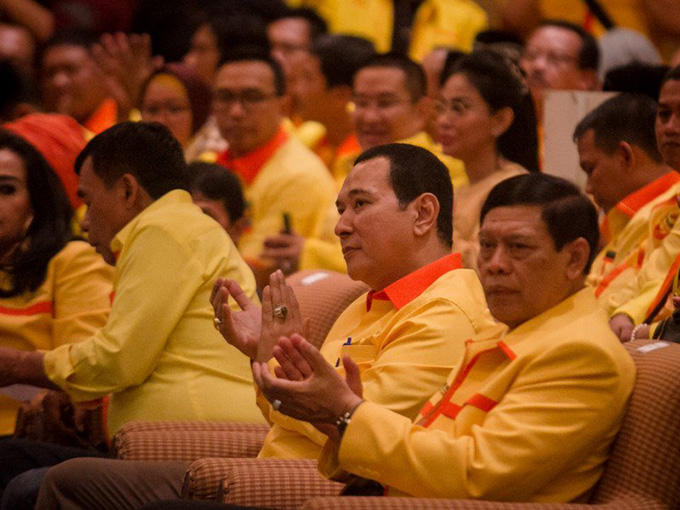
The youngest son of former Indonesian president Suharto, Hutomo “Tommy” Mandala Putra (centre), attending the opening of the Berkarya (Working) Party national meeting where he was voted chairman in Solo, Central Java, earlier this month. Image: Jakarta Post/Antara

By Ed Davies and Agustinus Beo Da Costa in Jakarta

The youngest son of former Indonesian president Suharto, Hutomo “Tommy” Mandala Putra, is making a new push to launch a career in politics at the helm of a party that believes it can cash in on his late father’s legacy.

Suharto, who ruled Indonesia with an iron fist for 32 years, was brought down by protests in 1998, amid accusations of vast corruption and nepotism benefiting his family and cronies.

Nonetheless, family members have made repeated attempts to get into politics, often seeking to tap into nostalgia about the unity and security under Suharto’s government, which was backed by a military that crushed any sign of revolt.

READ MORE: Open letter to PM Ardern – raise Papua human rights issue with Jokowi

“The vision and mission of this party is to prepare an alternative option for the 2019 elections,” Badaruddin Andi Picunang, acting sectary-general of the Berkarya Party, said in an interview at its Jakarta headquarters.

Yearning for stability
Many people still yearned for the stability and the robust economic growth and development, at least in the earlier decades, of the Suharto era, said Picunang.

-Partners-

“But now we see killings everywhere, pickpockets and religious leaders attacked,” he said.

Hutomo echoed this theme in a news conference after being elected chairman of Berkarya, which means “working” in Indonesian, at a party meeting earlier this month in the city of Solo.

“It is impossible for us to return to the New Order, it has become part of the history,” said Hutomo, who is widely known as Tommy, referring to his father’s government.

“But what we want to develop and continue are the good things that were carried out by the New Order,” he said, highlighting Suharto’s rolling five-year development plans.

Berkarya has an ambitious target of winning 80 seats, or about 14 percent of the 575 seats in Parliament. It is mostly being funded by Tommy and associates, according to Picunang.

Political machine
A former racing driver with a playboy reputation, Tommy, 55, made a fortune under his father’s powerful patronage. His Humpuss Group of companies held the national monopoly on clove distribution, the key ingredient in Indonesia’s favourite sweet-smelling kretek cigarettes.

He was sentenced in 2002 to 15 years in jail for paying a hitman to gun down and kill a supreme court judge, who had convicted him in a graft case. His term was later reduced on appeal and by remissions and he was released in 2007.

In his speech in Solo, Tommy said those who had been convicted and served their sentence, like himself, had the same rights as anyone else.

Many of the members of Berkarya are former members of Golkar, his father’s old political machine and still the second-biggest party in Parliament.

Tommy failed in an attempt to win the top job at Golkar and also to get backing from other parties for a bid at the presidency. His sister, Siti Hediati, popularly known as Titiek, has stuck by Golkar and is a member of Parliament.

Tobias Basuki, a political analyst at the Centre for Strategic and International Studies, was sceptical about Tommy and other family members getting much traction from a link to the Suharto legacy.

The nationalist Gerindra party, led by a former son-in-law of Suharto, Prabowo Subianto, had been able to successfully target many of the voters who might support them, he said.

“I think this is one of their last attempts. They have been trying to stay in the mainstream but none could take control of Golkar and if they don’t move fast they will be irrelevant,” said Basuki.

Print Friendly, PDF & Email

Article by AsiaPacificReport.nz

]]>

Flashback to the 1968 My Lai massacre: ‘Something dark and bloody’

Report by Dr David Robie – Café Pacific.RT’s special report on the My Lai massacre and the cover-up of this atrocity. THE MELBOURNE Sunday Observer — the original paper of that name which campaigned against Australian involvement as a US surrogate in the Vietnam War — published photographs of the My Lai massacre in December 1969. It was prosecuted for “obscenity” for reporting the obscenity but the charge was later dropped.This article was first published on Café Pacific.]]>

Gary Juffa: How we can stop criminal cartels stealing our PNG forests

]]>

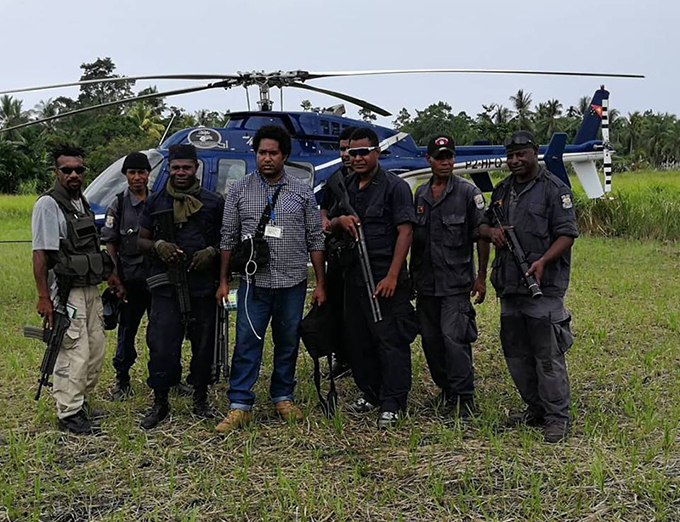
Police action squad dealing to illegal loggers in Oro province of Papua New Guinea. Image: Gary Juffa/FB

OPINION: By Gary Juffa

In the ongoing saga of stopping illegal logging in Papua New Guinea’s Oro province, our facts reveal that the PNG Forest Authority is failing our people.

A network exists whereby a few corrupt public servants in both Oro and the PNG Forest Authority have helped facilitate fraud and theft of resources worth millions. This network exists in every province where there is illegal logging occurring.

In Oro we have identified those involved and they shall be dealt with.

Meanwhile, our investigations reveal that PNGFA is negligent in its efforts and has been facilitating the theft of our forest resources for decades, it is complicit in the transnational crimes being committed and those who process the paperwork are in fact accomplices.

Despite all the government rhetoric about stopping illegal logging such as the SABLs and being concerned about the environment, the truth is, that this government entity, designed and created for the purpose of protecting PNG interests – PNG resources –  is in fact failing miserably in its mandate and is assisting transnational criminal cartels steal our forest reources.

What is the point of an organisation we pay for with our taxes to serve transnational criminal cartels and sell us out?

-Partners-

Pretext and fraud
Every month, shipments worth millions leave our shores – forest resources obtained under pretext and fraud, leaving behind destroyed landscapes, polluted waterways, and miserable landowners who have either been fooled or contemptuously mistreated and intimidated by corrupt elements of the public service and police.

But we can stop it.

Yes, you and I.

If we know about it and do nothing, we too are complicit.

I am doing something about it. I need you to stand with me and demand that the PNGFA and its Chairman, David Dotaon,a and its minister, Douglas Tomuriesa, and its entire department act to stop these crimes against Papua New Guinea and our people and protect our forest resources.

How?

Immediately review all licences granted to logging and you will find:

  • They are illegally granted via fraudulent processes and corrupt public servants;
  • The so-called landowner companies don’t represent our landowners at all;
  • All machinery is unregistered – it can all be impounded;
  • All foreign workers are without permits – they can be immediately detained until deported with the cost being met by the company, and their companies fined and banned from doing business in Papua New Guinea ever again;
  • Significant environmental damage to waterways and reefs and logging on gradients that are in contravention of the permit restrictions. Your sister agency, the conservation Environment Protection Authority, will at this stage be brought in to inspect the results, and fine and ban the company from any future agriculture or forest development projects.
  • That tax evasion and transfer pricing mechanisms have allowed the company to evade paying for decades. At this stage, the IRC and Customs can be brought into carrying out these audits and raise assessments and commence recovery and prosecution action. They can use the double tax treaties to recoup any taxes due.
  • Significant evidence of corruption involving many public servants and landowners. They can be referred to the police fraud squad for arrests and prosecution.
  • Much of our resources have been stolen and, as this is a crime, the principals of these companies can be charged and prosecuted when you lay the complaint. You can also seize properties as proceeds of crime.

Engage army and police
You can engage the army and the police to shut down all such operations and seize and auction all machinery.

If they sue us, so what? They are running illegal operations of a transnational criminal nature and they will lose in court.

Finally, some of the proceeds can be used to compensate genuine landowners.

And if you can’t do this, ask me. I will do it. For free.

Just give me the resources and let me select a team of great, patriotic policemen, soldiers; Labour, Migration, IRC and Customs officers, state lawyers – and watch.

The mandate of this forests department besides protecting Papua New Guinea interests at all times is to develop clever innovative strategies to use our forest resources in a sustainable manner.

There are options whereby the vast forest resources that provide us such a rich life do not need to be destroyed. We don’t need to destroy our forests so that we can progress.
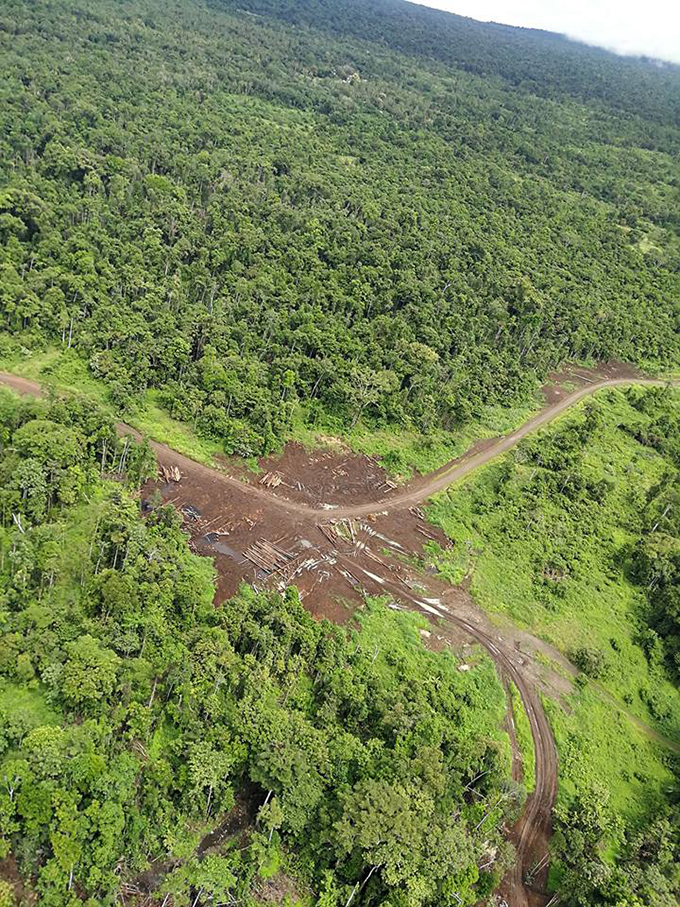
Illegal logging in Oro province … “We don’t need to destroy our forests so that we can progress.” Image: Gary Juffa/FB

Sustainable alternatives
At a time when the world is facing a global warming disaster, we can do our bit by preserving our forests and finding alternative means of income using forest products in a sustainable manner.

Yet after 40 years, we have silently and meekly allowed pirates to raid our shores and accept a few measly kina in compensation.

For each shipment worth about K6 million (K2.6 million), we accept less then K100,000 (NZ$43,000). Where is the common sense in this? For each forest cut down, thousands of species of flora and fauna are devastated and some may never recover.

We are destroying our natural home so we can live in an unnatural home … in pursuit of money and material goods so we can be “happy” because someone who we thought was more educated and civilised told us so.

But we will never be happy in this endless pursuit of the unnatural, living in an unnatural world where unnatural leaders make unnatural decisions that cause us more misery – naturally. We are only chasing illusions of happiness.

Certainly if we continue to allow this, if we are thinking, intelligent patriots, as we so often like to tell one another, then we are truly failing ourselves, our nation and our future.

It can be done  – it just needs all of us to rise up and do it together.

Gary Juffa is an Opposition MP in the Papua New Guinean National Parliament and Governor of Oro (Northern) Province. This commentary was first published on his Facebook page.

Print Friendly, PDF & Email

Article by AsiaPacificReport.nz

]]>

Open letter to PM Ardern: Raise Papua human rights crimes with Jokowi

]]>

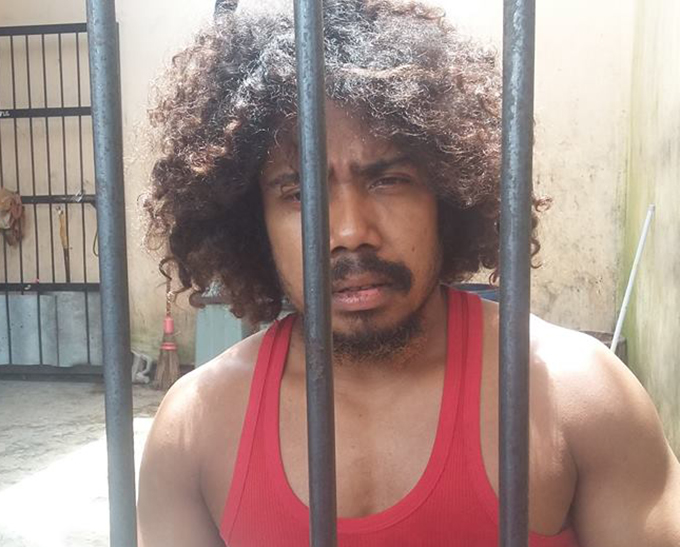
Yanto Awerkion, a young activist who was promoting a petition calling for the UN Decolonisation Committee to become involved in West Papua, was jailed for more that 9 months for “treason”. He will be released shortly due to international pressure. Image: Free West Papua

Pacific Media Watch Newsdesk

An advocacy group, West Papua Action Auckland, has urged Prime Minister Jacinda Ardern to raise human rights and the “suffering of the people” of Indonesian-ruled West Papua when she meets with President Widodo on Monday.

President Joko “Jokowi” Widodo, the leader of the largest economy in the Association of Southeast Asian Nations (ASEAN) with two-way trade worth NZ$1.76 billion last year, will arrive in New Zealand tomorrow for a two-day visit.

The West Papua action group says in a statement released by spokeswoman Maire Leadbeater:

Our Melanesian neighbours in West Papua are suffering grievously and must not be overlooked for the sake of “good relations” or markets for our goods.

For 55 years West Papuan people have been seeking freedom from repressive military rule, imposed on them in a scandalously unfair process. The loss of life is estimated to be at least 100,000.

Even though the struggle is now mainly about peaceful protest, petitions and diplomacy – there is no let up in security force crack-downs.

In the last three years the police have adopted a strategy of arresting demonstrators en masse, and thanks to a police chief edict, organisations deemed “separatist” are denied the opportunity to hold any kind of gathering.

-Partners-

Blatant breach
This is a blatant breach of the International Covenant on Civil and Political Rights to which Indonesia is a signatory.

Yanto Awerkion, a young activist who was promoting an petition calling for the UN decolonisation committee to become involved, has now spent over 9 months in jail on a treason charge. He will be released shortly – thanks to international pressure.

Last year the International Coalition for Papua documented 10 cases of extrajudicial killings, when the victims were either shot dead during security force operations or tortured to death in custody.

West Papuans say that they are experiencing “slow genocide” and this refers to the impact on their lives of marginalisation and environmental exploitation as well as to shockingly low standards of health and education.

In the remote Asmat area in the last few months there has been a devastating outbreak of measles which, coupled with malnutrition, took the lives of dozens of children.

There are a growing number of Pacific nations who are taking a stand in support for West Papuan self-determination.

So far New Zealand has not supported their initiatives in regional forums and at the United Nations.

So this meeting with President Widodo will be a timely opportunity for Prime Minister Jacinda Ardern and her ministers to demonstrate that New Zealand does support fundamental rights and freedoms, and that principle and compassion have not been forgotten.

Print Friendly, PDF & Email

Article by AsiaPacificReport.nz

]]>

WPFD, Indonesia and media ‘open door’ to West Papua

Event date and time: 
Thu, 03/05/2018 – 4:03pm6:00pm

PACIFIC MEDIA CENTRE SEMINAR 3/2018:
WPFD, INDONESIA AND MEDIA ‘OPEN DOOR’ TO WEST PAPUA

As the world marks World Press Freedom Day on May 3, Pacific Media Centre’s director, Professor David Robie, talks about the challenges of “press freedoms” in the world’s most populous Muslim nation, Indonesia. David was one of only two New Zealanders among the 1500 global journalists, media policy makers and communication researchers present at the last WPFD conference in Jakarta last May. He was also a keynote speaker at the “Press Freedom in West Papua” seminar in Jakarta organised by the Papuan chapter of the Alliance of Independent Journalists (AJI) in spite of attempts by local authorities to gag the issue at the conference. David also visited a progressive new research library founded by celebrated Australian author, researcher, activist and Indonesian affairs expert Max Lane in the cultural and educational city of Yogyakarta on this trip. he also spoke to Papuan university students at Universitas Gadjah Mada (UGM) while he was in Yogya. He will share his experiences and reflect on media freedom issues in Indonesia amid a disturbing and growing intolerance towards the secular traditions of the republic and the implications for West Papua. David’s trip to WPFD was funded by the School of Communication Studies and he has had research papers published in Media Asia and other publications about the issues. David is editor of Pacific Journalism Review and Asia Pacific Report and convenor of Pacific Media Watch freedom project at AUT.

World Press Freedom Day 2018 in Ghana – ‘Keeping Power in Check’ An Indonesian oasis of progressive creativity emerges in culture city

Who: Professor David Robie, director of the Pacific Media Centre When: May 3, 2018
4.30pm-6pm Where: Sir Paul Reeves Building
Auckland University of Technology
City Campus
Room WG907 Contact: Professor Robie Event on Facebook
 

PACIFIC MEDIA CENTRE SEMINAR 3/2018:
WPFD, INDONESIA AND ‘OPEN DOOR’ TO WEST PAPUA

As the world marks World Press Freedom Day on May 3, Pacific Media Centre’s director, Professor David Robie, talks about the challenges of “press freedoms” in the world’s most populous Muslim nation, Indonesia. David was one of only two New Zealanders among the 1500 global journalists, media policy makers and communication researchers present at the last WPFD conference in Jakarta last May

Report by Pacific Media Centre ]]>

Micronesian militarism – considering climate change

Event date and time: 
Wed, 30/05/2018 – 4:30pm6:00pm

PACIFIC MEDIA CENTRE SEMINAR 4/2018:
MICRONESIAN MILITARISM – CONSIDERING CLIMATE CHANGE

Pacific Media Centre’s postdoctoral research fellow, Dr Sylvia C Frain, explores the connections between climate change and United States (US) militarism in Micronesia and how both impact the daily life of Micronesians living in Hawai‘i. She is most interested in the everyday experience of Micronesians in relation to climate change and US militarisation from local perspectives. So often media narratives are dominated by outside interests and the US military, which overshadows discussion on climate change. Dr Frain seeks to highlight Micronesian narratives and the role that new media plays in sharing these experiences.

Dr Frain is traveling to the North Pacific in April/May and will report back after attending the 7th International Environmental Futures Conference, held at the East-West Center, University of Hawai’i at Mānoa, as well as speaking with students and faculty at the University of Hawai‘i, participants with the Jobs Corps programme on Māui, and those living in the Marianas Archipelago on the islands of Guam, Saipan, and Tinian.

Dr Frain will also facilitate a new media workshop open to all community members in the Marianas Archipelago who are interested in using new media platforms to disseminate research. She will assist the participants in converting their research into a format that is shareable across new media platforms (including, but not limited to: Facebook, Instagram, YouTube, Change.org). Who: Dr Sylvia C Frain, research fellow at the Pacific Media Centre

When: May 30, 2018
4.30pm-6pm Where: Sir Paul Reeves Building
Auckland University of Technology
City Campus
Room WG903A

Contact: Dr Frain

Event on Facebook


Report by Pacific Media Centre ]]>

Data collection on children in Pacific ‘poor’, says UNICEF

]]>

Pacific Media Centre Newsdesk

Poor data collection in several Pacific Island countries is obstructing UNICEF’s first assessment to measure progress in achieving the Sustainable Development Goals for children according to a report.

UNICEF’s report Progress for Children in the SDG Era warns that most Pacific countries may fail to meet some of the child-related SDGs which means children are at risk of being left behind in terms of improving health, sanitation, education, protection from violence, abuse and exploitation.

The report says there was a lack of data on child-related SDG targets such as the proportion of children living below the national poverty line, or having access to early childhood development initiatives, children attending lower secondary school, and the nutritional status of children.

UNICEF Pacific Representative Sheldon Yett said that data did not change the world themselves but make change possible “by identifying needs and gauging progress”.

Without investments in the collection and analysis of reliable data on behalf of the Pacific’s children, governments will not have the foundation to base decisions and actions to improve children’s lives.”

Widespread improvement needed
Pacific Island countries scored well below the average omposite score for data capacity of 74 out of a possible 100 in the region and Asia. The scores ranged from 32 for Federated States of Micronesia (FSM) and the Republic of Marshall Islands (RMI) to 70 for Fiji.

-Partners-

However, there are areas that several Pacific countries are on track to meet targets such as:

  • basic sanitation services where 9 countries are on track except FSM, Vanuatu, Kiribati and Solomon Islands;
  • basic water services where 11 countries are on track except RMI, Solomon Islands, and Kiribati; and
  • neonatal mortality where 8 countries are on track except for Kiribati, Nauru, FSM, Tuvalu and RMI.

Some of the key issues raised in the report that calls for significant acceleration include ending violence, abuse and exploitation of children, increase of children learning in primary school, and increase in the rate of immunisation coverage.

Pacific Island countries need to ensure a strong measurement component is added to service delivery systems in health, education, social services, or border control; have minimum data coverage for children; and stronger shared norms on data concerning children.

UNICEF said  how much government wouldl progress to meet SDGs would determine the future of children in the Pacific.

Article by AsiaPacificReport.nz

]]>

Bryce Edwards’ Political Roundup: Defence cover-up starts to unravel

Bryce Edwards’ Political Roundup: Defence cover-up starts to unravel

The New Zealand Defence Force’s attempted cover-up of the Hit and Run controversy appears to be unravelling. The military has finally been forced to make an about-turn – what they had claimed was a key flaw in the allegations in the 2017 book was, in fact, correct. [caption id="attachment_115" align="aligncenter" width="583"] An official inquiry now seems inevitable.[/caption] Previously the New Zealand Defence Force (NZDF) had tried to discredit Nicky Hager and Jon Stephenson’s Hit and Run book on the basis that the authors had made allegations about a raid on a village in Afghanistan that New Zealand’s SAS troops had nothing to do with. The military claimed that Hager and Stephenson’s story was about an entirely different village than the one the SAS raided in 2010, and hence the whole book was something of a nonsense. This week the military admitted that the book got it right about the village and its location. This is a significant moment in the saga. Toby Manhire explains the significance of the NZDF’s new admission in The fog of time: why the Defence Force’s Hit and Run admission really matters. He explains that the dispute over the location of the village had previously been the “central premise” of the NZDF’s attempted rebuttal of the claims, and with this now turning to dust, the case for an official inquiry into the matter is “overwhelming”. The new Defence Force document Numerous official information requests to the NZDF about the Hit & Run allegations had previously hit a brick wall. But this week, co-authors Hager and Stephenson – amongst others – were alerted to the fact that the NZDF had released some of the information in the form of a document, quietly published on its website last week. This PDF document was put together in an attempt to meet the directives of the Ombudsman’s Office, which had told the NZDF that, under law, it must release further information. You can read the new NZDF document here: Operation Burnham. Of course, this latest document tries to spin the best possible story from the saga, and even spends much of the document focusing on the Gallantry Medal citations given to two of the soldiers involved. Nicky Hager has condemned the document as being an “alternative version” of the Hit and Run story, and one that is “largely unsupported by any documentation” – see Nicholas Jones’ Hit & Run raid: Defence Force acknowledges ‘confusion’ on civilian casualty statements. In this article, Hager complains about the tactics the military has used from the start of this saga: “It was simply a diversion. This seems extremely unprofessional behaviour from a senior military officer.” Another crucial part of the NZDF’s back down on its earlier rebuttal of the Hit and Run allegations relates to the casualties. Hager and Stephenson’s book claimed six civilians were killed in the SAS raid, including a young child. The military had responded to this clearly, saying it had already investigated this and found the allegations to be “unfounded”. But this claim is now also unraveling. The latest NZDF document claims that the term “unfounded was intended to address the suggestion that the NZDF was responsible for civilian casualties”. So, the military is now more open to the existence of casualties but says it’s an “unfounded” allegation that any deaths were caused by New Zealand guns, and the finger is pointed at other coalition support brought in by the SAS. The document also still quibbles over other parts of the Hit and Run account, saying that a village building said to be “blown up” was actually only subject to “explosive entry”, and that buildings that caught fire may have been a result of the raid, but weren’t deliberately lit by SAS soldiers. For more on these issues, see Cate Broughton’s Defence Force admits book’s location right, but denies civilian casualties. Did the New Zealand Defence Force lie? Increasingly it looks as if the Defence Force has blatantly lied in order to escape scrutiny over the Hit and Run allegations. With an announcement of a government inquiry looming, military bosses may be defensively admitting the truth before facing more serious scrutiny. Blogger No Right Turn argues the military has made deliberate attempts to mislead, and should face some consequences: “This looks like a deliberate attempt by NZDF to mislead the public about the location and actions of our troops. The only question is whether Lt Gen Keating did it knowingly, or whether he was passing on lies crafted by his subordinates. Either way, someone has lied to us, and they need to be fired. And even if it wasn’t Keating himself, he bears command responsibility for that lie and fostering an environment where soldiers felt it was acceptable – so he needs to go as well” – see: NZDF admits they lied. Unsurprisingly, Jon Stephenson is of a similar opinion. He told Newshub yesterday that “I think it’s a disgrace it’s taken a year to admit what everyone knew. I think [Keating] should either be sacked or resign” – see Anna Bracewell-Worrall’s Defence Force U-turn: Hit and Run location was accurate. Furthermore, Stephenson says: “I’ve learnt that it’s very difficult to trust anything the NZ Defence Force says on these sensitive matters.” Toby Manhire also draws attention to the impact of the NZDF’s obfuscation over the village’s location and repeats the then prime minister Bill English’s statement about this: “We believe in the integrity of the Defence Force, more than a book that picks the wrong villages.” He also points out that Defence Force Chief Tim Keating has constantly made himself unavailable to further questioning on the matter: “every media request for a sit-down interview with the Defence Force chief was rejected”. On Twitter, economist Sam Warburton (@Economissive) has criticised the NZDF for not being very helpful in alerting those who had asked for the information in the latest document released: “The NZ Defence Force quietly released the information last Tuesday but told none of the people who had requested the information under the OIA (the document responds to several peoples’ requests for different info).” Furthermore, “It wasn’t until the Ombudsman’s office emailed requesters letting them know that we became aware of the information published. The NZ Defence Force should not be trusted to investigate itself.” Warburton is also extremely unimpressed with the new document released by the NZDF, suggesting it tells the public very little: “They had a year to come up with something and those things were: 1. emphasising that the names of the villages H&R used are wrong (still disputed by Stephenson and Hager) 2. releasing some info about medals soldiers received.” An official inquiry now seems inevitable The previous National-led administration refused all requests for an official inquiry into the Hit and Run revelations. However, last year the opposition parties of Labour, New Zealand First, and the Greens all championed the need for such an investigation, and now Prime Minister Jacinda Ardern has asked Attorney-General David Parker to deal with this issue. No doubt there are figures in the government and NZDF who are lobbying hard against an inquiry. According to supporters of an inquiry, “the Government is under great pressure from the Defence Force not to have an inquiry at all” – see Anna Bracewell-Worrall’s Pressure mounts on Government for Hit and Run inquiry. There are a some very senior people at NZDF headquarters, as well as in the special forces, who have a lot to lose if a public inquiry is held. And Defence Minister Ron Mark has also made numerous public statements which suggests a lack of sympathy for an inquiry, and he’s understood to be lobbying against one. Of course, Labour too, might fear aspects of an inquiry, given that it was the Helen Clark Labour Government that were also responsible for deployments to Afghanistan. It does seems inevitable that the Government will have to announce some sort of inquiry, but the terms of reference will be crucial. Labour may be tempted to keep the terms of reference very narrow, and crafted in a way to examine only the conduct of the SAS under the National-led government. The families of the victims in Afghanistan are also pleading for an inquiry, and you can see their latest, in-depth letter from lawyers, which makes very specific recommendations about the terms of reference. You can also see RNZ’s reporting of how these civilians and their lawyers are exasperated by how the NZDF is distributing information. Lawyer Deborah Manning says, “The public are becoming more and not less confused about what the New Zealand Defence Force is trying to say’ – see: Afghan raid inquiry needed to dispel confusion – lawyer. A petition was delivered this week to Parliament, calling for the new government to deliver on the promise of an investigation. For more on how the petitioners delivered their plea to MPs, and on how they think the inquiry needs to be set up, see Jo Moir’s Petition delivered to Parliament in a coffin calling for full inquiry into Hit and Run allegations. Finally, it’s worth asking how often the New Zealand military lies or obfuscates to the public about its activities. Unsurprisingly, such questions are put very well by Jon Stephenson in his recent article reporting on a one-day workshop held by NZDF boss Tim Keating, which was on “Transparency and Accountability in Modern Military Operations” – see: Open warfare. Apparently, journalists were not invited: “Lawyers, academics and NGOs were welcome, but media – those whose job it is to monitor powerful institutions like the NZDF – were banned.”]]>

Politics Newsletter: New Zealand Politics Daily – March 16 2018 – Today’s content

Politics Newsletter: New Zealand Politics Daily – March 16 2018 – Today’s content Editor’s Note: Here below is a list of the main issues currently under discussion in New Zealand and links to media coverage. [caption id="attachment_297" align="aligncenter" width="640"] The Beehive and Parliament Buildings.[/caption] Below are the links to the items online. The full text of these items are contained in the PDF file (click to download). Defence Press Editorial: Inquiry into Defence Force actions in Afghanistan essential to clear the fog of war Bryce Edwards (Herald): Political Roundup: Defence cover-up starts to unravel Sam Sachdeva (Newsroom): NZDF’s $2b aircraft plans postponed Curwen Ares Rolinson: National’s Anti-Aircraft Fire At Ron Mark Proves To Be Blanks Audrey Young (Herald): Former Defence Minister says he would have refused Air Force offer to pick him up near home Newstalk ZB: Ron Mark to compare Defence Force actions to past Ministers Newshub: Ron Mark threatens retaliation over Mark Mitchell’s NZDF aircraft allegations 1News: ‘I wouldn’t in a million years’ – National criticises Ron Mark’s NZDF aircraft use Anna Bracewell-Worrall and Jenna Lynch (Newshub): Ron Mark refutes claims he made personal use of military aircraft Audrey Young (Herald): Defence Minister Ron Mark accused using the Air Force as taxi service Craig McCulloch (RNZ): Defence minister under fire over Air Force flights Stuff: Defence Minister Ron Mark in the firing line over NZDF flights Legal profession sexual misconduct allegations Matt Nippert and Kirsty Johnston (Herald): Revealed: Law deans’ letter of fury to Russell McVeagh Damian George (Stuff): Hundreds of students rally against alleged widespread sexual harassment in law firms Katie Scotcher (RNZ): Students demand end to Russell McVeagh’s govt contracts Shane Cowlishaw (Newsroom): Hundreds descend on Russell McVeagh Talisa Kupenga (Maori TV): Hundreds of Law Students protest outside Russell McVeagh Alice Peacock (Herald): Top legal practice in sex claim Stuff: Chapman Tripp lawyers alleged to have had sex with students on law camp Labour sexual misconduct allegations Tim Murphy (Newsroom):How bad is bad enough? Barry Soper (Newstalk ZB): Gulping PM Jacinda Ardern learns political lesson the hard way Chris Trotter (Daily Blog): The Theory And Practice of Plausible Deniability Chris Trotter: School For Scandal David Farrar (Kiwiblog): In defence of Young Labour Dan Satherley (Newshub): ‘I’d rip their throats out’ – Judith Collins tears into Labour’s handling of Waihi camp incident Cameron Slater (Whaleoil): The definitive timeline of Labour’s sex scandal Herald Editorial: Labour should not lose faith in its youth Derek Cheng (Herald): Witness: People were vomiting in the toilets and bushes from too much boozing at Young Labour summer camp Abbey Wakefield (Metro News): Sexual harassment claims at Christchurch Young Labour International relations and trade Jim Rolfe (Politik): China: Why we shouldn’t get so close Matthew Hooton (Herald): Peters’ Putin problem RNZ: Russia talks won’t hinder EU trade deal – Peters Laura Walters (Stuff): British High Commissioner tells NZ to ‘prioritise’ trade deals, in wake of nerve agent attack Herald: Police looking into alleged poisoning of Russian spy in NZ Gordon Campbell (Werewolf): On the PM’s Indonesian guest, West Papua and Perfume Genius RNZ: NZ to put money where mouth is in Pacific, says Peters Government and democracy Paul Hobbs (1News): Exclusive: Fresh links revealed between MBIE and private investigation company accused of spying Newstalk ZB: Govt-contracted private investigators Thompson and Clark slammed as ‘unethical’ Sam Sachdeva (Newsroom): Academics slam ‘waka-jumping’ bill Bryce Edwards (Newsroom): Opinion: The money follows Labour again EQC Liz McDonald (Press): New laws, culture possible for Earthquake Commission: Minister RNZ: Don’t buy a house repaired by EQC, Christchurch homeowner warns Health Newstalk ZB: Health professor: Take tobacco out of dairies RNZ: Review to weigh up tobacco tax Mike Hosking (Newstalk ZB): Plain packaging won’t deter hard-core smokers Newstalk ZB: Expert: Tobacco tax clearly hasn’t worked Stuff: Ministry of Health dragged feet on Waitematā DHB’s bowel cancer warnings Aaron Leaman (Stuff): Questions mount over major DHB initiative ahead of launch date Kimberley Davis (Spinoff): What is going on with New Zealand’s midwives? Stuff: How many deaths are there in New Zealand a year? RNZ: Flooding may be behind leptospirosis rise Police Sam Hurley (Herald): Police’s Financial Intelligence Unit release report on money laundering, terrorism 1News: Police accept that their euthanasia meeting checkpoint stop was illegal Matt Stewart and Tom Hunt (Stuff): IPCA: Police not justified in using illegal checkpoint to target euthanasia group members RNZ: Checkpoint to find euthanasia supporters ruled unlawful No Right Turn: Unlawful and unaccountable Timaru Herald: Police taken to task, conviction quashed over ‘investigatory trick’ RNZ: When should police chase fleeing vehicles? Stuff: I’m a cop – this is why I chase cars Justice Eva Corlett and Sally Murphy (RNZ): Sex offenders moved: Corrections to review processes Jarred Williamson (Stuff): ‘Just dumped’: Public call on Corrections to explain placement of ‘high risk’ offenders Charlotte Graham-McLay (Vice): What I Learned About Writing From the Women Inside New Zealand’s Prisons Regional development Madison Reidy (Stuff): Shane Jones gives Ngāti Whare $6m to grow millions of native trees John Boynton (RNZ):Seed funding: Govt spends up on rural plant nursery Anna Bracewell-Worrall and Lloyd Burr (Newshub): Minginui gets $6m cash injection for growing native tree seedlings Environment David Williams (Newsroom): Minister urged to intervene in the Mackenzie Nita Blake-Persen (RNZ): Global warming threatening species’ survival, WWF warns Dominic Harris (Stuff): ECan accused of ‘bending the law’ over consents for water bottling plants Mike Watson (Stuff): National water quality targets for Taranaki rivers “overly optimistic” RNZ: Accept new rate or dirty beaches – Auckland Mayor Anan Zaki (Stuff): Calls for ‘birthplace of NZ’ to be heritage-listed Child welfare Craig McCulloch (RNZ): Treasury poverty estimate out by 24,000 children Laura Walters (Stuff): Treasury’s coding error shows fewer children lifted out of poverty than originally expected Melanie Taylor (Herald): This is the real truth behind the caregiver shortage Housing Dan Satherley (Newshub): ‘No one cares’ about National’s housing record – Judith Collins Interest: Housing Minister anticipating significant chuck of the Government’s KiwiBuild homes will be prefabricated and bringing overseas companies to NZ to get the work done John Roil (Hawke’s Bay Today): Are we facing housing Armageddon? Tax Tom Pullar-Strecker (Stuff): Environmental taxes could be balanced by drop in GST, Sir Michael Cullen suggests Tom Pullar-Strecker (Stuff): IRD says ‘dividend stripping’ cases involve tens of millions Proposal to rename Hamilton Council Libby Wilson (Waikato Times): Hamilton Mayor scraps Kirikiriroa City Council name change idea RNZ: Hamilton mayor drops plan for name change Horiana Henderson (Spinoff): Hamilton should honour Kirikiriroa Pā and the sacrifices made by its people Listener: Goodbye Hamilton, hello Kirikiriroa: The growing push for Māori place names Kate Hawkesby (Newstalk ZB): Hamilton City Council bogged down in bollocks over Kirikiriroa name change Primary industries Mike Watson (Stuff): Taranaki fishing operators welcome code of conduct Wanganui Chronicle: Owners fight Whanganui forest’s Emissions Trading Scheme ineligibility RNZ: Campaign aims to lower farm death toll Alexa Cook (RNZ): Mānuka battle: Federal funding for Australian campaign Animal welfare Chris Bramwell (RNZ): Petition against pigs’ farrowing crates: ‘A life of despair’ 1News: Farrowing crates for pigs give piglets ‘best opportunity of survival’, says Pork NZ, as petition calling for ban presented to parliament Education John Gerritsen (RNZ): Early childhood centres unsafe – teachers Rukuwai Tipene-Allen (Māori TV): Teachers say put more reo in schools Lance O’Sullivan 1News: Dr Lance O’Sullivan meeting with parties, keeping options open as he looks to political future Alex Braae (Spinoff): Place your bids: How parties can tempt Dr Lance O’Sullivan to their team Other Tamsyn Parker (Herald): Rising numbers of Kiwi ultra-rich Chloe Winter (Stuff): How businesses, media, Government work on gaining public trust Jo Moir (Stuff): Iwi says National MPs’ claims they weren’t consulted on America’s Cup base are wrong Eric Frykberg (RNZ): Retailers insist they’re not holding EVs back Phil Pennington (RNZ): Truck-trailer owners still need to respond to NZTA alert Māori TV: Petition against Sir Bob Jones to be presented to Parliament RNZ: NZ to help investigate Kiribati ferry disaster RNZ: Huggies removes offensive list of Māori baby names RNZ: NZ arts funder accused of institutional racism by Pacific artists Cherie Sivignon (Stuff): Mapua community pitches in to keep costs down for event with ex-PM Helen Clark RNZ: Stuff confirms closure of five publications Tom Pullar-Strecker (Stuff): Stuff confirms closure of five print titles]]>

Politics Newsletter: New Zealand Politics Daily – March 15 2018 – Today’s content

Politics Newsletter: New Zealand Politics Daily – March 15 2018 – Today’s content Editor’s Note: Here below is a list of the main issues currently under discussion in New Zealand and links to media coverage. [caption id="attachment_297" align="aligncenter" width="640"] The Beehive and Parliament Buildings.[/caption] Below are the links to the items online. The full text of these items are contained in the PDF file (click to download). Sexual misconduct allegations John Armstrong (1News): Jacinda Ardern looked like she was no longer in control during Labour’s week from hell RNZ: Labour calls in lawyer for independent review 1News: Jacinda Ardern insists she was ‘absolutely not’ kept ignorant of youth camp assault allegations by Labour Party to protect her Claire Trevett (Herald):Accidental worker bees protect Queen Jacinda Barry Soper (Newstalk ZB): Labour scandals raise big issues Jane Patterson (RNZ): Mishandling of sex assault complaints a political mess Finlay Macdonald (RNZ): Supervising a teen party 101: Stay awake Newshub: MP at Labour’s ill-fated party says she was asleep at the time Jo Moir (Stuff): Labour president nowhere to be seen during party sex assault allegations debacle 1News: Labour Summer Camp debacle: Why weren’t cops told of sexual assault perpetrator? Ex-party president Mike Williams defends Andrew Kirton’s choices Newshub: Labour’s assault claim cover-up wouldn’t have happened under Helen Clark – Mike Williams Catriona MacLennan (Spinoff): NZ’s failure on sexual misconduct is much, much bigger than any one case Laura O’Connell Rapira: How you can help build a country and world where every single person is safe and free from sexual violence Kate Hawkesby (Newstalk ZB): Not so sweet 16 – teens still need their parents Kate Hawkesby (Newstalk ZB): Labour are hypocrites over handling of summer camp saga RNZ: ‘We failed in our duty of care’ – Labour leadership Laura Walters and Jo Moir (Stuff): No heads to roll at Labour over youth camp allegations while review carried out Mark Jennings (Newsroom): Labour MP was asleep when sex assaults happened Derek Cheng (Herald): Labour Party summer camp inquiry to probe possible drug use and underage drinking Herald: Summer camp fallout: Labour suspends all youth events, lawyer to lead external review of party procedures Emma Hurley (Newshub): Labour Party suspends all Young Labour events Herald: Police confirm investigation into Labour summer camp sexual assault claims David Farrar (Kiwiblog): Russell McVeagh vs Labour Ana Lenard (Spinoff): Male lawyers need to speak up about sexual harassment Sasha Borisssenko (Newsroom):Students to march on Russell McVeagh Frances Cook (Herald): Law students march for end to sexual harassment RNZ: ‘Women on Boards’ cancels McVeagh annual prize-giving Defence Toby Manhire (Spinoff): The fog of time: why the Defence Force’s Hit and Run admission really matters Anna Bracewell-Worrall (Newshub): Defence Force U-turn: Hit and Run location was accurate RNZ: Afghan raid inquiry needed to dispel confusion – lawyer Jo Moir (Stuff): Petition delivered to Parliament in a coffin calling for full inquiry into Hit and Run allegations International relations and trade Chris Trotter: A Fork In The Road RNZ: Nerve agent clearly from Russia – Britain’s NZ High Commissioner Stuff: Russia has nothing to do with’ UK ex-spy poisoning, says ambassador Hamish Rutherford (Stuff): Winston Peters’ Russian trade deal hopes could cost New Zealand elsewhere Jim Rolfe (Politik): Why we should stay close to China Joanna Spratt (Incline): Turn it Up Mr Peters Gwynn Compton (Libertas Digital): To maintain credibility Ardern must sack Winston Peters Tom Peters (World socialist website): New Zealand’s “Pacific reset” aims to reassert imperialist dominance Eleanor Ainge Roy (Guardian): New Zealand diplomat tells US Democrats to organise against Trump or ‘we all die’ Newshub: Top NZ diplomat in hot water after controversial Tweet to US Democratic Party NZ Russian spy claims Derek Cheng (Herald): Former Russian spy says he was poisoned on Queen St, Auckland, in 2006 Michael Daly (Stuff): ‘Poisoning’ of ex-KGB agent in Queen St: Russian spy with fake Kiwi identity Kurt Bayer (Herald): Russian spy operated under fake New Zealand identity 1News: Watch: Explosive claims of former Russian spy who says he was harassed by Kiwi police and poisoned in Auckland RNZ: Police probe claims Russian was poisoned in NZ Health and disability Teuila Fuatai (Newsroom): UN to scrutinise NZ’s disability policy Karen Brown (RNZ): Ministry had been warned over cancer screening system risks Stuff: Plain cigarette packaging is here – and so are graphic new warnings Cecile Meier (Stuff): Canterbury health units at risk of ‘acute service failure’ could lead to deaths – expert Rachel Thomas (Stuff): Sugar fix: where taxes on sugary drinks hurt the most Eric Crampton (Stuff): There’s no good reason for a sugar tax in New Zealand Rachel Kelly (Southland Times): MP’s slam proposed downgrade of maternity services Aaron Leaman (Stuff): Waikato DHB’s intern doctor training under review Tax Working Group Thomas Coughlan (Newsroom): Cullen warns of big deficits without reform Tom Pullar-Strecker (Stuff): Tax Working Group poses threat to family ‘nest eggs’, says National Justice RNZ: Second teen held in police cells for days Hannah Bartlett (Stuff): Ministry says Nelson youth’s six days in police cell not good enough Tom Hunt and Matt Stewart (Stuff): Military-style automatics among hundreds entering criminal hands each year Lance O’Sullivan Raniera Harrison (Māori TV): Speculation over O’Sullivan’s Opportunities Party talks Newshub: Lance O’Sullivan targeted by multiple political parties for 2020 election Education Talisa Kupenga (Māori TV): Māori experience racism and negative stereotyping at school – Report Newswire: Māori children can feel ‘isolated’ at school – report Simon Collins (Herald): Restoring school entry age of 5 may cost taxpayers $42m Jessie Chiang (RNZ): Students still waiting on refunds from failed college Bike helmets Dominion Post Editorial: Times have changed, let’s look at our cycle helmet laws Melissa Nightingale (Herald): Helmet-optional cycle planned through Wellington Housing Susan Edmunds (Stuff): Half of all first-home buyers have parents’ help RNZ: House prices rise across New Zealand Environment Matthew Littlewood (Timaru Herald): Ecologist rejects ECan’s 90 per cent swimmable rivers target Marty Sharpe (Stuff): Hawke’s Bay Regional Council aims to make 90 per cent of rivers swimmable by 2030 Zac Fleming (RNZ): Surf life savers refusing to work at Auckland’s dirty, unsafe beaches Emily Joy Frost (Newsroom): Bigger waves needed to turn the tide on plastics Euthanasia David Seymour (Newshub): The vocal minority will always oppose euthanasia Bill Ralston (Listener): Why I want the euthanasia bill established in law Employment Megan Gattey (Stuff): Here are some of the jobs that Kiwis can’t, or won’t do RNZ: Refugees could be resettled to help worker shortage Alexa Cook (RNZ): Dairy farmers struggle to find workers RNZ: KiwiRail worker exposed to asbestos Local government Shane Cowlishaw (Newsroom): Mission impossible for local government Tom Rowland (Herald): Hamilton to Kirikiriroa name change debate rages RNZ: Council urged to promote te reo around city America’s Cup Bernard Orsman (Herald): Latest America’s Cup plan could work, says Team New Zealand – and much cheaper Todd Niall (RNZ): Agreement on Cup village close despite opposition Other Matt Nippert and Chris Knox (Herald): Ministry accused of hiding contractor spending Pattrick Smellie (Stuff): Even ethical companies need to turn a profit Newshub: Campaigners question ‘inhumane and illegal’ treatment of pigs Megan Gattey and Brad Flahive (Stuff): Petition to strip Sir Bob Jones of his knighthood to be presented at Parliament Robert Costa and Josh Dawsey (Washington Post): Donald Trump overlooks Chris Liddell as top White House economic adviser Tom Pullar-Strecker (Stuff): Chris Liddell unlikely to be shaken from career goals by disappointment Giovanni Tiso (Bat Bean Beam): Walking Radical Wellington Matthew Brockett (Bloomberg): The Rich Aren’t Happy About New Zealand Foreign Bolthole Ban Keith Rankin (Evening Report): Analysis: Census Survey RNZ: Old passenger trains unlikely to be sold – Greater Wellington Council]]>

PNG quake-hit communities plead for relief aid to ‘bypass’ government

]]>

As relief supplies continue to be delivered to earthquake affected communities, there is another looming disaster over water, reports EMTV News.

Pacific Media Centre Newsdesk

People in earthquake-affected areas of Papua New Guinea’s Highlands have asked international agencies to bypass the national government when providing relief.

The PNG Government has admitted that its response to the earthquake has been slow, hampered by damage to roads and access to funding.

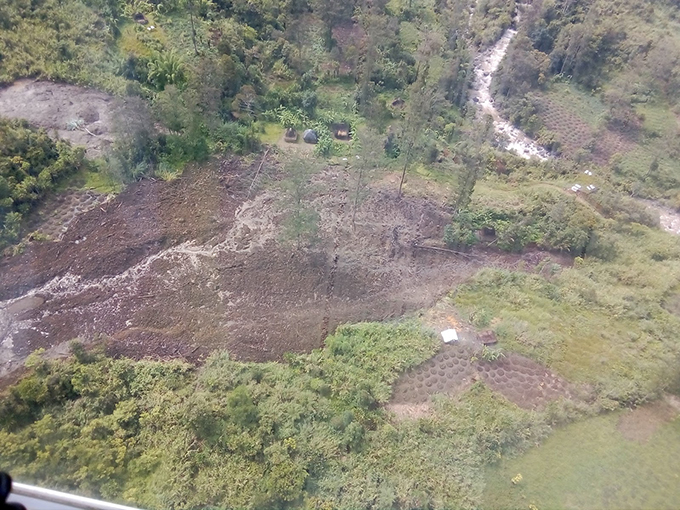
In Koroba in Hela Province, local leader Stanley Hogga Piawi told the ABC’s PNG correspondent Eric Tlozek that more than two weeks after the 7.5 magnitude quake, people were still waiting for help.

LISTEN: Angry Highlanders call on relief agencies to sidestep PNG government

Continuous rain is hampering relief efforts in the earthquake-devastated regions of the Highlands, reports the PNG Post-Courier.

-Partners-

The wet may continue for a few more days as helicopters, the mainstay of the relief efforts, are now limited in the operation.

The National Weather Service (NWS) office has warned of a “high risk” of landslides, flooding and a slight chance of a tropical cyclone. The wet season has finally extended into the Southern and Highlands regions, the NWS said yesterday.

As Papua New Guinea experiences the wet season and unusual natural disasters, the NWS forecasting and warning centre assistant director Jimmy Gomoga is now urging people to listen to the radio stations for weather warnings updates.

Aircraft use restricted
The Australian and New Zealand defence forces said yesterday they had limited the use of their lighter aircraft due to bad weather.

The NWS said the wet season normally set in about December until late May when the dry season begins.

“According to the latest analysis from the weather office, we are in a weak La Nina phase and will mean higher rainfalls across the mainland PNG and mostly over the Southern region with high risk of flooding in the Momase, Highlands and Southern regions, high risk of landslides in the Highlands and deforested areas and 30 to 40 per cent chance of a tropical cyclone forming or passing within PNG,” Gomoga said.

He said the wet season triggered tropical cyclones so people living along coastal waters, particularly along the Solomon Sea and Coral Sea, must listen to weather warnings on the radio and take precautions.

“This weather we are experiencing will continue for the next 24 hours and may continue as the country is still in the wet season,” Gomoga said.

“The peak period has already passed and the month of April and May are the transitional periods and eventually into dry season which kicks into in the month of June.”

In the meantime, the weather office is closely monitoring the ocean currents in possibility of a tropical cyclone.

Water shortage ‘looming disaster’
While relief supplies continue to be delivered to earthquake-affected communities, a lack of water is proving to be a looming disaster, reports EMTV News.

In a briefing, Oil Search Limited managing director Peter Botten said the lack of access to clean water sources for many communities had increased the risk of sickness.

The company is now working with its partners, including state agencies, in an effort to deliver clean water to communities, to prevent the spread of water-borne diseases.

Among its relief efforts, Oil Search has deployed a dedicated medical team to reach affected communities – these teams have already noted an increase in water-borne diseases, with several medical evacuations already carried out.

Australian doctors to help
Australian Prime Minister Peter O’Neill has announced Australian doctors would come to Papua New Guinea to help medical teams in earthquake-affected areas, as fear of water-borne diseases emerge, reports The National and as also reported earlier by Asia Pacific Report.

“We know that over the next few days or weeks, most of the water-borne diseases will start affecting some of the population in the area. We have to lift our presence in medical support that we will have to extend to them,” O’Neill said.

“Dr Temu [Health Minister Sir Puka] has already cleared for the Australian doctors to come and help us…They will come and help our own medical specialists which the Health Department is putting together to dispatch to the remotest communities throughout the country.”

Sir Puka said they were mobilising a team from the Port Moresby General Hospital.
“We have formally requested the Australian government [to send doctors] because Australian doctors in emergency situations are well organised,” Sir Puka said.

“So we have asked them for assistance which will complement what we have.”

O’Neill said relief efforts were ongoing, reports The National.

Remote communities
“We are starting to reach many of the remote communities, supplying medicine, food and relief supply to the provinces affected,” he said, adding that the district development authorities in areas being allocated funding were assisting the people “which we are not able to reach”.

“Most of the members of Parliament and the district chief executive officers have been trying to mobilise the supplies and in particular medicine, and getting the injured and the sick out of the areas that have been affected,” he said.

He added that commitments, towards the government’s relief efforts so far had exceeded K100 million.

It included donations from governments – “private sector donations coming through is well over K5 million.”

Print Friendly, PDF & Email

Article by AsiaPacificReport.nz

]]>
PMC projects lure doco makers, politics writer and Fiji journalist

]]>

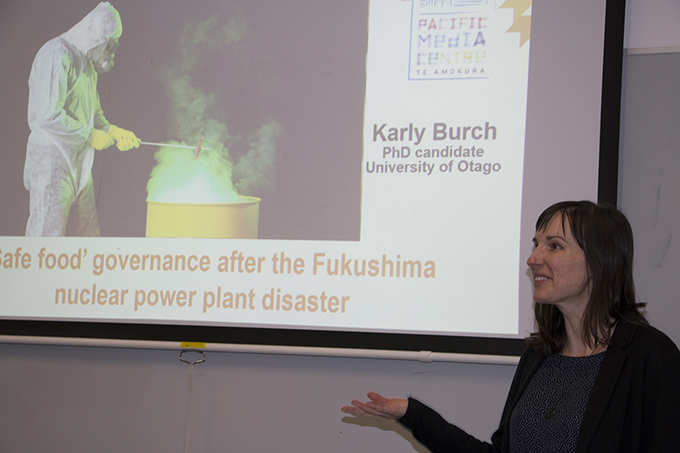
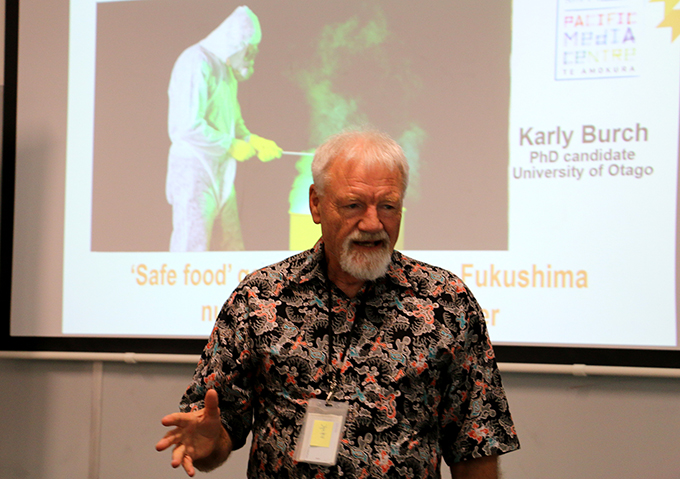
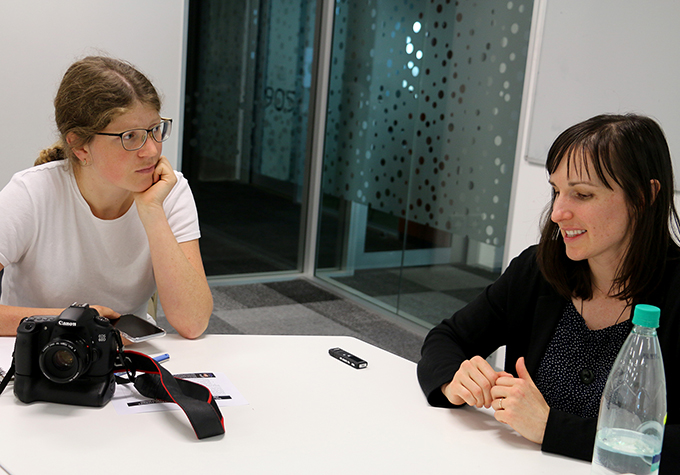
Jean Bell (left) interviews Otago University’s nuclear food safety doctoral researcher Karly Burch on her first Pacific Media Watch assignment. Image: Del Abcede/PMC

Pacific Media Watch Newsdesk

Pacific Media Centre project students and interns announced for the year this week include two budding documentary makers and a seasoned journalist from Fiji with more than two decades of experience.

Jean Bell has been appointed the Pacific Media Watch contributing editor for 2018 and posted her first story this week about concerns over food safety and a politically “contained” debate seven years after the Fukushima Daiichi nuclear power plant disaster in Japan in March 2011.

She is a current student at Auckland University of Technology, studying towards a Postgraduate Diploma in Communication Studies, majoring in journalism.

Bell also graduated from the University of Auckland in 2016 with a Bachelor of Arts double major in politics and international relations.

In 2017, Bell worked as a legal secretary in a commercial law firm and spent her free time working on freelance journalism projects and writing news for Auckland radio station 95bFM.

She will also be hosting the Pacific Media Centre’s weekly radio programme Southern Cross.

-Partners-

Bell admits she is no expert in Pacific journalism or politics, “but that’s one reason why I wanted to apply.

“I see this as a chance to learn more and widen my skill base while also bringing the valuable skills I already have to help drive this project.”

Highly experienced
Sri Krishnamurthi brings more than 20 years of experience as the PMC’s 2018 NZ Institute for Pacific Research journalist.

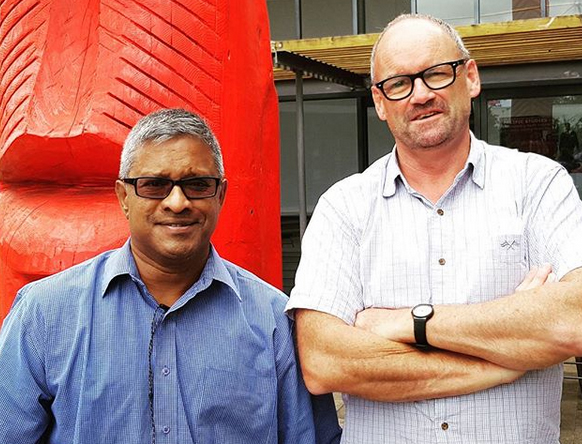
Sri Krishnamurthy (left) at the University of Auckland’s Pacific Fale with NZIPR manager Dr Gerard Cotterell. Image: David Robie/PMC

Originally from Fiji, Krishnamurthi has always had a strong connection with – and a deep interest in – what is happening in the Pacific region.

He is currently a part-time student in the Postgraduate Diploma in Communications (Digital Media) course at AUT. He also has an MBA (Massey University).

Krishnamurthi worked for many years as a journalist with the now-defunct New Zealand Press Association newsagency and has held a variety of senior communications posts, including Northland Inc., an iwi (Ngatiwai) organisation, the Ministry of Pacific Island Affairs and as a minister’s press secretary.

“The media landscape has changed with the advent of the digital age, but the fundamentals of working as a journalist, a public relations practitioner, or in communications, require the same inherent skills they always have – albeit with some enhancements,” he says.

The two students going to Fiji this semester on the Bearing Witness climate change project are Hele Ikimotu and Blessen Tom, both on the Postgraduate Diploma in Communication Studies degree and keen to develop their screen production and writing skills.

Hele Ikimotu … passionate about Pacific stories. Image: PMC

‘Pacific passion’
Of Niuean and Banaban descent, Hele Ikimotu completed his Bachelor of Communication Studies degree majoring in journalism last year and worked as an intern on the NZ Institute for Pacific Research project.

Ikimotu is currently employed by the Office of Pacific Advancement at AUT, working for the the Oceanian Leadership Network, a new initiative at the university.

“I have a passion for Pacific stories, issues and people,” he says. “ I believe there needs to be more coverage on the Pacific community and positive representation of Pacific people.”

Blessen Tom … directed short films. Image: PMC

Blessen Tom, originally from India, completed his Bachelor and Masters in Literature and is now pursuing his studies in digital media.

He is passionate about visual storytelling and documentaries.

Tom directed two short films and a drama, and is currently working on a mini documentary series for YouTube.

Pacific Media Centre director Professor David Robie described the project-winners as a “talented team” and looked forward to working with them this year.

He also praised project partners the Pacific Centre for the Environment and Sustainable Development (PaCE-SD), University of the South Pacific Journalism Programme, NZ Institute for Pacific Research (NZIPR), AUT’s Te Ara Motuhenga and Evening Report.

Print Friendly, PDF & Email

Article by AsiaPacificReport.nz

]]>
ICC withdrawal ‘a principled stand’, claims Philippines’ Foreign Secretary

By Paterno Esmaquel II in Manila

Secretary of Foreign Affairs Alan Peter Cayetano claims the Philippines’ withdrawal from the International Criminal Court is “a principled stand” as nongovernmental organisations and politicians supposedly use human rights for political ends.

“The political NGOs and the politicians have taken over human rights,” Cayetano has told GMA News anchor Jessica Soho.

“Now it’s being used in politics. But this is a principled stand,” he added in a mix of English and Filipino.

President Rodrigo Duterte announced earlier on Wednesday that the Philippines would withdraw from the ICC “effective immediately.”

READ MORE: Duterte’s statement on Int’l Criminal Court withdrawal

In his interview with GMA News, Cayetano explained that withdrawing from the ICC was “not a way of evading” an ICC probe into Duterte’s anti-drug campaign.

Cayetano said that even if the Philippines withdraws from the ICC, the court still had jurisdiction over the things the Philippines did when it was a member.

Additionally, he pointed out that withdrawing from the ICC “has been in informal discussions ever since,” even when he was still a senator during Duterte’s term.

‘Internal conflict’
The Philippines’ top diplomat recalled that during the time of then president Gloria Macapagal Arroyo, the military did not want the Philippines to ratify the Rome Statute of the ICC.

This was because the Philippines has an “internal conflict” that might “compromise” police and soldiers.

The Philippines ratified the Rome Statute during the time of then president Benigno Aquino III. One of those who pushed for this ratification was human rights lawyer Harry Roque, now Duterte’s spokesman.

“Now the President sees that there is internal conflict, like what happened in Marawi, et cetera. And that’s the same reason that the US, China, Russia did not sign or did not ratify it. The US signed but did not ratify it,” Cayetano said.

Read an excerpt from Cayetano’s interview below:

“The political NGOs and the politicians have taken over human rights eh. So ang problema hindi na katulad dati na prinsipyo talaga sa human rights. Sa ngayon ginagamit sa politika. But this is a principled stand. Ayaw nating maging hipokrito, na ang malalaking bansa hindi sumali dito.

“But to prove that it’s not a way of evading or getting away from the consequences or the jurisdiction ng ICC or nangyari na, even if mag-withdraw tayo, covered pa rin ‘yung actions natin when we were a member.

“So sa mga nagsasabi, ayaw lang ni Presidente maging liable dito, he’s not doing it for himself, kasi we still have obligations during that time. It’s really for the soldiers, the police, and to make a stand sa ating mundo na you know, huwag ‘nyong ipolitika ang human rights.”

Duterte made this declaration more than a month after the ICC opened its “preliminary examination” of the alleged extrajudicial killings in his war on drugs.

The President vowed the ICC cannot have jurisdiction over him, “not in a million years.”

Article by AsiaPacificReport.nz

]]>

Asia Pacific Journalism projects and internships 2018

Pacific Media Centre
Tuesday, February 27, 2018

The Pacific Media Centre is running several Asia-Pacific projects again this year and along with Asia Pacific Journalism (Semester 2) we have a new special paper to match – International Journalism Project (JOUR810).

The deadline for applications is Friday, March 2, at 4pm.

Send applications to: jessie.hsu@aut.ac.nz
Copy to: david.robie@aut.ac.nz

This year’s projects on offer:

Bearing Witness climate change project: Two weeks in Fiji in mid-semester break to experience and cover climate issues. Based at the University of the South Pacific. The PMC pays for return airfares, accommodation and a living koha. Apply and if selected, this counts towards JOUR810 international Journalism Project. More information. Contact: david.robie@aut.ac.nz
Possibly a Fiji elections project in the Second Semester mid-semester break (watch this space).

Pacific Media Watch freedom project: 10 hours a week, paid at HRT08 rates, reporting and editing on media freedom, ethics, educational, training and ownership issues for the digital websites Asia Pacific Report and Pacific Media Watch. More information. Contact: david.robie@aut.ac.nz

NZ Institute for Pacific Research reporting Pacific research project: A part-time internship with the University of Auckland’s Centre for Pacific Studies, but working out of AUT. Organised by the Pacific Media Centre in collaboration with NZIPR. 10 hours a week, paid at HRT08 rates. This assignment involves researching and news gathering and writing profiles about Pacific researchers and their projects. More Information. Contact: david.robie@aut.ac.nz Managed by Research Operations Manager Dr Gerry Cottrell at NZIPR.

Asia Pacific Report international news website: Internships are available on application. More information. Contact: david.robie@aut.ac.nz

Postgraduate students are preferred but there may be opportunities for final-year journalism major students.

Below: Kendall Hutt, one of the 2017 Bearing Witness climate journalists, talks to David Robie about the project. Video: PMC

Attachment Size
Asia Pacific Journalism Studies_2018flyer.pdf 561.13 KB
JOUR810 International Journalism Project – climate change FIJI_2018flyer.pdf 663.61 KB
PMW project2018_editorjobdesc_sem1-2.pdf 453.23 KB
PACIFIC RESEARCH JOURNALISM PROJECT 2018 Final.pdf 412.54 KB

Report by Pacific Media Centre ]]>

West Papuans launch quake appeal for survivors in PNG Highlands

A 100 candles vigil was held in the Papuan capital city of Port Numbay (Jayapura) this week and people gathered to raise funds and donations following Papua New Guinea’s devastating earthquake. Video: Free West Papua Campaign

Pacific Media Centre Newsdesk

West Papuans have set up their own Papua New Guinea Earthquake Appeal in solidarity with their fellow Melanesians across the border following last month’s devastating Highlands earthquake with more than 100 deaths.

On Tuesday, a candlelit vigil was held in the Papuan capital city of Jayapura, raising awareness and financial support for the people of Papua New Guinea.

In a media release, the organisers appealed “to all Papuans from all walks of life to participate in solidarity with our Melanesian brothers in Papua New Guinea who are stricken by the disaster”.

This message came from Benny Wenda, chairman of the United Liberation Movement for West Papua (ULMWP), which initiated the appeal:

Dear friends,

Following my message of condolence earlier this month after the devastating earthquake in Papua New Guinea, the situation has tragically further deteriorated and now over 100 people have died and over 300,000 people have been left without shelter.

In response to this, we the people of West Papua are standing shoulder to shoulder with our wantoks and brothers and sisters across the border in Papua New Guinea in an act of Melanesian solidarity from Sorong to Samarai. Fundraising is taking place across West Papua and a 100 candle vigil will be held in support of the people of Papua New Guinea.

As fellow Melanesians, we the people of West Papua especially feel the pain and suffering of our people on the other side of the border but as fellow human beings we can all feel such pain and we all know that it is right to support people in need. Therefore, I am urging everyone around the world to please help support the ULMWP’s PNG Earthquake Appeal and in doing so, support the people of Papua New Guinea in their time of need.

Please do donate generously here to the ULMWP’s PNG Earthquake Appeal fund, the bank details of which can be found below:

SWIFT Code: BOSPPGPM
BSB Number: 088943 ,
Account Name: Peter Yossi Kovempa
Acc No :007008699618
BSP Bank, Boroko Branch Port Moresby

All proceeds will go directly to the people of Papua New Guinea in their earthquake relief effort. The people of Papua New Guinea have consistently stood by their brothers and sisters in West Papua during our suffering and struggle for self-determination. It is only right that we stand by them in their time of need too, and we urge people around the world to do the same.

Thank you very much.

Article by AsiaPacificReport.nz

]]>

Politics Newsletter: New Zealand Politics Daily – March 14 2018 – Today’s content

Politics Newsletter: New Zealand Politics Daily – March 14 2018 – Today’s content Editor’s Note: Here below is a list of the main issues currently under discussion in New Zealand and links to media coverage. [caption id="attachment_297" align="aligncenter" width="640"] The Beehive and Parliament Buildings.[/caption] Below are the links to the items online. The full text of these items are contained in the PDF file (click to download). Labour Party sexual misconduct allegations Newshub: Labour camp alleged sexual assault victim lays police complaint RNZ: Labour summer camp victim goes to the police Laura Walters (Stuff): Victim tells Labour they have gone to police over alleged sexual assault Herald: Labour summer camp victim has gone to police over sexual harassment claim Dominion Post Editorial: Labour should have fronted on sexual misconduct ODT Editorial: Missteps on harassment allegations Laura Walters and Jo Moir (Stuff): Sexual abuse support organisation says Labour right not to tell parents Audrey Young (Herald): Ardern missed an opportunity to call out bungled response to assaults Newshub: Alleged sexual assaults at Labour camp a ‘media beat-up’ – Don Brash Newshub: Labour’s ‘enormous lapse of judgement’ over alleged sexual assaults – Chris Trotter Mike Hosking (Newstalk ZB): Labour Party general secretary Andrew Kirton must be sacked over camp sexual harassment Fiona McNamara (RNZ): Sexual violence in NZ: ‘We can be rid of it’ Spinoff: ‘Go to the police and tell your parents’: A sexual assault survivor’s story Heather Roy: Young Labour Summer Camp and Parents’ Right to Know Eleanor Ainge Roy (Guardian): New Zealand Labour rocked by youth camp sexual assault allegations RNZ: Explainer: Young Labour summer camp controversy RNZ: ‘No complaints’ at other political parties’ youth camps Newshub: Labour investigating another sexual assault complaint from separate party event RNZ: Second Labour sexual assault incident alleged 1News: Another assault at an earlier Labour youth event revealed Jo Moir (Stuff): Second sexual assault allegation surfaces for Labour Party Herald: Andrew Kirton receives allegation of misconduct from earlier Labour event Mānia Clarke (Māori TV): Labour Māori MPs tight-lipped over sexual assault allegations Newshub: ‘We took too long’ – Jacinda Ardern on alleged sex assaults at Young Labour camp Herald: Simon Bridges says Labour has left itself open to accusations of a cover-up Newshub: Labour’s hypocrisy on minors drinking ‘beggars belief’ – David Seymour Defence Nicholas Jones (Herald): Hit & Run raid: Defence Force acknowledges ‘confusion’ on civilian casualty statements Cate Broughton (Stuff): Defence Force admits book’s location right, but denies civilian casualties RNZ: NZDF admits Afghan village raid same location as in Hit & Run Martyn Bradbury (Daily Blog): Defence Force admits SAS Afghan raid WAS in the same location as evxents in Hit and Run No Right Turn: NZDF admits they lied Anna Bracewell-Worrall (Newshub): Pressure mounts on Government for Hit and Run inquiry Newstalk ZB: Hit and Run petition heads to Parliament Police NZ Herald editorial:Innocent people pay price of police pursuits – NZ Herald Brian Rudman (Herald):If police pursuits were shootings, we’d ban them Adrienne Matthews (Herald):I supported police pursuits until I saw the consequences Sandra Conchie (Herald): Police Minister Stuart Nash’s message to organised criminals – ‘We’re coming for you’ Foreign affairs and trade Craig McCulloch (RNZ): Peters raises ‘grave concerns’ over UK nerve agent attack Richard Harman (Politik): Peters once again not ready to accuse Russia Claire Trevett (Herald): Britain to call on NZ to join possible reprisals against Russia for nerve-agent attack Tracy Watkins (Stuff):Russian spy scandal: Britain reaches out to New Zealand Sam Sachdeva (Newsroom): NZ diplomat under fire for US politics tweets Government Thomas Coughlan and Lynn Grieveson (Newsroom): What to expect from the Tax Working Group Henry Cooke (Stuff): Shane Jones reveals the panel who will help steer the $3b provincial growth fund Interest: Immigration Minister Ian Lees-Galloway says the Government never had a specific target for cutting immigration numbers Paula Bennett (Stuff): Why Willie Jackson should stop looking for excuses Parliament Claire Trevett (Herald): Dr Lance O’Sullivan considering leadership of The Opportunities Party, National also keen Shane Cowlishaw (Newsroom): Online voting back on the agenda No Right Turn: More on ministerial briefings David Farrar (KIwiblog): Comparing the front benches Education Eva Corlett (RNZ): Children call for changes to schools: ‘No one cares enough’ Newshub: What children say is missing from their school experience Bike helmets Simon Maude (Stuff): Not wearing a bike helmet is unconscionable Stuff: Rebecca Oaten, aka The Helmet Lady, and her crusade for compulsory bike helmets Megan Gattey and Michael Daly (Stuff): Kiwis don’t like cycle helmets, but we ignore plenty of other laws too 1News: Should Kiwis still be required to wear a helmet while cycling? Advocate group says no 1News:‘It puts some people off’ – advocates say cyclists should be able to ride without helmets Joel Ineson (Press): Canterbury tops country for fines dished out to cyclists not wearing helmets Energy Pattrick Smellie (BusinessDesk): Solar power for wealthy poses risk to low-income Kiwis Pattrick Smellie (Newsroom): Warning: electric cars could overload our power network Housing Robin Martin (RNZ): Rental shortage puts squeeze on the vulnerable Hamish Rutherford (Stuff): Outgoing Reserve Bank head says LVRs are set to become ‘part of the furniture’ Tamsyn Parker (Herald): Wellington house asking prices fall for first time in five months Environment Shaun Hendy (Spinoff): Why is NZ’s environmental regulator trying to muzzle scientist Mike Joy? RNZ: NZ needs to up climate change effort – Shaw Eloise Gibson (Newsroom): Our shrinking beach access Laura Tupou (RNZ): NZ signs up to anti-plastic pledge Dominic Harris (Stuff): Efforts to reduce plastic in seas ‘meaningless’ without knowing where it is from – National Helen Harvey (Stuff): Grassroots environmental activist group amass $80,000 war chest to take council to court over drilling rules RNZ: Councillor calls for inquiry over toxic foam Gayle Souter-Brown (Briefing Papers): Design for well-being Justice Roger Brooking (Spinoff): How to cut the prison population by 50% in five years Katie Doyle (RNZ): Teen kept in police cells for six nights Health Newshub: Tobacco companies selling smokes in generic brown packaging Janet Hoek, Philip Gendall, Richard Edwards, Shayne Nahu, Nick Wilson (Public Health Expert): Standardised packaging: A new era in reducing tobacco marketing in NZ Russell Brown (Public Address): A medical cannabis korero by the sea Primary Industries Gerald Piddock (Stuff): First it was peak cow, is NZ facing peak milk factory now? Sally Rae (ODT): Mycoplasma bovis: MPI stock process creating huge stress Other Peter Cullen (Stuff): Modern day slavery and human trafficking in New Zealand Chloe Winter (Stuff): Kiwis have become a little more trusting Herald: Team NZ says new plan for America’s Cup could work but problems still need to be resolved Brad Flahive (Stuff): An Irish abortion referendum raises questions why NZ is still waiting Libby Wilson (Stuff): Kirikiriroa City Council name change suggestion falls flat with councillors, public David Williams (Newsroom): Axe taken to planned sports centre Pattrick Smellie (BusinessDesk): Outdated copyright law makes NZ ‘less attractive’ for innovation investment, says Deloitte]]>

Keith Rankin Analysis: Census Survey

Census Survey – Analysis by Keith Rankin [caption id="attachment_1450" align="alignright" width="150"] Keith Rankin.[/caption]

I did an anonymous survey of my first year (tertiary) statistics and economic students. In West Auckland, while we have some international students, the biggest demographic is New Zealand residents born outside of New Zealand. Many students, though not most, are over 25 years old.

58 students attended classes from 8-13 March. The quinquennial population census was held on 6 March 2018. 36 of the 58 students completed the census; that’s  62 percent.

This is a bit of a worry. Rather than taking a census, we seem to be gathering a large non-representative sample; a biased snapshot of New Zealand in 2018.

Of the 22 who had not completed the census, 13 clearly answered ‘Yes’ to ‘My household has not received an online census code’.

From these 13, the following comments were made:

  • “I have received a census to my address for the old tenant who used to live there, but not for myself”.
  • “Don’t know what to do without a census code”.
  • “I am not a New Zealander. So I don’t know this census survey.”
  • The system didn’t have my address in it. It also does not allow for unknown separate households at one property, requiring ringing for more codes” (This student plans to complete the census when/if the codes arrive.)
  • “I did not receive the form”. This student ‘could not contact the Statistics New Zealand helpline’ and is ‘waiting for Statistics New Zealand to contact me’.

So, it’s not entirely apathy.

Among the other 9 who did not complete the census, comments given were:

  • ‘The online Census code for my household did not work’. ‘I could not contact the Statistics New Zealand helpline’. “Delay in reply”.
  • “I received the form but keep forgetting to fill it up”.
  • “I was not informed”.
  • “I live with my landlord and I don’t know if they do it or not”.
  • “I have no idea if my household has received an online census code”.

I also note, from colleagues, that some parents filled in the census for their adult ‘children’. This suggests some erosion of civic culture; and suggests that future censuses may be little more reliable than this one.

I understand that there will be an extensive follow-up process from Statistics New Zealand. Perhaps I should survey my students again in May, to learn if the after-census service has been effective.

]]>

Elite groups ‘contain’ nuclear food safety debate, says researcher

By Jean Bell in Auckland

A loose collection of elite groups shape the global language and thinking around food safety in the nuclear era, says a researcher who has been studying the Fukushima disaster in Japan seven years ago.

This cohort, formed in the 1960s and dubbed by the researcher as the “Transnational Nuclear Assemblage”, includes government and business institutions that produce ruling texts on radiation protection that determine safe levels.

A core idea was that of narrative and approach to issues, especially relating to different “realities”, said Karly Burch, a doctoral candidate at the University of Otago who was speaking at a public seminar hosted by AUT’s Pacific Media Centre.

The seminar focused on the governance of “safe food” after the Tokyo Electric Power Company’s (TEPCO) Fukushima Daiichi nuclear power plant explosions in the wake of the 9.1 magnitude Tōhoku earthquake and tsunami on 11 March 2011.

“Multiple realities are possible, but sometimes the ruling elite wants to enact a certain reality and we are convinced there is only one way to do things but in fact there may be many.”

The anniversary of the disaster was last Sunday.

Researcher Karly Burch speaking at the Fukushima seminar. Image: Del Abcede/PMC

Burch moved to Japan in 2008 and lived in the Kansai region. After two years, she moved to Europe to do her masters degree research in agroecology. At the time of the disaster, she was in Austria and she returned to Japan.

Radiation discourse
Her research “questions how the Japanese government and agricultural industry encourage people to eat food that possibly contain TEPCO’s radionuclides, and how this works”.

Radionuclides are unstable isotopes that release particles to reach a more stable state, Burch said.

Ionising radiation is the most concerning radiation as it can damage cells. These radionuclides cannot be sensed by humans and radiation machines are required to identify objects or food with radionuclides.

When thinking about institutional ethnography and tracing ruling discourses, Burch began to consider how the ruling discourses and the language used to discuss radiation emerged.

She also took into account how discussion around safe food is “contained” within these ruling discourses, and “how do we all participate within that containment”.

Postdoctoral researcher Dr Sylvia Frain of the Pacific Media Centre (left) with Fukushima seminar presenter Karly Burch. Image: Del Abcede/PMC

Burch used institutional ethnography as a way to trace how discourse, documents or media link everyday people to this attempt to rule and coordinate the way people consume and think about food safety.

Burch also borrowed theory relating to material semiotics from science and technology studies.

‘Untouchable’
She said that while science has been considered almost “God-like and untouchable” in the past, material semiotics considers how all types of objects, both human and non-human, are used and involved in scientific research.

“It’s not a controllable system, there’s human and non-human actors relating with each other,” Burch explained.

“The discovery of xrays and radioactivity dates back to the 1890s,” Burch said.

The International Committee on Radiation Units and Measurements was formed as a response to the damage radiation was causing, with people beginning to suffer injuries or even dying due to exposure to radioactivity, Burch said.

“Scientists were looking at ways to discuss radioactivity with each other. They needed to have shared units and measurements.”

Jim Marbrook, a documentary maker and AUT lecturer in screen studio production, attended the seminar.

Marbrook has twice been to Japan researching a film he is working on, and found the seminar interesting.

“I thought it was a really interesting topic to research,” said Marbrook. “It was particularly interesting how she analysed the discourse of protection agencies…and compared that to the dialogue that was going on between the people who had to evacuate.”

Jean Bell is contributing editor of the Pacific Media Centre’s Pacific Media Watch project.

Pacific Media Centre director Professor David Robie speaking at the Fukushima seminar. Image: Del Abcede/PMC

Article by AsiaPacificReport.nz

]]>

Australian doctors to be flown into PNG’s quake-stricken areas

Prime Minister Peter O’Neill says 20 helicopters have now been deployed on Papua New Guinea’s disaster relief operations. Video: EMTV News

Pacific Media Centre Newsdesk

Australian medical doctors will be at earthquake-affected areas soon to give medical aid and complement the local medical efforts to people who need medical help, the Post-Courier reports.

Prime Minister Peter O’ Neill made the announcement yesterday, saying that paperwork was underway currently to fly them in.

Health Minister Sir Puka Temu said the government had asked Canberra for its doctors who were well organised in emergency situations.

“As soon as a clearance from the Medical Board is finalised, these doctors will be brought into the country,” he added.

Parliament is expected to sit this month to pass emergency legislation that allows for the establishment of a restoration authority for the earthquake affected areas, reports EMTV News.

The restoration authority will also govern the spending of funds allocated for the immediate and long-term rebuilding of the Hela, Southern Highlands and Western Highlands Provinces.

The government may also consider a short-term budget strategy to deal with revenue shortfalls caused by the quake.

Article by AsiaPacificReport.nz

]]>

RSF calls on Philippine state to ‘stop hounding’ Rappler in ‘laughable’ move

Pacific Media Watch Newsdesk

Reporters Without Borders (RSF) has called on the Philippine authorities to stop hounding Rappler, after officials confirmed that a previously dismissed defamation action against the independent news website had been revived and last week brought a tax evasion complaint against the site.

“All this would be laughable if the site’s survival were not at stake,” RSF said in a statement yesterday.

The National Bureau of Investigation (NBI), the entity responsible for ordering judicial investigations, tried unconvincingly to explain its decision to revive a defamation complaint that, according to an NBI official on February 22, had been closed because there was “no basis”.

The information that the case had been dropped was a “premature disclosure,” the head of the NBI said yesterday.

Meanwhile, the Bureau of Internal Revenues (BIR), a Finance Ministry offshoot announced on March 8 that it had filed a complaint accusing Rappler of evading 133.86 million pesos (US$2.5 million) in taxes.

‘Ludicrous’ complaint
No credible audit was produced to justify this extraordinary sum and Rappler editor Maria Ressa described the complaint as “ludicrous”.

“The behaviour of these various government agencies towards Rappler are tantamount to persecution,” said Daniel Bastard, head of RSF’s Asia-Pacific desk.

“We call on international bodies to step up their pressure on the Philippine authorities for an end to this offensive against media freedom.

“At the same time, we hail the complete transparency of Rappler’s administrators, which is the best weapon against these crude manoeuvres by President Rodrigo Duterte’s government.”

Independent Philippine news website Rappler … target of a smear campaign in a bid to close the publication. Image: Rappler/RSF

No let-up in harassment
President Duterte’s declared war on Rappler was stepped up in January when the Securities and Exchange Commission (SEC) announced that it was revoking the website’s licence on the grounds that it was not 100 percent Philippine-owned.

The site has appealed against this decision on the grounds that its sources of foreign funding have no shares in the company and therefore no decision-making power.

Omidyar Network, the philanthropic investment firm that is Rappler’s main source of foreign funding, announced last month that it was donating its Philippine Depositary Receipts (PDRs) to 14 Philippine managers of Rappler in order to ensure that the SEC had absolutely no grounds for its “unwarranted ruling”.

It was this move by Omidyar Network that accounts for the defamation and tax evasion complaints of the past few days. The authorities needed new ways to keep hounding Rappler, said RSF in the statement.

With the Office of the Solicitor-General and the Department of Justice, a total of five government entities are now bringing pressure to bear on a media outlet that has made a name for itself with its investigative coverage of government corruption and abuses.

‘Grave concern’
Despite Rappler’s defensive measures, Duterte has used these attacks to obstruct the activities of the website’s reporters.

Pia Ranada has been denied access to the Malacañang presidential palace since last month although she is Rappler’s accredited Malacañang correspondent.

After RSF referred the issue to the United Nations in January, three UN special rapporteurs said they were “gravely concerned” about the government’s attempts to shut down Rappler.

By way of response, President Duterte referred to UN human rights experts last weekend as “sons of bitches” and said they should be fed to crocodiles.

RSF is conducting a thorough survey of media ownership in the Philippines, which is ranked 127th out of 180 countries in the 2017 World Press Freedom Index.

Article by AsiaPacificReport.nz

]]>

Indonesian universities ‘ban’ niqab over fundamentalism fears

Pacific Media Centre Newsdesk

A pair of Indonesian Islamic universities are pushing female students to ditch niqab face veils – with one threatening expulsion for non-compliance – as concerns grow over rising fundamentalism in the world’s largest Muslim-majority nation, reports Rappler Indonesia.

Sunan Kalijaga State Islamic University said it had issued the edict this week to more than three dozen niqab-wearing students, who will be expelled from school if they refuse.

Although niqabs are common in ultra-conservative Saudi Arabia and some other Gulf states, they are rare in secular Indonesia, where around 90 percent of its 260 million people have traditionally followed a moderate form of Islam.

For many Indonesians, the niqab – a full veil with a small slit for the eyes – is an unwelcome Arab export and some associate it with radical Islam, which the country has wrestled with for years, reported Rappler.

“We are a state university… we’ve been told to spread moderate Islam,” the school’s chancellor Yudian Wahyudi told a press briefing this week.

The school, based in Indonesia’s cultural capital Yogyakarta, has some 10,000 students.

Another Yogyakarta-based institution, Ahmad Dahlan University, has also introduced a new prohibition on the niqab out of fears it might stir up religious radicalism, which has seen a resurgence on many of the nation’s university campuses.

No penalty
There would be no penalty for those who refused, it added.

“But during exams, they cannot wear it because officials have to match the photos on their exam ID with them, which is hard if one is wearing the niqab,” said university chancellor Kasiyarno, who like many Indonesians goes by one name.

Indonesia’s reputation as a bastion of progressiveness and religious tolerance has recently been tested by a government push to outlaw gay and pre-marital sex, Rappler reported.

The conservative lurch comes as once-fringe Islamic political parties move into the mainstream.

The niqab has been at the centre of a heated global debate over religious freedom and women’s rights, with France the first European country to ban it in public spaces.

Backers of the schools’ new rules said wearing a niqab is not a religious obligation.

“Education should be about dialogue – open and progressive – and if you wear a niqab it interferes in that dialogue and the teaching-learning process,” said Zuhairi Misrawi, head of the Jakarta-based Muslim Moderate Society.

But others saw the anti-niqab appeal as trampling on individual rights.

It’s “a matter of personal preference and the university has to respect that”, said Fadlun Amin, a spokesman for the local chapter of the Forum Ukhuwah Islamiyah, part of top clerical body the Indonesian Ulema Council.

Several Indonesian universities have issued niqab bans in the past.

Last year, a private Islamic high school in Java was reprimanded by local officials after images went viral online that showed a classroom of sitting female students wearing niqab, violating a national regulation on acceptable school uniforms.

Article by AsiaPacificReport.nz

]]>

Rainbow Warrior takes on fresh eco mission to Papua, Indonesia

By Astari Pinasthika Sarosa in Jakarta

The Greenpeace flagship Rainbow Warrior is sailing throughout Indonesia – including West Papua – as a vehicle for environmental campaigns.

Rainbow Warrior has often sailed to remote areas to directly see the environmental issues in the region and immediately act against its destruction.

Recently in the Philippines, this is the first visit to Indonesia since 2013. The Rainbow Warrior will be sailing in the archipelago from this week until next month.

The visit themed Jelajah Harmoni Nusantara will be the longest tour of the Rainbow Warrior.

Its first destination is Papua to witness the natural beauty of Papuan rainforest. The ship’s crew will also see the underwater life of Raja Ampat.

After leaving Papua, the Rainbow Warrior will head to Bali, sampling a rich culture which holds local wisdom, and its beliefs that the best source of energy comes from nature.

The last destination is Jakarta. As the capital city of Indonesia, Jakarta has many issues including pollution and waste.

‘Eco-friendly’ city goal
The Rainbow Warrior aims to help Jakarta to be a more comfortable and eco-friendly city.

“The main point of this tour is to create harmony in protecting the Indonesian environment,” Greenpeace said in a press release.

The name Rainbow Warrior was based on the prophecy of a native American tribe Cree in saying, “When the earth becomes sick and dying, there will come a day when people from all over the world will rise up as the Rainbow Warrior.”

The Rainbow Warrior is the third-generation version of the campaign ship.

The first generation vessel was destroyed by limpet mines. On 10 July 1985, French secret agents planted two bombs and sank the Rainbow Warrior, killing photojournalist Fernando Pereira.

After the bombing, the original Rainbow Warrior ship was towed to Matauri Bay, in New Zealand’s Cavalli Islands, and was submerged as an “alive reef” attracted marine life and recreational divers.

The second Rainbow Warrior sailed for 22 years until 2011 when she was replaced with the third generation Rainbow Warrior.

Like its predecessor, this ship carries out green and peaceful campaigns for the future of the planet.

Article by AsiaPacificReport.nz

]]>

Lumad people’s resistance – defending Indigenous communities

Event date and time: 
Wed, 04/04/2018 – 4:30am6:00am

PACIFIC MEDIA CENTRE SEMINAR 2/2018: INDIGENOUS LUMAD PEOPLE’S RIGHT TO EDUCATION, AUTONOMY AND DIGNITY

The Indigenous Lumad people’s Our Right to Education, Autonomy and Dignity (READ) Programme in the Philippines is rooted in the vision that every child deserves the basic human right of an education.

Today the majority of Lumad children in the southern island of Mindanao remain illiterate and have limited access to education.

Salupongan International is committed to sustaining culture-responsive basic education programmes and schools that help Lumad and Moro students and communities obtain a quality education.

SI currently supports hundreds of indigenous scholars, teachers and faculty from Salupongan Ta Tanu Igkanugon Community Learning Centers (STTICLC), Mindanao Interfaith Services Foundation Inc. (MISFI) Academy and other community schools throughout Mindanao.  STTICLC and MISFI Academy has provided free, quality culture-responsive education to underserved indigenous, Moro and rural communities throughout Mindanao for over a decade.  

Two Lumad advocates visiting New Zealand will speak on the issues at the Pacific Media Centre seminar at Auckland University of Technology. Jointly organised by Philippine Solidarity, Asia Pacific Human Rights Coalition (APHRC) and the PMC.

Contact: Del Abcede

When: 4 April 2018, 4.30-6pm

Where: TBC

Report by Pacific Media Centre ]]>

Politics Newsletter: New Zealand Politics Daily – March 12 2018 – Today’s content

Politics Newsletter: New Zealand Politics Daily – March 12 2018 – Today’s content Editor’s Note: Here below is a list of the main issues currently under discussion in New Zealand and links to media coverage. [caption id="attachment_297" align="aligncenter" width="640"] The Beehive and Parliament Buildings.[/caption] Below are the links to the items online. The full text of these items are contained in the PDF file (click to download). National Claire Trevett (Herald): National’s Amy Adams and Judith Collins out of step with Simon Bridges over ‘new taxes’ suggestion from Government Richard Harman (Politik): Ouch! Adams and Collins shoot themselves in the feet Henry Cooke (Stuff): Bridges interested in value capture tax, which Collins calls ‘envy tax’ Thomas Coughlan (Newsroom): Bridges promotes rivals and demotes older MPs Claire Trevett (Herald): Judith Collins and Phil Twyford cross swords early after reshuffle Claire Trevett (Herald): Simon Bridges’ reshuffle radical – by National Party standards Stacey Kirk (Stuff): Simon Bridges caucus holds logic and risk, but will it boast reward? Brigitte Morten (RNZ): Bridges’ reshuffle reveals ‘insight and guts’ Henry Cooke (Stuff): National Party reshuffle sees former ministers demoted, Judith Collins up Newstalk ZB: National Party reshuffle: ‘Phil Twyford is on notice, Judith is coming’ RNZ: Bridges reveals new caucus line-up, Collins moves up Yvette McCullough (Newstalk ZB): Collins happy with her promotion in reshuffle Audrey Young (Herald): Amy Adams was the right choice but she has plenty of homework to do Heather du Plessis-Allan (Newstalk ZB): Steven Joyce’s exit a big blow for National Steve Braunias (Herald): The Secret Diary of Steven Joyce Stacey Kirk (Stuff): National prepares for epic re-election battle with new lineup Dan Satherley (Newshub): Judith Collins doesn’t ‘have the arse’ ahead of shadow Cabinet reshuffle Anna Bracewell-Worrall (Newshub): Meet National’s new blue-green liberal MP, Nicola Willis Willie Jackson (Daily Blog): Simon Bridges and being Māori Amber-Leigh Woolf (Stuff): New Zealand Young Nats slammed for ‘racist’ Jacinda Ardern tweet Newshub: New Zealand Young Nats criticised for ‘racist’ tweet Stuff: Former PM Bill English goes skateboarding with canine chum Newshub: Bill English skateboards with dog, shows off post-politics life Foreign affairs and trade Anna Bracewell-Worrall and Isobel Ewing (Newshub): What happened to Labour’s TPP bottom lines? Benedict Collins and Patrick O’Meara (RNZ): Govt’s anti-TPP stance was fake, opponents say Alexa Cook (RNZ): TPP will have immediate benefits – Beef + Lamb NZ Newshub: CPTPP: The five countries that won’t sue NZ, according to the Government John Roughan (Herald): TPP is a breakthrough for a UN dream Steven Cowan (Against the current): Wanted: a political party that will represent our interests No Right Turn: A meh deal for New Zealand Liam Dann (Herald): China’s political landscape is changing and we need to talk about it Liam Dann (Herald): NZ to chase for exemption to Trump tariffs 1News: Inside Parliament: Has Jacinda Ardern managed to rebuild NZ’s relationship with Australia? Stacey Kirk (Stuff): Australian Defence Minister in town for talks set to canvas Iraq, ‘Pacific reset’ RNZ/BBC: North Korea: Peters could play peacemaker again Marc Lanteigne (Stuff): Trump-Kim talks: What’s at stake for New Zealand isn’t just peace Dan Satherley (Newshub): ‘No evidence’ Russia shot down plane, meddled in US election – Peters Richard Harman (Politik): Comrade Winston – a new best friend for Russia NZ relationship with Pacific  Jon Fraenkel (Incline): Re-setting New Zealand’s Pacific Policy Henry Cooke (Stuff): Jacinda Ardern has begun a Pacific reset, but what the region really needs is an upgrade Barbara Dreaver (1News): Opinion: Jacinda Ardern held her own in the Pacific and brought her own style to the role Sam Sachdeva (Newsroom): Peters talks aid, China and NZ’s global citizenship Boris Jancic (Newswire): Ardern: Time to wait and see if Pacific reset works Talisa Kupenga (Maori TV): Ardern rates Pacific Mission a “success” Oscar Kightley (Stuff): Let’s celebrate the ties that bind Pacific nations Duncan Garner (Stuff): Jacinda Ardern dishes out the charm – and money – on Pacific tour Martyn Bradbury (Daily Blog): Dear Mike Hosking – 5 reasons we owe the Pacific Stuff’s MeToo campaign and media Colin Peacock (RNZ): MeToo media campaign inundated with messages Cecile Meier (Stuff): Backlash to #metoonz shows how much the campaign is needed John Drinnan (Herald): Media join MeToo movement Deborah Hill Cone (Herald): Why I’m wary of Alison’s Mau’s #MeToo campaign Liam Hehir: Let Stuff’s journalists do their journalism Martyn Bradbury (Daily Blog): Dear Al Nisbet – it’s not a witch hunt men fear, it’s a witch trial Max Rashbrooke (Good Society): Media’s disclosure or interests under spotlight Damien Venuto (Herald): The media boss who won’t listen to Simon Dallow Adele Redmond (Stuff): Invercargill defamation trial: Senior journalist relied on Lange defence in approving controversial columns Jamie Whyte (Kiwiblog): Once were journalists David Farrar (Kiwilbog): Should TVNZ and RNZ publish all staff salaries? Parliament, politics and integrity Claire Trevett (Herald): Crown cars go down a treat for Labour – NZ First Government Laura Walters (Stuff): Ministerial spending figures show Crown limos put to use by coalition Government Max Rashbrooke (Good Society): Rumblings about transparency David Farrar (Kiwiblog): OIA response times improve Evolving Newsroom: Find out what’s happening in New Zealand’s Parliament Mike Williams (Hawke’s Bay Today): Jacinda effect opens wallets Stuff: Below the beltway: The ups and downs of the political week David Farrar (Kiwiblog): Parliament can now accept electronic petitions Chris Trotter (Daily Blog): Still Looking For A Compatible Rabbit Lizzie Marvelly (Herald): Activism is in the air – and it’s great NZ First Audrey Young (Herald): NZ First A.W. (After Winston) Herald Editorial: Peter’s new deputy could be a stayer Greens Newshub: Green Party co-leader debate: Marama Davidson and Julie Anne Genter Pete George (Your NZ): James Shaw’s performance as seen by Green leadership contenders Critic: Interviews Green MP Marama Davidson Critic: Interviews Green MP Julie Anne Genter Canterbury earthquake  Press Editorial: Spy allegations are a dark chapter in post-quake Christchurch Dan Satherley (Newshub): MPs condemn Southern Response’s snooping on quake claimants Andrew Gunn (Press): When Philip Marlowe met Southern Response: a hard-boiled tale of shaky city intrigue Evan Smith (Press): After seven years, who is scratching the itch in Christchurch’s east? Cecile Meier (Stuff): Gerry Brownlee gets tied up in portaloo in new Court Theatre play Environment Jo Moir (Stuff): Freshwater rights are back on the agenda, but the Government is divided Amy Baker (North Harbour News): Bores from neighbouring properties beside air base possibly affected by toxic firefighting foam RNZ: Toxic foam may have been in drinking water Jamie Morton (Herald): 22 leading Commonwealth science bodies urge action on climate change Te Aniwa Hurihanganui (RNZ): Ruapehu iwi formalise role as guardians of the environment Health Philip Matthews (Stuff): All the lonely people: Is modern life making us lonely? Peter Adams (Hawke’s Bay Today): Don’t confuse mental health with addiction Cameron Bagrie (Stuff): The logic of a sugar tax Tess Nichol (Herald): Midwives planning march on Parliament demanding better pay and conditions Aaron Leaman (Stuff): Waikato DHB spent $10k on spin doctor to manage health boss fallout Natalie Akoorie (Herald): Health board chairs and members expenses claim $1m over three years Natalie Akoorie (Herald):DHB executives spend millions on ‘extravagant’ travel for work Marty Sharpe (Stuff): Investigation into missing funds will cost Hawke’s Bay DHB $125,000 Mike Hosking (Herald): Time to take a scalpel to big-spending district health boards Stuff: Psychiatric and Māori nurses more likely to smoke than other healthcare workers Madison Reidy (Stuff): Medical marijuana a ‘billion-dollar industry’, says exporter who employs staff with a past Alison Mau (Stuff): Kiwi innovation can make us world-leaders in medicinal cannabis RNZ:Army dentists provide free care for Tuhoe town Sexual harassment RNZ: Law Society: ‘We know that there is an issue with the system’ Cherie Howie (Herald): Andrew Little’s warning to the New Zealand Law Society Cherie Howie (Herald): Mock attempted sexual assault skit latest allegation over dumped Otago University law camp Ellen Read (Stuff): Directors, it’s time to take the lead Tess Nichol (Herald): Green Party MP Golriz Ghahraman says sexual harassment and heavy drinking ‘rife’ at UN Newshub: 60 pct of women in film industry have experienced sexual harassment Justice Shane Cowlishaw (Newsroom): Secrecy won’t solve prison problem Asher Emanuel (Spinoff): The prisoner who beamed into NZ’s top court seeking the right to vote Chester Borrows (Herald): Give prisoners the right to vote Liz Gordon (Daily Blog): Time to act on bail John Sargeant (Taranaki Daily News): As the consequence of crime, prison should be punitive Herald Editorial: Support service that cares in bleak times Ruby Macandrew (Dominion Post): Creative writing programme at Wellington prisons helping inmates find their voices Police Ryan Dunlop (Herald): Automobile Association (AA) calls on Government to review police pursuits and consider outright ban RNZ: Police ‘letting themselves down’ on pursuits policy – lawyer Megan Gattey (Stuff): Police chases: Fleeing drivers must ‘take more responsibility’, police say Newshub: Police call for ‘more women, more diversity’ Employment Henry Cooke (Stuff): Finance Minister Grant Robertson hints at pay rise for teachers and nurses Rob Stock (Stuff): Other firm’s alcohol policies food for thought at Russell McVeagh Martin van Beynen (Stuff): Rich oldies should not get the state pension Education Jessica Long and Harrison Christian (Stuff): Pupils forced into libraries, staff rooms and mega-classes at most crowded schools Mandy Te (Stuff): Housing crisis forces school to build cut-price teacher flats instead of student hostel Stuff Editorial: Children will suffer if New Zealand’s teacher shortage isn’t addressed Joanne Carroll (Stuff): What went wrong at Tai Poutini Polytech – New Zealand’s worst polytechnic Florence Kerr (Stuff): Taxpayer forks out for PR advice and security as Wintec bill for media issues tops $200,000 Mike O’Donnell (Stuff): Kiwi education should be taken to the world Women’s Day, equity and suffrage commemorations Corin Dann (1News): Leading NZ feminist talks about the fight for equal rights Christine Ammunson (E-Tangata): Remembering the women of the Mau movement in Samoa Cherie Sivignon (Stuff): Gender parity in Parliament achievable, says former PM Helen Clark Leonie Hayden (Spinoff): Kaupapa On The Couch: taking back mana wāhine  Nadine Higgins (Stuff): International Women’s Day – what’s to celebrate? Suzanne McFadden (Newsroom): Levelling the playing fields Economy and overseas investment 1News: Teachers, nurses look set to be big winners from coalition Government’s first budget RNZ: Robertson on infrastructure: $42bn ‘won’t be enough’ David Farrar (Kiwiblog): It’s not Grant’s “Living Standards Framework NZ Wars commemorations RNZ: First national New Zealand Wars remembrance day Lois Williams (RNZ): NZ Wars commemorations begin with mass haka 1News: Te Pūtake o Te Riri: National commemoration recognises New Zealand Wars John-Michael Swannix and Edward ODriscoll (Newshub): Hōne Heke’s flagpole-felling remembered Newstalk ZB: Kelvin Davis: National day for NZ Wars not in the pipeline Housing Todd Niall (RNZ): Auckland housing shortage solution left to mayor Frank Newman: The science fiction of pre-fab’ homes Local government Janine Rankin (Manawatū Standard): Davidson throws weight behind Māori ward campaign Stuff: Wellington to create a ‘pride precinct’ with rainbow pedestrian crossing on Cuba St Other Teuila Fuatai (Newsroom): Secret sting operation on building sites Thomas Coughlan (Newsroom): Provincial Growth Fund should proceed with urgency Sarah Harris (Herald): Call for more foster caregivers as children in state care need protection Marjorie Cook (Stuff): Animal rights activists protest at national rodeo finals in Wanaka David Slack (Stuff): Down for the count Dominion Post Editorial: Message to Davis: Fix freedom camping Belinda McCammon (RNZ): Tourism industry calls for better data Michael Reddell (Croaking Cassandra): Is the government doing some serious thinking about immigration policy?]]>

Harsh response lessons abound in wake of PNG’s ‘invisible’ quake

Report by Dr David Robie – Café Pacific.Timu village from the top showing the site where 11 people were buried by landslips during the earthquake on 26 February 2018. Four of the bodies have been recovered, seven are still buried, including five children. Image: Sylvester Gawi/Graun Blong Mi- My Land By David Robie Tomorrow Papua New Guinea is marking two weeks since the devastating 7.6 magnitude earthquake that devastatedThis article was first published on Café Pacific.]]>

Step up efforts to support Indonesian women’s rights plea to Jakarta

By Sheany in Jakarta

The National Commission on Violence Against Women, or Komnas Perempuan, has called on the government to do more to protect women’s rights, particularly by enacting a long-overdue bill on the elimination of sexual violence.

The commission also said that current response to and handling of cases of violence against women in Indonesia was still too slow.

“There are still a number of issues that the government must pay attention to, in order to make sure that women’s rights in Indonesia are protected,” Komnas Perempuan chairwoman Azriana told reporters in Jakarta.

Komnas Perempuan’s annual report revealed that there were nearly 350,000 cases of violence against women in 2017 – a 25 percent increase from the previous year.

The report, which was published a day before International Women’s Day, also criticised the government for its slow prevention and handling mechanisms.

“We are not moving forward with our justice system … There are even no educational efforts to minimise the harmful effect of [cultural] norms that can lead to sexual violence,” Azriana said.

In Indonesia, cases of sexual violence are handled in accordance with the criminal code, the Law on the Elimination of Domestic Violence, the Law on Child Protection and the Law on Human Trafficking.

Legal vacuum
These laws, however, do not cover all types violence, leaving its victims in legal vacuum.

“Many women who are no longer children [in the eyes of the law] are also victims of sexual violence, but they are not protected. The types of violence also evolve,” Azriana said.

For example, femicide – the killing of a woman or girl on account of her gender – is not traditionally categorised as sexual violence.

“This is one of the reasons why the bill on the elimination of sexual violence must be passed quickly,” Azriana said, adding that Komnas Perempuan and several other organisations have suggested the inclusion of several other types of sexual violence, which are not yet recognised by the law, leaving many victims helpless.

Sheany is a journalist with the Jakarta Globe.

Article by AsiaPacificReport.nz

]]>

Harsh response lessons abound in wake of PNG’s quake devastation

BRIEFING: By Sylvester Gawi in Tari, Papua New Guinea

Papua New Guinea’s Highlands earthquake disaster has brought to light some of the many things that need to be considered in assisting those affected by disaster and restoring vital infrastructures and communication links between relief agencies and the people.

The response to the 7.5 magnitude earthquake on February 26 took almost a week for the National Disaster Centre to find out statistics of people who were affected, casualties, homes and food gardens destroyed and how to deliver relief supplies to those affected.

While a small team of medical officers in Hela and Southern Highlands provinces have been hard at work trying to reach and assist the affected communities, more deaths and injuries were reported from areas unreachable by road and telecommunications.

READ MORE: PNG quake – an invisible disaster which could change life forever

These are some of the impediments to getting accurate statistics;

  • Most communities do not have schools, clinics and ward offices that will keep the records of people in their wards or communities.
  • No road links to almost all the areas affected. The rugged terrain also makes it difficult for roads to be constructed and maintained.
  • No telecommunication reception, or television and radio signals by which the people can be advised and educated on the disasters and how to avoid destruction.
Timu village from the top showing the site where 11 people were buried by landslips during the earthquake on 26 February 2018. Four of the bodies have been recovered, seven are still buried, including five children. Image: Sylvester Gawi/Graun Blong Mi- My Land

At Timu village in Komo-Magarima, Hela province, 11 people were were killed by landslips caused by the earthquake.

Four out of the 11 bodies were recovered while the other seven bodies are still buried under the debris.

Timu village is just a few tens of kilometres away from the provincial capital Tari but it is way back in terms of basic services available for the people.

No benefits from gas pipeline
The people knew that there is a gas pipeline running through their neighbouring villages from Hides to the Papuan coastline but they have not seen the benefits from the gas and petroleum extraction in the province.

Teams of researchers and volunteers from relief agencies were tasked to collect data, informations and statistics of people who have been affected, but they can only be flown by helicopter into the affected areas.

Mendi School of Nursing building in the Southern Highlands which was damaged by the earthquake. Image: Sylvester Gawi/Graun Blong Mi- My Land

There are no medivac helicopters to transport relief supplies and doctors into the affected communities.

The PNG Defence Force, Missionary Aviation Fellowship (MAF) and Adventist Aviation Services were kind enough to do trips into these remote communities.

The cost of hiring a helicopter in PNG is quite expensive. Helicopter companies are charging around K5000 (about NZ2200) an hour. With most communities being isolated in the remote areas, it is costly and ineffective to attend to more than five villages in a day.

The Australian Defence Force Hercules aircraft transporting relief supplies from Port Moresby, Lae and Mt Hagen has been landing at Moro airport, then smaller aircraft bring the supplies back to Tari and offload onto helicopters to distribute.

The PNG Red Cross International on site in Tari. Image: Sylvester Gawi/Graun Blong Mi- My Land

Disaster response in PNG has been very slow and hasn’t improved from previous experiences.

Volcano displaced islanders
In February 2018, I was in Wewak when a volcanic island began releasing smoke after being dormant for more than two centuries. The Kadovar Island volcano has displaced more than 600 islanders who are now seeking refuge at a temporary care centre supported by aid agencies.

The Kadovar island volcano which erupted in January 2018. Image: Sylvester Gawi/Graun Blong Mi- My Land

Again the experiences from the Manam volcano in Madang hasn’t helped the authorities to sort out a permanent resettlement area for the displaced islanders. Slow response from the National Disaster Centre has caused greater loss for the people in the last three years.

They’ve lost their culture and they have lost their way of life on Manam island while living at the care centre at Bogia.

The National Disaster team should be the first people on ground after the disaster strikes.

They must be the first to make contact with the affected people, not turning up a week later only to find out that people died while waiting to receive treatment.

I hope the present disaster will provide an insight into issues that need to be addressed by the Papua New Guinea government to ensure the National Disaster Centre is adequately and constantly funded to serve its purpose.

Sylvester Gawi is a National Broadcasting Corporation (NBC) journalist who blogs independently at Graun Blong Mi – My Land.

Article by AsiaPacificReport.nz

]]>

Challenges on the ground in PNG Highlands – what people really need

By Scott Waide, EMTV journalist and blogger

Survivors in Papua New Guinea’s earthquake in the Highlands face tough challenges. And so do the relief agencies and government authorities trying to deliver support to them.

Many of the worst affected areas in Hela and the Southern Highlands provinces are in isolated spots.

The people don’t live in large villages that you see on the coast. They live in small hamlets of 5-10 houses spread out over a plateaus or valleys.

They have no road access.

Many have to walk for hours to get within line of site of a mobile telecommunications tower in order to send a text message. Data signals are too weak and problematic.

For other locations, it takes more than a day.

Some of the villages are relatively close to the LNG site. But it looks deceptively close on a map.

Difficult to reach
What you’re dealing with on the ground are terrains that are extremely difficult to reach – even within a day’s walk. That is precisely why helicopters are vital in this disaster.

In some villages, people have had to build helipads on mountainsides to allow for medical teams to land safely.

Chopper pilot Eric Aliawi, who took an EMTV crew to one of the locations, had to land on three logs that had been placed on a spot dug out on a mountain side because the helipad had not been completed.

Even after landing, the crew and the doctors had to walk for about half an hour to get to the village.

A few commentators have said that the people affected are subsistence farmers and that they still have food to eat because they plant crops.

The reality is that their gardens have been destroyed and it is dangerous for them to go into the foothills and the valleys, or mountainsides, because of the ongoing aftershocks.

Trauma of death
They are also dealing with the trauma of the death and destruction that happened in their villages. They will have to adjust to normal life as time goes by.

Their houses have been destroyed and they have moved from the locations of their hamlets to central locations like schools, airstrips and mission stations to seek help.

Congregating in large numbers in one location is unusual for them. Losing their independence and relying on someone to give them food is also not something they are accustomed to.

They need is help to get back on their feet and resume their way of life.

They need the following:
Good quality tarpaulins for shelte
r – They live in a high rainfall area. The temperature drops rapidly at night and without shelter, young children and older people will get sick.

Food – With limited access to their gardens, food is a priority for them.

Water – Their water sources have been polluted. They need large water containers, tanks and clean water (as an immediate need).

Cooking pots – This is important if they are to boil drinking water.

Warm clothes + blankets – Sweaters, hoodies and simple blankets will help a lot to ease their burden. It is not as important as the others mentioned, but it will help.

Children’s clothing – also not an immediate priority but it will help a lot.

6 to 15cm nails and tools – in order to rebuild their houses, they need nails and tools like bush knives, axes and hammers. It is very difficult to obtain items like this where they are.

Disposable delivery trays, disposable suture trays – during the earthquake, sterilisation equipment at the Tari Hospital was damaged. The doctors need this to send to aid posts so that health workers can handle deliveries and other treatment.

The government contacts are:

Thomas Eluh – PA for Southern Highlands

Joseph Bando – PA Hela Province

Dr Tana Kiak – Tari Hospital

Inbox Scott Waide on Facebook for contact details, or text him on +675 70300459. Or email scott.waide@gmail.com for information. This article was first posted on Scott Waide’s blog, My Land, My Country.

Earthquake survivors in Hela province … what next? Image: Scott Waide/EMTV

Article by AsiaPacificReport.nz

]]>

Counting the cost of PNG’s devastating earthquake – many uncertainties

SPECIAL REPORT: Shirley Mauludu in Port Moresby reports on the earthquake which hit parts of three Highlands provinces almost two weeks ago, leaving behind a trail of destruction, injuries, loss of lives and massive damage to infrastructure. She talks to economist and Institute of National Affairs executive director Paul Barker about the challenges of recovery.

At this stage, the outcome is still uncertain after the devastation and loss of life – now more than 100 – of Papua New Guinea’s Highlands earthquake.

Obviously the biggest concern remains the human impact of the earthquake – reaching the victims and providing emergency relief.

Many households and communities have no drinking water and food gardens have been destroyed.

National Affairs executive director Paul Barker … earthquake halted or severely impacted on some of PNG’s major extractive businesses. Image: The National

There must be thorough mapping of the affected areas to ensure that no affected communities remain isolated or without support or relief where in need.

Also, all the landslides need to be checked, not only where they block roads, or have destroyed food gardens or houses, but also where they’ve blocked streams and rivers.

This could result in future floods or surge damage downstream when the dam is breached in future.

Economically, the earthquake has damaged food crops and cash crops, and local trade – the disruption to access roads, highways and bridges, and damage to stores and other businesses and infrastructure, including telecommunications towers, power plants and power lines.

Costing tens of millions of kina
Repairs will costs tens of millions of kina, with the government unfortunately only budgeting each year a fraction of what’s needed for infrastructure maintenance, let alone for emergency repairs and restoration.

From past experience, such as after Cyclone Guba in 2007, repairs of core bridges and infrastructure can take many years, although the presence of major resource companies, partially needing some of that infrastructure, and with their organisational and plant capacity, it can be expected that at least some of that infrastructure will be restored more promptly.

Although most of the businesses and households would have been uninsured against earthquake damage, the restoration process will generate some valuable local economic activity for the disaster-affected communities, in terms of jobs and business activity in the building and construction industry.

In terms of the larger economic impact, the major 7.5/6 earthquake of February 26 and the series of ensuing aftershocks and associated quakes, have halted or impacted several of the country’s largest businesses, notably in the extractive industries.

For example, Kutubu oil production (and associated fields), PNG LNG gas production, Ok Tedi Mine in Western and Porgera mine – notably its power generation and reticulation from Hides.

It is too early to say how major the impact is or how long the delay will be to production and exports from each of these major resource projects.

The respective operating companies are still in the process of their assessments of the core resources, wells and accessible reserves, surface and underground mine sites etc, processing/conditioning plants, power plants, pipelines, as well as transport and communications.

Epicentre near the Hela border
Clearly, the greatest damage was experienced nearest the epicentre to the main quake – near the Hela/Western Province border, including the major Komo airfield.

Extensive damage to staff quarters and other company facilities was sustained.

But that can be restored fairly promptly, compared with damage to costly and fundamental plant that may have been sustained.

One would expect some projects to be able to resume production and exports relatively soon, and some may have barely interrupted operations, for example with Porgera using a partial back-up power supply.

Although damage has been sustained by Ok Tedi and Porgera, they are likely to be able to resume full operations more readily after repairs.

The oil, but particularly LNG and condensate plants, and wells etc, may well require more extensive and costly repairs, potentially keeping some of these operations out of production for significantly longer.

ExxonMobil has declared force-majeure, enabling them to avoid their contractual supply contracts as a result of forces beyond their control.

Exports will halt
A few LNG initial shipments can presumably proceed from LNG stored in tanks in the facility near Port Moresby. But beyond a week or so, production and exports would presumably halt.

Papua New Guinea had about K25 billion worth of overall exports in 2016, of which around K20 billion was from minerals, oil and gas.

If K11 billion was oil and gas, and production was halted for say two months, that would comprise a loss of near K2 billion of exports.

If a major portion of mineral production was halted by one month, that could be up to another K0.5 billion of exports lost, or rather deferred.

Oil, gas and most mineral prices are largely significantly above the levels in 2016. So in 2018, the loss of exports earnings would be higher than the figures stated here.

The LNG is not currently contributing to foreign exchange receipts but the mineral and oil exports largely are. So it would significantly reduce needed forex receipts.

Although company tax revenue was well below K100 million from the mining/oil/gas sector in 2017, it was expected that this figure would have been up (to K89.5 million, still a very low figure, considering the level of exports), particularly coming from Ok Tedi and Porgera.

Cut back in tax receipts
These tax receipts would be cut back if production was significantly halted, and the companies have to reinvest heavily in major repairs and new plant.

Dividends have been received, however, from the state’s equity in PNG LNG, and oil and mining operations, which would also take a cut, if production was heavily reduced, and major expenditure incurred, which seems inevitable at this stage, all adding to
the already very tight fiscal situation the government faces this year.

With major expenditure required by the government as its contribution to restoration of infrastructure and services in the affected areas (K450 million has been committed, although it is not known the basis of this number of the source of the allocation) then that clearly adds further to the fiscal pressure.

Shirley Mauludu is a journalist with The National daily newspaper. The article has been republished under Creative Commons.

Article by AsiaPacificReport.nz

]]>

Fiji climate lead challenged Western consultants’ influence before losing job

ANALYSIS: By Megan Darby, deputy editor of Climate Change News

Fiji’s presidency of the United Nations climate talks was an unprecedented opportunity for the Pacific island state to make its mark internationally.

But the sudden removal of chief climate negotiator Nazhat Shameem Khan last month, despite praise for her leadership, revealed a rift between the Geneva-based diplomat and capital Suva.

At the centre of the fight is a group of Australian and European consultants brought in to assist the Fiji government to deliver its biggest diplomatic challenge. Shameem Khan had increasingly objected to the prominent role these outsiders had within Fiji’s presidency.

In exclusive interviews with Climate Home News, insiders said this eventually led to her ousting, with Prime Minister Voreqe Bainimarama taking the consultants’ side. They raised concerns that Fiji ceding control to unaccountable professionals jeopardised a critical year of climate talks.

“In the world of [UN climate negotiations], to see a small island state in the presidency being closely managed and controlled by consultants from developed countries is not good for trust and goodwill,” a source from the Fiji delegation told Climate Home News.

“But [the consultants] refused to take a back seat and we had difficulties in relation to this.”

Another member of the national staff, contacting CHN independently, said: “Most of their advice and interference was harmful rather than helpful… They undermined us and didn’t understand the local dimensions.”

Both sources spoke on condition of anonymity.

Fijian PM Statement 070318 by Megan Darby on Scribd

No response at first
CHN
asked Bainimarama’s office about the circumstances surrounding Shameem Khan’s removal, specifically about her objections regarding consultants. But no response was made to this point.

Writing to Climate Home News prior to publication, Bainimarama said any suggestion the country had been unduly influenced was “false and mischievous”. After this article was published, he issued a further statement, embedded above.

Fiji Prime Minister Voreqe Bainimarama visiting Bonn Zone during COP23 … his speech in Parliament this week spoke of “a rejuvenated team”. Image: COP23.com

In a speech to the Fijian Parliament on Monday, Bainimarama alluded to the deterioration in the relationship. After thanking Shameem Khan for her work, he said the country needed “a rejuvenated team unquestionably willing to work with all members of the COP23 [climate talks] presidency”.

Her replacement Luke Daunivalu, Fiji’s permanent representative to the UN in New York, was “a team player”, said Bainimarama, with the “personal qualities and experience to shape the consensus for more ambition the world needs to reach”.

Sources said Shameem Khan raised the concerns in this article with Bainimarama and his attorney general Aiyaz Sayed-Khaiyum over the past six months, as well as directly asking the consultants to keep a low profile.

Lead diplomat: Bonn climate talks must ‘restate vision of Paris’

Fiji’s presidency of the climate talks centred on the UN Conference of Parties (COP) in Bonn in November 2017 and will continue throughout 2018 to COP24.

To help with the huge undertaking, the Fijian government hired consultants, including law firm Baker McKenzie, climate experts Systemiq and public relations specialists Qorvis. An Australian, John Connor, was appointed as executive director. It is not unusual for national delegations, particularly small or poor countries with limited capacity, to take external advice.

They were paid through funds donated by other countries, with the bulk coming from the developed world.

Fiji wins chalked up
The consultants chalked up wins for Fiji, brokering a $50 million green bond for the island nation and coordinating “America’s Pledge” with California governor Jerry Brown and business leader Mike Bloomberg.

Initially, Shameem Khan and her team relied on consultants, UN officials and former presidents of the climate talks to bring them up to speed on the issues and processes. As they became more knowledgeable, though, they quickly came to question the consultants’ advice and level of influence over the strategy.

“The balance of power was wrong from day one,” said the first Fijian delegation source. “They were telling us how to run the Cop at a visionary level.”

Report: Fiji announces $50m ‘climate bond’ ahead of COP23 presidency

Ahead of the Bonn summit, China and other emerging economies raised concerns that consultants paid for by countries such as Australia were drafting statements for a Pacific island that were seen to favour developed world narratives. A non-Fijian source familiar with the matter told Climate Home News these tensions fuelled a spat over pre-2020 action that came to dominate the conference.

Closer to home, Pacific campaigners were outraged to discover Fiji was not planning to make “loss and damage”, UN jargon for support for the victims of climate disaster, a key theme of its presidency. They saw it as a top priority for the vulnerable region.

A briefing note circulated by Baker McKenzie’s Martijn Wilders in March 2017 explicitly ruled out loss and damage as a theme. “This will be considered in April but we need to take care for now as to what we promote,” he wrote in an accompanying email seen by Climate Home News.

“[The consultants] are so closely aligned to developed country policies,” said the first Fijian source. “They were trying to protect us from doing something very controversial, but unfortunately, they forgot the developing country views.”

‘Extensive consultation’
A spokesperson for the presidency in Suva said the position on loss and damage was the result of “extensive consultation with a range of Fijian and international experts”. These included a past president of the climate talks, officials from the UN climate body and Shameem Khan.

“It was a position that was conscious of the role of COP president and mandate to operationalise the Paris Agreement” and “supported by all in the Fijian delegation”.

Report: No finance plan for climate change victims in draft UN decision

While these wider political fights played out, relations within the presidency became increasingly strained.

Shameem Khan’s allies say consultants frequently went over her head to Bainimarama’s number two, Sayed-Khaiyum, a government minister. A spokesperson for the presidency said Sayed-Khaiyum had never overruled Shameem Khan on negotiation issues.

At the Bonn summit itself, the rift hampered communications. Bainimarama’s speeches were co-written by Graham Davis of PR firm Qorvis and UK-based consultant James Cameron, a longtime adviser of island states in climate negotiations.

Cameron was attending the delegation’s morning meetings but had been largely relegated from the negotiating rooms.

According to the first Fijian source, Shameem Khan was not consulted on the speeches and they did not reflect the state of play of negotiations.

‘Real embarrassment’
“It was a real embarrassment. When I look back, it is a miracle COP23 had any successes at all,” said the source.

Davis said Shameem Khan had “ample opportunity” to raise concerns about the content of the speeches with him and had not done so. Cameron declined to comment.

“As the prime minister’s principal speechwriter for the past five years, I have consistently conveyed the Fijian government’s advocacy of the need for more ambitious climate action,” Davis told Climate Home News by email.

It is not the first time Qorvis’ influence on Fiji’s government has been questioned. In November, a former public servant told Australia’s ABC he had lost his job after refusing to become a “lackey” for the PR firm.

Report: Poland to put ‘common sense’ over climate ambition as host of critical UN talks

Fiji passes the baton this year to Poland, which is hosting the next climate summit in December. Bainimarama told Parliament Fiji would continue to preside over a mass outreach programme, known as the “talanoa dialogue”, in partnership with Poland after its formal term ended.

“Because the Talanoa concept was Fiji’s idea, we will continue to lead and shape that dialogue,” he said, “in a way that no Pacific nation has ever had the opportunity to do before.”

Sources on both sides of the internal dispute raised fears that without Fiji’s partnership, Poland would take a less progressive approach, in light of its domestic attachment to coal.

Pacific campaigners expressed concerns at the impact of Shameem Khan’s removal. “Her voice will be missed,” said the Pacific Island Climate Action Network in a press release last Friday, urging Daunivalu to keep the design of the talanoa dialogue “fully with Fijians”.

Citing the most ambitious warming limit in the Paris Agreement, policy officer Genevieve Jiva said: “It is crucial that the talanoa dialogue is focused on ambition and aimed at keeping global temperature rise to 1.5C. For Pacific islanders, nothing less is acceptable because we are fighting for our survival.”

This article was first published in Climate Change News and has been republished by Asia Pacific Report under a Creative Commons licence.

Interview with Ambassador Nazhat Shameem Khan, chief negotiator for the Fijian COP 23 Presidency from POLITICO.eu on Vimeo.

Article by AsiaPacificReport.nz

]]>

Indonesian protesters call for end to violence against women in Yogya

By Rizki Halim in Yogyakarta

Dozens of women held a rally at the Zero Kilometre point in Indonesia’s Central Java city of Yogyakarta to commemorate International Women’s Day yesterday.

Taking up the spirit of feminism, the women, who came from a number of different groups, took up issues related to gender equality in Indonesia.

Action coordinator Adinda Aurellia said that Indonesian women hope that through the commemoration of IWD they could demand the rights that they should be afforded.

“We are voicing many demands at this year’s event in the framework of commemorating International Women’s Day, because there are in fact still many regulations in force that repress women,” said Aurellia.

The many cases of violence that still occur against women was also one of the topics taken up at the action.

This is bearing in mind that violence against women is an issue that to this day is still widespread because of the prevalent stereotypes about women in society that still see them as weak.

Through the rally on Thursday, the protesters hope that gender equality can truly be realised in Indonesia and that discriminative behaviour against women will no longer occur.

Translated by James Balowski for the Indoleft News Service. The original title of the article was “Peringati ‘International Womens Day’, Puluhan Perempuan Gelar Aksi di Titik Nol Kilometer Yogya”.

Article by AsiaPacificReport.nz

]]>

Politics Newsletter: New Zealand Politics Daily – March 09 2018 – Today’s content

Politics Newsletter: New Zealand Politics Daily – March 09 2018 – Today’s content Editor’s Note: Here below is a list of the main issues currently under discussion in New Zealand and links to media coverage. [caption id="attachment_297" align="aligncenter" width="640"] The Beehive and Parliament Buildings.[/caption] Below are the links to the items online. The full text of these items are contained in the PDF file (click to download). Foreign affairs and trade 1News: New Zealand signs controversial CPTPP trade deal in Chile Jo Moir (Stuff): ‘A fair deal for NZ’: CPTPP signed by Trade Minister David Parker RNZ: New TPP deal signed by NZ in Chile RNZ: Take two for TPP signing Golriz Ghahraman (Newshub): The CPTPP deal undermines Kiwis’ best interests Audrey Young (Herald): Green MP Golriz Ghahraman protests against revised TPP deal that is ‘essentially the same as before’ University of Otago: Trade treaty threatens health if climate change not addressed: University of Otago expert Katie Doyle (RNZ): Govt has ‘bamboozled’ voters over new TPP Dan Satherley (Newshub): Activists cement their feet in concrete to protest CPTPP signing Martyn Bradubry (Daily Blog):When Labour & NZ First sign the TPPA this week – it will be as cheap traitors for less than 30 pieces of silver Phil O’Reilly (Herald): NZ’s economy needs to be ready for a trade war The Listener: What Trump’s trade war means for New Zealand Paul McBeth (BusinessDesk): Kris Faafoi rejects NZ Steel’s second bid to get anti-dumping duties on Chinese imports Linda Falwasser (Stuff): Strengthening our bond with China Mei Heron (RNZ): PM’s breakneck tour a hit with islands Henry Cooke (Stuff): Jacinda Ardern saves the best for last in Rarotonga Sam Sachdeva (Newsroom): Cook Islands faces the price of success Boris Jancic (Newswire): Prime Minister Jacinda Ardern’s Pacific charm offensive arrives in Rarotonga RNZ: Checks, balances will secure Tonga aid spend – Peters Sam Sachdeva (Newsroom): Pension win for Pacific countries RNZ: Easier access to NZ pension for Realm countries Gia Garrick (Newstalk ZB): Brownlee enjoying freedom from diplomatic responsibilities Mike Hosking (Newstalk ZB): What return does New Zealand get for splashing the cash in the Pacific Women’s Day and suffrage event Mihingarangi Forbes (Spinoff): ‘We weren’t represented’: the MC of #Suffrage125 on the communities that missed the invite Herald: Prime Minister Jacinda Ardern encourages Kiwis to press for progress on International Women’s Day Press Editorial: Women in business still have a long way to go Rebecca Stevenson & Jihee Junn (Spinoff): Ten amazing New Zealand women in business 1News: It’s International Women’s Day but gender equality in NZ still has a long way to go Tess Nichol (Herald): Work on gendered violence just beginning, Green MP Jan Logie promises in International Women’s Day speech Villainesse: International Women’s Day – Women of Wisdom: Helen Clark, Dame Susan Devoy, Chlöe Swarbrick and Heather du Plessis-Allan Bryce Edwards (Newsroom): The rise of feminism and gender politics Taroi Black (Māori TV): Recognise wāhine on International Women’s Day – Glavish 1News: Helen Clark says being unmarried, female PM at 37 would ‘not have been possible’ when she entered politics Jacinta Coelho (Sydney Morning Herald): The baby trap: Damned if you do, damned if you don’t Canterbury earthquake RNZ: EQC considering legal action against Fletcher Construction Liz McDonald (Stuff): EQC boss says Fletcher Building is liable for bad repairs Dan Satherley (Newshub): A Christchurch man spied on after fighting to get his insurance claim settled says he’s no troublemaker David Williams (Newsroom):No response over quake victim spying No Right Turn: More government spying Environment Newshub: Environmentalists write open letter to Jacinda Ardern to act on climate change Thomas Coughlan (Newsroom): Climate change bill $14.2 billion? Try $36 billion Brian Fallow (Herald): Putting NZ on the path to zero carbon RNZ: Algal bloom overruns another Far North lake Employment Mike Treen (Daily Blog): Action is needed no to solve the problems associated with migrant labour exploitation Sophia Duckor-Jones (RNZ): Migrant exploitation cases growing – advocate Chris Trotter (Bowalley Road): Out of the Goodness of the Employers’ Big, Generous Hearts Paul Mitchell (Stuff): Work visa limits could push aged care into labour crisis by 2020, says association Tamsyn Parker (Herald): Govt dept still chasing itself over holiday pay Julie Anne Genter (Noted): The gender pay gap is ‘unacceptable’ Parliament and integrity  Claire Trevett (Herald): Rise of Jacinda Ardern sees Labour outspend National on election campaign David Farrar (Kiwiblog): An Acting PM who can’t talk on anything the Government is doing National Matthew Hooton (Herald): Bridges’ vision? It’s 2020 Emma Hurley (Newshub): National finance spokesperson Amy Adams says fiscal hole could be ‘considerably more’ Chris Trotter (Daily Blog): Bridges and Adams trapped in the Ghetto of the Comfortable Third Māori TV: National Māori MPs set for bump-up says Bridges Alex Penk (Stuff): Gentleman Bill English a good model of political civility Greens John Armstrong (1News): Julie Anne Genter would deliver effective tonic of political realism for Greens as they up weigh who should be co-leader Finn Hogan (Newshub): Green Party co-leadership race: The contenders Housing Anne Gibson (Herald): Aucklanders’ 16-year savings slog for house deposit: REINZ research Nikki Mandow (Newsroom): Eaqub warns OIAB will wreck build-to-rent market Donal Curtin (Economics NZ): Unintended consequences? Anne Gibson (Herald): Four reasons NZ needs rich foreigners: Sir Eion Edgar Gareth Kiernan (Interest): Labour’s KiwiBuild policy looks like less of a game-changer than the Govt has made it out to be Susan Edmunds (Stuff): Economist warns KiwiBuild is set to disappoint Rob Stock (Stuff): KiwiBuild needs you, Twyford tells prefab home builders Rob Stock (Stuff): Prefab industry could deliver 7000 Kiwibuild homes a year, report finds John Anthony (Stuff): Government and council promise to increase scale and speed of house building in Auckland Hamish Fletcher (Herald): Government formally jumps on board Phil Goff’s housing taskforce Health Simon Thornley (Stuff): A sugar tax would be a fence at the top of a cliff Teuila Fuatai (Newsroom): Sugar tax: the only way forward Rachel Thomas (Stuff): The sugar fix: Is it right to target sugary drinks? Rachel Thomas (Stuff): Sugar Fix: our relationship with sugar, and how we got this way Rachel Thomas (Stuff): What happened when two decile 1 primary schools ditched junk food Farah Hancock (Newsroom): New code of ethics makes way for homeopathy Euthanasia Graham Adams (Noted): Big gains for the euthanasia campaign 1News: ACT’s David Seymour defends End of Life Choice Bill after Disability Commissioner’s criticism Education Shane Cowlishaw (Newsroom): Feverish launch to teacher pay negotiations Chloe Lundie-Hodge (Stuff): ‘Caring for kids is just what women do, right?’ My fight for pay equity Simon Collins (Herald): Student numbers jump at Hamilton, Napier and Nelson polytechnics, but fees-free policy falls flat elsewhere Isobel Ewing (Newshub):$38m in taxpayer money to be spent on university dropouts in Govt’s free first year policy Herald: University of Auckland staff member fired for trying to shake hands with Muslim student Child welfare Eleanor Ainge Roy (Guardian): Study shows nearly one in four New Zealand children reported to welfare agencies Brian Easton (Pundit): Redesigning the Welfare State Media and freedom of speech Tim Beveridge (Newstalk ZB): Media at risk of overstepping its role on #MeToo Jess Berentson-Shaw (The Wireless): Stop sharing Nisbet’s ‘witch hunt’ cartoon Karl du Fresne (Stuff): Many of the strident voices on the Left are frighteningly illiberal Muriel Newman (NZCPR): Political Correctness Threatens Free Speech Lindsay Perigo (NZCPR): Fottles, Fatwas and Free Speech Freedom camping Benedict Collins (RNZ): Govt considering freedom camping shake up Laura Dooney (RNZ): Freedom camping ‘easy’, tourists say Frances Cook (Herald): Freedom campers law change on the cards Tourism Minister Kelvin Davis tells mayors Other Richard Harman (Politik): Treasury’s big experiment Liam Martin (Stuff): Countdown to the mega-prison Gill Bonnett (RNZ): Crackdown on partnership visitor visas: ‘It’s just so frustrating’ Evan Harding (Stuff): Protestors to teach Invercargill youth how to find their activist voices Tess Nichol (Herald): Government to overhaul ‘antiquated’ insurance legislation Teuila Fuatai (Newsroom): From Tonga to NZ’s Parliament Shane Cowlishaw (Newsroom): Air NZ takes aim at airport parking prices Gwynn Compton: Spin cycle shrinks rates as well as clothes Rob Stock (Stuff): Taking 63,000 years off our debt slavery Mike Hosking (Newstalk ZB): Deary me – what’s going on at Fonterra? 1News: ‘I’m just stoked to see two Stats spokespeople going head-to-head’ – should Stats Minister have completed the Census?]]>

70 PNG soldiers deployed in quake zone as death toll hits 100

EMTV’s Scott Waide reports from the earthquake zone.

Pacific Media Centre Newsdesk

The Papua New Guinea Defence Force has deployed 70 soldiers from Port Moresby to Southern Highlands and Hela provinces in the aftermath of last wek’s 7.5 magnitude earthquake.

They are tasked to provide security, medical assistance, distribute relief supplies and set up care centres for communities affected by the earthquake and aftershocks, reports EMTV News.

International news agencies are reporting that the death toll has now topped 100.

The troops will also be engaged in other necessary duties if needed.

Half of the group will travel to Hela from Komo Airport while the other half will be travelling by road to Southern Highlands from Mt Hagen, Western Highlands.

The troops are from the First Royal Pacific Island Regiment at Taurama.

Among them, 10 are specialist combat military trained medical personnel, of which five are deployed to Hela and the other five deployed to Southern Highlands.

They were flown by the Royal Australian Air Force (RAAF) C-130 from the PNGDF Air Transport Wing at Jacksons International Airport.

EMTV News stories are republished Asia Pacific Report by arrangement.

PNG Defence Force soldiers depart Jacksons International Airport for the Highlands. Image: EMTV News

Article by AsiaPacificReport.nz

]]>

Breaking the glass ceiling – two women top Vanuatu ministry

By Jane Joshua in Port Vila

Vanuatu’s Ministry of Foreign Affairs, International Cooperation and External Trade is proud to have two women appointed to the top positions of First Political Adviser and Second Political Adviser – Anthea Arukole and Jeanette Yiu-Hing Faerua respectively.

These two are the only women to occupy these leading political adviser positions in the current government.

It is also believed to be the first time in Vanuatu’s history that women have occupied both first and second PA positions in a single government ministry.

There have been many efforts and initiatives to advance women in political participation and decision making in Vanuatu and when the new Minister of Foreign Affairs, Ralph Regenvanu, took office in December last year and appointed women into the two key positions in the cabinet, it gave comfort to the gender advocates that there are male champions who are committed to advancing women.

This is very positive news for Vanuatu on International Women’s Day.

Both women have been key figures in the Graon mo Jastis Pati (GJP) since it was established

Arukole is an active member of the national executive of GJP and is not new to the First Political Adviser position.

Foreign Affairs move
She was previously the First PA at the Ministry of Internal Affairs prior to moving to Foreign Affairs.

Before taking up the First PA role in the Ministry of Internal Affairs in February 2017, GJP Minister Alfred Maoh had another woman as his First PA, Emily Tumukon.

“Having been part of the national executive of a political party for has helped to grounded me for my role as a political advisor and i am no stranger to leadership and management roles,” Arukole said.

“While being first political adviser is challenging, I have a lot of support within the party as well as from senior officials of government whom I encounter.

“It helps also that the current Acting Director-General of the Ministry of Foreign Affairs is also a woman, Roline Tekon.”

Minister Ralph Regenvanu said he was very satisfied with the performance of his two key political advisers to date.

Vanuatu Daily Post media director Dan McGarry was full of praise for his editor, Jane Joshua, author of this news story, on International Women’s Day. In the last four years alone, he said on Twitter, Joshua had written nearly 270 front page stories for the Vanuatu Daily Post.

Jane Joshua became the first female editor of the Vanuatu Daily Post and one of few women to reach the top rank of the Pacific’s media sector. Image: Dan McGarry/Vanuatu Daily Post

Article by AsiaPacificReport.nz

]]>

Politics Newsletter: New Zealand Politics Daily – March 08 2018 – Today’s content

Politics Newsletter: New Zealand Politics Daily – March 08 2018 – Today’s content Editor’s Note: Here below is a list of the main issues currently under discussion in New Zealand and links to media coverage. [caption id="attachment_297" align="aligncenter" width="640"] The Beehive and Parliament Buildings.[/caption] Below are the links to the items online. The full text of these items are contained in the PDF file (click to download). Canterbury earthquake Patrick Gower (Newshub): $180k of taxpayer money used to spy on Kiwis after Christchurch earthquakes Conan Young (RNZ): Southern Response spy target accuses agency of intimidation Michael Wright, Nick Truebridge and Liz McDonald (Stuff): Crown insurer Southern Response met with private investigator, police over claimant RNZ: State Services Commission investigates Southern Response Stuff: State Service Commission to investigate claims Southern Response used private investigators to spy on Christchurch quake claimants Herald: State Services Commissioner Peter Hughes unveils inquiry into handling of Canterbury earthquake claims RNZ: EQC Chch scopes ‘weren’t 100% accurate’ RNZ: Badly done repairs difficult to examine – inspector head Martyn Bradbury (Daily Blog): When the NZ State is spying on earthquake victims – when do you as citizens finally stand up? No Right Turn: The business geniuses in the National Party Environment Leith Huffadine (Stuff): ‘High time’ for New Zealand’s act for climate change Jamie Morton (Herald): New watchdog backs bolder action on climate Craig McCulloch (RNZ): Environment watchdog wants UK-style Climate Commission Finn Hogan (Newshub): Environmental Commissioner Simon Upton makes recommendations for Zero Carbon Act No Right Turn: Climate change: The PCE on a climate commission Eric Frykberg (RNZ): Fracking reducing interest in NZ oil exploration Ian Telfer (RNZ): Otago marine reserves planning has ‘failed’ Jamie Morton (Herald): Govt eyes new South Island marine reserves No Right Turn: Another failure of “collaboration” Employment Laura Walters (Stuff): No job, no qualification, no dream – migrant exploitation in NZ Lincoln Tan (Herald): Government and business leaders join forces on combating modern slavery, human trafficking Madison Reidy (Stuff): Government tells multinationals to search for slavery as Australia enacts audit law Chris Trotter (Bowalley Road): Out of the Goodness of the Employers’ Big, Generous Hearts Laura Walters (Stuff): Immigration minister Iain Lees-Galloway urges migrant workers to join unions Hamish Fletcher (Herald): Number of Kiwi women in top jobs sinks to 18 per cent, hits lowest point since 2004 RNZ: Number of businesswomen in leadership roles drops to 14-year low Amanda Reilly (Newsroom): Quotas for women at the top, and the bottom Census  Megan Gattey and Maddison Northcote (Stuff): Census complaints: Vague questions, delays in paperwork Michael Daly (Stuff): Why did the census ask that? New questions covered travel to education to house mould Herald: Mouldy housing and internet access Census questions ‘important social accounting exercise’ Foreign affairs and trade Henry Cooke (Stuff): PM Jacinda Ardern announces pension portability for Cook Islanders, Tokeulauns and Niueans RNZ: NZ commits a further $10m to Gita-hit Tonga Mei Heron (RNZ): Damage to Tonga ‘devastating’, Ardern says Sam Sachdeva (Newsroom):Tonga takes stock after Gita devastation Mei Heron (RNZ): Govt reviews pension rules for Niue and Cook Islands Jim Rose (Herald): Without US, the TPP is a poor deal RNZ: Global trading system in danger, warns Mike Moore RNZ: New working holiday deal for some Kiwis Sam Hurley (Herald): NZ embassy incident in Washington DC raises questions of international law Stuff: Man charged for offending inside the New Zealand Embassy in Washington Russell McVeagh, law school culture, sexual harassment Tom Hunt (Stuff): Victoria University says it ‘confronted’ Russell McVeagh leaders over sex claims Newsroom: Bazley to head inquiry into ‘sexual harassment’ Stuff: Dame Margaret Bazley to head review into law firm Russell McVeagh RNZ: Dame Margaret Bazley to head Russell McVeagh review Rosemary McLeod (Dominion Post): Time’s up for male legal bosses to front-foot abuse response Victoria Crockford (Spinoff): ‘Things might go better for you if you slept with the boss’: #MeToo and the NZ tech industry National Gordon Campbell (Werewolf): On the departure of Steven Joyce Herald Editorial: Every government needs a Joyce  Barry Soper (Newstalk ZB): Steven Joyce’s hissy fit not surprising Richard Harman (Politik): Bridges calls for a fresh policy start Claire Trevett (Herald): National leader Simon Bridges to frontload his front bench with women Jane Patterson (RNZ): Joyce’s departure puts spotlight on National’s generation gap Newshub: National MPs ‘climbing over me’ for new roles – Steven Joyce Newshub: Steven Joyce on who’s behind Winston Peters’ super leak Scott Yeoman (Herald): Amy Adams’ appointment not the reason Steven Joyce retired: Simon Bridges Stacey Kirk (Stuff): National leader Simon Bridges appoints Amy Adams to finance portfolio Claire Trevett (Herald):Amy Adams appointed as National’s new finance spokeswoman 1News: Simon Bridges not expecting anymore National Party resignations soon but there could be more ‘over time’ Lucy Swinnen (Stuff): List MP Nicola Willis from Wellington to replace Steven Joyce in parliament Parliament and integrity  ODT Editorial: Green Party transparency welcomed Hamish Rutherford (Stuff): Public sector PR staff numbers grew 15 per cent in National’s final days David Farrar (Kiwiblog): Defending GJ Herald: Parliamentary petitions can now be made online Bill Sutton (Hawke’s Bay Today): Politics have changed for the worse Euthanasia  Thomas Coughlan (Newsroom): Seymour’s bill ‘woefully inadequate’: Disability Rights Commissioner Herald: Euthanasia bill poses risks for disabled people with incurable conditions, warns Disability Rights Commissioner Laura Walters (Stuff): Disability Rights Commissioner opposes assisted dying bill Natalie Akoorie (Herald): End of Life Choice Bill alarmingly ambiguous for disabled people – Kylee Black Women’s Day and suffrage event India Hendrikse (Vice): New Zealand’s Rich List and the Mysterious Case of the Invisible Women Anna Connell (Newsroom): Women’s Day is a day of shame and anger Patsy Reddy (Spinoff): The spirit of Kate Sheppard demands we raise our voices in 2018 Emile Donovan (RNZ): Women kick off nine months celebrating 125 years of suffrage Tess Nichol (Herald): Former PM Helen Clark tells women to ‘kick the door in’ at International Women’s Day talk Jessica Long (Stuff): #metoo has exposed ‘very unpleasant side of life in NZ’, says Helen Clark 1News: Helen Clark on Jacinda Ardern’s baby, Hillary Clinton and the #MeToo movement Housing Imran Ali (Herald): Northlanders living in cars as housing crisis hits hard Nikki Mandow (Newsroom): BusinessDesk: Severe worker shortage could derail Kiwibuild Local government RNZ: Wellington Council looks to widen proposed bed tax Todd Niall (RNZ): Groups call for minimal Auckland wharf extensions Tax Pattrick Smellie (Stuff): Drawing the line on multinational tax avoidance Simon Louisson (Standard): Cullen says 2020 election effectively a referendum on tax Justice Jarrod Gilbert (Herald): Talk is easy, reform is hard: the politics of prisons Frances Cook (Herald): Inmate voting ban ‘fundamental assault’ on rights, Supreme Court told Stuff: Prisoners right to vote in the public interest, Supreme Court hears Other Peter Thompson (Newsroom): One small step for public media funding Sally Murphy (RNZ): Cancer sufferers want Oz treatments: ‘I want to live’ Debrin Foxcroft (Stuff): The creep of CCTV: Are cameras invading our privacy or keeping us safe? Emile Donovan (RNZ): Govt too upbeat about AI – expert RNZ: OIO to take over forestry registration Cherie Sivignon (Stuff): Young Nats complain to Human Rights Commission over Nelson O-week rejection]]>

Op-Ed: To achieve gender equality, we need women entrepreneurs

]]>

To achieve gender equality, we need women entrepreneurs

Op-Ed by Shamshad Akhtar,  Under-Secretary-General of the United Nations.

[caption id="attachment_15680" align="alignright" width="150"] Dr. Shamshad Akhtar.[/caption]

In 2018, we have an opportunity to accelerate progress towards gender equality. Movements such as #MeToo have shone the spotlight on an unacceptable status quo and demonstrated how too many women the world over continue to be deprived of respect and equal opportunities. Let’s use International Women’s Day to build on this global momentum for change and suggest targeted solutions to empower women across our economies and societies. Women entrepreneurs have a key role to play.

In Asia and the Pacific, there has been some progress towards greater equality. Maternal mortality rates have dropped by over 50 per cent between 2000 and 2015. An equal number of girls and boys are now enrolled for primary school education, and near parity exists for secondary and tertiary education. But overall progress remains much too slow. On our current trajectory, South Asia would achieve gender equality in 60 years, Central Asia in 130 and East Asia and the Pacific in 160. At this rate, most women will be dead before they are equal. We need to speed things up.

With this objective in mind, the obstacles women face to find decent work or set up a business in Asia and the Pacific deserve special attention. Female labour force participation has declined in our region over the past thirty years. Most working women are trapped in precarious, informal employment, characterized by low wages and dangerous working conditions. Women are relied on to give up to six hours unpaid care work a day: invaluable to society, but thwarting career prospects, ambitions and political representation.

We know that setting up a business is a key means for women to empower themselves and break out of poverty. But just as becoming an employee is harder for women, so is becoming an entrepreneur. Barriers include a lack of access to education or training, and limited access to ICT, market information and finance. Indeed, women-owned SMEs with reliable funding sources are few and far between, in part because land is often required as collateral for credit in a region where women make up a small minority of landholders. Burdensome registration procedures combine with societal prejudice to frustrate women’s entrepreneurial potential.

The good news is that despite these constraints, the number of women entrepreneurs has been increasing in the Asia-Pacific region. Women entrepreneurs in ASEAN countries have been particularly successful. The proportion of firms with women owners stands at nearly 70 per cent in the Philippines, over 60 per cent in Thailand and over 50 per cent in Viet Nam. This has been achieved through gender responsive budgeting, programmes to support SMEs, and strong civil society advocacy to ensure women’s entrepreneurship is prioritised in national policy making. At the United Nations Economic and Social Commission for Asia and the Pacific (ESCAP) we want to build on this success and work with countries across policy areas to develop a gender responsive entrepreneurial ecosystem. Four areas are critical to do so.

First, we need to improve women’s access to diverse sources of financing. Women entrepreneurship bonds, impact investment funds and gender responsive FinTech solutions are needed to quicken the pace of change. Combined with measures to improve financial literacy, these solutions should improve access to finance but also reduce transaction costs and support broader growth.

Second, we must improve women’s access to ICT and innovative technologies. Dedicated support is needed for women SME owners wishing to adopt of the latest technology to improve business processes, product promotion and sell into bigger markets. This should be accompanied by lifelong education and training opportunities to enable women to ride successive waves of ICT innovation.

Third, we need to promote a gender responsive policy environment. Public and private institutions should increase the number of women entrepreneurs on advisory boards and the banking sector should be incentivised to serve women better. Streamlined business registration procedures and proactive outreach to potential and existing women entrepreneurs can make a real difference. Women entrepreneur networks, ensuring women’s voices are heard clearly in chambers of commerce, business associations or civil service commissions, must be part of the picture.

Making life easier for women entrepreneurs is to support women’s empowerment. It can help eliminate gender inequality, protect a fundamental human right and bring considerable economic benefits. Gender equality in Asia would increase per capita income by 70 per cent over sixty years. This would make a huge contribution to achieving sustainable development and reducing poverty. On International Women’s Day, my hope is that governments across Asia and the Pacific will be entrepreneurial about achieving equality and give women the support and opportunities they deserve.

EDITOR’S NOTE:

Shamshad Akhtar is the Under-Secretary-General of the United Nations and Executive Secretary of Economic and Social Commission for Asia and the Pacific (ESCAP)

]]>

Driving the future – AUT launches NZ’s first electric bus

AUT News video

By Lucy Handford

New Zealand’s first fully battery powered electric bus hit the road today, thanks to a joint initiative by Tranzit Group, EECA (Energy Efficiency and Conservation Authority) and Auckland University of Technology.

The 35-seater bus became part of AUT’s fleet, servicing the university’s North-City Campus and South-City Campus bus routes.

As well as providing sustainable transport for hundreds of students every day, it will operate as a mobile research tool providing vital data to understand the economics and performance of electric buses on New Zealand roads.​

“Through the government’s Low Emission Vehicles Contestable Fund which encourages innovation and investment in low emission vehicles, EECA is supporting this demonstration of EV technology to create awareness and influence change in the sector,” said EECA’s Transport Development Manager, Elizabeth Yeaman.

The $738,500 joint funding from EECA and Tranzit Group has covered the cost of the development and build, charging infrastructure, and the upskilling of Kiwi engineers, meaning New Zealand’s first battery electric bus is also built on home soil.

Kiwi Bus Builders in Tauranga constructed the body of the bus, with electric engines and chassis built by Times Electric Group in China.

Tranzit Group’s Managing Director Paul Snelgrove said the project was an important step in the evolution of bus transport in New Zealand.

Green fleet viability
“There are more than 9500 large diesel buses in New Zealand and, in order to replace these with a greener fleet, we need to demonstrate the performance and viability of electric buses,” he said.

As well as providing a sustainable transport option, AUT will be researching the potential impact of EV buses on the electricity grid and gathering other key information.

This includes energy consumption, battery capacity, battery charging rate, duration and number of trips, mileage (km), average speed, charging duration and electricity consumption, regeneration and braking data.

PhD students Jun Su and Syed Muhammad Arif under supervision of Professor Tek Lie will be using the data collected to investigate the impacts of the bus.

“We’re proud to be the first university in New Zealand to launch a bus with zero tailpipe carbon emissions.

As well as a green transport option, this bus will provide the transport sector with vital usage, impact and environmental data and research to help shape the way forward,” said AUT’s associate director (facilities support) Sonia Simpson.


Article by AsiaPacificReport.nz

]]>