A look at the lives of Pacific islanders who choose to ignore or struggle to embrace their heritage. Video: Plastic Polynesia trailer
By Leilani Sitagata
Two final-year communication studies students at Auckland University of Technology decided for their end-of-year project to film a mini documentary about what it means to be a “plastic” islander.
The television majors Elijah Fa’afiu and Jamey Bailey brought it all to life to create Plastic Polynesia.
The nickname “plastic” refers to a person who is out of touch with their culture and perhaps cannot understand or speak their language.
The film looks at the lives of Pacific Islanders who choose to ignore or struggle to embrace their heritage and follows a student learning Samoan for the first time.
-Partners-
Fa’afiu says he was passionate to pursue this concept because he can relate to being “plastic”.
AUT filmmakers Jamey Bailey (producer) and Elijah Fa’afiu (director). Image: Leilani Sitagata/PMC
Plastic identity “I identify with the term ‘plastic’ and it turns out that I’m not the only one who does,” he says.
“I wanted to explain this word and how it differentiates Pacific Islanders from each other.”
He says that over the years he has not been in touch with his Samoan and Māori heritage, and this is the case for a lot of Kiwis.
‘Disconnected from roots’ “I feel I’ve been disconnected from my roots, that wasn’t intentional – it was just how things ended up.”
Alongside Fa’afiu was producer Bailey, who was in a similar boat to him when it comes to being connected to his culture.
“I label myself as ‘plastic’ because it’s an easy scapegoat.
“I don’t speak the language, I don’t do church, I don’t do all the things I’m supposed to do.”
He says that this film was an opportunity to challenge and explore what exactly “we are meant to do”.
Not knowing This was important to Fa’afiu as he says he can relate to the experience of not knowing such a big part of his culture.
“Being born in New Zealand, my parents did take me to church and speak Samoan to me, but I never really absorbed the language.”
Plastic Polynesia also touches on the idea of how Pacific Islanders are stereotyped.
Bailey says he strongly believes this generation is the one that’s working hard to break the misconceptions surrounding all types of people.
“Growing up, the common stereotypes are that we’re only at school for the sports and music, and mainstream media has been a big part of the way Pacific Islanders are perceived.
“With Plastic Polynesia, we’re trying to break those stereotypes and show that there are Polynesians out there who are different.”
The film also includes an interview with Hibiscus and Ruthless’ Nafanuatele Lafitaga Mafaufau Peter as well as many students.
Bailey says the message is key and he hopes the audience will catch on to the importance behind the story they share.
“In terms of face value, a lot of people just see brown skin and we want to tell that stories don’t get heard.
“Our goal by the end of this is to bring awareness that we can’t get grouping people, we’re all individual.”
Leilani Sitagata is a reporter on the Pacific Media Centre’s Pacific Media Watch freedom project.
Plastic Polynesia will be screened during the AUT Shorts film festival being held at The Vic in Devonport on November 22
The Asia-Pacific Economic Cooperation forum (APEC) ended with no agreed communique and unresolved tensions between the United States and China on open display.
Lowy Institute’s Pacific Islands program director, Jonathan Pryke, who observed the forum in Port Moresby, said: “it is distressing for all parties that they weren’t able to find common ground. There is a fear that we’re losing the middle here.”
Pryke told The Conversation “the desire for a convergence of China into the international liberal order seems like a bit of a fantasy now.”
But he says “whilst the summit has left everyone on a pretty sour note” because of the state of the communique “it is still important for all the middle powers to find more ways in which they can communicate and work together to maintain this liberal order.”
On Australia partnering with America to develop a naval base on Manus, he said “the devil will be in the details … but it does send a strong symbolic message to China.”
In this, their 40th year performing, Circus Oz have combined their many talents with German musical duo Astrid and Otto (aka Australian comedians Clare Bartholomew and Daniel Tobias from Die Roten Punkte). Their show, Rock Bang, fuses music, theatre, cabaret, comedy and acrobatics.
In our world of hyper-sensory experience, there is almost an expectation that we are able to juggle such diverse forms. But the most rewarding aspect of this show, under the artistic direction of Rob Tannion, is when a particular artform is given the space to shine.
Pizza dough becomes a juggling act.Mark Turner
It is built around the narrative of Astrid and Otto’s (fictional) lives: their escape from dire childhood circumstances in rural Germany to Berlin, just as the wall is coming down; their absorption into the city’s music and cabaret scene, and the formation of their band Die Roten Punkte (The Red Dots), which features the tiniest of drum kits and other errant sound-making objects. Astrid and Otto eventually “wake up in Wagga Wagga” (as you do)!
One of the standout scenes in the telling of this narrative is the use of the audience as forest, where Astrid and Otto seek reassurance and shelter after fleeing home. It’s a simple, but effective metaphor.
Circus Oz’s acrobatic skills provide many highlights. The juggling of pizza dough balls, in a scene set in a Berlin pizza parlour begins with one ensemble member dressed as a baker. Gradually, all are drawn in. The use of sight gags – such as flying pizza trays and dropped pizza balls being picked up, dusted off and placed back on the tray – and the coordination of it all, is highly skillful and provides great comic theatre.
Mark Turner
Otto has a pivotal moment when David Bowie visits Berlin in 1990. With Bowie’s theatricality and mixed musical genre approach, it is easy to understand the influence he has on Die Roten Punkte. It is, ostensibly, from this point that the duo decide to get into rock and roll, with Bowie as guardian angel. The impact of the experience is explored when a Circus Oz member in golden garb aerially performs beautifully choreographed movements largely within the confines of a large metal hoop. This angel appears as different phases of the moon, shining down on Otto as he sings.
Bowie’s Space Oddity is also referenced when Otto becomes somewhat estranged from reality in a scene that sees him aloft in a spaceship, lost in another world. All hands are on deck for lighting and musical effect. It works incredibly well. The scene echoes the Australian band Jet’s earlier exploration of this theme in the song, Timothy.
Mark Turner
Astrid works effectively with the Circus Oz ensemble in a range of scenes. But two juxtaposed sections in Rock Bang point out the need for the arts community to always think innovatively and beyond clichés when depicting those who are marginalised in society.
They are set in rehab unit where Astrid finds herself in detox. In the first scene, perhaps with a desire for a setting that will enhance the acrobatic spectacle, it is unfortunate that caricatures of those suffering from mental illness are used.
The next scene, however, as Astrid seeks an escape route from this confinement, is wonderfully inventive. All cast members assume Astrid’s persona. We are privy to multiple Astrids and a medley of beautifully choreographed and executed movements as she manoeuvres her getaway.
When Otto and the Circus Oz cast explore the growing techno music scene that developed in Berlin and other parts of Europe in the 1980s and 90s, Otto takes on the persona of a robot. Musically, visually and theatrically, the scene – featuring the song, Robot/Lion, about a robot who wants to be a lion – works very well. It is pure Daft Punk (who themselves have have drawn on Kraftwork), with a touch of Bowie.
Otto and Astrid’s musical exploration of Kraftwerk’s ambivalence towards the positive and negative impact of technology on humanness, is also explored in this song. A toy lion is Otto’s motto of resilience and love throughout the opera. It is used as a substitute when there is no human to fulfil the role. And we remain aware that despite the intrigue of robotics, this one is the very human Otto.
Musicians Tamara Murphy, Casey Bennetto, Dean Matters and Shannon Bourne ably perform across the vast array of rock genres, from techno to punk, as they accompany Otto and Astrid’s songs and experiences. Rock Bang is a highly charged and rewarding multi-sensory experience.
Rock Bang is being staged at the Malthouse until November 25.
“Fake News” was the catch phrase of the 2018 Fiji Elections – the second democratic elections since Commodore, now Prime Minister, Voreqe Bainimarama, carried out Fiji’s fourth coup in 2006.
Prime Minister Voreqe Bainimarama … reelected with easily the strongest personal vote in the Fiji general election but his FijiFirst party has lost ground since 2014. Image: SK/PMC
That FijiFirst with 227,241 (50.02 percent) votes won the elections with just over half of 458,532 votes cast, giving it 27 seats, is testimony to how nervous it was going into the elections.
The Social Democratic Liberal Party (SODELPA) won 181,072 votes (39.85%), close to 40 percent of the vote and gets 21 seats in parliament, doing better than it did in 2014, while the National Federation Party completes the makeup with 33,515 votes (7.38 percent) and three seats in the 51-seat Parliament.
“SODELPA – It’s strong indigenous propaganda supported by some deliberate misinformation contributed to a much improved performance, compared with 2014,” said the pro-government newspaper Fiji Sun today in its analysis of the elections.
This was a quaint way of accusing SODELPA of indulging in fake news by the government’s self-confessed propaganda organ.
FijiFirst … triumphs again in a general election, but only just. Image: SK/PMC
In his statement on winning the elections yesterday, published in the Fiji Sun, Bainimarama took the unusual step of accusing the other national daily newspaper, The Fiji Times, of colluding with the opposition in a thinly veiled attack on SODELPA.
-Partners-
“These same disruptive politicians of old, aided and abetted by The Fiji Times did not care to tell you the truth – the truth that iTaukei (Native) land is not only safe like never before under our Constitution but as total land holding has grown under FijiFirst,” he said in a statement.
‘Dishonest politicians’ “In fact it was only under the leadership of these same dishonest politicians that iTaukei land was actually and permanently alienated.
“Their lies and deception knew no boundaries, as individuals, whole communities and religious sentiments were slandered and belittled in an atmosphere of political deceit. They were willing to create economic chaos and undermine our economic future in their greed to win government,” Bainimarama said in his statement from New Zealand, where he was attending his brother Sevenaia’s funeral.
The 48-hour media blackout period – extended until Saturday, November 17, to allow for 22 polling venues to be opened for 7,458 people who were affected by floods – made it easy for social media trolls to make mischief.
At a press conference during the election, Ashwin Raj, the CEO of the Media Industry Development Authority (MIDA), admitted to being caught out by the ferocity of fake news and the social media.
In an interview with ABC’s Pacific Beat programme. Pacific Freedom Forum (PFF) co-chair Bernadette Carreon put her finger on the problem.
She said the vacuum left by the media blackout had led to fake news and misinformation being shared.
“The media is not allowed to publish any information regarding the election and so there have been reports of some fake websites coming up during the blackout and we call it fake news because it could potentially influence the voting,” she said.
Fact checking “Media or the readers cannot fact check because the media is not allowed to air any news or information about the election process.”
That fake news dominated the media at the Fiji Elections Office (FEO) for more than two days was hardly surprising – as nothing could be reported on the campaign or the candidates.
FijiFirst’s financial statement for the nine months until 30 September 2018. Image: SK/Twitter
It has been reported on Twitter that FijiFirst, from the financial declarations last month, spent $1.9 million on advertising and $80,000 on social media as of 30 September 2018. (See image)
However, the media blackout and fake news did not have any influence on the Monday before the elections when SODELPA leader Sitiveni Rabuka faced the High Court for the appeal by the Fiji Independent Commission Against Corruption (FICAC) against charges of corruption which were initially dismissed.
The appeal was subsequently dismissed as well to loud cheers from his supporters. The media scrum was a sight to behold as Rabuka emerged from courtroom victorious accompanied by his protégé Lynda Tabuya.
With more than 2000 people singing Fijian songs in harmony he was escorted down the steps of Parliament which backs onto the court house.
It appeared to be in defiance of the government which have for so long subdued the Fijian people and their natural exuberance.
Sigh of relief It clearly signalled the portent of what was to come two days later in the elections, and one shudders to think of what could have happened that day had he lost the court case.
But, for now a collective sigh of relief in Fiji, relief that stability continues with murmurings of corruption, relief that a strong opposition is in place, and 10 women have made to Parliament making up 20 percent of the seats, but it bodes for uncertainty in the 2022 elections.
As Professor Jon Fraenkel from Victoria University of Wellington, a visitor and speaker at the University of the South Pacific, told the Australian Associated Press (AAP) on November 14.
“Many indigenous voters are wary of the endless polarisation and mind games of FijiFirst, and there is also considerable anti-Muslim sentiment targeted at the Attorney-General and his many appointees.”
A third term in government is difficult for any party and the warnings are already been written on the wall for FijiFirst – the people have spoken and will again.
Sri Krishnamurthi is a journalist and Postgraduate Diploma in Communication Studies student at Auckland University of Technology. He was attached to the University of the South Pacific’s Journalism Programme, filing for USP’s Wansolwara News and the AUT Pacific Media Centre’s Asia Pacific Report.
Source: The Conversation (Au and NZ) – By Nick Bisley, Head of Humanities and Social Sciences and Professor of International Relations at La Trobe University, La Trobe University
United States Vice President Mike Pence’s remarks at the end of this year’s summit season just about blasted the word “cooperation” out of the APEC acronym. Amid ill-concealed US-China tensions, it had already been looking out of place.
Pence unveiled US plans to help Australia and Papua New Guinea – APEC’s host this year – expand a military base on Manus Island, which is in PNG. In September, Australia had already announced funding for an upgrade of the facility.
Former Australian foreign minister Gareth Evans famously declared in 1993 that APEC was “four adjectives in search of a noun”. As one of APEC’s founding fathers, he could be forgiven for getting the parts of speech slightly wrong.
But 25 years on, “cooperation” is looking doubtful. The Asia-Pacific Economic Cooperation forum set sail in Canberra in 1989. Two former prime ministers, Bob Hawke and Paul Keating, lay some claim to its parentage. APEC has grown to boast 21 member economies (where China, Hong Kong and Taiwan are listed as separate member economies).
APEC is part of summit season in Asia in November, and the one closest to Australia’s heart, given its origins in Canberra. Three other big set pieces are also held within this week each year and bring all the key players in the region together, ostensibly to talk about advancing cooperation, community building and grappling with common problems. Two others relate to ASEAN, the grouping of 10 South-east Asian nations – its annual summit, and the ASEAN Plus 3 meeting where they bring in South Korea, Japan and China. Then there is the East Asia Summit, which comprises the 10 ASEAN members, plus Australia, China, India, Japan, New Zealand, South Korea, the United States and Russia. These talk-fests give states and economies, great and small, the chance to gather to try advance a broad-ranging positive agenda.
But the many handshakes, photo ops and positive sounding joint-statements could not mask the reality of hardening US-China geopolitical competition. It is a cruel irony that a group of meetings created to advance cooperation became the platform for what amounted to a very public drawing of lines of great power competition.
Feelings were mixed when it was announced US President Donald Trump would go to Europe for the centenary of world war one’s truce this year, instead of Asia’s summits. The signal sent that the president does not prioritise the region is unmistakable.
Prime Minister Scott Morrison mixes exotic dress with his passion for rugby league team the Cronulla Sharks in his APEC diplomacy.
During his visit, Pence put on a stern face on US policy, and in his speech to the APEC CEO Summit he reinforced the United States’ wish to build a relationship with China, based on “based on fairness, reciprocity, and respect for sovereignty”. In earlier comments to the Hudson Institute he accused Beijing of stealing military blueprints, “and using that stolen technology, the Chinese Communist Party is turning plowshares into swords on a massive scale…”.
Washington now sees itself in full spectrum competition with China for regional and global influence. Pence portrayed China as an aggressive and almost imperial power with a malign regional vision. In contrast, he emphasised that the US wanted to protect an open and rules-based system of genuine partnerships. He underscored the long-term nature of this commitment.
The problem, both for Washington and its partners, is that this new muscular approach to China is, as yet, not fully resourced, and does not align the military aspects with trade – notwithstanding the Manus announcement.
Trump’s economic nationalism jibes badly with the interests of its partners and its long term regional strategy. A free and open Indo-Pacific sits uncomfortably with America’s economic nationalism, imposing tariffs on allies and pleas for multilateral approaches being summarily dismissed.
New Zealand’s Jacinda Arden and Canada’s Justin Trudeau share a laugh as Scott Morrison and other APEC leaders look on.
At the same CEO summit, Xi Jinping gave a rare major address outside of China. Like Pence, he sought to lay out a vision for the region that presented China as a force for economic openness, integration and development.
Continuing the themes first articulated at Davos in 2017, the unstated but obvious point of contrast was with America. Xi also rebutted criticism of the Belt and Road Initiative, declaring it was neither a trap nor a geopolitical gambit but an “open platform for cooperation”. But as with his earlier efforts to paint China as a defender of economic openness, the claims remain unconvincing.
Hosting APEC in PNG was fitting, given the south-west Pacific has become a key site of US-China competition. The Manus announcement, along with another that a group of Western allies would collaborate to drive a massive electrification project in the country, gives a concrete sense of what this means for the region. As in the Cold War, when Soviet-American rivalry led to bidding wars in the developing world, today China and the US are competing for influence in the form of infrastructure and development funding.
If the speeches laid down rhetorical battle lines, APEC’s conclusion showed the consequences of this competition. For the first time in the grouping’s history, APEC members were unable to agree on the wording of a final communique. While a new Cold War is not yet here, this is another worrying step toward a serious rift in the global economy and geopolitics.
The biggest loser of the summit season is probably ASEAN. Founded in 1967 to wall off the newly independent states of south-east Asia from Cold War competition as the Vietnam war escalated, the grouping’s principal purpose has been to ensure the region does not become the wrestling mat of great power competition. It had been crucial to ensuring this goal was met in the Cold War and its aftermath. Events of this past week show it is finding that much harder to achieve as the geopolitical temperature rises.
If there were any doubts, Asia’s summit season confirms that the region has entered a new phase. Great power competition is now Asia’s most important dynamic. Even though the set piece theatre is about community building and cooperation, the reality is that China and the US have irreconcilable visions for the region and its future.
The only question is how much they are willing to pay to prevail in the contest for Asia’s future.
Women have been menstruating throughout history. So it’s curious the earliest documented record of what we now know to be premenstrual syndrome (PMS) appeared pretty late in the game. In 1931, psychoanalyst Karen Horney described increased tension, irritability, depression and anxiety in the week preceding menstruation in one of her patients.
Now it’s generally accepted up to 80% of women in their reproductive years experience some PMS. The condition includes symptoms such as fatigue, poor coordination, feeling out of control, feeling worthless and guilty, headache, anxiety, tension, aches, irritability, mood swings, weight gain, food cravings, no interest in usual activities, cramps, feeling sad or depressed, breast tenderness, sleep problems, and difficulty concentrating.
Premenstrual syndrome is different to premenstrual dysphoric disorder (PMDD), which is rarer (only 3-5% of women of reproductive age experience it) and is listed in the diagnostic manual of mental disorders. People who experience PMDD have severe depression which is often accompanied by suicidal thoughts. Their onset and offset usually coincide with the premenstrual cycle. Unlike PMS, the severely depressed mood of PMDD usually comes on suddenly.
Reproductive hormones – oestrogen, progesterone and testosterone – are also potent brain hormones. They influence the brain chemicals responsible for our thoughts, behaviours and emotions. Their amounts fluctuate throughout the menstrual cycle, so the connection between them and mental health is clear. And we are learning more about why some women may be more affected than others.
There is no single clear theory yet to explain exactly which hormones trigger particular chemicals or why only some women experience PMDD or PMS.
But we know some women are susceptible to mood changes due to small fluctuations in reproductive hormones. In these vulnerable women, small changes in oestrogen and progesterone levels lead to shifts in central brain chemicals (GABA, serotonin and dopamine) that then affects mood and behaviour.
At the same time, many of the physical PMS symptoms such as breast tenderness, bloating, headaches and constipation are a direct effect of reproductive hormones. So both mind and body are affected.
Hormonal changes before menstruation affect both the body and mind.from shutterstock.com
Oestrogen appears to be a “protective” hormone, which can improve psychotic symptoms (such as those common in schizophrenia) as well as depression. Oestrogen directly influences the neurotransmitters serotonin and dopamine to achieve this positive effect.
So depression and other adverse mental symptoms can appear or worsen during phases when oestrogen is low. This happens during the four to seven days before menstruation, and during the transition into menopause.
Progesterones can have the opposite effect. Many women who take a progesterone-only contraceptive pill (the mini-pill) experience depression. There are certain types of progesterone in the combined oral contraceptive pill that can be very depressive.
What about the more severe symptoms?
Recent work suggests PMDD is the result of brain neurochemicals responding in unusual ways to fluctuations in brain oestrogen, progesterone and testosterone, as well as the hormones released by the pituitary gland that determine the levels and fluctuations of these reproductive hormones.
Other studies about the cause of PMDD reveal that a breakdown product of progesterone – called allopregnanolone (ALLO) – is a critical stimulator of a receptor on a part of the GABA transmitter. When stimulated, the GABA system can alleviate anxiety. Benzodiazepine drugs like diazepam (Valium) stimulate the GABA system and help to calm down agitation.
In this way, ALLO works as an “anti-anxiety” hormone. Just like oestrogen, progesterone levels (and its metabolite ALLO levels) fall in the premenstrual phase.
Women who have PMDD are often agitated, anxious and depressed during the premenstrual phase. A newer theory is that their brain chemistry isn’t reacting normally to ALLO, so they become anxious. This is important to explore further and already new drugs that impact ALLO are being developed and tested.
PMDD is complex, like many mental health conditions, and there is an interplay between psychological and social issues as well as hormonal and neurochemical factors. Tertiary education, supportive relationships, fewer socioeconomic struggles and good physical health appear to be helpful, but do not mitigate PMDD completely. Overall, PMDD appears to be biologically driven.
How can we treat it?
Understanding the body-mind connections in both PMS and PMDD is critical for developing effective management strategies for the many women who suffer from significant depression and other issues every month.
Management options need to consider all aspects of the woman’s life including her work, relationships, past traumas, current physical health and daily demands. Many women experiencing PMDD require hormone treatment and other strategies such as antidepressant medication to help them improve their quality of life.
It’s a good idea for women experiencing PMDD or PMS to keep a diary of their cycles and moods. Women can be reassured their observations connecting hormones and moods are valid. It is important women with PMS/PMDD seek help from health professionals who will explore specific targeted treatments with them. Above all, it is important to recognise the links between hormones and mental health.
The Fiji Times editorial … “The challenge for individual voters is to cast aside differences, and unite for a common goal, to move our nation forward.” Image: PMC screenshot
EDITORIAL COMMENT:By Fred Wesley, editor-in-chief of The Fiji Times
Yesterday marked the end of the 2018 Fiji General Election.
It marked the end of a period that culminated in two weeks of intense campaigning.
In the heated battles, parties clung onto strategies they calculated would woo the important component in the election process — the voters.
Today’s Fiji Times front page. Image: FT/PMC
However that panned out, campaigning reached unprecedented levels of attacks, some personal at times.
The attacks inched their way onto the various social media platforms, raising the profile of this particular election.
In the end though, before the writ for election was handed over by the chairperson of the Fijian Electoral Commission, Suresh Chandra, to the President of our nation, Jioji Konrote yesterday, the masses had spoken.
The FijiFirst party got 227,241 votes when the final results were tallied. Their highest votes were from the Western Division, accounting for 91,902 of their total count.
The Voreqe Bainimarama led-party received 65,901 votes from the Central Division, 34,291 votes from the Eastern Division and 31,073 votes from the Northern Division.
The party received 4074 votes through postal ballots.
The Social Democratic Liberal Party (SODELPA) polled the second highest votes in this year’s polls, making up 39.85 percent of the total votes cast with 181,072.
Their highest votes were from the Central Division where they collected 67,255 votes.
The Sitiveni Rabuka led-party gathered 43,813 votes from the Western Division, 35, 013 votes from the Eastern Division and 30,919 votes from the Northern Division. SODELPA received 4072 votes through postal voting.
The National Federation Party recorded 33,515 votes when the final results were released yesterday.
Out of this, 12,025 were from the Western Division, 10,941 from the Central Division, 5457 from the Eastern Division and 4336 from the Northern Division.
The Biman Prasad led-party received 756 votes from postal voting.
The results meant FFP came off with 27 seats of the 51-member Parliament, while SODELPA came off with 21 and NFP with three to make up the 24-member Opposition.
It was good to note that the new Parliament includes 10 women, five in government and five in the opposition. Congratulations certainly are in order for Mr Bainimarama and his party.
He has the huge task of bringing together a nation that has been split in this election.
His challenge would be to understand the needs of the 227,094 voters who did not vote for his party. For now, all battles must be put on the backburner for the good of the nation.
The challenge for individual voters is to cast aside differences, and unite for a common goal, to move our nation forward.
The masses have spoken.
They have given Mr Bainimarama and FijiFirst the mandate to govern for the next four years.
We must embrace that fact.
That is the beauty of democracy.
Republished from The Fiji Times, 19 November 2018.
This is an article from Curious Kids, a series for children. The Conversation is asking kids to send in questions they’d like an expert to answer. All questions are welcome – serious, weird or wacky! You might also like the podcast Imagine This, a co-production between ABC KIDS listen and The Conversation, based on Curious Kids.
How do remote controls work? – Ethan, 10, Sydney.
Thanks, Ethan. I was younger, I wondered the same. I was completely mesmerised with how a lump of plastic could possibly change channels on a TV without any physical connection.
Very early TV remote controls worked with wires. Then we created battery-powered remotes and we didn’t need the wires any more.
Now remotes are everywhere. In fact, the planet-watching Voyager spacecraft are controlled remotely and they are presently 20 billion kilometres away. It takes 20 hours for instructions to travel from Earth to the spacecraft but we can do it – using a remote.
A remote control has three things, what engineers would call a “communications channel”, a “procotol”, and an “interface”. I will explain what those words mean.
The communications channel
The communications channel is what connects the remote to the device you want to control (like a TV).
It could be light (such as infra-red light), sound or radio waves (sometimes called electromagnetic waves). The human eye cannot see infra-red light or radio waves.
TVs tend to use infrared light as it is low cost, easy to build, and suitable for a short distance like in a lounge room. However, it does require a direct “line of sight” so that the light beam is not blocked. How many times have you heard “get out of the way!” when someone is trying to change the channel?
Radio waves are usually used for long distance situations, or for outdoors, and can even travel through objects.
Many game consoles like the XBox and PlayStation use low power radio waves (like Bluetooth, which is a type of radio wave system). This is great for games as it does not need line of sight. It will still work even if you bounce around the room, or dive behind the couch with your controller.
Protocol
You can think of the protocol as the “language” the remote uses to communicate with the TV, XBox or whatever the device may be.
TVs, for instance, use a long list of “binary codes” (on and off, or one and zero bit sequences) that tell the TV what to do. Some codes tell the TV volume to go up, others tell it to go down, or change channel.
These patterns have been predetermined so that the TV will understand the remote. It can “speak” the language of the remote. The remote will package the message up in a little packet of data that the TV can understand.
Some remotes are able to send messages and receive them. For instance, a game console control will send commands to the console (eg “move the character forward”) and can receive them (for example, “make the controller rumble and vibrate”).
User interface
“User interface” is just a fancy way of saying how the remote looks and is used.
TV remotes just have a rather boring array of buttons. Some remotes have a screen and look like a mobile phone.
Pump up the volume
Say you want to turn up the volume on your TV. You press a button on the remote. The little microcontroller (which is just a tiny computer) in the remote wakes up, and reads which button you have pressed (“volume turned up, please”). It then creates a packet of data – a message – in a language the TV can understand.
It sends the message via an infrared light to the TV, assuming you aimed the remote correctly.
That message is then picked up by the infrared TV receiver, which decodes it (“ahh, he wants the volume turned up, ok.”). Then the small microcontroller (a tiny computer) in the TV makes the necessary changes to the volume.
All remotes all are designed to:
take your request
apply the protocol (translate it into a language the device can understand)
create a packet of data (a message) and
send the message via the communications channel to the device.
You then put these things together and you have a remote control.
Even the remote used to control the Voyager Spacecraft follows the same method. It’s no more complicated than controlling a TV, it just has more steps to it.
Thank you for this question, and I hope I have helped you understand the fascinating world of remote controls.
Please tell us your name, age and which city you live in. You can send an audio recording of your question too, if you want. Send as many questions as you like! We won’t be able to answer every question but we will do our best.
A change of government in the Northern Territory has done little or nothing to address the underlying issues relating to abusive practices inflicted on young offenders in detention – captured in images that sent shockwaves around Australia, and the wider world, more than two years ago.
On July 25, 2016, the ABC Four Corners investigative programme aired Australia’s Shame, a documentary featuring disturbing imagery and footage of children being abused while held in the Don Dale Juvenile Detention Centre in Darwin.
‘Hooded, shackled, strapped to a chair and left alone’
The evidence of abuse included accounts of detained boys who had been exposed to tear gas and the use of spit hoods while being held in isolation. This shone a national spotlight onto the violence perpetrated within juvenile justice institutions against some of society’s most vulnerable.
After the documentary aired, then prime minister Malcolm Turnbull announced plans for a Royal Commission into the Northern Territory’s juvenile detention system Royal Commission into the Protection and Detention of Children in the Northern Territory. The then NT chief minister, Adam Giles, of the Country Liberal Party whose federal representatives vote with the Nationals, responded to the Don Dale allegations, stating: “I was shocked and disgusted…A community is judged by the way it treats its children.”
Since the Don Dale allegations emerged, there has been a change of NT government, with Michael Gunner now chief minister of a Labor government. A question emerges though: what changes have occurred for children in detention?
Michael Gunner, chief minister of the Northern Territory, with Nunggubuyu woman Selena Uibo, minister for education and workforce training, photographed in June.Gregory Roberts/AAP
The royal commission confirmed that over the past decade, children detained in the NT had been mistreated, verbally abused, humiliated, isolated or left alone for long periods, among other human rights breaches. At the sharp end of of rights breaches, the commission stated that many children held in detention had been assaulted by staff, who either wilfully ignored rules or were unaware of the rules. Either way, they clearly acted in breach of Australia’s international human rights obligations and some domestic laws.
The royal commission found that senior government members were aware of but chose to ignore these abusive practices. The report made substantial recommendations for reform.
One year on, Don Dale continues to be in operation despite the royal commission recommending it be closed as soon as possible. The ongoing use of the facility continues to arouse significant concerns among legal practitioners, human rights advocates and youth justice stakeholders. It raises a critical question of what has been achieved in the 12 months since the commission reported – and in over two years since the ABC exposed “Australia’s shame”.
What has been achieved?
The NT government asserts that “Territory Families (an NT government department) is undertaking extensive reform of youth detention”, with the development of “an operating model that better considers the needs of young people”. It states that in 2017-2018 enhanced and specialised training has been completed, along with the hiring of 23 new recruits, the introduction of the ‘Australian Childhood Foundation’s Trauma Informed and Strength Based approach’ and Restorative Practice training. These developments represent important progress but recent high-profile incidents at the Don Dale detention centre pose further serious questions about the extent to which the problems at the heart of the Royal Commission remain unaddressed.
The notorious Don Dale youth detention centre near Darwin pictured last week after a distubance.Glenn Campbell/AAP
These reports act as an unwelcome reminder of the continued broken state of NT’s juvenile justice system and the ongoing and urgent need for change to ensure better protections for young people held in detention.
The continued failure to protect children’s rights
It is nearly 30 years since Australia ratified the 1989 Convention on the Rights of the Child. Yet we still do not have a national strategy or measures to ensure the implementation of appropriate protection of children’s rights in Australia.
Serious concerns about the state of children’s rights in Australia were highlighted in the latest national coalition NGO report to the United Nations Committee on the Rights of the Child. The Children’s Report, published by UNICEF on November 1, draws on 58 consultations with 527 children and young people in 30 locations around Australia. Its findings draw significant attention to Australia’s gross violations of the rights of children held in detention.
Another recommendation was that all governments prohibit the use of solitary confinement other than as a last resort; prohibit the use of restraints against children and routine strip searches, unless all other options have been exhausted. Importantly, the report also recommends that governments ensure the existence of child specific, independent inspectorates and complaint mechanisms.
The Children’s Report explicitly calls for governments to be held accountable to the children and young people affected by state failings in the provision of juvenile justice, and calls out the failure to implement the recommendations of the royal commission.
Mechanisms for accountability
The lack of substantive progress in the year since the commission reported highlights the need for accountability and independent implementation monitoring. Scepticism over the degree to which the commission will represent a moment of change is understandable. It is now more than 25 years after the Royal Commission into Aboriginal Deaths in Custody. For many, the lack of progress since that 1998 Royal Commission casts doubt over the potential for this royal commission to achieve meaningful change to the lives of young indigenous Australians in the NT.
The Northern Territory government has allocated $70 million for the construction of two new detention centres in Darwin and Alice springs. It is expected that these will be completed in mid-2020.
The royal commission established that the present situation is unacceptable. UNICEF’s report reaffirmed this on the international human rights stage. Change in this area cannot be slow and cannot be incremental. We have the evidence, the commission has laid out the road map and now action is needed.
We call on the NT government to act to better protect the rights of the children within its care.
It’s common practice in the world of gaming for serious video game players to upload videos of their gaming experiences to YouTube, usually for purposes of providing tips to other gamers, walkthroughs and highlights.
Last month, the YouTube channel “Shirrako” uploaded a video capture of a portion of the recently released video game Red Dead Redemption 2 (RDR2). The video depicted an avatar (the figure representing the player in a video game) physically assaulting a female character until she was unconscious. The video was titled: “Beating Up Annoying Feminist”.
A screen grab from the RDR2 video uploaded to YouTube.Screen Shot on November 16, 2018
Within days, the video had received more than one million views. While some viewers remarked that they planned to replicate the behaviour in the video, others commented:
The only good feminist is a DEAD FEMINIST
Giving women the right to vote was a mistake
Recent research into online gaming in the wake of the #MeToo movement sheds light on this kind of behaviour, raising concerns about the influence of gaming culture on attitudes of sexism and violence against women.
Following much hype and anticipation, RDR2 – the sequel to the videogame Red Dead Redemption – was released in Australia on October 26, 2018. Across the board, reactions have been glowing, with players posting fantastic reviews.
The game is set in the US Wild West and gives players the ability to take control and act out violence towards other game characters. This includes physically assaulting and killing the female character, a suffragette, who symbolises the early feminist movement advocating for women’s voting rights.
When gamers upload videos of their gaming experiences, the videos regularly depict inappropriate and socially unacceptable behaviours. That might include beating up sex workers, or assaulting other female game characters.
Following media coverage of the Shirrako channel’s video being pulled and reinstated by YouTube, the channel uploaded further videos. Titles included: “Dropping Feminist to Hell & Killing the Devil”, and “Annoying Feminist Fed to Alligator”.
It’s part of the culture
Such open hostility towards women may be surprising to those who aren’t familiar with gaming culture, but such videos and behaviours are quite common. In fact, Rockstar Games has been criticised in the past for the blatant sexism and stereotypical portrayals of female characters in its games.
Women are often depicted as being weak, submissive and vulnerable to violence from male characters. Such portrayals can shape gamers’ views of stereotypical gender norms, and foster negative attitudes towards victims of violence. Recent research has shown an association between playing violent video games and decreased empathy towards female victims of violence.
As in previous Rockstar games, RDR2 gives players the option to kill female characters that represent women’s suffrage, without repercussions. So, should Rockstar Games be held accountable for fostering negative attitudes? Should game developers consider implementing a gaming block that prevents players from attacking the female game characters?
These are serious questions worthy of reflection considering the extensive history of game developers creating games that allow for violence against female characters. Particularly when the character is a suffragette, a symbol of women’s fight for equality.
Backlash against #MeToo
Women and men around the globe are rallying to bring attention to violence against women and girls. The current #MeToo movement has provided a space for personal stories to be shared and heard. But there seems to be resistance to this form of social activism from a select group of men.
A recent study explored tweets posted by men in response to the #MeToo movement that used the hashtag #HowIWillChange. According to the researchers:
…#HowIWillChange was intended to engage men and boys in the ongoing discussion about sexual violence by asking them to evaluate their role in sustaining rape culture.
Among the tweets, researchers observed the expression of sexist attitudes, a hostile resistance to social change, and a desire to maintain current gender power structures.
Hegemonic masculinity, which is the process by which certain masculine traits are positioned in society, serves to maintain patriarchal power structures and justifies the subordination of women. Toxic masculinity is considered to be a form of hegemonic masculinity. It promotes aggression, competitiveness and domination.
Consequently, behaviours of gamers and their comments towards female characters should be taken seriously. They highlight concerning attitudes and beliefs about gendered violence, which are further amplified when pushed out to an anonymous public forum, such as YouTube or social media.
Anonymity has been found to be an influential factor when it comes to negative online behaviours. It allows individuals to freely exhibit inappropriate and socially unacceptable attitudes towards women.
And the power to openly encourage such behaviours anonymously via YouTube comments means people can share their hatred towards women and the feminist movements, without offline repercussions.
These behaviours paint a dark picture in the current quest for gender equality.
RDR2 is, therefore, not “just” a game, it’s a reflection on outdated sexist behaviours and attitudes that need to change. Now it is time to start an important dialogue about why there are some individuals who feel the need to depict such violence toward women, and why others accept these acts of violence towards women as normal.
Victorians will decide who governs the state for the next four years on Saturday. Premier Daniel Andrews and Opposition Leader Matthew Guy, along with all other candidates, can see the finish line as the parties make last-minute appeals for support.
The election campaign has been far from scintillating. The leaders’ debate, which will be held in the ultra-marginal seat of Frankston on Wednesday, may be a highlight in a relatively well-managed campaign by both major parties.
This election is unique in that up to 50% of voters are expected to have voted before election day. This means the parties are appealing to a smaller number of voters in the final week of the campaign than in previous elections.
Early exits dogging the Liberals, Greens
While the major parties had avoided embarrassing gaffes in the early days of the campaign, there have been a few missteps of late.
One Liberal candidate quit over a controversial online video that featured the hashtag #MuslimBan, while another withdrew following concerns about her fundraising for an unregistered charity.
The Greens have also been mired in controversy. One candidate withdrew over social media posts that boasted about shoplifting, while another candidate has attracted criticism for rapping about date rape.
Public safety and other key issues
When it comes to the issues, government services – especially healthcare, education and public transport – as well as energy and public safety have been at the core of the policy debates.
Both parties have ostensibly built their campaigns around market research and the messages they believe will influence how citizens vote.
Labor’s slogan, “Delivering for all Victorians”, seeks to maintain the party’s perceived strengths in delivering services. In contrast, the Liberals’ slogan, “Get Back in Control” is aimed at positioning the party as a more measured and effective manager of public finances and services.
Matthew Guy on the campaign trail with MP Roma Britnell. The Liberals have pledged $1 billion to repair country and regional roads.James Ross/AAP
One of the big issues that has dominated Victorian politics in recent years has been public safety. News coverage of the so-called “African gang problem”, and the tragic terror attack last week in the CBD, have provided the Liberals with what they see as an opportunity to position the party as a stronger manager of law and order in the state.
Guy has campaigned strongly on this issue with the view that it will sway voters in marginal seats concerned about safety.
Public transport has also been a prominent issue in the campaign, with the government touting its removal of railway crossings, as well as a proposed new rail system. The Coalition has also promised to extend rail lines in growing suburbs on Melbourne’s fringe, while also removing railway crossings.
Daniel Andrews has made public transport a central part of Labor’s campaign, including a proposed $50 billion suburban rail loop.Valeriu Campan/AAP
Aside from the policy debates, the parties will also be judged on their performances since the last election in 2014.
Both major parties have avoided the instability that has been the hallmark of their federal counterparts over the last decade. Both Andrews and Guy have remained relatively safe in their roles, though they did suffer some setbacks.
Andrews had to go into damage control following the dubious use of taxpayer funds by some Labor MPs, while also being side-tracked by the so-called “red shirts” affair, in which taxpayer funds were used to pay campaign staff (who wore red shirts).
The Liberal Party has not been without its share of drama. Guy was embroiled in the so-called “lobster with a mobster” affair – a dinner at a lobster restaurant with an alleged mafia boss – and his past dealings as planning minister also attracted scrutiny after being released by the government. This did Labor no favours, however, as the premier was forced to apologise to those whose private details were made public as part of the document release.
While Labor has been enjoying the benefits of incumbency, the Liberal Party has, at times, appeared to be distracted by an identity crisis. Like the federal party, the Victorian Liberals have grappled with the question of who they are seeking to represent. Whether it is a pragmatic party, or a more ideologically driven socially conservative party, appears to be at the root of such debates.
Adding further to the frustrations to the Liberal leadership has been the well-publicised dispute with the Cormack Foundation over control of campaign funds, as well as the imprisonment of its former state director for stealing A$1.5 million from the party.
Despite all the political dramas, the election itself could be fairly straightforward. With opinion polls showing the government leading on the all-important two-party preferred measure, it looks highly likely Labor will be returned in Victoria.
Source: The Conversation (Au and NZ) – By Cathy Watson, Research Fellow in Women’s Health at Monash University and Honorary Researcher, General Practice and Primary Health Care Academic Centre, University of Melbourne
Many women who experience persistent vaginal itch or discharge assume they have vaginal thrush (vulvolvaginal candidiasis). Treatments for thrush are available without a prescription. Since having a vaginal condition can be embarrassing, it’s sometimes preferable to buy creams or tablets from the chemist and treat yourself.
But this also means some women may be using treatments that aren’t best for their condition, or that could be ineffective. Guidelines on treating vaginal itch, from a campaign to eliminate tests or procedures that could be harmful or ineffective, state:
Do not treat recurrent or persistent symptoms of vulvovaginal candidiasis with topical and oral anti-fungal agents without further clinical and microbiological assessment.
This is because if symptoms of thrush persist despite treatment, you may have an entirely different condition that would not be helped by anti-fungal creams or tablets.
What causes thrush?
Vaginal thrush is caused by a fungal organism from the Candida family, which usually exists in the vaginal environment (along with a huge number of other micro-organisms) without causing issues for women. When symptoms do occur, they may include itchiness, burning and discomfort, often accompanied by a “cottage-cheese” discharge.
A course of antibiotics (which can alter the balance of micro-organisms in the vagina and allow Candida to thrive) may bring about an episode of thrush. For others, it seems to occur after sexual intercourse. However, vaginal thrush is not considered to be sexually transmitted.
Sometimes thrush occurs during pregnancy. It’s likely hormones play a part in the condition as vaginal thrush is rare in girls before their first period and in women after menopause. Genetics could play a part too, and diet is possibly implicated. But for most women, it’s not clear what causes episodes of thrush.
What is a topical and oral anti-fungal agent?
Health practitioners often recommend anti-fungal treatment for thrush. There are two main types of treatment: oral (tablets taken by mouth) or topical (creams or vaginal pessaries applied directly to the vaginal area). The topical treatment generally works a bit quicker than the oral.
There is no difference in effect between the types of treatments; it comes down to a preference or tolerability. Some women may experience stomach symptoms with the oral tables, for instance. And topical treatments may cause skin irritation for others. But generally both types of treatments are well tolerated.
Many assume if a woman is experiencing vaginal itch, thrush is the guilty party.from shutterstock.com
Because thrush is so common, many assume if a woman is experiencing vaginal itch, thrush is the guilty party. Anti-fungal treatments are highly effective if the symptoms are caused by thrush. The trouble is, Candida albicans isn’t the only cause of these symptoms.
One study showed that of women who treated themselves for vaginal thrush, only one-third actually had thrush, and around 14% had no infection at all. The other women had conditions such as bacterial vaginosis which can cause an offensive vaginal discharge and is caused by a bacteria not a fungus.
Some women may also be experiencing a vulval dermatitis, or even a more serious but rare condition called lichen sclerosus, which can cause itching and require completely different treatment.
What’s wrong with self-treatment?
If a woman uses the anti-fungal treatment and the condition clears up, usually within a few days, it’s likely that Candida albicans were responsible. But if it doesn’t clear up or keeps coming back, it’s important to have this investigated by a health professional.
This is because:
The symptoms may not be caused by thrush but something else such as a sexually transmitted infection like bacterial vaginosis
There are a number of different types (or species) of Candida, and some don’t respond well to certain treatment
Inappropriate use of anti-fungals may lead to fungal resistance which means higher doses of treatment may be necessary, or that the anti-fungal treatment won’t work at all
There may be a more appropriate method of managing the condition, such as treating on a regular basis at certain times of the menstrual cycle
The woman may have an another medical condition, such as diabetes, which makes vaginal thrush more difficult to treat.
What if it’s thrush, but the anti-fungals don’t work?
If you have thrush, anti-fungal treatments are usually effective. But for around 5% of women, thrush keeps coming back or doesn’t completely clear despite treatment. In these case, it may be necessary to see a specialist.
The recommended management for problematic thrush is long-term treatment with regular (weekly or monthly) oral or topical anti-fungals. But tailored therapy may sometimes be needed, such as combinations of antifungal therapy (oral + topical) or different regiments according to response to the therapy.
Many women resort to alternative therapies such as tea-tree oil, garlic and gentian violet and yoghurt. But there is inconsistent evidence supporting these methods and they may cause allergic reactions.
Other treatments like probiotics also have limited supporting evidence and can be expensive. There are some promising treatments in the pipeline (such as vaccines, tetrazole antifungal agent and immunotherapy) but these are still under trial and not commercially available.
So, if you’re suffering from a vaginal itching, burning or abnormal discharge that isn’t relieved by oral or topical anti-fungals, seek professional help. You should have swabs taken to rule out other infections or conditions and to decide on the most appropriate method of management.
Australians love to complain about weather forecasts, but compared with some other parts of the world ours are impressively accurate. Our large, mostly flat continent surrounded by oceans makes modelling Australia’s weather and climate relatively straightforward.
The same cannot be said about our neighbours to the north.
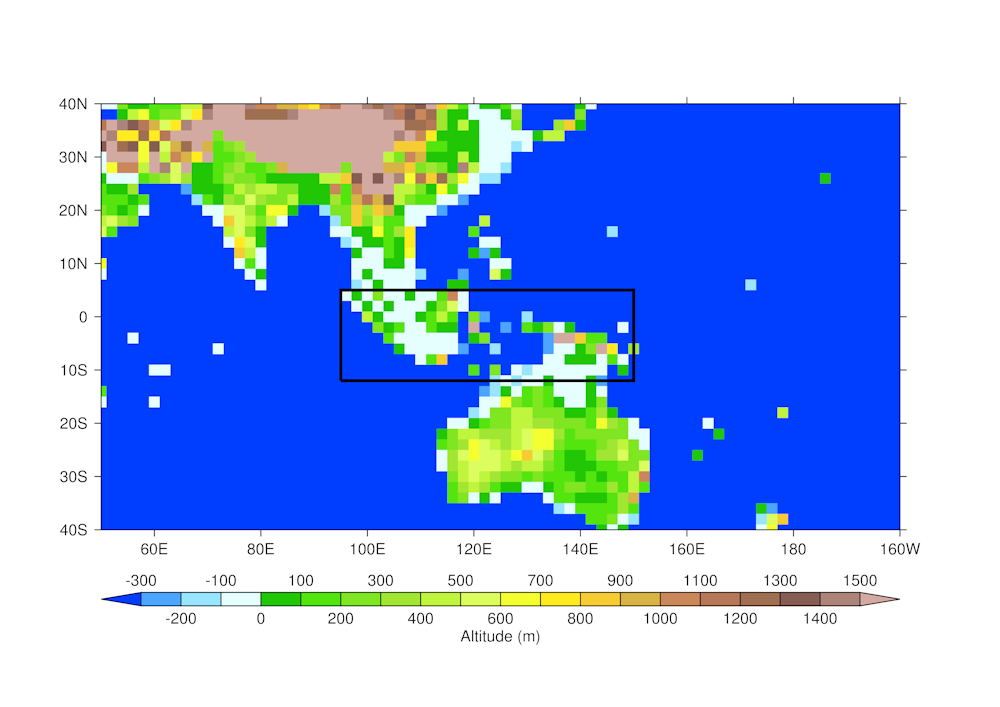
For Southeast Asian countries such as Indonesia and Papua New Guinea – which we collectively refer to as the “Maritime Continent” – things are a lot more complicated. With their mountainous terrain and islands of different shapes and sizes, it’s much harder to model the weather and climate of this region.
The models we use to make the most of our climate projections have to simulate the climate for many decades to provide us with useful information. To run such long simulations we have to compromise on resolution; even state-of-the-art global climate models divide the world into grid boxes more than 100km across. The Maritime Continent doesn’t come out too well at these resolutions.
If you squint you can see it! The world’s surface looks a bit like a 1980s video game to a global climate model. The Maritime Continent region (in the black box) is especially messy.Author provided
It’s unfortunate the Maritime Continent’s weather and climate are so tricky to simulate on long time scales. Due to its location right on the Equator and between the Indian and Pacific Oceans, this region has a defining influence on the global climate, being a major source of heat and water vapour to the atmosphere. If we don’t simulate the climate over the Maritime Continent well, we can get errors appearing on the global scale.
Besides that, the Maritime Continent is also home to hundreds of millions of people, and includes major cities such as Jakarta and Singapore. We need our weather and climate models to simulate the processes behind the severe storms, heatwaves, and droughts that these cities and the broader region experience. Accurate weather forecasts, seasonal outlooks and climate projections require models to simulate the atmosphere over the Maritime Continent well.
In our new study, published in Geophysical Research Letters, we show that many state-of-the-art global climate models struggle to simulate the climate of the Maritime Continent. But fortunately, a higher-resolution model captures more of the major processes in this area.
The benefits of high resolution
Like in Australia, much of the Maritime Continent region is wetter during La Niña seasons and drier in El Niño, although for some western coasts and Sumatra it’s the other way round. Many global climate models fail to reflect accurately this rainfall response to El Niño and La Niña.
We found that for climate models to do a good job in capturing the year-to-year variability in rainfall over the Maritime Continent, they need to do a few things well. Specifically, they need to represent accurately the amount of moisture held in the atmosphere, as well as the pattern of winds in the region. This gives the right pattern of rainfall response to El Niño and La Niña.
Our higher-resolution regional climate model does a much better job at simulating the Maritime Continent’s rainfall patterns than many of the global models we looked at. As the region has such a complex landscape, global models simply cannot capture enough detail on all the different processes between the land and the ocean, and the coasts and the mountains. But higher-resolution regional models can.
We can capture the processes behind rainfall in the Maritime Continent more realistically when we use a high-resolution model. In particular we can better represent the thunderstorms and heavy rain that tends to occur in the afternoons and evenings in the tropics.
As the Maritime Continent is so important for the global climate but so difficult to model, there is a concerted effort to improve our models and to get more atmospheric observations across the region.
International projects such as the Years of the Maritime Continent are taking place, with millions of dollars and dozens of researchers working on improving our understanding of the region’s weather and climate.
Ultimately, we hope that through better, higher-resolution model simulations, we can capture the processes behind the Maritime Continent’s weather and climate much more accurately. This should lead to better climate projections and seasonal forecasts not only for the region, but for the world as a whole.
It’s that time of year again when you receive your child’s school report. For some parents and carers, understanding what it means can be challenging. Some children will be happy and others may be disappointed.
Parents and carers need to interpret the information in the report so you can determine the strengths of your child, work out how their learning is progressing and what areas they’re having difficulty in. This may involve having a discussion with your child or a follow-up meeting with your child’s teacher.
It’s important to remember to be supportive, consider the personality of your child and focus on their progress.
Achievement standards: A-E grades
Primary and secondary schools (not including the senior years) in most Australian states use A-E grades to describe the learning progress of children.
We’re not all strong in the same subjects.www.shutterstock.com
So what do the letters A to E on your child’s report card actually represent?
The A-E grades may also be used to report on a child’s effort in a curriculum area. So a child may have a high grade for effort but a lower grade for achievement. If effort is basic (D) or low (E), this may be of concern.
Talking about the report
It’s important to ask your child: what do you think of the grade (for the subject)? Talking about this helps you open up a conversation about whether the report is close to what your child thinks they’ve achieved. If your child thinks they are not doing very well, focus on their achievements in one subject as well as pointing out their achievements outside of school. Focus on their progress.
If you are not familiar with what your child has been learning, find out what they have been doing in each subject. You can ask: what tasks have you been doing in class? Have you been finishing the tasks? What did you find easy? What was hard for you?
If their grade is based on a single test, it provides little information on what your child’s strengths are or their difficulties. With a range of tasks (completed in class and at home), the grade may be a better representation of your child’s achievement. So ask them: do you know how you got this grade? What assessments have you done in class? If they or you can’t answer these questions, you may both be unhappy because you don’t understand how the grades were calculated.
It’s important to discuss academic strengths and weaknesses with your child.www.shutterstock.com
This might be the time to talk about the grades for effort in the subject, which can tell you how much your child is trying. Ask: I notice you have been putting a lot of effort into (subject). That’s good. You’re trying hard. Or, what is happening in (subject) that’s affecting your effort? What can your do to improve?
This enables you to have insight into what’s going well and in which subject, which may reflect their interests, dislikes and challenges.
It also opens up discussion of what they’re finding difficult and why. Find out if they weren’t interested or the work was too hard for them. Different children have different interests, skills and passions which may not be reflected in their report card. Children also have different personalities that influence their learning, their progress and their report. We’re not all academically inclined.
If your child is disappointed point out the positives. Say: you tried really hard in (subject). I know you are having some difficulties, but look at what you have learnt this year.
A child’s answers can be an opportunity for discussing their progress with the teacher and what adjustments can be made to ensure continued progresses. This may be at the school organised teacher-parent interview, or you can ask for an interview with the teacher. You can then talk to your child about these adjustments and frame them along the lines of: your teacher thinks you’ll start to enjoy reading more if you and I do some more reading at home.
The comments section
Comments also highlight the strengths and weaknesses of your child as a learner.
What does the comment say about the child? Does the comment hint at an area of concern, either academically, socially or behaviourally? Does the comment reflect what you know about your child? If it doesn’t, you need to make time to speak with their teacher. Again, use the opportunity to ask your child, after reading the comments aloud: what do you think of this comment? Why has the teacher made this comment?
Throughout the conversation with your child about their report, remember to look for the positives: your child’s strengths, the progress they’re making. Talk about what might help them in areas they’re doing well in, as well as those they are finding challenging. Explain the report to them and help them understand what it means.
Mobility as a Service (MaaS) represents a new way of thinking about about transport. It has the potential to be the most significant innovation in transport since the advent of the automobile.
In a move away from dependence on privately owned cars or multiple transport apps, MaaS combines mobility services from public transport, taxis, car rental and car/bicycle sharing under a single platform that’s accessible from a smart phone. Not only will a MaaS platform plan your journey, it will also allow you to buy tickets from a range of service providers.
While autonomous vehicles have garnered much of the recent media attention on transport, MaaS is gaining ground. A Google search now returns more than 400,000 hits on “mobility as a service”. Many private and public transport providers, along with many state governments, are looking at the impacts of MaaS and how they can capitalise on the idea.
Why the growing interest in MaaS?
In part, the motivation is due to changing demographics. The world continues to urbanise with 55% of the global population living in urban areas today. By 2050, projections suggest that will increase to 68%. This increasing urbanisation will add to existing problems of traffic congestion.
And MaaS has many other appealing aspects. It could shorten commuting times and make travelling more convenient. It could help shift commuter trips from peak times to low demand times (through demand-responsive pricing of the services).
Finally, MaaS could improve air quality by shifting travellers from cars to more sustainable modes, such as public and active transport, through reward systems. For example, in a trial in Gothenburg, customers were rewarded with points for every ton of CO2 emissions they avoided by using more sustainable travel modes. The points were redeemable for a range of goods and services.
The other motivating factor is the estimated value of the MaaS market. Projections suggest a market worth $US600 billion in the United States, European Union and China by 2025. Others have projected that the global market for MaaS will exceed $US1 trillion by 2030.
Most of the customers (80%) wanted to continue after the trial ended. Based on an evaluation of the Gothenburg trial, the following were important considerations for MaaS:
competitive cost relative to owning a car
flexibility and convenience
sufficient mobility infrastructure to reach most potential users
ease of use.
The first commercial application of the concept was by MaaS Global in Helsinki, Finland. The Whim app was launched in 2016. It covers public transport, taxis, car rentals, car-share and bike-share modes. Customers can use the service on a pay-as-you-go plan or by monthly subscription.
Governance the key to scaling up MaaS
MaaS Global is looking to expand elsewhere soon. The key question is whether it can work beyond Helsinki. The challenge is not about the technology — it is about governance.
It’s no coincidence that Whim was born in Finland, a small country with well-functioning institutions and well-designed cities. MaaS will continue to be successful here, in part due to support from the national government.
The first trial of MaaS was very popular with users in Gothenburg, Sweden, but a lack of supportive government policies has stalled progress.Michael715/Shutterstock
By contrast, the Gothenburg trial, while successful, has not yet resulted in regular services. Based on learnings from the trial, UbiGo has refined their business model to better integrate public and commercial transport services and will be relaunching in Stockholm with a trial followed by a full roll-out by the end of 2018.
MaaS requires a willingness by private and public transport providers to work with the creators of MaaS platforms. Transport providers must agree to allow the MaaS operator to sell their services and collect a “reasonable” and “fair” commission for each ticket sold.
Another challenge is getting private operators to participate despite losing customers in the short term.
Advocates suggest that, if the concept is successful, the pool of customers will grow as cars are abandoned in favour of MaaS. Hence most companies will want to participate in one or more MaaS platforms.
However, for its potential to be realised, MaaS needs governments to ensure a playing field that is fair for existing and new mobility service providers, and one that encourages cooperation rather than competition. It may be the case that the most efficient MaaS platforms will take the form of regulated monopolies, much like existing utility companies.
As unconnected as all these things seem, they all ultimately derive from the same place: misalignments between employee incentives and best practice.
These issues go right to the top, to the perverse incentives contained in executive salary packages to make short-term profits at the expense of long-term sustainability.
Dud incentives make bankers do dud things
Blame the individual bankers if you will – some bank boards, covering their own hides, already have – but the executives have simply been doing what dud incentives incentivised them to do.
Replacing dud incentives with proper ones will be essential if the the banks are to regain public trust.
And incentives being considered for sportspeople could show the way.
Sport is a testbed for incentives
An idea that I am trialling along with my collaborator Ralph Bayer from the University of Adelaide is a system of “conditional superannuation”.
To make sure that athletes don’t cheat by taking performance-enhancing drugs, competitors would agree to forego a percentage (say, 10%) of their earnings which would be placed into a managed fund, with the termination value handed to them some time in the future (say, eight to ten years after they retire) contingent on having maintained a clean record.
A positive drug test would result in permanent confiscation of all or some of their balance.
We have been testing the idea in a laboratory in which subjects are being asked to take decisions, such as whether or not to dope and how hard to train, in an environment that simulates the real world.
Our first findings, published in the Journal of Sports Management, suggest that conditional superannuation is more effective in combating doping than the traditional threat of bans.
Bank executives are like sports stars
As with sports stars, bank executives are presented with enormous potential rewards that encourage them to take risks.
True, there are sticks as well as these carrots, but they are misfiring.
What might work better is still more carrots, in the form of conditional superannuation, which can be later withdrawn if the bankers are found to have acted badly.
They ought to welcome it. It’s more money, and we know they are keen on bonuses.
The idea could be extended to other related industries in which the royal commission has uncovered signs of grave transgressions, such as mortgage brokering.
But we would need to test for side-effects
It would be wise not to rush in (as the banks have done in their scramble to suddenly appear responsive). Conditional superannuation might create fresh perverse incentives we haven’t yet considered.
That’s where experiments come in – lots of them, in laboratories.
To do it, and in the spirit of forging greater links between universities and industry, we are in the process of soliciting funding partnerships to help prepare applications for competitive research funding.
Ultimately, with the right partnerships, we are hopeful the right incentives can be developed to ensure bank executives use their generally considerable talents, for “niceness, instead than evil” (with apologies to Maxwell Smart).
It will be worth watching the final round of hearings at the banking royal commission, which begin on Monday. The chief executives of each of the big four will be recalled for reexaminations.
It might be the final time they appear in the same room. It might even be the last time there’s even such a thing as the big four.
Not only are the so-called four pillars under attack from the Commissioner Kenneth Hayne, but there are also enormous economic and technological pressures that are already beginning to undermine their special status.
Together, these pressures have the potential to radically change the banking landscape over the coming decades and bring an end to the Four Pillars policy under which Westpac, the Commonwealth, the ANZ and the National Australia Bank have been effectively protected from takeover and prevented from merging.
Although never a formal law, the understanding that none of the big four can merge has been an accepted rule in Australian business since the late 1980s, when the then treasurer Paul Keating made it clear he would block takeovers.
Eggs in one basket
Since then the big four banks have changed in two important, but related, ways.
Over the past few years they have retreated from their overseas banking ventures, largely divesting themselves of their sometimes ill-judged foreign acquisitions.
And they have recently sold off most of their local wealth management (insurance and investment) subsidiaries.
These divestments mean we are left with four enormous retail-oriented banks that dominate both the banking system (with almost 80% of banking assets) and the stock market (four of the top six companies on the S&P/ASX 200).
Their profitability is heavily dependent on lending for housing, which in turn is heavily dependent on the housing market.
That market is already beginning to contract, meaning the big four are going to find it increasingly hard to maintain their stellar profits.
No longer unique
What’s more, the near monopoly they have had on processing payments is under threat.
In Britain around 1,000 bank branches are closing per year in the wake of a technologicial revolution that makes it possible to process payments away from branches and away from banks. The rate of these closures is climbing.
Mobile banking means that many basic transactions that used to require a visit to a branch can be done online. Australia’s New Payments Platform means that payments to people such as tradies can be made anywhere, any time, in real time and at minimal cost. Use of the platform isn’t limited to the big four.
The Reserve Bank reports that after only eight months of operation the number of payments on the platform already exceeds the number of cheques.
Too many branches
Compared with other countries, we have a lot of bank branches.
Australian banks operate more than 5,000 branches, most of them owned by the big four, as well as 30,000 automatic teller machines, and more than 900,000 EFTPOS terminals at supermarkets and Post Offices.
In the United States, just one bank, the Bank of America, has 67 million customers.
But the Murray inquiry, probably due to its narrow terms of reference, found little of the egregious misconduct that has been uncovered by the royal commission. This calls into question the inquiry’s conclusion that there is adequate competition in the banking system.
Indeed, this conclusion was rejected in a recent Productivity Commission report, which stated bluntly that “the Four Pillars policy is a redundant convention”.
An end in sight
The end of the four pillars policy needn’t mean the end of competition. Smaller, cheaper competitors will be doing more of what the big four did.
A shakeout of bank branches is long overdue, however painful that may be in many small towns, where despite the serious problems raised at the royal commission, a bank branch is still an important part of the community.
Undoubtedly, such a major disruption, unless managed carefully, will be harrowing for many customers and staff.
But for the long-term stability of the economy, it is incumbent on governments to address the inevitability of a smaller, more technologically driven banking system – one that hopefully, after the royal commission, will operate ethically for the benefit of customers.
Review: Australiyaniality Holmes à Court Gallery, Perth.
Australiyaniality is an awkward name for an exhibition that has embedded within it a call to action.
An amalgam of ideas exploring Australia, identity, place and “Liyan” – a word borrowed from the Yawuru people of Broome that describes the “internal spiritual core of strength that keeps you strong personally and culturally” – the exhibition attempts to reframe our attitudes to this continent and the life we have built here.
The very awkwardness, almost un-pronounceability of the title, evokes the scale of the challenge curator Matthew McVeigh has posed. His aim is to galvanise the community to rethink what it means to be Australian. And this exhibition – featuring 27 artists – is a raucous, overwhelming, exciting and at times confusing immersion into ideas about national identity.
Matthew McVeigh, ABOriginal, 2018, neon, blood group information and Aboriginal Etymology text.Janet Holmes à Court Collection
One’s first reaction is awe at the sheer audacity of the visually dislocating hang. It occupies an old warehouse in North Perth, one half of which has been renovated to house the Janet Holmes à Court art collection.
McVeigh and ten other artists have transformed the massive northern wall of the complex into a giant pin-up board of artworks and ideas documenting the racist underbelly of our national narratives. Titled The Relativity of Historia Nullius, it includes images of dispossession, colonialization, enslavement, and neglect.
Some are witty, like the appropriated FOODLAND grocery chain sign. In the shape of a boomerang, overpainted with images of bush tucker, it playfully rebukes our consumerist culture.
Equally playful is McVeigh’s ABO, a neon work that flicks from one letter to the other. At first it seems like an ugly, racist jibe. On closer inspection we see it documents the classification of human blood types based on the inherited properties of red blood cells, to reinforce our shared humanity.
Other works, like Harold Thomas’ large Aboriginal flag with a clock at its centre – going in reverse – suggest the possibility of a new beginning.
Sharyn Egan’s poignant Our Babies recreates the toys she made as a child out of found materials like sardine cans, rags, and pieces of gravel. These treasured objects acted as comforters when she and her friends cried themselves to sleep in a dormitory, separated from their families.
Most of the artworks document the disgraceful treatment of Aboriginal Australians and highlight historian Lorenzo Veracini’s notion of Historia Nullius. McVeigh describes this as the “distinction, exclusion, restriction or preference based history of Australia based on race, colour descent, national or ethnic origin.”
This view of history undermines the human rights of all but the colonisers. As McVeigh and his collaborators suggest, it must be overthrown if we are to achieve a collective “Liyan”.
Throughout this large space, additional artworks by Brook Andrew, Gordon Bennett, Ann Zahalka and others explore similar issues. One of the most engaging works is Paul Caporn’s The Australian Anecdotal History Museum, a Combi Van parked in the warehouse gallery surrounded by the accoutrements of a well-established campsite.
In the van, a selection of objects donated by fellow artists and friends is displayed, each with an anecdote detailing its personal significance to the donor. Some wax lyrical, others are bluntly descriptive. Together, they reinforce the idea of the personalisation of history and the human proclivity to assign objects with a special power or meaning.
Paul Caporn The Australian Anecdotal History Museum 2018 (from a distance).Janet Holmes à Court Collection
This project is an attempt to open up a dialogue and to move the debate outside the confines of a gallery and into the mainstream.
For this reason, some of the bold graphic works like FOODLAND and ABO could perhaps be released from the gallery and harnessed for use on billboards, in social media, and through established media channels. The Australian Anecdotal History Museum could, for instance, take to the roads and tour through shopping centres.
As a contributing curator, McVeigh has pulled together a group of works that develop his thesis and expand on his own artistic practice. Not surprisingly, it is a partisan view with a heavy emphasis on the ongoing mistreatment of Aboriginal Australians and a nod toward the problems of integration faced by other groups, such as the Indian community.
By tackling such a vast subject with a limited lens and an emphasis on the problems we face rather than sign posts toward a more positive future, it’s possible viewers will leave the gallery with a sense of despondency at the overwhelming task ahead.
Still, as McVeigh announces in his manifesto pasted up on the entry wall: “The works are not a means to an end, a solution to instantaneously fix injustices and imbalances. They will be, however, about working towards providing a way forward to reach a new collective consciousness.”
In the wake of the Uluru Statement from the Heart, this exhibition reminds us that the responsibility lies with every Australian to nurture their “Liyan” and create a just and equitable country we can all call home.
Australiyaniality is at the Holmes à Court Gallery, 10 Douglas Street, Perth, until November 25.
FijiFirst leader Voreqe Bainimarama with supporters during a FijiFirst family fun day in Savusavu before the 2018 general election. Image: FijiFirst FB page
By Wansolwara Staff
It’s official. FijiFirst has won the 2018 general election in Fiji, raking in 227,241 votes (50.02 percent) from 2173 stations counted and securing a second four-year term in office.
FijiFirst dominated the polls in the later counting ahead of the Social Democratic Liberal Party (SODELPA) in an earlier tight contest. SODELPA finished in second place with 181,072 votes (39.85 percent).
The National Federation Party (NFP) finished in third place with 33,515 (7.38 percent) followed by Unity Fiji with 6,896, Humanity Opportunity Prosperity Equality with 2,811 votes and Fiji Labour Party (FLP) with 2,800 votes.
Caretaker Prime Minister Voreqe Bainimarama, FijiFirst leader, finished off on a strong footing, raking in 167,732 votes in the results by candidate tally.
SODELPA’s Sitiveni Rabuka came in second with 77,040 votes followed by Aiyaz Sayed-Khaiyum with 17,271 votes.
-Partners-
National Federation Party leader Biman Prasad finished off with 12,137 votes, followed by the leading woman candidate Lynda Tabuya with 8,795 votes.
Supervisor of Elections Mohammed Saneem announced the results at the National Results Centre this afternoon after the final results were released on the FEO elections app.
Official results handover The official elections results were then handed over to Electoral Commission Chairman Suresh Chandra.
“After receiving the results of the 2018 general election, the Electoral Commission will now retire and calculate the seat allocation for the 51 seats for the next term of Parliament,” Chandra said.
Thereafter the announcement of the allocation of Parliament seats will be made followed by the return of the Writ of Election to President Jioji Konrote this afternoon.
It is understood that FijiFirst will probably take 27 seats in Parliament while SODELPA could settle for 21 seats and NFP with 3 seats. This, however, will be confirmed by the Electoral Commission after its deliberations.
This article is republished under the content sharing arrangement between USP’s Wansolwara student journalism newspaper and AUT’s Pacific Media Centre.
The final results in the Fiji general election announced by the Fiji Elections Office (FEO) in Suva today. Source: FEO
Diplomats, officials and party representatives today at the National Results Centre in Suva awaiting the final declaration of the Fiji general election. Image: Nanise Volau/ Wansolwara
Prime Minister Voreqe Bainimarama’s FijiFirst party has triumphed in the general election and will govern for a second four-year term after winning most votes
FFP polled 227,241 votes – just over half the total votes – followed by the Social Democratic Liberal Party (SODELPA) in second place with 181,072 votes (39.85 percent) while the National Federation Party (NFP) came third with 33,515 votes (7.38 percent).
SODELPA and NFP will again form the opposition for another four years.
Other parties gained less than the 5 percent threshold needed to gain seats in the 51-seat Parliament.
Wansolwara News reported earlier that it was understood that after the official handover of results from the Fiji Elections Office, the Electoral Commission would announce the allocation of seats in Parliament before the Writ of Election would be presented to President Jioji Konrote later today.
The final results in the Fiji general election announced by the Fiji Elections Office (FEO) in Suva today. Source: FEO/Wansolwara
The governor of Papua New Guinea’s Manus Province has hinted that he could obstruct Australia’s bid to build a naval port on Manus Island.
Australian Prime Minister Scott Morrison announced on November 1 that his country would fund the development of a deepwater base at the old Lombrum Naval Base used during the Second World War.
The move is seen as a counter to China’s aspirations to develop the site.
Manus Governor Charlie Benjamin told Reuters news agency that he had not been consulted on the development and that it would have to benefit the local residents.
“I have my people living on the island and we are the ones affected,” Benjamin said.
-Partners-
“The government might have the right but if we decide to put our foot down, there will be problems.”
The Manus governor has previously been critical of central government’s lack of consultation over the Australian-run refugee detention centres based on the island.
Military outpost Manus is PNG’s northernmost and smallest province with 50,000 people and an Australian-funded navy base there could provide a military outpost for Canberra in the Pacific.
Prime Minister Morrison has said Australian vessels would be regular visitors.
RNZ Pacific’s Johnny Blades reports from APEC (Asia Pacific Economic Cooperation) that the United States will join Australia in expanding the Lombrum Naval Base on Papua New Guinea’s Manus Island.
US vice-president Mike Pence made the announcement at the APEC leader’s summit in Port Moresby yesterday.
Pence, who is representing his country at APEC in the absence of President Donald Trump, used his speech to assert US partnership with Pacific Islands and other allies in the wider region.
Without elaborating on details, he confirmed the US would partner with PNG and Australia on a joint naval base on Manus, reported Blades.
This article is republished under the Pacific Media Centre’s content partnership with Radio New Zealand.
The newly built APEC Haus in Papua New Guinea’s capital Port Moresby which is hosting the 2018 APEC leaders summit this weekend. Image: Johnny Blades/RNZ Pacific
The Supervisor of Elections tells four parties “not to play around with elections” and “be honest”. Image: Wansolwara
By Wansolwara Staff
Fiji’s Supervisor of Elections has hit out at four political parties for making claims that the tabulation process for the provisional results of the 2018 General Election was “not transparent”.
Without mincing his words at a press briefing tonight, Mohammed Saneem urged leaders of the political parties – Social Democratic Liberal Party (SODELPA), National Federation Party (NFP), Unity Fiji and Fiji Labour Party (FLP) – “not to play around with elections” and “be honest”.
Claims of a breach in the Protocol of Results process surfaced after a joint statement was sent to the Electoral Commission on Thursday alleging that political party agents and candidates were not shown documents from which the provisional results were posted on the national results tally during the tabulation process.
There were further claims from political parties that incorrect data was also recorded on the FEO App, particularly for votes recorded at the Namosi Village community hall for some of their party candidates.
Responding to these issues, Saneem presented original copies of votes recorded at that particular voting venue and openly compared those with the election records presented by party agents at that polling venue.
There were notable differences in the data collected.
-Partners-
“The parties claim that No. 571 on their record is zero; the Protocol of Results says 571 has one vote, the pink slip for 571 has one and the FEO App has one. For 591 (Biman Prasad), according to the parties, he has five votes.
According to the original, he has four votes, the pink slip has four votes and the FEO App has four votes.
For 688 (Bainimarama), their records say 36, the original pink slip says 96 and the FEO App has 96,” he explained to the media and representatives from the international multinational observer group.
“The Namosi Village community hall is a pre-poll station and that means counting for this station was actually done at the count centre (in Suva). We have evidence, properly justified and signed by agents and staff, nothing is being hidden.
Party records ‘incorrect’ “The records of those parties are extremely incorrect. They were highly inaccurate results projected here for the sake of publicity and this is why the FEO is urging all members of the public to rely on the FEO information as the most accurate for this general election.
“We will pause and provide the political parties that have got agents present here with the records from the results management system as well as the protocols of results and we will reconcile to make sure that everybody in the results centre has the same amount of data including the data on the app.
“I hope this settles the entire question about attempts to create doubt about the results.”
Saneem further clarified that the Fijian Elections Office had three verification processes before data is accepted into results software or results management system.
This article is republished under the content sharing arrangement between USP’s Wansolwara student journalism newspaper and AUT’s Pacific Media Centre.
Fiji general election … a disappointing low voter turnout but the atrocious weather is an insufficient reason. Image: Wansolwara
ANALYSIS:By Dr Crosbie Walsh
With the final results from 1715 (79 percent) of the 2173 polling stations now counted, who will form the next Fiji government is still too close to call, although the trend since earlier announcements — and the preliminary results announced on Thursday — indicate a narrow win for FijiFirst.
As of 1pm today, FijiFirst had 49.93 percent of the vote, SODELPA 39.96 percent and National Federation Party (NFP) 7.36 percent. The other parties had a combined total of 2.74 percent, well below the 5 percent threshold to win a seat.
What has been most disappointing is the low voter turnout. The atrocious weather did not help but in itself is an insufficient reason.
There are likely to be a mix of reasons but their relative importance will remain unknown. They could perhaps have chosen not to vote because they are happy with the status quo under FijiFirst.
They could have expected FijiFirst to win, so why bother? They could have been overwhelmed and confused by the many pressures to vote from FijiFirst and the pressures and rumours from the Opposition.
-Partners-
Or they could have thought the election result would not improve their lives whatever the outcome.
So what can we deduce from the results so far?
‘Work in progress’ Bainimarama’s FijiFirst seems likely to win 27 seats, SODELPA 20 and NFP 4 seats in the 51-seat chamber.
The aim of the 2013 constitution in abolishing race-based elections which favoured the chiefly Taukei appears to be a work “still in progress”. SODELPA is essentially a Taukei party with 43 of its 51 candidates Taukei, 4 Indo-Fijians and 4 Others.
NFP, a traditional Indo-Fijian party, had made serious efforts to be more multiracial. Nineteen of its 51 candidates are Taukei, 29 Indo-Fijians and 3 Others.
FijiFirst is the most balanced party with 26 Taukei, 23 Indo-Fijian and 2 Others. It even has two chiefs! But no paramount chiefs.
Two heads of Confederacies, Ro Teimumu Kepa (Burebasaga) and Naiqama Lalabalavu (Tovata), are SODELPA candidates. The Kubuna headship is at present vacant.
A Rotuman, Pasepa Lagi, out-polled Bainimarama and all other candidates in Rotuma.
A casual examination of voting by the type and location of polling station shows race and parochial interests to still be very evident.
Village voting People voting in Taukei villages generally voted SODELPA, no doubt due to the influence of village heads (turaga ni koro). This pattern did not seem to be influenced by whether or not the FijiFirst government had spent money on local development.
So much for the social media and opposition claims that FijiFirst was buying votes. Those in (mainly Indo-Fijian) settlements voted FijiFirst or NFP.
In urban areas, voting also seemed to be greatly influenced by race, and to a lesser extent by economic wellbeing.
Three types of polling stations deserve special mention. Those located in military areas voted overwhelmingly for FijiFirst (which reduces the prospect of another coup); police areas were about equally divided between FijiFirst and SODELPA, and Corrections were predominantly SODELPA.
One further initial observation is the different distribution of candidate preferences. Bainimarama was the first choice with 36.8 percent for FijiFirst votes.
SODELPA’s Rabuka only accounted for 17 percent with other candidates scoring higher than with FijiFirst.
Interestingly, Ro Teimumu Kepa only won 1.2 percent of SODELPA votes. This suggests more parochially-orientated voting for SODELPA and perhaps what could be called more nationally-orientated voting with FijiFirst.
But individual SODELPA candidates may have been better known in particular locations.
The geography of how people voted in 2014 and 2018 by polling station would make a very good topic for a master’s thesis. There are certainly enough hypotheses to test.
Retired University of the South Pacific development studies professor Crosbie Walsh is a New Zealand-based academic. His articles are published by Asia Pacific Report with permission.
Some critics say that China’s latest behaviour toward foreign journalists casts doubt over its vow to treat neighbours with “respect”. Image: Natalie Whiting/ABC News/My Land, My Country
By Scott Waide
Papua New Guinea’s freedoms of speech, expression and access to information were challenged yesterday when Chinese officials barred both local and non-Chinese media from attending meetings at three Asia-Pacific Economy Cooperation (APEC) venues.
It began in Parliament when Chinese President Xi Jinping was giving an address after a guard of honour.
EMTV journalist Theckla Gunga, who was assigned to cover the Chinese President’s visit, reported that just after 11am, Chinese officials accompanying their president ordered the microphones to be removed from the speaker where they had been placed to record the speeches.
“Chinese officials who are organising the official opening of the Chinese-funded six lane road have refused to give audio feeds to media personnel,” she said in a WhatsApp message.
“Microphones belonging to both local and international media have been removed,” said Gunga.
-Partners-
The officials, however, allowed Chinese state-owned broadcaster CCTV to record President’s Xi speech.
Gunga and other journalists spent about 10 minutes arguing with the Chinese officials but were still refused.
‘No media, no media’ One hour later, EMTV Online reporter Merylyn Diau-Katam faced another group of Chinese officials at the gate of a Chinese government-funded school.
“Before the President arrived a bus full of Chinese media personnel were driven into the gate on a bus,” she said.
“And when we wanted to go in, we were told our names were not on the list even though we had APEC accreditation passes,” Diau-Katam.
“No media. No media, a Chinese official said,” she said.
Diau-Katam was not the only one refused entry. In the group was a photographer from Japanese public broadcaster, NHK and other media. A PNG government official also spent several minutes arguing with the Chinese security to let him in.
At 5pm yesterday, Chinese officials again booted out local and international media from a meeting between the Chinese President and Pacific Island country leaders.
EMTV anchor and senior journalist, Meriba Tulo, was among others told to “get out” of the meeting while Chinese media were allowed into the room.
The Australian Broadcasting Corporation (ABC) was also told to leave. They spoke to Post-Courier’s senior journalist, Gorethy Kenneth. She said Chinese officials from Beijing were initially angry with the presence of international media.
“I said: ‘We are here to cover the meeting, our names have been submitted.’ And they said: ‘No, all of you get out,’” Kenneth said.
Scott Waide’s blog columns are frequently published by Asia Pacific Report with permission. He is also EMTV deputy news editor based in Lae.
Fiji general election votes are still being counted and finalised at the National Results Centre in Suva. Image: Mereoni Mili/Wansolwara File
By Wansolwara Staff
The ruling FijiFirst party has taken a narrow lead in the Fiji general election final results today ahead of the opposition Social Democratic Liberal Party (SODELPA) after 1401 of 2173 stations were counted.
As of 5am today and with 772 stations yet to be counted, FijiFirst has so far topped the results by party with 131,629 votes compared with SODELPA’s 115,150 votes.
The National Federation Party (NFP) trails in third place with 19,312 votes followed by Unity Fiji with 4239, Humanity Opportunity Prosperity Equality (HOPE) Party with 1725 votes and Fiji Labour Party with 1664 votes so far.
Final Fiji election progress results as at 5am today. Source: FEO
FijiFirst leader Voreqe Bainimarama has maintained a strong lead ahead of SODELPA’s Sitiveni Rabuka in the official results by candidates, raking in 97,352 votes so far compared with Rabuka’s 47,764 votes.
All smiles … caretaker Prime Minister Voreqe Bainimarama in lead in final progress results in the Fiji election today. Image: Sri Krishnamurthi/PMC
Aiyaz Sayed-Khaiyum is in third place with 9840 votes followed by Biman Prasad on 6975 and Lynda Tabuya with 5170 votes.
Alipate Nagata has placed in the top 10 results by candidates with 4117 votes ahead of Niko Nawaikula with 3820, Ro Teimumu Kepa with 3571 votes and Mosese Bulitavu with 3561 votes so far.
-Partners-
Some notable changes so far with the final results include an increase in the number of stations being counted.
Provisional results and early counts from the final results were from 2170 stations. However, the Supervisor of Elections, Mohammed Saneem, has since clarified that there are now 2173 polling stations after the inclusion of three more polling stations to account for the postal ballots.
Voting today Wansolwara’s Laisenia Nasiga reports that registered voters who cast their votes on polling day (Wednesday, November 14) at the 22 polling venues that were later adjourned as a result of bad weather will still have to vote today.
According to Supervisor of Elections Mohammed Saneem, 7498 people were expected to cast their votes at these 22 polling venues.
“If a voter’s finger contains indelible ink, they will still be allowed entry into the polling venue to mark their ballot paper. The voter will then have to ink another finger,” Saneem told a press briefing in Suva yesterday.
“Any voter who has already voted at these locations will be allowed to vote again. All votes that were received from these places on Election Day will be cancelled. They will not be counted.
“We will be using freshly printed ballot papers as well as new ballot boxes to facilitate elections at these venues and voters can come and vote between the hours of 7.30am to 6pm.”
The final election result is expected tomorrow.
This article is republished under the content sharing arrangement of USP’s Wansolwara student journalism newspaper and AUT’s Pacific Media Centre.
Chinese President Xi Jinping (left) and Prime Minister of PNG Peter O’Neill shaking hands. Image: Solomon Kantha/My Land My Country
COMMENTARY:By Scott Waide
In November every year, the Papua New Guinean National budget usually takes centre stage. But not this year.
This week, the 2019 budget came two days before the start of the biggest meetings of APEC (Asia Pacific Economic Cooperation). People were interested in it for a day, then it faded into the background.
Then BOOM… Enter China-US geopolitics…
On Thursday, Chinese President Xi Jinping, the most influential world leader in the Asia-Pacific arrived in Port Moresby with the largest delegation of officials.
They came on two large planes and the festivities for his delegation demonstrated just how important China’s money is to the Papua New Guinea ( government.
World politics is being played out on PNG soil. It already is, by the way.
-Partners-
From the Association of Southeast Asian Nations (ASEAN) meeting in Singapore, US Vice President, Mike Pence indicated he would be revealing how “dangerous” the Chinese One Belt One Road Initiative is to the rest of the world including the Pacific.
Infrastructure projects This announcement comes on the back of US$60 billion funding (about NZ$87 billion) aimed at the Asia-Pacific region. Also note that China has allocated the same amount to African countries for various projects including infrastructure.
Australia has announced its own funding initiatives for the Pacific of 7 billion Kina (NZ$3 billion).
In the foreign ministers’ meeting, the US-China tension is already being felt as the US and China tussle over free trade and other issues.
On the ground in Port Moresby, there is a strong US and Australian military presence.
From China, a strong trade presence and message about building relationships. From the outset, China appears to have all its moves planned out and is ticking off each item on its list of things to do.
At least for the government, the attention from world leaders is important. Maybe APEC is an opportunity. Maybe it is a double edged sword – with opportunity on the one side and debt on the other as has been the case in other countries like Sri Lanka.
What stands out is China’s willingness to engage. President Xi is here for four days. America’s Trump and Russia’s Putin both sent their number twos.
As US Vice-President Pence, tweeted and jetted into Cairns, President Jinping met with Pacific Island Forum leaders and representatives in Port Moresby in the afternoon.
Scott Waide’s blog columns are frequently published by Asia Pacific Report with permission. He is also EMTV deputy news editor based in Lae.
Source: The Conversation (Au and NZ) – By Ben Wellings, Senior Lecturer in Politics and International Relations, Monash University
Behind the scenes at Westminster and the teetering fate of the British government lies an even more profound change in British politics: the very real possibility of the break-up of the United Kingdom.
In this situation Australia needs to tread carefully and maintain its good relations with what has emerged as its more stable European partner, the European Union, while offering silent support for whatever governments or countries could emerge from Brexit.
Is the UK headed for dissolution?
The United Kingdom is made up of England, Wales, Scotland and Northern Ireland.
The publication of the Brexit draft withdrawal agreement – a hefty 585-page tome – has revealed what has been implicit in the “British” vote to leave the EU all along: that Brexit is an expression of English nationalism that will unwittingly lead to the break-up of the UK.
Behind the government’s rhetoric of “global Britain”, there is no such thing as the “British people” in a political sense any more. The referendum revealed significant divisions between attitudes to EU membership in Scotland, Northern Ireland and England. While Prime Minister Theresa May tried to reposition “global Britain” in relation to Europe and the rest of the world, Britain itself dissolved from within.
Prime Minister Theresa May refers to the UK as a “precious union”. If only more people felt the same. An LBC-YouGov poll in March found that a majority of (mostly English) voters wanted to leave the EU rather than keep Northern Ireland in the UK.
In October, research published by the Centre on Constitutional Change showed that a clear majority of English leave voters would be happy to see Scotland and Northern Ireland out of the UK as the price of Brexit.
The irony is that it is the resistance of 10 MPs from the Ulster loyalist Democratic Unionist Party (DUP) and about 60 hard-line English Conservative Brexiteersis most likely to plunge the UK into an existential crisis. Their intransigence will destroy the thing they profess to defend.
The text of the Brexit draft withdrawal agreement was at pains to appease concerns among the Ulster unionist community about maintaining the integrity of the UK (unsuccessfully as it turned out).
The prospect of the agreed backstop – a single customs territory that the UK could not leave without EU consent and which would ultimately keep Northern Ireland in a special relationship with the EU after Brexit – was not something Brexiteers and the DUP could stomach.
For them, the deal was a “capitulation”. It was a breach of “blood red” lines that invoked the prospect of a return to conflict in Ulster.
Across the Irish Sea, Nicola Sturgeon, the Scottish first minister, asked: if Northern Ireland got special treatment, why not Scotland too?
In fact, the withdrawal agreement made no mention of Scotland at all. This disregard for the overwhelming Scottish vote to remain in the EU has pushed Scotland closer to another referendum on independence.
Brexit has divided opinion across Britain long after the 2016 vote to leave the European Union.Neil Hall/EPA
Brexit has created a new and deep cleavage in British politics that cuts across old political divisions. Far fewer people identify as Labour or Conservative than identify as “leave” or “remain”.
Add the national dimension to this politics and some new options emerge. Some hard Brexiteers must be considering ditching Scotland and Northern Ireland as an acceptable cost for “British” (read “English”) independence from the EU.
The ghost of empire has haunted the Brexit imaginary from before the 2016 referendum. Its critics derided “global Britain” as “Empire 2.0”. But the memory of empire cuts two ways. Brexiteers see the EU as a threatening imperium. The withdrawal agreement would leave the UK as a vassal state – a state that is subordinate to another – and therefore must be rejected.
Brexit has also left unresolved questions about who is actually in charge in Britain. Calls for a second referendum have grown, suggesting “the people” rather than government or parliament is the ultimate source of authority on this matter.
A second referendum has the advantage of presenting the electorate with a concrete proposal for leaving. It would temper the unrealistic and downright false claims of the leave campaign in 2016. It might end the talk of “respecting the wishes of the British people” to leave the EU.
In truth we don’t really know what exactly people voted for: only 6% of leave voters said they thought Britain would be better off economically by leaving.
But a general election would be a better bet. It would effectively be a referendum on the deal. It might also return a government with a majority – something Britain has lacked since May’s miscalculation last year.
Theresa May has spent much of her time navigating Brexit since she became prime minister following the referendum.David Levenson/EPA
Australia’s role
What does this mean for Australia? Australia was name-checked in Prime Minister’s Questions on Wednesday as a country offering the prospect of a quick free trade agreement. Britain needs Australia in a way that it hasn’t since world war two. It would be best at this delicate moment to stop recklessly encouraging the British government from the sidelines: no more talk of one-page free trade agreements.
Australia must continue with its (slow) progress on the Australia-EU free trade agreement negotiations begun in June. The EU has remained remarkably unified during the Brexit negotiations despite tensions of its own. The EU is coming out of its own crises of the past decade. Now it’s Britain’s turn to teeter on the brink of disintegration.
Chinese President Xi Jinping arrived in Port Moresby last night to attend the Asia Pacific Economic Cooperation (APEC) leaders summit and is poised to steal a march on rival world leaders.
With the US and Russian Presidents skipping the event, President Xi is in a strategic position to strengthen ties with both the host nation and other attendees.
The Nationalreports that President Xi said PNG was “truly a land of promise,” endowed with abundant natural resources.
“In recent years, thanks to the leadership of Prime Minister Peter O’Neill, the great work of the government, and the industrious and enterprising people of the country, PNG has thrived in national development, and its society has taken on a new look,” said President Xi.
-Partners-
Mutual trust This is the first state visit of President Xi where he reiterated his goal to fortify “mutual trust” and to take bilateral ties to next level.
“I look forward to working with your leaders to cement mutual trust, expand practical cooperation, and increase people-to-people exchanges in order to take our bilateral ties to a new level,” said President Xi.
EMTV Online reports that President Xi officiate at the opening of a new school today for PNG students, Butuka Academy.
“Only one of China’s many gifts to PNG,” he said.
President Xi said the rapid growth of the China-PNG relations was “an epitome of China’s overall relations with Pacific Islands countries”.
“The Chinese often say: ‘Distance cannot separate true friends who remain close even when thousands of miles apart.’ The vast Pacific Ocean is indeed a bond between China and Pacific Islands countries,” said President Xi.
President Xi said China would stand firm with Pacific Islands countries and all other developing countries.
Chinese President Xi Jinping arrives at Port Moresby’s Jacksons International Airport last night for a state visit and the APEC summit. Image: Loop PNG
Brighter future “The relations between China and Pacific Islands countries are now better than ever and face important opportunities of development,” he said.
“China will work with Pacific Islands countries to brave the wind and waves and set sail for a brighter future of our relations.”
The Post-Courier reports that early this year, President Xi met with Prime Minister O’Neill in the Great Hall of the People in Beijing as part of a trip that saw the Pacific nation signing on to the “One Belt One Road” initiative.
This was an initiative seen by the US as a threat, and it had injected US$113 million in Asian investment.
Prime Minister O’Neill, in this meeting with President Xi, said he wanted more cooperation on economy, trade, investment, agriculture, tourism and infrastructure.
After the APEC summit in PNG, President Xi is set to visit Brunei and the Philippines where he will engage in an in-depth conversation with the two head of the state strengthening bilateral ties.
The Free Papua Movement (OPM) Southern Commander Bernard Mawen has died. He was the “grand old man” of the OPM, one of the first to begin the armed struggle for independence in West Papua in the 1960s and he will be missed by his people.
I interviewed him in 1998 in his camp along the Fly river on the border where he lived among the thousands of West Papuan refugees forgotten on the PNG border, who live on little more than sago and bananas.
Indirectly, his OPM guerrillas remain a protective buffer for both PNG and Australia against Indonesian aggression but it’s unlikely you’ll hear any eulogies from Canberra or Moresby and certainly not from Jakarta.
He lived for his people, in the bush, and that’s all you can ask of a leader. RIP.
Official results continue to trickle in from Fiji’s National Results Centre in Suva today. Image: Eliki Drugunalevu/Wansolwara
By Wansolwara Staff
Official poll results for the Fiji 2018 general election are trickling in slowly as the Social Democratic Liberal Party leads the race by party after 527 of 2170 stations were counted.
SODELPA raked in 44,501 votes so far by party as of 6.27am today.
It was followed by FijiFirst with 37,469, National Federation Party with 5897, Unity Fiji with 1494, Humanity Opportunity Prosperity Equality with 552 and Fiji Labour Party trailling with 452 votes so far.
The party vote after 527 polling stations had been counted. Source: FEO
Leading the official results by candidates, FijiFirst leader Josaia Voreqe Bainimarama has maintained the top spot with 28,033 votes so far, followed by SODELPA leader Sitiveni Rabuka with 18,356 votes, Aiyaz Sayed-Khaiyum with 2598, Lynda Tabuya with 2530 votes and NFP leader Biman Prasad with 2269 votes from the 527 stations counted so far.
Anare Jale follows closely behind with 2173 votes, Ro Teimumu Kepa on 1516 votes, Alipate Nagata with 1385 votes and Ratu Suliano Matanitobua with 1365 votes. Simione Rasova sits on 1124 votes, followed by Niko Nawaikula with 1073 votes and Peceli Vosanibola with 1020 votes so far, ahead of Mere Samisoni’s 1007.
The politicians vote are 527 polling stations had been counted. Source: FEO
Supervisor of Elections Mohammed Saneem said they had started to release the final results tally on to the FEO App, which is compatible with mobile smartphones and can be downloaded from Google Play or Apple Store.
-Partners-
“There seems to be a misconception that this is a recount. Please note, it is not a recount but results that have now been physically transmitted to us from the polling places in protocol of results,” he said.
Data entry
After 636 polling stations had been completed. Source: FEO
“This data-entry process will continue until we have completed data entry from all the locations. So it is not a recount, it is data-entry starting from zero once again.
“There seems to be a misconception that the 584 venues would have to be recounted. No they will not be recounted. After 584 venues that were not included in the provisional results, there are three poll stations we are still counting, probably 360 or so venues that are yet to be counted, that is why the data this morning [yesterday] could not have all the information.
“Some 220 plus polling stations that did not transmit the results to us via mobile phone because some of those areas were in low-connectivity areas, and in some areas the staff directly transmitted the printout signed copy of the count results instead of calling us to let us know.”
Saneem said they would continue to update the FEO App with final results once counts were verified.
This article is republished under the content sharing arrangement of USP’s Wansolwara student journalism newspaper and AUT’s Pacific Media Centre.
Former National Party chief whip and current independent MP, Jami-Lee Ross.
Bryce Edwards’ Political Roundup: The Media’s fraught role in the Jami-Lee Ross scandal
[caption id="attachment_13635" align="alignleft" width="150"] Dr Bryce Edwards.[/caption]
The media has played a central role in this year’s huge scandal involving MP Jami-Lee Ross. Journalists, broadcasters, and political commentators have reported on the scandal – including choosing to withhold some information – and interpreted it all. Inevitably questions have been asked about how well the media have performed, and the decisions they have made.I raised some of these issues in my column yesterday, Lifting the bedsheets on MPs’ private lives. Further questions include how much the media have influenced the scandal themselves, in terms of what they’ve decided to report and not report, and the role some in the media have played in their interactions with the political players.What to report and what to leave hidden?
[caption id="attachment_18102" align="aligncenter" width="960"] Former National Party MP, and current independent Member of Parliament, Jami-Lee Ross.[/caption]
The media face plenty of tough decisions about what to report in politics, especially in incredibly fraught cases such as the Jami-Lee Ross scandal. One of the biggest issues the media have been grappling with is whether to name the National MP who was reported to be in a three-year relationship with Ross, and who anonymously made allegations about his behaviour in Melanie Reid and Cass Mason’s report, Jami-Lee Ross: Four women speak out. The same National MP was also reported to have sent Ross the infamous abusive text message in which she told him, “You deserve to die.”
Journalists and newsrooms around the country continue to debate whether the National MP should continue to have her name kept from the public. Veteran political journalist, Richard Harman raised this on the Kiwi Journalists Association Facebook page: “Like most political journalists, I believe I know who that MP is… The inexorable pressure is now moving towards naming the MP. It’s a very difficult ethical issue. I certainly have emails from people on the left making the same allegation as Whaleoil — that the Press Gallery is party to a cover-up. But equally at what point does this simply become prurient gossip?”
What follows is a fascinating debate amongst journalists, with varying views. Journalist, Graham Adams argues in favour of disclosure and is worth quoting at length: “My view is that she should be named (and I think most of the media are waiting for someone else to do it first!). Until she is named, it casts suspicion on other female MPs who are not involved, which is unfair. Also, the female MP whose name has been frequently mentioned on social media represents a conservative electorate, is socially conservative herself and has promoted family values from her first days in Parliament. I think the public should always been told when an MP’s publicly professed values are at sharp variance to their own private behaviour. That is an obligation the media should fulfil. Furthermore, she has no right to privacy when she has anonymously and publicly shamed Jami-Lee Ross in the Newsroom piece by Melanie Reid. She’s an MP and a highly educated professional whose actions should be held to account. If she had any courage, she would come clean herself.”
Adams then wrote in more detail about the whole issue, suggesting the media, and parliamentary press gallery in particular, can be accused of a “cover-up” by not reporting on the anonymous National MP – see: The Jami-Lee Ross saga: Questions around cover-ups continue.
He also raises the issue of whether the media is being inconsistent, and is going easy on the National MP because she is powerful. The comparison is made with the media choosing in 2013 to publish the identity of the woman who had an affair with then then mayor of Auckland, Len Brown: “The fact that five years later the media is so coy about naming a married National MP who anonymously gave Newsroom highly personal details about her relationship with another married National MP inevitably raises uncomfortable questions — including whether there is one rule for Parliament which has a dedicated press gallery that operates in a symbiotic relationship with politicians and another for councils which don’t. A casual observer might conclude that when you’re a woman like Chuang who is an ambitious nobody you’re fair game but when you’re a woman like the National MP who is an ambitious somebody the media will protect you.”
The Southland Times also favours disclosure of the woman’s name. In the editorial, ‘Moving on’ is not acceptable, the newspaper argues that the MP is a “hypocrite” for not abiding by National’s core value of “Personal Responsibility”. The paper raises whether the women’s abusive text to Ross “could be a breach of the Harmful Digital Communication Act”, and whether she therefore can “really stay in her role as an MP”. The newspaper elaborates on this issue in second editorial, Another issue arises from the Ross case.
The Listener’s Jane Clifton discusses how gender issues also come into the debate: “Until now, the line in the sand has been the hypocrisy test. Outside the old News of the World wilds, the journalistic orthodoxy has always been that such personal indiscretions as boozing or illicit affairs go unreported unless the public figure concerned is guilty of obvious double-standards. #MeToo shifted the public interest sand line to: was there an imbalance of power, and/or abuse?” – see: Why you should never say ‘now I’ve seen everything’ in politics.
On Facebook Graham Adams takes the view that it’s actually her gender that is protecting her from being outed: “I imagine that if gender roles had been reversed and a man had sent a similar text to the female MP that included personal abuse (including calling her fat and sweaty) and telling her that she ‘deserved to die’, he would have been outed just as soon as his identity had been established. Not many journalists would have hesitated. And he would have been widely and viciously pilloried for it. The MP has successfully cast herself as a victim despite her rank in society as an MP and a successful professional, which is presumably why journalists are hesitant to name her.”
The Press Gallery’s role in the Jami-Lee Ross scandal
As the above debate shows, some are questions about the role of the Press Gallery journalists in how the whole scandal has been covered, and what that says about their proximately to those in power. Certainly, there has always been a complex and symbiotic relationship between journalists and politicians – they rely on each other for the communication of politics to the public. Journalists need MPs to provide them with content for stories, and MPs need the media to distribute their news and views.
But does that mean journalists end up being compromised or complicit in the political agendas of the various political actors? Chris Trotter definitely thinks so – see his Otago Daily Times column Too close for comfort. Here’s Trotter’s main question: “What is the electorate supposed to do if those entrusted with reporting the actions of the principal political players, themselves become important actors in the drama?”
RNZ’s Jo Moir, has been very frank about her use of politician sources, when reflecting on her major scoop in the Jami-Lee Ross scandal, when she published the details of the anonymous texts that were sent to Simon Bridges and Speaker Trevor Mallard, asking for the leak inquiry to be called off. Moir discusses this in the RNZ Focus on Politics programme for 24 August – listen here: Focus on Politics for 24 August 2018.
Moir explains: “Sources are a journalist’s lifeline. And I would probably say even more so when it comes to Parliament and the Press Gallery. I mean every great story that comes out of this place is usually from some sort of a relationship between a Press Gallery reporter and a politician. The amount of information that you get “off the record” in this environment is huge. And that is all based on trust. So, the reality is that journalists go to the grave with that information. And you are just never going to make it in the game really if you don’t.”
Of course, Moir then unintentionally became part of Ross’ downfall, as the National Party’s PWC investigation report focused on the phone calls and texts that Ross had made to Moir in concluding that he was the likely leaker of Bridges’ travel expenditure details. In response to this allegation, Ross tweeted that his communications with Moir were because she was a “friend”.
Some have suggested journalists have relationships with MPs that go further than friendship. As Stuff political editor Tracy Watkins has said, the revelations about Ross’ sexual relationships “sent shock waves through Parliament. Labour MPs were just as rocked as their National counterparts. There was a feeling that a line in New Zealand politics had finally been crossed. And a fear that there may be no going back. Parliament is never short of gossip about affairs between MPs, between MPs and their staffers – and, yes, journalists as well” – see: The Jami-Lee Ross saga – dirty, ugly, nasty politics with no end in sight.
This raises the question of whether political journalists choose not to report on certain issues in order to protect their own privacy, or that of their colleagues. Ross, himself, has hinted at this in some of his statements.
Blogger Pete George thinks relationships need to be disclosed: “I think that the media should name the MP who is at the centre of this issue, but if they do they should also look at the wider issue of relationships and sex among MPs, journalists and staff. Journalists should disclose personal relationships if it relates to politicians they are reporting on and giving their opinions on. There are issues with journalists straying more and more into political activist roles, so the public has a right to know who may be influencing their opinions and their choice of stories and headlines…When they don’t want to go near the sex and relationship thing it suggests they could have secrets of their own they don’t want disclosed. This is not a good situation for the supposedly without favour fearless fourth estate to be in.”
The media’s fraught use of anonymous sources
The media quite rightly relies on anonymous sources to carry out its investigations into issues that are in the public interest. Leaks are made to journalists, and “off the record” briefings are important in establishing important stories about politics and power. A number of the stories published about the Jami-Lee Ross scandal have relied on secret sources. Most notable, were Melanie Reid’s Newsroom story with the allegations about Ross’ treatment of women, and the RNZ Checkpoint broadcast of details about the abusive text sent to him by the National MP he allegedly had an affair with.
The use of such sources has helped the public understand what’s been going on behind the scenes. But that doesn’t mean that it is without ethical problems and questions. One of the journalists with the most experience of this, and who has deeply considered the ethics, is Nicky Hager – see his useful piece: Dirty Politics, 2018.
Hager sees some parallels with the journalistic practices he covered in his 2014 book, where the media ends up running the agendas of political actors: “This is reminiscent of the way that Cameron Slater used to hand out scoops attacking opposition politicians to willing journalists (the scoops often having been quietly prepared in John Key’s office).”
But he warns against the media doing the bidding of various political players: “I believe media should not take politically motivated attacks (Slater called them ‘hits’) from political people and allow their identities and motives to remain hidden from the public. Otherwise the journalists are just being used.”
Ironically, perhaps, Cameron Slater has some similar views in terms of the various items published about the Ross scandal. He argues that senior National Party figures were involved in providing the material to the media that exposed allegations about Ross. Slater has three lengthy blog posts that go into detail about what he sees as the evidence that National orchestrated the leaks about their errant MP – see: Another hit job from David Fisher which I must correct and tell the truth that the National party fails to, Did Michelle Boag just tell a porkie on national television? and Farrar follows my lead and calls for a truce, pity is the party appears to want to destroy itself.
Of course, he’s not the only one who thinks that National had its fingerprints on the “hitjob” against Ross. Heather du Plessis-Allan explained the Newsroom story like this: “The party is in full attack-Jami-Lee mode. Why do you think at least four women have suddenly come forward accusing Ross of everything from bullying to ‘brutal sex’?”
Finally, for one of the best investigations into the media and political machinations behind the Jami-Lee Ross scandal, see Selwyn Manning’s article, National Affairs and the Public Interest.]]>
Source: The Conversation (Au and NZ) – By Martin Boland, Senior Lecturer of Medicinal and Pharmaceutical Chemistry, Charles Darwin University
The chemical weapons convention (CWC) is one of the most successful arms control treaties in existence. It outlaws the production, stockpiling or research on offensive lethal chemical weapons.
Yet chemical weapons have recently featured in the news – such as the recent Novichok poisonings in the UK – and the convention is facing questions.
The chemical weapons convention is a legacy of the end of the cold war. The collapse of the Soviet Union reinvigorated the long-dormant chemical weapons control process. This culminated with most nations signing and ratifying the chemical weapons convention, which came into force in 1997.
Most nations accept that chemical weapons are an anachronism, with only limited military value against an enemy of similar technological sophistication.
But there has been a rise in recent years in the use of chemical weapon agents against civilian populations, as in the Syrian civil war), and as tools of assassination, such as in the murder of Kim Jong-nam and the attempted murder of former Russian spy Sergei Skripal and his daughter in Salisbury in the UK.
So are chemical weapons climbing out of the grave we thought we had consigned them to?
What is a chemical weapon?
It’s important to clear up a common misconception about the chemical weapons convention and how it handles lethal chemical agents.
Under the convention, the use of the pharmacological effects (what the chemical does to the body) of any chemical to achieve a military outcome (death or permanent disability) makes that a chemical weapon.
This means that novel agents, such as the Novichok (or A-series) chemicals alleged to have been used against the Skripals, are illegal, not because of their structure but due to the attempt to use them to kill.
This definition can create some complexities. If we take as a given that many chemicals are potentially lethal – it’s the dose that makes the poison – how do you regulate compounds that are likely to be used as weapons?
How should these be distinguished from those that could be fatal, but aren’t typically applied for ill-purpose? For example, the anticancer drug mustine – also known as nitrogen mustard – is a schedule 1 weapon under the chemical weapons convention (under the codename HN2).
Police action or short cut to new weapons?
Riot control agents are those such as pepper spray, 2-chlorobenzalmalononitrile (better known, slightly erroneously, as CS-gas). These compounds are designed to cause the victim discomfort. But the effects dissipate soon after the victim is removed from exposure – similar to if you get capsaicin in your eyes while cutting chillies, you can wash the compound away with lots of water or milk.
These agents are only lightly regulated under the chemical weapons convention. Their use is allowed as part of normal law enforcement, but prohibited in war.
Different to these, incapacitating agents are defined as those that cause the victim to lose consciousness, or otherwise become systemically incapacitated – but the effects of these are not reversible by removing exposure.
Examples include chemicals that cause massive sensory hallucinations and prevent the victim from recognising reality.
There is much debate about the ultimate safety of riot control agents, but in general they are seen as safe unless incorrectly used. On the other hand, a Russian incapacitating agent is believed to have caused many of the fatalities during the 2002 Moscow theatre siege.
So how can these agents be legal, while the agent used in Salisbury is immediately considered illegal? What is an appropriate level of chemical force that should be acceptable when applied to a person as part of civilian policing?
What level of research into, or stockpiling of, such compounds would suggest the goal is no longer to develop countermeasures, but is part of an offensive chemical weapons program?
The CWC was written to outlaw these things, but has its success only moved the goalposts? These are open questions that the review should address.
Responsibility of scientists
Questions about how responsible a scientist is for the use of their work probably go to Fitz Haber and beyond. The 1918 Nobel Prize winner is generally considered the father of modern chemical warfare for his suggestion that the Imperial German Army use chlorine, the first lethal chemical weapon of World War I.
Today there are several questions about how scientists should interact with the world, using their knowledge to educate the public through the media, while avoiding drawing attention to possible misuses of that knowledge (or allowing their messages to be manipulated to cause panic).
Is it a greater good for society for me to explain that nitrogen mustard (from the example above) treats cancer, than the risk that someone will now try to steal some mustine from the oncology clinic to misuse it?
There is also the problem of dual use technologies. These are techniques that can equally be used develop a new pharmaceutical, or could be applied to develop a new nerve agent.
How much regulation of day-to-day research and commerce is acceptable to prevent those who would do us harm having access to materials and knowledge?
In the 20 years since the ratification of the CWC, we have made discoveries and improved access to technologies that may make it easier to create a truly effective improvised chemical weapon.
The chemical weapons convention has almost reached the initial goal of the signatories, the elimination of chemical weapons. Now the convention needs to move with the times, to prevent backsliding from the prevailing culture that considers chemical weapons to be unspeakably barbaric.
The Gallows Bird is a historical trilogy I have coming out next year. There, we meet Mr Fingleston, a silk merchant and tailor.
The character of Mr Fingleston visited me in the early hours, over 20 years ago. I described him as an ivy bush of a man, small and messy with a moustache drooping below his chin.
The timing is important.
For most of my adult life I’ve been on a shadow journey to find my biological family. In 1983 after an overheard comment and some pre-internet sleuthing I found my mother. Shortly after she died in a fiery plane crash on her way to meet me.
From that point on I searched for my father. There were many wrong turns, false information, raised hopes and deep disappointments.
I found him, finally in 2017. Five years too late.
In finding my father, I discovered a new sister, a genealogist cousin and a very detailed family tree.
And yes, he has the same name as my invented character. Yes, he was a master tailor. And yes, he lived where my novel is set. Then I find I look just like my father. I share a skill set with one of my sisters and have the same passions as another. Our children echo one another.
It makes you wonder to what extent our behaviour is predicated on the long-ago past? On DNA and genetic determinism.
25 years ago, proponents of the Human Genome Project said DNA would change everything. It would lead to ‘a new understanding of what it means to be a human being.‘
“Genetics and the Sociology of Identity”, a social sciences publication, studies genetics’ penetration into social life. How we negotiate the space between self, others and institutions in light of DNA. They worry about genetic determinism. The idea that genes control your behaviour.
Reading the science (as a non-scientist) I am struck by how nervous the writers seem.
And so they should.
Because it’s stepping back in history. Way back. To Plato and Aristotle. To Essentialism and Determinism. To the idea that every entity has a predetermined, genetic set of essential attributes necessary to its identity.
That belief held sway through history all the way until Charles Darwin and Karl Marx changed the world by theorizing that external material conditions create identity.
This philosophy had to be if they were to end the inequities created by birth. (For men anyway. Women were still expected to behave in a gender deterministic way)
Nurture over nature.
Except DNA came along. Is DNA the elephant in the room of social sciences and social determinism?
Because DNA delivers a high degree of certainty about who we are. Race, ethnic origin, kinship, propensity to hereditary diseases and other traits.
But NZ law says otherwise. Under the Adoption Act 1955, I have no heredity rights. The act says I am ‘as if’ born to the people who adopted me.
I am a social experiment. My whole life It has been concomitant on me to play the part of the happy(ish) adoptee. To prove that social determinism is indeed a valid way to run society. While behind closed doors my behaviours and actions are still discussed as aberrations. A flaw in my genes.
It was not Karl Marx’s fault. It was my fault I did not fit the family deemed more socially acceptable than my unmarried birth mother.
Meanwhile, the Adoption Act 1955 remains firmly in place. Propped up by unthinking judges and social workers. And by successive governments.
Between 1955 and 1990 the government took over 103,000 children from their mothers. They did it in the name of social engineering. Not one of us has ever had our rights restored.
Yes, DNA has given me some freedom. But my files remain locked away, my legal right to my history is still denied.
The Adoption Act 1955 remains able to separate children from their parents.
Thanks to DNA, Plato’s idea of essential nature is again a determinant of identity. Science, medicine, insurance companies, employers, government departments, policing and childcare services all seek to ascribe status and identity using DNA.
Except in New Zealand legislation. which still believes nurture can cure nature.
And The Gallows Bird? Thank you for asking. It should be available in about six months. Send me an email if you’d like to join either my author newsletter or the Like a Stranger newsletter. hello@sadiesumnerbooks.comT
Source: The Conversation (Au and NZ) – By David Lindenmayer, Professor, The Fenner School of Environment and Society, Australian National University
Continued logging in Melbourne’s water catchments could reduce the city’s water supply by the equivalent of 600,000 people’s annual water use every year by 2050, according to our analysis.
We calculated water lost due to logging in the Thomson Catchment, which is the city’s largest and most important water supply catchment. Around 60% of Melbourne’s water is stored here.
Since the 1940s, 45% of the catchment’s ash forests (including mountain and alpine ash forest) have been logged. There are plans to log up to a further 17% of these forests under the VicForest’s existing logging plan.
Past logging in the ash forests has reduced the Thomson Catchment’s water yield, which is the amount of water that flows through the catchment, by 15,000 megalitres (a megalitre is a million litres) each year. This equates to around 9% of water yield from ash forests across the catchment.
By 2050, continued logging in these forests at the current rates could increase this loss to 35,000 megalitres each year, or 20% of water yield. This will be equal to the water use of around 600,000 people every year, based on estimated water use of 161 litres per person each day.
Thomson Catchment showing the extent of ash forest, with historic and planned logging (left) and annual rainfall distribution (right).DELWP, 2018; Xu and Hutchinson 2018; DSE 2007.
The city of Melbourne has some of the best quality water in the world. A key reason for this is that the city’s first water infrastructure planners closed many of the key water catchments to intensive human disturbance, such as logging.
But there also can be competition for water between different land uses in catchments that are not closed and open to logging. Indeed, it has long been known that logging can significantly reduce the amount of water produced from forests, especially thoseclose to Melbourne.
Research on forest hydrology shows that the amount of water yielded from ash forests is related to forest age. Catchments covered with old-growth ash forests yield almost twice the amount of water each year as those covered with young forests aged 25 years. This is because evapotranspiration, the process by which trees transpire water into the atmosphere as well as evaporation from the surrounding land surface, is higher in young forests compared with older forests.
Up to 200,000 trees per hectare germinate following logging or an intense fire which burns the whole stand. Intense competition between young trees results in rapid growth rates along with increased evapotranspiration. As the forest matures, the trees thin out, and after 200 years, an ash forest can have less than 50 trees per hectare. These older ash forests release more water back into the catchment.
With logging occurring every 60-120 years, large areas of ash forest are kept in a high evapotranspiration stage of growth, therefore releasing less water back into the catchment.
Perhaps the losses in water yield could be justified if the value of the timber and pulpwood produced from logging exceeded the value of water. However, previous research has shown that the water in these areas is 25.5 times more valuable than the timber and pulpwood from ash forests.
What can the Victorian government do?
The ash forests in the Thomson Catchment are logged primarily for paper manufacturing. Under the Forest (Wood Pulp Agreement) Act 1996, the Victorian government is bound to supply Australia’s largest pulp and paper mills at Maryvale, owned by the Nippon Paper Group, with at least 350,000 cubic metres of native forest logs each year. The Thomson Water Supply Catchment is allocated for logging under this Act.
If logging was stopped in the catchment, what is the alternative for these paper mills? The answer is to source wood from current plantations. In 2017, Victoria produced 3.9 million cubic metres of logs from plantations. This could supply the pulp and paper mills at Maryvale several times over.
A challenge facing Victoria’s forest industry is the loss of jobs. One major factor in this is out-of-state processing. Australia tends to import lower volumes of more processed and higher value wood products, including printing and writing paper. By contrast, higher volumes of less processed and lower value wood products, such as woodchips and unprocessed logs – largely from plantations, are exported.
Redirecting plantation sourced logs and woodchips from export markets to domestic processing can address some of these problems. In fact, detailed analysis suggests doing this would have an overall positive economic impact for Victoria.
Stopping logging in the Thomson Catchment and sourcing instead from well managed plantations could both boost water supply and create more jobs. Of course, some jobs would be lost for people who log from the catchment, but this would be more than compensated for by employment in the plantation processing sector.
The first Wood Pulp Agreement Act of 1936, which legislated supply of pulplogs from Victorian state forest to earlier paper manufacturers in Maryvale, featured a clause stating logging was to cease following the designation of the Thomson Catchment in 1967. This has clearly not occurred. In fact 63% of logging in the ash forests across the catchment has occurred since 1967.
The Thomson Catchment is the only one of Melbourne’s large water supply catchments open to logging. Given the critical importance of the Thomson Catchment, our work clearly indicates the Victorian government needs to cease logging and prioritise the supply of water to the people of Melbourne.
How digital media blur the border between Australia and China
/
RSS Feed
Share
Link
Embed
Source: The Conversation (Au and NZ) – By Tom Sear, PhD Candidate, UNSW Canberra Cyber, Australian Defence Force Academy, UNSW
In this series Hacking #auspol we explore whether covert foreign influence operates in Australia, and what we can do about it.
In September, the ABC website was blocked from being accessed inside China. The reason given was the ABC’s “aggressive” reporting on China. Prime Minister Scott Morrison responded by saying that:
China’s a sovereign country. They make decisions about what happens there, we make decisions about what happens here.
But things are a little more complex than that, particularly when it comes to news published on Chinese social media platforms. Apps like WeChat (known as Weixin 微信 in China) are widely used in Australia by the Chinese diaspora (people of Chinese descent now living in countries other than China).
Social media platforms like WeChat are subject to controls on what they may publish within China, but it’s unclear whether similar controls are placed on content published outside China. Tencent – the company that operates WeChat – wants to expand the adoption and use of its Official Account platform internationally. Some researchers suggest WeChat operates a “one app, two systems” model, with one policy operating in China and another internationally.
As part of our ongoing research, we present some initial findings from an analysis of news targeted at Chinese-language audiences in Australia. Over 18 months we used digital tools to capture news stories in both Australian-based WeChat Official Account news channels, and SBS Mandarin digital news channels. We then compared their content to see if news disseminated via WeChat could be subject to influence by the Chinese government.
The Special Broadcasting Service (SBS) makes news available to Australia’s Mandarin-speaking population via in-language content that appears on TV, radio and online. While SBS is funded by the Australian government, it operates with editorial independence.
WeChat is an all-in-one social media platform that combines services such as those offered by WhatsApp, Facebook, Uber and Apple Pay. It also acts as a news service via numerous WeChat Official Accounts (also called Public Accounts). These accounts allow government agencies, business corporations, and social organisations to post and distribute news stories to subscribers. WeChat users registered outside China are estimated at 100-150 million.
Our content analysis focused on the three most prominent “Official Account” WeChat news providers publishing Mandarin-language news in Australia: Sydney Today, ABC Media and We Sydney. It’s hard to verify exact subscriber numbers for these accounts, but they are estimated to each have more than 100,000 subscribers.
To understand the differences in the ways each platform prioritises content, we compared the stories published on the WeChat channels with the stories published on SBS Mandarin.
What the data show
Data were collected between 1 January 2016 and 1 August 2017. This timeframe includes two Federal government budget speeches, and the 2016 double dissolution election. Given the amount of data, we used a common analytic technique called topic modeling to analyse the content, which categorises stories according to theme.
We found that coverage of terrorism, and crime and justice matters increased on both WeChat and SBS during the data collection period. But when it came to stories about China, the coverage was markedly different. SBS paid far more attention to Chinese politics and Chinese foreign affairs than WeChat accounts – and that disparity has intensified since February 2017.
Stories related to terror attacks and criminal cases. Shaded bands are confidence intervals, which denote the range of possible variance on either side of the line.Author providedStories related to Chinese politics and foreign relations. Shaded bands are confidence intervals, which denote the range of possible variance on either side of the line.Author provided
Over the total time period SBS dedicated 67 out of 2,349 articles to Chinese politics and foreign relations, which is equivalent to 2.85% of the SBS output. Meanwhile, WeChat channels dedicated 37 out of 13,669 articles to those topics, which is equivalent to 0.26% of the output of those channels.
More tellingly, none of the WeChat channels has published a single article on Chinese politics and foreign affairs from March 2017 until the end of the collection period. This was around the time new measures were ramped up to enhance control of WeChat content in the lead up to Qingdao Summit, andahead of the 19th Party Congress. In October 2017, the Chinese government introduced new regulations that made Public Account and group chat account holders responsible for what is said by other users on their account pages (this included Official Accounts).
Even before the Sydney based WeChat channels stopped covering Chinese politics, of the 37 articles on this topic, 32 had similar content to news reports from China’s domestic news agencies, which tend to reflect the position of the Chinese government.
Comparative findings suggest that the differing content on WeChat and SBS could have markedly different effects on readers. For instance, SBS Mandarin content might serve to give readers a sense of informed civic inclusion and democratic participation in Australian society. On the other hand, the WeChat content might be more likely to emphasise stronger cultural ties to the homeland by creating “distraction and diversion” from sensitive political topics. The near absence of political coverage focuses the attention of WeChat readers on celebrity gossip and other entertainment topics rather than the politics of the People’s Republic of China.
This practice has been described as a form of “porous censorship”. While readers could seek out information on China from other sources, it takes time and effort to do so. The “flooding” of the daily news feed is effectively more of a tax than a ban on information – especially considering WeChat is a primary source of information for many Chinese living in Australia.
Even without specific coordination, WeChat news channels may advance strategic interests of the Chinese government in this way, signalling a new mechanism of foreign influence.
In its 2017-18 Annual Report, the Australian Security Intelligence Organisation (ASIO) expressed concerns about foreign powers secretly manipulating the opinions of Australians to further their own aims. The report specifically suggested that ethnic and religious communities have “been the subject of interference operations designed to diminish their criticism of foreign governments.”
The Chinese government has a keen interest in monitoring its growing diaspora populations, and that includes the content of diaspora media channels, including social media channels.
Influence campaigns on social media may take many forms. The most familiar is the kind of direct manipulation we’ve seen with Russian campaigns that aim to sow division among a foreign population. A less direct route is to ensure that legitimate news sources only report news that serve the strategic objectives of the government in question. Our study focuses on the second kind.
It’s important to remember that while idea of “Chineseness” suggests a homogenous identity, ethnicity and culture, in reality this group is made up of different experiences, views and political allegiances. Some people in this group may not have any particular affiliation with China. Nevertheless, they are part of the group the Chinese government has suggested is within its sphere of influence.
A key component of the diaspora is students. There may be between 150,000-200,000 thousandstudents from China in the Australian education system. Like the diaspora as a whole, the experiences of Chinese students in Australia are complex and not homogeneous.
University of Melbourne researcher Fran Martin argues for a more nuanced approach to Chinese international students lived experience of social media in Australia, pointing out that there is no singular experience of free speech in the Chinese student diaspora. And Xinyu Zhao, a PhD student at Deakin, argues that Chinese students are as clever about avoiding oversight of senior relatives in their use of social media as any other young person.
Controls on WeChat content
Social media have led to a proliferation of unofficial spaces of communication online, which has created challenges for the Chinese government’s efforts to regulate the content of online communications.
Social media companies in China are required to censor posts which the Chinese government identifies as “illegal”, and self-censorship among users is encouraged. Examples of illegal content includes phrasessuch as “Tiananmen June 4”, “free Tibet” and “Falun Gong”. The flow on effect of regulation and influence on these platforms when they are used outside China’s borders is more complex.
Certainly the Chinese Government does seek to influence the diaspora. There is a dedicated Chinese government department, the United Front Work Department (UFWD), for “overseas Chinese work”. It seeks to both “guide” ethnic Chinese, and conduct influence operations targeted at foreign actors and states that further the objectives of the Chinese government. Chinese President Xi Jinping has described the UFWD’s work as the Chinese government’s “magic weapons”.
The Australian Defence Department is concerned enough about the possibility of Chinese censorship and surveillance being enabled via WeChat that it has banned the app from work phones, pending security investigation.
There is a long history of countries attempting to impact the political discourse in other nations. This might involve various forms of lobbying and support for political parties and politicians, support of social and political movements, or the state-supported diffusion of cultural objects and information.
But not all state broadcasters are instruments of government propaganda or subject to government editorial control. Few in the West would decry the BBC and its various foreign language services, which have editorial independence from the British government. Indeed, the BBC often reports critically on British government activities.
WeChat is becoming an increasingly important media forum for Australian elections, with politicans beginning to use it to reach Chinese communities online. Some suggest that WeChat was important during the 2016 federal election in Victorian communities. And in 2017 Shadow Treasurer Chris Bowen was the first Australian politician to use WeChat Live.
Digital diasporas are accessible for potential foreign influence, and Chinese language social media in Australia are increasingly a focus for local political parties. This dynamic is changing the way we chat about politics.
How digital media blurs the border between Australia and China
/
RSS Feed
Share
Link
Embed
Source: The Conversation (Au and NZ) – By Tom Sear, PhD Candidate, UNSW Canberra Cyber, Australian Defence Force Academy, UNSW
In this series Hacking #auspol we explore whether covert foreign influence operates in Australia, and what we can do about it.
In September, the ABC website was blocked from being accessed inside China. The reason given was the ABC’s “aggressive” reporting on China. Prime Minister Scott Morrison responded by saying that:
China’s a sovereign country. They make decisions about what happens there, we make decisions about what happens here.
But things are a little more complex than that, particularly when it comes to news published on Chinese social media platforms. Apps like WeChat (known as Weixin 微信 in China) are widely used in Australia by the Chinese diaspora (people of Chinese descent now living in countries other than China).
Social media platforms like WeChat are subject to controls on what they may publish within China, but it’s unclear whether similar controls are placed on content published outside China. Tencent – the company that operates WeChat – wants to expand the adoption and use of its Official Account platform internationally. Some researchers suggest WeChat operates a “one app, two systems” model, with one policy operating in China and another internationally.
As part of our ongoing research, we present some initial findings from an analysis of news targeted at Chinese-language audiences in Australia. Over 18 months we used digital tools to capture news stories in both Australian-based WeChat Official Account news channels, and SBS Mandarin digital news channels. We then compared their content to see if news disseminated via WeChat could be subject to influence by the Chinese government.
The Special Broadcasting Service (SBS) makes news available to Australia’s Mandarin-speaking population via in-language content that appears on TV, radio and online. While SBS is funded by the Australian government, it operates with editorial independence.
WeChat is an all-in-one social media platform that combines services such as those offered by WhatsApp, Facebook, Uber and Apple Pay. It also acts as a news service via numerous WeChat Official Accounts (also called Public Accounts). These accounts allow government agencies, business corporations, and social organisations to post and distribute news stories to subscribers. WeChat users registered outside China are estimated at 100-150 million.
Our content analysis focused on the three most prominent “Official Account” WeChat news providers publishing Mandarin-language news in Australia: Sydney Today, ABC Media and We Sydney. It’s hard to verify exact subscriber numbers for these accounts, but they are estimated to each have more than 100,000 subscribers.
To understand the differences in the ways each platform prioritises content, we compared the stories published on the WeChat channels with the stories published on SBS Mandarin.
What the data show
Data were collected between 1 January 2016 and 1 August 2017. This timeframe includes two Federal government budget speeches, and the 2016 double dissolution election. Given the amount of data, we used a common analytic technique called topic modeling to analyse the content, which categorises stories according to theme.
We found that coverage of terrorism, and crime and justice matters increased on both WeChat and SBS during the data collection period. But when it came to stories about China, the coverage was markedly different. SBS paid far more attention to Chinese politics and Chinese foreign affairs than WeChat accounts – and that disparity has intensified since February 2017.
Stories related to terror attacks and criminal cases. Shaded bands are confidence intervals, which denote the range of possible variance on either side of the line.Author providedStories related to Chinese politics and foreign relations. Shaded bands are confidence intervals, which denote the range of possible variance on either side of the line.Author provided
Over the total time period SBS dedicated 67 out of 2,349 articles to Chinese politics and foreign relations, which is equivalent to 2.85% of the SBS output. Meanwhile, WeChat channels dedicated 37 out of 13,669 articles to those topics, which is equivalent to 0.26% of the output of those channels.
More tellingly, none of the WeChat channels has published a single article on Chinese politics and foreign affairs from March 2017 until the end of the collection period. This was around the time new measures were ramped up to enhance control of WeChat content in the lead up to Qingdao Summit, andahead of the 19th Party Congress. In October 2017, the Chinese government introduced new regulations that made Public Account and group chat account holders responsible for what is said by other users on their account pages (this included Official Accounts).
Even before the Sydney based WeChat channels stopped covering Chinese politics, of the 37 articles on this topic, 32 had similar content to news reports from China’s domestic news agencies, which tend to reflect the position of the Chinese government.
Comparative findings suggest that the differing content on WeChat and SBS could have markedly different effects on readers. For instance, SBS Mandarin content might serve to give readers a sense of informed civic inclusion and democratic participation in Australian society. On the other hand, the WeChat content might be more likely to emphasise stronger cultural ties to the homeland by creating “distraction and diversion” from sensitive political topics. The near absence of political coverage focuses the attention of WeChat readers on celebrity gossip and other entertainment topics rather than the politics of the People’s Republic of China.
This practice has been described as a form of “porous censorship”. While readers could seek out information on China from other sources, it takes time and effort to do so. The “flooding” of the daily news feed is effectively more of a tax than a ban on information – especially considering WeChat is a primary source of information for many Chinese living in Australia.
Even without specific coordination, WeChat news channels may advance strategic interests of the Chinese government in this way, signalling a new mechanism of foreign influence.
In its 2017-18 Annual Report, the Australian Security Intelligence Organisation (ASIO) expressed concerns about foreign powers secretly manipulating the opinions of Australians to further their own aims. The report specifically suggested that ethnic and religious communities have “been the subject of interference operations designed to diminish their criticism of foreign governments.”
The Chinese government has a keen interest in monitoring its growing diaspora populations, and that includes the content of diaspora media channels, including social media channels.
Influence campaigns on social media may take many forms. The most familiar is the kind of direct manipulation we’ve seen with Russian campaigns that aim to sow division among a foreign population. A less direct route is to ensure that legitimate news sources only report news that serve the strategic objectives of the government in question. Our study focuses on the second kind.
It’s important to remember that while idea of “Chineseness” suggests a homogenous identity, ethnicity and culture, in reality this group is made up of different experiences, views and political allegiances. Some people in this group may not have any particular affiliation with China. Nevertheless, they are part of the group the Chinese government has suggested is within its sphere of influence.
A key component of the diaspora is students. There may be between 150,000-200,000 thousandstudents from China in the Australian education system. Like the diaspora as a whole, the experiences of Chinese students in Australia are complex and not homogeneous.
University of Melbourne researcher Fran Martin argues for a more nuanced approach to Chinese international students lived experience of social media in Australia, pointing out that there is no singular experience of free speech in the Chinese student diaspora. And Xinyu Zhao, a PhD student at Deakin, argues that Chinese students are as clever about avoiding oversight of senior relatives in their use of social media as any other young person.
Controls on WeChat content
Social media has meant the proliferation of unofficial spaces of communication online, which has created challenges for the Chinese government’s efforts to regulate the content of online communications.
Social media companies in China are required to censor posts which the Chinese government identifies as “illegal”, and self-censorship among users is encouraged. Examples of illegal content includes phrasessuch as “Tiananmen June 4”, “free Tibet” and “Falun Gong”. The flow on effect of regulation and influence on these platforms when they are used outside China’s borders is more complex.
Certainly the Chinese Government does seek to influence the diaspora. There is a dedicated Chinese government department, the United Front Work Department (UFWD), for “overseas Chinese work”. It seeks to both “guide” ethnic Chinese, and conduct influence operations targeted at foreign actors and states that further the objectives of the Chinese government. Chinese President Xi Jinping has described the UFWD’s work as the Chinese government’s “magic weapons”.
The Australian Defence Department is concerned enough about the possibility of Chinese censorship and surveillance being enabled via WeChat that it has banned the app from work phones, pending security investigation.
There is a long history of countries attempting to impact the political discourse in other nations. This might involve various forms of lobbying and support for political parties and politicians, support of social and political movements, or the state-supported diffusion of cultural objects and information.
But not all state broadcasters are instruments of government propaganda or subject to government editorial control. Few in the West would decry the BBC and its various foreign language services, which have editorial independence from the British government. Indeed, the BBC often reports critically on British government activities.
WeChat is becoming an increasingly important media forum for Australian elections, with politicans beginning to use it to reach Chinese communities online. Some suggest that WeChat was important during the 2016 federal election in Victorian communities. And in 2017 Shadow Treasurer Chris Bowen was the first Australian politician to use WeChat Live.
Digital diasporas are accessible for potential foreign influence, and Chinese language social media in Australia are increasingly a focus for local political parties. This dynamic is changing the way we chat about politics.
Source: The Conversation (Au and NZ) – By Ken Harvey, Associate Professor, School of Public Health and Preventive Medicine, Monash University
It seemed like a good idea at the time. But a few drinks with friends turned into a few more, and the next morning you’re not feeling so crash hot. Is there anything you can take to help?
Over recent years, a number of products have emerged that claim to prevent or cure hangovers if consumed while drinking and/or the morning after. Five products are now marketed in Australia: Rapid Recovery, Recoverthol, Rejoove, Hydrodol and Body Armour.
These products contain various combinations of:
Vitamins – B1 (thiamine), B2 (riboflavin), B3 (nicotinamide), B5 (calcium pantothenate), B6 (pyridoxine), B12 (cyanocobalamin) and C (ascorbic acid),
The smallest number of ingredients in a product was three, the average 15 and the most 33. Clearly, there is little consensus on what ingredients work.
There is a small published post-marketing evaluation of one of the Australian hangover products. This product contained three vitamins and one amino acid. This study also had many limitations.
In short, we found no evidence from robust clinical trials that supplementation with vitamins and amino acids prevents or reduces hangover symptoms.
Enjoying a few drinks can come with a price the next day.Kelsey Knight/Unsplash
What about herbs?
Silybum marianum (milk thistle) has been used traditionally for liver problems. However, there is no evidence supporting these traditional claims.
Pueraria lobata (kudzu root)inhibits aldehyde dehydrogenase, the enzyme that breaks down acetaldehyde. This increases toxic acetaldehyde levels that are thought to be largely responsible for hangovers; the opposite of what a hangover remedy should do.
This action is the same as produced by disulfiram (Antabuse®), a medication used to treat alcohol dependence by producing severe hangover symptoms immediately after alcohol is consumed (aversion therapy).
Researchers have suggested medicines containing kudzu root should have similar warnings to those provided for disulfiram. The same paper was also concerned that the use of kudzu root in hangover remedies may increase the risk of acetaldehyde-related cancer of the oesophagus, oropharynx, and nasal passages in genetically predisposed individuals, especially if combined with chronic alcohol and smoking habits.
Hovenia dulcis (Japanese raisin tree) was used in one randomised controlled trial that explored the effect of this ingredient in alleviating hangover symptoms in 26 males. The researchers evaluated 14 hangover symptoms and found those who took a standardised preparation of Hovenia dulcis were less likely to report headaches, dizziness and weakness than those who took the placebo.
But this study has a number of limitations. It used a small sample size; it included no women participants; it tested only one type of alcohol, Korean Soju; and the study period was short, just 12 hours. These results need replication with a larger number of mixed sex and age subjects and a variety of alcohol preparations.
In addition, the two Australian products that contain Hovenia dulcis do not appear to contain the standardised extract used in the above small trial and the amount varies: Rejoove) 75 mg (2 tablets recommended); (Body Armour 30 mg/mL (100 ml recommended).
Sorry folks, there’s still no proven cure for a hangover – though it can, of course, be prevented by drinking in moderation or avoiding alcohol.
Source: The Conversation (Au and NZ) – By Steven Tingay, John Curtin Distinguished Professor (Radio Astronomy), Curtin University
This article is part of our occasional long read series Zoom Out, where authors explore key ideas in science and technology in the broader context of society and humanity.
As an astrophysicist, probably the most common question I get asked is: “Are we alone in the universe and do aliens exist?”
There is no doubt: people love to think and talk about aliens. Hence, stories about the search for extraterrestrial intelligence get picked up and reported with gusto in the media.
But what really lies at the heart of this complicated and popular topic is evidence – the nature of any evidence of alien life, how we view and respect this evidence, and how this is communicated to the public.
Nowhere is this more important than in the coverage of scientific studies of a mystery object – ‘Oumuamua – that was recently discovered passing through our Solar System. For example, two publications in two respected peer-reviewed journals prompted very different reactions.
Hello ‘Oumuamua
‘Oumuamua, meaning scout or messenger in Hawaiian, is the name given to the first detected interstellar object to visit our Solar System. On discovery last year, ‘Oumuamua was classified as a comet, but this was later withdrawn when no evidence for cometary activity was detected.
‘Oumuamua was quickly found to have an orbit that does not belong to our Solar System. It has an origin elsewhere in our galaxy, and a trajectory that saw it traverse the inner Solar System over the course of a few months.
It passed close to the Sun and to Earth, and was found to have an unusual geometry, about 200 metres long and some 35 metres wide, rotating every seven hours.
Observations with ESO’s Very Large Telescope and others have shown that this unique object is dark, reddish in colour, and highly elongated. Credit: ESO.
The discovery of ‘Oumuamua generated a lot of attention in the scientific community, and in the media. Given its unusual geometry and its origin outside the Solar System, questions were soon asked as to whether ‘Oumuamua could be a spacecraft.
Observations were made with radio telescopes to search for any direct evidence of transmissions indicating intelligent life, including by a team led by me using an Australian telescope (the Murchison Widefield Array). We listened around FM radio frequencies, on the basis that any intelligent life on ‘Oumuamua may recognise FM frequencies popular on Earth.
No direct evidence of intelligent life was ever found in these searches.
Data from the Murchison Widefield Array, showing no detection of radio signals from ‘Oumuamua in the frequency range 70-105MHz (containing the FM band).Steven Tingay and co-authors, Author provided
More hard data on ‘Oumuamua
Extensive and impressive observations with a range of telescopes, including the Hubble Space Telescope, were made to accurately determine ‘Oumuamua’s trajectory. Results of the study, by a team of astronomers led by the European Space Agency’s Marco Micheli, were published in Nature in June.
These very careful observations showed that ‘Oumuamua accelerated as it left the Solar System, revealing the existence of “non-gravitational forces”. This means that the trajectory of the object could not be explained just by the gravity of the Sun and other major objects in our Solar System.
A range of possible explanations for the acceleration exist. One is that heated gas escaping from ‘Oumuamua (outgassing) could produce a force that caused the observed acceleration. This is commonly seen in normal comets.
But ‘Oumuamua still shows no evidence for cometary activity. Micheli’s team ran through six possible explanations and concluded that outgassing is the most likely option, even though there is no direct evidence that this is the case.
They showed that the acceleration of ‘Oumuamua is unusual, but within the bounds of what has been seen previously for Solar System comets.
One of the explanations discounted by the study team is that ‘Oumuamua was accelerated by radiation pressure from our Sun. Radiation from the Sun can push objects away from it.
But they concluded that this explanation is not preferred, because it means that the density of ‘Oumuamua would have to be very low. An object needs have a large surface area and low mass (low density) to be accelerated by radiation pressure.
Could it be aliens?
Another study by postdoctoral researcher Shmuel Bialy and distinguished astronomer Avi Loeb, from Harvard University, took a different approach.
Details of the study have just been published in November’s The Astrophysical Journal Letters, but were available online earlier.
The authors chose to assume solar radiation pressure to be the cause of the acceleration, and then determined the properties of ‘Oumuamua required to make this work. They require an object with thickness less than 1mm, an areal mass density of 1 to 2 grams per square centimetre, and a large area.
It is unlikely that nature would produce such an extreme geometry. The authors quickly mention this, before moving to a discussion that, under the assumption that solar radiation is the cause for the acceleration, ‘Oumuamua is artificial – that means the product of an alien civilisation.
The properties the authors derive under their assumptions are similar to those of solar sails being designed and built by humans as a possible way to travel interstellar distances.
Bialy and Loeb spend half of their article discussion section on the idea that ‘Oumuamua could be a defunct or active solar sail belonging to an alien civilisation.
Bialy and Loeb did not issue a press release about their study, but the media picked up the paper once it was accepted and available online, prior to this week’s journal publication.
(This is something that happened to me in 2012, leading to my published non-detection of aliens being run on the front page of the BBC news website.)
This is pretty normal. A lot of the media jump to aliens in the reporting of space and astronomy, even when the original reported studies have never mentioned aliens. Recent reporting of Fast Radio Bursts (FRBs) is an example.
What surprised me was the reaction of some of my colleagues to Bialy and Loeb’s paper. On social media, there have been some pretty personal attacks by scientists – on Loeb in particular – for being in the media for this work.
Both new studies lay out their assumptions, cite substantial evidence, and undertake rigorous calculations. Both were accepted by top-quality journals after independent peer review.
Both finish with bottom lines that the studies of ‘Oumuamua are inconclusive and we will need to examine more such objects that come through the Solar System in the future.
Both sets of authors also come up with different perspectives and motivate different questions. But Loeb has ended up in the media, talking about his paper, and is being panned by some colleagues for it.
Since the pre-journal paper was picked up he told me he has been swamped by media interest.
I use the discussions with the media as a platform for highlighting the standard scientific methodology: an anomaly is observed in data, the standard explanation fails to explain it, and so an alternative interpretation is proposed.
I encourage anyone with a better explanation to write a paper about it and publish it. Wrong interpretations can be ruled out when more data will be released on ‘Oumuamua or other members of its population in the future.
As for the negative reactions he has received, he referred to an article he recently published where he paraphrased another scientist known for his once-controversial theories.
As Galileo reasoned after looking through his telescope, “in the sciences, the authority of a thousand is not worth as much as the humble reasoning of a single individual”.
Let’s talk about evidence
Given my work on observations of ‘Oumuamua, a few journalists have contacted me for comment.
These have been great opportunities to discuss in depth with journalists the nature of evidence, the difference between something being consistent with observations and direct evidence for a conclusion, and the need for evidence to be commensurate with the impact of a claim.
If aliens are claimed, direct and robust evidence is required – not a conclusion based on a few observations that are difficult to explain, plus a bunch of assumptions.
But no scientist has claimed ‘Oumuamua is alien in this discussion – they have just raised questions and explored answers.
There is no point in shying away from a proper discussion on the search for extraterrestrial intelligence, or in being personally critical of colleagues.
Scientists should take every opportunity to engage with the public and the media on the topic, given the public’s interest and the media’s willingness to report.
It is interesting, fun, and scientific, and a great opportunity to discuss the scientific method and science in an engaging manner. The media reporting of ‘Oumuamua shows that (aside from a few headlines), the content of reports is generally pretty good and responsible.
Whatever ‘Oumuamua is (almost certainly not made by aliens, in my view), it is a fascinating object and presents lots of interesting scientific questions that will trigger further studies and observations.
We will never see ‘Oumuamua again, and we may never know exactly what it is. But seeing ‘Oumuamua in the news is likely to inspire some kids to take up a career in science.
Source: The Conversation (Au and NZ) – By Ron Levy, Associate professor, Australian National University
A recent report suggested Australia’s head of state, Queen Elizabeth, wants Australia to “get on with” moving towards becoming a republic rather than holding a morbid “death watch”. The Queen is a sprightly 92 years of age, while her husband Prince Philip, 97, is in somewhat poorer health.
Federal Labor has announced its preference for not one, but two, new public votes on Australia becoming a republic, should the party win the next election. It would act in its first term in office. A republic is a system of government where the people, through their elected representatives, hold ultimate power.
The idea is to have an initial plebiscite to gauge Australians’ preferences – that is generally whether they are for or against dropping the British monarchy from our constitutional system. Then, if the answer to the first question is “yes”, a Labor government would hold another public vote, this time a binding constitutional referendum. If the answer were “no”, then no second vote would be necessary. Labor has not indicated specifics, such as how long after the first vote a second vote would be held.
The Queen is generally regarded as Australia’s head of state, although some scholars suggest the Governor-General, as the Queen’s representative in Australia, is technically head of state.
Is Labor crazy to propose not one but two national votes? What about the cost – in both money and time? What could be the rationale? And is there another option?
The main problem Labor’s two-vote solution aims to solve is that even supporters of a republic might not agree on what kind of republic it should be. That helped scuttle the republic the last time around in 1999.
Polling data on the subject ebb and flow. For instance, an Essential poll from May indicated support of 48 per cent, up from 44 per cent in January. A recent Newspoll showed backing for a republic had fallen to 40 per cent. In 1999 support stood at about three-quarters of the population.
But monarchists argued in 1999 that the precise model put to the people – appointment of an Australian president by two-thirds of parliament – wasn’t the right one. Their posters warned: “This Republic: don’t risk it” and “If you want to vote for the President … Vote No to the Politicians’ Republic”.
These arguments played on Australians’ doubts about the value of replacing the monarchy with just another elitist institution. Many republicans voted to reject the republic. With the vote split on the republican side, Australia remained a monarchy, essentially by default.
The Queen attended the 100th anniversary of Armistice Day on Nov 11 at Westminster Abbey in London without her husband Prince Philip.EPA
Labor’s two-vote approach avoids this trap through what some call a “mandate referendum” (or “mandate plebiscite” if it’s not binding). The initial vote shows whether there is popular support for a reform. Once that’s decided in the affirmative, all that is left is to choose the most popular specific option for reform.
Mandate referendums have worked. For instance, in South Africa, to push through reforms ending apartheid, President F.W de Klerk first held a referendum. Defying the pundits’ cynical expectations, 68.7% of white South Africans voted for reform. Then the hard work of dismantling the old system could begin. The popular vote put wind in the sails of reform, and within a few years legal apartheid was gone.
Labor’s plan is somewhat different in that if the first vote is “yes”, then the next step is a binding referendum – not simply negotiations as occurred in South Africa. The reason is Australia’s constitution can be changed only if a referendum is carried, which requires a double majority – a majority of voters overall, and a majority of the states.
South Africa’s system of apartheid – separating the white and black populations – was ended by first securing public in-principle approval through a referendum.
So the idea of a mandate vote has some historical backing. (French President Charles de Gaulle’s 1961 referendum on Algerian independence from France is another example.)
However, there are two caveats. First, the cost of not one, but two, public votes is bound to be an issue. Yet, in my view, we should not begrudge the costs of democracy. For instance, though elections to parliament cost hundreds of millions, that is no reason to cut back on elections. Democracy is worth the cost.
That said, there may be cheaper alternatives. For example, the vote can be run as a “preferendum” – a referendum in which the voters rank a number of choices, much as we do in parliamentary elections. So, instead of two referendums, we could have just one in which every option – from the status quo to several republican models – is included. During vote counting, the least popular option would be eliminated, and preferences distributed, until a majority favoured just one. (Granted, this approach would take some amendments to the law of referendums in Australia.)
The second caveat is that there is an obvious problem with deliberation amid referendums. When we give consent – whether to a medical procedure or a constitutional reform – that consent has to be informed. Another prominent slogan of the 1999 referendum was “Don’t know – vote no”. This resonated with some voters who couldn’t tell whether a two-thirds-appointed or a directly elected president would be best. Many had little knowledge of constitutional pros and cons. And we saw, famously, something worse in the Brexit vote, which was marred by disinformation campaigns.
Fortunately, it isn’t too hard to regulate to avoid disinformation, and to teach the public more about constitutional issues. We just need to be creative. Beyond the traditional information booklet sent to voters, we can also employ interactive online tutorials, Q&A-style television specials to debate the models, and local town hall-style meetings. All these should run before each public vote.
And note how Labor’s proposed two-vote model might actually have some benefits for deliberation. Brexit, which after all was a mandate referendum, is telling. Once a first vote endorses reform, this can clarify the mind. Suddenly reform is no abstract matter. Now there is a movement for a second Brexit vote on the specifics of exiting the European Union.
Similarly, Labor’s two-vote model may seem cumbersome, but running two votes, separated by several months or even a year or two, might have benefits. It could allow voters to think hard and learn about constitutional details in the intervening time.



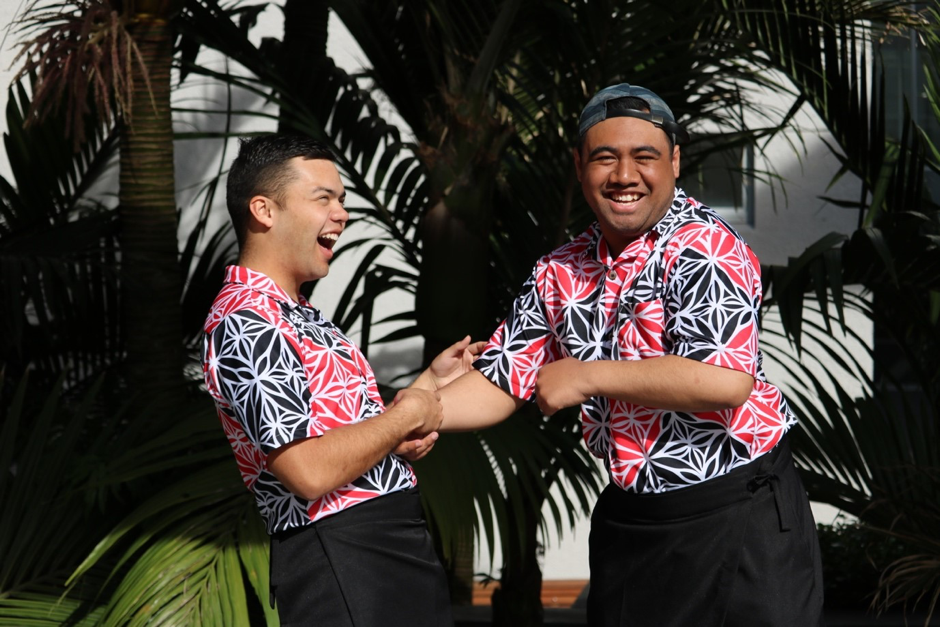 AUT filmmakers Jamey Bailey (producer) and Elijah Fa’afiu (director). Image: Leilani Sitagata/PMC


 Prime Minister Voreqe Bainimarama … reelected with easily the strongest personal vote in the Fiji general election but his FijiFirst party has lost ground since 2014. Image: SK/PMC
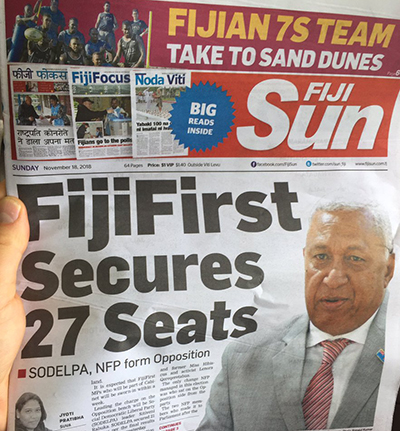 FijiFirst … triumphs again in a general election, but only just. Image: SK/PMC
 FijiFirst’s financial statement for the nine months until 30 September 2018. Image: SK/Twitter
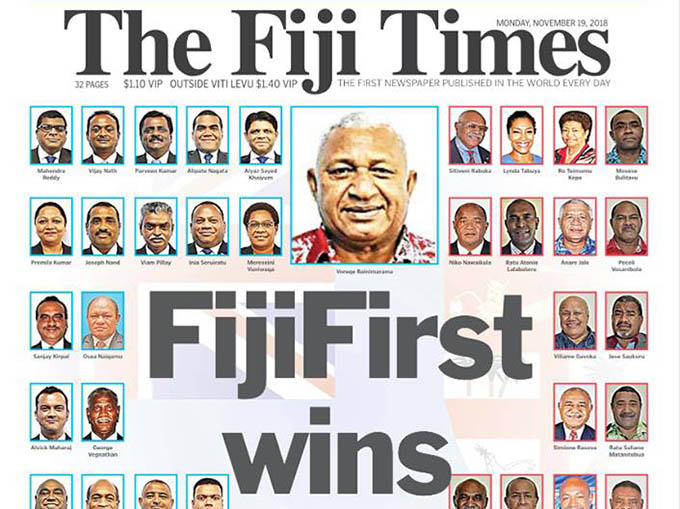
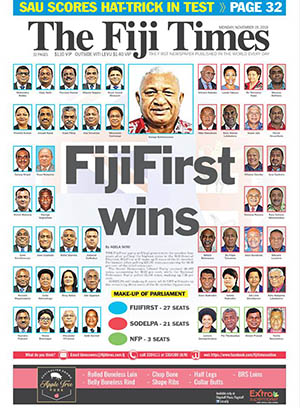 Today’s Fiji Times front page. Image: FT/PMC


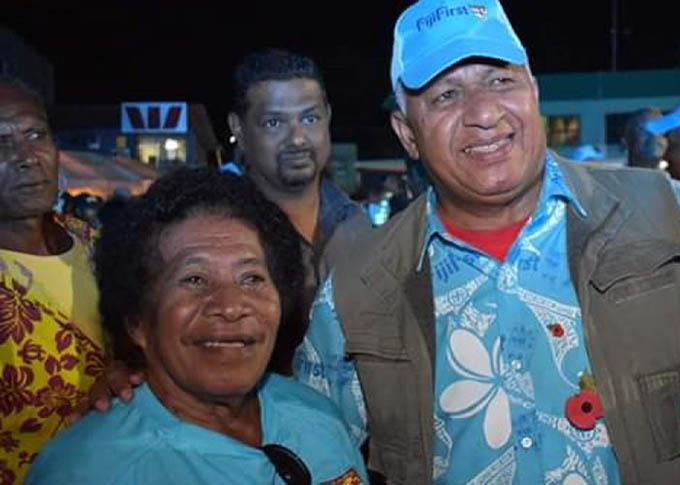
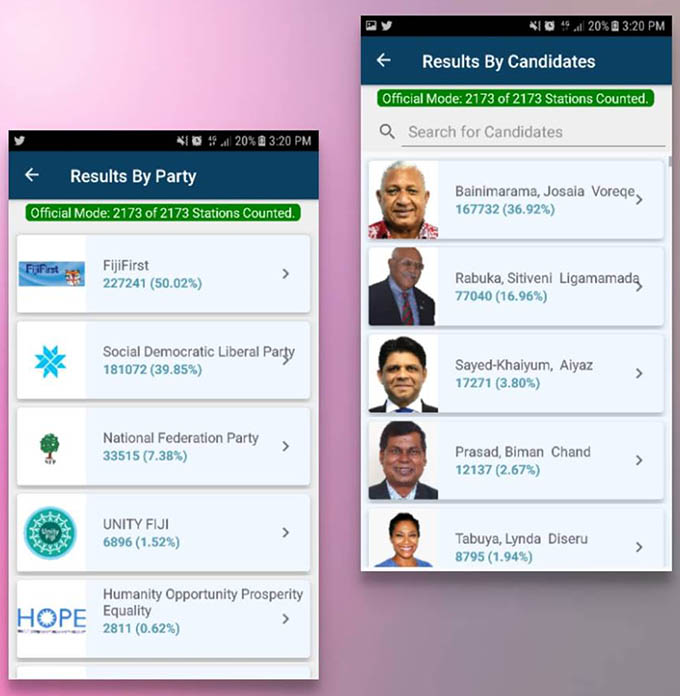 The final results in the Fiji general election announced by the Fiji Elections Office (FEO) in Suva today. Source: FEO
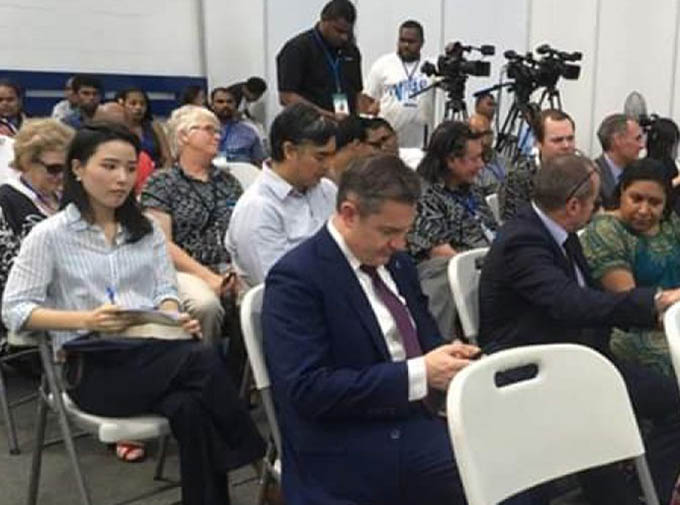

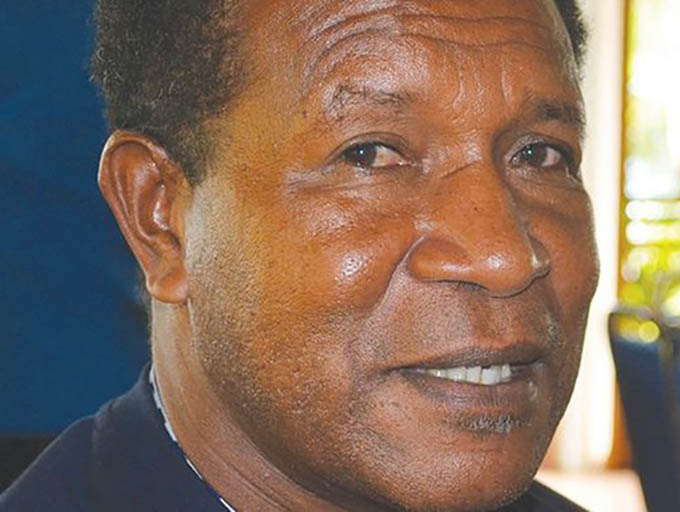

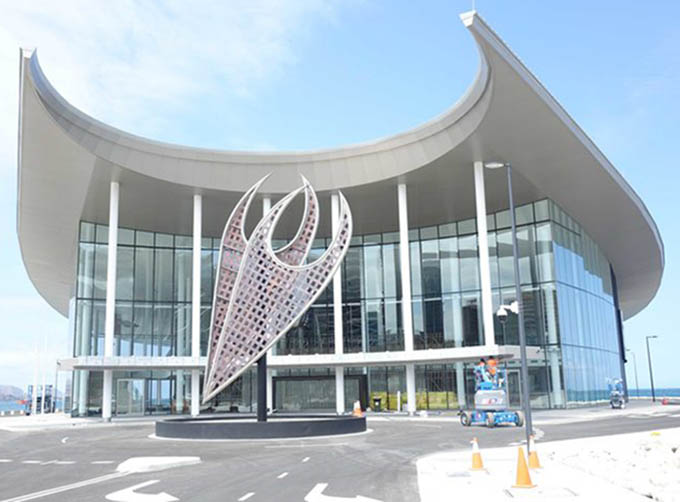 The newly built APEC Haus in Papua New Guinea’s capital Port Moresby which is hosting the 2018 APEC leaders summit this weekend. Image: Johnny Blades/RNZ Pacific
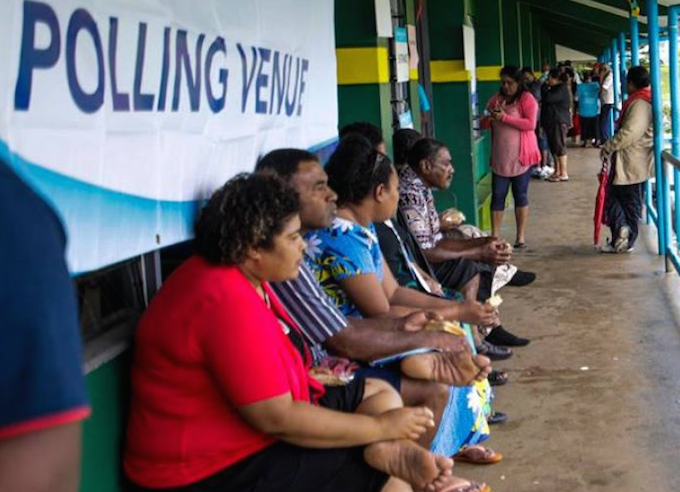

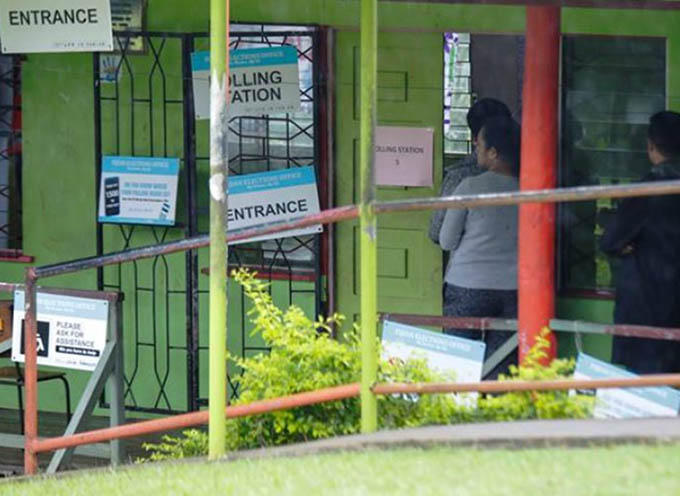


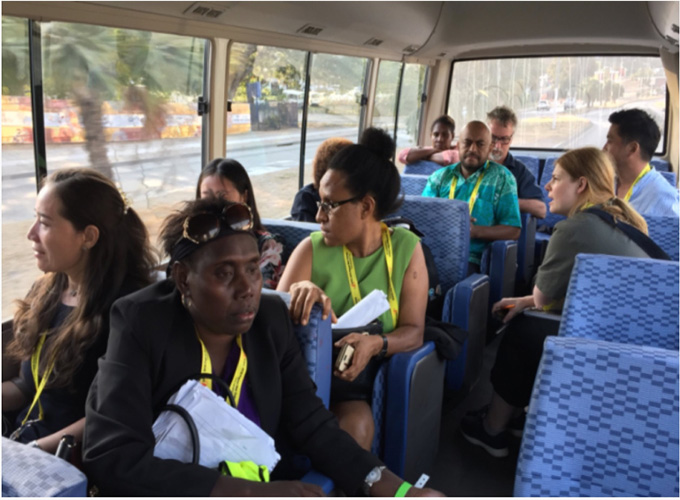

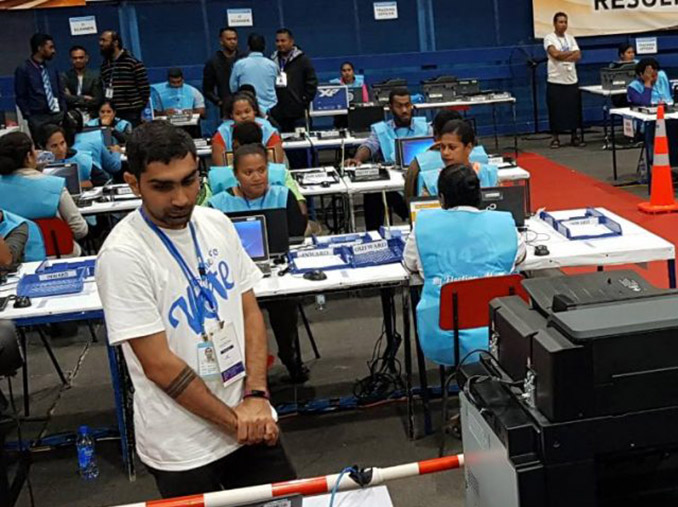
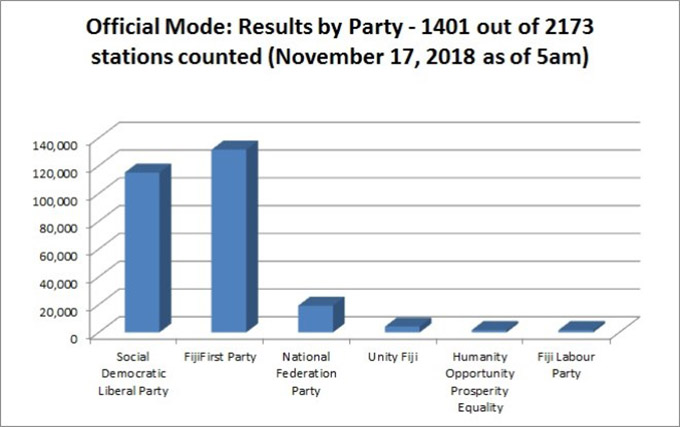 Final Fiji election progress results as at 5am today. Source: FEO
 All smiles … caretaker Prime Minister Voreqe Bainimarama in lead in final progress results in the Fiji election today. Image: Sri Krishnamurthi/PMC
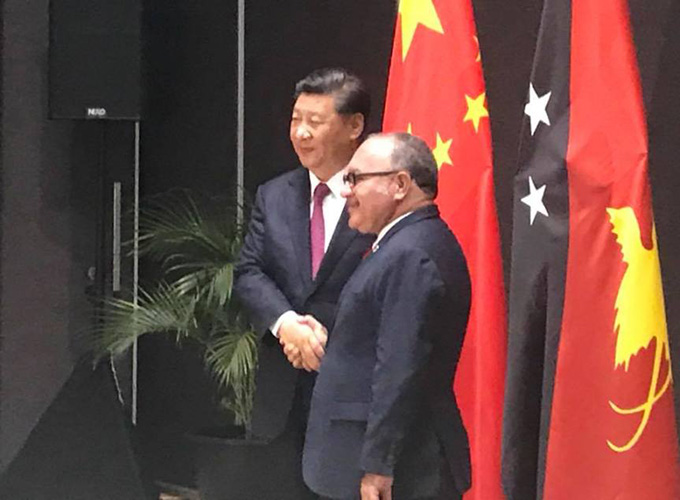


 Chinese President Xi Jinping arrives at Port Moresby’s Jacksons International Airport last night for a state visit and the APEC summit. Image: Loop PNG


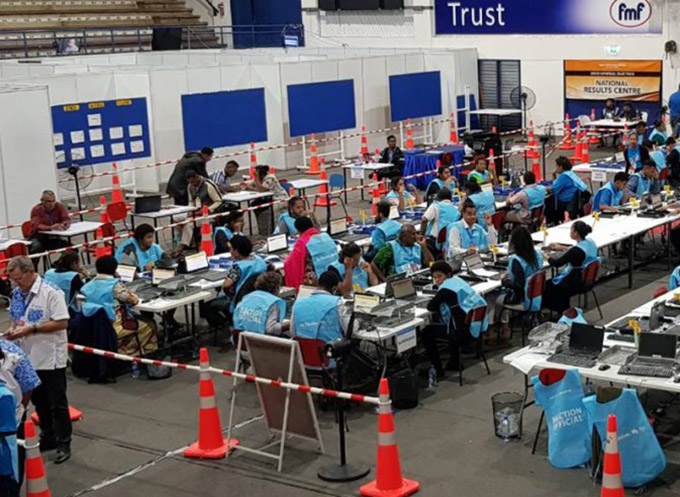
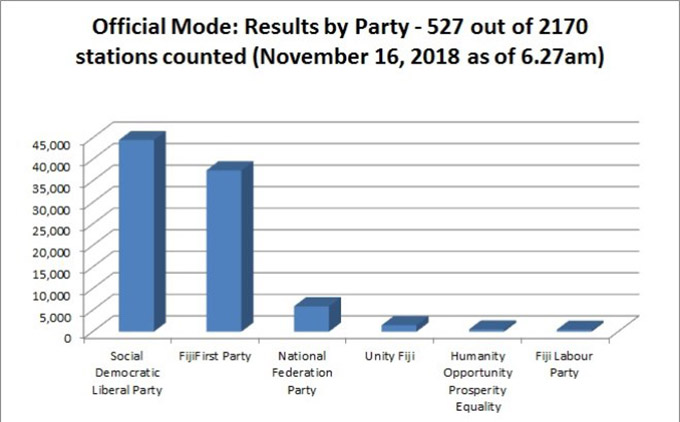 The party vote after 527 polling stations had been counted. Source: FEO
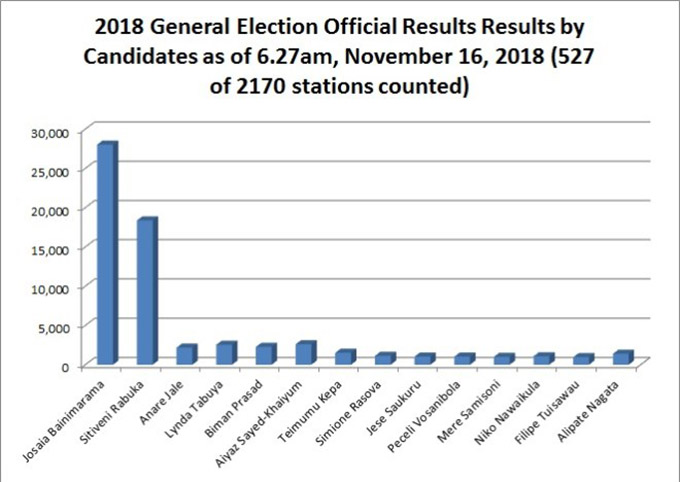 The politicians vote are 527 polling stations had been counted. Source: FEO
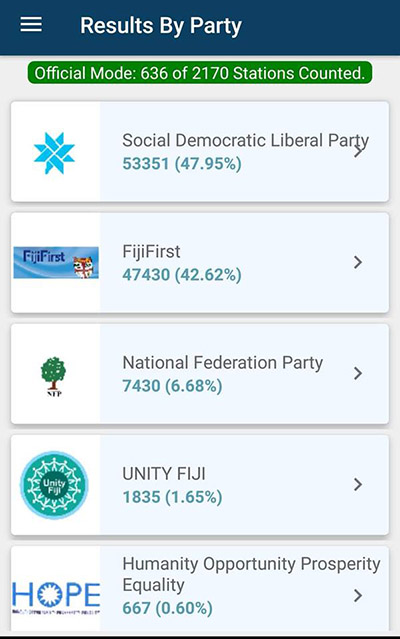 After 636 polling stations had been completed. Source: FEO