Page 1012

Indonesian coronavirus patients hit by lack of privacy legal safeguards

By Ardilla Syakriah, Rizki Fachriansyah and Muh. Ibnu Aqil in Jakarta

Indonesia’s first two confirmed Covid-19 coronavirus patients claim that media coverage and discussion on social media have taken a greater toll on them than the disease itself, saying that numerous breaches of privacy and the resulting stigma have left them “mentally drained”.

Some people went so far as to directly attack one of the patients, known as Case 1, through social media.

A message saying “You have been warned by the government to be vigilant of foreigners but you were stubborn” was sent to her over Instagram, a screenshot of which was shown to The Jakarta Post on Wednesday.

READ MORE: Indonesia to test more people for the Covid-19 virus

Earlier, personal details of the two patients comprising their initials, ages and home address popped up on WhatsApp groups and other social media from an unclear source not long after the news about the confirmed cases broke on Monday.

President Joko “Jokowi” Widodo announced that a 31-year-old woman (Case 1) and her 64-year-old mother (Case 2), both residents of Depok, West Java, had tested positive for Covid-19 after coming into contact with a Japanese woman who later tested positive in Malaysia.

– Partner –

The President’s announcement came as a surprise to the patients themselves.

“We had not been [officially told that we had tested positive],” Case 2 told kompas.com on Tuesday.

Patients’ house swarmed
Ever since the announcement, reporters have swarmed the patients’ house. In social media, photographs of the patients also spread like wildfire.

Some internet users questioned the younger patient’s profession, correlating it with how she might have contracted the virus.

Health Minister Terawan Agus Putranto said on Monday that Case 1 was a dance teacher and had danced with the Japanese citizen, whom he described as a close friend of the woman, in a club in Kemang, South Jakarta.

In a statement made on Wednesday, Case 1 shared how she might have contracted the virus and what she did afterward — which differed from the account released by the authorities.

Case 1 said she had started coughing and having a fever on Feb. 16 and decided to visit a private hospital along with her mother last Thursday. There, she was diagnosed with bronchopneumonia and her mother with typhus.

The following day, a friend in Malaysia called to let her know a Japanese woman who had tested positive for Covid-19 on Feb. 26 had visited the restaurant in Jakarta where she had been hosting on Feb. 15.

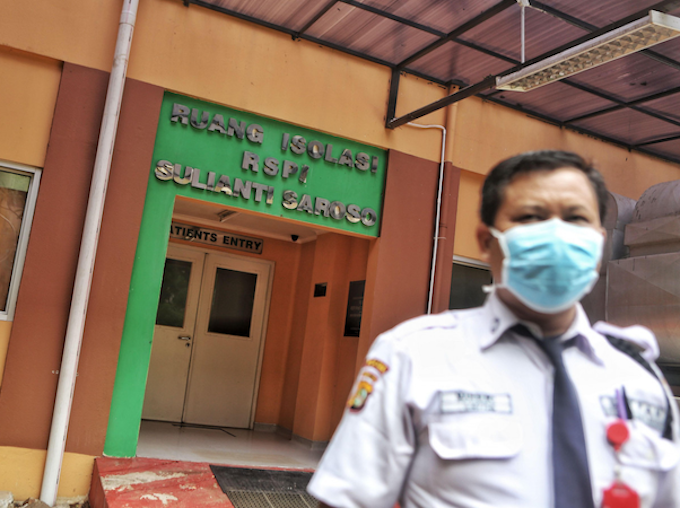
“For the sake of national security and health, I informed the doctor that I needed to be tested and that’s why I’ve been isolated since Sunday. I don’t even know nor am I acquainted with the Japanese citizen,” she said.

Japanese citizen a woman
She further emphasised the Japanese citizen was a woman, not a man who “rented” her like the gossip said. “I was just in a room with the Japanese woman without knowing who she was.”

“Please respect me and my family’s privacy, stop spreading our photos and fake news about us,” she said in a statement.

The breach of the patients’ personal data also affected their neighbours. Anis Hidayah of Migrant Care, one of the neighbours, said media coverage had disrupted their activities: some were not allowed by their employers to work and app-based motorcycle taxi drivers were adamant about not accepting orders from the housing complex.

“What I regret the most is it has framed people I know personally in unfavorable ways,” Hidayah said.

Institute for Policy Research and Advocacy researcher Wahyudi Djafar said the recent case of privacy breach was due to the absence of legislation on personal data protection and the lack of respect for privacy in society.

Unlike Singapore with its 2012 Data Protection Act, Indonesia has no specific law stipulating what makes data private, the rights of data owners, the duties of the data processors, or the mechanisms for processing such data.

“Even if some laws regulate about privacy, the material is limited and often contradictory because they don’t follow the same principle of personal data protection,” he said.

Data protection bill
He urged that a data protection bill be discussed, although he warned the public to keep an eye on the deliberations as there was potential for abuse of power in the current draft. The draft only imposes administrative sanctions on the government for possible wrongdoing.

Jokowi requested people respect the Covid-19 patients’ privacy following his announcement. He also asked that his ministers and the hospitals involved in treating the patients avoid disclosing the patients’ private information.

In a statement issued on Monday, the Alliance of Independent Journalists (AJI) called on members of the press to be more considerate in their reporting by speaking to the most credible sources on the issue, as opposed to publishing “sensationalised” pieces on the patients and their families.

Lawmaker Charles Honoris has urged the government to ensure the privacy of its citizens in relation to the spread of the coronavirus.

“Mass disclosure of Covid-19 patients’ private information should be taken seriously as a violation of citizens’ privacy,” he said.

He said the government must learn from Singapore and Japan in this regard, specifically about how the two countries had implemented a zero-tolerance privacy policy to protect the personal lives of its confirmed Covid-19 patients.

The writers are staff reporters of The Jakarta Post.

Print Friendly, PDF & Email

Article by AsiaPacificReport.nz

Politics with Michelle Grattan: Keith Pitt on the Murray-Darling Basin, the Northern Australia Infrastructure Facility, and Nuclear Power

Source: The Conversation (Au and NZ) – By Michelle Grattan, Professorial Fellow, University of Canberra

Appointed minister for resources, water, and northern Australia in the Nationals reshuffle, Keith Pitt was handed a diverse portfolio with some highly contested issues.

As water minister, he’ll soon have a report from Mick Keelty on the Murray-Darling Basin, which could spark more fighting between states, and the ACCC report into water trading, expected at the end of the year.

“We do need to ensure the trading is fair,” he says. “I’m as concerned as anybody else if people are playing the market to their own financial benefit rather than what the purpose of it is.”

“They’ll be caught. And they’ll be punished.”

One of his priorities will be putting his foot on the accelerator to have the Northern Australia Infrastructure Facility get its investment money out faster, after what’s been a slow start, with only some $2 billion of its $5 billion allocated.

“My view’s very straightforward. This is $2 billion worth of capital that can drive jobs and help drive the Australian economy. I want to get it out the door, into projects.”

Pitt’s pet project has long been nuclear energy as a means of clean power supply in Australia. Despite nuclear not being a policy of the government, he is hopeful community attitudes will change.

“I think there’s been some change over recent years… particularly in the younger generations. They’re certainly more concerned about other priorities…and they’re not as concerned about what’s happened in the past with the older type technology”.

New to podcasts?

Podcasts are often best enjoyed using a podcast app. All iPhones come with the Apple Podcasts app already installed, or you may want to listen and subscribe on another app such as Pocket Casts (click here to listen to Politics with Michelle Grattan on Pocket Casts).

You can also hear it on Stitcher, Spotify or any of the apps below. Just pick a service from one of those listed below and click on the icon to find Politics with Michelle Grattan.

Additional audio

A List of Ways to Die, Lee Rosevere, from Free Music Archive.

ref. Politics with Michelle Grattan: Keith Pitt on the Murray-Darling Basin, the Northern Australia Infrastructure Facility, and Nuclear Power – https://theconversation.com/politics-with-michelle-grattan-keith-pitt-on-the-murray-darling-basin-the-northern-australia-infrastructure-facility-and-nuclear-power-133067

NZ pledges $1m for WHO in coronavirus support to Pacific

Pacific Media Watch

New Zealand is providing NZ$1 million to the World Health Organisation (WHO) in Suva, Fiji, to support its Pacific Action Plan for Covid-19 coronavirus preparedness and response.

Foreign Affairs Minister Winston Peters has announced that New Zealand is partnering with countries in the Pacific to ensure they are prepared for, and able to respond to the global threat of the infectious disease.

“There are currently no confirmed cases of Covid-19 in the Pacific, but it is vital that New Zealand is working hard in partnership with our neighbours to ensure the region is safe and as prepared as can be,” Peters said.

READ MORE: NZ foreign minister delays Pacific mission

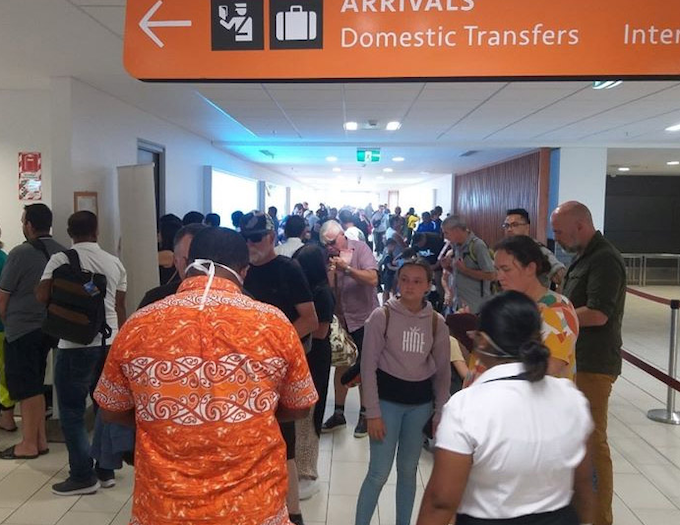
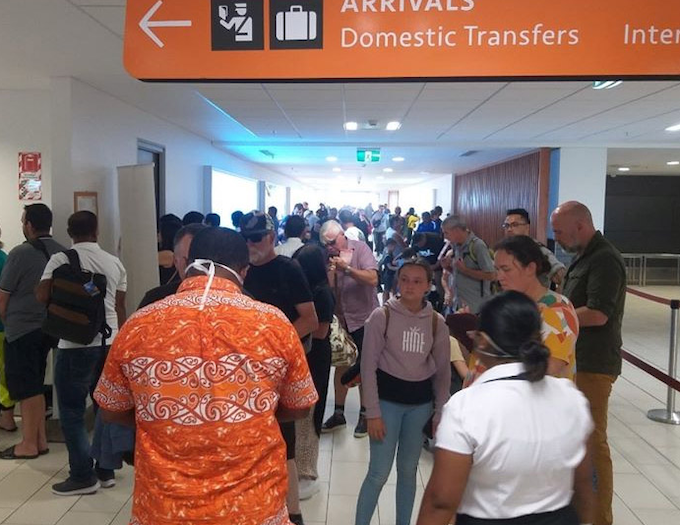
However, Fiji health authorities reported today that there were four people suspected of being infected by the virus were in isolation and Tonga also reported a suspected case.

New Zealand is jointly funding the WHO Pacific regional coronavirus response plan, in partnership with Australia, in response to requests for assistance from Pacific island countries.

– Partner –

The New Zealand government has also signed a contract with the Institute of Environmental Science and Research (ESR) for countries in the South Pacific to send samples of potential Covid-19 cases to ESR’s laboratory in New Zealand for testing, free of charge.

Supporting the realm countries has been another focus of New Zealand’s preparations related to coronavirus.

“In partnership with the WHO, New Zealand has deployed a team to Cook Islands to support Covid-19 preparedness, with further joint trips planned to Tokelau and Niue from next week,” Peters said.

Ministry of Foreign Affairs and Trade media release and RNZ News.

Print Friendly, PDF & Email

Article by AsiaPacificReport.nz

When there’s nowhere to escape, a bushfire-safe room could be your last resort

Source: The Conversation (Au and NZ) – By Sahani Hendawitharana, PhD Scholar, Queensland University of Technology

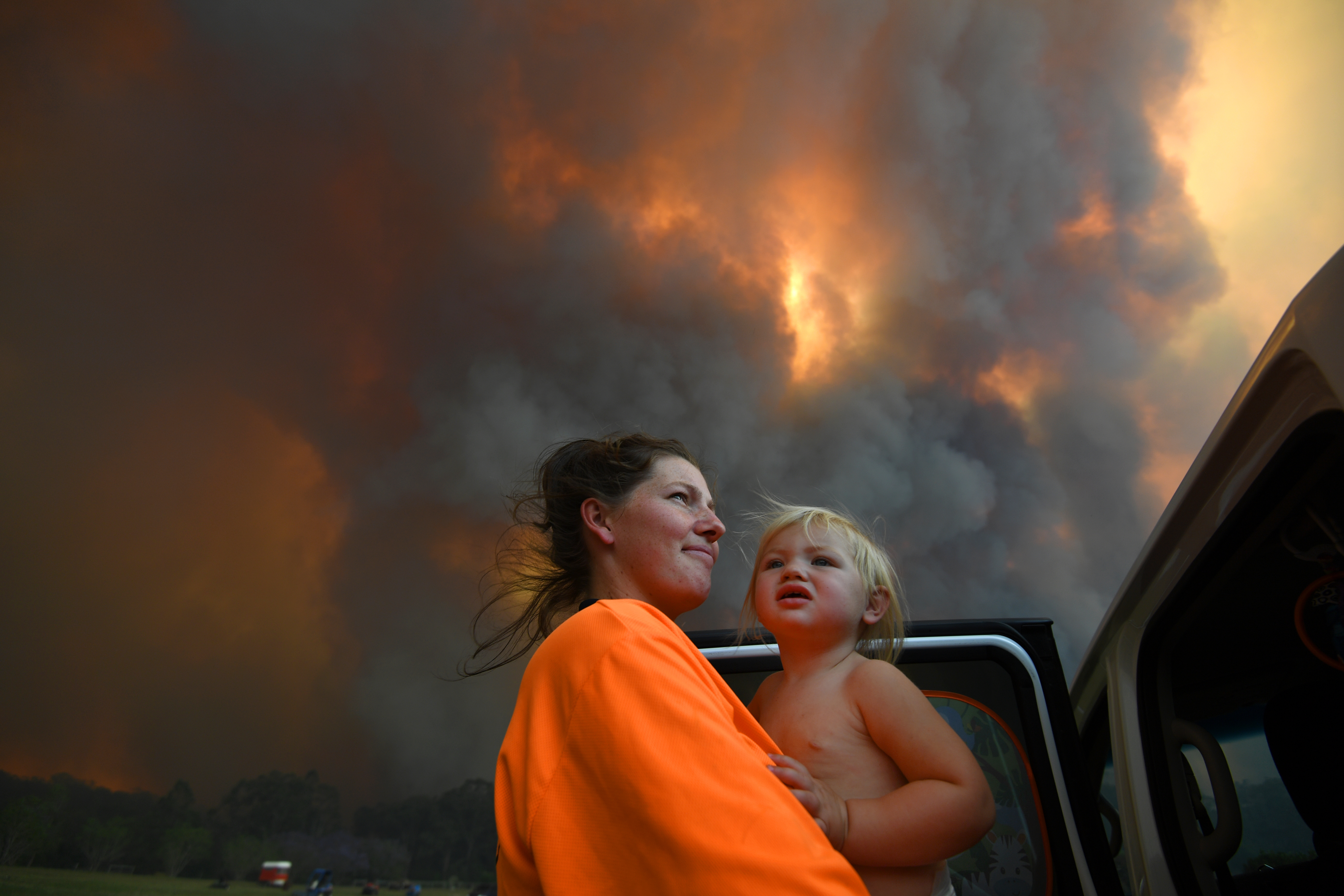
Recent bushfires mercilessly destroyed almost one-third of Kangaroo Island, razing many homes to the ground.

Seeing this destruction on a recent visit to Kangaroo Island made us rethink how we could improve people’s safety. We spoke to people affected by the fires and learnt most preferred to stay and protect their properties, rather than evacuate. Here are some of their responses:

I’ll only leave my house if I see danger ahead.


When the fires started to come towards us, my husband wanted to evacuate early, but I wanted to spend the night in my home. The fires were far away and they didn’t reach us anyway.


He had $10,000 worth of hay he wanted to protect from the fires. But even with the help of fire services, we couldn’t save them.

People should always evacuate early to ensure their safety. But when they do decide to stay or they’re told it’s too late to leave, having a plan B is extremely important. Fire crews may struggle to reach you in time if anything goes wrong.

This is why having the option of a bushfire-safe room could be the last trump in your hand to save your life.


Read more: How to prepare your home for a bushfire – and when to leave


Safe rooms are a purpose-built, last-resort option to shelter from a bushfire attack. They should be built with fire-resistant material such as stone and bricks, be situated in or near a person’s home, and be resistant to toxic gas and smoke. This is a difficult task, so we’re researching how to make bushfire-safe rooms as safe as possible.

A growing number of people are turning to bushfire bunkers but are they lifesavers or deathtraps? Video: The Project

Why might you need a bushfire-safe room?

Imagine if:

  • you have no clue of the fire direction or the speed

  • your access road to escape is on fire

  • you wanted to escape before the fire comes, but can’t

  • you planned to stay and defend, but that seems impossible

  • emergency services cannot reach you in time.

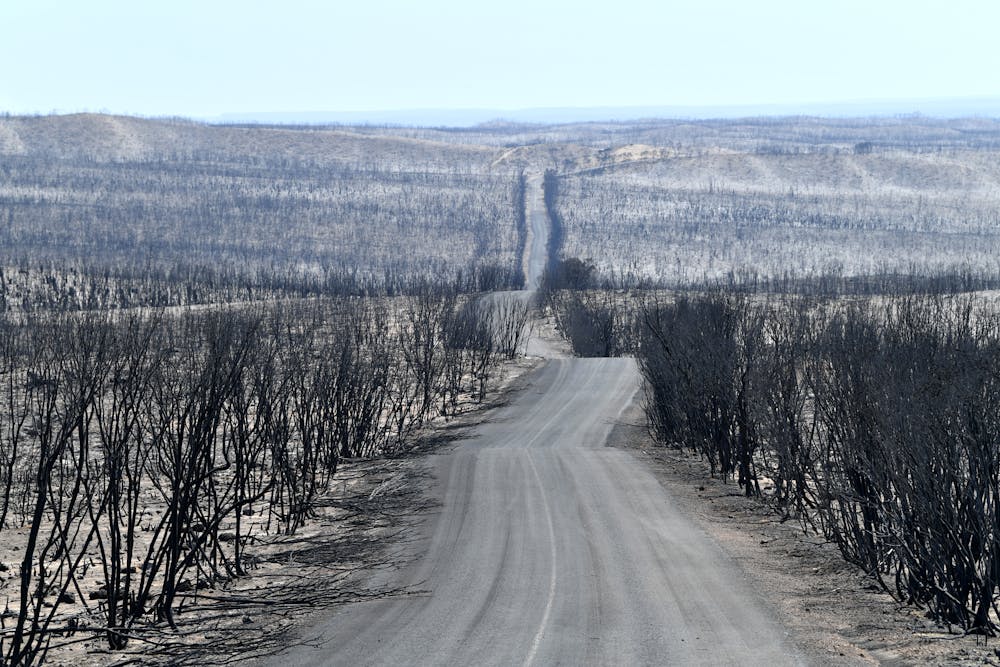
On Kangaroo Island, for instance, long straight roads are the sole way in and out of some remote and rural settings. Often there’s no mobile coverage, some parts of the island have no beach for people to escape to and emergency services may take a long time to arrive.

When fire is approaching, it’s common for people to flee to nearby brick buildings, such as schools, to seek shelter.


Read more: Building standards give us false hope. There’s no such thing as a fireproof house


But these buildings aren’t purpose-built for bushfire protection. And while they might be the safest option when there’s nowhere else to go, they are still risky. Smoke can penetrate, and burning embers can enter gaps in the building.

How safe are safe rooms?

Bushfire-safe rooms also have inherent risks. If they’re not constructed properly, they can be deadly.

Unlike other safe rooms used around the world (tornado shelters, war bunkers or bullet proof safe rooms), bushfire-safe rooms must be able to handle increased inside temperatures, carbon dioxide accumulation and smoke penetration, as well as withstand extremely high temperatures. They also need sufficient space for multiple people, and possibly space to store food supplies and valuables.

When the road to escape is surrounded by fire, where can you turn? AAP Image/David Mariuz

After Black Saturday, The Australian Building Codes Board released performance standards for the construction of private bushfire shelters. But these standards aren’t mandatory, and there’s room for improvement.

For example, the standards specify that an able-bodied person should stay in a private bushfire shelter for only one hour – the time it takes to withstand a fire front and any adjacent fires, and leaving a 10-minute safety margin before and after they hit.

But as bushfire severity and smoke conditions vary, people could, realistically, be stuck in there for a few hours.

This is why engineering safe rooms correctly and thoroughly is critical before the next bushfire disaster hits. This is where our research at Queensland University of Technology comes in.

Researching safety

We’re researching how to best construct bushfire-safe rooms from a structural engineering point of view, testing bushfire-resistant building materials, wall systems, and more. We’ll have results to share in six to eight months.

Interestingly, we’re also testing materials such as pumice (lightweight volcanic rock used in chimneys) and refractory blocks (ceramic material used to line kilns and furnaces), with promising results.

Safe rooms can be situated underground or above-ground at surface level, and we found both options have pros and cons. Above-ground structures would endure significant exposure to flames, while maintenance and accessibility for people with disabilities are problems for underground safe rooms.


Read more: Where to take refuge in your home during a bushfire


Still, Australia needs more scientific research beyond ours into the integrity of bushfire-safe rooms. We also need more behavioural studies to track how people respond to fires so we can better protect them with other survival options.

It’s high time people in bushfire-prone areas were given realistic ways to survive when evacuation is no longer an option.

ref. When there’s nowhere to escape, a bushfire-safe room could be your last resort – https://theconversation.com/when-theres-nowhere-to-escape-a-bushfire-safe-room-could-be-your-last-resort-132191

Save our screens: 3 things government must do now to keep Australian content alive

Source: The Conversation (Au and NZ) – By Anna Potter, Associate Professor and Deputy Head of School (Research) School of Creative Industries, University of the Sunshine Coast

Last week, free-to-air broadcaster Seven, embracing the spirit of a petulant teen, stomped its foot and announced it would no longer follow the rules regarding its Australian children’s content obligations. Nine has suggested it will soon follow suit. With the Australian government poised to release a local content policy options paper any day now, Seven’s belligerence looks like a preemptive strike.

Commercial broadcasters have claimed the sky is falling for years. Since the late 2000s, their audiences and advertising revenues have fragmented across new television platforms. Broadcasters claim requirements to air local content and children’s programming exacerbate their struggle.

Seven – and its broadcast rivals Nine and Ten – claim they are operating on a far from level playing field. And indeed the competitive landscape has changed. The networks point at Netflix, the US-based streaming service that Australians have embraced. Neither Netflix, Disney+, nor Australian provider Stan face any local content obligations. But streaming services use a different technology and are not protected from new market entrants the way broadcasters are. They also don’t compete for advertiser spending. In reality, the issues facing commercial networks aren’t likely to be relieved by adjustments to local and children’s quotas.

The emerging crisis – which may include the fire sale of a broadcast channel – results from repeated inaction by government to develop 21st century policy frameworks. Here are three ways we can encourage local production and break the policy inertia:

1. Think beyond quotas

Seven, Nine and Ten have been subject to minimum local content rules, including for children’s programs, since the 1960s. These have been a condition of receiving a broadcast license. The networks have lobbied determinedly against Australian quotas virtually since their introduction.

Quotas are not the only longstanding challenge. Australian broadcasters have been on notice for at least 15 years that digital distribution would disrupt the sector. But the challenges facing the networks, and Australian screen production more broadly, have been compounded by sustained regulatory inertia.

Multiple recent inquiries have yielded precisely zero action. The current situation cannot be solved with band-aid solutions. Delaying further risks doing more damage, particularly to the Australian screen production sector, which depends on local quotas to initiate production for programs in demand in international markets.

Hours-based quotas – the primary policy mechanism for broadcasters – are meaningless in the 21st century, where streaming services have libraries, not schedules.

Hours-based local content quotas are meaningless when streaming services have libraries not schedules. Mladen Zivkovic/Shutterstock

We live in a world that wasn’t even fully imagined when local content policies were put in place. Today’s television ecosystem is far more complicated. It includes those governed by the logics of public service (in the case of the public broadcaster ABC and SBS) and commercial aims, by linear and on-demand availability, and by government, advertiser, and subscriber-supported services. It has become an ecosystem of complementary services rather than direct competitors – and one that needs to be regulated fairly and equitably. But these underlying differences make a “level playing field” an unreasonable goal. Just as we wouldn’t expect common policies to govern plane and train transportation – policies are needed that acknowledge the differences among 21st century video services.

2. Learn from other countries

The new ecosystem may warrant new tools and approaches, but it doesn’t justify releasing broadcast license holders from their responsibility to Australians, including children. However, it may be time to create a different mechanism of support.

In the UK, the Young Audiences Content Fund was introduced in 2019 with nearly £60 million (A$116.5 million) in public funding. The fund provides 50% of the costs of programs made specifically for children and young people, with the rest to be sourced from broadcasters.

Germany requires streaming services to contribute 2.5% of their revenue to the country’s subsidy system to support German production. New Zealand’s peak funding body, New Zealand on Air, offered another experiment by launching the free children’s streaming service HEIHEI in 2019. HEIHEI provides locally-produced television to NZ children in a market dominated by US imports.


Read more: Crunching the numbers on streaming services’ local content: static growth, but more original productions


3. Revise the Incentives

Those profiting from the Australian market must play a role in solving the current policy challenge. Requiring all commercial television services operating in Australia, including streaming services, to contribute to a fund available to all producers is one equitable way of creating authentically Australian and enriching children’s programs.

Updating state-funded initiatives is also part of a sustainable solution. Australian television producers currently receive only half the rate of tax offset support that benefits Australian film producers. Bringing television support in line with film is necessary, but that expanded funding should come with new requirements appropriate for the new ecosystem.

Though the commercial networks decry the burden of local and children’s series, others are rewarded for their ambitious telling of Australian stories in the on-demand age. Last week, Netflix acquired global streaming rights to the new ABC drama Stateless. It also snapped up kids’ shows The Unlisted and The InBESTigators, suggesting the value of these Australian productions.

Bluey’s international success shows there is huge potential in Australian-produced content. Bluey/IMDB

Australian children’s shows have a global reputation for excellence, but are also expensive and require local network investment. Bluey, now up to 200 million views on iView, is streaming all over the world on Disney+. Series produced by Jonathan Schiff such as H20: Just Add Water and Mako Mermaids have been among government agency Screen Australia’s most profitable shows.

Although broadcaster threats grab headlines, they won’t help us find a sustainable future for Australian television production. The changes in the competitive landscape offer as much opportunity as challenge, but that opportunity cannot be realised as long as the government relies on 20th century tools.

ref. Save our screens: 3 things government must do now to keep Australian content alive – https://theconversation.com/save-our-screens-3-things-government-must-do-now-to-keep-australian-content-alive-132758

Economic growth near an end as Treasury talks of prolonged coronavirus downturn

Source: The Conversation (Au and NZ) – By Peter Martin, Visiting Fellow, Crawford School of Public Policy, Australian National University

Australia’s three-decade run of near continuous economic growth is set to end, with treasury warning of a hit to growth of “at least” 0.5% in the first quarter of this year, potentially followed by a “prolonged downturn”.

If it came to pass, treasury’s preliminary assessment would most likley mean economic growth vanished and went backwards for several quarters, producing what is commonly known as a “technical recession” – two quarters or more in which economic activity shrank.

Providing the assessment to a Senate estimates committee on Thursday morning, treasury secretary Steven Kennedy said the COVID-19 coronavirus would take “at least half a percentage point” from economic growth during the current March quarter and more beyond that.

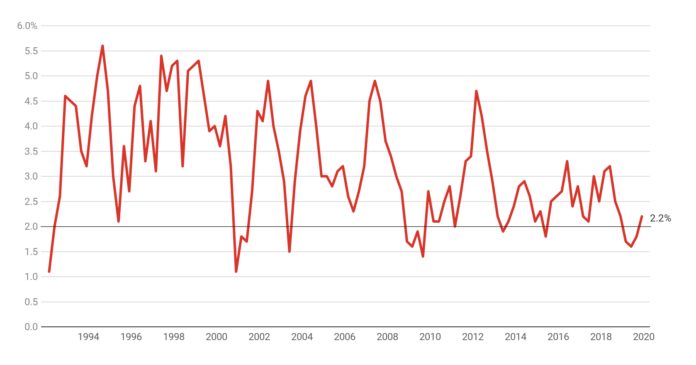
In recent quarters economic growth has been about half a percentage point.


Quarterly GDP growth

Source: ABS 5206.0

Treasury’s preliminary estimate of a hit of at least half a per cent took into account only the direct impacts of the virus on tourism and education, and some exchange rate effects.

It did not take into account broader economic effects or the impact of the coronavirus on supply chains.

The half a percentage point hit to growth would come on top of a hit of 0.2% from the summer bushfires, most of which would be felt in the March quarter.


Read more: Support package gains shape as GDP turning point swamped


Dr Kennedy, a former nurse who retrained as an economist, stressed that the impact of the bushfires would extend well beyond the immediate hit to economic growth.

“Evidence from past episodes suggest bushfires can lead to long-lasting physical and mental health effects and destroy cultural heritage,” he said.

“Research by the University of Melbourne after the Black Saturday bushfires in 2009 found mental health problems continued for three to four years.”

The bushfires made clear the increased probability of such events in a world of climate change.

“The CSIRO predicts climate change will make bushfires more likely, as fire weather patterns worsen as a result of an increase in weather patterns with hot and dry winds and fuel becoming drier.”

Deeper, wider and longer lasting than SARS

As on Tuesday there had been 91,868 confirmed COVID-19 cases worldwide and 3,131 deaths, most in China. COVID-19 had spread to 77 countries.

When the virus first emerged in China in December, the treasury saw it through the lens of the 2002-04 Severe Acute Respiratory Syndrome (SARS) pandemic.

It was now clear COVID-19 would be different.

The impact of SARS took on a V shape, a relatively contained reduction in activity, mostly in Asia, followed by a quick bounce back.

The economic impact of COVID-19 is likely to be deeper, wider and longer when compared with SARS.

It will create more risk of a prolonged downturn, and fiscal support will be needed to accelerate the recovery of the economy, especially once the health and health management effects of COVID-19 begin to fade.

The first phase of the economic support package to be delivered next week would target assistance to the businesses and sectors most affected in order to keep people in jobs.

After that, support for aggregate demand (overall spending) would become more important.


Read more: The first economic modelling of coronavirus scenarios is grim for Australia, the world


“A very substantial part of the impact is actually confidence among consumers and the business sector because of the uncertainty,” Dr Kennedy said.

“Frankly, effective health management will be very important. The economy is actually quite solid. One of the key things will be to to explain to the community how well placed the economy is to manage such a short-term shock.”

The shock would last for some time but the economy would “recover on the other side”.

Keeping workers employed be very important.

ref. Economic growth near an end as Treasury talks of prolonged coronavirus downturn – https://theconversation.com/economic-growth-near-an-end-as-treasury-talks-of-prolonged-coronavirus-downturn-133053

No, pregnant women aren’t primed to ‘nest’. It’s a myth that sets women up for a lifetime of housework

Source: The Conversation (Au and NZ) – By Leah Ruppanner, Associate Professor in Sociology and Co-Director of The Policy Lab, University of Melbourne

The idea of women late in pregnancy “nesting”, preparing the home for the arrival of their newborn, is ingrained in popular culture and reinforced by health-care professionals.

We’ve been led to believe women have a biological urge to tidy, clean and prepare the home for their baby, just like mice, rabbits and pigs prepare their nests to provide a safe environment for their litters.

But a UK review of the evidence finds there’s no basis to the idea that women’s hormones drive them to nest. Instead, the researchers argue this is a myth that reinforces gender inequalities of who does housework.

The myth also sets women up for a lifetime of tidying, cleaning and sorting.


Read more: Monday’s medical myth: sex induces labour


The latest myth to be busted

This is the latest study to shatter our long-held expectation that women are biologically predisposed to do more care work.

First we were told women were better multi-taskers. But this was false. Then, we were told men can’t see mess. But that wasn’t true either. Now we are told women aren’t biologically disposed to nest.

So, what is happening here? It turns out all these myths about gender are just another way to get women to do the drudgery of housework.


Read more: Sorry, men, there’s no such thing as ‘dirt blindness’ – you just need to do more housework


The history of creating more work for women

This 1948 advertisement in the Australian Women’s Weekly promised women less drudgery and more leisure time. But that’s not what happened. Matthew Paul Argall/Flickr/Australian Women’s Weekly

This pattern is nothing new. The advent of the multi-burner stove meant cooking moved from single pot meals cooked over an open hearth to an elaborate range of multiple-course meals.

The result? More work for women.

The innovation of a washing machine, which allowed clothes to be washed mechanically, meant people expected clean underwear and socks every single day.

The result? More work for women.

Today, more women have a university education than ever before, surpassing men for the first time in history.

More women are in paid work and hold more prestigious jobs than ever before.

Yet they still shoulder the load when it comes to housework.

Why are we stuck in the past when so much has changed?

The challenge for women is that the gender revolution in housework that started in the 1970s has at best slowed and at worst stalled.

Men have increased their housework contributions and men and women today are more egalitarian, expecting to share domestic and economic chores more equally now than in the past.


Read more: How last night’s fight affects the way couples divide housework


But even though women have made major strides in the labour force, they still can’t get their partners to share most of the household chores.

The reason: housework is drudgery. But someone has to do it to ensure the household functions. So, it gets dumped to those who have less power, have less time or are socialised into doing it.

The solution is structural

A lack of child care, parental leave and flexible work available to men freely and without consequence means these gender divisions when it comes to housework are structural.

Housework is also about time. The way global markets are structured, plus rising inequality, means investing time in employment is more highly valued than investing time at home.

So we need policy supports – parental leave that allows fathers to step in equally to mothers, childcare costs that don’t drain the family savings or flexible work and part-time work that is not relegated to mothers – to allow people more time to manage the home when the demand spikes.


Read more: We can we reduce gender inequality in housework – here’s how


In countries without these supports, like the United States and Australia, we see mothers carrying a larger share of this burden.

In countries where these policies are more generous, we see men and women sharing the domestic and economic load more equally.

So, what do we do in the meantime as we are waiting for governments and employers to catch up to the modern family?

We name and shame these myths that trap and entangle women through the guise of biology.


Read more: It’s not just the toy aisles that teach children about gender stereotypes


ref. No, pregnant women aren’t primed to ‘nest’. It’s a myth that sets women up for a lifetime of housework – https://theconversation.com/no-pregnant-women-arent-primed-to-nest-its-a-myth-that-sets-women-up-for-a-lifetime-of-housework-132514

It’s now Biden v Sanders as Super Tuesday narrows the field for the Democratic nomination

Source: The Conversation (Au and NZ) – By David Smith, Senior Lecturer in American Politics and Foreign Policy, US Studies Centre, University of Sydney

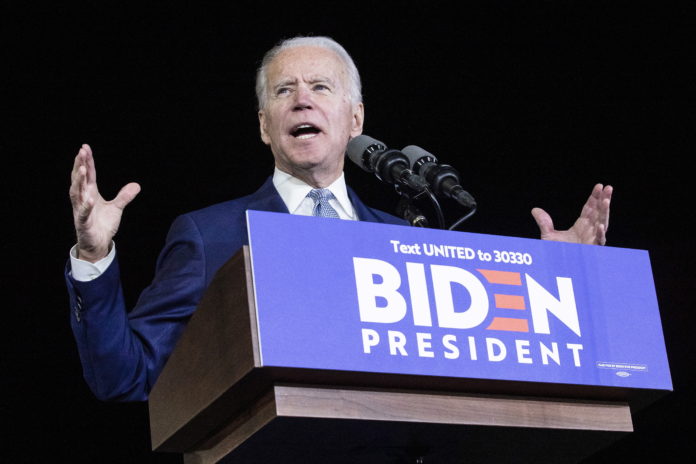
Super Tuesday has continued Joe Biden’s recovery from the brink of disaster.

After a larger-than-expected win in South Carolina, Biden became the clear alternative to Bernie Sanders in the contest to be the Democratic Party’s nominee for the US presidency. Just before Super Tuesday, his moderate rivals, Pete Buttigieg and Amy Klobuchar, dropped out, giving him their endorsements. Just as in South Carolina, the African American vote in southern states proved critical for Biden. He now holds a narrow delegate lead over Sanders.

Sanders held his own on Super Tuesday, especially in California, where he stands to harvest more than 150 delegates. But his campaign will be disappointed that they couldn’t land a knockout blow, especially in Texas where Sanders led in polls but Biden won.


Read more: Biden easily wins Super Tuesday after strong comeback in past few days


It is now a two-person race, with an advantage to Biden. There have been a lot of crazy, chaotic stories over the past six months. The unlikely rise of South Bend Mayor Pete Buttigieg. The trials of Elizabeth Warren, widely admired but cursed by self-fulfilling prophecies about her electability. The jaw-droppingly expensive, and futile, campaign of Mike Bloomberg. The demoralising fiasco of the Iowa caucuses.

After all that, we’re back to the two men who seemed the most likely contenders before it all began.

So what can we learn from Super Tuesday in 2020?

The power of the black Southern vote

After his shockingly poor results in the Iowa and New Hampshire races, Biden warned that 99.9% of African American voters had not yet had a say in the primaries. This was Biden’s big gamble – that black voters in South Carolina would redeem him.

Biden boasts long-standing connections with African American leaders and the reflected glory of Barack Obama’s presidency when he served as vice president. But as early losses mounted, campaign money dried up and his poll lead shrank in South Carolina, his prospects looked increasingly shaky.

His saviour was the very senior and respected congressman James Clyburn, who gave Biden his endorsement days before the election. A huge 47% of South Carolina voters said Clyburn’s endorsement was important, and Biden won two-thirds of the black vote there.

African American voters powered Biden’s Super Tuesday victories in Virginia, North Carolina, Alabama and, crucially, in Texas. Overall, he won more than 60% of the black vote, which makes up a quarter or more of the Democratic Party electorate (and the majority in some southern states). It is widely believed in the Democratic Party that an energised black electorate is critical to beating Trump and winning house and senate races, and this will draw more support to Biden.

But is it important to remember that African Americans are not politically monolithic. These wins in the South reflect Biden’s strengths with older and more conservative voters. In California he won about a third of the black vote.

Don’t forget Latino voters

Bernie Sanders is winning in western states like California, Nevada and Colorado. This is partly because of the enthusiasm he has generated among working-class Latino voters, who are drawn to his economic message.

Latinos, who are about a third of the Democratic electorate in California, are younger than the rest of the population and will be increasingly important in future Democratic coalitions. Sanders won around half the Latino vote in California and 39% of it in Texas.


Read more: The US presidential primaries are arcane, complex and unrepresentative. So why do Americans still vote this way?


The great promise of Sanders is that he can reach young voters who would otherwise avoid politics. His electability against Trump hinges on large increases in youth turnout. So far, those increases haven’t transpired for him in the primaries. It may well be different in a general election, but we’ll never know if it doesn’t happen in the remaining primary races.

Money isn’t everything

Former New York Mayor Michael Bloomberg spent an incredible half-a-billion dollars (A$768 million) on his campaign in the Super Tuesday states, and has little to show for it. He has now exited the race, but his money will stay in. He is likely to play a Clive Palmer role, unable to buy office for himself, but willing to spend hugely to get a candidate and a president who will act in his interests.

Bloomberg, who wasn’t on the first three ballots, left his run too late. He got only two debates, the first of which was a disaster. He had no chance after Biden harnessed the moderate vote with his South Carolina win.

This will be a lesson for any future candidates tempted to wait out the early races. But it is a lesson Bloomberg should already have known. The mayor of New York before him, Rudy Giuliani, also gambled everything on the fourth race of the 2008 primaries. He spent US$59 million to get a single delegate in Florida.

Whatever else he may have lost, Bloomberg has smashed the record for flushing money down the electoral toilet.

What now?

The race is now Biden’s to lose, but it is far from over. Biden has so far relied on the patronage of wealthy and powerful people. He is likely to enjoy more of that from Bloomberg, and may hope for the ultimate endorsement from Barack Obama (though it’s unclear that Obama will endorse anyone in the primaries).

But his campaign still has serious organisational weaknesses. While endorsing Biden, Clyburn took the unusual step of publicly pointing out that he lacks campaign infrastructure. Biden has been a less-than-inspirational speaker on the campaign trail. His single most powerful asset is a widespread belief that he can beat Trump.

Sanders has a genuine movement behind him, which the last two winners of the presidential election also had. His social-democratic agenda has changed the debate in the Democratic Party and the nation. Progressives have decisively chosen him over Elizabeth Warren. But Sanders has an uphill fight now that Democratic moderates have settled on a single champion.

ref. It’s now Biden v Sanders as Super Tuesday narrows the field for the Democratic nomination – https://theconversation.com/its-now-biden-v-sanders-as-super-tuesday-narrows-the-field-for-the-democratic-nomination-131201

Four Fiji suspected coronavirus cases in ‘strict isolation’

Four people have been isolated by Fiji health officials and are being monitored for a suspected Covid-19 coronavirus infection.

The Health Ministry in a statement said all four people were in strict isolation and were in a stable condition while they were awaiting test results.

The ministry said a 15-month old girl developed respiratory symptoms in Suva yesterday after arriving in Fiji from the US on Tuesday.

A 37-year-old Fijian woman returning from a trip to Italy was flagged with respiratory symptoms during a health screening at Nadi airport yesterday.

A three-year-old Fijian boy and his mother, a 26-year-old Fijian woman, developed respiratory symptoms today after returning from Bali and Singapore.

Contact tracing has started for all four patients, the ministry said.

– Partner –

The ministry said the case definition for suspected cases was being widened to include anyone with respiratory symptoms who had recently travelled to a country reported to have local transmission.

It added that this should not alarm the public, but be an indication of the high level of alert and stringent preventative measures the ministry was proactively taking in response to the global outbreak.

The Ministry of Health and Medical Services reiterated that there were currently no confirmed cases of Covid-19 in Fiji.

Praneeta Prakash is a multimedia journalist for the Fiji Broadcasting Corporation’s FBC News.

Article by AsiaPacificReport.nz

Third coronavirus case confirmed in NZ, says health chief

A third case of Covid-19 coronavirus has been confirmed in New Zealand.

Director-General of Health Dr Ashley Bloomfield told RNZ’s Morning Report that he got a report of a third positive test yesterday evening.

“We’re getting all the information together and we’ll update everybody at the same time at the update this afternoon,” Dr Bloomfield said.

He said the positive Covid-19 result was not of the partner of the Auckland woman who tested positive on Tuesday.

“The swab for the partner of the second case is being processed today, so the positive result we received last night is a different case.”

– Partner –

“I want to have all the information then let everybody know at the same time.”

Dr Bloomfield would not say which part of the country the person was in.

Awaiting results
An Auckland woman in her 30s was yesterday confirmed as being the second case of Covid-19 in New Zealand. Her partner is awaiting test results and the family, including two pupils from Westlake Boys and Westlake Girls high schools, are in isolation at home.

Dr Bloomfield said the partner’s tests for coronavirus will go into the batch processed from 10am daily and results will be available this afternoon.

The two children are not being tested because they’re not symptomatic.

“The evidence is very strong … that people don’t transmit the virus unless they’re symptomatic and neither of the children have symptoms.”

The first person to be confirmed in New Zealand as having Covid-19 tested positive last week and has been recovering in hospital in Auckland.

Public health professor Michael Baker said self-isolation as a form of quarantine greatly reduced the risk of transmission, but the virus could already be spreading in the community.

“The term used quite a bit is ‘silent transmission’ and that is because this is a mild illness for most people, maybe up to 80 percent and so they can have what looks like a common cold and can infect other people.”

Dr Bloomfield agreed there could be transmission in the community, but he did not believe the “genie is out of the bottle”.

“While it’s called silent transmission, that doesn’t mean people don’t have symptoms.

“We know from the biggest study done so far, the [World Health Organisation] nine-day mission in China, that it’s symptomatic people that transmit that virus.

“If you are unwell with symptoms then stay at home and take precautions.

“I think that’s a really key message here.”

Covid-19 was not as transmissible as the flu which spreads when people don’t have symptoms, he said.

This article is republished under the Pacific Media Centre’s content partnership with Radio New Zealand.

Article by AsiaPacificReport.nz

Why are people stockpiling toilet paper? We asked four experts

Source: The Conversation (Au and NZ) – By Michael Lucy, Deputy Science + Technology Editor

As coronavirus continues to spread around the world, anxiety is rising in Australia. Shoppers fearful of quarantine measures have been stocking up on supplies to last out a week or two of isolation.

Recent days have seen reports of shortages of hand sanitiser and warnings that batteries and other electronic items could be next. However, the surge in demand for one particular commodity has seen supermarket shelves stripped bare: toilet paper.

It’s not just Australians. Shops in Japan, the US and New Zealand have also run low on the precious sanitary rolls. In Hong Kong, ambitious thieves held up a supermarket to steal a delivery.

But why toilet paper? The question has been in the air for at least the past month, but it’s now become hard to avoid. We asked four experts for their thoughts.


Read more: Stocking up to prepare for a crisis isn’t ‘panic buying’. It’s actually a pretty rational choice


Niki Edwards, School of Public Health and Social Work, Queensland University of Technology:

Toilet paper symbolises control. We use it to “tidy up” and “clean up”. It deals with a bodily function that is somewhat taboo.

When people hear about the coronavirus, they are afraid of losing control. And toilet paper feels like a way to maintain control over hygiene and cleanliness.

People don’t seem interested in substitutes. Supermarket shelves are still full of other paper towels and tissues.

The media has a lot to answer for in regards to messages around this virus and messages to the public. While honesty about threats is critical, building hysteria and promoting inappropriate behaviours is far from ideal.


Brian Cook, Community Engagement for Disaster Risk Reduction project, University of Melbourne:

It’s an interesting question. My suspicion is that it is to do with how people react to stress: they want an element of comfort and security. For many Westerners there is a “yuck factor” associated with non-toilet paper cleaning.

I expect there is also a pragmatic element. Toilet paper is a product that takes a lot of space, and is therefore not something that people have a lot of under normal circumstances.

A lot of people likely also use toilet paper as a tissue, and therefore imagine themselves needing a lot with if they have the flu or a flu-like illness.

Stocking up on toilet paper is also a relatively cheap action, and people like to think that they are “doing something” when they feel at risk.


Read more: High-tech shortages loom as coronavirus shutdowns hit manufacturers


David Savage, Newcastle Business School, University of Newcastle:

I think it is the perfect product. It is completely non-perishable and one of the few products that you can stock up on that you are guaranteed to use eventually.

I don’t know for certain but I suspect that most people only buy toilet paper when they just about run out, which could be a problem if you need to stay isolated for two weeks.

So I think this is just a preparation process, because we have seen that toilet paper has become a shortage item elsewhere.


Alex Russell, School of Health, Medical and Applied Sciences, Central Queensland University:

There are a few factors at play here. People aren’t only stockpiling toilet paper. All sorts of items are sold out, like face masks and hand sanitiser. Things like canned goods and other non-perishable foods are also selling well.

People are scared, and they’re bunkering down. They’re buying what they need and one of the items is toilet paper.

I think we’re noticing the toilet paper more than the other things because toilet paper packs are big items that take up a lot of shelf space. Seeing a small product sold out at the supermarket (such as hand sanitiser) is not that unusual, and it’s only a small hole in the shelf that is often temporarily filled with nearby products.

But if the toilet paper is gone, that’s a massive amount of shelf space that can’t readily be replaced with other things nearby.

A second reason we might be noticing it more is because there aren’t easy substitutions. If the supermarket is out of a particular ingredient for dinner, you can just get something else, or an entirely different dinner.

But if there’s not a roll of toilet paper, then that’s pretty frustrating for everyone. Sure, tissues or paper towels, but it’s not quite the same, is it?

ref. Why are people stockpiling toilet paper? We asked four experts – https://theconversation.com/why-are-people-stockpiling-toilet-paper-we-asked-four-experts-132975

Dark web, not dark alley: why drug sellers see the internet as a lucrative safe haven

Source: The Conversation (Au and NZ) – By James Martin, Associate Professor in Criminology, Swinburne University of Technology

More than six years after the demise of Silk Road, the world’s first major drug cryptomarket, the dark web is still home to a thriving trade in illicit drugs.

These markets host hundreds, or in some cases thousands, of people who sell drugs, commonly referred to as “vendors”. The dark web offers vital anonymity for vendors and buyers, who use cryptocurrencies such as Bitcoin to process transactions.

Trade is booming despite disruptions from law enforcement and particularly “exit scams”, in which market admins abruptly close down sites and take all available funds.


Read more: Explainer: what are drug cryptomarkets?


Why are these markets still seen as enticing places to sell drugs, despite the risks? To find out, our recent study surveyed 13 darknet drug vendors, via online encrypted interviews.

They gave us a range of reasons.

More profitable

First, selling drugs online is safer and more profitable than doing it offline:

Interviewer: So you still sell on DNMs [darknet marketplaces], and prefer that to offline. Correct?

Respondent: YES. Selling offline is borderline stupid. You can make so much more money online, the risks [in selling outside cryptomarkets] aren’t even remotely worth it.

Both of these claims correspond with previous research showing that the dark web is perceived to be a safer place to buy and sell drugs.

Regarding profits, darknet vendors do not have to limit their trading to face-to-face interactions, and can instead sell drugs to a potentially worldwide customer base.


Read more: Explainer: what is the dark web?


Less violent

Encryption technologies allow vendors to communicate with customers and receive payments anonymously. The drugs are delivered in the post, so vendor and customer never have to meet in person.

This protects vendors from many risks that are prevalent in other forms of drug supply, including undercover police, predatory standover tactics where suppliers may be robbed, assaulted or even killed by competitors, and customers who may inform on their supplier if caught.

Other risks, such as frauds perpetrated by customers and exit scams, were considered inevitable on the dark web, but also manageable.

Some respondents said that being protected from physical risk on the dark web is not only a benefit for existing drug suppliers, but may also make the activity attractive to people who would not otherwise be willing to sell drugs.

While some of our respondents had previously sold drugs offline, others were uniquely attracted to the perceived safety and anonymity of the dark web:

I hadn’t ever thought about selling drugs in any capacity because I dislike violence and it just seemed impossible to be involved in selling drugs in “real life” without running into some sort of confrontation pretty quickly… I was always too scared and slightly nerdy to do that and never really contemplated it seriously until the dark web.

More customer-focused

Some vendors told us the feeling of safety and control lets them focus on providing a more courteous service to their customers or “clients”:

I try to provide the best products and service I can, when someone has a problem or claims [their order was] short on pills (as long as they have ordered from me before) I usually take them at their word.

This is a stark contrast with perceptions of the street trade, which some of our respondents perceived not only as “small-time”, but also rife with danger and potential violence:

The street trade is a mess. I wanna provide labelled products, good advice and service, like a real business. Not sit in a shitty car park selling $10 bags from a car window all day.


Read more: Australia emerges as a leader in the global darknet drugs trade


Not just about profit

Dark web vendors also pointed out the various non-material benefits of their work. These included feelings of autonomy and emancipation from boring work and onerous bosses, as well as excitement and the thrill of transgression. One respondent described it as:

Exhilarating … and nerve-wracking. Seemed so alien. “Drugs? Online? In the post? Naaaah surely not.” Plus if I’m honest, my inner reprobate buzzes from it. The rush of chucking a grand’s worth of drugs into post boxes… unreal, man.

Interviewees rationalised their participation in the dark web drugs trade in a variety of ways. These included pointing out the relative safety and medicinal benefits of some illicit drugs, and the dangers associated with drug prohibition.

Let’s face it, a LOT of people like getting high… It’s human nature, but to ban it and make it criminal so that it’s hard to get, then you get poison and people die… I can tell you that the use of darknet protects users from buying products that during traditional prohibition would likely kill much more people. It also takes drugs off the street, reducing some violent crime.

These insights help us understand why the dark web is increasingly attractive, not only to consumers of illicit drugs but to the people who supply them.

For those who are averse to confrontation, and who are sufficiently tech-savvy, the dark web offers an alternative to the risk and violence of dealing drugs offline.

ref. Dark web, not dark alley: why drug sellers see the internet as a lucrative safe haven – https://theconversation.com/dark-web-not-dark-alley-why-drug-sellers-see-the-internet-as-a-lucrative-safe-haven-132579

Malaysia takes a turn to the right, and many of its people are worried

Source: The Conversation (Au and NZ) – By James Chin, Professor of Asian Studies, University of Tasmania

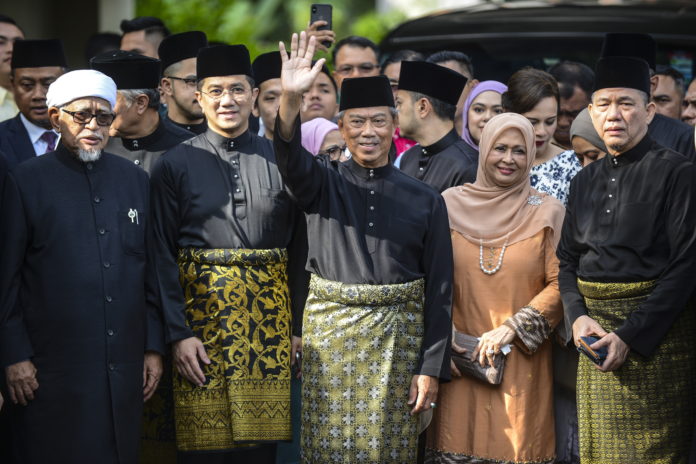
Muhyiddin Yassin has been sworn in as the new prime minister of Malaysia. Many people were surprised because 94-year-old Mahathir Mohammad, the oldest prime minister in the world, was widely expected to be reappointed for a third time.

Muhyiddin outfoxed the wily Mahathir, because Mahathir made two fatal errors. First, he had resigned, thus creating a vacancy. Second, he made a miscalculation about the king’s discretion. The Malaysian king appoints a person he thinks can command the majority in parliament – it has nothing to do with election results or how many MPs support you. In Australia, it’s called the “captain’s pick”.

The king picked Muhyiddin over Mahathir, and that’s that. The only way now to remove the new government is via a vote of no-confidence in parliament, which will take months.

The new ruling coalition

Muhyiddin’s new ruling coalition consists of three parties: United Malays National Organisation (UMNO), Parti Islam Malaysia (PAS) and Parti Pribumi Bersatu Malaysia (PPBM or United Indigenous Party).

UMNO and PAS were the defeated parties in the historic 2018 general elections that produced Malaysia’s first regime change since independence. UMNO had been the ruling party for nearly six decades before losing to PPBM and Pakatan Harapan (Alliance of Hope). Mahathir had established PPBM specifically to beat UMNO, and almost the entire PPBM leadership was ex-UMNO.


Read more: Mahathir Mohamad crops up again in bid to lead Malaysia – with Anwar on the same side


So now we have an interesting combination. UMNO and PPBM are essentially the same parties with similar ideologies, Malay nationalism, combined with PAS, which wants to turn Malaysia into an Islamic state.

But what about the non-Malay and non-Muslim Malaysians who make up 38% of the population? Don’t they count?

The short answer is no. While the new administration will appoint a few non-Malays to the administration, make no mistake, this is an all-Malay government and its focus is on the Malay and Muslim community.

UMNO is still sore at the Malaysian Chinese and Indian population for voting en bloc against UMNO in 2018, which led it to lose government. Now it’s payback time. Expect more Malay-centric policies that will punish the Chinese and Indians.

Why are people worried?

Many are worried about the direction Malaysia may be heading in the short term.

First, there is concern that corruption trials relating to the infamous 1MDB scandal involving ex-prime minister Najib Razak may now go nowhere. Najib’s wife is also charged with corruption in a different case, along with several other ministers in the last UMNO-led government.

In fact, the UMNO president, Zahid Hamidi, who is facing 47 charges of money-laundering (the legal term for corrupt money), is trying to get a cabinet post in the new Muhyiddin administration. The attorney-general has resigned and his replacement will probably not go after high-profile UMNO individuals now that UMNO is back in government.

High-level corruption was one of the main reasons UMNO was defeated in 2018 and UMNO has not reformed. Now it’s back in government, most people expect “business as usual”. There is credible fear that Muhyiddin cannot stand up to UMNO as UMNO is now the largest party among the three core parties. UMNO and PAS also have a political pact, which means PPBM will definitely not be able to stop the senior coalition partner if it insists on certain public policy.


Read more: What Najib Razak’s corruption trial means for Malaysia – and the region


Second, people are extremely worried about PAS. Since its founding in 1951, PAS has advocated the idea of turning Malaysia into an Islamic state. It has introduced huhud (Shariah) law at the state level in Kelantan and Terengganu, but cannot enforce the law because it conflicts with Malaysia’s federal constitution.

Now that PAS is one of the troika in power, will PAS push the new administration to amend the constitution? There is already talk that PAS will get the government to amend the Syariah Courts (Criminal Jurisdiction) Act, or RUU355. This will indirectly allow for hudud to be implemented.

Third, and perhaps most worrying, the new government has broken the political convention that it always has a significant number of non-Malay voices to represent the diverse population. This government was built purely on the concept of ketuanan Melayu Islam (Malay Islamic supremacy). Non-Malays to be appointed to the new administration will know exactly where they stand – as window dressing.

Where to now for Malaysia?

Despite its racial and religious tensions, Malaysia has always been seen by the international community as a modern, moderate Islamic country with strong Westminster institutions. It was always understood that the political elite would choose the middle path at the end of the day, no matter how heated the politics became.

This may no longer be the case.

If there is a lesson to be learnt here, it is that regime change does not guarantee progress. In May 2018, there was joy that Malaysia had finally joined the club of newly democratising countries via the ballot box. Almost two years down the road we are seeing a complete reversal via an elite game.

If there is one thing about Southeast Asia, it is that the votes of the ordinary people do not matter when it comes to power games. Power here is a zero-sum game and, in this case, the non-Malays and non-Muslims in Malaysia are the losers.

ref. Malaysia takes a turn to the right, and many of its people are worried – https://theconversation.com/malaysia-takes-a-turn-to-the-right-and-many-of-its-people-are-worried-132865

What are ‘heat not burn’ products and are they any safer than traditional cigarettes?

Source: The Conversation (Au and NZ) – By Nham Tran, Associate Professor, Deputy Head of School Biomedical Engineering, UTS. Australia, University of Technology Sydney

Philip Morris International, one of the world’s largest tobacco companies, recently lodged an application to allow the sale of its “heat not burn” products in Australia.

This attempt to disrupt Australia’s tobacco market and make heated tobacco products legal is part of the company’s latest mission to “change society and deliver a better, smoke-free future”.

The company argues these products are a safer way to satisfy a nicotine craving than traditional cigarettes. It calls the technology IQOS, which stands for “I quit original smoking”.


Read more: It’s safest to avoid e-cigarettes altogether – unless vaping is helping you quit smoking


But what are these “heat not burn” products, and are they actually better for us than standard cigarettes?

A hybrid of traditional cigarettes and e-cigarettes

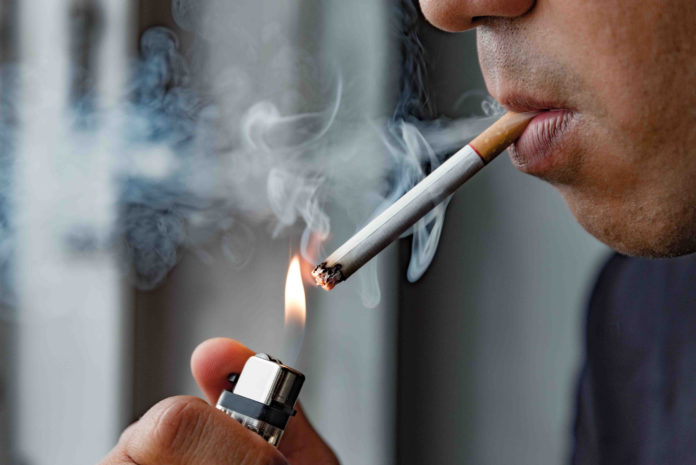
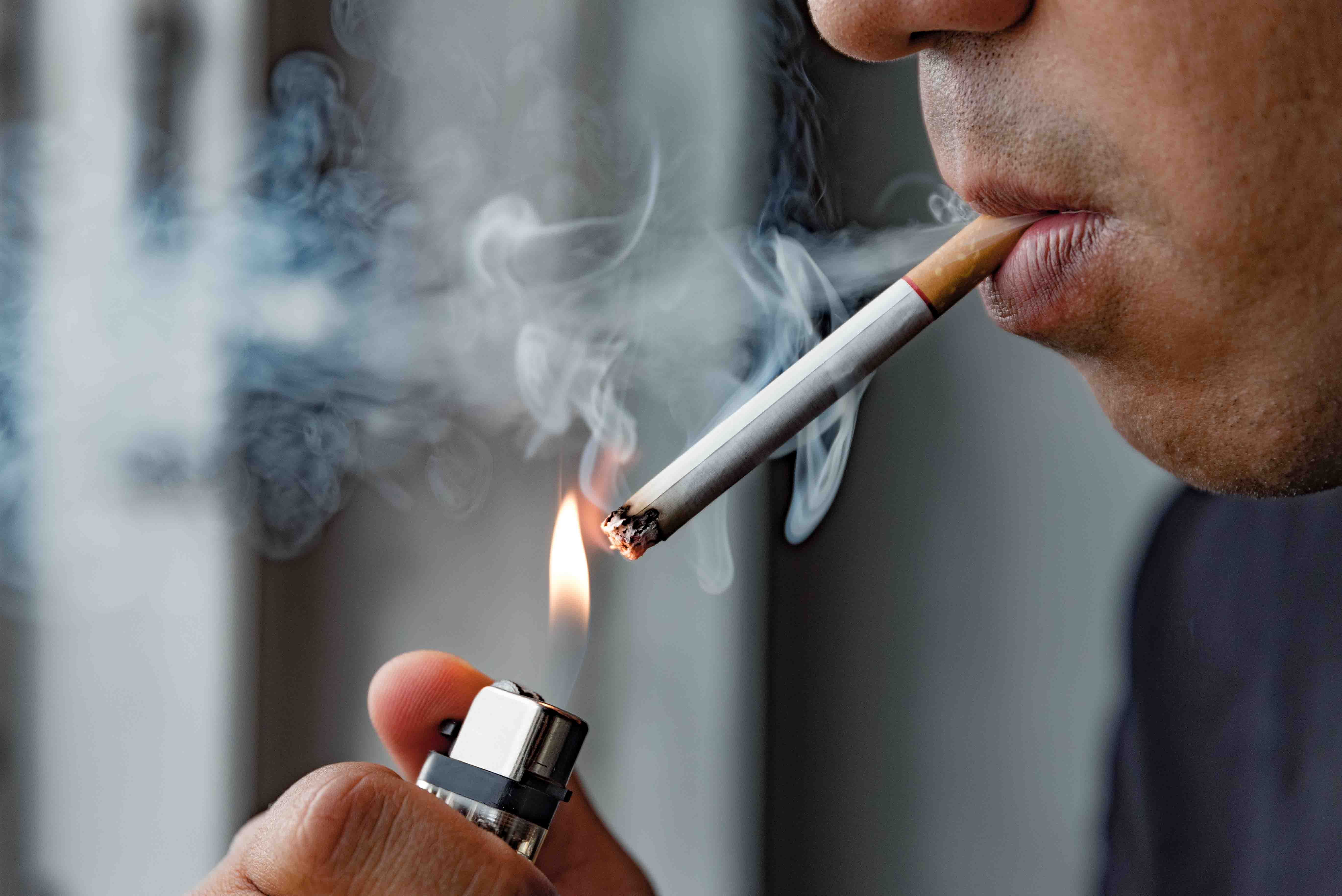
Heat not burn products are electronic devices that contain tobacco leaves. When you heat them, they produce a vapour containing nicotine, which you inhale.

They are different from conventional cigarettes in their mechanism, which heats the tobacco to considerably lower temperatures. In heat not burn devices, the tobacco is heated to 350℃, compared to traditional cigarettes that combust and burn at up to 900℃.

Despite this, the temperature in heat not burn products is still high enough for harmful chemicals to be vaporised and inhaled.

Doctors warn we don’t have enough evidence to tell us heat not burn products are any safer than traditional cigarettes. Shutterstock

Although similar in that they’re both electronic devices, heat not burn products are also different from e-cigarettes or vaping devices. These generally use chemical liquids, and don’t necessarily contain nicotine. E-cigarettes tend to heat liquids to around 250℃ to produce their vapour.

Australian legislation

Philip Morris International’s heat not burn product IQOS is currently available in more than 50 countries, including the UK and New Zealand.

While there are no laws that specifically mention heat not burn devices in Australia, products that contain nicotine and/or tobacco are regulated under various acts.

Under the Poisons Standard, nicotine is classed as a schedule 7 substance, or “dangerous poison”, except where it occurs in tobacco products prepared and packaged for smoking, or in preparations for human therapeutic use (such as in nicotine patches).


Read more: Smallpox, seatbelts and smoking: 3 ways public health has saved lives from history to the modern day


The federal health department has advised these exceptions would not apply to devices such as IQOS, and therefore heated tobacco products remain prohibited under current legislation.

The Royal Australian College of General Practitioners last month made a submission to the federal health department strongly recommending against the approval of heat not burn products until we have more “credible and long-term evidence” on their health effects.

What the evidence says

The rationale behind heat not burn products is they allow smokers to get the same nicotine experience, but without the harmful exposure to other chemicals.

Heat not burn products do release fewer toxins and at lower concentrations than normal cigarettes because there’s no burning, or combustion, which would otherwise release toxins.

Some research has found significantly reduced levels of harmful carcinogens such as aldehydes and other volatile chemicals in heat not burn products compared to regular cigarettes. But most of these studies were funded by tobacco companies, so we need to interpret the results with caution.

Heat not burn products are different from e-cigarettes, which typically use chemical liquids. Shutterstock

There are currently no studies which have assessed the long-term health effects of these products, but several studies have evaluated short-term exposure to heat not burn products.

These independent studies have shown emissions from heat not burn products can induce levels of cytotoxicity, or cell death, in human lung cells, which can lead to inflammation.

Evidence from an animal study shows this effect is comparable to smoking a normal cigarette.


Read more: Are ‘vaping’ and ‘e-cigarettes’ the same, and should all these products be avoided?


Looking to the longer term, the fact heat not burn products release fewer toxins than normal cigarettes may have some benefits over a life history of smoking.

Researchers who used computer modelling to calculate lifetime cancer risk found a person who smokes heat not burn products may be as much as ten times less likely to develop cancer than a person who smokes cigarettes. A person who smokes e-cigarettes would have a 100 times lower risk of developing cancer than a cigarette smoker.

But we’d need well-conducted long-term studies to confirm this.

Heat not burn products are probably better than smoking cigarettes

If we were to rank the products in terms of cancer risk from highest to lowest with the evidence we currently have, it would be normal cigarettes, heat not burn products, then e-cigarettes.

Notably, the modelling study compared someone using heat not burn products to a current smoker. If we were to examine the effects of using heat not burn products compared to not smoking at all, it’s almost certain we’d see an increased health risk when using these products.

For someone who is using heat not burn products as an alternative to smoking cigarettes, there may be some merit. Otherwise, it’s best avoided.


Read more: Smoking at record low in Australia, but the grim harvest of preventable heart disease continues


ref. What are ‘heat not burn’ products and are they any safer than traditional cigarettes? – https://theconversation.com/what-are-heat-not-burn-products-and-are-they-any-safer-than-traditional-cigarettes-132008

We should use ‘I’ more in academic writing – there is benefit to first-person perspective

Source: The Conversation (Au and NZ) – By Peter Ellerton, Lecturer in Critical Thinking; Curriculum Director, UQ Critical Thinking Project, The University of Queensland

The use of the word “I” in academic writing, that is writing in the first person, has a troublesome history. Some say it makes writing too subjective, others that it’s essential for accuracy.

This is reflected in how students, particularly in secondary schools, are trained to write. Teachers I work with are often surprised that I advocate, at times, invoking the first person in essays or other assessment in their subject areas.

In academic writing the role of the author is to explain their argument dispassionately and objectively. The author’s personal opinion in such endeavours is neither here nor there.

As noted in Strunk and White’s highly influential Elements of Style – (first published in 1959) the writer is encouraged to place themselves in the background.

Write in a way that draws the reader’s attention to the sense and substance of the writing, rather than to the mood and temper of the author.

This all seems very reasonable and scholarly. The move towards including the first person perspective, however, is becoming more acceptable in academia.

There are times when invoking the first person is more meaningful and even rigorous than not. I will give three categories in which first person academic writing is more effective than using the third person.

1. Where an academic is offering their personal view or argument

Above, I could have said “there are three categories” rather than “I will give three categories”. The former makes a claim of discovering some objective fact. The latter, a more intellectually honest and accountable approach, is me offering my interpretation.

I could also say “three categories are apparent”, but that is ignoring the fact it is apparent to me. It would be an attempt to grant too much objectivity to a position than it deserves.

In a similar vein, statements such as “it can be argued” or “it was decided”, using the passive voice, avoid responsibility. It is much better to say “I will argue that” or “we decided that” and then go on to prosecute the argument or justify the decision.

Taking responsibility for our stances and reasoning is important culturally as well as academically. In a participatory democracy, we are expected to be accountable for our ideas and choices. It is also a stand against the kinds of anonymous assertions that easily proliferate via fake and unnamed social media accounts.


Read more: Post-truth politics and why the antidote isn’t simply ‘fact-checking’ and truth


It’s worth noting that Nature – arguably one of the world’s best science journals – prefers authors to selectively avoid the passive voice. Its writing guidelines note:

Nature journals prefer authors to write in the active voice (“we performed the experiment…”) as experience has shown that readers find concepts and results to be conveyed more clearly if written directly.

2. Where the author’s perspective is part of the analysis

Some disciplines, such as anthropology, recognise that who is doing the research and why they are doing it ought to be overtly present in their presentation of it.

There’s more to Descartes’ famous phrase than a claim to existence. Shutterstock

Removing the author’s presence can allow important cultural or other perspectives held by the author to remain unexamined. This can lead to the so-called crisis of representation, in which the interpretation of texts and other cultural artefacts is removed from any interpretive stance of the author.

This gives a false impression of objectivity. As the philosopher Thomas Nagal notes, there is no “view from nowhere”.

Philosophy commonly invokes the first person position, too. Rene Descartes famously inferred “I think therefore I am” (cogito ergo sum). But his use of the first person in Meditations on First Philosophy was not simply an account of his own introspection. It was also an invitation to the reader to think for themselves.

3. Where the author wants to show their reasoning

The third case is especially interesting in education.

I tell students of science, critical thinking and philosophy that a phrase guaranteed to raise my hackles is “I strongly believe …”. In terms of being rationally persuasive, this is not relevant unless they then go on tell me why they believe it. I want to know what and how they are thinking.

To make their thinking most clearly an object of my study, I need them to make themselves the subjects of their writing.

I prefer students to write something like “I am not convinced by Dawson’s argument because…” rather than “Dawson’s argument is opposed by DeVries, who says …”. I want to understand their thinking not just use the argument of DeVries.


Read more: Thinking about thinking helps kids learn. How can we teach critical thinking?


Of course I would hope they do engage with DeVries, but then I’d want them to say which argument they find more convincing and what their own reasons were for being convinced.

Just stating Devries’ objection is good analysis, but we also need students to evaluate and justify, and it is here that the first person position is most useful.

It is not always accurate to say a piece is written in the first or third person. There are reasons to invoke the first person position at times and reasons not to. An essay in which it is used once should not mean we think of the whole essay as from the first person perspective.

We need to be more nuanced about how we approach this issue and appreciate when authors should “place themselves in the background” and when their voice matters.

ref. We should use ‘I’ more in academic writing – there is benefit to first-person perspective – https://theconversation.com/we-should-use-i-more-in-academic-writing-there-is-benefit-to-first-person-perspective-131898

NSW building certification bill still lets developers off the hook

Source: The Conversation (Au and NZ) – By Geoff Hanmer, Adjunct Lecturer in Architecture, UNSW

The News South Wales government is struggling to implement building industry reforms recommended by the Shergold-Weir report over two years ago.

Developers are home free in its proposed legislation; the Design and Building Practitioners Bill doesn’t even mention them. They still appear to be in a position to collect the profits and then phoenix themselves if something goes wrong.

And something is going wrong all too often. David Chandler, the NSW building commissioner appointed to oversee the reforms, said recently he was “ a bit despondent” after seeing “some really regrettable things out there” in a program of site visits.


Read more: Lack of information on apartment defects leaves whole market on shaky footings


Even though the commissioner can see how bad things are, he says it will take until 2022 for the building industry to “get people back to what they should be doing”.

The lack of progress hasn’t stopped the minister for better regulation, Kevin Anderson, claiming credit. In announcing the Design and Building Practitioners Bill 2019 last October, he said: “People should feel confident they can enter the housing market in NSW knowing their home has been designed and built in accordance with the Building Code of Australia.”

He must have forgotten to add “maybe after 2022” and “only if you are buying new”.


Read more: Would you buy a new apartment? Building confidence depends on ending the blame game


The upper house then rejected the bill. It’s now being revised.

What’s wrong with the bill?

The bill has the avowed aim of making people who design and build buildings responsible for non-compliance with the National Construction Code by getting them to sign certificates attesting that the building is built according to the code.

This is a guarantee of not very much. The code does not regulate durability or require that buildings be waterproof. Plus, of course, many people have been signing similar certificates for certifiers without it having had much impact to date.

The bill has many other faults and omissions. It does not require a principal design practitioner to be appointed to a complex project and no one is identified as the lead consultant. This means there is no person identified to coordinate design work between all disciplines (architecture and engineering) or to ensure design declarations relate to work as actually done, taking into account all engineering designs and site conditions.

The most critical problem is that the people signing the attestations are not required to actually inspect work during construction. Such a requirement was a key recommendation of the Shergold-Weir report.

The purpose of the bill, other than as political soft soap, is unclear. We already have design practitioners, called “architects”, who are registered under state law. We already have builders under state law, who are called “licensed contractors”.

We have the National Construction Code as a starting point for regulating building performance. We already have a Home Building Act. Under the Local Government Act, local councils clearly have the power to stop work on site if the builder is doing the wrong thing.

What we don’t have is a mechanism to unite these existing powers to ensure buildings are designed and documented to be durable, liveable and waterproof.


Read more: To restore public confidence in apartments, rewrite Australia’s building codes


Steps that will solve the problems

If the government is as keen to deliver certainty to the new-build market as the minister asserts, what could it do?

First up, if there are things on site of the sort the building commissioner “abhors”, these sites should be shut down under existing powers. The state government would need to negotiate with councils about implementing and funding inspections, but this could be done promptly.

Does the government need to know which buildings to target? Simply look at the qualifications and track records of the building company directors.

A developer could be compelled to use a registered architect for any building for housing over two storeys high and required to retain the architect for site inspections during construction. Amendments to the Home Building Act or its regulations could achieve this.

As architects are already registered and legally required to hold professional indemnity insurance, no new legislation would be required. The lack of registration of engineers might be an issue, but no architect who is ultimately responsible for a building will work with an engineer they regard as incompetent.

The National Construction Code is not good at requiring buildings to be waterproof, but, again, some simple changes could be made to the Home Building Act. These should include beefed-up requirements for waterproofing any balcony or planter box larger in area than about six square metres.

We know for sure any tiles directly stuck to a membrane over a large area will fail, either immediately or relatively soon. Making it compulsory to use a system that allows tiles to be removed to access the membrane is simple and will eliminate years of misery.


Read more: Housing with buyer protection and no serious faults – is that too much to ask of builders and regulators?


What’s stopping the government?

If these steps are so simple and obvious, why isn’t the NSW government doing it?

Mainly, it would appear, because it’s in thrall to the development industry, which believes reintroducing these measures will reduce its profits.

The developers are right about this; building properly is more expensive. But I think most buyers would happily pay a bit more for a safe and durable product. They do that when buying consumer durables such as cars and appliances.

Good developers would benefit as this approach would help weed out the dodgy ones.

To restore the public’s lost confidence in new multi-unit residential housing, the government should pull the levers it has to hand first and then resolve the problem of existing defective stock.

Later it can think about some of the wider issues, but how about doing something useful now? We have been waiting two years.

ref. NSW building certification bill still lets developers off the hook – https://theconversation.com/nsw-building-certification-bill-still-lets-developers-off-the-hook-132502

Shadow Catchers review: fakes, body doubles and mirrors from the analog to the digital lens

Source: The Conversation (Au and NZ) – By Cherine Fahd, Director Photography, School of Design, University of Technology Sydney

Review: Shadow Catchers at Art Gallery of New South Wales.

Last week, Russian President Vladimir Putin denied using a body double, saying he’d been offered one before but declined. The rest of us, in our glorious anonymity, might take up the offer. An actual person could shadow us through daily life. They could hold us tight while we attend to the task of living. They could reply to emails, chauffeur children and stand in for us at work while we go to the beach instead.

Body doubles come into focus in a major exhibition at the Art Gallery of New South Wales. Curated by Isobel Parker Philip, Shadow Catchers includes almost 90 works from the art gallery’s collection: photography, video, sculpture and installations from Australia’s most respected artists, alongside important international works.

Common to the works is the use of shadows, body doubles and mirrors, many of which challenge a straight forward understanding of photography and the moving image.

The camera can lie

Shadow Catchers shows that since the first photography in 1827, the medium has given us truthful copies of ourselves and the world. However, we also know it is easily exploited. In the era of fake news, we increasingly question the veracity of images.

One of the oldest works in the exhibition, Clarence H. White and Alfred Stieglitz’ 1907 work Experiment 27 (lady in white with crystal ball), shows images have long performed a dual function of revealing but also manipulating or concealing reality. The exhibition presents us with distortions, mirror images and doppelgangers and brings us truth and fiction in equal measure.

Viewing the works of Patrick Pound, Jacky Redgate and Debra Phillips, I wondered whether I was seeing the moon, the Earth, a UFO, a mirror or a simple ball.

Untitled (Denise and Diane twinning) 2018. Emma Phillips/AGNSW

I was drawn into the cosy domestic space of what I thought was a lesbian couple. Instead, I was being intimately invited by Emma Phillips to witness the tenderness of twin attachment.

The self-splitting allure of the mirror reveals itself in works by Tracey Moffatt and Lewis Morley (famous for his portrait of Christine Keeler). The erotic force of a simple shop mannequin is the signature of French photographer Pierre Molinier.

Ilse Bing’s intimate self-portrait from 1931 illustrates the central curatorial premise, duplicating her dark beauty in a staging of two angled mirrors where she looks both at us and away from us.

Other highlights include eight imposing photographs by Eugenia Raskopoulos. Activating the illusory properties of the mirror after a hot shower, letters from the Greek alphabet are wiped onto the steamy surface.

Self portrait with Leica, Ilsa Bing (1931). Courtesy Edwynn Houk Gallery, New York/AGNSW

Grand scale

Merilyn Fairskye’s large scale portraits, printed on a plastic substrate, emit a shadow onto the wall behind them and create a schism that gently ruptures the faces of her subjects.

Body double, a work by Julie Rrap, is the centrepiece of the exhibition. The artist has worked with notions of the double in sculpture, video and photography since the early 1980s. Two silicon rubber casts of the artist’s body lie corpse-like on a stage, one face down and one face up. A ghost-like figure of a man or a woman is projected onto the bodies. The projection of the body rolls across the stage from one figure to the other, appearing to resuscitate the silicon forms.

Handwalk (2015) Ronnie van Hout

The organisation of the works across four rooms intermingles historical works with the contemporary, reminding us that the present is always informed by the past.

The exhibition offers a poetic reflection and critical account of our enduring fascination with technologies of representation.

While the exhibition successfully returns us to photography’s past and the defiant contribution of postmodern approaches to “doubling”, it neglects to question our current and future predicament.

The world today is saturated, even drowning, in shadows, which we are too slow or too tired to catch. Today we share the world with millions of our body doubles whether we want to or not.

Shadows and mirrors follow us through daily life and reflect us in the screens of our digital devices, ultrasound images, x-rays, dentists’ moulds; our experience of ourselves in the world is constantly mediated through the experience of seeing ourselves duplicated. Bitmoji, digital avatars, gaming skins, VR personas, Instagram feeds, CCTV surveilance and passport scans mean we have plenty of body doubles lurking in cyberspace.

It is suggested we live in a post-photographic time. What this means is that technology is creating images of and with us, for and not for us. These may be better or worse than our mortal bodies and mostly beyond our control.

Shadow Catchers is showing at Art Gallery of New South Wales until May 17.

ref. Shadow Catchers review: fakes, body doubles and mirrors from the analog to the digital lens – https://theconversation.com/shadow-catchers-review-fakes-body-doubles-and-mirrors-from-the-analog-to-the-digital-lens-132668

NZ health officials condemn ‘hostile’ social media attacks on virus family

Pacific Media Centre

Auckland Regional Public Health Service (ARPHS) staff are calling for restraint and calm as a New Zealand family in isolation for Covid-19 coronavirus has been “battered through social media”.

ARPHS Director Dr William Rainger said the family had done everything right and had minimised the risk to others.

“The woman with the virus has gone straight into isolation with her family when she was told she was suspected of having Covid-19,” he said.

READ MORE: NZ students pulled from two schools after second Covid-19 case

“Yet they have become the focus of sustained and abusive bullying on social media and are being hounded by the media.

“There is a high level of anxiety and concern in the school and wider communities, but it is not acceptable to attack people who have been caught up in this global outbreak. They have taken all the right actions to protect others,” Dr Rainger said.

– Partner –

“As a public health service, we are worried that such attacks will lead people to hide any illness that might be Covid-19, and not seek medical attention.

“We will not be able to contain the spread of this illness, if the public response is so hostile towards cases and their families,” he said.

Support needed
The Ministry of Health also supported the ARPHS message.

“I want to say that this is a Kiwi family that has been affected by a virus that is part of a worldwide outbreak,” said Director-General of Health Dr Ashley Bloomfield.

“What they need is support and understanding. Our task is to ensure they have all the support and health care they need.”

Two children have been withdrawn from two Auckland high schools because a family member has contracted the Covid-19 coronavirus.

Dr Bloomfield said a woman in her 30s was New Zealand’s second confirmed case of the virus.

She had returned to Auckland from northern Italy last week on a flight via Singapore.

The two children who live with her attend Westlake Boys and Westlake Girls high schools.

Dr Bloomfield said it was highly unlikely they would have spread to the virus to other students.

ARPHS media release and RNZ under a partnership agreement with the Pacific Media Centre.

Print Friendly, PDF & Email

Article by AsiaPacificReport.nz
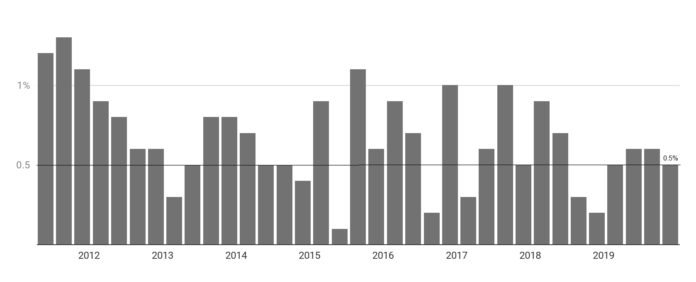
Biden easily wins Super Tuesday after strong comeback in past few days

Source: The Conversation (Au and NZ) – By Adrian Beaumont, Honorary Associate, School of Mathematics and Statistics, University of Melbourne

Fourteen states held Democratic primaries on Tuesday US time. Joe Biden is likely to win ten of those states, to four wins for Bernie Sanders. Biden crushed Sanders by 47 points in Alabama, 30 points in Virginia, 19 in North Carolina, 18 in Arkansas, 17 in Tennessee and 13 in Oklahoma.

Biden had surprise wins in Minnesota (nine points over Sanders) and Massachusetts. That is Elizabeth Warren’s home state, but she finished third, with Biden winning 33%, Sanders 27% and Warren just 22%. Biden won Texas by 4%, and is likely to win Maine.

Sanders won just three states: his home state of Vermont (by 29 points), Utah (by 17) and Colorado (by 13). Sanders is likely to win California, where he currently has a nine-point lead. Many more votes remain to be counted in California, Utah and Colorado, and these votes could assist Sanders. Particularly in California, later votes trend left.

A few days before Super Tuesday, it had looked so different. Even though Sanders had only about 30% of the national vote, that appeared enough for a large delegate plurality against a divided field. So how did Biden come back so strongly?

On Saturday, Joe Biden crushingly won the South Carolina primary with 48.4%. Bernie Sanders was a distant second with 19.9%, followed by Tom Steyer at 11.3%, Pete Buttigieg 8.2%, Elizabeth Warren 7.1% and Amy Klobuchar just 3.2%. According to exit polls, black voters made up 56% of the electorate, and voted for Biden by 61-17 over Sanders.

After disappointing results in two diverse states – Nevada and South Carolina – Buttigieg ended his campaign the next day. Buttigieg is the first candidate to leave while still polling over 10% nationally. On Monday, Klobuchar also withdrew, and she and Buttigieg endorsed Biden at a rally.

In the 2016 Democratic primaries, Sanders came unexpectedly close to Hillary Clinton. However, this was partly due to Clinton’s lack of appeal to lower-educated whites, something that Donald Trump exploited in the general election.

Once Klobuchar and Buttigieg withdrew, Biden was able to consolidate the vote of Clinton’s supporters: higher-educated whites and black voters. Biden has a stronger appeal to lower-educated whites than Clinton. So once moderates consolidated behind one candidate, that candidate was able to dominate.

After spending a huge amount of money on Super Tuesday ads, Mike Bloomberg bombed. He did not come close to winning a single state, finishing third or worse in all states contested.

According to the delegate count at The Green Papers, Biden now leads Sanders by 497 to 395, with 65 for Bloomberg and 47 for Warren. Biden leads the overall popular vote by 35.1% to 27.3%. There are many more contests to come, starting with six states next Tuesday that account for 9% of delegates, but Biden is clearly in the box seat to win at least a plurality of all pledged delegates.

Israel and Germany

At Monday’s Israeli election, right-wing parties won 58 of the 120 seats (up three since the September 2019 election) and left-wing parties 55 (down two). Netanyahu’s coalition will be three seats short of a majority. This election was the third in a year after no government could be formed following April and September 2019 elections.

On my personal website, I covered the February German political crisis in Thuringia, in which the far-right AfD and conservative CDU supported a small pro-business party’s leader to become state president. It is the first time that any German party has cooperated with the AfD to form government.

ref. Biden easily wins Super Tuesday after strong comeback in past few days – https://theconversation.com/biden-easily-wins-super-tuesday-after-strong-comeback-in-past-few-days-132754

Support package gains shape as GDP turning point swamped

Source: The Conversation (Au and NZ) – By Peter Martin, Visiting Fellow, Crawford School of Public Policy, Australian National University

The good news is our economy was performing better than had been thought in the lead-up to the bushfires and coronavirus.

Updated figures in Wednesday’s national accounts show the economy grew 0.6% in the three months to September, rather than the 0.4% previously reported, and a healthier-than-expected 0.5% in the three months to December.

Combined, these figures pushed annual economic growth up above 2% to 2.2% for the first time in a year in which it had been below 2% for the longest period since the global financial crisis.


Annual GDP growth

Through-the-year economic growth by quarter. Source: ABS 5206.0

Not to put too fine a point on it, it looks as if we were actually experiencing the the “gentle turning point” repeatedly promised by Reserve Bank Governor Philip Lowe.

As Lowe put it during the second half of last year:

After having been through a soft patch, a gentle turning point has been reached. While we are not expecting a return to strong economic growth in the near term, we are expecting growth to pick up.

The figures show the economy began (gently) picking up after the Reserve Bank began cutting rates in June. Counting this week’s latest interest rate cut, it has cut four times.

But the coronavirus and the bushfires have consigned the turning point to history.

Negative growth now possible

Not for a minute does Treasurer Josh Frydenberg believe the economy continued to improve this quarter, the March quarter.

Reminded that the support package promised by the prime minister will come too late for the three months to March, and reminded that many businesses haren’t been able to trade much, Frydenberg was asked to assess the risk the economy might now be going backwards, a state of affairs that if it continued long enough would be a recession.


Read more: We’re staring down the barrel of a technical recession as the coronavirus enters a new and dangerous phase


He replied that the Treasury believes the bushfires alone will shave 0.2 points from growth in the March quarter. Added to that will be the risk from the spread of the coronavirus, which he believes will be “substantial”.

Tonight (Wednesday) Frydenberg and Treasury officials will take part in a phone hookup with other members of the International Monetary Fund to discuss developments including interest rate cuts in both Australia and the United States.

Treasury update on Thursday

The Treasury will finalise its estimate of the impact of the coronavirus on March-quarter GDP later in the evening and report it to a Senate estimates hearing beginning at 9am Thursday.

It means we will know the likely impact at about the same time as the treasurer.

To support retirees hurt by four near-consecutive rate cuts, the treasurer is considering cutting the deeming rate – the rate investments are deemed to have earned for the purposes of the pension income test. It’ll be the second deeming rate cut in the space of a year and will make it easier for retirees earning very little to remain on the pension.


Read more: They’ve cut deeming rates, but what are they?


The focus of the support package will business investment, which slid an unexpected 1.1% in the final three months of the year and 3.4% over the course of the year in defiance of budget forecasts it would climb.

Standard of living slipping

Although not ruling out support for householders, Frydenberg said mortgage holders had done well out of the past four rate cuts. Households with A$400,000 mortgages could soon be paying $3,000 less per year than they had in June.

Living standards, as measured by the Reserve Bank’s preferred measure, real net national disposable income per capita, went backwards in the December quarter, slipping 1.3%. Over the year, it climbed just 1.2%.


Read more: The first economic modelling of coronavirus scenarios is grim for Australia, the world


Household spending recovered somewhat, climbing 0.4% in real terms in the December quarter after inching ahead only 0.1% in the September quarter.

Throughout the year to December, real household spending grew 1.2% at a time when Australia’s population grew 1.5%. This means the consumption of goods and services per person went backwards.

Government spending provided substantial support. Over the year to December public spending on infrastructure grew 4.1% in real terms.

Deputy Prime Minister Michael McCormack said on Wednesday he would try and boost that by asking state and local governments to bring forward whatever projects they could, to start work in the next three to six months.

Recurrent government spending grew 5%.

ref. Support package gains shape as GDP turning point swamped – https://theconversation.com/support-package-gains-shape-as-gdp-turning-point-swamped-132969

Does your child know more about dinosaurs than dugongs? Perhaps they’re reading the wrong books

Source: The Conversation (Au and NZ) – By Ayesha Tulloch, DECRA Research Fellow, University of Sydney

Identifying the difference between a native burrowing frog and an introduced cane toad is fundamental ecological knowledge. After bushfires ravaged Australia’s animal and plant communities and razed millions of hectares of land, such knowledge has never been more important.

Ecological awareness shouldn’t be confined to experts in the field. Creating an informed community that values Australia’s unique species and ecosystems is fundamental to nature protection.

This includes getting young people get excited about the environment. Storytelling can play a crucial role in this – helping children learn about the natural world and its challenges.

You’d think that with such a bounty of unique, fascinating wildlife, Australian nature stories would dominate children’s literature. But we still have a way to go.

To encourage children to protect nature, they should read stories about native plants and animals. Flickr

Telling nature’s stories

Australia is home to more than one million species, many of which are found nowhere else. Tragically, it also has the fourth-highest level of animal species extinction in the world.

Some 100 Australian species have become extinct and more than 1,700 are listed as threatened. This is due to threats such as climate change, invasive species, environmental degradation, land clearing, unsustainable agriculture, and an increase in natural disturbances such as drought and fire.


Read more: Want to help save wildlife after the fires? You can do it in your own backyard


To fix the mistakes of the past, and prevent those of the future, it’s important that young people become more knowledgeable about Australia’s environment than previous generations. Storytelling can do this. It imparts information, nurtures emotional connections with natural places and allows us to reimagine our world.

Indigenous cultures, including in Australia, know the power of stories. For tens of thousands of years they have used oral storytelling to transmit information to future generations, keeping natural history alive.

Pictured: the endangered dugong. Australians should learn more about the threats facing native animals. Sydney Sealife Aquarium

Children and nature

A UK study in 2002 showed children have an amazing capacity for learning about creatures. At age eight, most could identify nearly 80% of a sample drawn from 150 “species”.

But there was a catch. The “species” were Pokémon characters. When it came to identifying real wildlife, the same age group correctly identified pictures such as “beetle” and “oak” less than half the time.


Read more: Australia’s threatened birds declined by 59% over the past 30 years


The Pokémon study showed children have the capacity to identify a large number of characters (and therefore species), but this capacity was not being applied to real animals and plants.

Recent research into young people’s knowledge of the environment, particularly in Australia, is limited.

But in one 2015 survey, Australian high school students displayed low levels of understanding when asked to define key environmental concepts.

Less than 50% of students could define “ozone layer”, “ecology” and “sustainable development”, and only one-third were aware of “biodiversity” as a concept. “Fire” was never mentioned as important by these students despite being a critical component of Australia’s environment.

But on the upside, 68% of the students said protection of the environment was important.

Children from the UK are more likely to identify Heracross, an imaginary beetle-like Pokémon, than the stag beetle Lucanus cervus

What’s missing from kids’ literature?

As children, many of us learnt about Australia’s plants and animals from spending time outside in the garden or bush. But these days many kids, particularly those in cities, have little or no access to nature.

A 2018 study found children today spend half the amount of time playing outside that their parents did as youngsters. And 10% of the children studied had not been in a natural environment such as a park or beach for at least a year.


Read more: How you can help – not harm – wild animals recovering from bushfires


For this reason, exposure to ecology through storytelling is particularly important. But often, Australian stories can get drowned out.

Take, for example, the list of the top 51 kids’ books of all time, according to Australian bookseller Dymocks. A few books featuring Australian animals make the list, including Possum Magic by Mem Fox and Wombat Stew by Pamela Lofts. But books featuring animals are dominated by introduced or overseas species: dogs, sheep, pigs, rabbits, bears, donkeys, cows and hippopotamuses.

Search for a children’s book on “horses” in the popular Readings bookstore, and you’ll find hundreds, but search for a children’s book on “bushfires” and you’ll only find a handful.

Stories can help children connect with nature and reimagine the natural world. Flickr/Cockburn Libraries

What’s out there?

Quality books featuring Australian ecology are available if you seek them out.

Mem Fox wrote her classic Possum Magic in 1983 after being frustrated by the lack of picture books teaching children about Australia’s plants, animals and environments.

Big Rain Coming by Katrina Germein tells a story of an isolated desert Aboriginal community waiting for the rain, teaching children about the “boom-bust” nature of Australia’s arid zone.


Read more: Children’s books can do more to inspire the new generation of Earth warriors


One Small Island by Alison Lester and Coral Tulloch explores Macquarie Island’s unique geological history, its discovery by white explorers and ensuing environmental damage, as well as the importance of protecting and restoring it.

Christina Booth’s haunting One Careless Night teaches children about the reality of extinction. It uses a minimalist poetic style and misty illustrations to recreate the life and death of the last Thylacine (Tasmanian tiger).

Koalas huddle on a log pile. Childrens’ literature can help young people understand threats to native animals. WWF AUSTRALIA

Every ecologist has a story to tell

Scientists miss great opportunities to communicate their stories to the public when they publish only in academic journals. And some authors are keen to write stories about environmental issues but lack the scientific background.

Bringing authors, illustrators and ecologists together can help bridge that gap. We did this late last year at the annual conference of the Ecological Society of Australia, through a workshop on writing ecologically accurate children’s stories.

Through story, ecologists can give children the knowledge to care for our landscape and its irreplaceable plants and wildlife, and the hope of knowing they can make a difference.


Read more: Living data: how art helps us all understand climate change


ref. Does your child know more about dinosaurs than dugongs? Perhaps they’re reading the wrong books – https://theconversation.com/does-your-child-know-more-about-dinosaurs-than-dugongs-perhaps-theyre-reading-the-wrong-books-126841

Loss of Australian Associated Press (AAP) a tragedy for entire Pacific

By Sri Krishnamurthi

The shock announcement yesterday that the Australian Associated Press newsagency will cease operations after 85 years is a blow to journalism in Australia and the Pacific.

AAP, which is owned by Nine, News Corp Australia, The West Australian and Australian Community Media, provided services to media companies such as newswires, subediting and photography will close with the loss of 500 jobs – 180 of them journalists.

“This is a tragic end to one of the world’s best news agencies, one that has contributed so much to the first draft of history in Australia for 85 years,” says Professor David Robie, director of the Pacific Media Centre.

READ MORE: AAP newswire service closes after 85 years with 500 job losses

“It’s a great tragedy and a huge loss for all those talented journalists – reporters, editors and photographers – who have been on the AAP frontline.

“AAP has also played a crucial role in the Pacific, reporting political crises, disasters and social change through two key news bureaus in Port Moresby and Suva for many years.

– Partner –

“Just as the closure of NZPA in 2011- after 132 years – left a gaping hole in New Zealand international coverage, this will be another disaster for Australian public interest journalism.”

Senior lecturer and co-ordinator of journalism at the University of the South Pacific, Dr Shailendra Singh lamented the loss of AAP at a time when Pacific governments are clamping down on the media.

Demise of AAP ‘damaging’
“The demise of AAP is tragic and damaging. The Pacific has lost another source of independent reporting. The timing couldn’t be worse,” said Dr Singh.

“There is a clear trend across the Pacific of erosion of the Fourth Estate as governments in the region clamp down.

“Part of the reason is the unprecedented scrutiny governments are facing from so-called citizen journalists. The governments are lashing out in various ways, such as stronger legislation, and the mainstream news media is caught in the crossfire,” he said.

“Of course, the AAP presence and coverage has waned, but the AAP at least used to step up during crucial times, such as cyclones and political uprisings, as in the Fiji coups and the Solomon Islands conflict.

“Pacific journalism capacity is lacking due to various structural weaknesses in the system and AAP used to fill the gap at crucial times.”

As an example of the work AAP did in the Pacific, it was the first organisation to tell the world of the 1987 Fiji coup, through then Fiji correspondent James Shrimpton, who also played a round of golf a week later with coup instigator Colonel Sitiveni Rabuka and gained another exclusive.

As journalists reacted with shock around the region, veteran Pacific journalist Michael Field remarked on The Pacific Newsroom social media platform:

‘Legendary journalists’
“AAP were legendary Pacific journalists. They had bureaux in Port Moresby and Suva, and they covered big stories. They cared about the region.

“It was AAP who told the world first about Rabuka’s coup. It was AAP who, as a competitor, I worried about. And I worked for them over the years, marvellous people…”

AAP CEO Bruce Davidson said yesterday: “We’ve seen a lot of cutbacks, closures, a reduction in news coverage by the traditional media companies across Australia; across the rest of the world.

“News agencies have endured [a tough environment] for quite a long time, but we are now in a situation where too many of our customers are not wanting to pay for our content.

“Too many of our customers are relying on what is on Google, what’s out there on Facebook in terms of their content generation,” Davidson said, explaining the rationale for the decision.

The Australian Media, Entertainment and Arts Alliance (MEEA) trade union labelled the decision to close the newswire as “irresponsible” and called on the government to rein in digital giant platforms, in a strongly worded statement.

“Look at the news stories, the photos, the coverage, the quotes and the enormous spectrum of excellent journalism that AAP has supplied over the past 85 years. AAP delivers news, photos and subediting services that the major media groups either cannot or will not,” MEAA media federal president Marcus Strom said.

Government failure blamed
He blamed the media crisis on the Australian government’s failure to adequately deal with the effect digital content aggregators, search engines and social media has had on news content makers.

“Google and Facebook are riding the coattails of news outlets, using the outlet’s news stories to lure away their audiences and advertisers which leads to the platforms also taking from the revenue streams that those news outlets sorely need,” Strom said.

“This erosion of media revenues through the proliferation of sharing of content for free by the giant digital platforms is a major cause of why AAP is losing subscriber revenue.”

In an earlier submission to the Australian Competition and Consumer Commission (ACCC) digital platform inquiry, MEAA called for a percentage of revenue to be levied on digital platforms for the use of media content, with the funding then to be retained and distributed through a Public Interest Journalism Fund.

AAP made a similar proposal in its submission, the MEAA statement added.

MEAA chief executive Paul Murphy said: “In its final response to the ACCC inquiry last year, the federal government failed to pick up on this recommendation or even to introduce proper regulation of digital platforms. The AAP crisis makes it imperative that this proposal be revisited.

“The government must deal with the serious case of market failure that is resulting in a decline in quality public interest journalism, which is essential for our democracy.”

AAP will close it doors on June 26, while the subediting arm Pagemasters will close in August.

Print Friendly, PDF & Email

Article by AsiaPacificReport.nz
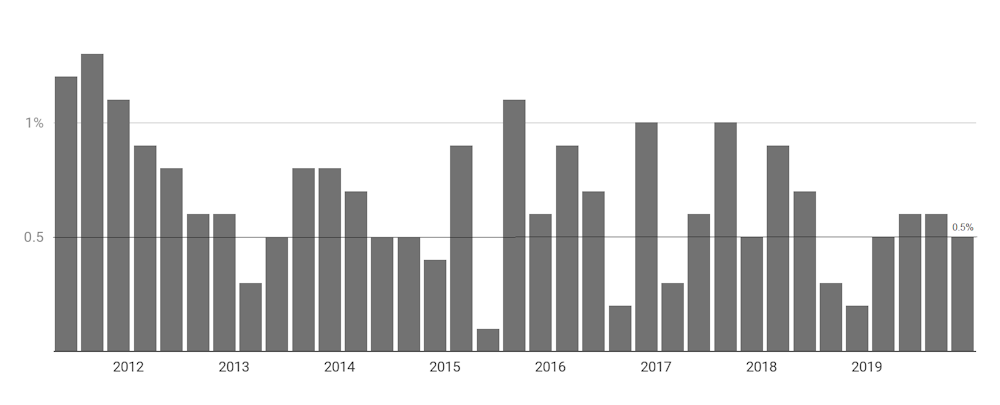
NZ’s fossil fuel investment ban for popular KiwiSaver funds is more political than ethical

Source: The Conversation (Au and NZ) – By Claire Matthews, Director, Academic Quality, Massey University

New Zealand’s announcement of a fossil fuel ban for default KiwiSaver funds from mid-2021 has left many questions unanswered – including whether it is appropriate for governments to make ethical investment choices on behalf of hundreds of thousands of people, who already have that option.

Climate change minister James Shaw described the decision as “putting people and the planet first”.

No New Zealander should have to worry about whether their retirement savings are causing the climate crisis.

KiwiSaver is a voluntary retirement savings scheme for people in employment, to which the government makes an annual contribution. People who join KiwiSaver without actively choosing a fund are allocated to default funds, and the ban on fossil fuel investments applies to new default providers appointed next year.

But it will have broader impacts because about 600,000 current default members – about 23% of New Zealand’s workforce – and their investments will be moved across to the new funds.


Read more: New report shows the world is awash with fossil fuels. It’s time to cut off supply


How to define fossil fuel investments

Detailed rules have not been released yet, but the wording suggests a narrow definition of investments that will be excluded, limited specifically to fossil fuel production.

At this stage, similar schemes internationally, such as the US 401K plan or the UK’s NEST scheme, do not have rules but offer ethical funds for their members to choose.


Read more: BlackRock is the canary in the coalmine. Its decision to dump coal signals what’s next


As of January this year, there were three million people enrolled in KiwiSaver, New Zealand’s national workplace-based retirement savings scheme. 1.3 million of those people joined the scheme through automatic enrolment and were initially placed in default funds – but despite the intended temporary nature of these funds, nearly 600,000 KiwiSaver members remained. This represents an increase of 2% over a year earlier, according to figures from the Internal Revenue Department.

At the end of December 2019, NZ$65.7 billion was invested in KiwiSaver. Assuming that the average balance is the same for KiwiSaver members in default and non-default funds, this would put the funds managed in default funds at NZ$13 billion.

The first question is simply how fossil fuel production is defined. It obviously includes oil companies, but does it also cover the distribution and sale of fuel, which would capture transport companies and entities such as fuel distributor Z Energy? Does it include the financing of fossil fuel extraction and production, which could impact the big Australian banks?

The final definition will have a substantial impact on what investments are actually excluded under the ban.

Ethical investment

A related question is why the ban should be limited to the production of fossil fuels. With fossil fuels described as a leading cause of the climate crisis, it would seem appropriate to also target users of fossil fuels, such as airlines and car manufacturers.

A complicating factor is that fossil fuel activities may be only a part of a company’s operations. At what level does the extent of fossil fuel business require that the company be included in the ban?

Another question is why fossil fuels have been singled out. If the government is going to get involved in making ethical judgements for KiwiSaver members, why restrict it to only some types of ethical concerns? What about the other “sin stocks”, such as alcohol and tobacco?

Key areas highlighted in a 2018 analysis by ethical investment charity Mindful Money. Mindful Money

A true ethics-based approach would require default providers to sign up to the United Nations’ principles for responsible investment or to seek certification under the Responsible Investment Association Australia’s programme.

The government announcement included other changes, such as a move from conservative to balanced funds, to improve long-term returns for default members. But there is uncertainty about the impact of the fossil fuel ban on financial performance from the default funds.


Read more: For the sake of our retirement savings, it’s time to reform the investment management boys’ club


Ethical choices versus political moves

When announcing the fossil fuel ban this week, the government argued that the ban could benefit KiwiSaver members, pointing to the New Zealand Superannuation Fund’s adoption of a climate change investment strategy in 2017 without negative impacts on financial performance.

But this is not an accurate comparison. The superannuation fund’s strategy is a broader targeted divestment of high-risk companies.

It is difficult to assess the impact on the KiwiSaver funds’ financial performance without the detail of the ban. A bigger question is why the government should exercise any form of ethical judgement on behalf of default members? The default schemes were designed as a temporary holding fund until members make an active choice about their preferred fund.

Members with particular ethical views have always had the option of moving to another fund that better aligns with their values and interests. Mindful Money reports there are currently six providers offering 19 KiwiSaver funds that have a fossil free policy. It also identifies funds that are weapons free, sin free or offer higher environment, social and governance standards.

For those interested in exploring investment options that align with their ethical position, the Responsible Investment Association Australia (which also covers New Zealand) offers an interactive tool that allows individuals to select investment options matching their values and interests. Sorted also offers information about ethical KiwiSaver funds.

The government has not provided a convincing argument for why it should be making ethical investment decisions for KiwiSaver members. Like all KiwiSaver members, default members have the ability to move to a non-default fund that offers a responsible investing approach. The decision to restrict the ban to fossil fuels and the lack of detail suggests it is a political action, rather than a fully considered ethical policy.

ref. NZ’s fossil fuel investment ban for popular KiwiSaver funds is more political than ethical – https://theconversation.com/nzs-fossil-fuel-investment-ban-for-popular-kiwisaver-funds-is-more-political-than-ethical-132863

How do we detect if coronavirus is spreading in the community?

Source: The Conversation (Au and NZ) – By Joanne Macdonald, Associate Professor, Molecular Engineering, University of the Sunshine Coast

The daily number of new coronavirus (SARS-CoV-2) cases is now nine times higher outside China than in the country where the disease was first detected.

In Australia, reports this week of local transmission of the coronavirus, which causes the disease now called COVID-19, are a turning point in our disease management.

Our disease surveillance systems are well placed to keep abreast of COVID-19 and provide some reassurance that transmission is unlikely to go undetected in the community. But there’s still more we could do.


Read more: Worried about your child getting coronavirus? Here’s what you need to know


Why is the coronavirus hard to detect?

Detecting all people infected with COVID-19 is a global problem. There are too many existing respiratory infections, such as colds and flus, in any country to be able to test everyone with coronavirus symptoms.

Each of us gets around two to three upper respiratory tract infections a year. Globally, that amounts to around around 18.75 billion infections a year.

There are not enough testing kits readily available to test people at this scale.

So who is tested?

In Australia, people are currently tested for the coronavirus if they’ve travelled from or through a country considered to pose a risk of transmission in the 14 days before getting sick, or if they have a link to a known case.

This testing criteria has changed as the outbreak progressed, and will continue to do so.

Currently, only those with a relevant travel history or contact with a known case are tested. Shutterstock

How else do we track possible cases?

Apart from directly testing people suspected of having COVID-19, Australia has a surveillance plan to detect coronavirus in people or populations who don’t know they’re infected.

Australia’s emergency response plan for mitigating COVID-19 says we will use surveillance networks set up for the influenza pandemic emergency reponse plan and some of this is already occurring.


Read more: It’s now a matter of when, not if, for Australia. This is how we’re preparing for a jump in coronavirus cases


The Australian Sentinel Practices Research Network (ASPREN) is a network of GPs who log the number of patients they see in total, compared to the number of patients they see with influenza-like illness. These GPs collect samples from a small subset of those patients to see if COVID-19 is circulating. Samples are then sent to SA Pathology for testing.

Another surveillance network that may be activated is FluCAN. This reports on the number of hospitalisations due to a disease, usually influenza, as well as clinical data from the cases. The information helps public health experts get a better picture of how severe the disease is, and the symptoms.

But while these systems can monitor disease levels in those sick enough to seek medical care, they don’t give us an indication of the amount of milder disease that might be circulating in our communities.

It’s unclear how long surveillance systems take to detect community transmission. James Gourley/AAP

This is where an online surveillance system called FluTracking can help. Anyone in the community can join and answer two simple questions each week about whether they have a fever and/or a cough.

The system provides information on how much influenza-like illness is circulating in the community. If we’re seeing more than usual, it might signify a community outbreak.

FluTracking was activated for COVID-19 surveillance last month.

What else could we be doing?

There are questions, however, about how early in an outbreak the surveillance systems will detect cases.

Will they detect community transmission when an outbreak reaches ten cases? Or will it take hundreds or even thousands of cases to trigger a warning through the network?


Read more: Coronavirus: 5 ways to put evidence into action during outbreaks like COVID-19


Innovations from other countries suggest there are additional measures Australia could adopt to improve our surveillance networks.

Testing at home or on the road

London adopted a system at the end of January to test mild cases of disease in the patients’ homes. This helps with self-isolation and reducing disease spread.

Meanwhile, Edinburgh has opened a drive-through testing clinic to reduce the chances of viral spreading.

Australia’s emergency response plans include provisions to mobilise flu clinics to help keep patients from overwhelming emergency services. Drive-through services could be an excellent addition to these existing plans.

Rapid testing

One of the biggest concerns with current testing is the time it takes to ship a sample to a laboratory for testing. This can result in a delay of one to two days before getting the results. During peak epidemic times, testing can’t cope with demand.

Researchers in China, however, have reportedly developed a rapid coronavirus test that can detect the virus using a fingerprick of blood in 15 minutes. The test detects if the body has mounted an immune response (Ig M antibodies) to the virus.

While the data is not yet published, the researchers reported success from the 600 samples they tested.

A rapid diagnostic test would ease the pressure on laboratories. Alex Plaveski/AAP

Rapid diagnostic tests are typically cheap to manufacture, can be mass produced, and can be easily used by health workers outside a laboratory.

Reporting on negative test results and surveillance systems

Positive COVID-19 cases from all the surveillance sources are reported as they occur. But while influenza surveillance reports include the number of negative tests results, it’s unclear whether COVID-19 surveillance reports will do the same.

Reporting on negative tests results could help ease community concern that coughs and sneezes people see on the train or in their office are unlikely to be due to the undetected spread of COVID-19.

Local health services should also provide regular updates on the types of COVID-19 surveillance actively being performed, and in which communities. This information can help reduce anxiety levels and assure communities that spread of coronavirus can be effectively monitored.


Read more: Coronavirus is a breeding ground for conspiracy theories – here’s why that’s a serious problem


ref. How do we detect if coronavirus is spreading in the community? – https://theconversation.com/how-do-we-detect-if-coronavirus-is-spreading-in-the-community-132349

Explainer: what are the Australian government’s powers to quarantine people in a coronavirus outbreak?

Source: The Conversation (Au and NZ) – By Amy Maguire, Associate Professor, University of Newcastle

The Australian government has announced its intention to use powers under the Biosecurity Act, if needed, in response to the coronavirus outbreak. Attorney-General Christian Porter has described these powers as “strange and foreign to many Australians”, but potentially necessary in the face of a pandemic.


Read more: We’re in danger of drowning in a coronavirus ‘infodemic’. Here’s how we can cut through the noise


The 2015 Biosecurity Act aims to manage biosecurity threats to human, animal and plant health. In the context of coronavirus (COVID-19), a biosecurity risk under this legislation would be defined as:

  • the likelihood of a disease spreading in Australian territory
  • the potential for that disease to cause harm to human health and/or economic consequences.

What powers could the government exercise?

The Biosecurity Act is a mammoth piece of legislation, comprising 11 chapters and 645 sections. It is framed in terms that deliver extensive powers to relevant officers. The attorney-general is correct in saying these powers will seem very foreign to many members of the Australian community.

The director of human biosecurity, in consultation with chief health officers in the states and territories, may determine that a disease is a “listed human disease”. COVID-19 has been listed as such a disease, as it is communicable and may cause significant harm to human health.

People with listed diseases may be subject to “human biosecurity control orders”. Control orders can require people, among other things, to:

  • provide their contact information and health details (including body samples for diagnosis)
  • restrict their behaviour
  • undergo risk-minimisation interventions (including decontamination) and/or medical treatment
  • accept isolation from the community for specified periods.

If a person does not consent to a control order, the director may require them to comply. In some cases, if they refuse, a person may be detained by police.

A person who fails to comply with a control order or escapes from detention could be charged with a criminal offence. Under the act, these offences carry penalties ranging up to imprisonment for five years.

The director may also designate “human health response zones”. This may result in restrictions on entering or leaving a particular area. Failure to comply may incur a fine.

Chapter 8 of the Biosecurity Act sets out circumstances in which the governor-general may declare a “human biosecurity emergency”. Sweeping powers are then available to the health minister.

During a human biosecurity emergency period, the Health Minister may determine any requirement that he or she is satisfied is necessary:

a) to prevent or control…

(ii) the emergence, establishment or spread of the declaration listed human disease in Australian territory or a part of Australian territory…

This power includes, but is not limited to, imposing requirements on:

  • entering or leaving specified places
  • restricting or preventing the movement of people in or between places
  • evacuating places.

Criminal and civil penalties can also apply to people who refuse to comply with requirements under such emergency powers.

In practice, the health minister or delegated officials could require the closure of premises such as shopping centres or sporting facilities. The potential restrictions could have a far-reaching impact on people’s daily lives.

Coercive powers and the community

Such powers, including civil and even criminal penalties, are not uncommon globally. Other countries have similar laws for the purpose of containing the spread of communicable diseases. For example, in Singapore the police can enforce quarantine-related measures.

In China, where the COVID-19 outbreak originated, some infected people are facing police investigation for failing to avoid contact with other people. Indeed, some have been charged with the crime of endangering public security. Penalties for conviction could be very severe, ranging up to life imprisonment or even the death penalty.

To avoid the abuse of such powers, the Chinese Supreme Court has recently warned against the strict application of endangering public security charges in relation to pandemic control measures.

Concerns will certainly be raised in Australia about the exercise of special and emergency powers. The attorney-general is clearly aware of this. He has said the more extreme powers would be used only as a “last resort”. Yet he has also confirmed that biosecurity powers are very likely to be used on a large scale.

The Department of Agriculture, Water and the Environment is the frontline agency administering the Biosecurity Act. Its website aims to engage Australian citizens with their responsibilities to protect Australia’s biosecurity.

The Biosecurity Act sets out extensive provisions with the apparent aim of ensuring special powers only be exercised where warranted and for the shortest possible time. It also provides for judicial review of certain decisions under the act. Lay people may find it quite challenging, though, to interpret their rights under the act when faced with the imposition of a coercive measure.


Read more: Is the coronavirus a pandemic, and does that matter? 4 questions answered


Many Australians may be tolerant of special governmental powers if they see such intervention as essential to protect everyone’s health. The community is undoubtedly being inundated with information about the COVID-19 outbreak from government and media sources.

On the other hand, some people may be tempted to resist coercive powers that interfere with their personal liberty. The president of the Law Council, Pauline Wright, notes that the powers under the Biosecurity Act can be exercised against a person even where the relevant officer does not know or reasonably suspect the person is infected with coronavirus.

It will be crucial for government officers to be cautious in their use of special powers. They must seek to balance legitimate efforts to protect public health with individuals’ rights to liberty and due process.

ref. Explainer: what are the Australian government’s powers to quarantine people in a coronavirus outbreak? – https://theconversation.com/explainer-what-are-the-australian-governments-powers-to-quarantine-people-in-a-coronavirus-outbreak-132877

Australian police are using the Clearview AI facial recognition system with no accountability

Source: The Conversation (Au and NZ) – By Jake Goldenfein, Lecturer, Swinburne University of Technology

Australian police agencies are reportedly using a private, unaccountable facial recognition service that combines machine learning and wide-ranging data-gathering practices to identify members of the public from online photographs.

The service, Clearview AI, is like a reverse image search for faces. You upload an image of someone’s face and Clearview searches its database to find other images that contain the same face. It also tells you where the image was found, which might help you determine the name and other information about the person in the picture.

Clearview AI built this system by collecting several billion publicly available images from the web, including from social media sites such as Facebook and YouTube. Then they used machine learning to make a biometric template for each face and match those templates to the online sources of the images.

It was revealed in January that hundreds of US law enforcement agencies are using Clearview AI, starting a storm of discussion about the system’s privacy implications and the legality of the web-scraping used to build the database.

Australian police agencies initially denied they were using the service. The denial held until a list of Clearview AI’s customers was stolen and disseminated, revealing users from the Australian Federal Police as well as the state police in Queensland, Victoria and South Australia.

Lack of accountability

This development is particularly concerning as the Department of Home Affairs, which oversees the federal police, is seeking to increase the use of facial recognition and other biometric identity systems. (An attempt to introduce new legislation was knocked back last year for not being adequately transparent or privacy-protecting.)

Gaining trust in the proper use of biometric surveillance technology ought to be important for Home Affairs. And being deceptive about the use of these tools is a bad look.


Read more: Why the government’s proposed facial recognition database is causing such alarm


But the lack of accountability may go beyond poor decisions at the top. It may be that management at law enforcement agencies did not know their employees were using Clearview AI. The company offers free trials to “active law enforcement personnel”, but it’s unclear how they verify this beyond requiring a government email address.

Why aren’t law enforcement agencies enforcing rules about which surveillance tools officers can use? Why aren’t their internal accountability mechanisms working?

There are also very real concerns around security when using Clearview AI. It monitors and logs every search, and we know it has already had one data breach. If police are going to use powerful surveillance technologies, there must be systems in place for ensuring those technological tools do what they say they do, and in a secure and accountable way.

Is it even accurate?

Relatively little is known about how the Clearview AI system actually works. To be accountable, a technology used by law enforcement should be tested by a standards body to ensure it is fit for purpose.

Clearview AI, on the other hand, has had its own testing done – and as a result its developers claim it is 100% accurate.

That report does not represent the type of testing that an entity seeking to produce an accountable system would undertake. In the US at least, there are agencies like the National Institute for Standards and Technology that do precisely that kind of accuracy testing. There are also many qualified researchers in universities and labs that could properly evaluate the system.

Instead, Clearview AI gave the task to a trio composed of a retired judge turned private attorney, an urban policy analyst who wrote some open source software in the 1990s, and a former computer science professor who is now a Silicon Valley entrepreneur. There is no discussion of why those individuals were chosen.

The method used to test the system also leaves a lot to be desired. Clearview AI based their testing on a test by the American Civil Liberties Union of Amazon’s Rekognition image analysis tool.

However, the ACLU test was a media stunt. The ACLU ran headshots of 28 members of congress against a mugshot database. None of the politicians were in the database, meaning any match returned would be an error. However, the test only required the system to be 80% certain of its results, making it quite likely to return a match.


Read more: Close up: the government’s facial recognition plan could reveal more than just your identity


The Clearview AI test also used headshots of politicians taken from the web (front-on, nicely framed, well-lit images), but ran them across their database of several billion images, which did include those politicians.

The hits returned by the system were then confirmed visually by the three report authors as 100% accurate. But what does 100% mean here?

The report stipulates that the first two hits provided by the system were accurate. But we don’t know how many other hits there were, or at what point they stopped being accurate. Politicians have lots of smiling headshots online, so finding two images should not be complex.

What’s more, law enforcement agencies are unlikely to be working with nice clean headshots. Poor-quality images taken from strange angles – the kind you get from surveillance or CCTV cameras – would be more like what law enforcement agencies are actually using.

Despite these and other criticisms, Clearview AI CEO Hoan Ton-That stands by the testing, telling Buzzfeed News he believes it is diligent and thorough.

More understanding and accountability are needed

The Clearview AI case shows there is not enough understanding or accountability around how this and other software tools work in law enforcement. Nor do we know enough about the company selling it and their security measures, nor about who in law enforcement is using it or under what conditions.

Beyond the ethical arguments around facial recognition, Clearview AI reveals Australian law enforcement agencies have such limited technical and organisational accountability that we should be questioning their competency even to evaluate, let alone use, this kind of technology.

ref. Australian police are using the Clearview AI facial recognition system with no accountability – https://theconversation.com/australian-police-are-using-the-clearview-ai-facial-recognition-system-with-no-accountability-132667

Netanyahu set to survive another knife-edge Israeli election

Source: The Conversation (Au and NZ) – By Tony Walker, Adjunct Professor, School of Communications, La Trobe University

Benjamin Netanyahu may well have survived to fight another day as Israel’s prime minister after a third knife-edge election in less than a year.

However, it could be days, or even weeks, before a new Israeli government emerges, after the horse-trading that has become standard after decades of close-run elections.

With more than 90% of the vote in the March 2 election counted, Netanyahu’s nationalist Likud party and its allies can probably muster 59 seats in the 120-member Knesset, two short of a majority.


Read more: Trump’s Middle East ‘vision’ is a disaster that will only make things worse


The main opposition Blue and White party of ex-general Benny Gantz will have trouble cobbling together a Knesset majority of the centre and left, given Gantz has ruled out a coalition with the Arab List.

Gantz’s party slipped at the election from its showing in the previous encounters over the past year, in April and September. This will weaken his hold on his leadership and diminish his bargaining power in a coalition-building process.

The Arab List represents Israel’s Arab population. This accounts for 20% of the country’s people, or 17% of eligible voters.

The Arab List is set to improve its position in the Knesset from 13 to possibly 14 or 15 quotas. This is a significant advance.

The wild card in all of this is the position of the staunchly secularist Yisrael Beiteinu party of Russian émigré Avigdor Lieberman, whose list appears to have secured up to seven quotas.

This places Lieberman, a former Netanyahu ally turned antagonist, in a potentially powerful king-making position. Lieberman has declared he will not serve in a government populated by the more extreme Orthodox Jewish parties. These political alignments shun military service.

But if there is a lesson in Israel’s politics in this latest fractious stage it is that no constellation of political forces can be taken for granted. Election fatigue after three polls in 12 months may well drive various players towards some sort of accommodation.

Israeli support for the status quo in the person of Netanyahu, who is under indictment on criminal charges, has signalled exasperation with continuing political paralysis. Gantz and his centrist party did not made a compelling case for change.

Lieberman’s support for any coalition that might eventually emerge could be described as fluid, depending on the allocation of the spoils of victory and his own resolute opposition to partnership with parties on the extremities of the religious right.

All this raises the possibility of a national unity coalition that would involve Natanyahu in partnership with Gantz. The two might rotate the premiership. This sort of arrangement has been tried before with varying degrees of success.

It was significant that on election night, after it became clear Netanyahu was likely to survive and Gantz had slipped, the two leaders refrained from making negative references to each other.

On security issues, they are not far apart, in any case.

The point of all this is that Israel has entered a period during which the playing cards will be shuffled in an attempt to come up with the sort of hand that enables relatively stable government.

Complicating calculations about the next stage is the fact that Netanyahu is due in court on March 17 to face serious charges of bribery, fraud and breach of trust.

His allies in the Knesset have said they will seek to pass a law that would preclude, or freeze, the prosecution of any sitting prime minister.

That manoeuvre is given little prospect of success.

What may evolve is that judges agree to delay hearings for a short period, pending attempts to form a government. In any case, court proceedings may well drag on for a year or more.

In the meantime, Netanyahu would continue in his role. Remarkably, criminal charges do not preclude such a continuation in office.

On the other hand, the uncertainties a criminal trial engenders would be potentially destabilising politically.

In the end, the willingness of enough Israelis to look the other way when it comes to charges of criminality appears to have enabled Netanyahu to survive as prime minister.

This observation comes with the caveat that, in political terms, not much can be taken for granted in Israel.

Typical, perhaps, of attitudes towards the case against Israel’s leader were these remarks in The Guardian by a small businesswoman in Jerusalem:

I don’t mind if he eats takeaway food in boxes covered with diamonds. Look what is happening around us.

One of the charges against Netanyahu is that he improperly used public funds to feed himself and his family.

From an international perspective, the Israeli election result is likely to pose a significant dilemma. That is if Netanyahu presses on with his threats to annex settlement blocs in the West Bank and the Jordan Valley.

Most countries regard these settlements on land occupied after the 1967 Six-Day War as illegal under international law.


Read more: Fifty years on from the Six Day War, the prospects for Middle East peace remain dim


This is where a potential Netanyahu victory aligns itself with a possible Trump re-election.

No American president has been as accommodating to Israel’s nationalist impulses. No US administration has been as antagonistic to Palestinian aspirations.

Washington yielded to long-standing Israeli pressure to move its embassy to Jerusalem and at the same time reverse US policy that regarded settlements as a breach of international law.

If Netanyahu is confirmed as Israel’s prime minister for another term and Trump is re-elected, prospects for an accommodation between Israelis and Palestinians will likely become more distant.

Elections have consequences.

ref. Netanyahu set to survive another knife-edge Israeli election – https://theconversation.com/netanyahu-set-to-survive-another-knife-edge-israeli-election-132858

Closure of AAP is yet another blow to public interest journalism in Australia

By Alexandra Wake of RMIT University

Australia’s news landscape, and the ability of citizens to access quality journalism, has been dealt a major blow by the announcement the Australian Associated Press is closing, with the loss of 180 journalism jobs.

Although AAP reporters and editors are generally not household names, the wire service has provided the backbone of news content for the country since 1935, ensuring every newspaper (and therefore every citizen) has had access to solid reliable reports on matters of national significance.

All news outlets have relied on AAP’s network of local and international journalists to provide stories from areas where their own correspondents could not go, from the courts to parliament and everywhere in between.

READ MORE: Media Files: What does the Nine Fairfax merger mean for diversity and quality journalism?

Despite a shrinking number of journalists in recent years and a rapid decrease in funding subscriptions, AAP continued to stand by its mission to provide news without political partisanship or bias. Speed was essential for the agency, but accuracy was even more important.

Dan Peled’s photograph of Sharnie Moran holding her daughter near bushfires in Coffs Harbour last year. Dan Peled/AAP

– Partner –

But AAP has struggled in recent years as newspapers and radio and television stations have sought to cut costs and started sourcing content for free from the internet, thanks to global publishing platforms, such as Google.

When AAP shut down its New Zealand newswire in 2018, it said subscribers were under pressure and asking for lower fees.

Media mergers, such as that of Nine and Fairfax, have also been bad for AAP, as companies consolidated their subscriptions. Sky News also gave up its AAP subscription to use News Limited in 2018.

The mantra within AAP had long been, if a major shareholder sneezes, the wire agency catches a cold.

Independence and integrity
In the opening to the book, On the Wire: The Story of Australian Associated Press, published in 2010 to commemorate the 75th anniversary of AAP, John Coomber wrote about the value of the wire service:

AAP news has no political axe to grind, nor advertisers to please. News value is paramount, and successive boards, chief executives and editors have guarded its independence and reporting integrity above all else.

Because it supplies news and information to virtually every sector of the Australian media industry, AAP can’t afford to do otherwise. Unsupported by advertising or government handout, it has only its good name to trade on.

So much has changed in the news industry since AAP was formed by Keith Murdoch in 1935. Back then, it took a staff of only 12 people, with bureaus in London and New York, to bring overseas news into Australia.

But even in its earliest days, as an amalgamation of two agencies, the Australian Press Association and the Sun Herald Cable Service, it was set up to save money.

With the cost of cables, which were charged by the word, the pooling of resources was significant at the time. The AAP journalists were therefore required to create concise Australian-focused reports for local papers.

Although AAP reports were sometimes drawn together from other news sources, the agency’s reporters sometimes did their own original reporting. This led to wordage blowouts on major events, such as Adolf Hitler’s invasion of Austria in 1938, which set a record for the AAP’s wordage for the year.

The second world war was an unlikely boost to AAP as senior journalists from Australian papers were seconded to war zones as AAP special representatives.

The Sydney Morning Herald’s Ray Maley, later Prime Minister Robert Menzies’ press secretary, was sent to Singapore. His story of the first clash between Australian and Japanese troops was widely used in newspapers in Britain and the US, as well as Australia.

Winston Turner, “our man in Batavia” (now Jakarta), was one of the last AAP journalists to get out of the region, escaping the invading Japanese by the narrowest of margins.

Award-winning journalism
AAP’s glory days weren’t just confined to the past. It has published numerous, award-winning stories in recent years, such as Lisa Martin’s report on Peter Dutton’s au pair scandal.

Long-time readers of Fairfax newspapers might remember the federal budget in 2017 when AAP filled the pages of The Sydney Morning Herald and The Age because Fairfax reporters had gone on strike. The copy written by Fairfax’s skeleton staff was sloppy, while AAP’s stories shone with the agency’s emphasis on accuracy.

AAP photographers, too, have captured moments of Australian history, such as Lukas Coch’s Walkley Award-winning picture of Linda Burney in blue high heels in the air celebrating the passage of the marriage equality law in 2017.

Coch also took the famous photo of then-Prime Minister Julia Gillard in the arms of an AFP officer when she lost a shoe while exiting a Canberra restaurant surrounded by protesters.

Julia Gillard loses her shoe as she and Tony Abbott are escorted by police and bodyguards after being trapped by protesters in a Canberra restaurant. Lukas Coch/AAP

Rich training ground lost
One of the saddest parts of the closure of AAP is the loss of fantastic training opportunities for young reporters starting out in journalism.

AAP has produced some big names in journalism, including Kerry O’Brien, the PNG correspondent in the 1960s, and SMH editor Lisa Davies and Joe Hildebrand, who both started as AAP cadets.

AAP has solidly taken in four or five cadets each year for the past decade, and in recent years, a small group of editorial assistants. Over 12 months, the AAP cadets have been taught to write fast and accurately while also learning shorthand, video skills, ethics and media law.

During the global financial crisis in the 2000s, AAP took four cadets, while The Age took on none, and the Herald Sun only two.

As news of the AAP’s closure spreads across the country, it will be seen as yet another blow to public interest journalism in Australia.

Australia needs more sources of news, not fewer. The loss of AAP should be mourned not just by news men and women across the country, but by every single person who cares about democracy and the valuable work journalists do in keeping the public informed and the powerful to account.

By Dr Alexandra Wake, programme manager, journalism, RMIT University. This article is republished from The Conversation under a Creative Commons licence. Read the original article.

Print Friendly, PDF & Email

Article by AsiaPacificReport.nz

Polly knows probability: this parrot can predict the chances of something happening

Source: The Conversation (Au and NZ) – By Ximena Nelson, Associate Professor of Animal Behaviour, University of Canterbury

Avian experts have repeatedly demonstrated the remarkable brainpower of birds. Parrots, in particular, have established a reputation as skillful imitators – a talent that requires a complex network of neural connections.

Now, researchers Alex Taylor and Amalia Bastos from the University of Auckland have once again observed parrots beating the odds when it comes to intelligence.

Working with kea (Nestor notabilis) at Christchurch’s Willowbank Wildlife Reserve, their research has revealed this species’ ability to understand probability. Apart from humans and great apes, kea are the only animals to demonstrate this.

The study, published today in Nature Communications, details how these fascinating feathered creatures calculate the chance of something happening.

Clever, calculating kea

The study involved presenting a few different kea with two jars, each containing different-coloured tokens: orange and black. The birds were first made to understand that black tokens could be exchanged for food.


Read more: Are pigeons as smart as primates? You can count on it


Then, one person discretely removed one token from each jar and presented the closed hands to the kea. More often than not, the birds would successfully identify which hand was most likely to have a black token, based on the proportions of black and orange tokens in the corresponding jar.

The researchers then increased the difficultly of the task, by changing the colour proportions in the two jars, and even dividing the jars into more than one section per jar. Even then, the kea correctly predicted which hand was most likely to contain the token that would get them a tasty treat.

Six kea were included in the sample for the study. Amalia Bastos, Author provided (No reuse)

Figuring out friend from foe

In one test, the birds were faced with two people – one taking a token seemingly at random from a jar with lots of black tokens, and another person who “actively searched” for a black token in a jar containing only a few.

Remarkably, the kea knew not to trust both people equally, and would choose the hand of the person who actively looked for a black token.

While their study only involved a small group of birds, Taylor and Bastos have clearly demonstrated the kea’s capacity to weave several sources of information together, and make decisions about the probability of an event happening.

The kea were able to combine this information into a single prediction about where a rewarding token was most likely to be.

The effort it takes to think

When faced with a decision, all animals may think of the problem in terms of: “is it worth my effort to do this?”

For example, animals in the wild must evaluate if it’s worth risking being attacked by a predator in order to find food.

While such reasoning during uncertainty may actually be more common than we think, it’s difficult for experts to effectively test this. Thus, the analytical approach used in this study effectively sets it apart.

Things were not made easy for the kea. They had to solve problems that combined reasoning.

The parrots even managed this in scenarios where the result of their reasoning was not affected by probability alone (like a human thinking “is it worth my effort to go surfing today when only one wave appears to be a good one?”), but also by physical barriers (“then there’s that pier I’ll have to contend with”) and social cues (“but the surf cam is showing heaps of people out there, so that one wave must be amazing!”).


Read more: Bird-brained and brilliant: Australia’s avians are smarter than you think


Ultimately, for the kea, the decision depended on the weighting assigned to each individual factor. This level of reasoning is no trivial task, and has so far been demonstrated only in humans. While chimps can account for social cues, they haven’t been found to simultaneously do the same for physical cues.

Kea are considered the world’s only alpine (mountain) parrot. Amalia Bastos, Author provided (No reuse)

Not only did Kea parrots consider social information in their decisions, this information also came from members of a different species. They evaluated human social behaviour.

Also, the authors demonstrated the birds didn’t gradually learn to make the right choices, but were already “working it out” from the start. We know this because the number of “correct” choices in the first trial was too high to be achieved through pure luck.

Kea-ping their eyes peeled

We know logical inference has evolved in humans, but why in kea?

These parrots often forage for food by digging for hidden items under the dirt (often deep in the ground), using their beaks. Given they live among the huge mountainous landscapes of New Zealand’s South Island, we assume kea don’t dig randomly for roots and bulbs.

They probably consider whether the likelihood of digging at a certain location is “worth the effort”, and likely make this evaluation based on the health and type of leaves they can see.

Since kea are also a reasonably social species, there’s a good chance they look for food in places their fellows have already had success. They can often be spotted flocking to the same plant for berries.


Read more: By studying animal behaviour we gain an insight into our own


That said, these are informed guesses, and at this point we don’t precisely know why kea can evaluate probability with such sophistication.

However, it’s believed the cleverness of this parrot lies in its unusual ability to find a huge array of different types of food, both above and below ground.

Are there other species that can make decisions based on complex statistical inferences? Probably.

But whether or not we find them depends on asking the right questions of the right species, just as Taylor and Bastos have.

In 2017, the kea was crowned New Zealand’s bird of the year. Amalia Bastos, Author provided (No reuse)

ref. Polly knows probability: this parrot can predict the chances of something happening – https://theconversation.com/polly-knows-probability-this-parrot-can-predict-the-chances-of-something-happening-132767

Lasting peace in Afghanistan now relies on the Taliban standing by its word. This has many Afghans concerned

Source: The Conversation (Au and NZ) – By Niamatullah Ibrahimi, Associate Research Fellow, Deakin University

The US has signed an historic agreement with the Taliban that sets Washington and its NATO allies on a path to withdraw their military forces from Afghanistan after more than 18 years of unceasing conflict.

It is now hoped the deal will lead to a more complicated process of negotiations between the Taliban and Afghan government – starting as early as next week – to work toward a complete ceasefire and new political roadmap for the country.

This is critically important because until now, the government has been absent from the peace process at the insistence of the Taliban.

The opening of this window to end one of the world’s most debilitating and protracted conflicts has been welcomed by many US allies, including Australia.


Read more: After US and Taliban sign accord, Afghanistan must prepare for peace


However, many seasoned observers, including prominent American politicians and former diplomats and military leaders, are concerned the agreement concedes too much to the Taliban without requiring it to make any substantive commitments to ensure a genuine peace process.

The deal has completely sidelined the Afghan government and civil society and does not provide any explicit references, much less guarantees, for the protection of human rights in Afghanistan, especially for women and minority groups who were suppressed and persecuted by the Taliban.

Indeed, cracks have already begun to emerge in the deal. On Monday, the Taliban refused to take part in the intra-Afghan talks until the government released 5,000 Taliban prisoners, which President Ashraf Ghani has refused to do.

As a result, many Afghans are worried that rather than being the start of a comprehensive peace process for the country, the deal is merely a cheap withdrawal troop agreement intended to serve US President Donald Trump’s political interests during an election year.

Will the Taliban sever ties with terror groups?

The agreement is to be implemented in two separate processes. The first commits the Taliban to take measures to prevent al-Qaeda and other terror groups from using Afghanistan as a safe haven from which to threaten the US and its allies.

In return, the US and NATO have agreed to a complete withdrawal of all forces from the country within 14 months. It is scheduled to begin with the departure of over 5,000 troops and the closure of five military bases within 135 days of the signing of the agreement.

The Taliban has said it will resume attacks against Afghan forces shortly after signing the deal. JALIL REZAYEE/EPA

In the short term, the Taliban will likely tactically reduce its relations with certain elements of the local al-Qaeda network to demonstrate its commitments under the deal. But its relationship with these international terror groups is far more complicated and nuanced than the agreement recognises.

Research has shown the Taliban sees foreign militant groups as valuable allies due to their shared ideologies and longstanding material support for one another. This is provided these groups don’t directly challenge their power in the country.

This explains why the Taliban’s ties with al-Qaeda are so enduring, despite the US-led military campaign in Afghanistan aimed at dismantling the terror group. In particular, the Haqqani Network, a semi-autonomous component of the Taliban movement, has a long history of working closely with al-Qaeda and other groups.


Read more: Afghanistan’s suffering has reached unprecedented levels. Can a presidential election make things better?


On the other hand, the Taliban has fiercely resisted groups such as the Islamic State when it has threatened to seize Taliban territory.

As a result, the Taliban is likely to intensify its attacks on already weakened Islamic State affiliates in Afghanistan, rather than going after more dispersed elements of al-Qaeda under the agreement with the US.

But verifying the group has followed through on its commitment to completely sever ties with al-Qaeda and other terror groups may prove to be extremely difficult in the long run. Especially after the withdrawal of the US military and intelligence assets from the region.

Many challenges lie ahead in peace talks

For negotiations between the Taliban and Afghan government to succeed, both sides will need to find a compromise on the future of the country’s political system. This would require the Taliban to abandon its goal of restoring its ultra-conservative Islamic Emirate, which it sought to establish from 1996-2001.

The Taliban will also need to make robust guarantees for basic civil and political rights and to shut down its safe havens for militants across the border in Pakistan.

The Taliban has so far steadfastly refused to directly negotiate with officials of the Afghan government, which it describes as an illegitimate imposition of western powers.


Read more: How to end Afghanistan war as longest conflict moves towards fragile peace


The divisions that have intensified within the government since September’s presidential election will only serve to strengthen the Taliban’s position. And the implementation of the first stage of the US military withdrawal is likely to further weaken the government and embolden the Taliban.

Consequently, it is highly doubtful a complete and durable political settlement will be achieved within the 14 months of the complete foreign troop withdrawals.

Yet, despite the failings of the government, the public has not shifted its support to the Taliban. Last year, a national survey by the Asia Foundation found 85% of Afghans had no sympathy for the Taliban.

A protest against the Taliban delegation negotiating a peace deal with the US last year. WATAN YAR/EPA

Taliban negotiators have said they are not seeking to monopolise power and are willing to recognise the rights of women and freedom of expression according to Islam. But given the group’s draconian interpretation of Islam, it is far from certain it is ready to recognise the vibrant role Afghan women now play in the public sector and civil society.

The rights of ethnic and religious minorities also remain a concern. The Hazaras, for one, have been relentlessly persecuted by the Taliban since the 1990s.

Finally, the Taliban’s sanctuaries and power bases in Pakistan will undoubtedly remain a sticking point in any peace talks on the future of Afghanistan. A durable peace is unlikely to materialise when an insurgent group can wage wars from across the border with impunity and backed by elements of a powerful neighbouring state.

Despite these challenges, the fact a peaceful resolution to the war is on the agenda of regional and global powers is a positive development. A genuine peace is likely to be the outcome of trials and errors, a long process that requires patience and sustained international commitment.

ref. Lasting peace in Afghanistan now relies on the Taliban standing by its word. This has many Afghans concerned – https://theconversation.com/lasting-peace-in-afghanistan-now-relies-on-the-taliban-standing-by-its-word-this-has-many-afghans-concerned-132756

Curious Kids: why can some organs regenerate while others can’t?

Source: The Conversation (Au and NZ) – By Jose Polo, ARC Future Fellow, Anatomy & Developmental Biology, Monash University

“I would like to know why organs like your liver and brain can regenerate while others can’t?” – Maggie, age 9, Melbourne


This is a great question Maggie. Scientists have actually been trying to answer this question for a long time. The good news is after many years of research we now have a good idea of how this works.

What are cells?

As you may know, the body is made of cells. We sometimes call these cells “the building blocks of life”. Nature builds all the parts of our bodies with cells.

In other words, you might have played with Lego before. Cells are like pieces of Lego! Just like Lego blocks do, cells come in lots of shapes and colours. Cells can also do lots of different things.

Your skin is made of different cells. Some of them make your hair, and some make your scars when you get a cut, for example.

Even your blood is made of many different cells. The red blood cells give your blood its red colour.


Read more: Curious Kids: why don’t burns bleed?


So going back to your question, some cells in our body are very special because they can multiply. Not only that, these special cells can turn into other cells as well. The name of these special cells is “stem cells”, and they are the key to our organs regenerating.

Imagine if your Lego blocks could do that!

Our liver and skin are better at repairing themselves than our brains. Shutterstock

Which organs can regenerate themselves?

Maggie, you’re very clever at nine to know what “regeneration” means, but in case some other young readers don’t, regeneration is when our organs fix themselves after they’ve been damaged. Our organs might have been damaged if we get injured or we’re very sick.

Organs like our skin (yes, the skin is the biggest organ of the body!) need to regenerate often. The skin’s stem cells produce new cells when the old ones are lost, like when we get a paper cut.


Read more: Curious Kids: why do we have two kidneys when we can live with only one?


Our livers are very good at regenerating themselves because they too can make new cells. The cells of the liver are called “hepatocytes”. Hepatocytes start to multiply when the liver is damaged. So hepatocytes work like stem cells.

Intestines are another good example of an organ which regenerates itself. Our intestines regenerate all the time, even when we’re healthy. They lose cells when we digest food, but the stem cells in the intestines multiply to keep this important organ working well.

Which organs aren’t very good at regenerating?

The brain actually can’t regenerate itself well because when the brain is damaged its cells find it harder to make new ones. This is because the brain has very few of the special cells, or stem cells.

In recent years, we’ve found some areas of the brain can regenerate. But we still need to do more research to better understand how this works.

We do know the brain is better at regenerating itself when we are young than when we are old.


Read more: Curious Kids: how does our brain send signals to our body?


ref. Curious Kids: why can some organs regenerate while others can’t? – https://theconversation.com/curious-kids-why-can-some-organs-regenerate-while-others-cant-128217

B&Bs for birds and bees: transform your garden or balcony into a wildlife haven

Source: The Conversation (Au and NZ) – By Judith Friedlander, Post-graduate Researcher, Institute for Sustainable Futures, University of Technology Sydney

Just like humans, animals like living near coastal plains and waterways. In fact, cities such as Sydney and Melbourne are “biodiversity hotspots” – boasting fresh water, varied topographies and relatively rich soil to sustain and nourish life.

Recent research showed urban areas can support a greater range of animals and insects than some bushland and rural habitat, if we revegetate with biodiversity in mind.


Read more: How you can help – not harm – wild animals recovering from bushfires


Urban regeneration is especially important now, amid unfathomable estimates that more than one billion animals were killed in the recent bushfires. Even before the fires, we were in the middle of a mass extinction event in Australia and around the world.

Losing animals, especially pollinators such as bees, has huge implications for biodiversity and food supplies.

My team and I are creating a B&B Highway – a series of nest boxes, artificial hollows and pollinating plants – in Sydney and coastal urban areas of New South Wales. These essentially act as “bed and breakfasts” where creatures such as birds, bees, butterflies and bats can rest and recharge. Everyday Australians can also build a B&B in their own backyards or on balconies.

City living for climate refugees

I spoke to Charles Sturt University ecologist Dr Watson about the importance of protecting animals such as pollinators during the climate crisis. He said:

The current drought has devastated inland areas – anything that can move has cleared out, with many birds and other mobile animals retreating to the wetter, more temperate forests to the south and east.

So, when considering the wider impacts of these fires […] we need to include these climate refugees in our thinking.

Native birds like the white-winged triller have been spotted in urban areas. Shutterstock

Many woodland birds such as honeyeaters and parrots have moved in droves to cities, including Sydney, over the last few years because of droughts and climate change, attracted to the rich variety of berries, fruits and seeds.

I also spoke to BirdLife Australia’s Holly Parsons, who said last year’s Aussie Backyard Bird Count recorded other inland birds – such as the white-winged triller, the crimson chat, pied honeyeater, rainforest pigeons and doves – outside their usual range, attracted to the richer food variety in coastal cities.


Read more: To save these threatened seahorses, we built them 5-star underwater hotels


What’s more, there have been increased sightings of powerful owls in Sydney and Melbourne, squirrel gliders in Albury, marbled geckos in Melbourne, and blue-tongue lizards in urban gardens across south-east Australia.

With so many birds and pollinators flocking to the cities, it’s important we support them with vegetated regions they can shelter in, such as through the B&B Highway we’re developing.

The B&B Highway: an urban restoration project

B&Bs on our “highway” are green sanctuaries, containing pollinating plants, water and shelters such as beehives and nesting boxes.


Read more: Spiders are threatened by climate change – and even the biggest arachnophobes should be worried


We’re setting up B&Bs across New South Wales in schools and community centres, with plans to expand them in Melbourne, Brisbane and other major cities. In fact, by mid-2020, we’ll have 30 B&Bs located across five different Sydney municipalities, with more planned outside Sydney.

The NSW Department of Education is also developing an associated curriculum for primary and early high school students to engage them in ecosystem restoration.

One of the biodiversity havens the author developed to attract pollinators. Author provided

If you have space in your garden, or even on a balcony, you can help too. Here’s how.

For birds

Find out what bird species live in your area and which are endangered using the Birdata directory. Then select plants native to your area – your local nursery can help you out here.

The type of plants will vary on whether your local birds feed on insects, nectar, seed, fruit or meat. Use the guide below.


Wes Mountain/The Conversation, CC BY-ND

More tips

Plant dense shrubs to allow smaller birds, such as the superb fairy-wren, to hide from predatory birds.

Order hollows and nesting boxes from La Trobe University to house birds, possums, gliders and bats.

Put out water for birds, insects and other animals. Bird baths should be elevated to enable escape from predators. Clean water stations and bowls regularly.

For native stingless bees

If you live on the eastern seaboard from Sydney northward, consider installing a native stingless beehive. They require very little maintenance, and no permits or special training.

These bees are perfect for garden pollination. Suppliers of bees and hives can be found online – sometimes you can even rescue an endangered hive.

A blue banded bee at a B&B rest stops in NSW. Author provided

Also add bee-friendly plants – sting or no sting – to your garden, such as butterfly bush, bottlebrush, daisies, eucalyptus and angophora gum trees, grevillea, lavender, tea tree, honey myrtle and native rosemary.

For other insects

Wherever you are in Australia, you can buy or make your own insect hotel. There is no standard design, because our gardens host a wide range of native insects partial to different natural materials.

An insect hotel. Note the holes, at a variety of depths, drilled into the material. Dietmar Rabich/Wikimedia Commons, CC BY-SA

Building your insect hotel

Use recycled materials (wooden pallets, small wooden box or frames) or natural materials (wood, bamboo, sticks, straw, stones and clay).

Fill gaps in the structure with smaller materials, such as clay and bamboo.

In the wood, drill holes ranging from three to ten millimetres wide for insects to live in. Vary hole depths for different insects – but don’t drill all the way through. They shouldn’t be deeper than 30 centimetres.

Give your hotel a roof so it stays dry, and don’t use toxic paints or varnishes.

Place your insect hotel in a sheltered spot, with the opening facing the sun in cool climates, and facing the morning sun in warmer climates.

Apartment-dwellers can place their insect hotels on a balcony near pot plants. North-facing is often best, but make sure it’s sheltered from harsh afternoon sunshine and heavy rain.

ref. B&Bs for birds and bees: transform your garden or balcony into a wildlife haven – https://theconversation.com/bandbs-for-birds-and-bees-transform-your-garden-or-balcony-into-a-wildlife-haven-129907

Elite boys’ schools like St Kevin’s were set up to breed hyper-masculinity, which can easily turn toxic

Source: The Conversation (Au and NZ) – By Martin Crotty, Associate Professor in Australian History, The University of Queensland

In recent weeks, Melbourne’s elite St Kevin’s boy’s college found itself at the centre of a grooming scandal. The school’s principal stood down after a Four Corners episode revealed the poor support provided during court proceedings to a student who had been groomed by a sports coach at the school.

The revelations came a few months after St Kevin’s boys were filmed chanting a misogynist song on a tram.

In my 2001 book, Making the Australian Male: Middle-Class Masculinity 1870-1920, I explored the masculine culture in Australian elite boys’ schools in the late 19th and early 20th century. I concentrated on Geelong Grammar, Sydney Grammar, Wesley College in Melbourne and St. Peter’s in Adelaide. But I also considered the system as a whole because the schools were very much a network.

I am a long way from wishing to defend schoolboys who think it’s OK to sing offensive songs on a public tram. But I do have a degree of sympathy for them. They imbibed the offensive culture that legitimates such songs, rather than creating it. Revolting as the boys’ behaviour was, it is worth setting in context.

A hyper-masculine culture

St Kevin’s is one of a raft of elite schools established in Melbourne’s east in the late 19th and early 20th centuries.

When the public school network was being established in Melbourne, and around the country, there was little to no government-funded secondary education. Melbourne’s elite schools, and the relatively nearby Geelong College and Geelong Grammar School, catered for and reproduced the Victorian professional and ruling classes.


Read more: New South Wales has 48 selective schools, while Victoria has 4. There’s an interesting history behind this


These schools soon developed creeds of hyper-masculinity. They encouraged sports and often made them mandatory. They fostered military cadets, encouraged martial virtue among those they saw as future defenders of the empire and nation, and prized toughness. Honours boards, prizes and “colours” signified elite achievement and school esteem, more commonly won on the sporting field than through academic or cultural excellence. And they scorned anything effeminate.

Throughout my research, which included memoirs of schoolboys and other records, I discovered the weak often suffered under regimes that left the school toughs to enforce conformity. Sometimes this was in the playground or on the sporting field and, other times, more frighteningly in the dormitories.

These were all-male institutions which sought to produce the “real men” of the next generation. Their practices reflected contemporary concerns about the decline of the British race in the colonies and the effeminising effects of urban life.


Read more: Australian study reveals the dangers of ‘toxic masculinity’ to men and those around them


Times have changed, but modernisation in these schools has been slow and uneven. There are more female teachers, they are now more ethnically diverse and they pay more attention to academic and cultural achievement. But they still consider themselves something of a class apart from the rest of the secondary education system.

They rely heavily on their tradition and accumulated wealth to offer educational experiences beyond the financial reach of most. They still prize sporting success and demand loyalty to the colours. They have reputations, brands and interests to protect in a crowded educational market.

The chant the boys were singing was one sung in the US army. Shutterstock

One of the persistent problems with these sorts of hyper-masculine institutions is that unless carefully managed, the group cohesion is maintained through contempt for – and sometimes outright hostility towards – outsiders. For members of elite boys’ schools, outsiders include rival elite schools, but much more so those who are not part of “the club” at all.

And the more hyper-masculine such schools are, and (notwithstanding the huge advances made in ridding society of homophobia, in which the young have been in vanguard) the more hostility one sees towards anyone who fails to fit the mould, including women. In this they share much with other all-male institutions that emphasise and prize masculine power.


Read more: How challenging masculine stereotypes is good for men


It’s worth noting that the chant the boys were singing (“I wish that all the ladies….”) was not their own invention. It appears to have originated in the US Army as a marching song and is also sung on occasion by male football teams, in all male (and possibly in some mixed) university residential colleges – and by some apparently inebriated male students of Catherine McAuley College in Bendigo just last week.

The presence of women does not appear to deter; it makes the song even more a statement of hyper-masculine dominance if women are shifting uncomfortably in their seats, nervously laughing or protesting to no effect. The St Kevin’s boys are in “good” company.

We can’t let this go on

This is the culture these kids were inducted into, one they dared not question as they sought to belong. To this extent, they share much with boys and young men initiated into other hyper-masculine communities that encourage loyalty to the group and the submission of self.

It is little surprise they express their group values by attacking, mocking, taunting and showing scant respect towards outsiders, and even “others” within the institution (such as women at the Australian Defence Force Academy).

Such cultures are not easy to reform. The staff who run such institutions cannot be everywhere at every moment, and more than one has been defeated by determined and resistant young men. The problematic all-male colleges at the University of Sydney, for instance, have defeated the reforming efforts of more than one warden. And we have seen numerous failed attempts to reform the culture of the Australian Defence Force Academy.


Read more: Forceful and dominant: men with sexist ideas of masculinity are more likely to abuse women


St Kevin’s is simply the latest example, and a distinctive one in that recent events have shown a boys’ club culture among the staff as well as among the students.

We can’t afford to let this continue. The sense of entitlement, flouting of community standards and contempt for others that so often pervades all-male institutions and their members can manifest in offensive chants sung on public transport.

It can also manifest in poor support for victims of grooming. Or in covering up or committing sexual abuse. Or in incinerating a woman and her kids as they prepare to head off to school.

We can’t just point the finger at the individuals who occasionally make the headlines. Toxic masculinity needs to be eradicated in its boys’ club breeding grounds, including schools.

ref. Elite boys’ schools like St Kevin’s were set up to breed hyper-masculinity, which can easily turn toxic – https://theconversation.com/elite-boys-schools-like-st-kevins-were-set-up-to-breed-hyper-masculinity-which-can-easily-turn-toxic-132433

Today’s GDP figures won’t tell us whether life is getting better — here’s what can

Source: The Conversation (Au and NZ) – By Kristy Muir, Professor of Social Policy / CEO, Centre for Social Impact, UNSW

We are a country that has become richer than we possibly ever could have imagined. We have had 29 years of unprecedented, world-record holding economic growth.

Although economically things are a little precarious in the midst of the coronavirus outbreak and our worst bushfires in recorded history, ahead of the first gross domestic product (GDP) announcement for the year, it’s worth acknowledging this remarkable achievement.

But what has it meant for people’s lives? The figures tell us little about whether life is getting better.

In 1991, the last time GDP went backwards for two consecutive quarters, 258,226 babies were born in Australia.

Samantha and Andrew

Let’s call one of them Samantha, born in Bently, an area of high socioeconomic disadvantage in Western Australia, and the other Andrew, born in the suburb of Griffith in the Australian Capital Territory.

During the first two years of their lives, around one in 10 families with children were in a jobless household.

Andrew’s parents had jobs. Samantha’s didn’t.

By the time Samantha and Andrew were 25, in 2016, average household disposable income was twice what it had been when they were born, even after accounting for higher prices.


Read more: Labor is right to talk about well-being, but it depends on where you live


But it’s not hard to see that, despite economic growth, their lives were different.

Samantha had less education, was underemployed, in housing stress and skipping meals to feed her kids. Andrew had higher education, was employed full-time, lived with high-income parents and was saving for a deposit for a place of his own.

While economic growth made us wealthier as a country, it hasn’t been good for all of us.

We need a measure that sits alongside gross domestic product that tells us whether we are actually getting better off.

What matters is whether we are really better off

The idea of a broader measure of social progress isn’t new – a collaboration called the Australian National Development Index has been underway a few years now, and the Australian Bureau of Statistics used to publish “Measures of Australia’s Progress” until budget cuts in 2014.

New Zealand introduced a “well-being budget” last year, targeting mental health, child welfare, Indigenous reconciliation, the environment, suicide, and homelessness, alongside traditional measures of productivity and investment.

Labor’s treasury spokesman, Jim Chalmers, has promised to do the same when Labor is next in office.


Read more: How do we measure well-being?


Australia’s Social Progress Index, launched last month by the Centre for Social Impact at UNSW Sydney and the Social Progress Imperative will go further, and much further than the national accounts to be released today.

It will enable the well-being and opportunities to be ranked and compared by location and time.

The online tool enables anyone to explore how we are tracking on 12 components grouped into three domains: basic human needs, foundations of well-being, and opportunity.

Finding the components wasn’t easy.

We needed to consider data availability, data detail, sample sizes, and reliability. We considered more than 400 possibilities.

While it is by no means the only (or perfect) way of understanding Australian living standards, it pushes us significantly beyond GDP.

It asks and answers universally important questions, such as:

• Do people have adequate housing with basic utilities?

• Do people have access to an educational foundation?

• Are people free to make their own life choices?

• Is this society using its resources so they will be available to future generations?

Economic growth doesn’t tell us much

The results show a stark disconnect between economic and social progress. While our GDP has been rising, we have fared poorly on environmental quality and access to information and communications.

At a state and territory level, despite having high gross state product per capita, Western Australia and the Northern Territory ranked 7th and 8th on most of the indicators.

The rising tide has not lifted all boats.

This is evident in Andrew and Samantha’s lives (the Australian Capital Territory ranks first overall, Western Australia 7th) and also in the aftermath of the bushfires.

People were cut off from power, information, communication, and access to resources. Many struggled to breathe. We lost much of our ecosystem.


Read more: It’s time to vote for happiness and well-being, not mere economic growth. Here’s why:


The economy is fundamental to improving our well-being and fuelling our social progress, but it isn’t everything and it isn’t necessarily inclusive.

If we had inclusive growth we wouldn’t be able to predict babies’ futures by the postcodes in which they were born. We would be able to meet basic human needs regardless of how much was spent and earned each quarter.

Today’s national accounts will be important, as a spur to asking other important questions, rather than as the final answer.

ref. Today’s GDP figures won’t tell us whether life is getting better — here’s what can – https://theconversation.com/todays-gdp-figures-wont-tell-us-whether-life-is-getting-better-heres-what-can-132739

‘Freshly cut grass – or bile-infused Exorcist vomit?’: how crime books embraced lurid green

Source: The Conversation (Au and NZ) – By Carolyn McKay, Senior Lecturer – Criminal Law, Procedure, Digital Criminology, University of Sydney

Green is a colour that evokes nature, fecundity, sustainability.

At the traffic lights it signals go; on a boat, starboard.

It’s a soft celadon glaze; an intense Van Eyck wedding dress; frothy, aromatic matcha tea; aurora borealis; a meditative praying mantis. It’s jungle camouflage, Joyce’s snotgreen sea, green mould and Martians.

If green had a smell, would it be freshly cut grass – or bile-infused Exorcist vomit?

Green, like all colours, has innumerable meanings and cultural associations. My interest in green stems from the books I curated in Lurid: Crime Paperbacks and Pulp Fiction.

My favourite books in Lurid are the green Penguin crime series from the 1960s. Penguin was founded by Allen Lane in 1935 and revolutionised publishing through a focus on well-designed, pocket-sized and affordable high-quality literature, as distinct from mere pulp.


Read more: Friday essay: the complex, contradictory pleasures of pulp fiction


The covers were standardised yet stylish and instantly recognisable: two horizontal bands of colour separated by a central white band featuring the author’s name and title in Gill Sans font. Initially designed by Edward Young, the aesthetic was strengthened in 1947 by German typographer Jan Tschichold’s Penguin Composition Rules.

The cheerful Penguin logo, also designed by Young, was the only pictorial element on these early covers. In Jeremy Lewis’s Penguin Special, he writes Penguin eschewed the lurid picture jackets – “breastsellers” – adopted in the US in favour of English restraint and text-only designs.

The books were colour-coded by subject: the now classic orange for fiction, dark blue for biographies, red for drama. Of the first ten Penguin books published, two were crime and colour-coded green.

Since curating the Lurid exhibition, I’ve been wondering: why green? Why not blood-spatter red or noir black?

The affect of green

As a visual artist as well as a visual criminologist, I have a great interest in colour and its affective qualities.

The initial green used on Penguin crime covers was a slightly earthy green, not unlike terre verte. This is a soft green pigment traditionally used as a cool element when mixing flesh tones in a limited palette of flake white, yellow ochre, Venetian red and ivory black, depending on the subject’s skin tones.

Terre verte is often used as a grisaille or underpainting in figurative works and portraiture. But there are so many other irresistible greens in oil painting: cobalt, emerald, viridian, phthalo, cadmium, sap, olive, chromium.

The original earthen green hue of Penguin crime was brightened in the 1960s when Italian art director Germano Facetti challenged the traditional Penguin design rules and hired Polish graphic designer Romek Marber to revitalise the book covers.

The “Marber Grid” and pictorial covers placed the typography and Penguin logo in the top third of the cover and allowed two-thirds of the layout for striking modernist illustration and graphic design.

The covers of Dorothy L. Sayers’ Busman’s Honeymoon and Lord Peter Views the Body show the distinctive and recurrent white stick figure Marber applied only to her books.

The Busman’s Honeymoon, in particular, shows Marber at his best. The geometric design evokes a staircase with a corpse – the identifying device of the white cut-out – at the bottom.

Marber’s last Penguin crime cover design was for Ellery Queen’s The Scarlet Letters in 1965. With the letters X and Y that, in the novel, a dying man traces in his own blood, the design introduces trickles of red, photography and a solid black background.

Looking at these book covers today, there is power in the simplicity of these designs with their limited colour palette, elements of photomontage, collage, drawing and geometric pattern, and use of sans serif font.

And, of course, there is the bright green.

The Penguin crime series is not the only one to feature green. Launched by Collins in the 1930s, the White Circle Crime Club used a bold graphic design featuring two menacing figures and variations on a restricted palette of green, black and white.

This green branding was an intentional strategy to compete directly with the green Penguins.

Green to kill

Why green? Perhaps the answer lies in green’s association with toxicity.

The 18th century’s Scheele’s green, derived from arsenic, was vivid and alluring. The 19th century’s emerald green was highly desirable, and used extensively in clothing and wallpaper, including that of William Morris. Unfortunately, it was horribly poisonous: arsenic fumes from Emerald Green wallpaper killed.


Read more: How we discovered three poisonous books in our university library


Green, then, is deadly. Green radioluminescent paint shone brightly on watches and caused radium poisoning; green chlorine gas was first used as a chemical weapon in the first world war.

The green of absinthe’s la fée verte, the green fairy, is intoxicating, once thought to be hallucinogenic, and an ingredient in Ernest Hemingway’s Death in the Afternoon cocktail.

With these lethal associations the green of crime fiction starts to make sense.

Sometimes, you can judge a book by its cover.

ref. ‘Freshly cut grass – or bile-infused Exorcist vomit?’: how crime books embraced lurid green – https://theconversation.com/freshly-cut-grass-or-bile-infused-exorcist-vomit-how-crime-books-embraced-lurid-green-132763

COVID-19 has now reached New Zealand. How prepared is it to deal with a pandemic?

Source: The Conversation (Au and NZ) – By Michael Baker, Professor of Public Health, University of Otago

New Zealand joined 48 other countries affected by the novel coronavirus last week when health authorities confirmed the first COVID-19 case. The news prompted panic buying of supplies in some places, but it had long been expected.

The management of the case seemed exemplary. Shortly after arriving in New Zealand from Iran, the person became unwell, rang the national health information service (Healthline) and was directed to a hospital where they were placed in isolation. Family members and fellow passengers on the flight were tracked and placed into home quarantine.

As yet, there is no evidence of transmission to others and New Zealand remains at the “keep it out” stage of its pandemic plan.


Read more: It’s now a matter of when, not if, for Australia. This is how we’re preparing for a jump in coronavirus cases


Preventing a pandemic

Like many countries, New Zealand has two broad phases in responding to an emerging pandemic: the containment phase followed by the management phase.

The containment phase aims to prevent, or more likely delay, the arrival of a pandemic. New Zealand is managing this by excluding some travellers entirely (currently from China and Iran, except New Zealand residents and their families). It also requires those arriving from a growing list of countries to “self-isolate” for 14 days to reduce the risk of infecting others if they develop disease. Such quarantine is unsupervised, but travellers are encouraged to register with Healthline.


Read more: Why New Zealand is more exposed than others to the economic chills of China’s coronavirus outbreak


Border controls make intuitive sense for limiting the movement of infectious diseases between countries. There is evidence they delay the entry of pandemic diseases, and they have sometimes prevented the spread of pandemics to islands. Travel restrictions are not generally supported by the World Health Organization, but it offers no advice specific to islands or for extremely severe pandemics.

If a case of COVID-19 is detected during this containment phase, efforts are made to “stamp it out” by isolating the person and placing their contacts under quarantine. Such measures were effective in ending the SARS epidemic, but are probably unlikely to do more than delay the more infectious COVID-19.

A COVID-19 pandemic could potentially become one of the greatest public health disaster threats in New Zealand since the 1918 influenza pandemic when 9,000 New Zealanders died.


Read more: We’re in danger of drowning in a coronavirus ‘infodemic’. Here’s how we can cut through the noise


Managing a pandemic

The detection of cases that have no known connection to travel typically marks the beginning of community transmission and a shift in focus from eliminating an infection to managing it.

With COVID-19, this stage may arrive quite suddenly. Because most cases are mild, the virus may be transmitted through several generations before being detected, perhaps only when someone develops more severe symptoms and is admitted to hospital. This pattern is called silent transmission. It has been reported in a number of locations for COVID-19, including in the US.

In the management phase, interventions focus on dampening down transmission by encouraging hand washing and cough etiquette, which can be poor even during pandemics. Social distancing (working from home, closing schools etc) is also effective at slowing transmission, at least for influenza pandemics.

During this phase, the focus is also on ensuring health-care services are organised to manage increased demand, particularly for scarce resources such as intensive care, and health-care workers are protected from infection.

Health services are critical for reducing the risk of death during a pandemic. Unfortunately, COVID-19 has a relatively high case fatality risk. Nearly 1% of the infected people on board the Diamond Princess cruise ship have died.

What New Zealand needs to do

New Zealand has many natural and institutional advantages in managing the health and economic threats of a pandemic. Like Australia, New Zealand’s island status and ability to control its borders may buy time to continue pandemic planning. Given the seasonality of other known coronaviruses, the summer timing may provide further protection.

But the pandemic has hit New Zealand at a challenging time for public health. Capacity has been reduced by erosion and fragmentation of responsibilities across several agencies over the past decade or more. New Zealand is emerging from a severe national measles epidemic that had its roots in neglected public health infrastructure that failed to raise immunisation coverage sufficiently to prevent it.

New Zealand has a relatively low score, coming in far behind Australia, on the Global Health Security Index, which assesses pandemic capacity. We hope that an upcoming review of the health and disability sector will propose a major upgrade of public health in New Zealand.


Read more: Smallpox, seatbelts and smoking: 3 ways public health has saved lives from history to the modern day


New Zealand’s response to COVID-19 is driven by the 2017 edition of the influenza pandemic plan. But we should also learn from the experience of other countries.

COVID-19 disease risk is highest for older people and those living with chronic health conditions such as diabetes, chronic respiratory disease and heart disorders. Unfortunately, a pandemic is likely to magnify social and ethnic inequalities through multiple pathways linked to poverty, poorer access to health care and a higher prevalence of chronic health problems.

We should learn from China’s apparent success in containing the pandemic, while at the same time balancing all interventions with a strong focus on human rights.

Here are other measures New Zealand could consider to prepare for this pandemic:

  • Start talking about a pandemic, rather than using euphemisms, to make it more real.

  • Form a parliamentary group to ensure multi-party engagement with the response. During an election year, it would be distracting for the response to become politicised.

  • Follow Australia’s lead and other developed countries and rapidly develop a specific COVID-19 emergency plan.

  • Consider measures to protect the most vulnerable populations. One option is “protective sequestration” to prevent spread to certain islands or regions as was achieved in the 1918 flu pandemic. This approach is being rolled out at a country level by Pacific nations, notably Samoa which now has some of the tightest border controls in the world.

  • Also consider a “safe haven” policy to protect vulnerable groups such as older people with chronic conditions by temporarily moving them to carefully managed locations (such as aged care facilities) for the duration of the pandemic.

ref. COVID-19 has now reached New Zealand. How prepared is it to deal with a pandemic? – https://theconversation.com/covid-19-has-now-reached-new-zealand-how-prepared-is-it-to-deal-with-a-pandemic-132857

One word repeated 9 times explains why the Reserve Bank cut: it’s “coronavirus”

Source: The Conversation (Au and NZ) – By Peter Martin, Visiting Fellow, Crawford School of Public Policy, Australian National University

Never has a virus featured so prominently in a Reserve Bank statement.

Reserve Bank of Australia

The word “coronavirus” is mentioned nine times in the governor’s seven-paragraph statement.

His board cut the cash rate from an all-time low of 0.75% to a new all-time low of 0.50% “to support the economy as it responds to the global coronavirus outbreak”.

Up until the coronavirus, it had looked as if “the slowdown in the global economy that started in 2018 was coming to an end”.

The coronavirus has “clouded” that outlook.

It is “too early to tell how persistent the effects of the coronavirus will be and at what point the global economy will return to an improving path”.

Financial markets have been volatile “as market participants assess the risks associated with the coronavirus”.

In most economies, including the United States, there is an expectation of further rate cuts.

The coronavirus is having a “significant effect” on Australia’s real economy, particularly in the education and travel industries.


Read more: The first economic modelling of coronavirus scenarios is grim for Australia, the world


The uncertainty is “also likely to affect domestic spending”.

GDP growth in the March quarter (but not the December quarter whose figures will be released on Wednesday) is likely to be “noticeably weaker than earlier expected”.

Once the coronavirus is contained, the Australian economy is expected to return to an improving trend.

But given the evolving situation, it is difficult to predict how large and long-lasting the effect will be.

Summing up, the bank says the global outbreak is “expected to delay progress in Australia towards full employment and the inflation target”.

It decided to cut rates to provide “additional support to employment and economic activity”. Importantly, it will continue to monitor developments closely with a view to doing more.

The final sentence, the one which usually carries the key message, says: “the board is prepared to ease monetary policy further to support the Australian economy”.

Would it have cut without the coronavirus?

It probably wouldn’t have cut without the coronavirus. It most likely would have had to cut at some point because the economy is weak. We will get an update about how things were in the three months to December on Wednesday, but the news up to the end of September was awful.

Household spending, which accounts for more than half of gross domestic product, barely budged. Over the year to September it grew just 1.2% in real terms, the least since the global financial crisis. Australia’s population grew 1.6% in that time, meaning the volume of goods and services bought per person went backwards.

Early figures on private new capital expenditure which will be incorporated into the national accounts released on Wednesday show business investment went backwards over the December quarter (down 2.8%) and over the entire year (down 5.8%).

The May budget and the December budget update forecast a jump in business investment, which it is hard to see happening.


Read more: Now we know. The Reserve Bank has spelled out what it will do when rates approach zero


Governor Philip Lowe has been reluctant to cut in part because he is running out of traditional ammunition.

He has said that for practical purposes the next step – 0.25% – is zero, a point beyond which he would need to use unconventional measures (which have been used so much overseas they are no longer that unconventional) to stimulate the economy further.

The most likely one is buying government and mortgage bonds from investors in order to force money into their hands, making the cash rate graph the bank has been updating for 30 years now no longer relevant as an indicator of what it is doing to stimulate the economy.


Reserve Bank cash rate


He has decided to cut because he is contractually obligated to do what he can to contribute to “the economic prosperity and welfare of the people of Australia”, which is at risk.

What good will the cut do?

Westpac and the Commonwealth Bank announced they were passing the cut on to borrowers straight away after an appeal by Prime Minister Scott Morrison to their better natures.

The government would absolutely expect the four big banks to come to the table and to do their bit in supporting Australians as we go through the impact of the coronavirus. I don’t see it any different to what Qantas did when we called out to Qantas and we said, we need your help, we need to get some people out of China.

Before today’s decisions the average standard variable mortgage rate was $4.7% The average basic variable mortgage rate was 3.05%. Today’s cuts will take it to 2.8%.

They will save many mortgage holders an extra A$30 per month on repayments on top of the $150 saved since June. That will allow them to spend more or to borrow more by extending their mortgages, further increasing the financial attractiveness of investments such as solar panels or home insulation, and perhaps further supporting home prices which have turned up since the bank began cutting.

Where mortgage holders direct the proceeds of the cuts to Australian businesses, it’ll help keep them afloat or give them the confidence to borrow for expansion at record low interest rates.

Although it is often said that interest rate cuts have less effect when interest rates get low, there is no particular reason to believe this is the case. There is reason to believe interest rate cuts have little effect when consumers and businesses have other reasons for not borrowing or spending much, which might well be the case at the moment.

What will the government do?

The government is drawing up a stimulus plan. Just don’t call it that.

Morrison says it will:

be a targeted plan, it will be a measured plan, it will be a scalable plan, we will ensure that we do not make the same mistakes of previous stimulus measures that have been put in place.

That probably means he won’t be delivering cheques to households as Labor did during the global financial crisis. The Coalition tried something similar, delivering out-sized tax refund cheques after the May budget, and it didn’t work that well.

He’ll almost certainly announce new investment allowances for businesses, if necessary ones that effectively pay businesses to borrow.

And he and his ministers will be surveying the economy sector by sector.


Read more: We’re staring down the barrel of a technical recession as the coronavirus enters a new and dangerous phase


He has spoken personally with the bosses of Coles and Woolworths seeking assurances they won’t run low on supplies. He says if necessary they can talk to each other, something normally not allowed by competition rules.

They have already talked to Kimberly Clark, which manufactures toilet paper. It has set up a line of production in South Australia to ensure shops don’t run out.

ref. One word repeated 9 times explains why the Reserve Bank cut: it’s “coronavirus” – https://theconversation.com/one-word-repeated-9-times-explains-why-the-reserve-bank-cut-its-coronavirus-132871

The closure of AAP is yet another blow to public interest journalism in Australia

Source: The Conversation (Au and NZ) – By Alexandra Wake, Program Manager, Journalism, RMIT University

Australia’s news landscape, and the ability of citizens to access quality journalism, has been dealt a major blow by the announcement the Australian Associated Press is closing, with the loss of 180 journalism jobs.

Although AAP reporters and editors are generally not household names, the wire service has provided the backbone of news content for the country since 1935, ensuring every paper (and therefore every citizen) has had access to solid reliable reports on matters of national significance.

All news outlets have relied on AAP’s network of local and international journalists to provide stories from areas where their own correspondents couldn’t go, from the courts to parliament and everywhere in between.

Despite a shrinking number of journalists in recent years and a rapid decrease in funding subscriptions, AAP continued to stand by its mission to provide news without political partisanship or bias. Speed was essential for the agency, but accuracy was even more important.

Dan Peled’s photograph of Sharnie Moran holding her daughter near bushfires in Coffs Harbour last year. Dan Peled/AAP

But AAP has struggled in recent years as newspapers and radio and television stations have sought to cut costs and started sourcing content for free from the internet, thanks to global publishing platforms, such as Google.

When AAP shut down its New Zealand newswire in 2018, it said subscribers were under pressure and asking for lower fees.

Media mergers, such as that of Nine and Fairfax, have also been bad for AAP, as companies consolidated their subscriptions. Sky News also gave up its AAP subscription to use News Limited in 2018.

The mantra within AAP had long been, if a major shareholder sneezes, the wire agency catches a cold.


Read more: Media Files: What does the Nine Fairfax merger mean for diversity and quality journalism?


Independence and integrity

In the opening to the book, On the Wire: The Story of Australian Associated Press, published in 2010 to commemorate the 75th anniversary of AAP, John Coomber wrote about the value of the wire service:

AAP news has no political axe to grind, nor advertisers to please. News value is paramount, and successive boards, chief executives and editors have guarded its independence and reporting integrity above all else.

Because it supplies news and information to virtually every sector of the Australian media industry, AAP can’t afford to do otherwise. Unsupported by advertising or government handout, it has only its good name to trade on.

So much has changed in the news industry since AAP was formed by Keith Murdoch in 1935. Back then, it took a staff of only 12 people, with bureaus in London and New York, to bring overseas news into Australia.

But even in its earliest days, as an amalgamation of two agencies, the Australian Press Association and the Sun Herald Cable Service, it was set up to save money.


Read more: Should governments provide funding grants to encourage public interest journalism?


With the cost of cables, which were charged by the word, the pooling of resources was significant at the time. The AAP journalists were therefore required to create concise Australian-focused reports for local papers.

Although AAP reports were sometimes drawn together from other news sources, the agency’s reporters sometimes did their own original reporting. This led to wordage blowouts on major events, such as Adolf Hitler’s invasion of Austria in 1938, which set a record for the AAP’s wordage for the year.

The second world war was an unlikely boost to AAP as senior journalists from Australian papers were seconded to war zones as AAP special representatives.

The Sydney Morning Herald’s Ray Maley, later Prime Minister Robert Menzies’ press secretary, was sent to Singapore. His story of the first clash between Australian and Japanese troops was widely used in newspapers in Britain and the US, as well as Australia.

Winston Turner, “our man in Batavia” (now Jakarta), was one of the last AAP journalists to get out of the region, escaping the invading Japanese by the narrowest of margins.

Award-winning journalism

AAP’s glory days weren’t just confined to the past. It has published numerous, award-winning stories in recent years, such as Lisa Martin’s report on Peter Dutton’s au pair scandal.

Long-time readers of Fairfax newspapers might remember the federal budget in 2017 when AAP filled the pages of The Sydney Morning Herald and The Age because Fairfax reporters had gone on strike. The copy written by Fairfax’s skeleton staff was sloppy, while AAP’s stories shone with the agency’s emphasis on accuracy.

AAP photographers, too, have captured moments of Australian history, such as Lukas Coch’s Walkley Award-winning picture of Linda Burney in blue high heels in the air celebrating the passage of the marriage equality law in 2017.

Coch also took famous photo of then-Prime Minister Julia Gillard in the arms of an AFP officer when she lost a shoe while exiting a Canberra restaurant surrounded by protesters.

Julia Gillard loses her shoe as she and Tony Abbott are escorted by police and bodyguards after being trapped by protesters in a Canberra restaurant. Lukas Coch/AAP

Rich training ground lost

One of the saddest parts of the closure of AAP is the loss of fantastic training opportunities for young reporters starting out in journalism.

AAP has produced some big names in journalism, including Kerry O’Brien, the PNG correspondent in the 1960s, and SMH editor Lisa Davies and Joe Hildebrand, who both started as AAP cadets.


Read more: ‘A government without newspapers’: why everyone should care about the cuts at Fairfax


AAP has solidly taken in four or five cadets each year for the past decade, and in recent years, a small group of editorial assistants. Over 12 months, the AAP cadets have been taught to write fast and accurately while also learning shorthand, video skills, ethics and media law.

During the global financial crisis in the 2000s, AAP took four cadets, while The Age took on none, and the Herald Sun only two.

As news of the AAP’s closure spreads across the country, it will be seen as yet another blow to public interest journalism in Australia.

Australia needs more sources of news, not fewer. The loss of AAP should be mourned not just by newsmen and women across the country, but by every single person who cares about democracy and the valuable work journalists do in keeping the public informed and the powerful to account.

ref. The closure of AAP is yet another blow to public interest journalism in Australia – https://theconversation.com/the-closure-of-aap-is-yet-another-blow-to-public-interest-journalism-in-australia-132856