Page 842

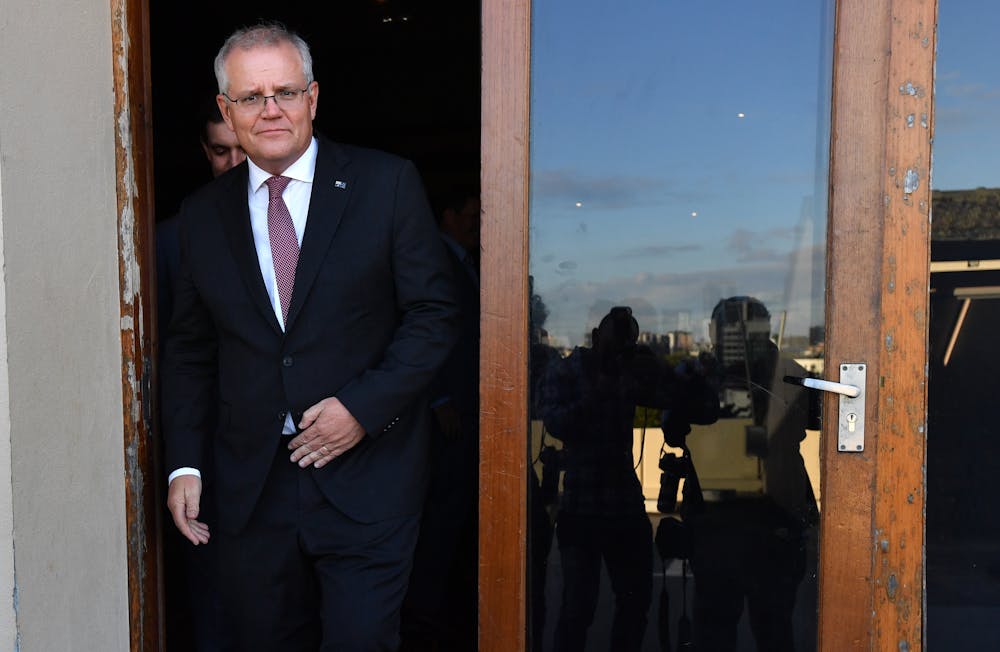
Grattan on Friday: Morrison looks to his messaging on coronavirus and climate

Source: The Conversation (Au and NZ) – By Michelle Grattan, Professorial Fellow, University of Canberra

Two issues are currently presenting the Morrison government with fast-moving targets.

One is the fallout from the coronavirus, where the picture has been altering on a near-daily basis. The other is very different – the now rapidly changing politics of the very long-running climate debate.

In such circumstances, “messaging” becomes critical, and Scott Morrison, a meister of that art, is hard at work.

As COVID-19 spread in Europe and elsewhere this week, the federal government on Thursday jumped ahead of the World Health Organisation, and activated its emergency plan in anticipation of a pandemic.

Announcing the move, Morrison declared: “The key message that I really want to get across to Australians today is: because of the actions we’ve taken on the coronavirus we’ve got ahead. We intend to stay ahead. And together we will get through this”.


Read more: Government triggers emergency plan for COVID-19 pandemic, and considers economic assistance


This feeds into the government’s wider narrative of “keeping Australians safe”, and having “plans”.

The virus’s local health impact are at this stage only potential, but the economic ones are already being felt. The unknown is how hard the ultimate impact on the economy will be. Treasury is looking at some relief measures, although Morrison underscores they would be “modest” and “targeted”.

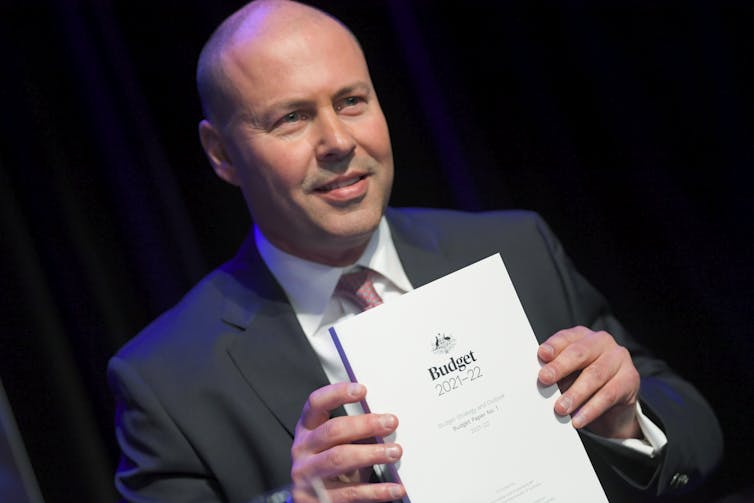
Morrison’s news conference earlier in the week, featuring Treasurer Josh Frydenberg, had a purpose beyond reassuring the public the government was covering all bases on the virus.

It set up a narrative to say, if this means the economy falls in a hole and the budget’s “back in black” storyline morphs into a fairytale, it’s not our fault.

That might be true. As the government prepared its pre-election budget, no one could have anticipated the virus (or the extent of likely bushfires). But if you boast too loudly, if the Liberal party markets “back in black” mugs, there’s further to fall if you can’t deliver.

Nevertheless, just as the government should have been restrained with its self-applause, so critics should be wary now. Morrison and Frydenberg are trying to take our insurance against a deficit, but they’ll be pursuing every hollow log and accounting trick to avoid that. Those “back in black” mugs will become a collector’s item if the budget’s in the red, but they might end up just another bit of kitsch.

The challenge Morrison faces in his messaging on climate is more complex. Last election, while climate was an issue, Labor’s policy was vulnerable.

The present picture is different. The fires have elevated the climate debate. Where Labor’s policy previously could be painted as isolated or extreme, now the Coalition looks the odd one out.

This is clear on the 2050 target of zero net emissions, to which Anthony Albanese has committed (while putting off a decision on the medium term target). With all states and territories, the Business Council of Australia, and Britain’s Conservative PM Boris Johnson signing up to mid-century carbon neutrality, it’s hard to run the argument it’s some kooky idea.

Mick Tsikas/AAP

Of course this didn’t stop the Coalition piling onto Albanese. But for all the bluster, Morrison knows the usual crude attacks are unlikely to suit him beyond the short term.

There is a lot of government manoeuvring going on to readjust its climate rhetoric, as well as keep options open.

Talking about the bushfires, Morrison now routinely acknowledges the impact of the changing climate – without accepting a cause-and-effect argument. This is different from some of those in the Coalition who claim these fires were like all the others in our history.

On energy, while stressing the need for dispatchable power, Energy minister Angus Taylor is talking up, with greater enthusiasm than previously, Australia’s progress on renewables.

In relation to the controversial question of using carry over credits to get to Australia’s 2030 Paris target, the government is privately becoming confident they won’t be needed.

In relation to net zero, those around Morrison point out he’s not dissing the target itself, but the absence of a “plan” to get there.

He told the Coalition party room this week: “I won’t commit to anything I don’t know the cost of, if I don’t know the impact on jobs. It’s not about being for or against a target.”

On one school of thought, Morrison could be keeping open the possibility of supporting the 2050 target if that later looks the best political course. He will be under strong pressure to do so in the run up to the Glasgow climate conference late in the year.

Indeed, just the weight of business and public opinion will be formidable. An Essential poll published this week showed 75% of Australians supported “a zero-carbon pollution target for 2050 if it were adopted by the federal government”.


Read more: Albanese pledges Labor government would have 2050 carbon-neutral target


Morrison may be ensuring his messaging leaves him wriggle room, but there would be an obvious massive problem if he did decide he’d be better off to endorse the target.

He might be the ultimate pragmatist but it’s another matter with the Nationals. Michael McCormack’s precarious leadership means the hardliners in the Nationals (Matt Canavan, Barnaby Joyce) can drive that party’s position. McCormack can’t afford to deviate. He said bluntly this month, “Net zero emissions by 2050 equals net zero jobs growth by 2050”.

If Morrison tried to sign up to 2050 he would risk triggering an explosion in the Nationals.

On the other hand, if McCormack were replaced by his deputy David Littleproud, such a policy move might be possible.

In partisan terms, the downside for Morrison of adopting the 2050 target would be to knock out a line of attack on Albanese. But that attack threatens to become a lot less effective once we get past the knee-jerk reaction we’ve seen this week.

It can’t be predicted where Morrison might end up on the 2050 target. Perhaps he doesn’t know himself. Possibly he could nuance the message – recast it as a “goal”, for instance.

In the short term, watch out for the messaging when the government spruiks its technology investment road map in coming days. It will be a lot more positive about electric cars than in the election campaign, where Labor’s commitment to them was, apparently, a threat to the Aussie weekend.

Different circumstances, different message.

ref. Grattan on Friday: Morrison looks to his messaging on coronavirus and climate – https://theconversation.com/grattan-on-friday-morrison-looks-to-his-messaging-on-coronavirus-and-climate-132614

Government triggers emergency plan for COVID-19 pandemic, and considers economic assistance

Source: The Conversation (Au and NZ) – By Michelle Grattan, Professorial Fellow, University of Canberra

The federal government has activated its emergency response plan to deal with a spread of the coronavirus locally, in anticipation of it becoming a “pandemic”.

It is also considering limited assistance for those hardest hit by the economic fallout.

Prime Minister Scott Morrison told a news conference late Thursday Treasurer Josh Frydenberg and Treasury was working on possible measures to give some relief.

Morrison stressed any measures would be “targeted, modest and scalable” – that is, able to be built on if necessary.

“This is a health crisis, not a financial crisis, but it is a health crisis with very significant economic implications,” he said.

“We’re aware, particularly in the export industry, in the marine sector, there are particular issues there especially in North Queensland, but these problems are presenting in many other places,” he said.

The tourism and education sectors are being heavily affected as the crisis worsens. But the government has stressed universities have good liquidity to deal with the situation.

The travel ban on arrivals from China has been extended for at least another week. There will be no carve out for the tens of thousands of university students unable to reach Australia.

Treasury has not yet finalised an estimate of the economic impact of COVID-19.

Cabinet’s national security committee met for three hours on Thursday to discuss the latest information on the virus and what should be done now.

“What has occurred, in particular, in the last 24 hours or so as the data has come in is that the rate of transmission of the virus outside of China is fundamentally changing the way we need to now look at how this issue is being managed here in Australia,” Morrison said.

Stressing Australia had been ahead of the World Health Organisation in its previous response, he said “based on the expert medical advice we’ve received, there is every indication that the world will soon enter a pandemic phase of the coronavirus”.

“So while the WHO is yet to declare … it’s moved towards a pandemic phase, we believe that the risk of a global pandemic is very much upon us and as a result, as a government, we need to take the steps necessary to prepare for such a pandemic.”

The actions were “being taken in an abundance of caution,” Morrison said.

Health ministers will meet on Friday to discuss the emergency planning, to respond to a future situation where there is sustained transmission in Australia – in contrast to the present containment to a handful of cases. As the virus spreads internationally, the chances increase of a major spread in Australia.

The emergency plan covers special wards in hospitals, and ensuring key health workers have access to adequate protective equipment from the medical stockpile.

It includes provision for aged care facilities to be put into lock down if necessary.

There would also be contingency alternative staffing for key facilities if staff got the disease.

On another front, Border Force would if necessary extend screening to passengers arriving from multiple countries.

Morrison said consideration was being given to how school children would be protected.

The Prime Minister emphasised there was no cause to consider cancelling events or for people not to be out and about.

“You can still go to the football, you can still go to the cricket, you can still go and play with your friends down the street, you can go off to the concert, and you can go out for a Chinese meal.

“But to stay ahead of it, we need to now elevate our response to this next phase,” he said.

“There are some challenging months ahead and the government will continue to work closely based on the best possible medical advice to keep Australians safe.”

So far, Australia had had 15 cases who had come from Wuhan and all 15 had now been cleared, he said. Eight other cases had come from the Diamond Princess. There had been no community transmission in Australia.

ref. Government triggers emergency plan for COVID-19 pandemic, and considers economic assistance – https://theconversation.com/government-triggers-emergency-plan-for-covid-19-pandemic-and-considers-economic-assistance-132610

Let’s ‘declare war on type 2 diabetes’ – Australian of the year James Muecke on why we need to cut back on sugar

Source: The Conversation (Au and NZ) – By James Muecke, Clinical senior lecturer in Ophthalmology and Visual Sciences, University of Adelaide

Humans are physiologically hardwired to love and seek out sweet things. It’s an ancient survival mechanism that evolved to prepare our bodies for periods of fasting when food supplies were scarce.

Like nicotine, alcohol and other drugs, sugar activates the reward system in our brains, resulting in the release of the neurotransmitter dopamine. It feels good, so we want to do it again.

It can also give us solace when we’re down and can alleviate stress, as the dopamine hit counters cortisol, a stress hormone which is released during anxious times.


Read more: Fact or fiction – is sugar addictive?


The problem is, the more sugar we ingest, the more we need to make us feel good. It’s a vicious cycle that’s hard to break.

Excessive and sustained sugar consumption increases the risk of developing type 2 diabetes, a metabolic disorder where the body can’t maintain healthy levels of glucose (sugar) in the blood.

Globally, the number of adults with type 2 diabetes, which is related to diet and lifestyle, has quadrupled over the past 40 years. In 2017-18, one million Australians had type 2 diabetes and many more were at risk of developing the condition.

It’s not impossible to cut down on sugar. Some strategies require change on a personal level, while others must be taken on by industry and governments.

Personal strategies

At the personal level, it’s a matter of slowly winding down our addiction. Going cold turkey would be incredibly difficult, given 75% of our food and drinks have added sugar.

I started omitting the obvious products loaded with sugar – soft drinks, fruit juices, dried fruit, chocolate, candy, ice cream, cakes and sweet biscuits. I stopped sprinkling sugar on my cereal and stirring it into my tea and coffee.

Even these simple strategies gave me withdrawal symptoms such as irritability, headache, sluggish thoughts, and fatigue, which began on the very first day. These symptoms and the cravings were unpleasant but only lasted three days.

Progressing to the next level might include cutting out commercially produced foods that contain excessive amounts of added sugar such as jams, condiments, and most breakfast cereals.

It might also mean cutting out or down on heavily processed products that contain refined carbohydrates such as white flour (white bread, pastries and pasta), white rice, and white potatoes (especially fries and crisps). Such carbs are broken down to glucose in the gut, and are really just another form of sugar consumption.

Is it time to cut back on jams and sugary spreads? Shutterstock

It helps to be aware of the times we’re consuming sugar out of habit, such as eating a bag of sugary treats at the movies or a block of chocolate in front of the TV, or using sugar as a reward for a job well done.


Read more: If sugar is so bad for us, why is the sugar in fruit OK?


It’s also important to be aware of those times when we’re using sugar to make us feel better or alleviate stress. The brain doesn’t care where it gets its feel-good chemicals from, so try going for a walk, run or cycle, listen to your favourite music playlist, or try doing a good deed instead.

Government response

From a public health perspective, the government must play a pivotal role in helping Australians cut down on sugar.

Strategies at the government level should be aimed at accessibility, addition and advertising.

Making sweet products less obvious and accessible in supermarkets, delicatessens, post offices and service stations would be a good start. Moving them away from check-out counters means those reflex purchases are less likely to happen.

Lollies and chocolates should be moved away from supermarket checkouts. Shutterstock

Second, we need a levy (or a tax) on products containing high levels of added sugar, particularly on sugar-sweetened drinks. There is strong evidence a tax on such drinks would reduce consumption and result in a decline in type 2 diabetes.


Read more: Don’t believe the myths – taxing sugary drinks makes us drink less of it


Third, a more transparent system for labelling of the added sugar content of products should be implemented. The current health star rating system is only voluntary and is in need of reform.

Fourth, advertising time and space for sugary products should be restricted, as we have done for cigarettes, starting with ads targeting children on TV and social media.

Kids shouldn’t be exposed to ads for sugary foods. Shutterstock

Fifth, powerful and hard-hitting awareness campaigns should be introduced, as we have done for cigarettes. Who could forget those graphic TV adds of tar being poured over lungs or fat being squeezed out of an artery?

Finally, we need a multi-disciplinary think tank to raise awareness about the health dangers of sugar. Such a body could engage endocrinologists (medical doctors who treat diabetes), public health physicians, neuroscientists, nutritionists, marketers, PR experts, and government representatives to deliver clear and united messages.

The sugar industry and the food and beverage industries will need to be included in discussions about reform, but we can’t let commercial interests stop us from acting.

Type 2 diabetes is a growing epidemic and one of the nation’s biggest health challenges. It’s time for Australia to declare war on type 2 diabetes.


Read more: ABC Four Corners: five articles to get you informed on sugar and Big Sugar’s role in food policy


ref. Let’s ‘declare war on type 2 diabetes’ – Australian of the year James Muecke on why we need to cut back on sugar – https://theconversation.com/lets-declare-war-on-type-2-diabetes-australian-of-the-year-james-muecke-on-why-we-need-to-cut-back-on-sugar-131024

Juries will soon learn more about people accused of child sex crimes. Will it lead to fairer trials?

Source: The Conversation (Au and NZ) – By Marilyn McMahon, Deputy Dean, School of Law, Deakin University

The NSW government has just introduced a bill that will, among other significant reforms, make it easier for a jury to be informed about the prior convictions of a person on trial for a sex offence involving a child.

The governments of Victoria, Tasmania, the ACT, the NT and the Commonwealth are likely to introduce similar legislation.

Disclosing evidence of an accused’s prior convictions has always been a difficult area of criminal law, requiring a balance of conflicting interests.


Read more: All about juries: why do we actually need them and can they get it ‘wrong’?


Disclosure may demonstrate a propensity to offend in a particular way and therefore be helpful to the prosecution. But it may also prejudice a jury against the accused in an unfair manner.

The reforms proposed in NSW have widespread support among advocates and organisations working with victims of sexual abuse. They are also likely to be supported by the opposition.

But they have evoked a strong response from lawyers who view them as undermining fundamental principles in our legal system – the presumption of innocence and the right to a fair trial.

Why the changes?

Despite numerous changes to laws governing sexual offences in past decades, conviction rates for these offences remain substantially lower than for other types of crimes

There are many possible explanations for this, including the fact these cases often involve acts performed in secret, frequently do not have conclusive forensic evidence and ultimately come down to the word of the victim against the word of the accused.

When the victim is a child, difficulties in describing the assault and giving evidence are also significant.


Read more: To believe or not to believe: child witnesses and the sex abuse royal commission


Noting the low conviction rates – as well as the issue of offenders who have multiple victims – the Royal Commission into Institutional Responses to Child Sexual Abuse recommended that evidence law be amended so jurors could get a more complete understanding of an accused’s past. Achieving this goal required significant reform.

The royal commission recommended jurors in child abuse trials be permitted to hear about the accused’s past convictions for sex abuse. Royal Commission/PR handout

How evidence law works now

A jury in a criminal trial in Australia is not usually told about the criminal history of the accused. In cases where there is no jury, the judge or magistrate is also not permitted to take into account any prior offending when deciding guilt or innocence.

The justification for this restriction is that it prevents the jury, magistrate or judge from being improperly influenced by a defendant’s past. This ensures they restrict their considerations to the evidence presented in the present case.

However, some exceptions already exist relating to credibility and what is known as “tendency and coincidence evidence”.

Tendency evidence can show a person has a propensity to act in a certain way. Coincidence evidence can demonstrate that, because the person has acted in a very similar way in the past, they are likely to have committed the offence for which they are currently on trial.


Read more: We need better jury directions to ensure justice is done


In jurisdictions like NSW that have adopted the uniform evidence law, this type of evidence can only be admitted if it has “significant probative value” (that is, it is highly relevant to the current case) and its value “substantially outweighs” any prejudicial effect for the accused.

Given this high threshold, an accused’s prior offending is not commonly disclosed to a jury before it reaches a verdict.

What will the reforms do?

The reforms will allow more information about defendants to be admitted in trials involving child sex offences. Specifically, the changes will:

  • assist prosecutors to introduce evidence of past crimes by restricting matters that might previously have influenced judges and magistrates to exclude this evidence

  • allow evidence to be admitted if it simply “outweighs” the danger of unfair prejudice, a less demanding test than “substantially outweighs”

  • make it easier to have trials where multiple complainants make allegations (and present similar evidence) of child sexual abuse against the same person

  • create a legal presumption that evidence an accused is sexually interested in children and/or has acted on that interest this will be a very relevant matter in these trials.

Collectively, the reforms will strengthen the prosecution of these offences.

Concern about the changes

These changes are intended to make trials fairer for victims of child sexual abuse and increase the rate of convictions.

The royal commission referred to empirical research conducted on its behalf to support its view this type of reform could occur without unfair prejudice to a defendant.


Read more: Victims of child sex abuse still face significant legal barriers suing churches – here’s why


Some lawyers have endorsed reform. Others argue the changes will undermine the presumption of innocence, remove the task of proving guilt beyond reasonable doubt from the prosecution and may have the effect of denying the accused a fair trial.

They are concerned this could result in innocent people going to jail.

Defence lawyers are worried if juries know a person committed a similar crime in the past, they will assume he or she probably committed the crime for which they are currently on trial, as well.

Or a jury may simply believe the defendant deserves to be punished for past offending, irrespective of the evidence in the case before them. Critics think this is especially likely to occur in child sexual abuse cases, which evoke a strong community reaction.

Defence lawyers also believe the reforms will improperly shift the focus in a criminal trial from the prosecution having to prove all the elements of a crime to consideration of whether the accused is the sort of person likely to have committed the offence.

The proposed changes undoubtedly reflect a significant shift in the criminal law. They demonstrate that while concern about a fair trial traditionally focused on the rights of the accused, contemporary reforms are increasingly grounded in concern the criminal justice system be fair for victims.

ref. Juries will soon learn more about people accused of child sex crimes. Will it lead to fairer trials? – https://theconversation.com/juries-will-soon-learn-more-about-people-accused-of-child-sex-crimes-will-it-lead-to-fairer-trials-132517

Juries will soon learn more about people accused of child sex crimes. Will it lead to trials that are more fair?

Source: The Conversation (Au and NZ) – By Marilyn McMahon, Deputy Dean, School of Law, Deakin University

The NSW government has just introduced a bill that will, among other significant reforms, make it easier for a jury to be informed about the prior convictions of a person on trial for a sex offence involving a child.

The governments of Victoria, Tasmania, the ACT, the NT and the Commonwealth are likely to introduce similar legislation.

Disclosing evidence of an accused’s prior convictions has always been a difficult area of criminal law, requiring a balance of conflicting interests.


Read more: All about juries: why do we actually need them and can they get it ‘wrong’?


Disclosure may demonstrate a propensity to offend in a particular way and therefore be helpful to the prosecution. But it may also prejudice a jury against the accused in an unfair manner.

The reforms proposed in NSW have widespread support among advocates and organisations working with victims of sexual abuse. They are also likely to be supported by the opposition.

But they have evoked a strong response from lawyers who view them as undermining fundamental principles in our legal system – the presumption of innocence and the right to a fair trial.

Why the changes?

Despite numerous changes to laws governing sexual offences in past decades, conviction rates for these offences remain substantially lower than for other types of crimes

There are many possible explanations for this, including the fact these cases often involve acts performed in secret, frequently do not have conclusive forensic evidence and ultimately come down to the word of the victim against the word of the accused.

When the victim is a child, difficulties in describing the assault and giving evidence are also significant.


Read more: To believe or not to believe: child witnesses and the sex abuse royal commission


Noting the low conviction rates – as well as the issue of offenders who have multiple victims – the Royal Commission into Institutional Responses to Child Sexual Abuse recommended that evidence law be amended so jurors could get a more complete understanding of an accused’s past. Achieving this goal required significant reform.

The royal commission recommended jurors in child abuse trials be permitted to hear about the accused’s past convictions for sex abuse. Royal Commission/PR handout

How evidence law works now

A jury in a criminal trial in Australia is not usually told about the criminal history of the accused. In cases where there is no jury, the judge or magistrate is also not permitted to take into account any prior offending when deciding guilt or innocence.

The justification for this restriction is that it prevents the jury, magistrate or judge from being improperly influenced by a defendant’s past. This ensures they restrict their considerations to the evidence presented in the present case.

However, some exceptions already exist relating to credibility and what is known as “tendency and coincidence evidence”.

Tendency evidence can show a person has a propensity to act in a certain way. Coincidence evidence can demonstrate that, because the person has acted in a very similar way in the past, they are likely to have committed the offence for which they are currently on trial.


Read more: We need better jury directions to ensure justice is done


In jurisdictions like NSW that have adopted the uniform evidence law, this type of evidence can only be admitted if it has “significant probative value” (that is, it is highly relevant to the current case) and its value “substantially outweighs” any prejudicial effect for the accused.

Given this high threshold, an accused’s prior offending is not commonly disclosed to a jury before it reaches a verdict.

What will the reforms do?

The reforms will allow more information about defendants to be admitted in trials involving child sex offences. Specifically, the changes will:

  • assist prosecutors to introduce evidence of past crimes by restricting matters that might previously have influenced judges and magistrates to exclude this evidence

  • allow evidence to be admitted if it simply “outweighs” the danger of unfair prejudice, a less demanding test than “substantially outweighs”

  • make it easier to have trials where multiple complainants make allegations (and present similar evidence) of child sexual abuse against the same person

  • create a legal presumption that evidence an accused is sexually interested in children and/or has acted on that interest this will be a very relevant matter in these trials.

Collectively, the reforms will strengthen the prosecution of these offences.

Concerns about the changes

These changes are intended to make trials fairer for victims of child sexual abuse and increase the rate of convictions.

The royal commission referred to empirical research conducted on its behalf to support its view this type of reform could occur without unfair prejudice to a defendant.


Read more: Victims of child sex abuse still face significant legal barriers suing churches – here’s why


Some lawyers have endorsed reform. Others argue the changes will undermine the presumption of innocence, remove the task of proving guilt beyond reasonable doubt from the prosecution and may have the effect of denying the accused a fair trial.

They are concerned this could result in innocent people going to jail.

Defence lawyers are worried if juries know a person committed a similar crime in the past, they will assume he or she probably committed the crime for which they are currently on trial, as well.

Or a jury may simply believe the defendant deserves to be punished for past offending, irrespective of the evidence in the case before them. Critics think this is especially likely to occur in child sexual abuse cases, which evoke a strong community reaction.

Defence lawyers also believe the reforms will improperly shift the focus in a criminal trial from the prosecution having to prove all the elements of a crime to consideration of whether the accused is the sort of person likely to have committed the offence.

The proposed changes undoubtedly reflect a significant shift in the criminal law. They demonstrate that while concern about a fair trial traditionally focused on the rights of the accused, contemporary reforms are increasingly grounded in concern the criminal justice system be fair for victims.

ref. Juries will soon learn more about people accused of child sex crimes. Will it lead to trials that are more fair? – https://theconversation.com/juries-will-soon-learn-more-about-people-accused-of-child-sex-crimes-will-it-lead-to-trials-that-are-more-fair-132517

PM Jacinda Ardern pays tribute to Fijians killed in Christchurch attacks

By RNZ Pacific

Jacinda Ardern has paid tribute to the three Fijians who died in last year’s Christchurch mosque shootings.

Ardern spoke today at Lautoka Mosque as part of her trip to Fiji to remember Imam Hafiz Musa Patel, Ashraf Ali Razak and Ashraf Ali, who died almost a year ago.

She also thanked the Fijian community for their response in the aftermath.

READ MORE: A year from the Christchurch terror attacks, NZ intelligence records a surge in reports

“I want to place on record our deep appreciation for the many messages of support and sympathy we received from Fiji following the March 15 attacks, it gave us strength to know that you stood in solidarity with us,” she said.

“But it was especially moving to receive those messages when you faced your own grief.”

– Partner –


She said she still recalls visiting the hall the day after the attack where hundreds of members of the Muslim community were gathered.

“Amongst them was the wife of one of your fallen, I still remember talking with her as she desperately looked for her husband and feeling pained to leave her with the Red Cross.

‘Darkest of hours’
“In your darkest of hours I can tell you I will never forget your grief,” she said.

She said she has been so moved by the generosity of the muslim faith.

The prime minister has also put out a call to find “Heather from Papanui” – a woman who helped the wife of Imam Patel the morning after the attack.

“She drove Mrs Patel around Christchurch helping to find her husband with her… Mrs Patel would like to find Heather from Papanui.”

Ardern told her “being New Zealand, being the community we are, I’m sure that we can find her and pass on her deep gratitude”.

“She tells me that she just asked Heather to drive her around Christchurch until she found a crowd of people because she thought that she would find information amongst that crowd – and that is where I found Mrs Patel”.

And the message to Heather from Papanui: “Thank you for embodying the New Zealand generosity and kindness we saw in the moments after that attack and I hope we can reunite you with Mrs Patel.”

Emotion still raw
It had only been a year since the shootings so the emotion was still raw, Ardern said, but it was a chance for her to meet at least one of the family members she had met in the immediate aftermath of the tragedy.

The grandson of Ashraf Ali Razak, Mohammed Iftikar Ali said it was fate because his grandfather was not supposed to be in Christchurch that day, but he made a stop over on his way to Australia to visit a sick relative.

He appreciated the prime minister’s visit and said it was comforting.

“She was so warm in how she was explaining how sorry she was, it is none of our fault, but it was fate to be done and we are really thankful for her to be here,” he said.

“We really miss who we lost, he can’t be replaced.”

The niece, Saliman Bibi said Ardern told them she was sorry for their loss.

‘Lost with words’
“I was just lost with words I couldn’t say anything, I just felt great she is here, she is with us in our soul,” she said.

Ardern also spoke of the commitment to ensure these attacks never happen again.

She then spoke about the moves the government had taken to address weaknesses in gun legislation and to tackle extremist content online.

However, she added it is not just politicians or those in positions of power who can honour those who have died.

“Immediately after the attacks, Prime Minister Bainimarama called on all Fijians across all backgrounds and faiths to join him in making a pledge: whereever you encounter someone who says something racist and hateful, whether it is online or in person, say something.

He said, “Be the voice of love. Be the voice of change.”

Today marked the last day of the prime minister’s trip to Fiji, this evening she will be leaving for Australia where she will be meeting with Australian Prime Minister Scott Morrison on Friday.

This article is republished under the Pacific Media Centre’s content partnership with Radio New Zealand.

Print Friendly, PDF & Email

Article by AsiaPacificReport.nz

A year from the Christchurch terror attacks, NZ intelligence records a surge in reports

Source: The Conversation (Au and NZ) – By Alexander Gillespie, Professor of Law, University of Waikato

The Christchurch mosque attacks on March 15 last year have prompted a significant rise in tip-offs about people expressing extremist views, according to a report by New Zealand’s Security Intelligence Service (NZSIS).

During the three months following the terrorist attacks, NZSIS received 455 pieces of lead information about people who expressed racist, Nazi or white supremacist views.

The Australian Security Intelligence Organisation (ASIO) also released its annual threat assessment this week, warning right-wing groups are more organised than in previous years.

Right-wing extremism has been in ASIO’s sights for some time, but obviously this threat came into sharp, terrible focus last year in New Zealand. In Australia, the extreme right-wing threat is real and it is growing. In suburbs around Australia, small cells regularly meet to salute Nazi flags, inspect weapons, train in combat and share their hateful ideology.


Read more: Christchurch mosque shootings must end New Zealand’s innocence about right-wing terrorism


Different approaches

In New Zealand, a royal commission of inquiry is expected to report back in April about what intelligence agencies knew about the alleged perpetrator before the Christchurch attack and how they should be reorganised to prevent such incidents in the future.

I believe the mosque attacks represent a serious failure of intelligence services and any reorganisation should involve greater transparency with the public, so that people see the scale of the threat and how intelligence services are responding.


Read more: Explainer: how a royal commission will investigate Christchurch shootings


Terrorism is a risk for most countries, but intelligence agencies differ in the way they present the risks, their understanding of it and how they report on it.

The European Union (EU) does not report a generic threat level, but individual countries do. For example, the UK’s intelligence agency MI5 records the risk of a terror attack in England, Scotland and Wales as substantial (an attack is likely) and in Northern Ireland as severe (an attack is highly likely).

The Australian agency ASIO has listed the national terrorism threat level as probable since 2014.

In New Zealand, the threat level went from low to high following the Christchurch attacks, but is now medium, which means a terrorist attack is assessed as feasible and could well occur.

Reporting terrorism risk

In 2018, the NZSIS reported around 30 people of “particular interest”. Following the Christchurch attacks, “between 30 and 50 individuals have been under active investigation … in relation to violent extremism at any one time”.

Australian intelligence agencies do not report how many people are of particular interest. They report the number of attacks that have been disrupted (three in the past 12 months) and how many (12,478) counter-terrorism leads were resolved or investigated. The EU has a similar approach, recording the number of foiled, failed or completed attacks (129 for 2018), and the number of arrests (1,056).

Australian agencies rank their risk groups. Currently Sunni Islamist extremism, primarily from small groups and individuals inspired by extremist groups overseas, is listed as the “principal source of the terrorist threat”.

In Europe, risk reporting currently shows most attacks come from “ethno-nationalist and seperatist groups” (83), followed by jihadist (24), left-wing (19) and other groups.

Although right-wing terrorism is not a primary risk factor in Australia, intelligence agencies are more aware of it.

This threat is not something new, but current extreme right‑wing networks are better organised and more sophisticated than those of the past … any future extreme right-wing inspired attack in Australia would most likely be low capability and conducted by a lone actor or small group, although a sophisticated weapons attack is possible.

Similarly, in Europe, right-wing groups are not a dominant risk factor, but intelligence agencies note an increase.

The number of arrests linked to right-wing terrorism remained relatively low but increased for the third year in a row. Right-wing extremists prey on fears of perceived attempts to Islamicise society and loss of national identity.

More transparency needed

This month’s national security report notes the Christchurch attack made it clear that New Zealand is not immune to the threat of right-wing violent extremism.

But intelligence services do not gauge the scale of this domestic risk. Instead they paint the problem as “a growing threat internationally … that will … continue to be a challenge for security agencies around the world for the foreseeable future”.

Other countries’ agencies tell citizens more. Australian agencies reported seven terror attacks and 16 major counter-terrorism disruption operations since 2014, including where these incidents took place, what types of weapons were used and whether the targets were public spaces, military sites or infrastructure.

European agencies follow similar reporting, but provide their citizens with even more information. This covers everything from arrests, convictions and penalties, financing, weapons, use of propaganda and detail about people who travel to and return from war zones.

Australian agencies also map what they consider the most likely terror attacks in the future (low cost, locally financed, using readily acquired weapons and relatively simple tactics). They also note emerging themes, such as the risk of opportunistic violence or civil disobedience through counter protesters.

In contrast, New Zealand intelligence agencies don’t share any of these considerations with the public. Nor do they elaborate on the threat of right wing terrorism to the extent of their counterparts. The failure of the previous ten years not to mention the risk of right-wing terror cannot be repeated. While we now know the risk of extreme right terrorism exists, it is the responsibility of the security agencies to better monitor, analyse, prevent, and report on this risk than ever before.

After last year’s mosque shooting, if the intelligence agencies want to regain the trust of the public, they will have to do much better.

ref. A year from the Christchurch terror attacks, NZ intelligence records a surge in reports – https://theconversation.com/a-year-from-the-christchurch-terror-attacks-nz-intelligence-records-a-surge-in-reports-131895

Equinor has abandoned oil-drilling plans in the Great Australian Bight – so what’s next?

Source: The Conversation (Au and NZ) – By Madeline Taylor, Academic Fellow, University of Sydney

This week’s decision by Norwegian company Equinor to abandon a A$200 million plan to drill for oil in the Great Australian Bight surprised both its critics and backers.

Equinor says it abandoned the project off the remote South Australian coast because it was not “commercially competitive”.

But the plan was flawed from its inception. It was out of step with the investment community’s reduced appetite for frontier fossil fuel exploration, and growing concern about financial exposure to carbon risk. A broad section of the community opposed it on environmental grounds, including the potential for a possibly catastrophic oil spill.


Read more: Drilling for oil in the Great Australian Bight would be disastrous for marine life and the local community


Equinor is the third major oil company to abandon plans to drill in the bight, following BP and Chevron. But the company will remain active in Australia, pointing to an offshore exploration permit off Western Australia. There is also speculation that another company may take over its permit in the bight.

Equinor’s decision is an important win for many Australians, but we cannot rest on our laurels. Reform of Australia’s offshore petroleum laws is urgently required to permanently protect our precious marine environment.

The Great Australian Bight is a unique ecosystem and must be protected. Sascha Grant/Flickr, CC BY

A risky endeavour

In May last year, a group of multi-disciplinary experts, including the authors of this article, made a submission to the National Offshore Petroleum Safety and Environmental Management Authority (NOPSEMA), highlighting the risks inherent in Equinor’s proposal.

Exploratory drilling has taken place in the Bight since the 1960s. However, Equinor’s proposal involved drilling 370km off the coast in waters up to 2,500 metres deep. This brought extra technical complexity and made the proposal very expensive and environmentally risky.

Equinor’s well would have been located in the Ceduna sub-basin, off southern Australia. NOPSEMA

Equinor’s environment plan also made overly optimistic assumptions and was inadequate in many ways, including the following:

– Environmental risk

Equinor said it was committed to ecologically sustainable development and would adhere to relevant environment regulations.

However, we believe the company did not comprehensively demonstrate how it would mitigate impacts on endangered species found within its well area.

Many species listed as threatened may have been affected by the drilling activities. These include a total of 28 listed migratory species, 20 listed marine species (including the endangered southern right whale, sea lions, dolphins, southern bluefin tuna and sharks) and five listed cetacean species.

Among the shortcomings in the environment plan, it did not outline how drilling would indirectly and directly affect the capacity of listed threatened species to restore their poulations, as is required under the Commonwealth Environment Act.

A worst-case scenario oil spill in the bight may have rivalled the Deepwater Horizon disaster in 2011. US COAST GUARD

The Conversation contacted Equinor for a response to this criticism. Equinor said its environment plan “was accepted by the independent regulator in December 2019. The plan submitted and accepted demonstrated our ability to drill the exploration well safely”.

– Public consultation

Equinor conducted only limited public consultation – within a 40-kilometre radius of the well site. This excluded many relevant parties with a shared concern for the local environment.

The consultation approach also ignored the fact that if a significant accident occurred, such as the worst-case oil spill, there was a risk of harm to communities thousands of kilometres away.

It was particularly egregious that Equinor failed to consult any Indigenous organisations despite numerous Indigenous sea and land title claims that may have been affected by a spill.

Equinor also excluded 18 coastal councils from consultation, as well as conservation groups.

In response to this criticism, Equinor said it “engaged broadly with the community to provide information about our company and our plans for the Stromlo-1 exploration well, holding more than 400 meetings with stakeholders”. It said the consultation process complied with relevant legislation.

– Oil spill modelling

Equinor took a very conservative approach to oil spill modelling. Its modelling of the “worst case discharge scenario” predicted a far lower oil flow rate than modelling by BP in 2016 for the same well location.

But the scenarios Equinor developed would still have amounted to a catastrophic and unprecedented environmental event: a discharge of 42,387 barrels per day until the well was killed after 102 days, or 4,323,478 barrels of oil in total. This is a similar to the amount of oil estimated to have entered the Gulf of Mexico following the Deepwater Horizon disaster.

In response, Equinor said its oil spill maps “do not represent what a single spill would look like, or the area it would affect. To make sure we have planned for anything that could possibly happen, regardless of how unlikely it is, legislation requires us to form a single map by superimposing 100 different simulations of a worst-case oil spill under varying weather conditions”.

Anti-oil drilling protesters on the Gold Coast in November last year. AAP/Jason O’Brien

Why did Equinor jump ship?

Equinor says it abandoned its plans for commercial reasons – the same reason cited by BP and Chevron.

The company’s decision came just weeks after the federal regulator granted environmental approval to the company’s proposed Stromlo-1 well after three failed attempts.

So after pouring so much money and effort into the project, why would Equinor jump ship now? We believe other factors were also at play.


Read more: Noise from offshore oil and gas surveys can affect whales up to 3km away


First, the project failed to gain a social licence. Public surveys showed 60% of people nationally and 68% of people in South Australia opposed Equinor’s plans.

Second, it faced ongoing legal hurdles. The Wilderness Society had mounted a Federal Court challenge to the environmental approval over Equinor’s failure to consult relevant parties.

Third, and more broadly, much of the world is moving away from fossil fuels. The European Investment Bank is phasing out fossil fuel financing and the International Energy Agency has called on oil and gas companies to lower their emissions, warning that not doing so “could threaten their long-term social acceptability and profitability”.

Europe is moving away from oil, in a move that threatens the offshore petroleum industry. DIAMOND OFFSHORE DRILLING INTERNATIONAL

So what now?

Australia’s oil and gas industry is not going away. So in light of the risks, how do we protect marine life into the future? The answers may come from Equinor’s home country Norway.

The Norwegian government owns a two-thirds stake in Equinor. The government’s pension fund has announced plans to divest A$17 billion worth of fossil fuel stocks, and Equinor itself aims to reduce emissions from offshore fields and onshore plants in Norway by 40% by 2030, and to near zero by 2050.


Read more: It’s time to speak up about noise pollution in the oceans


In Norway, oil wells are operated in accordance with a standard requiring companies to demonstrate “fitness to drill” before work begins. This is not required under Australian regulations, which apply the lesser standard of “good oilfield practice”.

In developing petroleum resources, The Norwegian Petroleum Act requires titleholders to take “a long-term perspective for the benefit of Norwegian society as a whole”. This requires contributions to the welfare, employment and improved environment of the nation.

Australia’s Equinor experience has made one thing very clear: in protecting both our environment and the interests of future generations of Australians from the effects of fossil fuel extraction, this nation still has a lot to learn.

Greg Bourne contributed to this article.

ref. Equinor has abandoned oil-drilling plans in the Great Australian Bight – so what’s next? – https://theconversation.com/equinor-has-abandoned-oil-drilling-plans-in-the-great-australian-bight-so-whats-next-132435

Stocking up to prepare for a crisis isn’t ‘panic buying’. It’s actually a pretty rational choice

Source: The Conversation (Au and NZ) – By David A. Savage, Associate Professor of Behavioural Economics , Newcastle Business School, University of Newcastle

Recent days have brought reports of shoppers clearing out supermarket shelves from Wuhan and Hong Kong to Singapore and Milan in response to the spread of coronavirus. This behaviour is often described as “panic buying”.

However, the research shows that what’s going on here is nothing to do with panic. It’s a perfectly rational response to the situation.

Responding to disaster

Panic is one of the most misunderstood and misinterpreted of all human behaviours. The common, traditional understanding of the phenomenon is based on myth rather than reality.

If we understand panic as a state of uncontrollable fear that drives irrational behaviour, then how people usually respond in the face of disaster is something else entirely.

It’s a common belief that social law breaks down in a disaster. In the Hollywood version, chaos ensues and people act in illogical or unreasonable ways. The reality is very different.

Most research rejects the notion of a “disaster syndrome” described as a state of stunned shock or the occurrence of mass panic. In real disasters, people usually hold on to tenets of acceptable behaviour such as morality, loyalty, and respect for law and customs.

Planning ahead

If we are not seeing panic, what are we seeing? Unlike most animals, humans can perceive some future threats and prepare for them. In the case of something like the coronavirus, one important factor is the speed at which information can be shared around the world.

We see empty streets in Wuhan and other cities, where people are unable or unwilling to go outside for fear of contracting the virus. It is natural that we want to prepare for the perceived threat of similar disruption to our own communities.


Read more: Vital Signs: a connected world makes this coronavirus scarier, but also helps us deal with it


Stocking up on food and other supplies helps people feel they have some level of control over events. It is a logical thought process: if the virus comes to your area, you want to be able to reduce your contact with others but also ensure you can survive that withdrawal period.

The greater the perceived threat, the stronger the reaction will be. At this stage it is believed that virus has an incubation period of up to 14 days, so people want to be prepared for at least 14 days of isolation.

Bare supermarket shelves are often a sign of preparation, not panic. Andrea Canali / EPA

A reasonable response

Preparing for a period of isolation is not the result of an extreme or irrational fear but rather an expression of our ingrained survival mechanisms. Historically, we had to protect ourselves from things such as harsh winters, failing crops or infectious diseases, without the aid of modern social institutions and technologies.

Stocking up on supplies is a valid response. It indicates citizens are not helplessly reacting to an outside circumstance but instead are thinking forward and planning for a possible situation.

While part of this response is due to the urge for self-reliance, it may also be a herd behaviour to some extent. A herd behaviour is one driven by imitating what others do – these behaviours can be a kind of conditional cooperation with others (for example, yawning).

Erring on the side of caution

A lot of uncertainty surrounds disasters, which means all advanced decisions are made on the basis of perceived threats not the actual disaster itself. Because of this uncertainty, people tend to overreact. We are generally risk-averse and aim to prepare for the worst-case scenario rather than the best.

When it comes to stocking up (or hoarding) a large private collection of goods to see us through a disaster, we don’t know how much we will need because we don’t know how long the event will last.

Accordingly, we tend to err on the side of caution and buy too much rather than too little. This is the natural response of a rational person who faces future uncertainty and seeks to guarantee their family’s survival.


Read more: Coronavirus: how media coverage of epidemics often stokes fear and panic


The importance of emotions

Buying up large stores of supplies – which can lead to empty supermarket shelves – may seem like an irrational emotion response. But emotions are not irrational: they help us decide how to focus our attention.

Emotions allow individuals to attend to issues longer, to care about things harder and to show more resilience. They are an instinctual element of human behaviour that we often fail to include when trying to understand how people act.

Changes in individual behaviours can have large-scale implications. For example, a supermarket will normally organise its supply chain and stocks on the basis of average levels of consumption.

These systems do not handle big fluctuations in demand very well. So when demand surges – as it has in parts of China, Italy and elsewhere – the result is empty shelves.

Should I be stocking up?

In general Australians are not as well prepared for disaster as our kin across the ditch in New Zealand, who routinely have emergency kits in their homes due to the prevalence of earthquakes. However, the recent summer of fires, floods and disease should have given us all a wake-up call to be prepared.

You don’t need to rush out this very minute to buy several dozen tins of baked beans, but you might want to start assembling this kind of kit. Look through the ABC’s survival kit list, figure out what you already have and what you need to get.

Then you can make a shopping list and steadily gather the things you need. Done this way, it gives shops time to restock and won’t leave the shelves bare.

ref. Stocking up to prepare for a crisis isn’t ‘panic buying’. It’s actually a pretty rational choice – https://theconversation.com/stocking-up-to-prepare-for-a-crisis-isnt-panic-buying-its-actually-a-pretty-rational-choice-132437

Is cruising still safe? Will I be insured? What you need to know about travelling during the coronavirus crisis

Source: The Conversation (Au and NZ) – By David Beirman, Senior Lecturer, Tourism, University of Technology Sydney

The coronavirus outbreak (COVID-19) has now reached more than 80,000 recorded cases, largely concentrated in China, with a death toll over 2,700 and rising.

There are few signs the epidemic is abating. In fact, new cases have emerged in a host of European countries in recent days, while significant outbreaks have continued to grow in number in South Korea, Italy and Iran.

For the global tourism industry, the impact of the outbreak is likely to be severe. Many countries, including Australia and the US, are continuing their bans or severe restrictions on arrivals from China, which is having massive repercussions.

China accounts for one in 10 of the world’s international tourists, or about 150 million people per year. And Chinese tourists spent US$277 billion in outbound tourism in 2018, the highest in the world and nearly double the amount spent by American tourists at number two.


Read more: Coronavirus outbreak: a new mapping tool that lets you scroll through timeline


Many governments, including Australia and the US, have also had “do not travel” warnings in effect for China for weeks – the highest warning level possible.

Australia is also now advising travellers to take a high degree of caution when visiting other countries with outbreaks, including South Korea, Japan, Thailand and Hong Kong, and is advising people to reconsider travel to Iran. The warnings are updated frequently, so it’s best to check the Smart Traveller website before making plans.

The last significant disruption to global tourism on this scale occurred after the September 11 terror attacks, when a widespread fear of flying led to a major four-to-five-month decline in global aviation travel.

But despite the fears over coronavirus, travel is still generally safe at the moment provided you get the right advice and take sensible precautions.

A passenger gets her temperature taken after disembarking the Diamond Princess cruise ship. FRANCK ROBICHON/EPA

Is cruising still safe, and if so, where?

The recent quarantining of the Diamond Princess (Japan), the World Dream (Hong Kong) and the Westerdam (Cambodia) has raised concerns about the safety of cruising during the epidemic.

While the crisis is unprecedented in scale for the cruise sector, ship operators have extensive experience in dealing with the challenge of containing disease outbreaks. In fact, along with aviation, the cruising industry has the strictest health and safety controls of any tourism industry sector.


Read more: Memories overboard! What the law says about claiming compensation for a holiday gone wrong


The International Maritime Organisation has had a convention in place since 1914 known as SOLAS (Safety of Life at Sea), and updated versions now include a range of protocols for the cleaning of cabins and public areas of a ship and food hygiene.

It is standard practice in cruising to isolate passengers when a passenger is identified with an on-board illness. The difficulty with COVID-19 is that it may take up to 14 days and in some cases even longer for symptoms to develop after exposure.

The US$45bn cruise industry faces major challenges convincing passengers it’s still safe to take voyages. Frank Robichon/EPA

According to my contacts in Cruise Lines International Association, the industry’s global association representing over 90% of cruise ship operators, members are now developing a common approach to respond to the outbreak.

This involves informing passengers and training travel agencies about the measures that companies are taking to minimise risk and exposure to the virus. One measure being examined, for instance, is enhanced passenger reporting of medical vulnerabilities at the time of booking. This a top priority for CLIA.


Read more: We depend so much more on Chinese travellers now. That makes the impact of this coronavirus novel


But the good news is that apart from the three quarantined ships in Asia, no evidence of COVID-19 has been found on cruise liners thus far.

The global cruise industry also has a relatively small exposure to China, which should counter some concerns about the safety of cruising. According to CLIA, all of Asia accounted for just 10% of the world’s cruise deployments and about 15% of the world’s 30 million passengers in 2019.

About half of the world’s cruising passengers are from North America (mainly the US). Nearly a third of global cruising takes place in the Caribbean and 28% in the Mediterranean and the rest of Europe. (However, the new coronavirus outbreak in Italy is becoming a more serious concern for cruise operators there.)

Will you be covered for cancellations?

Many travellers are also concerned about the travel insurance implications of the COVID-19 outbreak.

According to CHOICE, the Australian consumer advocacy agency, less than half the travel insurers cover cancellation as a result of a pandemic or epidemic.

However, travellers who booked their trips prior to the announcement of the epidemic (what is called a “known event”) should be able to obtain cancellation coverage.

Allianz, for instance, says the virus became a known event on January 22 for travel to China. Cover More Travel Insurance, which issues over 80% of travel insurance policies in Australia, is using the date of January 23 for its policies.

However, travellers who booked and paid after the “known event” announcement may find themselves out of luck.

A man in Casalpusterlengo, one the Italian towns under lockdown due to the coronavirus outbreak. Andrea Fasani/EPA

Insurers also have different exclusions when it comes to epidemics. For instance, most (but not all) insurers will deny any coverage to travellers who visit a country their national government advises citizens not to visit, such as China at the moment for Australians.

However, some policies (especially those for corporate and government travellers) will offer coverage at a premium price for any loss not related to COVID-19 or standard travel insurance exclusions, such as injuries incurred while intoxicated.

Bottom line, travellers should research their travel insurance cover very carefully or seek professional advice to understand the full implications of the virus on their plans.

ref. Is cruising still safe? Will I be insured? What you need to know about travelling during the coronavirus crisis – https://theconversation.com/is-cruising-still-safe-will-i-be-insured-what-you-need-to-know-about-travelling-during-the-coronavirus-crisis-131900

4 myths about polycystic ovary syndrome – and why they’re wrong

Source: The Conversation (Au and NZ) – By Tessa Copp, PhD candidate, University of Sydney

Polycystic ovary syndrome (PCOS) is a common hormonal condition. When using the definition supported by the international guidelines, it affects just under one in six young Australian women.

To meet the diagnostic criteria of PCOS, women need to have two of the following three criteria:

  • irregular periods
  • signs of increased levels of androgens (hormones that give “male” characteristics) such as excess hair growth, acne or hair loss
  • enlarged ovaries with lots of small follicles containing immature eggs (known as polycystic ovaries).

But polycystic ovaries aren’t ovaries with cysts. And having polycystic ovaries doesn’t mean you have PCOS.


Read more: Explainer: what is polycystic ovary syndrome?


Our new research among women and clinicians found confusion over the name PCOS, limited evidence about the condition, and large amount of misinformation online fed into common misconceptions about PCOS.

These myths and assumptions are harming women and standing in the way of appropriate health care.

Myth #1: Single symptoms indicate you have PCOS

PCOS is a syndrome, or a group of symptoms, so just one sign or symptom is not enough for a diagnosis.

In our new study of 36 clinicians (GPs, endocrinologists and gynaecologists), many raised concerns about misdiagnosis and overdiagnosis of PCOS. They described seeing many women who had self-diagnosed or had been incorrectly diagnosed based on irregular cycles alone, or on an ultrasound showing polycystic ovaries.

But many young women have polycystic ovaries but don’t have PCOS.

Symptoms are also on a spectrum of severity, with no clear line separating normal from abnormal.

Women of different ethnicities, for example, have different amounts of facial and body hair.

Some women have more noticeable facial hair than others. Shutterstock

And acne is common. One study found 45% of women in their 20s had clinical acne, as well as 25% of women in their 30s and 12% of women in their 40s.

There are also several other factors and conditions that can mimic PCOS symptoms, such as stress, hormonal contraceptives such as the pill, obesity, thyroid issues (which can affect metabolism), over-exercising and disordered eating.

Mislabelling women with PCOS prevents them from receiving care for their actual issue. Some conditions can have serious health consequences if left untreated, such as hypothalamic amenorrhea (when periods stop because of stress, weight loss and/or excessive physical exercise), which can lead to bone loss.

Myth #2: Women with PCOS don’t need to use contraception

Some women with PCOS may have trouble conceiving naturally and may need medication to help them ovulate when they want to conceive. But many women with PCOS conceive spontaneously and achieve their desired family size. In fact, women with and without PCOS have similar numbers of children.

Despite this, many women with PCOS believe they won’t become pregnant. This can have life-changing consequences.


Read more: I have PCOS and I want to have a baby, what do I need to know?


In our recent study, women with PCOS talked about how fear of infertility caused long-lasting psychological distress. They felt pressure to conceive early, had difficult conversations with their partners, and a few even altered their parenthood goals and no longer planned to have children.

Many took risks with contraception and a few ended up with unintended pregnancies. Reduced contraceptive use has also been shown in other studies.

Women with PCOS need reassurance and accurate information about the likelihood of pregnancy so they know contraception is needed if they don’t want to get pregnant.

Women with PCOS still need to use contraception. Shutterstock

Myth #3: All women with PCOS are at risk of ‘metabolic complications’

PCOS is associated with an increased risk of developing insulin resistance (when the body doesn’t respond properly to the hormone insulin), type 2 diabetes and metabolic syndrome (a collection of factors such as high blood pressure and poor cholesterol levels).

Consequently, some women with PCOS report persisting anxiety about their long-term health.

However, the potential consequences are not the same for all women diagnosed. Women with no signs of androgen excess, so those who are diagnosed due to irregular menstrual cycles and polycystic ovaries, don’t have the same metabolic risks as women with androgen excess.

Yet most doctors we interviewed were unaware of this. As a result, some women with PCOS are being wrongly labelled as high risk, causing unnecessary anxiety.

Another assumption frequently stated online is that women with PCOS are more likely to get heart disease. However, the limited data to date suggests otherwise.

Myth #4: PCOS causes weight gain or prevents weight loss

Although women with PCOS are more likely to be overweight than women without the condition, the relationship between PCOS and weight remains unclear.

While many women with PCOS report difficulty losing weight and perceive a greater susceptibility to weight gain, weight management interventions, such as diet and behaviour change programs, have found women with and without PCOS lose the same amount of weight.

Women with PCOS can lose weight. Shutterstock

A recent analysis suggests a high body mass index (BMI) is one of the causes of PCOS, with weight gain making symptoms worse. But having PCOS does not appear to affect BMI. We need more research to understand these relationships more clearly.

Encouragingly, even a small amount of weight loss can improve PCOS symptoms.


Read more: Weight loss improves polycystic ovary symptoms. But don’t wait until middle age – start now


Optimising healthy lifestyle (eating healthily, being active and avoiding smoking) is first line management for women with PCOS. However, women with PCOS may face additional barriers to implementing these changes, such as higher levels of anxiety and depression, highlighting the importance of access to support.

We must be careful with assumptions and generalisations in the absence of high-quality data. Women with PCOS each have different contributing factors and therefore different levels of risk. Having truly patient-centred health care will help them better manage their condition, improve their outcomes and reduce unwarranted anxiety.

ref. 4 myths about polycystic ovary syndrome – and why they’re wrong – https://theconversation.com/4-myths-about-polycystic-ovary-syndrome-and-why-theyre-wrong-131908

Coercive control is a key part of domestic violence. So why isn’t it a crime across Australia?

Source: The Conversation (Au and NZ) – By Paul McGorrery, PhD Candidate in Criminal Law, Deakin University

The recent killing of Hannah Clarke and her three children by her estranged husband has raised national attention to the types of behaviour that might lead to such a horrific crime, and how we might spot it early enough to intervene.

Researchers have known for decades most family violence involves forms of abuse other than physical violence, such as social isolation, emotional abuse and financial abuse.

However, we are now experiencing a watershed moment where the broader community is starting to recognise that too.


Read more: Why do men kill their families? Here’s what the research says


Evidence is mounting that Hannah’s husband had a long history of psychological abuse and controlling behaviours, sometimes called coercive control.

This is something we and others believe should be a crime in all jurisdictions across Australia.

In a nutshell, coercive control is a collection of behaviours designed to strip someone of their sense of autonomy and self-worth. Some examples of these behaviours include removing male contacts from a partner’s social media, dictating where and when their partner sleeps and eats, threats of self-harm if the relationship ends, and physical violence.

Perpetrators are nearly always male. And research by the UK charity SafeLives shows perpetrators can come from all works of life and social demographics.

If we can predict it, we can prevent it

There is a recognised timeline of behaviours that tend to occur before one partner (or ex-partner) kills the other.

A review of 372 intimate partner homicides in the UK found many men who kill their intimate partners (and it is almost always men killing women) followed an eight-stage homicide timeline.

The eight stages that tend to lead to one partner killing another.

For instance, the offender tends to have a history of abuse (either against the same or a different victim), the relationship often doesn’t start out as abusive, their behaviour tends to gradually become controlling, there’s a trigger (such as the end of the relationship) and then they escalate and kill their partner. There are clear similarities between the killing of Hannah and her children and this timeline.

Because we can predict these incidents, perhaps we can prevent them.

Just as importantly, not only is coercive control a warning sign for intimate partner homicide, it is also a wrong in itself. Victims report coercive control is often worse than all but the most extreme physical violence.

It’s time to criminalise coercive control

Tasmania is the only jurisdiction to have made certain coercive controlling behaviours (in particular, economic abuse and emotional abuse) criminal offences in Australia.

But we and others believe coercive control should be a criminal offence in its own right in each state and territory.

Such criminalisation needs to be part of wider reforms to address the unacceptable reality that a current or former partner murders a woman every week in Australia, and millions of Australians experience emotional abuse by an intimate partner at some stage in their lives.


Read more: It’s time ‘coercive control’ was made illegal in Australia


How has this worked internationally?

England and Wales made coercive control a crime in 2015. Ireland and Scotland followed suit in 2019, with promising early results in Scotland. And last week a Californian senator introduced a bill to criminalise coercive control.

To illustrate the types of cases these laws might apply to, consider the first successful conviction for coercive control in Ireland.

According to media reports, Kevin Dunleavy called his partner nearly 6,000 times in three months (more than 60 times a day). He made her take her phone with her when she left the house. He made her answer video calls so that she could show him where she was and who she was with. He threatened and attacked her. And he burned her clothes so she couldn’t leave the house.


Read more: Technology-facilitated abuse: the new breed of domestic violence


Because the court could look at his behaviour as a whole, he was given a sentence that reflected the overall seriousness of his behaviour, nearly two years in prison.

It’s not just more law, it’s an ideological shift

In jurisdictions other than Tasmania, the types of behaviours we might call coercive control are recognised as forms of family violence. But, generally, these behaviours can only be prosecuted as a breach of an intervention order (otherwise known as a domestic or apprehended violence order).

This is an issue because many women who need protection do not have intervention orders. Even when they do, police don’t always take action when those orders are breached. And it sends the wrong message to victims: that these behaviours are only wrong if a court order is in place.

Not all victims of coercive abuse go to court to get an intervention order, so are not covered by existing domestic violence legislation around Australia. from www.shutterstock.com

Criminalising these abusive behaviours demonstrates our strongest denunciation of them. It legitimises victims’ perceptions that what they are experiencing is unacceptable. It gives the broader community a language and shared understanding that can lead to long-term changes in attitudes. It gives police and others in the justice system a tool to intervene. And because of that, it may even save some lives.

There are, though, some concerns. Most importantly, the criminal justice system already struggles to respond to physical violence. And women are often misidentified as the perpetrator, especially in intervention order proceedings. Why should we expect it to do any better with the more complex concept of coercive control?

Training is critical

The answer, which is supported by conversations we’ve had with police and service providers in the UK, is that with proper resources and training, criminalising coercive control becomes more than just adding another crime to the thousands already in the statute book.

It necessitates a fundamental shift in the way police, prosecutors and judges see domestic abuse, not as a series of separate events but more like the way victims experience it: cumulatively, and comprehensively.

Criminalising coercive control isn’t, though, as simple as just cutting and pasting from one jurisdiction to another. It would require a detailed review what’s happened in other countries, and how best to legislate in each state and territory. It will also take time to implement, and uptake may be slow, as has been the case in England and Wales. That is, this isn’t the sort of reform that can happen overnight.

Instead, criminalising coercive control is the kind of reform that, done right, could lead to generational change in how we as a society conceptualise domestic violence.


If this article has raised issues for you or someone you know, contact the national sexual assault, family and domestic violence counselling service – 1800 RESPECT (1800 737 732).

ref. Coercive control is a key part of domestic violence. So why isn’t it a crime across Australia? – https://theconversation.com/coercive-control-is-a-key-part-of-domestic-violence-so-why-isnt-it-a-crime-across-australia-132444

Albanese says we can’t replace steelmaking coal. But we already have green alternatives

Source: The Conversation (Au and NZ) – By Dominique Hes, Senior Lecturer in Sustainable Architecture, University of Melbourne

Despite a wealth of evidence to the contrary, some still propagate the myth that the world will need Australian coal for decades to come. Last weekend Opposition Leader Anthony Albanese joined in, saying thermal and metallurgical coal mining and exports would continue after 2050, even with a net zero emissions target.

Metallurgical coal (or “coking coal”) is mined to produce the carbon used in steelmaking, while thermal coal is used to make steam that generates electricity.

Albanese argues there’s no replacement for metallurgical coal, but this is not the case. The assertion stems from a fundamental misunderstanding of modern steelmaking, and places Australian manufacturers at risk of missing out on massive opportunities in the global shift to a low-carbon economy.

Just as thermal coal can be replaced with clean energy from renewables, we can use low-emissions steel manufacturing to phase out metallurgical coal.


Read more: Labor’s climate policy is too little, too late. We must run faster to win the race


The problem with steel

Steel is the second-most polluting industrial material in the world after cement, causing 7-9% of global emissions.

Australia manufactures a relatively small amount of steel – 5.3 million tonnes, or 0.3% of world output. Yet, we’re one of the biggest exporters of raw materials for steel production.

Anthony Albanese said he sees the coal industry continuing in Australia beyond 2050. Lukas Coch/AAP Image

There is potential to not only strengthen Australia’s steel manufacturing industry, but also to grow it using the ore (rock containing metals like iron) we currently export and our extensive renewable energy sources.

Doing so would work to our manufacturing strengths, history, abundant resources, and would cater to the future low-carbon market that will still require steel.

There are a few ways we can do this.

Recovering waste

Seventy-two per cent of the world’s virgin steel (steel made from ore, not from recycled material) is created from a high emissions manufacturing process – via the integrated steel-making route. This involves a blast furnace and a basic oxygen furnace, using coal, coke, iron ore and gas.

We can replace the coal and coke with rubber tyres that would otherwise end up in landfill, as shown by University of NSW’s Professor Veena Sahajwalla, who dubbed this process “green steel”.


Read more: Stemming the tide of trash: 5 essential reads on recycling


Right now we can also boost the recovery of steel from landfills in greater percentages. According to a 2018 national waste report, Australia generated an estimated 67 million tonnes of waste in 2016-17.

Steel makes up 2.5% of this. That’s more than 1.5 million tonnes, enough to build 150,000 buses.

‘Direct reduction’ from renewable hydrogen

But the best way to reduce emissions in steel manufacturing is to shift to “direct reduction”. This process produces more than 60 million tonnes of primary steel around the world each year.

And almost 50 plants around Australia already make steel this way. It results in 40% lower greenhouse gas emissions, while supporting a viable and thriving manufacturing industry, which uses our own raw materials rather than exporting them.


Read more: Enough ambition (and hydrogen) could get Australia to 200% renewable energy


Here’s how it works. Direct reduction removes the oxygen in ore, which produces metallic iron. The chemical reaction that drives this process uses carbon monoxide and hydrogen, sourced from greenhouse gases – reformed natural gas, syngas or coal.

But there’s no reason these fossil fuels can’t be entirely replaced with renewable hydrogen in the near future.

We’ve seen this from two leading direct-reduction technologies, called Midrex and Energiron. Both use fossil fuels, but also with a high proportion of hydrogen. In fact, Energiron facilities can already use up to 70% hydrogen, and they’ve also trialled 100% hydrogen.

The source of this hydrogen is critical, it can be made from fossil fuels, or it can be made using renewable energy.


Read more: For hydrogen to be truly ‘clean’ it must be made with renewables, not coal


At least five companies in Europe are also working on producing low emissions steel. What’s more, three companies (SSAB, LKAB and Vattenfall) are collaborating to progress the technology, creating the “world’s first fossil-free steel-making technology, with virtually no carbon footprint” – called the “HYBRIT system”.

In fact, SSAB recently announced they’re bringing their plans forward to will produce fossil-free steel by 2026.

A new Aussie industry

The key message is this: it is possible to create low-emissions steel, without metallurgical coal. And it is already happening.

With the support of industry and government, non-metallurgical, low-emissions steel could provide an opportunity to create jobs, develop a decarbonised industry and extend the steel market’s contribution to Australia’s economy.

Not to mention what products we can produce from the steel – adding value in many more ways than just exporting ore – and taking advantage of an increasing consumer demand for low carbon products. This is especially relevant for communities transitioning away from fossil fuels.

There’s not much stopping low-emissions steel from forming a core new Australian industry. Australia must address the costs involved in transitioning the infrastructure, to upgrade plants and processes.

But it needs to start with working from facts – and effective government support and vision.


Read more: How hydrogen power can help us cut emissions, boost exports, and even drive further between refills


ref. Albanese says we can’t replace steelmaking coal. But we already have green alternatives – https://theconversation.com/albanese-says-we-cant-replace-steelmaking-coal-but-we-already-have-green-alternatives-126599

Thousands of city trees have been lost to development, when we need them more than ever

Source: The Conversation (Au and NZ) – By Thami Croeser, Research Officer, Centre for Urban Research, RMIT University

Climate change is on everyone’s lips this summer. We’ve had bushfires, smoke haze, heatwaves, flooding, mass protests and a National Climate Emergency Summit, all within a few months. The search is on for solutions. Trees often feature prominently when talking about solutions, but our research shows trees are being lost to big developments – about 2,000 within a decade in inner Melbourne.

Big development isn’t the only challenge for urban tree cover. During the period covered by our newly published study, the inner city lost a further 8,000 street trees to a variety of causes – vandals, establishment failures of young trees, drought, smaller developments and vehicle damage.

Still, thanks to a program that plants 3,000 trees a year, canopy growth has kept just ahead of losses in the City of Melbourne.


Read more: Our cities need more trees, but some commonly planted ones won’t survive climate change


Canopy cover is crucial for keeping urban areas liveable, shading our streets to help us cope with hot weather and to counter the powerful urban heat island effect. Trees can also be a flood-proofing tool.

Trees add beauty and character to our streets, and (so far) they’re not a political wedge issue in the ongoing culture war that is Australian climate policy. In short, they’re a very good idea, at just the right time.

Counting the trees lost to development

The thing is, this good idea happens in the midst of a construction boom. In Melbourne alone, this includes thousands of new dwellings and billions of dollars of new infrastructure. Many of the new buildings are very large – there’s a handy open database that shows these developments.

This map shows the scale of development under way in the inner city. City of Melbourne

Next time you’re walking past a large construction site, look for empty tree pits – the square holes in footpaths where trees have been removed. Maybe you’ve already seen these and wondered what all the construction means for our trees. Well, now we know.

Our study puts a number on the impact of major development on city trees. In the City of Melbourne – that’s just the innermost suburbs and the CBD – major developments cost our streets about 2,000 trees from 2008-2017.

Using council databases and a mapping tool, we tracked removals of trees within ten metres of hundreds of major developments. We found much higher rates of tree removal around major development sites than in control sites that weren’t developed.

An example of our analysis, comparing tree losses around sites with major development (orange) to control sites (blue). Trees within 10m of major developments were much more likely to be removed. https://doi.org/10.1016/j.scs.2020.102096

Even with the City of Melbourne’s robust tree-protection rules, trees can be removed or damaged due to site access needs, scaffolding, compacted soil, root conflicts with services access, and even the occasional poisoning.

The City of Melbourne invited artist Louise Lavarack to create a roadside memorial to a poisoned plane tree, which was then shrouded in gauze bandages. Tony & Wayne/Flickr, CC BY-NC

Read more: We’re investing heavily in urban greening, so how are our cities doing?


Tree protection limits losses

The silver lining in this story is that the city council’s tree-protection policy seems to be quite effective at saving our bigger trees. The vast majority of removals we saw were of trees with trunks less than 30cm thick. Only one in 20 of the trees lost was a large mature tree over 60cm thick.

This may partly reflect the fact that the council charges developers for not only tree replacement but also the dollar equivalent of lost amenity and ecological values. It gets very expensive to remove a large tree once you factor in all the valuable services it provides. When a tree is a metre thick, costs can exceed $100,000 – and that’s if there are no alternatives to removal.

The protection of bigger trees means Melbourne retained canopy fairly well, despite losing over 2,000 trees. Only 8% of city-wide canopy losses during our study period happened near major development sites. This modest loss is still serious, as removals are having more of an impact on future canopy growth than current cover.


Read more: How tree bonds can help preserve the urban forest


Lessons for our cities

While Melbourne-centric, there are lessons in this study for cities everywhere. Robust policies to protect and retain trees backed up by clear financial incentives are valuable, as even well-resourced councils with strong policy face an uphill battle when development gets intense.

Our findings highlight that retaining and establishing young trees is especially difficult. This is troubling given these are the trees that must deliver the canopy that will in future shelter the streets in which we live and work.


Read more: Keeping the city cool isn’t just about tree cover – it calls for a commons-based climate response


Improved investments in how young trees are planted and how long we look after them can help. For example, in a promising local study, researchers showed that trees planted in a way that catches rainwater run-off from roads grow twice as fast, provided planting design avoids waterlogging.

Finally, in the context of rapid development, buildings themselves can play a positive role. Green roofs, green walls and rain gardens are just a few of the ways developments can help our cities deal with both heat and flooding.

There are plenty of precedents overseas. In Berlin, laws requiring building greening have resulted in 4 million square metres of green roof area – three times the area of Melbourne’s Hoddle Grid. In Singapore, developments must include vegetation with leaf area up to four times the development’s site area, using green roofs and walls. Tokyo has required green roofs on new buildings for nearly 20 years.

The solutions are out there, and urban greening is rising in profile. Recent commitments in Melbourne, Canberra and Adelaide are promising. Our study findings are a reminder that, even for the willing, we’ll have to take two steps forward, because there’s inevitably going to be one step back.


Read more: For green cities to become mainstream, we need to learn from local success stories and scale up


ref. Thousands of city trees have been lost to development, when we need them more than ever – https://theconversation.com/thousands-of-city-trees-have-been-lost-to-development-when-we-need-them-more-than-ever-132356

Natural disasters increase inequality. Recovery funding may make things worse

Source: The Conversation (Au and NZ) – By Mehmet Ulubasoglu, Professor of Economics, Head of the Department of Economics and Director of the Centre for Energy, the Environment and Natural Disasters, Deakin University

My team and I have analysed the incomes of people affected by some of Australia’s worst bushfires, floods and cyclones in the past two decades. Our results are disheartening.

We’ve found the income gap routinely increases after a natural disaster. For example, following Queensland floods of 2010-11 the difference between those on low and middle incomes in the Brisbane River Catchment area increased by about $7,000 a year.


Read more: With costs approaching $100 billion, the fires are Australia’s costliest natural disaster


Low-income earners, small-business owners and part-time workers are more likely to lose income following a disaster. Middle and high-income earners, full-time workers and owners of larger businesses are far less likely; indeed they might even earn more.

Recovery and relief funding, which places greater weight on assisting businesses than on income support for individuals, might widen the income gap even further.

Who loses

Looking at disasters of different scales over the past 20 years, we’ve used the Australian Bureau of Statistics’ census data sets from 2006, 2011 and 2016 to compare the incomes of people living in disaster-hit areas with those in comparable areas not affected by disasters.

We examined the following catastrophes:

  • the 2009 Black Saturday bushfires in Victoria, which killed 173 people and caused A$7 billion in damage
  • the 2010-11 Queensland floods, which killed 33 people and caused A$14 billion in damage
  • Cyclone Oswald, which swept northeastern Australia in 2013 and pounded the Queensland town of Bundaberg – we used this case to measure the effect of a medium-scale catastrophe
  • the 2009 bushfires that destroyed 38 homes in the town of Toodyay, in Western Australia – we used this as an example of a disaster afflicting a small regional town.
Damage caused by bushfire in the Western Australian town of Toodyay, northeast of Perth, in December 2009. Tony McDonough/AAP

Across most of these different types, scales and areas, we found low-income earners, small-business owners and part-time workers, on average, lost income after a disaster.

A waitress casually employed at a restaurant, for example, might have been asked not to come to work for a few months during a cleanup and recovery period. Our findings suggest most people never make up the income they lose.

Those most likely to lose income following disasters were employed in agriculture, accommodation and food services (covering the tourism industry). Following the Black Saturday bushfires, for example, agricultural employees lost an average of A$8,000 in annual income for the next two years. Employees in the accommodation and food services industries lost an average of A$5,000.

Who gains

Post-disaster income losses do not affect full-time workers, higher-income earners or owners of larger businesses nearly so much.

In fact, we found some people in these categories can actually earn more money in the wake of a disaster.

Unlike the groups of people who lose, gains aren’t uniform. It varies by disaster. After the Black Saturday bushfires, for example, those employed in Victoria’s public and administrative services benefited most. After the 2010-11 Queensland floods, incomes rose for health and retail employees in the Brisbane River Catchment.

The following infographic shows losses and gains by income level for wage earners in the Brisbane River Catchment Area. Low-income earners lost an average of A$3,100 in the year following the floods. Middle and high-income earners gained an average of A$3,770 and A$3,380 respectively. Five years later high-income earners’ incomes were an average of A$4,590 higher.


Relief and recovery funding

Our analysis suggests relief and recovery funding may contribute to widening the income gap, with the income gains for some groups indicating benefits are distributed unevenly.

The main reason is how programs are structured. Funding tends to be channelled to businesses, not households. Businesses receive tax deferrals, special disaster assistance grants, back-to-business workshop grants, cleanup operation grants, exceptional disaster assistance and other forms of subsidies.

In the six months following the Queensland floods, for example, just 10% of the recovery spending went to income and wage assistance. At least 80% went to businesses.

East Brisbane on January 13 2011. The overflowing Brisbane River inundated dozens of suburbs, flooding about 20,000 homes. Dave Hunt/AAP

Building a more sustainable model

Overall, there is room to rethink how we might build a more sustainable model for disaster recovery.

It’s important to assist businesses because these are arteries of the economy. But four possible improvements to the current recovery funding model could help minimise the widening of the income gap.

First, assistance programs should make it a priority to balance the imperative of short-term aid with the importance of not making inequality worse in the longer term.

Second, funding arrangements need to account for the characteristics of different disasters, and the different patterns of social effects. Not all disasters are the same, but the current funding model tends to treat them as if they are.

Third, programs should account for the greater vulnerability of households that depend on part-time, casual work and other forms of insecure work.


Read more: Uber drivers’ experience highlights the dead-end job prospects facing more Australian workers


Fourth, programs should acknowledge the susceptibility of different employment sectors. While the Natural Disaster Relief and Recovery Arrangements scheme provides some benefits to the farming sector, other sectors, such as accommodation and food services, can also be be hit hard.

Income matters. It shapes all household decisions. With more frequent and extreme weather events predicted, natural disasters present an increasing threat to social equality and all the benefits that flow from that. It is crucial to ensure relief and recovery efforts do not inadvertently contribute to widening the gap.

ref. Natural disasters increase inequality. Recovery funding may make things worse – https://theconversation.com/natural-disasters-increase-inequality-recovery-funding-may-make-things-worse-131643

We groom dogs in our own image: the cuter they are, the harder we fall

Source: The Conversation (Au and NZ) – By Tiffani J. Howell, Research Fellow, School of Psychology and Public Health, La Trobe University

Australians are slightly obsessed with our dogs. But are we obsessed enough to watch a reality doggy makeover show?

The reality makeover concept has a long history, from Top Model to the Biggest Loser to Backyard Blitz. Now on Pooch Perfect, hosted by Rebel Wilson, groomers will compete to see who does the best makeover for dogs: the first reality makeover competition to feature our best friends.

At the heart of this show will be the cute factor.

This got us thinking: what is it that makes something cute and who gets to decide what cuteness is? And why does cuteness tug at our heartstrings so strongly?

Cute as a button

Certain traits are believed to make something or someone cute. Ethologist Konrad Lorenz noted people generally find infant-like characteristics cute: big, wide-set eyes; a round face; small nose and mouth; and a large head. He argued traits like these make us feel protective: we are willing to do whatever it takes to keep our cute children safe until they develop enough to look after themselves.

One argument is pets piggyback on this tendency, with their cuteness inspiring us to care for them. Certainly, we often treat pets like children and consider them to be members of the family.

Researchers have tried to understand more about what draws us to our pets, and whether cuteness is an important feature.

We do have confirmation dogs look like their owners, at least insofar as research participants can successfully match dogs with owners based solely on a photograph.

However, they can do the same with cars, so perhaps instead of looking like their owner, both cars and dogs exhibit features we associate with a certain type of person, allowing us to guess on that basis.

The ties that bind

Whether dogs look like us or not, they obviously reflect something important about us. Does dog cuteness matter even beyond this reflection of ourselves?

We found owners who think their dog is very cute are more likely to feel a strong bond with their dog.

In the same study, some participants sent us a photo of their dog. We then asked strangers to rate the cuteness of the dogs and to judge the dog’s personality from the image. Dogs that were rated as cuter by strangers were also believed to be friendlier and more trainable.


Read more: 8 things we do that really confuse our dogs


However, when comparing owner and stranger ratings of cuteness, we found nearly all owners think their dog is cuter than strangers do. Beauty may be in the eye of the beholder, after all!

What does this have to do with dog grooming? Well, a 2015 study asked people to rate which out of two dog photos they liked best. The photos were identical except for almost imperceptible changes that made one dog appear slightly cuter or more human-like.

To increase cuteness, researchers made the dog’s eyes larger, the jowls smaller, or increased the space between the eyes. To make the dog more human-like, they applied colour to the dog’s irises, or gave the dog a visible smile. People typically preferred the dogs with cuter or more human-like traits.

The dog groomers on Pooch Perfect appear to instinctively understand this. The difference between the “before” and “after” shots of the dog makeovers is the eyes look bigger (or are made visible at all!), and they look more human with the addition of accessories such as pretty bows.

On Pooch Perfect, the groomers make the dogs look ‘more human’ by adding accessories such as bows. Seven

Dogs reflect something about us, and some of us care enough about what our dog looks like to go on a reality TV show to get the dog a makeover.

Do you prefer a perfectly groomed dog? Maybe you want to project an image of elegance.

Do you like scruffy and unkempt? That says something else.

Perhaps you have no interest in what your dog looks like: just like your dog, physical appearance isn’t your top priority and feeling safe probably is.

A cautionary note to end on, then, is we must keep animal welfare top of mind. It’s fine to make over a dog who enjoys it, but let’s not cause dogs stress just for the sake of entertainment.

All dogs are wonderful because they are dogs, and we should love and protect them regardless of how successful their latest makeover is.

ref. We groom dogs in our own image: the cuter they are, the harder we fall – https://theconversation.com/we-groom-dogs-in-our-own-image-the-cuter-they-are-the-harder-we-fall-132255

Duterte on new ABS-CBN franchise: ‘I’ll cross the bridge when I get there’

President Rodrigo Duterte administers the oath of office to the National Commission for Culture and the Arts (NCCA) officials in a ceremony at the Rizal Hall in Malacañang Palace on February 26, 2020. Video: Rappler

By Felipe F. Salvosa II in Manila

Reporters have finally got the chance to ask President Rodrigo Duterte on Wednesday whether he would sign a bill granting a new franchise for TV giant ABS-CBN. His response: “I’ll cross the bridge when I get there.”

Duterte, speaking for the first time since his top aide, Senator Christopher Lawrence “Bong” Go, said in a Senate inquiry on Monday that he was displeased with ABS-CBN’s refusal to air a political ad during the 2016 presidential campaign, said he would be put in a “difficult position” if the bill arrived on his desk.

He said he might even ask media to help him out on making a decision. “I will cross the bridge when I am there. Maybe I will call the media to help me out. It is a difficult decision really,” Duterte told reporters following an oath-taking of officials at Malacañang Palace.

READ MORE: The ANC Brief – a threat to press freedom

Duterte nonetheless accepted the apology made by ABS-CBN president Carlo Katigbak over the non-airing of the ad, which Duterte supporters have used as evidence of the network’s alleged bias against the president.

ABS-CBN has said ad limits in the final stretch of the 2016 campaign prevented the airing of the ad. The ad was in response to an attack ad paid for by Duterte’s arch-critic, then senator Antonio Trillanes IV, featuring children reacting to clips of Duterte uttering bad language.

Duterte did not accept a P2.6-million refund from ABS-CBN. On Wednesday, he said ABS-CBN could give it to a “charitable institution of their choice”.

The president also claimed that he had no hand in the quo warranto case filed by Solicitor-General Jose Calida before the Supreme Court, in which the top government lawyer accused ABS-CBN of violating the terms and conditions of its 25-year franchise, which expires on March 30.

‘Healthy distance’
“I kept a healthy distance from it…they are now deliberating in Congress: the lower house (House of Representatives) and the Senate. There is a plan that they will pass a joint resolution. But fundamentally really the decision is with the House, not so much in the Senate, because the constitution says all of these things must originate from the lower house,” Duterte said.

“I leave it to Congress,” he added.

The tussle over the ABS-CBN franchise is widely viewed as a press freedom issue. Duterte last year vowed to block the network’s franchise and accused it of serving as a mouthpiece for the opposition and the “oligarchs”.

The government previously sued Rappler, a news website critical of Duterte, for tax evasion and violating the constitutional ban on foreign ownership in mass media, and barred Rappler reporters from covering government events.

Calida’s petition does not cite the non-airing of the ad. It claims that ABS-CBN went around the foreign ownership ban by accepting investments from foreigners through investment instruments known as Philippine Depositary Receipts (PDRs). It also claimed that ABS-CBN illegally charged subscribers to a digital movie channel and illegally acquired a franchise for a mobile phone service.

ABS-CBN has denied any wrongdoing, and told the Supreme Court on Monday that it had the necessary licences from the National Telecommunications Commission.

Also on Monday, the Securities and Exchange Commission said ABS-CBN did not violate the law in issuing PDRs, which entitles holders only to dividends and not ownership.

The Bureau of Internal Revenue also said the TV network did not owe any taxes to the government, refuting claims by Duterte supporters on social media that ABS-CBN was cheating on its tax payments.

Felipe F. Salvosa is coordinator of the journalism programme at the University of Santo Tomas in the Philippines and a contributor to Asia Pacific Report.


Obituary: Andy Ayamiseba – long road home to an ‘independent’ West Papua

Andy Ayamiseba died a few days ago. While the West Papuan was loved, admired and supported in Vanuatu, he fought tirelessly to win a home he could return to. He died before the dream was achieved.

Originally published by the Pacific Institute of Public Policy (PIPP), this 2013 profile of Andy Ayamiseba’s life of activism in exile by Dan McGarry is one of the few narratives of the compelling story of the Black Brothers and their seminal role the formulation of a modern Melanesian identity, and in keeping the West Papuan independence movement alive in Melanesia. It has been edited to reflect recent events and republished with permission from Griffith Asia Institute’s Pacific Outlook.


In 1983, Andy Ayamiseba and the rest of the Black Brothers band descended from their flight to Port Vila’s Bauerfield airport, to be greeted by the entire cabinet of the newly fledged government of Vanuatu. They were, by Melanesian standards, superstars.

They had come to assist Father Walter Lini’s Vanua’ku Pati in its first re-election campaign, and to pass on the message of freedom for West Papua. So began a relationship that would span a lifetime of activism, a liberation dream long deferred, and ultimately, a first glimmer of hope for political legitimacy for the West Papuan liberation movement.

The Black Brothers were already widely known and loved in Indonesia and Papua New Guinea. Touring PNG in the late 1970s, the band members first met Vanuatu independence figures, including Hilda Lini, Kalkot Mataskelekele and Silas Hakwa.

READ MORE: Benny Wenda’s tribute

Students at the University of Papua New Guinea at the time, they returned to Vanuatu to play key roles in Vanuatu’s move to independence.

– Partner –

A generation later, it’s hard to imagine the immediacy, the passion and the dynamism of the time. Kalkot Mataskelekele, who would later serve as Solicitor-General and on the Supreme Court bench before becoming the republic’s 6th president, was a young firebrand operating a pirate radio service from the bush north of the capital.

Hilda Lini, sister to two prime ministers and the first woman elected to Vanuatu’s Parliament, was a tireless organiser, working behind the scenes to promote what would become the Vanua’ku Pati.

In hindsight, it seems almost inevitable that the dynamism of this callow political leadership would mesh and meld with the creative iconoclasm of the Black Brothers. But it had to wait before it reached its full fruition.

Expelled by Indonesia
In 1980, the Indonesian government expelled Ayamiseba and the other band members. Stateless, they sought shelter in the Netherlands. Hilda Lini had contacted them in 1980 during a visit to Europe, but it wasn’t until 1983 that they obtained refugee status and official residency.

Finally able to travel again, their first destination was Vanuatu.

It was a triumphal entry. They were welcomed by Father Walter Lini’s government and a large crowd of adoring fans. Likewise, on their first visit to Solomon Islands, the roads were so packed that it took the group two hours to get from the airport into town. Their concert the next day was attended by 28,000 fans.

Their 2013 visit to Honiara was somewhat more low-key, and yet perhaps more epochal than the original Black Brothers crusade. With funding and official support from the government of Vanuatu, independence leaders John Ondawame and Andy Ayamiseba conducted a of tour of Melanesian Spearhead Group members, soliciting support for membership in the sub-regional organisation.

The West Papua National Coalition of Liberation, or WPNCL, was an amalgam of two previously divergent wings of the OPM (in English, the Organisation for Papuan Freedom) and a number of political groups advocating for West Papuan independence. It was ultimately superseded by the United Movement for the Liberation of West Papua.

Having met already with the Fijian and Vanuatu prime ministers as well as the incoming chair of the MSG and head of the FLNKS, Andy and John were hopeful that their meetings with Solomon Islands prime minister Darcy Lilo would be equally fruitful. In a 2013 interview with the Pacific Institute of Public Policy, Ayamiseba explained that he had met and befriended Lilo during his sojourn in Honiara in the mid-90s.

Should Solomon Islands decide to voice its support for WPNCL membership in the MSG, most of the political hurdles would be cleared for what might prove to be the first crack of light through the doorway of political legitimacy for the cause.

Critical opening
Arguably, the critical opening came weeks before, when Sir Michael Somare (former PM of Papua New Guinea) voiced the opinion that the MSG is not an intergovernmental organisation, but an organisation of peoples, joined by culture and geography. The statement, made during a celebration of the MSG 25th anniversary, came as a surprise to some.

In 2008, it was Somare who flatly blocked a motion to consider West Papuan membership in the MSG. (Admittedly, the motion was ill-timed and ill-prepared. Ayamiseba himself admits that his group had no prior knowledge, and were caught by surprise when it was tabled.)

The way was finally cleared, not by Darcy Lilo, but by his successor, Manasseh Sogavare. In June 2015, he chaired a meeting that saw a very Melanesian compromise in which both Indonesia and the ULMWP were formally granted a place at the MSG.

Political legitimacy for West Papuan independence in the Pacific has long been subject to the vicissitudes of Melanesian politics. While Ayamiseba’s group were the darlings of the Vanua’ku Pati, and by extension the government of Vanuatu, the association came at a price. They were expelled from the country following the party’s schism in 1989, forcing Andy to seek asylum, first in Australia, then in Solomon Islands. His friendship with then-PM Mamaloni notwithstanding, efforts to further the independence movement stalled.

Progress elsewhere in the world was also stymied by realpolitik. In 1986, even nations such as Ghana, which had objected to the manner in which West Papua was brought under Indonesian rule, were less than responsive to overtures by John Ondawame, who had officially joined the independence movement’s leadership following its reunification the year before in Port Vila.

It is saddening to observe that, despite the fact that it clearly flouted international law in its annexation of the territory, no country outside of Melanesia offered significant criticism of Indonesia’s actions in West Papua. Not, at least, until new media and the internet began to break down the wall of silence that had been erected around the territory.

But even in the face of clearly documented torture, assassination and political oppression, many nations are still loath to legitimise the independence movement.

Pitfalls and obstacles
In Vanuatu, the de facto home of West Papuan independence, the road to freedom has been a long one, as full of pitfalls and obstacles as Port Vila’s physical thoroughfares – and sometimes, just as poorly managed. When Barak Sope became prime minister in 2000, he brought together nine members of the West Papuan leadership and brokered an accord that would finally bring all independence efforts under one roof.

Later that year, his delegation to the UN General Assembly included three West Papuans, two OPM members and one from the Presidium. There, in an alarming example of fervour trumping political savvy, they met with the Cuban delegation.

For all of his energy, support and contributions to Melanesian identity, Barak Sope’s political ineptitude soon brought his government down. His failure even to produce a budget caused significant domestic turmoil, which effectively forced West Papua onto the back burner.

It wasn’t until 2003 that Foreign Affairs Minister Serge Vohor welcomed back the Black Brothers, and facilitated the opening of the West Papuan People’s Representative Office, a front for the OPM.

International awareness and support were limited. Vanuatu continued to fumble the issue, balking at formal political support while continuing to express public sympathy and tacit approval. Elsewhere, tribal leader Benny Wenda’s escape from Indonesian custody and flight to the UK opened another front in the campaign.

Indonesia did itself no favours when it abused the Interpol red list by issuing a warrant for Wenda’s arrest.

For several years, the movement seemed paralysed, unable to organise itself, beset by legal constraints and barely able to manage its own processes. Vanuatu politicians proved fickle, with VP president Edward Natapei voicing support but doing little.

Commitment remains strong
Ham Lini, whose personal commitment to the cause remains strong, was unwilling to expend more political capital on the effort after the 2008 MSG debacle. Sato Kilman, the next prime minister in line, wilfully ignored the advice of his own cabinet, supporting Voreqe Bainimarama’s move to allow Indonesia observer status at the organisation.

Quietly persistent, Ayamiseba and Ondawame continued their efforts. Its moral cause made clearer by stark images of torture and brutality circulated by West Papua Media and others, the leadership (under the auspices of the WPNCL) organised an international tour for Benny Wenda, whose travel restrictions were lifted following legal and media campaigns against Indonesia’s Interpol warrant.

Even Wenda’s rebuff by the New Zealand Parliament only fanned the flames of support.

Wenda’s 2013 invitation to speak to MPs inside Vanuatu’s Parliament was the first of a series of small but significant breakthroughs. Soon-to-be prime minister Moana Carcasses’ attendance at the event was the first public sign of his political break with Sato Kilman.

A naturalised citizen of Tahitian descent, Carcasses perhaps felt the need to placate the nativist inclination common among Ni Vanuatu. Nonetheless, allowing himself to be photographed holding the Morning Star flag (a key symbol of West Papuan independence) symbolised a shift from sympathy to overt political support for the movement. In one of his first acts as prime minister, Carcasses met with Ayamiseba and Ondawame, personally assuring them of his government’s support in their MSG membership bid, and promising the creation of a West Papua desk in the department of foreign affairs.

Arriving as it did on the heels of a surprisingly warm and supportive reception by Bainimarama and other Fiji government officials, the independence movement appeared finally to be seeing the light of hope. Outspoken and unambiguous support for membership from the Kanaky leadership was not nearly as surprising; they’ve formally supported independence since the 1990s.

With the FLNKS assuming the group chair in 2014, Kanaky support proved crucial. They got the matter of ULMWP acceptance onto the agenda, and in the end they helped carry the room when the matter was considered in Honiara the following year.

Cementing PNG support
It seemed at the time that the only remaining piece to fall into place was Papua New Guinea. Wenda’s visit to PNG in 2013 did manage to cement some amount of popular support, but achieved few tangible political results. Somare’s rather startling shift away from outright opposition caused discomfort in the PNG political establishment. But that wasn’t sufficient to move them to openly oppose neighbouring Indonesia.

One of the more popular songs Ayamiseba wrote for the Black Brothers is “Liklik Hope Tasol”, a ballad written in Tok Pisin whose title translates to “Little Hope At All”. Its narrator lies awake in the early morning hours, the victim of despair. The vision of the morning star and a songbird breaking the pre-dawn hush provide the impetus to survive another day.

The song, with its clear political imagery and simplistic evocation of strength in adversity, is clearly autobiographical. It is, arguably, the anthem which animated Ayamiseba’s lifelong pursuit of freedom.

Andy Ayamiseba aged gracefully. Encroaching frailty complemented his unassuming, soft-spoken manner, but it masked a dynamism and fervour only visible to his trusted friends and confidants. Once lit, however, that spark provided a glimpse of the man as he was, the jazz-funk rebel, walking in his exile hand in hand with equally youthful –and equally naïve– leaders. Together, they redefined the Melanesian identity.

What beggars description, though, is the determination required for Ayamiseba and his West Papuan brethren to spend their entire adult lives in pursuit of legitimacy, with only the slightest glint of light to show for that effort.

Ayamiseba expressed hope:

“You cannot stay blind and deaf for 50 years.”

Andy died last week. He lived to see the formation of the United Liberation Movement for West Papua, the umbrella organisation representing key members of the independence movement. He looked on proudly as its members marched triumphantly into the MSG headquarters to lodge their membership application. He was there when Foreign Minister Ralph Regenvanu and Prime Minister Charlot Salwai opened the official ULMWP office in Port Vila.

But he never made it home.

Dan McGarry is former media director of the Vanuatu Daily Post. He is currently appealing against the refusal of his work permit. He has lived in Vanuatu for 16 years.

Print Friendly, PDF & Email

Article by AsiaPacificReport.nz

Gender diversity in science media still has a long way to go. Here’s a 5-step plan to move it along

Source: The Conversation (Au and NZ) – By Merryn McKinnon, Senior lecturer, Australian National University

Public representation of science in the media still struggles to reflect the true diversity of those who work in science, technology, engineering or mathematics (STEM). According to the Women in Leadership Australia’s 2019 Women for Media Report, women are quoted as sources in just 33% of science news stories.

However, this figure is based on 19 articles collected within a much broader study, of which science news was not a focus. To really understand the diversity of STEM representation in the media, we need a bigger sample.

Some masters students and I collected a representative sample of 655 articles published in Australia’s mainstream and science news media during 2018. In the case of international media companies with an Australian presence, we looked at articles posted on their Australian edition, some of which were produced locally and some republished from overseas.


Read more: Where are the women scientists, tech gurus and engineers in our films?


We tallied the genders of the journalist, sources quoted directly or indirectly, photographer and photo subject in these articles. If any gender was not explicitly stated using a readily gender-identifiable name (like Jane or Abdul) or an explicit personal pronoun, we categorised the gender as “unidentified”.

Our preliminary results show that in the 468 STEM-related news articles that used direct gender-identifiable quotes, both women and men were quoted as sources in 28% (133). Articles exclusively quoting men comprised 52% (241) of the articles we examined. Only 20% (94) of articles exclusively quoted women.

Of course, the devil is in the detail, and when you start to look at the number of individuals quoted in stories the difference is stark.

Gender of journalists, sources, photographers and photo subjects from a sample of 655 articles from 18 media outlets. Merryn McKinnon, Author provided

One egregious example was a “holiday reading list” from science magazine Cosmos, which featured nine books written or introduced by men, reviewed by five men.

If we look just at the top five STEM news providers in our sample, results are mixed. Our sampled suggested that The Conversation, the ABC and the Daily Mail have equal or greater numbers of women writing about STEM topics, compared with men. But although some of these outlets are also close to having gender parity in expert sources, the dominant voices are still generally male.

Comparison of the gender of science writers and directly quoted expert sources in the top five STEM news providers in our sample. Merryn McKinnon

A man’s world?

If “we can’t be what we can’t see”, then it is vital that female scientists and science writers are prominent in the media landscape. But unfortunately, our results reveal that this landscape is still dominated by men.

There are many reasons for this. But let’s be clear: confronting this problem is not a job just for women, or just for the media. This is a systemic, structural and societal problem and everyone has a part to play in formulating the solution.

This was one of many discussions held at this month’s Catalysing Gender Equity conference, held in Adelaide by the Australian Academy of Science and featuring delegates from higher education, research, government, media and the private sector.

Building on the release last year of the Decadal Plan for Women in STEM, the conference aimed to develop tangible ways to work towards gender equity.

Of course, gender equity is just one part of the overall problem. There are many groups throughout society that similarly need equitable representation and inclusion. Nobody should be marginalised or disadvantaged because of their age, race, culture, religion, disability, sexual orientation or socio-economic status.


Read more: ‘Death by a thousand cuts’: women of colour in science face a subtly hostile work environment


So how do we improve STEM media diversity?

Based on many conversations with STEM professionals during communication workshops I have run over the years, I have developed a simple five-step process, with the mnemonic “START”. It is aimed at anyone in a STEM, or arguably any, organisation wishing to increase the diversity of their public representation.

Here’s how you START:

  • Support. Speaking publicly about your work should be seen as vital and valued from all levels in an organisation. Listen to concerns from those who may be intimidated by the prospect of talking to the media, and help alleviate those concerns. If you’re an experienced media contributor, invite a less experienced colleague to shadow you at an interview or studio. Online trolling can be intimidating, so be proactive in alerting outlets to inappropriate comments on articles or social media feeds. The standard you walk past is the standard you accept. Keep it classy.

  • Train. Few people are born with the ability to turn their complex, nuanced research findings into a pithy seven-second soundbite. But solid media training can give researchers the skills and understanding necessary to communicate effectively with the media. This includes learning how the media works, and realising that deadlines tend to be much shorter in a newsroom than a science lab!

  • Advocate. Most research disciplines have a handful of high-flyers who are usually tapped on the shoulder to do media interviews or public talks. But as long as the same shoulders are tapped, how do we discover new talent? One way is for those who already have a profile to use it elevate others too. Nominate a less experienced colleague – especially one from an under-represented group – to do the talk or interview instead, and then support them through it.

  • Reinforce. Media and public outreach can take time away from the “real job” of teaching, research and grant applications. But the resulting coverage benefits the organisation. Organisations should therefore see public engagement as an integral task, not a distraction, and include it in assessments of job performance and career development.

  • Track. Organisations should monitor their media coverage to understand who their “public faces” are. They should ask how diverse these faces are, and where resources might best be deployed to improve the picture.


Read more: Women in STEM need your support – and Australia needs women in STEM


In contrast to Mary Poppins’ advice, there is no need to START from the very beginning. Perhaps tracking or reinforcement is a sensible first step for your organisation. Or if you’re a researcher who already enjoys a significant media profile, you might start by thinking of some colleagues for whom you can advocate.

Irrespective of where we begin, equity – in all its forms – needs everyone to start somewhere.

ref. Gender diversity in science media still has a long way to go. Here’s a 5-step plan to move it along – https://theconversation.com/gender-diversity-in-science-media-still-has-a-long-way-to-go-heres-a-5-step-plan-to-move-it-along-132174

It might sound ‘batshit insane’ but Australia could soon export sunshine to Asia via a 3,800km cable

Source: The Conversation (Au and NZ) – By John Mathews, Professor of Strategic Management, Macquarie Graduate School of Management, Macquarie University

Australia is the world’s third largest fossil fuels exporter – a fact that generates intense debate as climate change intensifies. While the economy is heavily reliant on coal and gas export revenues, these fuels create substantial greenhouse gas emissions when burned overseas.

Australia doesn’t currently export renewable energy. But an ambitious new solar project is poised to change that.

The proposed Sun Cable project envisions a ten gigawatt capacity solar farm (with about 22 gigawatt-hours of battery storage) laid out across 15,000 hectares near Tennant Creek, in the Northern Territory. Power generated will supply Darwin and be exported to Singapore via a 3,800km cable slung across the seafloor.

Sun Cable, and similar projects in the pipeline, would tap into the country’s vast renewable energy resources. They promise to provide an alternative to the export business of coal, iron ore and gas.


Read more: Australia’s energy exports increase global greenhouse emissions, not decrease them


As experts of east-Asian energy developments, we welcome Sun Cable. It could pioneer a renewable energy export industry for Australia, creating new manufacturing industries and construction jobs. Importantly, it could set our economy on a post-fossil fuel trajectory.

Long-term cost benefits

Sun Cable was announced last year by a group of Australian developers. The project’s proponents say it would provide one-fifth of Singapore’s power supply by 2030, and replace a large share of fossil fuel-generated electricity used in Darwin.

Submarine cables are laid using deep-sea vessels specifically designed for the job. Alan Jamieson/Flickr, CC BY

To export renewable energy overseas, a high-voltage (HV) direct current (DC) cable would link the Northern Territory to Singapore. Around the world, some HVDC cables already carry power across long distances. One ultra-high-voltage direct current cable connects central China to eastern seaboard cities such as Shanghai. Shorter HVDC grid interconnectors operate in Europe.

The fact that long distance HVDC cable transmission has already proven feasible is a point working in Sun Cable’s favour.

The cost of generating solar power is also falling dramatically. And the low marginal cost (cost of producing one unit) of generating and transporting renewable power offers further advantage.

The A$20 billion-plus proposal’s biggest financial hurdle was covering initial capital costs. In November last year, billionaire Australian investors Mike Cannon-Brookes and Andrew “Twiggy” Forrest provided initial funding to the tune of up to A$50 million. Cannon-Brookes said while Sun Cable seemed like a “completely batshit insane project”, it appeared achievable from an engineering perspective.

Sun Cable is expected to be completed in 2027.

Bringing in business

The proposal would also bring business to local high-technology companies. Sun Cable has contracted with Sydney firm 5B, to use its “solar array” prefabrication technology to accelerate the building of its solar farm. The firm will pre-assemble solar panels and deliver them to the site in containers, ready for quick assembly.

The Northern Territory government has also shown support, granting Sun Cable “major project” status. This helps clear potential investment and approval barriers.


Read more: Making Australia a renewable energy exporting superpower


Across Australia, similar renewable energy export plans are emerging. The Murchison Renewable Hydrogen Project in Western Australia will use energy produced by solar and wind farms to create renewable hydrogen, transported to east Asia as liquid hydrogen.

Similarly, the planned Asian Renewable Energy Hub could have renewable hydrogen generated in Western Australia’s Pilbara region at 15 gigawatts. This would also be exported, and supplied to local industries.

These projects align with the Western Australian government’s ambitious Renewable Hydrogen Strategy. It’s pushing to make clean hydrogen a driver for the state’s export future.

Projects such as Sun Cable could reduce Australia’s reliance on coal exports. AAP

Reliable solutions

Generating and transmitting power from renewable resources avoids the energy security risks plaguing fossil fuel projects. Renewable projects use manufactured devices such as solar cells, wind turbines and batteries. These all generate energy security (a nation’s access to a sufficient, affordable and consistent energy supply).

Australia controls its own manufacturing activities, and while the sun may not shine brightly every day, its incidence is predictable over time. In contrast, oil, coal and gas supply is limited and heavily subject to geopolitical tensions. Just months ago in the Middle East, attacks on two major Saudi Arabian oil facilities impacted 5% of global oil supply.


Read more: Australia’s fuel stockpile is perilously low, and it may be too late for a refill


Renewing international links

Apart from exporting electricity produced on its own solar farm, Sun Cable could profit from letting other projects export electricity to Asia through shared-cost use of its infrastructure.

This would encourage future renewable energy exports, especially to the energy-hungry ASEAN nations (Association of Southeast Asian Nations) – Indonesia, Malaysia, the Philippines, Singapore and Thailand.

This would strengthen Australia’s economic relationships with its ASEAN neighbours – an importantc geo-economic goal. In particular, it could help reduce Australia’s growing export dependence on China.

However, as with any large scale project, Sun Cable does face challenges.

Other than raising the remaining capital, it must meet interconnection standards and safety requirements to implement the required infrastructure. These will need to be managed as the project evolves.

Also, since the power cable is likely to run along the seabed under Indonesian waters, its installation will call for strategic international negotiations. There has also been speculation from mining interests the connection could present national security risks, as it may be able to send and receive “performance and customer data”. But these concerns cannot be validated currently, as we lack the relevant details.

Fortunately, none of these challenges are insurmountable. And within the decade, Sun Cable could make the export of Australian renewable energy a reality.

ref. It might sound ‘batshit insane’ but Australia could soon export sunshine to Asia via a 3,800km cable – https://theconversation.com/it-might-sound-batshit-insane-but-australia-could-soon-export-sunshine-to-asia-via-a-3-800km-cable-127612

Politics with Michelle Grattan: Mark Butler on Labor’s 2050 carbon neutral target

Source: The Conversation (Au and NZ) – By Michelle Grattan, Professorial Fellow, University of Canberra

Mark Butler, Shadow Minister for Climate Change and Energy, is optimistic that Labor is better placed to prosecute its climate policy at the next election, compared to the last.

“I think we are better positioned now for two reasons.”

“Firstly, I think the business community has shifted substantially over the last couple of years, and that’s a global shift that reflects, particularly the fact that regulators…and investors have recognised that climate change poses a very serious risk to the stability of the financial system.”

“Also I think people are starting to better understand the costs of not acting. Not only because of some of our tragic experiences over recent months, but because universities and other groups are starting to quantify the costs of not acting.”

“So there are enormous opportunities for a country as abundant in clean energy resources as Australia to make this shift.”

ref. Politics with Michelle Grattan: Mark Butler on Labor’s 2050 carbon neutral target – https://theconversation.com/politics-with-michelle-grattan-mark-butler-on-labors-2050-carbon-neutral-target-132511

What is a rare disease? It’s not as simple as it sounds

Source: The Conversation (Au and NZ) – By Yvonne Zurynski, Associate Professor of Health System Sustainability, Australian Institute of Health Innovation, Macquarie University

If you have a rare disease, you may be the only person in Australia with that condition.

You may not know, however, that being diagnosed with a rare disease means you are part of a community of up to two million Australians with one of these conditions. And more than 300 million people globally.


Read more: When you’re sick, the support you’ll get may depend on the ‘worth’ of your disease


Today, health minister Greg Hunt announced Australia will have its first National Strategic Action Plan for rare diseases.

This action plan will harness the power of rare disease advocates, patients and families, clinicians, researchers, peak bodies, industry and government to improve care for people with rare diseases.

What is a rare disease?

A rare disease is one that is very uncommon. The most widely accepted definition stipulates a rare disease affects fewer than five in 10,000 people.

Rare diseases are serious, complex, usually chronic, often life-limiting and most have no cure.

We know of about 7,000 different rare diseases, most with a genetic origin. Many begin in childhood.

Rare diseases are often progressive — they get worse over time — and can be associated with physical or intellectual disability.

Examples of rare diseases are uncommon childhood cancers such as hepatoblastoma (a cancer of the liver), and other better-known conditions like cystic fibrosis and phenylketonuria (a birth defect that causes an amino acid called phenylalanine to build up in the body, and untreated can lead to intellectual disability, seizures and behavioural problems). Both are symptomatic from birth. Huntington’s disease is another, but only shows symptoms in adulthood, even though it’s inherited.


Read more: Explainer: what is cystic fibrosis and how is it treated?


What makes a rare disease so difficult to diagnose and manage?

For a person living with a rare disease, and the people around them, the journey to obtaining a diagnosis and receiving treatment can be difficult, complex, worrying, confusing and isolating.

Rare diseases are difficult to diagnose because individually they occur so infrequently, and symptoms can be very complex. My research and another Australian study show it can take years to get the final correct diagnosis. Most health professionals have never diagnosed or cared for a person with osteogenesis imperfecta, Fabry disease or any other of the 7,000 rare diseases.

Added to this, the onset of symptoms for a rare disease can occur anywhere between birth and adulthood, and diagnostic tests are lacking or difficult to access.

Rare diseases are often genetic. Shutterstock

But diagnosis is only part of the puzzle. People with rare diseases typically need complex care from large teams of health professionals because with many rare diseases, several body systems are affected. Also, given the often-progressive nature of the condition, care needs can change — sometimes dramatically — over time.

Important questions also arise around life expectancy and what the risks would be if the person with a rare disease was to start a family. Would their children inherit the disease? Genetic counsellors can help with these sorts of questions.


Read more: No matter how you fund it, medical research is a good investment


Further, care is costly to families and to the health system. The cost of providing hospital care to just one child with a rare lung disorder who eventually needed a lung transplant amounted to almost A$1 million before the child’s ninth birthday.

The market for drugs for rare diseases, often called “orphan drugs”, is small. Although governments incentivise the pharmaceutical industry to develop orphan drugs, there are no effective drug treatments for most rare diseases.

In recognition that rare cancers and rare diseases traditionally lose out to more common diseases in terms of research, additional targeted funding has recently been allocated to boost research in Australia. In 2019 the NHMRC and the Medical Research Future Fund pledged A$15 million over five years for rare cancers, rare diseases and unmet need.

While a positive step, we are still lagging behind other countries. The United States, for example, spent US$3.5 billion (A$5.3 billion) on rare disease research in 2011.

Rare diseases commonly progress over time. Shutterstock

What does the future look like?

The action plan recognises people with a rare disease and their right to equitable access to health and support services, timely and accurate diagnosis and the best available treatments. It aims to increase rare disease awareness and education, enhance care and support, and drive research and data collection.

Its roll out should lead to better outcomes for people with rare diseases and less worry and frustration for families. For example, access to care coordinators or care navigators could help guide people and families through our often-fragmented health, disability and social care systems.


Read more: Personalised medicine has obvious benefits but has anyone thought about the issues?


Recent advances in personalised medicine, where a person’s specific genomic make-up could be used to tailor specific medicines for that person’s particular disease, holds much promise for people with rare diseases in the future.

Genetic testing for critically ill babies and children is already resulting in faster diagnosis and treatment of rare diseases.

The action plan aims to build on and support the sustainability of these important developments.

If you or a family member has a rare disease, and you’d like more information, the Rare Voices Australia website is a good place to start.

Nicole Millis, CEO of Rare Voices Australia, co-authored this article.

ref. What is a rare disease? It’s not as simple as it sounds – https://theconversation.com/what-is-a-rare-disease-its-not-as-simple-as-it-sounds-132251

Diversity quotas will only lead to token appointments, doing more harm than good

Source: The Conversation (Au and NZ) – By Akshaya Kamalnath, Lecturer (Corporate law), Auckland University of Technology

Global investment company Goldman Sachs recently announced it would only take startups public if they had at least one diverse board member.

In New Zealand, a new KiwiSaver fund, CareSaver, announced it would only invest in listed companies that had women on boards.

Corporate diversity is an international trend for big market players, but without proper policies such informal quotas will lead to token appointments of diverse candidates. Companies need to do better if they are serious about diversity and its benefits.


Read more: Reality check: more women on boards doesn’t guarantee diversity


Diversity regulations

Diversity, or rather the lack of it, on corporate boards has been in the spotlight in almost all jurisdictions for a few years now.

The workforce of large companies invariably includes a mix of genders, races and other types of diverse candidates, but it becomes increasingly homogeneous further up the corporate ladder. Many European countries have imposed gender quotas requiring that at least 40% of a company’s board should be women. In the US, California requires any corporation with shares listed on a major stock exchange to have at least one woman on its board.

New Zealand and Australia have imposed disclosure requirements for gender diversity on company boards, but some are calling for stronger obligations in the form of quotas.

In this context, the Goldman Sachs diversity initiative looks like a welcome move. But the problem is that companies will most likely treat this as a box-ticking exercise.

This is already the case with many tech companies, which add a woman director to the board before going public. The Goldman Sachs announcement only reinforces a box-ticking mechanism already in practice.

Token appointments cause more harm than good

An example of such formalistic compliance can be found in India where the law mandates that all listed companies should have at least one woman director. Although this has increased the overall percentage of female board directors, most new appointees were either family members of company directors or young women with no suitable education or experience. The women directors were mere tokens and not expected to contribute in substance.

Token appointments are harmful for two reasons. First, they undermine the idea of bringing equality to corporate boards if unsuitable or unqualified women are appointed as directors.

The equality argument is based on the idea that well-qualified diverse candidates are not being appointed because of the old boys’ club. Tokenistic appointments of under-qualified women reinforce the notion that there are not enough qualified women for the job.

The second reason is that token appointments to corporate boards undermine the benefits of diversity for governance. Gender, race, age, experience and other forms of diversity bring different perspectives to the table, allowing for better-informed board decisions. This diversity of perspectives also allows boards to better assess associated risks.

How to do better

Quotas, whether imposed by governments or market players, tend to result in companies appointing diverse people from within their own networks.


Read more: Company boards are stacked with friends of friends so how can we expect change?


Instead, boards need to identify skills and perspectives required for the company or industry sector and hire accordingly. Companies should work to create an inclusive environment for a diverse workforce at various levels.

A two-pronged approach to corporate diversity that includes diversity at both the board level and at various levels of the workforce would make a company’s commitment to diversity real and beneficial.

Investment banks and large investors could work with companies to ensure their boards have a tailored diversity policy that aims to attract and retain diverse talent at all levels, including the board.

Specifically for the board, they could insist that companies work with executive search firms to look for individuals of diverse backgrounds who would benefit the company. For other levels of the workforce, inclusive promotion metrics and channels for solicited employee feedback and complaints would be helpful.

ref. Diversity quotas will only lead to token appointments, doing more harm than good – https://theconversation.com/diversity-quotas-will-only-lead-to-token-appointments-doing-more-harm-than-good-132244

ASIO chief’s assessment shows the need to do more, and better, to prevent terrorism

Source: The Conversation (Au and NZ) – By Greg Barton, Chair in Global Islamic Politics, Alfred Deakin Institute for Citizenship and Globalisation, Deakin University

Words matter. Especially when you are the director-general of security and head of ASIO. Barely three months into the post, and delivering his first ASIO Annual Threat Assessment, Mike Burgess spoke with evident care and precision, promising to be “as open and frank with you as I can be about what we do and why we do it”.

Burgess spoke about the two key threats ASIO is dealing with: terrorism and foreign interference. “Violent Islamic extremism of the type embodied by the Islamic State and al Qaeda and their offshoots will remain our first concern,” he said, before adding, “but we are also seeing other actors operating in the terrorism arena.”

Burgess continued:

Intolerance based on race, gender and identity, and the extreme political views that intolerance inspires, is on the rise across the Western world in particular. Right-wing extremism has been in ASIO’s sights for some time, but obviously this threat came into sharp, terrible focus last year in New Zealand.


Read more: Christchurch attacks are a stark warning of toxic political environment that allows hate to flourish


The focus on right-wing extremism is not unprecedented, but Burgess elevated it to a level of priority not seen in recent history. The attack in Christchurch in March 2019, in which an Australian-born right-wing terrorist shot dead 51 people in a cold-blooded attack and live-streamed it to a global audience, no doubt precipitated a rethink of the threat by the security community. ASIO’s assessment is clear:

In Australia, the extreme right-wing threat is real and it is growing.

Lest there be any doubt about the nature of the extremist ideology involved, Burgess added: “In suburbs around Australia, small cells regularly meet to salute Nazi flags, inspect weapons, train in combat and share their hateful ideology.”

Just weeks ago, he explained, an Australian was “stopped from leaving the country to fight with an extreme right-wing group on a foreign battlefield”. Australians, he said, are actively participating in “extreme right-wing online forums such as The Base”.

Burgess began his remarks by noting that terrorism was an enduring threat and was not diminishing. “The number of terrorism leads we are investigating right now has doubled since this time last year.”

For the director-general of security to pair the kind of terrorism inspired by Islamic State (IS) and Al Qaeda with right-wing extremism is a remarkable development. It reflects a convergence between Australia and the US on both threat and perception with respect to terrorism. This convergence is important because RWE is far greater problem in the US than it is in Australia, ranking “high” where al-Qaeda and IS rank “low” in recent assessments. It also brings Australia into alignment with the UK and Europe.

Is there a threat from ‘left-wing lunatics’?

In unscripted remarks, the Home Affairs Minister Peter Dutton was not nearly as careful with his language. He was later forced to walk back a loose “both sides” reference to “left-wing lunatics” and terrorism, by explaining that by “left-wing” he meant Islamic extremists.

While it is easy to make fun of the minister’s unfortunate choice of words, he was not entirely wrong in suggesting we shouldn’t care “where people are on the spectrum” of left and right, because “if they pose a threat to our country and want to do harm to Australians then they are in our sights”. Certainly, when it manifests, violent left-wing extremism is no less awful than violent right-wing extremism.

Ever since modern terrorism emerged in Europe in the mid-19th century, left-wing extremism has been a significant threat. This has ranged from the 19th-century anarchists through to the ethno-nationalist liberation movements of the mid-20th century. It also includes the Marxist-Leninist groups of the 1970s and 1980s such as the West German Red Army Faction, also known also as the Baader-Meinhof Gang, and Italy’s Red Brigades.

Outside Europe, groups such as the Japanese Red Army, the Liberation Tigers of Tamil Eelam in Sri Lanka, the Nicaraguan Sandinistas, the Peruvian Shining Path and the Colombian 19th of April Movement have been responsible for the deaths of countless thousands of people.

Charismatic left-wing terrorists such as the Venezuelan-born Ramirez Sanchez, aka “Carlos the Jackal”, like the Argentine Ernesto “Che” Guevara before him, epitomised the murderously delusional ethos of the “professional revolutionary”.

But by the 1990s these groups had all but disappeared (although violent left-wing extremism lives on in Colombia’s FARC narco-terrorists and in the Maoist Naxalite insurgents of India’s eastern seaboard).

Doubtless it was these groups the minister had in mind. Judging from earlier comments, perhaps he also thought some climate change civil disobedience protest groups in Australia, such as Extinction Rebellion, might eventually come to track in the same direction.

However, Burgess made no mention whatsoever of left-wing terrorism. This is likely because ASIO currently finds no evidence of a threat emerging from this quarter.

In his very first public statement as director-general, Burgess pointed out that the rising threats of terrorism, espionage and foreign interference meant “circumstances are stretching current resources”.

How we can combat terrorism in Australia

Left-wing terrorism may yet one day present a threat to Australia, but it does not do so now and is clearly not a current priority for ASIO. The intelligence agency has its work cut out tracking and countering the involvement of Australians in transnational online forums and networks promoting “extremist right-wing ideologies”.

The threat Burgess outlined is chilling, but it is nevertheless reassuring to know ASIO and the Australian security community are focusing so sharply on it.

But, as with the enduring threat posed by groups like al-Qaeda and IS, the security agencies alone cannot provide the full answer. Prevention is always better than cure.


Read more: Australia has enacted 82 anti-terror laws since 2001. But tough laws alone can’t eliminate terrorism


Secretive security agencies can warn of the threat and disrupt plots, but the larger work of prevention is the duty of Australian society as a whole. Decisive and principled political leadership is required to close down the spaces in which right-wing extremist narratives are being freely promoted, inciting hatred and smoothing the way for recruiters.

Such dangerous narratives have found far freer expression in Australian politics than is good or wise.

Political and community leadership at all levels needs to address the intolerant toxic narrative of white supremacist bigotry and demonising. This threat has accelerated as toxic masculinity and right-wing extremism have converged.


Read more: Right-wing extremism has a long history in Australia


While the police and security agencies are tasked with defending Australia against threats such as terrorism, more is required than what they alone can deliver. The best defence is multilayered across the whole of society. It begins with being clear in identifying the threat and pre-emptively responding to it.

Closing down the opportunity spaces for right-wing extremism is vitally important, but so too is developing positive social alternatives to address the legitimate human need to belong and be accepted, which is felt so deeply by the young people that right-wing extremist recruiters are primarily targeting.

Burgess is right in addressing the threat posed by online forums and networks. We certainly need to do all we can to limit their influence and opportunity to do harm. But we need to do more than that. We need to be operating where they are operating and offering something better than what they are offering.

ref. ASIO chief’s assessment shows the need to do more, and better, to prevent terrorism – https://theconversation.com/asio-chiefs-assessment-shows-the-need-to-do-more-and-better-to-prevent-terrorism-132447

New modelling shows the importance of university research to business

Source: The Conversation (Au and NZ) – By Deborah Terry, Vice-Chancellor, Curtin University

This is an edited extract of a speech to the National Press Club given by Chair of Universities Australia, Professor Deborah Terry AO


New modelling for Universities Australia prepared by Ernst and Young finds close to 17,000 companies in Australia collaborated with a university last year.

That’s a 5% jump in two years. The direct benefit to those businesses from collaboration with universities was A$12.8 billion in 2018-2019. To put it plainly – that’s a return of almost A$4.50 to business for each one dollar invested in collaborative research with a university.

The overall boost that this collaborative activity gives the nation’s economy is now estimated at A$26.5 billion.

We’ve seen first-hand the difference it can make to industry. Just ask mango farmer Ian Groves from near Yeppoon in central Queensland. Thanks to Professor Kerry Walsh, from CQ University’s Institute for Future Farming Systems, the mango industry has been transformed.

His university team developed infrared technology that can scan each mango while it’s still on the tree. The technology can count mangoes, assess their ripeness, and project the perfect time for picking to maximise both flavour and shelf life.


Read more: Why universities are the best places to start a business


New technology can help farmers tell when mangoes should be picked. Shutterstock

And that saves costs – because farmers know when and how many boxes to order, when to hire pickers, and how to get more fruit to market in top condition.

University precincts breathe life into local and regional economies. They’re a shot in the arm for industry. I’ve seen this first-hand both here and abroad.

In the United States, when you visit MIT and Boston, it’s hard to tell where one ends and the other begins.

The same is true for Australian precincts.

In Sydney’s inner-west, the South Eveleigh innovation precinct houses start-up tech firms and spin-offs from uni research. Further west, you’ll find the Agripark in Richmond and the Westmead health precinct. Further west again, you’ll find Lot 14 in Adelaide, now home to the Australian Space Agency, and seriously further west, the Murdoch Health and Knowledge Precinct.


Read more: Universities are research power houses but fail to reap rewards


Down south, there are increasingly dense footprints of industry partners around the Universities of Melbourne and Monash. And up north, in Queensland, you’ll find the Ecosciences Precinct and the Translational Research Institute.

And the list goes on.

[…]

So today I want to reiterate our offer to Australian businesses and industry. If you have a business challenge you haven’t been able to crack, ask us to help. The nation’s universities stand ready, willing and able to work with you.

And we have deep expertise to bring to your challenges. We’re reaching out. We want business to reach in. We’re making progress, but we can do more together.

The Australian Space Agency is in Adelaide’s Lot 14. DAVID MARIUZ/AAP

In a speech last year, Professor Alison Wolf of Kings College London, noted that universities are enormously long-lived and successful compared to almost all other institutions in society. And far longer lived than, say, a random sample of companies from the Fortune 500.


Read more: Commercialising university research: a good but costly move


Wolf concludes that as long as R&D keeps generating new ideas and helping growth, the modern university sector will continue to be supported by the state. And she notes more and more people rationally want to go to university so it’s hard for governments to pull the plug on such access for voting citizens.

Which is why we are so committed to working collaboratively with government to address the shared challenges on the horizon. To ensure that as our population grows, our young people have the same access to university education as those who came before them.

To close the education gaps that still exist in our regional communities, in our outer suburbs and in our Indigenous communities. To deliver the skilled graduate labour force that is so essential if our economy is to continue to grow and to diversify.

And to play our role to help shape the future through our education, our research and our innovation.

ref. New modelling shows the importance of university research to business – https://theconversation.com/new-modelling-shows-the-importance-of-university-research-to-business-132442

Young women won’t be told how to behave, but is #girlboss just deportment by another name?

Source: The Conversation (Au and NZ) – By Emma Maguire, Lecturer in English and Creative Writing, James Cook University

In today’s terms, June Dally-Watkins was Australia’s OG (original gangster) #girlboss.

The illegitimate child of a single mother, Dally-Watkins came from humble rural beginnings and found fame as a young model in 1950s Sydney. She turned this fame into a fortune, using her profile to start a chain of finishing and deportment schools for young women and, later, young men.

Dally-Watkins’ schools, which still operate today, taught catwalk strutting, posing for photographs, and make-up application. She taught models how to win beauty pageants and taught men how to court like gentlemen. And she made a lot of money doing it.

Dally-Watkins died earlier this week, and is being remembered as a strict yet charming teacher and a very successful businesswoman. The legacy of Dally-Watkins and what she symbolises as a successful and feminine woman presents an opportunity to think through some of the ways our culture both applauds and maligns women’s success.

June Dally-Watkins was a model before she was an entrepreneur, photographed here in 1949 by Max Dupain. AAP Image/Supplied by The National Portrait Gallery

Is self-branding the new deportment?

Although today’s young women might be less interested in learning manners and etiquette, many continue to seek advice on presenting a polished, appealing image of themselves.

The YouTube beauty tutorial is one of the largest genres on the platform, and there are influencers who base their self-brand on advising viewers how to appear feminine and classy. 25-year-old YouTuber Alexandra Beth offers advice to her 3.44 million subscribers on subjects from “how to dress better” to “dating mistakes every girl makes”.

Lifestyle and personal development workshops can be found everywhere, from the practical, to the vague “Release Your Limitations”, to the terrifyingly titled “Burn Your Fear Intensive”.

The mission behind Dally-Watkins’ schools is as relevant as ever: if you invest in yourself (by paying someone for advice) you can be a happier, more successful person.

Dally-Watkins recognised people overwhelmingly want to believe self-improvement is a means to improving their circumstances, and her schools sold this promise of social mobility.

Girlbosses

Girlbossing has been coined to describe a way of presenting a professionally successful persona that highlights femininity.

June Dally-Watkins was undoubtedly a girlboss before girlbossing became a term. Self-made, ambitious, and feminine, she enforced rigorous grooming practices, using her own polished, perfect self as marketing for her schools.

The term girlboss was popularised by entrepreneur Sophia Amoruso, whose 2014 book #Girlboss was adapted into a (critically maligned) Netflix series in 2017. The girlboss has since become a powerful, if controversial, cultural icon.

They are lauded for their success in business and entrepreneurship, an arena notorious for its boys club culture that’s been hostile to women in the past.

At once revered and reviled, girlbosses have become fascinating case studies for gender dynamics and professional self-branding in contemporary culture.

The anti-feminist core of girlbossing

It’s important to remember that girlbossing isn’t feminism, it’s capitalism.

Girlboss rhetoric often works to propagate sexism, racism, and class elitism, among other forms of oppression.

Recent discussion of the film Bombshell, the story of female Fox News presenters who victoriously sued the channel’s former CEO Roger Ailes for workplace sexual harassment, is an illustrative example.


Read more: Bombshell: Hollywood’s lukewarm attempt to get to grips with #MeToo


Although the film celebrates these women, critics suggest it is not necessarily smart to blindly celebrate such stories. And this is especially the case when women’s success, like that of Megyn Kelly and Gretchen Carlson, is built on politics or institutions that fuel social ills like misogyny and racism.

Charlize Theron plays Megyn Kelly in Bombshell: critics say the film has erased controversial parts of Kelly’s story to suit the girlboss narrative. Annapurna Pictures

Girlboss rhetoric encourages women to “lean in” without addressing underlying disadvantages that make that project difficult. It is an individualised approach that sells women the myth that a will to self-improvement is all they need to succeed.

It’s important to note the feminist history here. Feminists made the ascension of the girlboss possible through fighting for the rights of women to enter the workplace. But “lean in” logic is a perversion of feminism. It takes the rhetoric of empowerment and deploys it in the service of oppression, suggesting an individual’s success is determined by her efforts alone.

Take Dally-Watkin’s first advertisement slogan for her deportment school in the early 1950s: “Every woman has a right to be beautiful”.

While the invitation appeals to the rights of women, the call to action reinforces a patriarchal mechanism of oppression: beauty standards.

Meeting beauty standards requires significant investments of time and money, which detracts from women’s ability to invest that time and money elsewhere. Beauty standards also reinforce the idea that women’s value is in their status as objects to be looked at.

This darker side of beauty and deportment is undeniably part of Dally-Watkins’ legacy.

Dally-Watkins’s passing this week is a sad event for her family and the many people whose lives she touched, her students not least among them. She sounds like a charismatic teacher, and was undoubtedly a fiercely successful businesswoman.

But alongside reflecting on her career, her legacy can teach us a lot about the rise of girlbosses, made possible by the work of feminist activists who fought for the rights of women to enter the workforce and generate their own income, and about the commercialisation of self-improvement.

ref. Young women won’t be told how to behave, but is #girlboss just deportment by another name? – https://theconversation.com/young-women-wont-be-told-how-to-behave-but-is-girlboss-just-deportment-by-another-name-132351

‘Outsider’ voice films open new storytelling spaces, says academic

By Nicola Igusa

The value of different perspectives in film making is valued now more than ever, says Auckland University of Technology screen production Associate Professor Arezou Zalipour.

“We’ve just seen the historic win of Parasite at the 2020s Oscars – the first non-English language production to win Best Picture,” she says.

“In the same ceremony Taika Waititi used his Jojo Rabbit win for Best Adapted Screenplay to encourage Indigenous kids all over the world to pursue art.

READ MORE: Historic Parasite Oscar may be game changer for global film business

Dr Arezou Zalipour … innovative transnational storytelling film courses. Image: AUT News

“Hollywood is being changed by ‘outsider’ voices and here at AUT we’re helping prepare our students for that world.”

Dr Zalipour’s Contemporary World Cinemas paper, a selected topic in the AUT School of Communication Studies television and screen production department, is first offering by the university in a transnational storytelling approach.

– Partner –

It bridges theory and practice in a unique way through examples of Academy Award winners and nominees for Best Foreign Language Film (Best International Feature Film) and beyond.

Students in the course say it is refreshing and absolutely essential to be able to critically analyse film styles as well as their own choices when making a film.

Film making techniques
The course prompts deeper thought about film making, changing the way students think about film making and enable them to examine a wide range of film making techniques and narratives.

Dr Zalipour has designed a further paper to be offered in Semester 2 this year for post graduate students, Making Cinemas of Difference. This paper takes a “de-Westernising” approach in film and filmmaking by engaging, among other concepts, with issues of racism and postcolonial theories in film and practice, and teaches how to make a video essay.

“We learn from the masters of film making and storytellers, which allows the students to build their understanding of how film can be made to construct and convey a sense of identity and place,” she says.

“By exploring films from the Middle East, Asia and Europe, our students learn to recognise different modes of storytelling and film language, and the way culture, society and storytelling are intimately combined, and then apply that learning to their own film making.”

Print Friendly, PDF & Email

Article by AsiaPacificReport.nz

Carbon pricing: it’s a proven way to reduce emissions but everyone’s too scared to mention it

Source: The Conversation (Au and NZ) – By Tony Wood, Program Director, Energy, Grattan Institute

Opposition leader Anthony Albanese sought to claim the climate policy high ground last week with his commitment to a net-zero emissions target by 2050.

But figures on Australia’s emissions from the Department of the Environment and Energy help frame the political debate, and put the policies of both Labor and the Coalition in context.


Read more: Labor’s climate policy is too little, too late. We must run faster to win the race


Australia’s emissions fell from 611 million tonnes of CO₂-equivalent in 2005 to 532 million tonnes in 2019 – an average annual reduction of 5.6 million tonnes.

But the government’s projections show this will slow to an average of only 2.4 million tonnes per year over the next 10 years.

Achieving Labor’s target of net-zero by 2050 would require much faster emissions reduction: about 25 million tonnes a year.

Business groups and economists agree putting a price on carbon is the best way to meet this objective in a low-cost way. But amid this climate policy hodge-podge, no one is talking about it anymore.

Scott Morrison: building technologies, not policies

The summer bushfire crisis prompted demands from business and community for climate action, triggering a repositioning by the Morrison government

There are two arms to the government’s strategy.

The first uses the falling emissions of the past 15 years to support the argument that its target of reducing greenhouse gas emissions to 26-28% below 2005 levels by 2030, is achievable. And, by implication, so will be any future targets.


Read more: Conservative but green independent MP Zali Steggall could break the government’s climate policy deadlock


The problem with this claim is that the past success has been driven by not-to-be-repeated land use changes, the now-finished Renewable Energy Target, and coal plant closures. It has not been achieved with current policies. And even if the current target is met, it leaves a tough post-2030 challenge.

The second arm builds the case for future emissions reduction on technology and not policy, thereby avoiding the firm targets that are poison within the Coalition.

Morrison feels he must focus his narrative on a positive technology action story without quantifying the costs of these actions or of inaction. This is a high-wire act, but he has little political choice in the short-term. It may yet buy him the space he needs in the medium-term.

Anthony Albanese: needs credibility

Albanese has almost certainly made the right political call to embrace the target of net-zero emissions by 2050. He is on the right side of the broad Australian debate.

Yet, this call brings its challenges. Labor has a year or so to develop a clear and compelling narrative that uses the target as the long-term objective, builds an economy-wide pathway to its achievement, and is supported by a policy framework to follow that pathway.


Read more: Bushfires won’t change climate policy overnight. But Morrison can shift the Coalition without losing face


Labor has considerable experience, much of it painful, from which to learn. It must provide enough substance to be credible but avoid getting bogged down using economic modelling as a precise forecasting tool. It must also directly address the role of government in supporting structural adjustment as the new economy emerges.

Albanese has made the right political call to embrace the target of net-zero emissions by 2050. AAP Image/Lukas Coch

The big difference this time around is Labor can harness the widespread support across many areas of industry and the community.

Albanese has already begun to build his narrative around these themes. His challenge is to sustain the momentum.

Resurrecting the carbon price

In all the strategies and tactics of this round of the climate wars, the most disturbing development must be that carbon pricing became roadkill on the way.

Emissions must be reduced across the economy at lowest cost. Business groups, including the Business Council of Australia, as well as economists, recognise a carbon price is the best way to meet this objective. And there are several models to choose from, including cap-and-trade, baseline-and-credit and emissions intensity schemes.


Read more: One year on from the carbon price experiment, the rebound in emissions is clear


The key advantage of an economy-wide carbon price is that it provides an overall emissions constraint and leaves it to the widest possible range of businesses and economic activities to find lowest-cost solutions.

Sector-based approaches or having governments pick winners – such as the Commonwealth’s Underwriting New Generation Investment scheme – can reduce emissions. But this will always come at a higher cost than a carbon price – a cost borne by consumers and taxpayers.

The government seems captured by its own past success in killing carbon pricing mechanisms, such as Labor’s carbon price regime which ran from 2012 to 2014. This is despite the fact that two existing policies it has overseen – the Climate Solutions Fund and the Renewable Energy Target – incorporate explicit and implicit carbon prices respectively.

Labor seems captured by its past failure with carbon pricing, such that Albanese now argues it’s unnecessary. At the same time, he refers positively to the abandoned National Energy Guarantee as the sort of policy he could support, without apparently recognising it would have included a form of carbon pricing and trading.


Read more: 222 scientists say cascading crises are the biggest threat to the well-being of future generations


As we settle into the third decade of the 21st century, it seems our best hope for the near-term is a combination of sector-based, technology-driven, third-best policies that will deliver progress for a while.

Long-term environmental and economic success will depend on returning to first-best policies when we learn from the consequences.

ref. Carbon pricing: it’s a proven way to reduce emissions but everyone’s too scared to mention it – https://theconversation.com/carbon-pricing-its-a-proven-way-to-reduce-emissions-but-everyones-too-scared-to-mention-it-132342

‘I don’t want anybody to see me using it’: cashless welfare cards do more harm than good

Source: The Conversation (Au and NZ) – By Greg Marston, Head of School, School of Social Science, The University of Queensland

The Australian government touts compulsory income management as a way to stop welfare payments being spent on alcohol, drugs or gambling.

The Howard government introduced the BasicsCard more than a decade ago. About 22,500 welfare recipients now use it, mostly in the Northern Territory. Now the Coalition government has big plans for a more versatile Cashless Debit Card, trialled on about 12,700 people in four regional communities in Western Australia, South Australia and Queensland.

These trials aren’t complete, nor the findings compiled, but a string of senior ministers, including Prime Minister Scott Morrison, have indicated they are already sold on expanding the program.


Read more: ‘An insult’ – politicians sing the praises of the cashless welfare card, but those forced to use it disagree


Our research, however, adds to the evidence that compulsory income-management policies do as much harm as good.

Financial (in)stability

Over the past year we have conducted the first independent, multisite study of compulsory income management in Australia. It has involved 114 in-depth interviews at four sites: Playford (BasicsCard) and Ceduna (Cashless Debit Card) in South Australia; Shepparton (BasicsCard) in Victoria; and the Bundaberg and Hervey Bay region (Cashless Debit Card) in Queensland. We also collected 199 survey responses from around Australia.

Proponents of compulsory income management champion its potential to “provide a stabilising factor in the lives of families with regard to financial management and to encourage safe and healthy expenditure of welfare dollars”, as the then social services minister, Paul Fletcher, said in March last year.

Our study found some individuals experience these benefits. But most face extra financial challenges. These include not having enough cash for essential items, being unable to shop at preferred outlets, being unable to buy second-hand goods, and cards being declined even when they are supposed to work.


Survey respondents reported a range of challenges related to compulsory income management. Hidden Costs: An Independent Study into Income Management in Australia

The 2007 BasicsCard. AAP

In Playford, Jacob* told us about being on the BasicsCard, which can only be used with merchants that have agreed to not allow cardholders to buy excluded goods.

The limits on where he could shop made it harder for him to manage his finances.

“I couldn’t make decisions about saving money,” he told us. He and his wife used to catch the train to shop at the Adelaide markets, for example, but vendors there couldn’t take the BasicsCard.

The 2016 Indue Cashless Debit Card. indue.com.au

The Cashless Debit Card is intended to overcome the limitations of the BasicsCard. It’s like a debit card except it can’t be used to withdraw cash or at businesses that sell prohibited items.

But Emma*, a single mother in the Bundaberg and Hervey Bay area, told of her struggles to make basic purchases using the card. It often failed – even at businesses that purportedly accepted it – and her family went without. She also felt excluded from the markets and second-hand retailers where she used to shop.

Her greatest stress, however, was rent. Emma* said she had always been on time with rental payments until the Cashless Debit Card. She described one occasion when, two days after paying the rent, the money “bounced back” into her account. When she rang the card’s administrator (card payment company Indue), she was told: “It’s just a minor teething issue, just keep trying.”

The extra stress from “worrying about which payments were going to get paid” was considerable. Others shared similar experiences.

Social (dis)integration

Supporters of compulsory income management claim it brings people back into the community by combating addiction and encouraging pro-social behaviour and economic contribution. As federal Attorney-General Christian Porter said in 2018: “The cashless debit card can help to stabilise the lives of young people in the new trial locations by limiting spending on alcohol, drugs and gambling and thus improving the chances of young Australians finding employment or successfully completing education or training.”

However, our study found the card can also stigmatise and infantilise users – pushing people without these problems further to the margins.

One of the problems is that compulsory income management is routinely applied based on where a person lives and their payment type, and not on any history of problem behaviour. The large majority of our respondents indicated they did not have alcohol, drug or gambling issues.


The majority of survey respondents had been managing finances well before compulsory income management. Hidden Costs: An Independent Study into Income Management in Australia

But as Ray* in Ceduna explained, having the card meant others viewed him as a problem citizen.

I’m embarrassed every time I have to use it at the supermarket, which is about the only place I do use it. I sort of look around and see who’s behind me in the queue. I don’t want anybody to see me using it.

This was a common experience across the interview sites.

Maryanne* in Shepparton told about being judged for shopping for groceries with her BasicsCard.

I got called a junkie and I said: ‘I’m not a junkie, do you see any marks or anything?’ They were like: ‘No, but you have a BasicsCard.’ I said: ‘What’s that got to do with it? Centrelink gave it to me. I can’t do nothing.’


Stigma was a common concern among survey participants. Hidden Costs: An Independent Study into Income Management in Australia

A path forward

The overwhelming finding from our study is that compulsory income management is having a disabling, not an enabling, impact on many users’ lives. As the policy has been extended, more and more Australians with no pre-existing problems have been caught up in its path.


Read more: There’s mounting evidence against cashless debit cards, but the government is ploughing on regardless


This does not mean a genuine voluntary scheme could not be maintained, but it would need to sit alongside evidence-based measures to tackle poverty.

Addressing the inadequacy of income support payments, ensuring decent employment and training opportunities, and providing accessible social services and secure and affordable housing would be a better starting point for creating healthy lives and flourishing communities.


Names have been changed to protect individuals’ privacy.

ref. ‘I don’t want anybody to see me using it’: cashless welfare cards do more harm than good – https://theconversation.com/i-dont-want-anybody-to-see-me-using-it-cashless-welfare-cards-do-more-harm-than-good-132341

Stone tools show humans in India survived the cataclysmic Toba eruption 74,000 years ago

Source: The Conversation (Au and NZ) – By Chris Clarkson, Professor in Archaeology, The University of Queensland

About 74,000 years ago a volcanic eruption at what is now Lake Toba in Sumatra, Indonesia, created one of the most dramatic natural disasters of the past 2 million years. The plume of the eruption punched 30 kilometres or more into the sky, eventually blanketing much of India and parts of Africa in a layer of ash.

Some scientists argue the eruption plunged Earth into a six-year “volcanic winter” followed by a thousand-year cooling of the planet’s surface. The long chill, the argument goes, may have resulted in the near extinction of our own species.

One prominent theory says the eruption was a key event in human evolution. If this is right, the few human survivors in Africa would have developed more sophisticated social, symbolic and economic strategies to cope with the harsh conditions. These new strategies might then have enabled them to repopulate Africa and migrate into Europe, Asia and Australia by 60-50,000 years ago.


Read more: Armageddon and its aftermath: dating the Toba super-eruption


It is still unclear how intense the fallout from the Toba eruption really was, and how it affected humans. The debate has been running for decades, drawing on evidence from climate science, geology, archaeology and genetics.

We have found new evidence that humans in India survived the Toba eruption and continued to flourish after it. The study – by researchers from the University of Queensland, the University of Wollongong, the Max Planck Institute for the Science of Human History, the University of Allahabad and others – is published in Nature Communications today.

Some of the stone tools found at Dhaba. Chris Clarkson

Living through the eruption

We studied a unique archaeological record that covers 80,000 years at the Dhaba site in the middle Son valley of northern India. Ash from the Toba eruption was found in the Son valley back in the 1980s, but until now there was no archaeological evidence to go with it.

The Dhaba site fills a major time gap in our understanding of how ancient humans survived and migrated out of Africa and across the world. The stone tools we found at Dhaba are similar to the ones people were using in Africa at the same time.

These toolkits were present at Dhaba before and after the Toba super-eruption, indicating that populations survived the event. It is likely that humans made the same kinds of tools all along the dispersal route from Africa through India, reaching Australia by at least 65,000 years ago.


Read more: Buried tools and pigments tell a new history of humans in Australia for 65,000 years


Dhaba therefore provides a crucial cultural link between Africa, Asia and Australia. Although fossil and genetic evidence indicate modern humans have lived outside Africa for the past 200,000 years (at sites such as Apedima, Misliya, Qafzeh, Skhul, Al Wusta and Fuyan cave) only human fossil evidence can prove beyond doubt they were in India 80,000 years ago.

Nevertheless, the stone tools at Dhaba go a long way toward demonstrating human presence.

Possible routes of ancient human migration. Chris Clarkson, Author provided

Putting together the puzzle

Our findings at Dhaba fit with archaeological evidence from Africa, Asia, and elsewhere in India to support the idea that the Toba super-eruption had minimal effects on humans and did not cause a population bottleneck. Archaeological sites in southern Africa show human populations thrived following the Toba super-eruption.

Climate and vegetation records from Lake Malawi in East Africa likewise show no evidence for a volcanic winter at the time of the eruption. Genetic studies similarly have not detected a clear population bottleneck around 74,000 years ago.

At Jwalapuram, in southern India, Michael Petraglia and colleagues found similar Middle Palaeolithic stone tools above and below a thick layer of Toba ash. At the Lida Ajer site in Sumatra, close to the eruption itself, Kira Westaway and colleagues found human teeth dated to 73,000-63,000 years ago. This indicates humans were living in Sumatra, in a closed-canopy rainforest environment not long after the eruption.

Our new findings contribute to a revised understanding of the global impact of the Toba super-eruption. While the Toba super-eruption was certainly a colossal event, global cooling may have been less significant than previously thought.

In any case, archaeological evidence suggests that humans survived and coped with one of the largest volcanic events in human history. Small bands of hunter-gatherers turned out to be highly adaptable in the face of climate change.


Read more: Under the volcano: predicting eruptions and coping with ash rain


ref. Stone tools show humans in India survived the cataclysmic Toba eruption 74,000 years ago – https://theconversation.com/stone-tools-show-humans-in-india-survived-the-cataclysmic-toba-eruption-74-000-years-ago-132101

‘They wouldn’t let me call anybody’: women in mental health wards need better protection from sexual assault

Source: The Conversation (Au and NZ) – By Juliet Watson, Senior Lecturer, Housing and Homelessness, RMIT University

Mental health inpatient units should be safe and healing places. But we’ve found women staying in these units are being threatened, harassed and sexually and physically assaulted by men.

These are mostly men also staying on the ward, but can be partners or ex-partners, or male staff.

Our recent research on gender-based violence in mental health inpatient units in Victoria shows many women don’t feel safe in these environments.

Further, women in mental health services commonly already have histories of trauma, including family violence and sexual assault.


Read more: Sexual assaults in psych wards show urgent need for reform


The scope of the problem

Studies in Australia and overseas confirm sexual assault is occurring in mental health wards.

But data collection is patchy and reporting is inconsistent between states and territories, so we don’t know exactly how widespread the issue is. And as with all gender-based violence, many incidents are never reported.

Several investigations, a royal commission and government policies have identified the issue but largely failed to address it.

Mental health wards used to be separate for men and women. Shutterstock

Our research

We interviewed 11 women who had experienced gender-based violence in a Victorian mental health inpatient unit in the previous five years. We also spoke to 63 mental health professionals.

The women described incidents of sexual and physical violence, intimidation and harassment. Megan* said:

It’s somewhere that you’re meant to be safe but there is a real risk of not being safe and to be exposed to violence.

Some women told us poor staff responses increased their vulnerability to violence. Elizabeth, who reported sexual harassment to a staff member on three occasions, was later raped. She said even then her concerns were minimised:

There was a lady nurse there and she said “don’t be silly, look at him, he’s over there asleep on the couch” […] I was really wanting to get out of there and get away from him. It took them about an hour. Another nurse finally like sort of listened […] but they wouldn’t let me call anybody […] and a little bit later he’s trying to get into my bedroom.


Read more: Targeting isolation and restraint in mental health facilities


Both the women and the mental health professionals told us mental health services fail to prevent and respond to gender-based violence in inpatient units because of a lack of proper infrastructure, such as a shortage of safe spaces for women and ineffective or broken security systems.

Participants also perceived overcrowding and inadequate staffing, particularly after hours, increase the risk for women.

Staff told us it’s nearly impossible to keep women safe in the current system.

Gender segregation

Since the 1960s, mental health treatment in Australia has changed from long stay asylums with separate gender wards to short stay mixed-gender wards attached to hospitals.

Some countries have moved back to segregated wards. In Australia, however, mixed-gender wards remain the norm, with some spaces designated as women-only.

Participants in our research said insufficient staffing can increase the risk of sexual assault. Shutterstock

But women-only spaces can still be unsafe, particularly if they’re inadequately supervised. Zoe described how she was sexually assaulted in her room in a women-only area:

I was actually staying in the locked women’s ward but the rest of the facility was mixed gender […] There was a male inpatient who was harassing me quite badly while I was there and he kept on breaking into […] the women’s corridor and coming into my bedroom and harassing me and then one day he sexually assaulted me while I was in my room.


Read more: From asylums to GP clinics: the missing middle in mental health care


Service providers are failing to protect women

Many women in inpatient units are involuntarily detained. This means they cannot leave if they feel unsafe and must rely on staff to protect them from violence.

But in our research, we heard women are sometimes prevented from making reports to police if staff don’t believe the incident really happened or make a judgement the incident is not serious enough to warrant a response.

To address this, some policies require any sexual contact to be reported – with or without the woman’s consent. But this takes the choice about making, or not making, a report away from the woman.

Seclusion and restraint can re-traumatise women

Mental health inpatient units sometimes restrain people physically, such as strapping them to their beds, or chemically, using sedative medication. Seclusion rooms are also commonly used to isolate people in mental health wards.

Women with histories of trauma told us how these coercive practices brought back experiences of gender-based violence. Amanda said:

I’ve survived a lot of trauma and assaults in the past and rapes in the past and it was like what they did was repeating the trauma of that because they tackled me to the ground, they pinned me on the ground and then they basically forced me into a room that I didn’t want to be in.

Particularly with this in mind, we need to give greater attention to reducing the use of seclusion and restraint in mental health care.


Read more: Time to rethink mental health laws for treatment without consent


Next steps

These are not easy problems to fix, but we can make mental health wards safer places for women.

First, women need the option of gender-segregated areas in mental health wards. Second, care needs to be responsive to their individual needs, which can be shaped by factors like history of trauma, cultural background and gender identity. Finally, women must have choice and control in how and when incidents are reported, as they would in the general community.

*Names have been changed to protect the anonymity of our research participants.

The National Sexual Assault, Family & Domestic Violence Counselling Line – 1800 RESPECT (1800 737 732) – is available 24 hours a day, seven days a week for any Australian who has experienced, or is at risk of, family and domestic violence and/or sexual assault.

ref. ‘They wouldn’t let me call anybody’: women in mental health wards need better protection from sexual assault – https://theconversation.com/they-wouldnt-let-me-call-anybody-women-in-mental-health-wards-need-better-protection-from-sexual-assault-131998

Five Australian universities get the bulk of philanthropic donations

Source: The Conversation (Au and NZ) – By Omer Yezdani, Director, Office of Planning and Strategic Management, Australian Catholic University

Philanthropy is a growing source of revenue for Australian universities. It’s essential to advancing quality research, equity and learning. On average, Australia’s top five fundraising universities receive nearly 20 times more donation revenue than their peers.

Donations revenue generates A$476 million per year. This is a significant contribution compared to the $2.6 billion the federal government invests into research grants.

Australian research is breaking new ground in childhood epilepsy, dementia, the preservation of Indigenous language, heart disease, public health, supporting students, cancer and supporting young people with autism. Each of us will at some stage in our lives be directly impacted, and benefited by, the work of researchers and educators working in Australian universities.


Read more: How philanthropy could change higher education funding


However, the way donation revenue is distributed in Australia is vastly uneven. This is a problem because great research and teaching don’t just occur among the select few. Donations could have a larger impact on society and individuals if philanthropy was more widely distributed.

Where does the money go?

Almost half a billion dollars is donated to Australian universities each year. You might not think of universities as charitable institutions, but they’re among the largest not-for-profit organisations in Australia.

Unlike government grants for research, philanthropy isn’t guided by a common set of criteria or a tender process. Giving to a cause can be a very personal matter. It also depends on how much effort is put into fundraising.

As a consequence, the majority (73%) of donations to Australian universities are concentrated in just five big universities: UNSW, The University of Queensland, The University of Melbourne, The University of Sydney and The University of Western Australia.

Beyond the big five, the rest of Australia’s universities each receive an average of less than 1% of the remaining funds.


While the scale of generosity toward learning, scholarship and research is impressive, it does suggest philanthropy in Australia is blinkered.


Myths about philanthropy

Myth 1: donations go to universities because they have the best research

The huge concentration of donations revenue among the big five is not simply a function of doing better research. By comparing the level of variation in the distribution of donations revenue and academic rankings, it is clear the concentration of revenue is not explained only by research results.

Universities outside the big five also produce outstanding, world-class research, yet receive a very small proportion of donation revenue.

Curtin University, ranked ninth in Australia in the Academic Ranking of World Universities (ARWU) receives 0.6% of university donations. Deakin University and James Cook University both ranked 10-15th in Australia, receive 0.34% and 0.54% respectively. Flinders University, ranked in the top 500 globally and with more than 100,000 alumni, receives 0.22% of university donations.

Myth 2: donations go to students most in need

While this might be true within individual universities, it’s not the case for the sector overall as 90% of Australia’s equity students are not enrolled at a big five university. Equity groups can include students from a low socio-economic location, Aboriginal and Torres Strait Islander students, students with a disability, women in non-traditional areas (fields), students from regional and remote areas and those of non-English speaking backgrounds.

Equity group enrolments at all of the big five universities are below the national average of 2.7%. Despite receiving almost three quarters of all donations, the big five account for an average 1.1% of Aboriginal and Torres Strait Islander students attending university.

Myth 3: only a handful of universities do worthwhile research

Research capability is well established and distributed across Australian universities. While the big five produce world-class, above average research, this advantage does not explain the huge gap in donations.

isn’t this the same as the first myth?

The best research or the biggest brand?

A number of measures can be used to compare university output in research, such as publishing research in top journals, getting other researchers to reference your work (citations) and winning the occasional Nobel Prize. This is the method used by the globally recognised Academic Ranking of World Universities.

While academic performance appears to explain part of the equation, the difference is less remarkable than one might think. The big five receive up to 4.6 times what is explained by research performance alone, if comparing data on research performance and donations revenue.

The situation of uneven donations revenue suggests more could be understood in the philanthropic community about the capabilities of Australian universities beyond the top end. Or, at least, there is a need for far broader engagement.

Universities that serve the majority of disadvantaged students are more likely to have smaller budgets, lower rankings and less fundraising power. This self-reinforcing cycle has widened the gap. At the moment, the big five appear to have more sophisticated fundraising techniques and more resources.


Read more: Philanthropy in Australia: it’s what you do with it that counts


Australian universities can learn from the big five to understand where their success in philanthropy stems from, and to ensure key pieces of research and community outcomes don’t go overlooked.

ref. Five Australian universities get the bulk of philanthropic donations – https://theconversation.com/five-australian-universities-get-the-bulk-of-philanthropic-donations-104001

Older and poorer: Australia Retirement Income Review can’t ignore the changing role of home

Source: The Conversation (Au and NZ) – By Emma Dawson, Honorary Fellow, School of Social and Political Sciences, University of Melbourne

The assumption that retired people have minimal housing costs underpins the settings of our retirement incomes system. But the real state of housing for older Australians today makes it critical for the Retirement Incomes Review to look at the evidence that now challenges this assumption.

When announcing the terms of reference, federal government ministers acknowledged the critical role of the home in a good retirement by including it in the third pillar of the system, voluntary saving.

The fact is the soaring costs of land and housing in Australia over the past three decades have effectively destroyed the asset base on which our retirement income system relies.


Read more: Fall in ageing Australians’ home-ownership rates looms as seismic shock for housing policy


The proportion of home owners aged 55 to 64 years who owe money on a mortgage has more than tripled from 14% in 1990 to 47% in 2015. The rate has doubled among those aged 45 to 54, as has the ratio of mortgage debt to income (from 82% to 169%). This ratio has blown out from 72% to 132% for those in their last decade before the retirement age.

These debts will greatly reduce retirement incomes. The impact will only grow as successive generations take much longer to enter the property market and live with higher housing debt much later in life than previous generations.

The numbers of older Australians who have never owned a home, or have fallen out of home ownership before retirement, have also exploded. In particular, older women (55-plus) in private rental housing grew in number by an extraordinary 39% between 2006 and 2011.

This trend is directly linked to a 28% rise in homelessness among older Australians over the same period. Women over 55 are the fastest-growing cohort at risk of homelessness.

Projected changes in housing tenures of older Australians between 2016 and 2031. Source: Rachel Ong ViforJ et al, calculations from HILDA Survey and ABS population projections, CC BY

Failing to meet retirees’ needs

The housing market is clearly failing older people. Any consideration of retirement incomes must grapple urgently with the implications this will have for retirees.

Australian policymakers currently take a segmented approach to housing for older people.

The retirement village model is expensive to enter and to exit. It’s the preferred housing model for just 8% of retirees.

“Down-sized” units often provide unsuitable multi-level accommodation and lack the amenities older people need to thrive. As a result, these units often fail to attract older buyers.

Stamp duties are another barrier.

As a result, many older people stay in large homes they find increasingly difficult to manage and which would better suit young families.


Read more: Half of over-55s are open to downsizing – if only they could find homes that suit them


Home’s greatest value is social

To fully understand the role of home in providing a comfortable and dignified retirement, the review panel has to go beyond traditional concepts of housing as a financial asset. It must consider the full emotional and social role of home in the lives of older people. Per Capita’s Centre for Applied Policy in Positive Ageing in collaboration with The Australian Centre for Social Innovation is launching the Home for Good project today.

The real value of the home for older people isn’t financial, research by The Australian Centre for Social Innovation shows. Its greatest value is as a safe and private space from which to connect with the outside world, express identity and build social relationships.

Recent research by the Centre for Applied Policy in Positive Ageing at Per Capita confirmed older people experience home as a social as well as financial asset. Exploring models of co-housing with older women, we found even women in secure housing, such as home owners or public housing tenants, would move to other housing that offered a sense of belonging within a connected community.

Housing that offers a sense of community belonging is highly valued. Shutterstock

Read more: ‘I really have thought this can’t go on’: loneliness looms for rising numbers of older private renters


In the economic narrative that drives policy thinking about housing in Australia, we lose sight of this intrinsic link between home and community. Policymakers are confusing an attachment to the bricks and mortar of the family home with the desire for a socially located space that suits the occupants’ age and abilities and is connected to community.

That older people are not emotionally wedded to the family home, but rather seeking communities of belonging, challenges traditional assumptions about ageing in place.

Suitable housing choices in short supply

Australian Housing and Urban Research Institute (AHURI) research has confirmed older Australians are willing to move from the family home to ideal housing. The research found a “housing aspiration gap” between the desires of older Australians for homes in small, regional towns and policy settings that prioritise the family home.


Read more: What sort of housing do older Australians want and where do they want to live?


The research doesn’t explore why traditional neighbourhoods are no longer meeting the demands of older people. However, we do know gentrification and increasing density have remodelled many suburbs. Many older people are vulnerable to isolation as families and neighbours move away and the pace and character of community life change.

Well-travelled and consumer-savvy baby boomers might also be more open to seeking alternatives to staying put.

Whatever the motives, older Australians have a clear need for more diverse housing options.

We need to develop a bolder vision for housing in retirement, to move beyond an economic framing of housing wealth to one that enables us to build connected and vibrant communities that support people to age well.

This demands we rethink models of home ownership, developing financial and legal products that support shared equity and co-ownership, and diversify development models, encouraging the housing choices for which older people are crying out.


Read more: Co-housing works well for older people, once they get past the image problem


As many more retirees remain in rental properties into old age, we must also find ways to increase tenant control and provide secure tenure. We need uniform tenancy laws covering private rental housing across the nation.

And we must actively design neighbourhoods that encourage neighbourliness, combining privacy with informal networks of social and practical support, companionship and care.

Achieving these changes begins with accepting that every Australian has a right to secure housing. Like health care, a secure and stable home is fundamental to quality of life. It should be delivered as a universal basic service.

It will take significant reform before we have a housing system in which Australians of all ages and abilities live in thriving, connected and safe neighbourhoods.

This shift from housing as a commodity to home as a community will take time, investment and, most importantly, imagination, but the potential for Australia to build a world-standard housing system for retirees is there for the taking.


Per Capita’s Centre for Applied Policy in Positive Ageing is launching its Home for Good project in collaboration with The Australian Centre for Social Innovation today. Read more about the project here.

This article was co-authored by Kerry Jones, Principal: Ageing, Disability and Partnerships, at The Australian Centre for Social Innovation. The centre is generously supported by the Wicking Trust.

ref. Older and poorer: Retirement Income Review can’t ignore the changing role of home – https://theconversation.com/older-and-poorer-retirement-income-review-cant-ignore-the-changing-role-of-home-131151

The jobs market is nowhere near as good as you’ve heard, and it’s changing us

Source: The Conversation (Au and NZ) – By Michael Keating, Visiting Fellow, College of Business & Economics, Australian National University

We are continually being told that more of us are employed than ever before.

Reserve Bank Governor Philip Lowe points out (correctly) that a higher proportion of us are in jobs than at any other time. Prime Minister Scott Morrison says an extra 1.5 million Australians have found jobs since the Coalition took office, 260,000 of them in the past year.

Yet in many ways the job market is weak, as unusually low wage growth and an uncommon reluctance to change jobs make clear.

A deeper look into the statistics provides clues as to why.

First, many of the extra jobs created have been part-time.

Part-time work, service industries

Over the life of the Coalition government between 2013 and 2019, total employment grew at an annual rate of 2% but the total hours worked increased at an annual rate of only 1.1% – that’s about half the rate of 1.9% that hours grew during the Hawke/Keating Labor era.

It means the underemployment rate hasn’t come down as much as the unemployment rate.

In fact, it has risen. The proportion of workers who are underemployed – who would like to work more hours than they do – has climbed from 7.9% to 9.1% during the life of the Coalition government.

Over the same period the unemployment rate has fallen only a few points, from 5.7 to 5.3%.


Read more: Jobs but not enough work. How power keeps workers anxious and wages low


The few industries in which hours worked have increased faster than the average have been mainly service industries, more likely than others to employ women.

The change in the distribution of industries has also been reflected in the a change in the distribution of occupations.

For both men and women, the proportion in blue collar, clerical and sales jobs has fallen over time.


Type of occupation by share of employment, men

(Shares of community & personal service and sales are each under 10%) Source: Bell & Keating, Fair Share, ABS 6291.0.55.003

The share of jobs that do not require a university degree has consequently fallen. The share that require higher skills has risen.

By and large, these changes in the distribution of jobs by industry and occupation and the growth of part-time opportunities has tended to favour women.


Type of occupation by share of employment, women

Blue collar includes technicians and trades, machinery operators and drivers and labourers. Source: Bell & Keating, Fair Share, ABS 6291.0.55.003

Many men now find themselves in jobs that don’t have good growth prospects.

It means that their job security is less than in the past and their bargaining power for higher wages is less than in the past.

In sum, the skewed distribution in where the jobs are being created suggests that many Australians, particularly men, are missing out. Highly educated men (and women) can still get good jobs, but in most industries and occupations, prospects are stagnating.

Risk averse workers

A likely consequence is that workers, and perhaps especially male workers, have become less keen to take risks, including the risk of asking to be paid more.

Another risk is attempting to change jobs. Job-switching typically leads to higher pay – not only for those who switch, but also, to a lesser extent, for those who stay as higher pay flows through.

Recent treasury research found that job-switching rates fell by about 2 percentage points between 2003 and 2015 (the end-date of its data). It is very likely to have fallen since.

The treasury research found that each 1 percentage point decline in job-switching was associated with a ½ percentage point decline in average annual wage growth – meaning the decline of 2 percentage points or more would account for a substantial part of the recent decline.


Wage growth, annual

Annual change in total hourly rates of pay excluding bonuses. Source: ABS 6345.0

Broad implications

The less fluid and less dynamic labour market might also be impacting the transmission of technological change and productivity growth.

Adoption of new technologies accelerates when workers switch to the most productive firms.

The treasury finds that the difference in employment growth between high and low productivity firms has fallen by 1½ percentage points since 2012, the point at which productivity growth began to slow.

And declining confidence about job prospects might also be affecting political attitudes.


Read more: You are what you vote: the social and demographic factors that influence your vote


Today, the Labor Party no longer has the exclusive loyalty of workers. Instead, ever since John Howard targeted and gained the support of “tradies”, the Coalition has increasingly sought support from workers who feel less secure, both about their own jobs and also about the future more broadly.

Often these people respond to what they see as a loss of security and status by attaching themselves to strong leaders. They can become loyal to inherited values, and can be hostile to outsiders or change, viewing them as challenges to inherited values. They can mistrust experts, especially when the advice of those experts clashes with their inherited beliefs and what they see as their traditional way of life.

It is possible that Morrison won the last election because (like Trump) he appealed to people who felt they have lost security and status, and opposed change. He offered reassurance, partly because of his style, but also because of his resistance to change.

If Labor is to become competitive, it needs to develop policies that will restore confidence among workers that they have a good future. It isn’t an impossible task.

ref. The jobs market is nowhere near as good as you’ve heard, and it’s changing us – https://theconversation.com/the-jobs-market-is-nowhere-near-as-good-as-youve-heard-and-its-changing-us-132249

100 years of The Cabinet of Dr. Caligari: the film that inspired Virginia Woolf, David Bowie and Tim Burton

Source: The Conversation (Au and NZ) – By Ben McCann, Associate Professor of French Studies, University of Adelaide

Berlin. February 26 1920. A new silent film, The Cabinet of Dr. Caligari, is released to unsuspecting German audiences and quickly becomes a worldwide sensation. “When will I die?” asks one character to another. “At first dawn” is the chilling reply.

Werner Krauss plays Dr. Caligari, a demented hypnotist who uses a somnambulist, Cesare (Conrad Veidt), to commit horrific murders. But wait! All is not as it seems. In the film’s still stunning twist ending, the whole story is revealed to be the mad ramblings of a mentally ill inmate in a lunatic asylum.

So, 100 years on, why does The Cabinet of Dr. Caligari continue to shock?

Spirits surround us on every side

A milestone in the evolution of the horror genre, Robert Wiene’s brisk 75-minute masterpiece showcased a new cinematic style: German expressionism.

Heavily influenced by new theories about the subjectivity of art, architecture and visual culture, and symptomatic of a nation coming to terms with its post-war neuroses, films like Caligari depicted a highly stylised, distorted vision of the world, full of jagged camera angles, hyper-artificial sets and jerky, robotic acting.

Everything we see feels off-kilter, from the excessive make-up to the highly stylised title cards to alienating close-up shots. Themes of nightmare, paranoia, insanity and murder meet larger concerns about modern dehumanisation and mind-numbing authority.

Conrad Veidt as Cesare, the unwitting murderer. Decla-Bioscop AG

Right at the start, a menacing iris-in shot (a small black circle opening up to show the whole scene) telegraphs the dread to come, beckoning us into this nightmarish world.

Part scary movie, part avant-garde, part Surrealist fever dream, Caligari still feels profoundly modern.

Production designers Walter Reimann, Walter Röhrig and Hermann Warm created a harrowing world of dark alleys, imposing rooftops and vertiginous staircases. Large shadows and occult symbols painted onto whitewashed walls resemble a bizarre mash-up of Picasso, Dalí and Munch.

The production design echoes Picasso, Dali and Munch. Decla-Bioscop AG

The film’s use of unreliable narrators, flashbacks and twist endings reminds us of Edgar Allan Poe and the Grimms’ warped fairy tales. The central tyrant figure who exploits a society eager to submit to his will is an appropriate allegory for the German psyche at the time. Cesare is us – the common man, blindly following orders, killing at the behest of others.

Small wonder the film struck a chord with war-weary audiences across Europe.

Judge for yourselves

Critics have had a field day ever since. Siegfried Kracauer persuasively argued Caligari and other horror films released in Weimar-era Germany, like Nosferatu (1922) and Waxworks (1924), subconsciously laid the groundwork for the rise of fascism and Hitler.

Virginia Woolf marvelled at how the set design mirrored the emotions felt by the characters and the audience: “it seemed as if thought could be conveyed by shape more effectively than words”. David Thomson claims it is the very first “mad psychiatrist” movie.


Read more: Why true horror movies are about more than things going bump in the night


Hollywood also took note: early Universal horror films such as Dracula (1931) and Frankenstein (1931) owe a clear debt to Caligari’s visual texture and brooding menace. The classic noir films of the 1940s share the same DNA – the city is a site of paranoia and hidden dangers, where shadows are everywhere and staircases lead nowhere.

Tod Browning’s 1931 film Dracula owed a visual debt to The Cabinet of Dr. Caligari. Universal Pictures

The Cabinet of Dr. Caligari resonates in other formats too.

It has been adapted for the stage, turned into an opera, and was screened by the Victoria and Albert Museum as part of the David Bowie is exhibition in 2013. Apparently, Bowie loved the film so much that he asked that the stage sets for his 1974 Diamond Dogs tour capture the spirit of the original.

The set design for David Bowie’s 1974 tour was based on the production design in The Cabinet of Dr. Caligari. Hunter Desportes/flickr, CC BY

In the cult 1989 erotic sequel, Dr. Caligari, the granddaughter of the original Caligari performs illegal experiments on her patients at the CIA – the Caligari Insane Asylum.

Wiene’s film continues to echo in contemporary cinema. Its dream-like cityscapes have seeped into virtually every Tim Burton film from Batman (1989) to Corpse Bride (2005). It’s no coincidence Johnny Depp’s Edward Scissorhands is made up to look like Cesare.

The make-up for Edward Scissorhands was based on Cesare. 20th Century Fox

And isn’t Martin Scorsese’s much underrated Shutter Island a modern remake, right down to the twist ending, the unstable narration and Ben Kingsley’s shadowy psychiatrist?

Themes of madness, small-town tyranny and zombie-like obedience have remained mainstays of horror films, from The Exorcist (1973) and The Shining (1980) right up to TV series like Hannibal and Twin Peaks.

And it’s clear audiences continue to respond: Caligari remains one of only a handful of films with a 100% rating on Rotten Tomatoes.

Mr Director, unmask yourself

The great German expressionist filmmakers would eventually disperse.

F.W. Murnau emigrated to Hollywood in search of bigger budgets and more technically ambitious films. Fritz Lang and Billy Wilder fled to Paris to escape the rise of Nazism, eventually ending up in America for long and illustrious careers.

Wiene was not so lucky. He died from cancer at age 65 in 1938, forever shackled to the legacy of his most famous film. But, a century on, Cesare’s ghoulishly staring eyes remain as frightening as ever.

ref. 100 years of The Cabinet of Dr. Caligari: the film that inspired Virginia Woolf, David Bowie and Tim Burton – https://theconversation.com/100-years-of-the-cabinet-of-dr-caligari-the-film-that-inspired-virginia-woolf-david-bowie-and-tim-burton-131899

Rio Tinto, clean up your own toxic smelter mess (and go away)

OPINION: By Murray Horton in Christchurch

For as long as the Campaign Against Foreign Control of Aotearoa (Cafca) has existed – more than 45 years now – we have called for the closure of the aluminium smelter, owned by giant transnational corporation, Rio Tinto.

There are numerous grounds for doing so, all of which amount to the smelter not being in New Zealand’s national interest. The corporate welfare power price deal (the price is still secret) by itself qualifies the smelter as the country’s biggest bludger.

Once again Rio Tinto is pulling the same old party trick of threatening to close down and leave the country unless it gets an even better deal than what it currently enjoys.

READ MORE: Mataura toxic waste – petition urges government to step in

The conventional wisdom used to be that the smelter is bad for the country but good for Southland.

Not so more, in light of very recent events. February’s huge floods throughout Southland ran the very real risk of setting an environmental catastrophe (not to mention a major threat to life) if the water had got into huge quantities of toxic waste stored in Mataura, which would have released ammonia gas.

– Partner –


Fortunately, that did not happen. But neither the toxic waste nor the threat have gone away.

What is this toxic waste? Some (but by no means all) media reports correctly identified it as the poetically named dross, the toxic waste product of the smelter.

Toxic waste disposal outsourced
And why is it being stored in a closed down former paper mill building right next to a river in Mataura (along with other places dotted across Southland)? Because Rio Tinto got sick of storing it onsite at Bluff and decided to outsource its disposal to a third-party company, which took it off Rio Tinto’s hands in 2014 and then promptly went bust in 2016.

Leaving the people of Mataura, and elsewhere in Southland, stuck with the problem.

Following February’s flood in Mataura, the Gore District Council made a verbal deal with the smelter management to have the dross removed. That deal was overruled by Rio Tinto’s board.

Tiwai Point aluminium smelter … “a good old-fashioned Southland handshake [to clean up the toxic mess], but Rio Tinto’s bosses have reneged.” Image: RNZ

As Gore’s chief executive said: “We had a deal sealed with a good old-fashioned Southland handshake, but Rio Tinto’s bosses have reneged”.

At which point the “transformative” government started to wake from its stupor.

Environment Minister David Parker said it was “disgraceful” and “I’ve had enough” and threatened to look at suing Rio Tinto.

Good luck with that one, minister. That would involve Labour facing up to the 2003 and 2004 indemnities signed by Michael Cullen, Labour’s Minister of Finance at the time, accepting that the taxpayer, and not the smelter owners, would be liable for the cost of cleaning up toxic waste produced by the smelting process.

Liability renewed
That liability was renewed as recently as 2016, by the Key government.

Yes, that’s right. Rio Tinto has outsourced the liability for cleaning up its mess onto the New Zealand taxpayer.

And supine governments, both Labour and National, have gone along with that. It’s a textbook example of a transnational corporation privatising the profits and socialising the costs.

​Cafca insists that the government makes Rio Tinto clean up its own mess, at its own expense. And that it cuts short Rio Tinto’s decades-long tiresome threatening to close down and assist them to do so. With a “good old-fashioned” kick in the pants.

But we’ll believe that when we see it. In 2013 it issued the same threat to leave and the Key government gave it $30 million to stay.

This company has corporate welfare down to a fine art. It has had half a century of practice.

Print Friendly, PDF & Email

Article by AsiaPacificReport.nz

- ADVERT -

MIL PODCASTS
Bookmark
| Follow | Subscribe Listen on Apple Podcasts

Foreign policy + Intel + Security

Subscribe | Follow | Bookmark
and join Buchanan & Manning LIVE Thursdays @ midday

MIL Public Webcast Service


- Advertisement -
- Advertisement -
- Advertisement -
- Advertisement -
- Advertisement -