‘Decolonize Oceania! Free Guåhan!’: Communicating resistance at the 2016 Festival of Pacific Arts
It’s time we confronted the fact that, for nearly 400 years, the state of the island has also been colonial. It is the unchanged and unrepentant shadow cast upon our unshackled destiny. (Pacific Daily News, ‘Transcript of Gov. Calvo’s remarks during the annual State of the Island Address,’ March 31, 2016, http://www.guampdn.com.)
Guåhan (Guam) Governor Eddie Baza Calvo made these remarks during the annual State of the Island Address delivered on March 7, 2016. His speech also mentioned issues such as: self-determination, the US military buildup plans for the island, and the 12th Festival of the Pacific Arts. Calvo’s speech focused on the Festival, held in Guåhan from May 22-June 4, 2016:
Over 3,000 Pacific artists will join ours in the world’s most beautiful display of solidarity, fellowship, and progress. This is a time for us, my dear people, to rediscover our roots and bond in the glory of our history and our customs. Celebrate the talent and courage of Guam’s greatest thinkers and masters of our traditions. Discover just how brilliant this Pacific Ocean shines with the cultures and talents of islanders throughout.
Calvo’s words touch on colonialism, culture, history, and tradition. Such discourse at once signals the specificity of the struggle for Guåhan to face and confront its colonial political status and ongoing militarization, while also marking FestPac as an event that would hold expansive possibilities for connecting the island with other peoples throughout Oceania.
Oceania Resistance Researcher profile
Na’puti, Tiara R. & Frain, Sylvia C. (2017). ‘Decolonize Oceania! Free Guåhan!’ Communicating resistance at the 2016 Festival of Pacific Arts. Amerasia Journal, 43(3), 2-34. Paper available at: https://doi.org/10.17953/aj.43.3.
Monday, March 19, 2018
Report by Pacific Media Centre ]]>
Tanah Papua, Asia-Pacific news blind spots and citizen media: From the ‘Act of Free Choice’ betrayal to a social media revolution
For five decades Tanah Papua, or the West Papua half of the island of New Guinea on the intersection of Asia and the Pacific, has been a critical issue for the region with a majority of the Melanesian population supporting self-determination, and ultimately independence. While being prepared for eventual post-war independence by the Dutch colonial authorities, Indonesian paratroopers and marines invaded the territory in 1962 in an ill-fated military expedition dubbed Operation Trikora (‘People’s Triple Command’). However, this eventually led to the so-called Act of Free Choice in 1969 under the auspices of the United Nations in a sham referendum dubbed by critics as an ‘Act of No Choice’ which has been disputed ever since as a legal basis for Indonesian colonialism. A low-level insurgency waged by the OPM (Free West Papua Movement) has also continued and Jakarta maintains its control through the politics of oppression and internal migration. For more than five decades, the legacy media in New Zealand have largely ignored this issue on their doorstep, preferring to give attention to Fiji and a so-called coup culture instead. In the past five years, social media have contributed to a dramatic upsurge of global awareness about West Papua but still the New Zealand legacy media have failed to take heed. This article also briefly introduces other Asia-Pacific political issues—such as Kanaky, Timor-Leste, Papua New Guinean university student unrest, the militarisation of the Mariana Islands and the Pacific’s Nuclear Zero lawsuit against the nine nuclear powers—ignored by a New Zealand media that has no serious tradition of independent foreign correspondence.
Robie, D. (2017). Tanah Papua, Asia-Pacific news blind spots and citizen media: From the ‘Act of Free Choice’ betrayal to a social media revolution. Pacific Journalism Review, 23(2): 159-178. Paper available at: https://doi.org/10.24135/pjr.v23i2.334
Thursday, November 30, 2017
Report by Pacific Media Centre ]]>
Another Suharto makes push to launch Indonesian politics career

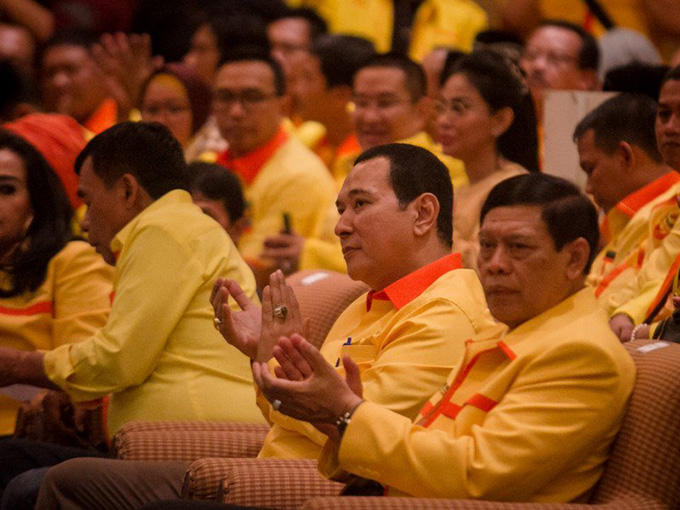 The youngest son of former Indonesian president Suharto, Hutomo “Tommy” Mandala Putra (centre), attending the opening of the Berkarya (Working) Party national meeting where he was voted chairman in Solo, Central Java, earlier this month. Image: Jakarta Post/Antara
By Ed Davies and Agustinus Beo Da Costa in Jakarta
The youngest son of former Indonesian president Suharto, Hutomo “Tommy” Mandala Putra, is making a new push to launch a career in politics at the helm of a party that believes it can cash in on his late father’s legacy.
Suharto, who ruled Indonesia with an iron fist for 32 years, was brought down by protests in 1998, amid accusations of vast corruption and nepotism benefiting his family and cronies.
Nonetheless, family members have made repeated attempts to get into politics, often seeking to tap into nostalgia about the unity and security under Suharto’s government, which was backed by a military that crushed any sign of revolt.
READ MORE: Open letter to PM Ardern – raise Papua human rights issue with Jokowi
“The vision and mission of this party is to prepare an alternative option for the 2019 elections,” Badaruddin Andi Picunang, acting sectary-general of the Berkarya Party, said in an interview at its Jakarta headquarters.
Yearning for stability
Many people still yearned for the stability and the robust economic growth and development, at least in the earlier decades, of the Suharto era, said Picunang.
“But now we see killings everywhere, pickpockets and religious leaders attacked,” he said.
Hutomo echoed this theme in a news conference after being elected chairman of Berkarya, which means “working” in Indonesian, at a party meeting earlier this month in the city of Solo.
“It is impossible for us to return to the New Order, it has become part of the history,” said Hutomo, who is widely known as Tommy, referring to his father’s government.
“But what we want to develop and continue are the good things that were carried out by the New Order,” he said, highlighting Suharto’s rolling five-year development plans.
Berkarya has an ambitious target of winning 80 seats, or about 14 percent of the 575 seats in Parliament. It is mostly being funded by Tommy and associates, according to Picunang.
Political machine
A former racing driver with a playboy reputation, Tommy, 55, made a fortune under his father’s powerful patronage. His Humpuss Group of companies held the national monopoly on clove distribution, the key ingredient in Indonesia’s favourite sweet-smelling kretek cigarettes.
He was sentenced in 2002 to 15 years in jail for paying a hitman to gun down and kill a supreme court judge, who had convicted him in a graft case. His term was later reduced on appeal and by remissions and he was released in 2007.
In his speech in Solo, Tommy said those who had been convicted and served their sentence, like himself, had the same rights as anyone else.
Many of the members of Berkarya are former members of Golkar, his father’s old political machine and still the second-biggest party in Parliament.
Tommy failed in an attempt to win the top job at Golkar and also to get backing from other parties for a bid at the presidency. His sister, Siti Hediati, popularly known as Titiek, has stuck by Golkar and is a member of Parliament.
Tobias Basuki, a political analyst at the Centre for Strategic and International Studies, was sceptical about Tommy and other family members getting much traction from a link to the Suharto legacy.
The nationalist Gerindra party, led by a former son-in-law of Suharto, Prabowo Subianto, had been able to successfully target many of the voters who might support them, he said.
“I think this is one of their last attempts. They have been trying to stay in the mainstream but none could take control of Golkar and if they don’t move fast they will be irrelevant,” said Basuki.

Article by AsiaPacificReport.nz
]]>Flashback to the 1968 My Lai massacre: ‘Something dark and bloody’
Report by Dr David Robie – Café Pacific.RT’s special report on the My Lai massacre and the cover-up of this atrocity. THE MELBOURNE Sunday Observer — the original paper of that name which campaigned against Australian involvement as a US surrogate in the Vietnam War — published photographs of the My Lai massacre in December 1969. It was prosecuted for “obscenity” for reporting the obscenity but the charge was later dropped.This article was first published on Café Pacific.]]>
Gary Juffa: How we can stop criminal cartels stealing our PNG forests

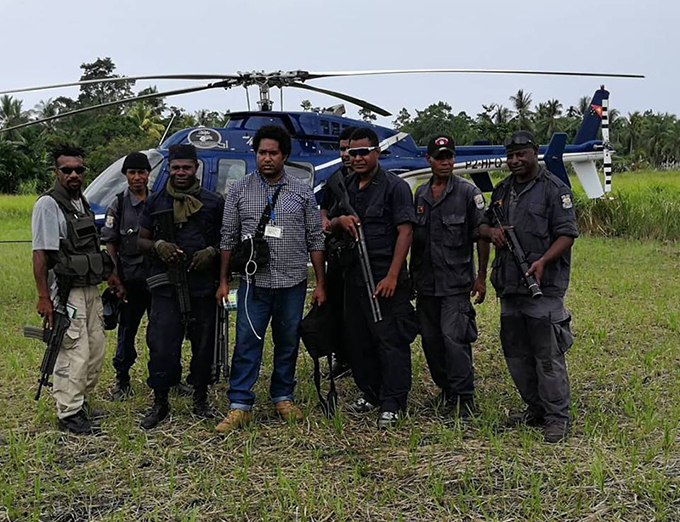 Police action squad dealing to illegal loggers in Oro province of Papua New Guinea. Image: Gary Juffa/FB
OPINION: By Gary Juffa
In the ongoing saga of stopping illegal logging in Papua New Guinea’s Oro province, our facts reveal that the PNG Forest Authority is failing our people.
A network exists whereby a few corrupt public servants in both Oro and the PNG Forest Authority have helped facilitate fraud and theft of resources worth millions. This network exists in every province where there is illegal logging occurring.
In Oro we have identified those involved and they shall be dealt with.
Meanwhile, our investigations reveal that PNGFA is negligent in its efforts and has been facilitating the theft of our forest resources for decades, it is complicit in the transnational crimes being committed and those who process the paperwork are in fact accomplices.
Despite all the government rhetoric about stopping illegal logging such as the SABLs and being concerned about the environment, the truth is, that this government entity, designed and created for the purpose of protecting PNG interests – PNG resources – is in fact failing miserably in its mandate and is assisting transnational criminal cartels steal our forest reources.
What is the point of an organisation we pay for with our taxes to serve transnational criminal cartels and sell us out?
Pretext and fraud
Every month, shipments worth millions leave our shores – forest resources obtained under pretext and fraud, leaving behind destroyed landscapes, polluted waterways, and miserable landowners who have either been fooled or contemptuously mistreated and intimidated by corrupt elements of the public service and police.
But we can stop it.
Yes, you and I.
If we know about it and do nothing, we too are complicit.
I am doing something about it. I need you to stand with me and demand that the PNGFA and its Chairman, David Dotaon,a and its minister, Douglas Tomuriesa, and its entire department act to stop these crimes against Papua New Guinea and our people and protect our forest resources.
How?
Immediately review all licences granted to logging and you will find:
- They are illegally granted via fraudulent processes and corrupt public servants;
- The so-called landowner companies don’t represent our landowners at all;
- All machinery is unregistered – it can all be impounded;
- All foreign workers are without permits – they can be immediately detained until deported with the cost being met by the company, and their companies fined and banned from doing business in Papua New Guinea ever again;
- Significant environmental damage to waterways and reefs and logging on gradients that are in contravention of the permit restrictions. Your sister agency, the conservation Environment Protection Authority, will at this stage be brought in to inspect the results, and fine and ban the company from any future agriculture or forest development projects.
- That tax evasion and transfer pricing mechanisms have allowed the company to evade paying for decades. At this stage, the IRC and Customs can be brought into carrying out these audits and raise assessments and commence recovery and prosecution action. They can use the double tax treaties to recoup any taxes due.
- Significant evidence of corruption involving many public servants and landowners. They can be referred to the police fraud squad for arrests and prosecution.
- Much of our resources have been stolen and, as this is a crime, the principals of these companies can be charged and prosecuted when you lay the complaint. You can also seize properties as proceeds of crime.
Engage army and police
You can engage the army and the police to shut down all such operations and seize and auction all machinery.
If they sue us, so what? They are running illegal operations of a transnational criminal nature and they will lose in court.
Finally, some of the proceeds can be used to compensate genuine landowners.
And if you can’t do this, ask me. I will do it. For free.
Just give me the resources and let me select a team of great, patriotic policemen, soldiers; Labour, Migration, IRC and Customs officers, state lawyers – and watch.
The mandate of this forests department besides protecting Papua New Guinea interests at all times is to develop clever innovative strategies to use our forest resources in a sustainable manner.
There are options whereby the vast forest resources that provide us such a rich life do not need to be destroyed. We don’t need to destroy our forests so that we can progress.
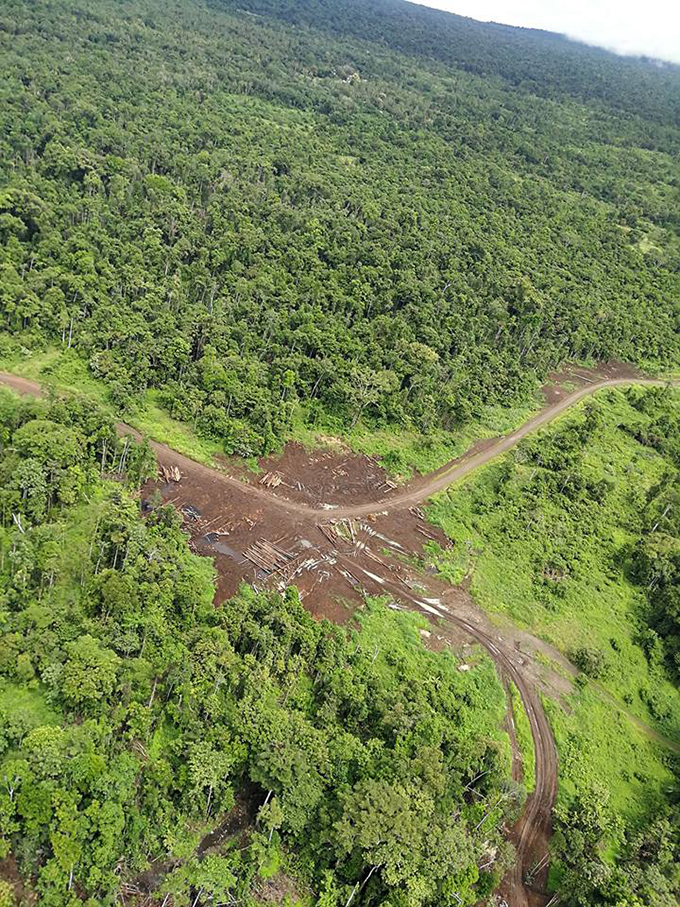 Illegal logging in Oro province … “We don’t need to destroy our forests so that we can progress.” Image: Gary Juffa/FB
Sustainable alternatives
At a time when the world is facing a global warming disaster, we can do our bit by preserving our forests and finding alternative means of income using forest products in a sustainable manner.
Yet after 40 years, we have silently and meekly allowed pirates to raid our shores and accept a few measly kina in compensation.
For each shipment worth about K6 million (K2.6 million), we accept less then K100,000 (NZ$43,000). Where is the common sense in this? For each forest cut down, thousands of species of flora and fauna are devastated and some may never recover.
We are destroying our natural home so we can live in an unnatural home … in pursuit of money and material goods so we can be “happy” because someone who we thought was more educated and civilised told us so.
But we will never be happy in this endless pursuit of the unnatural, living in an unnatural world where unnatural leaders make unnatural decisions that cause us more misery – naturally. We are only chasing illusions of happiness.
Certainly if we continue to allow this, if we are thinking, intelligent patriots, as we so often like to tell one another, then we are truly failing ourselves, our nation and our future.
It can be done – it just needs all of us to rise up and do it together.
Gary Juffa is an Opposition MP in the Papua New Guinean National Parliament and Governor of Oro (Northern) Province. This commentary was first published on his Facebook page.
Article by AsiaPacificReport.nz
]]>Open letter to PM Ardern: Raise Papua human rights crimes with Jokowi

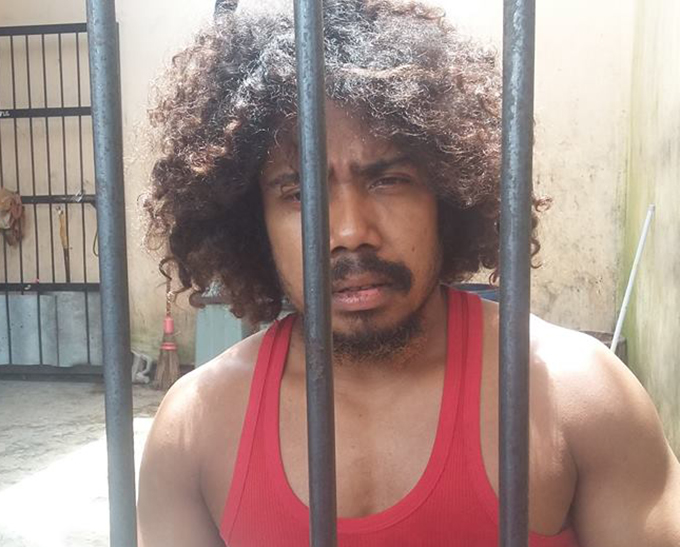 Yanto Awerkion, a young activist who was promoting a petition calling for the UN Decolonisation Committee to become involved in West Papua, was jailed for more that 9 months for “treason”. He will be released shortly due to international pressure. Image: Free West Papua
Pacific Media Watch Newsdesk
An advocacy group, West Papua Action Auckland, has urged Prime Minister Jacinda Ardern to raise human rights and the “suffering of the people” of Indonesian-ruled West Papua when she meets with President Widodo on Monday.
President Joko “Jokowi” Widodo, the leader of the largest economy in the Association of Southeast Asian Nations (ASEAN) with two-way trade worth NZ$1.76 billion last year, will arrive in New Zealand tomorrow for a two-day visit.
The West Papua action group says in a statement released by spokeswoman Maire Leadbeater:
Our Melanesian neighbours in West Papua are suffering grievously and must not be overlooked for the sake of “good relations” or markets for our goods.
For 55 years West Papuan people have been seeking freedom from repressive military rule, imposed on them in a scandalously unfair process. The loss of life is estimated to be at least 100,000.
Even though the struggle is now mainly about peaceful protest, petitions and diplomacy – there is no let up in security force crack-downs.
In the last three years the police have adopted a strategy of arresting demonstrators en masse, and thanks to a police chief edict, organisations deemed “separatist” are denied the opportunity to hold any kind of gathering.
Blatant breach
This is a blatant breach of the International Covenant on Civil and Political Rights to which Indonesia is a signatory.
Yanto Awerkion, a young activist who was promoting an petition calling for the UN decolonisation committee to become involved, has now spent over 9 months in jail on a treason charge. He will be released shortly – thanks to international pressure.
Last year the International Coalition for Papua documented 10 cases of extrajudicial killings, when the victims were either shot dead during security force operations or tortured to death in custody.
West Papuans say that they are experiencing “slow genocide” and this refers to the impact on their lives of marginalisation and environmental exploitation as well as to shockingly low standards of health and education.
In the remote Asmat area in the last few months there has been a devastating outbreak of measles which, coupled with malnutrition, took the lives of dozens of children.
There are a growing number of Pacific nations who are taking a stand in support for West Papuan self-determination.
So far New Zealand has not supported their initiatives in regional forums and at the United Nations.
So this meeting with President Widodo will be a timely opportunity for Prime Minister Jacinda Ardern and her ministers to demonstrate that New Zealand does support fundamental rights and freedoms, and that principle and compassion have not been forgotten.
Article by AsiaPacificReport.nz
]]>


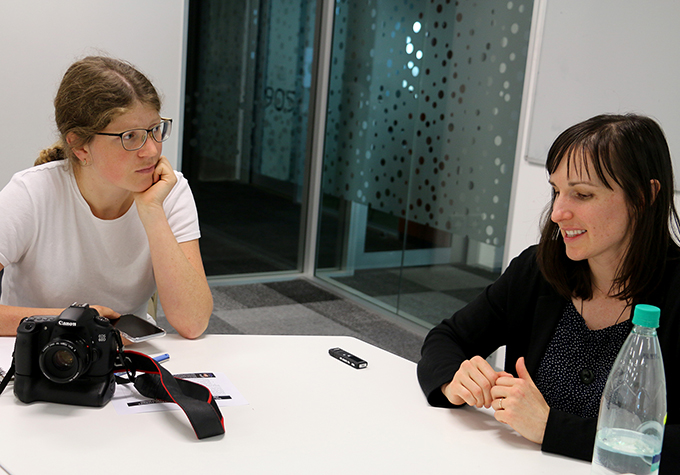
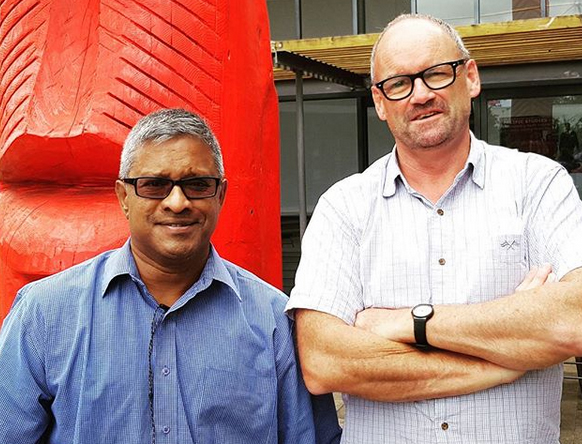 Sri Krishnamurthy (left) at the University of Auckland’s Pacific Fale with NZIPR manager Dr Gerard Cotterell. Image: David Robie/PMC
 Hele Ikimotu … passionate about Pacific stories. Image: PMC
 Blessen Tom … directed short films. Image: PMC