Page 993

What if the vaccine or drugs don’t save us? Plan B for coronavirus means research on alternatives is urgently needed

Source: The Conversation (Au and NZ) – By Tammy Hoffmann, Professor of Clinical Epidemiology, Bond University

The curve of the COVID-19 epidemic has been flattened in many countries around the world, and it hasn’t been new antivirals or a vaccine that has done it. We are being saved by non-drug interventions such as quarantine, social distancing, handwashing, and – for health-care workers – masks and other protective equipment.

We are all hoping for a vaccine in 2021. But what do we do in the meantime? And more importantly, what if no vaccine emerges?

The world has bet most of its research funding on finding a vaccine and effective drugs. That effort is vital, but it must be accompanied by research on how to target and improve the non-drug interventions that are the only things that work so far.

Debates still rage over basic questions such as whether the public should use face masks; whether we should stand 1, 2 or 4 metres apart; and whether we should wash our hands with soap or sanitiser. We need the answers now.


Read more: Drugs don’t cure everything – doctors can be helped to prescribe other options


What about non-drug intervention research?

Across all health research, non-drug interventions are the subject of about 40% of clinical trials. Yet they receive far less attention than drug development and testing.

In the COVID-19 pandemic, millions of dollars have already been given to research groups around the world to develop vaccines and trial potential drug cures. Hundreds of clinical trials on drugs and vaccines are under way, but we could find only a handful of trials of non-drug interventions, and no trials on how to improve the adherence to them.

While holding our breath for the vaccine …

We all hope the massive global effort to develop a vaccine or drug treatment for COVID-19 is successful. But many experts, including Ian Frazer, who developed Australia’s HPV vaccine, think it will not be easy or quick.

If an effective vaccine or drug doesn’t materialise, we will need a Plan B that uses only non-drug interventions. That’s why we need high-quality research to find out which ones work and how to do them as effectively as possible.

Aren’t non-drug interventions straightforward?

You might think hand washing, masks and social distancing are simple things and don’t need research. In fact, non-drug interventions are often very complex.

It takes research to understand not only the “active components” of the intervention (washing your hands, for example), but also how much is needed, how to help people start and keep doing it, and how to communicate these messages to people. Developing and implementing an effective non-drug intervention is very different from developing a vaccine or a drug, but it can be just as complex.

To take one example, there has been a #Masks4All campaign to encourage everyone to wear face masks. But what type of mask, and what should it be made of? Who should wear masks – people who are ill, people who are caring for people who are ill, or everyone? And when and where? There is little agreement on these detailed questions.

Washing your hands also sounds simple. But how often? Twice a day, 10 times a day, or at specific trigger times? What’s the best way to teach people to wash their hands correctly? If people don’t have perfect technique, is hand sanitiser be better than soap and water? Is wearing masks and doing hand hygiene more effective than doing just either of them?

These are just are some of the things that we don’t know about non-drug interventions.

Existing research is lacking

We recently reviewed all the randomised controlled trials for physical interventions to interrupt the spread of respiratory viruses, including interventions such as masks, hand hygiene, eye protection, social distancing, quarantining, and any combination of these. We found a messy and varied bunch of trials, many of low quality or small sample size, and for some types of interventions, no randomised trials.

Other non-drug options to research include the built environment, such as heating, ventilation, air conditioning circulation, and surfaces (for example, the SARS-CoV-2 virus “dies” much more rapidly on copper than other hard surfaces).

Are some of the things we are doing now ineffective? Probably. The problem is we don’t know which ones. We need to know this urgently so we’re not wasting time, effort, and resources on things that don’t work.

At a time when we need to achieve rapid behaviour change on a massive scale, inconsistent and conflicting messages only creates confusion and makes achieving behaviour change much harder.

What about the next pandemic?

If a successful COVID-19 vaccine is developed, we’re out of the woods for now. But what happens when the next pandemic or epidemic arrives? Vaccines are virus-specific, so next time a new virus threatens us, we will again be in the same situation. However, what we learn now about non-drug interventions can be used to protect us against other viruses, while we wait again for another new vaccine or drug.

We have had opportunities to study non-drug interventions for respiratory viruses in the recent past, particularly during the Severe Acute Respiratory Syndrome (SARS) epidemic in 2003 and the H1N1 influenza pandemic in 2009. However, the chances for rigorous studies were largely wasted and we now find ourselves desperately scrambling for answers.


Read more: Size does matter: why large-scale research is a must for public health


What about research for Plan B?

To prepare for the future and Plan B, the case where a vaccine doesn’t arrive, we need to conduct randomised trials into non-drug interventions to prevent the spread of respiratory viruses. The current pandemic is presenting us with a rare opportunity to rapidly conduct trials to answer many of the unknowns about this set of non-drug interventions.

Concentrating all our funding, efforts, and resources into vaccine and drug research may turn out to be a devastating and costly mistake in both healthcare and economic terms. The results will be felt not only in this pandemic, but also in future ones.

ref. What if the vaccine or drugs don’t save us? Plan B for coronavirus means research on alternatives is urgently needed – https://theconversation.com/what-if-the-vaccine-or-drugs-dont-save-us-plan-b-for-coronavirus-means-research-on-alternatives-is-urgently-needed-136833

Antarctic endeavours, primary health care research and dark matter exploration – the coronavirus casualties you haven’t heard of

Source: The Conversation (Au and NZ) – By Lauren Ball, Associate Professor/ Principal Research Fellow, Griffith University

The year 2020 came with big expectations for researchers, myself included. Last year I was successful in the first round of the National Health and Medical Research Council Investigator Grants scheme. Six years since completing my PhD, I managed to launch my Healthy Primary Care research team.

We investigate how principles of wellness such as healthy eating and exercise are incorporated into health care, particularly in general practice. I spent the summer planning how to support my team for the next five years, focusing on impact and research translation into real-world settings.

Big things were in the works. It was an exciting time. But as it turns out, wellness in health care isn’t a priority during the COVID-19 crisis.

As the pandemic lingers, big players (especially pharmaceutical companies) around the world have understandably dropped everything, joining forces to give the virus their undivided attention.

A sudden loss

Many of my team’s projects relied on doctors, nurses and other health professionals to collect or provide data. With the strain placed on health care by the pandemic, continuing was no longer viable. Grant applications, domestic and international travel, conferences and meetings have all been cancelled or postponed indefinitely.

As a supervisor, the hardest part was withdrawing research students and interns I’d lined up to start projects in clinics. This pandemic has challenged the relevance, impact and productivity of our work.


Read more: For most universities, there’s little point to the government’s COVID-19 assistance package


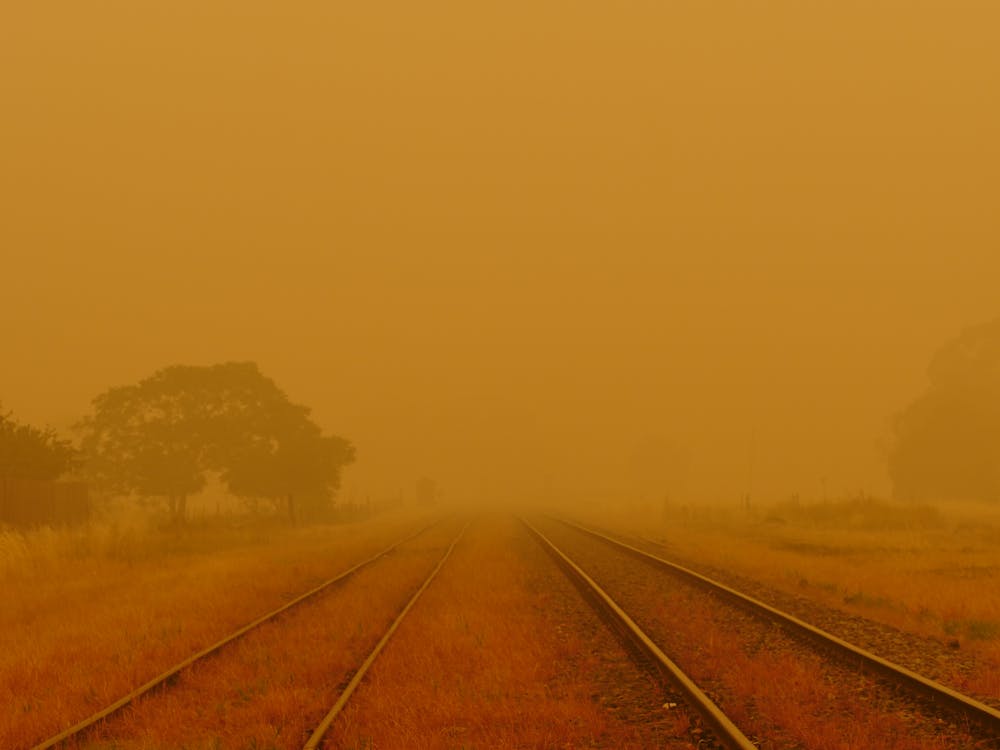
This shock comes shortly after a summer of devastating bushfires which hindered research progress by forcing experts out of fire-affected regions, destroying expanses of equipment and reportedly setting some studies “back months or years”.

This photo was taken in Junee, New South Wales, in January. According to reports, the total tangible cost estimate of the summer bushfires was close to A$100 billion. Shutterstock

Stoppages across the field

Social distancing, travel bans and quarantine restrictions mean scientific fieldwork across the world has almost completely stopped.

The Australian Antarctic Program, led by the federal Department of Agriculture, Water and the Environment has been reduced to essential staff only to keep the Antarctic continent COVID-19-free. Instead of sending 500 expeditioners in the next summer season, the Australian Antarctic Division will only send about 150.

Social distancing measures are also preventing climate scientists from being able to visit their laboratories. If the pandemic continues, this could hamper important weather and climate surveillance practices. In some cases, labs have been reduced to one essential worker whose sole job is to keep laboratory animals alive for when research resumes.

Delays have also impacted one of the world’s largest efforts to investigate the nature of dark matter. The XENON experiment based in Italy is worth more than US$30 million, according to the New York Times. It faced a multitude of roadblocks when the country was forced into lockdown earlier this year.

Young research stars missing opportunities

For young researchers, social distancing and event cancellations are especially damaging to professional development. Scientific conferences and meetings foster collaboration and can also lead to employment opportunities.

Although funding cancellations and grant scheme delays mostly impact established researchers, other schemes supporting early career and postdoctoral researchers have also been postponed, such as the Rebecca L Cooper Medical Research scheme and the Griffith University Postdoctoral Fellowship scheme.


Read more: Coronavirus: Social distancing is delaying vital scientific research


This crisis has left the next generation of researchers unsupported, and have negative flow-on effects for all research areas. In health and disease prevention, research efforts apart from vaccinations are still vital, as the onset of COVID-19 hasn’t stopped the rise of chronic disease.

There are positives

Australia boasts a robust and passionate research workforce, which means we can divert resources to a united cause such as the coronavirus crisis. As the race for a vaccine continues, the value of research has never been more apparent to the non-scientific community. This may help weaken anti-science messages.

The pandemic is also providing opportunity for future university leaders to understand university management, funding and governance decisions. Never before has information been so accessible on where funding comes from.

Online conferencing and collaboration related to research has also made participation more accessible and affordable. This increases inclusively by removing barriers for people who may not be able to attend in-person gatherings, such as people living with a physical disability, full-time carers and people experiencing financial hardship. Less domestic and international travel is also helping reduce carbon footprints.

Charging forward

The health system isn’t working normally, which means my team’s research isn’t working normally. Nonetheless, we’re pivoting well in this uncertain time. We’re helping plan the first online conference for Australian primary care to improve access to relevant research across the country.

New grant opportunities are aligning COVID-19 to our research focus, such as the Royal Australian College of General Practitioners’s and the Hospitals Contribution Fund’s special call for projects on COVID-19 in general practice.

Some may think non-COVID-19 research isn’t currently necessary, but it will be once we combat this disease. And when that happens, we’ll be ready to continue right where we left off.

ref. Antarctic endeavours, primary health care research and dark matter exploration – the coronavirus casualties you haven’t heard of – https://theconversation.com/antarctic-endeavours-primary-health-care-research-and-dark-matter-exploration-the-coronavirus-casualties-you-havent-heard-of-136390

Why do some people with coronavirus get symptoms while others don’t?

Source: The Conversation (Au and NZ) – By Abela Mahimbo, Lecturer in Public Health, University of Technology Sydney

SARS-CoV-2, the coronavirus which causes COVID-19, has infected almost 2.5 million people around the world and claimed 170,000 lives.

But some people don’t even get symptoms. Recent studies suggest as many as 80% or more of those infected are “silent carriers”, showing no or very mild symptoms.

It seems children and young, healthy people are more likely to be asymptomatic.


Read more: Worried about your child getting coronavirus? Here’s what you need to know


But to calculate the true proportions of people who have no symptoms right through to severe illness, testing would need to be expanded across whole populations, and this hasn’t been feasible yet.

We don’t know exactly why some people with coronavirus are asymptomatic while others develop life-threatening illness. But here’s what we know so far.

What happens when coronavirus enters your body?

Like all viruses, SARS-CoV-2 needs to get inside human cells to multiply and survive.

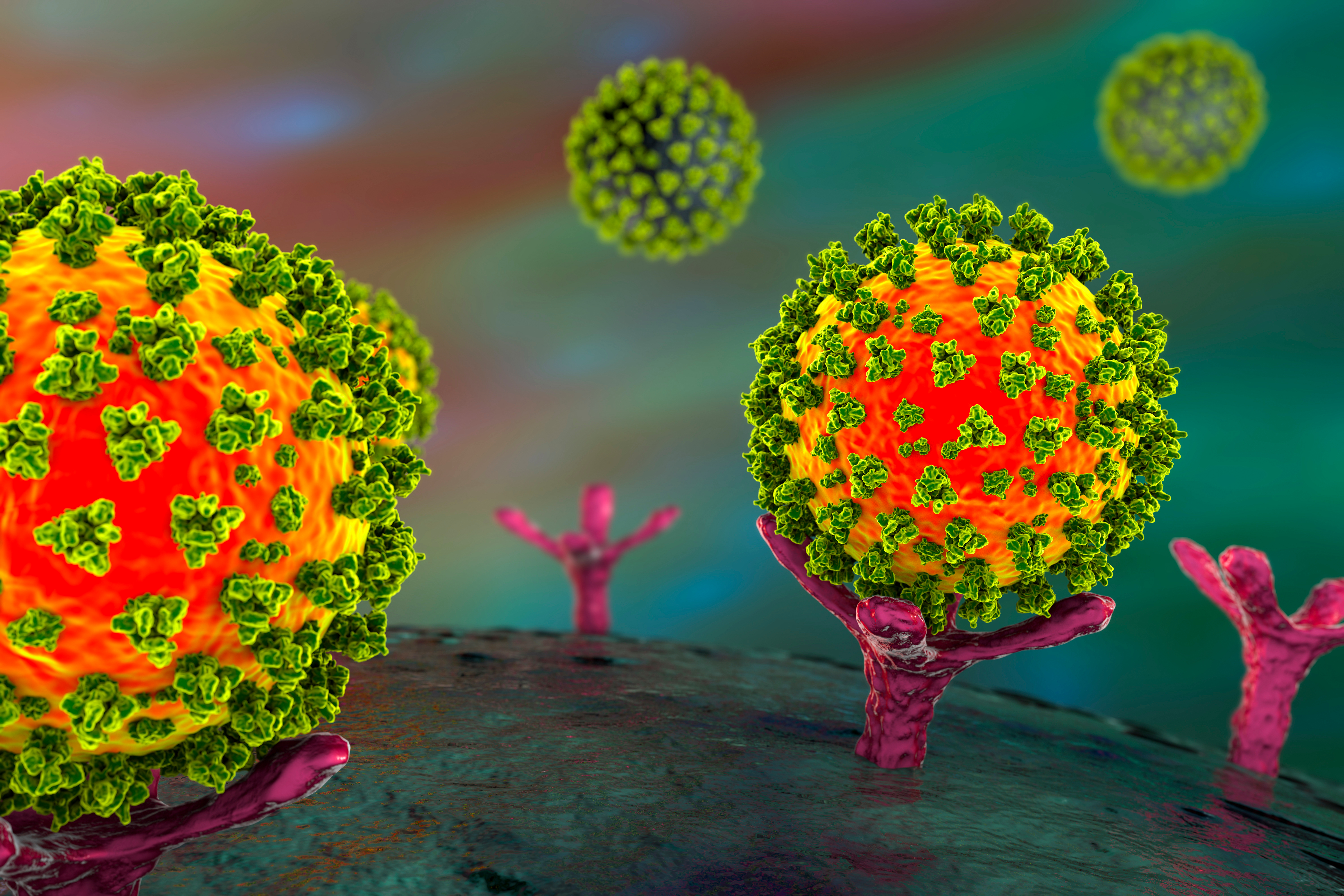
To do this, a particle on the outer shell of the virus latches onto a matching protein receptor, called ACE2, like a lock and key. ACE2 receptors are normally found in the lungs, kidneys, heart and the gut.

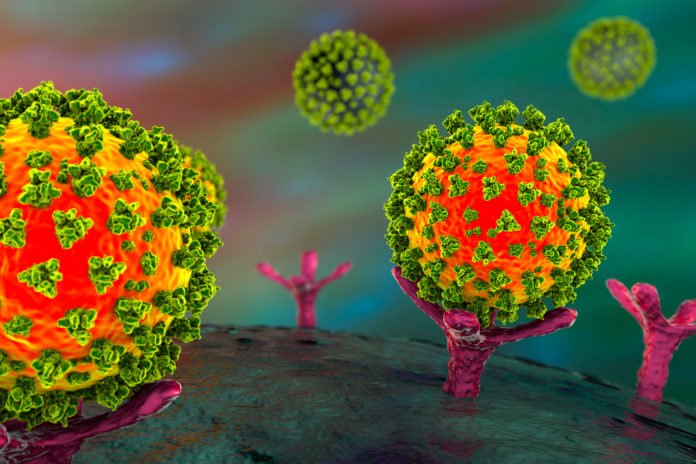
Here the SARS-CoV-2 virus (in green and orange) attaches to the ACE2 receptor (in pink). Shutterstock

Once a person has been infected with the virus, it can take up to 14 days for symptoms to appear (if they do at all) – known as the incubation period.

The path from the point of infection can vary enormously. The body’s immune system is critical for determining this.

Having a strong immune response during the incubation period can prevent the infection taking hold, reduce the actual quantity of virus in the body and prevent it from getting to the lungs.


Read more: Coronavirus: how long does it take to get sick? How infectious is it? Will you always have a fever? COVID-19 basics explained


Some immune response basics

Our immune system offers us two lines of defence against viruses.

The first is the innate system and includes physical barriers such as skin and mucous membranes (the lining of the throat and nose), various proteins and molecules found in tissues, as well as some of the white blood cells that attack invading organisms. This immune response is general, non-specific and kicks in quickly.

Children have immature immune systems, but one hypothesis to explain why they don’t seem to get as sick with COVID-19 is that their innate immune response to coronavirus is greater than in adults.

This may lead to a reduced viral load – the quantity of virus particles that survive in the body – because they’re able to clear the virus more quickly.

Children’s resilience to coronavirus might be due to their innate immune response. Shutterstock

The second line of defence is the adaptive immune response. This takes longer to initiate but once established, is much more efficient at eradicating a specific infection when encountering it again.

It’s thought that very specific genetic variations in some people might play a part in how sick they get. By generating an early adaptive immune response, the body seems to recognise the virus during the incubation period and fight it off.

A person also needs to be generally healthy to be able to mount an appropriate immune response to the infection.


Read more: Why are older people more at risk of coronavirus?


After the incubation period, what determines how sick you get?

If the SARS-CoV-2 virus survives beyond the point of entry to the body (nose, eyes, throat) it might then make its way down the respiratory tract into the lungs.

In the lungs, it latches onto ACE2 receptors and continues replicating itself, triggering further immune responses to clean out infected cells. The amount of virus that gets deep into the lungs may be another important factor determining how sick you get.

As the battle between virus and immune responses proceeds, infected airway linings produce large amounts of fluid that fill the air sacs, leaving less room for transferring oxygen into the bloodstream and removing carbon dioxide.

Symptoms of pneumonia appear, such as fever, cough with sputum (phlegm) and shortness of breath.

Fluid in the lungs makes it difficult to breathe. Shutterstock

For some people, the immune response is excessive or prolonged and causes what’s known as a “cytokine storm”. Cytokines are a group of proteins that send signals to cells in the immune system, helping direct the response.

A cytokine storm is a catastrophic overreaction that causes so much inflammation and organ damage, it can be fatal.

In people with COVID-19, as well as the previous SARS and MERS coronaviruses, this causes acute respiratory distress syndrome (ARDS), when fluid builds up in the lungs. This is the most common cause of death from SARS-CoV-2.

Elderly people and those with chronic lung disorders are more likely to develop ARDS and therefore to die. This is currently thought to be due to these groups of people having fewer ACE2 receptors in their lungs.


Read more: What does it mean to be immunocompromised? And why does this increase your risk of coronavirus?


This seems counter-intuitive, because the virus attaches itself to these receptors. However, ACE2 receptors have an important role in regulating the immune response, particularly in managing the degree of inflammation.

So the reduced levels of ACE2 receptors in the elderly may actually make them more at risk of a cytokine storm and severe lung disease.

Conversely, children have more ACE2 receptors in their lungs which might explain why they do not get as sick.

In some cases, medications that work to suppress the immune system have successfully treated this excessive immune response in people with COVID-19.

Older people’s immune systems respond very differently to children’s. Shutterstock

Can people without symptoms pass it on?

Some studies have indicated people with COVID-19 tend to have a high viral load just before and shortly after they start getting symptoms.

This suggests they can transmit it when they first get sick and up to 48 hours before, while they’re pre-symptomatic.

However, there is no good evidence that asymptomatic people who never develop symptoms are able to pass it on.

Researchers and clinicians are working around the clock to understand the complex relationship between humans’ immune systems and SARS-CoV-2 but it remains very much a work in progress.


Read more: What the coronavirus does to your body that makes it so deadly


ref. Why do some people with coronavirus get symptoms while others don’t? – https://theconversation.com/why-do-some-people-with-coronavirus-get-symptoms-while-others-dont-135546

Is the government’s coronavirus app a risk to privacy?

Source: The Conversation (Au and NZ) – By Rick Sarre, Adjunct Professor of Law and Criminal Justice, University of South Australia

Few people can fault the government’s zeal in staring down the coronavirus and steering a path for Australia to emerge on the other side ready to do business again.

Unlike the crowds amassing in some US cities to declare their scorn for “stay at home” rules, Australians, generally speaking, have been supportive of federal and state government strategies to tackle the pandemic.

Prime Minister Scott Morrison has added a potential new weapon to his armoury – a COVID-19 tracing app. Government Services Minister Stuart Robert has been spruiking the plan to introduce the app, which is based on technology in use in Singapore.


Read more: The coronavirus contact tracing app won’t log your location, but it will reveal who you hang out with


But the idea of a government potentially monitoring our daily travels and interactions has drawn suspicion or even scorn. Nationals MP Barnaby Joyce says he won’t be downloading the app.

Robert has since gone on the offensive, explaining the process and playing down any concerns.

So if your app has been within 15 minutes’ duration of someone within 1.5 metres proximity, there’ll be a ping or swapping of phone numbers, and that’ll stay on your phone. And then of course if you test positive … you’ll give consent and those numbers will be provided securely to health professionals, and they’ll be able to call people you’ve been in contact with … Those numbers will be on your phone, nowhere else, encrypted. You can’t access them, no one else can.

Downloading the app is to be voluntary. But its effectiveness would be enhanced, Robert says, if a significant proportion of the population embraced the idea.

On ABC Radio National Breakfast this week he backed away from a previously mentioned minimum 40% community commitment. Instead, Robert said: “Any digital take-up … is of great value.”

He has strong support from other quarters. Epidemiologist Marion Kainer said the adoption of such an app would allow contact tracing to occur much more quickly.

Having the rapid contact tracing is essential in controlling this, so having an app may allow us to open up society to a much greater extent than if we didn’t have an app.

This all sounds well and good. But there are potential problems. Our starting point is that governments must ensure no policy sacrifices our democratic liberties in the pursuit of a goal that could be attained by other, less intrusive, schemes.

The immediate concern comes down to the age-old (and important) debate about how much freedom we are prepared to give up in fighting an existential threat, be it a virus, terrorism, or crime more generally.

Law academic Katharine Kemp last week highlighted her concerns about the dangers of adopting a poorly thought-through strategy before safeguards are in place.

The app, she said:

will require a clear and accurate privacy policy; strict limits on the data collected and the purposes for which it can be used; strict limits on data sharing; and clear rules about when the data will be deleted.

Other commentators have warned more broadly against “mission creep”: that is, with the tool in place, what’s to stop a government insisting upon an expanded surveillance tool down the track?

True, downloading the app is voluntary, but the government has threatened that the price of not volunteering is a longer time-frame for the current restrictions. That threat fails any “pub” test of voluntariness.


Read more: Latest coronavirus modelling suggests Australia on track, detecting most cases – but we must keep going


On the other hand, there is a privacy trade-off that most people are willing to make if the benefits are manifestly clear. For example, our in-car mapping devices are clever enough (based on the speed of other road users with similar devices) to warn us of traffic problems ahead.

Remember, too, that Australians have had a 20-year love affair with smart technologies. We’re a generation away from the naysayers who argued successfully against the Hawke government’s failed Australia Card in the mid-1980s.

By the same token, the Coalition does not have a strong record of inspiring confidence in large-scale data collection and retrieval. One need only recall the lack of enthusiasm healthcare provider organisations showed for the My Health Record system. In 2019, the National Audit Office found the system had failed to manage its cybersecurity risks adequately.

So where do we go from here? The government sought to allay public concerns about the metadata retention scheme, a program introduced in 2015 to amass private telecommunications data, by giving a role to the Commonwealth Ombudsman to assess police agencies’ compliance with their legislated powers. In the case of the COVID-19 tracing app, the government has, appropriately, enlisted the support of the Office of the Australian Information Commissioner. Robert has said:

Right now a privacy impact assessment is being conducted, the Privacy Commissioner is involved, and all of that will be made public.

While that is an admirable sentiment, one would hope the government would put specific legislation in place to set out all of the conditions of use, and that the commissioner would not be asked for her view unless and until that legislation is in order. The Law Council of Australia has today joined this chorus.

Once the commissioner gives the “all clear”, I will be happy to download the app. Let’s hope it then works as intended.

ref. Is the government’s coronavirus app a risk to privacy? – https://theconversation.com/is-the-governments-coronavirus-app-a-risk-to-privacy-136719

Three simple things Australia should do to secure access to treatments, vaccines, tests and devices during the coronavirus crisis

Source: The Conversation (Au and NZ) – By Deborah Gleeson, Senior Lecturer in Public Health, La Trobe University

Patents and related intellectual property rights can present formidable barriers to procuring medicines, vaccines, diagnostic tests and medical devices.

They can cost lives, particularly during a public health emergency.

Two examples from the United States illustrate the point.

The US conglomerate 3M holds hundreds of patents on N95 face masks. The Governor of Kentucky has asked it to release them so other manufacturers can make the masks.

Gilead Sciences holds a range of patents for remdesivir, one of the leading candidates for treating COVID-19.


Read more: Drug companies should drop their patents and collaborate to fight coronavirus


It recently applied for an extra period of exclusivity which would have extended the length of time other firms were prevented from manufacturing the drug without its permission. It withdrew its application after a public outcry.

In the past few weeks 150 civil society organisations, including Médecins Sans Frontières, have called on Gilead to forgo its patents.

There are three things Australia should do to manage these sorts of situations.

1. Prepare to over-ride patents

First, Australia should prepare to take advantage of some rarely-used but vitally important safeguards in the Commonwealth Patents Act.

They enable patents to be over-ridden when necessary to prevent shortages of vital medical supplies.

Under Sections 132-133, the Federal Court can order that a compulsory license be granted for a patented invention, meaning that a third party (such as a company that produces generic medicines or face masks) can manufacture copies of the invention without the permission of the patent owner.

This can be done under conditions outlined in Section 133, Para 3, which include that

  • demand in Australia for the original invention is not being met on reasonable terms

  • authorisation to exploit the original invention is essential to meet that demand

  • the applicant has tried for a reasonable period, but without success, to obtain authority from the patentee to exploit the original invention on reasonable terms and conditions

  • the patentee has given no satisfactory reason for failing to exploit the patent to the extent necessary to meet the demand for the original invention in Australia

Although the requirement that the applicant has tried for a reasonable period without success to obtain authority can slow down the process, the World Trade Organisation’s Agreement on Trade-Related Intellectual Property Rights allows for legislation that bypasses the need for negotiations in an emergency.

Last month Canada passed such legislation, specifying that it was for the period of the coronavirus emergency.


Read more: Canada’s coronavirus aid package guards against drug shortages with compulsory licensing


Australia should consider doing the same.

The Patent Act’s crown use provisions (Sections 163-170) provide another (potentially easier) mechanism allowing Australian governments to over-ride a patent in an emergency in order to provide a service primarily provided or funded by a government.

These provisions could also be redrafted to reduce ambiguity and make them easier to use in an emergency.

Using these provisions, particularly if they are made more workable, could mean that medical technologies could be manufactured locally if there are shortages or if they are not available from the patent holder at a reasonable price.

2. Reinstate the right to import low-cost medicines

Australia should also reverse its earlier decision to voluntarily waive its right to import medicines manufactured in another country under a compulsory license.

If Australia doesn’t have the manufacturing capacity to produce a particular drug, or to produce enough of it to meet its population’s needs, it should be able to import a low-cost version from another country.

To reverse the waiver, the Australian Government needs to notify the World Trade Organization that it has changed its policy and now considers itself an eligible importing country, at least in the context of an emergency.

3. Support Costa Rica’s proposal for a global COVID-19 pool

Finally, the Australian Government should follow The Netherlands in supporting Costa Rica’s proposal for a World Health Organization global pool for rights on data and knowledge that can be of use for the prevention, detection and treatment of COVID-19.

Now put forward by the European Union as a draft resolution for the World Health Assembly, the initiative aims to provide free access to existing knowledge about diagnostic tests, devices, drugs and vaccines, enabling all countries to quickly access or produce affordable products.


Read more: Supplies needed for coronavirus healthcare workers: 89 million masks, 30 million gowns, 2.9 million litres of hand sanitiser. A month.


Each of three simple practical actions could prevent intellectual property rights from becoming an insurmountable barrier to accessing essential products during the emergency.

ref. Three simple things Australia should do to secure access to treatments, vaccines, tests and devices during the coronavirus crisis – https://theconversation.com/three-simple-things-australia-should-do-to-secure-access-to-treatments-vaccines-tests-and-devices-during-the-coronavirus-crisis-136052

A new kind of physics? Stephen Wolfram has a radical plan to build the universe from dots and lines

Source: The Conversation (Au and NZ) – By Sam Baron, Associate professor, Australian Catholic University

Stephen Wolfram is a cult figure in programming and mathematics. He is the brains behind Wolfram Alpha, a website that tries to answer questions by using algorithms to sift through a massive database of information. He is also responsible for Mathematica, a computer system used by scientists the world over.

Last week, Wolfram launched a new venture: the Wolfram Physics Project, an ambitious attempt to develop a new physics of our universe. The new physics, he declares, is computational. The guiding idea is that everything can be boiled down to the application of simple rules to fundamental building blocks.

What’s the point of the ‘new physics’?

Why do we need such a theory? After all, we already have two extraordinarily successful physical theories. These are general relativity – a theory of gravity and the large-scale structure of the universe – and quantum mechanics – a theory of the basic constituents of matter, sub-atomic particles, and their interactions. Haven’t we got physics licked?

Not quite. While we have an excellent theory of how gravity works for large objects, such as stars and planets and even people, we don’t understand gravity at extremely high energies or for extremely small things.

General relativity “breaks down” when we try to extend it into the miniature realm where quantum mechanics rules. This has led to a quest for the holy grail of physics: a theory of quantum gravity, which would combine what we know from general relativity with what we know from quantum mechanics to produce an entirely new physical theory.

The current best approach we have to quantum gravity is string theory. This theory has been a work in progress for 50 years or so, and while it has achieved some success there is a growing dissatisfaction with it as an approach.


Read more: Explainer: String theory


How is Wolfram’s approach different?

Wolfram is attempting to provide an alternative to string theory. He does so via a branch of mathematics called graph theory, which studies groups of points or nodes connected by lines or edges.

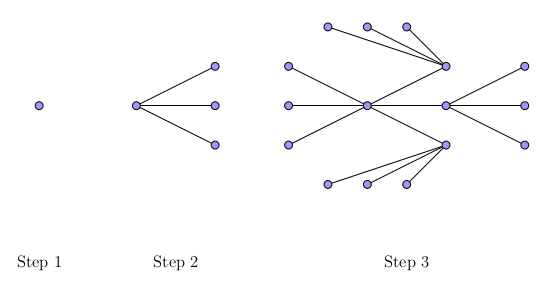
Think of a social networking platform. Start with one person: Betty. Next, add a simple rule: every person adds three friends. Apply the rule to Betty: now she has three friends. Apply the rule again to every person (including the one you started with, namely: Betty). Keep applying the rule and, pretty soon, the network of friends forms a complex graph.

In Wolfram’s theory, applying a simple rule multiple times creates a complex network of points and connections. Samuel Baron

Wolfram’s proposal is that the universe can be modelled in much the same way. The goal of physics, he suggests, is to work out the rules that the universal graph obeys.

Key to his suggestion is that a suitably complicated graph looks like a geometry. For instance, imagine a cube and a graph that resembles it.

In the same way that a collection of points and lines can approximate a solid cube, Wolfram argues that space itself may be a mesh that knits together a series of nodes. Samuel Baron, Author provided

Wolfram argues that extremely complex graphs resemble surfaces and volumes: add enough nodes and connect them with enough lines and you form a kind of mesh. He maintains that space itself can be thought of as a mesh that knits together a series of nodes in this fashion.

What does this have to do with physics?

How can complicated meshes of nodes help with the project of reconciling general relativity and quantum mechanics? Well, quantum theory deals with discrete objects with discrete properties. General relativity, on the other hand, treats the universe as a continuum and gravity as a continuous force.

If we can build a theory that can do what general relativity does but that starts from discrete structures like graphs, then the prospects for reconciling general relativity and quantum mechanics start to look more promising. If we can build a geometry that resembles the one given to us by general relativity using a discrete structure, then the prospects look even better.

Stephen Wolfram believes that space itself may be a complex mesh of points connected together by means of a simple rule that is iterated many times. Wolfram Physics Project

So is it time to get excited?

While Wolfram’s project is promising, it does contain more than a hint of hubris. Wolfram is going up against the Einsteins and Hawkings of the world, and he’s doing it without a life spent publishing in physics journals. (He did publish several physics papers as a teenage prodigy, but that was 40 years ago, as well as a book A New Kind of Science, which is the spiritual predecessor of the Wolfram Physics Project.)

Moreover, his approach is not wholly original. It is similar to two existing approaches to quantum gravity: causal set theory and loop quantum gravity, neither of which get much of a mention in Wolfram’s grand designs.


Read more: Einstein to Weinstein: the lone genius is an exception to the rule


Nonetheless, the project is notable for three reasons. First, Wolfram has a broad audience and he will do a lot to popularise the approach that he advocates. Proponents of loop quantum gravity in particular lament the predominance of string theory within the physics community. Wolfram may help to underwrite a paradigm shift in physics.

Second, Wolfram provides a very careful overview of the project from the basic principles of graph theory up to general relativity. This will make it easier for individuals to get up to speed with the general approach and potentially make contributions of their own.

Third, the project is “open source”, inviting contributions from citizen scientists. If nothing else, this gives us all something to do at the moment – in between baking sourdough and playing Animal Crossing, that is.

ref. A new kind of physics? Stephen Wolfram has a radical plan to build the universe from dots and lines – https://theconversation.com/a-new-kind-of-physics-stephen-wolfram-has-a-radical-plan-to-build-the-universe-from-dots-and-lines-136830

Missing your friends? Rereading Harry Potter might be the next best thing

Source: The Conversation (Au and NZ) – By Elaine Reese, Professor of Psychology, University of Otago

Humans are innately social creatures. But as we stay home to limit the spread of COVID-19, video calls only go so far to satisfy our need for connection.

The good news is the relationships we have with fictional characters from books, TV shows, movies, and video games – called parasocial relationships – serve many of the same functions as our friendships with real people, without the infection risks.


Read more: Say what? How to improve virtual catch-ups, book groups and wine nights


Time spent in fictional worlds

Some of us already spend vast swathes of time with our heads in fictional worlds.

Psychologist and novelist Jennifer Lynn Barnes estimated that across the globe, people have collectively spent 235,000 years engaging with Harry Potter books and movies alone. And that was a conservative estimate, based on a reading speed of three hours per book and no rereading of books or rewatching of movies.

This human predilection for becoming attached to fictional characters is lifelong, or at least from the time toddlers begin to engage in pretend play. About half of all children create an imaginary friend (think comic strip Calvin’s tiger pal Hobbes).

Preschool children often form attachments to media characters and believe these parasocial friendships are reciprocal — asserting that the character (even an animated one) can hear what they say and know what they feel.

Younger children form easy relationships with fictional heroes. Photo by Josh Applegate/Unsplash, CC BY

Older children and adults, of course, know that book and TV characters do not actually exist. But our knowledge of that reality doesn’t stop us from feeling these relationships are real, or that they could be reciprocal.

When we finish a beloved book or television series and continue to think about what the characters will do next, or what they could have done differently, we are having a parasocial interaction. Often, we entertain these thoughts and feelings to cope with the sadness — even grief — that we feel at the end of a book or series.

The still lively Game of Thrones discussion threads or social media reaction to the death of Patrick on Offspring a few years back show many people experience this.

Some people sustain these relationships by writing new adventures in the form of fan fiction for their favourite characters after a popular series has ended. Not surprisingly, Harry Potter is one of the most popular fanfic topics. And steamy blockbuster Fifty Shades of Grey began as fan fiction for the Twilight series.

As good as the real thing?

So, imaginary friendships are common even among adults. But are they good for us? Or are they a sign we’re losing our grip on reality?

The evidence so far shows these imaginary friendships are a sign of well-being, not dysfunction, and that they can be good for us in many of the same ways that real friendships are good for us. Young children with imaginary friends show more creativity in their storytelling, and higher levels of empathy compared to children without imaginary friends. Older children who create whole imaginary worlds (called paracosms) are more creative in dealing with social situations, and may be better problem-solvers when faced with a stressful event.

As adults, we can turn to parasocial relationships with fictional characters to feel less lonely and boost our mood when we’re feeling low.

As a bonus, reading fiction, watching high-quality television shows, and playing pro-social video games have all been shown to boost empathy and may decrease prejudice.

Collectively, humans have spent more than an estimated 200,000 years in the world of Harry Potter. And that’s not counting rereading or rewatching. Chekyravaa/Shutterstock

Get by with a little help

We need our fictional friends more than ever right now as we endure weeks in isolation. When we do venture outside for a walk or to go the supermarket and someone avoids us, it feels like social rejection, even though we know physical distancing is recommended. Engaging with familiar TV or book characters is one way to rejuvenate our sense of connection.

Plus, parasocial relationships are enjoyable and, as American literature professor Patricia Meyer Spacks noted in On Rereading, revisiting fictional friends might tell us more about ourselves than the book.

So cuddle up on the couch in your comfiest clothes and devote some time to your fictional friendships. Reread an old favourite – even one from your childhood. Revisiting a familiar fictional world creates a sense of nostalgia, which is another way to feel less lonely and bored.


Read more: Couch culture – six months’ worth of expert picks for what to watch, read and listen to in isolation


Take turns reading the Harry Potter series aloud with your family or housemates, or watch a TV series together and bond over which characters you love the most. (I recommend Gilmore Girls for all mothers marooned with teenage daughters.)

Fostering fictional friendships together can strengthen real-life relationships. So as we stay home and save lives, we can be cementing the familial and parasocial relationships that will shape us – and our children – for life.

ref. Missing your friends? Rereading Harry Potter might be the next best thing – https://theconversation.com/missing-your-friends-rereading-harry-potter-might-be-the-next-best-thing-136236

COVID-19 has laid bare how much we value women’s work, and how little we pay for it

Source: The Conversation (Au and NZ) – By Lyn Craig, Professor of Sociology and Social Policy, University of Melbourne

The COVID-19 pandemic has turned our lives upside down. Amidst the upheavals, it has laid bare how little we normally pay for “women’s work”.

Australia has very low gender equality when it comes to remuneration, ranking 49th on the World Economic Forum Gender Participation and Opportunity Index 2020 that measures workforce participation, remuneration and advancement.

Partly this is because paid women’s work is more concentrated in the caring and service industries than men’s work, and is more likely to be low paid, casual and part-time.

But also, compared to many other countries, Australian women do more unpaid domestic work and care, 311 minutes per day compared the OECD female average of 262.

Over their adult lifetimes most Australian women move in and out of the paid workforce or limit their paid work hours or career prospects to care for children and other family members.


Read more: Mothers have little to show for extra days of work under new tax changes


This unpaid caring work supports society. It reproduces and sustains the workforce, and saves the government from spending much more on public services such as aged care and childcare.

Yet unpaid care has long been taken for granted, its value discounted by governments as if it were a costless renewable resource, like a magic pudding.

The costs in lost lifetime earnings fall privately, on individual women and their families. An indicator is that near retirement women’s average super balances are less than half those of men. Older women are the fastest growing group of homeless in the country.

Yet unpaid care has not been counted in GDP figures and has been largely invisible in economic policy.

It is not so invisible now. The fact that care is an essential bedrock to the economy has become more obvious in these last few chaotic weeks. Faced with a collapsing economy, the prime minister announced that he does not want Australians to have to choose between earning money and caring for their children.

All of a sudden, child care is an ‘essential service’

Free, for the moment. DEAN LEWINS/AAP

After years of it being treated as a commodity, formal childcare is for the moment free.

Until this crisis measure, Australian childcare was among the most expensive in the world – more expensive than private schooling.

In a strictly financial sense it wasn’t worthwhile for most parents to put their kids in formal day care for more than two or three days a week.

Many mothers have been working for no extra net income. Many more have had to choose between earning and caring for their children.

Paid employment is not the only productive activity.

The belief that it is has obscured the deeper truth that caring work, most of it performed unpaid by women in families, is also productive.

It turns out that through the clarifying lens of a global pandemic, the government can see its value more clearly.


Read more: Free child care to help nearly one million families, especially workers in essential services


Indeed, it is striking how many of the jobs that are now seen as essential involve care, and how many of them are female-dominated.

Not coincidentally, they also pay well below the level the skills and qualifications would require if they were predominantly done by men.

Childcare workers, aged care and disability workers are among the lowest paid workers in the country, so much so that during the last election Labor promised to top up childcare wages.


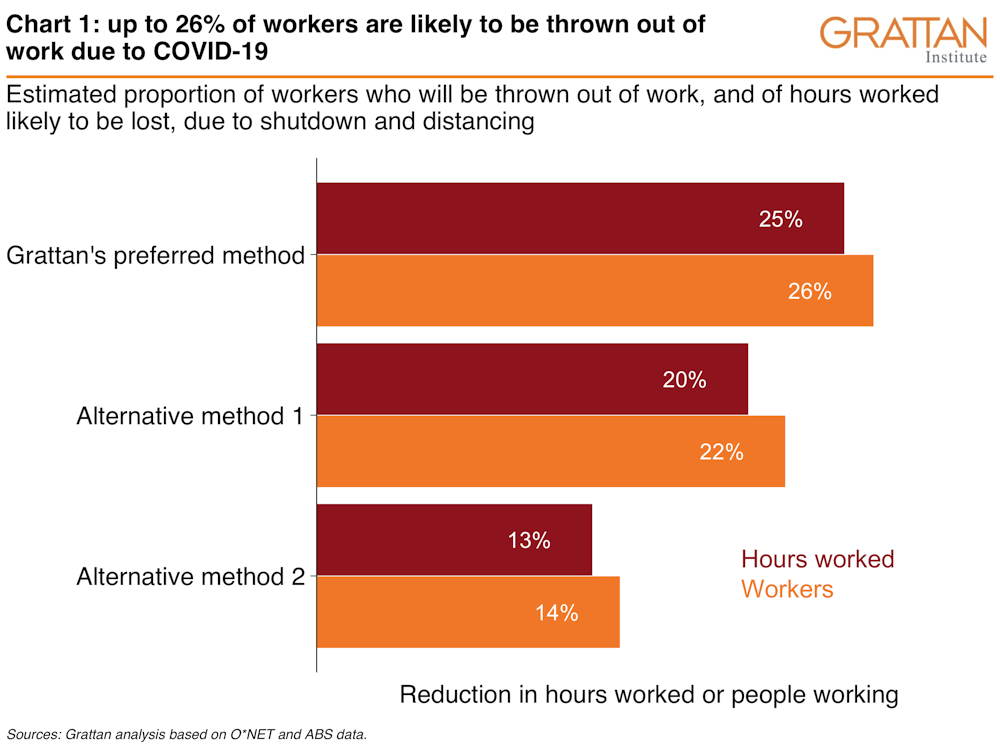
Read more: The charts that show coronavirus pushing up to a quarter of the workforce out of work


Nurses and teachers earn less than equivalently or less qualified professionals in similar occupations. 32% of police and 27% of ambulance officers earn more than $2000 per week, compared to 10% of nurses and 12% of teachers.

And it is now clear teachers do much more than educate the nation’s children.

One of the prime minister’s stated reasons for keeping schools open has been to provide safe supervised spaces for the children of essential workers.

It’d be wise to pay our essential workers well

In addition to its day job of educating, one expert female-dominated workforce is expected to provide childcare for another.

Alongside care workers we are also newly realising our debt to the public facing workers in retail and food supply. And our need to keep them safe and well.

Even if schools and childcare centres remain open, many families will decide to care for the children at home. For many women in these families that won’t remove the stressful daily juggle between time in paid work and time in care. It will move it to the home, under more trying and confined conditions.


Read more: Why Labor’s childcare policy is the biggest economic news of the election campaign


The coronavirus crisis has made brutally clear that care work, both paid and unpaid, is fundamental to our economic and social survival.

We should not continue to undervalue it, or to free-ride on those that do the most.

We should pay our care workers properly for the skilled and expert work they do.

We should arrange our workplaces to allow both men and women enough time to care for children and loved ones as well as earn a living.

And keep childcare free. It’s an essential service.

ref. COVID-19 has laid bare how much we value women’s work, and how little we pay for it – https://theconversation.com/covid-19-has-laid-bare-how-much-we-value-womens-work-and-how-little-we-pay-for-it-136042

It’s time to admit our COVID-19 ‘exit strategy’ might just look like a more flexible version of lockdown

Source: The Conversation (Au and NZ) – By Toby Phillips, Public policy researcher, University of Oxford

As the COVID-19 curve starts to flatten in Australia and New Zealand, people are rightly wondering how we will roll back current lockdown policies. Australia’s federal health minister Greg Hunt says Australia is looking to South Korea, Japan and Singapore to inform our exit strategy. New Zealand is relaxing some measures from next week.

A long-term solution – a vaccine – is many months, probably years, away.

In the meantime, we must rely on social distancing policies to contain the epidemic – and begin to accept the idea that an “exit strategy” may really look more like a more flexible version of lockdown.

What can we learn from other countries?

Total lockdown is not a prerequisite for success, but nonetheless seems to be where most countries are going.

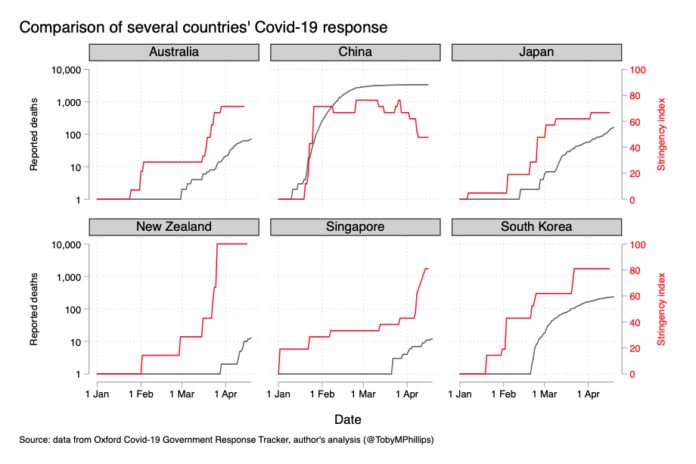
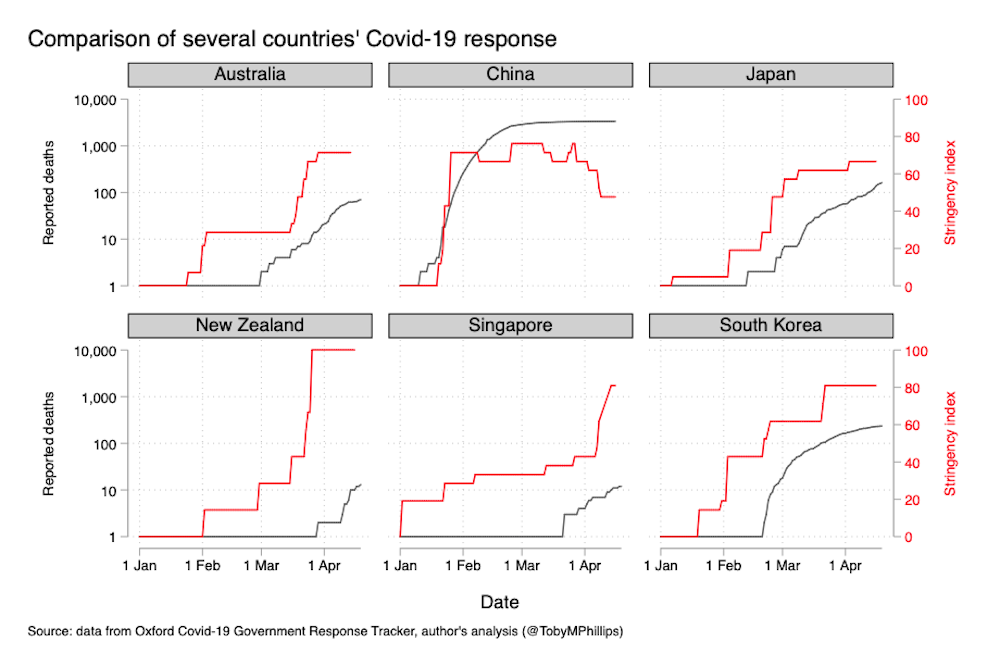
In a study of more than 100 countries, currently under peer review, my colleagues and I find that on average, stricter policies (as measured by what we called a “stringency index”) lead to lower death rates after two to four weeks.

When looking at most of the other countries mentioned by Australian health minister Greg Hunt we see that they are not exiting lockdown but are, in fact, getting stricter.

Indeed, of Minister Hunt’s countries, Japan is the only one that has not escalated its policies recently. It has, however, seen an uptick in daily deaths over the last week, going from an average of five deaths per day to 20.

(COVID-19 deaths is a better measure of epidemic severity than case numbers, as case numbers are vastly underestimated in some countries. For instance, some researchers have estimated that the United Kingdom might have over 10 times more cases than reported.)

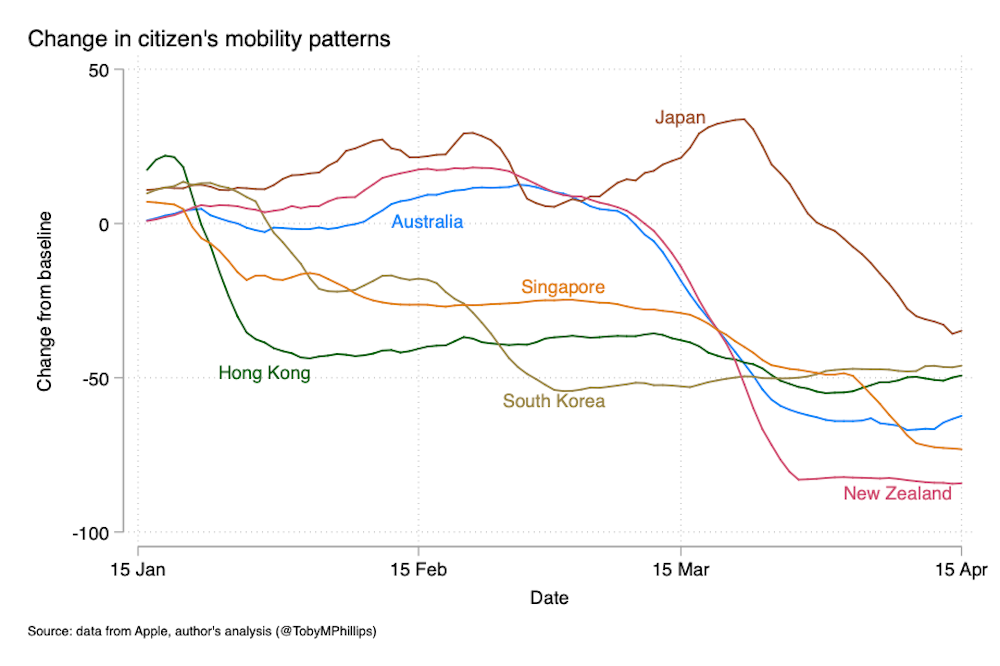
South Korea, Hong Kong and Singapore all initially managed to keep their curve flat through aggressive testing, a small amount of targeted closures, and voluntary social distancing by citizens.

But from mid-March onwards, these countries started banning small gatherings and closing businesses. First South Korea, then Hong Kong and finally Singapore (with their April 7 “circuit breaker” measures).

Even though they aren’t exiting lockdown, there are still useful lessons: despite being officially “open” at the time, these countries had slow infection growth rates over February and March.

We should add Taiwan to the list of countries to watch. They seem to have the epidemic under control – or close to it – without a national lockdown. The key seems to have been rapid tracing and quarantining, community measures (such as temperature testing checkpoints), and citizen compliance. They have been preparing for a major pandemic since SARS in 2004.

When should we start to loosen the rules?

Last week the Australian prime minister Scott Morrison outlined three things Australia needs to have before restrictions can be lifted:

  • a more extensive testing regime (including asymptomatic people)
  • industrial scale contact tracing
  • stronger local response capabilities.

Broadly speaking, these mirror the criteria set by the WHO director general, Dr Tedros Adhanom Ghebreyesus, three days earlier. Tedros also included that epidemic transmission should be under control and communities must be adjusted to the “new normal”.

On these criteria, Australia is one of the leading countries in the world. For testing, South Korea used to be at the front of the pack, but now we’ve conducted more tests per person than most countries (although not as many as New Zealand or Italy).

For testing, South Korea used to be at the front of the pack but not any more. EPA/YNA/AAP

In terms of controlling the epidemic, we are averaging around one or two deaths each day. Australia ramped up its policy approach three and half weeks ago; and now we are seeing the curve start to flatten.

So we’re approaching the point where it makes sense to start thinking about loosening rules. But there aren’t really any examples to learn from. China has made the most significant reductions in policy strictness, but it is still too early to assess the impact of this.

What does life look like after lockdown?

Ultimately, we can’t think of lockdown as a national on-off switch. Just as there is an epidemic curve of cases, so too there is a curve of policy responses. Over 200 Australian economists signed an open letter on Monday urging the government not to roll back too far too quickly.

All eyes will be on New Zealand as they reduce their lockdown level next week. It is the first step of a slow and measured roll back – many aspects of a “lockdown” will remain. Some businesses must stay closed. People must still stay at home unless working or making essential trips.

Until a vaccine arrives, containing the virus is about reducing how often people come into contact and how closely – as we saw from Taiwan, a formal lockdown may not be necessary. Data from firms such as Apple and Google can serve as a proxy for people’s movement and likelihood of coming into contact with others.

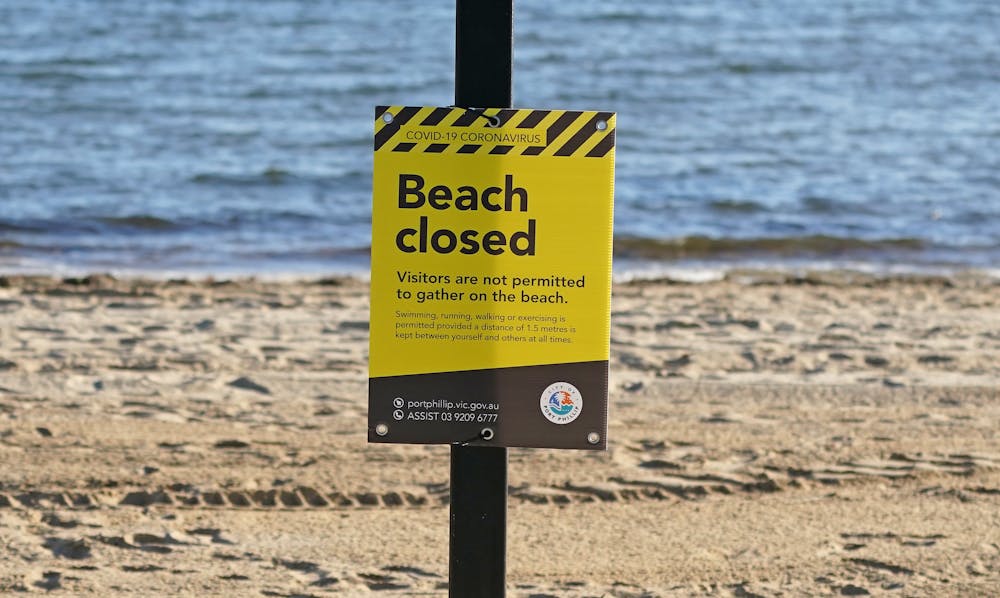
As Australia was heading into the pandemic, the data in the chart above suggest it took blunt lockdown measures (late-March) for people to reduce their contact with each other (for example, Bondi Beach was closed after crowds gathered there in defiance of social distancing recommendations).

Conversely, individual Singaporeans and South Koreans reduced their level of interaction back in February, without the strict lockdowns that are only just now being implemented in their countries.

Exiting the lockdown doesn’t mean going back to business-as-usual. Under the “new normal” we will need people to behave like Singaporeans and South Koreans did in February: voluntarily limiting contact. Hiking will be back on the cards; big barbecues might not be.

We might need to scale lockdown up and down in local areas as needed. AAP/Scott Barbour

What’s more, we will need to figure out how to scale the response up and down as needed – possibly several times and in ways you might not expect.

We might need to return to full lockdown in a specific place when a flare-up is detected there. This requires new policy instruments to flexible and locally switch areas on and off – not the whole country – to deal with isolated outbreaks.

We can’t remain in a nationwide lockdown forever. If people can voluntarily practise the behaviours that slow the virus’ spread, then the formal lockdown can relax. But life can’t return to how it was before. At least not yet.

The Oxford data on policy measures is available on GitHub, and the data on movement is available from Apple’s website.

ref. It’s time to admit our COVID-19 ‘exit strategy’ might just look like a more flexible version of lockdown – https://theconversation.com/its-time-to-admit-our-covid-19-exit-strategy-might-just-look-like-a-more-flexible-version-of-lockdown-136491

Keith Rankin’s Chart Analysis – The Smithometer: New Zealand’s mortality during the 1918 Influenza Pandemic

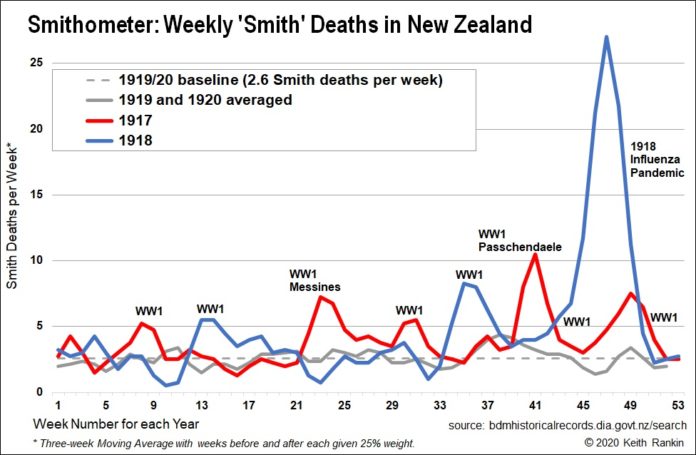
Death rates spiked tenfold in mid-November 1918. Chart by Keith Rankin.

Analysis by Keith Rankin

Today’s chart looks back to the years 1917 to 1920, using a sampling device I call the ‘Smithometer’. I have counted the weekly deaths of all people named Smith, from the beginning of 1917 to the end of 1920. At that time New Zealand was a country of 1.2 million people.

There are a number of death peaks due to World War 1, the largest of these being the Passchendaele battles of October 1917. Each peak represents a two-week period, effectively the middle of the week before the plotted week to the middle of the week after. For the Passchendaele peak we can say that the fortnightly death rate of New Zealand Smiths was four times normal.

We can apply that more generally, concluding that about 75 percent of New Zealand deaths in the period from 3 October to 17 October 1917 were due to WW1 activities; most notably the Passchendaele battle of 12 October.

The influenza pandemic hit New Zealand hard and fast, in mid-November 1918. Over two weeks the Smith toll was ten times greater than the baseline rate of 2.6 Smith deaths per week. (Note that the influenza figures are slightly muddied by the WW1 battle of Le Quesnoy on 4 November.) Otherwise it would look like a perfect spike in the chart. Also, a number of New Zealand soldiers succumbed to the pandemic while in Europe or the United Kingdom; the peak dates differed in different countries.

The overall influenza pandemic death toll of New Zealanders was somewhere between 5,000 and 10,000; that’s between half a percent and three-quarters of a percent of the New Zealand population. (Compare this to the likely worst case for Covid19 – Belgium – which will end up with a death rate from Covid19 infection at less than one in a thousand.)   Given that we already know about the severity of the 1918 pandemic, the surprise is how quickly the event in New Zealand finished. The chart shows that by mid-December 1918 Smith deaths were back to normal.

What will a Smithometer chart for 2019 to 2022 look like? First, we should note that Smiths today are a smaller proportion of the population, and a Smith sample would be biased against non-Pakeha.

However, we know that Pakeha are overrepresented in New Zealand in Covid19 cases, and – to the best of my knowledge – all deaths so far have been Pakeha. So far, not a single death has been recorded in Auckland, and the known incidence of Covid19 is 44 percent higher in the Pakeha-dominated South Island than in the North Island.

It is unlikely that deaths of Covid19 (ie deaths with Covid19 in the death certificate) will register on the New Zealand Smithometer, though they will cause a bump on a United Kingdom Smithometer.

The important question, however, is the impact of Covid19 on the overall death rate, and for that we would want to go at least until the end of 2021.

In 2020 it is likely that the Covid19 influence on the Smithometer will be negative, because ongoing social distancing will most likely substantially reduce the rate of deaths from influenza and pneumonia.

So the question will be the extent of economic chaos in the wake of Covid19, and the extent that such chaos may translate into extra deaths. My guess, from having studied the Great Depression of the early 1930s, is that the overall effect on deaths will also be negative. (Certainly the New Zealand death rates did not rise during or after the 1930s’ Depression, though it could be argued that World War 2 would not have happened had there been no Great Depression in Europe; the Depression was an economic pandemic.)

At least in terms of deaths, I am also optimistic that there will be very little economic chaos in New Zealand in 2020 and 2021. I am expecting a soft-landing here, though not necessarily in Europe. The overall impact of Covid19 in New Zealand will almost certainly depend on what happens outside of New Zealand.

We will also need to be careful about interpreting global death rates in the 2020s. With the huge public health issues around unaffordable housing, around antibiotic resistance, around obesity, and substance abuse/addiction (eg opioids in the United States) there have been signs that First World life expectancy was already peaking. It seems to me more likely that, if life expectancy rates fall this decade, then Covid19 will not have been the main cause.

We have some reasons to be optimistic about how the world will turn out this decade, especially as Covid19 has caused many of us to reflect on improvements we will make to our own lives (and to our understandings of the weaknesses of the form of capitalism – based on private property – that we have taken for granted), rather than waiting for THEY (ie someone else) to fix things. One of the great legacies of the Great Depression – a legacy for the better – was the intellectual activism that it precipitated.

Covid19 will not be the short and sharp event that the 1918 (1919 in some other countries, such as Samoa) influenza pandemic was. It will be useful to run the Smithometer on the present period. It is possible that the overall impact of Covid19 on deaths will be negative, meaning that fewer deaths may occur in the 2020s than would otherwise have occurred.

PS
The chart shows higher 1919 and 1920 death rates than usual in the early spring of those years. That may be due to a return to regular patterns of deaths peaking as a result of the ‘winter flu season’. It will be interesting to see if that seasonal pattern persists into later years. Indeed, returning to this century,  possibly in this year’s northern hemisphere spring, many of the deaths have been of people who in other more familiar years would have died from other more familiar viruses.

Is protesting during the pandemic an ‘essential’ right that should be protected?

Source: The Conversation (Au and NZ) – By Maria O’Sullivan, Senior Lecturer, Faculty of Law, and Deputy Director, Castan Centre for Human Rights Law, Monash University

Protests are increasingly breaking out around the world as people begin to chafe against lockdown restrictions to prevent the spread of COVID-19.

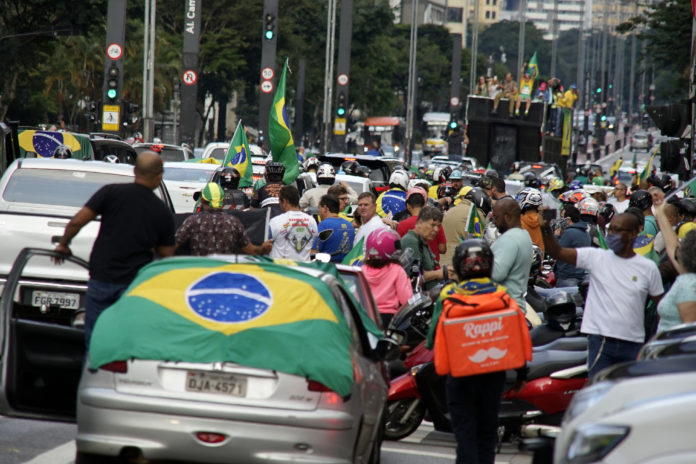
In the US, President Donald Trump is fuelling the spread of protest movements nationwide with tweets to “liberate” certain states. This month, car convoy protests were also held here in Australia, as well as in Poland and Brazil.

Hundreds of Brazilians have protested in major cities against the country’s lockdown measures. Cris Faga/SIPA USA

In Germany, some 300 protesters gathered in a main square in Berlin to protest COVID-19 restrictions, leading to many arrests.


Read more: Coronavirus versus democracy: 5 countries where emergency powers risk abuse


Protest is one of the most important ways we can express disagreement with government action. However, the ability of people to protest in an emergency situation such as the current pandemic is very unclear.

Can we protest outside if we are in cars, maintaining social distancing, for instance? Is protest considered an “essential” activity?

Protests have broken out in the US from Washington state to North Carolina. Some cities have begun fining people. Alex Milan Tracy/Sipa USA

What’s at stake when protests are disallowed?

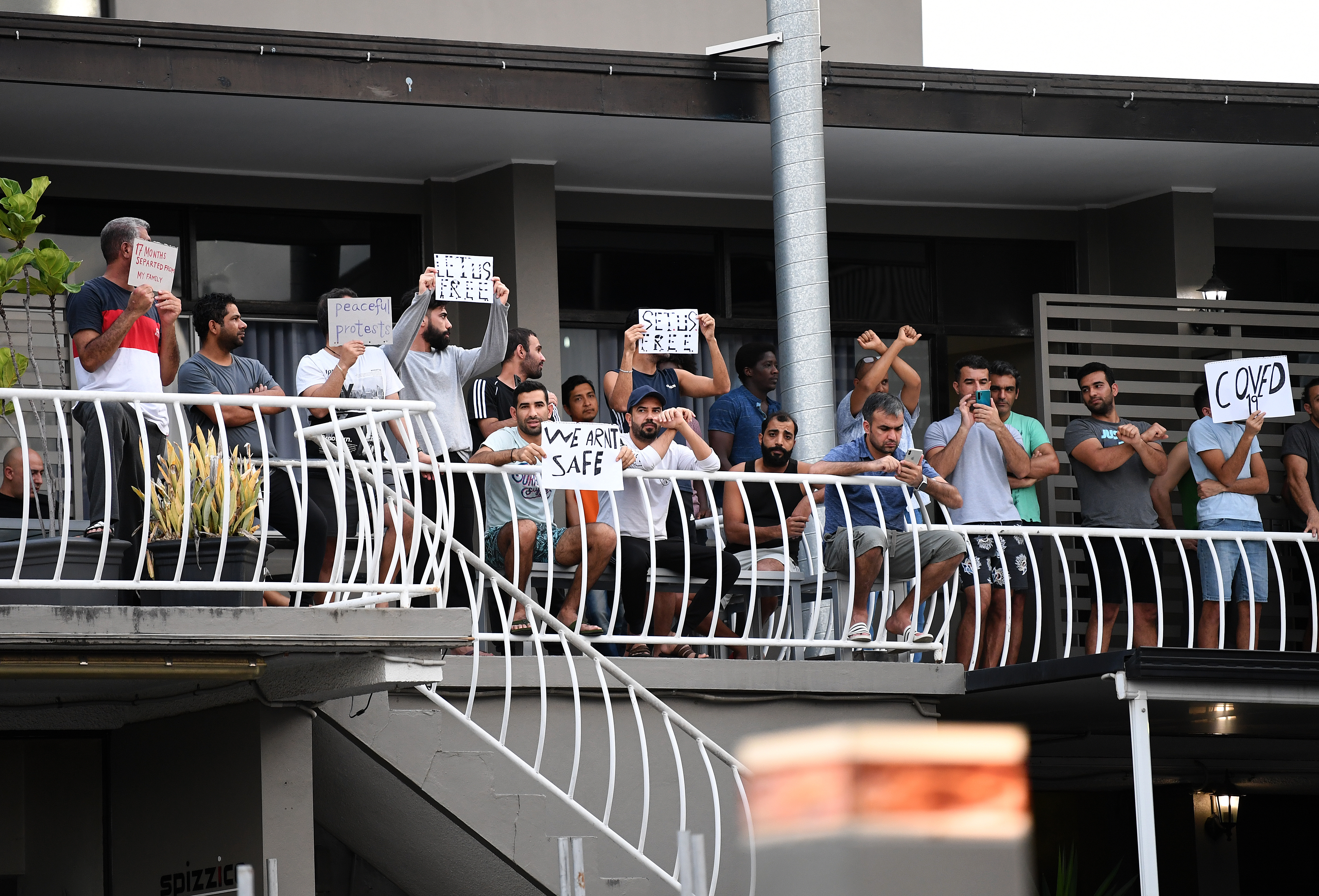
On April 10, activists staged a car convoy protest in Melbourne to highlight the plight of refugees in detention who face a heightened risk of contracting COVID-19 due to overcrowded conditions.

Despite the fact everyone was social distancing in cars, police arrested one man and fined 26 others a total of $43,000 because they were not in public for an allowable reason (for instance, work, exercise, shopping for essentials or caregiving).

The ability to voice dissent is vital for a functioning democracy. It is therefore arguable that people should be able to protest against what they see as government overreach in social restrictions or the enforcement of these rules by police.


Read more: Pandemic policing needs to be done with the public’s trust, not confusion


This is especially true if one considers the role of protesters in giving voice to those who are marginalised or unable to demonstrate publicly themselves, such as asylum seekers in detention.

These protests are different in that they are not about the restrictions themselves or disagreement with policymakers; rather, they are in response to a legitimate health concern and questions of violations of human rights (the right to health and liberty).

Asylum seekers protesting their continued detention during the pandemic in Brisbane. Dan Peled/AAP

Is limiting protest against our constitution?

In many democratic countries, COVID-19 restrictions must be balanced with protections enshrined in human rights charters.

Although Australia does not have a human rights charter at the federal level and there is no guaranteed “right to protest”, we do have a concept called the “implied freedom of political communication”.

This implied freedom stems from provisions in our constitution about representative government, and has been quite influential in protecting certain forms of protest. For instance, in 2017, former Australian Greens leader Bob Brown successfully challenged Tasmania’s anti-protest law in the High Court, arguing it targeted the freedom of political expression and was therefore unconstitutional.


Read more: Bob Brown wins his case, but High Court leaves the door open to laws targeting protesters


To determine if this implied freedom is being curtailed, there are several key points to examine.

  • Does the law impinge on political discussion?

  • Does it serve a legitimate purpose?

  • And is it disproportionate in its impact?

As part of the proportionality question, we can examine whether there is an alternative practical or legislative means of achieving the purpose of the law – in this case, reducing the spread of a virus – that has a less burdensome effect on the implied freedom of political communication.

If we apply these tests to the coronavirus restrictions, it is quite clear they do limit our political expression, but also serve a legitimate purpose (by ensuring the safety and well-being of the community).


Read more: Why an Australian charter of rights is a matter of national urgency


However, I would argue the requirements imposed by the law are not proportionate. Specifically, I do believe there is way to protect public health while simultaneously allowing a form of protest.

Instead of a wholesale ban on protesting, for instance, the restrictions could be changed to allow protest as a permitted reason to leave home if protesters observe social distancing rules. This could include limiting cars to members from the same household or to a maximum of two people in states where gatherings are severely restricted.

Israelis protesting against government corruption while maintaining social distancing. Abir Sultan/EPA

Aren’t there other ways to protest?

Online or virtual protests are a possibility. Climate change activist Greta Thunberg has recommended people avoid mass gatherings during the pandemic and instead engage in online campaigns and digital strikes.

However, one of the hallmarks of effective protest is its public, visual impact. And often media coverage of protests is a means of garnering greater public support. This is why taking over city streets or occupying buildings has been a key strategy of protest groups such as Extinction Rebellion.

In this light, online protests are not a substitute for traditional street protests, as they will not necessarily have the same potential to drive change – which is often the whole reason for protesting in the first place.

So, as the pandemic continues, we are likely to see more people protesting on the streets – not fewer. And it is the responsibility of governments to avoid responding with increasingly heavy-handed tactics, such as widespread arrests and fines, as this could inflame public anger even more and further call into question the legality of the restrictions.

During this time, we also need to reflect on the way our legal system operates in Australia to ensure the COVID-19 restrictions do not disproportionately affect the most marginalised in our community. And, ultimately, we need to ask ourselves whether our fundamental human rights protections could be strengthened by a federal charter of human rights.

ref. Is protesting during the pandemic an ‘essential’ right that should be protected? – https://theconversation.com/is-protesting-during-the-pandemic-an-essential-right-that-should-be-protected-136512

Australia’s inland rivers are the pulse of the outback. By 2070, they’ll be unrecognisable

Source: The Conversation (Au and NZ) – By Zacchary Larkin, Postdoctoral Researcher in Environmental Sciences, Macquarie University

Inland Australia’s complex system of winding rivers, extensive wetlands, ancient waterholes and seemingly endless parched floodplains are rarely given more than a passing thought by many Australians who live on the coastal fringes.

Yet these waterways are lifelines along which communities, agriculture and trade have flourished.

Etched into the psyche of regional Australia, these river systems are the pulse of the outback. Before asking a local how things are going, peek over the bridge in town for an indication.


Read more: Sure, save furry animals after the bushfires – but our river creatures are suffering too


When relaxing in the shade of an old river red gum alongside one of Australia’s lazy inland rivers, it’s natural to think of them as timeless and resilient to environmental change.

Yet, these rivers evolved over millennia and continue to change over years and decades.

And we already know from previous studies that future climate change is likely to reduce stream flow and water availability in drylands around the world.

But what our new research has shown, for the first time, is that these declines in stream flow may trigger a dramatic change in the physical structure and function (the geomorphology) of Australia’s inland rivers.

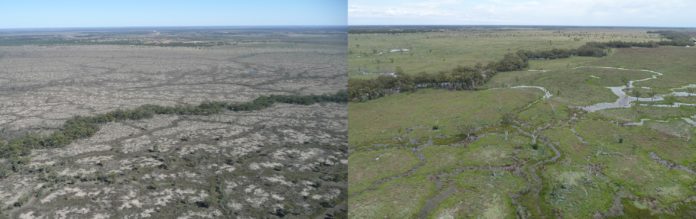
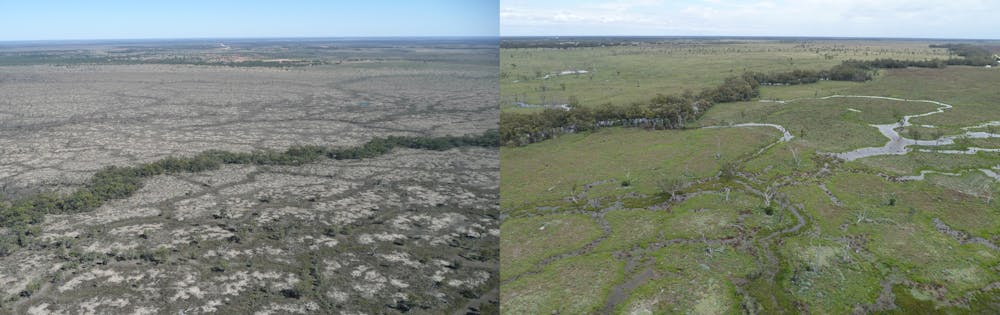
The Macquarie River in dry (2008) and wet (2010) conditions. Tim Ralph, Author provided

Meandering rivers and flat, wide floodplains

The physical structure of a river depends on how much water flows through it, and the sediment that water carries.

Reductions in water flow – as expected due to climate change – can lead to a build-up of sediment downstream. In extreme cases, this “silting up” can cause complete disintegration of river channels, where water flows out across the floodplain.

Not all rivers are alike, and the rivers of the Murray-Darling and Lake Eyre basins (covering 1.8 million square kilometres) are particularly diverse. Many of these rivers and wetlands are internationally recognised for their hydrological and ecological importance.


Read more: No water, no leadership: new Murray Darling Basin report reveals states’ climate gamble


They range from large meandering rivers swollen by seasonal spring flows (the Upper Murray, Mitta Mitta, Kiewa, and Ovens rivers), to rivers that progressively get smaller until they become exhausted on flat, wide floodplains and disintegrate into large, boom-and-bust wetlands (the Lachlan, Macquarie, and Gwydir rivers).

Dry channel of the lower Warrego River, northwest NSW. Author provided

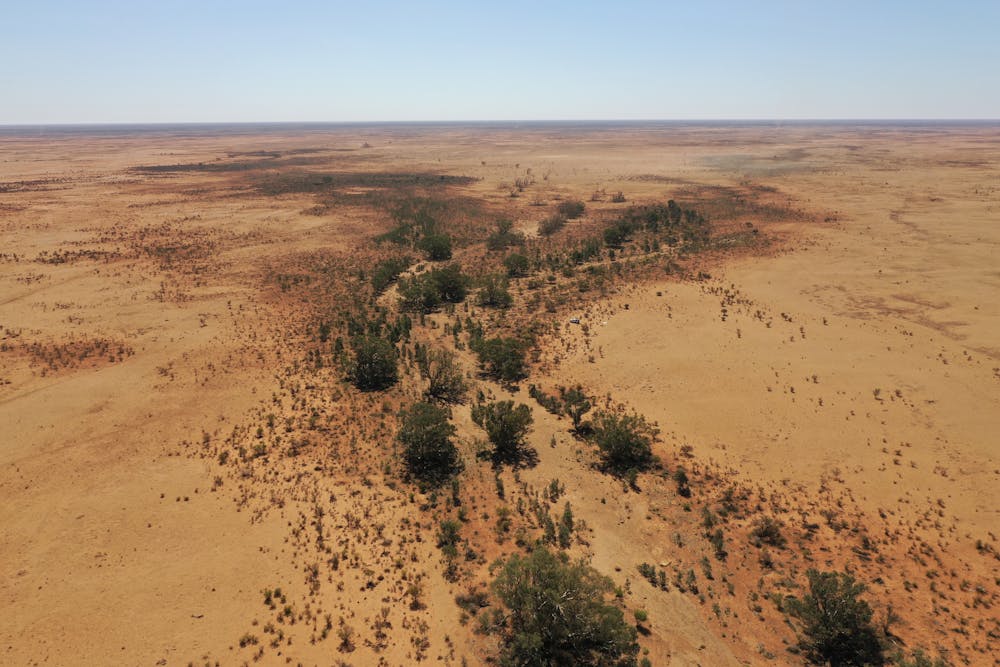
In the drier areas of central Australia, rivers typically persist as a string of isolated waterholes for years at a time, occasionally punctuated by very large floods (Warrego, Paroo, Diamantina, and Cooper Creek).

A sobering future

For Australia’s inland rivers, the average dryness, or “aridity”, of the catchment is the best predictor of what the overall structure and function of the rivers within look like.

Compiling a range of climatic data, we modelled aridity for the Australian continent in 2070 under a relatively moderate climate change scenario.

The results are sobering. Over the next 50 years, the arid zone – containing the areas of true desert – is projected to expand well into the Murray-Darling Basin and almost entirely envelope the Lake Eyre Basin.

Modern aridity index and the projected aridification of Australia by 2070. The red outlines show the extent of the Murray-Darling and Lake Eyre basins.

At the same time, the humid and dry subhumid fringes around the Great Dividing Range and coastal areas are expected to contract.

This is concerning because the relatively wet western slopes of the Great Dividing Range are where many inland Australian rivers begin, with most of their water sourced in these smaller sub-catchments.

Evolution of our inland rivers

The impact of this projected drying pattern on Australia’s inland rivers is expected to be profound.

Despite only occupying around 3.8% of the Murray-Darling Basin, the Upper Murray, Mitta Mitta, Kiewa, and Ovens rivers presently provide a large amount of flow within the lower Basin (33% of average annual flows).

These rivers flow out of the southeastern highlands towards the Murray River, but over the next 50 years they’re expected to experience declining downstream flows. This leads to less efficient flushing of sediment downstream, which, in turn, will increase sediment deposition within these rivers, reducing their size.

Channel breakdown along Eldee Creek in far western NSW. Tim Ralph, Author provided

Other rivers – such as the Murrumbidgee and Macintyre rivers – are expected to undergo even more dramatic changes to their structure and behaviour.

Right now these rivers maintain a winding course to the central Murray and Barwon rivers, respectively. But our projections suggest these continuous channels won’t be supported, and are likely to be interrupted by sections of channel breakdown.

Under a drier climate, rivers such as the Lachlan and Macquarie may come to resemble present-day central Australian rivers – only persisting as disconnected waterholes for long periods of time, with internationally important wetlands (Great Cumbung Swamp and Macquarie Marshes) much less frequently inundated.


Read more: The sweet relief of rain after bushfires threatens disaster for our rivers


Such changes to river structure and function will have long-lasting impacts on water, sediment, and nutrient distribution. This will likely change the dynamics of the river ecosystem, as well as the way we manage and use these rivers.

A parched future

While our research hasn’t investigated the potential ecological, socio-economic or cultural effects of structural changes, we can expect them to be very significant, and potentially irreversible.


Read more: Don’t blame the Murray-Darling Basin Plan. It’s climate and economic change driving farmers out


Many of Australia’s native aquatic and dryland flora and fauna are adapted to a highly variable climate regime, but there are limits beyond which these ecosystems cannot recover or survive. For example, seeds and invertebrate eggs can survive many years buried in dry soil waiting for a flood, but if water doesn’t come, eventually they won’t be viable.

Parched soil in the Macquarie Marshes, NSW. Gavin Smith, Author provided

What’s more, extracting too much water from our inland river systems for agriculture or other uses will exacerbate the threats posed by a drying climate.

Given the complexity and tensions surrounding water use and water sharing in Australia’s inland rivers, particularly in the Murray-Darling Basin, understanding how these critical systems might respond in the future is now more important than ever.

Water is one of the most contested resources in Australia, and it’s the fundamentally important river and wetland ecosystems and agricultural industries that will bear the brunt of a drying climate.

To make sure outback communities can continue to survive, it’s vital we protect their lifeline. Water resource planning must include consideration of climate change, as the projected changes will likely increase pressure on already vulnerable systems.

ref. Australia’s inland rivers are the pulse of the outback. By 2070, they’ll be unrecognisable – https://theconversation.com/australias-inland-rivers-are-the-pulse-of-the-outback-by-2070-theyll-be-unrecognisable-136492

3 ways nature in the city can do you good, even in self-isolation
Source: The Conversation (Au and NZ) – By Lucy Taylor, Assistant Researcher, School of Ecosystem and Forest Sciences, University of Melbourne

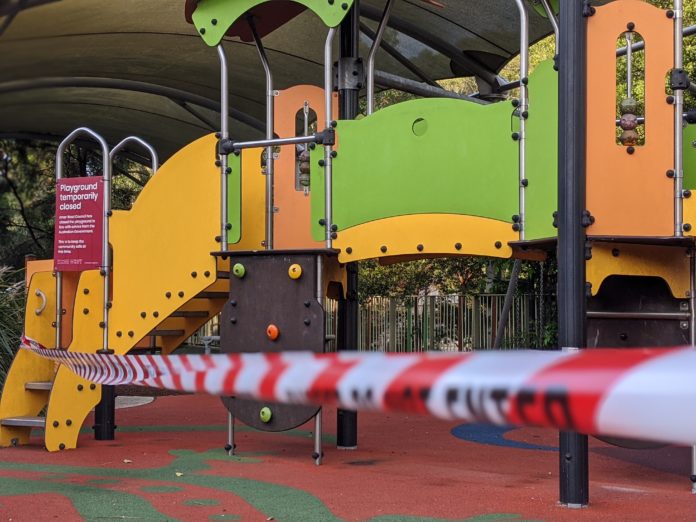
Spending time at the beach or taking a walk in the park can help us recover from the mental and physical impacts of life’s stresses. But physical distancing measures to contain COVID-19 have included closing beaches, playgrounds and parks, adding to the challenges to our mental health. When we stay home to flatten the curve, how can we help ourselves by taking advantage of the benefits associated with nature?

Public playgrounds have been closed to encourage distancing and limit infection. Peter Lead, Author provided

The evidence for nature supporting human well-being has grown in recent decades. We researched the links between nature and urban residents’ well-being and found there are benefits of nature that we can still enjoy now, even in lockdown. Our findings point to some of the ways we can improve our well-being by engaging with everyday nature close to home.


Read more: Biodiversity and our brains: how ecology and mental health go together in our cities


1. A room with a view

We reviewed the evidence, collected survey data on self-reported well-being and biodiversity indicators, and organised focus groups in Sydney and Melbourne, Australia, and Auckland and Wellington, New Zealand, to better understand participants’ relationship with urban nature.

If you’re stuck at home, the good news is there is plenty of research that suggests a view through a window of vegetation or a body of water can provide a micro-break. A view of nature through a window has even aided hospital patients’ recovery from surgery. A short, 40-second glance at a green roof supports cognitive restoration better than a view of concrete.

Our research found urban residents had greater self-reported well-being when they had nature nearby or visible from their homes. Participants valued a view of vegetated areas – green space – and bodies of water – blue space. One participant said:

I could live in something that was pretty grim if it had a balcony that looked out [at nature].

Participants in our focus groups also highlighted the importance of seeing changes in the natural world, such as change in the weather or the seasons. Even if your view does not have a lot of vegetation or water, a view of the sky can allow engagement with nature’s dynamism.

A view out a window at nature’s dynamism can improve our well-being. Lucy Taylor, Author provided

Read more: Coronavirus: tiny moments of pleasure really can help us through this stressful time


2. Gardening – indoors and out

If you’re lucky enough to have a yard or balcony, now may be a good time to do some gardening. Gardening can offer benefits such as reductions in stress, anxiety and depression. As a physical activity, gardening can also improve physical fitness and support weight loss.

Gardens can also provide habitat for wildlife, potentially introducing you to new plants, pollinating insects and birds. Urban biodiversity benefits us too.

Our study found strong links between gardening and self-reported well-being. If you don’t have a yard, gardening on a balcony or tending to indoor plants also has benefits. One participant explained:

Having a small vegetable garden and flowers in pots makes me feel happy and content … It is wonderful to see things grow in the city.

Gardening in a yard, on a balcony, or even tending indoor plants does us good. Peter Lead, Author provided

Read more: Running out of things to do in isolation? Get back in the garden with these ideas from 4 experts


3. Green exercise

We know exercise is good for physical fitness and mental health. “Green exercise”, or exercise that takes place in and around nature, can improve your mood and self-esteem.

Our study found strong links between how often urban residents exercised and their self-reported well-being. One participant described how important green exercise is to them:

Being able to walk my dog down at the beach or go up into the hills is a great stress relief and keeps me fit and healthy and, best of all, it’s free.

Another participant described exercising in a public park:

I feel significantly calmer, [my] breathing rate goes down. I love the feel of that moist air going into my lungs from all the trees and I really do feel different.

To limit infection, residents of cities around the world are subject to a range of national and local constraints on when and how they leave the house to exercise. It is important to follow physical distancing guidelines, but it is also important to exercise rather than be both isolated and sedentary.


Read more: Green for wellbeing – science tells us how to design urban spaces that heal us


Urban nature now and for the future

Nature can support our well-being now, when we all could use the help, but we need to protect it. Climate change talks have been postponed because of the COVID-19 pandemic, but it is clear climate change has not stalled, even taking into account the effect of lockdown on emissions.

There are lasting ways to reduce our emissions and create low-carbon and cooler cities. And the earlier we act, the better the outcomes will be.

If you have a yard, planting trees might be a good lockdown activity now and will ultimately benefit your future.


Read more: Increasing tree cover may be like a ‘superfood’ for community mental health


Taking time to notice nature – via a glance outside, tending plants in pots or gardens, or via green exercise – will improve your well-being. Appreciating nature and having access to it has never been so important.

Appreciating urban nature has never been more important. Lucy Taylor, Author provided

ref. 3 ways nature in the city can do you good, even in self-isolation – https://theconversation.com/3-ways-nature-in-the-city-can-do-you-good-even-in-self-isolation-133150

Curious Kids: why might you wake up without a voice?

Source: The Conversation (Au and NZ) – By Deborah Hersh, Associate Professor, Speech Pathology, Edith Cowan University

Why do you lose your voice approximately 12 hours after you scream too much? If I scream a lot one day the next morning I can barely speak. However, I can speak right after I scream. Kheenav, age 11, from Glen Waverley, Victoria

Hi Kheenav, thank you for your question!

First, I’ll explain a bit about your voice. Then we can look at what happens after shouting or screaming.

How does your voice work?

When you talk, sing, shout, or scream, the voice sounds you make happen because of the very fast vibration of your vocal cords.

These vocal cords are two small folds of muscle in your voice box which is in the front of your neck.

Your vocal cords make sound by vibrating many times each second.

If you gently put your fingers around your voice box and say “ahhh”, you will feel your vocal cords vibrating.

See if you can feel the vibration. Shutterstock

If you then say “ahhh” and make your voice go up and down, you will feel your voice box go up and down.

Your voice works hard

When you make sounds, your vocal cords open and close many times each second (move apart and together again) to make the air vibrate.

The opening and closing is like putting your palms together, and then separating them but keeping the tips of your fingers touching. Each opening and closing is one vibration.

Vocal cords: the first is open, the second is closed

Shutterstock

A grown man’s vocal cords open and close about 120 times each second when singing “ahhh”.

A kid’s vocal cords open and close more times per second than an adult’s. Their vocal cords are also smaller. This is why children’s voices sound higher.

As an 11 year old boy, your vocal cords will open and close about 237 times each second when you sing “ahhh”. This means if you said “ahhh” for a minute, that would be 14,220 vibrations!

An hour of voice would be 853,200 vibrations!

Now think how much you normally talk, and you can see that your vocal cords are vibrating many thousands of times over a whole day.


Read more: Curious Kids: how do voices come out of our mouths?


So what happens when you shout or scream?

When you yell or scream, you are bashing your vocal cords together extra hard with each vibration. This can make you get a hoarse voice.

If you imagine doing that with your hands many times over, they would get red, sore and swollen.

This is what is happening to your vocal cords. They can’t vibrate properly when they are swollen so the sound of your voice will change.

Your age affects how your voice sounds. Shutterstock

Sometimes, the swelling and soreness continues to develop for a few hours after screaming.

This is why you might be able to talk right after yelling but only notice losing your voice the next day.

Now what?

The best thing you can do if you wake up having lost your voice is to be gentle with your voice, talk less, talk quietly (but not whispered as this can also push your cords together) and drink plenty of water.

Walk over to someone to talk to him or her rather than yell across a distance. Talking over noise means you are probably shouting without realising it so try not to talk loudly.


Read more: Curious Kids: Why do we have tonsils?????


With these changes, your voice should return to normal.

If it is not better after a couple of days, go and see your doctor just to make sure there is no medical reason for your voice problem.

Hello, curious kids! Have you got a question you’d like an expert to answer? Ask an adult to send your question to curiouskids@theconversation.edu.au

ref. Curious Kids: why might you wake up without a voice? – https://theconversation.com/curious-kids-why-might-you-wake-up-without-a-voice-132592

Coronavirus weekly: as virus numbers peak, governments are charting the path out of lockdown

Source: The Conversation (Au and NZ) – By Fron Jackson-Webb, Deputy Editor/Senior Health + Medicine Editor

As the world approaches 2.5 million coronavirus cases, some regions have reached the peak of the virus and the number of new cases and deaths is slowing.

This includes New York, the epicentre of the pandemic in the United States. It has had almost 15,000 deaths so far, but is seeing fewer deaths each day. Meanwhile, case numbers in Europe have surpassed a million, with the virus claiming more than 100,000 lives so far. But numbers are now declining.

In many regions, it’s too early to lift lockdown restrictions, but the planning for this is underway. Over the past week on The Conversation, experts from around the world have delivered advice to governments based on local trends, threats and resources available.

The situation is different for each region, but most experts agree any exit needs to be a staged response, with a strong focus on testing and tracking to avoid a second wave of infection.


This is our weekly roundup of expert info about the Coronavirus.
The Conversation, a not-for-profit group, works with a wide range of academics across its global network. Together we produce evidence-based analysis and insights from across academia. The articles are free to read – there is no paywall – and to republish.


This seventh weekly column by our team of international health editors highlights some of the recently published articles from The Conversation’s global network.

Exit strategy considerations

Some countries appear to have reached the peak of their coronavirus cases but before easing restrictions, it’s important to ensure it’s not just a temporary suppression of cases.

Here’s what governments need to keep in mind when planning their exit strategies:

  • Don’t rush it. Without a vaccine or effective treatments, relaxing the lockdown too early could lead to a second wave of infections. As Jasmina Panovska-Griffiths from UCL warns, in some past pandemics, the second wave has killed more people than the first.
  • Learn from other countries. Rather than a total lockdown, South Korea implemented border closures, extensive social distancing, and focused on testing and tracing contacts, explains Alex van den Heever and his colleagues at the University of the Witwatersrand in South Africa. This allowed it to keep a larger proportion of its economy open.

Relaxing restrictions too early could lead to a second wave of infections. Sipa USA Jorge Sanz/SOPA Images/AAP

  • Work out who has immunity. The economy can be gradually and carefully reopened by testing to see who has been infected in the past and developed immunity, argues Eric Muraille and colleagues (in French) from the Free University of Brussels. They say those with immunity could return to work, minimising the risk of additional waves, while others stay at home.
  • Tailor the response. New Zealand has among the strictest lockdown measures in place and will scale back these restrictions from April 28. This will strike the right balance between protecting people’s health and livelihoods, writes Martin Berka from Massey University.

One step forward, two steps back

Donald Trump recently halted US funding to the World Health Organization, accusing it of “mismanaging and covering up the spread” of the virus.

Adam Kamradt-Scott from the University of Sydney warns such cuts could cause the WHO to go bankrupt in the middle of a pandemic. This would mean having to lay off staff and being less able to assist efforts in low and middle-income countries.

Some countries are just at the start of their coronavirus virus pandemic and will rely on the World Health Organization. Pacific Press/Sipa USA/AAP

How have countries responded so far?

We hear a lot about the coronavirus response in the UK, US, China and parts of Europe. But what’s the situation in other parts of the world?

  • Calls for assistance in Indonesia. Coronavirus has hit Indonesia hard – it now has the highest death toll in South-East Asia. China has committed to helping Indonesia but to make a real difference, this should also include sending experienced medical staff and testing technology, argues Muhammad Zulfikar Rakhmat from Universitas Islam Indonesia.
  • Some surprises in Greece. Greece appears to have been lightly hit by coronavirus, with just over 100 deaths so far, despite just coming out of a ten-year financial crisis. Stella Ladi from Queen Mary University of London explains that the country learned from the financial crisis and acted quickly to close schools, ban public gatherings and ensure consistent messaging.
  • Financial constraints in Cuba. Cuba’s success at keeping case numbers to just over 1,000 so far can be attributed to its thorough planning, swift response and ability to scale up measures as needed. But what happens next depends on its access to test kits, write Emily Morris and Ilan Kelman from UCL.
Cuba’s coronavirus response so far has been impressive. Ernesto Mastrascusa/EPA/AAP
  • Welfare buffer in Mauritius. The tiny island nation of Mauritius has been under a curfew since March 24 and the impact of coronavirus has devastated its economy. But with a strong social welfare system, it heads into the epidemic on a stronger footing than many sub-Saharan African countries, argues Myriam Blin from Charles Telfair Campus in Mauritius.

What’s the latest evidence on COVID-19 and pets?

You don’t need to worry about getting coronavirus from your pet. Shutterstock
  • Pets are vulnerable in other ways, too. More people are adopting pets to keep them company while in isolation. But these pets are at risk of abandonment after lockdowns ease and owners either no longer want them or can’t afford to keep them, writes Heather Fraser from Queensland University of Technology in Australia and her colleagues.

Lessons from history

  • On conspiracy theories. Despite science delivering more answers about coronavirus every day, conspiracy theories abound. Humans have always found explanations for the unknown, writes Hanna Tervanotko from McMaster University in Canada, and we can look at how the ancient Israelites dealt with epidemics to help understand why.
  • Learning from mistakes. The course of human history has been shaped by infectious diseases, and the current crisis certainly won’t be the last time. David Griffin from the Doherty Institute and Justin Denholm from Melbourne Health in Australia outline what we’ve learnt from past pandemics.
We got a head start on some aspects of COVID-19 because of what we learned from SARS and MERS. LaPresse/Sipa USA/AAP
  • How socioeconomic status affects your coronavirus risk. In this pandemic, the poor are packed into small living quarters and compelled to keep showing up to work, while the wealthy work remotely and flee to their second homes. This has eerie similarities to how the rich reacted during the bubonic plague, explains Kathryn McKinley from the University of Maryland, Baltimore County in the United States.

Get the latest news and advice on COVID-19, direct from the experts in your inbox. Join hundreds of thousands who trust experts by subscribing to our newsletter.

ref. Coronavirus weekly: as virus numbers peak, governments are charting the path out of lockdown – https://theconversation.com/coronavirus-weekly-as-virus-numbers-peak-governments-are-charting-the-path-out-of-lockdown-136712

Politics with Michelle Grattan: Former Prime Minister Malcolm Turnbull on his autobiography, ‘A Bigger Picture’

Source: The Conversation (Au and NZ) – By Michelle Grattan, Professorial Fellow, University of Canberra

In this episode of Politics with Michelle Grattan, former prime minister Malcolm Turnbull gives his frank assessment of Scott Morrison as a former colleague and as prime minister, warns about the right of the Liberal party, and tongue lashes News Corp.

As Treasurer, Morrison at times infuriated then PM Turnbull by leaking to the media and “frontrunning” positions before decision were made.

“Morrison and I worked together very productively” but “he had an approach to frontrunning policy which created real problems for us,” Turnbull says.

As for now, Morrison’s “obviously got massive, completely unanticipated challenges to face … I think he’s doing well with them by the way. … I think the response of Australian governments generally [on coronavirus] has been a very effective one”.

Turnbull’s anger against both the Liberal right wing and News Corp continues to burn undiminished.

The right, “amplified and supported by their friends in the media, basically operate like terrorists”.

News Corp “I think was well described as ‘a political organisation that employs a lot of journalists’”; The Australian “defends its friends, it attacks its enemies, it attacks its friends’ enemies, and the tabloids do the same.”

New to podcasts?

Podcasts are often best enjoyed using a podcast app. All iPhones come with the Apple Podcasts app already installed, or you may want to listen and subscribe on another app such as Pocket Casts (click here to listen to Politics with Michelle Grattan on Pocket Casts).

You can also hear it on Stitcher, Spotify or any of the apps below. Just pick a service from one of those listed below and click on the icon to find Politics with Michelle Grattan.

Additional audio

A List of Ways to Die, Lee Rosevere, from Free Music Archive.

Image:

Mick Tsikas/AAP

ref. Politics with Michelle Grattan: Former Prime Minister Malcolm Turnbull on his autobiography, ‘A Bigger Picture’ – https://theconversation.com/politics-with-michelle-grattan-former-prime-minister-malcolm-turnbull-on-his-autobiography-a-bigger-picture-136746

Delight, relief and caution: six experts on New Zealand’s move to ease its coronavirus lockdown

Source: The Conversation (Au and NZ) – By Dougal Sutherland, Clinical Psychologist, Te Herenga Waka — Victoria University of Wellington

New Zealand will begin easing its national lockdown from next Tuesday, but only after a five-day extension of some of the world’s strictest COVID-19 restrictions.

New Zealand will then remain at alert level 3 for two weeks, before a further government review and decision on May 11 about whether to relax restrictions further.

Prime Minister Jacinda Ardern announcing that New Zealand will stay at level 4 until midnight on Monday.

Prime Minister Jacinda Ardern said the sacrifice New Zealanders have made to date has been huge, but the short extension of level 4 conditions – to cover a public holiday long weekend – locks in the gains made and provides added certainty.

Waiting to move alert levels next week cost us just two more business days but gives us much greater long-term health and economic returns down the track. It means we are less likely to have to go backwards.

She also reiterated New Zealand’s goal of eliminating COVID-19.

Elimination doesn’t mean zero cases, it means zero tolerance for cases. It means when a case emerges, and it will, we test, we contact trace, we isolate, and we do that every single time with the ambition that when we see COVID-19, we eliminate it. That is how we will keep our transmission rate under 1, and it is how we will keep succeeding.

As of Monday April 20, New Zealand has had 1,440 cases of COVID-19. 12 people have died from COVID-19 in New Zealand, while 974 people have recovered.

Below, New Zealand experts in public health, psychology, economics and politics give their take on the government’s decision.

A cautious welcome from a leading elimination advocate

Today’s announcement about stepping down the response levels is a welcome one. Last month New Zealand made the big decision to adopt an elimination goal in response to COVID-19 and go into a very tight lockdown. That move has achieved much in terms of reducing virus transmission and giving us time to get key systems working to ensure we can sustain elimination.

The discussion now is all about coming out of alert level 4 in a way that provides a high level of certainty we will achieve elimination. This is very different to coming out of lockdown in most countries, where the goal is just to suppress transmission rather than achieve elimination.

There are reasons we need to be cautious. The modelling work conducted by Te Pūnaha Matatini suggests we need two more weeks in lockdown to improve the chances of virus elimination. There are also concerns about partial opening of schools and early childhood centres at alert level 3 when there is uncertainty about the role of children in COVID-19 transmission.

That said, the move to level 3 on April 28 is probably a manageable compromise. We need to get businesses working again for the health of people and the economy.

– Professor of public health at the University of Otago Michael Baker


Read more: ‘Overjoyed’: a leading health expert on New Zealand’s coronavirus shutdown, and the challenging weeks ahead


New clusters will emerge, but COVID-19 is under control

As Prime Minister Ardern stated today, the effective reproduction number is now less than 0.5 (~0.48). If you contrast this to the situation roughly one month back, this number was around 2, and the infection was taking on an exponential growth.

In the absence of a vaccine, New Zealand have been successful in containing the epidemic using strong public health measures. When you combine this with increasing numbers of tests and contact tracing, the claim that community transmission is under control and transmission rate is low is fully justified.

Contact tracing works best during the “tail” of the epidemic, either during the first phase when the epidemic is “rising” or situations such as this in New Zealand when the infection is “dying out”.

We have ramped up our contact tracing at this stage and this will be sure to interrupt the chain of transmission of new outbreaks, as contact tracing and isolation will quickly bring the effective reproduction number under control. We may continue to see some new clusters emerge but they can be quickly addressed and mitigated.

– Associate professor of epidemiology and environmental health at the University of Canterbury Arindam Basu


Read more: The ‘herd immunity’ route to fighting coronavirus is unethical and potentially dangerous


Relief and a renewed sense of purpose

Many New Zealanders will likely feel a sense of relief about the government’s announcement that we will come out of level 4 lockdown next Monday night. Most seemed to be hoping for this response and to have stayed at Level 4 for any longer may have prompted exhaustion and frustration.

However, we are now on the home straight and the finish line is in sight. Moving out of level 4 with too little warning could have increased panic again, with schools and businesses rushing to prepare themselves and in doing so risking tripping up before the race is completed.

The allowance for businesses and schools to be restocked and cleaned this week may give people a sense of purpose and some level of control over their situation, perhaps cleverly diverting any restless energy into something productive. The timeline for when we might move out of level 3 further helps us psychologically, as clear expectations and boundaries assist us to feel calm and stick to the limits for one more week.

– Clinical psychologist at Te Herenga Waka — Victoria University of Wellington Dougal Sutherland


Read more: The psychology of lockdown suggests sticking to rules gets harder the longer it continues


How every Kiwi can help catch future outbreaks

One key aspect of our response to COVID-19 continues to be understanding where the virus is being transmitted. Regardless of how the decision could have turned out today, we really do need to keep track of our movements.

This means we should keep a diary of where we’ve been and who we’ve been with for the foreseeable future. If we ever become infected with COVID-19 or a close contact of someone who has the virus, tracing 80% of all our close contacts within three days is the “gold standard”.

We can all help speed this up by tracking our movements. To remind us where we’ve all been, we could use social media check-ins, Google location history, or, if we have been shopping, we can look at our receipts or credit card and EFTPOS records.

There has also been discussion about technology and apps as one solution to controlling the pandemic. But, let’s not forget, we need COVID-19 testing for any apps to work. No tests, no point in an app, because these apps rely on testing. The apps are only ever a support to the hard work of testing and contact tracing.

– Associate professor in health and medical geography at the University of Canterbury Malcolm Campbell

Protecting lives as well as livelihoods

I am delighted with the decision of our government to extend the level 4 restrictions by only five days. The prime minister noted that our estimate of the transmission rate of the virus dropped to 0.48. This is not only far less than elsewhere in the world, but also less than the assumptions made by some modellers. It highlights how rigorously most Kiwis adhere to level 4 restrictions.

Political realities aside – and noting that the key coalition partner obviously had to be taken on board – the decision gives us the ability to take sufficiently good control of the epidemic before allowing some 400,000 New Zealanders to return to some form of paid employment, which is essential for their well-being.

I am particularly delighted the prime minister was again able to find the middle ground and balance the protection of our lives and livelihoods.

– Professor of macroeconomics at Massey University Martin Berka


Read more: Protecting lives and livelihoods: the data on why New Zealand should relax its coronavirus lockdown from Thursday


The politics of uniting a coalition government

The prime minister made it clear today’s decision was based on the recommendation of the director-general of health. So there is science in here – but there is politics too.

Jacinda Ardern heads a coalition government containing ministers from three different parties. The challenges of holding a multi-party government together in the best of times are formidable, and call for a range of political leadership skills that are not always required of single party governments. These are not the best of times, of course, so the fact no one in Ardern’s government has – so far – publicly broken ranks on the government’s approach to the COVID-19 crisis speaks volumes for the way the government is being run.

One other advantage of coalition governments is they can bring a wider range of perspectives and voices to policy decision making than is sometimes possible under single party government. When three parties govern together they necessarily bring a significant swathe of public opinion into the process. Decisions, therefore, are likely to be supported and to endure in ways that do not always occur when there is just one party at the cabinet table.

But no matter how many parties there are in government, there can only be one government and one message. The prime minister’s job today was to ensure each of the governing parties’ perspectives contributed to the final decision to come out of alert level 4.

It is still too soon to tell, but the early indications are that she got the call right.

– Professor of politics at Massey University Richard Shaw

Stay in touch with The Conversation’s coverage from New Zealand experts by signing up for our weekly NZ newsletter – delivered to you each Wednesday.

ref. Delight, relief and caution: six experts on New Zealand’s move to ease its coronavirus lockdown – https://theconversation.com/delight-relief-and-caution-six-experts-on-new-zealands-move-to-ease-its-coronavirus-lockdown-136715

Finlay Macdonald joins The Conversation in New Zealand

Source: The Conversation (Au and NZ) – By Liz Minchin, Executive Editor, New Zealand

The Conversation is expanding our New Zealand coverage by appointing Finlay Macdonald as the new NZ Editor: Politics, Business + Arts.

Finlay is an award-winning journalist, editor, publisher and broadcaster with 30 years’ experience in the New Zealand media. He has been editor of current affairs magazine The Listener, a publisher at Penguin Books and HarperCollins, a weekly columnist for the Sunday Star-Times, and has written and presented for television and radio.

Finlay will now work alongside Veronika Meduna, who becomes the New Zealand Editor: Science, Health + Environment, as well as our team of Australian-based editors.

Since starting at The Conversation in 2017, Veronika has published more than 400 stories by New Zealand experts, reaching a global audience of more than 11.7 million article views.

The Conversation delivers news differently. Articles are commissioned and edited by journalists but written only by academic experts. Everything we do is free to read, share and republish.

With Finlay joining our team, we will be able to share even more New Zealand expertise on global issues like COVID-19 with our many existing NZ media republishers – including Stuff, The New Zealand Herald, RNZ, The Spinoff, Newsroom – as well as international republishers including the BBC, ABC News, Scientific American, The Washington Post, Jakarta Globe and more.

Some of The Conversation’s 20,000+ global media republishers.

Last month, The Conversation audience in Australia and New Zealand doubled to more than 26 million reads to articles, on The Conversation site and via republishers.

As a not-for-profit publisher, The Conversation can only expand our coverage thanks to the crucial support of readers like you, and ongoing funding from our local university partners: the Auckland University of Technology, Massey University, Te Herenga Waka — Victoria University of Wellington, University of Canterbury, University of Otago, and University of Waikato.

If you’re new to The Conversation, you can read about our charter, our latest public report for readers and partners, or how anyone can republish our articles for free.

You can stay in touch with The Conversation’s coverage from New Zealand experts by signing up for our free weekly NZ newsletter – delivered to you each Wednesday.

And if you would like to support The Conversation’s Australia and New Zealand’s work, please consider becoming a Friend and voluntary donor to The Conversation. (Please note that donations are in Australian dollars, but all donations will be used to support our joint New Zealand and Australian team.)

Thank you again for your support. And if you’d like to welcome Finlay, or have any questions or comments about our New Zealand coverage, please leave your comment below and I’ll do my best to get back to you.

ref. Finlay Macdonald joins The Conversation in New Zealand – https://theconversation.com/finlay-macdonald-joins-the-conversation-in-new-zealand-136611

Delight, relief and caution: five experts on New Zealand’s move to ease its coronavirus lockdown

Source: The Conversation (Au and NZ) – By Dougal Sutherland, Clinical Psychologist, Te Herenga Waka — Victoria University of Wellington

New Zealand will begin easing its national lockdown from next Tuesday, but only after a five-day extension of some of the world’s strictest COVID-19 restrictions.

New Zealand will then remain at alert level 3 for two weeks, before a further government review and decision on May 11 about whether to relax restrictions further.

Prime Minister Jacinda Ardern announcing that New Zealand will stay at level 4 until midnight on Monday.

Prime Minister Jacinda Ardern said the sacrifice New Zealanders have made to date has been huge, but the short extension of level 4 conditions – to cover a public holiday long weekend – locks in the gains made and provides added certainty.

Waiting to move alert levels next week cost us just two more business days but gives us much greater long-term health and economic returns down the track. It means we are less likely to have to go backwards.

She also reiterated New Zealand’s goal of eliminating COVID-19.

Elimination doesn’t mean zero cases, it means zero tolerance for cases. It means when a case emerges, and it will, we test, we contact trace, we isolate, and we do that every single time with the ambition that when we see COVID-19, we eliminate it. That is how we will keep our transmission rate under 1, and it is how we will keep succeeding.

As of Monday April 20, New Zealand has had 1,440 cases of COVID-19. 12 people have died from COVID-19 in New Zealand, while 974 people have recovered.

Below, New Zealand experts in public health, psychology, economics and politics give their take on the government’s decision.

New clusters will emerge, but COVID-19 is under control

As Prime Minister Ardern stated today, the effective reproduction number is now less than 0.5 (~0.48). If you contrast this to the situation roughly one month back, this number was around 2, and the infection was taking on an exponential growth.

In the absence of a vaccine, New Zealand have been successful in containing the epidemic using strong public health measures. When you combine this with increasing numbers of tests and contact tracing, the claim that community transmission is under control and transmission rate is low is fully justified.

Contact tracing works best during the “tail” of the epidemic, either during the first phase when the epidemic is “rising” or situations such as this in New Zealand when the infection is “dying out”.

We have ramped up our contact tracing at this stage and this will be sure to interrupt the chain of transmission of new outbreaks, as contact tracing and isolation will quickly bring the effective reproduction number under control. We may continue to see some new clusters emerge but they can be quickly addressed and mitigated.

– Associate professor of epidemiology and environmental health at the University of Canterbury Arindam Basu


Read more: The ‘herd immunity’ route to fighting coronavirus is unethical and potentially dangerous


Relief and a renewed sense of purpose

Many New Zealanders will likely feel a sense of relief about the government’s announcement that we will come out of level 4 lockdown next Monday night. Most seemed to be hoping for this response and to have stayed at Level 4 for any longer may have prompted exhaustion and frustration.

However, we are now on the home straight and the finish line is in sight. Moving out of level 4 with too little warning could have increased panic again, with schools and businesses rushing to prepare themselves and in doing so risking tripping up before the race is completed.

The allowance for businesses and schools to be restocked and cleaned this week may give people a sense of purpose and some level of control over their situation, perhaps cleverly diverting any restless energy into something productive. The timeline for when we might move out of level 3 further helps us psychologically, as clear expectations and boundaries assist us to feel calm and stick to the limits for one more week.

– Clinical psychologist at Te Herenga Waka — Victoria University of Wellington Dougal Sutherland


Read more: The psychology of lockdown suggests sticking to rules gets harder the longer it continues


How every Kiwi can help catch future outbreaks

One key aspect of our response to COVID-19 continues to be understanding where the virus is being transmitted. Regardless of how the decision could have turned out today, we really do need to keep track of our movements.

This means we should keep a diary of where we’ve been and who we’ve been with for the foreseeable future. If we ever become infected with COVID-19 or a close contact of someone who has the virus, tracing 80% of all our close contacts within three days is the “gold standard”.

We can all help speed this up by tracking our movements. To remind us where we’ve all been, we could use social media check-ins, Google location history, or, if we have been shopping, we can look at our receipts or credit card and EFTPOS records.

There has also been discussion about technology and apps as one solution to controlling the pandemic. But, let’s not forget, we need COVID-19 testing for any apps to work. No tests, no point in an app, because these apps rely on testing. The apps are only ever a support to the hard work of testing and contact tracing.

– Associate professor in health and medical geography at the University of Canterbury Malcolm Campbell

Protecting lives as well as livelihoods

I am delighted with the decision of our government to extend the level 4 restrictions by only five days. The prime minister noted that our estimate of the transmission rate of the virus dropped to 0.48. This is not only far less than elsewhere in the world, but also less than the assumptions made by some modellers. It highlights how rigorously most Kiwis adhere to level 4 restrictions.

Political realities aside – and noting that the key coalition partner obviously had to be taken on board – the decision gives us the ability to take sufficiently good control of the epidemic before allowing some 400,000 New Zealanders to return to some form of paid employment, which is essential for their well-being.

I am particularly delighted the prime minister was again able to find the middle ground and balance the protection of our lives and livelihoods.

– Professor of macroeconomics at Massey University Martin Berka


Read more: Protecting lives and livelihoods: the data on why New Zealand should relax its coronavirus lockdown from Thursday


The politics of uniting a coalition government

The prime minister made it clear today’s decision was based on the recommendation of the director-general of health. So there is science in here – but there is politics too.

Jacinda Ardern heads a coalition government containing ministers from three different parties. The challenges of holding a multi-party government together in the best of times are formidable, and call for a range of political leadership skills that are not always required of single party governments. These are not the best of times, of course, so the fact no one in Ardern’s government has – so far – publicly broken ranks on the government’s approach to the COVID-19 crisis speaks volumes for the way the government is being run.

One other advantage of coalition governments is they can bring a wider range of perspectives and voices to policy decision making than is sometimes possible under single party government. When three parties govern together they necessarily bring a significant swathe of public opinion into the process. Decisions, therefore, are likely to be supported and to endure in ways that do not always occur when there is just one party at the cabinet table.

But no matter how many parties there are in government, there can only be one government and one message. The prime minister’s job today was to ensure each of the governing parties’ perspectives contributed to the final decision to come out of alert level 4.

It is still too soon to tell, but the early indications are that she got the call right.

– Professor of politics at Massey University Richard Shaw

ref. Delight, relief and caution: five experts on New Zealand’s move to ease its coronavirus lockdown – https://theconversation.com/delight-relief-and-caution-five-experts-on-new-zealands-move-to-ease-its-coronavirus-lockdown-136715

No more negotiating: new rules could finally force Google and Facebook to pay for news

Source: The Conversation (Au and NZ) – By Katharine Kemp, Senior Lecturer, Faculty of Law, UNSW, and Academic Lead, UNSW Grand Challenge on Trust, UNSW

Digital platforms such as Google and Facebook will be forced to compensate news media companies for using their content, under a new mandatory code to be drawn up by Australia’s competition watchdog.

The announcement, made by Treasurer Josh Frydenberg today, follows last year’s landmark report by the Australian Competition and Consumer Commission (ACCC), which found that news media businesses lack bargaining power in their negotiations with digital giants.


Read more: Government orders mandatory code of conduct for Google, Facebook


News media businesses have complained for years that the loss of advertising revenue to Google and Facebook threatens their survival. The economic crash caused by the COVID-19 pandemic has turned that crisis into an emergency.

Frydenberg pledged that the latest move will “level the playing field”, adding: “It’s only fair that those that generate content get paid for it.”

Power imbalance and tumbling profits

A mandatory code of conduct was not the original plan. When the ACCC released its report last year, it suggested that Google and Facebook should each negotiate with news media businesses to agree on how they should fairly share revenues generated when “the digital platform obtains value, directly or indirectly, from content produced by news media businesses”.

The report concluded that tech giants are currently enjoying the benefit of news businesses’ content without paying for the privilege.

For example, Google’s search results feature “news snippets” including content from news websites. Both Google and Facebook have quick-loading versions of news businesses’ articles that don’t display the full range of paid advertising that appears on the news websites’ own pages.

These tactics make it less likely users will click through to the actual news website, thus depriving media businesses of the ensuing subscription and advertising revenue. Meanwhile, as the ACCC report showed, media companies’ share of advertising revenue has itself been slashed over the past decade, as advertisers flock to Google and Facebook.

Platforms giveth, platforms taketh away

Why don’t news businesses negotiate compensation payments with the platforms themselves, rather than asking the government to step in?

The answer is the vast mismatch in bargaining power between Australian media companies and global digital giants.

The ACCC report found that digital platforms such as Google and Facebook are “an essential gateway for news for many consumers”, meaning the news businesses rely on them for “referral traffic”.

Put simply, much of news companies’ web traffic comes via readers clicking on links from Google and Facebook. But at the same time, these digital giants are dominating advertising revenues and using news companies’ content in competition with them.

The pandemic effect

The COVID-19 crisis has dealt a further blow to media companies’ advertising revenue, as potential advertisers are forced into economic hibernation or simply go out of business.

Content licensing payments from Google and Facebook could provide crucial alternative revenue. But if the payments are structured as a share of advertising income, the publishers will share in Google and Facebook’s own advertising downturn.

The ACCC will not unveil the draft code until July, so it is still unclear how the obligations will be implemented or enforced.

ACCC chief Rod Sims has pledged that Australia’s mandatory code of conduct will feature “heavy penalties” for Facebook and Google if they fail to comply, involving fines that are “large enough to matter”.

How might Google and Facebook react?

The platforms could conceivably attempt to sidestep the compensation rules by no longer providing users with quick-loading versions of news articles. Google could also cease publishing news snippets at the top of its search results, as it did in Spain when faced with similar obligations.

But there is evidence, albeit from news publishers themselves, that this would merely drive readers directly to publishers’ websites.


Read more: Australian media regulators face the challenge of dealing with global platforms Google and Facebook


Australia’s decision to abandon negotiations in favour of mandatory rules stands in contrast to the situation in France, the European state most advanced in the implementation of a similar policy flowing from the European Union’s 2019 Copyright Directive.

Earlier this month, France’s competition regulator ordered Google to negotiate in good faith with publishers on remuneration for use of content. Any agreed compensation will be backdated to October 24, 2019, when the Copyright Directive became law in France.

Google’s previous solution had been to require that publishers license the use of snippets of their content to Google at no charge. But France’s watchdog argued this was an abuse of Google’s dominant position.

Google and Facebook are likely to continue to resist these developments in Australia, knowing they could be copied in other jurisdictions.

Even if they do cooperate, it’s not yet clear that “levelling the playing field” with the tech giants will make any difference to the collapse of media advertising revenue driven by the coronavirus.

ref. No more negotiating: new rules could finally force Google and Facebook to pay for news – https://theconversation.com/no-more-negotiating-new-rules-could-finally-force-google-and-facebook-to-pay-for-news-136718

Can I visit my loved one in hospital even if they don’t have coronavirus?

Source: The Conversation (Au and NZ) – By Maximilian de Courten, Professor in Global Public Health, Victoria University

The number of people with suspected or confirmed COVID-19 who need to go to hospital is increasing.

So family members and friends will be asking whether they can visit their loved ones. People will also want to visit patients in hospital for another reason. Perhaps they’ve just given birth or are recovering after a heart attack.

Whether you can visit or not depends on a mix of policies put in place nationally, by the states, and by individual hospitals.

And as the situation can change daily, it’s best to check the hospital’s website or phone ahead to avoid being refused entry at the hospital gates.


Read more: Banning visitors to aged care during coronavirus raises several ethical questions – with no simple answers


Why are more people in hospital?

The number of new cases diagnosed with the coronavirus each day in Australia is decreasing. But the number of people expected to be hospitalised with a suspected or confirmed case is still increasing.

This is due to the time lag, because whether there’s a need to hospitalise a patient for COVID-19 only becomes evident around the fifth day after diagnosis, sometimes even later. Further, patients with severe COVID-19 often have to remain in hospital for some time.

Initial estimates by the World Health Organisation predicted about 81% of COVID-19 infections to be mild or have no symptoms. But about 14% develop severe disease and require oxygen and 5% become critically unwell, requiring mechanical ventilation.

The latest data for Australia look a little better with 8% receiving hospital care, including 2% being in intensive care units (ICU).


Read more: Why are older people more at risk of coronavirus?


People spend on average eight days in hospital with COVID-19. But if they develop serious complications and require a ventilator, the average length of stay might be double that.

This is much longer than the usual length of hospital stays which, for patients who spent at least one night in hospital, is 5.3 days overall.

How are hospital visits changing?

Before the coronavirus, hospitals encouraged family and friends to visit their loved ones as this can help reduce patients’ anxiety and stress, and may help them recover faster.

Visiting hours and hospital policies are set to limit traffic in and out of wards, allow treatment to take place and for patients to rest and recover.

Hospitals might also have asked visitors to clean their hands when they first arrived to avoid bringing infections in.

Visitors will be asked to clean their hands before and after seeing their loved one in hospital. Shutterstock

In light of COVID-19, much tougher restrictions are now in place to protect the patient, hospital staff and the visitors.

For patients with COVID-19, rules about visiting them in hospital, and especially in the ICU, may be very restricted. Visiting may be prohibited or, if allowed, only for a very short amount of time under extra precautions.

For example, in New South Wales, visitors must wear a surgical mask and protective eyewear if they are visiting a person suspected or confirmed to have coronavirus.

These restrictions are set nationally and by individual states, and adapted into the visiting policies of individual hospitals.


Read more: What does it mean to be immunocompromised? And why does this increase your risk of coronavirus?


Different states have different rules

The most recent rules for Victoria allow patients in public, private and denominational hospitals only one visit per day, a maximum of two visitors at a time and for up to two hours.

However, you will be prohibited from visiting if you have:

  • been diagnosed with coronavirus and should be in isolation
  • arrived in Australia within the last 14 days
  • recently come into contact with a person confirmed to have the coronavirus
  • a temperature over 37.5℃ or symptoms of a respiratory infection.

These restrictions are in place regardless of whether your loved one has COVID-19 or is in hospital for another reason.

In some cases, visitors can stay longer than two hours. These exemptions include parents or carers of people under 18, carers of people with a disability, the partner or support person of someone giving birth, a person accompanying a patient to the emergency department, or a person providing end-of-life support.

Different hospitals have imposed different restrictions on visitors during the coronavirus pandemic. Shutterstock

While most states and territories have issued similar advice, Tasmania has closed all hospitals to visitors after the recent coronavirus outbreak in the North West Regional Hospital in Burnie.

Hospitals in Tasmania will make exceptions for people visiting their partners at the birth of a child, parents visiting dependent children and for “compassionate and end-of-life reasons”. But a person visiting under any of these exemptions still needs to check with the hospital.

Hospitals also have their own rules

Hospitals around the country have also restricted visiting hours and numbers beyond what the health departments are mandating.

For instance, at our hospital in Victoria, currently only one visitor per patient per day is allowed, and no children under 16. Visitors to our ICU are limited to a maximum of ten minutes whereas during labour one partner or support person can be there for 24 hours.

On entry, staff will screen you for symptoms and signs of COVID-19. This might be done by asking you a series of questions and/or checking your temperature.


Read more: The coronavirus pandemic is forcing us to ask some very hard questions. But are we ready for the answers?


So as the rules vary across states, territories, individual hospitals – and even different wards within a single hospital – check the latest restrictions for your state and hospital before planning a visit.

ref. Can I visit my loved one in hospital even if they don’t have coronavirus? – https://theconversation.com/can-i-visit-my-loved-one-in-hospital-even-if-they-dont-have-coronavirus-135565

Giant leap for corporations? The Trump administration wants to mine resources in space, but is it legal?

Source: The Conversation (Au and NZ) – By Steven Freeland, Professor of International Law, Western Sydney University

As the world tries to cope with the challenges of 2020, discussions around the use of mined resources from outer space continue to ratchet up.

On April 6, the US White House released an executive order that Americans

should have the right to engage in commercial exploration, recovery, and use of resources in outer space, consistent with applicable law.

It also requires the US secretary of state to negotiate bilateral and multilateral arrangements with foreign states regarding future “public and private recovery and use of space resources”.

This edict prompts a fundamental legal and policy question: if the mining and use of space resources by governments and enterprises will ultimately take place, how will this be governed?

Broad international discussions on this topic among the now 95 member states (including Australia) of the United Nations Committee on the Peaceful Uses of Outer Space began in earnest in 2016. These were due to continue last month but were postponed because of the COVID-19 pandemic.

To understand the impact of the US push for space mining, we need to consider the technological, commercial, legal, and historical contexts underpinning it.

Fly me to the Moon

Space is undeniably a challenging place for commercial activity. We have an understanding of the vast deposits of rare and valuable minerals such as gold, silver and platinum, and water sources that might be found on celestial bodies (including the moon and asteroids). That said, it would be technologically complex to fulfil any dreams of an off-Earth resources economy.


Read more: Mining asteroids could unlock untold wealth – here’s how to get started


In 2019 the Japanese spacecraft Hayabusa-2 successfully collected rock samples from the asteroid Ryugu, roughly 300 million km from Earth. They are expected to arrive on Earth (landing at Woomera in Australia) in December.

Notwithstanding this achievement, extracting resources in sufficient quantities to support a moon base, for example, is a long way off, and processing such resources into useful substances such as fuel is further still.

But technological challenges haven’t stopped small start-ups and companies like Blue Origin from pitching everything from asteroid mining to lunar fuel processing plants.

Given the scale of the required investment, these companies need legal assurances. In 2015, the US Commercial Space Launch Competitiveness Act asserted the right of US companies to own and sell resources mined in space “obtained in accordance with applicable law, including the international obligations of the United States”.

The act prompted wide discussion on the scope of the relevant international law at the time, particularly as reflected in the Outer Space Treaty.


Read more: We should work together in the race to mine the solar system


To whom do (which) rules apply?

The Outer Space Treaty of 1967 – to which 109 countries including Australia are states parties – sets out the fundamental principles that govern all space activities.

In addition to restricting the placement of nuclear weapons in Earth orbit and on celestial bodies (a momentous achievement in its own right), the treaty also expressly bans claims of sovereignty in outer space, including the moon, planets and asteroids. Instead, it declares space is free for exploration and use. This includes the exploitation of space natural resources within the terms of the principles by all nations.

Australia is also a party to the 1979 Moon Agreement, which allows mineral and other space resources to be used for scientific purposes and to support scientific missions.

It states when natural resources exploitation is “about to become feasible”, the state parties to that treaty will agree on an appropriate international regime. But the Moon Agreement has only 18 state parties, and was never agreed to by any major space power such as Russia, China or the US.

The US executive order acknowledges space resource mining activities are subject to international law. But from the US perspective, the relevant law is centred around the Outer Space Treaty, with the Moon Agreement playing no part.

International reaction

There’s little doubt there will be geopolitical pushback from other countries to the blunt language of the US Order. Russia has already likened America’s approach to colonialism.

But beyond the rhetoric, the White House order merely confirms what we already knew: the US wants its companies to be able to use space resources.

If space mining technologies are to be developed, and national governments aren’t in a position to fund such research, the private sector (with the necessary legal confidence) will have to put its own money on the table.

The executive order also confirms the US is committed to the Outer Space Treaty, which remains as important now as it was 1967, if not more so. Thankfully, this dispels worrying suggestions the US might consider withdrawing from this most fundamental of space law instruments.


Read more: As the world embraces space, the 50 year old Outer Space Treaty needs adaptation


Beyond agreeing a legal framework

The Outer Space Treaty requires space activities be “carried out for the benefit and in the interests of all countries”.

Within legal discussions about the extraction and use of space resources, there are important questions regarding international wealth inequality, power structures, and where the roles and rights of private corporations intersect with international regulation. There are also debates to be had on the ethical and societal implications of mining the moon and other celestial bodies.

As we move from the “potential” towards the “reality” of space mining, there will certainly be many more governmental pronouncements from all corners of the earth. In every sense of the phrase, we’ll need to “watch this space”.

ref. Giant leap for corporations? The Trump administration wants to mine resources in space, but is it legal? – https://theconversation.com/giant-leap-for-corporations-the-trump-administration-wants-to-mine-resources-in-space-but-is-it-legal-136395

Are you worried someone you care about is thinking of suicide? Here’s how you can support them from afar

Source: The Conversation (Au and NZ) – By Milena Heinsch, Senior Research Fellow, Centre for Brain and Mental Health, University of Newcastle

We’ve now been social distancing for several weeks. While these measures have allowed us to slow the spread of COVID-19, they’ve also upended our day-to-day lives.

If you’ve found yourself experiencing feelings of fear, anxiety, depression, boredom, anger, frustration or irritability, you’re not alone.

Older adults, health-care workers, people with pre-existing mental health conditions and people experiencing financial pressure could be particularly vulnerable to psychological distress at this time.

When feelings of psychological distress increase, suicidal thoughts and behaviours may also increase.

So how do we know when to be worried about someone we love, and how can we support them from afar?


Read more: Can’t sleep and feeling anxious about coronavirus? You’re not alone


Recognising the signs

During COVID-19, we may all be feeling more stressed than usual. That’s why we need to stay connected with each other online, on the phone and via text messages.

But it’s important we’re attuned to whether this extra stress and uncertainty is developing into something more for any of the people we care about.

Some warning signs for suicide might be easier to recognise when you can see a person’s facial expressions and gestures. But there are cues you can pick up on during text, phone or online communication.

Social withdrawal can indicate a person is at greater risk. Perhaps a friend or relative is increasingly difficult to contact via phone or text, disappears from social media or starts saying they just want to be alone.

A persistent drop in mood might be revealed on the phone by a flat tone of voice, talking less than usual or more slowly, and by shorter text messages or none at all.

You may be able to tell if a friend is becoming socially withdrawn by the tone of their messages. Shutterstock

Some people might say things like “you’d be better off without me” or “there’s nothing to live for”, which suggest they can’t see a way out of their situation and may be thinking about suicide.

If you’re worried someone you know might be suicidal, reaching out and having a conversation could save their life.

Talking on the phone or online

Choose a time and place where you can talk openly and without getting interrupted. This might be challenging when whole families are at home together for extended periods. But these can be sensitive and confronting conversations and it’s important to protect the person, as well as people in your family or household.

You could start the conversation by asking your friend or loved one how they are. You might also let them know you’ve noticed a change in them: “you don’t seem yourself”.

Starting the conversation may look different if you’re online. Perhaps someone has posted a comment or image on social media that seems unusual for them, or which makes it seem like they’re thinking about suicide. If so, contact them directly by sending a private message. It’s OK to talk online, just not in a public forum.


Read more: Is your mental health deteriorating during the coronavirus pandemic? Here’s what to look out for


Once you’ve started the conversation, ask directly about suicidal thoughts and intentions (for example, “are you thinking about suicide?”).

And be prepared they may answer “yes”. Then you just have to listen with supportive statements. Say things like “that sounds really tough” rather than “don’t be silly”.

Some people considering suicide might actually find it easier to talk online. Jonas Leupe/Unsplash

Being at a distance can be an advantage

You might feel worried about having a difficult conversation on the phone or online, but this style of communication actually has some benefits.

People may feel more comfortable revealing suicidal thoughts, without fear of stigma, when communication isn’t face-to-face. And sometimes people find it easier to communicate via emoji, GIFs or images rather than having to find the words to express how they’re feeling.


Read more: Social distancing can make you lonely. Here’s how to stay connected when you’re in lockdown


Further, listening on the phone or via messaging gives us time to think about how to best respond, and to let our initial reactions pass.

This is important because negative reactions, like criticising or dismissing someone’s feelings, may make the person less likely to seek help and increase their thoughts of suicide.

Encourage them to get help

If you’re worried about someone and you think they’re at risk of suicide, offering help is important. Our research with people who had previously attempted suicide found although participants wouldn’t necessarily seek help, many said they would accept it if it were offered.

While talking with the person you’re worried about is an important first step, you may be able to guide them towards professional help. For example, they may want help to make an appointment with a GP or counsellor, or to call a crisis line.

If this article has raised issues for you, or if you’re concerned about someone you know, call Lifeline on 13 11 14.

Lauren Rogers, a research assistant at the University of Newcastle, contributed to this article.

ref. Are you worried someone you care about is thinking of suicide? Here’s how you can support them from afar – https://theconversation.com/are-you-worried-someone-you-care-about-is-thinking-of-suicide-heres-how-you-can-support-them-from-afar-135940

Don’t worry, your child’s early learning doesn’t stop just because they’re not in childcare

Source: The Conversation (Au and NZ) – By Jeanne Marie Iorio, Senior Lecturer, Early Childhood Education, University of Melbourne

At childcare and preschool, children experience belonging to a community and engage actively with their learning.

They also collaborate in groups, which helps them learn how to negotiate, listen and engage together.

Learning in this sense is layered and complex in that children aren’t just taught knowledge, but participate in constructing it. And because of this, a child’s learning never stops.

Even if your child has paused attending childcare or preschool due to COVID-19, they are still learning, every day and in every moment.

Parents are the most important teachers

Play is central to children’s learning experiences. It’s how they make meaning in their world, create, build and maintain relationships, and explore and engage with theories and questions.

Early childhood teachers work with children to create daily moments of play that ignite wonder, inquiry and surprise.

They do so by using ordinary moments – such as a group of children drawing a map of the community or a toddler reaching out to catch the rain – as the foundation for creating experiences that further children’s thinking and ideas.


Read more: Let them play! Kids need freedom from play restrictions to develop


The children and teachers are co-participants in the learning process. They collaborate to understand and make meaning of the relationships between each other, with the other children in the setting and with the environment.

These same collaborations of meaning-making and discovery occur in families.

Even the Early Years Learning Framework – the national guide for the early childhood curriculum – states that parents and families are “children’s first and most influential educators”.

A child’s learning never stops. Shutterstock

And research shows children’s development and learning never actually pauses. Children will still learn, grow and develop despite not attending preschool and childcare.

They will continue to make meaning of their world as they think, question and play at home, or as they walk with a parent, or eat breakfast with their family.


Read more: 8 tips on what to tell your kids about coronavirus


Even ordinary negotiations with a child and parent can be learning experiences.

Imagine your child wants to play with you while you are busy answering emails. Stopping for a moment and listening to your child’s request, then responding with a simple, “I can play with you in 15 minutes”, offers an opportunity for the child to act with patience and empathy.

Listening, collaboration and compromise are all part of this very ordinary moment and become how child and parent learn in relationship with each other and build knowledge together.

Here are some other ways parents can create learning experiences at home.

A bag of things

Your home is full of rich materials for children to explore and through which they can understand the world.

For example, give young child a small bag and ask them to fill it with things like fallen leaves, old buttons, bottlecaps, string or small bits of paper.

Then clear a space, empty the bag, and give the child time and space to play with the gathered materials.

You might be immediately inclined to give your child a task or tell them what to do with the materials. But instead, wait and trust the child to find their own way.

Slowness is part of the process. It gives children time to question: where did this button come from?; what happens when I stack these bottlecaps?; how can I use this string to create something else?

Listen to what your child is saying and doing. Then see how you might support your child to think deeper about the materials.

You may notice how your child is grouping the materials, so you could ask: “how are you deciding which items go together?”

Children learn through relationships, including relationships with nature. Shutterstock

You can place some empty containers in the middle of the space as a response to grouping and see what happens.

Spend time listening again and thinking about what your child is theorising during the grouping of materials.

Is she grouping the objects into a particular shape, or by certain amounts? Perhaps your child will manipulate the shapes into a sculpture.


Read more: Kids at home because of coronavirus? Here are 4 ways to keep them happy (without resorting to Netflix)


In this shared example, categorising (making groups) moves to theory building (how items are grouped) to creating and building new knowledge (how items come together to create something new).

You can keep this collection to play with later, showing your child how to recycle materials.

You can find more ideas for what to do at home at Reggio Children

Relationships with a place

Learning happens in relationships – relationship with families, animals and insects, plants, oceans and mountains, pens, pencils, paper and paint, and places.

Find a place close to your home you can visit regularly, like a nearby park. Help your children notice a tree’s bark, or follow the tree with their eyes from ground to sky.

Get them to look at the things around them.

What made you and them want to go to this place? Was it the colours, sounds, smells, memories? Who are the Traditional Custodians of the Land on which this place is located?

Be slow in this place and help your children discover something new.

  • does the creek change after it rains?

  • do they see something new if they follow an ant?

  • do buildings make different shadows when it is sunny?

In these complex times, these relationships are how we can empower children to understand and contribute to their new reality.

You can find more ideas about building relationships with places in Out and About

ref. Don’t worry, your child’s early learning doesn’t stop just because they’re not in childcare – https://theconversation.com/dont-worry-your-childs-early-learning-doesnt-stop-just-because-theyre-not-in-childcare-134668

Why do more men die from coronavirus than women?

Source: The Conversation (Au and NZ) – By Jenny Graves, Distinguished Professor of Genetics, La Trobe University

All over the world – in China, Italy, the United States and Australia – many more men than women are dying from COVID-19.

Why? Is it genes, hormones, the immune system – or behaviour – that makes men more susceptible to the disease?


Read more: More testing will give us a better picture of the coronavirus spread and its slowdown


I see it as an interaction of all of these factors and it isn’t unique to the SARS-Cov-2 virus – the different response of men and women is typical of many diseases in many mammals.

The grim figures

In Italy and China deaths of men are more than double those of women. In New York city men constitute about 61% of patients who die. Australia is shaping up to have similar results, though here it’s mostly in the 70-79 and 80-89 age groups.

COVID-19 deaths in Australia (last updated April 19, 2020). Australian Government, Department of Health

One major variable in severity of COVID-19 is age. But this can’t explain the sex bias seen globally because the increased male fatality rate is the same in each age group from 30 to 90+. Women also live on average six years longer than men, so there are more elderly women than men in the vulnerable population.

The other major factor is the presence of chronic diseases, particularly heart disease, diabetes and cancer. These are all more common in men than women, which might account for some of the bias.

But then we must ask why men are more vulnerable to the diseases that put them at greater risk of COVID-19.

Men and women are biologically different

Men and women differ in their sex chromosomes and the genes that lie on them. Women have two copies of a mid-sized chromosome (called the X). Men have only a single X chromosome and a small Y chromosome that contains few genes.

One of these Y genes (SRY) directs the embryo to become male by kick-starting the development of testes in an XY embryo. The testes make male hormones and the hormones make the baby develop as a boy.

In the absence of SRY an ovary forms and makes female hormones.

It’s the hormones that control most of the obvious visible differences between men and women – genitals and breasts, hair and body type – and have a large influence on behaviour.

The Y chromosome and hormones

The Y chromosome contains hardly any genes other than SRY but it is full of repetitive sequences (“junk DNA”).

Perhaps a “toxic Y” could lose its regulation during ageing. This might hasten ageing in men and render them more susceptible to the virus.

But a bigger problem for men is the male hormones unleashed by SRY action. Testosterone levels are implicated in many diseases, particularly heart disease, and may affect lifespan.

Men are also disadvantaged by their low levels of estrogen, which protects women from many diseases, including heart disease.

Male hormones also influence behaviour. Testosterone levels have been credited with major differences between men and women in risky behaviours such as smoking and drinking too much alcohol, as well as reluctance to heed health advice and to seek medical help.

The extreme differences in smoking rate between men and women in China (almost half the men smoke and only 2% of women) may help to account for their very high ratio of male deaths (more than double female). Not only is smoking a severe risk factor for any respiratory disease, but it also causes lung cancer, a further risk factor.

Smoking rates are lower and not as sex-biased in many other countries, so risky behaviour can’t by itself explain the sex difference in COVID-19 deaths. Maybe sex chromosomes have other effects.

Two X chromosomes are better than one

The X chromosome bears more than 1,000 genes with functions in all sorts of things including routine metabolism, blood clotting and brain development.

The presence of two X chromosomes in XX females provides a buffer if a gene on one X is mutated.

XY males lack this X chromosome backup. That’s why boys suffer from many sex-linked diseases such as haemophilia (poor blood clotting).

The number of X chromosomes also has big effects on many metabolic characters that are separable from sex hormone effects, as studies of mice reveal.

Females not only have a double dose of many X genes, but they may also have the benefit of two different versions of each gene.

This X effect goes far to explain why males die at a higher rate than females at every age from birth.

And another man problem is the immune system.

We’ve known for a long time that women have a stronger immune system than men. This is not all good, because it makes women more susceptible to autoimmune diseases such as lupus and multiple sclerosis.

But it gives women an advantage when it comes to susceptibility to viruses, as many studies in mice and humans show. This helps to explain why men are more susceptible to many viruses, including SARS and MERS.

There are at least 60 immune response genes on the X chromosome, and it seems that a higher dose and having two different versions of these gives women a broader spectrum of defences.

Sex differences in diseases – the big picture

Sex differences in the frequency, severity and treatment efficacy for many diseases were pointed out long ago. COVID-19 is part of a larger pattern in which males lose out – at every age.

This isn’t just humans – it is true of most mammals.

Are sex differences in disease susceptibility simply the by-catch of genetic and hormone differences? Or were they, like many other traits, selected differently in males and females because of differences in life strategy?


Read more: Dry, wet, barking, hacking: a guide to coughs in the time of coronavirus


It’s suggested that male mammals spread their genes by winning competitions for mates, hence hormone control of risky behaviour is a plus for men.

It’s also suggested female mammals are selected for traits that enhance their ability to care for young, hence their stronger immune system. This made sense for most mammals through the ages.

So the sex bias in COVID-19 deaths is part of a much larger picture – and a very much older picture – of sex differences in genes, chromosomes and hormones that lead to very different responses to all sorts of disease, including COVID-19.

ref. Why do more men die from coronavirus than women? – https://theconversation.com/why-do-more-men-die-from-coronavirus-than-women-136038

Artists shouldn’t have to endlessly demonstrate their value. Coalition leaders used to know it

Source: The Conversation (Au and NZ) – By Julian Meyrick, Professor of Creative Arts, Griffith University

For more than 190,000 Australians employed in the cultural sector, the last month brought a quadrella of horror.

First, having spent decades promoting flexible labour markets, the federal government is now using those same conditions to exclude thousands of casual cultural workers from its JobKeeper assistance scheme.

Second, though it is pumping $189 billion into the economy it is offering a “rescue” package for the arts of just $27 million, the latter being 0.14% of the former, and 13.5% of what the Queensland government alone is offering Virgin Australia.

Third, the results of the last Australia Council funding round for key organisations show a reduction in its client base of 34% over the last five years. The kicker came when the arts minister announced the scrapping of Australian content broadcasting requirements and launched an Options Paper on their future.

For a sector where 53% of business have recently closed their doors, this is catastrophic. The olive in the dog-wee martini is that when the debt for supporting the country through COVID-19 arrives, cultural workers will be expected to pay it off just the same. Some governments subsidise their cultural sectors, and others do not. Only the Coalition, it seems, has found a way of getting its cultural sector to subsidise them.

Ibrahim Mahama’s No Friend but the Mountains (2020) during the Sydney Biennale. Installation view at Cockatoo Island. Photograph: Zan Wimberley

Stop telling the arts to do better

The response so far to this right-royal example of policy ineptitude has been a predictably economic one. The Australia Institute has put out a report on the economics of the creative arts and called for the sector to be more “confident” in dealing with government on the basis of that data.

Arguments for Australian culture often focus on what it should say to demonstrate its worth. Rarely considered is the government’s capacity to listen, or the extent to which it is able to meaningfully interpret the truckloads of evidence put to it. The sector can present all the data it likes. In the end, the government has to choose which to accept and act on. For this, it needs its own cogent idea of culture.

A genuine cultural policy vision has certainly existed on the conservative side of Australian politics in the past. It was Prime Minister Alfred Deakin who established the Commonwealth Literary Fund in 1908, Sir Robert Menzies who started the Australian Elizabethan Theatre Trust in 1954, and Harold Holt – son of a Tivoli theatre manager and husband of a fashion designer – who signed the charter for the Australia Council in 1967.


Read more: Coronavirus: Australian arts need a stimulus package. Here is what it should look like


Conservative leaders used to get the arts

After Holt was presumed drowned, the contest to replace him lay between Paul Hasluck, a publisher and poet, and John Gorton, founder of the Australian Film School and the Australian Film Development Corporation. If it was Gough Whitlam who brought culture into the Cabinet, it was the Liberal Senator Tony Staley, one of the better arts ministers we have had, who took it to the next level of policy consideration and kept it there.

Of the state premiers, Sir Thomas Playford oversaw the first Adelaide Festival of the Arts in 1960, Sir Rupert Hamer wrote the Historic Buildings Act into law in 1974 (and saved the Regent Theatre), Joh Bjelke-Petersen founded the Queensland Performing Arts Complex and Jeff Kennett made Melbourne a cultural powerhouse in the early 1990s. Steven Marshall’s Arts Plan is a good example of conservative cultural policy-making today.

Culture wars

It is absolutely not true, therefore, that a proper appreciation of arts and culture is to be found only on the Australian political Left. But it begs the question what on earth has happened to create this perception? Why has a deep-rooted and persuasive cultural policy vision by and large vanished from Coalition beliefs and values?

Its absence is good neither for the government, the sector, nor the country. Bipartisan cooperation on matters of national interest – and the fate of Australian culture is surely one of these – is not a matter of pat verbal agreement.

Politics is not a game of ideological Snap. It arises when different parties advance their own interpretations of particular domains, and these are then incorporated into what the sociologist Norbert Elias calls “the social fund of knowledge”. When no such interpretations are advanced, the process of arriving at beneficial policy outcomes breaks down.

Sydney Chamber Opera will host an online season of Breaking Glass this weekend. Photo: Daniel Boud

It’s not only the hole in the emotional heart of Coalition politicians the cultural sector should be concerned with right now, it is the hole in their corporate memory. However confidently the sector puts forward its numbers to government, the context for turning them into coherent industrial strategy is missing in (in)action.

It doesn’t have be that way. The right way to interpret abstract economic data is via a meaningful connection to history. Looking at the list of MPs who voted against extending the JobKeeper legislation to the arts there are many who would know exactly how disastrously the sector will fare as a result, not least Paul Fletcher, the minister in charge of it.

The way forward for Australian cultural policy lies in the minds of our politicians, not the attitudes of the sector. This does not mean Coalition ministers and their advisers should accept ideas and arguments they do not like or agree with. It means they must come up with ones of their own.

ref. Artists shouldn’t have to endlessly demonstrate their value. Coalition leaders used to know it – https://theconversation.com/artists-shouldnt-have-to-endlessly-demonstrate-their-value-coalition-leaders-used-to-know-it-136608

Healing the urban-rural divide: Why a ‘locals-first’ approach doesn’t work in a pandemic

Source: The Conversation (Au and NZ) – By Timothy Baker, Associate Professor and Director, Centre for Rural Emergency Medicine, Deakin University

Toilet paper and ventilators may be unlikely bedfellows, but they serve as powerful symbols of the growing tensions between urban and rural regions in Australia and elsewhere amid the COVID-19 pandemic.

Last month, the media reported dozens of frenetic “supermarket swoops” across the nation. Busloads of city residents converged on rural grocery stores to fill their trolleys with supplies, leaving the shelves bare for local shoppers.

As a result, supermarket managers and security guards stepped in to be custodians of the local, refusing access to those who did not look familiar.

It is important to note that “local” is a powerful cultural idea. Local shoppers don’t legally have a right to toilet paper in this instance, but there is a moral perception they should have first dibs based on their need for essential services and in the interests of social order.

No ‘locals only’ option for hospitals

The toilet paper fiasco serves as an analogy for a much graver issue as the pandemic spreads around the world.

What happens if overwhelmed city hospitals hoard the staff and resources needed to manage COVID-19, leaving rural areas to fend for themselves? Rural areas of the United States are already confronting this reality.

To compound the problem, many people have been eager to escape crowded cities like Sydney, London, New York and San Francisco for the imagined safety of the countryside. This places strain on rural healthcare providers, making it difficult to prepare for and utilise already stretched resources.

Small town health services cannot plaster “locals only” posters on their doors or allow only “familiar faces” access to lifesaving equipment.

As rural professionals in medicine, ethics and media/cultural studies, we bring an interdisciplinary perspective to the issue of local resourcing and implications for the urban-rural divide.

We understand that in a pandemic, urban health care workers would also feel a need to protect and ensure supplies at their local hospitals first. But the equity of urban-rural resourcing during the COVID-19 crisis warrants more attention.


Read more: COVID-19 may hit rural residents hard, and that spells trouble because of lack of rural health care


Big media focus on urban problems

Urban areas in Australia already have almost three times as many hospital specialists per capita as outer regional areas and many times more critical care specialists.

Our regional health systems are struggling. Many hospitals rely on fly-in-fly-out emergency, anaesthetic and intensive care doctors. These doctors (often from city hospitals on short-term contracts to fill gaps in the local roster) are now limited by quarantine restrictions. They also want to stay near their metropolitan hospitals in case they are needed.


Read more: Geographical narcissism: when city folk just assume they’re better


There’s a concern that a capital city’s rush for resources could also leave patients in rural hospitals without medical necessities, similar to the panic buying of supermarket goods that has left some remote Indigenous communities without basic food and hygiene necessities.

Yet, these issues have not been discussed enough. Big media tends to focus on the impact of this health crisis on major metropolitan areas where more people live.

How we can more equitably share resources

We need a better strategy for rural-urban resource allocation during the crisis.

Nobel Prize-winning economist Amartya Sen suggests solutions may have to be tailored to specific contexts (like rural and urban settings) to be effective and ensure everyone’s health is of equal value. Drawing on his “capability approach”, we need to allocate resources in a way that is community-centred, equity-focused and puts an emphasis on deliberative democratic processes.

To hash out solutions, stakeholders in rural and urban hospitals should gather around a “virtual” table to discuss their differing needs. Government organisations and medical colleges have already begun this process.


Read more: ‘Coronavirus holidays’ stoke rural fury


Effective resource allocation could impact who gets critical care treatment. Centralising resources is a proven lifesaver in normal times when transport is secure, but pandemics threaten to overwhelm our ability to move rural patients to hospitals in big cities. Transport could be delayed by days or even cease for a time.

Accessibility of life-saving equipment becomes key. We need to increase the capacity of transport services to get rural patients to cities when need be and ensure there is enough staff and equipment in regional areas to treat as many patients as possible locally.

The long-term benefits of better urban-rural cooperation

An unexpected upside to COVID-19 may be an increased sharing of knowledge and ideas between rural and urban communities.

Regional Australia has many general practitioners with anaesthetic skills, for instance. They are experienced in short-term ventilation for operations. These doctors can become “accidental intensivists”, meaning they could take care of critically ill patients, with preparatory online courses and real-time video support from urban specialists (who get to remain in their urban communities).

Urban doctors may also benefit from interacting with rural doctors who are already experts in making do with fewer resources. This kind of digital interaction could be useful long after the crisis has abated, too.

Civil wars have been fought over access to resources many times in the past. There is no reason to broaden the urban-rural divide in a war against a virus that has no borders.

ref. Healing the urban-rural divide: Why a ‘locals-first’ approach doesn’t work in a pandemic – https://theconversation.com/healing-the-urban-rural-divide-why-a-locals-first-approach-doesnt-work-in-a-pandemic-135301

Coronavirus: 3 in 4 Australians employed in the creative and performing arts could lose their jobs

Source: The Conversation (Au and NZ) – By Jo Caust, Associate Professor and Principal Fellow (Hon), School of Culture and Communication, University of Melbourne

This past week the Australian Bureau of Statistics revealed arts and recreation is the hardest hit of all the sectors most affected by government-imposed shutdowns in Australia. At least 53% of the sector is no longer functioning and it is likely these figures will worsen in the coming weeks.

Now, researchers at the Grattan Institute have estimated up to 26% of the Australian workforce are likely to lose their jobs due to pandemic shutdowns and restrictions – but this rises to 75% for those employed in the creative and performing arts.


Read more: The charts that show coronavirus pushing up to a quarter of the workforce out of work


Theatres, galleries, arts centres, concert halls, cinemas and festivals have closed. Film production has ceased. Rehearsing for the next season has stopped. How long this will go on, no one knows.

The government has given generous industry packages to other sectors experiencing a direct economic impact, such as the aviation industry and higher education. Yet the impact on the arts sector is demonstrably greater.

The arts and creative sector contributed A$111.7 billion to Australia’s economy in 2018, or around 6.4% of GDP. At the same time, the aviation industry contributed A$18.42 billion to the economy.

The arts and creative sector is contributing six times as much to the Australian economy as aviation, and suffering by proportion the largest losses. Yet it’s getting nothing. Why?

A thousand cuts

In December 2019, the federal government “disappeared” the arts as a government portfolio, placing it within the Department of Infrastructure, Transport, Regional Development and Communications and no longer mentioning the arts by name.


Read more: Remember the arts? Departments and budgets disappear as politics backs culture into a dead end


During the current unprecedented shutdown, the Australia Council announced it would cease annual funding to 30 organisations across the country. While this action was not an outcome of the coronavirus shutdown, the timing could not have been worse.

Since the Australia’s Council’s funding was cut in 2015, small and medium arts organisations and individuals across all art forms have had to compete for an ever-decreasing purse. In 2016, 65 companies lost their annual funding: the latest losses bring us to at least 95 arts companies defunded by the Australia Council in the past five years.

These are excellent arts groups doing outstanding work – there is simply not enough money to go around.

The combination of the loss of core funding for these companies alongside the COVID-19 shutdown creates a disastrous scenario for the arts sector.

Other governments have announced generous measures to address the current emergency in the arts sector. In the UK, a relief fund will provide GB£162 million (A$319 million) for individuals and organisations during the crisis. The German government has provided a €50 million package (A$86 million) for artists and arts organisations. The US government through the National Endowment for the Arts has released US$75 million (A$118 million) to support the arts sector.

In contrast, the Australian government has pledged just an additional A$27 million to support the sector: A$7 million for Indigenous visual arts organisations, A$10 million for regional artists and A$10 million for the mental health service Support Act. The Australia Council’s 2020 Resilience Fund of A$5 million is re-appropriated money from other grant schemes. Most artists and arts workers will not benefit from the current measures.

Last week, federal Arts Minister Paul Fletcher voted with the rest of the Coalition government against a Greens amendment that would have broadened support to casuals employed less than 12 months, freelancers and businesses with “work structures unique to the arts industry”.

Some arts employees may be eligible for the government JobKeeper allowance of A$1,500 a fortnight, but most arts organisations have only a small team of ongoing staff. Many arts workers work short-term contracts and are not eligible for JobKeeper, and the income structure for artists may make it hard to prove eligibility for JobSeeker.

Even permanent employees might not be safe: Melbourne Symphony Orchestra musicians offered to take a 50% pay cut. Instead, they have been stood down.

A difficult task ahead

Working in the arts is not for the fainthearted. Many make a living by putting together a portfolio of jobs, gigs and commissions to provide them with a living wage.

To survive in the arts, artists and arts workers have to be entrepreneurial and resilient. They plan ahead to ensure they can survive during periods when there is limited work. This shutdown could not be planned for. It happened without warning, and important sources of income that may have taken years to organise disappeared overnight.

Artists and arts workers are parents and grandparents. They pay taxes, rent, mortgages and contribute to the economy. Their passion results in extraordinary creation: think of all the music you listen to, the paintings and artwork you love, the movies you adore and the books you are reading to get through this dark time.

We need our artists to continue and create during this time, and after it is over. To re-create much of what we already have may take years, unless we urgently support it now. If we don’t, the loss to our country may be greater than just economic.

As German Cultural Minister Monika Grütters observed: “Artists are not only indispensable, but also vital, especially now.”

ref. Coronavirus: 3 in 4 Australians employed in the creative and performing arts could lose their jobs – https://theconversation.com/coronavirus-3-in-4-australians-employed-in-the-creative-and-performing-arts-could-lose-their-jobs-136505

Now more than ever, we need quality health reporting in Australia

Source: The Conversation (Au and NZ) – By Andrea Carson, Associate Professor, Department of Politics, Media and Philosophy, La Trobe University

As the number of COVID-19 infections climbs across the globe, so too do stories about journalism job losses, newsroom cutbacks and masthead closures. This raises the question: what does the pandemic-induced economic crisis mean for public interest journalism?

Our latest research suggests quality health reporting in Australia – an important type of public interest journalism – was already under threat before the latest cutbacks, and before mis- and disinformation about the pandemic infected the internet.


Read more: A matter of trust: coronavirus shows again why we value expertise when it comes to our health


To stem the haemorrhage of public interest journalism, the Morrison government has announced a pandemic relief package for Australian media, including a A$50 million Public Interest News Gathering (PING) program. The government will support commercial television, newspaper and radio businesses that produce “quality news, particularly in remote and regional Australia”. Yet details about what constitutes public interest journalism and how it will be adequately supported remain sketchy.

Our study examined the quality of health reporting about cancer in Australia’s daily newspapers from 1997 to 2017. It found significant and increasing shortfalls in this type of public interest journalism.

While concerning, this finding was not surprising. Media companies have experienced significant financial duress in the digital age as technologies have transformed advertising markets and shifted revenues away from print to online competitors. This hardship for media outlets has led to newsroom cost-cutting and hundreds of masthead closures.

In terms of health reporting, it has meant fewer specialist medical reporters and experienced editors in newsrooms to sift through hype about miracle cures.

This is of concern for public knowledge about health issues. While newspapers have suffered significant cutbacks, their online reach and agenda-setting power mean they remain an important source of information for the public’s understanding of health care and disease. As many studies have found, news media play a key role in public health awareness and can influence how citizens use the healthcare system.

A prominent example of media effects on public health knowledge was the direct impact of an ABC television report in 2015 that was critical of a cholesterol-lowering drug. It resulted in 60,000 Australians changing their prescribed medication, often at serious risk to their health Andrea, is this ok?. The content was later removed, but the damage was done.

Our latest research investigated the quality of cancer reporting in two different years. These covered both a time of prosperity (1997) and a time of austerity (2017) for the Australian press.

More than 600 stories were sourced from tabloid and broadsheet-styled daily newspapers across Australia using keywords relating to cancer. We were specifically interested in cancer treatments and research.

We scored each story using a Media Quality Index (MQI), made up of eight measures. The eight measures were informed by past studies and tested the detail, accuracy and balance of reporting in the news stories and their headlines.

We found a statistically significant decline in the quality of reporting about cancer from 1997 to 2017 across the mainstream press. Tabloid articles received significantly lower MQI scores than the broadsheet stories.

Of particular concern was the under-reporting of harms. We found stories published in 2017 were far less likely to discuss side effects or the potential for harm of cancer treatments compared to stories in 1997. In 1997, 60% of news stories about cancer treatments and research mentioned potential side effects. This compared with just 7% of stories published in 2017.


Read more: During the Great Depression, many newspapers betrayed their readers. Some are doing it again now


This lack of critical health reporting about medical harms can limit the capacity of health consumers to make informed decisions about their illnesses and treatments. It can also inadvertently promote overuse of health services, with implications for the healthcare budget and public policy. Potentially, it can foster unrealistic expectations and undermine the public’s confidence in the medical profession if these expectations are not met.

We also found a significant rise in the use of sensational and emotive language in news reporting about cancer in 2017 (71%) compared to stories published in 1997 (34%).

This rise in emotive language and sensationalism is alarming because of the media’s potential to influence patient decision-making.

However, not all responsibility for sensationalism lies with media outlets. Researchers can stand to gain from favourable coverage of preliminary findings in terms of attracting venture capital. This underscores the need for specialist reporters who can detect questionable health claims in self-serving media releases.

In 2017, more headlines were guilty of clickbait – misleading readers to stoke attention and boost reader metrics to attract advertising dollars – compared to 1997. In 1997, 72% of headlines were considered accurate compared to 48% in 2017.

The initial misconception caused by a misleading headline is problematic because false impressions can be hard to correct. Again, they may raise a patient’s hopes and expectations regarding their cancer diagnosis and treatment.

Our study signals a broader warning about the quality of health reporting in the mainstream media. It shows the need for more public interest journalism to counter the abundance of health misinformation online.

To this end, the government’s PING program is a step in the right direction, but whether it will be enough remains to be seen.

This research project was led by Dr Nicholas Lawler, a medical resident at the Royal Melbourne Hospital.

ref. Now more than ever, we need quality health reporting in Australia – https://theconversation.com/now-more-than-ever-we-need-quality-health-reporting-in-australia-136229

How a 150-year-old experiment with a beam of light showed germs exist — and that a face mask can help filter them out

Source: The Conversation (Au and NZ) – By Ian Hesketh, ARC Future Fellow, The University of Queensland

Respirators and face masks are staple pieces of personal protective equipment for hospital workers and others in public health, as the COVID-19 pandemic has reminded us.

They can protect the wearer, but for diseases like COVID-19 that spread via discharged droplets they can also help prevent infected people spreading the disease further.

We can trace the popularity of respirators back to a paper presented to the Royal Institution in London in 1870 by a man named John Tyndall.

With the help of a beam of light, Tyndall demonstrated not only that dust in the air could contain germs and disease but also that a cotton-wool respirator could filter them out. The story of how Tyndall, an Irish physicist, became an advocate for the germ theory of disease and the mass production of cotton-wool respirators is far from straightforward.

John Tyndall’s 1870 lecture at the Royal Institution in London boosted the credibility of the theory that diseases are caused by germs. London Illustrated News / Wikimedia

Who was John Tyndall?

Tyndall is today little remembered, although he has recently received more attention including a well-received biography and the publication in instalments of his massive correspondence.

Much of the attention has to do with the fact that several of his discoveries contributed to our understanding of climate science. He discovered what we now call the “greenhouse effect” of carbon dioxide in the atmosphere, as well as drawing links between the movement of glaciers and atmospheric pressure. He also explained, by considering the effect of light on the particles in the air, why the sky is blue.

Tyndall is today best known for discovering that carbon dioxide traps heat in the atmosphere. Wikimedia

It was researching light and particles that led Tyndall to think more carefully about what he called “Dust and Disease”, the title of his January 1870 lecture at the Royal Institution. In order to study the decomposition of water vapour by light, Tyndall decided he needed to remove dust particles in the air that were complicating his experimental results. This proved more difficult than he anticipated.

Dust and disease

As he tried various strategies for removing the dust that seemed ubiquitous in the beam of light, he let some of the dust particles pass over the tip of a flame. At this point the matter burnt up in a trail of smoke, only leaving behind a blackness in the light beam. This was not what Tyndall expected and it led him to accept that the matter was organic in nature.

He soon discovered these organic dust particles were not only found in his Royal Institution laboratory but were in the air everywhere, and were therefore constantly passing into human lungs with every breath. As Tyndall wrote:

There is no respite to this contact with dirt, and the wonder is not that we should from time to time to suffer from its presence, but that so small a portion of it would appear to be deadly to man.

But deadly it most assuredly was. As his biographer Roland Jackson has argued, Tyndall believed the floating matter contained “the germs that cause disease and decay”.

The germ theory of disease

Tyndall thus hesitantly aligned himself with the “germ theory” of disease, which was still highly contested at the time. The germ theory held that epidemic disease was spread by microorganisms that could be carried through the air and so enter people’s bodies.

Through his experiments, Tyndall believed he had added a new source of evidence for explaining the cause of disease and decay. But his experiments also pointed towards a possible way to stop or reduce the spread of such disease.

While organic dust could not be blown away or somehow ejected from the air, Tyndall showed it could be filtered out through cotton wool. Further experiments showed the filtering process was most effective when applied to human breathing.

The practical application of the experiments seemed obvious:

If a physician wishes to hold back from the lungs of his patient, or from his own, the germs by which contagious disease is said to be propagated, he will employ a cotton wool respirator … Such respirators must, I think, come into general use as defense against contagion.

Better masks, fighting germs

Tyndall was heavily criticised by the London medical community for overstepping the boundaries of his scientific expertise. However, he continued his experiments with “floating matter”.

Applying his research, he developed a much-improved gas mask for firefighters. He also created techniques for preserving food and for sterilisation through discontinuous heating, a process now known as Tyndallisation.

Tyndall died in 1893. By that time the germ theory of disease was widely accepted, in large part due to Tyndall’s experiments, and today it is entirely taken for granted.

It also shapes our understanding of COVID-19 and how we go about mitigating the spread of the disease, such as by using cotton masks not too different from the ones Tyndall advocated producing 150 years ago.

ref. How a 150-year-old experiment with a beam of light showed germs exist — and that a face mask can help filter them out – https://theconversation.com/how-a-150-year-old-experiment-with-a-beam-of-light-showed-germs-exist-and-that-a-face-mask-can-help-filter-them-out-136391

As coronavirus widens the renter-owner divide, housing policies will have to change

Source: The Conversation (Au and NZ) – By Rachel Ong ViforJ, Professor of Economics, School of Economics, Finance and Property, Curtin University

What began as a global health crisis in the form of COVID-19 is now also an economic crisis of historic proportions. Much of the housing policy focus during the pandemic has rightly centred on the plight of people who are insecurely housed or homeless. Another strand of commentary has focused on a likely fall in property values.

But what does the pandemic mean for housing market inequalities in Australia? And what are the policy implications?


Read more: Homelessness and overcrowding expose us all to coronavirus. Here’s what we can do to stop the spread


The renter-owner gap will widen

Despite concerns about house prices plummeting, the spread of COVID-19 is exposing a widening gap in housing markets between those who own zero housing wealth (renters) and those with substantial housing wealth (owners).

Australians with little to no housing wealth were already experiencing at least three key types of vulnerabilities before the pandemic in the form of work insecurity, financial stress and ill-health.

The charts below show the comparisons between renters and home owners in these three categories of vulnerability, using data from the HILDA Survey. Owners are ranked in quintiles by housing equity, from the bottom 20% (Q1) to the top 20% (Q5).

Renters were much more likely to be unemployed or in casual jobs than people with high housing wealth.

Note: Sample includes all persons aged 25+ no longer living in their parents’ homes. Housing equity is defined as family home value minus mortgage debt. Population weights have been applied. Author’s calculations from 2017 Household, Income and Labour Dynamics Survey data, Author provided

Both renters and owners with low housing equity were more likely to have difficulty paying their rent, mortgage and utility bills on time. They were less likely to be able to raise emergency funds when needed.

Note: Sample includes all persons aged 25+ who are no longer living in their parents’ homes. Housing equity is defined as family home value minus mortgage debt. Population weights have been applied. Author’s calculations from 2017 Household, Income and Labour Dynamics Survey data, Author provided

Read more: Rents can and should be reduced or suspended for the coronavirus pandemic


Renters were also more likely to report poorer physical and mental health.

Note: Sample includes all persons aged 25+ who are no longer living in their parents’ homes. Housing equity is defined as family home value minus mortgage debt. Population weights have been applied. Author’s calculations from 2017 Household, Income and Labour Dynamics Survey data, Author provided

The spread of coronavirus has added to these existing vulnerabilities. Casual workers have been particularly vulnerable to job loss.


Read more: Coronavirus puts casual workers at risk of homelessness unless they get more support


The social gradient in health is well-known. People on the bottom rungs of the socioeconomic ladder tend to be in poorer health. They are then more likely to develop serious health problems from the coronavirus.

Post-pandemic markets will add to inequalities

COVID-19 is making existing economic inequalities worse. And even in a post-pandemic world it can be expected to slow down wealth accumulation among renters.

Hysteresis is a term used to describe an economic event that persists into the future, after the factors that led to the event have disappeared. In labour markets, the long-term unemployed also suffer long-term damage to their job prospects as their skills deteriorate and they are regarded as less employable.

This hysteresis effect will likely spill over into housing markets. Any crisis-driven falls in house prices may be short-term as housing values remain relatively insulated by record low interest rates. People who are exposed to job loss, insecure work or ill-health during the crisis will face a greater struggle to regain their economic footing after the pandemic than those from more affluent backgrounds.

This means the wealth-accumulating capacity of people with little to no housing equity is further compromised during and after the pandemic. In short, renters could fall further behind in their ability to buy a home. The gap between the haves and have-nots will grow.


Read more: Fall in ageing Australians’ home-ownership rates looms as seismic shock for housing policy


3 principles for post-pandemic policy

An even more unequal housing future for Australia is undesirable. The post-crisis housing debate will need to be conducted with three key elements in mind: equity, solidarity and security.

Equity in access to housing opportunities must not slide off policymakers’ radar. It is not a debatable fact that governments have long provided generous concessions for property buyers. These measures include capital gains tax discounts, family home exemptions from land tax and income support means tests, and negative gearing for investors.

These preferential tax treatments have far exceeded government spending on renters. Notwithstanding the benefits commonly associated with home ownership, restoring some balance in the distribution of subsidies between owners and renters is essential to narrow the widening chasm between them.

Solidarity between generations will be more crucial than ever before to preserve Australia’s social and economic fabric. The surge in national debt created in response to the crisis will likely be a multi-generational burden.


Read more: Vital Signs: Scott Morrison is steering in the right direction, but we’re going to need a bigger boat


Some might be tempted to return to pitting the young against the old in housing debates. Policy thinking that encourages solidarity, rather than stoking tensions between generations, will be increasingly important. For instance, abolishing stamp duty together with levying land tax on all land will remove a key financial barrier to home purchases for both young first-time buyers and older downsizers.

The formation of the national cabinet to oversee the response to COVID-19 also provides a post-pandemic forum to forge federal-state cooperation on the required reforms. Federal support will be needed to help cover state revenue shortfalls in a gradual transition to land tax. On the other hand, the release of housing equity by older downsizers should ease pressures on the federal retirement incomes system.

Finally, it is time to reprioritise housing security as a foundation for fostering good health and economic participation. Critical public health measures to avoid the spread of disease, such as social distancing and staying at home, are inherently shelter-related. These measures are rarely achievable for people who are homeless or in overcrowded housing.

ref. As coronavirus widens the renter-owner divide, housing policies will have to change – https://theconversation.com/as-coronavirus-widens-the-renter-owner-divide-housing-policies-will-have-to-change-135808

The coronavirus supplement is the biggest boost to Indigenous incomes since Whitlam. It should be made permanent

Source: The Conversation (Au and NZ) – By Francis Markham, Research Fellow, College of Arts and Social Sciences, Australian National University

On March 23 the government effectively doubled payments to the unemployed, single parents and students, introducing a new unconditional Coronavirus Supplement to go on top of existing allowances such as Newstart, Youth Allowance, Parenting Payment, Austudy and Abstudy.

From April 27 single unemployed adults will get around A$557.85 per week in income support, almost double the previous $282.85 per fortnight.

This additional support is time-limited, applying for only six months.

As well as covering the newly unemployed, it’ll extend to existing recipients, meaning it’ll be paid to about 2.3 million Australians.


Read more: Coronavirus supplement: your guide to the Australian payments that will go to the extra million on welfare


At the same time, the onerous requirement for recipients in remote Australia to conduct “work-like activities” or face fines and suspensions, has itself been suspended because work-like activities carry added risk.

The temporary doubling is intended to shield those who find themselves unable to find work at a time when the government has shut down large sections of the economy.

But it will have another (welcome) unintended consequence: it will temporarily cut poverty among Indigenous Australia to new lows.

Most very remote Indigenous Australians live in poverty

The income support system has failed for decades to keep Indigenous people out of poverty. At the time of the 2016 Census, 31% of Indigenous Australia lived below the poverty line of $404 per week.

And while the overall financial situation of Indigenous Australians improved over the decade from 2006 to 2016, in very remote Australia, poverty got worse.

Already alarmingly high in 2006 at 46%, by 2016 the proportion of very remote Indigenous Australians in poverty had climbed to 54%.


Percentage of Indigenous population living in poverty

Indigenous poverty rates using the ‘50% of median disposable equivalised household income’ poverty line. Markham and Biddle, 2018

Since then things have changed, for the worse.

According to Bureau of Statistics survey data, median Indigenous personal incomes fell from $482 per week in 2014-15 to $450 in 2018-19.

In remote Australia the fall was more precipitous.

Over those five years remote median Indigenous personal income fell from $375 per week to $310.


Median Indigenous income, 2014-15, 2019-19

Median gross personal weekly income, Indigenous population aged 15-64. Author’s calculations from the National Aboriginal and Torres Strait Islander Social Survey 2014-15 and National Aboriginal and Torres Strait Islander Health Survey 2018-19

The Coronavirus Supplement is set to dramatically change things.

Before the coronavirus outbreak about 27% of the Indigenous population aged 16 years or older were receiving payments that make them eligible for the Supplement.

The proportion who will actually get it be much greater, as many more will become unemployed or underemployed as a result of the crisis.


Read more: Three charts on: the changing status of Indigenous Australians


Indigenous workers are likely to be especially hit hard by the downturn due to discrimination and their more-precarious employment status.

The extra $225 per week is well-targeted at the poorest Indigenous Australians.

According to my estimates, around 38% of Indigenous adults in very remote areas will be eligible.

The biggest boost in 50 years

It is likely to be the most substantial increase in aggregate Indigenous incomes since Indigenous people won rights to equal wages and the full range of social security payments between 1969 and 1977.

In very remote areas, total community incomes are likely to increase by one quarter.

Indeed, so significant is the boost that remote community stores may run out of food as incomes start to catch up with people’s everyday needs, a concern expressed by the minister for Indigenous Australians Ken Wyatt.

It should be made permanent

It would be misguided to think Indigenous Australians need only temporary relief.

The Indigenous economy has been in crisis since 1788. The unemployment rate in places like Palm Island was 60% before the coronavirus hit.

The average duration of unemployment for Indigenous Australians is 73 weeks.

For Australia as a whole, it is 11 weeks.


Read more: Census data shows just how bad we’ve been at closing inequality gaps


The unfavourable job market now facing many Australians for the first time has been the normal state of affairs for many Indigenous people.

For this reason, the temporary increase to income support should be made permanent, and the suspended mutual obligation requirements abolished.

Doing so, and normalising some of the anomalies of the current arrangement (such as the exclusion of disability support pensioners, age pensioners, and temporary residents) would provide all Australians with an income floor below which no one could fall.


Read more: It’s Newstart pay rise day. You’re in line for 24 cents, which is peanuts


For Indigenous Australians, it would lock in the biggest reduction in poverty rates since the 1970s.

It would be affordable — it’s only a question of our priorities.

The crisis has reminded us once again how much we depend on each other. We can use it to rebuild a society which is fairer and in which no one is forced to struggle in deep poverty.


This article draws on the author’s contribution to the collection Indigenous Australians and the COVID-19 crisis: Perspectives on public policy, published by the Centre for Aboriginal Economic Policy Research at the ANU.

ref. The coronavirus supplement is the biggest boost to Indigenous incomes since Whitlam. It should be made permanent – https://theconversation.com/the-coronavirus-supplement-is-the-biggest-boost-to-indigenous-incomes-since-whitlam-it-should-be-made-permanent-135936

Open letter from 118 Australian economists: don’t sacrifice health for ‘the economy’

Source: The Conversation (Au and NZ) – By Steven Hamilton, Visiting Fellow, Tax and Transfer Policy Institute, Crawford School of Public Policy, Australian National University

In recent weeks a growing chorus of Australian commentators has called for social distancing measures to be eased or radically curtailed.

Some have claimed the lives saved by the lockdowns are not worth the damage they are causing to the economy.

Others have claimed the case for easing is strengthened by the fact many of the hardest hit by COVID-19 are elderly or suffering from other conditions.

Some might expect economists, of all people, to endorse this calculus.

But as economists we categorically reject these views, and we believe they do not represent the majority of our profession.

We believe a callous indifference to life is morally objectionable, and that it would be a mistake to expect a premature loosening of restrictions to be beneficial to the economy and jobs, given the rapid rate of contagion.


Read more: Eradicating the COVID-19 coronavirus is also the best economic strategy


It is wishful thinking to believe we face a choice between a buoyant economy without social distancing and a deep recession with social distancing.

In a world with COVID-19, there are no good choices.

The best we can do is limit the spread of COVID-19 as much as practicable and rely on the strength of the government’s balance sheet to cushion the impact on the workers and businesses hardest hit.

Our success to date is a direct result of the measures taken, but we cannot afford to be complacent.

We recognise there are trade-offs on some margins, but we urge the government to work closely with public health experts to carefully determine at what time, in what ways, and in which sectors, to begin lifting restrictions.

There should be no doubt the cost of getting this wrong is very high.

Open Letter from Australian Economists

19 April, 2020

Dear Prime Minister and Members of the National Cabinet,

The undersigned economists have witnessed and participated in the public debate about when to relax social-distancing measures in Australia. Some commentators have expressed the view there is a trade-off between the public health and economic aspects of the crisis. We, as economists, believe this is a false distinction.

We cannot have a functioning economy unless we first comprehensively address the public health crisis. The measures put in place in Australia, at the border and within the states and territories, have reduced the number of new infections. This has put Australia in an enviable position compared to other countries, and we must not squander that success.

We recognise the measures taken to date have come at a cost to economic activity and jobs, but believe these are far outweighed by the lives saved and the avoided economic damage due to an unmitigated contagion. We believe strong fiscal measures are a much better way to offset these economic costs than prematurely loosening restrictions.

As has been foreshadowed in your public remarks, our borders will need to remain under tight control for an extended period. It is vital to keep social-distancing measures in place until the number of infections is very low, our testing capacity is expanded well beyond its already comparatively high level, and widespread contact tracing is available.

A second-wave outbreak would be extremely damaging to the economy, in addition to involving tragic and unnecessary loss of life.

Sincerely,

Professor Alison Booth, Australian National University

Professor Jeff Borland, University of Melbourne

Professorial Research Fellow Lisa Cameron, Melbourne Institute, University of Melbourne

Professor Efrem Castelnuovo, University of Melbourne

Professor Deborah Cobb-Clark, University of Sydney

Assistant Professor Ashley Craig, University of Michigan

Professor Chris Edmond, University of Melbourne

Professor Nisvan Erkal, University of Melbourne

Professor John Freebairn, University of Melbourne

Professor Renée Fry-McKibbin, Australian National University

Professor Joshua Gans, University of Toronto

Professor Jacob Goeree, UNSW Business School

Professor Quentin Grafton, Australian National University

Professor Simon Grant, Australian National University

Professor Pauline Grosjean, UNSW Business School

Distinguished Professor Jane Hall, University of Technology Sydney

Assistant Professor Steven Hamilton, George Washington University

Professor Ian Harper, Melbourne Business School

Professor Richard Holden, UNSW Business School

Professor David Johnston, Monash University

Professor Flavio Menezes, University of Queensland

Professor Warwick McKibbin, Australian National University

Assistant Professor Simon Mongey, University of Chicago

Professor James Morley, University of Sydney

Professor Joseph Mullins, University of Minnesota

Professor Abigail Payne, Melbourne Institute, University of Melbourne

Professor Bruce Preston, University of Melbourne

Emeritus Professor Sue Richardson, Flinders University

Professor Stefanie Schurer, University of Sydney

Professor Kalvinder Shields, University of Melbourne

Professor John Quiggin, University of Queensland

Associate Professor Simon Quinn, Oxford University

Economic Advisor James Vickery, Federal Reserve Bank of Philadelphia

Professor Tom Wilkening, University of Melbourne

Professor Justin Wolfers, University of Michigan

Professor Yves Zenou, Monash University


Full list of signatories available on the economists open letter website.

ref. Open letter from 118 Australian economists: don’t sacrifice health for ‘the economy’ – https://theconversation.com/open-letter-from-118-australian-economists-dont-sacrifice-health-for-the-economy-136686

Anzac biscuits, battles and a great Australian isolation bake-off

Source: The Conversation (Au and NZ) – By Lindsay Kelley, Lecturer, Art & Design, UNSW

The plan was to land in Sydney from an overseas trip on a Friday morning and immediately bake Anzac biscuits to bring along to the Country Women’s Association Tea Room at the Royal Easter Show on Saturday. Then everything changed, except the baking ingredients I’d stocked up before leaving for Canada.

Events were cancelled, my grocery delivery orders failed to supply pasta or toilet paper, and 14 days of self-isolation loomed. My cupboard of classic Anzac biscuit ingredients – oats, coconut, butter, flour, bicarb and, of course, golden syrup – seemed more poignant and significant.

Anzacs on cooling rack with tin. Allison Reynolds., Author provided (No reuse)

Anzac biscuits just might be the perfect Australasian comfort food to bake in COVID-19 isolation. Our national stories of Anzac biscuits emerge from another world-changing crisis, the first world war. Shortages and rationing were common when Australia and New Zealand identities were baked into being.


Read more: Before the Anzac biscuit, soldiers ate a tile so hard you could write on it


A different battle

COVID-19 is not a military threat, and military metaphors do more harm than good when civic responsibility and solidarity should be our priority. Even though our focus has changed, Anzac biscuits were developed during trying times that speak to current conditions.

Scholars and historians debate every aspect of the Anzac biscuit’s history.

The idea that Anzac biscuits were sent to the front in Gallipoli, let alone made there, has been thoroughly debunked. Yet, origin stories for the recipe remain complex. Just as many roads and buildings in Australia and New Zealand were renamed “Anzac” after the Australia New Zealand Army Corps, a group of popular biscuit recipes arose, coalesced, and were named “Anzac” in the decade following Gallipoli.

There is also division over the ingredients and preparation methods for Anzac biscuits.

Sociologist Sian Supski finds Anzac biscuit ancestors in Scottish oatcakes. “Culinary detective” Allison Reynolds starts her biscuits by melting butter and golden syrup together, a method that traces Anzac genealogy back to ginger biscuits and parkins sticky ginger cakes.

Australian War Memorial curator Dianne Rutherford has experimented with baking early Anzac biscuit recipes and found the results were far removed from contemporary understandings of Anzac biscuits: one recipe even includes icing.

Golden and emerging from a hot oven, Anzacs harden as they cool. Stephanie Flack/AAP

Biscuits and baking together

Last year, I participated in the Cementa Contemporary Arts Festival in Kandos, NSW. In collaboration with the Kandos Country Women’s Association (CWA), I ran two workshops devoted to Anzac biscuits under the auspices of Tasting History, a three-year research project devoted to “biscuits, culture, and national identity”. Festival-goers joined locals to bake Anzac biscuits in groups across two days. The results were sold to raise funds for CWA community projects.

Our gathering in the CWA rooms in Kandos seems unfathomable today. Groups of strangers stood shoulder-to-shoulder rolling out balls of dough and assisting each other with measuring ingredients.

But in many ways, our experience in Kandos is as relevant as ever. Now we long for the community that baking together provides. Belgian author and baker Regula Ysewijn started the hashtag #bakecorona, declaring that if “we bake it, we will beat it”. Thousands of home bakers have joined her on Instagram, posting everything from cupcakes to hot cross buns.

Ysewijn and #bakecorona reflect an uptick in baking since the start of the pandemic.

Our collective stress baking has given us the toilet paper cake, minimalist approaches to classic recipes, and a surge in celebrity bakers and chefs broadcasting from their home kitchens.

With our Anzac Day gatherings cancelled or televised, Anzac biscuits are poised to have their own #bakecorona moment.

Tea, biscuits and chat

An online event this Thursday, Bake Together: Anzac Biscuits Live, aims to help families across Australia and Aotearoa New Zealand prepare for a stay-at-home Anzac Day. Home bakers can join cookery teacher and culinary historian Allison Reynolds and myself for a quick demonstration of the basic Anzac biscuit recipe, followed by tea and conversation while our biscuits are in the oven. Like many bakers and friends connecting in isolation, we will be meeting online, hosted by Cementa’s Zoom account.

With their long shelf life and simple ingredients, Anzacs are a biscuit of survival and resilience, making them the quintessential comfort food for Australians and New Zealanders at this time. They remind us of Australia and New Zealand’s past, and invite us to imagine a collective future after COVID-19, when we can share a cup of tea and a biscuit in person.

Bake Together: Anzac Biscuits Live is scheduled for Thursday 23 April at 2pm AEST. Allison Reynolds shares her classic recipe here.

ref. Anzac biscuits, battles and a great Australian isolation bake-off – https://theconversation.com/anzac-biscuits-battles-and-a-great-australian-isolation-bake-off-135948

Government orders mandatory code of conduct for Google, Facebook

Source: The Conversation (Au and NZ) – By Michelle Grattan, Professorial Fellow, University of Canberra

The government has told the Australian Competition and Consumer Commission to develop a mandatory code of conduct to address bargaining power imbalances between media companies and digital platforms such as Facebook and Google – and the question of payment for content.

Earlier the ACCC was directed by the government to facilitate a voluntary code. But slow progress and the impact on the media of the coronavirus have convinced the government of the need for more urgent and compulsory action.

In its Digital Platforms Inquiry report of last year, the ACCC identified a bargaining power imbalance between news media organisations and these large digital platforms, and recommended codes of conduct to govern commercial relationships.

Treasurer Josh Frydenberg and Communications Minister Paul Fletcher have said in a statement the timeframe needs to be accelerated.

“The Australian media sector was already under significant pressure – that has now been exacerbated by a sharp decline in advertising revenue driven by coronavirus,” the ministers say.

“At the same time, while discussions between the parties have been taking place, progress on a voluntary code has been limited, according to recent advice provided by the ACCC”.

The ministers say the ACCC considers it unlikely any voluntary agreement would be reached on the key issue of payment for content.

The code will cover data sharing, ranking and display of news content, and the monetisation and the sharing of revenue generated from news. It will also include enforcement, penalty and binding dispute resolution mechanisms.

The ACCC will release a draft before the end of July, and the government wants the code finalised soon after that.

The University of Canberra’s 2019 Digital News Report said the majority of surveyed consumers who access news online get this news via indirect methods, such as social media, news aggregators, email newsletters and mobile alerts.

According to Nielsen Panel Data for February 2019, Google search had a unique audience of 19.7 million in Australia, and Facebook had a unique audience of 17.6 million.

ref. Government orders mandatory code of conduct for Google, Facebook – https://theconversation.com/government-orders-mandatory-code-of-conduct-for-google-facebook-136694

View from The Hill: Malcolm Turnbull gives his very on-the-record account of Scott Morrison

Source: The Conversation (Au and NZ) – By Michelle Grattan, Professorial Fellow, University of Canberra

With nice irony, Malcolm Turnbull’s publisher was in a stoush at the weekend with Scott Morrison’s office over its leaking of the former prime minister’s autobiography, A Bigger Picture.

Hardie Grant Books revealed a Morrison staffer had distributed the Turnbull tome electronically to numerous people. In a sharp letter the publisher’s law firm ordered the staffer to “cease and desist” and threatened legal action.

On Sunday night – the eve of the book’s official publication – a spokesman for Morrison said: “The Prime Minister’s office will not comment on legal proceedings. Staff have been reminded of their obligations under copyright law, and of the high standards of conduct expected of them.”

The PMO staff member, Nico Louw, is said to have received an “unsolicited” copy of the book, and then sent it to a number of others. He has subsequently apologised.

Indeed the book has been scattering around like confetti.

Last Thursday The Australian, under the byline of national affairs editor Simon Benson, published an extensive report from the book.

Obtaining leaks is part of what journalists do and we can’t know where Benson got this one. The newspaper delighted in pre-empting Nine, that had rights to the book, and in raining on Turnbull’s parade which, given the unfortunate release time, in the middle of a pandemic, presents more challenges than the usual book tour.

In his nearly 700-page tell-all (perhaps not quite “all”) story, Turnbull offers his insight on Morrison as a political operator, drawn especially from their days as prime minister and treasurer between 2015 and 2018.

Turnbull highlights Morrison’s penchant for leaks and selective briefings, labelling them “serial indiscretions”.

“Scott, like many other politicians, used leaks to ingratiate himself with journalists and newspapers – especially News Corporation’s Simon Benson and editors like Chris Dore and Paul Whittaker,” Turnbull writes.

“In return for a drip of good political stories, he’d be rewarded with favourable coverage.”

Morrison also, Turnbull says, “used leaks to front-run government decisions in the hope that by giving them a head of steam in the media, his colleagues couldn’t push back”.

As treasurer Morrison tried his tactic in a push to get changes to the GST, but went too far, infuriating Turnbull, and ended up embarrassed.

Morrison “unfortunately nobbled any chance of GST reform becoming a reality by front-running policy options in the media. Time and again he’d float ideas on the front page and monitor the public reaction before determining whether it was good policy or bad policy”.

Turnbull’s description of Morrison’s media style of favouritism is not a revelation to people within the Canberra beltway, whether they’re in government, the bureaucracy, or the press gallery.


Read more: Grattan on Friday: Intergenerational fairness puts COVID-19 obligation on older people


Indeed it has become something of a joke. Even Morrison is known to have quipped about it at an off-the-record occasion.

In the picture he paints, Turnbull is ambivalent about Morrison, the man whose rise to the prime ministership he ultimately facilitated to stymie Peter Dutton.

The two were not serious rivals, because Turnbull was always going to reach the top job before Morrison, regardless of the latter’s ambition.

“We developed into a successful partnership” as PM and treasurer, Turnbull writes. Despite being irritated by Morrison’s behaviour, including the way he rubbed colleagues up the wrong way (especially Finance Minister Mathias Cormann), the two worked closely together, with Turnbull clipping Morrison over the ears from time to time in the wake of leaks.

But Turnbull goes out of his way in his book to nail Morrison’s games, and those of his office.

One incident was a story in The Australian quoting Liberal backbenchers suggesting a company tax cut should not be passed on to the big banks, linking this to the appointment of former Queensland Labor premier Anna Bligh as CEO of the Australian Banking Association.

The Bligh appointment had sent Morrison into a rage – his staffer Sasha Grebe had wanted the job.

Morrison told Turnbull he had never heard of the proposal to refuse the banks a tax cut until his office had been called for comment. A suspicious Turnbull then did some sleuthing; he traced the story’s origin back to Grebe.

“Scott denied Grebe was acting on his instructions and said he was devastated by his conduct,” Turnbull writes.

They then had a “very tough discussion” over the matter. According to Turnbull he told Morrison he and his office “were simply not trusted to be discreet by colleagues who believed he would independently enlist his friends in the media to advance his own agenda”.

Turnbull writes that after one lot of leaking, “Mathias and I were at our wits’ end as to how to manage Scott. As Mathias said, ‘We have a Treasurer problem’. And the problem was one of trust”.

In relation to another leak, “Scott adamantly denied any responsibility, but regrettably nobody believed him”.

After he was deposed by Turnbull in 2015 Tony Abbott was furious with Morrison, believing he’d been part of the plot. In a much remembered radio interview, shock jock Ray Hadley demanded Morrison swear on a bible (which Morrison couldn’t locate in the studio) that he had not betrayed Abbott.

Turnbull records Morrison had revealed early on that he saw himself as a replacement for Abbott if the then PM continued to under-perform.

He writes that at a dinner they had in December 2014, Morrison indicated he felt Abbott “would have to go by the middle of 2015 if his performance didn’t improve.

“He was closely in touch with the key figures in News, he told me, and said they were getting ready to dump Abbott. And he made it clear he saw himself as the successor”.

In the September 2015 coup that installed Turnbull, Morrison was “working actively to assist me. We collaborated closely … Morrison’s public position, of course, was that he supported Abbott, but few insiders were taken in by that”.

During the first vote of the 2018 coup week that ended Turnbull’s prime ministership, “Morrison sent me a note while the ballots were being distributed … Turnbull is on my ballot”.

“Subsequent accounts of these events indicate that [Morrison backers] Stuart Robert and Alex Hawke had organised about half-a-dozen of them to vote for Dutton – enough to lift his numbers up to a level that damaged me but didn’t get Dutton over the line. If Morrison’s friends had voted the way he said he did, the Dutton insurgency would have been utterly dead that morning”.

After he and his supporters had played fast and loose in coups, as prime minister Morrison secured a change of party rules to protect himself (and subsequent Liberal prime ministers) for the future.

Turnbull is grudging about Morrison’s election win, acknowledging his successor’s understanding of “marketing and messaging” but arguing “the truth is that Labor lost the election that the Coalition, after the August coup, didn’t deserve to win”.

Morrison is now confronted with a crisis which puts the challenge of that election in the shade. Turnbull must rehearse in his mind how he would be performing in today’s circumstances.

In this new world, the Abbott and Turnbull governments seem a long time ago. But Turnbull, a former journalist, is a skilled writer and his book – which also deals with solid policy matters – is a readable and racy account of a period that saw a lot of bad behaviour by Coalition figures, including the author himself.

As for those players who say they won’t read the book – they’ll certainly be scanning its ample index.

ref. View from The Hill: Malcolm Turnbull gives his very on-the-record account of Scott Morrison – https://theconversation.com/view-from-the-hill-malcolm-turnbull-gives-his-very-on-the-record-account-of-scott-morrison-136693

VIDEO: Michelle Grattan on Australia’s ‘new normal’, education, and coronavirus elimination

Source: The Conversation (Au and NZ) – By Michelle Grattan, Professorial Fellow, University of Canberra

Michelle Grattan talks with Assistant Professor Caroline Fisher (remotely) about the week in politics, including Prime Minister Scott Morrison’s strong stance on the issue of schools, the government’s rejection of a course of elimination, and the prospects of community support for a voluntary contact tracing app.

ref. VIDEO: Michelle Grattan on Australia’s ‘new normal’, education, and coronavirus elimination – https://theconversation.com/video-michelle-grattan-on-australias-new-normal-education-and-coronavirus-elimination-136698

The charts that show coronavirus pushing up to a quarter of the workforce out of work

Source: The Conversation (Au and NZ) – By Brendan Coates, Program Director, Household Finances, Grattan Institute

We knew it would be bad. But we’d hoped it wouldn’t be quite this bad.

Over the past few weeks, we at Grattan Institute have been working on ways to estimate the impact of the COVID-19 shutdown on jobs in Australia.

It’s a complex task, with few obvious precedents.

The results, detailed in our new working paper, Shutdown: estimating the COVID-19 employment shock, are worrying.

Our estimate is that between a sixth and a quarter of Australia’s workforce is likely to be out of work because of the COVID-19 shutdown and social distancing.

It derives from two sources of information.

The first is data from the United States on the extent to which each occupation requires workers to be near other people.


Read more: Which jobs are most at risk from the coronavirus shutdown? 


The “physical proximity” requirements of a job are generally likely to be a good guide to how likely it is the job can continue during the shutdown.

The second source of information is a set of estimates by Grattan researchers of the extent to which jobs are under threat in each of 88 industries in Australia.

Our preferred method for estimating the hit to jobs combines both these sources.

We also use two alternative methods, each of which relying on a single source of data, which are outlined in our working paper.

Our preferred method finds that about 26% of workers – 3.4 million Australians – could be thrown out of work as a direct result of the shutdown and social distancing.

The alternative methods produce figures that are lower, but still distressingly high.

Unsurprisingly, we find the hospitality industry will be hardest hit. More than half of workers in the “accommodation and food services” industry are likely to be out of work as a result of this crisis.

The “arts and recreation services” industry is not far behind.

A range of professional industries – where people are more likely to be able to work from home – are much less likely to shed jobs in the weeks and months ahead.

People on low incomes will be hardest hit, because the jobs in hospitality, retailing and the arts tend to pay less than the sort of professional jobs people can do from home.

Those in the lowest income are likely to be off work during this crisis. They are more than as likely to be without work as the highest-income workers.

As a general rule, the higher your income, the lower your chance of being affected by the crisis.

There is of course considerable uncertainty around our estimates of the job losses from COVID-19, especially by industry.

In some cases, the ‘preferred method’ yields results that are likely an over-estimate of the proportion of people who will lose work, such as in the finance and mining industries. In others, such as hospitality, the ‘preferred method’ figures may be too low.

Nonetheless our estimates strongly correlate with the share of firms which report that they have reduced worker hours in response to COVID-19.

If all of those 3.4 million Australians moved from being “employed” to “unemployed”, the unemployment rate would spike to 30%.

But this extreme outcome won’t happen, because not everyone who loses work will cease being categorised as “employed”, and not everyone who ceases being “employed” will become “unemployed” – some will stop looking for work.

Some workers thrown out of work by the COVID-19 shutdown will still be classified by the Bureau of Statistics as “employed”.


Read more: Australia’s $130 billion JobKeeper payment: what the experts think


Why? Because they may only be laid off for a short period. And because some people who lose work will continue to get paid thanks to the government’s A$130 billion JobKeeper program, and if you’re still being paid by your employer the Bureau of Statistics counts you as still “employed”.

Our expectation is that only about half of the people out of work will cease being “employed”. And of those who do completely lose their jobs – that is, stop being paid by their employer – about half will give up looking for jobs and not be counted as unemnployed, perhaps because they have “retired” or decided to concentrate on home duties.

If these assumptions are right, the unemployment rate will climb to about 12% in the June quarter encompassing April, May and June – the highest rate since the Great Depression of the 1930s.


Read more: How will the coronavirus recession compare with the worst in Australia’s history?


Under a more optimistic scenario in which more people continue being paid by their employers, the rate will still climb to about 10%, in line with treasury forecasts.

Under a more pessimistic scenario, the unemployment rate will leap to 15%.

Whichever assumptions are made, whatever methods are used, it is clear Australia now confronts one of the worst employment shocks in its history.

ref. The charts that show coronavirus pushing up to a quarter of the workforce out of work – https://theconversation.com/the-charts-that-show-coronavirus-pushing-up-to-a-quarter-of-the-workforce-out-of-work-136603