Page 1009

After another hot summer, here are 6 ways to cool our cities in future

Source: The Conversation (Au and NZ) – By Komali Yenneti, Honorary Academic Fellow, Australia India Institute, University of Melbourne

Australia is a “land of climate extremes”. This is especially true for our cities, which have become hubs of extreme summer temperatures. This past summer was the second-hottest on record for Australia, following the 2018-19 record, with average maximum temperatures more than 2°C above the long-term average.

Frequent and long heatwaves are having serious impacts on energy consumption, public health, labour productivity and the economy.


Read more: After a summer of extremes, here’s what to expect this autumn


Even without global warming, cities already face a problem — the urban heat island effect, whereby inner urban areas are hotter than the surrounding rural areas. Urban heat islands are caused by factors such as pollution, energy consumption, industrial activities, large dark concrete buildings, asphalt roads and closely spaced structures.

Evidence from Australia’s major cities shows average temperatures are 2-10°C higher in highly urbanised areas than in their rural surroundings.


Read more: Urban growth, heat islands, humidity, climate change: the costs multiply in tropical cities


Governments and policymakers can use a variety of cooling strategies combined with community engagement, education and adaptation measures to cool Australian cities.

1. Green infrastructure

Green infrastructure includes parks, street trees, community gardens, green roofs and vertical gardens. In tropical and subtropical climate zones, like much of Australia, green infrastructure is a cost-effective cooling strategy.


Read more: Requiem or renewal? This is how a tropical city like Darwin can regain its cool


Evidence suggests a 10% increase in tree canopy cover can lower afternoon ambient temperatures by as much as 1-1.5C, as the chart below shows. Similarly, in parks with adequate irrigation ambient temperatures can be 1-1.5°C lower than nearby unvegetated or built-up areas.
Maximum (above) and average (below) temperature reduction potential of different urban greenery techniques. Komali Yenneti et al, Author provided

We can increase street tree canopy cover by planting more shade trees on footpaths, lanes and street medians. Where there is little space for parks and street trees, green roofs and walls may be viable options.


Read more: Here’s how green infrastructure can easily be added to the urban planning toolkit


2. Water-sensitive urban design

The use of water as a way to cool cities has been known for thousands of years. Water-based landscapes such as rivers, lakes, wetlands and bioswales can reduce urban ambient temperatures by 1-2°C. This is a result of water heat retention and evaporative cooling.

In addition to natural water bodies, various other water-based technologies are now available for both decorative and climatic reasons. Examples include passive water systems, like ponds, pools and fountains, and active or hybrid systems, such as evaporative wind towers and sprinklers. Active and passive systems can decrease ambient temperatures by 3-8°C, as the charts below show.

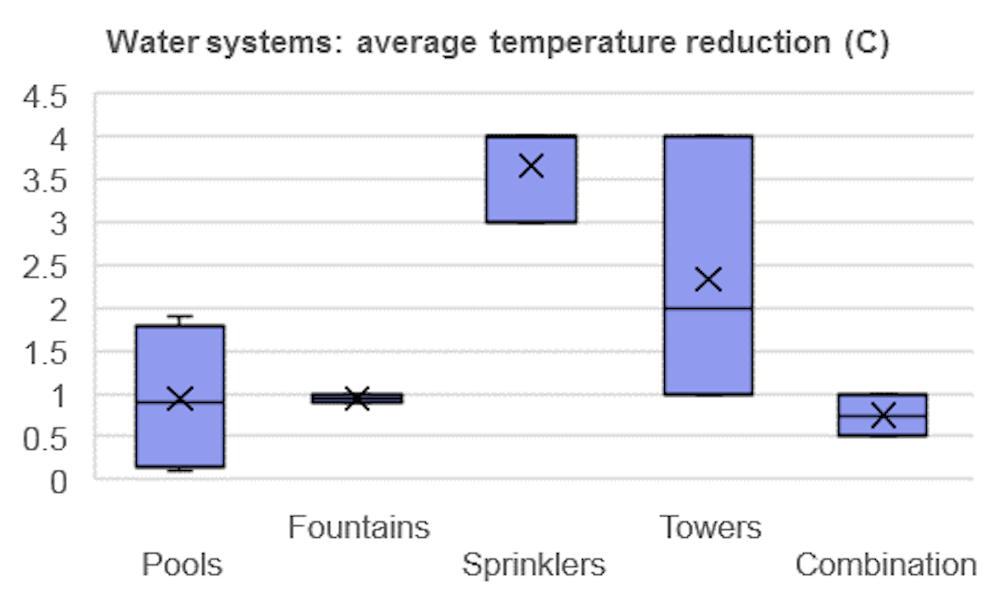
Maximum (above) and average (below) temperature reduction potential of different active and passive water systems. Komali Yenneti et al, Author provided

Water-based systems are usually combined with green infrastructure to enhance urban cooling, improve air quality, aid in flood management and provide attractive public spaces.


Read more: When the heat is on, we need city-wide plans to keep cool


3. Cool materials

Building materials are major contributors to the urban heat island effect. The use of cool materials on roofs, streets and pavements is an important cooling strategy. A cool surface material has low heat conductivity, low heat capacity, high solar reflectance and high permeability.

Evidence suggests that using cool materials for roofs and facades can reduce indoor temperature by 2-5°C, improve indoor comfort and cut energy use.
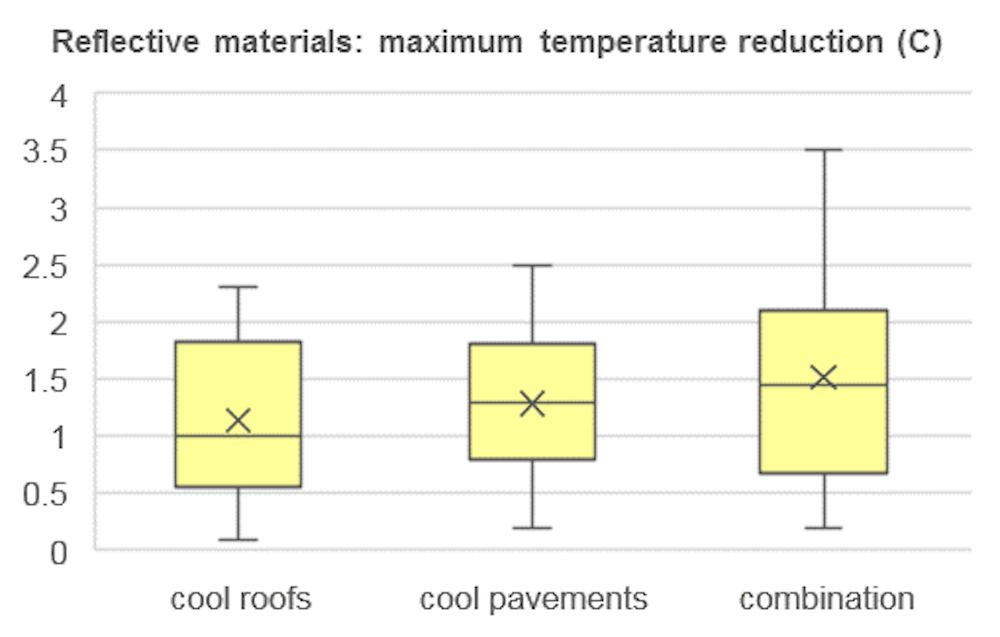
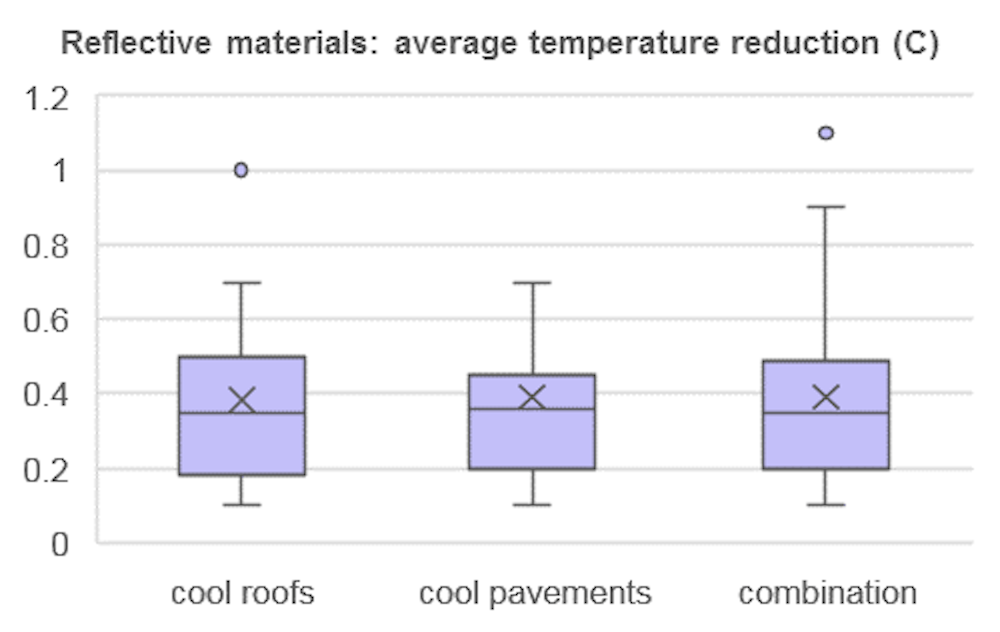
Maximum (above) and average (below) temperature reduction potential of different cool surfaces. Komali Yenneti et al, Author provided

Cool materials commonly applied to buildings include white paints, elastomeric, acrylic or polyurethane coating, ethylene propylenediene tetrolymer membrane, chlorinated polyethylene, polyvinyl chloride, thermoplastic polyolefin, and chlorosulfonated polyethylene.

Lighter aggregates and binders in asphalt and concrete, permeable pavers made from foam concrete, permeable asphalt and resin concrete are standard cool pavement materials.


Read more: Building cool cities for a hot future


4. Shading

Shading can decrease radiant temperature and greatly improve outdoor thermal comfort. Providing shading on streets, building entries and public venues using greenery, artificial structures or a combination of both can block solar radiation and increase outdoor thermal comfort. Examples of artificial structures include temporary shades, sunshades and shades using solar panels.


Read more: In a heatwave, the leafy suburbs are even more advantaged


5. Combined cooling strategies

Performance analysis of various projects in Australia suggests the cooling potential of the combined use of the different strategies discussed above is much higher than the sum of the contributions of each individual technology, as the charts below show. The average maximum temperature reduction with just one technology is close to 1.5°C. When two or more technologies are used together the reduction exceeds 2.5°C.
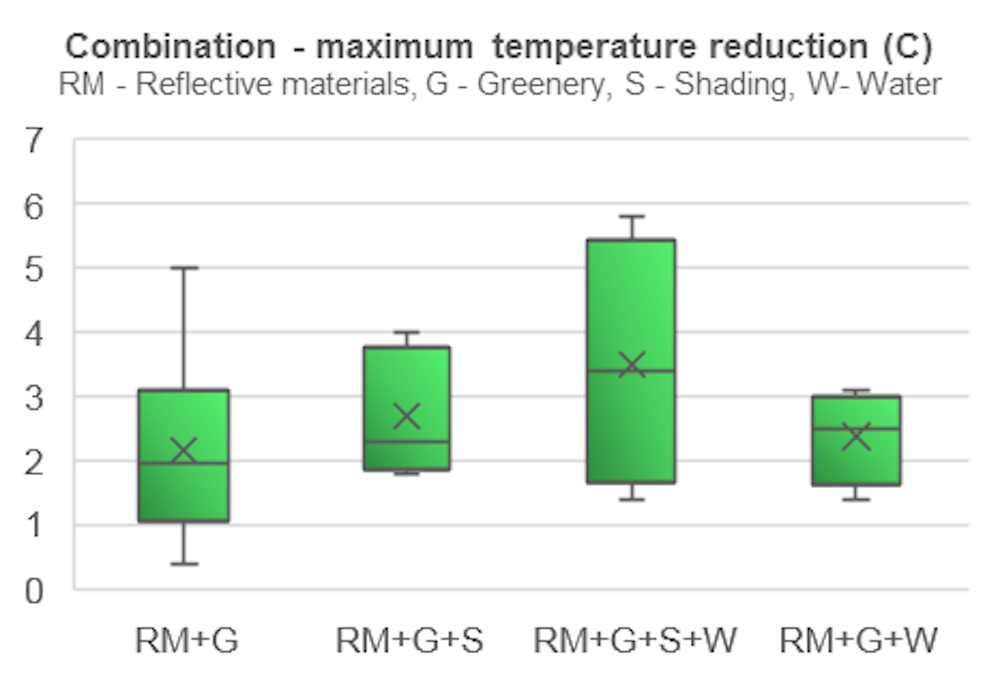
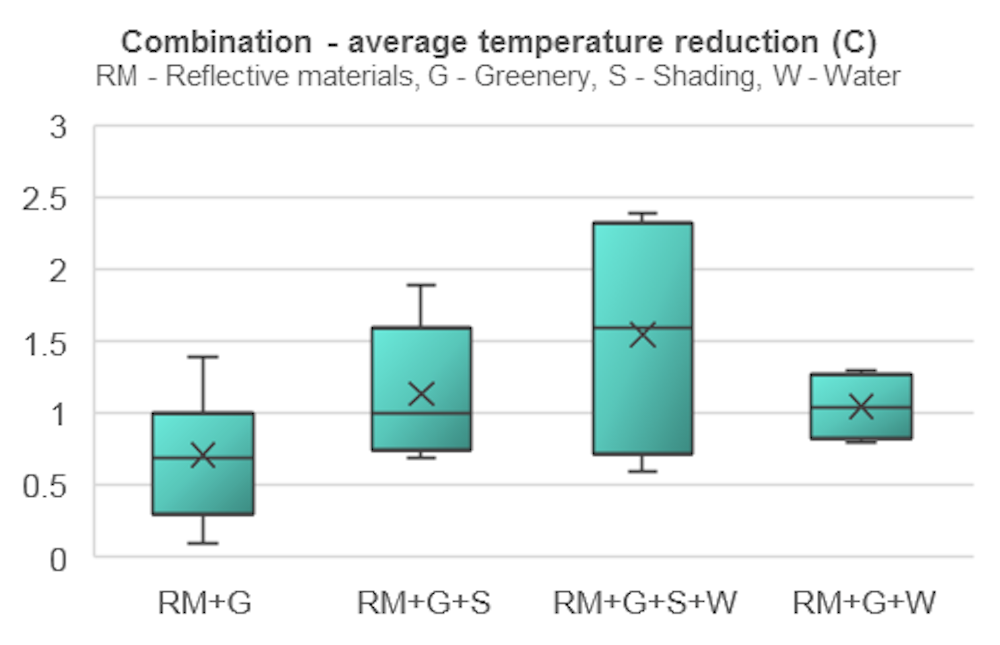
Maximum (above) and average (below) temperature reduction potential for a combination of technologies. Komali Yenneti et al, Author provided

The chart below shows the peak temperature reduction for all cooling strategies.
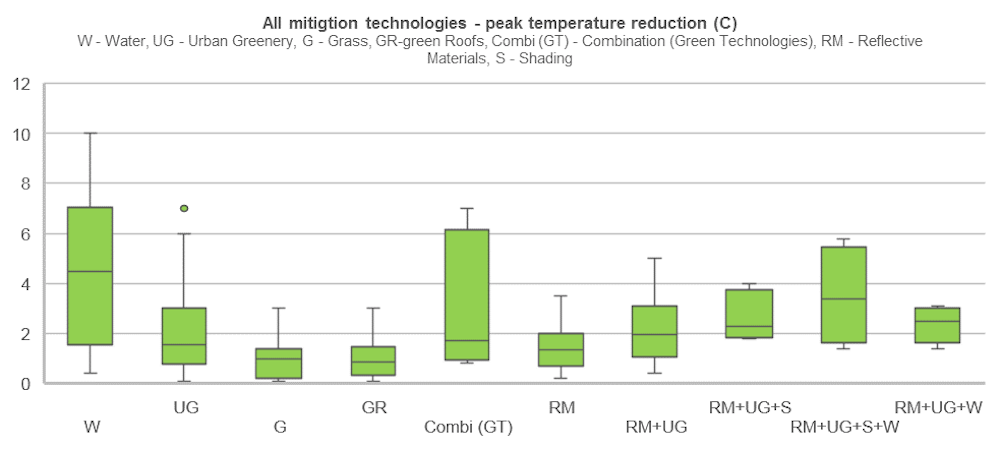
Komali Yenneti et al, Author provided

6. Behaviour changes

People are significant contributors to urban heat through their use of air conditioning. The waste heat from air conditioners heats up surrounding outdoor spaces.

Projections show cooling demand in Australian cities may increase by up to 275% by 2050. Such a trend will have a great impact on urban climate, as well as increasing electricity use. If this is powered by fossil fuels, it will add billions of tons of carbon pollution.

Climate-responsive building design and adaptive design techniques in existing buildings can minimise occupants’ demand for cooling energy by reducing indoor and outdoor temperatures.


Read more: We have the blueprint for liveable, low-carbon cities. We just need to use it


Cities must take a holistic, long-term approach

Local governments can prepare for and respond to heat events through emergency response plans. However, emergency responses alone cannot address other challenges of urban heat, including human vulnerability, energy disruptions and the economic costs of lower workplace productivity and infrastructure failures.

Long-term cooling strategies are needed to keep city residents, buildings and communities cool and save energy, health and economic costs.

ref. After another hot summer, here are 6 ways to cool our cities in future – https://theconversation.com/after-another-hot-summer-here-are-6-ways-to-cool-our-cities-in-future-110817


How fungi’s knack for networking boosts ecological recovery after bushfires

Source: The Conversation (Au and NZ) – By Adam Frew, Lecturer, University of Southern Queensland

The unprecedented bushfires that struck the east coast of Australia this summer killed an estimated one billion animals across millions of hectares.

Scorched landscapes and animal corpses brought into sharp relief what climate-driven changes to wildfire mean for Australia’s plants and animals.

Yet the effects of fire go much deeper, quite literally, to a vast and complex underground world that we know stunningly little about, including organisms that might be just as vulnerable to fire, and vital to Australia’s ecological recovery: the fungi.

Fungi play a crucial role in ecosystems around the world. Amanita sp, Geastrum sp and Aseroe sp. Adam Frew

Plants and fungi: a match made underground

The aftermath of wildfires can make landscapes appear devoid of life. Yet under the ash beds lies a vast living network of fungi.

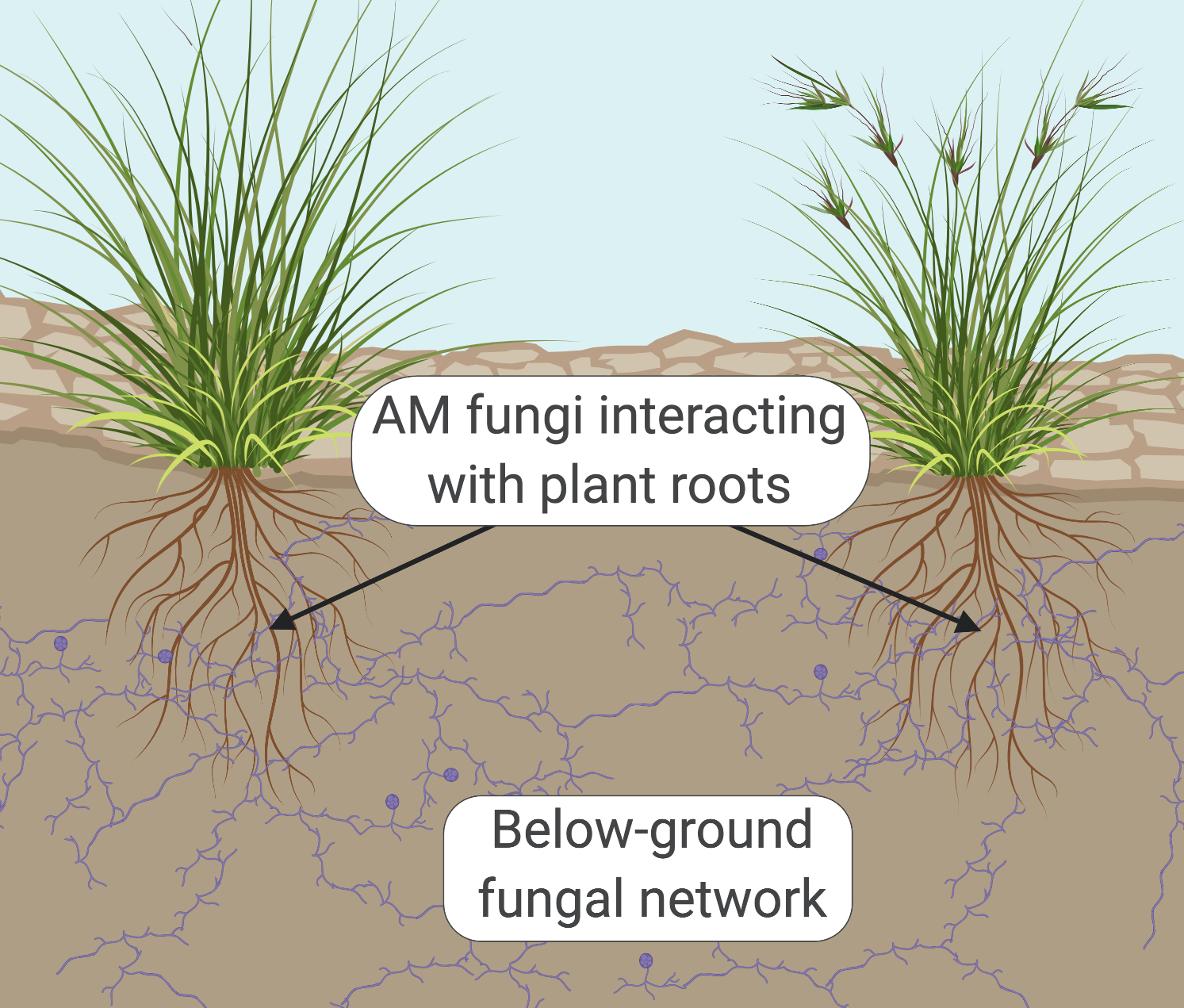
One group of fungi, called arbuscular mycorrhizal (AM) fungi, form symbiotic relationships with most of the world’s land plants. This means most plants and AM fungi rely on each other to grow and thrive.

Fungi provide access to nutrients such as phosphorus, and plants provide carbon as sugar and fats. Adam Frew via BioRender

Extensive networks of AM fungal mycelium (a vegetative part of a fungus, akin to plant roots) explore the soil to access nutrients beyond the reach of their plant partners. The mycelium forms a fungal underground highway, transporting the valuable nutrients back to the plants.


Read more: The glowing ghost mushroom looks like it comes from a fungal netherworld


Beyond nutrients, AM fungi can influence all aspects of plant ecology, such as seedling establishment, plant growth, defence against herbivores, and competition between different plant species. In fact, the number of species and abundance of AM fungi determine the success and diversity of plants.

In return for the nutrients they provide, AM fungi receive sugar made by plants through photosynthesis. For many species, this means without a plant host the fungi won’t last.

The responses of plants and AM fungi to fire are therefore deeply intertwined: the recovery of one is dependent on the other. Yet ecologists are only beginning to learn how fire affects fungi and what role they might have in hastening ecosystem recovery following wildfires.

Arbuscular mycorrhizal fungi colonising a plant root. Adam Frew

Fungi and fire: what do we know?

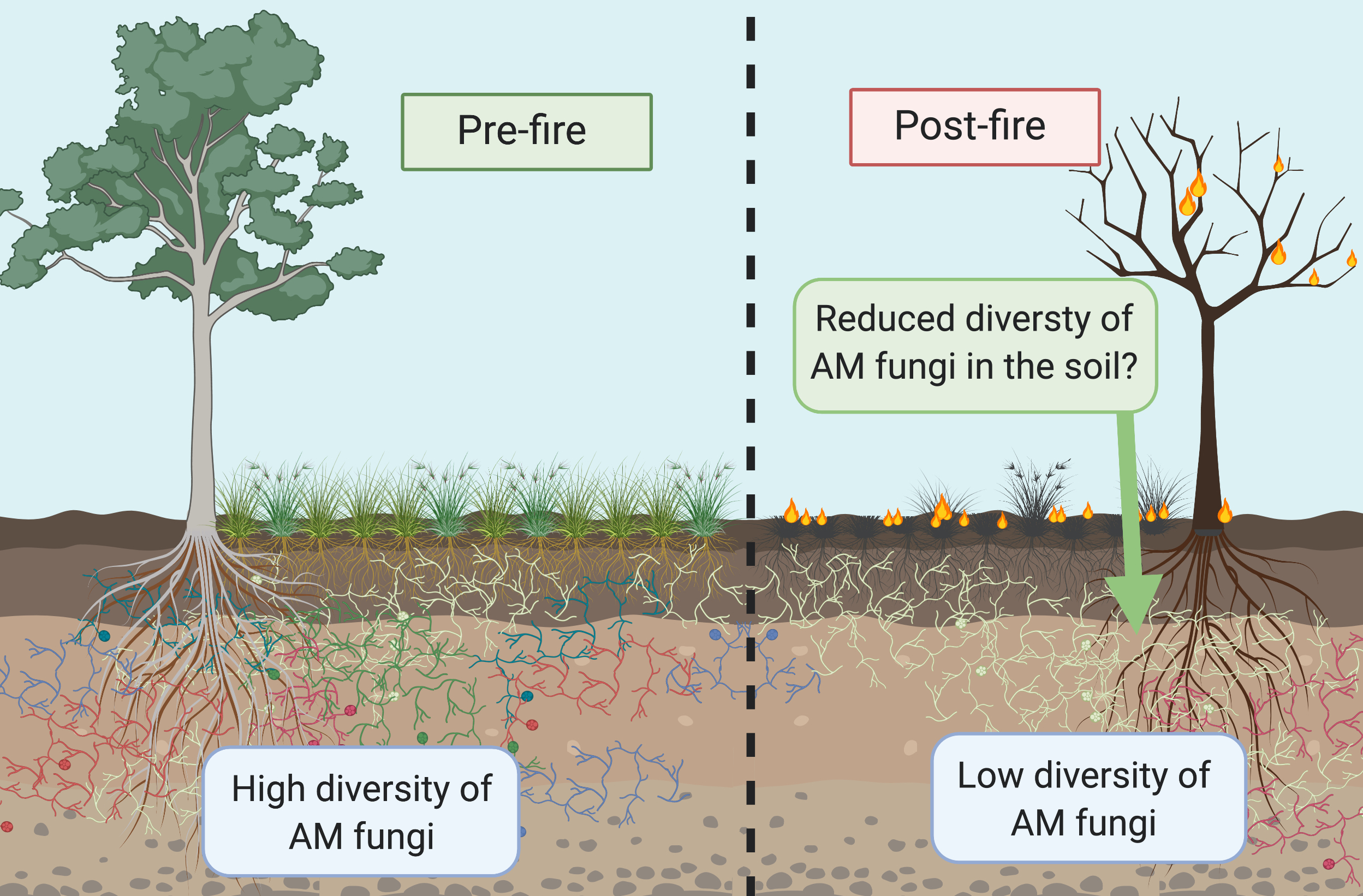
Studies have shown fungi living near the soil surface are particularly susceptible to fire, often killed by high soil temperatures as the fire passes over. Fungi further below the surface are relatively more protected, and may provide the nuclei for recovery.

But, as with animals, surviving fire is only half the battle. When fire removes vegetation, it suddenly halts sugar and fats plants produce, delivered to the fungi below-ground.


Read more: How you can help – not harm – wild animals recovering from bushfires


Another challenge is the ways fire influences the underground world, such as changes in soil acidity, soil carbon, nutrient dynamics, and soil water. For instance, soils with more acidity tend to have less diversity of AM fungi.

How exactly fungi and fire interact remains an ecological mystery. Coprinus sp. Adam Frew

The combination of high temperatures and changed conditions appear to take a toll on fungi: a 2017 meta-analysis of 29 studies found fire reduces the number of fungal species by about 28%. And given the severity of last summer’s bushfires, we can expect that many fungal communities below the surface have been lost, too.
Lose fungi, lose function

When fire hits, the community of AM fungi may lose less resistant species. This is important because studies show different species of AM fungi are better at supporting their plant partners in different ways. Some are better at providing nutrients, while others are more helpful with defending plants from disease and herbivores.

Changes in the number and types of AM fungal species can strongly determine how well plants recover, and can influence the whole ecosystem after fire. For example, plants could be left more vulnerable to disease if fungi supporting native plant chemical or physical defences are reduced by fire.

Amanita muscaria (Fly agaric) Adam Frew

Since we know fungi are particularly important to plants in times of ecological stress, their role may be paramount in harsh post-fire landscapes. But while firefighters and wildlife carers have gone to inspiring lengths to protect plants and animals, we know little about how to help AM fungi recovery from the bushfires, or if help is even necessary.

Helping fungi help ecosystems

Research from last year showed reintroducing AM fungal communities (usually as an inoculant or biofertiliser) to degraded and disturbed landscapes can increase plant diversity by around 70%, encourage recovery of native plants, and suppress invasive weeds.

Fire tends to change what species of arbuscular mycorrhizal fungi are present in the soil as ecosystems recovery. Adam Frew via BioRender

Taking a similar approach and actively putting fungi back into fire-affected environments could ensure more rapid or more complete recovery of native vegetation, including the survival of endangered plant species threatened by the fires.

However, it’s important to consider which AM fungi are reintroduced. They should be species normally present in the local area, and suited to support recovering plant communities.


Read more: A rare natural phenomenon brings severe drought to Australia. Climate change is making it more common


So as climate change leads to more frequent and intense bushfires, could fungi form a fundamental component of fire recovery efforts? Maybe.

But there is so much we’re yet to learn about these ancient and complex relationships. We’re only beginning to scratch the surface.

ref. How fungi’s knack for networking boosts ecological recovery after bushfires – https://theconversation.com/how-fungis-knack-for-networking-boosts-ecological-recovery-after-bushfires-132587
The other Indigenous coronavirus crisis: disappearing income from art

Source: The Conversation (Au and NZ) – By Jon Altman, Emeritus professor, School of Regulation and Global Governance, ANU, Australian National University

Public health measures to reduce the spread of COVID-19 may be having an unintended effect on remote Indigenous communities.

With the closure of Aboriginal lands to visitors, tourist visits have stopped abruptly along with the income from buying art they provided.

In at least one large community, the art centre that sells the work of several hundred artists has stopped buying because stock levels are extraordinarily high and it has no money to buy.

As well, the anticipated serious downturn in sales in city-based galleries is likely to be passed along the supply-chain, leaving many remote art centres short of funds to buy new work.

The downturn may have begun with the economic slowdown in 2020, but it has been accelerated by COVID-19.

Art sales are (or were) a lifeline

The 2016 census tells us that for the first time on record, more than half the Indigenous people living in very remote Australia were below the poverty line.

Since then, those incomes have plummeted.

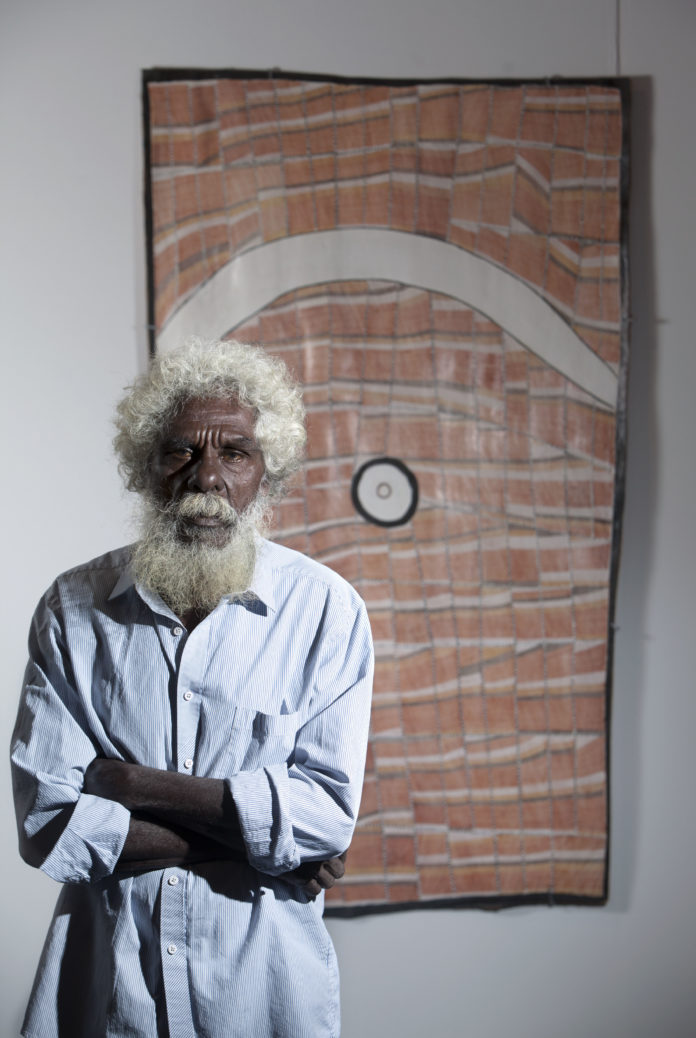
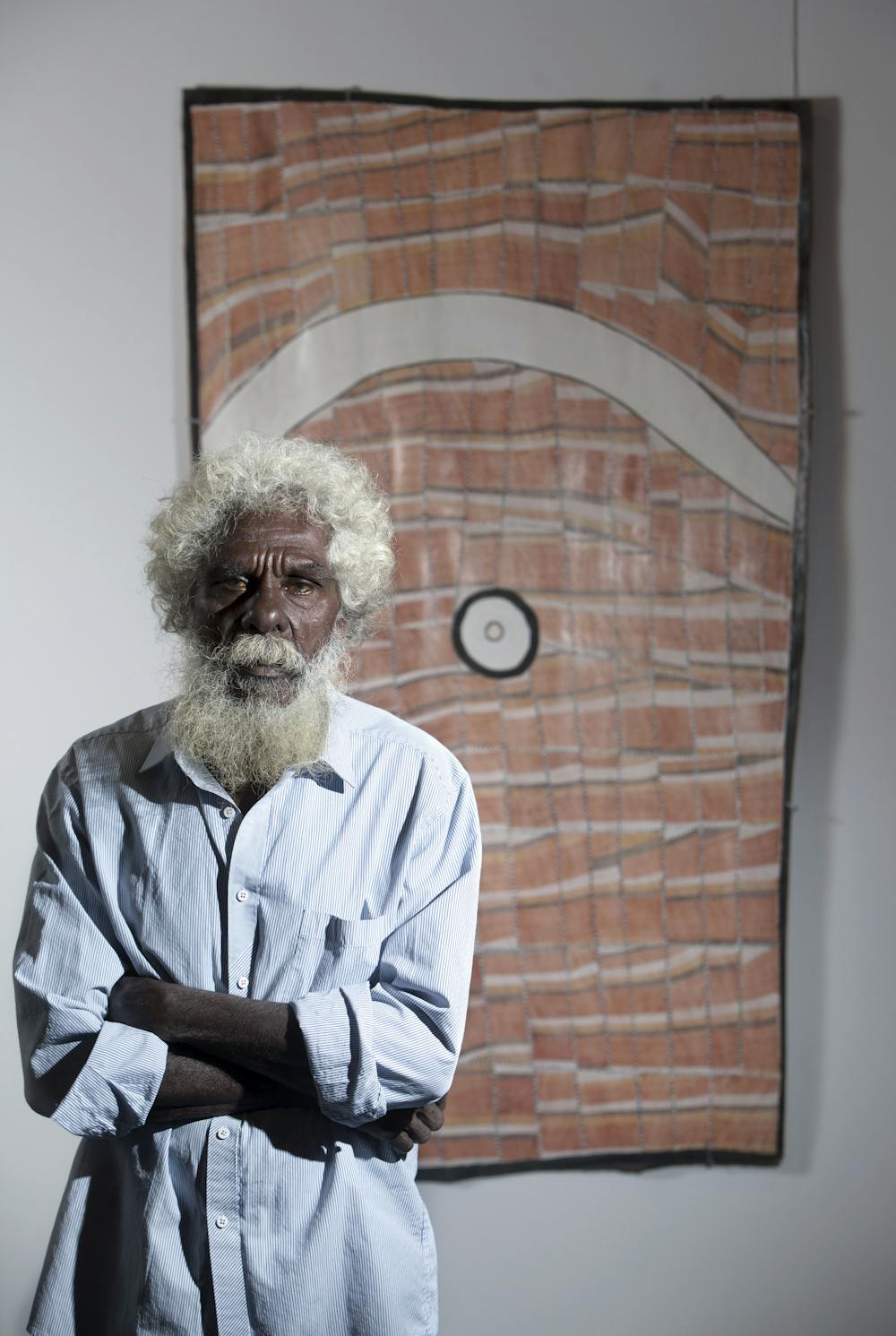
John Mawurndjul with his artwork Dilebang, winner of the 2016 Bark Painting Award at the National Aboriginal and Torres Strait Islander Art Awards. Fiona Morrison/AAP

The median real personal income of working age Indigenous adults in remote Australia fell by about 20% between 2014–15 and 2018–19 according to our unpublished analysis of Australian Bureau of Statistics’ surveys.

In the same ABS surveys only 30% of very remote households say they would be able to raise A$2000 within a week. About 30% say they have run out of money for basic living expenses at some time within the past 12 months.

When we recently asked whether there was stockpiling (including of toilet paper) in a large remote community in Arnhem Land, we were told there were plentiful supplies of everything. It is hardly surprising. To stockpile, households need cash or credit.

Last year, in expert evidence in a Federal Court case, we estimated that payments to Indigenous artists by just two large art centres — Buku Larrngay in east Arnhem Land, and Warlukurlangu in central Australia — accounted for 15% of the total Aboriginal income in those two regions.

The first stimulus package offered little

What did the Morrison government’s first $17.6 billion coronavirus stimulus package offer remote living Indigenous communities? Not much.

It was directed instead at supporting established mainstream business.

The main thing on offer for individuals was one-off payment of $750 to be delivered from March 31.

Despite the coronavirus risk, the first package offered no relaxation of the onerous obligations under the Community Development Program that require able-bodied people in remote areas to work 20 hours a week in return for Newstart.


Read more: Why are we losing so many Indigenous children to suicide?


It has been estimated that more than 500,000 penalties have been applied under the program in the past four years, further impoverishing already impoverished people and subjecting them to surveillance.

Numbers on the scheme have declined in recent years, in part because they exit the social security system because of its harsh penalty regime, increasing the financial burden on those employed, selling art, or still within the system.

The government’s second stimulus package ought to suspend the labour-intensive but economically wasteful activity and reporting requirements, and redeploy Centrelink staff to registering all eligible people for income support to ensure they have enough cash on hand to purchase the basics.

Cash will help

Australians in remote Indigenous communities are highly vulnerable to COVID-19 because of high levels of diabetes, kidney disease and rheumatic heart disease.

Northern Territory government epidemiologists believe poverty is one of the key drivers of these conditions.

Last year, in a submission to the Senate inquiry into the adequacy of Newstart we argued that it deepens poverty.


Read more: New Zealand outstrips Australia, UK and US with $12 billion coronavirus package for business and people in isolation


Now might be the time to follow the lead of New Zealand which last week permanently increased all benefit payments as part of the response to the coronavirus.

If there is be a silver lining to the current very dark cloud, it might be that after the crisis we will see the point of a guaranteed basic income for remote Indigenous Australians.

ref. The other Indigenous coronavirus crisis: disappearing income from art – https://theconversation.com/the-other-indigenous-coronavirus-crisis-disappearing-income-from-art-134127

Friday essay: the uncanny melancholy of empty photographs in the time of coronavirus

Source: The Conversation (Au and NZ) – By Cherine Fahd, Director Photography, School of Design, University of Technology Sydney

Over the last few weeks, photographs in the news and on social media have documented our behaviour in response to COVID-19.

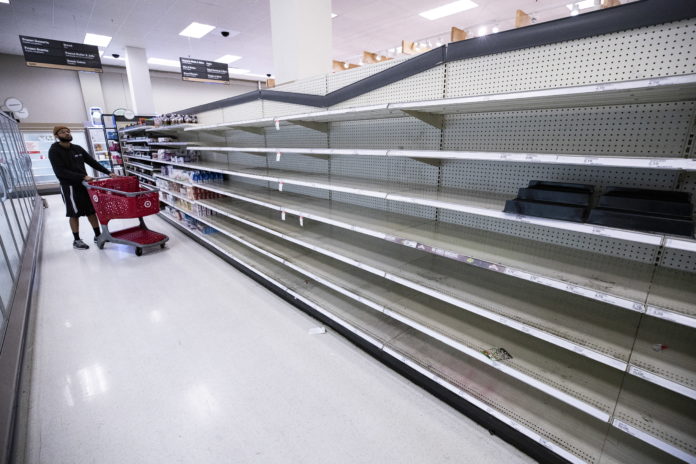
Panic buying of pasta, rice and, surprisingly, toilet paper is represented in empty shelf after empty shelf.

Empty shelves at a supermarket in Los Angeles, California, March 6 2020. These images also proliferate in social media feeds globally. For most 21st-century, first-world consumers, this scarcity is unprecedented. Etieene Laurent/EPA

That’s not all that is empty.

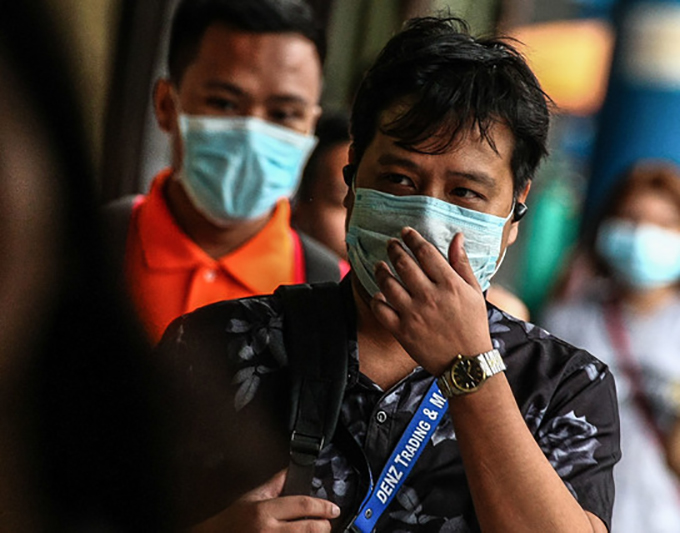
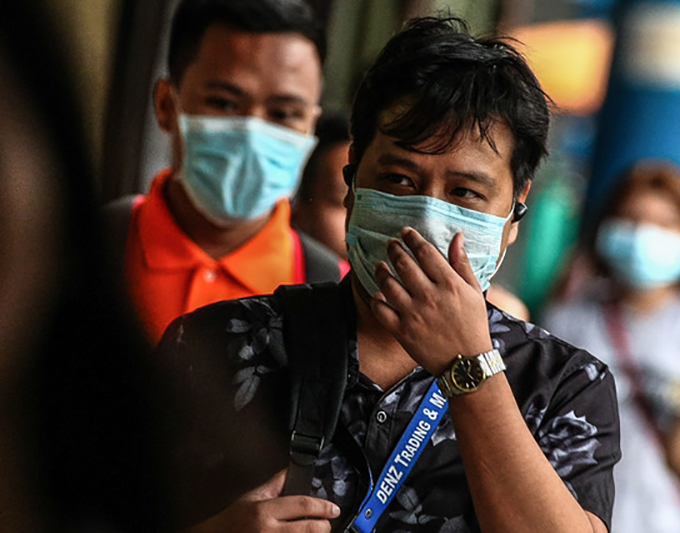
Images of empty public spaces – from the streets of Ginza, to soccer stadiums, to the Venice canals, to lone masked travellers on buses, trains and trams – evoke a sense of apocalyptic films and the end of days.

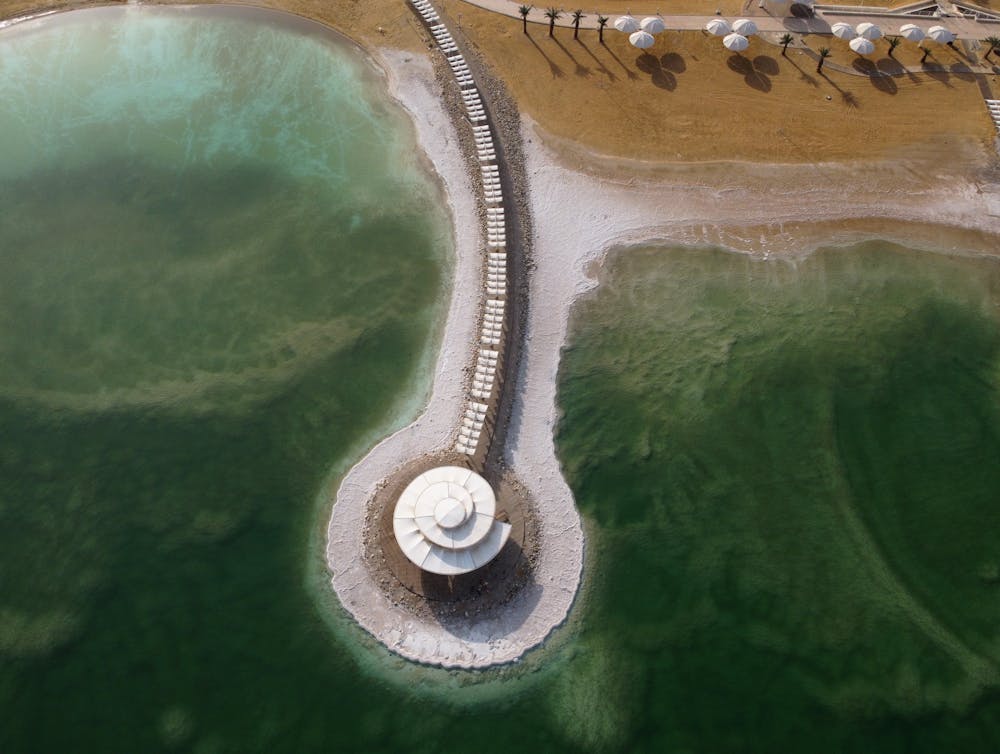
The empty Ein Bokek beach on the Dead Sea, Israel, March 15 2020, a bird’s-eye view taking us where the majority of us cannot go. Abir Sultan/EPA

Photographs of empty public spaces are increasingly filling our news feeds, documenting our response to a worldwide pandemic.

While these pictures point to a frightening situation, we can’t help being drawn into the otherworldly and unfamiliar scenes. They make us stop, look and linger as we try to comprehend what these places without people are saying.

Our attraction to images of the world without us reveals a collective fascination for the apocalypse or, perhaps, extinction.

A clergyman on March 15 2020 in Cologne Cathedral, Germany, where mass has been cancelled. The priest stands as the lone observer, mirroring the artistic trope of the lone wanderer in the landscape. Marius Becker/DPA

Take the Instagram feed Beautiful Abandoned Places and its 1.2 million followers. These photographs show buildings in ruins or overgrown with weeds; old tourist sites now empty.

The images are “ruin porn”: when we take voyeuristic pleasure or delight in the sight of architectural decay or dilapidation.

The appeal comes from looking at a scene that could cause discomfort (or estrangement, or isolation) but doesn’t. The viewer is looking at a representation of the scene, not the scene itself, from a position of far-off comfort.

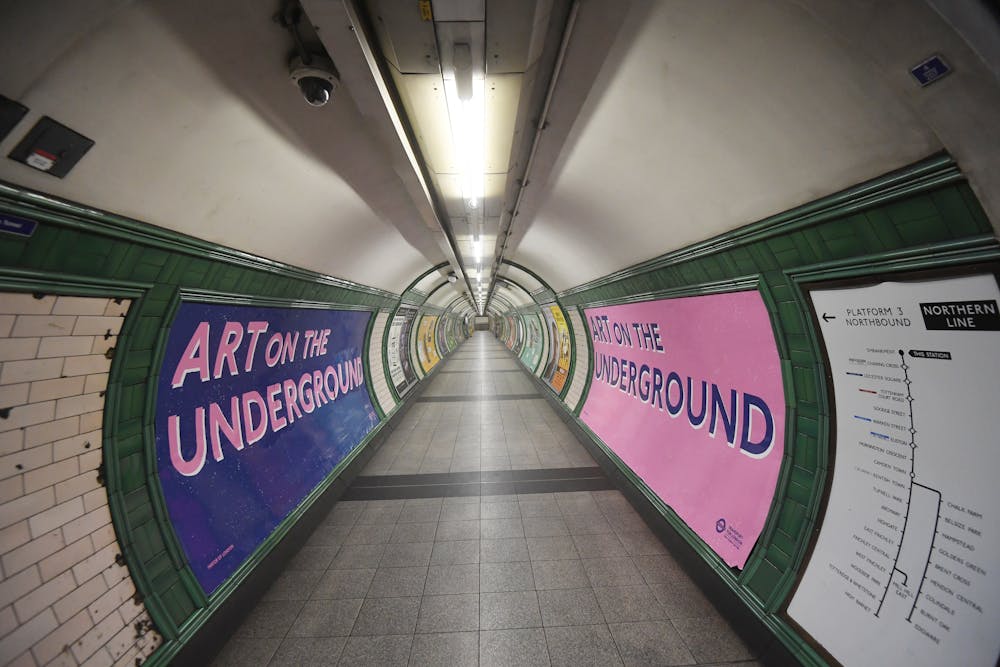
The London underground on March 16 2020 seems to stretch out forever. Facundo Arrizabalaga/EPA

But another definition of ruin porn, a moral definition, is gaining pleasure from someone else’s failure, as seen through these architectural ruins.

Morally compromised as outsiders, we aestheticise a picture of another’s decline while looking away from factors that contribute to crisis.

The images in our current news feeds – despite what they say about coronavirus – offer similarly compelling visuals. We take delight in the formal composition of these images, which fall into tropes of the photographic picturesque.

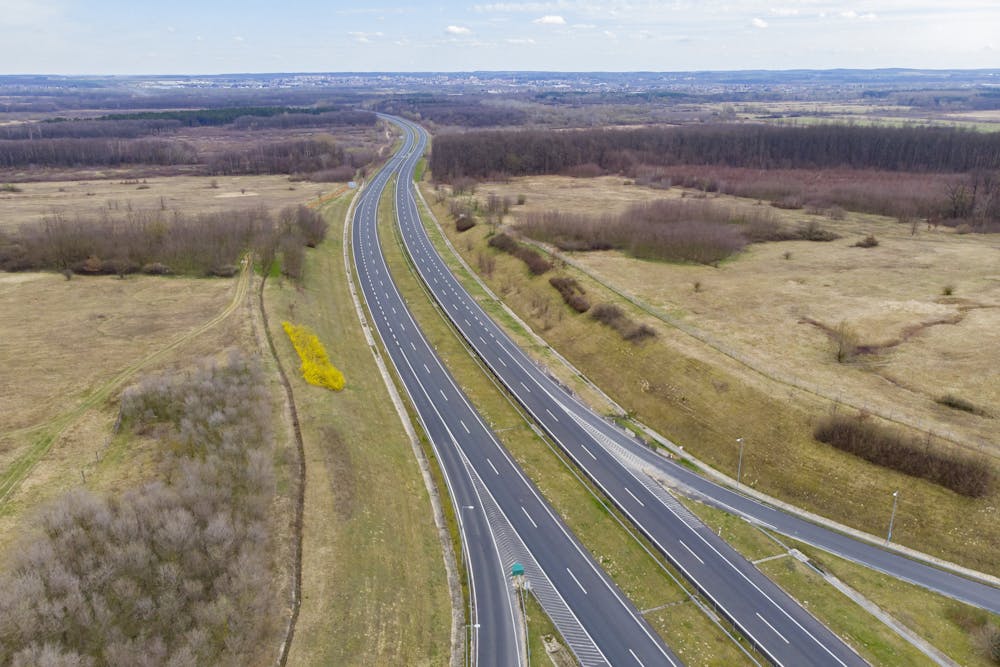
The empty M7 motorway in Hungary, March 14 2020. A posthuman, dystopian view of the world without us. Gyorgy Varga/Hungary Out/EPA

The absence of people provides us with the ability to see into the distance with endless visual perspective. We feel as though we are alone in the landscape, a heroic adventurer.

Why is our absence from the world so fascinating to view in photographs?

In the early era of photography, anything moving would be rendered invisible, while architecture (or a corpse) was the perfect still subject. Take for instance Daguerre’s 1839 photograph of the Boulevard du Temple, Paris, a bustling city street.

Louis Daguerre’s Boulevard du Temple, photographed in 1839.

In this photograph, the street appears empty – with the exception of two figures who have stood still long enough to be captured by the exposure time required to portray the scene.

Photographs have always provided us with an alternative view of the world without us.

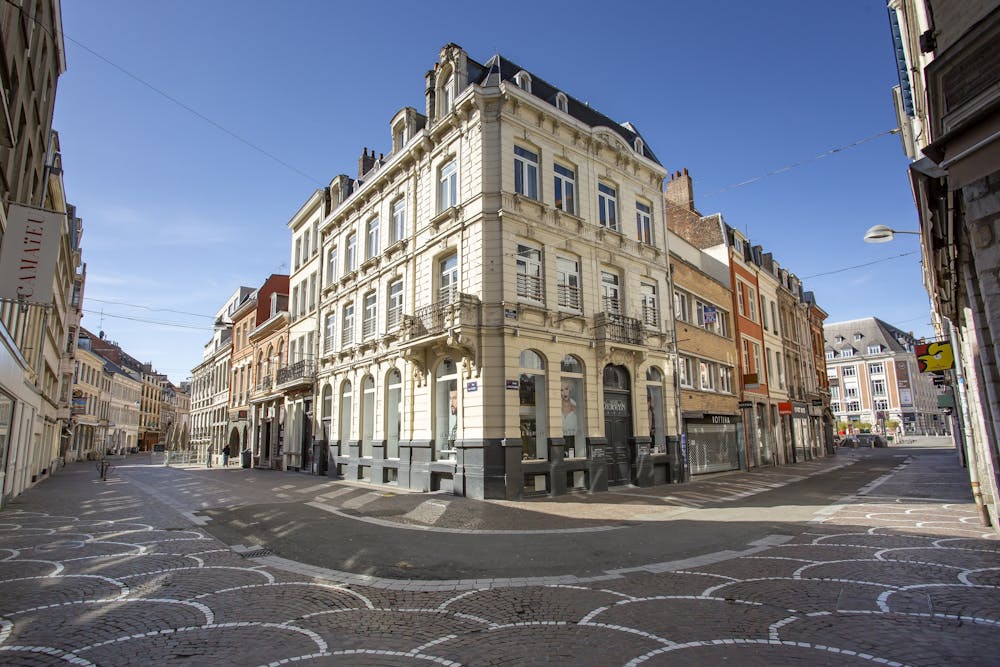
The streets of France are photographed empty again, here in Lille on March 17 2020. Sebastien Courdji/EPA
Contemporary fine art photographer Candida Höfer has made a successful career out of photographing large-scale empty spaces like public libraries, museums, theatres and cathedrals. Thomas Struth’s empty street photographs make German cities look like ghost towns.

These artists demonstrate a longstanding fascination with photographing architecture devoid of human subjects.

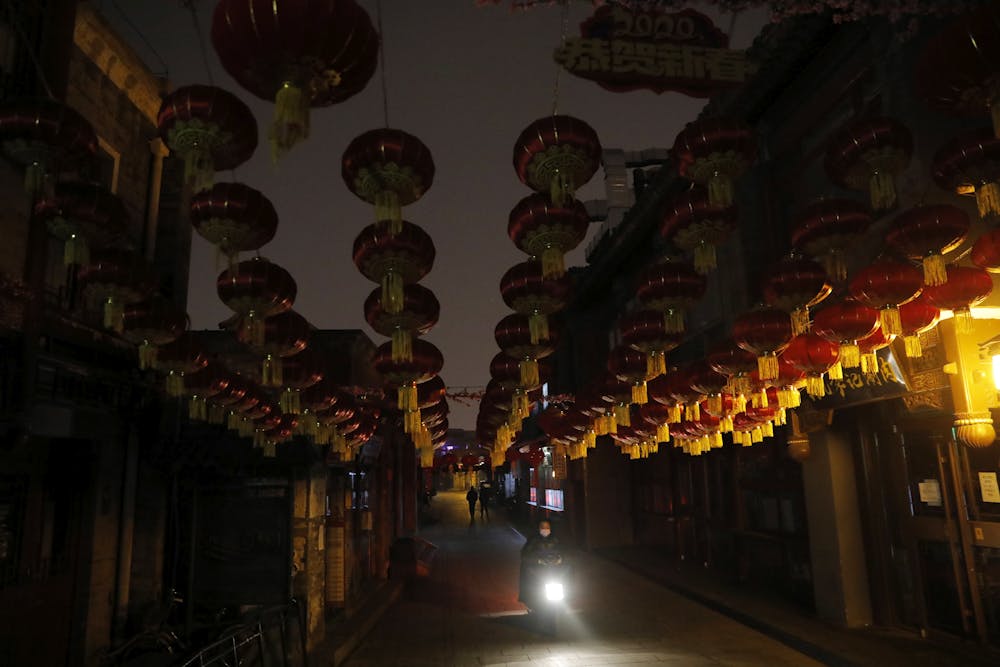
Houhai Bar Street in Beijing, China, February 20 2020, known for its bright lights and nightlife, is now dark and near deserted. Wu Hong/EPA

This fascination may be due to what architectural historian Anthony Vidler described as “the architectural uncanny”. Abandoned and deserted spaces, he said, make our familiar spaces become unfamiliar.

For Vidler, this estrangement from space hinges on visual representation such as in photography.

These photographs of empty public spaces capture a departure from our everyday and instead visualise this uncanniness: an alternative reality emptied of our presence.

The uncanny, wrote Vidler:

Would be sinister, disturbing, suspect, strange; it would be characterised better as “dread” than terror, deriving its force from its very inexplicability, its sense of lurking unease, rather than from any clearly defined source of fear – an uncomfortable sense of haunting rather than a present apparition.

The nearly empty Galleria Vittorio Emanuele II arcades, Italy’s oldest active shopping mall. Matteo Corner/EPA

While we hide away and quarantine ourselves indoors, the world outside is captured in the collective imaginary as eerily without us. What we thought we knew of public spaces is instead evoking the sensation of being alone in a haunted house.

In images where we expect to see hundreds or thousands of people, we find instead a few lonely figures presented to us by a single observer: the camera.

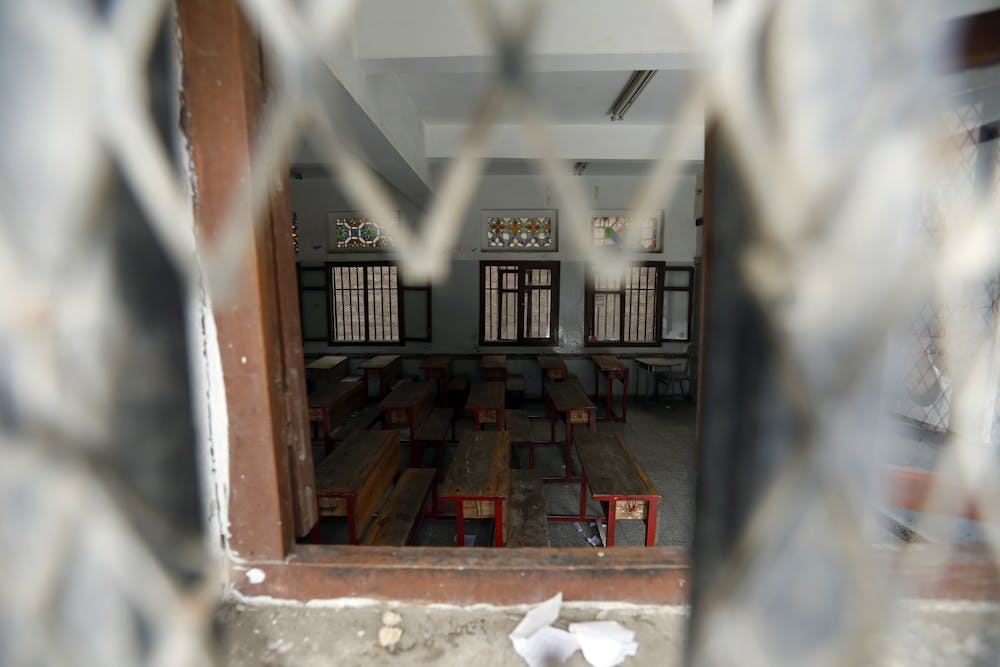
An empty classroom in Sanaa, Yemen, March 15 2020, with traces of torn paper on the parapet. Yahya Arhab/EPA

Pictorial urban life emptied of its citizens produces an assortment of emotional responses: estrangement, social alienation, melancholy.

The Italian painter Giorgio de Chirico captured this in his 1913 painting Melancholy of a Beautiful Day where an ominous figure stands alone in an empty town street accompanied only by his shadow and a Roman statue in the distance.

Made over a century ago, de Chirico’s painting surprisingly resonates with the photographs we are seeing in the news today. While it offers a historical example of the surrealist fascination with psychological dream states, it is also prescient of our current reality.

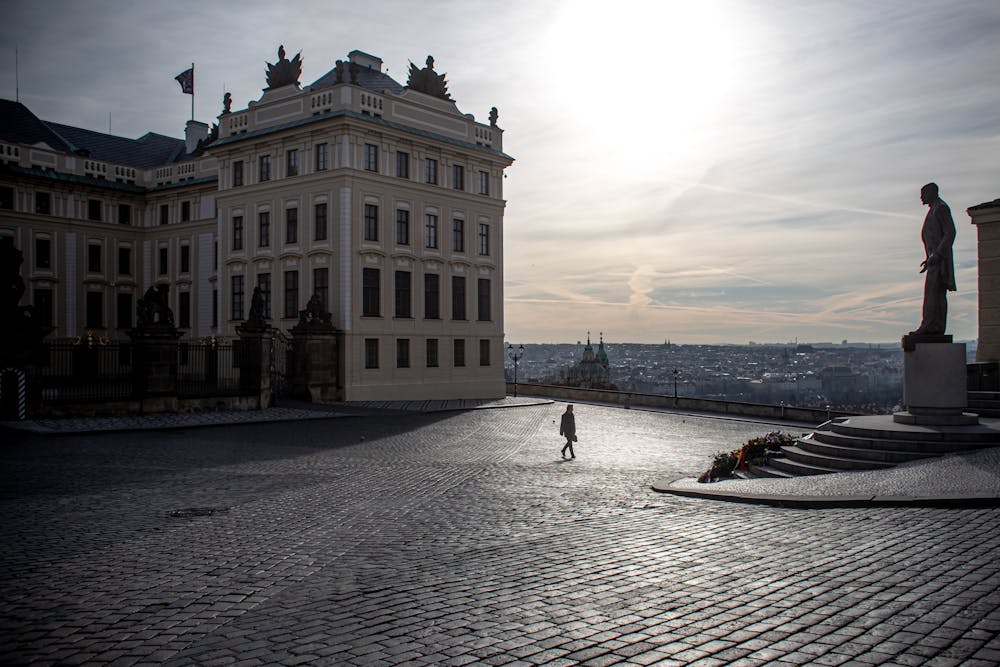
A single figure walks across Hradcanske square in front of closed Prague Castle in Prague, Czech Republic, March 16 2020, reminiscent of de Chirico’s painting. Martin Divisek/EPA

The images being captured by news photographers point to our fear of the pandemic and, fundamentally, of each other.

The photographs expose how swiftly we can become estranged from our everyday lives, how our surroundings can suddenly become something other – something fragile and tenuous.

The empty shelves, the empty restaurants, the grounded planes, the empty airports, the depopulated Mecca without worshippers, Trafalgar Square without tourists: these are all signals of the slowing of progress.

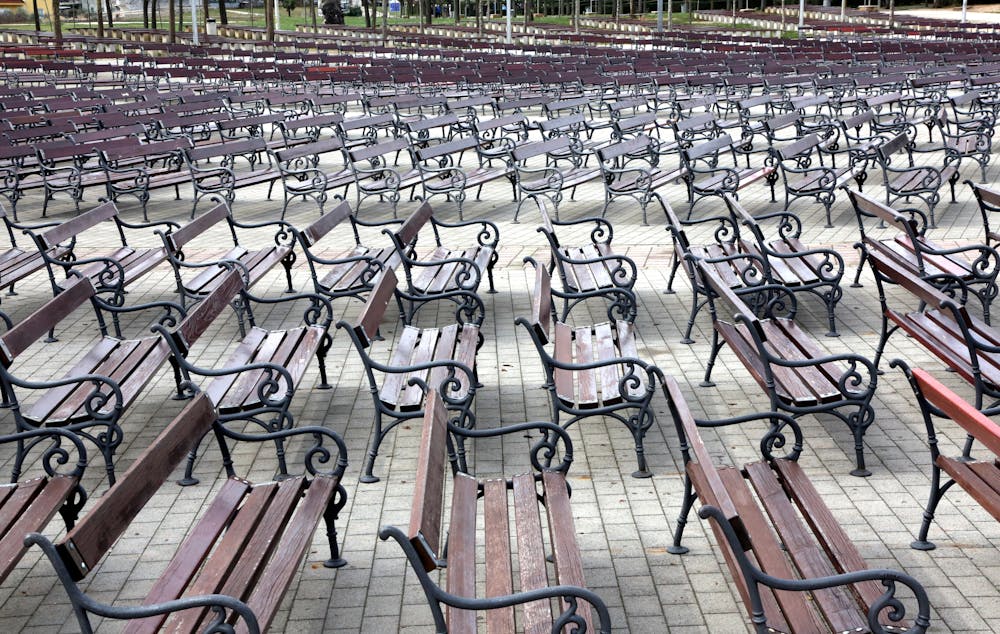
The deserted amphitheatre at one of the largest Catholic shrines in the world, in the village of Medjugorje, Bosnia and Herzegovina, March 11 2020. Devoid of human subjects, the chairs take on a life of their own. Fehim Demir/EPA

Photography is so good at capturing this because it is an unmediated mechanical eye that confronts our all-too-human eye. In these instances, the camera is able to be where we cannot be.

The mechanical eye is further exaggerated in the photographs which provide us with a distinctly nonhuman view of open, empty spaces.

Drone images give us an aerial perspective not readily available to the human eye. When viewed in the context of a global health crisis, there is no mistaking that we are – somewhat strangely – bearing witness to our own erasure.

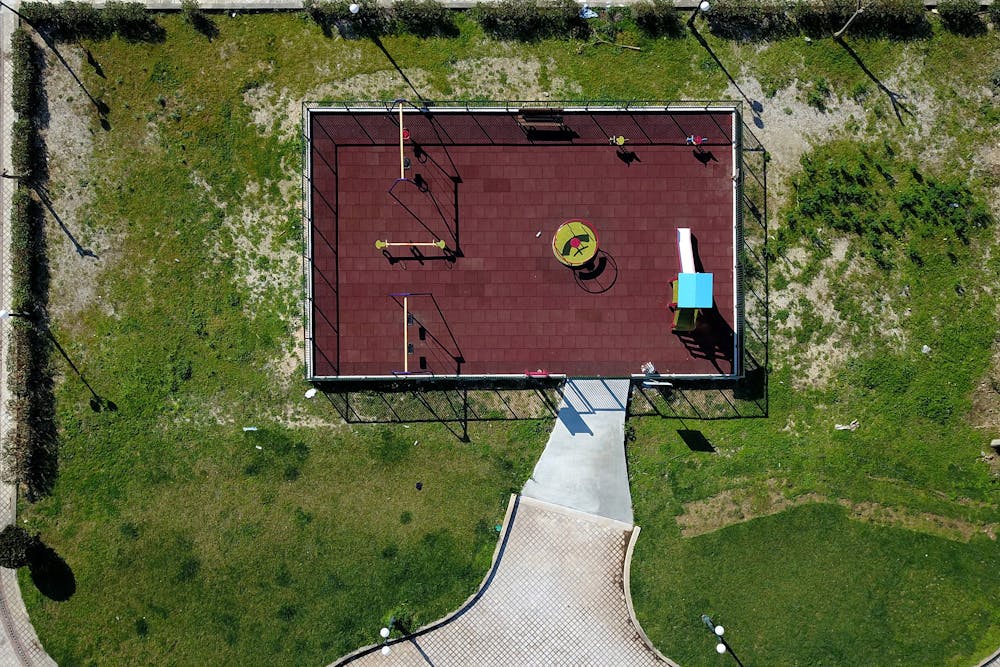
An empty playground in Nafplio, Peloponnese, southern Greece, March 11 2020, while children are kept indoors. Evangelos Bouigiotis/EPA

We are accustomed to seeing images of crisis represented by fires, floods, bombs, warfare. The photographs we see as a result of COVID-19 are an emptying out and a slowing down.

This is a different sort of crisis, one that is mirrored in the uncertainty and slowing down of our financial markets and the need for government stimulus packages.

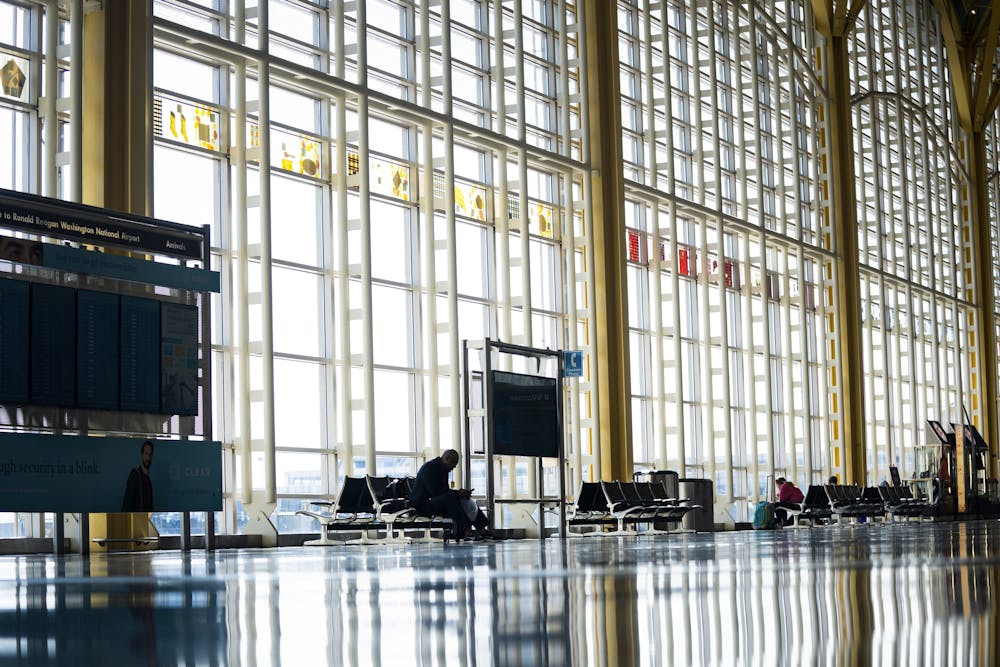
An unusually quiet Ronald Reagan Washington National Airport in Arlington, Virginia, USA, March 13 2020. In the absence of travellers, the image foregrounds the qualities of the architecture. Jim Lo Scalzo/EPA

As cultural historian, Frederic Jameson said:

it is easier to imagine the end of the world than to imagine the end of capitalism.

Perhaps this is precisely what these photographs are showing us: how the pandemic paradigm of “social distancing”, which isolates us physically from each other, disrupts and stops our lifestyles.

The pausing or end of our gathering in public, in airports and hotels, at tourist sites and sporting matches, in shopping malls, museums and bars, signals a rupture to the flow of everyday life.

The deserted entrance to the Louvre, captured March 14 2020, shows Paris empty again. The bollards stand in rows where visitors to the museum would ordinarily queue. Ian Langsdon/EPA

Photographs of empty public spaces unmask the illusion that we are integral to existence. Even without a camera operator, optical technology will linger on and capture scenes of the world without presence.

Who can say whether that operator is human, or nonhuman, like a satellite from outer space that is still programmed to picture our buildings even if we aren’t in them?

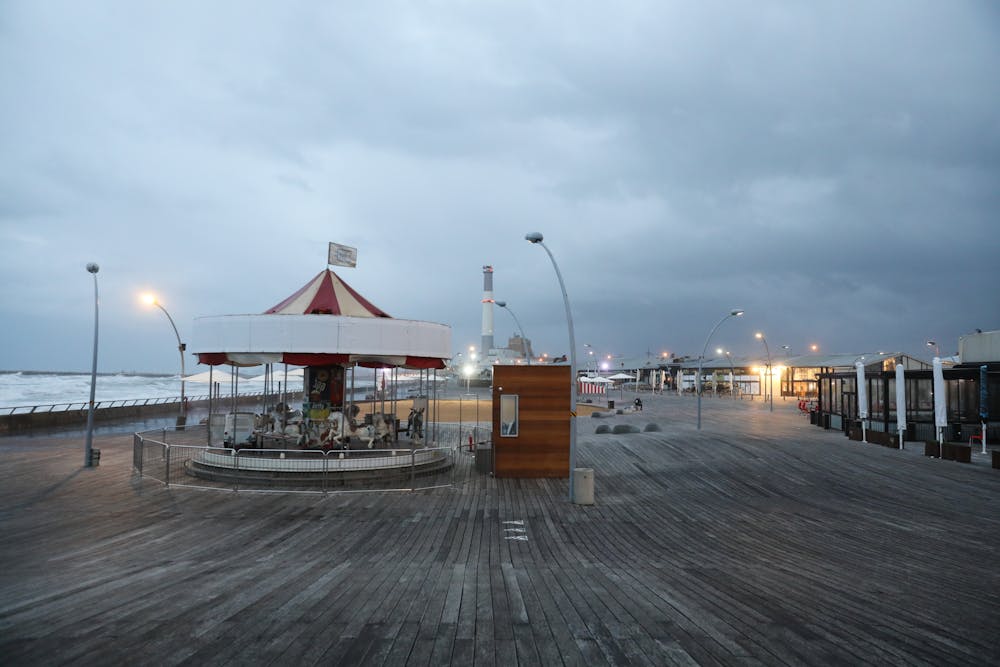
The empty port of Tel Aviv, Israel, March 17 2020. The world will continue on without us. Abir Sultan/EPA
ref. Friday essay: the uncanny melancholy of empty photographs in the time of coronavirus – https://theconversation.com/friday-essay-the-uncanny-melancholy-of-empty-photographs-in-the-time-of-coronavirus-133615

Grattan on Friday: We are now a nation in self-isolation

Source: The Conversation (Au and NZ) – By Michelle Grattan, Professorial Fellow, University of Canberra

There’s new official lingo about tackling COVID-19’s economic challenge. A “bridge” is being built to take us to the other side of the crisis.

Meanwhile, the government is preparing a “cushion” for businesses and individuals who are already or soon will be its casualties.

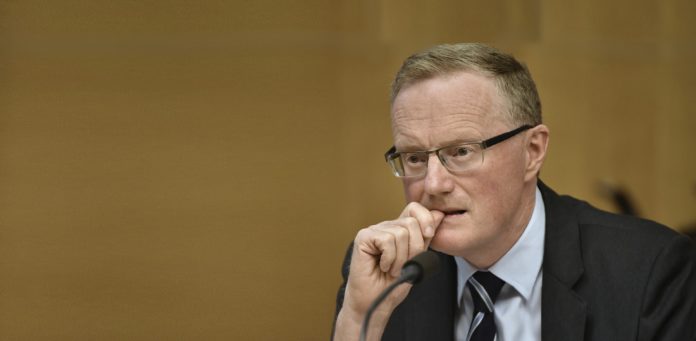
Reserve Bank governor Philip Lowe came up with the bridge metaphor, Scott Morrison loves it and Treasurer Josh Frydenberg is using it.

The Reserve Bank on Thursday unveiled its bridge-building package. It cut the cash rate again, to 0.25%. It will also put a staggering $90 billion into the banking system, with the government injecting another $15 billion, to encourage low interest lending targeted at small and medium sized businesses.


Read more: More than a rate cut: behind the Reserve Bank’s three point plan


But the bridge requires constructing a foundation of confidence, at a time when many businesses and consumers feel only fear.

In present circumstances, normal economic incentives have a much lesser effect. The market signals don’t work properly. If small businesses have their customers disappear and don’t expect them back any time soon, owners won’t be too interested in cheap loans.

Morrison has stressed Australia is not in shut down. Not officially. But out of a combination of alarm, caution and government measures to contain the virus’s spread, many activities have shut down and more do so every day.

Less than 90 minutes after the Reserve Bank produced its measures, Morrison announced the government was closing Australia’s border to foreigners, which will take effect late Friday.

As a health measure, this is sound, given the spread of the virus overseas and the extent to which arrivals have driven its early stage in Australia.

But it will be yet another brake on the economy, even though foreign arrivals have already fallen drastically.

Two days earlier Australians were told not to leave the country. Australia is in national self-isolation. And unlike for individuals, there is no set end point.

Qantas has stopped international flights and stood down 20,000 staff. It is hoping flexible leave arrangements will preserve jobs, but for how long?

A measure of the strange times is that Qantas is talking to Woolworths about some of its employees working there. The hoarding frenzy has become a job creator.

During this week, Morrison seemed on top of his messaging and the pioneering “national cabinet” of federal and state leaders was showing there is such a thing as “co-operative federalism” (albeit it has taken a national emergency to put it on display).

But federal and state governments and the community are a long way from having any certainty what measures – health or economic – might eventually be needed.

In circumstances unprecedented in living memory, difficult judgements are being made day by day that juggle health, the economy, and public sensibilities.


Read more: Our politicians are not fit to oversee the coronavirus response. It’s time they got out of the way


Devising rules for nursing homes pitted health against the humane. COVID-19 is lethal for the frail aged. But this week the government decided visits to these facilities should be restricted rather than stopped.

It was a trade off. A ban would have been safer in medical terms, but for residents a devastating isolation from family.

A ban could have carried another danger. Families are often watchdogs on how people in these institutions are being treated. Even after the royal commission’s indictment, constant eyes are needed.

The balance struck was sensible and has been generally accepted as such.

In contrast, the debate about schools has been fraught and is unfinished in the public mind. The government advanced several reasons for not closing them (at this stage). Few children are affected by the virus. If kids were not at school, many would be minded by grandparents in the most at-risk age group.

And shutting schools could mean a 30% hit on the health workforce.

The last is crucial in the government’s thinking. The health system will be under enormous pressure in the next few months, with no guarantees about how well it will cope, despite the reassuring words.

Rejecting the arguments of health officials and governments, certain schools have closed and some parents are removing their children from others.

If the schools are eventually closed under public pressure, it could be devastating for many students in their final year.

Clearly, the bad behaviour the crisis has triggered has not abated – the out-of-control supermarket scenes, and the abuse of shop staff, health workers at some testing places, and even teachers. Deputy chief medical officer Paul Kelly went to the length of highlighting the last by referencing the experience of his sister, a teacher.

Country town residents are angry at their shop shelves being stripped by non-locals.

On Thursday restrictions were announced for the dispensing and sale of drugs by pharmacies.

Is the binge buying just panic? There is a great deal of that, with people unreceptive to the message there would be plenty of supplies if everyone behaved normally.

Morrison had a strong message for hoarders: “stop it”.

But anecdotal evidence also suggests some of the “hoarding” may be for other reasons.

Home Affairs minister Peter Dutton (who is still quarantined with COVID-19) claims some people are “profiteering”; he declared the police are in pursuit of them.

“They’re hoarding, not for their own consumption, I think they’re either sending some of the products overseas or they’re selling it in a black market arrangement in Australia,” Dutton told 2GB.

The government maintains that on the health front it is keeping ahead of the curve, although critics says it has been tardy and should even now be doing more.

On the economic front, however, it knew it was behind the curve immediately after announcing last week’s $17.6 billion stimulus measures.

Now it is finishing its second package, which could dwarf the initial one; the combined measures will be legislated by the “mini” parliament early next week.

Last week the imperative was to keep growth going to try to avoid a recession; now the goal is being cast differently.

“What this second package will be designed to do is to cushion the blow for Australians, particularly those who have lost their jobs, but also for those small businesses who are facing this very, very difficult moment,” Frydenberg told the ABC on Thursday night.

Earlier, after the bank announced its measures, Lowe said in his speech, “At some point, the virus will be contained and our economy and our financial markets will recover”.

At what point and at what cost? That bridge could need to have a very long span.

ref. Grattan on Friday: We are now a nation in self-isolation – https://theconversation.com/grattan-on-friday-we-are-now-a-nation-in-self-isolation-134167

NZ closing its borders to anyone not a citizen or permanent resident

By RNZ News

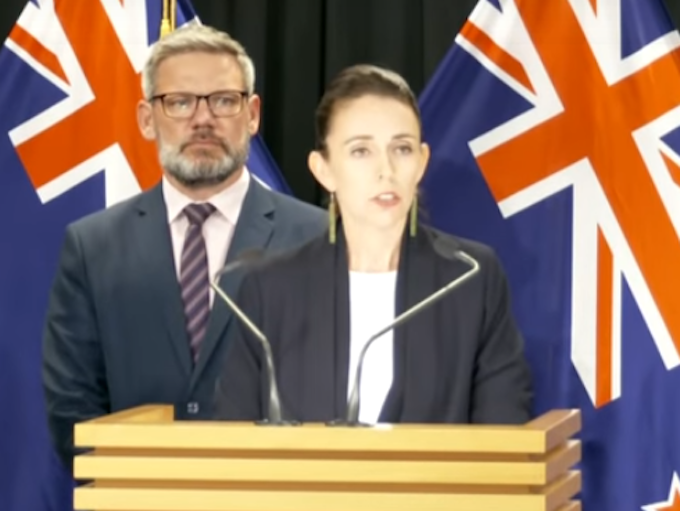
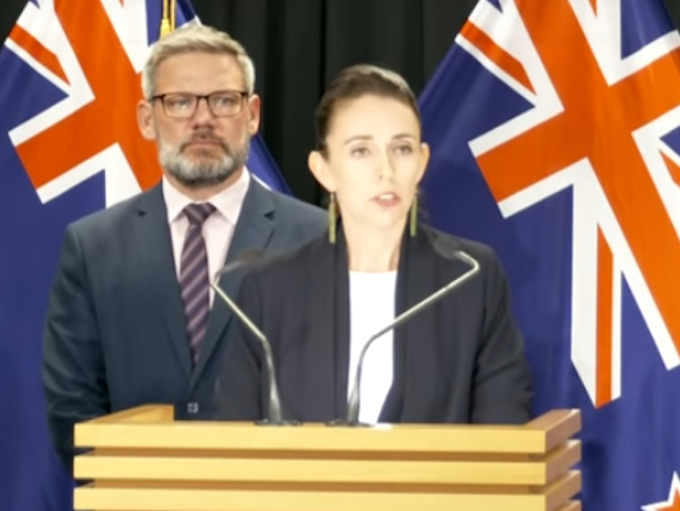
Prime Minister Jacinda Ardern has confirmed that the New Zealand border will be closed to anyone who is not a New Zealand citizen or permanent resident from 11.59pm tonight.

Children and partners of New Zealand citizens and permanent residents will be allowed to enter.

People from the Pacific will be included in the border closure, as will temporary workers or temporary visa holders such as students.

READ MORE: Al Jazeera live coronavirus updates – Russia reports first death

Earlier today, eight further cases of the Covid-19 coronavirus infection were confirmed in New Zealand, bringing the total to 28, says the Health Ministry.

Director-General of Health Dr Ashley Bloomfield gave the Ministry of Health’s latest update.

– Partner –

If travellers are boarding a flight, transiting on their way to New Zealand, or on an aircraft before midnight, they will be able to land and enter the country when they arrive.

“I recognise how extraordinary this is,” said Ardern, but the measure had to be taken to protect New Zealand from the Covid-19 coronavirus.

“In no time in New Zealand’s history has a power like this been used.”

The ban applies to people not product, and those staffing freight ships and planes are not included.

Self-isolation still required
Those who have travelled here from other countries recently are still required to self-isolate, and those who have been here longer are being encouraged to look at how they can get home.

“I’m not willing to take risks here,” Ardern said.

She said the decision was made between 4pm and 5pm this evening. Only Australian Prime Minister Scott Morrison was told of these changes beforehand.

Those who have already boarded or are enroute will be able to enter New Zealand.

“I have simply removed the risk. I’m not willing to tolerate risk at our border, that is where predominantly our cases are coming from,” said Ardern.

She added that while “we will continue to have cases in New Zealand as we continue to test those with symptoms who have come home, we must slow down the transmission in New Zealand”.

Earlier, there were travel bans on anyone arriving from China and Iran, and all others – except those from the Pacific – had to self-isolate for 14 days.

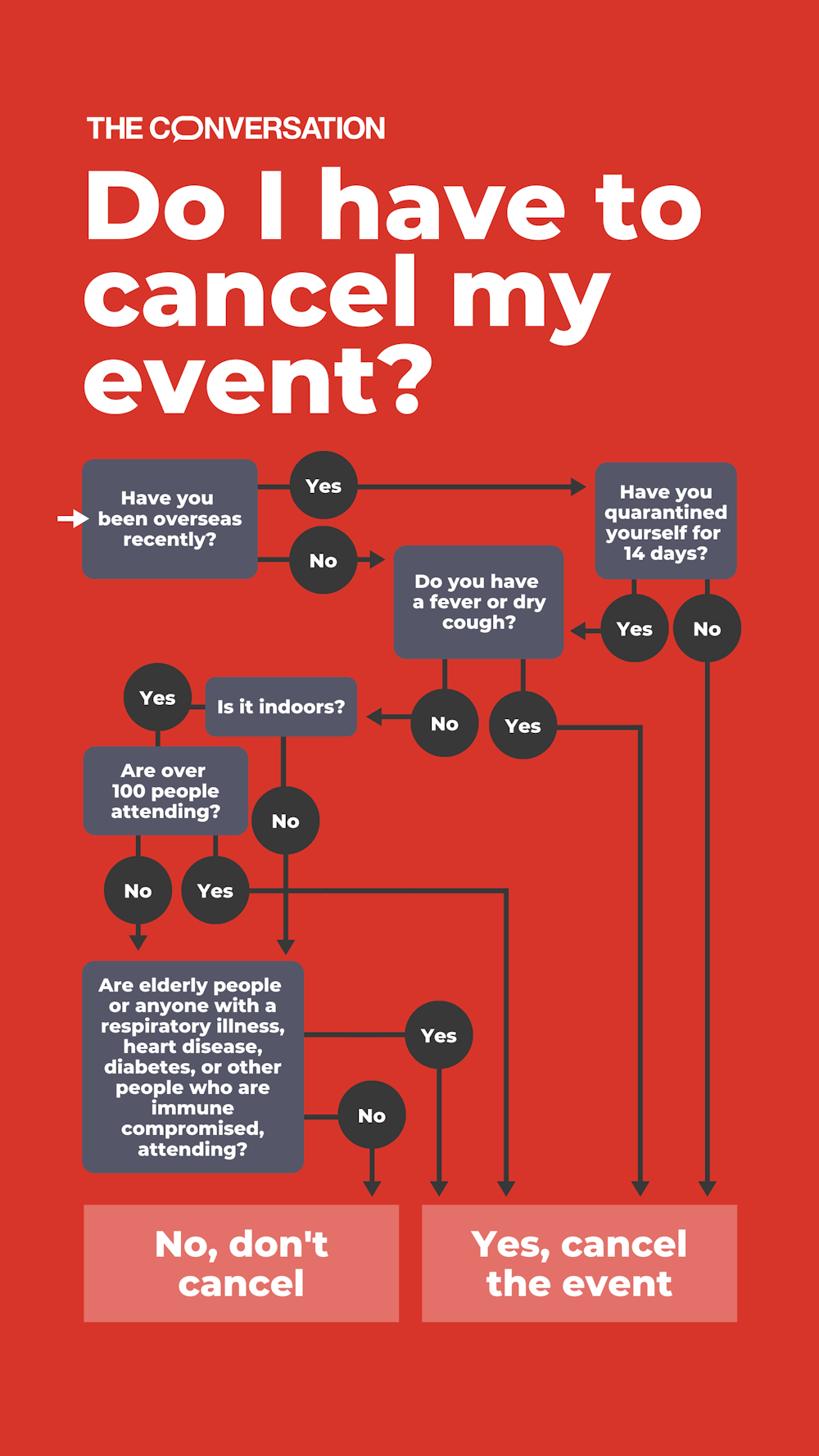
Earlier this afternoon, the government announced a ban on indoor gatherings of more than 100 people.

Ardern has already given one update on the government response to the Covid-19 coronavirus today.

Speaking in Rotorua, she told New Zealanders they must prepare for the full effects of the Covid-19 coronavirus, but must not panic – especially over rumours and misinformation.

This article is republished by the Pacific Media Centre under a partnership agreement with RNZ.

Print Friendly, PDF & Email

Article by AsiaPacificReport.nz

Schools are open during the coronavirus outbreak but should I voluntarily keep my kids home anyway, if I can? We asked 5 experts

Source: The Conversation (Au and NZ) – By Sunanda Creagh, Head of Digital Storytelling

Editor’s note: This article is based on the coronavirus situation in Australia as of March 19. The situation may change over time.

Prime Minister Scott Morrison has said government schools across Australia will remain open for the foreseeable future as the COVID-19 pandemic spreads. He added that:

as a father, I’m happy for my kids to go to school. There’s only one reason your kids shouldn’t be going to school and that is if they are unwell.

However, many parents are already voluntarily keeping their children home in an effort to “flatten the curve” – or are considering doing so.

We asked five experts to answer the question: schools are staying open but should I voluntarily keep my kids home anyway, if I can?

Four of of five experts said no

ref. Schools are open during the coronavirus outbreak but should I voluntarily keep my kids home anyway, if I can? We asked 5 experts – https://theconversation.com/schools-are-open-during-the-coronavirus-outbreak-but-should-i-voluntarily-keep-my-kids-home-anyway-if-i-can-we-asked-5-experts-134022

Alcohol warning labels need to inform women of the true harms of drinking during pregnancy

Source: The Conversation (Au and NZ) – By Elizabeth Elliott, Professor of Paediatrics & Child Health and Director of the Australian Paediatric Surveillance Unit, University of Sydney

Federal and state ministers will meet tomorrow to decide whether to compel alcohol manufacturers to include clear labels on all alcohol products that warn against the harms of drinking while pregnant.

The Australian government agreed that pregnancy warning labels should be compulsory for all alcohol products back in 2017.

But only now do we have a prototype:

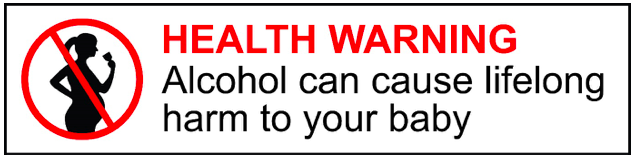
The proposed alcohol warning label, developed by Food Standards Australia and New Zealand. FSANZ, Author provided

Tomorrow ministers responsible for food regulation will be asked to approve the proposed label so it becomes law. Or they can request a review and go back to the drawing board.

But this decision must not be derailed by the alcohol industry, which has fiercely rejected the move.


Read more: Health Check: what are the risks of drinking before you know you’re pregnant?


Why do we need labels?

Alcohol is a teratogen, a substance that disrupts the growth and development of the brain and other organs of the embryo and fetus. It’s also a neurotoxin that damages the brain and nervous system.

Prenatal alcohol exposure may result in low birth weight, miscarriage and stillbirth. It can also result in a range of birth defects of the brain, heart, kidneys and other organs.

In our clinic each week we see children who were exposed to alcohol prenatally, which has resulted in brain injury and fetal alcohol spectrum disorder (FASD), characterised by severe impairment of development, learning and behaviour.

The costs of FASD to the family and society are enormous. The problems are lifelong, with children with FASD more likely to require special education.

Adults with FASD have higher rates of mental health disorders, contact with the justice system, substance misuse and are less likely to live and work independently.

But some women don’t know the harms

Since 2009 the national alcohol guidelines have recommended women who are pregnant or planning a pregnancy avoid alcohol.

Yet many women remain unaware of the potential harms to the unborn child.

Some women stop drinking when they find out they’re pregnant, but one in four continue after they know. Shutterstock

In recent studies of pregnant women in New South Wales and Victoria, 59% of women reported alcohol use in pregnancy, often at risky levels before they were aware they were pregnant.

Similarly, national data from 2016 recorded that 49% of women drank before they knew they were pregnant and 25% continued to drink after.

Voluntary labels haven’t worked

The Australian government introduced a voluntary labelling scheme in 2011. But by 2017, only 48% of alcoholic products were labelled.

The labels were often small, obscure, in black and white text and difficult to read. Some messages were unclear. Others linked to an industry-sponsored website for more information.

Researchers found existing labels failed to challenge the belief held by some that consuming small amounts of alcohol occasionally during pregnancy was unlikely to cause harm.


Read more: Revised DrinkWise posters use clumsy language to dampen alcohol warnings


Towards a mandatory, standardised label

In October 2018, the Department of Health agreed to implement compulsory pregnancy warning labels for all alcoholic products.

Food Standards Australia and New Zealand (FSANZ) has since reviewed the literature, sought expert opinion, and gained community input about the type of labels that should be used.

It concluded labels but must attract attention, be legible, prominently displayed, and contain a meaningful picture and text.

Use of the colour red was essential, it said. It increases visibility and people associate warnings with red. Australian research on eye tracking found attention can be enhanced by 37% by the use of red and a larger sized warning label.

Warning labels must be eye-catching. Shutterstock

The label recommended by FSANZ is readable, coloured in red, black and white, contains a pictogram, and has a clear message that alcohol can cause lifelong harm to your baby.

Industry response

Now, the industry is mounting a campaign against the proposed label.

Industry representatives object not only to the colour of the proposed label, but its size, the timing of the directive and the timeline for adoption. They’re worried warning labels make alcohol look extremely harmful.

The industry has invested in a campaign called “Not this label” and is urging the public to write to their local member to oppose the recommended label. It has also lobbied some ministers to vote for a review of the proposed label in tomorrow’s meeting rather than approve it.

The ministers responsible for the decision shouldn’t let the alcohol industry prioritise profits over public health.


Read more: Explainer: foetal alcohol spectrum disorders


ref. Alcohol warning labels need to inform women of the true harms of drinking during pregnancy – https://theconversation.com/alcohol-warning-labels-need-to-inform-women-of-the-true-harms-of-drinking-during-pregnancy-134049

Coronavirus: why should we stay 1.5 metres away from each other?

Source: The Conversation (Au and NZ) – By Philip Russo, Associate Professor, Director Cabrini Monash University Department of Nursing Research, Monash University

The Australian government is recommending we stay 1.5 metres away from each other, one of several social distancing moves designed to limit spread of the coronavirus.

Why 1.5 metres? Is this our best, practical estimate? Or is there any solid scientific evidence to back it?


Read more: Social distancing: What it is and why it’s the best tool we have to fight the coronavirus


The coronavirus is spread from person to person when someone with the virus coughs or sneezes. So people in close contact are at high risk.

Respiratory droplets can land in your mouth or nose. Alternatively, droplets could land on your face, and the next time you touch your face, and then rub your eye, you could infect yourself.

We know the influenza virus is spread in a similar way. One study shows when healthcare workers are within 1.8 metres of patients with influenza, their risk of being infected is increased.


Read more: Health Check: why do I have a cough and what can I do about it?


A quick search online will find lots of videos showing droplet expulsion from a sneeze. But there is a lack of good evidence to know for sure how far infectious droplets travel, and what is a “safe” distance.

Research is often laboratory based and doesn’t automatically translate to real-life situations. Then there are the variables about the number of infectious particles; their airborne survival; the humidity; and the speed of expulsion of the turbulent buoyant clouds“ (tornadoes of germs).

The US Centers for Disease Control and Prevention advises flu can spread up to 6 feet (1.8 metres). The key message is, the closer you are, the bigger the spray.

Similar research is yet to be done on the coronavirus. But the similarity with the way influenza is spread means we can apply what we know about influenza to the coronavirus.

What do others recommend?

The recommendation of 1.5 metres is not only based on our knowledge of influenza, it is also a practical distance that allows us to go about our daily lives.

Obviously it’s not a precise measurement, nor is it absolutely guaranteed to prevent spread. But that approximate distance is better than no distance.

The lack of scientific rigour behind these recommendations is borne out in the varied advice from around the world.

The UK’s National Health Service recommends people with symptoms stay at least 2 metres away from others.

The US Centers for Disease Control and Prevention recommends everybody should “put distance between yourself and other people”.

Finally, the World Health Organisation advises to keep at least 1 metre between you and anyone coughing and sneezing.

So you get the general idea. Don’t get close.

What does this mean in practical terms?

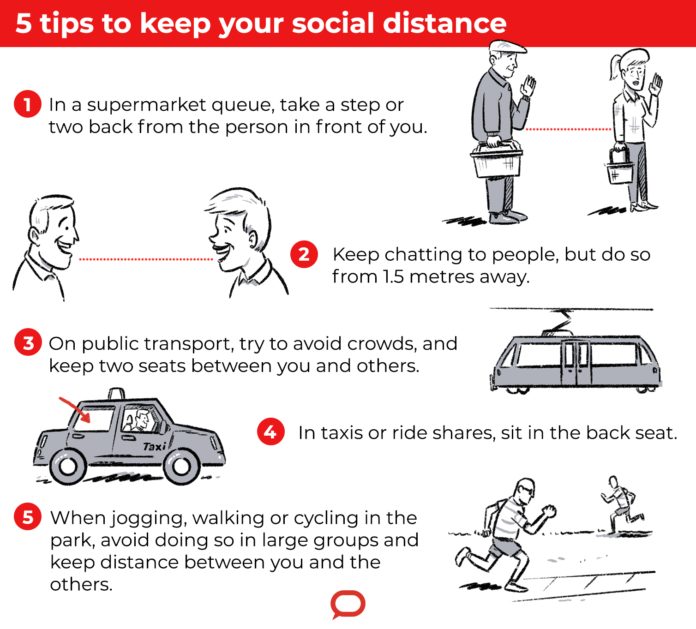
So, how do we keep 1.5 metres apart, short of carrying around a tape measure?

It’s about two arms lengths, but don’t stress about it. A little bit less is OK, a little bit more is good.

Wes Mountain/The Conversation, CC BY-ND

In a nutshell

Right now, avoiding close contact with others is important, and keeping 1.5 metres away from each other is not an exact science. It’s about keeping some sensible and practical distance between you and others.

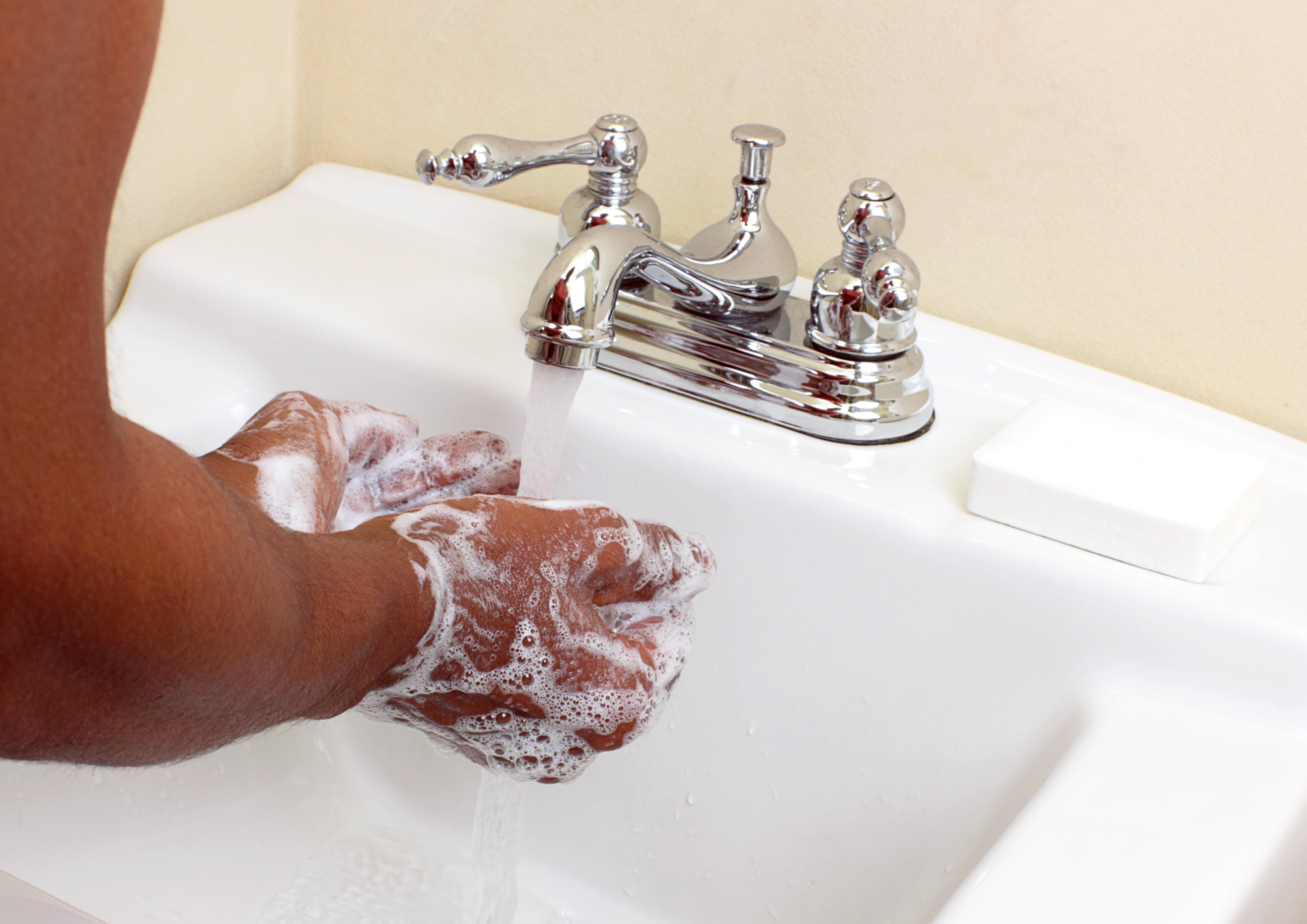
It is just one of the strategies we can easily use to help slow down the spread of this virus. And please, wash your hands, and if you have symptoms, stay at home and seek medical advice.


Read more: Coronavirus: why are we cancelling large gatherings? And what other ‘social distancing’ options are left?


ref. Coronavirus: why should we stay 1.5 metres away from each other? – https://theconversation.com/coronavirus-why-should-we-stay-1-5-metres-away-from-each-other-134029

Drama and panic as PNG government blunders through first Covid-19 crisis

By EMTV News

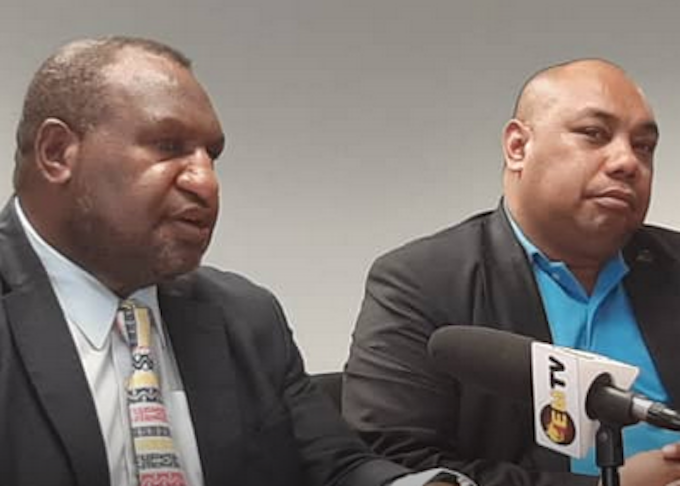
A day of intense drama officially ended in Papua New Guinea just before 9pm yesterday when Prime Minister James Marape  casually announced on his Facebook page that the test results of an expatriate mine worker suspected of Covid-19 had come back negative.

But it was the casual manner with, what appeared to be, little  sense of urgency that  added to the ire of many Papua New Guineans who had been demanding a total shutdown of airports and wharves.

It all started earlier in the day when Health Minister Jelta Wong released a statement  announcing that Papua New Guinea had its first “probable” case of the deadly disease.

READ MORE: PNG has ‘probable’ coronavirus case, declares health minister

Wong said the 45-year-old mine worker had traveled through Madrid, Barcelona, Istanbul then on to Port Moresby and Lae.  He developed a fever and flu-like symptoms and had to be quarantined.

Over the next eight hours, the public went into a panic.

– Partner –

The word “probable” was drowned in a frenzy of social media accusations and anger over the government’s delay in imposing a total shutdown.

The media unsuccessfully tried getting a confirmation of the test results.

Announcement promised
Nobody from the Health Minister’s office to the Secretary was willing to say what the results were.  By 5pm after coming out of  a meeting, Health Secretary Paison Dakulala,  told journalists he was going to make the announcement at 8pm at the NBC Studios.

When asked if PNG did in fact have a confirmed Covid-19 case, he said rather vaguely that that the tests were inconclusive and had to be done again.

The radio talkback show was cancelled within 20 minutes of the Prime Minister’s Facebook post. No official reason was given.

Within an hour,  Health Minister Jelta Wong released another statement saying the patient in question was feeling better but had agreed to remain in isolation.

The day’s events brought the weak, fragmented front of the government’s crisis communications to the fore. While agencies restricted the flow vital information and warned the media against creating a panic, the government’s own communications triggered panic.

As the global pandemic worsened in Indonesia to the West and as the Australians announced rapid escalation containment efforts in the south, Papua New Guinea dragged its feet.

The government remained unwilling to impose a lockdown despite widespread calls by its own citizens.

Public address
Then on Sunday, March 15,  Prime Minister James Marape went on Facebook announcing that he would make a public address at 11.30am.

The government team opted to go to the National Broadcasting Corporation (NBC) to deliver a broadcast to outline a series of steps the government was taking in light of the pandemic.

The expected live broadcast did not happen at 11.30am that day.

Instead, the NBC recorded the address and aired it on Monday night.  Other media were given a press conference.

The government’s slow, reactive approach to the Covid-19 prevention efforts is in itself a recipe for political disaster. Public confidence is at an all-time low after the government continues to delay a total ban on incoming flights.

And the suspected Covid-19 case given prominence yesterday by the health minister has left Papua New Guineans wondering if they can continue to trust the government.

The Pacific Media Centre collaborates with EMTV News and republishes articles with permission.

Print Friendly, PDF & Email

Article by AsiaPacificReport.nz

Scott Morrison has said we’ll face at least 6 months of disruption. Where does that number come from?

Source: The Conversation (Au and NZ) – By Joel Miller, Senior lecturer, Applied Mathematics, La Trobe University

Scott Morrison yesterday warned Australians will face at least six months of disturbance to our day-to-day lives as we navigate the coronavirus pandemic.

Social distancing measures such as restrictions on large group gatherings and events won’t just be in place until next week or the week after.

But where does that six month number come from?

It’s a combination of modelling and simulation using observational data from the COVID-19 pandemic worldwide, and historical data from past pandemics.


Read more: Explainer: what is herd immunity?


Pandemics past

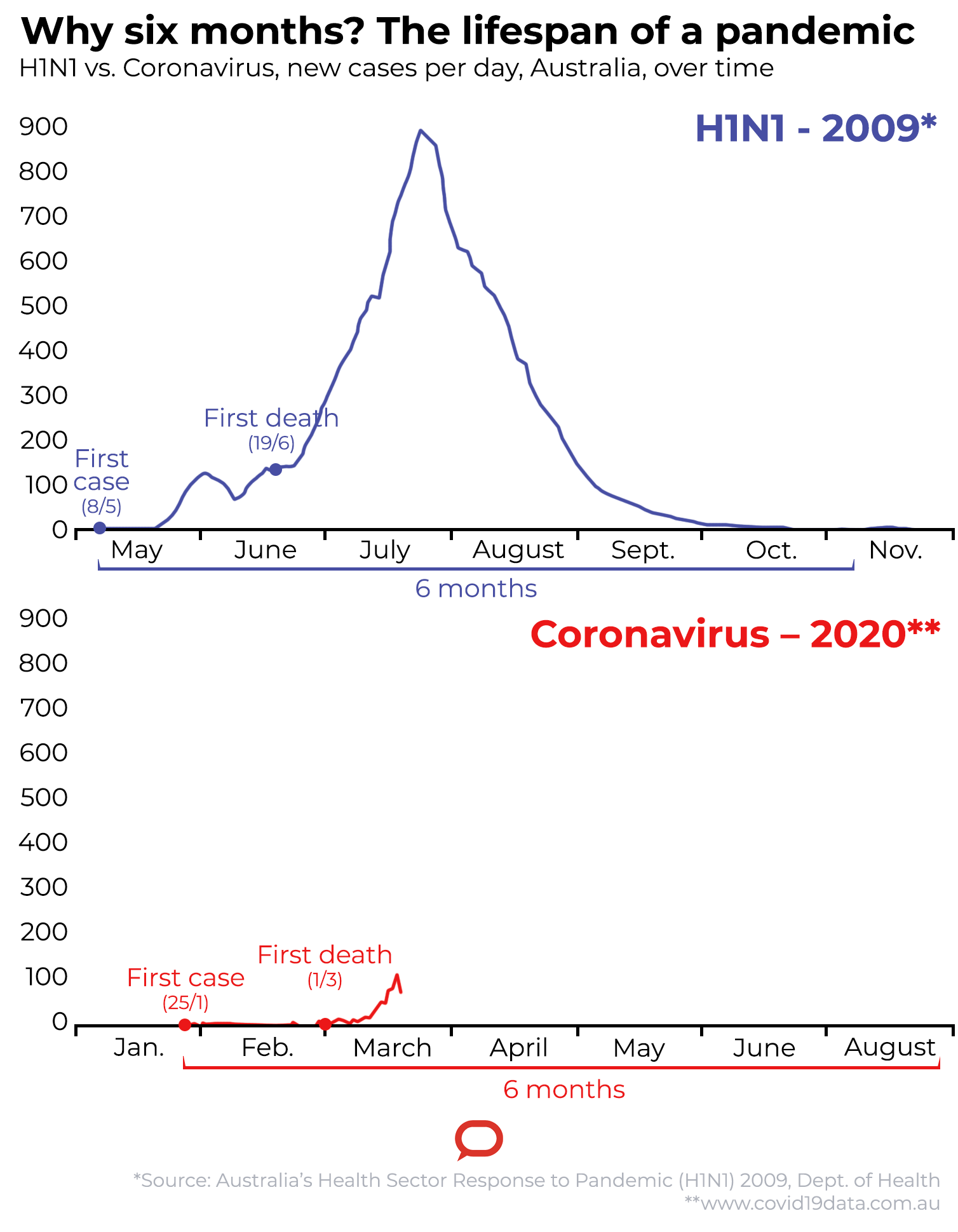
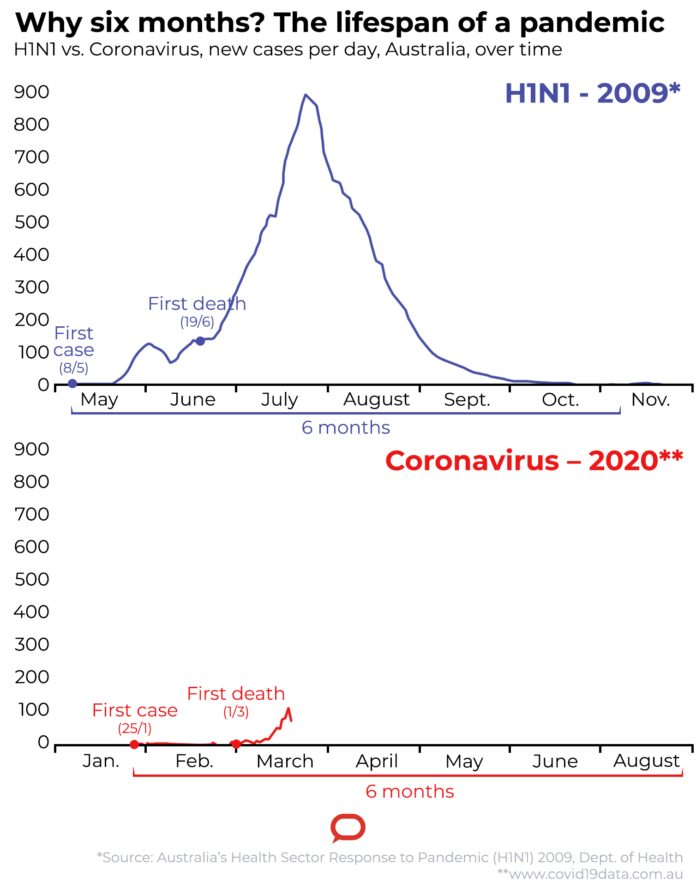
By way of comparison, the H1N1 influenza pandemic reached Australia in early May 2009 and finally petered out five to six months later.

This was because of seasonal changes as well as more and more people becoming immune to the infection (that’s the concept of herd immunity).

The Conversation, CC BY-ND

Mathematical modelling

Based on observed early growth rates, in the absence of any containment measures, we would anticipate COVID-19 to have a similar epidemic curve to H1N1.

We can predict this using disease parameters estimated from Chinese and European data and a highly simplified mathematical model.

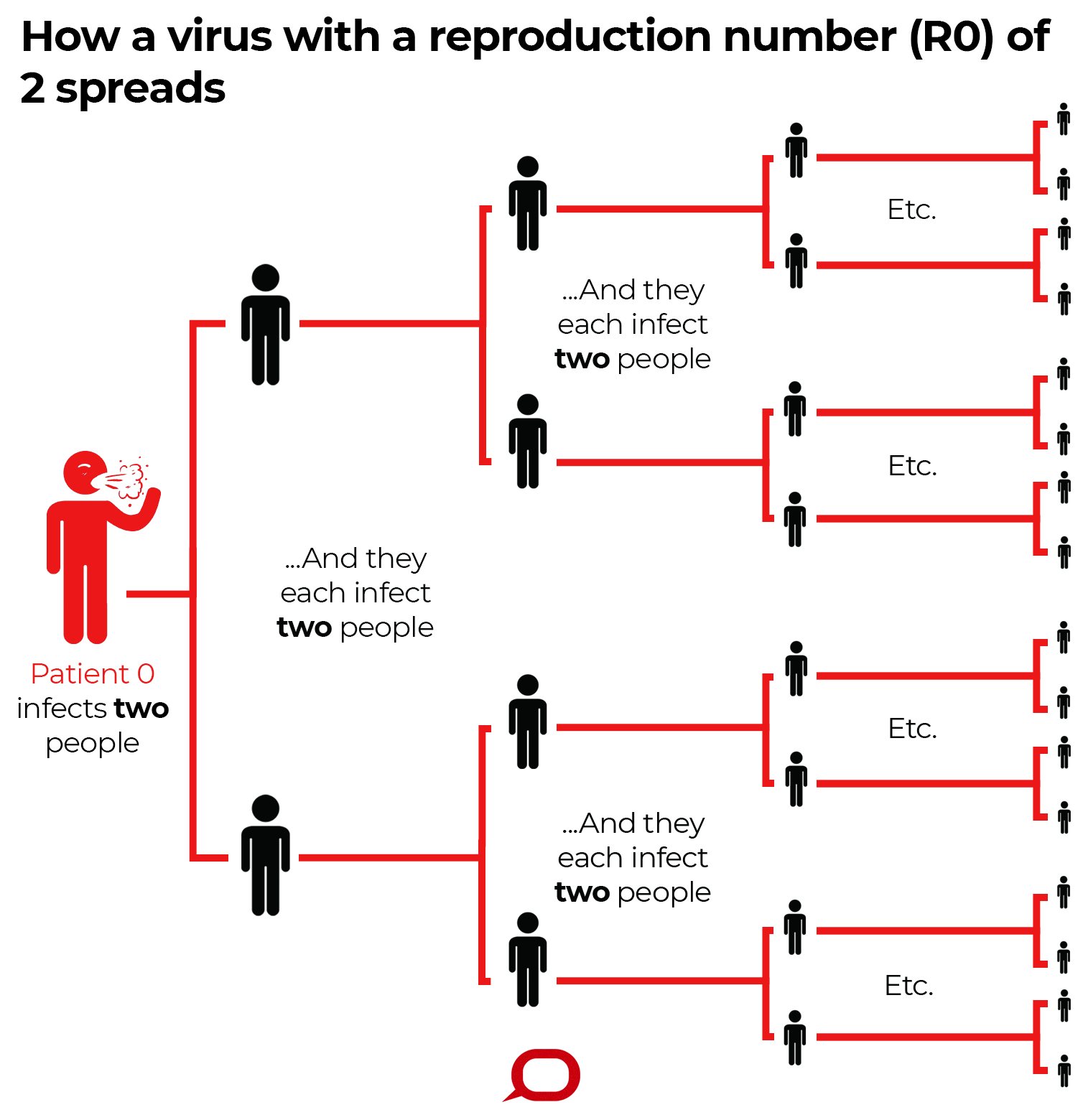
The typical infected person causes about 2.5 new infections (this is called the reproduction number, or R0).

The Conversation, CC BY-ND

Without any intervention, the epidemic would grow until depletion of susceptible people slows the growth. The prevalence would start to fall when the susceptible population reaches what’s called a critical fraction, 1/R0. Once we pass this threshold a person with COVID-19 will only transmit the virus to less than one other person (because fewer people remain susceptible to infection).

For a population of 25 million like Australia, this would require 15 about million infections.

COVID-19’s observed doubling time has been about four days. That means every four days the number of cases has been roughly double what it was four days prior.

We would calculate it takes about three months for one infection doubling every four days to cause 15 million infections. After the peak, we expect the total time to drop to be about the same as it took to rise. This gives a crude prediction of six months.


Read more: How to flatten the curve of coronavirus, a mathematician explains


Since we’re presumably partway into the epidemic, we might expect less than six months remaining. However, reality introduces many adjustments to this: the doubling slows down as we approach the peak, there is variation in individual behaviours, the geographic structure of Australia will influence the spread, and social distancing will have an impact.

Thankfully, these adjustments significantly lower the predicted number of infections and the predicted peak prevalence, while the duration increases.

Computer simulations

To make our model more realistic we turn to computer simulations. These simulations draw on sources like census data and transportation networks to predict how disease would spread through a population.

When we introduce interventions like those Scott Morrison has announced, our simulations show us COVID-19 infects fewer people and has a lower peak, but it lasts longer because it takes longer for immunity to build up. This is called flattening the curve.

Flattening the curve is another way of saying slowing the spread. The epidemic is lengthened, but we reduce the number of severe cases, causing less burden on public health systems. The Conversation/CC BY ND

In the case of COVID-19, we must intervene and do so aggressively. We cannot wait for herd immunity to develop. Unlike the H1N1 pandemic, where Australia only reported 191 deaths, COVID-19 threatens to overwhelm our health system many times over.

Interventions like social distancing, by facilitating fewer infections, can give us time to obtain more ventilators and other essential equipment, and develop improved control strategies. These might rely on new phone apps for contact tracing, or increased testing, for example.

The Conversation/PNAS, CC BY-ND

If these measures are effective enough, perhaps we can drive the reproductive number below 1 and then progressively relax interventions while keeping our hospitals below capacity.

At the very least, the government’s advice on social distancing will flatten the curve and extend the epidemic so more patients arrive at hospitals that have capacity to treat them. We’ll need to have these measures in place for at least six months.

There are many uncertainties, but I’m hoping for a long-lasting epidemic.


Read more: How do we detect if coronavirus is spreading in the community?


ref. Scott Morrison has said we’ll face at least 6 months of disruption. Where does that number come from? – https://theconversation.com/scott-morrison-has-said-well-face-at-least-6-months-of-disruption-where-does-that-number-come-from-134025

More than a rate cut: behind the Reserve Bank’s three point plan

Source: The Conversation (Au and NZ) – By Peter Martin, Visiting Fellow, Crawford School of Public Policy, Australian National University

Today’s cut in the Reserve Bank’s cash rate to 0.25%it a new all-time low and the floor below which it plans to cut no more. But it is just the beginning.

Importantly, in his statement today Governor Philip Lowe said it would stay there for… well, for a very long time.

The board will not increase the cash rate target until progress is being made towards full employment and it is confident that inflation will be sustainably within the 2% to 3% target band.

Governor Lowe has previously described the bank’s estimates for full employment as being centred around 4.5%, meaning that, if interpreted literally, he is saying the cash rate will stay at its new all-time rock-bottom low until unemployment turns back down instead of climbing from its present 5.1% (as the coronavirus restrictions mean it is certain to do).

1. Rates at rock bottom for the duration

And he is saying he won’t lift the cash rate from that all-time rock-bottom low until until he is confident that inflation confident that inflation will be back sustainably within the 2% to 3% target band, somewhere it hasn’t been or seven years and shows no sign whatsoever of reaching.

His commitment amounts to a commitment to keep rates at effective zero (the bank believes 0.25% is effective zero, the effective lower bound) for at least three years, maybe even the best part of a decade.

For anyone thinking of borrowing at the ultra-low rates , it provides something close to a guarantee of no upward surprises for as far as the eye can see. For homeowners, that’ll mean a mortgage rate below 3% for as far as the eye can see, and for businesses, a bank loan with a base rate of 5%.

2. Cheap money for banks

To make sure banks can get money at that rate, the Reserve Bank is going to hand it to them.

It will provide a three-year funding facility to authorised deposit-taking institutions (banks and financial institutions that are similar to banks) “at a fixed rate of 0.25%”.

At first, it’ll provide 3% of their existing loan book.

Then it’ll give them more “additional funding” on one condition: that they “increase lending to business, especially to small and medium-sized businesses”.

It’ll cost it north of A$90 billion.

That’s Reserve Bank money. Separately, the government – through the treasury and its Australian Office of Financial Management (AOFM) – will advance $15 billion of its won money to enable smaller lenders to continue to lend to consumers and small businesses.

It’s a departure for the AOFM. Usually, it borrows on behalf of the government. Now it’ll be lending on behalf of the government, something it has done before, including during the global financial crisis, but that isn’t its core business.


Read more: ‘Yield curve control’: the Reserve Bank’s plan for when cash rate cuts no longer work


3. Forcing money into investors hands

And, as long-expected, it’ll begin so-called quantative easing, buying government bonds from investors to force cash into their hands (and force down a range of long-term rates as a by-product).

It’ll buy “government bonds and semi-government securities across the yield curve” meaning it won’t be picky. If it can buy Commonwealth 10-year bonds, it’ll do it. If it can buy NSW Treasury Corporation 5-year bonds, it’ll do it. If it can buy local government bonds, it’ll do it.

The aim will be to get money into the hands of the investors that owned them and to get money into the economy.

Regularly updated targets

To give it guidance, it will have a target. That target will be force the yield on a 3-year Commonwealth government down to 0.25% from its present 0.50%.

As Zac Gross explained in The Conversation on Tuesday, it won’t be about the 3-year rate as such, but about using rate that to give it (and us) a guide as to whether it is doing not enough, or too much.

It is likely to regularly publish its 3-year bond yield target (and later, perhaps its 10-year bond yield target) so we can see what it is doing, in much the same way as it has published its cash rate target up until now.

Governor Lowe is to expand on his plans at an online press conference later today.

ref. More than a rate cut: behind the Reserve Bank’s three point plan – https://theconversation.com/more-than-a-rate-cut-behind-the-reserve-banks-three-point-plan-134140

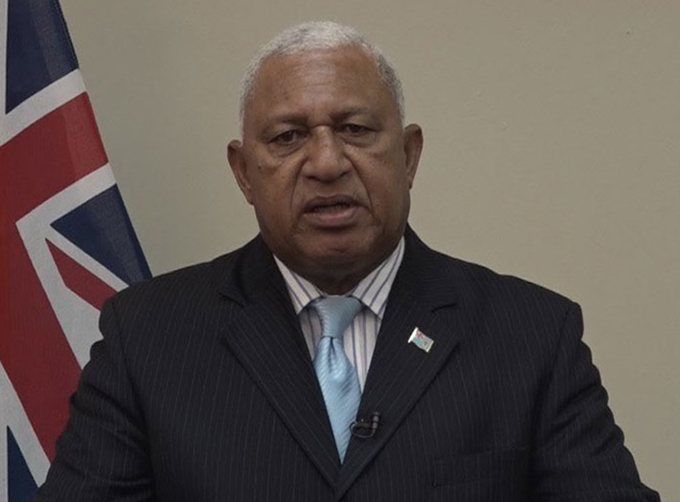
Bainimarama announces tougher bans in Fiji after first Covid-19 case

Pacific Media Watch

Fiji Prime Minister Voreqe Bainimarama today confirmed that Fiji is putting into place a number of tighter measures following the first case of Covid-19 coronavirus in the country.

Bainimarama said the patient from the western city of Lautoka was in stable condition and was being monitored by health officials, FBC News manager Indra Singh reports.

The prime minister said the person contracted the disease overseas and the health teams were working on being in contact with people who could have been potentially exposed to the virus.

READ MORE: More Pacific countries bracing for coronavirus cases as Fiji on alert

From midnight tonight, the Pacific country’s border restrictions on mainland China, Italy, Iran, Spain and South Korea will be extended to cover foreign nationals who have been present in the United States and all of Europe, including the United Kingdom, within 14 days of their intended travel to Fiji, FBC News reports.

Also from midnight, anyone entering Fiji from any overseas destination will be required to self-quarantine for 14 days, meaning they must stay in one place and avoid contact with others or going out in public as much as possible.

– Partner –

Starting tonight at midnight, all schools and non-essential businesses within the greater Lautoka area will be closed until further notice.

The greater Lautoka area is that spanning from Kings Road at Nacilau Junction past Matawalu Village, to the feeder road at Vakabuli Junction, to the Queen’s Road at Natalau Junction.

Banks, supermarkets and pharmacies – and other essential businesses – in the Greater Lautoka Area will remain open.

Print Friendly, PDF & Email

Article by AsiaPacificReport.nz

Coronavirus will devastate Aboriginal communities if we don’t act now

Source: The Conversation (Au and NZ) – By James Ward, Director of POCHE Centre for Indigenous Health, The University of Queensland

As the COVID-19 pandemic evolves, we need to ensure the most vulnerable people in our communities aren’t left behind. This includes Aboriginal and Torres Strait Islander people, especially those living in remote and very remote areas.

COVID-19 particularly impacts the elderly and those with underlying conditions such as cardiovascular (heart) disease and diabetes.

For Aboriginal Australians, COVID-19 has great potential to wreak havoc in our communities.


Read more: Why are older people more at risk of coronavirus?


Around 50% of adult First Nations people live with one of the major chronic diseases such as cardiovascular (heart) disease, kidney disease or cancer. Almost one-quarter have two or more of these chronic conditions.

These risks are compounded by where we live. One in eight First Nations people live in overcrowded housing. This means COVID-19 could spread rapidly. And overcrowding poses real challenges for isolating suspected cases.

This overcrowding is worse in remote settings, which face significant challenges in containing and responding to the COVID-19 pandemic because:

  • health services are already at capacity

  • the workforce is already reliant on fly-in-fly-out staff, including many from New Zealand which has imposed quarantine restrictions

  • there is little access to testing for COVID-19, with long delays for results

  • little information is available, especially for those who speak English as a second, third or fourth language.

How can we mitigate the risk?

Our communities aren’t sitting idle. They have put in place mitigation strategies and are awaiting further instructions, assistance and financial stimulus to help them through this pandemic.

Some regional groups – such as the Northern Land Council, the Anangu Pitjantjara Yankunytjatjara Lands (APY Lands in South Australia) and the Torres Strait Islands and Papua New Guinea border cross regions – have stopped issuing new permits for visitors and cancelled all non-urgent travel and visits by government and non-government agencies.

The Northern Territory government is also considering a full lockdown, Territory wide.

But these measures are only the start of what is required.

Some communities are already closed for non-essential visits. Shutterstock

The National Aboriginal Community Controlled Health Organisation (NACCHO), the peak body representing more than 140 Aboriginal community-controlled health services, has called for urgent information about:

  • evacuation procedures for people with COVID-19 and suspected cases

  • how to ramp up the workforce and health services in the case of an outbreak

  • how to get appropriate, clear and concise messaging out to communities.


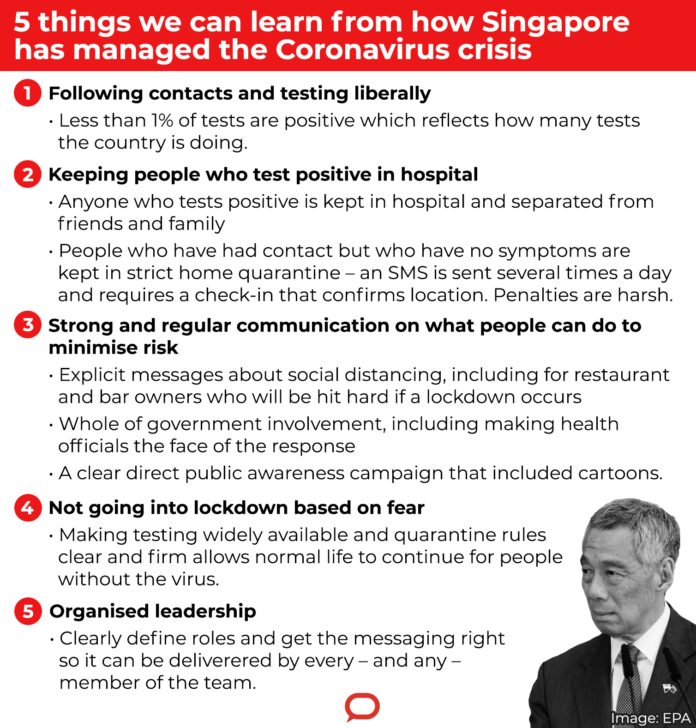
Read more: Why Singapore’s coronavirus response worked – and what we can all learn


The peak body has also called for a suite of measures to help communities prepare for the pandemic, including:

  • regional COVID-19 testing services to be urgently implemented

  • support for existing Aboriginal health services to modify their structures and create respiratory clinics away from normal health services

  • urgent supplies of personal protective equipment (PPE, which includes gowns, masks and goggles) to be made available

  • urgent identification and sourcing of appropriate housing for suspected and confirmed cases

  • existing medication supplies not to be interrupted but rather prioritised across all settings

  • for access to food and other essential items – such as sanitation supplies, cleaning products and soaps – not to be compromised as the pandemic progresses.

We can’t wait long for action

The warnings from around the world are clear: the earlier these requirements are met, the better the outcomes will be.

Access to soaps and other sanitation supplies to Aboriginal communities cannot be compromised. Shutterstock

We have a moral responsibility to do better than we did in the 2009 H1N1 pandemic. This pandemic ended up with 3.2 times more Aboriginal people admitted to hospital than non-Aboriginal people, four times as many admissions to intensive care units and 4.5 times the number of deaths.


Read more: The ‘dreaded duo’: Australia will likely hit a peak in coronavirus cases around flu season


The Aboriginal Community-Controlled Health services sector has mobilised and leading an advisory group alongside Governments and is meeting regularly to work on a management plan specific to the Aboriginal and Torres Strait Islander populations.

In the coming days and weeks much more will be required to ensure Aboriginal and Torres Strait Islander communities across Australia have protocols in place to respond to the virus, contain it and eventually recover.

In the meantime, we must do all we can to protect our most vulnerable in our communities including our Elders, who are the keepers of knowledge and stories, and the backbones of our communities. If we don’t, we should all hang our heads in shame.

ref. Coronavirus will devastate Aboriginal communities if we don’t act now – https://theconversation.com/coronavirus-will-devastate-aboriginal-communities-if-we-dont-act-now-133766

Social distancing may be worth it, but we need to talk about economic costs

Source: The Conversation (Au and NZ) – By Ross Guest, Professor of Economics and National Senior Teaching Fellow, Griffith University

Social distancing has been embraced as a key government strategy to manage the COVID-19 crisis.

The policy involves limiting contact between people to reduce viral transmission. It extends from advice to avoid shaking hands and maintain at least 1.5 metres’ distance from others to bans on “non-essential” gatherings of more than 500 people outdoors and 100 people indoors.

These measures will have significant economic impact. But how big will that impact be. Is it worth it compared to the health benefits?

Right now we don’t know the answer. Political and business leaders are deferring exclusively to public health advice about how to contain the COVID-19 virus. We have had no serious public discussion of the economic costs.


Read more: Social distancing: What it is and why it’s the best tool we have to fight the coronavirus


Framing the response to the coronavirus emergency as a cost-benefit analysis may seem hard-hearted. Yet prioritising medical resources is routine in hospitals. The Australia New Zealand Intensive Care Society’s COVID-19 Guidelines specify “the likelihood of response to treatment” as a principle in accessing intensive care treatment.

We do put a value on lives lost or, conversely, lives saved. Under Australian government best practice guidelines the value of a life is A$4.2 million, with one year of life worth A$182,000 (in 2014 dollars).

The costs of social distancing may well be worth the benefits, but we have not yet had this discussion. We need to have a frank public conversation about the full economic costs versus benefits of major social-distancing policies.

Flattening the curve

The aim of social distancing is to “flatten the curve”. This means slowing the rate at which the virus is spread, so we get fewer critical cases in the short term.

Slowing the spread allows our medical services to cope with the caseload at any given time. It maximises the prospect of patients getting the care they need when they need it, therefore reducing deaths.

Flattening the curve is another way of saying slowing the spread. The Conversation/CC BY ND

But the question is whether the benefits of social distancing are worth the costs. Is it better to slug businesses, workers and households over a long time under draconian social-distancing policies? Or would it be better to go for a shorter and less severe economic hit, but with more stress on the health system during that time?


Read more: How to flatten the curve of coronavirus, a mathematician explains


Limited evidence

The cost-benefit evidence on social distancing is scarce. We have little hard data because there have been few actual epidemics/pandemics where social distancing has been widely adopted as public policy.

But modelling by health economists indicates some things.

One is that targeted social distancing – applied, for example, to old people – is more effective than a blunt policy applied to everyone. The reason is a blunt policy applies to recovered individuals as well as susceptible individuals. We don’t want recovered individuals to isolate or distance themselves – in fact we want them in public spaces acting as buffers between the infectious and uninfected.

Yet so far health experts have recommended blunt social distancing through cancelling large gatherings such as sport and cultural events, working from home and avoiding public places, and some school and work closures.


Read more: Australian schools are closing because of coronavirus, but should they be?


School closures are extremely costly. A 2010 study in Britain estimated a 13-week closure would reduce GDP initially by 8.1%.

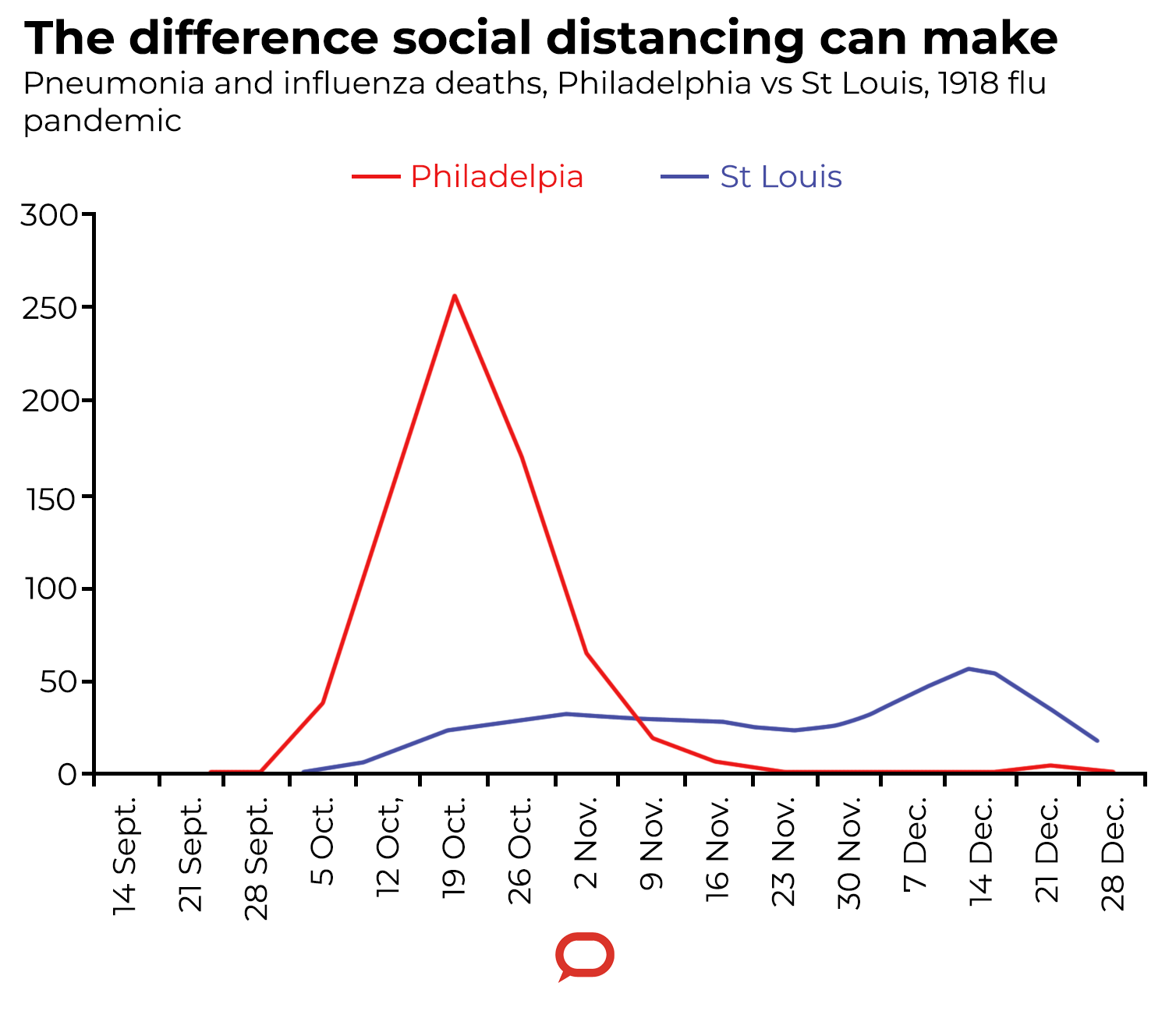
On the other hand, modelling also shows the effectiveness of social distancing depends on the infectiousness of the disease and it being done very early on in the epidemic. Do it well, the authors advise, “or not at all”.

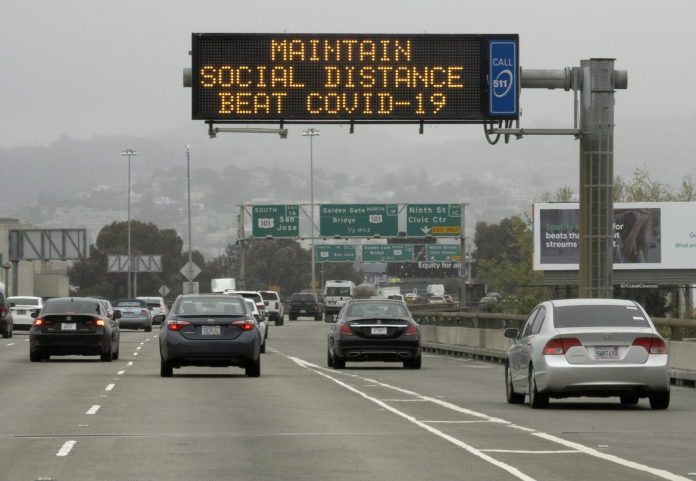
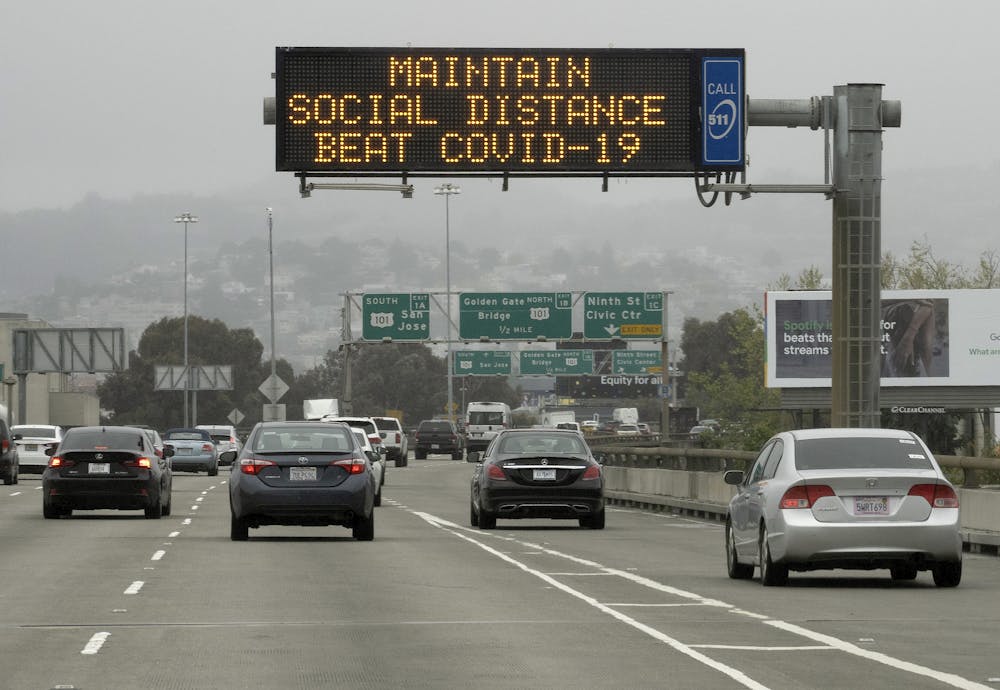
Social messaging about social distancing in San Francisco, March 18 2020. John G. Mabanglo/EPA

This makes decisions to close schools, as Britain has done, or keep them open, as Australia is doing, highly contestable, either as too blunt a response or as not doing social distancing well. More information to weigh costs and benefits might help.

Irreversible consequences

Warwick McKibbin, director of the Centre for Applied Macroeconomic Analysis in the ANU Crawford School of Public Policy, estimated a few weeks ago the coronavirus crisis will knock 2% off global GDP.

This estimate included the effects of sick workers and some effects on investment and supply networks. It did not include the effects of major social-distancing policies (such as widespread closures of schools and businesses and self-isolation), which would effectively destroy businesses and cause massive job losses.

Once we add these costs it is conceivable the total costs would be closer to those of the Great Depression, when GDP fell by 10% in 1931 and unemployment was more than 15%.

Lower-cost containment measures may more prudent right now than simply escalating social distancing in a knee-jerk way.

Economics tells us there can be a non-trivial “option value” in delaying decisions in the face of uncertainty where the decisions have irreversible consequences. It can be better to wait for new information. If we kill off businesses and jobs now, and the virus turns out to be not so bad, those lost jobs and businesses cannot be easily re-established just by scaling back on social distancing.


Read more: Can I take the dog for a walk? Can I put the kids to bed? What you should and shouldn’t do if you’re in coronavirus self-isolation


Government stimulus spending will be no silver bullet here, no matter how big. Even though it’s the appropriate time for governments to borrow and spend, future generations will have to pay the debt through higher taxes or lower government spending on things like health and education. There is no “free lunch” in economic stimulus.

Government spending does not bring back international tourists or international students. It cannot save every job and business, nor compensate for the costs of restarting a failed restaurant or shop.

The benefits of social distancing may or may not be worth it. But we don’t know, and as a society aren’t even asking the question.

ref. Social distancing may be worth it, but we need to talk about economic costs – https://theconversation.com/social-distancing-may-be-worth-it-but-we-need-to-talk-about-economic-costs-133907

Australia recognises the threat posted by far-right groups. So, why aren’t they listed on the terror register?

Source: The Conversation (Au and NZ) – By Jessie Smith, PhD in Law, University of Cambridge

This week, Kristina Keneally announced plans by Labor to review the nation’s register of terrorist organisations.

ASIO sounded an alarm last month that far-right groups pose an elevated threat to Australian national security. Cells have met to salute the Nazi flag and train in combat. ASIO is now investigating twice as many far-right leads as last year.

However, to date, no far-right group has been banned in Australia. This sits in contrast to the UK, where National Action and other far-right groups are outlawed and members have been convicted of terror-related and other crimes.

Keneally asks whether our laws are fit for purpose. One year after the Christchurch massacre, it’s time to investigate whether enough is being done to address the far-right threat in this country.

How groups are listed on the terror register

The definition of terrorism underpins the way terror organisations are registered in both the UK and Australia. Australia designed its laws from a British template, so the definitions are very similar.

At its core, a “terrorist act” is defined as conduct with special characteristics – namely, the advancement of a “political, religious or ideological cause” and the coercion of government or the intimidation of the public.

There are two ways to counter far-right groups in Australia.

The first is through the proscription process, or the creation of a “list” or register of banned groups.

To list a group on the national register, Home Affairs reviews intelligence from ASIO and must be satisfied the group is directly or indirectly engaged in, preparing, planning, assisting, fostering or advocating terrorism. There is huge symbolism in proscription. It is the highest level of disendorsement, as it can allow the government to label a political movement as criminal.


Read more: Australia isn’t taking the national security threat from far-right extremism seriously enough


There is good reason for the government to be selective – many hundreds of groups can meet the broad definition of terrorism. For instance, any rebel group in a war zone fits the bill, including allies we arm, train and partner with, such as certain groups in Syria.

Home Affairs Minister Peter Dutton is therefore guided by discretionary factors, such as a group’s ties to Australia and its threat profile and nature of its ideology. Most groups on the terror list are large, well-resourced Islamist outfits such as Boko Haram and al-Qaeda.

The second way to affix a terrorist label to a group is by satisfying a jury, at trial, that it meets the legal criteria of “terrorist organisation”. This process does not involve Home Affairs; the decision rests with the jury.

Smaller, home-grown cells have been tried in this way, such as the conviction of the Benbrika group (the “MCG plotters”) in 2006. The jury found they were members of a terrorist organisation despite their absence from the national terror register. As such, leaving a group off the list does not create a meaningful gap in the law.

This two-tiered approach allows flexibility. At times, a group might not have a name, or it might not be organised or have a public profile.

There might also be operational reasons for ministerial restraint for not listing a group, such as fear that public declarations could disrupt covert police investigations into its activities.

Why have far-right groups been banned in the UK?

So, what explains the difference between the UK and Australia when it comes to dealing with far-right groups?

Despite Keneally’s concern, there is no meaningful difference between proscription criteria in the two countries. The UK includes violence committed on racial grounds, but this is matched by our reference to ideological motive. The UK looks to those who “glorify” terrorism, but we include groups that “advocate” or “praise” similar conduct.


Read more: ‘Alt-right white extremism’ or conservative mobilising: what are CPAC’s aims in Australia?


However, one way the two countries diverge may be in the scale of the threat.

National Action, a neo-Nazi group whose members have called for a “race war”, has a large following in the UK. Members cheered the murder of MP Jo Cox and have been jailed for plotting to kill other left-wing politicians.

The far-right in Australia may not yet have gained the same momentum.

Greater parliamentary powers over Home Affairs

Keneally is trying to figure out whether the failure to list far-right groups in Australia is due to the law, the lack of sufficient threat or the lack of political will.

But the law is fit for purpose, and ASIO has issued a serious public warning. What’s left hanging is politics.

Rather than review the criteria for proscription, Keneally should press for an enhanced role for parliament’s intelligence and security committee over Home Affairs.


Read more: ASIO chief’s assessment shows the need to do more, and better, to prevent terrorism


Parliament’s intelligence and security committee can currently review (and veto) a decision by Dutton to add a group to the register of terror organisations. But the committee cannot intervene in cases Home Affairs deliberately rejects.

Perhaps an expanded parliamentary review function over the minister’s decision-making and the department’s method of prioritisation would give Keneally the answers she seeks.

In response to ASIO’s warning on far-right groups, Dutton was quick to label Islamists as “left-wing” extremists.

Despite Labor’s objections to this characterisation, Islamic extremist and “far-right” groups have much in common – all are driven by elements of hate, misogyny, supremacy, destruction and brands of extreme social conservatism. All deserve sober consideration, whatever the label, and without political distraction.

ref. Australia recognises the threat posted by far-right groups. So, why aren’t they listed on the terror register? – https://theconversation.com/australia-recognises-the-threat-posted-by-far-right-groups-so-why-arent-they-listed-on-the-terror-register-134019

Schools are open during the coronavirus outbreak but should I voluntarily keep my kids home anyway, if I can? We asked five experts

Source: The Conversation (Au and NZ) – By Sunanda Creagh, Head of Digital Storytelling

Editor’s note: This article is based on the coronavirus situation in Australia as of March 19. The situation may change over time.

Prime Minister Scott Morrison has said government schools across Australia will remain open for the foreseeable future as the COVID-19 pandemic spreads. He added that:

as a father, I’m happy for my kids to go to school. There’s only one reason your kids shouldn’t be going to school and that is if they are unwell.

However, many parents are already voluntarily keeping their children home in an effort to “flatten the curve” – or are considering doing so.

We asked five experts to answer the question: schools are staying open but should I voluntarily keep my kids home anyway, if I can?

Four of of five experts said no

ref. Schools are open during the coronavirus outbreak but should I voluntarily keep my kids home anyway, if I can? We asked five experts – https://theconversation.com/schools-are-open-during-the-coronavirus-outbreak-but-should-i-voluntarily-keep-my-kids-home-anyway-if-i-can-we-asked-five-experts-134022

Our politicians are not fit to oversee the coronavirus response. It’s time they got out of the way

Source: The Conversation (Au and NZ) – By William Bowtell, Adjunct professor, Kirby Institute for Infection and Immunity, UNSW

Prime Minister Scott Morrison this week announced sweeping measures to stop the spread of the coronavirus in Australia, including bans on indoor gatherings of more than 100 people and a warning for Australians not to travel anywhere in the world.

However, Morrison’s press conference is still grossly inadequate when it comes to the government’s overall response to the pandemic. The problem, from the beginning, has been a lack of clarity and structure.

In principle, most of what the prime minister said this week would have been far more relevant last week. It’s too late and not enough.

Not a role for politicians

The prime minister should not be the front-man for this effort. This was clear from the government’s response to the HIV/AIDS crisis in the 1980s, and it’s clear now.

The only role of the federal government in a health crisis, as we found in the HIV response in the 1980s, is to understand there has to be national response instead of everyone doing their own thing in the states and territories.

Back in the 1980s, the federal government brought everyone together and got the experts who knew what needed to be done to figure it all out in the spirit of cooperation. And the politicians just got out of the way. Then-Prime Minister Bob Hawke and opposition leader Andrew Peacock understood that completely.

Had we done this in January, when the coronavirus began to spread in China, we would not be in this mess now.

Trust in politicians is at an all-time low in this country. Half the country does not like Morrison and half the country does not like opposition leader Anthony Albanese.


Read more: Trust in politicians and government is at an all-time low. The next government must work to fix that


The national cabinet, this creation of the federal government to deal with the coronavirus crisis, doesn’t include the leader of the opposition. It doesn’t include the leader of the Greens.

This is not a national response, with the best interests of the Australian people at heart. This is a response created for political reasons by politicians, and it’s been deeply deficient.

The government should have turned to virologists, epidemiologists, public communications experts in January and told them to use their expertise to make recommendations in the best interests of the county.

We should then have had one address to the nation by the governor-general putting in place a committee of non-partisan, trusted experts to direct all aspects of the public health response.

Politicians should convene the experts and implement their recommendations.

While Morrison is loved by his supporters, he’s not loved by his opponents. There is no reason for the prime minister to take this on, unless the person standing next to him is the leader of the opposition.

Inconsistency on messaging leading to chaos

Another major problem with the government’s response thus far has been its inconsistency on messaging.

For example, on Friday, the recommendation of the government was to limit mass gatherings to 500 people, but the prime minister decided this ban would only take effect on Monday. Morrison said at the time he still planned to go to the football on the weekend – a decision he later backtracked on for fear his attendance would be “misinterpreted”.

For the public, this kind of messaging leads to deep confusion and lack of clarity as to what is really going on. There should be no gatherings of any size whatsoever – and this should be implemented as soon as possible.

The government caused confusion by announcing a ban on gatherings to take place after a weekend of rugby games. Craig Golding/AAP

As for the broader public awareness campaign around the virus, there has been none. There’s be no campaign of the sort that’s been happening since the end of January in Taiwan, Hong Kong, South Korea and Singapore.


Read more: Why Singapore’s coronavirus response worked – and what we can all learn


There’s been no mobilisation of the public, no sanitisation or disinfection of busses, trains and airports. All of this should have taken place since the end of January, when Asian countries saw what was coming and started putting precautions into place.

There is also still no clarity about testing in Australia. You cannot get a straight answer from people about how many test kits there are in the country.

Australia’s chief medical officer, Brendan Murphy, wrote to doctors on Friday that in some regions of Australia, they have run out of test kits completely.

Morrison’s scolding about hoarding at supermarkets also won’t have an effect on people’s behaviours. It is Australian to hoard. If you’ve been to a supermarket in the last two weeks, you know it’s Australian to hoard.

The public doesn’t know what’s going on, the truth has been held from them. As a result, it is time for rationing of food in supermarkets and for the presence of police to be sustained at supermarkets and hospitals.


Read more: Desperately seeking toilet paper, pasta or hand sanitiser? Some relief is just weeks away


The government is promising a multi-billion “safety net” package, but many young people who are about to be, or have already been, sacked from their work don’t know where their next paycheck will come from.

Small businesses need support to cover their wages or lease payments. The tourism sector has collapsed, the arts and entertainment sector has collapsed. We have to take control and impose some order on this chaos.

What Australians can do

The Australian people must now take control of this crisis. It is time for the people of Australia to take control in a caring, sharing and loving way. We need to refrain from panicking, to restore order in our communities, our supermarkets and our hospitals.

There has got to be a consistent national approach. And we need to depoliticise the response.

Our politicians are not fit to run a public health response in this country. That was the lesson that saved tens of thousands of lives and hundreds of thousands of infections 40 years ago.

People don’t trust the politicians. They need to just get the people who know what they’re talking about and get out of the way.

ref. Our politicians are not fit to oversee the coronavirus response. It’s time they got out of the way – https://theconversation.com/our-politicians-are-not-fit-to-oversee-the-coronavirus-response-its-time-they-got-out-of-the-way-134035

How super could soften the financial blow of coronavirus

Source: The Conversation (Au and NZ) – By Kevin Davis, Professor of Finance, University of Melbourne

With Australia now facing a severe economic (and health) crisis, there are calls to allow people to access their superannuation to obtain cash.

That makes a lot of sense. Why have assets tied up to get a slightly better retirement outcome if the misery of current life can be softened by accessing those assets now?

But allowing that could make the economic situation even worse. If super funds were to provide cash to their members, they have to get that cash.

If they sell the assets they hold (shares, bonds and so on) that will further depress already depressed asset prices. The last thing we need is such sales solely for the purpose of obtaining cash, particularly if the assets have long term value.

How to overcome it?

It’s simple in principle, if a bit complicated in practice.

A loan, rather than early access

We could let people borrow against their super assets at a zero interest rate with repayments (to the super fund) only needing to be made after their income has returned to “normal”.

Those repayments could be via a marginally higher tax rate on future earnings (much like we do in the case of higher education) or by voluntary contributions.

But where would the super funds get the cash to distribute to members? Simple, via a novel form of quantitative easing.

The super funds could borrow from the Reserve Bank, using super fund assets as collateral (a practice known as repurchase agreements or repos).


Read more: Below zero is ‘reverse’. How the Reserve Bank would make quantitative easing work


These specific repos would need to be at a zero interest rate, to match the zero interest rate being paid by members.

The loans could be at a zero interest rate

Given the current ultra-low level of interest rates, and with strong collateral making the repo loans virtually risk free, that is not unreasonable in the current troubled times.

This solution has the advantage that super funds would not be dumping assets into already depressed markets. It would be no more costly to the government than giving cash hand-outs, and the money would be repaid.

It should be able to be quickly implemented and would be targeted to those who needed it (albeit not to those with no super balances).


Read more: Reserve Bank and government prepare fresh emergency measures as markets tumble


It would enable the government to separately more directly help those without access to super balances.

Importantly, while it would require temporary, crisis, adjustments to the super framework, it wouldn’t undermine the system.

It’s doable, quickly…

One problem is getting bipartisan support for enabling legislation – but one hopes that should be possible given the current crisis.

At an operational level, what would super funds and the Reserve Bank need to do?

First, super funds could give a special designation to those members receiving the interest free loans – switching their accounts into “drawdown mode” of the kind used for accounts in the the retirement phase, but with special conditions (involving the loan agreement) attached.

That would enable cash to be withdrawn.


Read more: Morrison’s coronavirus package is a good start, but he’ll probably have to spend more


Second, the Tax Office would be notified of those members and accounts so as to be able to implement repayments via annual tax calculations or via advising employers to withhold and transfer a larger sum as regular pay as you go tax amounts.

The bank would need to introduce a new special form of zero interest rate, long term, repurchase agreement for super funds using super funds as collateral (up to a limit equal to amounts distributed to members).

..and better than borrowing against homes

There are other ways for Australians to get cash by drawing on other assets, particularly equity in their homes.

But at the current time, with uncertainty about what the crisis will do to housing prices, increasing indebtedness in this way with an interest cost doesn’t seem to be as good an option as borrowing against super.

Desperate times call for innovative solutions.

A “Super Access” scheme of the kind outlined here is worth considering.

There would undoubtedly be practical complications involved in its implementation, but there do not appear to be obvious ones that would derail it.

It wouldn’t help everyone, but it would help some people and enable government to target cash handouts and other strategies towards those unable to take advantage of it.

ref. How super could soften the financial blow of coronavirus – https://theconversation.com/how-super-could-soften-the-financial-blow-of-coronavirus-134134

Couch culture – six months’ worth of expert picks for what to watch, read and listen to in isolation

Source: The Conversation (Au and NZ) – By Lucy Beaumont, Deputy Section Editor: Arts + Culture

We need ways of getting our culture hit from home – whether we’re sick, caring for others, playing it safe or just facing limited external options.

We asked our experts for recommendations to help arts lovers stay connected.

Listen

Audible

I switch between big audio books I’ll struggle to find time to read (hello Middlemarch) and new titles. Rachel Cusk’s collection of essays, Coventry, shows she is one of the most interesting writers around.

The Music Show on Radio National and podcast is hosted by Andrew Ford. The show’s range and eclecticism is matched by the wit and expertise of its incomparable host. – David McCooey, Deakin University

Chill on the couch and listen to songs in Indigenous languages – the Australian Indigenous playlist compiled by the Australian Institute of Aboriginal and Torres Strait Islander Studies.

Audible

There are some great audiobooks by Indigenous authors. Claire Coleman’s The Old Lie is a great start or the award winning novel by Melissa Lucashenko, Too Much Lip. To learn more about what it is like to be an Aboriginal person in contemporary Australia listen to the short stories compiled by Anita Heiss, Growing up Aboriginal. (Meanwhile, let Little J and Big Cuzz occupy the kids.) – Bronwyn Carlson, Macquarie University

Read

Amazon

The Book of Disquiet is written as a fragmentary diary, tracing the struggle of an office worker to find meaning and beauty in his life. The Handbook of Epictetus, written by a former slave in Ancient Rome, is a short, powerful example of our capacity to resist life’s difficulties. For Epictetus, we shouldn’t waste time and energy on that which we can’t significantly control, a wise approach indeed. – Jamie Parr, Australian Catholic University

Goodreads

In George Eliot’s Middlemarch (1871), Dorothea Brooke is young, charismatic, and intense. She wants to make the world a better place for everyone around her, and to devote her life to a great man. Unfortunately, she chooses the deeply mediocre Edward Casaubon, a clergyman who has been battling on into dusty middle age while not finishing his Key to All Mythologies. Dorothea’s moral and intellectual trajectory is compelling, but is only part of the wider tapestry of the middle English town of Middlemarch. – Robert Phiddian, Flinders University

Allen & Unwin

Charlotte Wood is one of Australia’s best novelists (I am resisting that horrifying urge to put the qualifier “best female” in, because she is one of our best novelists full stop). Her cunning new novel The Weekend will tell you things about yourself and your friendships that you’d probably prefer not to know! Wood also launched The Writers Room podcast in December. She talks to a bunch of intriguing writers and readers about their life and work. – Camilla Nelson, The University of Notre Dame Australia

Goodreads

Jonathan Strange and Mr Norell, by Susanna Clarke, is a sweeping tale of two magicians aiming to bring magic back into the modern world. Set during the Napoleonic Wars, with a beautiful languid style, the compelling plotlines are suited to a slow read. Also good preparation for Clarke’s next novel, Piranesi, due out later this year.

For something different, Lore Olympus is a web comic based on the story of Persephone and Hades, with more than 100 episodes. Dreamy, funny, powerful – read in snippets, or dive in for a while. – Elizabeth Hale, University of New England

Goodreads

Love in the Time of Cholera (Gabriel Garcia Marquez) – a tale of obsessive love that lasts a lifetime – is not really about being sick, at least not with cholera. The disease metaphor draws together the lovesick central character Florentino Ariza and his elusive childhood sweetheart, Fermina Daza. It’s a charming escape into the old world of Latin America with plenty of irrational behaviour, such as Florentino eating flowers and drinking cologne so he can be surrounded by the scent of Fermina. By the end of the novel, the lovers are trapped on a riverboat bearing the yellow flag signalling the “plague” of cholera. Truly, a story for our times. – Donna Mazza, Edith Cowan University

Look

Even though the Louvre has closed, it is possible to take a virtual tour of some of its exhibitions. Closer to home, Newcastle Art Gallery in the Hunter Valley also has a virtual tours of the collection and an exhibition of the work of Tim Maguire.

Galleries like the Art Gallery of New South Wales suggest both thematic views and artist searches. Online visitors can create their own virtual exhibitions and see what others have made. And Art UK includes the digitalised art from 3200 British public collections. – Joanna Mendelssohn, University of Melbourne

Curate your own exhibition with AGNSW Art Sets.

When the Google Cultural Institute introduced its Arts & Culture App in 2016, it became possible to visit Ivan Durrant’s portrait of Johnny O’Keefe, A little bit louder now, in the National Portrait Gallery, and examine it in extraordinary detail through the Art Projector function. Using the Art Zoom feature you could even engage with the entire life work of Johannes Vermeer in a virtual museum or take a selfie and check for your doppelganger in museums and galleries around the world. It’s a technology now used by many museums, including the Lawrence Wilson Art Gallery at the University of Western Australia, enabling visits to past exhibitions like Nikulinsky Naturally and Philip Noakes: Sculptural Silver or current exhibitions through our website. – Professor Ted Snell, Lawrence Wilson Art Gallery UWA

Watch

I’ve been recommending Babylon Berlin to everyone who will listen since the first season was released on Netflix in 2018. If you’re impatient with formulaic “golden age of TV” American productions, this, one of the most lavish non-English productions ever made, provides something quite different while still satiating that moreish television appetite.

Babylon Berlin streams on Netflix. IMDB

Set in a similar period, but a very different geopolitical context, is Park Chan-wook’s film The Handmaiden. Parasite has drawn interest to South Korean film but I’m not sure this 2016 film gets enough love. Sex, betrayal, con men, and a beautiful soundtrack. – Dan Golding, Swinburne University of Technology

Watching Succession, I am so thrilled not to be irrationally rich. This stunning work connects the disease of a society with those inherent in family structures. With every episode, I think of Tolstoy’s Anna Karenina: “Happy families are all alike; every unhappy family is unhappy in its own way.”

HBO’s Succession deals with society’s ills and family dysfunction. IMDB

And go buy the Hammer Horror Blu-Ray Collection. The polished horror of 80s and 90s started with Hammer’s weirdly gothic hijinks. – Bruce Isaacs, University of Sydney

The BBC’s 26-part epic 1974 TV costume drama The Pallisers is the perfect escape from our distraught present. Based on Anthony Trollope’s six novels, this is all about sex, ambition, and greed among the grandees of Victorian England. The costumes are fabulous and the acting is glorious. Here are classic English luvvies acting. A glittering Susan Hampshire fills the screen as Lady Glencora while Philip Latham’s Plantagenet Palliser oozes Victorian repression while hinting at explosive passion with a raised eyebrow. – Peter Hoar, Auckland University of Technology

26 episodes of The Pallisiers should keep you busy. IMDB

SBS World Movies is a treasure trove of world cinema with a high concentration of French, Japanese, Australian and American cult classics plus some quirky fresh(ish) offerings. The revolving door format means it’s worth checking regularly to see what’s new. My current picks are Martin Provost’s biopic Violette on French author Violette Leduc and David Lynch’s The Straight Story about a man who crosses the US on a lawnmower. The ultimate coronavirus film could be Patricia’s Rozema’s end-of-the-world survival guide Into the Forest with Ellen Page and Evan Rachel Wood.

Empty shelves? Tick. All we have is each other.

Finally, one cannot survive on streaming alone. You can’t run from the zombies with a face full of Doritos and blue light. The husband and wife team behind Fitness Blender on YouTube are refreshingly normal – no high tech tights or steroid-induced bulk – just real and able to get you moving. – Sally Breen, Griffith University

ref. Couch culture – six months’ worth of expert picks for what to watch, read and listen to in isolation – https://theconversation.com/couch-culture-six-months-worth-of-expert-picks-for-what-to-watch-read-and-listen-to-in-isolation-133632

More Pacific countries bracing for coronavirus cases as Fiji on alert

Pacific Media Watch

With the Covid-19 coronavirus confirmed cases in French Polynesia, Guam, now New Caledonia other Pacific Island nations are bracing for it.

Fiji Prime Minister Voreqe Bainimarama is expected to make an announcement shortly on a development.

FBC News reports that “it is believed that Fiji has recorded its first suspected case of Covid-19”.

READ MORE: NZ coronavirus cases watchlist

No official confirmation had been made.

“However, Prime Minister Voreqe Bainimarama is expected to make a major announcement in relation to Covid-19 later this morning,” reports FBC News.

– Partner –

New Caledonia has announced that its first two cases are from arrivals from Sydney while Guam has eight cases with a region-wide total standing at 13.

An Aucklander has been placed in isolation in Samoa while waiting for between 10 and to 20 days for a test confirmation as the government urges people to stay away.

Sports facilities closed
All national sporting facilities have been closed for four weeks in Papua New Guinea because of coronavirus.

The Manu Samoa rugby team has gone into self-isolation after returning home from their Rapid rugby season opener in Perth.

The 44th running of the Marist 7s rugby competition with 68 teams has been called off in Fiji just hours from the start.

Fijians from Australia and New Zealand are being allowed to return home as Spain joins the list of banned countries.

Print Friendly, PDF & Email

Article by AsiaPacificReport.nz

Why New Zealand needs to continue decisive action to contain coronavirus

Source: The Conversation (Au and NZ) – By Michael Baker, Professor of Public Health, University of Otago

With some of the toughest border restrictions and a newly-announced NZ$500 million boost to health services, New Zealand is among a small number of countries with a strategy to contain the COVID-19 pandemic.

New Zealand is also fortunate in having a brief window of opportunity to refine and roll out an effective response to COVID-19. At the time of writing, there were 20 confirmed cases in New Zealand, all related to overseas travel. There is no evidence of community transmission.

This situation could change rapidly as mild cases may not seek medical attention, effectively resulting in “silent transmission”. This process has seen other countries slip into widespread community transmission.

New Zealand is vulnerable until our testing rates and contact tracing capacity increases, potentially to the levels used successfully in South Korea.

To guard against this risk New Zealand should consider a short “pulse” (a few weeks) of intense social distancing, including bringing forward the school holidays and temporary closures of most businesses, social meeting places and public transport.

Doing this now has the potential to slow undetected chains of transmission while containment measures are being ramped up. If containment is sustained, there may be the chance of avoiding the prolonged lock-downs seen in many countries.


Read more: New Zealand outstrips Australia, UK and US with $12 billion coronavirus package for business and people in isolation


New Zealand’s effort to contain COVID-19 will also help protect Pacific Island nations. Samoa in particular has a terrible history of devastating pandemics, notably influenza in 1918 and more recently measles.

Intensive containment can work

Like other countries, New Zealand has relied on advice from the World Health Organization, whose pandemic plan, originally developed for influenza, focuses on managing spread through successive phases.

But COVID-19 is not influenza. Its longer incubation period (median of five to six days, compared to influenza with one to three days) means we have a better chance of case identification and isolation, but probably only if done swiftly and effectively.

By introducing border restrictions and maintaining a focus on stamping out chains of transmission, New Zealand has joined countries like Singapore, Hong Kong and Taiwan that rigorously pursue containment of COVID-19.


Read more: Why Singapore’s coronavirus response worked – and what we can all learn


The strongest evidence that containment works comes from the remarkable success of China in reversing a large outbreak. Also relevant are examples of smaller Asian jurisdictions.

Planning for the next phase if containment fails

New Zealand needs to continue planning for the scenario where containment fails and we move into widespread community transmission. With COVID-19, it seems impossible to spread demand for treatment sufficiently to manage it through existing health sector capacity.

At this point, we would need additional social distancing measures to suppress the epidemic to ensure New Zealand’s hospital and intensive care capacity are not overwhelmed.

We also need to strengthen other critical components of the national response, notably hospital capacity to treat large numbers of critically ill patients with pneumonia while also ensuring high standards of infection control.

And it is vital to support vulnerable populations to reduce their risk of infection. As with influenza, the risk of COVID-19 infection is particularly concentrated in older people and those with chronic medical conditions. This makes Māori and Pacific peoples particularly vulnerable – as seen in past pandemics.

Support with social distancing, hygiene and home isolation in a way that is consistent with tikanga (Māori customary practices) is particularly important for protecting these groups. Services for community diagnosis and treatment need to be responsive to these populations, as well as those with disabilities and the elderly.


Read more: Why NZ’s tough coronavirus travel rules are crucial to protecting lives at home and across the Pacific


Strategic challenges ahead

Countries have consistently underestimated the COVID-19 pandemic in terms of its global spread and intensity. They now seem to be diverging markedly in their strategic responses.

New Zealand is among those countries and territories committed to containment, but elsewhere, the aim seems to be to mitigate the effects. Across much of the rest of the world, including the United States, it is unclear whether this is an agreed goal to guide the national response.

The possibility of uncontrolled outbreaks in some regions means countries that pursue containment will face long-term challenges, until a vaccine or treatment is available.

All of these approaches have uncertainty and risks and we will only understand the net societal benefits and costs in hindsight. Certainly in New Zealand, the containment approach appears to have widespread public support, particularly across the health sector.

Many of us are working to monitor and evaluate it so that we can learn how to better manage such threats in the future, some of which may be far worse as biotechnology advances open up new hazards.

ref. Why New Zealand needs to continue decisive action to contain coronavirus – https://theconversation.com/why-new-zealand-needs-to-continue-decisive-action-to-contain-coronavirus-133714

Pacific coronavirus: First cases in New Caledonia – Guam now has 8

By RNZ Pacific

New Caledonia’s government has confirmed the territory’s first two cases of Covid-19.

The government said last night two people who arrived from Australia on their honeymoon have tested positive for the coronavirus.

They arrived at Tontouta Airport on board an Aircalin flight from Sydney on Tuesday.

READ MORE: RNZ Pacific coronavirus updates

ABC Pacific coronavirus updates.

The government statement said the pair started displaying symptoms on Tuesday night and were immediately taken to a Noumea hospital.

He said other people who were on the plane have been taken to a suburban sports centre that has been converted into a quarantine centre.

– Partner –

New Caledonia has closed all schools from today, and international flights will be suspended from next week, with all non-residents urged to leave.

France’s other main Pacific territory, French Polynesia, last week confirmed three cases of the coronavirus.

Cases continue to increase on Guam
The number of cases of coronavirus on Guam has grown to eight, with three people testing positive on Wednesday.

Governor Lou Leon Guerrero said all three confirmed cases remain in isolation.

The US territory now has the Pacific’s highest number of Covid-19 cases, with the region-wide total standing at 13 (eight in Guam, two in New Caledonia, and three in French Polynesia – a reported “probable case” in Papua New Guinea tested negative).

The government yesterday imposed mandatory quarantine for anyone arriving on the island.

This article is republished by the Pacific Media Centre under a partnership agreement with RNZ.

Print Friendly, PDF & Email

Article by AsiaPacificReport.nz

When fish gave us the finger: this ancient four-limbed fish reveals the origins of the human hand

Source: The Conversation (Au and NZ) – By John Long, Strategic Professor in Palaeontology, Flinders University

One of the most significant events in the history of life was when fish evolved into tetrapods, crawling out of the water and eventually conquering land. The term tetrapod refers to four-limbed vertebrates, including humans.

To complete this transition, several anatomical changes were necessary. One of the most important was the evolution of hands and feet.

Working with researchers from the University of Quebec, in 2010 we discovered the first complete specimen of Elpistostege watsoni. This tetrapod-like fish lived more than 380-million-years ago, and belonged to a group called elpistostegalians.

Our research based on this specimen, published today in Nature, suggests human hands likely evolved from the fins of this fish, which we’ll refer to by its genus name, Elpistostege.

Elpistostegalians are an extinct group that displayed features of both lobe-finned fish and early tetrapods. They were likely involved in bridging the gap between prehistoric fish and animals capable of living on land.

Thus, our latest finding offers valuable insight into the evolution of the vertebrate hand.

Elpistostege, from the Late Devonian period of Canada, is now considered the closest fish to tetrapods (four-limbed land animals), which includes humans. Brian Choo

The best specimen we’ve ever found

To understand how fish fins became limbs (arms and legs with digits) through evolution, we studied the fossils of extinct lobe-finned fishes and early tetrapods.

Lobe-fins include bony fishes (Osteichthyes) with robust fins, such as lungfishes and coelacanths.


Read more: Ancient fish evolved in shallow seas – the very places humans threaten today


Elpistostegalians lived between 393–359 million years ago, during the Middle and Upper Devonian times. Our finding of a complete 1.57m Elpistostege – uncovered from Miguasha National Park in Quebec, Canada – is the first instance of a complete skeleton of any elpistostegalian fish fossil.

This animation shows what Elpistostege might have looked like when alive, and highlights the close similarities in its pectoral fin skeleton to the bones of our human arm and hand.

Prior to this, the most complete elpistostegalian specimen was a Tiktaalik roseae skeleton found in the Canadian Arctic in 2004, but it was missing the extreme-end part of its fin.

When fins became limbs

The origin of digits in land vertebrates is hotly debated.

The tiny bones in the tip of the pectoral fins of fishes such as Elpistostege are called “radial” bones. When radials form a series of rows, like digits, they are essentially the same as fingers in tetrapods.

The only difference is that, in these advanced fishes, the digits are still locked within the fin, and not yet free moving like human fingers.


Read more: Curious Kids: how do fish sleep?


Our recently uncovered Elpistostege specimen reveals the presence of a humerus (arm), radius and ulna (forearm), rows of carpal bones (wrist) and smaller bones organised in discrete rows.

We believe this is the first evidence of digit bones found in a fish fin with fin-rays (the bony rays that support the fin). This suggests the fingers of vertebrates, including of human hands, first evolved as rows of digit bones in the fins of Elpistostegalian fishes.

The pectoral fin of Elpistostege shows the short rows of aligned digits in the fin – an intermediate stage between fishes and land animals such as the early tetrapod Tulerpeton. Author provided

What’s the evolutionary advantage?

From an evolutionary perspective, rows of digit bones in prehistoric fish fins would have provided flexibility for the fin to more effectively bear weight.

This could have been useful when Elpistostege was either plodding along in the shallows, or trying to move out of water onto land. Eventually, the increased use of such fins would have lead to the loss of fin-rays and the emergence of digits in rows, forming a larger surface area for the limb to grip the land surface.


Read more: ‘Walking’ fish help scientists to understand how we left the ocean


Our specimen shows many features not known before, and will form the basis of a series of future papers describing in detail its skull, and other aspects of its body skeleton.

Elpistostege blurs the line between fish and vertebrates capable of living on land. It’s not necessarily our ancestor, but it’s now the closest example we have of a “transitional fossil”, closing the gap between fish and tetrapods.

Our new specimen of Elpistostege watsoni measures 1.57 metres long from its snout to the tip of its tail. Richard Cloutier, UQAR

The full picture

The first Elpistostege fossil, a skull fragment, was found in the late 1930s. It was thought to belong to an early amphibian. In the mid 1980s the front half of the skull was found, and was confirmed to be an advanced lobe-finned fish.

The original finds of the Elpistostege skull roof (left) and front half of the skull. The new specimen confirms these all belong to the one species. Richard Cloutier/UQAR

Our new, complete specimen was discovered in the fossil-rich cliffs of the Miguasha National Park, a UNESCO World Heritage site in Eastern Canada. Miguasha is considered one of the best sites to study fish fossils from the Devonian period (known as the “Age of Fish”), as it contains a very large number of lobe-finned fish fossils, in an exceptional state of preservation.

ref. When fish gave us the finger: this ancient four-limbed fish reveals the origins of the human hand – https://theconversation.com/when-fish-gave-us-the-finger-this-ancient-four-limbed-fish-reveals-the-origins-of-the-human-hand-129072

Coronavirus may end up being a major player in the US presidential election

Source: The Conversation (Au and NZ) – By Brendon O’Connor, Associate Professor in American Politics at the United States Studies Centre, University of Sydney

This is the age of the septuagenarian in US politics. The president is 73. His likely opponent in November’s election is 77. Even if Joe Biden is not the Democratic nominee, the other option is 78-year-old Bernie Sanders.

House of Representatives Speaker Nancy Pelosi is 79. Senate Leader Mitch McConnell is 78. Some of us are missing the “millennium”-style campaigning of the relatively youthful Elizabeth Warren, who is a mere 70, but no longer in the presidential race.

These are the leading voices and policymakers in America as coronavirus sweeps across the world. Where they get the energy to do what they do in politics is a constant source of amazement. However, coronavirus is likely to slow them all down in various ways.

The most obvious point to make is coronavirus is not just career-threatening for these politicians, it is potentially life-threatening. It is a virus most dangerous to the elderly and those who meet lots of people from a variety of countries.

Politicians being particularly in the firing line of viruses is nothing new. In 1918, the Spanish flu pandemic infected President Woodrow Wilson and his daughter Margaret, as well as the White House sheep.

COVID-19 has infected Iran’s senior vice president and two cabinet members. The head of Italy’s Democratic Party, Nicola Zingaretti, is infected. In Britain, Health Minister Nadine Dorries has the virus. Australian Home Affairs Minister Peter Dutton has tested positive. Canadian Prime Minister Justin Trudeau is in self-isolation after his wife contracted the disease. In Texas, Senator Ted Cruz has recently come out of self-isolation.


Read more: View from The Hill: Coronavirus hits at the heart of Morrison’s government, with Peter Dutton infected


The spread of the coronavirus must have every American politician worried. How do you lead while engaging in social distancing? Will it mean that texting, email and Twitter are likely to become even more prominent elements of American political life?

How long the coronavirus will affect campaigning is hard to predict. What is apparent is that political rallies will halt for the foreseeable future and debates will occur without an audience, as the Sanders v Biden debate did this week. Virtual rallies and Franklin Roosevelt-style fireside chat podcasts, instead of radio broadcasts, have quickly replaced traditional campaign events.

As for voting, Washington state recently showed in its primary that relying entirely on postal voting can work, although the results take a few days to be fully counted.

Still, the potential for the coronavirus pandemic to disrupt the presidential election is great. Depending on how the virus spreads, we may see much greater use of the mail.

This clearly has benefits. It will allow the election to proceed, protect the elderly who do not have to turn up to polls, and may even encourage greater participation. The downsides are obviously that results may be delayed, there could be complications getting ballot papers to more vulnerable citizens in difficult locations, and additional financial costs may be incurred.

Given that America managed to hold an election during the civil war in 1864, and the alternatives available in an age where technology is much more advanced, it is difficult to imagine any postponement of the election in 2020. Some commentators have expressed these concerns, but they tend to be driven by suspicion about Trump’s commitment to the democratic process.

Nonetheless, we are in uncharted territory. The possibility that one of the candidates might contract the illness in the lead-up to the election would certainly throw a big spanner in the works.


Read more: Will coronavirus damage Trump in the US general election? And Morrison’s ratings improve in Newspoll


One thing is beyond doubt. Organisers will have to move fast. Recent Democratic primary voting in Arizona, Florida and Illinois has been marked by stories of chaos and confusion – election officials not turning up, some voting locations closing down, and an absence of disinfectants.

Growing voter frustration and disenchantment with the democratic process are sure to follow if additional measures are not put in place to prepare for all eventualities.

The impact of Trump’s poor handling thus far of the coronavirus crisis on his re-election chances is hard to know, because so much potential misery and disruption is still ahead of us.

We should choose politicians we think will handle national emergencies and crises well. We certainly punish them if they don’t. George W. Bush’s popularity never recovered from his incompetent response to Hurricane Katrina (and his administration’s poor planning for such a possible natural disaster).

In contrast, the very effective handling of the coronavirus by Taiwanese President Tsai Ing-wen has significantly increased her popularity.

One of Hillary Clinton’s best attack lines against Trump was he was not fit to be America’s leader in a crisis. She was right, and Americans will suffer because this basic reality was ignored.

In 2014, when the Obama administration supervised the successful treatment of two Americans who had contracted Ebola, Trump tweeted: “Stop the EBOLA patients from entering the U.S. … THE UNITED STATES HAS ENOUGH PROBLEMS!” He went on to call for a ban on flights from West Africa.

All of this was ill-informed, conspiratorial and xenophobic. Six years on, he is leading US efforts to confront the coronavirus and his response to COVID-19 has been classic Trump: ill-considered and self-congratulatory. Despite the very low rates of testing in the US, the president never tires of saying what an outstanding job he is doing.

The key question is: will his loyal supporters tire of Trump’s incompetence if they feel exposed by it?

Whether American democracy will pass this test is far from clear. For a variety of reasons, Trump’s democratic credentials are rightly considered suspect. There is less faith today in democracy’s key institutions and the coronavirus is testing the character of all citizens around the world. There will likely be difficult days ahead.

ref. Coronavirus may end up being a major player in the US presidential election – https://theconversation.com/coronavirus-may-end-up-being-a-major-player-in-the-us-presidential-election-133759

Victoria quietly lifted its gas exploration pause but banned fracking for good. It’s bad news for the climate

Source: The Conversation (Au and NZ) – By Samantha Hepburn, Director of the Centre for Energy and Natural Resources Law, Deakin Law School, Deakin University

Amid coronavirus chaos, the Victorian government announced its decision earlier this week to lift the ban on onshore gas exploration, but also to make the temporary state-wide ban on fracking permanent.

This decision was made three years after an investigation found gas reserves in the state could be extracted without any environmental impacts, and new laws will be introduced to parliament for drilling to start in July next year.


Read more: Fracking policies are wildly inconsistent across Australia, from gung-ho development to total bans


The state government first introduced the moratorium (temporary ban) on onshore conventional and unconventional gas production in 2017, enshrined in the Mineral Resources (Sustainable Development) Act 1990. It effectively made it an offence to either conduct coal seam gas exploration or hydraulic fracturing (fracking) until June 2020.

The ban was originally imposed amid strong concerns about the environmental, climate and social impacts of onshore gas expansion. But lifting the ban to allow conventional gas exploration while banning fracking and unconventional gas (coal seam gas), doesn’t remove these concerns.

The fracking ban isn’t so permanent

The new laws seek to do two things: lift the ban on conventional onshore gas production, and to entrench a ban on fracking and coal seam gas exploration into the state constitution.

The government has stated it wants to make it difficult for future governments to remove the fracking ban. But this is highly unlikely to be legally effective. Unlike the federal constitution, the Victorian constitution is an ordinary act, and so it can be amended by another legal act.

Developing unconventional gas fields has long been a divisive issue in regional Victoria. Tracey Nearmy/AAP

The only way entrenching an amendment in the state constitution so that it is permanent and unchangeable is if it relates to the operation and procedure of parliament. And fracking does not do this.

This raises the spectre of a future government removing the fracking ban in line with an accelerating onshore gas framework.

Conventional vs unconventional gas

The main difference between conventional gas and unconventional gas (coal seam gas) lies in their geology.

Conventional gas can generally be extracted without the need to frack, as gas can move to the surface through gas wells. To release unconventional gas, particularly shale gas, fracking is always required.


Read more: Explainer: what is energy security, and how has it changed?


Fracking technologies risk water quality from ground disturbances, spills, the release of chemicals and other fluids, and the underground migration of gases and chemicals.

So lifting the conventional onshore gas ban while keeping the fracking ban will mean less risk to the environment. But extracting conventional gas is still risky.

Greenhouse gas leaks

Extracting conventional gas risks fugitive emissions. This refers to greenhouse gases, such as methane, that can escape into the atmosphere during mining fossil fuels, such as from equipment leaks, deliberate or accidental venting, or from gas flaring.

Precise measurements of the fugitive emissions from onshore conventional gas production are difficult to predict, but their effect on climate change is alarming.

The latest estimates indicate fugitive emissions account for approximately 6% of Australia’s national greenhouse gas emissions. Fugitive emissions also have about 27 times the greenhouse harming potential of carbon dioxide.

In 2017, the Australian Gas Industry argued well managed sites produce little fugitive emissions, and poorly managed sites were responsible for 75% of fugitive emissions.

This means any expansion of onshore conventional gas must be accompanied by strict management and regulation. But there’s no industry-wide code of practice in Victoria focused on reducing this emissions risk.

Increasing annual emissions

Even in the unlikely scenario of zero or limited fugitive emissions, expanding conventional gas exploration will still add to Victoria’s annual greenhouse gas emissions.

The proposed laws follow the conclusions of a three-year study that reviewed the climate, environmental, economic and social impacts of gas exploration in Victoria.

The report suggested a slight increase in absolute annualised greenhouse gas emissions. In other words, Victoria’s annual greenhouse gas emissions would be proportionately increased by lifting the ban.

It also suggested expanding gas development would contribute between only 0.1% and 0.2% of Victoria’s annual greenhouse gas emissions, and that this wouldn’t affect Victoria’s 2050 net-zero target.

But 0.1% to 0.2% still amounts to releasing an additional 122,000 to 329,000 tonnes of CO₂ equivalent into the atmosphere.

What’s more, this assessment completely ignores emissions released through increased gas usage within the community. Globally, CO₂ emissions from natural gas use rose almost 200 million metric tons in 2019 and were responsible for two-thirds of the global emissions increase.

What it means for the community

The report predicts 242 jobs, A$312 million in gross regional product and A$43 million in royalties for Victoria. But overall, gas prices in the east coast market won’t change.


Read more: Australia has plenty of gas, but our bills are ridiculous. The market is broken


The additional 128-830 petajoules (a joule is a measure of thermal energy and a petajoule is a million billion joules) that is potentially capable of being produced by lifting the moratorium will not be enough to address the forecast shortfall.

Victorian Premier Daniel Andrews is facing a tense political fight over energy policy. David Crosling/AAP

For the communities around the gas exploration sites, the report indicates the social impact of lifting the moratorium would be manageable.

The report indicates that 80% of the south-west and Gippsland communities – from more than 800 engagements with industry, farmers, local school students, and environmental community groups – either supported or tolerated onshore conventional gas development if noise or disturbances were appropriately addressed through regulation. But industry wide codes of behaviour are yet to be implemented.


Read more: When it comes to climate change, Australia’s mining giants are an accessory to the crime


At what cost?

Lifting the ban on onshore conventional gas in Victoria comes at a time when the need to reduce greenhouse gas emissions is profoundly important.

Climate change is accelerating. While gas may be an important resource as we transition to renewable energy, accelerating its production, particularly in the absence of stringent regulatory controls, comes at a very high price.

ref. Victoria quietly lifted its gas exploration pause but banned fracking for good. It’s bad news for the climate – https://theconversation.com/victoria-quietly-lifted-its-gas-exploration-pause-but-banned-fracking-for-good-its-bad-news-for-the-climate-133923

Why working families need parks and playgrounds more than ever

Source: The Conversation (Au and NZ) – By Tracy Lynn Washington, Lecturer and Researcher in Urban and Regional Planning, Queensland University of Technology

Are you a parent who is struggling to find time to be with your child and help them grow? Our newly published research shows neighbourhood parks, and playgrounds in particular, provide valuable and unique opportunities for interaction between parents and children. These are places where parents can play with and teach their child new skills, and children also get to play with other children and create their own activities.


Read more: Public places through kids’ eyes – what do they value?


In Australia, the proportion of couples with children under 18 where both parents are working has increased from 52% in 1991 to 61% in 2016. Parents are more time-poor than ever. Both parents often feel pressure to work full-time to maintain living standards, but it leaves them with less family time.

Some children are fine with having less time with mum and dad. However, many don’t feel close to their parents, especially their dad, who is often the main income earner.

Parks are places where children can explore and experience nature. Helder Almeida/Shutterstock

Spending time outdoors allows children to experience nature and play in ways that are not limited by walls or fences. The experience may also provide parents with insights into their child’s interests and abilities and help them better understand their child’s needs.

For our research, we interviewed adults visiting 12 parks in residential neighbourhoods within the Moreton Bay Region of south-east Queensland, Australia. We completed 386 interviews from December 2017 to March 2018.


Read more: ‘I need nature, I need space’: high-rise families rely on child-friendly neighbourhoods


What has the research found?

According to the parents, grandparents and caregivers we interviewed, visiting the park provided opportunities for parents to teach their children productive social skills while playing with other children. This included taking turns, not pushing in, and showing respect. One interviewee said:

I think one of the best things in the park is developing their social skills, so they will meet with other kids and they learn to share toys and play together.

At the park’s playground, the parent could teach their child how to use equipment and help them climb around.

Generally, when I take them to the park, especially if you’ve got a younger one, you’re helping them to climb stuff and push them on the swing.

The adults were also concerned about keeping children safe.

Because he’s little, I like to be there. Especially for the climbing things, just in case he falls.

As children get older, they don’t need as much physical help from parents and can play with their siblings and other children on their own. Parents of older children start to take on more of a supervisory or observation role.

Most times, I sit back and let them play, only because of their ages. Sometimes, I get in and play, but I don’t find I need to.


Read more: That public playground is good for your kids and your wallet


Where do children play in parks?

Not all parks are designed and built with the same purpose in mind. They vary in size, facilities and types of playground equipment. In the 12 parks, children most frequently played at playgrounds (82%), followed by open fields (17%) and pathways (14%).

Playgrounds allow children to climb, swing, ride and slide on equipment.

There’s climbing, there’s balance activities and there’s lots of different stuff to do, to keep him engaged.

Open fields are great for intergenerational interaction and shared activities, including ball games and running around.

The grassy space is great because they can either bring equipment or two of my daughters are cheerleaders, so they’ll often run and do flips because it’s such a nice, big space.

Pathways can be used for bike riding.

I think we brought them here when they were new at learning to ride their bike, because it’s got the concrete path all around.

Parents value parks as safe places for activities like learning to ride a bike. MinDof/Shutterstock

Read more: Worn, uneven, flooded: young people need better parks to get out and play


The local park makes for easy access to a space where parents can share in the activities of their children and teach them a range of physical and social skills that might not be possible within the limits of a backyard or home.

Our research is part of a larger study on designing suburban parks for all. Among the final outcomes are design recommendations for parks that are more inclusive of all ages for healthy, active living.

In a well-designed park, the child can explore their curiosity, take risks, learn outdoor skills and play with other children, all under the guidance and supervision of their parent or carer.

These unique social dynamics may not happen at other times of the day or week. If you are struggling to find time to help your child grow, try spending 30 minutes together in the local park – you will both benefit from playing, learning and laughing together!

ref. Why working families need parks and playgrounds more than ever – https://theconversation.com/why-working-families-need-parks-and-playgrounds-more-than-ever-132097

PNG has probable coronavirus case, declares health minister

Pacific Media Watch

Papua New Guinea has a probable imported case of Covid-19 coronavirus, Health Minister Jelta Wong has announced today,

The case is a 45-year-old male who arrived in Port Moresby last Friday, the PNG Post-Courier reports.

“Through our checks at the airport, the case did not show any symptoms of cough, flu or fever,” Wong said in a statement.

“Exactly 24 hours after arriving in the country he presented with a flu and slight fever and thus fitted the case definition of Covid-19 person of interest.

“Immediately our emergency response plan procedures were activated and he was isolated and placed under strict quarantine, with test results sent to the Institute of Medical Research for immediate testing,” Wong said.

Wong said the case travel history originated from Madrid, Barcelona, Istanbul and entered the country through Singapore.

– Partner –

The infected man then travelled from Port Moresby to Lae.

None of the people who came into contact with the case at the time of illness were showing symptoms of coronavirus.

The health minister urged the public to take precautionary measures to prevent the spread of the disease in the country.

Print Friendly, PDF & Email

Article by AsiaPacificReport.nz

No, Australia is not putting teachers in the coronavirus firing line. Their risk is very low

Source: The Conversation (Au and NZ) – By Gerard Fitzgerald, Emeritus Professor, School of Public Health, Queensland University of Technology

Prime Minister Scott Morrison today confirmed schools across Australia will be staying open for the foreseeable future as the COVID-19 pandemic spreads.

Morrison said this was based on health advice, supported by the federal government, premiers and chief ministers.

I’m telling you that, as a father, I’m happy for my kids to go to school. There’s only one reason your kids shouldn’t be going to school and that is if they are unwell.

But many teachers are concerned the government is ignoring their welfare and exposing them to risk of infection. This is particularly so for teachers who are in high-risk groups, such as the elderly and those with a chronic illness.

So, is the government sacrificing our teachers’s health by keeping schools open? Generally speaking, teachers are at very low risk of being exposed to COVID-19. But schools need to offer support for teachers who fall into high-risk groups.

What is the risk of COVID-19 to the average Australian?

Teachers may be feeling exposed, but it is important to be clear about the current status of this disease in Australia.

At March 17, 512 people have been diagnosed with COVID-19. On the information compiled by the ABC most of those people have either returned from overseas or had contact with someone who returned from overseas.

That means there is currently no evidence of significant and sustained community transmission of COVID-19 in Australia – although this could change rapidly. But for the moment, the risk to those who have not travelled abroad or those who have not had contact with those who have travelled remains very small.

Everyone entering Australia from overseas (except flight attendants and residents from the Pacific Islands) is required to self-isolate for 14 days.

Anyone who has been diagnosed with COVID-19 is asked to self-isolate, and those who have been in contact with them may also be asked to do so. People showing symptoms are being tested.

This further reduces the chance of community transmission.

On top of this, the Australian government has put in place proactive measures to reduce this low chance of community transmission further. This is done by encouraging enhanced personal hygiene and increased social distancing measures.

These include working from home where possible, staying at home unless you need to go out, banning mass gatherings of more than 500 people and indoor gatherings of more than 100 people, and avoiding non-essential travel.


Read more: Should I cancel my wedding? My kid’s birthday party? Why the government has banned indoor gatherings of over 100 people


All of this means the risk of anyone coming into casual contact with someone who has COVID-19 is very low. This of course means the risk of a teacher coming into contact with someone at school with COVID-19 is low too.

What if a child has COVID-19 and comes to school?

This risk to students and teachers is increased if someone in the school community has tested positive and potentially infected others.

A number of schools in Australia have shut after some students tested positive for COVID-19. This was to allow time to monitor students and teachers for any signs of infection and for extensive cleaning.

The NSW health minister said:

The advice to schools is if a child does present with a heavy cold, sore throat, cough, fever or flu-like symptoms, we’ll be contacting parents to come and collect their children.

Detailed analysis of the outbreak in Hubei province has shown that the majority of patients are adults between 20 and 50. But the severity of the disease and death rate increases with age.

Children are less likely to be diagnosed with the condition or to have severe illness. This makes teachers even less likely to encounter an infected person in the workplace.


Read more: Worried about your child getting coronavirus? Here’s what you need to know


And like every other member of the community, children at risk of COVID-19, such as those who have travelled overseas or who have been in contact with someone who is infected, are required to self-isolate for two weeks.

Any child who is ill is being asked to stay home from school. Anyone showing symptoms or who may be a risk is tested for the disease.

Why have other countries closed schools then?

Again we must remember, there is currently no significant and sustained community transmission of COVID-19 in Australia.

It is quite different to the circumstances earlier this year in China (particularly Hubei province) and in Europe where there is uncontrolled spread of the disease. This is particularly the case in Italy, which has shut schools nationwide.

Researchers at Imperial College London have modelled the impact of various public interventions based on data from Hubei, and their previous work with influenza.

They concluded closing schools in the case of influenza will likely reduce further infections. But school closure in the case of COVID-19 is not enough in itself to do so. And the modelling was based on established community transmission which, of course, is not currently present in Australia.


Read more: Australian schools are closing because of coronavirus, but should they be?


Closing schools has consequences as parents need to stay home from work, some of whom will be essential workers including health workers. Or kids will end up gathering in shopping malls or with grandparents who are at particular risk from COVID-19.

Should this disease break out into the community, it may last months and prolonged closure of schools may have significant impacts on the children and their education.

The Australian government’s decision to keep schools open is based on weighing up the risks posed by schools against the health, economic and social costs of their closure.

Are teachers a high risk group because they are older?

COVID-19 is particularly threatening to certain groups of people. This includes the elderly, people with compromised immune systems and those with chronic diseases including hypertension, diabetes, heart and respiratory diseases.

Figures from a 2018 OECD report show Australian teachers are, on average, 42 years old and 30% are above the age of 50.

A government report from 2014 shows around 5% of Australian teachers are above the age of 65 and therefore at increased risk of COVID-19. It is likely many more have chronic diseases that also increase their risk.

Teachers in this group, as with any Australian, are advised to avoid travelling overseas and to avoid contact with anyone who has been diagnosed with COVID-19.


Read more: COVID-19: what closing schools and childcare centres would mean for parents and casual staff


And although the risk is small, teachers aged above 65 or who have a chronic condition, should consider not going to school. It is advisable for schools to have policies in place to ensure people in the higher risk groups are supported if they need to stay away for a period of time.

The situation is very fluid and if COVID-19 does break out further into the community, much more aggressive social distancing measures will need to be taken, including closing schools.

ref. No, Australia is not putting teachers in the coronavirus firing line. Their risk is very low – https://theconversation.com/no-australia-is-not-putting-teachers-in-the-coronavirus-firing-line-their-risk-is-very-low-134021

Should I cancel my wedding? My kid’s birthday party? Why the government has banned indoor gatherings of over 100 people

Source: The Conversation (Au and NZ) – By Hassan Vally, Associate Professor, La Trobe University

Prime Minister Scott Morrison announced this morning gatherings of more than 500 people outdoors would be banned, along with gatherings of more than 100 people indoors, in an attempt to stop the spread of coronavirus.

This ban will greatly affect events across the country – especially weddings.

But where did the 100 figure come from, and if you’re in close proximity to people, does it matter if there’s a roof over your head?


Read more: How to clean your house to prevent the spread of coronavirus and other infections


Why being indoors matters

We have only known about COVID-19 since January, and so the evidence informing the government’s decision is likely to have come from what we know about how mass gatherings affect the transmissibility of other viruses, such as influenza.

Interestingly, even with the flu, there isn’t much good evidence about how mass gatherings influence disease transmission, though it is well accepted that they do.

What we do know is that people tend to be in closer contact when indoors. This might not always be the case, but it’s usually a safe assumption.

Indoors, people are more likely to be closer together, and the air is less disturbed. Shutterstock

Like other respiratory viruses, COVID-19 can be spread by infected persons by droplets expelled from the nose and mouth when they cough or sneeze. It is known that a single cough can produce up to 3,000 droplets. These droplets, which contain infectious agents, can then travel in the air and land on other people. If the droplets enter their eyes, nose or mouth, they can become ill.

Although as for all information regarding the new coronavirus, the evidence is preliminary, there is some new evidence that under certain conditions, the new coronavirus can remain suspended in the air.

A study which has not been published as yet (which one can forgive at this time given how quickly things are moving) suggests SARS-CoV-2 (the virus that causes COVID-19) can survive in droplets for up to three hours after being coughed into the air.


Read more: Desperately seeking toilet paper, pasta or hand sanitiser? Some relief is just weeks away


If you’re outside, in addition to usually having more spacing between people, the air is more disturbed, and any droplets produced are more likely to be diluted.

So the upshot is that there are probably a number of factors that influence the potential for a virus to spread among people in a gathering, including: how crowded it is, how long the event goes for, and whether it’s held indoors or outdoors.

How well individuals who attend events adhere to personal hygiene and social distancing is also going to be very important.

Why 100 and 500?

As for the numbers the government has come up with, there’s nothing in the scientific literature to say viruses cannot spread among fewer than 100 people indoors, or fewer than 500 people outdoors, but presumably the line had to be drawn somewhere.

Clearly the more people in a gathering increases the numbers of people potentially being infected if a case was among the group, and the more difficult it is to do contact tracing in the instance where transmission may have occurred. For lots of reasons we should be staying small when it comes to gatherings at this time.


Read more: Get dressed and set goals: some routines not to break if coronavirus means you have to work from home


How do I know if I should cancel my event?

It’s not only about the number of attendees, there are a few other things to consider if you have an upcoming event planned, including the health and demographics of those in attendance. We’ve made this flow chart to help you make a decision.

CC BY

ref. Should I cancel my wedding? My kid’s birthday party? Why the government has banned indoor gatherings of over 100 people – https://theconversation.com/should-i-cancel-my-wedding-my-kids-birthday-party-why-the-government-has-banned-indoor-gatherings-of-over-100-people-134033

Why Singapore’s coronavirus response worked – and what we can all learn

Source: The Conversation (Au and NZ) – By Dale Fisher, Chair, Infection Control, National University Hospital, National University of Singapore

Singapore’s response to the coronavirus has been held up by many around the world as a model. As of this week, the country has had 266 total cases (with zero deaths), and its infection rate is much slower than the rest of the world.

The first thing that helped with its response was it was ready before the outbreak even occurred because of the SARS outbreak of 2002-03.

It was aware then that its infrastructure wasn’t ready for an outbreak of this kind. So, in the years since, isolation hospitals were built, more negative pressure rooms were created and legislation was put in place.

Then, on December 31, when the world first became aware of coronavirus in China, Singapore started to get prepared. By the time the World Health Organisation declared a public health emergency at the end of January, it was ready.


Read more: How vulnerable is Xi Jinping over coronavirus? In today’s China, there are few to hold him to account


In February, Singapore made it clear again this virus had the potential to have major health, social and economic consequences. We knew that because we saw what happened in China. The virus brought a country of 1.4 billion people basically to its knees.

The rest of Asia was clearly frightened and scampering to get ready, too – Taiwan, Hong Kong, South Korea. There was no confusion in the minds of these countries what this virus could do.

Yet, still other parts of the world weren’t preparing.


The Conversation, CC BY-ND

Keeping people who test positive in hospitals

Looking at what we do differently today, I think the biggest one is Singapore didn’t let positive patients back into the community.

China also didn’t do that. Wuhan created 50,000 hospital beds in two big temporary hospitals. These weren’t hospitals for sick people, these were all the mild cases that Australia, Europe and US sends home.

Home quarantine is not easy. You’re not supposed to mix with your family, you’re supposed to have your own toilet, you’re not supposed to have visitors. If you’re going to keep people at home, you need to be really sure they’re not transmitting it.

In Singapore, we think it’s better to hive those people off and look after them elsewhere until the virus is clear. People with mild cases are kept in hospitals – we have enough space to put all the positives together.


Read more: ‘Cabin fever’: Australia must prepare for the social and psychological impacts of a coronavirus lockdown


If you’re going to look after people at home, how do you know they are complying with self-isolation rules? Are you doing phone tracking? Are you doing random checks regularly enough? Are there harsh enough penalties to frighten people from disobeying?

Singapore has contact tracing teams, who identify all the contacts of an infected person and ring them up. Often these people have early symptoms and we’ll arrange for them to be picked up and tested.

Singapore is very liberal with our testing. Less than 1% of our tests are positive, so that reflects just how many tests we are doing.

If people don’t have symptoms, they’re put in home quarantine. And home quarantine is very strict. A couple times a day, you’ll get an SMS and you have to click on a link that will show where your phone is.

In case you cheat and leave your phone at home with someone else, the government has people knocking on doors now and then. The penalties are pretty harsh.

The COVID Chronicles public awareness campaign. Yong Loo Lin School of Medicine, National University of Singapore

Consistent, regular communication

We have been very strong on community engagement. The messages we send are: if you are sick, stay home. If you are sick and have had contact with a COVID-19 patient, come in for a test. If you can’t stay home and you have to go out, wear a mask. If you cough, cough into your elbow. Avoid crowds, particularly indoors.

To everyone else, we say social distancing. For restaurant and bar owners, try and reduce the number of people in your businesses. People know what to do and they know if there’s a lockdown, they’re going to be closed. There’s a lot of business and revenue to be lost.

Most restaurants, shopping malls and schools have remained open in Singapore during the pandemic. HOW HWEE YOUNG/EPA

Everyone understands and adapts. You know what happens when people don’t adapt – we end up closing things down.

The messaging has also been very strategic. There’s a cross-ministerial task force – we regard this as a whole of government issue, not just a health issue. The prime minister comes on television every couple weeks, the chair of the task force is now a well-known face. Messaging is generally limited to a small number of authoritative people

There’s great transparency. There’s already great faith in government, so that helps quite a bit.

The messaging from the government is also consistent – they provide the latest numbers and say what’s happening in other countries and what might need to be done in Singapore.

We also created a public awareness campaign with cartoons. This is an alternative medium people might connect with. They are very popular, with over 1 million viewings online. The World Health Organisation is now translating them into other languages.

The COVID Chronicles public awareness campaign. Yong Loo Lin School of Medicine, National University of Singapore

Why Singapore isn’t in lockdown

It’s pretty well-known that children are asymptomatic or only have mild disease, so there was no real reason to close schools. If you close schools, what’s the trigger to reopen them?

In Singapore, we want life to go on as normal. We want businesses, churches, restaurants and schools to stay open. This is what success looks like. Everything goes forward with modifications as needed, and you keep doing this until there’s a vaccine or a treatment.


Read more: Italy’s ‘darkest hour’: how coronavirus became a very political problem


On testing, the threshold for getting a test is pretty low. For the first week, we tested only people from Wuhan or Hubei province, then we tested anyone who had been in China within the last 14 days.

By the end of January, all of our public hospitals could do tests. Then we moved to enhanced screening – we tested anyone coming to a hospital with a respiratory illness, anyone who had been in contact with a COVID-19 patient.

Now, it’s even become more liberal. If you’re a hospital staff member with a mild cold, we’ll give you a test.

But if you’re a normal person with no contacts with anybody and mild symptoms, we’d just send them home. You can get a medical certificate that allows you to stay home from work for five days. If you are a casual worker, there’s financial help with that, too.

Temperature testing at the entrance to a library. HOW HWEE YOUNG/EPA

Leadership needs to be organised

It’s nothing really fancy. We don’t have the magic answer here, we just do it well and efficiently.

It’s certainly more challenging to put these things in place in bigger countries with different political systems, but it just means people need to know their roles.

For instance, communicating to the nation should come from the national government, but the state level should talk about state-relevant things.

It’s really about leadership being organised enough to get the messaging right as a team. Then people will feel more comfortable and are much more likely to follow the rules.

ref. Why Singapore’s coronavirus response worked – and what we can all learn – https://theconversation.com/why-singapores-coronavirus-response-worked-and-what-we-can-all-learn-134024

Duterte declares ‘state of calamity’ in Philippines due to coronavirus

By Aika Rey in Manila

President Rodrigo Duterte has declared a state of calamity in the Philippines as cases of the novel coronavirus in the country continue to rise.

Duterte signed Proclamation No. 929 on Monday placing the country under a state of calamity for 6 months, “unless earlier lifted or extended as circumstances may warrant”.

The copy of the proclamation was only sent to the media yesterday.

READ MORE: Coronavirus global latest updates – Italy death toll surges past 2500

The proclamation also officially declared enhanced community quarantine over the entire island of Luzon.

– Partner –

Duterte also directed all government agencies and local government units (LGUs) to “render full assistance and cooperation” with each other, and mobilise resources to battle Covid-19, the disease caused by the novel coronavirus.

‘Ensuring peace and order’
The President ordered law enforcement agencies, with the support of the military, to undertake all necessary measures to “ensure peace and order in the affected areas.”

The declaration of a state of calamity allows local governments to tap into their quick response funds for relief efforts.

Before the President’s proclamation, at least 8 LGUs in Luzon have already declared a state of calamity in their respective jurisdictions.

As of writing, there are 187 coronavirus cases in the Philippines, majority of which are in Manila. Four people have already recovered from the virus, while 12 have died.

Globally, there are more than 198,000 cases, with at least 7,948 deaths across 145 countries. Almost 82,000 people have recovered.

The Philippines has a population of about 110 million.

Aika Rey is a reporter for the independent news website Rappler.

Print Friendly, PDF & Email

Article by AsiaPacificReport.nz

How to clean your house to prevent the spread of coronavirus and other infections

Source: The Conversation (Au and NZ) – By Brett Mitchell, Professor of Nursing, University of Newcastle

As the coronavirus pandemic spreads around the world, it’s a good time to understand how cleaning can help prevent the spread of disease and what you can do to cut the risk of infection in your home.

Coronavirus is mainly transmitted from person to person via tiny droplets of saliva or other bodily fluids that float in the air after a cough or sneeze.

Contaminated objects and surfaces can also be important in the transmission of disease. It’s not entirely clear what role they play in transmitting the new coronavirus, but they play an important one for related viruses such as SARS and MERS.

may also be important in the transmission of the virus, although their role is still not entirely clear. However, it makes sense that something contaminated with the virus could pass it on, for example if a person touches it and then touches their nose, mouth or face.

So, if someone at risk of having the virus has been in your home, cleaning to reduce the amount of contamination on surfaces may help cut down your risk of further transmission of coronavirus. (It will also cut the risk of transmitting other pathogens.)

What’s the difference between cleaning and disinfection?

There’s a useful to distinction to make between cleaning and disinfection.

Cleaning means physically removing organic matter such as germs and dirt from surfaces. Disinfection means using chemicals to kill germs on surfaces.

Cleaning is very important, because organic matter may inhibit or reduce the disinfectant’s ability to kill germs.


Read more: Can coronavirus spread through food? Can anti-inflammatories like ibuprofen make it worse? Coronavirus claims checked by experts


How long will coronavirus survive in my house?

We are not exactly sure how long this coronavirus will survive on surfaces. If it is similar to other coronaviruses, it could survive a few hours – potentially up to several days. How long it survives could depend on temperature, humidity and what the surface is made of.

What could be contaminated in my house?

It’s hard to say exactly. When someone coughs or sneezes, especially if they don’t cover their mouth, it is likely surfaces close to them will be contaminated.

Hands are often responsible for transferring pathogens from one place to another, so items that people often touch are at greatest risk of being contaminated.

Frequently touched items may include TV remotes, fridge doors, kitchen cupboards, kitchen surfaces, taps and door handles. And of course, there are devices such as phones and iPads – but these may not be shared or touched by others frequently.

What should I use to clean and how?

The coronavirus is a delicate structure and it is vulnerable in the environment. Both heat and detergents, including soap, can stop it functioning.

Contaminated surfaces

If a surface becomes contaminated or you think it could be, cleaning it with a common household disinfectant will kill the virus. Remember to wash your hands after cleaning (or use an alcohol-based hand sanitiser) and avoid touching your eyes, mouth or nose.

There are many options for what to use to clean, including paper towels, cloths or disposable wipes.

The S-shaped pattern for cleaning a surface without re-contaminating parts of it. Brett Mitchell, Author provided

How you clean is important. You don’t want to “recontaminate” surfaces while cleaning. Working from one side of a surface to the other helps with this, using an “S” shape to clean.

If you are reusing a cloth, remember to wash it afterwards and let it dry. Laundering cloths in the washing machine with normal washing liquid is also likely to kill the virus, particularly on a hot wash.

Dishes and cutlery

Washing with hot water and detergent is fine for dishes and cutlery. A dishwasher is even better, because it can use hotter water than your hands will tolerate.

Clothing and linen

Use the warmest setting possible to wash contaminated laundry and make sure you allow it to dry completely. You may not want to ruin clothing or other materials, so always look at the manufacturer’s instructions.

Laundry from someone who is sick can be washed with other people’s items. If you are handling contaminated items such as towel or sheets, avoid shaking them before washing, to reduce the risk of contaminating other surfaces.

And remember to wash your hands immediately after touching any contaminated laundry.

Prevention is best

Remember that surfaces play a role in transmitting pathogens, so preventing them from becoming contaminated in the first place is as important as cleaning. There are some things you can do to reduce the amount of contamination of surfaces in your house:

– cover your cough and sneezes, ideally with a tissue but otherwise into your elbow, and wash your hands immediately

– wash your hands often, especially after going to the bathroom and before eating.


Read more: What is a virus? How do they spread? How do they make us sick?


What do I do if someone in my home is sick?

It may be wise to think about which room in your home could be used to care for a sick member of your family. If possible, the ideal room is one that that is separate from other parts of your home and has a separate bathroom.

Cleaning this room when someone is sick also requires some thought. Further advice on caring for someone with coronavirus at home is available from the Department of Health.

ref. How to clean your house to prevent the spread of coronavirus and other infections – https://theconversation.com/how-to-clean-your-house-to-prevent-the-spread-of-coronavirus-and-other-infections-133912

Get dressed and set goals: some routines not to break if coronavirus means you have to work from home

Source: The Conversation (Au and NZ) – By Paula Brough, Professor and Director, Social & Organisational Psychology Research Unit, Griffith University

The precautions taken by some employers over the coronavirus mean you may find yourself working from home, some for the first time.

For example, Telstra says it wants any Australian-based office staff who can work from home to do so until the end of the month “at a minimum”. Many other employers are encouraging their staff to do the same.

You might feel this is a chance to stay in pyjamas all day, graze your way through the kitchen cupboards, and balance work tasks with online shopping and social media entries.


Read more: Social distancing can make you lonely. Here’s how to stay connected when you’re in lockdown


But that won’t help the work get done, and it won’t do much for your sense of well-being. So here are some useful strategies to help if you want to be productive and still feel connected to your workplace over what might be a long working-from-home period.

Work as normal

First prepare yourself for a normal working day. Get up as normal, shower, dress for a casual work day, brush your hair, look as normally presentable as you usually do.

This will put you in your normal work mindset. It will also help if you’re suddenly included in a work meeting via Skype, Zoom, Facetime or Google Hangouts.

Next the physical environment. If you can, have a dedicated work space in a quiet room. It’s really preferable not to work in bed or in your bedroom.

Try to set a desk at home as you would at work. Flickr/Nenad Stojkovic, CC BY

Set up some desk space similar to your office space at work, aiming to replicate your real work space will also help you achieve that work mindset. Plus you want a neutral background behind you for that work video call.

Use software and apps to help you stay connected, such as Slack, Jabber or other similar tools.

Your household data usage will likely increase as you become home-bound. Boost your Wi-fi facilities if you need to – refer to the support offered by your telecom company or internet provider. Some are already offering free upgrades to customers.

Have a plan

Book in daily work meetings via video hook-ups to stay connected and plan work tasks (now you’ll be glad you got out of your PJs!).

You’ll likely still have as much work to do, so plan for a full work day and prioritise your tasks as usual. Make sure you know what is expected of you. Discuss your work tasks with your supervisor as you normally would, it’s important both you and they are clear about your daily work tasks and due dates.

If part of a team, then make sure you know what each member is working on and when their work is due, and follow this up by calls and emails. As always, tell your supervisor of any problems you experience with completing your work.

And remember it’s preferable to discuss any problems via a phone or video call, rather than multiple emails, to better clarify the issues involved.


Read more: It’s not just the isolation. Working from home has surprising downsides


It’s also important to look after your psychological health, during what could become long periods of isolation. Your may feel a bit overwhelmed by the directive to work from home, and also anxious about the broader coronavirus situation.

Social contact is very important. If you’re used to having lunch or coffee with colleagues, plan a quick social phone or video call to each other at lunchtime or after you have finished a few hours of work. It’s really important to stay connected with your colleagues as usual and to make sure all feel supported.

Get some fresh air. If you can, have a daily walk to your local shop, or at least get outside in your garden or balcony. Hang out some washing, walk the dog, water a plant, pick some fresh veggies, just take a break from your desk and move around.

Call family, friends and colleagues to see how they’re doing. Stay socially connected.

Use video technology to stay socially connected with your work colleagues. Shutterstock/RossHelen

That work/life balance

It’s also important to think through your work-home boundaries. We’ve become used to blurring these boundaries a little, which is often beneficial, helping us to manage our multiple demands.

But when your home and work are located in the same place, the boundary setting needs some consideration.


Read more: Can I take the dog for a walk? Can I put the kids to bed? What you should and shouldn’t do if you’re in coronavirus self-isolation


Be aware of home demands interfering with your work. Don’t procrastinate work tasks by first doing some housework. Set yourself a target to complete a work task and when you’ve finished it then spend ten minutes doing the tidying.

Equally, don’t let work take over your home life – just because work is always there doesn’t mean you have to be. Finish about the time you normally would.

Walk away from your desk. Engage with your family and friends. A period of psychological recovery from work is vital to make sure you feel rested and productive for working from home tomorrow.

ref. Get dressed and set goals: some routines not to break if coronavirus means you have to work from home – https://theconversation.com/get-dressed-and-set-goals-some-routines-not-to-break-if-coronavirus-means-you-have-to-work-from-home-133775

The ‘dreaded duo’: Australia will likely hit a peak in coronavirus cases around flu season

Source: The Conversation (Au and NZ) – By C Raina MacIntyre, Professor of Global Biosecurity, NHMRC Principal Research Fellow, Head, Biosecurity Program, Kirby Institute, UNSW

The prime minister earlier today announced that from May 1, people need to be vaccinated against the flu before visiting an aged care facility.

The idea is to limit the risk of the “dreaded duo” of respiratory diseases – influenza and coronavirus – affecting the frail and elderly.

We’re concerned about the combined impact of the flu and the coronavirus on us and our health system. But we can minimise that impact.


Read more: Why are older people more at risk of coronavirus?


Coronavirus peak set for flu season

The peak of COVID-19 cases in Australia is yet to come, with estimates numbers will double about every three to six days.

This exponential rise means Australia’s peak in COVID-19 cases may converge with our annual influenza season, which peaks on average in August each year.

Both influenza and coronavirus can cause severe illness, but the coronavirus is about ten times more deadly than the flu.

Both viruses cause severe pneumonia, so getting them together could be a serious blow to the lungs.

Severe infection with either virus can result in pneumonia and respiratory failure requiring mechanical ventilation, or even ECMO, a method of oxygenating the blood outside the body.


Read more: How does coronavirus kill?


Infection with either virus affects older people and people with chronic diseases more severely, which makes these the highest risk groups for being infected with both viruses at once. People in aged care facilities are particularly at risk.

Influenza can severely affect infants and children under five years old.

We do not have as much information about COVID-19 in children, which may cause mild or no symptoms. But a new study suggests it can be severe in 6% of kids, especially those under five years. A 14-year-old child in China has also died.

Co-infection with influenza has been documented in China. In one study, 34% of over 8,000 fever patients who were tested had COVID-19, and less than 1% were infected with COVID-19 and another virus, including influenza.

Health systems will be under more strain

Another impact of influenza and COVID-19 circulating simultaneously is on our health systems.

Every winter, we need to have extra hospital beds and staff to cope with influenza. However, for COVID-19, we will need to plan for more, as death rates, hospitalisation rates and ICU admission rates are higher.

So a severe epidemic of COVID-19 during our influenza season could result in a severely overloaded health system unable to cope, as we are seeing in Italy.


Read more: Italy’s ‘darkest hour’: how coronavirus became a very political problem


What can we do? Get the flu vaccine

We do not have a vaccine for COVID-19 yet, but we do have vaccines to protect against influenza.

So, if you’re at increased risk for influenza complications, make sure you’re vaccinated.

Influenza vaccination is recommended and funded in Australia for risk groups, such as people aged 65 years and over, people with chronic conditions such as heart, lung or neurological diseases, pregnant women, and for children six months to under five years old.

Flu vaccine is also recommended, but not funded, for people aged five to 65 years. Carers of vulnerable people, and people who work in health care, childcare or aged care should also get vaccinated.


Read more: You can’t get influenza from a flu shot – here’s how it works


Now that influenza vaccination is already available this season in pharmacies, it’s fast and convenient for busy working people to get vaccinated.

People at risk can be vaccinated any time from March to May. There is some evidence that flu vaccine immunity does not last a full 12 months, but timing of vaccination makes only a small difference to preventing influenza.

So if you forget to get the flu vaccine, it is still worth getting vaccinated any time later in the year.

What else can we do?

Both influenza and COVID-19 can be transmitted before symptoms occur or by people with no symptoms.

So to reduce the risk of transmission of either virus, the World Health Organisation recommends washing your hands frequently, coughing into your elbow, and cleaning and disinfecting frequently touched objects.

Indian cricket legend Sachin Tendulkar shows how to wash you hands properly.

Social distancing – such as maintaining spatial separation from other people, avoiding crowds, working from home – will also reduce the risk of both infections.

The more of these measures we use, combined with isolating sick people and quarantining their contacts, the more we can flatten the curve, to reduce the impact of both infectious diseases on individuals and the health system.

Older people and people with chronic diseases especially need to practice social distancing, and avoid unnecessary contact and travel.

We may even need to screen visitors to the home and ask them not to come if ill, especially if there are people at risk in the household.

Younger people, especially those living with older people, should be mindful of avoiding crowds and bringing infection into the household.

Aged care facilities will need to restrict visitors, as recommended in the latest health advice.

With winter almost upon us, we must use all these measures to reduce the combined impact of COVID-19 and influenza.

ref. The ‘dreaded duo’: Australia will likely hit a peak in coronavirus cases around flu season – https://theconversation.com/the-dreaded-duo-australia-will-likely-hit-a-peak-in-coronavirus-cases-around-flu-season-132964

Kids at home because of coronavirus? Here are 4 ways to keep them happy (without resorting to Netflix)

Source: The Conversation (Au and NZ) – By Erin Mackenzie, Lecturer in Education, Western Sydney University

Some schools in Australia have moved online in response to the COVID-19 pandemic. Schools in which students and staff have tested positive have temporarily shut over the past three weeks.

It’s important to note the government’s health advice is to keep schools open. But many parents are choosing to keep their kids home for various reasons.

If your child is home more than usual, their normal sense of routine has been disrupted and you may be wondering how to ensure they don’t go stir crazy.

Here are four ways to keep your kids happy if they’re home for long periods.

1. Create a routine early

Children and teenagers thrive on routine. Some children may also experience anxiety about what is happening, and a new routine can help provide them with a sense of normalcy.

Plan a rough daily routine with times for different activities: school work, exercise, chores, creativity or free play, and time on digital devices.

Research also suggests children be involved in negotiating their routines as this helps support their empowerment. Older teenagers, who may be used to managing their affairs, may only require minor prompts to help with their routine.

By creating a rough routine, you allow children to know what to expect. For example, you can show children the times you will be fully available to them and the times you will be working or busy.

Where schoolwork is offered online, and you find yourself in the role of teaching support, a routine also allows children to know when your teacher hat is on and when it comes off again.

2. Help them get exercise

Many sporting activities have been cancelled for this season. Yet exercise is critical for young people’s physical and mental health.

Think creatively about the activities children and teenagers can do when confined to the home. Opportunities for exercise might include a mini bootcamp in the backyard, an obstacle course through the house, physically active video games (dance, fitness, boxing), or kid-friendly dance and kids yoga classes on YouTube.

Primary-aged children love it when parents are involved in active play with them. Shutterstock

Primary-aged children are likely to love having their parents involved in such activities, and research shows parent support for exercise and role modelling improves teenagers’ exercise participation.

3. Help them stay social

Social distancing measures reduce children’s capacity to socialise with friends. What this means may differ depending on the age of your child.

Deep emotional connections with friends are extremely important for teenagers and many will turn to social media to discuss their feelings. Yet recent research has shown teenagers who go online for emotional support may experience more worry. This may be because the quality of support they find there may be poor, and they may also experience uncertainty about some of the messages they encounter.

You can encourage teenagers to continue using social media to bond with friends and peers, but to take regular breaks and share their bigger worries with parents. If they hear any alarming information about COVID-19 from their friends, it’s important to remind them to verify the information by checking with reputable sources – like the Australian government’s website.

While primary-age children’s friendships may be less emotionally intense than teenagers’, they may still miss the company of their friends during an extended period of isolation. Research with children isolated due to hospitalisation shows digital devices can be effective in providing a sense of connection with peers.

Supervised FaceTime, Zoom or Skype play-dates may also help provide this connection. And children can write letters or draw cards to then photograph and send digitally to friends and family.

4. Think beyond Netflix

Harnessing your child or teenager’s interests is key to engaging them in new activities, especially when Netflix or video games are the alternative.

Talk to your child about a new skill they would like to learn or a place they would like to visit, and investigate real and virtual possibilities for accessing these. There are endless opportunities to learn new skills together through online platforms such as YouTube.

You could teach children games and skills you enjoy (such as cooking, chess, coding or science experiments). Virtual excursions promote interest and learning, and these are offered by many museums and zoos around the world.

You can teach children skills you enjoy. Shutterstock

Children and teenagers are also strongly motivated by “achievable challenges”. Think creatively about challenges you could take together.

You could build a fort with every Lego block in the house, choose five board games for a family tournament or fix a neglected area of the garden.

Children’s ability to sustain and direct attention increases across time, so it is useful to plan these activities with your own child’s attention skills in mind. By rotating activities regularly, and aiming to complete one or two each day, it becomes easier over time to limit passive TV viewing.

Children and teenagers stuck at home may become bored, experience increased conflict with family, or express stress and frustration in unhelpful ways. When you observe lapses in emotion control (such as temper tantrums), it is important to place these in context.

It can be useful to acknowledge how your child is feeling, and help them develop resilient emotional responses by problem-solving a path forward together.

ref. Kids at home because of coronavirus? Here are 4 ways to keep them happy (without resorting to Netflix) – https://theconversation.com/kids-at-home-because-of-coronavirus-here-are-4-ways-to-keep-them-happy-without-resorting-to-netflix-133772

When a virus goes viral: pros and cons to the coronavirus spread on social media

Source: The Conversation (Au and NZ) – By Axel Bruns, Professor, Creative Industries, Queensland University of Technology

News and views about coronavirus has spread via social media in a way that no health emergency has done before.

Platforms like Twitter, Facebook, Tik Tok and Instagram have played critical roles in sharing news and information, but also in disseminating rumours and misinformation.

Early on, snippets of information circulated on Chinese social media platforms such as Weibo and WeChat, before state censors banned discussions. These posts already painted a grim picture, and Chinese users continue to play cat and mouse with the Internet police in order to share unfiltered information.

As the virus spread, so did the social media conversation. On Facebook and Twitter, discussions have often taken place ahead of official announcements: calls to cancel the Australian Formula One Grand Prix were trending on Twitter days before the official decision.

Similarly, user-generated public health explainers have circulated while official government agencies in many countries discuss campaign briefs with advertising agencies.

Many will have come across (and, hopefully, adopted) hand-washing advice set to the lyrics of someone’s favourite song:

Widespread circulation of graphs has also explained the importance of “flattening the curve” and social distancing.

Social media have been instrumental in responding to COVID-19 myths and misinformation. Journalists, public health experts, and users have combined to provide corrections to dangerous misinformation shared in US President Donald Trump’s press conferences:

Other posts have highlighted potentially deadly assumptions in the UK government’s herd immunity approach to the crisis:

Users have also pointed out inconsistencies in the Australian cabinet’s response to Home Affairs Minister Peter Dutton’s coronavirus diagnosis.

The circulation of such content through social media is so effective because we tend to pay more attention to information we receive through our networks of social contacts.

Similarly, professional health communicators like Dr Norman Swan have been playing an important role in answering questions and amplifying public health messages, while others have set up resources to keep the public informed on confirmed cases:

Even just seeing our leaders’ poor hygienic practices ridiculed might lead us to take better care ourselves:

Some politicians, like Australian Prime Minister Scott Morrison, blandly dismiss social media channels as a crucial source of crisis information, despite more than a decade’s research showing their importance.

This is deeply unhelpful: they should be embracing social media channels as they seek to disseminate urgent public health advice.

The downside of all that user-driven sharing is that it can lead to mass panics and irrational behaviour – as we have seen with the panic-buying of toiletpaper and other essentials.

The panic spiral spins even faster when social media trends are amplified by mainstream media reporting, and vice versa: even only a handful of widely shared images of empty shelves in supermarkets might lead consumers to buy what’s left, if media reporting makes the problem appear much larger than it really is.

News stories and tweets showing empty shelves are much more news- and share-worthy than fully stocked shelves: they’re exceptional. But a focus on these pictures distorts our perception of what is actually happening.

The promotion of such biased content by the news media then creates a higher “viral” potential, and such content gains much more public attention than it otherwise would.

Levels of fear and panic are already higher during times of crisis, of course. As a result, some of us – including journalists and media outlets – might also be willing to believe new information we would otherwise treat with more scepticism. This skews the public’s risk perception and makes us much more susceptible to misinformation.

A widely shared Twitter post showed how panic buying in (famously carnivorous) Glasgow had skipped the vegan food section:

Closer inspection revealed the photo originated from Houston during Hurricane Harvey in 2017 (the dollar signs on the food prices are a giveaway).

This case also illustrates the ability of social media discussion to self-correct, though this can take time, and corrections may not travel as far as initial falsehoods. The potential for social media to stoke fears is measured by the difference in reach between the two.

The spread of true and false information is also directly affected by the platform architecture: the more public the conversations, the more likely it is that someone might encounter a falsehood and correct it.

In largely closed, private spaces like WhatsApp, or in closed groups or private profile discussions on Facebook, we might see falsehoods linger for considerably longer. A user’s willingness to correct misinformation can also be affected by their need to maintain good relationships within their community. People will often ignore misinformation shared by friends and family.

And unfortunately, the platforms’ own actions can also make things worse: this week, Facebook’s efforts to control “fake news” posts appeared to affect legitimate stories by mistake.

Their ability to sustain communities is one of the great strengths of social media, especially as we are practising social distancing and even self-isolation. The internet still has a sense of humour which can help ease the ongoing tension and fear in our communities:

Younger generations are turning to newer social media platforms such as TikTok to share their experiences and craft pandemic memes. A key feature of TikTok is the uploading and repurposing of short music clips by platform users – music clip It’s Corona Time has been used in over 700,000 posts.

We have seen substantial self help efforts conducted via social media: school and university teachers who have been told to transition all of their teaching to online modes at very short notice, for example, have begun to share best-practice examples via the #AcademicTwitter hashtag.

The same is true for communities affected by event shutdowns and broader economic downturns, from freelancers to performing artists. Faced with bans on mass gatherings, some artists are finding ways to continue their work: providing access to 600 live concerts via digital concert halls or streaming concerts live on Twitter.

Such patterns are not new: we encountered them in our research as early as 2011, when social media users rallied together during natural disasters such as the Brisbane floods, Christchurch earthquakes, and Sendai tsunami to combat misinformation, amplify the messages of official emergency services organisations, and coordinate community activities.

Especially during crises, most people just want themselves and their community to be safe.

ref. When a virus goes viral: pros and cons to the coronavirus spread on social media – https://theconversation.com/when-a-virus-goes-viral-pros-and-cons-to-the-coronavirus-spread-on-social-media-133525

Desperately seeking toilet paper, pasta or hand sanitiser? Some relief is just weeks away

Source: The Conversation (Au and NZ) – By Flavio Romero Macau, Senior Lecturer in Supply Chain Management and Global Logistics, Edith Cowan University

Panic buying, shop shelves emptied of toilet paper, hand sanitiser, pasta and other household supplies, supermarkets policing limits on buying products, Amazon and eBay stopping opportunists from selling items at exorbitant prices. When will things get back to normal?

The good news: well before the coronavirus crisis is over.


Read more: Stocking up to prepare for a crisis isn’t ‘panic buying’. It’s actually a pretty rational choice


Usually a well-oiled supply chain guarantees no shortages or excesses in products. Products bought in the supermarket are quickly replenished, ensuring stock is always available.

Logistics for toilet paper, hand sanitiser and pasta are usually highly efficient. Companies are pleased to have lean, skinny supply chains. These products sell at low margins. For the profit they return, they can take up a lot of space in a store (as in the case of toilet paper). So distributors want to keep inventory at a minimum.

Happily, demand is usually highly predictable, so product moves slowly and continuously from factory to distribution centre to store and finally to you.

These, however, are not usual days.

A supermarket in Los Angeles, March 16 2020. Etienne Laurent/EPA

The shelves for these products (and others) are empty as everyone goes into “hoard mode” simultaneously. If a product is sold out, all you can do is wait for more to arrive. And because these supply chains are slow and unresponsive, you might also buy as much as you can the next time.


Read more: There’s plenty of toilet paper – so why are people hoarding it?


It is easy to see how this dynamic becomes a self-fulfilling prophecy: shelves are emptied simply because people predict they will be empty sooner rather than later.

The idea that one’s expectations drive actions that confirm the initial thought is as ancient as the Greek Oedipus in his tragic journey to become the king of Thebes and as modern as Lord Voldemort going after Lily and James Potter. Sociologist Robert Merton was among the first to bring the concept to economic behavour, noting in a 1948 paper:

The self-fulfilling prophecy is, in the beginning, a false definition of the situation evoking a new behavior which makes the originally false conception come true.

A supermarket in Berlin, March 16 2020. The signs says: ‘Only 20 rolls maximum’. Kay Nietfeld/DPA

Ramping up supply

That said, a slow and skinny supply chain doesn’t mean paralysed.

The information of a spike in demand made its way from shops and distributors to manufacturers a few weeks ago. Now manufacturers, suppliers and transporters – all profit-driven – are moving to answer the call.

Their challenge is finding a balance between being too conservative and underproducing (leaving shelves empty) or being too exuberant and overproducing (getting lumbered with the cost of unsold stock). Ramping down production and distribution will take as much time as it did to ramp up.

Manufacturers and distributors, however, now have weeks of information about the degree of extra demand being put on usually very predictable supply chains. With that information, the only things stopping supply returning to normal well before coronavirus contamination reaches a peak is a major disruption to production or transportation – and so far there’s no sign that will occur.

A supermarket in Brussels, Belgium, March 13 2020. Stephanie Lecocq

Local advantage

So which shelves will be replenished sooner? If you have a product at home, take a look at the package. Where is it made?

Local supply chains are much more responsive. Products made in your country, especially in your region, will hit the shelves sooner. If the product comes from overseas, response rates are significantly different and you have to allow 10 to 12 weeks to be safe.

Does that mean you can assume – with hand sanitisers, toilet paper and pasta made in generous quantities in every country – regular stock will return sooner rather than later?

Well, no. It depends. Things become more complicated depending on whether average demand increases.

It is hard to imagine people going to the loo all that more often because of the coronavirus, so the supply of toilet paper should be back to normal quickly.

Some quick research on lead times in the toilet paper industry shows most orders are fulfilled in about 10 days (three weeks at most). There have been reports in the past week that manufacturers have increased shipping by more than 20%. So you should expect things to get back to normal within about three weeks, depending on local circumstances.

A supermarket in Sydney, March 13 2020. Bianca De Marchi/AAP

With pasta, it is easy to imagine people cooking at home more rather than eating out, so there might well be an increase in consumption that adds to demand. This too, though, should be dealt with in a short time, possibly in a month or two.

For hand sanitisers, an estimate is really problematic. I’d be guessing.

Here are the complications. Greater demand for hand sanitiser should be expected for as long as the crisis continues – possibly longer. Manufacturers may reach capacity quickly. To produce more will take investment and time.

Expansion can be accelerated but still depends on new buildings, new equipment, new skilled employees and possibly new suppliers. This can’t be achieved in weeks or months. So if you haven’t seen stocks in weeks, don’t pin your hopes on things changing any time soon.


Read more: A toilet paper run is like a bank run. The economic fixes are about the same


Fortunately hand sanitiser is what economists call a substitute good. It’s quite replaceable with some other form of soap. So too is pasta. You can always have noodles, or rice, or wraps, tacos and so on.

Even toilet paper has its substitutes. But all the indications are it shouldn’t come to that.

ref. Desperately seeking toilet paper, pasta or hand sanitiser? Some relief is just weeks away – https://theconversation.com/desperately-seeking-toilet-paper-pasta-or-hand-sanitiser-some-relief-is-just-weeks-away-133916

Telcos are picking up where the NBN is failing. Here’s what it means for you

Source: The Conversation (Au and NZ) – By Mark A Gregory, Associate professor, RMIT University

Telecommunication providers are taking positive steps to meet consumers’ demands in the wake of the COVID-19 pandemic. As a result, the National Broadband Network (NBN Co) is being urged to reduce its wholesale broadband charges for these providers.

Companies such as Telstra and Optus offer broadband plans over the NBN, purchasing broadband data from the NBN at wholesale prices, which they then distribute to customers. In this time of crisis, the NBN should slash its wholesale prices. This will enable providers to purchase the extra data needed to meet demand as the country adopts widespread social-distancing.

Several media outlets have covered how data usage over the NBN is expected to boom as more people self-isolate, and start working and studying from home.

Unfortunately, at a time when Australians are depending on the NBN for high speeds and reliable connections for telework and remote education, many people may be let down.

Expect strain

Communications representatives from both sides of government have acknowledged the virus’s spread will lead to hoards of people becoming reliant on the web for work and study.

This will lead to increased online traffic, slower internet speeds and higher wholesale costs for providers serviced by the NBN, limiting the amount of extra data these providers can purchase.


Read more: Working at home to avoid coronavirus? This tech lets you (almost) replicate the office


On Monday the federal government reported the NBN had experienced a “modest increase of around 6% throughout the day and at peak times,” in comparison to figures predating COVID-19’s spread.

Looking forward, the network expects busy hour traffic, typically between 6pm to 9pm, to increase by up to 40%, in line with other countries’ experiences. In Italy, data shared with NBN by Telecom Italia showed Italy’s busy hour traffic had increased by about 26%.

A second-rate system

In Australia, the coalition government’s 2013 decision to move to a copper-based multi-technology mix NBN, instead of Labor’s all fibre network with Fibre to the Premises (FTTP), has seen Australia fall down the global broadband rankings. Fibre to the Premises is when fibre optic lines run from the nearest available node directly to a premises.

Currently, low quality streaming over the NBN occurs for two reasons. Firstly, because of the NBN’s high data charges for service providers, and also because of the second-rate multi-technology mix infrastructure. And this will only worsen as more people adhere to social-distancing and isolation measures.

Entertainment and sport streamed over the NBN is often streamed at a resolution of 576p rather than the high-definition 1080p or 4K. Frustrated viewers are left watching media at a quality similar to old analog television, due to the NBN’s use of obsolete, slow and unreliable technology since 2014, under the coalition government.


Read more: Coronavirus could spark a revolution in working from home. Are we ready?


Media streaming companies including Foxtel have also complained their poor streaming quality is a result of this.

With COVID-19 causing mass disruptions, Comcast owned media and entertainment company NBCUniversal recently announced it will end the practice of delaying online film releases to streaming companies like Netflix for several months after the film’s cinema release.

NBCUniversal said, in reference to social-distancing and smaller audiences expected at cinemas: “current circumstances have made it more challenging to view our films”.

Unfortunately for Australians, even if we can get new movies over the NBN the same day they’re released, we could be stuck with poor quality and congestion during peak times.

Our neighbours set an example

In New Zealand, an FTTP rollout has been progressing since 2012. Connections to Chorus UFB broadband (New Zealand’s NBN equivalent) cost a flat monthly fee for service providers, don’t incur a data usage charge, and have no data usage limits.

This has allowed companies to quickly respond to the pandemic, and they have begun offering extra content free of charge. For instance, Spark Sport is providing its six sports channels and on-demand offerings at no charge for existing and new customers until May.

In a statement, NBN Co chief executive Stephen Rue said the company was working with retailers to “do everything possible to optimise the NBN to support the expected increase in residential use”.

On Tuesday, when asked if there would be cost subsidies for retailers or consumers, Rue told the ABC the NBN was working with retailers, to ensure they be provided with “the capacity they need”.

The NBN published a guide on working from home during the pandemic. It highlights the need for broadband consumers to purchase an NBN plan that offers the right speed necessary for their internet activities.

NBN, now’s the time to show-up for Australians

While the NBN is set to benefit from the extra data usage during the pandemic, Telstra and Optus have taken a positive step by offering customers additional broadband data and internet access, free of charge.

During April, Optus will provide an additional 20GB for postpaid mobile customers and 10GB for prepaid customers. Telstra has gone one step further to provide an extra 25GB for postpaid mobile customers, if they apply for it through the Telstra 24×7 app.

Moreover, Telstra home broadband users will have unlimited data from this Thursday until 30 April. Telstra will be paying NBN a potentially huge amount for this extra data deployment.

For the sake of the public, the NBN should reduce its wholesale data charges during this pandemic. It could look to move to a flat monthly-access fee with no data usage charges, similar to the approach taken in New Zealand.


Read more: Telecommuting could curb the coronavirus epidemic


The good news is, the NBN will probably eventually heed calls to action and lower these charges.

The network is already a lemon, and it’s unlikely the NBN Co Board will risk the public backlash it will receive, if it’s seen trying to shore up its weak bottom line at a time of national crisis.

ref. Telcos are picking up where the NBN is failing. Here’s what it means for you – https://theconversation.com/telcos-are-picking-up-where-the-nbn-is-failing-heres-what-it-means-for-you-133905