Page 1008

NZ prepares for unprecedented virus lockdown – 36 new Covid-19 cases

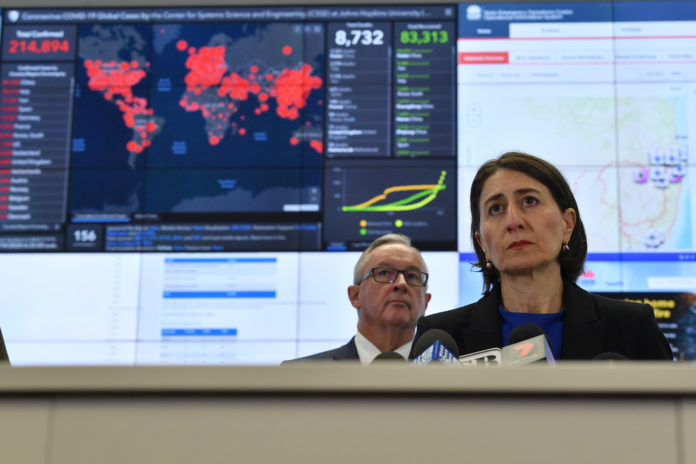
New Zealanders are preparing to go into an unprecedented lockdown period at midnight on Wednesday to stem the spread of the Covid-19 coronavirus pandemic.

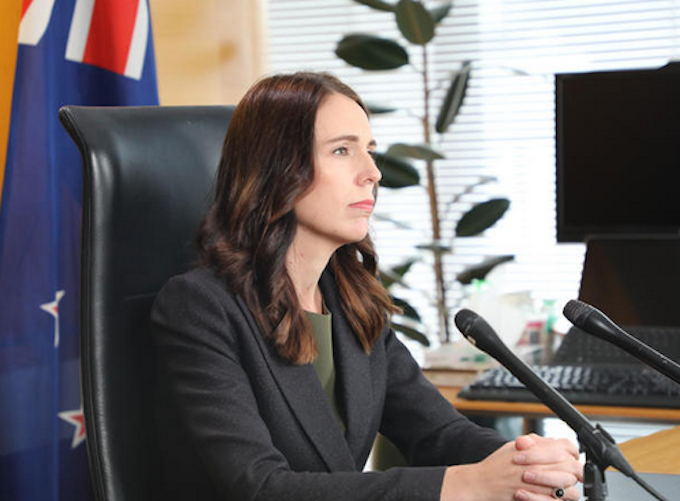
Prime Minister Jacinda Ardern announced this afternoon that the Covid-19 alert level would rise to level four on Wednesday night.

It was confirmed the country now has 102 cases  – with 36 new cases today – and the Ministry of Health said the virus was spreading in the community.

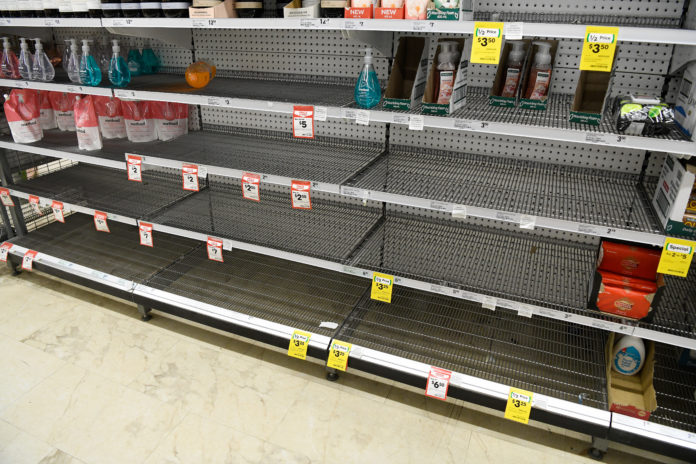
Hundreds of thousands of people are now preparing to work from home, and supermarkets are also begging people to shop normally and stop panic buying ahead of the national lockdown.

READ MORE: Al Jazeera coronavirus live updates – Italy death toll now 5476 after 651 rise

In Fiji, the third case was reported – the one-year-old nephew of the first patient – by Prime Minister Voreqe Bainimarama, reports FBC News.

– Partner –

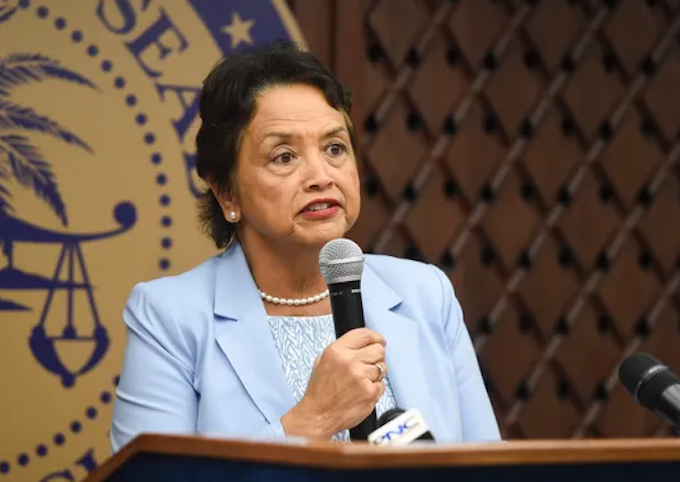
In Guam, medical authorities reported a further 12 cases taking the total to 26 with a 27th who died at the weekend – the first Covid-19 death in the Oceania region, reports the Pacific Daily News.

‘This will save thousands of lives’
In New Zealand, Prime Minister Jacinda Ardern warned the lockdown could be extended for longer if the spread of the virus was not brought under control.

“This will literally save lives, thousands of lives,” she said.

The four-level NZ Covid-19 alert matrix.

Ardern said all of NZ must prepare to go in self-isolation now to “break the chain” of community transmission.

Schools will be closed from tomorrow.

Workers are setting up home offices and parents are gathering home-schooling resources, to get ready for battening down.

About 10 percent of the working population was estimated to be working from home today when news hit that tomorrow it would be almost everyone.

National secretary Glenn Barlcay of the Public Service Association, which has 76,000 members across five sectors, said he was concerned for those who may lose their jobs.

Full details of the NZ government actions are available on the official government website at covid19.govt.nz

This article is republished by the Pacific Media Centre under a partnership agreement with RNZ.

  • If you have symptoms of the coronavirus, call the NZ Covid-19 Healthline on 0800 358 5453 (+64 9 358 5453 for international SIMs)

Article by AsiaPacificReport.nz

Keith Rankin Chart Analysis – Covid-19 Virus: Slowing Exponential Growth in Italy

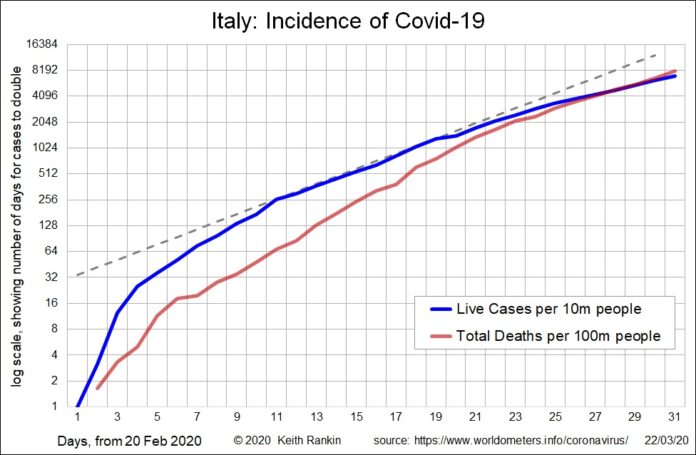
Impact of quarantine measures. Chart by Keith Rankin.

Analysis by Keith Rankin.

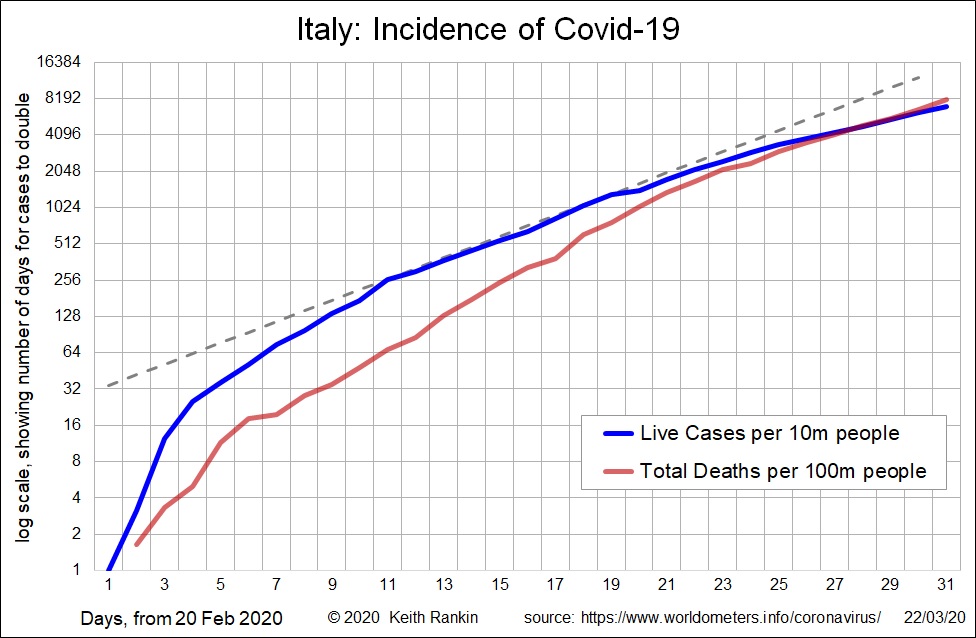
Impact of quarantine measures. Chart by Keith Rankin.
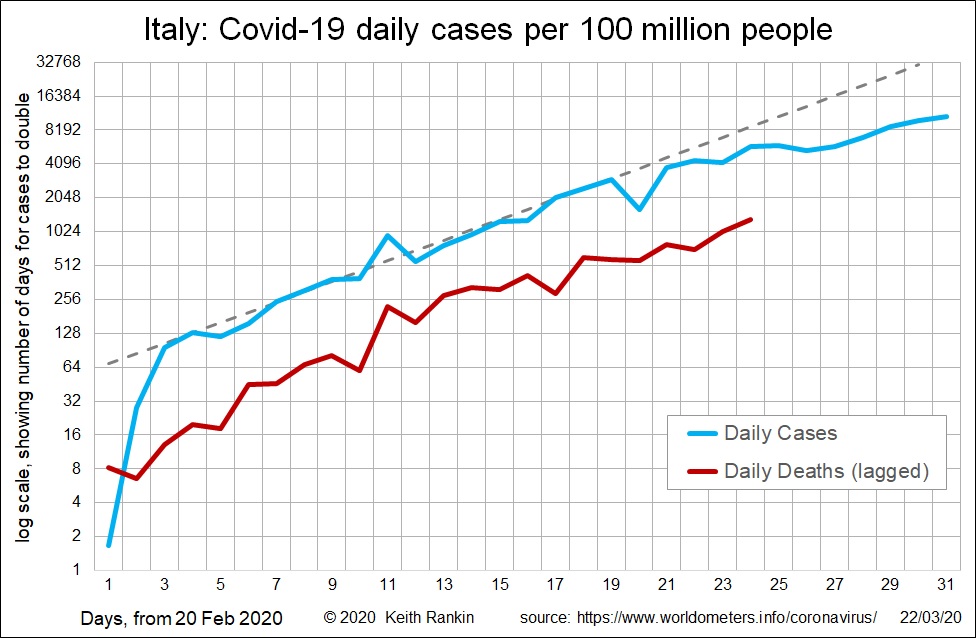
Italy: Covid-19 daily cases per 100 million people. Chart by Keith Rankin.

The two charts here are presented using a ‘logarithmic’ scale. This is the appropriate way of representing any data time series that would normally exhibit exponential growth. ‘Exponential growth’ means that normal growth is measured in percentage terms rather than actual numbers. Common measures that grow exponentially are consumer prices (this exponential growth is called ‘inflation’) and gross domestic product (where exponential growth is called ‘economic growth’).

Normal exponential growth, in this type of chart, is represented as a straight line.

The first chart here shows known unresolved cases of Covid‑19 in Italy, and total deaths. The reference here is the dashed line. In the early days (late February), cases were increasing at an accelerating rate, with the plot of live cases climbing towards the reference line. From day 11 (March 1) to day 24, live cases closely followed a consistent exponential growth pattern. Since then the rate of growth of live cases has slowed down.

Each horizontal gridline on the chart represents a doubling of cases. From day 11 to day 24 we saw live cases doubling every 3.5 days. The most recent doubling of live cases is more like 5.5 days. Had this growth slowing not taken place, Italy would have had twice as many live cases in day 30 than it actually had (comparing the blue line with the dashed line).

We expect deaths to lag cases, by about a week on average. In this chart we see the growth of deaths is faster than the benchmark until day 23. Recent death rates, however, fall below the benchmark growth rate. This also is a good sign. Re deaths, we note that death numbers (measured per 100m of the Italian population) are about 10 percent of known live cases. This does not necessarily mean that the disease is more lethal in Italy than in China. Rather it suggests that the actual ‘live case’ data for Italy is actually an order of magnitude larger than the known data; in that case we should read the live cases as per million of the population, not as per 10 million. Thus, we can infer that just over one percent of the population of Italy are at present ‘live cases’; probably two percent of Italians either have the virus, or have recovered from it.

The second chart shows daily ‘new cases’ of Covid‑19 in Italy. We can see that the recorded rate of growth of new cases has declined since day 22 (12 March). If Italy had followed the benchmark exponential line, there would have been four times as many daily new cases yesterday than there actually were.

The daily deaths are shown with a one‑week lag. They follow the same pattern as daily new cases a week previous. So, this week, we can expect a slowing of the rate of growth of deaths in Italy.

On the basis of what I see here, and given the high level of quarantine in Italy at present, my sense is that no more than five percent of Italians will be infected by Covid‑19. That’s many people, but not nearly as bad as the fifty percent projections that we are hearing for some countries.

Given that New Zealand has taken measures early and sensibly, my sense is that New Zealand’s eventual incidence of Covid‑19 will be less than 10% of Italy’s, and that the eventual New Zealand death rate will be no higher than 0.5% of cases. That translates to no more than 25,000 cases in New Zealand, and no more than 125 deaths (eg 100 deaths in total). This is of course a back‑of‑the envelope guess, not a worst‑case projection.

Caring for 300,000 temporary migrants in New Zealand is a crucial missing link in our coronavirus response

Source: The Conversation (Au and NZ) – By Francis L. Collins, Professor of Geography, Director of the National Institute of Demographic and Economic Analysis, University of Waikato

More than one-in-16 people in New Zealand today – or more than 300,000 in total – is a migrant without residence status, living here on a temporary work, student or family visa.

Many of those migrants fill key roles that will help us through this COVID-19 pandemic. Care workers, nurses, doctors, truck drivers, farm workers and fruit pickers are just a few examples.

It’s a similar story in many other countries. There are more than 2 million people on temporary visas in Australia – including 600,000 New Zealanders.


Read more: Self-isolating for coronavirus is impossible for tens of thousands of New Zealanders – unless we help them fast


For New Zealand to have its best shot at containing community spread of coronavirus – and to strengthen its case to Australia and other governments to look after New Zealanders abroad – we need to act now to look after all people in New Zealand.

That means guaranteeing temporary visa holders access to health and social services for the duration of this COVID-19 crisis. It’s not only the right thing to do, it’s the best thing we can do for our nation’s health. It also strengthens our government’s ability to demand better care for the approximately 1 million New Zealanders living, studying or working overseas.

New Zealand relies on migrants

Closing borders minimises the risk of transmission and protects national populations, as Deputy Prime Minister Winston Peters made clear in his call for travelling New Zealand citizens and residents to return home.

But it’s also true that border closures now in force across our region and around the world have left millions of migrants working or studying abroad stranded away from home, with unequal or uncertain access to health care and other critical services.

These border restrictions will halt migration flows in unprecedented ways. Globally, between 2010 and 2019 an additional 51 million people became international migrants. To respond effectively to COVID-19, governments worldwide need to seriously consider the migrants in their midst.

New Zealand is no exception. According to the latest statistics from the Ministry of Business, Innovation and Employment, 303,453 people were living in New Zealand on temporary work, student or family visas at the end of February 2020. This represents about 6% of the resident population. Ten years ago, only 155,931 people were on temporary visas.

Most countries, including New Zealand, either delay and restrict access to citizenship for migrants, or do not offer it at all. This means a large proportion of these people have relatively limited rights.

Temporary visa holders in New Zealand have no certainty about their right to remain. Their access to key public services such as health care is often limited.


Read more: When it comes to sick leave, we’re not much better prepared for coronavirus than the US


What NZ can learn from other countries

Border closures present the New Zealand government with several immediate migration-related challenges, including:

  • many people on temporary work visas do not have automatic rights to health care – including all workers who receive work visas less than two years in length and their families, as well as all students and working holiday visa holders – and while some may have health insurance, many policies will not cover treatment for COVID-19
  • during the course of the New Zealand border closure, and those implemented in other countries, the visas of many of these people may expire, creating problematic legal situations
  • some people on temporary visas, especially those who do not have friends and family in New Zealand or have arrived recently, may have little access to information about COVID-19 or understand how New Zealand government agencies work.

Some countries are actively responding to the issue of health access.

In Canada, the Ontario Ministry of Health says all uninsured people will have access to screening and treatment. Singapore has waived fees for testing and hospital bills for all non-citizen residents and long-term visa holders.

In New Zealand, the government is considering being more flexible with work visas on a case-by-case basis. The government has also made it clear employers of migrant workers are entitled to wage subsidies under the economic response package.

This is a good sign but it remains unclear how a case-by-case approach can address the size of the temporary migrant population and their very different circumstances.

Migrants could be left in limbo when visas expire

In the next six months the visas of 40,948 migrant workers and 33,441 international students will expire. Visa expiry will leave these migrants in limbo, and that’s without taking into account the impact of COVID-19 on jobs.

For essential skills work visa holders (59,232 people in New Zealand, as of February 2020) and their partners (34,335 people) and children (25,314), the loss of a job for any reason entails the cancellation of a visa if a new position can’t be found. The length of time a person has been in New Zealand or the demand for their skills are not relevant to such decisions.

Seasonal work visa holders (8,802), mostly from the Pacific, are on seven-month visas with no rights to extend or apply for other visas. Post-study work visa holders (31,437) have more flexibility seeking employment but have often spent significant money on education and living costs over many years. They need a job to be eligible to apply for a residence visa.


Read more: Canada’s changing coronavirus border policy exposes international students’ precarious status


Difficult questions will come up when visas start expiring. Will people be sent back to countries with high rates of COVID-19? Will visas be cancelled because people are being treated for COVID-19? How do we control the risk that migrants leaving New Zealand may spread COVID-19 to other countries? Does the government have capacity to manage these issues across such a large population?

This crisis reveals the character of New Zealand’s recruitment of people on temporary visas over the last two decades. It has operated on a “use and discard” approach that values people for their labour or their tuition fees but has no interest in providing long-term community integration.

This approach has put a large group of people in precarious situations in New Zealand. Consecutive governments have attracted people on the promise of opportunities to remain in New Zealand while continuously shifting the goalposts for gaining long-term residence rights and tweaking the rules for work visas to maximise labour market flexibility.

The COVID-19 crisis will reveal the full force of the precarious existence temporary migrants face in New Zealand and internationally.


Read more: Why New Zealand needs to continue decisive action to contain coronavirus


The immediate challenge for New Zealand’s government is to create certainty for these people, substantially extend the length of visas, remove the employer link on all work visas and guarantee access to health and social services for the duration of the crisis.

The only way to reduce widespread uncertainty is to make such changes universal and to communicate them to all people on temporary visas, migrant communities, employers of migrant workers and educational institutions with international students.

In the long term, the crisis should make it clear that our approach to migration policy needs to be focused on principles, rights and inclusion rather than the extraction of value.

ref. Caring for 300,000 temporary migrants in New Zealand is a crucial missing link in our coronavirus response – https://theconversation.com/caring-for-300-000-temporary-migrants-in-new-zealand-is-a-crucial-missing-link-in-our-coronavirus-response-134152

6 strategies to juggle work and young kids at home: it’s about flexibility and boundaries

Source: The Conversation (Au and NZ) – By Ruchi Sinha, Senior Lecturer, Organisational Behaviour & Management, University of South Australia

It’s hard enough juggling a job with parenthood when you’ve got young kids. But what do you do when social-distancing policies mean you’ve all been sent home?

This is the reality many families now face. Schools have been shut in Britain, France, Germany, South Korea and all but five US states. In Australia, Victoria and the Australian Capital Territory are closing schools this week, with more states likely to follow.


Read more: COVID-19: what closing schools and childcare centres would mean for parents and casual staff


To entertain and home school your children while working from home is going to take self-awareness, planning, communication and technology to stop the boundaries between the work and family from fraying and ripping.

Here are six strategies to survive.

1. Be flexible

Working parents often develop routines around work (8am-4pm) and family time (4pm-8pm). Even if you prefer to stick to your routine and keep work to regular work hours, you may need to re-evaluate. The new normal is likely to involve combining greater flexibility with plans and schedules for non-standard working and family time.

To plan successfully, it is critical your know your own style and work preferences. Research shows some people are “integrators”, who cope well with multitasking and switching between work and personal tasks, while “segmenters” prefer to keep things separate and have strong boundaries.


Read more: Women aren’t better multitaskers than men – they’re just doing more work


2. Make a plan

Make a daily work and childcare schedule that you, your partner and (to a large extent) your kids agree on.

It is crucial to schedule things as it gives you a realistic understanding of what is possible and what you may have to give up versus what you need to claim as essential.

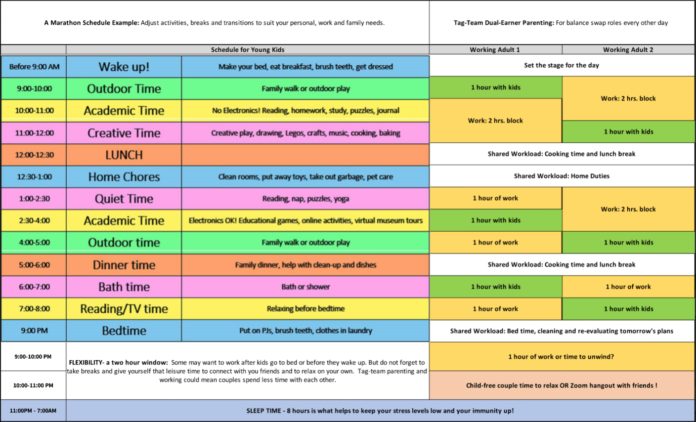
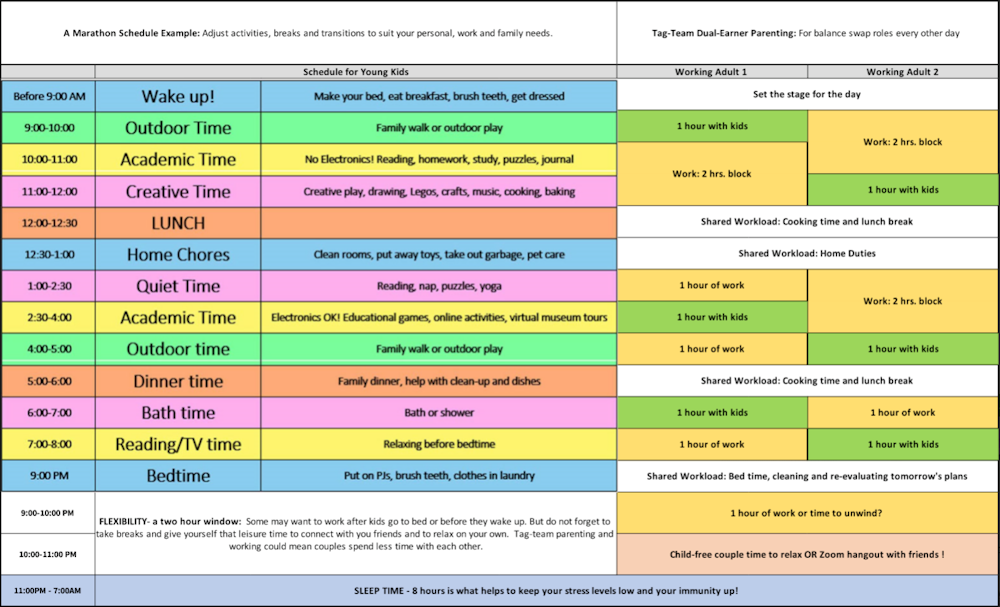
Here is my personal schedule for my partner and I working from home with our six-year-old daughter.

Ruchi Sinha, Author provided

It’s a manic schedule and we are trying to adapt it each day to make it work. But to have it in the first place made us realise how to share home duties and educational responsibilities while carving out work and personal time.

Have a family meeting and lay down what you think is critical for the health of your family and for your productivity at work. Use that understanding to identify workload-sharing plans.

Try different scheduling for a week and meet as a family to discuss what does not work and what could work. For example, try a two-hour work block for two days and see how your partner and kids react to it. Or swap activity times or roles twice a week or every other day.

Once you have a plan, it is critical to communicate the same with colleagues in a way that ensures they are supportive and can work with your constraints and capabilities. Be genuine about your struggles and ask others at work about how they manage their schedules. They will be able to empathise and appreciate you being upfront.

A separate work space can help you mentally separate roles and boundaries even if the kids are still close. Shutterstock

4. Create a work space

Research shows working from home is less stressful when you have a dedicated work area. This helps you mentally and physically separate roles and boundaries.

With younger kids, you may want to have a symbolic boundary, such as a bookshelf or a room divider, so you can still see and hear them.

Invest in a good noise-cancelling headset and an ergonomically designed desk and table.


Read more: Working at home to avoid coronavirus? This tech lets you (almost) replicate the office


Make small traffic-light signs to indicate to young ones when they can and cannot interrupt. Use alarms to give you 10-minute reminders before you need to change gear from work to parenting.

When you are about to transition, write a note on what you want to do when you come back. This will help reduce the spillover of those incomplete tasks into your next activity.

5. Build a community

Gather every human and virtual resource you can find to aid mental well-being and efficiency. You, your partner and your kids will need social stimulation beyond each other.

Organise virtual play dates through video chat. Reach out to the parents of your child’s classmates to help share the load. Another parent doing a video music class or a virtual art class might free up precious time for you to do something else.


Read more: Kids at home because of coronavirus? Here are 4 ways to keep them happy (without resorting to Netflix)


6. Look after yourself

Don’t forget you also need some time to unwind.

This is the time to shed guilt and be generous to yourself. Don’t beat yourself up for mistakes and missed targets. You are working in a brave new world and it will take time to adjust.

Be patient. Learn from each day by taking note of what worked and what didn’t. With time you will find a rhythm that works for you, your partner, your colleagues and the young ones at home.

ref. 6 strategies to juggle work and young kids at home: it’s about flexibility and boundaries – https://theconversation.com/6-strategies-to-juggle-work-and-young-kids-at-home-its-about-flexibility-and-boundaries-134138

Make no mistake: Cook’s voyages were part of a military mission to conquer and expand

Source: The Conversation (Au and NZ) – By Stephen Gapps, Conjoint Lecturer, University of Newcastle

Captain James Cook arrived in the Pacific 250 years ago, triggering British colonisation of the region. We’re asking researchers to reflect on what happened and how it shapes us today. You can see other stories in the series here and an interactive here.


The military nature of the Endeavour’s voyage – as part of an aggressive reconnaissance and defence against Indigenous resistance – has historically been overlooked or downplayed.

But musket fire was used many times to teach lessons of British military superiority. Violence underscored almost all of Cook’s Pacific encounters with Indigenous peoples.

In the broader strategic sense – as all 18th and early 19th century scientific voyages were – Cook’s voyages were part of a European drive to conquer. The aim was to claim resources and trade in support of the British Empire’s expansion.

At its heart, Cook’s first voyage was first and foremost a Royal Navy expedition and he was chosen as a military commander who had a background in mathematics and cartography.

Imperial science and military reconnaissance

During the “great age” of Pacific voyaging, expeditions always had several goals at once.

Coming after Britain and its allies’ victory in the Seven Years War (1756-1763) Cook’s first voyage was at the height of the promotion of “imperial science” – the idea that scientific advancement and colonial expansion were twin goals.

As industrialisation drove upheaval in Europe, scientific “discovery” was seen as a critical part of establishing, developing and controlling an empire.

Even Cook, as was expected of any sea-going commander visiting distant stations, made military reconnaissance notes.

In November 1768, when the Endeavour reprovisioned at Rio de Janeiro, the local Viceroy was suspicious of a voyage supposedly to observe the transit of Venus. He suspected Cook of seeking to extend British influence in the Pacific.

Cook duly noted in his journal the state of local defences in and around Rio de Janeiro and that

it would require five or Six sail of the Line to insure Success.

Cook felt insulted at being carefully watched and had a low opinion of the Viceroy’s scientific ignorance. But, in fact, the Viceroy was correct.

After opening his supplementary instructions (so-called “secret orders” issued by the British Navy) Cook headed off to attempt to find and claim for Great Britain the supposed southern land thought to exist in the vast southern ocean.

Policy emanated from the barrel of a gun

Every European ship that voyaged the Pacific was, in the first instance, a floating fortress; an independent command with the ability to send out small shore parties or to concentrate firepower as needed.

And this was at the heart of all contact, all encounters, all attempts at communication with Pacific and other peoples. Make no mistake, restraint in British policy and conduct with Indigenous peoples in the Pacific emanated from the barrel of a gun.

Cook’s voyaging did not take place on a blank canvas, but across a rich tapestry of thriving, voyaging cultures that were ultimately the target of European aggression.

Cook has often been feted as one of the few 18th century voyaging captains renowned for his “tolerance” of Indigenous people and cultures. But ultimately, this was a tactic used in pursuit of domination. The best military commander only rarely has to resort to open conflict.

One of six cannon from HMB Endeavour. Australian National Maritime Museum.

A lesson learned well before Cook

Cannon – such as those Cook dumped overboard to lighten his ship after he struck the Great Barrier Reef in 1770 – make good museum objects and monuments in public parks.

But like those on Cook’s ship the HMB Endeavour, the fact is many cannon on later voyages were hardly used – if ever. The power of artillery fire had been swiftly learned by Pacific peoples since Europeans first arrived in the 1500s, many years before Cook.

Resistance warfare occurred across the Pacific from the 1500s right through to conflicts such as Samoan resistance to German imperial rule in 1908. But like the Australian Frontier Wars, these conflicts have often been neglected by military historians.

Yet conflict across the Pacific was surprisingly inter-connected, and influenced military thinking back in Europe.

A long history of oceanic warfare and navigation

One such example is The Battle of Mactan in 1521, in which Indigenous warriors in the Philippines fought and defeated an overconfident, numerically small Spanish force fighting under Portugal’s Ferdinand Magellan (famous for circumnavigating the globe).

And in 1595, the Spanish navigator Alvaro de Mendana was searching for “Terra Australis” when he arrived in the Marquesas Islands. He was met by several hundred canoes and more than 200 Marquesans were killed in the ensuing conflict.

European voyagers were often unaware that many major island groups across the Pacific were in regular communication with each other.

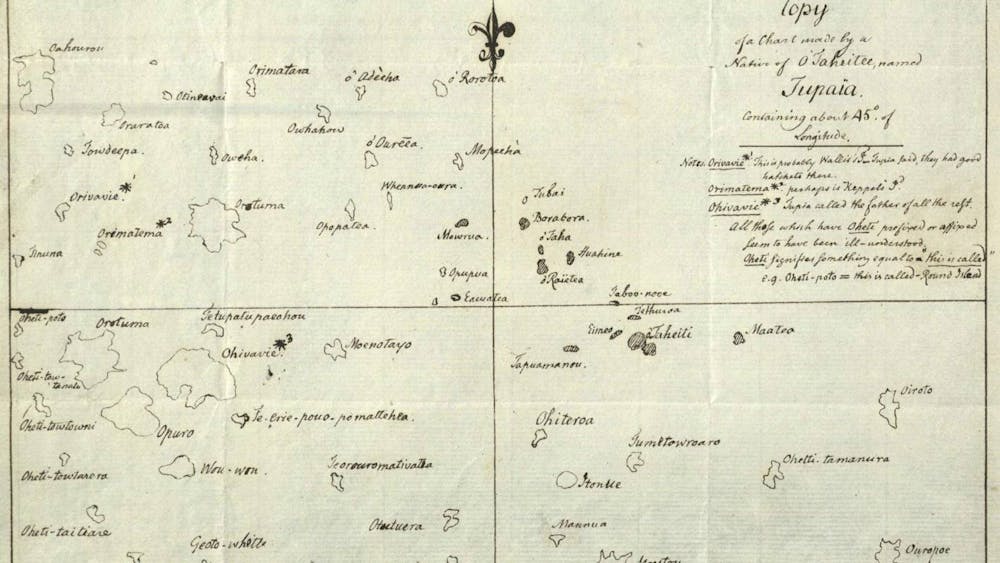
At least 174 years years after the Spanish devastation in the Marquesan islands, Tupaia – the Tahitian priest and navigator with knowledge of more 70 islands in the Pacific – joined the Endeavour voyage, in effect as a pilot and intermediary.

Tupaia drew a map with more than 130 islands on it, and included the Marquesas Islands on it. He described to Cook and Joseph Banks how, in the distant past, four islands were visited by ships similar to the Endeavour. His map drew on Pacific knowledge of previous conflicts and navigation techniques.

Tuaia’s first map of the Pacific islands. Wikimedia

When the British captain Samuel Wallis arrived at Tahiti in the HMS Dolphin in 1767, just two years before Cook, according to Jean-Claude Teriierooiterai, the Ari’i Amo (king) of Tahiti probably recognised these voyagers as the same white people who had attacked the Marquesans.

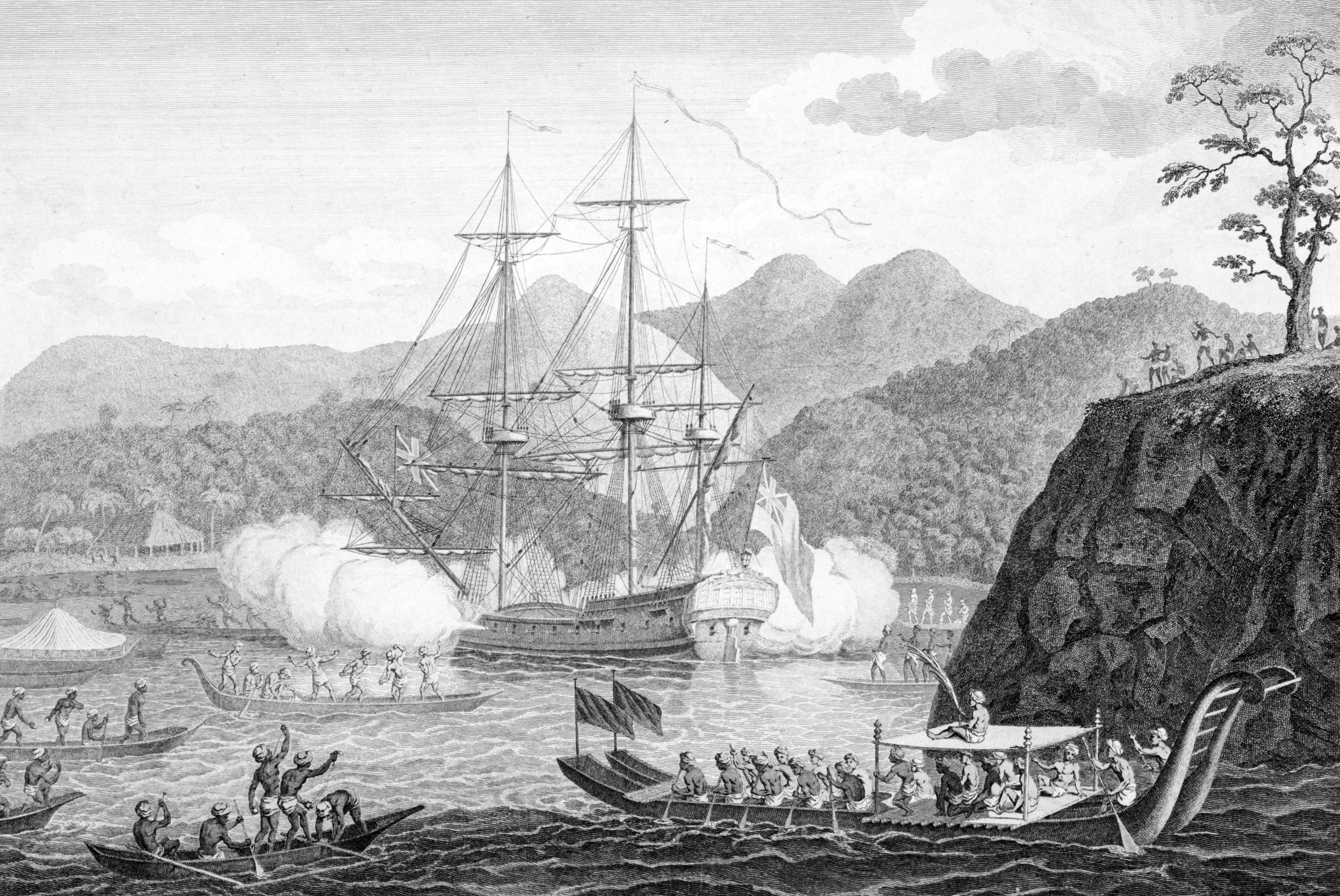
Around 100 double war canoes loaded with stones attacked the Dolphin for four days until Wallis fired his cannon into the Tahitian fleet (and at villages ashore for good measure). The Tahitians rightly regarded this firepower as all but invincible and soon became hospitable.

Attack of Samuel Wallis and his crew aboard The Dolphin by the people of Otaheite, Tahiti. Royal Museums Greenwich

When the French voyager Louis-Antoine de Bougainville arrived at Tahiti a year later, he thought the Tahitians the friendliest people in the world, living in a paradise. He did not know that he had Wallis’ cannon fire to thank for his reception.

It is important to remember the military factors in Cook’s and all other voyagers experiences in the Pacific and around Australia. They remind us of what underlined, if not defined, cross-cultural encounter moments.

Addressing the fact that these expeditions were all of a military nature reminds us that European colonisation was resisted from its very first moments.

ref. Make no mistake: Cook’s voyages were part of a military mission to conquer and expand – https://theconversation.com/make-no-mistake-cooks-voyages-were-part-of-a-military-mission-to-conquer-and-expand-129552

Self-isolating for coronavirus is impossible for tens of thousands of New Zealanders – unless we help them fast

Source: The Conversation (Au and NZ) – By Clare Aspinall, PhD Student He Kainga Oranga, Housing and Health Research Group, University of Otago

In less than 48 hours, all people in New Zealand will have to self-isolate, unless they are essential service workers. This is our best chance to stop the spread of COVID-19.

But what about the tens of thousands of New Zealanders who don’t have a secure home, or enough living space to avoid close or prolonged contact with others?

In Canada homelessness agencies report action against COVID-19 has not happened quickly enough and services have not received adequate support from government, putting the lives of some of the most vulnerable people in society at risk.


Read more: New Zealand outstrips Australia, UK and US with $12 billion coronavirus package for business and people in isolation


At a time when the New Zealand government is trying hard to stamp out coronavirus to avoid wider community spread, looking after the health of New Zealanders who are homeless, or living in crowded or emergency accommodation, has never been more urgent.

One-in-100 people in NZ are homeless

According to the 2013 census around 41,000, or 1-in-100 New Zealanders, were homeless.

This includes 28,500 New Zealanders living as temporary residents in severely crowded housing, 8,490 living in non-private accommodation run by private landlords and community organisations, as well as 4,197 who are without habitable accommodation. That’s tens of thousands of people without secure or adequate accommodation.

We’ll have to wait for the 2018 census to know more recent figures, and do have to take into account the NZ$2.2-billion plus per year spent on housing assistance and NZ$197-million over three years to fund 2,700 places in Housing First.

Even if the situation has improved for some people since then, given the increase in demand for housing, and the government’s increased funding for community housing providers, it is likely that the number of households living in crowded or non-private accommodation has increased between census.

Housing solutions for the next 48 hours and beyond

Government has the chance to move swiftly and make people’s accommodation more secure and prevent wider community spread of the coronavirus.

Building new housing is the long-term answer. But in the next 48 hours, local and central government can redirect accommodation that is no longer used by tourists for use as family homes and self-contained accommodation. That way, people who are currently homeless, living in non-private or crowded accommodation are protected.

People and families can self-isolate if they can control who they share their home with. This redirection will guarantee an income for those impacted by cancellations to accommodation bookings due to travel restrictions. Action is in society’s interest.

Under the New Zealand Influenza Pandemic Plan, national and local agencies, led by Ministry of Health and public health units, will work together in response to COVID-19.

Local pandemic responses must consider public health and community welfare. It is critical that agencies establish clear lines of communication and understand one another’s roles, as quickly as possible.

Given the risk for people who are homeless, each community needs to establish a list of organisations who work with people who are homeless, and identify those who are most vulnerable to COVID-19. Some public health units have begun to do so.

Community Housing Aotearoa (CHA), a peak body for the community housing sector, is well placed to link lead government agencies and public health units with community housing providers and homelessness services to implement pandemic plans.

Lead government agencies need to ensure community housing providers and homelessness services have access to the resources and equipment they need to prevent the spread of COVID-19 and deal with the consequences, if containment is no longer possible.

Some of the NZ$300 million attached to the government’s new Homelessness Action Plan 2020-2023 could be prioritised and brought forward for this purpose.

Identify those in need

In the next 48 hours, government priority needs to focus on sourcing self-contained accommodation for people without shelter, living in communal forms of housing, and crowded housing with large numbers of people and families sharing facilities.

Groups who are most at risk can be identified through community housing providers who have contracts with the Ministry of Housing and Urban Development, landlords who have multiple bonds lodged with the Ministry of Business, Innovation and Employment, and some councils that register boarding houses.

Local environmental health officers and homelessness agencies will know where people who require protection and support are. Priority can start with households who are medically most vulnerable and extend to as many households as possible to reduce the risk of transmission.

The government’s immediate priority needs to focus on supporting organisations to obtain self-contained accommodation for people sleeping rough or living in emergency housing that uses dormitory style accommodation.

It is not possible for people to protect themselves from infection and self-isolate in these situations. There is a risk infection will spread quickly in these environments.

Families who are living in communal emergency housing or severely crowded housing are another priority group. To prevent spread of COVID-19, the government needs to provide self-contained accommodation with adequate bedrooms for household members and a private bathroom, or more than one bathroom for larger families.

There is a window of opportunity for government to seek accommodation, so people are able to self isolate to protect themselves. In turn this protects the community and public health.

Supplying quarantined households in need

In the next 48 hours, government and community agencies need to clarify who will fund and deliver supplies for households in self-isolation or living in premises that have been quarantined. As yet this is unclear.


Read more: Coronavirus: how long does it take to get sick? How infectious is it? Will you always have a fever? COVID-19 basics explained


Households will need food, medicine, extra cleaning and personal hygiene products for each member of the family. These measures to protect and support people are especially important over the next month, but may be required through multiple waves of the pandemic. The response will need to remain in place until hopefully a vaccine is found.

This pandemic is an extraordinary situation. It highlights the importance of the right to housing. Housing has a central role in promoting population health and avoiding health inequalities.

We are in a window of opportunity to act, where it is critical to prioritise and do everything possible to address homelessness. Such measures will help to prevent the wider spread and impact of COVID-19 across New Zealand.

ref. Self-isolating for coronavirus is impossible for tens of thousands of New Zealanders – unless we help them fast – https://theconversation.com/self-isolating-for-coronavirus-is-impossible-for-tens-of-thousands-of-new-zealanders-unless-we-help-them-fast-133893

It’d be a mistake to shut financial markets: more than ever, we need them to work

Source: The Conversation (Au and NZ) – By Stephen Kirchner, Program Director, Trade and Investment, United States Studies Centre, University of Sydney

The extreme volatility and losses seen in stock markets in recent weeks has seen calls for financial markets to be closed and short selling restricted.

But shutting them down would be a mistake.

Amid the volatility, financial market prices convey much needed information.


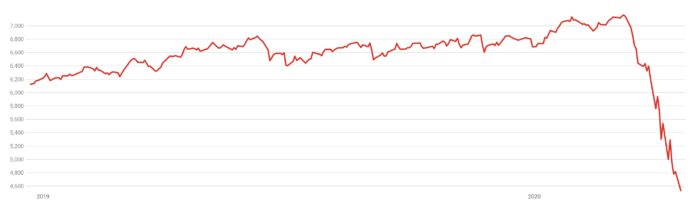
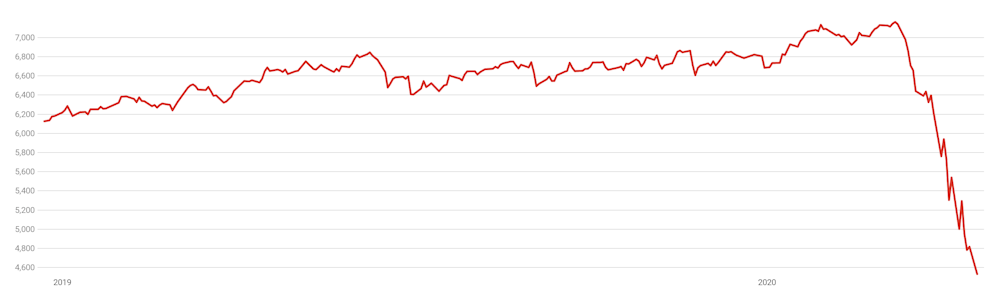
S&P/ASX 200 share index over the past year

Source: Yahoo Finance

In an early morning meeting at the White House the day after the 1987 stock market crash, then US Treasury Secretary Jim Baker floated the idea of closing the stock market.

The Chair of President Reagan’s Council of Economic Advisers, the Chicago-trained monetarist Beryl Sprinkel, was having none of it.

According to several second and third-hand accounts, when his opinion was sought, Sprinkel said “we will close the markets when monkeys come flying out of my ass.”

When Reagan asked Fed Chair Alan Greenspan for his opinion, Greenspan declared, “I go with the monkeys”.

The US stock market stayed open that day and rallied late in the afternoon, injecting a note of much-needed confidence.

Prices tell us truths

The Fed’s operations to maintain liquidity (the ability to buy and sell) remain a textbook case of how to respond to severe financial market stress.

The US economy was spared recession on that occasion.

Today’s situation is different in important respects. Policymakers are choosing to shut down the economy, and financial markets are pricing shares accordingly. Bond markets have been shaken as investors sell bonds to raise cash and prepare for governments to issue a flood of new bonds.


Read more: More than a rate cut: behind the Reserve Bank’s three point plan


The US dollar has rallied as the world scrambles for US dollars, sending exchange rates against the US dollar dramatically lower.

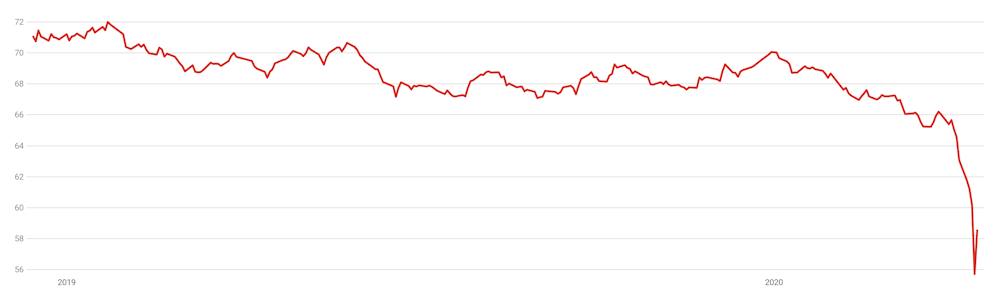
As my previous research shows, the US dollar often climbs when the economic outlook is most dire, explaining why the Australian dollar is at its lowest in nearly two decades.


US cents per Australian dollar

Source: Reserve Bank of Australia

Amid such extreme volatility, it would be tempting to close financial markets, in particular, stock exchanges.

There is no reason to close markets for reasons of public health. Financial markets are now traded almost entirely electronically. The US has been forced to close its trading floors in New York and Chicago, but these trading floors were already legacies of an earlier era, largely ornamental adornments to digital trading.

Stock markets have their own circuit breakers that kick in during extreme volatility, but to do more than that would be to deprive traders and policymakers of the insights they offer.

Price movements function as alerts. It is noteworthy that financial markets sold off days before the World Health Organisation finally declared a pandemic.


Read more: This coronavirus share market crash is unlike those that have gone before it


They can also inform policymakers about what to do. When share markets begin a sustained recovery, it will be a sign the worst of the pandemic might be behind us.

We need prices for financial products in the same way we need prices for goods and services. Without them, decision-making becomes difficult, if not impossible.

Preventing investors from selling stocks to raise cash (which is what a stock market shutdown would do) could cause severe hardship.

With share market prices falling sharply, it’s tempting to think closing them will stem the losses, but it could trigger even more painful adjustments elsewhere.

Even short sellers have a place

Other countries have imposed bans on short selling, which is the sale of a share the seller does not yet own.

Short sellers profit by buying back shares at a lower price after they have sold them. They do it by borrowing rather than owning stocks. Their actions help the owners of stocks who want to protect their financial positions from further declines in price.

If owners can’t protect themselves in this way, they can be forced to liquidate shares, making the downturn even worse.


Read more: Coronavirus market chaos: if central bankers fail to shore up confidence, then what?


The global financial crisis gave us a wealth of experience with bans on short-selling, including in Australia. The evidence from that experience overwhelmingly suggests short-selling bans were counter-productive.

Keeping markets open will be a painful experience for many, but closing them is the equivalent of shooting the messenger.

Eventually, they will signal better times ahead and give business the confidence to move forward with the recovery.

ref. It’d be a mistake to shut financial markets: more than ever, we need them to work – https://theconversation.com/itd-be-a-mistake-to-shut-financial-markets-more-than-ever-we-need-them-to-work-134387

Coronavirus: what the latest stimulus measures mean for Australian artists and arts organisations

Source: The Conversation (Au and NZ) – By Jo Caust, Associate Professor and Principal Fellow (Hon), School of Culture and Communication, University of Melbourne

Galleries, museums, libraries, theatres, cinemas and art centres have closed. All film production has stopped.

Theatre companies, dance companies, opera companies, orchestras, bands, festivals, pub gigs – every kind of cultural activity you can think of has stopped or been cancelled.

We know we are living in an extraordinary time, but the pace of the change has been shocking. Less than a fortnight ago, performers were looking forward to participating in the Melbourne International Comedy Festival. Now that has been cancelled, too.

At least 255,000 events have been cancelled across the country with an estimated income loss of A$280 million at the time of publishing.

Side jobs many artists depend on to subsidise their artwork have also disappeared overnight, particularly in hospitality and events.


Read more: Scalable without limit: how the government plans to get coronavirus support into our hands quickly


Last week, even Opera Australia’s orchestra was stood down. Opera Australia is the best-funded performing arts company in the country, receiving over A$26 million a year in government funding.

(Following action by the orchestra’s union, the Media Entertainment & Arts Alliance, Opera Australia released a statement saying it’s working to ensure ongoing employment.)

Federal Arts Minister Paul Fletcher has convened two meetings to address the issue. One is with representatives of the arts sector and one with state and territory cultural ministers.

State support

Four state governments (Queensland, South Australia, Tasmania and Victoria) have acknowledged the crisis in their sector on arts funding body or arts minister websites and asked grantees to contact them for advice if the activity they were planning cannot go ahead.

Some are offering stimulus packages in addition to those being offered by the federal government.

Queensland

Arts Queensland has offered an A$8 million package, including:

  • organisational funding from 2017-2020 expanded until December 2021

  • rent waived for tenants of government-owned arts venues.

Victoria

The Victorian government mentions arts and entertainment as one of the “hardest hit sectors” targeted by its A$500 million business support package.

Artists and arts workers will also be eligible for the A$500 million Working for Victoria Fund.

Federal support

Organisations receiving funding from the Australia Council or the Office for the Arts will:

  • no longer have to deliver on audience KPI requirements

  • have payments brought forward

  • have reporting requirements delayed or removed

  • be able to extend project timelines

  • be able to use money provided for specific outcomes (such as performances or mentoring programs) to pay wages, rent and utilities.

Australia Council CEO Adrian Collette says:

We are also rapidly reframing how the Australia Council’s programs can support the cultural and creative sectors in these unprecedented times. We will share the outcomes of this work as soon as this work is finalised.

While not specifically mentioned in the federal government’s latest stimulus package, arts organisations are eligible for:

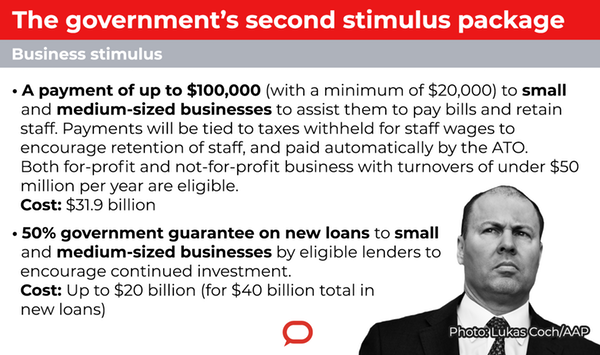
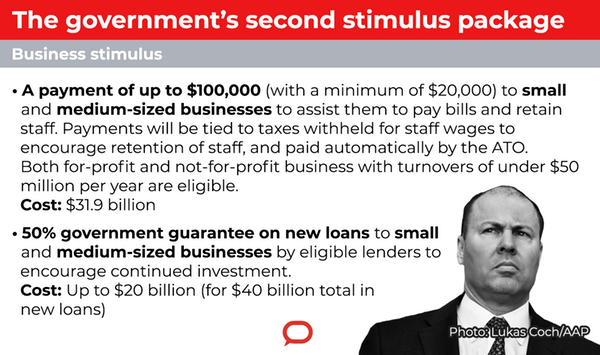
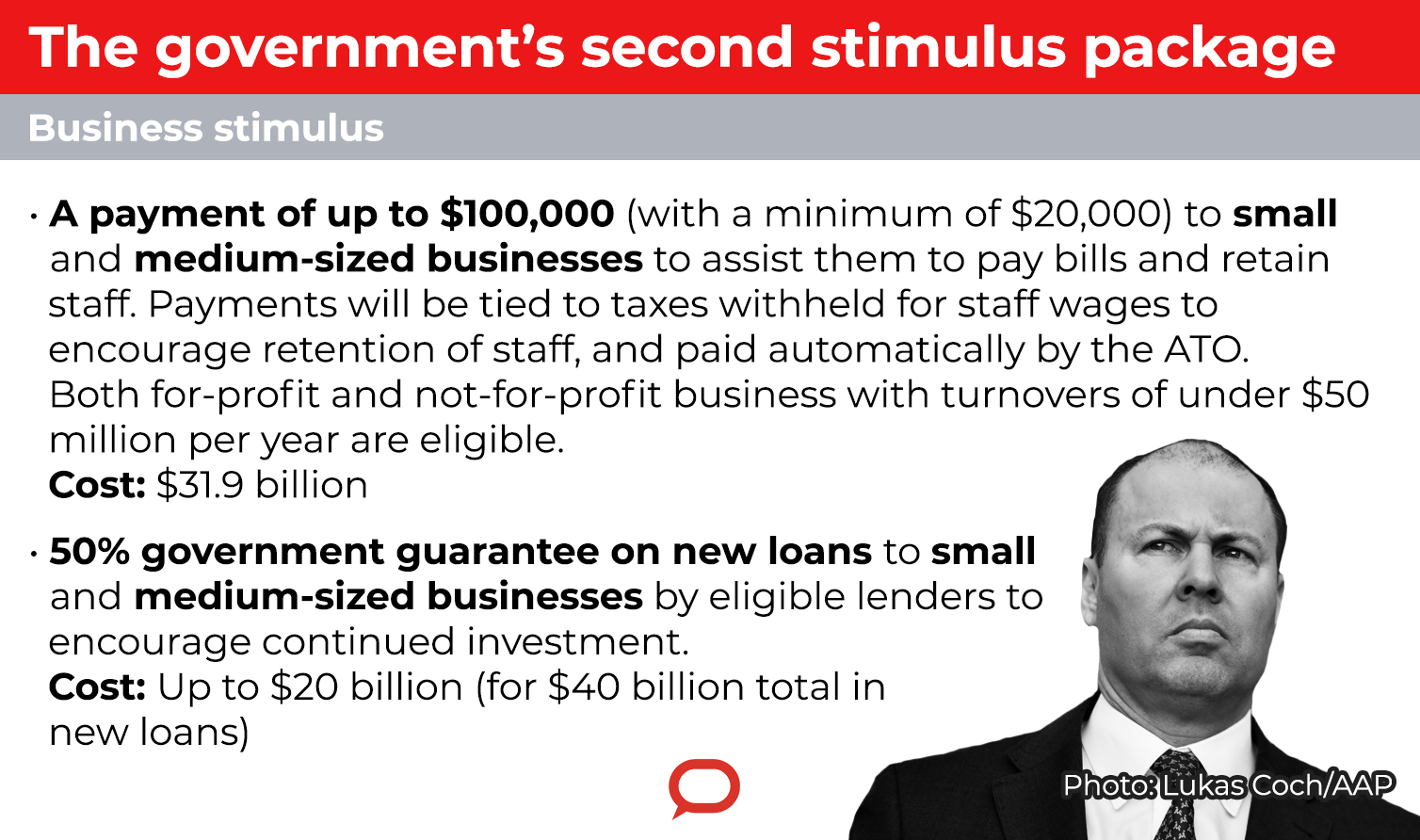
  • cash payments of between A$20,000 and A$100,000 to keep staff employed, with the Australian Tax Office to deliver these payments as a credit on activity statements from late April

  • the Coronavirus SME (small and medium enterprise) Guarantee Scheme, supporting small and medium businesses to access working capital to get them through the impact of the coronavirus.

The Conversation, CC BY

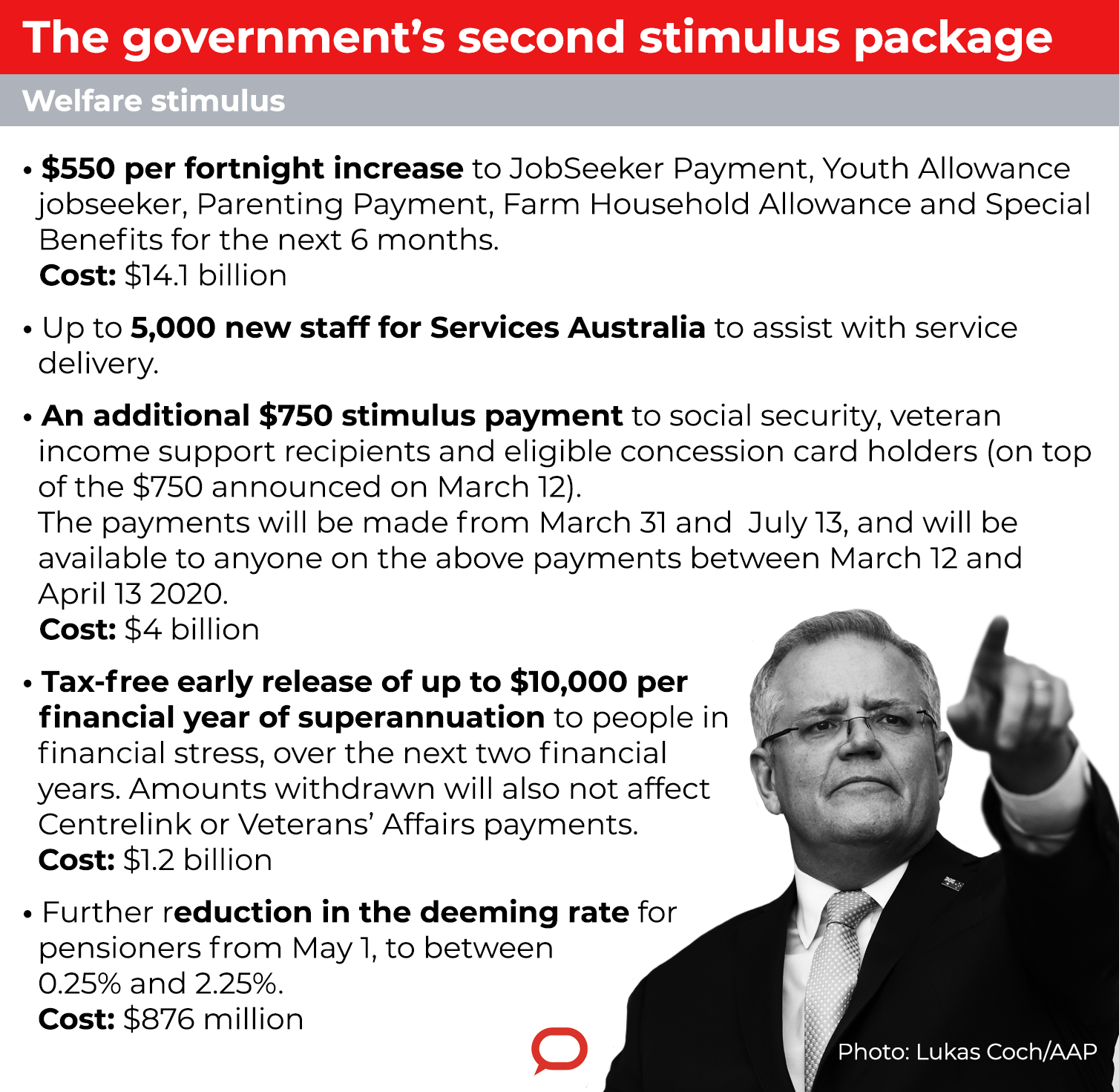
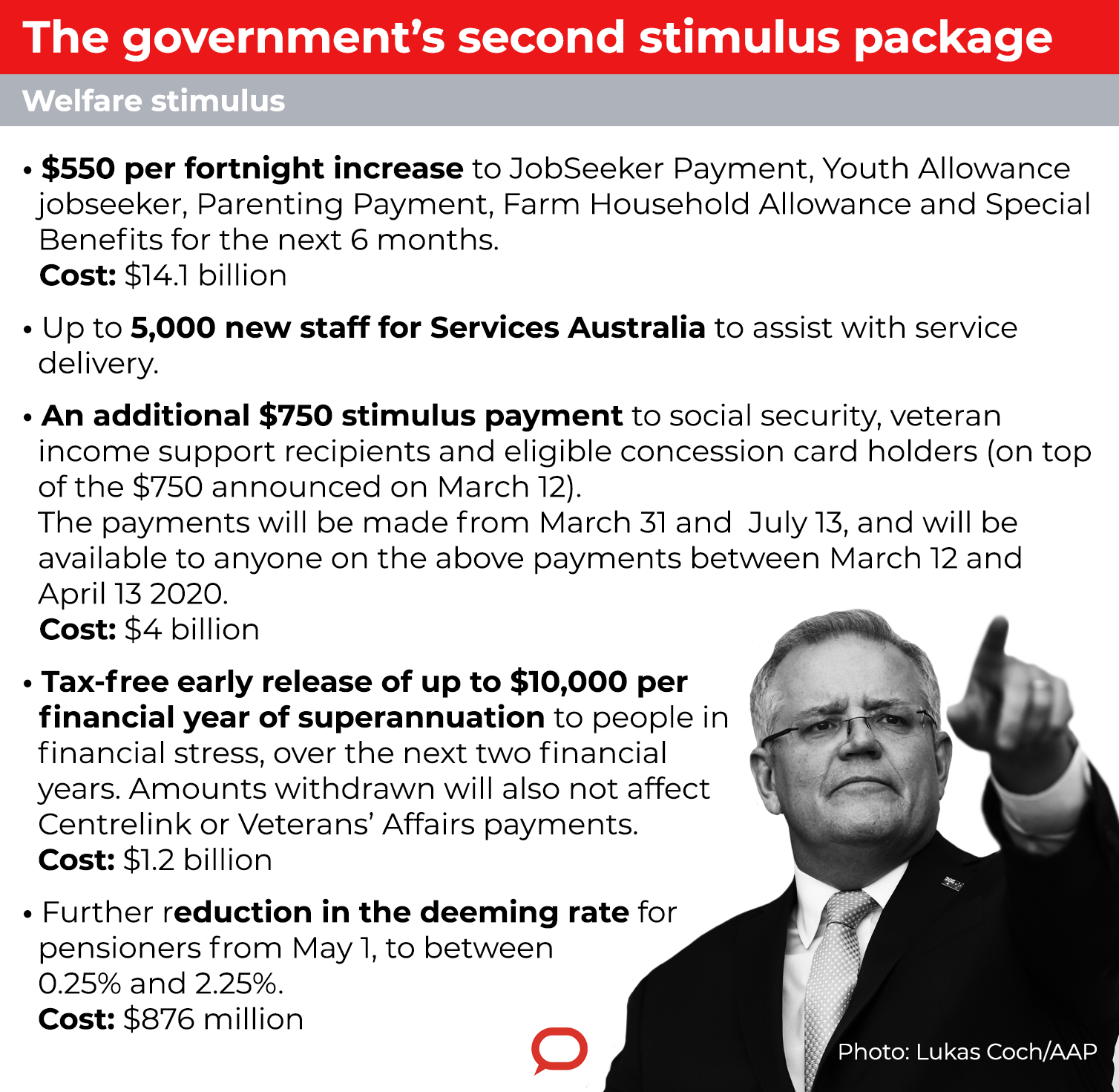
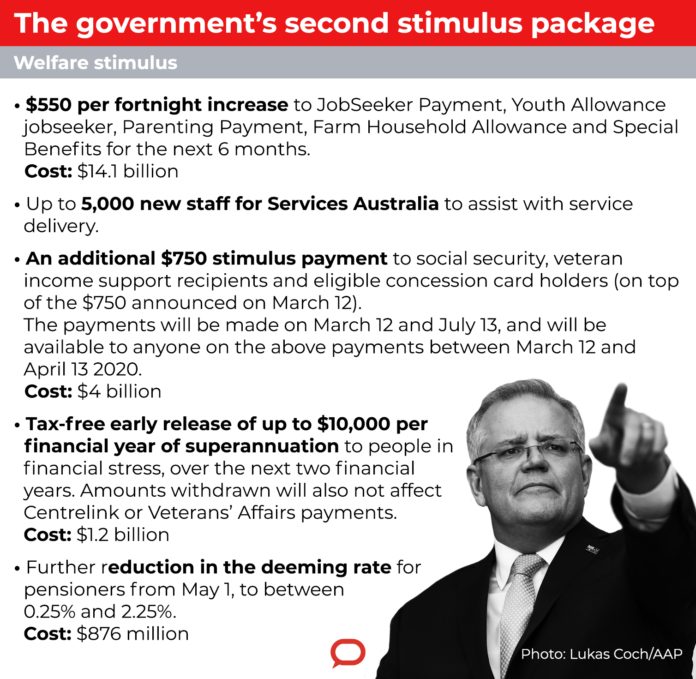
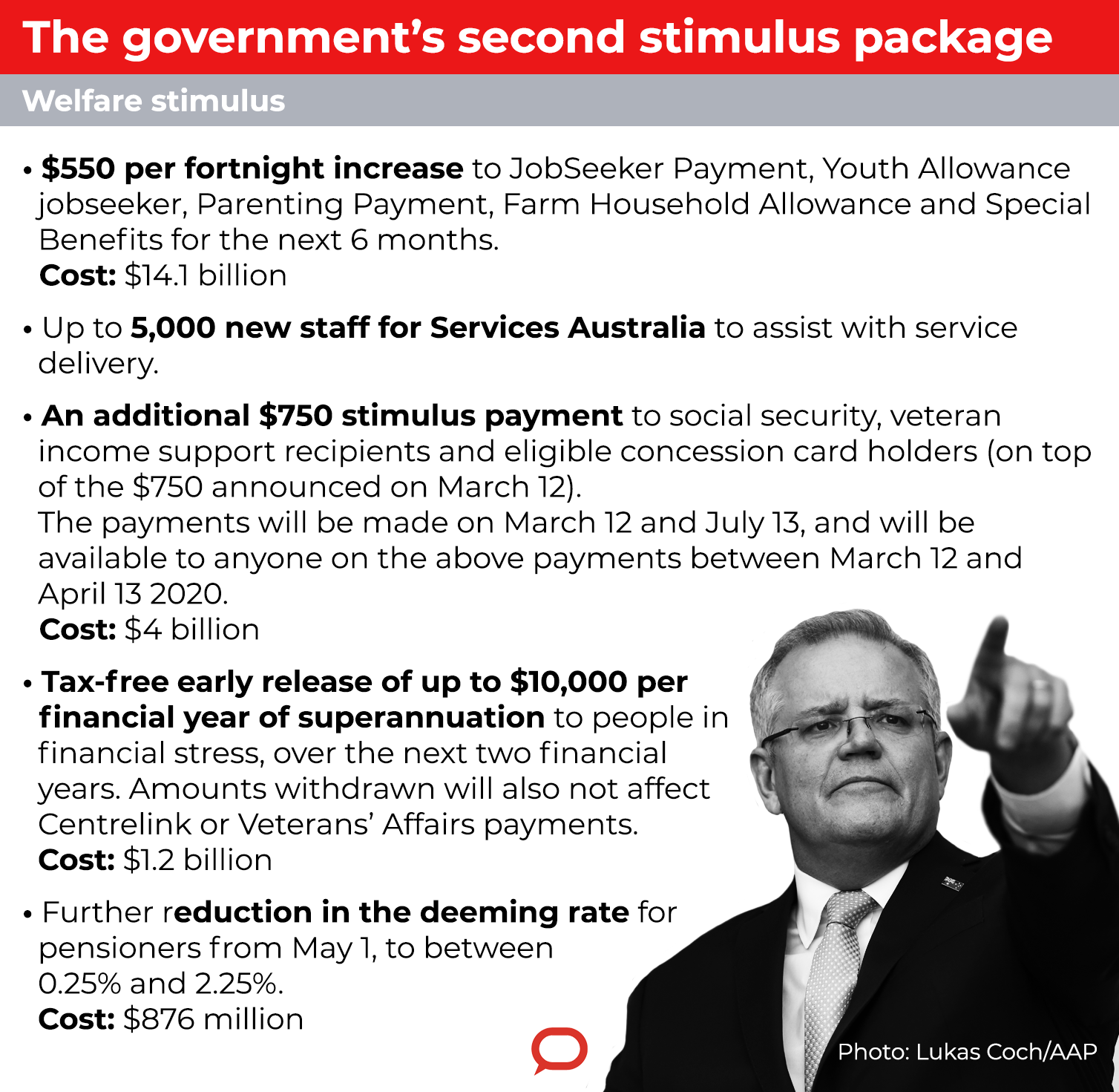
The JobSeeker allowance will now be available) for sole traders, the self-employed and casuals – two-thirds of the cultural workforce – so artists and arts workers will be able to access A$1,100 a fortnight through Centrelink for six months.

Individuals in financial stress will be able access up to A$10,000 of their superannuation in 2019-20 and a further A$10,000 in 2020-21.

The Conversation

Where to from here?

Arts workers by their nature are creative and many are trying to adapt to the new reality by producing online music, offering classes online, and finding ways to connect with a society now confined to their homes.

The irony is, to mentally and emotionally get through the next few weeks or months, many people in the general community will rely on the arts.

We will be listening to music, reading books, watching movies, visiting online exhibitions at galleries.


Read more: Couch culture – six months’ worth of expert picks for what to watch, read and listen to in isolation


But the producers of the work – the artists, musicians and writers, plus all the technical people who support their work – are now without any income.

The mental and emotional health of our arts and cultural community is under tremendous pressure and their economic needs are urgent. We all want to rediscover a healthy, creative and culturally exciting society at the end of this dark time. But we need our artists and arts workers to be around to make this possible.

ref. Coronavirus: what the latest stimulus measures mean for Australian artists and arts organisations – https://theconversation.com/coronavirus-what-the-latest-stimulus-measures-mean-for-australian-artists-and-arts-organisations-134233

Why housing evictions must be suspended to defend us against coronavirus

Source: The Conversation (Au and NZ) – By Sophia Maalsen, ARC DECRA Fellow and Lecturer in Urbanism, School of Architecture, Design and Planning, University of Sydney

The COVID-19 pandemic is a double crisis affecting public health and the economy. And both aspects are playing out in our housing system – in our homes.

More and more of us are being directed to stay home, to work from home, or to socially isolate at home. Our homes are the “first line of defence against the COVID-19 outbreak”, as the UN’s Special Rapporteur on Housing puts it. But, depending on how our housing system responds, it could make the double crisis worse.

More and more workers are losing shifts, or losing jobs altogether, as well as the incomes they use to pay for their homes – whether it’s the rent or the mortgage. On Friday, the prime minister announced that states would work on model rules to provide relief to tenants in “hardship conditions”. On Sunday, the federal government moved to replace some of the income households have lost, temporarily doubling some social security payments and making cash grants to businesses.

The Conversation

The risk of people becoming homeless during the pandemic is still high. Some more specific actions are needed to shore up our first line of defence. Governments must implement a moratorium on evictions as long as the crisis lasts. Similar changes have already been made overseas.

Evictions can happen quickly

A sudden loss of wages puts renters at risk of arrears and owner-occupiers at risk of mortgage default. This may result in legal proceedings to terminate the tenancy or give possession to the bank or other lender, and ultimately eviction. Tenants are vulnerable to termination and eviction for a host of other reasons, too.

Renters are at particular risk because rent arrears termination proceedings are quick. You can go from a missed payment to termination orders in about eight weeks in New South Wales. Other states and territories are similar.

Many renters’ finances are already precarious. About one-third of private renters are low-income households in housing stress (in the bottom 40% of household incomes paying more than 30% of income in rent). And 30% don’t have $500 saved for an emergency.

Homeowners with a mortgage are also at risk of default due to loss of income. About 20% of mortgagees are already in mortgage stress. This rate has grown over the last year despite rate cuts.

Now workers are facing sudden income and job losses. We see widespread evidence of an economic downturn across many sectors, including tourism, hospitality and the arts. Casual workers are at particular risk of reduced income if required to self-isolate for long periods or care for unwell family members.

A breach of our defences

An eviction is a breach in the first line of defence that housing provides against COVID-19. In fact, the risk of arrears and eviction might drive an infected person to keep working and transmitting the virus.

An evicted household might pile in with family or friends, disrupting social isolation and contributing to unsanitary overcrowding. It’s a challenge people already living in share housing will have to manage. Across Australia, 81,000 dwellings are already overcrowded, 51,000 of these “severely overcrowded”.

People who have been evicted might move through temporary accommodation, and through real estate offices, social services and doctors’ rooms making urgent applications. Or they may be shut out of assistance, and sleeping rough. With limited space and facilities to wash hands and personal effects, the risk of transmission will grow.

How would a moratorium work?

These risks justify a government-imposed moratorium on evictions for the duration of the crisis. This could be done through legislation, or through an emergency executive direction to authorised officers to stop evictions. Other countries have already taken such steps.

In the United States, many states and cities have suspended eviction proceedings against tenants. Federal housing finance agencies have implemented a 60-day moratorium to protect some families from mortgage default.

Ireland has also suspended evictions and temporarily frozen rent increases. In the United Kingdom, renters in the private or social sector are to be protected from eviction.

A moratorium on evictions is an obvious triage measure. That’s why in Australia a community coalition has come together to advocate for no evictions during this crisis. You can show your support by signing the petition.

The federal opposition is urging the government and financial institutions to consider similar measures.

What about the mounting debts?

By itself, an eviction moratorium doesn’t affect the legal liability to pay rent or mortgage instalments. Without anything more, those liabilities would continue.

The federal government’s increased social security payments and business grants will go some way to replacing the income households are losing. But even as the government tips money into households, money is drained away by rents and mortgage payments.

About A$40 billion is due to flow out of Australia’s 2.5 million private renter households and into 1.3 million landlord households. Landlord households have, on average, much higher incomes and wealth than other households.

Billions more are due to flow, as principal and interest payments, from 3.4 million owner-occupier mortgagees to the banks. Australia’s big four banks last week announced borrowers could “pause” their payments as a pandemic hardship measure. But mortgagees should be aware interest not paid is capitalised into the debt, so they will have more to pay off after the “pause” ends.

Both to prevent the accumulation of arrears, and to make the government’s income-replacement measures more effective, governments should consider implementing reductions or waivers of rent and interest liabilities for as long as the crisis lasts.

The double crisis of the COVID-19 pandemic needs a dual response that aims to keep households in their homes and to keep income in households.

ref. Why housing evictions must be suspended to defend us against coronavirus – https://theconversation.com/why-housing-evictions-must-be-suspended-to-defend-us-against-coronavirus-134148

Cornavirus: what the latest stimulus measures mean for Australian artists and arts organisations

Source: The Conversation (Au and NZ) – By Jo Caust, Associate Professor and Principal Fellow (Hon), School of Culture and Communication, University of Melbourne

Galleries, museums, libraries, theatres, cinemas and art centres have closed. All film production has stopped.

Theatre companies, dance companies, opera companies, orchestras, bands, festivals, pub gigs – every kind of cultural activity you can think of has stopped or been cancelled.

We know we are living in an extraordinary time, but the pace of the change has been shocking. Less than a fortnight ago, performers were looking forward to participating in the Melbourne International Comedy Festival. Now that has been cancelled, too.

At least 255,000 events have been cancelled across the country with an estimated income loss of A$280 million at the time of publishing.

Side jobs many artists depend on to subsidise their artwork have also disappeared overnight, particularly in hospitality and events.


Read more: Scalable without limit: how the government plans to get coronavirus support into our hands quickly


Last week, even Opera Australia’s orchestra was stood down. Opera Australia is the best-funded performing arts company in the country, receiving over A$26 million a year in government funding.

(Following action by the orchestra’s union, the Media Entertainment & Arts Alliance, Opera Australia released a statement saying it’s working to ensure ongoing employment.)

Federal Arts Minister Paul Fletcher has convened two meetings to address the issue. One is with representatives of the arts sector and one with state and territory cultural ministers.

State support

Four state governments (Queensland, South Australia, Tasmania and Victoria) have acknowledged the crisis in their sector on arts funding body or arts minister websites and asked grantees to contact them for advice if the activity they were planning cannot go ahead.

Some are offering stimulus packages in addition to those being offered by the federal government.

Queensland

Arts Queensland has offered an A$8 million package, including:

  • organisational funding from 2017-2020 expanded until December 2021

  • rent waived for tenants of government-owned arts venues.

Victoria

The Victorian government mentions arts and entertainment as one of the “hardest hit sectors” targeted by its A$500 million business support package.

Artists and arts workers will also be eligible for the A$500 million Working for Victoria Fund.

Federal support

Organisations receiving funding from the Australia Council or the Office for the Arts will:

  • no longer have to deliver on audience KPI requirements

  • have payments brought forward

  • have reporting requirements delayed or removed

  • be able to extend project timelines

  • be able to use money provided for specific outcomes (such as performances or mentoring programs) to pay wages, rent and utilities.

Australia Council CEO Adrian Collette says:

We are also rapidly reframing how the Australia Council’s programs can support the cultural and creative sectors in these unprecedented times. We will share the outcomes of this work as soon as this work is finalised.

While not specifically mentioned in the federal government’s latest stimulus package, arts organisations are eligible for:

  • cash payments of between A$20,000 and A$100,000 to keep staff employed, with the Australian Tax Office to deliver these payments as a credit on activity statements from late April

  • the Coronavirus SME (small and medium enterprise) Guarantee Scheme, supporting small and medium businesses to access working capital to get them through the impact of the coronavirus.

The Conversation, CC BY

The JobSeeker allowance will now be available) for sole traders, the self-employed and casuals – two-thirds of the cultural workforce – so artists and arts workers will be able to access A$1,100 a fortnight through Centrelink for six months.

Individuals in financial stress will be able access up to A$10,000 of their superannuation in 2019-20 and a further A$10,000 in 2020-21.

The Conversation

Where to from here?

Arts workers by their nature are creative and many are trying to adapt to the new reality by producing online music, offering classes online, and finding ways to connect with a society now confined to their homes.

The irony is, to mentally and emotionally get through the next few weeks or months, many people in the general community will rely on the arts.

We will be listening to music, reading books, watching movies, visiting online exhibitions at galleries.


Read more: Couch culture – six months’ worth of expert picks for what to watch, read and listen to in isolation


But the producers of the work – the artists, musicians and writers, plus all the technical people who support their work – are now without any income.

The mental and emotional health of our arts and cultural community is under tremendous pressure and their economic needs are urgent. We all want to rediscover a healthy, creative and culturally exciting society at the end of this dark time. But we need our artists and arts workers to be around to make this possible.

ref. Cornavirus: what the latest stimulus measures mean for Australian artists and arts organisations – https://theconversation.com/cornavirus-what-the-latest-stimulus-measures-mean-for-australian-artists-and-arts-organisations-134233

Coronavirus: how to access the medicines you and your family need

Source: The Conversation (Au and NZ) – By Nial Wheate, Associate Professor | Program Director, Undergraduate Pharmacy, University of Sydney

Panic buying of toilet paper, no meat or soap on supermarket shelves, and now an apparent run on medicines such as asthma puffers and children’s paracetamol.

The COVID-19 pandemic is affecting us in ways we’ve never had to deal with before. So Australia has announced measures to help people access their medicines.

These include limiting the number of medications people can buy, dispensing only a month’s worth of supply at a time, and placing some behind the counter.

And, of course, pharmacies are essential services so they will remain open during the forthcoming shutdown period.


Read more: Can coronavirus spread through food? Can anti-inflammatories like ibuprofen make it worse? Coronavirus claims checked by experts


There are also ways people who are self-isolating or at risk can access their medicines, from using apps, to government-funded free home delivery.

Here are some of your options for the weeks and months ahead.

Purchase limits on essential medicines

There are now purchase limits on certain medicines.

Customers in pharmacies are now limited to one of the following per person (or one month’s supply, if relevant):

  • asthma puffers (Ventolin) and other medicines used for the treatment of chronic obstructive pulmonary disease (COPD)

  • paracetamol

  • Epipen, to manage severe allergic reactions

  • some heart medicines, such as glyceryl trinitrate

  • some diabetes medicines, including insulin

  • some anti-epileptic medicines.

Purchasing limits have also been placed on many other prescriptions.

Pharmacists have been directed to only dispense one month’s supply for more than 50 different medicines used to treat a range of conditions, including: cancer, Parkinson’s, chronic pain, blood pressure, and contraceptives.

Children’s paracetamol will now be kept behind the counter.


Read more: Ibuprofen and COVID-19 symptoms – here’s what you need to know


What to do if you can’t get to your local pharmacy

If you have been directed to self-isolate or if it’s risky for you to shop at a pharmacy, there are still options.

If you are in isolation, are over the age of 70, of Aboriginal or Torres Strait Islander descent, or have a compromised immune systems or chronic health condition, you may be eligible for a free service to deliver medicines to your home.

This scheme only covers the costs of delivery for Pharmaceutical Benefits Scheme (PBS) medicines. The scheme does not include everyday products like hand sanitiser or regular over-the-counter medicines.


Read more: Why are older people more at risk of coronavirus?


If you’re not eligible for the home medicines service, one way to get your prescription and non-prescription medicines delivered to your home is via an app like mymedkit.

This Australian-based company allows you to take a photo of your prescription and upload it into the app, where the script is then filled by your local pharmacy.

You can choose what day and time you want it delivered so you can be there when it arrives. And if you don’t need prescription medicines, they can also deliver other products like vitamins, skincare creams, first aid kits, baby wipes and nappies.


Read more: Instant prescriptions might be the way of our digital future, but we need to manage the risks first


ref. Coronavirus: how to access the medicines you and your family need – https://theconversation.com/coronavirus-how-to-access-the-medicines-you-and-your-family-need-134231

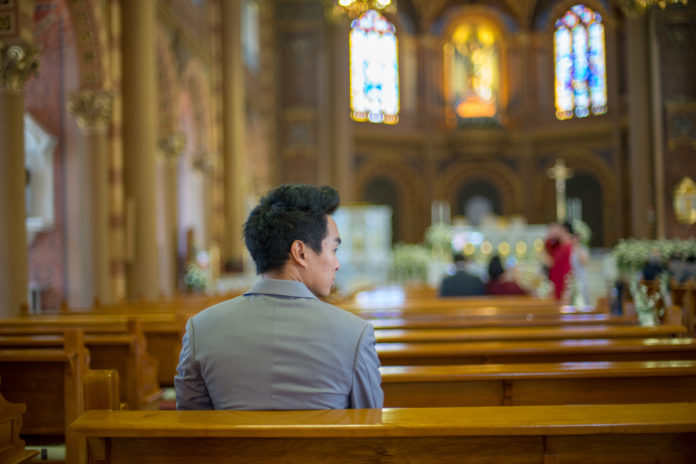
Pray, but stay away: holding on to faith in the time of coronavirus

Source: The Conversation (Au and NZ) – By Robyn J. Whitaker, Senior Lecturer in New Testament, Pilgrim Theological College, University of Divinity

Plagues of global proportions might seem biblical, but coronavirus is creating new challenges for faith leaders. Last week in Australia, many churches, mosques and synagogues decided proactively to cancel their normal worship services. These were not easy decisions for groups for whom being a gathered community is central to their identity and practice.

On the weekend, the federal government announced new, stringent measures as part of a “stage 1” lockdown, which means faith communities can no longer gather to worship. In Victoria, funerals and weddings are also banned.

Australia’s largest Uniting Church, Newlife, was one of the first in Australia to move services online following the prime minister’s call to cancel gatherings over 500. Their lead minister, Stu Cameron, addressed the congregation online and called this “the most loving thing to do”. As a church used to multimedia worship, they are well equipped to move online.


Read more: View from The Hill: Entertainment venues closed in draconian measures to fight the virus


Traditional churches such as St John’s Anglican Church in Toorak face different challenges. They have cancelled Sunday services but are keeping the historic church and garden open as long as possible for personal prayer and reflection. Their priest, Peter French, is more concerned about how they will continue to care for the dead and grieving as St John’s often sees over 1,000 people during the week for funeral services.

Weddings can be postponed, but funerals are another matter. French said:

We’re working closely with our local funeral directors and are deeply conscious of the need for love and compassion for the grieving even if we can’t physically gather together in the traditional way. Funeral services for the foreseeable will look very different.

Italy has banned funerals of any kind. Bodies are being buried or cremated with only a priest or celebrant present. This leaves grieving loved ones in limbo, waiting until they can hold a proper funeral service.

The PM’s announcement on Sunday evening now makes clear that Australian church and religious organisations are also prohibited from holding funeral services. Sitting shiva in the traditional way or gathering in other rituals to mourn the dead will not be possible for the foreseeable future.

Not all faith communities are responding in the same way. The coronavirus pandemic has exposed a long-held tension between science and faith for conservative faith communities. Conservative Christian churches such as Margaret Court’s Life Church have said the “blood of Jesus” will protect their communities.

Such claims are rooted in a prosperity theology that naively claims God will protect and bless the faithful (usually financially), coupled with a simultaneous distrust of science. This distrust is because scientific theories, such as evolution, are mutually exclusive to a literal reading of the creation stories in the Bible, particularly Genesis, and are therefore seen as a threat or in conflict with faith.

At the other end of the ecclesial spectrum, the Greek Orthodox Church has thus far continued to serve communion, claiming that one cannot contract an illness from Holy Communion, because bread and wine are the body and blood of Christ. Scientists might disagree.

Worst of all are those seeking to benefit from the fear that such a pandemic evokes. Televangelist and Trump adviser Paula White at first dismissed the seriousness of coronavirus and is now opportunistically asking for cash donations for a hospital for the “soul sick”. Citing Psalm 91, a psalm that speaks of God’s protection in a time of difficulty, she asks people for donations of $91 as “seed funding” for God’s blessing. Others are promising healing through the television. Preying on people’s fears in this way is contrary to Christian tradition and theology.

Christians were famous in antiquity for staying to care for the sick and dying during significant plagues. After all, to risk one’s life for the sake of another is a very Jesus-like thing to do.

Christians are, of course, not alone in these brave acts of service. This kind of self-sacrificial service is central to many of the world’s religions.

But the dynamics of the current pandemic are different. Staying close to others might threaten their life more than one’s own. It poses a new kind of problem: how do you “love your neighbour” when you aren’t supposed to be near them?

The challenge for all communities is how to foster community and support one another while keeping physical distance. Many faith communities are live-streaming services or sharing pre-recorded sermons. Others are encouraging small groups to meet in homes or meeting in real time via software such as Zoom.


Read more: Grattan on Friday: We are now a nation in self-isolation


Pastoral care is more complicated. Some faith communities have set up a pastoral care roster of weekly phone calls to check on both the physical and spiritual needs of members. Others are delivering care packages and meals to the doorsteps of elderly members or have a buddy system, asking members to commit to checking in with one another every couple of days or youth to help older folk with technology.

At the heart of any religion is community: people gathering together to worship, pray, caring for one another, and eating together. There is therefore something antithetical about asking members of faith communities to show their love by keeping away from one another. It is a difficult and counter-cultural thing for many to do. Yet, it is what most faith leaders in Australia are asking of their communities as they trust the advice of scientists and experts that this is the best way to show care for the most vulnerable in our community.

In this time of great anxiety, leaders of all faiths have both an opportunity and responsibility to step up with words of comfort and compassion, drawing on the depths of their sacred traditions and texts.

The lasting effect of coronavirus on faith communities remains to be seen. Will people flock back to their synagogues when finally allowed, joyful at being able to be together again? Or will habits be broken and connections lost as people discover other ways to pray and nourish their spiritual lives outside of Sunday church?

Perhaps the creativity these new circumstances demand will lead to a wider range of faith expressions and fundamentally change the nature of faith communities in the 21st century.

Whatever the future looks like, creative and new forms of care and worship are emerging. It is hard to imagine these won’t leave a lasting legacy on faith communities.

ref. Pray, but stay away: holding on to faith in the time of coronavirus – https://theconversation.com/pray-but-stay-away-holding-on-to-faith-in-the-time-of-coronavirus-133692

36 new cases of Covid-19 in NZ, taking infected total to 102

By RNZ News

New Zealand’s Ministry of Health (MoH) has revealed there are 36 new cases of Covid-19 in the country, taking the total to 102.

“So these are people who have returned to New Zealand recently and have become symptomatic, been tested and confirmed as cases of Covid-19,” he said.

“Most of the remaining cases are close contacts of a previously confirmed case or are associated with an event where there were confirmed cases already, for example, the Hereford Cattle conference in Queenstown.”

There were still two cases – in the Wairarapa and Auckland – that could not be linked to overseas travel and are being treated as community transmission.

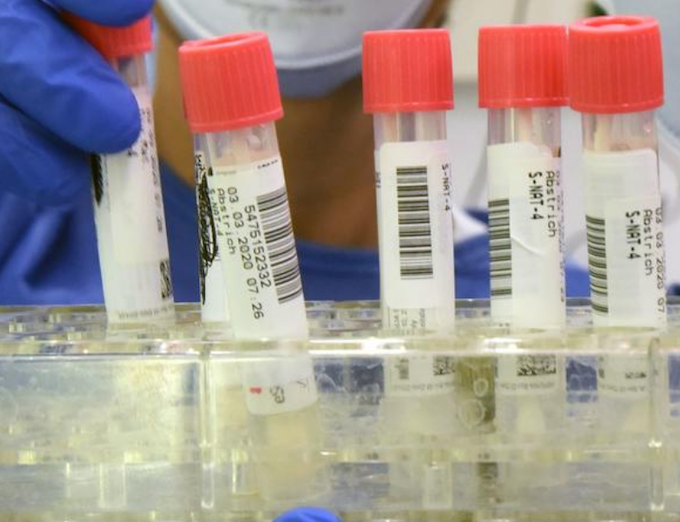
More than 7400 tests have been carried out so far and there were 1100-1500 tests being done every day.

– Partner –

Contacting tracing efforts were being ramped up and the ministry was expecting more cases, Dr Bloomfield said.

‘We expected them’
“We have expected them because we have had people returning from a range of places around the world that have higher rates of Covid-19 and the important thing of course is that we find these cases, we isolate them, we identify close contacts and we isolate those people too.”

The Ministry of Health’s new team to contact trace can do 50 new cases a day and Dr Bloomfield said this was on top of the previous MoH team.

He said the alert levels were a government decision and the prime minister would be talking about the alert level within the hour.

This article is republished by the Pacific Media Centre under a partnership agreement with RNZ.

  • If you have symptoms of the coronavirus, call the NZ Covid-19 Healthline on 0800 358 5453 (+64 9 358 5453 for international SIMs)
Print Friendly, PDF & Email

Article by AsiaPacificReport.nz

NZ’s homeless particularly vulnerable during Covid-19 pandemic

By Eva Corlett of RNZ

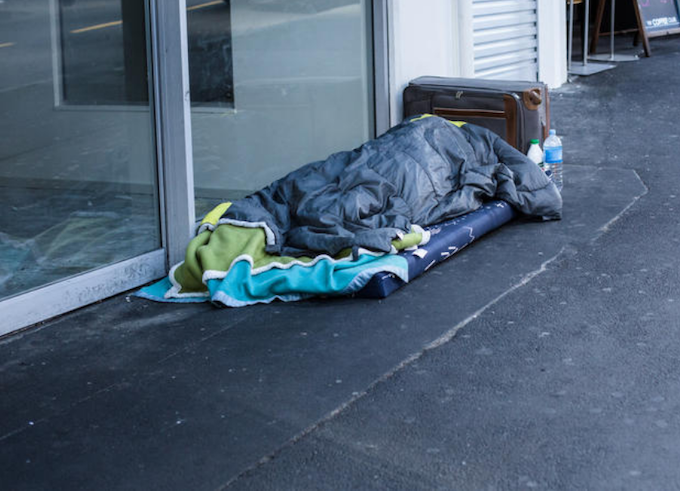
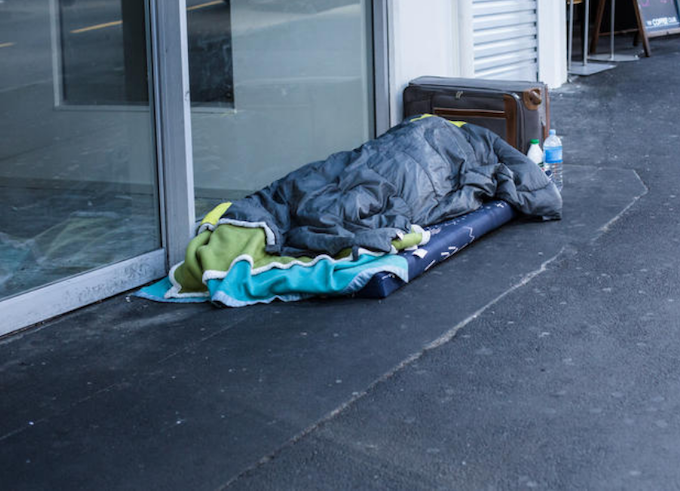
As more cases of Covid-19 arise, New Zealanders are being cautioned to work from home or stay home if sick – but what if you don’t have a home?

Agencies working with New Zealand’s homeless community worry that people living on the street will be left behind, if there is a community outbreak of Covid-19.

Wellington-based rough sleeper Rueben has been living on the streets on and off for five years.

READ MORE: Al Jazeera coronavirus live updates – Italy death toll now 5476 after 651 rise

He currently sleeps at a school overnight but said if there is a community outbreak, there are not many options for self-isolation.

Rueben said word is getting out on the street about the virus but threat of community outbreak is not top of mind.

– Partner –

“We’ve actually got worries of our own, to go through each day. It’s bottom of our priority list.”

While Rueben may not be so worried yet about an outbreak, the Archdeacon of St Peter’s Anglican Church on Willis Street, Stephen King, is.

‘Extremely ill’
“We will have people who are extremely ill, whose place of shelter will be St Peter’s, or the doorways that they sleep in.”

The church, built in 1878, has a long history of helping the homeless community, or as Archdeacon King describes “the least, the last and the lost”.

“We have that discussion about people hunkering down and isolating themselves until the illness passes. For some people there is nowhere and so what happens to them?”

Archdeacon Stephen King from St Peter’s on Willis Anglican Church in Wellington. Image: Eva Corlett/RNZ

Archdeacon King said rough sleepers already struggle to exercise precautions such as sanitising and social distancing.

And he adds that, even if accommodation was made available for self-isolation, continuing to care for people in that situation is a problem.

“That works fine for us if we have a partner or a parent or a child who can help us do that and recover. For those that don’t have that, where does that help come from?”

He said it will not come from hospitals, because they will be at capacity.

Equip, train volunteers
Archdeacon King said government agencies need to equip and train volunteers to continue services, if there is a lock-down period.

Plans are brewing, he said, but he is concerned about how it will play out.

“There are so many things being planned for at the moment as we head further into this crisis, that I just don’t want to see that the most vulnerable miss out on the plan.”

Up in central Auckland, Lifewise’s Peter Shimwell said they are giving their street whānau phones and sim cards to make sure they do not become disconnected.

He said Lifewise is a face-to-face service, so there is concern over how to maintain those connections with people so they are not “left behind and further disconnected”.

“At times like these we need to think outside of the box, in terms of city hotels and whether we have the capacity to unlock some of those.”

Indictment of society
Stephanie McIntyre of DCM – another Wellington faith-based group working with rough sleepers – said it is an indictment on New Zealand’s society that people are even in this position.

“The upshot of that, is that in this environment now, when we really need people to be safely home in their houses, we’ve got a very vulnerable group in our population, who are community members and might literally be left out in the cold.”

All the community organisations hope that empty motels will be opened up for rough sleepers to self-isolate, if need be.

McIntyre said that now is not the time to be worrying about growing motel bills.

She said that DCM is also checking to see if people have phones and can provide one if needed. But she hopes the Ministry of Social Development will ensure people do have a phone and sim card, so that they can be contacted.

Wellington City Council’s Manda Grubner said the council is concerned about how Covid-19 will affect the homeless community.

“It’s very difficult to maintain hygiene and do the things we are telling everyone to do, such as stay home.”

Food distribution
She said the council is reaching out to agencies working directly with homeless communities, including food distribution organisations, to figure out what support they need.

Grubner said the council has implemented its emergency welfare response and has had “all hands-on-deck” calling hotels to see who could accommodate people.

Auckland Council’s Christine Olsen said the council is mindful that people rough sleeping often have more health problems than the rest of the public.

She said it is working with agencies closely and considering making toilet and washing facilities available, as well as charging stations to keep phones charged.

Olsen said the council has talked with the City Mission to come up with contingency plans including to ensure the daily meal, which feeds between 300-400 people a day, is still provided.

The Ministry of Social Development is urging anyone sleeping rough to get in touch.

Emergency housing
In a statement, its spokesperson George Van Ooyen said “nobody needs to sleep rough, and every day we provide emergency accommodation for those in need, including those who have been sleeping rough”.

“We currently work with around 400 emergency housing suppliers each day to support over 2600 households with their urgent housing needs.

“We are supporting the Housing and Urban Development Ministry in its leadership of the Homelessness Action Plan.”

The government’s Covid-19 website includes a set of guidelines for homeless shelters to refer to.

Eva Corklett’s is RNZ’s housing reporter. This article is republished by the Pacific Media Centre under a partnership agreement with RNZ.

  • If you have symptoms of the coronavirus, call the NZ Covid-19 Healthline on 0800 358 5453 (+64 9 358 5453 for international SIMs)
Print Friendly, PDF & Email

Article by AsiaPacificReport.nz

PNG orders lockdown from tomorrow as Covid-19 response ramps up

By RNZ Pacific

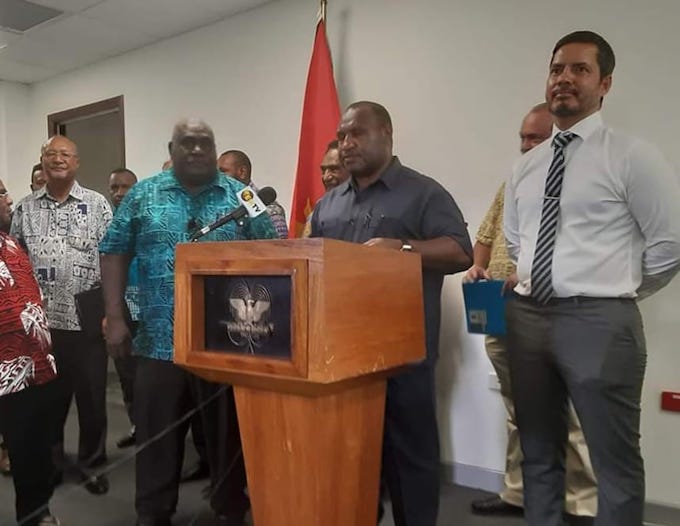
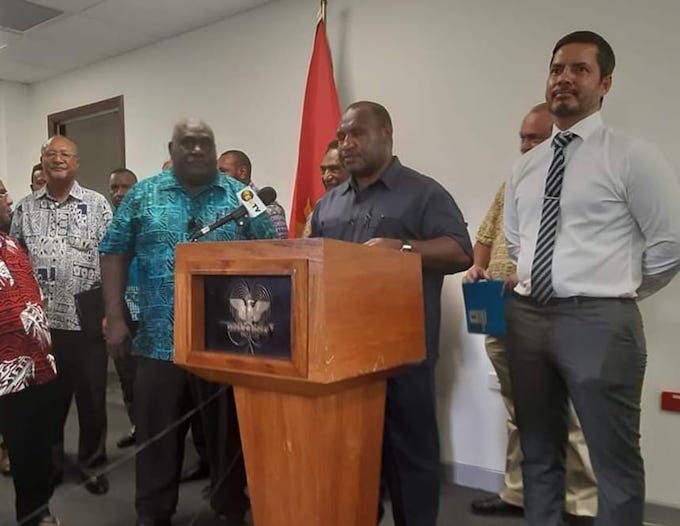
Papua New Guinea’s Prime Minister James Marape has declared a national state of emergency and warned the public to prepare for a two-week national lockdown starting tomorrow.

The prime minister made the announcement in a public address last night after a national emergency meeting in the capital Port Moresby to discuss the country’s Covid-19 response strategy.

Marape’s declaration comes after health authorities in the country confirmed the first case of the Covid-19 coronavirus on Friday.

READ MORE: Al Jazeera coronavirus live updates – Italy death toll now 5476 after 651 rise

“We have now declared a nationwide state of emergency. I request with this announcement here that our nation gives greater support to this call,” he said.

“This call is not to make anyone panic as we speak there is only one pronounced candidate [with Covid-19] and by the grace of God there is no indicating evidence of the expansion of this virus as yet.”

– Partner –

Marape said as part of the state of emergency all domestic flights in the country would be grounded from tomorrow and all public transportation on the country’s roads are asked to cease operations.

All schools in the country are also being closed.

“Starting Tuesday, 24th of March, this country will come to a lockdown for a period of 14 days,” he said.

“This step is absolutely necessary for us to make sure that every citizen remains where they are. I do not intend to raise hype and tension and panic. It is just about you staying at home so we can take stock,” he said.

Marape said more meetings would be held today to further define the national Covid-19 response strategy before more announcements are made about expectations for public behaviour during the lockdown.

Solomon Islands announces border closure
The Solomon Islands government yesterday closed the country’s border to non-citizens as a preventative measure against the Covid-19 coronavirus pandemic.

The country is yet to register a case of Covid-19. Samples from three suspected cases sent to Australia last week all came back negative for the coronavirus.

Prime Minister Manasseh Sogavare said the border closure was a necessary precaution to try and prevent the entry of the coronavirus and also to prepare health authorities to respond to an outbreak if it did get through.

Solomon Islands Prime Minister Manasseh Sogavare speaks at a high-level symposium on the legacy of RAMSI. Image: Koroi Hawkins/RNZ

The government was implementing price control measures for basic goods and essential services and would take all necessary measures and actions to first prevent and – if it comes to it – control the infection and spread of Covid-19 while also maintaining economic and social stability.

Sogavare called on all Solomon Islanders to heed public health warnings and to remain united in the fight against the global coronavirus pandemic.

This article is republished by the Pacific Media Centre under a partnership agreement with RNZ.

  • If you have symptoms of the coronavirus, call the NZ Covid-19 Healthline on 0800 358 5453 (+64 9 358 5453 for international SIMs)
Print Friendly, PDF & Email

Article by AsiaPacificReport.nz

Why dogs don’t care for being groomed (and for the love of dog don’t snip their whiskers)

Source: The Conversation (Au and NZ) – By Paul McGreevy, Professor of Animal Behaviour and Animal Welfare Science, University of Sydney

The dog-themed reality show, Pooch Perfect, imposes makeovers on a steady stream of dogs that haven’t asked for them. We may marvel at the skill of professional groomers, but what do the dog models make of all this?

Many dog owners recognise how regular bathing, combing and trimming can provide opportunities to bond with their pets, and to check for parasites, abnormalities and injuries.


Read more: We groom dogs in our own image: the cuter they are, the harder we fall


But beyond simple brushing and combing, the business of bathing, clipping and coat-stripping demands considerably more skill and requires more invasion into the dog’s personal space.

So how do most dogs like being pampered? Short answer: they probably don’t. Let’s explore why.

Groomers walk the line between looks and convenience. Shutterstock

What grooming trends are practical?

Some owners prefer to keep their dog’s coat in the style and condition traditionally expected for the breed, as set out in breed standards for pure-bred dogs.

Wire-haired breeds, such as some terriers, are traditionally hand-stripped, where loose hair is pulled out by hand or with a stripping knife. Other breeds, such as poodles, have a profuse single-layered curly coat. The breed standard for poodles says: “It is strongly recommended that the traditional lion clip be adhered to.”

For the original working poodles, the lion clip was entirely functional: to allow these retrieving dogs to emerge easily from lakes and rivers without too much waterlogging of their coat. Baubles of hair were retained around the joints, ostensibly to protect them. From that point, the amazing canine equivalent of topiary began.

For traditional working poodles, grooming was for functional reasons. Shutterstock

Many dog breeds were developed for working roles, where the hair-coat was purely utilitarian and required little maintenance. However, the recent boom in the popularity of poodle crosses (such as labradoodles and cavoodles) has brought with it an explosion in poodle-like coats among companion dogs.

So, there are now ample opportunities for groomers to walk the line between looks and convenience. These days, dogs’ hair-coat can be teased, back-combed, dyed and sculpted into un-dogly shapes.

Dogmanship: looking like a million bucks

Whether dogs enjoy the experience of being groomed or find it anxiety-inducing depends on how well they were socialised as pups and how thoroughly they’ve been habituated to being groomed.

For the dog, grooming can mean restraint, dousing in water, manipulation of the body, and excessive touching by unfamiliar people as well as painful tugs on the coat if they have knots or matts. And for those dogs who have not had the benefit of gentle familiarisation to grooming and socialisation with unfamiliar humans, this process may be threatening or uncomfortable.


Read more: 8 things we do that really confuse our dogs


This is why the best professional groomers show outstanding so-called dogmanship and handle dogs in ways that settle them and minimise the need for force.

What’s more, dogs are olfactory beings, so they’re unlikely to be happy with the scent of shampoo imposed on them. That said, they may very well feel more comfort when relieved of a heavy coat.

The importance of whiskers

Not all hairs of the dog have the same function. Facial whiskers are exquisite sensors that every dog deserves to keep.

Dogs can be ticklish in parts of their body, such as their hindlegs, but one area of dog’s skin that seems especially sensitive is the muzzle. Canine whiskers (“vibrissae”) are mobile on the muzzle, and each has a network of blood vessels and nerves at its base to amplify vibrations and alert the dog to movement of the exposed part of the hair shaft.

We don’t yet know how clipping whiskers can affect dogs. Shutterstock

We can’t say for sure how whiskers help a dog detect the world around its nose. However, we suspect information from these receptors is critical in the play-fighting and wrestling dogs enjoy with familiar companions. And it’s likely that whiskers help dogs to navigate in dim light.

We don’t yet know how we change a dog’s tactile world by clipping their facial whiskers (also known as vibrissal amputation), but it’s worth noting in several countries the removal of the whiskers from horses is illegal due to their critical role in the horse’s spatial awareness. And yet this practice is commonplace for cosmetic purposes in dogs.

Pampered pups are probably confused, not relaxed

Beyond parenting, play-fighting and courtship, dogs dedicate surprisingly little time to physical contact with each other. Professional grooming tasks, such as those featured in Pooch Perfect, are likely to take much longer than the usual social contact dogs get from each other and from humans, and dogs may not understand the purpose of this interaction.


Read more: Let it breed: why desexing dogs isn’t always the best thing to do


Signs of apparent cooperation or enjoyment, such as holding still or closing eyes, may actually be the dogs’ attempts to signal peaceful intentions to the groomer by avoiding movements or eye contact that could be interpreted as threatening.

Recognising the possibility that dogs are tolerating, rather than relishing, grooming provides opportunities to address it. Grooming salons should exercise minimal touching and restraint, give dogs regular breaks and ample treats.

Dogs are olfactory beings, so they’re unlikely to be happy with the scent of shampoo imposed on them. Shutterstock

Who’s grooming who?

All of this underlines our duty to keep our dogs as comfortable as possible.

Our dogs value the time we spend with them. Preparing puppies to be groomed in later life is important, particularly as combing dogs can reveal health issues that require treating, such as injuries, ticks and tumours.


Read more: Dogs really can chase away loneliness


So while many will admire the skills of groomers, we should all marvel at the dogs’ tolerance of the primates they live with and the interventions they endure.

ref. Why dogs don’t care for being groomed (and for the love of dog don’t snip their whiskers) – https://theconversation.com/why-dogs-dont-care-for-being-groomed-and-for-the-love-of-dog-dont-snip-their-whiskers-132656

View from The Hill: Entertainment venues closed in draconian measures to fight the virus

Source: The Conversation (Au and NZ) – By Michelle Grattan, Professorial Fellow, University of Canberra

Clubs, pubs, movie theatres and gyms will be closed and restaurants will only be able to provide takeaways in draconian measures to fight the spread of coronavirus announced by Scott Morrison late Sunday night.

But schools will stay open, after Morrison wrestled to keep federal and state governments on the same page on one of the most controversial issues in the COVID-19 debate.

The crackdown on social gathering places was agreed by federal and state leaders at their national cabinet meeting earlier in the evening.

This followed a day of confusion, with differences between NSW and Victoria on the one hand and the federal government on the other over shutdowns and schools.

Earlier, the premiers of the two biggest states had announced they were shutting down non-essential services and activities over the next 48 hours. The ACT followed suit.

The premiers’ actions seemed in part to force the federal government’s hand.

It is not clear how much further (if any) the “shutdowns” in the two states will go beyond the baseline of closures set at the national cabinet.

In his afternoon statement, Victorian premier Daniel Andrews said the state was bringing forward school holidays to start Tuesday (rather than Friday) with a decision on whether schools will reopen to be taken on medical advice. NSW Premier Gladys Berejiklian said she would have something to say about schools on Monday morning.

The Prime Minister pushed back over schools, anxious to keep them open for educational reasons and to maintain the numbers of health workers. It has been estimated that closing schools could cut the health workforce by 30%.

Morrison said from midday on Monday a range of facilities where social gatherings took place would be closed or have their operations curtailed.

Pubs, registered and licensed clubs will be shut (excluding bottle shops attached to these venues), as well as hotels (excluding accommodation)

  • Gyms and indoor sporting venues will be closed

  • Cinemas, entertainment venues, casinos, and night clubs will shut

  • Restaurants and cafes will be restricted to takeaway and/or home delivery

  • Religious gatherings, places of worship or funerals cannot go ahead (in enclosed spaces and other than very small groups and where the 1 person per 4 square metre rule applies).

“This should highlight to all Australians how serious this is,” Morrison said.

He said there was no change in the medical advice that schools should remain open. Leaders agreed children should go to school on Monday and “committed to re-open schools at the end of the school break, subject to the advice of the Australian Health Principal Protection Committee”.

“I don’t want to see our children lose an entire year of their education, ” Morrison said. “That’s what we’re talking about here. This is very serious. If you’re a four year old child at pre-school, you don’t get your four years old year back”.

“What we will be doing, though, is allowing parents to the end of this year’s school term to be able to keep their children home where they choose to. But for all of those parents who wish to send their children to school for an education at the school, those schools will remain open”.

Asked about Andrews’ comments about reviewing the schools position after the holidays, Morrison said: “the Premier has reaffirmed his commitment this evening that is the intention of the Victorian government to reopen schools subject to the health advice at that time”.

He stressed to parents who decided to keep their children home that they “must take responsibility for those children.

“It’s not an excuse for them to go down the shopping centre or to go and congregate somewhere else or potentially put themselves in contact with the vulnerable and elderly population. If you choose to keep your child at home, you are responsible for the conduct and behaviour of your children.”

Morrison said the coming school holidays “will not be a holiday as it is normally known”.

“There will not be trips interstate. … There will not be congregating up at the trampoline venue.” There had to be very strict rules around social distancing, he said.

“This is a critical time. An absolutely critical time. The decisions that parents make, that we all make, over the course of the next few weeks in particular could very seriously determine the trajectory that Australia continues to go on in relation to the coronavirus”.

He “implored” Australia to follow the advice about distancing and size of gatherings.

Federal and state governments have been shaken by the rapid rise in virus cases – now well above 1000 – and by the crowds on Friday and Saturday on Bondi beach and at bars and clubs.

“On the weekend, what we saw was a disregard of those social distancing practices as people turned up to the beach in large numbers, crammed venues in our major cities.

“This sent a very clear message to premiers, chief ministers and myself that the social distancing practices are not being observed as well as they should be”.

Morrison said the leaders did not now have any confidence that people, notably the young, would refrain from congregating in pubs and clubs and the like.

“We have no confidence that [guidelines on social distancing] will be followed”.

“If guidelines can’t be followed, then for public health reasons we now need to take a further action which shuts those gatherings down.

”‘They are the principal places of social gatherings which are at greatest risk”.

By the end of Sunday, Morrison’s $66 billion stimulus package had been considerably overshadowed by a new stage of restrictions, driven by public flouting of social distancing guidelines and the determination of NSW and Victoria to see more drastic action.

But while there has been a quantum leap in the measures in the battle against the virus, there remains a lack of clarity and Monday is likely to see more public frenzy of one sort of another.

Morrison insisted “all members of that national cabinet have reaffirmed our commitment to just how important the national cabinet is to ensure that all governments are working closely together.”

He is trying to keep the national cabinet – an unprecended beast in Australian political history – in lockstep. We’ll see whether he has actually managed to do so when the premiers have more to say.

ref. View from The Hill: Entertainment venues closed in draconian measures to fight the virus – https://theconversation.com/view-from-the-hill-entertainment-venues-closed-in-draconian-measures-to-fight-the-virus-134360

Who’s most affected on public transport in the time of coronavirus?

Source: The Conversation (Au and NZ) – By Jennifer Kent, Research Fellow, Urban and Regional Planning, University of Sydney

The coronavirus pandemic is already affecting Australians’ daily travel, with suspension of public transport services a possibility as the number of COVID-19 cases grows. A common goal underpinning containment strategies in pandemic-like conditions is that the impacts should be borne as equitably as possible across the community. So would a public transport shutdown in Australian cities hit lower-income households harder than their higher-income counterparts?

In many countries this would certainly be the case. In these countries, public transport is largely the domain of the lower classes while wealthier households enjoy the comfort and convenience of their cars.

The data on Australians’ use of public transport and the distribution of services across our cities tell a more complex story. And not all users are equally at risk, because of how the virus spreads and the structure of public transport networks.


Read more: To limit coronavirus risks on public transport, here’s what we can learn from efforts overseas


Why the worry about public transport?

The interiors of trains and buses, and stations and stops along the network, are the perfect environment for a droplet-spread disease like COVID-19 to thrive. Masses of people congregate in these areas, increasing the risk of direct contact with an infected person.

About 1,000 passengers can crowd into a single train carriage. This greatly increases the virus’s potential spread through droplets if an infected person coughs or sneezes.

And the handles and seats inside trains and buses, and other surfaces such as escalator handrails at stations, are prime surfaces to host infectious nose and throat discharges. According to new research, this virus can live on surfaces for hours to days.

Handrails on escalators and stairs at stations used by tens of thousands of people a day are prime surfaces for harbouring virus particles unless regularly and thoroughly disinfected. Holli/Shutterstock

But the actual evidence is weak

Although public transport shutdowns are common in most contagious virus response plans, evidence of a relationship between public transport use and respiratory infection is actually relatively weak.

The most commonly cited study is based on the travel patterns of 72 people in London presenting for treatment of flu symptoms in 2008-09. It found those using public transport were up to six times more likely to pick up an acute respiratory infection than those who don’t.

This study also found, however, that regular public transport use was associated with less likelihood of contracting an illness. This was potentially because regular users develop protective antibodies to common respiratory viruses if repeatedly exposed. Unfortunately, this safeguard does not apply to a novel virus such as the COVID-19 coronavirus.

Those most at risk in this study were commuters who used busy stations, basically because they come into contact with more shared surfaces and people. In Sydney, for example, Central, Town Hall, Wynyard and Parramatta stations are potential hotspots. In Melbourne, Southern Cross, Flinders Street, Melbourne Central and Parliament stations head the list.


Read more: VIDEO: your coronavirus and COVID-19 questions answered by experts


Who would a shutdown most affect?

A wider cross-section of the Australian population owns and uses cars than in many other countries. Cars are not the domain of the wealthy. Rather, they are a necessary expense to navigate life in our low-density, poorly serviced cities. Car use dominates the outer suburbs where housing is more affordable.

Australians pay a premium to live near quality services including public transport. Lower-income groups are priced out and live in suburbs that are more poorly serviced by public transport.

In Melbourne, for example, 61% of the most socially and economically advantaged population live within five minutes’ walk of quality public transport services, compared with just 41% of the least advantaged. If you are one of the richest 20%, you are more likely to be able to walk to good public transport than anyone else in Australia.

Particularly in our larger cities, higher-income people are more likely to use public transport to get to work, as the table below shows. In Sydney, for example, 33% of high-income earners commute by public transport, compared with just 25% of those on lower incomes.

The proportion of people travelling to work by public transport by personal weekly income. ABS Census 2016 data, Author provided

How might people handle a shutdown?

The data seem to suggest the impacts of a public transport shutdown will be felt more keenly in the top end of town than in low-income suburbs. But those numbers say nothing about what alternatives people have.

High-income households are far more likely to own more than one car. They are also better placed to absorb the costs of driving to work, such as parking, petrol and tolls. They can drive if public transport shuts down.

Residents of inner-urban areas, where property prices are high, are also more likely to have a shorter trip to work. They may be able to replace a public transport trip with a walk or cycle.

We don’t know the extent to which different employment groups will be able to innovate and adopt remote working practices under these unusual circumstances. However, people who can currently work from home are more likely to be high-income, highly educated white-collar workers. Almost half of workers in the financial services sector and 32% of the telecommunications sector use public transport – many of their roles are relatively easy to convert to working from home.


Read more: Coronavirus could spark a revolution in working from home. Are we ready?


Remote working is not an option for most low-income workers in the services sector. They must travel to their workplace if they want to be paid.

If these workers do rely on public transport to get to work, they are less likely to have a spare vehicle to commute with. This leaves few options for these households, especially in Australia’s dispersed suburbs.

A related issue is the impacts of a public transport shutdown on the all-important healthcare sector. Again, Australian journey-to-work data suggest the impact would not be as dire as some international research suggests. On census day in 2016, just 9% of Australia’s healthcare and social assistance workers travelled to work by public transport.

In general, the effects of COVID-19 will no doubt be borne inequitably by lower-income Australians. They are more likely to be employed in industries worst hit by the coming economic downturn. For low-income households that depend on public transport, a shutdown would rub salt in their wounds.

ref. Who’s most affected on public transport in the time of coronavirus? – https://theconversation.com/whos-most-affected-on-public-transport-in-the-time-of-coronavirus-133429

Guam confirms Pacific’s first Covid-19 death, NZ infections top 66

By Sri Krishnamurthi

Guam’s government has confirmed a 68-year-old woman died of Covid-19 early today – the first coronavirus-related death in the Pacific.

Dr Mike Cruz, the government official leading the coronavirus response, said the woman was a relative of a person who recently returned to the territory with Covid-19.

He said the woman had “multiple co-morbidities”, including end-stage renal disease, which compromised her immune system.

READ MORE: Al Jazeera coronavirus live updates –  793 deaths in one day in Italy takes toll to 4825

Prime Minister Jacinda Ardern yesterday announced a new four-level alert system to combat Covid-19 and advised against any non-essential travel within New Zealand.

Auckland’s Mt Roskill Grammar School has warned parents in a letter after a father of a pupil tested positive for the coronavirus, reports Kaniva Tonga.

The father had returned to Auckland from Europe and on March 12 he attended the Tongan Fiafia event at the school.

– Partner –

Guam’s Dr Cruz said there were 15 confirmed cases of the virus on Guam, with the government on Sunday morning declaring a major disaster.

“Five of the first 14 confirmed cases had recent travel, most of which is linked to the Philippines,” Dr Cruz told a news conference this afternoon.

“There is strong evidence that Covid-19 cases has spread throughout our community and has affected residents in the northern, central and southern villages,” he added.

Highest number
With 15 cases, Guam is the country or territory in the Pacific with the greatest number of people affected by Covid-19 – along with Tahiti.

Governor Lou Leon Guerrero called for the removal of US Attorney for the Districts of Guam and the Northern Mariana Islands, Shawn Anderson, after he refused to comply with the mandated quarantine for incoming travellers.

She sent a letter to the US Attorney-General requesting Anderson’s removal.

New Caledonia has two more cases taking the total to authorities say the two have been transferred to the isolation ward at the hospital.

More than 1000 people are in self-isolation in hotels while a further 800 are in self-isolation at home.

The international carrier Aircalin has released a schedule of flights to repatriate non-residents to France and Australia.

Pohnpei, the capital of the Federated States of Micronesia (FSM), strengthened its ban on incoming travelers on Saturday in the face of the escalating spread of the Covid-19 coronavirus in the region.

Pohnpei Governor Reed Oliver issued an amended emergency order on the same day as health authorities announced a second “person under investigation” for Covid-19.

The island, which hosts the capital for the four states comprising Micronesia, does not yet have a confirmed case of Covid-19.

Samoa test negative
Samoa‘s prime minister Tuilaepa Sailele Malielegaoi announced last night that the result of samples sent to New Zealand for the female patient came back negative.

The prime minister also announced that six other samples from patients who had been tested were negative.

The results for two remaining patients have yet to be received.

The young woman, who was the first suspected case, had travelled from Auckland, New Zealand to celebrate her 21st birthday in Samoa. She presented at the national hospital in Samoa with symptoms of Covid-19 on Wednesday.

She was admitted and put in isolation while samples were sent off to Australia and New Zealand.

The naming of the young woman by a local newspaper led to her and her family being the target of abuse.

Flights suspended
Air Tahiti Nui has announced that in a week it will suspend all flights from and to French Polynesia for a month because of the Covid-19 outbreak.

There are 15 Covid-19 cases in French Polynesia.

This will effectively end air links out of Tahiti after both Air France and French Bee said they were suspending their flights.

Air Tahiti Nui will end services to Japan this weekend.

This Monday’s flight from Pape’ete to Auckland has been cancelled but a flight from Auckland will go ahead on Thursday.

On March 28 the link to Paris will also be suspended.

Timor-Leste’s Health Ministry has confirmed the country’s first positive Covid-19 case, after test results arrived back from Australia.

Vice-Minister of Health Elia dos Reis Amaral confirmed the positive test yesterday.

She said the patient – a foreign national – had recently returned from overseas, and remained in isolation with what was described as only “mild” symptoms.

Papua New Guinea has now recorded its first case amid flawed communication from the government.

In Fiji a second patient – the mother of the first case has been confirmed as having the virus.

People are being arrested for breaching the lockdown in the second largest city of Lautoka.

Print Friendly, PDF & Email

Article by AsiaPacificReport.nz

Scalable without limit: how the government plans to get coronavirus support into our hands quickly

Source: The Conversation (Au and NZ) – By Peter Martin, Visiting Fellow, Crawford School of Public Policy, Australian National University

The government says its second stimulus package – the second in ten days – is temporary and targeted, but that’s not really true.

What it is is big, automatic, and infinitely increasable.

The first package, released ten days ago, cost A$17.6 billion. This one costs an extra $66.1 billion. (It’s best not be be too distracted by the claim that the total is $189 billion, almost 10% of GDP – it includes an element of double counting.)

The government has doubled, and then doubled again, what it intends to spend, and has made it easy to spend much, much more.

Automaticity is the key

Josh Frydenberg’s first assignment on being appointed parliamentary secretary to Prime Minister Tony Abbott in 2013 was to cut red tape.

The fewer needless procedures that people and businesses have to comply with (and the fewer forms and multiple forms they need to complete) the better everything can work.

In good times, it’s a good idea. In bad times, it’s essential.

As treasurer, nine months ago he set up a deregulation taskforce staffed by a dedicated unit within treasury.

Its work has infused the government’s second response.

The Conversation

An extra $550 per fortnight

The government has effectively doubled Newstart (which, in an unrelated previously-announced move, changed its name to JobSeeker Payment on Friday).

The maximum rate for a single recipient without dependants is $565.70 per fortnight.

For the net six months the government will boost that by $550 per fortnight. Importantly, the extra $550 will go to all recipients, including those who get much less than $565.70 because they have assets or have found a few hours of part-time work.

It’ll also go to both existing and new recipients of Youth Allowance jobseeker, Parenting Payment, Farm Household Allowance and Special Benefit.


Read more: The coronavirus stimulus program is Labor’s in disguise, as it should be


What really matters is that it will be paid automatically. Recipients will receive the full $550 on top of their regular payment without asking for it. No forms, and an extra 5,000 Services Australia staff (previously called Centrelink staff) to make sure it happens.

The government says the boost is temporary, a claim that is not credible. The government can and will extend it for the duration of the crisis, and even after the crisis has ended will find it impossible to fully dismantle.

Recipients who have become used to receiving $1,115.70 per fortnight will not take kindly to suggestions they should be busted back to $565.70.

A “grandfathering” provision that let existing recipients keep getting $1,115.70 while forcing new recipients on to $565.70 would be almost as unrealistic.

Household support

Ten days ago the government announced a support payment of $750 to social security, veteran and other income support recipients and eligible concession card holders. It was to be paid automatically from March 31.

The new announcement is for an extra $750 to be paid to those people, other than the subset who will be getting the extra $550 per fortnight. About half of them are pensioners.

It will be paid “automatically from July 13, 2020”.

Early access to super

Anyone in financial stress as a result of the coronavirus will be able to get early access to up to $10,000 of their superannuation savings during the current financial year (the one that ends on July 30) and a further $10,000 during the first three months of 2020-21 (July 1 to September 30).

Frydenberg believes the funds will find this easy to manage:

the super funds last year had about $300 billion in cash, so they have the ability to provide what treasury estimate to be about a $27 billion injection into the economy.

He makes the point super belongs to the owners, and was saved with the intention that it be available for use on a rainy day:

this is the people’s money, and this is the time they need it most.

Withdrawals will be tax-free and will not affect Centrelink or veterans payments.

Again, the process will be close to frictionless. Rather than approaching their fund, “eligible individuals will be able to apply online through myGov”.

Lower deeming rates

Pensioners with income-producing assets will find the pension rules adjusted so that they are assumed to earn 0.25% less than had previously been the case, in line with last week’s emergency Reserve Bank rate cut.

Again, it will happen automatically, from May 1, 2020.

The Conversation

Up to $100,000 per business

From April 28 employers will receive payments of 100% of the salary and wages they hand over to the tax office (up from 50% in the first package) plus an additional payment calculated using the same formula on July 28.

Worth up to $100,000 per business (with a minimum payment of $20,000) it will partially compensate them for hanging on to staff, and the announcement says they won’t need to do a thing.

The payments are tax free, there will be no new forms, and payments will flow automatically through the Australian Tax Office.

Going guarantor

The government will guarantee 50% of any new loans to small and medium sized businesses up to a maximum of $20 billion, which will support $40 billion in loans.

This way it’ll be the banks doing the assessments (the government won’t require the paperwork that would be involved in “picking winners”) but it’ll pick up the tab, without the businesses needing to do anything extra.

Indefinitely increasable

The government has found it relatively simple to plonk this $66.1 billion package on top of the previous $17.6 billion package. It has used the same or pre-existing foundations to scale up amounts and extend time periods.

This means it can get money out quickly and for as long as it needs to, in the main putting it into people’s hands automatically.

There is no practical constraint on its ability to do so. It has delivered what is almost certainly Australia’s biggest economic stimulus package, and will increase it as needed.

It can “find the money” by issuing bonds, effectively IOUs, to investors. If the investors want to offload them, or even if they don’t, the government-owned Reserve Bank has said it will buy them from investors without limit in order to prevent interest rates from rising.

The government’s financial measures are scalable without limit.


Read more: States are shutting their borders to stop coronavirus. Is that actually allowed?


ref. Scalable without limit: how the government plans to get coronavirus support into our hands quickly – https://theconversation.com/scalable-without-limit-how-the-government-plans-to-get-coronavirus-support-into-our-hands-quickly-134353

Coronavirus infecting Australian jobs: vacancy rates down since early February

Source: The Conversation (Au and NZ) – By Nik Dawson, PhD candidate, University of Technology Sydney

The economic impacts of the COVID-19 coronavirus will be enormous. Only blind optimism can deny the dark realities of the moment.

Policy responses are escalating by the hour. Markets have plummeted to GFC levels. Food staples are being regulated to ensure equitable supply. Yet, with so much fear and uncertainty, it’s difficult to forecast the depths of the downturn.

We can be sure the coronavirus will damage economic output in Australia. Our research shows the effects of the coronavirus are already impacting the Australian job market, and the future signs are worrying.


Read more: NSW and Victoria announce ‘shutdowns’, as federal government widens and ramps up income support


How do we know what’s happening in the economy?

Most metrics used to measure the health of the economy are “lagging indicators”. This means the effect of shocks like the coronavirus take time to materialise in large-scale networks such as national economies and labour markets. It’s likely we won’t know the full extent of the economic aftershocks for several months or potentially years.

However, there are also “leading indicators” that can help us monitor the economic effects of the coronavirus in near real-time. The most obvious is the stock market. But fear has taken hold of financial markets, causing violent daily swings as policymakers scramble to “flatten the curve”. Searching for a signal with this amount of noise is near impossible.

Job ads

There are alternatives to reading the tea leaves of financial markets. One such alternative we have been monitoring is job advertisements.

In our previous work, we have shown job ads give an accurate indication of labour demand, and can predict skill shortages. As you would expect, more job ads typically means higher levels of demand, which is critical for healthy labour markets.

The daily posting frequency of job ads in Australia has declined since early February. Nik Dawson, Marian-Andrei Rizoiu

Worrying signs emerge when analysing the daily posting frequency of job ads in Australia from one of the major job boards in 2020. The posting frequency this year peaked in early February, and has been declining ever since, at an increasingly faster pace in the last two weeks.


Read more: Scott Morrison has said we’ll face at least 6 months of disruption. Where does that number come from?


Such a decline this early in the year is odd, since the frequency of job ad postings follow a yearly seasonal pattern. In previous years, there were strong posting increases during January and February, followed by slower rates in March and April due to the Easter and ANZAC holiday periods. They then pick up again until the beginning of December, before significantly falling over the Christmas period.

Seasonal variation in job ads posting frequency from a time-series prediction model constructed from 2014-2018. These were years where no major economic shock occurred in Australia’s labour market. Nik Dawson, Marian-Andrei Rizoiu

To see the change more clearly, we extracted the trends of posting frequencies to compare over a consistent time period. Here, we separately trained four different yearly models on the first 77 days of each year (from January 1 until March 17, for each of 2016, 2017, 2018, and 2020). The models were constructed using machine learning to uncover patterns of daily posting frequency rates and to isolate key components, such as trends and seasonality.

Posting frequency trend lines from January 1 – March 17. The trend in 2020 prematurely turned in early February. Nik Dawson, Marian-Andrei Rizoiu

As the years 2016–18 show, job ad posts are usually on an upward trend from the beginning of the year until March. However, 2020 tells a very different story. In early February, the frequency of job ads began to decline and the trend line prematurely flattened.

This coincides with the early outbreak and spread of coronavirus beyond China. It’s also immediately after Australia’s worst bushfire season, which ravaged homes, businesses, and entire towns.

When comparing job ads in 2020 to 2018 (after normalising volumes for a fair comparison), we find there are around 12% fewer job ads so far this year than in 2018.

Job ads in 2020 so far are about 12% lower than 2018 levels (on normalised scale). Nik Dawson, Marian-Andrei Rizoiu

This indicates employment opportunities are already declining as a result of the coronavirus shock. Employers are less likely to take on the risk of hiring new staff because demand for goods and services are constrained.

We will not know the full extent of the impacts on Australian jobs for some time. The inertia in labour markets mean important indicators like unemployment and underutilisation rates are slow to reflect shocks.

However, job ads data provide valuable leading indicators for labour markets. And the early signs are worrying.


Read more: The case for Endgame C: stop almost everything, restart when coronavirus is gone


ref. Coronavirus infecting Australian jobs: vacancy rates down since early February – https://theconversation.com/coronavirus-infecting-australian-jobs-vacancy-rates-down-since-early-february-134234

First coronavirus death on Guam as Pacific Daily News calls for more info

By Anumita Kaur in Hagåtña

Guam medical authorities have announced the first Covid-19 coronavirus pandemic-related death during a press conference today.

The person died at 1.30 am at Guam Memorial Hospital, said Dr Mike Cruz.

The 68-year-old woman arrived at the hospital with fever, chills and shortness of breath.

READ MORE: RNZ coronavirus updates

She had no travel history. She had had contact with someone who travelled recently and had tested positive for the virus, said Dr Joleen Aguon.

The woman and the traveller did not live in the same household.

– Partner –

Dr Aguon said the patient had multiple co-morbidities, including end-stage renal disease, diabetes and hypertension.

The patient and her family decided that she would not undergo extreme life-saving measures, such as life support.

Compromised immune systems
Patients with multiple co-morbidities, especially end-stage renal disease and diabetes, have compromised immune systems and are especially susceptible to complications from Covid-19, Dr Aguon said.

The announcement came a week after the governor announced the first confirmed case of the virus on the island.

During that week, a health emergency was declared, schools were closed, businesses were shut and residents were urged to socially isolate.

Arriving travellers have been placed in quarantine.

As of Sunday morning, there were 15 reported Covid-19 cases on Guam – the highest number in a Pacific territory or state.

All 15 confirmed cases were kept in isolation at Guam Memorial Hospital or at temporary home isolation, until they could be transferred to the Skilled Nursing Facility.

Of the 15 cases:

Six are in their 60s
Three are in their 50s
Three are in their 40s
Two are in their 30s
One is in their 20s

‘More transparency’ plea
Meanwhile, the Pacific Daily News appealed in an editorial today for the Guam government to be “much more open and transparent with information” about coronavirus cases on island, an American territory in the western Pacific.

“The government has done a good job about providing general information about the disease, on the importance of social distancing, practising good hygiene and taking preventive measures to avoid contracting Covid-19,” the newspaper said.

“But the information it has been providing about those who have contracted coronavirus has been sparse, and that needs to stop.”

Reporter Anumita Kaur of the Pacific Daily News covers military, business and tourism on Guam.

Print Friendly, PDF & Email

Article by AsiaPacificReport.nz

How Australia’s response to the Spanish flu of 1919 sounds warnings on dealing with coronavirus

Source: The Conversation (Au and NZ) – By Frank Bongiorno, Professor of History, ANU College of Arts and Social Sciences, Australian National University

Most Australians – Indigenous people under the protection acts were an exception – have long taken for granted their right to cross state borders. They have treated them much as they do the often unmarked boundaries dividing their suburbs. Not any more.

Australia has closed its international borders to non-residents. South Australia has announced it will close its borders, New South Wales is moving closer to lock-down over the next two days, with Victoria set to follow suit. The Tasmanian government is forcing non-essential travellers into 14 days of quarantine. The Combined Aboriginal Organisations of Alice Springs called for severe restrictions on entry to the Northern Territory, and its government has now followed Tasmania’s example. Queensland has reciprocated by imposing controls on part of its western border.

Indigenous representatives are right to be concerned. The Spanish influenza pandemic of 1919 devastated some Aboriginal communities. There are many other echoes of that crisis of a century ago in the one we face now.


Read more: Grattan on Friday: We are now a nation in self-isolation


COVID-19 represents the worst public health crisis the world has faced since the Spanish flu. Estimates of global deaths from the flu in 1919 vary, often beginning at around 30 million but rising as high as 100 million. Australian losses were probably about 12,000-15,000 deaths.

The outbreak did not originate in Spain, but early reports came from that country, where the Spanish king himself went down with the virus. It happened at the end of the first world war and was intimately connected with that better-known disaster.

The virus likely travelled to Europe with American troops. As the war ended, other soldiers then carried it around the world. The virus would kill many more people than the war itself.

Australia was fortunate in its relatively light death toll; lighter, for instance, than South Africa’s or New Zealand’s.

Prime Minister Billy Hughes was in Europe, at first in London and then at the Paris Peace Conference. But the Commonwealth acted early. The imposition of a strict maritime quarantine in late 1918 and early 1919 helped slow the spread and was decisive in producing a lower rate of infection. But the authorities were ultimately unable to provide a uniform response as the crisis worsened.

Women wearing surgical masks in Brisbane in 1919. National Museum of Australia

Confusion caused by a milder form of influenza that arrived in Australia in September 1918 didn’t help matters. Some authorities, such as the Commonwealth director of quarantine, J.H.L. Cumpston, erroneously believed cases diagnosed in the early months of 1919 were part of this earlier wave. As the historian Anthea Hyslop has shown, having been the architect of the successful maritime quarantine, Cumpston became a victim of his own success. He clung to the theory that new infections were a result of the local epidemic, rather than being a new and more virulent form arriving from overseas.

The Spanish flu came in waves and was extraordinarily virulent. There were reports of people seeming perfectly health at breakfast and dead by evening.

An illness lasting ten or so days, followed by weeks of debility, was more common. An early sign was a chill or shivering, followed by headache and back pain. Eventually, an acute muscle pain would overcome the sufferer, accompanied by some combination of vomiting, diarrhoea, watering eyes, a running or bleeding nose, a sore throat and a dry cough. The skin might acquire a strange blue or plum colour.

Unlike with COVID-19, which has so far had its worst effects on older people, men between the ages of about 20 and 40 seem to have been especially vulnerable. The well-known Victorian socialist and railway union leader, Frank Hyett, seen by some as a future Labor prime minister, lost his life on Anzac Day 1919 at just 37. Five thousand attended his funeral, probably not wise in the circumstances, but testament to his standing.

Almost a third of deaths in Australia were of adults between 25 and 34. The Spanish flu probably infected 2 million Australians in a population of about 5 million. In Sydney alone, 40% of residents caught it.

For Australia, the flu came after a most divisive and traumatic war in which Hyett himself had been a prominent anti-conscriptionist. Many Australians then and now believe the war made the nation. The federation of the colonies had occurred less than two decades before, but it is supposedly the blood sacrifice of war that melded what were still quasi-colonies into a nation in the emotional and spiritual sense. Gallipoli and the Anzac legend are credited with strengthening a national outlook.

Medical staff in Surrey Hills, NSW, 1919. NSW State Archives

But that outlook was hard to discern during the crisis of 1919. In November 1918, the various state authorities had entered into an agreement for dealing with the threat, but it did not long hold. In his groundbreaking social history of the Spanish influenza epidemic, Humphrey McQueen suggested that in relation to many matters, “the Commonwealth of Australia passed into recess”.

“The dislocation of interstate traffic is quite unavoidable,” commented the Tamworth Daily Observer on January 31 1919, “as naturally the clean States could not be expected to continue communications with the infected.”

The flu probably came into the country via returning soldiers, many of whom broke quarantine. The precise source of the first known infection – in Melbourne in January 1919 – was never discovered.

Under the federal agreement, Victorian health authorities should have promptly reported the case to the Commonwealth, which would then have closed the borders with New South Wales and South Australia. Once cases were reported in other states, the Commonwealth would then lift the border controls. As with the rabbit-proof fence ridiculed by Henry Lawson, there was not much point in trying to prevent the border crossing of a disease already on both sides, especially considering the threat to interstate commerce.


Read more: Can coronavirus spread through food? Can anti-inflammatories like ibuprofen make it worse? Coronavirus claims checked by experts


It was a cumbersome plan and it did not work. Melbourne authorities did not report its early cases to the Commonwealth. With the delay of a week, the flu reached Sydney by train from Melbourne. Authorities in New South Wales quickly declared that state’s small number of infections a day before a dilatory Victoria reported its much larger number, now over 350.

There were too few doctors and nurses to deal with the crisis – many were still with the armed forces overseas, and others caught the flu. Health facilities were overrun. In Melbourne, the Exhibition Building was turned into a large hospital, as were some schools. Schools shut down at various times in different states during 1919, but widespread disruption was caused either by government decisions to close or the illness of teachers.

National Museum of Australia

Individual states did their own thing as the national agreement fell apart. Tasmania imposed a strict quarantine and had the lowest mortality rate in Australia – 114 per 100,000 – but the pandemic did its economy great damage. Western Australian authorities impounded the transcontinental train and placed its passengers in isolation.

Queensland imposed border control. Travellers had to cool their heels in Tenterfield, in tents and public buildings adapted to house them. There was irony here: this was the town where, in a famous address, Henry Parkes initiated the move toward federation of the colonies in 1889.

Land quarantine was likely ineffective. And while maritime quarantine had almost certainly slowed the rate of infection, its prolongation by the states did great damage to an already fragile economy devastated by the war. Coal was the lifeblood of an industrialising economy, and it was mainly carried by the coastal shipping trade.

There were shortages of other goods, too. Tasmania was running low on flour, and its developing tourism industry was badly knocked about. But such a price was surely worth paying for Australia’s moderate rate of infection and death compared with international standards.

As with COVID-19, doctors bickered about the best way of dealing with the crisis. Newspapers raised alarm with their regular comparisons with the Black Death of medieval times. Advertisements for quack cures abounded, just as dodgy advice – along with plenty of good sense – can be found at a glance on social media today.


Read more: 100 years later, why don’t we commemorate the victims and heroes of ‘Spanish flu’?


Inoculation was widely practised and might have had a positive effect on those not yet infected. For a time, it was compulsory to wear a mask in the street. Places of entertainment such as theatres, cinemas and dance halls closed, as did churches. The Sydney Easter Show was called off in 1919, as it has been for 2020.

Some good came of the crisis. The formation of a federal Department of Health in 1921 was a response to the failure of the states to cooperate.

But there are also plenty of warnings for us in the Spanish flu pandemic. Some thought the crisis under control early in the autumn of 1919, with state governments lifting some restrictions. But it came to life again and carried off many Australians with it.

The Spanish flu might have hit working-age men most seriously because they were more likely than others to have multiple social contacts. Vulnerable communities such as Indigenous people were very badly affected.

And Australia at times suffered from deficiencies of political, medical and administrative decision-making.

The recent move by Tasmania, and the announcements over the weekend that other state premiers are moving beyond the nationally agreed restrictions on activity, might presage future divisions between Australian governments.

ref. How Australia’s response to the Spanish flu of 1919 sounds warnings on dealing with coronavirus – https://theconversation.com/how-australias-response-to-the-spanish-flu-of-1919-sounds-warnings-on-dealing-with-coronavirus-134017

States are shutting their borders to stop coronavirus. Is that actually allowed?

Source: The Conversation (Au and NZ) – By Anne Twomey, Professor of Constitutional Law, University of Sydney

Movement of people and goods across state borders in Australia is guaranteed by the Constitution. Section 92 of the Constitution says

trade, commerce, and intercourse among the States, whether by means of internal carriage or ocean navigation, shall be absolutely free.

“Intercourse among the States” in this context, means the movement of people, goods and communications across state boundaries.

If movement of people across state borders must be absolutely free, can the states hinder or even prevent such movement during the coronavirus pandemic? The short answer is “yes”.

“Absolutely free” does not mean what it says. The High Court has accepted that there can be limits if they are reasonable and imposed for a legitimate end, such as protecting the public from a dangerous disease.

What limits does the Constitution impose on the states?

A state cannot exclude people from entering it because it has some objection to them, such as their character or behaviour. For example, shortly after federation, NSW enacted the Influx of Criminals Prevention Act 1903 to prevent convicted criminals from other states entering New South Wales. It tried to use the act to prevent John Benson, a convicted vagrant, of entering the state.


Read more: NSW and Victoria announce ‘shutdowns’, as federal government widens and ramps up income support


But the High Court struck down the law because it prevented freedom of interstate movement in breach of section 92 of the Constitution. While some judges recognised that a state may have power to act where it is necessary to protect “public order, safety or morals”, they did not consider that the exclusion of vagrants could be justified as such a necessity.

Since then, the High Court has accepted that a state law may impede the entry into the state of persons, animals or goods that are likely to injure its citizens. These include risks of the transmission of animal and plant diseases and the entry of noxious drugs.

Justice Brennan stated in the case of Nationwide News that where the true character of a law

is to protect the State or its residents from injury, a law which expressly prohibits or impedes movement of the apprehended source of injury across the border into the State may yet be valid.

A court would need to consider the severity of the restriction and the need for the measure.

If the law is enacted for a purpose other than simply impeding movement across state boundaries, such as to protect public health, and the measures imposed are appropriate and adapted to fulfilling that purpose, then the law is likely to be held to be valid. It will depend on the factual circumstances in any particular case.

What about current proposals to restrict movement across state borders?

Current proposals to restrict the movement of people across state borders are clearly for the legitimate purpose of protecting public health. No one could argue that the reason is “protectionist” or simply an objection to residents from other states entering the state.

So far, actions and proposals by various states have not been directed at preventing people from crossing state borders. Instead, they have involved health checks and requirements to self-isolate for 14 days if they do enter the state.

While this may impose a “burden” on interstate movement of people, it does not prevent it, and the self-isolation requirement seems to be appropriate and adapted to the public health need.

The states have also made appropriate exceptions, such as in relation to emergency service workers and people transporting goods in and out of the state. An exception may also need to be made to ensure that federal members of parliament can travel to and from Canberra to fulfil their representative functions.

If more extreme measures were taken, which could be regarded as not being appropriate and adapted to achieving the protection of public health, then they would be more vulnerable to legal challenge.

But in any case, the High Court would take into account the evidence that the state was relying on and its efforts to calibrate the restrictions appropriately in the circumstances. More extreme risks may justify more extreme measures in limiting interstate intercourse.

Are there any other constraints on states ‘going it alone’?

First, any state action must fall within its existing legal powers. These include those under its public health legislation, or it first may need to enact new legislation or make appropriation regulations under existing statutes. If a state is restricting the liberty of its residents, then it needs lawful power to do so.

Secondly, while states have extremely broad legislative powers (subject to section 92 of the Constitution), if the law of a state conflicts with a law of the Commonwealth, then section 109 of the Constitution provides that the Commonwealth law prevails and the state law is inoperative to the extent of the inconsistency.


Read more: Coronavirus modelling shows the government is getting the balance right – if our aim is to flatten the curve


So if a Commonwealth law gives a person the right to enter the state, and the state law is inconsistent with it, the Commonwealth law would override state law. So states should be careful to not make any laws that might conflict with Commonwealth laws.

Thirdly, if the federal parliament wished to override particular state laws, and it had a source of constitutional power to legislate (such as its power with respect to quarantine), then it could legislate in such a way as caused an inconsistency, rendering the state law inoperative to the extent of the inconsistency.

The states can close borders to protect their citizens

Overall, despite the constitutional guarantee that intercourse among the states shall be absolutely free, the states retain a degree of latitude to limit border-crossing as long as it is appropriate and to protect public health.

ref. States are shutting their borders to stop coronavirus. Is that actually allowed? – https://theconversation.com/states-are-shutting-their-borders-to-stop-coronavirus-is-that-actually-allowed-134354

NSW and Victoria announce ‘shutdowns’, as federal government widens and ramps up income support

Source: The Conversation (Au and NZ) – By Michelle Grattan, Professorial Fellow, University of Canberra

NSW and Victoria are shutting down non-essential services and activities over the next 48 hours, and the federal government has announced it will widen eligibility and increase income support as the coronavirus crisis escalates.

Premier Gladys Berejiklian said the NSW shutdown would leave supermarkets, petrol stations , pharmacies, convenience stores, freight and logistics, and home deliveries among many services remaining open.

Schools would be open Monday but Berejiklian flagged she would have more to say about this on Monday morning.

Victorian premier Daniel Andrews announced a similar shutdown and is bringing forward school holidays to start Tuesday, with a decision on whether schools will reopen to be taken on medical advice.

Andrews said the shutdown decision was not taken lightly but “it’s clear that if we don’t take this step, more Victorians will contract coronavirus, our hospitals will be overwhelmed and more Victorians will die”.

Scott Morrison told Australians not to undertake unnecessary travel, including in the coming school holidays.

“All non-essential travel should be cancelled,” he said bluntly at a Sunday news conference where he unveiled a $66.1 billion second federal package.

South Australia is closing its border from 4 pm Tuesday, establishing 12 border crossings, and requiring travellers to sign a declaration to self-isolate for a fortnight. Tasmania and the Northern Territory have already acted on their borders.

The federal-state national cabinet’s meeting has been brought forward from Tuesday night to Sunday night, to discuss ever-toughening measures to handle the fast spread of the virus. But NSW and Victoria came out with their announcements ahead of that meeting.

The federal government’s second economic package, which has ten separate measures, will provide support for households – including those on income support, casual workers, sole traders, and retirees – and will also seek to prop up businesses with cash, loans and regulatory protection.

The government will temporarily widen eligibility for income support and give a new short term “coronavirus supplement” of $550 a fortnight.

The new supplement will go to existing and new recipients of the jobseeker payment and other benefits and be available to sole traders and casual workers who meet the income test.

It will be paid for six months and people will receive the full $550 on top of their ordinary payment. The cost will be $14.1 billion and up to 5000 extra staff will be employed to help deliver it.

Among other measures are a second one-off $750 payment to low income households and increased access to superannuation, as the government attempts to cushion people and businesses in a collapsing economy, which will go into a further tailspin with the shutdowns.

Even before the previously-announced $750 payment – to go out at the end of this month – is dispatched, the government has decided on the second payment, made from July 13.

It will go to those on social security and veteran income support and eligible concession card holders – except for those receiving an income support payment that is eligible for the “coronavirus supplement”.

About five million people will get this payment, half of them pensioners, at a cost of $4 billion.

The relaxation of superannuation arrangements will mean people in financial stress as a result of coronavirus will be able to access up to $10,000 of their super in each of this financial year and 2020-21. This will cost $1.2 billion. Minimum drawdown requirements are also being reduced.

The deeming rate used to assess income from financial assets for the pension income test is being reduced to reflect last week’s Reserve Bank interest rate cuts. This will benefit about 900,000 on income support and cost $876 million.

On the business side, the package also includes cash payments of up to $100,000 to small and medium-sized businesses and not-for-profit enterprises, with turnovers of less than $50 million, as well as a loan guarantee scheme for SMEs.

Among regulatory protections will be changes to bankruptcy rules. There will be a temporary increase in the threshold at which creditors can issue a statutory demand on a company and the time companies have to respond.

The government’s aim in its business support is to keep as many enterprises as possible afloat, with as many workers as possible still linked to them, so they can restart operations and reassemble their workforces after the crisis has passed.

Finance Minister Mathias Cormann talked about businesses going into “hibernation” .

Morrison said the government’s package focused on those “in the front line”, feeling “the first blows” of the economic impact of the virus. “We will be supercharging our safety net and supporting the most vulnerable to the impacts of the crisis, those who will feel those first blows.”

Federal and state governments are alarmed that many citizens are not taking warnings and advice seriously enough. After people swarmed to Bondi beach on Friday, a crackdown on numbers was imposed on Saturday.

Morrison was stern in his messaging, saying social distancing “is one of our most, if not our most, important weapon against the spread of the coronavirus”.

He said what had happened at Bondi “was not OK, and served as a message to federal and state leaders that too many Australians are not taking these issues seriously enough.

“So the measures that we will be considering tonight means that state premiers and chief ministers may have to take far more draconian measures to enforce social distancing, particularly in areas of outbreaks, than might otherwise be the case”.

He said what might be needed in a part of Sydney might not be necessary in rural NSW or Perth.

As at 6.30am Sunday, there had been 1,098 COVID-19 cases in Australia, with 224 new cases since 6.30am Saturday.

ref. NSW and Victoria announce ‘shutdowns’, as federal government widens and ramps up income support – https://theconversation.com/nsw-and-victoria-announce-shutdowns-as-federal-government-widens-and-ramps-up-income-support-134355

Government’s new $66 billion package will take coronavirus economic life support to $189 billion

Source: The Conversation (Au and NZ) – By Michelle Grattan, Professorial Fellow, University of Canberra

Small and medium-sized businesses will get up to $100,000 in cash payments in the government’s second stage of emergency assistance, worth a huge $66 billion, to cushion businesses and individuals as the coronavirus cuts a swathe through Australia’s economy.

The package, to be announced Sunday, will bring to a massive $189 billion the official injection of cash and credit to prop up businesses, protect jobs where possible and assist those whose jobs can’t be saved as well as welfare recipients and low income earners.

It is equivalent to a whopping 9.7% of GDP. This compares with Canada’s stimulus of 4.5% of GDP; Hong Kong’s 4.5%, and South Korea’s 4%.

The $189 billion includes the government’s initial $17.6 billion stimulus package – dwarfed by its successor – and $105 billion in credit measures from the Reserve Bank and the government announced last Thursday.


Read more: More than a rate cut: behind the Reserve Bank’s three point plan


With the Australian COVID-19 tally of cases above 1000, the government is already flagging there will need to be a third package as the economy spirals down in the wake of the sweeping measures to try to contain the virus’s spread. The restrictions are expected to become tougher in coming days and weeks.

The second stage package includes, apart from the wage subsidy, a loans guarantee to help keep enterprises operating. It also contains extensive income support and other measures, details of which are not yet available.

The tax free cash payment of up to $100,000 will be available to businesses with turnovers below $50 million and also to eligible not-for-profit charities.

It will cost $25.2 billion. In its first package, the government announced a cash payment equal to 50% of tax withheld, up to $25,000 in payments and with a minimum of $2000. That was worth $6.7 billion, making the combined total of the two $31.9 billion.

Under the latest measure, a business will get a payment equal to 100% of the tax it withholds from its workers’ wages, up to a maximum of $100,000.

Eligible businesses will be able to get a minimum $20,000 even if they are not required to withhold tax.

The government estimates about 690,000 businesses, employing about 7.8 million people, will he helped, as well as some 30,000 not-for-profit enterprises.

The measure is front-end loaded, to get the assistance flowing as soon as possible.

The government will also announce a “coronavirus SME guarantee scheme” for small and medium-sized businesses. This is to complement the $8 billion in measures the banks announced last week to defer small business loan repayments for six months.


Read more: Budget delayed until October, and new restrictions on indoor gatherings in latest coronavirus decisions


The federal government will guarantee 50% through the participating bank of an eligible loan to a small or medium-sized business hit by the impact of the virus. The $20 billion government guarantee will be able to support lending of $40 billion to these enterprises.

Loans will be used for working capital and be unsecured. The guarantee will cover loans granted within six months, from April 1. It will apply to new or existing customers of banks and non-bank lenders.

Lenders will not be charged a fee for accessing the scheme, and it will be repayment-free for six months. The maximum loan will be $250,000, for a term of up to three years.

The scheme will not apply to re-financing present customers – they will benefit from the banks’ announcement of last week.

Scott Morrison was blunt about how bad things will get. “We’re already seeing the devastating economic impact coronavirus is having for Australia’s local businesses. Unfortunately it is going to get worse before it gets better, but it will get better.

“Many of our restaurants and bars, our hotels and tourism operators, our hairdressers and beauty salons and our events companies already feeling the brunt of the economic impact of coronavirus. This is about finding a way for them and their workers to build a bridge to the other side of this crisis,” he said.

“There is a lot of pain coming but we’re going to cushion the blow as best we can.

“We want to help businesses keep going as best they can or to pause instead of falling apart,” he said.

“In the event that someone does regrettably lose their job because of the coronavirus, it’s very important that business give their workers the confidence that this is just temporary, and that when they reopen their doors and get back to business that they will want to get them back on the payroll as soon as possible.”

“Australia’s small and medium businesses are the engine room of our economy. When they hurt, we all hurt.

“The plan we’re rolling out is focused on building a bridge for as many of those businesses and their workers as we can to get them over this crisis. That means supporting wages for small businesses so they don’t need to let go of their staff and ensuring that during the crisis small businesses know we have their backs on their bank loans,” Morrison said.


Read more: Grattan on Friday: We are now a nation in self-isolation


Treasurer Josh Frydenberg said: “These are extraordinary times requiring extraordinary measures”.

Victoria has just announced a $1.7 billion assistance package for businesses.

ref. Government’s new $66 billion package will take coronavirus economic life support to $189 billion – https://theconversation.com/governments-new-66-billion-package-will-take-coronavirus-economic-life-support-to-189-billion-134331

New Zealand moves into uncharted territory with Covid-19 coronavirus

Prime Minister of New Zealand, Jacinda Ardern.

By Jane Patterson, political editor of RNZ News

New Zealanders now have an alert system for Covid-19, giving people more certainty and clarity as the country moves into uncharted territory.

New Zealand is at Level Two on the scale of One to Four, meaning Covid-19 is still contained but the risk of community transmission is growing.

Although there have been regular and comprehensive public briefings, uncertainty about what people are supposed to do, how long this all might last and what it means for daily life is still rampant.

READ MORE: Al Jazeera’s live updates – World death toll surges past 11,000

Concern about the unknown also fuels behaviour like panic buying, putting pressure on the retailers and supply chains but also stripping shelves of essential goods, causing alarm among those who do not have the means or resources to stock up.

A strong message from the Prime Minister to encourage calm – even if New Zealand goes to the highest alert (Level Four), supermarkets and pharmacies will remain open.

– Partner –

The new directives are all about limiting containment as community transmission now seems increasingly likely, protecting the most vulnerable and making sure people are not moving around the country too much as it makes it harder to track them down if there is been possible contact with someone carrying the virus.

Those aged over 70 and anyone with underlying health problems, including respiratory conditions, have been told to effectively self-isolate – to stay at home and away from other people where possible.

Own households
That includes people even in their own households who could pass on the virus, particularly children.

RNZ is working to give specific information to people with questions about which health conditions qualify and who is at greatest risk.

Whether schools should continue to be open is another major question, for parents and those worried about the risk of the virus spreading further.

The main reason given so far for keeping them open is that the disruption caused by mass closures would have such a severe economic and social impact it would hamper efforts to fight the outbreak.

There has already been one case in Dunedin where a local high school, Logan Park, was shut down for 48 hours after a suspected case, given a deep clean and 150 tests carried out – all of which came back negative.

This is the approach the government has signalled for now, a localised and targeted approach – however that could change rapidly depending on whether community transmission is confirmed, and the rate of spread.

There were 13 new cases of Covid-19 in New Zealand today, and the Ministry of Health cannot rule out community transmission.

The new cases bring the total to 52 confirmed, and four probable.

This article is republished by the Pacific Media Centre under a partnership agreement with RNZ.

  • If you have symptoms of the coronavirus, call the NZ Covid-19 Healthline on 0800 358 5453 (+64 9 358 5453 for international SIMs)
Print Friendly, PDF & Email

Article by AsiaPacificReport.nz

Confusion behind PNG’s first Covid-19 case – flawed state communications

ANALYSIS: By Jeremy Mogi in Port Moresby

And so it’s out. Papua New Guinea’s first infection case. 2019 Novel Coronavirus. Covid-19.

In what is arguably the most anticipated media conference since the announcement of his new cabinet in early 2019, Prime Minister James Marape appeared to dodge the question burning on a restless nation’s lips – Do we have the first case of Covid-19?

He’d stepped off the Falcon jet after a trip to Kokopo, to an already eager audience awaiting him. That was at 6pm local.

READ MORE: Al Jazeera coronavirus live updates – world death toll surged past 11,000

An hour and a briefing later, he was ready to face the media. Members of his cabinet, as well as the hierarchy of the police, defence and technical assistance from the Health Department by his side, Marape began:

“There is now a case established in Lae. A few days ago there was a report that emanated from a test that was done by the PNG Institute of Medical Research that did indicate the possibility of a person infected.

– Partner –

“To confirm further, we’ve run two tests, one test proved negative, but that wasn’t conclusive, but the second test proved positive. So we are now all awaited that candidate that we’ve confirmed as a person that is a suspect case.

“He belongs to about 19 or so persons of interest that [have] come into our country since Covid-19 was first established.”

Credit to systems
Marape gave credit to the systems set in place since the outbreak of the global pandemic. A system which, in a wider sense has so far been successful despite the obvious challenges faced by Papua New Guinea.

“Since January, there were over 5000 or so travellers who’ve come into our country, our own observation or contact points and system checks at Jackson’s Airport as well as our four designated ports have been managing them, keeping track of them ….

“We’ve been able to contain down to the 19 persons of interest, and of those 19, one now has come out, and this in my view has given me a little bit of satisfaction in the fact that our own system, despite the inadequacies that we have in our system… are able to trace those persons of interest and this one person in Morobe.”

Papua New Guineans would have felt both relief and anxiety in that initial opening statement. For weeks, there had been numerous calls for action.

For days now, rumours have been rife after Health Minister Jelta Wong’s media release on Wednesday. Releases.

He’d had two actually. The first, probable. The second negative.

And while the gravity of the situation certainly would have played on the prime minister’s mind, he appeared cordial at times, and flippant in his discourse to the media present.

‘We mustn’t panic’
On more than one occasion repetitive: “This in my view is giving us an opportunity to have one case in which it could make our government assess for further cases if it does happen. So we announce to the country that we mustn’t panic, in as much as we can we have systems in place to monitor those who are persons of interest.”

Positive words from the prime minister, sadly, in stark contrast to global events. Italy has announced another 627 deaths overnight taking its death toll to at least 4032.

More than 47,000 cases of the virus have now been reported in the country. More people have now died after contracting the coronavirus in Italy then in China were when the outbreak begun.

All that in a nation with one of the best health infrastructures in Europe.

Reports from Lae City yesterday was that a stakeholders’ meeting was being held between the health authorities, business houses, customs and police on plans to contain Covid-19 in Lae and Morobe.

A submission of K5 million was made to the Morobe Provincial Government for the operation by the Provincial Covid-19 Response Committee almost two weeks ago and they are still waiting for a response.

That follows a K15 million budget from the Response Team to the National Health Department that has been pending since its submission three weeks ago.

Isolation centre not done
Worse, the promised isolation centre by the government that will be set up at Lae’s Angau General Hospital has also not been done.

PNG Prime Minister James Marape on live television last night … his call for calm and composure did little to calm more than 8 million frayed nerves. Image: PMC screenshot of EMTV broadcast

The prime minister’s call for calm and composure did little to calm more than 8 million frayed nerves. And the backlash would follow soon after.

As the wave of growing frustration finally erupted. One social commentator saying the prime minister, and health and police minister had prematurely announced a negative result from the case subject in question.

Another stating that given the passenger’s itinerary, quarantine measures could have been instigated in advance. These comments among a handful of positive criticisms.

The word handful being key. There were so few. The majority of followers were far less forgiving in their statements.

And while it was the PM in the spotlight, the target was Health Minister Wong.

Three days ago Wong, released a statement, pleased to announce the probable case returned negative thanking the public for “continuing to work with us” to ensure PNG continued Covid-19 free.

Borders now closed
Earlier yesterday, in a Gazetted release, Minister Wong said Papua New Guinea’s borders were now officially closed, the exceptions being to incoming health workers, people assisting with PNG’s Covid-19 response, diplomats with written authorisation from the Minister for Health, flight crews, and cargo vessel crews (though they may not leave the aircraft or vessel) and military personnel.

Furthermore, venues which provide gambling services and activities, night club services and activities, and areas of where sporting clubs and venues sell tickets to patrons to be spectators of sport, musical or cultural events are now to immediately close.

Professionally presented, as per the office being held. What hasn’t been appreciated, have been the social media posts.

Leading many to question the integrity of the source.

The Prime Minister’s initial negative result post was an offhand remark taken amid a score of smiling children. The Police Minister Bryan Kramer also doing so.

The Health Minister’s release was made on his Facebook page.

It wasn’t until half an hour later that an actual “official” document was presented for the media to disseminate to a worried public.

Crux of the issue
And that’s the crux of the issue. That disconnect between available information, and its presentation to the masses. Verified. Correct. And without need for interpretation.

Tonight saw all three in the centre of the screen, as it was broadcast live……. All over the world.

Surprisingly, Wong stood in the background. Alongside him, Kramer, who of all MPs in Parliament has been the most social media savvy (taking nothing away from certain Instagrammers.)

In any case, the body language, strategic positioning of MPs around Prime Minister Marape didn’t give off the confident reassurance the nation needed.

The provinces, however, have stepped up their own protective mechanisms.

East New Britain was the first province to feel the impact of the coronavirus threat, albeit economically. Early this month the province was facing a crumbling tourism industry following the refusal to allow the Queen Elizabeth II cruise ship to visit due to the threat of the coronavirus.

A ban was put in place by the ENB Provincial Authority.

Relationships jeopardised
Tour operators say the ban has not only affected tourism business in the province, but has also jeopardised the relationships between the province and the visiting cruise ships in the years to come.

The border provinces with Indonesia, West and East Sepik, have united to provide resources to protect communities against the Covid-19.

Chairman of the Inter-agency Working Committee, Timothy Teklan, said the risk was high and he has called on the national government to declare a state of emergency along the PNG-Indonesian border.

Political leaders of West Sepik have committed K500,000 towards awareness, containment, recovery and other necessary plans to protect communities.

In Manus, the province plans restrictions on people travelling in and out. The travel restrictions will be imposed on both foreigners and nationals.

Madang Governor Peter Yama said he was prepared to stop all foreign vessels and international visitors from entering the province.

His assessment, a blunt: “We don’t have any contingency plan…there’s nothing in place, there is no money and no appropriation for such money like this in here for that purpose…if coronavirus breaks out in Madang province – my people will die like flies. And that’s my fear.”

Provincial task force team
NCD has set up a provincial task force team involving relevant authorities and outlined directives it will take as preventative measures.

Governor Powes Parkop said the capital was pandemic-ready.

Isolation facilities have been set up at the Port Moresby General Hospital and Taurama Military Clinic.

And three days ago the Papua New Guinea Defence Force was put on alert as the health minister formally declared the Covid-19 as a “quarantinable disease” under the country’s health laws.

One thing is for sure, Covid-19, is a litmus test for the government. Already its communication strategy has left a lot to be desired.

In fact, what led to the anticipation of last night’s statement by the prime minister, was a “leaked” National Department of Health release, showing the official government crest with the words “…Confirming our first Covid-19 case.”

Maddeningly, almost immediately after the prime minister’s short address, the PNG IMR, established as fact, what was coyly stated: PNG has its first positive case of Covid-19.

If in the past the government has been accused of failing in providing proper infrastructure, in light of this worldwide crise, they are now failing at what Papua New Guineans are traditionally good at – communication.

Jeremy Mogi is online editor of EMTV News. The Pacific Media Centre republishes EMTV stories in partnership with permission.

Article by AsiaPacificReport.nz

Marape confirms PNG’s first Covid-19 coronavirus case on live TV

By Theckla Gunga in Port Moresby

Papua New Guinea has reported its first confirmed Covid-19 coronavirus pandemic case.

The announcement, made last night live on television by Prime Minister James Marape, came 72 hours after samples were sent to the Institute of Medical Research (IMR) for testing.

The Prime Minister, who took a while to admit that PNG had its first confirmed Covid-19 case, said he was pleased that health authorities had detected the case and isolated the 45-year-old- foreign mineworker in Lae.

READ MORE: Drama and panic as PNG government blunders through first Covid-19 crisis

The IMR also released a statement late last night confirming the test results of the probable Covid-19 case initially announced by Health Minister Jelta Wong on Tuesday, March 17, was positive.

The IMR said this was now the first reported case of COVID-19 in the country.

– Partner –

“It is important to note that it is an imported case and as of today (20th March, 2020) we do not have any evidence of local transmission in PNG,” the statement said.

But what stands out are the inconsistencies between the statements by the Health Minister, the man’s employer,  the Prime Minister, and the IMR.

Initially, Minister Wong announced a “probable case”.

Hours later, Harmony Gold said the tests were inconclusive. This was followed by a Facebook post by the prime minister and the health minister, saying the tests were negative.

Since Tuesday, political leaders have announced separate Provincial Taskforce Teams to respond to the coronavirus.

The police and the military have been put on alert to provide support.

Theckla Gunga is an EMTV News reporter and a journalism graduate from the University of Papua New Guinea. The Pacific Media Centre republishes EMTV stories in partnership.

Print Friendly, PDF & Email

Article by AsiaPacificReport.nz

NZ’s coronavirus cases climb to 39 but ‘no evidence’ of community spread

By RNZ News

New Zealand faced another day today consumed by Covid-19 coronavirus developments.

The nation woke with the news that the country’s borders had been closed to anyone who was not a citizen or a permanent resident still fresh.

Health Minister David Clark said the restrictions at the border would remain in place for the foreseeable future.

READ MORE: Al Jazeera live coronavirus updates – Italy deaths top 3405, 41,000 cases

Among the major developments was the Ministry of Health’s confirmation of 11 new cases in New Zealand, bringing the total to 39.

Director-General of Health Dr Ashely Bloomfield said said there was no evidence yet that the virus was circulating in the community – and some of the 11 had been linked to overseas travel – but health officials were still investigating some cases.

– Partner –

All of the latest victims were at home in self-isolation.

Five of the 11 were in Auckland, two were in Hamilton, two in Wellington, and one each in Canterbury and Hawke’s Bay.

Dr Bloomfield said one of the people announced yesterday that had the virus – a man in his 60s – was in Queenstown Lakes Hospital in a stable condition.

Air New Zealand protection
New Zealand’s sharemarket opened modestly higher this morning after Wall Street rallied, however, the national airline Air New Zealand’s share price slumped by 34 percent as it resumed trading after a four-day halt.

Later in the morning, the government revealed it was stepping in to help protect Air New Zealand from the turmoil caused by Covid-19, providing up to $900 million in loans.

The airline will be able to call on the loan if its cash reserves fall below an undisclosed level over the next two years, and the government – which already owns 52 percent of the company – will have the ability to turn the loan into shares in the airline.

Despite that, the airline’s chief executive Greg Foran still said 30 percent of the workforce would not be needed.

  • If you have symptoms of the coronavirus, call the NZ Covid-19 Healthline on 0800 358 5453 (+64 9 358 5453 for international SIMs)
Print Friendly, PDF & Email

Article by AsiaPacificReport.nz

Budget delayed until October, and new restrictions on indoor gatherings in latest coronavirus decisions

Source: The Conversation (Au and NZ) – By Michelle Grattan, Professorial Fellow, University of Canberra

The federal budget will be delayed until October 6, as the demands of dealing with the rapidly moving pandemic and the impossibility of forecasting have made the May timetable impossible.

State budgets will also be pushed back.

As the Morrison government prepares to announce on Sunday its second multi-billion package, which will dwarf last week’s $17.6 billion one, the national cabinet of federal and state leaders on Friday endorsed even tougher rules to limit numbers in non-essential indoor gatherings. Earlier this week these gatherings were limited to fewer than one hundred people.

Under the latest edict, in any given space, density must be kept to no more than one person per four square metres, so they can properly distanced from each other.

This would mean the permitted number in a 100 square metre room would be only 25 people.

Cinemas and theatres will reduce their densities, and some restaurants will be hit.

As the virus spreads, people are being advised to reconsider any unnecessary domestic travel. Scott Morrison said although air travel was considered low risk, “the issue is moving to different parts of the country and potentially large volumes of populations moving around the country”. He noted the conditions Tasmania had put on entry to the state, where non-essential travellers will have to self-isolate for a period, and said “other states may take those decisions for particular parts of their states, and that is entirely appropriate that they may consider doing that”.

With school holidays approaching, the national cabinet – which will meet each Tuesday and Friday – is considering further the travel question and more advice will be given.

Restrictions are being put on travel into and out of indigenous communities, where many residents have compromised health.

The recommendation remains for schools not to be closed.

Morrison announced $444.6 million for the aged care sector. This is in addition to the $100 million announced last week to support the aged care workforce. All aged care workers will be tested for the virus.

The national cabinet agreed measures will be put in place by the states for tenants, both commercial and residential, where there is hardship, for rent relief and protection.

“All Australians are going to be making sacrifices obviously, in the months ahead, and everyone does have that role to play, and that will include landlords … for people who are enduring real hardship,” Morrison said.

The national cabinet has asked for advice on dealing with localised outbreaks of COVID-19, which would require more severe restrictions in the area affected.

Morrison said the second economic package would focus on small and medium sized businesses, and sole traders, as well as giving the income support that would be needed by those most directly hit by the economic downturn caused by the coronavirus. The cabinet expenditure review committee went through the package late Friday.

Earlier, the banks announced loan relief for small business which needed assistance because of the impact of COVID-19.

Australian Banking Association CEO Anna Bligh said “banks are already reaching out to their customers to offer assistance and packages will start rolling out in full on Monday”.

Treasurer Josh Frydenberg said the banks’ decision “to defer payments by small businesses for six months will be a substantial boost to confidence and the spirit of millions of Australian small businesses. It’s a game changer.”

The government is also cutting red tape affecting lending to small business. “It’s critical that businesses not just have access to capital, but the speed at which that capital is delivered by the banks is as fast as possible,” Frydenberg said.

ref. Budget delayed until October, and new restrictions on indoor gatherings in latest coronavirus decisions – https://theconversation.com/budget-delayed-until-october-and-new-restrictions-on-indoor-gatherings-in-latest-coronavirus-decisions-134256

The case for Endgame C: stop almost everything, restart when coronavirus is gone

Source: The Conversation (Au and NZ) – By John Daley, Chief Executive Officer, Grattan Institute

This is longer than the usual Conversation article, so allow some time to take it in.


Nobody likes talking about the COVID-19 endgame, but we need to choose one. The appropriate interventions – public health, government spending, and freedom of movement – all depend on the endgame we choose.

The differences between endgames amount to tens of thousands of avoidable deaths, hundreds of thousands of avoidable hospital admissions, and deep and systemic impacts on Australia’s economy and society.

Many discussions are underestimating the likely political reactions when death counts rise.

They are also underestimating the economic and social consequences of an open-ended epidemic that will have enormous real-world impacts on small and medium businesses, as well as many not-for-profit organisations in every sector of the economy and society. We are not facing up to the social consequences if many close, and credit markets collapse.

We see three possible endgames.

None is attractive, but one is better than the others.

Endgame A: ‘flatten the curve’

Endgame A is the plan to “flatten the curve” – restricting movements in order to lower the peak in cases, while accepting that infections will continue to grow until the epidemic has run its course. There will be many deaths.

Imperial College has demonstrated that even if Britain flattens the curve, the peak months would still overwhelm hospital intensive care capacity, (particularly ventilators) by eight times instead of 30, perhaps halving the ultimate death toll.

Australia is also likely to run out of intensive care capacity when there are about 45,000 infections – a small fraction of the population.

In reality, political economy will probably get in the way of continued growth of infections. Public pressure to “shut everything” will become overwhelming as infections rise and hospitals struggle. But by then, with exponential growth in infections from a greater base, the containment challenge will be much greater.


Read more: How we’ll avoid Australia’s hospitals being crippled by coronavirus


Once infection rates fall in response to the shutdown, there is a risk of public pressure to open again too early, increasing infections until the death rate again becomes unacceptable – what economist Tyler Cowen has dubbed the “epidemic yoyo”.

Whether that happens or not, flattening the curve will require us to suppress economic and social activity for at least 12 months, and possibly much longer. The economic – and social – cost will be enormous.

No matter how much money governments throw at the economy, most businesses cannot survive the absence of normal activity for more than a few months.

It is not just tourism and hospitality. Companies small and large across sectors from household services to manufacturing to construction, are developing and executing plans to sack hundreds of thousands of people.


Read more: Grattan on Friday: We are now a nation in self-isolation


Unemployment will soar, probably driving a sharp fall in house prices, causing big problems for banks.

A variant of Endgame A is to isolate everyone over 60 (the age group most at risk), infect as many younger people as possible, and then hope that the disease dies out.

It’s not really plausible. There would be continued pockets of infection in many places, and they would quickly turn into localised outbreaks, particularly in nursing homes. It would be very hard to keep everyone over 60 separate from the people who provide them with food and services (who are likely to get infected) for months.

And of course there will be some deaths among those under 60.

Endgame B: ‘trace and track’

Endgame B is to trace and track every infection, something governments are trying to do.

But as NSW has now discovered, with thousands of potentially infected people getting off planes every day, and little enforcement of voluntary isolation, it’s easy for untracked infection to take off, and then it becomes practically impossible for subsequent tracking to shut it down. It is too easy for the number of new infections to overwhelm the tracking system, and then we are back in Endgame A.

Endgame B is only plausible if you start with very few infections and have sealed borders. Tasmania is now in that world, but other Australian states are not.

Endgame C: ‘stop then restart’

Endgame C is to “stop then restart”. This means minimising activity and interactions, and sealing the borders to passenger traffic including citizens (although not trade), until infections are driven down to zero.

Only essential services would be maintained (particularly the food supply chain and utilities such as electricity, water and the internet).

There is no point trying to finesse which strategies work best; instead the imperative would be to implement as many as possible at once, including closing schools, universities, colleges, public transport and non-essential retail, and confining people to their homes as much as possible.

Police should visibly enforce the lockdown, and all confirmed cases should be housed in government-controlled facilities. This might seem unimaginable, but it is exactly what has already happened in China, South Korea and Italy.


Read more: Coronavirus and COVID-19: your questions answered by virus experts


Once infections are at zero, and stay there for a fortnight or so to ensure there are no asymptomatic cases, economic and social activity can restart sequentially, although international borders would have to remain closed to passenger traffic until there is a vaccine.

We’re better at tracking people

Governments would also need to implement widespread testing and tracking to identify and squash any recurrence (something the shutdown would give them time to set up and improve).

This will be much easier once we are not dealing with a continued flow of new infections from passenger traffic.

Some epidemiologists, such as those from Imperial College, dismiss this approach, saying renewed large outbreaks are “inevitable”. But that is only based on history and past measures to track and trace. Today’s have no precedent.

We don’t yet have China’s ability to track and trace. But in a national emergency, setting up systems to track people and their contacts using mobile data might be worth both the money and the invasion of privacy.


Read more: Metadata and the law: what your smartphone really says about you


While some people would like to execute this strategy without shutting passenger borders hard and for a long time, it is not plausible.

Even today, almost half of Australia’s new cases are getting off planes, and every one of them increases the risks of recurrence. Mere voluntary isolation is nothing like safe enough.

An alternative might be to allow Australian citizens to enter, provided they go into enforced isolation in a quarantine station room – for which airport hotels could be repurposed.

China, South Korea and Tasmania are doing it

In effect, Endgame C appears to be the strategy of China and South Korea – and domestically Tasmania is heading in the same direction.

Endgame C appears to be working so far in China, where the only new cases on Thursday were incoming passengers, each of whom is required to spend 14 days in supervised isolation in a designated hotel.

In Endgame C, it is plausible the shutdown would only need to last about eight weeks.


Read more: Here’s a bright idea should schools have to close: enlist childcare workers as nannies for health workers


The mathematics of exponential growth also work in reverse: if the infection rate is below 1, instead of above 2 as it is now, then large numbers of cases turn into small numbers quickly.

China went from 4,000 new cases per day to 20 per day in six weeks with an infection rate that dropped below 0.5.

In Australia, if we achieved an infection rate of even 0.8, new infections per day would reduce from 100 to 10 in about six weeks, at which point track and trace becomes much more effective.

If Endgame C is the dominant strategy, it makes sense to implement it immediately and aggressively. The longer we wait, the longer that economic activity has to remain at a standstill to get back to zero cases.

Endgame C could offer hope

Endgame C isn’t pretty. Until a vaccine is deployed – and we’re punting that there will be a vaccine – there will be no meaningful international travel, tourism or students for at least 12 months. But most of these those things won’t be happening under Endgames A or B either.

At least Endgame C would allow domestic travel and tourism, hospitality, and other domestic activity once the shutdown was over. If our major trading partner – China – also successfully executes the same strategy, our major exports might continue as well.

More importantly, if it is communicated clearly, Endgame C would give businesses a plausible end date.

They would have a reason to hang on if government intervenes to tide them over.


Read more: How super could soften the financial blow of coronavirus


Measures might include forgiving taxes, paying a fraction of wages (but also requiring employees to be paid less overall), mandating big temporary rent reductions (landlords are typically better placed to absorb losses than small businesses), providing loans, and encouraging – or requiring – banks to suspend loan repayments and perhaps interest payments.

Psychologically, it would provide genuine hope. We should aim for eight weeks, and provision for twelve in case it is harder than we expect.

An eight to twelve week shutdown

That relatively short duration would enable governments to intervene better to hold society and the economy together.

The government’s strategy would focus on providing a large social insurance policy that tides people and businesses over until the shutdown ends.

The goal would be to ensure we emerged out of the trough with human and physical capital and institutions in good shape. We need to avoid deskilling and demoralising workers and destroying businesses that will not be reborn easily.

This will require very large expenditure from government, which the government can afford if the shutdown is short enough.

Endgame C is not available to every country. The disease has already spread too far in Iran, and may have done so in the United States. It’s a difficult strategy for countries with big land borders with neighbours that let the disease run.

Australia could do it, though others cannot

Australia has the advantage of being an island, with a major trading partner that seems to be adopting the same strategy. This time around, we might be the less unlucky country – if we can act quickly and decisively.

It’s possible that Endgame C might not work. Despite our best efforts, we might not be able to reduce infections, or the disease might recur when we think it has been eliminated.

But the costs of giving it a try are relatively low – in both lives and economic costs – compared with Endgame A.

In the worst case, it gives us more time to increase critical care capacity and prepare for Endgame A.


Read more: ‘Cabin fever’: Australia must prepare for the social and psychological impacts of a coronavirus lockdown


The logic is compelling: if we’re not going to pursue Endgame C (stop then restart), at the very least authorities ought to explain why it is not technically possible.

Each of the endgames are unpleasant. COVID-19 is the real-life “trolley problem” in which someone is asked to choose between killing a few or killing many.

When any of us are presented with the trolley problem, the all-but universal response is to refuse to choose.

That is what we are doing at the moment, and it will just make our problems worse.

We should recognise this psychology, and decide to choose the least-bad endgame.

The faster we do it, the less bad it will be.

ref. The case for Endgame C: stop almost everything, restart when coronavirus is gone – https://theconversation.com/the-case-for-endgame-c-stop-almost-everything-restart-when-coronavirus-is-gone-134232


Tonga declares state of emergency, shuts borders over coronavirus

By Kalino Lātū,, editor of Kaniva Tonga

Prime Minister Pōhiva Tu’i’onetoa announced today the Pacific kingdom of Tonga is now in a state of emergency, effective at 8.30pm tonight until 17 April 2020.

He said the declaration was subject to further review.

Tu’i’onetoa said Tonga had closed its borders to everyone but citizens and residents in an attempt to stop the spread of the Covid-19 coronavirus.

READ MORE: Al Jazeera’s coronavirus global updates – Italy overtakes China’s death toll

The government banned indoor gatherings of more than 20 and outdoor gatherings of more than 40 people.

Weddings, funerals, concerts, kava clubs, nightclubs and sports are also banned.

– Partner –

The measures did not apply to churches and schools.

Tu’i’onetoa made the announcement during a news conference this afternoon.

He said all travelers from overseas would have to undergo a 14-day quarantine except doctors, nurses and other health care workers who will arrive in Tonga to help with the crisis.

Tu’i’onetoa said there had been no confirmed or suspected cases of Covid-19 in Tonga.

The state of emergency means many closures and restrictions are now required to be followed by law.

“It is clear that this is a public emergency in Tonga. I therefore satisfy [sic] that Covid-19 is a public health emergency and is imminent and will threaten and endanger lives of people in Tonga,” the Prime Minister said.

“Therefore this requires a significant and coordinated response.

“The powers under sections 30 and 37 of the Act shall be invoked to prevent and minimise illness and loss of human life.

“I therefore issue this declaration of a State of Emergency to be applied all over the land and sea areas of Tonga commencing from 20hrs of 20 March until 17 April 2020, unless further review.”

This article is republished by the Pacific Media Centre with permission under its partnership with Kaniva Tonga.

Print Friendly, PDF & Email

Article by AsiaPacificReport.nz

My child is staying home from school because of coronavirus. Is that illegal?

Source: The Conversation (Au and NZ) – By John O’Brien, Associate Lecturer, School of Law, Queensland University of Technology

In a recent press conference on the COVID-19 situation, Prime Minister Scott Morrison told Australia schools would remain open for the foreseeable future. He said:

The health advice here, supported by all the Premiers, all the Chief Ministers and my Government is that schools should remain open […] I am asking all other parents around the country […] There’s only one reason your kids shouldn’t be going to school and that is if they are unwell.

But many parents are keeping their children home. Some are doing this in an effort to “flatten the curve”, and others may be worried for the health of their child or elderly relatives.

Attendance in schools across Australia has fallen, by as much as 50% in some. Considering parents are going against the directive of governments, are they breaking the law by taking their kids out of school to study at home?

On the face of it, the answer is yes. But it’s not black and white, and the likelihood of criminal proceedings is traditionally very low. Fining parents has always been considered a last resort, and that would seem unlikely to change in a time like now.

But the law is the law, and is there for a specific social purpose – it is never advisable to willingly and persistently ignore it.

What does the law say?

School education is governed by state and territory laws that mandate compulsory education. Parents are legally obliged to ensure their child attends school (or other educational options such as homeschooling) every school day, unless the parent has a reasonable excuse.

The maximum fine that can be issued to a parent varies considerably across jurisdictions. If a parent was to face court (normally this would be for persistent non-attendance), the fine in Queensland can be up to A$800, whereas in New South Wales, it could be $2,750.


Read more: Schools are open during the coronavirus outbreak but should I voluntarily keep my kids home anyway, if I can? We asked 5 experts


But again, prosecuting parents will not usually be the first response, and these figures are the maximum a court may impose. Many states either suggest or require warnings, notices, meetings or conferences before a case can be recommended for prosecution.

Is COVID-19 a ‘reasonable excuse’?

Most jurisdictions provide for a reasonable excuse to be given, and then often provide a few examples of what this might cover. If a child is actually sick, this would often be listed as an acceptable reason for their absence.

Similarly, six of the jurisdictions (ACT, NSW, NT, Qld, Tas, WA) specifically mention a defence where the child is required to stay home due to a public health direction. The current direction of governments is for healthy children to go to school. But this defence could cover a situation where a family member is confirmed to have COVID-19, or the child has recently returned from overseas, and therefore needs to self-quarantine for 14 days.

South Australia has a new Act which could allow a parent to keep a healthy child at home to prevent the risk of the child catching a disease; however this law has not yet begun to operate.

Without there being any specific and obvious defence for parents, it would come down to whether removing a child from school due to the threat of COVID-19 is considered a “reasonable” excuse.

Who decides?

In a worst-case scenario, it would be a court that would ultimately decide this question. But there are a range of decision-makers involved in school non-attendance cases who precede a court, including school principals.

Parents could apply for an exemption to their obligations in advance of their child’s absence. Decision-makers for exemptions vary between jurisdictions, and sometimes even within a jurisdiction depending on whether the child is at a state or non-state school.

Powers might be vested in the relevant minister (NSW, SA, Tas, Vic, WA), a departmental CEO/director-general or their delegate (ACT, NT, Qld State Schools), or a school principal (Qld non-state schools).

A factor that might make it more reasonable for the child to be exempted could be if there are other household members who fit into high-risk categories (for example, someone who is immuno-compromised). Also relevant might be what provision has been made for the child once the parent removes them – will the child be doing schoolwork, or playing video-games unsupervised all day?


Read more: Kids at home because of coronavirus? Here are 4 ways to keep them happy (without resorting to Netflix)


The prime minister said anything we do we would need to do for six months. This situation isn’t likely to resolve itself anytime soon, and it’s uncertain whether government advice will change with regard to schools.

For now, technically, keeping healthy children at home can be considered illegal. But the likelihood of criminal proceedings is low, and a government decision to prosecute parents would, I imagine, be publicly unpalatable.

ref. My child is staying home from school because of coronavirus. Is that illegal? – https://theconversation.com/my-child-is-staying-home-from-school-because-of-coronavirus-is-that-illegal-134245

Frozen, canned or fermented: when you can’t shop often for fresh vegetables, what are the best alternatives?

Source: The Conversation (Au and NZ) – By Jesse Beasley, PhD Student in BioSciences, University of Melbourne

If you’re trying to reduce your trips to the shops as you practise social distancing and contribute to “flattening the curve” of the coronavirus spread, you might be wondering what it means for your vegetable crisper.

Fresh vegetables need replacing often and, thanks to panic buying, there’s no guarantee you’ll find your favourite fresh foods in your local supermarket.

The good news is there are some really nutritious alternatives to fresh vegetables, and the old adage that “fresh is best” isn’t always true.

How to ‘flatten the curve’. Video by the Australian Academy of Science.

Even before coronavirus, vegetables were getting pricier

Fresh vegetable prices have been increasing on average 2% per year over the past decade.

In Australia, vegetable prices are expected to increase 20-50% over the coming months due to drought and the recent bushfires.

Cauliflower, broccoli, green leafy vegetables, and root vegetables such as potatoes and pumpkins are expected to be hardest hit.

We should therefore all be thinking of ways to maximise the shelf life of our fresh veggies. In addition, it’s important not to forget the value of frozen, canned and fermented alternatives.


Read more: Health Check: which fruits are healthier, and in what form?


Don’t skip the veggies, even in a pandemic

Australian dietary guidelines recommend daily consumption of different types and colours of vegetables. However, these guidelines don’t say in what form these veggies should be eaten.

Fresh vegetables are at their most nutritious (and often cheapest) when they are recently harvested and in season, which is not always the case on supermarket shelves.

Long transport times and poor storage conditions can also reduce the nutritional quality of fresh vegetables.

The upshot is that frozen and fermented vegetables can provide the same nutrition as fresh alternatives, especially as they’re often harvested in season and snap-frozen or fermented soon after picking.

Whatever you choose, it’s important to remember vegetables are not only nutritious – they can also reduce the risk of cancer and improve your gut microbiome.

Frozen and fermented vegetables can provide the same nutrition as fresh alternatives. Shutterstock

Fresh vs frozen vegetables

The shelf life of fresh vegetables is generally short (3-14 days) even when refrigerated. Freezing, on the other hand, can preserve the nutritional quality of vegetables and increase their shelf life to up to 12 months.

In some cases, frozen vegetables have a higher nutritional quality than fresh vegetables, particularly if there is a short time between harvesting and freezing.

Nevertheless, some nutrients such as B vitamins and vitamin C are vulnerable to the freezing process. One study found higher levels of vitamin C in fresh capsicum, carrot, parsley and spinach relative to frozen alternatives.

Variation in the freezing process, storage conditions and temperature can also change the quality of vegetables.

For example, ice crystals that form during freezing can damage the internal cell structure of potatoes and negatively affect their texture.

If you want to freeze vegetables yourself, select those that are fresh, undamaged and in season and blanch them quickly before freezing. This helps retain colour, flavour and nutritional quality.

Some vegetables such as tomato, capsicum and corn do not need to be blanched before freezing.

Blanching and freezing fresh veggies is a great way to improve shelf life. Shutterstock

Canned and fermented vegetables

Canning and/or fermentation can extend the shelf life of vegetables to between one and five years.

Canned vegetables generally have a similar nutritional profile to fresh vegetables, particularly when it comes to minerals and fibre. However, certain steps in the process (such as peeling) may lead to some nutritional loss.

Just remember that once opened, canned vegetables should be stored in a separate container and consumed within three days.

Fermented vegetables such as kimchi and sauerkraut not only taste delicious, they have a range of health benefits and are packed with beneficial probiotics.

During fermentation, microorganisms convert the carbohydrates in veggies into alcohol and/or acids that act as natural preservatives (extending shelf life) and can improve the digestibility of starch and protein.

Fermented vegetables are also full of antioxidants and adding extra ingredients like ginger, chilli and garlic can make them an even more nutritious choice.

To reap the full benefits, ferment veggies yourself or choose refrigerated fermented vegetables at the shops (unrefrigerated versions are pasteurised and can have lower probiotic benefits).

Keep calm and eat veggies

Vegetables are a great source of essential nutrients and Australians should aim to eat a wide variety of them each day.

By including fresh, frozen, canned and fermented vegetables in our diet, we not only give our bodies a boost, but help to take pressure off Australian growers to produce high quality and seasonal vegetables all year round.

The vast majority of Australians don’t eat enough vegetables, and these nutritious and tasty alternatives could be the key to improving our overall health – at a time when we need it most.

ref. Frozen, canned or fermented: when you can’t shop often for fresh vegetables, what are the best alternatives? – https://theconversation.com/frozen-canned-or-fermented-when-you-cant-shop-often-for-fresh-vegetables-what-are-the-best-alternatives-131678

Coronavirus: how long does it take to get sick? How infectious is it? Will you always have a fever? COVID-19 basics explained

Source: The Conversation (Au and NZ) – By Sanjaya Senanayake, Associate Professor of Medicine, Infectious Diseases Physician, Australian National University

You’re probably inundated with news and messages about coronavirus at the moment. But how do you know if you’re consuming evidence-based information or just speculation and myth?

There’s still a lot we don’t know but here’s what the evidence tells us so far about the coronavirus, called SARS-CoV-2, and the disease it causes, COVID-19.

How does it spread?

COVID-19 is transmitted through droplets generated via coughing and sneezing.

This means it can spread during close contact between an infected and uninfected person, when it’s inhaled, or enters the body via the eyes, mouth or nose.

Infection can also occur when an uninfected person touches a contaminated surface.

What are the symptoms?

COVID-19 causes similar symptoms to the flu. Fever is the most common symptom, occurring in almost 88% of cases, while a dry cough is the next most common, affecting almost 68% of those with the virus.

Data from 55,000 cases in China also show other symptoms can include:

  • fatigue, in 38% of cases
  • producing sputum or phlegm, 33%
  • shortness of breath, 19%
  • sore throat, 14%
  • headache, 14%.

Unlike other coronaviruses that cause the common cold, COVID-19 is hardly ever associated with a stuffy nose. This is seen in just 5% of cases.

Diarrhoea is also uncommon, affecting only 4% with the virus.

The Conversation, CC BY-ND

Can I be infected if I don’t have a fever?

Yes, you can still have coronavirus if you don’t have a fever. This occurs in about 12% of cases.

How long does it take to get sick?

The incubation is the period from when you’re infected to when you become sick. For COVID-19, the range is 1-14 days, with an average incubation period of 5-6 days.

How sick do people usually get?

Most people who get sick (80%) have a mild illness which rarely involves needing to go to hospital. They recover after about two weeks.

But just over 20% of people sick with COVID-19 will need to be hospitalised for severe difficulties with breathing.

Of the 20% who need to be hospitalised, 6% become critically ill with either respiratory failure (where you can’t get enough oxygen from your lungs into your blood), septic shock, and/or multiple organ failure. These people are likely to require admission to an intensive care unit.

It appears to take about one week to become severely ill after getting symptoms.

How often do people die of it?

The case fatality rate refers to the number of deaths among those who have tested positive for coronavirus. Globally, the case fatality rate today stands at 4%.

But this rate varies country to country and even within countries. These variations may partially be explained by whether hospitals has been overwhelmed or not.

The case fatality rate in Wuhan was 5.8% (although one model says it may be lower at 1.4%). In the rest of China, it was at 0.7%.

Similarly in Europe, Italy’s case fatality rate is (8.3%), greatly surpassing that of Germany (0.2%).

However the case fatality rate only includes people who are tested and confirmed as having the virus.

Some modelling estimates suggest that if you calculated the number of deaths from the total number of cases (those confirmed with tests and those that went undetected) the proportion of people who die from coronavirus might be more like 1%.


Read more: The coronavirus looks less deadly than first reported, but it’s definitely not ‘just a flu’


Who is most at risk of dying?

People aged over 60 years with underlying health problems are at highest risk of severe disease and death.

For people aged 60-69, 3.6% of those who are infected will die from COVID-19. This rises to 8% for for 70-79 year olds and 14.8% for those over 80.

Among people under 50 years, just 0.2-0.4% will die from the disease and this rises to 1.3% for 50-59 year olds.

How infectious is it, and how does that compare with the flu?

COVID-19 and influenza are probably fairly similarly infections.

A single ill person with COVID-19 can infect more people than a single ill person with influenza. COVID-19 has a higher “reproduction number” of 2.0-2.5. This means one person will infect, on average, 2 to 2.5 people.

Seasonal influenza has a reproduction number of about 1.28, meaning one person will infect, on average, between one and two people.

But this is balanced by influenza’s ability to infect more quickly. It takes, on average, 3 days to become sick with the flu, but you can still transmit it before symptoms emerge.

It takes 5-6 days to become sick with COVID-19. We still don’t know if you can be infectious before getting coronavirus symptoms, but it doesn’t seem to be a major driver of transmission.

So influenza can spread faster than COVID-19.

The case fatality rate of COVID-19 is higher than that of seasonal influenza (4% versus 0.1%), although as noted above, the true fatality of COVID-19 is still not clear.

Can you be reinfected?

It’s too early to know if someone infected with COVID-19 can get it again.

On the basis of what we understand about other coronaviruses, it is likely that infection will give you long-term immunity. But it’s unclear whether that will mean one year, two years or lifelong immunity.

ref. Coronavirus: how long does it take to get sick? How infectious is it? Will you always have a fever? COVID-19 basics explained – https://theconversation.com/coronavirus-how-long-does-it-take-to-get-sick-how-infectious-is-it-will-you-always-have-a-fever-covid-19-basics-explained-132963

Trying to homeschool because of coronavirus? Here are 5 tips to help your child learn

Source: The Conversation (Au and NZ) – By David Roy, Lecturer in Education, University of Newcastle

A number of schools in Australia have shut after students and staff tested positive for COVID-19. And some private schools have moved to online classes pre-emptively.

Many parents are keeping their children home as a precaution for various reasons. Attendance in schools has fallen, by as much as 50% in some.

The current medical advice is for schools to remain open and for children to go to school, unless they are unwell. But if your child is staying home from school, you may be wondering how you can support their learning.

Here are some things you can do to help your child learn from home.

1. Set up a learning space

Create an area in the house for your child to be able to focus on learning. There are no clear guidelines on what a learning area should look like. In fact schools have found creating learning areas or spaces to be a challenge. This is because every child has individual ways of learning, so what works for one may not work for another.

Home learning has an advantage in that it can cater to the individual child. As long as the student can focus and be safe, there are no limits to where the learning can take place. Feel free to allow children different places to learn, whether lying on the ground or sitting at a table – whatever works best for them.

But try to limit distractions. Turning the TV off and switching off app notifications will help.


Read more: How to avoid distractions while studying, according to science


2. Think about the technology you’ll need

It’s worth checking what programs you will need to access the work the school send. You may need Adobe Acrobat Reader (which is free) or any specific video players such as Abode Flashplayer.

If they are not free, it’s worth checking if the school has a shared license or access package you can use. Companies are offering some online programs and services free during the COVID-19 period. Adobe, for instance, is offering school IT administrators free access to its Creative Cloud facilities until May 2020.

You may also need to download teleconferencing facilities such as Zoom or Skype that teachers may use to deliver lessons. These are free, but make sure you are downloading from the official developers, as some other sites may expose your computer to malware.

3. Create a structure

Make sure your children do not just see this as an extended holiday but as normal school, from home. It’s important to create a structure.

Mainstream schools have a timetabled structure throughout the week, so rather than disrupting your child’s routine, you might wish to follow your child’s school routine.


Read more: Studying for exams? Here’s how to make your memory work for you


There is no specific time students should spend studying however, given different students of different ages will complete tasks and grasp concepts at different rates.

The advice is to aim for the time frames provided by the schools, and then be flexible depending on how your child is progressing.

There are no hard and fast rules as to how long your child studies for, or where. Shutterstock

Communication is key. Keep checking in with your children as to how they are progressing, offering help as they feel they need it.

This is how teachers work continually throughout the day with the 20 to 30 children in their classroom.

We all need to process new learning so allow children time to relax between learning periods. But there are no hard and fast rules over how many breaks they should have or how long these should be. Research shows giving children freedom to choose how they learn, and how long for, can increase their motivation.

4. Get to know what your child should know

If your child’s school has moved to online learning, as a supervising adult you will be more a teacher’s aide or facilitator rather than a replacement teacher. It’s likely schools will provide learning materials, although some may not if the school is still open and your child is staying home for other reasons. It’s worth checking with the school, either way.

For each year level schools apply their state mandated curriculum based on the Australian Curriculum to create a year long program of work. Any work sent home by the school will be based on the appropriate age and stage of the curriculum to ensure students maintain their progression.

This is key, in particular, for year 11 and 12 students who must maintain focus on their studies for the end of year exams.


Read more: Homeschooling is on the rise in Australia. Who is doing it and why?


It can be useful to know why schools choose certain types of work for students to do. So you may wish to browse through the state and territory curriculum documents (NSW, VIC, WA, SA, ACT, NT, TAS and QLD)

Key to understanding these sometimes confusing and complex documents is looking for outcomes and indicators – such as this for year 5 English. You can find all of this information in the relevant year level and subject category.

Outcomes are, in simplest form, the goal a child is to achieve at a certain level. Indicators are the suggested ways your child will show their achievements.

All aspects of the Australian Curriculum can be downloaded as required. States and territory regulators offer guides to understand each curriculum, such as Victoria.

5. Be around to help, but don’t get in the way

States and territories are putting supporting information online for how the parents can be a teacher’s guide and facilitator.

If your child is finding a particular task difficult, be available to make suggestions and answer questions, but try to let them do things themselves as much as possible.

If you don’t know the answer, work with your child to discover a solution. Let your child, where possible, self regulate – that is to take control of their own learning and not rely on you.


Read more: How to help your kids with homework (without doing it for them)


You may need to take your child back a step to reinforce a concept before they move onto a new one. An example might be in long division, where reinforcing decimal points, or even subtraction, needs to be revised first.

If all else fails…

There are many online support activities for children learning from home. Where possible try to only use those from official education authorities. The NSW home schooling regulator (NESA) has published some links for home schooling families, that anyone can use.

If you are lost in what to do, then encourage your child to read. Model reading, get your children books and discuss them. Developing a love for reading in your children will help them in all learning areas, no matter how long they don’t physically go into school.


Read more: Kids at home because of coronavirus? Here are 4 ways to keep them happy (without resorting to Netflix)


ref. Trying to homeschool because of coronavirus? Here are 5 tips to help your child learn – https://theconversation.com/trying-to-homeschool-because-of-coronavirus-here-are-5-tips-to-help-your-child-learn-133773