The regent of Mimika in Papua has urged President Joko “Jokowi” Widodo to temporarily close a mine in the regency owned by gold and copper miner PT Freeport Indonesia as the number of covid-19 coronavirus cases in the area continues to rise.
“Human lives are at stake here, so we hope the President will close Freeport for a while because covid-19 cases keep increasing there,” said Mimika Regent Eltinus Omaleng.
He said he would send a letter to the President about his appeal, reports The Jakarta Post quoting kompas.com.
Eltinus said that closing down the mine, located in Tembagapura district, was necessary to contain the spread of the disease because the work environment led to unavoidable crowding, even though Freeport Indonesia had enacted a social distancing policy.
“In Freeport, [the employees] sit together; they go into the mess halls together; they take the bus together; they take the trams together,” he said.
– Partner –
52 mine positive – 1 dead The company reported last week that 52 of its employees had tested positive for covid-19, one of whom had died.
The Mimika regency had recorded 97 covid-19 cases and three deaths as at last Thursday – the highest in Papua – with 56 of the cases coming from the Tembagapura district alone.
Papua as a whole had recorded 277 confirmed cases as at Saturday, according to the government count.
Papua covid-19 Task Force spokesperson Silwanus Sumule told Antara News Agency that Freeport Indonesia had prepared isolation chambers for its employees. The facility consisted of 600 beds.
In 2018, Freeport Indonesia said it employed about 30,000 workers, with tens of thousands more working as contractors in the mines.
Speaking as an expert in epidemiology, Deputy Chief Medical Officer Paul Kelly is candid about the prospects of a second-wave of coronavirus in a society that hasn’t developed herd immunity.
“There is a very large risk of a second wave. We need to do this very carefully,” he says, as Australia starts to roll back restrictions.
“We are potentially victims of our own success here because we have been so successful in minimising the first wave of infections, the vast majority of Australians have not actually been exposed to this virus in a way that could develop immunity in people or herd immunity in the population”.
“There is that sense that people want to just get back to doing what what they did before. But it’s going to be a new normal. We have to decide as a society, what does a COVID-safe society look like? And there will be changes…”
“This is a big change in the way we’re going to live. I think we’ve seen that in human history. The changes that pandemics have brought, back to [how] the 1918 flu changed the world. The HIV/AIDS pandemic has changed the world. And this one will change the world.”
Kelly, in his role as an adviser to the government, praises Australia’s response to the virus as one of the most effective in the world – comparable to the successes of Taiwan and New Zealand. But he also acknowledges the marked difference in policy between the Tasman neighbours.
“New Zealand very early on decided that they could and wanted to eliminate the virus altogether as a public health issue. And so they’ve gone very hard with their social isolation policies and so forth…they really are on a path to not having any virus in the country at all.”
“On our side of the Tasman, we went for a suppression approach, which meant that we didn’t go quite as hard with the lockdown measures that have been introduced, on the basis that the economic and social impacts of that were not proportionate to the threat of the virus.”
If, as both governments would like, a trans-Tasman “bubble” is established for travel, Kelly agrees that, in terms of risk, it would be the New Zealanders who’d have to be more careful about inviting Australians in rather than the other way around.
“But I think it’s definitely achievable. ”
Describing himself as a glass half-full person, Kelly says: “So with my glass half full, I will hope that sometime in 2021 we’ll be talking about vaccines. And then our challenge will be getting enough of them available to the people that need them, not only in Australia but throughout the world and particularly in the poorer nations of the world, so that we can have an equitable distribution of something that could change a lot of people’s lives.”
A New Zealand doctors’ union fears the Waitematā District Health Board is covering up mistakes that led to seven of its staff contracting covid-19 coronavirus.
Staff from Waitākere Hospital tested positive for the coronavirus after patients from St Margaret’s Hospital and Rest Home in Auckland were moved there.
The Resident Doctors Association said the the District Health Board (DHB) had failed to answer questions about the outbreak and workers at the hospital were increasingly nervous.
The seven people who contracted covid-19 at Waitākere Hospital were all nurses, but Dr Deborah Powell from the Resident Doctors Association said it could have been anyone.
“It could’ve been a cleaner, it could’ve been a resident doctor, it could’ve been a laboratory phlebotomist.”
– Partner –
It was not yet clear how the nurses caught the disease.
Health officials are investigating whether they were infected through environmental contamination, after the DHB ordered an urgent review into the outbreak this month.
Unions want answers Dr Powell said the unions representing hospital workers wanted answers now, and their repeated questions to the DHB had fallen on deaf ears.
“The unions have said to the District Health Board ‘we’re not interested in blame here, we’re interested in what went wrong so we can learn from it, that’s what we do in health’. We don’t get better unless we understand where we’ve made mistakes or we could’ve done things better.”
Unions wanted to know why the nurses and doctors treating patients infected with covid-19 were able to move between wards and why their personal protection equipment appeared to have failed, Dr Powell said.
Dr Powell also wanted to know why the St Margaret’s patients were taken to Waitākere Hospital in the first place.
“When we went into lockdown, vulnerable workers in health were moved away from the frontline, they were moved away from potential covid cases and quite a few of our North Shore people were put at Waitākere, the vulnerable people, because it was meant to be kept away from covid. The covid ward is at North Shore hospital.”
Dr Ashley Bloomfield … patients were “closer to their whanau in their community”. Image: RNZ/Pool/NZME
Director-General of Health Ashley Bloomfield said the patients were moved to Waitākere Hospital because of the level of care they required, and because “it was also closer to their whanau in their community”.
Waitematā DHB declined RNZ’s request for an interview. RNZ also contacted some of the elected members of the DHB, but all declined to comment.
Review details The urgent review’s terms of reference obtained by RNZ revealed a little more detail.
It showed the panel was reviewing Waitākere Hospital’s infection, prevention and control measures, as well as the use of PPE, training, rostering and the management of patients.
However, it is not investigating how the staff contracted covid-19 – this was being done by Auckland Regional Public Health.
Dr Bloomfield said he expected to be given a copy of the review today.
“The important thing here is we learn from each of the instances we have had so that we can then update our approach and policies nationally, which is what we’re intending to do here,” Dr Bloomfield said.
Dr Powell said the review process had lacked transparency.
“There’s a feeling of cover up here, which is utterly unnecessary and unhelpful, so I think that’s making people more nervous.”
The Waitematā District Health Board has indicated the review will be made public at the end of this week.
No new coronavirus cases The Ministry of Health reported no new cases of covid-19 today as the country prepared go relax lockdown rules to alert level 2 on Thursday.
The number of confirmed and probable cases remains at 1497, with 1147 confirmed.
Two people are in hospital – one in Middlemore Hospital and one in North Shore Hospital – but there are no patients in ICU and there have been no further deaths.
Dr Bloomfield said 12 more people have recovered – 93 percent have recovered overall.
This article is republished by the Pacific Media Centre under a partnership agreement with RNZ.
If you havesymptomsof the coronavirus, call the NZ Covid-19 Healthline on 0800 358 5453 (+64 9 358 5453 for international SIMs) or call your GP – don’t show up at a medical centre.
Treasurer Josh Frydenberg is being tested for COVID-19 and staying in isolation after having a major coughing fit in the House of Representatives while delivering his statement on the impact of the coronavirus on the economy.
Frydenberg gulped water from a bottle as he tried to stop coughing and regain his voice. Later he was present in question time.
During the afternoon he issued a statement saying that while making his speech “I had a dry mouth and a cough”.
“After question time I sought the advice of the deputy Chief Medical Officer,” who had advised “that out of an abundance of caution it was prudent I be tested for COVID-19.”
“Following receipt of that advice I immediately left Parliament House to be tested and will await the result in isolation. I expect the result of my test to be provided tomorrow”.
This is the second time Frydenberg has been tested for the virus. The other was when he had flu-like symptoms after he returned from a March G20 meeting in Saudi Arabia. The result was negative.
Home Affairs Minister Peter Dutton had COVID-19 after his return from a US visit.
The ABC tweeted that Frydenberg would not be able to appear on 7.30 from isolation.
Labor Stephen Jones, shadow assistant treasurer, tweeted he hoped Frydenberg had had the app on.
The speech, which Frydenberg was able to finish, was delivered to a chamber with a limited number of appropriately distanced MPs in it.
The official medical advice is that anyone with respiratory symptoms should be tested.
Ah, Hydra! This is an island possessed of “wild and naked perfection”, wrote American author Henry Miller after sailing into Hydra on the eve of the second world war.
With a population of around 2,500, Hydra is a small island in the Saronic Gulf only two hours from Athens. The Hydra Town harbour, a natural amphitheatre with grey and white stone houses set into the hills overlooking the waterfront, has featured in many books and films – think Sophia Loren in Boy on a Dolphin (1957).
Polly Samson’s A Theatre for Dreamers, a fictionalised account of the summer of 1960, is the latest addition to the corpus of Hydra-inspired novels. In it we meet Australian writers Charmian Clift and George Johnston and poet and songwriter Leonard Cohen and his lover Marianne Ihlen as they all work and play in a seeming paradise.
While the married couple Clift and Johnston are in financial and emotional disarray, Cohen and Ihlen are young, beautiful and at the start of their now famous relationship.
The expatriate clique of Samson’s novel exemplifies groups attracted in the 1960s to the picturesque island where artists could live and work cheaply. The novel includes fulsome accounts of the raging arguments and creative and sexual jealousies that beset the Clift-Johnston inner circle, Cohen and Ihlen and visiting friends.
A Theatre for Dreamers conjures up an appealing picture of a Hydra which, at least in physical terms, has changed little since then. There are still no cars on the island and donkeys continue to do all the haulage up and down the steep streets from the port.
Samson has faithfully rendered the landscape of winding stone-flagged streets and white-washed houses. It is a pity therefore that the novel plays into the narrative of sexual transgression and self-indulgence that continues to dominate works about this community. The novel is narrated by a young English traveller, Erica, whose relationship with her boyfriend Jimmy predictably goes awry in this heady climate.
Heightened levels of drug-taking, drinking and sexual adventure were indeed a part of many expat lives at the time but the continuing focus on this discourse, which of course makes for good copy, has the unfortunate effect of undermining the impact of major work produced by foreign and Greek artists and writers in this era.
Samson has researched the topic for some time and knows the life of this island well. Sometimes the research is a distraction as when the author’s prose mingles strangely with the original writing of one of the expatriates.
Readers who know Clift’s writing will recognise her voice in the dialogue. Samson acknowledges that she was given permission by Clift’s estate to quote from Peel Me A Lotus (1959), Clift’s travel memoir about her life on Hydra from one February to October. The effect is rather an odd seesaw between two genres as Clift’s lines pop up in a scene in Samson’s novel.
But readers who have never been to Hydra and know little about life there in the 1960s will enjoy the breezy romance and imagining the tumultuous relationship of Marianne with her then husband, writer Axel Jensen, and the adventures of the Johnston family.
Hydra’s legacy
Samson is an enthusiastic supporter of Clift’s writing. Channeling her in this novel, Samson makes a great contribution to Clift’s legacy as most of her work is now out of print. One hopes readers will be inspired to search out copies of Clift’s work.
There is of course no need to further promote Leonard Cohen’s work, which has assumed an afterlife of its own, including a renewed interest in Cohen’s life on Hydra.
Today many people on Hydra would not know the Clift-Johnston history but Cohen is even more firmly part of the island’s fabric. In 2015 a tribute concert to Cohen on the Hydra waterfront appeared to attract most of the town’s residents, young and old, and visiting his house in Hydra Town is part of an annual pilgrimage. By 2017 there were guided walking tours to Cohen’s island haunts.
Clift and Johnston are known to a smaller audience although they were once big fish in the Australian literary and journalistic cliques. Those who want to explore their story further can find an account of many of the characters in Samson’s novel in Nadia Wheatley’s meticulous biography, The Life and Myth of Charmian Clift (2001). In addition, The Broken Book (2004) by Australian novelist Susan Johnson is a rewarding and imaginative recreation of Clift’s life that goes beyond the wild Hydra cliché.
Many people in the community are wearing face masks and gloves in an attempt to protect themselves against the coronavirus.
They might put on these items to go to the shops, or perhaps when taking a walk through the neighbourhood.
The evidence on whether these measures will actually protect against coronavirus is mixed and largely inconclusive.
But you’re even less likely to get protection if you don’t take care when putting on these items, while you’re wearing them, and when you take them off.
In Australia, the Department of Health states you don’t need to wear a mask if you’re well.
People self-isolating with symptoms suspected to be COVID-19 are advised to wear a surgical face mask when other members of their household are in the same room.
Some countries, particularly those with higher rates of COVID-19 than Australia, provide different advice. The Centers for Disease Control (CDC) in the United States recommend the use of masks, or cloth face coverings, more widely.
In Hong Kong, face masks are obligatory for everyone taking public transport.
We should first separate the two distinct functions of a face mask: protecting others from being infected by a wearer, and protecting the wearer from infection.
SARS-CoV-2, the coronavirus that causes COVID-19, is transmitted via droplets that fly out of our mouths or nose: most commonly when when we cough or sneeze, but also when we speak.
Most of these particles range in size between 0.3-10 micrometers. They can be directly inhaled or land on a surface where we pick them up on our hands before touching our face.
The current thinking is face masks worn by an infected person can protect the people around them by filtering at least some of these particles, particularly larger ones. This constitutes the former of the two functions, and is known as “source control”.
Regarding the latter – protecting the wearer from infection – there’s some research on this, but not for COVID-19 specifically.
Evidence has shown the use of masks among health-care workers can reduce their infection with various other coronaviruses – so masks are an important element of PPE.
But for people in the community who appear to be healthy, we need more research before we can draw firm conclusions on the benefits of masks.
Are you doing it wrong?
Whatever the state of the science, some people appear to be doing things that could defeat the purpose of wearing a mask. Examples include pulling the mask under their chin for a “breather” or to make a phone call; or touching the mask while wearing it.
Through these actions, you can transfer the virus directly from your hands or your mobile phone to your face, increasing your risk of being infected.
The WHO has published some dos and don’ts for wearing face masks, summarised here:
What about gloves?
Gloves prevent the transmission of germs if used properly, and are an integral part of PPE for health-care workers.
If you’re suspected or confirmed to have COVID-19 and you’re isolating at home, Australian guidelines recommend anyone wanting to clean your room should put on a mask and gloves before entering.
However, gloves have not been recommended as a precautionary measure against COVID-19 for the average citizen. That’s largely because of the evidence we have about how the disease is, and isn’t, transmitted.
The virus is not absorbed through skin, so you can’t contract COVID-19 through touch alone. To acquire coronavirus through touch, you would have to touch a contaminated surface and then touch your face.
Although it is possible, scientists believe a much smaller proportion of infections happen this way, as compared to when an uninfected person inhales virus-carrying droplets emitted directly from an infected person.
In the US where there are much higher rates of COVID-19 than in Australia, the CDC also suggests the use of gloves only in two coronavirus-related scenarios:
Wear them right
While there’s no evidence to suggest wearing gloves in the community will protect you, if you do choose to wear them, there are some things you should consider.
Importantly, if you still touch your face with your gloved hands – or even touch your mobile phone – this renders the gloves useless.
And if you’re not careful, you can also contaminate your hands when you put on or take off gloves.
So follow these steps when removing gloves to reduce the risk of contaminating your hands in the process.
A major independent review has confirmed freshwater flows are vital to maintaining the health of the Murray River’s lower lakes, striking a blow to demands by New South Wales that seawater flow in.
The review, released today, was led by the CSIRO and commissioned by the Murray Darling Basin Authority. It examined hundreds of scientific studies into the lower lakes region of South Australia, through which the Murray River flows before reaching the ocean.
The review recommends managing the lakes with freshwater, not seawater. More importantly, it highlights how climate change and upstream farming is reducing the flow of water for the environment in the lower lakes.
These findings are critically important. They show the severe health threat still facing the river system and its internationally important wetlands. They also cast doubt on whether the A$13 billion basin plan can achieve all its aims.
A plan to save the parched Murray Darling system may not succeed.Dean Lewins/AAP
A barrage of criticism
The Murray Darling river system runs from Queensland, through NSW, the ACT and Victoria. In South Australia the River Murray discharges into two large lakes, Alexandrina and Albert, before flowing into the 130 kilometre-long Coorong lagoon, through the Murray Mouth and into the ocean.
Since 1940 five low dams, or barrages, have stopped seawater flowing into the lakes from the Murray Mouth and Coorong, and raised the lakes’ water level.
NSW wants the barrages lifted to allow seawater back into Lake Alexandrina, to free up freshwater for agriculture upstream.
In December 2019, NSW Nationals John Barilaro said: “I refuse to let regional communities die while we wash productive water into the Great Australian Bite (sic), 1000km away”. Irrigation advocates have backed his calls.
Victoria has also questioned whether the lower lakes can continue to be kept fresh, given the water scarcity plaguing the entire river system.
But today’s review confirmed the lower lakes were largely a freshwater ecosystem prior to European occupation. It said removing the barrages would cause significant ecological and socioeconomic harm, and would not lead to water savings if the basin plan targets are to be met.
NSW Nationals leader John Barilaro, pictured with Premier Gladys Berejiklian, wants seawater to flow into the Murray.Dean Lewins/AAP
The Murray Mouth is choking
The review cited research we published this month, which concluded it was impossible to achieve the basin plan target to keep the Murray Mouth open 95% of the time.
This is because Murray Darling Basin Authority modelling did not factor in the power of the Southern Ocean to move sand into the Murray Mouth, which is now choked. Dredging will be required most of the time to keep the Murray Mouth open and maintain the ecology of the Coorong.
The Coorong and Lakes Alexandrina and Albert are a wetland of international importance under the Ramsar Convention.
The review found removing the barrages would significantly change the freshwater character of the site, which we have an international obligation to maintain for the sake of waterbirds, fisheries and threatened species.
This is becoming harder during periods when freshwater inflows are scarce. In the Millennium Drought for example, lake levels fell exposing highly acidic mudflats. In other areas, the waters became more salty.
After the basin plan was adopted in 2012, the condition of the lower lakes improved when the Millennium Drought broke and environmental flows were delivered, sustaining the system in the current drought. But very little of those flows enter the sea, except during floods.
The system of barrages in the lower lakes consist of 593 gates. Using official data, we calculate that for 70% of the time since 2007, fewer than ten gates have been open to the sea. For one-third of the time, none were open, indicating there is insufficient water to sustain fisheries and flush salt to the ocean.
Our research concludes that without the barrages the sand banks will reduce the volume of water flowing through the Murray Mouth. The tides would not be strong enough to keep the lakes flushed so water quality would decline. No barrages means lower lake levels and exposed mudflats, generating sulphuric acid.
Aerial view of the Murray River barrages, circa 1940.State Library of South Australia
An uncertain future
The review reinforces the South Australian government’s position that the lakes should be maintained with freshwater. It also obliges the federal government to implement the basin plan in its current form, despite NSW’s demands for changes.
The final report also highlighted how climate change will make management of the Coorong, Lower Lakes and Murray Mouth “increasingly challenging” and said adaptation options were needed for the entire river system.
By the end of this century, rising seas may flow over the barrages. Maintaining freshwater inflows and the barrages buys us time, but we need a serious national conversation about how to manage this challenge.
The federal and South Australian governments recently announced a Coorong Partnership to enable local communities and groups participate in programs to improve management of the lagoon. This is timely and should be expanded to cover the broader Lower Lakes and Murray Mouth regions.
Freshwater flowing from the headwaters to the sea is vital for the health of the Murray-Darling Basin as a whole. Today’s report should be the start of the national discussion on shoring up the health of Australia’s most important river system in the face of an uncertain future.
Many commentators have speculated on how the coronavirus pandemic will alter cities and the ways they are planned and used. New York Governor Andrew Cuomo has tweeted: “There is a density level in NYC that is destructive […] NYC must develop an immediate plan to reduce density.”
Articles about disease and cities have reported on how past pandemics led to civic improvements, such as public health pioneer John Snow’s use of cholera maps, an early form of health-data gathering, to combat cholera in 19th-century London.
But these stories relate to cities in richer countries, which have enough funding and the political will to make changes. It’s hard to see how the COVID-19 pandemic will lead to any better outcomes for the close to a billion or so people who live in fast-growing, low-income, informal settlements, or slums, that cram cities throughout Africa, Asia, Latin America and the Pacific. These settlements are some of the densest and most poorly serviced places on Earth.
Density is good for innovation, socialising, economies of scale, fuel efficiency and economic growth. Density, though, is good only when managed and planned. New York’s governor may have a point if he was talking about de-densifying slums in Dhaka, Cali or Freetown. Slum density can be grim.
In these dense settlements, heat stifles, ventilation is rare, light is sparse and families share one room and basic services (thereby worsening the spread of respiratory disease). Density that prevents fire trucks reaching fires, or that lacks adequate drainage, sanitation or piped water supply, is not good.
Health services in cities across the world have ramped up in anticipation of the inundation of coronavirus patients. This has been based on modelling of health data across respective populations, much as Snow did for London. Combined with lockdown and other social distancing measures, there is evidence this has so far mostly worked well (though not a cause for relaxing).
Will coronavirus have a lasting impact on urban planning and how we use cities? Perhaps.
Businesses might be asking why they spend so much on office space when employees have shown they can work from home. Many hitherto-polluted cities have enjoyed much cleaner air during lockdowns. Several European cities are considering lasting zoning regulations to reserve streets for cyclists.
But again, for people living in slums, it may well be business as usual. The coronavirus will be just one more tragedy for many who live in slums.
Take the Ebola outbreak of 2014-16, which killed over 11,000 people across Guinea, Liberia and Sierra Leone. Dense, poorly serviced slums with people living cheek by jowl were particular hotspots. Ebola had devastating impacts on economies, lives and health-care systems.
Yet evidence of post-Ebola improvements in urban planning are hard to find. When three-quarters of a country’s urban population, such as Sierra Leone’s, live in slums and confront other pressing matters of poverty and recent conflict, de-densifying and replanning slums equates to nirvana, at least in the short term.
Residents of Freetown in Sierra Leone have no reason to believe this pandemic will lead to any more improvements than previous disasters did.Slum Dwellers International/Flickr, CC BY
As the coronavirus pandemic has shown, self-preservation is a great incentive to action. Lockdown requires individuals to consent for it to work.
Post-disease urban improvements also correlate to self-interest. London’s infamous “Great Stink” of 1858 of untreated sewage floating in the Thames led to the world’s largest sewer system. But it only happened once the smell reached the House of Commons. Something had to be done!
Unlike the Great Stink, which didn’t waft further than the capital, the coronavirus is a global concern. The world has shown it can mobilise resources as never before to tackle a threat.
Now is the time to add slum improvements to our post-pandemic agenda. The need is great – the number of people living in slums may double to 2 billion by 2050. Given the world community’s demonstrated indifference to such places, even the confronting experience of COVID-19 might not be enough to lead to improvements.
Last week the head of Australia’s Digital Transformation Agency, Randall Brugeaud, told a Senate committee hearing an updated version of Australia’s COVIDSafe contact-tracing app would soon be released. That’s because the current version doesn’t work properly on Apple phones, which restrict background broadcasting of the Bluetooth signals used to tell when phones have been in close proximity.
For Apple to allow the app the Bluetooth access it requires to work properly, the new version will have to comply with a “privacy-preserving contact tracing” protocol designed by Apple and Google.
Unfortunately, the Apple/Google protocol supports a different (and untested) approach to contact tracing. It may do a better job of preserving privacy than the current COVIDSafe model, but has some public health costs.
And, importantly, the requirement to comply with this protocol takes weighty decisions away from a democratically elected government and puts them in the hands of tech companies.
A difficult transition
Both COVIDSafe and the new Apple/Google framework track exposure in roughly the same way. They broadcast a “digital handshake” to nearby phones, from which it’s possible to infer how close two users’ devices were, and for how long.
If the devices were closer than 1.5m for 15 minutes or more, that’s considered evidence of “close contact”. To stop the spread of COVID-19, the confirmed close contacts of people who test positive need to self-isolate.
The differences between COVIDSafe’s current approach and the planned Apple/Google framework are in the architecture of the two systems, and to whom they reveal sensitive information. COVIDSafe’s approach is “centralised” and uses a central database to collect some contact information, whereas Apple and Google’s protocol is completely “decentralised”. For the latter, notification of potential exposure to someone who has tested positive is carried out between users alone, with no need for a central database.
This provides a significant privacy benefit: a central database would be a target for attackers, and could potentially be misused by law enforcement.
Protecting COVIDSafe’s central database, and ensuring “COVID App Data” is not misused has been the task of the draft legislation currently being considered. However, if the Apple/Google framework is adopted as planned, much of that legislation will become redundant, as there will be no centralised database to protect. Also, since data on users’ devices will be encrypted and inaccessible to health authorities, there’s no risk of it being misused.
For COVIDSafe to comply with the new Apple/Google framework, it would need to be completely rewritten, and the new app would most likely not be interoperable with the current version. This means we’d either have two systems running in parallel, or we’d have to ensure that everyone updates.
Less information for contact tracers
The Apple/Google approach strictly limits the amount of information shared with all parties, including traditional contact tracers.
When a user’s “risk score” exceeds a threshold the app will send them a pop-up. The only information revealed to the user and health authorities will be the date of exposure, its duration, and the strength of the Bluetooth signal at the time. The app would not reveal, to anyone, precisely when a potentially risky encounter occurred, or to whom the user was exposed.
This, again, has privacy benefits, but also public health costs. This kind of “exposure notification” (as Apple and Google call it, though proximity notification might be more accurate) can be used to supplement traditional contact tracing, but it can’t be integrated into it, because it doesn’t entrust contact tracers with sensitive information.
Benefits of traditional methods
As experts have already shown, duration and strength of Bluetooth signals is weak evidence of potentially risky exposure, and can result in both false positives and false negatives.
COVIDSafe’s current approach entrusts human contact tracers with more data than the Apple/Google framework allows – both when, and to whom, the at-risk person was exposed. This enables a more personalised risk assessment, with potentially fewer errors. Contact tracers can help people recall encounters they may otherwise forget, and provide context to information given by the app.
For example, the knowledge that a possible close contact happened when both parties were wearing personal protective equipment might help avoid a false positive. Similarly, learning that someone who tested positive had a close contact with a user, who was with friends who weren’t running the app at the time, might enable us to alert those friends, and so avoid a false negative.
In addition, just having the message come from a human rather than a pop-up might make people more likely to actually self-isolate; we only control the spread if we actually self-isolate when instructed. And, by providing all this data to public health authorities, COVIDSafe’s current approach also grants experts epidemiological insights into the disease.
The two approaches are also supported by different evidence. Apple and Google’s decentralised exposure notification method has never been tried in a pandemic, and is supported by evidence from simulations. However, app-enhanced contact tracing akin to what COVIDSafe does (except using GPS, not Bluetooth) was road-tested in the Ebola outbreak in West Africa, with promising (though inconclusive) results.
Who should decide?
So, should the Australian government comply with Apple and Google’s privacy “laws” and design a new app that’s different from COVIDSafe? Or should Apple update its operating system so COVIDSafe works effectively in the background? Perhaps more importantly, who should decide?
If Apple and Google’s approach achieved the same public health goals as COVIDSafe, but better protected privacy, then – sunk costs notwithstanding – Australia should design a new app to fit with their framework. As we’ve seen, though, the two approaches are genuinely different, with different public health benefits.
If COVIDSafe were likely to lead to violations of fundamental privacy rights, then Apple would be morally entitled to stick to their guns, and continue to restrict it from working in the background. But the current COVIDSafe draft legislation – while not perfect – adequately addresses concerns about how, and by whom, data is collected and accessed. And while COVIDSafe has security flaws, they can be fixed.
Decisions on how to weigh values like privacy and public health should be based on vigorous public debate, and the best advice from experts in relevant fields. Disagreement is inevitable.
But in the end, the decision should be made by those we voted in, and can vote out if they get it wrong. It shouldn’t be in the hands of tech executives outside of the democratic process.
May 14’s budget will surely be remembered as the “pandemic budget”. It might seem like the worst possible timing – economic uncertainty rages, Treasury has had to abandon its usual economic “forecasts”, and the pandemic’s viral economic spread is far from over.
On the contrary, this may be very good budget timing. With the government’s swift lockdown and border actions, we all hope coronavirus will soon be “eliminated” in New Zealand. The government also rightly took immediate action to support an economy forced into hibernation.
So now the budget arrives just as we are ready to move into phase two of recovery – when government spending and tax policies need to change from preventative medicine to patient care.
So what budget action is needed? Despite some clamouring for a new “pandenomics” to guide policy, there is nothing different in principle about the post-elimination recession about to hit New Zealand, even if it turns out to be bigger than the unprecedented recession caused by the 2008 global financial crisis (GFC).
Finance Minister Grant Robertson: his budget will be well timed for phase two of the recovery.David Rowland/AAP
Time to end universal subsidies and support
Negative economic shocks can be supply-driven, demand-driven or both. Each requires different policy responses.
The current crisis started as a (self-imposed) supply shock: firms had no choice but to scale back output while their costs persisted. This is why the government’s supply-side wage subsidies and small business support were the right call (even if reasonable people can argue over their size and detail).
But as firms come out of hibernation, widespread wage subsidies should be mostly withdrawn. The government cannot possibly provide current levels of wage support for the next one to two years of economic fallout. Nor would it be desirable, as the economy adjusts to a longer recessionary phase. Keeping unsustainable businesses going through this would only undermine the needed adjustments.
Looking ahead, weak demand is more likely as unemployment rises, some businesses fail during this second phase and real wages fall. That is why this budget’s timing is helpful. It is time to pivot away from sensible but unsustainable supply-side support, to combating the expected demand contraction and its consequences.
This doesn’t depend on Treasury forecasts. We already know that output has dropped massively, with more to come. So preparation for stimulating fiscal policy – such as expanding some government spending programmes (though much of this will happen automatically as tax revenues fall and welfare spending rises). Looser monetary policies should help, with the central bank injecting more liquidity into the economy.
This year’s pandemic budget should, however, look to redirect spending towards immediate support for those businesses and households that will now suffer most. Since total spending will inevitably rise, cutting back longer term and low impact projects needs to form part of this.
A good place to start would be the Provincial Growth Fund, the result of little more than expensive political horsetrading among the government’s coalition partners. But somehow I doubt this option is what finance minister Grant Robertson meant last week when he signalled that certain pre-COVID-19 budget priorities will be “put on ice”.
Stay flexible and plan for steady debt repayment
In my view, two guiding principles should inform budget initiatives.
First, flexibility. Uncertainty around who will be worst affected, for how long and how severely, suggests that flexible support packages make more sense than widespread, predetermined handouts. Let’s see where the economic recession bites, with packages in place to respond quickly, rather than trying to predict where the worst effects will be.
2019’s Well-being Budget: who really remembers what it contained now?AAP
Direct government-to-business loans, for example, that can be applied for and granted subject to conditions, would ensure more targeted support. And with interest rates set close to government borrowing rates, they are a relatively low risk, low cost option. Those needing short term help and are able to recover will repay in due course. Those without a long term future would not be well served by delaying the inevitable at taxpayer expense.
Secondly, plan a future debt trajectory. Much current debate surrounds the eventual taxpayer cost of massive public debt increases, perhaps rising from 20-50% of GDP. As with the post-WWII debt response, this will need to be brought back down, but more slowly than after the GFC, for example.
Public debt increases are global, and New Zealand will not look like a bad international credit risk for the foreseeable future. Plus, with interest rates almost certain to remain low for years, the government’s debt servicing costs have never looked better. Nevertheless, a credible plan towards lower debt is essential if we are to be well prepared for the next crisis – as we were for this one.
Some are suggesting this year’s budget initiatives will be pivotal for the economy. Maybe. Mostly, budgets are like yesterday’s news. Who remembers the 2019 budget beyond the slogans? It was the “hacked budget” (which wasn’t actually hacked, but prematurely revealed due to Treasury slip-ups). Or the “Well-being Budget” (the official title that was little more than political spin with a smiley cover photo; what were Bill English’s social investment budgets about if not well-being?).
So, good luck Mr Robertson – we hope your pandemic budget (or “recovery budget” as you are calling it) delivers more than a catchy strapline.
The past few months have shown us the importance of public servants making public statements as well as limits involved with this.
The limits have been most clearly demonstrated by Victoria’s deputy chief health officer, Annaliese van Diemen, who recently created controversy when she posted a tweet comparing Captain Cook’s voyage to Australia with the coronavirus pandemic.
Last week, Victoria’s public service watchdog found van Diemen did not breach the Health Department’s code of conduct. But she was nonetheless counselled about her social media use.
Free-ish speech
Public servants are also citizens and have the right to participate in the democratic process, including the right to free speech. But these rights are constrained by their obligations.
The High Court last August clarified those constraints in the Banerji case. In a unanimous decision, it found the 2013 dismissal of then immigration department employee Michaela Banerji for her social media activities was lawful.
The decision emphasised the constitutional role of the public service and its values: in particular, being professional, apolitical and impartial.
In his judgment, Justice James Edelman helpfully identified six factors that should be considered in deciding whether public comments are acceptable. These are:
the seniority of the public servant
whether the comment concerns matters for which the person has direct duties, and how the comment might impact those duties
the location of the communication on a scale from vitriolic criticism to objective and informative policy discussion
whether the person intended, or could reasonably have foreseen, that the communication would be widely disseminated
whether the person intended, or could reasonably have expected, that the communication would be associated with the public service
what the person expected, or could reasonably have expected, an ordinary member of the public to conclude about the effect on the public servant’s duties and responsibilities.
Similar reasoning would surely apply in Victoria. While van Diemen’s most recent tweet is not directly partisan, it does confirm the anti-Coalition views demonstrated in her earlier tweets that were still visible last week on her Twitter account.
The counselling of van Diemen was clearly warranted; I am surprised she was not found to have breached her department’s code of conduct.
She would be in trouble on almost all the Edelman factors.
The value of public servants speaking to the public
More positively, we have seen over the past six months that public servants can play a critical role through public statements and a public profile.
The most impressive examples are Shane Fitzsimmons, who was until recently NSW Rural Fire Service commissioner, and Georgeina Whelan, the ACT Emergency Services Agency commissioner.
Shane Fitzsimmons recently stepped down as commissioner of the NSW Rural Fire Service after more than 12 years in the top job.Joel Carrett
Both contributed greatly to public safety and confidence as they kept people informed and exercised the authority they were given during the bushfires. Their political leaders stood beside them but allowed them to take the lead.
The Commonwealth’s chief medical officer, Brendan Murphy, and his deputies have played broadly similar roles during the COVID-19 crisis, as have the state and territory chief health officers.
However, theirs has been a more ambiguous role than that of the fire commissioners. They do not have direct authority to make decisions – they advise their ministers who are the decision makers.
Australia’s chief medical officer Brendan Murphy has had a prominent public role during the COVID-19 crisis.Lukas Coch/AAP
The political leaders nonetheless need to be seen to be relying heavily on the professional expertise of these public servants to ensure public confidence and widespread compliance with the behaviours needed to limit the spread of COVID-19.
The difficulty for public servants is to stick strictly to their professional advice and not to feel it necessary to directly support the decisions their political leaders have taken.
Treasury secretary Steven Kennedy is taking a lower profile. But his public statements, including to the parliamentary committee monitoring the COVID-19 response, have been important in providing expert explanation of the context of government decisions and the likely impact on employment and the economy, reinforcing community trust.
The Morrison government’s recent reliance on public service advice, and its determination to be seen to do so, contrasts sharply with its attitude up until Christmas.
Directly after the election, Prime Minister Scott Morrison instructed departmental secretaries to concentrate on the implementation of government policies. Hopefully, his new-found appreciation of expert public service advice will continue.
Old questions with new complexity
Whether, when and how officials speak publicly are not new questions, but the dilemmas involved have become more acute.
On the one hand, public servants’ anonymity has long gone, since the advent of parliamentary committees, the Freedom of Information Act and other administrative laws that provided public access to information and rights to review public service (and ministerial) decisions.
Senior public servants, such as Treasury head Steven Kennedy, regularly appear before Senate committees.Mick Tsikas/AAP
On the other hand, the professionalisation of politics has led to closer control of government communications. This often demands clearance of speeches and publications by ministers or their staff and constraining open engagement between public servants and external stakeholders and the public.
In 2009, the Australian Public Service Commission’s guide on social media comments explicitly encouraged involvement by public servants in robust, professional conversations online in a practical and flexible way.
The current guide only lists the risks to be managed. Under Kennedy’s leadership, Treasury officers have taken the positive approach, for example in publicly opening up Treasury’s latest modelling of retirement incomes to academic scrutiny. However, it is clear some other departments are too cautious.
The challenge for public servants is to get the balance right. For their own professional development and the quality of public service advice and administration, they need to publicly engage.
There is also public interest in public servants providing background analysis that explains the context and impact of government policy.
But public confidence is essential so that officials can serve governments of any persuasion. A lack of it can only lead to staffing based on political sympathies rather than merit, destroying the institution that is the professional public service.
Australia’s researchers have answered the call to help with urgent pandemic clinical trials and other research needs, placing other work on hold. Experts across a broad range of disciplines are crucial to our health, mental health and economic well-being.
And yet the COVID-19 pandemic has posed one of the most significant threats in history to Australia’s national research sector, and well beyond the medical sciences.
What impact is the pandemic having and likely to have on Australia’s research workforce and its capability to support our recovery efforts?
Our report shows Australia’s research workforce will be severely impacted by the pandemic, with the effects likely to be felt for years, if not decades.
The universities sector estimates its revenue will drop by at least A$3 billion in 2020 due to the pandemic, and the decline could be as high as A$4.6 billion. This drop is likely to be worst for research-intensive universities.
Early and mid career researchers and recent graduates will be disproportionately affected due to the highly casualised and fixed-term nature of the university research workforce. This may also be the case for women, who more commonly than men have additional childcare and other home commitments.
Journals are already seeing that since the COVID-19 crisis began, submissions from women are underrepresented, especially articles authored solely by women.
Australia’s research spending
We canvassed and compiled evidence from across Australia’s universities, publicly and privately funded research institutes and agencies, and the private sector.
The Australian government provides support for the research workforce through grant funding and tax transfers to industry, paying the salaries of researchers in government agencies and departments, and providing grant funding through research councils and block funding to universities.
In 2019–20 this was budgeted to be a total of A$9.6 billion. Of this
A$2.1 billion went to industry
A$2.1 billion went to government research activities (including CSIRO, the Australian Institute of Medical Scientists, the Australian Nuclear Science and Technology Organisation and Defence)
A$3.6 billion went to universities
A$1.8 billion went to medical research institutes and other sectors like agriculture and energy.
Australian spending on research (from all sources, including government and industry) has flatlined over the last few years, and declined overall.
Investment increased from A$6,667 million in 2007-08 to A$10,072 in 2011-12. But it steadily declined from its peak of A$10,072 million 2011-12 to a low of A$9,396 million in 2018-19 (apart from a one-off A$10,285 million spike in 2017-18).
Government funding is steady at its budgeted A$9.6 billion this financial year. But given business spending on research and development dropped 3.1% during the global financial crisis, it is expected to drop precipitously due to the pandemic.
In Australia, industry is responsible for 86% of experimental development (where physical experiments are used to test a hypothesis). And small to medium enterprises (which comprise the vast majority of Australian businesses) are unlikely to have spare cash to invest in research and development.
Universities perform around 43% of all applied research (aimed at solving real-world problems) in Australia. This means industry sectors relying on universities and research institutions for research and development may be less able to collaborate, innovate and create new sources of employment.
Almost half of Australia’s 164,000 researchers are academic staff and postgraduate research students. Universities expect to lose up to 21,000 full-time equivalent staff over the next six months, of which an estimated 7,000 could be research-related.
Postgraduate research students work in research while earning their higher degree. They’re 57% of the university workforce and 6,000 could lose their jobs.
In medical research institutes, around 3,000 jobs are projected to go. There is widespread concern the diversity crucial to innovation will be lost along with these jobs.
International student revenue
The university sector supplements government research funding with income from full-fee paying international students. This represents an average 26% of individual universities’ total revenue.
Around A$4.7 billion is spent on research from university discretionary funds, the majority of which comes from international student fees (although it also includes donations and investment returns).
In 2018, 37% of PhD students in Australia were international students. And 75% of those were performing research in science, technology and engineering subjects.
Many international postgraduate students have limited options to extend their stay to make up for research interruptions. Some have already returned to their country of origin.
These factors, together with likely future travel restrictions, mean we can anticipate more than 9,000 international research students may not be able to resume their research programs in 2020.
Australia’s university research capacity has arguably taken a bigger blow than any other country because of our higher proportion of overseas students.
The overall loss of research capacity doesn’t just affect the creation of new knowledge. It will significantly affect Australia’s future potential for economic growth.
An opportunity for Australia
Corporate-sponsored research enables Australian industries – such as health, advanced manufacturing, transport and renewable energies – to be competitive. This subsequently creates new employment opportunities and supports economic growth.
Labs in medical research institutes not working on COVID-19 research have been closed. They have effectively paused much of Australia’s medical research including in cancer, heart disease, motor neurone disease and diabetes.
This will seriously impact Australia’s capacity to pick up when it is safe to re-open these laboratories
During the global financial crisis, the government recognised the threat to research and its capacity to pull Australia through. It injected an additional $1 billion in funding into academic research between 2008-09 and 2013-14.
During the COVID-19 pandemic, the Australian government has invested about an extra A$13 million into the Medical Research Future Fund to support COVID-related research.
The UK government has recognised the need to support research-led economic recovery. As well as establishing a research sustainability taskforce, it’s just announced it will bring forward £100 million of quality-related research funding for providers into this current academic year as immediate help to ensure Britain’s research activities can continue during the crisis.
The funding is paired with guarantees to protect tertiary student places and PhD student grants.
The Australian government also has the opportunity to show visionary leadership by investing to support the broader research and development that will be vital to the nation’s economic recovery.
The report this article is based on was produced by the The Rapid Response Information Forum, a group of 35 research sector organisations and science leaders. The forum is chaired by Australia’s Chief Scientist, Dr Alan Finkel, and its operations are led by the Australian Academy of Science.
The COVID-19 crisis has starkly revealed the patchy and precarious provision of abortion in Australia, deepening existing inequalities in access.
What was already an expensive procedure may be even less attainable for many women facing financial strain during the pandemic.
Meanwhile, a shortage of staff and resources is likely to be affecting access for many women seeking an abortion – particularly those in regional and rural areas.
This all comes at a time when advocates predict unwanted pregnancies could rise due to increased rates of domestic violence, reproductive coercion and financial stress.
Even before COVID-19, one in three women seeking an abortion found it “difficult” or “very difficult” to finance the procedure. Many skipped paying bills or borrowed money so they could access care quickly.
Costs vary depending on where you live, the abortion method, and the gestational age of pregnancy. A study published in 2017 reported after the Medicare rebate, a first trimester abortion costs, on average:
A$560 for a medical abortion, which involves taking two medications 24-48 hours apart (currently available to nine weeks’ gestation)
Even where they do, demand far outstrips supply, meaning public hospitals routinely refer patients to private clinics.
An increase in intimate partner violence during the coronavirus pandemic could mean more unwanted pregnancies.Shutterstock
The costs for abortion would currently be magnified for those who are newly unemployed and for temporary visa holders and international students excluded from government payments.
During the coronavirus pandemic, abortion referral services have reported an increase in calls from migrant women who are concerned about their ability to pay for abortions. Meanwhile, services that offer financial assistance for abortion are concerned they will not be able to meet the rising demand for assistance.
A shortage of resources
In April, suppliers cancelled orders of personal protective equipment (PPE) to abortion clinics on the basis these supplies were reserved for “health professionals”.
Suppliers might be forgiven for assuming medical procedures relegated to the private sector are elective. Indeed, the idea abortion is a non-essential procedure is a well-worn anti-abortion trope.
While the federal government confirmed abortion was “essential” during the halt on elective procedures, they didn’t offer much support. Instead they told clinics to source PPE supplies from Chemist Warehouse.
Although the supply of PPE to abortion clinics is no longer under immediate threat, the industry continues to face resource constraints.
But abortion care is not integrated into medical education or training. The shortage of health professionals trained and willing to provide surgical abortion, and the failure of governments to require public hospitals to take responsibility for local provision, means abortion is virtually inaccessible in much of rural and regional Australia.
The few clinics that offer surgical abortion outside urban centres often depend on fly-in-fly-out workers, who rely on domestic air travel to deliver abortion care.
With domestic travel dramatically reduced during COVID-19, some private clinics have begun using private charter flights to ensure women in rural and regional Australia can still access abortion. But the cost of this is not sustainable.
Similarly, a clinic in Melbourne’s eastern suburbs, one of the largest providers of abortion after 20 weeks’ gestation in Australia, relies on interstate doctors. The clinic has had to limit this service, resulting in some women continuing with pregnancies they would have otherwise terminated.
Women may require abortion after 20 weeks for a range of reasons, including maternal health, foetal abnormalities, and delayed diagnosis of pregnancy.
Many of these women, we can assume, are also affected by travel restrictions.
We could be doing more via telehealth
Early medical abortion can be delivered via telehealth. In this scenario, medications are mailed to the patient after some local tests and a remote consultation with a doctor via phone or video call. This method is especially appropriate now as we continue to practise social distancing.
Marie Stopes Australia, a large provider of family planning and abortion, reported demand for this service had gone up 25% during the pandemic.
Consultations for early medical abortion can be carried out via telehealth.Shutterstock
Notably, abortion law in South Australia prevents early medical abortion through telehealth.
Other jurisdictions with similar laws, including the UK and the Republic of Ireland, moved quickly to allow early medical abortion through telehealth during the pandemic.
Governments should act to ensure those requiring abortion can access it during the current crisis, including by expanding the provision of early medical abortion via telehealth as broadly as possible.
Yet the COVID-19 crisis has revealed we need longer-term investments to ensure women can access this essential and time-sensitive procedure.
Fiji’s Attorney-General Aiyaz Saiyed Khaiyum … New Zealand and Australia need to understand that the Pacific island countries are different from each other. Image: RNZ/AFP/Dominika Zarzycka
Saiyed-Khaiyum said it was important that New Zealand and Australia understood the “hub status” of Fiji in the Pacific.
“We talked about the travel bubble, the requirements and indeed the time period in which New Zealand is looking at opening up their borders.
– Partner –
“New Zealand’s first priority is obviously Australia. What we did highlight to them is that there needs to be a more nuance approach in terms of dealing with us in the Pacific.”
Saiyed-Khaiyum urged New Zealand and Australia to assess each country individually as the Pacific island states had different experiences, capacities and capabilities of their health system during the pandemic.
Eased travel restrictions when safe
Prime Minister Jacinda Ardern and her Australian counterpart, Scott Morrison, had announced they would ease travel restrictions between the two countries as soon as it was safe to do so.
Ardern said New Zealand was keen to work out post-Covid-19 travel bubble arrangements with Australia first before talking to the Pacific countries.
“New Zealand is keen to reopen borders with its Pacific island neighbours but not just yet.”
But the Fiji government said New Zealand and Australia needed to understand that the Pacific island countries were different from each other.
The Attorney-General said rather than thinking that if they had to open up the bubble, they would need to open up to everybody, New Zealand and Australia could look at how each island country was handling the coronavirus crisis.
Aiyaz Saiyed-Khaiyum said since Fiji’s 18th case was recorded on 21 April, there were no new cases of the virus and only four patients remained isolated in hospital.
“We have been fairly good in terms of the way that we’ve handled the cases relating to Covid-19, in terms of our recovery and the fact that we are one of the few, first countries to close its borders in respect to the high-risk countries, in respect to the cruise liners,” he said.
‘Successful fever clinics’
“We also have these very successful fever clinics that have gone around the country with over 700,000 people tested.
“These things don’t get resolved overnight or decisions made overnight. There are various risks to be considered. In Australia’s cases, they have different states with difference in positions or quarantine requirements in place. But that is something they’ll need to resolve.”
Saiyed-Khaiyum said Fiji had put its hand up to join the travel bubble and it was looking at placing itself “in a more prime position for example the legal frameworks.”
He said if there was protocol developed that if a New Zealander who had to travel to Fiji “then they should perhaps be compulsory temperature testing before they get on the plane from NZ and then they get off, there could be another test here.”
He said a lot of work was needed to be done in these areas including a detailed analysis.
“What happens, for example, if a person does not have a temperature before they leave NZ but when they land in Fiji they do have a temperature? What happens to the airline tickets, what happens to travel insurance? Where do they get kept? If they need to be quarantined, what are the expenses?”
This article is republished by the Pacific Media Centre under a partnership agreement with RNZ.
If you havesymptomsof the coronavirus, call the NZ Covid-19 Healthline on 0800 358 5453 (+64 9 358 5453 for international SIMs) or call your GP – don’t show up at a medical centre.
Before the covid-19 pandemic started in late 2019, the free movement of billions of people – including tourists, business people, digital nomads, refugees and students – across nations was a common part of life.
In 2018, the number of international tourist arrivals rose 6 percent over the previous year and reached an all-time high of 1.4 billion trips.
However, as the pandemic rages on, infecting more than 4.1 million people with more than 285,000 deaths worldwide, governments have imposed travel bans and closed their borders to control the spread of the virus.
Shutting down businesses and social gatherings has left nearly zero physical mobility and severely disrupted the global economy. In light of this, one can’t help but wonder: could COVID-19 spell the end of international mobility as we know it?
Rethinking the limits of a ‘global mobility regime’ Business activity is faltering at rates never before seen. The World Economic Outlook projects the global economy will contract by 3 percent, plummeting around 6.3 percentage points from January 2020. The International Monetary Fund has declared this the worst recession since the Great Depression.
The coronavirus requires us to re-evaluate whether we want to continue living under this “global mobility regime” – where a great deal of economic activity relies heavily on international and regional travel.
Late modernity theorist Ulrich Beck at a discussion panel in Berlin, 2012. Image: The Conversation/Shutterstock
The late German modernity theorist Ulrich Beck and British sociologist Anthony Giddens argued that intertwining elements of modernity such as industrialisation, international mobility and globalisation have created a society susceptible to a variety of new risks and unforeseen consequences.
These vulnerabilities – which are “systematic and cause irreversible harms”, in Beck’s words – range from international ecological disaster and terrorism to global health pandemics. The last one is evident in the current crisis.
Extending beyond its origin in Wuhan, China, the coronavirus has spread to cause catastrophic damages across borders, nations, generations and social strata.
The same advances that have helped us travel across borders at speeds and volumes never before imagined are increasing the deadliness and global reach of the virus.
Worldwide disruptions in cross-border labour A human aspect of this crisis can be seen in how lockdowns have stranded working migrants around the world.
In Tunisia, for instance, migrant workers who came in from mostly neighbouring sub-Saharan countries struggled to pay rent and food as jobs become scarce.
Recently, US President Donald Trump announced plans to stop issuing new work visas and green cards indefinitely.
These developments have led the World Bank to project a more than 20% decrease in global remittances – the money migrants send to their families back home – from US$554 billion in 2019 to US$445 billion in 2020.
These funds provide an economic lifeline to millions of poor households around the world.
Not only that, the coronavirus might also have fundamentally changed the prevailing model of global production.
One of its basic principles is making use of land, labor and capital as efficiently as possible. This has created a global factory network that manufactures many goods in optimum locations at great prices.
However, as the virus spreads and forces nations to impose economy-crippling lockdowns, this has severely disrupted industries that rely heavily on these global supply chains. This has even impacted essential production needed to fight the virus.
Envisioning global movement beyond the pandemic The pandemic has undoubtedly affected our model of international mobility. Only by figuring out the right responses and changes will we as a global community become more resilient once it ends.
If we keep today’s global mobility principles as they were – with nations facilitating the free movement of people and goods without a global framework to anticipate disruptive events such as pandemics – we risk repeating or even worsening the spread of deadly future viruses.
Every government, organisation and individual should be a lot more prepared to face the uncertainties of the era beyond the pandemic.
We don’t know how, though. Setting up an “International Travel Organisation” that oversees the rules and more importantly reduces the risks of cross-border mobility – as American scholar Rey Koslowski suggested in 2011 – might be a plausible idea.
The covid-19 pandemic will not end the free movement of people, goods and finance.
However, it will hopefully change the way global institutions govern cross-border flows of people and trade, driving the world to a “neo-global mobility regime” that’s more resistant to international ecological disaster and global pandemics.
National Income with Work-Life Balance. Chart by Keith Rankin.
Analysis by Keith Rankin.
National Income with Work-Life Balance. Chart by Keith Rankin.
Income in an Economy
The chart above shows how income is distributed in an economy. It shows three major sectors: Government, Business and Households. Households are the principal sector; governments and businesses serve households, and are accountable to households. The chart is a pie chart, representing the economic pie. (For now, ignore the outer ring of the pie; the pie is the part divided into sectors.)
In this stylised example of a closed economy (ie no foreign sector), government receives a portion of national income (which is practically the same as gross domestic product). Part of the government income share goes to infrastructure, part goes to collective services like healthcare and education, and part goes on alms and other welfare payments. If the government sector – which includes local governments – saves part of its income, then it runs a surplus. (Repaying debt is a form of saving.)
The business sector both retains income and distributes income to households. The part that it retains – in blue – can be either invested on capital goods and services (eg buildings, machinery, staff training) or saved. If the sector as a whole saves part of its retained income, then the business sector runs a surplus. (Otherwise it runs a deficit, which is simply a negative surplus.)
The same applies to the household sector, represented here by six families: Waititi, Cooper, Patel, Duff, Tan and ‘destitute’. If the household sector saves more than it spends, then it runs a surplus.
By definition, the sum of the sectors’ surpluses adds to zero. So, if any sector is running a surplus then at least one other sector must be running a deficit.
The incomes shown represent entitlements to shares of the goods and services that contribute to the pie. For example, if the Cooper family run a business that makes barrels, then the business sector (or any other sector) may use part of their entitlement by purchasing those barrels. The profits from this cooperage business represent both income to the Cooper business and income to the Cooper household, enabling the Coopers to buy other stuff.
Surpluses and Deficits
If most households save part of their incomes, then the household sector most likely runs a surplus. (In most countries the household sector runs a surplus most of the time.) We generally expect the business sector to run a deficit about equal to the household surplus. That leaves the government sector with a balanced budget. However, if the business sector does not run a large enough deficit, then the government sector must run a deficit too. If, under these circumstances the government sector resists running a deficit, then not all the goods and services in the pie will be purchased, and the whole economy will shrink next year. (Imagine a missing slice from next year’s pie; that slice is called unemployment, or, strictly, ‘involuntary unemployment’.)
In this chart, debt is easily understood. Most likely the Waititi family does not wish to spend its full income entitlement; and maybe this year the Duff family wants to spend more than its income entitlement. So the Waititis can – directly or indirectly – transfer some of their present entitlement to the Duffs. The usual arrangement will be that the Duffs agree to transfer – directly or indirectly – a slightly greater amount from a future year’s pie to the Waititis.
The Waititis run a surplus this year, and the Duffs run a deficit. The Waititis contract to run a deficit in the future, so that the Duffs can run a surplus in the future. That is what a debt contract is; a commitment on the part of a creditor who runs a present surplus to run a future deficit, a commitment to be repaid. (The Waititis can defer this future obligation if sufficient new debtors can be found, in the future.)
Economic Growth
If next year’s income pie is bigger than this year’s pie (ie it contains more goods and services), we call that economic growth.
Inflation
The market may put a dollar value on this year’s income pie. If we produce essentially the same pie next year, but the market places a higher dollar value on next year’s version, then the economy has experienced inflation.
Relaxation
The ‘relaxation’ ring around the pie represents the extent that our economy is not ‘maxed out’; it’s the reserve capacity of the economy. It represents the ‘life’ part of a society’s work-life balance. (Economists call this ‘voluntary unemployment’; many do not realise that voluntary unemployment is a vital part of our wellbeing.) Our economic happiness is measured by the enjoyment that we get from consuming the goods and services that we buy, plus the opportunity to chill out and enjoy what we have.
We could increase our living standards by increasing the size of the relaxation outer ring, while keeping the economic pie the same size. Or, we could increase the size of the pie while keeping the size of the outer ring unchanged. While both possibilities reflect an increase in both living standards (aka economic happiness) and the productive capacity of the economy, only the second of these options would be measured as economic growth. Thus many economists have a growth bias in favour of that second option.
There are other options that represent increased economic happiness. The ‘relaxation’ option that needs to be mentioned here is to have a smaller income pie, and a bigger outer ring. This is the option that, coming out of the Covid19 pandemic, makes most sense. We will want to spend less – to buy fewer goods and services – while retaining a highly productive market-based economy. The solution to the Covid19 economic crisis is a structural readjustment to our work-life balance, maintaining economic capacity while spending and working less.
The Pie Chart representation has a Weakness
The sixth household – ‘destitute’ – does not appear on the pie chart, but does appear in the chart’s legend; the ‘legend’ is the table of labels to the right of the chart.
‘Destitute’ is statistically invisible, unless made visible by including it in the table. ‘Destitute’ has no income, no work-life balance. In this situation, the destitute household has little choice but to try to run a deficit, but will struggle to find a creditor. Failing that, destitute can only survive by alms, known by economists as income transfers.
Alms are good, but economic rights are better. Surely ‘destitute’ has some economic rights; rights that grant it at least some income from the pie? Yes, but only if society is grown-up enough to acknowledge and properly confer such rights. Otherwise ‘destitute’ remains visible only to those who will see.
Papua New Guinea’s National and Supreme Court sittings in Waigani, NCD, resumed under the “new normal” yesterday – no facemasks, no entry – and the same applies for national courts throughout the country.
At the Waigani Supreme and National courthouse, Registrar Ian Augerea officially turned on a tap for court users to wash their hands before entering the court rooms.
All court sittings were suspended as a result of the covid-19 coronavirus pandemic lockdown and were only attending to urgent matters and by way of teleconference during the period.
Augerea said while the courts will be open, public access to courtrooms will remain restricted, with strict protocols to be adhered to.
Some protocols that will be used are:
Any person entering courtroom in this capacity must adorn a face mask;
Any person entering a courtroom must use a hand sanitiser prior to entering the court premises and the court rooms;
Any person entering any courtroom must maintain 1.5 metres distance between him/herself and any other person in court;
Entry into any courtroom by persons observing court proceedings is restricted to no more than five persons;
Access will be supervised and authorised by security officers; and
Personnel access to all registry counters will be restricted to only 3 to 4 persons at one time. All persons gaining access to the registry counter must adorn a mask.
Florence Nightingale’s birth on May 12, 1820, is commemorated as International Nurses Day, honouring her founding role in modern nursing. Today would be her 200th birthday, so expect to hear even more about her.
Yet mention her name to nurses, the reaction tends to be an eye-roll. Why?
Nightingale influenced nursing and health care in two ways.
First there is the impact of her myth. This myth was created when she headed a group of nurses to care for the thousands of British troops dying from disease during the Crimean War (1853-56).
This painting by Henrietta Rae (1891) captures the romantic stereotype of the selfless Lady with the Lamp.Wikimedia/Wellcome Trust
The public revered Nightingale as the Lady with the Lamp, gliding around at night at Scutari Hospital in Turkey embodying selfless care. This image has been a burden for nurses as it ignores the skills involved in effective nursing.
Second, there was the impact of the real Nightingale. After the Crimean War, she spent most of her remaining 54 years as an invalid in her bedroom.
She wrote insightful reports and papers on reforming the army and improving public health. These were highly influential.
So too was her practical guide for women nursing family members at home, Notes on Nursing (1859). Later, her focus was on improving conditions in India.
In all her work, Nightingale aimed to prevent needless deaths from disease, as had occurred during the Crimean War.
In 1869, writing to one of the nurses she sent to Australia, Nightingale described her wartime experience as:
like a horrid spectre one is afraid of conjuring up out of the dark corner of one’s mind […] ready to spring, if one were not so overwhelmed with present work.
Her description resonates with the despair of those caring for COVID-19 patients with inadequate facilities today.
Meanwhile, the public insisted Nightingale reform civilian nursing. They poured money into a Nightingale Fund to establish a training school for nurses under her guidance.
Nightingale complained; she had not asked for the money nor been consulted about its aim. Eventually, in 1860, the Nightingale School of Nursing began at St Thomas’ Hospital, London. Though she tried to influence it, she had little to do with its management.
Nightingale also had little choice but to respond to the innumerable requests she received for advice, especially about hospital design and nursing.
Australians wanted a piece of her too
Australian hospitals and politicians equally clamoured to collaborate with the famed Nightingale.
One result was the spread of the hospital building style she favoured. These hospitals had separate buildings (pavilions) to help prevent cross-infection.
Inside were long, traditional wards that became known as Nightingale wards. They had high windows for light and ventilation; patients and beds were arranged for easy supervision. An example can be seen in the original buildings at Royal Prince Alfred Hospital, Sydney.
Nightingale was not immune from imperialist prejudices. An example is her collecting statistics about indigenous health in British colonies.
As the Congress of Aboriginal and Torres Strait Islander Nurses and Midwives points out, her involvement did not help Indigenous Australians. Nor was she always successful.
While Australian hospitals and governments boasted they consulted her, the tyranny of distance was against them. In the 1860s, she commented on plans for new wards at Sydney Infirmary (now Sydney Hospital), but in the three months it took for her letter to arrive, the plans had changed.
It was certainly not her fault that, after the building was completed, it was discovered the architects had forgotten to include toilets.
Nightingale advised on a new Australian nursing school
Nightingale’s major contribution to Australian nursing occurred when she was asked to establish a school of nursing at Sydney Infirmary.
The new nurses were expected to be a secular version of the other trained nurses in the colony, the Sisters of Charity.
Nightingale agreed to send nurses to Sydney, but largely left it to the matron of the UK’s St Thomas’s Hospital to choose them. Only later would Nightingale view the matron as someone who would not know “a sheep’s head from a carrot”.
The six nurses arrived in 1868. Most were inexperienced, including their leader Lucy Osburn. Nightingale tried to advise, but again the length of time letters took to arrive meant they were of little use. Problems mounted. Three years later, Nightingale disowned the project and deemed Osburn a failure.
Strict hygiene, hard work and patients first
Nightingale had been too hasty. Osburn learnt from her mistakes and persisted in her work. She implemented Nightingale’s key ideals including strict hygiene and conscientious, patient-centred nursing.
She demonstrated that nursing needed to be taught, rather than learnt from experience. As important, her nurses had reasonable pay and good living conditions in the Nightingale wing. Better conditions attracted nurses more able to implement the new standards of antiseptic practice.
Today’s nurses have reason to be ambivalent about Nightingale’s impact, but her ideals have helped ensure they are among the most trusted occupational group.
Source: The Conversation (Au and NZ) – By Matthew Currell, Associate Professor in Environmental Engineering, School of Engineering, RMIT University
Australia’s relative success in stopping the spread of COVID-19 is largely due governments taking expert advice on a complex problem. Unfortunately, the same cannot be said of decisions on projects that threaten the environment – most notably, Adani’s Carmichael coal mine.
Our research published today in Nature Sustainability documents how state and federal governments repeatedly ignored independent scientific advice when assessing and approving the Adani mine’s groundwater plans.
We interrogated scientific evidence available to governments and Adani over almost a decade. Our analysis shows governments failed to compel Adani to fully investigate the environmental risks posed by its water plans, despite concerns raised by scientists.
There is also evidence the government approval decisions were influenced by the political climate and pressure exerted by members of government.
Our findings come as the Morrison government conducts a ten-yearly review of the Environmental Protection and Biodiversity Conservation (EPBC) Act. It is critical these laws – Australia’s most important environmental legislation – are reformed to put rigorous, independent science at the core.
In debates over coal mining versus the environment, the science should come first.Kelly Barnes/AAP
Advice ignored
In mid-2019, the federal and Queensland governments approved groundwater management plans for Adani’s Carmichael coal mine. It granted the company unlimited access to groundwater in central Queensland’s Galilee Basin.
We and other experts warned the mine threatens to damage aquifers, rivers and ecosystems – in particular, the Doongmabulla Springs Complex. This system contains more than 150 wetlands which support rare plant communities found nowhere else on earth.
We analysed the full suite of evidence on the groundwater plans from agencies and scientists with expertise in hydro-geology. The evidence, provided to state and federal environment ministers, spanned almost a decade and included at least six independent scientific reviews.
The evidence highlighted major shortcomings, and gaps in knowledge and data.
For example in 2013, the federal government’s Independent Expert Scientific Committee on Coal Seam Gas and Large Coal Mining Development (IESC) said key geological characteristics in Adani’s groundwater model were not consistent with available field data.
Expert evidence from court-appointed hydro-geology witnesses in the Land Court of Queensland reiterated this concern and raised new questions over whether the source aquifer for the Doongmabulla Springs had been incorrectly identified.
Subsequent joint reviews by CSIRO and Geoscience Australia in February and June 2019 found Adani had failed to conclusively resolve these issues. The agencies also identified further flaws in Adani’s modelling, including interaction between groundwater and the Carmichael River that was again not consistent with field evidence.
The CSIRO and Geoscience Australia concluded the model was “not suitable to ensure the outcomes sought by the EPBC Act conditions are met”.
Moses 3 Lagoon in the Doongmabulla Springs Complex. Source: Land Services of Coast and Country Inc (2014)
Governments under pressure
The federal government received the reviews from CSIRO and Geoscience Australia in February 2019. It did not publicly release them until then-environment minister Melissa Price announced approval of the groundwater plans on April 8. This was effectively the final federal approval the mine needed to proceed.
Media reports at the time suggested Price had been pressured by members of her government to issue approval before the election. What’s more, her department reportedly pushed the CSIRO to endorse Adani’s plans in just hours, and in the absence of critical information.
Within 48 hours of Adani’s approval being announced, the government called a federal election.
The Coalition was returned to power at the election. Federal Labor suffered heavy losses in regional Queensland – a result many claimed was due to their lukewarm support for the Adani mine.
The Queensland Labor government was also required to sign off on the groundwater plans. Following the federal election result, Premier Annastacia Palaszczuk directed that the assessment be completed quickly. The state approved the plans within four weeks.
This was despite being provided a scientific analysis by authors of this article and others, outlining key remaining scientific deficiencies in the groundwater plans.
Former environment minister Melissa Price was under pressure from colleagues to approve Adani’s groundwater plans.Lukas Coch/AAP
Once-in-a-decade chance
Our analysis exposes flaws in how evidence informs major government decisions. It also shows why reform of the Environmental Protection and Biodiversity Conservation Act is so urgent.
The laws are currently under review. Many reputable organisations and scholars have proposed ways the legislation can better protect the environment, increase its independence from government and put science at the core.
Independent scientific committees, such as the federal IESC, are commissioned by governments to advise on mining proposals. We suggest such committees be granted greater powers to request specific data and studies from mining companies to address knowledge gaps before advice is issued.
Alternatively – or in addition – a new independent national commission should be established to oversee environmental impact assessments conducted by mining and other development proponents.
This commission should be empowered to interrogate and resolve key scientific uncertainties, free from political interference. Its recommendations to government should take into account a wide range of expert advice and public feedback.
Doongmabulla Springs, a desert oasis scientists say is at risk from the Adani mine.Flickr
This would not only improve the evidence base for decisions, but may also speed up assessments – ensuring more effective resolution of uncertainties that often lead to protracted conflict and debate about a mine’s impacts.
Australian governments listened to the science when it needed to flatten the curve of COVID-19. The same approach is needed if we’re to preserve the places we love and the ecosystems we depend on.
An Adani spokesperson provided the following response to the claims raised by the authors:
Adani’s Groundwater Dependent Ecosystems Management Plan (GDEMP) was finalised and approved by both the Australian and Queensland governments almost 12 months ago, bringing to an end more than eight years of heavily scrutinised planning and approvals processes.
The approvals were confirmation that the GDEMP complies with all regulatory conditions, following an almost two-year process of rigorous scientific inquiry, review and approvals. This included relevant independent reviews by Australia’s pre-eminent scientific organisations CSIRO and Geoscience Australia.
There are more than 270 conditions within the mine approvals to protect the natural environment and more than 100 of those relate to groundwater.
We’re now getting on with construction of the Carmichael Mine and Rail project, having awarded more than $750 million in contracts to the benefit of regional Queenslanders.
We remain on track to create more than 1,500 direct jobs during the construction and ramp up of our project and some further 6,750 indirect jobs. At a time when our country is facing some of its toughest challenges, we’re determined to deliver on our commitments of jobs and opportunities.
Source: The Conversation (Au and NZ) – By Hal Pawson, Professor of Housing Research and Policy, and Associate Director, City Futures Research Centre, UNSW
Australians had become used to walking past rough sleepers. Policymakers too, seemed unmoved by the people huddled in doorways or sheltering in parks under plastic sheets. That’s until the COVID-19 pandemic rendered rough sleepers visible, because we’ve all been told to stay home and anyone without a home presents a risk of passing on the virus.
State governments have suddenly found tens of millions of dollars to create pop-up accommodation or book rough sleepers into hotel rooms. But such short-term fixes also highlight the entrenched failings of Australia’s housing system. This crisis has laid bare five major vulnerabilities.
1. Thousands are sleeping rough
Before the pandemic, street homelessness affected about 8,000 people on any given night, as indicated by census data. But this is almost certainly an underestimate.
Recent UK research showed the number of people sleeping rough in any given year was five times as many as captured in census-type snapshots. There’s no reason to think it’s much different in Australia.
Many more people are on the fringe of rough sleeping — couch surfing, for example.
2. More than a million in rental stress
Our second housing system vulnerability is the body of people – far larger again – living in insecure and unaffordable rental housing. Even before this current crisis, housing costs had pushed around 1.3 million Australians into poverty. After paying rent they didn’t have enough money left for essentials like food and electricity.
Now many of these renters will have lost jobs or work hours. Government schemes like JobKeeper and JobSeeker will temporarily help only some — temporary migrants and many casual workers are excluded.
Measures like the moratorium on evictions are welcome (provided they prove robust). The same goes for mortgage pauses by the banks, which might help property owners avoid having to sell if tenants can’t afford the rent.
But these are only stopgap efforts.
3. A shrunken social housing sector
The third vulnerability is the shrivelled state of social housing, where rents are fixed at an affordable share of income. Relative to population, the number of properties let by public housing agencies and community housing providers has halved since 1991.
Across most of Australia, waiting lists for social housing are huge. In most jurisdictions the sector lacks the capacity to offer long-term housing to all the rough sleepers and others currently in hotels. Only through emergency unit acquisitions or head-leasing will this be possible.
4. A mountain of debt
Our fourth housing system vulnerability is housing-related debt. If the pandemic-induced downturn persists and unemployment stays high, this mountain of debt could make the recession much worse.
In the early 1990s household debt equated to about 70% of disposable household income. In March 2019, the RBA warned the debt-to-income ratio had risen to 190%. The increase was mostly due to increased borrowing to buy homes and investment properties.
Even before the pandemic, one in five mortgage holders were struggling to meet repayments. If large scale unemployment were to force mass property sales, this could compound the crash as homes flood the market.
We know from the GFC experience in the USA, Ireland, Spain and elsewhere that a sharp fall in property prices can have severe and long-lasting economic consequences that worsen inequality. In the USA, vulture landlords stepped in to buy up large numbers of distressed properties and create rental property empires. Renting from owners of this kind is not an attractive prospect.
Falling prices as the market was flooded by properties whose owners had defaulted on loans deepened the GFC impacts on the US.Shutterstock
5. An unbalanced housing system
Our housing system is vulnerable to shocks because it is unbalanced, our fifth system frailty. Residential construction depends almost entirely on private developers building for sale to individual buyers.
These buyers are highly sensitive to the outlook for property values. The resulting herd mentality magnifies booms and slumps – a particular problem when they are totally dominant in the market. A magnified downturn can bring residential construction to a grinding halt. And while quick to shed labour, construction is slow to re-employ because of risk and long project lead times.
Construction normally employs more than 1 million Australians with a range of skill levels. It generates many more jobs through the building materials supply chain as well as in real estate, property management and financial services. This helps to explain why Master Builders Australia and the building union CFMEU have united in a call to government to invest in building 30,000 social housing units as part of Australia’s post-COVID recovery.
The need for a national strategy
The housing system needs more than a one-off crisis boost. The pandemic policy jolt is an opportunity to put Australia’s housing on more stable footings through a Commonwealth-led bipartisan, long-term, national housing strategy.
A key part of this should be routine social housing construction on a scale that at least keeps pace with population growth. That’s up to 15,000 homes a year – around five times the current number. This may sound ambitious, but it’s below the levels regularly achieved between the mid-1950s and the mid-1970s.
And this doesn’t have to mean a return to the post-war approach when state authorities provided public housing. Not-for-profit community housing organisations can now take on the major new supply role.
But we do need a post-war level of ambition. Government has two immediate roles to play in linking housing to a post-pandemic recovery.
The first is to help avoid a house price crash that will deepen an economic slump. Co-ordinating action with mortgage lenders could help minimise repossessions and avoid a glut of discounted properties on the market.
Governments may also need to take on distressed projects from private developers. The New South Wales government has already flagged such action.
The second immediate role for government is to support residential construction as the motor of economic revival by investing in social housing as the central plank of a stimulus package. Government-owned sites and developer-owned landbanks can be used to kick-start activity more quickly than other major infrastructure projects. Community housing providers – especially some larger faith-based players – also have shovel-ready sites.
As an economic stimulus, social housing construction could get going faster than other major infrastructure projects.Joel Carrett/AAP
These should be the first steps in the national strategy, which should aim to diversify both housing supply and demand.
Alongside a greater role for community housing, this could include a build-to-rent sector commissioned by institutional investors to build market rental blocks as long-term, income-generating assets. This would benefit tenants and the economy, by smoothing the boom-bust cycle of residential construction.
As we argue in our recentbooks, a national housing strategy must also thoroughly overhaul national, state and territory tax settings. Many of these have greater housing policy impacts than any spending program.
Tax reform could make our housing system fairer and more efficient. It could dampen the speculation that fuels rising prices and debt, while raising the revenue we need to provide decent, affordable housing for all Australians.
Peter Mares hosts a new series, Housing the Australian Nation, on Earshot on ABC Radio National from May 30, which features an interview with Hal Pawson.
When a mother gives birth to twins, the offspring are not always identical or even the same gender. Known as fraternal twins, they represent a longstanding evolutionary puzzle.
Identical twins arise from a single fertilised egg that accidentally splits in two, but fraternal twins arise when two eggs are released and fertilised. Why this would happen was the puzzle.
In research published today in Nature Ecology & Evolution we used computer simulations and modelling to try to explain why natural selection favours releasing two eggs, despite the low survival of twins and the risks of twin births for mothers.
Why twins?
Since Michael Bulmer’s landmark 1970 book on the biology of twinning in humans, biologists have questioned whether double ovulation was favoured by natural selection or, like identical twins, was the result of an accident.
At first glance, this seems unlikely. The embryo splitting that produces identical twins is not heritable and the incidence of identical twinning does not vary with other aspects of human biology. It seems accidental in every sense of the word.
In contrast, the incidence of fraternal twinning changes with maternal age and is heritable.
Those do not sound like the characteristics of something accidental.
The twin disadvantage
In human populations without access to medical care there seems little benefit to having twins. Twins are more likely to die in childhood than single births. Mothers of twins also have an increased risk of dying in childbirth.
In common with other great apes, women seem to be built to give birth to one child at a time. So if twinning is costly, why has evolution not removed it?
Paradoxically, in high-fertility populations, the mothers of twins often have more offspring by the end of their lives than other mothers. This suggests having twins might have an evolutionary benefit, at least for mothers.
But, if this is the case, why are twins so rare?
Modelling mothers
To resolve these questions, together with colleagues Bob Black and Rick Smock, we constructed simulations and mathematical models fed with data on maternal, child and fetal survival from real populations.
This allowed us to do something otherwise impossible: control in the simulations and modelling whether women ovulated one or two eggs during their cycles. We also modelled different strategies, where we switched women from ovulating one egg to ovulating two at different ages.
We could then compare the number of surviving children for women with different patterns of ovulation.
Women who switched from single to double ovulation in their mid-20s had the most children survive in our models – more than those who always released a single egg, or always released two eggs.
Author provided
This suggests natural selection favours an unconscious switch from single to double ovulation with increasing age.
A strategy for prolonging fertility
The reason a switch is beneficial is fetal survival – the chance that a fertilised egg will result in a liveborn child – decreases rapidly as women age
So switching to releasing two eggs increases the chance at least one will result in a successful birth.
But what about twinning? Is it a side effect of selection favouring fertility in older women? To answer this question, we ran the simulations again, except now when women double ovulated the simulation removed one offspring before birth.
In these simulations, women who double ovulated throughout their lives, but never gave birth to twins, had more children survive than those who did have twins and switched from single to double ovulating.
Author provided
This suggests the ideal strategy would be to always double ovulate but never produce twins, so fraternal twins are an accidental side effect of a beneficial strategy of double ovulating.
When you’re in a medical emergency, you don’t typically think of calling a statistician. However, the COVID-19 outbreak has shown just how necessary a clear understanding of data and modelling is to help prevent the spread of disease.
One person understood this a long time ago. Were she alive today, Florence Nightingale would understand the importance of data in dealing with a public health emergency.
Nightingale is renowned for her career in nursing, but less well known for her pioneering work in medical statistics. But it was actually her statistical skills that led to Nightingale saving many more lives.
Upon arriving at the British military hospital in Turkey in 1856, Nightingale was horrified at the hospital’s conditions and a lack of clear hospital records.
Even the number of deaths was not recorded accurately. She soon discovered three different death registers existed, each giving a completely different account of the deaths among the soldiers. Using her statistical skills, Nightingale set to work to introduce new guidelines on how to record sickness and mortality across military hospitals.
This helped her better understand both the numbers and causes of deaths. Now, worldwide, there are similar standards for recording diseases, such as the International Classification of Diseases.
Outbreak monitoring
The ability to compare datasets from different places is critical to understanding outbreaks. One of the challenges in monitoring the COVID-19 pandemic has been the lack of standardised datasets experts can compare on the number of people infected. This is due to differences in testing rules in different countries.
More than 150 years after Nightingale pointed out the need to standardise datasets before comparing them, we are certain she would have something to say about this.
With her improved data, Nightingale put her statistical skills to use. She discovered deaths due to disease were more than seven times the number of deaths due to combat, because of unsanitary hospital conditions.
However, knowing numbers alone have limited persuasive powers, Nightingale used her skills in statistical communication to convince the British parliament of the need to act. She avoided the dry tables used by most statisticians of the time, and instead devised a novel graph to illustrate the impact of hospital and nursing practice reform on army mortality rates.
Florence Nightingale’s graph showing deaths due to disease, wounds and other causes in the Crimean War.Wikimedia/commons
Today, graphs remain one of the most effective ways to understand the effects of health care interventions, including those used to illustrate the effectiveness of physical distancing to curb COVID-19’s spread.
Flattening the curve is another way of saying slowing the spread. The epidemic is lengthened, but we reduce the number of severe cases, causing less burden on public health systems. The Conversation/CC BY ND
Florence Nightingale down under
Nightingale may not have travelled much after her wartime experience in Turkey, but she was engaged in improving public health in many countries, including Australia.
In 1868, Lucy Osburn headed the first team of nurses sent to Australia to establish Nightingale-style nursing. One of the team’s first tasks was to nurse Prince Alfred, Queen Victoria’s second son, who had been shot in an attempted assassination.
Nightingale never visited Australia herself, but this did not stop her using her usual tactics of requesting data from her wide network of contacts and drawing conclusions from what she found. She was a prolific correspondent – we have more than 12,000 of her letters, and those are only the ones which haven’t been burned, lost or otherwise destroyed.
Nightingale would surely have embraced 21st-century communication. We can imagine her sitting at her laptop tweeting under the moniker @ladywiththelamp.
A trailblazer for women
In 1858, Nightingale’s achievements in statistics were recognised by the Royal Statistical Society in the UK, when she became the first woman Fellow of the Society.
After Nightingale’s fellowship, it would be more than 100 years before a woman was elected President of the Royal Statistical Society, with Stella Cunliffe’s election in 1975. It was only in 1995 that the Statistical Society of Australia had a woman as president, with the election of Helen MacGillivray.
As in many STEM (Science, Technology, Engineering and Mathematics) disciplines, female statisticians are still fighting for equal recognition. To date, only two women have received the Statistical Society of Australia’s highest honour, the Pitman Medal.
Presidents of Statistical Societies in 2019. L-R: Karen Kafadar (American Statistical Association), Louise Ryan (International Biometric Society), Deborah Ashby (Royal Statistical Society), Helen MacGillivray (International Statistical Institute), Susan Ellenberg, Jessica Utts (former President of the American Statistical Association), Susan Murphy (Institute of Mathematical Statistics).Twitter/Author provided
Source: The Conversation (Au and NZ) – By Nick Bisley, Dean of Humanities and Social Sciences and Professor of International Relations at La Trobe University, La Trobe University
Even before the COVID-19 crisis upended the world, US-China relations had entered a particularly mistrustful and combative period.
While the mutual antagonism predated the Trump administration – Chinese President Xi Jinping had earlier ushered in a more assertive and ambitious approach to the world and the Obama administration recognised the limits to its engagement with China – the 45th US president took things to a new level.
In its 2017 national security strategy, the Trump administration openly stated that great power competition was the defining feature of the age and the contest with China was at the heart of US global strategy.
President Donald Trump then made good on his campaign bluster to launch a trade war with the PRC and sought to decouple aspects of US economic interdependence with Beijing.
Trump and Xi have rarely seen eye-to-eye since the US president came into office.OMER MESSINGER/EPA
Trump turns up the heat in an election year
The current global pandemic has created a human catastrophe not seen outside wartime. But rather than being a reason for China and the US to come together, COVID-19 has been an accelerant in their hostilities.
American resentment toward China has increased dramatically, stoked by the explicit efforts by the Trump administration to pin the blame for all aspects of the pandemic on the PRC.
Secretary of State Mike Pompeo has repeatedly sought to formalise criticism of China, such as in communiques at the G7. Just last week, he also declared the US had “significant evidence” the pandemic was not just a disaster unleashed by Chinese mismanagement, but had been manufactured in a laboratory in Wuhan.
Those in the administration and the private sector who had argued for a delinking of the US economy from China are now using the crisis to push harder for that goal.
It is now clear he will make the politicisation of China a central plank in his re-election campaign.
Beijing forcefully denies US ‘lies’
Elites in Beijing perceive this to be in line with Washington’s long-term efforts to contain China’s influence and curtail its growth. And Beijing’s defensiveness in the face of criticism over its handling of the pandemic has led it to adopt a new and more combative diplomatic tone.
On Saturday, Beijing issued its most forceful defence against what it called “preposterous allegations” by the US – an 11,000-word article denying everything from claims it under-reported case numbers to allegations the virus spread from eating bats.
The relationship between the world’s two biggest economies has deteriorated significantly, but not yet irretrievably so.
The friction is principally symbolic and, in theory at least, adept diplomacy and some walking back of the more overheated rhetoric could go a long way. The problem is the positioning in both Washington and Beijing is largely for domestic audiences. And both Xi and Trump see little domestic capital to gain if they moderate their positions.
In Beijing’s terms, China was the first to suffer from the virus. But for most of the rest of the world, the virus spread due to the PRC’s inability to manage the initial outbreak due to denial and cover-ups.
The world, rightly, wants not only an explanation but an understanding of the origins of the virus and how it spread to prevent future pandemics. Beijing, however, wants to present itself as a successful model in combating the virus and a source of much-needed medical equipment and money to support other countries’ efforts.
Medical aid from China arrives in Myanmar last month.NYEIN CHAN NAING/EPA
So far, China seems unlikely to accept any international inquiry. A recently leaked report commissioned by its Ministry of State Security, however, indicates Beijing is aware of the levels of international hostility directed towards it over its handling of the virus. The report said global anti-China sentiment is at its highest since the 1989 Tiananmen Square crackdown.
Consequently, it may yet shift its approach, which would certainly help lower the international temperature.
Who comes out of the pandemic on top?
All of this indicates the current crisis will not transform relations between the US and China in a positive way, but rather accelerate the competition between the two.
How this rivalry plays out and its implications for the world will depend on a couple key factors.
First, there’s the nature of the economic recovery. Who will recover faster and how bad will the damage be?
It seems most likely the US will have constrained capacity to project power globally and head off Chinese ambition after the pandemic subsides.
The US will likely emerge from the pandemic a slightly diminished power.Richard B. Levine/SIPA USA
But China will also be hobbled to some degree and unlikely to be able to simply replace the US in Asia. Its ambitious infrastructure and political capital-building exercise, the Belt and Road Initiative, is likely to be curtailed to some degree.
A second factor will be the extent to which each side is able to use the pandemic and its aftermath to build partnerships with countries around the world. This is particularly important as many nations – both rich and poor – will be facing truly dire economic circumstances.
Trump has famously questioned the benefits of alliances and strategic partnerships and, if re-elected, is likely to continue to damage one of the US’s greatest geopolitical assets.
China, on the other hand, will attempt to use its significant wealth and developmental capacity to strengthen its network of global partners. It remains to be seen, though, whether these efforts will outweigh a loss of global trust in China due to the pandemic.
The global financial crisis of 2007-08 dealt a blow to the finances, confidence and credibility of western powers.
COVID-19 is likely to have at least as big an effect. Not only will the global recovery occur in the context of a turbocharged geopolitical rivalry between two superpowers, it will be one in which the US is likely to be weaker and China stronger than before.
New Zealand’s 2020 budget will be one of the most significant in the country’s history. Whatever its content, it will be remembered alongside those of 1938 and 1991 as a pivotal event.
For any minister of finance, the stakes have never been higher and the problems facing the country never more dire. Over a few short weeks, Grant Robertson has put the New Zealand economy on life support. Now he will have to bring it back for a world all but unimaginable three months ago.
Given the cost of recovery, it’s unlikely any subsequent finance minister will get a second shot at it. The budget Robertson presents on May 14 will define this government in ways that are critical for the country’s future, even if it is only the first step on a longer road.
It will also mark the return of the budget as an event in itself. In recent decades we have almost forgotten just how important they used to be. Governments have deliberately downplayed their significance, releasing and spinning most of their goodies over the preceding weeks.
New Zealand finance minister Grant Robertson.AAP
Now, with New Zealanders having been asked to trust the government through eight weeks of lockdown, and as the rules are relaxed, economic and social fears for the future will overtake heartening tales of life in our “bubbles”.
In the post-war era most New Zealanders gathered around radios to hear budgets. They were delivered in the evening after work and with the pubs closed at 6pm. Many had by then queued to top up with petrol, buy cigarettes or take home some beer or spirits, in the expectation of a few pennies added to excise duties on these precious items.
In 1958, when Labour’s finance minister Arnold Nordmeyer did just this, then-opposition leader Keith Holyoake successfully condemned it as the “Black Budget”, setting a clear path to 12 years of National government after the next election.
Dramatic as that was, the budgets of 1938 and 1991 were far more important in laying down lasting policy directions. Many of them still underpin the expectations and challenges Grant Robertson faces in 2020.
In 1938, Michael Joseph Savage’s Labour government was facing re-election after its landslide victory in 1935. The budget outlined an expansive depression-driven programme of social security, caring for New Zealanders from the “cradle to the grave”.
That budget’s other big policy of economic protectionism did not survive the following decades. But the social security provisions, which created our current health system and introduced new benefits and consolidated others, remain a cornerstone of government spending today.
Half a century later, in 1991, the newly elected National government laid out a very different path, dramatically building on the direction set by the 1984-1990 Labour government.
National retreated from the promises of 1938, emphasising small government, market-driven policies, reduced benefits and a more competitive labour market. Low-income New Zealanders were to pay for what National demonised as decades of growth-stifling and wasteful state spending.
Finance minister Ruth Richardson with cabinet colleagues: her 1991 ‘mother of all budgets’ redefined the role of government.Alexander Turnbull Library
The more ambitious expectations of finance minister Ruth Richardson’s “mother of all budgets” were not met. New Zealand’s welfare state remained a far more significant safety net than she and her government had intended.
But her budget still refashioned the way government operated. It helped crystallise the belief that governments should balance their books and that taxes should not rise, even for the wealthy. The 1991 budget’s pursuit of surpluses, then still a dream for the future, also helped put New Zealand in a better financial position to face today’s crisis.
Offering hope by balancing security with freedom
In 1938, with New Zealand still emerging from depression, many in the Labour Party wanted more dramatic socialist reforms. In 1991, the more radical neo-liberal wing of the National Party won the day. Both budgets reflected intense ideological debates about policy which had been fermenting for years, if not decades. And both painted very different pictures of New Zealand’s future, as they attempted to resolve challenges inherited from the country’s past.
In 1938 it was a future marked by security from want or illness; in 1991 it was a future of free market competition.
In imagining a future for all New Zealanders in 2020, Robertson must balance these two competing aspirations. Both are deeply rooted in New Zealand’s past. But they must be applied to today’s situation beyond the immediate problems of limiting unemployment and its impact, sustaining small business and finding replacements for international tourism.
The budget must also aspire to longer-term solutions, including for climate change and social inequality. It cannot be backward looking – the world has changed in the past few weeks and some things may never return as they were. To succeed, it must draw on the degree of consensus and community that has already seen the country well placed to avoid the worst health impacts of the pandemic.
Above all, it will be crucial this budget promises a future that gives hope.
Source: Council on Hemispheric Affairs – Analysis-Reportage
By Alina Duarte From Mexico City
Behind that jovial image of a president who takes selfies at the U.N. and governs over social media stands a strategic ally of the United States who has little regard for human rights.
The social media presence of Salvadoran President Nayib Bukele has transcended his country’s borders on at least four occasions in recent weeks. The first was when he used the armed forces to militarize the national legislature; the second was a speech in which he announced measures he was taking to confront the Coronavirus pandemic, suggesting that his government’s response would be “an exemplary model” for handling the health crisis;[1]the third was when his name and statements about “the use of lethal force” against criminals accompanied images of prison inmates in their underwear, sitting on the floor, crowded together in rows, with a heavy military presence standing over them; and the fourth was when he spoke to René, lead singer of the Puerto Rican rap group Calle 13, whose relevance will be discussed in a moment.
These four events caused confusion among certain segments of the population, including some moderately progressive ones. And for those who are far removed from the situation in El Salvador or are deprived of real information by the media blockade against that Central American nation, the links between these events may seem contradictory or senseless. But they make complete sense. Bukele is much more than those four stellar examples, and that is where I would like to begin.
Bukele served as mayor of both Nuevo Cuscatlán and of San Salvador as a member of the Frente Farabundo Martí para la Liberación Nacional (FMLN), but in October of 2017 he was expelled from the party for “promoting internal divisions and defaming the political party.” He was also accused of physically and verbally attacking Council Member Xochitl Marchelli during a session of the San Salvador City Council.[2]
Inmates packed together at a jail in El Salvador (Photo: Twitter account of Osiris Luna Meza, Deputy Minister of Justice and Director General Ad Honorem of the Penitentiary System)
Bukele’s radical turn to the right
Once he was out of the FMLN, the right-wing ARENA party blocked his presidential ambitions through its electoral infrastructure. Bukele was also prevented from participating in the primary race of his Nuevas Ideas party, which had been created out of thin air for his presidential ambitions. So he then joined the Center-right GANA Party (Gran Alianza por la Unidad Nacional). This was the vehicle that allowed him to win the presidential election against the FMLN, which had been worn down by radical economic reforms that could not be fully enacted, as well as an unrelenting media campaign against the party during its two presidential terms. There was also the problem that the FMLN had made great strides in health and education for the most vulnerable population, but was unable to win over the new generation too young to remember the civil war that ended with the Chapultepec Accords of January 1992, when Nayib Bukele was just 10 years old. But the youth were won over by the discourse and youthful image of someone who portrays himself as an outsider and not a politician.
The results of the 2019 presidential election were irrefutable: Bukele won 53.1% of the 2,701,992 votes cast, posing a tremendous challenge to the FMLN and the Left. The historic revolutionary party came in a distant third place with just 14.41% of the vote. It was clear that Salvadorans were looking for “a change,” whether or not they knew which direction it was going, and they said so very clearly.
It did not take long for Bukele to show who his geopolitical friends and enemies are. He had already revealed this before arriving at the National Palace.
Close friend of Donald Trump and the Right in the Americas
Bukele is the son of a multi-million-dollar business owner, and although his paternal grandparents are Palestinian, he had already expressed his ideological and political affinity with the government of Israel while he was mayor.[3]As President he has expelled the Venezuelan diplomatic staff from the country, and at the Organization of American States (OAS) he supported the failed attempt to invoke the Inter-American Treaty of Mutual Assistance (Río Treaty) against the Bolivarian government.
The President never hid the fact that bilateral relations with the United States were the priority. He met with Donald Trump (whom he called “simpatico and cool”), and he accepted an agreement that was framed as a tool to fight organized crime, reduce illegal drug trafficking and human trafficking, and to strengthen border security. The agreement, however,.included the designation of El Salvador as “a safe third country” for Central American migrants seeking asylum in the United States. The conservative nature of his administration and its partnership—submission, actually—to the United States also led to a visit by Secretary of State Mike Pompeo to El Salvador.
Ever the pragmatist, Bukele made a State visit to the People’s Republic of China and is currently collaborating with the Mexican government to foster economic cooperation and development in the Northern Triangle of Central America. These political chess moves do not contradict his undoing of the alliances the FMLN administrations had established with the progressive governments of Latin America.
Using the military to pressure the National Assembly
Domestically, Bukele’s political practices have raised all kinds of red flags on more than one occasion.
He instructs government staffers in their daily activities by governing through social media. Donning a baseball cap worn backwards, the self-proclaimed “world’s coolest and best-looking president”[4] was the object of international scorn during this first media episode when he decided to have the military take over the National Assembly on February 9.[5]
With a military presence in the streets, Bukele arrived at the legislative chamber and, surrounded by soldiers, proceeded to pray to “pressure” lawmakers to authorize him to negotiate a US$109 million loan with the Central American Bank for Economic Integration to fund the third stage of his Territorial Control Plan.[6]The strategy seeks to militarize the country in the name of national security and resolve the crime problem with bullets, drones, and state-of-the-art technology, rather than by adequately addressing the prevailing structural inequality. As if that were not enough, there is insufficient transparency regarding the financial resources the legislature has already allocated to the plan.[7]
With a population of 6.4 million, of which 26.3%–or 1,683,200 people—are living in poverty, and 510,000 in extreme poverty,[8]Bukele has decided to implement the aforementioned Territorial Control Plan for a total cost of US$575 million by 2021.[9]
Political exploitation of COVID-19
Let’s go back to the four interlinked media episodes mentioned at the beginning of this article.
We discussed the military takeover of the National Assembly. The second episode is Bukele’s handling of the pandemic, which goes beyond his remarks that went viral on social media.
Bukele announced the “Plan for Response and Economic Relief in the Face of the National Emergency caused by COVID-19,”[10] which was extensively disseminated on social and conventional media. It established a US$300 subsidy for just over 1.5 million families and suspension of payments for such services as electricity, water, telephone, cable TV, and internet. It also announced postponement of rent and mortgage payments, and of consumer, credit card, and auto loan debts for three months. And it decreed that employers could not dismiss any employees during the time period, and were obliged to continue to pay their wages even if they were not working. The plan also opened lines of credit for micro, small, and medium-sized businesses. However, the testimony and complaints of the population began to refute the success of these measures. For example, not everyone received their $300,[11] and many of those who did not pay their bills in March, were billed late charges in April.[12]
“We are carrying out the plan of mixing members of the different criminal structures causing so much damage to the country in the same cells. Under this administration there will be no benefits or privileges for members of any criminal structure.” (Photo and text: Twitter account of Osiris Luna Meza, Deputy Minister of Justice and Director General Ad Honorem of the Penitentiary System.)
Serious violations of human rights
But the most serious and concerning issue is that behind Bukele’s rhetoric lie multiple violations of human rights that have received scant coverage in the international press.
The Committee in Solidarity with the People of El Salvador (CISPES) documented this extensively in its Special Report “Human Rights Violations Abound in El Salvador as President Bukele Responds to COVID-19.”[13]
In its report, CISPES gives details explaining how although measures were taken such as “obligatory quarantine in government-established centers for all air and land travelers returning to El Salvador,”
“… many of President Bukele’s subsequent actions have raised concerns. His more stringent measures in particular, such as military enforcement of a national stay-at-home order and arbitrary detention of people accused of violating the quarantine, have been denounced as exceeding the limits established by the Constitution of El Salvador.”
“While human rights organizations, progressive social movements, and civil society leaders in El Salvador agree that comprehensive protective and preventive measures are necessary, many are denouncing a rising tide of human rights violations stemming from the suspension of constitutional rights and use of force that has characterized the government’s response to the threat of COVID-19, as well as President Bukele’s flagrant dismissal of recent Supreme Court rulings intended to curb his detention policy.”
These complaints by human rights organizations and defenders have been growing by the day,[14]andthere is no doubt that coercion has been a key feature of Bukele’s measuresduring the pandemic. The data confirm this. As of May 5, while the number of COVID-19 cases grew to 587, including 14 deaths, the number detained for “violating lockdown” rose to 2,394.[15]Even after the Constitutional Chamber of the Supreme Court banned Bukele from detaining curfew violators and placing them in forced confinement or health detention, the President tweeted that he would not comply with the order: NO COURT DECISION is above the Salvadoran people’s constitutional right to life and health.”[16]
On May 5 the Legislative Assembly passed theLaw on the Regulation of Isolation, Quarantine, Observation, and Surveillance for COVID-19by a vote of 56 to 26. The law “declares the entire national territory an epidemic zone subject to health controls to fight the harm and spread of COVID-19.” Such controls include measures that continue to raise concerns about possible violations of the constitution.[17]
As if that were not enough, the conditions in which detainees are being held have caught the attention of human rights defenders. People say that once they are detained, they spend part of their confinement sleeping on the floor, and some have been held for over a month.[18]
“From now on, all the cells of all the gang members in our country will remain sealed. Now they can’t look out the cell door. This will prevent them from using signs to communicate with people passing in the hall. They are locked in the darkness with their friends from rival gangs.” (Photo and text from Nayib Bukele’s Twitter Account)
The United Nations certifies that there have been abuses by the Bukele administration
This situation has led Michelle Bachelet, UN High Commissioner for Human Rights, to assert that the government of Nayib Bukele “is not respecting the fundamental principles of the rule of law.”[19]
The suspension of civil liberties peaked when Bukele first decreed a two-week state of exception on March 15, and then extended it for another two weeks on March 29, allowing it to expire on April 14. Bukele and the right-wing legislators, without the backing of the FMLN, have been insisting on passing another state of exception, but these efforts were soon translated into the Draconian quarantine regulations that were signed into law on May 5..
With regard to the coercive dimension of the government’s public health policy,, Bachelet added that, “even in a state of emergency, some fundamental rights cannot be restricted or suspended, including the right not to suffer mistreatment and the fundamental guarantee against arbitrary detention.” The UN official also demanded that all alleged human rights violations within the context of the health crisis be investigated.[20]
Although the human rights violations by the Bukele administration during the pandemic have taken various forms and been amply documented, it is important to notice references to freedom of expression and access to information. Dozens such complaints have been filed with the Office of the Human Rights Ombudsman. For example, the public has been denied access to reports on complaints by those held in the quarantine centers, which reveal that many detainees have not been informed of the results of their Coronavirus tests.
Impact of the photos of inmates crowded together
A third media incident and perhaps the most controversial one came with the photos of prisoners packed body-to-body in jails, some of them wearing masks. But the most concerning thing was the authorization of the use of force in the streets.
The Bukele administration is not the only one that has taken advantage of the pandemic to violate human rights and further harass political dissidents. Jeanine Añez of Bolivia is a great example of that as she not only pursues those who disagree with her during the pandemic,[21]but also continues to perpetuate the consequences of the coup d’etat against Evo Morales by forcing former members of his government to remain in the Mexican Embassy in La Paz because she will not authorize safe conduct passes.[22]But unlike Bolivia, the situation in El Salvador has become a topic of international debate. As for the treatment of prisoners, El Salvador has bucked the trend set in countries such as Nicaragua (where it was announced that prisoners would be sent to home detention), and Mexico. In the latter country an Amnesty Law was enacted to release women convicted of interrupting a pregnancy. This law also benefits the doctors, surgeons, and midwives who helped them. Amnesty was also extended to those accused of possession and transport of narcotics if they were in a situation of vulnerability, as well as indigenous people who were convicted without due process guarantees.
To understand the magnitude of the concern about what is happening in El Salvador’s jails (called “ticking time bombs”[23]), it should be noted that the country has the world’s second highest per capita incarceration rate in the world, after only the United States. This adds to the fact that the country’s detention centers have a capacity of approximately 18,000 inmates but currently house more than 38,000. The presence of COVID-19 in these facilities could give rise to a large-scale crisis.
Implementing a policy to relieve overcrowding in Salvadoran jails poses a big challenge. The population certainly supports measures that keep gang criminals behind bars. But a selective policy that could, for example, place people convicted of non-violent civil crimes under house address could be a temporary solution to reduce overpopulation in corrections facilities.
Bukele’s use of lethal force on the streets
Amidst the pandemic there has been an outbreak of violence in the Central American country. Bukele has used this to intensify his “zero tolerance policy” against the gangs by not only “mixing” members of different gangs in the same cells, but also authorizing the use of lethal force by the police and the army in the streets.[24]The order for the use of lethal force clearly reveals Bukele’s authoritarianism as he has carried out these policies in defiance of the express statements by national and international human rights organizations, who have issued alerts regarding the seriousness of the government’s actions.
In what has become routine behavior, instead of acceding to the cries and recommendations of human rights agencies, Bukele defiantly does the opposite, such as sealing the cells of inmates. “Now they can’t look out the cell door. This will prevent them from using signs to communicate with people passing in the hall. They are locked in the darkness with their friends from rival gangs,”[25]he tweeted.
But there is another little noticed variable. While Bukele’s tweets and decisions may recall episodes in which authoritarianism led to dictatorships in Latin America in the 1960s and 1970s, or more recent suspensions of individual freedoms to contain popular unrest (such as by Sebastián Piñera in Chile, Lenín Moreno in Ecuador, and Iván Duque in Colombia), Bukele enjoys around 90% approval ratings in his country.[26] But no matter how high his current popularity, Bukele does not have the right to violate the human rights of the population or carry out actions that violate the law, the Constitution of El Salvador, and international law. Bukele seems to think that support in the polls gives him legal impunity to impose arbitrary and anti-democratic policies.
Despite the violations of human rights, the Salvadoran population seems to believe that an iron fist approach to the gang problem[27]is a successful way to stop violence. But that is nothing more than the success of the neoliberal and punitive narrative of fighting violence with repression, incarceration, punishment, and lethal force. This dehumanizing narrative is purported to be more successful than a policy of redistributing wealth and eliminating the inequality gap by increasing social spending on education, health, and housing. These kinds of progressive policies would give the marginalized sectors of the population an alternative other than gang affiliation.
The interview made it clear: Bukele is profoundly conservative
The fourth Nayib Bukele episode I wish to highlight was a social media interview with rapper René, also known as Residente, former vocalist with the group Calle 13.[28]Behind the facade of “Mr. Cool” and “everything’s under control,” Bukele revealed in this interview watched by young people from several Latin American countries that he holds views of which many outside El Salvador were unaware. For example, he is openly against a woman’s right to control her own body, specifically the right to terminate a pregnancy, and the President showed evidence of homophobia and transphobia.[29]During the interview in which Bukele said that “marriage is between a man and a woman,” he also said, “I do not favor abortion. I think that in the end, in the future, some day we will realize that we are committing genocide with abortions.” This statement did not sit well with the interviewer who said, “I do not agree with you.”
His personal views against marriage equality spurred a series of threats on social media against the LGBTI community in El Salvador.[30]Consequently, multiple organizations in the Salvadoran LGBTI Federation demanded that the Ministry of Justice and Security and the Attorney General’s Office investigate and “stop any public figures from making statements regarding LGBTI issues based on their personal and religious beliefs.”[31]
An organization that advocates for the rights of trans people,Comunicando y Capacitando Trans(COMCAVIS TRANS) says that between 2018 and September of 2019, 151 cases of forced displacement of LGBTI people in El Salvador has occurred. The Office of the United Nations High Commissioner for Refugees (UNHCR) has asked the Bukele administration to conduct investigations to ensure that hate crimes against this segment of the population do not enjoy impunity.[32]
Conclusions
There is mounting evidence that Nayib Bukele has not hesitated to violate the human rights of the population, openly practice authoritarianism, and illegally deploythe armed forces in an effort to increase and consolidate his personal power. To this end he uses and abuses El Salvador’s fragile democratic institutions. Proof of this is how he has used the COVID-19 pandemic to continue expanding authoritarian and illegal policies in violation of the population’s civil rights.
Furthermore, his policy of continuously incurring debt under the pretext of national security policy shows his ignorance of Latin American history. There is clear historical evidence that external debt and loans from international organizations (such as those Bukele is seeking), further entrenches the structural dependence of nations in the region.
Far from generating success through economic Independence, such international debt creates the exact opposite: austerity measures that condemn people to live in poverty. If such actions are not taken out of ignorance, then Bukele bears even more blame because he is acting as an agent to benefit the international financial institutions.
In addition, he operates as an ally of the United States by not hesitating to follow White House imperialist policies against progressive governments, such as support for the illegal occupation of Palestinian territory.
Given the now tarnished image of Bukele, at least on the international stage, the media is debating whether the Bukele administration is a success or failure. While Bukele commits systematic violations of human rights, outlets such as the Washington Post use an openly colonialist attitude when arguing that the United States should fix this, saying that, “The United States invested many years and billions of dollars in fostering democracy in El Salvador during and after its bloody civil war. It would be a tragedy if Mr. Trump allowed Mr. Bukele to undo that achievement on the pretext of fighting gangs and the pandemic.”[33]Although such narratives criticize Bukele, they grant the U.S. President the authority to decide on the internal affairs of other countries. Such discourse must be challenged to thwart the neo-colonization of El Salvador.
It must be said time and time again: Bukele not only poses a danger to the Salvadoran people, he also endangers the ability of progressive forces to construct a new world order in which human rights are protected, in which violence is addressed as a consequence of the structural inequality created by capitalism. This can only happen, however, when there is mutual respect among and solidarity among nations.
Alina Duarte is a COHA Senior Research Fellow.
Translated from the original Spanish by Jill Clark-Gollub.
(Cover photo: Twitter account of Osiris Luna Meza, Deputy Minister of Justice and Director General Ad Honorem of the Penitentiary System.)
[17] “Emiten ley para regular aislamiento, cuarentenas y vigilancia por COVID-19”, https://www.asamblea.gob.sv/node/10276 According to the summary of the law prepared by Mayra Escobar, the law establishes that “the entire population must remain in home protection. People may only leave their homes or residences to procure food, purchase medicines, medical treatment, urgent care for pets, and others seeking emergency care. If this provision is violated, such person shall be taken to a health establishment to conduct a medical evaluation. Once the procedure is completed and it is determined that the individual is a carrier of COVID-19, s/he shall be transferred to a containment center for the mandatory quarantine; meanwhile if the person is an asymptomatic carrier of the virus, the Ministry of Health (MINSAL) must determine whether the individual will be transferred to a containment center or to home quarantine.” Other authorized health and food activities are specified in the law.
[27] It should also be remembered that those gangs that are so widely condemned internationally, emerged in the 1980s in Los Angeles, California while there was a massive influx of Salvadorans into the U.S. fleeing the civil war underway in the Central American country. Through the U.S. deportation machinery thousands of those Salvadorans were sent back to their country and began using the criminal practices of kidnapping, extortion, and murder they had learned in the United States.
Improved demand including in the retail sector and the re-opening of schools will be the largest contributors to an estimated $9.4 billion monthly rise in GDP from the planned three-stage lifting of COVID restrictions, according to Treasury estimates.
The first stage of easing, which the states are now implementing at varying paces, will increase monthly GDP by an estimated $3.1 billion. Of this, $0.97 billion is estimated to come from stronger demand and $0.73 billion from reopening schools.
Easing of first stage restrictions is also set to see jobs increase by 252,500, with the second and third stage easing boosting employment by 275,100 and 323,200 respectively. The government has said it aims for a “COVID-safe economy” by July.
Treasurer Josh Frydenberg’s economic update to parliament on Tuesday will document the huge downturn caused by the virus, as well as providing estimates for the road back.
But he will not give a forecast for the massive deficit the October budget will contain. Only a few months ago Frydenberg expected to deliver a surplus in a budget that would have been brought down this Tuesday.
As people start to hit the shops, the largest single increase in monthly GDP from the three-stage easing is $2.9 billion expected to come from improved demand.
This is followed by $2.18 billion from schools opening, which allows more parents to return to work. The big number is one reason why Scott Morrison has been so strong on the need for schools to return to normal.
Victorian premier Daniel Andrews, the most conservative of the premiers on schools as well as other restrictions, is due to provide an update on Victoria schools reopening.
The coming weeks will be a delicate balance between the health and economic issues as restrictions are eased.
There is mounting impatience from some parts of business to move things faster, especially in Victoria.
Deputy Chief Medical Officer Paul Kelly warns of second-wave risk
But Deputy chief medical officer Paul Kelly told The Conversation on Monday “there is a very large risk of a second wave”.
Kelly said if a second wave developed there was the option of reintroducing some restrictions, though that could be “in a very measured and localised way” to deal with outbreaks, even if they were large.
Scott Morrison has made it clear he doesn’t want restrictions to have to be reimposed.
According to the government’s figures if NSW, instead of lifting restrictions, had to go back to those in place before the May 8 national cabinet meeting, it would cost its economy about $1.4 billion per week.
Frydenberg will say the government debt incurred to get the country through the recovery “will take many years to repay”, while indicating there has to be a limit to government support.
“Rebuilding consumer and business confidence will be key as the nation’s finances can only be sustained by a strong and growing market-led economy. Australians know there is no money tree. What we borrow today, we must pay back in the future,” he says in an extract of his statement issued ahead of delivery.
The emerging debate, as both sides of politics look to the other side of the crisis, will be over how big a role the government needs to play directly in the recovery.
Asked on Monday whether, in light of the success in containing the virus, the Treasury’s scheduled review into JobKeeper would assess whether to truncate or alter the program before its September expiry, Morrison said: “All of this is very premature. We are six weeks into a six-month program. And the impact of the virus, how it will impact on Australia in the months ahead with a reopening economy, is very much a work in progress. That’s why we’ve put this six-month lifeline in place.”
Morrison also said: “How that program can be adjusted to better support over that period, or if there are sectors that come under greater strain over a longer period of time, these are all things that the government is fully aware of. But we are not going to get ahead of ourselves”.
Frydenberg will highlight the “sobering” data of the economic plummet.
“In March, business and consumer confidence saw the largest declines on record. The ASX lost a third of its value in just four weeks.
“In April, surveys showed that job ads halved and activity in the construction, manufacturing and services sector had their largest ever month falls. New motor vehicle sales fell by 48%. Their largest ever fall. House sales by 40%.”
As part of the government’s response, “over $25 billion of support has already flowed to households and businesses in recent weeks, with more than $30 billion to flow next month”.
Treasury estimates that easing restrictions on cafes, restaurants, pubs and clubs will boost monthly GDP by $1.75 billion over the three steps. But the first stage boost of $0.5 billion reflects the slowness of the easing in this sector.
Domestic and international travel contributes only $0.72 billion increase in monthly GDP over the three stages, reflecting the closure of the international border for the foreseeable future as well as limitations on domestic travel and the depressed economy.
With restrictions eased, NSW would contribute $3.1 billion increase in monthly GDP over the three steps and Victoria $2.2 billion. For the first stage, the figures for NSW and Victoria are $1 billion and $717 million respectively.
Indicative split of coronavirus cost of $4B per week to the economy [based on restrictions in place before May 8]
She said retail, malls, cafes, restaurants, cinemas and other public spaces including playgrounds and gyms would be able to reopen on Thursday, May 14.
Schools would return to normal classes from next Monday, May 18, while bars would have to wait until Thursday, May 21, to reopen.
Covid positive traveller jailed
A woman who tested positive for covid-19 had been in an Auckland jail for 10 days after refusing to be examined when she arrived from the United States.
The woman in her 20s agreed to be tested when she appeared in court last Friday. She was bailed out after it was confirmed she had been tested but before the result was known.
Corrections told RNZ’s Checkpoint that during her time at Auckland Women’s Prison, the woman was quarantined and had no contact with other prisoners.
This article is republished by the Pacific Media Centre under a partnership agreement with RNZ.
If you havesymptomsof the coronavirus, call the NZ Covid-19 Healthline on 0800 358 5453 (+64 9 358 5453 for international SIMs) or call your GP – don’t show up at a medical centre.
When he landed in Australia in October 1957, Little Richard should have been on top of the world. In just two years, the wild showman had traded the chitlin’ circuit for an international audience. Instead, he was pondering his future – and reading the Bible.
A fast-talking American entrepreneur named Lee Gordon had organised the two-week package tour, which also included Gene Vincent and the Blue Caps, Eddie Cochran, and “the female Elvis” Alis Lesley. When the Blue Caps got stuck in Hawaii, the Sydney-based Dee Jays filled in – on the condition that their singer, a 21-year-old unknown named Johnny O’Keefe, could also do a few numbers.
“R. and R. may never come to Australia,” journalist Bernard Fletcher wrote the previous year, “but then, on the other hand, juvenile crazes have a habit of spreading.”
And spread it had. “[Rock and roll] is so far just a pleasant form of musical novelty to our youngsters,” one Perth journalist wrote in 1956, “and it is hoped it never reaches the hysterical, violent stage that is shocking America.”
A violent world
“Hundreds of screaming teenagers fought with each other to souvenir a shirt, tie, belt, socks and three sets of underwear which Little Richard stripped off and threw to them”, went the review in The Age. The singer finished in only a green turban and loose-fitting pyjama pants.
(Commentators were more bemused than alarmed: the Melbourne Herald called the stunt “an amusing and quite decent strip tease”.)
But it was the violence of the outside world that was troubling the singer: an exploitative recording industry, racialised violence of white supremacy in the US, and the looming threat of nuclear armageddon.
This final apocalyptic possibility proved too much for Little Richard’s fragile psyche. Already on edge with Great Britain conducting nuclear weapon tests at Maralinga in South Australia, the Soviets’ surprise satellite launch shook the singer. Here is what the consummate fabulist, who never failed to embellish a story, told biographer Charles White:
On our fifth date of the two-week tour […] forty thousand people came to see me at the municipal outdoor arena. That night Russia sent off that very first Sputnik. It looked as though the big ball of fire came directly over the stadium about two or three hundred feet above our heads. It shook my mind. It really shook my mind. I got up from the piano and said, “This is it. I am through. I am leaving show business to go back to God.”
The next day, Little Richard confirmed his conversion by throwing thousands of dollars’ worth of jewellery from the Stockton Ferry into the Hunter River. Cutting short the tour, he flew home to enrol in a theology program at Oakwood College in Huntsville, Alabama.
“I’m quitting showbiz, I wanna go straight,” the now Reverend Richard Penniman sang in 1960. “I wanna serve my Lord before it’s too late.”
As critic Ainslie Baker bemoaned in The Australian Women’s Weekly: “Little Richard was in great vogue among the rock-‘n-rolling fraternity until he retired to ponder upon the threat to the future of man posed by the nuclear age.”
While he returned to secular music in 1962, he never again visited Australia.
Nuclear music
True or not (and the singer told many different versions of this episode), this story suggests we look closer at music’s often forgotten Cold War context.
Rock ‘n’ roll fans “live in a world of mixed emotions”, Phyllis Battelle wrote in 1956.
Prosperity has built up financial security for them and their families, so they do not want. At the same time, they hear all the talk of world insecurity. Of psychiatry and psychology, of atomic warfare in abeyance. In the back of their minds, like an uncomfortable dream, is the inkling that living-for-today may be a wise course to follow.
This anxiety about young people and their place in an uncertain world travelled across the globe right alongside the big beat. And the stakes couldn’t be higher.
“During the past few years we have had numerous reports of bodgie activities in our larger cities,” one reader wrote in to Australian Women’s Day from Sunshine, Victoria in 1958.
“It’s not a matter to be pushed aside, either. After all, today’s youth will run tomorrow’s world.”
Many tributes to the late singer have included the curious saga of the rock ’n’ roll pioneer’s abrupt, if ultimately brief, retirement in Australia. His five-year departure for the gospel wilderness is not, however, merely a bit of trivia.
If today we can still hear a transgressive, liberatory power in Little Richard’s voice, we should also remember the political context that made that voice meaningful in the first place.
Rock ‘n’ roll mattered precisely because of the kind of world its young listeners inhabited – a world that frightened some of its most famous singers, too.
Source: The Conversation (Au and NZ) – By Weihuan Zhou, Senior Lecturer and member of Herbert Smith Freehills CIBEL Centre, Faculty of Law, UNSW Sydney, UNSW
Australia’s surprising call for an investigation into the origin of the coronavirus in China has provoked escalating threats of retaliation by China.
China started with a warning that Australia’s position might spark a Chinese consumer boycott.
It’s now threatening tariffs on Australian barley that would include a “dumping margin” of up to 73.6% and a “subsidy margin” of up to 6.9%.
The subsidy claims are thought to refer to drought support measures and Australia’s diesel fuel tax rebate.
Together with the dumping tariff (a penalty for allegedly selling barley too cheaply) they would amount to a tariff of 80.5%, effectively putting an end to Australian barely sales to China.
Australia’s exporters and the government have been given 10 days to respond.
There’s more to it than barley
A series of decisions and reactions to events that were perceived as anti-China has pushed relations between Australia and China to the verge of a historic low.
Each time, China has urged Australia to reconsider its position and on some occasions has threatened to retaliate.
Recent examples include Australia’s exclusion of Huawei from its 5G network for fear of the influence of the Chinese government on its activities, and the COVID-19 travel ban which singled out China when introduced on February 1 even though by then the virus had spread to other countries.
China targeted barley for good reasons.
Why barley?
China is Australia’s largest market for barley exports.
Between 2015 and 2018, China imported, on average, 4.6 million tonnes or A$1.3 billion of Australian barley accounting for over 70% of Australia’s barley exports.
A tariff increase would have significant impacts on Australia’s barley producers who are scattered over several Australian states, putting considerable political pressure on the Australian government.
China meanwhile has other suppliers from which to choose. It can restrict imports of Australian barley while continuing to buy barley from elsewhere.
And contrary to the claims by Trade Minister Simon Birmingham, the Chinese tariffs are not legally unjustifiable.
The tariffs would be the result of an ongoing anti-dumping investigation into barley exported from Australia that China’s Ministry of Commerce initiated on November 19, 2018.
Anti-dumping measures, which seek to prevent lower-priced imports from causing injury to domestic industries, are permitted under the rules of the World Trade Organisation and the China-Australia Free Trade Agreement.
Australia itself has been one of the most frequent users of anti-dumping measures, particularly against China.
The 2015 China-Australia Free Trade Agreement cut Chinese tariffs on Australian barley exports to zero. But it included an exemption: anti-dumping provisions that could increase the tariffs to any rate.
At the start of the 2018 investigation, China’s barley industry requested an anti-dumping tariff of 56.14%. The proposed rate was increased to 73.6% after investigations by Chinese authorities.
That is the investigation that authorities will finalise by May 19, the one started eighteen months ago, on November 19, 2018.
It began long before COVID-19, motivated among other things by Australia’s enthusiastic use of anti-dumping measures on products such as Chinese steel.
But its timing has made it a useful way to push Australia to change its anti-China position on an inquiry and on other matters in the future.
Since China’s investigation began, Chinese customers have become “very cautious about buying Australian barley” in the assessment of the Canadian barley industry which has benefited by selling Chinese customers barley they once would have sourced from Australia.
The actual imposition of the tariff will hurt more.
The only legal avenue for Australia to challenge it would be the World Trade Organisation’s dispute settlement mechanism which had been brought to a near halt by the United States refusing to appoint appellant judges and would in any case take years to process without a guaranteed win.
Even if Australia is successful, China may simply begin a reinvestigation which may maintain the original decision.
What’s the best way out?
Australia needs to take actions to ease the tensions and strengthen economic relationship with China.
Abundant evidence has shown that China will remain an irreplaceable Australian customer meaning it would be neither possible nor wise for Australia to decouple from China.
Diplomatic actions, such as the appointment of a special Australian China envoy, will be desirable but not sufficient. Australia has to ensure its future policy decisions are not biased against China.
To help, Australia could consider a gradual reduction of travel restrictions on China based on China’s success in fighting the virus and renewed more realistic assessment of the potential health risks posed by Chinese travellers.
Australia needs to be cautious in foreign investment decisions which have already been regarded as discriminatory against China before the pandemic.
The pandemic brought forth temporary changes of Australia’s foreign investment rules, making all proposals the subject of Foreign Investment Review Board scrutiny regardless of size.
While the changes applied to foreign investors from all countries, Australia’s decision to reject two from China has raised concerns about whether the decisions have been compromised by anti-China politics.
Instead of direct rejection, Australia might have been better off offering to approve them under conditions sufficient to address national interest concerns.
Australia should reassess its position on the 5G network to ensure it focuses on risks associated with 5G equipment rather than the nationality of 5G suppliers, as have Britain and the European Union.
These actions would signal a strong political will to repair the relationship that would build the foundation for the two economies to broaden and deepen economic engagement for mutual benefits.
More than 30 media freedom groups, journalists and academics have combined in an international statement today condemning the closure of the largest Philippine television network and calling on President Rodrigo Duterte to “urgently reinstate” the broadcaster.
In a statement by the Australian-based Alliance for Journalists’ Freedom (AJF), director Peter Greste said the Filipino public “greatly needs reliable information” amid the global covid-19 coronavirus pandemic.
“We cannot beat this virus without knowledge through transparency, and cooperation through communication,” he said.
Professor Greste said closing the broadcaster ABS-CBN at this time was “unconscionable”.
The signatories include the Australian Broadcasting Corporation (ABC), Community Broadcasting Association of Australia (CBAA), Dart Centre Asia Pacific, Journalism Education and Research Association of Australia (JERAA), Public Interest Journalism Initiative, RMIT, Sydney Morning Herald, The Guardian, University of Melbourne’s Centre for Media and Communication Law; and Rappler, the leading digital news website of the Philippines.
– Partner –
The only New Zealand signatory was Auckland University of Technology’s Pacific Media Centre.
Professor Greste, who is also UNESCO chair of journalism and communication at the University of Queensland, said in the statement:
The statement “At times of crisis, reliable information is a key part of society’s ability to cope and respond. In the context of the Covid19 pandemic, the closure of broadcaster ABS-CBN is unconscionable.
“Lack of a free media makes democracy vulnerable, fractures societies and undermines trust in institutions – especially in Government.
“The Filipino public greatly needs reliable information. This is particularly the case given the well documented vulnerability of the Philippines to fake news spread through Facebook.
“We cannot beat this virus without knowledge through transparency, and cooperation through communication.
“Governments have a responsibility to maintain their democratic and social systems, and a free media plays an essential role within that.
“The closure of ABS-CBN makes the Philippines a less healthy society, and also undermines the ability of the region and the world to respond to this crisis.
“We, the undersigned journalists, press freedom groups and media organisations have come together to call on you to urgently reinstate ABS-CBN’s operating license and make an ongoing commitment to press freedom.
“Join us in maintaining a regional and global standard.”
If you go to the Surrey Hills of northwest Tasmania, you’ll see a temperate rainforest dominated by sprawling trees with genetic links going back millions of years.
It’s a forest type many consider to be ancient “wilderness”. But this landscape once looked very different.
The only hints are a handful of small grassy plains dotting the estate and the occasional giant eucalypt with broad-branching limbs. This is an architecture that can only form in open paddock-like environments – now swarmed by rainforest trees.
These remnant grasslands are of immense conservation value, as they represent the last vestiges of a once more widespread subalpine “poa tussock” grassland ecosystem.
The temperate rainforest in Tasmania’s Surrey Hills are a legacy of colonialism.Author provided
Our new research shows these grasslands were the result of Palawa people who, for generation upon generation, actively and intelligently manicured this landscape against the ever-present tide of the rainforest expansion we see today.
This purposeful intervention demonstrates land ownership. It was their property. Their estate. Two hundred years of forced dispossession cannot erase millennia of land ownership and connection to country.
Myths of “wilderness” have no place on this continent when much of the land in Australia is culturally formed, created by millennia of Aboriginal burning – even the world renowned Tasmanian Wilderness World Heritage Area.
British impressions
Today, the Surrey Hills hosts a vast 60,000-hectare timber plantation. Areas outside the modern plantations on the Surrey Hills are home to rainforest.
On first seeing the Surrey Hills from atop St Valentine’s Peak in 1827, Henry Hellyer – surveyor for the Van Diemen’s Land company – extolled the splendour of the vista before him:
an excellent country, consisting of gently rising, dry, grassy hills […] They resemble English enclosures in many respects, being bounded by brooks between each, with belts of beautiful shrubs in every vale.
It will not in general average ten trees on an acre. There are many plains of several square miles without a single tree.
And when first setting food on the estate:
The kangaroo stood gazing at us like fawns, and in some instances came bounding towards us.
He went on to note how the landscape was recently burnt, “looking fresh and green in those places”.
It is possible that the natives by burning only one set of plains are enabled to keep the kangaroos more concentrated for their use, and I can in no way account for their burning only in this place, unless it is to serve them as a hunting place.
The landscape Hellyer described was one deliberately managed and maintained by Aboriginal people with fire. The familiarity of the kangaroo to humans, and the clear and abundant evidence of Aboriginal occupation in the area, implies these animals were more akin to livestock than “wild” animals.
A debated legacy
Critically, Hellyer’s accounts of this landscape were challenged later in the same year in a scathing report by Edward Curr, manager of the Van Diemen’s Land company and, later, a politician.
Curr criticised Hellyer for overstating the potential of the area to curry favour with his employers, for whom Hellyer was searching for sheep pasture in the new colony.
These ideas are criticised by those who either genuinely believe Aboriginal people merely subsisted on what was “naturally” available to them, or by those with other agendas aimed at denying how First Nations people owned, occupied and shaped Australia.
New research backs up Hellyer
We sought to directly test the observations of Hellyer in the Surrey Hills, using the remains of plants and fire (charcoal) stored in soils beneath the modern day rainforest.
Drilling in to the earth beneath modern rainforest, we found the deeper soils were full of the remains of grass, eucalypts and charcoal, while the upper more recent soil was dominated by rainforest and no charcoal.
Author provided
We drilled into more than 70 rainforest trees across two study sites, targeting two species that can live for more than 500 years: Myrtle Beech (Nothofagus cunninghami) and Celery-top Pine (Phyllocladus aspleniifolius).
None of the trees we measured were older than 180 years (from 1840). That’s just over a decade following Hellyer’s first glimpse of the Surrey Hills.
Our data unequivocally proves the landscape of the Surrey Hills was an open grassy eucalypt-savanna with regular fire under Aboriginal management prior to 1827.
Importantly, the speed at which rainforest invaded and captured this Indigenous constructed landscape shows the enormous workload Aboriginal people invested in holding back rainforest. For millennia, they used cultural burning to maintain a 60,000-hectare grassland.
Learning from the past
Our research challenges the central tenet underpinning the concept of terra nullius (vacant land) on which the tenuous and uneasy claims of sovereignty of white Australia over Aboriginal lands rests.
Our research drilled into the soil to learn what the landscape looked like before British invasion.Author provided
More than the political implications, this data reveals another impact of dispossession and denial of Indigenous agency in the creation of the Australian landscape.
Left unburnt, grassy ecosystems constructed by Indigenous people accumulate woody fuels, in Australia and elsewhere.
Forest has far more fuel than grassland and savanna ecosystems. Under the right set of climatic conditions, any fuel will burn and increasing fuel loads dramatically increases the potential for catastrophic bushfire.
That’s why Indigenous fire management could help save Australia from devastating disasters like the recent Black Summer.
Jack Mundey, who has died at the age of 90, was a pioneer of the Australian heritage movement. As well as contributing to labor and environmental politics, Mundey reconceived of the ways that Australians related to their cities and heritage places.
As the NSW Builders’ Labourers Federation (BLF) secretary, Mundey created the “green ban” (a term first used in 1973). No union member would work on a site subject to a green ban.
These bans were placed to give communities a say in development and to protect heritage and the environment. At a time of historically high union membership in the construction industry, a green ban effectively prevented development from proceeding.
By painting the traditional union “black ban” in a new colour, Mundey and the BLF created a new conception of urban and labor politics which highlighted community heritage concerns. As Mundey explained:
The adjective “green” was more apt than “black”. It also explained our wish to extend our help to other citizens, not to unionists alone.
Applying the first ban
The first green ban was applied in Sydney at Hunter’s Hill in 1971. A group of women founded “Battlers for Kelly’s Bush” to campaign against a proposed housing development by Melbourne firm A.V. Jennings. The housing estate was to be built on the Parramatta River at Kelly’s Bush, the last undeveloped open space in the area.
‘The Battlers for Kelly’s Bush’: Kath Lehany, Betty James, Miriam Hamilton and Monica Sheehan.Hunter’s Hill Trust
It was a typical housing project in this era of suburban expansion. But the rise of resident and civic groups fighting for heritage across Australia shifted the development terrain.
The Hunter’s Hill residents heard Mundey’s claim that workers “had a right to express an opinion on social questions relating to the building industry”. After a meeting between Mundey and the Battlers, a green ban was applied, eventually foiling the development. Kelly’s Bush was saved.
It did not matter that Hunter’s Hill was a solidly middle-class suburb. The green bans would be instituted on behalf of a range of communities.
Although goals of postwar urban planning for the welfare state included housing for all, full employment and exciting new environments, sizeable cracks in the vision were appearing in the 1960s. Planners and architects were increasingly criticised for being technocratic and adopting overly scientific and rationalised modes for urban design and development.
Their efforts were too often disconnected from communities and needlessly destroyed historic and natural environments. Widespread demolitions of commercial and public buildings in Australian CBDs and of terrace and free-standing homes in the inner suburbs were increasingly seen as unacceptable by the community.
Whelan the Wrecker was a favoured demolition firm in postwar Melbourne. Pictured here is Clarendon House, East Melbourne, in July 1961.John T. Collins/State Library of Victoria
More broadly, the late 1960s and early 1970s was a dramatic time for Australian social movements. Second-wave feminists, anti-Vietnam war protesters and historic and environmental conservationists rubbed shoulders during street marches. The federal Liberal Party had been in power for two decades and there was a great deal of energy among progressives for change.
An expanding movement
The Australian heritage movement was gaining momentum. National Trusts had been active in designating heritage places from the late 1940s. By the late 1960s, thousands of historic places were identified by National Trust classifications, metropolitan planning schemes and sympathetic governments and property owners.
However, a new generation of heritage activists had come to see the National Trusts as narrow in their architectural interests, tame in their advocacy methods, and led by a coterie of elites. Green bans were seen as a more effective means of safeguarding heritage and were swiftly expanded from Hunter’s Hill.
Mundey and his fellow unionists Joe Owens and Bob Pringle, as part of the broader green ban movement, engaged with the ten inner-suburban Melbourne resident groups that comprised the Committee for Urban Action, established in 1970, and the 40 such groups that in 1971 had formed the Coalition of Resident Action Groups in Sydney. From Woolloomooloo and Pott’s Point to Fitzroy and Collingwood, residents took to the streets to protest comprehensive urban renewal and freeway construction plans.
Residents protest at Woolloomooloo, Sydney, ca. 1973.City of Sydney Archives
Unions backed these citizen movements by placing green bans on these neighbourhoods. The green bans extended across Australia’s historic suburbs into the CBDs.
Perth’s Palace Hotel and The Mansions in Brisbane were subject to these efforts. In Sydney, Mundey was arrested during protests at The Rocks. In Melbourne, the City Baths, Mac’s Hotel, Victoria Market, Gothic Bank, Regent Theatre, Windsor Hotel, Princess Theatre, Collins Street and the Rialto precinct, and Tasma Terrace all received the attention of the union movement. (The Victorian National Trust would find a new home at Tasma Terrace despite the Australian National Trust movement’s reticence about supporting the radical green bans.)
The election of the Whitlam Government in 1973, a soon-to-be-declining economy and expanded heritage laws marked the beginning of the end for the green bans. Whitlam had been elected on a platform of protecting the national estate, incorporating built and natural heritage. These policies included curtailing urban development impacts on historic areas as well as maintaining green belts.
Is it any wonder that ‘green bans’ and other forms of direct action are not being resorted to more and more frequently? Governments must act to meet these demands, and act decisively, for they have delayed too long already.
The green bans were part of a decisive shift in Australian urbanism. Conservation became a mainstream planning, architectural and policy concern. The federal government passed heritage legislation in 1975, followed by every state over the next 16 years or so. Victoria was first in 1974.
The green bans remained in place as the urban development pipeline collapsed amid the economic shocks of the mid-1970s Oil Crisis. By the time construction picked up in the 1980s, tens of thousands of heritage places had potential statutory protections. A new specialist industry of conservation architects, planners and policymakers had emerged from the ranks of heritage activists.
Bondi Pavilion was the site of another heritage battle that Jack Mundey joined late in life.Marilia Ogayar/AAP
Green bans symbolised the democratic spirit of the 1970s Australian heritage movement. Countless places survived the closing moments of modernist urbanism because of them. The Australian heritage industry was built on the foundations of radical union activism.
For these reasons, there are often calls to re-apply green bans today. But the changed structure of cities, the economy and unionism make this unlikely. At a remarkable historic moment, Mundey’s green bans empowered people to claim their right to the heritage of their city.
Sports representatives are calling on New Zealand’s government not to return to normal when the nation begins to ease restrictions from Thursday this week. Instead, they argue, it is time to create a more even playing field by addressing chronic underfunding for women’s sports.
The Epidemic Response Committee focused on sports in one of its hearings last week and several sporting bodies argued that women’s sports will struggle to rebuild without substantial targeted financial support.
Netball NZ chief executive Jennie Wylie told the committee her sport has more than 350,000 players, many from under-privileged groups, and the recovery period presents an chance to prioritise equal access and support.
Getting sports up and running as soon as it’s safe will play a vital role in New Zealand’s economic and social recovery. Because sport is rebuilding in so many capacities, the time is right to create equality […] and New Zealanders should not squander the change to address the systemic inequities across sport.
Our research focus is on sport management and leadership, and on equity in sports and active recreation for girls and women. We have welcomed the momentum for achieving gender equity in sports before the coronavirus pandemic, and believe women should now be at the forefront of planning as we rebuild.
Before the pandemic, corporate sponsorship for women’s sport increased by 47% between 2013 and 2017, and investment in women’s professional leagues increased girls’ participation at the grassroots level.
Viewership for women’s sports was rising around the globe, including a 64% rise in TV ratings for the 2019 Women’s National Basketball Association season and a record 1.12 billion viewers for the women’s soccer World Cup final.
The coronavirus pandemic has changed the landscape, and international sports organisations are also concerned about its impact on women’s sport.
But as sports resume, this offers a chance for decision makers to change dominant narratives and structures away from the male-dominated model. Those working in women’s sports have always done the hard work — built, marketed and run our sports teams and programs – with limited funding and resources.
Diversity of thought is critical to rebuilding sports. It requires different models of collective leadership and a rethink of success going beyond winning and profit margins.
A sports management model developed in 2017 includes social, cultural and environmental benefits of sports – such as working with under-served communities to improve team and leadership skills – alongside a traditional focus on investment return. It also adds a focus on the United Nations’ Sustainable Development Goals.
We believe girls and women have a basic human right to physical activity and the UN’s development goals provide a framework for equity in sport. They clearly state that social inclusion means gender equality, human rights and the reduction of inequalities.
To achieve long-term sustainable and ethical outcomes for sports organisations, structural change designed for equity is critical, from the grassroots to the top level. There are some examples of progress, where girls and women are challenging the norms of traditionally masculine sports such as skate boarding.
We also need to explore alternative funding models to minimise reliance on broadcasting revenue and gambling returns. COVID-19 lockdown has shown us that physical activity is critical to health and well-being. It should be funded by government and commercial partners committed to equity.
As the coronavirus was spreading globally, in March 2020, UN Women joined with the International Olympic Committee to launch the Sports for Generation Equality Initiative to accelerate progress on making gender equality a reality.
Emerging from a pandemic should not be a return to the status quo, and this includes access to participation and competition in sports and physical activity. When sport resumes, we must regain momentum to truly advance gender equity for all girls and women. To do anything else wastes an unprecedented opportunity.
The problem, he said on Friday, is that it would be tempting to stay in lockdown tucked up under the doona forever.
And you know, you’ll never face any danger. But we’ve got to get out from under the doona at some time. And if not now, then when?
The treasurer Josh Frydenberg says continuing the lockdown is costing the economy A$4 billion per week.
Economists have sharply polarised positions.
To stay safe, or to live boldly
The preamble to an open letter by 265 Australian economists published in The Conversation last month said that to use those costs as a reason to end the lockdown would represent a “callous indifference to life”.
Others seem to think that the lives lost matter less than the huge economic and social costs staying locked down.
In between those extremes lies a huge band of uncertainty.
A more circumspect comparison of the risks of unlocking compared to the risks of staying locked down suggests that, in purely economic terms, the restrictions make good sense so far.
You start by putting a value on lives
One way to evaluate the merits of relaxing restrictions is to put a monetary value on the fatalities avoided, and compare that cost with the cost imposed by the restrictions.
Putting a monetary value on human life is often viewed as unsavoury. But, whether explicitly or implicitly, it is what is being done every time a government or non government entity makes a decision that affects the risk of increased mortality, from whether to put up a road sign to how to conduct hospital triage.
Being explicit gives some assurance that the proposed measures are proportional. It can alleviate fears that what’s proposed is an under or over reaction.
But numbers alone can not tell us what is the right thing to do. That requires making value judgements – which is the job of politicians.
It is nevertheless helpful to understand how the COVID-19 policy responses measure up to standards used in normal public health decision making.
Making this difficult is the is enormous uncertainty over some of the key variables.
It’s hard to know how many lives
A critical number is the infection fatality rate.
The Oxford Centre for Evidence Based Medicine puts the infection fatality rate at between 0.1% and 0.4% of the population.
For Australia, if 90% were infected, this implies 22,000 to 90,000 thousand fatalities.
This range could further be increased by as much as 50% if not enough intensive care units are available.
Professor Tony Blakely of the University of Melbourne, and Professor Nick Wilson of the University of Otago have reported a larger estimate of 134,000 fatalities.
For planning purposes the Department of Prime Minister and Cabinet values a full statistical life, when converted to 2019 dollars – allowing for inflation and growth – of approximately A$5.1 million.
Reasonable arguments could be made that it should be many times larger or smaller.
As an example, when the lone British sailor Tony Bullimore was rescued from the Antarctic Ocean by the HMAS Adelaide in 1997, the nation celebrated as he emerged from under the hull after hour days trapped in winds of up to 160 km per hour.
Australia’s defence minister dismissed any criticism of the cost.
“We have an international legal obligation. We have a moral obligation obviously to go and rescue people, whether in bushfires, cyclones or at sea,” he said.
In today’s dollars it cost about $10 million to save 57 year old Bullimore’s life. When age is factored in this represents a value that is many times more than the normal value of a full statsitical life used by the prime minister’s department.
A reference figure is $150 billion…
Nevertheless, taking $5.1 million as a conservative estimate of the value of a full life and reducing it by two thirds to take account of the fact that most of the people who die from COVID-19 are in the final third of their lives, gives a conservative cost of 90,000 COVID-19 fatalities in a “do-nothing” scenario of about $150 billion, or 8% of gross domestic product.
By comparison, at $4 billion per week, the economic cost of the first month of restrictions amounts to a little under 1% of gross domestic product.
Spending many times that much to avoid a health crisis that could cost 8% of gross domestic product, and perhaps much more, seems reasonable.
This makes Australia’s lockdown and social distancing regulations eminently justifiable by standard public policy criteria.
…which means we can’t keep doing this forever
But there’s a catch: continuing the regulations indefinitely isn’t an option.
Lockdowns make more sense if there is an exit strategy or end game – such as a vaccine or medical intervention.
Unfortunately, neither are likely within six to twelve months, if ever.
Like cures for cancer, it’s possible they will always remain just over the horizon.
This kind of indefinite time-frame would see the economic and social costs of restrictions rise over time and potentially exceed the statistical value of the lives saved, all the while leaving the vast majority of the population susceptible. Even if COVID-19 were eliminated in Australia, so that economic activity resumed, this would impose substantial costs on tourism and accommodation sectors – potentially for ever.
There is a danger of a double tragedy. Without a plan to exit and with no vaccine, we could find ourselves having spent 8% or more of gross domestic product in lockdowns and still face the threat of a national epidemic.
Waiting for a vaccine could become like having yet another go on the pokies – without a commitment to exit, you end up broke with nothing else to spend.
At the moment, the restrictions are justified in financial terms.
But rising economic and social costs mean we will need an exit strategy. This may simply mean learning to live with COVID-19.
With that end-game in mind, taking a cautious peeks out from under the doona soon, makes sense.
NZME is insisting a deal for it to purchase media rival Stuff is still on the cards, despite Stuff’s owner saying it has wrapped up talks with no deal.
Stuff and NZME are seeking leave to appeal the High Court decision blocking their merger.
NZME said today it was asking the government to allow it to buy Stuff for a nominal $1.
Stuff’s owner, Australia’s Nine Entertainment, responded that it had terminated talks with NZME over a purchase plan last week and no deal was in place.
In the latest twist, NZME has since told the NZX that it believed it was still in a “binding exclusive negotiation period with Nine and does not accept that exclusivity has been validly terminated.”
– Partner –
Stuff chief executive Sinead Boucher told staff this morning the announcement by NZME came as a surprise.
“There is no deal between NZME and Nine.
Clear no transaction message “We are really not sure why NZME took this step, given the clear message from our owners that there would be no transaction.”
She said she would get more information and share it during the day.
In its initial announcement this morning, NZME said it was seeking Commerce Commission approval and special legislation from the government by the end of the month to purchase Stuff.
The commission has previously declined clearance for a merger of the two companies, saying it would substantially lessen competition, both for advertisers and readers. That decision was subsequently upheld by the High Court and the Court of Appeal.
NZME said in this morning’s market announcement the acquisition of Stuff would lower the costs of producing news, and ensure a committed local news media outlet into the future.
NZME believed the New Zealand media sector was too small for the current number of quality participants, the statement said.
“Consolidation is urgent in the face of dramatically declining advertising revenue and current general economic conditions.
NZME thinks it is ‘best owner’ “NZME continues to believe that it is the best owner for Stuff as it is best placed to preserve mastheads, newsrooms and jobs. NZME considers that in the current New Zealand media landscape, NZME’s acquisition of Stuff will not substantially lessen competition in any market.”
Last month NZME, which owns The New Zealand Herald, regional papers and radio stations including Newstalk ZB, announced 200 jobs would go due to sliding advertising revenue amid the covid-19 downturn. It also asked the remaining staff to take a 15 percent pay cut for the next three months.
Stuff also asked its employees to take a pay cut. Stuff staff earning more than $50,000 were asked to take a 15 percent reduction, the executive team 25 percent, and chief executive Sinead Boucher cut her salary by 40 percent.
Stuff was bought by Australian-listed media group Nine Entertainment in late 2018 but has been on the sale block for months.
In November last year NZME confirmed it had been in talks with Nine about a possible purchase and had put a proposal to the government regarding a possible transaction including a “ringfence” agreement for Stuff’s editorial operations.
Between them, NZME and Stuff own most of New Zealand’s newspapers.
This article is republished by the Pacific Media Centre under a partnership agreement with RNZ.
If you havesymptomsof the coronavirus, call the NZ Covid-19 Healthline on 0800 358 5453 (+64 9 358 5453 for international SIMs) or call your GP – don’t show up at a medical centre.
Nothing our leaders can do now will return the economy to where it was before COVID-19. For one thing, international travel is likely to remain closed for a long time.
But there are things they can do, and on Friday the prime minister outlined a roadmap.
Of interest to us is whether it makes sense to reopen bars and restaurants.
The Australian Government committed A$320 billion over six months to support businesses and workers whose incomes has been hit by the COVID-19 pandemic.
Given the very low number of new cases of COVID-19, the assumption we have tested is that there would be a one in ten chance of a new outbreak requiring the reintroduction of restrictions.
We also assume that if there was a new outbreak, there would be a 95% chance it could be controlled by re-imposing restrictions on bars and restaurants and only a 5% chance it could not.
It’s a matter of probabilities
If the outbreak was controlled by reimposing restrictions (the 95% probability) we assume an extra 40 COVID-19 deaths and an extra four weeks of restrictions at a financial cost to the government of $6.8 billion.
If the outbreak was more severe and a broader set of restrictions are required (the 5% case) we assume an additional 200 deaths and extra cost to the government of $17 billion.
(We also assume that 25% of the government spending to support the hospitality industry would remain because a decision to reopen bars and restaurants would not result in the industry returning to it’s pre-COVID-19 state – many people would remain cautious about the risks of contracting COVID-19 or have become conditioned to less frequent socialising.)
When we weigh these costs by their probabilities we get expected costs to the government from reopening of $1.1 billion, compared to costs from keeping bars and restaurants closed for another week of $1.7 billion.
Is the $600 million per week value for money?
It suggests the government would be $600 million per week better off it it reopens bars and restaurants.
We would expect a number of extra COVID-19 deaths. Multiplying the probabilities of the extra deaths under each scenario by the likelihood of each scenario suggests there would be an extra 4.8 deaths if bars and restaurants are reopened this week.
Because the average age of people dying due to COVID-19 is around 80 years, and each might have around ten more years to live, the number of life years per week that would be lost as a result of the $600 million per week the government saved would be 48.
It suggests each life year saved as a result of keeping bars and restaurants closed costs around $12.5 million.
Decisions on whether government should fund health interventions are commonly based on an assessment of whether the health gains justify the additional costs.
As a ballpark figure, new measures are funded if they are shown to gain an additional life year at a cost of around $50,000.
This suggests that by keeping bars and restaurants closed the government is paying 250 times more than it would usually pay to gain a life year.
It is funding that doesn’t pass the usual test
A separate guideline used by Australian governments to assess regulations and infrastructure projects puts the value of a statistical life year at $200,389 in today’s dollars.
This suggests that by keeping bars and restaurants closed the government is paying 60 times more than it would usually pay to save a life.
It’s why we think governments should reopen them, next week.
Like all such analyses, ours depends on the assumptions used.
We have put a spreadsheet of our decision tree online to allow readers to experiment with different ones.
Our analysis leaves much out. It includes neither the negative impact of COVID-19 on people’s quality of life, nor the negative impact of shutting bars and restaurants on people’s health and quality of life.
It gives us an indication of how many life years the government is saving for the $600 million per week it is costing it to keep bars and restaurants closed.
It suggests the government could save many more life years by spending the money in a different way.
In recent years, the biggest increases in Australia’s prison population have come from people convicted of sexual offences. From 2017-18, this segment of the prison population increased by 10%. The following year, it was up again by 7%.
As a corollary, more and more sexual offenders are being released from prisons back to our communities. Understandably, a great deal of public concern often accompanies the release of sexual offenders, especially those who have committed offences against children.
Despite this, very few programs exist to support sexual offenders as they reintegrate into the community, thereby making society safer by reducing their risk of reoffending.
Our recent research examined one rare exception: Adelaide’s Circles of Support and Accountability (CoSA) program.
Because it is vital to understand how victim/survivors of sexual violence feel about the release of offenders from prison and their reintegration into society, we also interviewed 33 of them in our work.
Our study was the first of its kind; no prior research has been conducted on this topic in Australia.
What community-based outreach looks like
CoSA was founded in Canada in 1994 and now operates in parts of the US, UK, the Netherlands and several other countries. The Adelaide program, launched in 2015, is the first of its kind in Australia.
The program is comprised of small groups of trained community volunteers who support people who have committed sexual offences (usually against children) to reintegrate into the community after prison.
The organisation’s core belief is that helping an ex-prisoner (known as a “core member”) in this way will reduce the likelihood of recidivism. It has two mottos: “no one is disposable” and “no more victims”.
In other words, even those people who have sexually offended should be offered a dignified and humane response once they have “done their time”.
International research has shown that CoSA programs have reduced sexual recidivism. A study in Minnesota comparing 50 sex offenders in CoSA and 50 others in a control group found that the rate of re-arrest for the core members was 88% lower than for those not in the program.
As the Adelaide program is so new, it is too early to gauge definitively whether it has had an effect on recidivism here.
How volunteers engage offenders after prison
Our study involved interviewing core members in the Adelaide program, as well as staff, volunteers and other stakeholders. We also examined program documentation, such as the minutes of CoSA meetings.
Our aim was to understand how the program worked and identify key ways it could be improved in the future.
Volunteers come from a variety of backgrounds, including students, former criminal justice professionals and even victim/survivors of sexual violence. All share a commitment to making the community safer. They are also carefully screened and receive training in the causes and effects of sexual offending, criminal justice processes and the CoSA model.
The program depends on a lot of face-to-face time between core members and volunteers. They are often in daily contact during the initial period following the offender’s release from prison and then usually meet weekly.
During these discussions, volunteers provide support to help core members stick to their release conditions and feel less lonely and isolated. They also watch out for any “red flags”, such as reduced engagement with the CoSA program, and importantly, encourage offenders to accept responsibility for the crimes they’ve committed.
Volunteers also work with core members to minimise the stresses they face, such as conflicts with authorities and neighbours, and financial or familial problems. This is critical because research has shown that these types of stresses and conflicts often lead to sexual reoffending.
What victim/survivors of sexual violence think
Victim/survivors had a diverse range of views on offenders rebuilding their lives after prison. For some, the release of perpetrators was an inevitability, and because of this, they were largely supportive of efforts to reintegrate them into society. As one put it,
What’s the alternative? We can’t keep them in prison forever.
Understandably, others would prefer to see perpetrators remain behind bars.
I think they should all rot. I don’t think they should be given any assistance whatsoever.
Despite these differences, victim/survivors were unanimous about one thing: they wanted to ensure their perpetrators did not harm anyone else. To this end, most of our interviewees were supportive of practical measures to prevent recidivism, rather than seeking revenge for past offences.
We also asked victim/survivors their thoughts about the CoSA program specifically. Views were again mixed, although most were supportive of the program due to its focus on preventing future sexual harm by supporting offenders to reintegrate into society.
Victim/survivors also liked the increased monitoring from volunteers that CoSA provides. As one of the participants said,
If they’ve got support and people are watching out for them, and watching over them I … think it’s a good thing.
Indeed, a handful even indicated they would personally support and even volunteer for CoSA.
I see myself in the longer-term future maybe even considering looking into helping because … at least something is being done.
Reducing sexual recidivism is in everyone’s best interests. Our research suggests that engaging community volunteers is an effective way of meeting this aim.
Moreover, while governments may be reluctant to support sexual offenders to reintegrate due to concerns about what victim/survivors think, our research shows most victim/survivors endorse the CoSA motto: no more victims.
Friday night’s incident presented several critical challenges:
Accuracy vs speed: We had a situation that could have turned nasty if we had carelessly pumped out information as demanded by social media users. Yes. There is a place for breaking news and being first with information. However, given the situation [on Saturday], accuracy was of primary importance. I personally issued instructions to be careful of how we handled the situation.
Any sensationalism could have got us an enormous amount of traffic…. and… contributed to tipping the city into chaos jeopardising the negotiation work that was being done by senior PNG Defence Force (PNGDF) and Royal PNG Constabulary (RPNGC) commanders behind the scenes. In short, we could have added to the complication and contributed to more deaths, had we not been careful.
– Partner –
Papua New Guinea is different. We all know that. I am urging everyone to look at the big picture in circumstances like this. Do not succumb to the lust for breaking news and dead bodies. As I said, there is a place for it.
Yesterday [Saturday], in my opinion, was not the place for it. We lost one senior police officer, and bear in mind, a human being with a family, a tribe and colleagues who could have taken a different course of action.
There is an editorial team made up of the head of news, the online editor, myself and other senior reporters that works everyday to verify incoming content. It is a lengthy ongoing process. It’s not “poor journalism”. it’s actually good journalism to verify and check sources. Good journalism is about accuracy and balance.
We have to care about our country.
News cannot, always, be handled like what you see in America, Australia and other countries. Our team always tries to take into account the wider impact on the community. A community made up of families, clans and tribes. That is a difficult task with no room for selfishness and sensationalism.
Verification: While many will want to jump at the opportunity to share information circulated, we have to verify the details of what happened. We presented an honest, unsensationalised account of that happened also clearly stating that it was a developing story and that we would provide updates as things happened. There is nothing wrong with being honest and cautious.
We placed reporters at Port Moresby General Hospital to verify that a death had occurred then sought clarification from the RPNGC command and the police minister. We shared when we were sure everything we had was accurate.
Live broadcast (controlled and uncontrolled situations): Quite a few people demanded “live coverage” of the shootout. Unfortunatley, it rarely happens in real life in UNCONTROLLED situations like a shootout. Some said we should be “risking our lives” to get accurate information. While I have team members who can do that, the answer for me as a team leader is NO.
I don’t have to explain this, but there are so many misconceptions related to this that sometimes, the comments border on fictional expectations. We don’t usually go to a scene and prepare for a police shootout to happen.
Let’s be realistic.
Scott Waide is a frequent contributor to the Pacific Media Centre’s Asia Pacific Report. Here he gives some insight into journalists’ dilemmas with news judgement, ethics and responsibility in Papua New Guinea in response to social media criticism of EMTV News coverage. The comment was first published on his Facebook page.









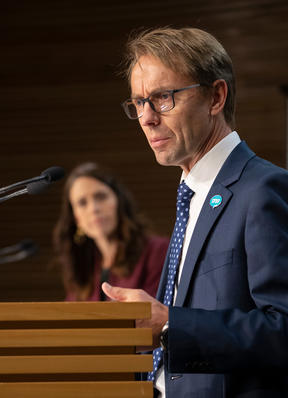


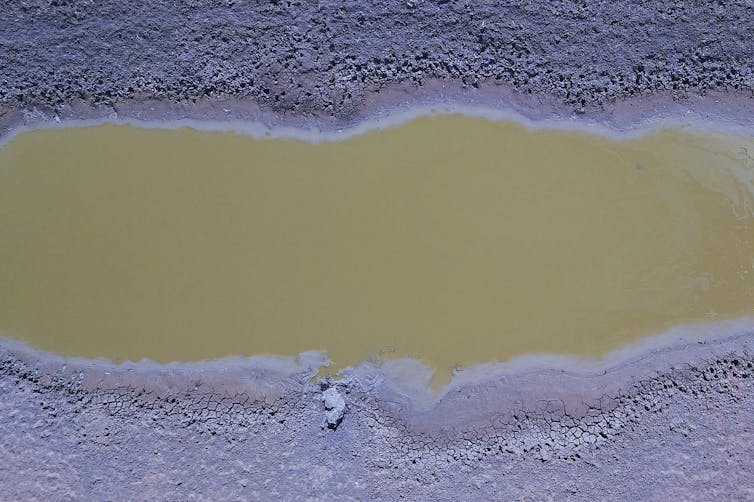
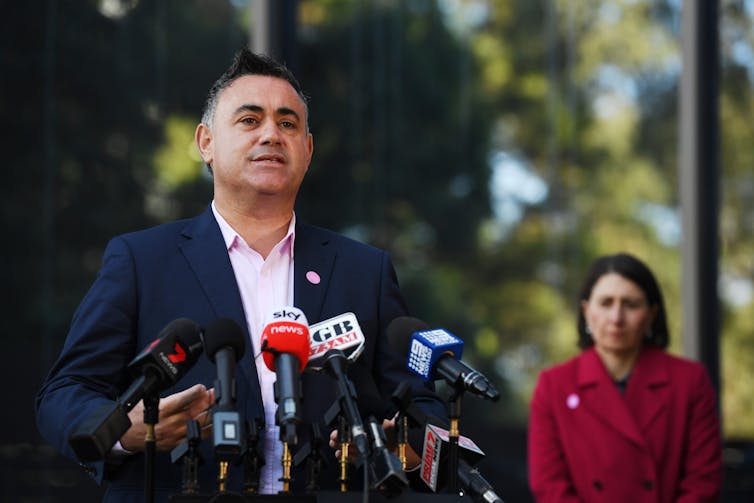
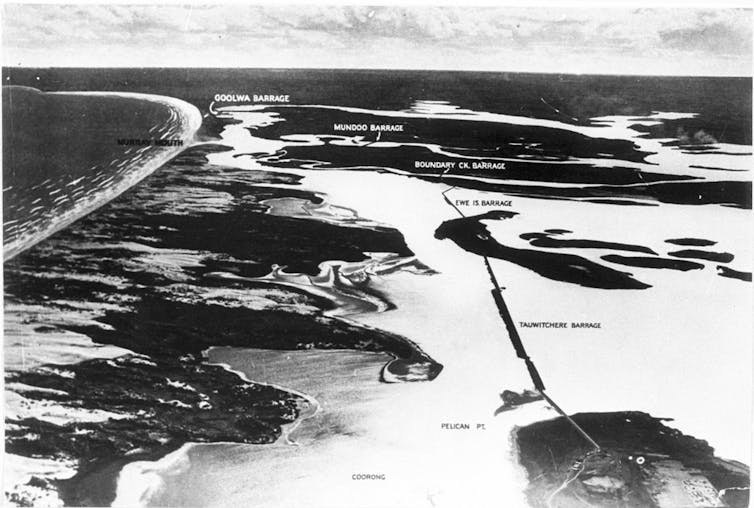

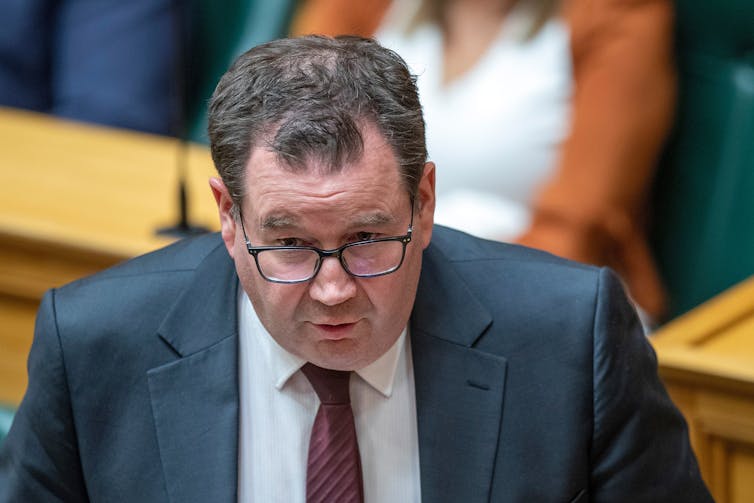
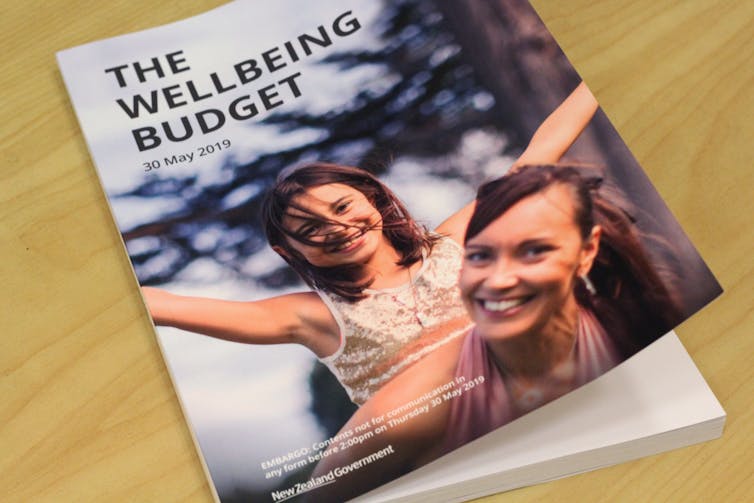
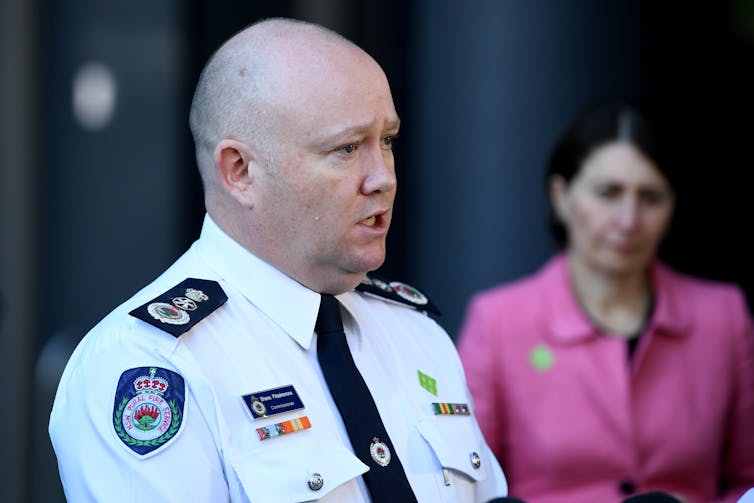
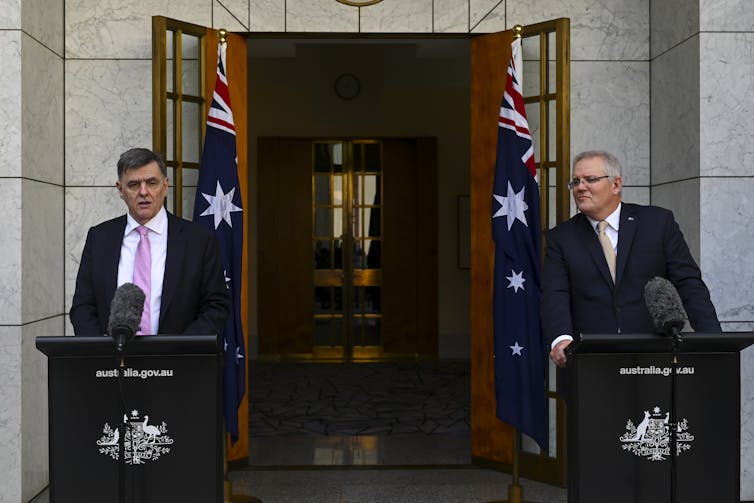
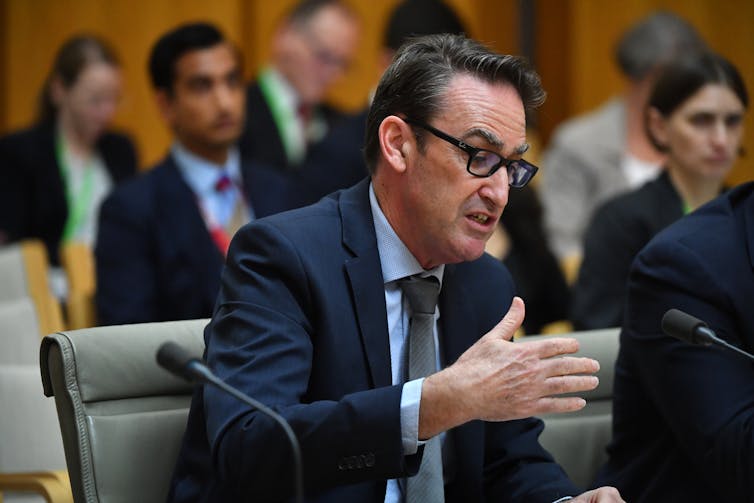



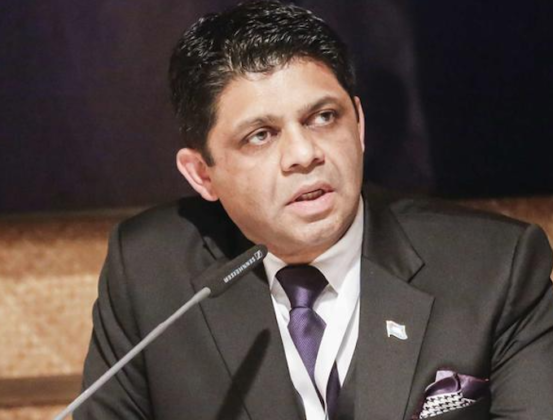
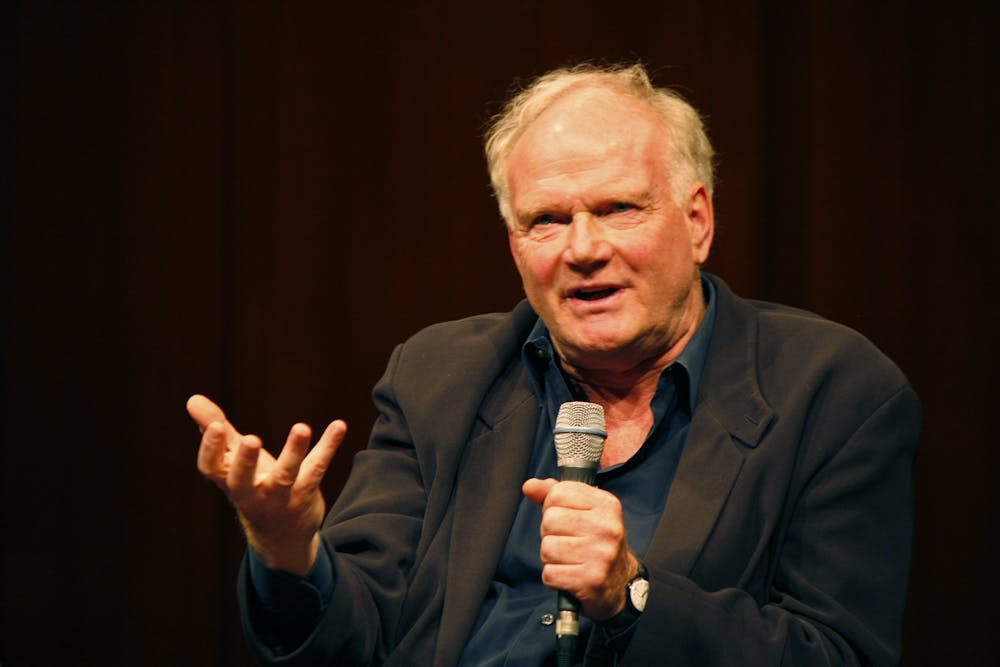


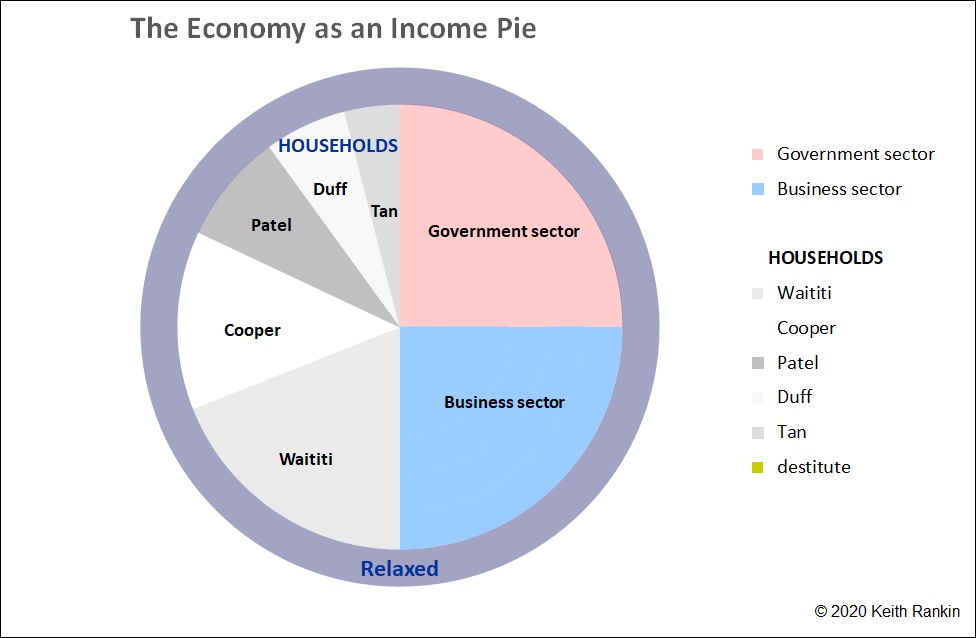
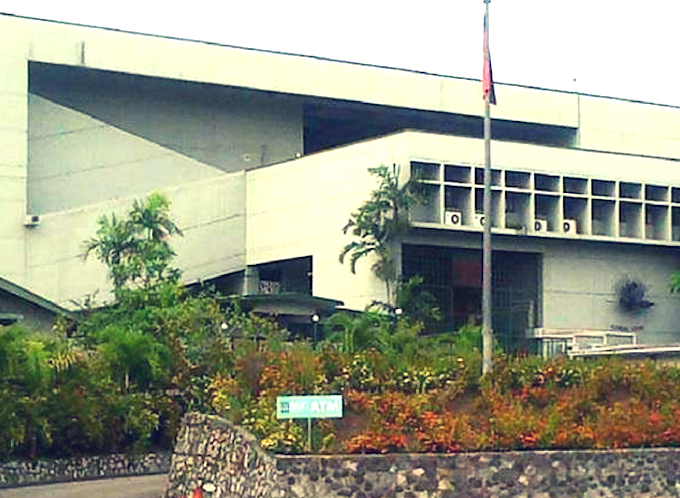

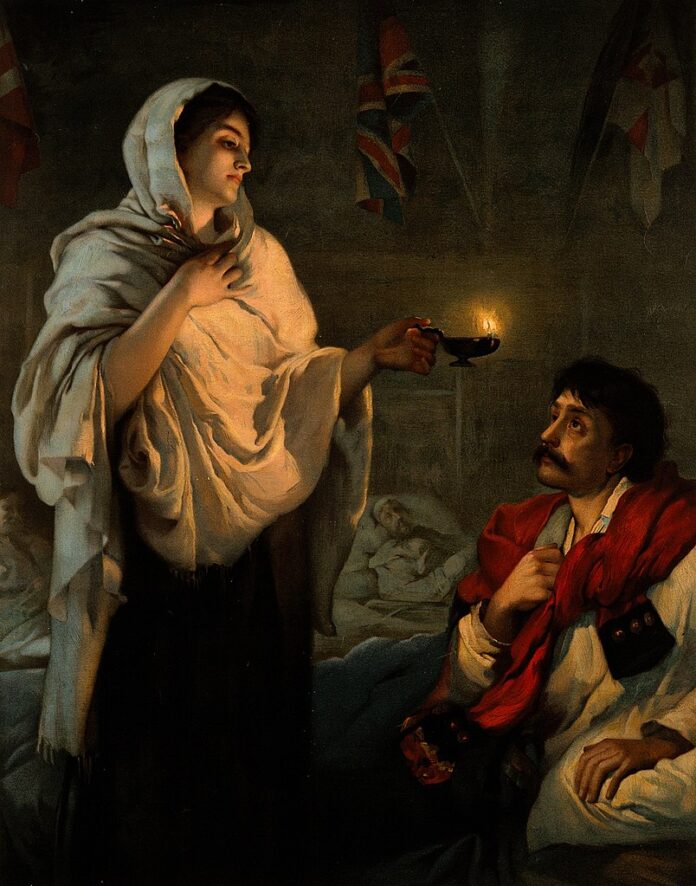

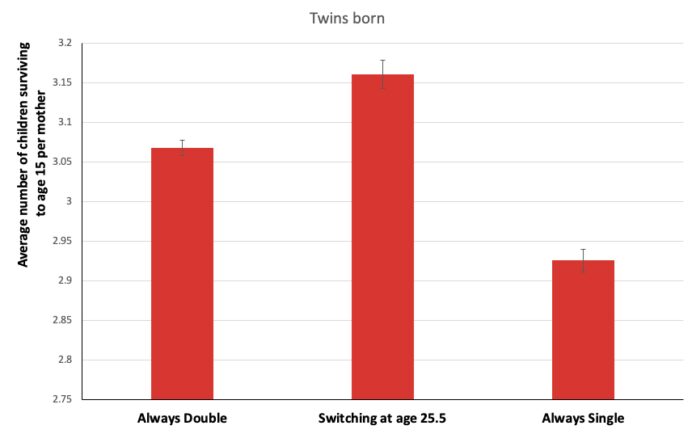
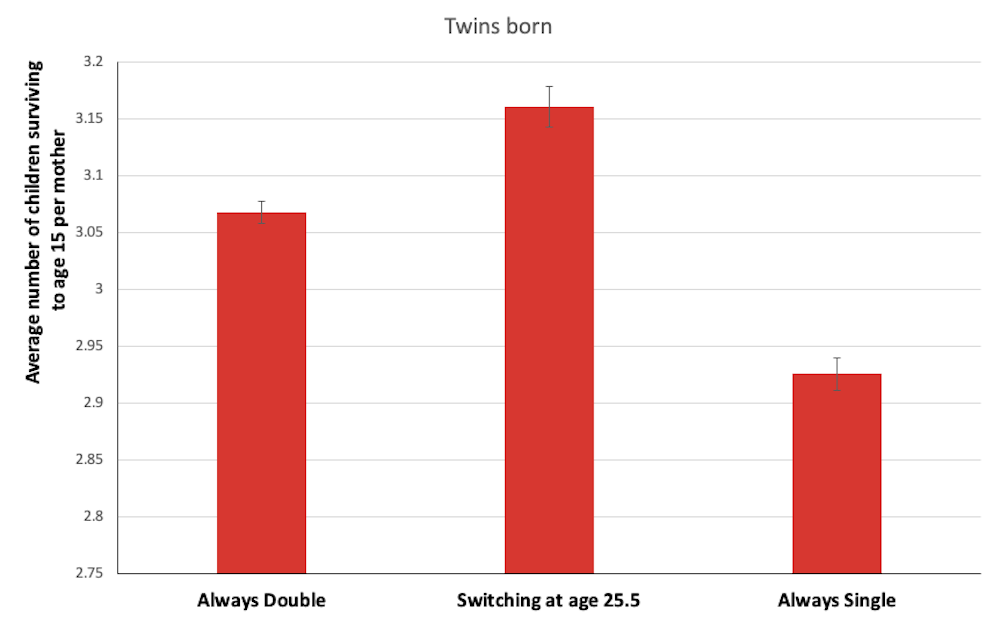
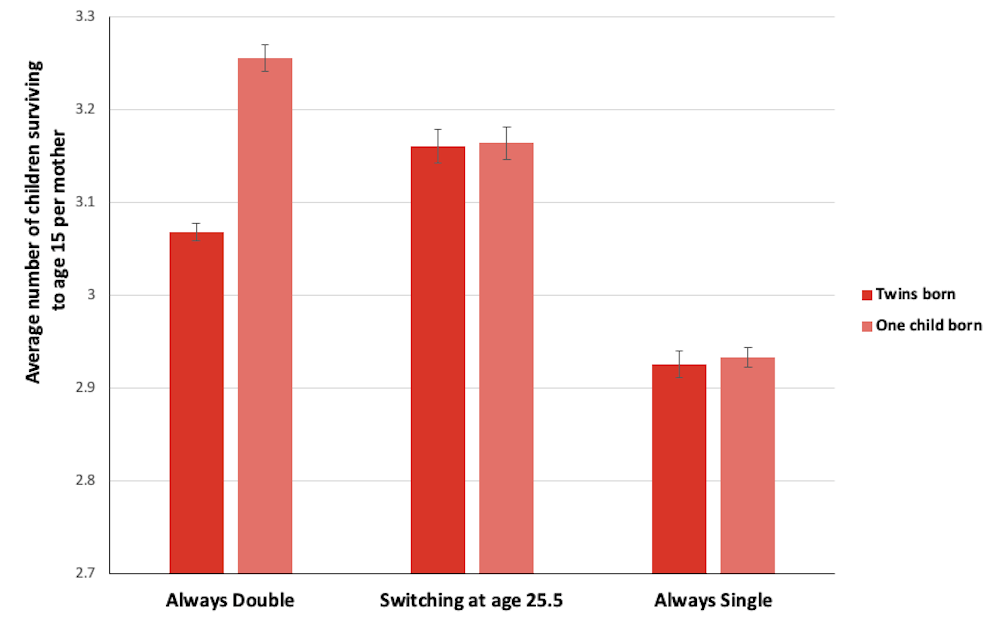


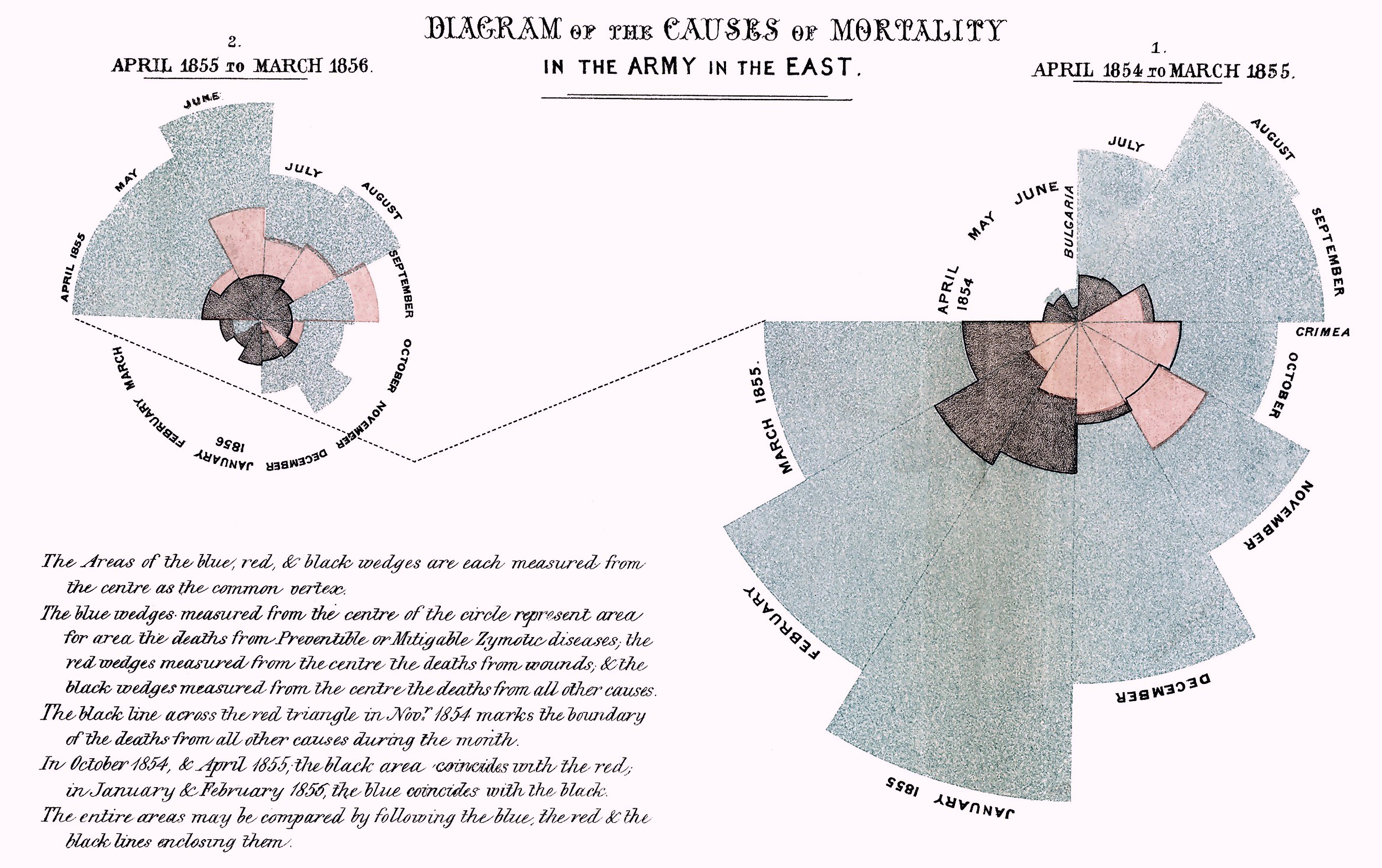





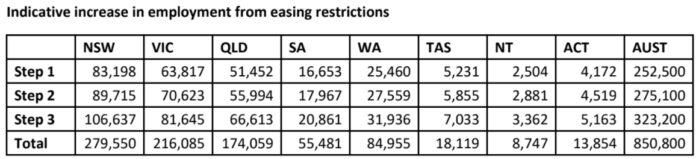
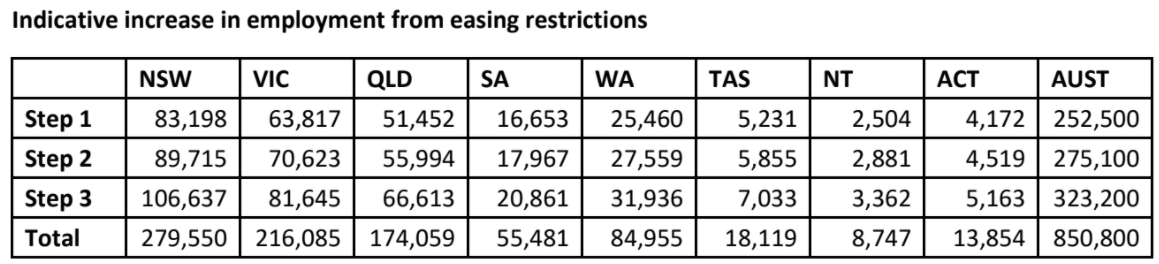
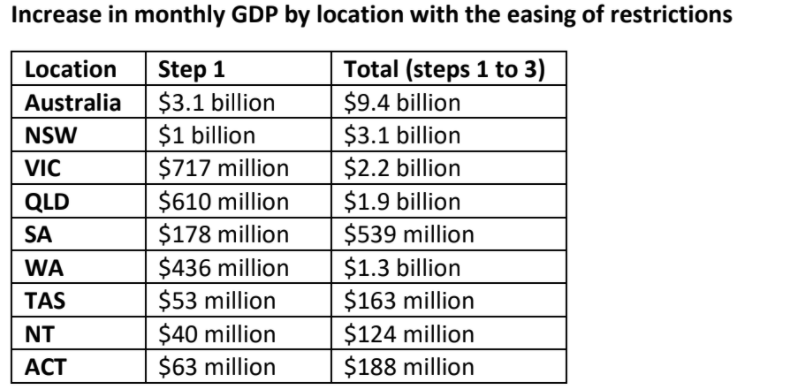
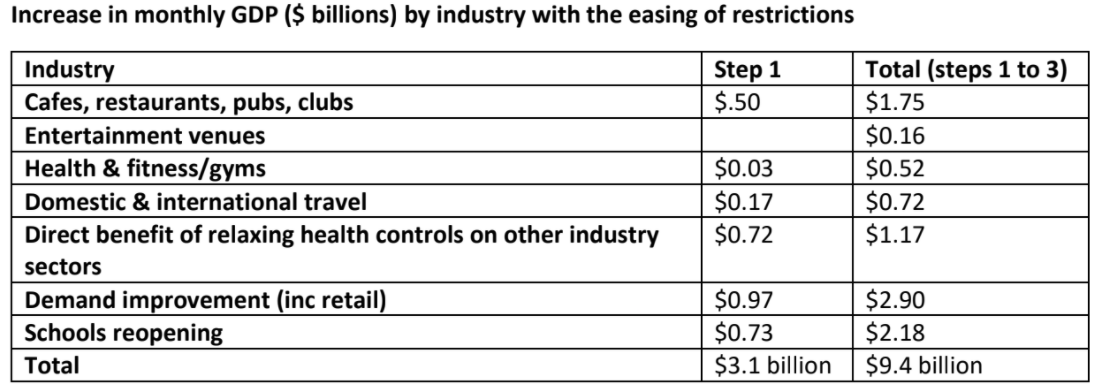
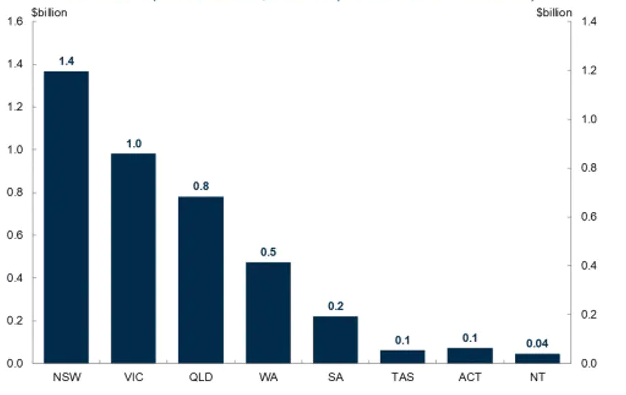


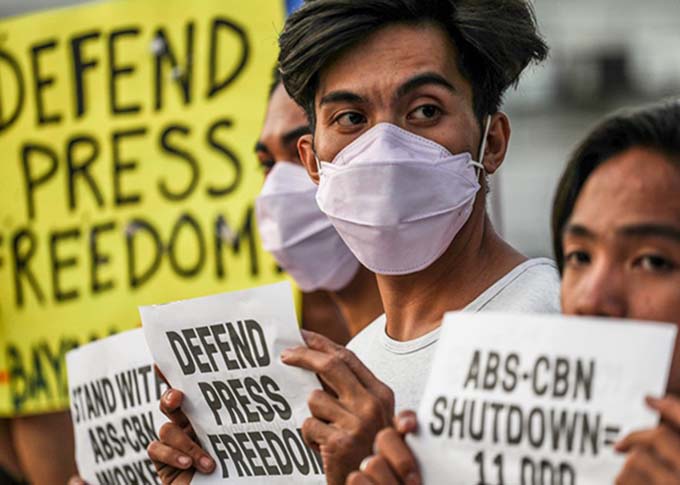
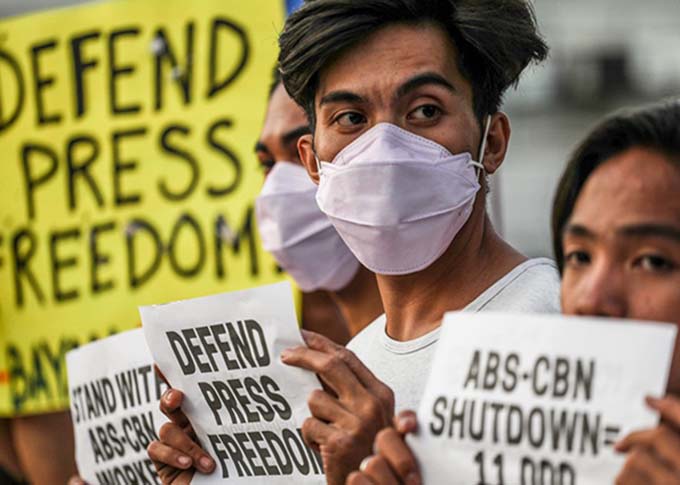
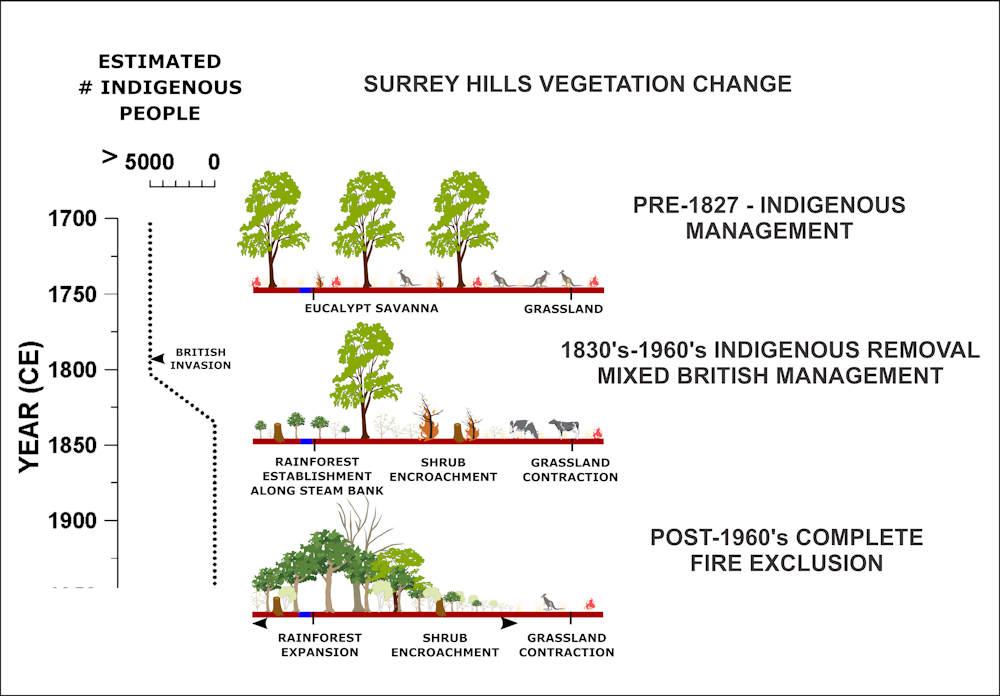





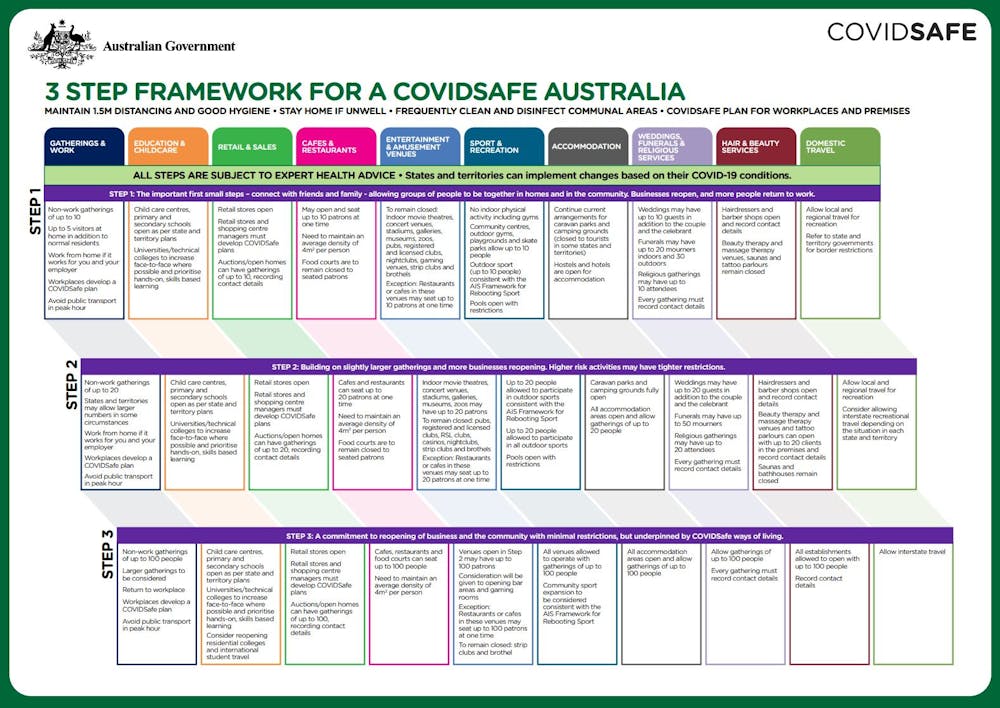
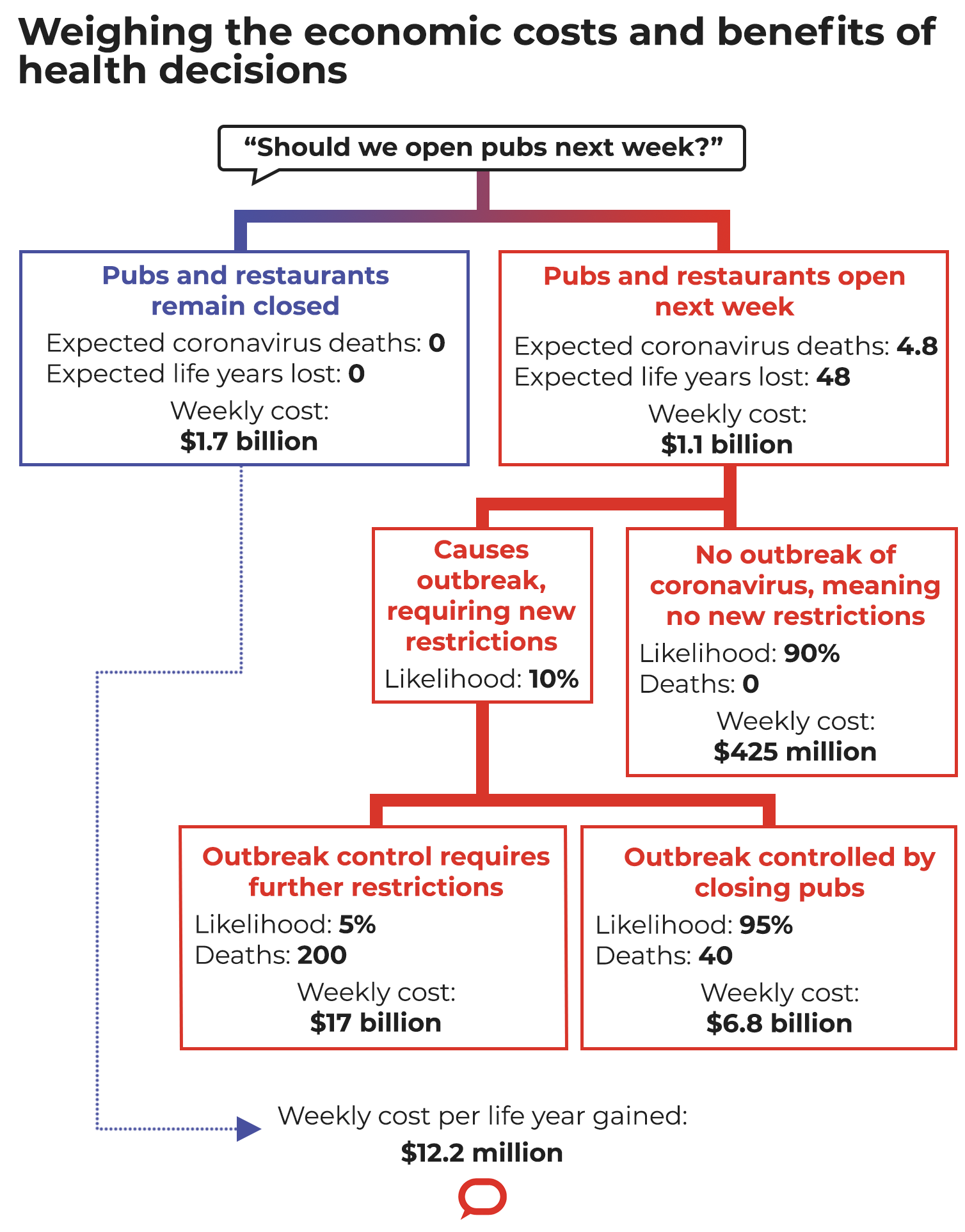


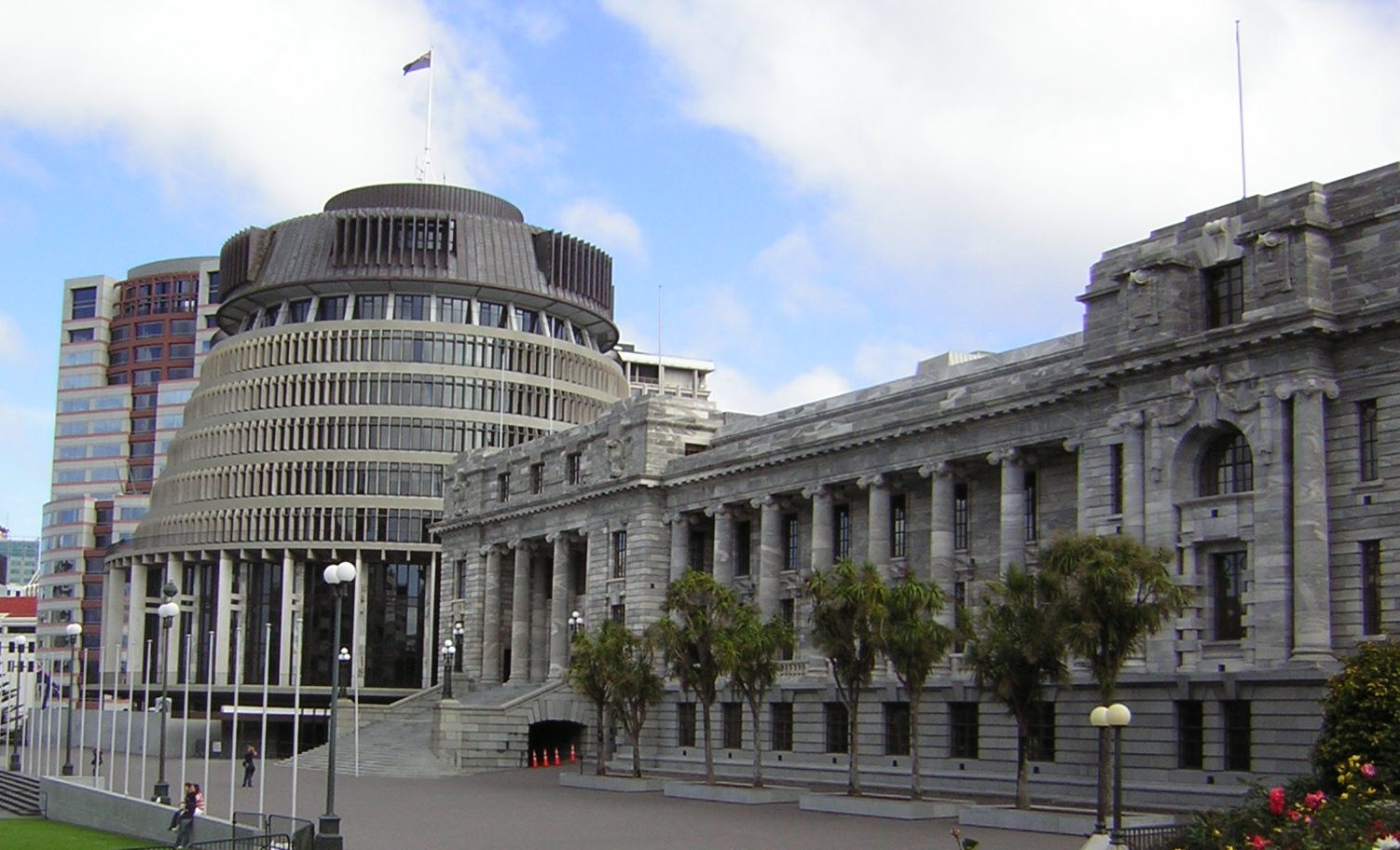


.jpg)
.jpg)