New Zealand’s “intransigence” over wanting to allow Australians in before New Zealanders out to the covid-free Pacific does not stand up to scrutiny, says a Cook Islands resort owner and doctor.
“If we unwittingly let the virus cross the Tasman, our country will take a huge hit,” says New Zealand-based John Dunn, a resort owner and visiting surgeon at Rarotonga Hospital.
Instead of concentrating on a possible travel bubble with Australia, New Zealand should be demonstrating “kindness” and offering a tourism economic lifeline to the Cook islands, Niue and Tokelau.
John Dunn … Testing in other island countries has been “patchy”. Image: JD
“Kindness was brilliantly promoted by Prime Minister Jacinda Ardern as a principle in the pandemic fight, alongside testing and tracing,” he wrote today in a guest column in The New Zealand Herald.
“Kindness can be misplaced, such as allowing infected people to travel the country. Alternatively, it could be used powerfully, by saving Pacific economies.
“The Cook Islands, Niue and Tokelau don’t feature in the UN list of member countries. That’s because they aren’t fully independent, existing in free association with New Zealand.
“While self-governing, their historical status means they depend on us in varying ways in matters like defence and foreign policy. And they are New Zealanders. We have real responsibility for them stemming from the colonial era.”
‘Malevolent engine’ Moreover, the Cook Islands, Niue and Tokelau are free of the “malevolent engine of SARS-Cov-2”.
“It has never penetrated these islands. The Cooks in particular have been conscientious and aggressive, testing 15 percent of the tiny population – all negative.”
Dunn praised the guidance of Dr Aumea Herman, the Cook Islands Secretary of Health, for this achievement.
“She is an internationally trained public health expert and has fiercely guarded the nation’s borders with the support of the government, shutting down one critical week earlier than New Zealand.”
Testing in other island nations had been patchy and reporting was unreliable, especially from those living under non-democratic regimes and with larger populations, he wrote in a clear reference to Fiji which has lately been pushing the idea of a “Bula bubble” with Australia and New Zealand.
“There exists, therefore, a strong argument to regard Rarotonga in the Cook Islands as a domestic destination and Prime Minister Henry Puna has made exactly that appeal.”
Dunn cited numbers such as only 15,000 people live in the 15 Cook Islands, mostly on Rarotonga and Aitutaki. (60,000 live in New Zealand).
Travel is economically vital “Tourism represents 70 percent of GDP and 70 percent of the 170,000 annual visitors are from New Zealand. This travel is vital to the economy,” he wrote.
“At present Rarotonga is unnecessarily empty, the resorts are unnecessarily deserted and the airport – the lifeline – unnecessarily vacant. There is absolutely no danger in travelling there. Visitors are at more risk from a tsunami or cyclone.”
Dunn said that Prime Minister Ardern had stated she did not want to think about this issue until after a transtasman bubble was established. However, former prime minister Helen Clark had advocated opening to the islands at the same time as Australia.
“The argument that it is better for our economy to allow Australians in before New Zealanders out to the Pacific does not stand up to scrutiny,” wrote Dunn.
“Also, most of the New Zealand dollars spent in the Cook Islands return home via exports purchased and revenue for companies like our national carrier. Finally, the lesson from the GFC is that unemployment in the islands triggers a further diaspora to [New Zealand] which becomes a welfare load and further decimates the local population.
New Zealand should open up to selected Pacific nations now, wrote Dunn.
“To not do so is illogical and damaging. It makes more sense to keep New Zealand, and the Cook Islands, Australian-free while they still have active coronavirus.”
While lockdown restrictions have eased in many places, the coronavirus threat isn’t over yet. The number of cases globally has surpassed 9 million, and infections have slowly crept back for Victoria.
Restaurants, pubs and cafes have been among the first places to which people have flocked for some respite from social isolation. In many cases, diners must provide their personal details to these venues for potential contact tracing later on.
Unfortunately, there’s a lack of clarity regarding what the best options are for businesses, and many aren’t following official guidelines.
Keeping records
In the rush to reopen while also abiding by government requirements, many businesses are resorting to collecting customer information using pen and paper.
This entails sharing the stationery, which goes against the basic principles of social distancing. Your written details can also be seen by other diners and staff, triggering privacy concerns.
You wouldn’t normally leave your name, phone number, email, address or any combination of these on a piece of paper in public – so why now?
Businesses collecting personal information from customers must abide by the Australian Privacy Principles under the Privacy Act 1988. This requires they “take reasonable steps to protect the personal information collected or held”.
The federal government has also released an updated guide to collecting personal information for contact tracing purposes. Establishments must use this guide in conjunction with individual directions or orders from certain states and territories. See some below.
QLD
Must keep contact information about all guests and staff including name, address, mobile phone number and the date/time period of patronage for a period of 56 days.
The guide also outlines how businesses should handle customers’ contact information. The relevant parts are:
you should only collect the personal information required under the direction or order
you should notify individuals before you collect personal information
you should securely store this information once you have collected it.
One point specifically notes:
Do not place the names and phone numbers or other details in a book or on a notepad or computer screen where customers may see it.
Thus, many establishments are clearly not sticking to official guidance. So could you refuse to give your details in such cases?
No. Customers are required by law to provide the necessary details as per their state or territory’s order. Venues can deny entry to people who refuse.
What would a comprehensive solution look like?
For contact tracing to work effectively, it should be implemented systematically, not in a piecemeal way. This means there should be a system that securely collects, compiles, and analyses people’s data in real time, without impinging on their privacy.
It’s perhaps too much to ask hospitality businesses to take the lead on this. Ideally, government agencies should have done it already.
The COVIDSafe app could have provided this service, but with it being optional — and contact tracing by businesses being mandatory — it’s not a viable option. That’s not to mention the issues with the running of the app, including Bluetooth requirements, battery life drainage, and history of problems with iPhones.
Nonetheless, there are some free technologies that can offer better alternatives to the manual collection of customers’ details. These include:
All these tools have a similar set up process, and provide similar services. Let’s take a look at one of the most popular ones, Google Forms.
Using Google Forms
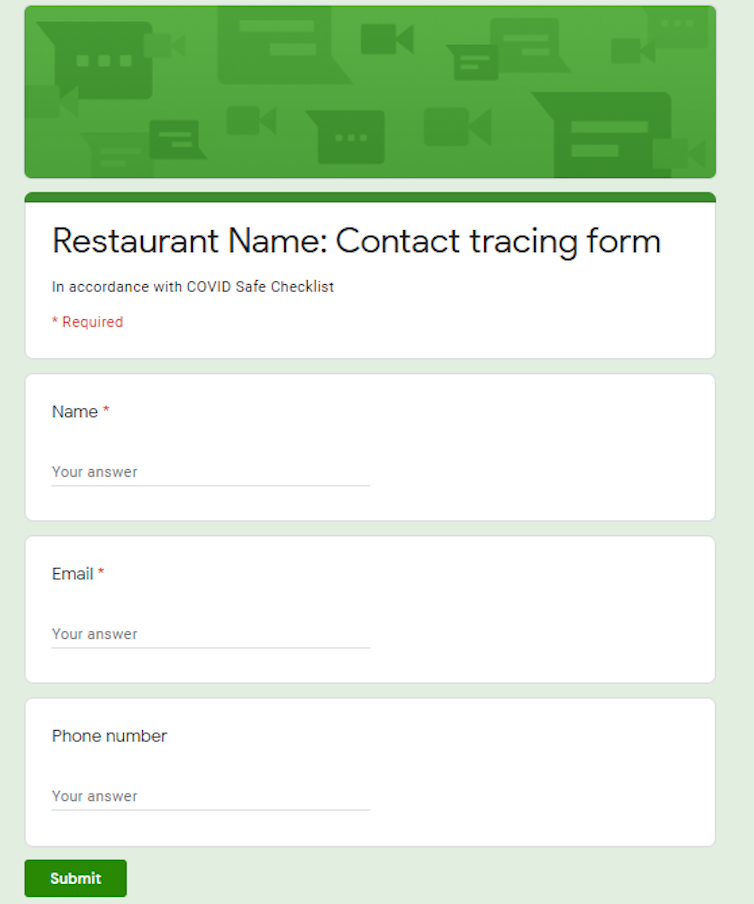
Google Forms is a tool that comes free with a Google account. The “contact information template” is a good starting point for businesses wanting to make a secure log of visitor details.
In Google Forms, you can create a workable contact tracing form within minutes.
Once you create a form to collect customers’ information, you just have to share a URL, and customers can fill the form on their own device.
You can generate a shareable URL for your Google form.
Data gathered via Google Forms is stored securely on the Google Drive account and can only be accessed through the same login that was used to create the form. The transmission of data from the customer’s device to Google Drive (where the data is then stored) is also secure.
Or use a QR code
If you want to make the whole process even easier, and not use a clunky URL, then using a QR code (linked to the URL of your Google form) is a great option. For this, you can use anyfree external QR code generator. These will generate a QR code which, when scanned by a smartphone, will direct the user to your URL.
This code can also be printed and hung on a wall, or stuck to tables where it’s easy to access without any human-to-human contact. A comprehensive guide to creating and accessing Google Forms can be found here.
QR code created using the website https://www.qr-code-generator.com/
That said, although the process of setting up and using such tools is very simple, there may still be people who are too mistrusting of the way their data is used, and may refuse to hand it over.
For many, the allegations of sexual harassment against Dyson Heydon came as a shock. It seems difficult to imagine a senior member of the legal profession, a justice of the High Court, would engage in inappropriate or potentially unlawful behaviour.
Yet, sexual harassment in the legal profession is longstanding, and has proven an intractable problem in its incidence, reporting and effects. Nearly half of all female lawyers in Australia, New Zealand and the Pacific report being sexually harassed at work.
This is at least partly to do with the culture of the profession. This culture has been built by men for men over centuries, and the legal profession continues to rely heavily on personal networks that by their very nature reinforce the status quo.
Tackling endemic sexual harassment requires a shift in the norms that make it an “open secret” – known about but ignored – and accepting women as professional equals rather than sexual objects.
A man’s world
The legal profession is traditionally the preserve of men. Women were for a long time under a “legal disability”, prevented from studying law and from practice. The first women practitioners were admitted in Australia in 1915 (Queensland) and 1917 (South Australia), and it was many more years before women began serving as judges.
Progress has been made in recent years in women studying law. From the mid-1980s, law schools were enrolling approximately equal numbers of men and women. Now, women comprise approximately 60% of law graduates.
Yet, women remain underrepresented in the senior ranks of the profession. In the mid-1990s, the Australian Law Reform Commission found women continued to be underrepresented in positions of influence and were concentrated in the less prestigious and well-paid areas of the profession.
Of particular concern is that lack of diversity at the bar means lack of diversity in the pool from which judges are appointed. The proportion of women judges and magistrates is highest in the ACT (54%) and Victoria (42%), but in most other jurisdictions, women make up only around a third of judicial officers.
Unless the government of the day is committed to increase diversity on the bench, the composition of the judiciary will not change in a way that reflects society’s needs.
The culture tacitly accepts sexual harassment
For all of the time women have been absent from the profession broadly, and in its senior positions particularly, the law has been populated by men who, consciously and unconsciously, have influenced its culture based on their own preferences and biases.
A recent study found, for instance, that female High Court judges were interrupted by counsel more frequently than their male colleagues. These findings reflect broader social norms about men interrupting women’s speech as a typical way of asserting male dominance.
In a hierarchical profession like law, which is highly competitive and performance-oriented, sexual harassment is another feature of male dominance. The culture of the legal profession, which has excluded women for centuries, continues to tacitly accept this behaviour.
This is why, when allegations about sexual harassment are made public, we often hear the behaviour was an “open secret”.
There are two consequences of this culture that help explain why sexual harassment is so persistent. First, those who are harassed are themselves expected to adhere to the norm, and accept the behaviour or leave. Secondly, witnesses will not themselves see fit to speak out against it.
Such unethical, now unlawful, behaviour will only continue within this closed system, unless a broader cultural change is made.
Networks are key to professional advancement
Reinforcing the predominance of men in the senior ranks of the profession is the importance of personal networks to advancement.
Mentoring relationships are integral to the development of junior lawyers. Universities recognise this, and promote student placements in professional internships as a way of developing these networks.
Here, too, women have long found it more difficult to develop the types of networks needed to succeed. Advancement frequently requires not only a mentor, but a sponsor – someone “on the inside” – who will open doors to professional opportunities.
The majority of those “on the inside” are men, and their conscious and unconscious bias can exclude women from opportunities to advance their careers.
Junior lawyers, especially those without established professional networks, must also compete to establish relationships with senior practitioners – including with judges through sought-after associateships.
The power in these relationships rests with the senior practitioner, most of whom are men in charge of their own domain and well-connected in the upper echelons of the legal fraternity.
Women are qualified to fill these coveted positions, but once there, the question becomes whether they are equipped to tolerate the “open secret” of sexual harassment as the price of maintaining the relationships they need for advancement.
In this kind of environment, a junior lawyer has very little power to call out unwanted sexual advances – particularly when the behaviour is accepted by those around her.
This contributes to the attrition of talented women from the profession and, of course, entrenches the male domination of its senior ranks.
Cause for optimism
Despite this grim picture, something changed this week. Allegations made by the most junior against the most senior were listened to and acted on.
While seemingly a small step, it represents a huge challenge to the culture of the “open secret” of sexual misconduct in the legal profession and the possibility of establishing new cultural benchmarks for the law.
Source: The Conversation (Au and NZ) – By Nicholas Wood, Associate Professor, Discipline of Childhood and Adolescent Health, University of Sydney
It’s Sunday night, around 8pm, when your ten-year-old tells you she has a sore throat. She doesn’t have any other symptoms, and feels OK. You tell her “let’s see how you feel in the morning” and she happily goes off to sleep.
But you’re left wondering what you’ll do if her throat is still sore the next day — or if she’s developed other symptoms by then. Should you get her swabbed for COVID-19?
Like most Australians, you haven’t recently travelled overseas or been in contact with anyone with COVID-19. And like most kids, your children often get coughs and colds during winter.
COVID-19 symptoms in kids resemble other respiratory infections
Generally, in their first 12 years, children can experience up to four to eight respiratory tract infections, or “colds”, per year. This number is highest among the youngest children.
One-quarter of all GP visits in children under five in Australia are for respiratory tract infections.
A recent review showed COVID-19 symptoms in children were typical of most acute respiratory infections and included fever, cough, sore throat, sneezing, muscle aches and fatigue.
In general, COVID-19 in children is less severe than in adults.
In children, the symptoms of COVID-19 might appear like the symptoms of any cold or flu.Shutterstock
It’s possible these could also be symptoms of a different respiratory infection. But if your child is displaying any of these symptoms, the current federal government guidelines recommend they stay at home and get tested.
You can also ask your GP if you’re not sure whether your child needs a test.
How likely is it my child will test positive to COVID-19?
Although Victoria is currently experiencing a spike, Australia has largely “flattened the curve”. In the past month there have been less than 40 new cases nationally each day.
Around the country, since the pandemic began, we’ve performed more than two million tests and identified 7,521 cases.
This means fewer than 0.5% of tests have been positive. And only a small proportion of confirmed cases have been in children.
So in our current situation it’s much more likely your child’s fever or runny nose is caused by one of the common respiratory viruses, such as rhinovirus, that we see each winter.
How sustainable is all this testing?
We’re now performing more tests each day than we were at the height of the pandemic in late March.
Australia’s high level of testing has undoubtedly played a significant role in our successful response to the COVID-19 pandemic.
But we now must ask ourselves whether, with potentially diminishing returns, it’s sustainable to keep testing every child with a cold for the foreseeable future.
Let’s remember there are 4.7 million children in Australia under 15 and each of them, particularly the younger ones, are likely to get multiple respiratory infections each year.
One of the risks of a continued emphasis on COVID-19 testing is that when a child returns a negative result, the parent thinks “all good, my child doesn’t have coronavirus, they can go back to school”.
This risks spreading non-COVID-19 viruses to others, who then develop respiratory symptoms and need to be tested. Many of these viruses spread easily among children, especially where they’re in close contact, such as in childcare centres.
This may lead to an upward spiral of respiratory infections, particularly during winter when colds and the flu are traditional foes.
Viral infections can spread easily among children.Shutterstock
Keep sick kids at home
While testing is important, physical distancing and hygiene measures have been instrumental in flattening the curve.
And as a bonus, these measures may have led to decreased incidence of other viral infections in the community.
In our hospital in Sydney, we’ve seen fewer hospitalisations for respiratory syncytial virus this year, a common cause of infant hospitalisations.
Nationally, in the first five months of 2020 there were 20,569 influenza notifications, compared to more than 74,000 at the same point last year.
Although restrictions are easing, Australians should continue to focus on physical distancing and hygiene throughout winter.
We need to see this pandemic as an opportunity to shift to a new normal: that is, staying at home when you’re sick, and keeping your child at home if they’re unwell (until their symptoms resolve).
We know it’s not always practical, but hopefully this “new normal” will see more flexibility from employers in these circumstances.
Finally, yes, follow public health advice around getting tested for COVID-19. But let’s not view this as the only thing that matters.
The coronavirus pandemic has wreaked havoc on the Australian economy, and the financial effects for many are deeply personal.
Sadly, there’s no shortage of terrible advice online when it comes to personal finance. And as September 30 looms – the date by which JobKeeper, the increased JobSeeker and many negotiated rent and mortgage deferrals end – it’s important to be fully informed before you make potentially life-changing financial decisions.
As a former financial counsellor and former consumer credit educator for the Australian Securities and Investments Commission (ASIC), here’s what I think you need to know if you’re considering mortgage deferral, rent relief or bankruptcy.
Residential mortgages are covered by federal legislation, under which lenders can assist when borrowers can’t afford their usual repayments due to changed circumstances — such as losing hours or employment.
For example, you can ask your lender put on hold payments from June to September. It’s up to you and the creditor to establish clearly what happens to those payments. Are they pushed to the end of the contract, thereby extending the life of your loan? Or will you repay extra when you can afford repayments again?
Make sure you understand how much more it will cost you in additional interest if you extend the life of your loan by deferring these payments to the end of the contract. Depending on the details of your loan, you could be adding thousands of dollars to the amount you need to repay.
Most mortgage lenders don’t really want to repossess your house. It’s costly, time-consuming and stressful. But before asking for mortgage relief, you need to have a plan for the post-deferral period.
What happens if you still can’t make your usual repayments? Any licensed financial professional should be able to help negotiate a deferral on your mortgage or other consumer debts such as credit cards, but you should first consider seeing a free financial counsellor who is independent of any lenders. They can be contacted on 1800 007 007 or through the National Debt Helpline
Before asking for debt relief, you need to have a plan for the post-deferral period.Shutterstock
Rent relief
If you can’t pay your rent due to changed circumstances, you can ask your landlord to reduce or defer your rent. They can, of course, say no.
Unlike mortgage deferral, the implementation and process is inconsistent across states and territories. It can be difficult to navigate.
There are reports of some landlords asking for comprehensive financial statements to support claims, or for their tenants to access the early release of up to A$10,000 in superannuation to pay the rent.
Ausralia’s corporate watchdog, the Australian Securities and Investments Commission (ASIC), has warned real estate agents that advising tenants to take money from their superannuation may constitute giving unlicensed financial advice and/or be against people’s best interests, attracting possible fines and jail time.
If you’re talking with your landlord about rent relief, be clear on whether you’re talking about rent payments being reduced, deferred or permanently waived, and whether these payments would need to be made up by a certain date. Renters can seek help from free financial counsellors or a tenants’ union.
State and territory governments have established various schemes to help renters work out agreements with their landlord (see this Western Australian scheme as an example).
Bankruptcy should be a last resort. Many creditors have shown they’re willing to provide short-term delays (for about 90 days, for example) if people need more time to pay a debt.
Consumer credit contracts are written on the basis that life has its ups and downs and if a debtor genuinely can’t pay, the creditor can help by reducing payments, stopping interest charges, deferring payments and/or restructuring loans.
In almost all consumer bankruptcies, there is no return to creditors so they generally don’t want debtors to go bankrupt. It’s in their interest to help debtors through a difficult period so they can return to making payments.
Call the National Debt Hotline before you make any big decisions around bankruptcy.Shutterstock
Of great concern to consumer advocates is that searching “bankruptcy” or “help with debts” on the internet will often generate results for companies with a vested interest in placing you in what’s called a “debt agreement”. These should be approached with caution. It basically means you pay for a company to help you declare bankruptcy – but this is unnecessary.
A debt agreement is an act of bankruptcy that directs fees to those companies and quite often places consumers in unmanageable and unsustainable long-term repayment plans.
Instead, try to find free financial counsellors, some of whom work for charities. They are professional, unbiased and expert at informing people of their options when in debt. They can be found via the government’s MoneySmart site.
If you can’t pay your debts, there are many options available. The key is contacting the right person or organisation – and knowing whatever comes up first in a Google search is not necessarily the best or most impartial place to get help in a financial crisis.
Choosing care for your child when returning to paid work can be challenging, and to the uninitiated the terms can be confusing. One alternative to long day care in a larger child care centre is known as family day care.
Family day care is where a child is educated in a small group in a family style atmosphere at an educator’s home, seeing the same educator or educators each day.
The ratio in family day care is one educator for a maximum of seven children, and there can be no more than four children who are preschool age or under (per educator). The educator’s children must be counted in those seven children if they are under 13 years and not being cared for by another adult at the premises.
All family day care educators must hold or be “actively working towards” at least an approved certificate III level education and care qualification. (In South Australia, though, a family day care educator must hold at least an approved certificate III level education and care qualification.)
All family day care educators must hold an approved first aid qualification and have undertaken approved training in anaphylaxis management and emergency asthma management.
The approved provider of a family day care service must read — or ensure a nominated supervisor or a person in day-to-day charge of the service has read — a person’s working with children check before the person is engaged or registered as a family day care educator as part of the service. You can see which check applies in your state or territory here.
There’s a clear focus on learning and development based on the principles, practices and learning outcomes of the Early Years Learning Framework. The educator will plan an educational program for each child, share it with families and invite family input.
What’s the difference between family day care and long day care in a child care centre?
The most obvious difference is size.
Child care centres are usually much bigger and busier, with children usually grouped according to age. There are various educator-to-child ratios for each age group and it may be different depending on your state (as you can see here).
Like family day care, child care centre staff are required to have a qualification in early childhood education and care. The qualifications required will depend on their roles and responsibilities.
Routines at long day care centres are usually tailored to the needs of each child, especially for very young children, but may move to routines that are more based around a group dynamic as the child gets older (for example, having lunch time at the same time).
How to choose a family day care provider that’s right for you
If you’re interested in family day care, start by finding out which registered providers are near you. Then, you can organise a visit to the educator’s home.
When judging the quality of the care and educational program, it helps to ask yourself:
is the care child-focused, or time-focused? (For example, are nap times tailored to each child or grouped at the same time of day?)
how many children does the educator have each day and what are their ages?
what learning experiences are available for the children each day and will this suit my child?
do the children attend a playgroup during the week? For some parents, this represents bonus social interaction opportunities but for others it’s not a priority
are meals provided and if so, how is the menu determined?
how does the educator manage supervision of children indoors and outdoors?
are there other people in the home when family day care is provided and how do you feel about that?
what ratings did the family day care service achieve under the National Quality Standards (more on that in a minute)?
does the cost suit your budget?
Family day care services are part-funded by the Australian government, and the costs vary across services and family income.
Family day care services are assessed for the quality of the education and care under the federal government’s National Quality Standard.Shutterstock
How the regulator judges quality
Family day care services and long day care services are assessed for quality of education and care under the Australian Children’s Education and Care Quality Authority’s National Quality Standard.
Seven quality areas are assessed and rated to determine a quality rating, including the educational program, childrens’ health and safety, the physical environment, staffing, relationships with children and families, governance and leadership.
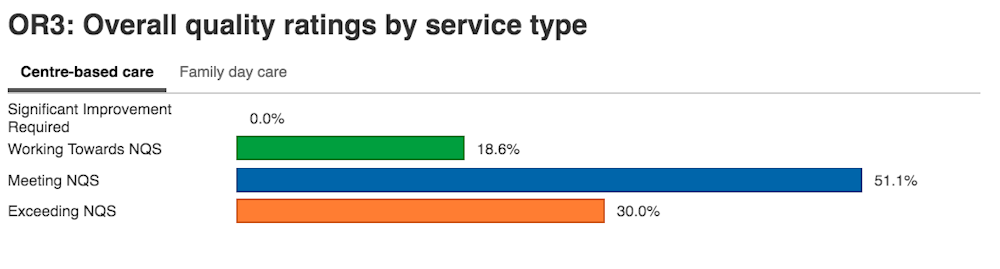
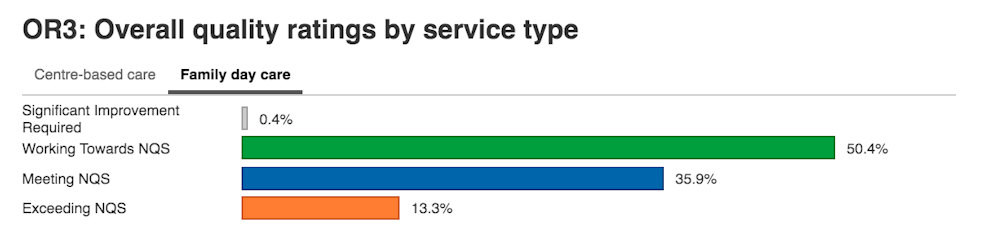
State and territory regulatory authorities assess and rate family day care services as either “exceeding”, “meeting”, “working towards”, or “significant improvement required” using the National Quality Standard, also known as the NQS.
Here’s how family day care compared with child care centre-based care, according to the regulator’s data as at March 31, 2020:
However, there is great variation across and within each service and centre. Finding out as much as you can about each provider on your shortlist can help inform your decision.
Many families prefer the home-like family environment of family day care for their children, especially when they are young, and then move their children onto long day care when the child is old enough to want friends.
It can be a trade-off between a small intimate family-like atmosphere for a more active, stimulating environment with many more people.
The Morrison government has announced a $250 million package for the entertainment, arts and screen sectors, which have been particularly hard hit by the COVID-19 crisis.
The grants and loans will be rolled out over the next 12 months.
Activity collapsed in these sectors with events quickly cancelled when the pandemic began and gatherings were prohibited. Many people have not been able to access JobKeeper. Getting work started again will be complicated by ongoing social distancing requirements that will make for smaller audiences.
Scott Morrison is anxious to stress the package isn’t just aimed at helping the public faces.
“This package is as much about supporting the tradies who build stage sets or computer specialists who create the latest special effects, as it is about supporting actors and performers in major productions,” he said.
Morrison will seek approval from the national cabinet to give the entertainment industry greater certainty about the timetable for enterprises to be able to re-activate their businesses.
The government says the “creative economy” is worth $112 billion and employs more than 600,000 people.
The measures include:
$75 million for seed investment to reactivate productions and tours. These competitive grants will provide capital to help production and event businesses to stage new festivals, concerts, tours and events, “including through innovative operating and digital delivery models”. Grants will be between $75,000 and $2 million.
$90 million for concessional “show starter” loans. They will assist businesses to fund new productions and events. The loans will be delivered through banks, backed by a 100% Commonwealth guarantee.
$50 million to “kick start” local screen production. It will be administered by Screen Australia and support local film and television producers to secure finance to re-start filming. Filming of new productions has largely stopped as insurers are not providing coverage for COVID-19.
$35 million direct financial assistance for Commonwealth-funded arts and culture organisations facing threats to their viability due to COVID-19. These may be in theatre, dance, circus, music and other areas. The Government will partner with the Australian Council to deliver this funding.
Morrison said the commercial arts and entertainment sector was one of the first sectors hit by the pandemic and would be one of the last to come out of hibernation.
“We’re delivering the capital these businesses need so they can start working again and support the hundreds of thousands of Australians who make their living in the creative economy,” Morrison said.
“These measures will support a broad range of jobs from performers, artists and roadies, to front of house staff and many who work behind the scenes, while assisting related parts of the broader economy, such as tourism and hospitality.”
He said many in the sector would find a new way to operate while the current social distancing measures remained.
A ministerial taskforce will be set up to partner with the government and the Australia Council to implement the plan for the creative economy.
The government said the package was on top of $100 million a month going into the arts sector through JobKeeper and cashflow support over April and May.
Australian supermarket giant Woolworths has announced its single biggest investment in logistics infrastructure, spending A$780 million to replace up to 1,300 workers with robots.
It plans to build one semi-automated and one fully automated distribution centre in south-west Sydney. About 650 jobs will be created at the new centres, to open in 2024. Three existing centres (two in Sydney, one in Melbourne) will close as a result.
Woolworths’ chief supply chain officer, Paul Graham, emphasised the safety benefits of automation:
Cutting-edge automation will build tailored pallets for specific aisles in individual stores – helping us improve on-shelf product availability with faster restocking, reducing congestion in stores, and enabling a safer work environment for our teams with less manual handling.
In these COVID-conscious times that’s the obvious spin.
But it’s true this is a response to the changes being wrought on the retail sector by COVID-19.
The principal change is a matter of pace. COVID-19 has turbocharged the shift to online shopping. Even as social-distancing rules ease, this trend will consolidate. Many bricks-and-mortar shops are in trouble, particularly those in shopping centres.
Retail will also be shaped by how COVID-19 has changed our shopping behaviour, with thrift and value being important.
Shopping online is the new norm
In April, 5.2 million Australians shopped online, according to Australia Post’s 2020 eCommerce Industry Report. The Australian Bureau of Statistics estimates those sales were worth A$2.7 billion, 11.1% of all physical retail sales, compared with 7.1% in March 2019.
This sharp hike in demand exposed weaknesses in retailers’ online capabilities. For example, crushing online demand meant both Woolworths and major rival Coles temporarily suspended their online shopping services.
More automated fulfilment centres are part of meeting these online demands. Of course, such investments were already on the radar.
In March 2019, Coles announced an exclusive deal to use the “end-to-end online grocery shopping solution” developed by Ocado, a British online supermarket chain that has no stores, only warehouses. Its technology spans the online shopping experience, automated fulfilment and home delivery.
An Ocado warehouse in Wimbledon, southwest London.Willy Barton/Shutterstock
The Coles plan included two new “highly automated” customer fulfilment centres in Melbourne and Sydney, to be ready in 2023. Coles also announced plans for two new automated distribution centres in Queensland and NSW, costing A$700 million, in October 2018.
Woolworths itself has already opened the Melbourne South Regional Distribution Centre, whose automated features are hyped in the following promotional video.
So these latest moves are part of a trend, albeit one unexpectedly accelerated by COVID-19. And once consumers try new channels, studies show, they are likely to stick with them.
The future is dark
At the other end of the supply chain, the shift to online shopping has created demand for “dark stores” – essentially, stores without customers. These smaller, decentralised facilities, located in suburbs rather than industrial parks, are designed to pick and dispatch online orders quickly.
Woolworths opened its first dark store in Sydney in 2014. Coles opened its first in Melbourne in 2016. Existing stores are also being repurposed as dark stores. In April 2020, Australia’s Kmart temporarily converted three stores to use as fulfilment centres.
Such moves may become permanent, as shoppers demand faster delivery times and physical store assets become less viable as “traditional” retail businesses.
Existing stores are also being adapted to respond to customer demands for faster, more efficient online shopping. In January 2020, Woolworths began building its first “eStore” – an automated facility adjoining its supermarket in Carrum Downs, Melbourne.
Fewer, smaller stores
As online shopping increasingly provides greater revenue streams for retailers, more physical store closures are also on the cards.
In May, Kmart’s owner, Wesfarmers, announced it would shut 75 of its Target stores (and convert the rest to Kmart stores). Also looking to downsize are Australian department store icons Myer and David Jones, which have accelerated their plans to reduce floor space 20% by 2025.
Footwear giant Accent Group – which owns more than a dozen shoe brands and has more than 500 stores in Australia and New Zealand – is planning to close 28 stores and focus more on online sales.
As online revenues grow, expect more “right-sizing” and closures.
Hype DC, one of the footwear brands owned by Accent Group.Tracey Nearmy/AAP
Repurposing shopping centres
All these closures will add to the woes of shopping centres.
Though crowds reportedly surged back to centres when “lockdown” restrictions were eased, growing awareness that the pandemic is not over and social distancing protocols continue to create consumer anxiety.
Until people feel safe shopping, dining and gathering in crowded public places, consumer aversion will remain.
In response to these COVID-conscious times, shopping centres will endeavour to enhance those aspects of the shopping experience, such as sensory elements and entertainment, which the online shopping experience can’t provide.
The retail mix will change: fewer fashion and general merchandise shops, and more services such as medical centres, offices and childcare centres.
Opportunities for smaller retailers
One bright spot may be for local and independent shops.
Smaller retailers can often adapt faster than larger ones. Smaller community pharmacies, for example, implemented social distancing and hygiene measures more easily than larger retailers, due mainly to their smaller size and having less traffic.
There are opportunities to leverage shoppers’ desire to support local shopkeepers, producers and growers. Locally made goods and services are also less likely to have long supply chains that will impede overseas deliveries while COVID-19 is uncontained.
But they’ll still need to sort out their online shopping experience.
While Australia gradually opens up from COVID-19 lockdown, Victoria is still struggling to contain the outbreak. The Black Lives Matter protest in Melbourne on June 6, which attracted thousands of face-masked and hand-sanitised protesters, did not prove to be the public health nightmare many commentators (particularly politically conservative ones) had predicted. But Melbourne is nevertheless contending with a worrying spike in case numbers arising from infection clusters around staff working in quarantine sites and extended family gatherings.
From the beginning of the COVID-19 pandemic, we were told two behaviours were crucial to keeping us safe: social distancing and handwashing. The coronavirus crisis has brought the mundane act of washing our hands into public discussion, and the internet is now awash (ahem) with advice, from the practical to the surreal.
Judi Dench on hand with some helpful, if mildly unsettling, advice.
If there’s one place where you would expect hand cleanliness to be beyond reproach, it’s hospitals. But this isn’t necessarily the case.
Surprisingly, hand hygiene is a vexing issue in hospitals all over the world. Repeated studies have shown it is common for hospital staff to follow hand hygiene protocols less than 50% of the time. This is as true in Australia and New Zealand-Aotearoa as it is globally. As any infection control nurse will tell you, specialist doctors are often among the worst offenders.
Who teaches hospital staff how to handwash?
Like most Western-style hospitals, all Australian hospitals have infection control experts, typically nurses, whose job is to educate, advise and monitor compliance on infection control protocols among hospital workers. This is lifesaving work, because hospitals are prime breeding grounds for deadly antibiotic-resistant bacterial strains.
The main line of defence in hospitals against these potentially fatal infections is prevention, hence the strict protocols around hand hygiene, and widespread use of gloves, robes, masks and safety googles.
Proper hospital hand hygiene involves using gloves, hand sanitiser, and frequent handwashing. Protocols dictate that gloves should be used in situations where health workers might expect to come into contact with blood, bodily fluids or other contaminants. Staff should wash or sanitise their hands before and after every patient contact, and in all situations where there has been contact with potentially contaminated material.
Infection control nurses undertake routine hand hygiene audits, and hospital staff can be disciplined if they fail to comply with the protocols.
Three types of handwashers
What makes hospital staff more or less likely to comply? It turns out there are different categories of handwasher, and therefore different ways to help people remember to do it.
While working on a project looking at communication in a multidisciplinary hospital team, infection control education became one of the areas of interest. Part of the study focused on the hand hygiene habits of hospital staff in a ward with particularly high infection risks.
Based on observations, interviews and informal conversations, we discovered nursing staff tended to fall into one of three broad categories: “hero healthworkers”, “family members”, and those who were “working for the whitegoods”.
Overall, most health-care workers practised good hand hygiene most of the time. But when there was time pressure — such as during short-staffed shifts, or when multiple patients were in particular need at the same time — nearly everyone had moments of non-compliance. But, fascinatingly, there were patterns to this non-compliance.
No matter how busy things were, “hero healthworkers” always practised hand hygiene before approaching a patient’s bed. But if time was short, sometimes they did not wash or sanitise their hands on leaving the patient. Nurses (and doctors) who exhibited this behaviour tended to make comments suggesting they valued patients’ health above their own.
“Family members” always practised good hand hygiene when leaving a patient, but sometimes missed out on washing or sanitising before interacting with a new one. In each case, these staff members had vulnerable people in their household – mostly young children, and in a couple of cases older relatives. Interviews and informal discussions revealed deep concern around infection risks and “taking something home”.
The third group was mostly meticulous in their practice when observed by a superior, but much less conscientious when only peers were around. Nurses who fitted this pattern tended to be disparaged by their colleagues as “working for the whitegoods” – treating nursing less as a professional vocation and more as “just” a job to earn money.
These patterns were observed — sometimes with minor variations — in more than a dozen wards over three different hospital sites during subsequent research projects.
How to improve things
None of these behaviours appear to have been conscious, even among the least conscientious “whitegoods” group. Many staff recognised their own behaviour patterns when they were pointed out, but said they had not been explicitly aware of them.
Identifying these characteristic behaviour patterns allowed the infection control educator to target education efforts more effectively. “Hero healthworkers” were educated on the risks to other staff by potentially transmitting infection to work surfaces and other places in the hospital by not handwashing after seeing a patient. “Family members” were reminded of the risks to patients of transmitting infections in the opposite direction. And those who only complied when being directly supervised were counselled on the need to have high standards at all times.
This shift in education strategy was employed along with a number of other infection control interventions, resulting in a significant reduction in multidrug-resistant infections.
One insight we can take from this for our day-to-day realities in the middle of COVID-19 is to be reflective about our own handwashing practices. When are we conscientious, and when do we let our standards slip? Is there a pattern in our own behaviours that we can identify, and what are the subconscious beliefs driving those practices? Can we use that knowledge to change our behaviours?
The simple act of handwashing is perhaps more complex than we realise. But it is one of the things that will determine how well we fare in the current pandemic.
At the height of the coronavirus emergency, and on the back of devastating bushfires, Australia’s much awarded and trusted national broadcaster has again been forced to make major cuts to staff, services and programs. It is doing so to offset the latest $84 million budget shortfall as a result of successive cuts from the Coalition government.
In the latest cuts, wrapped up as part of the national broadcaster’s five-year plan,
250 staff will lose their jobs
the major 7:45am news bulletin on local radio has been axed
ABC Life has lost staff but somehow expanded to become ABC Local
independent screen production has been cut by $5 million
ABC News Channel programming is still being reviewed.
Even the travel budget, which allows journalists and storytellers to get to places not accessible by others, has been cut by 25%.
These are just the latest in a long list of axed services, and come off the back of the federal government’s indexation freeze.
Announced in 2018, that freeze reduced the ABC budget by $84 million over three years and resulted in an ongoing reduction of $41 million per annum from 2022.
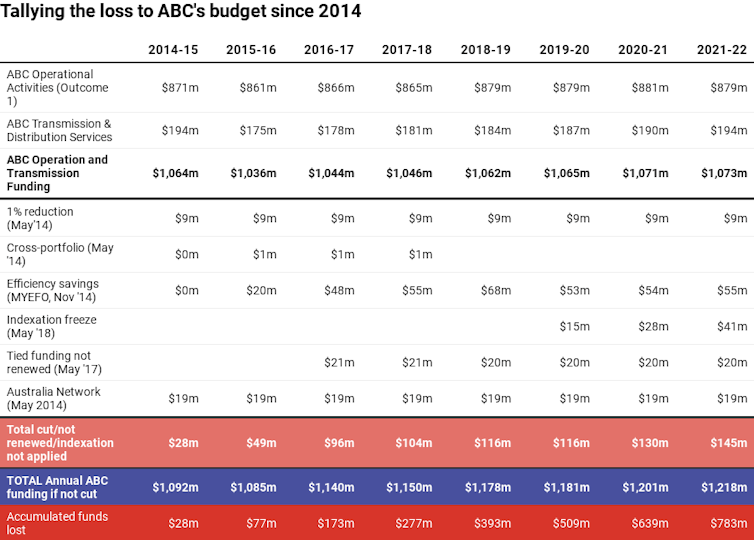
The indexation freeze is part of ongoing reductions to ABC funding that total $783 million since 2014. In an email to staff, Managing Director David Anderson said the cut to the ABC in real terms means operational funding will be more than 10% lower in 2021–22 than it was in 2013.
To be fair, the way in which the ABC executive has chosen to execute the latest cuts does make some sense, pivoting more towards digital and on-demand services. Right now, the commuting audience that has long listened to the 7:45am bulletin is clearly changing habits. However, with widespread closures of newspapers across the nation, the need for independent and trusted news in depth, that is not online has never been more important.
ABC Life is a particular loss. It has built an extremely diverse reporting team, reaching new audiences, and winning over many ABC supporters and others who were initially sceptical. The work they produced certainly wasn’t the type commercial operators would create.
Clearly the coronavirus pandemic has slashed Australia’s commercial media advertising revenues. But the problems in the media are a result of years of globalisation, platform convergence and audience fragmentation. In such a situation, Australia’s public broadcasters should be part of the solution for ensuring a diverse, vibrant media sector. Instead, it continues to be subject to ongoing budget cuts.
Moreover, at a time when the public really cannot afford to be getting their news from Facebook or other social media outlets, cutting 250 people who contribute to some of Australia’s most reliable and quality journalism and storytelling – and literally saving lives during the bushfires – appear to be hopelessly shortsighted.
The latest Digital News Report 2020 clearly showed the ABC is the media outlet Australians trust the most.
These latest cuts join a long list of axed services in the past seven years. They include
While not everyone will miss every program or service that has gone, and even with its occasional missteps, there is no doubt the ABC is the envy of the liberal democracies that do not have publicly funded assets, particularly the United States.
Has the ABC’s budget been increased?
Communications Minister Paul Fletcher has continued to suggest the funding cuts are not real, are sustainable without service reductions for Australians, and has claimed the ABC has received “increased funding”.
The minister’s comments are not consistent with data we published last year based on the government’s own annual budget statements and the reality of the ongoing situation for the ABC.
The government argues base or departmental funding is higher in 2020-21 than it was in 2013-14. The relevant budget papers do show that in 2013-14, the ABC was allocated $865 million for “general operational activities”. The most recent budget statement shows this has increased to $878 million in 2020-21.
So how can it be the ABC budget shows this increase when we have been arguing they are facing an overall cut?
First, we noted last year the complexity of the budget process, which means, for example, the reinstatement of short-term funding can be counted as extra funds, or the ending of such funds, while reducing an agency budget, will not appear as a reduction in allocation.
Second, the 2020-21 ABC budget reflects the inclusion of indexation for increases in CPI-related costs between 2013-14 and 2018-19. This is the funding that is being halted until at least 2021-22.
So despite statements to the contrary, nothing can change the fact the ABC has suffered massive cuts in recent years. The data published last year showed the reality of the ongoing situation for the ABC, with an annual cost to its budget in 2020-21 of $116 million. As the table below shows, taking into account actual budget allocations and adding the items cut, frozen or otherwise reduced, the ABC should have funding of approximately $1.181 billion in 2020-21, not the $1.065 billion it will receive.
It is against this background the latest funding freeze, due to a failure to meet the impact of inflation costs, occurs. While it doesn’t sound like a lot, the three year impact is $84 million, and has resulted in the cuts announced today.
But more importantly, these ongoing cuts represent an attack by the federal government on the broadcaster, its role in democracy, and in keeping Australians safe, informed and entertained.
Source: The Conversation (Au and NZ) – By Joanna Mendelssohn, Principal Fellow (Hon), Victorian College of the Arts, University of Melbourne. Editor in Chief, Design and Art of Australia Online, University of Melbourne
On September 10 1965, Sir Robert Menzies commissioned the National Art Gallery Committee of Inquiry to consider the establishment of a national gallery for Australia.
The resulting Lindsay Report, published in 1966, is an ambitious document, describing an art gallery to serve the nation through the quality and range of its collections and exhibitions.
It emphasised the need to have an all encompassing collection of Australian art. The report recognised, in the second half of the 20th century, it was not possible to acquire a significant collection from European art history and advised a focus on modern art, including from Indigenous Australian artists, south and east Asia, and the Pacific Islands.
James Mollison became the gallery’s first director and began collecting work in 1971, construction began in 1973, and the National Gallery of Australia finally opened in 1982. The Lindsay Report was most recently reviewed in 2017, and is still the guiding document for the gallery’s foundation and continuing collection policies.
Menzies understood a culture that supported the arts and the humanities was essential to Australia’s development. Although his aesthetic taste was conservative, often described as reactionary, he greatly valued the arts.
For many years, his successors showed equal enthusiasm for seeing the National Art Gallery grow into international prominence.
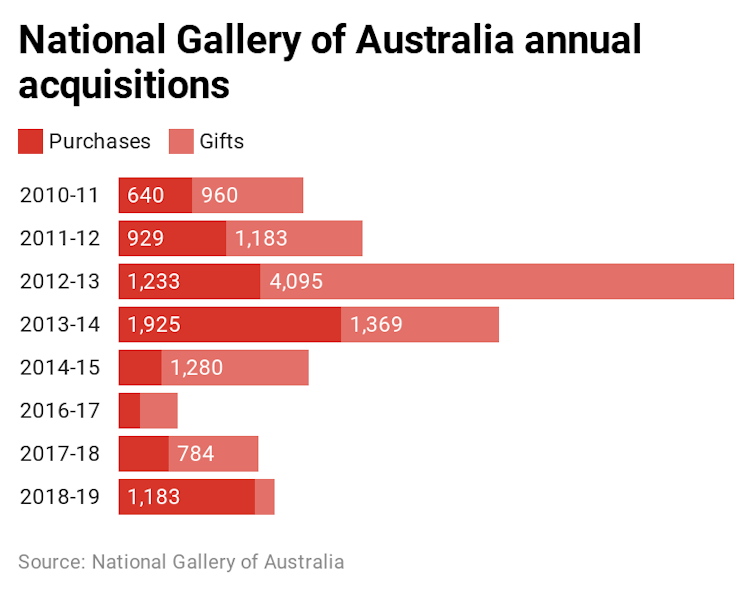
Now, with subsequent efficiency dividends, the gallery is facing a budgetary shortfall and will lose 10% of its staff. The gallery has also recently reduced the number of new acquisitions, leading some to assume a connection to the loss of funding. This is not the case.
A $6 billion collection
In the late 1970s, after the prices paid for American and European art became a political issue, the Fraser government placed restrictions on the price the gallery could pay for international art. Any major purchases would now require permission from parliament.
As the gallery’s acquisition budget was not otherwise constrained, the gallery redirected its purchases to create an encyclopaedic collection of Australian art. Over the years, the collection has matured into a balance between Australian, American, European, Asian and Pacific art, still keeping the bias towards art of the 20th and 21st centuries as proposed by the Lindsay report
Children seen inside Within, Without, by American artist James Turrell. The gallery acquired the sculptural ‘skyspace’ in 2010.Lukas Coch/AAP
The collection now comprises almost 160,000 works of art valued at A$6 billion – a remarkable achievement for a collection that began only fifty years ago.
Over the last decade, the gallery has added an average of 2,134 items to its collection each year, including 863 new purchases.
In the early years, under James Mollison’s directorship, there was a need to build the collection from a very small base of works that had found their way into the hands of the old Commonwealth Art Advisory Board.
Collections policy is not governed by numbers of works but by the nature of what is available, and how it relates to other works already in the collection. Once the collection was established, acquisitions could be focused on areas of particular need. Rod Radford expanded the Pacific collection; current director Nick Mitzevich is focused on contemporary art.
The gallery’s significant budget cuts will not impact the acquisitions budget. Gallery director Nick Mitzevich tells The Conversation the $16 million annual spend on buying art will be maintained, and cannot be appropriated for other purposes.
With such a collections base to work from, he says the gallery will focus on the quality, rather than quantity, of works which can be purchased from the same budget: collecting major works, or, as Mitzevich describes, “absolute excellence”.
National Gallery of Australia director Nick Mitzevich.Lukas Coch/AAP
But while the acquisitions budget is being maintained, other gallery departments are facing serious budget cuts.
With the exception of the Australian War Memorial, which will receive a controversial $500 million expansion, Australia’s national cultural organisations have been hit exceptionally hard by a succession of conservative governments.
The gallery’s operations budget must comply with the Australian Public Service’s efficiency dividend. This year, operating revenue is reduced by $1.5 million. To counteract this reduction, the gallery will cut 10% of its total staff, beginning with voluntary redundancies.
This will inevitably mean a loss of senior staff, some of those with the greatest expertise.
Shifting worlds
It has been a difficult year for the gallery. Due to smoke from the bushfires on January 5 and 6, the gallery had to close for the safety of its collection, including the major summer blockbuster Picasso and Matisse.
It was the first time the National Gallery of Australia has ever closed for more than one day.
Xu Zhen’s European Thousand-Armed Classical Sculpture is currently on display at the gallery.Lukas Coch/AAP
Then, COVID-19 struck. The gallery shut its doors on March 23, not re-opening until June 2. Visitor numbers remain small. Yesterday, only 250 came through the doors. This time last year they were in the thousands.
Mtizevich has yet to calculate the full cost of these dual disasters to the gallery’s revenue. He told The Conversation the act of keeping to budget while keeping faith with the National Gallery’s objectives is “not an easy job, a tightrope”.
He is adamant the collections policy will remain unchanged.
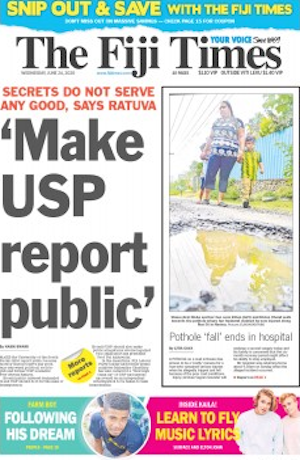
In the interest of transparency, the University of the South Pacific should make public the contents of the university’s “secret” BDO Report and also the allegations made against vice-chancellor Professor Pal Ahluwalia, says a leading New Zealand-based Fiji academic.
“Public interest demands that the BDO report needs to be released and the work by the commission expedited while the allegations against the vice-chancellor be released also and properly investigated as well,” said political sociologist professor Steven Ratuva, a former USP academic.
Professor Ratuva, director of the Macmillan Brown Centre for Pacific Studies at the University of Canterbury, said secrecy “does not serve anyone any good”.
He said USP was a regional institution and there should be no political interference that would undermine its independence.
“As we have seen in other developing countries, politicisation of universities has led to their demise as respectable institutions.
“What USP needs is not vendetta-based vengeance and counter-vengeance politics which will run the institution down, but independent scholarly innovation to raise the level of high impact research and teaching to become a world class institution of learning.”
BDO report ‘now history’ USP Council chair and pro-chancellor Winston Thompson, a retired Fiji diplomat, said the BDO report was “now history” and people should stop trying to resurrect it.
Today’s Fiji Times front page. Image: Fiji Times screenshot/PMC
Thompson said the university’s position on the report was that its findings had already been considered by the council in its special meeting in August last year.
He also said allegations against him in the BDO report were “comparatively minor”.
In box gum grassy woodlands, widely spaced eucalypts tower over carpets of wildflowers, lush native grasses and groves of flowering wattles. It’s no wonder some early landscape paintings depicting Australian farm life are inspired by this ecosystem.
But box gum grassy woodlands are critically endangered. These woodlands grow on highly productive agricultural country, from southern Queensland, along inland slopes and tablelands, into Victoria.
Many are degraded or cleared for farming. As a result, less than 5% of the woodlands remain in good condition. What remains often grows on private land such as farms, and public lands such as cemeteries or travelling stock routes.
Very little is protected in public conservation reserves. And the recent drought and record breaking heat caused these woodlands to stop growing and flowering.
But after Queensland’s recent drought-breaking rain earlier this year, we surveyed private farmland and found many dried-out woodlands in the northernmost areas transformed into flower-filled, park-like landscapes.
And landholders even came across rarely seen marsupials, such as the southern spotted-tail quoll.
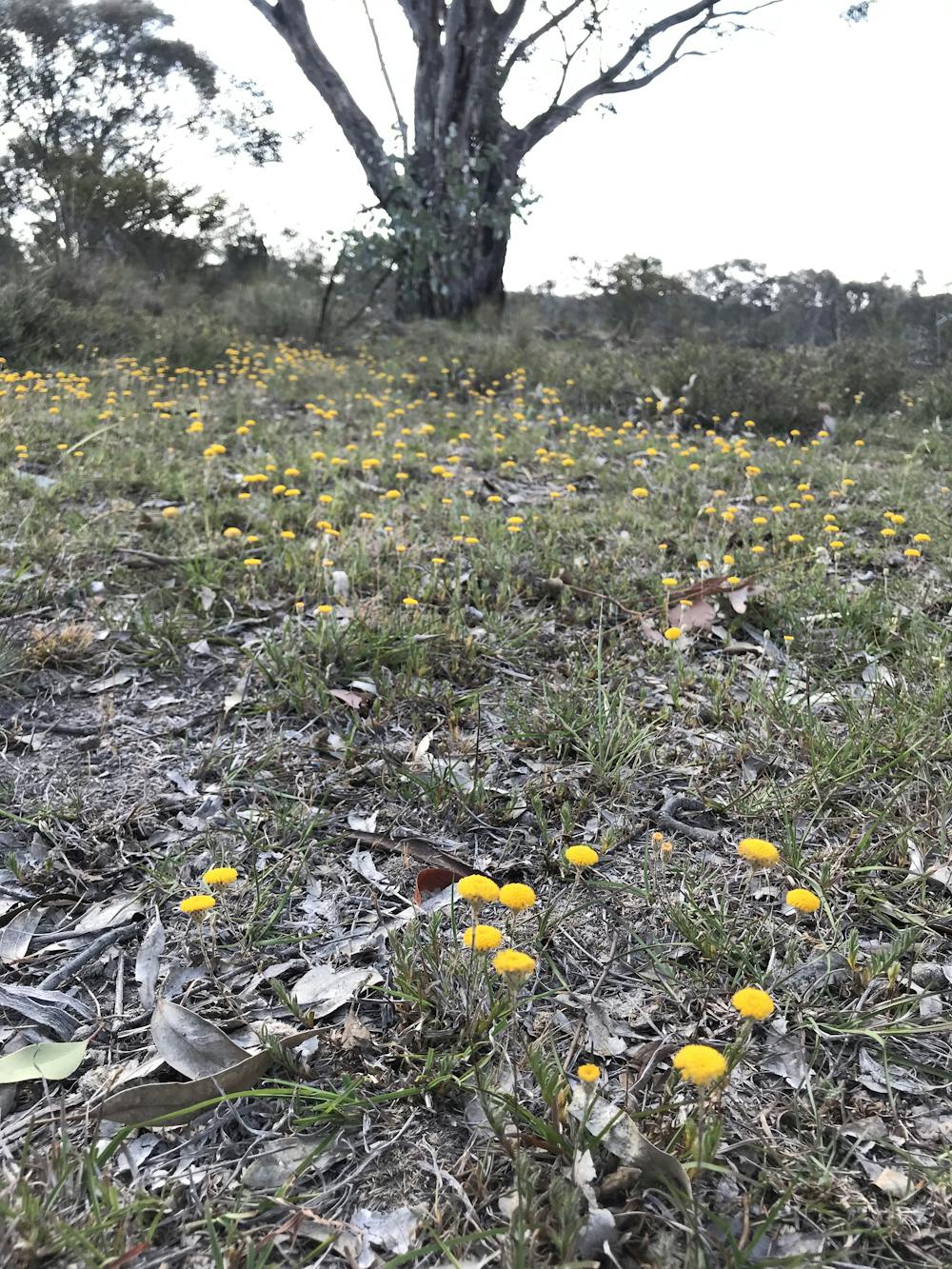
Native yellow wildflowers called ‘scaly buttons’ bloom on a stewardship site.Jacqui Stol, Author provided
Huge increase in plant diversity
These surveys were part of the Australian government’s Environmental Stewardship Program, a long-term cooperative conservation model with private landholders. It started in 2007 and will run for 19 years.
We found huge increases in previously declining native wildflowers and grasses on the private farmland. Many trees assumed to be dying began resprouting, such as McKie’s stringybark (Eucalyptus mckieana), which is listed as a vulnerable species.
This newfound plant diversity is the result of seeds and tubers (underground storage organs providing energy and nutrients for regrowth) lying dormant in the soil after wildflowers bloomed in earlier seasons. The dormant seeds and tubers were ready to spring into life with the right seasonal conditions.
For example, Queensland Herbarium surveys early last year, during the drought, looked at a 20 metre by 20 metre plot and found only six native grass and wildflower species on one property. After this year’s rain, we found 59 species in the same plot, including many species of perennial grass (three species jumped to 20 species post rain), native bluebells and many species of native daisies.
On another property with only 11 recorded species, more than 60 species sprouted after the extensive rains.
In areas where grazing and farming continued as normal (the paired “control” sites), the plots had only around half the number of plant species as areas managed for conservation.
Spotting rare marsupials
Landowners also reported several unusual sightings of animals on their farms after the rains. Stewardship program surveyors later identified them as two species of rare and endangered native carnivorous marsupials: the southern spotted-tailed quoll (mainland Australia’s largest carnivorous marsupial) and the brush-tailed phascogale.
The population status of both these species in southern Queensland is unknown. The brush-tailed phascogale is elusive and rarely detected, while the southern spotted-tailed quolls are listed as endangered under federal legislation.
Until those sightings, there were no recent records of southern spotted-tailed quolls in the local area.
A spotted tailed quoll caught in a camera trap.Sean Fitzgibbon, Author provided
These unusual wildlife sightings are valuable for monitoring and evaluation. They tell us what’s thriving, declining or surviving, compared to the first surveys for the stewardship program ten years ago.
Sightings are also a promising signal for the improving condition of the property and its surrounding landscape.
Changing farm habits
More than 200 farmers signed up to the stewardship program for the conservation and management of nationally threatened ecological communities on private lands. Most have said they’re keen to continue the partnership.
The landholders are funded to manage their farms as part of the stewardship program in ways that will help the woodlands recover, and help reverse declines in biodiversity.
For example, by changing the number of livestock grazing at any one time, and shortening their grazing time, many of the grazing-sensitive wildflowers have a better chance to germinate, grow, flower and produce seeds in the right seasonal conditions.
They can also manage weeds, and not remove fallen timber or loose rocks (bushrock). Fallen timber and rocks protect grazing-sensitive plants and provide habitat for birds, reptiles and invertebrates foraging on the ground.
Cautious optimism
So can we be optimistic for the future of wildlife and wildflowers of the box gum grassy woodlands? Yes, cautiously so.
Landholders are learning more about how best to manage biodiversity on their farms, but ecological recovery can take time. In any case, we’ve discovered how resilient our flora and fauna can be in the face of severe drought when given the opportunity to grow and flourish.
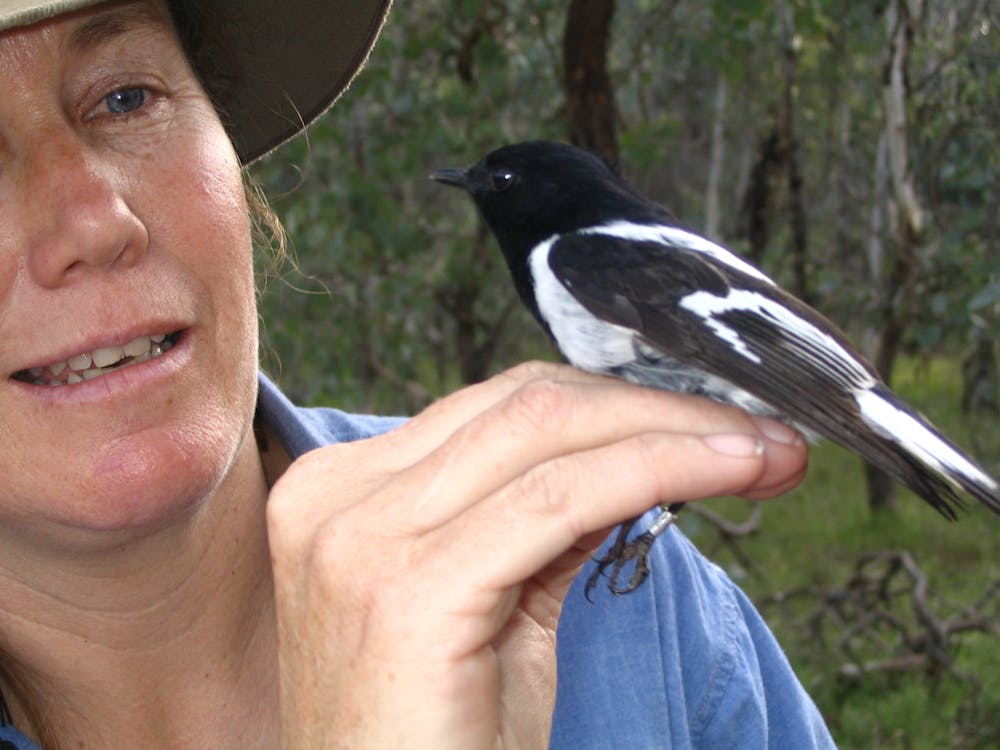
The rare hooded robin has also been recorded on stewardship sites during surveys.Micah Davies, Author provided
Climate change is bringing more extreme weather events. Last year was the warmest on record and the nation has been gripped by severe, protracted drought. There’s only so much pressure our iconic wildlife and wildflowers can take before they cross ecological thresholds that are difficult to bounce back from.
More government programs like this, and greater understanding and collaboration between scientists and farmers, create a tremendous opportunity to keep changing that trajectory for the better.
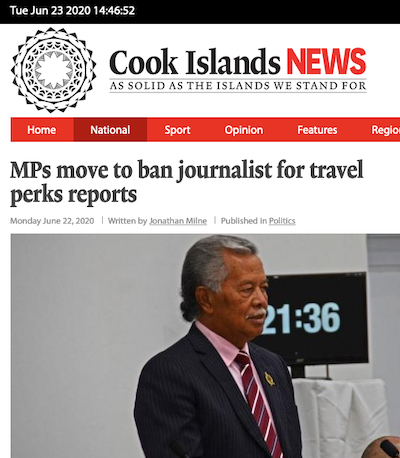
Cook Islands Members of Parliament want to ban a journalist from Parliament for what they claim was inaccurate reporting over them seeking travel perks in the House.
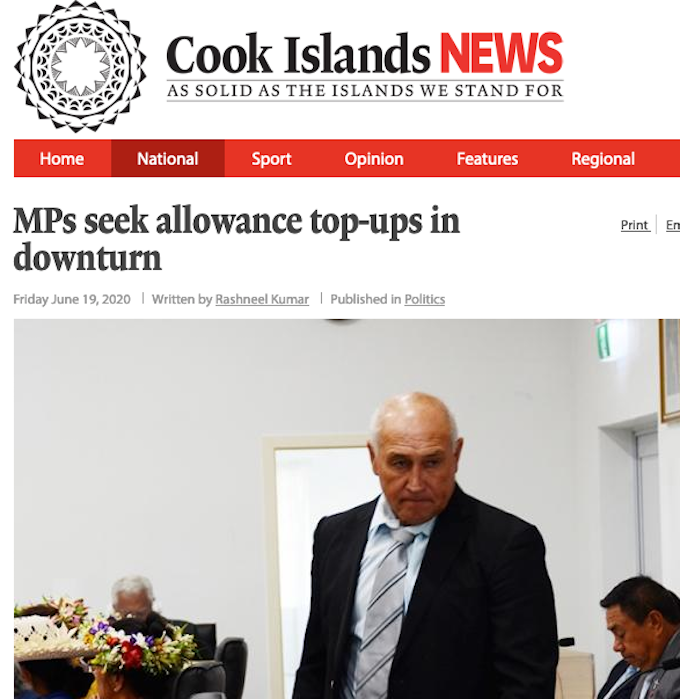
They have asked the Speaker, Nikki Rattle, to withdraw senior Cook Islands News journalist and political editor Rashneel Kumar after he wrote an article published on Friday titled “MPs seek allowance top-ups in downturn“.
Pacific Media Watch reports that in his opening sentence he stated that there was “public dismay” at MPs using House sitting time to raise the question about spousal allowances for travel.
The article reported on main opposition Democratic Party MP Terepai Maoate Jnr’s questioning of payment of his spousal allowance entitlement, and asking whether outer island MPs living in their constituencies were entitled to the same privileges as those living on Rarotonga.
“Maoate Jr MP from Aitutaki, used one of their Parliamentary questions to seek payment of a spousal allowance, which he said was already appropriated in the last Budget,” Kumar reported.
“A concerned member of the public, watching the session live on Parliament’s Facebook page, asked if the question was of national concern,” he wrote giving the headline used in the article credibility.
By yesterday, the article was a major talking point for all MPs with Deputy Speaker in the House, Tai Tura, raising a question in Parliament about the article.
‘A bit mad with the newspaper’ He said he was “disappointed and a bit mad with the newspaper” for tarring all MPs with the same brush for suggesting they had the intention of increasing the allowances.
And then the question: “Can we try and get these reporters out of Parliament for false information to the public?” he asked Prime Minister Henry Puna.
Puna’s Cook Islands Party is a minority government supported by independents; the DAP is the opposition.
However, the Prime Minister agreed that the Cook Island News article was accurate and factual.
“I beg to differ, it’s really pointing a finger at all of us here at this House that we are seeking a top-up or an increase in our allowance,” he was reported as saying.
“We have a responsibility to ensure that the media is responsible in their reporting of our proceedings in this House without sensationalising anything that they report. Because that headline certainly achieves that.”
After a motion declaring the article “incorrect and unfair,” they then agreed that the Speaker should decide whether Cook Island News journalist Rashneel Kumar should be banned from Parliament for some time as determined by the Speaker.
Covid-19 not the priority In his editorial in Monday’s Cook Islands News, editor Jonathan Milne lamented about the unity of MPs who came together seeking the withdrawal from Parliament of the journalist rather than fight covid-19.
Additionally, he stood by his journalist, saying his reporting on Parliament was accurate.
“To be clear: Cook Islands News stands by its reporting of Parliamentary questions about MPs’ entitlement to their spousal travel allowances. Our report was fair, and it was accurate – one need only check back on the recordings of Parliament to recognise that,” he says in his editorial.
Milne is a highly respected former editor of Stuff in New Zealand before he moved to the Cook Islands.
Source: The Conversation (Au and NZ) – By Johanna Reidy, Lecturer, Department of Public Health, Wellington School of Medicine , University of Otago
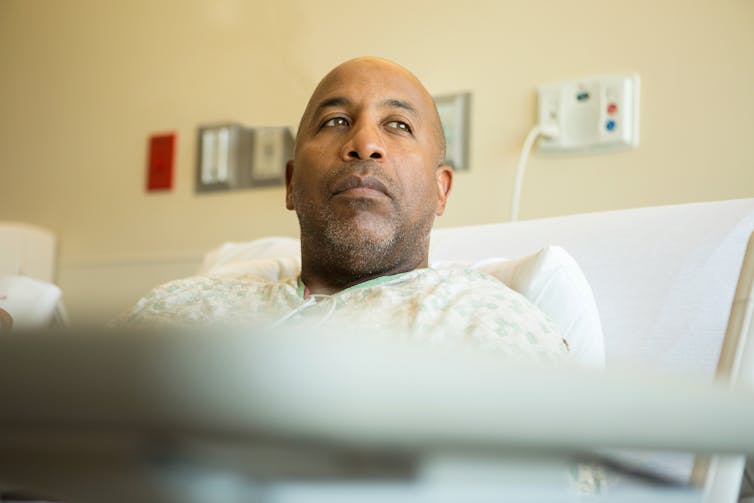
Māori have demonstrably poorer health outcomes than other New Zealanders and this disparity has persisted for decades.
A recently released and long-awaited major review of New Zealand’s health and disability sector points to systemic racism, lack of responsiveness to Māori needs and insufficient integration between services as reasons for unequal health outcomes.
It recommends a new Māori health agency to tackle ethnic inequalities and argues that without a fundamental culture change and deliberate steps to address racism, healthcare would not be in a good state for future generations.
But the review panel was split on whether the new Māori agency should provide advice only or be directly involved in decisions about resource allocation.
This is an uncomfortable exercise, and we should not underestimate the system’s tendency towards the status quo. If the government is serious about reducing inequity in health, it would do well to heed advice that Māori have to be involved at all levels of decision making.
The proposal for a Māori health agency addresses a fundamental and unresolved question about meaningful co-governance between Māori and the Crown.
An earlier major shake-up of the health system in the early 2000s tried to address inequality in health outcomes between Māori and non-Māori, but the gap remains stark. Māori fare worse than the general population on most health and social indicators, which shows they struggle to access healthcare — and even if they do, the health system can be unresponsive to their needs.
This latest review includes some features that could make inroads by building levers for change into the system: a charter, better planning and adjustments to funding. These features also address financial and health service sustainability and stewardship of the whole system.
The review proposes a charter with a set of shared values, including upholding equity, a focus on well-being, a commitment to the Treaty of Waitangi and an a collaborative approach. Every organisation and person in the health system would have to subscribe to this and the system would hold itself to account against these values.
The charter would make sure everyone is pulling in the same direction as the system transforms itself. A focus on equity would facilitate culture change and help build capacity – both among Māori themselves and of the system to become more responsive to Māori needs.
The review also recognises that longer planning timeframes are necessary, beyond an election cycle, to show health improvements and embed culture and system change.
It recommends an adjustment of the current population-based funding formula to provide funding to district health boards according to the socio-economic and ethnic profile of the geographic area they serve.
The last reforms of the early 2000s have taught us that unless Māori have a voice, their input will be limited and marginal, and once again, Māori health won’t improve.
There are several Māori health providers contracted to district health boards throughout the country, but the funding for these services is small compared with the overall health spend. These services also tend to be overburdened with compliance and fragmented.
Such services cannot meet the needs of all Māori, and “mainstream” services must improve. For real change, Māori cannot simply advise but need to have meaningful governance or co-governance, across all processes of designing, planning, purchasing and monitoring services.
This is where the adage “whoever has the gold makes the rules” rings true. The health system review made two sets of recommendations. Some of the review panel members recommended the proposed Māori health agency should note Māori views, but with few practical levers to transform them into action.
Dissenting panel members and experts from a Māori advisory group have written their own alternative plan. They argue that without requiring active Māori involvement at all levels of commissioning health services and using every system lever available to improve Māori health, we will simply end up repeating the mistakes of the past.
This reform is about fundamentals. The proposed charter, the focus on culture change and clear values are not simply warm fuzzies. They are vital.
Equity can only be achieved through accessible services, and only if the entire system is behind this. The fact the review panel was split in its recommendations but chose to include both views shows the importance of power sharing.
But their unanimous vote was not to introduce a new weapon in the fight against covid-19; it was to condemn Cook Islands News for its reporting on MPs’ travel allowances.
They went further and asked Speaker Niki Rattle to require that Cook Islands News journalist Rashneel Kumar withdraw from reporting Parliament for an (as yet undecided) period.
READ MORE:
The ban move … Prime Minister Henry Puna said the allowances article “reflected badly on all MPs”. Image: Cook Islands News screenshot/PMC
To be clear: Cook Islands News stands by its reporting of Parliamentary questions about MPs’ entitlement to their spousal travel allowances. Our report was fair, and it was accurate – one need only check back on the recordings of Parliament to recognise that.
Sometimes we will make mistakes, we are human, and if we do we’ll correct them as our Code of Ethics requires.
We believe this report was accurate.
Yet the front page report of MPs spending Question Time pushing for their allowances to be paid out was also embarrassing for MPs, it seems, and that is why they have come down so hard on the newspaper.
The public can decide for themselves whether the time Parliamentarians have spent defending their allowances is a good use of the House’s scant sitting hours, at a time of national crisis.
What is certain is that the motion to stop our most experienced political journalist reporting on Parliament is an assault on a fundamental democratic right, the freedom of the media – the same right that Prime Minister Henry Puna had paid lip service to just hours earlier.
Cook Islands News editorial republished with the permission of the editor.
The Cook Islands News MP allowances article that caused a stir. Image: Cook Islands News screenshot/PMC
The Australian government recently announced plans to establish the country’s first taskforce devoted to fighting disinformation campaigns, under the Department of Foreign Affairs and Trade (DFAT).
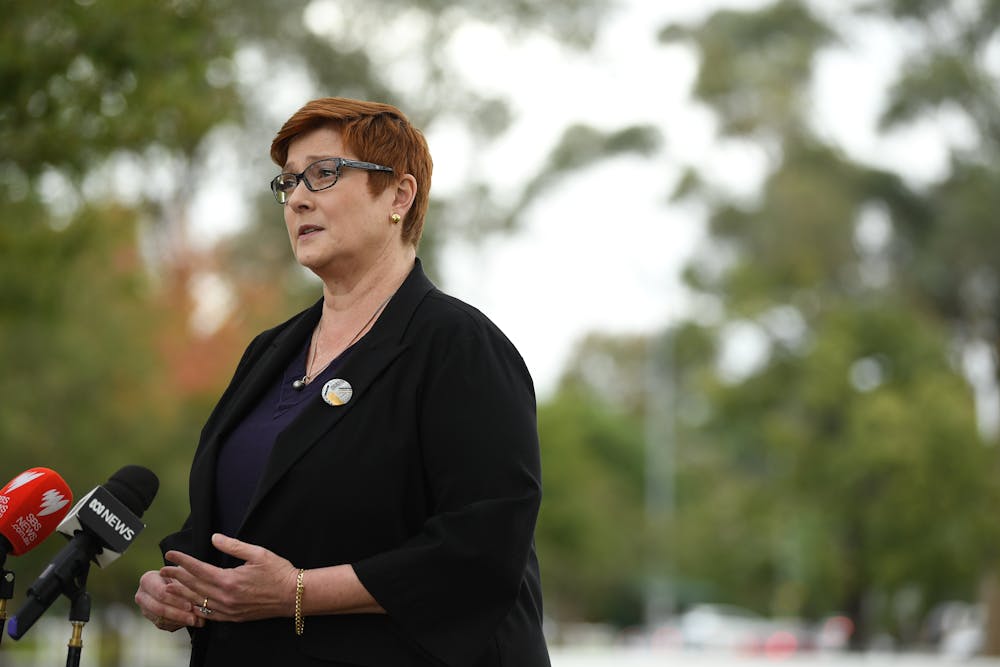
Last week, Foreign Minister Marise Payne accused China and Russia of “using the pandemic to undermine liberal democracy” by spreading disinformation to manipulate social media debate.
“Where we see disinformation, whether it’s here, whether it’s in the Pacific, whether it’s in Southeast Asia, where it affects our region’s interests and our values, then we will be shining a light on it,” Payne said.
In her speech to Canberra’s National Security College, she claimed Australia is going through an “infodemic”. But is it really? And if so, what can be done about it?
170,000 accounts removed, but how many missed?
Disinformation campaigns are coordinated attempts to spread false narratives, fake news and conspiracy theories. They’re characterised by repetitive narratives seemingly emanating from a variety of sources. These narratives are made even more believable when republished by trusted friends, family, community figures or political leaders.
Disinformation campaigns exist along a continuum of different cyber warfare techniques, including the massive state-sponsored cyberattacks targeting Australian government institutions and businesses. These sustained attacks reported on Friday were also purportedly emanating from China.
Social media networks such as Twitter and Facebook provide a perfect forum for disinformation campaigns. They’re easily accessible to foreign actors, who can create fake accounts to spread false but seemingly credible stories.
Earlier this month, Twitter removed more than 170,000 accounts connected to state-run propaganda operations based in China, Russia and Turkey. Of these, about 150,000 were reportedly “amplifier” accounts boosting content.
According to a report published this month by the Australian Strategic Policy Institute (ASPI), a “persistent, large-scale influence campaign linked to Chinese state actors” has been targeting Chinese-speaking people outside China.
The campaign is allegedly aimed at swaying online debate surrounding the COVID-19 pandemic and the Hong Kong protests, among other key issues.
Twitter is banned in China, so there would be minimal opportunity for the Chinese government to develop and embed troll accounts into local Twitter networks. Instead, China has likely hacked, stolen or purchased legitimate accounts.
Twitter hasn’t revealed exactly how it detected the state-sponsored accounts, presumably because this would give other states a “how-to” guide on circumventing the platform’s security barriers.
But according to a New York Times report, one giveaway is when a user logs into many different accounts from the same web address. Twitter has also suggested unblocked accounts posting from China may be acting maliciously with government approval.
Earlier in June, Foreign Minister Marise Payne accused China of spreading disinformation during the coronavirus pandemic. She said Australia would push for the World Health Organisation to better protect the country’s national interests.JOEL CARRETT/AAP
Information warfare is a growing threat
Australia’s Department of Home Affairs has warned there’s a “realistic prospect” foreign actors could meddle in Australian politics, including in the next federal election – unless steps are taken to prevent this.
The government has warned of this as a future threat. But based on the available evidence, we contend disinformation is already being used to manipulate public debate in Australia.
A University of Oxford report published last year suggested organised social media manipulation campaigns have occurred in 70 countries, including Australia.
Earlier this week, analysts at ASPI reiterated how Islamophobic and nationalist content was intentionally spread online during last year’s election campaign.
Perhaps the most infamous example of a large-scale disinformation campaign came from Russia in 2016, when a coordinated campaign was deployed to meddle with the US presidential election. Like Russia, China now appears to be investing substantial resources into disinformation campaigns.
Australia should expect to see further complex attacks conducted by both foreign and internal agents. These may be foreign state-sponsored campaigns, or dirty tactics used on the electoral campaign trail.
During last summer’s horrific bushfires, a large number of Twitter bot accounts were found posting #ArsonAttack, to perpetuate the idea the fires were largely attributable to arson, rather than climate change. The false claims were taken up by News Corp publications, which then influenced debate surrounding the crisis.
Such claims sow confusion among the public. They increase political polarisation, and erode trust in media and political institutions.
The best defence is a collective one
While we can hope Twitter builds on efforts to detect malicious accounts that spread lies, we can’t assume state-sponsored actors will sit back and do nothing in response. Governments have invested too much into such attacks, and campaigns have proven successful.
The most readily available means of defence, as per most contemporary cybercrime, is user education. Social media users of all political persuasions should be aware what they’re seeing online may not be accurate, and should be viewed with a critical eye.
Some of us are better at differentiating between what is real and fake online, and can help filter out content that’s untrustworthy, unverified or plain wrong. Simple ways to do this include stating the facts (without specifically focusing on the myths), and offering explanations that coincide with the other’s preexisting beliefs.
It’s also important to remember how little actions such as “liking” and “retweeting” content can further spread disinformation, regardless of intent.
Also, while the above steps help they’re unlikely to completely insulate Australia from the potentially disastrous effects of future disinformation campaigns. We’ll need new solutions from both government and private industry.
Ideally, we’d like to see government regulation around disinformation. And although this hasn’t happened yet, the announcement of a government-run disinformation taskforce is at least one step in the right direction.
PNG Defence Force soldiers are undergoing mass testing for covid-19 while there is controlled access into Murray Barracks to reduce further possible spread of the coronavirus, reports the PNG Post-Courier.
Defence Minister Saki Soloma in response to a confirmed case of covid-19 at Murray Barracks said yesterday the case had been identified as an officer serving with the Australian Defence Force working with the Defence Cooperation Programme team.
“I wish this officer a speedy recovery. He has been in isolation for nearly three weeks and is showing strong signs of improvement.”
Soloma said the PNGDF had put in place measures to reduce the possible further spread of the virus, the Post-Courier reported.
“Firstly, there is now controlled access to Murray Barracks with only authorised personnel and their families permitted to enter.
“This will be extended to other PNGDF bases in Port Moresby and similar restrictions will be put place at other bases in PNG.
“There has also been a rigorous contact tracing program put in place to ensure we know where the patient may have contracted the virus and who he had been in contact with before going into isolation,” he said.
Mass testing programme “The PNGDF was also undertaking a mass testing programme, led by the chief of the Defence Force, the Secretary of Defence and their senior staff.
“And adjusting their work patterns for the next two weeks to reduce the potential for further cases to occur.”
Soloma said he was proud of what the servicemen and women had done, and continued to do, in support of the national covid-19 response programme.”
“I again thank the PNGDF and our Australian Defence Force partners for their hard work – Kumul Karim,” Soloma said.
SBS News reports that an Australian Defence Force officer has tested positive to coronavirus while posted in Papua New Guinea.
The officer, who has been in PNG since January, self-isolated on June 5 after reporting cold and flu-like symptoms.
The officer will stay in isolation until cleared by doctors, the Department of Defence said.
“The High Commission has conducted contact tracing and provided this information to the PNG government,” Defence said in a statement.
Another five Australian Defence Force officers were last month flown home after contracting coronavirus in the Middle East.
The Australian government recently announced plans to establish the country’s first taskforce devoted to fighting disinformation campaigns, under the Department of Foreign Affairs and Trade (DFAT).
Last week, Foreign Minister Marise Payne accused China and Russia of “using the pandemic to undermine liberal democracy” by spreading disinformation to manipulate social media debate.
“Where we see disinformation, whether it’s here, whether it’s in the Pacific, whether it’s in Southeast Asia, where it affects our region’s interests and our values, then we will be shining a light on it,” Payne said.
In her speech to Canberra’s National Security College, she claimed Australia is going through an “infodemic”. But is it really? And if so, what can be done about it?
170,000 accounts removed, but how many missed?
Disinformation campaigns are coordinated attempts to spread false narratives, fake news and conspiracy theories. They’re characterised by repetitive narratives seemingly emanating from a variety of sources. These narratives are made even more believable when republished by trusted friends, family, community figures or political leaders.
Disinformation campaigns exist along a continuum of different cyber warfare techniques, including the massive state-sponsored cyberattacks targeting Australian government institutions and businesses. These sustained attacks reported on Friday were also purportedly emanating from China.
Social media networks such as Twitter and Facebook provide a perfect forum for disinformation campaigns. They’re easily accessible to foreign actors, who can create fake accounts to spread false but seemingly credible stories.
Earlier this month, Twitter removed more than 170,000 accounts connected to state-run propaganda operations based in China, Russia and Turkey. Of these, about 150,000 were reportedly “amplifier” accounts boosting content.
According to a report published this month by the Australian Strategic Policy Institute (ASPI), a “persistent, large-scale influence campaign linked to Chinese state actors” has been targeting Chinese-speaking people outside China.
The campaign is allegedly aimed at swaying online debate surrounding the COVID-19 pandemic and the Hong Kong protests, among other key issues.
Twitter is banned in China, so there would be minimal opportunity for the Chinese government to develop and embed troll accounts into local Twitter networks. Instead, China has likely hacked, stolen or purchased legitimate accounts.
Twitter hasn’t revealed exactly how it detected the state-sponsored accounts, presumably because this would give other states a “how-to” guide on circumventing the platform’s security barriers.
But according to a New York Times report, one giveaway is when a user logs into many different accounts from the same web address. Twitter has also suggested unblocked accounts posting from China may be acting maliciously with government approval.
Earlier in June, Foreign Minister Marise Payne accused China of spreading disinformation during the coronavirus pandemic. She said Australia would push for the World Health Organisation to better protect the country’s national interests.JOEL CARRETT/AAP
Information warfare is a growing threat
Australia’s Department of Home Affairs has warned there’s a “realistic prospect” foreign actors could meddle in Australian politics, including in the next federal election – unless steps are taken to prevent this.
The government has warned of this as a future threat. But based on the available evidence, we contend disinformation is already being used to manipulate public debate in Australia.
A University of Oxford report published last year suggested organised social media manipulation campaigns have occurred in 70 countries, including Australia.
Earlier this week, analysts at ASPI reiterated how Islamophobic and nationalist content was intentionally spread online during last year’s election campaign.
Perhaps the most infamous example of a large-scale disinformation campaign came from Russia in 2016, when a coordinated campaign was deployed to meddle with the US presidential election. Like Russia, China now appears to be investing substantial resources into disinformation campaigns.
Australia should expect to see further complex attacks conducted by both foreign and internal agents. These may be foreign state-sponsored campaigns, or dirty tactics used on the electoral campaign trail.
During last summer’s horrific bushfires, a large number of Twitter bot accounts were found posting #ArsonAttack, to perpetuate the idea the fires were largely attributable to arson, rather than climate change. The false claims were taken up by News Corp publications, which then influenced debate surrounding the crisis.
Such claims sow confusion among the public. They increase political polarisation, and erode trust in media and political institutions.
The best defence is a collective one
While we can hope Twitter builds on efforts to detect malicious accounts that spread lies, we can’t assume state-sponsored actors will sit back and do nothing in response. Governments have invested too much into such attacks, and campaigns have proven successful.
The most readily available means of defence, as per most contemporary cybercrime, is user education. Social media users of all political persuasions should be aware what they’re seeing online may not be accurate, and should be viewed with a critical eye.
Some of us are better at differentiating between what is real and fake online, and can help filter out content that’s untrustworthy, unverified or plain wrong. Simple ways to do this include stating the facts (without specifically focusing on the myths), and offering explanations that coincide with the other’s preexisting beliefs.
It’s also important to remember how little actions such as “liking” and “retweeting” content can further spread disinformation, regardless of intent.
Also, while the above steps help they’re unlikely to completely insulate Australia from the potentially disastrous effects of future disinformation campaigns. We’ll need new solutions from both government and private industry.
Ideally, we’d like to see government regulation around disinformation. And although this hasn’t happened yet, the announcement of a government-run disinformation taskforce is at least one step in the right direction.
As a female legal academic, former practising lawyer, and judge’s associate, I hope the explosive allegations raised by the inquiry into former High Court judge Dyson Heydon will create the Australian legal profession’s #metoo moment. It is my professional culture. I have lived it and observed it. We need a moment to expose, examine and fundamentally change a culture that tolerates sexual predation.
In addition, as a legal academic who has studied the systems for complaints against judges for almost a decade, I also hope that these allegations provide a long-awaited catalyst for fixing the larger accountability vacuum that still yawns over the Australian federal judiciary.
It is a vacuum that has allowed sexist, racist and other troubling conduct to go largely unaddressed.
The complaints against Dyson Heydon and the High Court’s response
Dyson Heydon.AAP/Joel Carrett
As Chief Justice of the High Court Susan Kiefel explained in her statement, the complaints against Heydon by his former associates were investigated by an administrative inquiry that had to be specially set up for the task. The inquiry’s six recommendations, all of which the High Court has indicated it will adopt, were tailored to redress the particular position of power held by a judge over an associate.
These changes are needed. The judge-associate relationship is one in which there is a particularly strong power imbalance, held as it is between a senior legal practitioner and someone just entering the profession.
It is both professional and deeply personal. In addition to being their associate’s boss and often their mentor, judges will spend long hours alone with their associate. They often dine and travel together, and there are expectations for the associate to attend social functions with the judge.
The status of judges
However, the further investigations by journalists Kate McClymont and Jacqueline Maley into Heydon’s conduct towards members of the legal profession and the judiciary demonstrate the unique and privileged position of judges extends beyond the judge-associate relationship. It cuts through an entire profession that is based on relationships and hierarchy.
Through his lawyers, Heydon told the SMH he emphatically denies the allegations.
Judges occupy an extraordinary, status-based position within the legal profession. In all contexts – including private ones – deference is accorded to judges by lawyers who may have to appear before them. Deference is displayed to higher court judges from those in lower courts whose judgments might be overturned by them. It is displayed from legal academics, who hope their work might be influential to their legal thinking. And the whole legal profession feels the responsibility for maintaining the idea that judges are of the highest integrity, in order to justify the level of power they wield in public life.
Complaints against judges – the status quo
At the federal level in Australia, there is no independent regulatory mechanism to deal with complaints that are made against judges – be they related to sexual misconduct or other forms of misbehaviour.
That’s not to say there aren’t many ways in which the judiciary are accountable – including through the appeals process, the principle that judicial proceedings are conducted in public (although the extent to which this has been able to be maintained during the coronavirus crisis has highlighted weaknesses), and of course as individuals through the criminal justice system.
Under the current system, complaints against individual judges must be made either to the attorney-general or the head of jurisdiction (that is, the chief justice or judge) of the relevant court.
If a complaint is made, investigated and found to be substantiated, there is no penalty available short of removal of the judge. Rather, the chief justice might recommend the judge undertake counselling, or training, or reassign them from sitting on certain cases, or from sitting on any cases.
Unlike, for instance, the legal or medical professions, or the public service, these avenues for accountability are not designed to provide an independent, standing institutional response when an individual has a complaint about the conduct of a judge — be that on or off the bench.
Removal of judges
Removal of a judge can only occur if both houses of parliament agree to it. It is an all-or-nothing option subject to partisan influences, political opportunism and argy-bargy. There has never been a federal judge removed in Australia. The closest we got was the inquiries into the removal of Justice Lionel Murphy in response to allegations in the 1980s that he had attempted to pervert the course of justice.
It is an interesting thought experiment to contemplate whether, had Heydon been a sitting High Court judge, the allegations against him would have been enough to have him removed from the bench. Maybe.
But what about if there were a similar suite of allegations against a lower level judge? Would that have been sufficient? It would, I think, depend on the extent of media coverage, the people involved and the general political context at the time the allegations were made. And it shouldn’t.
Misconduct in the judiciary
This is not to say there are pandemic levels of misconduct within the judiciary. But there are sufficient levels to require an institutional response. The allegations against Heydon provide us with but one recent example. There are myriad others.
The allegations of incompetence, rudeness, and bias against federal circuit court judge, Sandy Street, and incompetence, rudeness and unfairness against Judge Salvatore Vasta, that emerged over the course of last year provide us with two others.
For months, there was no institutional response to the conduct of these two judges. This was despite a number of complaints, including from the Law Council of Australia. Finally, the chief judge of the Federal Circuit Court, Will Alstergen, indicated that the judges had agreed to undertake mentoring. He also defended the current Federal Circuit Court complaints procedures.
Also last year, a Northern Territory judge, Greg Borchers, was found to have made comments that contained negative racial stereotypes. It was conduct the then Law Council of Australia President Arthur Moses branded “disparaging, discriminatory and offensive, insulting and humiliating to Indigenous Australians based solely on their race”.
This notwithstanding, Chief Judge Elizabeth Morris said that in the absence of a complaints framework, she could impose no sanctions. In the fallout from this episode, the chief justice of the Northern Territory, Michael Grant, called for an overhaul of the regulatory framework.
Attempts at reforming the status quo
Some states and territories have implemented independent complaints mechanisms to deal with misbehaving judges.
New South Wales was the first to introduce a Judicial Commission in 1987. Under its model, after an investigation, complaints are still either referred to parliament to contemplate removal, or to the chief justice to deal with as an internal issue for the court, according to the traditional process.
South Australia, Victoria and the Australian Capital Territory have now all adopted their own versions of an independent commission or commissioner, and one is said to be introduced into the Northern Territory this year.
In 2012, efforts were made to formalise the mechanism for investigating complaints at the federal level. However, these fell far short of establishing an independent commission. Indeed, they merely formalised the status quo and the responsibility of the chief justice for receiving, investigating and resolving complaints.
Serious complaints are referred to the attorney-general and dealt with by the parliament if they consider the seriousness warrants it. There is a process in place to allow for a parliamentary committee to be established to investigate further if desired.
The High Court is currently exempt from any formal complaints mechanism.AAP/Lukas Coch
In any event, the High Court was exempt from the 2012 changes, on the basis that the High Court occupies a “special position”, and that – because the High Court sits at the apex of the judicial system – it may be called on to determine the constitutional validity of any oversight mechanism.
An institutional response
The allegations against Heydon demonstrate a pressing need for a deep cultural change within the Australian legal profession. But they also demonstrate the uniquely privileged status of judges, and the need for an independent, standing complaints mechanism for the federal judiciary. Any oversight mechanism must extend to the High Court, and should also cover the conduct of former judges, who continue to enjoy an elevated status within the legal profession.
A standing, independent complaints body with appropriate powers would ensure there is a place for complaints to be received, the capacity to investigate them properly, and an independent body to impose penalties should misconduct be found. This would address the poor public perception of the judiciary monitoring the judiciary, concerns that the responses of the head of jurisdiction are too soft, not to mention the challenges if the allegations are made against the chief justice himself or herself, which is not without precedent.
It would avoid the accusation, made on Heydon’s behalf by his lawyers, that the process undertaken in his case was “conducted by a public servant and not by a lawyer, judge or a tribunal member”, without “statutory powers of investigation and of administering affirmations or oaths”, and that it may have failed to accord procedural fairness.
Certainly, such a mechanism must preserve judicial independence and be designed with appropriate caution. It must respect the separation of powers between the judiciary, the government and the legislature.
Such a design is not impossible. There are blueprints across the world – in Canada, the United Kingdom and increasingly in the Australian states and territories.
In the face of the allegations and findings of misconduct that have arisen against federal court judges in the last two years alone, the absence of such a mechanism is indefensible.
In May 2020, with the world still in the grip of the coronavirus pandemic, Margaret MacMillan, an historian at the University of Toronto, wrote an essay in The Economist about the possibilities for life after the pandemic had passed.
On a scale of one to ten, where one was utter despair and ten was cautious hopefulness, it would have rated about six. Her thesis was that the future will be decided by a fundamental choice between reform and calamity.
She saw the world as being at a turning point in history. It had arrived there as a result of the conjunction of two forces: growing unrest at economic inequality, and the crisis induced by the pandemic.
It was at such times, she argued, that societies took stock and were open to change. Such a time, for example, was in the immediate aftermath of the second world war, which resulted in radical reforms to international political and economic frameworks.
She was writing against a backdrop of a larger crisis – the crisis in democracy. The most spectacular symptoms of this were the election of Donald Trump as president of the United States and the Brexit referendum. Both occurred in 2016, and both appealed to populism largely based on issues of race and immigration.
The election of Donal Trump as US president in 2016 was symptomatic of democracy’s crisis.AAP/Reuters/Jonathan Ernst
Then, somewhat surprisingly, in May 2020 a new spirit of what might be called “economic morality” announced itself.
This came from within the Republican Party of the United States. It happened while Trump, that most amoral of Republican presidents, was in office, and reasserted some of the fundamental values of conservatism.
American Compass’s mission, as stated on its website, was to:
…restore an economic consensus that emphasises the importance of family, community, and industry to the nation’s liberty and prosperity.
As the coronavirus pandemic wreaked havoc across the United States, Cass described the nation’s response as an indictment of what he called an “economic piety” – a form of ideological purity – that ignored many values that markets do not take into their calculations.
These included the well-being of workers, the security of supply chains, and the running down of America’s self-sufficiency, exemplified by a shortage of medical supplies.
His line of argument was supported by a senior Republican, Senator Marco Rubio, in an article for The New York Times. Rubio’s critique of the failure of American economic policy over two decades was crystallised in one sentence:
Why didn’t we have enough N95 masks or ventilators on hand for a pandemic? Because buffer stocks don’t maximize financial return, and there was no shareholder reward for protecting against risk.
Has the coronavirus changed the way democracies operate?AAP/Reuters/Jonathan Ernst
The fact that this significant shift in economic thinking and socio-political priorities was coming out of elements in the Republican Party in the lead-up to the presidential election is perhaps an indication that MacMillan’s thesis has some substance. Perhaps democracies are on the cusp of a change in direction.
How the pandemic contracted the media landscape further
Alongside these developments, the existential crisis facing news media was made worse by the coronavirus pandemic. As business activity was brought to a stop by the lockdown, the need for advertising was drastically reduced.
Coming on top of the haemorrhaging of advertising revenue to social media over the previous 15 years, this proved fatal to some newspapers.
In Australia, the impact of this was worst in regional and rural areas. News Corp announced in May that more than 100 of its regional newspapers would become digital-only or close entirely.
In April, Australia’s largest regional newspaper publisher, Australian Community Media (ACM), announced it was suspending the printing of newspapers at four of its printing sites, halting the production of most of its non-daily local newspapers. ACM has about 160 titles.
These developments represented a serious loss to local communities and added to the democratic deficit already apparent over more than a decade as advertising revenue flowed away from traditional media to the global social media platforms.
Defending against the digital onslaught
At a national level, the Australian government took up a recommendation by the Australian Competition and Consumer Commission to force the global platforms, particularly Facebook and Google, to pay for the news it took from Australian media.
The platforms mounted a fierce rearguard action against this proposal, which remains unresolved for now.
If a democratic revival is to occur, however, a strong media will be a necessary part of it. The necessity of a free press has been clear since the germination of modern democracy in the late 17th century, and in the late 18th century it was given powerful recognition in both legal and political terms.
Edmund Burke.National Galleries of Scotland
In 1791 it was articulated in the First Amendment to the US Bill of Rights. In 1795, Edmund Burke stood up in the British House of Commons and asserted that the press had become what he called “the fourth estate of the Realm”.
If the media are to play their part in any democratic revival, however, financial and material security will be only a part of what is required.
One factor that has contributed to the present crisis in democracy is polarisation, the opening up of deep divisions between the main political parties of mature democracies. This has been magnified by media partisanship.
There is a lot of research evidence for this. One of the most significant is a 2017 study that showed the link in the United States between people’s television viewing habits and their political affiliations.
A further factor in the crisis has been the emergence of the “fake news” phenomenon. In the resultant swirling mass of information, misinformation and disinformation that constitutes the digital communications universe, people have returned to traditional mass media in the hope that they can trust what they see and hear there.
The Edelman Trust Barometer, an annual global study of public attitudes of trust towards a variety of institutions, including the media, showed that since 2015, public trust in the traditional media as a source of news had increased, and their trust in social media as a source of news had decreased.
Populism and scapegoating
A third factor in the crisis, exacerbated by the first two, is the rise of populism. Its defining characteristics are distrust of elites, negative stereotyping, the creation of a hated “other”, and scapegoating. The hated “other” has usually been defined in terms of race, colour, ethnicity, nationality, religion or some combination of them.
Powerful elements of the news media, most notably Fox News in the United States, Sky News in Australia and the Murdoch tabloids in Britain, have exploited and promoted populist sentiment.
This sentiment is reckoned to have played a significant part in the election of Trump.
It follows that if these are contributing factors to the crisis in democracy, then the media has a part in any democratic revival.
To do so, it needs to take four major steps. One is to focus resources on what is called public interest journalism: the reporting of parliament, the executive government, courts, and powerful institutions in which the public places its trust, such as major corporations and political parties. This work needs to include a substantial investigative component.
A second is to recommit to the professional ethical requirements of accuracy, fairness, truth-telling, impartiality, and respect for persons.
The third is to take political partisanship out of news coverage. Media outlets are absolutely entitled to be partisan in their opinions, but when it taints the news coverage, the public trust is betrayed.
The fourth is to recalibrate the relationship between professional mass media and social media.
That recalibration involves taking a far more critical approach to social media content than has commonly been the case until now.
While it is true the early practices of simply regurgitating stuff from social media have largely been abandoned, social media still exerts a disproportionate influence on news values. Just because something goes viral on social media doesn’t make it news unless it concerns a matter of substance.
Social media still exerts too much influence on news values.Shutterstock
Social media is where fake news flourishes, so the filter applied by professional mass media to what appears there needs to be strong and close-meshed.
That is the negative side of the recalibration.
The positive side is to further develop the extraordinary symbiosis that has been shown to exist between social and professional mass media.
It was most spectacularly demonstrated by the Black Lives Matter protests that followed the death of George Floyd in Minneapolis.
Social media allowed millions of people all over the world to be eyewitnesses to this gross act of police brutality.
Professional mass media, by applying its standards of verification and corroboration then disseminating the footage on its mass platforms, ensured the killing became known to the community at large, well beyond the confines of echo chambers and filter bubbles.
It also added that element of long-established public trust that respected news brands have to offer.
The world saw how powerful that combination was. A single act of police violence with racist overtones in a relatively obscure American city set off protests not just in the United States but in many countries with a history of police brutality against people of colour: Canada, Britain, Belgium, France, Australia, the Dominican Republic.
Thanks to the power of the media, the killing of George Floyd triggered protests around the world.AAP/Sipa USA/Sopa Images
And then the same combination exerted a high level of accountability on the police for their further acts of violence against the protesters, which spilled over into police violence against the media covering those protests.
These events show the importance of the community having a common bedrock of reliable information on which to base a common conversation and a common response to an issue of common concern. It is the opposite of the fragmentation that is created by online echo chambers.
If Margaret MacMillan is right, and the world really is at a point where significant economic, political and social change is possible, let’s hope the media might be brave and honest enough to reflect on the contribution they have made to the creation of democracy’s crisis, and be prepared to change in order to help rebuild public trust in democratic institutions.
The Lowy Institute’s 2020 “Understanding Australian Attitudes to the World” poll has found “unprecedented shifts” in Australian public opinion, with more people feeling unsafe in the world, optimism about the economy at an historic low, and a precipitate decline in trust in China.
The poll also shows that despite an expectation the bushfires would elevate the climate issue, concern about it has been partially eclipsed by the pandemic and its economic fallout.
The survey was conducted March 16-29 of 2448 people, as the pandemic was hitting Australia (various shutdown measures were imposed midway through the poll period). Lowy earlier released its supplementary COVID poll done in April.
“The global COVID-19 pandemic appears to have taken a heavy toll on Australians’ sense of security,” according to the poll report, authored by Natasha Kassam.
When asked “about world events, how safe do you feel?, only 50% of Australians say they feel safe. This was a record low for the poll, 28 points down on 2018. In contrast, during the global financial crisis, 92% felt safe.
As the world headed to economic crisis, Australians were asked “how optimistic are you about Australia’s economic performance in the world over the next five years?”
“Optimism about the economy has fallen to record lows, although a slight majority (52%) remain optimistic,” the report says, with 48% pessimistic. This is the lowest level the poll has recorded – a 13-point fall from 2019, and 34 points lower than the high point in 2009 and 2010 (86%).
The poll – taken before the latest deterioration in China-Australia relations after the Morrison government called for an inquiry into the origins of COVID – confirms the continuing souring in attitudes.
More than nine in ten favour the government working to find other markets to reduce Australia’s economic dependence on China.
“Trust in China is at its lowest point in the [16 year] history of the poll, with 23% saying they trust China a great deal or somewhat ‘to act responsibly in the world’.
“Only 22% of Australians have some or a lot of confidence in China’s President Xi Jinping to do the right thing in world affairs.
“And feelings towards China on a scale of 0° to 100° have fallen sharply in 2020, to 39°. This represents a drop of 10 degrees in a single year, and the lowest score that China has received in the history of the poll,” the report says.
“More Australians (55%) see China as ‘more of an economic partner’ than the 41% that see China as ‘more of a security threat’ to Australia.” But, “Far fewer Australians see China as an economic partner in 2020, in a 27-point fall from 82% to 55% since 2018.
“In 2018, Australians were asked to weigh up their perception of China as an economic partner versus a military threat, and the balance of opinion tipped far more heavily towards China being an economic partner (82%) rather than a military threat (12%).”
Australians remain unimpressed with President Trump, a feature of previous Lowy polling. Only 30% have confidence in Trump “to do the right thing regarding world affairs”. Nevertheless, this was a five point rise since last year.
People remain committed to the importance of the alliance with the US – 78% said it was very or fairly important to Australia’s security, which was six points higher than last year.
Climate change concern remains high – 59% see it as a critical threat to Australia’s interests.
“However, some concern about climate change may have been overshadowed by the COVID-19 pandemic and resulting economic uncertainty,” the report says.
“In 2020, 56% of Australians say ‘global warming is a serious and pressing problem. We should begin taking steps now even if this involves significant costs.’ This is five points lower than in 2019, and 12 points below the peak of concern in 2006 when 68% expressed this view. The level of concern remains 20 points higher than the low point of 36% in 2012,” the report says.
On the issue of international students, which has been highlighted by the pandemic, 52% say the number is about right , while 43% say it is too high. Just 3% think it is too low.
Anthony Albanese has proposed negotiations for a bipartisan agreement on an energy policy framework to create greater certainty for investment.
In a letter to Scott Morrison Albanese says the government’s recent draft technology roadmap “presents a technology transition story that is largely consistent with past Labor policy and expert advice”.
It sees renewable energy at the centre of Australia’s energy and industrial future, which fits Labor’s view, and so “it represents an opportunity” for bipartisanship, the Labor leader writes.
“We have an opportunity to move beyond past partisan approaches to energy policy, to draw on the community’s clear desire for more bipartisan approaches to difficult policy areas, and to finally deliver an enduring, effective and bipartisan energy policy for Australia.”
Albanese says if Morrison agreed to negotiations Labor would not seek a specific model for a bipartisan investment framework. Rather it would seek a framework “scalable” to different emission reduction targets by future governments.
“As you know, the agencies and industry have argued that investor confidence requires enduring bipartisan agreement around investment rules, rather than specific targets,” Albanese says in the letter, released ahead of his latest “vision statement”, this one on science, to be delivered at the National Press Club on Wednesday.
Albanese writes that Labor would support the development and use of Carbon Capture and Storage (CCS) methodologies for the creation of Australian carbon credit units to be available for Emission Reduction Fund auctions and the offset market. Although the letter does not spell it out, this would cover clean coal technology.
While Labor remains opposed to the fund, as an inappropriate use of taxpayer money, a Labor government would respect all contracts made under it, including any future CCS-related contracts, he says.
Labor would support the government if it set up new funding mechanisms to develop CCS technology, but would remain opposed to the re-direction of Australian Renewable Energy Agency (ARENA) and Clean Energy Finance Corporation support away from renewables towards CCS.
Albanese also reaffirms Labor opposition to a domestic nuclear power industry.
Albanese says that for any negotiations to have a credible chance of success the government would need to agree to re-fund ARENA so it could in particular help deliver the “technology roadmap”.
Also there would need to be acceptance that agreement on targets was not necessary for an enduring energy policy, but “scalability” was required in the framework.
“As we address the greatest health and economic crisis we have seen for generations, it is only by working together that we can deliver the leadership Australian business and families are rightly crying out for,” Albanese writes.
Around the world, the COVID-19 pandemic is accelerating. While some countries such as Australia and New Zealand have managed to flatten the curve, in many other parts of the world the number of cases has continued to reach new highs.
On Sunday, the World Health Organization (WHO) recorded 183,000 new cases — the single largest number of new cases reported in one day. Over the past week, there have been more than 150,000 new cases per day on three separate days.
The numbers of new infections are now growing at such a rate that while it took some three months to reach the first 1 million cases, the last million cases was reached in just eight days. The total number of COVID-19 infections now exceeds 9 million worldwide.
Even more tragically, the deaths from COVID-19 are also growing. The United States has recorded more than 120,000 fatalities, while Brazil has exceeded 51,000 deaths related to COVID-19. The situation has become so dire that Latin America’s largest country is reporting an average of 1,000 deaths every day.
The world is divided
WHO Director-General Tedros Adhanom Ghebreyesus has warned that the world is dangerously divided. He has cautioned against the ongoing politicisation of the pandemic and called for solidarity and leadership, noting that countries should not have to choose “between lives and livelihoods. Countries can do both”.
These warnings are likely to go unheeded, if recent developments are anything to go by. Brazil’s President Jair Bolsonaro, who has railed against “job-killing” social distancing measures, appears unrepentant for firing his health minister even as he confronts escalating numbers of infections and an economic downturn in which Brazil’s economy is expected to shrink by 6.2%.
In the United States, President Donald Trump reportedly joked his country should slow down testing because public health authorities were identifying too many COVID-19 cases. Trump made his remarks even as news emerged that more than two dozen public health officials across the US have been either fired, resigned or retired due to threats of physical violence, intimidation or persecution.
Gravediggers are exhuming old graves in Brazil to open new spaces. Brazil is currently second in the world for cases and deaths, and many consider it the new global epicentre.Sebastiao Moreira/EPA
The threat is far from over
In many parts of the world, the pandemic is only starting to make its presence felt. Indonesia has seen an alarming increase in the number of new COVID-19 cases, with more than 1,000 new cases per day on eight of the past ten days, despite very low rates of testing.
Likewise, India, which yesterday morning recorded 14,000 new cases for the previous 24 hours, has now risen to become the fourth worst-affected country in the world. Officially, India has documented just over 440,000 cases and 14,000 deaths, but these numbers are generally believed to be significantly under-reported.
More disturbingly, even those countries that showed initial signs of recovery are continuing to struggle with the virus. South Korea, which has been regarded for months as a poster child of an efficient COVID-19 response, has now entered a “second wave”, according to the Korea Centers for Disease Control and Prevention (KCDC). The CDC said the new cases were driven by the May holiday period, when coronavirus guidelines were relaxed, and particularly by young people via nightclubs and bars.
Data visualisation: Kaho Cheung https://observablehq.com/@unkleho/covid-19-bubble-chart-with-d3-render. Data source: Our World in Data https://ourworldindata.org. New deaths, cases and tests refers to new daily confirmed deaths, cases and tests. Countries with a population under 1 million not shown.
There is still hope
Despite the dire global situation, there are a handful of places that have demonstrated it’s possible to suppress the virus’ transmission (at least for now). New Zealand recorded just two new cases on Monday, despite dropping almost all its coronavirus restrictions after reaching zero active cases two weeks ago. All nine of its active cases are returned travellers in hotel quarantine.
And outside of ongoing community transmission in parts of Melbourne, Australia overall has continued to record very few new cases despite restrictions easing across most of the country. Tasmania, the Northern Territory, South Australia and the Australian Capital Territory all have zero active cases.
What remains abundantly clear is that testing, contact tracing, isolation and quarantine, and community engagement are essential to halting the spread of COVID-19 across the world. Importantly, though, all of these measures depend on leadership and a shared sense of vulnerability. We need to marshal that, putting aside our differences and coming together to defeat a common foe. And we need to do it now.
Source: The Conversation (Au and NZ) – By Kim Borg, Research Fellow at BehaviourWorks Australia, Monash Sustainable Development Institute, Monash University
As COVID-19 restrictions start to ease, we’re unlikely to return to our previous behaviours, from our work-life balance to maintaining good hygiene.
But there are downsides to this new normal, particularly when it comes to hygiene concerns, which have led to an increase in an environmental scourge we were finally starting to get on top of: single-use plastics.
We’ve recently published research based on data collected in mid-2019 (before COVID-19). Our findings showed that not only were people avoiding single-use plastics most of the time, but one of the biggest motivators was knowing others were avoiding them too. Avoidance was becoming normal.
But then COVID-19 changed the game. Since the pandemic started, there has been a significant increase in plastic waste, such as medical waste from protective equipment such as masks, gloves and gowns, and increased purchases of sanitary products such as disposable wipes and liquid soap.
The good news is we can return to our plastic-avoiding habits. It just might look a little a different.
As we needed to protect ourselves with masks, we added to the waste crisis.Shutterstock
Avoidance was more normal than we realised
In our representative survey of 1,001 Victorians, we asked people about their behaviours and beliefs around four single-use plastic items: bags, straws, coffee cups and take-away containers.
We found people’s beliefs about how often others were avoiding these items was one of the strongest predictors of their own intentions.
Other influences that predicted intentions included personal confidence, the perceived self and environmental benefits and financial costs associated with avoidance, and whether others would approve or disapprove of the behaviour.
While beliefs about other peoples’ behaviour was one of the strongest predictors of intentions, there was still a gap between these beliefs and reported behaviour.
On average, 70% of our sample reported avoiding single-use plastics most of the time. But only 30% believed others were avoiding them as often.
Thankfully, our findings suggest we can encourage more people to avoid single-use plastics more often by sharing the news that most people are doing it already. The bad news is that COVID-19 has increased our reliance on single-use items.
Some single-use is necessary during a pandemic
Just when avoidance was becoming normal, the pandemic brought single-use plastics back into favour.
So even if consumers want to avoid single-use plastics, it’s not as easy as it used to be.
Avoiding plastic can still be part of the new normal
It is still possible to avoid unnecessary single-use plastic right now. We just need to get creative and focus on items within our control.
We can still pack shopping in reusable bags, make a coffee at home in a reusable cup, carry reusable straws when we go out – just make sure to wash reusables between each use.
Many Victorians can even order delivery take-away food in reusable containers, thanks to the partnership between Deliveroo and Returnr, the reusable packaging scheme. Boomerang Alliance also produced guidelines for sustainable take-away options, including practical tips for contactless transfer of food.
Our research focused on public single-use plastic avoidance behaviours, but now is a good time to look at private ones too.
There are plenty of single-use plastics in the home: cling wrap, coffee pods, shampoo and conditioner bottles, disposable razors and liquid soap dispensers to name a few.
Using reusable wraps for your food is a much better alternative than single-use cling wrap.Shutterstock
But you can find reusable alternatives for almost everything: beeswax or silicone wraps, reusable coffee pods, shampoo and conditioner bars, reusable safety razors and bars of soap, rather than liquid soap.
Buying cleaning products in bulk can also reduce plastic packaging and keeping glass jars or hard plastic containers are great for storing leftovers.
Just because we’re in a period of change, doesn’t mean we have to lose momentum. Single-use plastics are a huge environmental problem that we can continue to address by changing our behaviours.
Many are calling on governments, businesses and individuals to use the pandemic as an opportunity to look at how we used to do things and ask – is there a better way?
When it comes to single use plastics during COVID-19, we can’t control everything. But our actions can help shape what the new normal looks like.
Climate Explained is a collaboration between The Conversation, Stuff and the New Zealand Science Media Centre to answer your questions about climate change.
If you have a question you’d like an expert to answer, please send it to climate.change@stuff.co.nz
This week, Climate Explained answers two similar questions.
If humans had not contributed to greenhouses gases in any way at all, what would the global temperature be today, compared to the 1800s before industrialisation?
and
My question is what happens when all the greenhouse gases are eliminated? What keeps the planet from cooling past a point that is good?
Earth’s atmosphere is a remarkably thin layer of gases that sustain life.
The diameter of Earth is 12,742km and the atmosphere is about 100km thick. If you took a model globe and wrapped it up, a single sheet of tissue paper would represent the thickness of the atmosphere.
The gases that make up Earth’s atmosphere are mostly nitrogen and oxygen, and small quantities of trace gases such as argon, neon, helium, the protective ozone layer and various greenhouse gases – so named because they trap heat emitted by Earth.
The most abundant greenhouse gas in Earth’s atmosphere is water vapour – and it is this gas that provides the natural greenhouse effect. Without this and the naturally occurring quantities of other greenhouse gases, Earth would be about 33℃ colder and uninhabitable to life as we know it.
Changing Earth’s atmosphere
Since pre-industrial times, human activities have led to the accumulation of greenhouse gases such as carbon dioxide, methane and nitrous oxide in the atmosphere. The concentration of atmospheric carbon dioxide has risen from about 280 parts per million (ppm) before the first industrial revolution some 250 years ago, to a new high since records began of just over 417ppm. As a result of continued increases, the global average temperature has climbed by just over 1℃ since pre-industrial times.
While these long-lived greenhouse gases have raised Earth’s average surface temperature, human activities have altered atmospheric composition in other ways as well. Particulate matter in the atmosphere, such as soot and dust, can cause health problems and degrades air quality in many industrialised and urban regions.
If people had not altered the composition of the atmosphere at all through emitting greenhouse gases, particulate matter and ozone-destroying CFCs, we would expect the global average temperature today to be similar to the pre-industrial period – although some short-term variation associated with the Sun, volcanic eruptions and internal variability would still have occurred.
In a world that is about 1℃ warmer than during pre-industrial times, New Zealand is already facing the environmental and economic costs associated with climate change. The former head of the UN Framework Convention on Climate Change (UNFCCC), Christiana Figueres, argues that with trillions of dollars being spent around the world in economic stimulus packages following the COVID-19 pandemic, we need strong commitments to a low-carbon future if the world is to limit warming to 1.5℃ above pre-industrial levels.
What needs to happen
Greenhouse gases have long lifetimes – about a decade for methane and hundreds to thousands of years for carbon dioxide. We will need to reduce emissions aggressively over a sustained period, until their abundance in the atmosphere starts to decline.
When New Zealand entered the Level 4 coronavirus lockdown in March 2020, almost two weeks passed (the incubation period of the virus) before the number of new cases started to decline. Waiting for atmospheric carbon dioxide concentrations to decrease, even while we reduce emissions, will be similar, except we’ll be waiting for decades.
It is very unlikely that we could ever reduce greenhouse gas concentrations to the point that it becomes dangerous for life as we know it. Doing so would involve overcoming the natural greenhouse effect.
Recent research into greenhouse gas emission scenarios provides guidance on what will need to happen to stabilise Earth’s temperature at 1.5℃ above pre-industrial levels. A rapid transition away from fossil fuels toward low-carbon energy is imperative; some form of carbon dioxide capture to remove it from the atmosphere may also be necessary.
Short-term and scattered climate policy will not be sufficient to support the transitions we need, and achieving 1.5℃ will not be possible as long as global inequalities remain high.
Source: The Conversation (Au and NZ) – By Andrew Lorrey, Principal Scientist & Programme Leader of Climate Observations and Processes, National Institute of Water and Atmospheric Research
Brewster Glacier in New Zealand’s Southern Alps lost 13 million cubic metres of ice between March 2016 and March 2019 – almost the equivalent of the basic drinking water needs of all New Zealanders during that time.
Climate and glacier scientists monitor New Zealand’s ice and snow. Video produced by Rebekah Parsons-King and Stuart MacKay.
Simultaneously, seasonal extremes for Auckland – New Zealand’s largest city – swung from the wettest autumn on record to one of the most severe multi-season droughts.
Water is arguably the most precious resource in New Zealand. These contrasting extreme events in two very different regions highlight the critical importance of long-term observations as we confront water security challenges.
Exceptionally high autumn rainfall (more than 200% higher than normal for many sites) during 2017 saturated soils and produced numerous slips. Sediment hampered water treatment for regional reservoirs that provide about 75% of the city’s water supply.
Fast forward to 2019, when one of the most significant multi-season droughts since the early 20th century started unfolding. Four Auckland sites we monitor show it was the driest summer in recent memory. The drought has continued, and water restrictions are currently in place.
The stark contrast between extreme wet and dry conditions for the North Island (top) had significantly different impacts on Upper Mangatawhiri Reservoir (bottom). Both led to water conservation calls in Auckland.Climate data and visualisation: NIWA ; Google Earth maps, Author provided
Shrinking ice
The Southern Alps tell a different story arising from climate extremes, where recent changes have been rapid, widespread and exceptional. The National Institute of Water and Atmosphere end-of-summer snowline mission – which has run nearly unbroken since the 1970s – provides valuable “time capsules” of glaciers and snowlines through a changing climate.
The long-term permanent snowline – the boundary between exposed glacial ice and recent snow – must sit below the mountain top for a glacier to exist. The 2018 Tasman Sea marine heatwave drove snowlines off the top of many peaks. Then, 2019 produced a second marine heatwave around northern New Zealand. Some small glaciers sustained so much damage during these extreme years that they are now on a path to extinction.
As if this wasn’t enough, ash and dust from Australian bushfires blanketed Southern Alps glaciers during the 2020 summer and increased the potential for seasonal melt.
New photogrammetry techniques that produce digital elevation models with annual glacier photos help to define the impacts from extreme years like the last three. We are extending these techniques to our historic image archive to construct a 4D vision of ice volume, which brings us closer to quantifying water volume loss and gain for individual glaciers.
Rising temperatures, higher snowlines, glacial lake expansion and dust from Australian bushfires are pushing some South Island glaciers towards extinction.Andrew Lorrey, Author provided
The recent ice loss from Brewster Glacier is only a small part of the frozen water volume stored in New Zealand’s Southern Alps. Since the first New Zealand glacier survey in the late 1970s, there’s been a long-term trend of glacial retreat through climate warming.
Southern Alps glaciers are estimated to have lost more than 30% of their volume – about 16 billion cubic metres of ice, or the equivalent of about 200 litres a day for each New Zealander over 40 years.
While water loss from vanishing glaciers is deeply troubling, it is a reminder that more severe and immediate concerns can arise from long and intense seasonal droughts and changes to rivers in a warming world.
Past and present observations help prepare for the future
Long-term environmental observations help to inform national water security policy and water resource management. Our observations also underpin weather forecasts, seasonal climate predictions and climate change projections that cover a spectrum of advance warnings for extreme weather and climate impacts.
We need to grow environmental observations, but making and archiving them can be costly and difficult. Global support for their long-term stewardship once they are gathered is also at risk. As a result, small countries like New Zealand confront hard choices about which observations to make, what sites they come from, and how they are continued.
Amid the many COVID-19 announcements was an increase in funding for nationally significant databases and collections. This boost is a welcome signal for maintaining valuable scientific resources, including environmental observations, for future generations.
But ongoing support is needed to reduce attrition of our comprehensive evidence base. It would be even more risky to abandon long-term water and climate observations, and simply fly blind into an uncertain future.
Source: The Conversation (Au and NZ) – By Ian Marshman, Honorary Principal Fellow, Melbourne Centre for the Study of Higher Education, University of Melbourne
One objective of the government’s recently announced funding changes for universities is to increase the number of graduates in areas of expected employment growth – such as teaching, nursing, agriculture, STEM (science, technology, engineering and maths) and IT.
The education minister said student fees in these degrees would drop. But what he didn’t say is universities would also receive less funding for these degrees, because the government had assessed they are currently over-funded.
We have modelled the shortfall in guaranteed base funding to universities for degrees in areas of employment growth, and others, using the latest 2018 domestic student enrolment data.
To educate 584,346 domestic full-time bachelor students, the government will save A$769 million per year. Students will be charged an extra A$476 million per year and universities will have reduced funding of A$293 million per year.
The reduced rate of funding to universities (of up to 17%), per place, for national priority courses sends perverse messages to universities. They will be receiving a lower rate of funding when they are expected to expand domestic enrolments.
It’s not as it seems
The basis for the government’s funding decisions is a Deloitte Access Economics report on transparency in higher education spending.
The reform package sees substantial reductions for student fees in certain national priority degrees – 21% for science and engineering to 62% for agriculture and mathematics.
As the table below shows, the government contribution for four of these courses (teaching, nursing, agriculture and mathematics) has increased.
But universities won’t be fully compensated for the student fee reduction for any of these courses.
The funding reductions for universities, per place, of between 6-17% will be a barrier to the minister’s objective of seeing more enrolments in these courses.
In sharp contrast to the STEM courses, humanities and social sciences students (except those in languages and English) will have to contribute much more of the cost, and the government significantly less.
As the below tables shows, universities can expect to receive increased funding, from 15%-55% for courses in languages, English, humanities and social sciences, law, economics, management and commerce.
But the government’s pricing signals are designed to redirect students from humanities and social sciences to courses of national priority. If these signals succeed – meaning fewer students will be studying humanities, and therefore paying the fees – overall university levels of funding for humanities will decline.
Does the government now expect universities to subsidise STEM subjects from humanities and social science domestic student fees in the same way they have cross-subsidised research and research training from international student fees?
As part of the reform package, the table below shows university funding, per place, for ten fields of study (including engineering, nursing and teaching) will reduce, and increase for 11 (including health, creative arts, and society and culture).
The level of funding reductions for national priority places, and in environmental studies (with a decrease of nearly $10,000 per place), are most significant.
What signal does the government seek to send about the importance of the environment for Australia’s future social well-being?
The government’s package indicates much of government savings ($769 million per year) will be redirected to rural, regional and Indigenous programs. This outcome will be of marginal benefit to metropolitan universities.
Issues for universities
The focus on national priority courses in government’s reform package raises some important issues for universities.
Overall, universities will receive less funding per student place than they currently do. This is at a time when universities are experiencing a massive shortfall in the billions in international student fee revenue.
Universities could, within their internal budget allocation models, restore funding for national priority courses by redirecting income from humanities and social science programs. But this would be counter-productive, divisive and inefficient for universities, as it involves budgetary opaqueness and removes incentives for revenue growth.
The reform package encourages universities to reallocate places across disciplines to reflect changes in student demand. If universities respond to desired changes in student demand by increasing places in national priority courses through reallocation from other disciplines, a fixed level of government funding will result in fewer places becoming available. For example, a student in engineering ($16,500) will attract 15 times the level of government funding than a humanities student ($1,100).
An issue for government will be whether the discipline-based changes in funding places will lead to gaming by universities, which may seek to redefine subjects to secure higher funding rates.
In humanities, the incentive will be to have subjects coded as English and languages. Environmental studies will receive increased funding if coded as agriculture. Legal studies may be presented as education. Costs will increase if this occurs.
Thirty two universities participated in the 2019 data collection for the Deloitte report the government’s funding decisions is based on. Of these, 13 universities were unable to supply detailed activity-based costing data.
The validity of the new discipline-based funding model will depend on whether the Deloitte report reflects true costs of university teaching.
Universities are already predicted to lose billions of dollars in international fee revenue in 2021 and beyond. A further financial impost would severely affect their capacity to maintain high quality teaching programs and undertake internationally competitive research.
When Disney releases a film version of the musical Hamilton on July 3, it will be 11 years since Lin-Manuel Miranda performed an early number at a White House evening hosted by the Obamas.
Watching the musical in the fourth year of the Trump administration is to be jolted back to a very different America. The optimism that accompanied the election of the first black president has given way to the grief and anger of Black Lives Matter.
Hamilton is a musical drama built around the story of Alexander Hamilton, one of the founders of the American Constitution. Sung in a mix of hip hop, rap and pop, it has won 11 Tony Awards, a Grammy and a Pulitzer. Disney reportedly paid US$75 million (A$108 million) for the rights to screen it.
From the White House to Broadway, [Hamilton] is a musical entwined with politics. This seems radical, but is true to the tradition of the American musical, namely an interrogation of the American Dream.
Lin-Manuel Miranda performs at the White House Evening of Poetry, Music, and the Spoken Word in May 2009.
Rap and opera
Like opera, [Hamilton] is sung throughout, rather than being constructed around detachable songs intended to live as popular hits. The use of rap means Hamilton is more information dense than most musicals, spinning seamlessly across several stories which lead to Hamilton’s dying acknowledgement of “America, you great unfinished symphony”.
Miranda not only wrote the lyrics and music, he starred in the original production, which was marked by the casting of non-white actors to play icons of the American Revolution. Shortly after the election of Donald Trump, Vice President-elect Mike Pence attended a performance of the show. Miranda addressed him directly during the final curtain calls, which Trump later labelled as “rude”:
We, sir — we — are the diverse America who are alarmed and anxious that your new administration will not protect us, our planet, our children, our parents, or defend us and uphold our inalienable rights … We truly hope that this show has inspired you to uphold our American values and to work on behalf of all of us.
A scene from the filmed original production.Disney+
Throughout the 20th century, the musical was a form that aired politically difficult subjects. In 1937 Mark Blitzstein’s The Cradle Will Rock was a Brechtian expose of corruption and corporate greed. In 1949, Richard Rogers and Oscar Hammerstein spotlighted American racism in South Pacific.
Hammerstein also wrote the lyrics and book for 1943’s Carmen Jones, which transposed Bizet’s opera to an African American setting.
Nor are Washington politics unusual in the American musical. There is a precursor to Hamilton in Sherman Edwards’ 1969 musical 1776, an account of the Continental Congress that declared independence from Britain. The show won the Tony Award for the best musical, beating the more subversively political Hair.
If Hamilton is innovative in its music and staging, its politics are in line with the dominant American myth that anyone can find success.
Alexander Hamilton was a poor orphan from the West Indies who became George Washington’s right-hand man, a co-author of the Federalist Papers that inspired the US Constitution, the first Secretary of the Treasury and the leading exponent of a strong national economy. In 1804, he was killed in a duel with then Vice President Aaron Burr.
For Miranda, the attraction of Hamilton was the capacity of the outsider to make it in the United States: “Just like my country” sings Hamilton “I’m young, scrappy and hungry”.
The original Broadway production of [Hamilton] will stream from July 3.
On slavery
In his 1973 novel Burr, Gore Vidal describes Hamilton as “a strange wild little boy thrust by his bastardy outside society, forced to rely on his beauty and wit to get himself what he wanted, usually from older duller men”.
Vidal distrusted Hamilton, just as he distrusted his nemesis Thomas Jefferson, for their vision of an American Empire. While Hamilton was opposed to slavery, he accepted its continuation as the price of union.
The streamed version will feature all the songs and an intermission.Disney+
Through its musical styles and casting, Hamilton claims the American Dream for those who were excluded, just like Martin Luther King or indeed Frederick Douglas in his famous 1846 speech:
Americans! Your republican politics are flagrantly inconsistent. The existence of slavery in this country brands your republicanism as a sham, your humanity as a base pretense, and your Christianity as a lie.
But there are no words as pointed in Hamilton and it has come under fire from critics and historians.
In making politics the theme of musical theatre, there will inevitably be omissions and distortions.
Evita is hardly a definitive picture of Argentina under Peron, nor is Les Misérables a reliable guide to the Parisian revolts of 1832.
The hype around Hamilton is as much a product of the American belief system as it is of the extraordinary mix of words, music and story. One Washington critic claimed it as the greatest musical ever written, because it recognises
the American Revolution … is ongoing even today, and there are Founders of America being born even as we speak.
Australian audiences, watching from home with stages empty and streets full of protesters, may respond with slightly less desperation to believe in this American origin story.
The July 4 byelection in the highly marginal NSW Labor seat of Eden-Monaro is shaping up to be “very close”, according to participants in focus group research conducted by the University of Canberra.
Climate change, job creation, the federal government’s response to the bushfires, and health care were most frequently nominated when people were asked to choose, from a list of 13, the issue that would be extremely or very important in informing how they would vote.
Climate change was nominated by six of the 16, with job creation chosen by three, followed by the government’s response on bushfires and health care (each nominated by two people). The government’s response to COVID-19, support for tourism and action on the high cost of living received one nomination each.
Most participants believed the summer fires would have a negative impact for the Coalition, and that this might make a difference in a close election.
On Tuesday Scott Morrison campaigned in Bega, with a $86 million package for the forestry industry, wine producers and apple growers hit by the bushfires and the effects of COVID-19. While the money is not confined to Eden-Monaro, its target is winning votes there. Anthony Albanese visited the pre-poll booth in Queanbeyan.
The three online focus groups, totalling 16 participants, were conducted by Mark Evans and Max Halupka of the university’s Institute for Governance and Policy Analysis. People were drawn from various parts of what is a very diverse electorate. Two group were done last week and the other on Monday. Participants included Coalition, Labor and Green supporters, with a mix of firmly aligned and swinging voters.
Participants were asked their voting intentions and their responses suggested a Labor victory. Swinging voters seemed to have moved to Labor but hard Coalition and Labor voters are remaining loyal.
But it should be stressed focus groups are not predictive of the result, but rather tap into attitudes at a point in the campaign.
Asked about management of the COVID-19 crisis, NSW premier Gladys Berejiklian was seen as the best performer, followed by Morrison and the Chief Medical Officer, Brendan Murphy, who were equally regarded.
Albanese – who has campaigned extensively in Eden-Monaro – was seen as having a low profile throughout the pandemic crisis. In the words of one Labor swinging voter this was attributable to “his lack of a platform”. As another participant observed, “Crises are a great advantage for government”. Participants were luke warm about how good a job Albanese was doing in holding Morrison to account over the management of the COVID-19 crisis.
When asked who they listened to most when looking for guidance on COVID-19, people pointed to Norman Swan and the ABC.
Participants’ trust in Morrison has marginally increased as a result of his handling of COVID-19, but from a low level following the bushfire crisis. One man, a strong Coalition supporter, said the PM “needed to learn and has learned”.
A female Coalition swinging voter attributed Morrison’s improvement to “the national cabinet. He was given some good lessons in leadership and the group kept his tendencies under control.”
Discussing issues, people thought the federal government’s handling of the bushfire crisis suffered from poor federal leadership, inadequate preparation, and insufficient collaboration between federal and state governments.
Critics of the Morrison government’s handling of the fires included most of the hard Coalition voters – although it was not enough to change their vote.
There was also a perception the federal government had lost interest in the bushfire recovery process. “It makes sense to tackle the problem in front of you and that’s the virus,” said a Coalition supporter.
In the discussion, most participants saw a link between the bushfire crisis and the need for action on climate, and said their views on the importance of the climate issue had sharpened significantly over the past six months. There were some exceptions: “Older people don’t go with the mantra of climate change, though they know something is going on,” said a middle aged male Coalition voter.
Coalition voters were more focused on local issues – economic issues, better infrastructure and improved access to health care, education and transport. “The Coalition has the track record to get the economy back on track,” said one man.
People generally thought Australia was more resilient than most other countries to bounce back from the COVID-19 crisis. But they were worried about Australia’s economic vulnerability, particularly its dependence on China.
Participants wanted politicians to be more collaborative and less adversarial in a post-COVID-19 world and for experts to have a greater say in decision making. An older female Labor supporter said, “We need politicians to behave better and take community issues more seriously”, while a male Coalition voter opined, “we need more adult politics as the national cabinet has shown us”.
There was some concern the old politics would resume. “[The national cabinet] started well but it already seems to be falling apart,” said a hard-Labor voter.
In a field of 14 candidates, this is a Labor-Liberal battle, and both major parties are running female candidates with good local credentials. The Liberals’ Fiona Kotvojs, who pushed the former MP Mike Kelly close at the 2019 election, has a background in teaching, science, farming and small business; Labor’s Kristy McBain has most recently been mayor of Bega.
The focus group participants thought the two women were strong on credentials but low on having high constituency-wide profiles, suggesting voters would be likely to vote on party lines rather than for personalities.
But some participants noted the Liberals were spending a lot on Kotvojs’ campaign and predicted this was likely to increase in the time remaining.
I would apologise for any hurt or harm in the way that the government has dealt with that [robodebt] issue.
Meanwhile, a class action, seeking interest and damages on behalf of about 600,000 Australians, is scheduled for trial on September 21.
Given all that is happening, however, we still need the power of a royal commission.
Unanswered questions
As an administrative law researcher, myself and my colleauges have watched the robodebt scandal play out for four years now.
In this time, we have seen blocked freedom of information requests and unanswered questions. I have sat with some of my own students devastated by life-changing, inaccurate debts.
Only a royal commission can bring real change to Centrelink, as it could ensure every unlawful debt is accounted for and fixed.
Importantly, any potential class action settlement may not account for everyone who had an unlawful debt. For one thing, we know debts prior to June 2015 are excluded from the class action due to legal time limits on suing for damages.
Despite claims it is “fixing the problem”, the federal government is so far refusing to take any practical action to find, refund or compensate this unknown number of people.
We have also yet to see due diligence applied to debts raised solely from people’s bank statements.
These debts are raised by turning net received income amounts into gross fortnightly earnings. This is a complex process, which raises further legal questions. Again, a royal commission is needed to ensure everyone who was harmed by defective administration is recognised and compensated.
History cannot repeat
A royal commission is also needed because it has the capacity to make sure robodebt never happens again.
Robodebt is an unprecedented failure of governance in an institution – Centrelink – that potentially touches the lives of every Australian.
A royal commission is needed to prevent governance failures like the robodebt scheme from happening again.Mick Tsikas/AAP
At the institutional level, what has been done to people and the federal budget and since the scheme began cannot go uninvestigated.
For example, we do not know when the government first learned that the scheme was unlawful.
Robodebt also raises troubling questions about Australian government budget processes.
In early 2015, the government proposed removing existing compliance safeguards, telling Centrelink staff to stop gathering payslips directly from employers before raising debts.
Just four months later, more than one billion dollars in estimated savings had already made its way into the federal budget. The program eventually grew to a projected $3.7 billion.
It may now result in a net cost to the taxpayer. On any objective measure, that requires an independent inquiry.
Centrelink needs to learn by listening
Robodebt is a reminder for academics, the media and the public that where we focus our attention is a form of power.
A royal commission would give a platform to people who are frequently talked over, talked about or placed on hold by those in government.
It’s not just consultants and politicians who have ideas about the government, everyday Australians have ideas, too. For four years, the people who knew the truth about robodebt were not listened to.
When they hear the word “robodebt”, Australians should not see politicians or even court victories. We need to reshape the system around the working mum or dad, on the phone, two kids at their feet – who tried to accurately report their earnings to the government, only to be told they owed a crudely averaged debt.
No wonder an estimated 55% of Australians already support the idea of a royal commission into robodebt.
He began drinking aged nine and spent the last years of his life apologising for having made Batman and Robin (1997). He was once described in The Village Voice as a “well-oiled toxic-waste machine”.
And yet Schumacher’s body of work is profound, and his influence on contemporary Hollywood cinema indelible.
Hitmaker
A glance at his back catalogue is testament to his talent, range, and his innate ability to spot a hit movie.
In Flawless (1999), he coaxed mighty performances from Robert de Niro and Philip Seymour Hoffman. He introduced the world to Matthew McConaughey in A Time to Kill (1996), Colin Farrell in Tigerland (2000) and Joaquin Phoenix (previously credited as Leaf Phoenix) in 8mm (1999).
To understand Schumacher’s vast contribution, we need to go back to the start of his extraordinarily eclectic career, and his costume designs for Woody Allen’s Sleeper (1973).
A sci-fi caper, in which Allen’s character awakens 200 years in the future and gets involved in bringing down a police state, is now largely overlooked, but Schumacher’s costumes remain unforgettable: inflatable onesies, the tuxedos topped with metal hats.
Here was someone with a sense of humour, sensitive to the camp excesses of genre cinema, and to how films might subvert and entertain in equal measure. This touch would serve Schumacher well – he went on to tap into longstanding entertainment trends like 70s disco, 80s Brat Pack and 90s “event” films.
Schumacher started out as a costume designer, working on Woody Allen’s Sleeper.IMDB
Talent spotter
He shifted to screenwriting, penning the blue-collar musical Car Wash (1976) and The Wiz (1978), Sidney Lumet’s raucous Motown update of The Wizard of Oz, with Michael Jackson as the Scarecrow and Diana Ross as Dorothy.
It wasn’t long before he moved behind the camera, debuting The Incredible Shrinking Woman (1981) with Lily Tomlin. It received a rave review from critic Roger Ebert, and kickstarted a two-decade string of commercial success.
‘A woman who gave so much, and got so little.’
1985’s St Elmo’s Fire set down the template for American coming-of-age dramas, full of characters struggling to adapt to post-college lives of responsibility and conformity.
Schumacher tweaked that formula two years’ later in The Lost Boys, another coming-of-age tale, only this time with vampires in sunny California. It is easy to forget the film’s immense cultural impact: it brought vampires into the Hollywood mainstream years before Buffy and the Twilight series.
Teen vampires, years before Buffy and Twilight.
The cast for the two hit films included Demi Moore, Emilio Estevez, Corey Feldman and Corey Haim. One of Schumacher’s most important contributions will remain his extraordinary ability to spot talent.
In the crowded early-80s film scene, stars were discovered via TV roles or moved westward from New York theatre and Schumacher’s casting nous was exemplary. Names like Keifer Sutherland, Ally Sheedy and Rob Lowe form the Rosetta Stone of 1980s American movie culture, and Schumacher fought hard to cast them all.
And then there was Batman
Film history is full of directors who shuttled across assignments, content not to leave any discernable authorial “mark”, but simply just to work, to pay bills, to collaborate with fresh-faced actors, to explore new forms. Schumacher is part of that exalted company.
Tigerland was shot in less than four weeks, and is now regarded as one of the most searing depictions of the Vietnam War. Schumacher’s adaptations of John Grisham’s The Client (1994) and A Time to Kill (1996) are benchmarks of novel-to-film transitions and foregrounded his ability to weave complex, multi-character stories in a brisk, non-ostentatious manner.
Even later films, such as The Phantom of the Opera (2004) and the Jim Carrey vehicle The Number 23 (2007) blend showmanship, schlock and glitz-and-glamour. Schumacher thus fits neatly alongside contemporaries such as Ivan Reitman and Rob Reiner. He flitted nimble from genre to genre, but he was no hack.
He was really sorry. Really he was.
And then there is Batman. To look at Batman Forever (1995) and Batman and Robin (1997) now is like peering through a cracked kaleidoscope. What were they thinking?
Nowadays, Batman is Christian Bale, broodingly directed by Christopher Nolan, weighed down with existential angst. But Schumacher’s versions – both enormous box-office hits at the time, despite the critical brickbats – arguably do something with the Batman extended universe that neither Tim Burton before, nor Nolan and Zack Snyder afterwards, were prepared to countenance: make them fun.
These are garish, hyperactive superhero films, full of fridge-magnet colour schemes and camp villains (Arnold Schwarzenegger as Mr. Freeze, Tommy Lee Jones as Two Face). Schumacher replicates the kapow-shazam goofiness of the 1960s Batman TV series in a knowing way.
Realising he had been hired by Warner Brothers to shift the franchise in a more child-friendly direction, Schumacher duly obliged, and spent the rest of his career issuing mea culpas.
There was the inevitable tailing off, as there always is with directors who become unwell, or who find themselves out of step with the financial demands of billionaire studio conglomerates. But still he kept working.
Phone Booth (2002) was as high-concept as anything Hollywood commissioned at the time – what would you do if you were trapped in a street-corner telephone booth, with an assassin’s gun trained on you?
‘We stopped serving breakfast at 11.30.’ Oh no, they didn’t.
Perhaps it’s most fitting to remember him by reflecting on Falling Down (1993), with Michael Douglas as a recently fired defence worker who becomes a one-man vigilante after escaping a Los Angeles traffic jam. The film feels both of its time (Schumacher began filming the day the LA Riots broke out) and overwhelmingly modern.
It’s very hard to realise you have a calling and realise you’re not gifted. I wanted to be a director all my life, and when I finally got the chance, I was so miserably untalented.
When we reflect on his contribution to modern cinema, we see how wrong he was.
The recent killing of a police officer and the wounding of his colleague in West Auckland will inevitably change police attitudes to their jobs.
Firstly, it will affect how they interact with the public. Such tragedies offer a direct challenge to the democratic conventions of policing in New Zealand, particularly the important idea of policing by consent.
Secondly, the death of Constable Matthew Hunt will inevitably lead to a reexamination of police firearm policies.
And finally, the incident will change the way police officers perceive risk and read risk factors during routine vehicle stops.
Renewed calls for routine arming
As ever when an officer is killed in the line of duty, the debate over permanently arming front-line police resurfaces. While patrol vehicles carry firearms in New Zealand, these are not routinely worn by officers.
Surprisingly, though, there is little international research comparing the nature of routinely armed and routinely unarmed policing.
One study of the temporary arming of Norwegian police suggested there is genuine mental strain associated with not carrying firearms. Officers reported being worried about the risks of unexpectedly confronting dangerous situations. They also said this negatively affected their ability to formulate effective tactical plans.
This doesn’t necessarily represent a universal desire to be armed, however. During my earlier research into the Norwegian Police in 2011, one officer told me he preferred to remain routinely unarmed due to a previous encounter with an armed offender. His life had been spared, he suggested, precisely because he was not carrying a firearm.
This perspective was shared by many of my colleagues during my time on the front-line. But recent officer surveys have shown an increasing preference over time for routine arming. This latest death will not alter that.
Would Armed Response Teams have made a difference?
The death of Constable Matthew Hunt came only weeks after the Armed Response Team (ART) trial was abandoned, so it is reasonable to ask whether this would have made a difference.
Given the Auckland incident has been described as a routine vehicle stop, however, and unless it had been an ART unit that made the original stop, it seems unlikely such a deployment would have changed anything.
Until more detail is available it is impossible to estimate whether the deployment of an ART vehicle would have reduced callout times compared with the conventional Armed Offender Squad units that did respond.
Trust in the public will decline
As a former constable and sergeant with New Zealand Police, I know firsthand how police fatalities shape one’s behaviour. The 2002 shooting of Detective Constable Duncan Taylor changed my awareness of personal safety and was always in the back of my mind during my operational policing career.
The deaths of another three officers in 2008 and 2009 markedly affected my risk perception. When my colleague Sergeant Derek Wootton was killed it raised my awareness of the risks of deploying road spikes when apprehending fleeing drivers. And the deaths of Senior Constable Len Snee and Sergeant Don Wilkinson reinforced the need for adequate firearms on police operations.
These deaths not only shaped my perception of risk, they affected the trust I had in others when assessing my own safety.
Perception of risk will change
Beyond questions of trust, the Auckland incident will shape both formal and informal practice and policy. Police training will include lessons from the incident. Just as importantly, individual officers’ subjective perception of risk and how it affects their decisions will change.
Research confirms it is the perceived level of threat that informs decision making. Studies of officer risk assessment during police vehicle stops show the importance of environmental and social factors.
Unarmed English officers treated traffic stops quite differently to those from Venezuela – perhaps not surprisingly, since the latter were accustomed to having grenades thrown in their direction.
In short, officers perceive risk based on their personal experience and exposure to resistance.
The Auckland incident again highlights the difficulty associated with one of the most dangerous aspects of police work.
My research into front-line policing in New Zealand and South Australia revealed the real danger for officers during the live investigation phase of police encounters, such as responding to family violence incidents or stopping vehicles.
Apprehending someone involves the most frequent use (and longest duration) of physical control behaviours. Officers can employ verbal control techniques – questioning, directions or commands – but there is no getting away from the fact that arrest requires the physical custody of a person.
While police might expect resistance, they trust that citizens will ultimately consent to their actions and that their lives will not be placed in jeopardy.
This latest police death will naturally cause many in the police to question that trust. The challenge for policy makers will be to balance the desirable elements of New Zealand policing with the practical need to ensure officer safety.
Two smallstudies published recently suggested most men hospitalised with COVID-19 are bald, generating headlines around the world.
While this may sound strange, science does offer a plausible explanation.
Male pattern baldness is associated with high levels of male sex hormones called androgens. And androgens seem to play an important role in the entry of SARS-CoV-2, the coronavirus that causes COVID-19, into cells.
So it’s possible high levels of androgens might increase the risk of severe infection and death from COVID-19.
This hypothesis is important to identify people at risk and raises the possibility of new treatment strategies for COVID-19.
It’s been obvious from early in the pandemic. Men are at greater risk of severe infection and death from COVID-19 than women.
There are several possible factors at play here. For one, men are more likely to suffer from chronic conditions known to pose a higher risk of serious illness from COVID-19. These include heart disease and diabetes.
Another is that men’s immune systems are not as good as women’s at warding off the severe effects of viral infections.
These factors are indirectly influenced by sex hormones. Now it seems sex hormones might also have a direct effect on SARS-CoV-2’s ability to enter our cells and establish infection.
Baldness and COVID-19
In one study of 122 male COVID-19 patients admitted to hospitals in Madrid, 79% were bald — about double the population frequency.
Another small study in Spain observed a similar overrepresentaton of baldness among men hospitalised with COVID-19.
Male pattern baldness is strongly associated with a higher level of dihydrotestosterone (DHT), a more active derivative of testosterone, and one of the androgen family of male sex hormones.
Confirming this correlation between baldness and susceptibility to COVID-19 with larger samples, controlling for age and other conditions, would be significant. It would suggest a higher DHT level could be a risk factor for severe COVID-19.
How does this link make biological sense?
SARS-CoV-2 enters human lung cells when a protein on the virus’ surface (the spike protein) latches onto protein receptors (ACE2 receptors) embedded in the cells’ surfaces.
How does this work? Recently scientists discovered that an enzyme called TMPRSS2 cleaves the SARS-CoV-2’s spike protein, enabling it to bind to the ACE2 receptor. This allows the virus to enter the cell.
The gene that encodes TMPRSS2 is activated when male hormones, particularly DHT, bind to the androgen receptor (a protein on the surface of cells, including hair cells and lung cells).
So the more male hormone, the more androgen receptor binding, the more TMPRSS2 is present, and the easier it is for virus to get in.
SARS-CoV-2 gets into our cells by latching onto ACE2 receptors.Shutterstock
A preliminary, non-peer-reviewed study which correlated the androgen levels of hundreds of people in the UK with COVID-19 severity supports this theory. Higher androgen level was associated with susceptibility to and severity of COVID-19 in men (but not women, who have much lower androgen levels in their blood).
The same researchers showed that inhibiting androgen receptors reduced the ability of SARS-CoV-2’s spike protein to bind to ACE2 receptors on stem cells in culture.
Androgen disruptions are linked to different diseases
Over- or underproduction of androgens in the body causes a variety of conditions in both men and women.
Many such conditions are treated with androgen deprivation therapy (ADT), which inhibits the production or effect of androgens. For instance, prostate cancer, in which cancer cell growth is fuelled by androgens, is routinely treated with ADT.
Conversely, some people have low androgen production, or mutations that affect the binding and action of androgens — such as women with androgen insensitivity syndrome caused by mutations of the androgen receptor.
It will be important to find out whether, as the androgen hypothesis predicts, patients with over- or under-production of male hormones are at greater — or lesser — risk of COVID-19.
If the androgen link holds up, this would encourage exploration of anti-androgens as a way to prevent and treat COVID-19.
Many anti-androgens are already approved for the treatment of other conditions. Some, like baldness treatments, have been used safely for years or decades. Some, like cancer treatments, can be tolerated for months.
A study which looked at men hospitalised with COVID-19 in Italy showed the rate of infection was four times lower in prostate cancer patients on ADT than in untreated cancer patients.
Perhaps a single dose given to someone who tests positive to SARS-CoV-2, or has just been exposed, would suffice to lower the chance of the virus taking hold.
But we need research to confirm this. Several androgen-suppressing drugs are now undergoing clinical trials to determine whether they reduce complications among men with COVID-19.
It will be important to verify that anti-androgen treatment works in the lungs as well as the prostate, and is effective in cancer-free patients. We’d also need to find out what dose is effective, and when it should be administered.
Anti-androgen treatments have several side effects in men, including breast enlargement and sexual dysfunction, so medical oversight is a must.
Men who are bald have higher levels of the hormone dihydrotestosterone.Shutterstock
A promising new direction in COVID-19 research
The androgen link could go a long way to explaining why men are more susceptible to COVID-19 than women. It also may explain why children younger than ten seem very resistant to COVID-19 because, until puberty, boys as well as girls make little androgen.
The more we know about who is at heightened risk from COVID-19, the better we can target information.
The androgen link also opens up an avenue for the discovery of drugs which might mitigate some of the impact of COVID-19 as it continues to sweep the globe.
Writing is a pastime best conducted on your own — or so common wisdom would have it. Yet writing teams exist, and in many realms they are expected. Take television, where the writers’ room is the norm. Or the academy: one physics paper has 5,154 authors.
In literature, collaborations are more common than you might realise. For every superstar Neil Gaiman and Terry Pratchett team-up (Good Omens), there might be an F. Scott Fitzgerald and his uncredited wife Zelda, or a “James S. A. Corey” (The Expanse) being the pseudonym for Daniel Abraham and Ty Franck.
Although new writers such as the Brontë siblings may collaborate, the practice seems to fall away with age, perhaps because writing relationships can be as fraught as familial ones, with as many pitfalls to navigate.
Add to this a collaboration nearly always proves to take as long as a solo work and any monies might have to be divided among the contributors. Why would anyone willingly share their art with someone else for little to no benefit?
In my experience, collaborating can be creatively stimulating, educative, motivating, productive, and revitalising. Plus, it’s great to have a friend to keep you company on a publicity tour.
Here are six techniques to help would-be co-writers take their first steps in this direction.
1. The chain
This is the simplest method, one of two that require first settling on what your story will be and then breaking the writing of it into bits completed separately, in chronological order.
There are many ways to serially tackle the discrete tasks that will combine to form a glorious whole. Some teams might choose to write alternate scenes, chapters or sections; others might alternate whole drafts, giving each participant long stretches of time to work on solo projects.
Whichever way you tear it down, every member of the team has a professional obligation to deliver. Break one link in the chain and it falls apart.
The chain method can give each writer long stretches of time to work on solo projects.Brad Neathery/Unsplash
2. Parallel processing
The second way to devolve an outline requires trust and communication beyond that required of ordinary collaborative relationships.
In parallel processing, you divide characters among authors, so one provides the voice of X, another Y, and so on. Each arc is written separately, then edited together when complete. If X or Y diverge too much from their expected paths, plotting and structural problems can arise, but the powerful juxtaposition of distinct voices can outweigh the risk.
3. The hothouse
An extreme version of serial collaboration, this method used to require being physically in the same room as your writing partner(s). One starts writing and keeps writing until they get stuck. They then tag in the next writer, who takes over. Repeat until done. Food and sleep are optional.
The benefit of this method is the words are guaranteed to keep coming.
These days the “in person” requirement is greatly relaxed. Google Docs is just one platform allowing writers to work on the same document at the same time, no matter where they are.
4. The undertakers
Brainstorming what a story will contain is, for many collaborators, the fun part — providing they can agree on a final project.
One method of achieving this agreement is by giving one of the co-writers a veto to be exercised when consensus can’t be reached.
Another method requires every element of the final project must be agreed to by every collaborator. This can be time-consuming to achieve but avoids any lingering resentment if someone is outvoted or overruled.
To avoid any lingering resentment, every decision can be agreed on by every collaborator.Toa Heftiba/Unsplash
More generally, every shared undertaking should have a binding agreement in place before serious work commences, covering issues such as whose name goes first, which agent will sell the work, how any resulting IP will be divided, and so on.
It is much better to have these agreements in place and not need them than the other way around.
5. The Marxist Manifesto
Collaborators should have common ambitions but complementary skills, otherwise you might as well work alone. The way roles are divided in the working relationship can reflect those skill sets – which might, of course, lie in non-writerly areas such as business or marketing.
To some, the perfect collaboration is one in which every participant’s weaknesses are covered by strengths in their fellows. Everyone contributes and everyone learns by example.
Not everyone needs to write. Someone on the team might have the perfect brain for business or marketing.Helena Lopes/Unsplash
6. Resurrection of the dead
Finally, the easiest and safest way to audition a potential co-writer is to give them a failed draft and see what they accomplish with it. If it’s a success, great: the original author gains a new collaborator and a finished work.
Should this (or any of these methods fail) the author is no worse off.
They can just revert to writing alone – for some their natural habitat.
Source: The Conversation (Au and NZ) – By Katharine Kemp, Senior Lecturer, Faculty of Law, UNSW, and Academic Lead, UNSW Grand Challenge on Trust, UNSW
The Australian Competition and Consumer Commission (ACCC) has expressed concern about Google’s proposed acquisition of fitness tracker company Fitbit.
The acquisition will let Google add years’ worth of Fitbit users’ data to its already unequalled consumer data collection. This could reduce competition in certain health services and other markets in Australia.
Google revealed its plans to acquire Fitbit Inc. for US$2.1 billion last November. But the deal will only go ahead if it gets clearance from competition regulators around the world.
Google has left many questions unanswered about how it would use the data. Consumers have reason to be sceptical about Google’s privacy promises, and the competitive effects of the merger.
Sharing your intimate details
Fitbit collects highly personal information, including sleep patterns, heart rate, active minutes, height and weight, date of birth, food logs, mobile number, biography and precise location data.
According to estimates by Forbes, Fitbit co-founders James Park and Eric Friedman will each receive as much as US$150 million (before taxes) as a result of selling their shares in Fitbit.TechCrunch/Flickr
For those using Fitbit’s live coaching services, it also collects wellness plans and goals, calendar events, and communications with a coach. If you’re a woman using “female health tracking”, data can also include your periods, fertile times, ovulation days and health symptoms.
The ACCC regards Fitbit data as having “unique attributes”, noting that datasets from other wearable devices are “not as voluminous, reliable or broad”.
Last November, Google and Fitbit were quick to reassure consumers that “Fitbit health and wellness data will not be used for Google ads”. A Google spokesperson told The Conversation:
Similar to our other products, with wearables, we will be transparent about the data we collect and why. And we do not sell personal information to anyone.
However, the ACCC points out Google is not bound by its commitment to not use the data in its advertising businesses. As the competition watchdog’s Chair Rod Sims said:
It is a stretch to believe any commitment Google makes in relation to Fitbit users’ data will still be in place five years from now.
It’s also worth noting Google has not promised to refrain from using Fitbit data in its non-advertising businesses. This could include health services or, in future, health or life insurance. Google would not need to “sell” your data to use it for these commercial purposes.
Google’s huge data advantage
Google already has the most extensive collection of consumer data on the planet. This includes data from Google search, YouTube, Gmail, Google Maps, Google Nest, Android and Google devices – as well as consumer data collected from millions of third-party websites using Google’s services such as Google Analytics, Google Ads and reCAPTCHA.
The ACCC acknowledges Google already uses its pervasive data collection to create unique profiles of individual users. It points out acquiring Fitbit would give Google “one of the largest and most detailed existing fitness and health datasets, as well as another avenue through which it can continue to gather consumer data”.
The ACCC is particularly concerned the proposed acquisition could substantially reduce competition between Fitbit, Google and others in “data-dependent health services” such as those supplying:
tailored digital advice based on individual health signals to users of Fitbit and other wearables on how to improve their health or manage a medical condition
insights to insurance companies or employers wishing to compile risk profiles, reduce costs or enhance productivity
diagnostic tools for medical institutions and doctors to determine early indicators of chronic disease and
insights or raw data for health researchers.
If Google acquires Fitbit’s user data, it could gain a significant advantage over other suppliers of these services and prevent them from accessing the dataset.
According to the ACCC, it could also have an incentive hinder rivals such as Apple, Samsung and Garmin, by removing their access to Google Maps, Google Play Store and Wear OS (a Google operating system for wearables).
Google makes most of its annual revenue (more than US$100 billion) from online advertising services. Privacy advocates have criticised the ad tech industry, including dominant players like Google and Facebook, for creating a “data free for all” where consumers’ intimate information is exchanged between hundreds of companies engaged in targeted advertising.
The ACCC says it is concerned that by acquiring Fitbit’s datasets, Google could entrench its market power in certain ad tech markets. For example, it could “even more effectively target advertising to consumers with health-related issues”.
What can the ACCC actually do about it?
The ACCC plans to announce its final stance by mid-August on whether Google’s merger with Fitbit would contravene Australia’s competition legislation. If it decides the merger is likely to substantially lessen competition, it could seek orders from the Federal Court to prevent the merger.
But practically speaking, regulators will likely try to coordinate their response internationally, with the overall outcome decided in larger markets such as the United States and European Union.
The European Commission is expected to release its ruling in July. And past events indicate the commission could impose conditions, or prevent the merger going ahead internationally – even if the US Department of Justice gives it the green light.
Indonesia has urged the international community to speak up and take decisive action against racial violence at a United Nations forum in Geneva, Switzerland.
But Indonesia’s call comes amid concerns of racial discrimination at home.
The UN Human Rights Council last Wednesday held an urgent debate on racial violence, the forum of which was requested by several African countries in response to the rise of racial violence, particularly in relation to the murder of African-American George Floyd that has attracted global attention and given greater prominence to the antiracism movement Black Lives Matter.
According to a statement from the Indonesian Permanent Mission to the UN in Geneva, Indonesia called on the council and the Office of the High Commissioner of Human Rights to strengthen cooperation in the eradication of racial discrimination in law enforcement.
“In connection to this, Indonesia, among others, called for respect and tolerance of racial and ethnic diversity at the community level, the strengthening of the rule of law and accountability of law enforcement agencies and the expansion of human rights education in police academies and other law enforcement agencies,” the statement read.
In addition to speaking in a national capacity, Indonesia, represented by Indonesia’s permanent representative to the UN in Geneva, Hasan Kleib, was also entrusted with delivering the joint statement on behalf of the core group of the Convention Against Torture Initiative (CTI), which consists of Chile, Denmark, Fiji, Ghana, Indonesia and Morocco.
On behalf of CTI members, Indonesia called for “a zero-tolerance policy against racism and discrimination and reiterated the importance of a people-centered and violence prevention approach in law enforcement”.
Tainted by racism at home However, Indonesia’s vocal stance on the global stage is tainted by persistent issues of racism at home.
As the Black Lives Matter movement began to go global, Indonesians flooded public forums with the hashtag #PapuanLivesMatter, drawing attention to several controversial cases of alleged racial discrimination, including the prosecution of the Balikpapan Seven — a group of Papuan student activists put on trial for their involvement in a series of antiracism protests in Jayapura, Papua, in 2019.
The protests came in response to a racially charged incident in which Papuan university students living in a dormitory in Surabaya, East Java, were targeted last August in what became widely known as the Papuan Uprising.
Reports said the students were physically and verbally attacked by security personnel and members of local mass organisations, who accused them of refusing to celebrate Indonesia’s 74th Independence Day.
Despite arguments that the seven students — Buchtar Tabuni, Ferry Kombo, Irwanus Uropmabin, Hengki Hilapok, Agus Kossay and Stevanus Itlay — staged the protests in a peaceful manner, a court in East Kalimantan found them guilty of treason.
Ironically, the issuance of the verdict coincided with the Geneva forum, during which Jakarta, in its national capacity, also delivered a statement expressing concern about the acts of violence and discrimination in many parts of the world, particularly due to the rise of racial violence and hate crimes.
Demands for acquittal Members of public, human rights advocates and activists had demanded the defendants be cleared of all charges, while prosecutors sought sentences of up to 17 years’ imprisonment.
Contacted by The Jakarta Post for comment, Foreign Ministry spokesman Teuku Faizasyah said that “as a matter of principle, Indonesia is against any form of racism and discrimination.
“In the national context, racism is an aberration to our motto of unity and diversity, as Indonesia is a mosaic of multiple ethnicities and cultures.”
The decision by the lower court in Balikpapan was made with due diligence, he added.
“The incident of mistreatment of Indonesians of Papuan origin are isolated and do not in any way reflect the policies of the government,” Faizasyah told Reuters recently.
A protester is seen next to a sign at the All Black Lives Matter solidarity march on June 14 in Los Angeles, California, United States. Image: JP/AFP