Page 848

Electric car sales tripled last year. Here’s what we can do to keep them growing

Source: The Conversation (Au and NZ) – By Gail Broadbent, PhD candidate Faculty of Science UNSW, UNSW

A total of 6718 electric vehicles were sold in Australia in 2019. That’s three times as many as in 2018, but it’s still small beer. More than a million fossil-fueled light vehicles (including SUVs and utes) were sold in the same period.

The sales figures were published in the wake of UK Prime Minister Boris Johnson’s announcement that sales of petrol or diesel cars will be banned in the UK by 2035. The UK’s isn’t the only right-of-centre government to see the benefits of going electric — in 2016, New Zealand’s Conservative party introduced a wide-ranging program to encourage drivers to get off fossil fuels.

If Australia wants to head in the same direction, we can learn from what others have done.

Why should we go electric? And why don’t we?

The main argument for electric vehicles is often about cutting greenhouse gas emissions. But even leaving those aside, there are plenty of reasons to move away from oil as an energy source for transport, among them energy security, better health outcomes, and spending less money on petrol imports.


Read more: Don’t trust the environmental hype about electric vehicles? The economic benefits might convince you


Australians have been slow to adopt electric cars, however. Our previous research indicates the top two reasons are the fear of not being able to find a fast recharger on long trips (“range anxiety”), and the higher purchase price of electric cars.

Obstacles are clearing

Range anxiety should be on the decline. Fast rechargers are beginning to be installed on major routes and higher capacity batteries are increasing vehicle range. In any case, the average distance travelled by Australians is just 34.5km per day.

Prices for electric vehicles are also on the way down. Bloomberg has predicted that larger electric and fossil-fueled cars will cost about the same in Europe as soon as 2022.

Even when upfront costs for electric vehicles are higher, ongoing costs are generally much lower. An average Australian car travels 12,600 kilometres in a year, consuming 1360.8 litres of fuel at a cost of about A$2,000 (assuming fuel costs $1.50 per litre). For a typical electric car, the same amount of travel would cost $250 if recharging using off-peak electricity (assuming it costs 11 cents per kilowatt hour), or $567 if recharging with more expensive electricity (at 25 cents per kilowatt hour).

Lessons from New Zealand

In 2016, New Zealand’s Conservative transport minister Simon Bridges introduced a suite of policies to encourage electric, especially for passenger vehicles. Since then, electric vehicle sales have been doubling every 12 months.

In 2019, 6545 light electric vehicles were brought into New Zealand and registered for the first time. That’s not far off Australia’s tally, but in a population of 5 million compared to Australia’s 25 million.

So what did the Conservatives do to encourage motorists to go electric? They took advice from the experts and introduced a multi-faceted group of measures.


Read more: Australia’s ‘electric car revolution’ won’t happen automatically


These included: exemption from the Road User Charge, worth about $600 per year; government procurement programs; installing a public recharging network; investment in a five-year promotional campaign including TV ads, online information and “ride and drive” events. They also established a leadership group across business and government and a funding scheme to encourage organisations to go electric.

In NZ they have just about thought of everything, even ensuring there is a facility to recycle old batteries.

But possibly the most important factor has been that the government has enabled imports of high-quality secondhand electric cars from Japan. In 2019 they accounted for more than half of electric vehicle sales (4155 used compared to 2390 new).

This measure enables motorists with lower budgets to buy electric vehicles. Our unpublished research shows electric vehicles have been especially popular with multicar families who use their EVs as much as possible as it’s so much cheaper than using petrol or diesel. When those happy customers tell their friends and family about how much better it is to drive electric, it’s an important feedback loop that helps people overcome their fear of change.

Maybe it’s time Australia took a “Leaf” out of the Kiwi book and got on board with some sensible policies and legislation to speed up the transition to electric cars.

ref. Electric car sales tripled last year. Here’s what we can do to keep them growing – https://theconversation.com/electric-car-sales-tripled-last-year-heres-what-we-can-do-to-keep-them-growing-131372

Government’s religious discrimination bill enshrines the right to harm others in the name of faith

Source: The Conversation (Au and NZ) – By Simon Rice, Professor of Law; Director of Professional and Community Engagement, University of Sydney

Submissions on the second version Christian Porter’s religious discrimination bill are closed, and we await the verdict.

The first version of the bill was widely criticised for going too far, or not far enough. In a flawed law reform process, Porter has paid little attention to those who said the first version went too far. And for those critics, the second version is much the same as the first.

The bill is in many respects an unremarkable anti-discrimination law. It is a copy-and-paste of the Sex, Disability and Age Discrimination Acts, reflecting both religious and secular support for protecting people who are discriminated against because of their religion.

But in at least one respect, the bill is unique, not just in Australia but, it seems, anywhere in the western world.

How hurtful speech is permitted in the draft

The bill turns discrimination protection on its head. It doesn’t merely protect a person from being discriminated against because of their religious beliefs, it allows a person to actively discriminate on the basis of their religious beliefs.

This is not the usual “right to be treated the same” that our other discrimination laws guarantee. It is a right to mistreat others. It is a right to cause harm, in the name of “religious freedom”. And it is not a right some religious organisations even want.

The problematic part of the bill is clause 42 (clause 41 in the first draft), which allows a person to say or write an honestly held religious belief, even if it is contrary to federal, state and territory anti-discrimination laws.

Imagine if a person were to express a view based on their race, sex, ability or age in a way that was discriminatory. For instance, a person saying to a co-worker, “I believe my race (or sex, ability or age) makes me superior to you.”


Read more: We need to talk about discrimination law and why a thoughtful approach to reform is so important


That is unlawful discriminatory conduct under existing laws. But under the draft religious discrimination bill, such a statement would be permitted for a religious belief, unless the statement is malicious, likely to “harass, threaten, seriously intimidate or vilify”, or could reasonably lead to a “serious offence”.

That “unless” leaves a lot of scope for discrimination. Let’s say an employer or service worker says something about an employee or customer that is based on their religious views, but is upsetting, hurtful or demeaning to the other person.

This might not be a “serious offence” as defined by the religious discrimination bill and, thanks to clause 42, the employee or customer would not be protected from this conduct by any other anti-discrimination law in Australia.

How it might work in practice

In a submission, members of the Australian Discrimination Law Experts Group provided examples of behaviour the bill encourages, with impunity:

  • an employer telling a transgender employee their identity is against the laws of God

  • a childcare provider saying to a single mother she is evil for depriving her child of a father

  • a teacher telling a student with a disability that his or her disability is a trial imposed by God

  • a waiter in a café saying to a gay couple, “I will pray for your sins”.

In each of these examples, what is said would be unlawful discrimination, except the bill trumps the ordinary operation of existing discrimination laws.

Rather than keeping the expression of religious belief within established bounds of civil, non-discriminatory speech, the bill explicitly promotes its unconstrained expression. This will lead to harm.

For example, ACON’s submission to the Ruddock inquiry into religious freedom gave powerful examples of people who already avoid seeking health services for fear of being stigmatised by pejorative comments.


Read more: Why Australia needs a Religious Discrimination Act


Religious discrimination against other religions

Because the bill applies equally to all religions, the freedom to make statements of religious belief will also be a free-for-all.

A person of one religious belief will be free to disparage, demean and humiliate a person of another religious belief, even within the same faith: Hindus against Christians, Buddhists against Muslims, Orthodox Jews against progressive Jews, Catholics against Anglicans, or Shia against Sunni Muslims.

And “all religions” is a wide category. Under the High Court’s test in the 1983 Scientology case, some forms of satanism, for example, could qualify as a religious belief for the purposes of this bill.


Read more: Religious Discrimination Bill is a mess that risks privileging people of faith above all others


The bill would, for instance, allow a satanist hairdresser to say, very publicly, what they think about the crucifix around a customer’s neck.

The Noosa Temple of Satan has made a submission to the attorney-general’s inquiry saying it would take full advantage of its rights under the law.

Clause 42 of the religious discrimination bill is not law reform; it is an abuse of the power of law. It is itself discriminatory, and it is harmful.

Porter’s third attempt cannot be taken seriously if it persists with this perverse approach to religious freedom.

ref. Government’s religious discrimination bill enshrines the right to harm others in the name of faith – https://theconversation.com/governments-religious-discrimination-bill-enshrines-the-right-to-harm-others-in-the-name-of-faith-131206

Ibuprofen might make your periods lighter, but it’s not a long-term solution

Source: The Conversation (Au and NZ) – By Mia Schaumberg, Senior Lecturer in Physiology, School of Health and Sport Sciences, University of the Sunshine Coast

A tweet saying ibuprofen reduces menstrual flow by 50% went viral last month.

The original tweet and ensuing responses fuelled a debate about society’s supposed unwillingness to talk about periods.

At the same time, many women responded with questions about the evidence behind this notion, how it works, and the risks.

There’s some evidence non-steroidal anti-inflammatory drugs (NSAIDs), like ibuprofen, can reduce menstrual flow. But they shouldn’t be seen as a long-term solution. Women who experience heavy or painful periods regularly should speak to a doctor.

How does this work?

Menstrual symptoms, including heavy periods, affect quality of life for many women. Heavy menstrual bleeding is one of the most common reasons women visit a gynaecologist, accounting for up to 30% of visits.

One study found menstrual symptoms including pain, heavy bleeding and low mood may be linked to nearly nine days of lost productivity per woman every year.


Read more: Period pain is impacting women at school, uni and work. Let’s be open about it


Women who have heavy bleeding, and who experience painful periods, have elevated levels of hormones called prostaglandins. Prostaglandins act to dilate blood vessels, slow the clotting process and also help the body shed the uterine lining by inducing muscle contractions. So having higher levels of these hormones can lead to heavier bleeding and more severe cramping.

Ibuprofen has been shown to reduce prostaglandin levels in the lining of the uterus, which may be one way it reduces menstrual flow, though the exact mechanism remains uncertain.

This process may also be part of the reason ibuprofen can be an effective first-line treatment option for painful periods.

What the evidence says

A recent review of the research on this topic found on the whole, NSAIDs were more effective than a placebo at reducing blood loss in women with heavy menstrual bleeding.

But only one study in this review compared ibuprofen specifically to a placebo. This study, published in 1986, included 24 women. Half were given ibuprofen, and half a placebo. There was a modest reduction of 36mL (25%) in menstrual blood flow with ibuprofen treatment. This study is obviously very small, so doesn’t provide evidence we’d consider strong.

So, the evidence doesn’t support the 50% reduction in menstrual flow the tweeter claimed.

Painful periods or heavy bleeding every month might point to an underlying condition. From shutterstock.com

The review found another drug, tranexamic acid, was actually more effective than NSAIDs at reducing menstrual flow, with a 54% reduction in menstrual blood loss. However, it isn’t available over the counter, making it less accessible.

It’s also important to note this review looked at women with heavy periods. There’s no strong evidence to suggest ibuprofen, or other NSAIDs, can significantly reduce menstrual flow in women with regular, healthy menstruation.

According to the review, ibuprofen also does not appear to be effective at reducing menstrual flow in women where a pre-existing medical condition is the reason for heavy bleeding. These conditions might include uterine fibroids (non-cancerous growths in the uterus walls), clotting disorders or hormonal imbalances associated with conditions such as polycystic ovary syndrome.


Read more: It’s OK to skip your period while on the pill


Are there any risks to consider?

Ibuprofen may provide some relief in the short term, and it may offer a level of convenience in being available over the counter, but it’s generally not recommended as a long-term treatment for heavy periods.

Long term use of NSAIDs such as ibuprofen has been linked with kidney disease, blood pressure issues and stomach ulcers. Other common side effects include indigestion, headaches and drowsiness, especially when it’s taken in higher doses.

Using ibuprofen may not be suitable for people with existing conditions such as liver or kidney disease or stomach ulcers.


Read more: Does anyone have a pad? TV is finally dismantling the period taboo


Ibuprofen or other NSAIDs should only be used as a first-line treatment, before discussing longer-term solutions with a medical practitioner.

If heavy and/or painful periods are a consistent issue, there might be an underlying cause. In this case, the evidence suggests ibuprofen does not significantly reduce menstrual flow. So if this is something you struggle with every month, talk to your doctor to find a safe, long-term solution.

There are many evidence-based options available for managing heavy menstrual bleeding in the longer term, such as the oral contraceptive pill or the hormonal IUD. Your doctor can assess your individual circumstances and potential risk factors to see what will be right for you.

ref. Ibuprofen might make your periods lighter, but it’s not a long-term solution – https://theconversation.com/ibuprofen-might-make-your-periods-lighter-but-its-not-a-long-term-solution-130885

Making better use of Australia’s top teachers will improve student outcomes: here’s how to do it

Source: The Conversation (Au and NZ) – By Peter Goss, School Education Program Director, Grattan Institute

Australia must do better in school education. Following our worst ever results in international tests last year, politicians are keen to act, and quickly. But Australia has had any number of educational reforms over the past few decades, and our grades keep slipping.

We need a much more systematic approach. Many teachers and schools are already doing great things and delivering outstanding results; but this practice is too piecemeal, too isolated.

Among other things, becoming more systematic means making better use of our top teachers – those helping students flourish and who can guide other teachers to a similar path for success.

A Grattan Institute report released today, Top teachers: sharing expertise to improve teaching, shows the way.

What is happening already

We aren’t the first to have the idea of making better use of top teachers.

Over the past few decades, Australia’s education systems and schools have invested in a smorgasbord of programs focused on instructional leadership.

These include Primary Maths Specialists (a federal professional learning program for teachers), Instructional Leaders in NSW (where instructors work with teachers to build student and teacher capacity in literacy and numeracy) and Learning Specialists in Victoria (a career pathway for highly skilled teachers to help improve the practice of other teachers).


Read more: Aussie students are a year behind students 10 years ago in science, maths and reading


These initiatives have all been well-intentioned. But they haven’t all been well-executed. For instance, the national Advanced Skills Teacher scheme in the 1990s was intended to increase top-end pay for only the highest-performing teachers. But in Victoria, virtually everyone who applied got the pay rise.

Other initiatives have been ad hoc, rather than becoming part of the daily work of teaching. None have had the scale and continuity Australia needs – or that high-performing systems already have, such as the Master Teacher roles that are part of Singapore’s expert career track.

A big disconnect between theory and practice

We surveyed 700 teachers, instructional leaders and principals across Australia to find out the impact of instructional teachers on the ground.

Three-quarters of the teachers said they valued guidance from instructional leaders, but fewer than a third regularly changed what they did in response.


Grattan Institute

It’s not clear what causes this disconnect. But (self-identified) instructional leaders did tell us they were allocated too little time to do the job properly. Nearly half of them received no initial training when they started the job, and nearly two-thirds had no oversight from external experts.

And most are hired as generalists, which means they don’t get specific on how to teach particular subjects well.

What our model looks like

Unless something changes, we should expect this disconnect to continue. This was recognised in two recommendations in the 2018 “Gonski 2.0” report: better teacher career paths, and more effective teacher professional learning. Our new report shows how to do both in one go.

Our model would create two new types of teaching job, with an elite cohort of 2,500+ Master Teachers and 20,000+ Instructional Specialists. That’s enough for three Instructional Specialists in a typical primary school, and nine in a typical secondary school.


Grattan Institute

Master Teachers would work across schools as the overall leaders in their subject. They would mentor and support Instructional Specialists, who work in schools to develop and support other teachers. And they would do this at scale: we are proposing one Instructional Specialist for every ten teachers, and one Master Teacher for every eight Instructional Specialists.


Read more: The top ranking education systems in the world aren’t there by accident. Here’s how Australia can climb up


The new roles would help spread evidence-informed teaching practices, and generate new research in high-priority areas.

These are big roles and should be paid accordingly: Instructional Specialists up to A$140,000 per year ($40,000 more than the top standard rate for teachers) and Master Teachers $180,000 per year.

And to do the job well, Master Teachers and Instructional Specialists need to have the right skillset:

These skills take time to develop, so the model should be implemented using a four stage process, reaching 80% of full operating capacity by 2032.


Grattan Institute

Transforming school education

This model would transform school education, further professionalise learning and lead to students gaining about 18 months of extra learning by age 15.

It will take time, but imagine a child who just started their first year at school. By 2032, when she starts year 12, Australia could have transformed how teachers learn on the job, with teachers benefiting from more than one hour a week with an Instructional Specialist in their subject area.


Read more: Estonia didn’t deliver its PISA results on the cheap, and neither will Australia


Schools would get access to the deep expertise of Master Teachers across a wide range of subjects. And systems would be better placed to learn and improve at scale.

The path is affordable

By 2032, the expert teacher career path would cost $560 per student per year. Meanwhile, under the 2019 National School Reform Agreement, the average government school is set to get an extra $1,100 per student per year by 2032.

This means government schools in most (but not all) states can pay for this proposal from within projected funding increases. And it would be a much better use of the extra money than just giving every teacher a 4% pay rise, or reducing class sizes by one student.

If government schools got 100% of what the funding formula says they actually need (the “full Gonski”), they could afford this and more.


Grattan Institute

Non-government schools have received generous funding increases over the past decade, and should fund this model out of their existing resources.

We want our children to have a fantastic education, but we haven’t given our teachers the support they need to deliver it, and it shows. We must get serious about a better system for improving teachers. Our new report shows how it could be done, and proves it is affordable.

ref. Making better use of Australia’s top teachers will improve student outcomes: here’s how to do it – https://theconversation.com/making-better-use-of-australias-top-teachers-will-improve-student-outcomes-heres-how-to-do-it-131297

‘I wouldn’t want to buy even if I had the money.’ The rise of renters by choice

Source: The Conversation (Au and NZ) – By Alan Morris, Research Professor, University of Technology Sydney

The private rental sector has expanded at more than twice the rate of the increase in Australian households in the last two decades. This increasingly diverse form of tenure now houses about one in four of us.

Australia’s lightly regulated private rental sector means the insecurity of tenants is a key factor in why most Australians aspire to own their home. However, despite this insecurity, our research suggests an increase in people choosing to rent for a long time – ten years or more – accounts for a small part of the growth in private renters.


Read more: ‘Just like home’. New survey finds most renters enjoy renting, although for many it’s expensive


Much of this growth is attributable to middle- and high-income tenants. Especially in Melbourne and Sydney, high housing prices mean saving for a deposit takes much longer than in the 1990s. In the meantime these households are renting for a long time.

‘Who stays put, loses’

In our survey of 600 private renters in different areas of Sydney and Melbourne, we asked: “Many people are renting privately for longer periods (10+ years). Do you think this is a positive trend?”

About a third responded in mainly positive terms. Their main reasons were:

  • renting is more affordable than owning

  • there are fewer worries and liabilities

  • renting is more flexible than owning.

Some questioned the norm of home ownership in Australia.


Read more: Ideas of home and ownership in Australia might explain the neglect of renters’ rights


For a more in-depth understanding, we interviewed 60 long-term private renters in low, medium and high-rent areas in Melbourne and Sydney. Almost all who chose to rent mentioned flexibility as a key advantage.

“Choosers” highly valued the freedom to move or travel at will. Zygmunt Bauman’s concept of liquid modernity highlights the increasing desire for transience. As he explains:

Transience has replaced durability at the top of the value table. What is valued today (by choice as much as by unchosen necessity) is the ability to be on the move, to travel light and at short notice. Power is measured by the speed with which responsibilities can be escaped. Who accelerates, wins; who stays put, loses.


Read more: Looking to rent a home? 6 things that will help or hinder you


Renters in their own words

Patricia*, who lives in a high-rent part of Melbourne, has always rented.

Well since I came to Australia in 1977, I rented. I didn’t want to buy. Got close [to buying] a couple of times, but changed my mind.

I just travel anywhere and everywhere. I thought […] if you’ve got a house you’re stuck there, and I thought, no. I work hard for my money, so that money that I work hard for is for me, not to have a [permanent] roof over my head. […] Renting has been good for me because I can still do what I want.

Myra lives in a studio apartment in a high-rent area in Sydney and has no desire to own a home. She is single, in her mid- to late 30s, and earns well. The possibility of being asked to vacate did not bother her.

Maybe I’ve been lucky, but every situation has always sorted itself out. You know a lot of people would have freaked out if they had to move out […] It didn’t concern me in the slightest, yeah. I mean not at all. There’s always somewhere to stay. So it suits my lifestyle. I wouldn’t want to buy [a property], even if I had the money.

Leanne inherited a third of a house. Rather than using the proceeds to buy a property, she decided to move to Melbourne’s inner city (a high-rent area) and continue renting.

So I thought rather than put money into a house […] I would invest it and I could travel and go to concerts and live the life I wanted to lead, so that’s basically what I did and I’m still renting.

Pam was renting in a low-rent area in outer Sydney. She felt her situation required the flexibility of renting:

The relationship was rocky and you can’t predict the future, but I knew it wasn’t going to end up in marriage and kids and all that kind of crap […] We were both working, both earning good money and we could have afforded to buy a house between us […] But for me it was like, no. I don’t know where this [her relationship] is going, so no way, I’m not going to put myself in that predicament [having a joint mortgage] and then have to go through court to go, “This is mine, this is yours”, all that crap. But so it was my choice to rent and to stick to it […] I’m not going to rely on anybody else for anything, no way.

Her renter status allowed Pam to make a rapid, clean break.

I just got up one day and walked cos I knew he was going to ask me to marry him the next day, so I said: “I’m just going to go to the shops to get a packet of cigarettes.” I left everything behind. I went for a walk, never went home.

For the families with children who choose to rent long-term, the key reason is it allows them to live in highly desirable areas where they cannot afford to buy. Gabrielle and her partner earn well and live in a high-rent area in Sydney:

Sure it [home ownership] provides you with security and you don’t have that stress of […] having to move. I get that, but at the same time, you know for us, for example, if we wanted to buy we’d be paying four times what we pay at the moment in a mortgage […] It doesn’t really make financial sense to go and do that […] You’d have to live somewhere. So I choose to live in a nice area where my children are [at school].

They also did not want the burden of a large mortgage:

[…] I have no desire to put myself in a position where I have a $2 million mortgage and have to work for the rest of my short life to pay for it […]

Although probably only a small proportion of people choose to rent long-term, this option may be gaining ground. Young, well-paid professionals in particular see the flexibility of private renting as attractive.

Location also seems to be a critical factor. Most of the choosers rented in desirable inner suburbs of Sydney and Melbourne, which would otherwise be inaccessible. An estimated one-in-eight private renters are “rentvestors” who rent where they want to live and buy elsewhere to get a foothold in the housing market.

*All names used are pseudonyms.

ref. ‘I wouldn’t want to buy even if I had the money.’ The rise of renters by choice – https://theconversation.com/i-wouldnt-want-to-buy-even-if-i-had-the-money-the-rise-of-renters-by-choice-130696

Whitlam didn’t really end our old honours system. We’re still handing Orders of Australia to the wrong people

Source: The Conversation (Au and NZ) – By Nicholas Gruen, Adjunct Professor, Business School, University of Technology Sydney

We think of Gough Whitlam’s 1972-1975 government as the most radical in our postwar history, dedicated to its leader’s “crash through or crash” style. (In the end, he crashed.)

But Whitlam’s approach to Australian honours was bold only on the surface.

Imperial Honours were scrapped. Today it’s rare for Australia’s worthies to run around town being called “Sir Bruce and Lady So-and-So” or “Dame Raylene” by every Tom, Dick and Harry (or Sir Tom, Sir Dick and Sir Harry).

Prime Minister Tony Abbott briefly reintroduced the tiles “Sir” and “Dame” in 2014 but it didn’t end well. Prime Minister Malcolm Fraser had a (less controversial) go four decades earlier.

However when you look closely, it becomes clear that the Whitlam government didn’t so much change the old system as re-brand it.


Read more: We’re awarding the Order of Australia to the wrong people


In the imperial days there was a hierarchy of awards, and although there was some correlation between your achievement and the level of the honour you received, where you already stood in the social hierarchy counted for more.

If you were out there selflessly contributing to your local community, you might eventually get an MBE (that’s a Member of the Most Excellent Order of the British Empire).

If you got luckier and had made more of a splash, you might get an OBE. That made you an “Officer” of the order. Above that was the CBE, which made you a “Commander”.

We’ve had the hierarchy the wrong way round

At the very serious end of the spectrum, a prominent departmental secretary or businessperson might be made a Knight Commander, or a Dame Commander. They could call themselves Sir Bruce, or Dame Raylene.

If you were really special – say you were a governor-general or ex-prime minister or perhaps an internationally recognised scientist or a top business figure, you might become Knight Grand Cross of the Most Excellent Order of the British Empire, or Dame Grand Cross.

Still, in everyday life, you only got called “Sir Bruce” or “Dame Raylene”, so mostly it was only Sir Tom, Sir Dick and Sir Harry down at the club who knew you were a cut above them.

Sir Robert Menzies, circa 1963. Unknown artist, National Portrait Gallery

There were all manner of gongs to be won even above that for the very, very special, at which point the fancy dress came out and the fun really got going.

Ausralia’s longest-serving prime minister Robert Menzies couldn’t get enough of them.

On the death of the incumbent in the position (Sir Winston Churchill), the Queen invested him Lord Warden of the Cinque Ports and Constable of Dover Castle, which included an official residence at Walmer Castle for his annual visits to Britain.

Under the new Australian honours system brought in by the Whitlam government, there were no more Sir Bruce and Lady So-and-So or Dame Raylenes. But virtually everything else was left intact.

What’s changed? The awards are more visible

Letters appear after people’s names if they want to use them, just as in the old days. But these days there’s a twist. No, I’m not talking about all the people who write “AM” on their Twitter profile. If you’re awarded an honour, in addition to the medal placed around your neck at the ceremony, you get a lapel pin.

Paul Miller/AAP

Because all the honours get one and most seem to wear them around town, and not just at official functions, in some ways the new awards are more conspicuous than the old ones.

And the values that drive them are much the same.

People in high-status jobs receive the overwhelming bulk of the high-status honours (ACs and AO). The low status orders go to people of lower status who are often doing good things in their own time rather than as part of their job.

Things are improving, a litle

The under-representation of women seems to be improving, if very slowly. And it is unclear how secure the gains are, given that women’s under-representation increased quite sharply in 2014 and reached its recent zenith in 2017.

(I note it surged after the election of Coalition in 2013, but I’ve insufficient data at this point to be confident of trends.)

Last year I reported that, with the exception of the highest award (the AC, of which there are very few) women were substantially best represented in “lowest” award, OAM.

Since then the representation has become more even.

We also looked at how many honours went to those whose “official honours” biographies include work done without personal gain. (We excluded about 5% for reasons of data quality such as biographies being unavailable.)

Here, as you can see that, again with the exception of the volatile AC results, the more selfless you are, the lower in the hierarchy your award is likely to be. There is no sign of change.


Thanks to Shruti Sekhar for research assistance

ref. Whitlam didn’t really end our old honours system. We’re still handing Orders of Australia to the wrong people – https://theconversation.com/whitlam-didnt-really-end-our-old-honours-system-were-still-handing-orders-of-australia-to-the-wrong-people-130800

The coronavirus and Chinese social media: finger-pointing in the post-truth era

Source: The Conversation (Au and NZ) – By Haiqing Yu, Associate Professor, School of Media and Communication, RMIT University

As public health authorities in China and the world fight the novel coronavirus, they face two major communication obstacles: the eroding trust in the media, and misinformation on social media.

As cities, towns, villages and residential compounds have been shut down or implemented curfews, social media have played a central role in crisis communication.

Chinese social media platforms, from WeChat and Weibo, to QQ, Toutiao, Douyin, Zhihu and Tieba, are the lifeline for many isolated and scared people who have been housebound for over two weeks, relying on their mobile phones to access information, socialise, and order food.

A meme being shared on WeChat reads: ‘When the epidemic is over, men will understand why women suffer from postnatal depression after one-month confinement upon childbirth.’ Author provided

These platforms constitute the mainstream media in the war on the coronavirus.

I experienced the most extraordinary Chinese New Year with my parents in China and witnessed the power of Chinese social media, especially WeChat, in spreading and controlling information and misinformation.

China is not only waging a war against the coronavirus. It is engaged in a media war against misinformation and “rumour” (as termed by the Chinese authorities and social media platforms).

This banner being shared on WeChat reads: ‘Those who do not come clean when having a fever are class enemies hidden among the people.’ Author provided

Information about the virus suddenly increased from January 21, after the central government publicly acknowledged the outbreak the previous day and Zhong Nanshan, China’s leading respiratory expert and anti-SARS hero, declared on the state broadcaster CCTV the virus was transmissible from person to person.


Read more: Coronavirus: how health and politics have always been inextricably linked in China


On WeChat, the Chinese all-in-one super app with over 1.15 billion monthly active users, there has been only one dominant topic: the coronavirus.

Rumour mongers and rumour busters

In Wired, Robert Dingwall wrote “fear, finger-pointing, and militaristic action against the virus are unproductive”, asking if it is time to adjust to a new normal of outbreaks.

To many Chinese, this new normal of fear and militaristic action is already real in everyday life.

Finger-pointing, however, can be precarious in the era of information control and post-truth.

One of many spoof Cultural Revolution posters being shared on social media to warn people of the consequence of not wearing masks. Author provided

On WeChat and other popular social media platforms, information about the virus from official, semi-official, unofficial and personal sources is abundant in chat groups, “Moments”, WeChat official accounts, and newsfeeds (mostly from Tencent News and Toutiao).

Information includes personal accounts of life under lockdown, duanzi (jokes, parodies, humorous videos), heroism of volunteers, generosity of donations, quack remedies, scaremongering about deaths and price hikes, and the conspiracy theory of the US waging a biological war against China.

TikTok video (shared on WeChat) on the life of a man in isolation at home and his ‘social life’.

There is also veiled criticism of the government and government officials for mismanagement, bad decisions, despicable behaviours and lack of accountability.

At the same time, the official media and Tencent have stepped up their rumour-busting effort.

They regularly publish rumour-busting pieces. They mobilise the “50-cent army” (wumao) and volunteer wumao (ziganwu) as their truth ambassadors.

Tencent has taken on the responsibility to provide “transparent” communication. It opened a new function through its WeChat mini-program Health, providing real-time updates of the epidemic and comprehensive information – including fake news busting.

The government has told people to only post and forward information from official channels and warned of severe consequences for anyone found guilty of disseminating “rumours”, including permanently blocking WeChat groups, blocking social media accounts, and possible jail terms.

A warning to WeChat users not to spread fake news about the coronavirus. Author provided

Chinese people, accustomed to having posts deleted, face increased peer pressure in their chat groups to comply with the heightened censorship regime. Amid the panic the general advice is: don’t repost anything.

They are asked to be savvy consumers, able to distinguish fake news, half-truths or rumours, and to trust only one source of truth: the official channels.

But the skills to detect and contain false content are becoming rarer and more difficult to obtain.

Coronavirus and the post-truth

We live in the post-truth era, where every “truth” is driven by subjective, elusive, self-confirming and emotional “facts”.


Read more: Post-truth politics and why the antidote isn’t simply ‘fact-checking’ and truth


Any news source can take you in the wrong direction.

We have seen that in the eight doctors from Wuhan who transformed from being rumourmongers to whistleblowers and heroes within a month.

Dr Li Wenliang, the first to warn others of the “SARS-like” virus in December 2019, died from the novel coronavirus in the early hours of February 7 2020. There is an overwhelming sense of loss, mourning and unspoken indignation at his death in various WeChat groups.

WeChat users mourning the death of Dr Li Wenliang. Author provided

In the face of this post-truth era, we must ask the questions: what is “rumour”, who defines “rumour”, and how does “rumour” occur in the first place?

Information overload is accompanied by information pollution. Detecting and contain false information on social media has been a technical, sociological and ideological challenge.

With a state-led campaign to “bust rumours” and “clean the web” in a controlled environment at a time of crisis, these questions are more urgent than ever.

As media scholar Yong Hu said in 2011, when “official lies outpace popular rumors” the government and its information control mechanism constitute the greatest obstruction of the truth.

On the one hand, the government has provided an environment conducive to the spread of rumours, and on the other it sternly lashes out against rumours, placing itself in the midst of an insoluble contradiction.

As the late Dr Li Wenliang said: “[To me] truth is more important than my case being redressed; a healthy society should not only allow one voice.”

A screenshot from WeChat quoting Dr Li Wenliang: ‘[To me] truth is more important than my case being redressed; a healthy society should not only allow one voice.’ Author provided

China can lock down its cities, but it cannot lock down rumours on social media.

In fact, the Chinese people are not worried about rumours. They are worried about where to find truth and voice facts: not one single source of truth, but multiple sources of facts that will save lives.

ref. The coronavirus and Chinese social media: finger-pointing in the post-truth era – https://theconversation.com/the-coronavirus-and-chinese-social-media-finger-pointing-in-the-post-truth-era-130698

Canberra must ‘break silence’ over Papuan human rights, says AWPA

Pacific Media Watch

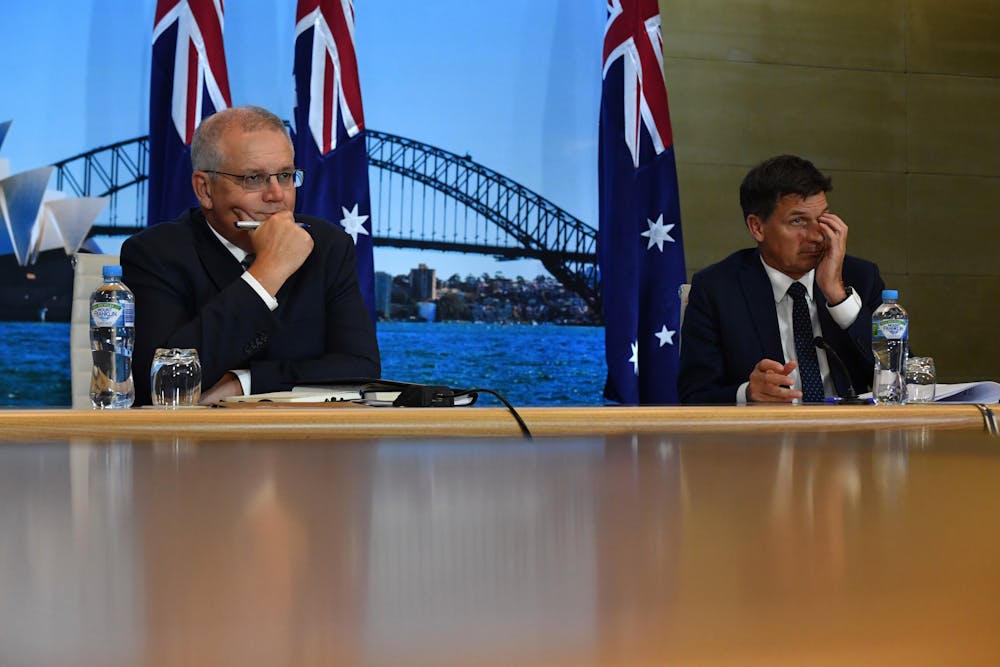
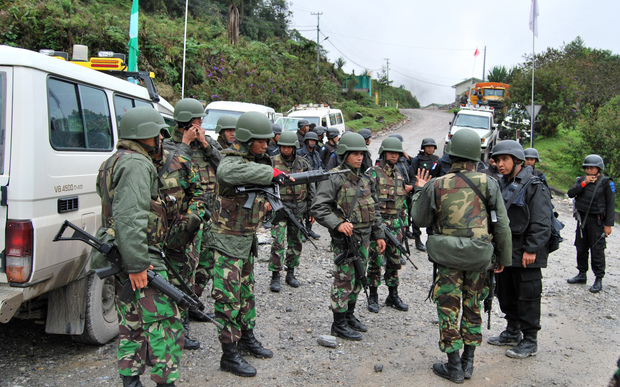
The Australian government should break its silence and raise human rights violations in West Papua with visiting Indonesian President Joko Widodo today, says a Sydney-based advocacy group.

Widodo is expected to deliver an address to a joint sitting of Federal Parliament in Canberra.

He is in Australia to discuss and finalise the Indonesia-Australia comprehensive economic partnership agreement (IA-CEPA), which is in the final stage of ratification.

READ MORE: Why is NZ turning its back on human rights in West Papua?

“We can expect the usual talkfest on trade and investment, maritime issues, defence/security, counter-terrorism and cyber security,” said Joe Collins of the Australian West Papua Association (AWPA) in a statement.

“However, the one issue that won’t be on the agenda is the human rights situation in West Papua.

– Partner –

“Canberra continuously remains silent on the issue of West Papua. Even during the mass demonstrations that occurred in August and September last year in response to racist attacks on West Papuan students, it took a question by a journalist before our foreign minister made a comment on the issue.”

Indonesia and various governments continued to claim the human rights situation in West Papua was improving, said Collins.

Blocking fact-finding
“Yet Jakarta continues to block fact-finding missions to the territory, arrest and deport foreign media, harass human rights defenders and local media in West Papua, and shuts down the internet during demonstrations in order to stop information getting out.”

AWPA is calling on Canberra to “not only raise the human rights situation in West Papua with Jokowi, but urge him to release all political prisoners who face charges of treason simply because they raised the West Papuan flag or took part in anti–racism demonstrations.

The visit by President Widodo was an opportunity for Australia to show its commitment to human rights in the region by making a strong statement of concern about West Papua, said Collins

AWPA also urged Prime Minister Scott Morrison to press the Indonesian president to allow a fact-finding to West Papua as requested by Pacific Island Forum (PIF) leaders.

Several rallies will be held today in various cities, including Sydney.

Print Friendly, PDF & Email

Article by AsiaPacificReport.nz

Tuwhera expands the PJR ‘critical inquiry’ Pacific media archive

A video made to celebrate the 20th anniversary of Pacific Journalism Review in 2014. Video: Sasya Wreksono/PMC

Pacific Media Watch

Tuwhera, the open access repository and publisher of Auckland University of Technology, has added 16 years of back copy editions of Pacific Journalism Review to the digital resource.

The full text articles from a further 24 editions have been added, including all the original issues published by the University of Papua New Guinea and the University of the South Pacific.

Some of the research includes the Sandline mercenary crisis in Papua New Guinea, the 10-year Bougainville conflict and the Fiji military coups.

READ MORE: Pacific Journalism Review – Twenty years special edition

PJR now has 964 research articles and reviews on its Tuwhera open access database – the largest single collection of Pacific media research, scholarship and analysis.

– Partner –

Many of the articles also feature research in Asia, Australia and New Zealand, with contributing authors and editors who are members of the Asian Media Information and Communication Centre (AMIC), Asian Media and Communication Congress (ACMC), Journalism Education and Research Association of Australia (JERAA), Journalism Education Association of New Zealand (JEANZ) and Media Educators Pacific (MEP) prominent.

Writing a reflective article marking the journal’s achievements on the 20th anniversary of publication in 2014, Brisbane media educator Dr Lee Duffield wrote:

Pacific Journalism Review since its inception has always emphasised its regional identity, adopting its own ‘Pacific’ style of discourse and inquiry.”

26th year
The journal, founded at UPNG in 1994 and now published by AUT, is in its 26th year of publication.

Earlier editions of Pacific Journalism Review from UPNG, USP and AUT. Image: PMC

All the articles added to the archives here were published prior to 2011.

Five editions were published at UPNG and four at USP while the rest of 41 editions are from AUT, beginning in 2003,.

Many global issues such as media freedom and journalist safety, media accountability systems, communication in development, conflict reporting, climate change journalism, human rights and social media, gender and indigeneity have been examined.

Welcoming the launch of PJR, Dr Margaret Obi, then head of UPNG’s South Pacific Centre for Communication and Information in Development (SPCenCIID), wrote in the first edition: “The issue that is most prevalent in PJR is that of professional ethics, responsibility and accountability by journalists and media agencies and their role in informing and being informed without fear or favour.”

Founding editor Professor David Robie, director of the Pacific Media Centre at AUT, says PJR is more than a research journal. He believes it has developed a unique character of engaged “critical inquiry”, as represented by its Frontline section encouraging journalism-as-research methodology.

“As an independent publication, PJR has given strong support to investigative journalism, socio-political journalism, political economy of the media, photojournalism and political cartooning in its almost three decades of publishing,” he adds.

Associate editor Philip Cass says that as PJR is the only journal covering journalism in the Pacific and Asia, the archives would prove to be an invaluable resource for academics and journalists.

PJR provides a unique record of issues, viewpoints and research from academic and media practitioners,” he says.

The journal’s current editorial team is editor David Robie, associate editor Philip Cass, Frontline editor Wendy Bacon, assistant editors Khairiah Rahman and Nicole Gooch, and designer Del Abcede.

Print Friendly, PDF & Email

Article by AsiaPacificReport.nz

Wuhan coronavirus: Citizen journalist Chen Qiushi on the epicentre frontline

BACKGROUNDER: By Oiwan Lam

Former human rights lawyer and famous citizen journalist Chen Qiushi arrived in Wuhan city, the epicentre of the coronavirus outbreak, on January 24, 2020, to report from inside the quarantined city.

Although the first case of the coronavirus emerged on December 8, Chinese media outlets only started covering the news on December 31, and the real scale of the outbreak came on January 20 when prominent Chinese pulmonologist Dr Zhong Nanshan admitted that the outbreak had entered the human-to-human transmission stage.

After Beijing announced Wuhan’s city-wide quarantine on January 23, the independent journalist circle was worried that no one would report on the situation in the sealed city.

READ MORE: Al Jazeera coronavirus updates

Chen built his reputation by covering the Hong Kong protests in August. Though he was harassed and silenced by Chinese authorities after his trip to Hong Kong, he continued speaking out using Twitter and YouTube.

Below is a summary of his reports from the center of the epidemic outbreak from January 24 to February 2.

– Partner –

January 24: Information should travel faster than the virus
After arriving in Wuhan around 10 pm, Chen urged citizens to contact him via WeChat and promised to report on the real situation in Wuhan. He anticipated that the national security police would go after him and made three public promises:

  1. He would not spread rumors, would not create social panic and would not cover up the truth;
  2. He would protect himself and would not reach out to patients who were in serious condition;
  3. Until the outbreak is under control, he would not leave Wuhan even if he caught the virus.

He stressed that the spread of SARS (17 years ago) and the Wuhan coronavirus was due to a cover-up of the virus outbreak and the Chinese people should not repeat the same mistake; information should travel faster than the virus.

January 25: A visit to the Wuhan Central hospital
Chen’s WeChat account was suspended for one month after he published his January 24 video. According to WeChat’s notification, he was accused of spreading rumours and other illegal content.

At 2 a.m., Chen visited the Wuhan Central hospital where he found a relatively uncrowded emergency ward of 30 patients. Before noon, Chen was forced to check out from his hostel as local authorities handed out the order that hostel operators should not accept non-local residents.

Chen also visited a number of friends in Wuhan, one of them made a DIY face mask:

Today I visited a few friends in Wuhan. They took me to Jinyintan hospital. Just managed to talk to the doctor and could not enter the hospital. I was impressed by courage and optimism of the Wuhanese.

January 26: A dead body at Wuhan No 11 Hospital
Chen interviewed a nurse from Wuhan No 11 Hospital who said that the situation was far better than before the Lunar New year when the ward was flooded with thousands of patients. At that time, the government was not providing any assistance and medical workers were left without basic protective gear.

Instead of going through official channels, the hospital was forced to make public appeals through social media. The nurse also denounced some government efforts to “fact-check” social media saying: “They claimed that the video showing three dead bodies from the Wuhan Red Cross Hospital was fake. I told you, they were really corpses, though we could not verify if they died because of the coronavirus.”

Chen expressed his worries about human-to-human transmission inside the hospital as all the patients shared the same ward. He noted that the hygiene outside the hospital was also pretty bad — used masks, gloves, and vomit were everywhere.

January 27: Social panic and a divided city
Chen expressed frustration about the lack of citizen initiative to help each other out during the crisis: “Everyone is divided. They keep complaining and arguing about government policy but can’t even volunteer to help receive and distribute the resources sent from outside of Wuhan.”

Chen also mentioned how current affairs writer Wang Yajun was threatened by the Hubei authorities over his comments about the outbreak.

January 28: ‘Wuhan is like hell’
Chen helped deliver medical supplies and food to the Wuhan Union Hospital in the morning. He then visited the Huoshenshan hospital construction site, one of the two hospitals Beijing vowed to finish within 10 days.

At night, he interviewed a Wuhan citizen who criticized the local authorities for failing to alert local residents about the outbreak and their lack of public support for the quarantined city on the first day of the Lunar New Year.

The young man compared Wuhan to hell: people could not take public transportation to the hospitals and no one answered the emergency line. Even if the patients managed to go to the hospitals, they were only given anti-inflammatories.

The majority were not tested if they had been infected with the virus and were told to quarantine themselves back home.

Chen’s video went viral on Twitter and YouTube within two days.

January 29: Infected nurse broke down
Chen visited the Wuhan No 5 hospital and there were about 100 people. A nurse broke down and screamed out in the hospital car park as she was infected at the hospital but could not get a bed in any hospital. Rumors spread online saying that the hospital had a number of medical workers infected but doctors were ordered not to talk to media.

January 30: Identified cases were not confirmed
Chen said his name and face were blocked on WeChat, and any distribution of his video could result in a WeChat ban. He said that taxi drivers had been aware of the virus outbreak since mid-December.

According to sources from a Wuhan taxi driver chat room, there were 20,000 taxis in Wuhan and only 6000 were in operation during the quarantine. Residents had to contact district administrators to arrange a taxi.

Chen said that the day before he had followed a patient to Tongji Hospital where patients were having treatment but there were not enough beds. According to Chen, his friend asked for a test but there were not enough coronavirus testers to check on his infection.

January 31: Four confirmed infected in one single family
Chen attempted to visit a family which had four confirmed infected patients. Two were hospitalized and the 84-year-old mother passed away in the morning. The son was confirmed infected on January 23 but there were no beds available.

Chen eventually could not pay the visit to this family as the residential district was locked down with guards standing in front of the gate.

February 1 & 2: Citizen reporter Fang Bin arrested
Chen posted several videos from other citizen sources on Twitter and YouTube.

The first one showed large crowds outside of a pharmacy attempting to buy a Chinese medicine called “shuanghuanglian.” On January 31, The Chinese Academy of Sciences released a report in the People’s Daily News claiming that the medicine could repress viral replication.

While the medical experts admitted that there wasn’t any clinical evidence about the effectiveness of the medicine, panicked shoppers bought up all the medicine from the market.

The second one showed national security officers disguised as disease control officers visiting Wuhan citizen reporter Fang Bin late at night claiming that they suspected he was infected.

On January 31, Fang Bin uploaded a video taken from Wuhan No.5 hospital which showed how corpses from the hospital were sent to a funeral house and he believed that was the real reason for his arrest.

Fang was released the following day and talked about the incident via Chen’s YouTube channel. The police had accused him of creating social panic.

Both Fang and Chen were trying to dig into the stories about the death toll of the Wuhan coronavirus. Chen visited the Hanhou Funeral Home on January 29 and found out that within a period of 1.5 hours four vehicles had entered the funeral home, a designated cremation center for bodies infected with the coronavirus.

On January 31, Fang Bin found out that a vehicle parked at the entrance of the No 5 Hospital was loaded with 8 bodies.

During Fang’s arrest, law enforcement officers claimed that they needed to quarantine Fang as he had been in contact with the infected. On February 2, a new administrative regulation was released stating that the disease control officers were authorised to take away any individual who was in contact with the infected.

Chen pointed out that the new regulation could be used as an excuse to arrest citizen reporters, including himself. He urged others to speak out for themselves.

Republished from Global Voices under a Creative Commons licence.

Print Friendly, PDF & Email

Article by AsiaPacificReport.nz

I walked 1,200km in the outback to track huge lizards. Here’s why

Source: The Conversation (Au and NZ) – By Sophie Cross, PhD candidate, Curtin University

In 2017 and 2018 I walked the equivalent of 28 marathons in the scorching Western Australian outback. Why, you ask? To assess how some of Australia’s largest lizard species interact with restored mines.

As part of my PhD research, I hiked in often extreme heat on a mine site in WA’s sparsely populated Mid West region. My fieldwork was both physically and mentally demanding, as I spent many hours each day walking through the bush looking for signs of monitor lizards.

Being in a remote location and mostly alone, I had plenty of time to ponder the wisdom of my career choice, particularly on days when temperatures exceeded 40℃ and not even the lizards ventured from their homes.

Pushing through these mental challenges was difficult at times, but my work has provided me with some of my most rewarding experiences. And what I discovered may be crucial for restoring habitats destroyed by mining.

Restoring abandoned mines

Habitat loss is a leading cause of biodiversity loss worldwide. Although mining typically has a smaller environmental footprint than other major industries such as agriculture or urbanisation, roughly 75% of active mines are on land with high conservation value.


Read more: Afterlife of the mine: lessons in how towns remake challenging sites


There are around 60,000 abandoned mines in Australia, but very few of them have been officially closed. How to restore them is a growing public policy problem.

Sophie Cross walked more than 1,200km and tracked a young-adult perentie to find out whether they were using a restored mining area. Author provided

Recovering biodiversity can be an exceptionally challenging task. Animals are vital to healthy ecosystems, yet little is understood about how animals respond to restored landscapes.

In particular, reptiles are often overlooked in assessments of restoration progress, despite playing key roles in Australian ecosystems.


Read more: What should we do with Australia’s 50,000 abandoned mines?


Do animals return to restored habitats?

I wanted to know whether restored habitats properly support the return of animals, or whether animals are only using these areas opportunistically or, worse still, avoiding them completely.

To study how reptiles behave in restored mining areas, I hand-caught and tracked a young adult perentie. The perentie is Australia’s largest lizard species, growing to around 2.5m in length, and is an apex predator in arid parts of the country.

I tracked the lizard for three weeks to determine whether it was using the restored area, before the tracker fell off during mating.

The tracking device revealed how the perentie navigated a restored mine, before it fell off during mating. Author provided

Previous methods of tracking assume the animal used all locations equally. But I used a new method that measures both the frequency with which animals visit particular places, and the amount of time they spend there. This provided a valuable opportunity to assess how effective restoration efforts have been in getting animals to return.

Restoration needs more work

My research, published this week in the Australian Journal of Zoology, shows that while the perentie did visit the restored mine, it was very selective about which areas it visited, and avoided some places entirely. The lizard went on short foraging trips in the restored mine area, but regularly returned to refuge areas such as hollow logs.

The method used GPS and a VHF tracking antenna to follow the perentie. Author provided

This is because hot, open landscapes with minimal refuges present high risks for reptiles, which rely on an abundance of coverage to regulate their body temperature and to avoid predators. Such costs may make these areas unfavourable to reptiles and limit their return to restored landscapes.

In comparison, undisturbed vegetation supported longer foraging trips and slower movement, without the need to return to a refuge area. Unfortunately, areas undergoing restoration often require exceptionally long time-periods for vegetation to resemble the pre-disturbed landscape.


Read more: Why we’re not giving up the search for mainland Australia’s ‘first extinct lizard’


How can we help reptiles move back into restored areas?

Restored landscapes often lack key resources necessary for the survival of reptiles. As vegetation can require a long time to reestablish, returning fauna refuges like hollow logs and fauna refuge piles (composed of mounds of sand, logs, and branches) could be crucial to aiding in the return of animal populations.

My research team and I have called for animals to be considered to a greater extent in assessments of restoration success. In the face of increasing rates of habitat destruction, we need to understand how animals respond to habitat change and restoration.

Failing to do so risks leaving a legacy of unsustainable ecosystems and a lack of biodiversity.

ref. I walked 1,200km in the outback to track huge lizards. Here’s why – https://theconversation.com/i-walked-1-200km-in-the-outback-to-track-huge-lizards-heres-why-130194

Why New Zealand is more exposed than others to the economic chills of China’s coronavirus outbreak

Source: The Conversation (Au and NZ) – By Rahul Sen, Senior Lecturer, School of Economics, Auckland University of Technology

The economic repercussions of the coronavirus outbreak worldwide and for New Zealand are beginning to emerge – and it is already clear that the coronavirus will have a worse impact than the severe acute respiratory syndrome (SARS) outbreak in 2003.

The estimated costs of SARS to the global economy was about US$40 billion. China’s share in world GDP at that time was 4%, significantly lower than the current estimate of 17%.

This four-fold increase in economic dependence on China worldwide, primarily because of its status as a manufacturing hub and a key node for production networks in Asia and globally, means that the outbreak is likely to have a bigger global impact on trade, at least in the current quarter.

But over the same period since 2003, New Zealand has become even more economically dependent on China. This is particularly so in trade in commercial services (both exports and imports), with a 12-fold jump in China’s share, based on comparisons between historical and the latest Stats NZ data.


Read more: 3 ways the coronavirus outbreak will affect international students and how unis can help


Slumping exports and cancelled events

In 2003, New Zealand’s goods exports to China constituted about 5% of the total, based on historical data from the United Nations. Today, it is about 26%. Any slump in export demand from China in the current quarter will have a much stronger direct impact on New Zealand exporters’ earnings, for both trade in goods and commercial services, than for many other countries.

This is already evident. Food exporters are facing declining demand for meat products, forestry, flower and seafood products from consumers in China. The outbreak could also disrupt supply chains of intermediate products New Zealand imports from China and the rest of Asia for agricultural and food production.

As of 2019, China was New Zealand’s fourth largest service export destination, constituting 13% of the country’s total exports of commercial services, which includes primarily education and tourism. In 2003, this figure was less than 2%.

Around 87% of New Zealand’s service export earnings from China came from education-related travel and personal tourism. These exports are expected to decline sharply with the temporary ban on foreign travellers from mainland China.


Read more: The coronavirus outbreak is the biggest crisis ever to hit international education


New Zealand’s summer season is a busy time for Chinese visitors and international students studying in New Zealand. This has already cost the local economy of Auckland as several tourism events, including the annual Lantern Festival, have been cancelled.

Uncertainty shrouds estimated impact

A “worst case” scenario would look like this: zero visitor arrivals from China until March 2020, followed by an increase by at least 50% the following month, accompanied by a 20% decline in overall arrivals from Asia (whether for tourism or education). It is estimated that this itself would result in at least a 0.4% decline in GDP in the first quarter of 2020.

The above is a conservative estimate. It assumes that the coronavirus outbreak is contained quickly and will not affect the second quarter of the year. The SARS outbreak took about eight months to contain, so it is reasonable to assume that travel and education exports from New Zealand may veer off their normal trajectory at least until mid-2020.

While the indirect impact of the coronavirus on New Zealand consumers remains unclear, the direction is likely to be negative. One obvious channel is the disruptions to the supply chains of major consumer goods globally because of China’s role as a manufacturing hub.


Read more: What we know suggests the economic impact of Wuhan coronavirus will be limited


There are already reports of factories closing in China or facing temporary shutdowns in high-tech manufacturing, including cars, semiconductors and telecommunications. For example, Qualcomm expects negative impacts on demand and supply in the mobile phone industry. These will raise production costs when made in China, and therefore prices for the global consumer.

A more open economy can come with costs

It is more difficult to quantify indirect effects on New Zealand’s trade with other trading partners where coronavirus cases have been confirmed, and among those who also share a close economic relationship with both New Zealand and China. Australia, the US and Japan all fit into this category.

In the short term, New Zealand may receive fewer tourists from these countries, including both air and sea travel. Business-related travel disruptions are also likely to have an indirect negative impact on investment decisions. The longer the uncertainty around the outbreak remains, the greater the downward spiral of investor confidence.

Finally, New Zealand has to prepare for the likelihood of a confirmed case. If that happens, there will be additional costs from managing the uncertainties for domestic businesses. As a small open economy, New Zealand has enjoyed the benefits of globalisation, but now it must face the negative costs it can also bring.

ref. Why New Zealand is more exposed than others to the economic chills of China’s coronavirus outbreak – https://theconversation.com/why-new-zealand-is-more-exposed-than-others-to-the-economic-chills-of-chinas-coronavirus-outbreak-131204

We’re told to ‘gamble responsibly’. But what does that actually mean?

Source: The Conversation (Au and NZ) – By Anastasia Hronis, Clinical Psychologist, University of Technology Sydney

Advertisements for gambling and online betting tell us to “gamble responsibly”. But what does this mean in reality? And how can you gamble responsibly online when another bet is just a click or swipe away?


Read more: Gambling in Australian culture: more than just a day at the races


A total of 64% of Australian adults gamble at least once a year, with one third of gamblers participating in multiple forms of gambling. Lottery is the most common form of gambling among those who gamble regularly (76%), followed by instant scratch tickets (22%) and electronic gaming machines (or “pokies”, almost 21%).

Up to 160,000 Australians experience significant problems from gambling, and up to a further 350,000 experience moderate risks that make them vulnerable to developing a gambling problem.


Read more: Education, not restriction, is key to reducing harm from offshore gambling


In about the past 15 years, there’s been a rise in online gambling. While rates of online gambling for Australians are low compared to traditional forms of gambling, participation in online gambling appears to be increasing rapidly.

If this continues, online gambling may soon replace traditional, in-venue gambling, particularly for young people.

About one young person in every 25 has a problem with gambling, which is an average of one in every high school classroom. Up to one in five bet on sports matches and one in ten gamble online.

Young people exposed to gambling when watching sport

Advertisements for gambling and online betting are particularly common in Australian sport. While there has been a recent shift to regulate when and how gambling is advertised during sporting matches, there is still a heavy presence.

In fact, three in four children aged eight to 16 who watch sports can name at least one betting company.

The campaign ‘Love the Game, not the Odds’ aims to disrupt the idea that gambling is a normal part of sport.

The public health campaign, “Love the Game, Not the Odds”, was released addressing the issue of reducing the exposure of young people to sport betting.

It aims to disrupt the notion that gambling is a normal part of sport and being a spectator. And it aims to help start and facilitate conversations with children and adolescents about gambling not needing to be an integral part of gaming.

How to ‘gamble responsibly’?

The phrase “gamble responsibly” on advertisements and websites was used for years before researchers and public health advocates looked at the types of behaviours that underpin it.

This video from Ladbrokes tells us to ‘gamble responsibly’, but what does this mean in practice?

Responsible gambling is defined as:

Exercising control and informed choice to ensure that gambling is kept within affordable limits of money and time, is enjoyable, in balance with other activities and responsibilities, and avoids gambling-related harm.

Ways of achieving this include:

  • ensuring gambling is affordable by not gambling with money needed for necessities (such as bills or food)
  • ensuring gambling doesn’t dominate your leisure time, and you are engaging in other social and leisure activities
  • avoiding borrowing money or using a credit card to gamble
  • avoiding gambling when under the influence of drugs and/or alcohol, or as a way to manage emotions when you are bored, depressed or anxious
  • setting limits around how much and long you with gamble for, setting a limit on your maximum bet size, and avoiding increasing bets when winning or losing.

Additional tips for people gambling online include:

  • setting limits on how much you can gamble by only using websites with a daily limit spend
  • avoiding having multiple online gambling accounts.

How do I know if I have a gambling problem?

There are clear signs when gambling moves from being a hobby to becoming a mental health concern. These include:

  • needing to gamble with increasing amounts of money to achieve the desired excitement
  • feeling restless or irritable when trying to stop gambling
  • trying to stop or cut back gambling unsuccessfully
  • spending a lot of time thinking about gambling
  • gambling when you’re feeling anxious or upset
  • chasing losses (by trying to make up losses with more gambling)
  • lying to others to conceal the extent of your gambling
  • relying on others for money
  • jeopardising relationships, job or opportunities because of gambling.

If you are concerned about your gambling, seek professional help and exclude yourself from gambling venues and websites.

In practice, for online gambling, this might mean disabling automatic logins and deleting accounts.


If this article raises concerns for you or someone you know, gambling support is available via Lifeline (13 11 14), or via Gambling Help Online, which lists services in your state or territory.

ref. We’re told to ‘gamble responsibly’. But what does that actually mean? – https://theconversation.com/were-told-to-gamble-responsibly-but-what-does-that-actually-mean-130949

Curious Kids: why do people in different countries speak different languages?

Source: The Conversation (Au and NZ) – By Howard Manns, Lecturer in Linguistics, Monash University


Why do different countries have different languages? – Maeôra, aged 6


Humans have long been puzzled by the existence of different languages. A long time ago, people took guesses or made up stories to explain this.

You might know the tale of the Tower of Babel (have a look at a famous painting of it, below). In this story from the Bible, humans originally spoke a single language. But God got angry when these humans tried to build a tower to heaven. This wasn’t in God’s plan. So he made humans speak different languages and scattered them across the Earth.

Tower of Babel by Pieter Bruegel the Elder, 1563. Shutterstock

In another story, believed by the Indigenous Absaroka people in the United States, an old coyote created humans. At first, these humans spoke a single language (like in the Babel story), but a younger coyote argued to the old coyote that humans had a talent for warfare. The young coyote convinced the older one to make humans speak different languages. That way, humans could misunderstand one another — this would lead to war and humans could show off their talent!

And in yet another story, in Jawoyn country in the Northern Territory people believe the crocodile Nabilil planted language into the landscape, giving names to land features as he travelled.

There are many, many more stories like these throughout the world!

More recently, we linguists have tried to answer this question. Truthfully, we’ll probably never know the origin of language, but we do have a good idea of how different languages appear and change. And, interestingly, there’s a little bit of truth in those earlier stories of castles, coyotes and crocodiles.

The tower factor: three magic ingredients

In the Tower of Babel story, God makes humans travel throughout the world. In fact, we know from archaeological digs that humans have been on the move for thousands of years — as long as we’ve been human!

What you need then to create different languages are three magic ingredients: time, distance and the processes of language change. So when speakers of a single language separate and travel to different places, the single language can become two or more languages over time.

Take the example of Latin. When Latin speakers split up and spread themselves around Europe, their Latin turned into languages like French, Spanish, Italian and Portuguese. So Latin isn’t really dead — it evolved into these modern languages.


Read more: Curious Kids: Why do Aussies have a different accent to Canadians, Americans, British people and New Zealanders?


English was born in the same way. In the fifth century, powerful Germanic tribes (those Angles, Saxons and Jutes) left their European homelands and invaded Britain. The dialects of Germanic they spoke gave rise to Old English — it would sound as foreign to you as modern German does now (for example, urne gedæghwamlican hlaf is Old English for “our daily bread”).

The coyote factor: language and identity

The Absaroka coyote story points to how people with different languages might misunderstand or disagree with one another. Language is often connected to our identity. Along with travelling to different places, identity is another thing that can lead to language change or different languages.

For instance, in one village in Papua New Guinea (a country just north of Australia), everyone spoke the same language, Selepet, as people in nearby villages. However, those living in this village decided to change their word for “no”. This way, their version in Selepet would be different (bunge) from the typical Selepet word for no (bia), and would represent the proud identity of the village.


Read more: Curious Kids: Why does English have so many different spelling rules?


Think closer to home and the rivalry between places like Sydney, Melbourne and Perth, or between the bush and the city. The coyote factor is a major incentive for people everywhere to start highlighting their identity through their language.

So will Australian English eventually break up into separate languages in the way Latin did? Probably not. The thing is, we aren’t isolated as people were in earlier times. We chat regularly, face to face, on the phone, via computers, and in many other ways.

The crocodile factor: new words for new places and experiences

The story of Nabilil the crocodile points to how language evolves in close relationship with its environment, and how those who travel assign new labels to the land, animals and experiences they encounter.

We see this with the arrival of English to Australia. English was more than 800 years old by the time it came to be used in Australia. However, English-speaking settlers did not have words to describe Australia. They borrowed words from Indigenous Australian languages (kangaroo, wombat) or developed new meanings for old words (magpie, possum; both of these were originally used for different animals in Europe and the US!).

Like people, languages are always on the move, and this is why we have so many of them — more than 300 within Australia alone. One way to avoid the curse of little coyote is to learn some of them!

ref. Curious Kids: why do people in different countries speak different languages? – https://theconversation.com/curious-kids-why-do-people-in-different-countries-speak-different-languages-127112

3 ways the coronavirus outbreak will affect international students and how unis can help

Source: The Conversation (Au and NZ) – By Catherine Gomes, Associate Professor, RMIT University

The 2020 academic year is off to a rocky start. Instead of the usual excitement that comes with a new semester, university students, particularly those still in China (more than 100,000 or 56% of all international students) and those who have just returned, face uncertainty.

On January 30, the World Health Organisation declared the new strain of coronavirus a public health emergency of international concern.

The Australian government responded by imposing a travel ban on any Chinese or foreign national from entering or transiting in Australia until 14 days after leaving anywhere in mainland China. Those already in Australia must self-quarantine for no less than 14 days.

How have universities responded?

Universities have been swift to respond in an inclusive manner by reassuring Chinese students in particular they will be welcomed back with little disruption to their studies.

But the details have varied. Monash university is postponing the start of its semester by one week. Others, such as the University of Sydney, the University of New South Wales and Queensland University of Technology are asking Chinese students to enrol later or defer while some are rescheduling summer exams.

Most universities haven’t shifted their semester dates. They are telling students coming from China to self-isolate and not come to campus for 14 days. Others are offering online courses specifically for students stuck in China.

There are several ways responses to the coronavirus can impact international students – Chinese or otherwise

1. Moving courses online isn’t simple

All Australian universities can communicate with students, and provide access to course material, online. Many encourage instructor-student interchanges in virtual classrooms managed through learning management systems such as Canvas.

While these are excellent resources for students in Australia, the 157,000 international students still in China may not be able to access them. The Great Firewall of China prevents Chinese access to popular global platforms such as Google and, increasingly, to virtual private networks (VPNs) which would be able to bypass the firewall.


Read more: The coronavirus outbreak is the biggest crisis ever to hit international education


Online education in itself is a contested space. Previous research has shown online learning and flipped classrooms (where students do some online self-learning prior to later face-to-face classes) have mixed results both generally and in specific disciplines such as medicine.

This is because designing online learning experiences is a complex exercise that requires resources, thought and time. Given the short period academics have to build additional resources, it is a challenge for even the best academics to create a productive and effective online learning environment.

2. Studying overseas is expensive

The cost of studying in Australia is not cheap. Annually, an undergraduate international student may spend anywhere between A$20,000 to A$45,000 for their degree. They will spend an estimated A$9,150 to A$18,600 for living expenses if they stay in Australia for 15 weeks.

While institutions have concentrated their attention on Chinese international students, other international students are also victims of the coronavirus fallout. Delayed progress could mean many international students have to extend their stay in Australia. It’s still unclear whether the government will help reimburse these expenses.

3. The first few weeks are important for socialising

The first few weeks are crucial in a student’s journey and need to be spent on transition and socialisation.

Our research has found international students consider the friends they make in the host country to be their replacement family. Friends provide the support structures students feel they need while away from home.

New international students make friends with people at the beginning of their study journey in Australia. Often these friendships are with other international students who they meet at international student orientations organised by their respective institutions.


Read more: Why international students need to make Aussie friends


New Chinese international students who are under quarantine will not be able to take part in such activities. Students living in institutional residential halls have support structures in place, but what about students who have no one to check on them and to make sure they are alright?

International students leave their families and support structures behind. The added uncertainty and fear around the virus is not a great way to begin the transition period. An isolation period could potentially exacerbate stress for students.

What universities should do to help

We are in unprecedented territory. It is heartening to see universities doing their best to help students in such uncertain times. But how we help international students after this health crisis is over is equally important.

It’s crucial universities provide academic advice and support to students feeling left behind in their courses. They must also strengthen services for distressed students affected directly or indirectly by the coronavirus outbreak.

Universities and the government should provide support to the broader student cohort, including transitioning late international students to classes mid-semester. If not managed and communicated properly, this can impact on the socialisation and group-work aspects of courses.


Read more: We need to make sure the international student boom is sustainable


Universities also need to support their academic and student support staff. They are at the front line managing the fallout. They will still be dealing with the consequences of the crisis once the outbreak is well and truly over.

The way forward should be based on respect and empathy. The way we respond to this crisis will not only have impact on our students, but will also reflect who we are as a nation.

ref. 3 ways the coronavirus outbreak will affect international students and how unis can help – https://theconversation.com/3-ways-the-coronavirus-outbreak-will-affect-international-students-and-how-unis-can-help-131195

Expedition reveals the violent birth of Earth’s hidden continent Zealandia, forged in a ring of fire

Source: The Conversation (Au and NZ) – By Rupert Sutherland, Professor of tectonics and geophysics, Te Herenga Waka—Victoria University of Wellington

Three years ago, the identification of Zealandia as a continent made global headlines.

Now, newly published results from our scientific drilling expedition reveal the largely submerged Zealandia continent, which stretches across five million square kilometres beneath the southwest Pacific Ocean, was shaped by two tectonic events.

First it was ripped away from Australia and Antarctica, and then it was carved by forces that started the Pacific Ring of Fire.

The drilling expedition investigated Zealandia, a continent hidden below the sea.

Why Zealandia is so different to other continents

Zealandia has an unusual geography for a continent. More than half the surface area of Earth’s other six continents are composed of low-lying land and shallow seas, and they have relatively narrow mountain ranges and steep continental slopes in the deep ocean.

In contrast, Zealandia is mostly hidden beneath more than one kilometre of water and could be classified as more than 90% continental slope. This makes it a challenge to explore.

The world’s continents and Zealandia, at the southern end of the Pacific Ring of Fire. Author provided

The first scientific drilling expedition to sample in the area where we now know Zealandia is took place in 1972 between Australia, New Zealand and New Caledonia. The results suggested tectonic forces stretched and thinned Zealandia’s crust until it was ripped from the ancient supercontinent Gondwana about 85 million years ago, during the time of dinosaurs. This created a deep ocean: the Tasman Sea.

The evidence remains compelling that this is at least part of the answer to how the geography of Zealandia formed. But detailed surveys during the 1990s and 2000s, carried out to establish sovereignty over the Zealandia continental mass by New Zealand, Australia and France, suggested other contributing factors.


Read more: What are lost continents, and why are we discovering so many?


How the Pacific Ring of Fire shaped Zealandia

In 2017, we led a nine-week expedition into the southwest Pacific as part of the International Ocean Discovery Program (IODP), with 32 scientists on board the research vessel JOIDES Resolution. Our aim was to unravel why Zealandia is so different from the other continents.

Sanny Saito (Japan), Rupert Sutherland (New Zealand), Thomas Westerhold (Germany), and Edo Dallanave (Italy) on the drill floor of the JOIDES Resolution. Michelle Drake, Author provided

Our newly published results have been drawn from that expedition 371, where we collected new samples and sought to test our hypothesis that formation of the Pacific Ring of Fire played a key role in shaping Zealandia.

We collected sediment cores from up to 864 metres beneath the seabed at six sites far away from land or shallow water. At the deepest site, the water was five kilometres deep and our drill weighed 300 tonnes. We used fossils from three of the sites to show northern Zealandia became much shallower and likely even had land areas between 50 and 35 million years ago. At about that time, two other sites became submerged into deeper water, and then the whole region subsided an additional kilometre to its present depth.

The expedition drilled for samples at six sites, marked on this map with stars. IODP, Author provided

These dramatic changes in northern Zealandia, an area about the size of India, coincided with buckling of rock layers (known as strata) and the formation of underwater volcanoes throughout the western Pacific.

The Pacific Ring of Fire is a zone of volcanoes and earthquakes running along the west coasts of north and south America, past Alaska and Japan, and then through the western Pacific to New Zealand. The violent geological activity in this zone reflects deeper unrest at the boundaries of tectonic plates, caused by “subduction processes” – where one tectonic plate converges on another and sinks back deep into the earth.

Scientists on the expedition identify fossils in sediment cores. IODP, Author provided

Read more: Explorers probe hidden continent of Zealandia


We know the Pacific Ring of Fire formed about 50 million years ago, but the process remains a mystery. We propose a “subduction rupture event” – a process similar to a massive slow-moving earthquake – spread around the whole of the western Pacific at that time. We suggest this process resurrected ancient subduction faults, which had lain dormant for many millions of years but were primed to start moving again.

This concept of “subduction resurrection” is a new idea and may help explain a range of different geological observations. The subduction rupture event included unique geological phenomena that that have no present-day comparison, and there may have been fewer than 100 such massive events since Earth formed. Our new evidence from Zealandia shows these events can dramatically alter the geography of continents.

What were the consequences of these geographic changes for plants, animals and regional climate? Can we make a computer model of the geological processes that happened at depth? We are still figuring some of this out, but we do know the event changed the direction and speed of movement of most tectonic plates on Earth.

It was an event of truly global significance – and we now have really good observations and ideas to help us get to the bottom of what happened and why.

ref. Expedition reveals the violent birth of Earth’s hidden continent Zealandia, forged in a ring of fire – https://theconversation.com/expedition-reveals-the-violent-birth-of-earths-hidden-continent-zealandia-forged-in-a-ring-of-fire-130860

Why do people in different countries speak different languages?

Source: The Conversation (Au and NZ) – By Howard Manns, Lecturer in Linguistics, Monash University


Why do different countries have different languages? – Maeôra, aged 6


Humans have long been puzzled by the existence of different languages. A long time ago, people took guesses or made up stories to explain this.

You might know the tale of the Tower of Babel (have a look at a famous painting of it, below). In this story from the Bible, humans originally spoke a single language. But God got angry when these humans tried to build a tower to heaven. This wasn’t in God’s plan. So he made humans speak different languages and scattered them across the Earth.

Tower of Babel by Pieter Bruegel the Elder, 1563. Shutterstock

In another story, believed by the Indigenous Absaroka people in the United States, an old coyote created humans. At first, these humans spoke a single language (like in the Babel story), but a younger coyote argued to the old coyote that humans had a talent for warfare. The young coyote convinced the older one to make humans speak different languages. That way, humans could misunderstand one another — this would lead to war and humans could show off their talent!

And in yet another story, in Jawoyn country in the Northern Territory people believe the crocodile Nabilil planted language into the landscape, giving names to land features as he travelled.

There are many, many more stories like these throughout the world!

More recently, we linguists have tried to answer this question. Truthfully, we’ll probably never know the origin of language, but we do have a good idea of how different languages appear and change. And, interestingly, there’s a little bit of truth in those earlier stories of castles, coyotes and crocodiles.

The tower factor: three magic ingredients

In the Tower of Babel story, God makes humans travel throughout the world. In fact, we know from archaeological digs that humans have been on the move for thousands of years — as long as we’ve been human!

What you need then to create different languages are three magic ingredients: time, distance and the processes of language change. So when speakers of a single language separate and travel to different places, the single language can become two or more languages over time.

Take the example of Latin. When Latin speakers split up and spread themselves around Europe, their Latin turned into languages like French, Spanish, Italian and Portuguese. So Latin isn’t really dead — it evolved into these modern languages.


Read more: Curious Kids: Why do Aussies have a different accent to Canadians, Americans, British people and New Zealanders?


English was born in the same way. In the fifth century, powerful Germanic tribes (those Angles, Saxons and Jutes) left their European homelands and invaded Britain. The dialects of Germanic they spoke gave rise to Old English — it would sound as foreign to you as modern German does now (for example, urne gedæghwamlican hlaf is Old English for “our daily bread”).

The coyote factor: language and identity

The Absaroka coyote story points to how people with different languages might misunderstand or disagree with one another. Language is often connected to our identity. Along with travelling to different places, identity is another thing that can lead to language change or different languages.

For instance, in one village in Papua New Guinea (a country just north of Australia), everyone spoke the same language, Selepet, as people in nearby villages. However, those living in this village decided to change their word for “no”. This way, their version in Selepet would be different (bunge) from the typical Selepet word for no (bia), and would represent the proud identity of the village.


Read more: Curious Kids: Why does English have so many different spelling rules?


Think closer to home and the rivalry between places like Sydney, Melbourne and Perth, or between the bush and the city. The coyote factor is a major incentive for people everywhere to start highlighting their identity through their language.

So will Australian English eventually break up into separate languages in the way Latin did? Probably not. The thing is, we aren’t isolated as people were in earlier times. We chat regularly, face to face, on the phone, via computers, and in many other ways.

The crocodile factor: new words for new places and experiences

The story of Nabilil the crocodile points to how language evolves in close relationship with its environment, and how those who travel assign new labels to the land, animals and experiences they encounter.

We see this with the arrival of English to Australia. English was more than 800 years old by the time it came to be used in Australia. However, English-speaking settlers did not have words to describe Australia. They borrowed words from Indigenous Australian languages (kangaroo, wombat) or developed new meanings for old words (magpie, possum; both of these were originally used for different animals in Europe and the US!).

Like people, languages are always on the move, and this is why we have so many of them — more than 300 within Australia alone. One way to avoid the curse of little coyote is to learn some of them!

ref. Why do people in different countries speak different languages? – https://theconversation.com/why-do-people-in-different-countries-speak-different-languages-127112

Early exposure to infections doesn’t protect against allergies, but getting into nature might

Source: The Conversation (Au and NZ) – By Emily Johnston Flies, Postdoctoral Research Fellow (U.Tasmania), University of Tasmania

Over the past few decades, allergies and asthma have become common childhood diseases, especially in developed countries. Almost 20% of Australians experience some kind of allergy, whether it’s to food, pollen, dust, housemites, mould or animals.

When people suffer from food allergies, hay fever or asthma, their immune system incorrectly believes the trigger substances are harmful and mounts a defence.

The response can range from mild symptoms, such as sneezing and a blocked nose (in the case of hay fever), to anaphylaxis (from severe food allergies or bee stings) and asthma attacks.


Read more: What are allergies and why are we getting more of them?


We used to think the rise in allergic conditions was because we weren’t exposed to as many early infections as previous generations. But the science suggests that’s not the case.

However it seems being out in nature, and exposed to diverse (but not disease-causing) bacteria, fungi and other microorganisms may help protect against asthma and allergies.

Remind me, what’s the hygiene hypothesis?

In 1989, researcher David Strachan examined allergy patterns in more than 17,000 children in England. He noticed young siblings in large families were less likely to have hay fever than older siblings or children from small families.

He proposed that these younger siblings were exposed to more childhood illness at a younger age, as more bugs were circulating in these large families and the younger children were less likely to wash their hands and practise good hygiene.

Greater exposure to these childhood infections helped “train” their immune systems not to overreact to harmless things like pollen.

Strachan coined the term “hygiene hypothesis” to explain this phenomenon, and the idea has been appealing to our dirty side ever since.

Yes, it’s a good idea for kids to wash their hands regularly to avoid getting sick. Wor Sang Jun/Shutterstock

Strachan wasn’t the first to notice exposure to “dirty environments” seemed to prevent allergic disease. A century earlier, in 1873, Charles Blackley noted hay fever was a disease of the “educated class”, and rarely occurred in farmers or people living in less sanitary conditions.

Ditching the hygiene hypothesis

However, Blackley and Strachan were wrong about one important thing: the association between sanitation and allergies is not due to reduced exposure to early childhood infections (or “pathogens”).

Large studies from Denmark, Finland, and the United Kingdom have found no association between the number of viral infections during childhood and allergic disease. In other words, exposure to disease-causing pathogens doesn’t appear to prevent allergies.

In fact, exposure to childhood viral infections, in addition to making a child sick, may contribute to the development of asthma in predisposed children.


Read more: What causes asthma? What we know, don’t know and suspect


Many researchers now argue the term “hygiene hypothesis” is not only inaccurate but potentially dangerous, because it suggests avoiding infection is a bad thing. It’s not.

Good hygiene practices, such as hand washing, are critical for reducing the spread of infectious and potentially deadly diseases such as influenza and the Wuhan coronavirus.

What about ‘good’ exposure to bacteria?

For healthy immune function, we need exposure to a diverse range of bacteria, fungi and other bugs – known as microbes – in the environment that don’t make us sick.

We need exposure to a range of organisms found in nature. caseyjadew/Shutterstock

Read more: Essays on health: microbes aren’t the enemy, they’re a big part of who we are


Within urban environments, recent research shows people who live closer to green, biodiverse ecosystems tend to be healthier, with less high blood pressure and lower rates of diabetes and premature death, among other things.

More specifically, research has found growing up on a farm or near forests, with exposure to more biodiverse ecosystems, reduces the likelihood of developing asthma and other allergies.


Read more: Children living in green neighbourhoods are less likely to develop asthma


This is potentially because exposure to a diversity of organisms, with a lower proportion of human pathogens, has “trained” the immune system not to overreact to harmless proteins in pollen, peanuts and other allergy triggers.

How can we get more ‘good’ exposure?

We can try to expose children to environments more like the ones in which humans, and our immune systems, evolved.

Most obviously, children need to have exposure to green space. Playing outdoors, having a garden, or living near green space (especially near a diverse range of native flowering plants) is likely to expose them to more diverse microbes and provide greater protection from allergic diseases.

Infants who are breastfed tend to have more diverse gut microbiomes (a larger variety of bacteria, fungi and other microscopic organisms that live in the gut), which makes them less likely to develop allergic diseases in childhood.


Read more: Gut instinct: how the way you’re born and fed affect your immune system


Having a varied diet that includes fresh and fermented foods can help cultivate a healthy gut microbiome and reduce allergic disease. As can using antibiotics only when necessary, as they kill off good bacteria as well as the bad.

So keep washing your hands, especially in cities and airports, but don’t be afraid of getting a little dirty in biodiverse environments.

This article was co-authored by Chris Skelly, International Programme Director, Healthy Urban Microbiomes Initiative and Head of Programmes (Research and Intelligence), Public Health Dorset.

ref. Early exposure to infections doesn’t protect against allergies, but getting into nature might – https://theconversation.com/early-exposure-to-infections-doesnt-protect-against-allergies-but-getting-into-nature-might-126603

No food, no fuel, no phones: bushfires showed we’re only ever one step from system collapse

Source: The Conversation (Au and NZ) – By Anthony Richardson, Tutor and Researcher, Centre for Urban Research, RMIT University

This summer’s bushfires were not just devastating events in themselves. More broadly, they highlighted the immense vulnerability of the systems which make our contemporary lives possible.

The fires cut road access, which meant towns ran out of fuel and fell low on food. Power to towns was cut and mobile phone services stopped working. So too did the ATMs and EFTPOS services the economy needs to keep running.

In a modern, wealthy nation such as Australia, how could this happen?

In answering this question, it’s helpful to adopt “systems thinking”. This approach views problems as part of an overall system, where each part relates to each other.

In other words, we need to look at the big picture.

People queue for petrol at Airlie Beach in March 2017 after Cyclone Debbie. Dan Peled/AAP

Through a systems lens

Systems are everywhere, from the coral ecosystem of the Great Barrier Reef to the vast technology networks of global financial markets. In a human sense, social systems range from the small, such as a family, to large organisations or the national or global population.

The systems I mentioned just now are “complex” systems. This means they are connected to other systems in many ways. It also means a change in one part of the system, such as a bushfire in a landscape, can set off unpredicted changes in connected systems – be they political, technological, economic or social.


Read more: Australia needs a national fire inquiry – these are the 3 key areas it should deliver in


All complex systems have three things in common:

  1. they need a constant supply of energy to maintain their functioning

  2. they are interconnected across a range of scales, from the personal and local to the global and beyond

  3. they are fragile when they have no “redundancy”, or Plan B.

Traders work on the floor of the New York Stock Exchange – part of the complex system of global financial markets. Justin Lane/EPA

The case of East Gippsland

To better understand a complex system collapse, let’s examine what happened in Victoria’s East Gippsland region, particularly the coastal town of Mallacoota, during the recent fires.

This case demonstrates how one trigger (in this case, a bushfire) may start a cascade of events, but the intrinsic fragility of the system enables total collapse.

Transport-wise, neither East Gippsland nor Mallacoota itself are physically well connected. Fires cut both the only transport connection to East Gippsland, the Princes Highway, and the lone road out of Mallacoota.


Read more: Australia can expect far more fire catastrophes. A proper disaster plan is worth paying for


Smoke haze prevented air transport. This meant the only way out was by sea, in the form of intervention by the Australian Navy.

Second, there were no reserves of food, fuel, water, medical supplies or communications at hand when the fires had passed. Supplies ran so low there were reports of a looming “humanitarian crisis”.

Defence and civilian authorities clear a tree blocking a road near Mallacoota in January. Aus. Dept Defence

These shortages are no surprise. In Australia, as in most developed countries, food and fuel distribution systems run on a “just in time” model. This approach, originally developed by Japanese car manufacturer Toyota, involves organising supply networks so materials are ordered and received when they are needed.

Such systems remove the need to store excess goods in warehouses, and are undoubtedly efficient. But they are also extremely fragile because there is no redundancy in the system – no Plan B.

Implications for Australia

Australia as a whole is, in many ways, just as fragile as Mallacoota.

We import 90% of our oil – a figure expected to rise to 100% by 2030. Much of that fuel passes through the Straits of Hormuz and then through the Indonesian archipelago. We have few alternative routes.


Read more: Australia’s fuel stockpile is perilously low, and it may be too late for a refill


Nor do we maintain sufficient back-up reserves of fuel. Australia is the only International Energy Agency (IEA) member that does not meet the obligation to keep 90 days of fuel supplies in reserve.

As East Gippsland and Mallacoota have shown, many other connected systems, such as food distribution networks, are critically dependent on this fragile fuel supply.

A close shave

On January 3 this year – the very day HMAS Choules evacuated people from Mallacoota – the US killed Iranian general Qasem Soleimani by drone strike.

If Iran had responded by disrupting the flow of oil through the Strait of Hormuz, throwing global oil supply into turmoil, Australia may have faced nationwide fuel shortages at the height of the bushfire crisis.

Late last year Australia reportedly had 18 days of petrol, 22 days of diesel and 23 days of jet fuel in reserve.

A global fuel crisis was avoided only due to restraint by both the US and Iran. Australia might not be so lucky next time.

Activists calling for de-escalation in the conflict between the US and Iran in January. MARK R. CRISTINO/EPA

The need for reserves

Our communities, especially in bushfire-prone areas, need more redundancy to make them resilient to disasters. This might mean towns storing water, non-perishable food, blankets, medical supplies, a generator, a satellite phone and possibly fuel, in protected locations.

More broadly, Australia needs a national fuel reserve. This should be in line with the IEA’s 90-day obligations. In December last year, Australia reportedly had just 54 days’ worth of reserves.

The federal government has recently looked to bolster reserves through possible deals with the US and Holland. But overseas supplies will not be very helpful in an immediate crisis.

The implications of the bushfire crisis are clear. At a national and individual level, we must improve the resilience of the systems that make our daily life possible.

ref. No food, no fuel, no phones: bushfires showed we’re only ever one step from system collapse – https://theconversation.com/no-food-no-fuel-no-phones-bushfires-showed-were-only-ever-one-step-from-system-collapse-130600

Why should my child take swimming lessons? And what do they need to know?

Source: The Conversation (Au and NZ) – By Michelle O’Shea, Senior Lecturer Sport Management, Western Sydney University

Drowning is the third leading cause of unintentional death from injury worldwide. From July 2018 to June 2019, 276 people drowned across Australia – a 10% increase on the previous year.

Among those were 19 children under four years old, eight children between five and 14 and a further 45 young people aged 15-24.

As temperatures soared this summer, 53 more people drowned at Australian beaches, rivers and pools including six children. There were also 584 non-fatal drownings requiring hospitalisation, and many unreported near-tragedies.


Structured swim classes that help kids become familiar with, and confident around, water can set the foundation for later swimming skills and aquatic safety.

It’s difficult to quantify the statistical significance of how effective swimming lessons can be. But some US research suggests formal swimming lessons can reduce the risk of drowning for children aged one to four by 88%.

Here’s what your child should ideally be able to do in the water at different stages of their development.

Pre-school (six months – four years)

Parents should be encouraged to play with their children in safe aquatic environments. Even the youngest babies can be taught swimming survival skills, like floating on their backs. Splashing around and gliding through the water can aid cognitive and physical development for infants and toddlers.

It’s good for babies to splash around in the water. From Shutterstock.com

Early experiences of this kind can also improve parents’ awareness of child safety. No matter how familiar the child is with the water, it’s important for parents to never overestimate their child’s abilities and supervise them without distractions (such as mobile phones) at all times.

By the time children are four, they should ideally be able to enter and leave the water safely (by checking depth and looking for obstacles or hazards in the water). They should also be able to float, move through the water and control their breathing.

Primary school (five to 12 years)

Most primary schools involve children in intensive swim programs. These can be a useful way to increase swim skills and help children if they get into trouble in the ocean or a pool.

But one Australian study found children need ongoing weekly swimming instruction, in addition to their school swimming programs, to maintain their swimming and water safety skills.

By the time children are 11-12 years old, they should be able to swim continuously for 50 metres. from Shutterstock.com

Due to money and time, most children’s involvement in formal swimming lessons significantly declines in the later primary years. This means many children stop swimming lessons before they have learnt the basic skills they need to keep them safe.

To help parents meet sport activity costs, some state governments have implemented voucher style systems for swimming lessons. For instance, parents of NSW school aged children can claim up to two A$100 vouchers if they access swimming lessons through registered providers.

Children who are 11-12 years old should be able to:

  • continuously swim 50m using freestyle or backstroke

  • scull (use their arms to move around in the water) float or tread water for two minutes

  • throw a rescue flotation aid to a partner at five metres away

  • swim fully clothed, in swimwear or normal clothes (to simulate an accidental fall into water).

Secondary school (11 to 18 years)

High school (and older) students need broad water safety programs aligned with their secondary school curriculum. Programs should address the skills, as well as knowledge, behaviour and attitudes of this group of students to promote safer behaviour in water environments.


Read more: For many, a pool swim is an Australian birthright. Let’s make it easier for solo parents to claim it


Changing the terminology from “learn to swim” or “swimming lessons” to “lifesaving and survival” – and promoting these as lifelong skills – may encourage more teenagers and young adults to take swim classes.

Groups at risk

Water is not naturally considered a recreational resource for many migrant communities and their swimming experiences and exposure to formal water safety is often limited.

This puts migrant groups at particular risk of drowning.

Swimming can be fun for the whole family. From Shutterstock.com

In one study, 91.3% of participants born in Australia either were taking their kids to swimming lessons, or had previously done so. In contrast, only 76.7% of children whose parents were born outside Australia were, or had previously, taken swim lessons.


Read more: Australia’s spike in summer drownings: what the media misses


Girls from culturally diverse backgrounds and children living in lower socioeconomic areas are less likely to go to the pool or the beach, or get swimming lessons. The high costs of lessons and geographic distance from swimming pools and restrictive clothing requirements due to cultural or religious beliefs are added complications.

We need clear policy and collective action to encourage these groups to take swimming and water-safety lessons.

Swimming is fun

Making children take swimming lessons can also make them dislike swimming, associating it with something they have to do. Swimming should be seen as fun.

Spontaneous play sessions with Mums and Dads in a fun but informal environment have many benefits for the whole family, including developing imagination, increasing social skills, working through emotions and aiding physical development and skills.


Read more: Why are public pools important in Australia? For our #myfavouritepool series, we’re asking you


And if your older child is competent in the pool and becoming bored with swimming lessons, consider creating more water options to keep them interested and build on their water knowledge. Kayaking, canoeing, surfing, scuba diving and yachting are possible options and great activities for the family to do together.

Regularly exposing your children to safe and supervised water activities will help them be safe in pools, beaches and waterways.

ref. Why should my child take swimming lessons? And what do they need to know? – https://theconversation.com/why-should-my-child-take-swimming-lessons-and-what-do-they-need-to-know-131136

As big cities get even bigger, some residents are being left behind

Source: The Conversation (Au and NZ) – By Sajeda Tuli, Fulbright Scholar, Institute for Governance and Policy Analysis, University of Canberra

The concentration of growth in major cities, driven by the knowledge economy and the changing nature of work, may also increase their social inequality. Our research looked at cities in the US and Australia. We compared measures of the knowledge economy and social vulnerability of their metropolitan areas and plotted them together.

Cities with above-average knowledge economies and below-average levels of social vulnerability are better placed to cope with the dual challenges of technological change and social inequality. Australia has only two cities in this category.

Australia’s biggest cities score high on knowledge economy capacity but also have high levels of social vulnerability. And some cities score poorly on both measures. This makes them doubly vulnerable to economic change and social inequality.


Read more: The Knowledge City Index: Sydney takes top spot but Canberra punches above its weight


Winners and losers in the one city

One factor in these contrasting trends of concentrated growth and rising social vulnerability is the changing nature of work. Cities are the site of the Fourth Industrial Revolution as the world economy clusters in major centres. It’s driven by the benefits of agglomeration – the productivity and efficiency gains from having many producers and people located near one another.

Already, 600 cities generate 60% of global economic output. The world has 21 mega-cities of over 10 million people compared to three in 1975. By 2040, 65% of the world population will live in cities.

In the US, jobs were lost all over the country during the Great Recession of 2007-09. But the recovery is concentrated in 25 urban cores. Some 60% of US job growth is expected to take place in these centres.

This over-concentration of employment opportunities may lead to social inequality and vulnerability within these cities. At the same time, other older and smaller cities have struggled to revamp their economies.

In Australia, too, the top five capital cities are growing bigger. Growth is dominated by Sydney and Melbourne, but economic and social inequalities are increasing.


Read more: Rapid growth is widening Melbourne’s social and economic divide


Despite economic growth, homelessness is increasing in both Australian and US cities. For some US cities such as Los Angeles, Seattle and San Francisco, it is at a tipping point. These same cities are home to the most educated and richest citizens too.

How do US and Australian cities compare?

Combining various socioeconomic and demographic data (including Australian Census, US Census, American Community Survey and IPUMS data) at the metropolitan level, we created a Knowledge Cities Index (KCI) and Social Vulnerability Index (SVI). The chart below plots the KCI and SVI scores of 104 US metropolitan centres.

Knowledge Cities Index (KCI) and Social Vulnerability Index (SVI) of US cities. Higher KCI is to the right of the average line, higher SVI is above the average line. Author provided

The middle two lines show the averages of these scores. Cities with higher knowledge city scores (right side of the line) and lower social vulnerability scores (below the line) are better placed to cope with the dual challenges of technological shift and social vulnerability. These cities include New York-Newark-Jersey City, Chicago-Naperville-Elgin, Baltimore-Columbia-Towson, and Boston-Cambridge-Newton.

The chart below shows only two Australian cities – Brisbane and Adelaide – are in this category.

Knowledge Cities Index (KCI) and Social Vulnerability Index (SVI) of Australian cities. Higher KCI is to the right of the average line, higher SVI is above the average line. Author provided

Cities with higher KCI scores but also higher SVI scores include Sydney, Melbourne, Canberra and Perth.

Some major US metro areas in this category are San Jose-Sunnyvale-Santa Clara, Washington-Arlington-Alexandria, North Port-Sarasota-Bradenton, Miami-Fort Lauderdale-West Palm Beach and Washington-Arlington-Alexandria. These cities are doing well in terms of knowledge generation and innovation, but have greater inequality and social disparities among their residents. These cities need strategies and policies to make themselves more inclusive and resilient.

The benefit of agglomeration economics may concentrate and benefit knowledge workers while segregating them from the rest of the society and increasing inequality.


Read more: What did the rich man say to the poor man? Why spatial inequality in Australia is no joke


The map below shows the concentration of knowledge industries in Sydney. Sydney CDB has the highest concentration for most of the knowledge industries, except high-tech manufacturing.

Distribution of knowledge industries in Sydney metropolitan area. Data: ABS, 2016, Author provided

We found some cities with very low KCI scores and high SVI scores. US examples include McAllen-Edinburg-Mission, Las Vegas-Henderson-Paradise, Portland-South Portland and Memphis. In Australia, cities in this category include Sunshine Coast, Bunbury, Central Coast, Townsville and Gold Coast-Tweed Heads.

These cities are the worst off. Their lack of knowledge capacities and high social inequality make them highly susceptible to both technological shifts and social vulnerability. Solid strategies and policies are needed to increase the knowledge bases and improve the social conditions of these cities.

What does this mean for policy?

One suggested solution is polycentric cities. But this approach depends on overcoming the challenge of coordinating transport with land uses.


Read more: Our big cities are engines of inequality, so how do we fix that?


The knowledge economy is increasingly important for cities to compete in the age of automation. But it can also compound the risk of increased social exclusion or vulnerability. Affected cities may then become less capable of withstanding impacts on other frontiers of social change.

The belligerent rate of automation may make the situation worse. Despite its cost-efficiencies, automation has other human costs.


Read more: Vital Signs: the end of the checkout signals a dire future for those without the right skills


These impacts require policy intervention. The two indices of our study examine both the urban opportunities and the downsides of inequality and social vulnerability that the knowledge economy creates. The policy challenge will be how to make socially vulnerable populations more resilient to the changing nature of work and reduce its negative impacts.


Read more: The fourth industrial revolution could lead to a dark future


ref. As big cities get even bigger, some residents are being left behind – https://theconversation.com/as-big-cities-get-even-bigger-some-residents-are-being-left-behind-130540

Here’s a radical reform that could keep super and pay every retiree the full pension

Source: The Conversation (Au and NZ) – By Kevin Davis, Professor of Finance, University of Melbourne

The government’s retirement income review is being told our current tax and benefit treatment of retirement incomes is a mess.

Much of financial planning industry is devoted to structuring affairs to maximise access to the age pension.

The means test and other requirements that control access to it are a bureaucratic nightmare and expensive to administer. There are ongoing fights about the taper rate at which access shrinks with income. Debates rage about whether taxpayer support goes where it should.

Then-treasurer Peter Costello’s 2006 removal of tax on super fund earnings in the retirement phase has proved to be misguided.


Read more: Why pensioners are cruising their way around budget changes


The scale of the benefits to wealthy households has become so inequitable it has necessitated a range of complicated administrative measures to impose limits.

Under our dividend imputation system, government corporate tax revenue is cannibalised as super funds in the tax-free retirement phase get “refunds” of the tax they haven’t paid on the dividends delivered to them.

A budget neutral proposal…

I am proposing a radical reform involving

  • introduction of a universal (non-means-tested) full age pension

  • restoring tax on the income of super funds in the retirement (pension) phase

  • other tax changes, including removing the seniors and pensioners tax offset, and a different tax scale for those in receipt of the pension.

The changes I propose could mean the only likely losers will be those with retirement super balances currently generating tax-free income in the region of A$100,000 per year or more.

Squeals would be heard, but there would be relatively few squealers and they might be unlikely to gain much sympathy.

The change could be budget-neutral.


Read more: 5 questions about superannuation the government’s new inquiry will need to ask


Under the proposal retirement would trigger:

  • the automatic award of the full age pension

  • the conversion of the retiree’s super fund(s) into retirement mode where earnings within the fund(s) would be counted as personal income for tax purposes.

The tax scale for age pension recipients would also need to be adjusted, and the seniors and pensioners tax offset removed, in order to avoid windfall gains or losses and make the change budget neutral.

…that could make retirement simpler

At one stroke, all of the complexities involved in applying for and checking eligibility for the age pension would vanish.

Incentives to maintain large balances in super after retirement for tax-preferred estate planning would no longer be as attractive.

Introducing a universal non-means-tested full pension would increase budget outlays by about $30 billion, but this would be offset by increased tax revenues under the changes proposed which would leave most retirees no worse off in after-tax terms.

This is calculated using ball-park figures of around 4 million people of pension eligibility age with 1.8 million currently getting the full pension, 1.4 million a part pension, and 0.8 million on no pension.

Most retirees would be no worse off

Existing full pensioners would be unaffected.

The average part-pensioner could be left in the same after-tax income position by the tax scale changes which see the government recouping in extra tax revenue what it lost in extra pension outlays.

Self-funded retirees would receive a windfall gain of the full pension amount, but part of that would be offset by taxation of super income.

With proper adjustment of the tax rates the changes could mean that only those with very high income from super ($100,000 or more) would be adversely affected.

Unforseen consequences

In reality, nothing is that simple. Incentives for choice of retirement age would need consideration, as would the implications of tax scales for households as well as individuals.

Tax arbitrage involving imputation credits could destroy some of the expected budget revenues – suggesting a need to at least consider removing the rebates for unused tax credits.


Read more: It’s hard to find out who Labor’s dividend imputation policy will hit, but it is possible, and it isn’t the poor


That shouldn’t be a deal-breaker for most retirees because they would be no worse off, but it could meet opposition from investors with other ways of lowering their tax rate, as we saw in the last election.

But my proposal, albeit radical, appears to be feasible and has the potential to abolish much of the bureaucracy and costs associated with administering the age pension and much of the tax complexity and regulations governing superannuation.

Rather than fiddling at the edges, we ought to be considering wholesale reform.


Professor Davis was a member of the government’s 2014 Financial System Inquiry.

ref. Here’s a radical reform that could keep super and pay every retiree the full pension – https://theconversation.com/heres-a-radical-reform-that-could-keep-super-and-pay-every-retiree-the-full-pension-131289

Vital Signs: the Iowa caucuses still have a great claim to retain first-in-nation status

Source: The Conversation (Au and NZ) – By Richard Holden, Professor of Economics, UNSW

The most notable thing about this year’s Iowa (Democratic) caucuses was the debacle where results could not be reported on the night – and indeed for a good while after. Some combination of new reporting requirements, a defective app and poor training conspired to make a mockery of Iowa’s “first-in-the-nation” status.

That said, it’s still worth understanding why the Iowa caucuses have for so long held the powerful position of being (as described in the television show The West Wing), “The presidential wine-tasters of America”, and whether they might, notwithstanding the chaos of this year, retain that privilege.


Read more: Yes, the Iowa caucuses had major glitches, but the results may not even matter that much


How the caucuses work

US primary elections generally involve two steps. Voters registered with one or other of the parties vote for their preferred candidate. The proportion of votes a candidate gets is translated into a number of state “delegates” who then vote on their behalf in the national primary.

Whereas most US states use the now familiar process of individuals voting alone in a booth (or via the post), Iowa is one of four states that continue to use the older method of caucuses.

A caucus essentially means a gathering of supporters. The Iowa caucuses have two steps. One is foreign to Australians. The other is more familiar.

First, there is no secret ballot. Registered Democrats show up in their precinct, often at a high-school gym, and cluster into groups representing the candidate they most prefer. This is known as the “first alignment”.

Democrats voting for Pete Buttigieg at Drake University Bell Center in Des Moines, Iowa, move a sign for Michael Bloomberg, who has attracted no supporters. Gary He/EPA

If less than 15% of the precinct’s voters support a candidate, that candidate is deemed “non-viable”. Their supporters can then move to support another candidate.


Read more: Book extract: From secret ballot to democracy sausage


This process is somewhat reminiscent of the preferential voting system pioneered in Australia. But with everything out in the open, and a good amount of cajoling and persuasion, it’s about as far from numbering preferences on a ballot in private as one can imagine.

After this “second alignment”, votes are counted to determine the share of so-called “state delegate equivalents” in the precinct. Those are added up across all of Iowa’s 1,765 precincts to determine the final delegate count the candidates are allocated.

Criticisms

The chief criticism of Iowa being the first state to hold primary elections is that it is not very representative of Democratic voters, or even the US as a whole.

It is 90% white, with some very specific policy concerns, like ethanol subsidies given all the corn it grows, that motivate voters.

This has even led some candidates this year to demur when asked to defend Iowa’s first-in-the-nation status.

On top of that, the whole caucus process is very time-consuming and confusing. This led former Democratic National Committee chairman Terry McAuliffe to say on CNN: “They’re undemocratic processes. People don’t have time to go spend the time like you heard today.”

Why it matters

People believe an early win generates momentum that can propel a candidate to the nomination. There is good reason to believe this based not only on casual observation of history but on rigorous academic work.

The logic behind momentum in primaries is what economists call an “information cascade”.

The 2019 Nobel laureate for economics, Abhijit Banerjee, constructed the classic economic model of these cascades early in his career.

The idea is that when decisions are made one after another, later decision-makers infer information from the decisions of those acting early.

This can lead later decision-makers to ignore their own information and rely on what earlier decision-makers did. This can be good or bad but, either way, it creates path dependence. It certainly makes going first important.

Maybe Iowa should go first

I’m not going to defend the debacle in the Iowa caucus voting this week.

But there is a logical basis for a small state like Iowa (the 32nd most populous in the US) being the first to vote in US presidential primaries.

In a 2014 paper I wrote with Patrick Hummel, we showed that starting voting in a small state gives voters the opportunity to really get to know the candidates and make an informed choice.

Knowing these early states are crucial, the candidates spend a lot of time there. This magnifies the access that voters get.

Two months before the 2008 Iowa caucuses, for example, roughly two-thirds of voters had personally met at least one candidate. Compare that to a state like California with more than 30 million people where interactions can only be through advertising or, perhaps, large rallies.

So voters in small states like Iowa get a more precise signal. That can lead to a “good” information cascade where the early momentum helps select the best nominee.

There’s no substitute for good information about the candidates.

A small state may not be very representative of the overall population, but voters in later states know this and can factor it in.

Can Iowa hold on?

In light of recent events, and in the wake of the diversity criticism, it looks far from certain that Iowa will hold on to its first-in-the-nation status.


Read more: Iowa caucuses did one thing right: Require paper ballots


But if it turns out Pete Buttigieg goes on to win the nomination and defeat Donald Trump, who knows? Perhaps Iowans really do have a crucial role to play.

ref. Vital Signs: the Iowa caucuses still have a great claim to retain first-in-nation status – https://theconversation.com/vital-signs-the-iowa-caucuses-still-have-a-great-claim-to-retain-first-in-nation-status-131023

Friday essay: Hail Hydra – on comics, ethics and politics

Source: The Conversation (Au and NZ) – By Damon Young, Associate, School of Philosophy, University of Melbourne

“Do you trust me?” An earnest question.

“I do.” An earnest answer.

And then that ancient, global gesture of earnest intimacy: a handshake.

For many, this is the moment from the Avengers: Endgame movie: Captain America and Iron Man putting aside their conflict for the common good. Tony Stark asks, Steve Rogers answers – and the Marvel Cinematic Universe is made whole.

After three years of conveniently aggressive animosity, these Avengers are once again allies. Instead of punching or shooting at each other, the two superheroes look into one another’s eyes — and touch.

I confess that, for all my weary cynicism, I was moved as I watched this scene. Both times I watched it. And again, as my children and I saw it together. But why?

There is spectacle, of course. The protagonists must sprint faster than cars, punch through walls, swing off buildings, shoot rockets from their shoulders. There must be explosions and cosmic ripples and glowing pulses and beings turning to dust and so on. The studios cannot make back their production and advertising costs – perhaps more than half a billion US dollars (A$746 million) in this case – with a quiet seminar on Aristotle or Confucius.

Still, the digital marvels are not enough to move me or to keep me returning for the next episode, in perpetuity. For the franchise to profit as it does, the violence has to mean something more.

So much earnest. Iron Man and Captain America shake on it. IMDB

The comic politic

Perhaps politics? There are certainly political ideas in the Marvel films. Witness state surveillance in Captain America: The Winter Soldier, white colonialism in Black Panther, asylum seekers in Captain Marvel.

And there are countless comic book precedents for this. In Captain America Comics #1, published in 1941, the superhero socked Hitler in the mouth. Almost 30 years later, in Captain America #122, he was hesitantly praising hippie peace protesters:

I’ve spent a lifetime defending the flag and the law. Perhaps I should have battled less and questioned more.

Moving from the texts to their broader contexts, it is also political that some were recently angry at Marvel films with more diverse casts and crews.

Captain America Comics #1. Marvel

The film review aggregator website Rotten Tomatoes, for example, reported a pre-emptive spike in “non-constructive input, sometimes bordering on trolling” from fans unhappy about Captain Marvel. Similar campaigns were attempted against Black Panther. These were the first Marvel movies featuring female and black solo heroes. Captain Marvel was also co-written and co-directed by women, while Black Panther was written and directed by African-American men.

“It’s not difficult to see the common thread,” writes Alex Abad-Santos for Vox, “that superhero and other franchise movies with woman [sic] and people of colour as protagonists are regularly met by toxic trolling online.” As in Australia and the UK, many white men are furious at small but noticeable challenges to their power.

In short: yes, there are politics in and behind Marvel’s tales.

Still, the logic of superhero stories is rarely political, strictly speaking. Politics is about the organisation of society: who we are; who our enemies are; who rules whom; who controls what institutions or resources. Businesses like Marvel are interested in characters thumping or blasting other characters, often while looking beautiful. These fistfights or firefights can symbolise broader and deeper issues – but the symbols are used for close-up entertainment rather than wide-shot social and economic analysis. Captain America summed up this cinematic approach with his own ethos in Captain America: Civil War:

My faith’s in people, I guess. Individuals. And I’m happy to say that, for the most part, they haven’t let me down. Which is why I can’t let them down either.

Put another way: the studio’s writers have “faith” in individuals too, and these individuals have yet to let their accountants down.

Alongside this individualism is conservatism. For all their speeches about freedom and justice, these heroes almost always end up punching their way back to the global status quo. They steadfastly avoid what Greek-born French philosopher Cornelius Castoriadis called the “political imaginary”: our power to invent new collective identities and institutions. For Castoriadis, the point is not simply to follow certain laws or parliamentary procedures, the point is to interrogate and reimagine the basic cultural assumptions beneath these. There is very little of this in the Marvel universe, especially the films. As pop culture scholar Noah Berlatsky riffed in an essay for The Verge in early 2019: “Great power is used to protect the world, not revolutionise it”.

Spider-Man looking typically heroic, a key virtue in the Marvel Cinematic Universe. Marvel

Setting high standards

For these reasons and more, the Marvel films are more comfortable with individualistic ethics than with politics proper. Rather than explaining and exploring our collectives, they tend to highlight people’s virtues and vices. As philosopher Mark D. White argues in The Virtues of Captain America, characters such as Steve Rogers offer audiences “moral exemplars”. These might be fictional rather than lived, but they are still portrayed with subtlety, and with surprising fidelity to everyday ambiguity.

This does not mean the superheroes are all perfect Aristotelians. They are rightly flawed characters and – perhaps more importantly – typically very American. “If Aristotle could somehow have imagined the Captain’s mission of giving everyone freedom to live as they choose,” philosopher John Gray observed in The New Republic in April 2014, “he would undoubtedly have reacted with incredulous contempt”. We turn to Marvel to see virtues dramatised, not exemplified.

The most obvious virtue, common to almost all cinematic heroes, is bravery. In Captain America: The First Avenger, a spindly Steve Rogers demonstrates this by jumping onto a grenade to save burly but cowardly soldiers.

Perseverance is another: witness the same hero in Captain America: Civil War preventing a helicopter taking off simply by holding it. This involves no serious thought or complex negotiations or planning. Captain America simply has to strain and groan and suffer until the job is done.

Alongside these and other classical virtues is the excellence suggested by that handshake between Captain America and Iron Man: trustworthiness.

Trustworthiness is not itself a single virtue, but rather several excellences working together: goodwill, honesty, constancy and the competency to achieve what is promised.

Someone trustworthy can be counted upon to help another who needs it – even if this “help” is being silent or staying still. They do this not only because they can help, but also because they know they ought to. This ought arises from an ethical readiness rather than from selfishness or friendliness. This is the difference between someone trustworthy and someone merely reliable. The greediest and/or sneakiest can be relied on if they’re paid or scared. The truly trustworthy help us not only because their help is necessary, but also because it is in their moral power to do so. They recognise that we are all fundamentally needy, and require others to achieve worthwhile things. “We are finite dependent social beings,” philosopher Karen Jones writes in Trustworthiness, her 2012 article for Ethics:

We want there to be others who will be responsive to our counting on them so that we can extend the efficacy of our agency.

So, to trust someone is to have an idea of their character: to believe that they are able and willing to assist us, because we need assistance. And part of being trustworthy, in turn, is showing others that they can trust us; that we can be relied on – if not right now, then when it counts. There is a mirroring of minds here. Each of us needs the ability to imagine the other’s state of mind – and to imagine the other imagining us.

Importantly, we can be wrong about trustworthiness, and this is one of trust’s defining characteristics: we are taking a risk when we exercise it. Put another way, trust is a profoundly mortal achievement. Omnipotent and omniscient gods need no trust between them, since they are never helpless, and always know the souls of others.

To err is human

There are few true divinities like this in the Marvel universe, since all-powerful and all-knowing beings make for dull drama. Even Galactus, the fabulously purple planet eater who first appeared in Fantastic Four #48, has need of minions and allies.

Our earnest handshaker, Captain America, is also the trusted Marvel persona. Well-meaning, sincere, forthright and somewhat transparent in his moral simplicity, Steve Rogers can be counted upon when it matters. This is perhaps his defining characteristic: whatever happens, he will be there for his friends, allies and the world.

This is why Tony Stark’s sickbed rejection of Captain America in Avengers: Endgame is so powerful. Haggard and slurring his words on tottering legs, Tony returns from being stranded in space to accuse Rogers of failing him personally. “I got nothing for you, Cap,” he says. “No clues, no strategies, no options. Zero, zip, nada. No trust, liar.”

The point of this is not that Iron Man is correct or that Captain America is a capricious and deceptive man-child in a flag suit; the point is that Tony is beaten and weak and a little mad, and this is why he doubts his comrade’s integrity. As soon as the entrepreneur is well again, his trust in Steve Rogers returns. Iron Man thinks the great American hero is simple, naive and smug – but always worthy of trust.

This dramatisation of trust continues throughout the Marvel Cinematic Universe. Should Captain America trust Thor’s brother, Loki? (Probably not.) Should he trust Bucky Barnes, though his old partner has become a brainwashed cyborg assassin? (Yes.) Should he trust former spy Natasha Romanova, the Black Widow? (Yes.) Should anyone trust Nick Fury? (No. The spymaster is reliable, but not trustworthy.)

As these examples suggest, Captain America is not only trustworthy, but is also trusting in return. He is not afraid to ask for help, and thereby to demonstrate that someone is more trustworthy than they seem – even to themselves. As Karen Jones phrases it:

Sometimes displaying trust is sufficient to elicit trustworthiness as we respond to the call to be moved by the other’s dependency.

In the Marvel Cinematic Universe, Steve Rogers is the personification of hopeful trust: he allows characters to believe in mutual, mature goodwill.

Likewise for the comics. What distinguishes Captain America from other super-soldiers is that this often lonely professional hero is surprisingly vulnerable. He might be quaint and a bit staid, but he will risk his life for trust. In Mark Millar’s Civil War, Steve Rogers ends his fight with Iron Man by turning himself in. “We’re not fighting for the people any more,” he says, weeping. “We’re just fighting.” Knowing the dangers, he allows himself to be handcuffed, jailed and put on trial by the authorities. If he is suspicious of institutions, he believes in good individuals. Captain America is then shot on the steps of the New York federal courthouse: his trust in his fellow citizens leaves him bleeding.

And this is only one storyline in one superhero series – Marvel has the rights to some 7,000 characters. Almost all of their storylines involve trust and its betrayal.

A dedicated fan exploration of the Marvel Cinematic Universe.

Lessons for young players

Because of these ethical dramas, I am comfortable with my children watching Marvel films. (I say “comfortable” as if I’m a serious and aloof philosopher, and not a grown man with his own Punisher action figure.) While their political message is often a soufflé of puffy fascism inside a liberal crust, their moral drama is instructive. Over the dinner or café table, I have asked our kids about Iron Man’s instrumental rationality, Captain America’s dogmatism, Thanos’s Malthusianism, Captain Marvel’s glorified militarism.

As a public philosopher, I have taken these kinds of puzzles into schools. The pupils might not be familiar with Aristotle’s theory of the virtues, but from Spider-Man: Homecoming, they are familiar enough with Flash Thompson, Iron Man and Spider-Man to recognise the philosopher’s tripartite scheme of courage, bravery and foolhardiness.

And trust has been a large part of these conversations. Trust is especially fraught for children. Kids are more powerless than adults and require more help to realise their needs. They are also more vulnerable to trickery and coercion, so they often trust the wrong people – those who suggest they can be counted on, but who are actually capricious or malicious. Children need to tell the difference between Thor’s well-meaning bluster and Loki’s smiling malice in Thor; between Talos’s evasions and Yon-Rogg’s manipulations in Captain Marvel; between Iron Man the altruistic amateur soldier in Iron Man and Iron Man the manic narcissistic technocrat in Captain America: Civil War.

This answers one of the questions of parenthood: with what or whom can I leave my children alone? Our kids can watch Marvel films whenever they like. These movies might be glib, cynical or boring – but as moral dramas, they are benign.

But do I trust Marvel? Shit, no. (Apologies to Captain America for the “language”.)

To begin, the company is constantly trying to sell me and my children stuff. Picture the ultimate Marvel brand manager’s fantasy: me driving to the supermarket in my Avengers: Endgame product-placement Audi, wearing my Avengers tie and cologne. The kids munch on their Spider-Man fruit snacks, and sip on their Spider-Man water bottles – all purchased with my Marvel Mastercard. At home, I cook snacks in my Avengers waffle maker, then we all watch Spider-Man: Homecoming before sleeping under our Guardians of the Galaxy bed linen.

The important thing, for Marvel, is to make sure that each product continually advertises another Marvel product. In this corporate universe, films spruik merchandise that spruiks television shows that spruik tie-ins, and so on.

Marvel’s industrial relations record is also worrying. They are now owned by Disney, hardly a corporate superhero. While profits have risen, wages at Disneyland have actually fallen in real terms. According to a Los Angeles Times story from 2018, a survey of the Anaheim theme park’s workers found that “three-quarters say they can’t afford basic expenses every month”.

Marvel at the array of action figures. Shutterstock

As Sean Howe details in Marvel Comics: The Untold Story, Marvel comics itself was also notorious for exploiting freelancers. Despite their works selling millions of copies, authors and illustrators were paid page rates and nothing more. The vast Marvel Cinematic Universe was built by low-waged, precarious labour. Put simply: it is naive to believe a superhero business is anything other than a business. There are certainly more exploitative firms in the world, but this does nothing to make Marvel trustworthy.

In fact, nothing can make Marvel trustworthy. Not because it is evil, but because it is a corporation, and the notion of “trust” does not apply. Corporations are often treated as individuals in law, but they are not individuals as we are. They can be governed more or less ethically; can work for or against the common good; can be regulated to minimise harm or deregulated to maximise profit. They can, in other words, be guided or coerced politically. But they are not ethical persons, with whom we can develop trustworthy relationships.

Think of how it feels to pledge yourself to someone; to show that you understand that they are in need of help, and what this means as a finite dependent social being; to demonstrate – or hope to – that you are helping because help is simply necessary, and not because of anger, fear or greed. A corporation cannot think of how this feels, because it is not able to think of someone at all. It lacks what philosophers call a theory of mind: the ability to imagine the mental states of others, and to imagine them imagining us. There can be no mirroring of minds here, because a corporation is neither conscious of itself, nor conscious of anyone else. It is not an immature or immoral person. It is not a person at all – and it is a “category mistake” to think otherwise, as philosopher Matthew Lambert observes. Put another way: Marvel will never respond to Captain America the way I have – it cares nothing whatsoever for his moral ideals, because it has literally no conception whatsoever of morality itself.

The story of us

As I suggested earlier, I grant that Marvel’s stories might be discussed ethically and politically. In fact, this kind of conversation is required by Castoriadis’s “political imaginary”. As a community, our revised conceptions of “us” cannot be legislated by representatives, nor outsourced to experts – they must arise from our negotiations. And they involve not only formal politics, but also art. As Castoriadis argues in The Greek Polis and the Creation of Democracy, tragedy enabled the Athenians to witness and debate their own partial values and ideals; to confront the ambiguous and fickle nature of political action.

Sophocles’s Antigone, for example, revealed that “nothing can guarantee a priori the correctness of action – not even reason”. There is a similar mood to Marvel’s Civil War stories: the violent confrontation of good against good, in which pious duty or technocratic certainty are equally destructive. This is hardly Antigone, but it is occasionally poignant, and certainly stirring.

Daredevil #232. Marvel

Superheroes also provide familiar ideals for us to seek. And there is an Athenian precedent for this, too – though by no means democratic. Plato’s utopia in The Republic was modelled after Socrates’s beautiful soul, and the Marvel superheroes offer similar existential symbols. They are political and moral forces, encapsulated in selves. Captain America alone can be a potent sign of freedom or fascistic tyranny, of rebellion or nationalistic obedience, of solitary obsession or charismatic esprit de corps. We can explore rage in Wolverine, the trauma of marginalisation in X-Men, seductive nihilism in the Punisher, faith in Daredevil and so on. While these stories typically lack genuinely political thought, they can offer emblems of personal striving, and provide memorable celebrations or warnings.

One such warning is offered by the criminal Kingpin in Frank Miller and David Mazzucchelli’s Daredevil #232. As he manipulates a crazed super-soldier, Nuke, into attacking his enemies, the Kingpin reveals the very ordinary reasons for violence: profit. While his greed is gussied up in the star-spangled banner for Nuke’s sake, this is about business. Hindered by regulation, Kingpin must break the law. “I am not a villain, my son. I am a corporation.” There will be no reform, no rehabilitation. This is who the Kingpin is, and always will be.

While simplistic, this message resonates with me. For all the earnest speeches and handshakes, Marvel the business will never gain my trust. But it will also never betray me. More likely it will just disappoint me, until I am too exhausted or exasperated for disappointment. Either way, I ought to look elsewhere for the virtues advertised in the Avengers films.

I leave my kids with Marvel not because I trust the corporation, but because I trust my children.

This piece is republished with permission from GriffithReview67: Matters of Trust (Text), ed Ashley Hay

ref. Friday essay: Hail Hydra – on comics, ethics and politics – https://theconversation.com/friday-essay-hail-hydra-on-comics-ethics-and-politics-129786

Grattan on Friday: In tune with the summer, a week of wildness starts the parliamentary year

Source: The Conversation (Au and NZ) – By Michelle Grattan, Professorial Fellow, University of Canberra

As this week showed, a clean end to a ministerial scandal is seldom possible. Even so, the aftershocks of the sports rorts affair have been major, and they’ll continue to plague the government.

Deputy Prime Minister Michael McCormack is still standing, but you can bet he’s a lot more unnerved than he’s willing to admit.

McCormack won’t need to look over his shoulder at what Barnaby Joyce is doing – the frustrated backbencher is expected to keep himself in full view. Circumstances alone will dictate whether he’ll have another tilt at McCormack’s leadership.

Meanwhile, the Senate has established an inquiry likely to bring to light new entrails on the sports affair before it reports, on party lines, on March 24. If those entrails stretch to the Prime Minister’s office, that will be embarrassing for Scott Morrison.


Read more: View from The Hill: We need to see Gaetjens’ report on McKenzie – not least for Gaetjens’ sake


But the policy level is where the ripples are most serious. These few days have highlighted, and worsened, Morrison’s difficulties in managing the always volatile climate debate within his government and making whatever adjustments he might judge necessary before the 2022 election.

The road from a minister rorting a sports grants scheme to greater trouble with climate policy may not seem an obvious one, but it was very direct.

Bridget McKenzie’s forced resignation triggered the challenge by Joyce, whose pitch (and that of his supporters) involved a retro climate policy, including spruiking vociferously the virtues of coal.

Their voices will become louder. The rebels are emboldened, with little to lose. Matt Canavan, who quit cabinet to back Joyce, is on the backbench, a coal disciple, and a darling of many in the resources sector.

With the resignations of McKenzie and Canavan, both senators, the Nationals have no frontbenchers in the upper house, giving the maximum opportunity for some freelancing there – just like Barnaby did when a senator, all those years ago.

And with his leadership less than solid, McCormack will have little flexibility on climate policy, even if he wanted it.

When asked by The Conversation about the proposal for a new coal-fired power station in Queensland, McCormack was strong in his advocacy (while stressing it had to “tick all the boxes”, including environmental ones).

“Should it measure up, I think it’d be a great thing for Gladstone,” he enthused, “because what we want to do is make sure that that resources-rich area in and around Gladstone is well serviced by the energy needs that that wonderful port city is going to require”.

One of the constraints on Morrison nuancing climate policy in any significant way will be the October election in Queensland, where the Liberals and Nationals are one party (the LNP).

The federal Nationals will be heavily focused there. Some Nationals sources believe that in the state election, the minor-party threat is less the Hanson forces than the Katter’s Australian Party. KAP has three seats already (compared to the Hansonites’ one) and could get more.

It was significant Bob Katter this week handed over leadership of KAP to his son Robbie, who leads it in Queensland, so enhancing Robbie’s status.

Some Nationals fear if KAP grew strong enough, it could eventually become the new National party in Queensland.

As the hardline Nationals flex their muscle on climate, Tuesday’s Coalition party meeting saw Liberal moderates, including Katie Allen, from the Melbourne seat of Higgins, and Trent Zimmerman, a faction leader in NSW, also becoming more willing to speak out.

Allen said privately (on WhatsApp) that what the government was doing on climate action needed better cut-through to the electorate.

The Liberal moderates may become more assertive as time goes on, especially given some new additions last May. In recent years the moderates have been drowned out by the right or missing in action (notwithstanding contributions by Russell Broadbent on refugees and the role of some on same sex marriage).

McCormack’s reshuffle of his frontbench has been cautious, as he seeks to protect his back. Those who voted for him were the winners. He had no truck with the suggestion to him by one Joyce supporter to give his attacker a spot.

Lukas Coch/AAP

The return to cabinet of Darren Chester is welcome. He’s a measured voice, progressive within the Nationals.

Queensland’s Keith Pitt has jumped from backbench to cabinet, thanks to Canavan’s self-destruct. He takes Canavan’s old resources job, plus the poison chalice of water.

Pitt’s a man of very forthright opinions. In 2018 he quit a junior frontbench post declaring, “I will always put reducing power prices before Paris”. McCormack on Thursday slapped down Pitt’s pro-nuclear stand even before he was sworn in.

Despite several new women entering the party room at the election, only one woman, Michelle Landry, is on the front bench, and she remains an assistant minister, albeit with wider duties than before.

In a messy, destructive week, the government had two brighter spots.

The less important of these was the opposition’s lack lustre performance – surprising, given the ammunition it had. It concentrated on the PM’s missteps over the fires, which had received massive attention already.

More crucial for the government – just days after McKenzie fell, Angus Taylor was shored up.


Read more: Grattan on Friday: Angus Taylor’s troubles go international, in brawl with Naomi Wolf


After months of argument about the allegedly forged document Taylor used to attack Sydney’s Lord Mayor Clover Moore and her council over their carbon footprint, the Australian Federal Police has announced it is taking its probe no further.

“The AFP assessment of this matter identified there is no evidence to indicate the Minister for Energy and Emissions Reduction was involved in falsifying information,” the AFP statement said.

It added that “the low level of harm” and Taylor’s apology to Moore, along with “the significant level of resources required to investigate were also factored into the decision not to pursue this matter.

“The AFP now considers this matter finalised.”

The mystery of the document remains, perhaps never to be solved until Taylor’s memoirs. But its potential to be lethal for him has passed.

ref. Grattan on Friday: In tune with the summer, a week of wildness starts the parliamentary year – https://theconversation.com/grattan-on-friday-in-tune-with-the-summer-a-week-of-wildness-starts-the-parliamentary-year-131320

The coronavirus outbreak is the biggest crisis ever to hit international education

Source: The Conversation (Au and NZ) – By Christopher Ziguras, Professor of Global Studies, RMIT University

The coronavirus outbreak may be the biggest disruption to international student flows in history.

There are more than 100,000 students stuck in China who had intended to study in Australia this year. As each day passes, it becomes more unlikely they will arrive in time for the start of the academic year.

Of course international affairs are bound to sometimes interfere with the more than 5.3 million students studying outside their home country, all over the world.

After the September 11 attacks in 2001, the United States closed its borders temporarily and tightened student visa restrictions, particularly for students from the Middle East. Thousands were forced to choose different study destinations in the following years.

In 2018, Saudi Arabia’s government instructed all its citizens studying in Canada to return home, in protest at the Canadian foreign minister’s call to release women’s rights activists held in Saudi jails.

A significant proportion of the 12,000 or so Saudi students in Canada left to continue their studies elsewhere, before the Saudi government quietly softened its stance.

So we have seen calamities before, but never on this scale. There are a few reasons for this.

Why this is worse than before

The current temporary migration of students from China to Australia represents one of the largest education flows the world has ever seen. Federal education department data show there were more than 212,000 Chinese international students in Australia by the end of 2019.

Screenshot/Department of Education

This accounts for 28% of Australia’s total international student population. Globally, there are only two study routes that involve larger numbers of students. The world’s largest student flow is from China to the United States and the second largest is from India to the US.

It’s also difficult to imagine a worse time for this epidemic to happen for students heading to the southern hemisphere than January to February, at the end of our long summer break.

Many Chinese students had returned home for the summer and others were preparing to start their studies at the end of February.

By comparison, the SARS epidemic in 2003 didn’t significantly dent international student enrolments in Australia because it peaked around April-May 2003, well after students had started the academic year.


Read more: We need to make sure the international student boom is sustainable


Ending in July that year, the SARS outbreak infected fewer than half the number of people than have already contracted coronavirus. Even during the SARS outbreak Australia didn’t implement bans on those travelling from affected countries.

What will the impact be?

This crisis hits hard for many Chinese students, an integral component of our campus communities. It not only causes disruptions to their study, accommodation, part-time employment and life plans, but also their mental well-being.

A humane, supportive and respectful response from the university communities is vital at this stage.

Australia has never experienced such a sudden drop in student numbers.

The reduced enrolments will have profound impacts on class sizes and the teaching workforce, particularly at masters level in universities with the highest proportions of students from China. Around 46% of Chinese students are studying a postgraduate masters by coursework. If classes are too small, universities will have to cancel them.

And the effects don’t end there. Tourism, accommodation providers, restaurants and retailers who cater to international students will be hit hard too.

Chinese students contributed A$12 billion to the Australian economy in 2019, so whatever happens from this point, the financial impact will be significant. The cost of the drop in enrolments in semester one may well amount to several billion dollars.

The newly-formed Global Reputation Taskforce by Australia’s Council for International Education has commissioned some rapid response research to promote more informed discussion about the implications and impacts of the crisis.


Read more: What attracts Chinese students to Aussie universities?


If the epidemic is contained quickly, some of the 100,000 students stuck in China will be able to start their studies in semester one, and the rest could delay until mid-year. But there might still be longer-term effects.

Australia has a world-class higher education system and the world is closely watching how we manage this crisis as it unfolds.

Prospective students in China will be particularly focused on Australia’s response as they weigh future study options.

The world is watching

Such a fast-moving crisis presents a range of challenges for those in universities, colleges (such as English language schools) and schools who are trying to communicate with thousands of worried students who can’t enter the country.

Australian universities are scrambling to consider a wide range of responses. These include:

  • delivering courses online
  • providing intensive courses and summer or winter courses
  • arrangements around semester commencement
  • fee refund and deferral
  • provision of clear and updated information
  • support structures for starting and continuing Chinese students, including extended academic and welfare support, counselling, special helplines, and coronavirus-specific information guidelines
  • support with visa issues, accommodation and employment arrangements.

A coordinated approach involving different stakeholders who are providing different supports for Chinese students is an urgent priority. This includes education providers, government, city councils, international student associations, student groups and professional organisations.


Read more: Coronavirus fears can trigger anti-Chinese prejudice. Here’s how schools can help


This outbreak further raises awareness within the international education sector of the need for risk management and crisis response strategies to ensure sustainability.

Most importantly, we need to ensure we remain focused on the human consequences of this tragedy first. Headlines focusing on lost revenues at a time like this are offensive to international students and everyone involved in international education.

ref. The coronavirus outbreak is the biggest crisis ever to hit international education – https://theconversation.com/the-coronavirus-outbreak-is-the-biggest-crisis-ever-to-hit-international-education-131138

Politics with Michelle Grattan: Michael McCormack moves on from his near-death experience

Source: The Conversation (Au and NZ) – By Michelle Grattan, Professorial Fellow, University of Canberra

Starting the year with a leadership spill will be seen by many, especially those hit by the bushfires, as the Nationals being particularly self-indulgent.

Nationals leader and Deputy Prime Minister Michael McCormack admits as much, but notes he wasn’t the initiator of his party’s bad behaviour.

“We should not have been talking about ourselves. This was never of my making or doing. And we should have spent the entire day, not just those sitting hours, but the entire day reflecting on just what has taken place this summer,” he tells the Politics podcast.

McCormack also says he supported Bridget McKenzie “the whole way” through the sports rorts controversy and he again stands by her decision-making.

The National leader defends his new frontbench line up against criticism that it’s short on women, mounts a strong pitch in favour of coal, and rejects claims he’s been too invisible and a weak leader.

Transcript (edited for clarity)

Michelle Grattan: The Nationals have had their worst week since Barnaby Joyce quit as leader in early 2018 amid a scandal around his personal life.

On Sunday, Nationals Deputy Leader Bridget McKenzie was forced to quit cabinet in the sports rorts affair. Two days later, Michael McCormack faced a leadership challenge from Joyce, who argued that the Nationals need a stronger voice. In between, Cabinet Minister Matt Canavan resigned from the frontbench to support Joyce.

Michael McCormack survived the challenge, but his colleagues will be watching carefully whether he can improve his leadership style and most important in their eyes, heighten the party’s profile. The deputy prime minister joined us today to discuss the week’s events and the future.

And please ignore some ringing of the bells during this interview.

Michael McCormack, did you fight for Bridget McKenzie, who in the end, after all, resigned on a technicality of failing to disclose membership of sports organisations, or did you accept the inevitable that she had to quit?

Michael McCormack: I supported Bridget McKenzie the whole way through Michelle, and I know the sports grants program was a good program, I know the delivery it had, particularly for regional Australia, and Michelle, Bridget had ministerial discretion over these grants. She exercised that ministerial discretion while, of course, taking on board the advice and the recommendations given to her by Sports Australia, of course. And the decisions were all eligible projects. All the decisions she made were eligible. I did support her. I always supported Bridget, she was a very good deputy leader and we got on very, very well.

MG: But you couldn’t save her in the end. You could not save her.

MM: She resigned. She resigned. She understood and accepted the fact that the Wangaratta Clay Target club membership had not been put onto her register of interests and the associations that she had. And unfortunately, as you say, on this technicality, she accepted that Phil Gaetjens, the secretary of PM&C, Prime Minister and Cabinet found that that was an apparent breach of ministerial standards. And so, Bridget accepted that this was the case and resigned.

MG: Now your new deputy, David Littleproud the other night suggested that the approach to the sports grants with the party colour coding spreadsheet and the like, was overly partisan. How does that square with your defence, which you’ve just made again, that the distribution was all proper?

MM: Bridget also made clear that she hadn’t seen that document, as I understand. And whilst, yes, there was a colour coded document that somehow found its way to the ABC, the Sports Australia recommendations that Bridget McKenzie received, she made sure that there was 8% more allocations to Labor seats than was first given to her by Sports Australia.

So there was no bias shown against Labor seats. And I know that Anthony Albanese, the Labor leader, Catherine King and others acknowledged and recognised the fact that their electorates received large grants. And in fact, even the opposition leader thanked Senator McKenzie for the allocation of funds to the Grayndler electorate, as I understand.

MG: How do you expect Australians in the regions who are beset by drought, now by fires, to react to the National Party indulging in a leadership spill on the very day that the parliament was dedicated to the victims and the heroes of these bushfires?

MM: And it should have been dedicated wholly and solely. We should not have been talking about ourselves. This was never of my making or doing. And we should have spent the entire day, not just those sitting hours, but the entire day reflecting on just what has taken place this summer and for those more than 30 people, for those volunteer firefighters who’ve lost their lives.

We did honour and recognise them in an appropriate way. And the lives that have been lost will be forever remembered as a very dark day in Australia’s history – very dark days. And we should have been focusing on that. We should have been focusing on the drought. We should have been continuing. That’s always been my focus, Michelle, I’ve never swayed from the fact that, yes, the drought is ongoing, and, yes, the bushfires have been very bad. That’s always been my focus.

And indeed, I didn’t ring around every member because I was in important meetings the previous day. We had about seven hours of ministry meetings, including six of cabinet the previous day. And I was very much tied up with that, focusing on why people actually sent me here to do the job for them. To talk about drought, to talk about the fires, and more importantly, to come up with the recovery and relief efforts and the right answers for the Australian people that I serve and that we as National party members serve.

MG: Now, you’ve said that you don’t think Barnaby Joyce will challenge again.

MM: Well, he said he won’t.

MG: I actually heard you say you also believed in the tooth fairy for a while.

MM: No, I didn’t. Well, the question was put to me, do you still believe in the tooth fairy? And unfortunately, somebody who is listening to that broadcast sent me an email yesterday saying their young child was then questioning as to why the tooth fairy wasn’t real. And for all of the children listening, put your tooth under a little thimble and you might get a coin from the tooth fairy. That’s really important.

MG: But the lesson of history is that once an aspirant challenges, he is likely to challenge again. Are you saying the Nats are different from other parties in this regard?

MM: Well, I hope we draw a line under this and move on. It’s so important for regional Australia. They need to know that we don’t come here to serve ourselves, we come here to serve them. This sort of thing is, it’s really, it’s about power, it’s about self-indulgence. Look, as Barnaby has said himself, the boil has been lanced. He spoke of the the fact that he was now going to support me and to support the National Party. He needs to keep his word and I’m sure he will keep his word.

MG: There’s a move to have a rule that would stop random spill attempts.

MM: Similar to the Labor and Liberal parties.

MG: You’ve supported this, although Barnaby Joyce opposes it, not surprisingly. Will it go ahead and what’s the process?

MM: Well, it’s not a matter for me. That’s a matter for the party and the party’s management.

MG: Is that the management committee or…

MM: That would be the federal executive.

MG: So what would that process be, that it goes through the federal executive and then the parliamentary party?

MM: I can imagine that would probably be the case, yes.

MG: And do you think…

MM: I have had nothing to do with this, by the way. It was a proposal brought forward. In fact, it was a proposal raised at a party meeting last year after we won the election, to avoid the intense media speculation as to “will there be a spill, won’t there be a spill?”. And there was a case back in, I think it was about December 2018, around about the last parliamentary sitting week, where in an editorial view written in a Melbourne newspaper, then led rise and belief to the fact that there might have been a spill on because that’s seen as killing season, and no such spurious allegations or suggestions were being raised, but that then, of course, set the rabbits running. And of course then, we had all this intense media speculation and it shouldn’t have been the case then. It should not be the case now.

And, you know, we’ve drawn a line under it. I’ve now put myself up for the leadership three times: in February 2018 when Barnaby Joyce resigned, just after the election when we won in May last year, and again this week. Three times in less than two years. I think that shows that the party supports me. We need to move on.

MG: The Coalition party room debate on Tuesday showed that the the National party rebels, if we can call them that…

MM: I wasn’t in that particular phase of the party room. Scott Morrison and I had gone out to meet the families of the bushfire victims. So I need to place that on the record. I wasn’t in on that discussion in the joint party room.

MG: But you’re obviously across it. And they have shown that they’ll resist hard any nuancing of the government’s climate change policy…

MM: Which we took to the election.

MG: Would you accept any changes? Would you personally accept any changes to that policy as the government approaches the next election?

MM: Well, we always look at what we’re doing and how we’re doing it, and of course the mood of the of the country. That’s what we did leading up to the May election last year. And of course, that’s what we do all the time. There’s hopefully a long time between now and the next election. But the policies that we took to the election were endorsed by the people of Australia. And that’s why we retained government. That’s why we make the decisions in cabinet, and that’s why we still hold the treasury benches, because the majority of the Australian people wanted us to continue to govern for and on their behalf. And that’s what we’ll do. We took our climate action policies to the election and the Australian people endorsed us and endorsed those policies.

MG: But as you know, there are different views, especially in different parts of the country.

MM: Of course.

MG: Do you at least understand the viewpoint of southern Liberals who want more done on climate change, or do you think they’re simply wrong?

MM: I understand their views.

MG: But you don’t agree with those views?

MM: Well, what we do need is a vibrant resources sector, and I’m really pleased that this morning I announced that Keith Pitt would be the minister for resources in Northern Australia. Of course, adding water to that portfolio as well, but really pleased that he will continue the strong advocacy for our resources sector that Matthew Canavan has championed for so long.

MG: Now, Keith Pitt is a strong supporter of nuclear power. What’s your attitude to nuclear?

MM: Well, we had a committee looking at this headed by Ted O’Brien. It, of course, has made various suggestions as to where we need a mix of energy, but it has to have bipartisan support. I mean, to take a partisan approach to something like this to the parliament would be, in all honesty, probably a waste of time, because it would just cause a lot of dissension amongst the parliament, let alone the people of Australia.

MG: Now, in your reshuffle, which you and prime minister just announced you still only have one woman on your frontbench and she remains in an assistant minister position, yet the election produced several new women in your parliamentary party. Won’t women supporters in the regions be disappointed by this failure to have more women on the frontbench? And is the message that in the Nationals it’s a case of waiting your turn for promotion rather than a principle of merit?

MM: I’m glad that Sam McMahon from the Northern Territory, Susan McDonald from Queensland, Perin Davey from New South Wales, and indeed Anne Webster from the house of representatives seat of Mallee have all taken their place in the parliament. But they’re new members and I’ve only been here a matter of months, and I don’t believe that somebody should be thrust into a ministerial position, let alone cabinet in their first few months as a parliamentarian. They need to serve the communities who sent them here to Canberra to do the job. They need to be able to ensure that they’ve got that grassroots representation right. And look, they’re very, very talented women.

And, of course, Michelle Landry and Bridget McKenzie, they were both in the ministry I put together. I had both of my women in ministerial positions. And to think that the National Party has gone from from two to six women in one election is really important. And I think that says also something about the way I lead the party and that the way that I’ve taken the National Party forward. And I’m sure they will, as you say, get their turn. It has to be merit based, Michelle, I’ve always believed that you should be getting positions on merit. Yes, of course, gender has its place. Yes, of course, geography has its place in ministerial decisions. But you have to be able to do the job. And I’m sure those women who I’ve mentioned and others besides will get their turn eventually.

But it’s a cut and thrust game this politics. And we need the best people serving in the ministerial positions and around that cabinet table. I’m really pleased with the people that have been elected to those ministerial positions for the National Party. And I’m sure that they’ll serve Australia, particularly regional Australia, very well going forward.

MG: To go back to the resources area, the government before the election promised an inquiry into whether a coal-fired power station was feasible in central Queensland.

MM: In Collinsville, yep.

MG: Where is that up to, and do you want to see such a project eventuating if possible?

MM: Well, I think it’d be good, because what we want to do is make sure that resources rich area in and around Gladstone is well serviced by the energy needs that that wonderful port city is going to require going forward. The port at Gladstone is a magnificent facility. The activity on that port is so important to not just central Queensland, but indeed the state and the nation. So we want to make sure it has the energy needs. The Collinsville project, the proposal, should it tick all the boxes, and I know that it is being put through the rigour at the moment, and sure enough, it’s got to pass that those tests. It’s got to pass those environmental outcomes. Of course, there are state implications as well.

But should it measure up, I think it’d be a great thing for Gladstone. And that’s what it’s aimed at. That’s what it’s based on. We look at the Tomago smelter in the Upper Hunter and around that area of New South Wales. Sometimes it has to load shed and not necessarily have full output because we’ve got too much power being used in New South Wales. We need our industries, we need our factories, to be running at full bore. We need to be able to turn the lights on, we need to be able to keep the wheels of this nation turning. We can only do that if we’ve got reliability in the sector.

Affordability is also important, and that’s why I am a supporter of coal. That’s why I am a supporter of the resource sector. And you just take coal, $62 billion of exports, that pays for a lot of state schools and state hospitals, 55,000 jobs. So many people get up of a morning and put a uniform on and go to work in that sector – they should have the opportunity for a better future to for themselves and their families. And of course, not to mention the two-thirds of our energy needs are coming from coal. So it’s an important part of our resources sector, of our energy needs and our nation.

MG: Well, that’s a pretty strong coal statement. And one of the issues in the…

MM: Pro-job statement as Michelle, if you don’t mind me just saying that.

MG: One of the issues in the leadership contest was that the Nationals should be more assertive within the government and within the electorate. Do you take that point and will the party be speaking out more loudly in the future?

MM: I always speak out. My inaugural speech to this place, I said I won’t be silent when I ought to speak. But I think sometimes, too, you need to have those debates behind closed doors. And I’ve had great success in making sure that we’ve got the infrastructure spend that we need for regional Australia. And I’ve had those discussions behind closed doors at times with Malcolm Turnbull, at times with Scott Morrison, and I’ve had some good wins along the way. Just because you might get a blood nose or give a blood nose behind closed doors doesn’t mean to say you need to come out with that trickle still down your nose for yourself or the other person. And the public doesn’t always need to know what goes on when you’re having those important meetings in discussing the needs and wants of regional Australia or indeed Australia in general.

I know it might satisfy the the media and it might grab you a headline, but I would rather get a project up for a regional town or centre, than get a page six headline in a leading daily newspaper in metropolitan Australia. I would prefer that any day of the week. I’ve sent here to get delivery, to get things done. And I know I’ve been doing that.

MG: You probably find it a bit galling, all the criticism that’s been made of your leadership in the last little while. But do you think you need to be making any changes in the way you do your job?

MM: I think we can always take a look at ourselves and think about how you can do things better. I’m not perfect, never suggested I was.

MG: So what are you working on?

MM: Well, I’m certainly working on making sure that we get even more regional delivery for Australia. More outcomes for regional Australia. What I want to do this year is build dams. I’ve been frustrated at the state’s lack of cooperation in this regard, I’m so pleased that I’ve established the national water grid. I’m working well with New South Wales and Queensland to do just that. Constitutional rules dictate that states play a big part in this. And I think the Australian public wants to see shovels in the ground and bulldozers busy at work on sites where dams have been projected and proposed for too many years now. So I’m looking forward to seeing bulldozers in the ground at Stanthorpe in Queensland. That Emus Swamp dam is going to be, I think, the catalyst for more water infrastructure to come.

MG: And will people be seeing more of you in the regions or do you think…?

MM: I don’t think you can see any more of me in the regions, I’m there all the time. But I’ll tell you one thing I don’t Michelle, and that’s I don’t always take necessarily banks of cameras with me. Camera crews following along behind. And I think that served me very well. And indeed, moreover, the communities that we try to serve best, during the bushfire season. I went to and visited so many of those evacuation centres, communities where people have lost their homes, their farms, their businesses, and I think they really appreciate the fact that I didn’t have Channel 9 and Channel 7 and every other camera crew trailing along behind for that photo opportunity.

I tell you what, when they asked me for a financial counsellor, when they asked me for a counsellor in general to help with their mental health, when they asked me for a ADF support or a pop up for human services, I was able to ring the minister there and then and provide it, if not within hours, within days. And that’s the sort of delivery that I think regional Australians would much prefer than to see a minister or a deputy prime minister, indeed, who, yes, gets the one line grab on the six o’clock news bulletin, but then doesn’t provide that generator or that counsellor all that support for their communities when they’re at their lowest ebb.

MG: Just finally, before we came for this interview, I did hear a woman on television from somewhere on the South Coast saying that it was very difficult to actually get to the services one needed. The suggestion was that when you didn’t have any resources after going through this bushfire, doing all the things you have to do to get those services is pretty taxing. Do you think that the recovery effort is going smoothly or does the government need to do more so people can cut through bureaucracy and get what they need?

MM: Everybody’s not going to get what they want right when they want it, and particularly tough for those people who’ve lost everything other than the clothes they’re wearing . And many of them, they have different levels of frustration. I know speaking to some people who’d lost everything, they were still optimistic. And those who perhaps had been only slightly touched by fires are very angry and very frustrated. So the moods differed as to where you went. Yes, we can, and we’ve been doing everything humanly possible to get the assistance to where it’s most needed. But charities need to play a part in being a bit quicker. Yes, governments do, too. And we’ve had a lot of lessons learned from this summer.

And I’m sure that the royal commission and the review that New South Wales is conducting and and and other states will as well, I’m sure we’ll take some some lessons from this summer and put in place measures to ensure that in future there is a more rapid response. But it’s been devastating this summer and of course it’s not over yet. There’s still bushfires raging out of control as we speak. But those volunteer firefighters, people such as Shane Fitzsimmons, the commissioner here in New South Wales, have been magnificent. Andrew Colvin worked day and night heading up the National Bushfire Recovery Agency. The work that he’s done has really helped support those communities. And I want to make special mention of the ADF. When they were sent in 6,500 uniforms on the ground and for my own home city, Wagga Wagga, first unit mobilized, went to Batlow, went to Tumbarumba, made such a difference on the ground, Michelle.

And yes, there will be lessons we learn from this. We need to adapt those measures in time for the next summer fire season, which you and I both know and everybody else does, they’re coming forward earlier. The first fires this summer were in September. Who knows, this year, it may well be August, but we need to be responding quicker, as you say. We’ve learnt lessons from this summer, and let’s just hope we get through the rest of these hotter months without any more tragedy.

MG: Michael McCormack, thank you very much for making time for us on what’s a very busy day for you.

The re-vamped Nationals frontbench line up following changes:

  • Michael McCormack: Leader of the Nationals, Minister for Infrastructure

  • David Littleproud: Deputy Leaders on the Nationals, Minister for Agriculture, Minister for Drought and Emergency Management

  • Darren Chester: Minister for Veterans Affairs

  • Keith Pitt: Minister for Resources, Water and Northern Australia

  • Mark Coulton: Minister for Regional Health, Regional Communications and Local Government

  • Andrew Gee: Minister for Regional Education, Decentralisation, Minister Assisting the Minister for Trade and Investment

  • Michelle Landry: Assistant Minister for Children and Families, Assistant Minister for Northern Australia

  • Mr Kevin Hogan MP: Assistant Minister to the Deputy Prime Minister

New to podcasts?

Podcasts are often best enjoyed using a podcast app. All iPhones come with the Apple Podcasts app already installed, or you may want to listen and subscribe on another app such as Pocket Casts (click here to listen to Politics with Michelle Grattan on Pocket Casts).

You can also hear it on Stitcher, Spotify or any of the apps below. Just pick a service from one of those listed below and click on the icon to find Politics with Michelle Grattan.

Additional audio

A List of Ways to Die, Lee Rosevere, from Free Music Archive.

Image:

Mick Tsikas/AAP

ref. Politics with Michelle Grattan: Michael McCormack moves on from his near-death experience – https://theconversation.com/politics-with-michelle-grattan-michael-mccormack-moves-on-from-his-near-death-experience-131305

Curious Kids: why do we make saliva?

Source: The Conversation (Au and NZ) – By Arosha Weerakoon, Lecturer, General Dentist & PhD Candidate, The University of Queensland

Why do we make saliva? – Lilia, aged 7.

Thanks for your great question, Lilia. I’m a dentist, so I know a bit about what’s happening inside our mouths, and I can tell you saliva is very important.

It helps us enjoy our food, it helps sores in our mouth get better, and it fights nasty germs – just to name a few.

But first, let’s look at how we make saliva.


Read more: Curious Kids: Why do tears come out of our eyes when we cry?


It comes from our salivary glands

Saliva is made in special pouches called salivary glands. These glands look like rows of water balloons that fill and empty into tubes called salivary ducts. As the balloon-like glands fill up, the saliva gets squeezed into the tubes, and then your mouth.

We have hundreds of little salivary glands dotted all around our lips and cheeks. We also have six big glands (made of hundreds of little glands) in our mouth that produce most of our saliva; four are under our tongue and one on each side of our cheeks.

If you hold your bottom lip open, in less than a minute, you will notice tiny drops of liquid appearing. This saliva is made by your small salivary glands. From shutterstock.com

Everyone produces different amounts of saliva, depending on how healthy you are and how much water you drink. In one day, you could produce enough saliva to fill more than a litre carton of milk. In one year, you could make enough saliva to fill two bath tubs. That’s a lot of spit!

Saliva’s super powers

Our saliva is mostly (99%) made of water, mixed with useful things like salts.

The ingredients in saliva are complicated, but that 1% is important. Saliva can help protect us against cavities (holes in the teeth) by washing our teeth with special salts. And because it’s slippery, saliva stops the bugs that create holes from sticking to our teeth.

If you have a cut inside your mouth or lose a baby tooth, saliva can help you heal faster. It can also fight most nasty germs and makes it difficult for bad bacteria (or bugs) to stick and grow in our mouth.


Read more: Curious Kids: how do tongues taste food?


Saliva helps you enjoy the flavours in your food by helping your taste buds break food down into smaller bits. It also helps mash and mix food, so it’s easier to swallow and digest.

Saliva even helps you talk by making it slimy enough for your cheeks, lips and tongue to slip and slide around your mouth to form sounds.

Saliva helps us enjoy and digest our food. From shutterstock.com

How can you make more good saliva?

Some people don’t make enough saliva because they may be sick or take medicine that stops their salivary glands from working well.

People who make very little saliva have trouble chewing and tasting their food, can get a lot of cuts and sores in their mouth, can be more likely to get holes in their teeth, and have other problems.

To help your salivary glands make a lot of good saliva, you should make sure you drink plenty of water every day (at least one litre). Drink more water after playing sport, especially if you have sweated a lot.


Read more: Curious Kids: how do voices come out of our mouths?


ref. Curious Kids: why do we make saliva? – https://theconversation.com/curious-kids-why-do-we-make-saliva-130288

Wuhan coronavirus: 30 Pacific evacuees quarantined in NZ

Thirty Pacific islanders are being quarantined at a New Zealand military base, following their evacuation from China.

They are among 193 evacuees who arrived in Auckland from the Chinese city at the epicentre of the new coronavirus outbreak, Wuhan, on Wednesday night.

The Pacific evacuees include 17 from Papua New Guinea, five Samoans, four Tongans, two Fijians, one from Kiribati and one from the Federated States of Micronesia.

READ MORE: Follow RNZ’s updates

The group is expected to be held in isolation at Whangaparaoa, north of Auckland, for two weeks.

Otago University professor Michael Baker said they would be contained and monitored and did not pose any threat to their home communities.

– Partner –

“Some of them may be vulnerable to infection and hopefully they’ll do well. But that’s not a problem, it’s an easily managed problem in New Zealand and other places.

“Because we know exactly who they are. They’re escorted every step of their journey. In many ways, they’re a very fortunate group,” he said.

Keeping Pacific virus-free
As the number of people with confirmed cases of the virus spreads to more than 23 countries – including Australia – extra effort is being put into keeping it out of the Pacific.

On Tuesday, Fiji’s government confirmed two of its citizens were being held in isolation at a Nadi Hospital, with what it called “mild symptoms” of the coronavirus.

They had been in the Chinese city of Guangdong for business, and blood samples are being lab tested in Melbourne.

Professor Baker said there was a high chance it would not be the Wuhan coronavirus, as its symptoms were similar to many other viruses.

But he said Fiji’s rapid response was reassuring.

“We need to keep learning from every problem. Like we clearly had a problem with measles for multiple reasons and we’ve hopefully learnt from that. We hopefully remember some of the lessons from the last influenza pandemic in 2009.

“And even with the current coronavirus threat, we need to keep learning and refining our approaches for managing these threats.”

Strict travel restrictions
In Samoa, the government has imposed strict travel restrictions, and so far, six travellers have been placed in quarantine and 18 people have been turned away at the airport.

Health screening is now compulsory at all ports in Samoa, with passengers from China, Hong Kong and Macau subject to 14 days quarantine prior to their arrival.

RNZ Pacific correspondent Autagavaia Tipi Autangavai said the nation was still grieving for the 83 who died from measles last year, and the latest threat was tough for people to bear.

He said many were taking the government’s advice to stay home and cancelling plans to travel to countries in Asia.

Meanwhile, the World Health Organisation’s Head of Infectious Diseases in Geneva, Sylvie Briand, said WHO had taken steps to prevent a dangerous so-called “infodemic” fuelled by false information on social media.

Dr Briand said each country was putting in measures to stop the virus spreading and working hard to construct evidence-based interventions.

The United Nations Secretary-General António Guterres has called for international solidarity with China.

This article is republished under the Pacific Media Centre’s content partnership with Radio New Zealand.

Article by AsiaPacificReport.nz
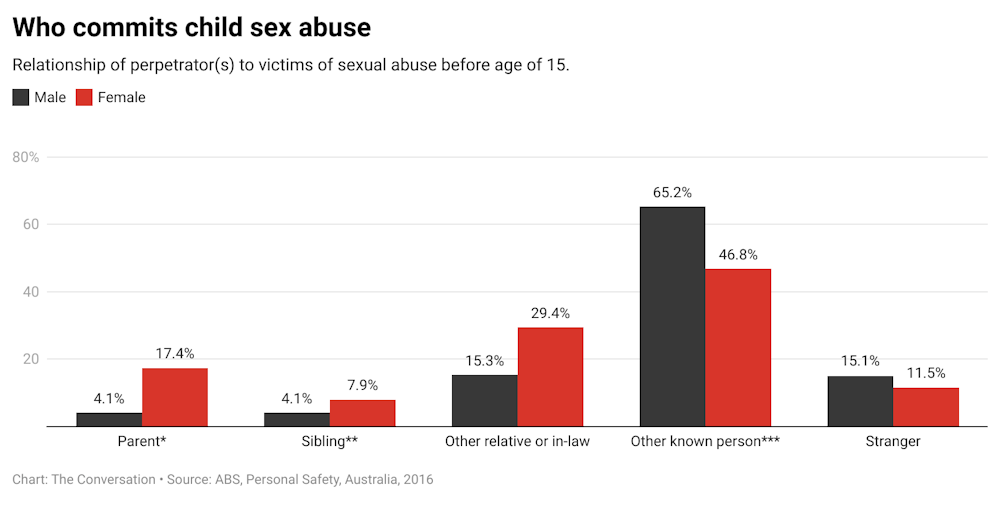
It was a very good year – but which Best Picture nominee will win an Oscar?

Source: The Conversation (Au and NZ) – By Ari Mattes, Lecturer in Communications and Media, University of Notre Dame Australia

Last year was an exceptional year for Hollywood cinema, and this is reflected in the Oscar nominees for Best Picture.

The Oscars often celebrate the middlebrow and polite over the exceptional and avant garde, resulting in many extraordinary films missing out on the accolades. In 2018, it was Luca Guadagnino’s striking Suspiria that received zero nominations.

Contrary to form, four of this year’s nominees could have been deserved winners other years. Even more refreshing is the radical difference between these films – from bourgeois social realist drama Marriage Story to anarchic black comedy Joker.

Close runner-up: Joker

Joker proves that Todd Phillips, whose early career, from Hated to Old School showed comedic promise, is finally making funny movies again.

After a poignant first half hour, the film breezes into (black) comedy mode, as we watch Joaquin Phoenix’s down-on-his-luck comedian Arthur Fleck become progressively more deranged. Phillips presents some genuinely hilarious tableaux.

Joker moves poignant tale to black comedy with ease.

Fitting for a movie about self-important Batman’s arch-nemesis, the whole thing is wonderfully absurd. Phoenix proves once again that he is the master of flawed characters who, while taking themselves seriously, are pathetically funny.

Joker reveals the contradictions of our political present — collective meaning-making transformed into individualised, identity-based fantasy. Phoenix’s Joker – forgotten by a broken welfare system — shows mass disenfranchisement can only be made sense of as its apolitical other: individual bursts of aimless violence.

Joker is a thoroughly amoral film. It presents a world of vital (and violent) negativity without offering the usual Hollywood moral bandaid.

Exquisitely simple: Marriage Story

Noah Baumbach’s Netflix film is similarly peppered with bursts of humour, but its approach is naturalistic.

Unlike some of Baumbach’s earlier films (see The Squid and the Whale and Greenberg), this has a decisive quality to it.

Scarlett Johansson deserves the Best Actress award for her performance in Marriage Story.

A simple narrative – a couple with a child undergoes a divorce – anchors an unbelievably compelling performance from Scarlet Johansson. It would be a great injustice if she did not win the Best Actress Oscar. Laura Dern and Ray Liotta are also brilliant as a couple of combative divorce attorneys.

The film is technically flawless in its construction, with the camera, editing, and score tending towards invisibility.

The final moment between the pair, involving a trivial daily act, epitomises the film as a whole – simple, beautiful, funny and emotionally devastating.

Long but worthy: The Irishman

Martin Scorsese’s true crime yarn The Irishman, also made for Netflix, demands a more complex process of critical evaluation.

Some of it is awe-inspiring – Joe Pesci’s performance as ageing gangster Russell Buffalino is one of its highlights. Robert De Niro’s subtle brilliance as Frank Sheeran is epitomised in a sequence towards the end of the film in which he makes a telephone call. He should have been nominated for a Best Actor Oscar on the basis of this scene alone.

Yet the territory is familiar stuff for Scorsese, and the first two-thirds of the (very long) film plays like a watered-down Goodfellas or a season of Boardwalk Empire – a retro true crime saga following gangsters and politicos in control of the Teamsters union. Al Pacino, nominated for an Oscar for his turn as Jimmy Hoffa, just does the usual Pacino thing where he shouts a lot, with little nuance.

Though it starts off as a watered-down Goodfellas, the final act of The Irishman becomes something more profound.

In the final third, however, the film takes a radically different turn. As the consciousness of the film merges with that of the eponymous hitman, it becomes increasingly emotionally complex.

The Irishman’s estrangement from his family, from his work, and from his social world is starkly realised when we find him in a nursing home. This one-time heavy now seems like a disoriented and tired old fogey, attempting to relive glory days by telling stories to people who don’t know – or care – about them.

It’s a long (did I mention long?) and gruelling film, brilliantly shot and staged. The finale turns what might otherwise seem like a self-indulgent genre exercise into a profound reflection on art and existence.

My pick for Best Picture: Once Upon a Time … in Hollywood

Once Upon a Time… in Hollywood is Quentin Tarantino’s 21st century masterpiece, and it would not be surprising if he made no more films after this one, given it seems to sum up the rest of his oeuvre – and Hollywood at large – as, indeed, fairytale.

His best film since Jackie Brown is a stunning, elegiac lament of the impossibility of film art to transform and transcend history.

Tarantino’s latest Hollywood masterpiece may well be his last.

Everything about this film works, from the extraordinary performances from old timers like Leonardo Di Caprio and (relative) newcomers like Margaret Qualley (who self-assuredly steals her scenes with Brad Pitt) to the stately creation and photography of a nostalgic Los Angeles.

The sequence in which Margot Robbie, as Sharon Tate, watches her performance on the big screen, delightfully laughing the whole time, is one of the most moving scenes in cinema. The fact that the character has few lines is in itself significant, a comment on her early silencing at the hands of the Manson family – and a wail for what could have been.

The explosive (and unexpected) violence at the end of the film offers the viewer, familiar with the Manson mythos, a chance to imagine other possibilities – and this is both satisfying and devastating.

Every moment in the film seems acutely aware of the absurdity, the thoroughly “Tinseltown” quality of its representation of history. It emphasises that nothing can ever be revised – unless it’s in the make-believe movies. And there is, typical for Tarantino, something sweet and naïve about this celebration of the potential of movies to allow us to simultaneously remember and forget the past.

And the rest…

Parasite, the latest film from stellar Korean director Bong Joon Ho, was many critics’ pick for film of the year — but it is let down by an uncommitted ending that drifts into sentimentality.

Parasite was three-quarters of an exceptional film.

The premise of a lower class family manipulating their way into domestic positions in an upper class household serves as the basis for a very funny narrative. But when the film is called on to commit to this violent premise, it seems to back out. Its tone becomes smarmy and self-important.

Ford v Ferrari is a well made biopic (from director of mediocre films, James Mangold) about the professional and personal struggles of car designer Carroll Shelby (Matt Damon) and driver Ken Miles (Christian Bale) as they seek to win the 1966 Le Mans race, but, like all biopics, seems a little hackneyed and stupid at times.

1917, likewise, is technically dynamic – the “one shot” experiment makes sense in this case – but is otherwise an unexceptional film about a couple of soldiers on a quest to save their fellows.

Could do better …

Only two of the eight nominees, Little Women and Jojo Rabbit were disappointments.

Little Women promised great things. It would seem like a good time to remake the cherished story of the March sisters, and a young director like Greta Gerwig would seem like a good choice – but it just doesn’t work as a movie. The acting is remarkably stiff with virtually no rapport between the sisters. Timothée Chalamet, usually brilliant, seems acutely uncomfortable with the staginess of the film’s approach.

There doesn’t appear to be any reason for the clunky reordering of the narrative or for major plot omissions and there appears to be no age differentiation between the sisters.

We simply watch a bunch of film star friends hanging out for a while, and this is pleasant enough – you wouldn’t turn it off if you were on a plane. But it is so stilted and affected (underscored by a kind of unjustified sense of self-importance) that it is hard to see why it was nominated for Best Picture.

Stilted and clunky, Little Women feels like watching a bunch of actor friends hanging out.

Relentlessly clever Taika Waititi’s latest film, Jojo Rabbit is wildly uneven. Some of the comedy works, some falls flat. It seems overly reliant on an outrageous comedic premise, while never quite gelling as a piece of cinema.

It is funny for a minute to see Waititi sending up Hitler, but it quickly becomes tiresome, as does Sam Rockwell’s turn as a disaffected Nazi. A bit like Waititi’s 2004 Oscar-winning short, Two Cars, One Night, it appears overly concerned with style. Though it almost taps into a child’s point of view – an awesome experience when effectively realised – it jars with the heavy-handed stylistic treatment of the material.

Not on the list …

There were, of course, several excellent films that received no nominations.

The French eco-thriller School’s Out, about a substitute teacher being gaslighted by his class of elite high school students, was one of the highights of 2019. So too the outrageous Brazillian-French exploitation yarn Bacurau, about rich American pleasure seekers attempting to wipe a small Brazillian town off the map.

Indeed, it was a very good year. Once Upon a Time … in Hollywood and Joker will be long-remembered as two of the strongest films of the 21st century, embodying some of the tendencies and contradictions of our age.

ref. It was a very good year – but which Best Picture nominee will win an Oscar? – https://theconversation.com/it-was-a-very-good-year-but-which-best-picture-nominee-will-win-an-oscar-130529

After the fires, a reason for optimism: our civic engagement has never been higher

Source: The Conversation (Au and NZ) – By Anne Tiernan, Professor of Politics. Dean (Engagement) Griffith Business School, Griffith University

This article is based on a longer essay published in the Griffith Review’s latest edition, Matters of Trust.


Much has been written about Prime Minister Scott Morrison’s missteps and leadership failures in the bushfire crisis that has consumed Australia this summer.

His refusal to meet with fire and emergency leaders months before the fires to discuss ideas and strategies informed by their collective experience. The flat-footed response to the crisis itself and reluctance to link it to climate change. His unwillingness to relent from hyper-partisan efforts to deflect blame to the states.


Read more: Scott Morrison’s biggest failure in the bushfire crisis: an inability to deliver collective action


Morrison’s government has since been further wracked by the “sports rorts” corruption scandal. The prime minister was roundly criticised for defending Nationals deputy leader Bridget McKenzie in the face of overwhelming evidence she used the sports grants program as a political slush fund targeted to marginal seats before last year’s federal poll.

Morrison appeared unabashed and perhaps convinced he could tough it out as he had during earlier controversies involving ministers Michaelia Cash, Stuart Robert and Angus Taylor. His refusal to release the Gaetjens report into McKenzie’s actions raised questions about how the apparently competing interpretations of Australia’s most senior public servant and the independent auditor-general might be reconciled.

After a brutal summer, Morrison returned to parliament this week a diminished and damaged shadow of his “miracle” election-winning self. And some fear all this portends 2020 will be yet another “annus horribilis” in the sorry recent history of Australian politics.

How crisis bring out the best in Australians

However, there is reason for optimism. Like the green shoots emerging from the hundreds of thousands of singed hectares across our country, Australia’s institutions are strengthening. Individuals and communities are engaging in both politics and the public sphere in ways they haven’t in a very long time.

Volunteer firefighters have been at the forefront of the bushfires, defending the lives and properties of their neighbours and friends – sometimes tragically, at the cost of their own lives.

The vast majority of firefighters in Australia are unpaid volunteers. Brendan Esposito/AAP

Other front-line workers – ambos, nurses, doctors, police and many others – have showed again and again why public trust in these individuals remains high, in stark contrast to evidence of its precipitous decline in other institutions.

Journalists are doing the job we need them to do as a key pillar of our democracy, keeping Australians informed and holding those in power to account.


Read more: Lots of people want to help nature after the bushfires – we must seize the moment


Local political leaders – councillors and MPs, mayors and premiers – have showed courage and compassion as they have made difficult decisions and prioritised resources to support bushfire-affected communities. Businesses and civic organisations have also mobilised to respond to the crisis.

And an array of unconventional alliances has developed among health care professionals, tradespeople, chefs, artists, musicians, writers, craft groups, wildlife carers and others, who have volunteered their time, resources and expertise to raise funds and lend much-needed support.

Innovative groups have also emerged to respond to communities in need, such as Find a Bed, an online platform to help those who have been displaced from their homes (many more than once) find accommodation. Other programs have been launched to provide victims with food, clothing, transport and other necessities.

Countless people like these have embraced the role we all play in the continuing national project of ensuring the safety and well-being of all Australians – wherever they live.

A kangaroo being treated by WIRES, Australia’s largest wildlife rescue organisation. Steven Saphore/AAP

A strong, resilient democracy

For some time, I have wondered whether institutional thinking could be revived in Australian politics. By this, I mean decision-making that emphasises long-term planning and the public interest, as well as a respect for the principles and conventions that constitute the “rules of the game”. This type of institutional thinking has been seriously eroded under recent governments.

The last decade has made me nervous. Many of the world’s most enduring liberal democracies are teetering on the brink. It wasn’t impossible to imagine the same happening in Australia.

This summer – brutal though it has been – has reminded me that I should have had more confidence. Whatever our differences, Australians’ essential empathy and yearning for connection always come out in times of crisis.


Read more: Might the bushfire crisis be the turning point on climate politics Australian needs?


Our democracy has many challenges, notably in terms of the government’s relationship with Indigenous peoples, the need to restore an appropriate balance between Commonwealth, state and local governments, and the recovery of our capacity for innovation and reform.

But despite these challenges, our democracy is strong and resilient. We have a collective responsibility to be vigilant to make sure it stays that way.

Politically engaged, active citizens represent a clear and present threat to the careerists, chancers and zealots who have come to dominate the political parties, lobbying groups and tabloid media.

The public reaction to the government’s failures in the bushfire crisis and the widespread disgust over the “sports rorts” controversy is a reminder of this. We need to continue being active citizens by enrolling to vote, taking an interest in policies and important debates, getting involved and exercising our hard-won democratic rights, including the right to protest.

These are powerful forces against the cynical politicians, who as The Economist described it last year, “denigrate institutions, then vandalise them”.

ref. After the fires, a reason for optimism: our civic engagement has never been higher – https://theconversation.com/after-the-fires-a-reason-for-optimism-our-civic-engagement-has-never-been-higher-131035

Looks like an ANZAC biscuit, tastes like a protein bar: Bogong Bikkies help mountain pygmy-possums after fire

Source: The Conversation (Au and NZ) – By Marissa Parrott, Reproductive Biologist, Wildlife Conservation & Science, Zoos Victoria, and Honorary Research Associate, BioSciences, University of Melbourne

Australia’s recent bushfires have razed over ten million hectares, and killed at least a billion animals. It’s likely countless more will die in the aftermath, as many species face starvation as the landscape slowly regenerates.

Even before the bushfires hit, we were working on supplementary food to help recover the critically endangered mountain pygmy-possum. They are seriously threatened by climate change, historic habitat destruction and more frequent intense fires.

Just months ago we landed on a recipe for Bogong Bikkies, nutritionally suitable baked biscuits that have the consistency of an ANZAC biscuit, taste a bit like a nutty gym protein bar and smell a little like Cheds crackers.

We never imagined our work would be needed so quickly – or urgently – but now our Bogong Bikkies are being deployed across the boulder fields of NSW, providing vital supplementary food to native species such as pygmy-possums, native bush rats and dusky antechinus.


Read more: A season in hell: bushfires push at least 20 threatened species closer to extinction


Hungry, hungry possums

Mountain pygmy-possums are the only Australian marsupial that hibernate every winter under snow, making it essential they build fat reserves before their long winter sleep. The main food source during their spring/summer breeding season is the migratory bogong moth.

However in 2017 and 2018 the billions of expected bogong moths largely failed to arrive, leaving many females underweight and unable to produce enough milk for their young. Due to a lack of food, 50-95% of females in monitored Victorian locations lost their entire litters.


Read more: You can help track 4 billion bogong moths with your smartphone – and save pygmy possums from extinction


In response, Zoos Victoria’s Healesville Sanctuary proposed creating a new supplementary food that could be used in the wild to support possums and their young until moth numbers recover.

Ten years ago, we analysed bogong moths to determine the fats, proteins, carbohydrates, vitamins and minerals required for a suitable breeding diet for possums in our captive breeding program.

While we have a successful diet for the possums in our care that includes nuts, insects, vegetables and a specially developed “bogong moth substitute”, the blend has the consistency of a soft caramel (or bogong moth abdomen) – not suitable for feeding in the wild. We needed a shelf-stable, long-lasting, nutritionally suitable food that could feed remote wild populations.

That’s the way the cookie crumbles

Throughout 2019, using our existing analyses of bogong moths, we worked with world experts in veterinary nutrition to develop Bogong Bikkies – nutritionally suitable baked biscuits for mountain pygmy-possums, and other species that live alongside them. We collaborated with Australian wildlife diet experts, Wombaroo, to have our new product commercially developed.

We then trialled the bikkies with the possums in our care at Healesville Sanctuary, so we could monitor whether the food was palatable or caused any health issues. It was a huge success. The possums liked the food, but happily ate other food too. This was exactly what we wanted: something that was completely safe and would be readily accepted, but not chosen over natural food sources.

Mountain Pygmy-possum mum and joeys. Tim Bawden/Zoos Victoria., Author provided

Once satisfied our captive trials were a success, we had to find the best way to deliver food safely to possums in boulder fields in the wild. This meant buying or making 12 different feeder prototypes. Our local hardware store knew us all by name! We tested four feeders, most of which were designed and built on-site, and chose the most successful three for trials in the wild.

Working with Parks Victoria and the Victorian Mountain Pygmy-possum Recovery Team, we tested these three feeders at 20 stations deep in the Alpine National Park, monitored with remote infrared cameras.

Over the last few months, Zoos Victoria and Parks Victoria staff have been refilling feeders, changing camera batteries and analysing hundreds of thousands of images and videos. After months of work, watching wild mountain pygmy-possums, native bush rats and dusky antechinus visiting our feeders and eating the food was a triumph.

A possum feeder in the wild. Zoos Victoria, Author provided

A raging inferno

Halfway through our research, some of the worst bushfires ever seen in Australia left habitats destroyed and our precious wildlife dead or starving. Victoria mountain pygmy-possum populations have so far not been directly impacted by fires this season, but populations on northern Mount Kosciuszko, New South Wales, were hard hit.

While the habitat was destroyed, we hoped some possums had survived deep in the boulder fields, as they have with previous fires. But surviving the initial fire is no help, if their environment and food sources have been so devastated that they can’t gain enough weight to hibernate before winter’s snow.

Within days of the January fires, we had packaged up our most successful feeder type, examples of our cooked bikkies, our best recipe and 30kg of Bogong Bikkie mix, and rushed it urgently to our NSW partners.

An infrared image showing a wild mountain pygmy-possum eating a Bogong Bikkie from a feeder. Zoos Victoria, Author provided

Teams from the NSW government’s Saving Our Species and NSW National Parks and Wildlife Service have now built and deployed 62 feeders and water stations in six boulder fields, baked batches of bikkies and started emergency feeding.

We’re thankful to have the food developed and research ready to assist. It is important to note, though, that such supplementary feeding is very intensive, and only appropriate for native species facing emergency situations, such as catastrophic fires.

If these bushfires teach us nothing else, it is the value of preparation, hard work and early funding to develop a range of conservation tools.

While we should all hope for the best, we must plan for the worst.


This article was co-authored Dr Kim Miller, Life Sciences Manager, Conservation and Research, at Healesville Sanctuary, Zoos Victoria, and Dr Leanne Wicker, Senior Veterinarian at Healesville Sanctuary, Zoos Victoria. The authors acknowledge Dr Linda Broome and the team from Biodiversity and Conservation (South East Branch) of the NSW Department of Planning, Industry and Environment for their work protecting the Mountain Pygmy-possum.

ref. Looks like an ANZAC biscuit, tastes like a protein bar: Bogong Bikkies help mountain pygmy-possums after fire – https://theconversation.com/looks-like-an-anzac-biscuit-tastes-like-a-protein-bar-bogong-bikkies-help-mountain-pygmy-possums-after-fire-131045

Genetic secrets of almost 2,700 cancers unveiled by landmark international project

Source: The Conversation (Au and NZ) – By Melissa Southey, Chair Precision Medicine, Monash University

Scientists have revealed the detailed genetic makeup of thousands of cancer samples, yielding new insights into the genes that drive the many and varied forms of the disease.

The results, published in a landmark collection of research papers in the journal Nature interpret the complete DNA sequences, or cancer genomes, of 2,658 cancer samples. This will further our understanding of the crucial “driver” mutations that underpin cancer development and offer potential as targets for treatments such as chemotherapy.

It is the work of some 700 scientists around the world, as part of an international project called the Pan-Cancer Analysis of Whole Genomes.


Read more: Why the causes of cancer are more than just random ‘bad luck’


The hallmark of a cancer cell is its unregulated growth. The mechanism that allows these cells to escape normal cellular growth regulation involves the introduction of mutations into the cancer cell’s DNA. The collection of mutations present in a particular cancer genome is thus known as that cancer’s “mutation signature”.

Each advance in our capacity to accurately and completely sequence whole cancer genomes, and to analyse the sequence data, has enabled a more in-depth analysis of these mutation signatures. Each step forward has revealed further diversity in the mutation processes that underlie the development and progression of cancer.

Diverse mutations

It is seven years since the previous landmark advance in this field. Back in 2013, researchers reported on the genetic makeup of 7,042 cancers of 30 different types, and identified 20 distinct mutational signatures.


Read more: Cancer ‘signatures’ offer hope for treatment and prevention


Today’s reports involve fewer cancers, but an increase in the number of cancer types to 38. But this latest advance is not really about numbers.

The real step forward is in our understanding of the diversity of DNA mutations and mutation signatures within cancer genomes. This is primarily the result of improved methods for analysing the DNA sequence data, compared with the state of the art in 2013.

As a result, important DNA sequence alterations that could not be detected in previous work have now been described. Each contributes important new details about each cancer genome.

Until recently, cancer DNA mutation analyses had been focused on small alterations in “coding regions” of DNA – the roughly 1% of DNA that is responsible for making proteins. The new analyses reported today have identified non-coding driver mutations – some of them large structural mutations that can be as big as entire chromosomes.

These new analytical capabilities have enabled the identification of 97 mutation signatures, five times more than previously known. The improved detail boosts our understanding of the diversity of cancer genomes. It also provides important new information about the order in which these mutations accumulate during cancer development.

However, there is good evidence to suggest that more work is still required to characterise the full spectrum of cancer DNA mutations. It is anticipated that all cancers will have at least one, and perhaps as many as five, driver DNA mutations. Despite the extensive array of analytical approaches described in these new reports, the researchers were still unable to identify any driver mutations in 5% of the cancers in their study.

The research has also shown that similar mutation signatures are present in cancers that arise in different tissues. This has implications for cancer treatment. For example, a drug successfully used to treat a breast cancer may be as effective for treating a pancreatic cancer if the two cancers share the same mutation signature.


Read more: Personalised medicine: how science is using the genetics of disease to make drugs better


These data will greatly advance our ability to identify cancers with the same or similar origins via their mutation signature. It has enormous implications for diversifying the current suite of drugs available for gene-targeted cancer treatment.

But, perhaps more significantly, it also offers the opportunity to expand our strategies for preventing cancer before it starts.

ref. Genetic secrets of almost 2,700 cancers unveiled by landmark international project – https://theconversation.com/genetic-secrets-of-almost-2-700-cancers-unveiled-by-landmark-international-project-131197

NZ evacuates PNG students in Wuhan airlift – several people ‘miss out’

St John says several people were turned away from a New Zealand-led evacuation from China yesterday.

Nearly 200 people, mostly New Zealanders, were flown to Auckland airport at about 6pm last night from Wuhan, the epicentre of the novel coronavirus.

Seventeen Papua New Guinean students were among those evacuated.

READ MORE: Coronavirus updates from RNZ

PNG Minister for Foreign Affairs and International Trade Patrick Pruaitch said from Port Moresby in a statement that 17 Papua New Guinean students out of the 21 initially reported to have been in the Wuhan lockdown had been evacuated with the assistance of the New Zealand Government.

All 193 people have arrived safely, the Director-General of Health Ashley Bloomfield said.

– Partner –

The Ministry of Foreign Affairs and Trade has said one passenger was stopped from boarding after failing a health check but that “no registrants were unable to board due to documentation and check-in processes”.

However, speaking to reporters at Auckland Airport last night, St John medical director Tony Smith said there were “a number of passengers that were prevented from coming to the departure lounge”.

He said he had no further details on why they were unable to board the flight.

60 not on flight
MFAT said around 60 people registered for the flight did not arrive at the airport and gave no notice. It has been approached for further comment.

Smith, who was on the flight from Wuhan, said passengers were very stressed out and suffered headaches. Several children were vomiting, he said.

None of the passengers showed any symptoms of the novel coronavirus.

At the airport in Wuhan, several people initially failed temperature screenings because they were wearing six to seven layers of clothing – a measure to counter China’s bitter winter – and had rushed to make the flight, Smith said.

“So we put those people aside, we got the layers off, we waited half an hour, we re-measured the temperatures, and they had all come back down and they were all asymptomatic.

“And those people were very worried that they might not get on the plane.”

Last passenger
The last passenger to board the flight was a British four-year-old who staff held up the departure for, British diplomat Danae Dholakia said on Twitter.

This article is republished under the Pacific Media Centre’s content partnership with Radio New Zealand.

Pacific Media Watch reports: A breakdown of nationalities on the flight:

  • 54 New Zealand citizens and 44 New Zealand permanent residents on Chinese passports
  • 23 Australian citizens and 12 Australian permanent residents on Chinese passports
  • 17 Timor-Leste
  • 17 Papua New Guinea
  • 8 Britain
  • 5 Samoa
  • 4 Tonga
  • 2 Fiji
  • 1 Kiribati
  • 1 Federated States of Micronesia
  • 1 Uzbekistan
  • 1 Netherlands

Article by AsiaPacificReport.nz
Charging your phone using a public USB port? Beware of ‘juice jacking’

Source: The Conversation (Au and NZ) – By Ritesh Chugh, Senior Lecturer/Discipline Lead – Information Systems and Analysis, CQUniversity Australia

Have you ever used a public charging station to charge your mobile phone when it runs out of battery? If so, watch out for “juice jacking”.

Cybercriminals are on the prowl to infect your mobile devices such as smartphones and tablet computers and access your personal data, or install malware while you charge them.

Specifically, juice jacking is a cyber attack in which criminals use publicly accessible USB charging ports or cables to install malicious software on your mobile device and/or steal personal data from it.


Read more: With USB-C, even plugging in can set you up to be hacked


Even a 60-second power-up can be enough to compromise your phone’s data. This is because USB cables allow the transmission of both power and data streams simultaneously. Victims can be left vulnerable to identity theft, financial fraud, and significant stress.

USB charging stations are a common sight in shopping centres, airports, hotels, fast-food restaurants, and even on public transport. While juice jacking is neither new nor particularly widespread so far, it was recently highlighted by Los Angeles County District Attorney’s Office as a significant threat, especially to travellers who can easily find themselves caught short and in need of a battery boost.

How does it work?

First, the attackers tamper with the charging stations or cables in public areas, and install malicious software on them. This software then infects the phones of unsuspecting users who subsequently plug into the tampered charger.

The software can invade, damage or even disable your phone. It can also steal or delete data from your phone and possibly spy on your usage activity, to the extent of transmitting your personal information such as account numbers, usernames, passwords, photos, and emails to the perpetrator.

How can I tell if I’ve been juice jacked?

Hacked mobile devices will often go undetected. But there are a few telltale signs that your device may have been hacked. These include:

  • a sudden surge in battery consumption or rapid loss of charge, indicating a malicious app may be running in the background

  • the device operating slower than usual, or restarting without notice

  • apps taking a long time to load or frequently crashing

  • excessive heating

  • changes to device settings that you did not make

  • increased or abnormal data usage.

How do I protect myself?

The tampering of USB charging stations or USB cables is almost impossible to identify. But there are some simple ways to guard against juice jacking:

  • avoid USB power charging stations

  • use AC power outlets rather than USB ports

  • use a portable battery power bank (your own, not a borrowed one!)

  • carry your own charging cable and adaptor

  • use a data-blocker device such as SyncStop or Juice-Jack Defender. These devices physically prevent data transfer and only allow power to go through while charging

  • use power-only USB cables such as PortaPow, which don’t pass any data.

And finally, if you must use a charging station, keep your phone locked while doing so. USB ports typically don’t sync data from a phone that is locked. Most mobile phones will ask your permission to give the USB port access to your phone’s data when you plug in. If you’re using an unknown or untrustworthy port, make sure you decline.

I think I might have been juice jacked – what can I do?

If you suspect you have fallen prey, there are several things you can do to protect your device’s integrity:

  • monitor your device for unusual activity

  • delete suspicious apps you don’t recall installing

  • restore your device to its factory settings

  • install anti-virus software, such as Avast Antivirus or AVG AntiVirus

  • keep your mobile device’s system software up to date. Developers continually release patches against common types of malware.


Read more: Apple iPhones could have been hacked for years – here’s what to do about it


A lot of data is stored on our mobile devices these days, and protecting our privacy is crucial. While juice jacking may not be a widespread threat, it is important to ensure the safety of our mobile devices. So, the next time you consider using a public USB charging station or cable, ask yourself if it is worth it, particularly as your personal information is at stake.

ref. Charging your phone using a public USB port? Beware of ‘juice jacking’ – https://theconversation.com/charging-your-phone-using-a-public-usb-port-beware-of-juice-jacking-130947

‘I want to stare death in the eye’: why dying inspires so many writers and artists

Source: The Conversation (Au and NZ) – By Claire Hooker, Senior Lecturer and Coordinator, Health and Medical Humanities, University of Sydney

This is one of our occasional Essays on Health. It’s a long read.


It may seem paradoxical, but dying can be a deeply creative process.

Public figures, authors, artists and journalists have long written about their experience of dying. But why do they do it and what do we gain?


Read more: On poetry and pain


Many stories of dying are written to bring an issue or disease to public attention.

For instance, English editor and journalist Ruth Picardie’s description of terminal breast cancer, so poignantly described in Before I say Goodbye, drew attention to the impact of medical negligence, and particularly misdiagnosis, on patients and their families.

English editor and journalist Ruth Picardie’s description of terminal breast cancer drew attention to the impact of medical negligence and misdiagnosis. Penguin Books

American tennis player and social activist Arthur Ashe wrote about his heart disease and subsequent diagnosis and death from AIDS in Days of Grace: A Memoir.

His autobiographical account brought public and political attention to the risks of blood transfusion (he acquired HIV from an infected blood transfusion following heart bypass surgery).

Other accounts of terminal illness lay bare how people navigate uncertainty and healthcare systems, as surgeon Paul Kalanithi did so beautifully in When Breath Becomes Air, his account of dying from lung cancer.

But, perhaps most commonly, for artists, poets, writers, musicians and journalists, dying can provide one last opportunity for creativity.

American writer and illustrator Maurice Sendak drew people he loved as they were dying; founder of psychoanalysis Sigmund Freud, while in great pain, refused pain medication so he could be lucid enough to think clearly about his dying; and author Christopher Hitchens wrote about dying from oesophageal cancer despite increasing symptoms:

I want to stare death in the eye.

Faced with terminal cancer, renowned neurologist Oliver Sacks wrote, if possible, more prolifically than before.

And Australian author Clive James found dying a mine of new material:

Few people read

Poetry any more but I still wish

To write its seedlings down, if only for the lull

Of gathering: no less a harvest season

For being the last time.


Read more: Vale Clive James – a marvellous low voice whose gracious good humour let others shine


Research shows what dying artists have told us for centuries – creative self-expression is core to their sense of self. So, creativity has therapeutic and existential benefits for the dying and their grieving families.

Creativity provides a buffer against anxiety and negative emotions about death.

Cartoonist Miriam Engelberg chose a graphic novel to communicate her experience of cancer. Harper Perennial

It may help us make sense of events and experiences, tragedy and misfortune, as a graphic novel did for cartoonist Miriam Engelberg in Cancer Made Me A Shallower Person, and as blogging and online writing does for so many.

Creativity may give voice to our experiences and provide some resilience as we face disintegration. It may also provide agency (an ability to act independently and make our own choices), and a sense of normality.

French doctor Benoit Burucoa wrote art in palliative care allows people to feel physical and emotional relief from dying, and:

[…] to be looked at again and again like someone alive (without which one feels dead before having disappeared).

A way of communicating to loved ones and the public

American tennis player and social activist Arthur Ashe wrote about his heart disease and subsequent diagnosis and death from AIDS. Ballantine Books

When someone who is dying creates a work of art or writes a story, this can open up otherwise difficult conversations with people close to them.

But where these works become public, this conversation is also with those they do not know, whose only contact is through that person’s writing, poetry or art.

This public discourse is a means of living while dying, making connections with others, and ultimately, increasing the public’s “death literacy”.

In this way, our conversations about death become more normal, more accessible and much richer.

There is no evidence reading literary works about death and dying fosters rumination (an unhelpful way of dwelling on distressing thoughts) or other forms of psychological harm.

In fact, the evidence we have suggests the opposite is true. There is plenty of evidence for the positive impacts of both making and consuming art (of all kinds) at the end of life, and specifically surrounding palliative care.

Why do we buy these books?

Some people read narratives of dying to gain insight into this mysterious experience, and empathy for those amidst it. Some read it to rehearse their own journeys to come.

But these purpose-oriented explanations miss what is perhaps the most important and unique feature of literature – its delicate, multifaceted capacity to help us become what philosopher Martha Nussbaum described as:

[…] finely aware and richly responsible.

Literature can capture the tragedy in ordinary lives; its depictions of grief, anger and fear help us fine-tune what’s important to us; and it can show the value of a unique person across their whole life’s trajectory.

Not everyone can be creative towards the end

Not everyone, however, has the opportunity for creative self-expression at the end of life. In part, this is because increasingly we die in hospices, hospitals or nursing homes. These are often far removed from the resources, people and spaces that may inspire creative expression.

And in part it is because many people cannot communicate after a stroke or dementia diagnosis, or are delirious, so are incapable of “last wordswhen they die.


Read more: What is palliative care? A patient’s journey through the system


Perhaps most obviously, it is also because most of us are not artists, musicians, writers, poets or philosophers. We will not come up with elegant prose in our final days and weeks, and lack the skill to paint inspiring or intensely beautiful pictures.

But this does not mean we cannot tell a story, using whatever genre we wish, that captures or at least provides a glimpse of our experience of dying – our fears, goals, hopes and preferences.

Clive James reminded us:

[…] there will still be epic poems, because every human life contains one. It comes out of nowhere and goes somewhere on its way to everywhere – which is nowhere all over again, but leaves a trail of memories. There won’t be many future poets who don’t dip their spoons into all that, even if nobody buys the book.

ref. ‘I want to stare death in the eye’: why dying inspires so many writers and artists – https://theconversation.com/i-want-to-stare-death-in-the-eye-why-dying-inspires-so-many-writers-and-artists-128061

8 things we do that really confuse our dogs

Source: The Conversation (Au and NZ) – By Melissa Starling, Postdoctoral researcher, University of Sydney

Dog behaviour is extraordinarily flexible – this is why we can keep them in our homes and take them to cafes with us at the weekend.

Nevertheless, there are ways in which evolution has not equipped dogs for the challenges of living in our world, and puppies must learn how to cope.

These are some of the things we do they struggle to understand.


Read more: Is your dog happy? Ten common misconceptions about dog behaviour


1. We leave them alone

As born socialites, dogs make friends easily. Puppies are intensely interested in spending time with other dogs, people, and any species willing to interact with them socially. They usually play, rest, explore and travel with company. Yet we often leave dogs alone: at home, in kennels or the vet clinic.

In these situations, naive dogs can’t be sure we’ll ever return to collect them. Only after experience are they likely to expect a reunion, and even then, their experience depends on the context.

At home, we may try to enforce dog-free zones. Naturally, many dogs protest. How can they stay with their (human) social group when they’re separated behind impenetrable barriers (doors)? This explains why dogs so often demand to be let inside when their human family is there, and why those with separation-related distress frequently find some solace in being indoors.

Dogs want to be with their group (you) at all times. from www.shutterstock.com

2. We are visually driven

Dogs live in an olfactory world, while ours is chiefly visual. So, while TVs may offer a visual feast for humans, parks and beaches are an olfactory banquet for dogs.

An additional challenge is dogs move while investigating the world, whereas we often sit still. They may not relish the inertia we enjoy in front of a noisy, flashing light-box.

3. We change our shape and smell

Shoes, coats, wallets, briefcases, bags and suitcases: countless smells cling to these items after we take them into shops and workplaces, then back to our dogs. Cleaning products, soaps, deodorants and shampoos also change the scents our dogs are used to.

Towels, hats and bags change our shape when we’re using them. And when we’re pulling them on, jumpers and coats alter our visual outline and may catch dogs unaware.


Read more: Training my dog taught me that it’s people who really need training


Dogs change their coats at least once a year. In contrast, we change our external cladding every day. This means the odours we carry are changing far more than dogs have evolved to expect.

In their olfactory world, it must be puzzling for dogs to encounter our constantly changing smells, especially for a species that uses scent to identify familiar individuals and intruders.

4. We like to hug

How humans use their forelimbs contrasts sharply with how dogs do. We may use them to carry large objects a dog would have to drag, but also to grasp each other and express affection.

Dogs grasp each other loosely when play-wrestling, and also when mating and fighting. Being pinned by another dog hinders a quick escape. How are puppies to know what a hug from a human means, when that behaviour from a dog might be threatening?

Dogs might feel threatened by our enthusiastic hugs. from www.shutterstock.com

5. We don’t like to be bitten

Play-fighting is fun for many puppies and helps them bond with other dogs. But they must monitor the behaviour of other dogs in play-fights and know when they’ve used their tiny, razor-sharp teeth excessively.

Humans are much more susceptible to pain from playful puppy jaws than other dogs are, and so we can react negatively to their attempts to play-fight with us.

Dogs interact with objects almost entirely with their muzzle. And to feed, they use their jaws, teeth and tongue.


Read more: Understanding dog personalities can help prevent attacks


Dogs also “mouth” other dogs when playing, expressing affection and communicating everything from “more” to “please don’t” to “Back off!”. So, naturally, they try to use their mouths when communicating with us, and must be puzzled by how often we take offence.

6. We don’t eat food from the bin

Dogs are opportunists who naturally acquire food anywhere they find it. In contrast, we present them with food in dishes of their own.

Puppies must be puzzled by our reaction when we find them snacking from benches and tables, in lunchboxes and kitchen bins. We should not be surprised when dogs unearth food we left somewhere accessible to them.


Read more: Whose best friend? How gender and stereotypes can shape our relationship with dogs


7. We share territories

We visit the territories of other dogs, bringing back their odours, and allow unfamiliar human and canine visitors to enter our dogs’ home. Dogs have not evolved to accept such intrusions and threats to their safety and resources.

We shouldn’t be surprised when our dogs treat visitors with suspicion, or when our dogs are treated with hostility when we bring them to the homes of others.

Dogs would not naturally share territories. from www.shutterstock.com

8. We use our hands a lot

Sometimes our hands deliver food, scratches, massages and toys. Other times, they restrain dogs, trim nails, administer ointments or tablets, and groom with brushes and combs that may pull hair.

No wonder some dogs grow to fear the human hand as it moves about them. We can make it easier for dogs to accept many types of hand-related activities if we train them to cooperate with rewards.

But humans often misread their fear and may even greet it with violence which compounds the problem. Hand-shy dogs can easily become defensive and find their way into pounds and shelters, where life expectancy for nippers and biters is poor.

On the whole, dogs show a remarkable ability to adapt to the puzzles we throw at them. Their behavioural flexibility offers us lessons in resilience and how to live simply and socially. Our challenge is to understand the absence of guile and malice in everything they do.

ref. 8 things we do that really confuse our dogs – https://theconversation.com/8-things-we-do-that-really-confuse-our-dogs-122616

Been to Dubai lately? It’s a city where top-down placemaking serves its political masters

Source: The Conversation (Au and NZ) – By Julian Bolleter, Deputy Director, Australian Urban Design Research Centre, University of Western Australia

Dubai became known for its gargantuan architectural gymnastics and mega shopping malls earlier this century. Today it is increasingly being recognised for its manufactured urban precincts, and large-scale events and festivals. Behind this shift has been an approach to urban development that prioritises the visitor’s experience.

As branding consultant Hadley Newman explains, visitors to Dubai:

…are seeking an experience, they want to take it home with them, or look back on an event as something like a new adventure – one that they may never have a chance to do again. People expect a complete experience that is distinctive in each place.

Placemaking is playing a key role in all this. Advocates for placemaking in the Western world articulate it as a bottom-up process generating activated, inclusive and enriching urban spaces.

In Dubai, however, autocratic ruler Sheikh Mohammed bin Rashid al Maktoum is driving top-down placemaking of key urban projects. In a bid to turn Dubai into one of the cultural epicentres of the world, in 2014 he urged:

Let us work as one team to transform our city into a cultural hub that attracts creative artists … a vibrant place for all.

Supporting these ambitions is a government target of 20 million tourists a year visiting the city by 2020.


Read more: Your choice of holiday destination is a political act


Ruler sets the agenda

Delivering this cultural experience are Dubai’s gargantuan property developers, including Emaar, Meraas, Dubai Properties and Nakheel. All are linked to Sheikh Mohammed and his ruling family and have placemaking-driven urban projects under way around the city.

“Brand Dubai”, the creative arm of the government media office, supports these developers through street art and art installations. These “communicate positive messages about Dubai’s unique culture, values and identity” and, by extension, Dubai’s leadership.

Most significant of the urban projects is the revitalisation and extension of the historic Dubai Creek districts. Sheikh Mohammed describes the area as the “very heart and soul of Dubai”. Other key placemaking projects include:

  • Dubai Design District, which is planned to reflect positively on Dubai’s brand, through designer fashion and interior design

  • Jumeriah Beach Walk, which offers up an image of a bustling yet exclusive coastal promenade

  • City Walk, which showcases Dubai’s emerging (yet largely faux) urbanity.

The faux urbanity of Dubai City Walk. Julian Bolleter

Collectively these projects are elegantly designed and enjoyable enough to visit. However, they also embody socio-cultural agendas, a dimension of such projects that the urban professions (inclusive of placemaking) tend to overlook.


Read more: Sense of place: messier than it ever was, so how do we manage this shifting world?


Creating controlled spaces

Graffiti is used at Dubai City Walk to promote the image but not the reality of creativity and subversion. Julian Bolleter

One of the key values of urban public space is that it carries the potential for random social encounters. Sociologist Richard Sennet argues that such encounters with difference is the key quality of true urbanity; that the density and diversity of people in public space has a civilising function that produces tolerance of difference and enables the formation of new identities.

Clearly a very multicultural city, such as Dubai, could function as Sennett suggests. But this is (often) not the case. Placemaking in Dubai carefully packages urban projects to offer highly choreographed and exclusive experiences for wealthy consumers, whether tourists or locals.

Dubai’s unskilled migrant underclass is effectively denied entry to such heavily place-branded projects. They are kept out not by fences, but by various “soft” strategies including high parking fees, lack of public transport, and aesthetic codes that signify a project’s exclusiveness.

As a result such projects (often) become “protected playgrounds”, which strip away the uncertainty and anonymity from urban life. As urban critic Kim Dovey explains, this “avoidance of risk leads [to the] sanitisation” of the urban experience, which otherwise enriches a city’s culture.


Read more: Making developments green doesn’t help with inequality


Nostalgic narrative has a powerful subtext

Much of the placemaking in Dubai has also been focused on recreating the traditional urban forms of a pre-petroleum Dubai, as destinations for Emiratis and wealthy tourists and expatriates. Examples of this nostalgia-laced placemaking include the Old Town, Souq Al Bahar, Souq Madinat Jumeirah, and Al Seef along Dubai Creek.

Further to its superficiality, the placemaking and design profession’s willingness to revive such traditional charades has a political dimension that goes unacknowledged. Cities do not “have” a memory – they “make” one for themselves with the aid of symbols, images, rites, ceremonies, places, and monuments. Dubai’s rulers use nostalgic urban forms, generated through placemaking, to construct a narrative that the rule of Sheikh Mohammed culminates a logical progression from Dubai’s ancient history to the present day.

The propagation of such narratives in Dubai is a flow-on effect of the Arab Spring. It has led to a harsher tone on issues of identity and national culture. Increasingly, locals are calling openly for state intervention to defend against “threats” allegedly posed by foreigners to “national culture”.

The nostalgia-laced placemaking of Al Seef. Julian Bolleter

Sheikh Mohammed’s keen interest in branding urban open spaces in Dubai is not coincidental. The mobilisations of the Arab Spring all took place in urban spaces such as Tahir Square in Cairo and Bahrain’s Pearl Roundabout. Attempts to promote particular nostalgic images of urban spaces in Dubai are, in part, an attempt to claim these spaces as not being open to appropriation for protests – subtle or overt.


Read more: How city squares can be public places of protest or centres of state control


Placemaking in Dubai is laced with complex power relations. This remains unacknowledged in much of the academic literature on placemaking.

Placemaking in Dubai – in some instances – has collapsed into a form of place branding that obscures societal exclusion, serves autocratic political agendas and grinds down urban authenticity. Dubai’s development companies are exporting their models of development to a vast region. It is important to scrutinise placemaking’s role in this concerning model of development.


This article is based on a longer version to be published in LA+ Interdisciplinary Journal of Landscape Architecture, no 11 (2020), and the book Desert Paradises.

ref. Been to Dubai lately? It’s a city where top-down placemaking serves its political masters – https://theconversation.com/been-to-dubai-lately-its-a-city-where-top-down-placemaking-serves-its-political-masters-128859

Bernie Sanders’ economic adviser has a message for Australia we might just need

Source: The Conversation (Au and NZ) – By Steven Hail, Lecturer in Economics, University of Adelaide

Debate over what the Reserve Bank governor and the treasurer should do usually runs along familiar lines.

The bank is supposed to set its cash rate to keep inflation low and stable, while the government is supposed to avoid deficits, at least on average, over the economic cycle and preferably run surpluses.

We have heard it so often that it seems like common sense. So when a famous economist comes along and contradicts it – an advisor to a US presidential contender no less – it’s understandable that people are shocked.

Yet that’s the message of Stephanie Kelton, a senior economic adviser to Bernie Sanders, and before that chief economist on the US Senate Budget Committee.

Professor Kelton, a leading modern monetary theorist, is the 2020 Visiting Harcourt Professor at the University of Adelaide, and during her visit in January was interviewed by most Australian newspapers, and many radio and TV outlets.

Professor Stephanie Kelton, “The Deficit Myth” University of Adelaide, January 15, 2020.

According to modern monetary theory (MMT), the narrative we have become used to is based on an outdated and misleading description of monetary systems. The key thing that’s been missing is an appreciation of the difference between a currency issuer and a currency user.

You and I, along with businesses and not-for-profits, local councils, state governments, governments with foreign currency debts, and even governments within the Eurozone, are currency users.

Before we can spend money, we need to find it – either by earning it, begging for it, digging into savings, or borrowing it.

Governments create, rather than raise, money

If we borrow money, we need to repay it at some point in the future or risk going broke.

The Australian Commonwealth government, and other national governments that issue currencies in the same way that our government does, are in a completely different position.

They have nothing in common with currency users. They can’t go broke, ever. It isn’t even possible, given the way our system works.


Read more: New year, new strategy? Unheralded change to budget targets creates space for stimulus


Our government is the monopoly issuer of the Australian dollar. Every dollar that it spends is a new dollar. It doesn’t need to raise taxes or or borrow before it can spend, although that is what it appears to do to those who don’t know how our monetary system works.

In reality, it is the other way around. Governments like ours need to spend dollars into existence before they can be used to pay taxes or to buy newly issued bonds. We need the government’s money – they don’t need ours. They issue the dollar. We use dollars.

Think of the economy as a bath

The economy is like a bath. It needs to be pretty full, but not too full. Shutterstock

Think of the economy as a bath, with government spending being the water coming out of the tap into the bath, and taxation and saving being the water that goes down the drain.

The spending comes first.

The macroeconomic role of taxation is to stop the bath overflowing – to stop total spending in the economy going beyond the productive capacity of the economy and creating the risk of accelerating inflation.

Taxation limits the spending power of the private sector, creating room for the government to spend on public goods and services and investments without driving prices up.

A budget deficit is simply the government making a net contribution of dollars to the economy, putting more dollars into the bath (into private bank accounts) than it is taking out in tax. It needs to, when the bath isn’t full enough. Its deficit is our surplus.

It isn’t a problem in an environment of unemployed resources and low and stable inflation where the bath isn’t full. It is a way of supporting the economy, and of adding to business sales and profits.


Read more: Memories. In 1961 Labor promised to boost the deficit to fight unemployment. The promise won


When the government runs a surplus, it puts less into the private sector than it takes out in tax. It vacuums up dollars and destroys them. It runs the risk of either driving economy into recession (as happened under Paul Keating) or driving households into debt (as happened under Peter Costello). Its surplus is our deficit.

There may be times when government surpluses are appropriate, but in a country not running large trade surpluses, those times will be rare indeed and won’t last for long. Australia has never run surpluses for long.

Governments choose to borrow, but needn’t

As for government debt – so often misnamed the national debt – it is better described as dollars that have been spent into existence and not yet taxed away. It might be better to call it the net money supply, than to label it as a debt.

The government chooses to issue bonds to the private sector and foreign investors also choose to buy them. But it needn’t. It could fund itself without borrowing. It issues the currency. It can’t go bust. And when there is spare capacity it won’t cause inflation.

There is of course a great deal more to MMT than I can fit into 800 words. It is based on more than 25 years of detailed research by many economists, including Australia’s Bill Mitchell and Kelton herself. But I hope there’s enough here to show you why it has become the first serious challenger to the narrative we have become so used to in decades.

You can learn more about it by watching Stephanie Kelton’s recent Harcourt Lecture at the University of Adelaide, or by reading her new book, The Deficit Myth, which will be published in June.

ref. Bernie Sanders’ economic adviser has a message for Australia we might just need – https://theconversation.com/bernie-sanders-economic-adviser-has-a-message-for-australia-we-might-just-need-130182

- ADVERT -

MIL PODCASTS
Bookmark
| Follow | Subscribe Listen on Apple Podcasts

Foreign policy + Intel + Security

Subscribe | Follow | Bookmark
and join Buchanan & Manning LIVE Thursdays @ midday

MIL Public Webcast Service


- Advertisement -
- Advertisement -
- Advertisement -
- Advertisement -
- Advertisement -