As well as Michelle Grattan’s usual interviews with experts and politicians about the news of the day, Politics with Michelle Grattan now includes “Word from The Hill”, where all things political will be discussed with members of The Conversations’s politics team.
In this week’s episode, politics + society editor Amanda Dunn discusses with Michelle current issues and what’s coming up.
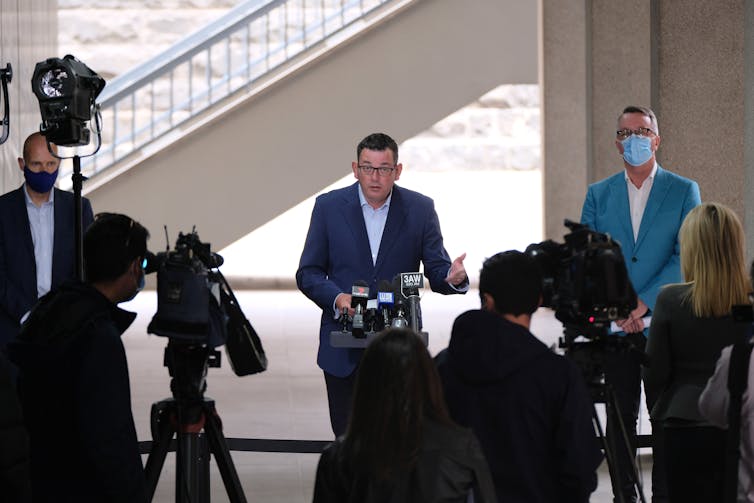
The pair dive into Speaker of The House Tony Smith’s efforts to reform Question Time, Scott Morrison’s agenda for the G7 Summit – taking place this weekend in the United Kingdom, and Victoria’s slow emergence out of lockdown.
Michelle Grattan does not work for, consult, own shares in or receive funding from any company or organisation that would benefit from this article, and has disclosed no relevant affiliations beyond their academic appointment.
Australian and US law enforcement officials on Tuesday announced they’d sprung a trap three years in the making, catching major international crime figures using an encrypted app.
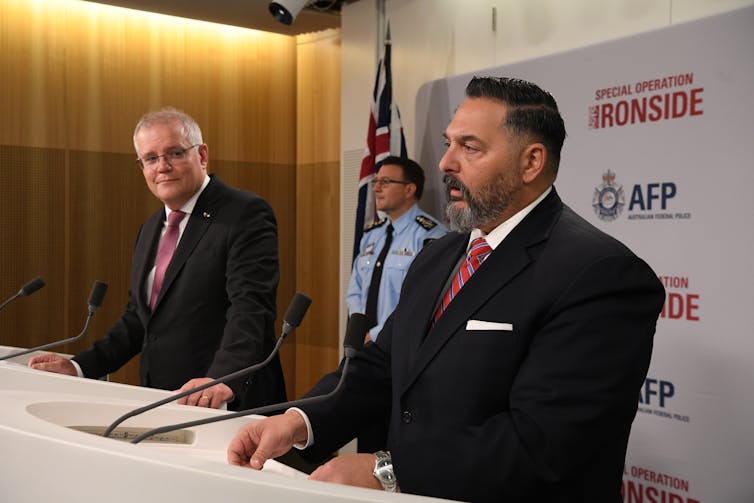
More than 200 underworld figures in Australia have been charged in what Australian Federal Police (AFP) say is their biggest-ever organised crime bust.
The operation, led by the US Federal Bureau of Investigations (FBI), spanned Australia and 17 other countries. In Australia alone, more than 4,000 police officers were involved.
At the heart of the sting, dubbed Operation Ironside, was a type of “trojan horse” malware called AN0M, which was secretly incorporated into a messaging app. After criminals used the encrypted app, police decrypted their messages, which included plots to kill, mass drug trafficking and gun distribution.
Police used an encrypted app used by underworld figures to bust the crime network. Shutterstock
25 million messages unscrambled simultaneously
AFP Commissioner Reece Kershaw said the idea for AN0M emerged from informal discussions “over a few beers” between the AFP and FBI in 2018.
Platform developers had worked on the AN0M app, along with modified mobile devices, before law enforcement acquired it legally then adapted it for their use. The AFP say the developers weren’t aware of the intended use.
The AN0M application, once appropriated by law enforcement, was reportedly programmed with a secret “back door” enabling them to access and decrypt messages in real time.
A “back door” is a software agent that circumvents normal access authentication. It allows remote access to private information in an application, without the “owner” of the information being aware.
All the while, the users — in this case the crime figures — believed communication conducted via the app and smartphone was secure.
Law enforcement could reportedly unscramble up to 25 million encrypted messages simultaneously.
Without this back door, strongly encrypted messages would be almost impossible to decrypt. That’s because decryption generally requires a computer to run through trillions of possibilities before hitting on the right code to unscramble a message. Only the most powerful computers can do this within a reasonable time frame.
App providers resist pressure to give ‘back-door’ access
In the mainstream world of encrypted communication, the installation of “back-door” access by law enforcement has been strenuously resisted by providers, including by Facebook for its WhatsApp messaging app.
In January 2020 Apple refused law enforcement’s request to unlock the Pensacola shooting suspect’s iPhone, following the deadly 2019 Florida attack which killed three people.
Apple, like Facebook, has long refused to allow back-door access, claiming it would undermine customer confidence.
Such incidents highlight the struggle of balancing competing demands for user privacy with the imperative of preventing crime for the greater good.
Apple and Facebook have refused to allow back-door access, claiming it would undermine customer confidence. Shutterstock
Getting criminals to use AN0M
Once AN0M was developed and ready for use, law enforcement had to get criminal “underworld” figures to use it.
To do so, undercover agents reportedly persuaded fugitive Australian drug trafficker Hakan Ayik to unwittingly champion the app to his associates. These associates would then be sold mobile devices pre-loaded with AN0M on the black market.
Purchase was only possible if referred through an existing user of the app, or if referred by a distributor who could vouch that the potential customer was not working for law enforcement.
The AN0M-loaded devices were mobiles — likely Android-powered smartphones — but with reduced functionality. They could do just three things: send and receive messages, make distorted voice calls and record videos — all of which was presumed to be encrypted by the user.
The AN0M phone increasingly became the device of choice for a significant number of criminal networks.
The AN0M-loaded devices were mobiles — likely Android-powered smartphones — but with reduced functionality. Dean Lewins/AAP
Building up a network picture
Since 2018, law enforcement agencies across 18 countries, including Australia, had been patiently listening to millions of conversations through their back-door control of the AN0M app.
Information was retrieved on all manner of illegal activities. This gradually enabled police to etch a detailed picture of various crime networks. Some of the footage and images retrieved have been cleared for public release.
A major challenge was for police to match overheard conversations with identities — as the AN0M phone could be purchased anonymously and paid for with Bitcoin (which allows secure transactions that can’t be traced). This may help explain why it took three years before police openly identified alleged perpetrators.
It’s likely the evidence obtained will be used in prosecutions, now a multitude of arrests have been made.
The future of encryption
Encryption technology is improving fast. It needs to, because computing power is also growing rapidly.
This means hackers are becoming increasingly capable of breaking encryption. When quantum computers become available, this problem will be further exacerbated, since quantum computers are massively more powerful than conventional computers today.
These developments will likely weaken the security of encrypted messaging apps used by law abiding people, including popular apps such as WhatsApp, LINE and Signal.
Strong encryption is an essential weapon in the cybersecurity arsenal and there are thousands of legitimate situations where it is needed. It’s ironic then, that the technology intended by some to keep the public safe can also be leveraged by those with criminal intent.
Networks of organised crime have used these “legitmate” tools to conduct their business, secure in the knowledge that law enforcement can’t access their communication. Until AN0M, that is.
And while Operation Ironside may have sent a shiver through criminal subcultures operating around the world, these syndicates will likely develop their own countermeasures in the ongoing game of cat and mouse.
David Tuffley does not work for, consult, own shares in or receive funding from any company or organisation that would benefit from this article, and has disclosed no relevant affiliations beyond their academic appointment.
Since moving from Pakistan to Australia, Mariam Mohammed has gained a bachelor’s and a master’s degree, co-founded a social enterprise (teaching financial literacy to women) and made the Australian Financial Review’s 100 Women of Influence list.
But there was a time she was so disheartened at not being able to get a job she considered changing her name to something less “Muslim” and more “Anglo”.
Her experience is not unique.
In the past 50 years most Western countries have become more tolerant of cultural diversity. Laws now forbid overt forms of discrimination based on gender, ethnicity or age.
But unconscious biases remain – with one of the most well-documented being discrimination against job applicants with ethnic minority, “foreign” names.
Reviewing 123 resume studies
I have analysed 123 “resume studies” to get a more fine-grained understanding of name-based discrimination in recruitment.
Resume studies typically involve researchers responding to real job advertisements with very similar resumes of fictitious job candidates. In these studies, some resumes have names indicating an applicant comes from an ethnic minority group, while other resumes have more common names. This enables researchers to compare the responses for the different names.
My review covered studies conduct in many countries like Australia, Austria, Belgium, Britain, Canada, China, Finland, France, Germany, Greece, Ireland, Italy, Malaysia, Netherlands, Norway, Peru, Sweden, and the United States.
More than 95% of the studies identified high ethnic discrimination in recruitment. On average, ethnic minority applicants received about half as many positive responses to their job applications.
There were, however, large differences in the degree of discrimination across the studies.
The following chart shows results from a selection of studies in different nations. The “net discrimination rate” is a common measure in resume studies. The higher the percentage, the higher the discrimination. So the resume studies show applicants with Moroccan names in Italy and African or German names in Ireland are more discriminated against than those with Turkish names in Germany.
Just three of the studies did not find any hiring discrimination against ethnic minorities. Only one reported hiring discrimination against the ethnic majority group – a study in Malaysia finding a Chinese name was more helpful than a Malay name. (Chinese Malaysians represent less than a third of Malaysia’s population, but are disproportionately represented in the business class.)
Yes, it really is the name that counts
The most noteworthy finding is the similar degree of discrimination against immigrants and the native-born children of immigrants (or second-generation immigrants).
Studies measured this effect through resumes for candidates with an ethnic minority name but with local educational qualification and work experience. Resumes for first-generation immigrants indicated attendance at foreign schools and universities and no local work experience. The response rate from recruiters was roughly the same.
These results show it is the ethnic minority name that’s the hindrance, rather than an assessment about a candidate’s language skills or a preference for local qualifications and work experience.
This point is underlined by US and Swedish study findings that adopting an ethnic majority name improves job application success.
One common assumption among recruiters and human resource managers is that deleting the name of the job application should result in a more equal recruitment process.
But the research has returned mixed findings about anonymous resumes.
A 2012 Swedish study, for example, found anonymous resumes did indeed improve the chances for job candidates of non-Western origin (and also for female candidates).
In contrast, a 2015 study in France reported that anonymous resumes increased ethnic discrimination in recruitment. The researchers suggest anonymous resumes might have led to harsher judgments of “negative signals” such as employment gaps.
So anonymous resumes might not be the solution. What recruiters need to focus on instead is training to recognise their unconscious biases and better evaluate resumes based only on applicants’ actual skills and experience.
Mladen Adamovic does not work for, consult, own shares in or receive funding from any company or organisation that would benefit from this article, and has disclosed no relevant affiliations beyond their academic appointment.
While changes to the Medicare schedule are needed, three weeks isn’t enough time to for the system to adapt. Surgeons and private health insurers need time to work through the changes and adjust their fees.
With hasty implementation, patients may face higher gap fees. The government should delay the changes so patients aren’t left in the lurch.
Remind me, what’s the MBS?
The Medicare Benefits Schedule is the list of tests, treatments, procedures and “attendance items” for (mostly) doctors’ and some other clinicians’ services. It sets out the government-determined fee and the associated Medicare rebate for each item.
Doctors in Australia can and do set their own fees, resulting in patients often facing significant out-of-pocket payments.
Changes to the MBS Schedule have to be implemented carefully – balancing the need for the MBS to reflect contemporary practice and ensuring value for tax-payers’ money, but avoiding patients being left further out of pocket.
For item numbers when patients are in private hospitals, the Medicare rebate is 75% of the fee. Private insurers must pay the 25% balance, and generally pay more on top of that, as part of a “known gap” agreement – where the insurer has entered into an agreement with the surgeon so that the patient’s out-of-pocket payment is fixed and known in advance, say $1000 – or a “no gap” agreement.
If the insurer hasn’t entered into an agreement with a surgeon, the patient may have to pay the full gap between the MBS fee and what the specialist charges.
Each item in the MBS has a “descriptor” which defines precisely what the item means.
The MBS needs to change with the times
Medicine changes with new technology, new anaesthetic techniques and new surgical procedures.
The MBS needs to recognise and adapt to these changes. This means the prices for procedures should be updated regularly.
The process so far
Historically, Australia hasn’t had a good track record of regularly updating the schedule.
Then in 2015, health minister Sussan Ley launched a complete overhaul of the MBS. Every section was to be reviewed to ensure the item numbers were still relevant and the descriptors were appropriate and reflected contemporary practice.
The review examined whether some MBS descriptors were no longer reflective of contemporary practice, or didn’t properly describe contemporary procedures.
The review was also to look at problematic billing practices, where some doctors used ambiguity in the MBS to claim multiple items for a procedure, while others only claimed for one item.
The review process involved separate committees for each area of the MBS. The reports of each area were published in dribs and drabs, with the final tranche published late last year.
The changes to the MBS
The government has been slowly responding to the recommendations.
Last year it announced changes to intensive care, diagnostic imaging (including breast imaging and nuclear), chemotherapy, blood products and several specialist areas.
In last month’s budget, it announced changes to varicose veins, gynaecology, pain management and some types of surgery.
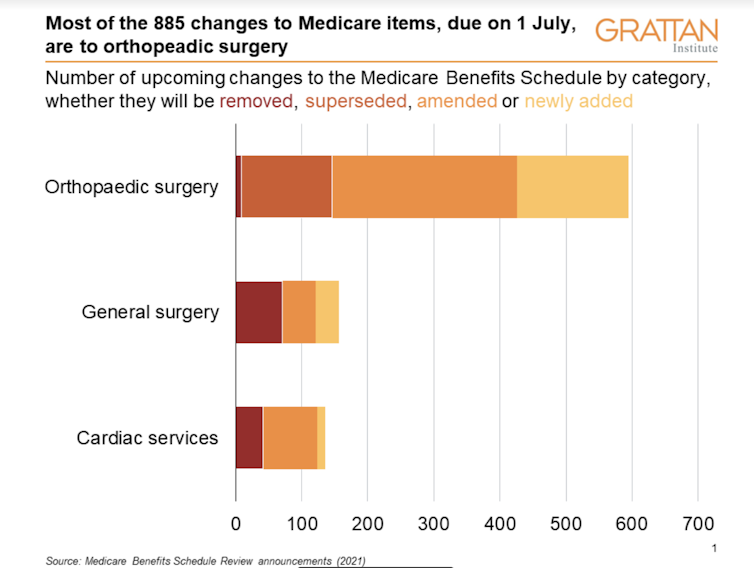
Almost half involve amending existing items (see the chart below).
Grattan Institute
The process of getting to these recommendations has involved extensive consultation, and the changes have generally been supported by the relevant parts of the profession.
The unwelcome surprise is not necessarily the changes themselves but the process of implementation. The general direction of reform was known, but the precise wording wasn’t. The timing of all the proposed changes also came as a surprise.
Will patients have to pay more?
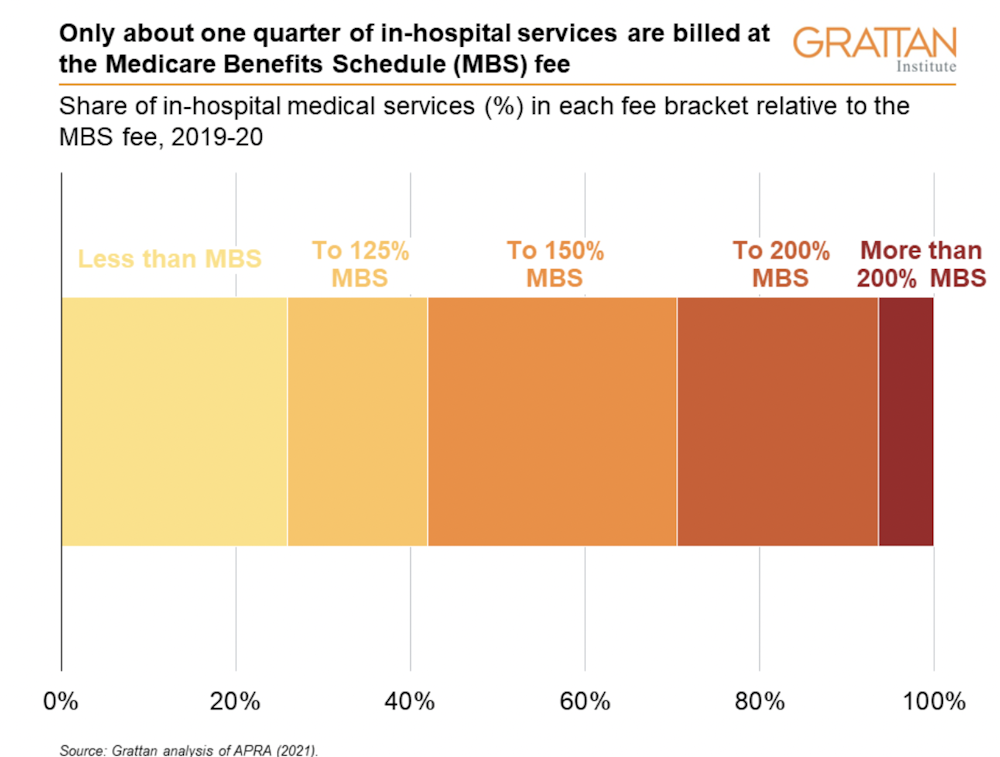
Most of the changes are to hospital-based procedures, where the MBS only covers part of the fee, with much of the rest covered by private health insurance, and the remainder as out-of-pocket payments for patients. Our recent Grattan Institute report shows only about one-quarter of in-hospital services are billed at the MBS fee:
Grattan Institute
The MBS rebate is, on average, just less than half (48%) the fee charged; private insurers pay about 40% and the balance is the patient out-of-pocket fee.
What private health insurers are prepared to pay determines the size of any gap a patient has to pay.
The response of private health insurers to the new MBS items is crucial. Insurers will have “no-gap” and “known-gap” arrangements with surgeons, and all of these will need to be reviewed as a result of the MBS restructure in the three specialties.
Insurers should negotiate with specialists to ensure they recognise the MBS umpire has decided what the base MBS fee is – and that specialists don’t respond by increasing patients’ out-of-pocket expenses.
Indeed, insurers might use this opportunity to bring down excess fees, which is a core part of making the insurance product more attractive.
Each insurer will have their own separate process for doing this, and each will do it on their own timeline.
Although it appears insurers may have been given more notice than doctors, it’s almost certain that some insurers will not have updated their view about what is a reasonable fee, nor finalised new contracts with surgeons about no-gap or known-gap arrangements by the current implementation date of July 1.
This will almost inevitably mean that patients will face increased out-of-pocket costs.
The remedy is simple: the government should defer the changes to allow adequate time for implementation. But it should stress that the delay is about implementation, not about reopening the debate about what is included in the revisions to the MBS.
Grattan Institute began with contributions to its endowment of $15 million from each of the Federal and Victorian Governments, $4 million from BHP Billiton, and $1 million from NAB. In order to safeguard its independence, Grattan Institute’s board controls this endowment. The funds are invested and contribute to funding Grattan Institute’s activities. Grattan Institute also receives funding from corporates, foundations, and individuals to support its general activities, as disclosed on its website. Medibank is an affiliate partner of Grattan.
And I’m guessing you think you’re missing out. People keep telling you so.
On one side of politics Labor leader Anthony Albanese says anyone earning $200,000 dollars a year “can’t be described as being in the top end of town”.
On the other, Prime Minister Scott Morrison parries with interviewers when asked whether people on $180,000 to $200,000 (the biggest beneficiaries of his planned 2024 Stage 3 tax cut) are “high income”.
“They’re hardworking people working out on mines and difficult parts of the country,” he says. “They deserve a tax cut.”
Hardworking or not, Australians on more than $200,000 are rare. And an awful lot of them don’t work at all.
$200,000 is unusual
I’ve never quite understood why politicians are so keen to tell us such incomes are normal. It might be because they are on them. Each backbencher gets $211,250 plus a $32,000 electorate allowance (boosted by $19,500 if they turn down the use of a private-plated vehicle) plus home internet and travel allowances.
Very detailed tax office figures (updated on Monday) tell us what the rest of us earn, all 14.3 million of us.
Only 2% of those required to pay tax earned more than $211,365. Only 3% earned more than $188,667.
Everyone else — the other 97% — earned less than $188,667, most of them a good deal less, and many more earned even less and weren’t required to pay tax.
What you report to myGov, the ATO reports to us, with a lag.
The figures released on Monday are for 2018-19, because it takes a while for the tax office to receive and process all the forms. 2019 is when Albanese said $200,000 wasn’t the “top end of town”, 2018 is when Morrison unveiled Stage 3.
The typical taxable income (typical in the sense that half earned more than it, half less) was $59,538. If that’s what you’re on, you’re more likely to find people who earn close to what you do than anyone who earns more or less.
We can get an idea of how lonely it is at the top by examining the top 1%, those Australians with a taxable income of greater than $350,134.
There aren’t many of them, just 110,613 — 82,258 men and 28,355 women.
Only 39,209 have taxable incomes of more than $500,000, and of these only 14,467 have taxable incomes of more than $1 million.
Life at the top needn’t be taxed
You’re probably thinking there’s a difference between taxable incomes and actual incomes, and the tax office figures show you’re right.
15,358 Australians reported total incomes of more than $1 million. By the time they had applied legitimate tax deductions, the number had shrunk to 14,467.
Some of these million-dollar earners were able to shrink their taxable incomes very low indeed. 45 cut their taxable incomes to less than the tax-free threshold of $18,200 — meaning they didn’t have to pay anything, not even the Medicare levy.
Another eight managed to escape the Medicare levy even though their taxable incomes were above $18,200, and another 21 escaped income tax while paying the Medicare levy.
Many of these millionaires weren’t “hardworking” in the sense Morrison meant. Only 9,144 of the 14,467 Australians on taxable incomes of more than $1 million worked. Only 17,883 of the 57,120 Australians on more than $250,000 worked.
Only nine of the 45 million-dollar earners who cut their taxable incomes to less than the tax-free threshold worked. 27 received so-called franked dividends from companies that had paid tax, enabling them to cut their own tax bills or receive rebates from the tax office. On average, each received dividends of $2.25 million.
Many who aren’t taxed are generous
Seventeen of the 45 million-dollar earners received capital gains, on average $6.4 million each. 38 received interest, averaging $290,000 each.
Against that were set expenses, small and large. Three claimed for work-related car expenses averaging $27,340 each, 13 claimed expenses averaging $57,200 for assistance with tax affairs, eight claimed for previous losses from farms averaging $684,000 each, and eight for losses from other businesses averaging $408,000.
But by far their biggest expense was donations. 14 gave away a total of $161 million in gifts or tax-deductible donations — an extraordinary average of $11.5 million each.
Most of us aren’t like these people.
Most of us claim more modest deductions
Three-quarters of Australians in the tax system earn less than $89,173.
Those on that income typically claim between $1,500 and $1,900 in deductions (men claim more than women) and, thanks to negative gearing, claim losses on properties of between $1,800 and $2,600 (again, men claim more than women).
Such Australians typically report between $1,200 and $2,100 in capital gains (more for women than for men).
If higher-earning Australians are unaware of how most of us live, it’s understandable. Surgeons mix with other surgeons. On average each of Australia’s 4150 surgeons earns $394,303, making surgery our highest-paying occupation.
We mix with, and marry, people like us
And they increasingly marry each other. In 2010 the Productivity Commission found that 68% of Australia’s high earners were married to other high earners. A decade earlier it was 49%.
And high earners live near each other. The average income in Sydney’s Double Bay (Australia’s highest-earning suburb) is $202,598. The average income in Ruse in Sydney’s Campbelltown is $55,100.
People in Double Bay don’t drive through Ruse on their way to the city.
In the United States it is often the other way around. There, low-income suburbs are more likely to be near the city, meaning that high-income Americans at least see them as they go in to town.
That most of us have little idea of what others earn suits those in charge when they propose tax cuts skewed to high earners.
They can con us that most of us will be better off, and those on high incomes can con themselves they are not already better off.
Peter Martin does not work for, consult, own shares in or receive funding from any company or organisation that would benefit from this article, and has disclosed no relevant affiliations beyond their academic appointment.
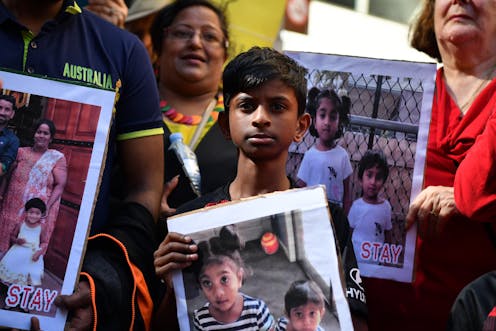
A boy holds a poster in support of the Biloela Tamil family at a 2019 rally. Joel Carrett/AAP
On Monday, the image of a small girl in a hospital bed, crying as her big sister gives her a kiss flooded social media feeds.
The girls are Tharunicaa and Kopika Murugappan, the only two children in immigration detention in Australia.
The photo was released by advocates as three-year-old Tharunicaa was medically evacuated to Perth on Monday evening. She had reportedly been unwell for ten days with high temperatures, vomiting and diarrhoea, as her family called for more medical help.
On Tuesday, family supporter Angela Fredericks told reporters,
It looks like they have said she has untreated pneumonia that led to a blood infection.
While the government denies there were treatment delays, it has once again raised the plight of the Tamil family, who have been detained since 2018.
Why are the family on Christmas Island?
Tharunicaa, her parents Priya and Nades and her sister, Kopika, have been in detention on Christmas Island since August 2019.
This followed a Department of Home Affairs attempt to deport the family from a detention centre in Melbourne to Sri Lanka. The deportation was interrupted mid-flight after an urgent injunction from the Federal Court. The plane was forced to land in Darwin, and the family was taken to immigration detention on Christmas Island, pending the outcome of their court appeal.
This came after the family had initially settled in the Queensland town of Biloela. Residents welcomed the family and have been actively campaigning for them to come “home to Bilo”.
Where is their legal fight up to?
The family has been engaged in legal appeals since 2012. Tharunicaa’s father and mother are both Sri Lankan nationals who arrived in Australia by boat in 2012 and 2013 respectively.
As they arrived without visas, they are considered in law to be “unlawful maritime arrivals.” Although Tharunicaa and six-year-old Kopika were born in Australia, they are also “unlawful maritime arrivals”.
Both parents applied for visas claiming they would be persecuted if they returned to Sri Lanka. Kopika was included in their application. But they were refused and appeals to tribunals, courts and the immigration minister were not successful.
Former home affairs minister Peter Dutton repeatedly said the family is not owed protection. They are part of a caseload who had their claims for refugee status determined under a “fast track” process. The Australian Human Rights Commission found significant issues with the “fast track” process and has called for a compassionate response to this family.
Tharunicaa
However, the family’s applications did not include Tharunicaa.
Current legal action centres around the obligations of the government to consider whether she can apply for a visa in Australia. As Tharunicaa is an “unlawful maritime arrival” she cannot apply for a visa unless the Home Affairs Minister (Andrews) personally intervenes.
Lawyers argue she has a strong claim for protection based on a range of factors including: the extensive media coverage of the family, the family’s Tamil ethnicity and their “purported” connections to the Liberation Tigers of Tamil Eelam (Tamil Tigers).
There have been ongoing protests in support of the family, calling for them to stay in Australia. Julian Smith/AAP
In April 2020, Federal Court Justice Mark Moshinsky ruled Tharunicaa had not given “procedural fairness” when her September 2018 request for permission to apply for a protection visa was rejected. That decision was upheld by the Full Court of the Federal Court in February. But further complicating matters, the court also found the immigration minister did not have an obligation to allow her to apply for a visa.
The ongoing litigation means the family will not be removed from Australia any time soon. But it is not clear whether the family or the government will take the next step and go to the High Court.
What are the ongoing health dangers for the family?
According to media reports, Tharunicaa had been unwell for ten days and did not get hospital access until this week, despite her families’ requests. As Priya said in a statement
She has been sick for many days, it took a long time for her to get to the hospital.
On Tuesday, a spokesperson for the Department of Home Affairs denied there had been any treatment delays.
The minor has been receiving medical treatment and daily monitoring on Christmas Island consistent with medical advice. This has included an IHMS general practitioner and the Christmas Island Hospital.
As soon as the ABF was advised by the treating medical practitioners that the minor required medical treatment in Western Australia, the minor was transferred to a hospital in Western Australia.
The Australian Border Force strongly denies any allegations of inaction or mistreatment of individuals in its care.
Health professionals have long warned of the difficulties of placing vulnerable people in remote locations such as Christmas Island. While primary care is available, there is poorer access to specialist and complex services.
In 2018, a Queensland coroner found delays in diagnosing and removing Iranian asylum seeker Hamid Kehazaei from Manus Island directly contributed to his death from septicaemia.
Tharunicaa has come to Perth with her mother, while her her father and sister have been left on Christmas Island. Last year, Priya was brought to Perth for treatment of an abdominal condition and had to leave the family behind.
This is a grave concern. There is a substantial body of evidence regarding child trauma to suggest that forced involuntary separation from family will have lasting mental health effects. The splitting up of the family will almost certainly compound existing trauma. Children are particularly vulnerable.
What can Karen Andrews do?
Andrews, as the senior minister responsible, is under increasing public pressure to do more for the family.
Dutton has previously said the reason the family was detained on Christmas Island and not the mainland was that it would allow them to be flown back to Sri Lanka without protesters putting Border Force officers in a “difficult position.”
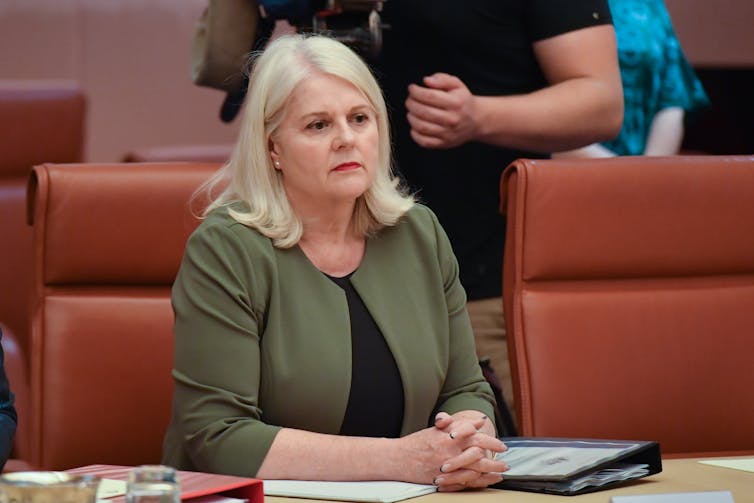
Karen Andrews was appointed Minister for Home Affairs in March. Mick Tsikas/AAP
Due to their status as “unlawful maritime arrivals,” only Andrews or Immigration Minister Alex Hawke have the power to allow them to live in the community. This can either be on Christmas Island or on the mainland on bridging visas or in community detention. Andrews recently said she was taking advice on whether she would allow them to live in the community on Christmas Island.
On Tuesday she added the government was “investigating a range of resettlement options”.
The ‘public interest’
The minister can grant any detainee a visa if they consider it to be in the “public interest” to do so.
The published guidelines on the exercise of this power states Andrews can grant a visa if a person has particular needs that cannot be properly cared for in a secured detention facility.
In 2013, we were involved in a case with then immigration minister, Scott Morrison. He intervened to release a woman with intellectual disabilities into the community with her family, stating that this was necessary due to her immediate mental health and welfare needs.
The health and welfare of Tharunicaa — at the very least — provides a clear reason to release the family from detention.
Mary Anne Kenny has previously received sitting fees from the Department of Home Affairs.
Nicholas Procter has previously received grant funding and sitting fees from the Department of Home Affairs.
Our moana (ocean) is in a state of unprecedented ecological crisis. Multiple, cumulative impacts include pollution, sedimentation, overfishing, drilling and climate change. All affect the health of both marine life and coastal communities.
To reverse the decline and avoid reaching tipping points, we must adopt more holistic and integrated governance and management approaches.
Indigenous peoples have cared for their land and seascapes for generations, using traditional knowledge and practices. But our research on marine justice shows Indigenous peoples face ongoing challenges as they seek to assert their sovereignty and authority in marine spaces.
We don’t need to wait for innovative Western science to take better care of the oceans. We have an opportunity to empower traditional and contemporary Indigenous forms of governance and management for the benefit of all people and the ecosystems we are part of.
Our research highlights alternative governance and management models to improve equity and justice for Indigenous peoples. These range from shared decision-making with governments (co-governance) to Indigenous peoples regaining control and re-enacting Indigenous forms of marine governance and management.
Indigenous environmental stewardship
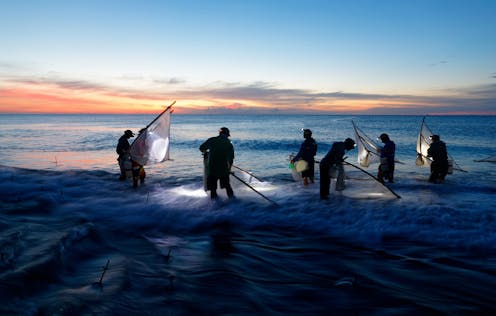
Throughout Oceania, Indigenous marine governance is experiencing a revival. The long-term environmental stewardship of Indigenous peoples is documented around the globe.
In Fiji, customary marine tenure is institutionalised through the qoliqoli system. This defines customary fishing areas in which village chiefs are responsible for managing fishing rights and compliance.
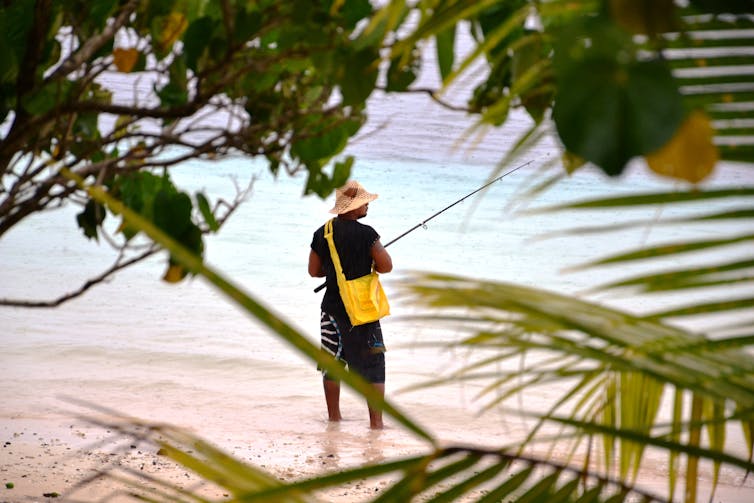
Coastal communities in Vanuatu continue to create and implement temporary marine protection zones (known as tapu) to allow fisheries stock to recover. In Samoa, villages are able to establish and enforce local fisheries management.
In Aotearoa New Zealand, Māori environmental use and management is premised on the principle of kaitiakitanga (environmental guardianship) rather than unsustainable extraction of resources.
Australian Aboriginal societies likewise use the term “caring for country” to refer to their ongoing and active guardianship of the lands, seas, air, water, plants, animals, spirits and ancestors.
From the mountains to the sea
These governance and management systems are based on Indigenous knowledge that connects places and cultures and emphasises holistic approaches. The acknowledgement of inter-relationships between human and nonhuman beings (plants, animals, forests, rivers, oceans etc.) is a common thread. So is an emphasis on reciprocity and respect towards all beings.
Coastal and island Indigenous groups have specific obligations to care for and protect their marine environments and to use them sustainably. An inter-generational thread is part of these ethical duties. It takes into account the lessons and experiences of ancestors and considers the needs of future generations of people, plants, animals and other beings.
In contrast to Western ways of seeing the environment, the Australian Indigenous concept of country is not fragmented into different types of environment or scales of governance. Instead, land, air, water and the sea are all linked.
Likewise, for Māori, Ki uta ki tai (from the mountains to the sea) encapsulates a whole-of-landscape and seascape view.
Sharing knowledge across generations
Māori hold deep relationships with their rohe moana (saltwater territory). These are increasingly recognised by laws that emphasise Indigenous rights based on Te Tiriti o Waitangi. One example is the Integrated Kaipara Harbour Management Group, which co-manages the Kaipara Moana (harbour). The co-management agreement specifies shared responsibilities between different Māori entities (Kaipara Uri) and government agencies.
The agreement recognises Kaipara hapū (sub-tribes) and iwi (tribe) rights, interests and duties. It provides financial support to enable them to enact kaitiakitanga practices as they work to restore the mauri (life force) of the moana through practical efforts such as replanting native flora and reducing sedimentation.
They are using their mātauranga Māori (Māori Knowledge) alongside scientific knowledge to enact kaitiakitanga and ecosystem-based management.
Another co-management agreement is operating in Hawai’i between the community of Hā‘ena (USA) and the Hawai’ian state government. The Hā‘ena community operates an Indigenous fishing education programme. Members of all ages camp together by the coast and learn where, what and how to harvest and prepare marine products.
In this way, Indigenous knowledge, with its emphasis on sustainable practices and environmental ethics, is transmitted across generations.
Indigenous knowledge, values and relationships with our ocean can make significant contributions to marine governance. We can learn from Indigenous worldviews that emphasise connectivity between all things. There are many similarities between ecosystem-based and Indigenous knowledge management systems.
We need to do more to recognise and empower Indigenous knowledge and ways of governing marine spaces. This could include new laws, institutions and initiatives that allow Indigenous groups to exercise their self-determination rights and draw on different types of knowledge to help create and maintain sustainable seas.
The authors acknowledge Roa Crease, Karen Fisher, and Gloria Hinestroza for their assistance with the research as well as Sustainable Seas National Science Challenge for providing funding.
Meg Parsons receives funding from the National Science Challenge Sustainable Seas Programme through a research grant for 4.3 project Enabling Kaitiaktanga and Ecosystem-based Management (C01X1901)
Lara Taylor is sub-contracted to and receives funding from the Ministry of Business, Innovation and Employment for her research in the Sustainable Seas National Science Challenge.
Over the past six years, quantum science has noticeably shifted, from the domain of physicists concerned with learning about the universe on extremely small scales, to a source of new technologies we all might use for practical purposes. These technologies make use of quantum properties of single atoms or particles of light. They include sensors, communication networks, and computers.
Quantum technologies are expected to impact many aspects of our society, including health care, financial services, defence, weather modelling, and cyber security. Clearly, they promise exciting benefits. Yet the history of technology development shows we cannot simply assume new tools and systems will automatically be in the public interest.
Let’s consider an example. Quantum computers are perhaps the best-known quantum technology, with companies like Google and IBM competing to achieve quantum computation. The advantage of quantum computers lies in their ability to tackle incredibly complex tasks that would take a normal computer millions of years. One such task is simulating molecules’ behaviour to improve predictions about the properties of prospective new drugs and accelerate their development.
One conundrum posed by quantum computing is the sheer expense of investing in the physical infrastructure of the technology. This means ownership will likely be concentrated among the wealthiest countries and corporations. In turn, this could worsen uneven power distribution enabled by technology.
How do we stop ourselves blundering into a quantum age without due forethought? How do we tackle the societal problems posed by quantum technologies, while nations and companies race to develop them?
Charting a path
Last year, CSIRO released a roadmap that included a call for quantum stakeholders to explore and address social risks. An example of how we might proceed with this has begun at the World Economic Forum (WEF). The WEF is convening experts from industry, policy-making, and research to promote safe and secure quantum technologies by establishing an agreed set of ethical principles for quantum computing.
Australia should draw on such initiatives to ensure the quantum technologies we develop work for the public good. We need to diversify the people involved in quantum technologies — in terms of the types of expertise employed and the social contexts we work from — so we don’t reproduce and amplify existing problems or create new ones.
While we work to shape the impacts of individual quantum technologies, we should also review the language used to describe this “second quantum revolution”.
The rationale most commonly used to advocate for the field narrowly imagines public benefit of quantum technologies in terms of economic gain and competition between nations and corporations. But framing this as a “race” to develop quantum technologies means prioritising urgency, commercial interests and national security at the expense of more civic-minded concerns.
It’s still early enough to do something about the challenges posed by quantum technologies. It’s also not all doom and gloom, with a variety of initiatives and national research and development policies setting out to tackle these problems before they are set in stone.
We need discussions involving a cross-section of society on the potential impacts of quantum technologies on society. This process should clarify societal expectations for the emerging quantum technology sector and inform any national quantum initiative in Australia.
Tara Roberson is a research fellow within the Australian Research Council Centre of Excellence for Engineered Quantum Systems. She is supported by the CSIRO’s Responsible Innovation initiative.
Source: The Conversation (Au and NZ) – By Sangeetha Pillai, Senior Research Associate, Andrew & Renata Kaldor Centre for International Refugee Law, UNSW Law School, UNSW
Shutterstock
In a significant judgment, Federal Court judge Geoffrey Flick on Monday ordered the Australian government to pay A$350,000 in damages to a Iraqi asylum seeker who was found to have been unlawfully held in immigration detention for over two years.
It’s an important case because it represents a rare litigation win for an asylum seeker. While the asylum seeker doesn’t automatically get the right to stay in Australia, he has won damages — and that is unusual.
This case (and another known as “the AJL20 case”, which we’ll get to later) open the door to the possibility others in the same position might also be able to claim damages.
It leaves open the prospect of compensation claims for asylum seekers who have been in detention, where no effort has been made to remove them.
The asylum seeker — a 26-year-old man referred to only by the pseudonym “MZZHL” — arrived in Australia by boat in 2012. He applied for a protection visa, and was rejected. He appealed, twice, and was unsuccessful. Despite this, it’s possible that MZZHL may be a genuine refugee. As Justice Flick noted in his judgment, information that emerged much later suggests that the decision to reject his protection claim may have relied on incorrect assumptions.
While his appeals were underway, and for some time after, MZZHL was allowed, by ministerial discretion, to live in the Australian community on a bridging visa. Eventually this bridging visa expired.
Under Australia’s Migration Act, a non-citizen who does not hold a valid visa is an
“unlawful non-citizen”, and must be detained in immigration detention.
MZZHL was taken into immigration detention in August 2018, and the Department of Home Affairs made initial efforts to arrange his removal from Australia. In October 2018, he made a request in writing to be removed to Iraq, which the department made attempts to fulfil.
Up to this point, Justice Flick found that MZZHL’s detention was lawful, because it was for the purposes of removal from Australia, and the government was making active efforts to remove him as soon as practicable.
When did the detention become unlawful?
In March 2019, MZZHL withdrew his request to be removed to Iraq. He feared if he returned his life would be in danger, because authorities had come searching for him and had burned his family home to the ground.
At this point, the government ceased any efforts to remove him from Australia. It did not explore the possibility of finding a country other than Iraq that might have been willing to accept him.
The government also did not explore the prospect of sending MZZHL to Iraq against his will.
This might seem like a good thing, given that a forced return to Iraq may have exposed MZZHL to harm, contravening Australia’s non-refoulement obligations under international law.
However, section 197C of the Migration Act says that, for the purposes of removing a non-citizen from Australia, Australia’s non-refoulement obligations are “irrelevant”. Section 197C has been amended in the last fortnight, but, at the time MZZHL’s case was heard, it required the government to actively seek to remove him to the first available place — even if this was somewhere where he might face grave harm.
The Commonwealth accepted that, by failing to take active steps to pursue MZZHL’s removal, it had breached its obligation to remove him from Australia as soon as practicable. Nonetheless, it argued MZZHL’s detention was lawful because it was for the legitimate purpose of removal.
Justice Flick disagreed. He held that
the pursuit of any “purpose”, let alone a “purpose of removing [MZZHL] from Australia” had been abandoned.
On this basis, he found MZZHL had been unlawfully detained.
Alternatives to removal
As Justice Flick noted, there was another option available to the government.
The immigration minister has a power, under section 195A of the Migration Act, to grant a visa to a person in detention, where this is in the public interest. The minister has no duty to consider exercising this power — it is simply an option available to them.
On May 4, the first day that MZZHL’s case was listed for hearing, the minister exercised the power under section 195A to grant him a bridging visa. This is not a long term right to remain in Australia, merely an option to live in the community instead of detention until departure becomes possible.
Justice Flick also noted the Commonwealth could have considered whether MZZHL had additional protection claims that had not been determined, in light of the evidence of attacks on his family home, and other information suggesting that, contrary to earlier assessments, he may have been an Iraqi citizen.
For over two years prior to the hearing, none of these options were pursued, and the government also made no efforts to remove MZZHL from Australia. It simply did nothing.
Damages
The Commonwealth argued that even if MZZHL’s detention was unlawful, the only available remedy was a court order demanding that it fulfil its obligation to pursue MZZHL’s removal.
Justice Flick disagreed. He concluded MZZHL had been unlawfully deprived of his liberty, and should have been released from detention “soon after March 2019”.
He awarded MZZHL $350,000 in damages, calculated in a similar manner to that used in false imprisonment cases.
What next? The future is uncertain for MZZHL
Last year, in another Federal Court case, AJL20 v Commonwealth, Justice Bromberg made similar findings to Justice Flick.
The Commonwealth appealed to the High Court, which is yet to deliver a judgment. It remains to be seen whether the outcome of the AJL20 appeal will affect the MZZHL finding.
If the Commonwealth loses, both Federal Court decisions will stand.
But even if the Commonwealth succeeds in overturning the Federal Court decision in AJL20, the decision in MZZHL may stand, because Justice Flick used slightly different reasoning to Justice Bromberg.
Whatever the outcome in the AJL20 appeal, the future is uncertain for MZZHL. He is currently on a bridging visa, but still has an obligation to leave Australia.
If this isn’t granted, and his bridging visa expires, he will once again face detention and removal, albeit under a statutory regime that has seen some recent changes.
Samoa’s Prime Minister-elect, FAST party leader Fiame Naomi Mata’afa, says negotiations remain at an impasse between her party and the rival Human Rights Protection Party (HRPP).
The parties met yesterday in Apia to try and resolve the stalemate resulting from the April 9 election.
In a statement last night, Fiame maintained that FAST held the majority of 26 seats to the HRPP’s 25.
She said these FAST members had been sworn in, with a cabinet appointed and speaker and deputy chosen.
The HRPP leader, caretaker Prime Minister Tuila’epa Sa’ilele Malielegaoi continued to claim the result was not clear because 10 percent of 51 members or six women representatives in the House had not been achieved.
But Fiame said last week’s Court of Appeal decision was not retrospective and could only apply to future elections as the writ of appointment of the elected members was given by the Head of State on 16 April 2021.
Fiame said she was also seeking the continuing support and prayers of the churches and the nation as the political leaders look to amicably resolve the current impasse.
This article is republished under a community partnership agreement with RNZ.
Excitement among Cook Islands tourism operators and officials at the opening of quarantine-free travel with Aotearoa New Zealand was understandable. The impact of the pandemic on the island nation’s economy has been massive and will be felt for a long time.
But it wasn’t long before a local environmental organisation sounded a warning about the risks of a return to high-volume tourism.
The popular Muri lagoon area has already suffered from pollution. There is also pressure on sacred sites such as Avana harbour, legendary departure place of the seven canoes that sailed to Aotearoa around 700 years ago.
On the other side of the world, there is a renewed movement to save Venice from pre-pandemic threats of over-tourism and cruise ships damaging its ancient canals.
In Aotearoa New Zealand, too, people have been given pause to think about whether a return to tourism as usual is viable.
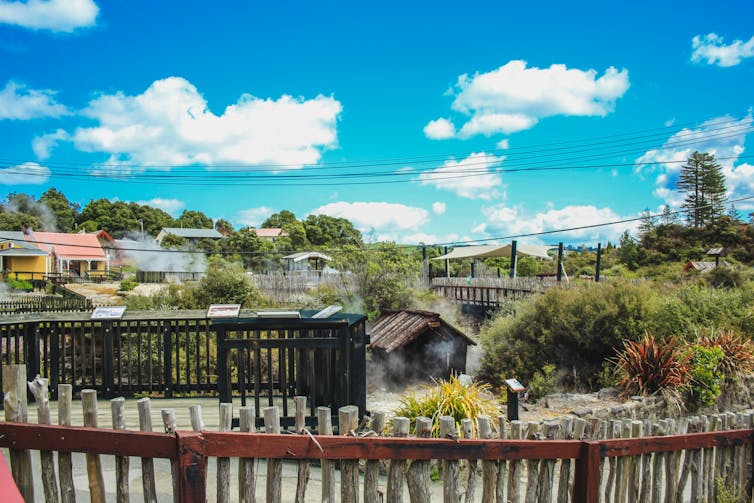
One iwi, Tūhourangi Ngāti Wahio at Whakarewarewa in Rotorua, has seriously considered whether to allow tourism to resume in their village. Virtually synonymous with the birth of tourism in Aotearoa, the iwi now questions just what benefits its people are receiving from tourist activity.
Everywhere, it seems, there are debates about what tourism will look like in the post-COVID era.
Questioning the benefits of mass tourism: the legendary Whakarewarewa, Rotorua’s ‘thermal village’ attraction. www.shutterstock.com
Significantly, the Parliamentary Commissioner for the Environment has advocated for using the disruption caused by COVID-19 to transform the local tourism industry.
This would be based on the industry being accountable for its environmental costs, and involving local communities and mana whenua in decision-making — echoing other calls to recalibrate tourism within “sustainable bounds”.
Few people would argue for a return to unsustainable practices, but what does this really mean? And who might we turn to for solutions?
We argue Indigenous philosophies of enterprise and economy have the potential to provide those answers — if we are bold enough to allow such voices to be heard.
In Māori philosophy, people and the environment are kin. As such, they depend on one another for their well-being. Consequently, some of the voices we need to hear are those of Papatūānuku (Earth mother) and her elements, the rivers, mountains and seas.
What is more natural than wanting to have a conversation with your relations in times of trouble or joy? This can be an alien concept for many, but the Māori practice of karakia (incantation) is essentially about communicating as kin with the natural elements.
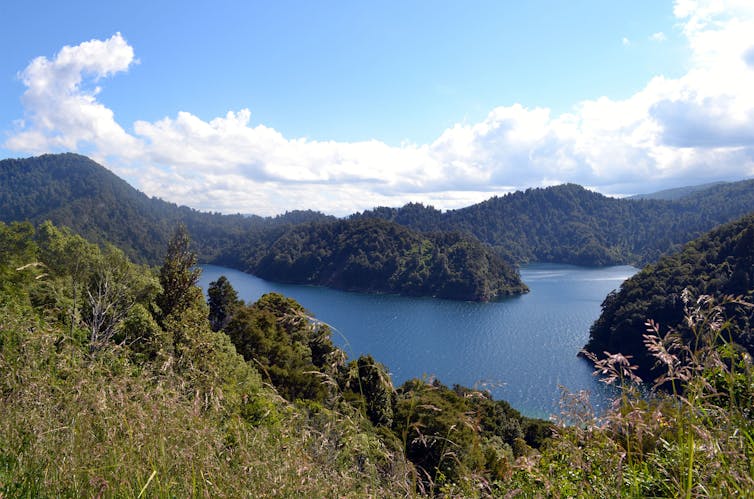
Te Urewera: legal personhood was established in 2014. www.shutterstock.com
Ask the river
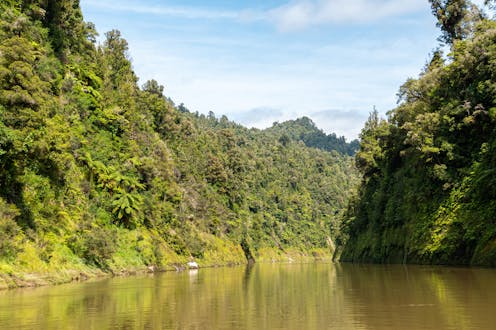
While relatively novel, the granting of legal personhood to Te Urewera in 2014 and Te Awa Tupua in 2017 enacts a fundamental idea of indigeneity — that all things, human and non-human, are interrelated.
For the iwi of Te Awa Tupua, this sense of unity is captured in the tribal saying:
Ko au te awa, ko te awa ko au — I am the river and the river is me.
Perhaps those wanting a conversation about what sustainable tourism might look like could begin by asking the river.
This is not a fanciful suggestion. Te Awa Tupua has been given a human face in the form of Te Pou Tupua, a single role held by two people appointed to speak on behalf of Te Awa Tupua and to uphold Tupua te Kawa, the natural law and values of the river.
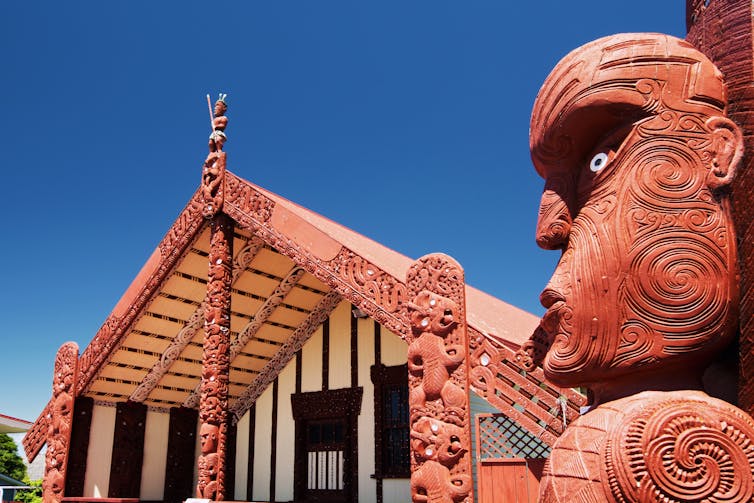
Te Papaiouru Marae in Rotorua: smaller-scale cultural experiences could be the future. www.shutterstock.com
Low growth, high quality
Our research has exposed social and ecological tensions between conventional industry ideas and Māori tourism operators’ attitudes to commercial growth. Māori tourism enterprises will more readily opt for lower growth in favour of environmental and community well-being.
One Māori-owned jet boating enterprise, for example, would forgo tours beyond a desired daily maximum to help minimise the environmental footprint of the operation on the awa (river) and surrounds. They preferred to focus on quality of experience, not quantity of visitors.
Another Māori operator prioritised job opportunities for whānau to harness their cultural knowledge and deepen their connection to the awa. As the owner reflected:
I think the biggest aspiration is for my kids to know and identify themselves with the river.
Similarly, a marae-based tourism experience has avoided catering for busloads of visitors in favour of smaller groups. Tribal narratives of the awa are linked to discussions about climate change, all within a culturally unique space that allows time to reflect on the human connection to Te Awa Tupua.
These examples of Māori tourism demonstrate there are other ways of thinking beyond
a return to the old mode of accentuating growth at the expense of the environment and local communities.
Given the impact of COVID-19 now and likely into the future, the tourism industry can’t ignore the innovative potential of Māori world views.
A sustainable tourism model also recognises the essential purpose of treaty settlements such as those agreed in Whanganui — to allow people to live a good life in peaceful co-existence with each other and the land for all time.
In practice, this means a homegrown Indigenous framework for discussing and building sustainable tourism is already at our doorstep. We need only ask the rivers, the mountains, the seas – our ancestors – for guidance on what that means for coming generations.
Jason Paul Mika receives funding from Massey University to conduct research on Māori tourism on the Whanganui River.
Regina Scheyvens does not work for, consult, own shares in or receive funding from any company or organization that would benefit from this article, and has disclosed no relevant affiliations beyond their academic appointment.
The word “reparations” comes from the Latin verb reparāre, meaning “to repair.” However, nowadays, many people equate reparations with the payment of compensation or damages.
We need to understand and embrace the true meaning of the word and start to have genuine conversations about reparations for LGBTQ people — a group that has endured a long and painful history of persecution around the globe.
A brief history of gay persecution
Perhaps the most high-profile persecutions of gays were those perpetrated by the Nazis during the second world war. Thousands of gay men were sent to concentration camps where they were forced to wear a pink triangle and ultimately killed.
But the history of gay persecution predates the Holocaust, and has continued after the Nazi regime ended.
From the 12th century, gays in Christian Europe were castrated, decapitated, drowned in swamps and burned at the stake. And in modern times, the state-sanctioned killing of LGBTQ people continues in many countries, including Iran and Saudi Arabia.
There are still 71 countries that criminalise consensual gay sex — half of which are Commonwealth nations — but thankfully this number is going down.
What are gay reparations?
There are numerous forms that gay reparations can take. They often entail a formal government apology to the LGBTQ community for past wrongs and a promise to do better in the future.
They can also include memorialising the victims of state-sponsored repression of gays, as Germany did in 2008 when it unveiled a memorial to gay victims of the Holocaust.
Gay reparations often include pardons to those convicted of the “crime” of being gay.
In 2017, for instance, the UK issued posthumous pardons to thousands of gay and bisexual men convicted of “gross indecency” in the past, including Alan Turing, the mathematician who famously broke the Germans’ Enigma codes during the second world war. He committed suicide two years after he was convicted for “acts of gross indecency”, based on his relationship with Arnold Murray, and underwent chemical castration.
Occasionally, gay reparations can involve financial compensation for wages or pensions lost due to time spent in prison or a mental institution because of a homosexual offense. Such compensation has been available in Spain since 2009 and in Germany since 2016.
There is strong resistance to the idea of gay reparations in some countries, especially the United States.
Some of the opposition is rooted in run-of-the-mill homophobia. Statistics show a rise in hate crimes against LGBTQ people in recent years in many countries, including the UK and Germany. Homophobic hate speech by politicians is on the rise in many places, and in Poland, nearly 100 localities have declared themselves “anti-LGBTQ” zones.
Police scuffle with LGBTQ protesters at a rally against the arrest of an LGBTQ activist in Poland last year. Czarek Sokolowski/AP
But the arguments against gay reparations are more nuanced. Omar G Encarnacion, a US scholar who wrote the new book The Case for Gay Reparations, identified five arguments used by opponents against gay reparations:
it is wrong to apply today’s values to the historic persecution of gays because the discrimination perpetrated against gays in the past was generally legal at the time
this is no more than an exercise in virtue signaling (the conspicuous expression of moral righteousness), with the risk of becoming a slippery slope that could open the floodgates to reparations for just about anyone who has faced hardship or discrimination in life
gay reparations are divisive and take identity politics and “victimhood” to a new level
gay reparations lack justification because, unlike the case of racial discrimination, there is little evidence of intergenerational damage linked to anti-gay discrimination
they are redundant because of the economic success of the gay community.
Encarnacion systematically refutes each of these arguments, noting that critics of gay reparations are misinformed about the purpose of acknowledging and repairing the wrongs perpetrated against LGBTQ people.
Their arguments rely on stereotypes and flawed comparisons between gays and other groups that have been persecuted (especially African Americans), and generally show a lack empathy for the gay community.
What reparations can look like in practice
There is a clear trend towards countries decriminalising homosexuality with Bhutan, Angola, Gabon, Botswana, Mozambique, the Seychelles and Trinidad and Tobago all abolishing these laws in recent years.
While these reforms are welcomed, they are merely the start of the journey towards equality for LGBTQ people — not the end. It is time all countries acknowledge and offer reparations for the mistakes of homophobic laws that have targeted gays and destroyed millions of lives.
Australia provides a useful model. In 2016, Victorian Premier Daniel Andrews, in a world first, apologised for the homophobic laws of the past in his state. In a moving speech he said,
There was a time in our history when we turned thousands of ordinary young men into criminals. And it was profoundly and unimaginably wrong. […] This parliament and this government are to be formally held to account for designing a culture of darkness and shame. […] We are so sorry. Humbly, deeply, sorry.
Reparations like this must be the ultimate goal. As the writer and philosopher Michael Bassey Johnson once observed:
Sometimes, the mistake is not the problem; the lack of remorse is the real mistake.
Paula Gerber is a director of Kaleidoscope Human Rights Foundation, a not-for-profit organisation that works to protect the rights of LGBTIQ people in the Asia Pacific region.
Now, we are seeing a new round of vaccine hesitancy in some corners as the COVID vaccine is rolled out. But that’s nothing new. Anti-vaccination movements have existed for as long as vaccination.
The first modern vaccine was the smallpox vaccine which English country general practitioner Edward Jenner developed from cowpox at the end of the 18th century.
Smallpox was known as the “most terrible of all the ministers of death”, so Jenner’s smallpox vaccine was rapidly adopted around the world. However, some were scared or sceptical.
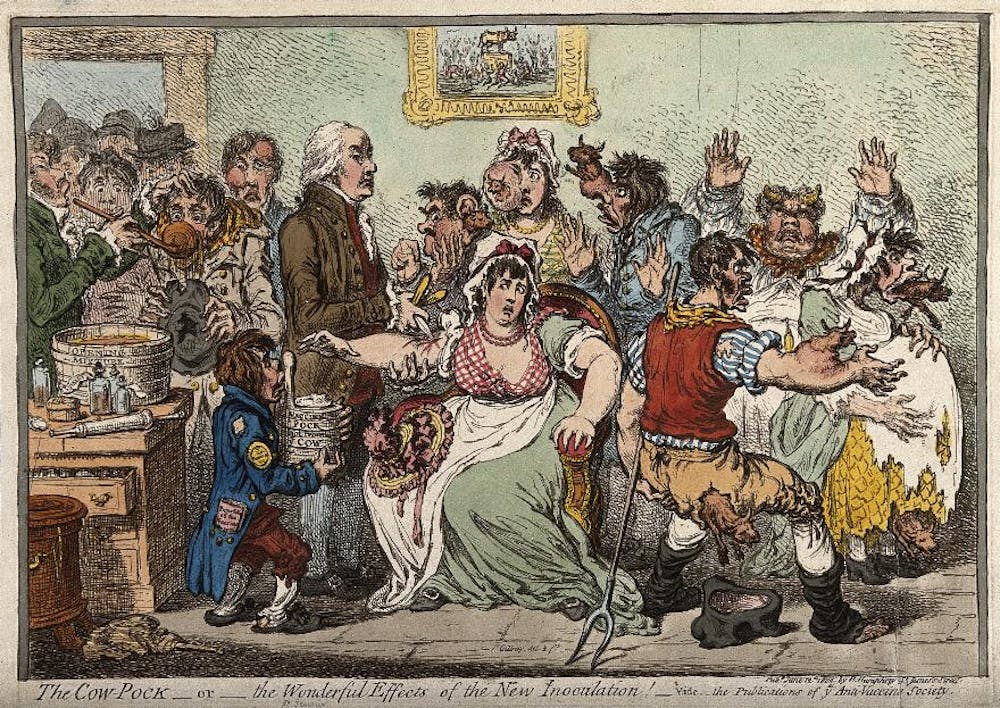
English satirist James Gillray famously depicted cows emerging from the bodies of terrified people being given cowpox vaccine, as seen below.
Edward Jenner vaccinating patients in the Smallpox and Inoculation Hospital at St. Pancras: the patients develop features of cows. Coloured etching by J. Gillray, 1802. Wellcome Collection., CC BY-NC-ND
In 1853, concerned by pockets of poor uptake of smallpox vaccine, the British parliament introduced the Vaccination Act, making infant smallpox vaccination compulsory. Mandatory vaccination fomented opposition, something we should remember if considering making a modern vaccine mandatory.
In 1885, over 80,000 vaccine dissenters marched through Leicester carrying banners, a child’s coffin and an effigy of Jenner. Dissent spread to the US and Canada. Eventually, the success of Jenner’s smallpox vaccine silenced the anti-smallpox vaccination movement.
Nevertheless, in 1950, over 50 million people worldwide caught smallpox, most in Africa and India. About 10 million died, and it took an extraordinary WHO campaign, in which Australian virologist Frank Fenner played a key role, to eliminate smallpox from the world forever. That was achieved in 1978.
Polio, the silent killer
In the first half of the 20th century, as smallpox began to disappear, polio (infantile paralysis) was the disease most feared in resource-rich countries.
Philip Roth’s novel Nemesis describes the terror of polio, the silent killer, sweeping through Newark, New Jersey, in 1944 killing or paralysing its victims. It is easy to draw parallels with COVID-19.
America was desperate for a polio vaccine. Two Jewish virologists whose families fled the pogroms in Europe, Albert Sabin and Jonas Salk, competed to develop the first polio vaccine.
Salk’s vaccine, made from killed polio viruses, was ready for a large clinical trial in 1954. Families were desperate for their children to be enrolled; children who did so called themselves Polio Pioneers.
Even before the results of the trial were made public, vaccine companies were asked to tender to mass produce the Salk vaccine. Five companies applied, four major pharmaceutical firms and one Californian family firm called Cutter Laboratories. The whole country held its breath and tuned their radios as the trial results were announced.
The press release showed protection against the virus. Reporters cried, “It works, it works”, church bells pealed, sirens blared. Vaccine production began and the vaccine was launched triumphantly in 1955.
The Cutter Incident
But within two weeks disaster struck. Children who received the Cutter vaccine (but not the vaccines made by the four other companies) started to develop paralysis.
Cutter Laboratories had failed to kill the poliovirus incorporated in its vaccine. Of 200,000 children given the Cutter vaccine, 40,000 developed polio, 200 were paralysed and 10 died.
Although the polio vaccination program stalled due to the “Cutter Incident”, the fear of catching polio was so great the public was soon reassured the other vaccines had not caused polio.
This historic 1962 image depicted an aerial view of a long line of people awaiting their polio vaccination. The line was so long, it surrounded a city auditorium in San Antonio, Texas. CDC/Mr. Stafford Smith
What are the lessons from history for COVID-19 vaccination?
Firstly, the public will tolerate risk of harm from a vaccine if their fear of the disease exceeds their fear of the vaccine.
The immediate response of many countries to news of rare but serious cases of blood clotting occurring in people given the AstraZeneca COVID-19 vaccine was to suspend use of the vaccine, at least for younger adults.
In public health, the precautionary principle means acting to prevent harm. Arguably, this is an example of inappropriate use of the precautionary principle (which, in public health, means acting to prevent harm). Perhaps there was not sufficient consideration of the possibility that suspending vaccine delivery was a disproportionate response which would alarm the public and increase vaccine hesitancy.
Although the risk of blood clotting with the AstraZeneca vaccine is extremely low, at times when there is almost no COVID-19 circulating (as sometimes happens in Australia and New Zealand) the risk of dying from blood clotting due to the vaccine is slightly higher than dying from COVID-19.
In Australia, a concentration on individual risk at a single point in time ignores the benefits to the community of widespread vaccine uptake.
This historic image depicts a gathering of people in Columbus, Georgia, who were awaiting their polio vaccination, during the earlier days of the National Polio Immunization Program. CDC/Charles N. Farmer
And as soon as COVID-19 incidence rises, the risk of dying from COVID-19 massively outweighs any slight vaccine risk.
Indeed, COVID-19 itself is far more likely to cause blood clots than the vaccine. However, contravening autonomy by making vaccination mandatory threatens civil liberties and should only be considered in extreme circumstances.
Complacency, inconvenient access to vaccines, and lack of confidence are key factors in vaccine hesitancy.
However, trusted health workers in communities can build public confidence in vaccines and combat hesitancy.
Open and honest communication about vaccine safety is important, but messaging also needs to put vaccine risk in perspective.
History tells us the public can tolerate risk of harm from vaccines when the severity of the disease warrants the risk.
Getting to net-zero greenhouse gas emissions and 100% renewable energy might seem the end game for climate action. But what if, like Tasmania, you’ve already ticked both those goals off your list?
Net-zero means emissions are still being generated, but they’re offset by the same amount elsewhere. Tasmania reached net-zero in 2015, because its vast forests and other natural landscapes absorb and store more carbon each year than the state emits.
And in November last year, Tasmania became fully powered by renewable electricity, thanks to the island state’s wind and hydro-electricity projects.
The big question for Tasmania now is: what comes next? Rather than considering the job done, it should seize opportunities including more renewable energy, net-zero industrial exports and forest preservation – and show the world what the other side of net-zero should look like.
Hydro-electric power and wind energy mean Tasmania runs on 100% renewable energy. Shutterstock
A good start
The Tasmanian experience shows emissions reduction is more straightforward in some places than others.
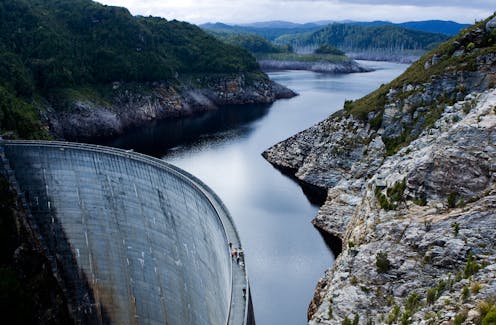
The state’s high rainfall and mountainous topography mean it has abundant hydro-electric resources. And the state’s windy north is well suited to wind energy projects.
What’s more, almost half the state’s 6.81 million hectares comprises forest, which acts as a giant carbon “sink” that sucks up dioxide (CO₂) from the atmosphere.
Given Tasmania’s natural assets, it makes sense for the state to go further on climate action, even if its goals have been met.
The Tasmanian government has gone some way to recognising this, by legislating a target of 200% renewable electricity by 2040.
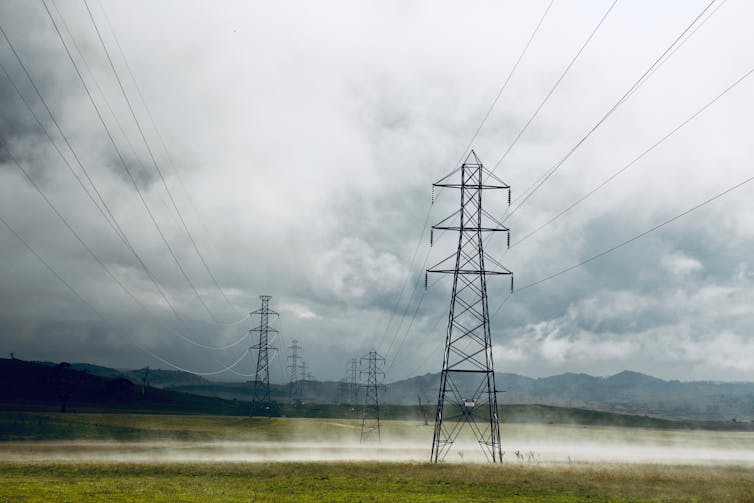
Under the target, Tasmania would produce twice its current electricity needs and export the surplus. It would be delivered to the mainland via the proposed A$3.5 billion Marinus Link cable to be built between Tasmania and Victoria. The 1,500 megawatt cable would bolster the existing 500 megawatt Basslink cable.
But Tasmania’s climate action should not stop there.
The Marinus Link would provide a second electricity connection from Tasmania to the mainland. www.marinuslink.com.au
Other opportunities await
Tasmania can use its abundant renewable electricity to decarbonise existing industrial areas. It can also create new, greener industrial precincts – clusters of manufacturers powered by renewable electricity and other zero-emissions fuels such as green hydrogen.
Zero-emission hydrogen, aluminium and other goods produced in these precincts will become increasingly sought after by countries and other states with their own net-zero commitments.
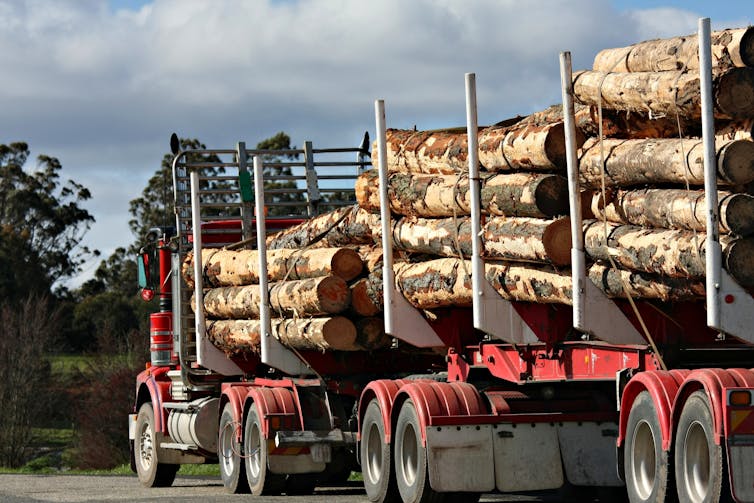
Tasmania’s vast forests could be an additional source of economic value if they were preserved and expanded, rather than logged. As well as supporting tourism, preserving forests could enable Tasmania to sell carbon credits to other jurisdictions and businesses seeking to offset their emissions, such as through the federal government’s Emissions Reduction Fund.
The ocean surrounding Tasmania also presents net-zero economic opportunities. For example, local company Sea Forest is developing a seaweed product to be added to the feed of livestock, dramatically reducing the methane they emit.
Retaining, rather than logging, Tasmania’s forests presents an economic opportunity. Shutterstock
These updates give Tasmania a chance to be a global model for a post-net-zero world. But without firm action, Tasmania risks sliding backwards.
While having reached net-zero, the state has not legislated or set a requirement to maintain it. The state’s current legislated emission target is a 60% reduction by 2050 on 1990 levels – which, hypothetically, means Tasmania could increase its emissions in future.
Also, despite reaching net-zero emissions, Tasmania still emits more than 8,360 million tonnes of CO₂ each year from sources such as transport, natural gas use, industry and agriculture. Tasmania’s emissions from all sectors other than electricity and land use have increased by 4.5% since 2005.
Without a net-zero target set in law – and a plan to stay there – these emissions could overtake those drawn down by Tasmania’s forests. In fact, a background paper prepared for the Tasmanian government shows the state’s emissions may rise in the coming years and stay “positive” until 2040 or later.
The legislation update should also include a process to set emissions targets for each sector of the economy, as Victoria has done. It should also set ambitious targets for “negative” emissions – which means sequestering more CO₂ than is emitted.
Tasmania must cut emissions from industry and other sectors. Shutterstock
Action on all fronts
Under the Paris Agreement, the world is pursuing efforts to limit global warming to 1.5℃ this century. For Australia to be in line with this goal, it must reach net-zero by the mid-2030s.
Meeting this momentous task requires action on all fronts, in all jurisdictions. Bigger states and territories are aiming for substantial emissions reductions this decade. Tasmania must at least keep its emissions net-negative, and decrease them further.
Tasmania has a golden opportunity. With the right policies, the state can solidify its climate credentials and create a much-needed economic boost as the world transitions to a low-carbon future.
Rupert Posner is part of ClimateWorks Australia, which works within the Monash Sustainable Development Institute. ClimateWorks Australia receives its core funding from philanthropic foundations and also undertakes projects which attract funding from industry and government departments and agencies.
Simon Graham is part of ClimateWorks Australia, which works within the Monash Sustainable Development Institute. ClimateWorks Australia receives its core funding from philanthropic foundations and also undertakes projects which attract funding from industry and government departments and agencies.
This is an article from I’ve Always Wondered, a series where readers send in questions they’d like an expert to answer. Send your question to alwayswondered@theconversation.edu.au
Why can’t I flush cat poo down the toilet? Diane, Sydney
When I was a teenager I owned a large dog, a German Shepherd. It was my responsibility to pick up his poo and put it in the bin. I would never have thought to flush it down the toilet.
So, after a quick internet search, I was surprised to find many people do actually flush cat poo down the toilet. I soon discovered training your cat to use a toilet is a hot topic for cat owners, especially for urban cats that live in home units and lack a backyard.
But sharing a toilet with your cat can put your own health in danger. So what do the water authorities say? And is it OK to flush away kitty litter?
It could be dangerous
My first reaction when I read this question was “no”. I suggest you put it in the garbage, like most people do when they walk their dogs. Then, it would be buried in landfill, along with normal household rubbish.
Only flush the three Ps down the loo: pee, poo and paper. The only paper has to be toilet paper. Shutterstock
The main reason is that poo from our pets — and other animals — can be a risk to human health. Animals can spread diseases with other species including humans (called zoonotic diseases).
A common and dangerous zoonotic disease is toxoplasmosis. Cats can carry this disease (among others) and pass it to humans, particularly through human contact with their poo.
Toxoplasmosis can cause serious health issues for people, particularly those with weak immune systems. And it is very serious for pregnant women as they can pass an infection to an unborn baby, with other potentially tragic consequences later in the child’s life.
In fact, a study published last year estimated that toxoplasmosis, cat roundworm and cat scratch disease are linked to more than 8,500 hospitalisations and about 550 deaths in Australia each year.
So it’s best you avoid sharing a toilet with your cat — and always be very careful handling pet wastes.
Cats carry diseases that can be deadly to humans.
To get an industry answer to this question, I asked five Australian water authorities that manage the largest urban sewerage systems across the country, including Sydney Water, Melbourne Water and Icon Water (Canberra).
Their reaction was generally “no”. You should not flush any pet waste down the toilet. But it was not unanimous — at least one water authority told me they thought it was OK to flush away cat poo.
There was one big issue they all agreed on, however. And that’s to only flush the three Ps: pee, poo and paper down the loo, the only paper being toilet paper.
What about kitty litter?
Every single water authority stressed the message that no kitty litter should be flushed down the toilet. So why is kitty litter so dangerous?
Kitty litter, or other materials that aren’t any of the “three Ps”, can block sewer pipes. Kitty litter is made from all sorts of materials, such as recycled products like old newspapers.
But a common ingredient is a clay material called “bentonite”. It has a remarkable ability to absorb up to 15 times its original weight.
Kitty litter can swell and block sewer pipes. Shutterstock
This is the big problem. If you flush kitty litter down your toilet, it can swell up and block sewer pipes, even in the pipes in your home — yuk! Don’t risk it!
Blocked sewer pipes are a horrible, messy and smelly problem. Sinks can block and toilets can stop flushing. They can also cause raw sewage to leak out. Sewage is dangerous for the environment and is very hazardous for people as it can spread infectious disease.
Toilets are not bins
Many of us need to be reminded that we should not use our toilets as flushing garbage bins.
Take wet wipes, for example. Some products are incorrectly labelled “flushable wipes”, and these are particularly dangerous as they don’t break down like toilet paper.
They can form a twisted mess in sewer pipes and block them. In fact, there’s now a new Australian Standard being developed to make sure “wipes” have suitable warning labels.
Taking it to the extreme, consider the “monster fatberg” in the UK in 2017. Thames Water removed a disgusting blockage in sewer pipes that was 250 metres long, and weighed almost as much as a blue whale.
It was a massive and expensive job to remove this. And it was caused by people putting stuff down the toilet and kitchen sink they should have put in the bin.
The bottom line
So while it must take impressive balance and gymnastic skills for a cat to sit on, and use a toilet (there are even books on this topic!), my advice is put your cat’s poo (and poo from other pets) into the garbage bin.
And generally, make sure you don’t flush things down the toilet that really should go into the bin.
I am also yet to see evidence cats can flush the toilet themselves — I suspect this isn’t impossible, though.
Screen-based devices have increasingly become part of our human experience – even more so since the pandemic began. This trend includes watching more and more videos. For example, before COVID-19, the average American watched about six hours of videos a day on devices ranging from televisions to desktop computers and mobile phones. By one estimate, this figure has “surged” more than 40% during the pandemic.
In higher education, the online use of recorded lecture videos has also increased greatly. How is this affecting learning? For undergraduate mathematics, a recently published review confirmed the findings of a 2012 study that, overall, the more often students watched such videos the poorer their performance in their course.
Recent research has identified a possible reason for this. It might help explain why the findings of these two reviews differ from those of studies of learning from videos in other disciplines.
How might videos depress learning?
Of course, correlation is not causation. It’s possible, for example, that weaker mathematics students tend to rely on videos more than stronger students.
However, an equally plausible explanation is that regular use of these videos is somehow depressing students’ learning. A two-part study was designed to investigate this possibility.
The first study involved two groups of students studying engineering mathematics courses in Australia and the UK. At the beginning and end of each course, students completed a questionnaire to assess how they approached their studying.
In both settings, regular video users were found to become more surface learners over the course of the semester. Those accessing few or no videos were unchanged in their study approaches. This was despite regular video users, as compared to low users, being older in Australia and initially better at mathematics in the UK.
This gave rise to a second study that used interviews with Australian participants to explore how they were using the videos to advance their understanding of mathematics. First, to provide some insight into underlying processes and thus the design of the second study, a review of the cognitive research on the use of television was conducted. Kubey and Csikszentmihalyi sum up this research:
“[…] in every sample we have studied, with different demographic groups and with subjects ranging in age from 10 to 82, and with groups from more than one country, it has been found that people consistently report their experiences with television as being passive, relaxing, and involving relatively little concentration.”
For many people, the TV screen is the cue for a passive and relaxing experience, involving relatively little concentration. Shutterstock
With this understanding, cognitive processes associated with the use of lecture videos were considered as a dual-process system, meaning people tend to think using two channels:
“type 1” thinking: fast and intuitive with little to no working memory used.
“type 2” thinking: slow and analytical with working memory used.
Working memory has been defined as “the small amount of information that can be held in mind and used in the execution of cognitive tasks”.
The mathematics videos were viewed outside of typical lecture or classroom settings. Students actively controlled their use. Therefore, the second study interview questions focused on the critical point at which students judge their own learning to determine, for example, whether they move on to new learning or not.
All Australian participants were interviewed at the end of the course. The analysis of their responses showed regular users were more prone to type 1 thinking when judging their learning. They relied mostly on “feelings of rightness” rather than, for example, checking that correct procedures were followed. In mathematics, the former may lead to wrong (“pseudo-analytical”) thinking, while the latter typically results in the correct solution.
Findings differ in other disciplines. Why?
At first glance, this discovery contrasts sharply with findings from a recent systematic review that concluded the use of videos was “consistently good for learning”. However, a closer look at the review reveals almost all the included studies (96%) related to instruction in applied undergraduate disciplines, such as health sciences, which represented over 80% of the included studies. Studies on the use of video in mathematics or other abstract disciplines that demand high-level conceptual thinking were not part of the review.
This might suggest the use of video will help learning if the level of thinking required is relatively low, such as learning medical procedures, but not necessarily where it is high, such as gaining conceptual understanding in mathematics.
More research is certainly needed. We still know very little about thought processes when viewing lecture videos.
One question arising from research in undergraduate mathematics is: have we somehow become conditioned by almost a century of television use so that when presented with a simple video recording of a lecture, the medium subconsciously signals its viewers to tone down any mental effort? This is enough to achieve better learning outcomes where low-level cognitive processing is sufficient, but could be detrimental where high-level processing is required.
Put another way, and more broadly, under what circumstances and with which people can screens act as cognitive cues signalling us to relax mentally, in much the same way viewing food can make us salivate?
Sven Trenholm does not work for, consult, own shares in or receive funding from any company or organisation that would benefit from this article, and has disclosed no relevant affiliations beyond their academic appointment.
In May 2021 a B-double truck mounted a kerb when turning a corner in Melbourne, injuring five pedestrians. In February 2020 a drunk driver drove onto a footpath in Sydney, killing four children and injuring three others as they walked to get ice-creams. These incidents are just two of many grim reminders that pedestrians are an especially vulnerable group of road users.
“Pedestrians” includes most of us as we walk along or across roads, even if it is just to get to our car. Children, young people, city residents, older people and people on low incomes are especially reliant on walking rather than driving.
Pedestrians, along with cyclists and motorcyclists, are most at risk of injury and death when involved in a collision on the roads. In a crash, pedestrians are four times more likely to be injured than those in a vehicle.
The road toll has decreased over recent decades largely because fewer people in cars are dying. Pedestrian deaths have decreased much more slowly. In the decade to 2019, road deaths of car occupants fell three times as fast as for vulnerable road users (pedestrians, cyclists and motorcyclists).
What are governments doing to protect pedestrians?
Australia has had many parliamentary inquiries and state and federal road safety strategies in recent years. A federal Office of Road Safety was created in 2019. However, the recommended road safety measures usually improve safety for people in vehicles or improve traffic flow. These measures do nothing for pedestrian safety.
Government reports and bodies have recently begun talking about the “safe system” approach. This approach is supposed to take a holistic view, sharing the responsibility for reducing risk by improving the safety of roads, vehicles and road rules, as well as driver behaviour. While some versions of this approach consider the safety of all road users, including pedestrians, this has not filtered through to government policies.
Some states have adopted climate change plans or strategies that promote walking and cycling. The South Australian Climate Change Action Plan 2021-2025, for instance, promises the state government will work towards a low-emissions transport system, improve public transport and encourage “active travel” – walking and cycling.
However, since the launch of the plan the state government has privatised trains and announced new roadworks to improve the flow of cars and freight vehicles. They are clearly paying little attention to the needs of pedestrians.
“[…] consider road safety as part of mobility for all people, whether they drive or not, and transport as part of the bigger liveability picture”.
Another possible perspective is “liveable communities”. The concept of liveability promotes the critical factors of access to public transport, and walking and cycling infrastructure.
So, how are Australian state and territory governments recognising our right to mobility and helping to build liveable communities for all?
In 2020, the Commonwealth Parliament’s Joint Select Committee on Road Safety received many submissions from organisations concerned with pedestrian safety. Its final report, released in October 2020, contains 22 recommendations. Yet none of these focus specifically on pedestrian safety, although “pedestrian awareness” is mentioned in relation to driver training.
expanding the range of data collected on pedestrian injuries and fatalities.
The committee’s final recommendations reflected none of these points.
The Office of Road Safety is yet to release its National Road Safety Strategy. It says the strategy will consider “vulnerable road users” as a whole group. This approach fails to adequately consider the needs of pedestrians separately from motorcyclists and cyclists.
The previous National Road Safety Strategy 2011–2020 did include reducing “the number of serious casualties among pedestrians and cyclists” as one of its “major strategic challenges”. This suggests pedestrians are receiving even less attention now than they were a decade ago.
Some government publications recognise pedestrians as “vulnerable road users”. Yet almost no attention is paid to the most vulnerable pedestrians, namely older people, children and people with disability.
Governments are prioritising the flow of traffic, including of freight. They argue that’s good for jobs and economic growth.
There is little political will to discourage people from driving, to reduce speed limits, to prioritise walking (and cycling) infrastructure and to increase public transport funding. All of these measures contribute to mobility for all – including children, older people and people with disability. And that, in turn, will make our communities more liveable and sustainable.
I would like to acknowledge the work of my research assistant Kate Leeson and former colleague Peter Lumb.
I am a frequent pedestrian, which involves crossing major roads without pedestrian safety infrastructure.
Source: The Conversation (Au and NZ) – By Martie-Louise Verreynne, Professor in Innovation and Associate DVC (Research – College of Business and Law), RMIT University
RMIT, Author provided
It took a chance meeting between Cameron van den Dungen, founder of a start-up mattress company, and Madhu Bhaskaran, an engineering professor at RMIT University, to see an opportunity to collaborate and commercialise research.
Van den Dungen had a dream of creating a bed for use in aged care to monitor sleep quality and comfort. Bhaskaran’s research team at RMIT were developing flexible wafer-like electronic sensors. The fruits of their collaboration is a smart mattress monitoring system known as “REMi”.
It’s the type of collaboration the Australian government says is its top priority for universities. Federal education minister Alan Tudge reiterated that agenda last week:
Our aim is not just to make incremental progress; we want to fundamentally shift the dial, so that in five or ten years’ time, we start to look more like Israel or California or the UK in terms of how our universities interact with business […]
Tudge is not the first minister with such ambitions. The benefits of commercialising university research have been talked about for decades. Yet Australia remains one of the worst-performing developed economies on this score.
According to the Australian Bureau of Statistics’s most recent data, just 5% of Australian businesses have collaborated with university researchers; and the smaller a company the less likely collaboration is.
Which is a problem given that small to medium enterprises – those employing fewer than 200 people – make up more than 99% of all Australian businesses.
So what to do? That’s a subject we’ve sought to answer through surveying 800 small to medium enterprises for the CSIRO.
Starting the conversation
Half of the SMEs we surveyed had engaged with universities or research institutes before. Half had not. These responses pointed to both the barriers and bridges to greater research commercialisation.
Among businesses that had not reached out to collaborate before, stereotypes about university academics were strong. They commonly thought universities would not understand their business, have different R&D aims or be too slow to progress projects.
The first challenge was just getting a conversation started – like that between van den Dungen and Bhaskaran.
Van den Dungen grew up in the bed business. His father Henk had started working in the bedding department at Myer in the 1960s, then in the 1980s became a founding member of the Forty Winks retailer cooperative.
After years working in the family business, van den Dungen founded his own company, Sleeptite, and began looking for ways to make a better bed for use in aged care facilities.
He wanted a mattress with embedded electronic sensors to monitor a patient. This could replace the more haphazard use of pressure mats next to beds know if a patient had fallen out, and “door checks” by staff members doing the rounds at night.
Then came his chance meeting with Bhaskaran. Four years and several government grants later, their home-grown technology to provide real-time monitoring is ready for to be manufactured (by Melbourne mattress maker Sleepeezee Bedding).
The REMi bed technology developed through the collaboration between Australian company Sleeptite and RMIT University enables real-time monitoring of all residents in a facility. Sleeptite/RMIT, Author provided
Serial collaboration
Businesses said they welcomed the opportunity to commence these conversations, and to establish relationships with researchers through small, entry-level projects such as those funded through Innovation Connections, a federal government program that provides facilitated introductions to researchers and financial support through dollar-matched grants.
Once a relationship was established, like that between Sleeptite and RMIT, further collaboration often occurs without further government funding.
On average, we found collaborating firms had undertaken seven projects with the research sector.
Our findings show that young and micro businesses are especially open to collaborations, yet more targeted funding schemes are required to help them build their new technologies and capabilities.
To improve Australia’s success in commercialising research, funding needs to take a coordinated “pipeline” view – seeing each new project as the start of an ongoing relationship.
Funding needs to be available for training, activities to mitigate mistrust, and for seed and scaling-up collaborations. Universities need to rethink their incentive systems and businesses need to be willing to take strategic risks by venturing into unknown territory.
But most fundamentally a more connected incentive system is needed to enable both businesses and researchers to view collaborations as long-term investments, justifying the upfront money and time associated with initiating those relationships.
Martie-Louise Verreynne received funding from CSIRO to fund this research.
Anne-Laure Mention received funding from CSIRO to support this research.
Rui Pedro Torres de Oliveira receives funding from CSIRO to fund this research. He is affiliated with ARM Hub as an innovation and strategy expert.
George Feast does not work for, consult, own shares in or receive funding from any company or organisation that would benefit from this article, and has disclosed no relevant affiliations beyond their academic appointment.
A statue of James Stirling in Perth.Wikimedia Commons
Today, councillors in Perth’s City of Stirling will vote to decide whether to change their city’s name. This follows a residents’ motion arguing a new name would better “reflect the long standing and relevant history of this land in such a way that is inclusive and in recognition of the Nyoongar community”.
Stirling is named after James Stirling, Western Australia’s first governor (1829–1839). City of Stirling resident Jeff Bullen, who proposed the motion, argues Stirling’s direction of an 1834 massacre in Pinjarra, south of Perth, means we cannot honour him. Doing so dishonours those killed in that massacre, and its survivors, as well as their descendants.
My research shows Stirling was also indirectly embroiled in the British slave trade via his family’s commerce in American and Caribbean slave-produced tobacco and sugar. Prior to arriving in WA, he personally profited from slavery by seizing ships laden with slave-produced goods, which were awarded to him as prizes.
Stirling contended that Noongar attacks on settlers threatened to “tempt other tribes to pursue the same course, and eventually combine together for the extermination of the whites”. On the 28th of October 1834, when he led troops to the region, he sought to provide a “check” on that notion by inflicting, in his words, “such acts of decisive severity as will appall them as people”.
However, extending our frame of reference backwards, to take in Stirling’s life before 1829, is illuminating.
Tobacco, sugar and coffee
Although it hasn’t been acknowledged by past histories, Stirling’s family’s wealth was built on the back of slavery business.
More than a century before he was born, two ancestors pioneered the Glaswegian trade in slave-produced Virginian tobacco, becoming extraordinarily wealthy through it. Scottish trade in tobacco during this period grew enormously, linked to the tenfold growth in the purchase of African slave labour in British North America during its first 50 years
After the American Revolution, the Stirlings pivoted towards trade with Jamaica. In James’ generation, two brothers oversaw the family business, in which James appears to have invested his money. When slavery was abolished in 1833, his brother Walter was compensated by the British government for the loss of 230 enslaved people in Barbados and Guiana to the tune of more than $A1.7 million in today’s money. (The enslaved themselves received no compensation.)
Stirling was a Royal Navy captain for six years leading up to 1818 on the HMS Brazen, before being retired on half-pay like so many veterans of the Napoleonic Wars. The ambitious 27-year-old’s income was reduced to roughly that of an innkeeper.
His one salve was the fortune he had made during those six years, capturing enemy vessels. The Royal Navy awarded prize money from the sale of such vessels and their cargo. Stationed in Jamaica, Britain’s richest slave colony, Stirling’s first captured ship had been transporting slave-produced sugar and coffee from Havana to New Orleans, to be sold up the Mississippi River to southern planters.
As captain, James received around $A22,000 in today’s money from the sale of the vessel and its cargo. Further captures followed and, though this is not yet clear, it is possible that some ships contained enslaved people, leading to higher prizes. While stationed in Jamaica, Stirling also provided defence for the slave colony and its exports.
James’ wife Ellen Stirling (Mangles), 1828, by Thomas Phillips, National Portrait Gallery (Australia), Canberra. Wikimedia Commons
The money that Stirling made from capturing vessels, and the ambition it suggested, was just enough to allow him to marry the daughter of wealthy ship owner, James Mangles. Mangles’ ships had transported enslaved Africans from the West Coast of Africa to Jamaica in the late 18th century, but in the 19th he turned to Indian Ocean trading and convict transportation.
In the years leading up to 1829, Stirling lobbied hard to convince a wary British Colonial Office to establish a penal-free colony on the west coast of Australia, which could support East India Company military and merchant activities. Cheap Indian labour, he proposed, on contracts of indenture, might be imported to cultivate crops in the harsh environs. Further schemes were proposed for non-white labour.
Commercial logic
Once in WA, Stirling’s principal concern was identifying and securing fertile pastoral land — for the colonists, the British investors supporting them, and for himself. The success of the colony hinged on pastoral expansion and profit.
The Pinjarra massacre was, in part, led by the commercial logic of this pastoral expansion. If settlers were too frightened of the “unsettled” regions, they would crowd those “settled” around Perth.
Rewinding back in time provides valuable context for the Pinjarra battle and our decisions around commemoration today.
James Stirling’s actions in WA were driven by the logic of imperial commerce. Can the City of Stirling acknowledge this history, and the violence that followed, at the same time as honouring him?
Georgina Arnott receives funding from the Australian Research Council via the Legacies of British Slavery in Western Australia Discovery Project.
Source: The Conversation (Au and NZ) – By Scott Hocknull, Senior Curator of Geosciences, Queensland Museum, and Honorary Research Fellow, The University of Melbourne
Vlad Konstantinov, Scott Hocknull, Eromanga Natural History Museum, Author provided
Today, a new Aussie dinosaur is being welcomed into the fold. Our study published in the journal PeerJ documents Australotitan cooperensis – Australia’s largest dinosaur species ever discovered, and the largest land-dwelling species to have walked the outback.
Australotitan, or the “southern titan”, was a massive long-necked titanosaurian sauropod estimated to have reached 25–30 metres in length and 5–6.5m in height. It weighed the equivalent of 1,400 red kangaroos.
It lived in southwest Queensland between 92–96 million years ago, when Australia was attached to Antarctica, and the last vestiges of a once-great inland sea had disappeared.
The discovery of Australotitan is a major new addition to the “terrible lizards” of Oz.
Meet Australotitan, Australia’s largest dinosaur species. (Eromanga Natural History Museum / enhm.com.au )
Like finding needles in haystack
Finding dinosaurs in Australia has been labelled an incredibly difficult task.
In outback Queensland, dinosaur sites are featureless plains. Compare that to many sites overseas, where mountain ranges, deep canyons or exposed badlands of heavily-eroded terrain can help reveal the ancient layers of preserved fossilised bones.
An Australian dinosaur site (right) compared to the dinosaur-rich badlands of Canada (left).
Today, the area where Australotitan lived is oil, gas and grazing country. Our study represents the first major step in documenting the dinosaurs from this fossil field.
Australotitan cooperensis was the largest dinosaur species to have walked outback Australia.
The first bones of Australotitan were excavated in 2006 and 2007 by Queensland Museum and Eromanga Natural History Museum palaeontologists and volunteers. We nicknamed this individual “Cooper” after the nearby freshwater lifeline, Cooper Creek.
After the excavation, we embarked on the long and painstaking removal of the rock that entombed Cooper’s bones. This was necessary for us to properly identify and compare each bone.
Excavating one of Cooper’s six pelvic bones, the left pubis. S. Hocknull, Queensland Museum & Eromanga Natural History Museum
Thousands of kilograms bones in a backpack
We needed to compare Cooper’s bones to all other species of sauropod dinosaur known from both Australia and overseas, to confirm our suspicions of a new species.
But travelling from collection to collection at various museums to compare hundreds of kilograms of fragile dinosaur bones was simply not possible. So instead, we used 3D digital scanning technology which allowed us to virtually carry thousands of kilograms of dinosaur bones in one seven kilogram laptop.
These kinds of research projects have created a new opportunity for museums and researchers to share their amazing collections globally, with researchers and the public.
From Dig to Digital Dinosaurs! 3D scanning technology allows researchers an unprecedented way to compare fossilised bones of enormous dinosaurs, and view these digital replicas virtually. S. Hocknull & R. Lawrence, Queensland Museum
And thanks to two decades of effort by palaeontologists, citizen scientists, regional not-for-profit museums and local landowners, there has been a recent boom in Australian dinosaur discoveries.
Perhaps unsurprisingly, we found all four of the sauropod dinosaurs that lived in Australia between 96-92 million years ago (including Australotitan) were more closely related to one another than they were to other dinosaurs found elsewhere.
However, we couldn’t conclusively place any of these four related species together in the same place at the same time. This means they could have evolved through time to occupy very different habitats. It’s even possible they ever met.
The Aussie species share relations with titanosaurians from both South America and Asia, suggesting they dispersed from South America (via Antarctica) during periods of global warmth.
Or, they may have island-hopped across ancient island archipelagos, which would eventually make up the present-day terrains of Southeast Asia and the Philippines.
Meet the Eromanga sauropods. Green bones represent what parts of the skeleton have so far been discovered. S. Hocknull, Queensland Museum
Trampling through the Cretaceous
Digitally capturing gigantic sauropod bones and fossil sites in 3D has led to some remarkable discoveries. Several of Cooper’s bones were found to be crushed by the footsteps of other sauropod dinosaurs.
What’s more, during Cooper’s excavation we uncovered another smaller sauropod skeleton — possibly a smaller Australotitan — trampled into a nearly 100m-long rock feature. We interpreted this to be a trample zone: an area of mud compressed under foot by massive sauropods as they moved along a pathway, or at the edge of a waterhole.
A sauropod trample zone (left) compared to a cattle trample (centre) and elephant trample (right). S. Hocknull & R. Lawrence, Queensland Museum & Eromanga Natural History Museum
Similar trampling features can be seen today around Australian billabongs, or waterholes in Africa where the largest plant-eaters, such as elephants and hippopotamuses, trample mud into a hard layer.
In the case of the hippopotamus, they cut channels through the mud to navigate between precious water and food sources. Life in Australia during the Cretaceous period can be pictured similarly, except super-sized.
In the present, out there in Australia’s dinosaur country, you might find yourself staring across a barren plain imagining what other secrets this world of long-lost giants will reveal.
It will cost the Papua New Guinea state and Australian operator Barrick Niugini Ltd K630 million (US$180 million) to reopen the Porgera gold mine.
The reopening of the mine in early September will see Barrick paying out full benefits of all employees who were retrenched, including those in care and maintenance, and they will be recruited under the new Porgera mine structure.
Barrick chief executive officer Mark Bristow said the refinancing of the mine for a 10-year operation period will be done by Barrick and it will recoup its 36 percent of the state’s share under state-owned Kumul Mineral Holdings Limited for the restart during the mine’s operational life.
PNG Prime Minister James Marape (left) and Barrick’s Mark Bristow (right) with the new Porgera agreement. Image: PNG Post-Courier
The 36 percent is from the 51 percent stake in the Porgera agreement framework with Barrick on 49 percent.
Bristow said it had cost the company K420 million (US$120 million) for the care and maintenance of the mine since the closure in April last year.
“We estimate that to restart will be another K630 million but as discussed with the full state negotiating team last Wednesday the quicker we start the mine the lower that cost is because that cost is funded by everyone,” he said.
“We will fund it and offset that against the revenue so it’s in everyone’s interest to try and reduce that cost but again in the spirit of not forcing taxpayers’ money into this,” Bristow said.
“We fund and recoup the money so that equity will start delivering value once we’ve recoup all the cost, so it focuses on everyone’s mind that one, we are efficient and two we don’t waste any money and three we get this mine running as quickly as possible especially with the gold price as it is because we have the opportunity to fast track the return of some of that investment.”
He said as miners it was their responsibility to take the risk as they were qualified to evaluate and decide whether that risk was manageable.
“We’re starting to plan the prestart of the mine with reemployment programmes under a new Porgera company.
“One of the things we were not prepared to do was put people at risk when the mine is closed so we retrenched everyone that wasn’t required for care and maintenance and we paid them their full dues and those on care and maintenance will get the same,” Bristow said.
“Everyone will start with no service and as soon as we finalise the legal documents and create a new company and when we move people into the new company and those employees who did not get their dues will get their dues,” he said.
The University of the South Pacific staff and student unions have condemned Fiji Attorney-General Aiyaz Sayed-Khaiyum’s claim that a new USP contract offer to the vice-chancellor is illegal, saying he has “misled” the Fiji public with a “baseless” statement.
The unions also said he had shown “total disrespect” for the governing USP Council which represents 11 independent regional governments, donors, staff, students and alumni in the Pacific.
In a joint media statement, the Association of USP Staff (AUSPS), University of South Pacific Staff Union (USPSU) and the USP Student Association (UPSA) said today Fiji had the highest number of representatives on the council and was “given ample opportunity by the pro-chancellor and chair of council to share its views” under democratic process.
Fiji was decisively out-voted in the council. A new Samoa-based contract was offered to Professor Pal Ahluwalia who had been abruptly deported along with his wife in February in a widely criticised action.
“In essence the Fiji members of the council failed to convince other members of the council regarding their views on the issues under discussion and now calling a decision illegal and questioning others that are within the purview of the august body,” said the media statement signed by AUSPS president Elizabeth Reade Fong, USPSU president Taris Vacala, and USPSA president (Laucala) Lepani Naqarase.
“This press release serves to rebut as baseless the statements of the AG [Attorney-General] and the Fiji representatives to the USP Council who have reported council outcomes to him.”
Citing many of the university’s governing documents — including the university charter — the statement said: “The council is well within its rights and has determined that the VC/P will be located at the Samoa campus. This was voted for by a clear majority.
‘Within due process’ “The same is applied to the continuation of salary of the VC/P on his deportation by the council at its February 16, 2021, meeting at which the chair of council and chair of the Audit and Risk Committee were not present due to ‘conflicts of interest’ which led to their earlier and continued recusal from council deliberations.
“All of this was within due process. The members must accept that the council has the right to determine whether a conflict of interest exists.”
The statement added that only the University Council could appoint and remove a vice-chancellor.
In response, the university stated its priority during these challenging times was learning and teaching delivery and it wished not to comment further.
The university stated the governing body of the regional institution was the USP Council.
Speaking on the university’s annual report for 2018, Sayed-Khaiyum said the appointment was illegal because it was not in accordance with the university’s charter.
Source: The Conversation (Au and NZ) – By Katherine Livingstone, NHMRC Emerging Leadership Fellow and Senior Research Fellow, Institute for Physical Activity and Nutrition (IPAN), Deakin University
Also known as discretionary foods, these include foods such as biscuits, cakes, sausages, sugar-sweetened drinks and alcohol.
Unhealthy diets are a key reason why almost one in every three adults in Australia is obese. Excess weight also increases risk of heart disease, type 2 diabetes and some cancers.
Personalised nutrition involves tailoring dietary advice to improve health, based on the characteristics of the individual. So dietary advice could be tailored based on anything from the person’s eating habits and weight to their cholesterol levels and genetics.
The concept of tailored dietary advice isn’t new — dietitians have been giving personalised advice for centuries. What is new is the rise in popularity of new technologies, apps and wearable devices, which allow for detailed monitoring of individual health. Health-care professionals can then use this information to provide personalised advice.
New technologies have fuelled the rise of personalised nutrition. Shutterstock
To understand whether personalised nutrition advice improves dietary habits, we conducted the Food4Me Study.
Our research
We recruited 1,607 adult volunteers from across seven European countries into a six-month dietary study.
At the beginning, adults were allocated into either a control group, or one of three personalised nutrition groups.
Usual dietary advice
In the control group adults received usual dietary advice. For example, “eat at least five serves of fruit and vegetables each day”. (In Australia the recommendation is at least seven serves daily.)
To help us understand the best way to personalise dietary advice, the three personalised nutrition groups received tailored dietary advice based on different sets of characteristics. All advice was based on behaviour change strategies, such as swapping discretionary foods for healthier alternatives.
Group 1 received advice based on what they ate.
For example, for someone eating a lot of salty meat products, we told them to reduce their intake of processed meats and pies, and swap salami and bacon for turkey or beef.
Group 2 received advice based on their diet and body measurements.
For example, if someone had high waist circumference and cholesterol levels, and was snacking on biscuits and chocolate, we told them they were carrying too much weight around their middle and had high cholesterol levels so would benefit from snacking on fruit and healthy fats, such as nuts, instead.
Group 3 received advice based on their diet, body measurements and genetic information.
For example, if someone had a genetic risk of high cholesterol, and was eating lots of salty meat products, we told them they have a genetic variation and would benefit from maintaining a healthy intake of saturated fat and normal cholesterol levels. We suggested they swap processed meats, for example burgers and sausages, for lean meats or skinless chicken breast.
At the beginning and end of the study we asked our volunteers to complete an online questionnaire, which asked them how often they consumed various foods and drinks.
Interestingly, this improvement in diet was seen across all personalised nutrition groups; regardless of whether advice was personalised based on diet, body measurements or genetics, or a combination of these factors.
That said, we did see some evidence that the addition of genetic information (group 3) helped adults to reduce their discretionary food intake more than those who received advice based on their diet and body measurements alone (group 2).
We found personalised nutrition advice was associated with healthier eating. Shutterstock
Our findings are consistent with the broader evidence on personalised nutrition.
In a recent systematic review we looked at results from 11 personalised nutrition studies conducted across Europe and North America. We found overall, personalised nutrition advice improved dietary habits more than usual dietary advice.
What do these results mean?
Our results show personalised dietary advice can support people to eat less junk food. This should have important implications for how researchers and health-care professionals design healthy eating strategies moving forward.
It’s important to note our sample was made up of volunteers. So they may be more health-conscious and motivated to improve their dietary habits than the general population.
We need research in more diverse population groups, including young males and people experiencing socioeconomic disadvantage. This will be important for understanding whether personalised nutrition advice can benefit everyone.
Lots of commercial offerings for personalised dietary advice are emerging, such as companies that offer genetic testing and provide dietary advice accordingly, but many are not supported by scientific evidence. Health-care professionals, such as dietitians, should remain the first point of call when seeking dietary advice.
Personalised nutrition advice has the potential to improve the diet and health of Australians. But the reasons for unhealthy diets are complex, and include wider social and environmental influences.
So exploring new ways to support people to eat healthier diets is just one potential way to address the burden of unhealthy eating and related ill-health in Australia.
Katherine Livingstone receives funding from the National Health and Medical Research Council.
The Food4Me Study was supported by the European Commission under the Food, Agriculture, Fisheries and Biotechnology Theme of the Seventh Framework Programme for Research and Technological Development. Food4Me co-authors are acknowledged for their contribution to the publication.
Source: The Conversation (Au and NZ) – By Adrian Beaumont, Honorary Associate, School of Mathematics and Statistics, The University of Melbourne
Dean Lewins/AAP
This week’s Newspoll had Labor and the Coalition tied at 50-50 on a two-party-preferred basis. This is a one point gain for the Coalition since the last Newspoll, three weeks ago. Primary votes were 41% Coalition (steady), 36% Labor (steady), 11% Greens (down one) and 3% One Nation (up one).
The poll was conducted June 2-5 from a sample of 1,516 people. It breaks a sequence of four Newspolls in which Labor had a two-party lead. Figures are from The Poll Bludger.
While the major party primary votes were unchanged, the Coalition gains on preferences from a lower Greens vote and a higher One Nation vote.
However, Prime Minister Scott Morrison’s ratings took a hit. Of those surveyed, 54% were satisfied with his performance (down four percentage points) and 43% were dissatisfied (up five), for a net approval of +11. That’s Morrison’s lowest net approval since the COVID situation started in March 2020.
Labor leader Anthony Albanese’s net approval was -9, down two points. This is a record low since he became opposition leader. Morrison led Albanese as better PM by 53-32% (the margin was 55-30% previously).
Are voting intentions and approval ratings moving back into line?
Voting intentions and the prime minister’s net approval usually move together. But during COVID, voting intentions were far worse for the Coalition than what would be expected from Morrison’s ratings. Voting intentions and the PM’s net approval may be moving back into alignment.
A possible explanation for the contradictory movements is that voters who supported Morrison for his COVID response — but never intended to vote Coalition — are now blaming him for the slow vaccination rollout and the quarantine problems that have led to Victoria’s current lockdown.
However, voters who swing between the parties could be giving the Coalition credit for a strong economy, and the government may also be seeing a delayed bounce from the May 11 budget.
Last week, the Australian Bureau of Statistics reported that GDP was up 1.8% in the March quarter — and up 1.1% compared to March 2020, before COVID reached Australia. The Australian stock market has been on a bull run for about a year.
Provided the current Victorian outbreak is brought under control soon, and there are no further major outbreaks of COVID, the economy is likely to do well. That makes the Coalition clear favourites at the next election.
As I’ve written previously, people without a university education appear to be acting contrary to elite opinion, so any recent scorn of Morrison will probably help him.
In last fortnight’s Essential poll, conducted before the recent Victorian outbreak from a sample of 1,100 people, 63% thought it was the federal government’s responsibility to build and manage quarantine facilities, while 37% thought state governments were responsible.
More than half (58%) thought the federal government’s response to COVID was good and 18% poor, down from a 62-17% score in April and 70-12% in March.
Vaccinations are essential
The current Melbourne lockdown is already the longest since the almost four-month Victorian lockdown last year. It demonstrates that Australia cannot keep COVID out of the community indefinitely. Once it enters the community, it is difficult for governments to avoid imposing an economically and socially damaging lockdown to prevent spiralling cases and eventually deaths.
Vaccinations are the only way out. But Australia probably needs to vaccinate a greater share of its population than in countries that have been badly hit. People who have recovered from COVID have some short-term immunity, but Australia’s containment has been so successful that just 0.1% of the population have had COVID.
Only 17% of Australia’s population has received at least one COVID vaccination dose, compared with 40-60% in comparable countries like France, Germany, the US, the UK and Israel. This percentage includes children, who are not yet eligible in many countries.
All the countries above were hit hard by COVID, and a sizeable number have recovered and have short-term immunity. Australia’s vaccinations are way below where they need to be to insure against a COVID outbreak.
Vaccinations greatly reduce the chance of catching COVID or dying from it. Cases and deaths in the UK and US have been massively reduced by the vaccination program.
Minns becomes NSW Labor leader, contested leadership in Tasmania
Last month, Jodi McKay resigned as NSW Labor leader after the party’s disappointing result at the Upper Hunter byelection.
Chris Minns and Michael Daley, who was Labor leader at the 2019 election, were expected to contest the leadership. But Daley withdrew last Friday, so Minns — who has been an MP since 2015 — was elected unopposed.
In other state leadership news, Rebecca White resigned as Tasmanian Labor leader in mid-May after the recent state election at which the Liberals held their majority. The contest to replace her will be between former champion rower Shane Broad and former minister David O’Byrne. The result will be announced on June 15.
In a final addendum to the Tasmanian election, Liberal Adam Brooks had resigned on May 14 owing to firearms charges. Last week, a countback saw Liberal Felix Ellis elected, defeating a fellow Liberal 53.4–46.6%. Party standings remain 13 Liberal, nine Labor, two Greens and one independent.
US Democrats perform strongly in New Mexico special election
At a special election for New Mexico’s first Congressional District on June 1, the Democrat defeated the Republican by a 60.3-35.7% margin. The almost 25-point Democratic victory is two points better for Democrats than US President Joe Biden’s margin over Donald Trump in the same district in 2020, and eight points better than the Democratic incumbent in 2020.
While this election was good news for Democrats, they had a dreadful result in a Texan federal special election on May 1. In a “jungle primary” where all Republican and Democratic candidates run together, Democrats failed to make the top two, so the runoff will be Republican versus Republican.
That was because Republicans overall crushed the Democrats 62-37% in a district Trump won by just three points over Biden.
In the FiveThirtyEight aggregate, Biden’s current ratings are 53.4% approve, 40.4% disapprove (net +13.0%). With polls of likely or registered voters, his ratings are 54.4% approve, 40.5% disapprove (net +13.9%).
Biden’s initial ratings had high disapprovals by the standards of past presidents, and he was ahead of only Trump on net approval. But his approval has since been very steady, and he has now overtaken Bill Clinton and Gerald Ford at the same point of their presidencies.
Adrian Beaumont does not work for, consult, own shares in or receive funding from any company or organization that would benefit from this article, and has disclosed no relevant affiliations beyond their academic appointment.
Last Friday afternoon, as parliament rose after a bruising sitting fortnight, the Morrison government released a “consultation copy” of the Foster review.
This is one of five reviews or inquiries Scott Morrison initiated in the wake of Brittany Higgins’ allegation she was sexually assaulted in a ministerial office and did not receive adequate support in the aftermath.
The day after Higgins told her distressing story in February, Stephanie Foster, deputy secretary for governance in the Prime Minister’s department, was tasked with looking at
whether we could do more to support vulnerable staff who have been part of a serious incident in our workplace.
Subsequently, Sex Discrimination Commissioner Kate Jenkins was asked to take a comprehensive look at the culture of parliamentary workplaces in a wide-ranging review, with terms of reference negotiated across the parliament. Jenkins will submit her report in November. Accordingly, Foster’s review focuses on “immediate, practical steps” that can be taken while Jenkins completes her work.
What does the review find?
Foster’s review understood “serious incidents” as including rape and sexual assault, sexual harassment, assault, stalking or intimidation, serious and systemic bullying and serious and systemic harassment.
It found current parliamentary workplace procedures are “not able” to respond appropriately to serious incidents. Particularly sexual assaults.
The most significant gap is the absence of readily accessible, timely, independent, trauma-informed services and response mechanisms.
Among its ten recommendations, three critical areas are identified for immediate action:
trauma-informed support services
an independent, confidential complaints mechanism, to “enable proportionate consequences for complaints that are upheld”
tailored education and support for all staff, managers and parliamentarians.
A dedicated 24/7 support line for parliamentary staff has already been established. This was set up in March after an early recommendation from Foster.
But the review also recommends a “serious incident team” on top of the support line. This would provide wraparound support and resolution options to those impacted by a serious incident — including the subject of the complaint and their employing parliamentarian (if the subject is a staffer).
Is this enough?
An obvious question is whether the recommendations, if implemented, would prevent the recurrence of an incident like the one Higgins describes.
The answer is a tentative maybe.
Stephanie Foster oversees governance issues in the Prime Minister’s department. Mick Tsikas/AAP
The review presents a clear, thoughtful analysis of the shortcomings in current procedures and processes for responding to serious incidents. It is informed by research — including risk factors for serious incidents identified in other parliamentary workplaces. And is underpinned by consultations with womens’ safety experts, complaints experts, organisations with established frameworks for responding to serious incidents and current and former parliamentary staff.
Importantly, and reflecting best practice, victim-survivors are prioritised.
[It] places the impacted person at the centre of the response and trusts them to best understand their experience of harm, consistent with the terms of reference.
The review is also pragmatic. It acknowledges that parliament is a “workplace like no other”. The principle of parliamentary sovereignty means only parliamentarians can enforce consequences on fellow elected representatives.
Foster concedes that when it comes to making change, “implementation will be key”. It proposes a small implementation taskforce is established in the Department of the Prime Minister and Cabinet, with funding to mid-2022. It also notes that “meaningful change” will only come if parliamentary leaders fully commit to and act on the reforms.
The Jenkins review
Foster highlights the mood for change in the wake of Higgins’s story and other claims of harassment and bullying within parliament:
recent events have generated a genuine desire to make positive changes to the Commonwealth parliamentary workplace environment so it meets the expectations of Australians to observe the highest standards of professional conduct.
But, with the Jenkins review not due to report until November, and a federal election pending, it remains to be seen whether good intentions will translate to parliament becoming a safe and respectful workplace.
The Sex Discrimination Commissioner has been left to do most of the heavy-lifting — particularly around the problems inherent to the “complex and unusual” employment framework for staffers.
The act that regulates the employment of MPs and senators’ staff (the so-called “MOP(S) act”) means
parliamentarians employ their own staff, with the approval of the Prime Minister under certain circumstances, having regard to the duties the parliamentarian performs as a Senator or as a Member of Parliament.
So, each of the 227 parliamentary offices operates independently, as its own self-contained workplace, with back-office support from the Finance Department.
Jenkins’ work must confront the ambiguous role ministerial staff play in Australia’s political system. This is something successive governments, including Scott Morrison’s have been unwilling to do — despite expert advice about the need to do so.
It is worth recalling Higgins’ case involved a senior and valued ministerial staff member. It is ironic to think in late 2019, Morrison rejected David Thodey’s recommendations to strengthen accountability and governance arrangements for ministerial staff, arguing
the government expects all ministerial staff to uphold the highest standards of integrity and it uses a range of mechanisms to ensure they are held to account for these standards.
He is not the first Prime Minister to fiercely guard executive power over ministerial staffing arrangements. But the inadequacies of current legislative arrangements and political practice suggest parliamentary workplaces might be safer if he was the last.
Anne Tiernan has received research funding from the Australian Research Council and the Australia and New Zealand School of Government (ANZSOG). She co-authored a commissioned research paper on ministerial staff for the Independent Review of the Australian Public Service, Chaired by David Thodey and was among the ‘academics and eminent persons’ consulted by the Department of Prime Minister and Cabinet in conducting its Review of the Parliamentary Workplace.
Victoria’s current COVID outbreak took another turn last week when a new variant was discovered by health authorities. It’s not clear whether this new “Delta” variant emerged from Victoria, New South Wales or elsewhere, and it hasn’t yet been matched to any cases in hotel quarantine.
We’ve still got a lot to learn about this variant, and most data we have right now is coming out of the UK. We don’t know yet for sure whether the variant is deadlier or whether it spreads more in kids.
But early data suggests it’s more transmissible than other variants.
The good news is that both the AstraZeneca and Pfizer vaccines still work relatively well against it — though only after the second dose.
What’s the Delta variant?
The World Health Organisation has a new naming system, using the Greek alphabet, for coronavirus variants of concern.
The Delta variant was previously known as the “Indian variant”, as it was first found in India. It’s one of three sub-lineages of the Indian variant, and is also known as B.1.617.2. The Kappa variant — the strain most prevalent in Victoria’s latest outbreak and which originated from South Australian hotel quarantine — is B.1.617.1.
The WHO has introduced this new naming system to avoid stigma associated with attaching country names to variants. There was concern the old naming system might decrease the likelihood of countries reporting new variants in future, for fear their country would be blamed for the variant.
One historical example is the “Spanish flu”. In fact, evidence suggests this flu strain probably didn’t originate in Spain.
The new system is a non-judgemental way to keep track of new variants.
It’s more infectious
The Delta variant has been detected in many different countries across the world, including the UK, US, Fiji, Singapore and now Australia.
In the UK, Delta is outcompeting the Alpha strain, formerly known as the “UK variant”. This alone suggests Delta is more transmissible than Alpha, which is significantly more transmissible than the original strain first detected in Wuhan, China.
We don’t know yet exactly why it’s more transmissible, but data suggests it’s better at replicating in our cells than other variants. In virology, viruses which are better at replicating in cells tend to be more infectious.
Does it have a shorter incubation period?
Probably not.
Public Health England looked at the time it took an index case with the Delta variant to infect someone in their household.
It found the time between the exposure date and the household member becoming symptomatic was four days, which isn’t significantly different to the Alpha variant.
We don’t know if it’s deadlier yet
There’s some evidence Delta is associated with a higher risk of hospitalisation compared to Alpha.
However, we can’t say this with absolute certainty because it’s very early days.
There’s selective pressure on a virus to become more transmissible, because a virus wants to replicate as much as possible.
But there’s not the same selective pressure on viruses to become more lethal, and it’s not in the virus’ interest to kill its host. The ultimate successful virus lives in its host indefinitely.
I was quite surprised to see suggestions that some SARS-CoV-2 variants are potentially deadlier, though factors that make them more infectious might also make them more lethal.
There are also lots of examples of viruses that become more lethal but at the cost of reduced infectiousness.
One example is bird flu. Because this virus targets the lower respiratory tract, it’s quite deadly because that’s the site where oxygen transfer takes place. However, this makes it harder to transmit.
Are there more cases in kids?
It’s hard to answer this question with certainty.
Victoria’s Chief Health Officer Brett Sutton said there are anecdotal reports of Delta being more transmissible in kids.
This same hypothesis was floated when the Alpha variant was first becoming dominant in some parts of the world.
Early data suggests two doses of AstraZeneca is 60% effective, and Pfizer 88%, against the Delta variant. CDC/Unsplash
My laboratory has recently investigated whether Alpha replicates better in the cells of children and found it did not.
We haven’t been able to test the Delta variant in our lab yet, but I’d treat this idea with caution, for two reasons.
The first is that the strain is likely more infectious in general, which could be leading to more cases in kids (and everyone).
And secondly, kids haven’t been vaccinated, whereas many adults have, which biases the data.
Our vaccines still work well against it
Some data suggest Delta has the ability to evade our immune systems. This is assessed by looking at the number of antibodies in vaccinated people, then seeing how well those antibodies neutralise the virus in the lab.
Indeed there is a drop off in antibody protection with this variant. However, the key thing to note is that a drop in antibodies in lab tests doesn’t necessarily severely hinder vaccines. Lab results should be treated with caution.
The good news is our current crop of COVID vaccines still remain relatively effective against Delta in the real world.
Data from Public Health England found one dose of AstraZeneca or Pfizer was 33% effective against the strain, but two doses was 60% (AstraZeneca) and 88% (Pfizer) effective.
What this shows is we can’t rely on the first dose alone. Everyone really needs to make sure they have their second dose.
Kirsty Short receives funding from the NHMRC and Australian Eggs.
Although sea snakes aren’t usually associated with intimate interactions, our new research is revealing their “sensitive” side.
In a study published today in the Biological Journal of the Linnaean Society, my colleagues and I detail the enlarged touch receptors which evolved in the male turtle-headed sea snake (Emydocephalus annulatus).
We suspect these curious sensory organs help the males keep up with their female counterparts underwater.
As I headed to sea
The sun rises over the calm water of Baies des Citrons in Nouméa, New Caledonia. I don my wetsuit and snorkel out in search of turtle-headed sea snakes.
Once I slip into the water it doesn’t take long to spot one; a yellow and black banded male swims with purpose along the rocky reef. It’s the winter breeding season.
A banded male turtle-headed sea snake swims along the reef, looking for females.
During mating season, a male will search frantically for females and approach nearly everything that moves, including my flippers!
When he does find a female, he begins a curious courtship behaviour — undulating his body over hers, while repeatedly prodding his head into her back.
The female swims to the surface to breathe as the smaller-bodied male rushes to keep up. As she dives back down, he becomes disorientated and swims in the opposite direction. Realising he has lost her, the male erratically circles their last place of contact. She may be metres away, but he’ll probably never find her again.
This is a common story for this species. One study found up to 60% of males will lose contact with females they encounter.
Sea sense: how do sea snakes find their mates?
On land, snakes use tongue-flicking to sense and follow sex pheromones left by other snakes. In the water, however, these chemicals are diluted.
Turtle-headed sea snakes also can’t see very clearly underwater and have been known to court anything long and dark, including sea cucumbers. To make matters worse, once a female is found, the male must overcome buoyancy force so he doesn’t float away from his potential mate.
Given the challenges of living underwater, my colleagues and I hypothesised male turtle-headed sea snakes might have an enhanced sense of touch, to maintain contact with females during close courtship.
Underwater tactile foreplay
Most snakes have a dusting of thousands of touch receptors that look like freckles all over their face. These touch receptors are much larger in sea snakes, potentially so they can sense vibrations made by swimming prey and predators.
A comparison of scale receptors in a land snake (Pseudonaja textilis) and sea snake (Hydrophis schistosus). xx, Author provided
One of the largest touch receptors on any snake is found on turtle-headed sea snakes. And when we took a closer look at museum specimens, we discovered males have larger touch receptors than females overall.
We also found mature males have enlarged scale structures on their snout, chin and their cloaca (which is an all-purpose hole used for reproduction and excretion). The positioning of these enlarged receptors over the body hints at the role they play in sea snake courtship.
The touch receptors on the chin of males (referred to as “genial knobs”) have the same specialised cells as those on the face, but the outer bump is four times larger.
Their position on the underside of the head gives sensory feedback to the male as he swims above females, helping him orient towards the direction of her swimming.
The touch receptors on his anal scales (or “anal knobs”) provide feedback to align both snakes’ cloacae, which is necessary for sex. Genital alignment may seem like a trivial task, but for tube-shaped limbless snakes, touch receptors on the cloaca are essential.
Comparison of male and female turtle-headed sea snakes. Males have rostral spines (RS) and enlarged genial knobs (GK) and anal knobs (AK). Males also have larger scale receptors (SS). H = hemipene, which is a male reproductive organ. Chris Jolly, Author provided
Males also have a tapered scale on their snout known as the “rostral spine”. While courting the female, the male will prod the female’s back with this hardened scale.
We investigated the micro-structure of the rostral spine and found it is made of thickened layers of skin with no specialised sensory cells. As such, we think it may play a role in stimulating female interest in mating.
However, it provides relatively less feedback for the male, especially compared to the touch receptors on his chin and cloaca.
Positioning of the scale structures on a male turtle-headed sea snake. RS = rostral spine and GK = genial knob. Photo of full snake by Max Jackson; photos of tactile receptors by Chris Jolly, Author provided
A similar form of “tactile foreplay” has been observed in species of boas and pythons. These snakes have hard claws known as pelvic spurs near their cloaca, which are vestigial remnants of legs lost through evolution!
During courtship, males will scratch and pry at the female’s scales during mating. Such sinuous courtship can stimulate beneficial hormonal changes and receptive behaviours in females, such as “cloacal gaping” which increase mating success for both sexes.
Could the rostral spine in turtle-headed sea snakes play a similar role in stimulating females?
The mating begins.
Evolutionary transitions
Sea snakes evolved from land snakes some 20 million years ago. Most live their entire lives at sea.
Decades of research have revealed their remarkable morphological adaptations to aquatic life, including paddle-shaped tails, salt-excreting glands and the ability to breathe through their skin. Now, our research is beginning to uncover the importance of touch for social behaviours in sea snakes.
While sea snakes are not typically appreciated for their sensitive side, our discovery suggests an enhanced sense of touch evolved to improve communication within members of a species. This is especially crucial in aquatic environments, where other sensory signals such as vision and pheromones are diminished.
As our work continues, sea snakes are becoming a fantastic example of how evolution can create opportunity from constraint.
Jenna Crowe-Riddell received funding for this study from an Australian Government Research Training Program Scholarship and a New Caledonia University Scientific Exchange Program Grant.
Frewen, already the commander of the Australian Defence Force (ADF) COVID-19 task force, will now also direct a “military-style scale up phase of the beleaguered vaccination rollout”, as one media report put it.
As someone whose life’s work has been the study of the ADF, my first thought when hearing the news was: Frewen is a good pick, in many ways. He is an exceptionally capable officer, and I have no doubt he will get the job done.
But I have broader concerns about Australia’s growing tendency to call in the defence force to deal with crises outside its usual remit. These are crises that could or should be dealt with by well-resourced civilian government agencies and institutions.
It risks stretching even thinner the already constrained capacity of our relatively small army. It also speaks to a failure to set up Australian society to respond robustly for the likely challenges of the future.
A good pick, but is this the job of the defence force?
Frewen has considerable operational and managerial experience in the context of defence. He had a leading role as part of the police-led, multi-agency intervention in the Solomon Islands in 2003, he helped pick up the pieces in Rwanda after the 1994 genocide, and he has commanded a combat brigade in Darwin and our deployed operational forces in the Middle East. He has also been, for a while, the acting director general of the Australian Signals Directorate.
He is a man for all seasons; talented, capable, urbane, personable, smart and hard not to like. So it is completely understandable if the prime minister has thought, “I like this guy and I think he’d do a good job.”
And he’s right. Frewen will get on with the job and will make it work.
But is this what we should do with our defence force? Isn’t a vaccine rollout something we should be resourcing our state-based emergency response agencies to do better?
In recent years, we have expected the defence force to respond to crisis after crisis, rather than properly resourcing civilian-led government or community agencies to perform these tasks.
The federal government has defaulted to the one federal implement it completely controls, which generally exercises its agency with political aplomb. (Yes, the Brereton report revealed problems but, by and large, the defence force remains very well regarded in the community.)
We keep telling ourselves this latest crisis is an aberration. But it’s the new normal. That’s my concern. If it’s not pandemics, it’s fires, floods, pestilence — or all of the above concurrently.
And if what pundits are saying is correct, these challenges are not going away, as I’ve argued in a recent Geostrategic SWOT analysis for Australia (SWOT stands for strengths, weaknesses, opportunities, threats).
We may be able to lean on the defence force to help manage these challenges consecutively. But what happens when, as predicted, they start to happen at the same time?
A new vaccination taskforce has been announced. AAP Image/Joel Carrett
A comparatively small force taking on more and more
The ADF is, in reality, a boutique force. It’s smaller than many realise — and very expensive to run. It’s only a fraction the size of the defence force in Indonesia — let alone China, India and South Korea. Comparatively, it is tiny, yet it is being asked to take on more and more.
It is structured for the days when the US was in charge of international affairs and only ever needed niche contributions from Australia.
But now, the ADF is being expected to respond to large and complex disasters which are overlapping more than ever.
We are increasingly getting the defence force to focus on environmental issues (a pandemic counts as one), which leaves less time for what it’s actually meant to do — prepare and conduct operations offshore in defence of Australia and its interests.
And in the meantime, we are not properly resourcing agencies like the Australian Border Force, Australian aid, the Department of Foreign Affairs and Trade, health agencies, the state emergency services, the rural fire services, state and federal police and so on to respond to issues of regional significance. These include pandemics, natural disasters, people smuggling and terrorism.
Brilliant at logistics but we must plan better
It is true, as some have pointed out, the defence force is excellent at logistics. But so are a number of commercial companies and they may be able to help in something like a vaccine rollout at a fraction of the price (the defence force is surprisingly expensive).
For now, we may not have any really viable alternatives to do the vaccine rollout quickly. And I’m not saying the ADF’s involvement is a terrible idea. But we should have been thinking about this before now.
One idea would be to establish a scheme for national and community service, incentivising young Australians to volunteer in local, state and federal agency crisis responses.
The selection of Frewen to head this ramped-up vaccine rollout is, in many ways, no surprise. But as respectable, capable, honourable and competent as he is, his selection speaks to a lack of thinking about the longer term, corrosive ramifications of expecting the defence force to do ever more.
John Blaxland and John Frewen were undergraduate students together at the Royal Military College at Duntroon. Frewen features in John Blaxland’s book The Australian Army from Whitlam to Howard, Cambridge University Press, 2014.
Biodiversity Heritage Library/ Harvard University Archives
Modern palaeontology dates back to the 19th century. But from time to time, entirely new branches of enquiry are developed.
This year marks 100 years since the birth of palaeoneurology, the study of “fossil brains”. Notably, it serves as an important reminder of the late Tilly Edinger, without whom the field could not have evolved as it has.
Tilly Edinger. Wiki
As the name suggests, palaeoneurology combines the study of fossils with neural evolution. It allows us to understand how animal brains evolved through deep time to give rise to the remarkable diversity we see today.
When animals die, their soft parts — including the brain — decay quickly, leaving only the hard parts of the skeleton to potentially become fossilised. Understandably, this makes the study of these soft parts difficult for palaeontologists.
Researchers get around this by creating a mould of the internal space of the skull that would have housed the brain during an animal’s life. This is called an “endocast”.
The size and shape of an animal’s endocast can give insight into their ecology and behaviour. For example, sharks are known for their good sense of smell, whereas fish such as trout are more so considered visual predators.
It’s no surprise then that when we compare the brains of sharks and fish, we see differences in the relative size of the regions associated with smell and vision.
Brain and endocast models created ‘virtually’ from CT-scan data used in palaeoneurology studies today. Author provided
By studying the endocasts of extinct animals, we can identify when major evolutionary innovations likely occurred. And this helps us pinpoint the origins of certain behaviours, such as flight, or the transition to land.
Tilly Edinger and 100 years of ‘fossil brains’
Tilly Edinger (1897–1967), a vertebrate palaeontologist from Frankfurt, Germany, founded palaeoneurology in 1921 by combining her unique training in geology and neurology.
She was the first person to apply a deep time perspective to brain evolution, and consider endocasts from throughout the geological record as more than mere curiosities.
But perhaps what is particularly remarkable is that Edinger pioneered this whole new field of research while living under an increasingly restrictive Nazi Germany, from where she was eventually forced into exile.
During her dissertation studies at Frankfurt University, her supervisor Professor Fritz Drevermann suggested she study the palate (roof bones of the mouth) of an extinct marine reptile called Nothosaurus.
While doing so, she noticed the specimen had preserved a natural endocast, as sediment had filled the skull. Edinger compared this with an endocast of the living alligator for her first paper. Her thesis which followed was published on this day 100 years ago.
A Nothosaurus fossil at Berlin’s Museum für Naturkunde. FunkMonk (CC BY-SA 3.0)
‘The fossil vertebrates will save me’
Despite her social standing and gender (at a time when it was unusual for wealthy women to pursue further education or employment), Edinger became an established and respected scientist.
However, during her time working at the Senckenberg Museum of Natural History in the 1930s, the rise and influence of the Nazi regime gradually restricted her freedoms and eventually forced her to flee.
It was due to her impressive reputation, as well as supporting letters from several influential scientists such as Alfred S. Romer, that Edinger eventually managed to escape in 1939.
Indeed, before she fled she seemingly acknowledged that her research contributions and standing in the scientific community would ultimately play a role in her survival.
In a letter to a colleague she wrote, “warden mich also die fossilen Wirbeltiere retten” — which translates to “one way or another, the fossil vertebrates will save me”.
Harvard Museum of Natural History Complex. flickr
After a period of temporary refuge in London, in 1940 Edinger took up a position at Harvard’s Museum of Comparative Zoology in the United States, where she worked until her death.
She was highly respected around the world — receiving three honorary doctorates. She was also the first woman to be elected president of the largest and most prestigious palaeontological association, the Society of Vertebrate Palaeontology.
Edinger’s work extended to amphibians, horses, pterosaurs and whales among others. Her magnum opus — an annotated bibliography titled Paleoneurology 1804-1966 — remains a prominent resource for scientists working in palaeoneurology today.
Tilly Edinger’s grave in Frankfurt’s main cemetery. Creative Commons
Advancing deafness contributed to Edinger’s untimely death. In 1967, aged 69, she was struck by a truck on her way to work and eventually succumbed to her injuries.
Palaeoneurology today
Traditionally, scientists had to rely on rare natural moulds of endocasts, or destroy specimens via serial grinding to study the internal space of a skull. Advances in imaging technology has transformed this field in its most recent revival.
These days, palaeoneurologists routinely use CT-scanning to create digital endocasts without damaging specimens. These advances are enabling increasingly detailed analyses, and a whole new generation of “brainy” scientists are carrying on Edinger’s brilliant and pioneering legacy.
Inside the brain of ‘Ligulalepis’, an ancient fossil fish.
Dr Alice Clement receives funding from The Australian Research Council.
Fiji recorded 83 cases of covid-19 on yesterday — its highest daily figure yet, as authorities moved to cordon off the country’s largest hospital and quarantine an entire village as it battles to bring a rapidly growing outbreak under control.
Health Secretary James Fong said 11 of the cases were of unknown origin and were being treated as cases of community transmission until proven otherwise.
Dr Fong also announced that the country’s largest hospital, the Colonial War Memorial Hospital in Suva, would be sealed off from the community and become a full-time covid care facility, with tightly controlled movement.
“Access to laboratory, maternity and paediatric units will be through escalated screening protocols and package decontamination protocols,” he said in a written statement late last night.
An additional field hospital to treat non-covid patients will be set up in the hospital’s vicinity with support from Australia, Dr Fong said.
The entire village of Mulomulo, in Nadi, has also been locked down after contact tracing investigators found more than 100 people had attended a funeral, which Dr Fong said could become a super-spreader event.
Currently, funerals are restricted to no more than 10 people.
New clusters have also been confirmed in Naitasiri, to the north of Suva, including one patient who was recently discharged from the Colonial War Memorial Hospital.
“The high number of cases confirmed today signals a much larger proportion of cases in the community,” Dr Fong said. “We expect more days of high numbers of confirmed cases.
“We sadly expect more hospitalisations as more severe cases of the disease develop.”
Health Secretary Dr James Fong … “We expect more days of high numbers of confirmed cases.” Image: RNZ/Fiji govt
More than 2700 tests were carried out on Saturday, the government said, with a seven day average of 2819. Dr Fong said this was one of the highest rates in Oceania.
But with the country also contending with one of Oceania’s worst outbreaks of the coronavirus – more than 600 cases have been recorded since the latest outbreak began in April – the government has insisted that more stringent lockdown measures are not needed.
“Thanks to the massive step-up in the pace of our testing, we can continue to fight this virus in a targeted way,” Dr Fong said.
“A way that allows Fijians to access essential services and allows the economy to function as normally and safely as possible.”
The government also said an additional 50,000 doses of the AstraZeneca vaccine would be flown from Australia this week. More than 206,000 people have now received their first dose, while 4599 are now fully vaccinated.
This article is republished under a community partnership agreement with RNZ.
New Zealand’s largest ever crowd in support of migrant rights gathered in Auckland’s Aotea Square at the weekend in triple protests that also marked solidarity for Palestinian justice and the Tiananmen Square massacre in Beijing, China.
More than 1500 people filled the square on Saturday proclaiming “migrant lives matter” with speakers calling on them to stand up for their rights.
New Zealand governments over the past few years were accused of cynically exploiting migrant workers and that Prime Minister Jacinda Ardern’s “nation of 5 million people” excluded about 300,000 migrants.
The protesters then marched down Queen Street calling for changes to the “broken” immigration policies.
Among demands were:
Visas to be extended to allow for workers who had been trapped overseas, and
Creation of “genuine pathways” to permanent residence.
Unite union national director Michael Treen said successive governments had built the economy on the back of migrants and then consistently “lied” to them about their prospects.
President of the Migrant Workers Association Anu Kaloti said migrants were suffering at the hands of the “broken immigration system”.
Before the march, Palestinian community leader Maher Nazza declared to the crowd “No one is free until we are all free”, saying that the world community must pressure Israel into honouring the United Nations resolutions and restore justice and hope for Palestinians.
One speaker said: “If I said the truth [about the Chinese Communist Party] as I am saying here today in China, somebody would come within minutes and take me away.”
Palestine, migrant rights and the Tiananmen massacre
Source: The Conversation (Au and NZ) – By Frank Bongiorno, Professor of History, ANU College of Arts and Social Sciences, Australian National University
AAP/James Ross
For many years, surveys indicated declining Australian trust in government. Not anymore.
On the 2021 Edelman Trust Barometer, which measures average trust in NGOs, business, government and the media, trust in Australia rose dramatically in 2020. In fieldwork conducted October 19 to November 18 2020, Australia climbed by 12 points, from 47% to 59%, the greatest increase in trust in any country measured.
Among those Edelman calls the “informed public” (200 out of 1150 surveyed), Australia stands at 77%, or eighth. But the figure for the general population, which excludes the “informed public”, is 55%. This 22 point gap – somewhat higher than the global average of 16 – is the largest among the countries considered, suggesting notable differences in levels of trust in the community, according to education, income and engagement with current affairs. (The survey, for some reason, only includes people aged 25 to 64 in this category, so it also contains age biases against the elderly in deciding who is “informed”.)
Trust in government climbed even more dramatically, by 17 points to 61%. Australia is ranked ninth, whereas in past years it occupied the middle of the pack of 27 countries, but among those where government is distrusted (below 50%). To place this in perspective, Britain is now at 45% (up nine points) and the United States at 42% (up three). We are now slightly more trusting than Germans and Canadians, but less so than the Malaysians and the Dutch. China and Saudi Arabia head the pack, but China is down eight points from last time.
The Australian results are in line with other surveys. Democracy 2025 (based at the Museum of Australian Democracy and University of Canberra) had trust in the federal government soaring from 29% to 54% in its May-June 2020 survey, with support for Prime Minister Scott Morrison’s handling of the pandemic at 73%. This is significantly higher than for Britain, the United States and Italy – unsurprising given the much lighter impact of COVID-19 in Australia.
The Scanlon Foundation’s 2021 research also showed trust in both state and federal governments rising. Trust in Canberra to “do the right thing” is 55%, compared with an average since 2007 (when the survey began) of 32%. Moreover, results for July and November 2020 were broadly consistent. Support for the federal government pandemic response was 85%, with some state governments climbing even higher (to an extraordinary 99% in Western Australia in July, and 98% in November). Even in Victoria, while support was at 65% mid-year, it was 78% by November.
State governments’ approval ratings have been high, even in Victoria which has borne the brunt of virus outbreaks. AAP/Luis Ascui
What does this mean? Firstly, we can assume much of the grumbling about federal and state government handling of the pandemic – even with another Victorian lockdown entering its frustrating second week – does not reflect majority disaffection with those responsible. That does not mean Australians have not sometimes been exasperated and angry. Nor does it suggest decision-making has been perfect. If governments have pursued the utilitarian ethic of the greatest good for the greatest number, they might – indeed have – at times have been negligent and even callous concerning some minorities. They also seem to have gone out of their way further to enrich those usually found at the front of the queue when taxpayer money is being thrown around.
We have learned that governments give priority to “Australia” – understood as a land mass and its citizens (and perhaps permanent residents) – over “Australians”, understood as a people who might be found anywhere from Melbourne to Minsk. Many Australians stuck overseas felt abandoned. Some discovered that their citizenship and passport could not stop the federal government from keeping them out of the country, and even threatening them with prison if they tried coming home. This has been a revelation to many of us, a light-bulb bright enough to illuminate thinking on both the left and right. Many disliked what they saw.
Similarly, people working or studying in Australia on one of the numerous visas made available for such activities quickly found themselves surplus to requirements. Morrison told them they should go home. Students were treated as you might an empty ATM. Foreign workers, no longer needed in an economy shutting down, were like mobile phones out of charge, range and credit. Later, when fruit-growers complained their usual supply of seasonal labour was not flowing, there was a great deal of hand-wringing, and a ramping up of the usual angry talk of the unemployed refusing work.
Australians like to think of themselves as an egalitarian people, but the pandemic has underlined that as in George Orwell’s Animal Farm, some are more equal than others. Celebrities and the super-rich came and went as if it were still 2019, permitted to quarantine at home when they arrived while everyone else went into a hotel room. Some commentators were brazen in their views about the dispensability of the old and frail when there was an economy to run. Government did not follow their lead, but vulnerable people living in nursing homes still seemed too far down anyone’s order of priorities when it came to acting rather than talking.
When it comes to federal government support through the pandemic, some Australians have been more equal than others. AAP/Mick Tsikas
Casual workers were seen to have little call on the state for support; they were treated as de facto unemployed, not workers temporarily unable to do their jobs. The unemployed themselves gained more support for as long as it suited the federal government’s macroeconomic goals of propping up an economy falling into recession. Then, they were returned to their customary place under the poverty line. The industries dominated by women received less consideration than those largely made up of men, especially men in high-vis vests. Even when the government announced modest financial assistance for the arts, Morrison couched it as a way of keeping tradies employed.
It’s difficult to know what Australians think of their prime minister after more than a year of a pandemic. His approval rating remains buoyant, but has dropped during those times – the bushfire, and then the sexual assault crisis – when his judgment and empathy have been found most wanting. He’s capable of great callousness, and addicted to publicity and marketing over substance and results. I suspect many Australians don’t quite trust Morrison to find the right way of responding to crises and challenges. But they seem willing to stick by him until something better is on offer, a common enough attitude in the two-horse race that federal politics remains.
The failures of his government on both quarantine and vaccination are problems for Morrison, and may well be reflected in future movements in those trust surveys. The pandemic has exposed many of the frailties of federal government, and a few in the states as well. Canberra has well-developed instruments for transfer payments – which it deployed in JobKeeper and JobSeeker – but its capacity for service-delivery in a wider sense is strikingly limited.
Medical experts have been criticising the inadequacies state government-run hotel quarantine system for months, but until the very recent past, the federal government has resisted acting tooth and nail despite its constitutional responsibilities.
The vaccine rollout has been a disaster by any measure, but whether Australians will punish the Morrison government for it remains to be seen. AAP/James Ross
Its vaccination program has been disastrous by any reasonable measure. Federal government failures in relation to its aged-care responsibilities, which contributed to the loss of life earlier in the pandemic, have been repeated. People with disabilities have been reminded of their lowly status in the pecking order.
The lucky country has been lucky during COVID that it is an island. It has been lucky that its federal system often saved its people from the poor judgement and callousness of individual leaders. But it has been lucky, above all, in its people’s notable discipline – a trait rarely associated with the typical Australian.
Despite the inevitable grumbles, government excesses, opportunistic posturing of this and that politician, a likely increase in racist bullying, and the odd protest from sovereign citizens and others – the existence of this surprisingly wide and deep well of social discipline is by far the most important thing that we’ve learned about Australians in the age of COVID.
Frank Bongiorno does not work for, consult, own shares in or receive funding from any company or organisation that would benefit from this article, and has disclosed no relevant affiliations beyond their academic appointment.
Most people who get COVID suffer the common symptoms of fever, cough and breathing problems, and recover in a week or two.
But some people, estimated to be roughly 10-30% of people who get COVID, suffer persistent symptoms colloquially known as “long COVID”.
Why do some people recover quickly, while others’ symptoms continue for months? This question has proved to be one of the most challenging to emerge from the COVID-19 pandemic.
While there’s no definitive answer yet, there are a few leading theories put forward by researchers around the world.
So what have we learned about long COVID, and what is the latest evidence telling us so far?
There’s no universally accepted definition of long COVID because it’s such a new phenomenon. A working definition is that it’s a term used to describe the situation where people experience a range of persistent symptoms following COVID-19.
The most common symptoms we (Louis and Alex) hear from sufferers in our long COVID clinic in Melbourne are fatigue, shortness of breath, chest pain, heart palpitations, headaches, brain fog, muscle aches and sleep disturbance. But it can also include very diverse symptoms like loss of smell and taste, increased worry especially in relation to one’s health, depression, and an inability to work and interact with society. In some of these people, it’s almost as if there’s a process that’s affected every part of their body.
Another feature for many in our clinic is the disconnect between the severity of their initial COVID illness and the development of significant and persisting symptoms during recovery. Most of our patients in the long COVID clinic had a milder illness initially, are often younger than those who’ve been hospitalised, and were healthy and active before getting COVID.
Regardless of the specific symptoms, many of our patients are concerned there’s persisting infection and damage occurring, along with a fear and frustration that they’re not improving.
So far we haven’t found any specific test to explain post COVID symptoms. This has confirmed our view that in most patients, long COVID symptoms are probably related to a complex interaction of physical and psychological processes that have arisen following the sudden inflammation caused by the COVID infection.
How many people have long COVID?
It’s very difficult to determine what proportion of people who get COVID end up with persistent symptoms. At this stage we don’t know the exact rate.
In our ongoing study of COVID immunity at the Walter and Eliza Hall Institute (WEHI) we found 34% of our participants were experiencing long COVID 45 weeks after diagnosis.
But our study is community-based and not designed to measure the overall prevalence of the condition in the wider population.
The data is still emerging and different sources cite different rates. It depends how the researchers recruited and followed participants, for example, as part of post-discharge follow up or community surveys.
Many doctors are still not aware of long COVID, so many cases may not be recognised and added to studies. Indeed, after some data from our WEHI study aired on the ABC’s 7.30 program, more people with ongoing symptoms came forward to join the study, and some didn’t know there was research being conducted or even that the condition existed.
We need a fully-fledged “population study” to determine the approximate rate. This would mean contacting a whole group of people who contracted COVID and seeing how many have ongoing problems at a set time, such as a year later. Doing these studies is difficult, but it would mean we can answer an important question.
Treating the condition is challenging given there’s no definitive clinical test to determine if someone has it, and there’s no standard treatment yet.
People with mild symptoms may not require treatment, but rather just validation and information.
Others with more severe or persistent symptoms need more. By offering clinical care backed by a coordinated team of specialists, multidisciplinary long COVID clinics ensure patients receive the best care available without the endless burden of multiple independent consultations. These clinics use a holistic approach and build knowledge of the best strategies to support recovery. They include teams of specialists such as respiratory physicians, rheumatologists, immunologists, physiotherapists, and in some cases, psychologists and psychiatrists. A graded exercise program is often useful.
For most people, the outcomes are good. After nine months, half of our patients have returned to close to normal activity and have been discharged from the clinic.
However, there’s a group of patients whose improvement is slower. They’re often young and previously high functioning. They have limited ability to work, exercise and socialise. Their return to work and other activities needs to be carefully managed, and they need to avoid doing too much too quickly.
It’s essential these patients’ persisting symptoms are acknowledged, and that they get support from their family, employer and a multidisciplinary medical team.
What causes long COVID?
We don’t know yet why some people get long COVID while others recover a few weeks after being infected.
If it was simply linked to severe COVID then that would give us clues. But it isn’t, as we’ve seen people with mild disease end up with long COVID symptoms, just as we have with people in intensive care.
However, there are some front-runner ideas that researchers across the globe have put forward.
This includes the idea that long COVID could be a consequence of people’s immune systems misfiring and working overtime in the wake of infection.
One clue that supports this theory is that some people suffering from long COVID say their symptoms markedly improve after getting a COVID vaccine. This strongly suggests the diverse symptoms of long COVID are directly linked back to our immune system. It’s possible the vaccine might help by redirecting the immune system back on track, by directly activating certain immune cells like T cells (that help stimulate antibody production and kill virus-infected cells) or frontline innate immune cells that correct this immune misfiring.
Another theory is that, in the bodies of people with long COVID, there’s a small, persistent “viral reservoir” hidden from detection by diagnostic tests, or leftover small viral fragments that the body hasn’t dealt with. These reservoirs are not infectious but may consistently activate the immune system. A vaccine might help direct the immune system to the right spots to mop up the leftover virus.
Or long COVID might a combination of both of these, or many different elements.
The bottom line is we still need more research, as it’s still in its early stages. There’s no cure yet, but we can support and manage sufferers’ symptoms and we encourage everyone to get their COVID-19 vaccine when it’s available to you.
Vanessa Bryant receives funding from NHMRC, WHO Unity Fund, Pam and Harold Holmes Foundation, Rae Foundation, MJ Maughan Foundation
Alex Holmes receives funding from NHMRC.
Louis Irving does not work for, consult, own shares in or receive funding from any company or organisation that would benefit from this article, and has disclosed no relevant affiliations beyond their academic appointment.
Source: The Conversation (Au and NZ) – By Jacqueline Ullman, Associate Professor in Adolescent Development, Behaviour and Wellbeing, Western Sydney University
Bills in the federal and New South Wales parliaments have sought to stop teachers talking about gender and sexuality diversity in the name of either religious freedom or parents’ rights.
If passed in its current form, the NSW Education Legislation Amendment (Parental Rights) Bill 2020 would prohibit teachers from discussing gender and sexuality diversity. It would also make offering targeted, requested support to gender and sexuality diverse (often known as LGBTQ+) students grounds for revoking teachers’ accreditation.
At NSW universities, the bill will mean programs that educate student teachers about the existence of LGBTQ+ students and how best to support them at school would be at risk of losing their accreditation. The same goes for registered professional development of NSW teachers.
My recent report, Free2Be … Yet? — the second national study of Australian high school students who identify as gender and sexuality diverse — shows alarming rates of homophobic language used in Australian schools. And worse, it shows that, at least from the perspective of students, teachers rarely intervene.
What LGBTQ+ students said
The report presents findings from a national survey of 2,376 LGBTQ+ high school students, aged 13–18. The participants went to government, Catholic and independent schools.
The central aim of the research was to investigate the frequency of harassment and violence towards LGBTQ+ students at school. I also wanted to explore associations between elements of the school climate — with respect to gender and sexuality diversity — and the school well-being of these students.
Almost 30% of participants said they had personally experienced or witnessed physical harassment directed at LGBTQ+ students. This group told stories of violence at school, with limited teacher intervention or discussion about the issues.
Of 93% of students who said they had heard homophobic language at school, 37% heard this “almost every day”. Only 6% of students said adults “always” intervened to stop this language.
One year 9 girl who identifies as pansexual wrote:
My classmates call everyone faggots all the time and the teachers just pretend they don’t hear it.
In some cases, students wrote about how the LGBTQ+ student was blamed for the event:
A year 12 boy who identifies as gay said:
[A student] threw a rotten apple at the back of my head after telling me that the common room is for ‘normal straight people only’. The teacher present then told me I had to leave because I was causing trouble by being there.
LGBTQ+ students who went to schools where peers used homophobic and transphobic language more often and with less intervention from adults reported feeling significantly less connected to their school.
They also said they were less confident their teachers could manage bullying and keep them safe. And they were less assured their teachers were personally invested in them and their academic success.
A diverse-positive school climate
A school climate that views gender and sexuality diversity positively is related to LGBTQ+ students’ sense of connection and personal investment in school.
In this survey, LGBTQ+ students scored worse than mainstream peers on nearly every measure of school-based well-being. This included their sense of connectedness to school, a known predictor of academic achievement.
LGBTQ+ students’ well-being at school can suffer depending on how the school sees diversity issues. Shutterstock
However, where LGBTQ+ students attended schools that explicitly named sexual orientation as a protected category in their harassment policy, those students’ school-based well-being exceeded those of their mainstream peers.
Around three-quarters of students who were in year 9 and above said it was “definitely” or “mostly” false they had learned about a range of gender and sexuality diverse identities in their health and physical education classes.
LGBTQ+ students who reported more inclusion of diversity issues in their curriculum had significantly better school-based well-being than LGBTQ+ students in schools with little to no inclusion.
Unsurprisingly, LGBTQ+ students with higher levels of these forms of well-being were significantly more likely to say they would attend university.
Teacher attitudes make a difference
The study also measured how LGBTQ+ students perceived themselves academically — known as “academic self-concept”. This is measured using eight items that include statements such as: “compared to others my age, I am good at most school subjects” and “it is important to me to do well in most school subjects”.
The survey then asked students to indicate how true it was that their “teachers talk about same-sex attraction (lesbian, gay or bisexual people or topics) in a positive way”. Response options ranged from “definitely false” to “definitely true”.
Looking at students’ mean (average) academic self-concept score against their ratings of teacher positivity, results show that where students viewed their teachers as more positive about same-sex attraction across each of the six response options, they also reported higher academic self-concept.
Likewise, students were asked to indicate how frequently their teachers “do something or say something positive, like stop the student(s) or talk to them about using that language” when “negative language about lesbians, gays or bisexual people is used by students and a teacher or school staff member is present”. Response options ranged from “always” to “never”.
As the graph below shows, students who indicated that their teachers “always” intervened had the highest average academic self-concept, with students who indicated their teachers “never” intervened, reporting the lowest average academic self-concept.
These results show more training and encouragement should be given to Australia’s teachers to speak out against homophobic and transphobic harassment and violence in ways that educate students and reduce its incidence. Such efforts, alongside positive inclusion, can enable LGBTQ+ students to reach their full potential.
If this article has raised issues for you, or if you’re concerned about someone you know, call Lifeline on 13 11 14 or visit Headspace.
Jacqueline Ullman receives funding from the Australian Research Council.
In more than a fifth of Australia’s industries, the two biggest firms control at least half the market.
Think of telecommunications, supermarkets, department stores, packaging, airlines, hardware, service stations, cinema chains and commercial television.
In industries like these there’s a temptation to share the spoils — not to compete too hard on price or service.
How much stronger would that temptation be if both dominant firms in each industry were owned by the same shareholder or set of shareholders?
Neither firm might want to put the other out of business.
There’s evidence to suggest this has indeed been the case in the United States where increases in common ownership have been linked to higher airline fares, more expensive pharmaceuticals, and higher bank fees.
It’s enough to make you wonder whether there’s common ownership in Australia.
Competitors share owners
To find out, Andrew Leigh and I collected data from IBISWorld on the firms that compete with each other across Australia’s 443 industries.
We then matched that data to shareholding disclosures for each of the firms listed on the share market and analysed the extent to which competitors were owned by the same investors.
Our findings, just published in Economic Record, are troubling.
They identify common ownership in 49 of Australia’s 443 industries.
They are significant industries. The 49 together account for more than one third of Australia’s total industry revenue.
They include commercial banking, explosives manufacturing, fuel retailing, general insurance and iron ore mining.
In firms in those industries in which we can identify at least one owner, 31% share a substantial owner with a rival.
Concentration is bigger than it looks
Market concentration is traditionally measured by the Herfindahl-Hirschman Index (HHI) on a scale in which an HHI of less than 1,500 is considered to be competitive, an HHI of 1,500 to 2,500 is considered to be a moderately concentrated, and an HHI of 2,500 or more to be a highly concentrated.
When we modified the HHI to take account of common ownership, the scores of some industries jumped.
The index for banking jumped from 1,534 to 5,850; the index for funds management services jumped from 1,254 to 3,014. The index for department stores jumped from 3,061 to 4,888.
Who are these common owners? They are overwhelmingly institutional investors, predominantly BlackRock and Vanguard.
This is unsurprising given one of either BlackRock, Vanguard or State Street is the largest shareholder in 88% of S&P500 companies in the United States.
BlackRock, Vanguard and State Street
But do they influence corporate decisions? The literature suggests they do.
Documenting the channels through which common owners affect competition, Nathan Shekita identifies 30 cases of common owner intervention across industries including pharmaceuticals, oil and gas, banking and ride-sharing.
In 2019 BlackRock engaged 2,050 times with 1,458 companies in 42 markets.
Multinational investment corporation BlackRock.
Martin Schmalz provides a case study of how this can occur.
An activist hedge fund campaigned in 2015 to have DuPont take a more aggressive approach to winning market share from its competitor, Monsanto.
The campaign was opposed by institutional investors including BlackRock and Vanguard. Upon the news that the activist campaign against DuPont had been defeated, Monsanto’s shares rose 3.5%.
Schmalz believes it’s possible that these institutional investors voted to maximise the value of their entire portfolio, which included significant stakes in DuPont’s competitor.
Our own study has plenty of limitations. We can only see Australian firms that are listed on the securities exchange, we can only observe shareholdings that exceed 5%, we can only see the largest competitors.
These data limitations mean we might have understated common ownership.
Our findings ought to be enough to get policymakers and regulators looking more deeply into common ownership and monitoring its changes.
Only if we “follow money” can we get a true account of what that money does.
Adman Triggs conducted his study with Andrew Leigh, a former professor of economics at the Australian National University who is now a Labor member of parliament.
Biodiversity Heritage Library/ Harvard University Archives
Modern palaeontology dates back to the 19th century. But from time to time, entirely new branches of enquiry are developed.
This year marks 100 years since the birth of palaeoneurology, the study of “fossil brains”. Notably, it serves as an important reminder of the late Tilly Edinger, without whom the field could not have evolved as it has.
Tilly Edinger. Wiki
As the name suggests, palaeoneurology combines the study of fossils with neural evolution. It allows us to understand how animal brains evolved through deep time to give rise to the remarkable diversity we see today.
When animals die, their soft parts — including the brain — decay quickly, leaving only the hard parts of the skeleton to potentially become fossilised. Understandably, this makes the study of these soft parts difficult for palaeontologists.
Researchers get around this by creating a mould of the internal space of the skull that would have housed the brain during an animal’s life. This is called an “endocast”.
The size and shape of an animal’s endocast can give insight into their ecology and behaviour. For example, sharks are known for their good sense of smell, whereas fish such as trout are more so considered visual predators.
It’s no surprise then that when we compare the brains of sharks and fish, we see differences in the relative size of the regions associated with smell and vision.
Brain and endocast models created ‘virtually’ from CT-scan data used in palaeoneurology studies today. Author provided
By studying the endocasts of extinct animals, we can identify when major evolutionary innovations likely occurred. And this helps us pinpoint the origins of certain behaviours, such as flight, or the transition to land.
Tilly Edinger and 100 years of ‘fossil brains’
Tilly Edinger (1897–1967), a vertebrate palaeontologist from Frankfurt, Germany, founded palaeoneurology in 1921 by combining her unique training in geology and neurology.
She was the first person to apply a deep time perspective to brain evolution, and consider endocasts from throughout the geological record as more than mere curiosities.
But perhaps what is particularly remarkable is that Edinger pioneered this whole new field of research while living under an increasingly restrictive Nazi Germany, from where she was eventually forced into exile.
During her dissertation studies at Frankfurt University, her supervisor Professor Fritz Drevermann suggested she study the palate (roof bones of the mouth) of an extinct marine reptile called Nothosaurus.
While doing so, she noticed the specimen had preserved a natural endocast, as sediment had filled the skull. Edinger compared this with an endocast of the living alligator for her first paper. Her thesis which followed was published on this day 100 years ago.
A Nothosaurus fossil at Berlin’s Museum für Naturkunde. FunkMonk (CC BY-SA 3.0)
‘The fossil vertebrates will save me’
Despite her social standing and gender (at a time when it was unusual for wealthy women to pursue further education or employment), Edinger became an established and respected scientist.
However, during her time working at the Senckenberg Museum of Natural History in the 1930s, the rise and influence of the Nazi regime gradually restricted her freedoms and eventually forced her to flee.
It was due to her impressive reputation, as well as supporting letters from several influential scientists such as Alfred S. Romer, that Edinger eventually managed to escape in 1939.
Indeed, before she fled she seemingly acknowledged that her research contributions and standing in the scientific community would ultimately play a role in her survival.
In a letter to a colleague she wrote, “warden mich also die fossilen Wirbeltiere retten” — which translates to “one way or another, the fossil vertebrates will save me”.
Harvard Museum of Natural History Complex. flickr
After a period of temporary refuge in London, in 1940 Edinger took up a position at Harvard’s Museum of Comparative Zoology in the United States, where she worked until her death.
She was highly respected around the world — receiving three honorary doctorates. She was also the first woman to be elected president of the largest and most prestigious palaeontological association, the Society of Vertebrate Palaeontology.
Edinger’s work extended to amphibians, horses, pterosaurs and whales among others. Her magnum opus — an annotated bibliography titled Paleoneurology 1804-1966 — remains a prominent resource for scientists working in palaeoneurology today.
Tilly Edinger’s grave in Frankfurt’s main cemetery. Creative Commons
Advancing deafness contributed to Edinger’s untimely death. In 1967, aged 69, she was struck by a truck on her way to work and eventually succumbed to her injuries.
Palaeoneurology today
Traditionally, scientists had to rely on rare natural moulds of endocasts, or destroy specimens via serial grinding to study the internal space of a skull. Advances in imaging technology has transformed this field in its most recent revival.
These days, palaeoneurologists routinely use CT-scanning to create digital endocasts without damaging specimens. These advances are enabling increasingly detailed analyses, and a whole new generation of “brainy” scientists are carrying on Edinger’s brilliant and pioneering legacy.
Inside the brain of ‘Ligulalepis’, an ancient fossil fish.
Dr Alice Clement receives funding from The Australian Research Council.
The Wet Tropics of Australia — rainforest stretching 450 kilometres along Queensland’s coastline — is renowned for its vast array of wildlife and ancient plant species. It’s little wonder the rainforest is recognised as a UNESCO World Heritage Site, one of 20 in Australia.
However, the cultural heritage of the Wet Tropics isn’t recognised or celebrated with quite the same gusto, with the world heritage listing failing to acknowledge the rich, ongoing significance of Aboriginal culture.
Our recent paper assessed existing archaeological, paleoenvironmental, and historical evidence. And we showed the diverse ways these forests are globally significant — not just for their ecological heritage, but also for preserving traces of millennia of human activities.
But there’s much scope for cultural recognition to go further on a national level, too. While the Wet Tropics’ National Heritage Listing recognises Indigenous heritage, Traditional Owners should have more freedom to manage the region in our holistic way. This would lead to better outcomes for the environment.
The cultural significance of these rainforests
Aboriginal rainforest people used a wide variety of forest resources. For example, studies of ancient plant parts and stone tools show these communities were processing often-toxic rainforest nuts for eating from as early as 5,000 years ago.
Cassowaries may have once been tamed and then eaten in ceremonial feasts. Rene van Raders, Author provided
They also hunted local animals, such as tree kangaroos, pythons and wallabies. And they may even have captured and tamed the enigmatic cassowaries, later feasting on them during large ceremonial gatherings.
Rainforest people also used tropical forest plants for medicine and to manufacture artefacts. They also manipulated them – for example, evidence shows Aboriginal people strategically used fire to keep open pockets clear of invading rainforest for campsites and ceremonial grounds.
Their skillful forest management enabled pre-colonial Aboriginal populations to survive all year round in rainforests characterised by high humidity, rainfall, cyclones, heat, and dense vegetation.
Today, we can still see Aboriginal people’s ecological legacy in the region, such as through the clusters of rainforest food trees near cultural sites.
The long fight for recognition
Aboriginal rainforest occupation and land management was majorly impacted with European settlement across the region, and the subsequent clearing of rainforest for agriculture.
Aboriginal rainforest people were forcefully removed from their traditional lands and resettled on reserves and in missions, often far away from their homelands.
Traditional land practices were suppressed, which caused these rainforests to change. Weed infestations and feral pigs became widespread. Likewise, the rainforest understory thickened, as any area not felled by Europeans was left to “look after itself”.
After Aboriginal people were forced from their land, the rainforest understory thickened and became a bushfire risk. Shutterstock
These changes have exposed both biological and cultural heritage to increasingly intense fires, such as those we saw in the horror bushfire season of 2019-2020.
Since the World Heritage Area was declared in 1988, rainforest Aboriginal peoples have campaigned to be included in management plans.
In 1998, they produced the seminal report “Which Way Our Cultural Survival”, which reviewed the significant contribution rainforest Aboriginal people make to managing the Wet Tropics World Heritage Area.
Finally, in 2012, the Australian National Heritage List recognised the Wet Tropics’ cultural values. This is extremely important because it gives rainforest Aboriginal people a seat at the table in management decision making.
The northern bettong (or ‘rat kangaroo’) is one of the species benefiting from Indigenous knowledge. inaturalist/Wikimedia, CC BY-NC-ND
Rainforest Aboriginal people’s long fight for recognition in the Wet Tropics is now turning into direct action, as we apply our unique knowledge to Country. Today, Indigenous land and sea rangers manage biodiversity, threatened species, waterways and water quality, and we care for country through fire management programs.
For example, there are numerous management plans for threatened species that need a defined fire regime. This includes the northern bettong, whose forest habitat on the edge of rainforest requires frequent burning to keep the understorey open and grassy. Indigenous knowledge forms the basis of this.
But our campaign isn’t over yet
On a national level, we need to manage Country as a “whole”, not just one species at a time.
Fire is an integral tool for this management, and we need to apply the right fire for the right Country (something we’re showing through the Firesticks Alliance Indigenous Corporation). In traditional fire management, the dominant tree species and soils in a specific area determines the fire to apply to Country, and at what time of year. There’s no “one size fits all” solution.
Indigenous land managers care for country through fire management programs. Gerry Turpin, Author provided
Our research paper makes it clear “long-term” perspectives from oral history, archaeology, history, and paleoecology can make important contributions to conservation management plans for threatened species. This includes the northern bettong, cassowary and tree kangaroo.
Knowledge from Traditional Owners can also add important information on vegetation change over several decades. This knowledge allows us to reconstruct vegetation changes since European settlement. It also provides insights into past Aboriginal use of plants and animals, and mapping cultural sites and walking routes.
One example shows the potential for this. In September 2019, a Queensland government grant supported Jirrbal Traditional Owners to return to Urumbal Pocket, an archaeological site on the upper Tully River. Jirrbal Traditional Owners undertook surveys to identify imprints of past human activities left on the landscape.
A view of Urumbal Pocket from opposite side of the Tully River. Asa Ferrier, Author provided
They found significant changes to the region’s biodiversity since the removal of Aboriginal land management around 100 years ago. They noted, for example, that no new trees were naturally growing, and remnant sclerophyll tree species were dying, enhancing the rainforest takeover.
The visit also helped Traditional Owners reconnect with their Country, and initiated discussions relating to contemporary burning and other land management tools.
We need equal recognition of the Wet Tropics’ natural and cultural values, and more detailed investigations into how people shaped the rainforest. This will help raise awareness of the international importance of the cultural heritage, and eventually help get it recognised by UNESCO.
And this will help more Australians see the rainforest as a cultural landscape – one that has been managed and maintained by people, rather than just a relic unchanged since the dinosaurs.
The authors gratefully acknowledge the contributions of Ellen Weber from the Wet Tropics Management Authority.
Barry Hunter is a member of a Rainforest Aboriginal people think tank, and actively works with Rainforest Aboriginal peoples.
Patrick Roberts receives funding from the Max Planck Society, the European Research Council, and National Geographic.
Alice Buhrich, Asa Ferrier, and Gerry Turpin do not work for, consult, own shares in or receive funding from any company or organisation that would benefit from this article, and have disclosed no relevant affiliations beyond their academic appointment.
Extreme flooding in New South Wales in March triggered a two-week frenzy of media interest. But while the camera crews and journalists have since moved on, communities still face a long recovery.
Many flood-ravaged homes have not yet been repaired and others are infested with mould. Farmers are struggling to fix damaged infrastructure, while dealing with weed outbreaks and the memories of livestock killed in traumatic circumstances.
I’m a water scientist with a growing interest in post-flood recovery, and recently visited several flood-affected areas in NSW. In the Hawkesbury-Nepean River I found nutrient-heavy and contaminated water. In the Southern Highlands, minor flooding persists and many fallen trees and damaged fences remain. And near the Gwidyr River at Moree, as elsewhere, crops and roads remain damaged and weeds are thriving.
Some communities were grappling with the effects of bushfire, drought and COVID-19 before the floods hit. And some flood-affected areas are now also dealing with a mouse plague. In these most difficult circumstances, it’s worth looking at the practical recovery actions most likely to help and the long-term challenges ahead.
Floodwaters may have receded, but the recovery has only just begun. Billy Callaghan/AAP
Yet another farming crisis
Many farmers have months of work ahead to recover from the floods. Some lost livestock to flood waters; cattle were found washed up on beaches, in trees, on streets and in neighbours’ backyards. Farmers spoke of their trauma after hearing the helpless bellows of their drowning cows.
Livestock deaths included this cow that washed up on a NSW beach. Wayne Johnson
The loss of livestock is a major blow after years of drought. And booming stock prices means buying sheep and cattle to rebuild herds is expensive.
Adding to post-flood stress for farmers, they must be extra vigilant about protecting their livestock from disease. Flystrike, cattle ticks and internal parasites can thrive in wet conditions, and persist long after waters recede.
The floods ruined thousands of kilometres of fences and destroyed crops and pastures. In some cases, nutrient-rich flood waters transported weeds to new areas, or caused dormant seeds in the soil to sprout weeds.
When the mould takes hold
The floods caused a wider range of damage to properties than many people realise. Common repairs needed include replacing floor coverings, fixing electrical wiring and plumbing, new insulation and extensive replacement of internal walls and house cladding.
Many homes, schools and businesses are still waiting for repairs. This is a common problem after floods. Six months after the disastrous 2019 Townsville floods, for example, a combination of slow insurance payouts and shortage of tradesmen meant only 1,400 of 3,300 damaged homes had been repaired.
In NSW, some flood-hit homes are currently battling mould . This microscopic fungi penetrates internal walls and ceilings as well as furnishings. In some cases, it is growing in wall cavities, posing an “invisible” health risk.
Mould can be wiped away from impenetrable surfaces such as glass, tiles and metal. But once absorbed by porous building materials, such as plywood, chipboard and plasterboard, mould can be nearly impossble to remove and the materials must be replaced.
Seek expert advice from your local council’s environmental health officers to deal with large areas of mould. It may be possible to clean up small areas of mould yourself, but use protective equipment. Mould can be a health hazard, and breathing it in can trigger asthma, even in people without an existing allergy.
Mould can be cleaned from some non-porous surfaces, but other materials must be replaced. AAP
Insurance woes
By the end of March this year, some 11,700 insurance claims for flood damage had been submitted, and the number was expected to grow.
After natural disasters, people often find their insurance policy does not cover the damage, or their claim is rejected. If you’re struggling with an insurance claim, independent help is available.
The problem of under- or non-insurance is likely to worsen under climate change. Climate Council research shows one in every 19 property owners face the prospect of unaffordable insurance premiums by 2030. Flood-prone properties near rivers are particularly at risk.
Separate research has also linked insurance disputes and rejected claims to depression among disaster victims.
Insurance problems add to the financial stress of lost earnings and flood damage repairs. Flood-affected individuals and businesses currently requiring financial support can seek help fromgovernments, local councils and charities.
Home owners can be shocked to discover their insurance policy did not cover flood damage. AAP
Playing the long game
Six years after the 2011 Brisbane floods, a survey of 327 victims found they continued to suffer adverse physical and mental health effects. The impacts can be worse for people already suffering chronic diseases.
And many people – particularly those living in disadvantage before the floods – have barely begun the recovery process. Some are relying on food vouchers, or living without essential items such as fridges and washing machines.
Local councils are also struggling. In the Northern Rivers, roads remain damaged by floods, leaving multimillion-dollar repair bills.
After a string of catastrophic disasters in recent years, the Australian public may well be suffering from “compassion fatigue”. That’s understandable. But flood victims clearly still need our help.
If you can, donate to the ABC NSW Flood Appeal. And if you’re one of the people struggling, remember you’re not alone. Your fellow Australians do care and there are many avenues for assistance. Please don’t hesitate to ask for it.
This story is part of a series on the nexus between disaster, disadvantage and resilience. It is supported by a philanthropic grant from the Paul Ramsay Foundation. Read the rest of the coverage here.
Ian Wright receives research funding from local and state Government bodies.
Source: The Conversation (Au and NZ) – By Craig Stevens, Associate Professor in Ocean Physics, National Institute of Water and Atmospheric Research
Shutterstock/Longjourneys
People living near the coast are familiar with the power of ocean waves.
What we see when a typical wave breaks on a beach is the endpoint of a global energy conversion story. It starts with the sun’s heat driving winds whose energy generates ocean waves which grow and often travel thousands of kilometres.
In this way, the ocean collects an enormous amount of energy. There’s enough energy in waves coming ashore that every metre of coastline could power around five average homes, and much more during storms.
Capturing this energy is not a new idea, but one that faces many challenges. Our research illustrates the potential of enlisting biology in a reversal of the typical marine engineering view that “bio-fouling is bad”.
Instead, it looks possible to use the added drag generated by allowing marine organisms to grow on a “naked” wave energy extractor.
This model shows marine organisms could be used in wave energy extraction. Video by Christian Fischer.
Decarbonising energy generation
The continuing interest in innovations in wave power is because most economies now have targets to reduce greenhouse gas emissions over the coming decades. New Zealand has promised to reduce net emissions of all greenhouse gases (except methane from livestock) to zero by 2050.
Clearly better energy efficiency is paramount. There is no point investing in clean energy supply and then wasting it, because no form of energy generation is without impact.
Solar and wind power are the fastest growing forms of renewable supply globally, but this puts increasing pressure on valuable land. And during times of high demand, the variability of optimal wind and solar conditions is a challenge.
With two thirds of our planet covered in seawater, capturing the energy embodied within ocean waves and tides makes a lot of sense. While some tidal energy technology is now commercially viable, wave energy is following a more convoluted trajectory, with many options for how the conversion actually happens.
New Zealand excels in marine innovation in extreme yachting and aquaculture, but there is almost no maritime engineering focused on marine energy generation, despite having an exclusive economic zone 15 times larger in area than the country’s landmass.
Untapped wave energy
Regardless of the design, wave energy converters are vulnerable to damage in inevitable storms. Despite this challenge, current technologies like the Wello Penguin are getting close to being able to produce energy at a cost comparable with other renewable energy generation methods.
What has really pushed the marine renewable energy field forward in the last decade has been the growth of offshore fixed-foundation wind farms. This has been a game changer as it socialised the marine setting and, through scale, increased the economic viability of the supply chain.
Offshore wind farms have helped to raise awareness of marine options for energy generation. Shutterstock/Rashevskyi Viacheslav
It is common to look to nature to help in environmental design. Energy converter designs are often inspired by nature, with ideas ranging from nodding ducks to sea snakes. Some designs get more serious in how they use biomimicry.
Our research explores a hybrid solution, combining physics and biology, as a pathway for future marine energy.
The Bio-Oscillator looks at how species like large macroalgae and mussels could be integrated into the submerged structure of a wave-power generator. This is possible because parts of the structure are required only to add drag and inertia and experience only relatively little motion during operation.
Mussel farms could provide existing infrastructure. Niall Broekhuizen, Author provided
Using local species of algae or mussels has several benefits. They grow and regenerate naturally and, importantly, will have only limited impact if they are damaged during storms.
It is also common to look at ways to connect renewable energy sources to existing ocean infrastructure such as navigation buoys or aquaculture farms. Approaches like the Bio-Oscillator could generate both a harvestable crop of shellfish or macroalgae — as well as producing renewable energy.
The United Nations decade of ocean science for sustainable development is a perfect setting for exploring the many opportunities that now exist to reduce energy emissions and, in doing so, head off the forecast threats caused by our present way of living.
Craig Stevens receives funding from the Marsden Fund managed by Royal Society Te Apārangi as well as the New Zealand Ministry for Business, Innovation and Employment. He is on the council of the New Zealand Association of Scientists and has previously been Chairperson for the Aotearoa Wave and Tidal Energy Association.
Louise Kregting and Vladislav Sorokin do not work for, consult, own shares in or receive funding from any company or organisation that would benefit from this article, and have disclosed no relevant affiliations beyond their academic appointment.
In this series we pay tribute to the art we wish could visit — and hope to see once travel restrictions are lifted.
We hadn’t packed bags yet, but it was about all that was left to do. I had compiled playlists to keep me diverted, amused, energised on the long flights. We’d pored over pictures and hopeful descriptions of poky little apartments in the right places, or spacious, sleek pads too far away from the action.
It took us three months to get the accommodation and the flights just so. The right amount of layover; the right seats for me and the kid and my sweetheart; the menus, the access options for my travelling companions and their idiosyncratic needs.
All the while, Antoni Gaudí’s dream cast its evening shadow over the park across the Carrer de la Marina. Darkening the playground, the streets of the Eixample and their endless cars; blurring the faces of the crowds that ebb and flow past and through the structure, dwindling at day’s end and disappearing into the larger tide of Barcelona at night.
Gaudí sculpted rather than drew, creating apartments and parks and public buildings whose undulating lines and unexpected textures weren’t really seen again until Frank Gehry’s iconic structures, such as the Olympic Fish Pavilion and the Bilbao Guggenheim, both in Spain. Like the Sagrada Família, these buildings are otherworldly, seeming to exist outside both time and gravity.
Gaudí used hanging chain models, like this one of the chapel in Park Güell, reflected in mirrors for his architectural designs. Allen Gathman/Flickr, CC BY
The first time I saw the Basílica, it was a grey afternoon in late August, 1988. I was on vacation from touring as bassist with The Go-Betweens and fled London with a dear travelling companion to saunter/stagger through southern Portugal, then Lisbon and Spain.
Brisbane friend Peter Loveday was “our man in Barcelona” and graciously led us through the town, cracking open each day as a fresh delight. I loved a wine, back in those days, and a beer. Prawns, vodka, gin and mussels. Barcelona was made of such treats, but the greatest treat was Gaudí.
We lingered in the wonder of Park Güell, where architecture and nature entwine, and the view stretches south across the city to the blue of the Mar Balear. On the clearest of clear days you can see the mountains on Majorca.
We were tourists visiting Casa Milà and Casa Batlló, dumbstruck by the extraordinary colours and finishes (lots of murals and tiles, cool to the touch on a hot afternoon), the bespoke furniture and fittings, and the opulent, sensual design of the facades and interiors.
Towering scale
The Sagrada Família stood apart from these architectural treasures. On that August afternoon, the scale of the cathedral was staggering. Not just in size, towering over this five-storey city, but in the depth of detail.
The Basílica is based on a crucifix, with the two facades — the Passion and the Nativity — at the ends of the transept or crosspiece. Each of these facades is dense with sculpture — flowers, plants, animals, angels, saints and scenes from the Bible — and from each rises four belltowers.
The spiral staircase inside the eastern belltower of the Nativity facade was worn smooth, a fractal path tracing the interior of a Nautilus shell. The towers are just over 100 metres tall (the central tower will top 170 metres when completed sometime after 2026). With little room for passing on the stair and no handrail, the experience was dizzying.
We emerged into the afternoon high above the city, on a little bridge between the towers; the beginnings of the cathedral below us. We saw colourful glazes of the cimborio (domes or cups) capping the belltowers. The sight, as I later noted in my diary, brought tears. I’d been triggered by the vastness of the idea, the astonishing detail and the knowledge that Gaudí didn’t live to see it finished.
Barcelona Eixample’s grid residential district. Shutterstock
God’s architect
In June 1926, at the age of 73 and after almost two decades of working on the Basílica, Gaudí stepped into the path of a tram a few blocks from the cathedral. “God’s architect”, the Catalan Modernist, was buried in the underground crypt of the Sagrada Família below the Basílica he designed.
I have returned to Barcelona a couple of times over the years but never to the Sagrada Família. Much has changed since the 31-year-old me climbed those stairs.
A century and a half in the making.
The nave has been built, with towering columns and stained-glass windows. More belltowers rise above the street, with more to come. It is within a handful of years of being completed, hopefully by the 100th anniversary of Gaudí’s death.
Our carefully laid travel plans would have seen us arrive in Barcelona early in July 2020. The pandemic put those plans (and much else) on hold. I enjoyed the quiet but ache for the trip we had imagined. I think I’ve waited long enough for a second visit to my favourite building.
John Willsteed does not work for, consult, own shares in or receive funding from any company or organisation that would benefit from this article, and has disclosed no relevant affiliations beyond their academic appointment.