Page 970

The state removal of Māori children from their families is a wound that won’t heal – but there is a way forward

Source: The Conversation (Au and NZ) – By Claire Breen, Professor of Law, University of Waikato

Too many New Zealand children are born into a state of crisis, as two recent and damning reports have shown.

The Māori Inquiry into Oranga Tamariki (Ministry for Children) was one of five inquiries launched after a media investigation into the attempted “uplift” of a newborn baby from its mother at a maternity ward in May 2019. The inquiry report stated:

The event … not only sparked national outrage from Māori, but disclosed a controversial and decades old state policy and practice that has had devastating intergenerational impacts that have left our communities with deep emotional scars.

Another report from the Office of the Children’s Commissioner details the experiences of Māori mothers of newborns involved with Oranga Tamariki. Children’s Commissioner Judge Andrew Becroft wrote:

These personal stories … are a silent testimony to the long-term inequities that Māori have suffered under Aotearoa New Zealand’s care and protection system.

Oranga Tamariki chief executive Grainne Moss hit back by saying the children’s commissioner’s report was ignoring the interests of babies.

The current storm rages, in part, around the protection of children and their rights. With the Royal Commission of Inquiry into Historical Abuse in State Care due to deliver its own interim report this year, we need to ask: what are those rights, and might a better understanding of them provide a way out of this impasse?

Children’s rights are linked to parents’ rights

Part of the answer can be found in the UN Convention on the Rights of the Child 1989. Aotearoa-New Zealand accepted this treaty in 1993 and it informs the work of the children’s commissioner. For tamariki Māori, the convention is important because it was the first global human rights treaty to refer to the rights of indigenous children.


Read more: Kindness doesn’t begin at home: Jacinda Ardern’s support for beneficiaries lags well behind Australia’s


Perhaps controversially, the convention requires states to respect parents’ rights and responsibilities – and, where relevant, the extended family or community. This counters a common criticism that by focusing on children’s rights we diminish the rights of parents and families.

As far as possible, children have the right to know and be cared for by their parents. It is parents who have the primary responsibility for the upbringing and development of their children.

The convention also states that the family is “the fundamental group of society” and the child should grow up in a family environment. Cultural values are important for “the protection and harmonious development of the child”.

Most importantly in the current debate, the convention provides clear guidance on the removal of children from their families:

Each of these considerations is subject to four guiding principles:


Read more: Australia needs to confront its history of white privilege to provide a level playing field for all


The forcible removal of children is covered by the UN

Alongside the children’s rights convention lies the United Nations Declaration on the Rights of Indigenous Peoples 2007, which Aotearoa-New Zealand endorsed in 2010. This specifically recognises the rights of indigenous families and communities to retain shared responsibility for the upbringing and well-being of their children. The exercise of that responsibility is to be consistent with the rights of the child.

The declaration also prohibits the forcible removal of children from one group to another. While this has tended to relate to historic state policies to remove indigenous children from their communities, it clearly resonates with recent events.

The declaration also states that the economic and social conditions of children must be improved. Notably, states must protect children from all forms of violence and discrimination. These considerations overlap with the declaration’s wider objectives, such as the right to self-determination, the right to self-government and the importance of free, prior and informed consent on matters that affect indigenous people.

At the heart of these documents is a simple message: children have rights. The best interests of the child must inform any decision that affects those rights. And the decision must be made in an impartial and transparent manner.

Future reports will inevitably catalogue further violations of children’s rights. Identifying these violations is one thing; strategies to ensure they do not happen again are another. The Convention on the Rights of the Child and the Declaration on the Rights of Indigenous Peoples must play a central role.

ref. The state removal of Māori children from their families is a wound that won’t heal – but there is a way forward – https://theconversation.com/the-state-removal-of-maori-children-from-their-families-is-a-wound-that-wont-heal-but-there-is-a-way-forward-140243

Should I wear a mask on public transport?

Source: The Conversation (Au and NZ) – By Hassan Vally, Associate Professor, La Trobe University

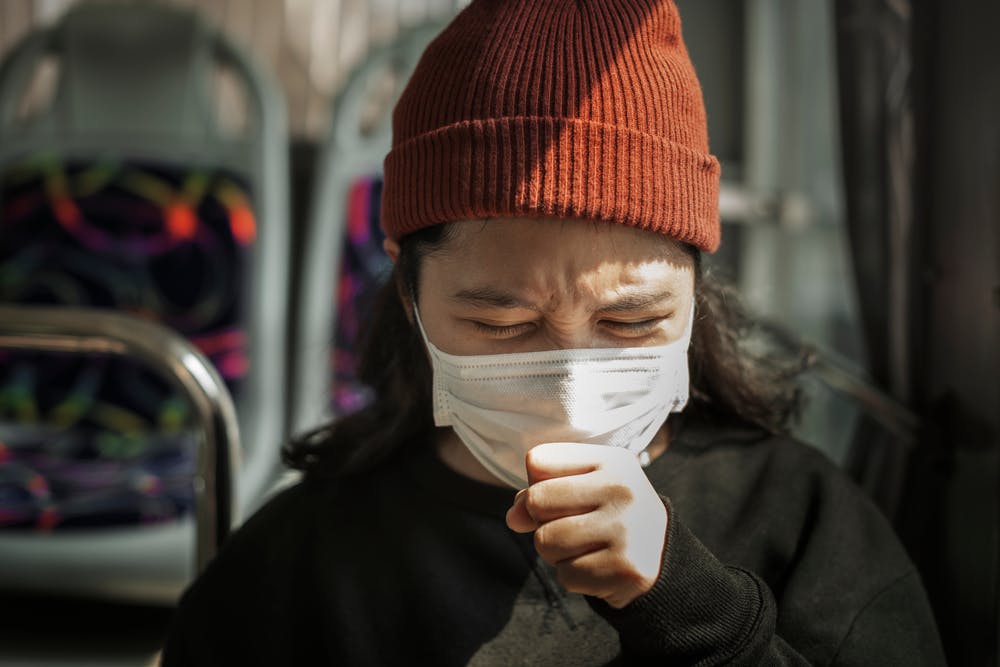
As restrictions ease, many Australians will be wondering if it’s worth wearing a mask on the bus, train or tram to reduce their risk of being infected with coronavirus.

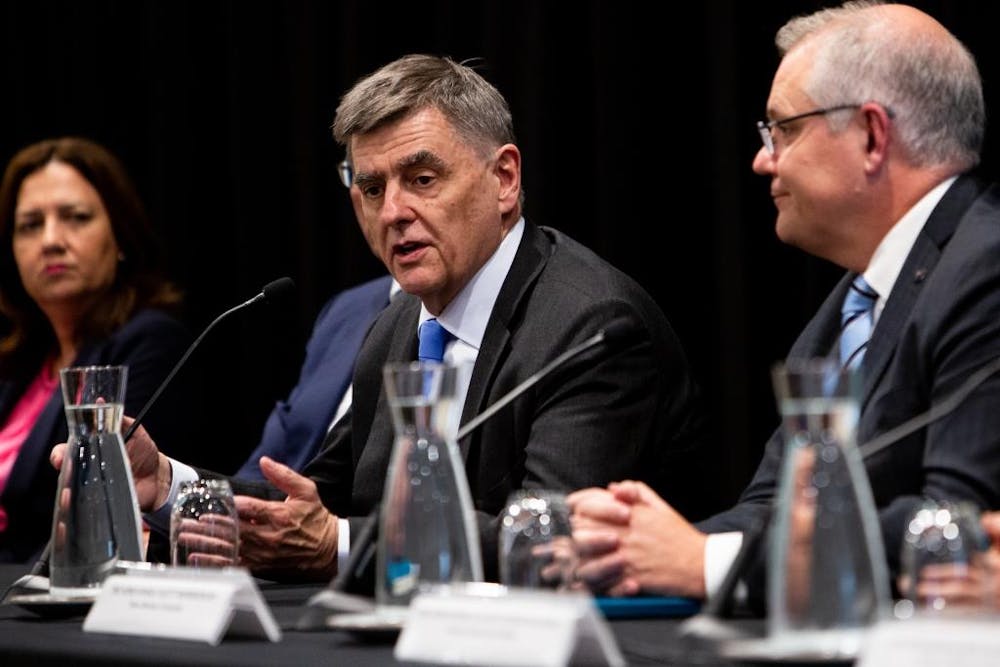
When Deputy Chief Medical Officer Nick Coatsworth was asked about this earlier this week, he said:

If you are a vulnerable person and you have no other means of getting to work or around, it would be a very reasonable thing to do. We don’t think that general, healthy members of the community need to be considering wearing masks in that context.

Earlier, Chief Medical Officer Brendan Murphy said wearing masks on public transport “is not an unreasonable thing to do”.

But the National Cabinet has stopped short of making wearing masks on public transport compulsory. No wonder it can all seem a bit confusing.

So what does fresh evidence say about the benefits of healthy people wearing masks in public? And how do you use this to decide what to do?


Read more: As coronavirus restrictions ease, here’s how you can navigate public transport as safely as possible


Yes, wearing a mask does reduce your risk

Until now, the evidence about whether wearing a mask out and about if you’re healthy reduces your risk of coronavirus infection has been uncertain.

But a recent review in The Lancet changes that. As expected, the researchers found wearing masks protected health-care workers against coronavirus infection. But they also found wearing masks protects healthy people in the community, although possibly to a lesser degree.

The researchers said the difference in the protective effect was largely because health workers are more likely to use N95 masks, which were found to offer greater protection than the disposable surgical masks we generally see people wearing out in the community.


Read more: To limit coronavirus risks on public transport, here’s what we can learn from efforts overseas


So, the take-home message is that masks, while not offering perfect protection, reduce your risk of coronavirus infection while you’re out and about.

In light of this study, the World Health Organisation (WHO) has updated its advice to recommend healthy people wear masks in public where there is widespread transmission and where physical distancing is difficult, such as on public transport.

But how is this different to what I’ve heard before?

What this Lancet study adds is the best evidence we have so far that healthy people who wear a mask out and about can reduce their chance of infection.

It’s important to stress, the evidence is quite clear that if you’re sick, wearing a mask reduces your risk of transmitting the coronavirus to others.

If you’re sick or have been diagnosed with COVID-19 the clear advice is still to stay home and self-isolate. You shouldn’t be on public transport anyway!

If you’re sick, you shouldn’t be on public transport. The only exception is if you need to go out to get tested. www.shutterstock.com

Masks also protect others

But how about the other possible benefit of wearing masks on public transport – minimising the risk of you unwittingly transmitting the virus to others if you don’t have symptoms?

Despite some confusing messages from WHO earlier this week, we know “asymptomatic transmission” does occur, although we are yet to pin down its exact role.

For instance, a recent review suggests as many as 40-45% of coronavirus infections are asymptomatic and they may transmit the virus to others for an extended period.

So, preventing asymptomatic transmission is another reason you may choose to wear a mask. That is, rather than wearing a mask to protect yourself, you could wear a mask to protect others.


Read more: Do homemade masks work? Sometimes. But leave the design to the experts


So, what should I do?

Given masks reduce your risk of infection and reduce the risk of you unwittingly passing on the virus to others, you could certainly make a case for routinely wearing a mask on public transport while we have coronavirus in the community.

This case is even stronger if you are at risk of severe illness, for example if you are over 65 years old or have an underlying medical condition such as high blood pressure, heart disease or diabetes.


Read more: Why are older people more at risk of coronavirus?


Alternatively, if you are travelling on a short trip on a train and you have plenty of room to social distance, then you may decide wearing a mask may not be essential given the level of risk on that journey.

However, if you are on a longer commute and the train is crowded and social distancing is difficult, then wearing a mask could well be sensible.

If you do decide to wear a mask, then it’s important to make sure you know how to put it on and take it off correctly. And as no mask offers complete protection, you still need to physically distance where possible and wash your hands.


Read more: Are you wearing gloves or a mask to the shops? You might be doing it wrong


ref. Should I wear a mask on public transport? – https://theconversation.com/should-i-wear-a-mask-on-public-transport-139981

Putting stimulus spending to the test: 4 ways a smart government can create jobs and cut emissions

Source: The Conversation (Au and NZ) – By Thomas Longden, Research Fellow, Crawford School, Australian National University

The COVID-19 recession is coming, and federal and state governments are expected to spend more money to stimulate economic growth. Done well, this can make Australia’s economy more productive, improve quality of life and help the low-carbon transition.

In a paper released today, we’ve developed criteria to help get this investment right. The idea is to stimulate the economy in a way that creates lasting economic value, reduces greenhouse gas emissions and brings broader social benefits.

An Organisation for Economic Cooperation and Development (OECD) outlook report released this week predicts an economic slump this year in Australia and globally.

Governments will be called on to invest. In this article, we investigate how stimulus spending on infrastructure can simultaneously achieve environmental, economic and social goals.

Stimulus spending can help the economy, the environment and the community. Dean Lewins/AAP

Best practice

Europe has already embraced a “green stimulus”. For example, Germany plans to spend almost one-third of its €130 billion stimulus package on renewable power, public transport, building renovations and developing the hydrogen and electric car industries.

In response to the pandemic, New South Wales and Victoria produced criteria for priority stimulus projects which include environmental considerations.

Whether the federal government will follow suit is unclear.


Read more: HomeBuilder misses a chance to make our homes perform better for us and the planet


Most federal stimulus spending has been on short-term JobKeeper and JobSeeker payments, plus the HomeBuilder scheme that will largely benefit the construction industry and those who can afford home improvements.

So how should governments decide what to prioritise in a COVID-19 stimulus package?

Our criteria

We developed a set of criteria to guide stimulus spending. We did this by comparing ten proposals and studies, including current proposals by international organisations and think tanks, and research papers on fiscal stimulus spending after the 2008 global financial crisis. Synthesising this work, we identified nine criteria and assessment factors, shown below.

Before the pandemic hit, Infrastructure Australia and other organisations had already identified projects and programs that were strong candidates for further funding.

We applied our criteria to a range of program/project categories to compare how well they perform in terms of achieving economic, social and environmental goals. We did not assess particular programs and projects.

The four most promising categories for public investment are shown in this table, and further analysed below.

1. Renewable energy and transmission

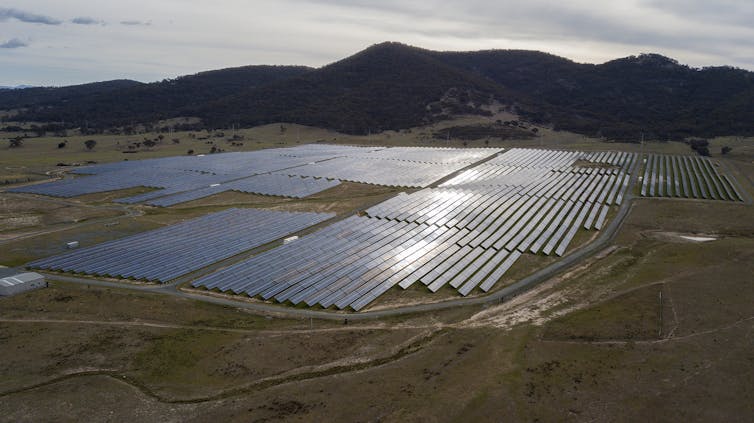
The electricity system of the future will be based on wind and solar power – now the cheapest way of producing energy from new installations. Australia’s renewables investment boom may be tailing off, and governments could step in.

The Australian Energy Market Operator, in its 2018 Integrated System Plan, assessed 34 candidate sites for Renewable Energy Zones – which are places with great wind and solar potential, suitable land and access to the grid.


Read more: Really Australia, it’s not that hard: 10 reasons why renewable energy is the future


The NSW government has committed to three such zones. These could be fast-tracked, and other states could do the same.

Investment in power transmission lines is needed to better connect these zones to the grid. It’s clear where they should go. Governments could shortcut the normally lengthy approval, planning and commercial processes to get these projects started while the economy is weak.

Now is a good time for governments to invest in large-scale renewable energy. Mick Tsikas/AAP

2. Energy efficiency in buildings

There’s a strong economic, social and environmental case for investment in retrofitting public buildings to improve their energy efficiency. Schools, hospitals and social housing are good candidates.

Building improvement programs are quick to start up, opportunities exist everywhere and they provide local jobs and business support. And better energy efficiency means lower energy bills, as well as reduced carbon emissions.


Read more: Coronavirus is a ‘sliding doors’ moment. What we do now could change Earth’s trajectory


One existing program is showing the way. Under the Queensland government’s Advancing Clean Energy Schools program, which involves solar installation and energy-saving measures, 80 state schools have been brought forward to the project’s first phase as part of COVID-19 stimulus.

A focus on public buildings will bring long-lasting benefits to the community, including low-income households. This would bring far greater public benefit than programs such as HomeBuilder.

3. Environmental improvements

Stimulus initiatives also provide an opportunity to boost our response to last summer’s bushfires. While the federal government has announced A$150 million of funding for recovery projects and conservation, more could be done.

The ACT has shown how. As part of COVID-19 stimulus, 26 people who’d recently lost their jobs were employed to help nature reserves recover after the fires. Such programs could be greatly scaled up.

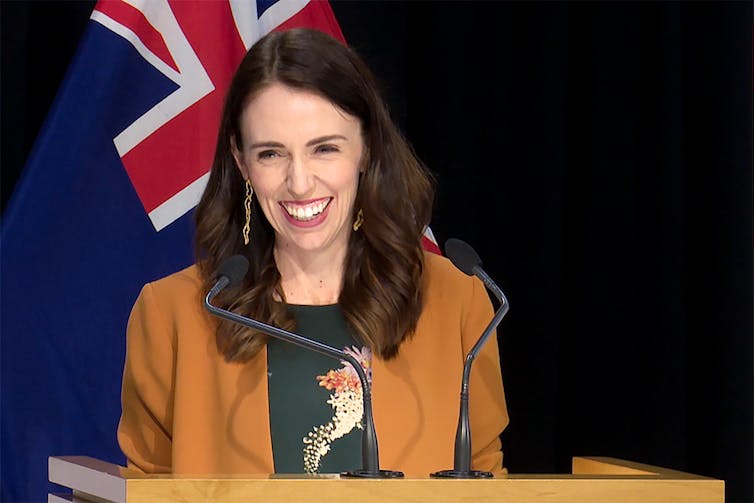
In New Zealand, the government is spending NZ$1.1 billion on creating 11,000 “nature jobs” across a range of regional environmental projects.

In New Zealand, Jacinda Ardern’s government has created Daniel Hicks/AAP

4. Transport projects

Several transport projects on the Infrastructure Australia priority list are well developed, and some could be fast-tracked.

Smaller, local projects such as building or refurbishing footpaths and cycle paths, and improving existing transport infrastructure, can be easily achieved. The NSW government is already encouraging councils to undertake such projects.

Sound analysis and transparency is needed

Our analysis is illustrative only. A full analysis needs to consider the specifics of each project or program. It must also consider the goals and needs in particular regions or sectors – including speed of implementation, ensuring employment opportunities are spread equally, and social and environmental priorities.

This is the job of governments and agencies. It should be done diligently and transparently. Australian governments should lay out which objectives their stimulus investments are pursuing, the expected benefits, and why one investment option is chosen over another.

This should improve public confidence, and taxpayers’ acceptance of stimulus measures. This is good practice for governments to follow at any time. It’s even more important when they’re spending billions at the drop of a hat.

ref. Putting stimulus spending to the test: 4 ways a smart government can create jobs and cut emissions – https://theconversation.com/putting-stimulus-spending-to-the-test-4-ways-a-smart-government-can-create-jobs-and-cut-emissions-140339

An El Niño hit this banana prawn fishery hard. Here’s what we can learn from their experience

Source: The Conversation (Au and NZ) – By Eva Plaganyi, Principal Research Scientist, CSIRO

Prawns are a staple of many Australian barbecues, and we’re fortunate to have wild-caught prawns from sustainably-managed fisheries that boast best management practice.

You’ve probably heard of the tiger and white banana prawns caught in the Gulf of Carpentaria. But west of Darwin, there’s a fishery in the remote Joseph Bonaparte Gulf that focuses on a different species of prawn with red legs: redleg banana prawns.

But the combination of their complex life-cycle, extreme tides in their breeding grounds and the projected increasing frequency of extreme El Niño events creates challenges for the little crustaceans and their management.

Redleg banana prawns are found to the west of Darwin. Dwayne Klinkhamer, Author provided

Our new research found an El Niño event was associated with the lowest ever catch in redlegs, and outlines what fisheries across Australia can learn from this experience.

Changes in major weather patterns can have profound ecological, social and economic consequences for food production systems. It’s vital we develop adaptation solutions.

Changing tides

The El Niño causes warming of ocean temperatures and reduced ocean upwelling in the central and eastern Pacific – in areas such as off the coast of California and Peru. These oceanographic events stretch across the ocean. Temperature and pressure differences in the water and atmosphere cause the sea level to rise in the east and fall in the western Pacific.

In 2015-16, a fishery recorded its lowest ever catch of redleg banana prawns. Remy Stutz and Conrad Mackail/FV Karumba Pearl, Author provided

The lowest part of the sea across the Pacific Ocean equatorial band wraps around the top end of Indonesia. This leads to changes in currents and tides in the Joseph Bonaparte Gulf and top end of Australia, where prawn fisheries are located.

El Niños are a natural event, but researchers have predicted they’ll occur more frequently and severely as a result of climate change. What’s more, changing weather patterns may also make these events harder to predict.


Read more: El Niño has rapidly become stronger and stranger, according to coral records


Australian farmers and fishers are all too familiar with the changes in rainfall that accompany alternating El Niño or La Niña cycles. But impacts on the marine environment of northern Australia are only recently becoming better understood.

Less known is how El Niño-driven sea level changes – which can cause changes in tides and currents – affect fisheries. This is where our research comes in.

Redleg banana prawns rely on tidal highways to fast-track their movement. CSIRO, Author provided

Breakdown of the redleg highway

Like many prawns, redlegs have a complex life-cycle because they depend on both marine and coastal river (estuary) habitats. They use tides, currents and river flows as their mode of travel.

The large gulf they call home has some of the strongest tides in the country, and the prawns rely on these tidal highways to fast-track their movements.

Redlegs use these water highways to move back and forth from the nursery on the coast to the deep gulf waters. Juveniles move offshore to become adults, and then larvae return to continue the life cycle.

But the strong El Niño event in 2015-16 likely caused these tidal highways to break down, and fishers reported the lowest-ever catches of redleg banana prawns.

The redleg highway in the Joseph Bonaparte Gulf. Author provided

In such remote country, it’s no simple feat to rush north with scientific measuring equipment to test links between the fishery and tides. So we relied on observations from space using satellite measurements of changes in sea surface height (altimetry).

The images we saw for this period were astounding. The average sea level had temporarily dropped by up to 18 centimetres, compared with usual levels.


Read more: The rise and rise of the 2015 El Niño


On top of this, regional rainfall had been below average, leading to a drop in freshwater river flows that would usually play a role in connecting estuarine and marine habitats.

Climate-proofing fisheries

So how can fisheries respond? Understanding environmental drivers is important to help plan ahead and safeguard a resource, whether prawns or other fish.

A prawn trawler. Fisheries must work with scientists to prepare for future climate disruptions. CSIRO, Author provided

Getting a heads-up on an impending bad year is helpful for the redleg fishery. Fishers must travel long distances from Darwin, with fishing restricted to moderate neap tides – when the difference between low and high tide are not as extreme.

Fisheries can prepare for more extreme environmental drivers by modifying the rules for when and how much to fish, so they’re aligned with environmental signals. For example, in low abundance years, it may be necessary to reduce catch or fishing season to ensure prawns aren’t overfished.

It’s also a good idea for fishers to be flexible, and able to switch between species they catch. In this case, tiger prawns were booming in the Gulf of Carpentaria at the same time redleg banana prawns were scarce.


Read more: As the coronavirus interrupts global supply chains, people have an alternative – make it at home


Extreme events can negatively impact supply chains – the routes and markets fishers rely on to get their product to consumers. Planning ahead can help maintain these flows. We need only look to COVID-19 to see how economic consequences can blow out from disruptions to supply chains.

We can maintain Australia’s proud history of sustainable management. But to continue to thrive, research must translate into changes in practice at fisheries.

ref. An El Niño hit this banana prawn fishery hard. Here’s what we can learn from their experience – https://theconversation.com/an-el-nino-hit-this-banana-prawn-fishery-hard-heres-what-we-can-learn-from-their-experience-139852

‘I love Australia’: 3 things international students want Australians to know

Source: The Conversation (Au and NZ) – By Angela Lehmann, Honorary Lecturer, College of Arts and Social Sciences, Australian National University

A recent statement from China’s education bureau warned Chinese students about studying in Australia due to “racist incidents” during the COVID-19 pandemic.

Such statements, and further moves from China’s education agents threatening to redirect students towards international competitors such as the United Kingdom, can negatively affect Australia as a study destination. Australia’s universities are already reeling from the loss of international students due to COVID-19.

There have been reports some international students from China have defended Australia as a study destination. I have been conducting in-depth interviews with ten international students in Australia about their experiences and concerns throughout COVID-19.

They too have, mostly, positive things to say.

Here are three things they believe Australia should know as we plan our recovery.

1. Australians must be more welcoming

Negative experiences of international students are more dangerous to long-term recovery than border closures and flight restrictions. At a time of increased unemployment and pessimistic economic forecasts, we risk anti-foreigner sentiment growing.

Students I spoke with reported this was already happening. One student from Peru said he had “had quite racist comments like ‘go back to your country’”. Another, from India, spoke at length about part-time jobs now being “offered only to Australian citizens. I was told not to even bring in a CV”.


Read more: COVID-19 increases risk to international students’ mental health. Australia urgently needs to step up


On April 4, the prime minister called for temporary visa holders to “go home” if they couldn’t support themselves.

Each student I spoke with said this was the point in time when they went from feeling a part of their community, to feeling unwelcome.

One Indian student told me:

I have seen a rise in anti-Chinese sentiment and anti-Asian sentiment. I have seen my Japanese flatmate have abuse yelled at her on the street. Calling her a “filthy Asian” and things like this.

Another student spoke about Labor Senator Kristina Kenneally’s call to “reset” Australia’s temporary migration intake and give Australians a “fair go”.

She said:

Definitely, there is a growing anti-immigrant sentiment here. The talk from people in the Australian government that we should be “getting our jobs back for Australians” is constructed in a way to inherently disadvantage people like me, or immigrants. Because it is government policy it will infiltrate across the country and it’s hard to tackle that on an individual level.

Each student suggested Australia’s reputation as a welcoming, safe and diverse place was what was going to shape how parents and prospective students made decisions about where to study after the crisis.

2. International students are integrated in Australian society

The students I spoke with are looking to integrate in local communities as a central part of their overseas experience. They felt they contributed to various parts of Australian society – as tourists and volunteers.

International students want to be ingrained in Australian society. Shutterstock

And many played an active role in promoting Australia and their city internationally.

Daniel, from Peru, is based at a regional Queensland university. He volunteers with a local men’s mental health organisation. He’s taken over the weekly Spanish language program on the local radio station and, until the shutdown, worked part time at a bar and volunteered with a research program measuring local water quality.

He said:

Something I have learned here is about a sense of community, about being kind to others. I love Australia and the people I have met so far. Once all this is over, I will go back to my home country and teach them about what I have learned here.

3. The government needs to signal its support through clear policy

International students want clear policy responses and acknowledgement of the valuable role they play in Australia.

Australia’s flattened curve undoubtably works in our favour, giving us an advantage over the United States and the UK.

However, the government’s support and welfare may shape how parents and prospective students make future decisions.

Clear policy responses matter now. They offer a signal to students – current and future – that Australia recognises the importance of international students, and they are a welcome and supported part of our communities.

An example is Australia’s reluctance to guarantee international students will not be penalised from being eligible for a Temporary Graduate Visa if studying online. This visa allows graduates of Australian universities to stay on and work, and is essential to attracting students. Currently students are restricted around the amount of offshore study they can do to be eligible.


Read more: 90,000 foreign graduates are stuck in Australia without financial support: it’s a humanitarian and economic crisis in the making


Canada made such an adjustment early on, announcing international students could complete 50% of their study online without it impacting their eligibility to eventually apply for a post-study work permit.

One Indian student told me:

I don’t think Indian students will be deterred from their goal to study abroad and to better their lives. But a lot of where they decide to do this depends on how the government reacts and responds. A lot of students are probably going to start looking at Europe and Canada as a better destination because of the policies they have. Canada has been doing a really great job at protecting its international student community.

International students value human connection and their expectations and contributions extend beyond the lecture hall. They are looking for responses and a recovery strategy that acknowledges this.

ref. ‘I love Australia’: 3 things international students want Australians to know – https://theconversation.com/i-love-australia-3-things-international-students-want-australians-to-know-139857

New NSW building law could be a game changer for apartment safety

Source: The Conversation (Au and NZ) – By Matthew Bell, Senior Lecturer and Co-Director of Studies for Construction Law, University of Melbourne

Three years have passed since a cladding-fuelled fire claimed 72 lives in Grenfell Tower, London, on June 14 2017. The construction industry and its regulators around the world are still grappling with how to create effective regulations to ensure dwellings are built to keep their occupants safe.

The New South Wales Parliament passed two important bills last week: the Design and Building Practitioners Bill 2020 and the Residential Apartment Buildings (Compliance and Enforcement Powers) Bill 2020. This put in place two important pieces of the “jigsaw puzzle”, as NSW Better Regulation Minister Kevin Anderson put it.


Read more: NSW building certification bill still lets developers off the hook


The Residential Apartment Buildings Bill in particular could be a game changer and is the focus of this article. The law is expected to take effect on September 1 2020.

New powers to order serious defects be fixed

The centrepiece of the legislation is an ability for the Secretary of the Department of Customer Service to order the correction of “serious defects” in residential apartment buildings. In practice, the NSW building commissioner and his staff will apply these orders, according to the bill’s second reading speech. Developers can be ordered to rectify building work “if the secretary has a reasonable belief that building work was or is being carried out in a manner that could result in a serious defect”.

NSW Building Commissioner David Chandler and his officers will need enough resources to apply the new powers. Bianca De Marchi/AAP

The “was” is significant here. These powers of intervention can be used up to ten years after an occupation certificate is issued.

And, to make sure defects are fixed before residents take possession of their apartment, the secretary can issue a “prohibition order” to delay an occupation certificate.

The definition of “serious defect” includes:

  • failure to comply with performance requirements of the Building Code of Australia

  • defects likely to deny habitability or use of the building for its intended purpose

  • use of banned building products.


Read more: Cladding fires expose gaps in building material safety checks. Here’s a solution


Other states and territories have in place various provisions to order rectification. However, none of these are as extensive as the new regime in NSW.

In particular, the express power to order rectification after apartments are completed addresses the issue that frustrated the Victorian Building Authority’s 2017 attempt to have the builder rectify non-compliant cladding at the Lacrosse Building in Melbourne. So, the rectification powers are likely, along with the statutory duty of care in the Design and Building Practitioners Bill – also a NSW innovation – to attract interest across the country.

How much will the industry push back?

These measures to rectify defects go to the heart of the commercial drivers that underpin our largely privately delivered apartment stock in Australia. Without an occupation certificate, developers can’t settle the sale of the apartments (usually off-plan). Likewise, their building contractors will typically remain “on the hook” for a raft of obligations under their contracts.

By making defects correction a precondition for issuing the occupation certificate, the new law embraces the “prevention is better than cure” mantra that underpins reforms in Australia and beyond.


Read more: Housing with buyer protection and no serious faults – is that too much to ask of builders and regulators?


To what extent will the industry support this shift? Time will tell.

What can be said is that the reforms add a high level of intervention in the commercial drivers of apartment construction when the industry is already operating under the shadow of COVID-19 and its gathering recession. So it is something of a “wildcard” in an already fraught commercial landscape.

This means developers who do not have adequate measures in place to pass the costs of rectification and delayed occupation down the contractual chain are likely to resort to the extensive appeal measures in the legislation. Likewise, when contractors, subcontractors, consultants and suppliers do “carry the can” for such liability, they will look hard at the relief provisions in their contracts.

The disputes and delays that inevitably result can leave apartment owners and renters in limbo, despite the intent of the legislation to protect them.


Read more: It’s not just the building cracks or cladding – sometimes uncertainty does even more harm


Regulators need adequate resources

Minister Kevin Anderson told parliament regulators will be able to stop an occupation certificate being issued until serious defects are fixed. Joel Carrett/AAP

Another crucial “time will tell” aspect is whether the regulator will have enough resources to inspect buildings – and issue prohibition and rectification orders when needed – in a timely manner across the industry.

The legislation largely leaves it to the Department of Customer Service to appoint “authorised officers”. The minister has indicated these officers will be the building commissioner and his staff.

The commissioner was reported in February to be recruiting up to 60 construction professionals as “auditors” for a scheme that looks similar to what is now enshrined in legislation. They will need to move rapidly to have it ready for the extensive interventions that the legislation anticipates.


Read more: Lack of information on apartment defects leaves whole market on shaky footings


A game changer?

Ever since the Grenfell tragedy, politicians around the world have at least paid lip service to the aspiration that “occupants of buildings deserve to feel safe and secure within their walls”. In saying this to the NSW parliament last week, Anderson was able credibly to put forward the Residential Apartment Buildings Bill as a vital piece in the regulatory “puzzle” to achieve that goal.

The issues discussed here are likely to be just the tip of the iceberg as the industry absorbs the implications of the new law (and its forthcoming detail by way of regulations). But recent activity by NSW lawmakers suggests there is at last strong impetus to achieve meaningful and comprehensive reform.

ref. New NSW building law could be a game changer for apartment safety – https://theconversation.com/new-nsw-building-law-could-be-a-game-changer-for-apartment-safety-140432

Vital Signs: why ‘the marketplace for ideas’ can fail – from an economist’s perspective

Source: The Conversation (Au and NZ) – By Richard Holden, Professor of Economics, UNSW

There is no shortage of repugnant and dangerous ideas in the world. An age old question is whether free speech will see good ideas win out over bad.

The proposition that good ideas eventually triumph in “the marketplace for ideas” dates at least to 1644, when John Milton wrote in his anti-censorship tract Areopagitica:

Let [Truth] and Falsehood grapple; who ever knew Truth put to the worse, in a free and open encounter?

But it was perhaps first explicitly stated by United States Supreme Court Justice Oliver Wendell Holmes in 1919, in his dissent to a 7–2 ruling in the Abrams v United States case involving the first amendment right to freedom of speech.

Holmes wrote:

the ultimate good desired is better reached by free trade in ideas – that the best test of truth is the power of the thought to get itself accepted in the competition of the market.

Old though this question may be, it is one that confronts us time and again. Is it more dangerous to stifle expression of a seemingly dangerous idea, or to let it be freely expressed?

It is central to the controversy over the New York Times publishing on June 3 an idea many found repugnant.


A screen grab of the Tom Cotton article on the New York Times website. New York Times

That idea was “an overwhelming show of force to disperse, detain and ultimately deter lawbreakers” as a response to widespread Black Lives Matter demonstrations and isolated outbreaks of violence and looting. It was advocated in an op-ed piece by a US senator from Arkansas, Tom Cotton.


Read more: In publishing Tom Cotton, the New York Times has made a terrible error of judgment


Editorial page editor James Bennet resigned as part of the paper’s mea culpa. A champion of the “marketplace of ideas” might argue the New York Times did the right thing, or at least nothing wrong.

So what would an economist, whose job is to understand market behaviour, say?

Economists and markets

Now economists generally like markets.

The most celebrated result in all of economics – the “First Welfare Theorem” formalised by Nobel laureates Kenneth Arrow and Gerard Debreu – states that with the right conditions competitive markets will allocate resources with maximum efficiency.

Yet economists – especially and including Arrow and Debreu – are all too aware that markets don’t always function well in reality. Information is often “asymmetric”, such as a seller knowing more about a product’s quality than the buyer. There are “externalities”, costs incurred by third parties, such as environmental harms not factored into market prices. Plenty of markets are not sufficiently competitive.

The failure of markets for insurance, used cars and many other things has been well-documented.

Why, then, why should we have faith in the marketplace for ideas?

Ideas are not products

Over the past two decades economists have been developing formal models that can speak to competition in ideas.

The stepping-off point is to note the nature of competition in an ideas market is fundamentally different from competition in a product market.

With products, sellers compete for customers by setting the price for their products. As the economists Matthew Gentzkow and Jesse Shapiro put it:

Two firms compete [in the product market] if their products are substitutes from the perspective of consumers. A change in the price of one affects the purchasing behaviour of the other’s customers. This kind of competition is important because it limits firms’ ability to raise price above marginal cost.

Ideas differ in the following way:

Two firms compete in [an information market] if 1) they cover the same events and 2) at least some consumers will learn the facts reported by both. A change in the set of facts one reports affects the information of the other’s customers. This kind of competition limits firms’ ability to control consumers’ beliefs.

A form of prisoner’s dilemma

The cleanest formal model of competition between parties trying to control people’s beliefs comes from a 2017 paper by Matthew Gentzkow and Emir Kamenica (a former classmate and University of Chicago colleague of mine).

The “marketplace for ideas” notion holds that when there are more senders of information, more information will be communicated to consumers.

Gentzkow and Kamenica showed this is not necessarily so. It all depends on the nature of the strategic interaction between the senders of information.

Senders might be caught in a kind of Prisoner’s Dilemma, the game theory concept made famous by the movie A Beautiful Mind. It would be socially productive for more information to be revealed, but the private incentives of the senders lead to less revelation.


Read more: The legacy of John Nash and his equilibrium theory


For example, consider two pharmaceuticals makers with drugs only they know the effectiveness of. One half of their market is customers who will only buy pharmaceuticals they believe likely to work well. The other half wants their drugs to work too, but they’ll also buy if it might only partially work.

In this case each maker has an incentive to withhold information about the efficacy of their product, even though they and the consumers would be better off if they and the rival revealed more information. It’s just like the consequences of unilateral action as shown in A Beautiful Mind.

If strategic interaction in the marketplace for ideas takes this form then competition does not lead to good arguments winning out.

Gentzkow and Kamenica show the crucial condition for competition to lead to more information being revealed is this: each sender must be able to unilaterally deviate to some outcome more informative for consumers. In the drug example, this would be each maker disclosing the efficacy of their own drug and that of their competitor.

Whether this happens in practice depends on important details about the nature of the ideas being discussed, what types of information are permissible by law, and of course whether those receiving information are rational.

In short, the answer to whether the marketplace for ideas leads good ideas to win out is: it depends.

Open discussion is not enough

Just because the marketplace for ideas doesn’t always work doesn’t mean it never works. There are deeply important non-economic reasons to value freedom of speech that extend beyond how much information gets revealed.

But modern economics teaches us that competition in the marketplace for ideas is different than competition in the market for ordinary goods and services. We should not always conclude that odious ideas will be consigned to the dustbin of history simply through open discussion.

ref. Vital Signs: why ‘the marketplace for ideas’ can fail – from an economist’s perspective – https://theconversation.com/vital-signs-why-the-marketplace-for-ideas-can-fail-from-an-economists-perspective-140429

Friday essay: taking a wrecking ball to monuments – contemporary art can ask what really needs tearing down

Source: The Conversation (Au and NZ) – By Bronwyn Carlson, Professor, Indigenous Studies, Macquarie University

As the Black Lives Matter protests raged across the world, I was sent a post on Facebook that read,

Donald J Trump now lives at 1600 Black Lives Matter Plaza, NW, Washington, DC 20500.

The post referred to the mural painted in front of Lafayette Square. In bright yellow paint, the words “Black Lives Matter” stretched from sidewalk to sidewalk over two city blocks. The work was commissioned by DC’s mayor Muriel Bowser, who also renamed the area Black Lives Matter Plaza.

The artwork is a powerful symbol, made even more so because of its visibility and prominence in a public space – and local government endorsement. It will serve to remind everyone of this moment in history, including the violence perpetrated against protesters by police to clear the streets for a presidential photo opportunity in front of a church.

Contemporary art can be transformative, especially when located in public spaces. Historical monuments have the same kind of power. They are a physical reminder created to commemorate a person or event who is deemed worth remembering.

Now is the time to ask which monuments can withstand introspection and revision. Artists are opening those conversations – creatively and sometimes hilariously.

Tearing down history

Around the world, we have seen colonial monuments attracting the rage of protestors who don’t want to see the continual memorialising of men known for their violent and oppressive actions.

In Bristol in the UK, the statue of Edward Colston, a 17th century slave trader, was torn down, dragged through the streets, and thrown into the harbour. Colston was a member of the Royal African Company and responsible for enslaving approximately 80,000 men, women and children and forcibly removing them from Africa to the Americas. His statue is a tangible reminder their lives were considered insignificant.

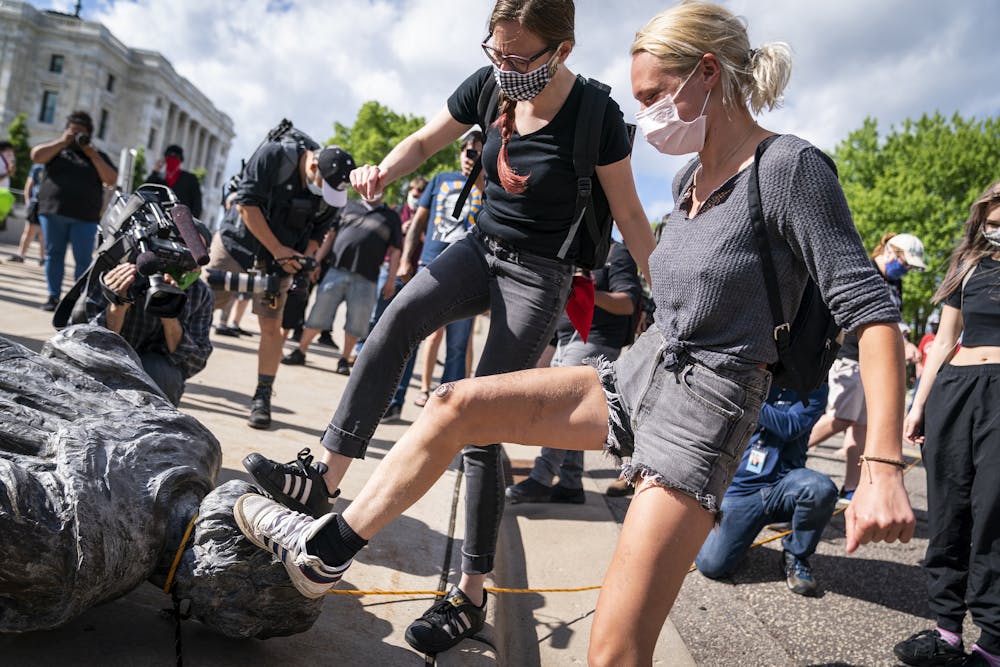
In the US, statues of Christopher Columbus have been beheaded. Columbus, once celebrated for “discovering” the US, has in recent times been reviled for his brutality toward Native American people, with many states and cities replacing the annual Columbus Day with Indigenous People’s Day.

People kick the Christopher Columbus statue in front of the Minnesota State Capitol on Wednesday. Leila Navidi/Minneapolis Star Tribune/TNS/Sipa USA

In the US, most of the targeted statues have been of Confederate memorials in cities across the south. The statue of Confederate General Robert E Lee will be removed from its prominent position in the centre of the town of Richmond, Virginia, with Governor Ralph Northam pledging the state will no longer preach a “false version of history”.

Australians are also questioning whether colonial monuments – standing prominently in towns and cities – should remain. The same question is being asked of past film and television productions. This week, Netflix removed four Chris Lilley programs from its library, some of which originally aired on the ABC, in which the comedian used “brown face” makeup and racial stereotypes to depict characters of colour.


Read more: Ten Twitter accounts you should be following if you want to listen to Indigenous Australians and learn


Yesterday, Today show journalist and Gamilaroi/Gomeroi woman Brooke Boney broke down the tension behind the issue to her Channel 9 audience:

Does going through the archives and tearing down art that’s been made in the past really help us move forward? If I have children, I don’t want them to see and think that is how they fit into the world. But I’d also like to be able to show them how poorly our people were thought of and treated in the past.

Can we contemplate a horizon whereby narratives of nation are represented by less harmful and more truthful physical constructions? Their presence is not neutral. They masquerade as benign signifiers of nation building when, in fact, they are inscribed with a violent history that reminds Indigenous people of their dispossession and enduring trauma.

Swinging through

Enter Tony Albert, a politically-minded artist provoked by stereotypical representations of Aboriginal people, and hailed as one of our most exciting contemporary Australian artists. His previous works have used drawing, painting, photography and installation. He’s also incorporated a collection of “Aboriginalia” – retro and household kitsch objects depicting Aboriginal people and their culture.

His new artwork, titled You Wreck Me, is a video that invokes the mythology of the trickster, here to relay important moral and life lessons. The work brings to the fore the ongoing discussions about memorialisation and nationalism through the lens of parody.

In the video, Tony Albert is painted up for ceremony while straddling an exercise ball in a comedic representation of Miley Cyrus’s infamous video clip, Wrecking Ball. Singing (badly) and swinging, he shatters statues of Captain James Cook.

So bad, it’s powerful. Tony Albert’s You Wreck Me has him swinging through colonial monuments.

Artists like Albert are asserting their existence in contemporary Australia in myriad ways, including using humour to challenge the continual idolisation of the legacies of colonialism littering our public spaces.

Albert’s work comes at a time as many Indigenous and non-Indigenous people across Australia are calling for the removal of colonial monuments. There is a growing movement towards a more equitable and fair society.

Gamilaroi/Darug multimedia artist Travis De Vries presciently captured this in his 2019 digital print Cook Falling, Tear it Down. It showed a scene in Hyde Park, Sydney, with a group of Aboriginal people using a rope to pull down a statue of Captain Cook by the neck.

Cook Falling, Tear it Down (2019) by Travis de Vries. Travis de Vries

Truth telling has been the focus of Indigenous and non-Indigenous relationships for some time as noted by the 2019 NAIDOC theme: VOICE. TREATY. TRUTH.

The colonial monuments speak to the erasure of our histories as noted by Stan Grant in 2017 when he said:

the monument of Captain Cook speaks to the emptiness, it speaks to our invisibility; it says that nothing truly mattered, nothing truly counted until a white sailor first walked on these shores.


Read more: Monumental errors: how Australia can fix its racist colonial statues


Deeper than monuments

I personally do not care if the colonial monuments are torn down. What I do know is that while this would be symbolically important, their removal will not remove the attitudes and institutional racism behind their creation.

The reason these debates are raging and the reactions from many non-Indigenous people are so vehement, is because their legacies still endure. Removing the statues will not automatically end the legacy.

I am also aware their removal would allow another kind of amnesia where the trauma and violence experienced by Aboriginal people could be “forgotten”. Other options are being debated – removing monuments and housing them in museums, creating parks where they can stand and be used for educational purposes.

Some have pointed to artworks like the huge yellow slogan in Washington DC and demanded more from leaders. “It’s not enough to have a pretty painting in the middle of the street; we need politics,” Mckayla Wilkes, an activist for criminal justice reform, told The New Yorker.

Just ignoring the issue is not an option, because it also ignores who has the right to determine which histories are able to be displayed in public spaces and continues to privilege one version of history while erasing the presence of Aboriginal people.

ref. Friday essay: taking a wrecking ball to monuments – contemporary art can ask what really needs tearing down – https://theconversation.com/friday-essay-taking-a-wrecking-ball-to-monuments-contemporary-art-can-ask-what-really-needs-tearing-down-140437

Grattan on Friday: Protests add new element of uncertainty to COVID exit

Source: The Conversation (Au and NZ) – By Michelle Grattan, Professorial Fellow, University of Canberra

Paradoxically, but perhaps inevitably, as things are getting better in the wake of the COVID crisis tempers – including, it would seem, that of Scott Morrison – are becoming more frayed.

The Black Lives Matter demonstrations of last weekend marked a new stage in this strange and unpredictable journey coronavirus has taken us on.

The fallout from the murder of an unarmed black man, George Floyd, in the United States dramatically changed the COVID conversation in this country.

The protests exposed limits to the ability of leaders and health experts to persuade people to modify their behaviour.

They unleashed a backlash on the grounds of double standards, with critics contrasting how police had chased minor infringements. Those who’d always claimed the restrictions were too strict became louder in their demands they be lifted more quickly and comprehensively.

The tone of Morrison changed and sharpened, as the government struggles with its exit strategy.

Morrison says if protesters are on the streets in coming days, they should be charged. But the picture is confusing and potentially volatile.

In the Northern Territory, the demonstrators have an official OK. In NSW the police have been actively resisting more protests and are threatening fines and arrests. On Thursday night they succeeded in having the NSW Supreme Court ban a proposed rally organised by refugee advocates.


Read more: Australia needs to confront its history of white privilege to provide a level playing field for all


On another front, Morrison’s frustration with those premiers who are keeping their borders shut has ramped up.

Having managed the crisis very effectively so far, and received extensive praise for his efforts (this week’s Essential poll had 70% rating the federal government’s response as good), Morrison can see the danger of things going awry, either through fresh outbreaks of the virus or the reopening not proceeding fast enough.

On Thursday he was suggesting, for example, the protesters were slowing an increase in the numbers allowed at funerals (a highly emotive issue). Asked on 2GB about the NSW situation on funerals he said “the rally last weekend is the only legitimate real block to this at the moment, because we actually don’t know right now whether those rallies on the weekend may have caused outbreaks”.

But the government is sending conflicting messages, on one hand indicating the protests could hold back action while on the other hand saying action must go ahead.

Thus Morrison is insisting premiers nominate a date in July when their borders would be open (a date is important so tourist arrangements can be made).

Although there are multiple states with closed borders, Queensland is primarily in the sights of the federal government and other critics. Premier Annastacia Palaszczuk, facing an election in October, knows she has to choose the right moment to scrap the border restriction, before her hard line loses favour with her electors. She is now saying July (previously there was talk of later) and declaring she’s on the same page as the PM.

One man who attended the Melbourne rally has tested positive for COVID-19. But it will be more than another week before it becomes clear whether last weekend’s protests have triggered a health problem. And that timeline will be dragged out by protests to come. On the flip side, if there aren’t more cases, this will be a green light to accelerate progress – an unsanctioned large scale trial.

The protests have put new pressures on the opposition.

Knowing there’d be strong support for them among some in Labor’s ranks and base, Anthony Albanese stepped carefully on boggy ground, advising people to listen to the health advice.

Four federal Labor parliamentarians – Graham Perrett and Anika Wells from Queensland, and Warren Snowdon and Malarndirri McCarthy from the Northern Territory – attended rallies. There was a bit of a flurry when they got to parliament so they went for COVID tests (which didn’t mean much given the incubation period).

Despite parliament sitting this week, the opposition is still having a hard time achieving any positive cut-through. It struggles for traction with its attacks on inadequacies it identifies in government’s programs and decisions relating to COVID.

The political climate might change as the months go on; depending on the result, the July 4 Eden-Monaro byelection could affect the atmospherics of the wider debate. But at the moment people still seem turned off by political conflict, or by politics generally.

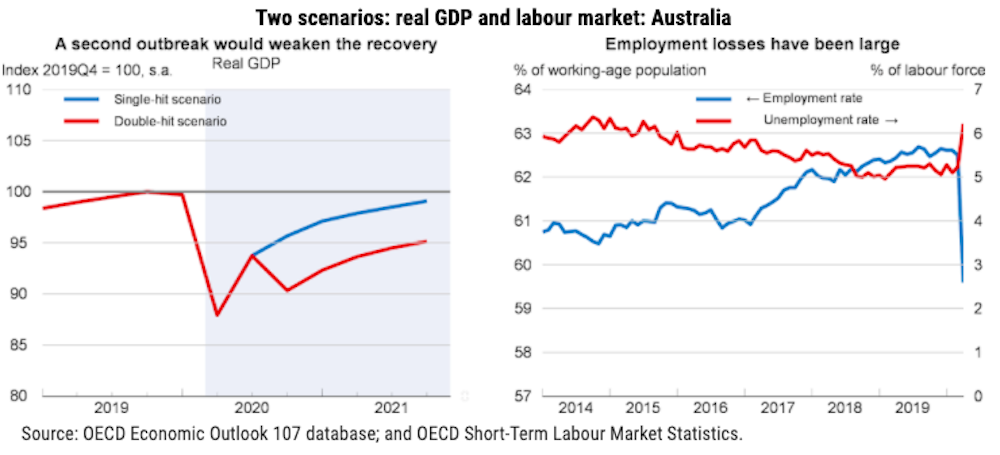
This week brought updated numbers, from the OECD, on Australia’s way out of the virus crisis. The OECD produced two scenarios, for a “single hit” and a “double hit” of the virus.

It estimated Australia’s GDP would fall 5% in 2020 in the single-hit scenario, which is hopefully the one we remain in.

OECD

But the report said: “Should widespread contagion resume, with a return of lockdowns, confidence would suffer and cash-flow would be strained. In that double-hit scenario, GDP could fall by 6.3% in 2020”.

The single hit would see recovery at 4.1% growth in 2021, but if there were a double hit the growth would be only an estimated 1%.

The OECD also says further policy measures would help the recovery, and notes there is plenty of fiscal room to provide them.

It’s interesting to compare New Zealand, which had a goal of “eliminating” COVID and a draconian lockdown.

The OECD predicts New Zealand GDP will shrink by 8.9% in 2020 under the single-hit scenario – but grow by 6.6% in 2021. If there were a double hit, this year’s GDP fall would be 10% and next year’s growth would be an estimated 3.6%.

New Zealand this week announced it was now COVID-free (while accepting, realistically, there’ll almost certainly be some future cases). Restrictions are now fully lifted, apart from the still-closed border.

The Morrison government from the start rejected “elimination” in favour of containment (although in some areas elimination has effectively been the result of successful containment).


Read more: Voices, hearts and hands – how the powerful sounds of protest have changed over time


So with the shutdown more limited in Australia than in New Zealand but the reopening more gradual, on the OECD figures the economy’s dive is forecast to be shallower here but the bounce back weaker than across the Tasman.

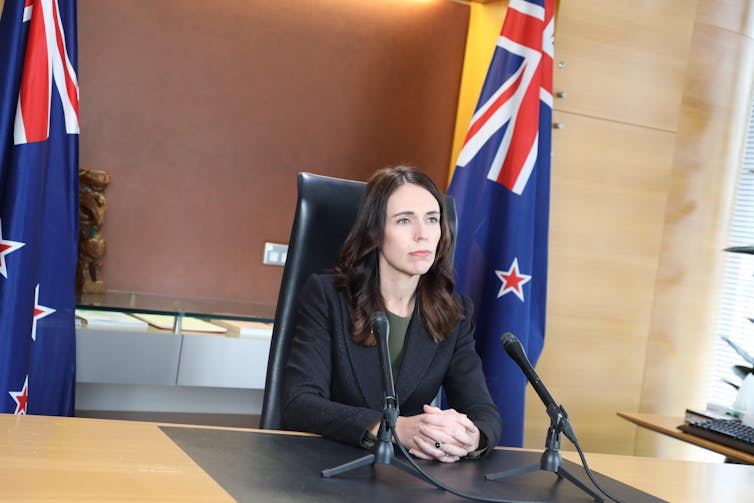
New Zealand Prime Minister Jacinda Ardern said she “did a little dance” when her country became COVID-free.

Morrison isn’t dancing just yet. While compared with many countries Australia’s record has been enviable, the way forward carries a new, and unexpected, element of uncertainty, together with those we knew about already.

ref. Grattan on Friday: Protests add new element of uncertainty to COVID exit – https://theconversation.com/grattan-on-friday-protests-add-new-element-of-uncertainty-to-covid-exit-140559

Forum’s chief Meg Taylor backs Nauru call for urgent meeting on USP

Evening Report
Evening Report
Forum’s chief Meg Taylor backs Nauru call for urgent meeting on USP
Loading
/

By Sri Krishnamurthi. contributing editor of Pacific Media Watch

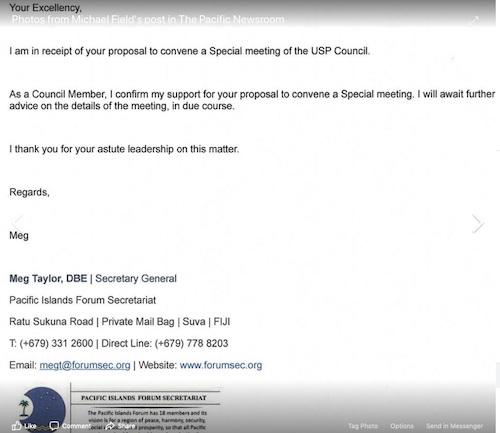
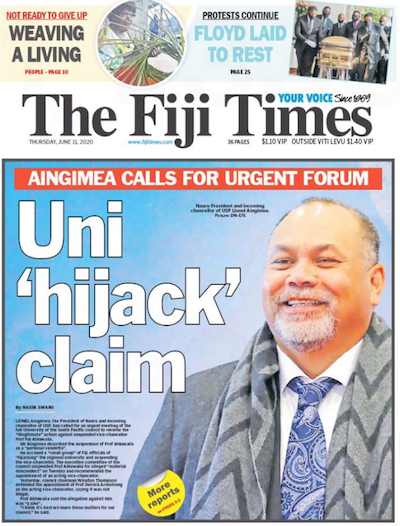
The Secretary-General of the Pacific Islands Forum Secretariat, Dame Meg Taylor, is the latest figure to support Nauru’s call to convene a special meeting of the University of the South Pacific Council in the long-running leadership saga.

In a letter to incoming chancellor of the USP, Nauru President Lionel Aingimea, she has declared: “As a council member, I confirm my support for your proposal to convene a special meeting. I will await further advice of the details of the meeting, in due course.

“Thank you for your astute leadership on this matter.”

READ MORE: Nauru president accuses Fiji group of ‘hijacking’ USP in vendetta

Meg Taylor social media message
PIF Secretary-General Meg Taylor’s message of support for the urgent full USP Council meeting. Image: PMC/PMW

The letter was posted on social media, which is widely used in the Pacific, by New Zealand journalist Michael Field, who broke the story about the controversial contents of the BDO Auckland report into alleged mismanagement at the USP.

Islands Business news magazine today published a full report which Field said was leaked to him and it outlines details of mismanagement of funds and cronyism at USP.

– Partner –


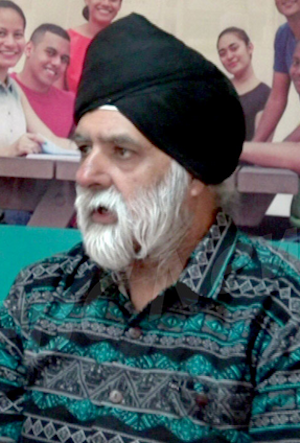
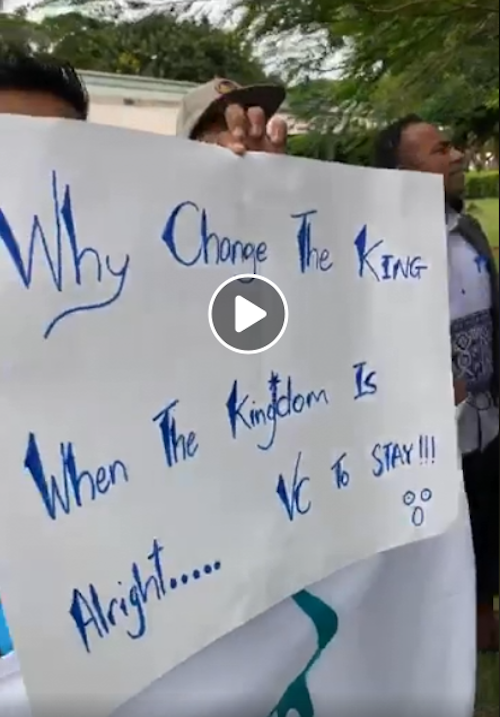
Suspended vice-chancellor Professor Pal Ahluwalia believes he is the victim of a witchhunt at USP after he exposed an alleged system of rorts and questionable contracts in late 2018 when he took up the post.

“I have no doubt that this is a byproduct of that initial report that I took. Since then, I have been vilified and as a whistleblower, in most places where I come from in the world – including Australia and the UK where I’ve lived – whistleblowers are protected,” he told RNZ Dateline in an interview.

“Here I have been thrown under the bus.”

LISTEN: Dateline interview with Professor Pal Ahluwalia

Professor Ahluwalia also found himself locked out of his office and his email account at the university has been disabled.

Senior academics and staff at USP in Suva are accused in a special audit report of manipulating allowances to pay themselves hundreds of thousands of dollars they were not entitled to, as several Pacific governments say Fiji is using the covid-19 emergency as a cover to take over the university, according to Field’s report in Islands Business.

“The scale of allowance abuse has outraged Pacific member nations of USP, including Nauru, Samoa, Tonga and New Zealand. USP staff are accused of helping themselves to money intended to educate the people of the Pacific,” Field wrote.

“The payments took place under the leadership of Fiji vice-chancellor Professor Rajesh Chandra. They were revealed by his replacement, Professor Pal Ahluwalia, on November 1, 2018.

Pal Ahluwalia
“Suspended” Professor Pal Ahluwalia … whistleblower over practices at USP. Image: FBC News

“Since then, vice-chancellor Ahluwalia and USP pro-chancellor Winston Thompson have been at loggerheads, with their opposing factions rallying behind them.”

The international accounting firm BDO was engaged to investigate and provide an independent report.  However, the report which names 25 individuals at the university has remained under wraps since last August.

Professor Ahluwalia was suspended on pay and privileges this week by the USP Council’s executive committee in what critics say was a breach of protocols to investigate allegations against him.

Vendetta a “nonsense”
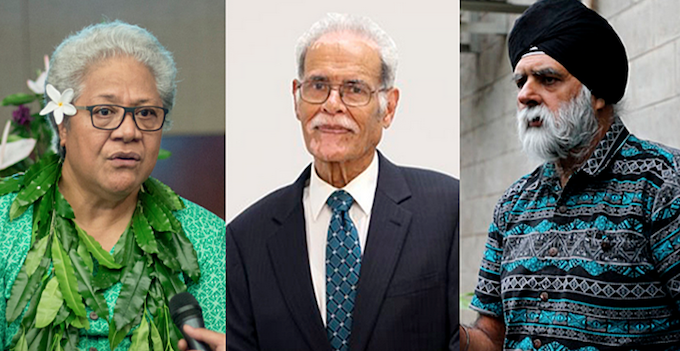
Samoa’s Deputy Prime Minister, Fiame Naomi Mata’afa, described the executive committee’s decision as “irregular” and that pro-chancellor Thompson’s vendetta was “nonsense”, according to the Samoa Observer.

“It is our view that the University Council had determined how it would deal with these issues and the council asked the pro-chancellor and vice-chancellor to work together and keep to their own mandates, but it had become very obvious that the pro-chancellor is very obstructive,” said Fiame.

Pro-chancellor Thompson today claimed that the executive committee acted within its powers to investigate allegations of material misconduct against Vice-Chancellor Pal Ahluwalia and to suspend him pending an independent investigation.

USP pro-chancellor Winston Thompson (left) and acting vice-chancellor Derrick Armstrong … shunned by students and staff at today’s media conference. Image: FBC News

Thompson told a media conference at USP claims that the executive committee had acted illegally on Monday were incorrect.

He said he and acting vice-chancellor Professor Derrick Armstrong had offered to meet the students but this was rejected by the University of the South Pacific Students Association (USPSA) while the staff had agreed to meet this morning.

However, this morning the staff told him and Armstrong that they were not available to meet.

He claimed the staff asked about the press conference but they were told they had lost the opportunity as the meeting scheduled prior did not eventuate.

Australia and NZ ‘diplomatic’
Both Australia and New Zealand – the two largest donor countries for the 12-nation regional university – have reacted diplomatically over the crisis.

Australian Foreign Minister Marise Payne said her government was concerned about the “leadership issues” at USP, reports FBC.

Payne said Australia recognised USP as an important and highly valued regional institution and tertiary provider in the Pacific.

She added that Australia was a longstanding partner of USP and it was  strongly committed to supporting education in the region.

Payne said she had also called for a special meeting of the USP Council.

A Ministry of Foreign Affairs and Trade (MFAT) spokeswoman told Pacific Media Watch:

“MFAT is closely monitoring the situation and has nothing further to say at this point.”

Largest donors
New Zealand was the 12-country USP’s second-largest funder behind Australia, contributing US$3.5m ($NZ5.3m) in 2017.

Australia contributed $US13m to the USP in 2017, the European Union $1.5m, Japan $2.3m and other partners $2m, according to the USP’s accounts for that year.

Established in 1968, USP is jointly owned by the governments of 12 member countries – Cook Islands, Fiji, Kiribati, Marshall Islands, Nauru, Niue, Solomon Islands, Tokelau, Tonga, Tuvalu, Vanuatu and Samoa.

Fiji is USP’s biggest member contributor.

Nauru president accuses Fiji group of ‘hijacking’ USP in vendetta

Print Friendly, PDF & Email

Article by AsiaPacificReport.nz

More than 1,200 tonnes of microplastics are dumped into Aussie farmland every year from wastewater sludge

Source: The Conversation (Au and NZ) – By Abbas Mohajerani, Associate Professor, School of Engineering, RMIT University

Every year, treated wastewater sludge called “biosolids” is recycled and spread over agricultural land. My recent research discovered this practice dumps thousands of tonnes of microplastics into farmlands around the world. In Australia, we estimate this amount as at least 1,241 tonnes per year.

Microplastics in soils can threaten land, freshwater and marine ecosystems by changing what they eat and their habitats. This causes some organisms to lose weight and have higher death rates.

But this is only the beginning of the problem. Microplastics are good at absorbing other pollutants – such as cadmium, lead and nickel – and can transfer these heavy metals to soils.

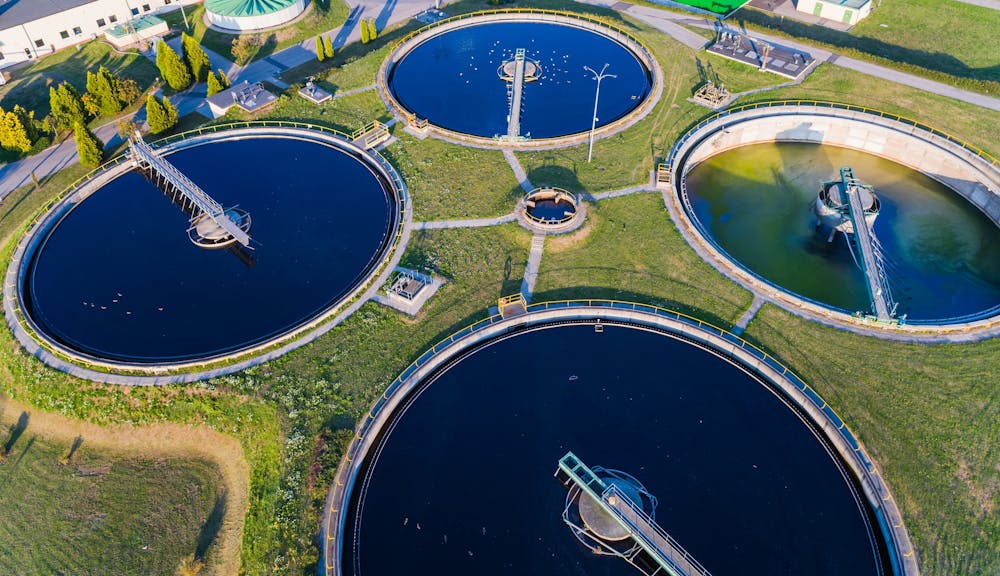
Wastewater treatment plants create biosolids, which are packed full of microplastics and toxic chemicals. Shutterstock

And while microplastics alone is an enormous issue, other contaminants have also been found in biosolids used for agriculture. This includes pharmaceutical chemicals, personal care products, pesticides and herbicides, surfactants (chemicals used in detergents) and flame retardants.

We must stop using biosolids for farmlands immediately, especially when alternative ways to recycle wastewater sludge already exist.

Where do the microplastics come from?

Biosolids are mainly a mix of water and organic materials.

But many household items that contain microplastics – such as lotions, soaps, facial and body washes, and toothpaste – end up in wastewater, too. Other major sources of microplastics in wastewater are synthetic fibres from clothing, plastics in the manufacturing and processing industries, and the breakdown of larger plastic debris.

Before they’re taken to farmlands, wastewater collection systems carry all, or most, of these microplastics and other chemicals from residential, commercial and industrial sources to wastewater treatment plants.

To determine the weight of microplastics in Australia and other countries, my data analysis used the average minimum and maximum numbers of microplastics particles, per kilogram of biosolids samples, found in Germany, Ireland and the USA.


Read more: We have no idea how much microplastic is in Australia’s soil (but it could be a lot)


Australia produced 371,000 tonnes of biosolids in 2019. And globally, we estimate between 50 to more than 100 million tonnes of biosolids are produced each year.

Why microplastics are harmful

Microplastics in soil can accumulate in the food web. This happens when organisms consume more microplastics than they lose. This means heavy metals attached to the microplastics in soil organisms can progress further up the food chain, increasing the risk of human exposure to toxic heavy metals.

When microplastics accumulate heavy metals, they transfer these contaminants to plants and crops, such as rice and grains, as biosolids are spread over farmland.


Read more: After a storm, microplastics in Sydney’s Cooks River increased 40 fold


Over time, microplastics break down and become even tinier, creating nanoplastics. Crops have also been shown to absorb nanoplastics and move them to different plant tissues.

Our research results also show that after the wastewater treatment process, the absorption potential of microplastics for metals increases.

The metal cadmium, for example, is particularly susceptible to microplastics in biosolids and can be transported to plant cells. Research from 2018 showed microplastics in biosolids can absorb cadmium ten times more than virgin microplastics (new microplastics that haven’t gone through wastewater treatment).

Biosolids have a cocktail of nasty chemicals

It’s not just plastic – many industrial additives and chemicals have been found in wastewater and biosolids.

This means they may accumulate in soils and affect the equilibrium of biological systems, with negative effects on plant growth. For example, researchers have found pharmaceutical chemicals in particular can reduce plant growth and inhibit root elongation.


Read more: Sustainable shopping: how to stop your bathers flooding the oceans with plastic


Other chemical contaminants – such as PFCs, PFAS and BPA – have likewise been detected in biosolids.

The effects these chemicals have on plants may lead to problems further down the food chain, such as humans and other animals inadvertently consuming pharmaceuticals and harmful chemicals.

What can we do about it?

Given the cocktail of toxic chemicals, heavy metals and microplastics, using biosolids in agricultural soils must be stopped without delay.

The good news is there’s another way we can recycle the world’s biosolids: turning them into sustainable fired-clay bricks, called “bio-bricks”.

Bricks incorporated with biosolids are a sustainable solution to an environmental problem. RMIT media, Author provided

My team’s research from last year found bio-bricks a sustainable solution for both the wastewater treatment and brick manufacturing industries.

If 7% of all fired-clay bricks were biosolids, it would redirect all biosolids produced and stockpiled worldwide annually, including the millions of tonnes that currently end up in farmland each year.


Read more: You’re eating microplastics in ways you don’t even realise


We also found they’d be more energy efficient. The properties of these bio-bricks are very similar to standard bricks, but generally requires 12.5% less energy to make.

And generally, comprehensive life-cycle assessment has shown biosolid bricks are more environmentally friendly than conventional bricks. These bricks will reduce or eliminate a significant source of greenhouse gas emissions from biosolids stockpiles and will save some virgin resources, such as clay soil and water, for the brick industry.

Now, it’s up to the agriculture, wastewater and brick industries, and governments to make this important transition.

ref. More than 1,200 tonnes of microplastics are dumped into Aussie farmland every year from wastewater sludge – https://theconversation.com/more-than-1-200-tonnes-of-microplastics-are-dumped-into-aussie-farmland-every-year-from-wastewater-sludge-137278

Was there slavery in Australia? Yes. It shouldn’t even be up for debate

Source: The Conversation (Au and NZ) – By Thalia Anthony, Professor of Law, University of Technology Sydney

Prime Minister Scott Morrison asserted in a radio interview that “there was no slavery in Australia”.

This is a common misunderstanding which often obscures our nation’s history of exploitation of First Nations people and Pacific Islanders.

Morrison followed up with “I’ve always said we’ve got to be honest about our history”. Unfortunately, his statement is at odds with the historical record.

This history was widely and publicly documented, among other sources, in the 2006 Australian Senate report Unfinished Business: Indigenous Stolen Wages.

What is slavery?

Australia was not a “slave state” like the American South. However, slavery is a broader concept. As Article 1 of the United Nations Slavery Convention says:

Slavery is the status or condition of a person over whom any or all of the powers attaching to the right of ownership are exercised.

These powers might include non-payment of wages, physical or sexual abuse, controls over freedom of movement, or selling a person like a piece of property. In the words of slavery historian Orlando Patterson, slavery is a form of “social death”.

Slavery has been illegal in the (former) British Empire since the Act for the Abolition of the Slave Trade of 1807, and certainly since 1833.

Slavery practices emerged in Australia in the 19th century and in some places endured until the 1950s.

Early coverage of slavery in Australia

As early as the 1860s, anti-slavery campaigners began to invoke “charges of chattel bondage and slavery” to describe north Australian conditions for Aboriginal labour.

In 1891 a “Slave Map of Modern Australia” was printed in the British Anti-Slavery Reporter, a journal that documented slavery around the world and campaigned against it.

Reprinted from English journalist Arthur Vogan’s account of frontier relations in Queensland, it showed large areas where:

…the traffic in Aboriginal labour, both children and adults, had descended into slavery conditions.

Seeds of slavery in Australia

Some 62,000 Melanesian people were brought to Australia and enslaved to work in Queensland’s sugar plantations between 1863 and 1904. First Nations Australians had a more enduring experience of slavery, especially in the cattle industry.

In the pastoral industry, employers exercised a high degree of control over “their” Aboriginal workers. Aboriginal workers were bought and sold as chattels, particularly where they “went with” the property upon sale. There were restrictions on their freedom of choice and movement. There was cruel treatment and abuse, control of sexuality, and forced labour.

A stock worker at Meda Station in the Kimberley, Jimmy Bird, recalled:

…whitefellas would pull their gun out and kill any Aborigines who stood up to them. And there was none of this taking your time to pull up your boots either. No fear!

Aboriginal woman Ruby de Satge, who worked on a Queensland station, described the Queensland Protection Act as meaning:

if you are sitting down minding your own business, a station manager can come up to you and say, “I want a couple of blackfellows” … Just like picking up a cat or a dog.

Through their roles under the legislation, police, Aboriginal protectors and pastoral managers were complicit in this force.

Slavery was sanctioned by Australian law

Legislation facilitated the enslavement of Aboriginal people across the Northern Territory, Western Australia, South Australia and Queensland. Under the South Australian Aborigines Act 1911, the government empowered police to “inspect workers and their conditions” but not to uphold basic working conditions or enforce payment. The Aboriginals Ordinance 1918 (Cth) allowed the forced recruitment of Indigenous workers in the Northern Territory, and legalised the non-payment of wages.

In Queensland, the licence system was effectively a blank cheque to recruit Aboriginal people into employment without their consent. Amendments to the Aboriginal Protection and Restriction of the Sale of Opium Act 1897 gave powers to the Protector or police officer to “expend” their wages or invest them in a trust fund – which was never paid out.

Officials were well aware that “slavery” was a public relations problem. The Chief Protector in the Northern Territory noted in 1927 that pastoral workers:

…are kept in a servitude that is nothing short of slavery.

In the early 1930s, Chief Protector Dr Cecil Cook pointed out Australia was in breach of its obligations under the League of Nations Slavery Convention.

‘… it certainly exists here in its worst form’

Accusations of slavery continued into the 1930s, including through the British Commonwealth League.

In 1932 the North Australian Workers’ Union (NAWU) characterised Aboriginal workers as “slaves without the advantage of slavery”. Unionist Owen Rowe argued:

If there is no slavery in the British Empire then the NT is not part of the British Empire; for it certainly exists here in its worst form.

In the 1940s, anthropologists Ronald and Catherine Berndt surveyed conditions on cattle stations owned by Lord Vestey, commenting that Aboriginal people:

…owned neither the huts in which they lived nor the land on which these were built, they had no rights of tenure, and in some cases have been sold or transferred with the property.

In 1958, counsel for the well-known Aboriginal artist Albert Namatjira argued that the Welfare Ordinance 1953 (Cth) was unconstitutional, because the enacting legislation was:

…a law for the enslavement of part of the population of the Northern Territory.

Profits from slaves

Australia has unfinished business in repaying wages to Aboriginal and South Sea Islander slaves. First Nations slave work allowed big businesses to reap substantial profits, and helped maintain the Australian economy through the Great Depression. Aboriginal people are proud of their work on stations even though the historical narrative is enshrined in silence and denial.

As Bundjalung woman Valerie Linow has said of her experiences of slavery in the 1950s:

What if your wages got stolen? Honestly, wouldn’t you like to have your wages back? Honestly. I think it should be owed to the ones who were slave labour. We got up and worked from dawn to dusk… We lost everything – family, everything. You cannot go stealing our lousy little sixpence. We have got to have money back. You have got to give something back after all this country did to the Aboriginal people. You cannot keep stealing off us.

ref. Was there slavery in Australia? Yes. It shouldn’t even be up for debate – https://theconversation.com/was-there-slavery-in-australia-yes-it-shouldnt-even-be-up-for-debate-140544

Media rights groups protest against Timor’s draft defamation law

Pacific Media Watch

Timor-Leste’s Minister of Justice plans to present to the Council of Ministers a proposal to include criminal defamation in the country’s penal code.

The International Federation of Journalists (IFJ) and its affiliate the Timor-Leste Press Union (TLPU) have protested against the move that would undermine press freedom and public interest journalism, reports IFJ.

The proposal to introduce a law of criminal defamation to Timor-Leste’s penal code (Articles 187-A to 187-F) stipulates that any person who publicly states and publishes through social media “facts” or “opinions” that may offend the honour, good name and reputation of a current or previous member of government, church official or any public official can be prosecuted and punished with up to three years in prison.

READ MORE: Ramos-Horta slams criminal libel plan – threat to rights in Timor-Leste

Media rights groups say the new law will have far reaching consequences as it criminalises actual expressions of one’s opinion and even criminalises a third person sharing this information.

The IFJ has addressed its concerns in a letter to Prime Minister Taur Matan Ruak.

– Partner –

The proposed law inadequately defines “offences” and places the legal burden of proving that a story is true upon the journalist and/or publisher.

The offences would carry between one to three years’ imprisonment. A person who offends against a dead person can also be punished with a prison sentence.

TPLU says: “This bill contradicts the Timor-Leste constitution in articles 40-41 concerning freedom of expression and freedom of the press. We from TLPU condemned this law.

“The government is trying to use a national emergency opportunity to endorse this bill with the aim of punishing those who berate leaders and politicians, but in our opinion this is to criminalise journalists and all citizens who criticize the government.”

The IFJ said: “We urge the government of Timor-Leste to take the necessary steps to ensure the proposal does not make it into the penal code.

“If laws to criminalise defamation are adopted this will mark a retreat from a commitment to democracy and an open society which has been to the very great credit of Timor-Leste.”

Former national president and Nobel Prize winner Jose Ramos-Horta and former prime minister and leader of the majority Fretilin party, Dr Mari Alkatiri, earlier this week criticised the draft law being “rushed” through Parliament and its impact on press freedom.

Print Friendly, PDF & Email

Article by AsiaPacificReport.nz
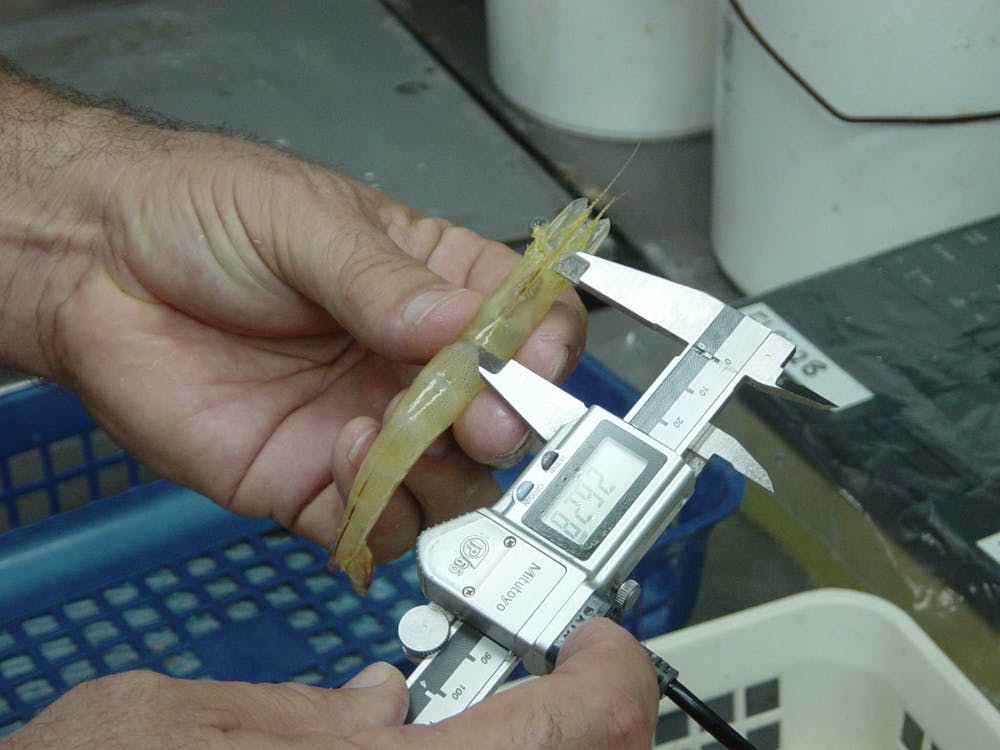
About that spare room: employers requisitioned our homes and our time

Source: The Conversation (Au and NZ) – By Julie P. Smith, Honorary Associate Professor, Australian National University

Working from home during COVID-19 appeared to cost us little.

Yet employers effectively requisitioned part of those homes.

While necessary, it was far from costless to us, and our generosity shouldn’t be taken for granted.

Bureau of Statistics figures show that during April and May about half the workforce worked from home.

Working at home has been far from costless

Preliminary results from a survey of more than 2,000 households suggest paid workers put in about as many paid hours per day as before (half to one hour less) but that unpaid work skyrocketed, by an extra five hours per day for women, and an extra two and a half hours for men.

Much of the increase was in childcare. Three in four Australians who live with children kept them home.


Read more: Working from home: what are your employer’s responsibilities, and what are yours?


Some of it was in extra cleaning and washing, costs that for the moment (along with, for some workplaces, rent) many employers no longer needed to bear.

Few of us working from home will bother to bill our employers for the extra heating, office furniture, office consumables, home phone and internet use, toilet paper and coffee we’ve had to fork out for.

The Tax Office has indicated it will disallow deductions for tea, coffee and toilet paper saying, “just because you have to provide those things for yourself doesn’t make them deductible”.

Akin to the requisitioning of assets permitted by the state in emergencies, employers have in effect requisitioned parts of our homes – rent free and without paying utility costs.


Read more: Forget work-life balance – it’s all about integration in the age of COVID-19


With more people using each home, and more meals cooked and eaten at home, time in the kitchen has soared. As supermarket shopping has become less appealing, consumer durables such as bread-makers and freezers have been brought in. Backyard vegetable gardens and chicken runs have popped up.

Most of the extra work has fallen to women. Surveys often understate it by asking only about the “primary” activity in each quarter hour block rather than secondary activities (which often include childcare) undertaken at the same time. Multitasking intensifies work.

How do we make it count?

Counting for Nothing, released in 1988

In an explosive book released more than 30 years ago entitled Counting for Nothing, New Zealand politician and economist Marilyn Waring described the dominant method of accounting for work as “applied patriarchy”.

The tool is gross domestic product (GDP), a measure that mostly only takes account of work that is paid.

The point was that unpaid household work and care counted for nothing.

Since then, time use surveys have found that non-market household production is very large – in Australia, equivalent to an extra half of GDP.

This matters, because its exclusion allows GDP to give us a distorted idea of progress.

In each normal year the Organisation for Economic Co-operation and Development forecasts growth in developed nations of between 2% and 4%.

That’s growth in gross domestic product. OECD calculations released in 2018 suggest that as much as a third of that growth – 0.84 to 1.79 percentage points – is an artefact, created by the shift from what had been unpaid household work and childcare into to paid household work and childcare.

That is, the official figures have presented a mirage. Parents have replaced unpaid childcare – which is not counted in GDP – with paid childcare, which is counted.


Read more: The National Breastfeeding Strategy is a start, but if we really valued breast milk we’d put it in the GDP


The switch has been recorded as “growth”, but it hasn’t been growth in work done or services provided. It is better described as accounting rather than economic growth.

If the accounting was done properly – if countries such Australia properly counted the value of unpaid household and services – it would show much lower growth and more frequent recessions.

And if our environment and resources (another omission except when they are exploited) had been properly accounted for, GDP growth would be lower again.

The household services artefact has been reversed during the COVID-19 lockdown. Many of us have been doing as much or more than we did, but less of it has been counted.

As it happens, the value of services provided by the home itself are included in GDP, through rent for renters and “imputed rent” for home owners. Home-grown produce is included as well, but unpaid human-provided services are not.

It’s as if it didn’t happen

The weak March quarter GDP result strengthened calls for extra spending on infrastructure – things such as mines, pipelines and fast trains to airports.

Days later the prime minister announced that childcare would no longer be free and JobKeeper for childcare workers would be replaced by a less generous subsidy.

It’s not what might have been expected after a historic opportunity to rethink productivity and wellbeing. Putting money into the care sector creates twice as many jobs per dollar as putting it into construction. A higher proportion of investment in the care sector also flows to women, whose paid work has been disproportionately hit by the shutdown.


Read more: She won’t be right, mate: how the government shaped a blokey lockdown followed by a blokey recovery


Things that would help include increased worker protection against white collar sweatshops), expanded and reconfigured tax deductions for working from home, a paid allowance for home schooling costs during the shutdown and a shorter working week to rebalance roles at home.

Behind everything should lie proper accounting for care work. Without it we are likely to continue to rely on the generosity of unpaid working women, acting as if it is free.

ref. About that spare room: employers requisitioned our homes and our time – https://theconversation.com/about-that-spare-room-employers-requisitioned-our-homes-and-our-time-139854

TV has changed, so must the way we support local content

Source: The Conversation (Au and NZ) – By Amanda Lotz, Professor of Media Studies, Queensland University of Technology

Australians have enjoyed watching Australian stories on the small screen for generations. From Number 96 to Offspring, House Husbands to Mystery Road, Australian television has reflected Australia back to Australian audiences.

As the government notes in its recent options paper, issued through the Australian Communications and Media Authority and Screen Australia: “Screen stories are uniquely powerful”.

But the future of these stories is in question.

Released at the end of March, the options paper aims to modernise how Australian content is supported. It suggests four options – no change, complete deregulation, minimal change or significant change – with responses due by June 12.

Three of these options would eliminate the local quotas that have underpinned Australian drama, documentary and children’s television production since the late 1960s.

Our research examines the role of television storytelling, especially the importance of local television. So it’s with great surprise we find ourselves advocating for the elimination of Australian content quotas on commercial free-to-air broadcasters.

Instead, we support the model that calls for the creation of a production fund – the “significant change” option – to address the challenges and opportunities currently facing Australian television.

We’re advocating for this change precisely because we think Australian television is so important. Australian drama, documentary and children’s programs, called “Australian story forms” here, deserve better support than currently offered by policies that have well and truly passed their use-by date.

How did we get here?

Much has changed over the past 20 years. Australia’s transition to digital broadcasting saw five existing free-to-air channels increase to at least 25, along with their correlated “catch-up” services such as Iview and 10Play.

Then, subscriber video-on-demand services (SVODs) like Stan and Netflix emerged.

The expansion of the Australian video ecosystem to include new digital channels, catch-up services and SVODs fragmented audiences, and caused advertiser funded Seven, Nine and Ten to come under significant financial pressure.


Read more: Save our screens: 3 things government must do now to keep Australian content alive


Local content quotas

When Australian content quotas were introduced in the late 1960s they applied to the three commercial channels.

These quotas dictated schedules must contain minimum levels of local content, such as documentary and drama, including children’s. At the time, the commercial networks relied on lower-cost imported programs, particularly for children, rather than homegrown drama.

When Foxtel launched in 1995, it too had local obligations, set at 10% of programming costs. SVODs do not broadcast on the public spectrum – the infrastructure that allows us to send wireless signals – and they are not subject to local content quotas. More than 14.5 million Australians pay to access these SVOD services.

What’s that, Skippy? Content quotas are no longer working to share Australian stories? NFSA

Read more: Crunching the numbers on streaming services’ local content: static growth, but more original productions


The policy paradox

Commercial broadcasters now focus on programming that encourages live viewing – news, sport and reality competitions – because viewers reliably turn up when they air.

All broadcasters have slowed production of Australian story forms, while Seven announced in February it would stop production of children’s content entirely.

Seven’s actions would have put them in breach of local content rules, but the quotas were suspended completely in April in response to COVID-19.

Commercial broadcasters are poorly suited to provide Australian story forms because their business model requires attracting large audiences. But these broadcasters still use the public spectrum and remain protected from competition from additional broadcasters. These advantages must come with obligations.

Australian story forms work very well for television services with different business models, including SVODs and public service broadcasters. Their business models reward the creation of distinctive programs. Multinational SVODs – that serve subscribers in scores of countries – spend only small amounts on Australian content, however. Sustained budget cuts to the ABC and SBS mean they are also forced to commission fewer and shorter series.

Conditions have changed too much for local quotas to be effective. We believe the simplest and most equitable way of solving this paradox is through creating an Australian Production Fund and eliminating quotas.

Seven, Nine and Ten would have to contribute to this fund in return for the benefits they enjoy. Any television services commissioning Australian stories could apply for funding.

This system will simplify the safeguarding of Australian stories.

No clear sides

The commercial broadcasters’ future looks uncertain. Their failure to innovate and add value in the face of increasing audience choices has compounded the challenges of an evolving marketplace.

The requirement to contribute to an Australian Production Fund provides flexibility while maintaining commercial broadcasters’ local content obligations.

A carefully developed Australian Production Fund is our best means of safeguarding Australian stories, for audiences of all ages.

ref. TV has changed, so must the way we support local content – https://theconversation.com/tv-has-changed-so-must-the-way-we-support-local-content-139674

Ten Twitter accounts you should be following if you want to listen to Indigenous Australians and learn

Source: The Conversation (Au and NZ) – By Bronwyn Carlson, Professor, Indigenous Studies, Macquarie University

Three in every four Australians hold a negative view about Aboriginal and Torres Strait Islander people, according to stark new research this week.

As ANU researcher Siddharth Shirodkar explained, these views can lead to widespread racism.

This study presents stark evidence of the solid invisible barrier that Indigenous people face in society. But the data is actually not about Indigenous Australians, it’s about the rest of us.

Yet while many Australians hold such negative views, many know very little about Aboriginal and Torres Strait Islander peoples, histories and cultures.

Don’t speak over us, or for us

For a long time, Aboriginal and Torres Strait Islander people have been calling for non-Indigenous people to listen to what we are saying and not speak over us, or for us. One great way to do that is via Twitter.

There are growing networks of Indigenous people online who are exerting significant influence on society here in Australia and worldwide.

This was made evident in the recent Black Lives Matter protests across Australia, where Indigenous people used social media to bypass traditional news organisations, demanding to be heard.


Read more: Despite 432 Indigenous deaths in custody since 1991, no one has ever been convicted. Racist silence and complicity are to blame


But more work must be done.

As activist Lynda-June Coe wrote this week

the energy and power of huge crowds marching the streets … must be maintained if we are to impact societal change through an attitudinal shift.

Support Indigenous people by retweeting, listening

Social media has the potential to amplify Indigenous voices and provide many sources of information for non-Indigenous people to learn more about Indigenous people, histories and cultures.

Part of this work is for non-Indigenous people to listen to Aboriginal and Torres Strait Islander people and support them by retweeting their posts and educating themselves on the issues.

Twitter in particular can be used as a forum for inquiry, curiosity, and political teaching and learning.

IndigenousX @IndigenousX

One example of this is IndigenousX, which provides a space to amplify diverse Indigenous voices. It was created in 2012 by Gamilaroi man, Luke Pearson, and features a rotating series of hosts.

Lynda-June Coe is the current host of IndigenousX. She is a Wiradjuri and Badu Island woman, PhD candidate, cultural educator and activist. She is one of the many young, powerful Aboriginal women activists demanding justice and rights for Aboriginal peoples.

She also has a personal handle at @LyndaJune1.

Below are other people and organisations worth following. Of course, there are many more you should follow than are listed in this article.


Read more: 12 deadly Indigenous Australian social media users to follow


Dr Debbie Bargallie @debbiebargallie

Griffith University senior research fellow Dr Debbie Bargallie is the 2019 recipient of the prestigious WEH Stanner Award. This is for the best academic thesis written by an Indigenous person.

Her research on racism in the Australian public service has just been published in a book. She is one of only a few Indigenous race scholars in Australia.

Nessa Turnbull-Roberts @TurnbullVanessa

Nessa is a Bundjalung writer and activist and winner of the Australian Human Rights Commission’s 2019 Young People’s Human Rights Medal. She is a law and social work student, who has dedicated her life to fighting against the injustices that disproportionately affect Indigenous peoples.

Hayden Moon @hayden_seek94

Hayden is a Wiradjuri Brotherboy and activist, who advocates for Indigenous LBGTQI+ peoples and those with disabilities. They promoted online access so people with disabilities could participate in last week’s rallies.

Aboriginal Health in Aboriginal Hands @NACCHOAustralia

The National Aboriginal Community Controlled Health Organisation is Australia’s peak body for Aboriginal health. They use social media to be in touch with Indigenous people across Australia and provide up-to-date health information and news of importance to us, including safe practices when joining protests marches during the COVID-19 pandemic.

Secretariat of National Aboriginal and Islander Child Care @SNAICC

The Secretariat of National Aboriginal and Islander Child Care (SNAICC) is the national peak body representing the interests of Aboriginal and Torres Strait Islander children and families. SNAICC is a non‐government, not for profit organisation, governed by a national executive of Aboriginal and Torres Strait Islander people, drawn from members in the early childhood education and family support sectors.

Celeste Liddle @Utopiana

Celeste is a Arrernte woman, feminist, union organiser and writer. She has a column in Eureka Street.

Celeste has contributed to a number of anthologies of note, including Growing Up Aboriginal in Australia and Mothers and Others.

Amy McQuire @amymcquire

Amy is a Darumbal and South Sea Islander woman from Rockhampton. She is a PhD candidate at Queensland University and journalist. She has 13 years experience in the Indigenous media sector and was a reporter for Buzzfeed. She has also written for The Saturday Paper, The Guardian and The New York Times.

Amy is also the co-host of an investigative podcast called Curtain – centred around the wrongful conviction of an Aboriginal man.

Dr Sandy O’Sullivan @sandyosullivan

Dr Sandy O’Sullivan is a Wiradjuri academic. They are an associate professor in creative industries at the University of Southern Queensland. Sandy’s research focus is on empowering and engaging national and international First Nations’ Communities. And includes queer studies, art and music.

ref. Ten Twitter accounts you should be following if you want to listen to Indigenous Australians and learn – https://theconversation.com/ten-twitter-accounts-you-should-be-following-if-you-want-to-listen-to-indigenous-australians-and-learn-140353

Footy crowds: what the AFL and NRL need to turn sport into show business

Source: The Conversation (Au and NZ) – By Abdel K. Halabi, Senior Lecturer in Accounting , Federation University Australia

This week the deputy premier of New South Wales, home to most teams in Australia’s National Rugby League, suggested getting football fans back in the stands might be an issue of fundamental rights.

If 20,000 people could rally in support of Black Lives Matter in central Sydney, John Barilaro reportedly said, the NRL could handle similar in a stadium:

So as far as I’m concerned the evidence is clear that we can open up these restrictions.

This narrative should not obscure the more obvious story here: of elite sport as entertainment business.

The accounts of the National Rugby League and the bigger Australian Football League are representative of professional sports leagues around the world. Most of the riches now rest with on the audience watching at home. They don’t need fans in the stands for ticket sales. They do need them to make their sports great television.

Canberra Raiders supporters cheer on their team against the Sydney Roosters in the 2019 NRL grand final. Dean Lewins/AAP

In the case of the NRL, game receipts accounted for less than 10% of its revenue in 2019. The AFL, with crowd sizes slightly more than double the NRL, may make 15% – not much more in the greater scheme of things.

For both leagues more than 70% of revenue flows from broadcast rights and corporate sponsors.

The business model is simple: attract a broadcast audience, sell that audience to advertisers. So the critical metric is viewing numbers.

But what viewers want is excitement and a sense of occasion. These are hard to evoke without a crowd.


Read more: Why does crowd noise matter?


Empty experiences

The AFL and NRL both played rounds in front of empty stands prior to suspending their seasons in late March. The unaugmented viewing experience was deemed unsatisfactory, as Nine’s NRL head, Simon Fordham, explained:

The players are out there giving 110%. The commentators are reacting to what they are seeing and also delivering emotional, powerful calls. But the crowd is there just to mesh those two things together.

The Hawthorn Hawks and the Brisbane Lions play without supporters at the MCG in round 1 of the AFL season March 22 2020. Michael Dodge/AAP

Both Nine and Fox Sport added canned crowd noises to NRL games when the season resumed a fortnight ago. Viewer reactions were mixed.

The first match of the round, a Thursday night clash between the Parramatta Eels and Brisbane Broncos, was the most watched regular season NRL game since 2014. Channel Nine scored more than 951,000 viewers, and Fox Sports 355,000.

The Brisbane Broncos play the Parramatta Eels at Suncorp Stadium in Brisbane on May 28 2020. Darren England/AAP

A week later, however, Brisbane’s match against the Sydney Roosters scored Channel Nine just 619,000 viewers, and Fox Sports 216,000.

The AFL has agreed to its broadcast partners, Channel Seven and Foxtel, also using canned crowd noises. With the AFL season resuming tonight, we’ll get to judge its success.

Direct and indirect values

The NRL’s annual report shows game receipts were less than 10% of its 2019 revenue of almost A$556 million. Broadcast revenue – from Channel Nine and Fox Sports – was about A$324 million, more than 60%. “Sponsorships and wagering” (revenue from poker machines in league clubs) made another 16%.


CC BY-SA

The AFL’s annual report does not state game receipt revenue. This is rolled into a wider figure for “commercial operations”, which includes sponsorship and wagering.


CC BY-SA

But the AFL report does detail crowd numbers. We can use those to make a ballpark estimate of game revenue based on what we know about the NRL’s receipts and crowd sizes.

An average of 35,105 people attended the 198 games of the AFL’s 2019 premiership season. The NRL annual report does not specify attendance numbers, but most other sources suggest average match attendances of 15,000 to 16,000 at its 201 games in 2019.

Cutout fans at the NRL match between the Canterbury-Bankstown Bulldogs and the St George Illawarra Dragons on Monday, June 8, 2020. an Himbrechts/AAP

This is an admittedly rough calculation because there are many possible variables. But assuming most things being equal, the AFL’s game receipts for more than double the NRL’s numbers would be worth about A$115 million – 14.5% of its total revenue of A$794 million.

Which is not insignificant. On the other hand, there’s more than A$500 million flowing from television audiences.

Broadcast pressure

So the number to focus on over the coming weeks to judge the health of both codes will be the average number TV viewers per game. For the NRL, that figure was 459,000 in 2019. For the AFL, it was a little more than 1 million.

Both leagues are already under pressure to renegotiate current deals with their broadcast partners, cancelling quarterly payments.


Read more: From spit to scrums. How can sports players minimise their coronavirus risk?


They’ll do what they can to make their product a ratings winner. Expect more experiments with crowd augmentation, and for a harder push to bring back real fans if those experiments fail to mesh.

ref. Footy crowds: what the AFL and NRL need to turn sport into show business – https://theconversation.com/footy-crowds-what-the-afl-and-nrl-need-to-turn-sport-into-show-business-139471

Australia needs to confront its history of white privilege to provide a level playing field for all

Source: The Conversation (Au and NZ) – By Shamit Saggar, Professor of Public Policy and Director of the Public Policy Institute, University of Western Australia

Australia is routinely compared with other rich, developed nations. Its economy, schooling, health care, infrastructure and social values are regularly put up against those of Western Europe and North America, allowing intelligent comparisons to be drawn. Like is compared with like.

But when it comes to the ethnic composition of its population, these comparisons are distorted by history. The unspoken twist is that, until two generations ago, Australia practised a policy of racial exclusion.

The country’s nation-builders placed a straitjacket on the ethnic character of Australia’s future, reflecting the values of racial hierarchy of the post-Victorian age. This policy persisted into the 1970s and meant Australia remained, for a long time, in Asia but certainly not of Asia.

As a new publication, Re-Imagining Australia: Migration, Culture, Diversity from the UWA Public Policy Institute, argues, it is possible to see the results of this social experiment in 2020.

Very few older Australians beyond their 50s are of non-European descent, and this demographic feature is now hard-baked into politics and policy debates.

White Australians over 50 have also grown up as the first generation that has had to share legal rights and citizenship with Indigenous Australians. They have done so starting from a low base, but progress has been glacial.


Read more: Explainer: what is systemic racism and institutional racism?


Policies geared toward older, white Australians

These demographic changes also play a role in how evidence-based policies are formulated. For example, each new slew of proposals concerning health and social care, taxation and property ownership affects white Australians very differently from ethnic minorities.

This is because the former are generally older, better off and homeowners, so they are more reliant on (and exposed to changes in) these services and policies.

Equally, younger Australians are considerably more likely to be of Asian, African, Middle Eastern or Pacific Islander heritage, and are disproportionately affected by policy proposals in tertiary education, housing affordability and visa restrictions.


Read more: ‘Death by a thousand cuts’: women of colour in science face a subtly hostile work environment


By not taking these structural variances into account, there can be major gaps in policy-making.

For instance, during the COVID-19 crisis, the government’s JobKeeper wage-subsidy program specifically excluded temporary skilled visa holders – substantial numbers of whom are from Asia (India, in particular). The uneven effects of the policy are not hard to see.

Dealing with the past

For much of the post-war period, Australia’s leaders anguished over the need to populate or perish. But it remained a white past and a white future. Australia’s major institutions, including politics, higher education, media, the arts and the public service, still fail to reflect the massive demographic shift in recent years.

As Paul Maginn, a senior lecturer in urban planning at UWA, observes in our report:

Not all migrant/minority communities enjoy the same level of respect, equality, freedom and opportunity as the wider white Australian population. If this were the case, then a truly successful multicultural nation would look very different.

The hangover is reflected in many things, not least the majority white population’s sense of attachment to national cultural norms, symbols and practices.

As Farida Fozdar, associate sociology professor at UWA and another author of our report, argues, Australia’s sense of national community has been founded on a solidarity that shuns diversity. To be socially cohesive is to imply a degree of homogeneity, and that constrains the task of re-imagining Australia.


Read more: Yes, it is time to rethink our immigration intake – to put more focus on families


Dealing with the past often sparks controversy, from the removal of statues such as Cecil Rhodes in Oxford and Robert E. Lee in Virginia to the calls for state reparations for historic crimes, such as the slave trade.

It is nothing less than embarrassing that in modern-day Australia, almost all senior roles in government or business are held by middle-aged white men.

One way of viewing this is they have grown up and prospered at a time when Australia was ethnically homogeneous – they grew to trust and work collaboratively with those “just like us”. Rather like fish swimming in water, it is hard to notice that which is ubiquitous.

A less sympathetic view is they have never had to compete in a wider pool, and continue to behave rationally to restrict competition in order to maintain their privilege. Many mediocre, white men have been excused from competing as a result.

Diversity in leadership matters

Gross disparities in the complexion of those at the top matter for two reasons. One is the manifest unfairness in opportunities for ethnic minorities in education, employment, health care and housing.

The other reason is the creation of a reputational stain on those organisations that are slow to reform. Second-generation migrants may begin to question the “fair-go” mantra because they sense they are being overlooked, their patience stretched by standing politely behind those they can comfortably outperform.

The picture is stark in Australia’s politics. As Juliet Pietsch, political science professor at Griffith University, notes in our report, only nine of 227 (or 4%) of federal MPs have non-European heritage.

Parliament remains dominated by older white men, despite recent demographic changes. Lukas Coch/AAP

Under-representation extends to senior leadership levels. Not a single Australian federal minister is from an Asian-Australian background. The only bright spot to this lack of Asian-Australians in senior roles is Penny Wong, the shadow foreign minister.

As UWA political science professor Ben Reilly writes, Australia lags well behind comparable countries, such as Canada and the UK, on this measure.

In the UK, four Asians have senior Cabinet roles and a tenth of the lower house is made up of ethnic minorities, while in Canada, over 15% of MPs and six out of 37 Cabinet members are minorities.


Read more: Australia should look overseas for ideas to increase its number of women MPs


How should governments address these issues? The conventional view has erred toward caution, noting the majority white electorate is easily antagonised by policies and gestures that appear to favour ethnic minorities in areas such as education, jobs and housing.

This outlook has dominated Australian politics and underscores the recent warning from Sam Roggeveen of the Lowy Institute about the potential for immigration to polarise Australian public opinion and poison the country’s politics.

But on the other side, Australia’s reputation for fairness will be eroded in the eyes of its future generations. Young, educated, liberal, urban, white Australians may also object to discriminatory practices going unchecked and call for tougher actions by government.

The true extent of Australia’s “fair-go” mantra will not depend so much on the transmission of older values and symbols to newer, more diverse Australians.

Rather, it depends fundamentally on their experiences in education and employment being free of white privilege. This will determine whether they truly believe there is a level playing field.

ref. Australia needs to confront its history of white privilege to provide a level playing field for all – https://theconversation.com/australia-needs-to-confront-its-history-of-white-privilege-to-provide-a-level-playing-field-for-all-139755

Secret report reveals widespread salary and allowance rorts at USP

By Michael Field in Islands Business

Senior academics and staff at the University of the South Pacific in Suva are accused in a special audit report of manipulating allowances to pay themselves hundreds of thousands of dollars they were not entitled to, as several Pacific governments say Fiji is using the COVID-19 emergency as a cover to take over the university.

The scale of allowance abuse has outraged Pacific member nations of USP, including Nauru, Samoa, Tonga and New Zealand. USP staff are accused of helping themselves to money intended to educate the people of the Pacific.

The payments took place under the leadership of Fiji vice-chancellor Professor Rajesh Chandra. They were revealed by his replacement, Professor Pal Ahluwalia, on November 1, 2018.

READ MORE: Albert Schram on Pacific university governance and academic freedom

Since then, vice-chancellor Ahluwalia and USP pro-chancellor Winston Thompson have been at loggerheads, with their opposing factions rallying behind them.

This week a contentious meeting of the executive committee of USP’s Council installed Professor Derrick Armstrong as acting VC after suspending Professor Ahluwalia.

– Partner –

Professor Ahluwalia’s whistleblowing forced Thompson to bring in the Auckland office of international accounting firm BDO to investigate. BDO Auckland’s report was submitted to USP on August 21 last year, but kept secret.

The report has now been leaked as Professor Ahluwalia comes under attack from USP’s host government, Fiji.

Critics claim Fiji is trying to “nationalise” the 52-year-old regional institution. Fiji’s Education Minister, Rosy Akbar, denies this is the case.

Along with the 114-page BDO report, a cache of USP documents reveal attempts to drive Professor Ahluwalia out of the country.

Power struggle … Samoan Deputy Prime Minister Fiame Naomi Mataafa (from left), USP pro-chancellor Winston Thompson, and “suspended” vice-chancellor Professor Pal Ahluwahlia. Image: Samoa Observer montage

Professor Ahluwalia, born in Kenya and schooled in Canada, was appointed by the USP Council as VC to replace Professor Chandra. BDO suggests this was against the wishes of Thompson and Fiji, and evidence is revealed that efforts began, even before Professor Ahluwalia arrived, to frustrate his work.

In May last year Professor Ahluwalia revealed the financial and salary rorting underway and presented the USP Council with a paper, “Issues, concerns and breaches of past management and financial decisions.”

BDO was hired to investigate.

In the report, BDO names 25 senior USP academics and staff who, it is alleged, were involved in payment manipulation. Most of the cases involved a system of allowance payments not usually seen in other universities.

This excerpt from independent New Zealand journalist Michael Field’s article is republished here with permission. Read the full report in the latest edition of Islands Business news magazine. Although the BDO consultancy report names individuals, the magazine has opted to not publish them based on legal advice.

Print Friendly, PDF & Email

Article by AsiaPacificReport.nz
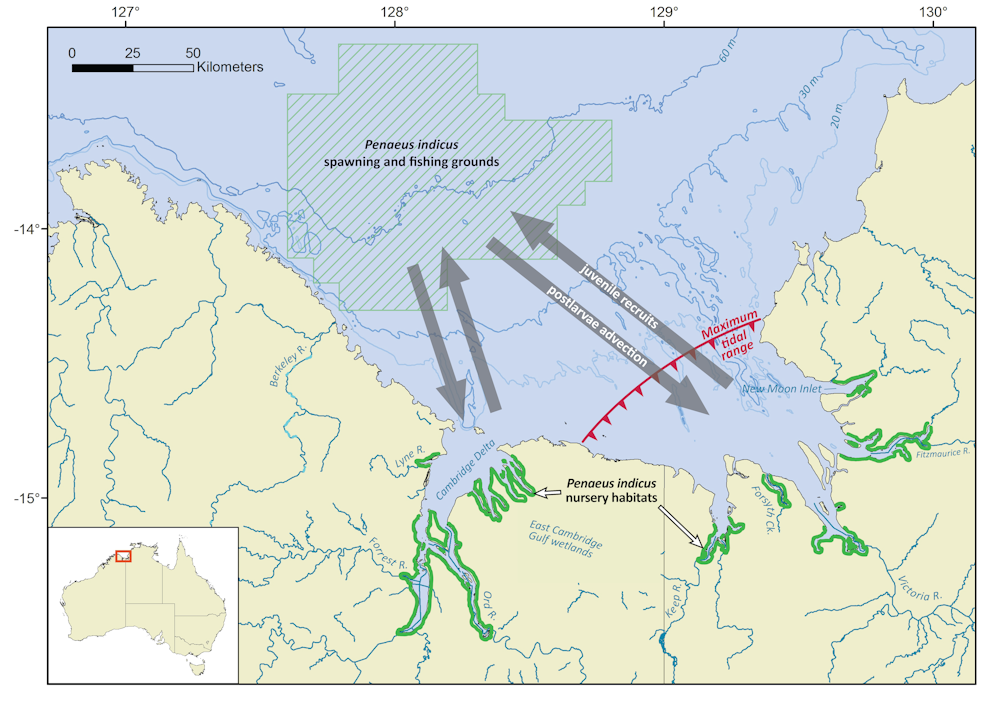
OM85: could bacteria in a capsule protect us from coronavirus and other respiratory infections?

Source: The Conversation (Au and NZ) – By Peter Sly, Director, Children’s Health and Environment Program and World Health Organization Collaborating Centre for Children’s Health and Environment, The University of Queensland

Scientists around the world are continuing to test countless vaccines and drugs in the hope of finding effective ways to prevent and treat COVID-19.

Among the trials happening in Australia is one my team is about to begin, looking at something called OM85.

OM85 is not a conventional drug, but a combination of molecules extracted from the walls of bacteria that commonly cause respiratory infections.

It’s not available in Australia, but has been used widely in Europe and South America for 40-50 years, commonly under the brand name Broncho-Vaxom.

We’re now looking at its potential to prevent respiratory infections, including COVID-19. But how does it work?


Read more: Where are we at with developing a vaccine for coronavirus?


First, a bit of background

Some of our organs, including the skin, airways and lungs, and gastrointestinal tract, are effectively “open” to the outside world. The cells that line these organs, called mucosal linings, host trillions of bacteria.

These bacteria, known as our “microbiota”, play essential roles in keeping us healthy. This is especially important in the gastrointestinal tract, where the microbiota “train” the immune system.

One of the ways they do this is by providing a continuous stream of signals that move through mucosal linings into the tissues below, where immune cells are found. Specialised immune cells responsible for detecting the invasion of infectious pathogens recognise and respond to these signals.

We now recognise these signals from the microbiota operate as “immune training” agents, helping to keep the front-line defences of the immune system in a state of high alert.

OM85 is made from molecules extracted from the walls of bacteria. Shutterstock

OM85 is an immune stimulant

OM85 appears to enhance some important aspects of this natural “immune training” process. One way it does this is by stimulating the maturation of regulatory T-cells (called Tregs) in the lymph glands in the upper intestine.

Once they have fully matured, these Tregs can migrate to other mucosal surfaces in the body to bolster local anti-inflammatory defences. This process is especially important in the lungs and airways to prevent respiratory infections.


Read more: Explainer: what is the gut microbiota and how does it affect mind and body?


OM85 signals also leak into our circulation. There they are recognised by cells in the bone marrow, which control the production of other immune cell types.

This results in increased immune cells – both in number and function – that travel to front-line mucosal surfaces, including the airways, to further bolster our immune defences.

We strongly suspect OM85 also influences the makeup of the gastrointestinal microbiome itself, although we know very little about how this happens. This in turn helps to promote the survival of bacterial strains that stimulate the immune system.

What the evidence tells us

OM85 is a preventative, given to those at risk of more severe consequences from respiratory infections, rather than as a treatment of current infections.

Studies have shown OM85 reduces the risk of wheeze linked to infection in infants and schoolchildren.

It also reduces the incidence of severe flare-ups of chronic obstructive pulmonary disease in adults.

A review of 35 placebo-controlled studies involving 4,060 children concluded that immune stimulants, including OM85, reduced respiratory infections by an average of 40% in susceptible children.


Read more: A strong immune system helps ward off colds and flus, but it’s not the only factor


OM85 has a good safety profile. A small proportion of people may experience some gastro-intestinal upset, but in clinical trials, such as one we conducted in infants, side effects are rarely seen.

So why don’t we use it more widely?

No application has been made to bring OM85 to Australia. We are a small market not necessarily attractive to drug manufacturers.

In countries where OM85 is available, doctors can prescribe it but people can also buy it over the counter, in the same way they might a complementary medicine or health food supplement.

Research shows OM85 can reduce the risk of severe respiratory infections in children. Shutterstock

OM85 has attracted plenty of scepticism in its time, with some people regarding it as “snake oil”.

Scientists are sceptical when we don’t understand why something works, or at least where we don’t have a plausible explanation for how it works. The idea something swallowed but not absorbed could protect the lungs sounds fanciful, especially without solid explanations.

But as we start to understand more about the mechanisms that may explain how OM85 works in the body, and with the accumulating clinical evidence, we have good reason to be open to and further explore its potential.

What we’ll do in the trial

Health-care workers are susceptible to severe respiratory respiratory infections associated with other viruses, including influenza, that can cause them to miss work.

We plan to give 1,000 health-care workers OM85, half immediately and half delayed by three months.

To understand how OM85 works we will collect blood samples and test immune responses.

We will determine which virus caused the respiratory illnesses if illness occurs (COVID-19 or other), whether the immune response is different depending on the virus, and whether OM85 is equally effective against all respiratory viruses encountered.

The trial is due to start this month and first results should be available by November.


Read more: The fascinating history of clinical trials


ref. OM85: could bacteria in a capsule protect us from coronavirus and other respiratory infections? – https://theconversation.com/om85-could-bacteria-in-a-capsule-protect-us-from-coronavirus-and-other-respiratory-infections-140064

My baby has ‘tongue-tie’. Should I be worried?

Source: The Conversation (Au and NZ) – By Sharon Smart, Lecturer, Researcher & Course Coordinator (Master of Speech Pathology), School of Occupational Therapy, Social Work and Speech Pathology, Curtin University

Congratulations on your new bundle of joy! Is it joyful? What if your baby cries, fusses and isn’t feeding well? Perhaps you’ve tried breast and bottle-feeding without success.

After talking to family, friends and searching social media, someone mentions your baby may have a tongue-tie. Could this be the answer?


Read more: Essays on health: Australia is failing new parents with conflicting advice – it’s urgent we get it right


What is tongue-tie?

Tongue-tie (or ankyloglossia) is when the tissue under the tongue is short, thick or tight. This can restrict how the tongue moves.

Babies, children and adults can have tongue-tie, with 4-10% of the population affected. This means 12,000-32,000 Australian children are born with a tongue-tie each year.

We don’t know the precise cause of tongue-tie. But it can run in some families and occurs more in males than females.

How is it diagnosed?

The diagnosis includes a health professional looking at the tongue’s structure and appearance, and thoroughly testing how the tongue moves and works (known as a “functional assessment”).

Your child health nurse or lactation consultant may suspect your baby has tongue-tie. For older children or adults, a speech pathologist may notice tongue restriction affecting eating, drinking and speech.

Will it affect my baby’s feeding or speech?

Impact on breastfeeding

Tongue-tie can make it hard for babies to breastfeed. In some babies, it can cause problems latching to the breast, pain for the mother, and more frequent feeds due to inadequate intake.

The Australian Breastfeeding Association outlines the following signs that may relate to tongue-tie:

  • baby is not gaining enough weight
  • breastfeeding is painful
  • the nipple is damaged or flattened after breastfeeding.

Tongue-tie in older children and adults can also restrict tongue movements, causing difficulties eating.

Impact on speech

Occasionally tongue-tie causes significant restriction where a child cannot produce sounds correctly. This is particularly the case with sounds that require the tongue to elevate, such as “t”, “s” and “r”.


Read more: Common myths about speech problems in children


How is it treated?

If a tongue-tie is not causing problems with breastfeeding, eating, drinking or speech production, then treatment is not recommended. But when treatment is warranted, there are non-surgical and surgical approaches.

Non-surgical approaches

Non-surgical management might include seeing a lactation consultant who can provide breastfeeding advice, preferably one certified as an International Board Certified Lactation Consultant.

A speech pathologist can assess and treat your baby or child’s feeding, eating, drinking and speech. If non-surgical methods don’t work or are not suitable, surgery may be warranted.

Surgery

Surgical options include snipping the tissue under the tongue with scissors or a scalpel, laser frenotomy (dividing the tissue under the tongue, called the frenum), frenuloplasty (dividing the frenum and using stitches), and frenectomy (removal of the frenum). A paediatrician, ear, nose and throat surgeon, dentist or surgeon can perform the surgery on infants, children or adults.

Some experts are concerned about the large increase in the number of children surgically treated for tongue-tie globally. In Australia, surgery rates for frenotomy increased by 420% from 2006 to 2016.

This prompted a group of health professionals from a number of disciplines to recently warn against unnecessary surgery for tongue-tie, before a comprehensive assessment of tongue structure and function.

Does surgery work? Are there risks?

A small study shows parents of preschool children reported improvements in their child’s speech after surgery.

A larger study of children aged two to four found no difference between the speech or tongue movement of tongue-tied children who had surgery as an infant and those who didn’t.

Therefore, surgery is not recommended for babies with tongue-tie during infancy, with the sole aim of improving speech later in life.

A large study of 215 babies under three months old reported improvements in breastfeeding following surgery. In a more recent review, mothers reported improvements in breastfeeding and nipple pain.

The Australian Breastfeeding Association recommends surgery to release a tight frenum for babies with a tongue-tie having difficulties breastfeeding.


Read more: Deep cuts under babies’ tongues are unlikely to solve breastfeeding problems


As with any surgical procedure, there are potential risks. Babies can experience pain, bleeding, breathing problems, weight loss and poor feeding after minor surgery for tongue-tie.

Your dentist or surgeon will be able to discuss these potential complications, as they apply to your particular situation.

Where to go for help?

It can be a challenging for parents to know which health professional to see with any concerns about your child’s breastfeeding, eating, drinking or speech. Different professions differ in how they assess and manage tongue-tie.

A lactation consultant, child health nurse, or speech pathologist are good places to start to assess how the tongue looks and works during feeding and talking.

The Australian Dental Association recommends a multidisciplinary approach, including lactation consultants, speech pathologists, paediatricians, speech pathologists, and dentists or surgeons.

Whichever health professional you see, they will still need to properly assess how the tongue works to guide any future treatment.


For more information about tongue-tie, see websites from the Australian Breastfeeding Association, Australian Dental Association and Speech Pathology Australia.

ref. My baby has ‘tongue-tie’. Should I be worried? – https://theconversation.com/my-baby-has-tongue-tie-should-i-be-worried-139561

Fiji suspension move against USP chief ‘nonsense’, says Samoan deputy PM

By Soli Wilson in Apia

Trouble continues to brew at the University of the South Pacific with the suspension of the vice-chancellor and President, Professor Pal Ahluwahlia, being met with student and staff protests in campuses and criticism from council members.

Following months of opposition against the bid by pro-chancellor Winston Thompson to investigate Professor Ahluwahlia, the USP executive committee suspended the vice-chancellor on Monday to consider “material misconduct” allegations against him.

This has attracted widespread criticisms of the executive committee.

READ MORE: Fiji denies allegations of takeover at regional USP as criticism mounts

Samoa’s Deputy Prime Minister, Fiame Naomi Mata’afa, has slammed the executive committee’s decision as “irregular” and pro-chancellor Thompson’s vendetta as “nonsense.”

Tensions between the pro and vice-chancellor surfaced in the first three months of Professor Ahluwalia’s tenure, when he uncovered serious governance and management anomalies at the university. The discovery led to an external audit by accountants BDO that revealed irregular governance and management issues predating the current VC Ahluwahlia’s appointment.

– Partner –

The report named pro-chancellor Thompson in the document and since then he has maintained a vendetta against Professor Ahluwahlia aided by selected Fiji-based members. Because of this, Thompson’s actions have been labelled “obstructive”.

“It is our view that the University Council had determined how it would deal with these issues and the council asked the pro-chancellor and vice-chancellor to work together and keep to their own mandates, but it had become very obvious that the pro-chancellor is very obstructive,” said Fiame.

‘Quite obstructive’
“Not only of the vice-chancellor’s role and functions but he is also being quite obstructive and in fact, he doesn’t agree with council establishing this independent commission that’s now working through the issue for the University Council.

“So it’s a bit of a personal thing. I’m not saying they shouldn’t follow through with their bonafide charges against the vice-chancellor, but it appears that it’s all being set up to get back at the vice-chancellor for bringing the initial report about the irregularities within the university.

“It might seem like a clash between the vice-chancellor and pro-chancellor but the issue is a lot larger,” continued the Deputy Prime Minister.

Power struggle … Samoan Deputy Prime Minister Fiame Naomi Mata’afa (from left), criticises USP pro-chancellor Winston Thompson, and “suspended” vice-chancellor Professor Pal Ahluwahlia. Image: Samoa Observer montage

“USP has been under Fijian leadership for the last 10 years at the vice-chancellor level and pro-chancellor level, so I think they’ve been carrying on like it is a Fijian institution and they can do whatever they like because they’re based in Fiji, and it is the largest campus and not following the due processes that they should administer and govern the university by.”

Fiame then called on the member countries, especially those in council, to be more vigilant about their role on council and take responsibilities for the saga in Fiji.

“Hopefully with this issue, the regional representation might wake up and pay some attention to what is happening at USP,” she added.

Also in a post on social media, Fiame said the executive committee has taken over the powers of the council, using the covid-19 pandemic as an excuse for not being able to meet with council members virtually.

USP at ‘tipping point’
“USP [is] at [the] tipping point of becoming nationalised and the region looks on,” she wrote.

She highlighted that due to the pro-chancellor Thompson’s demonstration of not paying attention to council, Fiame said this should be sufficient grounds to address the issue of whether or not he should stay in office after being implicated in the BDO reports.

Due to the high drama initiated by pro-chancellor Thompson and Fiji-based council members, Fiame is calling for consideration to make the BDO report public.

“Because the report is embargoed, and only a few people have access to it. In the spirit of wanting to keep things in-house that we would embargo the full report and send out a summary,” she said.

“But I think with this nonsense with the pro-chancellor and it all leads back to that report; I’m now of the mind that I’m going to put it on the table of the council that that report be made public.”

The decision following the executive committee meeting was revealed in a letter dated June 8, 2020, addressed to vice-chancellor Ahluwahlia from Aloma Johansson, deputy pro-chancellor and deputy chair of council.

Suspension letter
“The executive committee decided after considering all the papers that an independent investigation should be conducted as soon as possible into the allegations,” the letter reads.

“Further, in accordance with clause 6 (f) of the Ordinance to Govern the Discipline of the Vice Chancellor, you are hereby suspended forthwith from your duties as Vice Chancellor and President without loss of salary and privileges until the outcome of the investigation is determined.”

Two days following the suspension of vice-chancellor Ahluwahlia, Nauru president Lionel Aingimea accused the “small group” of Fiji officials of “hijacking” the 12-country regional university, as reported by Asia Pacific Report.

“The future of our regional Pacific [U]niversity is now seriously in jeopardy,” the Nauru president said in a statement.

Aingimea described moves made against vice-chancellor Ahluwahlia as a “personal vendetta” as he called for an urgent meeting of the full University Council to reverse the “illegitimate” action made by the executive committee.

The suspension has also sparked peaceful protests at the local USP Alafua Campus.

FBC News also reports the USP Students Association in Fiji threatening to boycott exams, classes and other activities from the regional university’s 14 campuses, insisting they will not sit back.

USPSSA calls for end to saga
Last week, the Staff and Students Association called for an end to the USP saga, saying it is coming at the expense of students, Pacific taxpayers and donors.

More than 500 members at USP have signed a petition in support of vice-chancellor Ahluwalia, who is now suspended.

“Besides the [vice-chancellor], the biggest victims are the students. The council must intervene on students’ behalf and remove [the pro-chancellor Winston Thompson], amongst others, now,” the association said in a press statement.

“No other academic institution in the world would tolerate such interference. This must stop as it threatens USP’s stability.

“The future of the university and the students’ academic programmes are being threatened each day as long as [… University executives …] remain in office in any capacity. We will do everything we can to protect this institution and boiling point is on the horizon.”

The USP power struggle continues.

Soli Wilson is an Auckland-based commentator and columnist writing for the Samoa Observer.

Print Friendly, PDF & Email

Article by AsiaPacificReport.nz

Fiji denies allegations of takeover at regional USP as criticisms mount

By Lena Reece in Suva

The Fiji government has denied allegations being levelled against it of trying to “nationalise” the 12-nation University of the South Pacific, describing the claims as “baseless”.

Fiji Minister of Education Rosy Akbar was responding to accusations made by some Pacific countries and individuals that Fiji was too heavily involved in this week’s suspension of vice-chancellor Professor Pal Ahluwalia pending an investigation.

Fiji hosts the main Laucala campus of the regional university.

READ MORE: Albert Schram on Pacific university governance and academic freedom

A USP executive committee which met earlier this week had decided that the allegations against Professor Ahluwalia need to be “looked into”.

This arises from a report compiled by the chair of the risk and audit committee, Mahmood Khan, listing numerous incidents of alleged breaches by the USP vice-chancellor, Professor Pal.

– Partner –

Akbar said Fiji wanted to ensure that USP students – including those from Fiji, Solomon Islands, Vanuatu, Tonga, Samoa, Nauru and other countries – did not fall victim to issues created by bad governance.

She said a large number of complaints against the vice-chancellor had been brought to the attention of the USP audit team prompting the investigation, adding the quantity and nature of the complaints were very serious and could not be ignored.

Concerned about governance
Akbar added that the Fiji government was concerned about governance issues at the university in light of a number of anomalies found by the USP audit team and wanted the issues resolved quickly.

“Suspended” Professor Pal Ahluwalia … initiated reforms at USP. Image: FBC News

The minister said the government remained concerned about USP, which continued to be “distracted from its core function” of delivering quality teaching and education needed by Pacific countries to build strong economies and prosper.

As a threat of students boycotting classes and exams continued, Akbar said students needed to remain focused on what was most important – their education.

She said that Fiji, as the host country with the largest number of enrolled students, and by far the largest contributor from the Pacific member countries, would like to see the matters resolved “efficaciously” through the internal mechanisms of the university.

Akbar said it was clear there was a need to address the “governance anomalies” which had disrupted transparency at the university.

The Fiji minister goes on to say that a university is a place of learning and office holders must set an example to students, the future leaders, that any breach of rules would be investigated using the proper channels with action taken if and as appropriate.

The Fiji Times 11-06-2020
The Fiji Times today featuring the “Uni ‘hijack’ claim. Image: PMC

However, Pacific Media Watch reports that the incoming chancellor of the university, President Lionel Aingimea of Nauru, a law graduate from USP, had on Tuesday accused a small Fiji group, including pro-chancellor Winston Thompson, a retired former Fiji diplomat, of “hijacking” the university and waging a vendetta against Professor Ahluwalia.

He also said the future of the university was in “jeopardy” and he had called for an urgent special meeting of the full USP Council.

Other critics of the Fiji government’s actions over the university have also called for the meeting.

Staff and students in support of Professor Ahluwalia, who is widely seen as a reformer, have held protests at Laucala and other USP campuses around the Pacific.

The Fiji Times today splashed the Nauru president’s “hijack” claim on the front page.

Yesterday, independent journalist Michael Field revealed allegations in a secret BDO consultancy report that has detailed alleged funding abuses prior to Professor Ahluwalia’s appointment in late 2018.

He reported that some academics and staff at USP’s Laucala campus “have been paying themselves millions of dollars in salaries and allowances they may not have been entitled to”.

Lena Reece is a multimedia journalist with FBC News.

Print Friendly, PDF & Email

Article by AsiaPacificReport.nz

How a stone wedged in a gum tree shows the resilience of Aboriginal culture in Australia

Source: The Conversation (Au and NZ) – By Caroline Spry, Honorary Associate, PhD, La Trobe University

Trees marked by Aboriginal cultural practices are a distinctive part of the Australian landscape. A recent discovery on Wiradjuri country in New South Wales shows some of these “culturally modified trees” may be much younger than anybody thought.

What are culturally modified trees?

Aboriginal people have long used bark, wood and trees for practical and symbolic purposes. These include making canoes, containers, shields and wooden implements, accessing food resources, and marking ceremonial and burial locations.

Many of these trees contain scars and carvings from these activities, although over time the marks are often enveloped by new growth. Aboriginal culturally modified trees can be found across Australia – you may have walked past one on your way to the footy in Melbourne, on a stroll near Sydney, or somewhere else, without even realising it.

However, their numbers are dwindling as a result of development pressures, bushfires and natural decay.

Outline of an Aboriginal canoe on a tree (Figure 236 from Robert Brough Smyth 1878 ‘The Aborigines of Victoria’, Volume 1) Wikisource

An unprecedented discovery

One such tree with unique characteristics was recently found on Wiradjuri Country in NSW. The tree has a large scar, and an Aboriginal stone tool is still lodged in the scar regrowth.

Working with the Orange Local Aboriginal Land Council, we carried out an archaeological study of the tree. It represents an unprecedented find in Australia – and even worldwide.

We know that Aboriginal people used a range of stone tools to remove bark and wood from trees. However, no examples of these tools have ever been found lodged in a tree.

The tree (left), scar (centre), and embedded stone tool from the side (top right) and above (below right)

We used a range of scientific techniques, including 3D modelling, microscopic analysis and radiocarbon dating, to learn more about the origins of the scar and stone tool. We were particularly interested in how the scar was created, what the stone tool was used for, and when it became lodged in the tree.

Oral history is another key source of information about Australia’s Aboriginal past. However, in this instance, the Orange Aboriginal community does not have any recollections about the tree.


Read more: Ancient Aboriginal stories preserve history of a rise in sea level


Studying the scar

We created three separate 3D models of the tree, the scar and the stone tool, which show the features of this site.

The scar bears some resemblance to natural scars that can result from fire damage and tree stress. However, the size and location of the scar is also consistent with the way Aboriginal people removed bark slabs to construct shelters.

The stone tool itself provides more clues. The residues and wear patterns we identified on the edges of the stone tool indicate it was made using Aboriginal stone-knapping techniques, and then used in a scraping motion or hammered into the tree, perhaps with a wooden mallet.

Some of the damage we observed on the stone tool may also be from attempts to wedge out bark, or to remove the tool itself from the tree. It is also possible someone used the stone tool to make a visible mark or sign on the tree.

Younger than expected

We used radiocarbon dating to determine the age of the tree, and discovered it was relatively young. It began growing around the start of the 20th century and died about 100 years later, during the millennium drought.

The stone tool was embedded some time between 1950 and 1973 – an unexpected result for the Aboriginal community.

Some members of the Orange Aboriginal community consider the tree, and the placement of the stone tool, to be much older than the dating results indicate. For other members of the Aboriginal community, the dating results are particularly significant as they indicate Wiradjuri culture continued even during active discouragement and assimilation policies.

Historical and oral evidence suggests that Wiradjuri people were, at best, wary about open displays of culture at this time. This impacted the passing of information onto younger generations. The results of our study therefore provide a rare glimpse of cultural continuity at the time.

Although the tree is very large, and therefore appears to be very old, our results also show how rapidly eucalypts can grow. This suggests that many large eucalypts, previously estimated to be hundreds of years old, may in fact be much younger.

The mystery remains

A final mystery is why the stone tool was left in the tree. If it was used to remove bark from the tree, or to create a mark, why was it not removed?

It is unlikely such a stone tool would be left behind, as it appears relatively unused and stone sources are rare in the area. It may have been left accidentally, or because removal was not possible. Another possibility is the stone tool was deliberately embedded in the tree as a symbolic marker in the landscape.

While this aspect of the tree and stone tool may never be understood fully, the results of our study are a clear-cut reminder of the continuity and resilience of Aboriginal knowledge and culture through the 20th century and into the present.


This article was written with the help of the Orange Local Aboriginal Land Council.

ref. How a stone wedged in a gum tree shows the resilience of Aboriginal culture in Australia – https://theconversation.com/how-a-stone-wedged-in-a-gum-tree-shows-the-resilience-of-aboriginal-culture-in-australia-139663

An election like no other: with 100 days to go, can Jacinda Ardern maintain her extraordinary popularity?

Source: The Conversation (Au and NZ) – By Jack Vowles, Professor of Political Science, Te Herenga Waka — Victoria University of Wellington

New Zealand’s 2020 general election will be like no other in our history.

It comes in the wake of a remarkable government-led act of collective solidarity that has sacrificed businesses and livelihoods in the cause of protecting those who would have been most vulnerable to COVID-19: the old, those with health conditions, disadvantaged people in crowded housing, Māori and ethnic minority communities.

By a combination of luck and good crisis management, the elimination policy has worked. New Zealand is among the first COVID-hit countries to return to near normality.

In the process, the popularity of Jacinda Ardern and her government has soared. The initial response to a crisis of this magnitude tends to raise support for governments. But in New Zealand the increase has been stratospheric, raising Labour’s support to levels as high, if not higher, than for any party since the advent of the Mixed Member Proportional electoral system.

In countries where the policy response has been poor and the virus untamed we can expect to see governments lose their lustre. But this is much less likely in New Zealand. Only a small minority of New Zealanders doubt the need for the government’s strong policy response or the evidence of its success.


Read more: Kindness doesn’t begin at home: Jacinda Ardern’s support for beneficiaries lags well behind Australia’s


Nevertheless, with June 10 marking 100 days until the election we can expect to see Labour’s wide lead in the polls erode. The questions to ask are: by how much, and for what reasons?

Prime Minister Jacinda Ardern: a perception of competence and cohesion has seen her poll support soar. AAP

Labour competence has won over conservatives

Research conducted by the New Zealand Election Study identifies two ideological dimensions behind party choice. The first is the balance between state and market in public policy. It’s a perennial debate between left and right that (despite claims to the contrary) hasn’t gone away.

The second is based on other values: a liberal desire for freedom to pursue one’s own choices versus a conservative desire to maintain social cohesion and conformity with traditional community norms.

While these dimensions are semi-independent, on balance liberals are more likely to be on the left, and conservatives on the right. Conservatives greatly value strong leadership and naturally tend towards the National Party.

Those with conservative values who lean to National, but not strongly, are those most likely to have joined the Labour camp in recent polling, a hypothesis borne out by recent COVID-19 psychological research. This showed a higher level of patriotism post-lockdown, “along with higher levels of institutional trust in science, government, police and health authorities”.


Read more: Crisis, disintegration and hope: only urgent intervention can save New Zealand’s media


The government has led an outstanding example of social cohesion. Provided Labour can continue to project an image of competent command and control over a crisis that has not ended, many of those conservatives may remain with Labour, perhaps for longer than a single election.

Will voters blame economic shock on the government?

In the depth of the crisis, attacks on the government were, for the most part, tempered. As the crisis has ebbed, however, criticism has become more acceptable. The National Party (having changed leaders in response to plummeting polls) is increasingly attacking the government’s competence. That the target is Labour’s cabinet rather than Ardern herself helps explain the challenge National faces.

New National Party leader Todd Muller and shadow ministers: targeting government competence is the strategy, but is it enough? AAP

Meanwhile, the unity of the coalition is dissipating as New Zealand First seeks to raise its profile and retain its parliamentary seats (which current polling suggests are at risk). The image of competent control is under attack from that direction, too.

The state of the economy by mid-September will be the other key variable. It’s true that governments can stand and fall on the performance of their economies, but not always.

There are two schools of thought among those who study economic voting. The sceptics argue that voters are myopic, if not entirely blind – they will blame or reward governments for externally generated downturns or upturns for which the government cannot reasonably be blamed or given credit.

The downstream economic damage caused by COVID-19 will therefore ultimately be sheeted home to the governments in office at the time, regardless of their performance.


Read more: The coronavirus crisis shows why New Zealand urgently needs a commissioner for older people


Other researchers argue that voters are capable of extracting a “competency signal” from governments and can therefore tell the difference between what a government cannot control and what it can. In particular, they can assess the effectiveness of the government’s response to an unexpected shock.

Detecting a competency signal demands a great deal of ordinary voters. A complex mixture of party campaign strategies, political commentary, general media coverage and talk about politics within families and workplaces affects their ability to make well-founded judgments.

As always, the cues and impressions that feed people’s perceptions over the coming weeks will shape the election outcome.

The first of two polls in May showing Labour capable of governing alone without coalition partners were the same results achieved at the election. Screenshot/Newshub-Reid Research

Is history a guide?

The first Labour government was elected in 1935 after the depression of the 1930s. It governed effectively and established a system of social security that briefly led the world.

Its reward was a relatively long period of government and a wave of respect and affection for Labour’s first prime minister, Michael Joseph Savage. His framed photograph could be found on the wall of many working-class homes well into the 1960s.

The extraordinary events of the past few months have set the scene for another potential reward for exemplary leadership – an outcome deeply feared by Labour’s opponents. Potentially, it could lead to another long period of Labour-led governments and the crowning of Jacinda Ardern as one of New Zealand’s greatest prime ministers.

Or not. If a week is a long time in politics, 100 days is an eternity.

ref. An election like no other: with 100 days to go, can Jacinda Ardern maintain her extraordinary popularity? – https://theconversation.com/an-election-like-no-other-with-100-days-to-go-can-jacinda-ardern-maintain-her-extraordinary-popularity-140252

She won’t be right, mate: how the government shaped a blokey lockdown followed by a blokey recovery

Source: The Conversation (Au and NZ) – By Chris Wallace, Associate Professor, 50/50 By 2030 Foundation, Faculty of Business Law & Government, University of Canberra

Prime Minister Scott Morrison earns a six-figure income and lives in high-end, non-means-tested public housing with a stay-at-home spouse who cares for the family’s two school-aged children. He will never have experienced the childcare-related anxiety most parents of school-aged children do.

Morrison’s extraordinary singling out of child care for a big punitive hit as he winds back the government’s coronavirus pandemic program suggests he wants more families to look like his. Except, that is, in relation to public housing – an area on which, along with higher education, the government pointedly refuses to spend any stimulus dollars.

If you want to understand what a government is about, look at where it puts its money rather than listening to what it says. The government’s pandemic spending decisions show it wants women back in the kitchen, weak universities and wondrous home renovations for the already well-off, rather than Australia’s threadbare public housing in better repair.

It is neither kind nor smart public policy, and may turn out to be dumb politics too. The Liberal and National parties will likely pay little political price for failing to support universities or improve social housing during the pandemic, but the government’s blunt child-care policy moves are another matter. Early polling for the July 4 Eden-Monaro byelection starts on Monday, giving these southern New South Wales voters a chance to express an early opinion of Morrison’s starkly masculinist, welfare-for-the-well-off turn this week.

Making child care free at the pandemic’s outset gave stretched and stressed families several weeks’ reprieve from that most elemental anxiety: being able to undertake paid work consistent with their children being secure.


Read more: Forget flowers and chocolates for Mother’s Day: keep free childcare going instead


The deep relief many parents experienced was a taste of a different possible world, one not saturated with the fear of being unable to properly fulfil either their responsibilities as workers or parents – and not driven by the finely balanced maths of whether their earnings would even cover the cost of child care necessary for them to work in the first place.

Given the gendered pattern of parenting in Australia, it is women who overwhelmingly pay the price. Women are less likely to be available for paid work, and less able to do paid work for as many hours as they would like, because of problems accessing and affording child care.

The consequences of the child-care trap compound over time into clear labour market disadvantage. Women have lower participation rates, lower earnings and a decreasing share of seats at the executive table the further up the ladder you go.

This is nowhere truer than at the top of the Morrison government. The 23-person Morrison cabinet includes six women (26%) – just enough for the prime minister to tick the “inclusion” box, but not enough for those women and their potential male allies to challenge the unrelentingly blokey agenda being rolled out.


Read more: Women are drinking more during the pandemic, and it’s probably got a lot to do with their mental health


Defence Minister Senator Linda Reynolds, for example, saw the light through participation in the Broderick Review into the Treatment of Women in the Australian Defence Forces. She said in February:

I saw that women could help Defence do things differently, and better. I started questioning my own leadership style. Along the way, I’d unknowingly adopted behaviours that didn’t really reflect who I was or who I wanted to be – and my voice had been stifled. Through this challenging process of self-assessment, I began to find my own voice and confidence as a female leader, which over time I found to be enormously liberating. I am a better senator and a better minister because of it.

Had someone like Reynolds wanted to lead a charge over the barricades against Morrison’s child-care hit this week, who could she have turned to in cabinet for help? Potential allies in making Morrison government policy less toxic for women are not obvious. There are so few women and they are massively outnumbered by ambitious men.

Morrison not only ending free child care but also singling out the overwhelmingly female child-care workforce for the early ending of JobKeeper payments – explicitly breaking a promise to continue JobKeeper across the workforce until September – should have women storming for preselection across Australia’s political spectrum.

This should be especially so in the Liberal and National parties where the low number of women preselected for winnable seats, even when multiple quality female candidates contest them, depresses the number of female coalition MPs. It makes bad policy like that announced by Morrison this week easier to get away with. The farcical 30-minute hairdresser carve-out at the beginning of the lockdown could only have come from a womanless kitchen cabinet. Morrison’s hit on child care and the child-care workforce escalates the dysfunction from farce to tragedy.


Read more: The Liberals have a serious women problem – and it’s time they took action to change it


Half of Australia’s voters are women. The government says it wants to encourage labour force participation in the interest of national productivity, but at every turn discourages women’s participation in the paid workforce. Child-care policy, the single biggest barrier to women’s full participation in the paid workforce, is a mess. When there’s a mess, it is usually the women who have to clean it up.

Liberal and National party women need to person up, get organised and get into parliament at the same rate as their male peers, ensure women’s proper representation in leadership positions, in cabinet, in the ministry and in the parliamentary committees where those aspiring to the ministry and cabinet build their policy and political skills.

They need to stop allowing themselves to be divided and ruled. They should speak up in unison, in public and in private, and get policies affecting women in the paid workforce back on track. Otherwise the Gilead-lite policies being propagated from that high-end, non-means-tested public housing known as The Lodge is going to go from bad to worse.

ref. She won’t be right, mate: how the government shaped a blokey lockdown followed by a blokey recovery – https://theconversation.com/she-wont-be-right-mate-how-the-government-shaped-a-blokey-lockdown-followed-by-a-blokey-recovery-140336

Heading back to the gym? Here’s how to avoid injury after coronavirus isolation

Source: The Conversation (Au and NZ) – By Christopher Williams, Associate Professor, University of Newcastle and Program Manager, Hunter New England Local Health District, University of Newcastle

To the joy of many, indoor gyms are reopening across Australia as coronavirus restrictions continue to ease.

They officially reopen in New South Wales on June 13, in Tasmania two days later, and in Victoria on June 22. They are already open in the Northern Territory, Australian Capital Territory, Queensland, South Australia and Western Australia.

However, before we pick up the dumbbells once again, we might need to be cautious. During the pandemic, many of us have been more sedentary and those of us working from home have missed out on incidental exercise such as walking to the train station.

When we exercise less, our physical condition declines, which may increase the risk of injury. So how can we return to the gym safely?

What is deconditioning?

Humans are bioplastic. That means we respond to what we do with our bodies. Usually, our body responds positively to exercise: we get fitter and stronger, and our mental and physical health improves. When we stop being active, our physical condition declines. This is known as “deconditioning”.

Deconditioning can happen quickly. Some studies show significant decline in muscle mass, physical function, strength, aerobic capacity and metabolic function in as little as 10 days of inactivity.

When we’re inactive, our body adapts to the lack of exercise. Restarting activity too quickly risks injury. Shutterstock

What are the risks?

While deconditioning can be rapid, reconditioning the body is slower. Upon returning to the gym we might feel like our muscles are “tighter” and we’re breathing more heavily. We may also feel that our joints are stiff, or that we reach our pain threshold well before we are used to. These are all normal signs that should improve after a few workouts or over several weeks.


Read more: Health Check: how to start exercising if you’re out of shape


But engaging in high-intensity movements or increasing loads too quickly can be a risk for injury. People might assume they can jump back into pre-pandemic exercise without considering the reduced capacity of their body.

Research has found novice exercisers and those with lower activity before starting gym-based exercise are more likely to experience injury on their return to the gym. The most common conditions reported by these people are back pain or knee pain.

Ease into it

To prevent this, the recommendation is to ease back into your exercise routine. Consider reducing your intensity or load to 70-80% of your pre-pandemic efforts for a few weeks. If you’re used to doing a 50kg bench press, consider starting at around 35kg and building gradually from there.

Make sure to use a specific warm-up for the exercise you do. For example, if you are doing calf raises, warm up by doing them without weights before progressing to using your desired load.

We also recommend you set realistic goals to allow your body to adjust and to focus on re-establishing healthy habits and routine.

When returning to exercise, drop your workouts to around 70% of where you were at before the pandemic started. Jim Lo Scalzo/EPA

As you ease back into exercise, it is wise to acknowledge everything happening in your life. Our physical responses to exercise are influenced by a range of factors. Poor sleep, stress, nutrition, alcohol intake, our history of exercise and many other factors can affect our body’s response and risk of injury.

For example, you could lower your expectations for a workout if you’ve had poor sleep recently. Fatigue can lead to poor focus and is linked with a higher risk of injury. Sleeping well is also important for recovery from fatigue caused by exercise.

Checking in with yourself, before and during your workout, allows you to recognise when you can go harder or back off. Professional athletes and coaches use this principle of “auto-regulation” by monitoring how they feel and perform on the day. They can then modify exercise loads, intensity, and the type of exercise to prevent overdoing it.

Why am I so sore?

Common aches and pains have many causes, and are not always the result of injury. Also, complete rest isn’t always the best way to manage them. This is particularly the case for common problems such as back pain.


Read more: Ouch! The drugs don’t work for back pain, but here’s what does


We often think we should lie on the couch if we have a sore back. But it is often safe and beneficial to continue some activity within your limits while your body heals. If you do feel pain throughout or after exercise, recognise in the majority of cases, your body will heal quickly with no lasting problems. It’s normal for back pain and muscle strains to take a few weeks to resolve.

However, if your pain gets increasingly worse over a few days it’s wise to get it checked out by a health professional.

Many of us lie in bed when we get back pain. But getting moving can actually improve symptoms. Shutterstock

Remember, the benefits of exercise far outweigh the potential risks when getting back into the gym. Your enthusiasm just needs to be tempered with a realistic view of your current condition, not the memory of your ability three months ago.


Read more: Coronavirus has boosted telehealth care in mental health, so let’s keep it up


If you are unsure how to approach returning to exercise, you can speak to your health provider. Most GPs, physiotherapists and exercise physiologists now offer telephone consultations. They can assess your individual risks and give you specific advice on the best way to get back into the gym safely and improve your fitness.

Lauren Devine contributed to this article.


This article is supported by the Judith Neilson Institute for Journalism and Ideas.

ref. Heading back to the gym? Here’s how to avoid injury after coronavirus isolation – https://theconversation.com/heading-back-to-the-gym-heres-how-to-avoid-injury-after-coronavirus-isolation-139975

At least 1,241 tonnes of microplastics are dumped into Aussie farmland every year from wastewater sludge

Source: The Conversation (Au and NZ) – By Abbas Mohajerani, Associate Professor, RMIT University

Every year, treated wastewater sludge called “biosolids” is recycled and spread over agricultural land. My recent research discovered this practice dumps thousands of tonnes of microplastics into farmlands around the world. In Australia, we estimate this amount as at least 1,241 tonnes per year.

Microplastics in soils can threaten land, freshwater and marine ecosystems by changing what they eat and their habitats. This causes some organisms to lose weight and have higher death rates.

But this is only the beginning of the problem. Microplastics are good at absorbing other pollutants – such as cadmium, lead and nickel – and can transfer these heavy metals to soils.

Wastewater treatment plants create biosolids, which are packed full of microplastics and toxic chemicals. Shutterstock

And while microplastics alone is an enormous issue, other contaminants have also been found in biosolids used for agriculture. This includes pharmaceutical chemicals, personal care products, pesticides and herbicides, surfactants (chemicals used in detergents) and flame retardants.

We must stop using biosolids for farmlands immediately, especially when alternative ways to recycle wastewater sludge already exist.

Where do the microplastics come from?

Biosolids are mainly a mix of water and organic materials.

But many household items that contain microplastics – such as lotions, soaps, facial and body washes, and toothpaste – end up in wastewater, too. Other major sources of microplastics in wastewater are synthetic fibres from clothing, plastics in the manufacturing and processing industries, and the breakdown of larger plastic debris.

Before they’re taken to farmlands, wastewater collection systems carry all, or most, of these microplastics and other chemicals from residential, commercial and industrial sources to wastewater treatment plants.

To determine the weight of microplastics in Australia and other countries, my data analysis used the average minimum and maximum numbers of microplastics particles, per kilogram of biosolids samples, found in Germany, Ireland and the USA.


Read more: We have no idea how much microplastic is in Australia’s soil (but it could be a lot)


Australia produced 371,000 tonnes of biosolids in 2019. And globally, we estimate between 50 to more than 100 million tonnes of biosolids are produced each year.

Why microplastics are harmful

Microplastics in soil can accumulate in the food web. This happens when organisms consume more microplastics than they lose. This means heavy metals attached to the microplastics in soil organisms can progress further up the food chain, increasing the risk of human exposure to toxic heavy metals.

When microplastics accumulate heavy metals, they transfer these contaminants to plants and crops, such as rice and grains, as biosolids are spread over farmland.


Read more: After a storm, microplastics in Sydney’s Cooks River increased 40 fold


Over time, microplastics break down and become even tinier, creating nanoplastics. Crops have also been shown to absorb nanoplastics and move them to different plant tissues.

Our research results also show that after the wastewater treatment process, the absorption potential of microplastics for metals increases.

The metal cadmium, for example, is particularly susceptible to microplastics in biosolids and can be transported to plant cells. Research from 2018 showed microplastics in biosolids can absorb cadmium ten times more than virgin microplastics (new microplastics that haven’t gone through wastewater treatment).

Biosolids have a cocktail of nasty chemicals

It’s not just plastic – many industrial additives and chemicals have been found in wastewater and biosolids.

This means they may accumulate in soils and affect the equilibrium of biological systems, with negative effects on plant growth. For example, researchers have found pharmaceutical chemicals in particular can reduce plant growth and inhibit root elongation.


Read more: Sustainable shopping: how to stop your bathers flooding the oceans with plastic


Other chemical contaminants – such as PFCs, PFAS and BPA – have likewise been detected in biosolids.

The effects these chemicals have on plants may lead to problems further down the food chain, such as humans and other animals inadvertently consuming pharmaceuticals and harmful chemicals.

What can we do about it?

Given the cocktail of toxic chemicals, heavy metals and microplastics, using biosolids in agricultural soils must be stopped without delay.

The good news is there’s another way we can recycle the world’s biosolids: turning them into sustainable fired-clay bricks, called “bio-bricks”.

Bricks incorporated with biosolids are a sustainable solution to an environmental problem. RMIT media, Author provided

My team’s research from last year found bio-bricks a sustainable solution for both the wastewater treatment and brick manufacturing industries.

If 7% of all fired-clay bricks were biosolids, it would redirect all biosolids produced and stockpiled worldwide annually, including the millions of tonnes that currently end up in farmland each year.


Read more: You’re eating microplastics in ways you don’t even realise


We also found they’d be more energy efficient. The properties of these bio-bricks are very similar to standard bricks, but generally requires 12.5% less energy to make.

And generally, comprehensive life-cycle assessment has shown biosolid bricks are more environmentally friendly than conventional bricks. These bricks will reduce or eliminate a significant source of greenhouse gas emissions from biosolids stockpiles and will save some virgin resources, such as clay soil and water, for the brick industry.

Now, it’s up to the agriculture, wastewater and brick industries, and governments to make this important transition.

ref. At least 1,241 tonnes of microplastics are dumped into Aussie farmland every year from wastewater sludge – https://theconversation.com/at-least-1-241-tonnes-of-microplastics-are-dumped-into-aussie-farmland-every-year-from-wastewater-sludge-137278

University students aren’t cogs in a market. They need more than a narrow focus on ‘skills’

Source: The Conversation (Au and NZ) – By Leesa Wheelahan, Professor & William G. Davis Chair in Community College Leadership, University of Toronto

This essay is based on an episode of the University of Technology Sydney podcast series “The New Social Contract”. This audio series examines how the relationship between universities, the state and the public might be reshaped as we live through this global pandemic.


Prime Minister Scott Morrison recently announced a revamp of the vocational education and training (VET) sector to focus more on skills needed for work. Providing training for people “who need to upskill or reskill” was also a recommendation of an interim Productivity Commission report released last week.

The same emphasis on skills is evident when it comes to higher education. In explaining his government’s move to embed micro-credentials in the Australian Qualifications Framework, education minister Dan Tehan predicted future growth in the sector would be “in part employer-driven and in part driven by the individual knowing and understanding what set of skills will best suit their employment opportunities”.


Read more: There may not be enough skilled workers in Australia’s pipeline for a post-COVID-19 recovery


Australians are a highly educated people, with more than one third of the population educated to a degree level or above. Yet Australia’s youth unemployment doubled to 13.8% in April, after the COVID-19 pandemic hit.

Something is going wrong in the relationship between education and employment. Trying to narrowly focus education and training on equipping young people with specific skills for work isn’t going to fix it. We need to fundamentally change our approach.

Education should equip people not just with specific skills, but also with the knowledge they need to be citizens, parents, community members, and for occupations in which they can grow and develop across the course of their lives.

What are skills?

When people talk about skills they might mean different things. “Skills” can refer to specific or technical skills needed to execute tasks in particular jobs. Or it can mean more generic skills such as communication or problem solving, which everyone needs for work.

The emphasis on skills in Australia began in the late 1980s and early 1990s with a series of key reports commissioned by the Hawke and Keating Labor governments. The aim was to increase capacity and participation in VET and higher education and ensure Australian workers had both a wider range and higher level of skills.

First the focus was on “generic” and “employability” skills in vocational education and, somewhat later, “graduate attributes” in higher education such as critical thinking, effective communication and problem solving skills. More recently we have begun to hear an emphasis on 21st century skills for everyone.

An influential report by the World Economic Forum and Boston Consulting Group defines 21st century skills in three broad categories:

  • foundational literacies, which include literacy and numeracy

  • competencies, which include critical thinking, problem solving and collaboration

  • character qualities, which include curiosity, initiative and persistence.

But people are more than an assembly of skills, and skills mean different things in different contexts.

Problem solving for a childcare educator is very specific to the context. Shutterstock

“Problem solving”, for example, means something completely different to the childcare worker trying to deal with a room of two-year-olds having meltdowns, than it does to the oil worker trying to put out a fire on an oil rig. Each requires distinctive knowledge and expertise to deal with the problem in their own occupation.

This is why it is not possible to teach problem solving or other skills independently of occupations or the people who do them.

From employment to employability

Increasing the nation’s stock of skills, governments believe, will lead to economic efficiency and a more productive economy. If educational providers clearly specify the skill they are teaching, and if employers clearly identify which skills they want in their employees, students will be able to decide what they should learn (and pay for).

What this means is that the social contract between education and the world of work has shifted from one that emphasises employment (a pathway to a meaningful job), to one that emphasises employability (the attributes that might enable a person to find and keep a job).

The consequence is that it is now up to individuals to prepare themselves for something called “the job market”.


Read more: Universities have gone from being a place of privilege to a competitive market. What will they be after coronavirus?


Students entering university are encouraged to “invest” in themselves by first anticipating, and then acquiring, the skills and qualities future employers might want. They are encouraged to understand themselves in a culture of continual calculation and risk management.

As the economy changes and work becomes more uncertain, the risks of someone making a bad decision increase and employers’ demands for skills become more narrowly focused.

That’s why it is not surprising that, as the queues at CentreLink have grown longer, Dan Tehan has encouraged more Australians to invest in short courses to reskill themselves.

Occupations instead of skills

But skills are not the only way to think about the relationship between education and employment.

A whole set of preconditions enable a person to be a good worker. These extend beyond that person’s ability to execute a task and include the broad range of factors that make it possible for them to feel respected, connected and that the work they do is meaningful.


Subscribe to the New Social Contract podcast on your favourite podcast app: Apple Podcast, Spotify, Stitcher


People need to live in safe, inclusive communities and they need to be able to have a say in the kind of society we share. People, after all, are more than job seekers.

People study and go to work so they can sustain themselves and their families and because they find these activities meaningful. They do not study and go to work because it contributes to the creation of markets. This may be the outcome of their activity, but for most people it is not the purpose of their lives.

An education system focused on skills misses this bigger picture, in which the whole person is developed for an occupation, which is part of a broader network of occupations in society.

Occupations are composed of many specific jobs. They are underpinned by both theoretical and practical knowledge. Occupations have histories, face ethical dilemmas and are part of a complex web of other occupations that work with each other.


Read more: Students striking for climate action are showing the exact skills employers look for


Electricians, for example, frequently work with engineers. And social workers often work alongside health workers. Research shows people are more likely to move within occupations or to other occupations where they require similar knowledge, skills and attributes, than they are to move to entirely new fields of work.

We need to think more broadly about occupations, and what it means to prepare people to work in them. Rather than focusing on skills, government policies on education and training might focus on supporting occupational pathways (for example, from aged care worker to nurse).

They might ensure graduates can go to good quality jobs with employers who will support their continuing professional development.

Training for work that anchors communities in transition

Preparation for the workforce has long been crucial to the relationship universities have with governments on the one hand, and different elements of society on the other.

It will become all the more important as our economies and societies are transformed, not just by new technology, but also by the changes that will come under the pressures of climate change.


Read more: Climate change is the most important mission for universities of the 21st century


We now need an education system that will anchor communities in transition. Adaptable, qualified graduates who have deep knowledge of their field, who can see a pathway to their future and who feel connected to, and respected in, the society they inhabit, will be able to respond to these challenges more effectively than those forced to continually second guess an uncertain job market.


The next article linked to The New Social Contract podcast will look at universities and the communities they serve.

Universities and the nation’s workforce was made by Impact Studios at the University of Technology, Sydney – an audio production house combining academic research and audio storytelling.

ref. University students aren’t cogs in a market. They need more than a narrow focus on ‘skills’ – https://theconversation.com/university-students-arent-cogs-in-a-market-they-need-more-than-a-narrow-focus-on-skills-140058

Drivers v cyclists: it’s like an ethnic conflict, which offers clues to managing ‘road wars’

Source: The Conversation (Au and NZ) – By Andrew Dawson, Professor and Chair of Anthropology, University of Melbourne

Motorists and cyclists are akin to ethnic groups, our research shows. This means we might want to look to multiculturalism in managing relations on the roads.

As we exit lockdown, car and bicycle use will increase greatly. Commuters may be swapping one risk for another – an increased risk of traffic accidents and congestion for the risk of coronavirus infection on public transport. Cities overseas are increasingly turning to segregated car and bicycle lanes as a solution.


Read more: Coronavirus recovery: public transport is key to avoid repeating old and unsustainable mistakes


Segregation isn’t a panacea

However, segregation can be difficult to implement. Its construction may be costly and increase traffic congestion.

In addition, when many motorists incorrectly view car licensing as the main means of financing roads, it can be a politically risky project. Simply, there are many more motorist than cyclist voters.

Claims that segregation is a panacea are debatable anyway. Vehicle segregation in Australia dates to the 19th century. Its purpose then was to designate roads as being mainly for “car-riages”, to the exclusion of activities such as walking and trading. In turn, cars came to be viewed as the “natural” vehicles of the road.

This engendered a sense of road entitlement and aggressive driving. So segregation, the very thing designed to protect cyclists from motorists, lies at the root of why some motorists are a danger in the first place.

Research also suggests motorists’ conduct towards cyclists becomes less responsible in mixed traffic settings as segregation increases elsewhere. Basically, danger is displaced to the suburbs.

Why is aggression on roads so common?

Given this, segregation must surely be complemented by promoting safety in mixed traffic settings too. This requires an understanding of behaviour on the roads and how to promote good behaviour.

It is not enough to put motorists’ aggression towards cyclists down to “road rage”. Aggression on the roads is more common in some places than others, in the Antipodes more than in the UK for example.

We would not conceive of aggression in other contexts, such as ethnic conflict, as being the result of a universally aberrant state of mind. We would take social and cultural circumstances into account. So why do otherwise in the case of roads?


Read more: Rising cyclist death toll is mainly due to drivers, so change the road laws and culture


What does this have to do with ethnic conflict?

The ethnic conflict analogy is not coincidental. Ethnicity is a useful point of reference for thinking about the identities and relations of drivers and cyclists.

Much like disability and LGBTQI activists, a growing body of cycling activists see cyclists as having characteristics like those of an ethnic minority. In these terms, one could argue segregated car and bicycle lanes perpetuate a form of historical domination: driving is the equivalent of “whiteness” and segregation a form of infrastructural “apartheid”.

However, we do not want to take the analogy that far. Cyclists do not meet cultural criteria of minority status. And so, in times when ethnic minority status is an increasingly influential advocacy discourse, the cyclist-equals-oppressed ethnic-group equation can be exposed as purely tactical.

What we do observe, however, is that identity formation among motorists and cyclists mirrors that of ethnic group formation. Our research analyses what several hundred respondents had to say in online public forums about motorist-cyclist relations in Melbourne.

Our analysis reveals motorists and cyclists have distinct identities, involving both their sense of themselves and of the other group of road users. There is also a widespread sense, even among cyclists, that cars are the “natural” vehicles of the road.

Cyclists and motorists have a distinct sense of identity, of themselves and of each other. Gwoeii/Shutterstock

Our analysis also reveals an array of derogatory ethnic-like stereotypes that motorists and cyclists hold about one another. Interestingly, like some Bosnian former Yugoslavs who deny their ambiguous ethnic status by declaring militant Bosniac (Muslim), Croat or Serb patriotism and hatred of the ethnic other, cyclists who also drive often express the most extreme views.


Read more: Contested spaces: ‘virtuous drivers, malicious cyclists’ mindset gets us nowhere


Drawing on multicultural tolerance

If ethnicity is a useful point of comparison for thinking about the identities and relations of drivers and cyclists, then it makes sense to go a step further. It may also, à la multiculturalism, offer pointers to how to manage relations between drivers and cyclists.

At the heart of multiculturalism is a politics of “recognition”. We see it in a range of practices such as cross-cultural awareness training. Likewise, vehicle use education could pay more attention to increasing awareness of the capacities and limitations of other vehicles.


Read more: Cars, bicycles and the fatal myth of equal reciprocity


There is also recognition in the legal practice of “cultural defence”. Crime and punishment are not determined solely by a universal standard, but also with regard to a defendant’s cultural background.

Likewise, a shared code of conduct could govern conduct on the road, tempered sensitively to the unique capacities of particular vehicles. The “Idaho stop”, for example, permits cyclists in that state to treat stop signs as yield or give way signs if conditions are safe to do. Research has shown this increases safety on the roads. Versions of this law have been passed in Delaware, Colorodo, Arkansas and Oregon since 2017.

An explanation of the ‘Idaho stop’ law, which has been in place in that state since 1982.

Practices such as these might lead to greater “tolerance” between different road users. Putting this another way, we argue for the road to be reconceived as a “multiautocultural” space.


Read more: Seeing red: why cyclists ride through traffic lights


ref. Drivers v cyclists: it’s like an ethnic conflict, which offers clues to managing ‘road wars’ – https://theconversation.com/drivers-v-cyclists-its-like-an-ethnic-conflict-which-offers-clues-to-managing-road-wars-139107

How to improve JobKeeper (hint: it would help not to pay businesses late)

Source: The Conversation (Au and NZ) – By Danielle Wood, Program Director, Budget Policy and Institutional Reform, Grattan Institute

JobKeeper has been a lifeline for the economy.

Given the ferocity of the economic hit caused by COVID-19, the government was right to prioritise speed over perfection.

But the current review of the A$70 billion provides an opportunity to iron out some of its crinkles.

The biggest priorities should be moving to upfront payments, expanding the scheme to cover temporary workers and short-term casuals, and avoiding the looming government support cliff.


Read more: That estimate of 6.6 million Australians on JobKeeper, it tells us how it can be improved


The government should also introduce a separate part-time payment rate, to better target the scheme and provide greater bang for buck.

The biggest barrier to the effectiveness of JobKeeper is the fact that the employer gets it in arrears, weeks after she or he has paid it to employees.

Stop paying businesses late

Businesses without the necessary cashflow have been encouraged to take advantage of government-backed loans, but for many the process has been too slow or unacceptably risky.

It might help explain why the take-up of the JobKeeper has been lower than expected.

Those cash-flow-constrained businesses that have been able to access finance have been forced to borrow on an ongoing basis in order to pay their workers.


Read more: JobKeeper is quick, dirty and effective: there was no time to make it perfect


Given that the government now knows how much it needs to pay to businesses that are in the scheme, it would be very easy to switch to payment in advance by doubling up a payment – moving to being in step with, rather than behind, employers’ needs.

With government able to borrow so cheaply – at less than the rate of inflation – the fix would cost it little, and would add little to JobKeeper’s total cost.

The case for extending JobKeeper to temporary visa holders is clear cut.

Include more workers

Temporary visa holders can’t get safety net payments such as JobSeeker. And many of them are stuck here: there are no affordable options for them to return to their home country.

Leaving people without support does not do much for Australia’s reputation as a global citizen – many of the countries with which Australia normally compares itself have extended wage support to the wages of temporary residents.

It means JobKeeper is far less generous for businesses in sectors that rely on temporary visa holders, including the hard-hit sectors such as hospitality, retail, healthcare, and aged care.


Read more: Why temporary migrants need JobKeeper


If temporary visa holders sign up to the scheme at the same rate as other residents, including them for six months would cost about $10 billion.

Short-term casuals – those who’ve worked for their employers for less than a year – have also been excluded, which has also left big holes in support for some of the worst-hit sectors and some of the lowest-income Australians.

Including short-term casuals would cost an extra $6 billion.

Pay part-timers less

JobKeeper pays all eligible workers at the same flat rate, regardless of the hours they worked before coronavirus hit or afterwards. More than 80% of part-time workers are believed to have received a pay rise under JobKeeper.

This means the scheme costs more than it needs to. It also raises questions about fairness between employees within businesses, because a part-time worker gets as much as full-time worker.

No doubt the government chose a flat rate to make the program simple, but a simple way to adapt the scheme would be to follow New Zealand and introduce a lower rate for people working less than 20 hours a week.


Read more: JobKeeper payment: how will it work, who will miss out and how to get it?


It could mean that full-time employees on JobKeeper continued to receive $1,500 a fortnight, while employees working less than 20 hours a week got $800.

The saving, more than $2 billion per quarter, could be used to fund some of the extensions to the scheme we propose.

Extend it for businesses not recovered

The universal September 27 cut off date is blunt. It does not recognise that social distancing constraints will continue to affect some businesses for many months and that different sectors will bounce back at different rates.

Pulling back assistance on businesses that are still significantly revenue constrained risks undoing much of the good work JobKeeper has done to preserve jobs.


Read more: Australia’s first service sector recession will be unlike those that have gone before it


Businesses currently receiving the payment should be required to re-test against the turnover requirement at the end of July and September. Where a business’s turnover climbs to higher than 80% of pre-crisis levels, support could be withdrawn with notice.

Businesses that remain below the recovery threshold in September should receive JobKeeper for an additional three months.

While the incentives would not be perfect – some businesses close to the threshold would have a short-term incentive to limit their recovery – it would be better than withdrawing support prematurely for scores of businesses.

JobKeeper is good, we can make it better

As well as being more effective in maintaining productive capacity, the approach we advocate would help cushion the “fiscal cliff” due at the end of September when all major coronavirus supports are due to come off at once.

Three months into its short life, JobKeeper is performing well. Now is the time to get it right.

Overall the proposed changes would cost a little more but they would better target the scheme and ensure it delivers on its promise of keeping Australians in jobs.

ref. How to improve JobKeeper (hint: it would help not to pay businesses late) – https://theconversation.com/how-to-improve-jobkeeper-hint-it-would-help-not-to-pay-businesses-late-140435

Journalist reports on USP payments scandal as campus backs reform VC

Pacific Media Watch

After three days of protests by hundreds of students and staff at the regional University of the South Pacific over the treatment of their popular reforming vice-chancellor, an independent New Zealand journalist has now revealed damning details of previously secret governance reports.

Journalist and author Michael Field has revealed that some academics and staff at USP’s main Laucala campus in Suva “have been paying themselves millions of dollars in salaries and allowances they may not have been entitled to”.

An initial report on documents that have been leaked to him were reported on his social media account today, but further revelations are expected soon in the regional news magazine Islands Business.

READ MORE: Anger over suspension of Pacific university’s vice-chancellor

His revelations came after an executive committee of the USP University Council, the governance body that oversees the 12-nation university, has allegedly violated its own standing rules and suspended Professor Pal Ahluwalia as vice-chancellor and president pending an inquiry into allegations against him.

However, hundreds of academics and students have rallied to Professor Ahluwalia’s support. They see him as a reforming influence trying to establish better governance protocols at the institution, the premier university in the South Pacific region.

USP campus protest
“Why change the king?” asks this USP student prpotest placard in support of Professor Ahluwalia. Image: USPSA student video screen/PMC shot

– Partner –

Another “pro Pal” protest by USP staff was blocked by police yesterday who said they had not applied for a permit.

Field reports that several Pacific member nations of the USP – including Nauru, New Zealand, Samoa and Tonga – have “expressed anger at the way USP staff appear to be helping themselves to aid money intended to educate the people of the Pacific”.

‘Payments run to millions of dollars’
“The payments which run into the millions of dollars, were paid during the reign of Fiji vice-chancellor Rajesh Chandra who also benefited from various curious allowances,” writes Field.

“They were discovered by his replacement Pal Ahluwalia who took over USP on November 1, 2018.”

A senior USP academic told Pacific Media Watch: “What has happened at USP in the past two days was a [pro-chancellor Winston] Thompson-orchestrated coup against VC Ahluwalia, the USP Council and against Pacific regionalism.

“I wonder who else is lurking in Thompson’s shadows.”

Michael Field said that for his first report today: “I have gone with a lighter version. I will harden up tomorrow. I have, in time honoured fashion received a big pile of key USP documents.”

Some of his revelations are expected to be from the independent Auckland consultants BDO report submitted to the USP Council last August but previously kept secret.

President Lionel Aingimea of Nauru, the incoming chancellor of the university and a law graduate from USP, yesterday accused a small Fiji group, including pro-chancellor Thompson, a retired former Fiji diplomat, of “hijacking” the university and waging a vendetta against Professor Ahluwalia.

Suspended on pay
Islands Business
reported that a media statement authorised by Aloma Johansson, deputy pro-chancellor of the USP Council, said that the executive committee had suspended Professor Ahluwalia from duty on pay, and without withdrawal of privileges.

USP student protest
USP students on the Laucala campus support Professor Pal Ahluwalia. Image: USPSA student video screenshot/PMC

This suspension arose from a report compiled by the chair of the risk and audit committee Mahmood Khan listing numerous incidents of alleged breaches by the vice-chancellor.

Speaking to FBC News today for the first time since his suspension, Professor Ahluwalia said that if “something concrete” comes up from the investigations, it would be a matter for the council to decide.

Professor Derrick Armstrong has been appointed acting vice-chancellor and president to manage university affairs.

However, the USP Students Association (USPSA) has refused to recognise him or to meet with him and pro-chancellor Thompson to discuss the crisis.

Regional opposition has grown louder with Nauru’s President Aingimea calling for an urgent meeting of the full USP Council.

Samoa’s Minister for Education Loau Kaneti Sio has taken it a step further by calling on   Thompson to step down.

Investigation commissioned
Minister Sio said President Aingimea should succeed Thompson, who has been at loggerheads with Professor Ahluwalia since the vice-chancellor took office and first raised concerns about governance at the university.

This led to the commissioning of an investigation and a 114-page highly critical report by BDO Auckland.

“It is clear that the relationship between the pro-chancellor and the vice-chancellor has broken down irretrievably, and that the pro-chancellor has not abided by his agreement with council, nor with the sub-committee appointed to oversee the commission, to work with the vice-chancellor for the benefit of the USP,” wrote Minister Sio in a strongly-worded letter.

Emeritus Professor Pat Walsh, who is New Zealand’s representative on the council, also wrote a letter of concern.

As the second-largest funder of USP, after Australia, the New Zealand government has one seat on the USP Council.

Under USP’s own protocols, the executive committee of the council does not investigate the vice-chancellor, so any “meeting which purported to dismiss, suspend or otherwise discipline the VC would have no standing,” warned Walsh.

Australia contributed US$13 million to the USP in 2017, the European Union $1.5 million, Japan $2.3 million and other partners $2 million, according to the USP’s accounts for that year.

NZ seeks ‘explanations’ over USP mismanagement allegations

Print Friendly, PDF & Email

Article by AsiaPacificReport.nz

Albert Schram: University governance, academic freedom and institutional autonomy in the Pacific

ANALYSIS: By Albert Schram

This article attempts to put the current governance crisis at the Fiji-based University of the South Pacific (USP), one of only two regional universities in the world, in a broader regional perspective. If Pacific regional integration and coordination means anything, then this would be a good moment to demonstrate it values academic freedom and institutional autonomy and good governance at the regions’ universities. The author, former vice-chancellor of the University of Technology in Papua New Guinea, revisits a study he did in 2014 about the PNG university system published in USP’s Journal of Pacific Studies [Schram, 2014].


During the last weeks, after reports emerged about gross mismanagement and breaches of the rules of the university at USP under the former administration, this week the Executive Committee of the University Council decided to suspend the current vice-chancellor for alleged “misconduct and breach of rules and procedures”, despite all the evidence pointed in the opposite direction of the former administration and some council members.

The current vice-chancellor, Professor Pal Ahluwalia, is a reputable academic with an impressive track record as a scholar, as well as an executive experience as deputy vice-chancellor at one of the better universities in the United Kingdom. During his long and distinguished career, he developed specific technical expertise in innovation and research policies which are highly needed in the region.

First principles of university governance
Although there are many different university governance systems for universities, it is generally agreed that academic freedom and a degree of autonomy, like a free and independent press, are essential for a democracy to function properly. There are two channels in which dirty politics, special or personal interests can seep into the texture of universities: one way is by political parties using student politics, and the other way is through the university councils. Often we see a bit of both.

University autonomy is not absolute and has several dimensions, which is why the European University Association, for example, publishes an annual scoreboard on university autonomy.

Organisations like Scholars at Risk monitor threats to individual scholars and academic freedom. In case of serious incidents various human rights reporting mechanisms are used. The price of liberty after all is eternal vigilance, as Thomas Jefferson allegedly said.

– Partner –

In the Pacific, the university system is usually based on the Australian system which favours strong university autonomy independence. This regularly clashes with tendencies of Pacific governments which see university as government departments and want control over all appointments and budgets.

Since universities are statutory organisations and are established by an act of parliament, governments shirk away from abolishing university autonomy de jure, rather than use a number of de facto mechanisms.

As professional international university executives, we add value by bringing our experience from world-class universities in how to get things done, how to access external funding and generate internal funding, and through our professional networks.

This type of know-how and experience is usually hardly available locally.

As vice-chancellor of the PNGUoT, for example, when I enjoyed Council’s support from 2014 to early 2017, I was able to take big strides forward in establishing good governance, effective and efficient management, while at the same time create productive partnerships with industry, mobilise international support, and push the digitalisation, accreditation and academic quality agendas.

When, however, foreign university executives are continually exposed to unwarranted attacks, often fuelled by a deadly mixture of envy, xenophobia, or fear to lose face, we cannot do our jobs. The education of the next generation of Pacific leaders suffers as a result.

The end of university autonomy in PNG
University autonomy in PNG ended during the Peter O’Neill years with the Higher Education Act 2014 which had as the only purpose for the government to gain control over the universities.

Article 109 stipulated the direct appointment of the chancellor and for the vice-chancellor made the government of PNG the appointing authority. Before this Act was gazetted I warned the then Minister of Higher Education, asking him to scrap article 109, to no avail.

As co-chair of the PNG Committee of Vice-chancellors and University Presidents, I was seriously concerned about this type of backsliding.

From 2012 to 2018 there were no less than seven Ministers of Higher Education, which did not help to create good governance.

In 2016, the students of the University of Papua New Guinea in the capital Port Moresby, and the students of the PNGUoT in Lae demanded then Prime Minister Peter O’Neill to submit himself to questioning after credible and serious allegations for corruption had been made.

Peter O’Neill flatly refused and exactly one year ago allowed police to shoot hundreds of rounds peacefully protesting students. An investigation was promised but never occurred, despite my reminder in an interview for ABC Pacific Beat.

At the PNGUoT in Lae the students’ response was immediate but quick thinking by the Metropolitan Superintendent Anthony Wagambie and our mediation, we were able to contain the situation on campus. The threat to the students and the universities was loud and clear.

The prolonged university crisis of 2016, however, resulted in the council being replaced by Peter O’Neill’s appointees and the student representative councils being suspended for an indeterminate period. After the “stolen elections” of 2017, the allegiance of university council members and staff started to shift, since they were all expecting O’Neill to stay on until the next elections in 2022.

Oddly, O’Neill was pushed out of a role in government and resigned as Prime Minister in May 2019. With his Australian friends, O’Neill who likes to boast and dream of becoming the “first Pacific billionaire”, spend most of his time in his own $55 million mansion in Sydney, or at his son’s place, a “modest” $13 million mansion in the same town, according to The Sydney Morning Herald.

When he returned to avoid being thrown out of Parliament last month, he was arrested to respond to allegations for one of the many grand corruption cases and put in a two weeks quarantine. Hopefully, the police are able to produce a proper indictment this time, which can stand up in court to get a conviction.

With O’Neill’s ousting as Prime Minister, university chancellors and council members are now no longer politically protected and feel exposed, which surely in 2021 and 2022 – an election year – will cause more political mayhem in PNG university governance.

Pacific universities case studies
PNG 2013 and 2018: PNG University of Technology (PNGUoT)

In 2013, while in exile in Australia after my first run-in with the Peter O’Neill government, I wrote an article about the importance for universities in Papua New Guinea of establishing good governance and mainstreaming implementation of concrete strategic plans using various proven methods [Schram, 2014].

Later I gave a seminar at the Australia National University where I warned that the PNG university governance reform was failing.

In 2012, I was attracted to the vice-chancellor role of the PNG University of Technology (PNGUoT) because the government had promised to modernise its governance in the wake of the Independent Review of the PNG University System (IRUS, also called the Namaliu-Garnaut Report), and make a considerable investment in the structurally underfunded PNG education system from revenue of the LNG project.

Professor Garnaut, interestingly, was later also declared persona non grata by Peter O’Neill and prevented to enter the country, like so many other foreign professionals during the disastrous O’Neill years.

The review made clear that at the PNGUoT an internationalisation and academic quality agenda had to be pursued vigorously, and the university’s reputation had to be restored with all stakeholders after the official investigation in 2013 led by the late Supreme Court judge Mark Sevua had shown a widespread practice of mismanagement of funds and breaches of due process by the University Council.

In April 2014, a new council had been appointed, and I was called back to lead the university. In 2016, my term was renewed after a performance review. Nevertheless, in 2018 the PNGUoT gave in to political pressure and the witchhunt against the foreigner started again, based on the same baseless allegations as in 2012-13 of not having a doctorate which had already been disproven by an official investigation. Madness.

For those willing to check, here is the official record of my doctorate which I proudly defended on 24 November 1994 at the renowned European University Institute in Florence (Italy), and later published with Cambridge University Press.

My doctorate is explicitly recognised in all EU member states, the USA and Costa Rica.

During the PNGUoT crisis in 2013 as well as in 2018, the support in my regard of Scholars at Risk in New York and the academics at Australian National University, and several journalists knowledgeable about PNG affairs was unfaltering, and I am grateful for that.

Now that in PNG Peter O’Neill has finally been arrested and apparently finally needs to answer the serious and credible allegations, it seems there may be another opportunity for university reform.

His government created fantastic levels of corruption, and the non-resource growth of the economy diminished year upon year between 2012 and 2017.

Each year, the PNG government in order to stay afloat borrowed at unfavourable conditions, massively increasing public debt, and bringing the country close to bankruptcy and threatening debt default.

Needless to say, the promised additional university investment never materialised, and I could only use internal savings to make necessary investments. The PNG Australia relationship meanwhile had been poisoned by the Manus Refugee Camp, where asylum seekers were held unlawfully for years.

PNG 2018: University of Natural Resources and the Environment (UNRE)
In an effort to modernise university leadership in PNG, in 2015 the British professor John Warren was appointed as vice-chancellor of UNRE. VC Warren and I immediately coordinated our strategies in line with the declared government policy following the IRUS (Namaliu/Garnaut) report.

As co-chair of the PNG VC Committee, I attended their graduations and met all their council members.

After working with council to establish accountability and governance processes, we vigorously worked on an academic quality and internationalisation agenda. The advice of other Vice-Chancellors in the Pacific region and Australia to first establish proper financial management, and balance the budget was valuable.

In fact, the savings obtained by stopping wastage, and establishing proper financial control could immediately be invested in improving the learning and working environment on campus, something that both PNGUoT and UNRE desperately needed.

At UNRE the challenge to establish reliable broadband internet remained great, which seriously affected their operations and the ability to attract and retain faculty members.

VC Warren worked with the Academic Board (Senate) and the University Council to establish proper appointment and promotion procedures for academics, as well as robust assessment or exam policies. At this point, VC Warren was attacked, even physically, by members of the AB who felt embarrassed they could not explain how grades were produced.

They went immediately over the head of council and started to spread lies and rumours among members of the Peter O’Neill government, which gullible as they were, were taken for true. As a result, Peter O’Neill decided to appoint a new chancellor, who however escalated the attacks on VC Warren.

Things quickly got really nasty and dangerous.

At this point, the pressure on foreign vice-chancellors in the country mounted to dance to the tunes of the O’Neill regime. First, in April 2018 I was pushed out and despite reaching an agreement with council, I was arrested when trying to return home at Jackson’s International Airport in Port Moresby.

The police which presented no evidence and was acting directly on orders of Peter O’Neill through the ousted Pro-Chancellor Ralph Saulep, managed to keep me hostage unlawfully retaining my passport for one month, after which a judge in the National Court granted me permission to go home.

The whole sad episode was described on ANU’s Development Policy blog, and several articles in The Times Higher Education (1 and 2) and The Australian (1 and 2) and other international press in Italy and the UK, thus tarnishing the reputation of the country and its universities.

Less than one month later the other foreign vice-chancellor, John Warren, was threatened and had to flee for his life.

At the end of 2017, University Council members had shifted their alliance after O’Neill successfully stole the 2017 elections, with full support from the Australian government at the time.

Australian Minister of Foreign Affairs Julie Bishop, for instance, declared the 2017 “successful” before they were even finished, and while serious elections violence was ongoing in several highland provinces.

Fiji 2020: The University of the South Pacific (USP)
The crisis situation at USP is still ongoing, and I know the political background and personalities more superficially. As co-chair of the Pacific Islands University Network, which we set up in 2012, I visited USP regularly which hosted the secretariat of the network.

When he took over last year, vice-chancellor Professor Pal Ahluwalia asked council to be consulted over senior appointments, so as to be able to appoint his own independent executive team. He was denied this common courtesy.

Subsequently, he reported to council about lack of accountability and various breaches of university rules involving the appointment or renewal of various university administrators. This seems to have set off the current crisis with the Executive Committee (EC) of council suspending him for supposed misconduct without, however, having any primary evidence.

Rather, all evidence presented points to mismanagement by members of the previous administration and current council.

In his report to the Executive Committe, VC Pal writes the following:

“EC receives this report and takes urgent action both internally and externally. It is incumbent upon USP to be critically aware of its fiduciary and legal duties and responsibilities, especially in regards to donors and authorities that demand transparent and accountable management in the disbursement of public funds. It is further recommended that EC take corrective actions with the highest priority accorded to these matters.”

He then describes a long list of irregular appointments, which in some cases led to excessive expenses, and in all cases have constrained his ability to lead the university effectively.

Fortunately, support for “VC Pal” is strong and solid, and we hope that this becomes clear to all the council members and they lift his suspension after the next council meeting. The episode however in a regional perspective leaves a bad taste of corruption and xenophobia. The threat is that national dirty politics capture a regional university, which then goes down in political infighting.

Let us hope it will not go any further, and VC Pal can continue his good and important work. As a regional university, for 40 percent funded by mainly New Zealand and Australia, it would be essential Australia joins New Zealand, Samoa and Nauru in their wish to put this episode behind them, and stop the baseless attacks on USP’s VC.

Making a public statement however may not be enough.

Final remarks
Since 2018, both PNG universities plunged into an ever-deepening crisis. Since the student representative councils were rendered powerless or suspended, the students’ voice was effectively silenced. Both universities are now unable to retain honest and professional staff, with the Papua New Guineans being the first to leave, followed by all expatriate faculty members with other career options, and work experience at world-class universities.

All others are desperate to leave, but often unsuccessful.

PNG universities may have a second chance if their council is renewed and the council members appointed by Peter O’Neill lose their seats. It is imperative the students’ voice and university autonomy is restored, by revoking article 109 of the 2014 Higher Education Act, which only purpose was to establish strong political control.

The University of South Pacific can well emerge stronger from the present crisis, if it is short and the commission doing the independent investigation is indeed independent and given a broad mandate.

This is what saved my position in 2013 when Judge Sevua’s team established there was nothing wrong with my appointment or actions, and rather focused its attention on the mismanagement overseen by the previous university council and management.

VC Pal Ahluwalia today indicated he would cooperate fully with the investigation, which is the right thing to do. He has no other option.

It would be important, however, the main stakeholders and in particular Australian government make their support for good governance and VC Pal is heard, before this institution too succumbs to political infighting as has happened in PNG.

References
Schram, Albert (2014). University Governance and Transparency in the PNG University System, Journal of Pacific Studies, Volume 34, pp. 77-90 (ISSN 1011-3029). Retrieved from https://www.usp.ac.fj/fileadmin/files/Institutes/jps/Volumes/Volume_34_No_1_2014/Full_Text_-_University_governance_and_transparency_in_the_PNG_higher_education_system.pdf

Print Friendly, PDF & Email

Article by AsiaPacificReport.nz
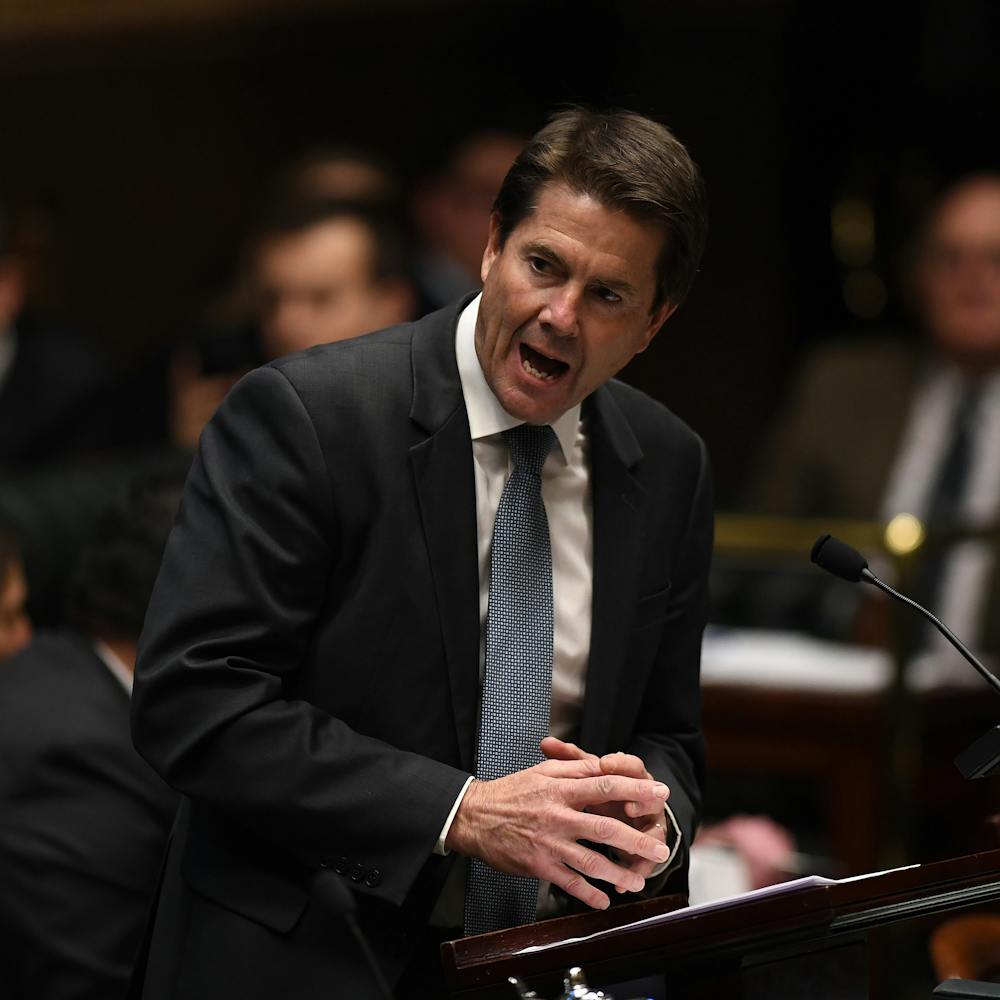
Politics with Michelle Grattan: Pat Turner on Closing the Justice Gap

Source: The Conversation (Au and NZ) – By Michelle Grattan, Professorial Fellow, University of Canberra

Pat Turner, for decades a strong Aboriginal voice, is the lead convenor of the Coalition of Peaks, which brings together about 50 indigenous community peak organisations. In this role she is part of the negotiations for a new agreement on Closing the Gap targets.

Unlike the original Rudd government targets, the refreshed Closing the Gap agreement, soon to be finalised, will set out targets for progress on justice and housing.

But the issue is, how much progress should be the aim?

“We want to push the percentages of achievement much higher, but we are in a consensus decision-making process with governments … what the targets will reflect is what the governments themselves are prepared to commit to,” Turner says.

The Australian Black Lives Matter marches have focused attention on the very high rates of incarceration of Aboriginal people, often for trivial matters. In this podcast Turner canvasses both causes and solutions, advocating major changes to the justice system.

She points to “huge issues with drug and alcohol abuse”, with inadequate resourcing to deal with these problems.

She urges reform for sentencing arrangements for those charged with minor offences, criticising a system which imprisons people who cannot pay fines, or post bail. “It would be less expensive overall for the jurisdictions, and it would more beneficial to the community [if those people weren’t in prison]”. And she identifies the “the over-incarceration of women [as] a major concern.”

Among the changes needed, she says, is better training of police.

“Now I’m not saying that all the police behave badly – we have got outstanding examples of how the police work with our communities.” But “we just can’t wait for ad hoc ‘good guys’ to come out of the system and engage properly – we need wholesale reform of the police departments.”

ref. Politics with Michelle Grattan: Pat Turner on Closing the Justice Gap – https://theconversation.com/politics-with-michelle-grattan-pat-turner-on-closing-the-justice-gap-140451

Cutting the ABC cuts public trust, a cost no democracy can afford

Source: The Conversation (Au and NZ) – By Andrea Carson, Associate Professor, Department of Politics, Media and Philosophy, La Trobe University

While Australians are singing the praises of the front-line workers during the COVID-19 crisis, there is a forgotten front line that has also made personal sacrifices to help us get through the pandemic: ABC journalists.

From radio producers to TV presenters to technicians who get up before dawn to bring us the news, ABC staff have been bringing us the facts about the global crisis at a time when misinformation and disinformation are rife and dangerous.

Norman Swan’s highly utilised podcast Coronacast is just one example of trusted ABC information during the pandemic.

Less visible is the emotional toll on ABC staff of the relentless work in bringing us our stories about job losses, health concerns, social isolation and fragile mental health during the coronavirus pandemic.

As one ABC producer told me:

Every day during the lockdowns were sad stories that wear you down and leave you feeling hopeless.


Read more: Why the ABC, and the public that trusts it, must stand firm against threats to its editorial independence


We forget many of these workers went into the pandemic already tired and emotionally drained after forgoing holidays to report on the summer’s catastrophic bushfires across multiple states. The fires killed 34 people, destroyed more than 3,500 homes and ruined the lives of many. Yet, rather than forget these victims, ABC reporters continue to provide updates on how communities are rebuilding after losing so much in the fires.

Despite all of this, the federal government has offered no reprieve to prevent the axing of about 250 ABC jobs to meet a A$41 million budget shortfall of the Coalition’s own making.

The ABC’s managing director, David Anderson, announced the job cuts, some voluntary and some not, this week. The cuts will affect news, entertainment and regional divisions of the national media organisation.

This should be of grave concern for all Australians, because research shows we have local news “deserts” emerging across the nation, just as in the United States. This means some towns and regions have no original sources of news other than the ABC. Without it, they lose their voice altogether.

These ABC cuts come on the back of News Corp closing many of its regional mastheads and converting others to online-only. These moves raise concerns about issues of access to local news for some citizens such as the elderly and those with poor digital access.


Read more: Without local papers, regional voices would struggle to be heard


But it is also a threat to our democracy. Free and diverse media are central to a healthy democracy by providing citizens with reliable information in order to make informed choices, including at the ballot box when voters decide who will represent them.

The refusal of the Coalition government to step in and reverse the A$84 million lost in the 2018 budget cuts to the broadcaster – when indexing of the triennial funding agreement was frozen – can only weaken its public service.

Some might argue this is exactly what the government wants. Since 2014, when Tony Abbott was prime minister, the ABC has lost A$783 million in funding, including the A$84 million cut in 2018.

Politicians and journalists are strange bedfellows, as the saying goes. They both have important roles in democracies, sometimes at the expense of one another. Apart from the media’s important functions such as emergency broadcasting and informing the public, a well-functioning democracy depends on the public being able to monitor its representatives and on the state accepting criticism of its own exercise of power. This is its watchdog function, and to be effective it requires a trusted and independent media.

Yet, while the ABC is still Australia’s most trusted media outlet, public trust has been steadily falling since the budget cuts this decade (see the graph below). In other words, if you keep cutting the fat and hit the bone, the public will start to notice and lose trust in its quality.

Author provided using Essential Media data 2011-2019

As this graph shows, the ABC’s most trusted programming, TV news and current affairs has been falling steadily from a high of 74% in 2012 to a low of 60% since the budget cuts. The other notable fall is trust in local newspapers, from 62% to below 50% since the “news desert” concerns have been realised with mass closures of local papers.

This is a problem for democracy, particularly when the rise of fake news in the digital age is causing concern for most Australians (65%) about what is fact and what is not.

Yet, when we need to know information because it is important to our health – such as during the COVID-19 pandemic or bushfires – quality outlets have been enjoying a spike in their audience numbers.

Our survey work has also shown Australians’ trust in professional journalists has been elevated during this period (68%). It’s notably higher than in the US (57%) where trust in professional journalists has been ebbed away by President Donald Trump’s weaponisation of the terms “fake news” and “lamestream media” against them.

As the 2009 Victorian Bushfires Royal Commission heard again and again, if it were not for the ABC emergency broadcasting, many communities would have not been warned of approaching fires.

If the ABC is there to inform us to save lives, who will save the ABC?

ref. Cutting the ABC cuts public trust, a cost no democracy can afford – https://theconversation.com/cutting-the-abc-cuts-public-trust-a-cost-no-democracy-can-afford-140438

Defunding the police could bring positive change in Australia. These communities are showing the way

Source: The Conversation (Au and NZ) – By Chris Cunneen, Professor of Criminology, University of Technology Sydney

Calls to “defund the police” in the wake of the death of George Floyd are leading to immediate proposals to either dismantle police departments or cut their funding in US cities like Minneapolis, New York and Los Angeles.

There has been similar anger over Indigenous deaths in custody in Australia, but the idea of defunding the police doesn’t translate so easily to this country.


Read more: Despite 432 Indigenous deaths in custody since 1991, no one has ever been convicted. Racist silence and complicity are to blame


For starters, police forces here are highly centralised. There is no Melbourne Police Department or Bega Valley Shire Police Service, similar to the thousands of city and county police forces in the US. Rather, police forces here are organised and run by the federal, state and territory governments.

Nor are city and shire councils in Australia required to make funding decisions on whether to employ more police and expand the local city jail. Funding allocations are made by federal, state and territory governments.

However, far from being an empty slogan in the Australian context, the call to defund the police raises fundamental questions of principles and policy.

It forces us to reconsider our priorities: do we want more police and prisons at the cost of social housing, mental health services, domestic violence and family support programs? And could this money be reinvested in other ways to reduce crime?

Thousands gathered for Black Lives Matter protests across Australia last weekend. Dean Lewins/AAP

Why an alternative to policing is needed

Divestment from police and prisons must be in equal measure about investment in the community. Specifically, this means investing in the types of services that are likely to ameliorate the social issues that can compromise personal and/or community safety.

For example, when people suffer a mental health crisis, family members sometimes call 000 for help. In such situations, what is required is a team of emergency response mental health professionals – not the police, who may make the situation far worse.

This is what underpins the concept of justice reinvestment, a strategy to reduce the number of people in prisons through early intervention, prevention, diversionary and other community development programs. Proponents advocate diverting money from the justice system and reinvesting it into these initiatives.

Justice reinvestment is not a new concept in Australia. In fact, it has a special resonance in many Indigenous communities, which struggle with high levels of policing, low levels of infrastructure support and sporadic service delivery, particularly in rural and remote communities.

Justice reinvestment also prioritises community control over decision-making, which coalesces with Indigenous demands for self-determination.

How justice reinvestment programs work

There are currently community-based justice reinvestment projects in NSW, Queensland, Western Australia, South Australia and the Northern Territory. A government-sponsored program is also operating in the ACT.

The best known of these is the Maranguka Justice Reinvestment Project in Bourke, NSW, where a broad sweep of initiatives has been introduced by the Bourke Tribal Council (comprised of 21 tribal groups living in the area).

Three justice “circuit breakers” were initially introduced to limit the amount of contact members of the community have with police and, hence, reduce the local incarceration rate. This included changing how breaches of bail and outstanding warrants were dealt with and the requirements for a learner driver program.

Other programs have since been developed by the community to address family strength, youth development and adult empowerment.


Read more: Australian governments should follow the ACT’s lead in building communities, not prisons


An independent evaluation conducted in 2018 by KPMG found dramatic reductions in reported incidences of domestic violence (and re-offending), juvenile offending, breaches of bail and the number of days spent in custody.

The positive outcomes also went beyond the criminal justice system. For example, the youth development programs in Bourke have coincided with a 31% increase in year 12 student retention rates.

Other justice reinvestment projects have set their own priorities based on community-defined needs.

The Tiraapendi Wodli Justice Reinvestment Project in Port Adelaide, for instance, focuses on ways to support families with school-aged children to improve well-being in the home. It also offers drug and alcohol programs and post-prison release support to help people reconnect with community and family.

The Olabud Doogethu Project in the Kimberleys focuses on programs for young people in Halls Creek and six remote Aboriginal communities in the shire, including suicide prevention, youth safety, alternative education and mentoring.

Lack of government funding

What these projects have in common is they allow the community to identify their own social and justice needs and how best to respond to them. In many cases, support from local police and other agencies has been critical in facilitating the development and implementation of these responses.

However, what has been dramatically lacking so far is the “reinvestment” element from government. The justice reinvestment programs in Australia mostly rely on various forms of philanthropic support for their survival. The Maranguka Project receives some state and federal funding, but overall this is rare.


Read more: ‘Tough on crime’ is creating a lost generation of Indigenous youth


This returns to the question of “defunding the police”. It is not difficult to see how we might respond more effectively to social issues without relying on the police. However, in order to do this, community responses need to be supported and funded.

Over the past 30 years, we have experienced the opposite in Australia – burgeoning criminal justice budgets, more people in prison (particularly Indigenous people) and constant complaints against the police of racial discrimination and violence.

In this context, the call to defund the police is appealing. But in order to help communities, it must be matched by government commitments for the types of programs that have been proven to work.

ref. Defunding the police could bring positive change in Australia. These communities are showing the way – https://theconversation.com/defunding-the-police-could-bring-positive-change-in-australia-these-communities-are-showing-the-way-140333

The national cabinet’s in and COAG’s out. It’s a fresh chance to put health issues on the agenda, but there are risks

Source: The Conversation (Au and NZ) – By Lesley Russell, Adjunct Associate Professor, Menzies Centre for Health Policy, University of Sydney

The national cabinet, which was quickly set up to tackle the nation’s threats from the coronavirus pandemic, will now replace the Council of Australian Governments (COAG).

For almost 30 years, COAG has been the way Australian governments have managed matters of national significance or those that need national coordination.

For health, that covers issues including hospital funding, adult public dental health programs, Closing the Gap Refresh, and regulations governing who can work as a health practitioner.

So, how will scrapping COAG in favour of the national cabinet affect state-federal relations and national decision-making when it comes to health?


Read more: Explainer: what is the national cabinet and is it democratic?


National cabinet has been successful

The national cabinet has been extraordinarily successful at addressing the immediate coronavirus health threat. It acted swiftly and decisively to address a common threat that did not respect state and territory borders. It was guided by expert advice and evidence. It did this without the usual blame games. Financial considerations played second fiddle to public health imperatives.

Even so, there have been fractures in the national approach. This was seen most obviously in fights over border closures and school reopenings, resulting in different states going their own way.


Read more: 4 ways Australia’s coronavirus response was a triumph, and 4 ways it fell short


COAG, which was founded by the Keating government in 1992 has, over time, gained a less proactive reputation. When Prime Minister Scott Morrison announced it would be scrapped, he described it as a place where “good ideas went to die”.

Others have described it as moribund and cumbersome.

However, the issues COAG has dealt with are inherently more divisive than those the national cabinet has so far faced, not least because they have been around for longer and because finances are involved. Classic examples are the GST rate and allocation to the states, and hospital funding.

How the national cabinet, which has functioned to date rather like a subcommittee of the regular federal cabinet, will operate in the future to tackle such complex and long-standing issues is unclear. We currently only have an outline.

How will the national cabinet work?

There will be subcommittees in select key areas: rural and regional, skills, energy, housing, transport and infrastructure, population and migration, and health.

Closing the Gap of Indigenous disadvantage, and reducing violence against women will continue as priorities.

Already several concerns emerge. There is no reference to social welfare, urbanisation or climate change, all of which have substantial impacts on health.

However, Morrison recognises:

…the important role of health, in terms of having a healthy workforce and a healthy community to support a strong economy.

This could mean, finally, issues like preventive health and obesity will become national priorities.

Yet the promised prominent role of the Council on Federal Financial Relations (the federal and state treasurers) in the new structure means there is a risk that issues considered by national cabinet will be judged simply on the funding required, rather than on community needs and benefits delivered.


Read more: Scott Morrison strengthens his policy power, enshrining national cabinet and giving it ‘laser-like’ focus on jobs


Chief Medical Officer Brendan Murphy speaks alongside Prime Minister Scott Morrison during a COAG meeting in Sydney earlier this year. Paul Braven/AAP Image

There’s also the issue of bureaucracy. We don’t know whether COAG’s 20 or so ministerial councils and nine ministerial regulatory councils will be shoehorned into the national cabinet, or perhaps dropped completely to streamline proceedings.

But it’s easy to see how such subcommittees and expert advisory groups will quickly accumulate again. It’s also easy to see how they could become the “parking lot for tough decisions” once more.


Read more: COAG: How to turn a ‘parking lot for tough decisions’ into something really useful


Then there’s the issue of transparency around decision-making. There are concerns Morrison will seek to have the same rules about confidentiality apply to the workings and documents of national cabinet as apply to the federal cabinet.

What will be on the agenda?

While Morrison says the national cabinet’s “singular agenda” is to create jobs, it is not the only urgent issue.

A new approach and new momentum offer the exciting possibility of whole-of-government approaches to the “wicked problems” that beset Australia, such as socio-economic inequality, drought and bushfires, ageing and suicide.

Even on a smaller scale, there are benefits to a broader approach to problems. Examples include: boosting the aged care workforce as part of a job stimulus package that would particularly benefit women; tackling public dental health wait times to improve productivity; improved Indigenous housing to Close the Gap in education and health; and providing Indigenous employment.

Changes are already under way

The power base that underpins the national cabinet is about to shift, with consequences for its efficient operation.

In the battle against the coronavirus pandemic, the states and territories held most of the relevant constitutional powers. That will not be the case as the focus shifts to the needs of the nation in the years ahead.

And the commonwealth will always wield power in these settings because it controls the funding.

At a time when there is an urgent need to reform programs and funding to deliver better health and health-care outcomes, the national cabinet offers possibilities, challenges and risks.

In large part, the future and value of the national cabinet in post-pandemic times will depend on the level of commitment the prime minister and his cabinet are willing to make to this new structure and to working together in good faith with Australia’s governments.

ref. The national cabinet’s in and COAG’s out. It’s a fresh chance to put health issues on the agenda, but there are risks – https://theconversation.com/the-national-cabinets-in-and-coags-out-its-a-fresh-chance-to-put-health-issues-on-the-agenda-but-there-are-risks-140165