Page 1024

Rappler challenges Duterte’s ‘media powers’ in democracy fight back

Report by Dr David Robie – Café Pacific.

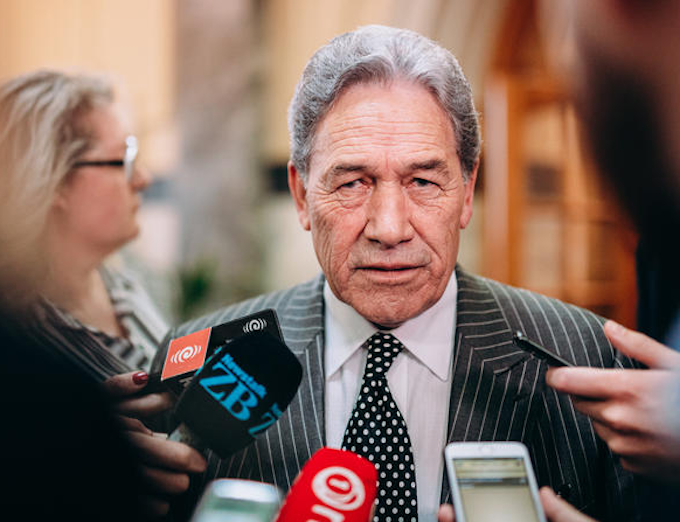
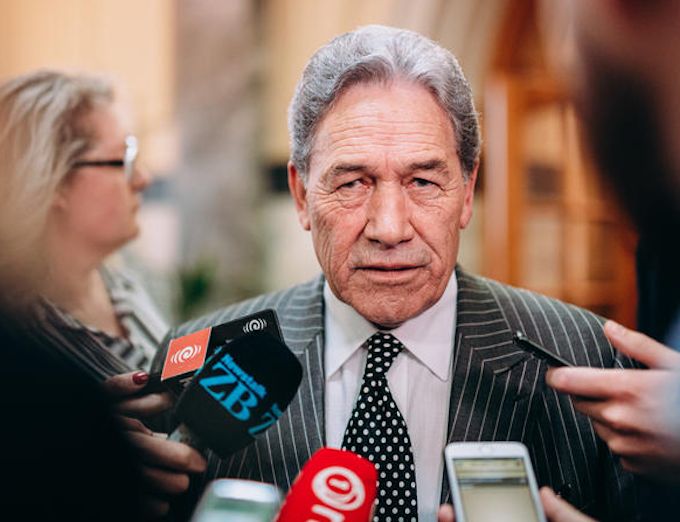
President Rodrigo Duterte with the press … his powers to ban Rappler for two years challenged
in court. Image: Freeze frame/David Robie

By David Robie in Manila
Rappler
, the innovative online publisher that has been at the media freedom frontline in the Philippines for the past three years, has challenged President Rodrigo Duterte by taking the executive to the Supreme Court.

The news website has called on the court to rule on whether President Duterte – or the state executive branch – has the power to control the media.

It has asked the court to lift a nearly two-year coverage ban against Rappler for covering events involving President Duterte wherever he is in the Philippines or abroad.

READ MORE: The state of the Philippine media under Duterte – PCIJ
In a remarkable media freedom test case, Rappler has asked justices to clarify: Could the President pick and choose who is “legitimate media” and who is not?

It has also asked could Duterte restrict access to public events?

In a response to the Office of the President’s comments relating to the original petition filed by Rappler last year, the news organisation stated on Monday:

“The question posed by petitioners affects intersecting fundamental rights under the Constitution. Thus, the Honourable Court is duty-bound to demarcate clearer borderlines between the press and the executive branch.”

Fundamental right
Rappler argues that a fundamental right of the
free press under the Constitution is self-regulation.
“It is only the free press, not the executive branch, that has the power to say whether or not petitioners are legitimate journalists or not,” argues Rappler.

The media freedom petition has been filed against the Office of the President, Office of the Executive Secretary, Presidential Communications Operations Office, Media Accreditation and Relations Office and Presidential Security Group.

In December, Rappler managing editor Glenda Gloria presented a compelling presentation entitled “Press freedom: Perils and challenges – managing threats in the newsroom” at the “Muckraking for social good” investigative journalism conference in Manila about the news organisation’s struggle against state vindictiveness by the Duterte administration.

“Threats come with the job of journalism,” she said, “and we thought we’d seen them all – libel suits, death threats, harassment, Malacañang [presidential palace] intimidation, and advertising boycotts.

“But the threats we have had to manage in the last three years came in new forms and the attacks were deployed in new ways.”

Rappler managing editor Glenda Gloria … “taking action” for media defence and freedom.
Image: David Robie/PMC

Gloria told the conference organised by the Philippine Centre for Investigative Journalism (PCIJ) this was the first time in the history of the Philippines media that corporate cases of tax evasion and so-called foreign ownership had been lodged against a news media company.

10 court cases
Rappler is currently facing at least 10 court cases and investigations filed in a span of 13 months – or an average of one case or investigation a month.

“This is unprecedented, not only in the Philippines, but I believe in Southeast Asia,” Gloria said. “Just to get to a recent conference in Hamburg, Rappler had to pay my travel bond of US$2800 dollars – because I face charges in two courts.

The travel bond of the celebrated chief editor Maria Ressa, who has won many media freedom awards over the past year, has totalled at least $US20,000 this year.

“This because she is charged in four local courts and the Court of Tax Appeals,” Gloria said.

“We have paid close to US$50,000 in bail and travel bonds since the government started filing cases against us in January 2018.”

Described by The Guardian as “one of the most highly regarded” journalists in the Philippines, former CNN investigative reporter and correspondent Ressa joined three other female journalists in 2012 to found Rappler as a “tech start-up” style dynamic news website for young readers.

It is now one of the most influential news organisations in the Philippines
Gloria also stressed it was the first time that a regulatory body – the Securities and Exchange Commission (SEC) – had acted against a Philippine media company.

“Following President Duterte’s false accusation that we were American-owned, the commission investigated us and in a record time of barely four months issued us a closure order because we had violated the nationality restrictions of media ownership,” Gloria said.

Damocles’ sword

“That closure order, while currently frozen because we appealed against it with a higher court, hangs like a Damocles’ sword – and we have put in place three variations of closure scenarios and how to respond to each of them.”

Gloria condemned the deployment of an “army of influencers, trolls and BOTs” against Rappler in an attempt to shape public opinion that would help justify government’s draconian actions.

That troll “army” was deployable anytime of the day, depending on the government’s agenda.

All Rappler staff – “from our CEO to our reporter and to our drivers” – are banned from entering the Malacañang and banned from covering any event where President Duterte is attending.

“We’ve had to deal with threats online and in our own premises. Early [last] year, Duterte fanatics did a Facebook live in front of our office, triggering a mob online that called on each other to bomb Rappler.

“Thankfully, there were only two people there. They tried again to mobilise at a coffee shop near our office – about 20 appeared.”

The constant threats and attacks meant that Rappler had to find a way to deal with this new challenge.

They opted on a three-way strategy – tackling ownership, management and the public.

Attacks on the press in the Philippines 2016-2019. Image: PCIJ

Freedom structure
Gloria stressed how Rappler had been structured as an organisation in order that it had “a lot of freedom to fight for our independence and to not bow down to pressure”.

Rappler is majority owned by journalists.

“We have an agreement with our shareholders that editorial independence is the core of Rappler’s existence and the core of its business success,” Gloria said.

“In the face of relentless powers from the regime, we took time to dialogue with our shareholders, hold their hand, and explain to them why holding the line will, ultimately, be good for business.”

A core team of senior managers was formed to deal with the crisis which each team member being assigned specific tasks.

“Crisis is opportunity. Disinformation helped us focus on new topic for investigation, which is to expose disinformation networks,” Gloria said.

“Because of the climate of fear that affected advertisers, we were forced to find new revenue streams outside the traditional advertising model.

Other talents
“Internally, the crisis also made people with other talents outside journalism – such as security, paralegal, communications – shine and contribute their other talents.”

Finally, Rappler relied on its own community for support.

“This help was through defending us from online attacks, or participating in crowd funding efforts, or providing us with tips for our investigative stories.

“We held dialogues with journalists from other media and formed a network so that we can act collectively on problems facing the media.”

As well as attacks on Rappler, President Duterte has also recently targeted the country’s main local TV station, ABS-CBN, and the Philippine Daily Inquirer with threats and punitive red tape in response to criticism of his autocratic leadership style.

Professor David Robie, director of the Pacific Media Centre, has been in the Philippines on a research sabbatical.

This article was first published on Café Pacific.

View from The Hill: Bridget McKenzie falls – but for the lesser of her political sins

Source: The Conversation (Au and NZ) – By Michelle Grattan, Professorial Fellow, University of Canberra

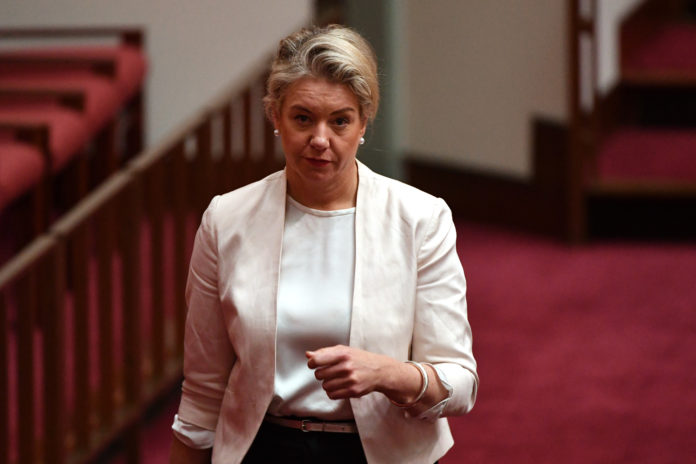
Agriculture Minister and Nationals deputy leader Bridget McKenzie has finally fallen on her sword, after intense pressure on her to limit the government’s damage from the sports rorts affair ahead of parliament resuming this week.

But McKenzie has been pushed out not for rorting the sports grants program for political advantage – as shown by the Auditor-General’s investigation – but on the lesser matter of failing to declare her membership of gun organisations.

Morrison announced her resignation from cabinet late on Sunday after receiving a report from his departmental secretary, Phil Gaetjens, on whether she breached ministerial standards. She will also step down as Nationals deputy.


Read more: Remembrance of rorts past: why the McKenzie scandal might not count for a hill of beans


Gaetjens’ controversial finding is that she did not favour marginal seats in allocating the sports grants.

This is in stark contrast to the audit report highlighting a “distribution bias” in the decisions of the then sports minister, which did not follow the ranking from the independent assessment process undertaken by Sport Australia.

The audit found funding reflected the approach of the minister’s office “of focusing on ‘marginal’ electorates held by the Coalition as well as those electorates held by other parties or independent members that were to be ‘targeted’ by the Coalition at the 2019 Election”.

Morrison said Gaetjens had found the proportion of grants going to marginal or targeted seats was a “statistically similar ratio” – 32%, compared to 36% of applications coming from these seats.

The prime minister quoted Gaetjens – whose report he will not release – as saying he found no basis for the suggestion that political considerations were the primary determining factor.

But Gaetjens did find McKenzie breached ministerial standards in failing to disclose her membership of the Wangaratta Clay Target Club, which received a grant. Gaetjens suggested she should have declared a conflict of interest and stood aside for another minister to make the relevant decision.

She also had a problem with her membership of Field and Game Australia – a couple of its member organisations had received grants.

The government has defended from the get-go the distribution of the grants. At the same time, ministers have wanted McKenzie gone, to stem the political damage of the affair. But the opposition will pursue the issue in parliament, and there could be Senate inquiry.

After receiving the Gaetjens report on Saturday, Morrison on Sunday took it to the governance committee of cabinet, which was briefed by the secretary. Morrison asked Nationals leader and Deputy Prime Minister Michael McCormack to speak to McKenzie, who was also briefed by Gaetjens.

McCormack was not at the Morrison news conference. Morrison said he was on his way to Canberra.

The Nationals must now elect a new deputy, with Water Resources minister David Littleproud the frontrunner. The party will meet on Tuesday. McCormack will then reshuffle his frontbench. Morrison ruled out a wider reshuffle.

McKenzie, who said she will stay in parliament, said in a statement she accepted the Gaetjens report but strongly defended herself.

“I maintain that at no time did my membership of shooting sports clubs influence my decision making, nor did I receive any personal gain.” However she acknowledged “my failure to declare my memberships in a timely manner constituted a breach of the Prime Minister’s Ministerial Standards”.

McKenzie said “elected representatives are responsible for public expenditure and take advice, not direction, from the public service and others. The operation of ministerial discretion is important to our democratic process.

“My support for the sport of shooting is well known and fully disclosed through my public advocacy. I will continue to back our sporting shooters against the ongoing, often misinformed, public debate about a sport that routinely wins Australian medals at the Olympics”.


Read more: Grattan on Friday: Coronavirus adds to Scott Morrison’s many woes


Morrison was fulsome in his praise of McKenzie, saying she had done “amazing work” for regional Australia, showing “incredible application”. But “there are standards that must be upheld and she understands that and so do I.”

Looking to the future, Morrison stressed the government was adopting the Audit Office recommendation to bring in “a consistent framework” for a “situation where a minister decides upon the award of grant funding”. The government had already announced this.

Morrison also said Attorney-General Christian Porter had advised, after consulting the Australian government solicitor, that McKenzie did have the legal authority to make decisions about the grants. The question of this authority had been raised in the audit report but not answered.

Opposition leader Anthony Albanese said: “How does Angus Taylor remain in cabinet while Bridget McKenzie does not?” Energy Minister Taylor, on Sky on Sunday night, refused to say whether he had been interviewed by the federal police, who are considering the affair of an alleged forged document he used to make false claims about the carbon footprint of City of Sydney councillors.

ref. View from The Hill: Bridget McKenzie falls – but for the lesser of her political sins – https://theconversation.com/view-from-the-hill-bridget-mckenzie-falls-but-for-the-lesser-of-her-political-sins-131011

NZ to shut out foreign travellers from China – first death outside mainland

By RNZ News

A man has died of the Wuhan coronavirus outside China, and any foreign travellers who leave from or transit through China will be refused entry to New Zealand from tomorrow.

A 44-year-old Chinese man from the city of Wuhan, where the new coronavirus was first detected, died today in hospital in the Philippines, the country’s Department of Health has said.

The World Health Organisation (WHO) has confirmed it is the first death from the virus outside China.

READ MORE: NZ evacuees from Wuhan to be quarantined at Whangaparaoa

The New Zealand government announced at a press conference this afternoon that strict travel restrictions have been introduced in response to the outbreak.

Any foreign travellers on their way to New Zealand when the announcement was made will be subject to increased screening on arrival. If they are cleared, they will be allowed into the country.

– Partner –

New Zealand citizens and permanent residents, and their immediate family, will be allowed to enter the country but will need to isolate themselves for 14 days after arrival.

The Ministry for Foreign Affairs and Trade has also raised its travel advice for China to “Do not travel”, the highest level.

Public health advice
“Cabinet convened last night to discuss the most up-to-date public health advice, and recent developments in the spread of the virus,” Prime Minister Jacinda Ardern said.

“We have been advised by health officials that while there are still a range of unknowns in the way the virus is being transmitted, we should take a precautionary approach and temporarily stop travel into New Zealand from mainland China, and of people who have recently been in China.”

She said the measures were critically important to protect New Zealanders, and to play a part in global efforts to contain the virus.

“I am particularly mindful that we are a gateway to the Pacific, and must factor that into our decision making,” Ardern said.

The US and Australia are among other countries who had earlier announced similar restrictions.

“We have been in close contact with our partners in the past 24 hours, and I have spoken on multiple occasions with [Australian] Prime Minister Morrison to ensure we are each aware of any changes to our systems, and the wider impacts given the frequent travel between our two nations,” Ardern said.

“The decision of the US to put in place similar restrictions to those decided by Cabinet has had a knock on effect in terms of travel, leading Air New Zealand and other airlines to stop their flights from China.”

Shanghai route suspended
Air New Zealand has announced it will suspend its Auckland Shanghai route from today until March 29.

Its service departing Shanghai Pudong International Airport shortly after 2pm local time will be the airline’s final flight on this route for two months. Tonight’s Auckland-Shanghai service is cancelled.

Air New Zealand said the suspension was brought forward following the increased border restrictions.

Ministers will be working with industry leaders to try to lessen economic effects of the restrictions, including on tourism, education and the primary sector, Ardern said.

This article is republished under the Pacific Media Centre’s content partnership with Radio New Zealand.

Print Friendly, PDF & Email

Article by AsiaPacificReport.nz

Remembrance of rorts past: why the McKenzie scandal might not count for a hill of beans

Source: The Conversation (Au and NZ) – By Frank Bongiorno, Professor of History, ANU College of Arts and Social Sciences, Australian National University

The sports rorts scandal has evoked in some commentators considerable nostalgia. There was a time, we are assured, when politics was governed by genuine integrity. Andrew Peacock offered John Gorton his resignation after his wife appeared in an ad spruiking bedsheets. Mick Young had to step aside from the Hawke ministry over a failure to declare a Paddington Bear on his return to Australia from an overseas visit. The inevitable comparisons have been with an earlier sports rorts affair, sometimes also recalled as the whiteboard affair. It resulted in the resignation of Keating government minister Ros Kelly in 1994.

By way of contrast, an adverse Australian National Audit Office report disclosing political rorting on a grand scale of a A$100 million government grants scheme was insufficient to blast National Party Deputy Leader Bridget McKenzie from her job. Rather, she has been forced from her position on the ludicrously narrow and contrived grounds of a conflict of interest – a grant to a gun club of whom she was an undeclared member. Let the jokes about Al Capone and tax evasion flow!


Read more: Grattan on Friday: Coronavirus adds to Scott Morrison’s many woes


I recall learning about “individual ministerial responsibility” in high school politics classes. The textbook told us that while the principle was among our borrowings from Westminster and Whitehall, it had been applied with some flexibility in the modern Australian context. This was true, but only barely so. I studied such matters in 1986 and, up to that point, Australia had experienced a decade in which the principle had been rather strictly applied.

The key figure here was Malcolm Fraser, prime minister from 1975 to 1983. Fraser had good reason to be firm in maintaining proprieties. In 1971 he had risen in the parliament and declared John Gorton “not fit to hold the great office of Prime Minister”. While Fraser was aggrieved at what he saw as Gorton’s disloyalty to him, the prime minister’s unorthodox personal and political behaviour had been causing considerable grief among Liberals used to the reassuring somnolence of the Menzies era. A party room ballot for the leadership resulted in a tie, and Gorton threw in the towel.

In November 1975, Fraser brought down another prime minister, this time from the Labor Party, in far more dramatic circumstances. But it was ministerial scandal that had offered Fraser his chance. On becoming Liberal leader earlier in 1975, he had assured the public that he would use the government’s numbers to block supply in the Senate only if there were “most extraordinary and reprehensible circumstances”. Fraser believed these circumstances had been created by the Loans Affair, which involved two government ministers in unorthodox loan-raising activities. The fall of the Minister for Minerals and Energy Rex Connor and Treasurer and Deputy Prime Minister Jim Cairns, undermined public confidence in an already ailing government. The married Cairns’s very public relationship with a female member of his staff, Junie Morosi, also contributed to the atmosphere of chaos.

A prime minister such as Fraser, whose own political legitimacy derived in large part from his claims to a superior integrity, could not afford to indulge his ministers. Even heavy-hitters sometimes went down for seemingly minor transgressions.

One of his most ruthless henchmen, Senator Reg Withers – he did not get his nickname “The Toecutter” at Sunday school – went for the capital crime of influencing the renaming of a federal electorate. Phillip Lynch, Deputy Liberal Leader and Treasurer, went for alleged improprieties involving land speculation in Victoria. Future National Party Leader Ian Sinclair also lost his ministry over business dealings. Most amusingly, Senator Glen Sheil was sacked before his appointment as a minister was even finalised. He was foolish enough to offer the media his (favourable) views on South Africa’s system of apartheid, which Fraser hated with intensity.

Bob Hawke was hardly less strict than Fraser, even if his ministers gave him less to worry over. He was deeply distressed to have to rid the cabinet of his mate, Mick Young, in the early months of the government in 1983 after Young divulged to an associate a cabinet decision to expel a Soviet diplomat.

As prime minister, Paul Keating had more scandals to worry over, including Kelly and sports rorts. Right-wing powerbroker Graham Richardson lost his place after intervening with the government of the Marshall Islands on behalf of a relative who had landed himself in hot water over some dubious business affairs. But Richardson later returned to Cabinet. In late 1995, in the so-called Penny Easton Affair, Carmen Lawrence survived a finding by a Western Australian Royal Commission that she misled parliament while she was premier. After Lawrence was later charged with perjury, she stood aside as shadow minister until she had been acquitted.

The Easton Affair, although occurring late in the life of the Keating government, might have been the turning point. If not, the early Howard years surely were. The new government adopted a sparkling ministerial code of conduct, but lost seven ministers in its first 18 months. The code’s application became increasingly flexible, with Howard seemingly more inclined to calculate whether more damage would be done to his government by a sacking than by grim resistance.


Read more: The ‘sports rorts’ affair shows the government misunderstands the role of the public service


By the time of the Australian Wheat Board affair, the idea that the Minister of Foreign Affairs Alexander Downer might be held in any way responsible for the industrial-scale misbehaviour involved in the AWB’s United Nations sanction-busting Iraqi wheat sales had already become rather quaint. Nor did any minister pay the price when an Australian citizen was illegally deported and a permanent resident illegally detained. No minister was held responsible for the arrest, and vindictive and illegal visa cancellation, of an Indian doctor falsely accused of involvement in terrorism.

This is essentially the political world in which we live now. McKenzie was forced out because of a political calculation that the damage of her holding on had become too great, and that her removal would not cause intolerable turbulence in the Coalition. But it is unclear that the scandal has done the government much lasting damage in any case.

Even young journalists today have been reared on a rational understanding of politics that says if a government behaves badly enough, it incurs damage that might threaten its future. But what if the overall effect of this scandal is simply to confirm for the minority of voters paying attention that politicians are self-serving and untrustworthy, and politics an elaborate racket?

Scott Morrison’s prime ministership is a creature of the Trump era. He knows that it is right-wing populists who have yielded the benefits of the collapse of political trust. His celebration of quiet Australians carries the message: “Let us get on with things and we’ll see you in three years”. His Sunday afternoon political stitch-up wasn’t elegant, but it will serve its immediate purpose of taking a bit of heat out of the affair. There are still few signs that anything like a majority of voters are alive to his confidence tricks.

ref. Remembrance of rorts past: why the McKenzie scandal might not count for a hill of beans – https://theconversation.com/remembrance-of-rorts-past-why-the-mckenzie-scandal-might-not-count-for-a-hill-of-beans-130793

Media ‘impartiality’ on climate change ethically misguided and dangerous

By Denis Muller in Melbourne

In September 2019, the editor of The Conversation, Misha Ketchell, declared The Conversation’s editorial team in Australia was henceforth taking what he called a “zero-tolerance” approach to climate change deniers and sceptics. Their comments would be blocked and their accounts locked.

His reasons were succinct:

Climate change deniers and those shamelessly peddling pseudoscience and misinformation are perpetuating ideas that will ultimately destroy the planet.

READ MORE: Bushfires, bots and arson claims: Australia flung in the global disinformation spotlight

From the standpoint of conventional media ethics, it was a dramatic, even shocking, decision. It seemed to violate journalism’s principle of impartiality – that all sides of a story should be told so audiences could make up their own minds.

But in the era of climate change, this conventional approach is out of date. A more analytical approach is called for.

– Partner –

The ABC’s editorial policy on impartiality offers the best analytical approach so far developed in Australia. It states that impartiality requires:

  • a balance that follows the weight of evidence
  • fair treatment
  • open-mindedness
  • opportunities over time for principal relevant perspectives on matters of contention to be expressed.

Weight of evidence
It stops short of saying material contradicting the weight of evidence should not be published, which is the position adopted explicitly by The Conversation and implicitly by Guardian Australia.

Guardian Australia’s position is to concentrate on presenting the evidence that human-induced climate change is real and is having a detrimental effect on global heating, wildlife extinction and pollution. It states that this is the defining issue of our times and fundamental societal change is needed in response.

The position of Australia’s other big media organisations is far less clear and rests on generalities applicable to all issues.

The former Fairfax (now Nine) newspapers, The Age and The Sydney Morning Herald, have separate codes. The Age code does not mention impartiality but requires its journalists to report in a way that is fair, accurate and balanced. The Herald’s does mention impartiality but confines it to an instruction to avoid promoting an individual staff member’s personal interests or preferences.

Both say, however, that comment should be kept separate from news.

News Corp Australia’s editorial professional conduct policy is quite different from all these. It states that comment, conjecture and opinion are acceptable in [news] reports to provide perspective on an issue, or explain the significance of an issue, or to allow readers to recognise what the publication’s standpoint is on the matter being reported.

Its journalists are told to try always to tell all sides of the story when reporting on disputes.

Misleading publication
However, the policy also states that none of this allows the publication of information known to be inaccurate or misleading.

Markedly different as these positions are, they have one element in common: freedom of the press does not mean freedom to publish false or misleading material.

From an ethical perspective, this is a bare minimum. The ABC requires that its journalists follow the weight of evidence, which is a substantially more exacting standard of truthfulness than anything required by the Fairfax or News Corp newspapers. The Guardian Australia and The Conversation have imposed what it is in effect a ban on climate-change denialism, on the ground that it is harmful.

Harm is a long-established criterion for abridging free speech. John Stuart Mill, in his seminal work, On Liberty, published in 1859, was a robust advocate for free speech but he drew the line at harm:

[…] the only purpose for which power can be exercised over any member of a civilized community, against his will, is to prevent harm to others.

It follows that editors may exercise the power of refusing to publish climate-denialist material if doing so prevents harm to others, without violating fundamental free-speech principles.

Other harms too provide established grounds for limiting free speech. Some of these are enforceable at law – defamation, contempt of court, national security – but speech about climate change falls outside the law and so becomes a question of ethics.

Climate change harm
The harms done by climate change, both at a planetary level and at the level of human health, are well-documented and supported by overwhelming scientific evidence.

At a planetary level, the Intergovernmental Panel on Climate Change (IPCC) published a report last year on the impacts of global warming of 1.5 degrees Celsius over pre-industrial levels.

It stated that human activities are estimated to have already caused approximately 1.0°C of global warming above pre-industrial levels, and that 1.5°C was likely to be reached between 2030 and 2052 if it continues to increase at the current rate.

At the level of human health, in June 2019 the Royal Australian College of General Practitioners published its Position Statement on Climate Change and Human Health.

It stated that climate change resulting from human activity “presents an urgent, significant and growing threat to health worldwide”.

Projected changes in Australia’s climate would result in more frequent and widespread heatwaves and extreme heat. This would increase the risks of heat stress, heat stroke, dehydration and mortality, contribute to acute cerebrovascular accidents, and aggravate chronic respiratory, cardiac and kidney conditions and psychiatric illness.

At both the planetary and human-health levels, then, the harms are serious and grounded in credible scientific evidence. It follows that they provide a strong ethical justification for the stands taken by The Conversation and Guardian Australia in prioritising Mill’s harm principle over free speech.

Limited internal guidance
Aside from these two platforms and the ABC, journalists are offered very limited internal guidance about how to approach the balancing of free-speech interests with the harm principle in the context of climate change.

External guidance is nonexistent. The ethical codes promulgated by the media accountability bodies – the Australian Press Council and the Australian Communications and Media Authority – make no mention of how impartiality should be achieved in the context of climate change. The Media, Entertainment and Arts Alliance’s code of ethics is similarly silent.

These bodies would serve the profession and the public interest by developing specific standards to deal with the issue of climate change, and guidance about how to meet them. It is not an issue like any other. It is existential on a scale surpassing even nuclear war.

As I write in my study at Central Tilba on the far south coast of New South Wales, the entire landscape of farmland, bush and coastline is shrouded in smoke. It has been like that since before Christmas.

Twice we have been evacuated from our home. Twice we have been among the lucky ones to return unhurt and find our home intact.

The front of the Badja Forest Road fire (292,630 ha) is 3.6 km to the north, creeping towards us in the leaf litter. A northerly wind would turn it into an immediate threat.

From this perspective, media acquiescence in climate change denial, failure to follow the weight of evidence, or continued adherence to an out-of-date standard of impartiality looks like culpable irresponsibility.The Conversation

Dr Denis Muller, Senior Research Fellow in the Centre for Advancing Journalism, University of Melbourne. This article is republished from The Conversation under a Creative Commons licence. Read the original article.

Print Friendly, PDF & Email

Article by AsiaPacificReport.nz

Andreas Harsono: Jakarta punishes journalists – leaves them in limbo

By Andreas Harsono in Jakarta

Mongabay environmental editor Phil Jacobson was deported from Indonesia last evening, flying from Jakarta to New York after he was ordered not to leave Palangka Raya, Central Kalimantan, for 45 days.

It is tragic that an American environmentalist who dedicated his energies to protecting Indonesia’s rain forests and indigenous people has been treated so poorly by the Indonesian authorities.

Authorities should be thanking Jacobson for his environmental work, not punishing him for it.

READ MORE: Jacobson freed after prolonged detention in Indonesia

The draconian 2011 Immigration Law needs to change. Visa violations should be an administrative matter rather than a criminal act.

Getting a journalist visa – similar with a research visa – is very difficult in Indonesia due to the Ministry of Foreign Affairs-supervised “clearing house” which involves 18 representatives from 12 different ministries plus the National Police, the State Intelligence Agency, the military intelligence and the public prosecutors.

– Partner –

The clearing house has served as a strict gatekeeper, often denying applications outright or simply failing to approve them, placing journalists in a bureaucratic limbo.

Global attention
Mongabay said in a statement today:

Philip Jacobson … was deported from Indonesia today, January 31, more than six weeks after authorities in the city of Palangkaraya detained him over an alleged visa violation.

Jacobson, who turned 31 on January 26, was first detained on December 17, 2019, after attending a hearing between the Central Kalimantan Provincial Parliament and the local chapter of the Indigenous Peoples Alliance of the Archipelago (AMAN), Indonesia’s largest indigenous rights advocacy group.

He had travelled to Palangkaraya after entering the country on a business visa for a series of meetings. A few hours before he was scheduled to fly out of the city, immigration authorities came to his guesthouse and confiscated his passport.

The next day they questioned him for four hours and ordered him to remain in Palangkaraya pending their investigation.

More than a month later, on January 21, Jacobson was formally arrested and taken into custody at the Palangkaraya Class II Detention Center. He was informed that he faced charges of violating the 2011 immigration law and a prison sentence of up to five years.

After his arrest, Jacobson’s case attracted global attention, with hundreds of articles published in outlets around the world, from The New York Times to the The Wall Street Journal to Indonesian newspapers.

Andreas Harsono is senior researcher in Jakarta for Human Rights Watch.

Print Friendly, PDF & Email

Article by AsiaPacificReport.nz

Coronavirus: NZ local councillor ‘bombarded’ with racist messages

By RNZ News

A New Zealand district councillor says he has been bombarded with racist messages since he spoke out about racism towards Asian people after the outbreak of the deadly coronavirus.

The illness has killed hundreds and sickened thousands since it emerged in China this month.

In South Korea and Vietnam, businesses have put up signs banning Chinese customers and tens of thousands of Singaporians have signed a petition asking for Chinese people to be barred from the country.

READ MORE: Auckland hospital patient showing suspect symptoms

In New Zealand, there have been reports of taxi drivers not picking up Chinese people, and Chinese community leaders have told Radio NZ there has been a surge in online abuse.

New Zealand Institute of International Education student liaison Charm Money said people wearing facemasks on the bus had been bullied and abused.

– Partner –

The mayor of the tourist hub Queenstown, Jim Boult, said he had heard of locals saying Chinese visitors should be expelled from the country.

Racists emboldened
He said the outbreak had emboldened racists to speak out.

“There are always people with a racist attitude around the place and maybe because of what’s happened they feel empowered to say it,” he said.

“We will not tolerate it.”

He said Queenstown was a hugely multicultural community and he would not stand for that kind of talk.

Rotorua Lakes Councillor Fisher Wang said he had not been personally targeted with abuse until he spoke out this week about racist comments he had seen online and heard in the community.

Since then he has received more than a dozen racist messages and there had been a huge number of ugly online comments.

“A little part of me, unfortunately, isn’t surprised [by the abuse], and that’s a really sad thing to say because the majority of our community is really supportive and really inclusive but it always is that small part of our community that always seems to have the loudest voice.”

People afraid
Wang said he understood people were afraid but at times like this people needed to come together and support each other.

“If you’re scared and you resort to racism it’s not an excuse – because you know everyone’s scared.

“This disease doesn’t discriminate, anyone can get it. But to single out a single race, a single ethnicity simply because [the virus] originated from there.”

National list MP Jian Yang said no one had come to him with complaints of racist abuse yet, but that could change.

“If the situation gets worse … for example, if we do have some cases [of the virus] in New Zealand that may make people more nervous, and then that could happen so I’m hopeful we won’t get to that level.”

Director-General of Health Ashley Bloomfield said it was critical people felt comfortable coming forward if they have symptoms and that there was no blame or shame around it.

Race Relations commissioner Meng Foon said he had received no official complaints about about racism associated with the coronavirus yet, but any one who thought their human rights have breached should contact the commission.

This article is republished under the Pacific Media Centre’s content partnership with Radio New Zealand.

Print Friendly, PDF & Email

Article by AsiaPacificReport.nz

Coronavirus fears can trigger anti-Chinese prejudice. Here’s how schools can help

Source: The Conversation (Au and NZ) – By Claire Hooker, Senior Lecturer and Coordinator, Health and Medical Humanities, University of Sydney

Every disease outbreak brings an accompanying outbreak of fear. Already we’re seeing coverage on the spread of coronavirus fear which leads to misinformation, an effect on the economy and, perhaps the most alarming, xenophobia .

Social stigmatisation and xenophobia are, unfortunately, well known features of disease outbreaks. And there is potential for xenophobic sentiment to build in Australian schools.

In an outbreak situation, xenophobia does not feel like racism. Excluding people who “come from” the epicenter of the outbreak is merely seen as a safety precaution. But precautions can sometimes go too far.

The NSW government and several private schools have requested students who have just returned from China remain at home for two weeks. This goes beyond the advice of Australia’s chief medical officer and federal government – that only those returning for the Hubei province (or those who have been in contact with an infected person) stay away from public places.


Read more: Will my child get coronavirus at school? Here’s some perspective for Aussie parents


The NSW health minister said the advice was not “medically necessary” but was prompted by community wishes for such measures.

Online petitions circulating in Australia – with thousands of signatures from concerned parents – are calling for school authorities to extend restrictions to families arriving from many Asian countries, including Thailand and Singapore.

What if schools bowed to these calls too?

Giving way to public pressure for unnecessary control measures validates panic and can generate unintentional xenophobia. Extensive research tells us the fears in the early stages of an outbreak will soon pass. But the effects of xenophobia and exclusion on those who suffer them may last much longer.

What past evidence tells us

The progressive city of Toronto is often claimed the world’s most diverse city. Yet, Asian students experienced extensive xenophobia during the 2004 SARS outbreak. This ranged from people refusing to sit near Asian university students in class, to social exclusion of school students.

Disease stigma can take a toll on a young person’s self-esteem and identity as well as making school environments feel unsafe. In Canada this experience had a profound impact on people’s sense of belonging and well-being.

Toronto resident Frank Ye, who was eight at the time of the SARS outbreak, wrote on Twitter: “I remember when the other kids on the playground would tell me to go away because ‘all Chinese people had SARS’.”

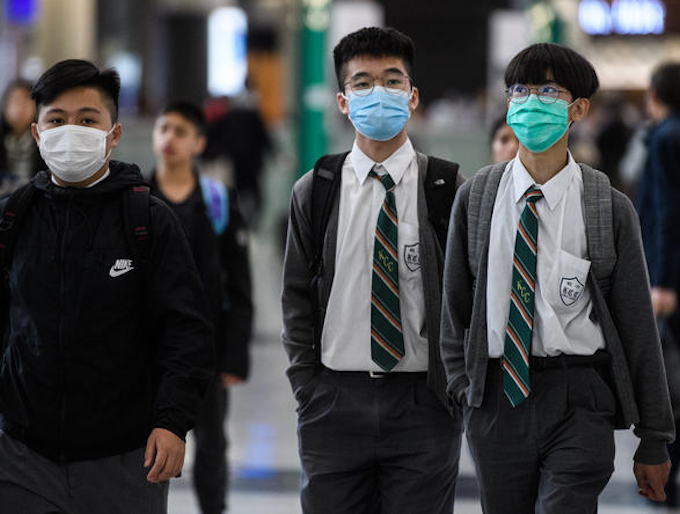
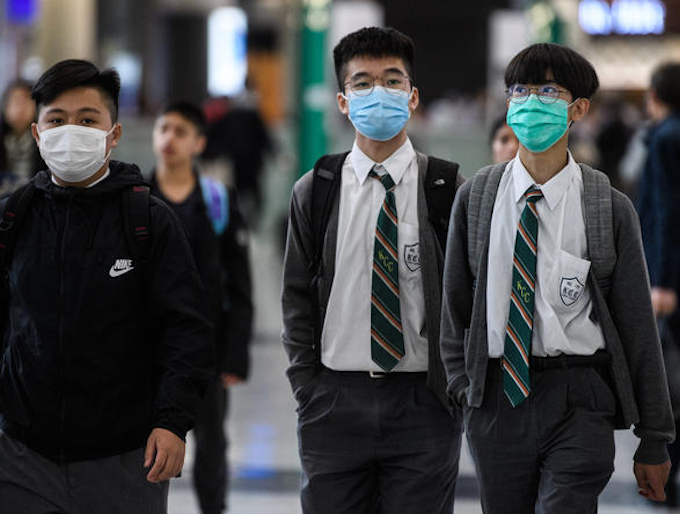
Disease becomes racialised and xenophobia increases through the dominance of particular images, such as Asian faces wearing masks, in news articles about the coronavirus. These images occur in the context of our history of shunning and mistreating our Chinese diaspora communities during disease outbreaks.

We’re seeing this happening across the world. Some schools in the US have cancelled cultural education excursions to Chinatowns for Chinese New Year, despite the outbreak being 7,000 miles away.

Sam Phan, a master’s student at the University of Manchester, wrote in the Guardian:

This week, my ethnicity has made me feel like I was part of a threatening and diseased mass. To see me as someone who carries the virus just because of my race is, well, just racist.

How should schools respond?

Like other social groups schools are not free of racism.

Instead of excluding Chinese students, schools can build trust by actively providing clear information about the rationale for control measures. They can encourage students to take protective actions such as practising good hand hygiene, and seeking medical advice by telephone in cases of illness.

Past research shows teachers are willing to confront these attitudes when they emerge .

Teachers can provide students with reliable information. They might show students advice from radio or TV, from state and federal health officials, and help students understand the difference between evidence and speculation or comment.

They can also equip students to analyse the information they are receiving from all sources and encourage critical reflection and analysis of those messages.


Read more: Listen up, health officials – here’s how to reduce ‘Ebolanoia’


Providing opportunities for students to consider the messages around coronavirus (or any disease for that matter) sets them up to actively discern the reality from the panic in this situation. It will also help them during other disease outbreaks (and crisis situations) they will face throughout their lives.

In situations where fear and sometimes hyperbole is in the mix, students need the skills to analyse information and use evidence to assess situations.

Restricting the rights and freedoms of students returning from China on the basis of public fear risks subjugating the minority (Chinese and Chinese-Australians) to the unfounded fears of the majority. Drastic measures that limit educational opportunities should be based on scientifically grounded recommendations of public health officials.

ref. Coronavirus fears can trigger anti-Chinese prejudice. Here’s how schools can help – https://theconversation.com/coronavirus-fears-can-trigger-anti-chinese-prejudice-heres-how-schools-can-help-130945

Coronavirus: how worried should I be about the shortage of face masks? Or can I just use a scarf?

Source: The Conversation (Au and NZ) – By C Raina MacIntyre, Professor of Global Biosecurity, NHMRC Principal Research Fellow, Head, Biosecurity Program, Kirby Institute, UNSW

The World Health Organisation (WHO) has just declared the coronavirus outbreak a public health emergency of international concern.

There have been nearly 10,000 cases of the so-called 2019-nCoV in China, 23 countries affected and more than 213 deaths globally.

China, Germany, the US and several other countries confirmed the virus can spread person to person, even from people without any symptoms.

Now there are reports of face mask shortages around the world, including Australia, the US and in many cities of China.

How concerned should we be about these shortages? Or can we just wrap a scarf or piece of cloth around our face to protect against infection?


Read more: How contagious is the Wuhan coronavirus and can you spread it before symptoms start?


How important are face masks?

For a disease with no drug or vaccine yet, non-pharmaceutical measures are the mainstay of control. This includes personal protective equipment, such as face masks.

But the type of face masks we typically see (surgical masks) do not provide a seal around the face or filtration of airborne particles, like those that may carry coronavirus.

They do however provide a limited physical barrier against you transferring the virus from your hand to the face, or from large droplets and splashes of fluid.

You also need to put on and remove your mask properly, as this advice from the World Health Organisation shows.

Make sure your face mask is the right way round, says the World Health Organisation.

Disposable respirators reduce the risk of respiratory infections. They are designed to fit around the face and to filter 95% of airborne particles. However, these should be reserved for health workers, who need them most.

Do we really need these masks anyway?

In the disease epicentre, Wuhan, or on an evacuation flight out of Wuhan, face masks are a sensible precaution. They are also needed in other Chinese cities that are affected by the outbreak and where transmission is ongoing.

However, in countries where transmission is not widespread and there are only a handful of cases being treated in hospital isolation rooms, masks serve no purpose in the community.

For example, there is no need for the general public to use face masks in Australia, US and other counties where a few imported cases are reported, and the risk of catching the virus is low.


Read more: The Wuhan coronavirus is now in Australia – here’s what you need to know


Panic buying will result in a lack of supplies when we need them most, for instance, if the number of cases escalates dramatically. During the H1N1 influenza pandemic in 2009, the WHO did not recommend the general public use face masks.

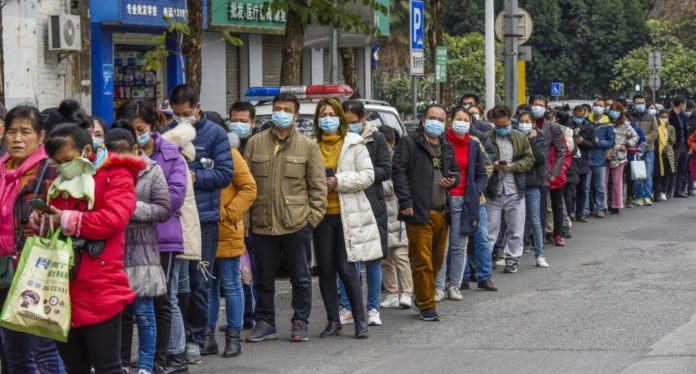
Residents of Nanning, China, lining up to buy face masks this week. Peng Huan/EPA/AAP

The case is different for health workers, who face greater risks. It is essential we provide health workers with the best protection, because if they get sick or die, we lose our ability to fight the epidemic. During the SARS epidemic, 21% of all cases globally were health workers.


Read more: SARS, MERS …? Preparing for the next coronavirus pandemic


How concerned should we be about the shortage of face masks?

This is a concern, especially if people hoard or stockpile face masks when there is no need. We saw a shortage of masks early during the 2009 influenza pandemic. The surge in demand during such events also results in higher prices.

Countries have started releasing stockpiles of masks and other personal protective equipment to the health system. For example, the Australian government this week released one million masks for general practices and pharmacists from the national medical stockpile.

There is also an existing shortage of masks in some areas of Australia due to the bushfire response and face masks from the national stockpile have mainly been released in those areas.

What happens if the situation gets worse?

The number of cases is expected to increase and a large quantity of face masks may be needed.

If the current situation becomes a pandemic (an epidemic that goes global), we could be facing a much greater demand for personal protective equipment in the health sector alone.

In a modelled serious epidemic in Sydney of smallpox, if health workers use two disposable respirators a day for 6 months, over 30 million respirators will be needed for 100,000 clinical health workers.


Read more: What is a super spreader? An infectious disease expert explains


China is the largest producer of face masks globally and it has already stepped up production to meet the high demand.

If large outbreaks happen in other countries, China may not be able to meet the demand of face masks, respirators and other medical supplies.

Not all face masks are up to the job

Another problem is the sale of low-quality face masks due to a shortage of products on the market, as has been reported in China and Hong Kong.

Face masks are not regulated, may not filter the air, and also typically allow large amounts of air in through the sides. With a shortage of masks, low-quality masks could be exported to other countries.


Read more: I’ve always wondered: why many people in Asian countries wear masks, and whether they work


If I can’t get hold of a mask, can I wrap a scarf around my face?

Wrapping cloth around your face probably will not protect you. That’s because a scarf or a hanky does not provide a tight fit around the face, isn’t designed to filter out air and may be contaminated.

However, during the Ebola epidemic, a woman nursed her entire family through the illness using home-made protective equipment and did not get infected.

In Asia, cloth masks are popular because they are cheap and re-usable. But they don’t protect you. Cloth masks may even increase your risk of infection, especially if you don’t wash them regularly. They may absorb moisture and provide a breeding ground for bugs.

So, ideally, people shouldn’t be using them. However, people may resort to cloth if there is no other choice.

In a nutshell

While news of mask shortages might sound scary, if you are in a country with few isolated cases, you don’t need one anyway as the risk of infection is very low for the general public.

Panic buying or stockpiling also means there won’t be enough to go round should the situation worsen.

Even if you do use a face mask, they may protect against large droplets (ones you can feel on your skin when someone sneezes) and self-contamination from your hands, but not against smaller airborne particles.

Don’t forget, hand-washing is also very effective in preventing infection.

ref. Coronavirus: how worried should I be about the shortage of face masks? Or can I just use a scarf? – https://theconversation.com/coronavirus-how-worried-should-i-be-about-the-shortage-of-face-masks-or-can-i-just-use-a-scarf-130873

Yes, there’s merit in quarantining people on Christmas Island to prevent the spread of coronavirus

Source: The Conversation (Au and NZ) – By Beverley Paterson, Epidemiologist, Conjoint Senior Lecturer, University of Newcastle

The World Health Organisation (WHO) overnight declared the coronavirus (2019-nCoV) a public health emergency of international concern, reinforcing the need for countries around the world to act decisively in the face of this epidemic.

The Australian government is currently negotiating with the Chinese government to fly a portion of the 600 Australian citizens trapped in Wuhan back to Australia.

The controversial plan is to quarantine the evacuees on Christmas Island, 2,600 kilometres off the coast of Western Australia, where they will remain for 14 days.


Read more: How contagious is the Wuhan coronavirus and can you spread it before symptoms start?


Many have condemned this measure as a harsh response; isolating healthy Australians on a tiny remote island, most infamously known as a refugee detention centre, to protect the rest of the Australian population.

This approach of quarantining a large group of people is certainly unprecedented in recent history. But what’s the rationale, and could it work?

First, a bit of history

Quarantining sick people has been a mainstay of public health outbreak prevention for thousands of years. The term was first introduced as a strategy to stop the Bubonic plague. Even as far back as the Bible, there’s mention of isolating people with leprosy.

Quarantining travellers was also common in Australia in the early days after colonisation. Quarantine stations were positioned in most Australian states during the 1800s and the early 1900s to prevent the spread of diseases such as measles, cholera and typhoid from people arriving by ship. Passengers would be quarantined on arrival if there were outbreaks on board.

The rationale behind quarantining healthy people is even if they aren’t showing symptoms yet, they may be ill. Glenn Hunt/AAP

These quarantine stations now stand silent and unused; a reminder of a time in Australia’s history when death via infectious diseases was common.

Quarantine, on a large scale, is considered a public health response of the distant pre-antibiotic, pre-vaccine past. The quarantining of Wuhan evacuees on Christmas Island has no modern equivalent in Australia.


Read more: The Wuhan coronavirus is now in Australia – here’s what you need to know


Why quarantine healthy people?

Some 7,818 cases of coronavirus have now been recorded globally, including 82 across 18 countries outside China.

We don’t yet have vaccines or antiviral drugs to prevent or treat the virus, so we need alternative strategies to slow its spread, including isolation and quarantine.

Isolating sick people is an effective way to reduce transmission of a virus.

With many viruses, an infected person is only able to infect other people when they are showing symptoms of the disease.

But with some viruses, the virus can spread in the absence of symptoms – either during the incubation period (the days before people become visibly ill, thought to be up to 14 days for coronavirus) or in people who never get sick.

Asymptomatic cases, where someone with the virus has no symptoms, can unwittingly but rapidly transmit the disease to others if they’re in public.


Read more: Grattan on Friday: Coronavirus adds to Scott Morrison’s many woes


Unfortunately, preliminary evidence suggests coronavirus can be spread when someone has the virus but appears well.

A woman from China reportedly infected four German colleagues during a training session in Germany. The woman didn’t feel unwell until her flight back to China, making it likely she infected her colleagues while she was asymptomatic or experiencing very mild symptoms.

Similarly, in an outbreak among a family in Vietnam, a ten-year-old was found to be carrying the virus even though he had no symptoms.

What are other countries doing?

Other countries including Japan and the United States are implementing voluntary quarantine of their Wuhan evacuees. In the US, the March Air Reserve Base, a military base in California, is housing Wuhan evacuees for 72 hours. They’re then monitored at home for the remaining 14-day incubation period.

But if you don’t want to risk people not voluntarily self quarantining, especially when it’s potentially hundreds of people, where do you quarantine large groups of people who may have an infectious disease?

Medical facilities on Christmas Island will be equipped to treat any infected patients. Home Affairs Office/AAP

If you choose to place them in a hotel, such as what’s currently happening with the Chinese women’s hockey team in Brisbane, you need a hotel willing to take potentially infectious people.

This is likely to raise concerns. What happens when other guests learn there may be infectious people in their hotel? Will the hotel staff also need to be quarantined? How do you ensure the quarantined people won’t leave the hotel?

A hospital might seem like a sensible choice, but then you’re using large numbers of hospital beds and resources to accommodate and care for healthy people.


Read more: Will my child get coronavirus at school? Here’s some perspective for Aussie parents


Will it work?

Quarantining Australians in a remote detention centre in case they have an infectious disease reads more like a script for a disaster movie than a modern public health response.

But from an outbreak response perspective, assuming good medical facilities are available on Christmas Island, this move should ensure illness in any evacuees is identified early and stop further transmission of the coronavirus.

That being said, we are in unchartered territory. No one knows for certain whether quarantining Wuhan evacuees on Christmas Island will work.

ref. Yes, there’s merit in quarantining people on Christmas Island to prevent the spread of coronavirus – https://theconversation.com/yes-theres-merit-in-quarantining-people-on-christmas-island-to-prevent-the-spread-of-coronavirus-130879

Disaster hits small business in many ways. We need a national strategy to help them adapt

Source: The Conversation (Au and NZ) – By Samantha Sharpe, Research Director, Institute for Sustainable Futures, University of Technology Sydney

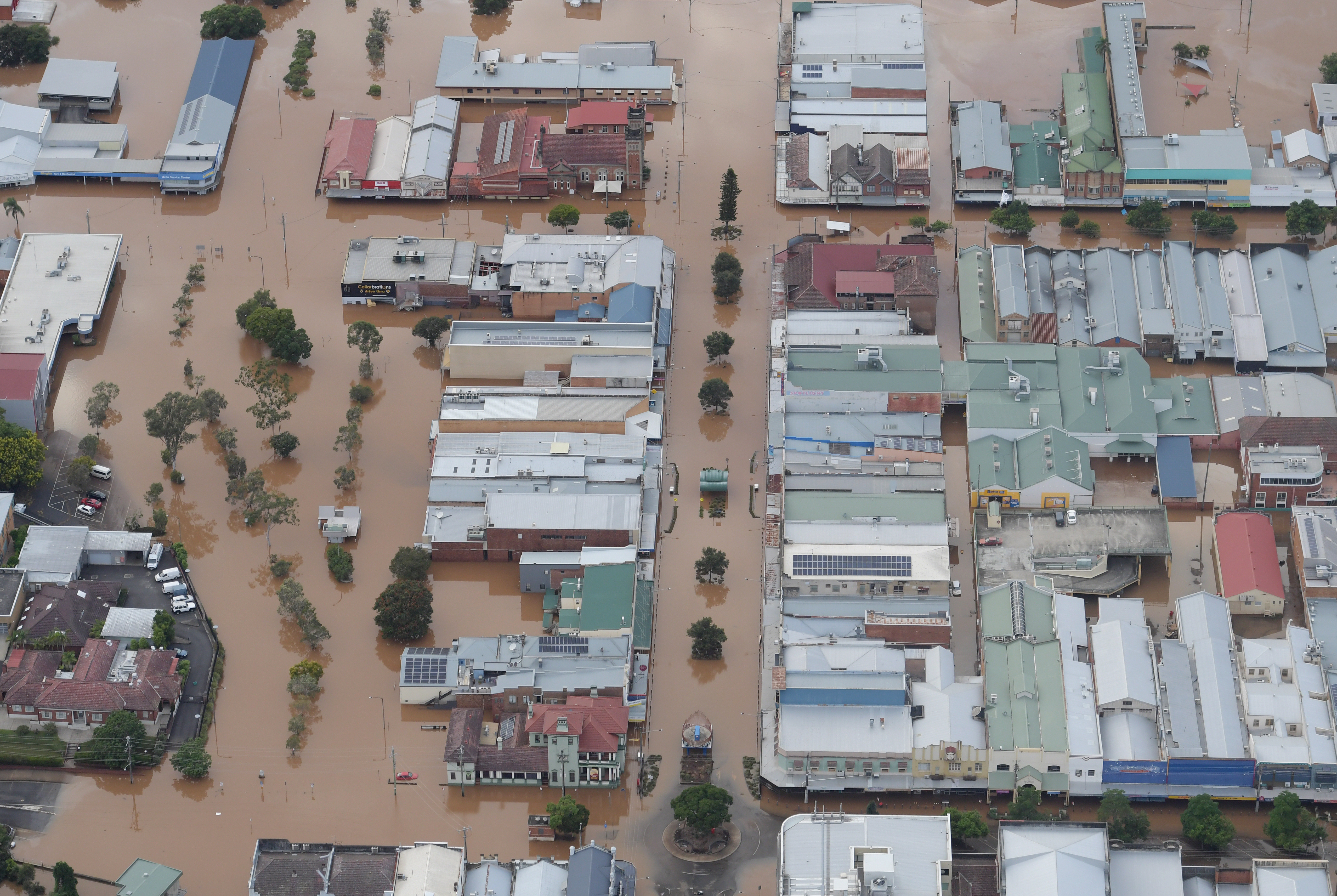
When the central business district of Lismore was flooded in 2017, every small business owner in the northern New South Wales town had a decision to make. Should they rebuild their businesses, or take whatever insurance money they might get and move on?

I know one who contemplated giving it all away. His shop had been completely inundated. What was the point, he wondered, if it could all happen again in another few years?

He did decide to rebuild, though. More than that, he resolved to build back better, to be better prepared for the next flood. He replaced water-damaged carpets with marine grade carpet, and plasterboard with concrete. He had shelving attached to hoists, and other cupboards on wheels.

Lismore’s flooded central business district on April 1, 2017. Tracey Nearmy/AAP

In the wake of this season’s bushfires, many small businesses will face the same decision – whether to rebuild, and then how to “build back better”. It’s a question that should also be getting attention in the national capital from public servants and political leaders.

Preparing for future risks

This week Prime Minister Scott Morrison spoke about the need to “prepare for and adapt to the environment and the climate we are going to be living in”.

“Building back better” is a crucial part of increasing resilience. It is one of the four key principles of the United Nation’s framework for disaster risk reduction (endorsed in Sendai, Japan, in 2015). It stresses the benefit of using the post-disaster recovery and reconstruction phase to better prepare for future risks.

For a small business, doing so just isn’t just about restoring a premises that might have been destroyed or damaged. Building back better means looking at the business in its totality. This includes relationships with suppliers, customers and staff.

In this regard, building back better should be something done by every small business in a community affected by a disaster. Because all businesses tend to be affected indirectly even if they don’t have to deal with a direct impact. We have seen just how far and wide those indirect effects are in recent weeks, with businesses that depend on tourism facing a downturn despite not being in a fire-ravaged area.


Read more: Celebrity concern about bushfires could do more harm than good. To help they need to put boots on the ground


Economic costs

Just as it costs more to replace a home destroyed in a bushfire with a building whose design and a materials are more fire-resistant, it take more resources for a small business owner to build back better.

Nor are the costs just financial – getting expert advice plans, finding skilled tradespeople and so on. There are emotional pressures too. There can be a strong motivation to put things back just as they were not just because it seems the quickest route to getting back to normal – and to that all-important cash flow – but also because it is psychologically less taxing.

In the ten years to 2016, the total economic cost of natural disasters in Australia averaged A$13.2 billion a year, according to 2017 modelling by Deloitte Access Economics for the Australian Business Roundtable for Disaster Resilience & Safer Communities. It projects the economic cost to grow to A$39 billion a year in 2050.

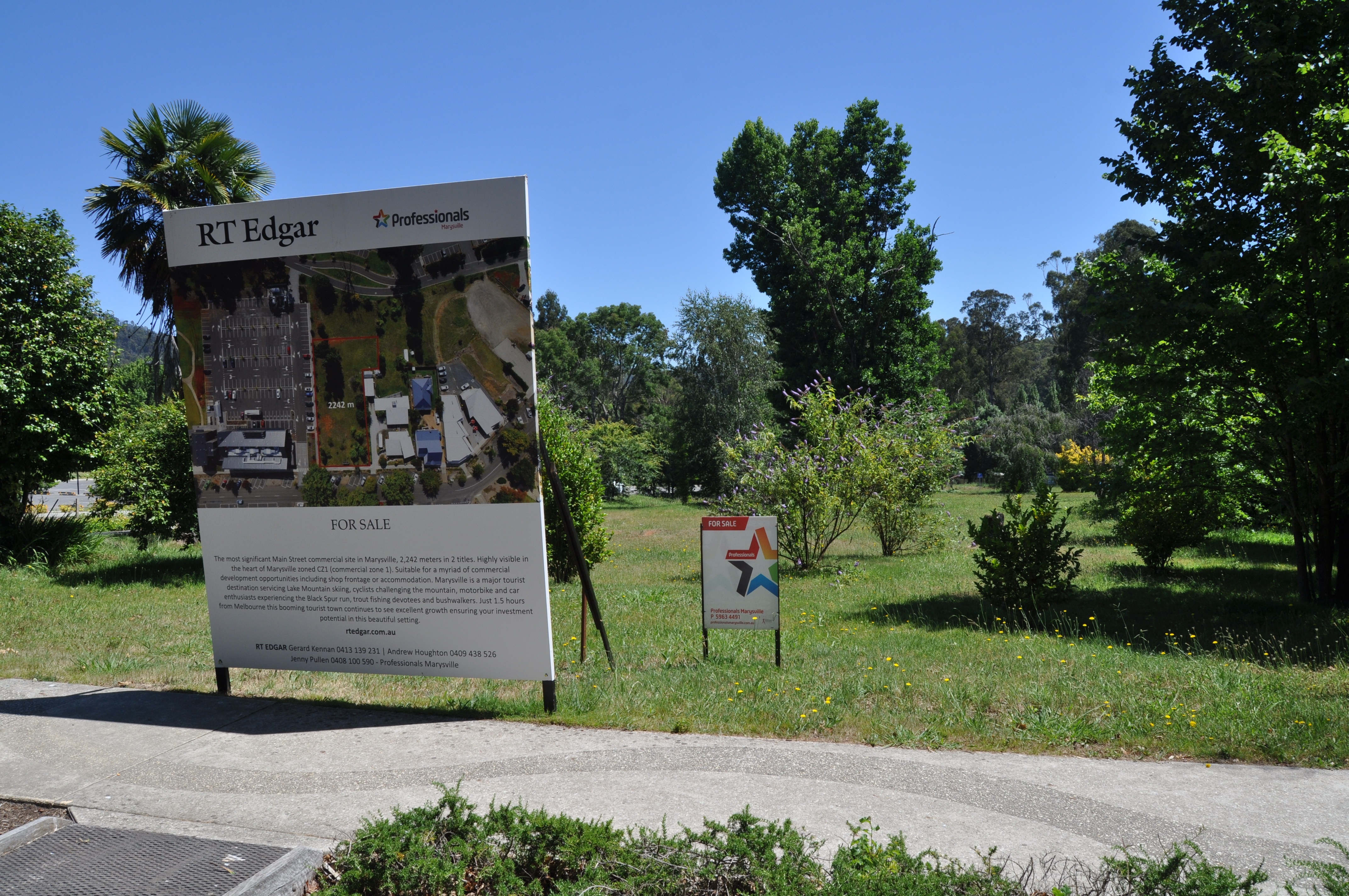
The small business sector disproportionately shoulders these costs, with significant personal and social consequences. If a business in a small town fails to reopen, it create a vicious cycle, reducing trade for neighbouring businesses and hurting the prosperity of the local community. Throughout regional Australia there are examples of small communities – such as Marysville, Victoria – that never really recovered from past disasters.


Read more: We can learn a lot from disasters, and we now know some areas don’t recover


For-sale signs along the main shopping strip are still common in Marysville, Victoria, which was hit hard by the Black Saturday bushfires in 2009. Supplied by Jamie Duncan/AAP

Despite how important small businesses are to the economy, and in particular to the prosperity of regional and rural communities, government recognition of the need to assist them remains a work in progress.

For the current bushfire crisis, the federal and relevant state governments are offering small business “recovery grants” of up to A$50,000 and “concessional loans” of up to A$500,000. To be eligible, though, a business must suffer direct damage. After rebuilding and replacing equipment, even with insurance money as well, there’s often little to invest in building back better.

For the many more small businesses indirectly affected – losing revenue for days, weeks or even months – there is minimal government assistance. The federal, state and territory governments have talked about financial measures that will extend to businesses with indirect impacts as a result of the bush fires, but in reality the support is going towards tourism campaigns and events.

If governments truly believe small and family businesses are the engine room of the economy, (as Scott Morrison has said), it’s time to put their needs on the table in post-disaster reconstruction plans. The current assistance and funding packages are not enough, not available to all affected businesses, and don’t help these businesses come back better than before.

ref. Disaster hits small business in many ways. We need a national strategy to help them adapt – https://theconversation.com/disaster-hits-small-business-in-many-ways-we-need-a-national-strategy-to-help-them-adapt-130871

To address the ecological crisis, Aboriginal peoples must be restored as custodians of Country

Source: The Conversation (Au and NZ) – By Zena Cumpston, Research Fellow, University of Melbourne

In the wake of devastating bushfires across the country, and with the prospect of losing a billion animals and some entire species, transformational change is required in the way we interact with this land.

Australia’s First Peoples have honed and employed holistic land management practices for thousand of generations. These practices are embedded in all aspects of our culture. They are so effective, so perfectly suited to this harshest of continents, that we are the oldest living culture in the world today.

A reintroduction of traditional land management is essential if we want to address the ecological crisis we now face.


Read more: Why Aboriginal people need autonomy over their food supply


Not just ‘consultants’

For a little over 200 years, Country in Australia has been predominantly managed without empowering or reflecting Aboriginal and Torres Strait Islander peoples’ cultural practices, voices or aspirations.

To meaningfully engage First Nations communities’ ways of knowing and interacting with Country, they need to cease being “informants”, “actors” and “consultants” which, at best, marginally inform ecological and agricultural imperatives.

The machine of colonisation continues to restrict our involvement in decision-making processes at every level. There are very few areas in Australia where Traditional Owners have succeeded in not only gaining back large land holdings, but also enjoy any real power to significantly maintain and nurture Country.

An example of this can be seen on my own Barkandji Country where in 2015, after 18 years of fighting, Barkandji people were recognised as the Traditional Owners of one of the largest areas ever before granted in a Native Title determination.

And yet, our Barka (the Darling River), our Mother, is now dying. It is poisonous and foul with algae, bone dry in many areas, with millions of fish washing up dead.

The devastation was caused by the gross mismanagement of this precious river by those in power – a destruction wrought through greed. Rights to land, with no rights to water, is a poignant example of our continued disempowerment in managing and caring for our lands in line with cultural obligations.

Our many thousands of generations of careful observations (science) and effective management and custodianship, must see us empowered to lead decision-making. Our community leaders must not only be given a seat at the table, they should set the menu too.

It’s not enough for Aboriginal and Torres Strait Islanders to be ‘consulted’ about their lands. Ringbarked II, image courtesy of Nici Cumpston and Michael Reid Gallery, Author provided (No reuse)

Different mob, different knowledge

Our mobs are extremely diverse, as are our land management practices. But some overarching beliefs sit at the core of our culture, and are important to understand.

First Peoples have a relationship with Country that is loving, reciprocal and engaged. This “kincentric” relationship includes custodianship obligations – often lacking within non-Indigenous views of Country. Instead of being seen as kin – something to be cared for, listened to, deeply respected and nurtured – Country is seen by many non-Indigneous people as a resource to be exploited and controlled.

Our custodianship of Country, our Law and our vast ecological knowledges are all attached to a place. For each area in Australia, the mob belonging to that place must be engaged, and empowered to speak for that Country.

Each mob speaks for its own Country. Barkandji Elder Uncle Badger Bates. Zena Cumpston, Author provided (No reuse)

It’s time to stop seeing Aboriginal ecological knowledges as something which can exist separately from the people who are its custodians. Our vast knowledges are embedded in our communities, and always have been.


Read more: Friday essay: Dark Emu and the blindness of Australian agriculture


Aboriginal knowledges aren’t lost

When it comes to Aboriginal agricultural and land management practices there is still so much to uncover, adopt and reinvigorate. And there are still many who do not believe in our expertise in this area.

Too many ignorantly perceive our knowledges as lost, or call for elders to hand over their knowledges as a matter of urgency, unaware that our communities still practice intricate systems of sharing knowledge across generations.

The belief that our knowledges are lost harks back to early “scientific” theories which emerged around the time of colonisation, when we were considered an inferior race which would soon die out.

Our knowledges are not lost. We are very much still here, still a living culture. But many of our practices and systems need more resources to reinvigorate them.

Barkandji Elder Uncle Badger Bates pointing out the ancient fish traps at Wilcannia. Zena Cumpston, Author provided (No reuse)

The extraordinary lifetime work of ethnobiologist Dr Beth Gott to reawaken Aboriginal plant knowledge is a brilliant example of this reinvigoration.

Dr Gott took a truly collaborative, respectful and empowering approach to working with Aboriginal communities. This enabled a safe space for Elders and communities to share and create a significant archive of their unparalelled knowledge of the medicinal, nutritional and cultural uses of Indigenous plants in south-eastern Australia.

Agriculture and fire

With temperatures rising, many of our food systems will fail. Introduced grain crops we rely heavily upon may not cope with the fluctuations predicted.

Traditional crops endemic to Australia such as native millet (panicum) and kangaroo grass will perhaps again become staple food sources.

As explored by Uncle Bruce Pascoe in Dark Emu, Australian crops are the most nutrient-rich and sustainable crops that can be grown here, requiring little water and no fertilisers. First Nations communities domesticated these crops over thousands of generations, and hold the best knowledge of how to grow them.

Cultural fire management practices are integral to our agricultural practices and are medicine for Country. Their continued reinvigoration will undoubtedly prove an important aspect in land management, protection and healing for all communities.


Read more: Many of our plants and animals have adapted to fires, but now the fires are changing


The recent horrifying and unprecedented bushfires traumatrised and distressed all Australians. The loss of life, both people and animals, and the devastation wrought on Country triggered many calls for Aboriginal management systems to be more meaningfully incorporated.

Empowering and resourcing First Nations peoples’ ecological knowledges would help address the effects of climate change on the land, through practices of care and custodianship. But it must not perpetuate well-established systems of exploitation. It must happen in true partnership.

Enacting healing

Finally, making Indigenous cultural practices central to Australia’s ecological management could be vital to the process of “truth-telling”.

Truth-telling here means acknowledging the complexity and richness of our culture, acknowledging the science we have developed over many many millennia to care for Country, and challenging still-embedded narratives which deny our diversity, our agency and most damaging, our sovereignty.

Truth-telling could not only bring long overdue public recognition of atrocities suffered and their continuing legacies, but could also finally dispense with the lie of peaceful settlement. The psychosis of denial impoverishes us all.

A process to enact a healing would begin a path to enlightened acceptance of our systems of management, opening up new possibilities for coming together to heal and enact vital reparations for both people and Country. Empower us and our active custodianship of Country and you empower yourselves.

As long as Aboriginal and Torres Strait Islander peoples and communities continue to be disenfranchised with our sovereignty denied, as long as we are excluded from leadership roles in meeting the challenges of climate change, we all stand to lose so much more than we can imagine.


Read more: Cultivating a nation: why the mythos of the Australian farmer is problematic


ref. To address the ecological crisis, Aboriginal peoples must be restored as custodians of Country – https://theconversation.com/to-address-the-ecological-crisis-aboriginal-peoples-must-be-restored-as-custodians-of-country-108594

RSF calls on Philippines Congress to renew ABS-CBN network’s franchise

Pacific Media Watch

Reporters Without Borders (RSF) has called on Philippine parliamentarians to resist President Rodrigo Duterte’s threats and ensure the survival of ABS-CBN, the country’s leading TV and radio network, by renewing its franchise.

If its 25-year franchise is not renewed, as Parliament last did on 30 March 1995, all of ABS-CBN’s radio and TV stations will stop broadcasting at midnight on March 30, when the franchise is scheduled to expire.

The renewal is in doubt because the parliamentary majority usually heeds the president, and the quick-tempered Duterte has repeatedly insulted and threatened ABS-CBN ever since he became president in 2016, says an RSF statement.

READ MORE: NZ media academic warns shutting key TV channel would be step to ‘dictatorshp’

If it is not renewed, it will not be because ABS-CBN did not try well ahead of time, says  RSF

The network filed its renewal request in 2014 and an initial legislative proposal to this effect, House Bill 4349, was submitted to the House of Representatives on 10 November 2016. Since then, eight other bills proposing its renewal have been presented without any coming to a vote.

– Partner –

“As the leading TV and radio network, offering independent, verified news and information free of charge to millions of citizens, ABS-CBN plays an absolutely fundamental democratic role in the Philippines,” said Daniel Bastard, head of RSF’s Asia-Pacific desk.

“This is why we urge parliamentarians, starting with Franz Alvarez, the chair of the Committee on Legislative Franchises, to resist the pressure from the president’s office and to immediately put the renewal of this franchise on the parliament’s agenda.

“The credibility of Philippine democracy and the balance between the different powers is at stake.”

#NoToABSCBNShutdown
One of Duterte’s favourite targets, ABS-CBN has often broadcast critical reports on such subjects as his heavy-handed “war on drugs” and the many execution-style killings that have accompanied it.

He threatened to cancel its franchise in May 2016, almost as soon as he was elected. In the months that followed, he accused the network of “publishing trash” (30 March 2017), trying to “swindle” him (27 April 2017) and of being “sons of bitches” (19 May 2017).

He made this, no less veiled threat on 3 December: “If you expect that [the franchise] will be renewed, I’m sorry. I will see to it that you’re out.”

And then, on 30 December, exactly three months before the expiry date, he advised the network’s owners to “just sell”.

The National Union of Journalists of the Philippines has launched an online petition for the renewal of ABS-CBN’s franchise and a campaign on social media with the hashtag #NoToABSCBNShutdown.

The Philippines is ranked 134th out of 180 countries in RSF’s 2019 World Press Freedom Index.

Print Friendly, PDF & Email

Article by AsiaPacificReport.nz

Iran as a strategic actor.

Headline: Iran as a strategic actor. – 36th Parallel Assessments

Director Paul G. Buchanan has written a two part series on Iran as a strategic actor for the Australian Institute of International Affairs. The analysis is designed to offer an alternative interpretation to views prevalent in the West that see Iran as a rogue and unpredictable player on the world scene.

Iran As A Strategic Actor (Part One)

Analysis syndicated by 36th Parallel Assessments

How hard is it to scramble Rubik’s Cube?

Source: The Conversation (Au and NZ) – By Tim Garoni, Associate Professor, School of Mathematics, Monash University

Rubik’s Cube has been one of the world’s favourite puzzles for 40 years. Several different methods have been devised for solving it, as explained in countless books. Expert “speedcubers” can solve it in a matter of seconds.

In addition to such feats of astounding dexterity, there are many fascinating mathematical questions related to Rubik’s Cube. A move of the cube consists of rotating one of the six faces by either 90, 180, or 270 degrees. A staggering 43,252,003,274,489,856,000 possible states can be obtained by applying sequences of moves to the solved state.


Read more: How to solve a Rubik’s cube in five seconds


Despite this complexity, it was shown in 2010 that Rubik’s Cube can always be solved in 20 moves or fewer, regardless of the initial state. This number is referred to as “God’s number”, as all known solution methods used by humans typically use significantly more moves than this optimal value.

Rubik’s Cube in the solved state. Mike Gonzalez (TheCoffee)

But what about the opposite question: how many moves are required to scramble a solved cube? At first glance, this sounds like a much easier question than computing God’s number. After all, unlike solving a cube, scrambling one takes no skill whatsoever.

Similar questions have been answered successfully for card shuffling. A famous example is the 1990 study of the “riffle shuffle” by mathematicians Dave Bayer and Perci Diaconis. A deck of cards is defined as “mixed” if its ordering is random, with each possible order having the same probability of appearing. Bayer and Diaconis showed that seven riffle shuffles are necessary and sufficient to approximately mix a standard deck of playing cards.

Last year, mathematicians published a similar study of the 15 puzzle, which consists of a 4×4 square filled with 15 sliding tiles and one empty space.

What does it mean for a cube to be scrambled?

A typical person trying to scramble a Rubik’s Cube would repeatedly perform random moves on it. The resulting random sequence of states is a special case of what mathematicians call a Markov chain. The key property is that given the current state, the probability of what the next state will be does not depend on any of the previous states.

Applying the theory of Markov chains to cube scrambling, it follows that as the number of random moves increases, the probability of being in any particular one of the possible states becomes closer and closer to 1/43,252,003,274,489,856,000. Mathematicians call this a “uniform probability distribution”, as each possible state occurs with the same probability.

After any given number of random moves, the state of the cube will be random, but its probability distribution will not be exactly uniform; some states will be more likely to occur than others.

Let d(t) describe how much the probability distribution after t random moves differs from the uniform probability distribution. As the number of random moves (t) increases, the value of d(t) will decrease. The cube being scrambled corresponds to d(t) being small.

Markov-chain Monte Carlo

In the theory of Markov chains, this decrease in d(t) is called “mixing”. Besides card shuffling and puzzle scrambling, the theory of Markov chain mixing also has very serious practical applications. One of the most important computational tools in modern science and engineering is the Monte Carlo method. This method, like the famous casino after which it is named, relies fundamentally on chance. In essence, it attempts to approximately solve hard mathematical problems using multiple random guesses.

In practice, Markov chains are often used to produce these random states. To understand the accuracy of these Markov-chain Monte Carlo methods, the key task is to estimate how quickly d(t) decreases as t increases.

The pocket cube

Pocket cube in a scrambled state. Mike Gonzalez (TheCoffee)

Studying the scrambling problem for the standard 3x3x3 Rubik’s Cube is currently a fascinating unsolved challenge. However, it becomes quite manageable if we turn our attention to a smaller 2x2x2 version, called the pocket cube.

In this cube, the edge and centre pieces are absent and only the corner pieces remain. The pocket cube has only 3,674,160 possible states, and its God’s number is only 11.

In the graph below, we plot d(t) for the pocket cube. After 11 moves, d(t) is still very large, at 0.695. The first value of t that yields a d(t) value below 0.25 (often called “the mixing time” in Markov chain theory) is 19. After 25 moves d(t) is 0.092; after 50 moves it is 0.0012; and after 100 moves it is 0.00000017.

Distance of the pocket cube distribution from uniform after t moves. Eric Zhou

So how many moves should you use to fully scramble a pocket cube? The answer depends on how small you would like d(t) to be. However, it is certainly true that God’s number of moves is insufficient. As a bare minimum, one should not use fewer than 19 moves. Further details, including code to compute d(t), are available here.

And of course, once you’ve scrambled your cube, all that’s left to do is solve it again.


Read more: Your guide to solving the next online viral maths problem


ref. How hard is it to scramble Rubik’s Cube? – https://theconversation.com/how-hard-is-it-to-scramble-rubiks-cube-129916

With four days remaining, Sanders leads narrowly in Iowa, but Biden leads nationally

Source: The Conversation (Au and NZ) – By Adrian Beaumont, Honorary Associate, School of Mathematics and Statistics, University of Melbourne

Four days before the US Iowa Democratic caucuses next Tuesday AEDT, the RealClearPolitics poll average has Bernie Sanders narrowly leading with 23.8%, followed by Joe Biden on 20.2%, Pete Buttigieg 15.8%, Elizabeth Warren 14.6% and Amy Klobuchar 9.6%.

Nationally, it’s 28.8% Biden, 22.5% Sanders, 14.1% Warren, 8.5% Michael Bloomberg and 6.0% Buttigieg. In the past two weeks, Biden and particularly Sanders have gained, mostly at the expense of Warren and Buttigieg.

Iowa is important because it helps to winnow the field of candidates, and candidates who exceed expectations often get a surge in their national voting intentions.

However, the almost all-white Iowa does not represent the overall Democratic primary electorate. Biden has polled strongly with black voters, but not so well with whites.


Read more: Morrison’s approval ratings crash over bushfires in first 2020 Newspoll; Sanders has narrow Iowa lead


If, as some polls suggest, Biden nevertheless won Iowa, he would likely be the Democratic nominee to face Donald Trump in November. If he fails to win Iowa, Biden is still well-placed when the contest turns to more diverse states.

CNN analyst Harry Enten says that, despite Sanders’ current Iowa poll lead, he’s still only a two in five chance to win. Historically, polls have not been good at caucuses, and there can be late swings in Iowa. Analyst Nate Silver says polls at this stage in eight of the last 11 contested Iowa caucuses for either party have been inaccurate.

What happens at the caucuses

This Bloomberg News article explains the Iowa caucuses. They will begin Monday at 7pm local time (12pm Tuesday AEDT). Initially, caucus attendees divide into groups corresponding to the candidate they support.

If candidates win fewer than 15% at a particular caucus site, their supporters will be asked to realign. A candidate originally declared “unviable” can become viable on the second round if they then clear the 15% threshold. Candidates who were declared viable in the first round cannot lose support, but can gain from supporters of unviable candidates.

As I wrote previously, a caucus is distinct from a primary, which is conducted by the state’s electoral authority. A major difference from standard electoral practise is that a caucus is not a secret ballot. Caucuses have far lower turnout than primaries, resulting in a greater weight for party activists.

This year, the Iowa Democrats will report three results from their caucuses: the raw vote totals before realignment, the totals after realignment, and the number of state delegate equivalents, which excludes unviable candidates. Previously, only the state delegates have been reported. It is possible there will be disagreement between these measures, particularly with a close vote.

What happens after Iowa?

There are three more Democratic presidential contests in February: the New Hampshire primary (February 11), the Nevada caucus (February 22) and the South Carolina primary (February 29). After Nevada, there is only one state (Wyoming) that uses the caucus format to decide its delegates.

Sanders has surged in New Hampshire, and leads with 26.3%, followed by Biden at 16.8%, Buttigieg 14.8% and Warren 13.5%.

The two January Nevada polls gave Biden a one to six point lead over Sanders. There has been only one January poll of South Carolina that gave Biden a 21-point lead over his nearest challenger.

The four early states account for just 4% of pledged delegates, and are important mainly to establish front runners and winnow the field.

On “Super Tuesday” March 3, 14 states vote, including delegate-heavy Texas and California. Over 1,500 pledged delegates, or 34% of all pledged delegates, will be decided on Super Tuesday. This day could be decisive.

Delegates are proportionally allocated, but candidates must meet a 15% threshold to win any delegates, both within a state and Congressional District (CD). Delegates are allocated to states and CDs based on population and how Democratic-leaning they are.


Read more: US Democratic presidential primaries: Biden leading, followed by Sanders, Warren, Harris; and will Trump be beaten?


If Sanders has large wins in Iowa and New Hampshire, he is likely to surge in the national polls. The nightmare scenario for moderate Democrats is that Warren supporters shift to Sanders, while the moderate vote is split between Biden and candidates who are unlikely to reach the 15% threshold, such as Bloomberg, Buttigieg and Klobuchar.

Biden is disadvantaged by the early calendar, as Iowa and New Hampshire are almost all-white, with Sanders likely benefiting from being senator for the neighbouring Vermont in New Hampshire.

Trump’s ratings and general election polls

With all polls, the FiveThirtyEight aggregate has Trump’s ratings at 42.8% approve, 52.8% disapprove, for a net approval of -10.0%. With polls of likely or registered voters, Trump’s ratings are 44.3% approve, 52.0% disapprove (net -7.7%).

Since my mid-January article, Trump’s net ratings have improved about two points despite the impeachment hearings. The strong US economy is far more important to non-college educated voters.

In national general election polls, Biden leads Trump by 4.3% in the RealClearPolitics average, Sanders leads by 3.0%, Warren leads by 1.2%, Bloomberg leads by 3.2%, but Buttigieg trails Trump by 0.2%. These margins are little changed from December.

US economy had 2.1% annualised growth in December quarter

In the December 2019 quarter, the US economy grew at a 2.1% annualised pace, unchanged from the growth in the September quarter. The US reports its quarterly growth rate as if it applied to the whole year. Dividing by four gives what is commonly used in Australia – a little over a 0.5% growth.

For the full year 2019, the economy grew 2.3%, below the 2.9% growth in 2018, and below the Trump administration’s forecasts of at least 3% growth after the passage of the 2017 tax cuts.

Brexit, UK Labour leadership and Irish election

I wrote for The Poll Bludger Wednesday that Brexit isn’t over on January 31; the UK government has until December 31 to negotiate a trade deal with the European Union and pass it through parliament. Also covered: the UK Labour leadership contest and the February 8 Irish election.

On my personal website on January 8, I covered the left winning a crucial confidence vote by two votes in Spain and the formation of a conservative/green coalition government in Austria.

ref. With four days remaining, Sanders leads narrowly in Iowa, but Biden leads nationally – https://theconversation.com/with-four-days-remaining-sanders-leads-narrowly-in-iowa-but-biden-leads-nationally-130593

Proposed Queensland laws silencing charities risk breaching the Constitution

Source: The Conversation (Au and NZ) – By Anne Twomey, Professor of Constitutional Law, University of Sydney

The Queensland government’s proposed electoral laws risk being struck down by the High Court if they remain in their current form. This is because they hamper the ability of charities to advocate for their causes and limit the diversity of voices in political debate.

Charities are prohibited by law from supporting or opposing candidates or parties in elections, but they can still advocate for policy changes on behalf of those they aid. In doing so, they play an important role in supporting the equal participation in civil society of people who would otherwise be marginalised and excluded from it. They can raise social issues that may be relevant in elections.


Read more: Changing the Australian Constitution was always meant to be difficult – here’s why


Through their advocacy, charities are often critical of government policies, regardless of which party is in office. They become seen as nuisances, or even opponents, by political parties.

While governments prefer to keep their critics quiet, the High Court has stressed the importance of equal participation in political sovereignty and not allowing the rich to drown out the voices of others. So muzzling charities comes at a constitutional risk.

Silencing charities

Over the years, various means have been employed to silence charities from engaging in political communication, especially around election time. These include placing limits on their charitable status, banning them from using government funding for advocacy, and placing restrictions on the tax-deductibility of donations to them.

Another less visible, but equally effective, method is to impose excessive administrative burdens upon them if they engage in the kind of advocacy that might influence voting in an election. This means the only responsible choice for charities is to stay silent so as not to waste their resources on administration or legal advice.

This occurred in New South Wales in 2012, when a law was passed so political donations could only be made by people on the electoral roll. The consequences for charities were they could not join together and donate funds to a peak body to run an issues campaign for them, because a charity is not a person on the electoral roll.

The law also required charities to certify that every donation used for electoral communication was from a person on the electoral roll. The administrative burden was impractical and unaffordable. The person wearing a koala suit on the street could not whip out a copy of the electoral roll and check the identity of a person every time they put some money in the bucket.

This law was struck down by the High Court when challenged in 2013. The court accepted that third parties such as unions, corporations and charities play a legitimate and significant role in the freedom of political communication required by the Constitution.

The Commonwealth proposed a similar approach in 2018. This time it was in the context of preventing foreign donations from influencing elections. Charities spending money on political advocacy over the disclosure threshold would have had to get statutory declarations from donors, witnessed by a Justice of the Peace (JP), declaring the donor was an “allowable donor”, not a foreign citizen.

So the person in a koala suit with a bucket would have needed to trail around with a JP and a pile of statutory declaration forms, while insulting donors by questioning their citizenship or visa status. This wasn’t really feasible.

Fortunately the Commonwealth government changed its approach after concerns were raised before a parliamentary committee. To its credit, the government narrowed the definition of political expenditure. This meant it was less likely to pick up advocacy by charities, and removed the requirement for third parties to register, unless they engaged in very high levels of electoral expenditure. It also significantly reduced the administrative burdens on charities and other third party campaigners before the bill was passed.

The proposed changes in Queensland

Queensland’s recent proposed electoral reforms have a worthy aim. The bill will reintroduce caps on both political donations and electoral expenditure for political parties, candidates and third party campaigners. This is a good step towards reducing the corrosive effect of money on elections.

But one significant flaw in the bill is its burdensome effect on small third party campaigners such as charities and other community groups.

The bill would require third parties to register with the Queensland Electoral Commission if they spend as little as A$1,000 on electoral expenditure during the 12 months prior to an election.

A registered third party must have its own agent, who is subject to serious penalties if any rules are broken. Third parties that are volunteer community groups will find it extremely difficult to get someone to take on such risks.


Read more: New electoral law could still hobble charities


A registered third party must also set up a separate state campaign account into which it must pay any donation made to it for the purposes of incurring electoral expenditure. Such donations have to be accompanied by a “donor statement” setting out the purpose of the donation and the particulars of the donor and the recipient.

This is all very well when large donations are being made for electoral expenditure purposes. But it’s a serious burden for charities that rely on lots of small donations and spend a relatively small amount of money on advocacy that may be intended to influence voting.

The effect is to cause charities to silence themselves to avoid the cost and the bother of complying with all the rules.

Those few charities that can rely on a small number of large donations are also disadvantaged. A maximum of $4,000, received over four years, from any one donor can be spent on electoral expenditure. In contrast, corporations and other third parties that do not need to rely on donations can spend what they like on electoral campaigns, up to a cap of $1 million.

This exacerbates the inequity in Australian political debate, allowing the voices of the wealthy to drown out the voices of charities that advocate for the disadvantaged. This is precisely the problem that has led to previous electoral laws being struck down in New South Wales.

Will it succeed?

If the Queensland bill were enacted in its present form and challenged in the courts, there is a risk the High Court would regard it as an unconstitutional burden on freedom of political communication. If so, the offending provisions would be struck down as constitutionally invalid.

It would be preferable for the Queensland government to revise its proposed laws to limit their impact on issues advocacy by charities. Charities are already subject to exacting legislative requirements to ensure they’re accountable to their members and are limited in their political activity. There is no need to replicate or extend such constraints at the state level.

Reviewing the definition of electoral expenditure to exclude most charitable advocacy, easing the limits on the use that can be made of donations by charities and raising the minimum amount of electoral expenditure that triggers the registration requirements would be a good start.

ref. Proposed Queensland laws silencing charities risk breaching the Constitution – https://theconversation.com/proposed-queensland-laws-silencing-charities-risk-breaching-the-constitution-130528

‘Futuring’ can help us survive the climate crisis. And guess what? You’re a futurist too

Source: The Conversation (Au and NZ) – By Clare M. Cooper, Design Lecturer, University of Sydney

Editor’s note: Today, on Trust Me, I’m An Expert, we hear from Clare Cooper, design lecturer at the University of Sydney, on how futuring techniques can help us think collectively about life under a drastically hotter climate. Her accompanying essay is below.


Australians, no matter where we are, are coming to acknowledge that our summers – and our autumns, winters and springs – are forever changed.

We are, bit by bit, reviewing our assumptions. Whether we need to radically rethink our calendars, or question where and how we rebuild homes and towns, we face a choice: collective, creative adaptation or increased devastation.

How might this time next year feel – anxious, hot and sticky? How might it smell – like bushfire smoke? How might it taste – would seafood and berries still be on the menu in future summers as our climate changes? (One of my favourite placards at a recent climate rally was “shit climate = shit wine”).

When we think about this time next year, are we freaking out, or are we futuring?

How might the Australian summer of the future look, taste, smell? Shutterstock

Read more: Why we should make time for remembering the future


Collaborative futuring in a climate crisis

“Futuring” is sometimes called futures studies, futurology, scenario design or foresight thinking. It has been used in the business world for decades.

Futuring means thinking systematically about the future, drawing on scientific data, analysing trends, imagining scenarios (both plausible and unlikely) and thinking creatively. A crucial part of the process is thinking hard about the kind of future we might want to avoid and the steps needed to work toward a certain desired future.

But futurists aren’t magical people who sweep in and solve problems for you. They facilitate discussions and collaboration but the answers ultimately come from communities themselves. Artists and writers have been creatively imagining the future for millennia. Futuring is a crucial part of design and culture-building.

My research looks at how futuring can help communities work toward a just and fair transition to a drastically warmer world and greater weather extremes.

Collaborative futuring invites audiences to respond to probable, possible, plausible and preposterous future scenarios as the climate crisis sets in. This process can reveal assumptions, biases and possible courses of action.

Cars lie damaged after a surprise hailstorm hit Canberra in January. Extreme weather events are predicted to worsen as the climate changes. AAP Image/Mick Tsikas

Read more: How we forecast future technologies


Getting creative

Futuring is not predicting futures.

It’s a way of mixing informed projections with imaginative critical design to invite us to think differently about our current predicaments. That can help us step back from the moment of panic and instead proactively design steps to change things for the better – not 20 years from now, but from today.

If you peeked into a futuring workshop with adults, you might see a lot of lively conversations and a bunch of post-it notes. For kids, you might see them making collages, or creating cardboard prototypes of emerging technology.

You might have done some futuring today, talking with friends and family about changes you might make as it becomes obvious our summers will grow only hotter.

I’ve seen futuring occur at my daughter’s school, where children are invited to imagine being on the other side of a difficult problem, and then work out the steps needed to get there.

13-year-old protester Izzy Raj-Seppings poses for a photograph outside of Kirribilli House in Sydney late last year. AAP Image/Steven Saphore

Read more: ‘This situation brings me to despair’: two reef scientists share their climate grief


Futuring a just transition to a warmer world

When we are imagining this time next year, are we limiting our (mostly city-dwelling) thinking to how we avoid the conditions we faced in this summer?

For example, are we thinking about staying away from bushfire-prone areas, or buying air purifiers and face masks? For those who can afford it, are we thinking about booking extended overseas holidays?

Or are we challenging each other to think beyond such avoidance strategies: to imagine a post-Murdoch press and a post-fossil fuel lobby future? Can we imagine ways to respond to extreme weather beyond individual prepping?

Including a diverse range of voices, especially Indigenous community members, is crucial to a just transition to a warmer world. We can’t allow a changed climate to mean comfortable adaptation for a wealthy elite while everyone else suffers.

Many of us have joined climate protests in recent months and years.

But more work needs to be done and bigger questions asked. What steps are needed to meet demands for public ownership of a renewable energy system: more support for those battling and displaced by bushfires? How do we work toward First Nations justice, including funding for Indigenous-led land management, jobs on Country, and land and water rights?

It is not enough to pin an image of our future to a wall and pray we get there.

Short term fixes in the form of drought or emergency relief won’t address the fact that extreme weather events are not going away.

Responsible, useful futuring mixes equal parts of imagination and informed projections. It’s not wild speculation. Futuring practitioners draw on scientific and social data, and weave it with the stories, concerns and desires of those present to find new ways into a problem.

Short term fixes in the form of drought or emergency relief won’t address the fact that extreme weather events are not going away. Shutterstock

Read more: What would a fair energy transition look like?


Speaking of catastrophe to avoid it

Former Labor prime minister Paul Keating last year criticised the Morrison government for what he saw as a lack of vision:

If you look, there is no panorama. There’s no vista. There’s no shape. There’s no talk about where Australia fits in the world.

Prime Minister Scott Morrison’s performance during the unfolding bushfire horrors – widely perceived as lacklustre – suggests growing thirst for bolder vision on dealing with “the new normal.”

In their book Design and the Question of History, design scholars Tony Fry, Clive Dilnot and Susan Stewart argue that we should speak of catastrophe “in order to avoid it”.

Polish-born sociologist Zygmunt Bauman wrote

prophesying the advent of that catastrophe as passionately and vociferously as we can manage is the sole chance of making the unavoidable avoidable — and perhaps even the inevitable impossible to happen.

We owe it to those worst affected by the climate crisis – and to ourselves – to dedicate time to collaborative futuring as we rethink life in an increasingly hostile climate.

The next time you’re having a chat about this time, next year, are you collectively fretting or collaboratively futuring?

New to podcasts?

Everything you need to know about how to listen to a podcast is here.

Additional audio credits

Kindergarten by Unkle Ho, from Elefant Traks.

Not Much by Podington Bear, from Free Music Archive

Above Us by David Szesztay, from Free Music Archive

Pshaw by Podington Bear, from Free Music Archive

Podcast episode recorded and edited by Sunanda Creagh.

Lead image

Shutterstock

ref. ‘Futuring’ can help us survive the climate crisis. And guess what? You’re a futurist too – https://theconversation.com/futuring-can-help-us-survive-the-climate-crisis-and-guess-what-youre-a-futurist-too-130538

Coronavirus: NZ homestays reject Chinese students over virus fears

By RNZ News

Some Chinese students are being rejected by their homestays in New Zealand over fears about the deadly coronavirus.

Infections from the novel coronavirus has spread to more than 8100 people globally and has claimed more than 170 lives.

New Zealand’s Ministry of Education advised schools on Monday to ask any students coming from China to stay away from school for two weeks.

READ MORE: RNZ Pacific updates on the coronavirus epidemic

A student liaison with the NZ Institute of International Education, Charm Money, said some homestays had asked students to find other accommodation over that period.

She said the students were either staying with friends or in other rented accommodation.

– Partner –

Some students in China are also delaying their travel to New Zealand after schools here advised them to wait for two weeks.

Auckland’s Elim Christian College principal Murray Burton said some students and staff had been asked to stay away from school for a fortnight.

Stuck in a cycle
“We’ve got upwards of 30 students … local students who will not be returning on Monday because they need to wait for two weeks. We’ve got five staff who will not be returning on Monday.

“They’re very cooperative and we’ll work our way through that.”

National Party’s education spokesperson Nikki Kaye told RNZ’s Morning Report she was also hearing about students stuck in a cycle of being rejected.

“You may have students who may have test results and they’ve been to Hubei province, being requested to go back in with those accommodation providers and then [being refused].

“I’m being briefed by the Ministry of Education today and so I have a range of other questions about their response and contingency planning.”

She said she believed that risk to other students could be mitigated through alternative accommodation or isolation beds.

“There’s a huge difference between a student from Hubei province that is displaying symptoms, has got test results potentially coming back, and then a family that may have rejected a homestay student because they’re scared or they may have young children.”

Kaye said she was referring any situation she was aware of directly to ministers.

This article is republished under the Pacific Media Centre’s content partnership with Radio New Zealand.

Print Friendly, PDF & Email

Article by AsiaPacificReport.nz

Heat kills. We need consistency in the way we measure these deaths

Source: The Conversation (Au and NZ) – By Thomas Longden, Research Fellow, Australian National University

One of the most confronting impacts of climate change is the risk of more deaths from hot weather. Heat stress can exacerbate existing health conditions including diabetes, kidney disease and heart disease. Older people are particularly vulnerable.

It may then surprise you to learn a few recent studies have suggested climate change will decrease temperature-related deaths in Australia. And a related study published in The Lancet found the cold kills more people in Sydney, Melbourne and Brisbane than the heat.

But my research, published in Climatic Change, disputes these results.

Using a similar methodology as that used in the study published in The Lancet, I found the majority of deaths related to temperature in Australia are caused by heat.

As temperature-related deaths are one of the main measures we use to assess the effects of climate change, it’s important we measure them accurately and consistently.


Read more: Hot and bothered: heat affects all of us, but older people face the highest health risks


How do researchers measure temperature-related deaths?

An important part of the process is estimating the proportion of deaths that occurred during cold weather and hot weather.

To determine this many studies use a reference (or baseline) temperature. This reference temperature should be a day where people in a region feel comfortable and their health is unlikely to be affected by cold or heat. Temperature-related deaths falling below this temperature are classified as cold-related, and deaths above will be heat-related.

We use statistical techniques to distinguish temperature-related deaths from deaths due to unrelated causes.

For example, estimates should adjust for the severity of seasonal factors, including flu seasons. Flu and pneumonia deaths do rise in winter, but they’re not directly caused by the cold.

Temperature-related death estimates vary depending on the underlying assumptions made, and the modelling techniques used. But a key issue causing a discrepancy between results is the use of different reference temperatures. This influences the proportion of deaths classified as being related to cold and heat.


Read more: How rising temperatures affect our health


The importance of the reference temperature

The relationship between temperature and death can be shown as a curve of the risk of death from high/low temperatures in relation to the reference temperature.

The figure below shows how the estimated curves, called temperature-mortality curves, can differ when the reference temperature is changed. It compares temperature-mortality curves from my latest study (the bottom row), to those from the study published in The Lancet (the top row).

Red and blue shading show the parts of the curve defined as heat and cold. Arrows point to the reference temperature used to estimate the curves.

A comparison of temperature-mortality curves. Gasparrini et al. (2015) and Longden (2019)

Numerous studies, including the Lancet study, have estimated the number of deaths attributable to heat and cold using what’s called a minimum mortality temperature (MMT) as the reference temperature.

The MMT is the lowest point of a temperature-mortality curve and is often interpreted as the daily average temperature at which there’s the lowest risk of death.

Based on the findings for Australia, I’m concerned the reference temperature (the MMT) used in The Lancet study was too high. For example, a reference temperature of 22.4°C (shown in the figure above) meant almost 90% of Melbourne’s historical daily average temperatures were classified as cold. This could be equivalent to a day with a maximum of 31.4°C and a night minimum of 13.4°C.

I’ve used a different reference temperature in my latest study. I used the median of historical daily average temperatures as the reference temperature. For example, in my study cold days in Melbourne are those below a daily average temperature of 14.7°C. All daily average temperatures above 14.7°C are considered hot.

Using the median as the reference temperature creates a 50/50 split between what’s considered hot and cold.

Comparing the results

As well as using a different reference temperature, I used national death record data to estimate temperature-related deaths for six climate zones. They range from areas with a “hot humid summer” in the north and areas of “mild/warm summers and cold winters” in Tasmania, the ACT and parts of NSW and Victoria.

The other studies I mentioned used data for many cities from around the world, but only included the three largest Australian capitals (Sydney, Melbourne and Brisbane).

Climate zones across Australia. Longden (2019)

In my study, I estimated 2% of deaths in Australia between 2006 and 2017 were due to the heat.

In the three warmer climate zones this number was higher, ranging from 4.5% to 9.1% of deaths. However, as the majority of the population lives in the second coldest climate zone (warm summer, cold winter), this brings down the national estimate.

In the coldest climate zone, 3.6% of deaths were due to the cold and the heat was less dangerous.

These estimates are notably different to those in The Lancet study where the total for Sydney, Melbourne and Brisbane had 6.5% of deaths associated with cold temperatures, but only 0.5% of deaths due to the heat.


Read more: Car accidents, drownings, violence: hotter temperatures will mean more deaths from injury


The difference between these results suggests the need to explore alternative approaches for estimating temperature-related deaths.

Future research should assess whether changing the reference temperature impacts the estimates of temperature-related deaths for other countries.

Finally, accounting for climate zones is another important factor that will affect the balance between the danger of cold and heat.

ref. Heat kills. We need consistency in the way we measure these deaths – https://theconversation.com/heat-kills-we-need-consistency-in-the-way-we-measure-these-deaths-120500

Warp factor: we’ve observed a spinning star that drags the very fabric of space and time

Source: The Conversation (Au and NZ) – By Matthew Bailes, ARC Laureate Fellow, Swinburne University of Technology., Swinburne University of Technology

One of the predictions of Einstein’s general theory of relativity is that any spinning body drags the very fabric of space-time in its vicinity around with it. This is known as “frame-dragging”.

In everyday life, frame-dragging is both undetectable and inconsequential, as the effect is so ridiculously tiny. Detecting the frame-dragging caused by the entire Earth’s spin requires satellites such as the US$750 million Gravity Probe B, and the detection of angular changes in gyroscopes equivalent to just one degree every 100,000 years or so.


Read more: Explainer: Einstein’s Theory of General Relativity


Luckily for us, the Universe contains many naturally occurring gravitational laboratories where physicists can observe Einstein’s predictions at work in exquisite detail. Our team’s research, published today in Science, reveals evidence of frame-dragging on a much more noticeable scale, using a radio telescope and a unique pair of compact stars whizzing around each other at dizzying speeds.

The motion of these stars would have perplexed astronomers in Newton’s time, as they clearly move in a warped space-time, and require Einstein’s general theory of relativity to explain their trajectories.

The white dwarf-pulsar binary system PSR J1141-6545 discovered by the CSIRO’s Parkes radio telescope. The pulsar orbits its white dwarf companion every 4.8 hours. The white dwarf’s rapid rotation drags space-time around it, causing the entire orbit to tumble in space. Mark Myers/ARC Centre of Excellence for Gravitational Wave Discovery (OzGrav)

General relativity is the foundation of modern gravitational theory. It explains the precise motion of the stars, planets and satellites, and even the flow of time. One of its lesser-known predictions is that spinning bodies drag space-time around with them. The faster an object spins and the more massive it is, the more powerful the drag.

One type of object for which this is very relevant is called a white dwarf. These are the leftover cores from dead stars that were once several times the mass of our Sun, but have since exhausted their hydrogen fuel. What remains is similar in size to Earth but hundreds of thousands of times more massive. White dwarfs can also spin very quickly, rotating every minute or two, rather than every 24 hours like Earth does.

The frame-dragging caused by such a white dwarf would be roughly 100 million times as powerful as Earth’s.

That is all well and good, but we can’t fly to a white dwarf and launch satellites around it. Fortunately, however, nature is kind to astronomers and has its own way of letting us observe them, via orbiting stars called pulsars.

Twenty years ago, CSIRO’s Parkes radio telescope discovered a unique stellar pair consisting of a white dwarf (about the size of Earth but about 300,000 times heavier) and a radio pulsar (just the size of a city but 400,000 times heavier).

Compared with white dwarfs, pulsars are in another league altogether. They are made not of conventional atoms, but of neutrons packed tightly together, making them incredibly dense. What’s more, the pulsar in our study spins 150 times every minute.

This mean that, 150 times every minute, a “lighthouse beam” of radio waves emitted by this pulsar sweeps past our vantage point here on Earth. We can use this to map the path of the pulsar as it orbits the white dwarf, by timing when its pulse arrives at our telescope and knowing the speed of light. This method revealed that the two stars orbit one another in less than 5 hours.

This pair, officially called PSR J1141-6545, is an ideal gravitational laboratory. Since 2001 we have trekked to Parkes several times a year to map this system’s orbit, which exhibits a multitude of Einsteinian gravitational effects.

Mapping the evolution of orbits is not for the impatient, but our measurements are ridiculously precise. Although PSR J1141-6545 is several hundred quadrillion kilometres away (a quadrillion is a million billion), we know the pulsar rotates 2.5387230404 times per second, and that its orbit is tumbling in space. This means the plane of its orbit is not fixed, but instead is slowly rotating.

How did this system form?

When pairs of stars are born, the most massive one dies first, often creating a white dwarf. Before the second star dies it transfers matter to its white dwarf companion. A disk forms as this material falls towards the white dwarf, and over the course of tens of thousands of years it revs up the white dwarf, until it rotates every few minutes.

Artist’s impression of a white dwarf being spun-up by the transfer of matter from its companion. Material at the surface of the swollen star falls towards the white dwarf and forms a disk of material travelling so quickly it causes the star to spin rapidly. ARC Centre of Excellence for Gravitational Wave Discovery

In rare cases such as this one, the second star can then detonate in a supernova, leaving behind a pulsar. The rapidly spinning white dwarf drags space-time around with it, making the pulsar’s orbital plane tilt as it is dragged along. This tilting is what we observed through our patient mapping of the pulsar’s orbit.


Read more: We’ve detected new gravitational waves, we just don’t know where they come from (yet)


Einstein himself thought many of his predictions about space and time would never be observable. But the past few years have seen a revolution in extreme astrophysics, including the discovery of gravitational waves and the imaging of a black hole shadow with a worldwide network of telescopes. These discoveries were made by billion-dollar facilities.

Fortunately there is still a role in exploring general relativity for 50-year-old radio telescopes like the one at Parkes, and for patient campaigns by generations of graduate students.

ref. Warp factor: we’ve observed a spinning star that drags the very fabric of space and time – https://theconversation.com/warp-factor-weve-observed-a-spinning-star-that-drags-the-very-fabric-of-space-and-time-130201

Curious Kids: how do voices come out of our mouths?

Source: The Conversation (Au and NZ) – By Sally Hewat, Associate Professor in Speech Pathology and Assistant Dean International, University of Newcastle

How do our voices come out of our mouths? Ziggy Miles, age 4, from Springwood NSW

Hi Ziggy, what a great question!

We can all communicate in lots of different ways – using our hands to gesture or sign, writing letters, typing text messages, drawing pictures or even sending emojis.

But if we want to communicate by speaking then we need to use our voice.

Our voice makes sound when we use air from our lungs to vibrate our vocal cords, which sit inside your voice box.

To find your voice box, feel for the bony lump at the front of your throat. We sometime call this an “Adam’s apple” in men.

The air from the lungs causes the vocal cords to move really quickly. This is called vibration and feels a bit like buzzing.

See if you can vibrate your vocal cords, like this boy in the photo. Try saying “ahh” – then, gently place your fingers on your throat.

Place your fingers over the bump in your throat to feel the vibration. Lapina/Shutterstock

You should be able to feel the vibration of your vocal cords.

Picture this

Another way to think about this process is to imagine your lungs are a balloon, full of air.

Now imagine the opening of the balloon is your vocal cords.

If your lungs were a balloon, your vocal cords would be the opening. Brilliantist Studio/Shutterstock

When the balloon is tied up, vocal cords are closed and no air escapes.

When the balloon isn’t tied, the vocal cords are open, and all air comes out. That’s like breathing out.

But if you stretch the opening of a balloon sideways, you can control the amount of air that escapes. The opening vibrates, and it makes a noise.

That’s similar to what your vocal cords do when they vibrate.

Then what happens?

The voice continues to vibrate as it travels up through your throat and into your mouth and/or your nose.

You can then control the flow of air using your lips, tongue, teeth, and the roof of your mouth to make different sounds.

When you say “ahh”, for example, you’re making your vocal cords vibrate with your mouth wide open and using the roof of your mouth to stop air escaping out through your nose.

If you say “eee” or “ooo”, the air still vibrates in your mouth but because you change the shape of your mouth, you make a different sound.


Read more: Curious Kids: how do babies learn to talk?


Some sounds are different

Some sounds that we use to produce speech don’t use the voice from our vocal cords.

Compare the sounds “sssss” to “zzzzz”, for example.

The shape of the mouth and position of tongue, lips, teeth and roof of the mouth are the same but the “s” sound doesn’t use our voice, and the “z” sound does.

Try saying “sssss” and then “zzzzz” out loud and feel the difference in vibration on your throat.

We also use our voice differently when we whisper. We don’t vibrate our vocal cords at all, we just use air from our lungs and move our mouth, tongue and lips.


Read more: Curious Kids: how did spoken language start?


ref. Curious Kids: how do voices come out of our mouths? – https://theconversation.com/curious-kids-how-do-voices-come-out-of-our-mouths-130286

We have the vaccine for climate disinformation – let’s use it

Source: The Conversation (Au and NZ) – By Stephan Lewandowsky, Chair of Cognitive Psychology, University of Bristol

Australia’s recent bushfire crisis will be remembered for many things – not least, the tragic loss of life, property and landscape. But one other factor made it remarkable: the deluge of disinformation spread by climate deniers.

As climate change worsens – and with it, the bushfire risk – it’s well worth considering how to protect the public against disinformation campaigns in future fire seasons.


Read more: Scientists hate to say ‘I told you so’. But Australia, you were warned


So how do we persuade people not to be fooled? One promising answer lies in a branch of psychology called “inoculation theory”. The logic is analogous to the way a medical vaccine works: you can prevent a virus spreading by giving lots of people a small dose.

In the case of bushfire disinformation, this means exposing, ahead of time, the myths most likely to be perpetrated by sceptics.

Inoculation theory draws on the logic of a medical vaccine. AAP

Bushfire bunkum

Disinformation can take many forms, including cherry-picking or distorting data, questioning of the scientific consensus by presenting fake experts, and outright fabrication.

On the issue of bushfires in Australia, there is little scientific doubt that human-caused climate change is increasing their magnitude and frequency. But spurious claims on social media and elsewhere of late sought to muddy the waters:

  • bots and trolls disseminated false arson claims which downplayed the impact of climate change on the bushfires

  • NewsCorp reported more than 180 arsonists had been arrested “in the past few months”. The figure was a gross exaggeration and distorted the real numbers

  • The misleading arson claim went viral after Donald Trump Jr, the president’s son, tweeted it. A UK government minister, Heather Wheeler, also repeated the false claim in the House of Commons

  • NSW Nationals leader John Barilaro, among others, wrongly suggested a lack of hazard reduction burning – the fault of the Greens – had caused the fires

  • Conservative commentators claimed the 2019-20 bushfires were no worse than those of the past.

Environmental activists protest outside the offices of the Murdoch press in Brisbane. Dan Peled/AAP

Where will it go next?

Climate science clearly indicates Australia faces more dangerous fire weather conditions in the future. Despite this, organised climate denial will inevitably continue.

Research has repeatedly shown that if the public knows, ahead of time, what disinformation they are likely to encounter and why it is wrong, they are less likely to accept it as true.

This inoculation involves two elements: an explicit warning of an impending attempt to misinform, and a refutation of the anticipated disinformation.


Read more: Merchants of misinformation are all over the internet. But the real problem lies with us


For example, research has shown that if people were told how the tobacco industry used fake experts to mislead the public about the health risks of smoking, they were less likely to be misled by similar strategies used to deny climate change.

It is therefore important to anticipate the next stage of disinformation about the causes of bushfire disasters. One likely strategy will be to confuse the public by exploiting the role of natural climate variability.

This tactic has been used before. When natural variability slowed global warming in the early 2000s, some falsely claimed that global warming “had stopped”.

Of course, the warming never stopped – an unexceptional natural fluctuation merely slowed the process, which subsequently resumed.

Natural climate variability may bring the occasional mild fire season in future. So lets arm ourselves with the facts to combat the inevitable attempts to mislead.

While natural variability contributes to extreme events such as drought, global warming is the key driver. AAP

Here are the facts

The link between human-caused climate change and extreme weather conditions is well established. But natural variability, such as El Niño and La Niña events in the Pacific Ocean may at times overshadow global warming for a few years.

The below video illustrates this. We used historical data from Adelaide to project the expected incidence of extreme heatwaves for the rest of the century, assuming a continued warming trend of 0.3℃ per decade.

The top panel shows the distribution of all 365 daily maximum temperatures for a year, with the annual average represented by the vertical red line. As the years tick over, this distribution is moving up slowly; the red line increasingly diverges from the average temperature observed before the climate started changing (the vertical black line).

The bottom panel shows the expected incidence of extreme heatwaves for each year until 2100. Each vertical line represents an intense heatwave (five consecutive days in excess of 35℃ or three days in excess of 40℃). Each heatwave amplifies the fire danger in that year.

The analysis in the video clarifies several important aspects of climate change:

  1. the number and frequency of extreme heatwaves will increase as the climate continues to warm

  2. for the next few decades at least, years with heatwaves may be followed by one or more years without one

  3. the respite will only be brief because the inexorable global warming trend makes extreme fire conditions more and more inevitable.

Looking ahead

When it comes to monster bushfire seasons, the link to climate change is undeniable. This season’s inferno is a sign of worse to come – even if it doesn’t happen every year.

Educating the public on climate science, and the tactics used by disinformers, increases the chance that “alternative facts” do not gain traction.

Hopefully, this will banish disinformation to the background of public debate, paving the way for meaningful policy solutions.


Read more: Some say we’ve seen bushfires worse than this before. But they’re ignoring a few key facts


ref. We have the vaccine for climate disinformation – let’s use it – https://theconversation.com/we-have-the-vaccine-for-climate-disinformation-lets-use-it-130008

Want to send your child to a school outside your zone? This system could give you the choice

Source: The Conversation (Au and NZ) – By Isa Hafalir, Professor, Economics, University of Technology Sydney

Australian governments should consider giving parents and children greater choice of public schools through a transfer system that promotes exchange across catchment areas and prioritises disadvantaged students.

Most big cities in Australia use “catchment areas” for assigning students to public schools. Most public school students attend a school in their catchment area.

This system effectively limits public school enrolment to where people can afford to live. Schools in disadvantaged areas often suffer poor resourcing or other issues. This entrenches disadvantage and makes it more difficult for families to break out of the cycle of poverty.

Countries like the US and the UK use transfer systems to ensure children in lower socio-economic areas have better access to schools of their choice. We have developed a model of how this could work in Australia.

Why students need options

Parents and students might prefer a school that isn’t their local for many reasons. These include being close to work or grandparents, wanting access to specialised programs in areas such as sport or drama, or better safety along with higher academic results.

Currently, students can apply to attend a public school outside their catchment area by providing a valid reason. This could be that the school in their catchment is full or they need specialised education which is not available in their catchment school.

But schools’ processes of considering these applications are not transparent and there is no regulated mechanism to ensure consistency.


Read more: Choosing a school for your kid? Here’s how other Australian parents do it


In Australia, local public schools enrol around 60% of all students. As a 2016 Centre for Policy Development report argued, school equity in Australia is in decline

especially in metropolitan areas, and among secondary schools. A child’s background is having a greater impact on their ability to succeed at school.

A more regulated and carefully balanced exchange process could address this problem and avoid exacerbating inequalities.

My colleagues Professor Fuhito Kojima from Stanford University and Associate Professor M. Bumin Yenmez from Boston College and I have developed a new system for school transfers that would improve the ability for students to transfer across catchment areas.

How it would work

Under our system, a centralised authority, such as an education department, would use admission rules that assign students to schools based on specific policy goals, such as increasing diversity and enhancing student welfare.

Parents and students should have better options to attend public schools of their choice. SEAN DAVEY/AAP

Parents and children interested in attending a school other than their catchment school can apply to a central register and list their preferred schools. The register would include information about the student’s socio-economic status and diversity, as well as other potential qualifiers such as having a sibling at the school.

The system would identify the places available at the schools of choice and allocate these according to admission rules. Each student would be either matched with one of their preferred schools or their catchment school. This way, no student would be worse off by participating.


Read more: To reduce inequality in Australian schools, make them less socially segregated


This system would create a balanced (or near balanced) exchange so each school would receive the same (or similar) number of students it would send to others. This would ensure a school’s funding, which is based on student numbers, doesn’t drop.

Other countries do this

Public school systems give parents a greater say in other countries such as the UK and US. There are often up to four or five local schools in a catchment area and families have the opportunity to enrol their kids across school districts.

More than 40 US states use inter-district school choice programs that provide bussing between different districts. These successful programs ensure minority students have priority access to in-demand schools in higher socio-economic areas.

This system applies across many big cities in the US. These include New York City (which began in 2003), Boston (2005), New Orleans (2012), Denver (2012), Washington DC (2013) and Newark (2014). New systems have also been developed in England, Amsterdam, a number of Asian cities and elsewhere.


Read more: Educational disadvantage is a huge problem in Australia – we can’t just carry on the same


The Achievement and Integration Program in Minnesota compares the percentage of minority students in neighbouring districts. When a district and one of its adjoining districts have a difference of 20 percentage points or higher in the proportion of minority students, the district with the higher percentage is required to participate in the program.

Government policymakers in Australia should consider the potential to implement a fair, transparent and equitable school transfer system to increase school choice and provide better educational opportunities for disadvantaged students.

ref. Want to send your child to a school outside your zone? This system could give you the choice – https://theconversation.com/want-to-send-your-child-to-a-school-outside-your-zone-this-system-could-give-you-the-choice-130527

As cities grow, the Internet of Things can help us get on top of the waste crisis

Source: The Conversation (Au and NZ) – By David Teh, Sessional Lecturer and Tutor, College of Business, RMIT University

Total global waste is expected to double from nearly 2 billion tonnes in 2016 to an estimated 4 billion tonnes by 2050 as consumer-oriented urban populations grow. As population growth increases consumption and waste, managing this waste is becoming an ever greater challenge. The Internet of Things (IoT) can be used to develop smarter and more effective ways of managing and reducing waste.

IoT is a monitoring technology, which enables accurate tracking and collection of real-time data. It can help with problems such as timing of waste collection, and waste treatment and disposal.


Read more: The next great leap forward? Combining robots with the Internet of Things


How a smart city manages waste

IoT can enable automation, through cyber-physical systems, that changes the way waste management takes place. Some cities are already using a combination of IoT and sensors to operate smart waste management systems.

For example, Songdo in South Korea is a purpose-built smart city that uses a combination of IoT and sensors to operate its waste management system. Songdo aims to recycle 76% of its waste by 2020, through its highly efficient and convenient waste management system.

Automated waste disposal bins are connected via underground pipes to a waste-processing centre. Weli’mi’nakwan/Flickr, CC BY

The city is connected by a truck-free waste management system. Automated waste disposal bins are located throughout the city. Pneumatic pipes suck waste directly from premises into an underground network of pipes and tunnels.

The system connects to a central waste-processing facility called the “Third Zone Automated Waste Collection Plant”. Waste is automatically sorted and recycled, buried, or burned for energy. Some of the key reported benefits are greater energy efficiency and reduced landfill and energy costs.


Read more: While governments talk about smart cities, it’s citizens who create them


World is ‘off track’ on SDGs

In 2018, 4.2 billion people, or 55% of the world’s population, lived in cities. By 2050, two-thirds of the world’s people will be urban. Increasing urbanisation has serious environmental sustainability implications and creates significant burdens on infrastructure, including waste management.

Sustainability planning is critical – it includes investing in public transport systems, creating green public spaces and improving urban planning and waste management. The scale of the problem of urban waste makes smarter approaches to recycling and resource recovery essential.


Read more: Business as usual? The Sustainable Development Goals apply to Australian cities too


Managing waste is a major challenge for cities worldwide. At the United Nations Sustainable Development Summit last September, UN Secretary-General Antonio Guterres called for delivery of the Sustainable Development Goals (SDGs) to be accelerated.

The summit formally adopted a new sustainable development agenda and 145 SDG acceleration actions. Forty-two of these actions are related to SDG11 – Sustainable Cities and Communities.

Australia’s waste crisis

Australia, with a fast-growing population population of about 25.5 million, is struggling with a waste crisis.


Read more: Another COAG meeting, another limp swing at the waste problem


Australia’s fastest-growing city is Melbourne in Victoria. The state has doubled the amount of waste it generates in the past 20 years. Problems have mounted in New South Wales and Queensland too.

In August 2019, SKM Recycling, which has operations in Victoria, Tasmania and South Australia, went into receivership. The company received a A$10 million government bailout to pay for repairs and maintenance of waste-sorting machines. Nevertheless, councils were forced to send their recycable materials to landfill after the Environment Protection Authority ordered the company’s glass recycling service to stop operating.

The waste crisis in Victoria prompted a protest on the steps of parliament against recyclable materials going into landfill last year. James Ross/AAP

Read more: Don’t just blame government and business for the recycling crisis – it begins with us


Infrastructure Victoria has proposed a six-bin rubbish collection system to reduce contamination of recyclable wastes. Single-use plastic bags have been banned since November 1 2019. The ban is part of state government measures to reduce plastic pollution and the amount of waste going to landfill and to strengthen Victoria’s recycling industry. Similarly, e-waste is banned from landfill.

The state government has invested A$135 million in creating a stable and productive waste and resource recovery sector.

Melbourne continues to modernise its waste management. The city council installed CleanCUBE solar-powered waste compactors in high-density parts of the city in 2018.

Besides reducing the footprint of public litter bins by 49%, the city has greatly reduced the average number of waste collections and therefore of waste trucks roaming the streets. This has eased traffic congestion and reduced carbon emissions. But will such measures be enough to cope with urban population growth?


Read more: How recycling is actually sorted, and why Australia is quite bad at it


What more can be done?

Infrastructure Victoria is advising the state government on how to create a strong and sustainable recycling and resource recovery industry. Its preliminary report proposes several options, including:

  • tackle food waste, which makes up more than one-third of household rubbish going to landfill
  • push manufacturers to use more recycled products
  • reform the landfill levy to create an incentive to reduce disposal of waste to landfills and encourage greater re-use and recycling of resources, with funds raised by the levy able to be used to the support recycling and resource recovery sector
  • ban single-use plastics.

The report also proposes a “waste-to-energy” policy – converting food waste to low-emissions electricity.

We suggest Melbourne (and other Australian cities) can further develop its waste-management strategy and policy to promote resource efficiency with IoT. Having IoT embedded in waste-management systems will improve resource efficiency, tracking and measurement. IoT also acts as an accountability mechanism (for waste management governance and reporting) for cities’ waste management.

Using IoT in this way will strengthen recycling industries and specifically enable Australia to be at the forefront of implementing the SDG 2030 agenda.

ref. As cities grow, the Internet of Things can help us get on top of the waste crisis – https://theconversation.com/as-cities-grow-the-internet-of-things-can-help-us-get-on-top-of-the-waste-crisis-127917

The uncomfortable truth about super: there’s no ‘one-size-fits-all’ contribution

Source: The Conversation (Au and NZ) – By Gaurav Khemka, Senior Lecturer in Actuarial Studies, Australian National University

Among the topics being investigated by the government’s retirement incomes review is whether compulsory super contributions should be lifted from 9.5% to 12%.

Our research has identified two uncomfortable truths. One is that there is no “one-size fits all” correct contribution. The other is that 9.5% will be enough for most people, unless the aim is to replace the age pension.

It queries the need to lift lifting the contribution rate to 12%, and also the idea of having uniform compulsory contributions.

What our study did

We used what is known as a stochastic life-cycle model to calculate the optimal level of super contributions for Australians at nine different income levels (ranging from A$30,000 to $150,000), applying existing tax, super and pension rules.

While necessarily limited, it is an advance on previous modelling that does not balance the loss of pre-retirement spending power against the income subsequently gained post-retirement. Household status, gender, assets outside of super and home ownership status also matter a lot, but are not directly modelled.

For each income group, we considered different income objectives for retirement including the Ausralian Association of Superannuation Funds of Australia’s “comfortable” and “modest” standards. We examined different retirement ages, life expectancies, super returns and effective employer contributions.

How much you need

The model produced a wide range of estimates.

Depending on income and other assumptions, the right amount of super contributions can be anywhere between about 3% up to 20%, although the higher levels typically assume away the age pension.

This table presents selected findings.


Some optimal super contributions by income level and objectives

Source: The ‘Right’ Level for the Superannuation Guarantee: A Straightforward Issue by No Means, Khemka and Warren, 2020

Two conditions could justify a higher contribution for all

One condition that would justify a higher superannuation contribution would be a policy objective of replacing the age pension as far as possible. Our modelling reveals that even compulsory contributions of 12% might not even be enough to achieve this objective.

The second is where super is used as a sort-of self-insurance mechanism in case things don’t go as planned. This could be because someone retires earlier than expected, lives longer than expected or gets lower than expected returns.

Early retirement poses the biggest threat because it stops income before the pension becomes available, forcing retirees to use savings. The career breaks common among women have similar effects, although they have the chance to catch up on contributions later and may receive some income support during the break.


Read more: Productivity Commission finds super a bad deal. And yes, it comes out of wages


The problem with saving more “just in case” is that it can result in over-saving if the feared risks don’t eventuate, unnecessarily forcing down pre-retirement living standards.

There are other ways to addressing these risks, including through social security and various forms of insurance. The pension is one such mechanism, annuities are another. We would prefer to see policy makers explore insurance against risk rather than forcing everyone to save more.

Source: Australian Tax Office

The key point is that a “one-size-fits-all” contribution is a very blunt instrument, and an asymmetrical one.

Employees can currently do nothing about an compulsory contribution rate that is set too high for them, but can add more if it is set too low.

A higher compulsory contribution could help some if it was genuinely additional to wage increases and was paid for by employers (as is legally the case) rather than coming out of take-home pay via lower wage rises (as is often practically the case).

We have no strong opinion on where the extra contributions would come from, but we note that the evidence is far from straightforward that employers will necessarily bear the cost.

The retirement income review might try to find out. It might also like to consider our work, which calls into question the whole idea of a single contribution rate.


Read more: 5 questions about superannuation the government’s new inquiry will need to ask


ref. The uncomfortable truth about super: there’s no ‘one-size-fits-all’ contribution – https://theconversation.com/the-uncomfortable-truth-about-super-theres-no-one-size-fits-all-contribution-130193

Friday essay: Beethoven – an icon at risk of overexposure?

Source: The Conversation (Au and NZ) – By David Larkin, Senior Lecturer in Musicology, University of Sydney

In a series marking the 250th year of his birth, we analyse the significance of Ludwig van Beethoven.

In the centre of Bonn, a bronze statue stands on a pedestal in the Münsterplatz.

The figure is dressed in typical early 19th-century garb, cravat and jacket visible beneath a heavy outer cloak. Protruding from the rough folds, the left hand clutches an open notebook. The right hand holds a pen at arm’s length, the gesture suggesting action momentarily suspended by thought. Above the collar, a face framed by a shock of hair frowns into the middle distance.

Beethoven Monument in Bonn, Germany. Shutterstock

This memorial to Bonn’s greatest musical son has been in place since 1845, a reminder that paying tribute to Ludwig van Beethoven (1770-1827), whose 250th birthday is celebrated this year, is a practice with its own lengthy history.

The Bonn statue, the first erected to any musician in Germany, was unveiled on the 75th anniversary of Beethoven’s birth. It would not be the last statuary tribute to the composer, whose reputation grew ever greater as the 19th century advanced. Thirty-five years later, his adoptive city of Vienna unveiled an even more substantial Beethoven monument.

This was followed by Max Klinger’s 1902 sculpture for the Viennese Secession, in which the bare-torso composer is literally enthroned. Today, 3D representations in the form of busts and even action figures are widely available.

The ubiquity of Beethoven imagery reflects his status as a true icon, one of a handful of creative personalities whose achievements have become bywords for the supreme capacities of the human spirit. As he turns 250, Beethoven has been lauded as “not just […] history’s greatest composer, but also one of its greatest human beings”.

Overcoming tragedy

Even before we try to grasp what makes Beethoven’s musical creations so special, the fact that he continued to write music in spite of his worsening hearing has enshrined him in the broader cultural imaginary as a martyr-magician.

Beethoven’s deafness may have contributed to his legend, but several of works have achieved iconic status in their own right, often spawning complex reception traditions of their own. Some of the most popular, including the Fifth and Ninth Symphonies, trace a struggle-to-victory trajectory, on one level a musical metaphor for the way the composer triumphed over his disability.

The Ninth Symphony begins in a dark D minor, and concludes with a D-major setting of Schiller’s Ode to Joy, usually seen as a paean to universal brotherhood. As such, it was a fitting choice for a historic December 1989 concert to celebrate the dismantling of the Berlin Wall. Yet this work has also been interpreted as a celebration of violence, as was brilliantly but subversively brought out in Stanley Kubrick’s 1971 film of A Clockwork Orange (based on Anthony Powell’s novel).

For Christmas 1989, Leonard Bernstein led a performance of Beethoven’s Ninth Symphony, with choir and musicians from East and West Germany.

Equally ubiquitous is the Fifth Symphony, famous for its opening da-da-da-DAH, which is obsessively pursued throughout the first movement.

The coincidental relationship of this motif to the morse-code pattern for the letter “V” — dot, dot, dot, dash — linked it to Churchill’s two-fingered “V for Victory” salute. This led the BBC to use a version of Beethoven’s motif for timpani at the start of their broadcasts to Europe during the second world war, a blatant challenge to the Germans who otherwise might have seen Beethoven as their property.

In less fraught times, this four-note motif acquired the text le-che con PAN (milk with bread) in the Spanish-speaking world. Whether intended or not, this serves as fitting commentary on how Beethoven has become the staple diet of orchestras throughout the world.

Stanley Kubrick’s A Clockwork Orange makes use of the mythical status that Beethoven’s Ninth Symphony.

Straddling the romantic-classical divide

While Beethoven’s position in the musical pantheon is well-entrenched today (in 2019, he was once again voted Australia’s favourite composer in an ABC Classic poll), matters were more equivocal during his lifetime.

The premiere of the breakthrough Eroica Symphony in 1805 left audiences divided: according to a contemporaneous report, some believed this was Beethoven’s “masterpiece, […] the true style for high-class music”, while others felt that it illustrated “a completely unbounded striving for distinction and oddity, which, however, has produced neither beauty nor true sublimity and power”.

The idea that Beethoven was “difficult” was only strengthened by the works he produced in the last decade of his life, which (with the exception of the Ninth Symphony) have lagged in popularity behind earlier masterpieces such as the Third to Eighth Symphonies, the Waldstein and Appassionata Sonatas for piano, the Violin Concerto and so forth.

However, for cognoscenti and many performers, late works such as the last five piano sonatas and the last five string quartets have a special place as rarefied exhalations of the human spirit.

In his celebrated 1810 review of the Fifth Symphony, E.T.A. Hoffmann wrote that “Beethoven’s instrumental music unveils before us the realm of the mighty and the immeasurable”. This becomes even more true when we consider the titanic fugue that concludes the ‘Hammerklavier’ Piano Sonata, Op. 106 (1818), or the Heiliger Dankgesang movement from the String Quartet in A minor No. 15, Op. 132 (1825).

Hoffmann’s essay also made the important claim that Beethoven was

fully the equal of Haydn and Mozart in rational awareness, his controlling self detached from the inner realm of sounds and ruling it in absolute authority.

This was a notable departure from the critical consensus of the day, which viewed Beethoven’s music as a byword for quasi-improvisatory freedom. Hoffmann’s analysis demonstrated that the apparently unbridled emotionalism of the Fifth Symphony was actually underpinned by a rigorous logic of construction. In the intervening two centuries, Beethoven has become a textbook exemplar of formal mastery. Glenn Gould, no uncritical admirer of the composer, neatly summarised these two sides of his art in a 1967 pre-performance talk:

Beethoven is a kind of living metaphor for the creative condition. In part he is the man who respects the past, who honours the traditions [from] which art develops, and while never other than intense and constantly gesticulating with those rather violent gestures which are so peculiarly his own, this side of his character leads him to smooth off the edges of his structure sometimes, to be watchful and even painstaking on occasion about the grammar of his musical syntax.

And then there’s this other side, the fantastical romantic side of Beethoven, which draws from him those unapologetically wrongheaded gestures, those proud, nose-thumbing anti-grammatical moments which, in the context of tradition [and] against the smooth and polished edges of classical architecture, make him unique among composers for the sheer devil-may-careness of his manner. But in the end this sort of amalgam exists for every artist, really; within every creative person there is an inventor at odds with a museum-curator.

This captures the productive tension that existed between Beethoven the classicist and Beethoven the romantic. Without his tendency to strain against the norms of his day, his music would lack that transgressive thrill and the feeling that he was taking the art forward. But without his mastery of structural control, his muse would have risked incomprehensibility. The two are crucial to Beethoven’s achievement, the synthesis he achieved between expressive individuality and formal balance.

An (overly?) dominant presence

Significant anniversaries of major composers are typically marked by an uptick in the number of performances of their music. However, the Beethoven market is already close to saturation point.

An Australian composer, Ian Whitney, noted back in 2016 that Beethoven made up 11% of the repertoire put on by the seven major Australian orchestras in that year, where the entire sum of Australian works heard amounted to only 6%. His witty analysis of 2020 shows that the disproportion is even more marked in this anniversary year.

The total eclipse of all things by Beethoven is not uniquely an Australian problem. Back in 2014-15, in cosmopolitan San Francisco, Beethoven outmatched the combined totals of the second- and third-most played composers (Stravinsky and Mozart respectively) in the local Symphony’s programs. The vain wish to avoid such saturation led Andrea Moore in the Chicago Tribune to call for a year-long moratorium on Beethoven performances, to be replaced with new music.

While one might have sympathy for the living, squeezed out of the picture by the long dead, a ban on Beethoven is never going to be the answer. Much better is the solution followed by the Opus Now collective, which in recent years put on a series of 16 concerts pairing a Beethoven string quartet with avant garde compositions.

A series of this sort accomplishes much: it resists the ghettoisation of contemporary music into cliquish events and serves to remind both Beethovenians and devotees of new music how radical Beethoven’s works were — and indeed, still are. More than a century after it was written, the Grosse Fuge Op. 133 was described by Igor Stravinsky as “an absolutely contemporary piece of music that will be contemporary forever”.

The lesser-known Beethoven

Moreover, when we dig down into the matter, can we really say we know Beethoven all that well? Some of his works have been played to the point of overexposure, but there are plenty of other discoveries to be made. Thankfully the ABC is running a year-long series of weekly broadcasts with the aim of covering the entirety of Beethoven’s output, pairing major masterpieces with curiosities like his music for mandolin, or for mechanical clock.

One underrated gem that deserves to be better known is the Fantasie Op. 77 (1809). Scholars think this captures something of Beethoven’s legendary improvisations at the keyboard. Beginning with a precipitate descending scale, answered by a soulful melody, the music continually changes style, tempo and key in the first half: now jaunty, now stormy, with busy passage-work alternating with melancholy Adagio moments and occasional hints of imitation between the hands. Eventually, order emerges from the chaos in the form of a set of variations on a theme in B major.

Just playing around. Scholars believe Fantasie Op. 77 captures Beethoven’s virtuoso improvisation.

Beethoven’s instrumental music tends to dominate our perceptions, meaning that his vocal music is comparatively less well known (with the arguable exception of his single opera, Fidelio). One piece that is underperformed in the anglophone world is the 1816 song cycle [An die ferne Geliebte [To the distant beloved], Op. 98] A compact set of six Lieder lasting only a quarter of an hour, Beethoven’s sole song cycle is very different in both size and organisation from the famous later cycles by Schubert (Die schöne Müllerin, Winterreise), Schumann (Frauenliebe und -leben, Dichterliebe) or Wolf (Italienisches Liederbuch).

In the first poem by Alois Isodor Jeitteles, the protagonist expresses his yearning for his beloved. Poems 2 through 5 address the clouds, woods and hills separating the two, while poem 6 bids her “accept these songs, beloved, which I sang to you”.

This final song returns to the key and, from halfway through, the music of the first song, giving it a satisfying feeling of coming home. Moreover, unlike his successors, Beethoven binds his cycle into an unbroken whole by writing brief transitional passages between songs. Thus, while the individual songs have a folk-like simplicity to them, the collection as a whole is satisfyingly subtle in its organisation.

A series of six songs expressing yearning for a lover who is far away, the song cycle An die ferne Geliebte resonates with Beethoven’s own frustrated passion for a series of women, including the mysterious Immortal Beloved.

When it comes to Beethoven’s orchestral works, if one were looking for alternatives or supplements to the great series of symphonies, overtures and solo concertos that are concert-hall fixtures, one might reexamine the so-called Choral Fantasy, Op. 80 (1808), a piece that begins as a solo piano fantasy, turns into a concerto proper and ends as a dry run for the choral finale of the Ninth Symphony.

Another curiosity (whose existence many would prefer to forget) is Wellington’s Victory (The Battle of Vittoria), Op. 91 (1813). Sometimes called Beethoven’s Battle Symphony, it has rightly been kept apart from the canonic nine numbered symphonies. This is not just a matter of puritan distaste for the very vivid musical pictorialisms (there is, for instance, more cannon fire here than is found in Tchaikovsky’s 1812 Overture), but also because Beethoven deliberately chose not to follow the layout proper to a multi-movement symphony of the era.

Beethoven took some well-known themes as his material: Wellington’s forces are represented at the outset by Rule Britannia, and in victory by God save the King, while the French are identified by “Marlbrough s’en va-t-en guerre” (a French folk tune generally sung in English to the words “the bear came over the mountain”).

While the piece as a whole falls short of the level of compositional craft one finds in the numbered symphonies, the “victory” section has plenty of moments of interest (including a fugue on a hyper-accelerated version of the British anthem), and the unprejudiced ear will recognise its rhetorical kinship with the finale of the Fifth Symphony.

A plaque at the house where the composer was born 250 years ago. Shutterstock

Happy birthday

And so, 250 years after his birth, Beethoven remains important, and not just for the listening public. The past two centuries are unthinkable without the stimulus his music gave to other musicians: not only was his oeuvre the touchstone for virtually every symphonic and instrumental composer who followed in the 19th century, even today he continues to inspire the creation of new music.

Kronos Quartet artistic director David Harrington has said that when he heard the Budapest Quartet recording of this piece in 1961, “It awakened something for me that no other sound had ever done up to that point, and I had to try to make that sound.”

There should be no begrudging him his place in our concert halls, where an imaginative live performance can render even works as beloved as the Moonlight Sonata, the Seventh Symphony or the “Emperor” Piano Concerto fresh and interesting.

Whether we stick with old favourites, or try to make new discoveries, let 2020 be a year in which we unashamedly indulge in the output of a composer who more than any other has shaped the classical musical landscape we know today. For, as Austrian writer Franz Grillparzer first asked in his funeral oration for Beethoven: “He was an artist, and who shall stand beside him?”

ref. Friday essay: Beethoven – an icon at risk of overexposure? – https://theconversation.com/friday-essay-beethoven-an-icon-at-risk-of-overexposure-128628

Grattan on Friday: Coronavirus adds to Scott Morrison’s many woes

Source: The Conversation (Au and NZ) – By Michelle Grattan, Professorial Fellow, University of Canberra

Remember when the Morrison government had a “horror week” as parliament was winding down in late November, with the Angus Taylor scandal and the failure to pass key union legislation?

In retrospect, that looks small beer compared to the waves of trouble engulfing it as the 2020 parliamentary sittings begin next week.

Just look at what’s happened since.

The bushfires, already alight then, became a thousand times worse, and turned into a political albatross with Scott Morrison’s missteps and widespread criticism of the government’s handling of climate change.

Doubts about the economy’s prospects have remained deep.

The projected budget surplus weakened to $5 billion in the December update and could disappear altogether.

The Wuhan coronavirus sprang out of nowhere, its tentacles – their lengths as yet uncertain – stretching in various directions.

The row around deputy Nationals leader Bridget McKenzie’s sports rorts has put the Taylor affair, involving an allegedly forged document, into the shade (though that’s not resolved yet).

Parliament will reopen in the final month of a summer of horror for the country in general and Scott Morrison in particular.

It’s not just the issues, substantive and political, that he and his ministers must deal with. It is the uncertainties they bring.

Most notably and immediately, no one can be sure what the implications of the coronavirus will be for Australia. The number of cases locally is likely to be quite small, but there could be substantial broader effects.


Read more: View from The Hill: Politicians not bureaucrats are the ones in touch, Morrison claims in sports affair


Obviously Australian authorities have had preparations and protocols in place to deal with such an emergency. Nevertheless this week the government looked as if it were caught by surprise.

Cabinet’s national security committee convened, but the government’s initial reactions were unexpectedly slow and muddled.

For instance it took a while to announce a plan to evacuate hundreds of Australians trapped in Wuhan.

And Education minister Dan Tehan was censorious of schools that had told pupils who’d recently been in China to stay away, but then had to make a sharp U-turn when the medical advice to the government changed.

As the government worked to organise a charter flight, its announcement it would quarantine returnees on Christmas Island for two weeks stirred controversy.

Critics included the Australian Medical Association and the opposition, as well as some of those in China who were weighing up whether to take up the flight offer.

Home Affairs Minister Peter Dutton insisted quarantine beds wouldn’t be obtainable on the mainland (which might be a matter of how hard the government looked).

The Christmas Island plan is provocative. Having prospective travellers sign a declaration they’d self-isolate surely would have been adequate. But the government probably feared a domestic backlash if precautions didn’t appear tough enough.


Read more: Fear spreads easily. That’s what gives the Wuhan coronavirus economic impact


Both the bushfires and the coronavirus will take heavy tolls of Australia’s tourist industry.

The fires haven’t affected major attractions for international visitors such as central Australia and the Barrier Reef, but the disaster has received prominent coverage abroad, and people get their impressions from TV images. So it’s not surprising Australia suddenly looks a less desirable destination.

The coronavirus has seen the Chinese authorities quickly cancel group tours. Restoring normality to the China trade goes well beyond perceptions – it will be a matter of time and how the health crisis plays out.

The virus is already having implications for Australia’s education export industry, which draws a huge number of students (who pay very high fees) from China.

Universities are scrambling to make arrangement for those Chinese students who’ll miss the first part of the teaching year. It’s a sharp reminder of the wider issue of the high dependence of Australian universities on foreign, especially Chinese, students.

The full economic impact of the coronavirus for Australia won’t be known for some time.

Henry Cutler, from Macquarie University’s Centre for the Health Economy, says flow-on effects for us will be small if China contains the virus relatively quickly but “the Australian economy may be significantly impacted” if the authorities there struggle to do so. “A reduction in Chinese GDP growth could reduce our exports given China is Australia’s top export market.”

The consensus suggests the fallout for Australia is likely to be limited in the long run, but the first and second quarters of 2020 are another story. And whatever the effect, it couldn’t come at a worse time – like the impact of the fires, it will hit a soft economy.

Growth was revised down in the December budget update. The conclusion from The Conversation’s just-published survey of 24 economists from 15 universities is for growth, which has been below 2% for the last three quarters, “to stay at or below 2% for at least another year, producing the longest period of low economic growth since the early 1990s recession”.


Read more: Humans are good at thinking their way out of problems – but climate change is outfoxing us


During the bushfire crisis the government repositioned on the surplus. After earlier confidently proclaiming the budget would be “back in the black”, it now says its priority is bushfire relief and recovery and Treasurer Josh Frydenberg makes no predictions.

This is appropriate, but if the budget is in the red at mid-year that will trash those boasting rights the government had claimed. Equally important, a worse-than-anticipated fiscal situation will leave less funds to spend on other areas in the May budget.

Meanwhile, before parliament resumes Morrison has to resolve McKenzie’s future, with downsides whether he gets rid of her (which he should) or retains her.

If she’s ditched, the first days of the session will be taken up with the Nationals getting their house in order – electing a new deputy (David Littleproud would be the obvious pick) and leader Michael McCormack’s rearranging his frontbench (the best way to do this would be to promote Darren Chester back into cabinet, and put one of the new female senators into a junior frontbench position). But the opposition would still have plenty of ammunition to keep the rorts issue alive for a while.

Cutting McKenzie loose carries the risk of Coalition trouble, with some Nationals blaming the Liberals for her demise. But if she is retained, the government’s bleeding will be substantial.

No wonder Coalition backbenchers will arrive back in Canberra unhappy and anxious, and with fleas in their ears from their constituents.

ref. Grattan on Friday: Coronavirus adds to Scott Morrison’s many woes – https://theconversation.com/grattan-on-friday-coronavirus-adds-to-scott-morrisons-many-woes-130889

The ‘sports rorts’ affair shows the government misunderstands the role of the public service

Source: The Conversation (Au and NZ) – By Andrew Podger, Honorary Professor of Public Policy, Australian National University

The government’s defence of Bridget McKenzie and the prime minister’s call for advice from the head of his department reveal a remarkable misunderstanding (or, less surprisingly, a remarkable misrepresentation) of the respective roles of ministers and administrators.

In defending the actions of his deputy, Bridget McKenzie, National Party leader Michael McCormack said:

if we only ever do what bureaucrats tell us, we don’t meed ministers.

The Attorney-General Christian Porter backed him up:

what I fundamentally don’t accept is that ministers should not be involved in final approval of projects. That’s their job.

On Wednesday at the National Press Club, Prime Minister Scott Morrison spelled out what he saw as the strengths of ministers and politicians as decision-makers, saying that in contrast to public servants,

at the end of the day politicians, members of parliament are elected. We face our electors. We are part of our communities. We live in them. We engage there every day.

A former Coalition sports minister, Jackie Kelly, has been less diplomatic. She used an appearance on ABC’s The Drum to deride “unaccountable public servants” who she said had “their own axe to grind”, unlike elected members of parliament who understood community needs and were accountable to their electorates.

Public servants are entirely accountable

My fear is that these statements reflect misunderstanding – not just wilful misrepresentation – both of the respective roles of ministers and public servants and of respective accountability arrangements.

Of course ministers – if legally authorised to decide on grants – may exercise discretion and are not required to accept the recommendations of public servants.

However, their first role is setting the criteria for the allocation of the funds: sometimes by introducing legislation, and other times by articulating the objectives of programs which form the basis for public service decisions or advice.


Read more: View from The Hill: Politicians not bureaucrats are the ones in touch, Morrison claims in sports affair


Having set up frameworks, ministers may be legally empowered to make final decisions (depending on the legislation involved), but can be expected to be constrained by those frameworks just as much as public servants. They will also be required to give reasons, consistent with the frameworks, for rejecting public service recommendations.

The public service is accountable for the advice it provides and the decisions it makes. The Audit Office would quickly highlight a finding that advice was not consistent with the framework the parliament or the government had established.


Read more: Scott Morrison’s ‘resilience’ speech overshadowed as McKenzie crisis deepens


Where authority for decisions does lie with the public service, the public service is subject not only to the provisions of the Public Service Act (including impartiality) and those of the Public Governance, Performance and Accountability Act (including value for money and performance management) but also to administrative law.

This includes the provisions in the Administrative Decisions (Judicial Review) Act (which effectively define “impartiality”), the capacity for decisions to be subject to legal review, and the requirements under the Freedom of Information Act that ensure (with identified exceptions) public access to documentation.

Ministerial advisers, scarcely at all

Under the Constitution, ministers are responsible for the administration of departments. But for a long time, perhaps since Federation, the convention has been not to hold them personally accountable for their department’s administrative failures unless they are personally involved.

This makes the idea of an “unaccountable” public service a figment of the imagination of some politicians and their advisers. If there is a group within the executive arm of government that is unaccountable, it is ministerial advisers, not the public service.

Thodey Review, December 2019

A return to greater independence of the kind recommended in December by the independent review of the public service conducted by David Thodey, but dismissed by the government, would in no respect reduce accountability.

Rather, it would clarify the respective roles of ministers and the public service and reinforce the values that underpin the distinct role of the public service.

Among these are the merit principle, impartiality and non-partisanship.

Alhough the Sports Commission does not come under the Public Service Act, it has articulated similar values, including “integrity”, and the parliament has given it even greater independence, requiring any directions its minister gives it to be in writing.

Servants should not investigate masters

This brings me to the question of whether the head of the department of prime minister’s department, in this case Philip Gaetjens, is the appropriate person to advise whether a minister has behaved consistently with the prime minister’s guidelines on ministerial behaviour.

Malcolm Turnbull set the precedent by referring the behaviour of his ministers Barnaby Joyce and Stuart Robert to the head of his department for advice.

There seem to me two possible ways to apply the prime minister’s ministerial standards.

One is to regard them, to the extent they go beyond strict legal requirements, as essentially political, articulating the prime minister’s view of appropriate ethical behaviour.

Investigations are a job for someone else

Under this approach (which seems unlikely to pass the famous “pub test”), the prime minister really needs no independent advice but might choose to seek advice from a respected political ally to lend credibility to his decision.

A suitable source might be a former minister or his chief of staff, but certainly not the secretary of his department, who is required to be apolitical under the Public Service Act.

The second approach is to give the standards a firmer status, in which case a more independent assessment of possible breaches would be appropriate.


Read more: So the government gave sports grants to marginal seats. What happens now?


But again, the secretary of the prime minister’s department is not the appropriate person to undertake it. This is particularly so given the more recent practice of prime ministers personally appointing people to the role with whom they have personal relationships (most clearly the case with Gaetjens).

The most appropriate body under this second approach would be a parliamentary integrity officer or organisation, either an anti-corruption authority or a conflict of interest and ethics commissioner of the kind that exists in Canada.

ref. The ‘sports rorts’ affair shows the government misunderstands the role of the public service – https://theconversation.com/the-sports-rorts-affair-shows-the-government-misunderstands-the-role-of-the-public-service-130796

Will my child get coronavirus at school? Here’s some perspective for Aussie parents

Source: The Conversation (Au and NZ) – By William Mude, Public health lecturer, CQUniversity Australia

As Australian students returned to school this week, they were met with conflicting and changing advice from federal and state governments on the coronavirus outbreak.

The outbreak, which originated in the Chinese city of Wuhan in Hubei province, has killed more than 170 people and spread to at least 16 countries – seven people have been identified with the infection in Australia.

What’s the official advice?

The Australian government’s initial advice was that any child who had been in contact with an infected person be excluded from school for 14 days. But schools shouldn’t exclude children who were well and who had not had any exposure to an infected person that may have come back from China.

This position was updated on Wednesday afternoon when the chief medical officer asked people who have returned from Hubei province, or have had contact with someone who has a suspected or confirmed case of the virus, to stay at home for 14 days.

This update came as four people attending a conference in Germany contracted the virus from a Chinese national who did not show any symptoms until 24-48 hours later.


Read more: How contagious is the Wuhan coronavirus and can you spread it before symptoms start?


The Victorian government also updated its advice to match the federal government’s.

The NSW government, however, requested children who had visited any part of China in the last two weeks not to attend school or childcare services until 14 days have lapsed from their date of departure from China.

How contagious is the virus?

While the World Health Organisation is meeting to see whether to consider the outbreak a global emergency, it is important to note the risk of a child at school or childcare in Australia being infected remains very low.

The WHO believes for every one person infected with coronavirus, up to 2.5 others can become infected (this is how experts estimate contagion). There have only been seven confirmed cases in Australia so far and the government has put in place strict quarantine strategies to ensure they don’t infect others.

A person with seasonal flu is estimated to infect around 1.28 people, but there are thousands of infections during flu season. Unless a child has been in close contact with someone who has coronavirus virus, they are far less likely to catch it from school or childcare than they are to catch the flu during an outbreak.

The novel coronavirus belongs to the same family of coronaviruses as the severe acute respiratory syndrome (SARS) but current evidence shows it is not as infectious. A person infected with SARS was reported to infect up to five others.


Read more: The Wuhan coronavirus is now in Australia – here’s what you need to know


During the SARS outbreak, the WHO advised all contacts of suspected or probable cases be placed under active surveillance for ten days and directed to observe voluntary isolation for at least ten days.

School children are particularly concerning for authorities during outbreaks as they are often in close contact with each other. SEAN DAVEY/AAP

With the current coronavirus, WHO advises people to take caution and for countries to implement temperature checks of travellers coming from the affected areas. This is a lesser response than with SARS.

Who decides who goes to school?

During disease outbreaks, authorities are particularly concerned about schools and childcare centres for several reasons. Children are often in close contact with each other and are less likely to adhere to public health messages (such as washing hands and not sharing water bottles).

Children in childcare, especially those younger than two years, are particularly vulnerable because many of them still haven’t finished their vaccinations.

This is why following an outbreak, authorities would make decisions to isolate children who might have come in contact with a person with a suspected transmittable disease. Authorities consider several factors when making decisions to isolate people following an outbreak. These include the risk of infection, its modes of transmission and how aggressive it is.

Each Australian state and territory has its own disease surveillance and control branch which develops public health recommendations based on the scientific evidence relating to an outbreak. But some public health messages can also be influenced by political factors.

For instance, the NSW health minister admitted the government’s advice was not “medically necessary” but that the government has acted in line with community expectations to ensure the safest possible environment for students.


Read more: Wuhan coronavirus: we still haven’t learned the lessons from SARS


Decision makers can use something called the “precautionary principle” when issuing advice. This states when there is a serious risk to human health, lack of scientific evidence should not be used to postpone preventive measures.

An independent review set up to investigate the handling of the SARS outbreak in Toronto found decisions were delayed because decision makers felt they didn’t have enough evidence to make them. The commission stressed the “importance of the precautionary principle that reasonable efforts to reduce risk need not await scientific proof”.

In Australia, there was only one case of SARS, in NSW, in a visitor who caught the infection in their home country. The state’s health department advised those who suspected they had been infected not to go to school or public places and seek medical treatment.

Victoria’s advice during a SARS outbreak is that

All suspected, probable and confirmed cases will be excluded from school and work until clearance is obtained from the department.

Close contacts of cases or returned travellers from regions of SARS outbreak, as defined by the department, will be allowed to attend school provided that they remain completely asymptomatic.

This advice is less urgent than the current messaging.

In Toronto, three schools were closed during the SARS outbreak but 24 people had died of it there within three months.

Health officials making the decision to close schools during an outbreak weigh the potential benefits of reducing transmission against economic and social costs, difficult ethical issues (such as potential xenophobia) and the disruption of education.

Although the risk to human health is always prioritised, these considerations make decisions difficult, especially when the number of cases is still low.

ref. Will my child get coronavirus at school? Here’s some perspective for Aussie parents – https://theconversation.com/will-my-child-get-coronavirus-at-school-heres-some-perspective-for-aussie-parents-130782

Don’t believe the myths – taxing sugary drinks makes us drink less of it

Source: The Conversation (Au and NZ) – By Gary Sacks, Associate Professor, Deakin University

This year’s Australian of the Year, Dr James Muecke, is an eye specialist with a clear vision. He wants to change the way the world looks at sugar and the debilitating consequences of diabetes, which include blindness.

Muecke is pushing for Scott Morrison’s government to enact a tax on sugary drinks to help make that a reality.

Such a tax would increase the price of soft drinks, juices and other sugary drinks by around 20%. The money raised could be used to fund health promotion programs around the country.

The evidence backing his calls is strong.


Read more: A sugary drinks tax could recoup some of the costs of obesity while preventing it


Taxes on sugary drinks work

Several governments around the world have adopted taxes on sugary drinks in recent years. The evidence is clear: they work.

Last year, a summary of 17 studies found health taxes on sugary drinks implemented in Berkeley and other places in the United States, Mexico, Chile, France and Spain reduced both purchases and consumption of sugary drinks.

Reliable evidence from around the world tells us a 10% tax reduces sugary drink intakes by around 10%.

The United Kingdom soft drink tax has also been making headlines recently. Since its introduction, the amount of sugar in drinks has decreased by almost 30%, and six out of ten leading drink companies have dropped the sugar content of more than 50% of their drinks.


Read more: Sugary drinks tax is working – now it’s time to target cakes, biscuits and snacks


In Australia, modelling studies have shown a 20% health tax on sugary drinks is likely to save almost A$2 billion in healthcare costs over the lifetime of the population by preventing diet-related diseases like diabetes, heart disease and several cancers.

This is over and above the cost benefits of preventing dental health issues linked to consumption of sugary drinks.

Most of the health benefits (nearly 50%) would occur among those living in the lowest socioeconomic circumstances.

A 20% health tax on sugary drinks would also raise over A$600 million to invest back into the health of Australians.

After sugar taxes are introduced, people tend to switch from sugar drinks to other product lines, such as bottled water and artificially sweetened drinks. l i g h t p o e t/Shutterstock

So what’s the problem?

The soft drink industry uses every trick in the book to try to convince politicians a tax on sugary drinks is bad policy.

Here are our responses to some common arguments against these taxes:

Myth 1: Sugary drink taxes unfairly disadvantage the poor

It’s true people on lower incomes would feel the pinch from higher prices on sugary drinks. A 20% tax on sugary drinks in Australia would cost people from low socioeconomic households about A$35 extra per year. But this is just A$4 higher than the cost to the wealthiest households.

Importantly, poorer households are likely to get the biggest health benefits and long-term health care savings.

What’s more, the money raised from the tax could be targeted towards reducing health inequalities.


Read more: Australian sugary drinks tax could prevent thousands of heart attacks and strokes and save 1,600 lives


Myth 2: Sugary drink taxes would result in job losses

Multiple studies have shown no job losses resulted from taxes on sugar drinks in Mexico and the United States.

This is in contrast to some industry-sponsored studies that try to make the case otherwise.

In Australia, job losses from such a tax are likely to be minimal. The total demand for drinks by Australian manufacturers is unlikely to change substantially because consumers would likely switch from sugary drinks to other product lines, such as bottled water and artificially sweetened drinks.

A tax on sugary drinks is unlikely to cost jobs. Successo images/Shutterstock

Despite industry protestations, an Australian tax would have minimal impact on sugar farmers. This is because 80% of our locally grown sugar is exported. Only a small amount of Australian sugar goes to sugary drinks, and the expected 1% drop in demand would be traded elsewhere.

Myth 3: People don’t support health taxes on sugary drinks

There is widespread support for a tax on sugary drinks from major health and consumer groups in Australia.

In addition, a national survey conducted in 2017 showed 77% of Australians supported a tax on sugary drinks, if the proceeds were used to fund obesity prevention.

Myth 4: People will just swap to other unhealthy products, so a tax is useless

Taxes, or levies, can be designed to avoid substitution to unhealthy products by covering a broad range of sugary drink options, including soft drinks, energy drinks and sports drinks.

There is also evidence that shows people switch to water in response to sugary drinks taxes.


Read more: Sweet power: the politics of sugar, sugary drinks and poor nutrition in Australia


Myth 5: There’s no evidence sugary drink taxes reduce obesity or diabetes

Because of the multiple drivers of obesity, it’s difficult to isolate the impact of a single measure. Indeed, we need a comprehensive policy approach to address the problem. That’s why Dr Muecke is calling for a tax on sugary drinks alongside improved food labelling and marketing regulations.

Towards better food policies

The Morrison government has previously and repeatedly rejected pushes for a tax on sugary drinks.

But Australian governments are currently developing a National Obesity Strategy, making it the ideal time to revisit this issue.

We need to stop letting myths get in the way of evidence-backed health policies. Let’s listen to Dr Muecke – he who knows all too well the devastating effects of products packed full of sugar.

ref. Don’t believe the myths – taxing sugary drinks makes us drink less of it – https://theconversation.com/dont-believe-the-myths-taxing-sugary-drinks-makes-us-drink-less-of-it-130694

Riding on the kangaroo’s back: animal skin fashion, exports and ethical trade

Source: The Conversation (Au and NZ) – By Dr Fabri Blacklock, UNSW

The Versace fashion house recently announced it had stopped using kangaroo skins in its fashion collections after coming under pressure from animal rights group LAV.

Kangaroo meat and skin has an annual production value of around A$174 million, with skins used in the fashion and shoe manufacturing industries.

There are legitimate questions regarding the ethical manner in which kangaroos are killed. But Indigenous people have long utilised the skins of kangaroos and possums. Versace’s concerns may have been allayed by understanding more about our traditions and practices.

Reviving skills

There has always been concern around how native animals are treated while alive and how they are killed to cause as little distress, pain and suffering as possible. Campaigners say 2.3 million kangaroos in Australia are hunted each year. Official sources cite this figure as the national quota, but put the number actually killed at around 1.7 million.

Australian Aboriginal people have for many thousands of years utilised native animals, predominantly kangaroos and possums. Consciously and sustainably, every part of the animal was used. The kangaroo meat was eaten, the skins used to make cloaks for wearing, teeth used to make needles, sinew from the tail used as thread.

The cloaks were incised with designs on the skin side significant to the wearer representing their totems, status and kinship. Cloaks were made for babies and added to as the child grew into adulthood, and people were buried in their cloaks when they died.

Traditional possum coats at the Melbourne Museum’s Aboriginal Cultural Centre in Melbourne, 2006. The cloaks are called ‘Biganga’, which translates as AAP Image/Julian Smith

Aboriginal women from New South Wales and Victoria have begun reviving the tradition of kangaroo and possum skin cloak-making to pass down knowledge of this important practice to future generations. Interestingly, possum skins can only be purchased from New Zealand for these crafts. As an introduced species, they have wreaked havoc on NZ animal populations and the environment, but are a protected species in Australia.

Culls and trade

In Australia, kangaroos are not farmed but are harvested for meat and fur in the wild under a voluntary code of conduct. The code is difficult to monitor and enforcement is complicated by federal and state sharing of responsibility. This code is currently under review.

The export and import of wildlife is regulated under Australia’s national environmental law, the Environment Protection and Biodiversity Conservation Act 1999 Act.

In practice, kangaroos are shot in the wild by professional licensed shooters with an intended single shot to the head to kill them quickly.

There are concerns over whether shooters should be trained better and whether nighttime shoots with poor visibility result in the killing of alpha males or mothers with joeys in their pouches.

If mothers are accidentally shot, the code dictates the joey should be shot too. Sometimes the shot does not kill them instantly and they are then clubbed over the head. Traditionally, Aboriginal people speared kangaroos. This was unlikely to kill them instantly, so they were swiftly killed with a blow to the head by a boondi (wooden club).

Why kangaroo?

Kangaroo skin is extremely strong and more flexible than other leathers, including cow hide.

It is routinely used in the production of soccer boots as they mould to the feet extremely well and don’t need to be worn in like harder leathers. This has led to an increase in the use of kangaroo.

LAV reports Italy is the biggest importer of kangaroo leather in Europe, where it is used to produce soccer shoes and motorbike suits. They are lobbying brands Lotto and Dainese to stop using kangaroo, arguing that shooting animals is not sustainable given the estimated 1 billion creatures killed in bushfires this season.

Animal rights groups want companies like Lotto to stop using kangaroo. Shutterstock

In terms of environmental sustainability, kangaroos cause less damage to the environment than cattle. Cows contribute methane gas, their hard hooves destroy the earth, they eat the grass to a point that it does not regenerate. Kangaroos eat the grass leaving a small portion to re-flourish, they bounce across the land without causing damage to it, and don’t produce methane gases.

The use of kangaroo skins in fashion can be done ethically if the code is reviewed in consultation with Aboriginal people and enforced properly. The industry has the potential to produce and support sustainable business opportunities for Aboriginal communities.

While celebrities are shamed for wearing fur fashion, this relates to the unregulated and inhumane treatment of coyotes, chinchillas, foxes, mink, rabbits, and other fur-bearing animals. In contrast, scientists consider kangaroo harvest as “one of the few rural industry development options with potential to provide economic return with minimal environmental impact”.

Singer and actress Jennifer Lopez is a longtime fur fan and a Versace favourite. Chloe Bell/Future Image/WENN

Only natural

Versace, along with most fashion retailers across the high-end to ready-to-wear spectrum, use synthetic fibres in their fashion products. Such materials eventually cause more damage to the environment than natural fibres and skins. They don’t biodegrade and many of these fibres end up in landfill, our oceans or in the stomachs of fish.

Animal skins will always be used in fashion and other products because of the unique properties the skins bring to design and function.

While the bushfires have killed millions of Australian native animals, kangaroo culls are managed to have limited impact on the population.

We should focus our energy on saving Australian native animals that are close to extinction and lobbying for a stricter ethical code for shooters that can be legally enforced to ensure kangaroos are killed humanely.

ref. Riding on the kangaroo’s back: animal skin fashion, exports and ethical trade – https://theconversation.com/riding-on-the-kangaroos-back-animal-skin-fashion-exports-and-ethical-trade-130207

Two satellites just avoided a head-on smash. How close did they come to disaster?

Source: The Conversation (Au and NZ) – By Gregory Cohen, Associate Professor, Western Sydney University

It appears we have missed another close call between two satellites – but how close did we really come to a catastrophic event in space?

It all began with a series of tweets from LeoLabs, a company that uses radar to track satellites and debris in space. It predicted that two obsolete satellites orbiting Earth had a 1 in 100 chance of an almost direct head-on collision at 9:39am AEST on 30 January, with potentially devastating consequences.

LeoLabs estimated that the satellites could pass within 15-30m of one another. Neither satellite could be controlled or moved. All we could do was watch whatever unfolded above us.

Collisions in space can be disastrous and can send high-speed debris in all directions. This endangers other satellites, future launches, and especially crewed space missions.

As a point of reference, NASA often moves the International Space Station when the risk of collision is just 1 in 100,000. Last year the European Space Agency moved one of its satellites when the likelihood of collision with a SpaceX satellite was estimated at 1 in 50,000. However, this increased to 1 in 1,000 when the US Air Force, which maintains perhaps the most comprehensive catalogue of satellites, provided more detailed information.


Read more: You, me and debris: Australia should help clear ‘space junk’


Following LeoLabs’ warning, other organisations such as the Aerospace Corporation began to provide similarly worrying predictions. In contrast, calculations based on publicly available data were far more optimistic. Neither the US Air Force nor NASA issued any warning.

This was notable, as the United States had a role in the launch of both satellites involved in the near-miss. The first is the Infrared Astronomical Satellite (IRAS), a large space telescope weighing around a tonne and launched in 1983. It successfully completed its mission later that year and has floated dormant ever since.

The second satellite has a slightly more intriguing story. Known as GGSE-4, it is a formerly secret government satellite launched in 1967. It was part of a much larger project to capture radar emissions from the Soviet Union. This particular satellite also contained an experiment to explore ways to stabilise satellites using gravity.

Weighing in at 83kg, it is much smaller than IRAS, but it has a very unusual and unfortunate shape. It has an 18m protruding arm with a weight on the end, thus making it a much larger target.

Almost 24 hours later, LeoLabs tweeted again. It downgraded the chance of a collision to 1 in 1,000, and revised the predicted passing distance between the satellites to 13-87m. Although still closer than usual, this was a decidedly smaller risk. But less than 15 hours after that, the company tweeted yet again, raising the probability of collision back to 1 in 100, and then to a very alarming 1 in 20 after learning about the shape of GGSE-4.

The good news is that the two satellites appear to have missed one another. Although there were a handful of eyewitness accounts of the IRAS satellite appearing to pass unharmed through the predicted point of impact, it can still take a few hours for scientists to confirm that a collision did not take place. LeoLabs has since confirmed it has not detected any new space debris.

But why did the predictions change so dramatically and so often? What happened?

Tricky situation

The real problem is that we don’t really know precisely where these satellites are. That requires us to be extremely conservative, especially given the cost and importance of most active satellites, and the dramatic consequences of high-speed collisions.

The tracking of objects in space is often called Space Situational Awareness, and it is a very difficult task. One of the best methods is radar, which is expensive to build and operate. Visual observation with telescopes is much cheaper but comes with other complications, such as weather and lots of moving parts that can break down.

Another difficulty is that our models for predicting satellites’ orbits don’t work well in lower orbits, where drag from Earth’s atmosphere can become a factor.

There is yet another problem. Whereas it is in the best interest of commercial satellites for everyone to know exactly where they are, this is not the case for military and spy satellites. Defence organisations do not share the full list of objects they are tracking.

This potential collision involved an ancient spy satellite from 1967. It is at least one that we can see. Given the difficulty of just tracking the satellites that we know about, how will we avoid satellites that are trying their hardest not to be seen?


Read more: Trash or treasure? A lot of space debris is junk, but some is precious heritage


In fact, much research has gone into building stealth satellites that are invisible from Earth. Even commercial industry is considering making satellites that are harder to see, partly in response to astronomers’ own concerns about objects blotting out their view of the heavens. SpaceX is considering building “dark satellites” the reflect less light into telescopes on Earth, which will only make them harder to track.

What should we do?

The solution starts with developing better ways to track satellites and space debris. Removing the junk is an important next step, but we can only do that if we know exactly where it is.

Western Sydney University is developing biology-inspired cameras that can see satellites during the day, allowing them to work when other telescopes cannot. These sensors can also see satellites when they move in front of bright objects like the Moon.

There is also no clear international space law or policy, but a strong need for one. Unfortunately, such laws will be impossible to enforce if we cannot do a better job of figuring out what is happening in orbit around our planet.

ref. Two satellites just avoided a head-on smash. How close did they come to disaster? – https://theconversation.com/two-satellites-just-avoided-a-head-on-smash-how-close-did-they-come-to-disaster-130794

Trump’s Middle East ‘vision’ is a disaster that will only make things worse

Source: The Conversation (Au and NZ) – By Tony Walker, Adjunct Professor, School of Communications, La Trobe University

US President Donald Trump’s “vision” for Israelis and Palestinians is not a realistic peace plan to end a decades-old conflict. Rather, it’s more like a real estate deal in which one side is a recipient of a low-ball offer.

In the meantime, the other side is continuing to expand its hold on property to which it does not have the title deeds under international law. This is not the “deal of the century”, as Trump claims, but an invitation to Israel to assert its sovereignty over swathes of territory seized in the 1967 war.


Read more: Fifty years on from the Six Day War, the prospects for Middle East peace remain dim


In return, the Palestinians are being offered a “Swiss cheese” arrangement in which what is left of territory under their nominal control is pock-marked with settlement enclaves that will remain subject to Israeli military occupation.

This does not represent a two-state solution, or even a half-a-state solution. The Trump plan is a recipe for endless occupation of a stunted Palestinian entity with little or no prospect of achieving statehood, or even a basic autonomy free from military occupation.

The latest peace plan will likely join other failed initiatives, like rusting ordnance in the desert after Middle East conflicts.

It will do nothing for regional peace and stability. On the contrary, it will provide a rallying call for extremists across the Middle East who have no interest in reasonable compromise that would enable Israelis and Palestinians to co-exist in neighbouring entities.

The fact that Palestinian representatives were not involved in negotiations on a future outlined by the president of the United States and accepted with alacrity by Israeli Prime Minister Benjamin Netanyahu, one of the most nationalistic and uncompromising leaders in Israel’s history, tells its own story.

The Palestinian leadership severed official contact with the Trump administration in 2017 when Washington recognised Israel’s sovereignty over Jerusalem and shifted its embassy there from Tel Aviv.

The Palestinians can reasonably be criticised for pulling back from direct dealings with the administration, but given Washington’s biases towards Israel, this boycott is hardly surprising.

The Trump plan amounts to not much more than a series of talking points, apart from the green light it gives to Israeli supporters of annexation. In addition, the Palestinian leadership is being asked to agree to terms that fall far short of what had been negotiated in previous peace efforts dating back to the Oslo Accords of 1993.

The famous handshake on the White House lawn to signify the accords in 1993 is a distant memory. Shutterstock

Under Oslo, a “Palestinian Self-Governing Authority” would be established for a five-year transitional period, leading to a permanent two-state solution settlement based on United Nations Security Council Resolutions 242 and 338.

These called for the withdrawal of Israeli forces from territories occupied in war.

Sadly, the Oslo process was stillborn due to toxic internal politics on both the Israeli and Palestinian sides. An opportunity was squandered. That was a quarter of a century ago.

Under the Trump plan, the so-called two-state solution is dead for the foreseeable future given that Israel is allowed to annex territory under its control, including the Jordan Valley.

Israel has said it will move ahead with annexation as soon as this coming Sunday.

At the same time, the Trump administration has validated Israel’s settlement-building on Palestinian land in the West Bank by reversing longstanding US policy that regarded these settlements as a breach of international law.

The Trump “vision” should also be viewed in the context of the US administration’s unprecedented accommodation of an ultra-nationalist Israeli government’s priorities.

No Palestinian representatives attended the unveiling in Washington of the Trump plan celebrated by a US president under threat of impeachment and an Israeli prime minister charged with corruption.

Arab attendees came from those countries in the Gulf that could be regarded as American clients: Bahrain and United Arab Emirates. Representatives of Egypt, Saudi Arabia and Jordan were not present. Egypt and Jordan are the only two Arab countries to have peace treaties with Israel.

While Cairo’s response – like that of Riyadh – to the Trump plan has been muted, it is unlikely leaders of these two countries will risk demonstrations that would likely follow overt acceptance of arrangements inimical to Palestinian interests.


Read more: US can no longer be counted on to end Israel-Palestinian conflict


In all of this, the year 1995 should be regarded as the reference point for any discussion of what lies ahead for the Palestinians and Israelis. That was the year a Jewish zealot assassinated Prime Minister Yitzhak Rabin.

The so-called peace process effectively died that day.

Rabin’s death and Netanyahu’s subsequent election effectively stymied efforts to encourage a more constructive atmosphere in which compromise might be possible.

A combination of Netanyahu’s obduracy and a weak and divided Palestinian leadership has meant prospects for peace have gone backwards since Oslo in 1993. The handshake on the White House lawn between Palestine Liberation Organisation leader Yasser Arafat and Israeli Prime Minister Yitzhak Rabin is a distant memory.

The Trump plan is highly unlikely to reverse a continuing drift away from reasonable compromise. It risks making things worse, if that’s possible.

ref. Trump’s Middle East ‘vision’ is a disaster that will only make things worse – https://theconversation.com/trumps-middle-east-vision-is-a-disaster-that-will-only-make-things-worse-130697

Coronavirus: Pacific Islands ‘fighting a war’ on epidemics

Video report by RNZ Pacific.
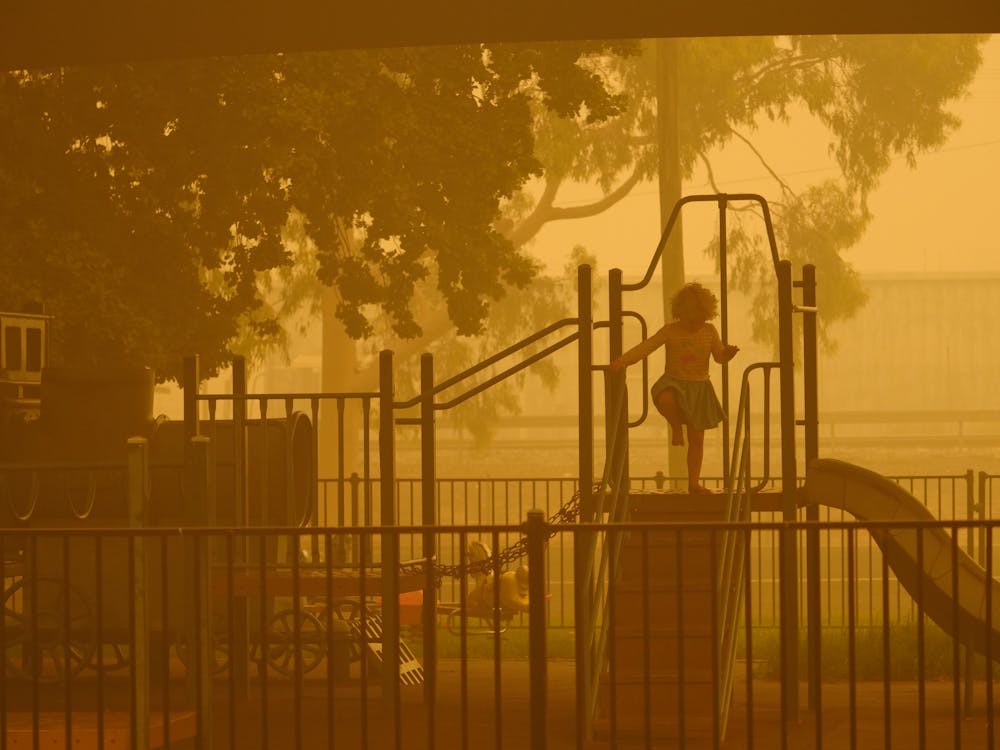
RNZ Pacific’s Jamie Tahana reports

In the Pacific, where several countries are already dealing with epidemics, some countries have taken extreme measures to try and halt the spread of the new coronavirus.
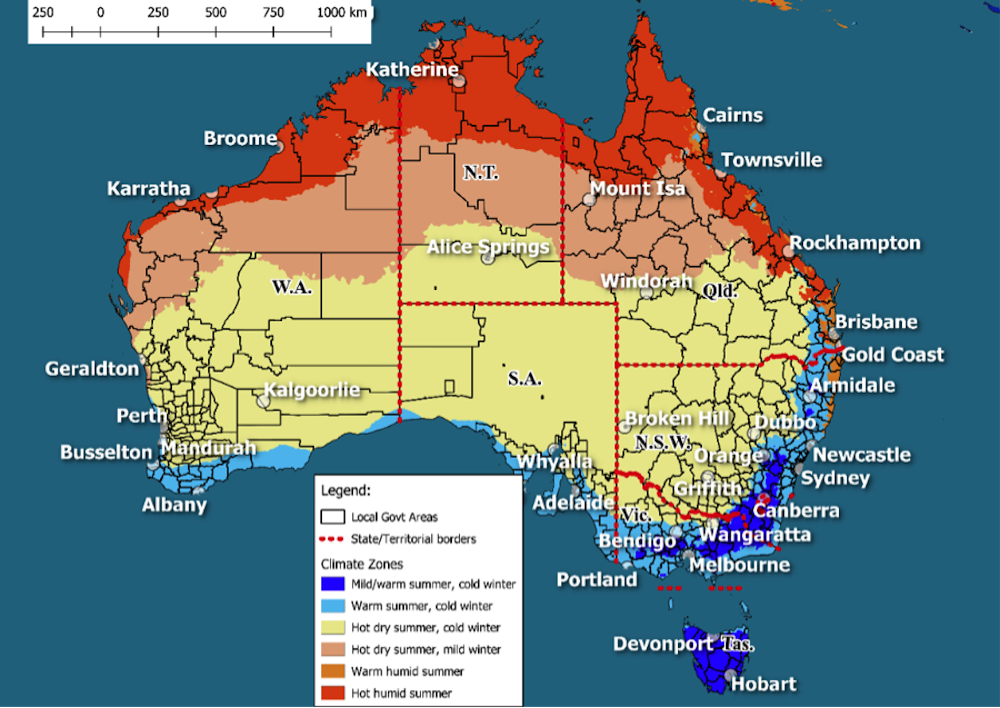
While authorities say the risk of an outbreak remains low, little is being left to chance – especially in measles-devastated Samoa.

This video and article are republished under the Pacific Media Centre’s content partnership with Radio New Zealand.

Print Friendly, PDF & Email

Article by AsiaPacificReport.nz

NZ coronavirus evacuees from Wuhan to be quarantined at unknown location

Former Deputy Prime Minister and New Zealand First leader, Winston Peters.

By RNZ News

New Zealanders evacuated from Wuhan amid the coronavirus outbreak will be quarantined in Aotearoa – not on Christmas Island like the Australians.

As efforts to co-ordinate evacuations continue, Foreign Affairs Minister Winston Peters said New Zealanders would be brought back home, but where to remained a question to be answered.

“We are looking at the quarantine options within New Zealand already, we are working on that.” He said the government would be able to provide information on where when it had made a choice.

READ MORE: Pacific coronavirus updates with RNZ

There are 53 New Zealanders registered as being in Wuhan and Peters said extracting them was a complex issue. The criteria for getting on an evacuation flight were still being worked out.

The timeframe depended on the Chinese government’s permission to allow an aircraft to be used for extraction.

– Partner –

LISTEN TO RNZ MORNING REPORT: ‘We are looking at the quarantine options within New Zealand already’

A domestic aircraft would be a quicker solution than a military aircraft.

Peters said the mission would require the agreement of whoever flew and staffed the plane. Health safety measures would be put in place for them as well, he said.

When asked if New Zealand would pull consular staff out of China he said “that’s a fair question” but that “we don’t want to overreact until we know what we are reacting to and what the issue in terms of medical rescue is all about … it’s a major concern and all aspects of the problem known now and potentially are being looked at”.

New Zealand and Australian diplomats are meeting in Wuhan today to finalise a plan to get trapped residents out.

Travel cancelled and insurance warning
Meanwhile, travel companies in New Zealand are cancelling tours to China amid the coronavirus outbreak. It comes after a directive from the Chinese government.

One of those is Flight Centre, which has dropped all planned tours until April.

Its head of product, Victoria Courtney, said if people had left already for a tour it would go ahead as planned.

“Our advice at this stage … is to come in, talk to your travel consultant and we will reaccommodate people. We are working with all of our preferred partners on the ground to reaccommodate people wherever possible onto other itineraries or other holidays if possible and work to postpone or reschedule trips if that’s what customers choose to do.

“I think our advice would definitely be looking at the safe traveller information which is evolving daily … avoid all unessential travel to china and try to either cancel, postpone or reschedule.”

Courtney warned people to check their travel insurance if they were still going.

“Travel insurance will cover customers … if they get sick and they need to be repatriated or they have any medical expenses that they incur through the coronavirus … but most travel insurance itself won’t cover situations of communicable disease so it’s really good at this time to look at your travel insurance policy.

“There are some … which do cover situations like this, but it’s really worth talking to your travel insurance company or your travel adviser and we can work through the fine details.”

This article is published under the Pacific Media Centre’s content partnership with Radio New Zealand.

Print Friendly, PDF & Email

Article by AsiaPacificReport.nz

Bees learn better when they can explore. Humans might work the same way

Source: The Conversation (Au and NZ) – By Adrian Dyer, Associate Professor, RMIT University

Understanding how humans learn is one key to improving teaching practices and advancing education. Does everybody learn in the same way, or do different people need different teaching styles?

The question may sound straightforward, but assessing and interpreting learning performance remains elusive. It is one of the most widely debated educational topics of today, especially for learners who have unique ways of demonstrating their understanding.

Self-based exploratory behaviour can enhance learning outcomes. Author supplied.

Bees learn

We looked for answers in what might be an unexpected place: among honeybees. In a new study published in the Video Journal of Education and Pedagogy, we use the bees as a model to understand how different individuals acquire information.

Using animal models to understand learning has a long and proud history. The Nobel Prize winner Ivan Pavlov famously trained dogs to associate a sound with a food reward. Eventually Pavlov demonstrated that the dogs began to salivate at the sound.

Pavlov’s experiment revealed the core theory behind how we understand associative learning in education, society and popular culture. (Think of how Gringott’s dragon was conditioned in Harry Potter And the Deathly Hallows.)

Much of what we know about the physiology of memory formation comes from the seminal work of the Nobel laureate Eric Kandel. Kandel used the simple sea slug (Aplysia californica) to investigate how connections between neurons in the brain enable learning.

Bees are surprisingly good learners and recent research shows individuals can learn faces, add and subtract and even process the concept of zero. Bees learn complex tasks through trial and error, where a reward of sugar water is provided for correctly solving a problem.

A honeybee with a white identification mark learns to discriminate between 3 and 5 item displays that each present the same overall surface area. Author supplied.

Teaching bees arithmetic

We were very interested to discover whether all individual bees would learn complex tasks in a similar way. Would each individual show similar learning performance throughout training, or would individuals demonstrate different learning strategies?


Read more: We taught bees a simple number language – and they got it


One foundation math skill we all learn at about preschool age is how to add and subtract numbers. Arithmetic is not a trivial task. It requires long-term memory of rules associated with particular symbols like plus (+) or minus (–), as well as short-term memory of what particular numbers to manipulate in a given instance.

When we trained bees to add and subtract, we evaluated how many trials it took each bee to acquire the task, and summarised the data examining how individuals learn in a video.

We were surprised to see that all bees did not learn the task at the same stage of training. Instead, different individuals acquired the capacity to solve the problem after a different number of trials.

There was no common learning stage throughout the trials where bees achieved success. Rather the task required bees to try different strategies to see what worked. In particular, the opportunity to learn from mistakes was critical to enabling the bees to learn maths-based problems.

Different paths of learning: Performances of three different bees in an arithmetic task. While all three reach success, the path to learning the task is very different. Author supplied.

This finding suggests that when brains have to learn multi-stage problems involving different types of memory, an opportunity for exploratory behaviour is what nature prefers.

What does this mean for education?

Learning through experience. Shutterstock

Humans and bees last shared a common ancestor about 600 million years ago. However, we share a large number of genes and it is likely we have some similarities in how we process information.

We know that bees and humans have a common way of processing numbers from one to four, for instance, suggesting that learning processes may be linked to evolutionary conserved mechanisms. So bees’ improved results when learning maths problems in an individual exploratory fashion suggests this may be how humans too are wired to acquire new skills.

Indeed, some recent research in learning and learning difficulties in children has found evidence that individuals frequently see and learn in different ways depending on environmental context.

Our biology may be programmed to encourage exploratory learning, rather than trying to acquire information in a set prescribed way. If so, our education systems should take this into consideration.

This idea may not be new, but may face challenges if computer-based learning is increasingly adopted as there is a risk that limited programming could limit learning styles.

On the other hand, the clever use of exploratory learning environments – digital or physical – may enhance learning outcomes.

We should not shy away from examining how our evolutionary history impacts learning and using this to our advantage. Understanding evolutionary principles could help in designing learning environments best suited to encouraging exploration for optimal learning, for example.

ref. Bees learn better when they can explore. Humans might work the same way – https://theconversation.com/bees-learn-better-when-they-can-explore-humans-might-work-the-same-way-129439

The Australian government needs to step up its fight to free Kylie Moore-Gilbert from prison in Iran

Source: The Conversation (Au and NZ) – By Peter Greste, Professor of Journalism and Communications, The University of Queensland

Diplomacy and hostage negotiation are both subtle businesses. The training, culture and professional instincts of diplomats and negotiators make them inclined to operate behind the scenes to solve problems.

Better to work relationships to sort things out quietly, they argue, than get all shouty in public where the messaging can get out of hand.

So it is with the case of Australian-British academic, Kylie Moore-Gilbert, who has been in Ward 2-A of Iran’s notorious Evin prison since October 2018, where she is serving a 10-year sentence for “espionage”.


Read more: As pressure on Iran mounts, there is little room for quiet diplomacy to free detained Australians


The Australian government unequivocally rejects the charges as baseless. Asked by reporters what his government was doing to get her out, Prime Minister Scott Morrison vaguely said

we’re doing everything that we can do to bring her home.

Foreign Minister Marise Payne wasn’t much more forthcoming. In response to a question about Moore-Gilbert, she said recently,

Our view is that we don’t accept the charges upon which she was detained, held, charged and convicted, and we want to ensure the conditions in which she is held are appropriate.

But if, after almost a year and a half since her detention, things are still dire for the Middle East specialist, the strategy has failed spectacularly.

‘In the midst of a serious psychological problem’

In a series of handwritten letters smuggled out and published last week by the Centre for Human Rights in Iran, the academic said her “health has deteriorated significantly” and

I think I am in the midst of a serious psychological problem, I can no longer stand the pressures of living in this extremely restrictive detention ward anymore.

She describes being held in solitary confinement, with the lights on 24 hours a day and without medical attention, adequate food or phone calls to her family. In another note to the prosecutor, she points out that under Iran’s own laws, after being convicted she must be moved to a “normal” prison ward.

The Washington Post journalist Jason Rezian, who was himself held on charges of spying in the same prison wing run by the IRGC (Islamic Revolutionary Guard Corps), called it “a place beyond government oversight”.

Her situation is much more dire than the (Australian) government is letting on.

So, when the traditional methods have failed so dismally to improve anything about Moore-Gilbert’s situation, surely the time has come to shift gears and get shouty to ramp up public pressure on both Australian diplomats and Iranian politicians.

Public pressure can mobilise government action

Whether they admit it or not, governments everywhere tend to respond to public uproar. In 2015, after I was released from a prison in Egypt where I had been held on terrorism charges for 13 months, I asked a European diplomat what my colleagues and I should be doing to free other colleagues who remained in jail. He responded:

Keep up the protests and the lobbying from human rights groups. Get on Twitter and Facebook; give interviews to TV and radio stations. Stay noisy.

My response was that Egyptians don’t “give a damn” about Twitter, Facebook or Human Rights Watch.

And he said,

But I and my colleagues do. And by keeping the fire burning under our backsides, you not only keep us focused, you also give us the tools to say to the Egyptians, ‘we can’t move on to other business until you sort this situation out’.

It is risky to draw direct comparisons between our case and Moore-Gilbert’s. But it was clear that in our campaign, the extraordinary public pressure gave then-Foreign Minister Julie Bishop the political weight she needed to mobilise more muscular diplomatic and consular resources than usual.

It pushed both her and the Prime Minister Tony Abbott to speak publicly and forcefully in favour of our release. The attention pushed the Egyptians to keep us in better conditions than other “terrorists”. It created space for a more coordinated international response. And in the end it proved too much for Cairo to resist.


Read more: Peter Greste released: good news from the Middle East


The dangers of negotiations

To be clear, it is always difficult for governments to balance their responsibility to help a citizen in trouble in a foreign land against broader national interests, particularly when it involves a strategically important country like Iran.

But if the Australian government is involved in any negotiations or “bargaining” to free Moore-Gilbert, it risks validating the Iranian strategy and encouraging more hostage-taking.

In this case, we still don’t know why Iran is holding Moore-Gilbert or what it might be asking for in exchange for her release. But given the escalating tensions between Tehran and the West, she is almost certainly being used as a bargaining chip.

If her family, colleagues and the public continue to heed the diplomats’ advice and remain quiet, and if Morrison and Payne keep tiptoeing around the issue, it is almost certain nothing will change.

ref. The Australian government needs to step up its fight to free Kylie Moore-Gilbert from prison in Iran – https://theconversation.com/the-australian-government-needs-to-step-up-its-fight-to-free-kylie-moore-gilbert-from-prison-in-iran-130591

Plants safely store toxic mercury. Bushfires and climate change bring it back into our environment

Source: The Conversation (Au and NZ) – By Larissa Schneider, DECRA fellow, Australian National University

Climate change and bushfire may exacerbate recent mercury pollution and increase exposure to the poisonous neurotoxin, according to our study published in the Journal of Paleolimnology.

Mercury stored in plants is released during bushfires, suggesting Australia is particularly at risk.

Our study in the Venezuelan Andes examined how mercury deposits responded when the world warmed by about 3℃ between 14,500 and 11,500 years ago. (Scientists call this period the transition from the Last Glacial Maximum to the Holocene).

We found the amount of mercury deposited in the environment at this time increased four-fold.

A dangerous neurotoxin

Mercury is a naturally occurring but dangerous neurotoxin that, in sufficient amounts, can cause impaired motor skills, breathing difficulty and memory problems in humans.

Once in the environment, mercury builds up in the bodies of animals. The build-up is magnified when those animals are then eaten by other animals, and so on. This process is called bioaccumulation and biomagnification.


Read more: Australia emits mercury at double the global average


Industrial activities such as mining, fossil fuel combustion and cement production release mercury into the environment.

Over the past 150 years, humans have tripled the amount of mercury in the atmosphere. It can remain there for months, and be transported by wind to even the most remote ecosystems on Earth.

Mercury is dangerous to humans and wildlife. Shutterstock

Climate change unlocks mercury deposits

Average global temperatures have increased by 0.8℃ since 1880 , with two-thirds of this warming occurring since 1975. Understanding how mercury responded to past known climate change may help us forecast future mercury exposure as the climate warms.

The Last Glacial Maximum (also known as an ice age), and the start of the Holocene (the present period), occurred between 19,000 and 11,700 years ago.


Read more: Another problem with China’s coal: Mercury in rice


It was not a smooth transition; global climate oscillated between warm and cold at this time.

Abrupt returns to cold, glacial-like conditions occurred during two periods of time called the Older Dryas and the Younger Dryas. These climate oscillations provide a unique opportunity to understand how mercury in our environment responds to rapid climate change.

Looking in lakes

Layers of sediment settle to the bottom of lakes over thousands of years. By collecting sediment cores, scientists can precisely date each layer and reconstruct past climates. Lake sediment also provide a good historical of mercury contamination.

We examined how mercury deposits in a small lake – the Laguna de Los Anteojos in the Venezuelan Andes – changed as the ecosystem shifted with the climate.

We studied how mercury deposits in this small lake, named Laguna de Los Anteojos, changed as the climate warmed. Wikimedia Commons

We found the amount of mercury in the lake increased rapidly as temperature increased – which doesn’t bode well for us.

It suggests human-caused global warming might drive a similar increase in the amount of mercury deposited in remote ecosystems, even if emissions are reduced.

As the climate warmed, we found, more mercury entered water systems. Once in the aquatic system, it can be absorbed by plants or consumed by animals, and pass on up the food chain in ever-increasing amounts.

Bushfires dump more mercury into the environment

Plants can store a significant pool of mercury from the atmosphere, which is good – until fires occur.

Unfortunately, mercury stored by vegetation is released during burning. This is particularly the case in contaminated areas, where plants store significant quantities of mercury emitted from human activities such as mining.

Given the recent catastrophic fires engulfing large tracts of land in Australia, that’s a worry.

Plants can store a significant pool of mercury from the atmosphere, which is good – until bushfires occur. Shutterstock

There’s a dearth of mercury studies in Australia (a fact acknowledged even by the United Nations) so it’s not yet possible to estimate mercury emissions from the recent Australian bushfires.

One thing we do know, however, is the number of bushfires in Australia is not expected to decrease.


Read more: Many of our plants and animals have adapted to fires, but now the fires are changing


It sounds bleak, but Australian researchers are working hard to better understand how mercury behaves as our ecosystem changes.

The more we know, the better our chances of mitigating mercury pollution and the risk it poses to humans and wildlife.

ref. Plants safely store toxic mercury. Bushfires and climate change bring it back into our environment – https://theconversation.com/plants-safely-store-toxic-mercury-bushfires-and-climate-change-bring-it-back-into-our-environment-129788