Page 1023

Darwin’s ‘smart city’ project is about surveillance and control

Source: The Conversation (Au and NZ) – By Jathan Sadowski, Research Fellow in the Emerging Technologies Research Lab, Monash University

Darwin City Council installed a network of hundreds of new devices across the centre of the city last year. This web of “smart” lights, environmental sensors and video cameras is designed to give the council more power to monitor and manage urban places – and the people who occupy them.

The council says the A$10 million “Switching on Darwin” project is “delivering smart technology to encourage innovative solutions and enhance community life”. We argue it is better seen as a project of surveillance and control, which is embedded in a long history of settler-colonial urbanism.

Intensified surveillance

Journalists and community members alike worried about the project. The scale and rapid rollout of the project, some argued, meant it would erode Darwinians’ privacy through intensified surveillance.


Read more: Is China’s social credit system coming to Australia?


The introduction of new digital surveillance measures in Darwin poses particular concerns for already marginalised groups, as ANU sociologists Gavin Smith and Pat O’Malley have pointed out. The most affected are likely to be Aboriginal and Torres Strait Islander people, who are already disproportionately targeted, criminalised and incarcerated.

The Darwin project also occurs in the context of the federal government’s plan to develop northern Australia. This development agenda has been criticised for, among other things, its lack of interest in the Indigenous people who are the traditional owners of much of the land.

Privacy concerns dismissed

Two of the chief concerns for Switching on Darwin critics were the possible use of facial recognition software and the potential involvement of Chinese tech company Huawei. Darwin’s lord mayor dismissed criticisms as the baseless concerns of “conspiracy theorists”. He also gave advice to people worried about privacy: “don’t get a licence, give away your credit cards, and get out of Facebook”.

Compared with the slick sales pitch that usually accompanies smart city projects, the lord mayor’s blunt approach is more like the strident accusations of “fake news” that are now common in political discourse.

The logic of ‘smart cities’

But if we dig a little deeper, the lord mayor’s comments reveal a set of assumptions about “smart cities” that animate conversations about how cities should work in Australia.

First, that digital technologies – typically in the form of solutions and services bought from companies outside government – are a necessary part of “vibrant” and “liveable” “world cities”.

Second, that privacy and surveillance issues are unfortunate byproducts of technological progress, but are outweighed by their benefits.

And finally, that technologies are straightforward non-political ways to change cities.

For governments and corporations, the vision of the smart city means a generic “public” enjoys more convenience, planners enjoys more information and efficiency, and politicians enjoy more growth and security. It’s an enticing vision, but it is built on faulty assumptions.

This vision assumes smart systems are simply a matter of technocratic management or corporate outsourcing and focuses on the supposedly unprecedented “disruption” of emerging technologies. In doing this, it overlooks important connections between the operations of smart urbanism and much older practices of colonial control.

Smart urban systems function in remarkably similar ways, for similar purposes and with similar outcomes. For example, the high-tech, data-driven systems that police now use to identify and assess people, like the New South Wales Police Force’s Suspect Targeting Management Plan, disproportionately target the same exact marginalised groups who have always been subjected to over-policing – in this case young and/or Aboriginal people. But now these decisions can be hidden and justified by algorithmic analysis.

Existing power dynamics and structural inequalities cannot be erased by installing some new digital systems and declaring that the future city has arrived. Instead, the new systems can make these dynamics harder to see and at the same time entrench them more deeply.

Captured cities

In practice, the smart city is very different from the vision. It is better understood as the captured city.

As a model for urban governance, the captured city takes the capabilities offered by smart systems and puts them to work in surveillance and control. Often this includes importing tools and ideas from military intelligence into police departments, and extending methods of colonial control – such as welfare restrictions in Aboriginal communities – to the population at large.

The city and its inhabitants are thus “captured”, both by surveillance that collects data and by authorities who control territory.

What happens to the captured city then will be shaped by the context in which the smart urban systems are deployed.


Read more: Indigenous communities are reworking urban planning, but planners need to accept their history


There is no reason to believe things will be different now because the boosters of smart urbanism drop a few buzzwords and make some lofty promises. Indeed, these technologies equip the state with even better tools to monitor and control its population – often by design. We’ve heard it all before, every time a tech executive or venture capitalist makes promises to fulfil the techno-utopian dream of disruption.

Darwin is not alone

Darwin is well on its way to becoming a captured city, but it is not alone. As all levels of government across Australia seek smarter ways of governing, examples of similar urban technologies being used in policing and control are springing up around the country.

These projects include a police scheme to target people who they believe may commit crimes in future in Sydney (which disproportionately affects Aboriginal people), “Crime Prevention Through Environmental Design” guidelines in Brisbane and facial recognition systems in Perth.

These examples demonstrate how the perceived neutrality of smart city technology uses stories about progress, modernity and innovation to entrench and disguise existing urban injustices.

Ultimately, the “smart city” in Australia is best understood not as a break with older, analogue modes of governing urban space, but as a continuation of the settler-colonial project of displacement, enclosure and control.

ref. Darwin’s ‘smart city’ project is about surveillance and control – https://theconversation.com/darwins-smart-city-project-is-about-surveillance-and-control-127118

Why the coronavirus has become a major test for the leadership of Xi Jinping and the Communist Party

Source: The Conversation (Au and NZ) – By Yun Jiang, Senior Research Officer, Australian National University

Last week, the World Health Organization (WHO) declared coronavirus a global health emergency. In the same statement, the agency said it

welcomed the leadership and political commitment of the very highest levels of Chinese government, their commitment to transparency and the efforts made to investigate and contain the current outbreak.

Indeed, Chinese authorities have put in place unprecedented measures to slow the spread of coronavirus, including quarantining Wuhan and surrounding cities, home to over 45 million people.

While some have praised Chinese authorities for these tough measures, others have criticised the local and central governments for cover-ups, a lack of transparency, being slow to react and mishandling the early stages of the outbreak.

For some, China’s authoritarian political system is to blame for making the situation worse and delaying action until it was too late.

Now, the crisis is being seen as a key test of President Xi Jinping’s leadership and the ability of the Communist Party to effectively respond to and manage a health emergency.

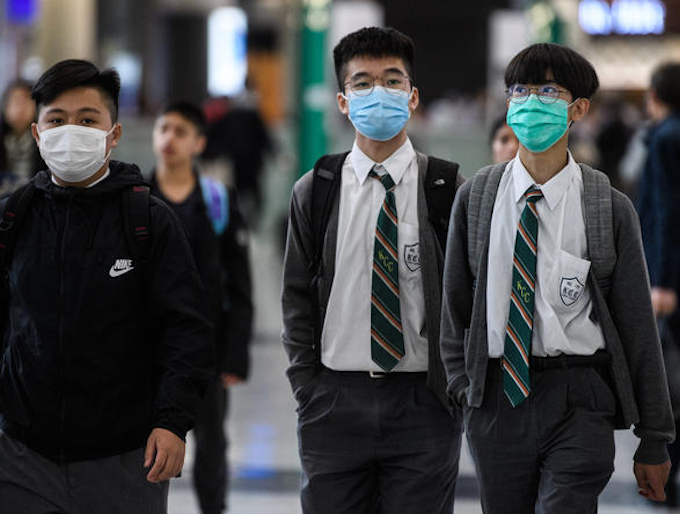
There wasn’t national attention on the outbreak until late January, weeks after the government reported the first cases to the WHO. Alex Plavevski/EPA

Too slow to react

Suspicions of the new virus first emerged in early December. But it wasn’t until the end of the month that the Chinese government reported 27 cases of pneumonia to the WHO. The state media mentioned this only briefly.

A day later, police in Wuhan detained eight doctors for spreading “rumours” about a new outbreak of suspected SARS.

China reported the first death from the outbreak on January 11, but without accompanying warnings to the public to take extra precautions. No new infections were reported until January 20, when Xi issued a directive for party committees and governments at all levels to take effective measures to combat the outbreak.


Read more: Fear spreads easily. That’s what gives the Wuhan coronavirus economic impact


During this time, it was business as usual in Wuhan, with the government organising a New Year banquet for 40,000 families.

By the time Xi issued his directive, it had been seven weeks since the virus was first recorded and three weeks since it was reported to the WHO.

Crucially, it was also 10 days after the official start of the Spring Festival (Lunar New Year) travel period, the largest annual human migration in the world.

At this point, the central government finally sprang into action, locking down Wuhan, shutting down public transport, building new hospitals and giving more leeway to the media to report on the unfolding crisis.

But it may have been too late. According to some estimates, five million people had already left Wuhan before these measures took effect.

Silence, followed by censorship

The initial reaction of the Chinese authorities to the outbreak was to rely on traditional forms of censorship rather than transparency.

This is clear from the initial suppression of whistleblowers – the detention of the eight doctors for spreading “rumours” – as well as the subdued reporting from the state media before January 20.

One possible reason for the silence is Beijing believed it could contain the outbreak without any extra measures, particularly at the start, when the nature of the virus was uncertain. The authorities may have believed mass panic would do more harm than the virus itself.


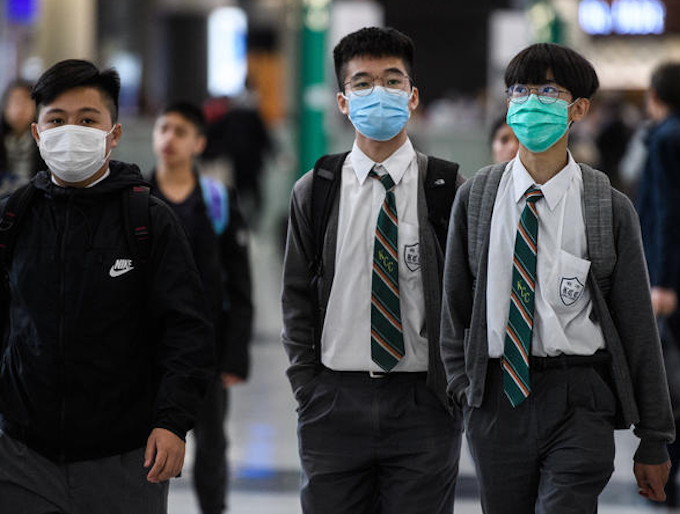
Read more: Coronavirus fears can trigger anti-Chinese prejudice. Here’s how schools can help


But after containment appeared unlikely, the central government wasted crucial time deciding what to do. Without clear direction from Beijing, the authorities in Wuhan chose not to act, which allowed the infection to spread.

Media coverage of the outbreak finally exploded after Xi’s January 20 directive, including by non-state media. However, strict censorship returned after two weeks, ostensibly to combat misinformation.

Playing the blame game

As anger deepens over how the crisis has been handled, the public will want to see officials lose their jobs and even be prosecuted.

The process of finding people to blame has started within the Communist Party. And already, we are seeing local government officials being sacked.

But the central government’s role should also be scrutinised. Beijing must have known about the outbreak by December 31, when it reported the cases of pneumonia to the WHO. Serious questions need to be asked, then, about why the central government chose not to respond publicly for another three weeks.

When things go right in a dictatorship, the credit goes to the leader. But when things go wrong, the blame can also rise to the top.


Read more: Xi Jinping’s grip on power is absolute, but there are new threats to his ‘Chinese dream’


In the late 1950s and early 1960s, the party was able to push the blame for the Great Leap Forward and the subsequent Great Famine onto local cadres. However, Mao’s prestige within the party also suffered greatly as a result.

Xi has followed Mao’s leadership style in many aspects, not least the cult of personality he has built around himself. He has also been consolidating power since he became party general-secretary in late 2012.

Sensing the potential political damage from the current crisis, the state media is now trying to shield Xi from direct criticism and blame.

Instead, it is focusing on the responses of other top leaders, particularly Premier Li Keqiang. In fact, for nearly a week from late January to early February, Xi did not appear on the front page of the party mouthpiece, People’s Daily, in stories related to the outbreak.

Premier Li Keqiang was mocked online for leading workers in a cheer when he visited Wuhan. Shepherd Zhou/EPA

Propaganda and trust

All propaganda must have heroes and villains. The virus is the villain in this story, and the biggest heroes are the front-line doctors who are working long hours in dangerous conditions to fight it. The people, government and party have also been cast as heroes, united against a common threat.

The party knows the public has low trust of authorities when it comes to transparency, as it has an extensive history of cover-ups of everything from natural disasters to accidents to outbreaks of other diseases like SARS.

It hopes the focus on unity and heroes, coupled with more timely updates, will restore people’s trust in the government’s handling of this outbreak.

However, this is unlikely given the scale of public anger at the moment. This, in turn, may explain the state media’s search for other villains, particularly the US and other western countries that are shutting their borders to China.

A key test for the party

The party’s prestige and legitimacy are both on the line. Crises like this are a serious test of the party’s assertions about the inherent superiority of China’s political system.

Ultimately, the Chinese people are likely to judge the party harshly, despite its efforts at narrative control.

One thing is for certain: the unfolding crisis is a human catastrophe, and Beijing has much to answer for.

ref. Why the coronavirus has become a major test for the leadership of Xi Jinping and the Communist Party – https://theconversation.com/why-the-coronavirus-has-become-a-major-test-for-the-leadership-of-xi-jinping-and-the-communist-party-130788

A tale of 2 rivers: is it safer to swim in the Yarra in Victoria, or the Nepean in NSW?

Source: The Conversation (Au and NZ) – By Ian Wright, Senior Lecturer in Environmental Science, Western Sydney University

Cooling off with a swim in the river is a popular summer pastime in Australia, particularly for people who live a long distance from the beach.

But urban waterways often have poor water quality, and swimming in contaminated water can pose health risks. Water-borne pathogens, if ingested, can cause infectious diseases such as gastrointestinal illness.

In our recently published research we compared a popular NSW river, the Nepean River in western Sydney, with the upper reaches of Victoria’s iconic Yarra River (from Kew in Melbourne to Launching Place in the Yarra Ranges).

We investigated how safe these rivers were for swimming, based on levels of faecal bacteria. We also assessed what information is available to inform people of the rivers’ suitability for swimming.

While the water quality is generally better in the Nepean River, NSW doesn’t provide guidance on whether it’s safe for swimming. So in this regard, Victoria’s Yarra River could be considered safer.


Read more: How to cope with extreme heat days without racking up the aircon bills


What contaminates our rivers?

Both the Nepean River and the Yarra River are exposed to many potential sources of contamination, such as faecal wastes from farm livestock, wildlife, and domestic animals, and pollution from urban streams and sewage.

We calculated flows in the Nepean River can contain up to 30% treated sewage. However, the NSW Environment Protection Authority highly regulates the sewage to protect river water quality.

Heavy rain reduces water quality as the rain mobilises pollutants and carries them into waterways.

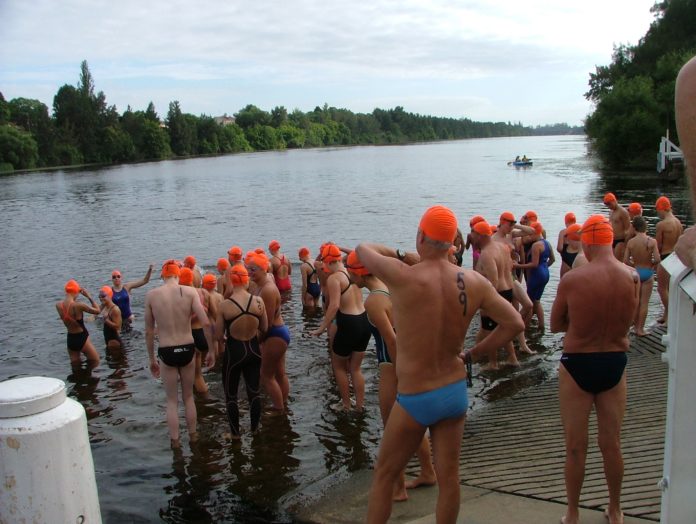
Many people swim in the Nepean River at Penrith, including in organised events. Ian Wright, Author provided

Water quality: Victoria versus New South Wales

We generally use the presence of E. coli bacteria as an indicator of pollution from animal and human faecal wastes in rivers. It also indicates the risk of swimmers contracting a water-borne disease. If people swim in water with highly elevated E.coli numbers, they have a greater chance of getting sick.

NSW doesn’t have guidelines which stipulate safe levels of E.coli in freshwater rivers. But Victorian guidelines recommend E.coli in freshwater rivers and lakes used for swimming doesn’t exceed 260 organisms per 100mL.


Read more: More of us are drinking recycled sewage water than most people realise


It was simple to get advice on water quality for swimming at four locations on the Yarra River on the “Yarrawatch” website.

Swimming is prohibited in the lower, highly urbanised parts of the Yarra, but Yarrawatch provides daily updates on the safety of swimming in its cleaner freshwater reaches. Yarrawatch also documents the actual bacteria concentrations from weekly samples collected during the swimming season, which inform the safety recommendations.

At the time we published this article all sites on the Yarra were “poor”, meaning not suitable for swimming.

There was no similar information publicly available for swimmers in the Nepean River, so we obtained water quality data from NSW Government agencies.

The Nepean River E. coli bacteria results showed river water quality was generally very good, particularly at the sites upstream of urban and agricultural development.

We also compared bacteria results according to rainfall. After heavy rain in the previous week, the E. coli bacteria levels spiked. The Nepean River at Penrith Weir, a very popular swimming spot, often recorded hazardous E.coli results after more than 40mm of rain in a week.

Swimmers need advice

Our biggest concern is Nepean River users are not given any advice on water quality. Up-to-date guidance is important to enable people to make an informed choice about whether or not they should swim.

For example, very young children have poorly developed immune systems and may be more susceptible to getting sick from water-borne pathogens. Their parents and caregivers should be warned if E. coli levels are high at a particular swimming spot.

Warrandyte is one of several swimming spots along the Yarra. From shutterstock.com

In contrast, visitors to any coastal or harbour swimming beach in eastern Sydney can look up the NSW Government Beachwatch advice. This guidance is updated daily based on regular testing of faecal bacteria and other factors, including rainfall.

But in western Sydney, swimmers and other river users have no such guidance. The decision to go swimming in the Nepean River can therefore be a gamble.


Read more: Watered down: what happened to Australia’s river swimming tradition?


Faecal bacterial data is actually collected in the Nepean and other rivers by NSW government agencies. Yet they don’t make the results freely available to the public.

The NSW government is failing in its duty of care in this regard. It must issue health warnings when it detects hazardous bacterial results in the river.

So which river has the best water quality for swimming, the Nepean or the the Yarra? While the Yarra water quality may be poorer, authorities at least offer advice to river users to guide safe swimming.

If you intend to swim in the Nepean, avoid swimming after rain. If you’re unsure, wait at least a few days, preferably a week, after significant rainfall.

ref. A tale of 2 rivers: is it safer to swim in the Yarra in Victoria, or the Nepean in NSW? – https://theconversation.com/a-tale-of-2-rivers-is-it-safer-to-swim-in-the-yarra-in-victoria-or-the-nepean-in-nsw-130791

Animals suffer for meat production – and abattoir workers do too

Source: The Conversation (Au and NZ) – By Tani Khara, PhD student in Sustainability, University of Technology Sydney

Industrial livestock farms or factory farms account for more than 50% of global pork and poultry meat production and 10% of beef and mutton production. Graphic exposés of how animals are processed in such places rarely fail to shock us.

It’s important to keep the welfare of animals at these facilities at the forefront of the story. But along the way, it is worth remembering that working in these environs can have devastating impacts on abattoir employees, too.

Australian research suggests repeated exposure to violence in an abattoir causes psychological damage. It found aggression levels among meatworkers were so high they were “similar to some reported for incarcerated populations”.

A Human Rights Watch report also named meatpacking as “one of the most dangerous factory jobs in America, with injury rates more than twice the national average.”

So before you next go food shopping, its worth learning more about the human suffering behind meat production.

Few people consider the human toll of meat production. Dal Peled/AAP

A harsh environment

Research has shown the occupational hazards faced by abattoir workers include:

The industry also tends to have high levels of turnover and absenteeism.


Read more: Who’s responsible for the slaughtered ex-racehorses, and what can be done?


The psychological toll

The hazards are psychological as well as physical. One paper on the psychological harm suffered by slaughterhouse employees in the US noted that abattoir workers

view, on a daily basis, large-scale violence and death that most of the American population will never have to encounter.

There’s even a form of post-traumatic stress disorder linked to repetitive killing: Perpetration-Induced Traumatic Stress (PITS). Symptoms can include depression, paranoia, panic and dissociation.

Another study noted relatively high levels of anxiety, anger, hostility and psychoticism among slaughterhouse workers. Symptoms can also include violent dreams and some workers seek treatment similar to that used to help war veterans.

Media reports of animal cruelty in abattoirs often provoke widespread shock. RSPCA NSW/AAP One

News reports in Australia have also revealed cases of abattoir workers mistreating racehorses destined for slaughter.

Surprisingly, Flinders University research has found female abattoir workers had higher propensities for aggression – particularly physical and verbal – than their male colleagues. The study had a small sample size, but pointed to the need for more nuanced research into meatworkers, including gender differences.

‘Down in the blood pit’

The work is monotonous and unrelenting. Author Timothy Pachirat, who wrote about his time working at a slaughterhouse in the US, notes

the reality that the work of the slaughterhouse centers around killing evaporates into a routinized, almost hallucinatory blur. By the end of the day […] it hardly matters what is being cut, shorn, sliced, shredded, hung, or washed: all that matters is that the day is once again, finally coming to a close.

Author Gail Eisnitz, who researched the industry for a book, quoted a slaughterhouse worker as saying:

Down in the blood pit they say that the smell of blood makes you aggressive. And it does. You get an attitude that if that hog kicks at me, I’m going to get even. You’re already going to kill the hog, but that’s not enough. It has to suffer.

It’s not an easy job. Shutterstock

One news investigation said of employees in slaughterhouses that they are:

most often immigrants and resettled refugees, slaughter and process hundreds of animals an hour, forced to work at high speeds in cold conditions, doing thousands of the same repetitions over and over, with few breaks.

US researcher Stephanie Marek Muller, in her paper Zombification, Social Death, and the Slaughterhouse: US Industrial Practices of Livestock Slaughter, argued:

to ignore the plight of slaughterhouse workers is to ignore a key corner of […] the pursuit of social justice

Another study in the US called for a closer examination of a possible link between animal abuse and violence between humans, including in “institutionalised social practices where animal abuse is routine, widespread, and socially acceptable.”

Spare a thought

Meat on the consumer’s plate today is often distanced from the reality of suffering of non-humans and humans alike.

More research in this field is needed. But what’s clear is that working in an abattoir can be extremely taxing – both physically and psychologically.

So when buying farmed meat, perhaps spare a thought for not just the animals but also the workers who helped produce it.


Read more: Will consumer horror undo the meat industry?


ref. Animals suffer for meat production – and abattoir workers do too – https://theconversation.com/animals-suffer-for-meat-production-and-abattoir-workers-do-too-127506

Failing a subject isn’t just the student’s fault. Universities can and should help

Source: The Conversation (Au and NZ) – By Rola Ajjawi, Associate Professor, Deakin University

As Australian students start university, failure is probably the last thing they want to think about. But university failure is depressingly common.

Our study in a large Australian university found up to 52% of students in education, civil engineering, nursing and commerce failed at least one unit during their degree.

Failure is painful and costly for students, teachers and universities. Recent studies show several factors contribute to student failure.

They include personal factors such as self-confidence, study habits and attitudes; life circumstances such as health, employment and family responsibilities; and institutional factors such as policies, procedures and the curriculum.

Universities shouldn’t make students wholly responsible for removing the obstacles in their path to success. Universities need to work with students to stem the tide of failure.

How many students fail?

Our study analysed data of more than 9,000 students at one Australian university. We also surveyed 186 undergraduate students who had failed at least one unit of study in 2016 but were still enrolled in 2017.

Between 23% and 52% of students in four major study areas – education, civil engineering, nursing and commerce – failed at least one unit of their degree.


Read more: The typical university student is no longer 18, middle-class and on campus – we need to change thinking on ‘drop-outs’


Around 58% of those who failed one subject went on to fail again, in the same subject or another in the course.

Our statistical analysis showed students who failed one subject were four times more likely than those who didn’t fail to drop out of their course.

Failure rates differ across courses due to a combination of student demographics, including a higher percentage of international students, and other factors such as assessment policies and relationships between staff and students.

It’s not because they’re lazy

Despite being common, failure is rarely discussed in universities and is often attributed to students’ laziness or not caring. But our study found students were often deeply disappointed about failing a subject.

Many students reported feeling shocked, highlighting their lack of understanding of expectations. Students identified heavy work burdens outside university, physical or mental health problems and financial strain as the main factors in their failure.

Most students experienced a combination of these factors that increased their inability to cope with their study load.

This was particularly the case when they had to repeat units, paying the full amount of fees again and increasing their stress.

One student told us:

The more units I fail the more I have to pay […]  Sometimes I am so overwhelmed about what I have to do and what to do if I fail that I just cry in the middle of the night until I fall asleep.

Other factors beyond their control were family responsibilities, poor curriculum or assessment design, lack of support from teaching staff and inflexible university rules.

They also identified their own poor study habits, learning or language difficulties, lifestyles or social isolation as factors.


Read more: ‘I’m an international student in Australia. How do I tell my parents the pressure they put on me is too much?’


Around one quarter of our survey respondents were international students. This is roughly proportionate to their overall representation in the courses we looked at.

How students cope

Students who made changes after they failed talked about prioritising study habits and seeking help from family, friends and peers to reframe the experience into a learning one.

Only 40% made use of institutional support services and course advisers. Many indicated shame interfered with them looking for help.

One student said:

I went [to a study support service] a couple of times but got embarrassed that I couldn’t follow through on the strategies suggested and never went back.

We analysed the emotional language students used and identified disappointment as the most common emotion expressed. This was followed by them being “stressed”, “depressed”, “devastated” and “embarrassed”.

Around 30% of students said they had made no changes to their study approaches, putting them at risk of failing again.

One student, who nominated needing to work long hours and health issues as the main factors that contributed to his failure, said he was:

studying the same as the past, obviously I’m going through the same circumstances as before […] Can’t have a break, because cannot delay completion of the course for full time work.

What can universities do?

Students in our study were often deeply distressed but, in many instances, received little sympathy from the university.

The obvious first step universities should make is to reach out to students at the point of failure – preferably through direct contact but at least by email and phone – with sensitivity and humanity.

Universities can offer positive suggestions, helping students to mobilise their own resilience strategies through gaining perspective, addressing health issues and seeking social and academic support.

It is possible to help individual students unpack the factors that impacted their performance and tailor interventions to help them improve their study habits, navigate the system, develop social networks and adapt their study pathways. This is particularly important for students who have failed repeatedly.


Read more: Better academic support for students may help lower university attrition rates


Universities can also help by de-stigmatising failure at an institutional level. This would normalise help-seeking and promote peer support options. Several US universities are doing this by opening up discussion around what it means to fail, featuring accounts from successful alumni about their own experiences of failure and providing an app students can use to help manage their emotions.

Universities have a responsibility to help students who have failed. The way students make sense of, and recover from, their experiences will influence their likelihood of persisting, adapting and succeeding.

ref. Failing a subject isn’t just the student’s fault. Universities can and should help – https://theconversation.com/failing-a-subject-isnt-just-the-students-fault-universities-can-and-should-help-126195

Smart city or not? Now you can see how yours compares

Source: The Conversation (Au and NZ) – By Tan Yigitcanlar, Associate Professor of Urban Studies and Planning, Queensland University of Technology

The highest-ranked areas in an Australia-wide assessment of smart city performance are all in metropolitan regions with higher population densities. “Australia’s 60 top-performing local government areas house more than quarter of the nation’s population,” we note in the newly released Smart Cities Down Under report.

As well as highlighting major regional disparities, our analysis reveals the local government areas we assessed against four smart city indicator areas generally perform strongly in one of these, “Liveability and Well-being”. Performances are weaker in “Sustainability and Accessibility” and “Governance and Planning”. High performance in “Productivity and Innovation” existed only in the top-performing areas.

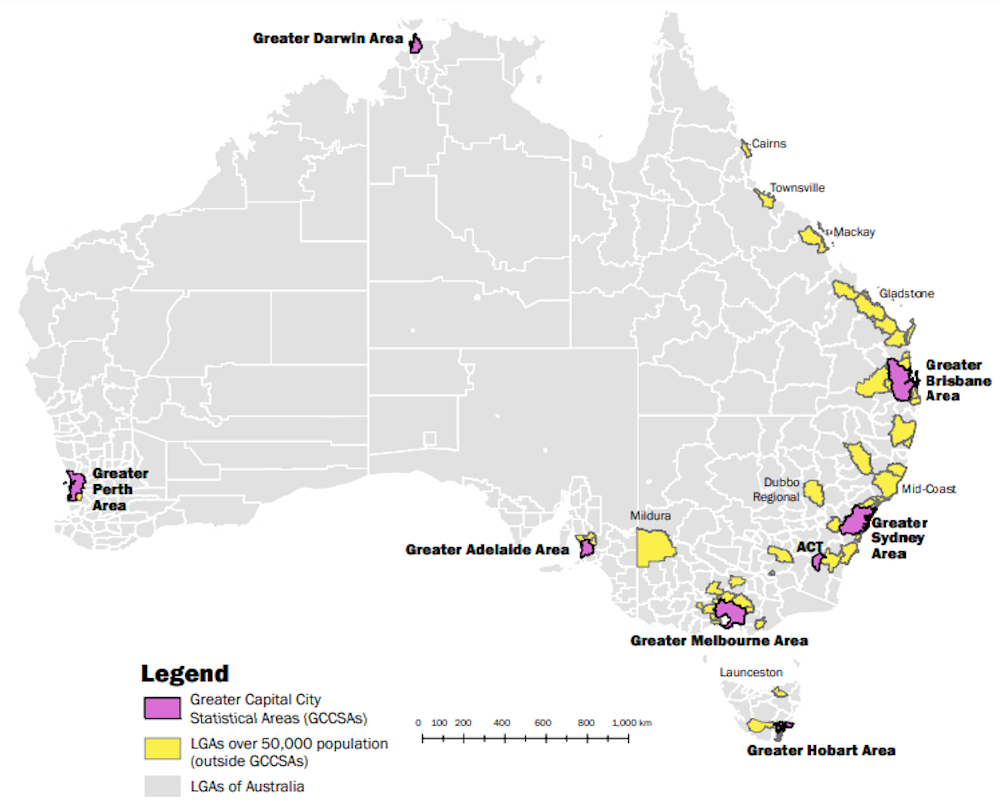
We assessed 180 local government areas (out of 563 in Australia), representing more than 85% of the nation’s population, against smart city criteria. We included all local government areas in metropolitan Australia (Greater Capital City Statistical Areas) and regional local government areas with populations of more than 50,000.

Locations of investigated local government areas. Author provided

This study is an expanded version of the Smart Cities of the Sunshine State 2018 report.


Read more: Just how ‘city smart’ are local governments in Queensland?


It’s not all about technology

Cities are complex systems and should be evaluated in a holistic way. This means not placing excessive weight on technological achievements – such as tech for tech’s sake – in lieu of economic, social, environmental and governance outcomes.


Read more: Smart cities: world’s best don’t just adopt new technology, they make it work for people


Our conceptual framework to evaluate smartness levels was built on the four pillars of economy, society, environment and governance. The evaluation criteria are shown below.

Author provided

We categorised the 180 local government areas we assessed into three performance categories:

  • leading, the best-performing cities

  • following, the cities with achievements and potential, but not at the level of the best performers

  • developing, the cities with some progress and potential, but not as substantial as the other two categories.

Who’s leading the way?

All areas in the leading category were completely contained within capital city metropolitan areas.

New South Wales ranked first with 20 local government areas. Then came Western Australia (14), Victoria (12), South Australia (9), Northern Territory (2) and Queensland, Australian Capital Territory and Tasmania (1 each). In terms of population in leading areas, the ranking changed to: NSW (2,348,388 people), Victoria (1,477,964), Queensland (1,131,155), WA (557,163), ACT (397,397), SA (370,719), NT (112,590) and Tasmania (50,439).

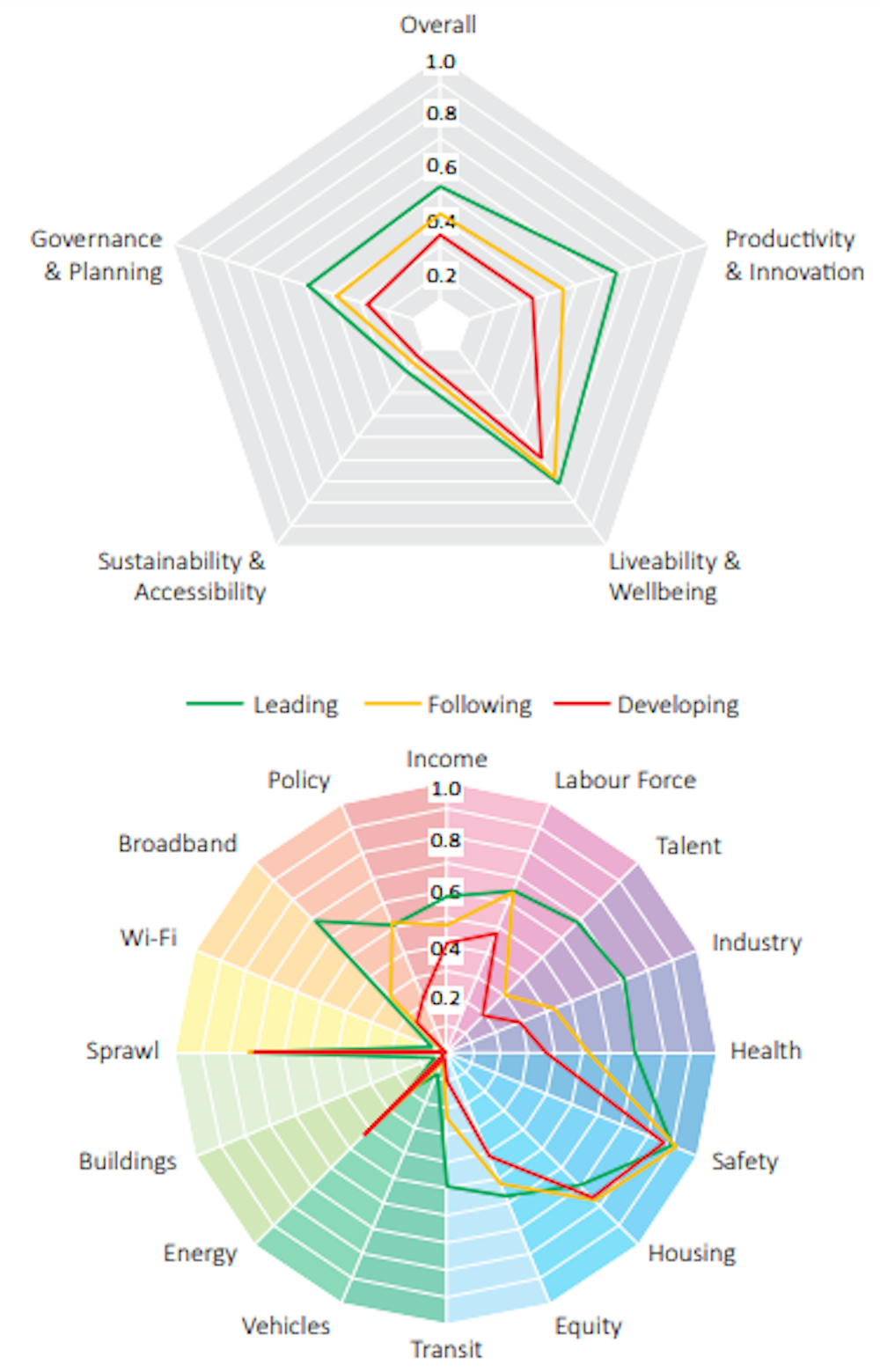
You can see below how the combined results for each of leading, following and developing performers compare against the four smart city indicator areas.

Comparison of leading, following and developing cluster performances. Author provided

You can see the smart city performance matrix of your local government area here.


Read more: From Smart Cities 1.0 to 2.0: it’s not (only) about the tech


Key steps towards smarter cities

Metropolitan local government areas dominate the leading performance category. Mechanisms such as the Australian government’s City and Regional Deals and funding through the Smart Cities and Suburbs Program have delivered some tangible impacts.

The performance is less strong in regional Australia. A national smart city strategy and guidelines are needed to help make these localities and communities smarter.

This policy should take on the following findings of our international study of smart cities:

  1. smart cities that focus only on technology seldom work

  2. local governments should adopt the role of facilitator

  3. risks need to be shared with the private sector

  4. local governments should be open to innovations and learn from mistakes

  5. smart cities should focus on being inclusive

  6. resource consumption must be considered, particularly in relation to the longevity of technological infrastructure

  7. long-term sustainability depends on renewable resources

  8. smart cities require a smart community that is knowledgeable, conscious, forward-thinking, engaged, united and active.


Read more: How does a city get to be ‘smart’? This is how Tel Aviv did it


The Urban Studies Lab at Queensland University of Technology prepared the report in partnership with the Commonwealth Department of Infrastructure, Transport, Regional Development and Communication. Our Smart City Research Team has had conversations with city managers, mayors, local government professionals and key community stakeholders (e.g., businesses, not-for-profits, NGOs and academic institutions, among others). These conversations confirm local governments have a critical role to play if Australia is to manage vexing societal challenges from climate change to accessing economic opportunities, and even dealing with transformations driven by information technologies such as automation, innovation and artificial intelligence).


Read more: As cities grow, the Internet of Things can help us get on top of the waste crisis


Local governments do not function well in isolation. Any local government is only as strong as the other local governments within its vicinity. They must interact to share and access public resources.

Leading cities can learn from the frugal innovations of their less fortunate peers. Our best-performing cities are similar to incumbents in the industry sector in that they face their own challenges to modernise.

Too often these cities seek solutions that are not frugal and cannot leverage indigenous knowledge. Less well-resourced communities must engage in different modes of innovation. We believe better networks need to be set up to foster dialogue and exchange practices across communities.

The good news in our report is that our leading cities fare well. The not-so-good news is that the other local governments need to be brought along on a transformation journey. No city is an island, and no country can treat cities as independent elements.

Australia, we believe, should consolidate its local governance and planning culture to lead the change.

ref. Smart city or not? Now you can see how yours compares – https://theconversation.com/smart-city-or-not-now-you-can-see-how-yours-compares-130881

Superannuation isn’t a retirement income system – we should scrap it

Source: The Conversation (Au and NZ) – By Cameron Murray, Research Fellow – Henry Halloran Trust, University of Sydney

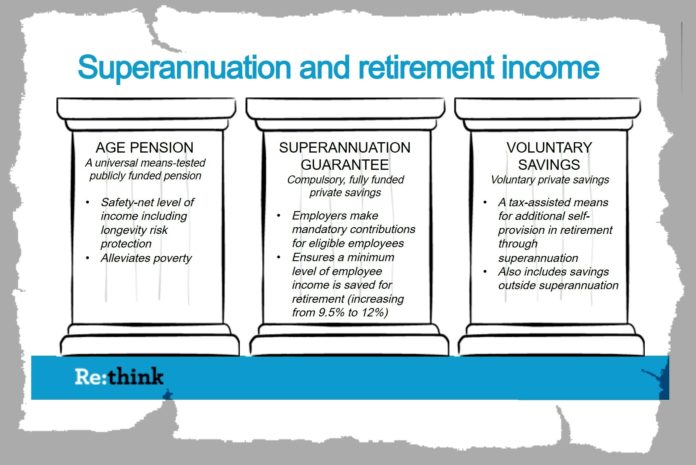
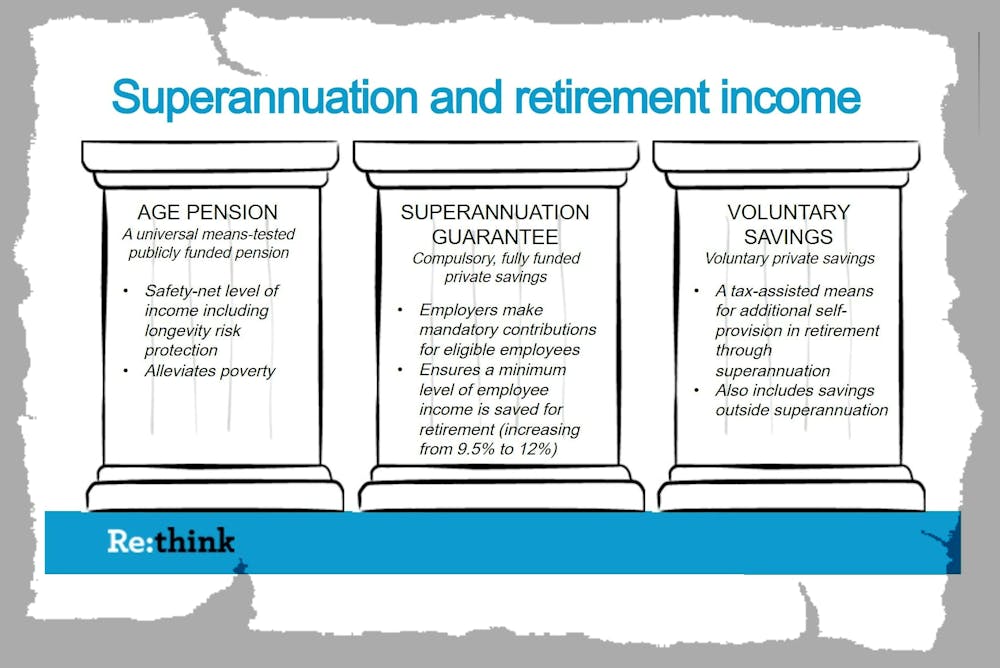
Discussions about Australia’s retirement income system typically begin by reciting the political slogan that there are “three pillars” to the system — the age pension, compulsory super, and voluntary savings.

It was the way the Abbott and Turnbull government’s tax inquiry looked at retirement incomes, and a frame of reference used by this government’s retirement income system review.

Missing is discussion of what makes something a “retirement pillar”.

Treasury tax white paper slideshow, 2015

It’s possible to think of other retirement pillars. Moving to India for a cheap lifestyle would be one.

Requiring retailers to provide the elderly free goods and services, with the cost absorbed in the prices paid by others could be another.

To be a pillar, something would have to allocate goods and services in retirement to people who are no longer earning wages.

In my recently released report I argue that superannuation fails this test.

Super isn’t a retirement pillar

Among other things, super can be spent many years before retirement, beginning anywhere from age 55 to 60, even though the retirement age specified the pension legislation is 66 to 67.

Many financial planners advise intending retirees to spend a lot of their super quickly in order to shelter it in income-test-exempt assets such as housing and qualify for the pension.

The super system also can’t guarantee retirement incomes for people who are self-employed, casually employed, homemakers, have chosen their super fund unwisely or lost the proceeds in things such as online romance scams.


Read more: The uncomfortable truth about super: there’s no ‘one-size-fits-all’ contribution


As a system, super comes with unnecessary financial risks, such as suddenly losing 21% of its funds, as happened between September 2007 and March 2009 during the global financial crisis.

It is better thought of as a growth-sapping, resource-wasting, tax-advantaged asset purchase scheme aimed at the already wealthy, which is unlikely to do much to reduce reliance on the age pension.

We would be better off abandoning it and letting workers spend or save their money as they see fit.

The super system is inefficient

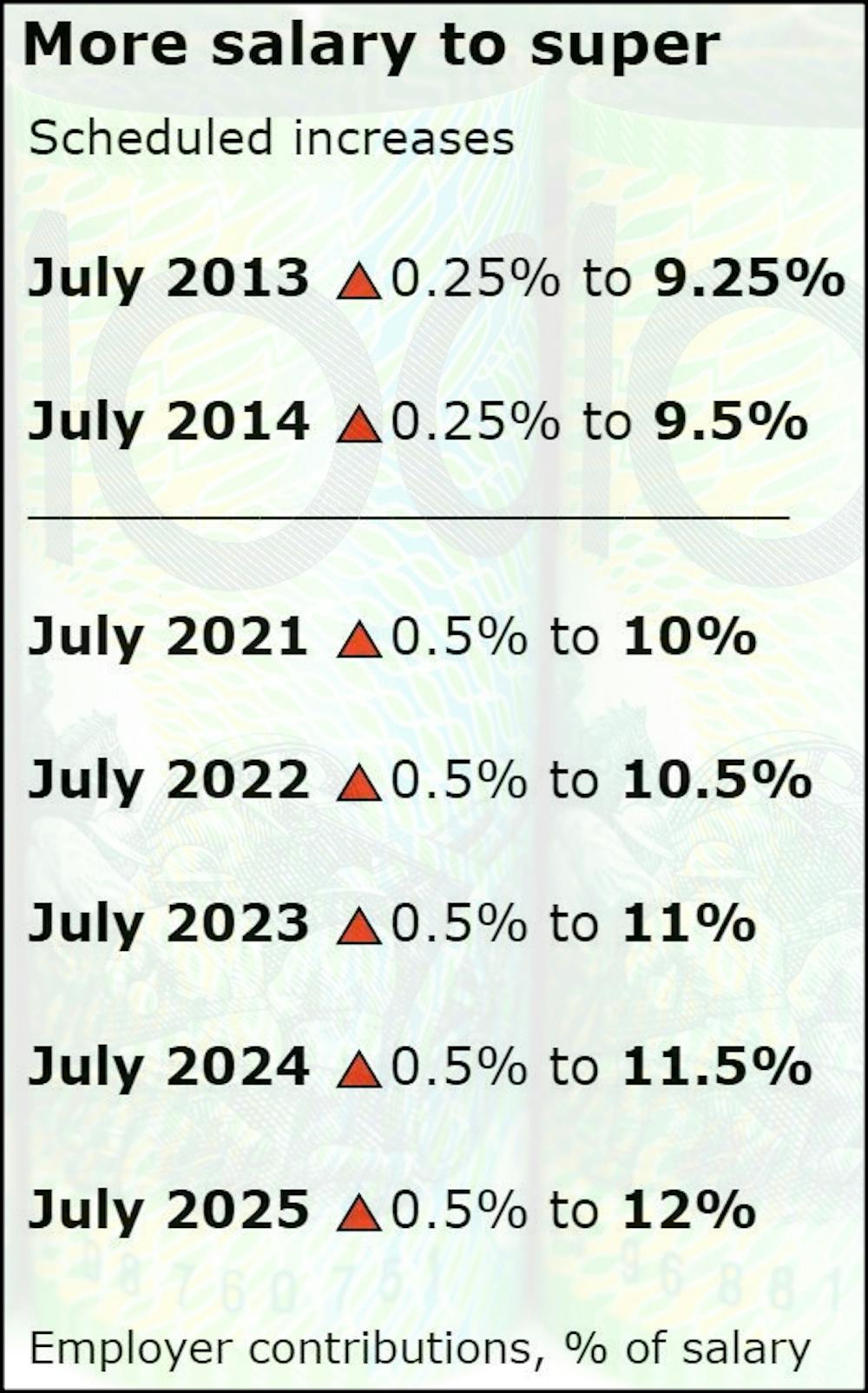
The superannuation system employs 55,000 people at a cost of A$32 billion per year to produce $40 billion per year in retirement incomes. This is nearly as many people as the enlisted Australian Defence Force (58,000) with a similar total cost ($34 billion).

The rest of Australia’s entire welfare system, including administering the age pension, disability, unemployment benefits and Medicare, costs just $6 billion per year and employs 33,000 people, while providing $45 billion in pension benefits.

It directs money where it isn’t needed..

Each year the superannuation system takes in $117 billion and spits out $80 billion in payments (including lump sum withdrawals), leaving $38 billion in asset markets, sapping spending and economic growth. That’s roughly as much as the $40 billion stimulus package introduced during the 2009 financial crisis. Unlike it, the super system depresses rather than stimulates the economy.

Unlike the super system, the age pension system is likely to stimulate the economy because it takes purchasing power away from high-income taxpayers with a relatively low likelihood of spending extra dollars to to lower-income pensioners with a high likelihood of spending them.

…and away from those who do need it

Unlike the age pension system, the super system can’t provide poverty relief, or broadly adequate retirement incomes.

For the bottom 40% of earners it does the opposite of smoothing income, making them poorer than they would have been while working, and somewhat richer than they would have been while on the pension and retired.

The $18 billion of tax breaks on super fund contributions and $20 billion of tax breaks on super fund earnings are predominately directed to high income earners.

In a comprehensive study released this week the Grattan Institute has demolished the claim that super contributions come out of employers pockets. Instead it finds that, on average, 80% of each super contribution comes out of what would have been wages.

Here’s how to escape it

Scrapping the system altogether would massively improve Australia’s economic performance, including the performance of our only true retirement income system, which is the age pension.

It can be done by forcing employers to pay what are now super contributions directly into wage accounts and allowing super fund holders to withdraw up to a maximum amount each year during a transition period, after which all super balances would receive no special tax treatment.


Read more: 5 questions about superannuation the government’s new inquiry will need to ask


The tens of billions saved in the budget could be used to enhance the size and scope of the age pension. It could incorporate appropriate rent assistance and begin at age 60 instead of 67.

It’s possible. Certainly, there would be job losses, but in other industries we have come to accept that there is no point in continuing to pay people to do things that aren’t needed, and especially no point in making those payments compulsory.

It’d be one of the best things we could do to enhance the working of our economy.

ref. Superannuation isn’t a retirement income system – we should scrap it – https://theconversation.com/superannuation-isnt-a-retirement-income-system-we-should-scrap-it-130191

Performing Beethoven – what it feels like to embody a master on today’s stage

Source: The Conversation (Au and NZ) – By Scott Davie, Lecturer in Piano, School of Music, Australian National University

In a series marking the 250th year of his birth, we analyse the brilliance of Ludwig van Beethoven.

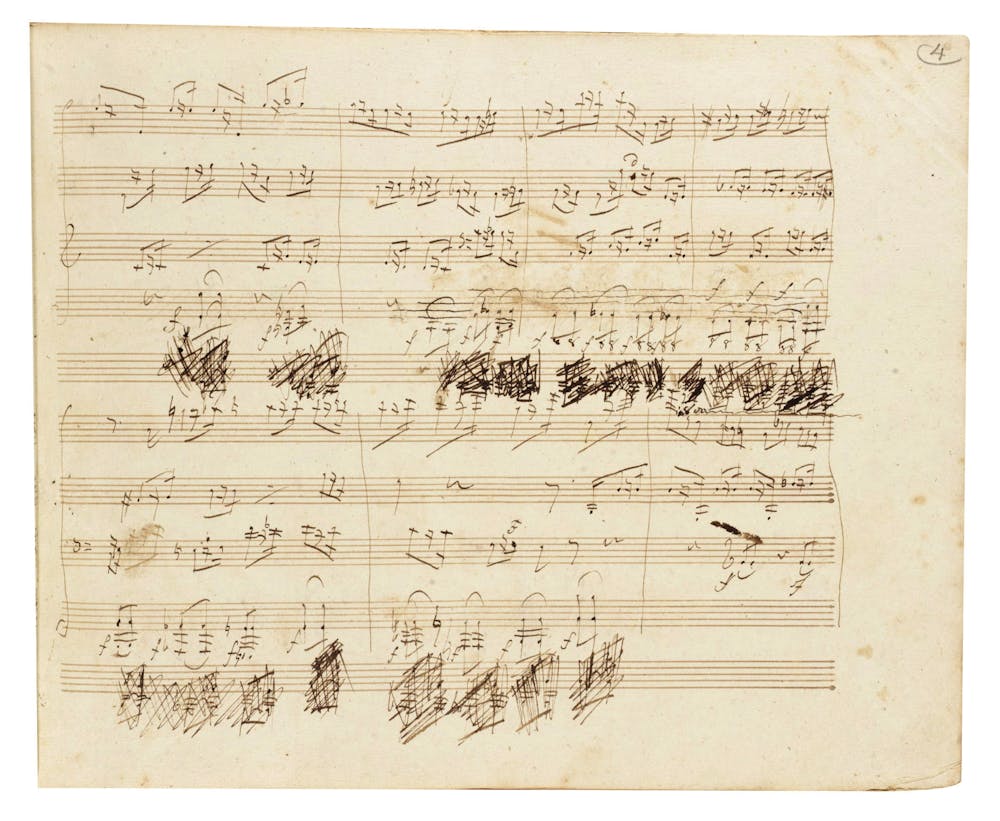
When Beethoven died in 1827, thousands of pages of highly notated music were bequeathed to posterity. Yet unlike arts such as painting and sculpture, which communicate directly from the artist to the observer, these otherwise silent pages demand resuscitation. They require performance.

From all accounts, Beethoven was an extraordinary pianist. In playing his own compositions, however, he combined two roles that are now necessarily separate: those of composer and performer.

How, then, might one recapture the essence of Beethoven’s music in modern times?

Playing the part

Performing music is akin to acting, where words by long-dead playwrights are given new life. It is a subtle art, honed over years, and is successful only when the “voice” of the performer finds alignment with that of the author, neither one cancelling out the other.

Similarly, the role of the performer is distinct and important when interpreting classical music. As with drama it has an added power, as both the content of the music and its performance can be art. When the two synthesise, great music can truly live.

The author at the piano. Sydney Dance Company/Jeff Busby

Finding a composer’s individual voice takes careful study, and Beethoven’s music is a notable case. He lived at a pivotal time, when the role of composers evolved from functionaries of courts and chapels to artists in their own right. Famously, he wrote some of the first music considered “absolute” – music conveying something of great significance, without reference to a programmatic story or other form of text.

Through decades of experience as a pianist, I’ve found Beethoven’s music requires a different approach to that of his Viennese contemporaries. With Mozart, it is often best to stand back, to let the composer do the talking. With Schubert one needs patience, and an empathy for moments of simple bliss.

By contrast, Beethoven’s music needs to be championed. One needs to grasp it with both hands, to join in the fight (so to speak), as the following three examples illustrate.

A virtuoso musician

Beethoven was a virtuoso at the keyboard, as much of his music attests. There are few works harder to perform at the piano than the famous Hammerklavier sonata, and great dexterity and flair are required in works such as the Waldstein and Appassionata sonatas.

Beethoven’s earliest sonatas are dedicated to Joseph Haydn, his “teacher” in Vienna. This could be read as a mark of respect, yet, more cynically, one suspects he was ensuring they caught his eye, for what follows is Beethoven trying to out-Haydn Haydn.

With unassuming simplicity, the C major sonata summarises brilliantly the thematic kernel of its opening movement in just four bars. Yet the phrase simultaneously presents a technical problem that stumps many pianists: clever fingering is required with the right-hand double thirds, or else they’ll never be crisp!

The movement’s following pages at times require the keyboard to be played as if invoking the force of a full symphonic orchestra, while other passages are more soloistic. The unexpected inclusion of a dramatic solo cadenza highlights further the cross-genre “tease” of the musical content.

It’s masterly stuff, and to succeed in performance it’s beneficial to understand the clever wit of its subtext. This includes both the quick moves between soloist and orchestral roles, and the furtive wink back to Haydn, which seems to say “See what I can do? I have no need of a teacher now”.

A philosopher

We don’t often credit the young as capable of profound sentiment, but many of Beethoven’s early works feature moments of the sublime.

Of note is the slow movement of the early Sonata in D major, written when he was 28. However seven years later, the slow movement of the Fourth Piano Concerto reveals Beethoven as a fully matured philosopher.

The orchestra begins with fierce outbursts, yet the piano is unmoved as it responds. At length, the pianist’s passivity and arching melodic lines gain dominance as the orchestra subsides, only to be momentarily undermined by a solo passage of trembling and unresolved harmony.

Eventually, all conflict resolves. As an exchange, the movement is dialectical in its structure. From the viewpoint of the pianist, it is like participating in Greek tragedy; it’s a role that must be played with great conviction for the powerful drama to succeed.

A modernist

Given Beethoven’s iconic status among audiences, it’s easy to forget he was a modernist. Even today, performers flinch at the original final movement of his late B flat major string quartet – a movement that still astounds in its dissonance, and which the composer felt obliged to replace.

Similar glimpses of music’s future lie in other late works, not least the quixotic final set of Bagatelles for piano, published in 1825.

In the last piece, the noisy opening recalls the closing bars of the Ninth Symphony, yet this is but a curtain-raiser to the music’s quiet core. The thematic material is disarmingly simple, consisting initially of offbeat, right-hand chords, while the harmony is rudimentary, the static left-hand part suggesting a rustic drone.

This is music that stretches notions of time, even, in places, apprehending minimalism. Yet moments of profundity are swept away, as it slips into a carefree waltz. The eschewing of complexity is prescient.

To perform this piece well is to be transported and transformed, the audience carried to the long-forgotten realm of a composer who, despite the stresses of his final years, appears to have found peace.

Like J. Alfred Prufrock in T. S. Eliot’s famous poem, it is as if we linger in “the chambers of the sea” for a while. Until the opening bars return to wake us, and we drown.

ref. Performing Beethoven – what it feels like to embody a master on today’s stage – https://theconversation.com/performing-beethoven-what-it-feels-like-to-embody-a-master-on-todays-stage-129184

View from The Hill: Michael McCormack’s battle to hold off a second shot from Joyce’s locker

Source: The Conversation (Au and NZ) – By Michelle Grattan, Professorial Fellow, University of Canberra

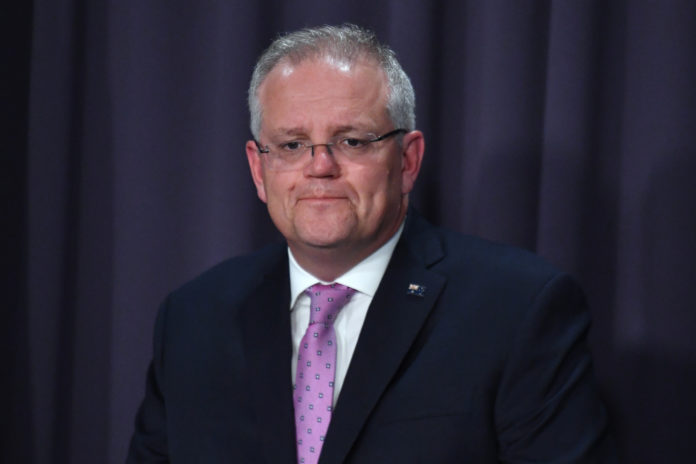
Scott Morrison dodged a bullet when the Nationals clung on to Michael McCormack. There was palpable relief when the news came through to the Liberals. “We still have a Coalition,” one MP was heard to say during the Liberal party meeting.

But it had been the Prime Minister who created the circumstances for Barnaby Joyce to get his gun out of the cupboard.

If Morrison hadn’t been in such a politically weak position, due to his summer missteps, he’d probably have brazened out the sports rorts affair.

Morrison didn’t force Bridget McKenzie from cabinet because she skewed the grants scheme – for which she deserved sacking.


Read more: View from The Hill: Bridget McKenzie falls – but for the lesser of her political sins


He acted because the price of keeping her became too high. But then suddenly the cost of ditching her skyrocketed when Joyce seized the moment. Morrison found he had destabilised the deputy prime minister he desperately needs to keep in place.

How things will pan out now is the unanswerable question. Of course no one believes Joyce’s protestation that “I support the vote of the [party] room”. Joyce can’t bear not being the macho top dog and he and his ally Matt Canavan – self-exiled from cabinet and a huge loser from the day – will continue to create trouble for McCormack.

The Nationals don’t release their voting numbers. McCormack people claim he had a healthy margin; the Joyce camp says they were line ball. If McCormack’s backers are right the secrecy harms him, fuelling uncertainty and the opportunity for mischief.

The easy consensus is McCormack must “lift his game”. Might as well tell a jogger to become a sprinter. McCormack isn’t the worst of leaders but he’s never going to be more than average.

And having acquired the reputation of a poor performer, he can’t win. Thus he’s criticised for having a low profile when Morrison was in Hawaii. But could he have raised it when the prime minister’s office was trying to hide their boss’s holiday?

The rebel (for what of a better description) Nats attack McCormack for not standing up to the Liberals, in particular Morrison. They want a more distinctive Nationals branding.

Now this is a real issue. A well-functioning National party has to strike a balance within the Coalition between, if you like, growling and purring. Each Nationals leader must find a sweet spot. Assertive but supportive in the government’s inner sanctums. In the electorate, distinctive while also a team player.

But if McCormack follows the wishes of the Nationals to be more aggressive, this carries its potential dangers. On the flip side of that coin is “division”, a bad look for the government as a whole.

McCormack might be a pushover but Morrison has not been sensitive to their mutual interest in the Nationals’ profile. John Howard gave them a few wins, and recognition. Morrison tends to occupy whatever space is available. His very personal central role on drought issues, for example, has overshadowed the Nationals on their home ground.

If Morrison wants to prop up McCormack he needs to pump his tyres. As former Nationals senator John (“Wacka”) Williams told Sky, there was a message in Tuesday’s events for Morrison: “Don’t make the Nationals irrelevant”. The Nationals had to be treated with respect and get some pats on the back, Williams argued.

The Nationals’ schism triggered a reminder that Morrison is in a no win situation internally on climate change policy, as he faces an increasing need to nuance it.

In Tuesday’s Coalition parties meeting (coming immediately after the vote) a bevy of Nationals – Joyce, Canavan, George Christensen and David Gillespie – sent hardline messages on climate among talk of regional jobs and industry. Joyce said some people were trying to push their hobby horse issues out of the fire tragedies. To one Liberal source, these outpourings from the Nationals’ losing side were a bit weird and not very coherent.

They were met by a counter from some moderate Liberals. Earlier, in the separate Liberal party meeting, Queenslander Andrew Laming criticised those who went on policy “solo flights” on climate. The government’s policy was based on the science, which had been overwhelmingly accepted, Laming said – to contest the science undermined the policy.

McCormack’s next test is immediate – recrafting his frontbench. He has two cabinet vacancies, with Victorian Darren Chester expected to fill one.

What happens with the key resources portfolio vacated by Canavan will be crucial, given the coal issue and energy battles. Whether McCormack should have invited Canavan back is a moot point. Canavan (a loud voice for the coal industry) has a sharp policy mind; also, he might have been less trouble for McCormack if still on the frontbench than rampaging round the backbench.

Among the complexities of the reshuffle is that with the fall of McKenzie and Canavan the Nats have no Senate minister, but the remaining three senators (all women) are parliamentary newcomers. Still, one of these women will surely be in line for promotion, at the least to an assistant minister. McCormack sources believe all six women in the 21-member party voted for him; certainly most did.

The significance of the Nationals new deputy, David Littleproud, should not be overlooked in considering the future. Littleproud is competent, ambitious and articulate. He was frustrated at having his portfolio sliced back after the election.

Kelly Barnes/AAP

His presence could assist McCormack. At 43, he has plenty of time and, in the National party tradition, an incentive to support his leader and inherit the mantle rather than trying to snatch it.

But if McCormack can’t survive until the election, the party would be better off turning to Littleproud than to Joyce, who would carry a maximum risk factor, not least for Morrison.

ref. View from The Hill: Michael McCormack’s battle to hold off a second shot from Joyce’s locker – https://theconversation.com/view-from-the-hill-michael-mccormacks-battle-to-hold-off-a-second-shot-from-joyces-locker-131164

Year 12 can be stressful, but setting strong and healthy goals can help you thrive

Source: The Conversation (Au and NZ) – By Joanne Dickson, Associate Professor of Psychology, Edith Cowan University

Research shows anxiety levels are high for many students in year 12 as they focus on academic goals that may determine their future.

The way you pursue your goals can be the difference between maintaining happiness or feeling stressed.

When setting and pursuing your goals, try to keep these four things in mind.

1. It’s less the goal and more how you think about it

Striving towards personally meaningful goals, even if we don’t reach them, has been shown to be good for our well-being. But recent research shows just having a goal won’t make us happier.

The way we think about our progress can be the difference between whether we feel good or anxious.

The research found it’s not failing to reach your goal that exacerbates anxious or depressive symptoms, but ruminating on goal progress in a negative way. This could be by telling yourself things like “I’m a loser”, “I’m no good” or “I am letting my parents down”.


Read more: Three ways to achieve your New Year’s resolutions by building ‘goal infrastructure’


So, don’t let your critical voice take over your life. There are other more constructive ways of thinking that can help you pursue your goals and maintain perspective.

One way is to be reflective rather than judgemental. You can constructively reflect that “I didn’t get the grade I wanted in the first biology test this year” or “I didn’t make the progress I wanted”.

Reflection gives you an opportunity to learn from your experience and identify strategies to improve. These could be asking for help from the teacher or studying in an environment that helps you concentrate.

2. Don’t compare yourself to others

It’s important to feel like you have control over your own life. Several studies have shown lack of personal control is associated with depression.

Goals like “to be top of my year 12 class” depend in part on how well or poorly other students do, which is outside of your control.

Research shows breaking up your goals into smaller, incremental steps is good for your well-being. From Shutterstock.com

It’s better to run your own race and pursue goals that are meaningful to you rather than external goals such as those motivated by competition with others.

For example, a goal like “to improve my maths results in the coming term” is better for your well-being if this is something you personally want to achieve. But wanting to beat someone in your class means comparing yourself to them, which can increase anxiety.


Read more: Why teen depression rates are rising faster for girls than boys


Similarly, goals made to avoid a negative consequence (such as “to not feel like a loser”) or because your parents or teachers want you to achieve something, are also associated with increased anxiety if these are not yours.

Even if you are successful in achieving goals other people want you to achieve, research suggests you won’t benefit from increased well-being or happiness.

3. Break goals up into small steps

Setting small achievable goal steps or plans will help you reach your bigger goal and feel in control. For instance, if your goal is to improve your maths results, you can make smaller steps like setting aside three hours each week to study maths.

Small steps are easy to monitor. Being able to hit your smaller goal of studying for three hours every week will help you maintain a sense of achievement.

You can reward these small achievements along the way. For instance, if you have stuck to your study plan over the past week, then reward yourself by doing something you enjoy such as seeing a movie. Research shows such associated rewards help reinforce achievement and sustain goal pursuit.

4. Don’t put all your eggs in one goal basket

You make yourself vulnerable to disappointment if you invest your energy in one goal. What happens if you don’t achieve it? Having a few meaningful goals in different life domains (such as education, relationships and health) provides a protective barrier in case you don’t make one goal.


Read more: Can trying to meet specific exercise goals put us off being active altogether?


But pursuing too many goals can also be unrealistic as we typically have a limited set of personal resources, such as time and energy and can’t do too many things at once.

When you start year 12, it’s useful to determine the most important and meaningful goals you wish to pursue in the year ahead. Be kind to yourself and take time out to do things you enjoy. It’ll help you keep perspective and a balance in life.

ref. Year 12 can be stressful, but setting strong and healthy goals can help you thrive – https://theconversation.com/year-12-can-be-stressful-but-setting-strong-and-healthy-goals-can-help-you-thrive-131028
Adam Bandt will be a tougher leader, but the challenge will be in broadening the Greens’ appeal

Source: The Conversation (Au and NZ) – By Mark Kenny, Senior Fellow, Australian Studies Institute, Australian National University

Mad Monday usually describes sports teams “on the tear” at the end of season, not embattled governments embarking on a new parliamentary year.

But Monday, February 3, had that devil-may-care feeling when the two second-tier parties of the Australian parliament, the Nationals on the right and the Greens on the left, dropped depth charges into their respective electoral bases by putting their leaderships up for grabs.

For the junior Coalition partner, this occurred via an unsuccessful raid by Barnaby Joyce on the leadership of Michael McCormack.

That marked a woeful start to the parliamentary year for a Coalition already being hammered through its own policy indolence and the scandalous manipulation of public funds.


Read more: The ‘sports rorts’ affair shows the need for a proper federal ICAC – with teeth


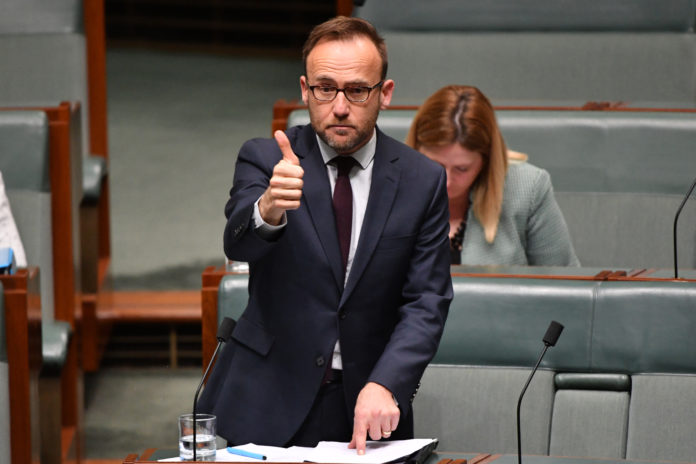
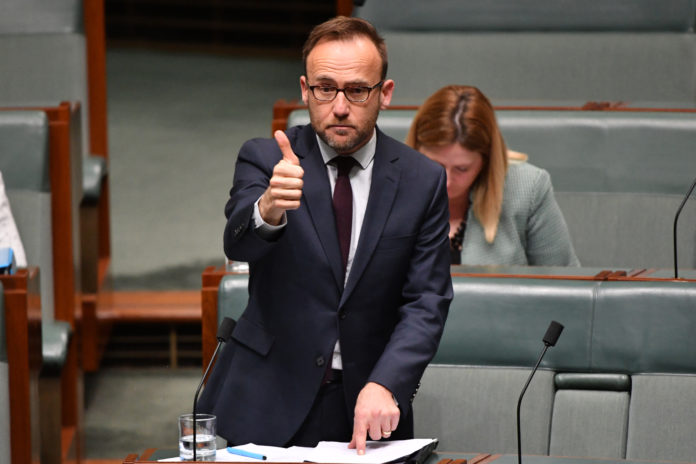
Things went more smoothly for the Greens, where “mad” Monday brought the unheralded resignation of the party’s well-liked leader, Richard Di Natale. The Victorian senator was swiftly replaced in an uncontested ballot by the party’s sole lower house federal MP, Adam Bandt, the member for Melbourne.

But the interest factor in the power transfer will not necessarily end there. Bandt’s selection raises important questions for the cross-bench party, ideologically, presentationally and functionally. And it may also prove to be a blessing for Labor, which has long bled green on its left flank, particularly in the inner cities.

Like his predecessors Bob Brown and Christine Milne, the outgoing Di Natale confidently predicted the Greens party was on the cusp of a significant expansion as voters opted for the only party not compromised by the fossil fuel industry, particularly coal.

Yet the imminent Green revolution never seems to come, suggesting there may be a natural ceiling on the party’s share of the non-conservative vote, almost all of which flows back to Labor as preferences anyway.

A large measure of the Greens’ electoral optimism derives from the view that, in trying to appeal to both inner-city progressives and blue-collar regional workers, Labor offers weak policies and confusing messages. The each-way bet on the Adani Carmichael coal mine at the 2019 election is most frequently cited.

But it is also possible there is effectively a cap on the Greens party expansion. This is because of its role as a party of progressive conscience rather than one that must appeal to a broad range of voters and offer policies that can be funded if elected.

As one Labor insider noted: “The Greens don’t need to talk to anyone outside the inner cities, and mostly they don’t try to.”

As a moderate type of Greens senator, Di Natale may have already maximised the party’s appeal among people who might otherwise find their natural home within Labor.

How Bandt performs remains to be seen, but he is widely regarded as more aggressive – purer in his orientation to, and reflection of, the party’s base, yet correspondingly “scarier” for mainstream voters.

“He’s a jump to the left, that’s for sure,” said the Labor functionary, who claimed Bandt is less disciplined and measured in his communication style than was Di Natale.

“He forgets who he is talking to – his base is not the same as the electorate and where Di Natale was ‘reassuring’, Bandt can be just plain scary,” the observer said.

When the young WA Greens senator Jordan Steele-John accused the major parties of being virtual arsonists during the bushfire crisis last November, Bandt leapt to his defence amid the furore. Bandt told ABC’s Insiders program:

I think he’s the youngest member of parliament, he’s part of a generation that is terrified and aghast with what they’re seeing with the climate crisis.

Scott Morrison has been put on notice, and his government has been put on notice for many years now, that if we keep digging up coal at the rate of knots that we’re doing at the moment, it is going to contribute to making global warming worse, and that is going to make bushfires like this more likely and more intense when they happen.

If Bandt’s angularity is to be tempered by the responsibilities of leadership, it was not evident in his first press conference, where he railed against climate inaction and inequality. He said:

I refuse to adapt to kids wearing gas masks.

Summer is going from being a time to relax to a time to fear for your life and health. People are angry and anxious because the government clearly doesn’t have the climate emergency under control and has no plan to get it under control. But people are also angry and anxious because the basics of life are no longer guaranteed … even if you do everything they ask, people are no longer guaranteed a good life.

Finally, Bandt’s leadership has a structural peculiarity built in.

Like the short-lived Palmer United Party after the 2013 election, Bandt leads the Greens from the lower house while every one of his other party members is in the Senate.


Read more: Remembrance of rorts past: why the McKenzie scandal might not count for a hill of beans


There were many reasons why that structure was disastrous for Clive Palmer, not least that his party had no clear idea of what it stood for, and Palmer himself was both mercurial and absent.

But having the members – on whose loyalty one’s leadership relies – located together in one chamber and the leader in another seems risky, especially in these times when mad Monday is a 365-day possibility.

ref. Adam Bandt will be a tougher leader, but the challenge will be in broadening the Greens’ appeal – https://theconversation.com/adam-bandt-will-be-a-tougher-leader-but-the-challenge-will-be-in-broadening-the-greens-appeal-131145

Scott Morrison’s gas transition plan is a dangerous road to nowhere

Source: The Conversation (Au and NZ) – By Tim Baxter, Fellow – Melbourne Law School; Senior Researcher – Climate Council; Associate – Australian-German Climate and Energy College, University of Melbourne

As Australia continues to battle horrific bushfires, Prime Minister Scott Morrison has announced a renewed focus on gas-fired electricity to reduce emissions and lower energy prices. This is a dangerous and completely unnecessary route.

In a speech to the National Press Club last week, Morrison claimed:

There is no credible energy transition plan, for an economy like Australia in particular, that does not involve the greater use of gas as an important transition fuel.

This statement is completely untrue, even among the “official” transition plans.

The Australian Energy Market Operator’s draft Integrated System Plan, used to plan future infrastructure needs in Australia’s largest grid, contains multiple scenarios for the coming decades. Several of these, including the “central” scenario – representing entirely neutral assumptions about the future – see no substantial increase in gas consumption over the coming decades.

But with Morrison now pursuing bilateral agreements with the states to open up more gas reserves, it is vitally important to interrogate the logic of gas as a transition fuel.

Scott Morrison is wrong to claim Australia needs gas to transition away from coal. AAP

The strong case against gas

Gas is, of course, a fossil fuel and a source of greenhouse gas emissions. Emissions occur during extraction and transport as well as when it is burned to produce energy.

Nonetheless, since the 1990s it has been touted as a “transition fuel” – that is as a resource that might be drawn upon temporarily while the world switches from coal-fired power to renewables.

Proponents say gas is less emissions-intensive than coal and as such, offers a better fossil fuel alternative as renewables are constructed and energy-efficiency improvements are implemented. (This benefit is overstated: more on this later.)


Read more: Nice try Mr Taylor, but Australia’s gas exports don’t help solve climate change


But in the 30-odd years since gas was first talked up as a transition fuel, humans have added more carbon dioxide to the atmosphere than they did in all of human history before that point. We are twice as far from stable global temperatures now as we were when the the concept of a transition fuel was born, and emissions are accelerating in the wrong direction.

Last year a consortium of major international organisations including the United Nations Environment Programme released a landmark report which showed planned global production of coal, oil and gas would see the world far exceed the Paris Agreement targets. There is no room for further expansion.

Australia: a vulnerable nation

2019 was the hottest and driest year ever recorded. We reeled from crippling drought and fires worse than our most terrifying nightmares. Then came the suffocating air pollution.

The Bureau of Meteorology explicitly linked this fire season to climate change.

The world has warmed by 1.1℃ since the industrial revolution due to the burning of coal, oil and gas. Current fossil fuel developments are enough to double that temperature increase.

Australia has among the world’s highest greenhouse gas emissions per person, despite also being among the most vulnerable to climate change.

Alongside this, Australia has long been the world’s largest coal exporter and last year took the crown as the largest exporter of liquefied natural gas.

Scott Morrison’s plan for a gas transition is a dangerous route. AAP

Overstated benefits

It is true that gas, if produced and consumed in Australia without being liquefied, is 30-50% more carbon-efficient than coal at the point it is burned to produce electricity. But this benefit is substantially eroded by the emissions created when gas is vented or flared during the exploration, extraction, transport and distribution processes.


Read more: Weather bureau says hottest, driest year on record led to extreme bushfire season


Gas is mostly composed of methane, the most significant climate-warming agent after carbon dioxide. Methane survives for a shorter period in the atmosphere, but over 20 years has 86 times the planet-warming potential of carbon dioxide.

In 2019, the venting and flaring of methane accounted for 6% of Australia’s emissions – and this is likely a significant underestimate. These so-called “fugitive emissions” massively detract from the purported climate benefits of a gas transition.

Renewable energy is waiting to provide the decarbonisation Australia needs. Mick Tsikas/AAP

Running out of time

It is worth remembering that to make the gas projects viable, developers expect their projects to last for several decades at least. Gas can only be a “transition fuel” if there is a clear path out the other side to net-zero emissions. Locking in gas projects for decades makes that path impossible.

Where gas does provide a small benefit, this lock-in means it cannot be enough to secure globally-agreed temperature goals.


Read more: Not convinced on the need for urgent climate action? Here’s what happens to our planet between 1.5°C and 2°C of global warming


A separate United Nations Environment Programme report last year considered how the world might limit global warming to globally agreed temperature goals – 1.5℃ or 2℃ above pre-industrial temperatures. Both of these targets will result in a climate notably less secure than that which drove Australia’s past year of extreme weather.

To meet the 1.5℃ target, emissions from all sources must fall by 7.6% per year between now and 2030, and keep decreasing after that.

Even 2℃ of global warming – a catastrophic temperature increase by any measure – would require annual emissions reduction of 2.7% per year. This is well beyond what can be accomplished with a long, slow detour through gas.

Over and above all this, is the simple point that increasing gas supply will not reduce prices anyway. Since 2016, the spike in energy prices in Australia has occurred because of the increase in gas supply. Nothing Morrison has proposed so far is capable of counteracting the perverse dynamic which brought that about.

It is entirely unnecessary for the federal government to continue down the gas route. The renewable energy sector is waiting in the wings to deliver massive emissions reduction and lower prices.

But in the sunniest and windiest inhabited continent on the planet, investment confidence in the renewables sector is collapsing on Morrison’s watch.

ref. Scott Morrison’s gas transition plan is a dangerous road to nowhere – https://theconversation.com/scott-morrisons-gas-transition-plan-is-a-dangerous-road-to-nowhere-130951

View from The Hill: We need to see Gaetjens’ report on McKenzie – not least for Gaetjens’ sake

Source: The Conversation (Au and NZ) – By Michelle Grattan, Professorial Fellow, University of Canberra

When he announced the result of the review by his departmental secretary Phil Gaetjens into Bridget McKenzie’s conduct, Scott Morrison was very clear. Gaetjens’ report was a cabinet document and it wouldn’t be made public.

Morrison just quoted from Gaetjens’ findings. The essence of these are that while the then sports minister had breached the ministerial standards by failing to disclose her membership of gun organisations, her allocation of grants wasn’t politically skewed.

“He said, ‘I find no basis for the suggestion that political considerations were the primary determining factor,’” according to Morrison.

Given this was totally at odds with the Audit Office conclusion of a bias towards marginal and targeted seats, Morrison’s failure to produce the Gaetjens’ report potentially harms the credibility of his most senior public servant.

We need to see the detail of Gaetjens’ argument that the Auditor-General was wrong about the grants being skewed. The report from the Audit Office – a respected, expert and politically neutral body – is very detailed in its information. A senior bureaucrat rejecting it would be expected to have strong, well-argued grounds. How did Gaetjens come to his conclusions on this matter?

Morrison produced a couple of statistics from Gaetjens but they hardly refuted the Audit case.

Gaetjens had looked at the grants rounds “in their entirety”, Morrison noted. But what was his justification for focusing on the entirety, when McKenzie’s allocations became blatantly more political as time went on?

And is there nuance in Gaetjens’ statement that political considerations weren’t the “primary” factor?


Read more: Remembrance of rorts past: why the McKenzie scandal might not count for a hill of beans


Gaetjens’ was an awkward position even before Morrison drew him into the McKenzie imbroglio.

Formerly Morrison’s chief of staff, he was appointed first to head treasury when Morrison was treasurer and then brought over to lead the Department of Prime Minister and Cabinet.

While contemporary PMs like to have their own man (there has not been a woman) as their department head, Gaetjens was seen, more than most, as a “political” appointment, despite his quite extensive bureaucratic background.

Public servants could (and did) reasonably ask, as leader of the public service, was he likely to stand up for their interests?

They might have had their fears heightened after Morrison chopped off a bunch of senior heads before Christmas.

Because of their personal closeness, Morrison’s asking Gaetjens to investigate McKenzie was inevitably placing the secretary in a very hot place.

It was clear, as the publicity over McKenzie intensified, that whatever Gaetjens found would determine her fate. Morrison had effectively said so.

Further, Gaetjens was investigating against a background of two factors. McKenzie had become a serious political liability. Yet the government had dug in to defend her funding allocations.


Read more: The ‘sports rorts’ affair shows the need for a proper federal ICAC – with teeth


Former public service commissioner Andrew Podger says Gaetjens “was the wrong person to have asked [to do the inquiry] and I’m surprised by his advice as reported by the PM”.

The timing of Gaetjens’ presentation of the report worsened the optics.

On January 22, Morrison’s office announced he’d asked Gaetjens to look into whether McKenzie had breached ministerial standards.

In the normal course of events one would have thought Gaetjens would have finished his work by, say, the end of the Australia Day long weekend. The material and the minister were at hand; it was not an excessively complicated exercise for someone who’s had plenty of experience of working quickly.

Morrison told his Sunday news conference he received Gaetjens’ report late Saturday night – which did seem an odd time to present a report – inviting speculation of sequenced choreography.

Morrison previously had been able to say he hadn’t received the report. But had he been briefed on it by Gaetjens?

Morrison’s office has produced a list of precedents of when probes into ministerial conduct were not released (a 2019 letter from then departmental secretary Martin Parkinson to the PM on whether former ministers Pyne and Bishop had breached standards was provided to the Senate in response to a Senate order).

But if the PM continues to hide behind cabinet confidentiality and precedent, it won’t just be his skin that sustains bruises, but that of his right hand bureaucrat. And anyway, there is always the prospect of a Senate order, and the certainty of Senate estimates hearings.

ref. View from The Hill: We need to see Gaetjens’ report on McKenzie – not least for Gaetjens’ sake – https://theconversation.com/view-from-the-hill-we-need-to-see-gaetjens-report-on-mckenzie-not-least-for-gaetjens-sake-131144

PNG Media Council calls on state agencies to collaborate over virus

Pacific Media Watch

The Media Council of PNG has called on all state agencies involved in policing and securing the country’s borders and people against a potential novel coronavirus outbreak to  collaborate more closely.

It has also called on them to ensure that all measures are “clearly articulated” to the mainstream media so that the people would be be kept informed and reassured about their safety.

Council member journalists who have been covering developments over coronavirus say state agencies are not working together, or have referred all responses to the National Department of Health.

READ MORE: PNG students in Wuhan scared of coronavirus infection

A national executive council (NEC) directive restricting ministers – other than the Health Minister – from speaking on the virus response in each of their areas of responsibility, “has not helped in establishing whether ‘screening measures’ against an impending virus outbreak, are as effective as they should be”, said the media council in a statement.

“The MCPNG calls on all these state agencies to use the mainstream media more effectively,” the statement said.

– Partner –

“We stand prepared to work with every state agency which has some responsibility in being part of a one PNG government approach to installing protection and prevention measures to keep our people safe, and more importantly, informed of developments with regard to the coronavirus.

“We have already seen the onset of what has been confirmed as misinformation about positive cases of coronavirus in the country. This misinformation can lead to widespread panic and disorder, if our people do not have the relevant and credible information they need.”

Improved information
The media council suggested the following to improve the way information is being made available to PNG citizens:

  • National Department of Health, as the lead agency, to proactively schedule regular briefings and situation reports, and to make these open to all media organisations for coverage;
  • All involved state agencies should proactively update the media on what measures each of them is responsible for; and
  • All ministers responsible for these state agencies, should collaborate and consult more proactively, so that correct, detailed information is made available for public consumption and awareness.

The media council said it understood that a decision by the NEC had lifted a travel ban which was earlier put in place by the Immigration and Citizenship Authority.

“It is the MCPNG’s fervent hope, that corporate and diplomatic interests do not override our collective efforts to keep our people safe,” the council said.

“MCPNG members have continued reporting on the medicines shortage in the country; and cannot stress enough the enormity of the situation, should there be a coronavirus outbreak in PNG.

“Much of the drugs currently in short supply in our health centres and hospitals, are first-line antibiotics for cold and flu.

Physical checks at the main international gateway in Port Moresby, left the health of Papua New Guineans “resting on the assumption that every passenger arriving in the country from a port where there are positive coronavirus cases will be truthful and honest about their health and medical status”.

“We need the right screening equipment to be installed,” the council added.

“Mainstream media outlets continue to be the most credible source that the majority of our people will turn to for information and awareness. Please use us more effectively.”

Print Friendly, PDF & Email

Article by AsiaPacificReport.nz

How big money influenced the 2019 federal election – and what we can do to fix the system

Source: The Conversation (Au and NZ) – By Kate Griffiths, Fellow, Grattan Institute

Amid the ongoing bushfire and coronavirus crises – and the political kerfuffle surrounding the Nationals and Greens – you’d be forgiven for missing the annual release of the federal political donations data this week.

Nine months after the 2019 federal election, voters finally get a look at who funded the political parties’ campaigns.

The data reveals that big money matters in Australian elections more than ever, and donations are highly concentrated among a small number of powerful individuals, businesses and unions.

These are significant vulnerabilities in Australia’s democracy and reinforce why substantial reforms are needed to prevent wealthy interests from exercising too much influence in Australian politics.

Largest donations in Australian political history

The big story of the 2019 election was Clive Palmer, who donated A$84 million via his mining company Mineralogy to his own campaign – a figure that dwarfs all other donations as far back as the records go. The previous record – also held by Palmer – was A$15 million at the 2013 election.

While Palmer failed to win any seats last year, he ran a substantial anti-Labor advertising campaign, and claimed credit for the Coalition’s victory.


Read more: After Clive Palmer’s $60 million campaign, limits on political advertising are more important than ever


There are obviously many factors in an election win, but this raises a serious question: how much influence should we allow any single interest to hold over the national debate, especially during the critically important election period?

Grattan Institute

Several other large donors also emerged at this election. A A$4 million donation to the Liberal Party from the company Sugolena, owned by a private investor and philanthropist, takes the prize for the largest-ever non-Palmer donation.

Businessman Anthony Pratt donated about A$1.5 million to each of the major parties through his paper and packaging company Pratt Holdings. The hotels lobby, which has been influential in preventing pokies reforms in past state and federal elections, also donated about A$500,000 to the Coalition and A$800,000 to Labor.

Money buys access and sometimes influence

A 2018 Grattan Institute report, Who’s in the room? Access and influence in Australian politics, showed how money can buy relationships and political connections. The political parties rely heavily on major donors, and as a result, major donors get significant access to ministers.

While explicit quid pro quo is probably rare, the risk is in more subtle influences – that donors get more access to policymakers and their views are given more weight. These risks are exacerbated by a lack of transparency in dealings between policymakers and special interests.

Big money improves the chances of influence. But it also matters to election outcomes.


Read more: Mineral wealth, Clive Palmer, and the corruption of Australian politics


Looking back at the past five federal elections, an interesting correlation is evident: the party with the biggest war chest tends to form government.

It’s only a sample of five, and it’s unclear whether higher spending drives the election result or donors simply get behind the party most likely to win.

But in 2019, Labor was widely expected to win, so its smaller war chest supports the proposition that money assists in delivering power.


Grattan Institute

What policymakers should do to protect Australia’s democracy

Money in politics needs to be better regulated to reduce the risk of interest groups “buying” influence – and elections.

Real transparency is the first step. Half of private funding remains hidden from public view due to Australia’s high disclosure threshold and loopholes in the federal donations rules.

Only donations of more than A$14,000 need to be on the public record, and political parties don’t have to aggregate multiple donations below the threshold from the same donor – meaning major donors can simply split their donations to hide their identity.


Grattan Institute

Parliament should improve the transparency of political donations by

  • lowering the federal donations disclosure threshold to A$5,000, so all donations big enough to matter are on the public record;

  • requiring political parties to aggregate multiple donations from the same donor, so big donors can’t hide

  • requiring quicker release of donations data, so voters have information on who funds elections during the campaign – not nine months later.

These simple rule changes would bring Australia’s federal political donations regime in line with most states and OECD nations. The current regime leaves voters in the dark.

But the donations data shows transparency is not enough to protect Australia’s democracy from the influence of a handful of wealthy individuals. Ultimately, to reduce the influence of money in politics, parliament should introduce an expenditure cap during election campaigns.


Read more: Eight ways to clean up money in Australian politics


Parties and candidates can currently spend as much money as they can raise, so big money means greater capacity to sell your message to voters.

Capping political expenditure by political parties – and third parties – would reduce the influence of wealthy individuals. And it would reduce the donations “arms race” between the major parties, giving senior politicians more time to do their job instead of chasing dollars.

ref. How big money influenced the 2019 federal election – and what we can do to fix the system – https://theconversation.com/how-big-money-influenced-the-2019-federal-election-and-what-we-can-do-to-fix-the-system-131141

The ‘sports rorts’ affair shows the need for a proper federal ICAC – with teeth

Source: The Conversation (Au and NZ) – By Yee-Fui Ng, Senior Lecturer, Faculty of Law, Monash University

While Sports Minister Bridget McKenzie has been forced to resign over the “sports rorts” affair, the matter is far from settled. It’s likely to feature heavily in parliamentary debate in the coming days.

One of the outstanding issues is the very different findings by the Audit Office report and by the review undertaken by the head of the prime minister’s department, Phil Gaetjens. Scott Morrison has said he will not release the Gaetjens report, so we can only go on the quotes Morrison read from it in his press conference announcing McKenzie’s resignation.

Gaetjens found McKenzie had breached the ministerial standards due to her conflict of interest in failing to disclose her membership of a gun club that received funding. At the same time, he absolved the government, as he “did not find evidence” the allocation of grants was “unduly influenced by reference to marginal or targeted electorates”.


Read more: The ‘sports rorts’ affair shows the government misunderstands the role of the public service


In contrast, the auditor-general concluded that the “award of grant funding was not informed by an appropriate assessment process and sound advice”, and was contrary to principles of merit.

So, what is the status of the prime minister’s department compared to the auditor-general? And how would this have played out differently with a federal Independent Commission Against Corruption (ICAC)?

How was the affair handled by government?

The auditor-general is an independent officer of parliament, with the mandate to audit government finances. The position is independent from government and reports to parliament.

Alongside other integrity officers, such as the ombudsman and information commissioner, the auditor-general forms an important part of the Australian integrity framework. Their job is to hold government to account. They have significant coercive powers to compel documents and persons, which is essential to expose government wrongdoing.

The integrity officers have brought to light many examples of government maladministration. Yet they cannot compel government to change its practices – they only have the power of publicity and recommendation.

By referring the sports rorts affair to the prime minister’s department to investigate, the government is essentially conducting an internal investigation.

The department is under the full control of the prime minister. Like all senior public service executives, the department’s secretary, Gaetjens, is on a fixed-term contract without employment security.

The heyday of the mandarin is over. Departmental secretaries in the 1950s and 1960s had permanent tenure. By contrast, recent governments have been in the habit of sacking departmental secretaries and installing their allies in the positions.

This means an investigation by the auditor-general is far more independent than one by the secretary of the prime minister’s department. The auditor-general is independent of government. Unlike the Gaetjens report, his report is publicly published and tabled in parliament.

What would have happened with a federal ICAC?

A former NSW auditor-general has claimed a federal ICAC would have investigated the sports grants scandal.

So, how might this incident have played out if there was a federal ICAC?

First of all, it depends which version of a federal ICAC we are talking about. Federal Attorney-General Christian Porter has proposed a watered-down model of a Commonwealth Integrity Commission (CIC).

The threshold for investigation by Porter’s CIC model is high. It requires a reasonable suspicion of corruption amounting to a criminal offence before an investigation can even begin. It is doubtful the sports rort affair can meet this very high bar of suspected criminality.


Read more: The proposed National Integrity Commission is a watered-down version of a federal ICAC


So it is unlikely the proposed CIC will even have the power to investigate this issue.

Even if the CIC could investigate, it would not have the power to conduct public hearings or make findings of corruption.

On the other hand, if a federal ICAC “with teeth” is implemented, it is more likely to have the power to investigate this alleged maladministration of public funds.

A strong federal ICAC would have the power to hold public hearings. It could more fully ventilate all issues surrounding this matter.

There have been broader questions about the alleged involvement of the prime minister’s office in the handling of the grants that remain unanswered. The prime minister has denied any such involvement.

A strong federal ICAC would have been able to compel ministers, public servants and ministerial advisers to give evidence. This would paint a better picture of political interference in Sports Australia’s decision-making.

A strong ICAC investigation would be far more independent than that of a departmental secretary, and its final report would be public. It would also be able to make findings of corruption, which could then be prosecuted in the courts.

How can things be improved?

McKenzie has resigned, which is emblematic of ministerial responsibility. The minister has taken the hit based on her failure to declare her conflict of interest.

But the Gaetjens finding that there has been no political interference in the sports grant allocation is rather convenient for the government.

Gaetjens’ conclusion was also flawed in stating that political considerations were not “the primary determining factor”.

The question was never whether partisanship was the primary determining factor: political considerations should not have been a consideration at all in awarding the grants. As the ministerial standards say: ministers must not take into account irrelevant considerations.

It would have been better if a truly independent body, such as a strong federal ICAC, conducted the investigation to assuage all doubts.

Another major issue is the interaction between the minister and Sports Australia, an independent statutory corporation.

Some jobs have been taken out of the hands of politicians and given to government corporations such as Sports Australia. This is to avoid the partisan interference and short-termism that characterises modern politics. An example is letting the Reserve Bank set interest rates, rather than politicians.

Yet, in this situation, the minister interfered with Sports Australia’s legal decision-making.

My research has shown government corporations set up by statute, such as Sports Australia, are subject to a high level of parliamentary, financial and legal accountability. They should thus be given the freedom to operate in keeping with their statutory mandate.

We still have work to do to tighten up rules to ensure the probity of procurements and grants. We also need to clarify the roles of ministers in relation to statutory corporations like Sports Australia. Only then can we say we have resolved the issues arising from the sports rorts affair.

ref. The ‘sports rorts’ affair shows the need for a proper federal ICAC – with teeth – https://theconversation.com/the-sports-rorts-affair-shows-the-need-for-a-proper-federal-icac-with-teeth-122800

Thinking about taking a break from alcohol? Here’s how to cut back or quit

Source: The Conversation (Au and NZ) – By Nicole Lee, Professor at the National Drug Research Institute (Melbourne), Curtin University

It’s February and many people are starting to put into place their New Year’s resolution to drink less alcohol.

Events like FebFast can encourage and support these good intentions. But around 30% of people who start FebFast don’t get through the whole month alcohol-free.


Read more: Did you look forward to last night’s bottle of wine a bit too much? Ladies, you’re not alone


Relying on intention and willpower to stop drinking, even for a short period, is not usually enough. Resisting temptation takes up a lot of brain power and eventually your brain gets tired and gives in.

So what are the best strategies to take a break from drinking?

Monitor your drinking

Before your planned break from alcohol, spend a week or two monitoring the amount you drink and when.

You might be surprised at how much or how often you’re drinking, and in what contexts. There may be certain people, places or emotions that increase or decrease your alcohol consumption.

Understanding this can be a helpful motivator to make changes. It can also help you plan for situations where you’d usually be drinking.

Work out where and when you’re more likely to drink. Helena Lopes/Unsplash

Get clear on your goals and your motivation

Will you cut back or quit? If cutting back, will you drink less frequently or a lower quantity? For how long? What happens afterwards?

It’s easier to stick to your goals if they’re clear and achievable.


Read more: Three ways to achieve your New Year’s resolutions by building ‘goal infrastructure’


Think about why you are making changes to your drinking – to lose weight, feel healthier, save money, sleep better, or prevent that Sunday morning hangover.

Try to keep these reasons in mind when you have the inevitable periods of doubt!

Set a quit date

Plan how you’ll tell your family and friends you’ve quit or cut back. Chantal Cadorette/Unsplash

Setting a quit date is linked to success in sticking to your plan. It helps you prepare and reflect on the reasons making a change is worthwhile, which can improve your commitment to change.

It also gives you time to get everything you need in place – preparing how you will tell others, thinking about how to decline a drink when offered, and working out which situations you might need to avoid or be cautious about, at least initially.

Get a support network

Having a friend also take up the challenge can make it a little easier. People trying to quit who have social support are more likely to reduce their drinking.

If you’re taking part in an event like FebFast, encourage your friends and family to sponsor you. Not only will it be good for the charity you are supporting, but it can make you more accountable.

It’s also a good way to communicate to your friends your choice to quit drinking, so they can better support you.


Read more: Research Check: can even moderate drinking cause brain damage?


Hello Sunday Morning has a large online support community of more than 100,000 people, and offers a range of resources to help people who want to cut down or quit drinking. It’s a free service, funded by the Australian government and a range of philanthropic organisations.

Recent evaluations of their Daybreak program – which includes one-on-one chats with health coaches – shows it leads to significant reductions in drinking, and improvements in physical and mental health.

Be kind to yourself

You might hear psychologists refer to something called the “rule violation effect”. This is when you’re working hard to not drink, but one day give in and have a glass of wine or two, then give up on your goals altogether.

Changing any behaviour is difficult. Don’t give up at the first mistake or slip up: get back on the horse and keep going.

Don’t be too hard on yourself. Sharon Christina Rørvik/Unsplash

Instead of thinking “bugger it, I might as well keep on drinking now,” try saying something like: “It’s going to take time. It was just a slip up. I can pick up where I left off.”

Find alternatives to drinking

In our alcohol-centric society, it sometimes feels uncomfortable when everyone around you is drinking and your own hands are empty. Choose a healthier alternative like sparkling water, soft drink or a mocktail.

As well as existing non-alcoholic beer and wine, a range of non-alcoholic spirits is also emerging in the market. You could ask for it to be served in a spirit or cocktail glass – you might be less likely to be asked why you’re not drinking.

It can also be helpful to focus on activities that don’t usually involve alcohol. Encourage your friends to meet up in the morning for breakfast, for example, or suggest healthy activities where alcohol is less likely to be present.

If you suddenly have a craving for alcohol, try doing some vigorous exercise or doing something you love instead. These things release the same feel-good chemicals in your brain as alcohol. They won’t make you feel intoxicated like alcohol but they may make you feel happier and more relaxed.

Exercise can release some of the same feel-good chemicals. David Pereiras/Shutterstock

Mindfulness practice has also been shown to help drinkers to change their drinking.

Are there downsides to taking a break from alcohol?

For most people, participating in month-long challenges will provide a range of benefits and little downside, even over the longer term.

Some people worry about “rebound effects”. But evaluations show, regardless of successful completion, taking up a month-long challenge to quit alcohol is linked to reductions in alcohol consumption six months and up to a year later.

However, keep in mind that these programs are aimed at social drinkers. Dependent drinkers may experience withdrawal symptoms when they suddenly stop drinking, which can be dangerous if not monitored. So if you think you might be dependent on alcohol seek advice from a GP first.

Maintaining the benefits

New draft Australian alcohol guidelines recommend healthy men and women should consume no more than ten standard drinks per week and no more than four standard drinks on any one day.


Read more: Cap your alcohol at 10 drinks a week: new draft guidelines


The less you drink, the lower your risk of alcohol-related harm.

Use the strategies that worked for you during your alcohol break to stick to these guidelines. You’ll need to understand how much a standard drink is – it’s probably less than you think!

ref. Thinking about taking a break from alcohol? Here’s how to cut back or quit – https://theconversation.com/thinking-about-taking-a-break-from-alcohol-heres-how-to-cut-back-or-quit-130952

To Scott Morrison’s relief, Michael McCormack holds his job as Nationals’ leader

Source: The Conversation (Au and NZ) – By Michelle Grattan, Professorial Fellow, University of Canberra

Nationals leader Michael McCormack has seen off a challenge from Barnaby Joyce but now faces the formidable task of trying to bring together a fractured party that lost two cabinet ministers this week.

The result will be a deep relief to Prime Minister Scott Morrison. He stood to be a big loser if forced to partner with Joyce, who promised a more assertive approach and would have pressed for concessions when re-negotiating a Coalition agreement.

The Nationals do not release the results of their ballots, which inevitably leads to speculation – and mischief-making – about the numbers. Some media sources claimed the numbers were lineball but McKenzie backers declared that rubbish. Only the whip, Damian Drum, and a scrutineer, Perin Davey, had access to the ballot papers.


Read more: View from The Hill: Barnaby Joyce challenges McCormack with pitch to make Nationals more assertive


The party elected Water Resources Minister David Littleproud as deputy. He replaced Bridget McKenzie who was forced to resign at the weekend after the sports rorts affair.

McCormack’s reshuffle will now have to be substantial because Matt Canavan, who has been resources minister, quit cabinet to campaign for Joyce. A tight-lipped McCormack made it clear he would not be reinstating Canavan.

McCormack told a news conference he did not expect another challenge from Joyce.

“I’ve been endorsed as leader. I was endorsed as leader when we came back here after the May election last year, I was endorsed as leader when he stood down in 2018. That’s three times in less than two years. I think that is enough to warrant me leading the party going forward.”

But Joyce is unlikely to give up his ambition, and having a restive Canavan on the backbench will be unhelpful for McCormack. McCormack must also battle the public perception that he is a bland and weak leader.

Mick Tsikas/AAP

On the other hand, the Nationals have not in the past been inclined to change leaders between elections, which will provide some protection for McCormack.

Frontbencher Darren Chester, who stands to be returned to cabinet, apologised to the community for the Nationals’ self-indulgence, which came on the day parliament has dedicated to the bushfire victims and heroes.

“I’m disappointed, I’m somewhat embarrassed that we’re going through this today. I want to offer an apology to the Australian people.”

Chester said regional Australians were suffering the consequences of drought and bushfires. “On a day when the parliament … is due, to debate a condolence motion, to have us talking about ourselves is embarrassing.”

Littleproud said: “The shenanigans are over, it’s time to get back to looking after those people that are facing drought, that have faced up to the fires. It’s time for us to focus on them, not us. The party has to focus on that”.


Read more: Politics with Michelle Grattan: Minister David Littleproud on bushfires, drought, and the Nationals


ref. To Scott Morrison’s relief, Michael McCormack holds his job as Nationals’ leader – https://theconversation.com/to-scott-morrisons-relief-michael-mccormack-holds-his-job-as-nationals-leader-131133

Adam Bandt elected unopposed as new Greens leader

Source: The Conversation (Au and NZ) – By Michelle Grattan, Professorial Fellow, University of Canberra

The Greens’ only House of Representatives member, Adam Bandt, is the party’s new leader, elected unanimously after Richard Di Natale’s decision to leave parliament.

Bandt, 47, has held the inner city seat of Melbourne since 2010, and most recently served as co-deputy of the parliamentary party. He is the Greens’ spokesman on climate change.

Queensland senator Larissa Waters was elected co-deputy leader and Senate leader. Tasmania’s Nick McKim was elected co-deputy leader and deputy Senate leader.

Senators Mehreen Faruqi and Sarah Hanson-Young also ran for the co-deputy position.

Rachel Siewert was elected whip and Janet Rice was elected to the new position of deputy whip.

Bandt’s challenge will be to manage from the lower house what is essentially a Senate party – the Greens have nine senators. Previous leaders Bob Brown, Christine Milne and Di Natale were senators.

Given the fact the government is in a minority in the upper house, tactics are important there and the play can move quickly.

Bandt said before the ballot he would talk to his colleagues “about how we share leadership across the House and the Senate as we fight the climate emergency and inequality”.

Di Natale defeated Bandt in 2015 when the leadership last came up.

Bandt, a former lawyer, lives in Melbourne with wife Claudia and daughters Wren and Elke. He was the first Greens MP elected to the lower house at a general election.

Di Natale announced his resignation on Monday, citing family reasons.


Read more: Richard Di Natale quits Greens leadership, as Barnaby Joyce seeks a tilt at Michael McCormack


ref. Adam Bandt elected unopposed as new Greens leader – https://theconversation.com/adam-bandt-elected-unopposed-as-new-greens-leader-131126

Adam Bandt is new Greens leader

Source: The Conversation (Au and NZ) – By Michelle Grattan, Professorial Fellow, University of Canberra

The Greens’ only House of Representatives member, Adam Bandt, is the party’s new leader, elected unanimously after Richard Di Natale’s decision to leave parliament.

Bandt, 47, has held the inner city seat of Melbourne since 2010, and most recently served as co-deputy of the parliamentary party. He is the Greens’ spokesman on climate change.

Queensland senator Larissa Waters was elected co-deputy leader and Senate leader. Tasmania’s Nick McKim was elected co-deputy leader and deputy Senate leader.

Rachel Siewert was elected whip and Janet Rice was elected to the new position of deputy whip.

Bandt’s challenge will be to manage what is essentially a Senate party – the Greens have nine senators – from the lower house. The party’s previous leaders – Bob Brown, Christine Milne and Di Natale – were senators. Given the fact the government is in a minority in the upper house, tactics are important there and the play can move quickly.

Bandt said before the ballot he would talk to his colleagues “about how we share leadership across the House and the Senate as we fight the climate emergency and inequality”.

In 2015, when the leadership last came up, Bandt lost to Di Natale.

Di Natale announced his resignation on Monday, cited family reasons.


Read more: Richard Di Natale quits Greens leadership, as Barnaby Joyce seeks a tilt at Michael McCormack


ref. Adam Bandt is new Greens leader – https://theconversation.com/adam-bandt-is-new-greens-leader-131126

NZ universities fear financial hit if students caught in virus travel ban

By Harry Lock of RNZ News

New Zealand universities fear the temporary travel ban on foreigners from China due to the novel coronavirus outbreak is going to be a big financial hit.

Latest figures from 2018 showed 15,000 Chinese students were enrolled in New Zealand’s universities, but it is not yet known how many have already arrived for the 2020 academic year and how many might still be at home.

One university said up to 75 percent may be caught up in the two-week ban. The academic year starts March 2, but if the ban is extended, students may miss the beginning of term.

READ MORE: Coronavirus: How NZ evacuation from Wuhan will work

Chinese students expecting to arrive over the next couple of weeks are reportedly feeling helpless, and deeply uncertain about if or when they will be able to fly.

International Students Association former vice-president Vaelyn Luo said she had been in touch with many online.

– Partner –

“Those students are really frustrated, because all along they are thinking they have been given reassurances of: ‘Don’t worry, there is not a high risk of an outbreak or a pandemic in New Zealand’,” she said.

“And then one day later, there was the ban. I can feel their frustration.”

She said they don’t know when they might be able to get here.

“The ban could be lifted after 14 days, but then again, do they reschedule their flights again? Or do they just wait? No one can tell them an answer”.

Universities delay enrolment
Just under half of all New Zealand’s overseas students are from China, and the travel ban is anticipated to have a significant effect on the institutions.

None of the universities RNZ approached would be interviewed.

In a statement, Auckland University said it estimated between 50 and 75 percent of its Chinese students were stuck in China. To help those affected continue with their studies, it was looking at sending them individual study plans.

Te Herenga Waka/Victoria University of Wellington said the 800 Chinese students it got each year were worth millions of dollars to both it and the city.

Massey University said most students would still be able to take their classes online.

Universities also suggested they can delay enrolment dates for some students, and many universities said they will directly contact their affected students over the issue. They asked students to continually check their websites for updated advice.

International Students’ Association president Sabrina Alhady said that was not good enough.

‘Not appropriate response’
“I don’t think at the moment, there is that appropriate response,” she said. “But it has only been just a day since the announcement, so hopefully there will be more action.”

She said the universities needed to send a clear message.

“The main thing really is for institutions to reach out to them and say, ‘we are here to make sure you won’t be at a disadvantage because you are overseas and you (aren’t) able to come back’.

“I think definitely the main responsibility here lies with the institutions to make sure they [the students] are getting that support.”

For Chinese students coming over to study in school, the ban is expected to be less of a problem.

Schools International Education Business Association executive director John van der Zwan said most had already arrived.

“We did a survey of our member schools this morning.

“It’s not definitive but just an indication of those schools that responded, that was around 15 percent of the students enrolled who had not yet come, and were affected by this travel ban. They will have to delay or make arrangements with their schools.”

This article is republished under the Pacific Media Centre’s content partnership with Radio New Zealand.

Print Friendly, PDF & Email

Article by AsiaPacificReport.nz

Explainer: what is the ‘palace letters’ case and what will the High Court consider?

Source: The Conversation (Au and NZ) – By Anne Twomey, Professor of Constitutional Law, University of Sydney

The dismissal of the Whitlam government in 1975 remains as controversial as ever. Its last chapter is to be decided by the High Court, with proceedings about public access to the letters between the governor-general, Sir John Kerr, and the queen, being heard on February 4.

Government files on the crisis were released by the National Archives under the 30-year rule and Kerr’s own private notes and reminiscences, which he deposited with the archives, have also been released. But the letters that Kerr sent to the queen, through her private secretary, about the crisis and any replies, have not been released because they have been treated as “private” correspondence owned by Kerr, and subject to the conditions he placed on them.


Read more: Relics of colonialism: the Whitlam dismissal and the fight over the Palace letters


Conditions of access

The conditions were that they be opened 60 years after Kerr ceased to be governor-general, after “consultation” with the monarch’s private secretary and the official secretary to the governor-general. This was later unilaterally changed, on the queen’s instructions, to 50 years, but with the “approval” (rather than consultation) of the representatives of the monarch and the governor-general. It remains unclear what power the queen had to change and control conditions on access, if the documents belonged to Kerr, as it is claimed, and not the queen.

This change in the deposit conditions is critical, because we now know that the Palace is refusing access to correspondence with any of the queen’s former governors-general, even when the 50 years is up, for a period until at least five years after the death of the queen, and then only if the new monarch agrees.

This means it may never be released, or may be redacted or released only in part.

Public or private correspondence?

One problem with assessing whether the correspondence is public or private in nature is that none of the decision-makers, including the courts, have seen the letters. But experience can tell us a few things about them. First, the queen never personally engages in correspondence with her governors-general. All correspondence goes through her private secretary, and it is he (as they have always been male) who responds to the governor-general.

In times past, when the governor-general was a member of the British aristocracy or upper classes, there was a “personal” element to this correspondence. Letters from Lord Stonehaven, when he was Australia’s governor-general from 1925 to 1930, to the King’s private secretary included discussions about shooting parties, children at Eton and general gossip.

Lord Byng, when governor-general of Canada and facing his own constitutional crisis, addressed the King’s formidable private secretary, Lord Stamfordham, as “My Beloved Stamfy”. There was a mix, at that time, of personal and official roles.

But since the governor-general has been an Australian, the personal aspect has disappeared, and the correspondence became quarterly reports informing the monarch of political, economic, trade, agricultural and social conditions in Australia. The purpose was, and remains, to ensure the monarch is well informed and can therefore more effectively fulfil his or her role with respect to Australia.


Read more: Australian politics explainer: Gough Whitlam’s dismissal as prime minister


In addition, there was an obligation on the governor-general to explain any exercise of a power that was done without, or contrary to, ministerial advice, such as refusing a dissolution or dismissing a government. This was strictly enforced.

It is therefore clear, and accepted by the parties, that the correspondence was entered into by Kerr and the queen’s private secretary, as part of their official functions. It was not “personal” in the sense that it concerned family or social matters. It was only personal in the sense that Kerr was writing to the queen personally about how he had fulfilled his functions as her representative. Yet, in doing so, he was fulfilling an official function of the office.

Who owns property in the letters?

The Archives Act makes a distinction between “Commonwealth records”, which are “property of the Commonwealth” and the records belonging to private individuals. So the question is, who owns the “property” in the letters? This raises consideration of who owns the piece of paper the letter is written on, who holds copyright in the letter, whether the sender or recipient owns the letters (and any copies they kept), the capacity in which the letters were written and who currently possesses the letters.

The question for the High Court is which of these factors are relevant or decisive when reading the term “Commonwealth records” in the context of the entire Act, including its purpose of preserving and giving public access to the nation’s historical records.

In the past, some governors-general had taken these letters with them on leaving office. If this indicated they believed they owned the letters, is this enough? Belief would not normally be enough to transfer ownership in a document written by an officer of the Commonwealth in an official capacity.

The Archives Act also recognises that Commonwealth records may end up in private hands, and when private collections are deposited with the archives, any documents within that collection that are “Commonwealth records” are to be treated as such.

This means they must be kept confidential for the requisite period (which has been progressively reduced from 30 years to 20 years) and publicly released if not subject to other exemptions, regardless of any conflicting conditions applied by the depositor.

What is at stake?

If correspondence between the governor-general and the queen is treated as “private” records, rather than Commonwealth records, significant risks arise.

First, this means that whoever inherits the property of the governor-general could sell these records to the highest bidder, at any time, without any secrecy limits or government control. It could be sold to a media organisation that prematurely publicises and sensationalises the letters for profit, or to a private collector who never makes the letters public.

Second, where the documents have been deposited with the archives as a “private” collection, and made subject to conditions that they not be released without the approval of the monarch’s private secretary, they may never be released, or released only in a limited and misleading form.

In both cases, there is a significant risk that Australians will be denied access to, and understanding of, not only one of the greatest political crises in Australia’s history, but how the highest offices in the land actually operate in our system of government. It is hard to believe the Archives Act could be interpreted as operating in a manner that would deny Australians control over and access to such important records of their history.

ref. Explainer: what is the ‘palace letters’ case and what will the High Court consider? – https://theconversation.com/explainer-what-is-the-palace-letters-case-and-what-will-the-high-court-consider-131000

How does the Wuhan coronavirus cause severe illness?

Source: The Conversation (Au and NZ) – By Allen Cheng, Professor in Infectious Diseases Epidemiology, Monash University

We usually think of viral respiratory infections, like the common cold, as mild nuisances that pass in a few days. But the Wuhan coronavirus has proven to be different. Of those infected, around 2% are reported to have died but the true mortality is unknown.

There’s much we’re yet to learn about this new virus, but we know it often causes pneumonia, an infection of the lungs which produces pus and fluid and reduces the lungs’ ability to absorb oxygen.

Of the first 99 people with severe infection, three-quarters had pneumonia involving both lungs. Around 14% appeared to have lung damage caused by the immune system, while 11% suffered from multi-organ system failure, or sepsis.

Others are at risk of complications from being treated in hospitals, such as acquiring other infections.


Read more: How contagious is the Wuhan coronavirus and can you spread it before symptoms start?


At this stage, we know some people develop only a mild infection, while others become critically ill, but the exact proportion of each is not yet clear.

Overall, there are four key ways the Wuhan coronavirus can cause severe disease – and some can occur at the same time.

1. Direct viral damage

For the SARS (severe acute respiratory syndrome) coronavirus, direct viral damage was probably the most common way the infection caused disease. This is likely the case with the Wuhan coronavirus.

Early studies have found the Wuhan coronavirus attaches to a particular receptor found in lung tissue. This is like a lock and key mechanism allowing the virus to enter the cell, and is the same receptor the SARS coronavirus used.

Viruses “hijack” the host cell’s mechanisms to make more copies of itself. Damage results from either viruses taking over the cell completely and causing it to die, or immune cells recognising the viral infection and mounting a defence, triggering cell death.

If large numbers of cells die, then the affected organ can’t function effectively.

Studies from patients who died from SARS coronavirus showed the virus caused damage to not only the lungs, but also other organs in the body. Early research suggests the Wuhan coronavirus can also damage other organs, including the kidneys.

2. Pneumonia

While we’re still piecing together the relationship between the Wuhan coronavirus and pneumonia, there’s much we can learn from influenza.

Influenza is a virus but it commonly leads to bacterial pneumonia – this is what’s known as a secondary infection.

It’s thought the influenza virus weakens the usual protective mechanisms of the lung, allowing bacteria to establish and multiply. This is especially true in children, older people and those with compromised immune systems.

Children are at greater risk of pneumonia. David Chang/AAP

Secondary bacterial pneumonia is more severe than influenza alone – in hospitalised patients, around 10% of those with influenza and pneumonia die, compared to around 2% of those who don’t have pneumonia.

The Wuhan coronavirus appears to cause pneumonia in two ways: when the virus takes hold in the lungs, and through secondary bacterial infections, however, the first way appears to be more common.

3. Sepsis

Sepsis is a serious condition that can be caused by many infections.

When we get an infection, we need to mount an immune response to fight off the pathogen. But an excessive immune response can cause damage and organ failure. This is what happens in the case of sepsis.


Read more: What is sepsis and how can it be treated?


Although it can be difficult to determine whether organ damage from the Wuhan coronavirus is a result of direct viral infection or indirect “collateral damage” from the immune system, initial reports suggested around 11% of people severely ill with the Wuhan coronavirus experienced sepsis with multi-organ failure.

So far no drugs or interventions have been able to dampen this immune response. Although several treatments have been proposed for Wuhan coronavirus, none have yet been shown to work.

The Wuhan coronavirus can also cause multiple organ failure. Yonhap/EPA/AAP

4. Complications of hospital care

Finally, patients who require hospital care may have complications. These include infections from intravenous lines (for drips/medication) or urinary catheters (flexible tubes inserted into the bladder to empty it of urine), pneumonia, or non-infectious complications such as falls or pressure sores.

Studies have found 10% of patients in hospital have some sort of health care-acquired infection, and around 5% have a pressure sore.

Hospitals work hard to try to prevent these complications, by making sure health care workers disinfect their hands and other equipment. However, complications still occur, particularly in patients who are debilitated from long hospital stays.


Read more: 1 in 10 patients are infected in hospital, and it’s not always with what you think


While most respiratory viral infections are mild, some can trigger serious complications, either directly or indirectly. It’s too early to tell how often this occurs with the Wuhan coronavirus. While we have initial data on those who were severely affected, many others may not have required medical care.

ref. How does the Wuhan coronavirus cause severe illness? – https://theconversation.com/how-does-the-wuhan-coronavirus-cause-severe-illness-130864

Lots of people want to help nature after the bushfires – we must seize the moment

Source: The Conversation (Au and NZ) – By Denise Goodwin, Research Fellow, BehaviourWorks Australia, Monash Sustainable Development Institute, Monash University

As the devastation of this season of bushfires unfolds, many people have asked themselves: what can I do to help? Perhaps they donated money, left food out for wildlife or thought about joining a bush regeneration group.

Big, life-changing moments – whether society-wide or personal – provide unique opportunities to disrupt habits and foster new behaviours. Think of how a heart attack can prompt some people to adopt a healthier lifestyle.

For many Australians, the bushfire disaster could represent such a turning point, marking the moment they adopt new, long-term actions to help nature. But governments and environmental organisations must quickly engage people before the moment is lost.

Governments and other organisations should seize on public sentiment to help nature following the fires. AAP

Creatures of habit

Human behaviour is generally habitual, resistant to change, and shaped by context such as time of day, location or social group. But when this context is disrupted, opportunities emerge to foster change.

Take the case of taking action on climate change. Research into public perceptions, including in Australia, suggests most people see climate change as not personally relevant. In other words, they are “psychologically distant” from the problem. This means they are less likely to adopt pro-environmental behaviors.


Read more: Fire almost wiped out rare species in the Australian Alps. Feral horses are finishing the job


But the bushfire crisis was personally relevant to millions of Australians. Some tragically lost loved ones or homes. Thousands were forced to evacuate or had holidays cut short. And the smoke haze which engulfed our cities badly interfered with daily life.

Such ruptures are described in psychology and behavioural science as a moment of change, which means the time is ripe to encourage new behaviours.

The bushfires caused mass disruption, forcing thousands of people to be evacuated from holiday towns. AAP

Where there’s a will

Even before the fire crisis, many Australians were primed to act for nature.

In 2018 we conducted a survey which found 86% of Victorians support pro-environmental and pro-social values, 95% are aware of the condition of Victoria’s environment and the importance of biodiversity, and more than 64% feel connected to nature.

Experience of previous natural disasters provides further insights into why people might volunteer.


Read more: Pulling out weeds is the best thing you can do to help nature recover from the fires


After the 2011 Rena oil spill in New Zealand, communities came together to quickly remove oil from the coastline. Subsequent research found people volunteered for a range of reasons. This included a sense of collective responsibility for the environment for both current and future generations, and to connect with others and cope with their negative response to the spill.

One model of behaviour change theory suggests if people have the motivation, capability and opportunity, they are more likely to act.

Australians have shown motivation and capability to act in this bushfire crisis – now they need opportunities. Governments and environmental organisations should encourage easy behaviours people can perform now.

Bush regeneration groups are keenly awaiting new volunteers to help with bushfire recovery. Flickr

Putting it into practice

Timeliness is essential in promoting new behaviours. Organisations should limit the time that passes between a person’s first impulse to help – such as signing up to a volunteer organisation – and concrete opportunities to act.

Volunteering groups should communicate early with volunteers, find out what skills and resources they can offer then provide easy, practical suggestions for acting quickly.

In the short term, this might mean suggesting that concerned citizens keep their cats indoors and dogs under control, particularly near areas affected by the fires; take a bag on their beach walk to pick up litter and debris; or advocate for the environment by talking with family and friends about why nature needs protecting.


Read more: Friday essay: this grandmother tree connects me to Country. I cried when I saw her burned


In the longer term, these behaviours could be scaled up to activities such as encouraging people to fill their garden with native plants to provide new habitat for wildlife; regularly volunteering for nature, and participating in citizen science projects.

Governments, councils and other organisations should provide information that guides the activities of volunteers, but still gives them control over how they act. This can lead to positive initiatives such as Landcare, which allows local people to design solutions to environmental problems.

Analysis of natural disaster response overseas has shown that decentralised approaches which incorporate local communities work well.

Wildlife shelters have been inundated with offers of support following the fires. AAP

The long-term picture

There is a danger that once the immediate shock of the bushfire crisis passes, some people will return to their old behaviours. However research has shown when people undertake one pro-environmental behaviour, they are more likely to repeat it in future.

Encouraging people to help nature, and spend time in it, can also improve a person’s physical and mental well-being.

After the New Zealand oil spill cleanup, for example, most volunteers reported a sense of satisfaction, better social ties and renewed optimism.

This summer’s east coast bushfires are a tragedy. But if the moment is harnessed, Australians can create new habits that help the environment in its long process of recovery. And perhaps one day, acting for nature will become the new social norm.

ref. Lots of people want to help nature after the bushfires – we must seize the moment – https://theconversation.com/lots-of-people-want-to-help-nature-after-the-bushfires-we-must-seize-the-moment-130874

The old road rules no longer apply: how e-scooters challenge outdated assumptions

Source: The Conversation (Au and NZ) – By Elaine Stratford, Professor of Geography, University of Tasmania

Many people want changes to the law to deal with the increased use of e-scooters in Australia.

In general, the debate appears to be concerned mainly with safety and the different rates at which things move. Walking pedestrians are slower, motor vehicles are faster. Road infrastructure is not often designed for mixed uses.

I would argue both that the current debate is based on outdated assumptions about transport, transport technology and road users, and that it is now time to rethink the assumptions underpinning the Australian Road Rules. At present, for example, the Rules do not account for the emergence and adoption of new forms of transport like e-scooters, nor for other transport technologies that might morph from “recreational” devices such as hoverboards or segues.

A more creative approach would be to consider the larger opportunities that could transform how we move and connect. We could make transport more equitable, more sustainable and safer for all road users by rewriting the rules and retrofitting roads.

Road rules reflect assumptions about transport

Living in safe communities and benefiting from effective transport infrastructure means observing the Australian Road Rules. These rules are a national model that gives consistency to state and territory laws.

Under the rules, roads are areas on which to drive or ride motor vehicles (s.12.1). The definition of motor vehicles excludes motorised scooters (p.329).

Roads are complex spaces. Roads include shoulders (kerbed areas, unsealed sections, and sealed sections outside edge lines) and exclude bicycle, foot or shared paths (s.12.3). Different from shoulders, road-related areas comprise things that divide roads: footpaths and nature strips; public access areas used by animals or cyclists; and public areas on which to drive, ride, or park (s.13.1.d).

Users of wheeled recreational devices or wheeled toys are classed as pedestrians, even though they could use them for transport. Author provided

The rules define road users as drivers, riders, passengers and pedestrians (s.14). Pedestrians include users of motorised and non-motorised wheelchairs and those pushing either type of wheelchair (s.18.a–c), and speed limits apply. Importantly, users of wheeled recreational devices or wheeled toys are also pedestrians (s.18.c–d).

Wheeled recreational devices are “built to transport a person” even though they are “ordinarily used for recreation or play” (Australian Road Rules, p.338). They include roller blades and skates, skateboards, unicycles and all forms of scooter. In contrast, wheeled toys exclude motorised scooters, but include objects such as tricycles, and apply to children under 12.

The rules are to keep people and property safe — a goal also shaped but often overshadowed by economic imperatives. According to the World Health Organisation (WHO), 1.34 million road deaths worldwide in 2016 amounted to the eighth leading cause of death. There were also 50 million injuries. Indeed, the WHO reports that road traffic injuries lead the cause of death for those aged five to 29, and the “burden is disproportionately borne by pedestrians, cyclists and motorcyclists”.

Australia’s road safety record is comparatively sound, worth noting for a population that, in 2018, numbered over 24 million and had over 18 million registered vehicles, including almost 17 million cars and four-wheeled light vehicles. Even so, in 2016 the WHO reported 1,351 road traffic fatalities in Australia: 45% were drivers, 16% passengers and 14% pedestrians (including those on wheeled devices). These statistics mirror those in Canada, New Zealand, the UK and the USA.

Twelve-month death tolls for road user categories. Source: Australian Road Deaths Database

No matter how sound the road rules, and no matter how carefully we observe them, people die on roads. Among the reasons for that are the different speeds at which we move and the fact that our transport infrastructures cater poorly to mixed uses.

The case for retrofitting roads

Understandably, the Australian Road Rules are supposed to ensure transport infrastructures are used in ways for which they were designed or for which they can reasonably be adapted. That is why the rules put such emphasis on zones, speed limits, lines and signs — none of which, granted, can determine our safe or unsafe practices.

But what is reasonable? The rules reveal several possibly unreasonable assumptions about pedestrians who use wheeled devices.

For example, rule definitions emphasise recreation and play and lag behind real change among (mostly) young people opting to use such devices as transport. Legally they can, but road and road-related infrastructure simply does not accommodate that shift. It could.

E-scooters represent a real shift in urban transport paradigms. Brett Sayles/Pexels

So, as well as ensuring all road users continue to be safe as new technologies such as e-scooters come online, surely politicians and policymakers at all levels of government must be encouraged to see the larger opportunities.

We know that walking produces among the most democratic spaces of city life. There is every possibility to extend our thinking about that pedestrian act and consider how to embed wheeled devices into the urban fabric. Elsewhere, I have referred to such opportunities as ones that foster the geographies of generosity.

We are, I think, missing the chance to have creative conversations leading to innovative systems of radically retrofitted transport networks that are safe, have amenity, produce environmental gains and continue to democratise social life. Road networks take up great tracts of urban land, but it is possible to retrofit them for just, more equitable and more sustainable outcomes.

We could generate powerfully creative ideas about retrofitting what we have and make much stronger commitments to do that. Those ideas could translate to economic activity and might save lives.

ref. The old road rules no longer apply: how e-scooters challenge outdated assumptions – https://theconversation.com/the-old-road-rules-no-longer-apply-how-e-scooters-challenge-outdated-assumptions-129074

The evidence suggests Reserve Bank rate cuts don’t hurt confidence

Source: The Conversation (Au and NZ) – By Stephen Kirchner, Program Director, Trade and Investment, United States Studies Centre, University of Sydney

When the Reserve Bank board meets today for the first time this year it is likely to leave its cash rate unchanged at the current all-time low 0.75%.

Afterwards, it will announce its reasons, many of them good. But they’ve not always been good.


Reserve Bank cash rate

Source: RBA

One with little to back it up was included in the minutes of the November meeting.

It said members “recognised the negative effects of lower interest rates on savers and confidence.”

Reserve Bank of Australia board minutes, November 2019

Similar claims have been made by members of the business community, especially bank executives whose profit margins are threatened by low interest rates.

For example, Westpac chief executive Brian Hartzer told a parliamentary committee in November that rate cuts were being seen as

a negative symbol rather than a positive symbol, in that they’re a sign that something’s wrong or that there’s a weakness in the economy

According to media reports, concern about the impact of cuts on confidence was a factor in the government’s decision to leave its agreement with the Reserve Bank on targets unchanged rather than strengthening it in order to more aggressively target inflation.

What’s the evidence?

The theory would be that even though interest rate cuts put more money in households’ pockets than they take out, the announcement that a cut is needed might convince householders that conditions are worse than they had thought.

In support of the proposition could be the coincidence that the Westpac-Melbourne Institute Index of Consumer Sentiment dived to a four month low in October after the Reserve Bank cut, and then improved somewhat in November after it decided not to.

But more systematic study of the index by Melbourne Institute researchers Edda Claus and Viet Hoang Nguyen, finds that for the most part consumers respond positively to rate cuts and negatively to rate hikes, responding more to cuts than hikes.

My own research, forthcoming in the Australian Economic Review, also finds consumers correctly interpret rate hikes as a net negative for the economic outlook and rate cuts as a net positive. The response of businesses is more mixed.


Read more: 0.75% is a record low, but don’t think for a second the Reserve Bank has finished cutting the cash rate


The Reserve Bank’s own research finds that while declines in confidence following rate cuts are understandable given economic conditions are probably deteriorating, the cuts themselves moderate, not amplify the decline.

US studies reach similar conclusions. Research conducted for the Federal Reserve Bank of Dallas found that a surprise 0.25 points hike in the Federal Funds led to an immediate 1 to 2 points deterioration in the University of Michigan index of consumer sentiment.

The authors of the Dallas Fed study note this means that consumers correctly interpret an increase in US official interest rates as negative for the economy, even if it might also be seen as signalling a stronger economic outlook.

When it comes to rate cuts, even so-called “unconventional monetary policy” of the kind underway in the US and being considered by Australia’s Reserve Bank, the authors found nothing in their study to suggest they harmed confidence.

And even if rate cuts did hurt confidence…

Of course, even if cuts in interest rates and unconventional monetary policy did harm confidence, that wouldn’t be an argument against them.

Were the Reserve Bank to hold off on acting on its assessment of the economy because it was concerned about about damaging confidence, the result would be higher-than-needed interest rates, which would themselves damage the economy.

The bank’s caution would backfire on it and those in the financial sector with a short-sighted focus on lending margins rather than the health of the economy.

ref. The evidence suggests Reserve Bank rate cuts don’t hurt confidence – https://theconversation.com/the-evidence-suggests-reserve-bank-rate-cuts-dont-hurt-confidence-130799

Did they see it coming? How fortune-telling took hold in Australia – with women as clients and criminals

Source: The Conversation (Au and NZ) – By Alana Piper, Postdoctoral Research Fellow, University of Technology Sydney

In the first decade of the 20th century, Australians were focused on the future. It was the dawn of a new century, and of a newly formed nation.

Perhaps this forward outlook was part of why fortune-telling was being heralded as the latest “craze” in local newspapers. Fortunetellers populated market stalls, shop arcades, travelling sideshows, private homes, society parties and even church fetes as they used teacups, crystal balls, cards or spirit guides to peer into people’s futures.

Yet fortune-telling was illegal under laws inherited from England. Some feisty futurists challenged the legality of these anti fortune-telling provisions. In response, during the early decades of the 20th century legislators around Australia affirmed fortune-telling’s criminal status in statutory law.

It was only in the 21st century that most Australian jurisdictions repealed these laws. Even today, telling fortunes for payment remains a crime in South Australia and the Northern Territory.

Clientele

Fortune-telling for financial gain was criminalised because such activity was viewed as fraud. Occasionally attempts were made to defend against fortune-telling charges on the grounds that a psychic had genuine abilities – or genuinely believed they did – and so their actions were not fraud. However, the wording of legislation against fortune-telling was so definitive that judges ruled such matters irrelevant; at law, fortune-telling was automatically a form of pretence.

According to Australian newspapers in the 1900s, the main “victims” of this pretence were women. Paternalistic editorials argued for police crackdowns on fortune-telling in order to protect “members of the weaker sex” from themselves.

An extract from ‘Making a Fortune’, an episode of the podcast History Lab, from Impact Studios at the University of Technology, Sydney.

While men also visited fortunetellers, they were portrayed as doing so less often, and usually to seek answers to practical inquiries about investment opportunities or locating lost property. Women’s reasons for visiting fortunetellers were represented to be more frivolous, and rooted in innate female character defects.

Women apparently became hooked on visiting fortunetellers due to preoccupations with romance and gossip, or because their “neurotic impulses” left them credulous.

Newspapers warned of the dangerous repercussions fortune-telling might have for “weak-minded women”. Suburban matrons were accused of frittering away household funds on charlatanism.

It was joked that housemaids would quit their jobs on the basis of prophecies of rich husbands soon to come. Marriages were said to be breaking down as clairvoyants confirmed wives’ suspicions about their husbands’ infidelity, or counselled them that separation would bring brighter prospects.

It was also feared that fortunetellers provided a conduit to abortionists and contraceptive information for women worried that their future would bring children conceived outside wedlock or that they could not afford.

Yet, for many, a visit to a psychic was probably simply an affordable entertainment in an era before the “talkies”, much less Netflix, arrived. For others, fortune-telling consultations perhaps provided a positive outlet where they could talk through emotional life events; a kind of informal counselling long before such services became available.

Long before ‘talkies’, fortune-telling was an affordable entertainment. Shutterstock

Practitioners

The typical cost of a psychic reading during the Federation period was two shillings sixpence (equivalent to the price of a film ticket now). A clairvoyant with a few dozen regular clients could expect to earn around four pounds each week, twice the average pay of a domestic servant.

Some celebrated seers earned considerably more. By the time of her 1928 death, Mary Scales, an illiterate laundress turned fortuneteller, had amassed a fortune that would be the equivalent of several million dollars today.

The practitioners of fortune-telling, like the clientele, consisted mostly of women. It was an occupation that women could embark upon with few business costs while working from home.

Deserted wives and widows with children to support featured disproportionately in those prosecuted for fortune-telling. So did older women, particularly those with ailments that meant they could no longer undertake more physically taxing work in factories or domestic service.

Newspapers voiced resentment that women – particularly working-class women – should be earning good money at a trade that was technically illegal but openly practised, and even advertised in the papers themselves.

It was ridiculous, one paper stated, that “the fact that she was a washerwoman yesterday will not debar the fool crowd from believing she is a sorceress to-day”.

Another journalist urged women to confine themselves to domestic duties or, if forced to earn their own living, seek more genteel occupations. Dog-walking was considered a step up.

Many women with a love for dogs, but dislike for the necessary care and exercise of them, are glad to turn those duties over to someone else, and it seems as if any one of the humble ways of earning a livelihood were preferable to the palmistry, fortune-telling, mediums and phrenological lines of business.

Of 247 reported prosecutions of fortune-telling in Australia between 1900 and 1918, 82% were against women.

Several of the men prosecuted were charged as accomplices, minding the shopfront of wives or female relatives who were doing a thriving business in fortune-telling. Most of the others came from non Anglo-Saxon backgrounds, the association of divination with “foreign” superstition another factor in the prevailing prejudices against it.

An association with ‘foreigners’ bolstered opposition to fortune-telling. Shutterstock

Police

Despite public criticism of fortune-telling, it was only intermittently policed. This was because it was not enough that an individual was known to be or even advertising themselves as a fortune-teller; prosecution required a witness to money being exchanged for a reading.

Collecting this evidence involved officers going undercover to pose as clients, with police in major cities undertaking such sting operations every few years during the 1900s.

However, as police at the time were all men, fortunetellers were increasingly suspicious of male customers. Some started taking the precaution of only seeing female clients.

In a cartoon by Ben Strange (1868-1930) an undercover policeman visits a clairvoyant. National Library of Australia

To overcome this, police began hiring women to pose as clients during the periodic fortune-telling raids. When women were later introduced into police forces across Australia during World War One, they were quickly set to prosecuting clairvoyants.

There was increased pressure to crack down on fortune-tellers due to fears that they were preying on soldiers’ loved ones, or that predictions of dire futures might undermine recruiting efforts and national morale.

Ultimately, fortune-telling’s declining popularity by the 1920s was not the result of policing, but the rise of other entertainments. Both fortune-telling and legislation against it continued to exist, sparking occasional prosecutions across the 20th century. It is only in the last 20 years that most states have decriminalised it, having recognised that cases that involve the defrauding of actual victims can be adequately dealt with under existing fraud legislation.


Making a Fortune was made by Impact Studios at the University of Technology, Sydney – a new audio production house combining academic research and audio storytelling. This podcast is available for download through the award winning History Lab podcast. It is the second episode in the four-part series, The Law’s Way of Knowing.

ref. Did they see it coming? How fortune-telling took hold in Australia – with women as clients and criminals – https://theconversation.com/did-they-see-it-coming-how-fortune-telling-took-hold-in-australia-with-women-as-clients-and-criminals-130134

View from The Hill: Barnaby Joyce challenges McCormack with pitch to make Nationals more assertive

Source: The Conversation (Au and NZ) – By Michelle Grattan, Professorial Fellow, University of Canberra

The Nationals have exploded into a major crisis with Resources Minister Matt Canavan offering his resignation from the ministry on Monday to throw his support behind Barnaby Joyce’s bid to oust Michael McCormack from the leadership.

In a Monday night news conference Canavan told reporters the Nationals needed “a bulldog”, “a fighter”.

Earlier Joyce informed McCormack he would challenge, with a spill to be moved when the party meets on Tuesday morning.

The Nationals’ meltdown has been triggered by the forced resignation of Bridget McKenzie from the cabinet and Nationals deputy leadership, after the secretary of the Prime Minister’s department, Phil Gaetjens, found she had breached ministerial standards by not declaring her membership of gun clubs in the sports rorts affair.

While only a new deputy needed to be elected, Joyce has seized the opportunity to make his leadership run. On Monday night the numbers were unclear in the McCormack-Joyce battle.

The leadership fight is driven by Joyce’s unrelenting desire to return to the job he had to forfeit in early 2018 amid a scandal around his personal life.

But it is fuelled by widespread criticism of McCormack, both inside and outside the Nationals, for a perceived lack of cut-through. This is despite the fact the Nationals held their ground at the 2019 election.


Read more: Barnaby Joyce: the story of an unlikely rise and a self-inflicted fall


Canavan made it clear a switch to Joyce would mean a more forthright stand on policy by the Nationals – by extension within the Coalition. This would make the relationship much more difficult for Scott Morrison. McCormack’s critics within the party accuse him of being too subservient to Morrison.

Most immediately, a change of leader would mean a new Coalition agreement, with the Nationals demanding extra concessions.

Joyce recently attracted attention with his “Merry Christmas” video, showing him feeding cattle, in which he gave his take on the climate issue.

“Now you don’t have to convince me that the climate’s not changing, it is changing – my problem’s always been whether you believe a new tax is going to change it back. I just don’t want the government any more in my life; I’m sick of the government being in my life.

“And the other thing is, I think, we’ve got to acknowledge … there’s a higher authority beyond our comprehension … right up there in the sky. Unless we understand that it’s got to be respected, then we’re just fools, and we’re going to get nailed.”

One issue for the Nationals is how a return to Joyce would be received by women in regional areas, among some of whom his reputation was tarnished by allegations of sexual harassment. The Guardian on Monday reported a number of rural women opposing his reinstatement.

Joyce on Monday said the National party had to be on the “balls of its toes as we face some of the most challenging times.

“We have to speak with our own voice and we have to drive agendas because it is going to be an incredibly tough game for people in regional areas,” he said.

“We’ve got to make sure that we are not a shadow of another party.”


Read more: Richard Di Natale quits Greens leadership, as Barnaby Joyce seeks a tilt at Michael McCormack


While praising McCormack’s “tireless” campaigning efforts, Canavan said the broader environment the Nationals faced in regional Australian had changed.

“We struggle to get our voice heard … we just have to fight a bit harder,” he said.

“I do think that on a number of fronts we must be more forceful on issues that are threatening the livelihoods of those in regional Australia.”

“We need a bulldog, we need a fighter to fight back against those who want to take away people’s coal jobs, who want to shut down cane farms,” he said. Joyce was “an effective fighter” and “that’s why I’m backing him”.

“I do think a change in direction here will allow us to do that better.” Canavan is a passionate advocate for the coal industry.

In another complication over ministerial standards, Canavan revealed he had just recalled his link to the North Queensland Cowboys, which last year was awarded a $20 million loan by the Northern Australia Infrastructure Facility, that sits under his ministry.

He did not believe this was a conflict of interest, saying he did not approve NAIF loans. But a press release from him last year said “Canavan approves $20 million for NQ Cowboys”. Canavan admitted he should have declared the link and he has referred the matter to the Prime Minister’s office.

Queensland National Llew O’Brien flagged he would move for a spill when the 21-member Nationals party room meets.

David Littleproud, the Water Resources Minister, is the frontrunner for the deputy vacancy. He is not contesting the leadership. Frontbencher Darren Chester, a McCormack supporter, said he would not run for deputy.

Late Monday Canavan had not formally resigned from the cabinet: while offering his resignation to McCormack he has to tender it formally to Morrison, which he said he would do Tuesday morning.

ref. View from The Hill: Barnaby Joyce challenges McCormack with pitch to make Nationals more assertive – https://theconversation.com/view-from-the-hill-barnaby-joyce-challenges-mccormack-with-pitch-to-make-nationals-more-assertive-131047

PNG students in Wuhan scared of coronavirus infection – call for help

By Benny Geteng in Rabaul

A Papua New Guinean student leader in the Chinese city of Wuhan says students fear for their lives with the increasing number of coronavirus infected people and are calling on the PNG authorities to intervene.

Chris Tarkap, president of the PNG Students Association in Wuhan (PNGSIWA) and who is on a Masters in Business Administration course at Wuhan University, said while most locals were taking their normal Chinese New Year break, most PNG students remained in Wuhan.

From New Ireland province, Tarkap said nine students in Wuhan had travelled back to PNG for the winter break.

READ MORE: PNG students stranded in Philippines – My Land, My Country blog

“There is an estimated 30 PNG students enrolled in different universities in Hubei province and Wuhan. So far there haven’t been any cases of coronavirus affecting our PNG students,” he said.

Tarkap said the Hubei provincial government had directed all buses and train stations to be on lockdown. Students were warned not to travel out to crowded areas like parks, clubs, and shopping malls as precautionary measures.

– Partner –

“We are trying our best to stay safe indoors and we hope the students who have travelled home for holidays will come back safe without getting infected,” he said.

“We understand there is no vaccine at the moment, that is why most students are so scared and are taking all the precautionary measures to avoid being infected.”

Social media information
Tarkap explained that the most helpful information about the virus was readily available on WeChat and other social media outlets.

“Just last week the situation was stable but things have drastically changed during the weekend which caused everyone to panic. Some of us have never faced a situation like this before.

“Our university authorities are helpful. They are working very hard to contain the situation and are guiding us.

“We have been advised to wash our hands often and wear our masks every time we move out of our rooms.”

“We have been urged to take care of ourselves by following these preventive measures:”

  • Avoid travel until the virus is contained.
  • Always have antiseptic cleansers or towels readily available.
  • Be vigilant when moving outdoors. Make sure to wear masks and other safety personal protective equipment.
  • Remain alert when the throat is becoming dry and make sure to drink plenty of water to prevent from the virus entering the body. Have a water container handy.
  • Try not to enter crowded places, MTR or public transport, and always wear masks when outside our rooms.
  • Avoid eating too much deep-fried food and take plenty of Vitamin C.

“Generally, our PNGSIWA students are fine, well alerted about this issue, and are taking the required measures to avoid being infected. However, we are really scared.”

At least 361 people have died from coronavirus infection – including one in the Philippines, the first outside China – and 17,205 have been infected.

Benny Geteng is a PNG freelance journalist writing for EMTV News.

Print Friendly, PDF & Email

Article by AsiaPacificReport.nz

The No. 1 effect: why Ash Barty’s success could lead to a boom in women’s tennis in Australia

Source: The Conversation (Au and NZ) – By Stephanie Kovalchik, Senior Data Scientist, Victoria University

Australian tennis fans were obviously disappointed when Ash Barty lost in the Australian Open semifinals to Sofia Kenin, the young American who went on to win her first Grand Slam title on Saturday. After the early exits of Serena Williams and Naomi Osaka, Barty had been the oddsmakers’ favourite for the title.

In the race for Grand Slam titles in tennis, it can be easy to lose perspective on the broader impact of a player’s performance and how that can help grow the sport in individual countries around the world.

Research shows that when professional players rise to the top of the world rankings and dominate for long stretches, it often coincides with the broader development of tennis talent in their home countries.

This means Australian women’s tennis could be ripe for a boom in the coming years as younger players seek to emulate Barty’s success.

World No. 1s of the past 35 years

The magnitude of what Barty has achieved in the past year is simply remarkable, especially considering the talent at the top of the women’s game globally seems to get stronger with each year.

Barty was a dominant force during her breakout 2019 season. She won 57 of 70 matches and four titles, including her maiden Grand Slam title at the French Open and the WTA Finals in Shenzhen, China.


Read more: The numbers game: how Ash Barty became the world’s best female tennis player


On top of that, she also reached No. 1 in the world, becoming the first Australian woman to achieve the feat since Evonne Goolagong 43 years ago. She will retain the No. 1 ranking after her semifinal showing at Australian Open with a huge point margin over No. 2 Karolina Pliskova.

In the past 35 years, there have been 25 women from 14 countries ranked No. 1. From 1985 to 2005, women’s tennis was dominated by the United States, with seven different American players rising to the top ranking. Belgium produced two No. 1s, while France, Germany, Spain, Russia and Switzerland each had one.

Since 2010, there have been 11 women from 11 countries who have earned the world No. 1 title (owing largely to the ups and downs of Williams’ career).

Timeline of WTA No. 1 players from 1984 to the present.

One impact of the recent wave of diversity at the top of women’s tennis is that, thanks to players like Barty, Osaka and Simona Halep of Romania, there are more role models than ever for aspiring tennis players around the world to look up to.

And history suggests this is a major driver for developing the game in smaller countries where tennis has not traditionally been a hugely popular sport (for example, Belgium and Serbia) and to inspire future generations of players in countries with deeper traditions (the US, Australia and other European countries).

How No. 1s have inspired other players globally

When we look at six nations outside of the US that had one or more No. 1 players between 1990 and 2010 (highlighted in yellow in the chart below), there are several encouraging trends.

First, for all six nations, we can see a surge in women’s players ranked in the top 150 that has either coincided with or followed within a few years of those countries having a top-ranked player.


Read more: Who can break up the ‘Big 3’ monopoly on men’s tennis? Here’s what the numbers say


For example, shortly after Kim Clijsters and Justine Henin became No. 1 in the early-to-mid-2000s, other Belgian players like Yanina Wickmayer and Kirsten Flipkens began to rise in the rankings.

Maria Sharapova’s time at No. 1 in the mid-to-late-2000s overlapped with strong seasons by Russian compatriots Elena Dementieva and Vera Zvonareva and, most notably, Dinara Safina, who also reached No. 1 herself in 2009.

Martina Hingis’ stellar career was also followed by other Swiss players, including current world No. 7 Belinda Bencic, who was not only inspired by Hingis, but was coached by her mother.

Number of top 150 and 30 WTA players for six countries with a No. 1 ranked player (periods with top ranking shown in yellow).

We can also see that two recent No. 1s, Angelique Kerber of Germany and Garbine Muguruza of Spain, earned their top rankings almost exactly 15 years from the last No. 1s from their home countries. Kerber followed in the footsteps of Steffi Graf, while Muguruza came after Arantxa Sanchez Vicario.

And in the US, many young African-American women’s players, including 15-year-old Coco Gauff, have cited the success of the Williams sisters as having a direct influence in their decisions to pick up a racket as young girls.

Today, that influence can be measured by the number of African-American women in the top 150: Madison Keys, Sloane Stephens, Gauff, Taylor Townsend, Whitney Osuigwe and Sachia Vickery.

The trickle-down impact of a No. 1

Developing elite talent in sport is a complex process that requires multiple factors – from the talent of players themselves to the support of families, communities, coaches and national sporting bodies – to fall into place.

Although the success of top players is only one part of the equation, it is grounded in a well-known economic concept: the trickle-down theory. When applied to sport, this theory posits that the achievements of the best athletes can trickle down to the grassroots level and motivate more people to take up the sport.

The historical ranking statistics for tennis show a clear trickle-down effect for No. 1 players, especially in nations that have never had or have gone decades without a top player.


Read more: All the racquet: what science tells us about the pros and cons of grunting in tennis


What the statistics can’t tell us is how much the personal character of a world No. 1 impacts the development and growth of young players in her home country.

If we have learned anything about Barty these past two weeks, her game is only part of what makes her unique. Her likeability and the strength of her character in both triumph and defeat also makes her a very marketable star and could serve as another motivational factor for younger players.

Few athletes have likely been as well-positioned to be an enduring inspiration for their country and their sport.

ref. The No. 1 effect: why Ash Barty’s success could lead to a boom in women’s tennis in Australia – https://theconversation.com/the-no-1-effect-why-ash-bartys-success-could-lead-to-a-boom-in-womens-tennis-in-australia-130866

How do I know if my child is developing normally?

Source: The Conversation (Au and NZ) – By Belinda Cuomo, Lecturer and PhD Candidate, Occupational Therapy, Curtin University

It’s your three year old’s birthday and he’s having a party with his day care friends. You watch as the other three year olds ask for more cake and answer questions about what they’re wearing.

But your child doesn’t say much, and what he does say is difficult to understand. He also isn’t really kicking the ball, using the slide or riding his new tricycle as well as the other kids.

You always thought he was quiet or shy. But is there something more happening? Is his behaviour normal? How concerned should you be?


Read more: What’s in a milestone? Understanding your child’s development


Delays in early child development are common. In Australia, more than one in five children starting school are behind where they should be in how they think, communicate, move, socialise or manage their emotions.

Our recently published research looked at how we begin to notice delays in young children – what delays look like and what parents need to notice.

Seeking help early saved this baby’s sight (Raising Children Network)

A niggle or an ‘aha’ moment?

Noticing delays in a child’s development is not always an obvious “aha” moment, though it can be.

Big “aha” moments are more likely when there is a sudden change in a child. There could be something specific they should be doing but are not, such as responding to their name. Or there could be unexplained behaviours, like frequent temper tantrums sparked by seemingly nothing that take your child a long time to calm down from.


Read more: ‘No, I don’t wanna… wahhhh!’ A parent’s guide to managing tantrums


But frequently a parent notices gradually – a niggle that grows over time. This can be a gut feeling or intuition that something isn’t quite right. These niggles can be confusing and make you second-guess yourself – “maybe it’s nothing, but …”. Yet these niggles are compelling enough to make you worry.

Our research found both “aha” moments and niggles were often signs of real developmental delays. And generally knowing about child development and comparing your child to others of a similar age led parents to notice something wasn’t quite right.

What’s normal?

Knowing what normal looks like and remembering that normal is a range helps us to begin to identify when a child is developing differently. For example, knowing three-year olds use sentences of three to five words can help to understand their language development.


Read more: Is my child being too clingy and how can I help?


But where do we get this knowledge from? While social media and parenting sites have their place, beware the rabbit hole of conflicting and even judgemental information online.

Stick to sources like the Raising Children Network website, which provides best-practice, well-researched information across different ages and areas of development.

Comparing with other kids

Comparing your child’s development with other children’s can also help. For example, if most other children at the party speak in sentences while your child is using single words and gestures, it is easier to pick up on the difference.

However, rather than relying on signs from a single party, seeing your child with a variety of other children as well as in different settings is best. This helps gain a full picture of your child.

Remember all children develop differently and being a little behind does not necessarily equal delay. But this may flag something to watch.

Play, particularly play with others, is fundamental to child development. It is even enshrined in the United Nations Convention on the Rights of the Child.

Play also provides a chance to compare your child with others. This could be watching how your child plays with siblings, neighbours or friends’ children at the park or at playgroup.

Now, I’m concerned. What should I do?

So if you would like a little more information or to talk to someone about your child, what can you do? If you are in Australia, maternal and child health services across each state and territory offer a schedule of appointments to check in with your child’s health and development.

For example, Western Australia operates under the Purple Book scheme and provide checks at eight weeks, four months, 12 months, two years, and when your child enters school.

You can also make appointments outside these set times by contacting your local child health centre if you have concerns; there is no need to wait until your child hits one of these ages.

Child health centres also often offer drop-in sessions as well as group sessions for parenting support and advice.

Parent helplines, such as Parentline in Queensland and the Northern Territory, offer tips and opportunities to confidentially talk through any concerns. You can also talk to your GP.

So trust those niggles, watch out for “aha” moments, learn how children develop and embrace opportunities to see your child with others. Even if you are a little uncertain, talk to someone. Sharing your concerns with someone is never a waste of anyone’s time – because maybe it’s nothing, but what if it’s not?


More information about maternal and child health services in your state or territory is available: ACT, NT, NSW, Qld, SA, Tas, Vic and WA.

More information about child development is also available on the Raising Children Network website.

ref. How do I know if my child is developing normally? – https://theconversation.com/how-do-i-know-if-my-child-is-developing-normally-129137

Deep impact: grey seals clap underwater to communicate

Source: The Conversation (Au and NZ) – By David Hocking, Postdoctoral fellow, Monash University

Have you ever clapped your hands to get someone’s attention? The resulting “crack!” sound is hard to ignore, rising above and penetrating through any background noise.

Now imagine trying to do it underwater – you would be unlikely to achieve quite the same impact.

Amazingly, new footage released this week in the journal Marine Mammal Science shows breeding grey seals doing just that: they clap at each other to warn off competitors and attract potential mates.

Grey seal clapping underwater. Filmed by Ben Burville as part of Project Grypus.

Why is this unusual?

Like their land-living relatives, marine mammals primarily communicate vocally – think of dolphin whistles or the famous song of humpback whales. Grey seals are no exception, and in fact can be surprisingly versatile.

Besides the bizarre “rup” and “rupe” calls these seals normally make in the wild (see the video below), some captive animals have even been trained to perform the Star Wars theme tune!

But vocals are only half the story. Many marine mammals also produce percussive sounds, such as by slapping the water with their flippers or tails. Normally this happens at the surface, and only involves one flipper at a time.

What makes grey seals different is that – like humans – they literally clap their forelimbs together, and they do it entirely underwater.


Read more: Sharp claws helped ancient seals conquer the oceans


The behaviour that took 17 years to film

Recording the claps was far from easy, and took no less than 17 years of scuba diving by “seal diver” and marine biologist Ben Burville.

Seal diver Ben Burville with one of his dive buddies – a wild grey seal off the Farne Islands, UK. Photo provided by Ben Burville.

Ben was no stranger to the clapping sound itself. For years, he had heard it when diving with grey seals during their breeding season. Similar noises had also been detected by researchers using underwater microphones, but had been mistaken for a vocal signal.

It wasn’t until he actually saw a big male clapping together its paw-like flippers that Ben finally identified the true source of the sound. Yet the claps were quick and difficult to film; by the time he pointed his camera, things had usually moved on.

Years passed until finally, in October 2017, Ben caught the behaviour on film while diving near the Farne Islands, UK. A male grey seal performed seven claps right in front of him while his camera was rolling.

Grey seals use their short paw-like forelimbs to make loud clapping sounds underwater. Filmed by Ben Burville. Illustrations by David Hocking.

Why do grey seals clap?

At first, the discovery might not seem that surprising. After all, seals are famous for performing this behaviour in zoos and aquaria. However, there is a crucial difference: whereas captive animals (usually fur seals or sea lions) have been trained to clap for our entertainment, grey seals do so in the wild and of their own accord.

So why do they do it?

Imagine being in a noisy room, with everyone around you chatting away. Getting attention can be difficult, unless you make a statement. That’s exactly what a clap is: a sharp, loud noise that rises above the background chatter.

Usually it’s males that do the clapping – sometimes by themselves, and sometimes at each other. Depending on the context, the claps may help ward off competitors and/or attract potential mates.

Similar functions underlie display behaviour in many other species. Think of a chest-beating male gorilla, for example. Like seal claps, those chest beats carry two messages: “I am strong, stay away”, and “I am strong, my genes are good.”

Male gorillas beat their chest as a show of strength to competitors and potential mates.

Do other marine mammals clap?

The short answer seems to be no, or at least not as far as we know. Clapping seems to be a genuinely novel behaviour that evolved in seals only once. Perhaps larger species such as sea lions are prevented from doing it by increased water resistance.

Australian sea lions have long flipper-like forelimbs that may create too much drag to clap effectively underwater. Photo by David Hocking

Of course, it is also possible that some other species also clap, but haven’t done so in front of a camera.


Read more: When mammals took to water they needed a few tricks to eat their underwater prey


Even if clapping were unique to grey seals, it seems the sharp signal it generates is important for many marine mammals. Several dolphins, whales and seals produce similar sounds via tail or flipper slaps, or even gunshot-like vocalisations. The oceans are a noisy place, after all, and it can be important to stand out in a crowd.

Wild harbour seal slapping the water to create a loud noise – possibly to scare fish out of hiding so that they can be caught.

What should we learn from this?

Clapping seals show us just how much we still don’t know about the remarkable mammals in our oceans. Clapping seems to be an important social behaviour, hence anything that disturbs it may impact breeding success and survival.

Human noise pollution is known to interfere with other forms of marine mammal communication, including whale song. Loud industrial noises could conceivably disturb grey seals (and other species that rely on acoustic signals) in similar ways.

But if we do not know a behaviour exists, we cannot easily act to protect it.

Understanding the animals around us better can therefore help us to protect them and their way of life.

Photo by Ben Burville

ref. Deep impact: grey seals clap underwater to communicate – https://theconversation.com/deep-impact-grey-seals-clap-underwater-to-communicate-129910

Ahead of his time, Beethoven still inspires

Source: The Conversation (Au and NZ) – By Peter McCallum, Registrar and Academic Director (Education), University of Sydney

In a series marking the 250th year of his birth, we analyse the brilliance of Ludwig van Beethoven.

Around 1806, Beethoven sought advice on violin fingering from the Italian violinist Felix Radicati in connection with the three great string quartets of his middle period, the so-called “Razumovsky” Quartets, Opus 59.

Radicati impertinently asked whether Beethoven really considered these pieces to be music, to which he airily replied, “Oh, they are not for you, but for a later age!”

And Beethoven was right. His music was for a later age in ways he could scarcely have imagined.

Enduring resonance

He would not have anticipated, for example, that English cricket captain Mike Brearley would whistle the opening cello theme of the first of those very quartets, when walking on to face Australian fast bowlers in 1981.

Beethoven String Quartet No. 7 in F Major, Op. 59, No. 1. Played by the American String Quartet.

Or that, as on 1 October 1959, just before the artistic suffocation of the Cultural Revolution, Mao Tse Tung and Nikita Krushchev would listen to the heroic strains of his Egmont Overture to celebrate the tenth anniversary of the Chinese Communist Party, a celebration capped off later that month with a joint East German/Chinese performance of his Ninth Symphony in the newly completed Great Hall of the People in Tiananmen Square.

Overture to Egmont, Op. 84 (Conductor: Kurt Masur with Gewandhausorchester Leipzig). This performance also marked a 20th anniversary of ‘Peaceful Revolution’ and the beginning of the German reunification.

In the 250 years since his birth, Beethoven’s music has served myth-making agendas both personal and political, cultural and commercial, noble and nefarious.

He has been depicted in countless artworks, in popular culture and provided inspiration for fictional characters in works from Thomas Mann’s Doctor Faustus, and Romain Roland’s Jean Christophe to Anthony Burgess’s A Clockwork Orange.

As French poet and novellist Victor Hugo said, this is music where “the dreamer will recognise his dream, the sailor his storm, Elijah his whirlwind […] and the wolf his forests”.

Powerful and personal

Beyond the mythologising, hagiography and exploitation, the music itself retains a potent power to move listeners in deeply personal ways.

In E. M. Forster’s 1910 novel Howard’s End, Helen listens to the moment in his Fifth Symphony when Beethoven interrupts the exultant finale with a malignant return of the sardonic Scherzo theme — usually a light and jovial musical form. Helen hears in it a confirmation that “the splendour of life might boil over and waste to steam and froth”. That, she concludes, is why you can trust Beethoven when he says other things.

Why do listeners, like Helen, continue to find truth in the music’s stirring energy and transcendence?

Although there are as many answers as there are listeners, it is possible to point to some enduring virtues in his music and work habits that offer a glimpse into the mystery of the artistic process.

Beethoven had a capacity to put forward a memorable, well-shaped, malleable, often open-ended idea that announces itself as a kind of proposition. This can be heard famously in the first four notes of his Fifth Symphony.

Beethoven’s Symphony No 5 in C minor, Op 67 played by the Vienna Philharmonic Orchestra.

One doesn’t need musical education or experience to hear how Beethoven builds from those insistent four notes the ensuing tumultuous clamour and stormy intensity.

The same applies to a comparable four-note knocking motive that grabs the listener’s ear just after the opening idea in the Piano Sonata in F minor, the “Appassionata”.

Lenin claimed to know this sonata inside out, and, though other music frequently got on his nerves, said he could listen to it every day.

Propelled by rhythm

The memorability of Beethoven’s ideas owes much to their rhythmic definition, energy and elasticity. At times his rhythm is impulsive and disruptive as though refusing to adhere to well-behaved phrases and the constraints of convention.

Sviatoslav Richter plays Sonata no.23 in F minor, “Appassionata”, op.57.

His Third Symphony, the “Eroica”, begins with the simplest of bold affirmative ideas – two emphatic chords.

Yet scarcely has the ensuing theme begun but it is distracted, and Beethoven has to start it twice more before it gains its full stride.

Later in the same movement the opening chords almost grind the music to a halt. Beethoven uses rhythm not just to propel the music but to articulate large-scale form and struggle.

In other works, particularly in his late period (1816 to his death in 1827), he used rhythm to change our experience of time itself, as in the Arietta of his final Piano Sonata, the Sonata in C minor, Opus 111.

A sublimely simple theme is progressively subdivided to reach a peak of jaunty activity anticipating the syncopated rhythms of 20th century jazz, only to break completely to a moment of radical trance-like stasis.

As Milan Kundera points out in The Book of Laughter and Forgetting, it is as though Beethoven is pointing to 17th century philosopher Blaise Pascal’s two infinities – the infinitely large and the infinitely small.

Early in his career, Beethoven found ways of using harmony to give the impression of leaving the expected path to survey a new unexplored vista. He often used this device just before the close (in the Piano Sonata Opus 7, for example).

Listen to the solo violin entry in the central development section (around the 11:02 mark) of the Violin Concerto in D where the soloist returns after a long orchestral tutti, initially repeating the idea she opened with before unexpectedly shifting outwards to an expressive theme in the highest sweet notes of the violin.

Concerto for Violin and Orchestra with soloist Hilary Hahn.

More than words

In his book Beethoven Hero Scott Burnham points out this is music that seems to be telling us something though what it is telling us is, as Mendelssohn put it, too exact for words.

It trivialises the music to say, as one of Beethoven’s earliest critics A. B. Marx did, that the opening of the Eroica Symphony depicts Napoleon mounting his steed on the battlefield.

Beethoven had a way of using these resources to convey a narrative of urgent thought, whether intimate or epic.

Beethoven did not arrive at these moments of numinous truth easily. From at least 1798 when he was 28 years old until his death in 1827, he wrote his ideas in sketchbooks, some large for home use (over 30 of these survive in full or in part) and a slightly greater number of handmade books that he carried in his pocket. The magisterial flow of the Eroica Symphony, mentioned above, was worked out over as many as 12 continuity drafts.

Beethoven’s working manuscript of Grosse Fuge in B flag major in the composer’s version for piano four-hands, Op.134 was sold for £1,128,000 (A$2.4 million) at Sotheby’s in 2005. EPA/HO

Towards the end of his life the process became more intense. Between the completion of the Ninth Symphony in February 1824 and his death in 1827, Beethoven filled at least 1,899 pages of sketches for his five late string quartets and other projects, not counting a further 700 pages of completed scores and copies. This represents over 2,500 densely-packed, often almost illegible pages in less than three years.

Even leaving aside the creative effort involved, two substantial periods of illness in 1825 and 1826/7 and time out for rows with publishers and his nephew Carl (the latter almost ending in tragedy with the nephew’s unsuccessful suicide attempt in 1826), it represents substantial physical work.

Amid his own stormy life, he averaged two and a half pages a day, every single day for 32 months — hieroglyphic postcards for a later age.

ref. Ahead of his time, Beethoven still inspires – https://theconversation.com/ahead-of-his-time-beethoven-still-inspires-129454

Richard Di Natale quits Greens leadership, as Barnaby Joyce seeks a tilt at Michael McCormack

Source: The Conversation (Au and NZ) – By Michelle Grattan, Professorial Fellow, University of Canberra

Richard Di Natale has quit the leadership of the Greens, telling his party room on Monday he will also leave the Senate.

Citing in particular family reason for his shock departure, Di Natale said: “It’s a tough and demanding job and my boys are nine and 11, and I want to be present in their lives. My wife has been a huge support for me in my career and I want to be able to support her in her career.”

He also said he’d had major surgery at the end of last year which “took a bit out of me”.

The shock resignation comes as former deputy prime minister Barnaby Joyce announced he would challenge Nationals leader Michael McCormack if there was a move for a leadership spill at Tuesday’s party meeting.

The Greens will elect their new leader on Tuesday morning. The party’s sole lower house member, Adam Bandt, immediately announced he would stand.


Read more: Greens on track for stability, rather than growth, this election


Di Natale was elected to the Senate at the 2010 election and became leader in 2015 after Christine Milne quit. He was hailed as likely to broaden the appeal of the party, potentially picking up more centrist voters and expanding its electoral footprint. That promise has not materialised.

The party maintained its Senate representation of nine in last year’s election, as well as holding Bandt’s seat of Melbourne.

Di Natale said he left the party in good shape, with its second best result at last year’s election. “If we just repeat that result we will elect three new senators and have a shot at the balance of power. I think we’ll do better than that,” he said.

He knew his decision would shock members and supporters but the time was right – for him and for the Greens. “We are bigger than one person.” He did not know what would come next for him, but he would remain involved in Green issues.

He highlighted the Greens’ role in elevating the climate debate. “We Greens put climate action on the agenda at the last election and that was just the beginning. Every election from now on will have the climate emergency front and centre.”

He believed former leaders should not hang around in parliament. He would resign from the Senate when his replacement was chosen. He anticipated that would be about mid-year.

The Nationals are also dealing with leadership changes. Barnaby Joyce, who resigned the party’s leadership amid a furore over his personal life in early 2018 and has long wanted to reclaim the post, told Seven: “If there is a spill then I will put my hand up.” He noted he had always said that if there was a vacancy for the leadership he would stand.

Lukas Coch/AAP

The Nationals have been destabilised by Bridget McKenzie being forced to resign from cabinet for breaching ministerial standards in the sports rorts affair, over failing to declare her memberships of gun organisations. She said on Monday she accepted she should have declared the memberships in a more timely fashion but she did not believe they had constituted a conflict of interest.


Read more: Remembrance of rorts past: why the McKenzie scandal might not count for a hill of beans


The Nationals will elect a new deputy leader to replace McKenzie on Tuesday.

To get a spill for the leader’s position needs only a mover and seconder.

McCormack said: “The fact is there is no vacancy for the leader of the National party. We have a vacancy for the deputy of the National party.”

Victorian National Damian Drum said he did not think Joyce had the numbers, so he did not believe it would come to a vote on McCormack’s position.

Party sources believe McCormack has the support to keep his position, despite considerable internal and external criticism of his performance. But if Joyce ran and got a substantial vote, that would put McCormack under severe pressure. The last thing Scott Morrison wants would be for Joyce to make a comeback.

Water Resources minister David Littleproud, a Queenslander, is considered frontrunner for the deputy leadership. David Gillespie, from NSW, has said he will run for deputy.

ref. Richard Di Natale quits Greens leadership, as Barnaby Joyce seeks a tilt at Michael McCormack – https://theconversation.com/richard-di-natale-quits-greens-leadership-as-barnaby-joyce-seeks-a-tilt-at-michael-mccormack-131029

US and EU laws show Australia’s Right to Repair moment is well overdue

Source: The Conversation (Au and NZ) – By Leanne Wiseman, Professor of Law, Griffith University, Associate Director Australian Centre for Intellectual Property in Agriculture (ACIPA), Griffith University

Australians are buying more and and more gadgets and devices. Our homes and workplaces seemed to be filled with smart phones, drones, Fitbits, internet- connected fridges, air-conditioners that turn off when people leave the room: anything that makes our lives more convenient.

Behind the scenes, of course, there’s a growing pile of discarded, broken devices. The software that makes these devices so appealing also often prevents us accessing a cheap and easy fix.

But as the US and EU experience has shown, Right to Repair legislation – laws that make it easier for consumers, repairers and tinkerers to fix their broken goods – can offer an attractive alternative to the problem of overflowing, dangerous e-waste.


Read more: Design and repair must work together to undo our legacy of waste


Easier to replace than repair

More often than not, broken devices must be sent to the manufacturer for diagnosis before repair can even start. In many cases, it just seems easier and cheaper to replace than repair.

Local repairers often do not have access to either the relevant technologies or the information needed to repair a broken device.

And it’s not just about hand-held gadgets.

As the Australian Competition and Consumer Commission has observed:

today’s new cars contain in excess of 10 million lines of computer code — more code than is used to operate the avionics and on-board support systems of modern airliners. New cars are now effectively “computers on wheels” and require sophisticated software to work.

Cars also contain complex software difficult to fix. Shutterstock

As one mechanic told the ABC:

We could spend up to $300 a month on data, just to be able to fix a certain model of car. It’s not cheap and there’s a lot you still can’t get from the dealers.

The same mechanic said he often worked 12-hour days mostly researching how to fix technical equipment in cars.

The Australian government has said it will work toward a mandatory scheme for the sharing of motor vehicle service and repair information, saying the ACCC will enforce it and apply penalties after a transition period.

Change may be coming, albeit somewhat slowly. In 2018, the Australian Competition and Consumer Commission brought an action against Apple for telling consumers their warranty would not be honoured if they took their iPhone to a third-party repairer.

This was found to be a breach of consumer law and Apple was fined A$9 million. The finding sent a strong message to the community that manufacturers should not be controlling the aftermarket to the exclusions of others.

Naturally, consumers are also frustrated by the lack of repair options and more people are beginning to realise the environmental damage of a system that preferences replacement over repair.

Economy-wide change is needed. Australia can look abroad for inspiration.


Read more: Why can’t we fix our own electronic devices?


A global Right to Repair movement is growing. Shutterstock

A global groundswell

Globally, there has been a groundswell of support from motorists, farmers, designers, repairers and environmentalists for a Right to Repair movement.

The US has recognised the right to repair since legislation was passed in 2012 giving motorists access to car spare parts and repair services in Massachusetts. The law had a ripple effect across the US, with at least 20 states now proposing or passing Right to Repair legislation.

The EU has a Right to Repair regime through the EU EcoDesign Directive, which comes into force next year and requires manufacturers to create repairable goods and provide spare parts for up to ten years.

In Australia, we have a number of great repair initiatives including the Bower Reuse and Repair Centre in Sydney, the Victorian Repair Cafe and many passionate repairers. And Australia’s consumer affairs ministers last year promised to consider laws allowing the repair of phones.

More broadly, we need a community-wide dialogue with consumers, motorists, farmers, repairers, manufacturers, designers, legislators and policy makers about how an Australian Right to Repair scheme might look.

As resources grow scarce, recycling options wane and our rubbish dumps overflow, there is no time to lose.


Griffith University is hosting a public seminar on the Right to Repair at their Southbank Campus on Wednesday February 5, 2020. Details can be found here.

ref. US and EU laws show Australia’s Right to Repair moment is well overdue – https://theconversation.com/us-and-eu-laws-show-australias-right-to-repair-moment-is-well-overdue-127323

Housing crisis? What crisis? How politicians talk about housing and why it matters

Source: The Conversation (Au and NZ) – By Iain White, Professor of Environmental Planning, University of Waikato

Politicians in many countries around the world claim to be experiencing a “housing crisis”. But how do they define it, who is affected, and what is the cause?

These are critical questions. Exploring them can help us understand why much of the evidence from research is not carried through into political discourse and policy.

In the wake of the growing global “crisification” of housing, our research evaluated political speeches in Hansard connected to the housing crisis in New Zealand over three terms of the centre-right National Party government (2008-17). We sought to better understand how the issue became visible in politics and then trace this through to policy. We found the term “housing crisis” was rarely used before 2013.

Our aim was to provide deeper insights into why the problem appears to be resisting resolution. While the research took place in New Zealand, the findings have wider relevance for other countries grappling with this issue of “housing crisis”.


Read more: Housing policy reset is overdue, and not only in Australia


Tracing the rise of the housing crisis

Crises are truth claims. They are invoked, they define, they blame and, in doing so, they privilege certain ideologies or policy “solutions” over others.

If the problem is seen as due to “red tape”, too much immigration or unfair taxes, then these all require very different interventions. Some responses will be more effective than others. Some may have more in common with long-held political ideology than a body of scientific evidence.

The chart below shows the emergence, frequency and party-oriented nature of housing being framed in terms of a “crisis”.

Frequency of the ‘housing crisis’ framing by year and political party. Author provided

From being used only two times during the first term of National government (2008-11), the term was used 105 times in the second (2011-14) and 205 times in the third (2014-17). (The lack of use in 2014 appears more related to parliament being distracted by an election year than the profile of the issue.)

You can also see it’s almost exclusively opposition parties, in particular Labour and the Greens, that use the crisis framing. MPs from the ruling National Party used the term only five times, and then mainly in response to previous speakers to resist the charge.

A contest to frame the issue

Turning to the content of debate, the following table provides an overview of the strength and focus of the framing themes used.

Author provided

Even though the governing party resisted the crisis terminology, a very consistent narrative dominated housing debates. It was that the reason for poor affordability was an inefficient and overly bureaucratic planning system that stifled the release of development land. It was a problem of supply, the reasoning went: more land should logically lead to more houses to meet demand, which should make housing more affordable.

In some ways the subordinate counterframing attempts by opposition parties provide an insight into the complexity of the housing crisis. In contrast, the government framing appears both easier to communicate and “solve”.

The episodic and missing frames are of particular interest as they help demonstrate what perspectives and voices were not represented in any meaningful manner.

Even though the National government did not accept the framing as a crisis, the high profile of the political discourse led to a suite of legislative and policy initiatives. These documents strongly reflect the dominant narrative. For example, the Resource Management Act, the main planning legislation in New Zealand, receives repeated blame for high house prices as part of the justification for measures aimed at increasing the supply of land.


Read more: Three times citizens mobilised to put affordable housing on the political agenda


What does this mean for evidence and policy?

A key finding is that the crisis claim from opposition parties did not just lead to a contest over whether this was correct, or even its meaning. It also opened up a new political space for the ruling party to promote long-standing ideas about the preferred relationship between the state, private sector and market.

Researchers recognise housing as a multifaceted public policy problem and draw upon multiple streams of evidence. However, the political framing of housing as a crisis and its links to policy was much more simple, siloed and ideological. Although wider political discourse did acknowledge the complexity of housing issues, the nature of politics and the balance of power meant the cause was reduced to a simple effective message – poor land supply and an inefficient planning system – which informed the policy responses.

This gap between evidence and politics may also help explain how various urban and environmental crises have become less of a one-off event and more of a modern lived condition that may never be “solved” but rather redistributed politically.

In reality, the various frames show how there is not just a singular “housing crisis”. There may be a supply crisis, a demand crisis, a quality crisis, a distribution crisis, a credit crisis, a rental crisis, and so on. All of these issues differ between local, national and international contexts.


Read more: Ideas of home and ownership in Australia might explain the neglect of renters’ rights


Lastly, if political power and existing ideological perspectives are so central to the framing and response to a crisis, then this raises questions for how researchers can better integrate research into politics and policy. While topics such as liveability, sustainability, density, connectivity, justice and quality are well represented in research, the data show this is not carried through into political discourse. Perhaps by focusing on the reasons for this gap we can better understand policy failure and the role of power and ideology in perpetuating the housing crisis.

ref. Housing crisis? What crisis? How politicians talk about housing and why it matters – https://theconversation.com/housing-crisis-what-crisis-how-politicians-talk-about-housing-and-why-it-matters-128861

Think superannuation comes from employers’ pockets? It comes from yours

Source: The Conversation (Au and NZ) – By Brendan Coates, Program Director, Household Finances, Grattan Institute

A key question for the government’s retirement incomes review is who ultimately pays for compulsory super contributions, especially since they are set to climb from 9.5% of wages to 12% over the next five years.

Legally, they come from employers, on top of wages. But employers’ contributions have to come from somewhere. Compulsory super was introduced in 1992 with the intention they would come out of funds that would otherwise have been paid out as wage increases.

Modelling by the Treasury, Grattan Institute, and the private sector has long assumed that is what has happened.


Read more: Productivity Commission finds super a bad deal. And yes, it comes out of wages


But until now there has been scant empirical evidence about who actually pays, and against the backdrop of chronic low wage growth and the imminent increases, the conventional wisdom has come under attack.

Today’s new Grattan Institute study, No free lunch: higher superannuation means lower wages fills the gap.

In an Australian first, it examines detailed data on 80,000 enterprise bargaining agreements over the three decades of compulsory super and concludes that, on average, 80% of each increase in compulsory super has been taken from what would otherwise have been wage increases.

Increases super comes from wages

In theory, super contributions could come from three sources:

  • workers, through lower wage growth

  • consumers, through higher prices

  • investors, through lower profits.

International studies of similar schemes find that most, if not all, of the cost is borne by workers through lower wage growth.

Our study examined administrative microdata on 80,000 enterprise bargaining agreements filed between 1991 and 2018 sourced from the Workplace Agreements Database maintained by the attorney general’s department.

We compared agreements whose terms spanned leglislated increases in compulsory super with those that did not.

Then we estimated what the wage rise in each agreement ought to have been based on detailed information about the agreement, the employer’s industry, and economic conditions at the time it was negotiated.


Read more: 5 questions about superannuation the government’s new inquiry will need to ask


We were able to see whether there was a systematic difference in wage rises between the agreements that spanned step-up increases in compulsory super and those that did not.

On average 80% of the cost of increased compulsory super contributions was passed on to workers through lower wage rises than would have been expected over the life of those agreements. The long-term impact is likely to have been higher.


Read more: The uncomfortable truth about super: there’s no ‘one-size-fits-all’ contribution


The graph shows the overall finding using data from 1992 to 2018 and also the results from subsets of the including the private or public sectors, big and small firms and the period since 1997.

In each case somewhere between most and all of the cost of super increases was passed through to workers in the form of lower wage increases.


On average, 80% of super increases were at the expense of wages

Notes: see report. Source: No free lunch Higher superannuation means lower wages, Grattan Institute, February 2020

It isn’t only enterprise agreements

Our study looked only at workers on federally-registered enterprise bargaining agreements, around 30% of the workforce. Other workers are also likely to bear the cost of higher super through lower wages.

The Fair Work Commission – the body which sets award wages – has made the link between super increases and award wages explicit, saying that when super goes up, award wages grow more slowly than they otherwise would.

State enterprise agreements are unlikely to differ much from federal agreements, and workers covered by one-on-one arrangements are likely to experience similar trade-offs.

Future super increases are unlikely to be different

It is unlikely the leglislated future step ups in compulsory super contributions will be different from the earlier ones.

Source: Australian Tax Office

Although wage growth is slower now than in the past, wages are nevertheless – by all measures – growing by more than 2% a year, offering ample room for employers to wind back wage increases in order to fund each of the five scheduled annual step ups of 0.5% in compulsory super contributions that begin on July 1, 2021.

In fact, if workers’ bargaining power has fallen recently – as some suggest – employers might feel they can push even more of the cost of higher super onto workers than in the past.

Our analysis shows previous increases in compulsory super came mainly from wages: they took money that would have been handed to workers as wage increases and handed it to fund managers to hold and invest until those workers retired.

The next set of legislated increases are likely to do the same.

ref. Think superannuation comes from employers’ pockets? It comes from yours – https://theconversation.com/think-superannuation-comes-from-employers-pockets-it-comes-from-yours-130797

How script supervisors keep film continuity – and coffee cups and cigarettes – in check

Source: The Conversation (Au and NZ) – By Darren Paul Fisher, Head of Directing, Department of Film, Screen and Creative Media, Bond University

You’ve seen the Game of Thrones scene with Jon and Daenerys where somehow a Starbucks coffee cup made it into the frame? Or maybe the one in Star Wars where the Stormtrooper misjudges the height of a Death Star doorway and, unnoticed by anyone else, smashes their head?

You may have even noticed bullet holes on the walls before anyone started firing at Jules and Vincent in the apartment scene from Pulp Fiction.

Those moments might have ruined the scenes for you – or perhaps were the only redeeming feature. But the big question everyone wants answered is: whose fault was it?

Action!

On a production crew, these details – officially – are the responsibility of the script supervisor or continuity person.

In the early days of Hollywood they were also referred to as the “script girl” as the role was typically filled by a female staff member.

The primary role of the script supervisor is to ensure continuity between shots, specifically when it comes to hair, makeup, props, wardrobe and the movements of the actors. This role does not exist in the theatre, where the audience sees a live event in order. But a film or television show is usually shot completely out of sequence, and if things don’t match, a scene can quickly become laughable.

Just imagine the simplest of scenes where two characters walk out of a building onto the street. Now consider the street part will be shot a week after the building part (this is commonplace, as the interior is often a studio and the exterior a real location). Everything has to match – clothes, hair, props – otherwise the audience will get distracted wondering why the main actor’s curls are now parted on the opposite side from just (as they experience it) a moment ago.

Constantly moving elements within a scene are particularly difficult to deal with. The clock can be the script supervisor’s kryptonite. I have often thought the ultimate test of any continuity person would be to correctly track a scene where someone sits at a table with a candle, smoking a cigarette as a clock ticks away in the background.

In 1994’s Pulp Fiction, bullet holes appear before shots are fired. IMDB

Going off-script

The script supervisor works closely with the director and other departments, keeping track of what actual shots were completed (as opposed to planned), if those takes were good or not (according to the director), the key action of the actors (including, critically, what prop was held in which hand) and which lens was used. They also sometimes time the scenes, to check continuity of pace between takes.

Depending on the production, there can also be more nuanced responsibilities, including tracking the continuity of performances; the script supervisor is well within their rights to inform the director (who may not be aware) the performance in the wide-shot was happy, and therefore won’t match the far more bittersweet close-up. “Sorry, Mr. Day-Lewis, your performance was masterful, but now if you could now just match the medium-shot …”

If an actor decides to improvise a line, the script supervisor tracks the change and informs the director. If the director likes the change, the script supervisor updates the script, informs the actor they need to continue to use the improvised line, and then disseminates this new version of the script to the relevant departments.

It is easy to spot a continuity person on set, as they usually sit with a wide lever-arch file containing the script on their lap, in front of their own monitor, often with a camera around their neck.

It is certainly a job that has been, if not eased, then heavily assisted by the rise of technology. Something like the tracking of costume details used to be done purely by notes and sketches, then by polaroids, and now by smartphones.

Dorothy’s hair changes from pigtails to plaits to a half up-do – as if my magic – throughout The Wizard of Oz (1939), sometimes within the same scene. IMDB

The blame game

So, that concussed Stormtrooper and the rogue Starbucks cup were all down to a continuity person not doing their job properly, yes?

Also no.

Or at least, the blame is not all theirs.

Here’s the rub: the script supervisor supports the other departments who are all responsible for their own continuity. Hair, make-up, costume and camera departments all do their own tracking and notetaking, which should then correlate with the script supervisor. It’s a system with inherant redundancy because errors can be so catastrophic.

For Daenerys’ anachronistic coffee to reach the screen, it would have to have been missed by – at the very minimum – every actor, the stand-by props person, the set dressers, the art director, the script supervisor, the camera operator, the director of photography, the director, the assistant editor, the editor and the producers.

Finally, returning to our ultimate test — the scenes where an actor’s cigarette suddenly swaps hands, or a candle seems to “trombone” during the scene by getting alternatively shorter then longer again, or a pesky clock begins at 3pm then ends at 2pm — surely that has to be the script supervisor’s fault?

Again, not necessarily. As viewers, we can sometimes become obsessed with continuity errors – but directors and editors are less obsessed than you might expect.

They are more likely to be led by the quality of an actor’s performance. The actor may have given just the right look at the end of the scene – only it was the right look for the start of the scene. So the director and editor move the shot within the sequence. It’s adds dramatic power, but now the clock is wrong. The poor script supervisor, who did nothing wrong, can cop the blame from colleagues, critics or viewers.

Film editors and directors sometimes decide the story is more important than the details – though viewers are often quick to notice the mistakes.

Nowadays, with digital technology, if the filmmakers have the budget, they can change the clock or magically disappear a coffee cup. But they might take the hit, deciding a perfect performance outweighs an inconsistent background element.

Continuity errors are generally not spotted on the first viewing. If you’re watching a film a second (or 95th time) you clearly like it. And if the first time you watch a film you’re looking at the clock and not the action, the production has far bigger problems than continuity.

ref. How script supervisors keep film continuity – and coffee cups and cigarettes – in check – https://theconversation.com/how-script-supervisors-keep-film-continuity-and-coffee-cups-and-cigarettes-in-check-127911