Page 1007

Explainer: how will the emergency release of NSW prisoners due to coronavirus work?

Source: The Conversation (Au and NZ) – By Thalia Anthony, Professor in Law, University of Technology Sydney

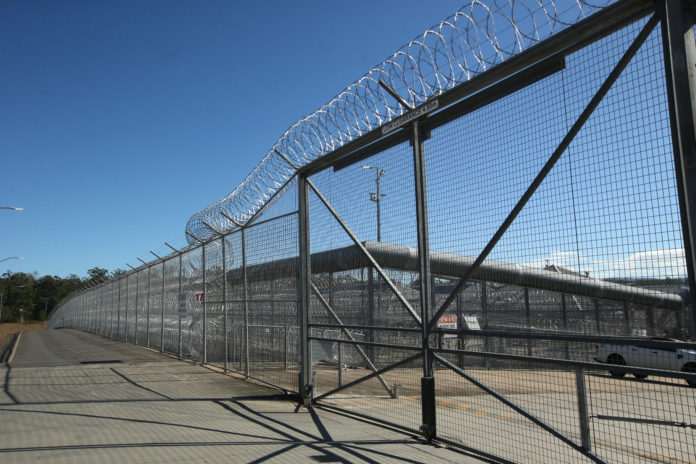
The New South Wales government has passed emergency legislation providing the Corrections Commissioner with powers to release some of the state’s 14,034 prisoners.

This legislation was introduced in the wake of the global release of prisoners to cope with the COVID-19 pandemic. Most recently, the United States has begun to release thousands of prisoners across four states.


Read more: Why releasing some prisoners is essential to stop the spread of coronavirus


Legislation to release prisoners in NSW was drafted amid the growing number of cases of COVID-19 infections in prison populations, including staff. The overcrowding and poor sanitation and health conditions in prisons make them ripe for the rapid spread of disease.

Long Bay jail in Sydney was locked down this week when two prison staff tested positive for COVID-19 and several inmates displayed symptoms. The higher incidence of chronic health conditions among inmates predisposes them to suffer serious and critical outcomes from the virus.

Why is legislation needed?

The NSW government has introduced the COVID-19 Legislation Amendment (Emergency Measures) Act 2020 (NSW) to address the escalation of COVID-19 cases in the state.

NSW has the highest per capita rate in Australia, with more than 1,000 cases as of March 25. The emergency legislation provides for the release of prisoners. The provision will apply for a minimum of six months and may apply for up to 12 months under regulations.

This emergency provision is concerned with protecting vulnerable inmates and releasing prisoners who pose a low risk to the community. Attorney-General Mark Speakman said the legislation was designed to protect the health of inmates and frontline prison workers as well as the “good order and security” of prisons.

Freeing up prison space through the early release of prisoners will enable the remaining prisoners to be isolated, to prevent or control an outbreak. It also allows the health needs of remaining inmates to be better addressed.

We have seen what happens without this action in prisons overseas: infection spreads rapidly and foments unrest among prisoners. In Italy, prisoner fears that they faced a death sentence because of COVID-19 resulted in riots in 23 Italian prisons and the deaths of 12 prisoners.

Who can be released under the legislation?

The COVID-19 legislation allows for the release of prisoners who belong to a prescribed “class of inmates”. They may be defined according to their health, vulnerability, age, offence, period before the end of the prison term and any other matter as set down in regulations.

Serious offenders are excluded. This not only rules out those specifically mentioned, including prisoners convicted of murder, serious sex offences and terrorism, but also high-level drug and property offenders.

The Corrections Commissioner will determine an individual’s release where it is “reasonably necessary” due to “the risk to public health or to the good order and security of correctional premises”. Community safety and the prisoner’s access to suitable accommodation outside prison are necessary aspects of the decision-making. Other consideration are whether the offender has previously committed a domestic violence offence and the impact of the release on the victims.

Prisoners will be released on parole and subject to standard parole conditions. They will, for example, have to be of good behaviour and not reoffend, as well as any additional conditions determined by the commissioner, including home detention and electronic monitoring.

Does this cover all prisoners?

There are some concerning omissions from this legislation if it is to achieve its objectives of protecting inmates, prison staff and the community.

First, it is not clear whether it will apply to youth detention centres. This vulnerable group requires special protection in this period when they are denied visits from their parents, family and lawyers, have fears about COVID-19 infection and most likely are unaware of their rights to health care.

The legislation also does not refer to remand prisoners, who constitute over one-third of prisoners in NSW. The legislation explicitly refers to parole, rather than determinations on bail.

Administrators must set down regulations to include this group in the prescribed “class of inmates” for release. Otherwise, those most entitled to liberty – who have not been convicted or sentenced – will be left in prison to suffer through the pandemic. The suspension of new jury trials will mean they spend further time in prisons until well after the COVID-19 crisis.

Critically, the legislation is silent on people who are facing a prison sentence or remand order, but not yet in prisons. For those people, there is no legislation urging the courts to consider the coronavirus pandemic in promoting non-prison sentences or allowing bail applications.


Read more: Homelessness and overcrowding expose us all to coronavirus. Here’s what we can do to stop the spread


Over the past week, lawyers have rushed to collect evidence on the effect of the pandemic on prisoners to support their clients’ pleas not to be imprisoned. Supreme Courts in Victoria and the ACT have accepted the relevance of COVID-19 in bail applications. But there is a lack of guidance elsewhere on bail and sentencing, increasing the risk of more people being sent into the prison system.

Schedule 1 of the emergency legislation granted controversial powers to the attorney-general to alter the bail laws by regulation during the crisis. The NSW government has indicated it intends to use these powers to deliver changes on bail to prevent more prisoners entering jail on remand. The timing and scope of these changes have not been detailed, but are certainly critical to preventing the pandemic entering our prisons.

Not only would the entry of new inmates add to the burden on prisons, it could also create a devastating situation where unknown carriers of the coronavirus enter the system.

While there are no laws to limit courts ordering imprisonment during the pandemic, Corrections Commissioner Peter Severin could use his discretion to review the release of prisoners at the point of reception. In other words, the process between the court order and physical entry into a prison cell. Regulations should clarify the use of the commissioner’s power at this point to prevent unnecessary entry of new prisoners.

Does it strike the right balance in community protection?

The immediate release of NSW prisoners will protect prisoners from greater exposure to COVID-19, limit the outbreak of the virus in prisons and minimise the spread between prison and the community.

But there is more to be done. The release of less serious offenders should not be based on the pre-pandemic criteria of the risk of the individual. These criteria often discriminate against Indigenous people, those with mental health issues and socio-economically deprived. Rather, it should be based on the health needs of prisoners and the interests of community safety in managing the health risk.

Given that many prisoners have poor health and are serving short prison terms, the broad use of the commissioner’s discretion could result in thousands of prisoners being released from NSW prisons.

Ultimately, the legislation will only work to minimise the worst effects of COVID-19 in prisons if the commissioner exercises his discretion widely to prevent overcrowding and take the load off already scarce health services in prisons.

ref. Explainer: how will the emergency release of NSW prisoners due to coronavirus work? – https://theconversation.com/explainer-how-will-the-emergency-release-of-nsw-prisoners-due-to-coronavirus-work-134523

As coronavirus hits holiday lettings, a shift to longer rentals could help many of us

Source: The Conversation (Au and NZ) – By Myfan Jordan, Associate, Health Ageing Research Group (HARG), La Trobe University

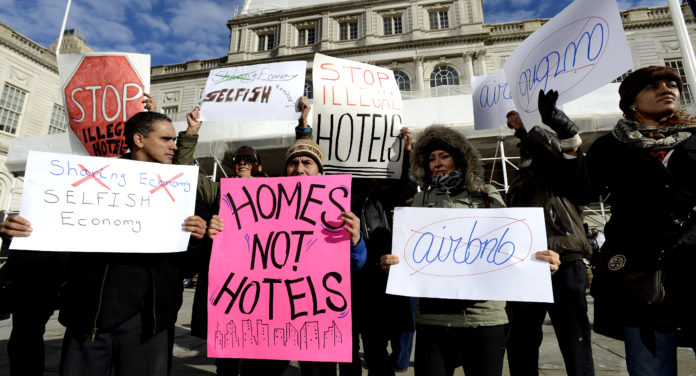
Hidden within the coronavirus-devastated tourism market is a related impact: the loss of customers could be financially devastating for small investors who dominate short-term letting platforms such as Airbnb. After a decade of high returns, they may now wonder whether a return to the secure, if slightly less lucrative, long-term residential tenancy market is a safer bet. If investors shift from short-term letting to long-term rentals in search of greater security, this would benefit the growing numbers of Australians in rental housing.

With the coronavirus pandemic there are signs this is already happening. In Dublin, for example, a 64% rise in long-term rental properties has been reported this month. It’s thought landlords are withdrawing from short-term listing sites and offering properties on the rental market.

Until now, rising property prices have forced more Australians into long-term renting even as short-term letting has eaten into the supply of properties. Young adults once dominated the rental market. It’s fast becoming a more permanent solution for families and even for older Australians. One in three households now rent their homes.

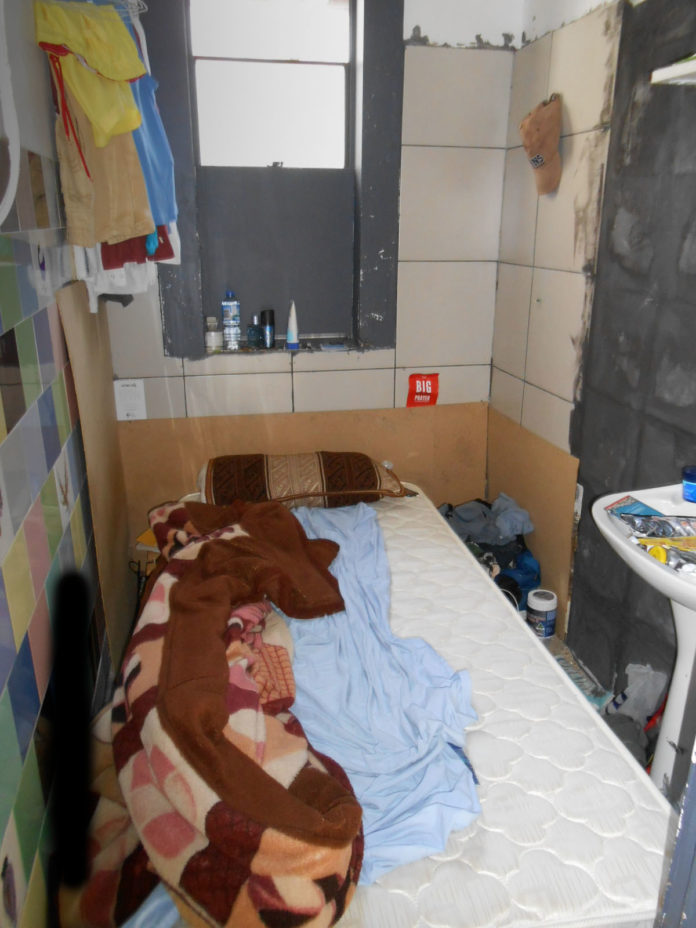
So, with almost 350,000 Australian properties having been listed on Airbnb, the impact on local communities can be significant. The increase in short-term lettings has been linked to increasing homelessness.


Read more: Ever wondered how many Airbnbs Australia has and where they all are? We have the answers


Why landlords will look for security

Beyond the immediate impact of coronavirus on tourism in Australia, it’s possible the increased risks in the holiday lettings market may provide the impetus to align the interests of landlords and tenants around longer-term tenure.

Despite Prime Minister Scott Morrison urging vacationers not to ask for refunds from struggling operators, the tourism downturn has introduced a new level of risk for hosts. Airbnb has enacted a policy of full refunds for cancellations, which is reported to be “completely obliterating smaller hosts”.

Other platforms are advising hosts to manage COVID-19 risk themselves. This leaves many investor-landlords navigating a complex, public health crisis largely on their own.

With some of our most popular destinations facing an existential crisis, the impacts on small business, working families and low-income Australians may be both obscured but far-reaching, as the Airbnb example shows. Big players in the tourism industry can lobby federal government for support. Individual agents in the share economy are largely unprotected.

To date, the home-share concept has been a winner for property investors. Holiday letting has largely moved on from the original Airbnb model of sharing one’s primary residence. Letting through digital platforms with access to a global market of tourists has brought high-rent, low-risk dividends for people with investment properties.

The coronavirus pandemic, however, is revealing cracks in the foundations of the holiday-letting model.


Read more: Who wins and who loses when platforms like Airbnb disrupt housing? And how do you regulate it?


What has happened to renters?

Research suggests the digital disruption of the holiday accommodation sector has had significant impacts on local renters. There is little doubt tourist demand through online letting platforms has reduced the supply and increased prices of long-term rental housing in Australia, particularly in parts of our capital cities.

Likewise in Europe, where one in four rental properties in some tourist destinations is now a holiday property. This has led some governments to introduce strict regulation. It includes licensing, fines and limits on the number of days a property can be let each year.

Australia has been slower to respond, despite observations that Airbnb is “impacting the rental market and … bringing the cost of housing up”. Even in Tasmania, which has the strongest market regulation, one in every 27 Hobart homes remains listed for short-term lease. Similarly, in Sydney and Melbourne, growth in the sector has driven up rental housing costs.


Read more: Airbnb: who’s in, who’s out, and what this tells us about rental impacts in Sydney and Melbourne


In New South Wales, fines for unregistered holiday lets have increased by 500%. But councils struggle to enforce laws that landlords are either unaware of or actively avoid complying with.

Home ownership has become a privilege in Australia, one driving disadvantage among those who are locked out. For a single age pensioner, for example less than 1% of rental housing is affordable. And long-term rental housing stock is often of poor quality.

Time for a rethink

Australia’s rental housing system undeniably needs a rethink. The sector presents a growing problem for state and territory governments, in terms of both the supply of affordable rental properties and finding the right balance between landlord and tenant rights.


Read more: Chilly house? Mouldy rooms? Here’s how to improve low-income renters’ access to decent housing


Government measures to increase the availability of rental housing through tax incentives, such as negative gearing, are unfortunately not restricted to landlords who offer longer-term tenure. To date there has been little financial incentive to eschew the higher returns of the Airbnb model for the relative stability of residential tenancies.

In times of crisis, Australians pull together. During the summer bushfires, we saw Airbnb hosts offer emergency housing to displaced families. They recognised the critical importance of a safe and secure home – a sanctuary. We need to recognise this critical function of home beyond times of crisis, to ensure every Australian has a home for good.


Read more: Australia’s housing system needs a big shake-up: here’s how we can crack this


Per Capita’s Centre for Applied Policy in Positive Ageing is launching its Home for Good project in collaboration with The Australian Centre for Social Innovation today. You can read their policy brief on Australia’s private rental housing market here.

ref. As coronavirus hits holiday lettings, a shift to longer rentals could help many of us – https://theconversation.com/as-coronavirus-hits-holiday-lettings-a-shift-to-longer-rentals-could-help-many-of-us-134036

“Like a key to a lock”: how seeing the molecular machinery of the coronavirus will help scientists design a treatment

Source: The Conversation (Au and NZ) – By Onisha Patel, Senior Postdoctoral Research Fellow, Walter and Eliza Hall Institute

In the race to develop a treatment for COVID-19, the disease threatening millions of lives around the world, scientists are studying every aspect of the SARS-CoV-2 coronavirus that causes it.

One vital step is understanding the precise shape and structure of the virus at the molecular level. Knowing the shape lets scientists identify targets and design drugs to hit them.

This approach was used to create the anti-influenza drugs oseltamivir and zanamivir (Tamiflu and Relenza) among others. It also shows great promise for the new coronavirus.

What is being done for COVID-19 treatment?

At present, scientists and clinicians are investigating the use of existing drugs such as chloroquine, which is used as an antimalarial and to treat autoimmune disorders, and the antiviral remdesvir. (Despite what you may read or hear, none of these are approved treatments for COVID-19 and should not be taken without medical instructions.)

Many pharmaceutical companies are also looking into therapies based on antibodies produced in people who have already been infected by the virus and recovered.

There are also several attempts in progress to create a vaccine which can be given to healthy people to make them immune. There are various approaches in play, including the use of genetic material or synthetic viral proteins to find ones that teach our immune systems to mount an effective defence against the virus.

Human trials are already under way for some of these experimental drugs and vaccines, and time will tell if they work. But almost certainly, an effective long-term strategy will also require significant research investment to allow the design of novel treatments that are specifically targeted for the SARS-CoV-2 virus.

How can you design new treatments without knowing what your target looks like?

Why structural biology?

If you want to design a key to a lock, it is much easier if you know what the lock looks like. In the same way, to design targeted treatments it is important to know what the target looks like.

In SARS-CoV-2 virus, the targets are its genetic material and proteins. These molecules let the virus invade humans and make multiple copies of itself.

Structural biology is a field of science that allows us to see beyond what is visible to the naked eye, to see nanoscopic-sized molecules such as DNA, RNA and proteins. Structural biology methods such as X-ray crystallography and cryo-electronmicroscopy are currently being used at a rapid pace to visualise molecular components of the virus.

Within weeks from when the genetic sequence of the SARS-CoV-2 was made available, structural biologists have used these techniques to see proteins that make up the SARS-CoV-2 virus.

Some of these include the “spike” protein, a protein that helps the virus to gain entry into the host and enzymes that enable virus replication including the main protease, an attractive target for drug development. The inner molecular machinery of the SARS-CoV-2 virus is just beginning to be revealed and there is more to come.


Read more: Revealed: the protein ‘spike’ that lets the 2019-nCoV coronavirus pierce and invade human cells


How is structural biology helping with COVID-19 research?

The main protease enzyme of the SARS-CoV-2 coronavirus, with a small chemical molecule in purple. Onisha Patel, Author provided

Scientists are using structural biology data to look for special features within the viral proteins. One such feature is a cavity or space where a small chemical molecule (a potential drug) can fit.

Once identified, researchers work on the molecule to improve the fit and make it work better as a drug. Eventually the chemical molecule might fit tightly enough to stop the viral protein from doing its job, much like a spanner thrown into a set of gears.

This approach to the design of new and targeted drugs is called “structure-based drug design”. It is more efficient, precise and time-saving. It has been used in the past to create anti-viral drugs such as oseltamivir (Tamiflu) and zanamivir (Relenza) that target the flu virus.

Scientists are now using this approach to discover drugs against SARS-CoV-2. For vaccine design and therapeutics development, knowing what the SARS-CoV-2 “spike” protein looks like is a major breakthrough. Scientists are already planning to use a stabilised version of this protein to screen for antibodies from people who have recovered from COVID-19 infection.

Where is structural biology data being shared?

Modern robotics, better instrumentation, faster data collection, better computing and software have revolutionised the speed with which structural biology information is being made available. This would not have been possible even five years ago.

The structural data collected is deposited at the Protein Data Bank (PDB) and the Electron Microscopy Data Bank (EMDB), online open access repositories who make this data available worldwide free of charge. This open access policy makes it possible for scientists globally to answer some of the most intriguing questions on SARS-CoV-2 biology and find the best ways to design new treatments.

Whether for new drugs or vaccines, structural biology is at the frontline to understand the molecular machinery from viruses to humans.

ref. “Like a key to a lock”: how seeing the molecular machinery of the coronavirus will help scientists design a treatment – https://theconversation.com/like-a-key-to-a-lock-how-seeing-the-molecular-machinery-of-the-coronavirus-will-help-scientists-design-a-treatment-134135

Singing away the coronavirus blues: making music in a time of crisis reminds us we belong

Source: The Conversation (Au and NZ) – By Michelle Langley, Senior Research Fellow, Griffith University

With constraints on our movements and general way of life becoming more and more restricted, we are feeling a loss of control not experienced since the second world war.

In being confined to our homes, we are missing our normal social support from friends and family, and our freedom to control our day-to-day lives.

But making music provides a means to regain control.

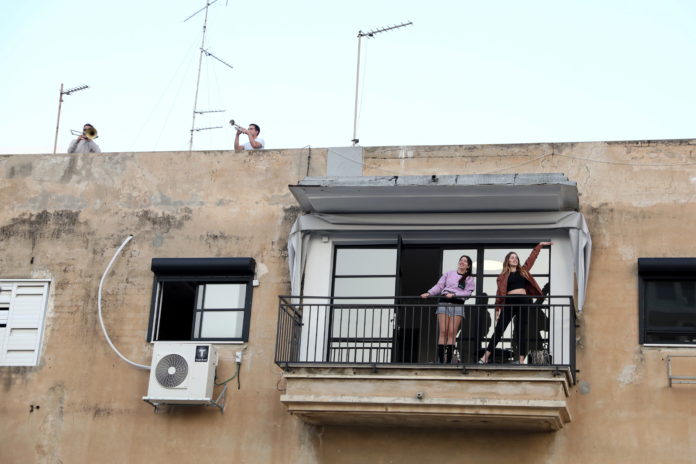
People in Spain have been filmed acting out with music, creating duos across apartment buildings.

The citizens of Wuhan chanting “Keep it up, Wuhan!” and singing patriotic songs from their windows encouraged themselves and their neighbours in their efforts to save their city.

Wuhan residents chant ‘Keep it up, Wuhan’ out their windows and sing patriotic songs.

In Italy, citizens have been playing instruments and singing from their balconies during their lockdown.

Coronavirus outbreak: Italian residents join together to sing from balconies during lockdown.

Parodies on YouTube are both lifting community spirits and reminding people to look after each other – not just themselves.

Parodies are both keeping spirits up and reminding people to act with the greater good in mind.

For some, this behaviour might have begun with trying to break the tedium of staying confined at home. But others clearly wished to support their community in one of the only ways they had left available to them: by making music.

Why do we sing during times of crisis?

Music creates a sense of belonging and participation.

It is an antidote to the growing sense of alienation and isolation in society in general – even more so now we are being asked to actively practise social distancing and isolation.

Social distancing and geographical isolation do not have to result in social isolation. In the face of uncertainty and panic, music is a social balm for soothing anxiety, enhancing community connections and acting in defiance of a threat to community spirit.

Brisbane’s Pub Choir has become a global ‘Couch Choir’.

We have seen this before. People sang as flames tore through the roof of the historic Notre Dame Cathedral last April: hymns in the streets when Parisians could do nothing else to save the beloved icon.

This spontaneous reaction seemed to reflect the need of Parisians to reassure each other that, even though the cathedral was being destroyed before their eyes, their community would continue.

The music also seemed to be offered to the cathedral itself – reassurance that she was being supported by her community in her time of need.

Parisians sing Ave Maria as they watch Notre Dame burn.

During the coronavirus crisis, community support has evolved from a series of spontaneous musical flash mobs to connect with each other to coordinated displays of appreciation – including clapping, shouting and singing – to acknowledge the health workers on the front lines.

Much like singing, this external expression of gratitude is helping people to cope in times of crisis: providing personal and social development, mental health and well-being benefits, and community strength and harmony.

Music in human evolution

We don’t know exactly when we started to make music.

Finding the first evidence for singing – likely our first foray into music – is impossible, though instruments dating back some 40,000 years have been found in Europe. These bone flutes would not be the first instruments to be created, however, as they already show signs of complex design and most musical tools, such as skin drums, couldn’t survive the many thousands of years to discovery by an archaeologist.

Today, music is the most consumed form of culture. People listen to music to regulate their mood, to achieve self-awareness, and as an expression of personal and collective identity and social relatedness.

The ability of music to increase social cohesion and direct human attention was probably a key reason for its development throughout human behavioural evolution, allowing early humans to convey emotions and intentions effectively. This communication could prove decisive in times of stress, and ultimately mean the difference between life and death.

Now, we are seeing this age-old human adaptation once again being mobilised in response to the COVID-19 pandemic to keep communities pulling together.

Music has not yet lost its importance for humanity.

ref. Singing away the coronavirus blues: making music in a time of crisis reminds us we belong – https://theconversation.com/singing-away-the-coronavirus-blues-making-music-in-a-time-of-crisis-reminds-us-we-belong-133790

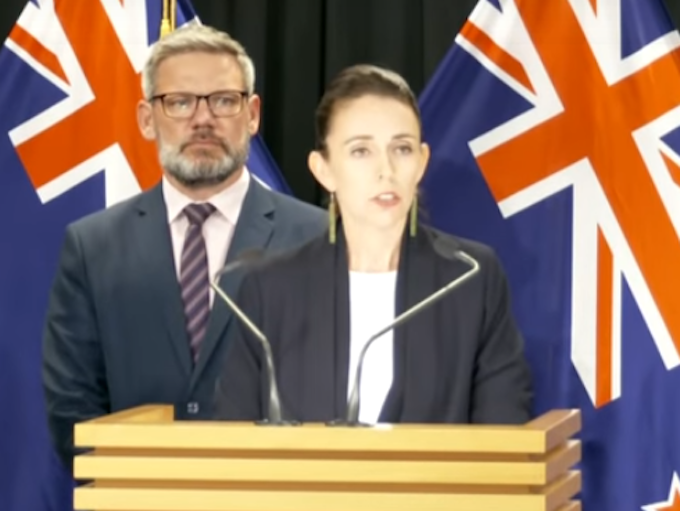
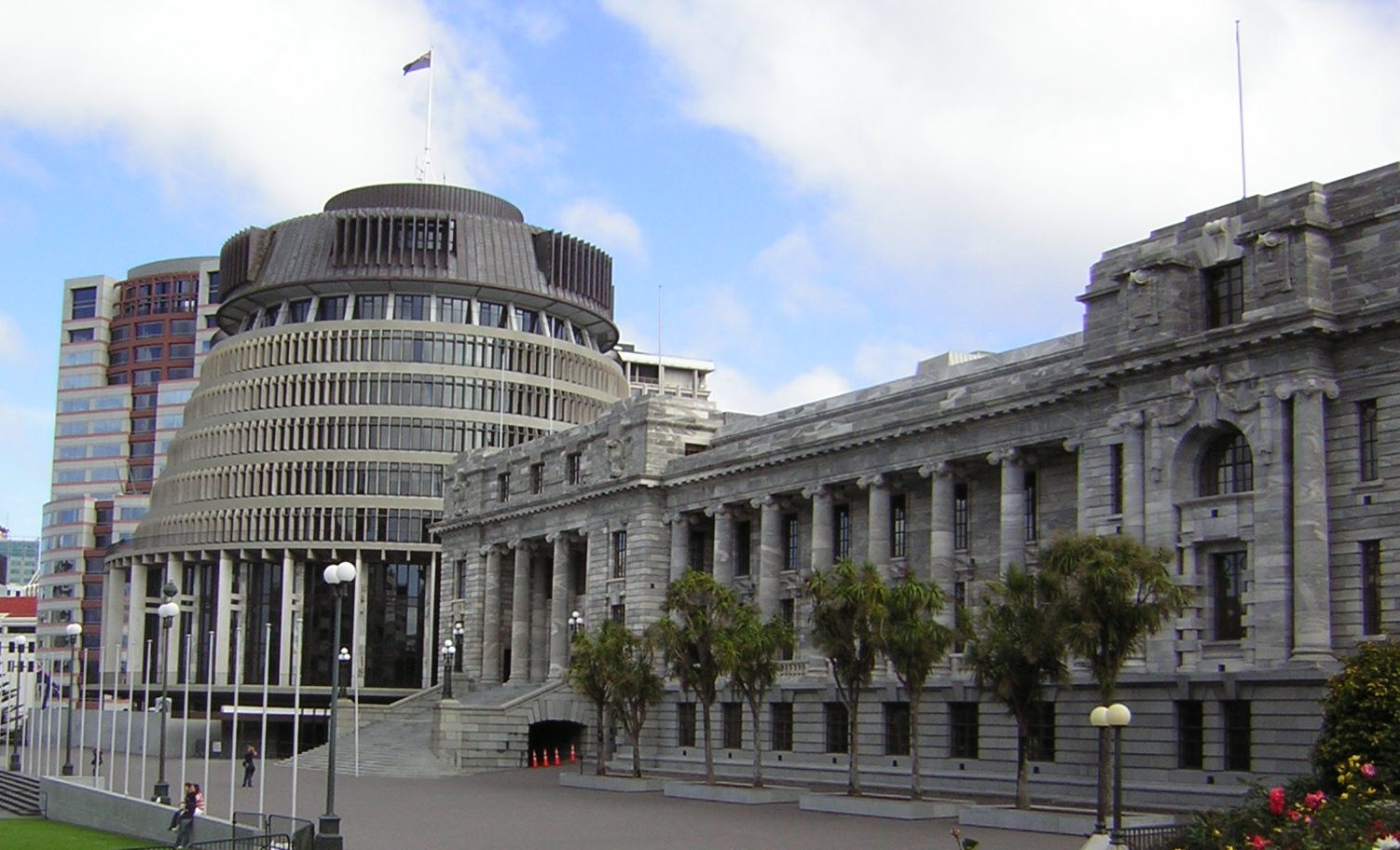
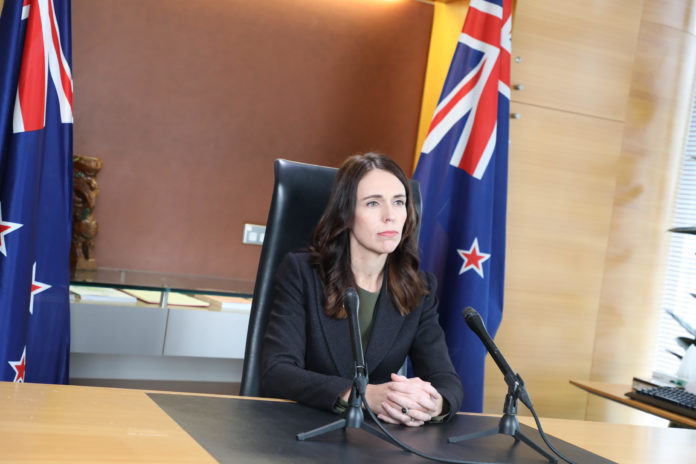
New Zealand: Prime Minister Jacinda Ardern’s statement on New Zealand Lockdown and State of National Emergency

Statement by Prime Minister of New Zealand, Jacinda Ardern, to Parliament.

Mr Speaker,

I wish to make a Ministerial Statement under Standing Order 347 in relation to the recent declaration of a State of National Emergency.

Having considered the advice of the Director Civil Defence Emergency Management, the Minister of Civil Defence declared a State of National Emergency for the whole of New Zealand under section 66 of the Civil Defence Emergency Management Act 2002 on March the 25th 2020 at 12.21pm.

This is to manage the spread of the COVID-19 epidemic within New Zealand.

The Minister of Civil Defence took this step because of the unprecedented nature of this global pandemic, and because he considered the response required to combat COVID-19 is of such a degree that it will be beyond the capacity of local Civil Defence Emergency Management Groups to respond to on their own.

This pandemic also requires a significant and coordinated response by and across central and local government.

Also, under section 5 of the Epidemic Preparedness Act 2006, yesterday I issued an Epidemic Notice, nationwide, to help ensure the continuity of essential Government business due to the unprecedented effects of the global pandemic, COVID-19, which is likely to significantly disrupt essential governmental and business activity in New Zealand.

This Epidemic Notice came into effect today, the 25th of March 2020, just after midnight and it will remain for three months with ongoing review, and from which, now further Epidemic Management Notices and Epidemic Modification Orders can be given – particularly across local government, immigration and social services – crucial services that now need flexibility to operate due to the effects of an epidemic in our country and an impending lockdown to prevent the spread of COVID-19.

At 11.59pm tonight, we move to the highest Alert Level of 4, and we, as a nation, go into self-isolation.

The trigger: early evidence of community transmission of COVID-19 in New Zealand.

But unlike so many other gravely inundated countries, we have a window of opportunity to stay home, break the chain of transmission, and save lives. It’s that simple.

In this fight against a virus, we have some things on our side.

We are moving into this next phase of our response early. Ahead of any potential over-run of our hospitals, and ahead of any deaths on New Zealand soil. But that doesn’t mean we should be complacent. And that’s why we must take this period of self-isolation deadly seriously.

This means we will go about life very differently to help slow down the spread of COVID-19.

We all have a role to play.

Only those in essential services will leave home to go to work. All others stay home and stop interactions with those outside the home.

Non-essential business premises close.

Events and gatherings are cancelled.

Schools close.

Public transport is reserved for those undertaking essential services and transport of freight.

Domestic air travel is very limited.

New Zealanders entering at our borders undergo strict measures to isolate or quarantine.

From midnight tonight, we bunker down for four weeks to try and stop the virus in its tracks, to break the chain.

Make no mistake this will get worse before it gets better. We will have a lag and cases will increase for the next week or so. Then we’ll begin to know how successful we have been.

I am fully aware that we have moved with huge speed. No other country in the world has moved to these measures with no deaths and so few infections. We have 5 people in our hospitals, none in ICUs or needing ventilators at this stage.

But we have no time to waste. We could have waited to plan ever intricate detail required to execute this closure, till we could answer every single question or circumstance. But, every hour we wait, is one more person, two more people, three more people, exposed to Covid-19.

That is why we did not wait. We established an alert system with clear guidance on when we must act, and why. We asked people to prepare, and then moved decisively.

These moves will be enforced. And we will be the enforcer.

Yesterday I issued the Epidemic Notice and today the Minister of Civil Defence declared a State of National Emergency, both of which provide us the powers for Government to move the country to Alert Level 4.

This is the second time in New Zealand’s history that a State of National Emergency has been declared.

The first was on February the 23rd 2011.

It followed the 6.3 magnitude earthquake in Christchurch. It followed the death of many New Zealanders, the total destruction of much infrastructure and the crippling of essential services.

It was declared to allow the greatest possible coordination of local, national, and international resources to work on rescue and recovery. As the other side of the House would recall well.

Today we put in place our country’s second State of National Emergency as we fight a global pandemic, as we fight to save New Zealanders’ lives. To prevent the very worst that we’ve seen in other countries around the world from happening here. To protect our essential health services. To cushion the economic impacts of COVID-19.

A State of National Emergency to preserve our way of life.

Every person still at work, interacting with others, increases the risk of the virus spreading exponentially and means we will be in lockdown for longer.

That means people will be out of work longer, doing further damage to livelihood and lives.

There will be no tolerance for that. We will not hesitate to use our enforcement powers if needed.

Through the early and hard measures we’ve taken at the border, using the powers under the Health Act, the signing of epidemic notices, now, being in a State of National Emergency, we have all of the legislative means possible, all the enforcement powers, all the tools we need, at our disposal to combat the spread of COVID-19.

Under the Civil Defence Emergency Management Act 2002, today’s declaration of a State of National Emergency will allow the Director Civil Defence Emergency Management to direct, coordinate and use the resources made available to manage the response to COVID-19.

The Director of Civil Defence Emergency Management may also control the exercise and performance of functions, duties, and powers of Civil Defence Emergency Management Groups and Group Controllers across the country.

While in force, it will allow Civil Defence Emergency Management Controllers to provide for the:

  • conservation and supply of food, fuel and other essential supplies
  • regulate land, water and air traffic
  • to close roads and public places
  • to evacuate any premises, including any public place,
  • And if necessary to exclude people or vehicles from any premises or place.

This declaration helps us limit our exposure, and the exposure of the most vulnerable members of our community, to COVID-19. In short, it will help save lives.

An Epidemic Notice further strengthens our response to COVID-19 and helps us manage effectively shutting down the country for the first time.

It does a number of things including allowing for special powers of medical officers of health – and immediately unlocks powers under the Corrections, Health and Electoral Acts.

But importantly an Epidemic Notice sits as an umbrella over further notices that can now be issued, and which have now been issued, to change and modify specific parts of legislation in a common-sense and pragmatic way to keep our systems working in a time of lockdown – and get rid of particular requirements that are impractical to comply with in a time of an epidemic and when in lockdown.

Specifically for our immigration sector:

  • Temporary visas are automatically extended to late September.
  • This comes into effect from Thursday the 2nd of April 2020 and means travellers with a temporary work, student, visitor, interim and limited, visa expiring before 1 April 2020 who are unable to leave New Zealand must apply online for a new visa. An interim visa will be issued.
  • Travellers with a temporary visa due to expire between 1 April and 9 July 2020 will have their visas extended to late September. Confirmation of extensions will be emailed directly to all visa holders.
  • Detailed information is on the Immigration NZ website and covid19.govt.nz website but anyone in New Zealand and concerned about their visa should get in touch with Immigration New Zealand.

For our social service sector, an epidemic notice means:

  • The Ministry for Social Development can grant emergency benefits to people who would otherwise not be entitled to them (including temporary workers who lose a job) – this sits as a necessary partner to the Government’s multi-billion dollar economic assistance package that aims to keep people in jobs and with an income – including wage subsidies for all workers working legally in New Zealand and a deployment package.
  • It also allows for extra flexibility in relation to the payment, reinstatement, grant, increase, cancellation, suspension, or variation of benefits

These notices and the powers which they carry are not issued lightly.

The restrictions in place on New Zealanders’ movements are the most significant in our modern history. I do not underestimate the gravity of what is being asked of you. But we have a limited window of opportunity and we must use every weapon we have.

New Zealanders want to see that these measures are being complied with but in a way that we’re used to seeing as New Zealanders.

As Police Commissioner Mike Bush said, the Police and the Military will be working together and there is assistance at the ready as required. If people do not follow the message here today, then the police will remind people of their obligations. They have the ability to escalate if required. They can arrest if needed, they can detain if needed.

But these are tools of last resort, in a time when I know New Zealanders will rally. Because that is what we do.

And so, as we enter into a stage that none of us have experienced before, I want to share a few final messages.

Firstly, you are not alone. You will hear us, and see us, daily as we guide New Zealand through this period. It won’t always be perfect. But the principle of what we are trying to do is the right one.

Secondly, success won’t be instant. The benefit of what we do today, won’t be felt for many days to come. Expect our numbers to keep rising, because they will. But over time, we will see change if we all stick to the rules.

Thirdly, you may not be at work, but that doesn’t mean you don’t have a job. Your job is to save lives, and you can do that by staying home, and breaking the chain.

And finally, if you have any questions about what you can or can’t do, apply a simple principle. Act like you have COVID-19. Every move you then make is a risk to someone else. That is how we must all collectively think.

That’s why the joy of physically visiting other family, children, grandchildren, friends, neighbours is on hold. Because we’re all now putting each other first. And that is what we as a nation do so well.

So New Zealand, be calm, be kind, stay at home. We can break the chain.

Uncertain? Many questions but no clear answers? Welcome to the mind of a scientist

Source: The Conversation (Au and NZ) – By Darren Saunders, Associate professor, UNSW

Watching the world adjust to the horrific new reality of the COVID-19 pandemic, has led me to contemplate a much more important lesson we might be learning together as we face this crisis.

We’ve all been ripped out of our comfort zones, with so much of the familiar rhythm of daily life suddenly replaced by a pervasive, visceral uncertainty.

So many questions without answers. So many experts with differing views. A brutal realisation that things don’t work the way we always thought. Seeing infinite shades of grey instead of that comforting black and white world.

Sound familiar?

Welcome to the mind of a scientist.


Read more: Coronavirus distancing measures are confusing. Here are 3 things to ask yourself before you see someone


Uncertainty is unnerving – but you can learn to live with it

When this feeling dawned on me years ago on one of many early morning drives to Canberra during my PhD, it was almost crippling.

Digging deep into the mysteries of biochemistry and molecular biology – the ghosts in the machine of life itself – can do that. It can be an incredibly challenging, even unnerving experience.

But I learned to let that uncertainty wash over me. Like being caught in a rip in the surf, resistance just tires you out and makes things worse. After swimming around in it for a while I soon learned to float.

I even managed to crack a wave or two.

I wonder if this shows us one potential way through the viral-induced trauma surrounding us? We are all faced with rapidly shifting information and advice. What is true at 8am might not be by 6pm.

What is true in the morning may not be true by evening. AAP/KELLY BARNES

A role for scientists

Maybe scientists have a role to play here beyond the hard work going on to understand this new coronavirus, chasing vaccines and new drugs? We are comfortable swimming in the unfamiliar, we know how to float on a sea of uncertainty. We know it’s OK to say “I don’t know” or “good question”.

There’s an opportunity here for scientists to lead by example, both in the way we act and the way we communicate. To show the way in dealing with uncertainty, with changing information, and with appropriate responses.

But we need to start from a place of empathy. People are anxious and scared and we should acknowledge that. They want clear information and advice, based on best available data, not to be lectured or patronised. And scientists should be upfront about the fact that the advice may change – rapidly – or be slightly different to the next person’s.

Uncertainty and public messaging

We need, as a society, to become more comfortable with doubt and uncertainty in public, politics and business.

I’m OK with public messaging reflecting that. We’re so used to politicians holding a particular line on an issue, but the COVID-19 crisis has shown it doesn’t work when the situation is fluid and dynamic.

Maybe I’m just more comfortable with that as a scientist. Politicians absolutely have to be held to account but there should also be space for their positions to evolve – genuinely – with evidence.

We can change

Our sudden interest in disinfectants and hand washing, had me reflecting on my early days in a research lab.

Learning how to grow human cells without contamination by bacteria and yeast, or setting yourself on fire, takes some learning.

“Don’t touch that!”

“No, not that way!”

“What did you do that for?”

“No, hold it like this.”

It’s not intuitive. It takes real concentration – until it doesn’t anymore. Deeply ingrained habits and muscle memories have to be erased and rewritten. It’s hard, frustrating work.

It feels like the whole planet is sharing a similar experience now, but the stakes are much higher.

We can learn and change, until what was once difficult and uncomfortable becomes second nature. We’ve rapidly become much better, as a society, at things like handwashing and cough etiquette. Our relationship with uncertainty will have to change too.


Read more: In the age of coronavirus, only tiny weddings are allowed and the extended family BBQ is out


ref. Uncertain? Many questions but no clear answers? Welcome to the mind of a scientist – https://theconversation.com/uncertain-many-questions-but-no-clear-answers-welcome-to-the-mind-of-a-scientist-134388

Watch live: NZ now has 50 new Covid-19 cases, total 205

RNZ’s live news feed.

By RNZ News

New Zealand has 50 new cases of the Covid-19 coronavirus, bringing the total to 205.

Government officials today gave an update on the the Covid-19 national response, the latest health update, border issues and an essential services update.

Six people are in hospital throughout the country. All are stable, none in ICU. Three of those people are in Wellington Hospital.

LIVE RNZ NEWS FEED

The country is preparing to go into a full lockdown for alert level 4 from 11.59pm tonight, for a minimum of four weeks.

– Partner –

Speakers at today’s media conference include Director-General of Civil Defence Emergency Management Sarah Stuart-Black, Director-General of Health Dr Ashley Bloomfield, Immigration NZ national manager Peter Elms and MBIE deputy chief executive Paul Stocks.

This article is republished by the Pacific Media Centre under a partnership agreement with RNZ.

  • If you have symptoms of the coronavirus, call the NZ Covid-19 Healthline on 0800 358 5453 (+64 9 358 5453 for international SIMs) or call your GP – don’t show up at a medical centre.
Print Friendly, PDF & Email

Article by AsiaPacificReport.nz

Economics: Keith Rankin on Universal Basic Income and Covid‑19

Keith Rankin.

By Keith Rankin

Keith Rankin.

I keep hearing rather unfortunate ‘expert’ comments in response to questions asked about Universal Basic Income (UBI) as a way of responding to the Covid‑19 economic contraction. These comments all relate to a ‘straw man’ concept of UBI that is obviously unaffordable and impractical. It is not possible to offer any kind of Universal Basic Income (as an unconditional payment to all adult tax‑residents) at the level of New Zealand Superannuation.

What is both possible and necessary is to offer a basic universal income – initially set at $175 per week – in conjunction with a flat rate of income tax of 33 percent.

By doing what is possible and necessary, we provide bridging income guarantees to all New Zealanders who risk income losses, in in a way that requires no new bureaucratic input.

By doing this, all people with salaries or other earnings of more than $1,346 per week would receive exactly the same after tax as they do now. They already receive this benefit.

Further, all beneficiaries and superannuitants would continue to receive exactly the same as they already expect to receive after April 1. This $175 per week benefit is, in effect, the first part of their existing benefit.

Working people on incomes lower than $1,346 per week would receive more than they do now. All working people expecting to suffer a loss of income will be assured that they would continue to receive this $175 benefit as the market component their income falls.

If the $175 per week proves to be too low, then it can subsequently be adjusted upwards.

It’s simple. Really simple. And necessary. It is a way to maintain a high productivity economy that experiences a loss of gross domestic product. It is an easy way of ensuring that everybody gets a slice of a shrinking economic pie.

To avoid confusion, let’s call the $175 per week a Basic Universal Income (BUI).

See also: Keith Rankin Analysis – Economic Emergency 2020

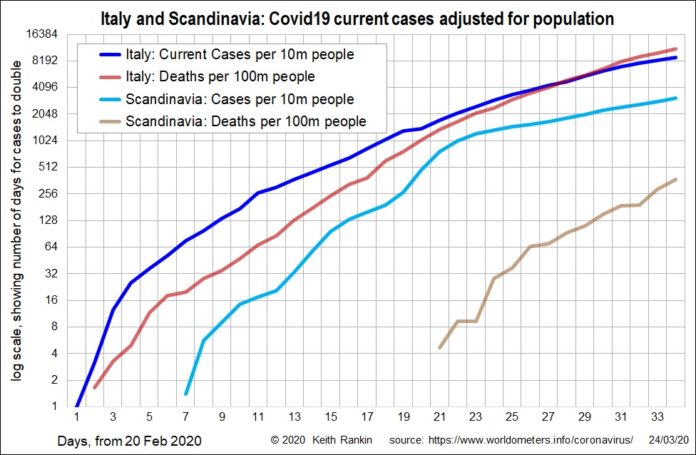
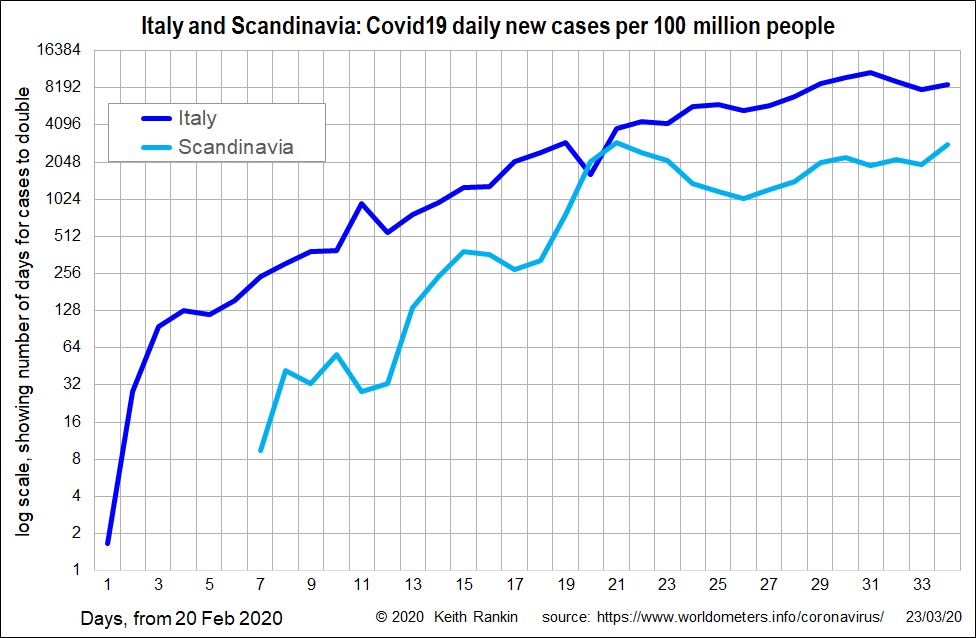
Keith Rankin Chart Analysis – COVID-19: Exponential Growth in Italy and Scandinavia

Case growth slows, but still exponential. Chart by Keith Rankin.

Analysis by Keith Rankin

Case growth slows, but still exponential. Chart by Keith Rankin.

In today’s first chart, of daily new cases in Italy and Scandinavia (Norway, Sweden, Denmark), we see that, at its peak in days 20 and 21 (March 10 and 11), the incidence of known new cases in Scandinavia matched that in Italy. The difference is that new cases stabilised immediately afterwards in Scandinavia, whereas the subsequent stabilisation in Italy is at a rate four times higher (about 80 new daily cases per million people, compared to 20 per million people in Scandinavia). Hopefully yesterday’s higher daily rise in Scandinavia is a statistical ‘blip’, and not the beginning of a resurgence of new cases there.

In today’s second chart, we see that both Italy and Scandinavia have moved to slower exponential growth paths for active cases (ie cases unresolved by recovery or death). Death rate growth continues at or close to the worst levels. We note that, on this type of chart, ‘normal’ exponential growth is represented by a straight upward‑sloping line. Improvement is represented by a curve getting ever‑closer to a horizontal line.

The news for Italy is hopeful, with a clear flattening of the curve most apparent for current (active) cases, but also starting to show a flattening for deaths.

Scandinavian deaths rates are considerably lower than Italian death rates. This reflects a lower incidence of Covid‑19 in Scandinavia. The lower incidence in Scandinavia presumably reflects stronger action taken sooner, relative to the start of the very sudden outbreak in Scandinavia. In Scandinavia, the plot since day 20 is flatter than before day 20. That’s good news. The bad news, however, is that the flatter plot is rising exponentially; we wish to see further reductions in the steepness of this curve.

In the war against coronavirus, we need the military to play a much bigger role

Source: The Conversation (Au and NZ) – By Alexey D Muraviev, Associate Professor of National Security and Strategic Studies, Curtin University

Prime Minister Scott Morrison’s declaration of “war” against the COVID-19 pandemic requires a mobilisation of all available resources to the front-lines of the response – and this includes a bigger role for our armed forces.

So far, the most visible force on our streets has been the police. In NSW, the police are now patrolling supermarkets to enforce civilised behaviour and order among panic buyers. A special police task force has also been set up in Victoria to enforce social distancing practices in public places.


Read more: In the wake of bushfires and coronavirus, it’s time we talked about human security


The military can also be a highly valuable asset in a national emergency, yet governments usually only deploy armed forces when a situation turns critical, such as this summer’s bushfires.

We have clearly reached such a critical point in the coronavirus crisis. Desperate times call for a more coordinated and strategic response and much greater involvement of the Australian Defence Force.

Responding to unconventional threats

Modern military power is designed to respond to a comprehensive suite of conventional, asymmetric or unconventional threats. The latter includes chemical, biological, radiological and nuclear weapons, often referred to as CBRN.

Defence has a limited, but well-equipped, capability to respond to CBRN threats. The ADF has a specialised counter-CBRN unit, the Special Operations Engineer Regiment (SOER), which has been trained to respond to biological and bacteriological threats and operate in contaminated environments.


Read more: ‘Cyber revolution’ in Australian Defence Force demands rethink of staff, training and policy


The Defence Science and Technology (DST) Group conducts specialised research and development to prevent and defend against CBRN attacks, including disease modelling.

In simple terms, the ADF can offer specialist epidemiological detection and decontamination capabilities. This includes the type of heavy equipment (such as CBRN-proof armoured personnel carriers) and protective gear that could be useful if the pandemic worsens.

This is in addition to a wide range of other functions the ADF can offer, from trained medics to transport logistics to policing functions.

The diggers move in

The ADF has been involved in the nation’s response to the COVID-19 outbreak from the early stages. For instance, the military offered its ground defence facilities, RAAF Base Learmonth and RAAF Base Darwin, to assist with the transfer of Australian nationals to quarantine stations on Christmas Island and Howard Springs.

But it wasn’t until the country moved into lock-down mode that it was asked to contribute much more.

Just this week, ADF personnel have been deployed in contact tracing teams to help NSW health officials track down those who came in contact with passengers on the virus-stricken Ruby Princess cruise ship.

More than 100 people have tested positive from the Princess Ruby cruise ship, spread out across the country. Dean Lewins/AAP

ADF staff are also contributing clinical and epidemiological support to the Department of Health, while engineering maintenance specialists have been called in to assist the Victoria-based Med-Con medical supplier with the production of protective masks, sanitisers and other medical items.

Yet, this is likely to be just the beginning. For example, CBRN specialists could be providing much-needed training to police and other emergency services on how to operate in contaminated environments.


Read more: Why releasing some prisoners is essential to stop the spread of coronavirus


More defence medical staff, including mobile hospital units, decontamination equipment and emergency stocks of supplies, should be on standby to be deployed on short notice to worst-affected areas.

The military can also start assisting in ground logistical operations (for example, setting up quarantine areas and exclusion zones) and targeted emergency airlift (dispatching emergency medical teams to remote areas).

And if police resources become overstretched, military personnel could enforce quarantine orders or area shut-downs, though deploying soldiers on the streets may only be used as a last resort by the government.

If the government declares an even higher state of emergency, the military could also be called on to secure key elements of physical infrastructure (power stations, fuel depots, airports and sea ports, state borders and others), and protect key elements of supply chains.

Military helicopters were used during the bushfires to help people stranded in remote communities. James Ross/AAP

What foreign militaries are doing

This is the strategy being embraced around the world as the pandemic worsens, with militaries being deployed in increasingly diverse tasks.

In the US, the military and National Guard are now undertaking a range of duties, such as

  • assisting civil authorities with enforcing quarantine orders by opening up defence facilities and providing mobile and floating hospitals to treat the infected

  • airlifting specialists, equipment and supplies to areas most in need and offering on-site logistical support and delivery of key items (food, medical supplies)

  • assisting in COVID-19 testing of civilians and research for a vaccine.

In the UK, up to 20,000 active defence personnel and reservists are in a higher state of readiness to respond to the pandemic, part of Operation Broadshare.

In Germany, about 3,000 military doctors and thousands of military reservists are also on standby, while France has mobilised 100,000 police officers and military personnel to enforce the country’s lock-down orders. A military field hospital also just opened this week in France to take the pressure off intensive care units.

In northern Italy, the military has been enforcing city lockdowns, in addition to transporting bodies of victims to places of cremation.

With limited resources on hand, Australia may even be in need of foreign military medical assistance if the pandemic worsens here, notably from the US. Australia received such assistance during the bushfire crisis, and Italy is currently getting similar aid from Russia.

Protecting the defenders

Of course, even as the Australian military is prepared to counter the pandemic, it’s not immune to the threat.

This week, the ADF announced it is relocating non-essential personnel out of Iraq and Afghanistan out of concern the virus could spread there.

There have also been 11 confirmed cases of COVID-19 in the Department of Defence inside Australia.

For a small standing force like the ADF, a pandemic is as much of a challenge as for the rest of the nation. But given the military’s resilience to stressful environments, a bigger role for our soldiers may be what we need right now.

ref. In the war against coronavirus, we need the military to play a much bigger role – https://theconversation.com/in-the-war-against-coronavirus-we-need-the-military-to-play-a-much-bigger-role-134149

Singing away the coronavius blues: making music in a time of crisis reminds us we belong

Source: The Conversation (Au and NZ) – By Michelle Langley, Senior Research Fellow, Griffith University

With constraints on our movements and general way of life becoming more and more restricted, we are feeling a loss of control not experienced since the second world war.

In being confined to our homes, we are missing our normal social support from friends and family, and our freedom to control our day-to-day lives.

But making music provides a means to regain control.

People in Spain have been filmed acting out with music, creating duos across apartment buildings.

The citizens of Wuhan chanting “Keep it up, Wuhan!” and singing patriotic songs from their windows encouraged themselves and their neighbours in their efforts to save their city.

Wuhan residents chant ‘Keep it up, Wuhan’ out their windows and sing patriotic songs.

In Italy, citizens have been playing instruments and singing from their balconies during their lockdown.

Coronavirus outbreak: Italian residents join together to sing from balconies during lockdown.

Parodies on YouTube are both lifting community spirits and reminding people to look after each other – not just themselves.

Parodies are both keeping spirits up and reminding people to act with the greater good in mind.

For some, this behaviour might have begun with trying to break the tedium of staying confined at home. But others clearly wished to support their community in one of the only ways they had left available to them: by making music.

Why do we sing during times of crisis?

Music creates a sense of belonging and participation.

It is an antidote to the growing sense of alienation and isolation in society in general – even more so now we are being asked to actively practise social distancing and isolation.

Social distancing and geographical isolation do not have to result in social isolation. In the face of uncertainty and panic, music is a social balm for soothing anxiety, enhancing community connections and acting in defiance of a threat to community spirit.

Brisbane’s Pub Choir has become a global ‘Couch Choir’.

We have seen this before. People sang as flames tore through the roof of the historic Notre Dame Cathedral last April: hymns in the streets when Parisians could do nothing else to save the beloved icon.

This spontaneous reaction seemed to reflect the need of Parisians to reassure each other that, even though the cathedral was being destroyed before their eyes, their community would continue.

The music also seemed to be offered to the cathedral itself – reassurance that she was being supported by her community in her time of need.

Parisians sing Ave Maria as they watch Notre Dame burn.

During the coronavirus crisis, community support has evolved from a series of spontaneous musical flash mobs to connect with each other to coordinated displays of appreciation – including clapping, shouting and singing – to acknowledge the health workers on the front lines.

Much like singing, this external expression of gratitude is helping people to cope in times of crisis: providing personal and social development, mental health and well-being benefits, and community strength and harmony.

Music in human evolution

We don’t know exactly when we started to make music.

Finding the first evidence for singing – likely our first foray into music – is impossible, though instruments dating back some 40,000 years have been found in Europe. These bone flutes would not be the first instruments to be created, however, as they already show signs of complex design and most musical tools, such as skin drums, couldn’t survive the many thousands of years to discovery by an archaeologist.

Today, music is the most consumed form of culture. People listen to music to regulate their mood, to achieve self-awareness, and as an expression of personal and collective identity and social relatedness.

The ability of music to increase social cohesion and direct human attention was probably a key reason for its development throughout human behavioural evolution, allowing early humans to convey emotions and intentions effectively. This communication could prove decisive in times of stress, and ultimately mean the difference between life and death.

Now, we are seeing this age-old human adaptation once again being mobilised in response to the COVID-19 pandemic to keep communities pulling together.

Music has not yet lost its importance for humanity.

ref. Singing away the coronavius blues: making music in a time of crisis reminds us we belong – https://theconversation.com/singing-away-the-coronavius-blues-making-music-in-a-time-of-crisis-reminds-us-we-belong-133790

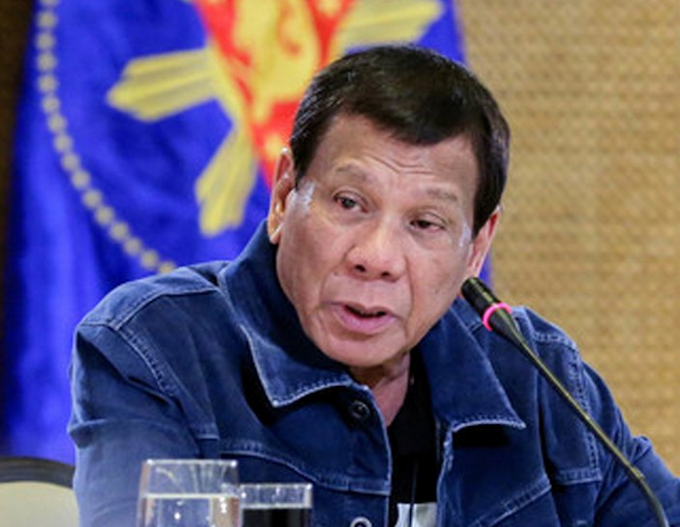
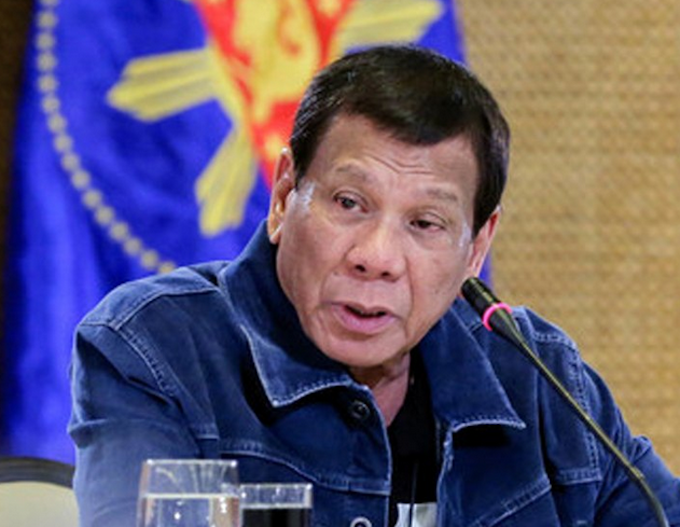
Philippine bill granting Duterte extra emergency powers passes easily

By Felipe F Salvosa II in Manila

The Philippines Senate and the House of Representatives have passed identical bills granting extra powers to the president to deal with the Covid-19 coronavirus pandemic, such as the takeover of medical and transport facilities and flexibility in disbursing the national budget.

Normally both chambers pass their own versions and then hold a bicameral conference to reconcile conflicting provisions, but during Monday’s special session, the House agreed to adopt the 10-page Senate Bill 1418 instead of its own House Bill 6616, to speed up the legislative mill.

Executive Secretary Salvador Medialdea told House members the Malacañang Palace took note of concerns over wide-ranging emergency powers and said the Executive Branch would settle for “standby powers”.

READ MORE: House, Senate dissenters: ‘Emergency actions, not powers’ needed vs coronavirus

Dissenting lawmakers yesterday condemned the bill, saying what was needed was “emergency action” not “emergency powers”.

The approved bill narrowed the establishments that may be subject to a takeover, to only those needed to house health workers, serve as quarantine areas, quarantine centers, medical relief and aid distribution locations, or other temporary medical facilities; and to transport health, emergency, and frontline personnel and other persons.

– Partner –

The draft earlier sent by Medialdea to Congress sought a two-month state of national emergency requiring the temporary takeover of “any privately owned public utility or business affected with public interest”.

The bill, now titled “Bayanihan to Heal as One Act”, declares a state of national emergency to last for three months, and grants President Rodrigo Duterte “powers that are necessary and proper” to carry out a list of 24 emergency measures and “other measures as may be reasonable and necessary”.

Emergency measures
The emergency measures include:

  • faster accreditation of testing kits;
  • ensure that all local government units are acting in line with the rules, regulations and directives issued by the national government;
  • direct the operation of any privately owned hospital and medical and health facility and other establishments to house health workers, serve as quarantine areas, quarantine centers, medical relief and aid distribution locations, or other temporary medical facilities; and public transportation to ferry health, emergency, and frontline personnel and other persons;
  • enforce measures to protect the people from hoarding, profiteering, injurious speculations, manipulation of prices and others;
  • use savings generated from discontinued programmes to augment funds needed to address the Covid-19 emergency;
  • allocate cash, funds, investments, including unutilized or unreleased subsidies and transfers, held by any government corporation or national government agency;
  • move deadlines and timelines for the filing and submission of any document, as well as the payment of taxes, fees, and other charges;
  • direct all banks, quasi-banks, financing companies, lending companies, and other financial institutions, public and private, including the Government Service Insurance System, Social Security System and Pag-IBIG Fund, to implement a minimum of a 30-day grace period for the payment of all loans;
  • provide for a 30-day grace period on residential rents falling due within the period from March 16 to April 15, 2020; and
  • implement an “expanded and enhanced” cash transfer programme.

The president was required to submit a report every Monday to Congress on the implementation of the act.

Violators will be subject to imprisonment of two months or a fine of not less than P10,000 (NZ$340) but not more than P1 million (NZ$34,000), or both.

Three month emergency
The bill clarified that no provision “shall be construed as an impairment, restriction or modification of the provisions of the Constitution.”

The state of emergency ends in three months unless extended by Congress unless withdrawn by a concurrent resolution of Congress or ended by presidential proclamation.

Voting at the House was 284-9, with no abstentions. Most of those who voted against the bill belonged to party-list groups Gabriela, Bayan Muna, ACT Teachers and Kabataan. Albay Representative Edcel Lagman also voted against the bill.

At the Senate, it was 19-1, with no abstentions, Senate President Vicente Sotto III said. Twelve members were present on the floor and the rest voted remotely.

Palace spokesman Salvador Panelo said “Congress has responded to the call of the times”.

Opposition senator Risa Hontiveros said she voted “no” because the bill granted the president “unchecked powers that are open to abuse and corruption. It also gives him a virtual blank check with no clear plan or strategy to defeat Covid-19″.

“In the measure, the president has near-absolute control over public funds in national government agencies and government-owned and controlled corporations. His new powers would authorise him to altogether stop important government projects and divert their funding to other uses, with little checks and balances in place,” she added.

Print Friendly, PDF & Email

Article by AsiaPacificReport.nz

Universities need to train lecturers in online delivery, or they risk students dropping out

Source: The Conversation (Au and NZ) – By Pauline Taylor-Guy, Professor, Australian Council for Educational Research

Most Australian universities are moving courses online to prevent the potential spread of COVID-19. This includes lectures and tutorials, which will likely be delivered via the university learning management systems such as Moodle or Blackboard.

Some students believe universities are waiting until the census date (the date students can withdraw from the course without incurring a fee) before the transition, so they are locked into an inferior online experience while paying money for what they believe is a superior mode of teaching.

When done right, online learning can actually be as effective as face-to-face education. But Australian universities haven’t upskilled their staff to deliver this kind of quality online education.

If Australian universities don’t provide intensive upskilling to lecturers to deliver online classes and support effectively, they might see many students disengaging and dropping out early.

Why online learning can fail

Australian universities introduced online degrees more than a decade ago. The hope was, and still is, that online learning would provide access for students who have historically been prevented from completing a higher education because they were unable to attend university in person.

These include students from low socio-economic backgrounds, students with a disability, and regional and remote students.

Completion rates for students studying fully online in many countries are considerably lower than for those studying face-to-face. In Australia, dropout is at least 20% higher for online students compared with on-campus students and degree completions are 2.5 times lower.

Those most likely to drop out are the very groups access to online learning was meant to reach.

A national 2017 study investigated these dropout rates. It found many academic and professional staff at Australian universities perceived online delivery as less important or lower priority than face to face.

The same report also identified a lack of skill and experience among many academic staff when it came to online course design and online teaching which, in turn, impacted negatively on student learning and engagement.

A 2016 study showed a lot of online learning in Australian universities consisted of lecturers simply uploading materials they used in their face-to-face courses to online learning platforms.

Many university teachers have had no experience themselves of online learning and have not been upskilled in online course design and pedagogy.


Read more: Australian unis may need to cut staff and research if government extends coronavirus travel ban


Where online students are out of sight and out of mind and lecturers do not have the skills to teach in an online environment it’s the perfect storm for disengagement and dropout.

When online learning is done right

Learning management systems such as Moodle are designed to support online learning. These systems effectively organise learning resources, including multimedia resources, that students can easily access.

Students can engage in collaborative activities with their peers and lecturers, through tools such as discussion boards and wikis (a website or database developed collaboratively by a community of users, allowing any user to add and edit content).

An analysis of studies conducted between 1995 and 2004 compared achievement for students who had completed online and face-to-face tertiary education courses. It found the results were largely similar.


Read more: The coronavirus outbreak is the biggest crisis ever to hit international education


Students who completed online courses learnt as much as those in face-to-face instruction, achieved as well and were equally satisfied with their overall experience. The key word here is completion. There are higher dropout rates and lower completions across the higher education sector internationally for students who study online.

When online learning is well-designed, conducted in a learning management system and is in the hands of skilled teachers, it offers a comparable learning experience to face-to-face.

What many uni courses may look like online

In the current scenario, a lecturer may deliver the same lecture or tutorial via video that they would deliver face to face. They may use online discussion boards or chat rooms to try and replicate small group work in tutorials.

Students may work through course materials on their own and have little connection with each other or their lecturer beyond the real-time video or chat interactions. They may not get the opportunity for the kinds of peer-to-peer and student-lecturer interaction that support engagement and learning.

Research shows these sorts of practices – which can be more accurately described as “remote learning” rather than “online learning” – promote student disengagement and dropout.

So, what can lecturers do to improve learning?

In the immediate future, university staff moving to online teaching can use some of the following tips to help students stay satisfied and engaged.

1. Communicate with students as much as possible

  • get to know your students in the online environment. Ask them to introduce themselves by completing an “about you” page

  • students are likely to have many questions. One way to manage this is to set up a Frequently Asked Questions discussion board and ask students to post their question on it. In that way, all students can see the response

  • set up a weekly 30 minute live, but also recorded, Q & A session. Students can send in questions for you to respond to or ask you live. This way, students will see you “in person”.

2. Make sure students know where to get support

  • make clear to students where they can access support for the different areas that impact them, such as academic advice and finance. You will need to work closely with student support services to do this

  • set up a student support services discussion board in your subject, which student support officers could manage.

3. Help build your students’ technology skills

  • help students who aren’t so sure about the online platform to learn the technological skills they need. It’s not just you who needs upskilling.

  • you can ask your student group to self-nominate as online mentors if they have good online skills. It’s a great way to build connections.

  1. Get across the resources
  • your students will need to collaborate and share knowledge in new ways now they are not in the same physical space. Use discussion boards and wikis to encourage them to work on collaborative activities. If you don’t know how to do this, ask your learning and teaching specialists at your university. Edinburgh University also has some helpful resources. Stephen Downes’ creating an online community guide is also helpful

  • for course design ideas, Professor Gilly Salmon’s carpe diem resources are excellent.

Universities should also move, as quickly as they can, to provide intensive training in online course delivery to their lecturers.

ref. Universities need to train lecturers in online delivery, or they risk students dropping out – https://theconversation.com/universities-need-to-train-lecturers-in-online-delivery-or-they-risk-students-dropping-out-133921

Pacific coronavirus: Ninth case in New Caledonia, fourth in Fiji confirmed

By RNZ Pacific

New Caledonia has recorded a further two Covid-19 cases, bringing its total to nine.

Few details have been released but a government spokesperson said the last three cases related to either people who had arrived in the territory or had been in contact with people confirmed to have carried the virus.

More than 1000 people have been in isolation in hotels, but some of them have been allowed to leave under strict conditions.

READ MORE: Al Jazeera coronavirus live updates – US has third largest death toll behind China and Italy as WHO warns it could be the next epicentre

Les Nouvelles Calédoniennes newspaper front page today.

Restrictions on movements have been in force in the French territory since Monday midnight.

To cope with the economic impact, the government has asked France to give it USUS0.5 billion as a gesture of national solidarity.

– Partner –

The government has assured the public that there is no shortage of supplies and that cash machines will remain stocked.

Restrictions came into force yesterday, meaning all meetings and events will be banned for two weeks.

Fourth case in Fiji confirmed
Fiji has recorded its fourth case of Covid-19 and it is unrelated to the other three patients.

Prime Minister Voreqe Bainimarama said the latest patient was a man who had returned from Australia last weekend.

He said the man travelled from Sydney to Suva, and was unrelated to the country’s three other cases in Lautoka.

“He was advised by health officials at the airport to go straight home and self-quarantine for 14 days,” Bainimarama said.

“It appears this gentleman did everything right.

“He followed instructions, he was educated on the symptoms and most importantly he was diligent in protecting his loved ones.”

The Prime Minister said the man’s family was now in isolation at Navua Hospital.

Call for self-quarantine
The government urged anyone who was on Fiji Airways flight FJ1916 from Sydney to Nadi last Saturday to place themselves into self-quarantine.

The giovernment was already trying to find 43 passengers who shared flights with the man confirmed as the country’s first Covid-19 case.

The Fiji Sun published a page naming the passengers on the flight, calling for help in tracing them.

The Ministry of Health has been in contact with other passengers over their whereabouts and health since the flights on March 16 and 17, between San Francisco and Nadi, and Nadi and Auckland.

A flight attendant on those flights was the first confirmed case, while his mother was the second and his one-year-old nephew was the third.

In Samoa, a total of seven suspected Covid-19 cases were under investigation and awaiting test results.

The patients’ samples have been sent to a laboratory in New Zealand for testing.

This article is republished by the Pacific Media Centre under a partnership agreement with RNZ.

  • If you have symptoms of the coronavirus, call the NZ Covid-19 Healthline on 0800 358 5453 (+64 9 358 5453 for international SIMs)
Print Friendly, PDF & Email

Article by AsiaPacificReport.nz

Our social identity shapes how we feel about the Adani mine – and it makes the energy wars worse

Source: The Conversation (Au and NZ) – By Rebecca Colvin, Lecturer, Crawford School of Public Policy, Australian National University

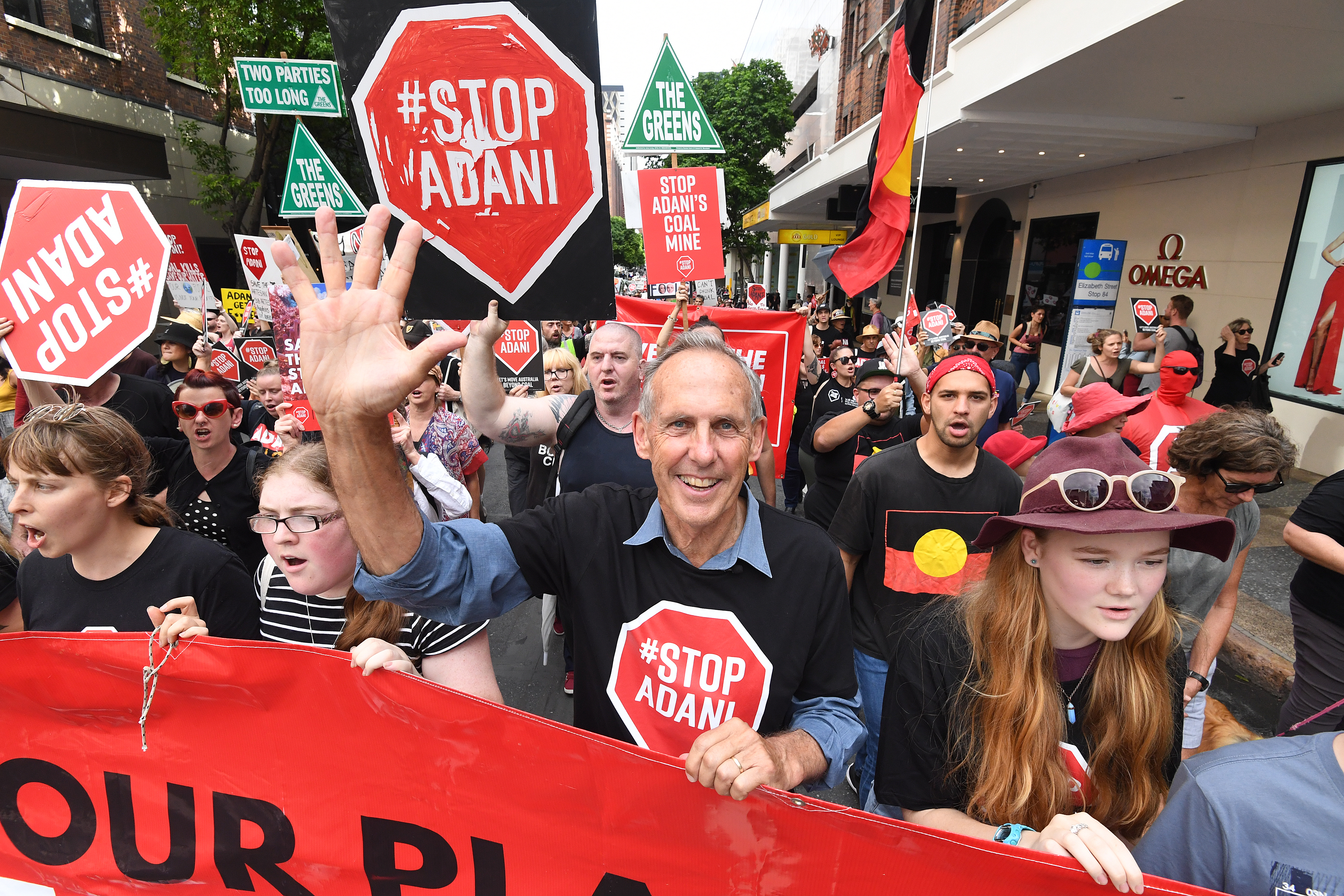
Australia has the technology to move from fossil fuels to renewable energy, but the social dynamics remain challenging. The Stop Adani protest convoy during the 2019 federal election campaign brought this difficulty to the fore.

A real sticking point for navigating any social change, including the energy transition, is finding a way through entrenched attitudes in which people see themselves as “us” in conflict with “them”. In these situations, people tend to focus on trying to defeat their opponents rather than finding mutually beneficial solutions to the problem.

In research just released, I examined media coverage of the Stop Adani protest convoy to better understand these social identity divides. In particular, I analysed the factors shaping who was an “us” and who was a “them” in the conflict.

I found that the media, with the help of politicians, crafted a narrative of division between inner-city “greenies” and Queensland mining communities. These divisions foster a social dynamic that ultimately inhibits co-operation and good policy outcomes.

Debate over Australia’s coal industry is fraught and involves entrenched attitudes. AAP

Identity matters

The Stop Adani convoy took place in April and May 2019. It involved hundreds of protesters travelling by road (in a convoy of vehicles) from Tasmania, through eastern Australian cities to Clermont, the regional Queensland town nearest the site of Adani’s proposed Carmichael coal mine.

The identity dimension of this protest is important. Australia’s energy transition is inextricably tied to the often fraught politics of climate and energy more broadly, and our social divisions fall along left-right political lines. This means our views on issues such as climate change and energy policy are wrapped up in, and can often be explained by, the groups with which we identify.


Read more: Coal mines can be closed without destroying livelihoods – here’s how


So, the energy transition is taking place in an already polarised and challenging space plagued time and time again by the same conflict dynamics.

This conflict often gets in the way of identifying and implementing effective policy solutions. It’s a particular problem for the energy transition, which needs people and sectors working together to support the technical changes. And if society is divided, it is far less likely to achieve a “just transition” that limits negative social impacts and promotes social equity.

Division over the energy transition is hindering a ‘just transition’ for coal workers. AAP

The role of the media

The media is a space in which diverse groups of people make sense of something happening outside their day-to-day life. That’s why it’s important to examine how the media depicts contentious issues. I studied representation of the convoy in Australia’s six most popular online news websites.

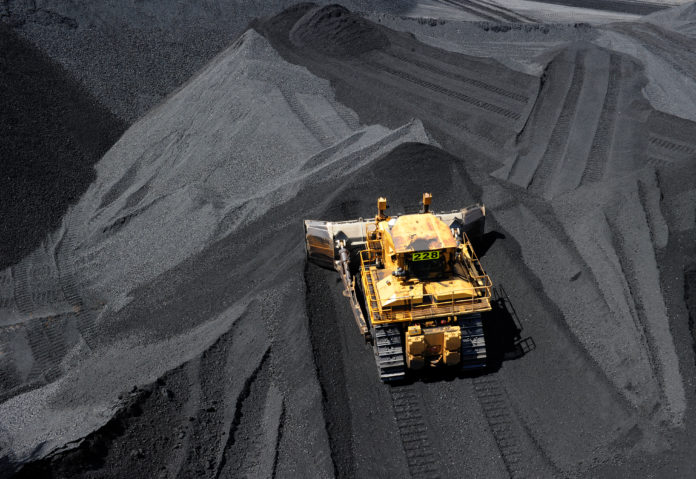
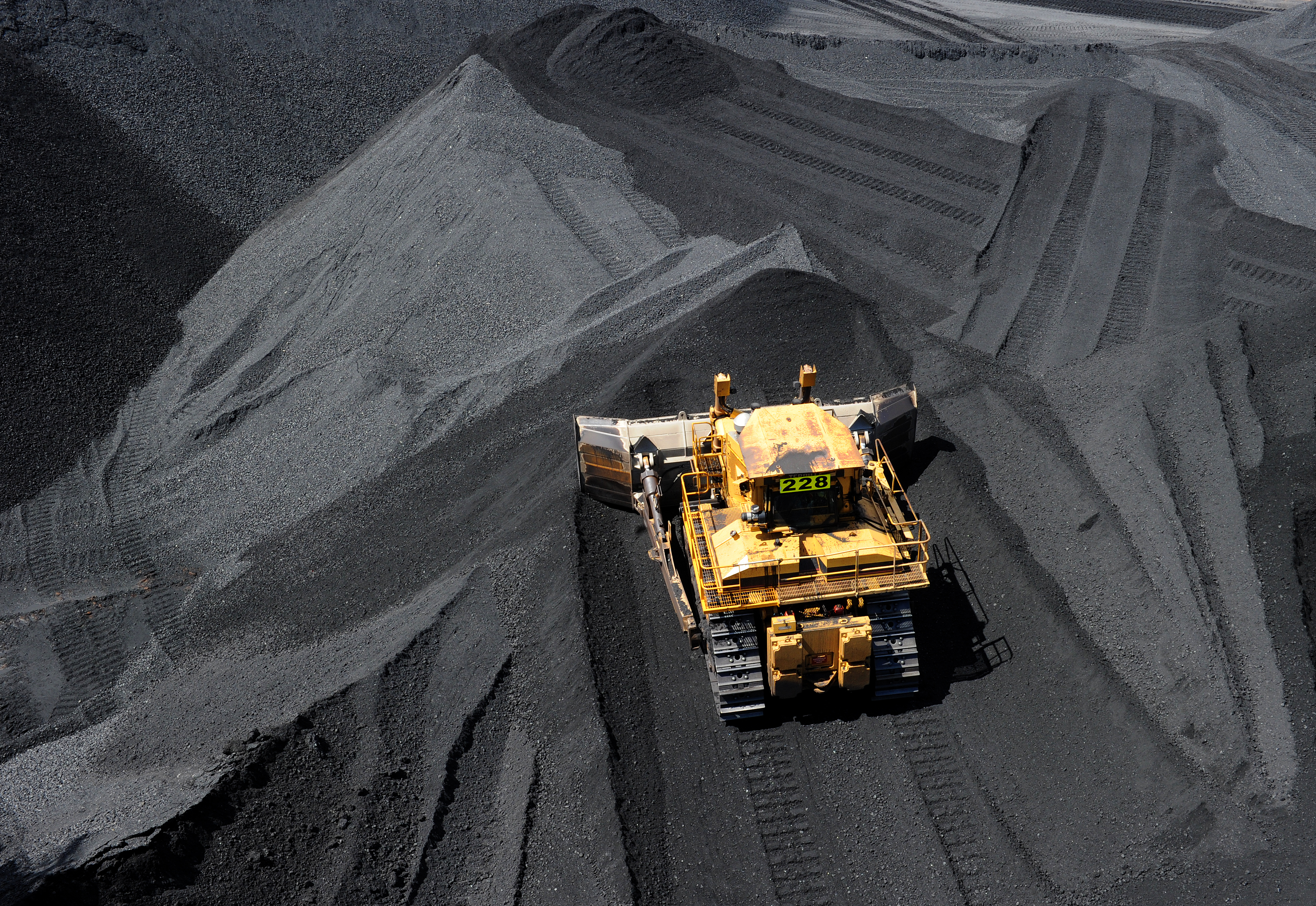
Media representation of the Stop Adani convoy depicted it as a social conflict between two opposing, hostile sides. One side was characterised as activists, Greens (or “greenies”), conservationists and elites; the other characterised as blue-collar workers, regional Queenslanders and proud mining communities.


Read more: Adani is cleared to start digging its coal mine – six key questions answered


These identity-based distinctions were cultivated by political figures who provided media commentary on the convoy. The most prominent were those in favour of the Adani mine, such as Nationals senator Matt Canavan, who criticised the convoy participants as “self-appointed, self-important bureaucrats” who took a “busybody approach”.

Former Greens leader Bob Brown, who led the convoy, said he “respected those who genuinely believed the Adani mine should go ahead” and identified the coal mining industry and governments as the targets of the protest.

My media analysis revealed that to convoy participants, Adani’s proposed mine symbolised the need for climate action and curtailment of Australia’s coal industry. A counter-movement grew stronger in response, comprising community members and supported by the coal industry. To this group, the Adani mine symbolised regional survival and self-determination.

Convoy leader Bob Brown said the coal industry and governments were the target of the protest. AAP

Once a debate becomes a “groupish” conflict like this, predictable dynamics in social interactions emerge. This includes hostility and suspicion towards the other side, and stereotyping which can lead to de-humanisation.

These dynamics emerged during the Stop Adani convoy. There were reports of protesters refused entry to local shops and feeling intimidated by the behaviour of townspeople, including having stones thrown at their cars. Conversely, an anti-Adani protester reportedly likened Adani supporters to Nazis in a Facebook post. (Bob Brown distanced the convoy from the comments, which he said had “no place in civil debate”).

Media reports of these incidents served to fuel a narrative of two opposing groups clashing over a fundamental and unsolvable differences.

A woman helps a Stop Adani protester allegedly injured during a confrontation. Matthew Newton/AAP

Finding unity

There has been much debate about the extent to which the convoy affected the election result in crucial regional Queensland electorates. My study did not address this question.

At its core, my analysis showed that for the “us” that emerged via the convoy, there had to be a “them”. In other words, we form groups based not just on who we are like, but also who we are not like.


Read more: Coal miners and urban greenies have one thing in common, and Labor must use it


But achieving a successful and fair energy transition requires creating a unified “we”, and not leaving any person or community behind. This means looking after regional communities and people who will feel the first-hand impacts of decarbonising our energy supply.

We must better understand the identity dimension of the energy conflict if we’re design and implement creative and effective solutions. This means more listening, more sharing, and finding common ground.

ref. Our social identity shapes how we feel about the Adani mine – and it makes the energy wars worse – https://theconversation.com/our-social-identity-shapes-how-we-feel-about-the-adani-mine-and-it-makes-the-energy-wars-worse-133686

Our social identity shapes how we feel about the Adani mine – and it’s making the energy wars worse

Source: The Conversation (Au and NZ) – By Rebecca Colvin, Lecturer, Crawford School of Public Policy, Australian National University

Australia has the technology to move from fossil fuels to renewable energy, but the social dynamics remain challenging. The Stop Adani protest convoy during the 2019 federal election campaign brought this difficulty to the fore.

A real sticking point for navigating any social change, including the energy transition, is finding a way through entrenched attitudes in which people see themselves as “us” in conflict with “them”. In these situations, people tend to focus on trying to defeat their opponents rather than finding mutually beneficial solutions to the problem.

In research just released, I examined media coverage of the Stop Adani protest convoy to better understand these social identity divides. In particular, I analysed the factors shaping who was an “us” and who was a “them” in the conflict.

I found that the media, with the help of politicians, crafted a narrative of division between inner-city “greenies” and Queensland mining communities. These divisions foster a social dynamic that ultimately inhibits co-operation and good policy outcomes.

Debate over Australia’s coal industry is fraught and involves entrenched attitudes. AAP

Identity matters

The Stop Adani convoy took place in April and May 2019. It involved hundreds of protesters travelling by road (in a convoy of vehicles) from Tasmania, through eastern Australian cities to Clermont, the regional Queensland town nearest the site of Adani’s proposed Carmichael coal mine.

The identity dimension of this protest is important. Australia’s energy transition is inextricably tied to the often fraught politics of climate and energy more broadly, and our social divisions fall along left-right political lines. This means our views on issues such as climate change and energy policy are wrapped up in, and can often be explained by, the groups with which we identify.


Read more: Coal mines can be closed without destroying livelihoods – here’s how


So, the energy transition is taking place in an already polarised and challenging space plagued time and time again by the same conflict dynamics.

This conflict often gets in the way of identifying and implementing effective policy solutions. It’s a particular problem for the energy transition, which needs people and sectors working together to support the technical changes. And if society is divided, it is far less likely to achieve a “just transition” that limits negative social impacts and promotes social equity.

Division over the energy transition is hindering a ‘just transition’ for coal workers. AAP

The role of the media

The media is a space in which diverse groups of people make sense of something happening outside their day-to-day life. That’s why it’s important to examine how the media depicts contentious issues. I studied representation of the convoy in Australia’s six most popular online news websites.

Media representation of the Stop Adani convoy depicted it as a social conflict between two opposing, hostile sides. One side was characterised as activists, Greens (or “greenies”), conservationists and elites; the other characterised as blue-collar workers, regional Queenslanders and proud mining communities.


Read more: Adani is cleared to start digging its coal mine – six key questions answered


These identity-based distinctions were cultivated by political figures who provided media commentary on the convoy. The most prominent were those in favour of the Adani mine, such as Nationals senator Matt Canavan, who criticised the convoy participants as “self-appointed, self-important bureaucrats” who took a “busybody approach”.

Former Greens leader Bob Brown, who led the convoy, said he “respected those who genuinely believed the Adani mine should go ahead” and identified the coal mining industry and governments as the targets of the protest.

My media analysis revealed that to convoy participants, Adani’s proposed mine symbolised the need for climate action and curtailment of Australia’s coal industry. A counter-movement grew stronger in response, comprising community members and supported by the coal industry. To this group, the Adani mine symbolised regional survival and self-determination.

Convoy leader Bob Brown said the coal industry and governments were the target of the protest. AAP

Once a debate becomes a “groupish” conflict like this, predictable dynamics in social interactions emerge. This includes hostility and suspicion towards the other side, and stereotyping which can lead to de-humanisation.

These dynamics emerged during the Stop Adani convoy. There were reports of protesters refused entry to local shops and feeling intimidated by the behaviour of townspeople, including having stones thrown at their cars. Conversely, an anti-Adani protester reportedly likened Adani supporters to Nazis in a Facebook post. (Bob Brown distanced the convoy from the comments, which he said had “no place in civil debate”).

Media reports of these incidents served to fuel a narrative of two opposing groups clashing over a fundamental and unsolvable differences.

A woman helps a Stop Adani protester allegedly injured during a confrontation. Matthew Newton/AAP

Finding unity

There has been much debate about the extent to which the convoy affected the election result in crucial regional Queensland electorates. My study did not address this question.

At its core, my analysis showed that for the “us” that emerged via the convoy, there had to be a “them”. In other words, we form groups based not just on who we are like, but also who we are not like.


Read more: Coal miners and urban greenies have one thing in common, and Labor must use it


But achieving a successful and fair energy transition requires creating a unified “we”, and not leaving any person or community behind. This means looking after regional communities and people who will feel the first-hand impacts of decarbonising our energy supply.

We must better understand the identity dimension of the energy conflict if we’re design and implement creative and effective solutions. This means more listening, more sharing, and finding common ground.

ref. Our social identity shapes how we feel about the Adani mine – and it’s making the energy wars worse – https://theconversation.com/our-social-identity-shapes-how-we-feel-about-the-adani-mine-and-its-making-the-energy-wars-worse-133686

Coronavirus and you: how your personality affects how you cope and what you can do about it

Source: The Conversation (Au and NZ) – By Conor Wynn, PhD Candidate at BehaviourWorks, Monash Sustainable Development Institute, Monash University, Monash University

To some people, fighting in the aisles over toilet paper makes sense. Driven by the social proof of empty shelves and in fear of losing out, they fight. To others, such behaviour would be unthinkable. Clearly some cope differently to others when it comes to the coronavirus pandemic. The question is, why?

Our behaviour is not that rational. And it’s influenced by many factors, including change of context, habit and the focus of this piece – personality.

Personality is thought to be fairly stable across time and context, and difficult to change. So why bother to understand it? Exposing the cues your personality is sending will give you some choice over how to cope with the scarcity, threat of disease or social isolation the COVID-19 pandemic has brought. And if you’re lucky, you might just catch those personality cues in time and make better behavioural choices.

The big 5 traits

To understand personality let’s use the Big Five Aspect Scale. The big five traits are commonly known by the acronym OCEAN. It stands for: openness to experience, conscientiousness, extraversion, agreeableness and neuroticism.

Each of those traits is a continuum. For example, on the extraversion trait scale extraversion is at one extreme and introversion at the other.

And each trait is comprised of two aspects:

  • openness is comprised of openness to experience, and intelligence or preference for abstract thinking

  • conscientiousness is made up of the aspects industriousness, or work drive, and orderliness

  • extraversion is comprised of enthusiasm and assertiveness

  • agreeableness is comprised of compassion and politeness

  • neuroticism or susceptibility to negative emotion is comprised of the aspects, withdrawal and volatility, the latter a kind of defensive aggression.

What does this mean for how we respond?

So, what kinds of behavioural cues are those aspects of your personality likely to send you about coping with the coronavirus? While it’s still early days, the behavioural impact of this pandemic appears to be gathering around three themes – anxiety, social distancing and micro public disorder.

At a time like this anxiety is likely to loom large, particularly if you are high in neuroticism. While the withdrawal aspect of neuroticism describes psychological rather than physical withdrawal, the new behavioural norms of social distancing being broadcast will feel very natural if withdrawal is an important aspect of your personality.

But if volatility is a large part of your make-up, empty shelves could trigger a strong desire for you to defend your right to your share. Negative or defensive aggression cues like those, if strong enough, could overwhelm the more considered part of your thinking. If unchecked or, worse, provoked by jostling crowds, for instance, you could find yourself arguing over toilet paper, despite being mild-mannered most other times.

Another big change we are facing is social distancing.

Being low on extraversion, enforced social distancing could be an absolute boon – your guilty little secret. At last you have a socially sanctioned excuse to keep those noisy extraverts at bay and be left alone to your rich inner world.

If you’re conscientious too, and high in aspect orderliness, you get the chance to have everything at home just so. You can colour-coordinate your wardrobe and have all the hangers pointing the same way. Or better still you can put the tins in your pantry in alphabetical order, with the smallest packages to the front, labels facing outward, of course.

If you’re high in trait extraversion, something scarce is likely to be very attractive. Seeking out excitement and opportunity, you’re likely drawn to the very thing you can’t have, those elusive toilet rolls.

And then there are the outbreaks of micro public disorder, cracks in the façade of acceptable behaviour that expose glimpses of something ugly below.

If you’re highly conscientious, it’s probably not so much that you enjoy working hard or being organised, but that you really can’t stand being idle or in a mess. Faced with shortages, you’re likely to want to be ready for the worst. The urge to hoard, and the temptation to work hard at it, could be difficult to resist.

Disagreeable people want to compete and dominate. So, if you’re low in agreeableness, the cues you’ll be getting will not be so much about getting toilet paper, as making sure you get more of the toilet paper than the next guy. If you’re also low in openness, you are more likely to be high in disgust sensitivity. Which might be why we see people fighting over toilet rolls of all things.

People whose personalities rate low on agreeableness and high on volatility might find themselves fighting in the aisles. Jorieri/Shutterstock

Self-awareness will help

The really difficult challenge is to spot the wave of behavioural cues as it crashes towards you and step back before you’re washed into a sea of unthinking action.

While personality change is really difficult, you can at least be aware of the behavioural cues your personality is sending you and try to make better choices.


Wondering about your personality traits? You can take an online Big 5 test here.

ref. Coronavirus and you: how your personality affects how you cope and what you can do about it – https://theconversation.com/coronavirus-and-you-how-your-personality-affects-how-you-cope-and-what-you-can-do-about-it-134037

Love and a happy ending: romance fiction to help you through a coronavirus lockdown

Source: The Conversation (Au and NZ) – By Jodi McAlister, Lecturer in Writing, Literature and Culture, Deakin University

Romance fiction has two defining features.

First, it centres on a love story. Secondly, it always ends well.

Our protagonists end up together (if not forever, then at least for the foreseeable future) and this makes the world around them a little bit better, too.

In times of uncertainty, upheaval and chaos, readers often turn to romance fiction: during the second world war, Mills & Boon was able to maintain its paper ration by arguing its books were good for the morale of working women.

The books the company was producing in this period were not about the war. Most never even mentioned it. Instead, they provided an escape for readers to a world where they could be assured everything was going to turn out all right: love would conquer all, villains would be defeated, and lovers would always find their way back to each other.


Read more: How to learn about love from Mills & Boon novels


Today, romance publishing is a billion-dollar industry, with thousands of novels published each year. It covers a wide range of subgenres: from historical to contemporary, paranormal to sci-fi, from novels where the only physical interaction between the protagonists is a kiss, to erotic romance where sex is fundamental to the story.

Rule 34 of the internet states if you can think of something, then there’s porn of it. The same, I would argue, is true for romance fiction.

But where to begin? As both a scholar of romance fiction and an avid reader of it, I’ve put together this list of five great reads for people who might want to start exploring the genre.

If you like Jane Austen, try…

The Austen Playbook by Lucy Parker

The Austen Playbook is the fourth book in Parker’s London Celebrities series (all only loosely connected, so you can jump in anywhere).

Heroine Freddy is an actress from an esteemed West End family, trying to balance her desire to perform in musicals and crowd-pleasers over her family pushing her towards serious drama. Hero Griff is a theatre critic and his family estate is playing host to a wacky live-action Jane Austen murder mystery, in which Freddy is playing Lydia.

Parker is a gifted author, and this book is a light, bright and sparkling delight.

If you like (or hate!) dating apps, try…

The Right Swipe by Alisha Rai

Many people now find partners on dating apps, but these apps are often not exactly friendly for women.

Rai addresses that to great effect in The Right Swipe, where heroine Rhiannon is the designer of a dating app designed specifically for women.

She meets hero Samson the first time as a result of swiping right, and then the second time, months later, when he’s teamed up with one of her primary business rivals…

If you’re fascinated by psychology, try …

The Love Experiment by Ainslie Paton

Paton is one of Australia’s smartest and most underrated romance authors. The Love Experiment draws on the 36 questions developed by psychologist Arthur Aron to explore whether intimacy could be generated or intensified between two people if they exchanged increasingly personal information.

The 36 questions were popularised in Mandy Len Catron’s 2015 New York Times essay To Fall In Love With Anyone, Do This. Here, journalist protagonists Derelie and Jackson undertake the experiment in Paton’s book, only to find love is more complex than 36 questions.

If you think we need to save the oceans, try…

Project Saving Noah by Six de los Reyes

This book emerges from RomanceClass, a fascinating community of English-language romance writers and readers based in the Philippines. One of their distinctive features is their collaboration with local actors in Manila to perform excerpts from the books (including Project Saving Noah) at their regular gatherings. I was privileged enough to attend one of these last year.

Protagonists Noah and Lise are graduate students in oceanography competing for one spot on a research project, while simultaneously being forced to work together. Their romance is conflicted and compelling, but what stands out about this book is the vividness with which their environment – natural and academic – is constructed.

If you like your protagonists to have some maturity, try…

Mrs Martin’s Incomparable Adventure by Courtney Milan

If Milan’s name sounds familiar, it’s because she was at the centre of the recent scandal engulfing the Romance Writers of America, which penetrated through romance’s usual cultural invisibility.

When she’s not standing up against systemic racism, Milan writes excellent, mostly historical, romance. Mrs Martin is a delightful historical romp, as our two heroines Bertrice (aged 73) and Violetta (aged 69) team up against Violetta’s terrible nephew, and fall in love and eat cheese on toast together.

ref. Love and a happy ending: romance fiction to help you through a coronavirus lockdown – https://theconversation.com/love-and-a-happy-ending-romance-fiction-to-help-you-through-a-coronavirus-lockdown-133784

In the age of coronavirus, only tiny weddings are allowed and the extended family BBQ is out

Source: The Conversation (Au and NZ) – By Michelle Grattan, Professorial Fellow, University of Canberra

Only five people will be able to attend a wedding – the couple, the celebrant and two witnesses – and funerals will be restricted to 10 in the latest round of life-changing restrictions to be imposed on Australians to fight the coronavirus’s spread.

Real estate auctions and “open house” inspections will be stopped, and Australians will now be prohibited from leaving the country, rather than just strongly advised not to do so.

Scott Morrison, announcing the new crackdowns, also told people to stay home, except when it was absolutely necessary to go out. But they shouldn’t have the extended family around the dinner table or to a barbecue.


Read more: View from The Hill: A contest of credible views should be seen as useful in a national crisis


However he is still advising people to send their children to school, and on Wednesday will meet teachers’ union representatives to discuss arrangements to protect staff, especially older teachers more vulnerable to the virus. Schools would need to reopen on the other side of the holidays, he said.

Addressing a news conference after Tuesday night’s federal-state national cabinet, Morrison said the widened list of bans would include food courts in shopping centres, except for takeaways. Outdoor and indoor markets – excluding food markets essential to ensure the food supply across the country – will be a decision for each state and territory.

A range of personal services, including beauty therapy, tanning, waxing, nail salons and tattoo parlors, will be shut down, as well as spas and massage parlours. This does not extend to physiotherapists and similar allied health services.

Hairdressers and barbers have escaped closure, but with a social distancing limit to the number of people on their premises, and the stipulation a patron can only be there for 30 minutes.

The banned list also includes amusement parks and arcades, play centres (both indoor and outdoor), community and recreation centres, libraries, health clubs, fitness centres, yoga, barre and spin facilities, saunas, and wellness centres. Social sporting events and swimming pools are on the list, as are galleries, libraries and youth centres.

Boot camps may be held outside with no more than 10 people.

Morrison said people should “stay at home unless it is absolutely necessary you go out.

“Going out for the basics, going out for exercise, perhaps with your partner or family members, provided it’s a small group – that’s fine.” As was going out to work, where it was not possible to work from home – but not “participating more broadly in the community”.

Visits to your house “should be kept to a minimum and with very small numbers of guests.

“So that means barbecues of lots of friends, or even family, extended family, coming together to celebrate one-year-old birthday parties and all those sorts of things, we can’t do those things now.

“These will be a significant sacrifice, I know.

“Gathering together in that way. even around the large family table in the family home when all the siblings get together and bring the kids, these are not things we can do now. All of these things present risks”.

He said states and territories were considering whether they would make it an offence to organise house parties.


Read more: View from The Hill: Entertainment venues closed in draconian measures to fight the virus


“Outdoors, do not congregate together in groups.

“If you’re gathering together in a group, say, 10 people, together outside in a group, that’s not OK. We’ve got to move people on.”

Morrison said the “hopefully” a full shutdown of the retail sector would not be necessary,

“I do note in a lot of the commentary … there seems to be a great wish to go to that point. Well, be careful what you wish for on something like that. … Because that would need to be sustained for a very long time. And that could have a very significant and even more onerous impact on life in Australia.

“We should seek to try to avoid that where it is possible. But if it is necessary for health reasons, ultimately, those decisions will be taken at the time”.

Asked about why an outside boot camp of ten people was allowed, Morrison said “that is a business, that is someone’s livelihood and you are saying that I should turn their livelihood off. I’m not going to do that lightly. If it is not believed to be necessary based on the medical expert advice.

“I am not going to be cavalier about people’s jobs and their businesses. Where possible the national cabinet together is going to try and keep Australia functioning in a way that continues to support jobs and activity in our economy which is not going to compromise the health advice that we’re receiving.

“And so no, I don’t think we should rush to that sort of [shutdown] scenario. I think you could rush to failure in that sort of scenario.

“You could rush to causing great and unnecessary harm because understand this, this country is not dealing with one crisis, we’re dealing with two crises. We are dealing with a health crisis that has caused an economic crisis.

“I am very concerned about the economic crisis that could also take a great toll on people’s lives, not just their livelihoods. The stresses that that will put on families. The things that can happen when families are under stress.

“I am as concerned about those outcomes as I am about the health outcomes of managing the outbreak of the coronavirus and it is a delicate task for the national cabinet to balance those two.

“Lives are at risk in both cases. And so the national cabinet won’t just rush on the sense of an opinion of inevitability. We will calmly consider the medical advice that is put to us and weigh those things up and make sensible decisions as leaders. I will not be cavalier about it and neither will other premiers and chief ministers.”

He apologised for the systems failure that prevented people accessing Centrelink, prompting huge queues with many people who had lost jobs visibly upset.

“We are deeply sorry. We have gone from 6,000 [online traffic], to 50,000 to 150,000, all in the matter of a space of a day.”

He appealed to people “even in these most difficult of circumstances to be patient. Everyone is doing their best. What we are dealing with an unprecedented. No system is built to deal with the circumstance and events we are facing as a nation.”.


Read more: Grattan on Friday: We are now a nation in self-isolation


The Chief Medical Officer, Brendan Murphy, said the steep growth in the number of cases – the tally is now passed 2000 – was “very concerning”.

Nine reported a panel of experts from the Group of Eight universities commissioned by the federal government had recommended that “Australia without delay implement stronger national social distancing measures, more extensive banning of mass gatherings, school closure or class dismissal”.

The group, in advice presented on March 22, also urged “much-enhanced” testing without delay.

It said: “Countries with significant COVID-19 infections have eventually been forced into strong public health measures in a reactive manner. It became unavoidable from a public health perspective.

“Proactive measures will result in a smaller epidemic and less stress on the health system. Reactive measures (such as in Italy) may result in a greater burden of morbidity and mortality and delay in reaching the point of recovery.

“The only difference is at what point these measures are implemented, whether proactive or reactive, and how large the resulting epidemic will be.”

The “dominant” position in the group was for “a comprehensive, simultaneous ban across Australia”, but the other view among its participants was for a “more proportionate response”.

With the government going down the latter path, Morrison and Murphy were noticeably uncomfortable when questioned about the advice.

Former prime minister Tony Abbott, who as health minister in 2004 drove preparations for a possible bird flu pandemic, called for a total shutdown.

“We need to have a very, very complete shutdown now to do everything we humanly can to prevent the spread of the disease, he told 2GB.

“You can only put the economy into a coma for so long, it can’t be indefinite,” he said.

“But the more complete it is now the more likely it is to be short-lived.”

ref. In the age of coronavirus, only tiny weddings are allowed and the extended family BBQ is out – https://theconversation.com/in-the-age-of-coronavirus-only-tiny-weddings-are-allowed-and-the-extended-family-bbq-is-out-134584

Why the fall-out from postponing the Olympics may not be as bad as we think

Source: The Conversation (Au and NZ) – By Jack Anderson, Professor of Sports Law, Melbourne Law School, University of Melbourne

At the 125th IOC Session in Buenos Aires in 2013, Tokyo won the right to host the Summer Olympics in 2020. The city was to join Athens, London, Paris and Los Angeles in the small group that have hosted a summer Olympics more than once.

Tokyo will now have to wait for most likely a year to join this exclusive club, however, after finally giving in to international pressure and deciding to postpone the games due to the coronavirus pandemic.

The pressure had been building over the past few days, led by Canada and Australia, both of which said they would not send athletes to Tokyo this year.

Stakeholders in the US, including the governing bodies of gymnastics, track and field and swimming, also called for the games to be postponed. Their messages carried extra weight as the three events are key anchors of the Olympics and of special importance to broadcasters in the US.

The ever-tightening travel restrictions of the past week also made it evident that even if the games were to go ahead this year, they would do so in the absence of key members of the Olympic family. This could have included athletes from the five countries – Greece, Australia, Britain, France and Switzerland – that have participated in every modern Summer Olympics.


Read more: Why haven’t the Olympics been cancelled from coronavirus? That’s the A$20bn question


There were other complications, as well. Sporting events have been cancelled or postponed around the world, making qualifying for the Olympics difficult for nearly half of all athletes expected to take part.

It was also becoming impossible to continue anti-doping testing to any meaningful degree.

Hungarian race walker Mate Helebrandt training at home in self-isolation. Attila Balazs/EPA

Only concerned about the bottom line

The IOC has been sharply criticised for its recalcitrance in not postponing the games sooner. Some have suggested its brand has suffered as a result.

There is no doubt that holding the Olympic flame ceremony in Greece and continuing with the torch relay was tactless at a time when fatality rates from the coronavirus were spiking in Europe and governments around the world were urging their citizens not to travel and stay away from public events.

The IOC’s decision to continue with these ceremonies and its dilatory and dithering response to the pandemic in general left it open to criticism that it cared only about the impact a postponement might have on its revenues.

It must be remembered that, although the IOC is an immensely rich and influential entity, it has in effect only one asset – the Olympic Games – to commercially exploit. And these come around only every two years.

But we can only speculate as to the role money played in the IOC’s reluctance to postpone the games.

To be fair to the IOC, it has said consistently that any decision on Tokyo 2020 would be guided by the health and welfare of the athletes and spectators, and based on the advice of recognised authorities such as the WHO.

The challenge of cancelling or moving the games

The logistics of reorganising an Olympics involving 11,000 athletes and thousands of support personnel and spectators will certainly be a significant undertaking. But this stands in stark contrast to the exponentially bleak figures of the toll of the virus – 12,000 confirmed cases of coronavirus on February 1, 87,000 on March 1 and now over 335,000 worldwide.

While Olympics have been postponed, cancelled and moved in the past, this has been mainly due to the outbreak of war. (Tokyo was, for example, supposed to host the 1940 Games before they were cancelled due to the second world war.)

Indeed, the current host city contract specifically states in clause 66 that if the host country is in a state of war or civil disobedience, the IOC can at its sole discretion terminate the contract.

Natural disasters have affected the games in the past. The 1908 Olympics, originally to be held in Rome, had to be moved to London when Mount Vesuvius erupted and the Italian government was forced to divert money to projects such as the rebuilding of Naples and not the construction of Olympic venues.

In a recent poll, 70% of Japanese people said the games couldn’t go ahead as planned. KIMIMASA MAYAMA/EPA

It is unlikely the IOC will seek to move this year’s Tokyo Games to another city. Logistically, it would be very difficult for any country to host the games on such short notice, especially given the massive investment in physical infrastructure required at a time when the world is pumping billions into stimulus packages for their economies.

It is also not in Japan’s interest to see the games moved. Under the host city contract, the failure to host the games is one of the specific contingencies that allows the IOC to unilaterally terminate the contract without affecting its rights to claim compensation against the Tokyo organising committee.

In addition, in cases when the IOC does unilaterally terminate the contract, the organising committee agrees to waive its right to receive any form of compensation from the IOC.

Further, the organisers (effectively, Japanese taxpayers) also agree to “indemnify and hold harmless” the IOC from any third party claims in respect of the IOC’s withdrawal from the games, such as those from broadcasters.

Then there’s the small fact that Japan has already invested A$20billion in the games.


Read more: Coronavirus: For the sake of athletes, it’s too soon to cancel the Tokyo 2020 Olympics


Moving the games to later in 2020 is likely not an option given the accelerating nature, for now, of the coronavirus. Hosting the games in September or October would also wreak havoc with the scheduling of both athletes and broadcasters (although the 1964 Tokyo Olympics were held in mid-October).

As we saw from the Rugby World Cup held in Japan last year, moving into autumn also coincides with the typhoon season. And the Olympics would have to contend with the football seasons in Europe and the US at that time of year.

This leaves organisers with one decent option – delaying for a full year until the summer of 2021.

Why legal claims are unlikely

Apart from the logistical challenges of postponing the games, there are significant commercial considerations related to ticketing, broadcasting and sponsors. In simple terms, those holding tickets, those with the rights to broadcast the Olympics and those with exclusive “official” sponsorships may now attempt to seek their money back in full or in part.

The Tokyo organisers and the IOC might argue that so-called force majeure clauses apply and that the contractual commitments given to sponsors and broadcasters have been disrupted by an unforeseen, natural cause.

There are already reports the Tokyo 2020 ticketing policy says organisers would not be held responsible if the Olympics are cancelled due to a number of “force majeure” incidents, including natural disasters, war and “states of emergency connected to public health.”

While sports lawyers try to interpret these contractual clauses over the next few weeks, we all need to remember the wider context here.

If any broadcaster or sponsor tries to engage in legal action at a time when the world is facing its most serious public health emergency in a century, this may not sit well with their viewers or customers. The commercial losses sustained by large corporate sponsors for an event that can be rescheduled will engender little public sympathy at the moment.

If the Olympics do go ahead in 2021, it can then be a global celebration of the talent, hard work and resilience of the world’s leading athletes.

For now, the world needs to support the talent, hard work and resilience of the world’s leading health professionals. They truly have an Olympian task ahead.

ref. Why the fall-out from postponing the Olympics may not be as bad as we think – https://theconversation.com/why-the-fall-out-from-postponing-the-olympics-may-not-be-as-bad-as-we-think-134531

‘Click for urgent coronavirus update’: how working from home may be exposing us to cybercrime

Source: The Conversation (Au and NZ) – By Craig Valli, Director of ECU Security Research Institute, Edith Cowan University

Apart from the obvious health and economic impacts, the coronavirus also presents a major opportunity for cybercriminals.

As staff across sectors and university students shift to working and studying from home, large organisations are at increased risk of being targeted. With defences down, companies should go the extra mile to protect their business networks and employees at such a precarious time.

Reports suggest hackers are already exploiting remote workers, luring them into online scams masquerading as important information related to the pandemic.

On Friday, the Australian Competition and Consumer Commission’s Scamwatch reported that since January 1 it had received 94 reports of coronavirus-related scams, and this figure could rise.

As COVID-19 causes a spike in telework, teleheath and online education, cybercriminals have fewer hurdles to jump in gaining access to networks.

High-speed access theft

The National Broadband Network’s infrastructure has afforded many Australians access to higher-speed internet, compared with DSL connections. Unfortunately this also gives cybercriminals high-speed access to Australian homes, letting them rapidly extract personal and financial details from victims.

The shift to working from home means many people are using home computers, instead of more secure corporate-supplied devices. This provides criminals relatively easy access to corporate documents, trade secrets and financial information.


Read more: What’s your IT department’s role in preventing a data breach?


Instead of attacking a corporation’s network, which would likely be secured with advanced cybersecurity countermeasures and tracking, they now simply have to locate and attack the employee’s home network. This means less chance of discovery.

Beware cryptolocker attacks

Cryptolocker-based attacks are an advanced cyberattack that can bypass many traditional countermeasures, including antivirus software. This is because they’re designed and built by advanced cybercriminals.

Most infections from a cryptolocker virus happen when people open unknown attachments, sent in malicious emails.

In some cases, the attack can be traced to nation state actors. One example is the infamous WannaCry cyberattack, which deployed malware (software designed to cause harm) that encrypted computers in more than 150 countries. The hackers, supposedly from North Korea, demanded cryptocurrency in exchange for unlocking them.

If an employee working from home accidentally activates cryptolocker malware while browsing the internet or reading an email, this could first take out the home network, then spread to the corporate network, and to other attached home networks.

This can happen if their device is connected to the workplace network via a Virtual Private Network (VPN). This makes the home device an extension of the corporate network, and the virus can bypass any advanced barriers the corporate network may have.


Read more: Hackers are now targeting councils and governments, threatening to leak citizen data


If devices are attached to a network that has been infected and not completely cleaned, the contaminant can rapidly spread again and again. In fact, a single device that isn’t cleaned properly can cause millions of dollars in damage. This happened during the 2016 Petya and NotPetya malware attack.

Encryption: not a cryptic concept

On the bright side, there are some steps organisations and employees can take to protect their digital assets from opportunistic criminal activity.

Encryption is a key weapon in this fight. This security method protects files and network communications by methodically “scrambling” the contents using an algorithm. The receiving party is given a key to unscramble, or “decrypt”, the information.

With remote work booming, encryption should be enabled for files on hard drives and USB sticks that contain sensitive information.

Enabling encryption on a Windows or Apple device is also simple. And don’t forget to backup your encryption keys when prompted onto a USB drive, and store them in a safe place such as a locked cabinet, or off site.

VPNs help close the loop

A VPN should be used at all times when connected to WiFi, even at home. This tool helps mask your online activity and location, by routing outgoing and incoming data through a secure “virtual tunnel” between your computer and the VPN server.

Existing WiFi access protocols (WEP, WPA, WPA2) are insecure when being used to transmit sensitive data. Without a VPN, cybercriminals can more easily intercept and retrieve data.

VPN is already functional in Windows and Apple devices. Most reputable antivirus internet protection suites incorporate them.

It’s also important that businesses and organisations encourage remote employees to use the best malware and antiviral protections on their home systems, even if this comes at the organisation’s expense.

Backup, backup, backup

People often backup their files on a home computer, personal phone or tablet. There is significant risk in doing this with corporate documents and sensitive digital files.

When working from home, sensitive material can be stored in a location unknown to the organisation. This could be a cloud location (such as iCloud, Google Cloud, or Dropbox), or via backup software the user owns or uses. Files stored in these locations may not protected under Australian laws.


Read more: How we can each fight cybercrime with smarter habits


Businesses choosing to save files on the cloud, on an external hard drive or on a home computer need to identify backup regimes that fit the risk profile of their business. Essentially, if you don’t allow files to be saved on a computer’s hard drive at work, and use the cloud exclusively, the same level of protection should apply when working from home.

Appropriate backups must observed by all remote workers, along with standard cybersecurity measures such as firewall, encryption, VPN and antivirus software. Only then can we rely on some level of protection at a time when cybercriminals are desperate to profit.

ref. ‘Click for urgent coronavirus update’: how working from home may be exposing us to cybercrime – https://theconversation.com/click-for-urgent-coronavirus-update-how-working-from-home-may-be-exposing-us-to-cybercrime-133778

Why are we calling it ‘social distancing’? Right now, we need social connections more than ever

Source: The Conversation (Au and NZ) – By Katharine H. Greenaway, Senior Lecturer, University of Melbourne

We are now a society at a distance. As of this week, New South Wales has closed restaurants, bars, gyms, and entertainment venues where people gather in large numbers.

Victoria has similarly implemented a shut down of all non-essential activities, including closing schools. People are strongly advised to stay at least 1.5 metres away from others where possible.

But the label used to describe these measures – “social distancing” – is a misnomer. While we must be physically distant, it’s crucial we maintain, or even increase, social contact with others during this unprecedented time.


Read more: State-by-state: how Australia’s new coronavirus rules will affect you


In a crisis, we need support

The so-called social distancing measures seek to limit the spread of COVID-19, the disease caused by the novel coronavirus, by reducing physical contact between people. And there’s evidence these measures work.

But research also shows being isolated can have negative effects on a person’s mental health. Specifically, periods of quarantine have been shown to increase negative emotions like anxiety, confusion and anger.

In Victoria and New South Wales, places people would normally gather are closed. Joel Carrett/AAP

Importantly, strong social support can help us counter these negative effects. And as well as improving our mental health, being socially connected is linked to better physical health too.

One US psychologist rightly noted rather than talking about social distancing, we should be practising distant socialising.


Read more: Social distancing can make you lonely. Here’s how to stay connected when you’re in lockdown


Of course, this can be difficult when so much of our social closeness depends on physical closeness. Humans are innately social, and often our instinct is to reach out to touch or be close to others when we feel unwell or afraid.

This makes it all the more difficult to stay away from others right now.

Social solidarity, not social distance

Staying socially connected in times of threat has benefits beyond helping us manage our mental well-being. Other people can provide us with practical support, like picking up groceries or passing on relevant information, as well as emotional support.

Building this kind of social infrastructure, where people help neighbours and strangers as well as their friends, fosters the feeling we as Australians are all in this together.

This feeling is called social solidarity, and if we get it right we’ll be much better equipped to respond to this and other crises.

In the case of coronavirus, social solidarity may be the key to getting people to comply with public health recommendations. Recent research found if people were told distancing was important for the sake of others, they were more likely to say they would adhere to the relevant guidelines than if they were told it was to avoid negative consequences.


Read more: Coronavirus is accelerating a culture of no touching – here’s why that’s a problem


To mitigate the dangers of conflating physical distancing and social distancing, and to work towards social solidarity, here are three things we need to see:

1. Consistent messaging

The Victorian health department now refers to physical distancing rather than social distancing, in line with calls from experts to change the terminology.

But the federal government and most other state governments are still using the social distancing moniker.

Consistent messaging from our leaders, including an explanation of why the label must change, could serve to encourage people to adopt practices that promote social closeness while maintaining physical distance.

We can remain socially connected using technology, even when we can’t be physically close. Shutterstock

2. Social tips alongside physical tips

Much of the current messaging from government sources focuses on maintaining physical health by washing hands with soap, practising correct cough and sneeze etiquette, and cleaning and disinfecting surfaces. These measures are undoubtedly critical.

But missing from most official advice is guidance about the importance of maintaining social connectedness. The government should add evidence-based recommendations for staying connected to its official resources.

3. Prioritising communication

Where state governments are increasingly limiting activities to allow for only essential services, phone and internet services that allow people to connect virtually should be seen through the same essential lens.

The government should consider policies which encourage providers to waive late fees or stop disconnections that may occur because of financial hardship related to the virus.


Read more: Coronavirus distancing measures are confusing. Here are 3 things to ask yourself before you see someone


Physical distance is important, but it’s equally necessary we maintain social closeness during this time. Staying connected with others will make us happier, healthier, and more socially responsible as we continue to contend with this crisis.

ref. Why are we calling it ‘social distancing’? Right now, we need social connections more than ever – https://theconversation.com/why-are-we-calling-it-social-distancing-right-now-we-need-social-connections-more-than-ever-134249

Can I get coronavirus from mail or package deliveries? Should I disinfect my phone?

Source: The Conversation (Au and NZ) – By Euan Tovey, Associate Professor & Principal Research Fellow in Medicine, University of Sydney

According to Google Trends, the top two most searched terms about mobile phones this week in Australia were “how to disinfect phone” and “how to clean your phone.”

And the third most-searched “can I get coronavirus from…?”-style question in the past week in Australia was “can you get coronavirus from mail?” (If you were wondering, “can you get coronavirus from food?” was number one, followed by “can you get coronavirus twice?”)

In short, many Australians are wondering what role phones and mail and/or package deliveries may play in the risk of coronavirus transmission.

To better understand the risk, and what you can do to reduce it, it helps to think about how your phone or mail might come into contact with coronavirus – and what the evidence says about how long it lives on various surfaces.


Read more: Coronavirus distancing measures are confusing. Here are 3 things to ask yourself before you see someone


What do we know about how long the coronavirus can survive on a phone or mail?

Not a whole lot yet.

There has been some general media reporting on the role that surfaces play in the transmission of this coronavirus, termed SARS-CoV-2. That’s the disease that causes COVID-19.

But the main peer-reviewed journal paper on this topic was published about a week ago by the New England Journal of Medicine.

That paper found:

SARS-CoV-2 was more stable on plastic and stainless steel than on copper and cardboard, and viable virus was detected up to 72 hours after application to these surfaces.

It also noted:

On copper, no viable SARS-CoV-2 was measured after 4 hours […] On cardboard, no viable SARS-CoV-2 was measured after 24 hours.

These might be underestimates. The virus may survive even longer on these surfaces, depending on conditions. That’s because these studies looked at how long the virus would survive when in a “buffer” (a solution in which viruses live in the lab). In real life, they would be in mucous and would be more stable.

The fact that the viruses seemed to last longest on plastic is something of a worry and means that, on phones, the virus could potentially last for days.

It is important to remember this is a new virus and we don’t yet have all the data. New findings are emerging every day.

It’s also possible that, in reality, the virus may last longer on phones than indicated in the recent lab experiments.

CDC data published yesterday detected the faint genetic signature of viruses (viral RNA) which had survived 17 days on surfaces in cruise ships. That doesn’t mean infectious virus particles were found after 17 days – only a part of the virus was detected in this study – but it does suggest there may be some cause for concern regarding how long this coronavirus can last on surfaces. More research is required on this question.

Ideally, you should be cleaning your phones, tablets and keyboards with alcohol wipes – if you can get them. Shutterstock

Read more: Coronavirus: how long does it take to get sick? How infectious is it? Will you always have a fever? COVID-19 basics explained


How might virus particles end up on a phone?

Talking on the phone generates an invisible spray of airborne droplets. A person with COVID-19 can have a lot of virus in the mucous at the back of their throat, so they’re likely spraying the virus on their phone every time they make a call.

If an infected person hands their phone to someone else, the virus could transfer to the new person’s fingertips, and then into their body if they touch their mouth, eyes or nose. (And remember, not every infected person displays the classic symptoms of fever and cough, and may be infectious before symptoms show).

It’s also possible there is an oral-faecal route for transmission of coronavirus. This coronavirus is often detected in faeces.

That means, for example, that tiny particles of poo generated by flushing a toilet could settle on a toothbrush, on a phone brought into the bathroom or on surfaces/food in an adjoining room. They could then end up in your mouth. At the moment this has not been shown, but it is certainly possible. SARS was sometimes spread by this route.

That’s why frequent handwashing with soap is so crucial.

What about mail?

It is technically possible a package or mail coming to your house is contaminated with virus picked up somewhere along the way by people handling or coughing on it. I think, though, the infection risk is very low because, as the New England Journal of Medicine study found, the survival time on cardboard is thought to be around one day.

And unlike plastic surfaces, cardboard is porous. That means a droplet would probably penetrate into the material and may not be so easily picked up when you touch the package.

The survival time on cardboard is thought to be one day. Shutterstock

What can I do to reduce my risk?

For starters, do the obvious things: wash hands frequently, reduce your contact with others (and if you do see other people, stay at least 1.5 metres apart, particularly if you are talking). Definitely don’t go out at all if you’re unwell.

Keep your phone to yourself. I’d be very reluctant to share my own phone with anyone right now, especially if they seem unwell.

It’s not clear what role children play in the transmission of this coronavirus but, just in case, children should be washing hands before they touch their parents’ phones. That said, it seems more likely at present that adults give it to children than the other way round.

Ideally, you should be cleaning your phones, tablets and keyboards with alcohol wipes (which need to be around 70% alcohol). They are quite effective at deactivating viruses (if somewhat hard to get now). Most baby wipes only have a low percentage of alcohol so are less effective but just the wiping would help remove virus particles.

In the worst case scenario, you can try using a damp cloth with a small amount of soap and water to clean your phone – but don’t let water get inside your phone and wreck it.

When it comes to mail and package deliveries, try to keep apart from the delivery person. Many delivery people are already forgoing the customary signature on the tablet, meaning you don’t have to touch a device or e-stylus that many others have already handled. You could consider wiping down a package before opening it, and washing your hands well after disposing of the packaging.

At the end of the day, the risk is never zero, and the world is a nightmare if you go too far down this route of worrying about every single surface.


Read more: What steps hospitals can take if coronavirus leads to a shortage of beds


ref. Can I get coronavirus from mail or package deliveries? Should I disinfect my phone? – https://theconversation.com/can-i-get-coronavirus-from-mail-or-package-deliveries-should-i-disinfect-my-phone-134535

Can we really rely on people to isolate when they’re told to? Experts explain

Source: The Conversation (Au and NZ) – By Patrick O’Leary, Professor and Director of Violence Research and Prevention Program, Griffith Criminology Institute and School of Human Services and Social Work, Griffith University

A country-wide shutdown is now in place for non-essential activities. At the weekend, Prime Minister Scott Morrison said “far more Draconian measures” were needed to ensure people adhered to social distancing and self-isolation requirements.

The latest measures include bans on all non-essential travel, stricter domestic border control and school closures in some states.


Read more: Can I take the dog for a walk? Can I put the kids to bed? What you should and shouldn’t do if you’re in coronavirus self-isolation


Despite experts’ pleas to practise social distancing, Sydney’s Bondi Beach was teeming with people on Friday. And although the beach was closed on Sunday, some still refused to comply.

As the coronavirus crisis continues to unfold, to what extent will the public heed advice? And with many facing the prospect of a potentially lonely six months, how long before people start to preemptively emerge from their cocoons?

Rule-breakers abound

Currently, individuals required to self-isolate include those returning from overseas, those who have been exposed to a confirmed COVID-19 case, and those travelling between certain states. Everyone else should be practising social distancing.

Many of us are already incorporating social distancing into our everyday interactions. When offered a hug or a handshake, you may wonder: “am I supposed to say ‘no’?


Read more: Nice to meet you, now back off! How to socially distance without seeming rude


Self-isolation is now a legal requirement for those it applies to, with heavy penalties for non-compliance. Prime Minister Scott Morrison even encouraged us to “dob” in anyone who doesn’t comply.

Yet, reports in the media indicate not everyone is following the rules, whether due to misunderstanding, plain defiance, or a “testing” of how strict the rules are.

One man who was told to self-isolate visited a supermarket on his way home from a COVID-19 test. Another person who was tested then travelled to New Zealand, after which the test came back positive.

What’s the cost?

Compliance can be partly attributed to a group’s sense of risk. During the H1N1 crisis (swine flu) in Australia, despite intense media interest, compliance with self-isolation measures worsened once swine flu was deemed a pandemic.

When this happened, Australians perceived the flu as having relatively mild symptoms, and this lowered the perception of individual risk. People became less afraid, and less compliant.

The swine flu also highlighted differences between social groups in relation to compliance.

Researchers found that across a number of countries, older, more educated and socially advantaged people were more likely to comply with recommended behaviours. Those who were younger, with lower levels of education were less likely.

Authoritarian and democratic responses

Some have speculated the authoritarian structure of the Chinese government made it easier to enforce isolation and social distancing in China. This has led to suggestions that an authoritarian response might be an effective way to tackle COVID-19, while more individualistic attitudes (like those held in Australia) could enable its spread.

However, a society whose government displays proactive (rather than delayed) leadership, and a capacity to deliver important resources, will likely be empowered to observe restrictions.

Australia currently has a short window to mitigate COVID-19. While it’s still early days, we may have a similar or slightly better trajectory than Japan and Taiwan. Compliance to social distancing and isolation measures will determine this.

There’s no immediate reward for adhering to these measures. Indeed, Australians may not reap the benefits for many months. And some evidence suggests that over a prolonged period, people initially following rules may become complacent.

To counter this, effective communication from authorities will be paramount. Messages should convey both the gravity of the risk, and positive reinforcement of civic duty.

Achieving this balance could be challenging, but it’s worth it. Research indicates people are willing to comply with rules they don’t even necessarily agree with, or see benefit in. This is especially true when the rules derive from a society’s shared moral concern.

For instance, rules which govern smoking in public spaces are generally respected due to society’s overall negative view on passive smoking, especially when it impacts children.

In the case of COVID-19, social distancing rules align with principles of caring for older Australians, and other vulnerable groups. Sustaining this concern will be important in the coming months.

How to encourage compliance?

Different demographics display different levels of compliance in times of crisis. Considering this, authorities should avoid a “one size fits all” communication strategy when imploring people to fulfil self-isolation and social distancing requirements. For instance, Norway’s prime minister held a children’s only COVID-19 press conference.

During the swine flu outbreak, different regions showed different preventative behaviours based on the region’s leadership style.

Mexico achieved more effective social distancing, face mask use and better hygiene practices than other countries. This has been attributed to the Mexican government’s visible encouragement of such behaviours, and support from the army in distributing masks.

In Australia, we’ve already seen people react fearfully to the prospect of enforced isolation, with some hoarding supermarket goods and fighting over products.


Read more: Psychology can explain why coronavirus drives us to panic buy. It also provides tips on how to stop


Scenes like this indicate a fear of social order breaking down. At such times, the public’s level of compliance will depend on our leaders’ capacity to deliver important services, act early and proactively to slow COVID-19’s spread, and display a united front.

This will influence our collective sense of risk which, coupled with knowledge about the virus and a concern for others, will encourage compliance – particularly in the short-term. In the long-term, we’ll need even stronger social and psychological support.

ref. Can we really rely on people to isolate when they’re told to? Experts explain – https://theconversation.com/can-we-really-rely-on-people-to-isolate-when-theyre-told-to-experts-explain-134027

Working from home: what are your employer’s responsibilities, and what are yours?

Source: The Conversation (Au and NZ) – By Robin Price, Lecturer in Employment Relations and Human Resource Management, CQUniversity Australia

So you’ve been asked to work from home.

Doing so usually requires changing aspects of your relationship with your employer. What it doesn’t change is that your relationship is based on mutual obligations. These remain exactly the same even though you work at home.


Read more: Coronavirus could spark a revolution in working from home. Are we ready?


Your employer’s duties, under both industrial relations and work health and safety laws, are to ensure you are able to work safely at home, and to cover reasonable expenses. Your obligation is to work if you want to be paid.

A safe workspace

In Australia, an employer has a legal duty of care for the health and safety of workers “so far as is reasonably practicable”. This duty is contained under the uniform work health and safety legislation of states and territories – see, for example, the Queensland legislation.

That duty of care extends to anywhere work is performed. If you are asked to work from home, your employer is responsible to ensure this does not pose a risk to your health and safety.


Read more: It’s not just the isolation. Working from home has surprising downsides


Some organisations conduct formal inspections of homes before approving working-from-home arrangements. That may not be practical in current circumstances.

The next best option might be a virtual tour using virtual meeting software such as Google hangouts or Zoom. At a minimum, your employer should provide you with a health and safety checklist, specifying considerations such as:

  • a safe work space free from trip hazards (such as rugs and cables)
  • a broadly safe environment including an exit, smoke alarms and a first aid kit
  • appropriate lighting and ventilation
  • ergonomic requirements such as a desk large enough for tasks, phone and mouse within reach
  • a chair that adjusts to ensure your feet are flat on the floor
  • a computer screen positioned for your eyes to meet the top of the screen

Reimbursing expenses

Your employer’s primary responsibility under industrial relations law is to pay you for the work you do under applicable awards, enterprise agreements and contracts.

Your employer is also responsible for providing you with the appropriate resources for work to be carried out. These might include a computer with systems to access and protect work files, a headset, a webcam and virtual meeting software.


Read more: Working at home to avoid coronavirus? This tech lets you (almost) replicate the office


There is an implied obligation also to reimburse you for expenses incurred while working at home, such as extra electricity or internet access.

This obligation may be spelled out in an enterprise agreement or a working-from-home policy, but not all organisations have codified entitlements. You may need to establish with your employer what costs will be reimbursed, what limits apply, and what approvals are required.

If your employer does not reimburse you for running costs – because the paperwork is arduous and the amount usually small – remember you can also claim work-related expenses, including the cost of a dedicated work area, as tax deductions. Claimable expenses are set out on the Australian Taxation Office’s website.

Employee responsibilities

In allowing you to work from home, your employer is demonstrating a degree of trust that past generations of managers would have found unacceptable. Your obligation is to do the right thing even without direct supervision, observing the same practices as normally expected by your employer.

All your usual employee responsibilities from the workplace continue to apply, such as obeying lawful directions and working to the best of your ability.

Much has been written on how best to work at home. There are some common themes. Get dressed for work, so that you feel “at work” and behave accordingly. Maintain a separate work space, so there is a clear delineation between work and leisure. Ensure you take breaks to maintain your health and well-being.


Read more: Get dressed and set goals: some routines not to break if coronavirus means you have to work from home


Another aspect of well-being you will need to pay conscious attention to is minimising the psychological stress of isolation.

Working from home can be isolating in the best of times, and in the current situation this is arguably also an aspect of your employer’s duty of care. But this is something that cannot be easily codified and will require goodwill and negotiation. You and your employer may need to consider new routines for communication to ensure working at home is about physical distancing and social solidarity, not social isolation.

ref. Working from home: what are your employer’s responsibilities, and what are yours? – https://theconversation.com/working-from-home-what-are-your-employers-responsibilities-and-what-are-yours-133922

Homelessness and overcrowding expose us all to coronavirus. Here’s what we can do to stop the spread

Source: The Conversation (Au and NZ) – By Nicole Gurran, Professor of Urban and Regional Planning, University of Sydney

Staying home and social distancing are now essential to control the spread of COVID-19. Suitable accommodation for quarantine and isolation are critical, but Australia’s broken housing system leaves us all exposed.

By now, almost every Australian will have thought about the coronavirus pandemic in terms of their own housing. For many home owners, this is an economic concern. They are dangerously in debt after a 20-year housing boom. Renters face greater uncertainty.


Read more: Why housing evictions must be suspended to defend us against coronavirus


But it’s people in overcrowded, informal or no housing at all who are most exposed. Crowded housing conditions are bad for all occupants, largely through the increased risks of infections, as WHO Guidelines on Health and Housing clearly identify.

Expose one, expose us all

Leaving people to live in crowded and inadequate housing increases the risks for the whole community. City of Sydney/AAP

The increased risk of COVID-19 infection will have impacts on both the residents of crammed dwellings and the rest of the community. Improving the housing conditions of the most marginalised members of our society is an important biosecurity measure.

The number of Australians who are homeless grew dramatically from 2011-2016. The largest increase was people living in severely overcrowded dwellings.

Data: ABS Census 2016, CC BY

This trend includes a sharp rise in older people living in crowded or marginal housing.

Data: ABS Census 2016, CC BY

Read more: Informal and illegal housing on the rise as our cities fail to offer affordable places to live


Crowding is endemic in Indigenous communities. Poorly maintained and inadequate dwelling conditions make the impacts of crowding worse.

Previous experience with swine flu – Influenza A (H1N1) – indicates contagious disease outbreaks in Indigenous communities will be catastrophic. After over a decade of making remote areas harder places to be – as a result of cuts to housing and infrastructure allocations and increased water insecurity – they are now expected to operate as refuges.

Tertiary students, including international students, are also likely to be living in overcrowded share houses and room-share rentals. These arrangements already breach basic health and sanitation standards.


Read more: Tracking the rise of room sharing and overcrowding, and what it means for housing in Australia


These problems aren’t due to a shortage of housing. Census data show the number of unoccupied dwellings increased during the same period that homelessness grew.

Data: ABS Census, CC BY

Rather than an absolute shortage of homes, our increasingly financialised property market has distorted access to decent accommodation. Housing is now treated as an asset instead of a basic right. In recent years platforms such as Airbnb have made this situation worse by transforming permanent rentals into short-term accommodation for tourists.

What should governments do?

Moves to prevent evictions and to offer mortgage relief during the pandemic period are an urgent first step in what needs to be rapid national action on housing.

Securing adequate housing for those in unstable accommodation, particularly those who need to isolate, is the next phase in this public health response. Suitable housing must be made available immediately in locations near hospitals and key health services. This can be triaged.

Options might include:

  • local hotels or motels – for people in metropolitan and some regional centres this seems to be an obvious option as many are likely empty of travellers

  • vacant holiday homes or temporary workforce housing

  • other health accommodation used for rehabilitation that can be repurposed

  • construction of temporary dwellings.

Hotels close to major teaching (university) hospitals could be commandeered for patients with COVID-19 who need quarantined nursing care, but not intubation to help them breathe.

These hotels could also provide places of rest for health workers who might wish to isolate themselves from their families while they fight in our favour. For example, the University of Tasmania has provided one of its hotel buildings, which has been used for student housing, to the Tasmanian government for this purpose.

Access to hotels and motels for civilian isolation practices more broadly is an obvious solution across urban areas and regional centres.

To reduce the risks arising from inadequate housing, the nation’s vast holiday rental supply should also be considered for people on priority waiting lists for social housing who are in crowded accommodation. Owners of currently empty holiday accommodation could receive the equivalent of rent assistance payments from the Commonwealth for making their housing available.


Read more: Australia needs to triple its social housing by 2036. This is the best way to do it


A vast tourism workforce of property managers, maintenance and cleaning staff, already reeling from the bushfire crisis, is likely ready and able to repurpose residential tourist accommodation for those in need.

On the other side of the health crisis, it’s clear a rapid, nation-building expansion in social and affordable housing must be part of Australia’s plan. Well-designed, secure and maintained housing should be Australia’s first defence, not our weakest link, in combating health, climate and economic crises.


Read more: Australia’s housing system needs a big shake-up: here’s how we can crack this


ref. Homelessness and overcrowding expose us all to coronavirus. Here’s what we can do to stop the spread – https://theconversation.com/homelessness-and-overcrowding-expose-us-all-to-coronavirus-heres-what-we-can-do-to-stop-the-spread-134378

Keith Rankin Chart Analysis – Covid-19 Virus: Exponential Growth in United States and United Kingdom

United States and United Kingdom remain the biggest concern for now. Graphic by Keith Rankin.

Analysis by Keith Rankin

United States and United Kingdom remain the biggest concern for now. Graph by Keith Rankin.

The USA has been on a consisted exponential growth path since day 11 (March 1). Italian Covid‑19 incidence levels – currently just over 8,000 known cases per 10 million people on 23 March – will be reached in the United States by day 39 (Sunday, March 29) if there is no decline from this path. Further death rates in the USA are likely to accelerate; there is no obvious reason why deaths as a percentage of known cases should be substantially less in the United States than in Italy.

The United Kingdom chart is on an identical grid to the USA chart. While the growth rate of known cases is on a slower exponential growth path (and projects to reach present Italian levels a day later than USA), the UK death rate is on a faster growth path. The most likely explanation here is that the UK case data has becoming increasingly divorced from the actual incidence of Covid‑19 in United Kingdom. While the UK undercount may be less than Italy’s, it is very much the death tally that has now become the key indicator in the UK (as it has in Italy and Spain). Covid‑19 deaths per 100 million people have reached 500 in the United Kingdom, but 150 in the United States.

These charts convey a more pessimistic message than others I have created. Earlier charts emphasised the slowing of Covid‑19 growth in Asia, and hinted of slowing growth in Italy.

One further matter to note is that the rate of spread of Covid‑19 is probably not greater in colder places, as first seemed to be the case. (The rate of spread in Australia seems to be similar to that in Canada.) I now suspect that Scandinavia got the virus early – and rapidly – because Scandinavians (like New Zealanders) travel a lot. But, with comparatively few direct flights from China to Scandinavia, there was likely less vigilance with respect to locals returning from Covid‑19 hotspots in Asia in January. (Also, early Norwegian cases were linked to aurora tourism, via cruise ships.) The ‘good news’ from this realisation is that the crisis in New Zealand should not worsen in May or June, as winter takes hold. The ‘bad news’ is that warm climates may not check the spread of the virus in the likes of India, Indonesia and Brazil.

What steps hospitals can take if coronavirus leads to a shortage of beds

Source: The Conversation (Au and NZ) – By Gerard Fitzgerald, Emeritus Professor, School of Public Health, Queensland University of Technology

The number of COVID-19 cases in Australian continues to grow with new cases confirmed each day.

Of those who get ill, about 20% will have moderate or severe illness that requires hospitalisation.

Based on experience in China, of those admitted, about 26% will require a stay in an intensive care unit (ICU) and 17% mechanical ventilation.


Read more: How we’ll avoid Australia’s hospitals being crippled by coronavirus


So what happens if we run out of hospital beds for patients with COVID-19?

Overwhelmed health systems

The epidemic is currently under control in Hubei but continuing to expand rapidly in Italy which is currently overwhelmed by this disease and its health system floundering.

A report this month in the New England Journal of Medicine describes the impact of this outbreak in Italy: operating rooms turned into ICUs, patients admitted for other reasons contracting the disease and health workers falling ill.

In Australia, as of this morning there were more than 1,800 confirmed cases of COVID-19, with 344 new cases since 6am yesterday.

We have an extensive health capability in Australia with around 94,000 hospital beds (61,000 in public hospitals) including 2,200 ICU beds. We also have about 800,000 people working in health services including 350,000 nurses and 90,000 doctors.

At present in Australia, the number of cases is not at a level that would challenge our health treatment capability.

But health personnel are stretched undertaking contact tracing to understand how the infection is spreading, data collection and analysis, and implementing enhanced infection control procedures.

Similarly the laboratory system is being challenged by increased testing rates and primary care services are likely to be stretched by responding to considerable community concern.


Read more: State-by-state: how Australia’s new coronavirus rules will affect you


So, if demand continues to increase, what can our health system do to surge the response?

As the numbers grow

The surge requirements are not one dimensional. People often speak about the capacity of the system to surge the amount of space, staff and stuff. Each of these has limitations.

The space must be appropriate to need.

The surge in staff must take into consideration the impact this event has on staff availability and the risk they are taking on.

Surging consumables and equipment depends on supply chains. The domains are complementary. Increasing ventilators alone without having sufficient staff to operate them is futile.

In addition, people will continue to get sick from other causes. Indeed, there is often a danger in disaster response in which all of the attention is focused on those with the disease and other patients including some who are serious and critically ill are relatively ignored.

A four tier response

Health system responses will escalate as demands increase and may be broadly categorised into four tiers.

The first tier is when there is a relatively small epidemic. Health systems will seek to concentrate the care into a small number of facilities, thus concentrating the expertise and maximising the infection control. This is what is happening now.

The second level of response occurs when health facilities need to create additional internal capacity or to refocus existing capacity. Common strategies involve cancelling elective surgery, early discharge and relocation of patients to other facilities.

The third tier of response occurs when additional capacity has to be created. Options include recommissioning purpose-built facilities (closed hospitals) or by taking over suitable alternatives such as hotels.

Hotels can be useful for recuperating patients who require mainly observation and support. They are facilities that can be easily and rapidly converted to include appropriate levels of infection control.

Victoria has announced funding for an extra 269 hospital beds, including 84 at Melbourne’s old Peter Mac Hospital, and the former Baxter House Hospital in Geelong will be recommissioned.

In South Australia, new facilities will be set up at the recently decommissioned ECH College Grove and Wakefield hospitals providing an extra 188 beds.

Additional space and equipment is one thing, but not helpful as we need people to care for the patients and run the ventilators. We need to protect the existing staff wherever possible.

Additional staff can be found among recently retired practitioners and students, and by redirecting personnel from other (particularly non-clinical) areas.

But a word of caution. This is not a time to learn new skills. Familiarity leads to efficiency and so unfamiliar staff can be best used to help and support and to undertake non-technical roles.

Hard decisions at tier four

The fourth tier occurs when a system is overwhelmed, as in Italy and other European countries at present. This is when the demand for care exceeds any possibility of providing that care equally to all.

In this case, very difficult decisions have to be made involving triage of patients and the allocation of resources.

We have not had to implement such responses in this country since perhaps the Spanish Flu pandemic of 1918/1919. But such decisions based on risk and possible benefit are not unusual.


Read more: Coronavirus: how to access the medicines you and your family need


Decisions about whether to resuscitate or operate are made commonly but mostly focused on the likely benefit to the individual and are made in partnership with the patient and their carers.

In this circumstance, very hard decisions will have to made about relative benefit to preserve the health system’s capacity for people who are more likely to survive.

To support this, we would need to identify and communicate what is known as “Crisis standards of care” so that there is a consistent, system-wide approach. The legal and ethical aspects of this will need agreement not only by medical authorities but more broadly in the community.


Read more: The coronavirus pandemic is forcing us to ask some very hard questions. But are we ready for the answers?


ref. What steps hospitals can take if coronavirus leads to a shortage of beds – https://theconversation.com/what-steps-hospitals-can-take-if-coronavirus-leads-to-a-shortage-of-beds-134385

As NZ goes into lockdown, authorities have new powers to make sure people obey the rules

Source: The Conversation (Au and NZ) – By Alexander Gillespie, Professor of Law, University of Waikato

From midnight on Wednesday, New Zealand will go into lockdown for four weeks, with only essential services like supermarkets and pharmacies remaining open.

Police and medical officials already have legal powers under existing laws to fine people who flout the lockdown rules, but Prime Minister Jacinda Ardern has foreshadowed she will also declare a state of emergency and issue an epidemic notice.

Ardern has instructed people to stay at home, in the “most significant restriction on New Zealanders’ movements in modern history”, as the country moves to alert level four to slow the spread of COVID-19.


Read more: Social distancing can make you lonely. Here’s how to stay connected when you’re in lockdown


Highest alert level

There are now 155 confirmed or likely cases in New Zealand, and 12 people who have recovered from the illness.

The difference between levels three and four is the scale of transmission. Level four means that COVID-19 is “sustained, intensive and widespread” and stricter measures are necessary to try to eliminate it.

The difference in policy is that the government moves from strong and escalating recommendations for many people to mandatory prohibitions and controls for all people.

There are now four cases of community transmission in New Zealand, and even though there is no conclusive evidence that the disease will become widespread, authorities can act in a pre-emptive way in response to a clear threat that comes with uncertainty in some areas. The government does not need absolute proof that disease transmission is occurring within the community at multiple levels before moving to level four.

Existing immigration law and health legislation give authorities powers to implement border and movement restrictions. COVID-19 is a quarantinable infectious disease, and the Health Act 1956 allows medical officials (with the help of the police) to take a range of actions to prevent an outbreak or spread of the disease. The law allows officials to:

  • isolate or quarantine people
  • shut down, disinfect or even destroy many types of premises
  • stop people from congregating in outdoor spaces
  • force people to take medical tests
  • ban travel.

If the infectious disease breaks out (as a level four designation suggests), authorities gain further powers. They can requisition property (private and public) for the transport or treatment of the sick or the holding of bodies. Anybody who fails to to follow orders could face fines of up to NZ$4,000 or six months in jail.

In addition, as anxiety levels rise, the police have existing powers to control disorderly or offensive behaviour or language within certain areas, as they maintain public order.


Read more: Why Singapore’s coronavirus response worked – and what we can all learn


National emergency

Beyond these existing laws, the government is expected to take two further steps.

It is likely to declare a state of national emergency, which is used in situations of such a magnitude that a high-level response is required, involving both national and local governments, emergency services and lifeline utilities, rolled into a configuration necessary for effective civil defence.

Although the military is not directly part of the civil defence and emergency management structure, the above authorities can request its help. Given the sheer scale of what is being contemplated, it is likely the military will need to be deployed.

The laws available to authorities to deal with the emergency include the ability to:

Refusal to comply with these rules may result in up to three months in jail, and/or a NZ$5,000 fine for an individual or NZ$50,000 for a corporate.

The second option the government has is the 2006 Epidemic Preparedness Act. This becomes available if the prime minister issues an epidemic notice, should she be satisfied that a designated quarantinable infectious disease is “likely to disrupt” or continue to disrupt essential governmental and business activity in New Zealand significantly.

This notice allows the government, in its truncated form of the executive branch, to change existing laws, subject to only a few safeguards of review, some civil rights and constitutional structure.

This means that if deemed absolutely necessary, the government can do nearly anything that needs to be done to stop the epidemic of COVID-19 in New Zealand.

Stay in touch with The Conversation’s coverage from New Zealand experts by signing up to our weekly newsletter – delivered to you each Wednesday.

ref. As NZ goes into lockdown, authorities have new powers to make sure people obey the rules – https://theconversation.com/as-nz-goes-into-lockdown-authorities-have-new-powers-to-make-sure-people-obey-the-rules-134377

The US is fast-tracking a coronavirus vaccine, but bypassing safety standards may not be worth the cost

Source: The Conversation (Au and NZ) – By Paul Komesaroff, Professor of Medicine, Monash University

Last week American biotech company Moderna commenced the first clinical trial of a vaccine for COVID-19.

Similar studies are reportedly being planned in the US, China, Israel, Australia and elsewhere, with at least 20 potential vaccines under development.

The usual time scale for the development of a new vaccine is five to ten years. But the scale of the emergency we are facing creates overwhelming pressure to speed up this process.


Read more: Here’s why the WHO says a coronavirus vaccine is 18 months away


The Moderna trial shows this has already been at least partially successful. The speed at which this trial vaccine has been developed is breathtaking, given the virus was only identified three months ago.

However, the shortcuts being taken – including skipping animal trials and going straight to human testing – may end up doing more harm than good.

What’s significant about these trials?

The rapid progress has been made possible, in part, by a promising new technology which is still largely untested.

Unlike traditional vaccines, the Moderna vaccine candidate doesn’t use modified or killed forms of the virus. Rather, it relies on genetically engineered fragments of the virus’ genetic code, which are calculated on the basis of a theoretical model.

But the goal of both types of vaccines is the same: to provoke an immune response that will provide protection against infection.

Similar methods have been tried in small clinical trials of new vaccines for other viral infections (not coronaviruses), with promising, but still inconclusive, results.

The trial is also unprecedented in that it involves testing a completely new therapeutic substance in humans.

Vaccines are usually tested in animals before they’re tried on humans. Shutterstock

Usually, new drugs and vaccines are required to undergo a thorough assessment of safety in animals before humans are exposed to them.

However, in the present emergency it has been argued that there is no time to undertake such a process.

What’s the problem with jumping to human testing?

Testing a substance on humans that has received a minimal assessment of its safety poses potential risks. It could cause unexpected effects in the study participants, including severe illness and even death.

It’s also possible that an untested vaccine could even accelerate or enhance the effects of the virus instead of blocking them.


Read more: We mightn’t like it, but there are ethical reasons to use animals in medical research


Speeding up the approval process and recruitment of participants also runs the risk of eroding ethical requirements relating to consent, privacy and the protection of vulnerable people, especially where payments may be involved. This could both increase the risks to volunteers and undermine public trust in clinical research.

The anti-vaccination movement already seeks to discredit the importance of vaccines. If a new vaccine, tested and introduced without established safeguards, is associated with major health problems, people may be less likely to undergo other vaccinations in future.

The ethics approval process needs work

The research ethics regulatory system has protected us against these risks for 50 years. It ensures newly released products will be safe and effective.

But the system has problems. It has become deeply bureaucratised and ethical discourse has often been replaced by rigid administrative rules and the slavish completion of forms.

Often the approval process can take months, and involve an extensive cycle of quibbling with little or no ethical content.

Research approval processes are slow and unnecessarily complicated. Shutterstock

The challenge of COVID-19 research may prompt a rethink of this bureaucracy. The sheer urgency of the task may force a review of current ethics processes and open the way for a more efficient, streamlined system.

This process could stimulate a move away from the focus on formal rules and procedures and a return to the core idea of ethical deliberation in the service of urgent social needs.

Is there still a role for animal testing?

The question of the use of animals in research is more complex than it may first appear.

Animal testing has played a fundamental role in the development of many vaccines in the past and will continue to do so. But different viruses may produce different effects in different species. A candidate vaccine that appears useful in one animal species may not be effective in humans.


Read more: Of mice and men: why animal trial results don’t always translate to humans


At the same time, animal rights groups have rightly pointed to a history of cruelty towards animals and have strongly advocated for the reduction or elimination of animal testing.

It would, however, seem premature to dispense with animal testing, which can provide invaluable guidance for human clinical studies. The search for animal models which mimic the effects of coronavirus in humans, and the testing of candidate substances, should continue, albeit with great care.

We need to maintain safety standards

The development and testing of COVID-19 vaccines is urgent and it is important to find ways to speed things up.

However, it has to be undertaken without compromising standards of care and safety.

Tried and tested processes to assess risks and benefits, protect research participants, and ensure the ethical conduct of clinical trials, must be preserved.


Read more: The coronavirus pandemic is forcing us to ask some very hard questions. But are we ready for the answers?


ref. The US is fast-tracking a coronavirus vaccine, but bypassing safety standards may not be worth the cost – https://theconversation.com/the-us-is-fast-tracking-a-coronavirus-vaccine-but-bypassing-safety-standards-may-not-be-worth-the-cost-134041

To get out of this well we are going to have to think like central planners

Source: The Conversation (Au and NZ) – By John Quiggin, Professor, School of Economics, The University of Queensland

Within the space of weeks, Australia has been transformed into a command economy.

Businesses are being told whether they can or cannot open and how they must operate, consumers are subject to formal and informal rationing, workers are directed to stay home, or, in the case of schoolteachers, until now ordered to turn up regardless of risk.

All of it is taking place against the background of what is assumed to be a market economy, where businesses are meant to live or die according to their success in meeting the needs of consumers, and where unemployed workers are expected to find jobs or live in poverty.


Read more: View from The Hill: Entertainment venues closed in draconian measures to fight the virus


The economy we thought we were living in is one in which individual problems are addressed case by case, with nothing remotely resembling an overall plan.

For the next couple of weeks at least, as the lockdown of the economy is completed, policy will be made up as we go along.

But then it will be time to think about the future, and how we will deal with the consequence of the command economy we have created. It’s unlikely that we will be able to return to the economy that existed a month ago.

Indeed, the catastrophic bushfire season, now pushed out of our minds by COVID-19, demonstrated that we could not go on as we have done.

Economists think like planners

To think about how to deal with the crisis in the medium term, it’s useful to adopt the perspective of a central planner.

Surprisingly, perhaps, this is something economists do regularly, even though hardly any of us support comprehensive central planning.

The idea, in dealing with an economic problem like unemployment, is to ask how a perfectly informed, and purely benevolent social planner might deal with it. (To avoid getting into disputes about comparative systems, economists mostly prefer the term “social planner” to “central planner”)

No such omniscient and benevolent planner exists or is likely to, but we can use the ideal planned solution as a benchmark against which to compare market outcomes.


Read more: Scalable without limit: how the government plans to get coronavirus support into our hands quickly


A famous conclusion of mainstream economics, with the grandiose title of the Second Fundamental Theorem of Welfare Economics, states that, under ideal conditions, and with the right initial allocation of property rights, perfectly competitive markets can replicate any outcome that might be chosen by a social planner.

But, just like omniscient and benevolent social planners, perfectly competitive markets don’t exist in reality. So economic analysis involves comparing market outcomes to the unattainable ideal of the perfect social planner, then considering policy changes that might move the economy closer to the ideal.

How a planner would think

How might a social planner respond to the COVID-19 crisis, and the lockdowns it has necessitated?

The planner would begin with an assessment of the resources available to the community and the technology available, which in turn would determined the set of goods and services that could be produced.

Having selected a particular set of goods and services, the planner would decide who should get them, subject to various constraints of feasibility and equity.


Read more: State-by-state: how Australia’s new coronavirus rules will affect you


In this way of thinking, the need for lockdowns in response to COVID-19 represents a backward step in technology, making it impossible for the economy to produce services like restaurant meals and travel.

As a result, the planner is faced with a number of problems.

First, what can be produced in place of these lost services? We can think of examples like takeaway in place of restaurant meals and teleconferencing in place of travel. These replacements will go some way to offsetting the shock of the lockdown, but by no means all the way.

Next the planner needs to consider the workers and input suppliers who produce the lost services.

Can they be re-employed elsewhere in the economy? And if so how? On the assumption that the lockdown will last months rather than years, it seems likely that only limited redeployment is possible.

Who should bear the losses?

However, some sectors of the economy, like international travel are likely to be greatly reduced for years to come. Subsectors like cruise shipping may never recover. In this case, workers and resources need to move to other areas of production.

The final, and most critical, question for the planner is: who should bear the loss associated with the crisis?

In a market economy, those outside the affected sector have to do without restaurant meals and other services, but can shift their spending elsewhere or save up and spend it later. The loss is borne by workers who become unemployed and employers who go out of business.


Read more: Coronavirus puts casual workers at risk of homelessness unless they get more support


A social planner would want to spread the losses more evenly.

In the absence of the ideal social planner, the options available to policy makers fall into three broad categories

  • unemployment benefits and business assistance, which require transfers of resources from the rest of the community (unlike in a normal recession unemployed workers can’t easily be mobilised)

  • requirements for private creditors such as banks and landlords to forgive or defer payments

  • taking enterprises into public ownership, keeping staff on and operating at a loss, which must will be met by the community as a whole

To get the mix right, we need to take the time following the immediate crisis to consider what a planner would do.


John Quiggin’ latest book is Economics in Two Lessons: Why Markets Work so Well and How they can Fail so Badly.

ref. To get out of this well we are going to have to think like central planners – https://theconversation.com/to-get-out-of-this-well-we-are-going-to-have-to-think-like-central-planners-134356

Four new cases of community transmission of Covid-19 in NZ

By RNZ News

Four new cases of community transmission have been reported in New Zealand today, as the Health Ministry revealed 40 new cases of Covid-19 in this country, taking the total to 155 infected people.

They include four cases of community transmission – three in Auckland, one in Wairarapa. Two of the four were among the 40 new cases revealed today.

READ MORE: Al Jazeera coronavirus updates – UK joins others in locking down, Italy death toll reaches 6077 and WHO chief warns pandemic is accelerating

He said there were now 155 confirmed and probable cases, and 12 people have now recovered from the virus.

“There are 12 cases that we can confirm are recovered. We will be updating this number on a daily basis.”

– Partner –

Six people are now in hospital, and all are in a stable condition. No cases have been taken to ICU.

Six people who attended the Hereford Conference in Queenstown have been confirmed with the coronavirus.

There have now been more than 8300 completed tests in New Zealand.

Clinically treated
The three probable cases are people who have returned a negative result from testing, but they are clinically treated as probable because of their connection with other cases.

Dr Bloomfield said recent travel back from overseas was still the main driver of Covid-19 cases in this country.

There is one confirmed case of Covid-19 in a rest home.

Dr Bloomfield said he had no knowledge of any member of the public health service being infected.

The country enters level 4 alert status from 11.59pm on Wednesday. It will be a full lockdown, for a minimum of four weeks.

Print Friendly, PDF & Email

Article by AsiaPacificReport.nz

‘Overjoyed’: a leading health expert on New Zealand’s coronavirus shutdown, and the challenging weeks ahead

Source: The Conversation (Au and NZ) – By Michael Baker, Professor of Public Health, University of Otago

Overjoyed. That’s not a word epidemiologists normally use, but that’s how I felt after hearing Prime Minister Jacinda Ardern’s announcement about New Zealand’s COVID-19 shutdown of everything except essential services for at least four weeks from midnight on Wednesday. More than anything, I just felt a huge sense of relief.

That New Zealand would have to take this step has become more and more apparent with every passing day. Having looked at the COVID-19 exponential trajectory that we were on in New Zealand, there really was no sensible alternative but to do this.

As the prime minister said in her address to the nation, while New Zealand had 102 COVID-19 cases at the time of making the announcement, those numbers will rise further. She referred to the risk of “tens of thousands” of New Zealanders potentially dying in a worst case scenario.

This shutdown is crucial in changing the course of the pandemic in New Zealand. The restrictions on people’s work, schooling and movements will be in place for a minimum of four weeks, with controls potentially lifted region by region once it becomes clear that the shutdown has worked.

NZ’s shutdown might last beyond four weeks

The New Zealand government announcement stated that all but essential services will close over the next 48 hours, with New Zealanders asked to stay home, after it appeared the community spread of coronavirus within New Zealand had begun – as my colleague Professor Nick Wilson and I feared it would.

New Zealand’s COVID-19 cases are on an exponential climb now – so it could be more than two weeks before we start to see the number of new cases level off and hopefully decline. These delays are inevitable. Level 4 starts in 3 days. It will take time for people to adjust their behaviour so we are all keeping our distance (at least 2 metres when out for a walk or for a trip to buy essentials). We then need to add in the incubation period as people being infected now and over the next few days will not become cases for 5-6 days after that.
I think four weeks will be the minimum shutdown period. More likely it will need to be longer, depending on the level of COVID-19 infection in the community.


Read more: Caring for 300,000 temporary migrants in New Zealand is a crucial missing link in our coronavirus response


The challenge ahead: expats returning from hotspots and more testing

Even after a complete shutdown for 4 weeks it’s still likely there will be some new cases. You might see some chains of transmission that affect a few generations of the same family, if they’re a big family or in close proximity – even among people following the rules.

Obviously in the weeks ahead, New Zealand has to keep working on its border controls. We’ve got a lot of expats coming back, many of them returning from places with coronavirus epidemics. That will be a wave of potential cases we’ll need to manage well.

If those people returning to New Zealand follow the rules and quarantine themselves at home properly, they should not infect other people (if they themselves are infected). But controlling this source will be crucial. It may be necessary to consider more supervised quarantine arrangements

In the meantime, we’ve got to use this four-week window to really ramp up our testing, contact tracing and quarantine systems.


Read more: Self-isolating for coronavirus is impossible for tens of thousands of New Zealanders – unless we help them fast


Why treating COVID-19 like an influenza pandemic was proving dangerous

COVID-19 is not influenza. All of our pandemic planning was based on treating this disease as if it was influenza, but this is a different virus. An eradication strategy for COVID-19 is a profoundly different approach to what we’d normally do with influenza – and our chances of success are so much better now that we’ve switched to this approach.

With a standard mitigation strategy, which is what usually applies with influenza pandemics, your response ramps up as the cases ramp up to ‘flatten the curve’.

But with eradication, you go full out at the start, and you eliminate the chains of transmission. In islands like Australia or New Zealand, it makes much more sense – but you have to turn the previous pandemic control approach on its head.

It felt extremely lonely for a while for my colleague Professor Nick Wilson and me, as we started to advocate for a different strategy.

Fortunately, Government leaders listened. And then all of a sudden, in just the past few days, the professional and public debate suddenly switched. Everyone I know, and every doctor in particular, was contacting me advocating a ‘lockdown’ of the whole country immediately. It’s been such a massive shift in thinking in a very short time.

There is a huge upside to the eradication approach. As Nick Wilson and I wrote in The Conversationlast week:

Doing this now has the potential to slow undetected chains of transmission while containment measures are being ramped up. If containment is sustained, there may be the chance of avoiding the prolonged lockdowns seen in many countries.

The large health advantages of an eradication strategy, compared with a mitigation approach, have been described in another recent Conversation article (https://blogs.otago.ac.nz/pubhealthexpert/2020/03/23/the-maths-and-ethics-of-minimising-covid-19-deaths-in-nz/)

  • Stay in touch with The Conversation’s coverage from New Zealand experts by signing up for our weekly newsletter – delivered to you each Wednesday._

ref. ‘Overjoyed’: a leading health expert on New Zealand’s coronavirus shutdown, and the challenging weeks ahead – https://theconversation.com/overjoyed-a-leading-health-expert-on-new-zealands-coronavirus-shutdown-and-the-challenging-weeks-ahead-134395

What are the lessons with Covid-19? Seeing the ironies through a PNG lens

OPINION: By Scott Waide in Lae

So it’s a global pandemic with 16,000+ dead already, more than 375,000 infected and nearly 102,000 recovered.

It was a national health worry. But within days, it became a national emergency. The Prime Minister James Marape taking advice from the National Security Council, a state of emergency declared and Police Commissioner David Manning appointed SOE controller.

For the first time in Papua New Guinea’s history, all the politicians and all the top bureaucrats are in the country.

READ MORE: Papua New Guinea orders lockdown

None of them want to be overseas. Even the crooks who stole from Papua New Guinea’s health system and made millions from the bribes want to be here in a country which is largely Covid-19 free (at least for now).

The irony of it all just gives you warm fuzzy feelings. What a beautiful example of poetic justice?

– Partner –

Australia, Singapore, China and the rest of the world are the least attractive places for anyone right now.

Every public official who thumbed their noses at Papua New Guinea’s health system and went overseas for medical treatment, now expects our underpaid doctors and nurses to build facilities that will be Covid-19 ready in weeks.

Big ask.

Invest in our health system
Oops! Why didn’t we invest in the health system and build it up for our people? Maybe, just maybe, one day we might need to use it. That day has come. A bit early, I must say.

Here is another piece of irony for you. The safest places in Papua New Guinea right now are the villages where up to 70 percent of health facilities are closed because of lack of funding and lack of medicines.

Hundreds of villagers have been in “self-isolation” for decades. They don’t have to maintain “social distancing”.

A lead team member in Morobe’s Covid-19 response team said on Saturday: “The safest place right now is in the villages. They can easily self-isolate.”

I didn’t say that, he did.

While there are reports of urban dwellers, panic buying food items. Food security in the villages remains constant. The Western Highlanders will be complaining about having too much kaukau, potato, broccoli and cabbages because interprovincial travel has been drastically reduced and the Lae Market is closed.

I’d rather complain about having too much healthy food than about too many deaths from Covid-19.

Screaming for government attention
The PND Defence Force has been called on to provide security with the police. They have a funding shortage, planes that are grounded, facilities that have been screaming for government attention for decades.

They’ve been put on alert to be battle ready against Covid-19. Big ask. But I don’t doubt their abilities.

But let’s buy them the equipment, uniforms, vehicles and training. With our money.

Let’s make them a force to be reckoned with. Give them the planes and the choppers so they can support us with pride.

Let’s not wait for a global crisis to do that.

We face an economic crisis brought on by Covid-19. If there was any time in history to invest in agriculture (and I don’t mean oil palm), this is the time. This is the time to plant for the next 6-12 months to increase food security.

But at the same time, we should be building systems for the future when the rest of the world collapses around us.

Scott Waide is EMTV News deputy editor based in Lae. His My Land, My Country blog items are frequently republished with permission by the Pacific Media Centre

Print Friendly, PDF & Email

Article by AsiaPacificReport.nz

Acting selfishly has consequences – ethical decisions amid virus crisis

ANALYSIS: By Hugh Breakey of Griffith University

As Australia and New Zealand move into lockdown mode in response to the Covid-19 coronavirus pandemic, we are increasingly faced with serious ethical questions about what ordinary people should be obliged to do for others.

These challenges can perhaps best be seen in the outrage as people flocked to Bondi Beach and packed into pubs and cafes over the weekend, despite strict social-distancing rules.

This also helps explain the anger on social media over people lying about overseas travel in order to get doctors’ appointments, hoarding toilet paper and defying quarantine orders, even as they defend their conduct self-righteously.

READ MORE: The coronavirus pandemic is forcing us to ask some very hard questions. But are we ready for the answers?

Why is ethical action critical?
In the face of a pandemic, legislation and police enforcement can only do so much. Ethical decision-making by ordinary people becomes crucial.

While laws and policies can be slow to evolve, individuals can alter their behaviours instantaneously. Rules and bans can be ham-fisted or crude, but ethical decision-makers can respond intelligently to their own contexts.

– Partner –

Above all, ethical decision-makers can be intrinsically motivated to do right by the community, ensuring compliance of social-distancing rules in situations where effective policing is logistically impossible.

Even as Victorian Premier Daniel Andrews announced a special taskforce to enforce an immediate shutdown of venues and restrictions on gatherings, he appealed to people’s consciences in the strongest terms:

If you act selfishly, people will die.

This is why leaders have called for voluntary cooperation during the crisis. Laws and political action alone will not save us. An effective response to the pandemic requires ordinary people making sound ethical decisions.

Flattening the curve is another way of saying slowing the spread. The epidemic is lengthened, but we reduce the number of severe cases, causing less burden on public health systems. Animated graphic: The Conversation/CC BY ND

Why is this so challenging?
As we have seen from the images over the weekend, ethical decision-making in response to a pandemic is not easy. Many people are simply not taking the crisis seriously enough.

One of the reasons for this is confusion. Rules change almost daily, meaning some people will not know the latest requirements. Others might not appreciate the stakes involved with their behaviours, and that it is not only their own health they are risking.

Also, rules can be ambiguous. For example, what happens if you’re keeping an appropriate distance from others at the beach or park, and it starts becoming crowded? Who should leave? Should those who arrived first have priority? Or should those who have had “their turn” move on?

In ambiguous situations, people take cues from those around them. If we saw others interacting normally at the park or pub (before they were closed), we could conclude it’s probably okay. We might also wonder if there’s any point in obeying the rules if others are not.

Furthermore, it’s easy to question the legitimacy of the new rules. Ordinarily, we judge rules based on many factors, such as:

  • Is it the right thing to do?
  • Is it fair?
  • Will it be effective?

In fluid situations, these conditions are hard to meet. Consider the case of casual workers with no paid sick leave who might not be able to pay rent or might lose their jobs if they comply with quarantine orders. Demanding they shoulder this burden can seem unfair.

Similarly, many teachers feel they are taking unfair risks to keep schools open.

In the most difficult cases, people must weigh up conflicting moral priorities. Do they support their elderly parents by visiting them, or is this risking infection?

For these reasons, even conscientious ethical decision-makers can struggle.

Park-goers took a more sensible approach at Bondi Beach on Sunday. Image: Joel Carrett/The Conversation/AAP

Why we might make poor decisions
Unfortunately, human beings suffer from decision-making biases.

For example, we often interpret expectations as entitlements. We convert our ordinary expectations about social, work, educational, religious and sporting routines into demands that these should continue.

This is one reason why some call for a “war footing”, urging people to acknowledge a “new normal”.

In addition, people tend to be self-interested and prioritise immediate goals. Abstract concerns about risks to community infection can seem less salient than the pressures of the moment.

This bias can affect ethical decision-making. It allows us to “neutralise” rules by inventing stories about why they don’t apply to us, given our special circumstances. These self-serving excuses are a classic source of serious moral error.

Some guidelines to follow
There are no easy answers to the myriad moral challenges that Covid-19 thrusts upon us. However, here are five rules of thumb:

  1. Common sense ethics still applies – and the stakes make it more important than ever. Never lie about or conceal your history or infection status. Comply strictly with authoritative directives about quarantine.
  2. Stay informed about the latest rules.
  3. Never force your decisions on other people. Even if you are not personally concerned about social distancing, acknowledge that others are entitled to their space.
  4. If others are behaving recklessly or inappropriately, try to engage with them constructively. Outrage can be appropriate, but understanding can be better at changing minds.
  5. Gird yourself for the long haul. “Fatigue” can set in over long periods with changing rules. As the weeks in a state of emergency turn into months, we can be worn down and become less diligent in our ethical decision-making.

Finally, remember the positives. As the stakes rise, acts of kindness and support are more important than ever before.The Conversation

Hugh Breakey is president of the Australian Association for Professional & Applied Ethics. He is also senior research fellow in moral philosophy at the Institute for Ethics, Governance & Law, Law Futures Centre, Griffith University. This article is republished from The Conversation under a Creative Commons licence. Read the original article.

Print Friendly, PDF & Email

Article by AsiaPacificReport.nz

Acting selfishly has consequences right now – why ethical decision making is imperative in the coronavirus crisis

Source: The Conversation (Au and NZ) – By Hugh Breakey, President, Australian Association for Professional & Applied Ethics. Senior Research Fellow, Moral philosophy, Institute for Ethics, Governance & Law, Law Futures Centre., Griffith University

As the country moves into lockdown mode in response to the COVID-19 pandemic, we are increasingly faced with serious ethical questions about what ordinary people should be obliged to do for others.

These challenges can perhaps best be seen in the outrage as people flocked to Bondi Beach and packed into pubs and cafes over the weekend, despite strict social-distancing rules.

This also helps explain the anger on social media over people lying about overseas travel in order to get doctors’ appointments, hoarding toilet paper and defying quarantine orders, even as they defend their conduct self-righteously.

People are even being met with disdain when they ask others to keep their distance.

Why is ethical action critical?

In the face of a pandemic, legislation and police enforcement can only do so much. Ethical decision-making by ordinary people becomes crucial.

While laws and policies can be slow to evolve, individuals can alter their behaviours instantaneously. Rules and bans can be ham-fisted or crude, but ethical decision-makers can respond intelligently to their own contexts.


Read more: The coronavirus pandemic is forcing us to ask some very hard questions. But are we ready for the answers?


Above all, ethical decision-makers can be intrinsically motivated to do right by the community, ensuring compliance of social-distancing rules in situations where effective policing is logistically impossible.

Even as Victorian Premier Daniel Andrews announced a special taskforce to enforce an immediate shutdown of venues and restrictions on gatherings, he appealed to people’s consciences in the strongest terms:

If you act selfishly, people will die.

This is why leaders have called for voluntary cooperation during the crisis. Laws and political action alone will not save us. An effective response to the pandemic requires ordinary people making sound ethical decisions.

Flattening the curve is another way of saying slowing the spread. The epidemic is lengthened, but we reduce the number of severe cases, causing less burden on public health systems. The Conversation/CC BY ND

Why is this so challenging?

As we’ve seen from the images over the weekend, ethical decision-making in response to a pandemic is not easy. Many people are simply not taking the crisis seriously enough.

One of the reasons for this is confusion. Rules change almost daily, meaning some people won’t know the latest requirements. Others might not appreciate the stakes involved with their behaviours, and that it is not only their own health they are risking.

Also, rules can be ambiguous. For example, what happens if you’re keeping an appropriate distance from others at the beach or park, and it starts becoming crowded? Who should leave? Should those who arrived first have priority? Or should those who have had “their turn” move on?

In ambiguous situations, people take cues from those around them. If we saw others interacting normally at the park or pub (before they were closed), we could conclude it’s probably okay. We might also wonder if there’s any point in obeying the rules if others aren’t.


Read more: Why releasing some prisoners is essential to stop the spread of coronavirus


Furthermore, it’s easy to question the legitimacy of the new rules. Ordinarily, we judge rules based on many factors, such as:

  • Is it the right thing to do?

  • Is it fair?

  • Will it be effective?

In fluid situations, these conditions are hard to meet. Consider the case of casual workers with no paid sick leave who might not be able to pay rent or might lose their jobs if they comply with quarantine orders. Demanding they shoulder this burden can seem unfair.

Similarly, many teachers feel they are taking unfair risks to keep schools open.

In the most difficult cases, people must weigh up conflicting moral priorities. Do they support their elderly parents by visiting them, or is this risking infection?

For these reasons, even conscientious ethical decision-makers can struggle.

Park-goers took a more sensible approach at Bondi Beach on Sunday. Joel Carrett/AAP

Why we might make poor decisions

Unfortunately, human beings suffer from decision-making biases.

For example, we often interpret expectations as entitlements. We convert our ordinary expectations about social, work, educational, religious and sporting routines into demands that these should continue.

This is one reason why some call for a “war footing”, urging people to acknowledge a “new normal”.


Read more: Explainer: what are the laws mandating self-isolation and how will they be enforced?


In addition, people tend to be self-interested and prioritise immediate goals. Abstract concerns about risks to community infection can seem less salient than the pressures of the moment.

This bias can affect ethical decision-making. It allows us to “neutralise” rules by inventing stories about why they don’t apply to us, given our special circumstances. These self-serving excuses are a classic source of serious moral error.

Some guidelines to follow

There are no easy answers to the myriad moral challenges that COVID-19 thrusts upon us. However, here are five rules of thumb:

  1. Common sense ethics still applies – and the stakes make it more important than ever. Never lie about or conceal your history or infection status. Comply strictly with authoritative directives about quarantine.

  2. Stay informed about the latest rules.

  3. Never force your decisions on other people. Even if you aren’t personally concerned about social distancing, acknowledge that others are entitled to their space.

  4. If others are behaving recklessly or inappropriately, try to engage with them constructively. Outrage can be appropriate, but understanding can be better at changing minds.

  5. Gird yourself for the long haul. “Fatigue” can set in over long periods with changing rules. As the weeks in a state of emergency turn into months, we can be worn down and become less diligent in our ethical decision-making.

Finally, remember the positives. As the stakes rise, acts of kindness and support are more important than ever before.

ref. Acting selfishly has consequences right now – why ethical decision making is imperative in the coronavirus crisis – https://theconversation.com/acting-selfishly-has-consequences-right-now-why-ethical-decision-making-is-imperative-in-the-coronavirus-crisis-134350

Urban owls are losing their homes. So we’re 3D printing them new ones

Source: The Conversation (Au and NZ) – By Dan Parker, PhD Candidate, University of Melbourne

Native to southeastern Australia, the powerful owl (Ninox strenua) is threatened and facing the prospect of homelessness.

These birds don’t make nests – they use large hollows in old, tall trees. But humans have been removing such trees in the bush and in cities, despite their ecological value.


Read more: To save these threatened seahorses, we built them 5-star underwater hotels


Owls are lured into cities by abundant prey, with each bird capturing hundreds of possums per year. But with nowhere to nest, they struggle to breed and their population is at risk of declining even further.

Existing artificial nest designs include nesting boxes and carved logs. Author provided

Conservationists tried to solve this problem by installing nesting boxes, but to no avail. A 2011 study in Victoria showed a pair of owls once used such a box, but only one of their two chicks survived. This is the only recorded instance of powerful-owl breeding in an artificial structure.

So as a team of designers and ecologists we’re finding a way to make artificial nests in urban areas more appealing to powerful owls. Surprisingly, the answer lies in termite mounds, augmented reality and 3D printing.

Bring in the designers

Nesting boxes aren’t very successful for many species. For example, many boxes installed along expanded highways fail to attract animals such as the squirrel glider, the superb parrot and the brown treecreeper. They also tend to disintegrate and become unusable after only a few years.


Read more: The plan to protect wildlife displaced by the Hume Highway has failed


What’s more, flaws in their design can lead to overheating, death from toxic fumes such as marine-plywood vapours, or babies unable to grow.

Designers and architects often use computer modelling to mimic nature in building designs, such as Beijing’s bird’s nest stadium.

But to use these skills to help wildlife, we need to understand what they want in a home. And for powerful owls, this means thinking outside the box.

What powerful owls need

At a minimum, owl nests must provide enough space to support a mother and two chicks, shelter the inhabitants from rain and heat, and have rough internal surfaces for scratching and climbing.

Traditionally, owls would find all such comforts in large, old, hollow-bearing trees, such as swamp or manna gums at least 150 years old. But a picture from Sydney photographer Ofer Levy, which showed an owl nesting in a tree-bound termite mound, made us realise there was another way.

Owls have been observed using termite mounds in trees for nesting. Blantyre, Author provided

Termite mounds in trees are oddly shaped, but they meet all necessary characteristics for successful breeding. This precedent suggests younger, healthier and more common trees can become potential nesting sites.

A high-tech home

To design and create each termite-inspired nest, we first use lasers to model the shape of the target tree. A computer algorithm generates the structure fitting the owls’ requirements. Then, we divide the structure into interlocking blocks that can be conveniently manufactured.

Trees and their surroundings can be scanned by lasers for precise fitting. Author provided

To assemble the nests, we use augmented-reality headsets, overlaying images of digital models onto physical objects. It sounds like science-fiction, but holographic construction with augmented reality has become an efficient way to create new structures.

So far, we’ve used 3D-printed wood to build one nest at the University of Melbourne’s System Garden. Two more nests made from hemp concrete are on the trees in the city of Knox, near the Dandenong Ranges. And we’re exploring other materials such as earth or fungus.

These materials can be moulded to a unique fit, and as they’re lightweight, we can easily fix them onto trees.

With augmented reality, it is easy to know where to place each block. Right: Views from the augmented reality headset. Author provided

So is it working?

We are still collecting and analysing the data, but early results are promising. Our nests have important advantages over both traditional nesting boxes and carved logs.

This is, in part, because our artificial nests maintain more stable internal temperatures than nesting boxes and are considerably easier to make and install than carved logs. In other words, our designs already look like a good alternative.


Read more: B&Bs for birds and bees: transform your garden or balcony into a wildlife haven


And while it’s too early to say if they’ll attract owls, our nests have already been visited or occupied by other animals, such as rainbow lorikeets.

Future homes for animal clients

Imagine an ecologist, a park manager or even a local resident who wants to boost local biodiversity. In the not-too-distant future, they might select a target species and a suitable tree from an online database. An algorithm could customise their choice of an artificial-nest design to fit the target tree. Remote machines would manufacture the parts and the end user would put the structure together.

Nests from 3D printed wood are easy to install. Author provided

Such workflows are already being used in a variety of fields, such as the custom jewellery production and the preparation of dental crowns. It allows informed and automated reuse of scientific and technical knowledge, making advanced designs significantly more accessible.

Our techniques could be used to ease the housing crisis for a wide range of other sites and species, from fire-affected animals to critically endangered wildlife such as the swift parrot or Leadbeater’s possum.

ref. Urban owls are losing their homes. So we’re 3D printing them new ones – https://theconversation.com/urban-owls-are-losing-their-homes-so-were-3d-printing-them-new-ones-133626