Page 648

Can Taiwan rely on Australia when it comes to China? New poll shows most Australians don’t want to send the ADF

Source: The Conversation (Au and NZ) – By Melissa Conley Tyler, Research Associate, Asia Institute, The University of Melbourne

Ritchie B Togo/EPA/AAP

I have been in Taiwan since April as a visiting fellow. During this time, there are two questions I’ve been consistently asked. What’s happened to Australia’s relationship with China? And what does it mean for Australian support for Taiwan?

The Australia-China relationship I can explain somewhat. I can chart the causes of the downward spiral of relations. I can say why it’s unlikely to improve anytime soon. The 2021 Lowy Institute poll shows how deep the negative sentiment now runs, with only 16% of surveyed Australians expressing trust in China compared with 52% just three years ago.

But how to answer what level of support there is for Taiwan in Australia?

New poll: what do Australians and Taiwanese think?

The Lowy poll last asked Australians this question in 2019. Given the most compelling scenario — where Chinese invades and the United States decides to intervene — only 43% of respondents supported deploying military forces.

With the deterioration of the Australia-China relationship and the talk of war, would we expect this to go up or down?


Read more:
China does not want war, at least not yet. It’s playing the long game


To try to answer this, I worked with the Australia Institute to survey both Taiwanese and Australians citizens (asking more than 600 people in each country with a 4% margin of error) about each nation’s security and relationship with China.

A China attack?

The results are surprising on two fronts.

First, the degree of threat felt by Australians surveyed is striking. A similar number of Australians think China will launch an armed attack on Australia (42%) as on Taiwan (49%). I don’t think I could find a military planner in the world that would agree with this.

Despite Australia’s distance from China, Australians and Taiwanese have a similar threat perception. Both see China as being a very aggressive country (62% and 65%). Given the great differences of geography and history, this convergence is noteworthy.

Crowds wait for an Anzac Day march.
Australians support Taiwanese independence but not necessarily to the point of sending the Australian military.
Darren England/AAP

Second, more Australians (13%) than Taiwanese (4%) think a Chinese invasion of Taiwan is likely sometime soon. Perhaps Taiwanese think it more likely that China will continue to use “grey zone” coercive tactics rather than attack. Certainly they are not in imminent fear.

Taiwanese are very clear they want independence, with 73% surveyed preferring independence if peaceful relations with China could be maintained. This is in line with other polls.

About half still want independence, even if this leads China to attack. Only 14% of Taiwan’s citizens think they could defend themselves unaided. And only 26% of Taiwanese think the US would commit its armed forces to fight a war against China in defence of Taiwan. But they still want independence. That’s the depth of feeling.

The importance of support for Taiwan

Taiwan has an overriding fear of abandonment. It doesn’t want its security and independence to be seen as something for China and Taiwan to “solve by themselves”. So it is highly relevant whether other countries would come to Taiwan’s aid.

Clearly, Australians are sympathetic to Taiwanese aspirations for independence. Two thirds of those polled agreed Taiwan should still become a new country, even if China decides to attack after Taiwan declares independence.

But in a crisis, could Taiwan rely on Australia? With these polling numbers, I’d advise Taiwanese to be very cautious.

Taiwanese Air Force personnel conduct a drill.
Taiwan is on high alert after an increase in Chinese military activity in Taiwan’s air zone.
Ritchie B Togo/EPA/AAP

Only 21% of Australians agreed the Australian people are prepared to go to war to help the Taiwanese people gain their independence from China. A further 40% were against and 39% were undecided. When we asked the question as “if China incorporated Taiwan, do you agree Australia should send its defence forces to Taiwan?” 37% agreed, 29% were against and 34% were undecided.

While neither is directly comparable to the Lowy poll result (where 43% supported deploying the military), the response is consistent with a relatively low level of support. By contrast, 80% supported using the military to stop a government from committing genocide and 77% to restore law and order in a Pacific nation in the 2019 Lowy poll.

These results suggest that the number of people who support military involvement in Taiwan may even have decreased in the last two years as there has been more talk of war. In the 2021 Lowy Poll, 57% of Australians said in the event of a military conflict between China and US, Australia should stay neutral.

The trouble for Taiwan

Some of the recent tough talk about China from Canberra (think “drums of war”) might give the Taiwanese the impression they can rely on Australia. But Australia should not give Taiwanese false hope.


Read more:
Australia would be wise not to pound ‘war drums’ over Taiwan with so much at stake


Whether Australia would decide whether to become involved in a crisis in the Taiwan Strait would depend on a host of factors, including political and public opinion. Yet the high number of undecideds in the polling figures suggest it would be unwise to assume it would be an easy or popular decision.

Taiwan would be unwise to count on Australia as things currently stand.

The Conversation

Melissa Conley Tyler is in Taiwan as a visiting fellow at the Institute for National Defense and Security Research, funded by a Ministry of Foreign Affairs Taiwan Fellowship.

ref. Can Taiwan rely on Australia when it comes to China? New poll shows most Australians don’t want to send the ADF – https://theconversation.com/can-taiwan-rely-on-australia-when-it-comes-to-china-new-poll-shows-most-australians-dont-want-to-send-the-adf-164092

Loss in the pandemic: when a loved one dies, being cut off from the grieving process can make things harder

Source: The Conversation (Au and NZ) – By Glen Hosking, Senior Lecturer in Psychology. Clinical Psychologist, Victoria University

Mike Labrum/Unsplash

COVID-19 has affected many facets of our lives. Public health measures to stop the spread of the virus have impacted the way we work, connect with others and socialise.

The pandemic has changed the way we’ve been able to celebrate milestones in our lives, and, importantly, the way we’ve been able to grieve losses.

Border restrictions, both domestic and international, have meant some people have been unable to travel interstate or overseas to be with loved ones at the end of their lives, or to attend their funeral.

Others may have been able to be at the funeral, but the way it was conducted might have been different, whether remotely or with limited mourners.

Further, people with loved ones in hospital or aged care at the end of life may have not been able to visit as much as they wanted to, or at all.

I’ve seen both patients in my work as a psychologist and people in my personal life who have been affected in these ways.

As well as making the experience of losing a close friend or family member harder than it already is, not being able to be with loved ones or attend the funeral can make it more difficult for people to deal with and adapt to their loss. This can take a toll on their mental health.


Read more:
Different faiths, same pain: How to grieve a death in the coronavirus pandemic


What is grief?

Grief is an adjustment to a loss, usually in response to the death of a loved one.

When grief is acute, a person is likely to experience a range of intense emotions such as sadness, despair and helplessness. They will also be preoccupied with thoughts and memories of their deceased loved one.

In most cultures, the grieving process is facilitated by rituals that enable the bereaved person to connect with their lost loved one. These include being with the person at end of life moments, planning and attending the funeral, and talking to and being with others who were also close to the person.

These rituals help people to experience and manage challenging emotions, understand and accept their grief, and establish a connection to their memories of the lost person.

With time, most people come to accept their loss, and adapt to the reality of their life without the person.

Two women sit on a couch, appear distressed.
Grief is normal when a loved one dies.
Ben White/Unsplash

What if you can’t be part of this process in person?

When someone experiences the death of a loved one and is unable to be with them or attend the funeral, this can compromise their ability to grieve or process their loss.

When this happens, the bereaved person may experience:

  • frequent and ongoing intrusive thoughts of the person who has died

  • preoccupation with sorrow

  • excessive anger or bitterness

  • disconnection from social relationships

  • difficulty accepting the death

  • thoughts of hopelessness and helplessness.

These feelings may persist and have a significant impact on the person’s day-to-day functioning.


Read more:
Patients with COVID-19 shouldn’t have to die alone. Here’s how a loved one could be there at the end


What can help in these situations?

There are a number of things you can do when the pandemic or other circumstances limit opportunities to participate in traditional grieving rituals in person.

1. Get in touch with the memories of the person you have lost

Take the time to think about memories of the person (both good and bad). Look at photos, videos and other materials you have that help you remember them.

You could even create a space dedicated to the person where you put pictures or other sentimental objects. This could be in your home or another place of significance.

2. If possible, attend the funeral virtually

While many of us are tired of online meetings, a virtual funeral is likely to be more helpful than not attending at all.

If you do this, try to have others around you when you watch it who can offer support.

An urn with ashes at a funeral service.
Traditional rituals help with the grieving process.
Shutterstock

3. Connect with others who also knew the person

Talk about memories of the person. Again, you might need to do this virtually, but being with others who are going through a similar experience can help you accept the loss.

4. Normalise and accept the frustration of not being able to be there

You will likely feel intense emotions like frustration or anger about not being able to be with your loved one to say goodbye, or with other loved ones who are also grieving the loss.

You are best served by accepting these feelings as normal and inevitable. This can help to minimise the degree to which they get in the way of the pain of your loss.

5. Prioritise self-care

During these times, self-care is particularly important. This includes things like maintaining good sleep, nutrition, social connectedness, exercise and avoiding risky substance use.

6. Access professional help if you need to

Intense emotions are a normal part of grief and in most cases, they pass with time. But if these feelings are persisting and you feel you’re not coping, professional support can be helpful.

One option would be grief therapy with a psychologist. Grief therapy involves helping the bereaved person accept and cope with the loss while simultaneously assisting them to adapt to life without their loved one.


Read more:
Is your mental health deteriorating during the coronavirus pandemic? Here’s what to look out for


The Conversation

Glen Hosking does not work for, consult, own shares in or receive funding from any company or organization that would benefit from this article, and has disclosed no relevant affiliations beyond their academic appointment.

ref. Loss in the pandemic: when a loved one dies, being cut off from the grieving process can make things harder – https://theconversation.com/loss-in-the-pandemic-when-a-loved-one-dies-being-cut-off-from-the-grieving-process-can-make-things-harder-163975

Will your grandchildren have the chance to visit Australia’s sacred trees? Only if our sick indifference to Aboriginal heritage is cured

Source: The Conversation (Au and NZ) – By Rob N. Williams, Archaeologist & PhD Candidate, University of Sydney

Shutterstock

Trees have always been a point of conflict between colonisers and Indigenous people.

At the very beginning of European-Indigenous interactions, skirmishes broke out because colonisers were ignorant of protocols and the desecration of important Indigenous sites and habitats. In the 19th century, as frontiers pushed west into the Country of Wiradjuri, colonists were indifferent to the sanctity of marked trees.

As a news article from the Daily Advertiser in 1941 reported:

The only carved tree […] unfortunately fell victim to the advancing tide of civilisation and was cut up and converted into railway sleepers that now possibly lie somewhere along the line between Yanco and Hay, or Leeton and Griffith.

Most recently, the binary difference between Indigenous and non-Indigenous systems were in the spotlight as Djab Wurrung custodians and activists fought to prevent the desecration of Djab Wurrung sacred trees. Dozens camped to protect a 350-year-old Djab Wurrung Direction Tree, and a Grandmother Tree estimated to be 800 years old.

This conflict showed it is not necessary for a tree to be modified for it to be considered sacred. It also showed us this failure, centuries old, is one born from a conflict of ideas and beliefs between Indigenous and non-Indigenous people.

This year’s NAIDOC theme “Heal Country” asks all Australians to take stock of the ongoing threat and desecration of Indigenous heritage — including sacred, cultural trees. This heritage not only holds value for Indigenous Australians, but for all Australians as a cornerstone of our national identity.

Wiradjuri scar tree located on the outskirts of Narrandera, NSW.
Rob Williams, Author provided

Sentinels in ceremony, birthing and burials

Aboriginal ontology captures the relationship between all worldly and spiritual phenomena, and relationship to Country.

Aboriginal people view the landscape and all things within it not as inanimate places or objects, but as sentient landscapes and entities with agency and metaphysical properties.


Read more:
‘Although we didn’t produce these problems, we suffer them’: 3 ways you can help in NAIDOC’s call to Heal Country


Sacred trees are pivotal points in a nexus of interpersonal relationships between person-animal-plant, in person-person kinship, in identity and connection to place. They hold our ancestor stories, they are a direct link to our old people.

Trees transcend simple economics and sit at the centre of the sacred — they are sentinels in ceremony, birthing and burials.

In Wiradjuri Country, carved trees marked ceremonial grounds and burials. Burial trees were decorated with distinct diamond and scroll motifs, unique and powerful, and faced those buried.

Economically, trees provided generations of Indigenous people with shelter, fibre, tools, food and material for canoe-making.

The common thread in Indigenous tree use is its sustainable practice. Rarely would a tree be felled purely for economic gain because its inherent value is realised for spiritual and broader ecosystem health.

Importantly, people-tree beliefs systems are very much alive in Aboriginal societies of southeast Australia.


Read more:
An open letter from 1,200 Australian academics on the Djab Wurrung trees


Scarred trees are still commonly made by Wiradjuri people. Species of eucalypt, particularly red gum, yellow and grey box are carved and, when their bark is soft, removed to make coolamons (wood or bark carrying container) and canoes. Red gums are manipulated while young, their branches interwoven. Commonly called ring trees, they are said to mark boundaries and line the banks of the Marrambidya (Murrumbidgee River).

Wiradjuri women still perform the ancient birthing ceremony of returning a child’s gural (placenta) to Country. My daughter’s gural was returned to Country and buried at the base of river red gum sapling on the banks of the Marrambidya.

This is her place now, she is connected to this sapling. It will grow as she grows, and she will return to this spot for the rest of her life.

A practice coolamon cut with my daughter and partner.
Lillardia Briggs-Houston, Author provided

The threat of public indifference

Sacred trees also stand at the intersection of Aboriginal heritage and environmental protection, activism and politics. Economic- and wildfire-driven deforestation represent omnipresent threats to sacred trees and Indigenous heritage more broadly.

But even more insidious is the threat of public indifference. It’s a sickness that has spread through our nation’s institutions and political systems.

This sickness shows a lack of respect for Indigenous culture and our humanity. Its symptoms take the form of ongoing desecration of our heritage and incessant dispossession of Indigenous people.

Binyal (River Red Gum) ring tree boundary marker. They are often found along the Marrambidya
Rob Williams, Author provided

Unless there’s mainstream appreciation of Aboriginal culture and heritage, episodes like the destruction of Juukan Gorge, Djab Wurung and Kuyang will continue, and the public conversation will remain divisive.

The Riverina’s last sacred trees

In a small township called Narrandera situated along the Marrambidya (Murrumbidgee River), sacred Wiradjuri trees still survive. They represent a living continuum between the old ways and the new.

Most of this country along the Murrumbidgee has been consumed by Australia’s unquenchable appetite for land and water. Almost everywhere you look, there are expanses of land cleared to make way for intensive crop cycles. Miles of irrigation fed by the Marrambidya deliver water to thirsty crops and livestock.

The land clearing and deforestation in this part of Australia is staggering, and it doesn’t surprise me that our abysmal record qualified us as the only developed nation on the World Wildlife Fund’s global list of deforestation hotspots.

Koala in a tree
Murrumbidgee Valley is the Riverina’s only koala habitat.
Shutterstock

One exception where communities of old trees still stand is in the Murrumbidgee Valley Regional Park, which hugs the Marrambidya and provides a corridor sanctuary for flora and fauna.

It’s the most important ecological habitat in this part of Bidgee country, not only because of its remarkable biodiversity value (this is the Riverina’s only koala habitat) or heritage value, but more so because of its scarceness.


Read more:
Friday essay: this grandmother tree connects me to Country. I cried when I saw her burned


Here, some of the region’s last sacred trees and important Aboriginal cultural sites survive.

The two photos below show a shield tree and a stone core. These were both found in the same stretch of the Murrumbidgee Valley Regional Park.

A Wiradjuri shield tree located in the Murrumbidgee Valley National Park.
Rob Williams, Author provided
A stone core identified on a exposed surface in the Murrumbidgee Valley National Park. These are stones from which usable flakes, similar to a knife, are struck. They have distinct impressions made from these strikes.
Rob Williams, Author provided

Sacred trees used to be common throughout the Riverina, but are now found only in a handful of state forests, national parks, or in vegetation reserves hugging the region’s highways. Extrapolating beyond the fence line into farmland, one could presume they were once common throughout this territory prior to colonisation.

A future for sacred trees

We must ask ourselves some tough questions. What will the next two centuries of unrestrained economic and infrastructure growth mean for Aboriginal heritage? Will your grandchildren have the same opportunity to visit and sit with sacred trees on Country — to listen to them, to speak to them and to appreciate them?

The ongoing desecration of Aboriginal heritage and Country, particularly our waterways, directly traumatises Aboriginal people. When we are denied access to Country and our heritage is destroyed, it leads to poorer health, well-being and social outcomes for Aboriginal and Torres Strait Islander people.

This is not just an Indigenous issue, or only about Indigenous struggle. Indigenous heritage is an asset all Australians can enjoy, celebrate, and advocate for greater protection and sustainable management. Once gone, it can never be replaced.


I acknowledge the Wiradjuri and all Indigenous people, their ancestors, elders, and youth, and advocate for their ongoing connection and right to access and protect Country.

I also acknowledge Lillardia Briggs-Houston, Wiradjuri, Gangulu and Yorta Yorta woman, for her advice and contributions to this piece.


Read more:
Strength from perpetual grief: how Aboriginal people experience the bushfire crisis


The Conversation

Rob N. Williams does not work for, consult, own shares in or receive funding from any company or organization that would benefit from this article, and has disclosed no relevant affiliations beyond their academic appointment.

ref. Will your grandchildren have the chance to visit Australia’s sacred trees? Only if our sick indifference to Aboriginal heritage is cured – https://theconversation.com/will-your-grandchildren-have-the-chance-to-visit-australias-sacred-trees-only-if-our-sick-indifference-to-aboriginal-heritage-is-cured-163581

Don’t just blame the Libs for treating universities harshly. Labor’s 1980s policies ushered in government interference

Source: The Conversation (Au and NZ) – By Hannah Forsyth, Senior Lecturer in History, Australian Catholic University

Robert Menzies established a ‘buffer body’ between government and universities. Shutterstock

Universities struggle to understand why the government doesn’t love them.

Since COVID, universities have lost billions of dollars and shed over 17,000 staff. The government excluded them from Jobseeker, which threatened their viability for teaching and research.

Universities train everyone from primary teachers to corporate bankers. Until recently, universities were the country’s third largest exporter. Their research underpins economic innovation and COVID recovery.

So why has the government been letting them suffer?

It may be as simple, journalist George Megalogenis argued in the most recent Quarterly Essay, as a harsh dating maxim. The government is just not that into them.

It was this problem that led the founders of Australia’s higher education sector to build institutions to protect the truthfulness of academic research, the rigour and openness of scholarly debate and the standards applied to learning and teaching. They were not perfect, but it is worth understanding them.

Why does the government hate universities?

Some, like Megalogenis, believe the Morrison government identifies its job as being re-elected rather than governing. And so politicians see universities as ideological opponents rather than manufacturers of ideas and educated workers.

Debates around free speech and religious freedom suggest Morrison may have little personal sympathy for the values associated with secular institutions committed to academic freedom.


Read more:
There’s no need for the ‘Chicago principles’ in Australian universities to protect freedom of speech


The free speech issue is based on claims some conservative ideas are being “cancelled” on campus. One of these was sex therapist Bettina Arndt’s lecture series, which attracted student protests when she argued, contrary to reports, that women are not in fact at risk of rape on campus.

After these protests, in November 2018, The Morrison government asked former High Court chief justice Robert French to lead an inquiry into free speech on university campuses.

Menzies protected unis from government

It was Liberal Prime Minister Robert Menzies — who served his second term from 1949 to 1966 — who created a funding system for universities. In fact, his reforms shaped Australian higher education.

He insisted there should be some protection for universities from political interference.

In the middle of the Cold War, which began as the second world war came to a close, university independence was a key distinction between democracies and authoritarian countries. Cruel and unethical Nazi science and false and misleading Soviet research had revealed the risk of leaving university funding in the hands of politicians.


Read more:
Why is the Australian government letting universities suffer?


The inquiry Menzies commissioned in 1957 wrote in its report that even at “inconvenient moments”:

a good university is the best guarantee that […]somebody, whatever the circumstances, will continue to seek the truth and make it known.

The result was the Australian Universities Commission. This was a statutory body which made recommendations to the Commonwealth government for funding to individual institutions. It was known as a “buffer body”, intended to protect higher education from capricious politics.

Menzies saw non-democratic universities overseas were a disservice to their nation’s agricultural systems, cultural and literary traditions and political-economic agility.

It was not that Australian politicians in the 1950s were particularly averse to universities. But the risk of political interference was clear in the heightened global climate, and Menzies was determined to put in a structure to promote “democratic freedom”.

The ALP dismantled the protections

In the 1980s, Bob Hawke’s Labor government minister John Dawkins expanded higher education as the foundation for economic reform. This led to an overhaul of the underlying structure, and financial support that was established in the 1950s.

John Gawkins
Hawke government minister John Dawkins dismantled the university buffer body.
Wikimedia Commons

Among these reforms was the dismantling of the buffer body. Bureaucratic leaders like Peter Karmel warned Dawkins at the time this was dangerous.

But Dawkins did not think it mattered, likely imagining other politicians, like him, would want a good university system.

Universities have no buffer now

The Dawkins reforms pushed universities to increased commercial behaviour. Academic leadership was replaced by corporate-style management. In time, university leaders earned CEO-level salaries and bonuses. Although these were based on levels of productivity achieved by very low wages paid to casual academics, governments believed these salaries showed universities had money to spare.


Read more:
How Australian vice-chancellors’ pay came to average $1 million and why it’s a problem


Such beliefs have allowed politicians to behave ungenerously towards universities. With no buffer body to stop them, politicians are free to take out petty grievances such as increasing the cost of some humanities degrees. They are also free to appease small interest groups, like adherents of far-right conspiracy theories who believe cultural Marxists are destroying Western civilisation.

This risks the integrity of the higher education system Robert Menzies built. He wanted universities to be democratic institutions.

In the Cold War context, Australian universities were built to be relatively immune to the vagaries and vested interests of political leaders. They were not perfectly protected, as generations of left-wing scholars found. Nevertheless, it was harder than it is today to impede higher education’s work towards the research and training we need.

The Conversation

Hannah Forsyth has received funding from the Australian Research Council. She is a member of her local Branch Committee of the National Tertiary Education Union.

Geoffrey Sherington does not work for, consult, own shares in or receive funding from any company or organisation that would benefit from this article, and has disclosed no relevant affiliations beyond their academic appointment.

ref. Don’t just blame the Libs for treating universities harshly. Labor’s 1980s policies ushered in government interference – https://theconversation.com/dont-just-blame-the-libs-for-treating-universities-harshly-labors-1980s-policies-ushered-in-government-interference-163880

Vital Signs: RBA governor Philip Lowe’s dangerous game on interest rates

Source: The Conversation (Au and NZ) – By Richard Holden, Professor of Economics, UNSW

There’s an idea in economics that policy makers need at least one tool for each target at which they are aiming. Fewer tools than targets will mean not achieving all goals.

This is known as the Tinbergen Rule (named for the famed Dutch economist Jan Tinbergen, who shared the first Nobel prize of economics in 1969). It has particular resonance when considering the plight of Philip Lowe, governor of the Reserve Bank of Australia.

Lowe and the RBA are implicitly or explicitly responsible for an array of economic policy targets. I count at least five: inflation; unemployment; GDP growth; residential property prices; and the global value of the Australian dollar.

Some of these targets overlap (such as unemployment and GDP growth), some are instrumental in serving the others (such as the level of the dollar), and some are self-imposed (such as residential property prices). But it’s clear all of these things factor into RBA thinking about monetary policy.

Historically the RBA has only had one available policy tool — short-term interest rates (the “cash rate”) — to deal with all these policy targets. That makes the central bank governor’s job hard, and frustrating at times.

For example, before the “Frydenberg pivot” at this year’s budget, Lowe had been pleading with and pushing the federal government to use fiscal policy more aggressively — that is, by spending more on important areas.


Read more:
Ultra-low unemployment is in our grasp. How Philip Lowe became the governor who lifted our ambition


This led to tensions between the central bank and the government — significant enough to warrant a kind of summit in May 2019 to project an image of cooperation. Even if it did have the feeling of a North Korean hostage video.

It’s not just what they do, but what they say

Central banks have gained another policy tool with the advent of so-called “quantitative easing” — whereby they they can influence longer-term interest rates through buying longer-dated bonds.

It has also long been appreciated that what central bankers say is also important. Their statements inform the public and move markets. So credibly conveying information provides another policy instrument.

But there’s a wrinkle here. It’s hard for central bankers to communicate what they know credibly.

Why? Suppose a central banker says something that is both credible and precise. Markets will believe it, and know what it means for future policies.

But this very fact gives the central bank a reason to lie, to move markets in ways consistent with its goals. Identifying this “time-consistency problem” helped Finn Kydland and Edward Prescott win the 2004 Nobel prize for economics.

The tension often leads to central bankers being almost comically vague. Alan Greenspan, the US Federal Reserve chair from 1987 to 2006, made this into an art.


Read more:
Greenspan’s ‘uncertainty principle’ and the evolution of Fedspeak


Federal Reserve chairman Alan Greenspan before a US Senate Banking Committee hearing on February 16 2005.
Evan Vucci/AP

An exercise in ‘forward guidance’

Yet in the past year Lowe has tried to be anything but vague. In a number of statements he has said clearly the RBA won’t raise the cash rate until 2024.

Why has he done this? Because he wants to affect “inflation expectations” and hence actual inflation. Keeping rates low increases the likelihood of inflation. If folks think higher inflation is coming, that will affect how they act now. It could lead, for example, to demands for higher wage rises, which in turn would lead to higher inflation.


Read more:
Australia’s 2.5% minimum wage rise: there’s something in it for you, and the economy


So Lowe is trying to create a self-fulfilling prophecy. He wants higher inflation, in line with the bank’s target range of 2-3%.

Imagine there are two equilibria: one where everyone thinks inflation will be 1%, act like it, and inflation turns out to be about 1%; and another where everyone thinks inflation will be about 2.5%, act like it, and it turns out to be so.

What Lowe is doing is known as “forward guidance” — telling the market what he plans to do for the next few years in order to shift from the lower equilibrium to the higher one.

A dangerous game

In one sense that’s very clever. In another, it’s pretty dangerous.

For one thing, it could lead to inflation higher than the bank’s target. This happened all too often in the 1970s and 1980s.

But perhaps the greatest danger facing Lowe is that by telling markets definitively what he plans to do until 2024 he risks the RBA not adapting to changing circumstances, or undermining his credibility.

We saw that tension at play this week in the aftermath of the RBA’s Tuesday board meeting.

The direct outcome of the meeting itself was uneventful. The cash rate remained unchanged and the RBA’s bond-buying program was ever so slightly wound back.


Read more:
RBA starts three-year countdown to lift in interest rates


But then Lowe took the highly unusual step of holding a press conference. At it he was a lot less definitive, noting the economy’s recovery had “widened the range of plausible scenarios for the cash rate”:

This means that probabilities have shifted and the decision to adjust the approach to the yield target reflects this shift in probabilities.

This underlines the difficulty with forward guidance.

Can a central banker really tie themselves to the mast and set the tiller to a fixed course? As famous US baseball manager Casey Stengel once said: “I always heard it couldn’t be done, but sometimes it don’t always work.”

Clear enough?

The Conversation

Richard Holden is President-elect of the Academy of the Social Sciences in Australia.

ref. Vital Signs: RBA governor Philip Lowe’s dangerous game on interest rates – https://theconversation.com/vital-signs-rba-governor-philip-lowes-dangerous-game-on-interest-rates-164064

Friday essay: beyond ‘statue shaming’ — grappling with Australia’s legacies of slavery

Source: The Conversation (Au and NZ) – By Jane Lydon, Wesfarmers Chair of Australian History, The University of Western Australia

St Kitts-born Archibald Burt pictured beside sugar cane growing in his Perth garden in 1862. Burt, a former slave owner, became chief justice of Western Australia. State Library of Western Australia 6923B/182

As countries around the globe struggle to come to terms with the legacies of their imperial and colonial pasts, much debate about truth-telling focuses on how we remember individuals. The statues and street names honouring the achievements of eminent white men are now often seen as monuments to their privilege, secured at others’ expense.

In Bristol, England, the toppled statue of slave trader Edward Colston now lies in a museum, daubed with red paint. In Australia, Captain James Cook is a contested national symbol. In Perth, Western Australia, recent proposals to change the name of the City of Stirling have been hotly debated, prompted by the role of the first governor, Sir James Stirling, in the 1834 Pinjarra Massacre.

This public focus on individuals is not surprising. Today, biography is one of the most popular forms of history. Tracing an individual life helps make the past seem more tangible and accessible. Stories of prominent individuals allow people to vividly imagine historic processes such as slavery, exploration and colonisation.

However, the focus on individuals does carry risks.

People taping a banner over the inscription on the pedestal of the toppled statue of Edward Colston in Bristol, England, last year.
Kirsty Wigglesworth/AP

The eminent historian Greg Dening once suggested we seek reassurance by demonising historical figures such as Captain Bligh, popularly remembered for his theatrical brutality during the Mutiny on the Bounty. Our cartoon-like stereotype of Bligh, he wrote, makes “a comfortable sort of villain” for the modern observer.

Creating monsters of historical figures serves the dual purpose of allowing us to feel both comfortingly distant from troubling historical practices, as well as morally superior to the past.

Some find this tendency to take down (literally and figuratively) eminent colonial and imperial figures personally discomfiting. Australians are enthusiastic about genealogy, and sometimes deeply invest in their family histories. It can be confronting to find unpleasant evidence about our forebears, or to see them criticised.

Yet we have known for a long time that although acts such as the Pinjarra Massacre were evil, the individual perpetrators of those acts are not always recognisable as monsters. This is the banality of evil, in the words of political philosopher Hannah Arendt: in describing Adolf Eichmann, an architect of the Holocaust, as “terrifyingly normal”, she argued for his disengagement from the impact of his actions on others, as he simply followed the rules of his regime.

So we must be clear about how we interpret individual lives. Their experience gives us powerful insight into historical processes. When we acknowledge the bad as well as good in historical figures, we create a more complex sense of the past, which allows for moral choice.

But historical processes such as enslavement, conquest and colonisation are larger than the individual leaders we tend to focus on — and responsibility for their legacies should be collective.

Group of prisoners in neck chains, Wyndham, Western Australia, circa
1898-1906.

State Library of Victoria

Tracing movements

When Britain legislated to abolish slavery in the British Caribbean, Mauritius and the Cape Colony in 1833, it awarded the equivalent of £17 billion in compensation to slave owners ($A31 billion). Detailed records documented how individual claimants were awarded compensation for their “property”. This information is now digitised in a database hosted by the Centre for the Study of the Legacies of British Slavery at University College, London.

Building on this data and other sources, our research project applies a biographical method to trace the significant movement of peoples, funds and practices from the Caribbean, where slavery was practised for hundreds of years, to the new Australasian colonies. It reveals a re-orientation of the empire, as imperial families implicated in Atlantic slavery looked for new colonial vistas.

Slaves in the British colony of Antigua digging holes for sugar cane in an 1823 painting.
Wikimedia Commons

Each of the Australasian colonies was shaped to some extent by the capital, ideologies and personnel of Britain’s Atlantic slave system. In the wake of emancipation, some West India merchant houses re-oriented their businesses from the Caribbean to the Antipodes.

The most significant example so far identified is the Bristol firm of Miles, Kington and Co. Senior partners, Philip John Miles and his nephew, Thomas Kington, were UK-based financiers and slave owners. They derived tens of thousands of pounds from compensation claims for enslaved people, relating to multiple estates in Jamaica and Trinidad.

After emancipation, Miles, Kington and Co. expanded to Melbourne and Lyttleton in New Zealand, dispatching members of the next generation as “resident members” of new branches during the 1850s.

These included Kington’s son, Philip Oliphant Kington, who was elected to both the committee of the Melbourne Cricket Club and the Melbourne Chamber of Commerce, when he arrived in Victoria in 1855.

From the Caribbean to Swan River

Established in 1829, in the immediate lead up to slave emancipation, Swan River in WA was the first free Australian colony to be funded by private capital. Stirling was just one of those with connections to slavery who helped found it. Others arriving on the WA “first fleet” included Charles Dawson Ridley and James Walcott and their families.


Read more:
WA’s first governor James Stirling had links to slavery, as well as directing a massacre. Should he be honoured?


They had journeyed from Demerara, now part of Guyana, back to England, before embarking for Swan River. The mainstay of Demerara’s economy was sugar, grown on plantations hacked out of tropical rainforest by enslaved people, under a regime harsh even by contemporary Caribbean standards.

Ridley and Walcott sold their Demerara property before 1833, perhaps because they knew slavery was coming to an end. Or perhaps, they left because of the bloody 1823 Demerara rebellion, which involved more than 10,000 slaves and galvanised the British abolitionist debate.

Ridley and Walcott were business partners and almost certainly brothers-in-law. They were among the first large land grantees in WA, awarded prime allotments on Wadjuk Noongar Boodjar (Country), on the Swan River. Their substantial capital gave them their pick of the land grants within the fledgling colony, occupying sites directly opposite the governor himself.

Map showing early allotments awarded to Ridley and Walcott on the Swan River opposite Stirling’s property known as Woodbridge.
S234- cons3844 010, 012. State Records Office of Western Australia.

Today, one can visit the National Trust-managed property Woodbridge, which Stirling named after his wife Ellen’s family home in Surrey, England. Eating lunch in the riverside café, or standing on the pontoon below, one gazes across the water to Ridley’s and Walcott’s former acreage, now occupied by vineyards and wedding venues.

Panorama looking across the Swan River from Woodbridge.
Jane Lydon

As colonists spread eastward into the Avon Valley, Ridley and Walcott took up land here too. Walcott was granted 4,860 hectares south of York, which became known as the “Walcott Estate”. But he overextended and was forced to auction off his holding in 1839.

Ridley also took up land near York in 1838, and began to advertise for wheat and “hands” to clear land and plough at his Baylie Farm. By 1840, this land was judged among the best sheep and grazing “runs” in the district. In 1843 Ridley first proposed an export trade in a timber known to Noongar as jarrah. He then drove the sandalwood trade, which boomed until local supplies were exhausted in 1848.

Barbados-born Ridley also urged the cultivation of sugar cane, not as a staple product, but merely to supply the colony with sugar, syrup, molasses, rum, vinegar, and conserves. Based on his Caribbean experience, he argued that Perth’s climate could be managed to grow this crop successfully.

So did St Kitts-born Archibald Burt, who came to Perth in 1860, becoming chief justice of the Supreme Court of Western Australia. At the time of abolition, he was awarded compensation of around £86 for three estates on St Kitts with ten enslaved people, including Sarah, a washerwoman aged 40; John, a house servant aged 12; and a one-year-old baby. Burt retained West Indies interests throughout his life.

But the great problem for colonists aspiring to become landed gentry was a lack of labour, desperately needed to clear and work the land. Free men would not willingly do this work. Among the “big York farmers”, Ridley was a prime mover in the district’s Agricultural Society, which promoted a variety of labour schemes. They sought to put Noongar to work, driving an increasingly harsh regime of Aboriginal discipline.

Ridley was also secretary in May, 1833, when the society announced an “apprenticeship” scheme. One of the earliest British child migration programs, it brought out juvenile offenders known as the Parkhurst boys, and is considered a prelude to convict transportation. Ridley died in 1845, but a few years later, against the wishes of most colonists, the rich York pastoralists succeeded in making WA a penal colony. The first two ships carrying convicts arrived at Fremantle in 1850.

We might see Ridley’s and Walcott’s role in Swan River as a translation of their Caribbean experience, in their exploitation of land and its resources, and their greed for cheap labour. Learning from WA’s example, as abolition loomed, British entrepreneur Edward Gibbon Wakefield codified slavery’s commodification of land and labour in his influential principles of “systematic colonisation”. For the first time, Indigenous Country was sold — not given to colonists — at a price so high non-whites and the working-classes were forced to work for the rich.

Other colonies and slave compensation

After 1833, numerous other families connected to the slavery business turned to the settler colonies in the context of intense imperial re-organisation. Further colonies were founded within a few years of WA — South Australia in 1835, Victoria (the Port Phillip District) in 1836, and New Zealand in 1841.

Some of their earliest settlers, too, had received British government compensation for emancipated slaves.

London-based merchant George Fife Angas, for example, provided much of the capital required to colonise SA, drawing on compensation funds. Angas had followed his father into coach-making, ensuring a supply of slave-produced mahogany from British Honduras by establishing his own shipping business in 1824.

Sketch of George Fife Angas made in the mid 19th century.
Wikimedia Commons

After abolition, he collected around £7,000 on behalf of Honduran slave owners. The new colony enjoyed a monopoly on investment conferred by the Bank of South Australia and Union Bank of Australia, both established by Angas. His South Australian Company provided crucial investment in land and infrastructure.

Other beneficiaries moved to the longer established colonies of New South Wales and Van Diemen’s Land. As Emma Christopher has discovered, pioneers of Queensland’s sugar industry brought capital, but also their knowledge of sugar cultivation and experience of using forced labourers.

Louis Hope, for example, who established the Ormiston sugar plantation, was the grandson of Sir John Wedderburn, a wealthy Jamaican planter and importer of slaves, but played down his connections to slavery. Hope procured indentured Pacific Islander labourers to work at his property, and helped craft Queensland’s Polynesian Labourers Act of 1868, introducing a clause borrowed from the Caribbean to tie labourers to their employer’s estate.


Read more:
From the Caribbean to Queensland: re-examining Australia’s ‘blackbirding’ past and its roots in the global slave trade


Many other settler colonisers — and their descendants — hid their connection to Atlantic slavery, although not all were so shy. Sir Samuel Osborne Gibbes, was compensated for more than 300 enslaved people in Barbados and St Vincent before emigrating to New Zealand, where he spent eight years in the colony’s Legislative Council and named his new estate Springhead — after his former Barbados plantation.

Judging the past

Individual life stories can bring the past to life and reveal the dark side of colonial achievements such as frontier violence.

In this way, certain individuals have come to symbolise the trauma of frontier conflict and exploitation for Aboriginal descendants, explaining why it is hurtful for them to see such figures celebrated uncritically.

A memorial to the Pinjarra Massacre in WA.
Wikimedia Commons

But just as some Britons — like Thomas Clarkson and Hannah More — devoted much of their lives to overturning slavery, some colonists, such as missionary Joseph Orton, perceived their impact on Aboriginal people and sought to protect Indigenous people and their rights.

These different reactions challenge the argument that we should not judge the past on our terms, by demonstrating that many people in the past shared our sense of justice.

Colonisation was enacted by all those who came to Australian shores, rich and poor, willing or reluctant, and the inevitable effects on Indigenous people resulted from this collective and continuing process.

Colonial legacies such as white privilege and Indigenous disadvantage — exemplified by the Stolen Generations and appalling Aboriginal deaths in custody statistics — are therefore a collective responsibility all Australians must shoulder.

This is the first in a series of articles The Conversation will be publishing exploring legacies of slavery in Australia.

The Conversation

Jane Lydon receives funding from the Australian Research Council.

Zoë Laidlaw receives funding from the Australian Research Council.

ref. Friday essay: beyond ‘statue shaming’ — grappling with Australia’s legacies of slavery – https://theconversation.com/friday-essay-beyond-statue-shaming-grappling-with-australias-legacies-of-slavery-162934

New Caledonia elects first pro-independence Kanak president

RNZ Pacific

New Caledonia has elected its first pro-independence Kanak president.

Louis Mapou was elected today in Noumea after months of negotiations between the two main pro-independence Kanak political groupings UNI and UC FLNKS.

Australian journalist Nic Maclellan, a longtime writer on New Caledonian politics, says it is a significant victory for the Kanak people.

“For the first time in nearly 40 years the government of New Caledonia will be led by a Kanak independence leader,” Nic Maclellan said.

“Particularly since the signing of the Noumea Accord (a framework agreement that governs New Caledonia’s politics) in 1998, governments of New Caledonia have been led by an anti-independence leader,” he said.

Maclellan also pointed out that Louis Mapou’s presidency comes at a crucial time for New Caledonia.

“The French government unilaterally has set the date of December 12 this year for the next referendum on self-determination,” he explained.

Third and final referendum
The referendum in December is the third and final plebiscite under the Noumea Accord. The results of the last two polls have been narrowly in favour of remaining with France.

In 2018, the result was 56.4 percent for maintaining the status quo and 43.6 percent in favour of independence.

In 2020, margin was reduced slightly with 53.26 percent voting to stay with France and 46.74 percent percent for independence.

FLNKS supporters wave the Kanak flag of New Caledonia
FLNKS supporters wave the Kanak flag of New Caledonia on the night of the second independence referendum in October 2020. Image: RNZ Pacific/AFP

Maclellan said having Louis Mapou in power ahead of the third and final referendum would give the Kanaks more momentum going into the vote.

“Obviously the presidency is an important position in terms of setting the government’s agenda, in terms of liaising with the French government,” he said.

Maclellan said it would also allow them a stronger regional voice at the Pacific Islands Forum (PIF).

“One would presume that Mapou will be asking the Forum for more active engagement in the decolonisation process and monitoring of the referendum in December. It (the presidency) is a crucial position in any government and will set the tone for actions,” he said.

The president-elect
Louis Mapou is a longtime independence activist in the Southern Province where the capital Noumea is based.

He is a member of the party of Kanak Liberation PALIKA which within the Parliament is a member of the UNI (National Union for Independence) parliamentary group.

“He has been a leading figure in the independence movement in the south and is a fairly key player within the FLNKS, the umbrella body that unites a number of parties,” Maclellan said.

According to Reuters, Mapou sits on the board of directors of France’s Eramet (ERMT.PA), which runs nickel mines, the Doniambo ferro-nickel plant near the port of Noumea, and a refinery that produces a type of nickel that can be used in electric vehicle batteries.

He also worked as the director-general of New Caledonia’s Rural Development and Land Development Agency from 1998 to 2005.

Speaking in French shortly after his election, Louis Mapou was quoted by local media as saying: “It is an honour and a heavy responsibility.”

The plot twist
Louis Mapou’s election to the presidency came after a five-month deadlock with fellow pro-independence MP Samuel Hnepeune.

Maclellan said a surprising development was that Samuel Hnepeune had announced he would be stepping down from the collegial government.

Samuel Hnepeune, head of the UC - FLNKS list, nationalists and Oceanian Awakening
Head of the UC-FLNKS list, nationalists and Oceanian Awakening bloc Samuel Hnepeune … stepping down from the collegial government. Image: RNZ Pacific/AFP

Head of the UC – FLNKS list, nationalists and Oceanian Awakening, Samuel Hnepeune. Photo: AFP or licensors

Next inline to fill his spot on the UC list is a member of the Pacific Awakening Party who missed out on a place in government during the election.

The party, which represents mainly people originally from Wallis and Futuna, has usually been the king maker in government, but missed out on a spot this time round courtesy of some strategic voting by the anti-independence groups.

Maclellan said there was now a possibility they could get back into government.

“That would not only maintain the majority of islanders within the government. It would also open the way for a pro-independence speaker of the Cational Congress,” he said.

“So it looks like this consensus which has brought Mapou to the head of the government will also involve changes within the Congress and within the provincial assemblies.”

Louis Mapou is expected to be officially sworn in as president of New Caledonia in the coming days.

This article is republished under a community partnership agreement with RNZ.

Print Friendly, PDF & Email

Article by AsiaPacificReport.nz

Veteran Filipino journalist and media rights advocate Nonoy Espina, 59, dies

By Lian Buan in Manila

Veteran journalist and former chairman of the National Union of Journalists of the Philippines (NUJP) Jose Jaime “Nonoy” Espina has died after battling liver cancer, his family has confirmed.

Espina was 59 years old, and died yesterday at their home in Bacolod.

“Nonoy passed on peacefully, quietly surrounded by family tonight, at 9:20 pm,” his sister, journalist Inday Espina-Varona, said on Facebook.

Espina “survived a severe infection of covid-19 and was able to return to the bosom of the family. His death was due to liver cancer,” said Varona.

Press freedom champion
Espina had just turned over the NUJP to a new set of officers early this year, but even amid health problems he shepherded the union through challenging times for the Philippine press.

Under his chairmanship, the NUJP led rallies in support of media organisations which were harassed by the Duterte government – the closure order by the Securities and Exchange Comission of Rappler in 2018, and the franchise kill of ABS-CBN in 2020.

“Nonoy was among the loudest voices at rallies in support of the renewal of ABS-CBN’s franchise, leading a march in Quezon City in March 2020 and later joining similar activities in Bacolod City, where he was based,” the NUJP said in a statement.

“He was a tireless champion for the freedom of the press and the welfare of media workers,” said the NUJP.

Espina was among the founding members of the union, and a member of the directorate for multiple terms until his chairmanship from 2018 to 2021.

“He led the NUJP through waves of attacks and harassment by the government. For his defence of colleagues, he was red-tagged himself, and, alongside other members of the union, was made a target of government propagandists,” said the NUJP.

Espina “was also among the first responders at the Ampatuan Massacre in Maguindanao in 2009,” said the NUJP, referring to the worst attack on Philippine media in the country’s history, where 32 journalists were killed when a powerful political clan ambushed the convoy of its rival who was on his way to file a certificate of candidacy.

At the tail end of his chairmanship, the NUJP led the campaign for justice for the 58 victims of the massacre up to the historic conviction in December 2019 for the principal suspects.

Media welfare
Speaking to Rappler in 2019 about the Ampatuan case, Espina discussed the need for the Philippine media to galvanisxe and fight for workers’ rights, saying the situation “has worsened” since the massacre.

“Community media aside, even the mainstream especially broadcast, there are more and more contractual workers, there’s no security of tenure, no benefits – that’s harsh,” said Espina.

This is true to Espina’s character.

“A former senior editor for news website InterAksyon, he advocated for better working conditions for media despite himself being laid off from the website, a move that he and other former members of the staff questioned before the National Labor Relations Commission (NLRC),” said the NUJP.

“They won that fight and Nonoy has led many other journalists to join the bigger fight for a more independent and freer press,” said the NUJP.

Active in the ‘mosquito press’
Espina was a musician known to journalists for his signature singing voice, “but he was first and foremost a journalist,” said Varona.

Espina had been a journalist from high school to college, editing UP Visayas’ Pagbutlak. Espina was a recipient of the College Editors Guild of the Philippines or CEGP’s Marcelo H. Del Pilar Award, the highest honour of the guild.

“He was later part of community media group Correspondents, Broadcasters and Reporters Association—Action News Service, or COBRA-ANS, which was part of the “mosquito press” during the Marcos dictatorship,” said the NUJP.

He also served as editor for Inquirer.net.

“NUJP thanks him for his long years of service to the union and the profession and promises to honour him by protecting that prestige,” said the union.

“Nonoy leaves us with lessons and fond memories, as well as the words he often used in statements: That the press is not free because it is allowed to be. It is free because it insists on being free,” the NUJP said.

Republished with permission.

Print Friendly, PDF & Email

Article by AsiaPacificReport.nz

Grattan on Friday: Shortage of fuel hampers the general’s vaccine advance

Source: The Conversation (Au and NZ) – By Michelle Grattan, Professorial Fellow, University of Canberra

Despite some questioning about a military man being in charge of the vaccine rollout, when it comes to communicating, Lieutenant General JJ Frewen is a refreshing change from the pollie-speak and fudges we hear all the time.

At a Tuesday news conference, after his virtual meeting with the states and territories, Frewen answered questions directly and briefly.

He was distinctly “forward leaning”, indeed pre-empting the content of the roundtable Treasurer Josh Frydenberg and he were to have with business representatives the following day.

Frewen sounds like a man who knows what he’s doing. Coming days will tell whether that’s the reality. (You can find a touch of scepticism in certain state quarters.)

Prime Minister Scott Morrison is naturally inclined to put faith in the military, especially after his Sovereign Borders experience. But bringing in Frewen was also a response to what was becoming a desperate situation. It was a call to Triple Zero. He’s now very impressed with the general and relying on him heavily.

While critics baulk at the “men in uniform” pictures (Frewen flanked by colleagues), a degree of concern is also being expressed from quite another quarter. Some defence sources are wary of the danger of politicising the military.

The Australia Defence Association tweeted this week: “Relying on the ADF to head emergency efforts (not just assist the civil community) risks dragging a necessarily non-partisan institution into #auspol controversy”.

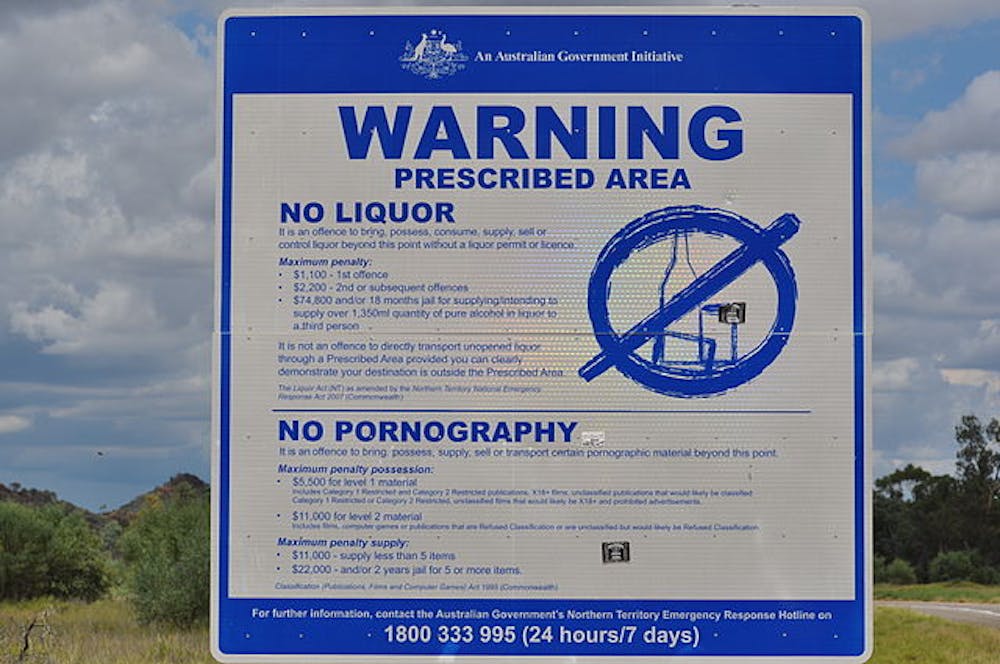
The ADA referenced the 2007 Northern Territory intervention over child sex abuse, when the seconded general heading a multi-departmental operation was targeted in a highly politicised environment.

At the moment, however, Frewen has more immediate worries. The general has landed on the beach, reworked the maps, and is marshalling available forces. But his advance is hampered by the shortage of fit-for-purpose fuel.

As each day goes by, the limited quantities of Pfizer and the absence of any other currently available alternative to AstraZeneca (which is subject to restrictive health advice) is being highlighted more starkly.

The fact this will change later (we are assured) doesn’t help when the here-and-now is urgent, as the Sydney outbreak and the extension of the lockdown there underline.

It’s a time-gap that so far Australia has not been able to significantly narrow.

We’re hearing about vaccine transfers abroad – for example, Israel is providing doses to South Korea, to be repaid later.

But it is hard for a country like Australia, with relatively few cases, to make a plea. Morrison was asked why we haven’t been able to use our “special relationship” with the US to get some of its surplus doses. Unsurprisingly, others have greater needs or better arrangements.

Announcing on Thursday a liberalising of the COVID disaster payment to assist in the Sydney outbreak, Morrison also said the state would be provided with 300,000 extra vaccine doses next week, equally divided between Pfizer and AstraZeneca. This won’t affect what other states receive (on the per head of population formula), and NSW’s numbers will be smoothed out later.

Somehow the federal government has rustled up a small number of additional shots of Pfizer, apparently from higher than forecast allocations. Morrison claimed he couldn’t give details for commercial-in-confidence reasons.

Health Minister Greg Hunt said on Thursday: “I’m increasingly confident that we will have additional supplies arriving on shore in August, and we’ll have confirmation in the coming days. But we’re quietly working behind the scenes every single day to ensure that, and that’s beginning to bear fruit.”

The supply problem came through strongly when Frydenberg and Frewen spoke after Wednesday’s business meeting.

The roundtable canvassed workplace vaccinations. Frydenberg said there were a lot of offers. Virgin Group CEO Jayne Hrdlicka said, “Big employers have the ability to stand up vaccination programs very quickly and would welcome the opportunity to be able to vaccinate as much of the workforce as quickly as possible”.

According to Treasury sources, when the rollout was being prepared, Treasury put forward the view that employers should be used as a channel, as with the flu vaccine. But up to now, we’ve heard little from the government about such an obvious way to boost rates. And, among other things, that goes back to supply.

If we had more Pfizer, there is no reason why this could not have been happening now. (Except where there’s lockdown and work from home!) But employers can’t be in the thick of the rollout when the supply problem means the younger people in their workforces could not be given the vaccine preferred for them. The workplace sites will be for later in the year.

If there had been more Pfizer, the under 40 cohort could have been brought into the general rollout program much earlier – these people are still waiting, unless their job or health puts them into a special category, or they choose AstraZeneca.

And with adequate Pfizer supplies the PM wouldn’t have needed to encourage younger people to consult their doctor about taking AstraZeneca.

The extension for another week of the Sydney lockdown further removes the special status NSW has claimed – and has been accorded by the federal government – as the gold standard for handling COVID without having to resort to extreme measures. The virus again has proved itself the great leveller.

NSW’s decision would be especially disappointing to Morrison. But there is a tone of greater tolerance towards his home state than he displayed to Victoria, in its recent troubles, when he held out for some days before announcing assistance. (In fairness, the Delta outbreak in Sydney is particularly bad.)

“We’re working very cooperatively and positively together [with NSW] because let me be clear – what is happening in Sydney just doesn’t have implications for Sydney,” he said.

“What is happening in Sydney has very serious implications not only for the health of Sydneysiders but also for the economy of Sydney, but also the economy of NSW and indeed the national economy.”

At the moment, one in three eligible people in Australia has had a first vaccine dose, and one in ten has received both doses.

The government has been foreshadowing for a while that by year’s end, all eligible Australians will have had the opportunity of a first jab. On Thursday, Morrison pointedly said this was the government’s intention “based on the advice of Lieutenant General John Frewen that that will be possible”.

That’s assuming “the supply lines hold”.

The PM said this would mean the vaccination program would be only two months behind the schedule the government had when it talked about an October deadline.

No pressure, JJ.

The Conversation

Michelle Grattan does not work for, consult, own shares in or receive funding from any company or organisation that would benefit from this article, and has disclosed no relevant affiliations beyond their academic appointment.

ref. Grattan on Friday: Shortage of fuel hampers the general’s vaccine advance – https://theconversation.com/grattan-on-friday-shortage-of-fuel-hampers-the-generals-vaccine-advance-164177

Covid-19 cases on board Viking Bay: Agent says NZ officials ‘jumped gun’

RNZ News

The agent for a ship carrying two covid-19-infected fishermen says New Zealand officials jumped the gun in announcing all its crew would be taken into managed isolation.

The mariners were in a group of nine sailors who arrived in Auckland on Monday without having to quarantine and were immediately driven to New Plymouth to board their deep sea fishing vessel.

Yesterday, Director-General of Health Dr Ashley Bloomfield said the Viking Bay was returning to New Plymouth where all 15 crew would be taken into managed isolation.

However, last night that was rejected by the port, which said it would put staff at risk.

As of last night, the Ministry of Health said it was now unclear where the ship would dock. The ministry declined to be interviewed today on RNZ Morning Report.

The vessel’s agent when it was at Taranaki, Bill Preston, told Morning Report the ship appeared to be in international waters.

Preston said there had been a lack of communication.

‘Jumping the gun’
“Announcements have been made without collaboration with the port or anybody. So I think everybody is jumping the gun a bit.”

He said the first he had heard of the situation was when the port’s chief executive called him to confirm the news, after Dr Bloomfield’s announcement in the weekly vaccine update yesterday.

“I said [to the port’s chief executive], ‘no, there’s been no decision around what the vessel is going to do at this stage’.”

Dr Bloomfield’s announcement was also the first time that the port had heard of the news too, Preston said.

Since then, he said he had seen communication with the ministry overnight, about making a plan of what the ship would do.

Maritime Union national secretary Craig Harrison said the port should reverse that decision on humanitarian grounds.

“Taranaki could let the vessel pull on site and tie up and not let anyone off but get them close to medical health in case something happens.”

Port’s ban ‘harsh’
Harrison said the port’s decision was “harsh”.

“We really feel for the crew now … this crew has got nowhere to go and you can guarantee that any foreign port that’s close to us now won’t let them in their waters… they won’t want to touch them,” he said.

“Unfortunately, I think New Zealand will have to do something about it.”

He said preventing the virus spreading to other crew on the cramped vessel would be difficult, with closed ventilation on the ship and only one galley.

“I feel really sorry for the crew that are out there, because you can imagine that what’s going through their minds is sooner or later are they going to get covid-19. It’s a terrible situation to be in and I think time is of the essence.”

This article is republished under a community partnership agreement with RNZ.

Print Friendly, PDF & Email

Article by AsiaPacificReport.nz

Fiji’s field hospital begins covid crisis transition with 791 new cases, 3 deaths

By Talebula Kate in Suva

Fiji’s FEMAT field hospital at Laucala Bay in the capital Suva has begun its transition into a covid-19 dedicated hospital as the country’s health authorities reported 791 new cases and three deaths in the past day.

Health Secretary Dr James Fong highlighted this in his covid-19 update last night.

Dr Fong said the ministry had set up an emergency number 165 for people with severe covid-19 symptoms to contact if they could not get to a hospital themselves.

“Sadly, we continue to see people with severe COVID-19 dying at home or coming to a medical facility in the late stages of severe illness and dying within a day or two,” Dr Fong said.

“Severe COVID-19 is a medical emergency and a delay in receiving appropriate medical treatment may result in a higher risk of death,” he said.

Dr Fong said Fijians need to know the severe symptoms of covid-19, which include:

  • Difficulty breathing;
  • Persistent pain or pressure in the chest;
  • Severe headache for a few days;
  • New confusion, inability to wake or stay awake; and
  • Pale, gray, or blue-coloured skin, lips or nail beds.

“If you or a loved one have any of these symptoms please go immediately to your nearest medical facility or call 165 if unable to get to a medical facility.”

Dr Fong reported there had now been 42 deaths in Fiji due to covid-19.

He announced 791 new cases and three deaths in the last 24-hour period ending at 8am yesterday.

Dr Fong said that 40 of the deaths were recorded during the outbreak that started in April this year.

“We also have recorded 19 covid-19 positive patients who died from the serious medical conditions that they had before they contracted covid-19,” Dr Fong said.

He said there had been three more deaths of covid-19 positive patients.

“However, these deaths have been classified as non-covid deaths by their doctors.

“Doctors have determined that their deaths were caused by serious pre-existing medical conditions,” Dr Fong said.

At a glance as at July 7, 2021:

  • 37 new recoveries reported since the last update
  • 6,524 active cases in isolation
  • 7,870 cases during the outbreak that started in April 2021
  • 7,940 cases in Fiji since the first case was reported in March 2020, with 1,355 recoveries.

Talebula Kate is a Fiji Times reporter. Republished with permission.

Print Friendly, PDF & Email

Article by AsiaPacificReport.nz

FAST to ask Samoa judges to recognise impromptu swearing in

RNZ Pacific

The FAST Party in Samoa has filed an application with the Supreme Court to have it recognise an impromptu swearing-in ceremony of elected members of the new political party.

At the beginning of last week the court ruled the ceremony illegal as the Head of State was not present.

But it said Parliament must sit by this Monday or it could reconsider the previous swearing conducted in a tent in the parliament grounds after newly elected members were locked out of Parliament.

At the time the Fast Party leader Fiame Naomi Mata’afa described the open air ceremony on May 24 as a legal option, applying the principle of necessity, because all other avenues were blocked.

On Sunday night the Head of State went on television to defy the court ruling and push the convening of Parliament out by another month.

On Monday, the rival Human Rights Protection Party (HRPP) wrote to police to lay a complaint over the impromptu swearing in, saying they wanted it investigated as a potentially criminal event.

The police commander, Fuiavailili Egon Keil, has set up an investigating committee.

Chief Justice branded ‘incompetent’
The HRPP has labelled Chief Justice Satiu Simativa Perese as incompetent in an official complaint.

The complaint allegedly follows recent decisions by the Supreme Court where some acts of gift giving have been allowed as being culturally accepted.

The Samoa Observer reports the complaint was made in a letter from HRPP secretary Lealailepule Rimoni Aiafi to the Judicial Services Commission.

It said the Chief Justice appears to be incompetent in the handling of HRPP cases since the beginning of electoral petitions.

The letter added that his rulings did not appear to be in accordance with the law, basic legal principles and well established precedent.

It said Satiu was unlikely to be familiar with the express exclusion of fa’asamoa and giving money during the elections to voters.

This article is republished under a community partnership agreement with RNZ.

Print Friendly, PDF & Email

Article by AsiaPacificReport.nz

On the brink of disaster: how decades of progress in Afghanistan could be wiped out in short order

Source: The Conversation (Au and NZ) – By William Maley, Emeritus Professor, Australian National University

Militiamen join Afghan security forces during a gathering in Kabul last month. Together, they are trying to stem the tide of the latest Taliban gains. Rahmat Gul/AP

Afghanistan is teetering on the brink of an almost unimaginable disaster. The withdrawal of US and allied forces, scheduled by President Joe Biden to be completed by September 11, threatens to precipitate the unravelling of the most pro-Western government in Southwest Asia.

It also endangers the entire framework of the Afghan state that has been built up since the overthrow of the Taliban regime in 2001.

Should this occur, the most likely results would be the establishment of a theocratic regime in Kabul, the collapse of swathes of the country into a civil war (with a distinctly transnational dimension), and attempts by millions of refugees to flee the country.

In May 2010, US Secretary of State Hillary Clinton pledged to a visiting delegation of Afghan women that

We will not abandon you. We will stand with you always.

Yet abandoning the Afghans who relied on such commitments is exactly what the US has now done. When pressed about his approach last week, Biden angrily cut off a questioner by saying “I want to talk about happy things”.

Afghans at this point are finding it very hard to identify happy things to discuss.

Why the psychology of the public matters

The mass psychology of the Afghan public will be key in determining how events evolve in the country. And this is something American political leaders have shown little sign of understanding.

When regimes change in Afghanistan – as with the collapse of the communist regime in April 1992 or the Taliban regime in November 2001 – it is typically because key players deem it prudent to shift away from powerholders whose power appears to be decaying.

While the Afghan government has left many people disappointed and disaffected – it is over-centralised, debilitated by patronage networks, and often extractive in character – the Taliban are anything but popular among Afghans. A careful 2019 survey conducted by the Asia Foundation found 85% of respondents had no sympathy at all for the Taliban.

But in Afghanistan, it does not pay to be on the losing side. And there is a grave danger that a spreading perception the Taliban are poised to take over could lead to that very outcome by triggering a cascade of defections from the government and army.

With dozens of districts falling to the Taliban in late June and early July, this could happen quickly. US intelligence estimates that it could take two or three years for the country to fall under Taliban control appear dangerously sanguine.


Read more:
Faces of those America is leaving behind in Afghanistan


A total abandonment of the Afghan people

Immediate responsibility for this tragic situation lies with the US. The bulk of foreign forces were actually withdrawn from Afghanistan by the end of 2014. The US thereafter played a much smaller, but absolutely critical, role in supporting the Afghan government.

The US did this in three ways: by providing air power to complement ground operations carried out by the Afghan army, by supplying intelligence, and most importantly, by steadying the nerves of vulnerable Afghans who accepted the US as a true partner in confronting brutal practitioners of terror, such as the Taliban and Islamic State.

This US approach was sustainable and relatively inexpensive. And while it did not hold out the prospect of a “Berlin 1945”-style victory, it did serve to avoid the consequences of a catastrophic defeat.

All this came unstuck under the Trump administration, which bypassed the Afghan government and signed a deal with the Taliban on February 29, 2020. This was called the “Agreement for the Bringing of Peace to Afghanistan”.

In reality, it was simply an exit deal for the US. And it killed off the prospects of meaningful negotiations between the Afghan government and the Taliban – allegedly its main dividend – by giving the Taliban all they really wanted at the very outset of what was supposed to be a “peace process”.


Read more:
Protecting education should be at the centre of peace negotiations in Afghanistan


The Taliban – hardly able to believe their luck – simply escalated their attacks on democracy advocates, civil society actors, and the media.

Biden’s decision to adopt the Trump approach as his own amounted to a dagger in the heart for those Afghans who had hoped the new US administration would show more judgement and sensitivity than the old.

Pakistan’s intervention now key

While immediate responsibility for the current debacle lies with the Trump and Biden administrations, Pakistan is even more to blame. The Pakistan government had godfathered the Taliban in the first place and resumed its support for the group when US attention drifted to Iraq in 2003.

The dangers to which this gave rise were obvious. In a leaked November 2009 cable, the US ambassador to Afghanistan, retired Lieutenant-General Karl Eikenberry, wrote:

More troops won’t end the insurgency as long as Pakistan sanctuaries remain. Pakistan will remain the single greatest source of Afghan instability so long as the border sanctuaries remain, and Pakistan regards its strategic interests as best served by a weak neighbour. […] Until this sanctuary problem is fully addressed, the gains from sending additional forces may be fleeting.

Despite compelling advice, even from the former Pakistan ambassador to the US, as to how dangerous the sanctuary problem was for US objectives in Afghanistan, successive US presidents shrank from addressing it directly. Instead, they allowed the problem to fester.

If the situation in Afghanistan is to be salvaged, this will require more than just promises of support or offers of money.


Read more:
For the Afghan peace talks to succeed, a ceasefire is the next — and perhaps toughest — step forward


Almost the only tool that remains to address the psychological despair in Afghanistan is immense and effective pressure on Pakistan to strike at Taliban sanctuaries, ammunition supplies, and logistics systems on Pakistani soil.

Being a sovereign state involves not just rights, but also duties. One is to prevent one’s territory from being used to mount attacks on other states.

Reportedly, the Pakistan army chief, General Qamar Javed Bajwa, and intelligence chief, Lieutenant General Faiz Hameed, recently briefed lawmakers in Pakistan that “well-trained Afghan Taliban militants were present across Pakistan” and that the army “could launch an offensive against the group immediately”.

If the Pakistan army can “launch an offensive” against the Taliban “immediately”, the US and its allies should immediately pressure it to do so. But one wonders whether the Biden administration has the gumption to demand this.

The Conversation

William Maley does not work for, consult, own shares in or receive funding from any company or organization that would benefit from this article, and has disclosed no relevant affiliations beyond their academic appointment.

ref. On the brink of disaster: how decades of progress in Afghanistan could be wiped out in short order – https://theconversation.com/on-the-brink-of-disaster-how-decades-of-progress-in-afghanistan-could-be-wiped-out-in-short-order-164087

Australia and New Zealand are signing up for an international tax on the tech giants — but will it be enough?

Source: The Conversation (Au and NZ) – By Victoria Plekhanova, Lecturer, Massey University

www.shutterstock.com

Australia, New Zealand and many other countries are losing hundreds of millions of dollars in revenue each year by not adequately taxing the profits of digital giants doing business in their jurisdictions.

Australia has opted not to impose a digital services tax (DST) on the likes of Google, Facebook, Amazon, Uber and Airbnb. Meanwhile, New Zealand has been sitting on the fence. But things may be about to change.

On July 1, 131 countries – including Australia and New Zealand – agreed in principle to a tax scheme negotiated under the auspices of the G20 and OECD.

More detail may emerge from a meeting of the G20 finance ministers on July 9-10. If approved, the scheme will be finalised next year and implemented in 2023.

The scheme is designed to “create a single set of consensus-based international tax rules” to address the problem of multinational companies moving profits to low-tax jurisdictions — a practice known as “base erosion and profit shifting” (BEPS).


Read more:
Google and Facebook pay way less tax in New Zealand than in Australia – and we’re paying the price


Specifically, such a BEPS scheme would target 20% to 30% of the net profits (above a 10% sales margin) of large multinationals engaged in automated digital services and the direct sale of goods across international borders.

This tax base would then be divided proportionately among the individual countries in which the multinationals have their customers. Local company income tax rates would then apply.

In exchange for a new right to tax the profits of the digital giants, however, countries would give up any unilateral tax measures they might already have in place — or might have been considering imposing on such firms in the future.

Unanswered questions

The most popular alternative to the BEPS scheme is a digital services tax imposed by individual countries directly on firms with annual revenue of more than €750 million (about A$1.2 billion), a threshold first suggested by the OECD and used in most DST legislation.

Usually set at 3%, such DSTs provide relatively small but easy to monitor tax revenue streams.

Like most taxes, a DST is imperfect. But would the BEPS scheme be better? The New Zealand and Australian governments haven’t released impact assessments of the scheme on their domestic businesses, national economies and tax systems. This leaves several unanswered questions:

  • will a BEPS tax scheme improve or undermine the competitiveness of Australian and New Zealand suppliers of automated digital services?

  • what would its other likely impacts be on domestic businesses and national economies in the short, medium and long term?

  • how much will it cost to introduce and administer?

  • how much tax revenue would it actually generate?

  • how would that compare with a unilateral tax measure such as a 3% DST?


Read more:
A new levy on digital giants like Google, Facebook and eBay is a step towards a fairer way of taxing


How a digital services tax compares

As currently drafted, it appears the BEPS scheme would generate considerably less revenue than a 3% DST. The exact difference would depend on the total and domestic annual sales revenue and profits of the business in question, as well as the country’s corporate income tax rate.

But let’s assume, for example, the total net profit of a large multinational firm is A$15 billion, and 1% ($1 billion) of the firm’s $100 billion sales revenue comes from Australia.

Under the BEPS scheme, the Australian portion of the firm’s profits would be just $10 million. Taxed at Australia’s corporate rate of 30%, that would generate $3 million.

By comparison, a 3% DST on the firm’s $1 billion of Australian sales would generate $30 million — ten times the tax revenue of the BEPS scheme.


Read more:
The U.S. takes aim at Facebook — here’s why the big tech giants must be reined in


When Australia and New Zealand discussed introducing a DST in 2018-19, business and advisory groups in both countries criticised the idea. In particular, it was argued such a tax earns too little revenue relative to the cost of implementation.

And yet, the new BEPS tax scheme would generate even less revenue while still requiring a complex system of rules. This complexity risks imposing high compliance costs on countries, creating opportunities for avoidance and increasing tax disputes.

Ideally, a BEPS scheme should at least promise more tax revenue than a 3% DST. The portion of profits allocated to individual market jurisdictions should be increased, and efforts made to ensure low margin but profitable giants such as Amazon don’t escape paying tax where they do business.

Compensation for personal data

Finally, a BEPS scheme should account for the free use of data extracted from local internet users by these digital giants.

The common assumption that personal data and attention have no (or trivial) economic value is wrong. Google might claim it charges customers for access to its infrastructure and algorithms, but these are often of little value without the personal data they process in the first place.

Uber wouldn’t exist without access to data about passengers and drivers. Facebook couldn’t generate multi-billion dollar revenues without the information exchange and attention of its millions of users.


Read more:
US lawmakers are taking a massive swipe at big tech. If it lands, the impact will be felt globally


Personal data and attention are key resources for the provision of automated digital services. An adequate tax on those service providers is fair compensation.

More importantly, any final international agreement on a BEPS scheme should be conditional. Countries need an opt-out provision allowing them to switch to a DST (or other unilateral measure) if the new system fails to generate sufficient revenue.

This would both protect national interests as well as create a disincentive for the big multinational firms to avoid paying their fair share of tax wherever they make a profit.

The Conversation

Victoria Plekhanova does not work for, consult, own shares in or receive funding from any company or organization that would benefit from this article, and has disclosed no relevant affiliations beyond their academic appointment.

ref. Australia and New Zealand are signing up for an international tax on the tech giants — but will it be enough? – https://theconversation.com/australia-and-new-zealand-are-signing-up-for-an-international-tax-on-the-tech-giants-but-will-it-be-enough-162507

How the Dark Emu debate limits representation of Aboriginal people in Australia

Source: The Conversation (Au and NZ) – By Heidi Norman, Professor, Faculty of Arts and Social Sciences, University of Technology Sydney

Ranger David Wongway on Angas Downs, Northern Territory. Wikimedia Commons/JennyKS, CC BY-SA

Anthropologist Peter Sutton and archaeologist Keryn Walshe, recently published a book titled Farmers or Hunter-gatherers? The Dark Emu Debate. This book offers a dramatically different account of the social, spiritual and economic worlds of Australia’s First Peoples “before conquest” to what is presented in the acclaimed work by Yuin writer Bruce Pascoe, Dark Emu.

The debate Sutton and Walshe seek to have is whether farmers or hunter-gatherers is the right way to describe my maternal ancestry, the people who lived in Australia before colonisation by Europeans.

Sutton and Walshe want to strip the debate of any contemporary meaning, and return our thoughts to the facts of what went on before their own ancestors arrived on the scene to record, in English using foreign concepts, the truth about what they want to call hunter-gatherer societies or now, the “Old People”.

The central debate between these books is the characterisation of Aboriginal worlds at 1788.

Pascoe draws on colonial archives and actively and creatively offers a different interpretation to colonial bias to tell the story of Aboriginal peoples’ farming and associated practices. Sutton and Walshe, meanwhile, reject the label agriculture or “farming”. Instead, they prefer the descriptor “hunter-gatherers-plus” in relation to who they refer to as the “Old People”.

Rather than organising Aboriginal worlds along a spectrum weighted according to their agricultural development and progress, Sutton and Walshe argue there was a far more complex system that involved modifications to one’s environment and its resources, as well as elaborate spiritual work to keep it all going. This system was at least as complex as gardening or farming.


Read more:
Friday essay: how our new archaeological research investigates Dark Emu’s idea of Aboriginal ‘agriculture’ and villages


Characterisation of Aboriginal peoples as hunter-gatherers or farmers/agriculturists is a long running and shifting debate among anthropologists and archaeologists.

These characterisations and classifications seem to hinge on definitions and interpretations established by the academy. It would be unsurprising if anthropologists critiqued these labels, one another’s field work and conclusions almost entirely in the absence of Aboriginal people.

Sutton and Walshe state their intention to “avoid identity politics and racial polemics”, instead claiming to offer their critique in the spirit of debate.

However, they are clearly on the side of academic anthropology and archaeology — and the past — while Pascoe’s work is focused on the history of the present. Even with this claim, debates over interpretations of the past shape the politics of Aboriginal recognition today.

Agriculturists or hunter-gatherers?

In his book, Pascoe crafted a persuasive account of Aboriginal people and the way they lived, largely unknown by a nation still viewing this land and First Peoples through a foggy colonial lens. Through his writing and speaking appearances, Pascoe has made the deep ancient past and the present intelligible and imaginable for a wide audience.

Dark Emu’s case for appreciating First People as agriculturalists has proven remarkably popular and is critically acclaimed. Dark Emu was named book of the year and won the Indigenous writers’ prize in the 2016 NSW Premier’s Literary Awards.

In 2018, Pascoe received the Australia Council award for lifetime achievement in literature. His work has also attracted careful and considered, and not always supportive, reviews and articles in the academic sphere of peer-reviewed journals.

Now, Sutton and Walshe seek “to set the record straighter”.

Sutton and Walshe’s critique of Dark Emu at times comes across as churlish and pre-occupied with the historically dominant position of anthropologists in their claim to know Aboriginal people. With statements such as “Pascoe is some 50 years behind the scholarly discussions” and “a garden by definition is not wild”, we are reminded repeatedly that Western definitions and labels are supreme.

Farmers or Hunter-gatherers? is occasionally scathing of the use of archival sources in Dark Emu, suggesting they have been misquoted, selectively deployed, and excluded large areas of relevant scholarship. The text provides numerous examples: some are significant omissions, others do not change the meaning Pascoe conveys.

Sutton and Walshe assert Pascoe’s conclusions about village life and population numbers, among other points, are flawed. Elsewhere, they deem Pascoe’s use of sources in Dark Emu to be correct. Some of this critique seems unnecessary and exceeds the authors’ declared concern for fact, scholarship, countering the popularised mythology of history, and truthfulness.

Sutton and Walshe’s book is interesting for the account of how they arrived at the label of First Peoples as “hunter-gatherers-plus” or “The Old People”.

They detail the complexity of classical Aboriginal life: including mental and aesthetic culture, intricate webs of kinship, ritual performance, visual arts and land tenure systems.

Rather than farming, the authors highlight how spiritual propagation, magic and Dreaming were maintained by human reverence and direct action — despite the introduction of gardening and agricultural methods by the invading settlers being consciously resisted.

Sutton and Walshe’s overarching criticism is that Dark Emu does not engage with these non-physical complexities and instead “places high value on technological and economic complexity as a standard of a people’s worth”.

This, as Sutton and Walshe state, is the gap in the book. However, this feedback also explains its audience appeal because it is largely confined to material economic behaviour and “separated from meaning, from intent, from values, from culture, from the spiritual, and from the emotional.”


Read more:
Secondary school textbooks teach our kids the myth that Aboriginal Australians were nomadic hunter-gatherers


Constructive critical debate should serve First Peoples’ futures

With only a few exceptions, anthropologists working in Australia have long fixed their gaze north, to the peoples who Sutton and Walshe are enamoured with and sometimes refer to as “before conquest”, on the “other side” of the frontier.

Anthropologists rarely canvas the adjustments that Aboriginal peoples made after European invasion, especially as this hallmarks survival in southeastern Australia.

Sutton and Walshe offer several examples from the 1960s and 1970s of anthropological work that engaged public interest and some key and comprehensive texts. One example they cite is Catherine and Ronald Berndt’s seminal anthropology work, The World of the First Australians.

They offer these examples as a critical counterpoint to the claim in Dark Emu of a pervasive and wilful ignorance of the complexity and sophistication of Aboriginal worlds.

My experience teaching undergraduate students more closely aligns with Pascoe’s observations – students continue to arrive at their studies with little intellectual depth or appetite for engaging in debates over Aboriginal worlds or futures. They cite repeat viewings of popular films as the extent of their school curriculum.

The legal recognition of Aboriginal land tenure may have dispensed with the myths of nomadism, yet rejection of the rightful place of First Peoples in the national political discourse attests to the need for more effective communication with the public, which includes popular and relatable texts.

This is the sweet spot in the public imagination that works such as Dark Emu have appealed to. However, constructive and critical debate should accurately represent the history of First Peoples and, importantly, comprehend and better serve our present and future.

This weeks marks the commencement of the annual NAIDOC celebration with the theme “Heal Country”. This should hopefully lead to consideration of landscapes and all our relationships to them, before 1788, since, and into the future.

The Conversation

Heidi Norman receives funding from the Australian Research Council and NSW Government.

ref. How the Dark Emu debate limits representation of Aboriginal people in Australia – https://theconversation.com/how-the-dark-emu-debate-limits-representation-of-aboriginal-people-in-australia-163006

PODCAST: Buchanan and Manning on Nuclear Deterrence + Risk + First Strike States

Buchanan and Manning on Nuclear deterrence in 2021.
A View from Afar
A View from Afar
PODCAST: Buchanan and Manning on Nuclear Deterrence + Risk + First Strike States
Loading
/

A View from Afar: Selwyn Manning and Paul Buchanan present this week’s podcast, A View from Afar, where they analyse:

Revelations that the People’s Republic of China has further developed missile silos in its north-west desert. How does this fit with proliferation of nuclear silos in the west?

How do great powers enforce their nuclear deterrence dogma and strategy in 2021 compared to when the first Cold War was chilling the world’s expectations of longevity?

And what of new nuclear powers like Israel, North Korea and others – with their lack of ability to sustain a total annihilation attack, do they pose a real first-strike threat? And, if so, is nuclear deterrence rendered an obsolete strategy?

And what of Aotearoa New Zealand, does its nuclear-free position, placing it independent of so-called ‘protections’ of the United States’ nuclear umbrella keep us safe from becoming a target? Or has the weaponising of space, the practice where RocketLab sends payloads of US military-tech into orbit, bring New Zealand into scope?

WE INVITE YOU TO PARTICIPATE WHILE WE ARE LIVE WITH COMMENTS AND QUESTIONS IN THE RECORDING OF THIS PODCAST:

You can comment on this debate by clicking on one of these social media channels and interacting in the social media’s comment area. Here are the links:

If you miss the LIVE Episode, you can see it as video-on-demand, and earlier episodes too, by checking out EveningReport.nz or, subscribe to the Evening Report podcast here.

The MIL Network’s podcast A View from Afar was Nominated as a Top  Defence Security Podcast by Threat.Technology – a London-based cyber security news publication.

Threat.Technology placed A View from Afar at 9th in its 20 Best Defence Security Podcasts of 2021 category. You can follow A View from Afar via our affiliate syndicators.

Listen on Apple Podcasts
 

Yes, you can still get COVID after being vaccinated, but you’re unlikely to get as sick

Source: The Conversation (Au and NZ) – By Lara Herrero, Research Leader in Virology and Infectious Disease, Griffith University

Shutterstock

When a COVID cluster includes people who are vaccinated against the virus, we inevitably hear rumblings of complaint from people who wonder what the point is of vaccination.

But when you read past the headlines, you usually see the answer: in most cases, those who were vaccinated and contracted COVID-19 didn’t die, didn’t develop severe symptoms and didn’t need to be hospitalised.

For unvaccinated Australians in their later years, the chance of dying from COVID is high. For unvaccinated people in their 80s, around 32% who contract COVID will die from it. For people in their 70s, it’s around 14%. (For unvaccinated people in their 60s, it drops to around 3%. And for under-50s, it’s less than 1%.)

The good news is both Pfizer and AstraZeneca are very effective at preventing severe disease and death from COVID-19, even from the more virulent Delta strain.

So how effective are our vaccines?

Preliminary data from the United Kingdom shows after your first dose of either Pfizer or AstraZeneca, you’re 33% less likely than an unvaccinated person to contract the Delta variant.

Two weeks after your second dose, this rises to 60% for AstraZeneca and 88% for Pfizer. This data is for any form of COVID-19, from mild to severe.

But when you look at how much the vaccines reduce your risk of developing severe illness that requires hospitalisation, the coverage is high for both. Pfizer and Astrazeneca vaccines are 96% and 92% effective (respectively) in preventing Delta variant hospitalisations.

Why do some people still get COVID after being vaccinated?

Vaccines aren’t magic barriers. They don’t kill the virus or pathogen they target.

Rather, vaccines stimulate a person’s immune system to create antibodies. These antibodies are specific against the virus or pathogen for the vaccine and allows the body to fight infection before it takes hold and causes severe disease.

However, some people won’t have a strong enough immune response to the vaccine and may still be susceptible to developing COVID-19 if exposed to the virus.

How a person responds to a vaccine is impacted by a number of host factors, including our age, gender, medications, diet, exercise, health and stress levels.


Read more:
The symptoms of the Delta variant appear to differ from traditional COVID symptoms. Here’s what to look out for


It’s not easy to tell who hasn’t developed a strong enough immune response to the vaccine. Measuring a person’s immune response to a vaccine is not simple and requires detailed laboratory tests.

And while side effects from the vaccine indicate you’re having a response, the absence of symptoms doesn’t mean you’re having a weak response.

It also takes time for the immune system to respond to vaccines and produce antibodies. For most two-shot vaccines, antibody levels rise and then dip after the first dose. These antibodies are then boosted after the second.

But you’re not optimally covered until your antibody levels rise after the second dose.


The Conversation (adapted from Vaccine Immunology, Plotkin’s Vaccines [Seventh Edition] 2018), CC BY-ND

What does COVID look like after being vaccinated?

The PCR tests we use to detect SARS-CoV-2, the virus that causes COVID-19, are very sensitive and can detect a positive case even if you have low levels of the virus in your system. This means a person can test positive for SARS-CoV-2 but still not have symptoms of COVID-19.

Of those vaccinated people who have reported symptoms, the vast majority report mild ones, with a shorter duration.


The Conversation/ZOE COVID Symptom Study app, CC BY-ND


Read more:
The symptoms of the Delta variant appear to differ from traditional COVID symptoms. Here’s what to look out for


There is always a chance a vaccinated person could pass the virus onto a non-vaccinated person without having symptoms themselves.

But vaccinated people who develop COVID-19 will likely have a lower viral load than unvaccinated people, meaning they’re less likely to spread the virus.

One study estimated those who were vaccinated with either Pfizer or AstraZeneca were 50% less likely to pass it on to an unvaccinated household contact than someone who wasn’t vaccinated. This transmission will likely reduce again if both household members are vaccinated.

But if you’re not vaccinated and contract COVID-19, you’re much more likely to spread the virus.

What about future variants?

So far, the preliminary data (some of which is ongoing and/or yet to be peer reviewed) shows our current vaccines are effective at protecting against circulating variants.

But as the virus mutates, there is increasing chance of viral escape. This means there is a greater chance the virus will develop mutations that make it fitter against, or more easily able to evade, vaccinations.

Scientist are closely monitoring to ensure our current and/or future vaccines are effective against the circulating strains.

To help the fight against COVID-19 the best thing we can do is minimise the spread of the virus. This means get vaccinated when you can, ensure you maintain social distancing when required and get tested if you have any symptoms.


Read more:
No, vaccine side effects don’t tell you how well your immune system will protect you from COVID-19


The Conversation

Lara Herrero does not work for, consult, own shares in or receive funding from any company or organisation that would benefit from this article, and has disclosed no relevant affiliations beyond their academic appointment.

ref. Yes, you can still get COVID after being vaccinated, but you’re unlikely to get as sick – https://theconversation.com/yes-you-can-still-get-covid-after-being-vaccinated-but-youre-unlikely-to-get-as-sick-163870

Julia Banks’ new book is part of a 50-year tradition of female MPs using memoirs to fight for equality

Source: The Conversation (Au and NZ) – By Joshua Black, PhD Candidate, School of History, National Centre of Biography, Australian National University

James Ross/AAP

Political memoirs in Australia often create splashy headlines and controversy. But we should not dismiss the publication of former Liberal MP Julia Banks’ book, Power Play, as just the latest in a genre full of scandals and secrets.

There is a long tradition of female parliamentarians using memoirs to reshape the culture around them. Banks — whose book includes claims of bullying, sexism and harassment — is the latest to push for equality and understanding of what life is like for women in Canberra.

The power of a memoir

There are many ways to tell your story — from social media posts to podcasts and speeches to parliament.

But there is something enduring about memoir. Sales figures aside, the political memoir can be a significant event. The inevitable round of media interviews, book tours and literary festivals can allow an author to stamp their broader ideas onto the public debate and shed light on the culture of our institutions.


Read more:
The ‘madness’ of Julia Banks — why narratives about ‘hysterical’ women are so toxic


They also have the advantage of usually being written when women have left parliament, and no longer need to place their party’s interests ahead of all others. Indeed, Banks tells us that her story is that of “an insider who’s now out”.

It started with Enid Lyons

In 1972, Dame Enid Lyons (the first woman elected to the House of Representatives and wife of former prime minister Joe Lyons) published Among the Carrion Crows.

In her memoir, she offered a compelling insight into how she dealt with the male-dominated environment of parliament house. She recalled feeling like a “risky political experiment”, as if the very “value of women in politics would be judged” by the virtue of her conduct. She joyfully described how her maiden speech had moved men to tears.

In that place of endless speaking … no one ever made men weep. Apparently I had done so.

She also recorded key moments when she had vigorously presented her views in the party room and the parliament. She asserted the right of women to stand — and more importantly, to be heard — in parliament.

Encouraging women, challenging men

Since Lyons, women have continued to use autobiographies to promote women’s participation in politics and challenge the masculine histories of political parties.

When the ALP celebrated its centenary in 1991, it was the male history that was celebrated. Senator Margaret Reynolds (Queensland’s first female senator) “decided that the record had to be corrected”.

Former Labor minister Susan Ryan.
Former education minister Susan Ryan wanted to encourage other women to go into politics.
Lukas Coch/AAP

Reynolds’ writings on Labor women occurred alongside the ALP’s moves toward affirmative action quotas in the early 1990s. As well as a memoir, she wrote a series of newsletters called Some of Them Sheilas, and a book about Labor’s women called The Last Bastion. In it, she recorded the experiences and achievements of ALP women over the past 100 years.

In her 1999 book, Catching the Waves, Labor’s first female cabinet minister Susan Ryan acknowledged there was “a lot of bad male behaviour in parliament”. But she argued this should not “dissuade women from seeking parliamentary careers”. Importantly, Ryan saw her autobiography as a collective story about the women’s movement and its “breakthrough into parliamentary politics” in the 1970s and 1980s.


Read more:
Why is it taking so long to achieve gender equality in parliament?


While Labor women like Reynolds, Ryan and Cheryl Kernot were publishing their memoirs, few Liberal women put their stories on the public record. Former NSW Liberal leader Kerry Chikarovski’s 2004 memoir, Chika, was billed as the story of a woman who

learnt to cope with some of the toughest and nastiest politics any female has ever encountered in Australia’s political history.

In 2007 Pauline Hanson published an autobiography called Untamed and Unashamed, telling journalists, “I wanted to set the record straight”. But these were exceptions to the rule.

Julia Gillard’s story

Following the sexism and misogyny that disfigured her prime ministership, Julia Gillard’s 2014 memoir My Story helped revitalise the national conversation about women and power. Hoping to help Australia “work patiently and carefully through” the question of gender and politics, Gillard promised to “describe how I lived it and felt it” as prime minister.

Former prime minister Julia Gillard at the Sydney Writers' Festival
Julia Gillard released her memoir in 2014, the year after she lost the prime ministership.
David Moir/AAP

Importantly, she held not only her opponents but also the media to account for their gender bias. Critics like journalist Paul Kelly derided Gillard’s version of history as “nonsense”, but the success of her account suggests otherwise. My Story sold 72,000 copies in just three years.

In her 2020 book, Women and Leadership co-authored with former Nigerian finance minister, Ngozi Okonjo-Iweala, Gillard interviewed eight women leaders from around the world, further showing how gender continues to shape political lives.

The risks of writing

A political memoir can be fraught, however. After a decade in parliament, Democract-turned-Labor MP Cheryl Kernot published her memoir Speaking for Myself Again in 2002.
She had hoped it would argue the case for Australian women “participating fully” in politics to promote “their own values and interests and shift the underlying male agenda”.

Former MP Cheryl Kernot
Former MP Cheryl Kernot’s memoir release was overshadowed by controversy.
Julian Ross/AAP

But the release was quickly overshadowed by revelations of an extra-marital affair with Labor’s Gareth Evans (which were not in the book). Her book tour was halted amid the fallout. Kernot later despaired journalist Laurie Oakes — who broke the story — had managed to “sabotage people’s interest in the book”.

Others, such as Labor’s Ros Kelly, have told their stories in private or semi-private ways. Kelly’s autobiography was privately published as a gift to her granddaughter, but she also gives copies to women in politics, many of whom “have read it, and sent me really nice notes”.

Power in numbers

In the past five years, several women from across the political spectrum have published life stories.

In her memoir, An Activist Life, former Greens leader Christine Milne argued that women should perform feminist leadership rather than being “co-opted into being one of the boys”. In Finding My Place, Labor MP Anne Aly, showed women of non-Anglo, non-Christian backgrounds belong in parliament too. Independents Jacqui Lambie and Cathy McGowan used their memoirs to show female MPs can thrive without the backing of the major parties.


Read more:
Politics with Michelle Grattan: Former MP Kate Ellis on the culture in parliament house


Most recently, former Labor MP Kate Ellis published Sex, Lies and Question Time, which includes reflections on the experiences of nearly a dozen other women in parliament.

For fifty years, Australia’s female politicians have used their memoirs to assert the equal rights of women in parliament, party rooms, and the media. Drawing on that lineage, Banks is the latest to help reveal and disrupt the sexism and misogyny in political life.

The Conversation

This research is supported by an Australian Government Research Training Program (RTP) Scholarship.

ref. Julia Banks’ new book is part of a 50-year tradition of female MPs using memoirs to fight for equality – https://theconversation.com/julia-banks-new-book-is-part-of-a-50-year-tradition-of-female-mps-using-memoirs-to-fight-for-equality-163888

Fiji government ‘useless’, warns Prasad – Ardern touts lockdown benefits

RNZ Pacific

The Fiji government’s response to the covid-19 pandemic outbreak is an utter failure, but it is not too late to follow New Zealand’s lockdown example, an opposition leader says.

New Zealand Prime Minister Jacinda Ardern told media her advice was that the lockdown strategy had saved lives.

Fiji is in the grip of a covid-19 outbreak that has infected 791 people and left three more dead in the past day.

Fiji’s deputy opposition leader Professor Biman Prasad told RNZ’s Nine to Noon programme that the government’s strategy had been a complete failure and needed to change.

“Change the strategy now. It’s about life and death now. It’s about fixing the health public health emergency right now, which will also be good in the long term for the economy.”

“The stupid, stubborn, ego-driven policies of this government and the leadership of this government has been utter failure, you know, complete nonsense.”

He said people were fearful and anxious, and the government was putting all its eggs in one basket – vaccination.

‘People are dying’
“Vaccination is important, we’re encouraging people to get vaccinated. But right now we are having a public health emergency – people are dying, our health systems are giving up.”

It was not too late for the country to follow the examples of New Zealand and Australia and lock down, he said.

“If there is a proper planned lockdown with appropriate provision of support such as food rations, etc, for people in the lower income categories I think a lot of people will understand why the government would do that.”

Ardern told New Zealand media this afternoon it was up to the Fiji government to make its own decision, but offered some advice.

“Lockdown, for us, has saved lives and it’s also benefited our economy. But these choices are for governments,” she said.

Prime Minister Jacinda Ardern
NZ Prime Minister Jacinda Ardern … “Lockdown, for us, has saved lives and it’s also benefited our economy.” Image: Dom Thomas/RNZ

“Our help and assistance will be there regardless of what strategy they adopt, they’re our neighbours and I think no one wants to see any country suffering under the full effects of an outbreak.”

Ardern said she had spoken to Fiji Prime Minister Voreqe Bainimarama last week and offered wide ranging support, having already provided NZ$40 million in aid, plus protective equipment, specialists, and offered future vaccines.

“Acknowledging that they of course have the right to make their own decisions.”

Fiji should seek more help
Dr Prasad said the government should seek more help from Australia and New Zealand to help with testing.

“People are dying, you know, on arrival to the hospitals because the health system cannot cope … if the cases continue to rise – and more and more people seek medical attention – any health system is gonna give up,” he said.

“I’m afraid that’s what is happening right now in Fiji.”

Dr Prasad said he suspected the government was ignoring advice, and its messaging had been contradictory.

“It’s very, very clear that this government has completely lost the plot.”

“They need to convince the people … they haven’t explained very clearly as to what and why they’re doing what they’re doing right now.”

The people of Fiji were grateful for the assistance from Australia and New Zealand, he said, but the Fiji government should ask for more help in the form of support for those who may be unable to care for their children and put food on the table.

Donations to help Fiji could also be sent to non-government organisations that were already providing help, he said.

Civil society groups in Fiji have urged the government to release data to help them provide an effective response to the crisis.

This article is republished under a community partnership agreement with RNZ.

Print Friendly, PDF & Email

Article by AsiaPacificReport.nz

Almost 6000 people battle covid-19 in Fiji – fears of new pandemic spike

By Josefa Babitu in Suva

Fiji’s fight against the covid-19 pandemic seems to have no light at the end of the tunnel after the Pacific nation has recorded 636 cases and six deaths in the past day alone.

Yesterday’s number makes 5776 people battling the virus in total while the Health Ministry expects more cases in the coming days.

Fiji, with a population of about 900,000, is fighting the delta variant (originally from India) of the virus that has crippled its healthcare system in just less than four months.

The outbreak began in April at a funeral attended by more than 500 people and among the crowd was the carrier of the virus who worked as a maid in a quarantine facility in Nadi.

In early May, Health Secretary Dr James Fong said the second wave of the virus would be the greatest test of Fiji’s healthcare system that it has ever faced.

“Lives are at stake, sacrifices must be made, and every Fijian’s commitment is needed. The virus is insidious, it is unrelenting. All it takes is one unknown case in our community to spark an explosion of cases across the country,” he said.

He made the comments after two of Fiji’s doctors contracted the virus from a patient who displayed symptoms of the virus but had refused to be tested for covid-19 (he later tested positive), just days after the virus entered local communities.

‘Red flag for widespread transmission’
“From a statistical standpoint, ICU cases –– like the one we now have –– may be a red flag for widespread transmission. Essentially, it tells us that there are likely many more cases of the virus out there,” Dr Fong said.

Fiji has locked down some parts of Viti Levu for more than once as a drastic measure to contain the virus. It also has a 6pm to 4am curfew for the capital Suva and Nausori corridor where the cases are surging and an 8pm to 4am curfew in other parts of the country.

This month, the virus is in the country’s Center for Disease Control, Correction Service, various government ministries including Health, Economy, Agriculture, Defence and even police to name a few.

Some members of the public have called for a “28 days of straight lockdown for the whole of Viti Levu” — Fiji’s main island. However, the government said this would be an economic loss.

Prime Minister Voreqe Bainimarama told Fijians last month: “It is easy to call for a lockdown if you don’t work at a factory that might permanently leave Fiji if they must shut down completely for 28 days; the garment factories and call centres that cannot serve overseas clients will lose those contracts –– and the jobs they support –– forever.

“And businesses, large and small, that thrive because of this economic activity could shut forever as well.

“Our plan is reasonable, it is tolerable and it is built for the long-haul. And we will stick with that plan. Rather than subject the nation to a far more severe socioeconomic situation, we will continue to care for those in-need with the resources we have.”

Average cases increase
In a statement last night, Dr Fong said the seven-day average of new cases per day has increased to 429 cases per day or 485 cases per million population per day.

“We continue to see people with severe COVID-19 dying at home or coming to a medical facility in the late stages of severe illness and dying within a day or two,” he said.

“Severe covid-19 is a medical emergency and a delay in receiving appropriate medical treatment may result in a higher risk of death.

“As expected, with the increasing case numbers we are also seeing increasing numbers of people with severe disease and more deaths in the Suva-Nausori containment zone.

“There have been 31 new recoveries reported since the last update, which means that there are now 5776 active cases in isolation. There have been 7079 cases during the outbreak that started in April 2021.”

The country has recorded a total of 7149 cases in Fiji since the first case was reported in March 2020, with 1,318 recoveries.

The death toll for covid-19 patients has increased to 39 from 33 ending at 8am yesterday.

More cases expected
With more cases expected in the future, Fijians have turned to home remedies as a preventative measure and cure from the deadly virus — one being steam inhalation therapy.

“Steam inhalation therapy (kuvui) is commonly used as a home remedy to provide relief from congested nasal passages, and symptoms of cold or inflamed sinuses, or other mild COVID-19 symptoms,” said Dr Fong.

“However, steam therapy is not a treatment for severe covid-19. Severe cpvid-19 is a medical emergency, and relying completely on home remedies can delay urgent medical treatment.”

Fiji’s only hope in dealing with this outbreak is the AstraZeneca vaccine donated by Australia and New Zealand.

Dr Fong said 324,462 adults in Fiji had received their first dose of the vaccine and 54,737 had received their second doses.

Percentage-wise this means that 55 percent of the target population has received at least one dose and 9.3 percent are now fully vaccinated nationwide.

“Because of vaccines and because we now know more about covid, the world’s fight against this virus has changed, and so must our strategy,” Bainimarama said.

“We will get through this current ordeal by an intelligent and targeted application of measures to contain the spread until we get enough of us vaccinated to achieve herd immunity.”

The only hope right now for Fiji is to vaccinate 80 percent of its population before some restrictions are relaxed.

Josefa Babitu is a final-year student journalist at the University of the South Pacific (USP). He is also the current student editor for Wansolwara, USP Journalism’s student training newspaper and online publication. He is a contributor to Asia Pacific Report.

Print Friendly, PDF & Email

Article by AsiaPacificReport.nz

RSF’s 2021 ‘Press freedom predators’ gallery includes old tyrants, 2 women

Reporters Without Borders (RSF) has published a gallery of grim portraits — those of 37 heads of state or government who crack down massively on press freedom, reports RSF.

Some of these “predators of press freedom” have been operating for more than two decades while others have just joined the blacklist, which for the first time includes two women and a European predator.

Nearly half (17) of the predators are making their first appearance on the 2021 list, which RSF is publishing five years after the last one, from 2016.

All are heads of state or government who trample on press freedom by creating a censorship apparatus, jailing journalists arbitrarily or inciting violence against them, when they do not have blood on their hands because they have directly or indirectly pushed for journalists to be murdered.

Nineteen of these predators rule countries that are coloured red on the RSF’s press freedom map, meaning their situation is classified as “bad” for journalism, and 16 rule countries coloured black, meaning the situation is “very bad.”

The average age of the predators is 66. More than a third (13) of these tyrants come from the Asia-Pacific region.

“There are now 37 leaders from around the world in RSF’s predators of press freedom gallery and no one could say this list is exhaustive,” said RSF secretary-general Christophe Deloire.

“Each of these predators has their own style. Some impose a reign of terror by issuing irrational and paranoid orders.

Others adopt a carefully constructed strategy based on draconian laws.

A major challenge now is for these predators to pay the highest possible price for their oppressive behaviour. We must not let their methods become the new normal.”

The full RSF media predators gallery 2021.
The full RSF 2021 media predators gallery. Image: RSF

New entrants
The most notable of the list’s new entrants is undoubtedly Saudi Arabia’s 35-year-old crown prince, Mohammed bin Salman, who is the centre of all power in his hands and heads a monarchy that tolerates no press freedom.

His repressive methods include spying and threats that have  sometimes led to abduction, torture and other unthinkable acts. Jamal Khashoggi’s horrific murder exposed a predatory method that is simply barbaric.

The new entrants also include predators of a very different nature such as Brazilian President Jair Bolsonaro, whose aggressive and crude rhetoric about the media has reached new heights since the start of the pandemic, and a European prime minister, Hungary’s Viktor Orbán, the self-proclaimed champion of “illiberal democracy” who has steadily and effectively undermined media pluralism and independence since being returned to power in 2010.

Women predators
The first two women predators are both from Asia. One is Carrie Lam, who heads a government that was still democratic when she took over.

The chief executive of the Hong Kong Special Administrative Region since 2017, Lam has proved to be the puppet of Chinese President Xi Jinping, and now openly supports his predatory policies towards the media.

They led to the closure of Hong Kong’s leading independent newspaper, Apple Daily, on June 24 and the jailing of its founder, Jimmy Lai, a 2020 RSF Press Freedom laureate.

The other woman predator is Sheikh Hasina, Bangladesh’s prime minister since 2009 and the daughter of the country’s independence hero. Her predatory exploits include the adoption of a digital security law in 2018 that has led to more than 70 journalists and bloggers being prosecuted.

Historic predators
Some of the predators have been on this list since RSF began compiling it 20 years ago. Syria’s President Bashar al-Assad and Ali Khamenei, the Supreme Leader of Iran’s Islamic Revolution, were on the very first list, as were two leaders from the Eastern Europe and Central Asia region, Russia’s Vladimir Putin and Belarus’s Alexander Lukashenko, whose recent predatory inventiveness has won him even more notoriety.

In all, seven of the 37 leaders on the latest list have retained their places since the first list  RSF published in 2001.

Three of the historic predators are from Africa, the region where they reign longest. Teodoro Obiang Nguema Mbasogo, 79, has been Equatorial Guinea’s president since 1979, while Isaias Afwerki, whose country is ranked last in the 2021 World Press Freedom Index, has been Eritrea’s president since 1993.

Paul Kagame, who was appointed Rwanda’s vice-president in 1994 before taking over as president in 2000, will be able to continue ruling until 2034.

For each of the predators, RSF has compiled a file identifying their “predatory method,” how they censor and persecute journalists, and their “favourite targets” –- the kinds of journalists and media outlets they go after.

The file also includes quotations from speeches or interviews in which they “justify” their predatory behaviour, and their country’s ranking in the World Press Freedom Index.

RSF published a list of Digital Press Freedom Predators in 2020 and plans to publish a list of non-state predators before the end of 2021.

Asia Pacific Report and Pacific Media Watch collaborate with the Paris-based RSF.

Article by AsiaPacificReport.nz

We found a new type of stellar explosion that could explain a 13-billion-year-old mystery of the Milky Way’s elements

Source: The Conversation (Au and NZ) – By David Yong, Academic, Research School of Astronomy and Astrophysics, Australian National University

NASA/WikiCommons

Until recently it was thought neutron star mergers were the only way heavy elements (heavier than Zinc) could be produced. These mergers involve the mashup of the remnants of two massive stars in a binary system.

But we know heavy elements were first produced not long after the Big Bang, when the universe was really young. Back then, not enough time had passed for neutron star mergers to have even occurred. Thus, another source was needed to explain the presence of early heavy elements in the Milky Way.

The discovery of an ancient star SMSS J2003-1142 in the Milky Way’s halo — which is the roughly spherical region that surrounds the galaxy — is providing the first evidence for another source for heavy elements, including uranium and possibly gold.

Around our galaxy, the Milky Way, there is a ‘halo’ made up of hot gases which is continually being supplied with material ejected by birthing or dying stars. Only 1% of stars in the galaxy are found in the halo.
NASA

In our research published today in Nature, we show the heavy elements detected in SMSS J2003-1142 were likely produced, not by a neutron star merger, but through the collapse and explosion of a rapidly spinning star with a strong magnetic field and a mass about 25 times that of the Sun.

We call this explosion event a “magnetorotational hypernova”.

Stellar alchemy

It was recently confirmed that neutron star mergers are indeed one source of the heavy elements in our galaxy. As the name suggests, this is when two neutron stars in a binary system merge together in an energetic event called a “kilonova”. This process produces heavy elements.

Binary star systems have two stars orbiting around a common centre of mass. A neutron star merger is a type of stellar collision that happens between two neutron stars in a binary system. This process can produce heavy elements.
NASA

However, existing models of the chemical evolution of our galaxy indicate that neutron star mergers alone could not have produced the specific patterns of elements we see in multiple ancient stars, including SMSS J2003-1142.


Read more:
Signals from a spectacular neutron star merger that made gravitational waves are slowly fading away


A relic from the early universe

SMSS J2003-1142 was first observed in 2016 from Australia, and then again in September 2019 using a telescope at the European Southern Observatory in Chile.

From these observations, we studied the star’s chemical composition. Our analysis revealed an iron content roughly 3,000 times lower than the Sun’s. In other words, SMSS J2003-1142 is chemically primitive.

The elements we observed in it were likely produced by a single parent star, just after the Big Bang.

Signatures of a collapsed rapidly spinning star

The chemical composition of SMSS J2003-1142 can reveal the nature and properties of its parent star. Particularly important are its unusually high amounts of nitrogen, zinc and heavy elements including europium and uranium.

The high nitrogen levels in SMSS J2003-1142 indicate the parent star had rapid rotation, while high zinc levels indicate the energy of the explosion was about ten times that of a “normal” supernova — which means it would have been a hypernova. Also, large amounts of uranium would have required the presence of lots of neutrons.

The heavy elements we can observe in SMSS J2003-1142 today are all evidence that this star was produced as a result of an early magnetorotational hypernova explosion.

And our work has therefore provided the first evidence that magnetorotational hypernova events are a source of heavy elements in our galaxy (alongside neutron star mergers).

What about neutron star mergers?

But how do we know it wasn’t just neutron star mergers that led to the particular elements we find in SMSS J2003-1142? There’s a few reasons for this.

In our hypothesis, a single parent star would have made all the elements observed in SMSS J2003-1142. On the other hand, it would have taken much, much longer for the same elements to have been made only through neutron star mergers. But this time wouldn’t have even existed this early in the galaxy’s formation when these elements were made.

Also, neutron star mergers make only heavy elements, so additional sources such as regular supernova would had to have occurred to explain other heavy elements, such as calcium, observed in SMSS J2003-1142. This scenario, while possible, is more complicated and therefore less likely.

The magnetorotational hypernovae model not only provides a better fit to the data, it can also explain the composition of SMSS J2003-1142 through a single event. It could be neutron star mergers, together with magnetorotational supernovae, could in unison explain how all the heavy elements in the Milky Way were created.


Read more:
The race to find even more new elements to add to the periodic table


The Conversation

David Yong receives funding from the Australian Research Council. He is affiliated with the ARC Centre of Excellence for All Sky Astrophysics in 3 Dimensions (ASTRO 3D).

Gary Da Costa has received funding from the Australian Research Council. He is affiliated with the ARC Centre of Excellence for All Sky Astrophysics in 3 Dimensions (ASTRO 3D).

ref. We found a new type of stellar explosion that could explain a 13-billion-year-old mystery of the Milky Way’s elements – https://theconversation.com/we-found-a-new-type-of-stellar-explosion-that-could-explain-a-13-billion-year-old-mystery-of-the-milky-ways-elements-163986

Sardines for breakfast, hypothermia rescues: the story of the cash-strapped, post-pandemic 1920 Olympics

Source: The Conversation (Au and NZ) – By Keith Rathbone, Lecturer, Modern European History and Sports History, Macquarie University

British runner Albert Hill winning the 800-meter run at the 1920 Antwerp Olympics. Bibliothèque nationale de France, département Estampes et photographie, EI-13 (727)

Since the global pandemic began, debate has raged over whether Tokyo should go ahead with the Olympic Games, now set to open on July 23.

The same heated debates were heard the last time an Olympic Games were staged following a global pandemic — the 1920 Summer Olympics in Antwerp.

The International Olympic Committee (IOC) strongly believed the Olympics would help bring the world back together — not just after the devastating Spanish Flu pandemic that killed at least 50 million people, but also the tumult of the first world war.

Only six months after the armistice that ended the conflict — and in the midst of the pandemic — Pierre de Coubertin, the founder of the modern Olympics and president of the IOC, called an extraordinary IOC session to award the 1920 Olympics to Antwerp in recognition of Belgium’s suffering.

Newspapers around the world agreed. In France’s premier sports paper, L’Auto, journalists asked “Belgium – didn’t they earn the Games?”.

Despite the IOC’s enthusiasm, worries about the resurgence of the Spanish Flu stalked the competition. Although the last wave hit Europe in the spring of 1920, newspapers still reported on rumours of new outbreaks in the weeks leading up to the games.

Though a number of Olympic athletes died from the flu in the years leading up to the games, historical records show the virus had no direct impact on the event itself. Nonetheless, planning an Olympics in the aftermath of both a war and pandemic was far from easy for the under-resourced and overstretched Belgians.

Spanish flu outbreak in Boden, Sweden, taken in 1918.
Wikimedia Commons

An Olympic farce?

The Antwerp Games followed closely after the Inter-Allied Games, held in Paris in 1919, which brought together soldiers from the Allied powers who were stationed in France and Belgium and had yet to be demobilised.

The popular event saw large crowds, despite concerns about the flu, and provided greater impetus to move ahead with the even more ambitious Olympics. British Olympic officials said in a letter to The Referee newspaper in Sydney,

By renewing her claim to this Olympiad, she [the city of Antwerp] says to her tyrants of yesterday, ‘You thought you had broken my spirit and ruined my fortunes. You have failed.’

The Belgian Olympic Committee refused to invite athletes from the Central Powers who fought in the war — Germany, Austria, Hungary, Bulgaria, and the Ottoman Empire. The newly created Soviet Union also declined to attend.

The British-winning tug of war team at the 1920 Games.
Bibliothèque nationale de France, département Estampes et photographie, EI-13 (727)

This intrusion of politics on the games proved challenging for the IOC. During the first world war, de Coubertin had avowed Olympic neutrality, and was quoted in the Italian newspaper La Stampa in 1915 as being open to Germany hosting the games the following year. (The 1916 Berlin Olympics were ultimately cancelled due to the war.)

The IOC also made every effort to sell the 1920 Olympics as a celebration of peace. Antwerp was the first Olympics, for example, to feature the famed five interlocking rings designed to represent “the union of the five continents and the meeting of athletes from throughout the world”.

1920 Olympics poster.
Wikimedia Commons

But not everyone was supportive of the idea that “Olympism” could promote peace in the wake of the war. The UK assistant under-secretary for foreign affairs, Eyre Crowe, decried the Olympics as “an international farce” and joined a chorus of government officials arguing against funding a British Olympic team.

The Belgian Olympic Committee, and the athletes themselves, explicitly connected the games to the war, as well.

At the opening ceremonies, the organisers released doves into the air, but also held a religious service in memory of the Allied athletes who had been killed. Military officials also played a key role in organising and staging events: the American team only arrived in Europe, for instance, thanks to a last-minute military transport.

Few fans and a financial failure

Just like the Tokyo Games, De Coubertin and the IOC were under considerable pressure to ensure the Antwerp Olympics went ahead, despite the challenging circumstances.

After an eight-year break following the 1912 Olympics, de Coubertin realised that hosting Olympics in 1920 was essential to defending their position as the world’s premier international sporting competition.

He was aware that alternative games were being organised, including the 1921 Women’s Olympiad in Monte Carlo, which was planned, in part, because of the unwillingness of the Olympics to allow a full range of women’s events.

On August 14, 1920, the Antwerp Games opened with more than 2,600 competing athletes. Several achieved remarkable success, including the Hawaiian-American swimmer, Duke Kahanamoku, who won gold and set a world record in the 100-metre freestyle. But overall, the quality of competition had dipped significantly.

Olympic swimming champion Duke Kahanamoku at the Antwerp Olympics in 1920.
Wikimedia Commons

The war was the cause: many star athletes died or returned injured and unable to compete. The British team, for instance, lost several track and field stars — Gerald Anderson, Kenneth Powell and Henry Ashington — all from Oxbridge sporting clubs.

Other athletes had died from the flu, including nine-time Olympic medallist Martin Sheridan.

The number of fans were also lower than organisers expected: many locals were unable to afford the high cost of tickets. The low local interest resulted in a loss of 600 million francs for Belgium, and within three years, the Belgian Olympic Committee had gone bankrupt.

The rush to host the games could only partially explain its financial failure. The Belgian government set aside 4 million francs to fund the competition, but quickly ran out of money and was forced to scrape up money through local fund-raising drives and by selling memorabilia.

American, British, and French Olympic committees similarly faced difficulty raising funds to send athletes to Belgium. In the wake of the war, amid a global economic recession, few governments had money to spend on sport.

The opening of the 1920 Olympics.
Wikimedia Commons

‘We were heartsick when we saw it’

Cash-strapped Belgium was hardly ready to welcome athletes, let alone large numbers of fans. Walker Smith, an American track and field athlete, described sleeping on cots “without mattresses” in dormitories housing 10 to 15 men per room.

Aileen Riggin during the 1920 Olympic Games in Antwerp.
Wikimedia Commons

The food situation was similarly bleak, with athletes given only a roll, coffee and “one little sardine” for breakfast. They were forced to buy their own food — Belgium was still receiving aid because of food shortages.

Sporting facilities, too, were in shambles. The Olympic Stadium was barely finished when the games began — the track was incomplete and many of the races were conducted in muddy conditions.

Swimmers faced even tougher circumstances: the Belgians had not built a pool but instead constructed a wooden frame in an existing waterway.

Aileen Riggin, the gold medallist in the women’s three-meter springboard event, remembers diving into a canal, part of the city’s ancient defences, and into water being shared by all the nautical sports.

We were heartsick when we saw it. […] A 50-meter pool was not asking too much, but of course Belgium did the very best they could. This was right after the war.

It was so cold that many swimmers had to be rescued from hypothermia. They were unconscious, and some of them were really in a bad way and had to be dragged out.

Swimming competition in a canal at the Antwerp Olympics. (Duke Kahanamoku is in lane 5).
Wikimedia Commons

Antwerp’s legacy

Despite these hardships, Belgians reported a successful Olympiad. The IOC’s report called the games a noble cause, but admitted that “for Belgians the success was relative”.

According to the IOC, one of the lessons they learned was

how expensive it was to host the games [and] that it is imprudent to undertake them without having the necessary capital in hand.

In the rush to host the 1920 games, the IOC, local organisers, and other national committees made avoidable and costly mistakes.

Unfortunately, as the long history of politicised and costly Olympics has shown, some of these mistakes were doomed to be repeated.


À lire aussi :
The Tokyo Olympics are going ahead, but they will be a much compromised and watered-down event


The Conversation

Keith Rathbone ne travaille pas, ne conseille pas, ne possède pas de parts, ne reçoit pas de fonds d’une organisation qui pourrait tirer profit de cet article, et n’a déclaré aucune autre affiliation que son organisme de recherche.

ref. Sardines for breakfast, hypothermia rescues: the story of the cash-strapped, post-pandemic 1920 Olympics – https://theconversation.com/sardines-for-breakfast-hypothermia-rescues-the-story-of-the-cash-strapped-post-pandemic-1920-olympics-162246

Is it more infectious? Is it spreading in schools? This is what we know about the Delta variant and kids

Source: The Conversation (Au and NZ) – By Margie Danchin, Paediatrician at the Royal Childrens Hospital and Associate Professor and Clinician Scientist, University of Melbourne and MCRI, Murdoch Children’s Research Institute

Shutterstock

The Delta variant is surging across the globe, and the World Health Organization warns it will rapidly become the world’s dominant strain of COVID-19.

Delta is more infectious than the Alpha variant, and preliminary data suggest children and adolescents are at greater risk of becoming infected with this variant, and transmitting it.

Is this true? And with Sydney school students set to begin term 3 remotely, what’s the best way to manage school outbreaks?

Let’s take a look at the evidence.

Delta in children and young people

In the United Kingdom, where the Delta variant has been predominating since May, infections are rising fastest among 17-29-year-olds, who are mostly unvaccinated. Infections are also increasing in younger age groups, but at a lower rate.


Made with Flourish

Overall, increased transmission among children and young people may partly be due to Delta. But also, in countries like the UK, these age groups are most susceptible to infection because older groups have been largely vaccinated.

While we don’t yet have data on the severity of illness in children associated with the Delta variant specifically, we know with COVID generally, kids are much less likely to become very unwell.

Research from the Murdoch Children’s Research Institute found children clear the virus more quickly than adults, which might go some way to explaining this.


Read more:
Why is Delta such a worry? It’s more infectious, probably causes more severe disease, and challenges our vaccines


How is Delta affecting transmission in schools?

In 2020, face-to-face learning wasn’t a significant contributor to community transmission in Victoria. Similarly, during the first wave in New South Wales, transmission rates were low in education settings. Concerns children may bring infections home to vulnerable family members weren’t supported by the evidence.

However, the situation is looking somewhat different now with the emergence of new variants and varying levels of vaccine coverage in different countries.

There does appear to be more transmission in schools. In the week ending June 27 there were outbreaks in 11 nursery schools, 78 primary schools, 112 secondary schools and 18 special needs schools in the UK.

While outbreaks in schools are increasing, the vast majority of transmission still occurs in households.

In 2021 in Australia, there have been very few school infections with Delta. In Western Australia, where schools have remained open, an infectious case attended three schools but this didn’t result in any school outbreaks.

During the current NSW outbreak, there have been several schools and early childhood centres with COVID-19 cases, and we have seen one outbreak at a primary school.

Although schools in Australia have largely been spared, transmission rates have been higher than we’ve seen with other variants. Almost all household contacts of cases are becoming infected.

In the recent Melbourne primary school outbreak, our research yet to be published showed that 100% of the household contacts of children who were infected at school went on to test positive.

Fortunately, testing, tracing and isolating were very effective in containing the outbreak, even with the Delta variant.

But these recent school outbreaks highlight why it’s so important adults of all ages, especially parents and teachers, get vaccinated.

Should we vaccinate children?

There are benefits of vaccinating children, particularly teenagers. These include direct protection against the disease, but also reducing transmission to vulnerable adults and enabling continued school attendance.

The risks and benefits need to be carefully calculated in a low transmission setting like Australia. In terms of risks, emerging data suggest the mRNA vaccines Pfizer and Moderna are associated with a very small risk of myocarditis (inflammation of the heart muscle) and pericarditis (inflammation of the heart lining) in young adolescents and adults, particularly males. Although most cases are mild, it can be a serious condition and is being closely monitored.


Read more:
Let’s hold off vaccinating children and teens against COVID-19. Prioritising adults is our best shot for now


The United States, Canada, and a few countries in Europe are already vaccinating children over 12. Australia’s drug regulator is currently weighing this up.

For now, we should continue to vaccinate adults in priority groups. We have a long way to go to get the most vulnerable vaccinated first, and are still constrained by vaccine supply.

As we grapple with the benefits and risks for teenagers, it’s also worth asking them if they want to be vaccinated and why. Many have been adversely impacted by the pandemic and are desperate to move on with their lives.

What should parents look out for?

With the Delta variant, a headache, sore throat and runny nose are now the most commonly reported symptoms among unvaccinated people.

These symptoms have eclipsed fever and cough, the most common symptoms earlier in the pandemic.

So it’s imperative parents still take their children to be tested if they become unwell, even if the symptoms appear more like the common cold.

A girl with her sleeve rolled up.
Australia hasn’t yet approved COVID vaccines for use in children or adolescents.
Shutterstock

Where to from here?

When adults are more widely vaccinated and our borders open, school outbreaks will likely continue to happen. Even in places like Israel, where a high proportion of the population has received two doses, school outbreaks have recently occurred.

Australia needs a clear plan that outlines how best to keep schools open, while preventing transmission and keeping children and teachers safe during any outbreaks.

The Royal Australasian College of Physicians last week called for a national plan to this end.

This should include school staff being prioritised for vaccination.

And until we have high vaccination coverage, there’s evidence that well implemented school-based mitigation measures work to prevent transmission in education settings.

This could include a range of measures, adjusted according to risk, such as keeping non-essential adults off school grounds, mask use in high school students (and possibly primary students too), staggering timetables, reducing class sizes and improving classroom ventilation.


Read more:
The symptoms of the Delta variant appear to differ from traditional COVID symptoms. Here’s what to look out for


By monitoring the effects of new variants on children’s health, coupled with detailed risk-benefit analyses, we will determine the best time for children and adolescents to be vaccinated.

In the meantime, parents and all eligible adults can do their bit to protect children and reduce the risk of school outbreaks by getting vaccinated themselves.

The Conversation

Margie Danchin receives funding from the Victorian and Commonwealth Departments of Health, NHMRC, DFAT and WHO. She is chair, Collaboration on Social Science and Immunisation (COSSI).

Archana Koirala receives funding from the NSW and Commonwealth Departments of Health. She is on the WHO MCAH COVID Research in School Group.

Fiona Russell receives funding from NHMRC, The Wellcome Trust, WHO and DFAT. She is on the WHO MNCAH COVID-19 Research in Schools Technical Advisory Group. She advises DFAT and WHO on COVID-19 vaccine in the Asia-Pacific.

Philip Britton receives funding from NHMRC, the NSW and Commonwealth Departments of Health. He clinical lead of the paediatric active enhanced disease surveillance (PAEDS) network coordinating centre.

ref. Is it more infectious? Is it spreading in schools? This is what we know about the Delta variant and kids – https://theconversation.com/is-it-more-infectious-is-it-spreading-in-schools-this-is-what-we-know-about-the-delta-variant-and-kids-163724

Should slaughterhouses have glass walls? The campaign for greater farm transparency goes to the High Court

Source: The Conversation (Au and NZ) – By Serrin Rutledge-Prior, PhD Candidate; Sessional Academic, Australian National University

An Australian animal advocacy group is taking its campaign for greater transparency in animal-use industries from the streets to the High Court.

Last week, the Farm Transparency Project filed a case to challenge the Surveillance Devices Act 2007 (SDA), a New South Wales law that restricts the use of cameras and audio recorders on private premises. If the bid is successful, it’ll be the first time so-called “ag-gag” legislation in Australia will be challenged in the High Court.

Animal rights groups claim laws like the SDA are increasingly silencing those advocating for greater transparency around animal-use industries.

Meanwhile, organisations representing animal-use industries, such as the National Farmers Federation, say covert footage represents a “huge breach of privacy”.

Balancing the interests of animal advocacy groups and animal-use industries will not be easy. However, the way to resolve this impasse is not to silence animal advocacy groups. Instead, it’s to make their actions unnecessary by ensuring meaningful transparency in the industry.

What are ag-gag laws?

Ag-gag” describes laws that can be used to target animal advocates and whistleblowers bringing operations of commercial animal-use industries, especially intensive factory farms, to light.

The United States was the first country to pass ag-gag legislation, with a Kansas law in 1990 criminalising the act of taking covert pictures or film in animal facilities. Since then, ag-gag legislation has been introduced in most US states, and is in effect in several states.

But since 2013, pressure from animal advocacy groups has seen courts in a handful of US states strike down ag-gag laws as an unconstitutional infringement on freedom of speech under the First Amendment.

Protests sitting outside Flinders station in Melbourne
Animal welfare activists have taken their campaign from the streets to the High Court.
Shutterstock

Australia has followed the trend by repurposing existing laws (such as the SDA) as ag-gag laws, or passing new and explicitly anti-animal activist laws.

The latter includes the Right to Farm Bill 2019 in NSW, which introduced harsh penalties for trespassing on agricultural land, and the Criminal Code Amendment (Agricultural Protection) Act 2019 at the federal level, which creates an offence of using, for instance, a phone or the internet to encourage others to trespass on agricultural land.

What are the activists arguing?

The first Australian animal activist to be charged under Australian ag-gag legislation — in this case, the SDA — was Chris Delforce, the executive director of the Farm Transparency Project.

Before a NSW court dismissed the charges, Delforce faced a maximum of five years in prison for allegedly publishing footage purportedly taken from intensive piggeries and abattoirs in NSW.

Unlike in the US, the Australian constitution has no explicit right to freedom of expression. In 1992, however, the High Court recognised the constitution contains an “implied freedom” to discuss political matters.


Read more:
Not just activists, 9 out of 10 people are concerned about animal welfare in Australian farming


After another High Court case in 2001, this implied freedom of political communication was recognised as extending to animal welfare issues.

In the current High Court bid, the Farm Transparency Project argues the NSW law represents an unreasonable restriction on the implied freedom of political communication.

According to the group, the SDA unduly restricts this implied freedom because, unlike similar laws in other Australian jurisdictions, the NSW law doesn’t exempt material published in the public interest.

Failures in animal welfare regulation

It might be argued even if animal advocacy groups are trying to bring instances of animal abuse to light, they’re not appropriately placed to do so. After all, animal industries already face the scrutiny of police and the RSPCA, bodies tasked with ensuring compliance with, and prosecuting violations of, animal welfare standards.

But, as Australians have seen over the past few years, this regulatory framework doesn’t always work so well in practice.

Recent scandals surrounding the mistreatment of animals in the live export, greyhound racing, and horse racing industries weren’t uncovered in the course of standard compliance processes. Instead, it took covert footage to capture evidence of abuses.

This, in turn, led to widespread condemnation of the industries and, finally, to formal investigations.


Read more:
New findings show Australian sheep face dangerous heat stress on export ships


Given the failures in Australia’s animal welfare regulatory and compliance systems, advocacy groups are clearly playing a crucial and neglected role in revealing systemic animal mistreatment, both legal and otherwise, in a range of industries.

What have they got to hide?

The advocates’ goal to protect the implied freedom of political communication is not the only interest at stake in the High Court bid.

Take for example the largest recall of beef in US history, which occurred in 2008. Footage covertly obtained by an animal advocacy group revealed cows too sick to walk were being slaughtered, with some of the meat sold to use in school lunch programs.

Given such revelations of breaches of food safety laws in animal processing facilities, consumers have a strong interest in having access to information about how their meat, dairy and eggs are produced.

On the other hand, those working in animal facilities also have an interest in ensuring their privacy isn’t infringed by activists or whistleblowers collecting footage.

Advocacy groups are playing a crucial and neglected role in revealing systemic animal mistreatment.
Shutterstock

But we should differentiate between the privacy of an individual and that of a business.

Many farmers live and work on their properties. However, there’s no evidence to suggest animal advocacy groups are filming or recording footage of private homes instead of animal processing operations.

In the 2001 High Court case, most justices agreed businesses don’t have a right to privacy. Instead, they saw privacy as something associated with the notion of human dignity. In filming their business operations, farmers’ or workers’ human dignity is arguably not being infringed.


Read more:
National plan to allow battery cages until 2036 favours cheap eggs over animal welfare


At the end of the day, these activists are filling a regulatory gap. Putting barriers between consumers and animal-use industries by criminalising the activists’ actions won’t encourage trust in such industries.

As Paul McCartney once claimed, “if slaughterhouses had glass walls, everyone would be a vegetarian”. Failing to prioritise transparency will reinforce the idea these industries have something to hide.

Rather than attempting to silence groups such as the Farm Transparency Project with laws like the SDA, animal-use industries should respond by developing and enforcing stringent standards of transparency and compliance.

Only this will demonstrate they have nothing to hide.

The Conversation

Serrin Rutledge-Prior is a volunteer with the Animal Defenders Office (ACT). She ran as a candidate for the Animal Justice Party in the 2020 ACT election.

Tara Ward is the co-founder and volunteer managing solicitor with the Animal Defenders Office, a volunteer-run community legal centre. Tara has also worked in the offices of the Hon. Mark Pearson MLC and the Hon. Emma Hurst MLC, members of Animal Justice Party NSW.

ref. Should slaughterhouses have glass walls? The campaign for greater farm transparency goes to the High Court – https://theconversation.com/should-slaughterhouses-have-glass-walls-the-campaign-for-greater-farm-transparency-goes-to-the-high-court-163811

Cultural sensitivity or censorship? Lecturers are finding it difficult to talk about China in class

Source: The Conversation (Au and NZ) – By Joyce Y.M. Nip, Associate professor, University of Sydney

Shutterstock

Human Rights Watch released a report last week on the Chinese government’s surveillance of Chinese mainland and Hong Kong students in Australian universities. The report found students and academics critical of China’s Communist Party are being harassed and intimidated by supporters of Beijing.

Interviews with 24 pro-democracy students from mainland China and Hong Kong, and 22 academics at Australian universities, showed these students and academics had been self-censoring “to avoid threats, harassment, and surveillance”.


Read more:
Academic freedom is paramount for universities. They can do more to protect it from China’s interference


In our small closed-door discussion at the University of Sydney in June, arts and social sciences lecturers identified similar experiences.

Where ideological issues such as Hong Kong and Taiwan are concerned, lecturers told of how a vocal minority of international Chinese students are attempting to police teaching materials and class discussions. These students are pushing their classmates into self-imposed silence.

Lecturers are being challenged

Several lecturers reported they had been challenged by some students about teaching certain content and reading materials around China.

One lecturer talked of a discussion in an introductory liberal arts class. He had shown a breakdown of where the university’s students came from as part of a discussion about diversity. Later, the lecturer received an email from an international Chinese student. The student asserted Taiwan and Hong Kong were not individual state entities (as indicated on the demographic breakdown) but were part of China, and that the information needed to be corrected.

A protestor in Sydney holding up sign saying
Many people in Australia support China’s stance on Hong Kong and the controversy seeps through into university classrooms.
Shutterstock

Another lecturer in a business studies course was challenged in class by an international student after mentioning the COVID-19 pandemic originated from the Chinese city of Wuhan.

On another occasion, an international Chinese student in a Chinese media class used his presentation to read out what sounded like a declaration that Western media were biased against China, instead of addressing the presentation topic.

Lecturers and students are self-censoring

Faced with such challenges, one lecturer said she felt compelled to exclude controversial topics as, if they were raised, the short time of the class wouldn’t be enough for a productive discussion. This contrasts with the mid-2000s when she started teaching, at which time she said she had felt free to raise any issue for discussion in class.

Another lecturer said: “I just don’t talk about Taiwan anymore”.

Often, it is not the lecturer but the students who avoid ideological issues. A lecturer who teaches languages reported international students were inclined to self-silence for fear of repercussions.


Read more:
Why the Australia-China relationship is unravelling faster than we could have imagined


On the other hand, lecturers reported students from English-speaking countries, including Australia, who would otherwise describe China as authoritarian with little respect for freedom or human rights, were shying away from ideological issues out of concern for offending other students.

Where does cultural sensitivity stop?

Before COVID, international education was Australia’s third largest export. Despite an overall drop in international university students in Australia due to COVID, the proportion of students from China actually increased slightly in January 2021 — from 38% in January 2020 to 39% of the international cohort.

The implications of the ideological rivalry we heard about, as well as what has been described in the Human Rights Watch report, on university education are concerning.

Sydney university lecturer in international relations, Dr Minglu Chen, has written on how teaching Chinese politics is becoming more challenging, and being squeezed between the opposing ideologies of students. She wrote:

[…] if students come to class with pre-existing rigid mindsets and refuse to engage with different opinions and viewpoints, then education simply fails in its purpose.

In a globalised world where cultures meet, educators are expected to be culturally sensitive and inclusive, but at what cost? Are we to exclude topics and perspectives in our teaching because they may offend the sensitivity of some of our students?

When does cultural sensitivity stop and self-censorship start?


Read more:
Teaching Chinese politics in Australia: polarised views leave academics between a rock and a hard place


We need to uphold the values of academic freedom and inquiry that are central to a university education. Universities must be a safe space for ideologically charged issues to be discussed freely, logically and critically with an open mind based on facts not emotions. We can’t let them be uncomfortably passed over, vaguely alluded to or outright avoided.

Ideological difference is, of course, only one of the many layers of cultural difference that exist between students of varied backgrounds. Language, learning styles and preferences, interests and lifestyle are some others. But it is a strong layer that can keep people apart.

Shipping containers with Chinese and American flags banging against each other.
Students can have some meaningful discussions and acknowledge faults on both sides.
Shutterstock

This being said, there are also, of course, positive experiences in the classroom.

We can meet the challenge

In the closed-room discussion, one lecturer talked of a postgraduate class on film theory, in which 70% of students are from mainland China. Many students said the class provided them with a space to articulate their personal and political views on gender, sexuality and, more broadly, identity, which they said are considered “antiestablishment” in China.

In another class on news reading, international Chinese students were assigned the task of role playing the American figure while others played the Chinese figure in a propaganda animation produced by the People’s Republic of China about the handling of the COVID-19 pandemic. Students agreed both China and the United States had made mistakes, and that one’s wrongs did not make the other side right.

While Australia faces the challenge in teaching classes with a large share of international students from China, lecturers also have a unique opportunity to find innovative ways to meet the challenge.

Before anything else though, we need to go beyond anecdotal evidence to understand how students perceive ideological discourses, and how they position themselves in relation to the ideology of their political authorities. Research like this can then become the foundation for designing a non-discriminatory and critical learning environment. This will help to mitigate the influence of ideological discourses.

The Conversation

The authors do not work for, consult, own shares in or receive funding from any company or organisation that would benefit from this article, and have disclosed no relevant affiliations beyond their academic appointment.

ref. Cultural sensitivity or censorship? Lecturers are finding it difficult to talk about China in class – https://theconversation.com/cultural-sensitivity-or-censorship-lecturers-are-finding-it-difficult-to-talk-about-china-in-class-164066

Films made for Netflix look more like TV shows — here’s the technical reason why

Source: The Conversation (Au and NZ) – By Ari Mattes, Lecturer in Communications and Media, University of Notre Dame Australia

Gary Oldman and Amanda Seyfried in the Netflix film Mank.
Netflix

The history of cinema as an art parallels its history as a technology. Ever wondered why the colour in The Wizard of Oz is so saturated? Well, it wasn’t the first technicolor film, but it was the first to effectively advertise MGM’s new 3-strip colour process to a global audience. Why advertise something at half mast?

This kind of technological innovation in cinema is, of course, spurred by economic motives. For instance, 3D thrived in three waves in direct response to the economic threats posed by new technologies: in the 1950s, in response to television, in the 1980s, responding to VHS, and in the 21st century in the face of increased online streaming. (Now we have 4DX, a gimmick one suspects won’t take off.)

In this era of digital cinema, with celluloid virtually replaced by video technology, the latest technological battle concerns image resolution.

Easy Rider: made on glorious celluloid.

A digital image is made up of pixels — little shapes (usually boxes) that are the smallest controllable element of the image. Resolution refers to the number of pixels appearing in an image, and is usually measured in pixels per inch. As a rule, the more pixels, the crisper the image — that is, the sharper the edges of the subject appear.

In digital cinema’s resolution wars, you will often hear people speak about 4K — as in, 4000 — or 8K, or now even 12K resolution. This number refers to the number of horizontal pixels. A typical 4K digital cinema image for instance, has a resolution of 4,096 (horizontal) x 2,160 (vertical) pixels.

Image capture resolution is only one factor in how an image looks — dynamic range, that is, difference between the darkest and lightest parts of the image, is another. But most cinematographers and techies agree the camera’s resolution is crucial to the crispness of the image.

In 2018, Netflix were snubbed by the Cannes Film Festival on the basis Netflix-produced films are not true cinema. This year again, there are no Netflix-produced films in the festival competition due to a rule all films selected to compete must have a local theatrical release.

Cannes is right. Most made-for-Netflix productions don’t look like the cinema we’re used to. Why? There’s a technical answer. Though the company streams some films that are not “Netflix Originals”, it requires narrative feature films made for Netflix be shot on cameras with a “true 4K UHD sensor”.

In other words, the sensor — which detects and conveys the information required to make an image — must be at least 3,840 pixels wide, or “Ultra High Definition”.


Read more:
Cannes is right, Netflix movies just aren’t the same


Flat and depthless

This technical specification is strikingly evident in David Fincher’s recent Netflix Original production, Mank, a black and white biopic about Herman J. Mankiewicz’s ghostwriting of Citizen Kane.

An old black and white film, shot on celluloid, has a grainy texture that draws the eye into and around the image. This is partly the result of the degradation of the film print, which occurs over time, but primarily because of the physical processing of the film itself.

All celluloid film has a grainy look. This “grain” is an optical effect related to the small particles of metallic silver that emerge through the film’s chemical processing.

There is a grainy quality to old celluloid films, seen here in this scene from Double Indemnity.

This is not the case with digital cameras. Thus video images captured by high resolution sensors look different to those shot on celluloid. The images in Mank look flat, depthless, they are too clean and clear.

This is not as much of a problem on a big screen, when the images are huge, but the high resolution is really noticeable when the images are compressed on the kind of domestic TV or computer screens most people use to stream Netflix. The edges look too sharp, the shades too clearly delineated — compared to what we have been used to as cinemagoers.


Read more:
Pass the popcorn – Scorsese cinema boycott will shape the future of movies


The absurd thing is companies like CineGrain now sell digital overlays of film stock that can endow video with the grainy film look. (Their company motto is “make digital more cinematic using CineGrain.”) The natural result of the physical process has been superseded by video, but digital cinema makers reintroduce this as one component in achieving a “film look”.

Netflix does allow limited exceptions to its rule, with use of non-approved cameras requiring its explicit approval and a “more flexible” approach to non-fiction productions. According to Y.M. Cinema magazine, 30% of Netflix’s “best movies of 2020” were made on non-approved cameras. Still, in stipulating the use of 4K (or higher) sensor cameras, Netflix radically reduces the aesthetic autonomy of film directors and producers.

If we think of Netflix as a production studio, this is not surprising — all studios (like all major corporations) dictate the nature of their products, including the aesthetics and feel of their films. But this requirement means their productions look similar, and the imagery (to a cinephile, anyway), too clinical.

Glorious granularity

All film festivals, distributors and networks request delivery of films conforming to their specifications, but this usually has nothing to do with the source camera behind the delivered file. If it looks and plays well, it looks and plays well.

The film Open Water (2003), for example, which made over US$50 million at the box office (from a budget of under US$200,000), was shot on mini-DV, a low quality and now obsolete video format, but it perfectly suited the film and thus works.

Netflix, in stipulating 4K camera sensors, reproduces the assumption higher resolution is necessarily better, for all (or even most) films.

But one of the reasons American film noir still looks so good — or the New Hollywood films of the 1960s and 1970s, like Easy Rider and Bonnie and Clyde — is partly because of the celluloid technology itself, in all its glorious granularity. The beauty of these cinematic images has nothing to do with the sharpness of the edges of the photographed subjects.

From where is this assumption that sharper images are better, and more aesthetically effective? Art has always sought to say something in its deviation from its realistic reproduction of the world — that is, in its expression.

As with all technological innovation in a capitalist context, this assumption stems from the competitive impulse to appear to be doing something better than everyone else — the bigger, more expensive, clearer, the better. But when it comes to aesthetics, this is a redundant form of economy.

The Conversation

Ari Mattes does not work for, consult, own shares in or receive funding from any company or organisation that would benefit from this article, and has disclosed no relevant affiliations beyond their academic appointment.

ref. Films made for Netflix look more like TV shows — here’s the technical reason why – https://theconversation.com/films-made-for-netflix-look-more-like-tv-shows-heres-the-technical-reason-why-160259

Sydney is locked down for another 7 days. So what will it take to lift restrictions?

Source: The Conversation (Au and NZ) – By Hassan Vally, Associate Professor, La Trobe University

AAP/Dan Himbrechts

New South Wales Premier Gladys Berejiklian today confirmed what Sydney was fearing: the city’s lockdown will be extended for another week.

With 27 locally acquired cases identified in the past 24 hours, this decision isn’t surprising.

Of some concern, seven of these people had been moving around in the community during part of their infectious period. Another seven appear to have been in the community for the whole of their infectious period.

These aren’t the numbers you want to be seeing when considering emerging out of a lockdown.

So what are health authorities looking for when when making decisions about relaxing restrictions?

The first key factor is whether the public health team is identifying the epidemiological links between cases.

The second is whether contact tracers are able to identify all potential cases and quarantine them before they’re infectious. This is clearly not yet the case in NSW.

Remind me, why did Sydney go into lockdown?

After health authorities identified the initial cluster, it looked like it could be brought under control. But then they discovered a new, significant chain of transmission.

While it could be traced back to the Bondi Junction cluster, there had been more than one generation of spread in the community. This included a seafood wholesaler in Marrickville, with transmissions going back a week before they caught it, and a flight crew member who travelled interstate while likely to be infectious.

It would take some days to identify, trace, isolate and test all contacts.

The second and equally important reason for lockdown was contact tracers weren’t able to keep up with all the cases, despite identifying this outbreak within the first generation of spread.


Read more:
Did Sydney’s lockdown come too late? Here’s why it’s not that simple


Contact tracers were finding the interval between exposure and becoming infectious could, in some cases, be as short as 24 to 48 hours.

They were concerned that known chains were still active and other significant chains of transmission were yet to be discovered. So they needed the extra level of transmission suppression that lockdown brings.

What’s happened since?

Fortunately, no other chains have been unearthed linked to large workplaces or complex setting. But the outbreak isn’t yet contained, so restrictions are still needed.

However, this could turn around quickly, as the number of new exposure sites diminishes.

An important element of the public health response has been the decision to ask the households of those who have been to key exposure sites to also isolate while the infection status of the person exposed is worked out.

This, along with people rapidly self-identifying when new exposure sites are listed or older sites are reclassified to “close cotact” status, will allow the contact tracers to get ahead of the virus. Then, new cases will only be found in quarantine.

At that point, new cases may continue to be reported, but lockdown will no longer be necessary.

So what needs to happen for Sydney to end lockdown?

When it comes to relaxing restrictions in Sydney next week, there is a lot to consider.

First, we have to take into account we’re dealing with the more infectious Delta variant. It’s around twice as infectious as the original strain that emerged from Wuhan. This has considerably changed the risk assessment, given the ease and speed at which it seems to spread from one person to another.


Read more:
Why is Delta such a worry? It’s more infectious, probably causes more severe disease, and challenges our vaccines


It’s also important to consider we’ve seen casual exposures in shared public indoor places contribute more to the spread in this outbreak. Indeed, this outbreak was seeded with a number of casual exposures resulting in new cases and widespread transmission within the first generation of spread.

Schools have become key transmission sites in this outbreak, and also in the smaller Delta outbreak in Melbourne in May. So, while schools were once seen as less worrisome locations, they’re now a more important consideration.

So far, the NSW government has delayed the return of students, with those in greater Sydney moving to home learning next week. The premier said this wasn’t because they were risky places, but to “stop literally hundreds of thousands of adults moving around and interacting with each other” at pick up and drop off times.

Hopefully the extra week of lockdown and home learning is enough to stamp out transmission, so NSW can start to get back to where it was a few weeks ago.

As Berejiklian said today, there is only one thing worse than a lockdown and that is cycling in and out of lockdowns, given the huge economic and social costs.

All the evidence shows that going hard to suppress transmission pays dividends many times over for both health and economic outcomes.

And of course, as soon as we reach a high enough level of vaccine coverage, lockdowns will be a thing of the past. This should be a big motivation for all of us to get vaccinated.


Read more:
Australia has a new four-phase plan for a return to normality. Here’s what we know so far


The Conversation

Catherine Bennett receives funding from Medical Research Future Fund and National Health and Medical Research Council. Catherine was also an invited independent expert on an AstraZeneca Expert Advisory Committee.

Hassan Vally does not work for, consult, own shares in or receive funding from any company or organisation that would benefit from this article, and has disclosed no relevant affiliations beyond their academic appointment.

ref. Sydney is locked down for another 7 days. So what will it take to lift restrictions? – https://theconversation.com/sydney-is-locked-down-for-another-7-days-so-what-will-it-take-to-lift-restrictions-163967

Holding the world to ransom: the top 5 most dangerous criminal organisations online right now

Source: The Conversation (Au and NZ) – By Roberto Musotto, Research fellow, Edith Cowan University

Shutterstock

On the internet, nobody knows you’re a dog!

These words from Peter Steiner’s famous cartoon could easily be applied to the recent ransomware attack on Florida-based software supplier Kaseya.

Kaseya provides software services to thousands of clients around the world. It’s estimated between 800 and 1,500 medium to small businesses may be impacted by the attack, with the hackers demanding US$50 million
(lower than the previously reported US$70 million) in exchange for restoring access to data being held for ransom.

The global ransomware attack has been labelled the biggest on record. Russian cybercriminal organisation REvil is the alleged culprit.

Despite its notoriety, nobody really knows what REvil is, what it’s capable of or why it does what they does — apart from the immediate benefit of huge sums of money. Also, ransomware attacks often involve vast distributed networks, so it’s not even certain the individuals involved would know each other.

Ransomware attacks are growing exponentially in size and ransom demand — changing the way we operate online. Understanding who these groups are and what they want is critical to taking them down.

Here, we list the top five most dangerous criminal organisations currently online. As far as we know, these rogue groups aren’t backed or sponsored by any state.

DarkSide

DarkSide is the group behind the Colonial Pipeline ransom attack in May, which shut down the US Colonial Pipeline’s fuel distribution network, triggering gasoline shortage concerns.

The group seemingly first emerged in August last year. It targets large companies that will suffer from any disruption to their services — a key factor, as they’re then more likely to pay ransom. Such companies are also more likely to have cyber insurance which, for criminals, means easy moneymaking.

DarkSide’s business model is to offer a ransomware service. In other words, it carries out ransomware attacks on behalf of other, hidden perpetrator/s so they can lessen their liability. The executor and perpetrator then share profits.

Groups that offer cybercrime-as-a-service also provide online forum communications to support others who may want to improve their cybercrime skills.

This might involve teaching someone how to combine distributed denial-of-service (DDoS) and ransomware attacks, to put extra pressure on negotiations. The ransomware would prevent a business from working on past and current orders, while a DDoS attack would block any new orders.

REvil

The ransomware-as-a-service group REvil is currently making headlines due to the ongoing Kaseya incident, as well as another recent attack on global meat processing company JBS. This group has been particularly active in 2020-2021.

REvil’s HappyBlog web site showing US$70m ransom demand.
Author provided

In April, REvil stole technical data on unreleased Apple products from Quanta Computer, a Taiwanese company that assembles Apple laptops. A ransom of US$50 million was demanded to prevent public release of the stolen data. It hasn’t been revealed whether or not this money was paid.

Clop

The ransomware Clop was created in 2019 by a financially-motivated group responsible for yielding half a billion US dollars.

The Clop group’s speciality is “double-extortion”. This involves targeting organisations with ransom money in exchange for a decryption key that will restore the organisation’s access to stolen data. However, targets will then have to pay extra ransom to not have the data released publicly.

Historical examples reveal that organisations which pay a ransom once are more likely to pay again in the future. So hackers will tend to target the same organisations again and again, asking for more money each time.

ClopLeaks website showing directly downloadable ransom files.
Author provided

Syrian Electronic Army

Far from a typical cybercrime gang, the Syrian Electronic Army has been launching online attacks since 2011 to promote political propaganda. With this motive, they have been dubbed a hactivist group.

While the group has links with Bashar al-Assad’s regime, it’s more likely made up of online vigilantes trying to be media auxiliary for the Syrian army.

Their technique is to distribute fake news through reputable sources. In 2013, a single tweet sent by them from the official account of the Associated Press, the world’s leading news agency, had the effect of wiping billions from the stock market.

The fake AP tweet from the Syrian Electronic Army.
www.theatlantic.com/

The Syrian Electronic Army exploits the fact that most people online have a tendency to interpret and react to content with an implicit sense of trust. And they’re a prime example of how the boundaries between crime and terror groups online are less distinct than in the physical world.

FIN7

If this list could contain a “super villain”, it would be FIN7. Another Russian-based group, FIN7 is arguably the most successful online criminal organisation of all time. Operating since 2012, it mainly works as a business.

Many of its operations have been undetected for years. Its data breaches have exploited cross-attack scenarios, wherein the data breach serves multiple purposes. For example, it may enable extortion through ransom while also allowing the attacker to use data against victims, such as by reselling it to a third party.

In early 2017, FIN7 was alleged to be behind an attack targeting companies providing filings to the US Security and Exchange Commission. This confidential information was exploited and used to obtain ransom which was then invested on the stock exchange.

As such, the groups made huge sums of money by trading on confidential information. The insider trading scheme facilitated by hacking went on for many years — which is why it’s not possible to quantify the exact amount of economic damage. But it’s estimated to be well over US$1 billion.

Organised crime vs organised criminals

When it comes to complex criminal organisations, techniques evolve and motives vary.

The way they organise themselves and commit crimes online is very different from your local offline gang. Ransomware can be launched from anywhere in the world, so it’s very difficult to prosecute these criminals. Matters are made even more complicated when several parties coordinate across borders.

It’s no wonder the challenge for law enforcement agencies is significant. It’s crucial that authorities investigating an attack are sure it was indeed perpetrated by who they suspect. But to know this, they need all the help they can get.


Read more:
Nothing like the mafia: cybercriminals are much like the everyday, poorly paid business worker


The Conversation

The authors do not work for, consult, own shares in or receive funding from any company or organization that would benefit from this article, and have disclosed no relevant affiliations beyond their academic appointment.

ref. Holding the world to ransom: the top 5 most dangerous criminal organisations online right now – https://theconversation.com/holding-the-world-to-ransom-the-top-5-most-dangerous-criminal-organisations-online-right-now-163977

Politics with Michelle Grattan: Barnaby Joyce on net zero 2050, a coal-fired power station – and how resources is (sort of) in cabinet

Source: The Conversation (Au and NZ) – By Michelle Grattan, Professorial Fellow, University of Canberra

Barnaby Joyce’s sudden elevation to deputy prime minister has put a significant obstacle in the way of Scott Morrison’s creep this year to a commitment to a net zero 2050 target. More generally, it has made internal Coalition relations more unpredictable.

In this podcast Joyce reiterates his opposition to embracing the target, while leaving some wriggle room. “With the information that I’ve got at the moment, it’s not on […] And that’s because there is no information.”

“What we know at the moment is that there is no list of ‘these are the costs to people in regional Australia’.” Still, he says, it’s not a binary choice. And he stresses that the final decision on the Nationals’ stance will be taken in its party room, although he wouldn’t expect a formal vote.

Pressed about his controversial dropping of the resources portfolio from cabinet to the outer ministry in his reshuffle, Joyce redefines “cabinet”, saying resources is “still in cabinet, even if it is in the outer cabinet”.

On the proposal for a coal-fired power station at Collinsville in Queensland – which most observers do not believe will get off the ground – Joyce says he would have “no objections” to the government underwriting the project, but he’d want to see the details before being more positive. “I’m very consistent in the approach I take, which is before you want me to underwrite what you’re doing, let me have a look at what it costs and then I’ll decide.”

Asked about his future if the Coalition wins the election, Joyce says he would intend to stay the full term as leader – but he is also “quite open” to transitioning the party. “I’m not going to hang around like Sir Earle Page [leader of the Country party 1921-39]”.

Meanwhile he wants to grow the number of Nationals seats at the election, not just hold onto current ones. He says his eyes are on Lingiari (NT), opportunities in NSW’s Hunter Valley and Senate positions.

Transcript (edited for clarity)

Michelle Grattan: With Barnaby Joyce back as Nationals leader, Scott Morrison now has a very unpredictable and feisty deputy prime minister. Opinion is divided over whether Joyce will be an electoral plus for the Coalition or a minus. But there’s a general agreement that it will be a bumpy ride with him in the sidecar. The deputy prime minister joins us today.

So, Barnaby Joyce, let’s start with climate. You’ve been strongly against signing up to a 2050 net zero target. Do you totally oppose the prime minister doing that, embracing that target firmly, or are you open to a deal about this in which farmers get some financial benefit?

Barnaby Joyce: Well, sometimes that question is posed in such a way as one side looks all rosy and the other side looks all nasty and I don’t think the question is really that binary. Really, what you have to say is if you’re talking about a deal, then what is the deal? Who pays the money? Who gets the money? What are the costs? There are so many discussions I’ve heard from people such as Professor Peter Wynn, who is one of the lead scientists for the CSIRO, to the IPCC meetings in South Korea, where they clearly state that some of the things that farmers believe that they will get paid for, such as carbon sequestration in their soils, they say, well no that’s in the baseline. You’re not, we’re not going to get paid for something that’s already there. You’ll have to look for what goes on top of that. And what goes on top of that would be, they believe, methane emission reduction. ANd of course, that’s in bovine ruminants, cattle. And regional Australia, that is a big issue. And so that’s just one example of many where you want to see all the details before you start saying whether you will or whether you won’t. And I… what I always worry about is people when you leave that option there, whether you will or whether you won’t, means you open it to negotiation, if you just hang around long enough, they’ll negotiate to a conclusion. No, it means whether you will or whether you won’t. And that should not be read as most likely yes.

MG: Well, you’re saying it’s not a binary choice…

BJ: It’s not.

MG: But I think I’ve heard you many times say it’s not on, that you are against that target being embraced before the Glasgow Conference.

BJ: With the information that I’ve got at the moment, it’s not on. So, you know, and that’s because there is no information.

MG: So to be just absolutely clear on this, you’re saying on what you know, it is not on, but you don’t have a completely closed mind if there was more information?

BJ: Well, what we know at the moment is that there is no list of ‘these are the costs to people in regional Australia’. Remember, regional Australia, we’re emission intensive. Whether it’s farming, whether it’s abattoirs, whether it’s electricity use, whether it’s manufacturing, which we still have, whether it’s coal mining, of course, or any other form of mining. These are completely different industries to the power in a white collar, multi-storey, urban, CBD type scenario, which is vastly less emission intensive. If we were to say that the way we will deal with emission intensity is not through carbon as emissions, but reducing, I don’t know, carriageways on major arterial chokepoints. And by so doing saying, well the way we’re going to reduce emissions is close down three lanes on the Sydney Harbour Bridge. Everybody in Tamworth would think that was a splendid idea, but the people in Sydney would have a completely different view. And that is a simile. So you can understand that different areas have different views of a policy objective because of how it affects them.

MG: Obviously, the farming groups have views. Will you be consulting with them before any decisions are made?

BJ: Well, we consult with them all the time. I don’t have go too far to consult with them, I am one. I’m a farmer myself. So, and once more, I’d be saying to any person, well, have you got all the details of what the costs are here? Do you know exactly what this entails? Because if [I/A] signs up and they say, okay well now we’re going to move to a methane trading system which is going to impede further emissions from bovine ruminants, it’s going to obviously be an [I/A] in the cattle industry. I’ll be saying to them, don’t come back to me and say that you didn’t support it because you told me you did and the fact you supported it blind, well fool is you. Now, you have to explain that to your members. What I’m going to say is until I see the details, until, just saying do you want to buy a house is not good enough. You tell me the sort of house and you tell me the price is, tell me everything from the condition of the tiles to the state of the carpet before I start making decisions about whether I want to buy it.

MG: And would the final position be put to a vote in the Nationals party room?

BJ: The most important thing is that the decision of myself, is only one person in a room, and if the room decides not to make the decision and support, then that is the decision. I’m a reflection on the view of the room. I’m not some sort of omnipotent presence in there. I hope maybe I have a slightly better capacity to sway a debate. But I can assure you 100% that there will be people going over this forensically. And if they’re not happy with it, it won’t get through the room.

MG: And so there would be a vote, a formal vote.

BJ: You don’t, you don’t… Very rarely do you have a formal vote. You don’t need to. There are 21 people in the room, and everybody has got a rough idea to count.

MG: Well, some of them didn’t have a very good idea, but we’ll let that pass! The mining industry is a big part of the national constituency. And yet you’ve relegated Resources Minister Keith Pitt to the outer ministry. Why did you do this? Why did you put resources outside the cabinet?

BJ: Well, it’s not outside the cabinet. You got inner cabinet and outer cabinets and outer cabinets still in cabinet. It’s still in the blue carpet. It’s still gets asked questions at…

MG: Well, it’s still in the ministry, not the cabinet.

BJ: Well, the assistant ministry, as they are noted now, is now what we used to be parliamentary secretary. So…

MG: But he’s a minister, not an assistant minister…

BJ: Maybe the nomenclature has changed, but if you go into the ministerial wing, you will find resources and water infrastructure and Keith, who does an incredibly good job. Now, I would also like to say that Northern Australia is part of resources, agriculture is obviously part of resources and most certainly water. My own role as, in infrastructure and transport. I’m 100% in support of resources. I think there’s a whole team approach in how we deal with the resources for which the leader of that team, when it comes to resources and water is Keith. And this is, this is very interesting that we have other people who are now talking about the only thing, the only feather they can fly with is they can, is they talk about whereabouts in an office, in the ministerial wing, water and resources… water and resources was, and where it is now. I’ve never had a question, I’ve never, I cannot remember one question in question time for the last few years that has been asked by the Labor Party about resources, about their support of the coal industry, because they don’t have it, or mining or anything else because it’s not important to them. If they want to show authenticity in where their belief is, talk about the subject matter, not about, you know, in which office resides a portfolio that is still in cabinet, even if it is in the outer cabinet, or the inner cabinet.

MG: Talking about coal, have you seen the draft report for the coal fired power station at Collinsville, which I think is circulating around? And should the government underwrite this project?

BJ: Well, no, I haven’t. Yes, I should. And I believe that Australia has got a role.

MG: I think Angus Taylor’s got it, hasn’t he…

BJ: I think Australia has got a role in one of its major exports, which coal is. The best way for people to understand, people say ‘oh coal, thermal coal’s dead, thermal coal fired power stations are dying’. No, they’re not. And the proof to that is to be seen off the coast of Newcastle, off the coast of Hay’s Point, off Mackay, off Gladstone, off Port Kembla, where you will see very large ships collecting lots and lots of thermal coal for thermal coal power stations, which they are still building. They’re building vastly more each year in China than Australia has. And so I think Australia has one thing that really can do for emission reduction if it want, if we are serious and authentic about this, then we should be exporting the technology to use this major export of our nation that pays for your health, that pays for you, your social security payments, your NDIS all the other things you want, that we should be exporting the technology to use it in the most efficient way. So, yes, I would support, I would support the construction of a new high efficiency, low emission coal fired power station. In fact, I would try and [I/A] the Australian people and people in that industry to build the most effective one they possibly could, because the export of that technology would do vastly more for emission reduction than any other proclamations and sermons from Australia.

MG: So you would like to see the government underwrite the Collinsville project?

BJ: To say I would like – I have no objections to.

MG: Not more positive than that?

BJ: I’d have no objections to. I mean, cause you’re, once more you’re asking me to say, would I underwrite something? I said, well, show me what I’m underwriting first. I’m going to, I’m very consistent in the approach I take, which is before you want me to underwrite what you’re doing, let me have a look at what it costs and then I’ll decide whether underwrite it or not.

MG: Now, have you now concluded the partnership agreement with Scott Morrison, the Coalition partnership?

BJ: Well, the on a legalistic terms, it’s not actually… You need a Coalition agreement to go to the Governor-General for a person who intends to be the prime minister to prove that they have the numbers to be the prime minister.

MG: But the broad agreement, you know what I mean?

BJ: Yeah, I know. And I’m just saying that because the prime minister’s already the prime minister, they don’t technically need an agreement. But obviously, as we go through, we work out and I try to make sure I bargain for the best deal for the Nationals, not because the Nationals themselves, but to try and get the best deal for regional Australia, which the Nationals represent.

MG: Have you done that?

BJ: I’m doing it all the time.

MG: Will you release that…

BJ: No I won’t.

MG: Why not?

BJ: Well, because if anything, I do, if I wanted to negotiate anything in the public sphere, then I would do it online and everybody could have a comment about it. No I won’t. Just like I imagined when the Labor Party talks to the Greens, they don’t release every discussion they have and every iteration of every discussion they have. Nor when anybody talks to the crossbenchers, is it publicised for everybody to read and disseminate. There is you know, if I have an agreement with a person to try and get a better outcome for regional Australia, then I don’t start those negotiations by saying everything we will say will now become public.

MG: No, but that letter that came out some years ago when Malcolm Turnbull became prime minister…

BJ: That’s different, Michelle, because Malcolm Turnbull wanted to be the prime minister. In fact, I think Malcolm Turnbull would have eaten cut glass to become the prime minister. So he did need a piece of paper. And otherwise he had nothing to go to the Governor-General with and Mr Turnbull, certainly as he wanted to be the prime minister, he certainly needs to prove to the Governor-General that he had the numbers to be the prime minister.

MG: But that agreement did show what the Nationals were standing for, you recall.

BJ: That’s a different, yeah, it’s a different circumstances and a completely different requirement because Mr Turnbull needed a letter from the Nationals.

MG: Now, on issues affecting women, you said you’re a better person than you were a few years ago. But are you going to personally reach out to some of your critics among rural women to hear directly some of their concerns? Are you open to meeting those rural women?

BJ: Absolutely. I’ve got I mean, look, I think that this is an area where. I have four daughters, and so I have an obligation even to my own family to be, to do the very best job I can for, for people to have an equality of opportunity, no matter what their creed, what their colour, what their gender and where they live. And that’s you know that’s, I have people, Michelle, who are women who dislike me, I have women who like me. I have men who passionately dislike me, and I have men who like me. And that is politics, that is not stepping away from, I understand the hurt and concern, but that’s most profoundly felt by those in my family. And that’s my primary, my primary position of basically being humble and asking and presenting myself to be a better person out of the women who are closest in my life, which were my own family.

MG: But those rural women who’ve spoken out, your door is open to them.

BJ: Any person…my door was never closed. You know, I don’t think I’ve ever rejected a call from any person who’s come to this office wanting to say hello.

MG: How do you want to sharpen the profile of the Nationals, within the Coalition, to your constituency?

BJ: I think you’ve always, you’ve got to be resonating the issues that they bring up to you rather than representing the issues you want to bring up to them. So if in central Queensland they’re talking about coal fired power, then you’re brave enough down here to talk about coal fired power. If people on the Murray-Darling are concerned about access to water, then you talk about access to water. If people in other areas want to have access to whatever the benefits of renewable energy, you emphasise that, in other areas they say they don’t want to be next to renewable energy. Then you’ve got to emphasise that. You’ve got to reflect the concerns of your constituency. And you’ve also got to explain to an urban constituency, and remember Australia’s is one of the most urbanised nations on earth, why issues are different in regional areas in some instances, and they are in urban areas. And, you know, and that’s and that’s important to understand why someone, why a community at Nundle or at Kentucky might be split down the middle because of their different views over things such as renewable energy. When if you looked at the DNA of those people, they would have the same, they would be some Greens, some Labor, some and at all, but they would differentiate on a single issue. And that’s one of the…country areas are different because people are very, very aware of the constituency, the the seat they’re in, more so possibily, than in many, not all but many urban seats. People in the New England know they’re in the New England, people in the Riverina know they’re in the Riverina, people in Flynn know they’re in Flynn and in Parkes, know that they’re in Parkes. But if you said to someone in Jagajaga, where does it start? Where does it finish? Many would not know the answer.

MG: Now, it’s been suggested that there’s some implicit succession plan, that you will go through the next election and if the Coalition is re-elected, you’d serve some time, but not go through the full term, hand over to someone. Do you intend, if the Coalition wins the next election, to stay as leader throughout that term?

BJ: Yes, I do. But in the same breath, I also say that I’ve been here in the Nationals and now I’m the longest serving member of the Nationals currently in Canberra. And it is a statement of the obvious to say that I’ll probably be the most likely to be the next person to be moving on. And I believe absolutely in renewal. I see that in accountancy practices, as I see the biggest things on farms is that intergenerational shift and it’s also in politics. And so I don’t jealously say I’ll be here forever. And I do say it’s not so much a transition to me, it’s a transition to a whole suite of people who I believe will have great competencies to take the party forward. And that’s one of my roles.

MG: That seemed a bit of a yes/no answer.

BJ: Well it is a yes/no answer because it’s a yes/no answer. The reason it’s a yes/no answer is yes, I intend to stay for the full term…

MG: As leader…

BJ: And also, yes, I do intend to transition the party as well. And I’m quite open to that, to them and to you and to everybody, I’m not going to hang around like Sir Earle Page [Leader of the Country Party 1921-39, prime minister for 19 days].

MG: Just finally, do you think the Nationals can actually win more seats…

BJ: Yes.

MG: At the election or is it a case of holding what you’ve got?

BJ: No, absolutely.

MG: And could you give some examples?

BJ: Sure, well, when, since myself and Warren Truss when we were he was leader and I was deputy, and when I was leader myself, we did nothing more than win seats and grow the party. We grew the party from a, from a point where before they were actually talking about closing the party down and you… and I believe absolutely there are opportunities, in fact, I’m now in planning with others where those opportunities lie. And I’ll be making sure that we have the tactics, have the resources, and put forward the campaign to make the Nationals an even bigger party. And if we can do that, then I will feel that my job to my party, which I joined in 1997 in Charleville, has been well and truly fulfilled.

MG: Can you give a couple of examples?

BJ: I can give a number. I think that Lingiari is, has can be in play with the retirement of Warren Snowdon. I think in the Hunter Valley there are opportunities and there will be other areas and Senate, Senate positions that come up. It’s, it’s a, there’s, it’s a long road that has no turn. And I’ll be making sure that any opportunity we get, we capitalise on.

MG: Barnaby Joyce, thank you very much.

Listen on Apple Podcasts

Stitcher Listen on TuneIn

Listen on RadioPublic

Additional audio

A List of Ways to Die, Lee Rosevere, from Free Music Archive.

The Conversation

Michelle Grattan does not work for, consult, own shares in or receive funding from any company or organization that would benefit from this article, and has disclosed no relevant affiliations beyond their academic appointment.

ref. Politics with Michelle Grattan: Barnaby Joyce on net zero 2050, a coal-fired power station – and how resources is (sort of) in cabinet – https://theconversation.com/politics-with-michelle-grattan-barnaby-joyce-on-net-zero-2050-a-coal-fired-power-station-and-how-resources-is-sort-of-in-cabinet-164079

Scheduled Live: Buchanan and Manning on Nuclear Deterrence + Risk + First Strike States

A View from Afar: Selwyn Manning and Paul Buchanan will present this week’s podcast, A View from Afar, LIVE at midday Thursday where they will analyse:

Revelations that the People’s Republic of China has further developed missile silos in its north-west desert. How does this fit with proliferation of nuclear silos in the west?

How do great powers enforce their nuclear deterrence dogma and strategy in 2021 compared to when the first Cold War was chilling the world’s expectations of longevity?

And what of new nuclear powers like Israel, North Korea and others – with their lack of ability to sustain a total annihilation attack, do they pose a real first-strike threat? And, if so, is nuclear deterrence rendered an obsolete strategy?

And what of Aotearoa New Zealand, does its nuclear-free position, placing it independent of so-called ‘protections’ of the United States’ nuclear umbrella keep us safe from becoming a target? Or has the weaponising of space, the practice where RocketLab sends payloads of US military-tech into orbit, bring New Zealand into scope?

WE INVITE YOU TO PARTICIPATE WHILE WE ARE LIVE WITH COMMENTS AND QUESTIONS IN THE RECORDING OF THIS PODCAST:

You can comment on this debate by clicking on one of these social media channels and interacting in the social media’s comment area. Here are the links:

If you miss the LIVE Episode, you can see it as video-on-demand, and earlier episodes too, by checking out EveningReport.nz or, subscribe to the Evening Report podcast here.

The MIL Network’s podcast A View from Afar was Nominated as a Top  Defence Security Podcast by Threat.Technology – a London-based cyber security news publication.

Threat.Technology placed A View from Afar at 9th in its 20 Best Defence Security Podcasts of 2021 category. You can follow A View from Afar via our affiliate syndicators.

Listen on Apple Podcasts
 

Seen to be green? Research reveals how environmental performance shapes public perceptions of our leaders

Source: The Conversation (Au and NZ) – By Vlad Demsar, Lecturer of Marketing, Swinburne University of Technology

Mick Tsikas/AAP

In recent months, Prime Minister Scott Morrison has faced pressure both domestically and internationally to do more on climate change. In contrast, state governments have been applauded for adopting more ambitious emissions reduction targets.

Data from the Australian Leadership Index suggests these differences may have electoral consequences. It found environmental outcomes increasingly shape how voters view their political leaders. And alarmingly for the Morrison government, the public has well and truly registered its lack of action on climate change.

In 2020, public attention on COVID-19 provided some cover for political leaders not acting on climate change. But from February to April this year, when climate issues rose to the fore, producing positive environmental outcomes became a key driver of public perceptions of political leadership.

As the next federal election looms, voters are watching closely to see whether the Morrison government’s environment and climate policies serve the public interest.

People hold protest signs
Australians are concerned about the environment and want political leaders to act.
Dean Lewins/AAP

What is the Australian Leadership Index?

The Australian Leadership Index is a national survey which has been running since 2018. It seeks to provide a comprehensive picture of how perceptions of leadership change in response to events over time and across sectors and institutions.

Each quarter, the index surveys 1,000 adults to reveal how institutional leaders – those in government, private, public and the not-for-profit sectors – can show leadership for the greater good.

Such leadership is as much about process as outcomes. Given this, the survey measures public perceptions of the extent to which leaders try to create positive outcomes in three areas: social, economic and environmental. It also looks at perceptions of leaders’ transparency, ethical standards and accountability.

Among the questions asked of survey participants is whether state and federal governments are focused on producing positive environmental outcomes (such as protecting natural places and improving sustainability) and the extent to which this determines how favourably they view these institutions.

Federal Environment Minister Sussan Ley and Prime Minister Scott Morrison.
Participants are asked if governments are producing good environmental outcomes. Pictured: federal Environment Minister Sussan Ley and Prime Minister Scott Morrison.
AAP

Who’s doing best on the environment?

On climate change policy, the Morrison government has opted to prioritise investment in low-emissions technology rather than introduce taxes or set emissions reduction targets.

In late April, the weakness of Australia’s national policies were laid bare during a global climate summit convened by US President Joe Biden. Australia was criticised before and after the summit for failing to set clear targets for emissions reduction.

This criticism did not go unnoticed by the voting public. Our survey showed from February to April 2021, the proportion of Australians who agreed the federal government was producing positive environmental outcomes declined from 38% to 25%.

The decline may also be linked to a major independent report by Professor Graeme Samuel in late January, which declared Australia’s environment was in a poor state and national laws protecting it were flawed and badly outdated.


Read more:
Spot the difference: as world leaders rose to the occasion at the Biden climate summit, Morrison faltered


The picture was different for perceptions of state governments. From February to April 2021, the proportion of Australians who believed state governments were producing positive environmental outcomes increased from 26% to 37%.

Australian states and territories have taken relatively ambitious action on climate change, including committing to net-zero emissions by 2050.

However, only around one-third of respondents believed governments at any level were focused on producing positive environmental outcomes. Clearly, even the states have more work to do in this area.

In the months since April, public attention has largely turned back to the COVID-19 pandemic, and scores on environmental performance reverted to previous levels. Last month, the proportion of Australians who agreed the federal government was producing positive environmental outcomes was at 37%. And it was 25% for state governments.

This reflects how national conversations about climate change and other environmental issues — including mainstream and social media and other forms of public debate – can shape voter opinions.


Made with Flourish

When people evaluated the overall leadership of governments in 2020, producing positive environmental outcomes had a 3% impact on their assessment. In January to April of 2021, this figure rose to 10%. This meant the environment became the third-largest driver of leadership perceptions, behind responsiveness to people’s needs (34%) and transparency (16%).

From May to June, however, the importance of environmental outcomes fell back to 3%. Again, this reflects the effect of media coverage in shaping voter attitudes to their leaders.


Keeping the environment in the spotlight

So what does all this mean? Governments wanting to be seen as good leaders must have strong, well-implemented climate and environment policies. And when media coverage and public debate is heavily focused on these issues, governments cannot easily brush them aside.

Concern about the environment is not guaranteed to sway a person’s vote. But our results suggest when public attention is focused on environmental issues, voters look to their leaders for an effective response.

It follows, then, that keeping climate change and the environment in the national spotlight will force governments to act with more urgency and serve the greater good.


Read more:
Let there be no doubt: blame for our failing environment laws lies squarely at the feet of government


The Conversation

Vlad Demsar receives philanthropic funding for the Australian Leadership Index.

Jason Pallant receives philanthropic funding for the Australian Leadership Index

Melissa Wheeler receives philanthropic funding for the Australian Leadership Index.

Samuel Wilson receives philanthropic funding for the Australian Leadership Index.

Sylvia T. Gray does not work for, consult, own shares in or receive funding from any company or organisation that would benefit from this article, and has disclosed no relevant affiliations beyond their academic appointment.

Timothy Colin Bednall receives philanthropic funding for the Australian Leadership Index.

ref. Seen to be green? Research reveals how environmental performance shapes public perceptions of our leaders – https://theconversation.com/seen-to-be-green-research-reveals-how-environmental-performance-shapes-public-perceptions-of-our-leaders-162184

A national insurance crisis looms. The Morrison government’s $10 billion ‘pool’ plan won’t fix it

Source: The Conversation (Au and NZ) – By Antonia Settle, Academic (McKenzie Postdoctoral Research Fellow), The University of Melbourne

As climate change intensifies extreme weather events, home and building insurance premiums have been rising, particularly in Northern Australia.

As premiums rise, more people are choosing drop their insurance coverage, risking financial disaster when the next natural disaster hits.

The consequences of this are so dire that the Morrison government has committed A$10 billion to a “reinsurance pool” to bring home insurance premiums down in northern Australia.

It’s an attractive policy option — simple and quick. Though it exposes the government to potentially huge costs, these won’t need to be paid until the next big disaster hits.

But it’s not the kind of policy we need. Analysis by myself and colleagues at the Melbourne Institute indicates it won’t be sufficient to stop record numbers of households — and not just in northern Australia — forgoing home insurance due to rising premiums.

The policy needed, for northern Australia now and the rest of the country in the coming years, must also mitigate the damage of fires, floods and cyclones to homes.

The coming crisis

As extreme weather events become more frequent and more ferocious, Australian households are making bigger claims more often.

This means higher costs for insurers. From the 1980s to the 2010s, insurers paid out about A$1.3 billion a year (adjusted for inflation) on claims for damage from natural disasters. Over the past 10 years, payouts doubled to an average annual cost of A$2.6 billion.


CC BY

Higher payouts by insurers means higher insurance premiums for households. The average home insurance premium for all Australians now costs almost four times as much as it did in 2004, according to Insurance Council of Australia data. These patterns are only going to intensify.

Our research indicates many more households will drop their insurance coverage than experts have previously anticipated.

Those who decide premiums are no longer worth the money are more likely to be lower-risk customers. With a smaller pool of customers who are higher risk, insurers push premiums up further, prompting yet more households to opt out. This Fewer vicious circle will accelerate as costs climb with greater impacts from climate change.

So an insurance and social crisis looms, with financially devastating consequences for the uninsured.

No easy policy fixes

So what can policy makers do?

One option would be for the government to directly subsidise households’ insurance costs, similar to how it subsidises child-care costs.


Read more:
Underinsurance is entrenching poverty as the vulnerable are hit hardest by disasters


The federal government has instead opted for an indirect subsidy, by stepping into the “reinsurance” market.

Reinsurers are like wholesalers, providing insurance to retail insurance companies. By providing reinsurance at a cheaper cost than commercial reinsurers, the government can bring household premiums down.

The downside is it exposes the government to the risk of huge costs when insurers draw on that reinsurance to pay out households in the event of a disaster. That risk will rise as the climate warms. So in the long run it simply shifts risks and costs to the public purse.

The idea of a government providing a reinsurance pool has been rejected by the industry, regulators and consumer groups because it exposes the government to potentially massive costs without having any impact on the root of the problem.

The Australian Competition and Consumer Commission said in its Northern Australia insurance inquiry (finalised in December 2020):

We do not consider government reinsurance pools or government insurers are well-suited to address affordability concerns in a targeted way.

It went on to conclude:

Improving the resilience of properties and communities to natural hazards will have significant benefits now and into the future, including through lower insurance claims costs. Greater consideration of the likely benefits (and costs) of mitigation and other resilience measures is required.

Mitigation activities

By mitigation the commission report means reducing the effects of extreme weather events. (Climate scientists tend to refer to this as adaptation, while mitigation is reducing global warming by cutting greenhouse gas emissions.)

The federal budget did commit A$600 million to a national mitigation program but this nowhere near as bold as needed.

Mitigation requires work at multiple levels.

Some efforts involve limiting the severity of disasters. Strategic fuel reduction, for example, can make bush fires less extreme.

Other efforts involve limiting the effect of disasters on the built environment. A key change is reforming land use regulations to stop more housing development on flood plains.

We can also do more to limit the damage that extreme weather events have on buildings. Construction codes have been improving to make the design and materials used in new houses more resistant to fire and heavy winds, but more can be done.


Read more:
It can’t all be insured: counting the hidden economic impact of floods and bushfires


Investment at all levels

Our best hope to bring premiums down and help the households that need it most is comprehensive mitigation combined with targeted direct subsidies for low-income households, as the Northern Australia insurance inquiry recommended.

This requires a multi-pronged policy package looking far beyond the next electoral cycle. It must support investment in mitigation by all levels of government as well as households. But unless this is done the insurance crisis is only only going to intensify.


This story is part of a series The Conversation is running on the nexus between disaster, disadvantage and resilience. It is supported by a philanthropic grant from the Paul Ramsay foundation. You can read the rest of the stories here.

The Conversation

Antonia Settle does not work for, consult, own shares in or receive funding from any company or organization that would benefit from this article, and has disclosed no relevant affiliations beyond their academic appointment.

ref. A national insurance crisis looms. The Morrison government’s $10 billion ‘pool’ plan won’t fix it – https://theconversation.com/a-national-insurance-crisis-looms-the-morrison-governments-10-billion-pool-plan-wont-fix-it-163796

Why is Australia ‘micronation central’? And do you still have to pay tax if you secede?

Source: The Conversation (Au and NZ) – By Harry Hobbs, Senior lecturer, University of Technology Sydney

Imperial Majesty George II presents The Empire of Atlantium at Ried Flats, NSW. Rob Griffith/AAP

Would you like to buy a micronation?

The Principality of Hutt River is on the market. For 50 years, the sprawling 6,100 hectare property, more than 500 kilometers from Perth, styled itself as the “second-largest country in Australia”.

It was formed in 1970 by Leonard Casley (Prince Leonard), who seceded from Australia following a dispute with the state government over wheat production quotas. Casley died in 2019 and in August 2020, his son, Prince Graeme announced he would sell the family farm to pay a A$3 million tax bill.

Despite the demise of Hutt River, many micronations continue to exist. During research for an upcoming book on micronations, I have identified at least 135 around the world.

Australia has a particular reputation for this phenomenon. Some estimates suggest a third of all micronations are located in Australia.

Why pretend to be a country?

Led by committed and eccentric people, micronations assert their claims to sovereignty in many ways. They issue passports, print stamps, mint coins, compose national anthems, design flags and sometimes even declare war on recognised states.

Prince Leonard of the Hutt River Principality.
Hugh Brown/AAP

However, despite acting like a nation, micronations are not actual states. They are self-declared nations that mimic acts of sovereignty.

People decide to create their own micronation for many reasons.

Sometimes, it is an attempt to avoid the ordinary laws of the land — like in Hutt River.

Similarly, Prince Paul and Princess Helena founded the Snake Hill Principality (located near Mudgee in New South Wales) following a long-running dispute with their bank.

The Principality of Wy (Mosman, North Sydney) was established after the local council rejected an application to build a driveway.

Protest, tourism, art

Micronations may also be formed to protest government policy or legislation. In 2004, Dale Anderson sailed to the uninhabited island of Cato east of the Great Barrier Reef. He planted a flag and announced the formation of the Gay and Lesbian Kingdom of the Coral Sea Islands to protest the passage of Australian legislation banning same-sex marriage. In 2017, Emperor Dale dissolved the kingdom following the legalisation of same-sex marriage in Australia.

People celebrate out the Whangamōmona Hotel.
Annual celebrations took place this January at the Republic of Whangamōmona.
Ben McKay/AAP

Not all micronations are so serious. The Republic of Whangamōmona on the North Island of New Zealand emerged when regional council boundaries were changed. Upset about the potential of having to play rugby for their neighbours, the residents decided to secede. Republic Day is now celebrated every second January, attracting thousands of tourists.

Micronations might also be used as a vehicle to critique the concept of statehood. The Kingdom of Elgaland & Vargaland, created by two Swedish artists, claims sovereignty over the areas between the borders of countries. It also asserts authority over other intervals, such as the transition from being asleep to wakefulness.

Why are there so many Australian micronations?

Three reasons explain why Australia is known as “micronation central”.

First, the act of seceding from the state and declaring one’s own country is consistent with an Australian culture that celebrates larrikinism and mocking authority. What better way to exemplify these traits than by founding your own country? As His Imperial Majesty George II of Atlantium notes, micronationalism in Australia stems “from our convict heritage and disrespect for authority”.


Read more:
Larrikin carnival: an Australian style of cultural subversion


Second, Australia is a secure and stable country. For this reason, it sees micronations as irrelevant or a nuisance, rather than a genuine threat. So long as you pay your taxes and follow the road rules, you can call yourself whatever you want.

Third, Australia is a large country with a relatively small population — its population density is just three people per square kilometre. This ranks Australia 192 out of 194 countries in the world for population density, ahead only of Namibia and Mongolia. There is plenty of room for people to create their own country.

Does it work?

If you are interested in avoiding the law, the answer is no. The Principality of Hutt River was never able to convince an Australian court it did not have to pay tax. As Justice Rene Le Miere of the WA Supreme Court noted in 2017,

Anyone can declare themselves a sovereign in their own home but they cannot ignore the laws of Australia or not pay tax.

Other would-be nation builders have faced similar challenges. The Republic of Minerva’s attempt to build a new state on a coral atoll in the South Pacific in the 1970s was ended by the Tongan military.

The nations of Abalonia and Taluga (located off the coast of San Diego) were both put down by the US Department of the Interior. The Republic of Liberland, which claims an uninhabited island on the Danube River between Croatia and Serbia, is unable to get its citizens across the Croatian border.

No micronation has ever become a state. It is very unlikely that any micronation will ever become one. This is because to be a state, an entity

must possess a government or system of government in general control of its territory, to the exclusion of other entities not claiming through or under it.

Prince Leonard may have been the lawful owner of his wheat farm, but he did not possess sovereignty over that land. Micronations may declare their independence, but they are unable to do so to the exclusion of other states.

What makes a successful micronation?

However, success should be measured against a range of motivations.

Artistic micronations, like the Kingdom of Elgaland & Vargaland, can raise challenging questions about the nature of statehood and borders. Those created for a laugh or for tourism can also succeed.

Peter Anderson, the secretary general of the Conch Republic, during a 2005 pub crawl.
Peter Anderson, the former secretary general of the Conch Republic, during a 2005 pub crawl.
Lynne Sladky/AP/AAP

The small township of Whangamōmona welcomed about 1,000 visitors to its Republic Day in January of this year. Next year, the Conch Republic in Key West Florida will celebrate its 40th annual independence celebration.

The success of micronations can also be seen in the growth of community events and social media. Every two years, micronations from around the world meet at MicroCon. Many others discuss, compare notes and become friends online.

So while Hutt River may have ended, the future of micronationalism is bright.

The Conversation

Harry Hobbs does not work for, consult, own shares in or receive funding from any company or organisation that would benefit from this article, and has disclosed no relevant affiliations beyond their academic appointment.

ref. Why is Australia ‘micronation central’? And do you still have to pay tax if you secede? – https://theconversation.com/why-is-australia-micronation-central-and-do-you-still-have-to-pay-tax-if-you-secede-162518

Why is Australia ‘micronation central’? And do you still have pay tax if you secede?

Source: The Conversation (Au and NZ) – By Harry Hobbs, Senior lecturer, University of Technology Sydney

Imperial Majesty George II presents The Empire of Atlantium at Ried Flats, NSW. Rob Griffith/AAP

Would you like to buy a micronation?

The Principality of Hutt River is on the market. For 50 years, the sprawling 6,100 hectare property, more than 500 kilometers from Perth, styled itself as the “second-largest country in Australia”.

It was formed in 1970 by Leonard Casley (Prince Leonard), who seceded from Australia following a dispute with the state government over wheat production quotas. Casley died in 2019 and in August 2020, his son, Prince Graeme announced he would sell the family farm to pay a A$3 million tax bill.

Despite the demise of Hutt River, many micronations continue to exist. During research for an upcoming book on micronations, I have identified at least 135 around the world.

Australia has a particular reputation for this phenomenon. Some estimates suggest a third of all micronations are located in Australia.

Why pretend to be a country?

Led by committed and eccentric people, micronations assert their claims to sovereignty in many ways. They issue passports, print stamps, mint coins, compose national anthems, design flags and sometimes even declare war on recognised states.

Prince Leonard of the Hutt River Principality.
Hugh Brown/AAP

However, despite acting like a nation, micronations are not actual states. They are self-declared nations that mimic acts of sovereignty.

People decide to create their own micronation for many reasons.

Sometimes, it is an attempt to avoid the ordinary laws of the land — like in Hutt River.

Similarly, Prince Paul and Princess Helena founded the Snake Hill Principality (located near Mudgee in New South Wales) following a long-running dispute with their bank.

The Principality of Wy (Mosman, North Sydney) was established after the local council rejected an application to build a driveway.

Protest, tourism, art

Micronations may also be formed to protest government policy or legislation. In 2004, Dale Anderson sailed to the uninhabited island of Cato east of the Great Barrier Reef. He planted a flag and announced the formation of the Gay and Lesbian Kingdom of the Coral Sea Islands to protest the passage of Australian legislation banning same-sex marriage. In 2017, Emperor Dale dissolved the kingdom following the legalisation of same-sex marriage in Australia.

People celebrate out the Whangamōmona Hotel.
Annual celebrations took place this January at the Republic of Whangamōmona.
Ben McKay/AAP

Not all micronations are so serious. The Republic of Whangamōmona on the North Island of New Zealand emerged when regional council boundaries were changed. Upset about the potential of having to play rugby for their neighbours, the residents decided to secede. Republic Day is now celebrated every second January, attracting thousands of tourists.

Micronations might also be used as a vehicle to critique the concept of statehood. The Kingdom of Elgaland & Vargaland, created by two Swedish artists, claims sovereignty over the areas between the borders of countries. It also asserts authority over other intervals, such as the transition from being asleep to wakefulness.

Why are there so many Australian micronations?

Three reasons explain why Australia is known as “micronation central”.

First, the act of seceding from the state and declaring one’s own country is consistent with an Australian culture that celebrates larrikinism and mocking authority. What better way to exemplify these traits than by founding your own country? As His Imperial Majesty George II of Atlantium notes, micronationalism in Australia stems “from our convict heritage and disrespect for authority”.


Read more:
Larrikin carnival: an Australian style of cultural subversion


Second, Australia is a secure and stable country. For this reason, it sees micronations as irrelevant or a nuisance, rather than a genuine threat. So long as you pay your taxes and follow the road rules, you can call yourself whatever you want.

Third, Australia is a large country with a relatively small population — its population density is just three people per square kilometre. This ranks Australia 192 out of 194 countries in the world for population density, ahead only of Namibia and Mongolia. There is plenty of room for people to create their own country.

Does it work?

If you are interested in avoiding the law, the answer is no. The Principality of Hutt River was never able to convince an Australian court it did not have to pay tax. As Justice Rene Le Miere of the WA Supreme Court noted in 2017,

Anyone can declare themselves a sovereign in their own home but they cannot ignore the laws of Australia or not pay tax.

Other would-be nation builders have faced similar challenges. The Republic of Minerva’s attempt to build a new state on a coral atoll in the South Pacific in the 1970s was ended by the Tongan military.

The nations of Abalonia and Taluga (located off the coast of San Diego) were both put down by the US Department of the Interior. The Republic of Liberland, which claims an uninhabited island on the Danube River between Croatia and Serbia, is unable to get its citizens across the Croatian border.

No micronation has ever become a state. It is very unlikely that any micronation will ever become one. This is because to be a state, an entity

must possess a government or system of government in general control of its territory, to the exclusion of other entities not claiming through or under it.

Prince Leonard may have been the lawful owner of his wheat farm, but he did not possess sovereignty over that land. Micronations may declare their independence, but they are unable to do so to the exclusion of other states.

What makes a successful micronation?

However, success should be measured against a range of motivations.

Artistic micronations, like the Kingdom of Elgaland & Vargaland, can raise challenging questions about the nature of statehood and borders. Those created for a laugh or for tourism can also succeed.

Peter Anderson, the secretary general of the Conch Republic, during a 2005 pub crawl.
Peter Anderson, the former secretary general of the Conch Republic, during a 2005 pub crawl.
Lynne Sladky/AP/AAP

The small township of Whangamōmona welcomed about 1,000 visitors to its Republic Day in January of this year. Next year, the Conch Republic in Key West Florida will celebrate its 40th annual independence celebration.

The success of micronations can also be seen in the growth of community events and social media. Every two years, micronations from around the world meet at MicroCon. Many others discuss, compare notes and become friends online.

So while Hutt River may have ended, the future of micronationalism is bright.

The Conversation

Harry Hobbs does not work for, consult, own shares in or receive funding from any company or organisation that would benefit from this article, and has disclosed no relevant affiliations beyond their academic appointment.

ref. Why is Australia ‘micronation central’? And do you still have pay tax if you secede? – https://theconversation.com/why-is-australia-micronation-central-and-do-you-still-have-pay-tax-if-you-secede-162518

What New Zealand should win from its trade agreement with post-Brexit Britain

Source: The Conversation (Au and NZ) – By Alexander Gillespie, Professor of Law, University of Waikato

GettyImages

Bruised by its divorce from the European Union, Britain is busy getting out more, making new friends and renewing old acquaintances.

Serenaded with promises of cheaper cars, whiskey and marmite, Australia was first to sign a free trade agreement (FTA) with the UK — but New Zealand is not far behind.

The National Party opposition was quick to criticise the Labour government for being too slow with a UK deal, but Prime Minister Jacinda Ardern responded pointedly by saying New Zealand wanted “quality over speed”.

The significance of the Australian deal has also been downplayed, with the credit rating agency Moody’s saying, “the economic impact of the trade deal is negligible”. Others have argued the deal is more about demonstrating post-Brexit sovereignty than economic gain.

Yet there’s no denying Britain needs to diversify its markets to offset the negative economic impacts of Brexit. New Zealand, too, is keen to grow trade after the pandemic disruptions and diversify its trade markets beyond China.

With a deal expected this August, the big questions are: what’s really in it for New Zealand, and what considerations will have guided negotiations?

Much has changed since Britain joined the old European Common Market and cut the colonial apron strings. New Zealand is a different country now, and can cut a deal on its own terms.

Priority 1: product

Where once Britain was New Zealand’s most important trading partner in the 19th century, today it ranks sixth. Well behind China, Australia and (ironically) the European Union, trade with the UK was nonetheless worth nearly NZ$6 billion by 2019. But it’s not exactly a two-way street.

While New Zealand embraced free trade and did away with many import tariffs, Britain still imposes tariffs on imports. So, while British motor vehicles attract very little in the way of tariffs (other than GST) in New Zealand, there remain prohibitively high tariffs and quota restrictions on New Zealand’s key exports to the UK.

For example, beyond limited quota volumes, British tariffs on New Zealand butter and cheese are equivalent to 45% of the product value, 16% on honey and up to 20% on seafood products. The tariff on New Zealand wine ranges between £10 and £26 ($18–$48) per litre.


Read more:
The UK–Australia trade deal is not really about economic gain – it’s about demonstrating post-Brexit sovereignty


So, New Zealand should expect nothing less for it exports than the gains Australia has just made. While there is a lot of detail yet to come about the Australia-UK FTA, it appears British quotas will rise and tariffs drop quickly over the next decade. According to some analysis, this is effectively an elimination of the old trade barriers.

The same must be a bottom line for New Zealand’s primary products, too. There may be resistance from the British agricultural sector, which has been sounding the alarm that free trade could “could spell the end” for farmers. It won’t, but the Australian FTA reportedly caused a “ferocious row” within Prime Minister Boris Johnson’s cabinet.

Regardless, settling for anything less than Canberra achieved would be a national disgrace for New Zealand.

Priority 2: principle

The FTA’s scope needs to be wider than just product exchange. For example, New Zealand is part of an international initiative pushing for an agreement on climate change, trade and sustainability.

Including the guiding principles of that agreement – removing tariffs on environmental goods, eliminating harmful fossil fuel subsidies, and the development of eco-labelling programmes – should be a priority.

As New Zealand continues to improve its agricultural response to climate change and humane farming standards, this will help deflect any blowback against its exports. It also represents a competitive advantage, with New Zealand being seen to be using international trade to drive sustainability standards.


Read more:
There’s a lot we don’t know about the UK trade agreement we are about to sign


Māori interests must be the other main priority in this area. After all, Māori have a unique relationship with the British Crown, given it was the emissaries of Queen Victoria with whom the Treaty of Waitangi was signed.

As the emissaries of Elizabeth II (the great-great-granddaughter of Victoria) negotiate this latest milestone in the relationship, they must be made fully aware of the importance and relevance of the Treaty to any new agreement, especially with Māori-led trade initiatives.

Priority 3: people

Finally, the agreement must also be about people. Britain will be seeking to mitigate the reduced migration flows caused by Brexit, and New Zealanders will be prime targets. Aside from the tourist potential, Britain will want Kiwi students, workers and entrepreneurs.

Retaining and expanding British access for New Zealanders, however, must be reciprocal. If not, New Zealand risks losing one of the few positive outcomes of COVID-19, namely the “brain gain” of returning expats.


Read more:
Australia–UK trade deal can help spur post-pandemic recovery


The government’s so-called “once-in-a-generation reset” of the immigration system is central to this, moving New Zealand away from relying on low-skilled workers to attracting those with higher skills. Making New Zealand an attractive and viable option for Britain’s best and brightest should be a byproduct of the FTA.

With formal negotiations concluded, the “quality” of the eventual deal remains to be seen. But New Zealanders should expect an agreement that appropriately acknowledges the special relationship between the two countries.

More than that, New Zealand is no longer the junior partner. The reality is, for post-Brexit Britain, a good deal for New Zealand is still a good deal.

The Conversation

Alexander Gillespie does not work for, consult, own shares in or receive funding from any company or organization that would benefit from this article, and has disclosed no relevant affiliations beyond their academic appointment.

ref. What New Zealand should win from its trade agreement with post-Brexit Britain – https://theconversation.com/what-new-zealand-should-win-from-its-trade-agreement-with-post-brexit-britain-163423

Why do kids hate going to sleep, while adults usually love it?

Source: The Conversation (Au and NZ) – By Gemma Paech, Conjoint Senior Lecturer, School of Medicine and Public Health, University of Newcastle

Shutterstock

The school holidays are here, and parents struggling to get their children to bed will no doubt be thinking: what is wrong with you? I would do anything to get more sleep!

Children seem to do everything possible to avoid sleep, yet many adults can’t seem to get enough of it. It may seem kids’ resistance to sleep, and adults’ longing for it, are underpinned by different factors. But it’s likely similar issues are at play for both.

Factors such as as insufficient sleep, behavioural sleep issues and sleep disorders may explain our strong feelings towards sleep, and why they differ at different stages of our lives.


Read more:
Curious Kids: Do animals sleep like people? Do snails sleep in their shells?


How much sleep is enough?

Reports from the Sleep Health Foundation indicate four in ten Australian adults don’t get enough sleep. We don’t know exactly what this number is for children, but one Swedish study showed it could be about the same for them.

Research has shown sleep is essential for a child’s development, but the amount needed varies with age. Children aged 3-5 years should get 10 to 13 hours of sleep daily, including naps — while those aged 6-12 years should get 9 to 11 hours. Adults 18 years and older should aim to sleep between 7 and 9 hours.

Insufficient sleep in kids isn’t always easy to identify. They may not be able to communicate when they are sleepy, or may not even recognise sleep deprivation in themselves. Children are unlikely to know how much sleep they should be getting, so they look to their parents as a guide.

There are telltale signs when children are suffering from insufficient or poor sleep, including poorer behaviour, overactivity, poorer performance at school and poorer physical growth.

Meanwhile, adults are usually aware of their own lack of sleep and can report increased sleepiness, trouble staying awake, difficulty concentrating, poorer memory and slower reaction times.

An accumulation of sleep loss over many years can even lead to “sleep debt” in adults. This increases sleepiness and can worsen the impact of further sleep loss. These changes can happen so gradually we don’t always notice them, but they’re probably why many adults are desperate to get more sleep.

Fear of missing out

Difficult behaviour around bedtime is the most common sleep issue among children. Refusing to get into (or stay) in bed, not settling into sleep, waking up during the night, getting up very early — all of these are examples of sleep behaviour problems in children.

Such behaviours may start at a young age without a trigger, or may follow significant life events such as moving houses, family upsets or starting school. Children can also develop behavioural sleep problems due to FOMO (fear of missing out), or not understanding why the grownups are allowed to stay awake.

Our ‘fear of missing out’ — the same reason so many of us are tempted to stay glued to our screens — may also help explain why children protest early bedtimes.
Shutterstock

In adults, behavioural sleep problems are often described as poor sleep hygiene or poor sleep habits. It’s when you promise yourself you’ll only watch one more episode of a show, or only scroll through your feed for ten more minutes — and then fail to cut yourself off.

Having an irregular sleep schedule and not prioritising sleep are symptoms of behavioural sleep issues in adults. While children usually have someone to tell them when they need to go to bed, adults must set their own (often poor) sleep routines.

Bedtime doesn’t have to be all-out war

On the bright side, setting rules around sleep can help both children and adults overcome their sleep issues.

Children and adults should both go to bed and wake up around the same time daily. They should also develop a consistent bedtime routine of around 30 to 60 minutes to prepare for sleep each night. This is especially important for children. It could include taking a warm bath or reading a book.

Stimulating activities should be avoided, such as watching TV, using social media, playing video games or doing vigorous physical activity.

It also helps to have a sleep-friendly bedroom: a dark, quiet and welcoming environment free from distractions such as computers, phones or TV. Night lights are useful for children who don’t like the dark.

And finally, during the day both children and adults should limit their caffeine consumption, including from energy drinks, soda, tea and coffee. Outdoor exercise is a great option if possible. Napping is normal in pre-school children, but should be limited in older kids and adults.

More serious sleep disorders

Some sleep issues may not always be related to behaviour. It’s possible a sleep disorder may be causing issues around sleep for an adult or child.

Examples of “parasomnias”, or abnormal sleep behaviours, include sleepwalking, sleep talking, nightmares and sleep terrors. These behaviours are generally more common in children than adults, although we don’t know why. Most children outgrow them as they age.

Parasomnias can be caused by stress, traumatic life events and sleep loss or can also be hereditary. In adults they’re more often a result of stress, trauma, mental health illness or neurodegenerative disorders such as Parkinson’s disease.


Read more:
Curious Kids: What happens in our bodies when we sleep?


Fortunately, treatment for these behaviours generally isn’t needed unless they’re frequent, distressing or risk injury. Sleep apnoea is also common. While it presents slightly differently in children and adults, signs include snoring, increased efforts to breath during sleep, pauses in breathing and gasping.

Sleep apnoea can result in sleep loss which can lead to either a resistance to, or strong desire for, sleep. If you suspect you or your child may have a sleep disorder, consult your GP.

Man with CPAP machine sleeps in bed
In more severe cases, people with sleep apnoea can rest easier by using a CPAP machine. These deliver pressurised air through a tube as the individual sleeps.
Shutterstock

x

The Conversation

Gemma Paech is a board member of the Sleep Health Foundation

ref. Why do kids hate going to sleep, while adults usually love it? – https://theconversation.com/why-do-kids-hate-going-to-sleep-while-adults-usually-love-it-160703

Morrison’s ‘new deal’ for a return to post-COVID normal is not the deal most Australians want

Source: The Conversation (Au and NZ) – By William Bowtell, Adjunct professor, Kirby Institute for Infection and Immunity, UNSW

All-encompassing crises like a pandemic can expose systemic flaws and failures in government and society, clearing the decks for radical reform and renovation.

The question is in which direction and in whose interests.

Last week, Prime Minister Scott Morrison announced a four-phase plan to lead Australia out of the COVID-19 crisis. The plan was devoid of numbers, facts, targets or commitments. But Morrison nonetheless declared it to be a “New Deal”.

It would be tempting, but mistaken, to pass this off as just one more politician riffing off US President Franklin D. Roosevelt, who coined the phrase in 1932.

Yet, the disruption caused by the fear of COVID has delivered the Morrison government an unexpected opportunity to reshape Australian politics and society along neo-liberal lines.

Roosevelt’s vision for a new America

In the early 1930s, Roosevelt was confronted by a social and economic catastrophe — the Great Depression.

His genius was to understand that a bold, radical reshaping of the economy and society was required to overcome the crisis and forestall the rise of alternatives to democracy from both the right and left.

The core of Roosevelt’s New Deal was redistribution of wealth from the few to the many. He ran large budget deficits, increased government spending and taxation, imposed regulations to rein in the worst excesses of the banks, and commissioned massive public and social works programs.

Roosevelt’s New Deal shifted the balance from profits to wages, created millions of new, better-paid jobs and stabilised society at a higher and better level for the American people.

The New Deal spent big to save on the grandest scale.

Unemployed men lining up outside a soup kitchen in Chicago in 1931.
Wikimedia Commons

Neo-liberalism’s impact on the COVID response

The resurgence of casino capitalism in the 1980s reinvigorated the free-market opponents of the New Deal era.

In the US, the neo-liberals laid waste to much of the New Deal public health system. In the UK, decades of “market reforms” to the National Health System steadily eroded the principles of public health provision.

These reforms were prosecuted in the name of providing choice and efficiency and went largely uncontested by public opinion.

But they had long-term and serious consequences that the COVID pandemic cruelly exposed. Neo-liberalism undermined the ability of public health structures and institutions to provide independent and open scientific advice.


Read more:
COVID won’t kill populism, even though populist leaders have handled the crisis badly


The US, UK and Brazil were all run by neo-liberal governments when the pandemic emerged, committed to free markets, small governments and budgets balanced by massive reductions in outlays on education, welfare and, ominously, public health.

Eighteen months into the pandemic, the three countries have recorded a combined 57 million cases and 1.25 million deaths (and counting) from COVID-19, with the actual death tolls considerably higher.

Roses in the sand on Copacabana Beach in Rio de Janeiro in honour of the more than 500,000 coronavirus deaths in Brazil.
Silvia Izquierdo/AP

By contrast, in countries that moved rapidly to apply tried and tested public health principles through long-established and resilient structures, COVID deaths and illnesses were, with difficulty, contained.

These countries dealt with the realities of COVID as best they could and strengthened their responses as dictated by the accumulation of facts and evidence. Broadly, science dictated the response.

Morrison government’s initial hands-off approach

In Australia, the split between traditional public health principles and the neo-liberal response to COVID was apparent from early 2020.

The initial response of the Morrison government and its planning for COVID was deeply influenced by the UK and US.

The Morrison government did not accept the Commonwealth government had an over-arching national responsibility for public health outcomes. As cases occurred in the states and territories, the responsibility for the response rested with them.


Read more:
Thanks to coronavirus, Scott Morrison will become a significant prime minister


In the critical early months, the Morrison government kept most borders open, limited surveillance of incoming travellers, moved too slowly to ban the export of PPE packs and let aged care operators follow free-market, self-regulation principles in the hope of reducing risk to residents and staff.

This laissez-faire approach provoked dismay and incredulity within the robust public health system.

Propelled by public health professionals and the public, the country locked down at the end of March, and after a rocky few months, brought about COVID zero.

This brought time and options to build an effective quarantine system and organise vaccine supply. But the Morrison government squandered the gift.

A recovery prolonged by two big missteps

From mid-2020, the economic and social disruption caused by the COVID response should have begun to dissipate. But instead, the Morrison government made the critical decision that prolonged and intensified the misery of the pandemic.

Rather than sign contracts with a number of vaccine manufacturers to guarantee adequate supplies this year, the government put much of its faith in one candidate – AstraZeneca.

Australia had plans for 50 million AstraZeneca doses to be manufactured domestically under its deal struck last year.
Alessandra Tarantino/AP

And after the more infectious Delta variant emerged in December 2020, the Morrison government resisted all entreaties, pleas and scientific evidence to build Delta-proof quarantine facilities.

The effect of these two decisions has been to prolong Australia’s emergence from the botched COVID response until next year.

On the present trajectory, there is no way most Australians will travel abroad again until sometime after March 2022 — the second anniversary of the lockdown that saved Australia.

A ‘New Deal’ that leaves people behind

The Morrison government did not create COVID, but it has skilfully magnified the impacts of COVID in Australia to clear the decks for its own “New Deal”.

But the only thing Morrison’s New Deal has in common with FDR’s is massive deficit spending.

When faced with mass dismissals of employees early in the pandemic, the federal government’s huge stimulus packages fell short. The sharpest blows and cuts fell on the universities, the arts sector and casual and gig economy workers.

JobKeeper arrangements largely excluded the hundreds of thousands employed in these sectors.

Businesses applied for JobKeeper on the basis that earnings would fall. But as was reported earlier this year, more than 30 ASX-listed companies recorded higher profits last year after receiving hundreds of millions of dollars in JobKeeper subsidies than before the pandemic.

Shadow assistant treasurer Andrew Leigh has said between $10-20 billion could have gone to firms with rising profits.

Unlike Roosevelt’s New Deal, which lifted millions of people from poverty to sustained prosperity with a commitment to open democracy, Morrison’s plan for the future doesn’t contain a strong enough safety net to support those in need.

The need for openness and transparency

It is also deeply wrong such a blueprint is being put together behind closed doors, with the input of like-minded politicians, sectional interests and lobbyists, but without the involvement of the Australian people.

All the goals, assumptions, modelling, advice and arguments should be published in a white paper.

Let the Morrison government make its best case for reopening Australia’s borders without full vaccination of the population and a variant-proof quarantine system.


Read more:
JobKeeper and JobMaker have left too many young people on the dole queue


Put on the table the plans for vaccine passports and how the international travel system might be reconstructed to let people travel and not the virus.

Rather than concentrate on the gauzy benefits of “freedom”, the government needs to outline the costs in lives and jobs that will accrue to vulnerable and less-wealthy Australians.

Let’s have a full and frank discussion of the increase in surveillance and the erosion of rights and liberties that have taken place in the name of containing COVID.

And be told what, if anything, is being planned to ensure the next pandemic will be managed far better than the government has managed COVID.

Only a process based on the values of truth, transparency and debate can rebuild people’s confidence and trust in government. The New Deal Australia wants and needs is not the Old Deal being constructed in Scott Morrison’s Canberra office.

The Conversation

William Bowtell does not work for, consult, own shares in or receive funding from any company or organisation that would benefit from this article, and has disclosed no relevant affiliations beyond their academic appointment.

ref. Morrison’s ‘new deal’ for a return to post-COVID normal is not the deal most Australians want – https://theconversation.com/morrisons-new-deal-for-a-return-to-post-covid-normal-is-not-the-deal-most-australians-want-163889

We probably can’t eliminate COVID in Australia forever. As we vaccinate, we should move to a more sustainable strategy

Source: The Conversation (Au and NZ) – By Maximilian de Courten, Professor in Global Public Health and Director of the Mitchell Institute, Victoria University

Joel Carrett/AAP

Nearly half of Australia’s population was in lockdown last week, as parts of New South Wales, Western Australia, the Northern Territory and Queensland enacted strict coronavirus restrictions.

But this angst-driven reaction of locking down with low community transmission of COVID is not a viable long-term strategy. This is because the coronavirus is increasingly likely to become endemic, meaning it will settle into the human population.

Vaccination markedly reduces your chance of getting severely ill and dying from COVID. Vaccination also reduces transmission to some extent. As vaccination rates start to climb, we need to start moving to a calmer, more planned and balanced strategy to help us all learn to live with the virus.

That needs a simultaneous focus on achieving high vaccination rates as fast as possible, while continuing with a consistent strategy of test, trace and isolate. Instead of daily announcements of new cases at press conferences, we should start reporting on vaccination rates and on severe outcomes like hospitalisations and deaths.

Last month Singapore announced its long-term strategy to prepare the country for life with COVID as a recurring, controllable disease. And last week, Prime Minister Scott Morrison announced a similar four-phase plan for Australia.

COVID is likely to become a regular part of life

There’s a theory that viruses often become more transmissible over time. SARS-CoV-2 might be heading that way.

One of the newer variants of the virus, Delta, is estimated to be significantly more transmissible than the Alpha variant, which is more infectious than the original strain of the virus discovered in Wuhan.

Though it’s not guaranteed, the coronavirus might also become less harmful to the population over time, as more people build up immunity.

Research in Nature found the majority of the 119 scientists it surveyed believed the coronavirus would become endemic, meaning it settles into the population, becoming a part of our environment like the flu.

We can’t continue an elimination strategy forever

When the pandemic was first taking hold, Australian health authorities aimed to “flatten the curve” by reducing new cases to a manageable level. In July 2020, the federal government’s own Deputy Chief Medical Officer declared eliminating COVID-19 a “false hope”.

But then Australia (and New Zealand) achieved success in not only suppressing the virus but reducing community spread to zero using lockdowns, social distancing measures and severe restrictions on incoming travellers. Elimination then became the new goal for many chief health officers around Australia, and many public health experts declared it the optimal strategy.

However, the high costs of the repeated elimination attempts over time are evident in the economy, in people’s livelihoods and businesses, and people’s broader health and well-being.

While we continue to debate whether the huge costs of lockdown are worth it, the costs of not having lockdowns in an unvaccinated population would be far higher. However, it’s likely the benefits of lockdowns will greatly diminish once we have rising vaccination rates and treatments for COVID continue to become more successful.

Elimination also requires really tight control of our borders. Very limited numbers of travellers (mostly returning Australians) are allowed through our quarantine system. This creation of “fortress Australia” ignores thousands of Australian citizens stranded overseas and prohibits overseas travel for almost all residents.

Despite this, our system continues to leak the virus into the community and to spark snap lockdowns. Australia currently experiences about one to two outbreaks per month from hotel quarantine.

Australia needs a more mature COVID approach for the long-term

Three Singaporean ministers, writing in The Straits Times, sum it up perfectly:

The bad news is that COVID-19 may never go away. The good news is that it is possible to live normally with it in our midst.

Moving away from an elimination approach to a long-term management strategy requires us to rapidly vaccinate most, if not all, of the population, as vaccination significantly reduces severe outcomes from COVID.

We need vaccine development to keep pace with the emergence of variants of the virus, as these seem to reduce the efficacy of vaccines to some extent. This will require booster vaccinations and continued research and development of new vaccines.

Developing effective treatments for COVID is also crucial. As we find effective treatments, these will make COVID a “milder” disease, lowering the risk of hospitals and intensive care units becoming overwhelmed.

Although we don’t yet have a gold-standard treatment, methods to treat the disease are rapidly improving. Steroid treatment dexamethasone is one example, which cuts the risk of death by one third for patients on ventilators. Antibody therapy is another.

The federal government’s four-phase plan doesn’t mention treatment at all. But we should accelerate support for ongoing research into COVID treatments.


Read more:
Stopping, blocking and dampening – how Aussie drugs in the pipeline could treat COVID-19


We need to learn to live with yet another viral disease among us

Given COVID is likely to become endemic, the national cabinet decision to commit to a four-phase plan is a welcome recognition that Australia needs to begin treating COVID-19 “like the flu” in a long term approach.


Read more:
Australia has a new four-phase plan for a return to normality. Here’s what we know so far


This transition of Australia’s approach should be based less on anxiety-inducing reports of daily new cases and where they might have strolled near you.

Instead it should focus more on how many people are partially and fully vaccinated, as well as how many people become very ill from the coronavirus and other health outcome measures.

This will give a consistent set of messages aimed at encouraging much stronger vaccination take-up. This looks to be included in “phase 3” of the federal government’s transition timeline and therefore we estimate this isn’t likely to occur until well into next year.

We’d argue this phase should begin much earlier, in tandem with the move from phase 1 to 2 and paired with sustainable public health measures to reduce exposure to infection. Public health measures should focus on community awareness, knowledge and engagement and on restoring community calm, economic livelihoods, health and well-being.

Masks, rapid and routine COVID testing, and tracing and isolation of contacts will be important when cluster infections occur.

What’s more, there should be particular engagement and protective measures for highly vulnerable people, such as the elderly, those who are disadvantaged, minority groups and people living with mental ill-health and with a disability.

We need to learn to live with yet another viral disease among us. Our health system should move rapidly to reduce fear, improve vaccination rates, improve treatments and reduce complications as it does with other diseases we cannot eliminate or fully protect against.

The Conversation

Maximilian de Courten is the director of the Mitchell Institute a Think Tank for Education and Health Policy.

Rosemary Calder is Professor, Health Policy at the Mitchell Institute, Victoria University

ref. We probably can’t eliminate COVID in Australia forever. As we vaccinate, we should move to a more sustainable strategy – https://theconversation.com/we-probably-cant-eliminate-covid-in-australia-forever-as-we-vaccinate-we-should-move-to-a-more-sustainable-strategy-163570

- ADVERT -

MIL PODCASTS
Bookmark
| Follow | Subscribe Listen on Apple Podcasts

Foreign policy + Intel + Security

Subscribe | Follow | Bookmark
and join Buchanan & Manning LIVE Thursdays @ midday

MIL Public Webcast Service


- Advertisement -
- Advertisement -
- Advertisement -
- Advertisement -
- Advertisement -