Page 1247

Feature and Video: Pride Protests Police

Feature & Video by Carolyn Skelton.

The 2016 Auckland Pride Parade celebrated 30 years since gay male sex was made legal in 1986.

IMG_0117 The parade provided a positive face to LGBTI people, but glossed over many inequalities, and much brutal discrimination that still impacts on LGBTI (lesbian, gay, bisexual transgender, intersexed) people. See RNZ’s September 2015 report on continuing discrimination. No Pride in Prisons protested against police inclusion in the parade, because of the harassment and brutal discrimination of LGBTI people by the police and prison system.   My video of the parade and protest Pride parades, once called Gay Pride, arose out of protests against brutal oppression and discrimination of gay men. In 1969, gay men at the Stonewall Inn in New York, retaliated against police harassment. Riots and demonstrations followed. Gay liberation gathered steam throughout the 1970s and 80s. Gay Pride marches were protest marches on which LGBTI people bravely outed themselves in public, at a time when they risked discrimination at school, at work, in housing, on the streets, and all walks of life. In Auckland Hero Parade was an annual event from 1992 to 2001. It’s demise was due to funding and debt problems. In 2012, National Party MP Nikki Kaye began working towards a new Pride Parade, with the support of the PM, John Key. The rationale for the parade focused on social and economic benefits, with the boost to tourism and the economy being foregrounded. The latest Pride Parade seems to be doing OK with funding. A lot of this is probably due to the sliding-scale of fees from participants in the parade. [See the entry requirements] Commercial enterprises pay the highest fees (minimum of $5,000). The only requirements are that they do not have a record of discriminating against queer people, and that they express support of the Rainbow community. They are in fact, commercial sponsors that benefit from the brand association with Pride. It is likely they are focussed on attracting business from the better off LGBTI people. Rainbow community groups or individuals pay a minimum of $200, and charities, government or political groups pay $500 (base fee). This commercialisation and corporatisation of the parade, while promoting positive images of queer people, tends to marginalise the less powerful LGBTI people: those on the precarious edge of social and economic life. Continuing harassment, brutalisation, discrimination, and negative social impacts, are played down. IMG_0054 copy No Pride in Prisons focus on some of the most marginalised and voiceless of LGBTI people: those who are on the receiving end of violence and brutal treatment by police and prison staff. Consequently they object to police being able to march in the parade, albeit to represent lesbian and gay police. The police participation straddles a fault-line in the Pride entrants’ requirements. They are there to represent LGBTI people positively, while the police force as a whole has a patchy record of treating queer people badly. Minister of Police Judith Collins turned up to support the police and march in the parade with them. Again, this sits uncomfortably with the Pride parade requirements. Collins did vote for the marriage equality bill. But her record generally is not that supportive of the Rainbow community. She is on record as positively supporting Cameron Slater and his WhaleOil blog, while not being in any way critical of the blog’s record of the use and condoning of homophobic language and verbal abuse. At Pride 2016, the Labour Party celebrated the fact that it was Labour MP Fran Wilde’s 1986 Bill that resulted in the legalisation of gay male sex (it had never been illegal for lesbian sex). The Labour Party celebrated this in Pride 2016. No Pride for Prisons organised a march from Karangahape to Ponsonby Road, which anyone could going, free of cost. Some of the protesters got onto the street, which resulted in the parade being delayed. This protest got a lot of attention from people with cameras, including the press. Meanwhile, many in the crowd expressed their disapproval of the protesters, cheering the arrival of the police. Some of the parade motorcyclists tried to make noise to drown out the protesters. The protesters chanted “We won’t be silenced” A woman explained to me why she joined the protest: “So last year I came to watch the Pride Parade with my mates. I was so upset because it was the ANZ, the BNZ and all the banks, and then it was the army, and then it was corrections, and then it was the police. And I just felt like the whole thing had been over-taken. And whereas, you know, 20 years ago, it used to be the whole community marching down the road. Now it’s become a spectacle for people who watch from the sidelines. The banks, various businesses, the army and corrections were all in the parade this year.

IMG_0145

The protesters chanted:
“Army of the rich, enemy of the poor”
“It’s not your parade”; “Shame, shame, shame”; “Whose got the power- We’ve got the power – What kind of power? – People power”. There were some small signs of protest in the parade. Surfers had a placard on their float that said: “No Way TPPA”. Many carried the current NZ flag, indicating their preference in the upcoming referendum. I saw no alternative candidate flags. The main focus of mainstream news reports of the 2016 Auckland Pride parade, was on the protest. They like drama and conflict. Gains were celebrated in Pride 2016. No pride for Prisons carried on the tradition of the original Gay Pride protests, representing those still suffering discrimination.]]>

Bryce Edwards’ Political Roundup: Is “political violence” escalating in NZ?

]]>

Political Roundup by Dr Bryce Edwards.
[caption id="attachment_4808" align="alignleft" width="150"]Dr Bryce Edwards. Dr Bryce Edwards.[/caption] Is New Zealand witnessing an unacceptable increase in physical assaults on politicians? Or do we need to understand why some people are driven to such tactics?
The recent increase in projectiles thrown at politicians is creating some debate and concern about the current nature of political protest, and where the line should be drawn for those interacting with public figures. What is robust and legitimate civil disobedience for some, is for others simply “political violence”.
Recently there has been a noticeable escalation in physical altercations with political figures, as well as increasingly robust protest. John Key has been at the centre of this, with threats to his safety and ability to speak at Waitangi, through to glitter bombing at the Big Gay Out, and other reports of him being booed at public events. MP electorate offices have also recently been badly vandalised. But it was the sex toy thrown at Steven Joyce, and now the mud thrown at Gerry Brownlee that has prompted many to ask if things are getting out of control.
The potential for further escalation is covered in an interesting blog post by Geoffrey Miller that looks at a worst-case scenario in which New Zealand goes down the path experienced by Sweden, a country with many similarities to our own – see: New Zealand’s increasingly dangerous level of political vitriol.
Miller points to the assassinations of Prime Minister Olof Palme in 1986 and of foreign minister Anna Lindh in 2003, saying “We should keep Sweden’s experiences in mind when reflecting in the increasingly dangerous level of political vitriol that New Zealand has seen in recent months.” He suggests that political protests are “desperately” needed in New Zealand, but that “hurling objects at MPs is not peaceful.  So far, the incidents have been harmless.  But what if the next time a minister is attacked, it is with a bullet?  Impossible? That’s what Sweden thought.”
Newstalk ZB’s Tim Fookes makes a similar point today: “You might well say, it’s all a form of light-hearted protest and that no one was hurt but the question remains – what if it was something more serious thrown at these politicians?” – see: NZ Security Too Lax. He argues “This craze to throw things at politicians is a worry.”
 
State security increase likely
Many commentators have said that the recent incidents highlight New Zealand’s relatively low level of state security for politicians. This was the humorous – yet serious – point made by comedian and current affairs commentator John Oliver in his must-view coverage of Steven Joyce’s dildo incident – see the 5-minute video John Oliver: New Zealand – Steven Joyce to go down in history as “Dildo Baggins”. Oliver says: “If you threw something at a politician in this country, you’d be dead before the dildo hit the ground.”
So will we see increased security for politicians? Security expert and former police negotiator and detective Lance Burdett told Paul Henry “There will be some kickback, I think, from this event” – see the five-minute interview More security for MPs could be coming.
See also Rosanna Price’s Concern over public access to MPs after throwing incidents. Burdett says that New Zealand’s security arrangements are very low key, and copy-cat actions might now occur: “We see something like that and it gives us an idea…it often happens during protests, one person or two people will run off somewhere and the others will go ‘yeah yeah that’s what I’ll do’.”
Reduced public access to politicians
If public access to politicians is reduced, then the health of New Zealand politics will decline according argues Tracy Watkins, who says increased security will make politicians more divorced from the public: “anyone can talk to them. It’s almost seen as a right of being a Kiwi. And it’s also what helps keep our politicians real” – see: Politicians are people too.
Watkins disputes that throwing objects is humorous: “Funny? Not really. It’s nasty, it could eventually get dangerous and no matter what your politics no politician deserves to be hated so much it’s okay to throw stuff at them. They’re not cartoon characters, they are real people. Heckle them, ear bash them, vote against them. But in every day life it’s not normal to biff something at people just because we disagree with them. “
Inhumane treatment of politicians is condemned by Barry Soper, who says: Gerry Brownlee didn’t deserve to have muck thrown at him. No politician does. Similarly, Rachel Smalley defends the right of politicians to enjoy safety, and also questions the intentions of protesters who throw objects: “All it did was give those responsible their 15 seconds of fame and perhaps if they’re honest, that was all they were seeking anyway” – see: Our politicians should be free to move around. She says “The diplomatic protection squad must be having a few crisis meetings right now.”
Physical interactions or intimidation of politicians is not a legitimate part of democracy according to last week’s Listener editorial, Give peace a chance. It argues “They are an intrusion on the rights of others. They are also a sad admission that gestures of inarticulate rage are too often preferred over the skills of reasoned debate.  It matters not whether any serious harm is done in such incidents. In a civilised, liberal democracy, people engaging in politics are entitled to expect that basic rights, such as freedom of speech and movement, will be respected.”
A similar argument was made by the Dominion Post when the Prime Minister pulled out of his travel to Waitangi. Its editorial says that Maori opposition to the Government should protest rather than seek to undemocratically censor the PM – see: Trying to silence the prime minister is an anti-democratic act.
And in terms of the Steven Joyce incident, Frances Cook argues that while she has “no problem” with protesting, this was simply “an attempt to humiliate” – see: Dildo no substitute for reasoned debate.
She wasn’t the only one with concerns. Even some of the protesters at Waitangi were apparently unhappy with the actions of Josie Butler – see Marika Hill’s story, Prime Minister John Key target of flying-dildo Waitangi protest.
But the protest did get the tick of approval of veteran protester John Minto, who said, “Congratulations also to Josie Butler whose simple protest (tossing a dildo at Economic Development Minister Stephen Joyce as symbolic of the government “raping our sovereignty”) carried the anti-TPPA message to a wider audience. I know it was not to everyone’s taste – no pun intended – but nonetheless it will be remembered widely with its dramatic, incisive message” – see:Sovereignty under attack.
Unsurprisingly, there seems to be a consensus against hitting politicians amongst parliamentarians themselves. Newstalk ZB reported that Labour leader Andrew Little condemned the attack on Brownlee: “I don’t think it’s ever acceptable to throw a sludgy mix over anybody, but this was a commemorative occasion and it isn’t the time to take up whatever the issue was that the person was protesting about” – see: Arrest after foul smelling muck tipped over Gerry Brownlee. See also Simon Wong’s Little: Objects shouldn’t be thrown at politicians.
Some on the political left have condemned the latest action – see The Standard: Going too far. And on the right, David Farrar says that such actions are generally counterproductive: “What they don’t get, and probably will never get, is that the average person is simply repulsed by such behaviour and, if anything, increases public support for the target of their nastiness” – see: Average NZers repulsed by nasty protests.
Similarly, see the Southland Times editorial, Protesting well takes more skill than this, which says, “New Zealanders, as a group, don’t tend to like shrill, or violent protest.  Nor do they tend to be impressed by disruptive actions, much as the might consider these legitimate.”
Of course this might all mean that the National Government benefits from the recent attacks. After the Waitangi Day controversies, Tracy Watkins referred back to another projectile incident, when Don Brash was hit by mud at Waitangi: “Former National MP John Carter was caught on camera gleefully pronouncing that that the TV images would be ‘worth at least 3 points’ in the polls, and joking that he had told someone to ‘go down and say thank you to that young National Party supporter’ – that is, the mud-slinger” – see: Politics the reason Key will go to Waitangi but his security detail won’t thank him.
Dissenting views on hitting politicians
But are the above views rather prissy and overly favourable to those with power? Christchurch blogger Steven Cowan seems to think so, and he reacts to what he calls “the self appointed arbiters of what is and isn’t appropriate behaviour”, putting forward a case in favour of what he calls “acts of non violent civil disobedience” against political leaders who have, in his view, let down or damaged society – see: Gunking Gerry Brownlee.
Cowan complains that the “commentariat” are being inconsistent in their outrage: “It’s pity that none of this outrage has been exhibited over Gerry Brownlee’s behaviour over the past five years. This is the man, who through his actions – or lack of action – has inflicted great hardship and misery on thousands of people in Christchurch.”
Former Green MP Sue Bradford is no stranger to threats to her safety. But she is sympathetic to the actions against Gerry Brownlee, saying they are “understandable” in a three-minute interview with Mike Hosking – listen here: Sue Bradford, Don Brash: Muddy protests.
Bradford lays out her position: “There’s a lot of people in this country right now who fell very dispossessed and not represented in the Parliament. And that kind of anger and frustration and trying to make political points can be often be expressed in ways that Dr Brash would not consider acceptable…. It depends on the situation – does it make sense? Is the message clear? Are you actually trying to achieve something useful for people or for the earth around us? Not doing it pointlessly or stupidly. But yes I think it is a legitimate part of the range of things you can do when you are trying to make a point.”
And are the politicians themselves to blame for citizens being driven to extremes? This is the point made by Lynn Prentice, the editor of The Standard: “But politicians always have had to deal with the consequences of their policies of lack thereof. From ministers of education fleeing confrontations with students in the 1990s to John Key shying away from it at Waitangi, it is part of politics… Things like that poor bugger in Christchurch or Joyce being sex toyed or the guy with the 1080 are usually a direct response to poor or manufactured consultation. Politicians trying to shove things like the TPPA or mining or roads or mass selling of housing like Glen Eden or simply being incompetent at their tasks like Gerry Brownlee will anger individuals and have done so forever” – see his comments on the blog post by Pete George: Dangerous level of political vitriol.
For information on why the Christchurch protester hit out at Brownlee, see Kurt Bayer’s Protester who threw muck at Gerry Brownlee says Government has ‘no compassion’.
So do “the means justify the ends?” asks Stacey Knott, a former a New Zealand journalist now working in Ghana – see: Power of protest needs to be exercised. She says “Friends here were shocked that citizens throw things at their MPs, and astonished they can get away with it”.
TPP protests under attack
Criticisms have been made of other protests lately – especially the anti-TPP protests in Auckland. Heather du Plessis-Allan complained that protestors were ignorant and inarticulate in her column, infuriating protest. She also suggested their tactics would backfire.
Paul Buchanan had some similar points to make in his blog post, Too Clever. On the TPP protests, he said, “Unfortunately, it has activists who seemingly are more interested in establishing and maintaining their street credentials as ‘radicals’ or ‘militants’ than using protest and civil disobedience as an effective counter-hegemonic tool.”
And Karl du Fresne argued “When idealism morphs into acts of violence, protesters relinquish any right to be heard” – see: The arrogance of the self-righteous. He also thought Josie Butler’s protest would be counterproductive: “No doubt she will have become an overnight hero of the Left, who are too absorbed in their own sanctimonious bubble to realise that offensive protest gestures ultimately boost support for the National government and play into the hands of the law-and-order lobby.”
Finally, some of the increased political aggression is occurring online at the moment, and John Key’s son, Max, has responded to some of his own online harassment by reading out the offensive messages in this George FM two-minute video: Social Meanies: Max Key reads out your most ruthless messages.
]]>

NewsRoom Digest: Top NZ News Items for February 24 Edition, 2016

Newsroom Digest

Today’s edition of NewsRoom_Digest features 3 resourceful link of the day and the politics pulse from Wednesday 24th February. It is best viewed on a desktop screen. NEWSROOM_MONITOR Noteworthy stories in the current news cycle include: Awaroa Beach staying in New Zealander’s hands forever thanks to a successful crowd-funding campaign that raised $2,278,171.09 to buy the seven-hectare privately-held property in Abel Tasman National Park, New Zealand sending the navy vessel ‘Canterbury’ to support cyclone relief and recovery efforts in Fiji , and the Auckland Council debating its proposals for zoning and high-density housing in the city. POLITICS PULSE Media releases issued from Parliament by political parties today  included: Government: Teacher confidence a good sign;New biosecurity video for international visitors launched;New tool to improve tourism data use; Return to market for AoG Air Travel contract;Minister opens new $9.8m maternity unit; MNZS Canterbury to assist with Fiji relief efforts;Government Congratulates Successful Beach Campaign;More road safety measures for key tourist routes ACT Party: Auckland Councillors must engage with public on rezoning Greens: Asset sales cost hits $1 billion; Record bank profitability nothing to celebrate;Pressure building on Govt to include rentals WoF in RTA Bill;Green Party Won’t Give Up On The Waikato River Labour: Awaroa a victory for our grandchildren; Sub-contractors pay price for home builder collapse; Education key priority for Pasifika in Future of Work; Dutton improves detainees’ rights after protest New Zealand First: Speech- Agcarm Conference; Cooperation The Key To Bee Industry Success;1080 Replacement Needed; Govt Caving In To Iwi Group LINKS OF THE DAY BIOSECURITY VIDEO: A new in-flight biosecurity video aimed at arriving international passengers has been launched today.The Officer Goodboy inflight video is available to all international airlines arriving in New Zealand. It can be viewed on YouTube – https://www.youtube.com/watch?v=1zZv9O7Y60k TEACHERS SURVEY: New research showing the overwhelming majority of teachers believe in their ability to make a difference for kids. The research is from the Teaching and learning International Survey (TALIS) which asked teachers from 34 countries about their schools and their work. In New Zealand, more than 2,800 Year 7-10 teachers and principals took part. The New Zealand TALIS analysis, can be found at:https://www.educationcounts.govt.nz/publications/series/insights-for-teachers/insights-for-teachers-year-7-10-teachers-self-efficacy-and-job-satisfaction TOURISM DATA USE: A new online one-stop-shop for tourism data will help businesses and regions take advantage of unprecedented growth in the industry. The New Zealand Tourism Dashboard brings together a range of tourism datasets produced by the Ministry of Business, Innovation and Employment and Statistics New Zealand. The New Zealand Tourism Dashboard can be viewed here: http://www.mbie.govt.nz/info-services/sectors-industries/tourism/tourism-research-data/the-new-zealand-tourism-dashboard And that’s our sampling of “news you can use” for Wednesday 24th February .
–]]>

Jane Kelsey: New expert paper on TPPA shows serious impacts for local government

Source: Professor Jane Kelsey An expert, peer reviewed, paper on the implications of the Trans-Pacific Partnership Agreement (TPPA) for local government was released today. The paper was co-authored by former city councillor and chair of Watercare Services, Tony Holman QSO, former Member of Parliament and Auckland city councillor Richard Northey ONZM, and Professor Jane Kelsey from the University of Auckland, and was peer reviewed by Dean Knight, senior lecturer in law at Victoria University of Wellington and an expert in local government law. The 36-page paper covers: the exposure of local government, international experiences of local government, special protections for TPPA investors, Investor-State Dispute Settlement (ISDS), public private partnerships (PPPs), privatised water, services and investment liberalisation, Council Controlled Organisation (CCO) contracts, public procurement, tangata whenua and te Tiriti o Waitangi, economic development, sustainability, decision making processes and exceptions. ‘Many people have probably not considered how the TPPA might affect local government’, said co-author Tony Holman. ‘Unfortunately the impact may be considerable and the bigger the local authority, the greater the effects will be’. ‘A reality check shows that every local authority will have to comply with complex rules and restrictions across many chapters, in the same way that central government has to. Overseas experience shows they also face potential interventions from overseas corporates, including through costly investor-state disputes, for doing what their constituents expect of them.’ For Richard Northey, ‘what matters for those of us with years of experience in local government is the reduction in autonomous and locally appropriate decision making by local government. This is particularly restrictive on those Councils and communities that want to take an appropriate locally active role, to the extent they can, in community social and economic development and reform’. ‘There are already real legal restrictions on this, with a real risk of greater restrictions if the TPPA were in force. This could result from a series of projected reviews, especially to the application of government procurement and state-owned enterprises chapters to local councils’. The paper shows the municipal activities that have the greatest potential to be affected are: policy making and planning decisions; bylaws and regulations governing permitted activities; technical standards, such as property development, construction, advertising, zoning and environmental quality; activities relating to finance; public procurement contracts, including public private partnerships (PPPs); utilities; and resource management rules and decisions. There are also implications for regional economic development. The paper notes that the ‘TPPA erodes the flexibility that local authorities need to promote economic development in their communities, and is not a sound basis for a progressive and sustainable 21st century economy that addresses climate change, social inequalities, environmental degradation ad other challenges.’ This is the sixth in a series of expert peer-reviewed posted onTPPlegal.wordpress.com and supported by a grant from the New Zealand Law Foundation.[1] –]]>

NewsRoom Digest: Top NZ News Items for February 23 Edition, 2016

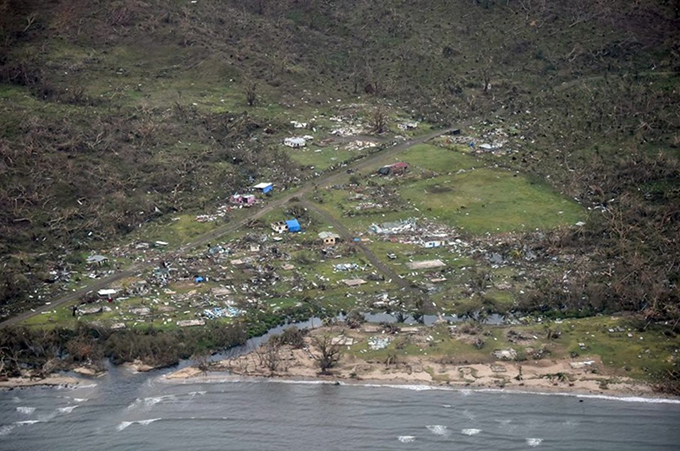
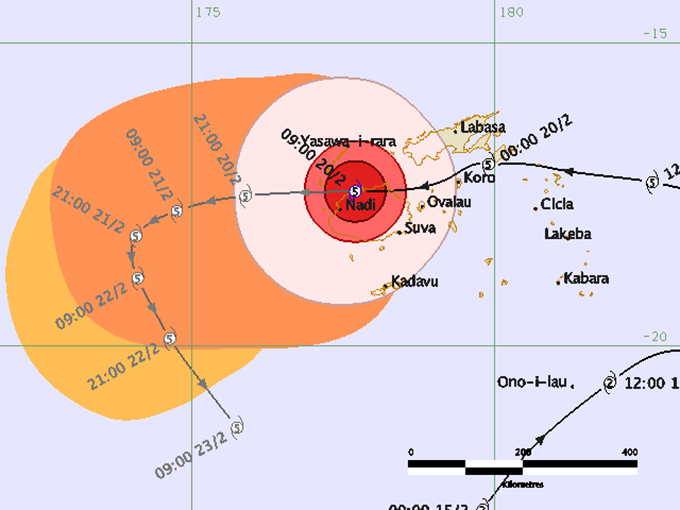
Newsroom Digest Today’s edition of NewsRoom_Digest features 1 resourceful link of the day and the politics pulse from Tuesday 23rd February. It is best viewed on a desktop screen. NEWSROOM_MONITOR Noteworthy stories in the current news cycle include: relief supplies starting to arrive in Fiji as the country begins the massive task of cleaning up after Cyclone Winston (at least 29 people have been killed); United Future leader Peter Dunne calling for a review of the Clean Slate Act, saying too many people are being burdened with decades-old convictions for minor offences; and perhaps tens of thousands of New Zealanders being eligible for a Resident Return Visa (RRV) – a faster and cheaper way of getting Australian citizenship that is not pegged to work skills or earning at least $NZ57,000 a year. POLITICS PULSE Media releases issued from Parliament by political parties today included: Government: Government Provides Extra Support For Buller; Good progress under Bay of Plenty Housing Accords; Processed timber a big winner under TPP;Hawke’s Bay mental health inpatient unit opens;First phase of Land Access Reforms to speed up UFB rollout; Good progress on quarterly health targets;Out of Gate helping more prisoners to be crime-free; Student achievement continuing to rise; NZ joins $200 million science investment fund Labour: ECan legislation an affront to democracy NZ National Party: McCully will not contest East Coast Bays in 2017 United Future Party: Time to Review Clean Slate Act LINKS OF THE DAY PHARMAC SEEKING NEW MEMBERS: PHARMAC is seeking nominations for two Māori members of its Consumer Advisory Committee (CAC).Information about the vacancies and how to apply are available on the PHARMAC website: https://www.pharmac.govt.nz/news/vacancy-2016-02-05-cac-maori-members/. And that’s our sampling of “news you can use” for Tuesday 23rd 20th February. –]]>

Keith Rankin: A Universal Basic Income in New Zealand?

Analysis by Keith Rankin A Universal Basic Income in New Zealand? Concept [caption id="attachment_1450" align="alignleft" width="150"]Keith Rankin. Keith Rankin.[/caption] A Universal Basic Income represents, at its core, two things: an unconditional publicly-sourced income payable to all adult tax-residents of a country; and an integration of income taxes and welfare benefits. It makes little economic sense to talk of separate income tax and welfare benefit systems. There is but one tax-benefit system. A benefit is a negative tax, and a tax exemption is a benefit. Universal Basic Income (UBI) represents a direct application of the principle of horizontal equity (treating equals equally), which means a single rate of income tax, and a universal publicly-sourced income that amounts to a ‘public equity dividend’. A universal payment should have no ‘claw-back’. UBI is not a scheme to redistribute income from rich to poor, nor from poor to rich. A benefit for the poor funded by higher marginal tax rates on the rich is not a UBI. Rather, a universal basic income is a central component of an equitable mechanism of ‘distribution’, not ‘redistribution’. A universal basic income is not a ‘living-wage’; it is a return on capital, not on labour. It may or may not be enough for an individual to survive on without a private source of income. To be a UBI, it does not have to be ‘adequate’ in any sense of that word. It simply must be an unconditional publicly-sourced payment that is more than zero. The presence of a UBI does not require that there be no needs-based transfer payments. Transfers derive from the principle of vertical equity – treating people facing different circumstances differently – and complement payments based on horizontal public equity. Public equity follows from our public property right, just as private equity follows from our private property rights. Our equity in our houses is a part of our individual wealth. Our equity in our businesses is a part of our individual wealth. Our equity in our public domain is likewise a part of each individual’s wealth. An entitlement to draw a monetary income from public equity is no different from an entitlement to receive dividends from shares (equities) we own, or to receive rent from houses we own. At Present New Zealand presently has a near-UBI called New Zealand Superannuation. Every New Zealander aged over 65 who meets residency requirements receives $218 net of income tax as an entitlement. (This is the ‘married’ rate of ‘superannuation’, reduced by the present top marginal tax rate of 33%. Superannuation’s genesis was in 1940, with, initially, a simple $20 per annum payment to all New Zealand residents aged over 65.) The only essential difference between New Zealand Superannuation and a universal basic income is the higher age qualification. A UBI is a right of all adults. New Zealand also has a near-UBI, an unconditional annual tax benefit (ie benefit paid through the graduations of the income-tax scale) of $9,080 ($175 per week) payable in full to all individual tax-residents with an annual income in excess of $70,000. (If you gross $70,000 or more, just deduct 33% and add $9,080 to determine your disposable income.) The only thing that stops this benefit from fulfilling the criteria of a UBI is that many individuals earning less than $70,000 (‘before tax’) receive less than $9,080 in publicly-sourced income. (The first instance in New Zealand of such a tax-benefit is 1893, the first year of income-tax receipts and exemptions.) So New Zealand has two distinct near-UBI benefits, long in place. Indeed persons aged over 65 with at least $70,000 of privately sourced income before tax, receive both UBI-like payments, as of right. Just as universal superannuation was introduced in 1940 as a way of reducing the cost of social security – relative to the alternatives then on offer – so a rationalisation of our two present UBI-like payments can also save public funds, while also addressing the sustainability issues around New Zealand Superannuation. For example, a New Zealander aged over 65 might be eligible for the $175 weekly basic income, plus at least another $125. That $125 per week would become ‘universal superannuation 2.0’. Prospect What is the prospect for a more formalised UBI in New Zealand? Universal principles play an important role in New Zealand’s social welfare history, and New Zealand has at present an income tax scale that can easily morph into a basic income flat tax arrangement. So there are no technical difficulties. Indeed, in the 1973 Budget, another near-UBI was introduced by Bill Rowling, called a ‘personal tax rebate’. It lasted only four years, a victim of inflation and changed priorities. What is most significant about this is that it was barely commented on at the time – eg in the post-Budget debates, and in the media. It was neither opposed by National, nor seen by anyone as radical. Designed by Treasury in response to Rowling’s demanding specification; it was seen more as a technical adjustment to the income tax scale than a radical change. If Bill English was to introduce a change on a similar scale into his 2016 or 2017 Budget, likewise it could easily be presented as a common-sense rationalisation of what we already have. Having said that, if Labour choose to make Universal Basic Income a flagship policy for 2017, it might fly and capture the public imagination. Or it might flop in the face of poorly-informed media criticism, and from National Party sources claiming to be worried about its cost and the notion that a UBI might underwrite a work-free lifestyle. I sense, however, that the mainstream media has the opened the door on the concept. Further, after eight years of one government, the media in New Zealand tends to reflect (if not lead) a growing sentiment that nine years is enough for any government, and, in that political window, becomes more open to alternative perspectives. In 1938, the First Labour Government wanted both a comprehensive and a universal social security system. Once they did the arithmetic, they realised they couldn’t have both all at once, as they had (more or less) promised. They squared the circle by delivering a comprehensive means-tested system, but with a small universal superannuation thrown in. The programme – piloted by Michael Joseph Savage – caught the public imagination, and Labour road to subsequent election victory with 56% of the popular vote. If the universal superannuation, with its timetable to grow a little each year from 1940, had not been included, Labour’s flagship political programme might have clunked. More than anything else New Zealand voters hated means-testing, the humiliating conditionality associated with charity-based depression welfare. Welfare systems in New Zealand have once again become very conditional and bureaucratic. UBI puts the rights of the people ahead of bureaucratic control, and is affordable at a reasonable level so long as the income tax rate is in the mid-thirties. New Zealanders own their own public equity. They deserve something in return. ———————-]]>

Bryce Edwards’ Political Roundup: The Government’s problem with transparency

Political Roundup by Dr Bryce Edwards
 
[caption id="attachment_4808" align="alignleft" width="150"]Dr Bryce Edwards. Dr Bryce Edwards.[/caption] Is the National Government harming New Zealand’s corruption-free status? Recent reports and controversies suggest that the Government has some transparency and accountability problems.
New Zealand’s reputation for low levels of corruption was hurt last month when the annual Transparency International Corruption Perception Index was published. New Zealand fell from 2 to 4 in the global rankings. I covered this news with my own interpretation of it in my column New Zealand tumbles down the political corruption table.
There was much comment on the report, with various attempts to explain New Zealand’s descent, as well as some challenges to the report and the explanations. But since the publication of the report there have been further stories and controversies that contribute to the idea that New Zealand has a less than perfect anti-corruption environment. These have mostly revolved around the Government’s reputation for how it handles information, how it conducts its business deals, and how government agencies operate.
Open or closed government?
The most recent challenge to the Government’s reputation for openness comes via the publication of a rather scathing independent report on its progress towards increased transparency, as part of it’s membership of the Open Government Partnership – see yesterday’s RNZ report, Govt pays lip-service to transparency, says report.
The New Zealand Government is effectively being told off for not meeting the obligations it has committed itself to in improving public sector and government transparency. I’m quoted in the above article as saying that the new report is “a black mark” against New Zealand, and that transparency is crucial to democracy because it allows the public to see how decisions are made and prevents corruption.
For the full story on the Government’s actions (and inaction) see the full PDF report: Progress Report: New Zealand 2014-2015. The author of the report, Wellington lawyer and academic Steven Price, has put together an excellent summary of it on his blogsite – see: Open Government Partnership report.
In this, Price also outlines the process by which he came up with his evaluation and explains why the “report is not flattering for the government”. It appears that the Government has not taken the exercise seriously, and is largely complacent about New Zealand’s reputation for integrity. Price also puts forward five suggestions for what the Government could focus on to improve transparency and openness in government and public life.
The Glucina text made public
We now know that Rachel Glucina – as well as Cameron Slater – is one of a select group who were given access to the Prime Minister’s mobile phone number. On Friday the public learnt the details of the text Glucina sent to Key during the Ponytailgate controversy: “Just interviewed the waitress. Piece of work! Massive political agenda”.
The revelation is of importance, particularly because the Government had fought to keep the text secret – see the Herald’s Ponytail-gate text to PM revealed.
The most interesting analysis of the issue is by the Herald’s David Fisher who has written an extensive opinion piece on his Facebook page – see: Why I can’t text John Key (and other musings on the Glucina text).
Fisher discusses the availability of the PM’s mobile phone number, and how John Key keeps changing it. Fisher, himself has had the last three numbers for Key, two of which he obtained via the Teapot Tapes incident and the Rawshark hack of Cameron Slater’s computer, but says unfortunately he’s not one of the chosen journalists, bloggers, or public relations practitioners who receives an update when Key gets a new number.
But the more substantial point that Fisher makes is that the Government doesn’t seem to understand either the Official Information Act or the Public Records Act, otherwise Key wouldn’t have had trouble releasing Glucina’s text: “Whether it be text messages or a folded note slipped from one palm to another, it’s still communications with the Prime Minister. This has been publicly accessible “official information” for more than three decades. It’s bizarre there should have been consideration of keeping it secret at all. New Zealand should never be a country in which it is considered okay for media and its most senior (or any) politician to carry out secret discussions without any public oversight. The content of the message is telling – it suggests an obeisance which shouldn’t exist between politicians and media and certainly never in secret. But put this latest finding in the context of other recent findings. It is my opinion it raises questions about the advice the Prime Minister is getting on important democratic principles.”
Could it be that the Government was protecting a journalist’s privacy and confidentiality? This is examined in Claire Trevett’s Text decision ‘should make all journalists careful’. In this, it is made clear that not all text messages to the PM should now be public property, and it depends on the individual circumstances.
The integrity of government agencies
A number of recent stories about various government agencies and contractors acting without integrity, or being involved in fraud, should be of concern to the public.
The Office of the Privacy Commissioner has just released the first details of its Transparency Project, in which the agency is attempting to find out how much government agencies are obtaining personal details of citizens by making official requests to private companies such as banks, airlines, and internet providers. This was sparked by the scandal over the Police obtaining the private banking details of Nicky Hager – as covered late last year in my column, Libertarians against dirty politics.
You can see the official first PDF report here: Transparency Reporting Trial. This is covered very well by Nicholas Jones in his article: Government made 12,000 privacy requests to just 10 companies. The ten companies that took part in the three-month trial registered 11,799 requests for information from government agencies, including the Police, of which only 449 were declined.
Potential conflicts of interests continue to plague some agencies and Simon Collins reports on concerns about recent grants made by the Whanau Ora programme – see: Family ties queried in $1.3m grant.
The Defence Force was told off last week by the Auditor General for awarding a contract to a company owned and operated by one of its own air force flight sergeants – see Isaac Davison’s New Zealand Defence Force broke conflict of interest rules.
Fraud continues to occur in the tertiary education sector, where some contractors are being asked to pay back about $28 million – see Kirsty Johnson’s More tertiary providers under investigation by Serious Fraud Office. And it seems that such fraud will continue to occur, despite authorities launching an increased number of audits – see Jo Moir’s Tertiary Education Commission says it can’t promise there won’t be future rorting.
Often such fraud is detected and brought to attention by whistle-blowers in the sector, but it’s not clear that the Protected Disclosures Act 2000 is really robust enough to make the process work properly – see John Gerritsen’s No protection for whistle blowers, committee told.
This is expertly discussed by No Right Turn in the post, The TEC and whistleblower protections. He concludes “if whistleblowers exposing fraud in the tertiary education sector are being persecuted, it suggests that existing protections are not strong enough. In Australia it is a criminal offence to retaliate against a whistleblower. That seems like a really good idea.”
No Right Turn continues to pursue the cause against government agencies charging for Official Information Act requests. He’s carried out a survey of every public service department to see how often requests are incurring charges – see: OIA charging: Who charges for OIA requests?
Unsurprisingly, many of the agencies were very poor in collecting or communicating the information – two agencies (Corrections and Environment) never even replied. But of the information available, he finds: “Out of 7,991 OIA requests made to 26 responding agencies, at least 30 attracted charges, a rate of about 0.4%.”
The Government’s refusal to release information under the OIA about the resignation of MP Mike Sabin has been ruled as correct – see Felix Marwick’s Ombudsman sides with govt over Sabin disclosures. He says: “Newstalk ZB has taken the issue to the Ombudsmen, but Chief Ombudsman Peter Boshier has ruled disclosure of details would prejudice maintenance of the law.  He’s declined to give full reasons for his ruling, saying they would likely prejudice those interests as well.”
This hasn’t pleased No Right Turn, who says: “Sabin’s resignation raises very real questions of accountability that the public deserves answers on. We can’t get them now, for obvious reasons. But hopefully we’ll be able to get them in the future, and hold the Prime Minister to account if he has displayed poor judgement” – see: Mike Sabin and the OIA.
The various watchdog agencies that try to keep government departments honest are currently receiving a fair bit of evaluation. The Independent Police Conduct Authority (IPCA) has recently spoken out about its underfunding, which appears to be causing it to abandon some investigations, or pass those functions back to the Police – see Sam Sachdeva’s Police watchdog IPCA skips investigations due to financial pressures. See also No Right Turn’s Another starving watchdog.
The State Services Commissioner Iain Rennie has announced that he’s stepping down, which has led the Dominion Post to call for a stronger replacement – see the editorial: Wanted: a robust and brave leader.
A leading candidate might well be the current Auditor-General Lyn Provost, who is in her final year in that position – see the very good profile of her by Nikki MacDonald: Auditor-General Lyn Provost on cop culture, rough mornings and policing power. Of particular interest is the revelation of the increase in complaints made to her agency: “281 requests for inquiries in the 2014/15 year, compared with 181 the previous year. Of those, 119 related to central government – almost double the usual total.”
Saudi sheep deal
Lyn Provost is soon to give her report on the Government’s controversial Saudi sheep deal. Meanwhile opposition parties are ramping up their criticisms. Last week in a select committee, David Shearer labelled the deal “corruption”, and James Shaw said it was “a straight-out bribe” by the Government – see Jo Moir’s Government accused of ‘corruption’ over the Saudi sheep deal. Also of note, “MFAT chief executive Brook Barrington stepped in to exercise legal privilege and refused to answer any further questions on the possible court action.”
There is also confusion as to whether NZ Trade and Enterprise has suspended funding for the project, as stated in one of their recent board papers – see the NBR’s No ‘active suspension’ of Saudi agri-hub funding – Joyce.
Despite all the controversy, it appears the deal will continue – see Benedict Collins’ Saudi abattoir deal will proceed – PM and Muslim leader slams Saudi abattoir gift.
But the upcoming Auditor General report has the potential to hurt Murray McCully’s reputation, or even cost him his job, and for Gordon Campbell that would be a case of “history repeating itself” – see: On bribing the Saudis. Campbell explains: “In 1998, a third term National government was one year away from being turfed out of office, and Murray McCully – the prime architect of the Saudi deal – was at the centre of a scandal involving ‘hush money’ payouts to Tourism Board members. These payouts were later deemed ‘unlawful’ by the Auditor General. McCully resigned as Tourism Minister in April 1999 in the wake of that finding.”
Nick Smith is another minister under fire for alleged misuse of taxpayer resources. Last week Smith was accused by Labour’s Kris Faafoi of taking ministerial staffers to National Party fundraising functions at the taxpayers’ expense – see Vernon Small’s Taxpayer paid for Nick Smith’s press secretary at National Party dinner.
Corruption ranking debates
New Zealand’s fall in Transparency International’s Corruption Perception Index was possibly best covered in the news by Tess Nichol’s Stonewalling and strange deals: Has NZ become more corrupt?
But has the whole debate been overcooked? That’s the argument of National Party columnist Liam Hehir – see: Calls of New Zealand being corrupt nothing but a beat-up. He admits the Government needs to be concerned about declining public confidence in integrity, but says “Questioning whether New Zealand is becoming a ‘corrupt country’ is beyond ridiculous.”
Similarly, Justice Minister Amy Adams was defensive about New Zealand’s fall under National’s watch, saying “This is a survey that is not terribly clear in its methodology. It’s had quite a lot of criticism. It’s actually, surprisingly enough for Transparency International, not terribly transparent” – see the two-minute TVNZ item and article by Katie Bradford: Govt stands firm on Saudi business despite corruption ranking.
And there’s some useful discussion about shortcomings in the Transparency International methodology in Campbell Gibson’s Corruption index a self-fulfilling prophecy and Pete George’s NZ ‘slide down anti-corruption ranking’?
But for an interesting discussion of why the fall in the rankings is a problem see Hamish Rutherford’s Slide down anti-corruption ranking should be a wake up call.
The local New Zealand chapter of Transparency International discusses the issues further in the newsletter Transparency Times, which includes an article by Ferdinand Balfoort titled “Does globalisation drive New Zealand’s corruption perception ranking?” These globalisation arguments were backed up last week by the head of the Serious Fraud Office – see: Immigrant attitudes to corruption worries SFO. And John Anthony reports that Half of New Zealand businesses would not report illegal requests from customers.
Finally, for some humour on the Government’s release of Rachel Glucina’s text , see the parody of other secret texts to John Key by “GCSB Intercepts”: The lost texts: PM v Glucina.
Declaration: Bryce Edwards is a Board Director of Transparency International New Zealand but the analysis here is his personal opinion.
]]>