Page 974

When Trump attacks the press, he attacks the American people and their Constitution

Source: The Conversation (Au and NZ) – By Peter Greste, Professor of Journalism and Communications, The University of Queensland

Here is a line from the latest safety advisory for reporters issued by the US-based Committee for the Protection of Journalists (CPJ):

Taking into account the increased levels of violence and tactics used by both police and protesters, ballistic glasses, helmets, and stab vests should be worn. If there is a threat of live ammunition being used, then body armour should be considered.

It is the kind of advice I used to be given before going on assignment to places like Baghdad, Kabul or Mogadishu. But the CPJ is aiming its latest note at US-based reporters more used to covering city hall than documenting running battles between police and demonstrators. It is deeply troubling that an organisation usually advocating for reporters in violent autocratic regimes decides it now has to support those in its own backyard.

One organisation, Bellingcat, has been tracking assaults on journalists since the riots broke out over the death of George Floyd in Minneapolis last week. In the first four days of protests, its chief investigator counted more than 100 incidents. (The CPJ counts closer to 200.)

The 101st involved a Australian news crew from Channel Seven. They were beaten while filming outside the White House, as riot police used tear gas and batons to clear the peaceful protesters so President Donald Trump could walk across the street and hold a Bible in front of St John’s Church. (In a speech moments before, Trump had – without irony – declared, “I am your president of law and order”, and “an ally of all peaceful protesters”.)


Read more: Scott Morrison intervenes over Washington police assault of Australian TV crew


The startling number of attacks on journalists does not appear to be an accident. Inevitably, anyone reporting in violent places risks being caught in crossfire. But the numbers suggest something more troubling.

Bellingcat’s investigator Nick Waters, wrote

although in some incidents it is possible the journalists were hit or affected accidentally, in the majority of the cases we have recorded the journalists are clearly identifiable as press, and it is clear that they are being deliberately targeted.

The police actions against journalists might seem futile in our social media age when everyone with a mobile phone has the power to act as a reporter, but that doesn’t stop individual cops from lashing out at those they see as actively monitoring them.

There does not appear to be a coordinated strategy. In the United States, policing is generally a state and city affair, so collusion seems unlikely. The CPJ’s Courtney Radsh said the organisation’s experience of tracking violence towards journalists in some of the world’s most hostile regimes shows that the police step up their attacks when they believe they can get away with it.

In the US, the president himself has frequently derided journalists as “the enemy of the people”, who peddle “fake news”, and on Sunday he issued a tweet describing them as “truly bad people with a sick agenda”.

There is no doubt some journalists have behaved unethically or been loose with the facts, and the news business more broadly has not always covered itself in glory.

But as imperfect as it may be, it remains a vital part of the way a free and open democracy works. It acts as a watchdog on behalf of voters, monitoring the behaviour of institutions like the police and government who are supposed to be acting in the interests of the public.

In so many cases in the protests, journalists have clearly identified themselves verbally, with accreditation, with vests labelled “press”, carrying professional-standard cameras, and by their actions, observing rather than participating in the protests. That observation is rarely comfortable for those in authority, but it is a necessary part of the system.

As a recovering journalist and press freedom advocate, I am of course concerned about assaults of my colleagues. But to be clear, this is not about them. What we are seeing in the United States is an attempt to make the public blind to heavy-handed police tactics.


Read more: ‘I can’t breathe!’ Australia must look in the mirror to see our own deaths in custody


The founding fathers of the United States understood that when they wrote the First Amendment into its Constitution, guaranteeing “congress shall pass no law … abridging the freedom of speech, or of the press”. (The First Amendment also guarantees freedom of religion, the right of the people peaceably to assemble, and to petition the government for a redress of grievances.) Attack the press, and you attack the very system that has made places like the US and Australia among the safest and most prosperous in the world.

The reason autocrats in Turkey, the Philippines and Egypt throw journalists in prison with such enthusiasm is because they know a free media empowers the public, and threatens their survival.

If Trump is the patriot he claims to be, he will honour the Constitution and defend the press rather than accuse reporters of “doing everything within their power to foment hatred and anarchy”.

ref. When Trump attacks the press, he attacks the American people and their Constitution – https://theconversation.com/when-trump-attacks-the-press-he-attacks-the-american-people-and-their-constitution-139863

Morrison’s VET reforms offer the same old promises, with no more money

Source: The Conversation (Au and NZ) – By Patrick Locke, Research Associate, LCT Centre for Knowledge-Building, Department of Sociology and Social Policy, University of Sydney

Prime Scott Morrison last week outlined a plan to create jobs and revitalise the economy post COVID-19. Part of this so-called Jobmaker plan includes an overhaul of the “bewildering”, “unresponsive” and “fundamentally flawed” skills sector.

Morrison’s reforms are based on Steven Joyce’s 2019 review of Australia’s vocational education and training (VET) system, of which all recommendations were accepted by the federal government.

But actors in the sector may be sceptical of the “overhaul” based on their experience of past changes. Reforms in 2014 were similarly aimed at making VET more responsive to industry needs and cutting red tape, all the while pulling funding from the sector.


Read more: The government keeps talking about revamping VET – but is it actually doing it?


The end result was a substantial contraction of the sector, as well as significant rorting by private organisations.

What’s happened since the last reforms?

Governments from both parties have introduced 33 significant sector reforms since 1998. And the Coalition has made a number of attempts to reorganise VET since being elected in 2013.

The result is an industry suffering from “reform fatigue”, and teachers experiencing dissatisfaction with their work and low morale.

The sector has also shrunk. Between 2013 and 2018 total full-time equivalent student hours decreased by 30% – while total student numbers decreased from 1.9 million to fewer than 1.1 million.


Read more: Most young people who do VET after school are in full-time work by the age of 25


Apprenticeships were particularly impacted by the changes. While 214,000 apprentices completed their training in 2013, this went down to 89,000 in 2018. This was accompanied by a substantial drop in financial support from government – from A$6.8 billion to A$5.3 billion.

Meanwhile, efforts to decrease regulation to make the sector more responsive to the market resulted in substantial rorts by private providers, who greatly tarnished the reputation of the sector as a whole.

How Morrison’s reforms compare

Morrison’s disparaging rhetoric towards VET harks back to federal industry minister Ian Macfarlane’s attempts at reform in 2014, when he aimed to update a “fractured, unwieldy and overly bureaucratic” sector to be “streamlined and effective”.

Morrison outlined three key problems to overcome in the VET system. First, the system is too complex and unresponsive to industry demand. Second, it does not offer clear information about the skills needed for the future. And third, the system is inconsistent between states and there is poor accountability over how money is spent.

The prime minister announced no new funding for the VET sector. MICK TSIKAS/AAP

To solve these problems, the government will establish pilot Skills Organisations to “enhance the […] leadership of industry in the skills pipeline”, by giving industry more control over the contents of qualifications.

These organisations are reminiscent of Macfarlane’s 2014 Industry Skills Councils. These were aimed at giving industry “the freedom to design the type of training they’re after”.

Given this still a recurring issue, it appears previous efforts to give industry more voice in training package design have not achieved their goals.


Read more: Jobs are changing, and fast. Here’s what the VET sector (and employers) need to do to keep up


Morrison also announced the establishment of the National Skills Commission to provide a countrywide view of Australia’s skills needs and coordinate state VET activities.

This draws from another past VET reform. Paul Keating established the Australian National Training Authority in 1992. It had a very similar remit to this new skills commission but was dissolved by the Howard government in 2005.

A final feature Morrison’s skills overhaul shares with its predecessors is a lack of commitment to increasing funding to the sector. Morrison said he wanted to better target A$1.5 billion of federal funding to the sector, rather than committing to providing additional financial support.

While funding was raised as a key issue during the 2014 reforms, it remains relevant. Vocational education is still comparatively underfunded compared to schools and higher education.

Without increasing funding to the sector, it is hard to imagine it achieving the goals set up for it by Morrison and the Joyce review.

ref. Morrison’s VET reforms offer the same old promises, with no more money – https://theconversation.com/morrisons-vet-reforms-offer-the-same-old-promises-with-no-more-money-139761

Stimulus that retrofits housing can reduce energy bills and inequity too

Source: The Conversation (Au and NZ) – By Nicola Willand, Lecturer, School of Property, Construction and Project Management, RMIT University

Stay-at-home orders and the economic crisis have increased the burden of energy costs on lower-income Australians. Poor housing quality and unequal access to home energy efficiency are hurting our most vulnerable households. With the next stage of the national recovery program expected to include cash grants for home renovation, now is the time to turn to housing retrofits that support health and well-being as well as boost jobs.

Staying at home during the COVID-19 pandemic increases households’ energy consumption and costs. As one in ten Australians might lose their jobs, the pandemic is adding to the energy hardship of people who were already struggling to pay their bills.


Read more: The other 99%: retrofitting is the key to putting more Australians into eco-homes


Access to energy is essential

Cold housing is a known health risk. Lancet research attributes about 7% of Australian deaths to cold weather. Warm housing reduces the risk of airborne infections, as well as providing comfort for working and studying.

Laundry temperatures of 60-90°C are needed to limit the spread of the coronavirus. But this conflicts with common energy-saving advice of washing clothes in cold water. Self-isolation also means heating more and not being able to close off unused rooms.

Low-income households, renters and older people are more likely to live in energy-inefficient dwellings. In fact, most Australian housing has poor energy efficiency.

When people on low incomes live in such housing, they are doubly disadvantaged by the challenges of needing more energy and not being able to afford it. Households with older people, people with chronic illness and children are particularly susceptible to energy stress and poor health outcomes.


Read more: Forget heatwaves, our cold houses are much more likely to kill us


Stop-gap measures

The temporary stop to disconnections in some states recognises that access to electricity and gas is a basic need and essential for health and well-being. This guaranteed energy, and a commitment by Australian Energy Council retailers not to charge penalty fees for late payment, will give affected households some relief.

Even if power bill payments are deferred, households must still eventually repay their mounting debts. Shutterstock

However, bill payment will only be postponed until the end of July. Much of the expensive heating period will still be ahead of us. And after that households will face the costs of cooling homes in summer.

Energy debts are going to accumulate as a burden to low-income households into the future. Energy retailers might find it ethically difficult to resume disconnections, but customers will have to repay their debts. This will only be possible if their overall financial position improves and/or the cost of their energy decreases.

Income support via energy concessions can ease bill stress. However, taxpayer money may be better spent on providing sustained relief by improving the energy performance of homes. Acknowledging housing as essential infrastructure would enable economic and social progress.


Read more: Is social housing essential infrastructure? How we think about it does matter


A lasting solution to energy poverty

A long-term stimulus package for retrofits would be welcome. The focus should be on comprehensive retrofitting to reduce energy demand, thus helping households to repay debt. Comprehensive or “deep retrofits” combine simple activities such as draught proofing with insulating ceilings, floors and walls, upgrading heating and cooling appliances, and installing solar PV systems.

Many retrofits overlook the opportunity to install underfloor insulation when restumping a house. CSR Bradford/YouTube screenshot

Initial findings of our HEET (Housing Energy Efficiency Transitions) research show simple retrofit measures are cheap and easy to do, and DIYing is popular. However, some opportunities are missed because householders are not aware of what can and should be done. A common example is failing to install underfloor insulation when restumping the house.


Read more: Thinking about a sustainable retrofit? Here are three things to consider


Riding the current wave of home improvements, innovative retrofit initiatives may guide people in their DIY efforts. However, some training for proper DIY installation and the use of skilled tradespeople for technical installations is needed for safety and quality.

Spread retrofitting benefits more widely

Federal and state subsidy schemes already promote retrofitting. But recent research suggests low-income households and renters have benefited less. The one-in-three households that rent their homes should not be missing out.


Read more: As power prices soar, we need a concerted effort to tackle energy poverty


Putting people at the centre of retrofitting programs will provide healthier homes and help tackle unemployment. This means providing retrofit assistance to those who need it most and training people in retrofit skills.

Previously, the boom in new housing construction inhibited retrofitting. This might change following the COVID-19 crisis. A long-term retrofit program would be an opportunity to upskill builders and to retrain newly unemployed Australians, particularly the young people who have been most affected by job losses. An expanded retrofit workforce is needed to reach the large number of inefficient homes.

So-called “Green Deals” have already been proposed in Europe, the US and the UK. Green construction stimulus packages in Australia have successfully supported economic recovery before.
The aim should be to spawn a new industry of energy-efficient builders who will continue to contribute to the upgrade and upkeep of Australian housing. This could help cut greenhouse gas emissions, promote public health and improve our resilience to crises.

A nationwide stimulus package to provide healthier and more energy-efficient homes would help the most vulnerable and boost the economy.

ref. Stimulus that retrofits housing can reduce energy bills and inequity too – https://theconversation.com/stimulus-that-retrofits-housing-can-reduce-energy-bills-and-inequity-too-138606

Working from home remains a select privilege: it’s time to fix our national employment standards

Source: The Conversation (Au and NZ) – By Kantha Dayaram, Associate Professor, Curtin University

The number of Australians working from home has soared during the COVID-19 crisis. Latest data from the Australian Bureau of Stastistics shows 46% of the workforce worked from home in late April and early May.

By comparison, the bureau’s 2019 data showed slightly less than a third saying they “regularly worked from home” – a number likely inflated by those catching up on work from the office.

For many this has been the first real taste not just of full time teleworking, but any flexible working arrangements – something that under minimum employment laws remain a privilege for a select few.


Read more: 50 years of bold predictions about remote work: it isn’t all about technology


But it will be important for all organisations to keep extending flexible working arrangements to as many staff as possible as we move to the next phase of our COVID-19 response.

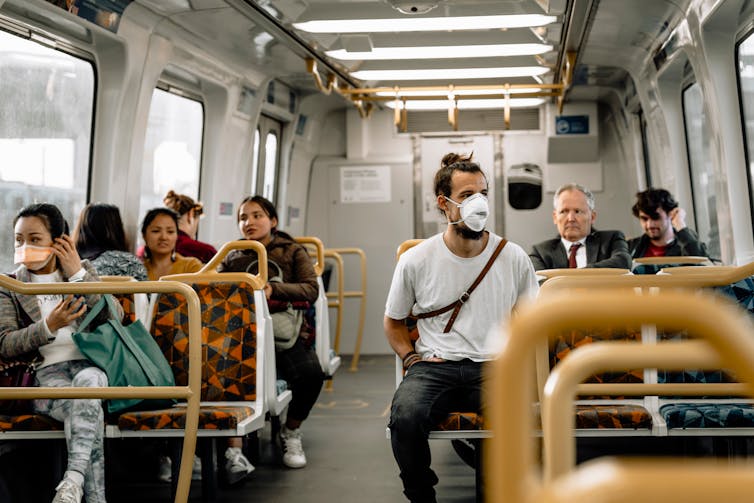
While social distancing rules are now relaxing, until there’s a vaccine we still need work flexibility for as many people as possible. To ease, for example, morning and afternoon congestion in central business districts and on public transport.


Read more: As coronavirus restrictions ease, here’s how you can navigate public transport as safely as possible


Over the past few months we’ve been been part of a research team looking at how organisations have coped with the abrupt shift to remote work. Our findings are promising. But they also highlight a deficiency in Australia’s national employment standards, which do little to encourage employers embracing flexible working arrangements.

Still more a privilege than a right

Your rights to flexible working arrangement are likely to be set out most strongly in your favour in an enterprise agreement. Or, if you don’t have one of those, an industry award. Or possibly an individual contract. Provisions will differ.

If you aren’t covered by any of those, you’re out of luck.

The right to flexible working arrangement set down in the National Employment Standards – the minimum entitlements employers must give all employees – is no right at all.

Instead, the Flexible Working Arrangements standard stipulates only that:

Some employees who have worked for the same employer for at least 12 months can request flexible working arrangements, such as changes to hours, patterns or locations of work.

To even have the right to make that request, you must also:

  • be the parent or carer of a child who is school-aged or younger
  • have a disability, or be a carer
  • be 55 years and older
  • be experiencing violence from a family member, or supporting family or household members experiencing family violence.

If you meet these criteria, you have the right to receive a response to your request within 21 days. If your request is rejected, your employer must detail the reasons for the refusal, “including the business grounds”.

What constitutes “reasonable business grounds” is broad. It includes your employer deciding your request:

  • is too costly
  • can’t be made to fit with the working arrangements of other employees
  • “would not be practical” to accommodate
  • will result in a “significant loss of productivity” or “significant negative impact on customer service”.

The Fair Work Commission does have the power to adjudicate a complaint about an employer’s grounds for refusing a request. But according to the Fair Work Ombudsman:

This generally only happens if the parties to the dispute have agreed in an employment contract, enterprise agreement or other written agreement for that to occur.

Tracking the transition

The COVID-19 pandemic has provided us and our colleagues at Curtin University with an opportunity to see how organisations have managed with a big shift to teleworking.

These arrangements they might easily have been rejected previously on “reasonable business grounds”.

Our research involved interviewing 34 human resources and industrial relations managers and implementers. They worked for organisations that included a hospital, a school, a financial services company, and multiple mining companies, government departments and not-for-profit organisations. Their employee numbers ranged from as few as five to as many as 60,000.


Read more: Working from home: what are your employer’s responsibilities, and what are yours?


We interviewed them between April and May to see how their organisations coped with the move. Thirty said they were unprepared for such a large-scale transition. Yet after four weeks, 27 were enthusiastic about the benefits and wanted flexible work arrangements to continue.

As the senior human resource advisor of a mining company, put it:

I don’t have kids and before I did not think about working from home. Now I would like to do it at least for one day a week and definitely see I can 100% get my work done from home.

Amending the Fair Work Act

Our findings suggest employers have little to fear from strengthening flexible working arrangements in the National Employment Standards.


Read more: Coronavirus could spark a revolution in working from home. Are we ready?


The onus on employees to prove the “business grounds” for employers’ refusal should be eased. The Fair Work Act should be amended so all employees can have access to challenge a refusal for flexible work arrangements.

Greater flexibility is both possible and productive for most workplaces. Now it’s also in a wider social interest.


The authors would like to acknowledge the work of their colleagues John Burgess, Eileen Aitken Fox, Amy Tian, Jane Coffey and Chahat Guptar in contributing to the research.

ref. Working from home remains a select privilege: it’s time to fix our national employment standards – https://theconversation.com/working-from-home-remains-a-select-privilege-its-time-to-fix-our-national-employment-standards-139472

Keith Rankin Analysis – Mindframes and Doughnuts

Keith Rankin.

Analysis by Keith Rankin.

Economic Life, Economics and Economism

Keith Rankin.

When things go wrong with economic life, it’s easy to blame economics; that is, the academic discipline called ‘economics’. We all live economic lives, and use metaphors to give meaning to that amorphous thing we call ‘the economy’ and to our individual places within it. Shared metaphors within a society constitute a cultural mindframe.

The most important of these metaphors in our pan-western society is that of ‘making money’; thus, the economic purpose of life is to ‘make money’, with ‘money’ being a metaphor for ‘wealth’. Another metaphor – with both positive and negative connotations – is ‘economic growth’. Other culturally-laden economic metaphors with multiple meanings include ‘globalisation’ and ‘flat tax’.

We inform our lives through cultural metaphors; abstractions – largely unexamined (to an extent, unexaminable) abstractions – that exist to a large extent in the subconscious areas of our brains. It is not uncommon for these metaphors to have unreal – sometimes magical – qualities. We assume that money ‘doesn’t grow on trees’, without having much idea where it does grow. We also assume that money is completely convertible, meaning that a certain amount of money can be readily converted – now or in the future – into something else (such as a haircut or a toaster).

Economists, while trained in their social scientific discipline, are not exempt from the cultural metaphors that they grew up with. Thus, professional economists wear two hats, the one they grew up with, and the one that reflects their economics’ education. (We note that ‘hat’ is a good example of a metaphor; indeed a magical metaphor, in that we may ascribe a person’s current behaviour and language to a set of values or protocols that have supposedly been infused into an article of clothing.)

Economists, when being economists, by definition, wear their economists’ hats. But, for the most part,  they do not take off their cultural hats; hats infused with western middle-class cultural metaphors.

Educated people with minimal economics’ training will largely interpret the economic aspects of their lives through the economic mindframe they grew up with, to a greater or lesser extent ameliorated by the extent to which they are willing to apply critical analysis to the metaphors and assumptions that makeup that mindframe. Trained engineers will generally interpret economic life a little differently from trained botanists, who in turn will interpret economic life a little differently from trained dentists. Each educational discipline – including economics – will modify but never overturn the predominant cultural mindframe.

In any society at any point in time (eg ‘western society’ in the early 21st century) there will be a mindframe that is shared by most of the people most of the time, and all of the people some of the time. Mindframes are cultural DNA, with the memes being the mutable fragments of such DNA.

Culture is not static. New generations will pick up new memes, which may to a greater or lesser extent erode cultural metaphors which have directed their parents’ lives. Nevertheless, some cultural metaphors – such as the ‘making money’ metaphor – are very difficult to unlearn. Much of the cultural understandings of the way the world works – including evolution of our understandings of how economic life works – is a generational process. Processes of mindframe change, while inherently slow, may quicken in ‘interesting times’ (another metaphor).

While generational mindframe changes may constitute progress – meaning new memes giving more helpful (or less unhelpful) ways of interpreting our information and our experiences – progress cannot be guaranteed when new ideas and new assumptions take root. Evolution can bring about regressive as well as progressive change.

An important meme that is growing in currency is the anti-economics meme. While I think this is a dangerous meme, it is true that many economists inadvertently facilitate the spread of anti-economics, with the ‘economic growth’ metaphor being the principal focus of an increasingly strident anti-economics.

In addition to anti-economics, there is something else which I call anti-economism, and which is practiced by heterodox economists. This indeed where I fit, but only if we carefully distinguish anti-economism from anti-economics. Economism is orthodox cultural economics, and is widely adhered-to by politicians, bureaucrats, business leaders, journalists, career academics, and economists employed within this power nexus. (Two points to note. One. Economists who are self-employed but dependent on the power nexus for contracts will tend to adhere to economism. Two. It is important to make a distinction between ‘career academics’ and ‘intellectuals’, even though many intellectuals have academic careers.)

Economists who practice economism wear two hats – a disciplinary hat and a cultural hat. The danger is that, when critics target economists, they target the wrong hat; they target economics when they should be targeting economic culture. Anti-economism should be a resistance to endemic economic culture, which is a mindframe embedded in the societies which economists belong to; a resistance too easily treated as an opposition to economics itself. Thus – to use a familiar metaphorical phrase – those who subscribe to anti-economism run the risk of ‘throwing out the (disciplinary) baby with the (cultural) bathwater’. There is much that existing economics – and the history of economics – has to offer those who see economism as a major problem of our age.

Framing and Doughnuts

“Everybody’s saying it: we need a new economic story, a narrative of our shared economic future that is fit for the twentyfirst century. (Kate Raworth, Doughnut Economics, p.12)

I am in the process of reading Doughnut Economics, by heterodox economist Kate Raworth. At the moment, my reading of this book is on pause, because I want to write here about my first impressions. (I look forward to finishing the book.)

The main introductory chapter of Doughnut Economics is an insightful discussion of economic iconography and framing. Yet it introduces a metaphor – the doughnut – that I think doesn’t work. Generally, the book’s promise of a new economics makes it an example of anti-economism that targets the wrong ‘hat’; though in a credible and insightful way.

What is particularly insightful is Raworth’s understanding of the need for an unlearning process to accompany a process of inculcating new disciplinary understandings of how economies work. She refers to cultural mindframes as ‘stowaway intellectual baggage’ (p.15). And (p.22), in her discussion on ‘framing’ (linked to sociologist Erving Goffman), she refers to Thomas Kuhn – author of the 1962 book, The Structure of Scientific Revolutions – and his use of his expression ‘community paradigm’.

She then cites economist John Maynard Keynes (1883-1946), who wrote of his:

“… struggle to escape from familiar modes of thought and expression … The difficulty lies not in the new ideas, but in the old ones which ramify, for those of us brought up as most of us have been, into every corner of our minds.”

Then Raworth says (p.23):

“There maybe no perfect frame waiting to be found but, argues the cognitive linguist George Lakoff, it is absolutely essential to have an alternative frame if the old one is ever to be debunked. Simply rebutting the dominant frame will, ironically, serve only to reinforce it.”

Thus creating new memes, if not entire new frames is important. To propose is more important than to oppose. The problem – if that’s the correct word – is that old frames may be better displaced than destroyed. They may not be all bad. The replacement of one entire mindframe with another is revolutionary change. Evolutionary change – albeit with punctuated moments of comparatively rapid change – may serve us better than revolutionary change. Further, if the target people (economists) are wearing two frames (‘hats’) – ‘frame’ is an alternative metaphor – we should carefully aim for the problem frame, and not the other one.

I first learned of ‘doughnut’ as a metaphor last century, as in ‘doughnut cities’, a metaphor for urban decay (ref: The Doughnut Effect, The Economist, 17/01/2002)

“The American donut, a sugary ring with an empty centre, is a fine metaphor for the rich suburbs around a collapsed inner city.”

This metaphor is partially compatible with Raworth’s, in that the centre is a bad place to be. Raworth wants us to vacate the centre and occupy the ring. The lesson of the original metaphor, though, is to renew (and reoccupy) the centre, in part because the ring has many problems of its own.

As I would (!), I find my pie metaphor more useful than the doughnut. (Also see references below.) Though pie charts do not compete with Raworth’s iconography – indeed many readers might find both her doughnut and my pie to be useful components of a new frame – my pie seeks to utilise economics rather than to overthrow it. (It seeks to show economics in new way, rather than to create a new economics.)

My pie has a relaxation ring around the outside (a good place to be), whereas Raworth’s doughnut has a hole on the inside (a place to escape from). Further pie charts can naturally expand – allowing for new sustainable ways of thinking about growth – rather than focussing on non-growth. Yet the pie, which allows for growth, does not require growth. The pie makes every place a good place. Raworth’s doughnut, on the other hand, seems more like a refuge, a sanctuary, a citadel.

I look forward to reading the rest of Doughnut Economics; indeed, Kate Raworth may win me over to the whole of her vision. I do hope, however, that her doughnut meme to rebut the framework of economics will not ‘backfire’ (another metaphor), and “reinforce” our dominant cultural mindframe of economic life.

Meanwhile, it would be nice to see people give more attention to what economic life is really all about – incomes, spending and relaxing – and less attention to the meaningless quest to make more money.

——————

Pie Economics: A Way To Understand Economic Balance (13 May 2020) [also]
Chart Analysis – National Income, Spending and Debt (21 May 2020)

Black Lives Matter dilemma: How to protest in a covid pandemic

ANALYSIS: By Philip Russo of Monash University

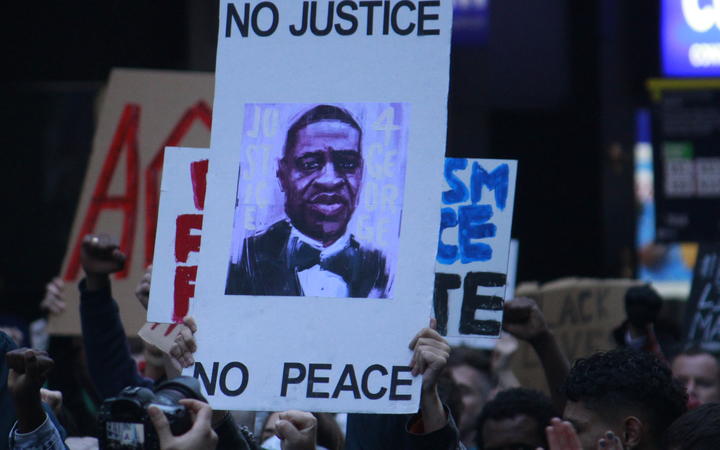
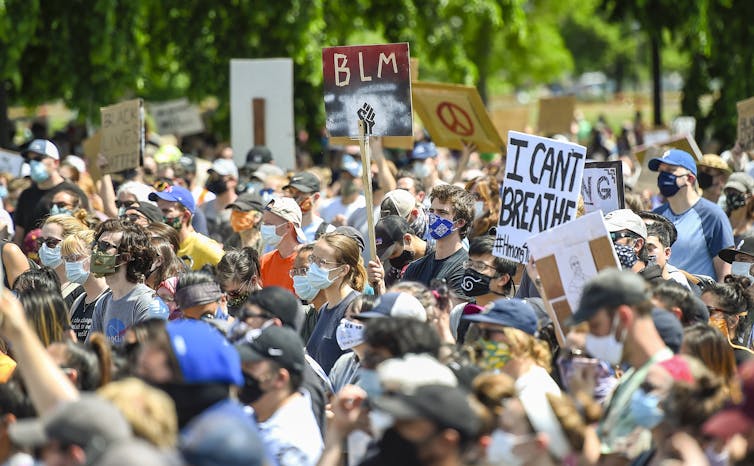
The death of African-American man George Floyd at the hands of police has sparked protests across the United States and inspired many people to reflect on our own history of police violence against Indigenous people in Australia and New Zealand.

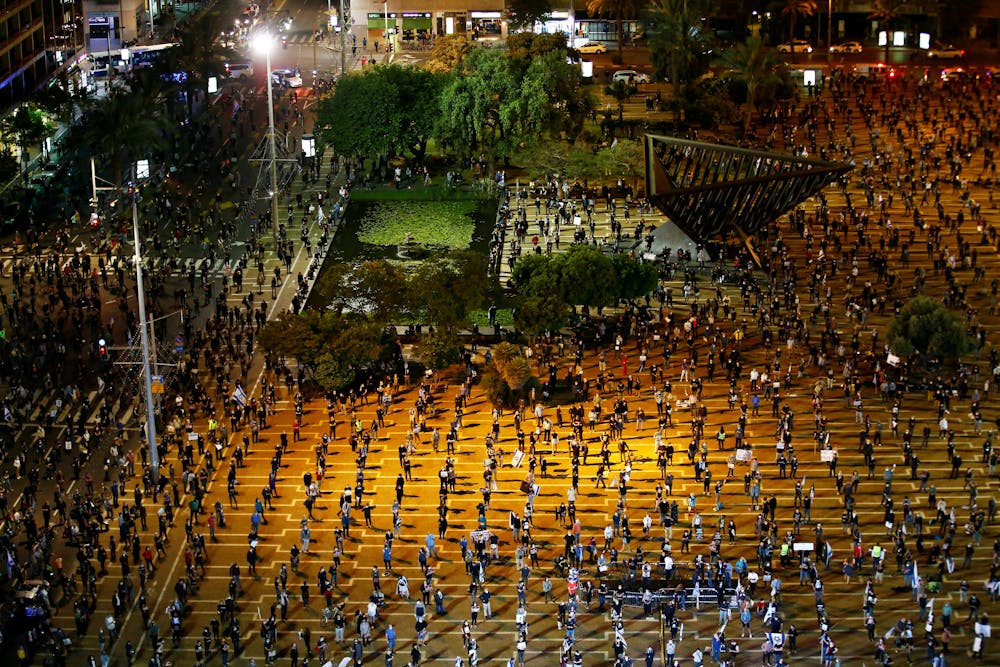
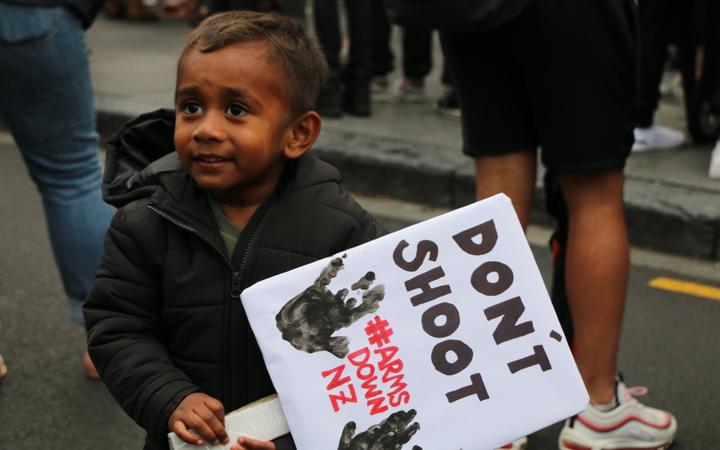
After thousands marched across New Zealand on Monday, a series of rallies and vigils are planned in Australian cities this week, and many have wondered: how should we safely protest during a pandemic?

As an infection prevention researcher, I am, of course, genuinely worried by the prospect of large crowds gathering. But I also completely understand why people want to go and make their feelings known on racism – not just in Australia and New Zealand, but internationally.

READ MORE: US protesters teargassed for Trump photo-op

It is a clash when we are trying to manage covid-19 and puts us in a dilemma.

But I can’t stand and judge people who want to go.

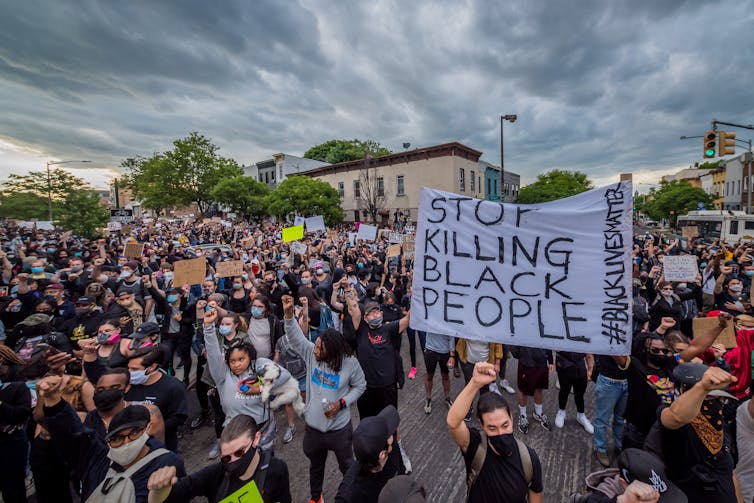
Huge crowds
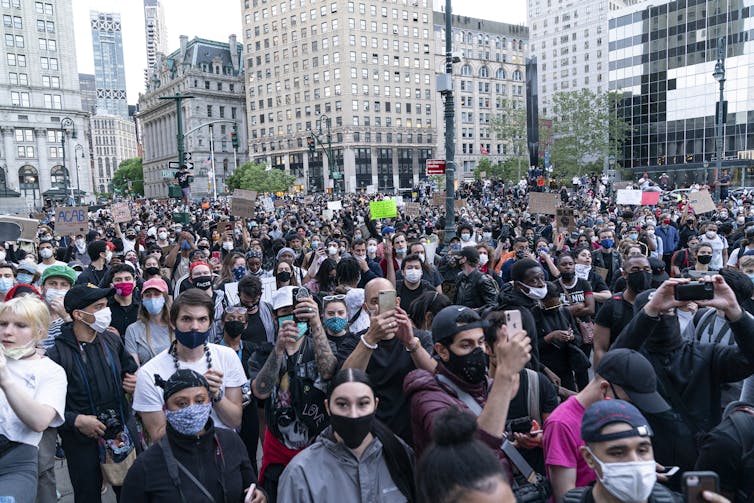
Huge crowds have gathered in places such as New York to protest the death of George Floyd. Image: Lev Radin/The Conversation/AAP

– Partner –

Colleagues in the US who are so moved by what’s happening there are forgoing their social distancing and putting themselves and their colleagues at risk by attending the protests. For them, it is a personal decision and a risk they are prepared to take.

In New Zealand, Prime Minister Jacinda Ardern said while “I utterly understand” why people had marched, New Zealand had social distancing rules in place to protect people’s health – and the June 1 marches were “a clear breach of them”.

If we had one person, one person in that crowd, just think what could happen there because we’ve seen it before […] I understand the strength of feeling and I understand the sentiment and I understand that sense of urgency that everyone felt. But my job is to look after the country’s health as well.


NZ Prime Minister Jacinda Ardern says while she doesn’t want to stop peaceful protests, the June 1 Black Lives Matter protests across NZ were a “clear breach” of COVID-19 rules.

In Australia, people should remember many states have strict rules about public gatherings and it’s likely you’ll be breaching them if you attend a protest. In Victoria, there’s a limit of 20 people at an outdoor gathering. For NSW the limit is 10, while in Queensland the limit is 20.

Remember, coronavirus is spread via close contact, so you are significantly increasing your risk of infection if you are in a large crowd.

All that said, if you’re considering attending a protest, here are four things to think about

1. Is there another way I can show support?
Given I’m an infection prevention researcher, working to prevent the spread of covid-19, I have to say this: if there is any other way you can show support, other than attending a mass gathering – whether that’s donating to a group doing good work, doing any sort of online protest or whatever option you can find – you should consider it.

Think about whether you yourself are at higher risk – by being older or immuno-compromised, for example – and whether there is a more sustainable way for you to support a movement you care about.

2. Think about how you’ll get there
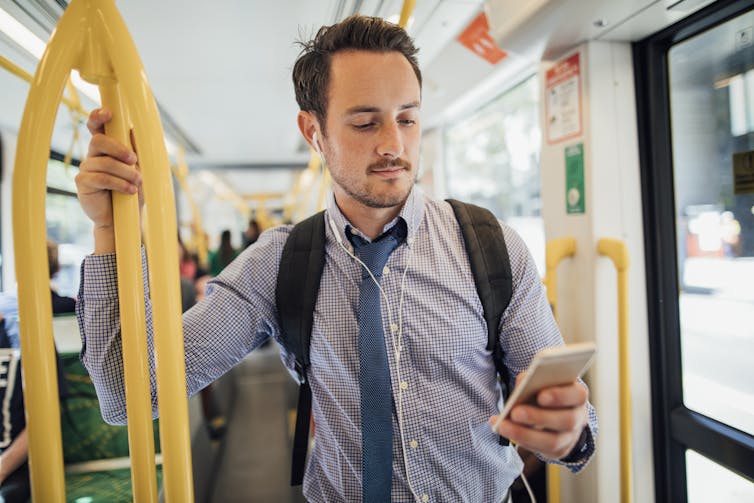
Plan your trip to and from the protest carefully. Avoid crowded public transport – consider driving or riding a bike if possible – and follow social distancing rules if you must travel by bus, train or tram.

Make sure you bring hand sanitiser and use it liberally. Wash hands as soon as you get home.

3. If you go, observe social distancing

Sydney protest
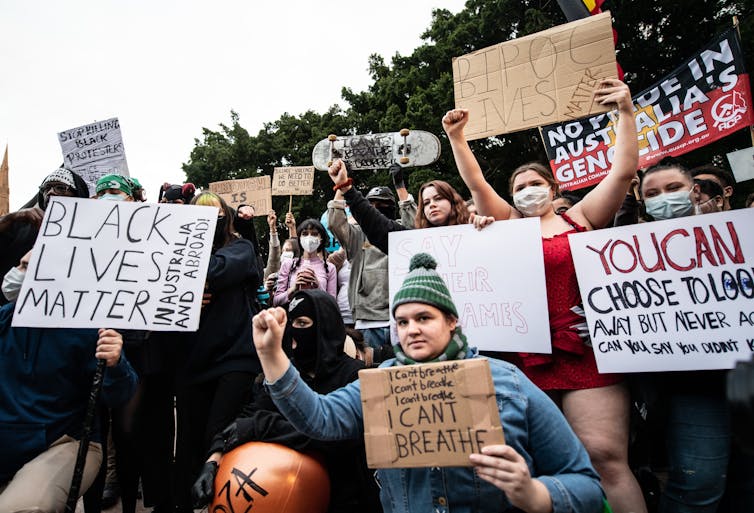
People gathered in Sydney on Tuesday to protest against the treatment of Indigenous people in custody. Image: James Gourley/The Conversation/AAP

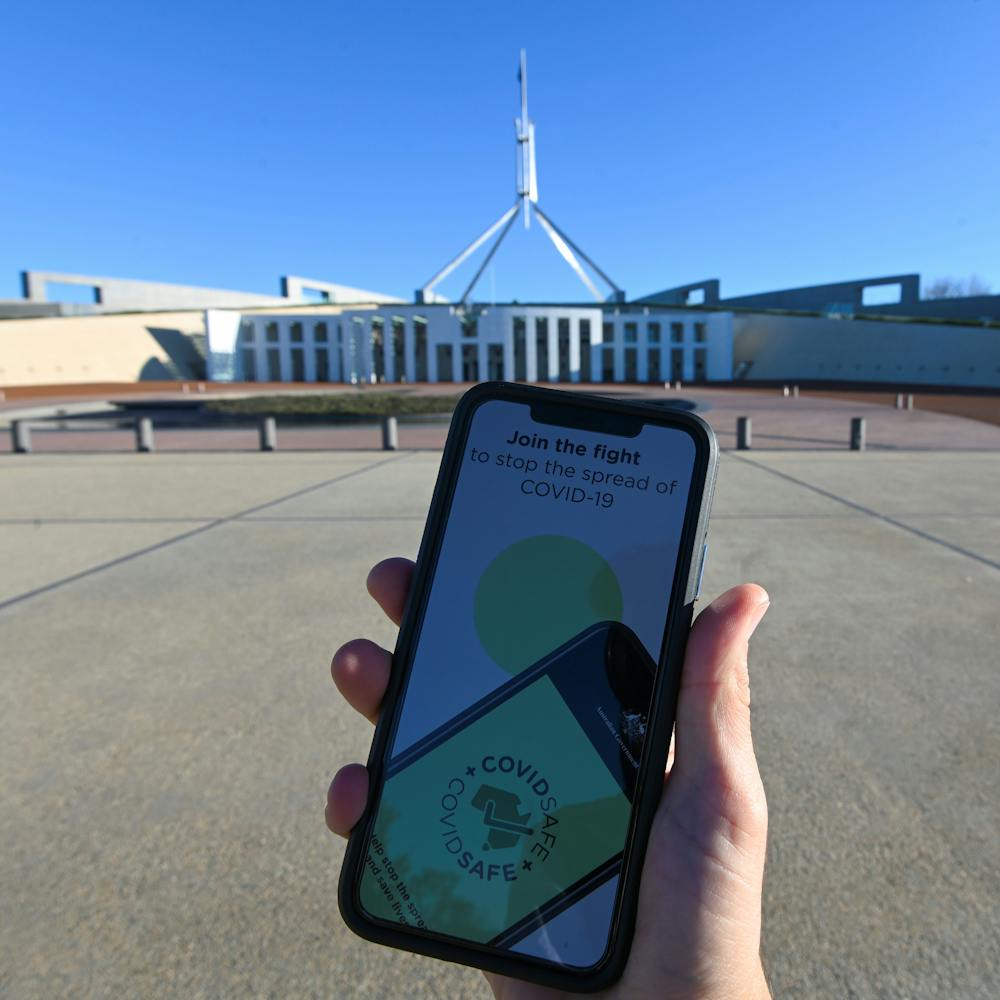
If you’re in Australia, download and use the COVIDSafe app. Try as best you can to observe social distancing at any event you attend. That means staying at least 1.5 metres apart from everyone else (or 2 metres in New Zealand) whether you are standing in an open space or marching down a street.

Remember that coronavirus is spread by droplets released when people breathe, talk, cough, sneeze, sing or shout in close proximity to others. No hugging to demonstrate solidarity.

When you get lots of people together and emotions run high, things can go awry very quickly. I’d be prepared to leave the demonstration if I started to get concerned about the proximity of people around me. There’s a risk more people will turn up than you or the event organisers anticipated; if there are bigger crowds than expected, be prepared to make a decision to head home.

A mask alone will not protect you, they’re only one piece of the armoury and are only useful if you socially distance and wash hands as well. If you throw yourself into a situation where you are close to other people, a mask will not be enough to protect you or others.

4. Do not attend if you feel unwell or have any covid-19 symptoms
This should go without saying: absolutely stay home, no matter how strongly you feel about the issue, if you have any symptoms, such as a sore throat or a cough.

Indigenous Australians are an at-risk demographic for covid-19, as are Māori and Pasifika, so you need to think carefully about the risk you may pose to others if you turn up while experiencing symptoms.

If there was to be a small cluster in one of these protests, and the virus was passed to an Indigenous community, the effects could be devastating.

If you feel that compelled to attend a demonstration, think about anything you can do to minimise the chances of spread, or you will undo the gains Australia and New Zealand have made in keeping the coronavirus spread under control.

Dr Philip Russo, is associate professor and director of Cabrini Monash University Department of Nursing Research, Monash University. This article is republished from The Conversation under a Creative Commons licence. Read the original article.

Print Friendly, PDF & Email

Article by AsiaPacificReport.nz

Reports of ‘revenge porn’ skyrocketed during lockdown, we must stop blaming victims for it

Source: The Conversation (Au and NZ) – By Anastasia Powell, Associate Professor, Criminology and Justice Studies, RMIT University

As we have been cooped up at home during coronavirus lockdown, reports of image-based abuse have skyrocketed.

According to Australia’s eSafety Commissioner, it received more than 1,000 reports of image-based abuse between March and May 2020. This represents a 210% increase on the average weekly number of reports they received in 2019.

There was also a huge spike over the Easter weekend, where there was an almost 600% increase on usual reporting figures.

The problem is not limited to Australia. The United Kingdom has witnessed a similar increase, where its Revenge Porn Helpline says it has opened double the number of cases from the previous April.

What are we talking about?

Image-based abuse happens when an intimate image or video is created or shared without the consent of the person pictured. It can also involve threats to share images.

Though it is known colloquially as “revenge porn”, researchers and policymakers have rightly rejected that term. They use “image-based abuse” to better capture the harms of the non-consensual taking, sharing, or threat to share, nude or sexual images.

Why has there been an increase?

When we all entered lockdown, digital forms of communication and connection became central to our lives – and that includes our dating lives.

In lockdown, the exchange of nude and sexual images is likely to be a more common way to express our intimacy with another person. Unfortunately, this means perpetrators have greater access to victims’ images to threaten and abuse them.

Since lockdown, the eSafety Commissioner has also observed an increasing trend in people being blackmailed over their intimate images, as well as people trying to monetise their intimate content. This includes reports of sextortion scam emails, which eSafety Commissioner Julie Inman-Grant says, “scares people into paying cryptocurrency payments”.


Read more: Online sex parties and virtual reality porn: can sex in isolation be as fulfilling as real life?


COVID-19 has seen many people lose their jobs or income. So financial pressures could also be in play as more perpetrators look to exploit non-consensual nude or sexual images for financial or other material gain.

We also know that image-based abuse occurs in the context of domestic and family violence. Victims living in isolation with an abusive partner or family member may be particularly vulnerable to these harms.

According to the UK’s Revenge Porn Helpline, the majority of their increased reports came from victims experiencing image-based abuse by an abusive or controlling intimate partner.

Image-based abuse was already a widespread problem

Before the pandemic, our research found as many as one in three of those surveyed in Australia, the UK and New Zealand (aged 16 to 64 years) have experienced image-based abuse.

Women victims in particular reported greater harms and fear for their safety, as well as experiencing multiple forms of victimisation.

Perpetration rates are highest among men in their 20s. www.shutterstock.com

We also found one in six people surveyed reported they had been the perpetrator of image-based abuse.

Perpetration rates were highest among men in their 20s and 30s, with one in three men aged 20 to 29 years disclosing they had engaged in these behaviours.

There are laws against this

In Australia, we have specific laws across the country criminalising image-based abuse, except in Tasmania.

There are laws against image-based abuse in Australia. www.shutterstock.com

If you’re a victim of image-based abuse, you can document the evidence and report to police, and through the eSafety Commissioner’s online portal to request the images are removed. In over 90% of cases, the eSafety Commissioner is successful in image removal. You can also seek support from national helplines such as 1800 RESPECT.

But some victims find it difficult to come forward for help.

Many victims of image-based abuse report experiencing shame and humiliation. They often feel violated and exposed by the perpetrator’s actions.

It is sometimes friends or family who first see the images when they are distributed online. Sadly, victims can feel judged rather than supported by these vital social lifelines.

It’s not the victims’ fault

Too often we blame the victims. We ask why they took or sent images of themselves in the first place. But now, more than ever, it must be made clear that it is not the exchange of intimate images between consenting adults that is the problem.

It is the non-consensual taking, sharing or threatening to share these images that is wrong.


Read more: Revenge porn is sexual violence, not millennial negligence


We need to educate the community about the seriousness of these non-consensual and criminal harms. And Australians need to know that they can take action.

As a community, we must challenge the attitudes that minimise the abuse, blame victims and make excuses for perpetrators.

We can do better as a community

The last National Community Attitudes Survey showed many Australians minimise image-based abuse and other forms of technology-facilitated abuse. As friends and family members, we can instead provide support to victims and let them know we do not blame them for someone else’s actions.

If we become aware someone is misusing intimate images without consent, we can and should call out their behaviour. As the current national Our Watch campaign says: “there is no excuse for abuse”.

It is vital that we take positive action as bystanders by supporting victims and challenging perpetrators if we are going to get ahead of this issue.

Particularly at a time when we are using technology in ways to consensually express our intimacy, in an otherwise quite isolated setting.

You can report image-based abuse to the eSafety Commissioner at esafety.gov.au

If you or someone you know is impacted by sexual assault or family violence, call 1800RESPECT on 1800 737 732 or visit www.1800RESPECT.org.au. In an emergency, call 000.

ref. Reports of ‘revenge porn’ skyrocketed during lockdown, we must stop blaming victims for it – https://theconversation.com/reports-of-revenge-porn-skyrocketed-during-lockdown-we-must-stop-blaming-victims-for-it-139659

Covid, cyclone force Vanuatu to postpone Pacific Islands Forum

Pacific Media Centre

The Vanuatu Council of Ministers has agreed at its meeting held in Luganville, Santo, to postpone the hosting of the Pacific Islands Forum (PIF) Leaders Meeting due in August 2020, reports the Vanuatu Daily Post.

The decision followed the recommendations of the National Task Force based on the “uncertainty and the economic impacts” the country is facing with the covid-19 pandemic and recent Tropical Cyclone Harold.

Vanuatu has had no reported cases of covid-19.

The government has mandated the Ministry of Foreign Affairs to liaise with the Pacific Islands Forum Secretariat on the postponement.

The ministry will also negotiate with Fiji to seek a possibility for Vanuatu to host the meeting in 2021.

Print Friendly, PDF & Email

Article by AsiaPacificReport.nz

Crisis, disintegration and hope: only urgent intervention can save New Zealand’s media

Source: The Conversation (Au and NZ) – By Wayne Hope, Professor of Communication Studies, Auckland University of Technology

How many media analysts predicted it? In 2018 Australia’s Nine Entertainment absorbed Fairfax Media and its New Zealand subsidiary Stuff. Just under two years later chief executive Sinead Boucher bought Stuff from Nine for a dollar.

The bold move saved New Zealand’s largest newspaper publisher and online news site from uncertainty at best, closure at worst.

“Behold, Saint Sinead of Stuff”, wrote one observer, while pointing out what else would be needed: financial backing, government subsidies, and management of internal costs and debt.

Media commentators, public media lobbyists, journalists, Communications Minister Kris Faafoi and even Nine CEO Hugh Marks also praised Boucher’s proposals for staff shareholdings and an editorial independence charter.

But behind these signs of hope the Stuff initiative was emblematic of a rapidly disintegrating media system.

Here is the news: layoffs and closures

COVID-19 only accelerated the collapse. The national lockdown and forecast economic contraction have been commercially disastrous for all private media organisations. Redundancies and closures have gone viral.

In late March New Zealand Media and Entertainment (NZME), owner of the NZ Herald (the country’s largest daily paper) and nearly half the country’s commercial radio stations, closed its sports operation and shed 25 full-time staff.


Read more: Another savage blow to regional media spells disaster for the communities they serve


A week later German-owned Bauer Media abruptly closed its New Zealand branch, folding such venerable current affairs and popular titles as the Listener, Woman’s Weekly, North & South and Metro.

A fortnight later NZME announced 200 more redundancies – 15% of its workforce. As Boucher announced her Stuff buyout, MediaWorks (owner of TV3 and the rest of New Zealand’s commercial radio stations) shed 130 staff.

Confronted by this unfolding catastrophe, the government finally announced a NZ$50 million emergency package. This included $21 million to offset TV and radio transmission fees for six months, $16.5 million to reduce contributions to the NZ On Air content funding agency for the financial year, and $11 million in targeted assistance for specific media companies.

But the response was late, partial and narrowly focused. COVID-19 has exposed a double crisis in New Zealand’s news media that short-term fixes do little to address.

A crisis over 30 years in the making

For decades the weakening sustainability of commercial media has damaged the viability of news reporting, journalistic enquiry and national media coverage. Meanwhile, underfunded public broadcasting has long battled to pay staff, create content and transition successfully to digital platforms.

These trends can be traced back to the 1980s. The restructuring of Radio New Zealand (RNZ) and Television New Zealand (TVNZ), the launch and subsequent sale of TV3, the privatisation of Telecom (1990) and the abolition of all restrictions on foreign media ownership (1991) set the scene for today’s crisis.

Transnational media conglomerates were allowed to colonise the national media scene. From 2007, listed and unlisted financial institutions (banks, hedge funds, private equity companies) acquired media holdings as short-term revenue streams. Concentration of ownership intensified.

At the same time, with the rise of Google and Facebook, television’s advertising share declined from 34% in 1988 to 21% in 2018. Before COVID-19, digital advertising was worth NZ$1 billion, about 40% of New Zealand’s entire advertising turnover. The pandemic’s economic shock has hit ad revenues even harder.

Underfunded for years, Radio New Zealand could now be part of the solution to a media crisis. www.shutterstock.com

Print media were already haemorrhaging. From 2018 to 2019, every major newspaper lost circulation. NZME and Stuff continued to lay off staff, integrate newsrooms, delete print editions and close regional titles.

Stalling revenues, dashed profit expectations and fragile share prices persuaded major players that amalgamation was the answer. But this strategy failed. The Commerce Commission prevented attempted mergers between Sky TV and Vodafone, and NZME and Stuff, due to monopoly fears and the perceived risk to diversity of information sources.

There is a better way

So what is the answer? Nothing short of a full-blown news media reconstruction strategy.

First, the Stuff buyout deserves government support to complement private sector financial backing. A funding mechanism designed to foster public interest journalism at Stuff and other media organisations should be established.

Second, a national interest test for any overseas investment in New Zealand should apply to transnational media acquisitions. As media commentator Gavin Ellis has observed, “journalism [is] a strategic asset over which New Zealanders must have control”.

Third, existing government proposals for a TVNZ-RNZ merger within a new multi-platform entity need urgent development. The new organisation should insulate some of its operation from commercial pressures. A public service philosophy for the relevant stations, channels and platforms should be clearly stated and enshrined in legislation.


Read more: Google and Facebook pay way less tax in New Zealand than in Australia – and we’re paying the price


Here, I would include an online magazine of arts, current affairs and popular culture to succeed the Listener. The organisation’s board must be independent and representative, with informal links to the Māori Television Service.

Finally, as communications expert and public media lobbyist Peter Thompson has proposed, the government should impose a digital services levy on the tech giants that have siphoned off domestic advertising revenue without investing in local content. This would help generate the revenue to fund public interest journalism initiatives.

We know what to do. Now is the time to reconstruct journalism and public media in Aotearoa-New Zealand.

ref. Crisis, disintegration and hope: only urgent intervention can save New Zealand’s media – https://theconversation.com/crisis-disintegration-and-hope-only-urgent-intervention-can-save-new-zealands-media-139299

Why does crowd noise matter?

Source: The Conversation (Au and NZ) – By Alex Russell, Senior Postdoctoral Fellow, CQUniversity Australia

Sporting codes are restarting as part of easing restrictions amid the coronavirus pandemic. In Australia, the NRL season has just restarted, the AFL will resume on June 11, and Super Netball will return on August 1.

But, to reduce the risk of COVID-19 transmission, there’s one crucial ingredient missing: crowds.

To provide atmosphere in the absence of people, broadcasters are experimenting with canned crowd noise, much like the laugh tracks used in sitcoms. Last weekend the NRL unveiled its fake audience noise, drawing a mixed response from viewers.

Germany’s top soccer league has been using it for weeks, and the English Premier League, which returns on June 17, is even considering borrowing crowd noise from EA Sports’ popular soccer video game FIFA.

EA Sports’ popular FIFA soccer gaming franchise is famed for its fake crowd noise.

But why do we care so much about crowd noise, and why do many of us feel we need it?

It’s because it bonds us with members of our tribe, provides us a sense of connection, and acts as a psychological cue for when to pay particular attention to the action, like a goal opportunity. Without it, sport just doesn’t seem as exciting.


Read more: From spit to scrums. How can sports players minimise their coronavirus risk?


We bond over sport

Following a team brings a sense of connection with others who follow the same team. That sense of belonging is an incredibly powerful motivation for people – it drives our thoughts and our emotions. And following a team is an emotional experience. We share the highs when they win, and the lows when they lose.

Spectators may not even play the sport they watch, but still refer to “us” and “we” when talking about their team, and use “they” and “them” for the opposition. And when the crowd supporting our team is the one making all the noise, it drives home that sense of connection.

Crowd noise is a cue

For a couple of rounds of competition, before the COVID-19 suspension, we saw games of AFL where we could actually hear the players yelling to each other. When they scored, the only noise was from the players themselves. It sounded similar to watching an amateur match at the local park. Even the most tense moments, or heroic efforts, were somehow not as exciting without the crowd.

That’s because crowd noise is a cue for spectators. We know something exciting has happened when the crowd goes nuts. When a game comes down to the last few minutes, and the scores are very close, the crowd noise adds to the tension. When my team is getting cheered on, I share in the excitement with others like me – my tribe. It seems the broadcasters are reflecting this by increasing the volume of fake crowd noise during exciting moments.

Without crowd noise, we just don’t get the same level of excitement, because we’ve learned to link excitement with crowd noise. You can have the most amazing players, with so many things to cheer on, but the only noise you’re likely to hear will be from whoever is watching with you in the lounge room (and maybe your neighbour if they’re watching too).

If we’re not sharing the moment with everyone, we’re missing out on that sense of belonging.

Crowds also influence players and referees

The most important factor in home ground advantage appears to be the crowd (though some argue that the home crowd advantage used to be larger than it is now).

Most teams have their own home ground, but in some cases, two or more teams might share a home ground. When they’re playing against each other, one team is still designated as home, and the other as away. Neither team has to travel far, and both teams are familiar with the stadium’s quirks, but the designated “home” team will have a more sympathetic crowd. A 2015 study used this exact scenario at the Staples Centre in Los Angeles to find that essentially the entire home advantage between two teams comes down to the crowd effect. So crowd noise can support players, and spur them on.

Further, home crowd noise has also been found to have an effect on referees, umpires and judges. Teams appear to be less likely to receive yellow cards in soccer when playing at their home ground, because of the home crowd’s impact on referees.

A 2010 study found referees used crowd noise as a cue when making decisions such as whether to give a yellow card for a foul.

The home crowd is more likely to be loud for fouls against their own team, rather than fouls their team has committed against the opposition. Because crowd noise is strongly associated with exciting action, and fouls are exciting, referees may not even be aware they’re using crowd noise as a cue. Further, they may just want to appease the home crowd.

Referees might not be moved by a crowd that looks like this. The NRL’s ‘Fan in the Stand’ promotion allowed supporters to have their photos placed on cardboard cutouts in stadiums, in lieu of their physical attendance. Dean Lewins/AAP

Sport won’t be as exciting without crowds

I distinctly remember the moment when Nick Davis kicked that goal with 5 seconds to go to defeat the Geelong Cats and send the Sydney Swans into the 2005 grand final. The crowd went nuts and I loved sharing that moment with everyone. I belonged.

But if something like that happened this year, and there was no crowd to see it and cheer it on, would it be as exciting? I doubt it.

And that’s precisely why fake crowd noise is on TV. It might feel forced, and some people might not like it much, but at least there’s just a little bit more excitement with it. With any luck, we won’t have to worry about it for too long.


This article is supported by the Judith Neilson Institute for Journalism and Ideas.

ref. Why does crowd noise matter? – https://theconversation.com/why-does-crowd-noise-matter-139662

Plates, cups and takeaway containers shape what (and how) we eat

Source: The Conversation (Au and NZ) – By Abby Mellick Lopes, Associate Professor, Design Studies, Faculty of Design, Architecture and Building, University of Technology Sydney

Home cooks have been trying out their skills during isolation. But the way food tastes depends on more than your ability to follow a recipe.

Our surroundings, the people we share food with and the design of our tableware – our cups, bowls and plates, cutlery and containers – affect the way we experience food.


Read more: Should we eat breakfast like a king, lunch like a prince, and dinner like a pauper?


For example, eating from a heavier bowl can make you feel food is more filling and tastes better than eating from a lighter one.

Contrast this with fast food, which is most commonly served in lightweight disposable containers, which encourages fast eating, underestimating how much food you’re eating, and has even been linked to becoming impatient.

These are just some examples of the vital, but largely unconscious, relationship between the design of our tableware – including size, shape, weight and colour – and how we eat.

In design, this relationship is referred to as an object’s “affordances”. Affordances guide interactions between objects and people.

As Australian sociologist Jenny Davis writes, affordances:

…push, pull, enable, and constrain. Affordances are how objects shape behaviour for socially situated subjects.

Designed objects don’t make us do things.

The colour of your crockery

When you visit a restaurant, the chances are your dinner will be served on a plain white plate.

But French chef Sebastien Lepinoy has staff paint the plates to match the daily menu and “entice the appetite”.

Research seems to back him up. Coloured plates can enhance flavours to actually change the dining experience.

The colour of your mug can influence the taste of your coffee. Shutterstock

In one study, salted popcorn eaten from a coloured bowl tasted sweeter than popcorn eaten from a white bowl. In another, a café latte served in a coloured mug tasted sweeter than one in a white mug.

This association between colour and taste seems to apply to people from Germany to China.

A review of multiple studies conducted in many countries over 30 years finds people consistently associated particular colours with specific tastes.

Red, orange or pink is most often associated with sweetness, black with bitterness, yellow or green with sourness, and white and blue with saltiness.


Read more: Bitter coffee today? Try changing the colour of your cup


The size of your plate

The influence of plate size on meal portions depends on the dining experience and whether you are serving yourself. In a buffet, for example, people armed with a small plate may eat more because they can go back for multiple helpings.

Nonetheless, average plate and portion sizes have increased over the years. Back in her day, grandma used to serve meals on plates 25cm in diameter. Now, the average dinner plate is 28cm, and many restaurant dinner plates have expanded to 30cm.

Our waistlines have also expanded. Research confirms we tend to eat more calories when our plates are larger, because a larger capacity plate affords a greater portion size.

Plastic is too often ignored

The pace of our busy lives has led many people to rely on those handy takeaways in disposable plastic food containers just ready to pop into the microwave. And it’s tempting to use plastic cutlery and cups at barbecues, picnics and kids’ birthday parties.

In contrast to heavy, fragile ceramic tableware, plastic tableware is designed to be ignored. It is so lightweight, ubiquitous and cheap we don’t notice it and pay little mind to its disposal.

Plastics change the way we eat and drink. Shutterstock

Plastics have also changed how we eat and drink. An aversion to the strong smell of plastic containers that once might have caused people to wrap their sandwiches before placing them in Tupperware seems to have disappeared. We drink hot coffee though plastic lids.

Australian economic sociologist Gay Hawkins and his colleagues argue lightweight, plastic water bottles have created entirely new habits, such as “constant sipping” on the go. New products are then designed to fit and reinforce this habit.

Aesthetics matter

Healthy eating is not only characterised by what we eat but how we eat.

For instance, eating mindfully – more thoughtfully and slowly by focusing on the experience of eating – can help you feel full faster and make a difference to how we eat.

And the Japanese cuisine Kaiseki values this mindful, slower approach to eating. It consists of small portions of beautifully arranged food presented in a grouping of small, attractive, individual plates and bowls.

This encourages the diner to eat more slowly and mindfully while appreciating not only the food but the variety and setting of the tableware.

The Japanese cuisine Kaiseki encourages slow and deliberate eating. Savour Japan (used with permission), Author provided (No reuse)

Japanese people’s slower eating practices even apply to “fast food”.

One study found Japanese people were more likely to eat in groups, to stay at fast food restaurants for longer and to share fast food, compared with their North American counterparts.

Affordance theory is only now starting to account for cultural diversity in the ways in which designed objects shape practices and experiences.

The studies we have reviewed show tableware influences how we eat. Size, shape, weight, colour and aesthetics all play a part in our experience of eating.

This has wide implications for how we design for healthier eating – whether that’s to encourage eating well when we are out and about, or so we can better appreciate a tastier, healthier and more convivial meal at home.

ref. Plates, cups and takeaway containers shape what (and how) we eat – https://theconversation.com/plates-cups-and-takeaway-containers-shape-what-and-how-we-eat-137059

Matt Canavan says Australia doesn’t subsidise the fossil fuel industry, an expert says it does

Source: The Conversation (Au and NZ) – By Jeremy Moss, Professor of Political Philosophy, UNSW

Queensland Nationals Senator Matt Canavan on Monday night denied suggestions the government subsidises Australia’s fossil fuel industry. The comments prompted a swift response from some social media users, who cited evidence to the contrary.

Canavan was responding to a viewer question on ABC’s Q&A program. The questioner cited an International Monetary Fund (IMF) working paper from May last year that said Australia spends US$29 billion (A$47 billion) a year to prop up fossil fuel extraction and energy production.

The questioner also referred to media reports last year that Australia subsidised renewable energy to the tune of A$2.8 billion. He questioned the equity of the subsidy system.

Canavan disputed the figures and said there was “no subsidisation of Australia’s fossil fuel industries”. You can listen here:

So let’s take a look at what the Australian government contributes to the fossil fuel industry, and whether this makes financial sense.

Do fossil fuels need government support more than renewable sources of energy? Justin McKinney/Shutterstock

What does Australia contribute to the fossil fuel industry?

Canavan said the figures cited by the questioner didn’t accord with the view of the Productivity Commission.

The commission’s latest Trade and Assistance Review doesn’t specifically mention federal subsidies. But it describes “combined assistance” for petroleum, coal and chemicals in mining of about A$385 million for 2018-19.

Subsidies to fossil fuel companies and other products can be difficult to categorise. Often there is disagreement as to what counts and what doesn’t.

For example, the IMF paper includes subsidising the costs of fuels used to extract resources, accelerated depreciation for assets and funding for fossil fuel export projects.


Read more: Morrison government dangles new carrots for industry but fails to fix bigger climate policy problem


Estimates by other organisations of the annual federal subsidies for the fossil fuel industry range from A$5 billion to A$12 billion a year.

So despite the disparities, it’s clear the fossil fuel industry receives substantial federal government subsidies. Earlier this month a leaked draft report by a taskforce advising the government’s own COVID-19 commission recommends support to a gas industry expansion.

Importantly, these subsidies benefit the fossil fuel industry relative to its competitors in the renewable sector.

Do these payments make sense?

The subsidies are also aimed at a sinking industry.

As Tim Buckley, of the Institute for Energy Economics and Financial Analysis, notes, COVID-19 and the falling cost of renewables are delivering a hit to the export fossil fuel industry in Australia from which it may never recover.

Fossil fuel companies such as Santos are also under extreme pressure from some super funds to adopt strict emissions targets.

Moreover, these subsidies produce very few direct jobs in fossil fuel extraction.

According to the Australian Bureau of Statistics, coal, oil and gas extraction create just 64,300 direct jobs. Only around 10% of coal industry employees are women.

If we divide the IMF subsidy figure by the number of direct jobs, the governments of Australia spend A$730,000 each year for every direct job in the coal, oil and gas industry. That equates to A$1,832 for every Australian.

Where are the profits?

Setting aside the madness of this support for fossil fuels given the climate crisis, the subsidies make no financial sense.

With so much government support, you’d think the industry would be full of profitable companies filling the government’s coffers with taxes. But this is not the case.

Australian Taxation Office data for 2016-17 show eight of the ten largest fossil fuel producers in Australia paid no tax. That’s despite nine of these companies having revenue of about A$45 billion for that period.

Not all of these benefits go to these big producers, but many of them do.

If Prime Minister Scott Morrison really wants to lessen the impact of the coronavirus on Australians and save jobs, then this gross level of subsidies must be phased out.

Given the scale of the climate crisis, the Morrison government’s fossil fuel subsidies don’t make sense. AAP

Money needed elsewhere

Subsidies paid each year to the fossil fuel industry could be used far better elsewhere.

It could help retrain or provide generous redundancy packages for the relatively small number of workers in fossil fuel industries and their communities.


Read more: Yes, carbon emissions fell during COVID-19. But it’s the shift away from coal that really matters


The subsidies are unconscionable when you consider the resources so desperately needed now for health and the broader economy. The coronavirus must force us as a country to re-evaluate how we distribute taxpayer funds.

As International Energy Agency head Fatih Birol notes, we now have an “historic opportunity” to use stimulus to transition to clean energy.

Directing funds to companies that have had 30 years to prepare for their demise is simply throwing away public money. It could be put to so much better use.

ref. Matt Canavan says Australia doesn’t subsidise the fossil fuel industry, an expert says it does – https://theconversation.com/matt-canavan-says-australia-doesnt-subsidise-the-fossil-fuel-industry-an-expert-says-it-does-131200

Climate explained: could the world stop using fossils fuels today?

Source: The Conversation (Au and NZ) – By Ralph Sims, Professor, School of Engineering and Advanced Technology, Massey University

CC BY-ND

Climate Explained is a collaboration between The Conversation, Stuff and the New Zealand Science Media Centre to answer your questions about climate change.

If you have a question you’d like an expert to answer, please send it to climate.change@stuff.co.nz

If we stopped oil, gas and coal extraction immediately – what would happen? What would we need to change about the way our economies and societies work in order to adjust to that resource no longer being available? Do alternatives already exist that mean it could be business as usual if we (governments and individuals) make changes, or would it mean a major adjustment to the way we live our lives?

It is not feasible to immediately stop extracting and using fossil fuels. The global economy, human health and livelihoods currently depend heavily on oil, coal and gas. But over time, we need to displace fossil fuels with low-carbon renewable energy sources.

The first priority should be on switching to renewable energy, not just for electricity but also for heating, cooling and transport fuels. It will be much harder to substitute fossils fuels used for chemical processing, such as the manufacture of plastics or fertiliser, but it is technically possible with biomass (organic material from plants and animals). After all, the hydrocarbons in coal, oil and gas were originally derived from biomass millions of years ago.

The aim of governments, local and national, should be to encourage reduced use of fossil fuels by supporting renewable energy systems.


Read more: Climate crisis: six steps to making fossil fuels history


Increasing contribution from renewables

One issue is that global subsidies for fossil fuel extraction remain large, at around US$4.7 trillion per year according to the International Monetary Fund.

In a recent global energy review, the International Energy Agency described a significant drop in energy demand from fossil fuels as a result of the COVID-19 pandemic. Demand is likely to rise again, but in the meantime, the use of renewable electricity continues to increase and now has a 25% share of global electricity.

Countries with good renewable resources can reach a significantly higher share. New Zealand, for example, now produces around 85% of its total electricity from renewable sources (including hydro, wind, solar and geothermal) without government intervention. But overall, renewable energy contributes only 40% of all energy demands in New Zealand, and far less globally.

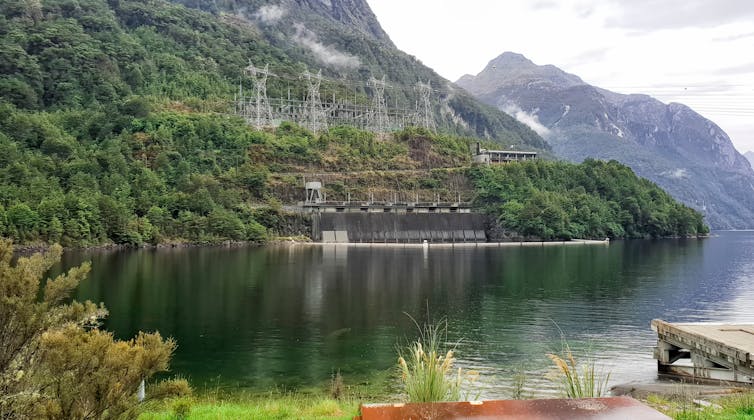
There are many examples of how renewable energy can meet intensive industry demands, in New Zealand and elsewhere. New Zealand’s aluminium smelter uses electricity generated by the country’s largest hydro power station built underground at Lake Manapōuri. A steel mill in Sweden uses “green hydrogen”, produced by using renewable electricity to split water into hydrogen and oxygen.

The Manapōuri hydro power station supplies electricity to New Zealand’s aluminium smelter. Uwe Aranas/Shutterstock

Green hydrogen can also be used to displace natural gas for heating and cooking as well as for fuelling trucks, cars, boats and planes.


Read more: Immediate phase out of fossil fuels could keep warming below 1.5°C


The costs and benefits of change

There are many alternatives to fossil fuels with far lower carbon footprints. This includes electricity generated by nuclear power plants.

But the problem is fossil fuels remain relatively cheap, because the cost of their pollution isn’t usually factored in, and energy dense (there is more energy contained in a lump of coal than a piece of wood of a similar size). Displacement is not easy and will take time to allow those working in the fossil fuel industry to go through a “just transition” to work in other sectors.

Government intervention is often required for low-carbon options to increase their share in meeting total energy demands. But changing people’s behaviour around energy use is more challenging than deploying new low-carbon technologies to provide the same energy services.


Read more: Why our response to climate change needs to be a just and careful revolution that limits pushback


We should not forget the additional benefits that come with a shift to low-carbon energy generation. More walking and cycling improves health, electric vehicles reduce local air pollution (compared with petrol and diesel vehicles) and using public transport and carrying more freight by rail can reduce traffic congestion. Other simple energy-saving measures – switching off lights, not wasting food – can all save money while lowering someone’s carbon footprint.

We have become a wasteful society, with consequences for the environment. Perhaps now is the time to make major adjustments to how we live before climate change impacts do it for us.

ref. Climate explained: could the world stop using fossils fuels today? – https://theconversation.com/climate-explained-could-the-world-stop-using-fossils-fuels-today-138605

COVID-19: what Australian universities can do to recover from the loss of international student fees

Source: The Conversation (Au and NZ) – By Ian Marshman, Honorary Principal Fellow, Melbourne Centre for the Study of Higher Education, University of Melbourne

Most of Australia’s universities have adequate cash and investment reserves to deal with the immediate impact of a downturn in international student revenue in 2020. But the longer term prospects are grim.

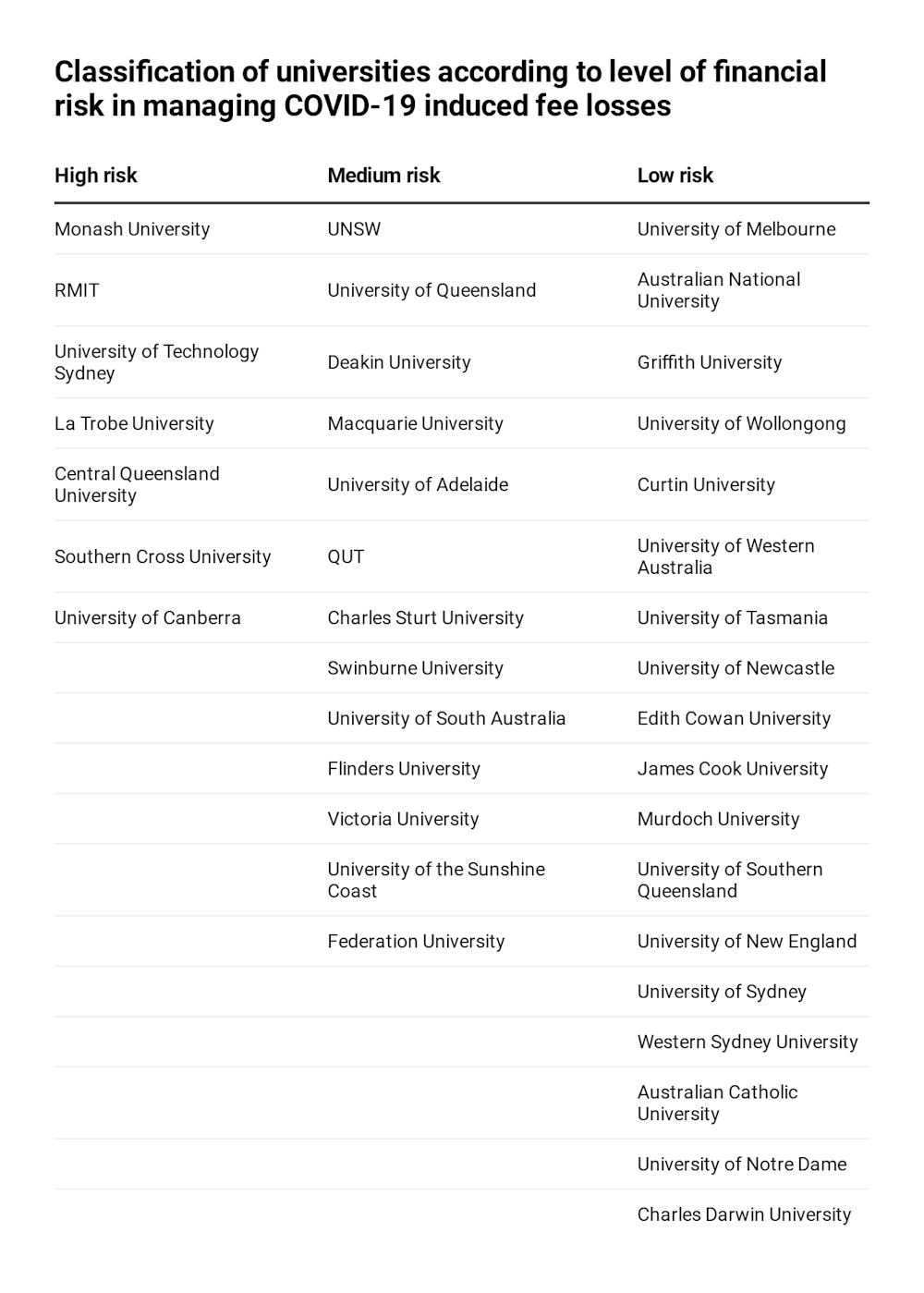
We modelled the impact of the loss of international student fee income resulting from COVID-19. We used 2018 data and categorised 38 Australian universities into three risk categories: high, medium and low.

We found seven universities are most at risk of having their international student revenue losses exceed available cash and investment reserves. These are: Monash University, RMIT, University of Technology Sydney, La Trobe, Central Queensland and Southern Cross University, and The University of Canberra.

The decade from 2009 to 2018 saw Australian universities enjoy an unprecedented boom in international student enrolments. The revenue from this activity increased by 260% – from A$3.4 billion to A$8.8 billion.

This has created significant threats to universities, which became increasingly reliant on international student fee income to fund teaching, research and capital infrastructure programs.


Read more: How universities came to rely on international students


Just four months ago this strategic threat was realised. The most pervasive impact of COVID-19 on Australian university finances will be the loss of international student fee revenue.

Modelling by Universities Australia shows the sector will lose A$16 billion by 2023. This is similar to our predicted losses of international student fee revenue amounting to A$18 billion by 2024.

A critical issue is how well universities are placed to manage this pandemic-induced financial crisis.

Short and long term scenarios

Our study examined the short (for 2020) and longer term (to 2024) impacts of the loss of international student fee revenue.

We assessed the risks using short term and longer term optimistic and pessimistic scenarios.

The optimistic scenario considered overall international student numbers will return to pre-COVID-19 levels by 2024. The pessimistic expected longer term damage to international education.

We used cash and investment reserves to assess universities’ financial resilience. These reserves are the most accessible forms of liquidity available to offset a sudden loss in income.

We determined only a proportion of total cash and investments to be able to offset revenue shortfalls. The proportion increases over the longer term. Universities do have other assets, but most are not readily accessible for alternative deployment.


Read more: Why is the Australian government letting universities suffer?


Seven universities (as cited above) have insufficient available cash and investment reserves to offset predicted losses in international fee revenue for 2020. This is also the case for both the pessimistic and optimistic longer term scenarios.

Of these, Monash University, RMIT and UTS have very large numbers of international enrolments. Revenue from international student fees constitutes 34% for Monash, 36% for RMIT and 35% for UTS. Across the sector international student fee income constituted 26.2% of total revenue in 2018.

For Central Queensland and Southern Cross University, international fee income as a proportion of total revenue is above the sector average – 33% and 27% respectively in 2018.

In absolute terms two of seven universities at most risk – Southern Cross and Canberra – have very low levels of available cash and investment reserves. This that adds to their financial vulnerability.


table. CC BY

In the longer term another 13 universities – including the research-intensive UNSW and The University of Queensland, as well as The University of Adelaide, South Australia and Flinders University – face medium financial management risk in having insufficient available reserves to deal with the predicted outcomes for the pessimistic scenario.

The remaining 18 universities, just under half of the total sector institutions, are in the low risk category, but most still face significant financial challenges. All five Western Australian universities are in this category.

Of the large research intensive universities, The University of Melbourne is the only university with sufficient reserves to offset the predicted revenue loss under both short and longer term scenarios.


Read more: More than 10,000 job losses, billions in lost revenue: coronavirus will hit Australia’s research capacity harder than the GFC


Given their relative smaller cohorts of international students, the majority of regional universities are predicted to be less exposed financially.

What universities need to do

Few universities have sufficient operating margins or available cash and investment reserves to withstand a sustained reduction in international fee revenue.

Without significant increases in public funding (which is unlikely), each university will, to varying degrees, need to identify and build additional revenue streams, and/or significantly reduce spending.

Universities are actively planning and implementing various strategies to mitigate potential losses. The most important strategies will include:

  • delay or scaling back of uncommitted capital works and other major projects

  • a re-appraisal of infrastructure requirements for a post-COVID-19 environment may realise assets surplus to future needs

  • universities with multiple campuses should conduct a major review of the viability of each in a post-COVID-19 world

  • a rationalisation of course and subject offerings to ensure individual program viability over the longer term

  • a rigorous review of “other expenditure” costs. Possible areas for savings include travel, entertainment, use of consultants and marketing expenses

  • a reappraisal of head office structures and remuneration levels, with a view to consolidate roles which may have emerged in a period of plenty

  • a further review of administrative and professional staff costs which amounted to A$8.6 billion in 2018. Sector-wide benchmarking is already available to assess relative efficiency on a function by function basis

Given employee costs represent 57% of total university spending, further reductions in this area are inevitable to reflect the decline in student enrolments. Each university may also need to adjust its workforce capability to meet changed future requirements.

One unprecedented measure involves university leaders seeking collaboration with unions to modify existing enterprise agreements to allow for a temporary salary freeze. Job losses will nevertheless occur, with casual and fixed term staff most at risk.

At the same time, universities will need to continue investing in digital education and new forms of student experience capable of attracting and retaining both domestic and international market share in a post-COVID-19 era.

COVID-19 will test the resilience of all Australian universities in a manner rarely – if ever – seen before. Not all 38 universities will emerge from the pandemic in their current form.

ref. COVID-19: what Australian universities can do to recover from the loss of international student fees – https://theconversation.com/covid-19-what-australian-universities-can-do-to-recover-from-the-loss-of-international-student-fees-139759

Smart cities can help us manage post-COVID life, but they’ll need trust as well as tech

Source: The Conversation (Au and NZ) – By Sameer Hasija, Associate Professor of Technology and Operations Management, INSEAD

“This virus may become just another endemic virus in our communities and this virus may never go away.” WHO executive director Mike Ryan, May 13

Vaccine or not, we have to come to terms with the reality that COVID-19 requires us to rethink how we live. And that includes the idea of smart cities that use advanced technologies to serve citizens. This has become critical in a time of pandemic.


Read more: Coronavirus recovery: public transport is key to avoid repeating old and unsustainable mistakes


Smart city solutions have already proved handy for curbing the contagion. Examples include:

The robot dog called SPOT is being trialled in Singapore to remind people to practise physical distancing.

But as we prepare to move beyond this crisis, cities need to design systems that are prepared to handle the next pandemic. Better still, they will reduce the chances of another one.

Issues of trust are central

In a world of egalitarian governments and ethical corporations, the solution to a coronavirus-like pandemic would be simple: a complete individual-level track and trace system. It would use geolocation data and CCTV image recognition, complemented by remote biometric sensors. While some such governments and corporations do exist, putting so much information in the hands of a few, without airtight privacy controls, could lay the foundations of an Orwellian world.


Read more: Darwin’s ‘smart city’ project is about surveillance and control


Our research on smart city challenges suggests a robust solution should be a mix of protocols and norms covering technology, processes and people. To avoid the perils of individual-level monitoring systems, we need to focus on how to leverage technology to modify voluntary citizen behaviour.

This is not a trivial challenge. Desired behaviours that maximise societal benefit may not align with individual preferences in the short run. In part, this could be due to misplaced beliefs or misunderstanding of the long-term consequences.

As an example, despite the rapid spread of COVID-19 in the US, many states have had public protests against lockdowns. A serious proportion of polled Americans believe this pandemic is a hoax, or that its threat is being exaggerated for political reasons.

Protests against lockdowns in the United States and other countries reveal a lack of trust in government. Albin Lohr-Jones/Sipa USA/AAP

Design systems that build trust

The first step in modifying people’s behaviour to align with the greater good is to design a system that builds trust between the citizens and the city. Providing citizens with timely and credible information about important issues and busting falsehoods goes a long way in creating trust. It helps people to understand which behaviours are safe and acceptable, and why this is for the benefit of the society and their own long-term interest.

In Singapore, the government has very effectively used social media platforms like WhatsApp, Facebook, Twitter, Instagram and Telegram to regularly share COVID-19 information with citizens.

Densely populated cities in countries like India face extra challenges due to vast disparities in education and the many languages used. Smart city initiatives have emerged there to seamlessly provide citizens with information in their local language via a smartphone app. These include an AI-based myth-busting chatbot.


Read more: How smart city technology can be used to measure social distancing


Guard against misuse of data

Effective smart city solutions require citizens to volunteer data. For example, keeping citizens updated with real-time information about crowding in a public space depends on collecting individual location data in that space.

Australians’ concerns about the COViDSafe contact-tracing app illustrate the need for transparent safeguards when citizens are asked to share their data. Lukas Coch/AAP

Individual-level data is also useful to co-ordinate responses during emergencies. Contact tracing, for instance, has emerged as an essential tool in slowing the contagion.

Technology-based smart city initiatives can enable the collection, analysis and reporting of such data. But misuse of data erodes trust, which dissuades citizens from voluntarily sharing their data.

City planners need to think about how they can balance the effectiveness of tech-based solutions with citizens’ privacy concerns. Independent third-party auditing of solutions can help ease these concerns. The MIT Technology Review’s audit report on contact-tracing apps is one example during this pandemic.


Read more: The trade-offs ‘smart city’ apps like COVIDSafe ask us to make go well beyond privacy


It is also important to create robust data governance policies. These can help foster trust and encourage voluntary sharing of data by citizens.

Using several case studies, the consulting firm PwC has proposed a seven-layer framework for data governance. It describes balancing privacy concerns of citizens and efficacy of smart city initiatives as the “key to realising smart city potential”.

As we emerge from this pandemic, we will need to think carefully about the data governance policies we should implement. It’s important for city officials to learn from early adopters.

While these important issues coming out of smart city design involve our behaviour as citizens, modifying behaviour isn’t enough in itself. Civic leaders also need to rethink the design of our city systems to support citizens in areas like public transport, emergency response, recreational facilities and so on. Active collaboration between city planners, tech firms and citizens will be crucial in orchestrating our future cities and hence our lives.


The author acknowledges suggestions from Aarti Gumaledar, Director of Emergentech Advisors Ltd.

ref. Smart cities can help us manage post-COVID life, but they’ll need trust as well as tech – https://theconversation.com/smart-cities-can-help-us-manage-post-covid-life-but-theyll-need-trust-as-well-as-tech-138725

Our needlessly-precise definition of a recession is causing us needless trouble

Source: The Conversation (Au and NZ) – By John Hawkins, Assistant Professor, School of Politics, Economics and Society, University of Canberra

Later today we’ll know what the bushfires and the coronavirus did to the economy in the three months to March: whether gross domestic product grew (as is usual) or whether it shrank (as is rare, and heralds a recession).

Gross domestic product (GDP) is an imperfect measure of everything that’s produced in the three months (and also everything that’s spent and earned).

Imperfect or not, it is measured the same way every time, which is why changes in it give us a good idea of changes in what we produce and earn.

Most likely it will tell us that what we produced and earned shrank.


Read more: Australia’s first service sector recession will be unlike those that have gone before it


There is a minority view, held by five of 25 economists surveyed by Bloomberg, that it could tell us the economy grew, perhaps because of panic buying of toilet paper and the like in March, although much of the demand will have been satisfied by running down inventories in March rather than producing more.

This has led to headlines saying Australia might avoid a recession.

It would come as a surprise to those who have lost their jobs, had no work or closed their businesses. It reflects the media’s common, but flawed, definition of a recession as two consecutive quarterly falls in real GDP.

The ‘technical’ definition is wrong

This is sometimes referred to this as a “technical” recession, which is an odd distinction given that no-one refers to a “generic”, an “artistic” or a “lay” recession.

The inadequacy of the definition is illustrated by looking at the Australian economy’s response to the 1973 oil shock and subsequent global economic slowdown.


Quarterly change in GDP, seasonally adjusted 1960 – 2000

ABS 5206.0

Real GDP contracted in only one quarter of 1974, but by a massive 2%, the biggest plunge on record, and enough to mean that less was produced in the last quarter of 1974 than in the last quarter of 1973.

The unemployment rate more than doubled in the space of year. Consumer confidence plummeted.

Any reasonable person would have concluded that during 1974 the Australian economy was deep in recession.

So what is a recession?

Probably the most reputable source is the US National Bureau of Economic Research which has been studying business cycles for a century, and in the United States is regarded the arbiter of when recessions begin and end.

It defines a recession as

a significant decline in economic activity spread across the economy, lasting more than a few months, normally visible in real GDP, real income, employment, industrial production and wholesale-retail sales

Note that there is nothing in this definition that limits a recession to (or requires) two quarters of sliding GDP in a row.

A “depression” is a very severe recession.

The newspaper article that sparked talk of ‘technical’ recessions. New York Times

An elephant would still be an elephant if it didn’t have a trunk. As with a recession, there are many ways of defining an elephant, but we know what one is when we see one.

The narrower two-quarters-in-a-row definition was introduced in a 1974 newspaper article by Julius Shiskin, an economist then serving as the US Commissioner of Labor Statistics.

He set out some “useful guidelines” that could be used to guess at whether something was a recession while waiting for the formal declaration from the National Bureau of Economic Research.

One was “declines in real GNP for two consecutive quarters”.

It’s a rule of thumb…

The simplicity of the suggestion struck a chord, and it was widely adopted.

Australia has no institution comparable to the National Bureau of Economic Research to date recessions, but there is broad consensus we have had six:

  • the prolonged depression in the 1890s when the Federation drought coincided with the collapse of a speculative boom in Melbourne and weak global demand

  • the global great depression of the 1930s which followed the Wall Street crash and was exacerbated by tariff wars

  • the milder recession that followed a credit squeeze in the early 1960s

  • the mid-1970s recession also caused by a tightening of access to credit in the face of inflation and a sudden jump in oil prices

  • the early 1980s brought on a US recession and exacerbated by drought

  • the early 1990s “recession we had to have”, brought on by extremely high interest rates that caused the collapse of several Victorian financial institutions

During the 2008 global financial crisis, Australia’s economy performed better than almost all its peers, with no annual fall in GDP and a relatively small increase in unemployment.

When, after having fallen in the December quarter of 2008, real GDP climbed rather than fell again in the following quarter, Prime Minister Rudd said he had never been as elated.

It allowed him to claim he had avoided a “technical” recession.

…with real-world consequences

It is widely agreed that GDP will have fallen in the June quarter of 2020, the one following the March quarter.

So long as lockdowns do not need to be reimposed, the economy is likely to recover a bit in the September quarter, meaning that, unless GDP fell in the March quarter, Australia might be able to boast it has “technically” avoided a recession.

It would happen in the midst of what the Reserve Bank governor described this week as the biggest economic contraction since the 1930s.

It’ll turn on whether today’s figures show show a small rise (maybe 0.1%) or a small fall (maybe 0.1%) in March quarter GDP.

In other words, it’ll depend on nothing much.


Read more: The Reserve Bank thinks the recovery will look V-shaped. There are reasons to doubt it


But the media definition of “technical” recession might be influencing policy design. When the government was concerned that the bushfires would lead to GDP contracting in the March quarter, its focus seemed to be on avoiding a second fall in the June quarter.

Its A$750 payments to income support recipients were rolled out only after March 31. Its increase in the instant asset write-off and cash flow assistance to small businesses were to end on June 30.

Once it became clear that GDP would fall in the June quarter, it appeared to shift its focus to avoiding a further fall in the September quarter, announcing JobKeeper and JobSeeker programmes that would run to the end of September.

It’s not the same as providing help when needed. It might be a consequence of our needlessly-precise definition of a recession.

ref. Our needlessly-precise definition of a recession is causing us needless trouble – https://theconversation.com/our-needlessly-precise-definition-of-a-recession-is-causing-us-needless-trouble-133694

40 years of Laibach – is this Slovenian avant-garde band the most controversial in rock history?

Source: The Conversation (Au and NZ) – By Andrew Dawson, Professor and Chair of Anthropology, University of Melbourne

June, 1980, Laibach was formed. Soon, they became the musical wing of the Slovenian arts collective Neue Slowenische Kunst (NSK), or New Slovenian Art. Comprising visual artists, theatre companies and a unit dedicated to social theory, NSK was concerned with exploring the relationships between art and politics.

Laibach took its name from Austro-Hungarian and then Nazi occupied Ljubliana, the capital city of Slovenia. They were the first Western band to perform in North Korea and their most recent album is a cover of the Sound of Music, which re-presents that most saccharine of musicals as an exercise in the celebration of Austrian fascism and paedophilia.

Laibach is one of the most controversial, innovative and truly strange bands in rock history.

Exile

Cultural provocateurs par excellence, Laibach has managed to offend all points in the political spectrum.

Its earliest concerts were performed against a backdrop of images of “Tito”, the revered former leader of the then in-decline Socialist Federal Republic of Yugoslavia (SFRY), next to a drooping penis.

In a strategy that lent the appearance of tolerance while in fact inviting public retribution, the state invited Laibach to explain its actions on prime-time TV. The band appeared in military garb and gave an interview of totalitarian-esque slogans.

Laibach was promptly declared a fascist organisation by state officials, a descriptor thrust on anyone the state disagreed with.

In response, Laibach revealed its members were dressed in their Yugoslav army conscript uniforms, their words a mash-up of SFRY propaganda. The state banned Laibach from performing, and its members were forced into exile.

Laibach similarly raised the ire of the very ethnonationalist forces that brought down the SFRY. In 1984, they covered Live is Life, by Austrian Europop band Opus. In Laibach’s video, stags and majestic landscapes – symbols of romantic nationalism – are combined with symbols of Nazism and militarism, reminding Slovenian viewers of an uncomfortable public secret: the rural peasantry, who embody Slovenian nationalism most, were also willing collaborators in the violent Germanisation of the country in World War II.

Rehabilitation and the totalitarian cure

After many pariah years, Laibach came to be rehabilitated. In 2017, the philosopher Slavoj Žižek wrote an article titled “Why are Laibach and NSK not fascists”. Žižek had critiqued liberal and leftists alike for their condemnation of Laibach’s use of fascist and other totalitarian symbolism. There was nothing at all ironic in Laibach’s actions, he argued. Rather, Laibach sought to promote an over-identification with such symbolism and it was through this that identification with fascism could be overcome.

Laibach’s recordings are now regarded widely as key examples of Soviet postmodernism, exploring relationships between ideology and art. Laibach demonstrates how apparently benign musical forms conceal repressed totalitarian sentiments by transforming the musical arrangement of famous pop songs into martial anthems. The Beatles’ Get Back was written as a song about homecoming; in Laibach’s hands it is a warning to immigrants to keep out.


Read more: First foreign band to play North Korea is famed for its ‘fascism’


Laibach’s live performances are even more affecting, using the discordant sounds of martial music, feedback, recordings of political speeches and barking dogs,described by the band as “ritualised demonstrations of political force”. Within each show the audience goes through a full circle of alienation by identification with, and dis-identification from, totalitarianism.

Not surprisingly, Laibach has cemented its status as a darling of the leftist avant-garde. Nowadays, they are just as likely to be found performing at the Tate Modern, the Venice Biennale, MONA or with philharmonic orchestras as in sweaty rock venues.

Eternal Laibach

With typical bombast, NSK once declared “only God can subdue LAIBACH. People and things never can.” Laibach has gone about making itself eternal.

Mimicking the totalitarian state, NSK eschews individualism. Its manifesto states “each individual is subjugated to the whole.” Indeed, when the original lead singer Tomaž Hostnik died by suicide, he was was posthumously thrown out of the band for undertaking an act that was not collectively sanctioned.

More recently, Laibach’s anti-individualism has manifested in core members relegating themselves to tech roles like lighting engineers, with the musicians replaced by younger artists who will outlive them. In 1991, NSK declared itself a virtual non-territorial state, with some displaced people unsuccessfully trying to use NSK passports at actual border crossings.

Laibach photographed in 1983. Laibach/Wikimedia Commons, CC BY-SA

The Slovenian state now cherishes Laibach as a national icon. Children march into school assemblies to the accompaniment of a Laibach song, and rumours abound the Slovenian state is striving to have Laibach classified by UNESCO as an intangible site of World Heritage.

Laibach’s method for longevity contrasts sharply with the narcissistic cult of personality approach deployed by its main cultural colleagues: totalitarian political leaders and pop stars. The SFRY was unable to survive the death of its charismatic leader Tito. Despite frantic attempts on social media, pop stars will disappear as quickly as they shoot to fame. Perhaps the key lesson to learn from Laibach is the best way to remain a star is to go out of your way to not be one.

Happy birthday Laibach! It is likely to be just one of many more to come.

ref. 40 years of Laibach – is this Slovenian avant-garde band the most controversial in rock history? – https://theconversation.com/40-years-of-laibach-is-this-slovenian-avant-garde-band-the-most-controversial-in-rock-history-139751

A 515 million-year-old freeloader: this nutrient-stealing marine worm is the oldest known parasite

Source: The Conversation (Au and NZ) – By Luke Strotz, Professor, Northwest University, Xi’an

The COVID-19 outbreak has put into stark relief the disruption parasites can cause, both in human society and ecosystems.

Researchers have long sought to better understand the evolutionary importance of parasites, to help lessen their impact.

Although parasites are common in modern ecosystems, we actually know little about parasitism in the distant past. And when parasites first evolved remains a mystery.

But our research, published today in Nature Communications, brings us one step closer to an answer, as we document the oldest known example of a parasite-host relationship.

This clip provides a 3D rendering of what brachiopods may have looked like on the seafloor.

The tricky task of identifying parasitism

Parasitism is typically defined as an ongoing relationship in which one organism, the parasite, increases its own success by exploiting another organism known as the host.

Importantly, parasitism is a form of symbiosis. Symbioses are commonly thought of as positive partnerships. For instance, the relationship between coral polyps and microscopic algae that is crucial to the formation of coral reefs benefits both organisms.

However, the term symbiosis can be applied to any persistent relationship between organisms. In the case of parasitism, the parasite always benefits while the host is harmed.

This definition of parasitism is perhaps one of the reasons why the history of parasites remains relatively unknown.


Read more: Why evolution must be at the centre of fighting parasitic infections


Much of our understanding of the evolution of life comes from the fossil record. And although fossils provide abundant evidence of evolutionary and ecological change, evidence of direct interaction between fossil organisms is less likely to be preserved. It’s often difficult to demonstrate a suspected fossil parasite was actually exploiting a host.

Also, many parasites that live inside a host – including bacteria and viruses – are unlikely to be fossilised as they often decompose too quickly to be preserved.

The origins of parasitism

Despite these issues, there are demonstrated examples of fossil parasites.

And our latest findings have identified the earliest parasite-host interaction in the fossil record.

We examined exquisitely preserved, 515-million-year-old fossils from southern China belonging to organisms called brachiopods (Neobolus wulongqingensis). Brachiopods are marine invertebrates that resemble clams but are actually quite different. They are rare today, but were much more common in the geological past.

Our research revealed the hardened tubes encrusting the surface of fossil brachiopod shells were once occupied by parasitic worms.

Fossil of brachiopod shell (Neobolus wulongqingensis). The tubes on the shell surface would have been occupied by parasitic worms.

We know the worms were parasites because we identified a clear negative effect on the host, as brachiopods without parasites grew larger than those with them.

While the parasites in question were almost certainly worms, we don’t know exactly what type of worm. What we do know is the worm would have been attached to its host brachiopod for its entire life.

Based on the orientation of the tubes, we also know the worms were kleptoparasites, meaning they stole food from the host before it could be ingested.

A reconstruction of Neobolus wulongqingensis with parasites on the surface of the shell.

Other remarkable discoveries of parasites in the fossil record include spiral-shaped bacteria, almost identical to the bacteria responsible for Lyme Disease, discovered inside a 15 million-year-old fossil tick entombed in amber.

Tongue worms” (Pentastomida), a parasite still found today, have a fossil record stretching back hundreds of millions of years. We even have evidence of damage to dinosaur feathers caused by lice.

An explosive period of evolution

The age of these newly discovered fossil parasites coincides with what is known as the Cambrian Explosion.

This event began roughly 540 million years ago during the Cambrian Period. It was a time of rapid evolutionary change, and includes the first appearance of animals with eyes, organs and limbs.

These changes had a marked affect on how organisms interact with each other. For example, active predation is thought to have first begun during this time.

Our discovery indicates parasitism is perhaps another important biological interaction that arose during this critical event.

The importance of understanding the history of parasites

Determining when parasites may have first evolved is the first step in understanding their impact on the history of life.

Many questions still remain. Perhaps the most important is how parasitism first evolved.

Some modern parasites exploit multiple hosts throughout their life. And many parasites that live inside a host are capable of surviving without a host at least part of the time. This suggests the first parasites may not have needed to rely on a single host for survival.

We know parasitism has evolved multiple times, and almost every animal group includes one or more parasites.

There are even parasitic mammals. For instance, vampire bats are considered a type of parasite. Transitioning to becoming a parasite seems to be a ubiquitous evolutionary strategy.

Parasites may have also driven major changes in evolution. The origin of sexual reproduction has been connected to the need for host organisms to develop greater resistance to parasites. Parasites also dominate food web links. In fact, parasitism may be the most common consumer strategy in modern food webs.

Nonetheless, we still don’t know how common parasites were in the past, or what innovations in life’s history occurred due to biological pressures exerted by parasites.

Because of this, identifying if parasitism is the cause of major evolutionary changes remains an ongoing challenge.


Read more: Bites and parasites: vector-borne diseases and the bugs spreading them


ref. A 515 million-year-old freeloader: this nutrient-stealing marine worm is the oldest known parasite – https://theconversation.com/a-515-million-year-old-freeloader-this-nutrient-stealing-marine-worm-is-the-oldest-known-parasite-139560

Under Bolsonaro, has Brazil become Unmoored?

Source: Council on Hemispheric Affairs – Analysis-Reportage

Support this progressive voice and be a part of it. Donate to COHA today. Click here

By Marcia Cury
From Brazil

A Le Monde editorial put it in Shakespearean language on May 19, saying “something is rotten in the state of Brazil.”[1] That appears to be accurate. Added to this is the feeling that the country has lost its moorings. Wherever one looks in an attempt to find a rational explanation, and contrary to the apparent normalcy within which Brazilian democracy seems to be functioning, the current situation causes puzzlement and concern.

There are many reasons to doubt the soundness of Brazilian democracy. President Jair Bolsonaro seems to ignore every cry to show respect for institutions and protocols, as one would expect of a head of State. Although[2] such behavior is nothing new in his 30 years of public life, his actions have come to the point of challenging the legitimacy of democratic institutions, which had already lost the trust of most of the population. Such a context during the Coronavirus crisis is putting thousands, if not millions, of lives at risk.

Bolsonaro’s chronic nepotism

As a candidate Bolsonaro said that he was above ideology (claiming only the Left is “ideological”), but as President his actions have been guided by his own opinions and a set of ideas coming from a hard core of extreme right-wing advisors, particularly his guru, Olavo de Carvalho. To mention just some recent actions, we have the constant turnover of Cabinet Ministers for reasons such as personal affinity, their level of support for Bolsonaro, or their implementation of public policies based on Bolsonaro’s personal beliefs.

Actress Regina Duarte, who in controversial interviews had trivialized both Brazilian racism and the torture practiced during the military dictatorship, became Minister of Culture.[3] After two months heading the Ministry, she was moved to Cinemateca, a space in São Paulo devoted to preserving Brazil’s cinematic heritage. The appointment faces a legal obstacle in that the actress would replace Olga Futemma, a culture professional who has been coordinating that institution for 36 years.[4] Mario Frías, an actor of little cultural acclaim, is now being considered to head the Ministry of Culture because he has made himself available to serve as the President’s right-hand man.

Chaos in the critical health sector

Chaos has also come to the Ministry of Health. After the departure of Minister Luiz Henrique Mandetta, his replacement, Nelson Teich, lasted less than a month. The most significant episode of Teich’s brief tenure was the astonishment he showed when the press asked him about an order published by the Office of the President authorizing the reopening of such “essential services” as barber shops, hair salons, and gyms. The Minister was unaware of the order, which gave the clearest possible demonstration of the fact that officials in the Bolsonaro administration truly do not know what they are doing.[5]

Since Teich left, the Ministry of Health has been led by an acting Minister, General Eduardo Pazzuelo. This appointment is further evidence of Bolsonaro’s delusions of grandeur whereby his personal opinions prevail over any guidelines set by the Ministry, even if they contradict scientific evidence.

Brazil ranks second in the world for COVID-19 cases

Bolsonaro insists on advocating for the use of hydroxychloroquine for Coronavirus patients (while the scientific community is reaching consensus that it is ill-advised for such cases[6]), and pushes for the relaxing of social distancing. While the President continues to spout these hare-brained theories with words and actions that dismiss the severity of the catastrophe caused by the virus, the death count (currently 24,000) continues to rise in the country, while the number of infected people is the second largest in the world at over 394,000 as of May 26.[7]

Bolsonaro wants his own personal police force

The episode that perhaps most clearly demonstrates that “something is rotten in the state of Brazil” is the departure of Sérgio Moro from the Ministry of Justice. Hero to the fans of “Operation Car Wash” and considered to be one of the major presidential candidates for 2022, Moro jumped ship on Bolsonaro. He accused his former boss of trying to interfere with the Federal Police, whose autonomy is undeniably essential for any investigations aimed at fighting corruption.

According to the former judge, Bolsonaro asked more than once for the national head of the Federal Police and the Chief of the Rio de Janeiro Police to be replaced. These posts are directly responsible for overseeing the investigation of crimes against the State. On the local level, state superintendents follow their guidelines.

Moro says that the President complained that he did not have access to information and reports by the intelligence service of the Federal Police. Bolsonaro was trying to put Alexandre Ramagem, a personal friend and part of the family’s trusted inner circle, at the helm of Senior Management of the Federal Police, in charge of major investigations. The appointment was vetoed by the Federal Supreme Court.[8]

Suspicions around Bolsonaro’s direct interference with the Federal Police are only increasing. Shortly after the change in leadership at the institution, the Governor of Rio de Janeiro, Wilson Witzel (a former ally turned opponent) became a target of “Operation Placebo” which is investigating the possible diversion of funds for fighting Coronavirus. In the course of the operation, which was publicly hailed by Bolsonaro, there was a breach of confidentiality of the governor’s messages, including searches and seizures of his and his wife’s premises.[9]

Bolsonaro sons implicated in crimes

Sergio Moro’s testimony points to other police activity revolving around the President of the Republic and his sons, who are also important Brazilian political figures. An investigation has begun of the charges levied by business owner Paulo Marinho, including the leaking of information from the Federal Police to Bolsonaro’s sons regarding investigations in which they were directly implicated.[10] The operation, called “Furna da Onça,” investigated the so-called “rachadinha,” a scam whereby members of Congress allegedly appointed advisors as a way to pocket the salary money. The scandal revolved around Fabrício Queiroz, a former Congressional advisor and military police officer who handled R$1.2 million (approximately US$230,000) between January 2016 and January 2017, according to the report by the Council for the Control of Financial Activities (COAF). This is an unusual amount of money for people in such positions. In one such transaction, the former advisor sent a check for R$24,000 (around US$4,500) to First Lady Michelle Bolsonaro.[11] The name Fabrício Queiroz is nothing new—he has long been close to the Bolsonaro family. Such ties are also seen in the assassination of City Councilwoman Marielle Franco and her driver, Anderson Gomes. These two incidents, which have only recently been linked, tie the Bolsonaro family to those implicated in the killing of Marielle Franco.[12]

Video shows the pressure exerted by Bolsonaro

On May 22 a video recording of a Cabinet meeting was made public which Sérgio Moro says is evidence of Bolsonaro’s attempts to interfere with the Federal Police. But the video shows much more. It shows the Brazilian people not only the administration’s lack of commitment to fighting the pandemic that is afflicting the country, but the true nature of the authoritarian tendencies the administration has been defending.

In a tirade of cursing and swearing, Bolsonaro is shown attacking the governors of São Paulo and Río de Janeiro for the social distancing measures they adopted within their states. Then the Minister of the Environment says to take advantage of the fact that the media is focusing on COVID-19 to “slip under the radar” and relax laws to preserve protected areas. And the Minister of Finance, Paulo Guedes is shown rushing to sell the Banco do Brasil, while the Minister of Education, Abraham Weintraub, attacks ministers whom he deems to be lacking in support for the administration and calls the Supreme Court Justices a bunch of bums “who should be arrested.”[13]

Now, in the midst of the chaos created by a poorly managed pandemic, Bolsonaro is on a warpath against lockdown policies and is asking business owners to “play dirty” against the governors who have adopted measures to slow the spread of the virus. In the President’s view, these measures seek to “break the economy to get at the administration.”[14] He is now seeking help from the most conservative parties in Congress by granting them government posts in exchange for votes in favor of privatization plans.

Bolsonaro also seems to view this distribution of posts as a way to shore up support for his continuation in office, even though his administration is not even capable of carrying out the projects of those who elected him. If he manages to do so, a high price will be paid by all.

Despite his haphazard style of governance, Bolsonaro still enjoys significant public support. How can he feel so secure that he continues to ignore democratic institutions and the prudence that one would expect of such a high officeholder? We know that the military is an anchor for him, but we do not know how long this will last. This leads to more concerns about what is “rotten” in the state of Brazil and the fact that, if the country has not completely lost its moorings, who is really steering the ship?

Marcia Cury is a COHA Senior Research Fellow

Translated from the original Spanish by Jill Clark-Gollub, COHA Assistant Editor/Translator


End notes

[1] “Brésil : la dangereuse fuite en avant de Bolsonaro”, https://www.lemonde.fr/idees/article/2020/05/18/bresil-la-dangereuse-fuite-en-avant-de-bolsonaro_6040012_3232.html

[2] “Bolsonaro, COVID-19, and the Crisis of Brazilian Democracy,”  http://www.coha.org/bolsonaro-covid-19-and-the-crisis-of-brazilian-democracy/

[3] “Homofobia de Bolsonaro é da boca pra fora, diz Regina Duarte,” https://politica.estadao.com.br/noticias/eleicoes,homofobia-de-bolsonaro-e-da-boca-para-fora-diz-regina-duarte,70002564696

“Em entrevista à CNN Brasil, Regina Duarte minimiza tortura durante ditadura militar,” https://www.brasildefato.com.br/2020/05/07/em-entrevista-a-cnn-brasil-regina-duarte-minimiza-tortura-durante-ditadura-militar

[4] “Saiba qual é o entrave para Regina Duarte assumir o cargo na Cinemateca”, https://www.correiobraziliense.com.br/app/noticia/politica/2020/05/21/interna_politica,856962/saiba-qual-e-o-entrave-para-regina-duarte-assumir-cargo-na-cinemateca.shtml

[5] “Bolsonaro inclui salão, barbearia e academia como atividades essenciais”, https://g1.globo.com/jornal-nacional/noticia/2020/05/11/bolsonaro-inclui-salao-barbearia-e-academia-como-atividades-essenciais.ghtml

[6] “More Evidence Hydroxychloroquine Won’t Help, May Harm COVID-19 patients,”  https://consumer.healthday.com/infectious-disease-information-21/coronavirus-1008/more-evidence-hydroxychloroquine-won-t-help-may-harm-covid-19-patients-757939.html

[7] Worldometers.info, https://www.worldometers.info/coronavirus/country/brazil/

[8]  “Leia a íntegra comentada do depoimento de Moro à PF com acusações contra Bolsonaro”, https://www1.folha.uol.com.br/poder/2020/05/leia-a-integra-do-depoimento-de-moro-a-pf-com-acusacoes-contra-bolsonaro.shtml

[9] “Operação contra Witzel acirra suspeitas de interferência de Bolsonaro na Polícia Federal”, https://www1.folha.uol.com.br/poder/2020/05/operacao-contra-witzel-acirra-suspeitas-de-interferencia-de-bolsonaro-na-pf.shtml

[10] “PGR pede, e empresário que relatou vazamento a Flávio Bolsonaro vai depor à Polícia Federal”, https://www1.folha.uol.com.br/poder/2020/05/pgr-pede-e-empresario-que-relatou-vazamento-a-flavio-bolsonaro-vai-depor-a-policia-federal.shtml

[11] “Fabrício Queiroz, ex-assessor de Flávio Bolsonaro, é alvo de operação no Rio”, https://brasil.elpais.com/brasil/2019-12-18/fabricio-queiroz-ex-assessor-de-flavio-bolsonaro-e-alvo-de-operacao-no-rio.html

[12]Marielle Franco was a Río de Janeiro City Councilwoman and investigations point to a political assassination because of her prominent role fighting the paramilitary criminal organizations operating in the city. “New Evidence Ties Bolsonaro Family to Murder of Marielle Franco,” https://www.youtube.com/watch?v=WL6KScv7Sck

[13] “Veja os principais pontos da reunião ministerial que teve gravação divulgada pelo STF”, https://g1.globo.com/politica/noticia/2020/05/22/veja-os-principais-pontos-da-reuniao-ministerial-que-teve-gravacao-divulgada-pelo-stf.ghtml

[14] “Bolsonaro faz apelo a empresários para “jogarem pesado” contra governadores”, https://www.correiobraziliense.com.br/app/noticia/politica/2020/05/15/interna_politica,855008/bolsonaro-faz-apelo-a-empresarios-para-jogarem-pesado-contra-governa.shtml


Can you socially distance at a Black Lives Matter rally in Australia and New Zealand? How to protest in a coronavirus pandemic

Source: The Conversation (Au and NZ) – By Philip Russo, Associate Professor, Director Cabrini Monash University Department of Nursing Research, Monash University

The death of African-American man George Floyd at the hands of police has sparked protests across the United States and inspired many people to reflect on our own history of police violence against Indigenous people in Australia and New Zealand.

After thousands marched across New Zealand on Monday, a series of rallies and vigils are planned across Australian cities this week, many have wondered: how should we safely protest during a pandemic?

As an infection prevention researcher, I am, of course, genuinely worried by the prospect of large crowds gathering. But I also completely understand why people want to go and make their feelings known on racism – not just in Australia and New Zealand, but internationally. It is a clash when we are trying to manage COVID-19 and puts us in a dilemma.

But I can’t stand and judge people who want to go.

Huge crowds have gathered in places such as New York to protest the death of George Floyd. Lev Radin/ AAP

Colleagues in the US who are so moved by what’s happening there are forgoing their social distancing and putting themselves and their colleagues at risk by attending the protests. For them, it is a personal decision and a risk they are prepared to take.

In New Zealand, Prime Minister Jacinda Ardern said while “I utterly understand” why people had marched, New Zealand had social distancing rules in place to protect people’s health – and the June 1 marches were “a clear breach of them”.

If we had one person, one person in that crowd, just think what could happen there because we’ve seen it before […] I understand the strength of feeling and I understand the sentiment and I understand that sense of urgency that everyone felt. But my job is to look after the country’s health as well.

NZ Prime Minister Jacinda Ardern said while she doesn’t want to stop peaceful protests, the June 1 Black Lives Matter protests across NZ were a “clear breach” of COVID-19 rules.

In Australia, people should remember many states have strict rules about public gatherings and it’s likely you’ll be breaching them if you attend a protest. In Victoria, there’s a limit of 20 people at an outdoor gathering. For NSW the limit is 10, while in Queensland the limit is 20.

Remember, coronavirus is spread via close contact, so you are significantly increasing your risk of infection if you are in a large crowd.

All that said, if you’re considering attending a protest, here are four things to think about.


Read more: The fury in US cities is rooted in a long history of racist policing, violence and inequality


1. Is there another way I can show support?

Given I’m an infection prevention researcher, working to prevent the spread of COVID-19, I have to say this: if there is any other way you can show support, other than attending a mass gathering – whether that’s donating to a group doing good work, doing any sort of online protest or whatever option you can find – you should consider it.

Think about whether you yourself are at higher risk – by being older or immuno-compromised, for example – and whether there is a more sustainable way for you to support a movement you care about.

2. Think about how you’ll get there

Plan your trip to and from the protest carefully. Avoid crowded public transport – consider driving or riding a bike if possible – and follow social distancing rules if you must travel by bus, train or tram.

Make sure you bring hand sanitiser and use it liberally. Wash hands as soon as you get home.

3. If you go, observe social distancing

Download and use the COVIDSafe app. Try as best you can to observe social distancing at any event you attend. That means staying at least 1.5 metres apart from everyone else – whether you are standing in an open space or marching down a street. Remember that coronavirus is spread by droplets released when people breathe, talk, cough, sneeze, sing or shout in close proximity to others. No hugging to demonstrate solidarity.

People gathered in Sydney on Tuesday to protest against the treatment of Indigenous people in custody. James Gourley/AAP

When you get lots of people together and emotions run high, things can go awry very quickly. I’d be prepared to leave the demonstration if I started to get concerned about the proximity of people around me. There’s a risk more people will turn up than you or the event organisers anticipated; if there are bigger crowds than expected, be prepared to make a decision to head home.

A mask alone will not protect you, they’re only one piece of the armoury and are only useful if you socially distance and wash hands as well. If you throw yourself into a situation where you are close to other people, a mask will not be enough to protect you or others.

Israelis demonstrated in April against Israel’s Prime Minister Benjamin Netanyahu, under strict restrictions made to slow down the coronavirus disease (COVID-19) spread. AAP/Reuters/Corinna Kern

Read more: Are you wearing gloves or a mask to the shops? You might be doing it wrong


4. Do not attend if you feel unwell or have any COVID-19 symptoms

This should go without saying: absolutely stay home, no matter how strongly you feel about the issue, if you have any symptoms, such as a sore throat or a cough.

Indigenous Australians are an at-risk demographic for COVID-19, as are Māori and Pasifika, so you need to think carefully about the risk you may pose to others if you turn up while experiencing symptoms. If there was to be a small cluster in one of these protests, and the virus was passed to an Indigenous community, the effects could be devastating.

If you feel that compelled to attend a demonstration, think about anything you can do to minimise the chances of spread, or you will undo the gains Australia and New Zealand have made in keeping the coronavirus spread under control.


Read more: Riot or resistance? How media frames unrest in Minneapolis will shape public’s view of protest


ref. Can you socially distance at a Black Lives Matter rally in Australia and New Zealand? How to protest in a coronavirus pandemic – https://theconversation.com/can-you-socially-distance-at-a-black-lives-matter-rally-in-australia-and-new-zealand-how-to-protest-in-a-coronavirus-pandemic-139875

‘I can’t breathe!’ Australia must look in the mirror to see our own deaths in custody

Source: The Conversation (Au and NZ) – By Thalia Anthony, Professor of Law, University of Technology Sydney

I can’t breathe, please! Let me up, please! I can’t breathe! I can’t breathe!

These words are not the words of George Floyd or Eric Garner. They weren’t uttered on the streets of Minneapolis or New York.

These are the final words of a 26-year-old Dunghutti man who died in a prison in south-eastern Sydney.


Read more: The fury in US cities is rooted in a long history of racist policing, violence and inequality


David Dungay Jr was killed when prison officers restrained him, including with handcuffs, and pushed him face down on his bed and on the floor. One officer pushed a knee into his back. All along, Dungay was screaming that he could not breathe and could be heard gasping for air.

Dungay’s death in custody occurred in Long Bay prison during the 2015 Christmas season. It happened a short drive from an elite university, next to affluent, waterside suburbs.

But his horrific death did little to pierce this white bubble of privilege. The media barely blinked. The politicians did not emerge from their holiday retreats. None of the officers involved were disciplined or called to account.

Australia’s glass house

It is comfortable for us in Australia to throw stones at racist police violence in the United States. It is comfortable because we do not see our own glass house.

Protests have broken out in the United States over the death of George Floyd. Erik McGregor/AAP

This is evident in Prime Minister Scott Morrison’s comments to 2GB on Monday:

And so as upsetting and terrible is the murder that took place, and it is shocking … I just think to myself how wonderful a country is Australia.

It is “wonderful” because we do not see the horror inflicted by the criminal justice system on First Nations people.

It is “wonderful” because we do not ever call their deaths in custody “murder”, using instead the euphemisms of “accident” or “natural causes”.

It is “wonderful”, because we have so normalised the passing of First Nations people that we are never shocked when they are killed.

It is “wonderful”, because we have a vocabulary to defend police officers responsible for racist violence, including people doing an “extremely difficult job”.

The official response to the killing of Dungay has wide ripples in the white Australian community and the legal community. His family maintain that the killing of their son, brother and uncle, who was unarmed, was murder. No criminal charges have been brought and the coroner in November 2019 blamed Dungay’s pre-existing health conditions. His comments minimised the responsibility on the part of the officers:

it is most likely that the cause of David’s death was cardiac arrhythmia. It is noted that David had a number of comorbidities, both acute and chronic, which predisposed him to the risk of cardiac arrhythmia … However, the expert evidence also established that prone restraint, and any consequent hypoxia, was a contributing factor although it is not possible to quantify the extent or significance of its contribution.

First Nations people are the most incarcerated in the world

The deaths in custody of First Nations Australians are not hidden. As a nation, we are choosing not to look at them. In 1991, the Royal Commission into Aboriginal Deaths in Custody documented 99 deaths in custody.

Since then, 432 Indigenous Australians have died in custody, according to Guardian Australia’s Deaths Inside project.

First Nations people are the most incarcerated in the world, surpassing the rates of African American people in the United States. In 2019, for every 100,000 First Nations adults, 2,481 are in prisons, compared with 164 non-Indigenous people.


Read more: FactCheck Q&A: are Indigenous Australians the most incarcerated people on Earth?


Despite comprising 2% of the general adult population, First Nations Australians are 28% of the prison population. For First Nations women, the rate is 33% and they are 21 times more likely to be imprisoned than non-Indigenous women. This is a product of systemic racism that also contributes to disproportionate deaths in custody.

Yet the deaths are only the tip of the iceberg. Everyday occurrences of police brutality against First Nations people, frequently filmed and uploaded on social media platforms, have even less formal oversight. The casual complacency about the harm inflicted on First Nations people means we do not know the true extent of its occurrence.

On Tuesday, a NSW police officer was put on restricted duties after a video emerged on social media of him appearing to kick an Aboriginal teenager.

Protesting deaths in custody in our backyard

In the wake of Floyd’s death, Dungay’s nephew, Paul Silva pointed to the lack of response to First Nations deaths in Australia:

We don’t get the same big response in Australia as they do in the United States with the Black Lives Matter movement, but we have had many people, both First Nations and non-Indigenous people standing with us. We can build on that – we need many more to join us. We can take inspiration from the United States and get back out on the streets in our own backyard, where there is so much brutality against Black people too, that’s the only way to get justice.

While the spotlight has been shone on the protests in the United States, most Australians would be unaware that each year on the anniversary of Dungay’s killing, there has been a protest, mostly at Long Bay jail.

Leetona Dungay continues to protest about her son’s death. David Moir/AAP

This week in cities around Australia, protests are planned in the name of First Nations people who have died in custody. The numbers of those who converge on the streets is a litmus test of national tolerance for racial violence against First Nations people in the criminal justice system.

Where does racial violence against First Nations people end?

Despite more than 500 First Nations deaths in custody since 1980, there has never been a successful homicide prosecution in the criminal courts. Indeed, only a handful have resulted in charges being laid in manslaughter or, less frequently, murder.

A police officer has been charged with murder following the shooting death of a 19-year-old Warlpiri man last year. The officer intends to plead not guilty.


Read more: Three years on from Uluru, we must lift the blindfolds of liberalism to make progress


The Victorian Coroner this April also referred the death of Yorta Yorta woman Tanya Day to prosecutors for further investigation.

Without accountability, justice will not flow for the families and the chain of racial violence will not be broken.

The danger of expressing outrage towards African American deaths in custody is that we deflect our own agency and responsibility. We legitimise the violence at our doorstep that is in our control.

It allows us to walk past racist police interventions on the false assumption that the problem is with the First Nations person rather than the police and Australian culture.

The only response to racism is resistance. This must take place not simply in passive solidarity with African Americans, but in our active support, protest and sacrifice for the lives of First Nations Australia.

ref. ‘I can’t breathe!’ Australia must look in the mirror to see our own deaths in custody – https://theconversation.com/i-cant-breathe-australia-must-look-in-the-mirror-to-see-our-own-deaths-in-custody-139848

Is your super money safe? Here’s how you can dodge cyber fraud

Source: The Conversation (Au and NZ) – By Roberto Musotto, Cyber Security Cooperative Research Centre Postdoctoral Fellow, Edith Cowan University

Alongside growing concerns over a possible resurgence of the coronavirus during winter, the pandemic is now creating even more victims as cybercriminals aim to capitalise on the economic upheaval.

According to news reports, people have had money stolen from their super funds by fraudsters exploiting the COVID-19 early access scheme.

The attackers reportedly used victims’ stolen identity credentials to create fake myGov accounts and lodge applications for the early release of up to A$10,000 from superannuation accounts.

If you’re worried about accessing the scheme, there are a few ways you can strengthen your protection against fraudsters looking for quick financial gain at your expense.


Read more: Don’t be phish food! Tips to avoid sharing your personal information online


Always looking for weak points

COVID-19 has threatened the national economy and left more than 700,000 people without work. In April, the federal government responded by allowing access to A$10,000 worth of super funds for eligible applicants in this financial year, and a further A$10,000 after June 30, to help sustain people during this difficult time.

Unsurprisingly, cybercriminals have sought to take advantage of flaws in the scheme.

In May, the Australian Taxation Office reportedly found at least 100 cases of applications lodged using stolen personal information.

It’s not known how attackers managed to access the personal information required for such fraud. It may have been stolen earlier this month from the hacked customer files of a tax agent, as confirmed by federal home affairs minister Peter Dutton.

Or this may have been a less sophisticated scheme. All it takes to steal identity details is a fake email or web page that looks trustworthy enough to dupe you into sharing your information.

Cybercriminals often try a broad approach, sending the same malicious email to hundreds of thousands of people in the hope someone will fall into the trap. And someone usually does.

What can you do to stay safe?

Now is a good time to check your super fund statement to make sure there hasn’t been any unauthorised withdrawal. Even better, you should regularly check all financial statements, including bills. If you see a transaction you don’t remember making, block your bank cards and inform your bank immediately.

Although there are algorithms that help detect credit card fraud, you are the only person who can recall whether you made a specific purchase. With online shopping booming during lockdown, the pool of potential victims has increased.

It’s also common for fraudsters to “test” whether a credit card works by deducting a very small amount (as little as 10 cents) with a generic description such as “service fee” or “top-up charge”.

This may seem insignificant, but for cybercriminals it’s the “perfect crime” as its simplicity and perceived lack of damage means it often escapes detection. Also, the operational costs of committing such a crime are very low, which means more people can be targeted.

In some ways, making very minor deductions from victims’ accounts is a ‘perfect crime’ for cybercriminals. These charges tend to go unnoticed, but add up in the end. Shutterstock

Verify information and report

One foolproof way to keep your personal information safe from hackers is to double-check the websites you use – whether it’s for online shopping, checking emails or chatting with friends online. Make sure there are no obvious spelling mistakes in the URL, or otherwise.

If in doubt, try to verify the site’s legitimacy through a quick Google search. Often some online cross-checking, or a phone call to an organisation’s official phone number, is enough to reveal a scammer. And if you can’t confirm authenticity, ask yourself: is sharing my details worth the risk?

If anything doesn’t seem right, always report it to the relevant authorities so others don’t fall victim. In Australia and New Zealand, you can report identity theft on IDCARE and any type of cybercrime on the government’s ReportCyber website.

And if do become victim to fraud, alert your superannuation provider and bank as soon as possible. Cybercrime victims should always be empowered to report fraud, as this is the first step to potentially getting your money back.


Read more: ‘Click for urgent coronavirus update’: how working from home may be exposing us to cybercrime


Are more checks needed?

Some ways to potentially make the early release of super funds more secure include allowing only one verified account per person which should be confirmed, potentially via a physical interview, before any account activity is carried out. Requiring double-factor authentication throughout the process of submitting an application would also be helpful.

The successful exploitation of the scheme indicates the government may have rushed trying to process and complete applications. One member of the public said it took 12 hours to have their application approved.

This sudden administrative efficiency raises reasonable doubt about the level of security checks in place. And if fraudsters have managed to bypass security protocols, it’s very likely more checks will be needed.

ref. Is your super money safe? Here’s how you can dodge cyber fraud – https://theconversation.com/is-your-super-money-safe-heres-how-you-can-dodge-cyber-fraud-139758

Scott Morrison intervenes over Washington police assault of Australian TV crew

Source: The Conversation (Au and NZ) – By Michelle Grattan, Professorial Fellow, University of Canberra

Scott Morrison has asked the Australian embassy to investigate the assault by police of an Australian Channel 7 news crew during the Washington demonstrations.

The embassy, which is headed by ambassador Arthur Sinodinos, is to provide advice on registering Australia’s “strong concerns” with the responsible local authorities in Washington.

Cameraman Tim Myers and 7 News’ US correspondent Amelia Brace were reporting live as police cleared protesters ahead of President Trump going from the White House to a nearby church.

Footage shows Myers being bashed with a riot shield.

Brace said later: “I actually managed to get a rubber bullet to the backside and Tim got one in the back of the neck so we’ll have a few bruises tomorrow but we’re perfectly safe”.

“You heard us yelling that we were media … but they don’t care. They are being indiscriminate at the moment,” she said.

Morrison wasn’t aware of the assault when he and Trump spoke on Tuesday; Trump had contacted Morrison to formally invite him to the G7 meeting in September.

After hearing of the incident, Morrison contacted Channel 7 to assure the network of the government’s support if it wished to lodge a formal complaint with the police through the embassy.

Anthony Albanese, speaking earlier, said Sinodinos “should be certainly making representation on behalf of these Australians who effectively have been assaulted”.

In their conversation, the Prime Minister told Trump he would be pleased to attend the G7 meeting. It is the second consecutive year Australia has been invited – last year French host, President Macron, extended an invitation.

A spokesman for Morrison said participation would “give Australia another significant opportunity to promote our interests during highly uncertain times in the global economy. It’s important for Australians that we are there”.

The G7 group of large advanced economies includes – apart from the US – Canada, France, Germany, Italy, Japan and the United Kingdom. Its discussions cover economic, security and other issues.

But this meeting, which has been delayed from July to September, is surrounded by controversy. Trump wants to have Russian President Vladimir Putin there. Russia was expelled some years ago after its invasion of Crimea.

While Trump would like Russia readmitted as a member of the G7, this is strongly opposed by the UK and Canada – although their stand would not necessarily rule out Putin’s attending the September meeting.

At the weekend Trump said he did not think the G7 “properly represents what’s going on in the world. It’s a very outdated group of countries.” He flagged inviting Russia, South Korea, Australia and India.

The PM’s spokesman said Morrison and Trump canvassed in their conversation the “distressing situation” in the US – which has seen the country wracked by violent protests in the wake of the death at police hands of the unarmed African-American George Floyd – and “efforts to ensure it would be resolved peacefully”.

AUSTRALIAN DOWNTURN MIGHT BE LESS THAN EXPECTED: RESERVE BANK

On the home front, Reserve Bank Governor Philip Lowe on Tuesday said it is possible the depth of Australia’s downturn will be less than earlier expected.

In a statement after Tuesday’s Reserve Bank Board meeting, which as anticipated kept rates unchanged, stressed the nature and speed of the recovery “remains highly uncertain”.

The economy was going through its biggest contraction since the 1930s depression, he said.

But “the rate of new infections has declined significantly and some restrictions have been eased earlier than was previously thought likely. And there are signs that hours worked stabilised in early May, after the earlier very sharp decline. There has also been a pick-up in some forms of consumer spending”.

Lowe said while the pandemic would likely have lasting effects on the economy, most immediately “much will depend on the confidence that people and businesses have about the health situation and their own finances”.

The bank’s statement comes ahead of Wednesday’s national accounts for the March quarter, and the government’s imminent announcement of help for the residential sector.

ref. Scott Morrison intervenes over Washington police assault of Australian TV crew – https://theconversation.com/scott-morrison-intervenes-over-washington-police-assault-of-australian-tv-crew-139869

Women are drinking more during the pandemic, and it’s probably got a lot to do with their mental health

Source: The Conversation (Au and NZ) – By Shalini Arunogiri, Addiction Psychiatrist, Senior Lecturer, Monash University

COVID-19 has significantly affected our collective mental health.

For many people, social disconnection, financial strain, increased obligations in the home and ongoing uncertainty have created distress – and with it, a need for new ways of coping.

One way people may choose to cope with stress is through the use of alcohol.

We’re now starting to understand the degree to which alcohol use has increased in Australia during COVID-19. While the data aren’t alarming so far, they suggest women are drinking at higher levels than usual during the pandemic, more so than men.

This trend is likely linked to the levels of stress and anxiety women are feeling at the moment – which, research suggests, are disproportionate to the distress men are experiencing.


Read more: Worried about your drinking during lockdown? These 8 signs might indicate a problem


Alcohol consumption and COVID-19

Early reports of increased alcohol purchasing raised the alarm that we might see an increase in alcohol use across the population during lockdown.

However, recent data from the Australian Bureau of Statistics suggests overall, alcohol consumption remained relatively stable during April. Only 14% of Australians reported increased use of alcohol in the previous month.

But women are over-represented in this group. Some 18% of women reported increased alcohol use in the previous month, compared with only 10.8% of men.

14% of Australians reported they were drinking more than usual during April. Shutterstock

Similarly, preliminary results from our COVID-19 mental health survey of 1,200 Australians in April found a significantly higher proportion of women had increased their alcohol intake: 31.8%, versus 22.5% of men.

Why are we seeing this disparity between women and men? The answers may lie in what we know about why women drink, and in the disproportionate burden of stress women are facing as a result of COVID-19.

Women tend to drink for different reasons to men

In Australia in 2016, 14% of men and 7% of women drank alcohol to risky levels.

Although fewer women than men drink alcohol regularly, alcohol consumption among women has increased in the past decade, particularly in middle-aged and older women. This mirrors international trends that suggest women may be catching up to men in terms of their alcohol consumption.


Read more: Did you look forward to last night’s bottle of wine a bit too much? Ladies, you’re not alone


Overall, Australia has observed a reduction in risky drinking across the population, with increasing numbers of young people choosing not to drink.

In contrast, women in their 50s are the only subset of the Australian population with rising rates of alcohol use. In 2016, data showed for the first time, they were more likely to drink at risky levels than younger women.

Drinking has become more normalised among women in this middle-to-older age group, potentially contributing to the rise in alcohol use. Alcohol has become a commonly accepted coping mechanism for distress, with women feeling comfortable to say “I just had a bad day. I needed to have a drink”.

This highlights a theme that frequently underpins problematic alcohol use in women: what’s termed a “coping motive”. Many studies have found more women drink alcohol to cope – with difficult emotions or stressful circumstances – as compared to men, who more often drink alcohol in social settings or as a reward.


Read more: Women’s alcohol consumption catching up to men: why this matters


Women seem to be struggling more during the pandemic

With this in mind, it’s unsurprising we’re seeing increased alcohol consumption among women during COVID-19. International data show women have been more likely to experience symptoms of stress, anxiety and depression during the pandemic.

Meanwhile, Australian data show loneliness has been more of a problem for women (28%) than men (16%) during this past month under lockdown.

Caregiver load has also been a source of stress, with women almost three times more likely than men to be looking after children full-time on their own during COVID-19.

Many women have had to work from home while looking after their children. Shutterstock

While we don’t have enough evidence yet to tell us conclusively whether family violence incidents have increased during the pandemic, this may add to the mental health burden for some women during COVID-19.

Further, younger female workers are disproportionately affected by the economic crisis in the wake of COVID-19. The fact women make up a majority of the casual workforce makes them highly vulnerable at this time.


Read more: Coronavirus: it’s tempting to drink your worries away but there are healthier ways to manage stress and keep your drinking in check


Together, it seems COVID-19 is having a different mental health impact on women compared to men. And this is likely to be intertwined with their increased drinking during the coronavirus pandemic.

Whether we’ll see higher rates of problem alcohol use or dependence in women after the pandemic remains unclear. However, we know women who drink at unsafe levels experience complications more quickly, and enter treatment later, with perceived stigma a barrier to help-seeking.

It’s vital we draw our attention to these gender-specific differences in mental health and alcohol consumption as we formulate our mental health pandemic plan.

If this article has raised issues for you, or if you’re concerned about someone you know, call Lifeline on 13 11 14.

ref. Women are drinking more during the pandemic, and it’s probably got a lot to do with their mental health – https://theconversation.com/women-are-drinking-more-during-the-pandemic-and-its-probably-got-a-lot-to-do-with-their-mental-health-139295

RSF condemns attacks on US protest journalists fueled by Trump slurs

After the arrest on live television of a CNN crew covering protests in Minneapolis on May 29, tensions erupted further against media reporting on protests taking place in at least 30 cities across the US, which were continuing as of May 31.

The protests were triggered by the killing by Minneapolis police officers of an unarmed black man, George Floyd, as they arrested him on May 25.

– Partner –

So far at least 68 incidents have been documented of attacks by police and protesters alike against journalists covering the protests.

They have been shot by rubber bullets and pepper balls, exposed to tear gas and pepper spray, beaten, threatened and intimidated and had their news vehicles vandalised, simply for doing their jobs.

President Trump’s demonization of the media for years has now come to fruition, with both the police and protesters targeting clearly identified journalists with violence and arrests,” said Christophe Deloire, RSF’s secretary general.

“It has long been obvious that this demonisation would lead to physical violence. RSF has warned about the consequences of this blatant hostility towards the media, and we are now witnessing an unprecedented outbreak of violence against journalists in the US.

“RSF calls on all US authorities to ensure the full protection of journalists and honour the country’s founding principles in respecting press freedom,” Deloire added.

Among serious attacks
Among the most serious attacks:

·       In Minneapolis, Linda Tirado, has been left permanently blind in one eye after being struck by what she believes was a rubber bullet fired by police officers as she photographed protests.

·       In Pittsburgh, Ian Smith – a photojournalist for KDKA TV – posted to Twitter that he had been “attacked by protesters downtown by the arena. They stomped and kicked me. I’m bruised and bloody but alive. My camera was destroyed. Another group of protesters pulled me out and saved my life.”

·       In Phoenix, CBS reporter Briana Whitney was tackled live on air as a protester made a grab for her microphone.

·       In Washington, D.C., Fox News reporter Leland Vittert and his crew were punched, hit by projectiles, and chased by protesters who had gathered outside the White House.

Reports are also emerging of arrests and detention of journalists by police.

In Minneapolis, Australian 9News US correspondent Tim Arvier was detained by police at gunpoint.

Arrested for ‘failure to disperse’
In Las Vegas, freelance photojournalist Bridget Bennett was arrested for “failure to disperse” and held overnight while working on assignment for AFP.

Ellen Schmidt, a photojournalist at the Las Vegas Review-Journalwas also arrested and held overnight in Las Vegas.

RSF calls for urgent action by US authorities to ensure the safety of journalists covering the continuing protests, including a moratorium on the arrests of journalists and immediate guidance to police making it clear that journalists are not to be shot at or otherwise directly targeted by crowd-control measures, and that journalists must be protected from violent attacks by protesters.

The US is ranked 45th out of 180 countries in RSF’s 2020 World Press Freedom Index.

Article by AsiaPacificReport.nz

Media companies can now be held responsible for your dodgy comments on social media

Source: The Conversation (Au and NZ) – By Michael Douglas, Senior Lecturer in Law, University of Western Australia

Part of growing up is learning to take responsibility for the hurtful things you say. As a person who often says stupid things, I often need reminding.

Defamation law reflects that lesson. When you say something that hurts another person, it can cost you.

A recent decision has stretched this commonsense intuition. According to the New South Wales Court of Appeal, media companies are not just responsible for the content written by their journalists. Now they are also “publishers” of comments made by readers on their social media accounts.

The decision means those who encourage engagement on social media – including media companies, journalists and “internet famous” people — can be held responsible for things said by random people who “engage” by commenting on content produced by others.

The Dylan Voller case

Dylan Voller is the young man whose poor treatment in custody at the Northern Territory’s Don Dale youth detention centre inspired a 2016 Royal Commission. Countless stories about him have been published by media companies, which then shared them on their social media pages.


Read more: Can you be liable for defamation for what other people write on your Facebook page? Australian court says: maybe


This is not unusual. On the contrary, it is a core part of their business model. Content producers want “engagement”, such as comments, because it helps them make more money by selling advertising.

Many social media users commented on posts about Voller. Some said awful things, and Voller sued for defamation.

But he did not sue the people who made the awful comments. Rather, he sued the media companies behind the Facebook pages: the publishers of The Australian and the Sydney Morning Herald, among others. Voller argued they were responsible as “publishers” for the defamatory comments written by others.

Last year, to the shock of media companies, the Supreme Court of New South Wales agreed with Voller. Justice Rothman decided the media companies had “published” the comments of third-party users, opening the door to the companies’ liability in defamation.

The media companies argued Justice Rothman made a mistake, and they could not possibly be publishers of their readers’ comments. So they appealed.

Dismissal

In rejecting the media companies’ arguments this week, the Court of Appeal drew on defamation law that has been centuries in the making.

The court’s majority ruling explained: “defamation is an actionable wrong that lies in the publication to a reader, listener or observer of matter that injures another person’s reputation”. It does not require intention.

The NSW Court of Appeal decision on the Dylan Voller case will likely have media outlets concerned about the level of social media moderation required. JOEL CARRETT/AAP

All members of the court agreed that, generally, a person who participates and is instrumental in bringing about the publication of defamatory content is potentially liable, even though others may have participated in the publication to different degrees.

In this case, the media companies maintained and encouraged comments on their Facebook pages by users, and therefore were “publishers” of those comments.

Arguably, this is the logical application of old common law to the needs of contemporary society, and that is exactly what the common law is meant to do. As the Court of Appeal majority said, “it is not uncommon for persons to be held liable for the publication of defamatory imputations conveyed by matter composed by another person”.

It’s not over

The Court of Appeal’s latest decision was the sequel to the determination of a “preliminary question” by Justice Rothman. This means there will be more to this fight. The media companies will likely be able to argue other defences. They might still be able to avoid paying Voller damages.

Yet losing this battle could mean they will also lose the broader war against anyone who sues them for defamation. Worried about the precedent, the media companies are considering pursuing a further appeal to the High Court.

The case is sure to attract the attention of the New South Wales Defamation Working Party currently considering defamation law reform. Until legislatures or the High Court intervene, it will remain the law.


Read more: Australia’s proposed defamation law overhaul will expand media freedom – but at what cost?


A big loss for big media

For the media, this case isn’t good news from a business point of view. Companies will have to invest more in moderating comments. But this is not as unjust as some may suggest.

It’s common sense that you are responsible for the hurtful things you say. It’s also common sense that you are responsible for the damage you cause.

Media companies want to publish controversial stuff that keeps us engaged. Spicy content inspires spicy comments from your weird old uncle. Media companies may want those comments even if they cause damage. Before now, those comments were a moral hazard rather than a legal one.

But it’s also true that a failure to act can cause damage just as much as a “positive” act. We hold politicians to account for what they fail to do all the time, or at least try. Omissions can be intentional and have moral weight, deserving the attribution of responsibility through law.

The Voller case holds media responsible for a new class of omissions. It’s a new high-water mark of media responsibility. The media may not like it, but others will.

ref. Media companies can now be held responsible for your dodgy comments on social media – https://theconversation.com/media-companies-can-now-be-held-responsible-for-your-dodgy-comments-on-social-media-139775

The next global health pandemic could easily erupt in your backyard

Source: The Conversation (Au and NZ) – By Penny van Oosterzee, Adjunct Associate Professor James Cook University and University Fellow Charles Darwin University, James Cook University

We know the virus that causes COVID-19 is linked to very similar viruses in bats, possibly passed to humans via an intermediate species such as pangolins. The chance of a similar pandemic breaking out in Australia might seem far-fetched. But in fact, we tick all the boxes.

Hotspots for emerging infectious diseases exist where human activities collide with a richness of animal species – and hence, high rates of microbial biodiversity.


Read more: Most laws ignore ‘human-wildlife conflict’. This makes us vulnerable to pandemics


As research has shown, Australia is such a place. Across the continent, particularly the east coast, natural landscapes have been severely damaged by human activity such as land clearing and mismanagement of river systems. This has led to forest loss, drying wetlands, biodiversity decline and bushfires.

All animals harbour viruses and other pathogens. And when environmental pressures force animals into contact with humans, the results can be catastrophic.

A tree pangolin at night in Gabon, Africa. Bill Laurance, Author provided (No reuse)

A world of disease

In humans, around three-quarters of all emerging infectious diseases are spread by non-humans. A new infectious disease emerges in humans every four months.

In Africa, the Ebola virus resulted from human contact with fruit bats, and AIDS was caused by a pathogen that jumped from non-human primates during road-building.

In the United States, Lyme disease is caught from deer ticks. And the brain-damaging Nipah virus originated in Malaysia after bats infected pigs, which passed the disease to farmers.

In China and elsewhere, the deforestation of pangolin habitat makes them easy targets for hunters and poachers, who covet the animals for their meat and scales.

Australia is not immune

In Australia, a 2013 review found at least 20 human diseases associated with disturbed natural environments between 1973 and 2010. They include:

Hendra virus: This virulent disease first broke out at a racing stable in Hendra, Brisbane in 1994. It causes catastrophic neurological and respiratory symptoms in horses, and more than 100 died. Seven people have been infected, four of whom died.

The virus is endemic to Australian flying foxes. It spilled over to people via horses who ate pasture containing flying-fox urine. Habitat loss forced flying foxes to move close to humans to find food.

Biosecurity officers taking a swab from a horse during the 2008 Hendra virus outbreak. Dave Hunt/AAP

West Nile virus: This causes brain inflammation and death in humans, horses and birds. An endemic strain in Australia is transmitted by mosquitoes from wild birds. In 2011 an outbreak affected about 900 horses in southeastern Australia of which about ten per cent died.

The virus emerged in Australia unexpectedly, probably due to changed environmental conditions such as climate change and habitat clearing.

Australian bat lyssavirus: this rabies-like virus can be transmitted from bats to humans, causing serious illness leading to paralysis, delirium, convulsions and death.

A vaccine administered after exposure can prevent the virus from taking hold. But since 1996, three people who did not receive the vaccine after being bitten or scratched by bats died of the virus.

A severe case of Buruli ulcer, which is on the rise in regional Victoria. Medical Journal of Australia

Buruli ulcer: this disease, also known as Bairnsdale ulcer and Daintree ulcer, is caused by a bacterium that destroys skin cells, small blood vessels and the fat under the skin. It causes long-term deformities. The bacterium, Mycobacterium ulcerans, occurs naturally in mosquitoes, vegetation and some possum droppings.

Australia is the only developed country with significant local transmission of Buruli ulcer and the only country to report the disease in wild animals such as possums. The number of people infected in Australia recently increased significantly in Victoria, to 340 new cases in 2018.

Australia: a disease-risk hotspot

A map published in Nature Communications in 2017 showed Australia’s east coast to be a global hotspot for risk of emerging infectious diseases.

Australia continues to lose forest cover at alarming rates and biodiversity is suffering unprecedented decline and disruption. This increases the probability of animal-human interaction.

Drying wetlands such as in the Murray Darling Basin destroy mosquito competitors such as aquatic animals that eat mosquito larvae. This allows mosquitoes to emerge in large numbers when water returns. This may trigger the emergence of infections such as the debilitating chikungunya virus.


Read more: Australia’s drought could be increasing Q fever risk, but there are ways we can protect ourselves


Environmental damage can also make humans more susceptible to the effects of infectious diseases. For example, bushfires (driven in part by human-caused climate change) trigger smoke plumes that increase the risk of dying from coronavirus.

Such diseases can also be catastrophic for species other than humans. Chytrid fungus, the most devastating disease on record to affect vertebrates, was first found in Australia in the 1970s. It had emerged in the early 20th century on the Korean Peninsula , alongside a commercial trade network in amphibians. It continues to cause the extinction of amphibian species worldwide.

Drying wetlands in the Murray Darling basin increase the risk of disease outbreak. Dean Lewins/AAP

What goes around comes around

It’s clear human health depends on healthy ecosystems. But this undeniable fact is too often overlooked in policy decisions that allow environmental destruction.

Australia is an environmental and disease-risk hotspot. As a recent open letter from prominent health leaders warned, the failure to conserve our environment dismantles our life-support systems and accelerates catastrophic climate change.

For humans to survive in our rapidly changing world, we must urgently strengthen and link policies of human health, environment and climate reform.


Read more: From the bushfires to coronavirus, our old ‘normal’ is gone forever. So what’s next?


ref. The next global health pandemic could easily erupt in your backyard – https://theconversation.com/the-next-global-health-pandemic-could-easily-erupt-in-your-backyard-138861

Could corporations control territory in space? Under new US rules, it might be possible

Source: The Conversation (Au and NZ) – By Cait Storr, Chancellor’s Postdoctoral Research Fellow, University of Technology Sydney

Last weekend, NASA launched US astronauts to the International Space Station for the first time in a decade, in a rocket designed by Elon Musk’s SpaceX.

Under President Donald Trump, the US mission to reassert itself as the dominant power in space has rapidly gathered pace. In the process, the US has also begun to reshape international space law to suit its purposes – a move that has many countries concerned.

In April, Trump released an executive order restating US support for corporate exploitation of lunar and asteroid resources.


Read more: Giant leap for corporations? The Trump administration wants to mine resources in space, but is it legal?


The order also rejected a long-held view in international law that space is a global commons and that commercial use of space resources should occur under international oversight.

Then, last month, NASA released the “Artemis Accords”, named after its Artemis Program, which aims to return humans to the moon by 2024. The accords claim to

establish a common set of principles to govern the civil exploration and use of outer space.

What the Artemis Accords would do

Although NASA has only released a high-level summary of the accords, two issues for international space law are already clear.

First, the Artemis Accords go beyond simply rejecting the unpopular 1979 Moon Agreement, which declared lunar resources to be the “common heritage of mankind” and committed parties to establish an international regime to oversee space mining. Only 18 countries have signed the treaty.

In its place, the accords envisage a US-centric framework of bilateral agreements in which “partner nations” agree to follow US-drafted rules.

Second, the accords introduce the concept of “safety zones” around lunar operations.

Although territorial claims in space are prohibited under international law, these safety zones would seek to protect commercial and scientific sites from inadvertent collisions and other forms of “harmful interference”. What kinds of conduct could count as harmful interference remains to be determined.


Read more: The costly collateral damage from Elon Musk’s Starlink satellite fleet


The accords claim to comply with the 1967 Outer Space Treaty, a widely supported agreement that declared space the “province of all mankind” and permitted commercial resource exploitation as a “peaceful use” of space.

However, in practice, the accords have the potential to challenge the Outer Space Treaty’s ban on territorial claims in space. They could also intensify international conflict over space resources.

Will space continue to be treated as a global commons?

The Artemis Accords effectively kill off the prospect of international oversight of space mining.

The Moon Agreement committed signatories to establish an international regulatory framework when space mining was “about to become feasible”. This moment is clearly now, as Japan’s Hyabusa2 mission to the Ryugu asteroid and China’s Chang’e 4 lunar mission have demonstrated. Both missions are collecting mineral samples.

Although the Moon Agreement itself has attracted little support, the UN Committee on the Peaceful Uses of Outer Space has revisited the framework of space resources law in recent years and commissioned a working group to draft a new regime to govern space mining.

These draft principles were due to be considered at a UN meeting this year, but it was cancelled due to the COVID-19 pandemic.

Now, by releasing the Artemis Accords, the US has potentially scuttled these international negotiations for good.

The real difference between the Artemis Accords and an international framework negotiated within the UN turns on whether space will be treated as a global commons when space mining begins.


Read more: SpaceX reaches for milestone in spaceflight – a private company launches astronauts into orbit


Under current international law, the benefits from commercial mining in global commons areas, including the international seabed, must in principle be shared equitably by “all mankind”.

The idea that the profits of space resource extraction should be shared via an international body garnered much support among developing nations and their supporters in the 1960s and ‘70s.

But entrepreneurs in the US space sector have long contested the global commons principle. And the US rejection of a global commons framework for space is ultimately a rejection of profit sharing. Mining and tech companies would retain all the profits.

And this, in turn, would further entrench existing wealth inequalities in the space resource industry.

Tech entrepreneur Elon Musk celebrates at Saturday’s SpaceX launch. Sipa USA Paul Hennessy / SOPA Images/Sipa

Territorial claims and ‘safety zones’

The safety zones under the Artemis Accords would require all commercial and government ventures to share information on the location and nature of their space operations and notify and coordinate any approaches to other sites.

The practical sense of safety zones is clear. However, such zones seriously test a fundamental principle of the Outer Space Treaty – the ban on territorial claims in space.

This revives an old legal debate over whether the distinction between private property and sovereign territory can actually be maintained in space.

Property rights provide commercial certainty, which space mining entrepreneurs have been demanding. But property rights are only effective if the threat of legal enforcement is real.

Whether safety zones can be enforced without amounting to a breach of the ban on territorial claims remains to be seen.

Russian officials have already denounced Trump’s executive order as an attempt to “expropriate space” and “seize territory”.

Chinese space experts have also concluded that safety zones amount to sovereign claims.

These criticisms have been fuelled by US space entrepreneurs, including Amazon founder Jeff Bezos, actively promoting “space colonisation”.

Which countries are likely to sign on?

States already friendly to commercial space mining, including Luxembourg, the United Arab Emirates and India, will likely sign on to the Artemis Accords.

Early reports suggest Russia will not participate, though, and given the current state of US-China relations, Chinese participation is even less likely.

But the real impact of the accords will be determined by the countries in between. The response of the European Space Agency, which has partnered with Roscosmos in its own lunar prospecting mission, remains to be seen.

Australia, for its part, faces an awkward decision. As a party to the 1979 Moon Agreement, it will have to withdraw if it intends to sign an accord with the US.

Significant diplomatic manoeuvring can be expected over the coming months as the US seeks support for its attempt to redirect international space resources law.

ref. Could corporations control territory in space? Under new US rules, it might be possible – https://theconversation.com/could-corporations-control-territory-in-space-under-new-us-rules-it-might-be-possible-138939

Destruction of Juukan Gorge: we need to know the history of artefacts, but it is more important to keep them in place

Source: The Conversation (Au and NZ) – By Jacinta Koolmatrie, Lecturer in Archaeology, Flinders University

A day before Reconciliation Week and the day Australia was meant to be acknowledging and remembering the Stolen Generations, news came of something that seemed to put Australia back a few decades in their journey towards “Reconciliation”. Rio Tinto had detonated a 46,000 year old site known as Juukan Gorge.

This news was simply gut-wrenching.

Artefacts found at the site were among some of the oldest in Western Australia, making it incredibly significant not only for the Traditional Owners, the Puutu Kunti Kurrama and Pinikura people, but also for the history of this continent.


Read more: Rio Tinto just blasted away an ancient Aboriginal site. Here’s why that was allowed


Also startling for many was this detonation had been in process for several years. The dating of the site to 46,000 years old had been uncovered through salvage excavation in preparation for this destruction.

I cannot speak for the Traditional Owners, nor can I speak on the complexities surrounding the approval of the blast, but the removal of artefacts from their place has impacted every single Aboriginal person on this continent. That is what I can speak on.

Salvage excavations

Salvage excavation is archaeological work conducted to record and collect all evidence of human occupation at a site that has been or will be impacted by development.

Excavation itself is destructive. The moment a trowel is inserted into the ground, the site has been destroyed. Salvage excavations, like all excavations, require this destruction to be worth it. Comprehensive recording of every aspect of an excavation is necessary, from changes in soil to recording each artefact found.

Archaeology also considers how artefacts will be cared for in the long term: where they will be kept and who will be caring for them. It is preferable for artefacts to remain at their location. In cases where this proves impossible, salvaging is required.

At a surface level, it seems unproblematic if everything was collected from the ground, analysed and placed in a box: those artefacts would be preserved for all of eternity. Now, they are no longer subject to erosion, animal activity or (the more perplexing argument) the threat of humans. But cultural institutions are not immune to disaster.

In 2019, Brazil’s national museum was devastated by a fire. This summer, Australian galleries closed due to the potential impact of smoke on collections. The South Australian Museum has repeatedly discussed the threat of water leaks to their collections.

These institutions are built to preserve heritage but they should not be viewed as the only preservation option, especially for heritage heavily intertwined with place.

Why is place important?

There is a common narrative Aboriginal people wandered this continent aimlessly. Rarely is there discussion our ancestors moved with intention, demonstrated clearly in the ways they passed down generational knowledge to us. Why else would they have mapped this land?


Read more: It’s taken thousands of years, but Western science is finally catching up to Traditional Knowledge


Where they chose to leave their presence should be viewed as intentional and as representation of that significance.

This significance has flowed through time, strengthening the connection of this place to us. In cases where there is a physical presence of our ancestors, it is integral we maintain the connection of this physical history to place.

For many, Juukan Gorge was mainly significant because of its early date. But not all Aboriginal heritage is afforded this same interest. Not all of our heritage can be dated that early, and a lot of our heritage simply is not tangible. A vast majority of our heritage is found in our knowledge of the land that traverses this continent. Mostly, this heritage goes unseen by our colonisers, making it easily overlooked in favour of development.

Sometimes, the tangible heritage found in these places is the only thing standing in the way of destroying a place. It is the only thing demonstrating we are a people who have deep connections to this land. Not only from a spiritual side, but also from a linear western view of time.

Aboriginal knowledges of these places, and how this knowledge links to the archaeological record, is what can fully contextualise the meaning of these places for our ancestors – and for us today.

The importance of empathy

Maintaining the connection of place with our ancestors’ possessions found at these places may be solidified through the implementation of stricter laws. But if a company wants something and our heritage is standing in the way, those laws can always be bent. The value of destroying these places is much higher than the value of keeping them – at least in the eyes of our colonisers. A loophole will be found, and our communities will suffer and grieve another loss.

If we want something long lasting, something transcending laws, empathy needs to be much stronger, something embedded into the mind and heart. Not the type of empathy that emerges when one has to say “sorry”, but the type existing before “sorry” is even considered.

With empathy, how could you justify the hurt Aboriginal people on this continent experience when we find out another culturally significant place has been destroyed?

ref. Destruction of Juukan Gorge: we need to know the history of artefacts, but it is more important to keep them in place – https://theconversation.com/destruction-of-juukan-gorge-we-need-to-know-the-history-of-artefacts-but-it-is-more-important-to-keep-them-in-place-139650

Thousands march in NZ solidarity rallies with Black Lives Matter

By RNZ News

Thousands of New Zealanders have joined large numbers of Americans in protesting following the killing of Minneapolis man George Floyd.

In Auckland, Aotea Square overflowed yesterday with people before thousands marched down Queen Street towards the US consulate building.

Organisers said the aim was simple,”we want to put pressure on our government from the local level, right up to Prime Minister Jacinda Ardern to publicly condemn the acts of violence and state-sanctioned murder against African Americans in the United States”.

READ MORE: George Floyd protesters undeterred by curfews in US cities

Protests have been held in more than 30 cities across the US and throughout the world after disturbing video surfaced showing bystanders pleading with a white police officer kneeling on the neck of George Floyd, a black man, as he gasped for breath.

Floyd died from the incident, the latest in a string of deaths of black men and women at the hands of US police.

– Partner –

Nigerian-Kiwi Mary Adeosun drove up from Hamilton for the protest.

She was in tears as she spoke to our reporter: “I really feel for my skin-folk, for the innocent lives that have been taken… I’m so far away in this country and I’m seeing people who look like me dying [in the US]”.

Hobson Hohepa flew his Tino Rangatiratanga flag high at the protest: “[Racism] happens here in our country. It happens to us. It happens to me. I’ve had enough.”

Hobson Hohepa.
Hobson Hohepa … “[Racism] happens here in our country. It happens to us.” Image: Mabel Muller/RNZ
A placard at the George Floyd / Black Lives Matter Auckland march on 1 June.
“No justice … no peace.” Image: Leith Huffadine/RNZ
“Don’t Shoot!” #ArmsdownNZ Image: Mabel Muller/RNZ

Ricky Wilkins is an African-American from Los Angeles, California. He has been living in New Zealand for the past seven months.

“I feel loved. Everybody wants to be us but no one wants to care for us. It’s just amazing to see in Aotearoa how people are representing and showing us love.”

Ricky Wilkins.
Ricky Wilkins … “It’s just amazing to see in Aotearoa how people are representing and showing us love.” Image: Mabel Muller/RNZ
Protesters on Queen Street, Auckland, during the George Floyd / Black Lives Matter Auckland march on 1 June.
“Black Lives Matter.” Image: Leith Huffadine/RNZ

This article is republished by the Pacific Media Centre under a partnership agreement with RNZ.

#BlackLivesMatter

Print Friendly, PDF & Email

Article by AsiaPacificReport.nz

SpaceX’s historic launch gives Australia’s booming space industry more room to fly

Source: The Conversation (Au and NZ) – By Cassandra Steer, Lecturer, ANU Center for International and Public Law; Mission Specialist, ANU Institute for Space, Australian National University

At the weekend, Elon Musk’s commercial giant SpaceX launched two NASA astronauts in a spacecraft named Crew Dragon which, from the inside, looked like a souped-up Tesla.

The Falcon 9 rocket launched the spacecraft, returned to Earth and landed on a ship to later be re-used. And the Crew Dragon eventually docked autonomously with the International Space Station (ISS).

The flight marks the first time in history:

  • a commercial company has launched astronauts
  • a crewed spacecraft has docked with the ISS while “self-driving” and
  • a reusable rocket has been used to launch people, sparing us from debris re-entering the atmosphere, such as the rocket pieces that recently burned up over Victoria and Tasmania.

SpaceX has well and truly revolutionised space travel. But what does this mean for the many Australian companies making up a new space sector Down Under?

The Crew Dragon spacecraft can carry up to seven astronauts. Official SpaceX Photos/Flickr, CC BY-NC

A burgeoning local industry

Globally, the space sector is worth at least US$415 billion, and is expected to grow to US$1 trillion over the next decade. By then, the Australian space sector is also expected to be worth A$12 billion.


Read more: SpaceX astronaut launch: here’s the rocket science


An estimated 770 Australian entities already develop space-related infrastructure. This includes satellites, and technologies for telecommunications or television, bushfire monitoring, weather and climate tracking, search and rescue, navigation, deep space research, and defence and security.

In 2018, the Australian Space Agency (ASA) was established with a mandate to the support Australian space industry, rather than develop a national civil space program.

The global commercial space sector is now watching Australia with excitement, and possibly some envy. Many countries over-regulate their space industries, or fail to give them legislative support. But Australia is a new entrant to the space sector that benefits from full government support through an industry-dedicated space agency.

The SpaceX Crew Dragon spacecraft lifted off atop a SpaceX Falcon 9 rocket from Launch Complex 39A at NASA’s Kennedy Space Center. NASA Kennedy/Flickr, CC BY

The commercialisation of spacefaring

The 20th century space race began with government programs spurred by a technological and ideological competition between the US and the Soviet Union. However, today’s space race is highly commercial.

Many national space programs and militaries outsource to commercial entities for space services. Just this month, the Australian Department of Defence signed a contract with Queensland company Gilmour Space technologies to develop rockets for small military cargo and satellites.

Rather than large, expensive technologies developed for single purposes by government agencies, we’re now in an era of “NewSpace”. This is a term associated with small and medium sized companies developing smaller, lighter, and therefore cheaper technologies that can be repurposed and turned into “off the shelf” components.

Australian companies excel at this, as demonstrated by Gilmour, Neumann Space – which has a unique thrust technology for small satellites – and Myriota, a world leader in groundbreaking Internet of Things (IoT) technologies.

Giants such as SpaceX and Blue Origin are developing NewSpace technologies alongside their larger launch projects, and smaller companies benefit from their success when it comes negotiating public-private partnerships.


Read more: SpaceX reaches for milestone in spaceflight – a private company launches astronauts into orbit


Innovative mindsets pave the way

Even the opening of our own spaceport in East Arnhem land, expected by early 2021, is thanks to industry innovation.

NewSpace company Equatorial Launch Australia is the first commercial company ever to receive a launch contract from NASA. As a result, the company is developing the spaceport, where it will specialise in new launch technologies for small and light satellites.

With our own spaceport, Australia will join the ranks of just 13 other nations that have launch capacity from their territory.

And aside from NASA, many Australian companies and research institutes will be keen customers. Inovor, which builds tiny nanosatellites may be among the first.

Or perhaps Gilmour, as it tests a revolutionary hybrid propulsion rocket in partnership with the Australian National University. This could be the first commercial rocket of its kind to launch in the world.

Even in a pandemic, the space economy booms

According to a report released in May by accounting organisation KPMG, by 2030 every business will be a “space business”. The report suggests humans will live, work and holiday in space, and will be mining the moon for water and minerals.

And while human space flight from Australian shores may not be on the horizon, SpaceX’s launch is a beacon of hope for local commercial entities – especially because they push new technologies faster than government programs tethered to budgets and low-risk approaches.

Moreover, the ASA is considering entering into an Artemis Accord with the US. The launch technology demonstrated by SpaceX this weekend will be part of the Artemis program, which aims to return humans to the moon by 2024.

So although the national and global economy reels from the impacts of COVID-19 shutdowns, the global space economy continues to boom. And with Australia’s space industry taking off, the sky is definitely not the limit.

NASA astronauts Bob Behnken and Doug Hurley piloted the Crew Dragon. It’s the first spacecraft to carry humans into space from US shores since 2011. NASA Kennedy/Flickr, CC BY

ref. SpaceX’s historic launch gives Australia’s booming space industry more room to fly – https://theconversation.com/spacexs-historic-launch-gives-australias-booming-space-industry-more-room-to-fly-139760

How Julia Gillard forever changed Australian politics – especially for women

Source: The Conversation (Au and NZ) – By Blair Williams, Political Scientist, Australian National University

The Conversation is running a series of pieces on key figures in Australian political history, examining how they changed the country and political debate.

When Julia Gillard was sworn into office as Australia’s first female prime minister on a chilly Canberra morning in 2010, it seemed like the ultimate glass ceiling had been smashed.

But this momentous occasion was marred by the onslaught of sexism and misogyny Gillard endured from the opposition, and especially the mainstream media, over the next three years of her term.


Read more: Hillary Clinton and Julia Gillard: how the media shape our view of leaders as ‘women’


Since she lost the prime ministership in 2013, Gillard has fostered a legacy that extends beyond parliamentary politics, with a focus on women’s rights, education and mental health.

The two Es: education and equality

Born in Wales in 1961, Gillard’s family moved to Australia in 1966. She grew up in Adelaide as the daughter of a nurse and aged care worker.

Gillard was educated at local public schools before studying at the University of Adelaide and then the University of Melbourne.

She told the Harvard Business Review last year her involvement in the student movement, protesting education cutbacks, was a formative experience:

That’s what spurred an activism and engagement in public policy in me, and I went on to lead the student movement nationally … people had said, ‘You really should consider politics’. It was a slow dawning over time that it would be a fantastic way of putting my values into action — and realising that someone like me could do it.

Graduating with an arts/law degree, Gillard joined law firm Slater & Gordon in 1987 and was a partner by 1990.

While she has said she felt “quite at home in many ways” as a young woman in the “larrakin” culture of the law firm, she also worked on affirmative action campaigns in the 1990s. She was a founding member of Labor women’s support network, EMILY’s List Australia.

She continues to maintain this focus on gender and education in her post-politics advocacy.

Going to Canberra, creating history

Gillard was elected to federal parliament in 1998 and was a frontbencher by 2001. In 2007, with Labor’s election victory, she became deputy prime minister and minister for education, workplace relations and social inclusion.

Gillard was sworn in as Australia’s 27th prime minister by Governor-General Quentin Bryce. Alan Porritt/ AAP

However, despite the popularity of prime minister Kevin Rudd, the Labor party became increasingly frustrated with his leadership style ahead of the 2010 federal election.

These tensions saw Gillard challenge Rudd for the top job in June 2010, in one of the most dramatic episodes in recent Australian political history.

Gillard’s unexpected promotion would have lasting consequences for her, the Labor Party and Australian political culture.

It initiated a “coup culture” in Australian politics, where a series of challenges saw the removal of four out of the five most recent prime ministers.

A sexist backlash

The unprecedented removal of a popular first-term prime minister during an election year also prompted an overwhelming backlash from the opposition, the media and the public.

Gillard faced accusations of disloyalty that marred the historic significance of her victory and status as the “first woman”. It also unleashed what seemed like a ceaseless tirade of sexism and misogyny that she endured for the next three years of her term.

The more prominent examples include broadcaster Alan Jones saying Gillard should be put in a “chaff bag” and taken “out to sea”. A menu at a Liberal National Party fundraiser described a dish as “Julia Gillard Kentucky Fried Quail – small breasts, huge thighs and a big red box”.


Read more: Dining out on the prime minister – time to change the ‘Menugate’?


Opposition leader Tony Abbott stood in front of – and tacitly endorsed – sexist placards.

Julia Gillard faced repeated sexist abuse during her time as prime minister. Alan Porritt/AAP

A productive parliament

After the 2010 federal election, Gillard had to work with a minority government.

But in a sign of her formidable negotiating skills, Gillard’s term as prime minister was extremely productive.

Despite the surrounding political turmoil, 570 bills were passed by the Senate, with key achievements including the National Disability Insurance Scheme, the child abuse royal commission, a carbon price, education funding and paid parental leave.


Read more: Labor’s legacy: six years of … what exactly?


It wasn’t all warm and fuzzy

Yet not all Gillard’s policies are so fondly remembered.

On the same day Gillard delivered her famous “misogyny speech”, her government passed welfare reforms that moved single parents off the parenting payment and onto Newstart (now called JobSeeker Payment). This reduced people’s payments by $60 to $100 a week, disproportionately affecting women.

Her asylum seeker policies and opposition to marriage equality also garnered widespread criticism from progressive Australians, particularly the LGBTIQ+ community and refugee advocates.

‘I will not be lectured by this man’

Twelve iconic words have come to define Gillard’s legacy:

I will not be lectured about sexism and misogyny by this man.

This statement launched a blistering 15-minute speech, in which Gillard called out the sexism and hypocrisy of Abbott during Question Time in October 2012.

The anger and frustration she felt about Abbott – known for his sexist sentiments – and the systemic double standards she’d endured for years, resonated with women around the world.

Julia Gillard delivered her “misogyny speech” on October 9 2012.

Though it was initially critiqued by the Canberra Press Gallery, which accused Gillard of “playing the gender card”, the speech went viral.

It has become the definitive moment of her prime ministership and is often the only thing people overseas know about Australian politics.


Read more: Gillard’s misogyny speech looks even better than it reads


Earlier this year, it was voted the “most unforgettable” moment in Australian TV history by a Guardian Australia poll. Last month, a senior advisor to former-US President Barack Obama revealed they often watched the speech whenever they were frustrated with then-prime minister Abbott.

The misogyny speech has even entered into the pop cultural canon, inspiring young women today to create memes and TikToks paying homage to those famous words.

Changing the way we talk about sexism and politics

Gillard’s misogyny speech and her time as our first woman prime minister changed the way that politics and sexism were talked about in Australia and highlighted the toxic nature of parliament.

Rather than “playing the gender card”, Gillard drew attention to it, calling out the sexism and misogyny that many women in politics had to silently endure.

Julia Gillard, pictured here with former US secretary of state Hillary Clinton, continues to advocate for gender equality. David Moir/ AAP

Speaking with Gillard last year in preparation for my doctoral research, she noted how the conversation around gender and sexism is “everywhere now”, and that people are far more aware of and likely to challenge gendered double-standards.

In recent years, we have seen multiple women politicians breaking their silence, from Greens Senator Sarah Hanson-Young suing fellow senator David Leyonhjelm for defamation, to former Liberal MP Julia Banks calling out “gender bias” and “bullying”.

Post-politics: ‘what would Julia do?’

Gillard lost the Labor leadership in 2013, when Rudd got his revenge and his old job back.

Gillard left Parliament immediately after she lost the leadership. Lukas Coch/ AAP

But she has left a lasting legacy as a role model for girls and young women. This stems not just from her political career, but for the way she has gracefully moved on.

Since leaving politics, Gillard continues to work in the areas she cares about, with high-profile appointments in education, mental health and women’s leadership. Earlier this month, she was also appointed as the next chair of medical research giant, the Wellcome Trust.

Julia Gillard’s official portrait was unveiled in 2018. Lukas Coch/AAP

Like all politicians, she’ll continue to have her critics, but her post-political life and demeanour has largely been admired. Gillard’s former foe, Abbott, even attended the 2018 unveiling of her official portrait.


Read more: The political tragedy of Julia Gillard


And her career continues to resonate with people, particularly women.

This was recently seen when she received a handwritten note from a stranger on a flight, which thanked her for being “such a strong, intelligent and unapologetic role model for myself and so many of my peers”.

The note added that the author and her female colleagues used the phrase “WWJD” or “what would Julia do”.

As the woman explained: “It’s our rallying cry to be the absolute best at our jobs”.

ref. How Julia Gillard forever changed Australian politics – especially for women – https://theconversation.com/how-julia-gillard-forever-changed-australian-politics-especially-for-women-138528

The fury in US cities is rooted in a long history of racist policing, violence and inequality

Source: The Conversation (Au and NZ) – By Clare Corbould, Associate Professor, Deakin University

The protests that have engulfed American cities in the past week are rooted in decades of frustrations. Racist policing, legal and extra-legal discrimination, exclusion from the major avenues of wealth creation and vicious stereotyping have long histories and endure today.

African Americans have protested against these injustices going back as far as the post-Civil War days in the 1870s. Throughout the 20th century, there were significant uprisings in Chicago (1919), New York City’s Harlem neighbourhood (1935), Detroit (1943) and Los Angeles (1943 and 1965).

And in what became known as the “long, hot summer of 1967”, anger in America’s cities boiled over. The Civil Rights Act of 1964 had ended segregation, but not brought equality. Racial injustice at the hands of police remained. Protesters took to the streets in more than 150 cities, leading to violent clashes between black residents and largely white police forces.


Read more: As Minneapolis burns, Trump’s presidency is sinking deeper into crisis. And yet, he may still be re-elected


White moderates condemned these armed rebellions as the antithesis of the famed nonviolent protests of civil rights activists. But Martin Luther King, Jr., himself, recognised that the success of nonviolence lay in the ever-present threat of violence.

He noted, too, that riots “do not develop out of thin air.”

Policing practices a trigger for unrest

The trigger for African-American uprisings in the US has almost always been acts by police forces, such as the recent death of George Floyd in Minneapolis.

Sometimes, unrest has broken out when police have refused to act on behalf of black residents. When an African-American teenager drifted into the “white” part of Lake Michigan in Chicago in 1919, for instance, a white man on the banks threw rocks at him and he drowned. A policeman did nothing to stop the assailants, nor did he arrest them.

A family leaving a damaged home after the 1919 Chicago race riot. Wikimedia Commons

From the perspective of those targeted and traumatised by police and discriminated against by society at large, property damage and looting were justified.

In the century after slavery ended in 1865, white Americans had established new ways to exploit black people’s labour and keep African Americans impoverished. These methods ranged from legislation governing work contracts and mobility to racist stereotyping.


Read more: Why cellphone videos of black people’s deaths should be considered sacred, like lynching photographs


Such laws and customs were all underpinned by violence, including murder. From the late 1800s until 1950, more than 4,000 African Americans were victims of lynchings. They were so acceptable they were sometimes advertised in the press in advance. These were extra-judicial killings, but often included the police (or they would at least turn a blind eye to the proceedings).

Black Americans who sought better lives in northern cities found racism there, too. White landlords had a captive market in segregated neighbourhoods, such as New York’s Harlem and Chicago’s South Side, which caused them to become increasingly crowded and rundown.

African Americans were often kept out of nicer neighbourhoods in cities nationwide, either through violent acts perpetrated by white residents or even by police officers themselves. The houses of middle-class black Americans in the Birmingham, Alabama, suburb where political activist and philosopher Angela Davis grew up were bombed so often the area was nicknamed “Dynamite Hill”.

Even the presence of black officers in the police forces of northern cities could not alter the fundamentally racist operations of police forces.

The 1893 public lynching of a black teenager in Texas. Wikimedia Commons

The expanding wealth gap

The protests of the 1960s were driven in part by police brutality, but also by the exclusion of African Americans from full civic participation.

Even if African Americans could accumulate the capital to acquire a mortgage, a system of laws known as “redlining” prevented them from purchasing property.

That, in turn, thwarted black families’ efforts to accumulate wealth at the same rate of white families. African Americans lived, therefore, in neighbourhoods that were poorer. Those communities had worse sanitation, no green spaces, grocery stores with high prices and poorly resourced schools.

All the while, it was African Americans who continued to work in low paid domestic and service labour jobs that propped up a booming economy that disproportionately benefited white Americans. It’s no wonder the writer James Baldwin said in 1968,

After all, you’re accusing a captive population who has been robbed of everything of looting. I think [that accusation] is obscene.

The effects of those policies are still in evidence today – and play a significant role in the discrimination and disenfranchisement of many African Americans.

Black families and individuals enjoy a drastically lower median level of wealth than whites or Asian Americans. This is true even among African Americans with high levels of education and high salaries. Generations of discrimination have left their mark as black Americans have been denied the gradual accumulation of largely untaxed wealth in housing and inheritance.

Echoing Baldwin, the comic Trevor Noah observed this week,

If you felt unease watching that Target being looted, try to imagine how it must feel for black Americans when they watch themselves being looted every single day. Police in America are looting black bodies.

Protesters rally at the Minnesota State Capitol during the sixth day of protests over the arrest of George Floyd. CRAIG LASSIG/EPA

The ‘war on crime’ and mass incarcerations

In the wake of the 1967 unrest, federal policies shifted under President Lyndon Johnson from the “War on Poverty” to the “War on Crime”. African Americans were increasingly targeted in the expanding “law and order” and mass incarceration machine.

Today, black Americans, especially men, remain the overwhelming targets for police forces. Young black men are killed by police at a rate of 21 times that of young white men. African American women, too, are vulnerable, as several recent high-profile incidents prove.

African Americans are also more likely to be arrested, charged with crimes, convicted and sentenced than white Americans.


Read more: 100 years ago African-Americans marched down 5th Avenue to declare that black lives matter


All the while, police have been trained and equipped in ways that have blurred the line between civilian police and military forces. The violence of these police forces is becoming more difficult to justify, hence Slate running an article in the last week with the title “Police Erupt in Nationwide Violence”.

As a result, more and more grassroots groups are calling for police forces to be defunded, localised and radically demilitarised. Activists will also continue to remind us that black lives matter.

Until then, as civil rights lawyer Sherrilyn Ifill said this week,

if the rule of law is to prevail, then the people have to see some justice. If it always produces a result that is unjust, then how can we tell people to have faith in the justice system.

ref. The fury in US cities is rooted in a long history of racist policing, violence and inequality – https://theconversation.com/the-fury-in-us-cities-is-rooted-in-a-long-history-of-racist-policing-violence-and-inequality-139752

As coronavirus restrictions ease, here’s how you can navigate public transport as safely as possible

Source: The Conversation (Au and NZ) – By Hassan Vally, Associate Professor, La Trobe University

As coronavirus restrictions continue to ease, one of the key challenges we face is how to deal with people moving around a lot more.

In particular, as more of us start to head back to school and the office in the coming weeks and months, more of us will be getting on buses, trains and trams.

So what is public transport going to look like as we relax restrictions, and how can we navigate this safely?


Read more: To limit coronavirus risks on public transport, here’s what we can learn from efforts overseas


Workplaces can help

Victorian premier Daniel Andrews has emphasised working from home will be one of the last measures the state will ease.

But even when restrictions are relaxed, do we all need to go into the office as much as we used to?

Working from home has become the “new normal” for many of us, and we’ve learnt a lot about how to do this successfully. Employers have adjusted too, with some indicating they will encourage increased remote working moving forward.

So one of the obvious things we can do to reduce the numbers of people using public transport is to continue to work from home where possible.


Read more: If more of us work from home after coronavirus we’ll need to rethink city planning


Another option is for workplaces to implement flexible start times. If we can reduce the numbers of people using public transport during peak times, this will make a significant difference in reducing crowding.

Public transport providers and governments

State governments have introduced additional cleaning practices on public transport networks. These will continue, and may even be increased, as more people return to public transport.

Although increased cleaning is important, physical distancing remains the key to safely moving large numbers of people again. Governments will need to consider some changes to ensure people can keep a safe distance from others on their commute.

Many people touch the same surfaces on public transport. Shutterstock

As we’ve seen with the easing of restrictions, different states will take different approaches.

For example, New South Wales has imposed limits on how many people can board a bus or train. A maximum of 32 people are allowed in a train carriage (normally one carriage holds 123 passengers), while buses are limited to 12 passengers (capacity is normally 63).

Further, markings on the seats and floors of buses and trains indicate where people can sit and stand.

Marshals are also being stationed around the public transport network to ensure commuters are following the rules.

In a similar move, the South Australian government revealed they will remove seats from Adelaide trains.


Read more: Coronavirus recovery: public transport is key to avoid repeating old and unsustainable mistakes


In contrast, Queensland is not imposing any passenger limits, instead asking commuters to use their common sense. The government says there is plenty of room on public transport in Queensland at present, and the risk of virus transmission is low given the small number of active cases.

Similarly, Victoria has not imposed passenger limits. But the government has indicated commuters will be able to access information about which public transport services are the least crowded to assist travel planning.

Some states have flagged extra services may be needed to avoid overcrowding, though the extent to which this will be possible is dependent on resources.

In addition to extra services, NSW has indicated it will boost car parking and enhance access for cyclists and pedestrians.

What can you do?

The main responsibility around keeping virus transmission suppressed as we relax restrictions rests with us as individuals to behave sensibly and responsibly.

The same principles apply when we use public transport as when we navigate all public spaces.

Maintaining physical distance from others and washing our hands regularly are possibly even more important when we’re using public transport, given we potentially come into contact with a lot of people in an enclosed space.

We know SARS-CoV-2, the virus that causes COVID-19, is more likely to spread indoors than outdoors. We also know prolonged contact with someone infected with the virus increases the risk of transmission, as compared to a passing encounter.

So public transport commutes have the potential to pose a significant risk of virus transmission, especially if you’re sitting next to an infected person on a long journey.

Masks are a hot topic. Shutterstock

Taking hand sanitiser when you use public transport is a good idea so you can clean your hands while travelling. You may be touching contaminated surfaces, for example the bars and handles for balance.

In addition, washing your hands thoroughly with soap as soon as you arrive at your destination should become a part of your routine.

Importantly, if you’re sick you should not be leaving the house, let alone taking public transport or going to work.

What about masks?

Wearing a mask on public transport is an issue of personal preference.

But if you choose to wear a mask, it’s important to understand a couple of things.

First, masks need to be put on and taken off correctly so you don’t inadvertently infect yourself in the process.

And while masks potentially offer some additional protection to you and others, it’s still critical to follow physical distancing and other hygiene measures.


Read more: Who’s most affected on public transport in the time of coronavirus?


ref. As coronavirus restrictions ease, here’s how you can navigate public transport as safely as possible – https://theconversation.com/as-coronavirus-restrictions-ease-heres-how-you-can-navigate-public-transport-as-safely-as-possible-138845

The Leadbeater’s possum finally had its day in court. It may change the future of logging in Australia

Source: The Conversation (Au and NZ) – By Julia Dehm, Lecturer, La Trobe University

The Federal Court last week ruled that VicForests – a timber company owned by the Victorian government – breached environmental laws when they razed the habitat of the critically endangered Leadbeater’s possum and the vulnerable greater glider.

Environmentalists welcomed the judge’s decision, which sets an important legal precedent.

The fluffy-eared greater glider lives in tree hollows during the day. AAP Image/Supplied by Matt Wright

Under so-called “regional forest agreements”, a number of logging operations around Australia are exempt from federal environment laws. This effectively puts logging interests above those of threatened species. The court ruling narrows these exemptions and provides an opportunity to create stronger forestry laws.

A legal loophole

Since 1971, the Leadbeater’s possum has been the faunal emblem of Victoria. But only about 1,200 adults are left in the wild, almost exclusively in the Central Highlands region.


Read more: Comic explainer: forest giants house thousands of animals (so why do we keep cutting them down?)


Official conservation advice identifies the greatest threat to the species as habitat loss and fragmentation caused by the collapse of hollow-bearing trees, wildfire, logging and climate change.

Australia’s federal environmental laws require environmental impact assessment of any action likely to significantly impact a matter of national environmental significance, such as a listed threatened species.

But thanks to exemptions under regional forest agreements, logging has continued in the Central Highlands – even in the aftermath of this summer’s devastating bushfires.

So what are regional forest agreements?

Regional forest agreements were designed as a response to the so-called “forest wars” of the 1980s and 1990s.

In 1995, after logging trucks blockaded parliament, then Prime Minister Paul Keating offered a deal to the states: the federal government would accredit state forest management systems, and in return federal law would no longer apply to logging operations. Drawing up regional forest agreements between state and federal governments achieved this.


Read more: Native forest protections are deeply flawed, yet may be in place for another 20 years


Between 1997 and 2001, ten different agreements were signed, covering logging regions in Victoria, New South Wales, Tasmania and Western Australia. These agreements were for 20 years, which means many have now either expired and been renewed or extended, or are about to expire.

The agreements are supposed to satisfy a number of conditions. This includes that they’re based on an assessment of environmental and social values of forest areas. They should also provide for the ecologically sustainable management and use of forested areas, and the long-term stability of forest and forest industries.

But conservation experts argue the agreements have failed both to deliver certainty to forestry operations or to protect environmental values and ensure the conservation of biodiversity.

History of the court case

The legal proceedings against VicForests were initiated in 2017 by Friends of the Leadbeater’s Possum, a small community group which relied on crowd funding to cover legal costs.

Initially, the group argued Victoria’s failure to undertake a required review of the Central Highlands regional forest agreements every five years meant the usual exemption to federal environment laws should not apply.


Read more: Environment laws have failed to tackle the extinction emergency. Here’s the proof


But in early 2018, Justice Mortimer ruled against this. But she also rejected VicForests’ arguments that any operation in an area covered by a regional forest agreement is automatically exempt from federal law.

She ruled that the logging operations will only be exempt from federal law if they comply with Victoria’s accredited system of forest management. This includes the requirements for threatened species, as specified in official action and management plans.

In response to this ruling, Friends of the Leadbeater’s Possum reformulated their claim.

They argued logging operations in 66 coupes (small areas of forest harvested in one operation) didn’t meet these requirements for threatened species, and so the exemption from federal laws didn’t apply.

The court ruling

In her ruling last week, the judge found VicForests unlawfully logged 26 coupes home to the Leadbeater’s possum and greater glider, and that logging a scheduled 41 other sections would put them at risk.

The court found the company breached a number of aspects of the Code of Practice for Timber Production 2014. This code is part of the Victorian regulatory system accredited by the regional forest agreement.

In particular, VicForests had not, as required, applied the “precautionary principle” in planning and conducting logging operations in coupes containing the greater glider.


Read more: Logging is due to start in fire-ravaged forests this week. It’s the last thing our wildlife needs


Nor had VicForests developed a comprehensive forest survey system, or engaged in a careful evaluation of management options to avoid dangers to these threatened species.

These failures meant the logging operations were not covered by the exemption from federal laws. As such, the court found VicForests had breached federal environmental law, as the logging operation had, or were likely to have, a significant impact on the two threatened species.

What now?

This case will have clear implications for logging operations governed by regional forest agreements.

In fact, the timber industry has called for state and federal governments to urgently respond to the case, and clarify the future of regional forest agreements.


Read more: Our nature laws are being overhauled. Here are 7 things we must fix


Arguably, logging operations conducted under a regional forest agreement can no longer rely on the exemption from federal environmental laws if those operations don’t comply with the state regulatory frameworks accredited under the regional forest agreements, especially provisions that protect threatened species.

And while making logging operations subject to federal environmental laws is a good thing, it’s not enough. Federal environmental laws are weak and don’t prevent species extinctions.

In any case, the result is the perfect opportunity for state and federal governments to rethink forest management. That means properly taking into account the ongoing threats to threatened species from climate change, wildfires and habitat loss.

ref. The Leadbeater’s possum finally had its day in court. It may change the future of logging in Australia – https://theconversation.com/the-leadbeaters-possum-finally-had-its-day-in-court-it-may-change-the-future-of-logging-in-australia-139652

Life in lockdown has shown us our houses need to work harder for us

Source: The Conversation (Au and NZ) – By Chris Tucker, Senior Lecturer in Architecture, University of Newcastle

As we’ve been living more closely with families and house mates through COVID-19, the more intensive ways we’ve used our houses has perhaps exposed some of their shortcomings. Households have had relative freedom to interact with each other, but the continual presence of our household has also made us wish part of our house could somehow partition itself into another house – a second house where we might retreat.

Having to work and school from home has highlighted the need for the spaces we share to be more flexible. Occasionally, we need to be able to separate home spaces from each other. We’ve perhaps opportunistically repurposed furniture, made makeshift rooms and stuffed blankets under locked doors in an attempt to renegotiate territories within our house.

Some of us are already making maximum use of the available space in our homes. Chris Tucker, Author provided

Read more: We need more flexible housing for 21st-century lives


But working in a home office or studio, finding independence as families grow and age, or being able to accommodate extended family and friends, are also usual ways we live in houses. Having a second smaller house, within or attached to the main house, would allow these ways of living to happen in happier ways.

How small a house?

A small house can be designed to feel more spacious than its small floor area suggests. They can make good use of gardens, courtyards and leftover space around a house; use furniture and storage walls to make a small room more usable; use well-designed windows to provide natural light, ventilation and views; and use the volume within a roof for light and a sense of space.

An addition to a home (above and below) in Islington Park, New South Wales, by Curious Practice. Warren Haasnoot, used with permission, Author provided
Warren Haasnoot, used with permission, Author provided

Some larger houses might already be organised well enough to effectively have a second house within them. But, in the context of regulatory approvals, this is where it begins to get tricky.

Separate to the ways we might use our home, a house is also defined through legislation.

Depending on where you live in Australia, it will be defined in subtly different ways. In New South Wales, a house is simply a room, or series of rooms, capable of being used as a home.

While not describing what those rooms might be used for, case law suggests a house needs to at least maintain the facilities of a bathroom, a kitchen and a place to sleep. If these rooms were able to gain independent access to the street, they would then meet the legislative definition of a house.


Read more: Flatting in retirement: how to provide suitable and affordable housing for ageing people


However, to be approved as a second house it would also need to comply with other legislative and planning policies. These requirements can be complex and layered, as they interact with other codes, but it’s the lot size of your property that will have the greatest effect on whether you’re allowed to have a second house.

If you want to avoid the discretion of your local council assessing a development application that is outside minimum planning requirements, your house (at least in NSW), will need to sit on more than 450 square metres of land. That’s substantially more than both most inner-city lots and newly released greenfield lots in Australia. That second house might be further away than you’d thought.

Australian planning regulations typically make it difficult to build a second house on smaller blocks. Chris Tucker, Author provided

Read more: Tiny houses: the big idea that could take some heat out of the housing crisis


The second house and the affordability crisis

The flexibility for individual land owners to determine how their household lives within their house, and how they might contribute to making houses more affordable, has been given over to those who already own relatively large blocks of land. Those with smaller, more affordable lots are effectively prevented from leveraging the potential of their house as this type of asset. Those with more to spend on housing also stand to gain the most.

Having more houses in places where we want to live, and in ways that maintain the character of those places, are critical ways of sustaining communities. The small size (20-50 square metres) of a second house often has little impact on the appearance of a house. And because they’re accommodating an existing household, they also have little impact on car parking.


Read more: Size does matter: Australia’s addiction to big houses is blowing the energy budget


Good design maximises the uses of every space within a house. Warren Haasnoot, used with permission, Author provided

Rooms within houses can be made to work harder for the families they hold, while the often wasted open space down the side of a house can be activated as courtyards and bathrooms. As a second house is on the same land title as the primary house, it can’t be sold as a separate house like a duplex might – it isn’t a commodity in itself. This positions the second house as a fundamental way of affordably meeting multiple needs:

  • the lack of houses in urban areas at street level

  • ageing in place

  • social cohesion

  • the confidence Australians should have in well-designed small houses.


Read more: From 8 to 80: designing adaptive spaces for an ageing population


As we begin to move out of our pandemic-related home-stays, perhaps the ways we’ve been intensively using our houses will linger a bit longer. And perhaps we’ll be in a better position to more seriously ask our house how it might also become a second.

The broader question, of course, is for our various levels of government: why not allow small houses on small lots to help with the housing affordability crisis?


Read more: Affordable housing shortfall leaves 1.3m households in need and rising – study


ref. Life in lockdown has shown us our houses need to work harder for us – https://theconversation.com/life-in-lockdown-has-shown-us-our-houses-need-to-work-harder-for-us-138307

In remembering Christo, we remember what art once was

Source: The Conversation (Au and NZ) – By Adam Geczy, Senior Lecture, Sydney College of the Arts, University of Sydney

In 1995, after the fall of the Wall, Berlin had started to be rebuilt, but was still in a state of disrepair.

There, Christo and Jeanne-Claude, two of the world’s most important land artists, wrapped the entire Reichstag, the seat of German parliament, in over 100,000 square meters of fabric.

The wrapping expressed more than words ever could about the complex and harrowing culture of guilt, forgetting and memorisation still inextricable from German identity.

It was a swaddling of old wounds. At the same time, it offered the new Germany gift-wrapped to what would soon be the European Union. And knowing of the beleaguered state of the EU, the work – in memory and reproduction – speaks to us still.

Born in Bulgaria in 1935, Christo Vladimirov Javacheff began his career as a painter. But it was in land art where he made his name, alongside wife and longtime collaborator Jeanne-Claude.

Emerging in the 1960s, land art saw artists preoccupied with bringing art outside of the house, gallery, or museum to bridge the gap between art and nature. Land art is, more often than not, heroic in size, operating on a scale of energy and logistics at which most artists would balk.

Christo and Jeanne-Claude were responsible for a number of massive works that remain burned into the memories of many in reality and in reproduction: works of effort and massive gesture. Other works had an audacity tinged with witty and poignant politicisation.

Christo with his work Mastaba, built on The Serpentine lake in London, 18 June 2018. Andy Rain/AAP

Jeanne-Claude died in 2009, and Christo continued working under the name of their partnership until his death this weekend in New York City at the age of 84.

The starting place of a legacy

Christo’s work has a particular significance for Australia: the very first wrapped work was staged in 1968-1969 at Little Bay in Sydney.

An enormous swathe of the landscape was covered in tonnes of plastic tarp, and wrapped to the coastline. It was something the Australian art community and public had never seen before or since, offering previously unseen sense of ambition and scale. It also inspired Australian artists to be more active abroad to try their own interventions there, albeit more modestly.

But too often conveniently forgotten about the work is it was devastating to the region’s wildlife and local ecosystem. Hundreds of birds who depended on the region for their sustenance and habitat died during the life of the project.

Ironically then, given the present predicament we are in, Wrapped Coast gives us more to think about than we might previously have anticipated. It is certainly a work that would not have been sanctioned today. We might remember it as an example of excesses of spectacle that have precipitated many worse consequences.


Read more: The heady sense of being at the heart of public art: 50 years of the Kaldor Foundation


This does not discredit the work – far from it. Rather, it is a work of talismanic importance standing now not only as an example of the possibilities of scale in art, but also as a corrective that may speak to our future actions and attitudes afresh much as it spoke to the generation of artists who were able to experience it in all its hubristic glory.

Bigger than man

Following from Sydney, Christo and Jeanne-Claude would become known around the world for their work. They wrapped walkways in Kansas City, islands in Miami’s Biscayne Bay, trees in Basel, piers in Brescia, Italy. Their work played on other scales, too: placing 7,503 fabric gates throughout New York’s Central Park, and hundreds of umbrellas placed simultaneously in Japan and California.

The Floating Piers’ on Lake Iseo, northern Italy, 03 July 2016. Filippo Venezia/EPA

They encouraged the viewer to look on landscapes and buildings through new eyes. The absence of what was there causing the viewer to look deeper than they previously have. Their body of work is now firmly etched into 20th-century art.

It could be the nature and scale of their projects – given the logistics and art’s future due to the present – have receded faster into history than we had anticipated.

This may give us cause us to mourn more than the man, but what art had once been.

ref. In remembering Christo, we remember what art once was – https://theconversation.com/in-remembering-christo-we-remember-what-art-once-was-139766