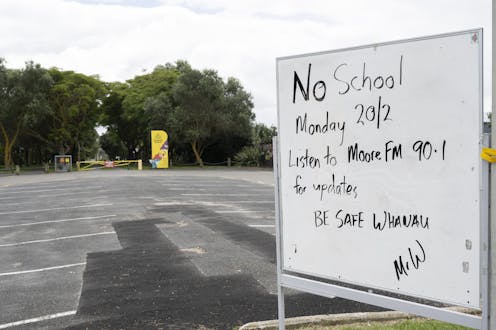
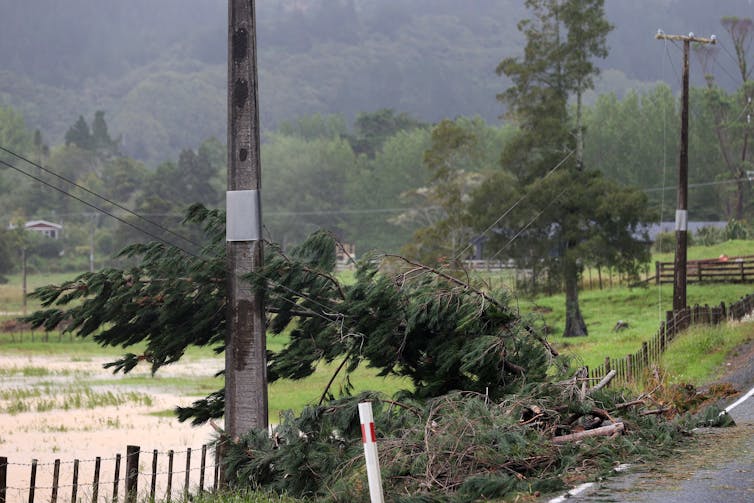
Old-fashioned AM radio was an information lifeline for many in Aotearoa New Zealand during last month’s Cyclone Gabrielle when other sources wilted without power.
Now a little-known arrangement that puts proceedings of Parliament on the air has been cited as a threat to its future. But is a switch-off really likely? And what’s being done to avoid it?
“Government websites are a waste of time. All they’ve got is a transistor radio — and they need to actually provide a means for these people who need the information to damn well get it,” Today FM’s afternoon host Mark Richardson told listeners angrily on the day the cyclone struck.
He was venting in response to listeners without power complaining online information was inaccessible, and pleading for the radio station to relay emergency updates over the air.
Mobile phone and data services were knocked out in many areas where electricity supplies to towers were cut — or faded away after back-up batteries drained after 4-8 hours. In some places FM radio transmission was knocked out but nationwide AM transmission was still available.
“This will sharpen the minds of people on just how important . . . legacy platforms like AM transmission are in Civil Defence emergencies,” RNZ news chief Richard Sutherland told Mediawatch soon after.
“We are going to need to think very carefully about how we provide the belt and braces in terms of broadcasting infrastructure for this country as a result of this,” he said.
Future of AM questioned But while Gabrielle was still blowing — the future of AM was called into question.
On February 15, Clerk of the House David Wilson told a Select Committee he might have to cut a $1.3 million annual contract to broadcast Parliament on AM radio after 87 years on air.
The next day The New Zealand Herald’s Thomas Coughlan reported “radio silence could come as soon as the next financial year on July 1 unless additional funding is found in the next Budget in May”.
In last Sunday’s edition of RNZ’s programme The House (also paid for by the Office of the Clerk), Wilson explained his spending cannot exceed his annual appropriation.
He said costs have gone up and the AM radio contract might have to go to make ends meet.
RNZ reporter Phil Pennington discovered for himself how handy AM transmission was when he was dispatched from Wellington to Hawke’s Bay when Cyclone Gabrielle struck.
Several times on the road he had to switch to AM when FM transmission dropped out.
Sustainability issue “It puts a huge question mark on its sustainability because the money that the Clerk pays for us to broadcast Parliament underpins the entire network,” RNZ chief executive Paul Thompson told Pennington this week.
“It is an irony that at a time when New Zealand has had one of its biggest lessons about the importance of AM, it also has this challenge around its viability,” Thompson said.
It was also a time when the funding of RNZ is under review after the collapse of the government plan for a new public media entity with an annual budget of $109 million. RNZ’s current annual budget is $48m.
“It puts a lot of pressure on us as an organisation. We won’t be able to pick up the ($1.3m) cost. The parliamentary contract is a significant contributor to RNZ being able to maintain the AM network nationally,” Thompson said.
“If that money is not available, closing the network is not going to be feasible. This is such an important asset for New Zealand — a truly critical information lifeline. We will have to find a way of keeping it going,” he said.
Some RNZ Morning Report listeners were alarmed by question marks over AM’s future.
“I live in Central Hawke’s Bay. AM is the only strong signal. Do not stop broadcasting on that frequency. We love you, stay with us,” Cam said.
Questions over AM network’s funding despite its essential status in disasters https://t.co/Ie9KUBL8Sd
FM off air in Gisborne “RNZ FM was off air in Gisborne for two days during Gabrielle. But RNZ on AM kept going. It absolutely must be kept,” Gisborne’s Glen said.
There are in fact two AM networks run by RNZ.
One broadcasts RNZ National from transmission sites all over the country.
The other carries Parliament and is broadcast from fewer transmission sites and on a range of frequencies in different parts of the country. It also airs programmes for customers including religious network Southern Star.
Iwi broadcasters and some commercial broadcasters also use RNZ sites to broadcast locally.
When RNZ shut AM transmission down in Northland last November, the government urgently injected $1.5 million to upgrade the aging sites.
At the time, Emergency Management Minister Kieran McAnulty said radio was “a critical information channel to help reach New Zealanders in an emergency”.
Other AM sites He said Manatū Taonga/the Ministry for Culture and Heritage, NEMA, and RNZ were all “collaborating to develop criteria for future decisions about other AM sites to make sure communities are able to stay connected and access critical warnings and guidance in emergencies”.
Clearly it is a problem if an important national emergency service owned and run by the public broadcaster can be jeopardised by pressure on a fixed budget at the discretion of Parliament’s Clerk.
When RNZ’s Phil Pennington asked NEMA to comment on the future of the AM network this week, his request was referred to Broadcasting Minister Willie Jackson.
Jackson is also the Minister of Māori Development, which oversees Māori Broadcasting, including for Te Whakaruruhau o nga reo Irirangi, the umbrella group of iwi radio broadcasters around the country. Jackson was the chair of Te Whakaruruhau before he entered Parliament again in 2017.
After the government scrapped the plan for a new public media entity last month, Jackson will have to go back to cabinet with a new plan to address RNZ’s future funding.
Jackson was one of the ministers on the ground in the regions hit by Cyclone Gabrielle and overseeing the emergency response — and was unavailable for interview on Mediawatch this week.
Citing Northland His office supplied a statement citing that intervention in Northland last year.
“AM transmission is a key priority for the government. Officials from Manatū Taonga, NEMA and RNZ are working closely to ensure radio services (including AM transmission) are always available for people in an emergency,” it said.
“Long-term work to develop funding approaches is also underway to ensure RNZ’s AM transmission strategy continues — and the minister is considering this as part of a package to strengthen public media and will be returning to cabinet with proposals soon,” the statement said.
Before Gabrielle, provisions for AM broadcasting would have been low on the list for reporters scrutinising the minister’s latest cabinet plan for RNZ’s funding.
After Gabrielle, it will be one of the first things they look for.
This article is republished under a community partnership agreement with RNZ.
Ni-Vanuatu residents have emerged battered but still standing after Cyclone Kevin swiped the country with a strong backhand.
“It was quite exhausting. Dealing with two cyclones in three days is pretty draining, you know,” Vanuatu journalist Dan McGarry told RNZ Pacific.
He said the gale-force winds have been rough. He woke early on Saturday morning to try and get a sense of the extent of the damage.
He went outside in the dark to charge his phone, and when the sun came up it was a real eyesore.
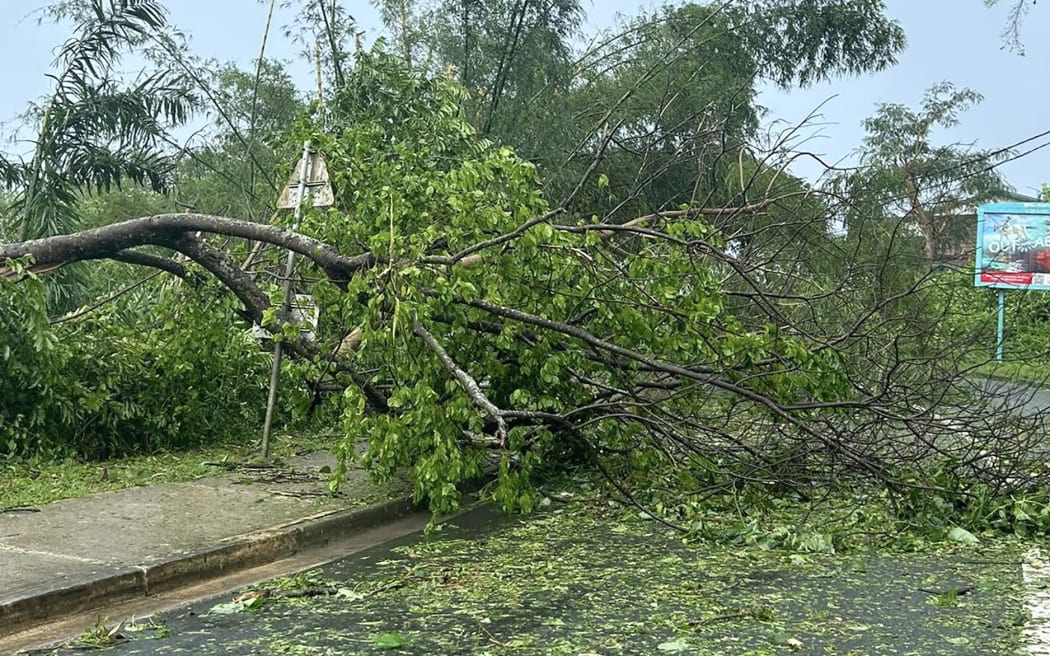
“Our own laneway is blocked off. We’ve got tree limbs all the way up and down,” he said.
After clearing the way, he was able to get out and about and have a look around.
Port Vila had been badly knocked about. McGarry came across a mango tree that landed directly on top of a minibus.
“And then the wind lifted the entire tree and dumped it a metre-and-a-half away,” he said.
Fuel was in short supply and a boil water order was in effect, McGarry said.
Many people were at the few hardware stores that were open, trying to buy tools to repair their properties, he said.
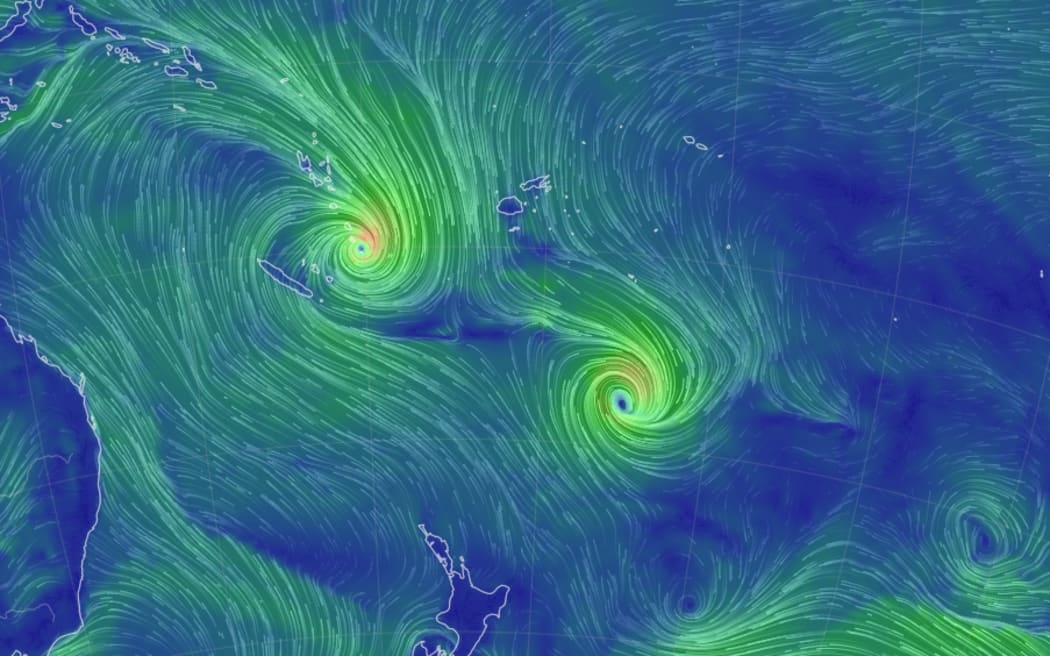
Cyclone Kevin and Cyclone Judy as pictured on Earth Nullschool today. Image: Nullschool/RNZ Pacific
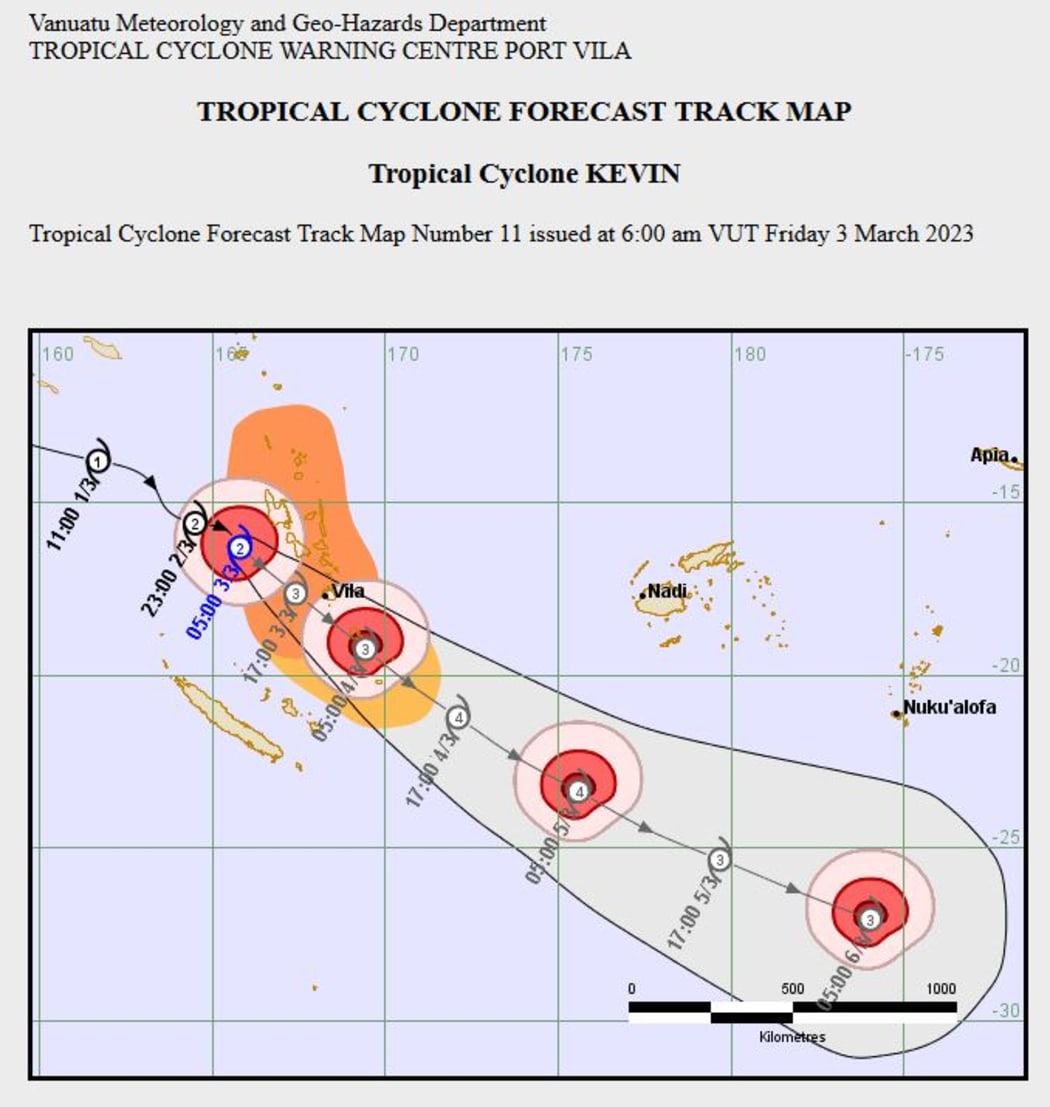
On Saturday evening, the Fiji Meteorological Office said the severe tropical storm remained a category five, and was centred in the ocean near Conway Reef.
Tafea province in Vanuatu, which was under a red alert as Kevin tracked south-east, had been given the all clear.
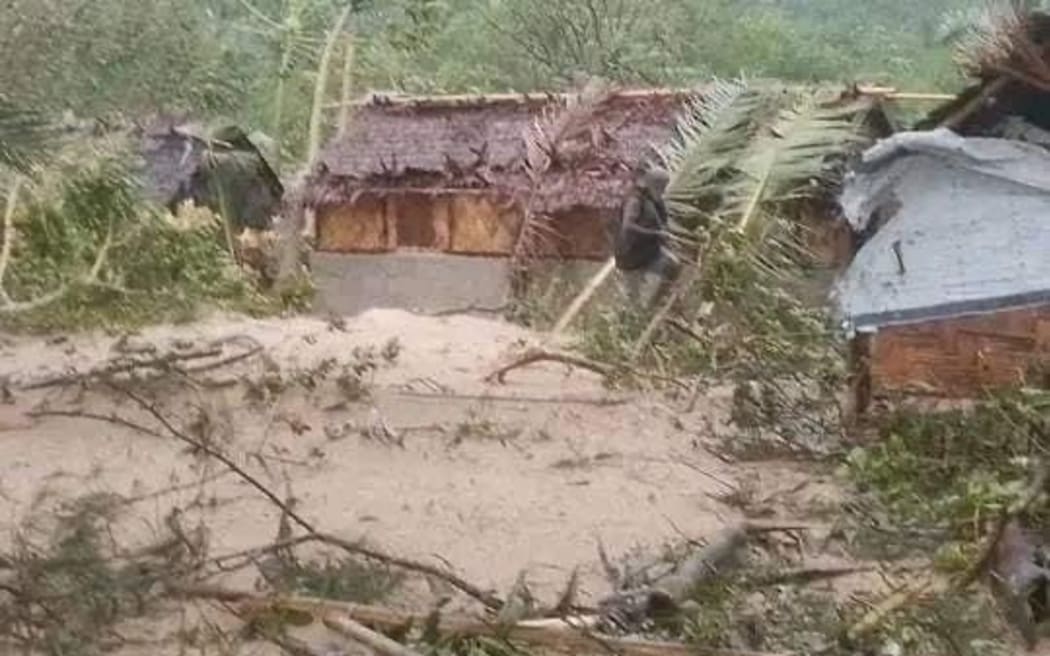
An Australian Air Force reconnaissance flight over Tafea province was reported to have shown some intact settlements and still some greenery.
— Jean-Baptiste Jeangène Vilmer (@jeangene_vilmer) March 3, 2023
No casualties had been immediately reported but hundreds of people fled to evacuation centres in the capital Port Vila, where Kevin blasted through as a category four storm.
Foreign aid needed Vanuatu needs support from its international partners.
“There is going to be a significant need — this is not something Vanuatu can do alone, so the assistance of these partners is going to be critical to a speedy and effective response,” McGarry said.
He believed cooperation from donor partners was needed. France has already received a request to send a patrol plane, he said.
“I expect that New Zealand would be putting a P3 in the air before very long. Australia has already committed to sending a rapid assessment team.”
Stephen Meke, tropical cyclone forecaster with the Fiji Meteorological Service, said cyclone response teams and aid workers wanting to help should plan to travel to Vanuatu from Sunday onwards, as the weather system is forecast to lose momentum then.
“Kevin intensified into a category four system,” Meke said. “It was very close to just passing over Tanna. So it’s expected to continue diving southeastwards as a category four, then the weakening from from tomorrow onwards.”
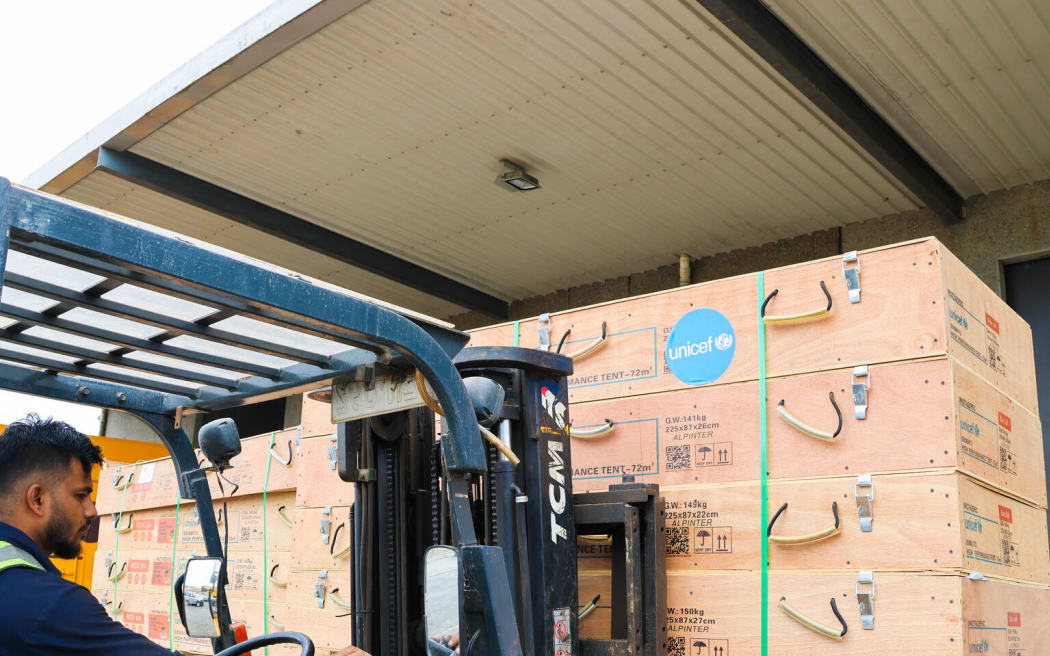
A UNICEF spokesperson said its team was preparing to ship essential emergency supplies from Fiji in addition to emergency supplies already prepositioned in Vanuatu.
“These include tents, tarpaulins, education, and health supplies to support immediate response needs in the aftermath of the two devastating cyclones.”
New Zealand’s Ministry of Foreign Affairs said it was working with the Vanuatu government and partners to see what help it could offer.
An MFAT spokesperson said New Zealand had first-hand experience of the challenges Vanuatu faced in the coming days and weeks. It had been challenging making contact with people because of damaged communications systems, they said.
Sixty-three New Zealanders are registered on the SafeTravel website as being in Vanuatu.
UNICEF was preparing to ship tents, tarpaulins, education, and health supplies to support immediate response needs on the ground. Image: UNICEF/RNZ Pacific
Parts of Vanuatu have plunged into a six-month-long state of emergency.
Evacuations in Port Vila The Fiji Meteorological Office said Port Vila experienced the full force of Kevin’s winds. Evacuations took place in the capital.
McGarry said he knew of one family that had to escape their property and shelter at a separate home.
“The entire group spent the entire night standing in the middle of the room because the place is just drenched with water.
“So it’s been an uncomfortable night for many, and possibly quite a dangerous one for some.”
This article is republished under a community partnership agreement with RNZ.
The United Liberation Movement for West Papua has condemned an Indonesian government protest over Fiji Prime Minister Sitiveni Rabuka’s declared support for ULMWP full membership of the Melanesian Spearhead Group (MSG) as “grotesque hypocrisy”.
“This is an act of grotesque hypocrisy, as we have come to expect from President [Joko] Widodo. How can he support self-determination in one case and not the other?” said Wenda.
“What is the difference between West Papua and Palestine?” he asked.
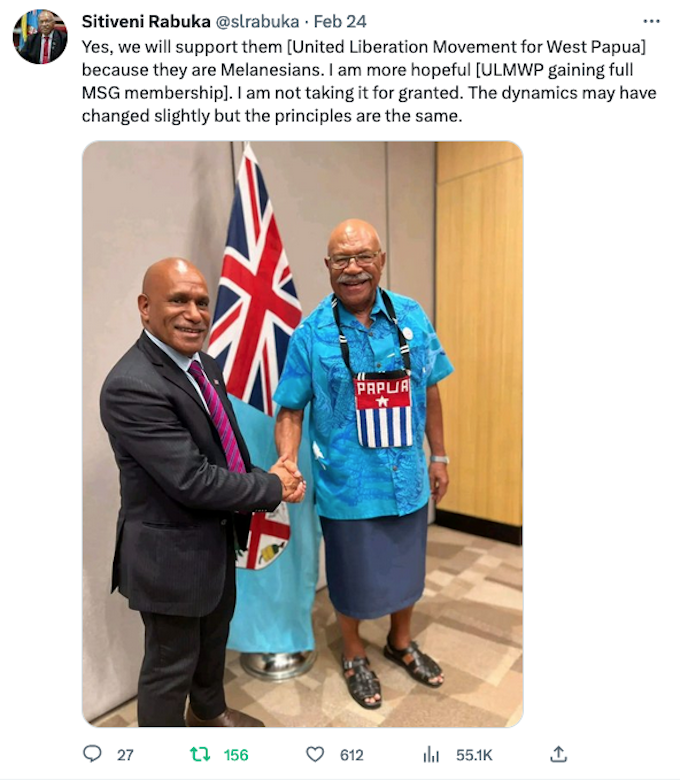
Wenda met Prime Minister Rabuka in Suva and presented him with a noken — a traditional string bag woven in the colours of independence — and a Morning Star flag, the banned symbol of independence.
Rabuka tweeted confirmation of his support for the ULMWP’s bid to be full members of the MSG “because they are Melanesians” of the Pacific.
But he added that “I am not taking it for granted”.
Careful over sovereignty In interviews he has said that care needed to be taken over the sovereignty issue.
However, Rabuka’s warm reception of Wenda and his tweet have been interpreted as a significant departure from the stance taken by Fiji during 16 years of former prime minister Voreqe Bainimarama’s leadership.
Yes, we will support them [United Liberation Movement for West Papua] because they are Melanesians. I am more hopeful [ULMWP gaining full MSG membership]. I am not taking it for granted. The dynamics may have changed slightly but the principles are the same. pic.twitter.com/9J8qpAVhak
Both Fiji and Papua New Guinea have been resistant to full ULMWP membership in an attempt to retain good relations with Indonesia, which is an associate member. The other MSG members are Solomon islands, Vanuatu and the Kanak and Socialist National Liberation Front (FLNKS) in French-ruled New Caledonia with the ULMWP as observers.
Prime Minister Rabuka’s meeting with Wenda and promise of support provoked a diplomatic protest to Fiji by Jakarta.
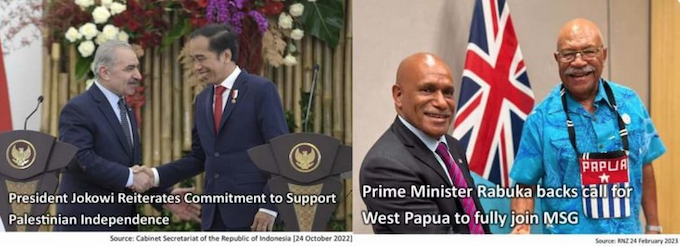
Yet just last October, President Widodo welcomed Palestinian Prime Minister Mohammad Shtayyeh to Jakarta and reaffirmed his commitment to “support Palestine’s struggle amid immense challenges”.
In his statement, Wenda said Indonesia claimed its rule over West Papua was a “done deal”, but the country’s 60-year occupation was based on “a fraud that is fast unravelling”.
UN supervised ‘this fraud’ “Only 1022 hand-picked West Papuans, out of a population of more than 800,000, were intimidated and bribed into voting for integration into Indonesia. The United Nations may have supervised this fraud, but they did not endorse it, only taking note of its outcome.
“Though West Papua was added to the UN decolonisation list in preparation for our independence, Indonesia ensured it was removed after they invaded our territory in 1963.
“Since then, more than 500,000 West Papuans have been killed, hundreds of thousands have been displaced and replaced by Indonesian settlers, we have suffered massacres in Paniai, Wamena, Wasior, Biak, Abepura, and many other places.”
Wenda said Indonesia was right to support the Palestinian struggle.
“Our culture, our customs, our ethnicity, and our traditions are all Melanesian. For 60 years our voices have been silenced, our cause brushed under the carpet by the international community.
“Now that Melanesian leaders are standing up for their brothers and sisters in West Papua, the web of lies Indonesia has told the world about West Papua is collapsing under their own hypocrisy.”
“Last month, Papuans across the Nduga Regency were forced to flee their homes, adding to the nearly-50,000 [people] who have been displaced there since 2018.
“When you displace villagers and tribal peoples, they lose their hunting grounds, their rivers, their whole way of life. This is all part of a longstanding strategy of ethnic cleansing, for Indonesia to remove us from our ancestral lands and replace us with mines, plantations, and Indonesian settlers.
“West Papuans are not safe with Indonesia: our very existence as a distinct people is under mortal threat.”
Wenda said these developments showed that international intervention was needed in West Papua.
Indonesia needed to stop blocking the visit of the UN High Commissioner for Human Rights, which had been demanded by eighty-four countries.
“President Widodo, the coverup is coming to an end, and the world is paying attention,” Wenda said. “We are only calling for your commitment to Palestinian liberation to be extended to West Papua.”
Contrasting scenes . . . Jakarta’s YES to Indonesia’s President Jokowi supporting Palestinian Prime Minister Mohammad Shtayyeh; but NO to ULMWP president Benny Wenda with Fiji Prime Minister Sitiveni Rabuka. Image: ULMWP
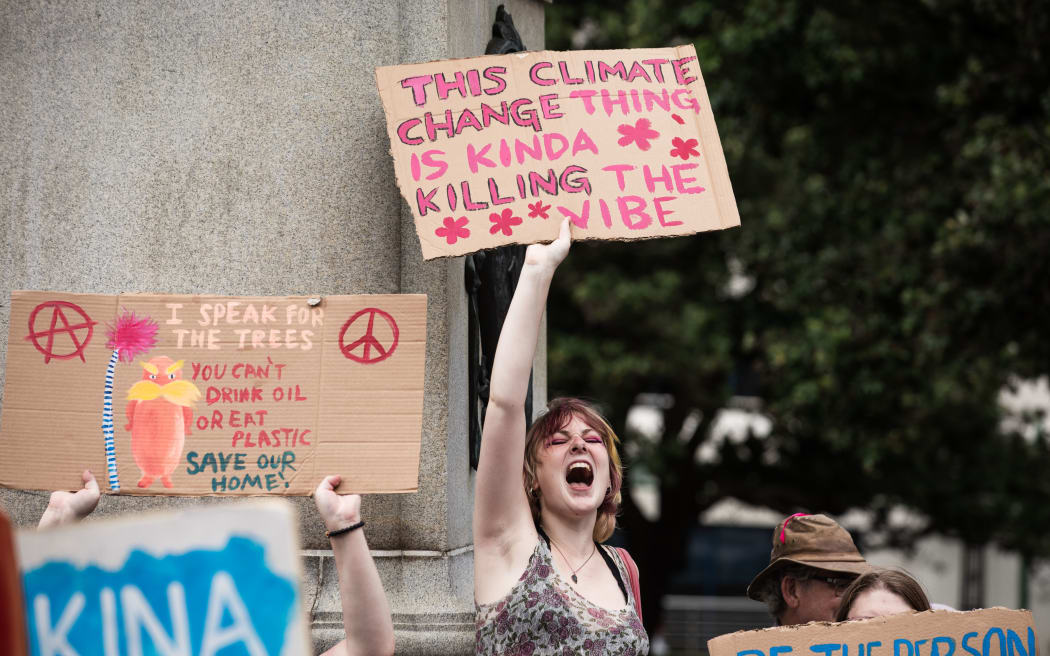
Other demands include greater marine protection, funding a transition to regenerative farming and lowering the voting age to 16.
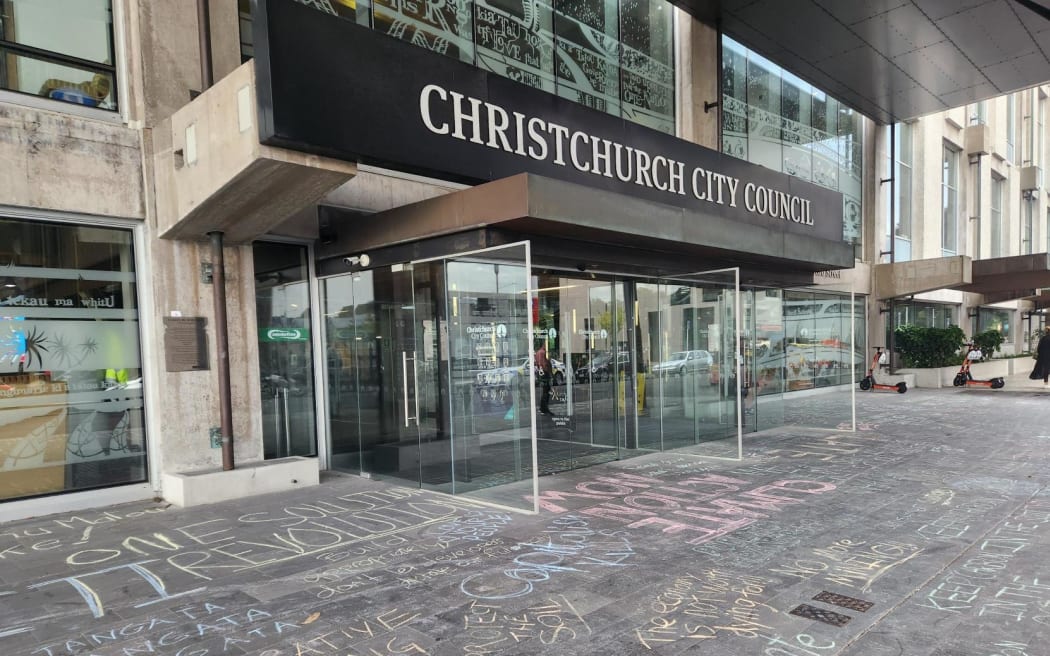
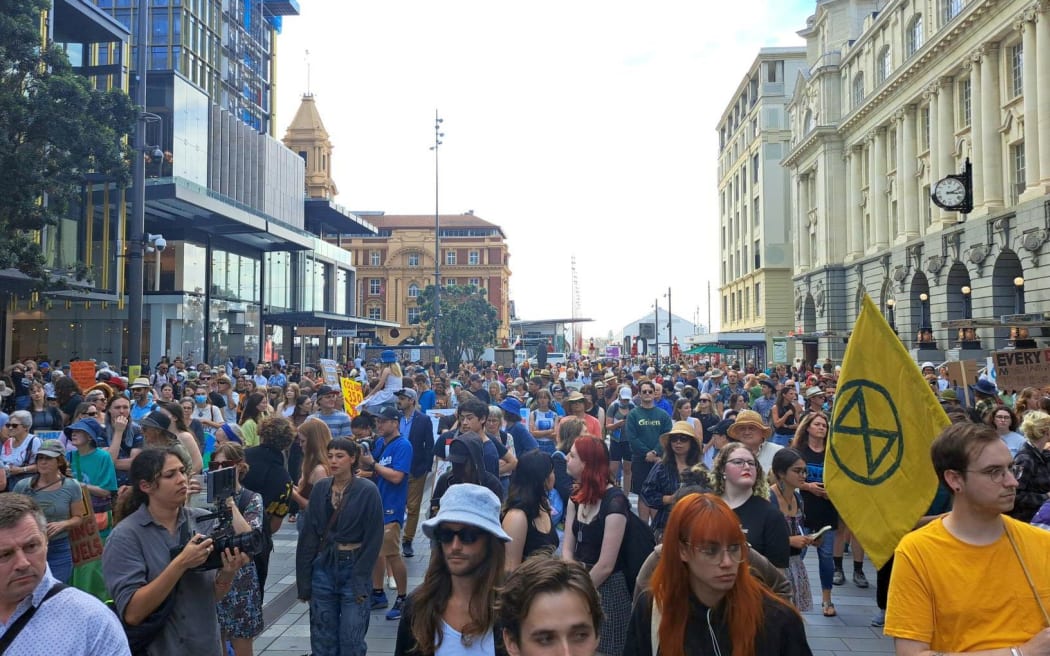
Earlier this evening in Christchurch, young climate activists breached the doors of the city council offices and staged a sit-in.
One of the organisers for School Strike for Climate Ōtautahi, Aurora Garmer-Ramdolph, said the group had been planning to protest at the council’s office for a while.
‘Strike protests a long time’ “We feel that we’ve been having these strike protests for a long time now.
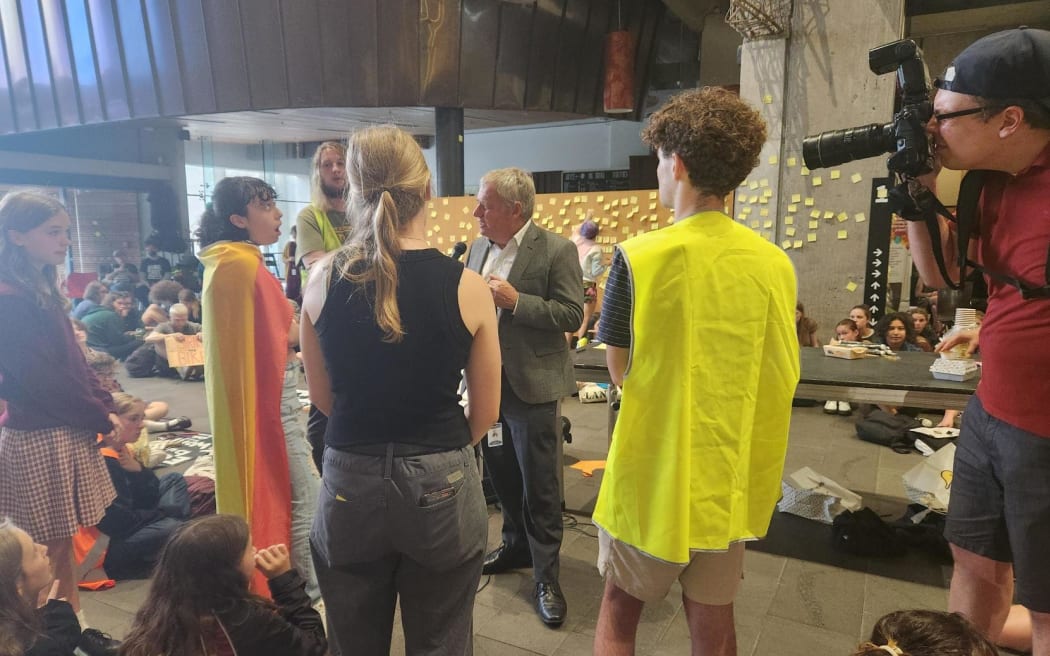
Christchurch mayor Phil Mauger (centre) speaking with climate protesters at the city council headquarters. Image: Anna Sargent/RNZ News
“Young people, people of all generations have been showing up in the streets to protest for climate action and we’re not seeing the change that we need, so we’ve decided to step it up this time. We decided to come directly into the Christchurch City Council.”
Garmer-Ramdolph said the group’s key demand is that the council retracts its support for the proposed new international airport at Tarras in Central Otago.
Climate Strike protesters in Wellington today. Image: Samuel Rillstone/RNZ News
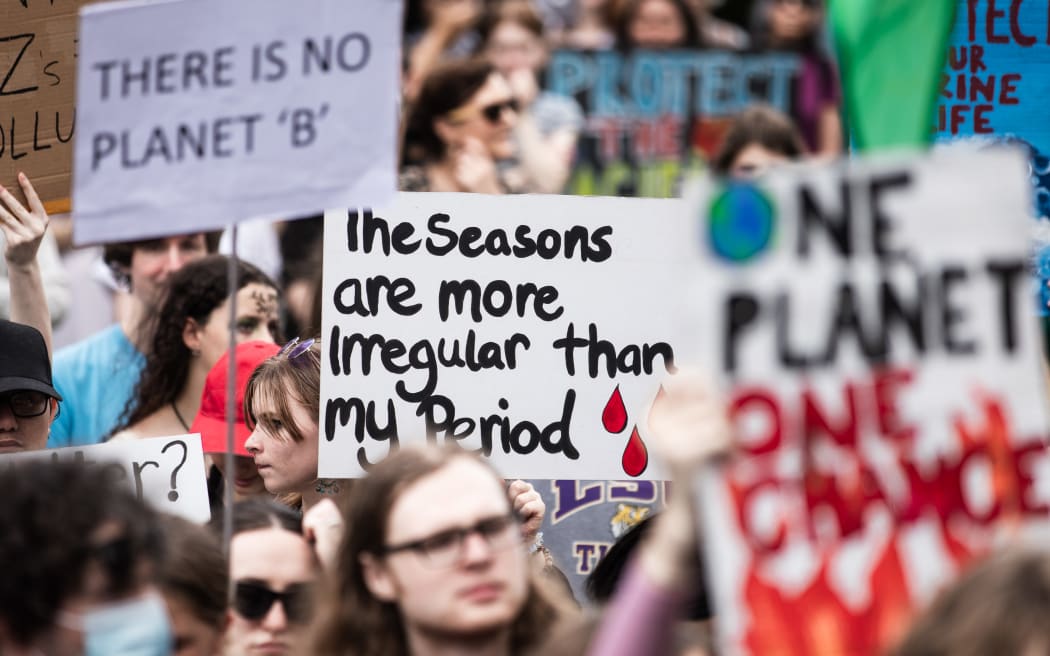
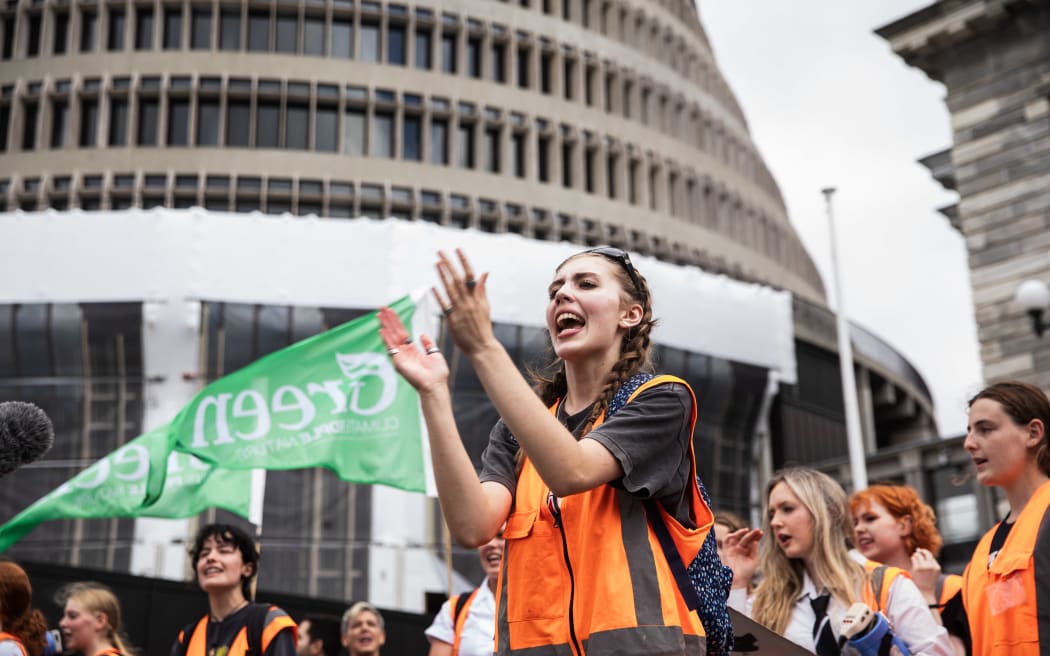
More than 1000 people of all ages joined the Wellington march, which arrived at Parliament in the afternoon.
Speaking after the march to Parliament, Te Umanako Waa said the horrific weather events of the last few weeks should be a wake-up call for those in authority.
“I feel like the facts are in their face. The students, the people, everyone is telling them what needs to be done.
“If the response for covid can happen this quick surely the response for a worldwide disaster, a natural breakdown, can happen too.
“It’s really important that we hold our leaders to account.”
Time for politicians to take notice Waa said it was time for politicians to take notice of what their citizens were telling them.
The crowd of protesters, who were mainly young people, stretched half the length of Lambton Quay, with shoppers stopping in doorways to watch them pass, some breaking into spontaneous applause.
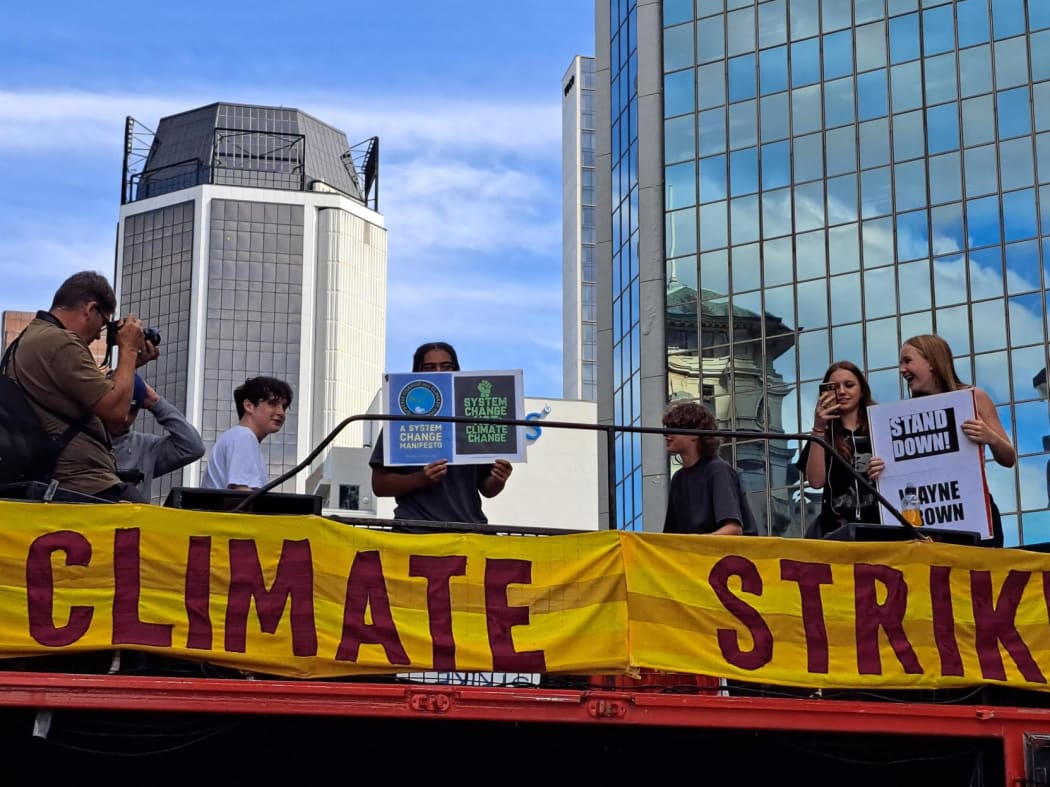
In Auckland, the march began at Britomart Station and went to Victoria Park, where a concert continued until 7pm.
Addressing the crowd at the Auckland march, the co-president of Unite Union Xavier Walsh said the government had failed to deliver the radical change needed to tackle the climate crisis.
“Plans by the opposition, such as to reopen deep sea oil drilling, would make the situation even worse — and that is a shame.
“So I say to the Labour and National parties, I can smell the fossil fuels on your breath!”
Walsh said real change will only come from ordinary people standing together and refusing to accept injustice.
Protesters left chalk messages outside Christchurch City Council. Image: RNZ News
Auckland Transport warned of delays Auckland Transport said more than 1000 people were expected to march in the city. Public transport users could also expect detours, cancellations and delays.
In Wellington, the protesters marched down Lambton Quay before gathering at Parliament.
Student Breeana was among them.
She told RNZ it was important to protest for a better future.
“Most people in the older generation assume we do it … well, I’ve had a lot of people say you’re just doing this to get out of going to classes.
“We have to grow up with this. This is our future that we’re trying to prepare for and our planet. We don’t have another option.”
Wellington Mayor Tory Whanau was also among them.
She used the opportunity to tell the crowd in order to get climate justice, the right politicians needed to be voted into central government.
“Now I know that your Minister for Climate Change is listening. I know he backs the kaupapa. So my message to you, this year, it is election year.
‘Vote for environment parties’ “So if you can vote, make sure you vote for the parties that put the environment at the top of their priorities.”
Students also gathered near Nelson’s church steps as part of the global climate strike calling for change.
Garin College student Nate Wilbourne said they were demanding transparent and meaningful climate action from decision-makers.
He said the evidence of climate change was clear.
Nate Wilbourne said teenagers had many concerns about the environment.
Climate strikers wanted to see real commitment to achieve climate goals from policy and decision makers, Wilbourne said.
They marched to the Nelson City Council buildings this afternoon to present a letter to Mayor Nick Smith calling for free public transport, he said.
Wellington climate strikers today. Image: Samuel Rillstone/RNZ News
‘This is going to be a climate election’ – Greens co-leader Labour will have to commit to stronger climate change policy if it wants the Green Party’s support come election 2023, Greens co-leader James Shaw said.
Shaw made the comments to reporters on Parliament’s forecourt after speaking to climate inaction protesters.
“Frankly, this election is going to be a climate change election and it is clear from the experience that we’ve had over the course of the last month that we’re now living in an age of consequences,” he said.
“I think if any political party wants the Greens’ support they’re going to have to come to the table.”
Shaw said he could not imagine a scenario where he would choose to work with the National Party over Labour.
“If you look at National’s track record in the last 20 years on climate change it’s frankly appalling and while they say that they’re committed to the targets we’ve committed to, they’ve actually voted against every single policy we’ve put in place to meet those targets without proposing alternatives.”
Shaw said he hoped everyone, including politicians from all parties, would support stronger climate policy in the wake of terrible weather events.
Cyclone ‘wake up’ call for politicians “I really hope that if anything, the experience that people have had of the cyclone and the floods in such close proximity will cause politicians to wake up and start to take it seriously and treat it at the level of emergency that it actually is.”
Speaking from Christchurch on Friday, Prime Minister Chris Hipkins said the government was making a lot of progress on many of the topics students were striking about.
“Climate change has been at the forefront of the government’s agenda for the past five years and it will continue to be so,” Hipkins told reporters.
“If you look at the emissions reduction plans that we’ve already set out, you can see that we’re making significant progress — of course we’ve still got some heavy lifting to do though, there’s no question about that and the government’s absolutely committed to doing it.”
There was no question we were seeing the effects of climate change here and now, Hipkins said.
Climate strikers in Auckland. Image: Luka Forman/RNZ News
“What’s happened with our flooding, with the cyclone, we’re going to see more of these sorts of events, and that just I think underscores to New Zealand how important it is that we do two things: one is that we do everything we can to reduce climate change, the human-induced effects on the climate,” he said.
“The second is that we also look at how we can be more resilient and how we can make sure that we’re adapting to accept that actually there are going to be more of these sorts of events in the future.
‘It doesn’t happen overnight’ “Many of the things that are going to make the biggest difference to our emissions are going to take some time, so when we think about transitioning to more renewable energy use … that doesn’t happen overnight, it requires some hard work and some ongoing work to make that happen.”
On the voting age, he said people should expect to hear something further on the government’s intentions on that soon.
“The courts made a ruling, Parliament now has to consider that, that’s been referred to a select committee for consideration. How the government ultimately responds to that process is something that we will turn our minds to in due course.”
New Zealanders on average in 2021 produced 6.59 tonnes of carbon dioxide each — about 40 percent above the world average, according to the Our World In Data Global Carbon Project.
Climate Action Tracker, an international project which rates countries’ efforts towards meeting their climate obligations, ranks New Zealand’s efforts overall as “highly insufficient”.
Protesters at the school climate strike in Auckland’s CBD today. mage: Luka Forman/RNZ News
New Zealand’s farming industry also produces a lot of methane, which though it does not remain in the atmosphere as long as CO2, traps a lot more heat.
‘No time for finger-pointing’ But the country’s small population meant it contributed only about 0.09 percent of the world’s total C02 emissions.
Garner-Randolph said it did not matter that Aotearoa only accounted for a tiny fraction of the world’s emissions.
“Now isn’t the time for finger-pointing and saying, ‘Oh other countries are producing far more emissions.’ It’s our responsibility as global citizens, as players on the global stage, to step up and do our part, no matter how big or small it is.
“And we have incredibly high per capita emissions here in Aotearoa, so although we may be small, we are high individual emitters and that needs to change.”
The last school climate strikes took place in September.
This article is republished under a community partnership agreement with RNZ.
Wellington climate strikers today. Image: Samuel Rillstone/RNZ News
Source: The Conversation (Au and NZ) – By Janet Fanslow, Associate Professor in Violence Prevention and Mental Health Promotion, University of Auckland
Shutterstock/Frame Studio
More than half (54.7%) of women in New Zealand have experienced violence or abuse by an intimate partner in their lifetime. As we show in our new research, this increases their risk of developing a mental health disorder almost three times (2.8 times) and a chronic physical illness almost twice (1.5 times).
More than 1,400 women from a nationally representative sample from the 2019 New Zealand family violence study He Koiora Matapopore told us about their experiences of intimate partner violence and their health. We asked them about chronic health problems (heart disease, cancer, stroke, diabetes and asthma) as well as mental health conditions (depression, anxiety or substance abuse).
We also asked women about their lifetime experiences of physical violence, sexual violence, psychological abuse, controlling behaviour and economic abuse by any partner. We used questions from the World Health Organization multi-country study on women’s health and domestic violence against women – the international gold standard for measuring the prevalence of violence against women.
In addition to the physical and mental health problems described above, women who had experienced any of these types of intimate partner violence had increased risk of poor general health (2 times more likely), recent pain or discomfort (1.8 times more likely) and recent healthcare consultations (1.3 times more likely).
Physical and sexual violence hurts people, but it wasn’t just this type of violence that was associated with increased health problems. Women who experienced psychological abuse, controlling behaviours and economic abuse also had greater risk of adverse health outcomes.
It is common for women to experience multiple types of intimate partner violence. One in five women reported experiencing three or more types of partner abuse, and these women had a much higher risk of poor health.
More than one in ten (11%) had experienced four or more types of abuse and these women were over four times more likely to have a mental health condition and double the risk of chronic health problems, compared with women who had not experienced violence by a partner.
Our study reports on lifetime rates of intimate partner violence, but new and recurring violence keeps happening. There were 175,573 family harm investigations recorded by police in the year to June 2022. People who require police intervention may have even worse health than the women we talked to.
Our findings provide an even stronger rationale for supporting and strengthening strategies to counter the national scourge of intimate partner violence.
The Manatū Hauora/Ministry of Health’s violence intervention programme needs to receive more attention and funding, and Te Whatu Ora/Health New Zealand needs to prioritise implementation.
The programme has developed an infrastructure to provide evidence-based strategies for family violence assessments and intervention. However, it is not well embedded in the health system and needs strong policy, leadership and resourcing to achieve its potential. It also needs to be supported by the health infrastructure to put it into practice.
Fundamentally, healthcare professionals need to recognise violence experience as a health issue. Effective, regular training about the prevalence and health consequences of intimate partner violence is essential to enable healthcare professionals to help women who have experienced abuse.
This education needs to be embedded in core practitioner training. Universities need to step up to ensure healthcare professionals have the knowledge and skills they need to address the issue.
We also need to expand our suite of responses. These must include referral options to help women in times of acute danger and crisis, but also to support long-term recovery and healing from abuse.
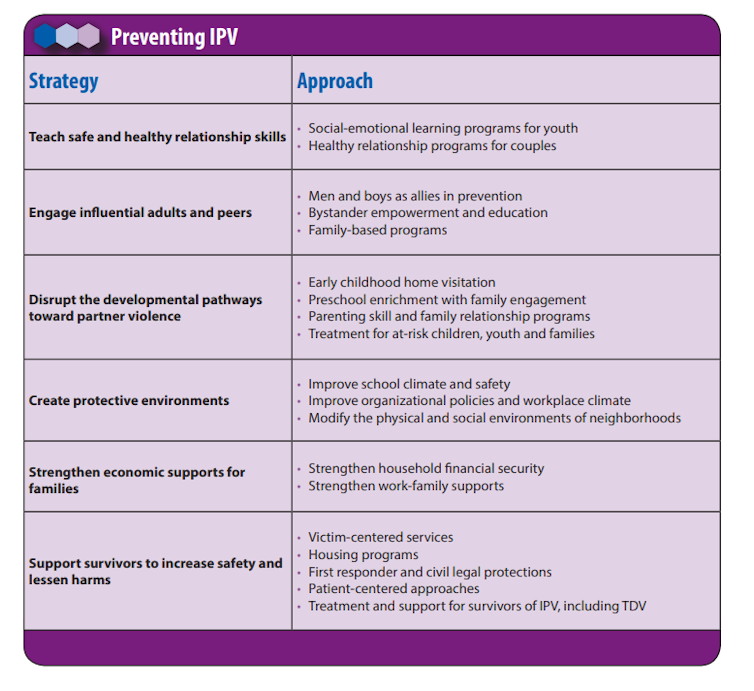
We need to invest in evidence-based prevention strategies and ensure they have comprehensive and equitable coverage across the nation. Prevention is one of the recommendations from Te Aorerekura, but the effectiveness of local efforts could get a significant boost if they tapped into internationalevidence-based prevention strategies.
Strategies to prevent and address the impact of intimate partner violence, developed by the US Centers for Disease Control and Prevention. CDC ATSDR, CC BY-ND
Prevention initiatives need to be brave enough to address unhealthy forms of masculinity and discrimination against women and girls. Targeting men’s and boys’ understanding of power and control in relationships and engaging them in violence prevention is both essential and possible.
Developing and sustaining evidence-based prevention and response programmes to address intimate partner violence will require long-term investment and implementation. However, we are already paying for the health and social costs of intimate partner violence. This money could instead be spent fixing it.
Our study also looked at men’s experiences of intimate partner violence. It
showed that while the experience can affect men’s health, it did not consistently contribute to men’s poor health at the population level. However, men who experience partner abuse still need care and support options.
Janet Fanslow has authored the Ministry of Health Family Violence Assessment and Intervention Guideline for Child Abuse and Intimate Partner Violence, and the Ministry of Health Intervention Guideline for Elder Abuse and Neglect.
The research described in this article was funded by the Ministry of Business, Innovation and Employment.
The Papua New Guinean government has been bluntly and frankly reminded to leave mainstream media alone as a long awaited consultative workshop on the recently introduced National Media Development Policy took place in Port Moresby.
Media stakeholders stood in unity with the PNG Media Council yesterday to express their concerns on the alleged threat it would pose if the government enforced control over the media in PNG.
Transparency International-PNG chair Peter Aitsi reminded the government that a “free and independent media deters corruption and underpins justice”.
“If we take some more independence away from the media, we [are] only adding more fuel to the flames of corruption,” Aitsi said.
TIPNG’s response to the policy was that licensing through a government-enforced process would be a threat to the media professionals and that there were already existing laws that the media was abiding by.
Also the draft policy did not explain why this was not sufficient to ensure accountability.
Before Aitsi spoke, PNG Media Council president Neville Choi said the purported policy was not encouraged and that the national government’s push to control narrative was not supported.
He stressed that every media house in PNG had its own complaints mechanism, own media code of ethics, code of conducts as guides and that there were laws that the media abided by. He saw no reason, based on the draft policy, for it to be progressed.
‘Lack of government support’ “We remind government, that the current level and standard of journalism performers is largely a result of lack of government support to the journalism schools and institutions in our country,” Choi said.
“And we remind government that before this policy was announced, the Media Council had already begun a reform process to address many of the concerns contained in this draft policy.
“We ask that this process be respected, and supported if there is a will to contribute to improving the work of the media.
“We call for full transparency and clarity on the purpose of this policy, and reject it in its current v2 form.
“And I say this on the record, so that this continues throughout the rest of this consultation process.
“We acknowledge that there are areas of concern from which solutions can be found in existing legislation and currently available avenues for legal redress.
‘Too much at stake’ “There is too much at stake for this to be rushed.
“There are too many media stakeholders, both within our country, the region, and internationally, who are watching closely the process of this policy formation.
“We all owe it to our future generations, to do this right.”
Prominent PNG journalist Scott Waide was also also highly critical of the government’s draft policy and warned against it going a step further.
Pacific Media Watch reports that last month Waide wrote a scathing critique of the policy on the Canberra-based DevPolicy blog at the Australian National University.
Gorethy Kennethis a senior PNG Post-Courier journalist. Republished with permission.
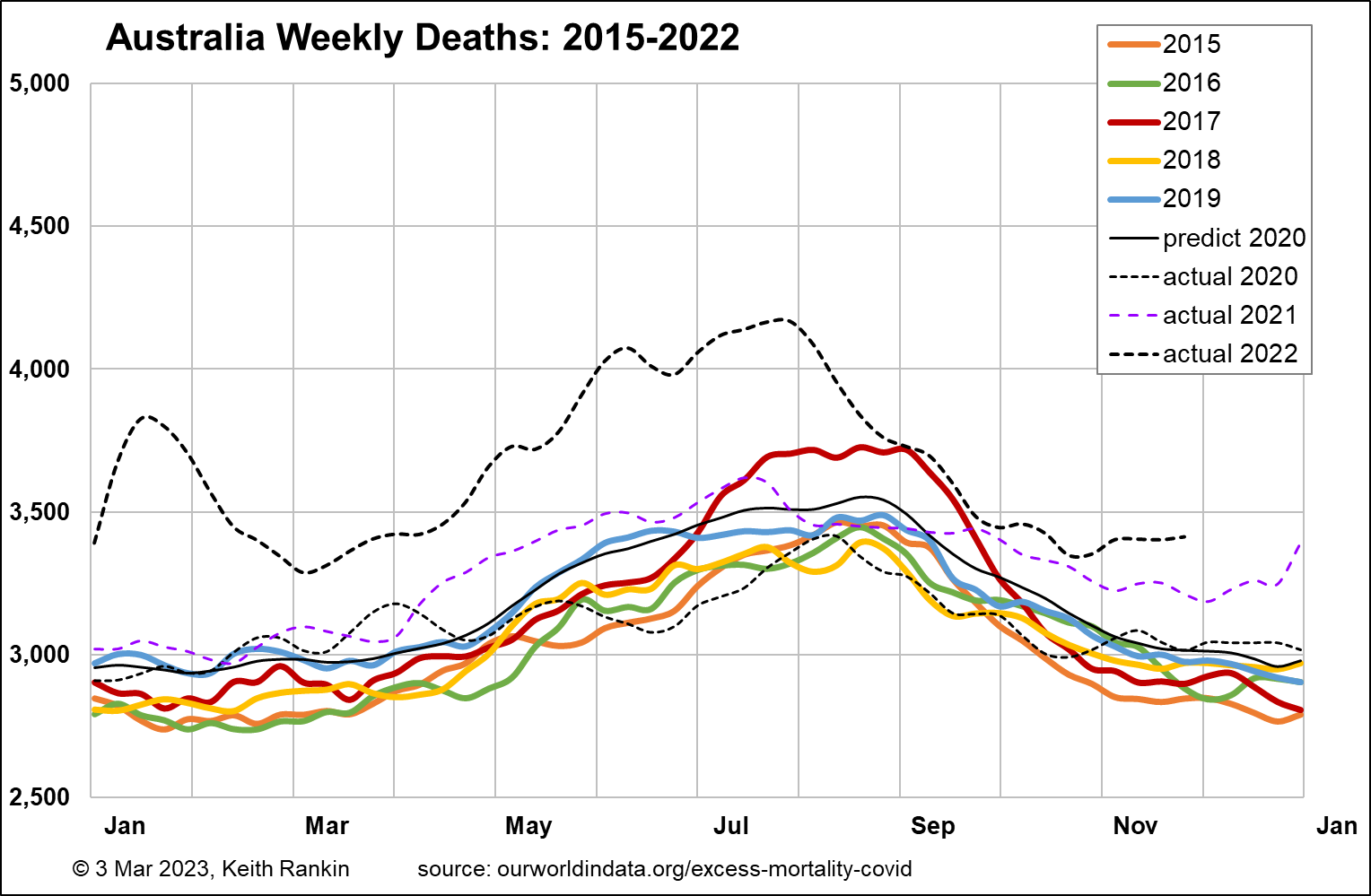
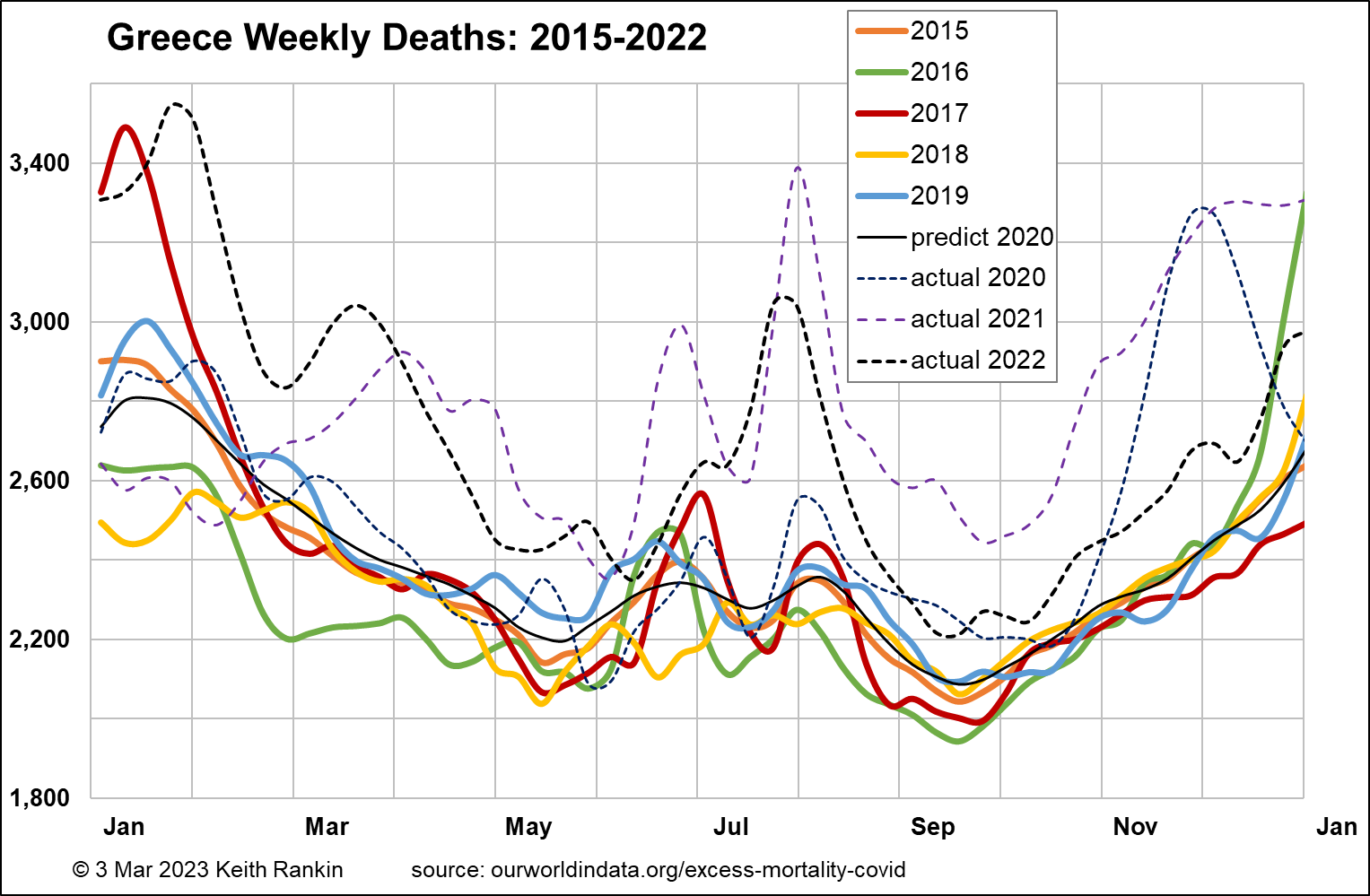
With mortality data now available for many countries to the end of 2022 (and, for a few countries, for a month into 2023), we are now able to properly assess the demographic cost of the Covid19 pandemic. There is a proviso, in that for a number of countries, December 2022 experienced substantial covid-related mortality, suggesting that the demographic consequences will last into 2023 and probably 2024. The demographic cost includes mortality indirectly caused by both the disease itself and unintended consequences of the public health measures taken to contain the covid coronavirus.
It is important to note that there is an additional impact – the socio-economic impact – arising from the pandemic; a disruptive impact on the living, adverse on balance, that cannot be measured by death tolls, though which may be reflected if life expectancies beyond 2023 fall below previous projections. This is a ‘quality of life’ rather than a ‘quantity of life’ consequence of the public health events of 2020 and 2020.
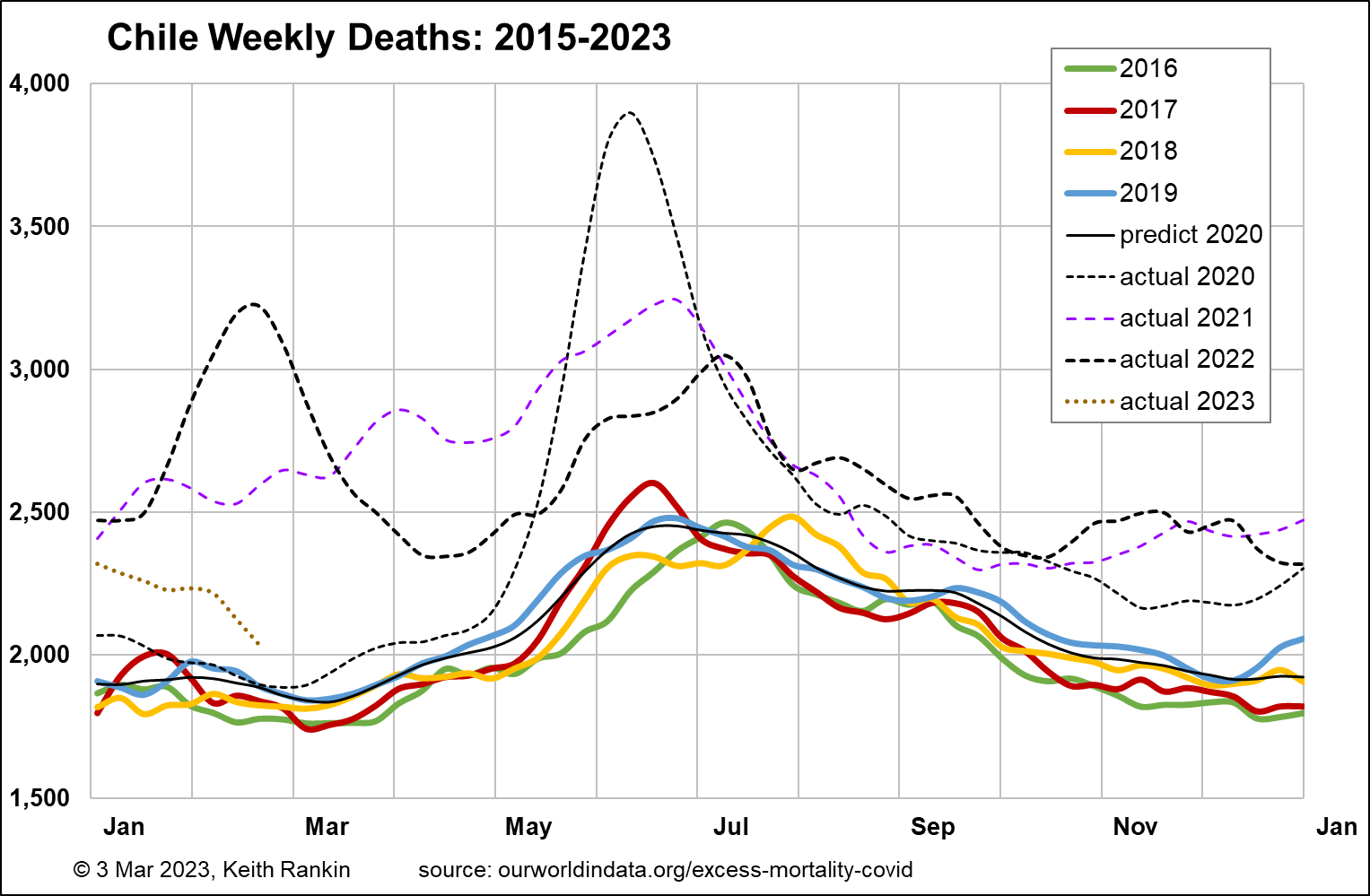
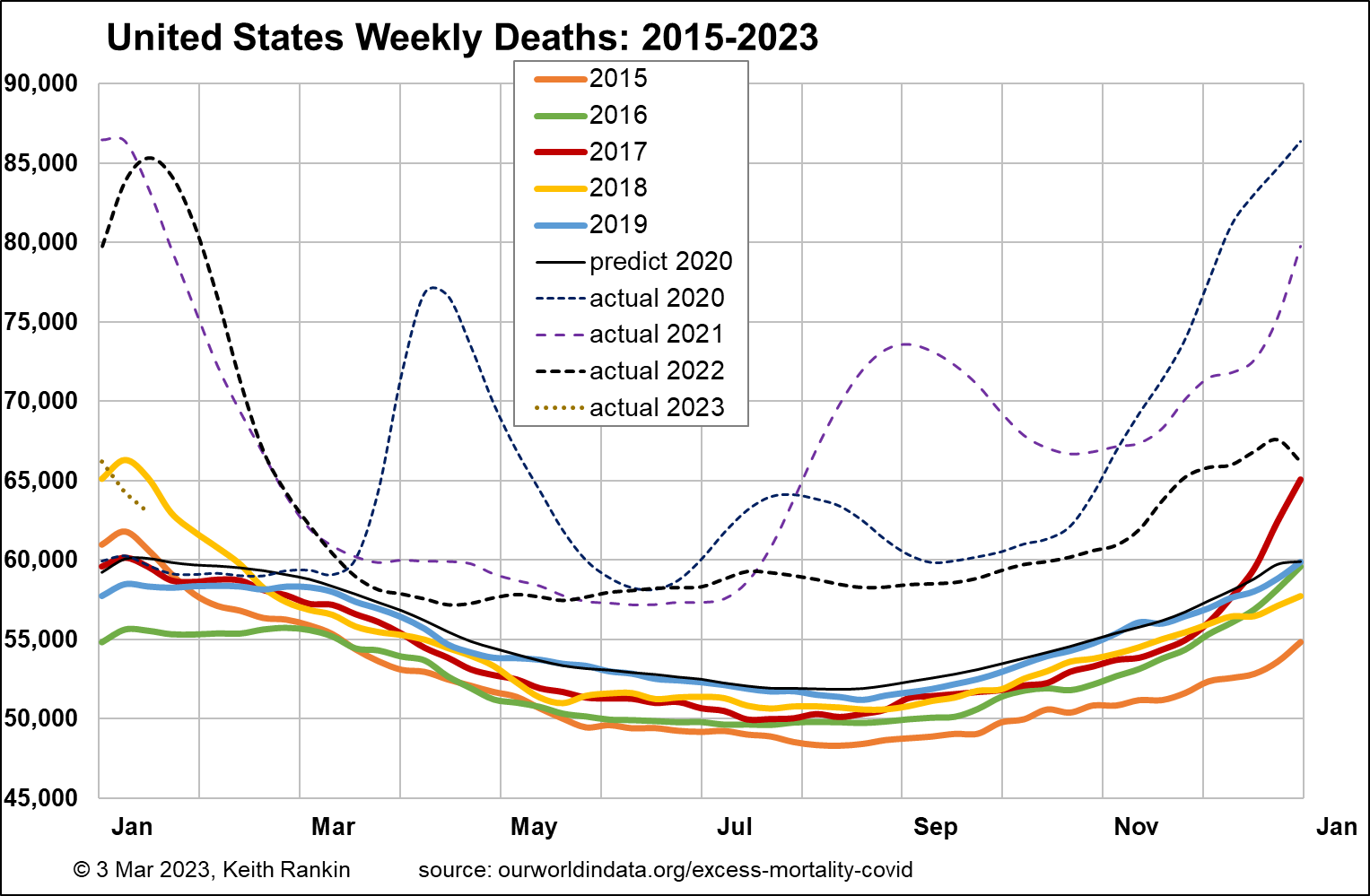
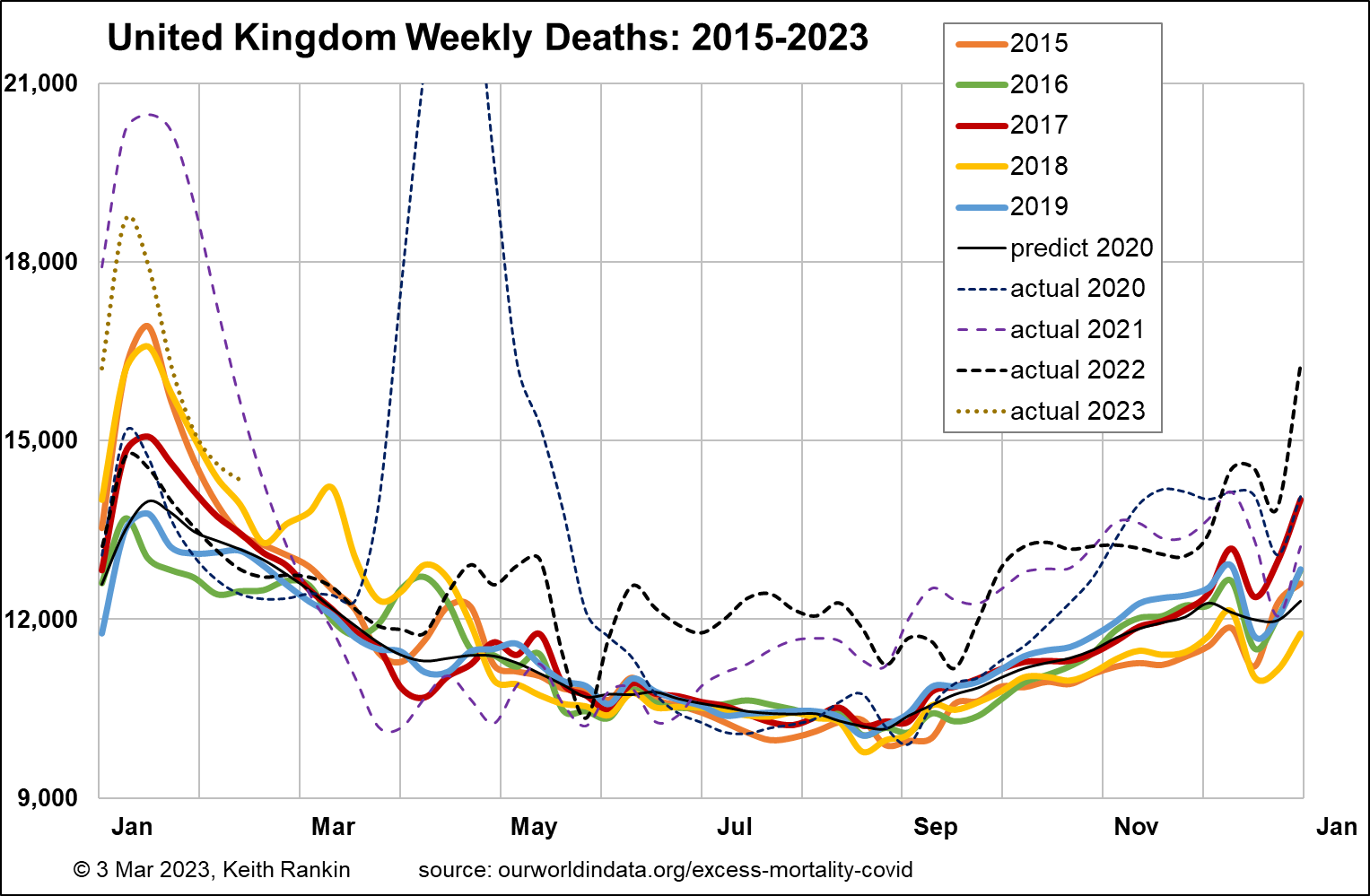
We also need to note that, with eight years of data shown, we can compare the death tally for the second four years’ [2019‑22] directly with the first four years [2015‑18] (both representing ‘quadrennial’ periods of 209 weeks). It is appropriate that 2019 is included with the subsequent pandemic years, because events in 2019 may contribute to 2020 death numbers; in particular, if 2019 had lower than usual seasonal illnesses, then many people who would normally have died in the winter of 2019 would have died in of 2020 or 2021 instead.) We note that, for the pre-covid years in the 2010s’ decade, the winter death peaks (typically late winter in the northern hemisphere) mainly relate to influenza, with a more general seasonal mortality effect triggered by ‘common colds’ and the like.
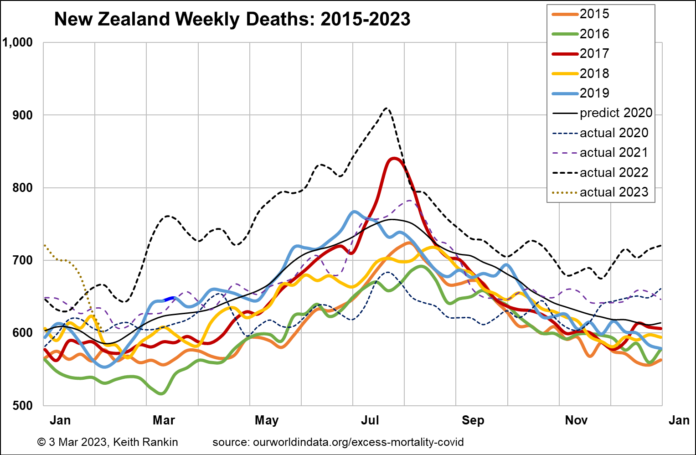
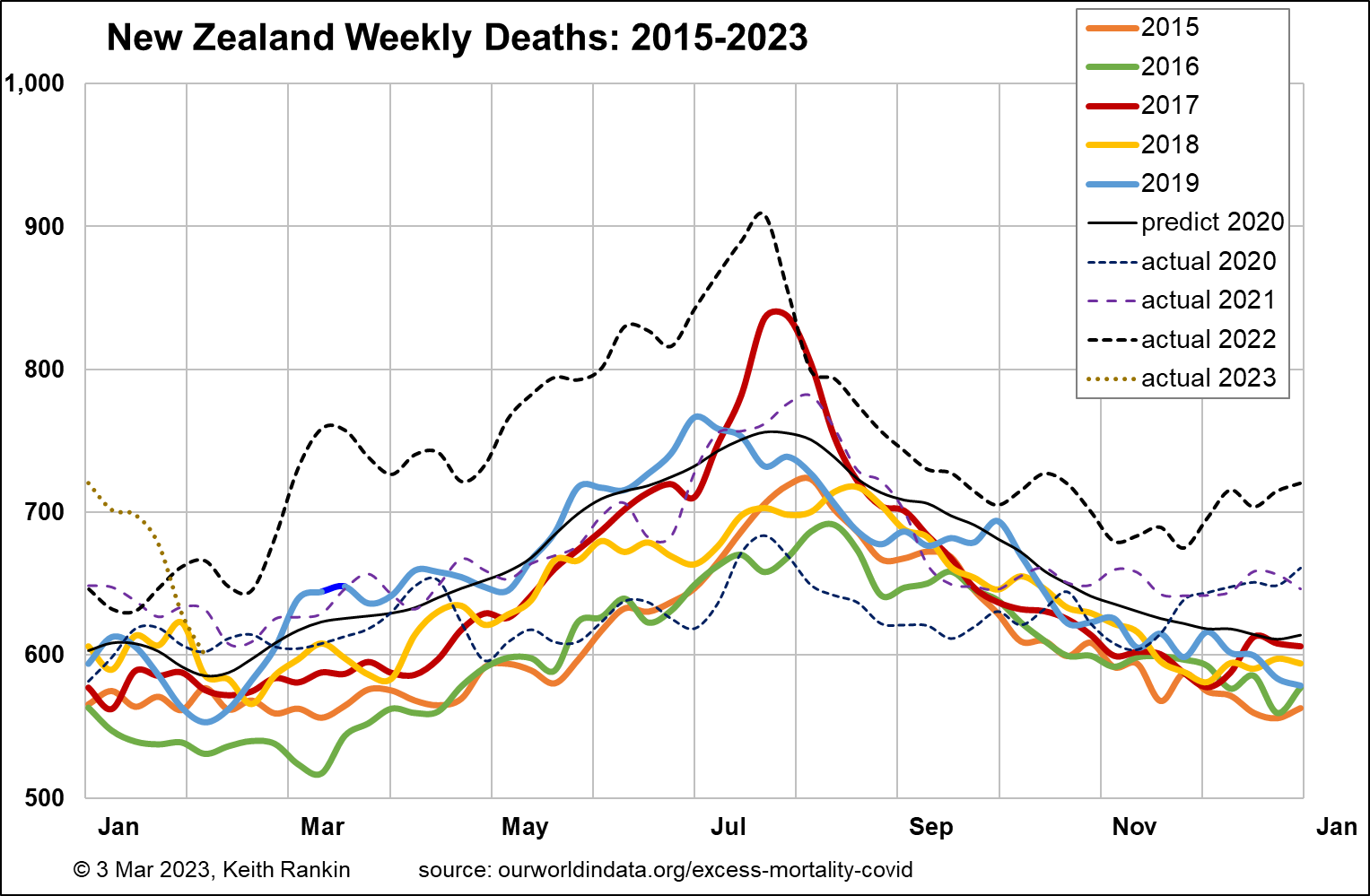
(And one piece of technical information. The weekly death tolls charted have been ‘smoothed’ to reduce the effects of random variation. Thus, the peak numbers for Australia and New Zealand – in July 2022 – each represent a weighted average of the deaths for that actual week and the deaths for the weeks immediately before and after. It means that the actual numbers of deaths in the peak weeks were higher than shown.)
Australia and New Zealand
Chart by Keith Rankin.Chart by Keith Rankin.
I start with Australia, which in the past I have been unable to chart very well because the Australian authorities are unnecessarily slow to release mortality data, and when they do it’s typically up to ten weeks of data at a time. We note, with reference to the New Zealand chart, that Australia’s population is slightly more than five times more than New Zealand’s, and has a similar age structure.
A baseline mortality toll for Australia in the early 2020s would be 3,000 deaths per week; it is shown by the black ‘predict 2020’ plot on the chart. The pattern of increasing deaths from 2015 to 2019 is mainly due to population increase; particularly, increased numbers of people aged over 70. (Baseline pre-pandemic weekly mortality for New Zealand is about 600.)
The scale of these charts is (approximately) with the top number (eg 5,000 for Australia) being double the bottom number (eg 2,500). In the first year of the pandemic, 2020, Australia’s weekly death tallies were much like what would have been expected in a non-covid year, but with lower winter deaths. That 2020 experience reflects the public health restrictions which were imposed, with the international travel restrictions probably being most important.
The demographic cost – in deaths – really begins in Australia in April 2021, and clearly persists to the end of (and most likely beyond) 2022. (A look at my previous set of chartssuggests that, based on northern hemisphere experiences of late 2022, mid-2023 – winter – could be particularly bad in the southern hemisphere; although taking advantage of the seasonal time-lag to get suitable vaccination programs in place may help the ‘lucky south’.)
New Zealand data reveal a broadly similar pattern to Australia, though the 2020 shortfall of deaths was more accentuated, and the more general appearance of excess deaths began seven moths later than in Australia, in November 2021. New Zealand, having a much smaller population than Australia, shows more exaggerated peaks and troughs; and generally more ‘random noise’, more random variability, from week to week.
Australia’s pre-covid estimated life expectancy (source: IMF database) was 83.4, with a median population age of 37.9. For New Zealand, the comparable numbers were 82.3 and 37.9; so, both countries have very similar demographics.
I have calculated the increase in quadrennial (ie four-yearly) total deaths for 2019‑22 compared to 2015‑18. For Australia, with December 2022 data still missing, it’s an estimated 7.9% increase in deaths. For New Zealand it’s 8.2%, slightly higher. For both countries, 2022 is the year that most contributed to the 2019-22 excess deaths’ toll. In addition to Covid19, increases in these countries’ populations of elderly will have contributed to higher mortality this decade.
Finland and Sweden
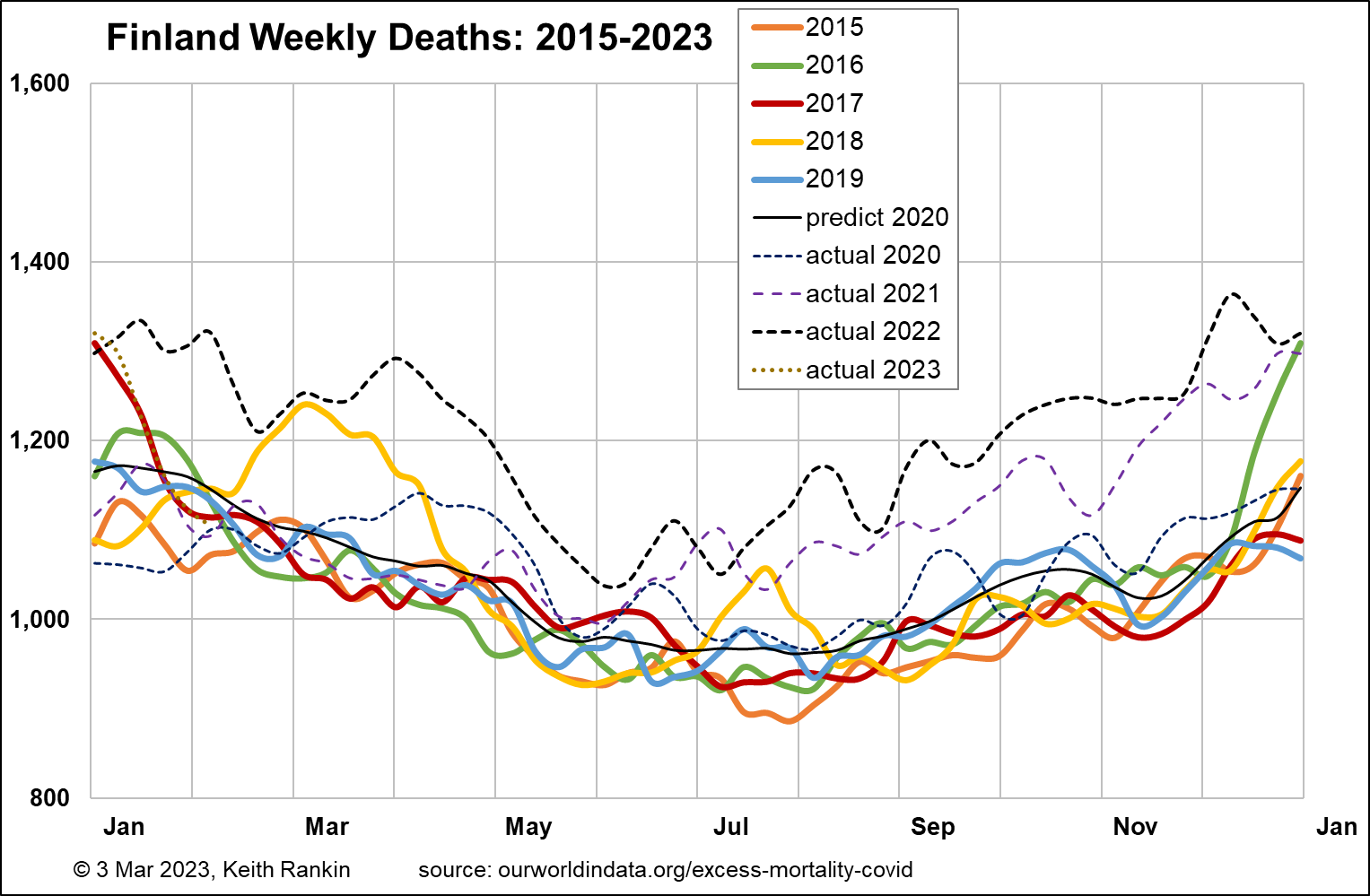
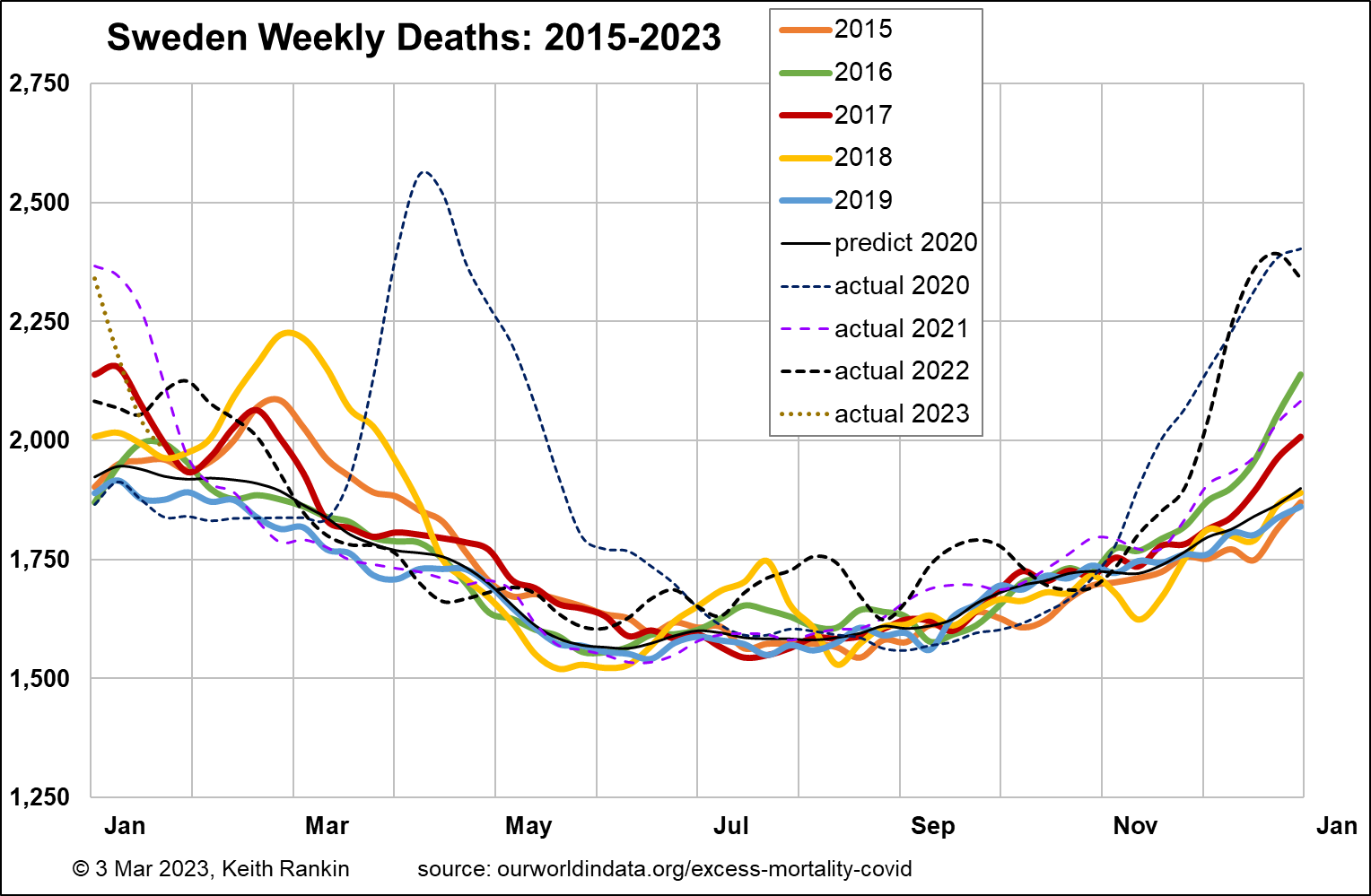
Chart by Keith Rankin.Chart by Keith Rankin.
Finland has just a few hundred thousand more people than New Zealand. Its 2019 estimated life expectancy was lower than Australia’s and New Zealand’s, at 81.9. And its median age, at 42.8, suggests that Finland should have a significantly higher base rate of deaths per week. Indeed, the chart shows a base weekly tally of about 950, substantially higher than New Zealand’s 600.
Finland was the most restrictive of the Nordic countries, with respect to public health management of Covid19. It’s pattern of weekly deaths looks very similar to New Zealand’s, with New Zealand having a six-month (seasonal) lag. This means that the extent that Finland’s deaths are above baseline from July 2022 seems likely to be a good predictor for New Zealand in the first half of 2023.
Finland had 7.2% more deaths in 2019‑22, compared to the previous four years. The main explanation for its lower mortality increase (than Australasia) is likely to be due to a lower rate of increase in the size of its elderly population.
Sweden has close to double New Zealand’s population, and had almost the same pre-covid life expectancy as Australia and New Zealand (82.8). Its median age was 41.0; lower than Finland’s, probably due to both more immigration (especially refugees) and (given Finland’s membership of the Eurozone) less emigration than Finland to places like Berlin and Brussels. As Sweden’s chart shows, Sweden’s pre-covid baseline mortality was about 1,600 deaths per week, equivalent to 800 in New Zealand; again, higher due to Sweden having relatively more older people than Australia or New Zealand.
Unlike the other countries mentioned so far, Sweden had almost all its pandemic excess mortality in the year commencing March 2020. One important reason for this was Sweden’s unexpectedly low mortality in the year-and-a-half prior (especially in the winters of 2018/19 and 2019/20) to Covid19, meaning that many of the covid deaths of the frail elderly in Sweden in 2020 were people who, based on statistical expectation, would normally have died before the pandemic struck. The other main reason for Sweden’s high early toll was its classically liberal public health policy approach.
2021 in Sweden looks very much like a normal pre-covid year in Sweden. In the second half of 2022, all west European countries had significantly elevated mortality, mainly it would seem associated with renewed Covid19 outbreaks. Comparing Finland and Sweden, both had December mortality peaks about 50% above baseline weekly death tallies. But Finland clearly had much worse autumns than Sweden, in both 2021 and 2022.
In an important sense, many people died in Finland in 2021 and 2022 who would have died in 2020 were it not for the public health mandates then operating in Finland but not Sweden.
There’s more to it than that though. Sweden’s increase in deaths for 2019‑22 compared to the previous four years was just 2.2% compared to Finland’s 7.2%. It looks as though Sweden’s population had a significantly higher level of general immunity in 2021 and 2022 than did Finland’s. Finland experienced a greater overall demographic cost from the pandemic – presumably in large part because of its different policy choices – than did Sweden.
Both of these Nordic countries (and the other Nordic countries too) had a lower increase in deaths than did Australia and New Zealand. But the Australasian countries probably had bigger increases in the elderly populations (defining ‘elderly’ as over 70); nevertheless, Australia and New Zealand most definitely should not be congratulating themselves on having ‘done better in the Covid19 pandemic’ than Sweden.
Greece
Chart by Keith Rankin.
Greece is a European Union country with essentially the same population size as Sweden. It has the same pre-pandemic estimated life expectancy as the other countries charted so far (82.2), but has a significantly older population structure (pre-covid median age of 45.3), almost certainly due to a substantial depopulation of young adults in the wake of the Eurozone crisis which peaked in 2012. So we expect baseline weekly deaths to be substantially higher in Greece than in Sweden. Indeed, that is so. Pre-pandemic baseline weekly deaths in Greece stand at 2,200 compared to 1,600 in Sweden. (We note that much of this depopulation of young adults from Greece will have occurred before 2015, so we have no reason to believe that there has been a significant change in the age structure of Greece that would contribute to the pandemic-era death experience. Hence, the dominant reason for increased deaths in Greece will be Covid19.)
The chart for Greece shows no impact arising from Covid19 until October 2020. While this will be due to restrictive public health measures in the first half of 2020, it may also be due to high levels of influenza that seem to have been generally the case in southeast Europe in February 2020. This will mean that more vulnerable older Greeks will have died just before the pandemic, rather than in its early phase. And it means that Greeks will have had higher levels of general immunity in those early months.
The second European wave of Covid19, in late 2020, substantially impacted Greece, as it did all other European countries. In general, it had a disproportionate impact on vulnerable Eastern Europeans, with less natural immunity than their western co-Europeans. Greece had 11.1% more deaths in 2019‑22 compared to 2015‑18.
We see that Greece has had an unusually high level of summer epidemic death, almost certainly due to its status as a tourist destination. In 2021 Greece was a substantial victim during the ‘Delta’ outbreak; based on comparative analysis this toll was due mainly to compromised immunity (including inadequate vaccination) and not to any specifically deadly features of the ‘Delta’ variant of the Covid19 coronavirus. We see Greece with the same 50%-above-baseline mortality in December 2022 as other European countries. Southern hemisphere countries can expect this sort of peak around June 2023, though preventable by mass vaccination this April.
Chile
Chart by Keith Rankin.
Chile is of interest as an alternative southern hemisphere country. It has almost exactly four times New Zealand’s population. It has a pre-pandemic baseline death rate of 1,900 which would be equivalent to 475 in New Zealand; that is, well below New Zealand’s baseline weekly death tally of 600. While this is due to Chile’s lower pre-pandemic median age (35.4 compared to Australasia’s 37.9), it also reflects Chile’s high – for the Americas – pre-pandemic life expectancy estimate of 80.2.
We see that Chile was largely successful at keeping Covid19 at bay until May 2020. But it was always more challenging in a country with land borders to three other countries, with the Peruvian and Bolivian border most significant at that stage. And clearly the international airport in Santiago was not as well sealed as those in Australasia. Unlike Australia and New Zealand, Chile was hit hard in the first half of 2021, and had a much bigger (‘Omicron’ variant) peak mortality in early 2022. Other than that, its experience in late 2021 and late 2022 was similar to Australia’s. Overall, Chile saw a 20.1% increase in mortality in 2019‑22 compared to 2015‑18, accentuated by its surprisingly low pre-pandemic base. Low pandemic mortality for South America, but high for the world as a whole. Undoubtedly Chile has also had a substantial increase in its older population, though maybe not as marked as in those countries whose birth rates were most affected by World War II.
United States
Chart by Keith Rankin.
The United States is like a mix of Australia and Chile. It had a pre-pandemic estimated life expectancy of 78.9, well below both Chile and Australia; indeed a ‘third world’ life-expectancy. The median age pre-covid was 38.3, very similar to Australia and New Zealand; so having a similar age structure to the Australasian countries.
USA has a population 66 times that of New Zealand. It’s base pre-pandemic weekly mortality of 52,000 is equivalent to a high 790 for New Zealand, much higher than New Zealand’s actual 600 baseline. Given the similar age structures of United States and New Zealand, this has to be due to a generally higher pre-pandemic risk of death from all causes in the United States.
Overall, the chart for USA is comparable with the chart for Chile. Deaths in the United States increased by 16.8% over the two periods; like Chile but without the low base that might have inflated this statistic for Chile. Covid19 was clearly a big disaster for the United States, though I suspect that high levels of comorbidity – including obesity, diabetes, drug misuse, mental unwellness – contributed more than public policy. Indeed, USA had a younger profile of Covid19 mortality than most other countries.
United Kingdom
Chart by Keith Rankin.
Finally, we look at the United Kingdom, with a baseline pre-pandemic death tally of 10,500 per week. That translates to 775 in New Zealand. The United Kingdom had a median age of 40.8 pre-pandemic, similar to Sweden. And a life expectancy of 81.3, similar to Finland. This older population structure largely explains Britain’s higher (than Australasia and Chile) level of baseline mortality.
Mortality patterns in the United Kingdom were most like that of Sweden, except generally higher, and significantly worse in 2021. We should also notice Britain’s huge peak in January 2023, probably partly due to Britain’s unique way of reporting death statistics. (Many late December deaths are recorded in the following year; this seems to be true for each year.)
Overall, the United Kingdom’s increase in deaths for 2019‑22 over 2015‑18 was 7.9%, same as Australia and less than New Zealand. However, we cannot claim that the demographic impact in the United Kingdom, so far, is less than in New Zealand. In the absence of the Covid19 pandemic, New Zealand’s deaths would have increased by more. This is because New Zealand’s increase in the number of people aged over 70 is more pronounced than is Britain’s. It may also be due to a worrying rate of increase in New Zealand of sub-70 non-covid mortality; that is, of mortality of people aged under 70 with American-style comorbidities. We note this already, in that the average age of people in New Zealand who die with Covid19 is significantly younger than the average age of those who die of Covid19.
Brief Conclusion
Sweden, with its more classically liberal public health approach, has had easily the lowest pandemic and post-pandemic mortality increases so far.
Data from other countries suggests that factors around general immunity and comorbidity are the major determinants of pandemic mortality; that is, neither infection rates nor viral mutation rates. And we should note that Covid19 vaccinations also probably improve general immunity, and not just immunity to the covid virus.
Re Australia and New Zealand, the lessons are two: the severe Covid19 winter of 2022/23 in (especially western) Europe will likely be replicated in Australia, New Zealand and Chile if mass revaccination does not take place this April. And that these southern countries may have unaddressed comorbidity problems, not unlike the problem in clear sight in the United States; in New Zealand this problem is by no means confined to people of Māori and Pasifika ethnicity.
______________
Keith Rankin (keith at rankin dot nz), trained as an economic historian, is a retired lecturer in Economics and Statistics. He lives in Auckland, New Zealand.
Source: The Conversation (Au and NZ) – By Mark Warburton, Honorary Senior Fellow, Centre for the Study of Higher Education, The University of Melbourne
The federal government is currently contemplating the biggest overhaul of higher education in a generation. A discussion paper for the Universities Accord, released last week, is asking for suggestions about “what the system should look like in 30 years’ time”.
One issue crying out for more attention as part of the accord process is student loans. My new paper looks at how unfair student loans – the largest of which are HECS-HELP loans – have become for women. And how for some, repayment arrangements are unreasonable.
HECS was introduced in 1989 to fund the expansion of higher education in a fair and equitable way. Students who benefited from their education by earning average or higher incomes were expected to contribute to the cost, primarily by making repayments after finishing their studies.
Since then full fee-paying courses, along with student loans to pay these fees, have been introduced. There are also loans for some vocational education and training courses and to help students with other living and study costs.
For courses with government subsidies, the expected contribution has increased from around 20% to 48% of costs. The federal government now lends A$7.5 billion to tertiary students each year, with over $6.5 billion going to higher education institutions. In 2021-22, the government recouped more than $5 billion in repayments.
HECS fees were introduced in 1989, allowing students to defer repayments until they were earning a certain level of income. Shutterstock
My paper
Since HECS was introduced, there has never been a thorough evaluation of Australia’s student loan schemes to see how well they are meeting the objective of providing revenue for tertiary education in a fair and equitable way.
My paper shows the growth in higher education over the last three decades, combined with the expansion of student loan schemes and the tightening of repayment arrangements, has resulted in a system that produces negative impacts.
The arrangements are contributing to women’s economic disadvantage and are inequitable.
A huge growth in Australians going to uni
When HECS came in, only 12% of Australians aged 25–34 years had a bachelor degree or higher. By 2021, this figure had grown to 39%. A further 32% had vocational qualifications. This means wage levels for university graduates today are more typical of the general workforce than they were in 1989.
Women are now more likely to obtain a higher education qualification than a vocational qualification. Many occupations traditionally held by women have moved to require professional education and training in the higher education sector, including nursing and other caring professions.
Men’s education and training is more evenly distributed between the higher education and vocational education systems (which includes TAFEs). And men earn more, regardless of the sector from which they get their qualification.
The 2021 Census shows 54% of men aged 25–40 years with a Certificate III to advanced diploma have an income of $65,000 or more. Only 51% of women aged 25–40 years with a bachelor degree or above have an income above this level.
At the same time, it costs a lot more to study at university. Students now finish their degrees with average debts between $50,000 and $60,000.
Former students are taking around 12 years to repay their debts and repayment times are trending upward.
This means former students are repaying debts well into their 30s. By this time, many are having children and trying to buy a house. It is no longer reasonable to think student loans can be repaid before these major life events occur.
Women and debt
Many female-dominated occupations like teaching and nursing employ large numbers of people. Some have high salaries, but a substantial proportion are on modest incomes – particularly women working part-time and balancing family responsibilities. This means many women in these fields end up taking a long time to repay their HECS-HELP debt, or do not pay it at all.
In 2019–20, the greatest amounts of student loan repayments were from female registered nurses ($168 million), followed by female infant and primary school teachers ($130 million).
While there is a large level of debt held by people in these occupations, this is not the case for the many occupations traditionally held by men which require vocational training with comparable levels of income.
In 2019–20, the average taxable incomes of electricians, machinists, and air conditioning and refrigeration mechanics were all over $80,000. This compares to the average taxable incomes of child carers, nurses and primary school teachers which ranged from $38,000 to $70,000. Secondary teachers had average taxable incomes of $78,000.
Women and repayment thresholds
People only begin repaying their student loan debt once they earn more than a certain amount of income.
From 2019–20, the first threshold was lowered and repayment rates were changed. This required those with incomes between around $46,000 and $60,000 to make repayments.
The changes had most impact on women. Just under two thirds of those who now had to make a repayment were women (239,000 of 371,000 in 2019–20). Women then paid more than two thirds of the additional revenue from the threshold reduction ($288 million of $429 million in 2019–20).
The new HELP repayment arrangements also reduce the incentive to work and can create poverty traps for some families. For example, for incomes between $48,000 and $100,000, a single parent with two children will lose on average 70 cents of every extra earned dollar due to reduced family benefits and increased tax, medicare and student loan payments.
In these cases, the HELP repayment arrangements are punitive and undesirable. They are more likely to adversely affect women as they do more caring within families.
These problems can be fixed
The option of reducing student contributions and increasing government subsidies is not likely to occur in the current economic environment. Making tertiary education free or extra cheap for some people makes it more expensive and less equitable for others. This is because the overall objective is to raise revenue to fund the tertiary education system, including universities and vocational education and training.
Instead, the government should make sure that everyone who benefits significantly from the system is a potential contributor and that repayment arrangements are designed to take people’s different circumstances into account.
Repayment arrangements should complement other social programs and taxation arrangements. It doesn’t make much sense for the government to be providing a low income family with income support while at the same time asserting that one of the adults in that family is so well off, they should be paying for their past education.
HECS-HELP repayments are currently calculated as a percentage of a person’s total income, with 18 different thresholds and repayment rates. A single rate of repayment applied to income above a threshold would be simpler and more rational than current arrangements.
It would allow the threshold to be varied according to a person’s family circumstances, ensuring former students only make repayments when they really have the capacity to do so.
All animals need energy to live. They use it to breathe, circulate blood, digest food and move. Young animals use energy to grow, and later in life, to reproduce.
Increased body temperature increases the rate at which an animal uses energy. Because cold-blooded animals rely on the thermal conditions of their environment to regulate their body temperature, they’re expected to need more energy as the planet warms.
However, our new research, published today in Nature Climate Change, suggests temperature is not the only environmental factor affecting the future energy needs of cold-blooded animals. How they interact with other species will also play a role.
Our findings suggest cold-blooded animals will need even more energy in a warmer world than previously thought. This may increase their extinction risk.
Young animals use energy to grow, and later in life, to reproduce. Shutterstock
What we already know
The amount of energy animals use in a given amount of time is called their metabolic rate.
Metabolic rate is influenced by a variety of factors, including body size and activity levels. Larger animals have higher metabolic rates than smaller animals, and active animals have higher metabolic rates than inactive animals.
Metabolic rate also depends on body temperature. This is because temperature affects the rate at which the biochemical reactions involved in energy metabolism proceed. Generally, if an animal’s body temperature increases, its metabolic rate will accelerate exponentially.
Most animals alive today are cold-blooded, or “ectotherms”. Insects, worms, fish, crustaceans, amphibians and reptiles – basically all creatures except mammals and birds – are ectotherms.
As human-induced climate change raises global temperatures, the body temperatures of cold-blooded animals are also expected to rise.
Researchers say the metabolic rate of some land-based ectotherms may have already increased by between 3.5% and 12% due to climate warming that’s already occurred. But this prediction doesn’t account for the animals’ capacity to physiologically “acclimate” to warmer temperatures.
Acclimation refers to an animal’s ability to remodel its physiology to cope with a change in its environment.
But rarely can acclimation fully negate the effect of temperature on metabolic processes. For this reason, by the end of the century land-based ectotherms are still predicted to have metabolic rates about 20% to 30% higher than they are now.
Having a higher metabolic rate means that animals will need more food. This means they might starve if more food is not available, and leaves them less energy to find a mate and reproduce.
As climate change raises global temperatures, the body temperatures of cold-blooded animals are also expected to rise. Shutterstock
Our research
Previous research attempts to understand the energetic costs of climate warming for ectotherms were limited in one important respect. They predominantly used animals studied in relatively simple laboratory environments where the only challenge they faced was a change in temperature.
However, animals face many other challenges in nature. This includes interacting with other species, such as competing for food and predator-prey relationships.
Even though species interact all the time in nature, we rarely study how this affects metabolic rates.
We wanted to examine how species interactions might alter predictions about the energetic costs of climate warming for cold-blooded animals. To do this, we turned to the fruit fly (from the genus Drosophila).
Fruit fly species lay their eggs in rotting plant material. The larvae that hatch from these eggs interact and compete for food.
Our study involved rearing fruit fly species alone or together at different temperatures. We found when two species of fruit fly larvae compete for food at warmer temperatures, they were more active as adults than adults that didn’t compete with other species as larvae. This means they also used more energy.
From this, we used modelling to deduce that species interactions at warmer global temperatures increase the future energy needs of fruit flies by between 3% and 16%.
These findings suggest previous studies have underestimated the energetic cost of climate warming for ectotherms. That means purely physiological approaches to understanding the consequences of climate change for cold-blooded animals are likely to be insufficient.
Previous studies have underestimated the energetic cost of climate warming for ectotherms. Shutterstock
Let’s get real
Understanding the energy needs of animals is important for understanding how they’ll survive, reproduce and evolve in challenging environments.
In a warmer world, hotter ectotherms will need more energy to survive and reproduce. If there is not enough food to meet their bodies’ energy demands, their extinction risk may increase.
Clearly, we must more accurately predict how climate warming will threaten biodiversity. This means studying the responses of animals to temperature change under more realistic conditions.
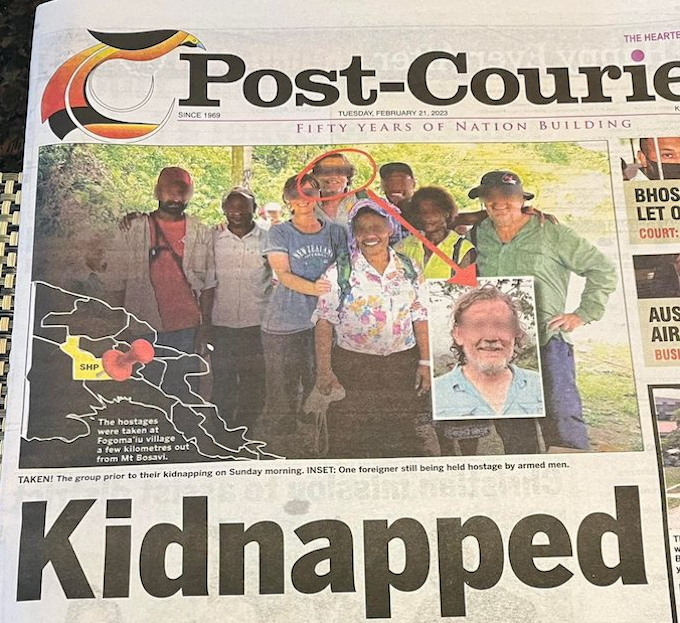
Indonesia has protested to the Fiji government after Prime Minister Sitiveni Rabuka met with a Papuan independence leader in a morale boost for the United Liberation Movement for West Papua, reports Benar News.
Prime Minister Rabuka, who was elected in December, also said he would support Papuan membership in the UN-recognised organisation Melanesian Spearhead Group.
Fiji’s previous government for 16 years and Papua’s neighbour, Papua New Guinea, have blocked such a membership in a bid to maintain good relations with Indonesia.
The meeting between Rabuka and exiled Benny Wenda, president of the London-based ULMWP that seeks independence from Indonesia, took place at a Pacific Islands Forum “unity” summit in the Fijian town of Nadi last week.
On Tuesday, Indonesian Foreign Ministry spokesman Teuku Faizasyah said Indonesia had sent a diplomatic note to Fiji.
“Indonesia expressed deep disappointment over the Fiji PM’s meeting with someone who unilaterally claimed to represent the Papuan people in Indonesia,” he said.
The United States and Australia are seeking closer security ties with Indonesia to counter China’s influence in the region, says Benar News.
Morning Star flag Rabuka’s social media accounts posted a photo of him smiling while meeting Wenda and wearing a noken — a traditional string bag emblazoned with the Morning Star flag, the symbol of the Papua independence movement that is banned in Indonesia.
Rabuka’s Twitter account said he would support the ULMWP gaining full Melanesian Spearhead Group (MSG) membership “because they are Melanesians” of the Pacific.
Yes, we will support them [United Liberation Movement for West Papua] because they are Melanesians. I am more hopeful [ULMWP gaining full MSG membership]. I am not taking it for granted. The dynamics may have changed slightly but the principles are the same. pic.twitter.com/9J8qpAVhak
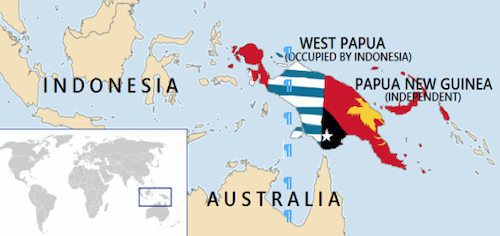
The Papua region is known as West Papua among people in Pacific island countries and also among activists supporting independence.
Documented and alleged killings and abuses by Indonesian military and police, from the 1960s until the present day — along with impunity and the exploitation of the region’s natural resources and widespread poverty — have fuelled local resentment against Indonesian rule, Benar News reports.
“Deploying aid and technical assistance to small island states scattered across the Pacific ocean, Indonesia has in recent years sought to neutralise criticism from some of those nations of its rule in Papua,” said the news service.
While Benar News noted that Jakarta’s assistance was small relative to long-standing donors such as Australia it was still significant, including funding the F$4 million (US$1.9 million) reconstruction of two boarding school dormitories destroyed by a tropical cyclone.
The MSG comprises Fiji, Papua New Guinea, Solomon Islands and Vanuatu, and the Kanak and Socialist National Liberation Front (FLNKS) of the indigenous Kanak independence movement in French-ruled New Caledonia. Indonesia is an associate member and the ULMWP is an observer.
The group’s next meeting in July is in the capital Port Vila of Vanuatu, traditionally a strong supporter of West Papuan independence.
When people go to extreme lengths to take an image to share on social media – perhaps in remote or picturesque locations – they can risk their lives.
So we need to move beyond describing selfies as a social phenomenon, fuelled by the rise of smartphones and social media.
We need to treat dangerous selfies as the public health hazard they really are.
More deaths, year after year
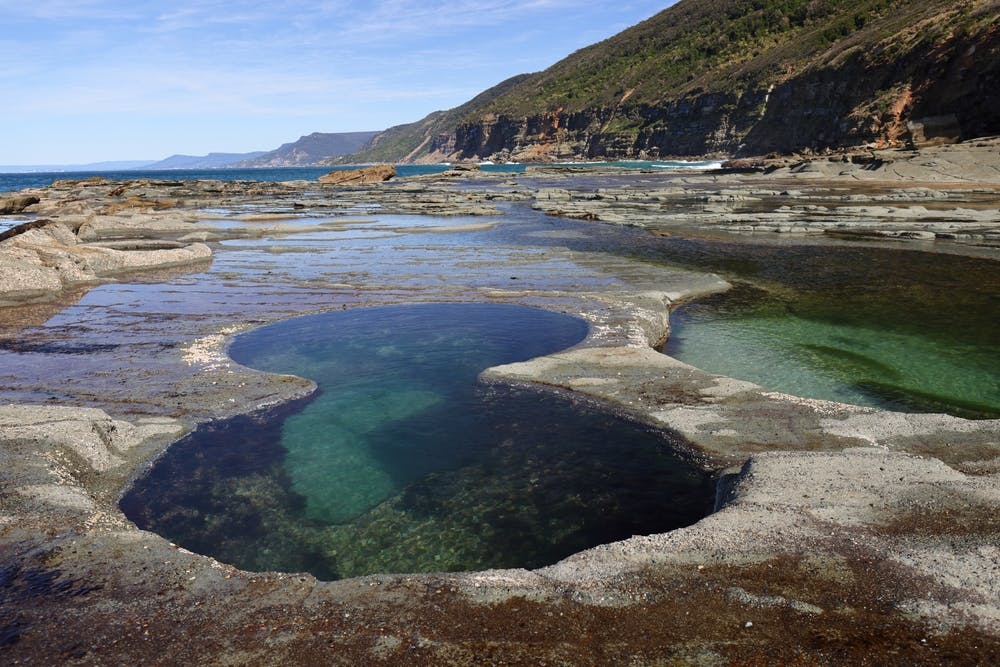
Certain picturesque locations have been linked to selfie deaths. This includes Yosemite National Park in California. In Australia, we’ve seen people die at places including cliffs, natural pools and waterfalls.
These are not isolated incidents.
One study found 379 people worldwide were killed due to selfies between 2008 and 2021, with even more injured. Incidents are more likely in young adults, particularly males.
Many are travellers or tourists (particularly in Australia and the United States). In Australia and the US, selfie takers tend to be injured or killed while solo, and commonly in locations very difficult for emergency services to access. In countries such as India and Pakistan, selfie takers are more likely to die, tragically, as a group, especially near bodies of water, such as lakes.
Researchers have called for the introduction of “no selfie zones” around hotspots, such as tall buildings. Russian and Indian authorities have introduced these. Russia has launched a “safe selfie” guide.
But it’s not clear how effective these strategies have been. If anything, selfie incidents seem to be increasing globally.
The media often portrays people involved in selfie incidents as foolish or selfish.
This seems to confirm our research showing media reports often blame the victim. Reports almost never provide safety information.
But taking selfies is a normal part of everyday life for millions of people. We need to stop judging people who are taking risky selfies, and instead see risky selfies as a public health issue.
People have died taking selfies at Figure Eight Pools, Royal National Park, NSW. Shutterstock
Why is this a public health issue?
We’ve had similar problems with other activities we now see as
public health hazards. These include driving without a seatbelt, riding a bicycle without a helmet, smoking cigarettes or excessive alcohol consumption. These are all examples people once considered “normal”, which we now see as risky. Taking dangerous selfies needs to be added to that list.
By thinking of these selfies as a public health issue, we move away from victim blaming and instead need to effectively communicate risk to selfie-takers.
One example relates to the popular selfie hotspot, Figure Eight Pools in the Royal National Park, New South Wales, where people can be overwhelmed by big, “freak” waves. Authorities have produced a colour-coded risk rating that takes into account ocean and weather conditions. People can go online to see if the risk of going to the pools is “very low” to “extreme”.
If we think of these risky selfies as a public health issue we also move towards education and prevention.
Signs at selfie hotspots are one thing. But we know signs are often ignored, or simply not seen.
So we need to better communicate safety messages to selfie takers when and how they will actually take notice.
Our research with Instagram aims to do this by communicating directly to selfie takers through the Instagram app. The aim is to tailor safety messaging to Instagram users by geolocating them with known risky selfie spots – sending users a safety alert in real time.
With the right communication strategy, we know we can reduce the number of these entirely avoidable tragedies.
Weather and coastal conditions can change rapidly. Just because the weather and waves don’t appear dangerous when you start your selfie journey, they might be when you get there. Check before you go, avoid bad weather, and keep a close eye on tidal and wave conditions.
2. Don’t walk past safety signs and physical barriers
Warning signs are there to provide life-saving information. Pay attention to signs and heed their advice. Don’t jump or go around any physical barriers blocking access. They are likely there for a good reason.
3. Stay on the designated path
Staying on paths and trails is safest and also does fragile ecosystems a big favour.
4. Don’t get too close to the edge. Be aware of crumbling edges
Don’t trust cliff edges and be aware of unstable ground. Cliff edges are naturally eroding and your extra weight doesn’t help. People have died from cliff edges crumbling away while standing on them.
5. No amount of ‘likes’ is worth your life
Consider your motivations for taking selfies and using social media. Studies show spending time in nature is good for our health. But the world looks better when not viewed through a screen.
Samuel Cornell receives funding from Meta Platforms, Inc. His research is also supported by a UNSW University Postgraduate Award, as well as project funding from the Royal Life Saving Society – Australia. He is affiliated with Surf Life Saving Australia and Surf Life Saving NSW.
Amy Peden receives funding from the National Health and Medical Research Council (NHMRC) and project funding from Meta Platforms Inc, Royal Life Saving Society – Australia and Surf Life Saving Australia. She is affiliated with the Royal Life Saving Society – Australia.
Rob Brander receives funding from Meta Platforms Inc, Surf Life Saving Australia, Surfing NSW, Randwick City Council and Waverley Council.
Source: The Conversation (Au and NZ) – By Sara Webb, Postdoctoral Research Fellow, Centre for Astrophysics and Supercomputing, Swinburne University of Technology
zhengzaishuru/Shutterstock
We have long been fascinated with the idea of alien life. The earliest written record presenting the idea of “aliens” is seen in the satiric work of Assyrian writer Lucian of Samosata dated to 200 AD.
In one novel, Lucian writes of a journey to the Moon and the bizarre life he imagines living there – everything from three-headed vultures to fleas the size of elephants.
Now, 2,000 years later, we still write stories of epic adventures beyond Earth to meet otherworldly beings (Hitchhiker’s Guide, anyone?). Stories like these entertain and inspire, and we are forever trying to find out if science fiction will become science fact.
Not all alien life is the same
When looking for life beyond Earth, we are faced with two possibilities. We might find basic microbial life hiding somewhere in our Solar System; or we will identify signals from intelligent life somewhere far away.
Unlike in Star Wars, we’re not talking far, far away in another galaxy, but rather around other nearby stars. It is this second possibility which really excites me, and should excite you too. A detection of intelligent life would fundamentally change how we see ourselves in the Universe.
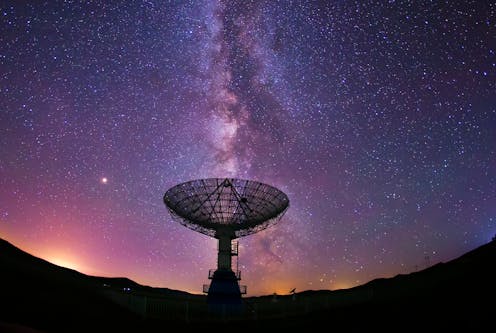
In the last 80 years, programs dedicated to the search for extraterrestrial intelligence (SETI) have worked tirelessly searching for cosmic “hellos” in the form of radio signals.
The reason we think any intelligent life would communicate via radio waves is due to the waves’ ability to travel vast distances through space, rarely interacting with the dust and gas in between stars. If anything out there is trying to communicate, it’s a pretty fair bet they would do it through radio waves.
The three radio facilities used in the Breakthrough Listen Initiative. Left to Right: 100m Robert C. Byrd Green Bank Telescope, 64m Murriyang (Parkes) Radio Telescope, 64-antenna MeerKAT array. NRAO, CSIRO, MeerKAT
Listening to the stars
One of the most exciting searches to date is Breakthrough Listen, the largest scientific research program dedicated to looking for evidence of intelligent life beyond Earth.
This is one of many projects funded by Russian entrepreneurs Julia and Yuri Milner, with some serious dollars attached. Over a ten-year period a total amount of US$100 million will be invested in this effort, and they have a mighty big task at hand.
Breakthrough Listen is currently targeting the closest one million stars in the hope of identifying any unnatural, alien-made radio signals. Using telescopes around the globe, from the 64-metre Murriyang Dish (Parkes) here in Australia, to the 64-antenna MeerKAT array in South Africa, the search is one of epic proportions. But it isn’t the only one.
Hiding away in the Cascade Mountains north of San Francisco sits the Allen Telescope Array, the first radio telescope built from the ground up specifically for SETI use.
This unique facility is another exciting project, able to search for signals every day of the year. This project is currently upgrading the hardware and software on the original dish, including the ability to target several stars at once. This is a part of the non-profit research organisation, the SETI Institute.
Space lasers!
The SETI Institute is also looking for signals that would be best explained as “space lasers”.
Some astronomers hypothesise that intelligent beings might use massive lasers to communicate or even to propel spacecraft. This is because even here on Earth we’re investigating laser communication and laser-propelled light sails.
To search for these mysterious flashes in the night sky, we need speciality instruments in locations around the globe, which are currently being developed and deployed. This is a research area I’m excited to watch progress and eagerly await results.
As of writing this article, sadly no alien laser signals have been found yet.
It’s always interesting to ponder who or what might be living out in the Universe, but there is one problem we must overcome to meet or communicate with aliens. It’s the speed of light.
Everything we rely on to communicate via space requires light, and it can only travel so fast. This is where my optimism for finding intelligent life begins to fade. The Universe is big – really big.
To put it in perspective, humans started using radio waves to communicate across large distances in 1901. That first transatlantic signal has only travelled 122 light years, reaching just 0.0000015% of the stars in our Milky Way.
The little blue dot in the centre of the square is the current extent of human broadcasts just in our own galaxy. Adam Grossman/Nick Risinger
Did your optimism just fade too? That is okay, because here is the wonderful thing… we don’t have to find life to know it is out there, somewhere.
When we consider the trillions of galaxies, septillion of stars, and likely many more planets just in the observable Universe, it feels near impossible that we are alone.
We can’t fully constrain the parameters we need to estimate how many other lifeforms might be out there, as famously proposed by Frank Drake, but using our best estimates and simulations the current best answer to this is tens of thousands of possible civilisations out there.
The Universe might even be infinite, but that is too much for my brain to comprehend on a weekday.
Don’t forget the tiny aliens
So, despite keenly listening for signals, we might not find intelligent life in our lifetimes. But there is hope for aliens yet.
The ones hiding in plain sight, on the planetary bodies of our Solar System. In the coming decades we’ll explore the moons of Jupiter and Saturn like never before, with missions hunting to find traces of basic life.
Jupiter and the icy moon Europa. Concept art of the Europa Clipper mission currently under development. NASA/JPL
Mars will continue to be explored – eventually by humans – which could allow us to uncover and retrieve samples from new and unexplored regions.
Even if our future aliens are only tiny microbes, it would still be nice to know we have company in this Universe.
Sara Webb does not work for, consult, own shares in or receive funding from any company or organisation that would benefit from this article, and has disclosed no relevant affiliations beyond their academic appointment.
Two countries. A common border. Two hostage crises. But the responses of both Asia-Pacific nations have been like chalk and cheese.
On February 7, a militant cell of the West Papua National Liberation Army (TPNPB), the armed wing of the Free Papua Organisation (OPM) — a fragmented organisation that been fighting for freedom for their Melanesian homeland from Indonesian rule for more than half a century — seized a Susi Air plane at the remote highlands airstrip of Paro, torched it and kidnapped the New Zealand pilot.
It was a desperate ploy by the rebels to attract attention to their struggle, ignored by the world, especially by their South Pacific near neighbours Australia and New Zealand.
Many critics deplore the hypocrisy of the region which reacts with concern over the Russian invasion and war against Ukraine a year ago at the weekend and also a perceived threat from China, while closing a blind eye to the plight of the West Papuans – the only actual war happening in the Pacific.
Philip Mehrtens, the New Zealand pilot taken hostage at Paro, and his torched aircraft. Image: Jubi News
But they also want the United Nations involved and they reject the “sham referendum” conducted with 1025 handpicked voters that endorsed Indonesian annexation in 1969.
Twelve days later, a group of armed men in the neighbouring country of Papua New Guinea seized a research party of four led by an Australian-based New Zealand archaeology professor Bryce Barker of the University of Southern Queensland (USQ) — along with three Papua New Guinean women, programme coordinator Cathy Alex, Jemina Haro and PhD student Teppsy Beni — as hostages in the Mount Bosavi mountains on the Southern Highlands-Hela provincial border.
The good news is that the professor, Haro and Beni have now been freed safely after a complex operation involving negotiations, a big security deployment involving both police and military, and with the backing of Australian and New Zealand officials. Programme coordinator Cathy Alex had been freed earlier on Wednesday.
PNG Prime Minister James Marape shared this photo on Facebook of Professor Bryce Barker and one of his research colleagues after their release. Image: PM James Marape/FB
Prime Minister James Marape announced their release on his Facebook page, thanking Police Commissioner David Manning, the police force, military, leaders and community involved.
“We apologise to the families of those taken as hostages for ransom. It took us a while but the last three [captives] has [sic] been successfully returned through covert operations with no $K3.5m paid.
“To criminals, there is no profit in crime. We thank God that life was protected.”
How the PNG Post-Courier reported the kidnap on Tuesday’s front page. Image: Jim Marbrook/APR/PC screenshot
Ransom demanded The kidnappers had demanded a ransom, as much as K3.5 million (NZ$1.6 million), according to one of PNG’s two daily newspapers, the Post-Courier, and Police Commissioner David Manning declared: “At the end of the day, we’re dealing with a criminal gang with no other established motive but greed.”
A “colonisation” map of Papua New Guinea and West Papua. Image: File
It was a coincidence that these hostage dramas were happening in Papua New Guinea and West Papua in the same time frame, but the contrast between how the Indonesian and PNG authorities have tackled the crises is salutary.
Jakarta was immediately poised to mount a special forces operation to “rescue” the 37-year-old NZ pilot Mehrtens, which undoubtedly would have triggered a bloody outcome as happened in 1996 with another West Papuan hostage emergency at Mapenduma in the Highlands.
That year nine hostages were eventually freed, but two Indonesian students were killed in crossfire, and eight OPM guerrillas were killed and two captured. Six days earlier another rescue bid had ended in disaster when an Indonesian military helicopter crashed killing all five soldiers on board.
Reprisals were also taken against Papuan villagers suspected of assisting the rebels.
This month, only intervention by New Zealand diplomats, according to the ABC quoting Indonesian Security Minister Mahfud Mahmodin, prevented a bloody rescue bid by Indonesian special forces because they requested that there be no acts of violence to free its NZ citizen.
Mahmodin said Indonesian authorities would instead negotiate with the rebels to free the pilot. There is still hope that there will be a peaceful resolution, as in Papua New Guinea.
PNG sought negotiation In the PNG hostage case, police and authorities had sought to de-escalate the crisis from the start and to negotiate the freedom of the hostages in the traditional “Melanesian way” with local villager go-betweens while buying time to set up their security operation.
The gang of between 13 and 21 armed men released one of the women researchers — Cathy Alex on Wednesday, reportedly to carry demands from the kidnappers.
PNG’s Police Commissioner David Manning .. . “We are working to negotiate an outcome, it is our intent to ensure the safe release of all and their safe return to their families.” Image: Jim Marbrook/Post-Courier screenshot APR
But the Papua New Guinean police were under no illusions about the tough action needed if negotiation failed with the gang which had terrorised the region for some months.
While Commissioner Manning made it clear that police had a special operations unit ready in reserve to use “lethal force” if necessary, he warned the gunmen they “can release their captives and they will be treated fairly through the criminal justice system, but failure to comply and resisting arrest could cost these criminals their lives”.
Now after the release of the hostages Commissioner Manning says: “We still have some unfinished business and we hope to resolve that within a reasonable timeframe.”
Earlier in the week, while Prime Minister Marape was in Fiji for the Pacific Islands Forum “unity” summit, he appealed to the hostage takers to free their captives, saying the identities of 13 captors were known — and “you have no place to hide”.
Deputy Opposition Leader Douglas Tomuriesa flagged a wider problem in Papua New Guinea by highlighting the fact that warlords and armed bandits posed a threat to the country’s national security.
“Warlords and armed bandits are very dangerous and . . . must be destroyed,” he said. “Police and the military are simply outgunned and outnumbered.”
‘Open’ media in PNG Another major difference between the Indonesian and Papua New Guinea responses to the hostage dramas was the relatively “open” news media and extensive coverage in Port Moresby while the reporting across the border was mostly in Jakarta media with the narrative carefully managed to minimise the “independence” issue and the demands of the freedom fighters.
Media coverage in Jayapura was limited but with local news groups such as Jubi TV making their reportage far more nuanced.
West Papuan kidnap rebel leader Egianus Kogoya . . . “There are those who regard him as a Papuan hero and there are those who view him as a criminal.” Image: TPNPB
An Asia Pacific Report correspondent, Yamin Kogoya, has highlighted the pilot kidnapping from a West Papuan perspective and with background on the rebel leader Egianus Kogoya. (Note: Yamin’s last name represents the extended Kogoya clan across the Highlands – the largest clan group in West Papua, but it is not the immediate family of the rebel leader).
“There are those who regard Egianus Kogoya as a Papuan hero and there are those who view him as a criminal,” he wrote.
“It is essential that we understand how concepts of morality, justice, and peace function in a world where one group oppresses another.
“A good person is not necessarily right, and a person who is right is not necessarily good. A hero’s journey is often filled with betrayal, rejection, error, tragedy, and compassion.
“Whenever a figure such as Egianus Kogoya emerges, people tend to make moral judgments without necessarily understanding the larger story.
‘Heroic figures’ “And heroic figures themselves have their own notions of morality and virtue, which are not always accepted by societal moralities.”
He also points out that there are “no happy monks or saints, nor are there happy revolutionary leaders”.
“Patrice Émery Lumumba, Thomas Sankara, Martin Luther King, Nelson Mandela, Malcom X, Ho Chi Minh, Marcus Garvey, Steve Biko, Arnold Aap and the many others are all deeply unfortunate on a human level.”
Indonesian security forces on patrol guarding roads around Sinakma, Wamena District, after last week’s rioting. Image: Jubi News
Last week, a riot in Wamena in the mountainous Highlands erupted over rumours about the abduction of a preschool child who was taken to a police station along with the alleged kidnapper. When protesters began throwing stones at the police station, Indonesian security forces shot dead nine people and wounded 14.
West Papua breakthrough Meanwhile, headlines over the pilot kidnapping and the Wamena riot have overshadowed a remarkable diplomatic breakthrough in Fiji by Benny Wenda, president of the United Liberation Movement for West Papua (ULMWP), a group that is waging a peaceful and diplomatic struggle for self-determination and justice for Papuans.
West Papua leader Benny Wenda (left) shaking hands with Fiji Prime Minister Sitiveni Rabuka . . . a remarkable diplomatic breakthrough. Image: @slrabuka
Wenda met new Fiji Prime Minister Sitiveni Rabuka, the original 1987 coup leader, who was narrowly elected the country’s leader last December and is ushering in a host of more open policies after 16 years of authoritarian rule.
The West Papuan leader won a pledge from Rabuka that he would support the independence campaigners to become full members of the Melanesian Spearhead Group (MSG), while also warning that they needed to be careful about “sovereignty issues”.
Under the FijiFirst government led by Voreqe Bainimarama, Fiji had been one of the countries that blocked the West Papuans in their previous bids in 2015 and 2019.
The MSG bloc includes Fiji, the FLNKS (Kanak and Socialist National Liberation Front) representing New Caledonia, Papua New Guinea, Solomon Islands and Vanuatu, traditionally the strongest supporter of the Papuans.
Indonesia surprisingly became an associate member in 2015, a move that a former Vanuatu prime minister, Joe Natuman, has admitted was “a mistake”.
An elated Wenda, who had strongly distanced his peaceful diplomacy movement from the hostage crisis and appealed for the unconditional release of the pilot, declared after his meeting with Rabuka, “Melanesia is changing”.
However, many West Papuan supporters and commentators long for the day when Australia and New Zealand also shed their hypocrisy and step up to back self-determination for the Indonesian-ruled Melanesian region.
A New Zealand professor and his two Papua New Guinean colleagues have been released from captivity, more than a week after being kidnapped by an armed gang.
Archaeologist Professor Bryce Barker, who now lives in Australia and works with the University of Southern Queensland (USQ), was held alongside fellow members of his research team.
They were doing fieldwork in a remote part of PNG’s Highlands when they were taken by a criminal gang from Hela Province who demanded a ransom for their freedom.
Their release brings to an end days of negotiations, and a complex security operation involving PNG police and defence personnel, in consultation with the Australian and New Zealand governments.
Prime Minister James Marape announced their release on his Facebook page, thanking Police Commissioner David Manning, the police force, military, leaders and community involved.
“We apologise to the families of those taken as hostages for ransom. It took us a while but the last three [captives] has [sic] been successfully returned through covert operations with no $K3.5m paid.
“To criminals, there is no profit in crime. We thank God that life was protected.”
Mahuta praises the release Foreign Minister Nanaia Mahuta praised the release on Twitter, welcoming their safe return.
Aotearoa New Zealand 🇳🇿welcomes the safe release of hostages in PNG including a NZer. Tenkiu tru for your leadership and cooperation governments of PNG 🇵🇬and Australia 🇦🇺. #tatoutatou
Australian Foreign Minister Penny Wong thanked the PNG government “for its leadership in securing a safe and peaceful resolution”.
She also thanked the “Australian and New Zealand officials who helped support this outcome”.
The ABC named the released fellow members of his research team as Cathy Alex (set free on Wednesday), Jemina Haro and PhD student Teppsy Beni.
The ABC reported that on February 12, Barker had shared a picture of his arrival in PNG’s capital on social media, captioning it simply “Port Moresby”.
‘Welcome to Port Moresby’ His friend Cathy Alex, a highly regarded local programme coordinator, replied: “Welcome to PNG”.
The two would soon be reuniting and heading into the country’s highlands as part of an ongoing archaeological research program with the University of Southern Queensland (USQ).
In a statement released to the ABC, USQ vice-chancellor Geraldine Mackenzie said the university was relieved to hear their much-loved colleague and his research team had been released.
“Professor Barker and his research team were in Papua New Guinea undertaking archaeological research,” Ms Mackenzie said.
“Bryce is a highly regarded archaeologist and a valued colleague at USQ and in the wider archaeological community. He has many years experience in undertaking research in PNG.
“Our deepest thanks go to the governments of Papua New Guinea, Australia and New Zealand, and the many people who worked tirelessly during this extremely difficult and sensitive time to secure their release.”
NZ pilot held in West Papua In the neighbouring Indonesian-ruled province of Papua, another New Zealander, pilot Phillip Mehrtens, is still apparently in captivity with pro-independence rebels after he landed a plane in remote highlands near Nduga.
There was no new information about whether or not he would be released.
This article is republished under a community partnership agreement with RNZ.
There are several challenges making Australia’s national security strategy more complicated these days – Russia’s invasion of Ukraine, the impacts of climate change, our green energy transition and economic uncertainty.
But at the top of this list is the increasing influence of China in the region and intensifying competition between China and the United States.
In this context, the nine-month-old Albanese government is soon to release a defence strategic review. It is unclear if this review will be followed by a more holistic examination of Australia’s national security interests, such as the integrated review conducted in the United Kingdom two years ago, or the regular national security strategy in the US.
But it does not take a formal document like this for Australia to further invest in the kind of grand strategic thinking demanded by contemporary challenges. Grand strategy can capture, as the UK scholars Andrew Ehrhardt and Maeve Ryan argue,
a conscious attempt to look beyond the confines of short-term requirements of national defence or day-to-day, immediate foreign policy, and to the pursuit of national interests in a more systematic and synchronised way.
Developing this type of thinking requires a focus on the long-term place of our key alliances – such as the new AUKUS partnership with the US and UK – as well as regional partners. But it must also consider the domestic context of our security, such as the role of important regional centres around Australia.
One such priority for longer-term strategic thinking: the opportunities and costs of our growing defence investment and partnerships in the Northern Territory.
Growing defence investment in the Northern Territory
The NT is already the focus of significant defence investment – and a sizeable US military presence.
Over the past 11 years, the NT has hosted annual rotations of the US Marine Rotational Force–Darwin (MRF-D) during the dry season. Last year, 2,200 US personnel also conducted combined training with the Australian Defence Force in the NT, including crisis response exercises and engagement with regional partners.
And for the first time, US Army personnel were deployed to work alongside and support their marine counterparts.
The US and Australian governments have committed to sharing more than US$1.52 billion (A$2 billion) in infrastructure investments and upgrading military assets across the Top End, including the construction of 11 giant jet fuel storage tanks in Darwin.
The Tindal air base expansion, which will include a permanent parking apron for up to six US Air Force bombers, is forecast to cost up to A$149 million alone.
Other US aircraft, such as the B-52, B-1 and B-2 bombers, already visit northern Australia. But the RAAF’s ability to host the aircraft and train alongside them will mark an important milestone toward the integration of the two air forces.
The possible rotation of other US aircraft in the NT under the AUKUS partnership, including the upcoming sixth-generation B-21 bomber, may even offer an alternative to Australia developing its own costly long-range strike capability.
These ties with the US military may help create a meaningful deterrent against a potential attack from an adversary in the region. But beyond this, the NT is becoming increasingly important for other reasons.
For example, it has the potential to serve as a crossroads for future cooperation between the Quad security grouping, which brings together the US, Australia, Japan and India.
The proximity to Australia’s important Southeast Asian partners in Indonesia, Malaysia, Singapore, Timor-Leste and Papua New Guinea is also significant. This provides opportunities to further develop military, diplomatic and economic links.
These links are crucial in a region already becoming the focus of strategic competition and facing the impacts of climate change.
Domestic implications of a more militarised Top End
All of this drives home why Australia’s north is such a vital consideration in any grand strategy for the nation’s security. And yet, there are important domestic implications that must be addressed, as well.
The establishment of any new training areas and expansion of existing facilities – combined with an influx of troops, vehicles and equipment – can lead to serious issues like soil erosion, water contamination and habitat loss.
The communities in the Top End also have deep historical connections to Australia’s defence and there has been a general level of acceptance of the US Marine rotations.
But national leaders will still need to present a compelling narrative to justify why this significant defence investment and our deepening ties with the US make us collectively more secure.
Crafting such a narrative won’t come easy, as leading strategist Lesley Seebeck argues, given Australians tend to be “pragmatists, uncomfortable with soaring statements of aspirations and values”.
A challenging national security environment demands more robust ideas about how Australia can develop and coordinate its national power.
Regardless of whether these ideas are captured through a formal document like a national security strategy, there is benefit in fostering a larger community of strategic thinkers who can share and debate them.
A grand strategic vision for Australia’s security will naturally focus on the place of the US alliance and the role of China in shaping our regional order. But a compelling and practical narrative for Australia’s future must incorporate key regional centres such as the NT. And, importantly, this narrative must speak to them, not just about them.
The authors do not work for, consult, own shares in or receive funding from any company or organisation that would benefit from this article, and have disclosed no relevant affiliations beyond their academic appointment.
New Zealand Parliament Buildings, Wellington, New Zealand.
New Zealand Politics Daily is a collation of the most prominent issues being discussed in New Zealand. It is edited by Dr Bryce Edwards of The Democracy Project.
A state of emergency has been declared in Vanuatu following the damage to infrastructure and homes left by severe tropical cyclone Judy.
It comes as the country deals with a second cyclone, called Kevin, bears down on the country.
At 2am local time the category 2 cyclone was about 165km south-west of Santo and 225km west north-west of Malekula.
Red alerts are in place for Sanma, Malampa, and Penama, with damaging gale force winds expected to affect those provinces within the next 12 hours.
Yellow alerts are in place for Torba and Shefa.
Meanwhile, a magnitude 6.5 earthquake has struck just offshore of Vanuatu.
The US Geological Survey reports the quake struck just after 5am local time, and was 10km deep.
No tsunami warning has been issued.
Action plan announced by PM Prime Minister Ishmael Kalsakau said that declaring a state of emergency would allow the islands most affected by Judy to receive help immediately.
“I am pleased to announce that the Council of Ministers has met this afternoon [Thursday] and it has approved a request from the National Disaster Committee to ask the President of the Republic of Vanuatu to declare a State of Emergency for the islands that have been highly affected and impacted by tropical cyclone Judy — effective this evening.
A road blocked by an uprooted tree after Cyclone Judy made landfall in Port Vila on March 1. Image: Oliver Blinks Instagram @blinnx/AFP/RNZ Pacific
“We have had two opportunities to meet with our partners and I am pleased to reveal everyone that has approached us are standing by to assist us in regard to conducting assessments and a quick response and whatever we require them to help us with.
“Therefore, on behalf of the people of Vanuatu and the government, I want to say to all these people thank you so much.
“To all our development partners who even as the tropical cyclone [Judy] started to approach us had already reached out and said they were standing by and ready to assist us.
“Our officials are working around the clock to try and assess the impact of the cyclone [Judy] on all the provinces in the country.
“At this stage they are still compiling an official report that we will be able to work with and which will enable our development partners to appreciate the level of assistance that we will require from them.
“As we speak aerial assessments are being undertaken along with other assessments on the ground to enable us to declare disaster zones in areas that are highly affected.”
Prime Minister Kalsakau said development partners have also offered help with assessments or quick responses to the most affected communities, or any help required by the Vanuatu government.
Aid group ‘gearing up’ to help The country director for World Vision Vanuatu, Kendra Derousseau, said her organisation stood ready to help in the recovery.
“We are gearing up for some key response areas that we know happen after severe cyclones,” he said.
“That is emergency shelter provisions, such as tarps and also hammers and nails, and also hygiene kits to ensure that basic needs are met, as well as jerry cans so families can have access to clean water.
“And we will be standing by ready to go with those when the government approves us to respond,” she said.
Derousseau said said that while the capital Port Vila lost power its water service was quickly restored.
She said most of the city’s infrastructure appeared to have stood up to the storm but not some residential housing.
“So anyone who was living in either a tradtional house with a thatched roof or a less sturdy house than those with cyclone strapping and nailing would have suffered significant damage to their houses.”
Derousseau said the big concern now was Cyclone Kevin expected to arrive midday today in Port Vila.
Meanwhile, 11 babies from the Neonatal Intensive Care Unit at Vila Central Hospital have a new refuge following damage caused by Cyclone Judy.
The babies have been moved to the former outpatient section in tho colonial hospital after the ceiling in the maternity Ward was damaged, causing leaks, making the ward unsafe for the babies in incubators.
There were also leaks in the children’s wards forcing a similar evacuation.
Scenes of devastation on Epi Island. Image: Malon Taun/RNZ Pacific
The West Papua National Liberation Army (TPNPB) has denied Indonesian media claims that Egianus Kogoya, the commander of a TPNPB faction, asked for money and weapons to free the New Zealand pilot they are holding hostage.
“No, we never asked for money and weapons in exchange for releasing pilot Philip Mark Mehrtens. That’s just propaganda from the Indonesian security forces,” said TPNPB spokesperson Sebby Sambom.
“This is a political issue, the New Zealand pilot is a guarantee of political negotiations.”
Previously, Papua Police spokesperson Senior Commander Ignatius Benny Ady Prabowo had said the police would not follow a request for firearms and cash in exchange for releasing the Susi Air pilot.
“That was their request at the beginning. But of course we don’t respond. We will not give weapons that will later be used to shoot the authorities and terrorise the community,” Prabowo told reporters.
‘Psychologically disturbing’ The Papuan Church Council said the capture of Philip Mehrtens as a hostage was “psychologically disturbing” for his wife, family and children.
The council demanded that the pilot be released in an open letter. With his release, of Philip Mark Mehrtens, the council said Kogoya would get sympathy from the global community and the people of Indonesia.
“There must be a neutral mediator or negotiator trusted by both the TPNPB, the community, and the government to release the pilot. Otherwise, many victims will fall,” said Reverend Socratez Sofyan Yoman, a member of the Papuan Church Council.
A New Zealand Ministry of Foreign Affairs spokesperson said the welfare of its citizens was a top priority.
“We are doing everything we can, including deploying New Zealand consular staff to ensure the safe release of our citizen taken hostage,” she said.
The spokesperson added that New Zealand was working closely with Indonesian authorities to ensure the safe release of Mehrtens.
It has been a year since the violent end of the illegal occupation at Parliament in Aotearoa New Zealand. If you thought you had seen it all at the time, you should think again.
Boiling Point, a new documentary from RNZ, includes previously unseen footage of clashes at Parliament on 2 March 2022, when police broke up an illegal occupation of the area.
It is the first feature broadcast to provide a straightforward account of the final day of one of Aotearoa’s most infamous protests.
The documentary, produced and presented by RNZ Morning Report host Corin Dann, was released today.
Previously unseen footage gives fresh insight into the rage that overtook some people. And eyewitness accounts take us back to the chaos, confusion and shock of it all.
Earth’s surface is the “living skin” of our planet – it connects the physical, chemical, and biological systems. Over geological time, landscapes change as this surface evolves, regulating the carbon cycle and nutrient circulation as rivers carry sediment into the oceans.
All these interactions have far-reaching effects on ecosystems and biodiversity – the many living things inhabiting our planet.
As such, reconstructing how Earth’s landscapes have evolved over millions of years is a fundamental step towards understanding the changing shape of our planet, and the interaction of things like the climate and tectonics. It can also give us clues on the evolution of biodiversity.
Ours is the first dynamic model – a computer simulation – of the past 100 million years at a high resolution down to ten kilometres. In unprecedented detail, it reveals how Earth’s surface has changed over time, and how that has affected the way sediment moves around and settles.
Broken into frames of a million years, our model is based on a framework that incorporates plate tectonic and climatic forces with surface processes such as earthquakes, weathering, changing rivers and more.
Three years in the making
The project started about three years ago when we began the development of a new global-scale landscape evolution model, capable of simulating millions of years of change. We also found ways to automatically add other information into our framework, such as palaeogeography – the history of Earth’s landscapes.
Our advanced computer simulations used Australia’s National Computational Infrastructure, running on hundreds of computer processors. Each simulation took several days, building a complete picture to reconstruct the past 100 million years of Earth’s surface evolution.
All this computing power has resulted in global high-resolution maps that show the highs and lows of Earth’s landscapes (elevation), as well as the flows of water and sediment.
All of these fit well with existing geological observations. For instance, we combined data from present-day river sediment and water flows, drainage basin areas, seismic surveys, and long-term local and global erosion trends.
Our main outputs are available as time-based global maps at five-million-year intervals from the Open Science Framework.
Water and sediment flux through space and time
One of Earth’s fundamental surface processes is erosion, a slow process in which materials like soil and rock are worn and carried away by wind or water. This results in sediment flows.
Erosion plays an important role in Earth’s carbon cycle – the never-ending global circulation of one of life’s essential building blocks, carbon. Investigating the way sediment flows have changed through space and time is crucial for our understanding of how Earth’s climates have varied in the past.
We found that our model reproduces the key elements of Earth’s sediment transport, from catchment dynamics depicting river networks over time to the slow changes of large-scale sedimentary basins.
Rivers are one of the main carriers of sediment into Earth’s oceans, with millions of tonnes deposited over time. Ron Whitaker/Unsplash
From our results, we also found several inconsistencies between existing observations of rock layers (strata), and predictions of such layers. This shows our model could be useful for testing and refining reconstructions of past landscapes.
Our simulated past landscapes are fully integrated with the various processes at play, especially the hydrological system – the movement of water – providing a more robust and detailed view of Earth’s surface.
Map view (pink and yellow circles) of the 100 highest river sediment flows at specific times. Tristan Salles, Author provided
Our study reveals more detail on the role that the constantly evolving Earth’s surface has played in the movement of sediments from mountaintops to ocean basins, ultimately regulating the carbon cycle and Earth’s climate fluctuations through deep time.
As we explore these results in tandem with the geological record, we will be able to answer long-standing questions about various crucial features of the Earth system – including the way our planet cycles nutrients, and has given rise to life as we know it.
This research was undertaken with resources from the National Computational Infrastructure supported by the Australian Government and from Artemis HPC supported by the University of Sydney. This work was supported by the following: Australian Research Council grant IC190100031 and Australian Research Council grant DE210100084.
Cooper walking on Nicholson Street Footscray. Obtained with permission.Esmay Mann Collection.
Aboriginal and Torres Strait Islander readers are advised this article contains names and images of deceased people.
Ninety years ago, Yorta Yorta leader William Cooper dreamed of Aboriginal people being represented in the Commonwealth parliament. In August 1933, he set about petitioning the British king, George V. The key demand was for:
a member of parliament, of our own blood or white men known to have studied our needs and to be in sympathy with our race, to represent us in the Federal Parliament.
As the referendum for a First Nations Voice to parliament draws near, it’s worth looking back on this important part of Australia’s history.
‘Thinking Black’
What Cooper was asking for was a means by which Australia’s lawmakers could be informed of the views of Aboriginal people. He believed this fundamentally important to his people’s wellbeing, because he knew those who governed their lives acted without any consideration of their views.
He also knew those views differed from the ones held by white Australians. This was because, he asserted, only Aboriginal people could “think Black”.
“You may read the views […] of sympathetic white men. But they are not our views”, Cooper told a white journalist in September 1937. “We are the sufferers; the white men are the aggressors.”
Blackfellas, Cooper was saying, had different views to whitefellas because of their historical experience of dispossession, death, decimation, displacement, deprivation and discrimination.
This was a matter of what Cooper once called “racial memory”. It was something “in the blood […] which recalls the terrible things done to them in years gone by”.
A ‘moral duty’
Petitions tend to be couched in deferential terms – Cooper characterised the plea in his petition as “humble”, sought to “respectfully sheweth” the matters it presented, and “humbly pray[ed]” the king would intervene.
But they usually suggest a government has an obligation to respond – Cooper argued the British Crown had a “moral duty” to do so because he believed it had issued a commission in 1788 stating “the [country’s] original inhabitants and their heirs and successors should be adequately cared for”.
Petitioners also tend to assume there is a higher form of authority than a local one to whom they can appeal. British responsibility for Australian affairs had ceased with the founding of the Australian nation in 1901. Despite this, Cooper believed the British monarch continued to have a special right to intervene in those affairs, and that Aboriginal people had a right of appeal to him or her on the grounds they had reserved certain powers in this respect.
Getting signatures for what Cooper called “this great work” was very difficult, not least because he had limited means.
Several frustrating months passed before government authorities reluctantly agreed to grant him permission to circulate his petition among Aboriginal people who lived under so-called Protection Acts. But Cooper was tenacious. He believed it was the duty of every Aboriginal man and woman in the country to sign and hoped to get the signatures of all of them or at least those living on missions and reserves.
By 1935, the petition was ready to be submitted. But Cooper decided to hold it back in the hope a major meeting of all the administrators of Aboriginal affairs would see the federal government adopt its recommendation of a new policy to “uplift” his people. Yet this came to nothing.
“We did look to this [meeting] as marking an epoch in our history”, Cooper told a federal minister.
“We have got nothing definite except the refusal of our claim for representation in the federal parliament”, he exclaimed; “no result but … 80,000 aborigines [sic] in Australia […] refused one representative in parliament. Yet in New Zealand the same number of natives have four members and one minister for Native Affairs”.
Soon after, Cooper sent the petition to Prime Minister Joseph Lyons and asked him to forward it to the king. Lyon sought the advice of the relevant government department.
The permanent head of the department of the interior was dismissive of Cooper’s plea for parliamentary representation. Lyon was more sympathetic, something a well-informed political observer attributed to the fact he remembered the wholesale slaughter of Aboriginal people in his own state, Tasmania.
Lyon called for legal advice and directed his office to tell Cooper he had “the fullest sympathy” with Cooper’s wish that the interests of the Aboriginal people be “adequately safeguarded”.
In the end, Lyons’ cabinet accepted a recommendation from the department of the interior that no action be taken. This was on the grounds its own minister could represent Aboriginal people and there was nothing to be gained from forwarding the petition to King George VI (who, by then, had succeeded King George V). With that, it seems the petition roll was consigned to a dust bin.
Yet Cooper never gave hope. In 1939 and 1940, he repeatedly asked Prime Minister Robert Menzies to grant his plea.
He died shortly afterwards, but his dream of parliamentary representation for his people did not, living on in the hearts and minds of another generation of Aboriginal campaigners.
Bain Munro Attwood received funding from the Gandel Foundation.
Without power or phone coverage, some communities resorted to more traditional forms of communication.Getty Images
Modern communication systems need two main things: power, and what engineers call “backhaul”, the connections that link cell towers and exchanges to the national network. When Cyclone Gabrielle struck, both were badly compromised.
Many sites lost power not long after the mains went down. They were only designed to run on battery for a few hours (or days at most) – enough for routine faults, not for disasters.
Much of the backhaul – usually fibre optic cables running along main roads, often parallel to power lines – was also knocked out by landslips and flooding. Because of this, even where cell sites still had power, they couldn’t connect anyone to anywhere.
This disconnected large numbers of cell sites, including those run by the Rural Connectivity Group (RCG) – the government appointed provider of broadband and mobile services in sparsely populated areas.
New Zealand’s three big telecommunications operators (Spark, Vodafone and 2degrees) use the RCG service in rural regions, causing all three (along with wireless internet) to lose coverage in affected areas.
Emergency services have also increasingly abandoned their own radio-based communication networks for cheaper cell phones, which offer more privacy and coverage. Imagine calling 111 after the cyclone – if you could – only to find the emergency services themselves were incommunicado.
Furthermore, disaster responses by citizens and emergency services alike require fuel for vehicles, as well as food and other supplies. But electronic payment systems like eftpos and fuel cards need an internet connection.
Clearly it’s time to ask whether systems so vulnerable to single points of failure are fit for purpose, given our exposure to natural disasters and increasing risk from more severe and frequent climate change events.
Power and telecommunications infrastructure often runs parallel with roads, so is vulnerable to slips and landslides. Getty Images
Power and connection
About 80% of cell site outages after Cyclone Gabrielle were related to power loss, and around 20% to loss of backhaul connectivity (the responsibility of telecommunications infrastructure provider Chorus).
Failed operator-owned urban cell sites can often be covered by nearby neighbouring cells. If mains power stays off, they are generally easily reached and supplied with generators. After the cyclone, much of the initial reconnection progress was made in this way.
To be economically viable and cover enough customers, however, rural sites are often on hard-to-reach hills with precarious power supplies. Without power and road access, helicopters need to fly in generators and fuel – a task Vodafone described as “challenging” in the aftermath of Gabrielle.
Backhaul internet service provider Kordia fared much better. Its core sites (mostly on hilltops) were inherited from the former Broadcasting Corporation and were designed for resiliency. Big battery banks and significant on-site generation let them operate autonomously for weeks. After the cyclone, Kordia provided microwave backhaul links, replacing broken fibres.
Cyclones and storms are not the only risk. Tairāwhiti and Hawke’s Bay, for example, are vulnerable to earthquakes from the offshore Hikurangi subduction zone, which could cause tsunami inundations and slips.
So, what kind of communication system does New Zealand need to cope with potential disasters of all types? To answer that, we need to look at two key technical concepts: site resilience and diversity.
Resilience could mean equipping cell sites with solar or wind generation, larger batteries and “redundant” equipment for operation over long periods without any need for external power or access.
It could mean requiring cell sites to have an independent, alternative backhaul path: a second cable along a different route, a microwave or satellite link. It could mean trying to connect a cable to the wider internet at both ends, rather than just at one. This would mean both sides of a break could be supplied from one end or the other.
Diversity could mean having more sites, and making more use of alternative cable corridors such as railway lines and overhead high-voltage power line pylons. It could mean more interconnections between these corridors for use in emergencies.
Finance minister Grant Robertson (left) visits the Redclyffe power substation in Napier to view cyclone damage. Getty Images
No cheap options
International connectivity also matters. New Zealand currently connects to the world via five undersea fibre-optic cables. A significant volcanic eruption on Auckland’s North Shore, for instance, could cut the country off from three or possibly four of these.
A satellite internet service such as Starlink definitely has a role to play. It helped Wairoa reconnect with the world after hours of complete blackout, and has since brought numerous banks and retailers back online. It is easy to deploy, doesn’t depend on local infrastructure, and only needs a small generator for power.
Starlink and other satellite backup can’t provide the amount of international capacity needed in a major disaster. But they are still a valuable option. The terminals aren’t expensive, so kitting out every Civil Defence post with one shouldn’t break the bank.
And in coastal communities, marine VHF radios are also abundant – something that could also be used onshore when other systems fail. It’s ironic that boaties are told to have two different means of communication, but emergency services are expected to make do with one.
Disaster risk assessment and mitigation must now be a vital component of all communication projects. Affordability can no longer be the only question. Sometimes, you just can’t afford cheap.
Ulrich Speidel receives funding from networking-related organisations such as the APNIC Foundation and Internet NZ (and normally spells Internet in uppercase).
Australia’s My Health Record is a national, integrated electronic record, intended to overcome the problem of having personal health information “siloed” in different systems.
People can access their own My Health Record via MyGov or an app. Any of their treating health professionals can access it, too.
My Health Record can hold various past information, including a shared health summary, records of health conditions, allergies and medications, summaries of cancer treatment, test and scan results, hospital discharge notes, vaccination records, organ donation choices, and notes entered by patients themselves.
But is the system actually being used? Why is it, when people access their My Health Record, they often find little helpful information? Earlier this year, Health Minister Mark Butler promised an overhaul as part of the Strengthening Medicare Taskforce. But what needs to happen for it to be finally fit for purpose?
The Digital Health Agency’s monthly reports reveal that in January there were 355 million clinical documents in the My Health Record system – mainly pathology reports, but also diagnostic imaging reports, hospital discharge summaries, shared health summaries and other things. There were 494 million prescription and dispense records that had been uploaded by providers such as pharmacists and GPs.
This seems promising. But two things are important.
First, these numbers are only a small fraction of the health reports and summaries that are being generated in Australia. For instance, the health minister recently said that only 20% of diagnostic imaging reports are uploaded to My Health Record. Images themselves cannot be not uploaded.
The usefulness of this information to patients and clinicians is limited. Medicare data contains virtually no clinically relevant information. It only provides the date of a clinic visit or a test, a brief description (such as “consultation at consulting rooms” or “iron studies”), and the provider name. This information might help a patient remember – or a provider to track – the timing of certain health events, but little else.
PBS prescription information in My Health Record is a little more useful – providing medicines names and doses, dates of prescription and supply, and the number of tablets and repeats. This could assist in the often-touted situation of patients attending a new doctor or the emergency department without a list of their medications.
Information from the Australian Immunisation Register and the Organ Donor Register is also automatically deposited in the My Health Record. Still, this type of information is fairly basic, and available elsewhere. It might not meet consumers’ expectations of their “health record”.
Who is using the My Health Record?
Nearly all GPs, pharmacies and public hospitals in Australia are connected and “have used My Health Record”, according to the Digital Health Agency. But again, the devil is in the detail.
Fewer than one in four people viewed their My Health Record in 2022. Less than 10% of the pathology reports in the system were viewed by consumers.
While usage in some health sectors is rising, even public hospitals tapped little of the system’s potential, viewing fewer than 2.8 million documents uploaded by another organisation, in the 12 months to January 2023. This is a tiny proportion of the My Health Record’s contents. The vast majority of documents have probably never been viewed (and even less, used), by health-care professionals or patients.
One of the most common arguments in favour of an integrated electronic health record is in the context of patients presenting to emergency departments. There, the ability to quickly understand a patient’s health problems, medications and recent test results could be vital. So, recent research on the use of My Health Record in emergency departments is especially telling.
The Australian Commission on Safety and Quality in Health Care analysed use of My Health Record by more than 1,000 emergency department staff for 130,000 patients across four sites nationwide, in 2019. The Commission found low staff awareness of the system. My Health Record was viewed in less than 1% of emergency department presentations. And in one-third of the presentations studied, the person had an empty My Health Record.
A 2021 survey of a major Melbourne hospital found My Health Record “has not been adopted as routine practice in the emergency department” by most clinicians.
The Strengthening Medicare Taskforce recommendations to modernise the platform could increase the information the system holds and make it easier to use.
But it will need investment and technical improvements to develop it beyond the “outdated, clunky, pdf format” described by the health minister last month.
Megan Prictor does not work for, consult, own shares in or receive funding from any company or organisation that would benefit from this article, and has disclosed no relevant affiliations beyond their academic appointment.
Do you want to have a baby? But, on a planet rocked by the climate crisis, ecosystem collapse, famine and poverty, is having one just adding to the problem – and therefore unethical?
I am a PhD Candidate at Monash Bioethics Centre, and I research the ethics of procreation in a time of climate change. I’ve found there’s no simple “yes” or “no” answer to whether we should produce more children when Earth is in such dire straits.
People who want to have children are faced with a dilemma. Creating a child who will be responsible for high emissions over their lifetime requires others to stay in poverty (if the planet is to operate within its physical limits). This, it can easily be argued, furthers injustice and inequality.
But many of us want to have children – doing so can be one of the most meaningful things we do with our life.
What should we do? Ethics can provide an answer. It shows there is a moral obligation to consider the effects of child-bearing without obliging people to not have children as a result.
Having a child can be one of the most meaningful things we do with our life. But is it ethical in these challenging times? Natacha Pisarenko/AP
What is overpopulation?
Many people argue the world has an overpopulation problem. Overpopulation has been defined as the state where there are more people than can live on Earth in comfort, happiness, and health and still leave the world a fit place for future generations.
But this definition is open to interpretation. Overpopulation is not just about numbers, but also values. If people in affluent countries value their lifestyles – and the opportunity for others to have the same lifestyle – then the world is overpopulated.
I live in inner-city Melbourne. When I calculate my ecological footprint, it’s confronting to discover we would need about four Earths for everyone to live like me. If everyone lived like the average American, we would need more than five Earths.
Indeed, estimates by ecologists and philosophers show a person born in the developed world can enjoy their lifestyle only if there are no more than two or three billion people on the planet. There are now more than eight billion.
Many people argue the world has an overpopulation problem. Shutterstock
So what do we do?
We could address the dilemma by decreasing per capita emissions of greenhouse gases. However, this on its own won’t be sufficient.
Why? First, it’s difficult to reduce emissions at the speed required to mitigate catastrophic climate change. The goal of the Paris Agreement is to prevent the world from warming by 2℃ from pre-industrial levels. To achieve this goal, we must halve emissions by 2030, halve them again by 2040, and again by 2050.
Unfortunately, we are not on track to achieve the Paris goals. This failure will cause significant suffering and millions of deaths. And the most disadvantaged people will be affected first and most severely. This is unjust.
Second, developing countries must be allowed to increase their emissions to escape poverty. People in poverty consume very few resources. To stay at this low-level of consumption is dehumanising. We should be advocating for many people to consume more.
Third, having fewer children helps solve the injustices caused by climate damage. If global fertility rates dropped by only 0.5 births per woman, about 5.1 billion tonnes of carbon would be saved each year by the end of the century. This would contribute to between 16% and 29% of the emissions savings needed to avoid catastrophic climate change.
Having fewer children helps solve injustices caused by climate damage, such as displacement due to floods. Zahid Hussain/AP
Fourth, even if the world’s average per capita emissions decrease, a growing population multiplies emissions.
Emissions tend to grow on a one-to-one ratio with rising populations. Between 1975 and 2009, for example, both population and emissions rose by 43% in the United States. Not addressing population growth means we may undo good work achieved by reducing per capita emissions.
And finally, we cannot address per capita emissions without addressing reproduction. The decision to not bring someone into the world is about 20 times more effective at reducing individual emissions than the sum total of many other “green” acts we can do, such as recycling and driving less.
For instance, in a developed nation, having one fewer children saves about 58 tonnes of emissions per year. The next best decision someone can make to limit their emissions is to live car-free. But, this will only save about 2.4 tonnes of emissions per year.
As ethicists have recently pointed out, if there is any duty to reduce our per capita emissions, there is a duty to limit the amount of children we have.
Not having a baby is far better for the planet than many other ‘green’ acts combined. James Ross/AAP
Resolving the dilemma
I should acknowledge here that I don’t have the lived experience of being a woman or person who can carry a child, nor do I have children yet.
However, I do believe the world must address overpopulation. I say this knowing it is not an easy or comfortable topic to broach. It involves sexuality and contraception, personal rights and religion.
And I realise there is no way forward that can solve all injustices.
If people in affluent nations keep bringing children into the world, there will not be enough resources for many current and future people to live and flourish.
But it would also be unjust to demand an individual give up reproducing. The freedom to decide whether to bring someone into the world is central to many people’s dignity and life’s meaning.
And the United Nations Declaration of Human Rights recognises that every man and woman has the fight to found a family.
So the most appropriate answer is not one that seeks to eliminate injustices altogether. Rather, it should minimise injustice as much as possible.
Telling people not to have children, or to have fewer children, is too strong. The solution must tread a finer line. But how? By placing a moral obligation on people to consider the environmental and justice issues of bringing someone into the world.
We must consider the environmental and justice issues of bringing someone into the world. Shutterstock
For a person wanting children, this means it’s no longer enough to only ask questions such as: can I be a good parent? Do I have the means to support a child?
Anyone with the means to control their fertility now has an obligation to also ask themselves the following five questions:
Will my child have a high-emissions lifestyle and will this mean others must live in poverty? If so, is this justifiable?
Do I have biological parenting desires – that is, the desire to parent someone who has my genes? Or do I simply have parenting desires – that is, the desire to raise someone in a loving environment according to my values, regardless of their genes?
Even if I might discover a strong biological connection once I have a child, could I be fulfilled in my life if I raised someone who is not biologically connected to me?
If I have only parenting desires, can this be satisfied in other ways such as through fostering, teaching, mentoring or, if possible, adopting?
Does satisfying my parenting desires in other ways particularly apply to me if I already have one biological child?
Often people who choose not to have children feel the need to explain the decision to others. The above approach would mean the reverse: requiring that people who wish to ethically bring someone into the world must themselves address difficult questions.
A just society values everyone being able to pursue having a child if they wish to. Yet, it also demands that everyone consider the ramifications of doing so.
Craig Stanbury does not work for, consult, own shares in or receive funding from any company or organisation that would benefit from this article, and has disclosed no relevant affiliations beyond their academic appointment.
Source: The Conversation (Au and NZ) – By Robert Breunig, Professor of Economics and Director, Tax and Transfer Policy Institute, Crawford School of Public Policy, Australian National University
Treasurer Jim Chalmers promised a Tax Expenditures Statement by the end of February – and he delivered this week, just in time, on Tuesday February 28.
The statement contains many headline-grabbing figures about the cost of various tax breaks, including claims made against income from rental properties (A$24.4 billion), the concessional or zero tax on employer superannuation contributions ($23.3 billion), concessional or zero tax on super earnings ($21.5 billion), and the tax-free treatment of the family home ($22 billion).
For some years under the Coalition, the statement was given the less-attractive title of Tax Benchmarks and Variations Statement, which was surprising given the statement was mandated in 1998 by Treasurer Peter Costello as part of the Charter of Budget Honesty.
The refurbished 200-page document has its old name back, plus a bit more. It is now called the Tax Expenditures and Insights Statement. The “insights” in the title relate to who the expenditures go to.
As to whether these additional insights are really that insightful, the answer is yes in some areas – but we need to be careful about others.
Spending by another name
The idea of the statement is to record those government expenditures delivered via tax breaks, so their costs can be compared with the cost of direct expenditures.
As an example, support for Australians who take out private health insurance can either be delivered via a tax rebate or a cash payment.
A tax rebate, effectively paid out of government funds but delivered through the tax system, might be called a “tax expenditure”, while a cash payment might be called a direct expenditure.
Either way, the cost to the government, and the amount paid to the recipient, is the same. Only the method of delivery, and how it’s recorded, is different.
Tax expenditures are usually invisible, because there’s no line item for them in the budget papers.
That’s why Costello initiated the publication of tax expenditures.
It’s also why the institute I run at the Australian National University is called the Tax and Transfer Policy Institute – because considering direct payments, but not payments made through the tax system, would be to consider only half the issue.
Support for high earners
The “insights” now included in the statement, along with the totals for each tax expenditure, are about who gets them, usually broken down by income and gender.
These are interesting, but not that insightful.
Guess who gets the biggest tax expenditures. Yes, you got it on one! The highest earners in the highest tax brackets.
Because they pay higher marginal tax rates, tax breaks benefit them the most.
Tax expenditures tell us nothing about other forms of government support.
Australia also does pretty well in fairness. Most government spending goes to those at the bottom of the income distribution. This is true if you look at cash transfers, and also for in-kind benefits such as education and health care.
Using data from the World Inequality Database, I calculate Australia’s after-tax Gini coefficient – the standard a measure of inequality – is about 30% fairer than its before-tax coefficient. This suggests the Australian system moves money from the more well-off to the less well-off.
It may not do it enough for some and it may do it too much for others, but there is no evidence of gross unfairness.
Abolition might raise less than imagined
The third danger is assuming that abolishing a tax expenditure would raise as much as it notionally costs.
In many cases it won’t, because people will change their behaviour and look for tax breaks elsewhere.
Even where this is not the case, abolishing two tax expenditures together might raise much less than the cost of the two added together. How? Removing one tax expenditure can mean less money for the other expenditure to give away.
The best example of this is in superannuation. If the $23.3 billion tax discount on super contributions was abolished, there would be less super in the funds to apply the discount on earnings. The earnings discount would be less than quoted.
The total of the tax expenditures set out in the statement exceeds $250 billion. Previous statements have warned about adding them together. This one does not.
Expenditures compared to what?
Each tax expenditure needs to be calculated against a benchmark – a standard tax rate that would otherwise be imposed. It isn’t always clear what the benchmark should be.
For income tax, it is assumed to be the standard set of income tax rates. But they may not be the right rates to apply to the taxation of income from savings.
A respectable case can be made for a dual-income tax system, with a progressive income-tax scale (as now) alongside a flat 10% rate on earnings from savings.
The 2017 tax expenditure statement took this idea up and produced an alternative estimate of superannuation tax expenditures using a different benchmark. The cost of the superannuation tax expenditures fell 80%!
One more thing. The use of trusts to avoid taxes isn’t really captured in the tax expenditures statement, in part because it is hard to work out how much tax minimisation takes place through trusts.
Often we do not know who the ultimate owners are. Loans made within trusts are not well-documented or regulated. Nor are property transfers and usage. There’s a case for a Trusts Investment and Insights Statement.
So bravo for the new Tax Expenditure (and Insights) Statement. And bravo for the new information on distributions. But please, use with care.
Robert Breunig does not work for, consult, own shares in or receive funding from any company or organisation that would benefit from this article, and has disclosed no relevant affiliations beyond their academic appointment.
Long-time residents in a street in Māngere, Auckland, say they never imagined that one day they would have to row their way out of their street to safety.
One resident, Mesalina, said they were left in the dark when the power failed and the situation hit home when she saw her neighbour sailing past on a boat.
“The lights went off around ten o’clock night time,” she said.
“I opened the window and said, ‘can you help?’ — I didn’t believe that the water had come inside.”
A month on since the Auckland anniversary weekend floods, Mesalina and her daughter Nancy are now staying at a motel, but Nancy said there is “no place like home”.
“She’s just really bugging me about really wanting to go back home,” Mesalina said.
“She’s kind of homesick; we just don’t like the motel because it’s something new.”
Te Ararata Creek overflowed On that Friday night, the heavy rainfall caused Te Ararata Creek to overflow, seeping into the surrounding homes around Bede Place and submerging vehicles that lined the street.
Samoan community leader Paul Mark lives next door, but his house has been yellow stickered and flood-damaged items are strewn around the property.
Paul Mark’s yellow-stickered home which is put on properties with very restricted entry. Image: Susana Suisuiki/RNZ Pacific
Mark is staying with his sister in the nearby suburb of Manurewa but said the floods had uprooted his life.
“We’re trying to keep busy, like going back to work but we’ve got nowhere to go for home,” he said.
“We’re all scattered around, my parents are at a motel room and the kids have had to change schools.”
He said securing a new home was challenging as he had his parents’ needs to consider.
“We’re trying to find a place that’s accessible, that has a ramp and a walk-in shower for my mum who is a wheelchair user.”
Louisa Opetaia’s flood-damaged home in Māngere. Image: Susana Suisuiki/RNZ Pacific
House now a shell Just minutes away is Caravelle Close, where Louisa Opetaia lived, but she said her house had become a shell.
Salvageable belongings are piled in the middle of each room but the bottom half of the walls have been taken out and the home is uninhabitable.
Louisa is staying at emergency accommodation in the city but said with meals not included, it’s becoming stressful.
“I don’t want to appear ungrateful but it’s just hard and there are families living in this hotel with us who have kids. They’re stuck in the city where there aren’t many places to eat except for fast food outlets and they can’t cook for their kids.”
While much of the country’s attention has turned to cyclone recovery efforts, the affected residents of Māngere say they’re still suffering.
“So there’s all these other kinds of struggles you know that are still continuing, even though it’s a month later — I mean the ground has dried up but the struggles that we’re going through still continue,” Louisa said.
Four weeks on from the flash flood that tore through their streets and turned their lives upside down, the residents of Bede Place and Caravelle Close are left wondering what the future holds for them.
Despite staying in warm and safe places for the time being, they know it’s not a long-term solution and that it won’t be a quick or easy mission rebuilding their lives.
This article is republished under a community partnership agreement with RNZ.
Māngere resident Mesalina at her flood-ravaged home looking for salvageable items. Image: Susana Suisuiki/RNZ Pacific
The discussions on Papua New Guinea’s new draft media development policy will come to the fore today when the media industry presents its response to the government.
It is expected the PNG Media Council, which we are a member of, will present the position of the industry in response to the draft policy and members of the media fraternity, and other concerned institutions will also present their views to the Department of Information that is handling this exercise.
The policy paper outlines the government’s strategies to use the media as a tool for development, however the consultation progresses amidst a growing fear in the industry that legislation is ready to go before Parliament and the consultation process is only an academic exercise.
Included in the proposed policy is the proposal to legislate the PNG Media Council and laws to impose penalties against journalists and media houses that are accused [of] bad reporting.
The industry is of the view that the proposed changes will erode the independence of the media and the journalists and ultimately the freedoms relating to free speech that are enshrined in the national constitution.
One cannot blame the industry and its practitioners for their concern considering the latest version to the policy document 2.1 contains 31 mentions of the word “regulation” in various instances among other things.
In the entire document its transparency on penalties also goes as far as 6 words alone without any more being uttered in its delivery mechanisms.
The PNG Media Council, for the record, is not a journalist organisation. It is an industry body and it functions to protect the interest of the industry.
Today the council is in existence, with its executive members operating from their homes, while the media industry is operating with its newsroom managers dealing daily with challenges like the growing concerns of a country with many issues on top of the self-regulation of unethical journalism, poor presentation and story selections and accountability, among many that are a daily task at hand.
On the other side, the government and its agencies are working in isolation, with no clear, honest and transparent media and communication strategies and allocate a budget to work with the mainstream media.
At Independence, PNG inherited an information and communication apparatus that comprised the Office of Information, the National Broadcasting Commission, the Public Library, the National Archives and the National Museum, all with networks spread throughout the provinces.
These institutions coordinate and disseminate government information to the masses, most of them illiterate at that time.
Today a new generation of people live in PNG, the Department of Communication replaces the Office of Information, the NBC had moved into television, competing with more radio and TV networks, but the public libraries, archives and museums are either run down or closed.
And the communication landscape has changed drastically with the advancement in information technology, including social media.
All state agencies have media and communication units that are operating on ad hoc basis, sending invitations out only for groundbreaking ceremonies, report presentations and a few random press releases, hoping that the mainstream media will “educate, inform and communicate” to the masses and mobilise their support behind the state.
Communication and stakeholder engagement is the least funded activity in government. This is a fact, and yet the government expects the mainstream media to be proactive and promote its work.
How can the media, as an independent industry do that when its role is not encompassed into the entire government planning?
The media is an important pillar of our democracy and is a useful tool for development. We just have to build an honest, transparent and workable partnership for the mutual benefit of everyone. This must happen.
But it cannot work with a stick, sword, or even a gun to the head of any pillar of our governance and society.
We look forward to the discussions today with the proponents of this policy document, and we hope to see more transparency on what is the end game that is mutually beneficial where we have to plot a new course in media-government relationship.
The three local female researchers who were kidnapped with Australia-based New Zealand professor Bryce Barker are being kept in a safe house and banned from speaking to news media.
According to their families, the women were being kept in an undisclosed location for their safety with their mobile phones taken away from them by authorities.
The family also told The National that they had also been restricted from talking to the media as well.
The online photo from Prime Minister James Marape’s Facebook post . . . Professor Bryce Barker and another released hostage. Image: PM James Marape FB
The female researchers were doing field work with Professor Barker researching the history of human migration to Australia in a remote part of Mt Bosavi, Southern Highlands, when they were kidnapped on February 19 and held hostage for seven days.
Their captors were reported to have sought a K3.5 million (NZ$1.6 million) ransom.
One of the women was released on Thursday while the other two were released with Professor Bryce on Sunday afternoon after K100,000 (NZ$46,000) had been paid.
Made available by third parties However, Internal Security Minister Peter Tsiamalili Jr clarified that the money was made available by third parties to assist with intelligence gathering and to support the negotiators, who secured the release of the hostages.
“In the course of these briefings, it was agreed that the state could not be the party to negotiate a financial settlement, as it recognised the risk of setting a precedent,” he said.
“It is important that members of the public understand the sensitive nature of what occurred in what was an act of terrorism and that the government was not directly involved with the negotiations.
“Negotiations were deliberately undertaken by third parties, through an agreed operational strategy, so as to not compromise the state’s position on law enforcement.”
Meanwhile, 16 of the kidnappers have been identified and their pictures have been provided to police.
Marape said that phase one of the process was completed and a combined PNG Defence Force (PNGDF) and police investigations would continue.
‘No stone left unturned’ “No stone will be left unturned, all those involved will be arrested and charged accordingly and will face the full force of the law,” he said.
Tsiamalili added that security forces would continue to work to bring those involved in the kidnapping case to justice.
“The full weight of the law will be brought to bear on the captors,” he said.
“The actions of the hostage takers were abhorrent, causing significant distress to the captives and their families.
“We will not tolerate those who seek to take the law into their own hands, and all necessary resources will be deployed to ensure that those responsible face the full weight of the law and are held to account.”
Rebecca Kukuis a reporter with The National. Republished with permission.
If you were being really cynical, you might say the government should have hacked into those stage 3 tax cuts, while leaving super alone. That would have received much the same political angst, but saved a heap more revenue.
If we shed the cloak of cynicism, where has this week’s “tweak” of one of the superannuation tax breaks left policy and politics?
As a policy change, the government’s decision is well-based but has been poorly executed. It is fair – people with very large balances certainly don’t need the level of taxpayer generosity they receive. It is also a (very modest) move to address the budget challenge.
But the haste in announcing it – the government had little choice because the debate was becoming a firestorm – meant details are still being worked out, for example for people in defined benefit schemes.
So the government hasn’t been able to say how those politicians, including the prime minister, who are entitled to very large amounts (under now-scrapped arrangements) would be affected.
Nor is there official modelling on how many people in future years will be drawn into the higher super tax rate, given the $3 million threshold is not indexed.
In superannuation, the detail matters, although Treasurer Jim Chalmers would argue there are always points to be nailed down with such changes.
It’s premature to say confidently how the politics of this decision will fall out. Many people will see it as reasonable and/or not affecting them. Others will be nervous it could be the first step in changes that might hit their own retirement nest eggs. Some will condemn it as a “broken promise”, because Anthony Albanese said before the election he intended to make no changes.
Albanese is sensitive about promises. Hence he plans to legislate the change but not have it take effect until after the 2025 election.
That makes it an issue in the next campaign, just as the legislated stage 3 tax plan was one for the last.
Peter Dutton has already loaded himself with a promise to repeal the measure. Just as Albanese loaded himself with a promise to keep stage 3.
Much has been said recently about the evils of “rule-in-rule-out” politics and journalism, and indeed this brand of formulaic questioning often makes for vacuous campaign news conferences.
On the other hand, it is not clear how it can be avoided. If we want to know what a party intends to do on superannuation, surely journalists have to ask its plans and try to get some precision about what is, and is not, on the table.
And on other issues too. If the Voice referendum is carried, do we not want a question asking Dutton to rule out making big changes to the implementation legislation that would probably have already passed parliament?
The alternative is for election campaigns to avoid specific undertakings, with parties running on broad intentions. Such as: “The taxation system/superannuation arrangements are unsatisfactory – we will examine them and decide in office what needs to be done.”
That approach would have many advantages, but it is hard to see any leader being in a strong enough position to risk it.
It’s understandable Chalmers wants to avoid the rule-in-rule-out trap, but on Wednesday he took his aversion to extremes when he refused to rule out a capital gains tax on the family home. Some things have to be killed instantly (as Albanese did) or a non-story blows into a damaging one.
The super issue has raised speculation about relations between Chalmers and Albanese. The evidence suggests these are developing along familiar lines.
Treasurers (John Howard, Paul Keating, Peter Costello, Scott Morrison) want to expand boundaries. Their prime ministers at times apply the brakes, as Albanese did last year to Chalmers’ desire to alter the stage 3 tax cuts.
More interesting than how the Chalmers-Albanese relationship is now – Chalmers pushes back against a report of tension – is how it will develop. Often the ambitious treasurer becomes increasingly impatient with the leader.
One factor that might encourage Chalmers’ patience is that he is 15 years younger than Albanese (Chalmers is 45, Albanese is 60 – they both had birthdays on Thursday). But treasurers come to worry about a government’s time running out.
The super row is a gift for the opposition – especially for next week in parliament. Nevertheless, it is risky for Dutton.
Apart from being on what many experts see as the wrong side of the policy debate, Dutton won’t know for a while whether he is on the wrong side of the political argument, seen as just standing up for the rich.
Polling will provide some indication, but the byelection in the Liberal seat of Aston will be the sharper test for Dutton. Given how hard the Liberals will campaign on super, he needs to obtain a substantial swing (not just to retain the seat by a whisker).
Arguably, the super decision would have been easier for the government to handle if it had been part of the May budget, placed in a wider context with more of its details finalised.
Now it is out there, it raises questions about its implications for that budget. Will the government be more cautious as a result of this fight?
The government has a dilemma. This is the budget in which to do difficult things (although we do know there won’t be further changes to super tax breaks). But even with solid electoral standing and a weak opposition, political capital quickly erodes. Tony Abbott had plenty of capital in the bank after the 2013 election, did tough things in the 2014 Hockey budget (involving some broken promises) and never recovered.
Context is important too. The budget is being put together as the economy is deteriorating and rising interest rates are putting more people under financial stress.
Whether Chalmers and the PM will be in accord about just where to pitch the budget will emerge over the next few weeks. The reception to that budget will colour how the Albanese government is judged on its first anniversary, later in May.
Michelle Grattan does not work for, consult, own shares in or receive funding from any company or organization that would benefit from this article, and has disclosed no relevant affiliations beyond their academic appointment.
With the war in Ukraine now in its second year, nearly a third of the country’s population has been displaced, including 8 million people who have sought refuge beyond its borders.
International support for the plight of these refugees has been heartening. Nearly 4.5 million Ukrainians having been granted temporary protection status across the European Union (EU).
But we also need to ask: how does this response compare to the countless other humanitarian crises around the world right now?
Last year, the Norwegian Refugee Council (NRC) reported there were ten “forgotten crises” in the world, all in Africa. The suffering of people in these countries or regions rarely makes international headlines. And there is seemingly little political interest or will from the international community to address the situation.
Furthermore, the war in Ukraine has redirected humanitarian assistance and resources away from these other crises. While children in Ukraine have been supported, millions of young people in countries like Sudan and Yemen have lost access to vital food aid. They are now at heightened risk of malnutrition and starvation.
NRC Secretary-General Jan Egeland put it like this:
The war in Ukraine has demonstrated the immense gap between what is possible when the international community rallies behind a crisis, and the daily reality for millions of people suffering in silence [from crises] that the world has chosen to ignore. [This is] not only unjust […] but comes with a tremendous cost.
A recent report from Save the Children compared the EU’s response to Ukrainians seeking temporary protection and asylum to those from elsewhere. Syrian refugees, for example, described being detained in inhumane or substandard conditions until their asylum claims were considered.
They certainly weren’t granted the temporary protection status afforded Ukrainian refugees. The report called this “dysfunctional at best and cruel at worst”, part of a policy designed to “contain those who arrived and deter others from coming”.
Refugee Ukrainian women at a language class in Germany. Getty Images
Us and them
As Oxford University researcher Hugo Slim has argued, humanitarian principles are “ethically simplistic and routinely fall victim to bias”. Decisions on allocations of humanitarian funding are increasingly politicised and driven by the interests of the “powerful West”.
This was particularly apparent in 2016, when the EU committed €6 billion to supporting Turkey’s response to the Syrian crisis, in return for Turkey stopping irregular migration of those refugees into Europe. Why the open-door policy to Ukrainian refugees as opposed to a containment approach for others?
Some argue it is because of the economic and geopolitical implications of Russia’s invasion, not only for Europe, but the entire world. But the idea that some crises have bigger implications for the West than for others (and hence “we” should respond differently) signals an inability to impartially identify and address the most acute needs.
For example, only months after starting construction of a steel wall along its border with Belarus to keep out asylum seekers from the Middle East and Africa, Poland opened its borders to Ukrainian refugees. There have also been numerous accounts of people of colour fleeing Ukraine but being turned around at the border by Polish nationalists or border officials.
Media reporting has sometimes played into such prejudice, referring to Ukrainian refugees as “civilised” and “so much like us”.
The steel border wall between Poland and Belarus, designed to deter African and Middle Eastern asylum seekers. Getty Images
White saviour complex
As has been argued elsewhere, the global humanitarian apparatus is underpinned by often unspoken racial distinctions and hierarchies based on notions of expertise and competency. The majority of those in high-paid, decision-making positions are from developed nations and mostly white. Field workers tend to come from the developing world and are often brown or black.
The Nigerian-American writer Teju Cole has called this the “white-saviour industrial complex”, not unlike the attitudes of missionaries and early colonisers. The American-Iranian scholar Reza Aslan defined this as the “all-too-familiar pattern of white people of privilege seeking personal catharsis by attempting to liberate, rescue or otherwise uplift underprivileged people of colour.”
Cynical perhaps, but most humanitarian organisations make very little mention of race. The “commitments to action” from the 2016 World Humanitarian Summit are notably silent on the topic. Humanitarian principles of neutrality and impartiality, which erase race as a concern and shut off dissent, perpetuate “global white ignorance”, as philosopher Charles Mills labels it.
Perhaps we should not be surprised. Acknowledging structural racism within humanitarianism would require ceding power and authority to those who have been marginalised.
The first step towards changing this would be an acknowledgement by the UN, other agencies, media and politicians that racial and cultural bias within humanitarian structures exists. Much greater care needs to be taken with the language used to describe and depict those living through crises.
Practically, there needs to be a greater representation, in all decision making within large humanitarian organisations, of voices and perspectives from the Global South, especially those directly affected by crisis.
Humanitarian aid would also need to be depoliticised. Money should be channelled through pooled funds like the UN’s Central Emergency Response Fund, which directly responds to the most acute and underfunded humanitarian needs globally.
These are not quick fixes. But to do nothing will leave millions largely invisible. As one Palestinian refugee described their feelings to me recently: “The entire world has forgotten about us and has left us to fight our struggles alone.”
Ritesh Shah does not work for, consult, own shares in or receive funding from any company or organisation that would benefit from this article, and has disclosed no relevant affiliations beyond their academic appointment.
Source: The Conversation (Au and NZ) – By Cathy Hope, Associate Professor, Faculty of Arts and Design; Coordinator, Play, Creativity and Wellbeing Project, Centre for Creative and Cultural Research, University of Canberra
Why don’t grown ups play like us kids do? Annie, aged 7, Canberra
Hi Annie, this is such a clever question.
What led you to ask this? Did you notice this at a playground, where kids seem to do all the playing – the climbing, swinging and sliding, while grown-ups just hang around, pushing swings or texting on their phones?
In fact most grown-ups don’t play in playgrounds, which is weird because playgrounds are so much fun.
First, grown-ups have to pay for lots of things, like food, transport and somewhere to live. This means they have to go to work to earn money. And if they have kids, they have to look after them.
So grown-up life can be stressful and busy. And one thing about play is they have to feel like playing to have fun. If grown-ups are tired or have too much serious stuff on their minds, it makes it hard to feel like playing.
Yet, grown-ups need to play too, and for many of the same reasons as kids. But grown-ups also need to play to let go of stress and worry.
So – and this is the second answer to your awesome question – adults have found grown-up ways to play. This gets them moving, thinking and problem solving, while also hanging out with others.
Once they can no longer squeeze onto the slide or swing at the park, grown-ups may take up a hobby like sewing or skydiving. They might also like playing games with friends, like sport or board games. They can even play with their friends online with a computer or phone.
In fact, grown-ups like playing so much they have games and parties where they dress up and play with lots of other grown-ups. Older grown-ups also have their own playgrounds.
So the answer to your question is adults don’t always play like kids do because they can be busy and have lots of other things to do. But they do actually play, even if that’s sometimes in a different way.
Keep playing and being curious Annie.
Hello, curious kids! Do you have a question you’d like an expert to answer? Ask an adult to send your question to curiouskids@theconversation.edu.au
Cathy Hope has received research funding from government and industry to identify community aspirations for play and playful spaces, and to design and deliver playful activations in public spaces.
Israel is facing one of the most serious crises in its history. And it could be the biggest test yet for Benjamin “Bibi” Netanyahu, just months after he resurrected his political career by returning to the prime minister’s office.
Netanyahu, the country’s longest-serving prime minister, had been ousted from power in 2021, but launched a political comeback last year and scraped together enough support to form a coalition government following November elections. The coalition is made up of Netanyahu’s center-right Likud party, along with a group of far-right and ultra-orthodox religious parties.
It is considered the most right-wing government in Israel’s history. Moreover, these politicians are highly motivated to use their time in power to make swift and dramatic changes within Israel and to its policy on the Palestinians.
Initially, Netanyahu successfully rebranded himself as the “responsible adult” who would keep the radicals in his government in check. But his government is now exacerbating deep divisions in Israeli society and threatening the very essence of Israel as a liberal democracy.
At the same time, the conflict with the Palestinians may be heading towards an eruption.
At the heart of this plan is a recalibration of the power balance between the judiciary (with the Supreme Court as its flagship) and the executive and legislature.
Key aspects of the reform include:
giving politicians almost complete power over the selection process for judges
dramatically reducing judicial review powers over laws and administrative decisions
allowing the Knesset (parliament) to overrule court decisions with a simple majority
turning the attorney-general and other government legal advisers into powerless consultants.
A massive backlash erupted immediately. For weeks now, hundreds of thousands of Israelis have taken to the streets to protest against what they view as a constitutional revolution that would diminish Israel’s democracy.
Absent a basic document protecting human rights (Israel has no written Constitution), the Supreme Court is considered by many as the last bastion protecting the civil rights of citizens (and non-citizens, including Palestinians) against government actions and laws.
In addition, Netanyahu’s rivals see the proposed reforms as a tool the prime minister is using to try to undermine his upcoming corruption trial on charges of bribery, fraud and breach of trust.
The domestic crisis is hurting Israel’s economy. The Israeli shekel is weakening as investors and leading high-tech entrepreneurs pull their funds out of Israel, fearing a compromised court system and rule of law.
Meanwhile, a divided, demoralised opposition has been reinvigorated by the huge wave of protests. Calls for civil disobedience and clashes with the police have been met with stark warnings from both sides, urging the government to compromise before public anger leads to more serious unrest.
In the West Bank, increasing lawlessness is causing explosive instability and terror.
On the Palestinian side, the weak and corrupt Palestinian Authority is increasingly unable to govern, especially in the northern Shomron area, from Jenin to Nablus.
The vacuum is being filled by armed local militant groups (such as the notorious “Lion’s den”) backed by the Gaza-based militant organisations Hamas and Palestinian Islamic Jihad.
These groups and other militants are supported by the local population, fuelled by hateful incitement against Jews, especially on social media, and by Palestinian Authority payments to prisoners and families of “martyrs” that critics say reward attacks on Israelis.
Facing a rise in terror attacks and the failure of the Palestinian Authority to stop it, the Israeli army has been increasingly entering West Bank cities itself.
The tally is gloomy for both sides – 30 Israelis and 146 Palestinians (most of them militants, according to the army) died in terror attacks, military raids and clashes between the sides in 2022. Two months into 2023, more than 60 Palestinians and 14 Israelis have lost their lives.
The ideologically charged “hilltop youth” – a fringe group of violent vigilantes among the estimated 700,000 total settlers – are attacking Palestinians, vandalising Palestinian property and destroying crops.
These rampages have been going on for years, but Israel has not made a serious attempt to stop them.
Illegal outposts in the West Bank are often, though not always, retroactively approved by right-wing governments. And the current tensions have certainly been exacerbated by the current government, with the hilltop youth potentially feeling more emboldened by its ideological makeup.
Can Netanyahu return Israel to stability?
Despair and anger are rife, yet compromise looks like a non-starter on both fronts.
Setting the tone are Ben Gvir and his ally, Treasurer Bezalel Smotrich. Both advocate for tougher measures against the anti-reform protesters and Palestinian militants, including the passage of a new bill that would allow courts to impose the death penalty for terror attacks against Israeli citizens.
Netanyahu is currently facing his most serious leadership challenge ever. It is unclear if he is able, or even willing, to find a way to return Israel to the stability that was once a hallmark of his previous terms in office.
After another day of protests, he tried to appeal for calm this week, calling on Israelis to “stop the violence.” But even this was met with outrage from his opponents, after he of drew parallels between the protest movement and settler violence.
At this stage, Netanyahu is committed to keeping his government alive more than standing up to Ben Gvir or Smotrich. However, the peaking violence in recent days may finally be starting to bring new initiatives to reach a compromise within the government.
Israeli democracy is strong, but this is a big test for its vitality.
New Zealand Parliament Buildings, Wellington, New Zealand.
New Zealand Politics Daily is a collation of the most prominent issues being discussed in New Zealand. It is edited by Dr Bryce Edwards of The Democracy Project.
What would we do if we spotted a hazardous asteroid on a collision course with Earth? Could we deflect it safely to prevent the impact?
Last year, NASA’s Double Asteroid Redirection Test (DART) mission tried to find out whether a “kinetic impactor” could do the job: smashing a 600kg spacecraft the size of a fridge into an asteroid the size of an Aussie Rules football field.
Early results from this first real-world test of our potential planetary defence systems looked promising. However, it’s only now that the first scientific results are being published: five papers in Nature have recreated the impact, and analysed how it changed the asteroid’s momentum and orbit, while twostudies investigate the debris knocked off by the impact.
The conclusion: “kinetic impactor technology is a viable technique to potentially defend Earth if necessary”.
Small asteroids could be dangerous, but hard to spot
Our Solar System is full of debris, left over from the early days of planet formation. Today, some 31,360 asteroids are known to loiter around Earth’s neighbourhood.
Asteroid statistics and the threats posed by asteroids of different sizes. NASA’s DART press brief
Although we have tabs on most of the big, kilometre-sized ones that could wipe out humanity if they hit Earth, most of the smaller ones go undetected.
Just over ten years ago, an 18-metre asteroid exploded in our atmosphere over Chelyabinsk, Russia. The shockwave smashed thousands of windows, wreaking havoc and injuring some 1,500 people.
A 150-metre asteroid like Dimorphos wouldn’t wipe out civilisation, but it could cause mass casualties and regional devastation. However, these smaller space rocks are harder to find: we think we have only spotted around 40% of them so far.
The DART mission
Suppose we did spy an asteroid of this scale on a collision course with Earth. Could we nudge it in a different direction, steering it away from disaster?
Hitting an asteroid with enough force to change its orbit is theoretically possible, but can it actually be done? That’s what the DART mission set out to determine.
Specifically, it tested the “kinetic impactor” technique, which is a fancy way of saying “hitting the asteroid with a fast-moving object”.
The asteroid Dimorphos was a perfect target. It was in orbit around its larger cousin, Didymos, in a loop that took just under 12 hours to complete.
The impact from the DART spacecraft was designed to slightly change this orbit, slowing it down just a little so that the loop would shrink, shaving an estimated seven minutes off its round trip.
A self-steering spacecraft
For DART to show the kinetic impactor technique is a possible tool for planetary defence, it needed to demonstrate two things:
that its navigation system could autonomously manoeuvre and target an asteroid during a high-speed encounter
that such an impact could change the asteroid’s orbit.
In the words of Cristina Thomas of Northern Arizona University and colleagues, who analysed the changes to Dimorphos’ orbit as a result of the impact, “DART has successfully done both”.
The DART spacecraft steered itself into the path of Dimorphos with a new system called Small-body Manoeuvring Autonomous Real Time Navigation (SMART Nav), which used the onboard camera to get into a position for maximum impact.
More advanced versions of this system could enable future missions to choose their own landing sites on distant asteroids where we can’t image the rubble-pile terrain well from Earth. This would save the trouble of a scouting trip first!
Dimorphos itself was one such asteroid before DART. A team led by Terik Daly of Johns Hopkins University has used high-resolution images from the mission to make a detailed shape model. This gives a better estimate of its mass, improving our understanding of how these types of asteroids will react to impacts.
Dangerous debris
The impact itself produced an incredible plume of material. Jian-Yang Li of the Planetary Science Institute and colleagues have described in detail how the ejected material was kicked up by the impact and streamed out into a 1,500km tail of debris that could be seen for almost a month.
Streams of material from comets are well known and documented. They are mainly dust and ice, and are seen as harmless meteor showers if they cross paths with Earth.
Asteroids are made of rockier, stronger stuff, so their streams could pose a greater hazard if we encounter them. Recording a real example of the creation and evolution of debris trails in the wake of an asteroid is very exciting. Identifying and monitoring such asteroid streams is a key objective of planetary defence efforts such as the Desert Fireball Network we operate from Curtin University.
So how much did the impact change Dimorphous’ orbit? By much more than the expected amount. Rather than changing by seven minutes, it had become 33 minutes shorter!
This larger-than-expected result shows the change in Dimorphos’ orbit was not just from the impact of the DART spacecraft. The larger part of the change was due to a recoil effect from all the ejected material flying off into space, which Ariel Graykowski of the SETI Institute and colleagues estimated as between 0.3% and 0.5% of the asteroid’s total mass.
A first success
The success of NASA’s DART mission is the first demonstration of our ability to protect Earth from the threat of hazardous asteroids.
At this stage, we still need quite a bit of warning to use this kinetic impactor technique. The earlier we intervene in an asteroid’s orbit, the smaller the change we need to make to push it away from hitting Earth. (To see how it all works, you can have a play with NASA’s NEO Deflection app.)
But should we? This is a question that will need answering if we ever do have to redirect a hazardous asteroid. In changing the orbit, we’d have to be sure we weren’t going to push it in a direction that would hit us in future too.
However, we are getting better at detecting asteroids before they reach us. We have seen two in the past few months alone: 2022WJ1, which impacted over Canada in November, and Sar2667, which came in over France in February.
We can expect to detect a lot more in future, with the opening of the Vera Rubin Observatory in Chile at the end of this year.
Eleanor K. Sansom receives funding from the International Centre for Radio Astronomy Research while the Desert Fireball Network receives institutional support through the Space Science and Technology Centre at Curtin University and the Australian Research Council as part of the Australian Discovery Project scheme (DP230100301).
Reconstruction of a hunter-gatherer associated with the Gravettian culture.Tom Bjoerklund
Hunter-gatherers took shelter from the ice age in Southwestern Europe, but were replaced on the Italian Peninsula according to two new studies, published in Nature and Nature Ecology & Evolution today.
Modern humans first began to spread across Eurasia approximately 45,000 years ago, arriving from the near east. Previous research claimed these people disappeared when massive ice sheets covered much of Europe around 25,000–19,000 years ago. By comparing the DNA of various ancient humans, we show this was not the case for all hunter-gatherer groups.
Our new results show the hunter-gatherers of Central and Southern Europe did disappear during the last ice age. However, their cousins in what is now France and Spain survived, leaving genetic traces still visible in the DNA of Western European peoples nearly 30,000 years later.
Two studies with one intertwining story
In our first study in Nature, we analysed the genomes – the complete set of DNA a person carries – of 356 prehistoric hunter-gatherers. In fact, our study compared every available ancient hunter-gatherer genome.
In our second study in Nature Ecology & Evolution, we analysed the oldest hunter-gatherer genome recovered from the southern tip of Spain, belonging to someone who lived approximately 23,000 years ago. We also analysed three early farmers who lived roughly 6,000 years ago in southern Spain. This allowed us to fill an important sampling gap for this region.
Human fossils that were genetically analysed in this study were found on the Dutch coast and dated from around 11,000 to 8,000 years ago. They originally came from Doggerland, a now submerged land under the North Sea, where European hunter-gatherers lived. National Museum of Antiquities (RMO), modified by Michelle O‘Reilly
By combining results from these two studies, we can now describe the most complete story of human history in Europe to date. This story includes migration events, human retreat from the effects of the ice age, long-lasting genetic lineages and lost populations.
Post-ice-age genetic replacement
Between 32,000 and 24,000 years ago, hunter-gatherer individuals (associated with what’s known as Gravettian culture) were widespread across the European continent. This critical time period ends at the Last Glacial Maximum. This was the coldest period of the last ice age in Europe, and took place 24,000 to 19,000 years ago.
Our data show that populations from Southwestern Europe (today’s France and Iberia), and Central and Southern Europe (today’s Italy and Czechia), were not closely genetically related. These two distinct groups were instead linked by similar weapons and art.
We could see that Central and Southern European Gravettian populations left no genetic signal after the Last Glacial Maximum – in other words, they simply disappeared. The individuals associated with a later culture (known as the Epigravettian) were not descendants of the Gravettian. According to one of my Nature co-authors, He Yu, they were
genetically distinct from the area’s previous inhabitants. Presumably, these people came from the Balkans, arrived first in northern Italy around the time of the Last Glacial Maximum, and spread all the way south to Sicily.
In Central and Southern Europe, our data indicate people associated with the Epigravettian populations of the Italian peninsula later spread across Europe. This occurred approximately 14,000 years ago, following the end of the ice age.
Male skull and stone tools from Groß Fredenwalde (Germany), dated to 7,000 years ago. This individual’s population lived side-by-side with the first European farmers without mixing. (Cooperation with Brandenburgisches Landesamt für Denkmalpflege) Volker Minkus
Climate refuge
While the Gravettian populations of Central and Southern Europe disappeared, the fate of the Southwestern populations was not the same.
We detected the genetic profile of Southwestern Gravettian populations again and again for the next 20,000 years in Western Europe. We saw this first in their direct descendants (known as Solutrean and Magdalenian cultures). These were the people who took refuge and flourished in Southwestern Europe during the ice age. Once the ice age ended, the Magdalenians spread northeastward, back into Europe.
Remarkably, the 23,000-year-old remains of a Solutrean individual from Cueva de Malalmuerzo in Spain allowed us to make a direct link to the first modern humans that settled Europe. We could connect them to a 35,000-year-old individual from Belgium, and then to hunter-gatherers who lived in Western Europe long after the Last Glacial Maximum.
Archaeological cave site of Cueva del Malalmuerzo from the southern tip of Spain where the 23,000 year old Solutrean individual was discovered. Pedro Cantalejo
Sea levels during the ice age were lower, making it only 13 kilometres from the tip of Spain to Northern Africa. However, we observed no genetic links between individuals in southern Spain and northern Morocco from 14,000 years ago. This showed that while European populations retreated south during the ice age, they surprisingly stopped before reaching Northern Africa.
Our results show the special role the Iberian peninsula played as a safe haven for humans during the ice age. The genetic legacy of hunter-gatherers would survive in the region after more than 30,000 years, unlike their distant relatives further east.
Post ice-age interaction
Some 2,000 years after the end of the ice age, there were again two genetically distinct hunter-gatherer groups. There was the “old” group in Western and Central Europe, and the “more recent” group in Eastern Europe.
These groups showed no evidence of genetic exchange with southwestern hunter-gatherer populations for approximately 6,000 years, until roughly 8,000 years ago.
At this time, agriculture and a sedentary lifestyle had begun to spread with new peoples from Anatolia into Europe, forcing hunter-gatherers to retreat to the northern fringes of Europe.
Adam “Ben” Rohrlach was a postdoctoral researcher at the Max Planck Institute for Evolutionary Anthropology until January 2023, and still holds an affiliation there.
Nearly one million stateless Rohingya people who fled brutal ethnic cleansing in Myanmar have been languishing in extremely congested refugee camps in Bangladesh for the past five and a half years.
No other countries have accepted refugee applications from the camps, but the Bangladeshi Foreign Minister AK Abdul Momen has expressed optimism that a good number of Rohingya may eventually be resettled by the US and others.
Since 2008, Australia has granted visas to just 470 Rohingya under its special humanitarian program – a very small number considering the extreme need.
All of these refugees were accepted into the program from Thailand, Malaysia, Indonesia and other countries in the region. This creates a perverse incentive for Rohingya from the Bangladesh camps to get on rickety boats and make the dangerous sea journey to those countries.
Rohingya people rest on a beach in Aceh province, Indonesia, after arriving by boat in February. Riska Munawarah
UN figures show a more than 360% surge in the number of Rohingya who boarded boats to try to get to Malaysia and Indonesia last year, with 3,500 making the journey, compared to just 700 in 2021.
In early February, Momen called on Australia to do more to resettle the Rohingya stranded in his country.
Australia is relatively more resourceful, so I think it’s high time Australia come forward and resettle some more of those distressed people. […] Australia has the capacity, it has the resources — there’s only a need for a political mindset.
According to our new research, there is public support for this to happen. In surveys conducted last year, a majority of Australians and New Zealanders said they have positive views about the Rohingya and support the resettlement of more Rohingya refugees in their countries.
Increasingly dire conditions
The UN high commissioner for human rights has called the violence the Rohingya suffered at the hands of the Myanmar military a “textbook example of ethnic cleansing”. And a major UN investigation confirmed the mass killings and rapes were committed with “genocidal intent”.
There is clearly no hope of the Rohingya returning to their homes for the foreseeable future. A military coup in Myanmar two years ago brought to power the very army that perpetrated the crimes against the Rohingya.
And they have a very limited future in Bangladesh, where the authorities have recently been restricting their livelihoods, movement and access to education.
A UN humanitarian appeal to support the Rohingya refugees received only half the funding required in 2022, leaving many needs unmet and Bangladesh to shoulder much of the burden.
The situation became so dire last November, the UN Central Emergency Response Fund had to release US$9 million (A$13.4 million) in emergency funding just to make sure the refugees had enough food, water and sanitation items.
So, in the absence of a repatriation plan, can the world be persuaded to accept more refugees?
What our research found
Our research shows a majority of the public would support this in Australia and New Zealand.
We recently reviewed data from a large-scale online survey as part of the Sinophone Borderlands project investigating global attitudes towards China and other issues. The survey collected responses from over 1,200 people in 56 different countries between 2020 and 2022 – more than 80,000 altogether. Several questions asked about the Rohingya people specifically.
When asked how positively or negatively respondents felt about the Rohingya people on a scale of zero to 100, the average Australian response was 53.6, while in New Zealand it was 60.8.
There was minimal variation by gender or when comparing urban versus rural, but we saw more positive responses among those who were educated, younger and satisfied with their country’s political situation and/or their own economic wellbeing.
When asked specifically about their level of support for the resettlement of displaced Rohingya in their country, responses were actually more positive.
Asked to represent their support on a scale of one (definitely no) to seven (definitely yes), the average (mean) response in Australia was 4.20 and in New Zealand it was 4.54. Again, there was minimal variation by gender, but more highly educated respondents were more positive.
Interestingly, we didn’t notice much variation when it came to political party, either. Unsurprisingly, those on the left responded with higher levels of support for Rohingya resettlement in both countries. However, the average level of support was still more positive than negative for voters of all main parties.
What Australia and New Zealand are doing
Australia’s response to the Rohingya crisis has been to provide humanitarian aid, but it has resisted calls to resettle any of the Rohingya from the camps.
When we contacted the Home Affairs department about this, a spokesperson responded by saying the government is “committed to generous and flexible humanitarian and settlement programs that meets Australia’s international protection obligations”.
The UNHCR and the international community continue to work on creating conditions for a safe return of Rohingya people to Myanmar. Australia’s response continues to focus on humanitarian aid to Bangladesh and Myanmar.
Any persons, including Rohingya, who believe they meet the requirements for a humanitarian visa and wish to seek Australia’s assistance can make an application.
Indeed, Australia has been generous in its humanitarian response to the Rohingya. It was the second-largest country donor in 2022, giving about $A20.4 million (plus another $A16.7 million from private donors in Australia).
New Zealand’s response has been largely the same, committing about NZ$1 million (A$918,000) last year, but offering no refugee resettlement places specifically from the camps.
Our research suggests there is solid support for policy changes in both Australia and New Zealand, including among even conservative voters in both countries.
On the basis of this data, we strongly urge the Australian and New Zealand governments to reconsider their refugee intake policies and create a special Rohingya category to resettle refugees from Bangladesh.
Kristina Kironska’s research was supported by the European Regional Development Fund – Project “Sinophone Borderlands – Interaction at the Edges” CZ.02.1.01/0.0/0.0/16_019/0000791. Besides the Palacky University Olomouc she is affiliated with the Central European Institute of Asian Studies (CEIAS) and with Amnesty International Slovakia.
Anthony Ware does not work for, consult, own shares in or receive funding from any company or organisation that would benefit from this article, and has disclosed no relevant affiliations beyond their academic appointment.
Sir Edmund Hillary (left) and companions Derek Wright and Murray Ellis after arriving at the South Pole, January 3, 1958.Getty Images
When the Commonwealth Trans-Antarctic Expedition ended on March 2, 1958, it marked what many called the last great adventure possible on Earth: an overland crossing of the Antarctic continent.
Sixty-five years later, it’s remembered in New Zealand chiefly for Sir Edmund Hillary’s unplanned and controversial “dash” to the South Pole in a convoy of modified Massey Ferguson tractors.
But as a historian of Antarctic science, I believe the expedition tells us about more than just Kiwi ingenuity and attitude. It was also about national competition and prestige, disputed sovereignty, and competing versions of masculinity.
Perhaps most significantly, an exercise designed to showcase Commonwealth unity ended up demonstrating the opposite. And it helped cement New Zealand’s independent relationship with Antarctica, specifically the Ross Dependency and Scott Base, as quite separate from its ties to Britain.
Lure of the ice: a view across the Ross Ice Shelf. Getty Images
Science and nationalism
The expedition’s origins go back to 1953, when Vivian Fuchs, a geologist with the Falkland Islands Dependency Survey, began circulating a proposal for the Commonwealth Trans-Antarctic Expedition (TAE). This would be the first overland crossing of the frozen continent.
Although Fuchs later stressed the scientific potential of his plan – which he said took initial shape as he sheltered from a blizzard, huddled in a tent on Antarctica’s Stonington Island – the proposal also had geopolitical motivations.
At the time, the United Kingdom’s claims in Antarctica were under increasing threat from Argentina and Chile. Even the American expedition to the Weddell Sea in 1947-48 did not acknowledge British sovereignty. In Fuchs’ words:
A trans-continental journey made wholly within territory claimed by the British Commonwealth […] would gain prestige and at the same time contribute to the solidarity of Commonwealth interests.
Fuchs tied the Trans-Antarctic Expedition to the scientific programme of the International Geophysical Year (IGY) of 1957-1958. This was an international collaborative scientific project that focused on gathering new observations on the oceans, weather systems, outer space and the poles.
Even though the expedition remained officially separate, it could be seen as supporting the IGY’s wide-ranging scientific research efforts. While Fuchs soon won the support of many in the Commonwealth polar and scientific communities, some derided what appeared to be a geopolitical exercise using the supposedly apolitical, science-focused IGY.
The Hillary factor
For Fuchs to succeed in journeying from the Weddell Sea to the Ross Sea via the South Pole, his plan – like that of Ernest Shackleton’s ill-fated attempt 40 years earlier – depended on a supporting party from New Zealand.
Led by Edmund Hillary, an international celebrity since his 1953 ascent of Mt Everest, this party would lay depots of food and fuel to support the second part of Fuchs’ journey, from the South Pole to the Ross Sea.
Hillary’s expedition, intended to be largely privately funded, initially lacked widespread support from New Zealanders, many of whom believed their government should cover the entire cost.
But the Ross Sea Committee, which organised the expedition, worked to imbue the public with a sense that their country had a stake in the Antarctic territory they claimed: the New Zealand Antarctic Expedition, as it was often called domestically, would be a triumph for their nation.
At the head of a major public relations campaign, Hillary’s attachment to the expedition was a big factor in growing support for the expedition. In the end, New Zealanders donated more to the TAE per capita than the British public did. Nonetheless, the New Zealand government still had to heavily subsidise the enterprise.
Edmund Hillary (left) with Vivian Fuchs at the South Pole, January 20, 1958. Getty Images
To the Pole by tractor
The newly established Scott Base was intended to serve the interests of both New Zealand’s IGY and TAE parties, and was placed under Hillary’s command. In fact, it was Hillary who selected, in a last-minute change, the base’s location on Ross Island, as it was more convenient for the TAE’s priority of travelling over the Polar Plateau.
This was to the chagrin of many scientists in both parties, including the IGY scientific leader Trevor Hatherton, who decried the site’s poor conditions for geologic, geomagnetic and seismic research.
Hillary began his depot-laying journey on October 14, 1957. To reduce costs and reflect New Zealand’s agricultural strengths, he travelled with three TE20 Massey Ferguson tractors, modified with a full tracking system for use in the snowy conditions. His team made good time and established Depot 700, the last one scheduled, in late December.
In the meantime, Fuchs’ team had encountered rough conditions and crossed the continent much more slowly than expected. Deviating from the expedition’s initial plans and disobeying orders from the Ross Sea Committee, Hillary continued to the South Pole and arrived at the US Amundsen-Scott South Pole Station on January 3, 1958, becoming the first to make this journey using overland vehicles.
Between 1992 and 2015, an image of a modified Massey Ferguson tractor graced the New Zealand $5 note, commemorating the achievement.
The original TAE hut at Scott Base is now a museum containing artefacts and memorabilia from the expedition. Getty Images
End of empire
Shortly after his arrival at the Pole, Hillary sent a message to Fuchs suggesting he abandon his plans for completing a crossing, given the difficult conditions. This telegram was accidentally released to the New Zealand press.
By the time Fuchs arrived at the Pole on January 19, a media firestorm had exploded. The expedition was now characterised as a “race to the Pole” by two national parties headed by the “adventurer” Hillary and the “scientist” Fuchs. Like the first race to the Pole between Roald Amundsen and Robert Falcon Scott in 1911-12, this one was framed as yet another loss by Britain.
The remainder of the expedition was an exercise in damage control, with the organising committees in New Zealand and the UK stressing there was indeed only one expedition, and there had been no race to the Pole. Fuchs’ party arrived, rather anticlimactically, at Scott Base on March 2, 1958, completing the historic 3,473 kilometre journey.
Yet the drama was still not over. Three years after Fuchs and Hillary’s official account of the expedition was published, Hillary published his own tell-all version which played up the masculinity and daring of the New Zealand party in opposition to the British.
What had begun as a show of Commonwealth unity with Britain at the head became an international incident, reinforcing perceptions of a fracturing British Empire. Hillary’s dash to the Pole was far more memorable than the actual crossing.
Moreover, it marked the beginning of modern New Zealand’s close identification with Antarctica and its own Scott Base, and the end of old colonial hierarchies on the ice. Indeed, by the end of the Trans-Antarctic Expedition, New Zealand’s biggest partner in Antarctic science was not the United Kingdom, but the United States.
Daniella McCahey has received funding from the Royal Society of New Zealand and the National Science Foundation
Every journalist who is not too stupid or too full of himself to notice what is going on knows that what he does is morally indefensible. He is a kind of confidence man, preying on people’s vanity, ignorance, or loneliness, gaining their trust, and betraying them without remorse.
So begins Janet Malcolm’s renowned book, The Journalist and the Murderer. It was written more than 30 years ago, yet this negative notion has endured.
Journalists are still frequently condemned for how they interact with the people they interview. Indeed, with the advent of televised press conferences, journalists are facing more scrutiny and criticism than ever about their interviewing techniques.
It’s a perception that’s rarely challenged, even by journalists. But our new research suggests giving news interviews is generally a positive experience.
What we found
With colleagues from the Global Institute for Women’s Leadership at ANU, we surveyed 220 Australian adults who had given news interviews or who have the potential to do so.
Some were subject experts. Others were spokespeople for organisations or communities. We asked them about their willingness to speak to the news media and what may influence that decision. We also asked open-ended questions about what makes for a positive or negative interview.
More than 80% of participants reported their overall experience of giving news interviews was positive. Only 6% reported an overall negative experience. A female university expert said
I’ve had a really positive experience with news media, which is not something I would have expected as someone who is actually quite shy and introverted.
And a male community spokesperson said
99% of my media experiences have been very positive and rewarding.
While most people also reported some issues such as rude journalists or rushed interviews, these tended to be the exception rather than the norm.
There’s little research about the attitudes of “sources” or “talents” who are approached by journalists to provide news interviews. Most of it has focused on people who frequently engage with the media, such as politicians.
The limited other research that considers subject experts and “ordinary people” who engage with the news media aligns with our findings. Even though they may have found inaccuracies in the reporting, the sources considered the overall experience to be positive and beneficial.
When I interviewed 30 female academics about their attitudes towards engaging with the media a few years ago, 90% described their overall experience as positive. All but one said they were willing to give news interviews.
This finding was replicated in our new research. More than 80% of people surveyed were willing to give news interviews. Women were just as willing as men.
This is significant because numerous studies from around the world have found news coverage is dominated by the voices of men. Around 75% of people quoted, heard or seen in the news are men, according to research by the Global Media Monitoring Project.
Some argue this is because women are less willing to do media interviews. Our research refutes this argument, but it does highlight some notable gender differences in experiences and attitudes.
Women reported significantly lower confidence than men. Only 5% were “very confident”, compared to 20% of men. Women were more likely to refuse an interview request due to concerns about their appearance, a perceived lack of expertise, and fear of online harassment.
Concerns about online harassment were legitimate, with 38% of participants saying they had experienced trolling in response to giving a media interview. Men and women were both targeted, but women were more likely to receive sexist abuse.
Generally a valuable experience
Despite these issues and reservations, the participants were generally willing to speak to the media, which makes sense – people usually welcome the opportunity to talk about their area of expertise or share their experience. Inclusion in the news signals credibility and authority. Yes, there are risks to speaking out, but there are significant benefits too.
And there are certain ways journalists can approach a prospective source and carry out interviews to make them feel more comfortable and confident. Our research outlines some of these strategies and techniques, based on feedback from our participants. For example, when you approach a source for an interview:
be clear about what you are seeking from the source and why you want to speak to them
I’m looking forward to sharing these findings with my journalism students, who tend to believe that asking someone to give an interview is always a major imposition. This research is good news for established journalists too, who rarely get direct feedback about the interview experience.
But perhaps more importantly, it’s encouraging for people who engage with the media or have the potential to do so. The way journalists interact with politicians (who, they would argue, typically avoid answering questions) during press conferences is not reflective of the usual interview experience.
It might be intimidating to speak to the news media but our research suggests it’s generally a good and valuable experience.
Kathryn Shine does not work for, consult, own shares in or receive funding from any company or organisation that would benefit from this article, and has disclosed no relevant affiliations beyond their academic appointment.
The world is currently grappling with a mental health crisis, with millions of people reporting depression, anxiety, and other mental health conditions. According to recent estimates, nearly half of all Australians will experience a mental health disorder at some point in their lifetime.
Mental health disorders come at great cost to both the individual and society, with depression and anxiety being among the leading causes of health-related disease burden. The COVID pandemic is exacerbating the situation, with a significant rise in rates of psychological distress affecting one third of people.
While traditional treatments such as therapy and medication can be effective, our new research highlights the importance of exercise in managing these conditions.
Our recent study published in the British Journal of Sports Medicine reviewed more than 1,000 research trials examining the effects of physical activity on depression, anxiety, and psychological distress. It showed exercise is an effective way to treat mental health issues – and can be even more effective than medication or counselling.
We reviewed 97 review papers, which involved 1,039 trials and 128,119 participants. We found doing 150 minutes each week of various types of physical activity (such as brisk walking, lifting weights and yoga) significantly reduces depression, anxiety, and psychological distress, compared to usual care (such as medications).
The largest improvements (as self-reported by the participants) were seen in people with depression, HIV, kidney disease, in pregnant and postpartum women, and in healthy individuals, though clear benefits were seen for all populations.
We found the higher the intensity of exercise, the more beneficial it is. For example, walking at a brisk pace, instead of walking at usual pace. And exercising for six to 12 weeks has the greatest benefits, rather than shorter periods. Longer-term exercise is important for maintaining mental health improvements.
When comparing the size of the benefits of exercise to other common treatments for mental health conditions from previous systematic reviews, our findings suggest exercise is around 1.5 times more effective than either medication or cognitive behaviour therapy.
Furthermore, exercise has additional benefits compared to medications, such as reduced cost, fewer side effects and offering bonus gains for physical health, such as healthier body weight, improved cardiovascular and bone health, and cognitive benefits.
Exercise is cheaper than medication, with fewer side effects. Unsplash, CC BY
Why it works
Exercise is believed to impact mental health through multiple pathways, and with short and long-term effects. Immediately after exercise, endorphins and dopamine are released in the brain.
In the short term, this helps boost mood and buffer stress. Long term, the release of neurotransmitters in response to exercise promotes changes in the brain that help with mood and cognition, decrease inflammation, and boost immune function, which all influence our brain function and mental health.
Regular exercise can lead to improved sleep, which plays a critical role in depression and anxiety. It also has psychological benefits, such as increased self-esteem and a sense of accomplishment, all of which are beneficial for people struggling with depression.
The findings underscore the crucial role of exercise for managing depression, anxiety and psychological distress.
Some clinical guidelines already acknowledge the role of exercise – for example, the Australian and New Zealand Clinical Guidelines, suggest medication, psychotherapy and lifestyle changes such as exercise.
However, other leading bodies, such as the American Psychological Association Clinical Practice Guidelines, emphasise medication and psychotherapy alone, and list exercise as an “alternative” treatment – in the same category as treatments such as acupuncture.
While the label “alternative” can mean many things when it comes to treatment, it tends to suggest it sits outside conventional medicine, or does not have a clear evidence base. Neither of these things are true in the case of exercise for mental health.
Even in Australia, medication and psychotherapy tend to be more commonly prescribed than exercise. This may be because exercise is hard to prescribe and monitor in clinical settings. And patients may be resistant because they feel low in energy or motivation.
It is important to note that while exercise can be an effective tool for managing mental health conditions, people with a mental health condition should work with a health professional to develop a comprehensive treatment plan – rather than going it alone with a new exercise regime.
A treatment plan may include a combination of lifestyle approaches, such as exercising regularly, eating a balanced diet, and socialising, alongside treatments such as psychotherapy and medication.
But exercise shouldn’t be viewed as a “nice to have” option. It is a powerful and accessible tool for managing mental health conditions – and the best part is, it’s free and comes with plenty of additional health benefits.
Ben Singh receives funding from the International Society of Behaviour Nutrition and Physical Activity.
Carol Maher receives funding from the Medical Research Future Fund, the National Health and Medical Research Council, the National Heart Foundation, the SA Department for Education, the SA Department for Innovation and Skills, Healthway, Hunter New England Local Health District, the Central Adelaide Local Health Network, and LeapForward.
Jacinta Brinsley does not work for, consult, own shares in or receive funding from any company or organisation that would benefit from this article, and has disclosed no relevant affiliations beyond their academic appointment.
Think about oil and gas companies and climate change and chances are you’ll think dark thoughts. It’s true Exxon Mobil had remarkably detailed knowledge of global warming in the 1970s. Some seeded doubt by funding climate denier organisations and scientists and invented greenwashing. The current energy crisis has handed them windfall profits. In fact, BP hit profits of A$40 billion last year, while scaling back its green ambitions.
But these companies are not just going to disappear. Even after we stop burning oil in engines, we will need oil and gas as raw materials for plastics, glues, solvents, industrial chemicals and fertilisers. Eventually, we’ll find greener alternatives. But that will take decades.
Are they the enemy? They’ve certainly done a lot to slow down the shift to clean energy. But this will – and is – changing. Inside some of these companies, people know change will have to come. The companies which embrace their role as broader energy and chemical companies will make the transition first.
We’ll also need their expertise and ability to handle uncertainty, risk and large projects to make green hydrogen and green chemicals a reality.
Oil and gas over coal?
If you’ve been following climate change discussion, you’ll have noticed plans to phase out coal crop up a lot more often than plans to phase out oil and gas.
That’s because – for now – we’re much more reliant on these hydrocarbons. Firmed solar and wind can now take up the slack as ageing coal plants retire. But we’re still a way off being able to avoid burning oil or gas for transport or in industrial processes.
That means these companies will be with us for decades yet. But over time, they will think of themselves less as fossil fuel extractors and more as energy and chemical conglomerates, where oil and gas is a smaller part of what they do.
You’re right to be sceptical. But there are legitimate signs of change.
Shell just bought into a green hydrogen megaproject in Oman, for instance, where it will be the lead operator. Late last year, BP bought a controlling stake in Australia’s largest renewable project, the Asian Renewable Energy Hub. If built in its entirety, this project would generate the equivalent of a third of Australia’s 2020 electricity production.
The planned Pilbara renewable megaproject would power mining operations and export green hydrogen. Shutterstock
Oil and gas majors are well placed to make green hydrogen and green chemicals
Hydrogen is tricky. The lightest element can diffuse through many materials and escape. That makes storage and transport difficult.
But oil and gas companies are experienced in handling hydrogen. That’s because it’s widely used in oil refineries to scrub sulphur out of oil and to help crack heavy oil into lighter grades. In fact, it’s so useful that most of the world’s hydrogen is used in oil production. At present, hydrogen is usually made by breaking up natural gas, which means it contributes to global heating.
But if we can figure out how to cheaply extract hydrogen from seawater, this green hydrogen could sub in for fossil gas. For this to happen, we’ll need oil and gas majors on board. The realities of green hydrogen would be daunting for most companies. Pipelines to transport it. Ways of storing it. Tankers to ship it across the sea. Heavy engineering projects with a high capital expenditure.
Oil and gas companies are expert in heavy engineering projects, scale and handling uncertainty. Shutterstock
Oil and gas companies have had to pioneer a great deal of new technology to keep the fuel coming, given how much oil and gas has already been tapped, shipped and burned. Take fracking, which was invented out of necessity. Or the ability to drill for oil underneath kilometres of seawater in places like the North Sea.
To have a chance of getting to net zero by 2050, we’ll need scale. If green hydrogen or ammonia is to actually be useful, we need lots of it.
How could oil and gas companies reinvent themselves?
Not all oil companies are the same. Some will keep drilling for oil as long as there is demand. And state-owned oil companies such as Saudi Arabia’s Aramco are the main source of their country’s wealth. It’s hard to see them changing.
But some will move to grasp the future. Many people inside these companies can see very clearly where the world is going – and the risk of going extinct if they do not reinvent themselves. The first movers are likely to benefit the most, if they use their advantages to help the transition.
At present, oil and gas companies make money by drilling, processing and selling oil and gas to burn in engines. But as the clean energy transition gathers pace, there will be new opportunities.
If one major oil company figures out how to do green hydrogen at scale, they could take advantage of their integrated corporate network, from production to transport to service stations or other consumer points. Others might move into synthetic aviation fuel, or specialise in swapping LNG tankers for hydrogen vessels.
Even after you displace dirty fuels from transport and power sectors, there are many areas left over, such as chemical manufacturing.
Without fertilisers, we would have much lower yields from our farms. It’s estimated the equivalent of half the world’s population relies on food made possible by synthetic fertilisers. These come from natural (fossil) gas.
Similarly, paints, varnishes, glues and plastics currently need hydrocarbons as a feedstock. To replace these means changing the whole chain.
Oil and gas don’t exist in a vacuum
Just last week, the European Union hit the symbolic target of EU€100 (A$157) per tonne of carbon.
As carbon prices rise, it makes fossil fuel projects less attractive – and will make the economics of many marginal projects in renewables, green chemicals and hydrogen work.
You and I and most people alive have benefited from the intense energy stored in fossil fuels. They’ve underpinned the huge advances in our economies and technologies for over a century. But now the costs are plain. So let’s use all the tools we have available – even those wielded by climate villains like oil and gas companies.
Murray Shearer spent 20 years at BP, working in both hydrogen projects and oil