

AsiaPacificReport.nz From Pacific Media Watch
[caption id="attachment_8782" align="alignleft" width="300"] Robert Capa, in Paris, autumn 1935.[/caption]
Reporters Without Borders has unveiled its new video campaign, War Reporters. Its release coincides with the publication of RSF’s 50th book in the “100 photos for press freedom” series – this one dedicated to the work of Robert Capa.
Created by the advertising agency BETC (Production Stink and director Owen Trevor), this video highlights the urgency of supporting photoreporters, without whom we would never know the realities of war.
Let’s support those who risk their lives every day to keep us informed and provide us with independent images that are very different from the official ones served up by governments.
As the photoreporter James Nachtwey said: “I have been a witness, and these pictures are my testimony. The events I have recorded should not be forgotten and must not be repeated.”
There are the official images. And there is the reality. Photoreporters are heroes. They are men and women who put their life on the line every day.
The craft has lost 40 percent of its personnel in the past 15 years. Supporting them is really urgent.
Thanks to them, newspapers manage to publish reportage photos of great quality. New festivals enable photoreporters to continue working independently and to experience the public’s interest, which proves that the demand is there.
Let’s support photoreporters, so that they are able to work in way that provides a vision of the world that is nuanced, human and complex, one that makes a debate possible.
Let’s support those who show us what the official images don’t show.
Without independent reporters, war would be a pretty show….
–]]>
Robert Capa, in Paris, autumn 1935.[/caption]
Reporters Without Borders has unveiled its new video campaign, War Reporters. Its release coincides with the publication of RSF’s 50th book in the “100 photos for press freedom” series – this one dedicated to the work of Robert Capa.
Created by the advertising agency BETC (Production Stink and director Owen Trevor), this video highlights the urgency of supporting photoreporters, without whom we would never know the realities of war.
Let’s support those who risk their lives every day to keep us informed and provide us with independent images that are very different from the official ones served up by governments.
As the photoreporter James Nachtwey said: “I have been a witness, and these pictures are my testimony. The events I have recorded should not be forgotten and must not be repeated.”
There are the official images. And there is the reality. Photoreporters are heroes. They are men and women who put their life on the line every day.
The craft has lost 40 percent of its personnel in the past 15 years. Supporting them is really urgent.
Thanks to them, newspapers manage to publish reportage photos of great quality. New festivals enable photoreporters to continue working independently and to experience the public’s interest, which proves that the demand is there.
Let’s support photoreporters, so that they are able to work in way that provides a vision of the world that is nuanced, human and complex, one that makes a debate possible.
Let’s support those who show us what the official images don’t show.
Without independent reporters, war would be a pretty show….
–]]>
War Reporters and RSF book pay homage to Robert Capa

Pacific Islanders debate paradox of ‘Oceanianism’ and global citizens

AsiaPacificReport.nz article by Pacific Media Centre
From Indepth News By Shailendra Singh in Suva
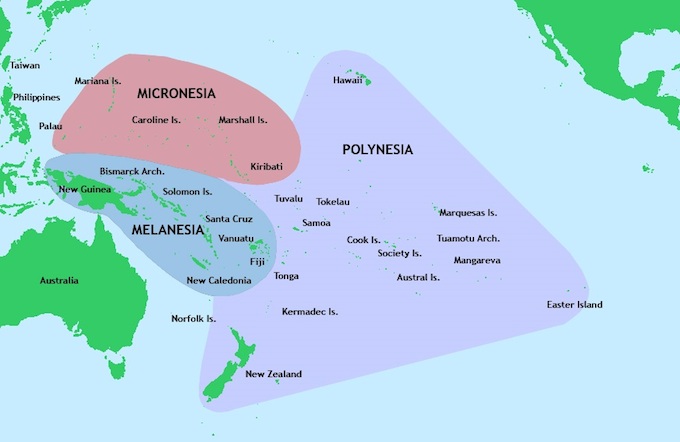
Discussions about the concept of “Global Citizenship” are gaining momentum in various international forums, but remain largely unexplored in the Pacific Islands.
According to Ron Israel, co-founder of The Global Citizens’ Initiative, Global Citizens think beyond communities based on shared group identities. They see themselves as part of a larger, emerging world community.
NewsRoom Digest: Top NZ News Items for January 29 Edition, 2016

Today’s edition of NewsRoom_Digest features 7 resourceful links of the day and the politics pulse from Friday 29th January. It is best viewed on a desktop screen.
NEWSROOM_MONITOR
Noteworthy stories in the current news cycle include the Government having the numbers needed to pass any enabling legislation to ratify the Trans-Pacific Partnership, the Inland Revenue saying it is cracking down on a ‘black economy’ that involves tradespeople being paid under the table, and the first intake of Syrian refugees arriving under New Zealand’s increased quota being welcomed in Auckland.
POLITICS PULSE
Media releases issued from Parliament by political parties today
included:
Government: Michael Woodhouse – Speech to welcome January intake of refugees; Annual building consents top 27,000; $15.6m redevelopment for Tarawera High; Major school broadband project completed
Greens: Implicit police threat appalling; NZ can lead the way with organic milk – but the Govt needs to step up; Climate change should be a factor in coal mine consenting process; Green Party Welcomes New Head Of Sustainable Business Council
Labour: Bob Tizard’s passing an end of an era; National must listen to Maori TPPA concerns; Arms Control a priority for the Pacific; Labour Mourns Bob Tizard
New Zealand First: Bob Tizard; Mt Cook Station – Buy It And Unlock The Park; With Friends Like The Us And Europe, Who Needs Competitors?; ‘Put Iwi First’ Minister’s Advisor Tells Failing Charter School
NZ National Party: Schools in Maungakiekie future-proofed with faster broadband
LINKS OF THE DAY
ANIMAL WELFARE: With the current El Niño weather pattern bringing heatwave conditions to many parts of the country, it’s important to ensure cows avoid heat stress and closely monitor cow health. For more information visithttp://www.dairynz.co.nz/heatstress
DWELLING CONSENTS RISE: Building consents for new dwellings continued to increase in 2015, although not as strongly as in the previous three years, Statistics New Zealand said today.Read more:http://www.stats.govt.nz/browse_for_stats/industry_sectors/Construction/BuildingConsentsIssued_HOTPDec15.aspx
GLOBAL VALUE CHAINS: The WTO has released new statistical profiles on global value chains (GVCs) for 61 economies. These profiles, available on the WTO website, bring together a set of indicators on trade taking place within GVCs.Click here for the statistics:
https://www.wto.org/english/res_e/statis_e/miwi_e/countryprofiles_e.htm
GLOBAL SALARY SURVEY 2016: The balance of power in the New Zealand work force is predicted to tip in favour of employees according to the findings of a survey by leading specialist recruitment firm Robert Walters. Click here for a copy: https://www.robertwalters.com.hk/salarysurvey.html
HOUSE PRICES IN AUCKLAND: The Reserve Bank today published a Bulletin article, ‘New Zealand house prices: a historical perspective’ that provides historical context to the current divergence between house price inflation in Auckland and the rest of New Zealand. Read more:http://www.rbnz.govt.nz/research_and_publications/reserve_bank_bulletin/2016/
MENTAL HEALTH: Trialling whether data from a wearable sports monitor could predict a patients’ decline and assessing a new crisis mental health service were two of the research projects tackled by this year’s University of Otago, Christchurch’s Summer Students. Following is information about four of the projects. A full list can be found at:
http://www.otago.ac.nz/christchurch/research/researchoffice/studentships/otago112078.html
WINE INDUSTRY: The New Zealand wine industry continues to show sound financial metrics in 2015 on the back of profitability in all but the smallest wineries and stable or increased gross margins across the board, according to the tenth annual financial benchmarking survey released today by Deloitte. To read or download the full Vintage 2015 report, go to http://www.deloitte.com/nz/wine
And that’s our sampling of “news you can use” for Friday 29th January.
Brought to EveningReport by Newsroom Digest.
–]]>Asia Pacific Report – a new venture for independent journalism

Report by David Robie. This article was first published on Café Pacific
Alistar Kata’s video on the Pacific Media Centre.
By David Robie
Comments from the AsiaPacificReport.nz and video launch in Auckland tonight.
[caption id="attachment_8770" align="alignleft" width="300"] Pacific Media Centre director Professor David Robie, Pacific Cooperation Foundation CEO Laulu Mac Leauanae and Multimedia Investments CEO and Evening Report editor Selwyn Manning at the launch of AsiaPacificReport.nz. Image: Del Abcede/PMC[/caption]
OUR new adventure really began back in 2007 when Selwyn Manning joined the Pacific Media Centre as the founding advisory board chair, but really took a big leap forward when he initiated the Pacific Scoop concept and we developed that together, launching it at the 2009 Māori Expo.
Over the next six years, Pacific Scoop played an inspiring role in independent journalism alongside the main Scoop Media website, providing a range of Asia and Pacific stories and analyses.
A significant core of this project was its role as the official output from AUT’s postgraduate Asia Pacific Journalism course. We have sent students all over the Pacific on key story and research assignments over the years. Some of these stories have won awards.
While at AUT, Selwyn did two innovative postgraduate honours degrees – producing ground-breaking documentaries for both, Morality of Argument and Behind the Shroud, which are featured on AsiaPacificReport.
But after Selwyn branched out and got his own Multimedia Investments operation and Evening Report and many other innovative websites off the ground, it became apparent that we needed something more than what we were able to offer with Pacific Scoop.
This coincided with the opportunity to team up again with Selwyn with the AsiaPacificReport project, which is a quantum leap forward for us, designed for interactive platforms, with a strong emphasis on multimedia capacities and a wider range of independent journalism.
Once again, AsiaPacificReport will be the outlet for our Asia Pacific Journalism course, but this will also be supplemented by journalism from independents and analysis from academics and issue-based reports.
Make no mistake, this website is about creating another public space for “no-froth” journalism and examining the real Asia-Pacific issues of the day from a New Zealand perspective.
Just take today, for example:
The lead story at the moment is one about political harassment by security forces of protesters in East Timor, or Timor-Leste, this week over a peaceful demonstration about impunity for the crimes committed under Indonesian rule for a quarter century.
President Jokowi of Indonesia was making his first official visit to Timor-Leste and the government and police wanted to keep dissent under wraps.
It is no surprise nothing was published about this in the NZ media, that I am aware of.
Another story today, thanks to our collaboration with the Vanuatu Daily Post, tells of a successful MP provisionally elected to Parliament in the snap election last Friday.
He is going to pay 100 percent of his salary to local chiefs in North Ambae to boost local development projects.
In the NZ media? No way.
Another story is about religious issues on Indonesia’s so-called “|Island of Intolerance”.
In the local media. Once again, no way.
Our first graduate to have a story published in AsiaPacificReport is Michael Neilson, currently in Jakarta with the Sydney Morning Herald bureau. This was his first internship story, about Aceh citizens taking legal action to protect the orangutan and the Sumatran jungle.
In a nutshell, some of the objectives of the website are:
- An independent Asia-Pacific voice telling the “untold” stories
- An educational media resource boosting the quality of regional reporting
- Addressing issues of equity and justice
- Providing Asia-Pacific journalism internships as a professional development opportunity
Kelsey accuses PM Key of ‘orchestrated move’ to make TPPA debate a security issue

In a statement issued Thursday evening, law professor and TPP expert Jane Kelsey has accused the Prime Minister of orchestrating a move by Police and security agencies to stile public debate and opposition to the Trans Pacific Partnership.
The statement titled ‘Desperate Key govt trying to redefine TPPA as law and order issue’ also suggests that the Prime Minister is attempting to swing public opinion in his government’s favour.
The statement reads:
‘News that police have been visiting opponents of the TPPA ahead of next week’s signing is the latest step in an orchestrated move by the Prime Minister to try to redefine the signing of the hugely unpopular Trans-Pacific Partnership Agreement (TPPA) as a law and order issue’, said long-time TPPA critic Professor Jane Kelsey.
‘Presumably the National Party’s polling shows they can claw back some of their support base if they can demonise the opposition to the TPPA and divert attention from the substantive issues of affordable medicines, privileged rights for foreign investors, democracy and sovereignty.’
Professor Kelsey observed the parallels to Muldoon’s strategy during the 1981 Springbok tour. ‘The choice of Sky City as the venue was the first step. Then the media ran a conveniently planted story that police were doing riot training using the TPPA signing as their scenario. Now we have police visits to people labelled as anti-TPPA activists. By the time of the signing, National will hope the law and order threat is firmly implanted in people’s minds, even if nothing happens.’
‘I wouldn’t be surprised if government claims it has to relocate the signing somewhere more secure because of the threat to visiting ministers – I’ve already heard rumours of an alternative venue that may actually be the government’s preferred option,’ Kelsey said.
‘Clearly, the government has been damaged by the fact that tens of thousands of ordinary Kiwis have turned out across the country to protest against the secretive negotiations. Instead of responding to citizens’ concerns through a democratic process, the government has resorted to a classic and not very sophisticated law and order beat up that aims to intimidate and further suppress democratic dissent.’
Professor Kelsey predicts that, ‘just as the previous insults haven’t worked, this won’t work either’.
The statement followed news reports that Police had begun visiting activists and opponents of the TPPA. Fairfax’s Stuff website reported:
Scout Barbour Evans was visited by two police officers on Thursday morning, “asking me what I’ll be doing for the TPPA events”.
The officers said they were following a national directive and were “visiting all known activists in the country”.
Green Party Co-leader Metiria Turei said in the Fairfax report:“Having police show up at your door to ask you what you plan on doing is chilling and the police know that” said Turei.
“It carries with it an implicit threat and New Zealanders have the right to speak out and have their voices heard. Being an activist isn’t a crime, being an activist is being passionate about something and last time I checked that wasn’t illegal.”
Commenting to the New Zealand Herald, Civil liberties lawyer Michael Bott said:
The police action would have a “chilling” effect on freedom of expression and the right to protest.
“These people haven’t committed any crime and yet the police are going to conduct a search or an interview, and there are legal concerns with that.”
Also commenting in the Herald, Labour Party police spokesman Stuart Nash said Police door-knocking is:“Not the way we do things in this country”.
“My initial reaction is that it is a little heavy-handed. The protesters have a legal right to protest within the bounds of the law.
“During every single TPP rally, I can’t recall any instances where protesters have been violent or aggressive.
—
]]>Tony Alexander’s Weekly Economic Overview January 28 2016

Economic Analysis by BNZ chief economist Tony Alexander.
Thursday January 28th 2016
 Tony Alexander, BNZ economist.[/caption]
The Reserve Bank left the cash rate at 2.5% this morning which surprised no-one. But they did open the door a bit more to cutting further, so although our view remains that they won’t move again, one cannot rule out a 0.25% reduction in March. A lot depends on what happens overseas as domestically our economy has a lot of strength.
China remains concerning and weakness there is one reason for still easing international dairy prices and reduced confidence that they will rebound. That loss of confidence lies behind Fonterra’s decision to cut their projected payout from $4.60 to $4.15 which will mean about $800mn less to their suppliers.
This week in the housing section I take a quick look again at reasons why Auckland house prices are high and why they will stay high, plus illustrate why cutting migration inflows is not a realistic option for curtailing Auckland’s population growth which is running at twice the average for the rest of NZ.
I finish with a look at China, specifically the change in expectations of the rural-urban drift from 5-15 million a year to in fact going into reverse! It looks like analysts on the ground forgot to allow for many “rural” people not in fact still being on farms but having already relocated to “county towns”. The overhang of apartments built in the big cities therefore is a lot more entrenched than previously thought. Hence new worries about debt of developers, regional governments, banks etc. as well as personal wealth held in many (not all) city locations.
Tony Alexander, BNZ economist.[/caption]
The Reserve Bank left the cash rate at 2.5% this morning which surprised no-one. But they did open the door a bit more to cutting further, so although our view remains that they won’t move again, one cannot rule out a 0.25% reduction in March. A lot depends on what happens overseas as domestically our economy has a lot of strength.
China remains concerning and weakness there is one reason for still easing international dairy prices and reduced confidence that they will rebound. That loss of confidence lies behind Fonterra’s decision to cut their projected payout from $4.60 to $4.15 which will mean about $800mn less to their suppliers.
This week in the housing section I take a quick look again at reasons why Auckland house prices are high and why they will stay high, plus illustrate why cutting migration inflows is not a realistic option for curtailing Auckland’s population growth which is running at twice the average for the rest of NZ.
I finish with a look at China, specifically the change in expectations of the rural-urban drift from 5-15 million a year to in fact going into reverse! It looks like analysts on the ground forgot to allow for many “rural” people not in fact still being on farms but having already relocated to “county towns”. The overhang of apartments built in the big cities therefore is a lot more entrenched than previously thought. Hence new worries about debt of developers, regional governments, banks etc. as well as personal wealth held in many (not all) city locations.
For the full analysis, click on the link (Download document
- Low interest rates making it cheaper to service larger mortgages to buy initially larger houses, then after a few years the same house as you would have bought when interest rates were higher. We discount lower interest rates into prices we are willing to pay. Current debt servicing costs nationwide at 9.3% of disposable household income are in fact below the quarter century average of 9.5%.
- Lack of readily buildable land in Auckland either because it is too far away and there is not enough money for a fast transit transport system, or people holding the land see best value long-term in holding it rather than developing it, or because it is flooded – by two large harbours.
- High construction costs in New Zealand as most houses are one-offs and not cookie-cutter properties which we snobbishly turn our noses up at.
- Rapid population growth in Auckland as people seek to live and work in a large agglomeration delivering high interaction with other people rather than staying in the tourism and farming-focussed regions even if working remotely is a possibility. Auckland’s population grew 2.8% in the year to June 2015 and by 14.3% from 2006. Rates for the rest of New Zealand were 1.4% and 7.6% respectively. People are voting with their feet on where they want to be and it isn’t in the regions for a growing proportion of them even though the lifestyle available in the regions is fantastic. Imagine what would happen to Auckland versus regional house prices if a public transport drone pod could take you from your work in Auckland CBD to Mokau in 30 minutes!
http://www.ft.com/intl/cms/s/2/767495a0-e99b-11e4-b863-00144feab7de.html#axzz3yJFb3aPJ
http://www.bbc.com/news/world-asia-china-33802777
This mispredicting of future migrant flows means analysts have overestimated future (current) demand for the likes of iron ore and coal to make steel – hence price collapses. At least when it comes to forecast growth in demand for quality food products the dynamic is different as this is dependent upon income growth which is expected to remain firm. But misforecasting the rural-urban growth bonus is only one negative factor in play for China. Others include huge debts for companies, banks and regional governments, too many factories and power plants, rising pollution and dissatisfaction about it, rising clampdowns on dissent, increasing blaming of foreigners, a falling currency, bleeding foreign currency reserves, a plummeting sharemarket, capital controls, and so on. One cannot blame so many Chinese in recent years trying to get their funds out of the country. And even if they paid inflated prices for property elsewhere on the planet, each month that the Yuan falls in value they are better off – especially when it comes to the social status having offshore assets confers. Not that anyone makes a song and dance about such things these days with the government clamping down on corruption and leaving an implication that anyone with substantial assets offshore must have done something wrong back on the mainland. China almost certainly will not have an economic collapse. But it does face potentially many years of uneven transition from an economy driven by exports, manufacturing and fixed asset investment toward one driven by consumption, and many years of working away at the debts built up by so many players. With Plan A faltering, watch for Plan B for keeping the populace willing to tolerate rule of the CCP – conflict against foreigners.The Weekly Overview is written by Tony Alexander, Chief Economist at the Bank of New Zealand. The views expressed are my own and do not purport to represent the views of the BNZ. To receive the Weekly Overview each Thursday night please sign up at www.tonyalexander.co.nz To change your address or unsubscribe please click the link at the bottom of your email. Tony.alexander@bnz.co.nz
–]]>AUT Pacific Media Centre launches AsiaPacificReport.nz news website

AsiaPacificReport.nz article by Pacific Media Centre
From Auckland University of Technology
By Denise Yeo
AUT’s Pacific Media Centre and Evening Report editor Selwyn Manning have teamed up to launch Asia Pacific Report, a news website that will provide a fresh ‘Pacific’ voice to bolster Asia Pacific news and analysis in New Zealand.
PMC director Professor David Robie says the collaboration is a result of a gap in the media market for an independent Asia-Pacific voice that addressed issues of equity and justice.
“AsiaPacificReport.nz will feature in-depth current affairs news stories focused on telling the ‘untold stories’. It will be a public space for no-froth journalism examining real pressing issues,” he says.
Postgraduate student journalists, academics and journalists around the region will contribute to news reports and features on the website which was launched today at AUT’s City Campus.
The idea for Asia Pacific Report was birthed from Professor Robie and Manning’s desire to bring the Pacific Media Centre’s work beyond the university, to serve a greater global audience.
Cook Strait White Whale Confirmed As Migaloo

NewsroomPlus.com
A white humpback whale spotted in Cook Strait last winter has been confirmed as Migaloo, a famous white whale usually seen off Australia.
 The white humpback whale was seen on 5 July by researchers on the annual Cook Strait Whale Survey, a partnership between the Department of Conservation and OMV New Zealand.
DNA analysis by Oregon State University in the United States of a skin sample taken from the white whale by the survey team has found it matches the genetic profile taken from Migaloo off Australia, confirming it is the same whale.
The Cook Strait sighting was the first of Migaloo in New Zealand waters and outside of Australian waters. At the time, Cook Strait Whale Survey leader Nadine Bott said distinctive features on the white whale, including its dorsal fin, strongly indicated it was Migaloo.
“I was confident it was Migaloo but it’s good to have it supported by DNA results which give us 99.99% certainty it was him,” said Nadine Bott.
“Migaloo being in New Zealand waters supports the findings from our Cook Strait research that humpbacks seen off eastern Australia also move through our waters and perhaps even more so than we had thought. This has been indicated particularly by matches of photos of humpback whales seen during our survey with photos of humpbacks off eastern Australia.
“My thanks go to Oregon State University for undertaking the DNA analysis and Auckland University for assisting in getting the skin sample to the United States. Confirming it is Migaloo helps us in learning more about humpbacks in South Pacific waters.”
Migaloo – Aboriginal for ‘white fella’ – was first seen off eastern Australia in 1991 and has been seen there almost every year since.
White humpbacks are extremely rare with only four reported in the world. Migaloo is the most famous and is thought to have fathered two white calves which have been making appearances along Australia’s eastern coast. One has been named MJ, short for Migaloo junior. Another white humpback whale was spotted in Norway last year.
The annual Cook Strait Whale Survey is assessing humpback whale recovery since commercial whaling ended in 1964 and has run for 12 years. Last year’s four-week survey counted a record 137 humpback whales which is an encouraging indication their numbers are increasing in New Zealand.
–]]>
The white humpback whale was seen on 5 July by researchers on the annual Cook Strait Whale Survey, a partnership between the Department of Conservation and OMV New Zealand.
DNA analysis by Oregon State University in the United States of a skin sample taken from the white whale by the survey team has found it matches the genetic profile taken from Migaloo off Australia, confirming it is the same whale.
The Cook Strait sighting was the first of Migaloo in New Zealand waters and outside of Australian waters. At the time, Cook Strait Whale Survey leader Nadine Bott said distinctive features on the white whale, including its dorsal fin, strongly indicated it was Migaloo.
“I was confident it was Migaloo but it’s good to have it supported by DNA results which give us 99.99% certainty it was him,” said Nadine Bott.
“Migaloo being in New Zealand waters supports the findings from our Cook Strait research that humpbacks seen off eastern Australia also move through our waters and perhaps even more so than we had thought. This has been indicated particularly by matches of photos of humpback whales seen during our survey with photos of humpbacks off eastern Australia.
“My thanks go to Oregon State University for undertaking the DNA analysis and Auckland University for assisting in getting the skin sample to the United States. Confirming it is Migaloo helps us in learning more about humpbacks in South Pacific waters.”
Migaloo – Aboriginal for ‘white fella’ – was first seen off eastern Australia in 1991 and has been seen there almost every year since.
White humpbacks are extremely rare with only four reported in the world. Migaloo is the most famous and is thought to have fathered two white calves which have been making appearances along Australia’s eastern coast. One has been named MJ, short for Migaloo junior. Another white humpback whale was spotted in Norway last year.
The annual Cook Strait Whale Survey is assessing humpback whale recovery since commercial whaling ended in 1964 and has run for 12 years. Last year’s four-week survey counted a record 137 humpback whales which is an encouraging indication their numbers are increasing in New Zealand.
–]]>
NewsRoom Digest: Top NZ News Items for January 28 Edition, 2016
Today’s edition of NewsRoom_Digest features 3 resourceful links of the day and the politics pulse from Thursday 28th January. It is best viewed on a desktop screen.
NEWSROOM_MONITOR
Noteworthy stories in the current news cycle include the Reserve Bank leaving the Official Cash Rate unchanged at 2.5 percent, Fonterra cutting its forecast milk payout for the current season, and the Labour Party making it clear that it will not support the TPP in its current form.
POLITICS PULSE
Media releases issued from Parliament by political parties today
included:
Government: NZ among top nations in fighting corruption; $12 billion reduction in benefit liability; Partnership school agreement terminated; New $6m block for Khandallah School, Wellington; NZ’s most remote students connected to the world;Two new Corrections Officers presented with the Minister’s Excellence Award; Labour MPs’ support of TPP welcomed
Greens: Housing crisis still worrying Reserve Bank; ECan needs to explain if it’s letting polluters off the hook; Kids bear the costs of Govt’s charter school experiment; ‘Stock in lake’ incident shows Govt is failing to protect our waterways; Lax response to cows in waterways a symptom of Canterbury’s democratic deficit
Labour: New TPPA study at odds with Govt report; Milk payout drop – Govt must take action on economy; NZ loses squeaky clean corruption-free reputation; Pasifika caucus visit as Kiribati water crisis deepens; Joyce destroys Government rail link certainty; Scandalous Saudi sheep saga rolls on; Differing view on TPPA agreed
New Zealand First: All Aboard For Auckland Only, Says Peters; Northland Only Rates A Mention, Misses Out On Big Projects; Government Admits Public Transport Failure; Milk Payout Plummets – Threatens An Economic Storm; Flag Flying Blues Hit Key’s Campaign; Drowning Toll Makes School Pools More Important Than Ever; Defence Force Stitched Up On Foreign-Made Uniforms
United Future Party: Dunne Speaks: The farce of state of the nation addresses
LINKS OF THE DAY
BENEFIT EVALUATION: The latest benefit valuation which shows a $12 billion reduction over four years in the welfare system’s future lifetime cost, which equates to clients spending 900,000 fewer years on benefits over their working lifetimes, compared to pre-reform expectations: The full valuation report is available at:http://www.msd.govt.nz/about-msd-and-our-work/newsroom/media-releases/2016/2015-valuation-of-the-benefit-system-for-working-age-adults.html
CORRUPTION INDEX: New Zealand has fallen to fourth place in the Transparency International Corruption Perceptions Index (CPI).Click here for the report:http://www.transparency.org.nz/docs/2016/cpi/Corruption%20Perceptions%20Index%202015%20report_EMBARGO.pdf
OVERSEAS MERCHANDISE TRADE: In December 2015 the value of imported goods was $52.5 billion, a new high for a calendar year,according to Statistics New Zealand. Read more: http://bit.ly/1KbQ1Sr
And that’s our sampling of “news you can use” for Thursday 28th January.
Brought to EveningReport by Newsroom Digest.
–]]>Timor-Leste human rights protesters harassed over peaceful Jokowi demo

AsiaPacificReport.nz article by Pacific Media Centre From Amnesty International Two members of Timor-Leste’s security forces visited the office of the human rights NGO Yayasan HAK this week and the police have been harassing its executive director by telephone for organising and participating in a peaceful demonstration. Manuel Monteiro Fernandes, executive director of the human rights NGO Yayasan HAK based in the capital of Dili has informed Amnesty International that the police have been calling him repeatedly regarding the NGO’s involvement in organising a peaceful human rights demonstration to coincide with Indonesian President Joko “Jokowi” Widodo to Timor-Leste on Tuesday. His safety is at risk, says Amnesty International in a statement today. On the day of the demonstration, two members of the Timor-Leste Defence Force (Falintil-Forças de Defesa de Timor-Leste, F-FDTL) visited the Yayasan HAK office and requested to use the space as a security base due to its proximity to the Indonesian Embassy in Dili. Fernandes refused to allow them to use their office. One of the soldiers then approached another member of the staff, Adelio da Costa Fernandes, and requested that he immediately remove his t-shirt because it carried the slogan “Free West Papua”, referring to the self-determination issue that is considered highly sensitive by the Indonesian government. Yayasan HAK announced in a joint public statement on Monday, together with other local NGOs, that the peaceful demonstration was organised to urge the Timorese and Indonesian governments to address crimes against humanity committed during the Indonesian occupation between 1975 and 1999. They also called for the immediate implementation of recommendations set out by the Commission for Truth and Friendship (CTF), a bilateral agreement between the government of Indonesia and the government of Timor-Leste to investigate crimes committed during the 1999 independence referendum, including the establishment of a Commission for Missing People. More information Earlier story – ‘impunity protest letter’ –]]>
MIL-PMC Joint Venture: New Asia Pacific Report website launches today

Source: Multimedia Investments Ltd and Pacific Media Centre
[caption id="attachment_8644" align="alignleft" width="300"] AsiaPacificReport.nz.[/caption]
An enterprising new media collaboration between a journalism school and an independent news organisation will take off today (Thursday, January 28, 2016 4:15pm) in a bid to bolster Asia Pacific news and analysis in New Zealand.
Asia Pacific Report will feature news reports and features from student journalists on a postgraduate Asia Pacific studies course at Auckland University of Technology and a network of contributing academics and journalists around the region.
The new website, to be launched by Pacific Cooperation Foundation CEO Laulu Mac Leauanae, is a result of a collaboration between Evening Report owner and editor Selwyn Manning and AUT’s Pacific Media Centre director Professor David Robie.
“This will be a fresh ‘Pacific voice’ in the media. A series of excellent, in-depth stories are being filed by our students and collaborating journalists and they deserve a digital showcase for their award-winning work,” says Dr Robie.
“AsiaPacificReport.nz will be a stimulating and challenging new source of news and current affairs available to the public. And with our Creative Commons licence policy it will be available for the regional Pacific media to tap into.”
Over the past three years Manning’s company, Multimedia Investments Ltd, has successfully launched Evening Report, The Daily Blog, 36th-Parallel.com, Newskitchen.eu, de.Newskitchen.eu, ForeignAffairs.co.nz and LiveNews.co.nz as independent media outlets, and has provided the springboard, inspiration and technical support for the AsiaPacificReport.nz venture.
Selwyn Manning says AsiaPacificReport.nz seamlessly displays all forms of digital reportage and analysis in an easy to navigate design. It was built from the ground up with convergence in mind and its content logic accentuates the strengths of Pacific Media Centre’s editorial policy and course outputs.
Significant reach
“Multimedia Investments will provide significant reach for the PMC’s reportage and analysis.
“It will enable the publishing of AsiaPacificReport.nz’s content into global media outlets, including Dow Jones Factiva, Lexis Nexis, Moreover, and Acquire Media.
“We look forward to launching Asia Pacific Report and are confident it will be a significant outlet and a reliable source for public discourse and debate within the Asia Pacific region,” Manning says.
Among objectives of the website, Dr Robie says, are:
AsiaPacificReport.nz.[/caption]
An enterprising new media collaboration between a journalism school and an independent news organisation will take off today (Thursday, January 28, 2016 4:15pm) in a bid to bolster Asia Pacific news and analysis in New Zealand.
Asia Pacific Report will feature news reports and features from student journalists on a postgraduate Asia Pacific studies course at Auckland University of Technology and a network of contributing academics and journalists around the region.
The new website, to be launched by Pacific Cooperation Foundation CEO Laulu Mac Leauanae, is a result of a collaboration between Evening Report owner and editor Selwyn Manning and AUT’s Pacific Media Centre director Professor David Robie.
“This will be a fresh ‘Pacific voice’ in the media. A series of excellent, in-depth stories are being filed by our students and collaborating journalists and they deserve a digital showcase for their award-winning work,” says Dr Robie.
“AsiaPacificReport.nz will be a stimulating and challenging new source of news and current affairs available to the public. And with our Creative Commons licence policy it will be available for the regional Pacific media to tap into.”
Over the past three years Manning’s company, Multimedia Investments Ltd, has successfully launched Evening Report, The Daily Blog, 36th-Parallel.com, Newskitchen.eu, de.Newskitchen.eu, ForeignAffairs.co.nz and LiveNews.co.nz as independent media outlets, and has provided the springboard, inspiration and technical support for the AsiaPacificReport.nz venture.
Selwyn Manning says AsiaPacificReport.nz seamlessly displays all forms of digital reportage and analysis in an easy to navigate design. It was built from the ground up with convergence in mind and its content logic accentuates the strengths of Pacific Media Centre’s editorial policy and course outputs.
Significant reach
“Multimedia Investments will provide significant reach for the PMC’s reportage and analysis.
“It will enable the publishing of AsiaPacificReport.nz’s content into global media outlets, including Dow Jones Factiva, Lexis Nexis, Moreover, and Acquire Media.
“We look forward to launching Asia Pacific Report and are confident it will be a significant outlet and a reliable source for public discourse and debate within the Asia Pacific region,” Manning says.
Among objectives of the website, Dr Robie says, are:
• An independent Asia-Pacific voice telling the “untold” stories
• An educational media resource boosting the quality of regional reporting
• Addressing issues of equity and justice
• Providing Asia-Pacific journalism internships as a professional development opportunity.
Manning, a former chair of the PMC Advisory Board, and Dr Robie previously collaborated with the Pacific Scoop venture, founded in 2009. The AsiaPacificReport.nz website launch – Thursday at 4:15pm. –]]>Vanuatu winning poll candidate signs over 100pc of salary to chiefs

AsiaPacificReport.nz article by Pacific Media Centre From Vanuatu Daily Post By Len Garae in Port Vila Provisional successful candidate for North Ambae Alickson Vira has kept his promise in the Vanuatu snap election by signing what is believed to be the first agreement of its kind anywhere in the country – allocating 100 percent of his MP’s salary to finance the custom chiefly governance system of his constituency. More than 300 of his supporters from nearby communities including some 50 custom chiefs were present to celebrate his victory and witness the signing agreement at Waluriki yesterday. Feasting lasted for a whole day. Candidate Vira from Waluebue says he has given the chiefs six months to prove to him they are capable of using his salary to improve the administration of their custom governance system. On the other hand, if they do not use the money effectively, then the agreement they signed would be reviewed. Asked how he and his young family are going to cope without his salary, he replied: “We will manage like we did on our campaign trail. We had no financial resources. My campaign team and I walked right round Ambae.” He and his family live in his village of Waluebue in North Ambae with his people. He will only travel to Port Vila when parliament sits. “If I do not get into Cabinet then I will return home to live with my people at home to work in the garden, make copra and do what my voters do to get by,” he said. Candidate Vira is a member of the Seventh Day Adventist Faith. Sources from his island say a large number of his voters come from his church. –]]>
Indonesia’s Island of Intolerance – ‘time running out’

AsiaPacificReport.nz article by Pacific Media Centre Time is running out for the beleaguered Ahmadiyah community on Bangka Island in Indonesia. Bangka Island’s top elected official, Tarmizi Saat, told a crowd last week that he would ensure the expulsion of all members of the religious minority by February 6. He warned that expulsion enforcement measures from Bangka Island, located off the east coast of Sumatra, could begin as early as January 27. Adding to the fear factor for Bangka’s Ahmadiyah is an open letter circulated on January 22 by a group of Bangka residents warning that they “won’t want to be held accountable if ugly things happen” should the Ahmadiyah refuse to comply with the expulsion order. Those threats constitute a dismaying escalation in a months-long abusive campaign of intolerance by local government officials and residents to compel the island’s Ahmadiyah to convert to Sunni Islam or leave the area. The Ahmadiyah identify themselves as Muslims, but differ with other Muslims as to whether Muhammad was the “final” monotheist prophet; consequently, some Muslims perceive the Ahmadiyah as heretics. Bangka’s Ahmadiyah community have reason to fear for their safety. Militant Islamists have launched several violent attacks against Ahmadiyah in other parts of Indonesia since 2008, including an attack in Cikeusik in February 2011 which killed three Ahmadiyah men. Those attacks followed the issuance of a decree that year by the government of then-President Susilo Bambang Yudhoyono ordering the Ahmadiyah community to “stop spreading interpretations and activities that deviate from the principal teachings of Islam.” The government of President Joko “Jokowi” Widodo is compounding the negative impact of the policy of religious intolerance by failing to intervene to protect Bangka’s Ahmadiyah. Instead, Jokowi’s government has been silent on the plight of that community even as the deadline for its expulsion fast approaches, and notwithstanding the expulsion would violate multiple fundamental human rights guarantees on security and that protect against forced expulsions and discrimination. The failure of leadership isn’t just a betrayal of the Ahmadiyah, it’s an abject failure to defend guarantees of religious freedom enshrined in Indonesia’s constitution. Jokowi has pledged to protect religious minorities and fight religious intolerance. Bangka Island’s Ahmadiyah community need Jokowi to deliver on that commitment before it’s too late. Phelim Kine is deputy director of the Asia division of Human Rights Watch. –]]>
Giant Dairy Exporter Fonterra Reduces Forecast Farmgate Milk Prices for 2016
In a statement this morning, Fonterra Co-operative Group Limited announced it has reduced its forecast Farmgate Milk Price for the 2015/16 season from $4.60 per kgMS to $4.15 per kgMS. The Fonterra statement follows:
When combined with the earnings per share range of 45-55 cents, this means a total available for payout of $4.60-$4.70 per kgMS and would currently equate to a forecast Cash Payout of $4.50-$4.55 per kgMS to our farmers after retentions.
Chairman John Wilson said global economic conditions continue to be challenging and are impacting demand for a range of commodities, including dairy.
“Key factors driving dairy demand are declining international oil prices which have weakened the spending power of countries reliant on oil revenues, economic uncertainty in developing economies and a slow recovery of dairy imports into China. In addition, the Russian ban on European Union dairy imports continues to push more product on to the world market.
“There is still an imbalance between supply and demand which continues to put pressure on global milk prices. Since last September, prices on GlobalDairyTrade for Whole Milk Powder (WMP) have fallen 12 per cent, and Skim Milk Powder (SMP) prices are down 8 per cent.
“Although New Zealand farmers have responded to lower global prices by reducing supply, that has yet to happen in other regions, including Europe, where milk volumes have continued to increase.
Chief Executive Theo Spierings said while global demand remained sluggish, Fonterra supported the general view that dairy prices will improve later this calendar year.
“However the time frame for supply and demand rebalancing has moved further out and largely depends on a downward correction in EU supply in response to the lower global prices. These prices are clearly unsustainably low for farmers globally and cannot continue in the longer term.
“It is important to state that despite the current challenges, we have confidence long-term international dairy demand will continue its expansion due to a growing world population, increasing middle classes in Asia, urbanisation and favourable demographics.
“While a unique series of global issues are impacting the forecast Milk Price, the business is performing well, as outlined in our business update in November, and is on track to generate improved dividend returns. Fonterra has remained focused on reducing costs, increasing efficiencies and shifting more milk into higher value products,” said Mr Spierings.
Mr Wilson said: “The reduction in the forecast Farmgate Milk Price will be very tough on our farmers. As we confirm the Co-op’s performance for the first half of the financial year, we will look at the best way to help our farmers’ cash flows, underpinned by the expected improvement in dividend returns and the financial strength of the Co-operative.
“We will continue to keep our farmers updated as the season progresses,” said Mr Wilson.
Note: currency is New Zealand dollars unless otherwise stated.
]]>Across the Ditch: TPPA Signing + Trams Auckland Rail Link + Aussie’s NZ Cricket Tour
Across the Ditch: Australia radio FiveAA.com.au’s Peter Godfrey and EveningReport.nz’s Selwyn Manning deliver this week’s Across the Ditch. This week Peter and Selwyn discuss: TPPA Signing on Feb 4: New Zealand Government will host the Trans Pacific Partnership nations in Auckland on February 4 for the signing of the TPP Agreement. This despite New Zealand getting little out of it (It failed to negotiate a satisfactory milk powder export deal, and failed in that the people and corporates of TPPA nations will be able to buy up NZ land, buildings and homes beneath a $200 million cap. Consequently, the majority of Kiwis do not want the deal to go ahead). Auckland Public Transport: Trams and an announcement Wednesday (today) that the Government will fund in part the Auckland CBD city rail link – which is a bit of a breakthrough after a few years of stalemate. Australia Cricket Tour of NZ: And Australia is about to kick off its Cricket tour of New Zealand with its first one day international match against New Zealand’s Blackcaps at Auckland’s Eden Park on February 3.
Across the Ditch was broadcast Live on FiveAA.com.au on January 28 2016 and webcast on EveningReport.nz, LiveNews.co.nz and ForeignAffairs.co.nz.
]]>TPPA protests: it’s far from over



Report by Carolyn Skelton. Highlights from the TPPA Don’t Sign meeting in Auckland Town Hall. I am a novice in the filming for and editing of videos, so please excuse the technical quality. https://youtu.be/5suCmPKeiAA The content is very important. The full video of the event, as live streamed on the Daily Blog, will be available online soon. [Edit: Full video now available on the Daily Blog] The TPPA “Don’t Sign” meeting began in Auckland Town Hall on the evening of 26 January 2016. with a welcome from Joe Hawke of Ngāti Whātua He was supported from a group from his iwi, who joined together to sing a waiata. Moana Maniapoto responded, stating that the Ngāti Whātua group had been central to 1978 protests, and drew parallels with the anti-TPPA protests. [See Te Ara for more on Joe Hawke.] Maniapoto said the TPPA had united a diverse range of New Zealanders in opposition to it. The main message from the meeting was that the TPPA was far from a done deal: the campaign against it will continue. Lori Wallach from the Public Citizen’s Global Trade Watch, explained the process in the US: the president signing an international deal means nothing until it passes Congress; and that possibility was still uncertain, with a long way to go before the outcome is known. Furthermore, Wallach warned that, if the NZ government changed laws to comply with the TPPA before the text is agreed by the US, (and Japanese) legislature, NZ could be screwed. The US Congress could require some parts of the TPPA to be changed before they would agree to it. If NZ changed it’s laws too soon, it could find itself locked into a deal that is increasingly bad for NZ. Jane Kelsey talked of the peer reviewed analyses of the TPPA (available here), and used her rat toy as a metaphor for the dead rats Tim Groser has swallowed in agreeing to the TPPA. See the report from the Pacific Media Centre on the town hall meeting, with a photo of the “dead rat” and a focus on the implications of the TPPA for Māori. Kelsey argued that the newly released “National Interest” document is propaganda, in the National Party interest, written by the people who negotiated the TPPA. The document ignores the downsides. See the MFAT web site for the document, and the full text of the TPPA. Metiria Turei stated clearly, and resoundingly that the Green Party is opposed to the TPPA: that it’s good for big business, but bad for New Zealanders, the environment, and our sovereignty. Grant Robertson delivered a rousing speech that was critical of the TPPA, because it undermines our sovereignty. He highlighted the Labour Party legacy in standing up for the rights of new Zealanders, while also supporting good trade deals. He said the TPPA is not a good deal. However, Robertson failed to state explicitly what the Labour Party will be doing about it. Some see this as an indication of lack of consensus within the Labour caucus on the TPPA. Wayne Mapp argues in comments on the Standard, that Robertson’s speech indicated that the Labour Party would contest the enabling legislation. In the evening of 27 January 2016, Andrea Vance reported that Labour’s Andrew Little has stated they are opposed to the TPPA. In the video, Little states that, in government, they would look to renegotiate the TPPA. [TVOne video available here.] At the town hall meeting, Marama Fox, Māori Party co-leader, delivered a powerful speech. She talked of the Treaty of Waitangi and how it didn’t deliver to Māori the benefits promised by the British. She drew strong parallels with the TPPA, and said to those watching, “Welcome to our world!” Fox said that, if Māori had known in advance how the things would work out for them, they would have lined the borders holding muskets. She talked of how both National and Labour governments had not worked in their interests in the past, and re-iterated the Māori Party view that it is better to be at the table working towards the Māori Party goals. What would the 21st century equivalent be to defending the country’s borders against the new wave of imperialism embedded int he TPPA. (See information about Tabuteau here.) It will be bad for NZ businesses and increase inequalities in NZ. Moana Maniapoto ended with a beautiful and inspiring song of hope. The RNZ audio report of the meeting is here: http://podcast.radionz.co.nz/mnr/mnr-20160127-0741-tpp_critics_meet_-_the_deal_is_not_done_yet-048.mp3 More information about the TPPA Don’t Sign Nationwide meetings on the It’s Our Future site, plus other upcoming events.]]>
PMC: Rousing, inspirational public challenge to no way TPPA deal
MIL OSI Analysis – Professor Kelsey and her TPPA “dead rat” at the Auckland Town Hall Tuesday night.
[caption id="attachment_8687" align="alignleft" width="300"] Professor Kelsey and her TPPA “dead rat” at the Auckland Town Hall tonight. Image: Del Abcede/PMC.[/caption]AUCKLAND (Pacific Media Watch): A leading critic of the Trans Pacific Partnership Agreement tonight showed off “Tim the dead rat” to rousing cheers, laughter and applause as a packed Auckland Town Hall heard devastating critiques of the controversial deal.
Law professor Jane Kelsey’s toy rat lightened up the evening for a moment, but she and former United States trade lawyer Lori Wallach tore the agreement to shreds in their harsh criticism.
Wallach told the crowd they were “not alone” as she detailed the strong opposition in the US Congress, which she said would eventually stop the pact in its tracks.
Ministers of the 12-country trade pact are due to sign it in Auckland on Thursday in a symbolic gesture, but one that was described by many speakers at the event as “arrogant” and an “insult to all Māori” just days before Waitangi Day.
Most speakers condemned the pact as not being about trade, but a surrender of New Zealand’s sovereignty to the US corporations achieved through a flawed anti-democratic process.
At odds with Māori
Earlier, Dr Kelsey said in an interview with Radio Waatea that the reforms proposed in the deal were at odds with where the Māori economy was heading.
The government had turned up the rhetoric on the deal over the past few days, saying it offered increased earnings for Māori exporters and jobs for Māori workers.
But Professor Jane Kelsey told interviewer Willie Jackson any tariff reductions would take years to kick in, and that was not the area where the Māori economy was growing.
“It is growing by relationship trading. It’s building networks, it’s not about, you reduce your tariffs and our economy will grow.
It’s a very kaupapa Māori-based approach, although I know there is a debate within Māori about that. So [the TPPA is] not the kind of model that’s the growth model for the Māori economy, even if you are going to be looking at that narrow part of it,” she says.
Dr Kelsey said the Waitangi Tribunal claim to be heard in March would cover other likely effects of the TPPA such as making it harder for Māori to access affordable medicines and the obstacles put up on protecting the environment.
Professor Kelsey and Wallach will speak about the TPPA tomorrow in Wellington at St Andrews Church on the Terrace, on Thursday at the Pop Up Cathedral in Christchurch and at Dunedin’s Burns Hall on Friday.
This work is licensed under a Creative Commons Attribution-NonCommercial 3.0 New Zealand Licence.
]]>
NewsRoom Digest: Top NZ News Items for January 27 Edition, 2016
Today’s edition of NewsRoom_Digest features 4 resourceful links of the day and the politics pulse from Wednesday 27th January. It is best viewed on a desktop screen.
NEWSROOM_MONITOR
Noteworthy stories in the current news cycle include the Government working with the Auckland Council to bring forward the start date of the City Rail Link by two years, the International Ratings Agency Fitch revising down its assessment of New Zealand’s economic outlook, and the Corrections Department saying it will in future tell Child Youth and Family when it releases prisoners who pose a risk to children.
POLITICS PULSE
Media releases issued from Parliament by political parties today
included:
Government: Government To Move Forward On City Rail Link; Speech: John Key – Speech to Auckland Chamber of Commerce; $115m to accelerate regional roading projects; Infrastructure programme rich source of jobs; New Science Challenge to boost land productivity and the environment
ACT Party: Key must follow up rail with education funding;Council gets the money and the bag
Greens: Green Party Celebrates End To CRL delay;More cracks in Government’s economic façade; Education and steeper fines needed to get stock out of waterways
Labour: Key last to board the City Rail Link; National can’t ignore economic warnings
Māori Party: The chameleon of New Zealand politics strikes again; Pororoaki : Andrew Sarich
New Zealand First: Speech: Winston Peters State of Nation Orewa; Peters- Another Reason Not To Change NZ Flag
NZ National Party: Decision on East-West road link welcomed
LINKS OF THE DAY
HOUSEHOLD LABOUR: The the working-age population estimate of the usually resident, non-institutionalised, civilian population of New Zealand aged 15 years and over was today released today by Statistics New Zealand. Read more: http://bit.ly/1SIZfs2
NATIONAL SCIENCE CHALLENGE: The Our Land and Water National Science Challenge, which aims to enhance primary sector production and productivity while maintaining and improving land and water quality was launched yesterday. For more information about the National Science Challenges, visit: http://www.mbie.govt.nz/info-services/science-innovation/national-science-challenges/
REGIONAL ROADING PROJECTS: Funding of up to $115 million to accelerate regionally significant roading projects in Taranaki, Gisborne and Marlborough was announced today. More information on the Accelerated Regional Roading Programme can be found at: http://www.transport.govt.nz/arrp
REGIONAL TOURISM INDICATORS: The Regional Tourism Indicators (RTI) for December 2015 was released today. The RTI are based on electronic card transaction data and provide regular updates on both international and domestic tourism expenditure at a regional level. Read more: http://www.mbie.govt.nz/info-services/sectors-industries/tourism/tourism-research-data/regional-tourism-indicators
And that’s our sampling of “news you can use” for Wednesday 27th January.
Brought to EveningReport by Newsroom Digest.
–]]>Live Stream: TPPA Don’t Sign public meeting at the Auckland Town Hall

TPPA Don’t Sign public meeting at the Auckland Town Hall. The first of the “TPPA: Don’t Sign” public meetings is on Tuesday night at 7pm in Auckland Town Hall. Washington-based expert analyst Lori Wallach, Director of Public Citizen Global Trade Watch, will explain about the realities of TPPA politics in a US presidential election year, and the likelihood that the agreement will not get to a vote in 2016, after which it becomes hostage to a new administration.
University of Auckland law professor Jane Kelsey will discuss recent assessments of the impacts of the TPPA for New Zealand based on the series of peer reviewed expert papers that have now been released.*
The second half of the meeting will be a political panel of parliamentary representatives:
Grant Robertson, Economic Spokesperson, Labour Party
Metiria Turei, Co-leader, NZ Greens
Marama Fox, Co-leader, Maori Party
Fletcher Tabuteau, Trade Spokesperson, NZ First
Barry Coates from Its Our Future will talk about Auckland based activities in the lead-up to the proposed signing of the agreement on 4 February.
The meeting will be live streamed on The Daily Blog.
The other meetings are at:
Wellington, Wednesday 27 January, 7pm, St Andrews on the Terrace
Christchurch, Thursday 28 January, 7pm, Cardboard Cathedral
Dunedin, Friday 29 January, 7pm, Burns Hall (next to First Church), Moray Place
The “TPPA: Don’t Sign” speaking tour is co-sponsored by ItsOurFuture, ActionStation, New Zealand Council of Trade Unions and First Union.
*The expert papers on the Regulatory Process, Investment, Economics, Environment and Treaty of Waitangi can be accessed on tpplegal.wordpress.com.
—
]]>Bryce Edwards’ Political Roundup: Catching up with the Labour Party
Political Roundup by Dr Bryce Edwards.
[caption id="attachment_4808" align="alignleft" width="150"] Dr Bryce Edwards.[/caption]
2016 is a crucial year for the Labour Party and Andrew Little. For a catch-up on what’s been said over summer about Labour – including by Labour itself – see the following 20 stories.
A number of media reports and blog posts over the last month suggest Labour is about to release some big policies, but also that the party might be having trouble grappling to stay relevant and return to greater popularity. The main question to arise out of these items is how radical or conservative is Labour going to be in 2016?
1) Newstalk ZB reports that Little promising big announcements in 2016. In an interview, he outlined Labour’s plans: “The first year was about sorting out some of the internal things, which we’ve done. The second year is about the year of ideas and we’ve got to get those out because past experience tells us making big announcements in an election year isn’t particularly a good idea. So we’ll have five or six big announcements to make throughout the year. Stand by for the State of the Nation speech at the end of this month, so that’ll be the first big indication of where we are going. So 2017, then, is just focused not so much on getting the big ideas out there but actually campaigning on the ones we’ve announced.”
2) Much of Labour’s promised radicalism is based around the work of finance spokesperson Grant Robertson, and this is profiled in depth by Richard Harman in his feature, Labour’s radical economic rethink. This focuses mostly on Robertson’s Commission on the Future of Work, which is expected to lead to innovative new employment and education policies, some of which could challenge some leftwing values of the labour movement.
One of Robertson’s possible new employment policies could involve reduced job security for workers, which Harman says is surprising for a party founded by and for workers 100 years ago: “That a Labour politician is prepared to allow for a system under which workers could be laid off quickly is a major ideas-shift within the party and an indication of just how radical the Commission’s final report is likely to be. Harman also points to Robertson’s willingness to consider using public private partnerships, and adopting National’s capital gains tax by proxy policy (the “bright line test”), and extending it to five years.
3) Labour’s policy generation focus is also emphasised by Richard Harman in his profile on Andrew Little – see: Labour’s serious year. He says that “This will be the year that makes or breaks Andrew Little.” It also includes further quotes from Little that emphasise radicalism: “I think these are big challenges and they need big responses… We are facing an age when incrementalism simply won’t cut it and we’ve got to be prepared to be bold and we need New Zealanders to understand that it’s going to take some bold responses and they’ve got to be long term responses if we are doing justice to the issue… We have to be thinking in pretty big terms.”
4) For more information on Robertson’s Future of Work Commission, see Isaac Davison’s Expect radical changes to economic policy, says Robertson. And note that Robertson (@grantrobertson1) tweeted yesterday to say “Excited to announce Robert Reich and Guy Standing will be keynote speakers at our #futureofwork conference in March”.
5) Labour and Robertson are enthusiastic about adopting Denmark’s “flexicurity” employment regime, which Chris Trotter critiques in his column, “Flexicurity” – The Future Of Work? Trotter points out that there’s a profound difference between the labour markets of Denmark and New Zealand, namely that Denmark has a unionisation rate of about 75 per cent compared to New Zealand’s 19 per cent. This could mean that if the flexicurity model was implemented here – with its reduced protections for workers – it could simply turn “into a government-backed scheme for employers to hire and fire at will.”
6) Trotter goes further to paint Robertson’s promised radicalism as potentially akin to that of Roger Douglas’ in 1983, suggesting that there are plenty of parallels between Labour’s position then as a party out of power for eight years, desperate to find ways to usurp National as modernisers of the economy: “Robertson is readying the Labour Party for another bid to win the backing of big business. Like Roger Douglas before him, he is inviting his party to become, once again, New Zealand’s great political facilitator. Last time it was the Free Market Revolution of 1984-93 that Labour facilitated” – see: Third Term Temptations.
7) But Labour’s recently released Future of Work policy paper, Economic Development and Sustainability suggests something much less dynamic according to commentator Phil Quin – see: Labour’s Language Problem. He argues that Labour’s document is an “example of the ways bureaucratese has infected political language. Consider this fact alone: in a short document comprising a touch over eight pages, the word “sustainable” is used a staggering fifteen times.”
Quin explains the heavy use of buzzwords and “inoffensive, uncontroversial statements of the bleeding obvious” as being due to Robertson’s background as a bureaucrat together with his general “risk-averse” nature. But he ponders if Labour has a bigger problem: “More and more, Labour thinks, acts and communicates less like a political party than some hybrid government department/NGO, having lost along the way the knack of talking to voters in language likely to resonate, let alone persuade.”
8) Labour’s self-proclaimed radicalism is also seriously questioned in Chris Trotter’s column Orbiting a Dying Sun? Trotter says that in its centenary year it is natural to compare the Labour parties of 1916 and 2016, but doesn’t mince words when he says “it is not an exercise from which Labour emerges with any credit. In 1916, Labour was led by heroes. One hundred years on, perhaps predictably, it is led by colourless political careerists: men and women lacking the character, courage and creative intelligence to be genuine revolutionaries – or even effective reformers.”
Trotter writes that “Growing evidence of the emergence of a new progressive paradigm” – seen in the rise of Syriza in Greece, Podemos in Spain, Bernie Sanders in the US and Jeremy Corbyn in the UK – seemingly has no resonance for the modern Labour Party: “Mention Jeremy Corbyn, Bernie Sanders, Syriza or Podemos to the New Zealand Labour Party, however, and you will be met with a mixture of impatience and hostility.” In order to illustrate this point, Trotter recounts party founder and prime minister Peter Fraser declaring “If I was in Russia, I’d be a Bolshevik!”, and doubts that Andrew Little would ever proclaim, “If I was in Greece, I’d be a member of Syriza!”
9) Another leftwing blogger, Steven Cowan also questions the moderate direction Andrew Little and Grant Robertson are taking the party in – see: Labour’s brave “new” world. He says “Labour could have gone down a different path – one signposted by the likes of Jeremy Corbyn in Britain and Bernie Sanders in the United States. It could be advocating polices that swing the levers of economic and political power back toward ordinary people, rather than ensuring that they remain in the grip of the business sector. They are the kind of polices that have revived Labour’s fortunes in the UK and have Bernie Sanders threatening to upset Hilary Clinton’s bid to become the Democrat’s presidential candidate. But we know what Labour thinks. After Jeremy Corbyn was elected leader, Grant Robertson was quick to dispel any notion that New Zealand Labour would be going down Corbyn’s path. According to Robertson, polices that might be ‘suitable’ for the UK may not be ‘appropriate’ for New Zealand’.”
10) Some degree of radicalism is being expressed by the party’s new tertiary education spokesman, Chris Hipkins, who is promising that a Labour Government would “significantly” reduce tertiary education fees – see: Tertiary fees ‘likely to drop under Labour’. But until further indications of how much the reduction would be and how it would be achieved, most will consider this an empty promise.
11) Changes to Labour’s foreign policy might disappoint for many Labour supporters according to Gordon Campbell, who suggests that “Norman Kirk must be rolling in his grave” due to an apparent major shift on the question of New Zealand’s part in the battle against ISIS – see: On Labour’s endorsement of a combat role.
Pointing to various Labour Party statements that flew under the radar during the pre-Christmas period, Campbell suggests that Labour has performed a U-turn on its opposition to sending military trainers to Iraq, and now goes even further in advocating that the SAS be sent. His explanation is that Labour must fear being “caught out on the “peace” side of the debate” and cynically wants to pre-empt the Government’s possible announcement of involvement in the Middle East.
12) One temptation for Labour could be to change leaders, and Matthew Hooton says in his paywalled NBR column that this will be Labour’s Little dilemma. He states bluntly that the Labour leader’s successes – mostly around achieving at least an appearance of caucus unity and sidelining unpalatable policies – are the “achievements of a loser”: “Mr Little’s personal poll ratings are atrocious. The party finds itself five points below where it was at the same time in the last electoral cycle and the Greens have flatlined.”
Hooton says before the year is out the party will have to decide whether to remain loyal or “knife him”, though he believes “On balance, the odds must be on Mr Little hanging on.” Whatever Labour does, “standing fast” and waiting for a global political sea change to sweep the party to power is not an effective strategy. It’s an approach Hooton terms the “Cuba Mall coffeehouse delusion” and one which he believes Labour activists are in thrall to: “Perhaps they’re right. “Perhaps, in a year’s time, President Sanders will just have taken residence in the White House, union boss Bill Shorten will have turfed out Malcolm Turnbull from The Lodge, Mr Corbyn will be level-pegging with David Cameron, and Mr Little will be ready to mount a serious challenge against Mr Key for 2017 with the “radical” changes to economic policy that Grant Robertson promises. But it all seems unlikely.”
13) According to Audrey Young, Little is “safe until the election, no question” – see her wide-ranging piece on what 2016 might hold for Labour: Legendary Tizard links Labour past and future. In this, Young begins by regaling readers with a series of anecdotes designed to show what an asset to Labour Bob Tizard once was. She then moves on to outline the kind of progress the party will be looking for in its centenary year.
14) Usually spin doctors are at pains to remain invisible and scrupulously avoid inserting themselves into the political debate. Labour strategist Rob Salmond recently broke with that practice when he penned the curious On tour with the Boss. It’s a glowing account of his five days accompanying Andrew Little as he attended meetings in Washington and New York. Apparently the trip was “to assist Andrew in his preparation to become Prime Minister” which, in Salmond’s view, his boss absolutely ought to be.
15) Labour can certainly win the next election according to Rodney Hide: “The polls this far out don’t matter much. They are certainly not a predictor of what will happen over the next two years.” However, Hide’s crucial caveat is that Labour must stop being delusional. He is referring to president Nigel Haworth’s Christmas message to the party which declared: “We’re finishing an excellent year in which the polls and popular feeling on the streets tells us that we are on course to victory in 2017″ – see: Don’t mention the polls!
Hide warns that positivity and having confidence is one thing but completely abandoning reality is another. Perpetrating a false sense of security negates the need to “change the course of events and to make history. That’s what Labour must do.” Hide also points out that, as the polls certainly do not show Labour on track to win the next election, Haworth’s statement has the effect of undermining confidence in a leadership that does not appear to have a grasp on the situation at hand.
16) This is also a view Labour Party supporter Phil Quin shares in his blog post, Go home, Labour, you’re drunk. He says, “Sadly, Haworth’s bullshit is greatly damaging. Labour would be much better off with a president who is willing to confront party members and activists with the ugly truth of Labour’s predicament. As with any individual, organisation or company that has endured persistent failure, there can be no hope for Labour until it can reckon with the underlying causes for the existential crisis it faces but refuses to acknowledge”.
17) Quin still describes himself as a Labour “supporter” despite his resignation from the party last year when Labour launched its campaign on “Chinese sounding names”. Now he’s announced that he’ll do his best to make sure the author of that campaign, Phil Twyford, loses his Te Atatu seat – see Nicholas Jones’ Twyford’s seat targeted after Chinese-names furore.
18) Andrew Little has revealed the highlights of his summer break with Jo Moir – see: Labour leader Andrew Little shares his Kiwi summer holiday. He proclaims a liking for trifle, and divulged his choice of John Grisham over the TPP document as holiday reading. Rising Labour star Jacinda Ardern also shares her holiday reading choice – David and Goliath by Malcolm Gladwell: “It was really interesting and changes the way you think about success and failure, which is great for someone in Opposition” – see Moir’s Labour MP Jacinda Ardern has enjoyed spending time in the kitchen this summer.
19) Labour is continuing its party organisation shakeup, with the appointment of a new general secretary to replace Tim Barnett – see Jo Moir’s Andrew Kirton appointed as Labour Party’s new general secretary. This article details Kirton’s background as a “public relations man” in London and former communications advisor to Helen Clark and co-president of the New Zealand University Students’ Association. While overseas the thirtysomething reportedly “remained close to the Labour Party and organised Labour’s London support network, campaigning for the expat vote during the last two elections.”
20) Finally, what’s happened to the working class in what used to be a working class party? The selection of Andrew Kirton as the party’s general secretary is typical of modern Labour, says Phil Duncan in New Labour Party general secretary indicative of party’s managerial capitalism. Duncan writes: “Once upon a time… Kirton’s background would have fitted him for a bright future in the National Party. That he is a Labourite indicates the interchangeable nature of Labour and National these days.”
]]>Live Video Stream: New Zealand Bloodstock Premier Thoroughbred Sales

New Zealand Bloodstock: Potent Buying Bench Fuels Day 1 of Karaka Premier Sale – A diverse buying bench fuelled increases to key figures on the first day of the two-day Karaka Premier Sale. To view the Day One Highlights Video, click here. Lot 200 fetched today’s top price of $775,000. SEE ALSO: NZ Bloodstock.]]>
TPPA National Interest Analysis Criticised As Flimsy and Biased

Source: Professor Jane Kelsey and Trade Minister Todd McClay.
New Zealand Trade Minister Todd McClay today released the National Interest Analysis (NIA), a document tasked to examine the pros and cons of the Trans-Pacific Partnership (TPP). McClay said on releasing the document that it “comprehensively analyses what TPP means for New Zealand, across the entire Agreement”. He added: “It finds that entering TPP would be in New Zealand’s national interest, adding an estimated $2.7 billion to GDP by 2030.”However, TPPA critics suggest the National Interest Analysis document is far from an independent analysis and is designed to spin the National-led Government’s (and the Ministry of Foreign Affairs and Trade’s) view.
[caption id="attachment_6181" align="alignleft" width="150"] Professor Jane Kelsey.[/caption]
University of Auckland law professor Jane Kelsey said the formal National Interest Analysis (NIA) on the Trans-Pacific Partnership Agreement (TPPA) released by Trade Minister Todd McClay today is simply an expanded version of the so-called ‘fact sheets’ prepared by the Ministry of Foreign Affairs and Trade (MFAT), which seek to justify the deal that officials and the National government have negotiated.
“The NIA is a totally predictable cheerleading exercise that talks up the supposed gains and largely ignores the huge downsides of the TPPA,” Professor Kelsey said.
She added an Australian Senate Inquiry into the treaty making process last year dismissed similar exercises produced by MFAT’s counterparts in Australia as totally inadequate, and called for a genuine independent, in-depth study before as well as after the conclusion of negotiations, including the TPPA.
“The flimsy NIA contrasts to the careful and detailed analysis in five peer reviewed expert papers on the implications of the TPPA that have been produced so far as part of a series supported by funding from the New Zealand Law Foundation,” Professor Kelsey said.
These expert papers examine the impacts on New Zealand’s regulatory sovereignty, the investment chapter, climate change and the environment, the economics of the TPPA, and the Treaty of Waitangi and are available at tpplegal.wordpress.com. More papers are to come on financial regulation, public services, and IT and innovation.
“If the government wants its assessment of the national interest of the TPPA to be taken seriously it needs to engage with these independent expert papers and attempt to rebut the analyses by which the authors conclude that the deal is not of net benefit to New Zealand, now or in the future,” Professor Kelsey said.
[caption id="attachment_8656" align="alignleft" width="150"] New Zealand Trade Minister Todd McClay.[/caption]
McClay insisted New Zealand has published an “unprecedented amount of information” on TPP.
In a statement today, he said, released information includes 10 fact sheets released following the conclusion of negotiations on 5 October. The TPP text was first made public on 5 November, together with additional information on the estimated economic benefit and details of potential costs. “The Government will also be running roadshows for the public to learn more about TPP, and to help businesses prepare for the economic opportunities will bring,” says Mr McClay. [caption id="attachment_4640" align="alignleft" width="150"] Lori Wallach, Director, Public Citizen’s Global Trade Watch.[/caption]
Tonight at 7pm, a public meeting will be held at the Auckland Town Hall where Professor Kelsey, international TPPA expert Lori Wallach of the USA’s Public Citizen, and other key public figures will talk about the TPPA, the latest research, politics, analysis and actions.
Other public meetings are planned throughout the country. See ItsOurFuture.org.nz for more details.
—
]]>NewsRoom Digest: Top NZ News Items for January 26 Edition, 2016
Today’s edition of NewsRoom_Digest features 3 resourceful links of the day and the politics pulse from Monday 25th January. It is best viewed on a desktop screen.
NEWSROOM_MONITOR
Noteworthy stories in the current news cycle include that Auckland houses have got sharply less affordable in the past year (according to a new survey by Demographia International), and that new rules coming into effect today aim to discourage state housing tenants from turning down homes they are offered.
POLITICS PULSE
Media releases issued from Parliament by political parties today
included:
Government: Ensuring access to social housing is fair and reasonable
ACT Party: Baby boomer government lets down a generation
Greens: Not one more acre of confiscations; Green Party Pays Respect To Barry Brickell
Labour: Robert Reich and Guy Standing keynote speakers at Future of Work Conference
Māori Party: Supports Call For A Review Of The Justice System; TPP signals perilous times ahead for Treaty rights
New Zealand First: Another Fly In The Biosecurity Ointment
LINKS OF THE DAY
FUTURE OF WORK CONFERENCE: Internationally renowned economists and authors Robert Reich and Guy Standing will be the keynote speakers at Labour’s Future of Work Conference in Auckland in March. You can register here: http://www.futureofwork.nz/conference
GLOBAL INNOVATION: New Zealand ranks 28th in how its domestic policies support worldwide innovation, according to an analysis released by the Information Technology and Innovation Foundation (ITIF), a global technology policy think tank. Click here for the report: http://www2.itif.org/2016-contributors-and-detractors.pdf
HOUSING AFFORDABILITY: Auckland houses have got sharply less affordable in the past year, according to a new survey by Demographia International. The survey of hundreds of metropolitan areas in eight OECD countries, plus Hong Kong, rates Auckland the fourth most expensive city in which to buy a house. Read more:http://www.demographia.com/dhi.pdf
And that’s our sampling of “news you can use” for Monday 25th January.
Brought to EveningReport by Newsroom Digest.
–]]>Lori Wallach & political panel: “TPPA: Don’t sign” – Auckland Town Hall, 7pm Tues 26 Jan
Source: Professor Jane Kelsey.
 The government has finally announced it intends hosting the signing of the Trans-Pacific Partnership Agreement in Auckland on 4 February 2016.
There is a groundswell of opposition throughout New Zealand and in many other TPPA countries to the secretly negotiated deal. The New Zealand government’s offer to host the signing continues the profound disregard for public sentiment is has shown throughout the six years of negotiations.
A series of public meetings will be held in the main cities in the week leading up to the proposed signing to explain once again why this agreement is not good for New Zealand and should be signed.
The first of the “TPPA: Don’t Sign” public meetings is on Tuesday night at 7pm in Auckland Town Hall.
Washington-based expert analyst Lori Wallach, Director of Public Citizen Global Trade Watch, will explain about the realities of TPPA politics in a US presidential election year, and the likelihood that the agreement will not get to a vote in 2016, after which it becomes hostage to a new administration.
University of Auckland law professor Jane Kelsey will discuss recent assessments of the impacts of the TPPA for New Zealand based on the series of peer reviewed expert papers that have now been released.*
The second half of the meeting will be a political panel of parliamentary representatives:
Grant Robertson, Economic Spokesperson, Labour Party
Metiria Turei, Co-leader, NZ Greens
Marama Fox, Co-leader, Maori Party
Fletcher Tabuteau, Trade Spokesperson, NZ First
Barry Coates from Its Our Future will talk about Auckland based activities in the lead-up to the proposed signing of the agreement on 4 February.
The meeting will be live streamed on The Daily Blog.
The other meetings are at:
Wellington, Wednesday 27 January, 7pm, St Andrews on the Terrace
Christchurch, Thursday 28 January, 7pm, Cardboard Cathedral
Dunedin, Friday 29 January, 7pm, Burns Hall (next to First Church), Moray Place
The “TPPA: Don’t Sign” speaking tour is co-sponsored by ItsOurFuture, ActionStation, New Zealand Council of Trade Unions and First Union.
*The expert papers on the Regulatory Process, Investment, Economics, Environment and Treaty of Waitangi can be accessed on tpplegal.wordpress.com.
—
]]>NewsRoom Digest: Top NZ News Items for January 22 Edition, 2016
Today’s edition of NewsRoom_Digest features 3 resourceful links of the day and the politics pulse from Thursday 22nd January. It is best viewed on a desktop screen.
NEWSROOM_MONITOR
Noteworthy stories in the current news cycle include the Minister for Women saying there has only been slow progress in recent times in reducing the pay gap between men and women, new research on the Trans-Pacific Partnership arguing that the benefits do not outweigh the costs, and Housing New Zealand saying there are no state houses available in Ashburton or Oamaru.
POLITICS PULSE
Media releases issued from Parliament by political parties today
included:
Government: Medical Cannabis in New Zealand; More than 100,000 SmartGate users in one week; Number on social housing register continues to decline; Record numbers of people switching electricity retailers
Greens: Gender pay gap no accident and needs a Government response; NZers need full information about TPPA costs and trade-offs
Labour: Spiralling student debt deterring further education; Employment case makes case for clarification around work definitions; Lives lost as funding indecision continues; From one waiting list to another
New Zealand First: Lawsuit Against Us Worrying For NZ As TPPA Signing Approaches; Wake Up, There’s A Thirst For Free TV Sports; No Sense In Pork Imports; Government needs to do more than mind the pay gap
LINKS OF THE DAY
MEDICAL CANNABIS: In light of recent and increasing commentary on the use, access to and funding of cannabis based medical products, attached is a fact sheet on the definition, current availability, status and authorisation process around the use of these products for therapeutic purposes. Further information can be found on the Ministry of health’s website at: http://www.health.govt.nz/our-work/regulation-health-and-disability-system/medicines-control/medicinal-cannabis
SOCIAL HOUSING: The December 2015 Social Housing Register shows that better understanding applicant’s particular needs is housing more vulnerable people, Social Housing Minister Paula Bennett says. The December 2015 register can be found here: – http://www.housing.msd.govt.nz/information-for-housing-providers/register/index.html
TRANS-PACIFIC PARTNERSHIP: New research on the Trans-Pacific Partnership argues the benefits do not outweigh the costs. Click here for the report: https://tpplegal.files.wordpress.com/2015/12/ep5-economics.pdf
And that’s our sampling of “news you can use” for Wednesday 22nd January.
Brought to EveningReport by Newsroom Digest.
–]]>Bryce Edwards’ Political Roundup: The Perils of user-pays democracy
Political Roundup by Dr Bryce Edwards.
[caption id="attachment_4808" align="alignleft" width="150"] Dr Bryce Edwards.[/caption]
Information is the lifeblood of democracy. Therefore policy changes by government agencies that will restrict access to OIA requests by charging for information, are leading to concerns about the likely reduction in accountability and transparency in public life.
In the lead up to the release next Wednesday of the annual Transparency International global Corruption Perception Index, there have been some concerning allegations of Official Information Act abuse by government agencies. These were sparked last week when Fairfax business journalist Richard Meadows (@MeadowsRichard) tweeted: “The @ReserveBankofNZ has squashed my OIA requests with a $651 fee. Sad to see our powerful, unelected technocrats discouraging transparency.”
Sam Sachdeva’s Official Information Act request charges for media in spotlight details the unfolding of events around the request, including Meadows’ subsequent discovery that the charge was due to a significant policy change quietly enacted by the Reserve Bank late last year.
This change appeared to have been carried out in tandem with a review and report by the outgoing Chief Ombudsman, Beverley Wakem, which said “the Official Information Act’s charging provisions should apply to everyone who made a request.”
Media appalled by changes
The implications of the Reserve Bank’s new policy were not lost on an appalled media.
“Thanks again, Dame Beverley”, sneered The Dominion Post, already no fan of Wakem (see December’s editorial Chief Ombudsman shows how not to be an information watchdog).
The newspaper delivered a stinging rebuke to the Reserve Bank, likening them to “a hide-bound banker who knows the price of everything and the value of nothing.” The Reserve Bank had started a “very bad trend” by deciding to charge for OIA responses, and the closeted way they went about it was unacceptable: “This is not the right way to make or reveal such a momentous decision.”
Crucially, the editorial pointed out that A tax on official information is a tax on democracy itself, arguing it contravenes the intention of the Act which seeks to make “information available as of right to the country’s citizens; it reverses the previous legal assumption that the government’s information is secret.”
The Dominion Post makes the point that while a fee of $600 would be a serious barrier for most individuals, the media submit challenging and time-consuming requests in their role as “the people’s watchdog over the government” meaning even large media organisations will struggle as the fees add up.
Rather than the media being treated differently to other requesters under the OIA, the newspaper says it “would prefer to urge that government-owned agencies, including large and powerful pillars of the state like the Reserve Bank, should treat the provision of information as a democratic duty. It should therefore regard the cost of giving that information as part of its core business. In other words, its default position should be to give the information free. Only in the most exceptional cases should this rule be breached.”
That’s also the view of Joanna Norris, editor of The Press and chairperson of the NZ Media Freedom Committee – quoted in Sam Sachdeva’s report. Like the Dominion Post, Norris feels charging for information is a “dangerous step”, contrary to the purpose of the act. She believes the attitude around releasing documents is wrong: “They need to stop looking at this as their information, it’s not – it’s the information held on behalf of all New Zealanders. It’s not their information, it’s ours.”
Gordon Campbell is similarly appalled, saying “There are so many wrong things about this policy that it’s hard to know where to start.” He argues that the Reserve Bank has made things difficult “at a time when quality journalism is under financial strain and spin merchants paid for by taxpayers outnumber journalists.” – see: On making the media pay for OIA requests.
The NBR’s political editor Rob Hosking has written about the issue today, saying that the Reserve Bank’s new OIA policy “appears to run counter to the purpose of the law”. He writes his column on the OIA reluctantly, “because I do believe that, generally, journalists problems are not of public interest. But this one is. The fuss over recent weeks about the Reserve Bank charging for official information is just the latest signal from – in this case a remarkably unaccountable body – that it is not going to be bothered with all this pesky accountability stuff. Once you start charging for official information, you are in effect charging for accountability and for democracy.” -see: The ‘observer effect,’ public information and the media.
Bloggers and politicians react
One blogger has fought back against the changes. No Right Turn characterises the changes like this: “The expectation is that charging is going to become a lot more common – or, to put it another way, public information is going to become a lot less available, and Ministers and public servants a lot less accountable. Good for them, but bad for our democracy” – see: An attack on our democracy.
His response has been to file OIA requests with “every core government department seeking information for the last financial year on their total number of requests, the number of times they have demanded and been paid OIA charges, and the total amount collected. If they’re going to do something like this, then we at least deserve a statistical baseline so we can measure the impact. The responses are due on 15 February, and I’ll be tracking them here. Assuming, of course, that they don’t try and charge me for it…”
An economist who worked for decades at the Reserve Bank, including as the Head of Financial Markets, has penned a lengthy blog post criticising and examining the new policy – see Michael Reddell’s OIA: changes in RB practice and in law needed. In this he recalls: “I discovered the new policy when the Bank sought hundreds of dollars to provide me copies of some easily accessible, non-contentious, very old minutes of meetings of the Reserve Bank Board.” More recently, he says he was informed by the Bank that his request for information relating to the TPP would cost him $560.
Reddell argues that his ex-employer has made a “serious misjudgement” with the new policy, but that the Bank has a “generally obstructive approach” to providing public information. This is a concern to him, as “The Reserve Bank is a very powerful organisation, with a great deal of discretionary policy choice left (formally) in the hands of one unelected person.”
Opposition politicians have been outspoken on the policy change. Labour’s Jacinda Ardern warns that if the Reserve Bank’s approach is adopted by other agencies then this would present “a real challenge to open, accountable, transparent government” – see Sam Sachdeva’s Official Information Act request charges for media in spotlight.
Similarly, the Greens’ James Shaw says “If you’re charging $600 or $1200 or whatever, that’s going to mean pretty much that all the requests are going to dry up” – see Sam Sachdeva’s Charges for official information ‘step in wrong direction’: James Shaw. Shaw suggests that officials should spend less time on “obfuscating the information”, and that “If you didn’t spend three-quarters of your time blacking out pages and all of that kind of stuff, it would cost you a lot less to give the information.”
Reserve Bank responds
Geoff Bascand, the Deputy Governor of the Reserve Bank, defended the policy change in a newspaper column on Tuesday – see: Reserve Bank: Charging for official information a ‘reasonable’ response. Bascand said the policy was “consistent with the Official Information Act” and was a “common, fair and reasonable response” to an increase in OIA requests of almost 300 per cent in the past five years.
He assured the public that “While the policy applies to all OIA requests, in practice we will seek charges when requests are large, complex, or frequent.” He also emphasised the Reserve Bank’s commitment to working with requesters to refine their requests in order to reduce or eliminate charges.
In the case of Richard Meadows’ $651 invoice, Bascand explained that “providing the information requested would take an estimated 8.5 hours of chargeable time (along with additional non-chargeable time).” He notes that Meadows was given several opportunities to refine his request but finally chose to withdraw it.
In the end Bascand reminds readers that while government agencies “and therefore taxpayers and ratepayers” bear the cost of providing responses to OIA requests, “like other public sector agencies, our budget is tightly constrained.”
A reasonable user-pays regime?
While on the face of it Bascand’s points appear reasonable, the current experiences of those making OIA requests make the changes problematic. A central issue is the huge amount of discretion it gives bureaucrats – discretion which some have demonstrated they are willing to use in politically motivated attempts to slow down and frustrate OIA requests.
Critics may be forgiven for thinking that, as the Manawatu Standard’s Matthew Dallas puts it, “the introduction of hefty charges to do so is just another brick in the stonewall” – see: Price-tag on information requests from media a troubling sign. He states that “The act aids The Fourth Estate in the execution of its duty and contributes to an informed public; without which, democracy withers.”
Abuses of the OIA at the hands of an increasingly politicised public service and failings of the OIA and Ombudsman’s office are topics I’ve covered in two recent Political Roundups. In October I wrote about New Zealand’s closed government and in December I looked at The struggle for integrity.
There has been much complaining from government agencies (as well as government ministers) about the cost of fulfilling OIA requests. Individual request costs are often cherry picked to paint requesters as wasteful of public funds. Apart from a few selective figures released there doesn’t seem to be much hard analysis of the total cost.
As one example, in July last year it was reported that the Police were struggling with an increased OIA workload – see Samantha Olley’s Police: New OIA request every hour. But as No Right Turn pointed out, it is Not as much as it sounds.
Are requests to government agencies an unreasonable burden on the taxpayer or are they are an increasing unfunded cost for government departments on tight budgets? If we knew the total cost then perhaps taxpayers could themselves weigh up the value for money. Are freely available OIA requests less or more value than, say, a sheep farm in the middle of the Saudi Arabian desert?
A $600 OIA request could be frivolous or it could be the best $600 taxpayers ever spent. Exposing just one botched public project or dodgy “partnership” deal can lead to millions of dollars in savings, stopping good money being thrown after bad. Only a few requests will have that payback. But every OIA request that gets withdrawn because the submitter could not afford the government charge has the potential to expose vital information that we never get to see.
Timeliness in the modern news cycle is almost as important as getting the information in the first place. The Reserve Bank policy gives huge scope for delay as requests to refine, quotes for each refined request and decisions on whether to charge or not are pondered over. Everyone is aware of the increasing pressure on journalists’ time these days. What used to be a simple OIA request could be converted into protracted haggling over scope and cost. In the middle of an election campaign that sort of added delay could be crucial.
As with any user charge the impact will not be the same for all. When even large media organisations are concerned about affordability we can be sure that independent journalists, volunteer protest groups, academics and individual citizens are going to struggle even more. Corporate funded lobby groups on the other hand will gain yet another relative advantage on the non-profit sector.
There is a lack of transparency and consistency across the public sector. If OIA charges are now to be made then there should be clear rules on how much and under what circumstances they will be made. The temptation to “think of a number and double it” when faced with a complex and potentially embarrassing request will be greatly reduced.
Policing and reforming the OIA
Of course the former Chief of the Ombudsman’s Office, Beverley Wakem has now retired, and her replacement is promising a revitalised watchdog. Yet so far his statements on charges for OIA requests will lead many to conclude that he could be in a similar mould to his much-criticised predecessor. In today’s feature on Judge Peter Boshier by Marty Sharpe, the new Chief sides with the Reserve Bank over charging for access to information – see: New chief ombudsman promises to be a fearless operator.
Boshier is quoted as saying: “I think the Reserve Bank’s response is actually very fair. When I looked at it I couldn’t fault it. As a statement of principle it was perfectly fair and it’s one to which I subscribe”. You can also listen to Lynn Freeman 25-minute interview with the new Chief on RNZ: New Chief Ombudsman Peter Boshier.
But perhaps the problem lies with the Act itself. This week law professor Andrew Geddis called for a review of the legislation: “It could well do with a doctor’s check-up, if you’re talking about health, because I do think it needs a pretty thorough review … a review with the aim of making changes” – see Eileen Goodwin’s OIA request charges worrying sign.
And of course it is not only the Official Information Act that is relevant, but also the Local Government Official Information and Meetings Act, which relates to local government authorities. In this regard, Chris Morris reports that “The Dunedin City Council has no plans to follow the Reserve Bank’s lead and start routinely charging media organisations for official information requests, a senior manager says” – see: Information policy for review.
Finally, inspired by the Reserve Bank’s apparent monetising zeal, The Spinoff have released their Official Information Rate Card 2016, v1.0 – see: Toby Manhire’s The Spinofficial Information Act. At one end of the charging scale, the Spinoff will charge a fee of “1 x packet Squiggle Top biscuits” for the acknowledgement of a pitch from a freelance contributor. The heftiest charges are reserved for “Responding to inquires from public relations practitioners who express an interest in “reaching out”’, topped only by $1200 per quarter hour for “Responding to inquiry from government body for clarification of request under the Official Information Act.”
]]>Barry Coates: Research paper: The Economics of the TPPA

Submission: Barry Coates.
The fifth in a series of expert peer reviewed papers on the implications of the Trans-Pacific Partnership Agreement (TPPA) for New Zealand was posted on the TPP Legal website today.
The paper examines the key economic issues that likely to be impacted by the TPPA – the predicted economic benefits of the TPPA for the New Zealand economy, the implications for agricultural trade, the impact on value chains for New Zealand exporters, the potential for regulatory ‘chill’ and the degree to which it fulfils the aim of being a ‘21st Century agreement’.
[caption id="attachment_8629" align="alignleft" width="232"] Barry Coates, researcher and former Executive Director of Oxfam New Zealand.[/caption]
The paper was co-authored by Tim Hazledine, Professor of Economics at the University of Auckland Business; Rod Oram, business journalist and author; Geoff Bertram, Senior Associate at the Institute for Policy and Governance at Victoria University; and Barry Coates, researcher and former Executive Director of Oxfam New Zealand. The peer reviewer was John Quiggin, an Australian Laureate Fellow in Economics at the University of Queensland.
“It is striking how little the TPPA will deliver. Without the TPPA, our GDP will grow by 47% by 2030 at current growth rates. The TPPA would add only 0.9%”, says Barry Coates, who co-authored the section on modelling with Tim Hazledine.
“Even that small benefit is a gross exaggeration. The modelling makes unfounded assumptions, and the real benefits will be far smaller. If the full costs were included, it is doubtful that there would be any net economic benefit to the New Zealand economy.”
The main beneficiaries of tariff reductions from TPPA will be agricultural exporters, but modest tariff reductions of 1.3% on average by 2030 will be dwarfed by the ongoing volatility in commodity prices and exchange rates. The TPPA is not a gold standard agreement. “There remain extensive trade barriers to New Zealand agricultural exporters into the Japanese, Canadian and US food markets, and these are now locked in under the TPPA” explains Barry Coates who authored the section on agricultural trade.
“‘The TPPA has also failed to tackle agricultural subsidies that are a major trade distortion. The TPPA has undermined negotiations in the World Trade Organisation, the only viable forum for removing these trade distorting subsidies.”
“The investor-state dispute provisions, combined with restrictions on state-owned enterprises, will deter future New Zealand governments from a whole raft of regulatory and industrial policies that would be in the public interest, for fear of litigation by corporate interests whose profits are threatened” says Geoff Bertram, who authored the section on regulatory chill.
“The essence of the chilling process is the threat, not necessarily the actuality, of repercussions. The TPPA’s last-minute exclusion of big tobacco from the dispute process has only grazed the tip of a very large iceberg.”
“The TPPA will likely reinforce our position as a commodity producer and hinder our progress up the value chain where greater economic prosperity lies,” says Rod Oram, who authored the sections on value chains and the 21st Century agreement.
“Moreover, the TPPA reads very much like a charter for incumbent businesses, with US companies to the fore, that are attempting to hold back the tides of economic change the world needs.”
The series of expert peer-reviewed papers is supported by a grant from the Law Foundation. Previous papers have examined the Implications for Regulatory Sovereignty (Jane Kelsey) and Investment (Amokura Kawharu), te Tiriti (Carwyn Jones et al), and Environment (Simon Terry). Research on the implications of the TPPA for local government will be released shortly.
Notes: The research report is on the TPP Legal website at: https://tpplegal.files.wordpress.com/2015/12/ep5-economics.pdf
]]>BNZ Economist Tony Alexander’s Weekly Economic Overview January 21 2016
Economic Analysis by Tony Alexander.
Thursday January 21st 2016
Tony Alexander, BNZ economist.[/caption]
Welcome to the first Weekly Overview for 2016. The year has started fairly dismally for sharemarket investors and businesses exposed to minerals commodity prices. There has been record early-year weakness in some share indexes, and oil prices are almost in freefall as supply booms, dragging down other energy-related prices by association.
But does this mean we should adopt a weak outlook for the NZ economy this year? Our central message last year was that in spite of offshore worries our economy’s growth rate would be held up by many specific factors and that message remains unchanged. The construction sector is booming along with tourism and education exports. Net migration inflows are at record levels, most non-dairy commodity exports are doing well, and borrowing costs keep falling.
In fact although we still think the Reserve Bank wants to and will keep the cash rate at 2.5%, the risk that they cut one more time has increased partly because of weakness offshore, but mainly because NZ inflation yet again has come in below expectations to sit at only 0.1% for calendar 2015. That is too low although many one-off factors such as falling oil prices help explain a lot of the decline.
On the housing front Auckland has paused for now though the fundamental shortage of property continues to get worse. Investors are targeting the regions and that process is likely to continue most of this year, bringing a risk that the Reserve Bank imposes new restrictions outside of Auckland such as a 30% deposit requirement for investment purchases – especially if borrowing costs keep falling.
Regarding the exchange rate, the NZD has held up very well recently in the face of major worries offshore. Perhaps this backs up our view that with our growth outlook better than many other economies and the long-term food demand story in operation, while the NZD is likely to head to US 60 cents this year it may not stay there long.
(For the full analysis, Download document
1. Thinking buying a house is solely a financial decision of comparing rent with mortgage servicing and maintenance costs
2. Failing to realise most people are in NZ for the lifestyle not maximising disposable income and part of that is home ownership.
3. Low interest rates boosting what are considered “affordable” prices because people calculate affordability based on debt servicing costs, not debt versus income.
4. Quarter of a century of messages to people that they need to save and boost assets for their retirement.
5. Lengthening lift expectancy and need for income in retirement.
6. High profile sharemarket failures wiping out wealth of people who for one reason or another failed to diversify.
7. Strengthening average net migration inflows.
8. Internationalisation of the Auckland housing market (foreign buyers).
9. Ever rising construction costs and hassles of building.
10. Decreased availability of builders.
NZ Dollar Logic says that the NZD will decline this year and our official view is that come December we will be near US60 cents from close to 65 cents currently. The logical reasons are a narrowing interest rate differential between NZ and the US, falling commodity prices, heightened global risk, and selling of Australasian currencies as proxies for the Chinese currency. Such logic helps explain why the rate is so far down from US88 cents back in 2014. But where do the risks lie? Both ways frankly because one cannot rule out world growth falling away quite a bit this year. But in the absence of a global recession many other fundamentals are actually quite supportive of the NZD. These include the strong housing market and an economy supported by construction, tourism, services sector growth, and non-dairy exports generally. Booming net immigration is a plus as is the good state of government finances, low current account deficit, distance from deepening geo-political problems elsewhere, and low air pollution which is becoming increasingly a source of concern for growing middle classes in the emerging economies. What this adds up to is perhaps a suggestion to exporters that when the NZD does dip to 60 cents it may be a good idea to lock in a good level of cover rather than holding back in anticipation of 55 cents or 50. You will find current spot rates here. http://www.xe.com/currency/nzd-new-zealand-dollar If I Were A Borrower What Would I Do? As noted above, for six years our message on interest rates has been not to base your risk management decisions strongly upon a set of forecasts proving correct. That message then gained the addendum of noone having in fact got their interest rate forecasts correct since 2007 with predictions of rate rises proving wrong over and over again. Two recent examples are US bond yields falling rather than rising after the Fed. ceased printing money in 2014, and the 1% rise in NZ’s official cash rate last year being completely reversed. Now we have the same thing happening again. US monetary policy was tightened 0.25% a month ago and as a result bond yields have not risen but instead gone down courtesy of a long-overdue correction in global sharemarkets bringing downgrades to expectations for world growth, world inflation, and interest rates everywhere. Now lets add in for the NZ case the new falls in petrol prices and only 0.1% inflation last year and we have inflation once again coming in less than the Reserve Bank has been forecasting. What this all adds up to is this. As we noted more and more in the second half of last year and as the Finance Minister also said, the chances are that NZ interest rates are going to stay at very low levels for a number of years. We probably won’t see NZ monetary policy tightening until 2018 – if that. Will the OCR be cut soon? That is possible but we still feel the RB is reluctant to do so. Yet if they cut their inflation forecasts again they may have no choice. In that case raise your expectations of extra restraints on lending for housing purchases because lower interest rates will stimulate even further the regional markets and reignite the Auckland market. I recently was a borrower for the first time since writing this section some years ago and fixed two years at 4.35% if I recall rightly. Now the BNZ have on offer a rate of 4.49% for three years. Given a choice between that and the two year rate at 4.39% I would take the three year rate. It is a very low rate which offers cash outflow certainty for three years. For Noting Every year in the days leading up to Christmas we see the publication of figures from a company called Paymark which processes about 75% of all electronic payment transactions in New Zealand. Here is a New Year example: http://www.stuff.co.nz/business/75605714/card-spending-jumps-on-back-of-economicgrowth-paymark-says The tone of the articles is always one of the numbers being high, people doing lots of spending, craziness potentially prevailing in the malls (same type of coverage on TV), and perhaps a tone of disappointment at the focus on consumerism. The desire to give at Christmas has morphed into the need to buy. Giving seems secondary. But it pays to sit back a tad sometimes and question some of the numbers. For instance, in the Dominion Post of Boxing Day it was reported that in the weekend before Christmas spending was 3.8% higher than a year earlier. That is a nominal figure and we need to adjust it first of all for population growth of almost 2% in the past year. Then there is inflation of 0.4%. That leaves growth on last year’s spending of about 1.4% in volume terms per capita. But there is another adjustment to make. The growing use of contactless cards means we are doing more electronic spending for small items. There is no way of knowing how big this factor is but probably not all that large. Perhaps however this use of contactless cards helps explains why the average size of an electronic purchase was $55 compared with $60 last year. Nevertheless, the pre-Christmas tone of commentary is always that you and I are spending too much, we will rue our spending when the credit card bills come in, and we have lost track of the true meaning of Christmas. And then eventually we get Statistics NZ data on what was really happening and the truth is somewhat different. Spending using debit and credit cards in seasonally adjusted terms fell by 0.4% in December compared with November for core purchases. In fact during the December quarter the annualised pace of card spending slowed to 4.5% from 8% in the September quarter. We did not go ballistic with our money – though come December this year that will once again be the key media theme. You need to apply a filter to take out the media bias when reading a lot of economic commentary. That is especially the case for housing. The bias in media is toward commenting that price rises are unsustainable, and having interviewed the latest show pony for the rent-don’t-buy crowd reporters will try to scare us into holding off buying and perhaps selling to avoid the rush. Actual analysis of fundamentals usually goes out the window, and as pointed out here many times in recent years, if you have bought into the price collapse bias you have missed out on a lot of wealth gain plus perhaps securing a family home at an affordable price. There is bias also in discussions about exchange rates. We are encouraged to believe that a falling NZ dollar is good because some exporters will make more money. Actually a rising exchange rate will make most of us better off as long as the NZ dollar is not being pushed up by hikes in interest rates. Another filter which I have tried strongly to encourage you to apply these past few years is that of reasonable credibility when it comes to forecasting economic and financial variables. Since the global financial crisis our economic models no longer work because of technological changes reducing the costs of searching for alternative prices and supplies of consumer goods and services and business inputs, and because how people react to changes in key things has altered. For example the responsiveness of you and I to interest rate changes has altered. Our ability to forecast things has collapsed. In fact, here is a list of some things which people can’t forecast – meaning not just economists but everyone else.Oil prices
Exchange rates
Gold prices
Interest rates
Iron ore prices
Share prices
Coal prices
China’s growth rate this year
Dairy product prices
Do not develop a set of business, investment, or personal consumption plans which are highly sensitive to forecasts proving wrong. In fact this is the sixth year in which we have explicitly written here that you would be foolish to develop an interest rate hedging strategy based strongly upon a particular set of interest rate forecasts coming right. Spread your risk with a range of fixed and floating rates. Want a money-making idea? Buy Nespresso capsules in Australia and sell them here. I bought two containers of Roma for AUD13.60 at Robina on the Gold Coast. That equates to NZD 14.55 using a 93.5 cent exchange rate. I then bought the same containers at the bottom of Queen Street in Auckland for $19.40. That is exactly 33% more than the Aussie cost. It would pay one to buy a few thousand containers whilst across the Tasman and flog them off back here for a simple arbitrage gain.The Weekly Overview is written by Tony Alexander, Chief Economist at the Bank of New Zealand. The views expressed are my own and do not purport to represent the views of the BNZ. To receive the Weekly Overview each Thursday night please sign up at www.tonyalexander.co.nz To change your address or unsubscribe please click the link at the bottom of your email. Tony.alexander@bnz.co.nz
–]]>NewsRoom Digest: Top NZ News Items for January 21 Edition, 2016
Today’s edition of NewsRoom_Digest features 2 resourceful links of the day and the politics pulse from Thursday 21st January. It is best viewed on a desktop screen.
NEWSROOM_MONITOR
Noteworthy stories in the current news cycle include the New Zealand sharemarket falling nearly 1% this morning following the overnight rout on the global markets, the manufacturing sector being at its highest level of expansion for more than a year, and the government confirming the Trans-Pacific Partnership will be signed in Auckland on 4 February.
POLITICS PULSE
Media releases issued from Parliament by political parties today
included:
Government: Trade Minister releases TPP signing date; Benefit numbers continue steady yearly decline; Setting the record straight on TPP and Treaty
ACT Party: TPPA will limit ability to stop climate change
Labour: Aspirational nonsense – they want work; Monetary policy must get into 21st Century
New Zealand First: Opportunity To Watch Aussie Tennis Open Denied; Ramadi Still Not Liberated – US Department Of Defense; PM Gambling At Skycity; Bennett Shifts State House Headache To Struggling Regions
LINKS OF THE DAY
BENEFIT NUMBERS: The Ministry of Social Welfare released the latest benefit data today. More information at:https://www.msd.govt.nz/about-msd-and-our-work/publications-resources/statistics/benefit/index.html
RENTS IN 2015: While property prices rose around the country in 2015, particularly in Auckland, rents did not keep pace according to Trade Me Property’s latest rental figures. Read more: http://www.trademe.co.nz/property/price-index/for-rent/
And that’s our sampling of “news you can use” for Thursday 21st January.
Brought to EveningReport by Newsroom Digest.
–]]>TPPA: US expert Lori Wallach to begin speaking tour on how US politics may kill the deal

Source: Professor Jane Kelsey + ItsOurFuture.org.nz.
Lori Wallach, Director of US consumer group Public Citizen’s Global Trade Watch and the foremost critical commentator on TPPA in Washington DC, will be in New Zealand for a series of public meetings on the Trans-Pacific Partnership Agreement (TPPA) from 26 to 31st January.
‘Lori Wallach knows more about the troubled politics of the TPPA in Washington than probably even the White House’, said Professor Jane Kelsey who will be accompanying Ms Wallach on the speaking tour.
A former trade attorney, Ms Wallach has been at the forefront of U.S. congressional trade debates for two decades as the director of Global Trade Watch, a division of the large U.S. consumer organization Public Citizen founded by Ralph Nader.
“Before the final TPPA text was released, the prospects for congressional approval of the TPPA were at best uncertain, given the extremely narrow passage this summer of Fast Track trade authority for the agreement”, Lori Wallach observed.
‘That vote was based on what was known about the pact’s terms and omissions. Once Congress and the public saw the actual text, in contrast to what the Obama administration had claimed, members of Congress that supported Fast Track have come out against the TPPA. Every US presidential candidate of either political party polling above 10 percent in any U.S. state has also opposed the deal.’
Lori Wallach predicts that the changes to the text being demanded by Republicans who normally vote for trade deals as a condition for earning their TPPA support would cost more Democratic votes, and vice versa.
The speaking tour opens with a public meeting at the Auckland Town Hall on Tuesday 26th January at 7pm, where a leaders or trade spokespersons from Labour, New Zealand First, the Greens, and the Maori Party will also speak. The Town Hall meeting will be broadcast through live feed.
Ms Wallach and Professor Kelsey will then be speaking in Wellington on 27th, Christchurch on 28th and Dunedin on 29th.
A briefing for the media will be held in the Green Party office in Bowen House at 1pm on Wednesday 27th January. Ms Wallach will also be available for media interviews from the morning of Tuesday 26th until Saturday 30th January.
Lori Wallach
Director, Public Citizen’s Global Trade Watch
Lori Wallach has promoted the public interest regarding globalization and international commercial agreements in every forum: Congress and foreign parliaments, the courts, government agencies, the media, and the streets. Described as “Ralph Nader with a sense of humor” in a Wall Street Journal profile and dubbed “the Trade Debate’s Guerrilla Warrior” in a National Journal profile, for 20 years Wallach has played a prominent role in the United States and internationally in the roiling debate over the terms of globalization. With a lawyer’s expertise in the terms and outcomes of trade agreements, she has testified on NAFTA, WTO, and other globalization issues before 30 U.S. congressional committees, been a trade commentator on MSNBC, CNN, ABC, Fox, CNBC, C-SPAN, Bloomberg, PBS, NPR and numerous foreign outlets, and been published and quoted in The New York Times, The Wall Street Journal, The Economist, Forbes, The Washington Post, USA Today, the Financial Times, and more. As a relentless campaigner, Wallach has played an important role in creating public debate and supporting public activism about the implications of different models of globalization on jobs, livelihoods, and wages; the environment; public health and safety; and democratically accountable governance. Her most recent book is The Rise and Fall of Fast Track Trade Authority (2013). She also wrote Whose Trade Organization? A Comprehensive Guide to the WTO (2004) and has contributed to numerous anthologies. Wallach’s work in “translating” arcane trade legalese – indeed, entire trade agreements – into relevant, accessible prose and connecting people’s lived experiences with pacts’ legal requirements, has helped empower more diverse participation in trade and globalization discussions. In 1993, Wallach was a founder of the Citizens Trade Campaign, a U.S. national coalition of consumer, labor, environmental, family farm, religious, and civil rights groups representing over 11 million Americans, and serves on its board. Wallach, a graduate of Wellesley College and Harvard Law School, previously worked on Capitol Hill, on electoral campaigns, and in television news.
—
]]>Jane Kelsey: Expert paper on TPPA & Treaty of Waitangi: government fails to meet obligations to Maori
Source: Professor Jane Kelsey.
The third in a series of expert peer reviewed papers on the implications of the Trans-Pacific Partnership Agreement for Aotearoa New Zealand was posted on the tpplegal website today.[1]
The paper was co-authored by Carwyn Jones, a senior lecturer in law from Victoria University, and Andrew Erueti, Associate Professor Claire Charters and Professor Jane Kelsey from the University of Auckland law faculty. The peer reviewer was lawyer Moana Jackson from Ngati Porou and Ngati Kahungunu.
‘Maori have long-standing concerns about law and policy relating to issues such as traditional knowledge, biodiversity and environmental management’, says Carwyn Jones, who wrote that section of the paper. ‘The TPPA will hamper the ability of future governments to develop Treaty of Waitangi-consistent law and policy in these areas.’
‘It is extremely disappointing that the Government would enter into such an agreement without securing effective protection for Maori, which the “Treaty of Waitangi Exception” fails to do.’
‘All New Zealanders ought to be concerned that the TPPA is moving us further and further away from effective recognition of rights guaranteed under the Treaty of Waitangi, putting another obstacle in the way of reconciliation and the resolution of grievances.’
According to University of Auckland law lecturer, Andrew Erueti, recent international human rights developments emphasize the critical importance of states engaging with indigenous communities on any issue that might impact on those communities and resources.
‘The UN Declaration on the Rights of indigenous peoples requires that there be meaningful engagement and where it might be significantly impacted by any proposal, their free, prior and informed agreement.’
‘At the very least, in relation to the TPPA, the government needed to fully engage with Maori and ensure that their views were incorporated into any decision making. That has not happened’, he said.
‘The government appears to believe all it needs to do is insert an inadequate Treaty of Waitangi Exception and that absolves it of having to meet its Treaty obligations. The Crown’s approach is a breach of the Treaty in itself’, according to Professor Jane Kelsey, who is the expert witness for the claimants in the Waitangi Tribunal claim due to be heard under urgency in mid-March, and wrote the legal analysis of the exception for the paper.
The series of expert peer-reviewed papers is supported by a grant from the Law Foundation. Previous papers have examined the Implications for Regulatory Sovereignty (Jane Kelsey) and Investment (Amokura Kawharu), with papers on the Economics of the TPPA and the Environment to be released shortly.
[1] https://tpplegal.files.wordpress.com/2015/12/ep3-tiriti-paper.pdf
—
]]>Multimedia: Across The Ditch – UK Immigration Rule Changes + Flag Ref + Glenn Frey
Across the Ditch: Peter Godfrey of Australia’s radio FiveAA.com.au and EveningReport.nz’s Selwyn Manning deliver their weekly Across the Ditch bulletin. This week they discuss how concerns have arisen in New Zealand over the UK changing its immigration rules for non-EU migrants, requiring individuals to now earn more than 35,000 Pounds per annum. There are concerns that nurses and teachers working in the UK will fall below the income cap and may need to return to New Zealand. Also discussed, New Zealand gets to decide on the preferred flag on March 3, the choice is between the current New Zealand Flag and the alternative Blue-White and Black flag that was the popular choice in the preliminary vote in late 2015. The two flags will both fly on the Auckland Harbour Bridge from Friday January 22. And Peter and Selwyn wrap up this week’s bulletin with a tribute to Glenn Frey of the Eagles, who passed away this week aged 67 years. Across the Ditch broadcasts live on Australia’s radio FiveAA.com.au and was recorded live on 21/01/16 and can be accessed on demand on EveningReport.nz, LiveNews.co.nz and Foreign Affairs.co.nz.]]>
NewsRoom Digest: Top NZ News Items for January 20 Edition, 2016
Today’s edition of NewsRoom_Digest features 8 resourceful links of the day and the politics pulse from Wednesday 20th January. It is best viewed on a desktop screen.
NEWSROOM_MONITOR
Noteworthy stories in the current news cycle include inflation falling to its lowest level in nearly 16 years, house prices in the regions picking up pace with record median figures, and Singapore Airlines announcing a new service that will operate between Wellington and Singapore – via Canberra – four times a week.
POLITICS PULSE
Media releases issued from Parliament by political parties today
included:
Government: New Wellington to Singapore service welcomed; Flag choices to fly on Auckland Harbour Bridge; Low inflation provides opportunity to tackle big economic problems; Drought in South Island enters second year; Prime Minister’s Youth Programme recognises inspirational young people
Greens: Auckland bus and train fares should fall, not rise; South Island drought a sign of the growing challenge for farmers
Labour: Regional neglect sees 60 jobs go in Nelson; Dairy prices fall part of a bad start to the year; Free education a joke as parents prop up schools
New Zealand First: Are Global Dairy Trade Blues Hitting The Cities?; Meat Works Jobs For Foreign Holiday Workers Not On; Key To Fly ‘His’ Flag On Auckland Harbour Bridge?; PM Wages War On Public Opinion Over Flag; Keep Fishing Jobs In New Zealand
NZ National Party:Local MPs Welcome Singapore Airlines To Wellington
LINKS OF THE DAY
APRICOT 2016: Asia Pacific Regional Internet Conference on Operating Technologies (APRICOT)– will take place in Auckland from 15-26 February 2016. More information at: https://2016.apricot.net/
CPI INCREASES: The consumers price index (CPI) increased 0.1 percent in the year to the December 2015 quarter, following a 0.4 percent increase in the year to the September 2015 quarter, according to Statistics New Zealand. More details at: http://bit.ly/1OEwRkS
HOUSE PRICES: Real Estate Institute data shows a national median house price of $465,000 in December, up more than 3% or $15,000 on the year earlier. When compared to November, the price jumped just over 1%. Read more:https://reinz.co.nz/Media/Default/Statistic%20Documents/Press%20Releases/2015%20December/REINZ%20Residential%20Press%20Release%20December%202015.pdf
IMPORTED CAR SALES: New and used imported cars were sold at a record rate of 137 an hour last year according to the Motor Trade Association. Full table available here:http://www.mta.org.nz/f4028,136956/MTA_New_and_Used_Imported_Car_Sales_Jan_2016_TABLE.pdf
OECD ON CLIMATE CHANGE: An Organisation of Economic Cooperation and Development (OECD) report released today, ‘ Mitigating Droughts and Floods in Agriculture highlights that climate change will expose farmers to more frequent droughts like the one being experienced in the South Island. Click here for OECD report:http://www.keepeek.com/Digital-Asset-Management/oecd/agriculture-and-food/mitigating-droughts-and-floods-in-agriculture_9789264246744-en#page1
PM’S YOUTH PROGRAMME: Around 100 young people who have overcome significant challenges have been selected for the Prime Minister’s Youth Programme (PMYP) and are participating in the programme this week. More information about the Prime Minister’s Youth Programme is available at http://www.myd.govt.nz/young-people/prime-ministers-youth-programme.html
TERROR ATTACK: The New Zealand Horizon Research poll of 2044 adults, conducted in December after November’s terrorist attacks in Paris, has a maximum margin of error of 2.2%.Click here for more:http://www.horizonpoll.co.nz/page/427/terrorist-at
VACANCIES RISE: The number of job vacancies rose by 1.4 per cent in December, with a 6.8 per cent rise over the year, according to the latest Ministry of Business, Innovation and Employment (MBIE) Jobs Online report. The report can be viewed at: http://www.mbie.govt.nz/info-services/employment-skills/labour-market-reports/jobs-online
And that’s our sampling of “news you can use” for Wednesday 20th January.
Brought to EveningReport by Newsroom Digest.
–]]>