Page 1151

Bryce Edwards’ Political Roundup: Suffrage reality check – prisoners still can’t vote

]]>

Political Roundup: Suffrage reality check – prisoners still can’t vote

by Dr Bryce Edwards.

Dr Bryce Edwards.

Yesterday marked 125 years to the day since women first voted in a New Zealand General Election. However, celebrations received a reality check when an inconvenient truth resurfaced in a new campaign – the fact that not all New Zealand women have suffrage, because prisoners are still denied the right to participate in elections. 

The campaign to give the vote to prisoners has been launched by the justice reform campaign group, JustSpeak, which has started a new petition: Right to Vote for All. The petition, which includes an open letter to Minister of Justice, Andrew Little, currently has around 200 signatories.

Here’s the key message: “We believe that in a fair and democratic society all members should have the right to vote, and people living in prisons are part of our society. They are valued members of communities and families. To take away their right to vote is an unfair disenfranchisement.”

In conjunction with this new campaign, two very compelling videos have been released that deal with suffrage issues and voting. Yesterday, the first video about women in prison not being able to vote was launched: Can’t: the NZ women still unable to vote, 125 years after suffrage.

And today, the second in the series “examines some of the many and complex reasons why, after 125 years of women’s suffrage, so many women don’t vote” – see: Don’t: the NZ women still not voting, 125 years after suffrage.

To accompany these videos, the Spinoff website is also running a series of articles on prisoners’ suffrage. The most important one for explaining the arguments in favour of prisoners being able to enrol and vote is by JustSpeak’s Tania Sawicki Mead and Ashelsha Sawant – see: To call ourselves a truly representative democracy, this voting law must change.

Looking at the current law that bans prisoners from voting, they say: “It’s the worst kind of anti-democratic law – harsh, disproportionate and fundamentally at odds with the idea that human rights belong to all of us.” And they also point out that New Zealand is an outlier in this regard: “Most democracies around the world either allow prisoners to vote or have recently reinstated their right to do so. New Zealand lags behind in comparison as one of the handful of countries who still have a blanket ban.”

For a poignant argument in favour of prisoner voting, it’s worth reading a very personal account from Awatea Mita, who has spent time in prison – see: A society that denies the incarcerated a vote is a society stamping on human rights. She argues: “Rehabilitation as a safe, responsible, and productive member of an egalitarian society must include the most basic right of the democratic process — the right to participate in choosing who governs, the right to vote. There is research that shows an association between civic engagement, such as being able to vote, and the reduction of offending.”

The role of the Supreme court in suffrage rights

The campaign for reform has been given a massive boost by the landmark New Zealand Supreme Court declaration earlier this month that the ban on prisoners voting – passed in 2010 as the Electoral (Disqualification of Sentenced Prisoners) Amendment Act – is inconsistent with the Bill of Rights Act. This is best covered by Sam Hurley in his news report, Supreme Court upholds decision saying ban on prisoner voting inconsistent with Bill of Rights.

This report quotes Justice Paul Heath, who made the decision in order to “draw to the attention of the New Zealand public that Parliament has enacted legislation inconsistent with a fundamental right”.

The article provides some history of the ban on prisoner voting in New Zealand. It also, interestingly, cites Jacinda Ardern’s strong opposition to the current voting ban, quoting her statements from when she was Labour’s spokesperson on Justice. For example, Ardern said, “This was an arbitrary law and one that is full of contradictions and inconsistencies” and “Parliament has a responsibility to respect fundamental rights for all. The Government now has a responsibility to assure all New Zealanders it understands that”.

For more on the process of the case being brought to the Supreme Court by current prisoner Arthur Taylor, see Alex Baird’s Kiwi prisoners’ right to vote upheld Supreme Court rules. Taylor appeared in the Supreme Court case via audio-video link from prison, and when he won the case, he says there was celebration from his fellow inmates. Taylor says: “Some of them have made me a cake out of biscuits and things they can buy on their purchases, so that was quite nice, the thought’s there anyway”.

Will the Government extend suffrage to prisoners?

The above article also quotes Justice Minister Andrew Little explaining that although the courts had ruled against the ban, he didn’t see it as a priority to correct the error. Instead, he explained that his priority was to fix the judicial-legislative constitution problems caused by the landmark ruling: “The priority is to get in place a process that requires parliament to respond to any declaration made by the courts on inconsistency with the Bill of Rights.”

Elsewhere, Andrew Little has said that, although he personally opposed the ban on prisoner voting rights, he didn’t see it as a “priority” for the current government, and he’s been reported as believing that “Ministers were unlikely to consider the issue for at least a year” – see RNZ’s Youth advocacy group disappointed in govt’s stance on prisoner votes.

This article also reports JustSpeak’s Tania Sawicki Mead’s response that Little’s stance “was hypocritical because in opposition Labour MPs opposed the law change banning voting”. Mead is quoted: “I think it’s a question of how much this basic issue of access to democracy and your fundamental right to participate is a priority to this government or not… I hope that they seriously consider making it a part of their legislative agenda next year.”

Leftwing blogger Martyn Bradbury has reacted with incredulity that the Labour-led Government would essentially oppose returning votes to prisoners, and argues that this decision is based on political pragmatism trumping principles: “Little’s kicked for touch so as to not infuriate NZs easily angered sensible sentencing lynch mob” – see: In just 7 words did Andrew Little demolish real prison reform?

Bradbury explains how the complete ban on prisoner voting came out of the National Party opportunistically playing to a conservative audience, but Labour is now doing the same: “So smart politics to play to the angriest and most easily upset elements off society, but to also shrug off the crucial point that prisoners do have human rights regardless of imprisonment actually cuts to the very heart of the issues Little is attempting to force change on.”

Another blogger, No Right Turn, is also outraged that Labour have decided not to advance a remedy for the problem with urgency: “This is simply not acceptable. When the Supreme Court makes a ruling like this, it should automatically become a priority for Parliament, and should be formally drawn to its attention for a response. The government has already signalled that that is what it wants to do in future, so why won’t it do it in this case? And there’s a pressing need: we’re having an election in 2020, and it would simply be unacceptable given the ruling for prisoners to be unable to vote in it” – see: “Not a priority”.

Furthermore, see his update from yesterday: “in Parliament today the government said that they hadn’t even considered the issue and that it wasn’t a priority for them. Which tells us everything we need to know. This government is not committed to fundamental human rights, and is quite willing to violate them for political profit” – see: Still not their priority.

For the best analysis on the Government’s reluctance to enact universal suffrage, see Gordon Campbell’s On prisoner voting. He points to New Zealand First as the primary barrier to reform.

Here’s Campbell’s main explanation: “Not for the first time, prisoners are being treated as political footballs. Just as the Key government played to the redneck vote back in 2010, Little seems OK about Labour becoming captive to the hardline ‘lock ’em up’ faction that exists within New Zealand First. Earlier this year, Little had been blindsided by NZF leader Winston Peters when Labour tried to scrap the “Three Strikes” legislation. Rather than risk losing a similar fight, Little now seems gun-shy about fighting at all on this issue.”

On the question of whether fixing the problem should be a priority, Campbell says this should be obvious: “Centre-left governments used to think that the rights of prisoners shouldn’t be sacrificed to indulge the desire for societal revenge. I’d also have thought that – when you’re the Justice Minister – defending section 12 of our Bill of Rights should be a priority.”

There is now a chance that the Government might be pressured to give the vote back to prisoners, with the Green Party launching their own campaign yesterday – see Henry Cooke’s Green Party makes call for law change to allow prisoners the right to vote.

According to this, the Green Party’s Justice spokeswoman Golriz Ghahraman “is asking Justice Minister Andrew Little to prioritise the change, but legislation would be needed, so NZ First would need to get onboard. The party has not ruled out attempting the change as a members’ bill.”

Finally, when we think about extending the electoral franchise, perhaps we need to think about lowering the qualifying age as well. Today, Azaria Howell has made the case for it being two years lower – see: Make it 16: a teenager on why we should lower the voting age.

X-rays of rocks show their super-fluid past, and reveal mineral deposits vital for batteries

]]>

Source: The Conversation (Au and NZ) – By Steve Barnes, Geologist, CSIRO

New X-ray technologies reveal some of the incredible processes that took place in Earth’s geological history – and should help us identify new high value ores.

We see that some of the most valuable accumulations of metals ever mined by humans formed from molten rocks, and particularly from molten sulfide minerals (those that feature sulfur as a major compenent).

These metal accumulations, called ore deposits, contain nickel, copper and cobalt – metals that are critical components of lithium-ion batteries.


Read more: How to make batteries that last (almost) forever


Even at present prices, large examples of such once-molten orebodies contain hundreds of billions of dollars worth of nickel, usually with valuable by-products copper, cobalt, platinum and palladium.

We need to keep finding new, high-grade deposits – like the recently discovered Nova-Bollinger orebody east of Kalgoorlie in Western Australia – to keep up with the inevitable increase in demand. On current projections, a new one of these is needed every year to keep up with demand for nickel in lithium-ion batteries.

A better understanding of how these deposits formed, deep in the Earth’s crust millions of year ago, will help us improve our exploration success rate.

Plumbing system in ancient volcanoes

The geological process that formed ores from molten sulfides have a lot in common with smelting (the procedure used by people for millennia to extract pure metals from sulfur-bearing minerals).

Smelting iron ore to produce steel. from www.shutterstock.com

Millions of years ago, molten iron sulfide minerals reacted with magma in the plumbing system of ancient volcanoes – in effect scavenging the essential metals nickel, copper, cobalt and platinum. These minerals accumulated in sufficient concentrations such that they could be mined once erosion had exposed the ore at the surface.

Over the past few years, we have greatly improved our understanding of how these remarkable ore deposits formed. This understanding has been built up using new techniques in imaging the ores in two and three dimensions, using X-ray technologies at CSIRO and the Australian Synchrotron .

We have been using a technique called microbeam X-ray element mapping to make detailed 2D images of the ores and the rocks they sit in.

Some of these images – such as the one at the top of this story – are created on the X-ray fluorescence microscopy beamline at the Australian Synchrotron, applying the Maia detector system. This enables gigapixel images to be collected in a matter of minutes.

Like turning on the light

Complementing this technique, we’ve also applied high-resolution 3D X-ray tomography – the equivalent of a hospital CT scan – to reveal in 3D details on the shape and size of the droplets of sulfide liquid that formed the ores.

The effect has been to turn on a light in a dark room: we have seen features inside solid rocks that have not previously been revealed.

An X-ray tomography image (CT scan) of an ore sample showing frozen droplets of sulfide liquid as red blobs. Steve Barnes, Author provided

Sulfide liquids, it turns out, have remarkable physical properties. They behave like a hot knife through butter: so corrosive that they can melt their way through solid rocks, ending up in some cases tens of metres away from their original host rocks.

We now know that orebodies form in very particular parts of the ancient “plumbing systems” that fed magmas to the volcanoes above. The ores formed where the flowing magma was so hot that it melted the rocks around it.

The “hot knife” sulfide liquid then continued to melt its way into the floor, such that the ores are now found injected into the underlying non-igneous rocks.

In the case of the supergiant nickel ores of the Norilsk region in Siberia, the rocks that melted also supplied the sulfur to form the orebodies.

In fact, so much sulfur was released by this process that much of it, along with vast amounts of nickel, was actually erupted into the atmosphere, contributing to the greatest mass extinction in Earth history.


Read more: Death metal: how nickel played a role in the world’s worst mass extinction


Needle in haystack targets

This type of work helps us improve geological models the exploration industry uses to explore for new deposits.

Nickel sulfide ores are notoriously difficult “needle in haystack” targets, and we need to bring our best combination of geophysical detection techniques and predictive geological models.

So where next?

Research is ongoing: both into the fundamental processes of ore formation and into the implications of this understanding for where and how to look for new deposits.

Some of the minerals that form along with the sulfide ores can be dispersed by erosion, and rivers transport them long distances from the deposits themselves.

We are learning how to recognise these chemically distinctive grains, in the same way diamond explorers use “indicator minerals” to find fertile kimberlites (the source rock for diamonds).

We’re also doing more fundamental research, such as using analogue material (salt water and olive oil work very well, it turns out) and computational fluid dynamic models on supercomputers to look into the physics of how magmatic ores come to look the way they do.

ref. X-rays of rocks show their super-fluid past, and reveal mineral deposits vital for batteries – http://theconversation.com/x-rays-of-rocks-show-their-super-fluid-past-and-reveal-mineral-deposits-vital-for-batteries-107360

How believers in ‘white genocide’ are spreading their hate-filled message in Australia

]]>

Source: The Conversation (Au and NZ) – By Kaz Ross, Lecturer in Asian Studies, University of Tasmania

This piece is part of a series on race and racism in Australia. The series examines this complex and incendiary topic, and the role it plays in contemporary Australia.


In October, the ABC’s Background Briefing outlined how the NSW Young Nationals Party had been the target of an organised infiltration attempt by members with neo-Nazi or “alt-right” views. Once this infiltration was exposed, 22 members were banned for life and individuals in other extremist groups were barred from becoming future members.

The group’s aim was to influence party policy in the area of immigration, as shown in motions they proposed at the Young Nationals’ annual conference. Controversially, they wanted immigration to be curtailed to only “culturally compatible peoples” and for white South African farmers to be granted refugee status on the basis of racial oppression.

These views have been gaining support in Australia. Senator Fraser Anning and MP Andrew Laming have both spoken publicly about the plight of white South Africans, and Home Affairs Minister Peter Dutton floated (then discounted) the idea of special visa attention for the farmers.


Read more: Why Australia should be wary of the Proud Boys and their violent, alt-right views


Senator Pauline Hanson’s most recent maiden speech in 2016 also called for an end to multiculturalism and the granting of visas for “incompatible” people, specifically Muslims.

Anning’s defence of Western civilisation on Facebook. Senator Fraser Anning/Facebook

These views are based – perhaps unknowingly – on a core belief of neo-Nazis: so-called “white genocide”.

The defence of Western civilisation and pride in “white” achievements – on the rise both here and abroad – have become racist dog whistles for this call for action to prevent the “disappearance” of the white race.

This fear of white genocide is also leading to violence. The shooter who killed 11 people in the recent Pittsburgh synagogue attack justified his actions by claiming that Jews were committing “genocide” against his people.

So, what is ‘white genocide’?

The recent manifestation of white genocide has its origins in the American neo-Nazi movement. The Turner Diaries, a very influential 1970s novel by William Luther Pierce, posited a dystopian world in which white Americans were oppressed by non-white minorities at the behest of Jewish politicians. A righteous, armed resistance then takes back control of the world after a bloody nuclear war.

Pierce’s work inspired a spate of violent crimes, including the Oklahoma City bombing by Timothy McVeigh in 1995. It also led to the formation of secret groups, including the infamous and ultra-violent white supremacist group The Order. It was an influential member of the Order, David Lane, who coined the white nationalist mantra:

We must secure the existence of our people and a future for white children.

White genocide adherents want a return to a so-called traditional way of life defined by the nuclear family and prescribed gender roles. They divide humans into separate races and see multiculturalism and migration as a threat because each race should be contained to their perceived homeland.

Imagined racial homelands posted in the Australia’s Future Exposed Facebook group. Facebook

The idea of a homeland is important. Following the second world war, American neo-Nazis drew on notions of place and race that took root in Germany in the 19th century and were later adopted under Adolf Hitler as the slogan “blood and soil”.

“Blood and soil” is the cry of the nativist, asserting the belonging of a people to a place to the exclusion of outsiders. The slogan reappeared as one of the chants at the Unite the Right rally in Charlottesville, Virginia, in 2017.

‘Blood and soil’ was among the many racist chants of protesters in Charlottesville.

For white nationalists, this idea forms the “solution” to the threat of white genocide. Neo-Nazi groups like Identity Evropa advocate for ceasing immigration from “non-compatible” nations and encouraging population growth amongst whites.

The most important goal of white nationalists, however, is the creation of a white “ethno-state”.

This is a state that is presumed to have strong bonds and social cohesion due to shared ethnicity or race, as argued by the evolutionary psychologist Kevin MacDonald. Some adherents go so far as to call for the removal of non-whites from multicultural societies, such as the US and Australia, to so-called ethnic homelands in other parts of the world.


Read more: Twelve charts on race and racism in Australia


‘White genocide’ fears in Australia

After the US, Australia has the most active white nationalist presence on social media, according to J.M. Berger, a leading researcher on extremism. Over the past 10 years, various white supremacist groups have formed online, such as the self-described neo-Nazi group Antipodean Resistance.

As documented by the ABC, the ideas of neo-Nazis like Pierce and Lane are also actively being explored in secret online groups in Australia. An influential collection of writings called Siege by the neo-Nazi James Mason was cited as an inspiration for some of those expelled from the NSW Young Nationals, along with the aim of creating an ethno-state.

Another recent manifestation of this white supremacist ideology is the meme “It’s OK to be white.” Worn on a T-shirt by Canadian racist provocateur Lauren Southern during her recent visit to Australia, then raised as a motion in the Senate by Hanson, the slogan aims to portray whites as victims who are not protected by anti-racism legislation or social practices.

It is this belief that whites are being targeted that underpins the resignation letter of the leader of the NSW Young Nationals infiltration attempt. Clifford Jennings claimed that young white Australians face a grim future in which they are at risk of becoming a “harried, persecuted minority” due to an “oppressive multicultural regime” supported by the “treasonous” leaders of the major parties.

This is a clarion call to the believers in white genocide.

Why this theory is flawed and dangerous

Jennings is harking back to the long-abandoned Immigration Restriction Act (1901) and other racially targeted pieces of legislation known colloquially as the White Australia Policy. These privileged certain Europeans in migration programs with the aim of “keeping Australia white”.

But how do Australia’s white supremacists side-step Australia’s 60,000 years of Indigenous history? For the believers in white genocide, the term “genocide” does not refer to the impact of European colonisation on Indigenous peoples because they claim Australia only came into being as a nation with the arrival of white Europeans.

Visiting alt-right speakers such as Milo Yiannopoulos, Lauren Southern and Stefan Molyneux have openly denigrated Aboriginal culture. This has supported a belief that there is no place for Aboriginal people in the white ethno-state.


Read more: Australian politics explainer: the White Australia policy


Of course, the idea of whiteness itself in Australia has changed dramatically over time. And despite the claims of DNA testing companies, there is no scientific basis for “race” itself and, therefore, for racial superiority claims.

Are white Australians at risk of becoming a persecuted minority? Hardly.

Regardless, the white genocide theory is based on a flawed premise – that only white people can be authentic Australians (or residents of other perceived “ethno-states”). And in multicultural Australia, the facts tell a different story.

ref. How believers in ‘white genocide’ are spreading their hate-filled message in Australia – http://theconversation.com/how-believers-in-white-genocide-are-spreading-their-hate-filled-message-in-australia-106605

Four in ten Australians think women lie about being victims of sexual assault

]]>

Source: The Conversation (Au and NZ) – By Kristin Diemer, Senior Research Fellow, University of Melbourne

Four in ten Australians (42%) think sexual assault accusations are a way of getting back at men, according to the fourth National Community Attitudes Survey (NCAS) on violence against women, released today.

Almost the same proportion (43%) believe women “make up” claims of abuse when going through child custody battles in court.

Yet research shows false allegations are rare. In fact, sexual assault, harassment and domestic violence are _under-reported to police.

Violence against women is common, with two out of every five Australian women experiencing some form of physical or sexual violence since the age of 15, and much of it from a male partner or ex-partner.

NCAS is a federally funded survey conducted by the independent research organisation ANROWS in 2017. It involved 17,500 phone interviews with a representative sample of Australians aged 16 years and older. It’s the third such national survey, allowing us to compare responses with those in 2009 and 2013.


Read more: Rape culture: why our community attitudes to sexual violence matter


It’s not all bad news. The results show a majority of Australians understand that physical assault, emotional abuse and controlling behaviour are forms of violence against women, and are common in our community.

Consistent investment in programs and campaigns has had a positive impact on reducing attitudes that support violence such as minimising and excusing. Out of a score of 100, the average score has reduced from 36 in 2013 to 33 in 2017.

ANROWS

Blaming the victim

The survey found one in three Australians believe women are partly responsible for relationship violence if they do not leave a violent partner (32%).

Another third (30%) believe if a woman sends a nude image to her partner, she is partly responsible if he shares it without her permission.

When questions are asked about the role of alcohol in relation to violence, 8% attribute responsibility and blame to women who were raped while alcohol- or drug-affected. Some 12% of Australians absolve men of blame if they are alcohol- or drug-affected at the time they perpetrate rape.

Two out of ten Australians (21%) believe because women express themselves sexually in public it’s not surprising men think they can touch them without permission.


Read more: ‘Be careful posting images online’ is just another form of modern-day victim-blaming


When victim-blaming attitudes are held by a substantial proportion of people, or influential people such as police, judges and health professionals, they can present barriers to victims seeking support or reporting the abuse.

Such attitudes also shift responsibility away from the perpetrators of violence, contributing to a culture in which perpetrator behaviour is at best not clearly condemned, or at worst, is actively condoned.

Disregard for consent

One in ten Australians believe if a woman is drunk and starts having sex with a man, but then falls asleep, it is understandable if he continues to have sex with her.

The survey also asked Australians to respond to a scenario where a woman takes her husband into the bedroom, starts kissing him, then pushes him away, not wanting to continue with sex. More than one in ten (15%) believed her husband would have been justified in having sex with her anyway.

Many Australians seem unclear of what constitutes consent. Nicolas Thomas

Disregarding consent for touching women, sending nude photos or persisting with sex when a woman does not, or cannot give consent, are criminal offences in Australia.

These findings are significant because they indicate a concerning proportion of Australians are unclear about what constitutes consent, and the line between consensual sex and coercion.

Mistrusting women’s reports

As well as thinking women make up claims of abuse, one quarter (23%) of Australians believe women exaggerate the problem of male violence.

Almost a third (31%) believe that a lot of times women who say they were raped had “led the man on” and then had regrets.

Attitudes that suggest women lie to “get back at men” are particularly concerning in light of the high levels of violence against women, as well as under-reporting of these crimes. The fear of not being believed or taken seriously presents a barrier for women seeking help and support.


Read more: Australians still trivialise and excuse violence against women


Attitudes are a barometer of socially acceptable behaviour – and changing attitudes is often the first step toward changing behaviour. Attitudes can mean a perpetrator being held to account, instead of his behaviour being ignored. Or a bystander taking action, rather than turning a blind eye.

And now for the good news

One of the pillars of The National Plan to Reduce Violence against Women and their Children 2010 – 2022 has been to support attitude change as a first step to reducing prevalence of violence against women.

The NCAS survey shows there has been an increase in the understanding of violence against women, moving from an average score of 64 to 70, and improvement in support for gender equality moving from an average score of 64 to 66.

Knowledge of violence against women. ANROWS Support for gender equality. ANROWS

Exploring the detail of the survey questions shows an improvement on 27 of the 36 individual questions asked in both 2013 and 2017.

While there are specific areas of concern, Australians’ knowledge of, and attitudes towards, violence against women and gender equality are gradually improving. Most Australians do not endorse this violence.

Australian governments have invested heavily in campaigns and programs to reduce men’s violence against women over the past ten years and the current NCAS results show that there have been some rewards.

Changing attitudes and improving knowledge takes time, as well as continued policy and program efforts. It’s vital that governments, organisations and communities across Australia keep up the momentum if we are to ultimately see the end of attitudes that allow violence against women to occur. http://ncas.anrows.org.au


This article was co-authored by Violeta Politoff, Senior Researcher for ANROWS on the National Community Attitudes Survey on Violence against Women.


The National Sexual Assault, Family and Domestic Violence Counselling Line – 1800 RESPECT (1800 737 732) – is available 24 hours a day, seven days a week for any Australian who has experienced, or is at risk of, family and domestic violence and/or sexual assault.

ref. Four in ten Australians think women lie about being victims of sexual assault – http://theconversation.com/four-in-ten-australians-think-women-lie-about-being-victims-of-sexual-assault-107363

Happy birthday, SA’s big battery, and many happy returns (of your recyclable parts)

]]>

Source: The Conversation (Au and NZ) – By Aleesha Rodriguez, Phd Student, Digital Media Research Centre, Queensland University of Technology

A year ago today, Tesla’s big battery in South Australia began dispatching power to the state’s grid, one day ahead of schedule. By most accounts, the world’s largest lithium-ion battery has been a remarkable success. But there are some concerns that have so far escaped scrutiny.

The big battery (or the Hornsdale Power Reserve, to use its official name) was born of a Twitter wager between entrepreneurs Mike Cannon-Brookes and Elon Musk, with the latter offering to build a functioning battery in “100 days or it’s free”.

Musk succeeded, and so too has the battery in smoothing the daily operation of South Australia’s energy grid and helping to avert blackouts.


Read more: A month in, Tesla’s SA battery is surpassing expectations


The battery has also been a financial success. It earned A$23.8 million in the first half of 2018, by selling stored electricity and other grid-stabilising services.

These successes have spurred further big battery uptake in Australia, while the global industry is forecast to attract US$620 billion in investments by 2040. It’s clear that big batteries will play a big role in our energy future.

But not every aspect of Tesla’s big battery earns a big tick. The battery’s own credentials aren’t particularly “green”, and by making people feel good about the energy they consume over summer, it arguably sustains an unhealthy appetite for energy consumption.

The problem of lithium-ion batteries

The Hornsdale Power Reserve is made up of hundreds of Tesla Powerpacks, each containing 16 “battery pods” similar to the ones in Tesla’s Model S vehicle. Each battery pod houses thousands of small lithium-ion cells – the same ones that you might find in a hand-held device like a torch.

The growing demand for lithium-ion batteries has a range of environmental impacts. Not least of these is the issue of how best to recycle them, which presents significant opportunities and challenges.

The Hornsdale Power Reserve claims that when the batteries stop working (in about 15 years), Tesla will recycle all of them at its Gigafactory in Nevada, recovering up to 60% of the materials.

It’s important that Tesla is held account to the above claim. A CSIRO report found that in 2016, only 2% of lithium-ion batteries were collected in Australia to be recycled offshore.

However, lithium-ion batteries aren’t the only option. Australia is leading the way in developing more sustainable alternative batteries. There are also other innovative ways to store energy, such as by harnessing the gravitational energy stored in giant hanging bricks.


Read more: Charging ahead: how Australia is innovating in battery technology


Solving symptoms, not problems

Tesla’s big battery was introduced at a time when the energy debate was fixated on South Australia’s energy “crisis” and a need for “energy security”. After a succession of severe weather events and blackouts, the state’s renewable energy agenda was under fire and there was pressure on the government to take action.

On February 8, 2017, high temperatures contributed to high electricity demand and South Australia experienced yet another widespread blackout. But this time it was caused by the common practice of “load-shedding”, in which power is deliberately cut to sections of the grid to prevent it being overwhelmed.

A month later, Cannon-Brookes (who recently reclaimed the term “fair dinkum power” from Prime Minister Scott Morrison) coordinated “policy by tweet” and helped prompt Tesla’s battery-building partnership with the SA government.


Read more: A year since the SA blackout, who’s winning the high-wattage power play?


Since the battery’s inception the theme of “summer” (a euphemism for high electricity demand) has followed its reports in media.

The combination of extreme heat and high demand is very challenging for an electricity distribution system. Big batteries can undoubtedly help smooth this peak demand. But that’s only solving a symptom of the deeper problem – namely, excessive electricity demand.

Time to talk about energy demand

These concerns are most likely not addressed in the national conversation because of the urgency to move away from fossil fuels and, as such, a desire to keep big batteries in a positive light.

But as we continue to adopt renewable energy technologies, we need to embrace a new relationship with energy. By avoiding these concerns we only prolong the very problems that have led us to a changed climate and arguably, make us ill-prepared for our renewable energy future.

The good news is that the big battery industry is just kicking off. That means now is the time to talk about what type of big batteries we want in the future, to review our expectations of energy supply, and to embrace more sustainable demand.

ref. Happy birthday, SA’s big battery, and many happy returns (of your recyclable parts) – http://theconversation.com/happy-birthday-sas-big-battery-and-many-happy-returns-of-your-recyclable-parts-105739

Young children with autism can thrive in mainstream childcare

]]>

Source: The Conversation (Au and NZ) – By Kristelle Hudry, Senior Research Fellow, and Senior Lecturer in Developmental Psychology, La Trobe University

Much of the research about including children with autism in mainstream classrooms is focused on school-aged children. Growing numbers of children with autism are diagnosed in toddlerhood, so there is increasing relevance for the early-childhood sector. Our new research shows, with support, educators can effectively include and teach children on the spectrum in mainstream childcare, alongside their non-autistic peers.

Programs to support learning in key areas – language, cognition and independence skills – have been found to be effective for many children with autism. But we need options that are also affordable and accessible within children’s local communities. Many families ferry children around to appointments with different professionals, employ therapists to come into the home, or travel long distances to specialist centres.

Building capacity for evidence-based intervention to occur within children’s local childcare settings is a good option. This could be more affordable and accessible for families.

Best-practice guidelines for early childhood support

Young children with autism have difficulty learning communication and independence skills that come more easily to others. Early intervention can help by targeting their unique developmental needs.

A minimum of 15-25 hours per week of early intervention is recommended to support communication and independence skills in young autistic children. This is usually achieved through specialist centre- or home-based services. But this level of intensity is expensive, and unaffordable for many families.

The evidence shows there were no negative impacts on the learning environment for non-autistic peers in mainstream settings. from www.shutterstock.com

Some children on the spectrum may attend mainstream childcare, which is more affordable. But if staff don’t know how to meet their particular learning needs, the child may simply be present but missing out on learning and interacting with other children.

The National Disability Insurance Agency (NDIA) advocates choice and control and that young children should be supported in their local communities. But currently, options may be either attending local care with peers or receiving intensive early intervention.

Our team wondered whether we could successfully integrate evidence-based intervention within mainstream care. In 2015, with NDIA and Department of Social Services (DSS) support, we began a study to test this idea.

Quality early intervention in mainstream settings

Our study engaged 44 young children, each for one year. Half were placed in specialised care and half in mainstream care.

Specialised playrooms included only autistic children, at the Victorian Autism Specific Early Learning and Care Center (ASELCC). Mainstream playrooms – at the La Trobe University Community Children’s Centre and Gowrie Victoria – included mostly children without autism.

Children received the Group-Early Start Denver Model (G-ESDM). This is an intervention developed and evaluated by the Victorian ASELCC team. Each child’s personalised learning goals are targeted within natural routines and activities across the childcare day. For example, at snack time staff may help a child develop interest in what peers are doing, practice communication skills such as requesting food, and practice independence skills such as using a spoon and waiting their turn.

We found this specialised intervention could be delivered in mainstream childcare. Educators learned the G-ESDM strategies and used these in everyday playroom activities. On average, the children’s social interaction, imitation, language and independence skills improved across the year. Encouragingly, gains were similar in both settings.

Other researchers – separate from our team, and unaware of what our study was about – rated the educational environment. They reported high quality teaching and learning practices across all playrooms. This suggests our program had no negative impact on the mainstream environments.

Rigorous research in the real world

Other studies on this topic have recruited children who are already enrolled in a particular setting and/or compared mainstream and specialised settings offering different intervention programs. So, we can’t be sure whether the results are about the type of intervention program, the specific setting, or some other factor.

Support for children on the spectrum delivered in mainstream settings could be more accessible for families. from www.shutterstock.com

We wanted a rigorous test of the setting, so we used the gold-standard randomised trial approach. For families keen to be involved, we more-or-less used a coin-toss to decide which children would be in the mainstream or specialised settings.

Implementing evidence-based practice into real-world settings is challenging. This research occurred through genuine collaboration with early childhood educators, G-ESDM specialists, centre managers and researchers as equal partners.

Continuous improvement

This is a first step toward showing that quality early-intervention can occur within mainstream settings – without compromising child outcomes or the learning environment for peers.

The ultimate goal is for autistic children to access quality supports in their local communities including within mainstream settings, if that’s the best choice. But, just as no two children on the spectrum are alike, what works best for one will not be the solution for another.

Across both settings, we saw stronger gains for some children than others. Research with a larger sample would inform which individual children might be best supported within mainstream or specialised settings.

Delivering G-ESDM in mainstream settings also requires substantial resources such as time for initial training and ongoing support for staff. From 2019, we will begin to investigate whether a more streamlined approach might be more affordable but similarly beneficial for children and families.


The authors would like to acknowledge the two childcare centres, La Trobe University Community Children’s Centre and Gowrie Victoria, involved in the study this article is based on.

ref. Young children with autism can thrive in mainstream childcare – http://theconversation.com/young-children-with-autism-can-thrive-in-mainstream-childcare-104936

Why daily doses of nature in the city matter for people and the planet

]]>

Source: The Conversation (Au and NZ) – By Anne Cleary, Research Fellow, School of Medicine, Griffith University

The environmental movement is shifting away from focusing solely on raising awareness about environmental issues. Many environmental agencies and organisations now also aim to connect people with nature, and our new research suggests daily doses of urban nature may be the key to this for the majority who live in cities.

Every year in the United Kingdom the Wildlife Trusts run the 30 Days Wild campaign. This encourages people to carry out a daily “random act of wildness” for the month of June. The International Union for Conservation of Nature recently launched its #NatureForAll program, which aims to inspire a love of nature.

This shift in focus is starting to appear in environmental policy. For example, the UK’s recent 25-year environment plan identifies connecting people with the environment as one of its six key areas. Similarly, in Australia, the state of Victoria’s Biodiversity 2037 plan aims to connect all Victorians to nature as one of two overarching objectives.

The thinking behind such efforts is simple: connecting people to nature will motivate them to act in ways that protect and care for nature. Evidence does suggest that people who have a high nature connection are likely to display pro-environmental attitudes and behaviours.

Looking beyond the park

What is less clear is how to enhance an individual’s nature connection – that is feeling that they are a part of nature. Over half of all people globally, and nine out of ten people in Australia, live in urban environments. This reduces their opportunities to experience and connect with nature.

Our new study may offer some answers. A survey of Brisbane residents showed that people who experienced nature during childhood or had regular contact with nature in their home and suburb were more likely to report feeling connected with nature.

The study used a broad definition of urban nature to include all the plants and animals that live in a city. When looking to connect urban residents with local nature we need to take a broad view and look “beyond the park”. All aspects of nature in the city offer a potential opportunity for people to experience nature and develop their sense of connection to it.

Raffles Place, Singapore – all urban nature should be seen as an opportunity for nature connection. Anne Cleary, Author provided

The study also looked at the relationship between childhood and adult nature experiences. Results suggest that people who lack childhood experience of nature can still come to have a high sense of nature connection by experiencing nature as an adult.

There have been focused efforts on connecting children to nature, such as the Forest Schools and Nature Play programs. Equal effort should be given to promoting adult nature experiences and nature connection, particularly for people who lack such experiences.

The benefits of nature experience

We still have much to discover about how an individual’s nature connection is shaped. We need a better understanding of how people from diverse cultural and social contexts experience and connect to different types of nature. That said, we are starting to understand the important role that frequent local experiences of nature may play.

In addition to boosting people’s sense of nature connection, daily doses of urban nature deliver the benefits of improved physical, mental and social wellbeing. A growing evidence base is showing that exposure to nature, particularly in urban environments, can lead to healthier and happier city dwellers.

Robert Dunn and colleagues have already advocated for the importance of urban nature experiences as a way to bolster city residents’ support for conservation. They described the “pigeon paradox” whereby experiencing urban nature, which is often of low ecological value – such as interactions with non-native species – may have wider environmental benefits through people behaving in more environmentally conscious ways. They proposed that the future of conservation depended on city residents’ ability to experience urban nature.

As new evidence emerges we need to build on this thinking. It would seem that the future of our very connection to nature, our wellbeing and conservation depend on urban people’s ability to experience urban nature.

The pigeon paradox: interactions with urban nature – here in London’s Hyde Park – may help make city dwellers more environmentally conscious. Anne Cleary, Author provided

ref. Why daily doses of nature in the city matter for people and the planet – http://theconversation.com/why-daily-doses-of-nature-in-the-city-matter-for-people-and-the-planet-106918

Vital Signs: why now is the right time to clamp down on negative gearing

]]>

Source: The Conversation (Au and NZ) – By Richard Holden, Professor of Economics and PLuS Alliance Fellow, UNSW

When I wrote a report for the McKell Institute about negative gearing, Switching Gears, in 2015, Australia had a housing affordability crisis and negative gearing was costing the budget A$4 billion per year.

Three years on, Australia still has a housing affordability crisis, and negative gearing is costing the budget A$5.5 billion per year.

Bank then, more than half of the money lent for housing (an unprecedented 55%) went to investors rather than people buying homes to live in. Only one in seven loans went to first home borrowers, down from one in five a few years earlier.

Since then the Australian Prudential Regulation Authority has leaned on the banks to wind back investment loans (they are down to a still-high 42%), and loans to first home buyers are back up to nearer one in five.


Read more: PolicyCheck: Negative gearing reform


It’s not yet clear how the changes will stick. Loans to investors have just started to creep back.


But negative gearing is still costing the budget billions, and its worst effects are being contained only by threatening the banks and by the (possibly temporary) easing in house prices.

How to clamp down

My report put forward five different options, ranging from doing nothing to abolishing negative gearing forthwith.

My preferred option (scenario 4) would have outlawed negative gearing except for “grandfathered” existing negatively-geared properties, and for newly constructed dwellings.


Read more: Three myths on negative gearing the housing industry wants you to believe


Even where outlawed, people could continue to claim a investment losses against investment income, just not against their salary.

The exemption for newly constructed dwellings would boost construction jobs and housing supply, helping affordability and economic growth.

It would also deliver a boost to the budget bottom line of more than A$30 billion over ten years, and assist financial stability by cutting the proportion of the housing market in the hands of footloose investors.

Labor adopted a version of it in 2016.


Read more: Negatively Geared – Against Younger Australians


At that time even the then treasurer Scott Morrision wanted to target “excesses”.

More than 120,000 people have three or more leveraged investment properties. Staggeringly, more than 20,000 have six or more.

The Reserve Bank of Australia thinks it puts the financial system at risk, noting that “investors with multiple properties have likely contributed to higher risk”.

The Treasury found the sort of changes Labor and I were proposing would have only a “relatively modest” effect on home prices, instead of the “sledgehammer” alleged by Morrision and the then prime minister Malcolm Turnbull.

What negative gearing is

Negative gearing property involves two steps.

First, you invest in a property and get less income from it in rent than the cost of the investment (such as the interest on the loan and the cost of maintaining the property).

Second, you use that loss on the property to offset your income from unrelated streams such as wages or salary, thereby cutting your tax bill.

It’s this second part that is peculiar, and where Australia is out of step with most countries, including the United States, Canada and the UK.

Other countries will allow you to use investment losses to offset investment profits, but not to offset income from wages and salaries.

The tax deductions impose a big hit on the federal budget, now costing more than A$5.5 billion per year. The Treasury says that more than half of that A$5.5 billion goes to families in the top 20% of the income distribution.

It hurts intending owner occupiers

Here’s how it locks genuine (residential) buyers out of the market.

An investor who fronts up at a typical Saturday auction faces the prospect of the federal government paying roughly half of his or her interest bill, given the top marginal tax rate and medicare levy.

An owner occupier, in contrast, gets no help. Even if they have the same deposit saved and earn the same income as the investor, they can afford to borrow much less – perhaps just half as much.

They get outbid. Sometimes they end up renting from negatively gearing investors who elbowed residential buyers such as themselves out of the way.

Crimping it would level the playing field

My McKell plan levels the playing field right away. The day after the policy is enacted, owner occupiers and investors have the same firepower at auction.

But existing investors – those who already have negatively geared properties – would be able to keep those tax breaks until their loans were paid off.

It would mean a smooth transition away from negative gearing, rather than an abrupt change. It would also respect the investment choices that had been made in good faith under existing policy settings.

Few think otherwise

It’s hard to find a credible economist – or even a non-credible one – who doesn’t think that negative gearing should be reformed.

There has been a consistent call for reforms from leading voices like Saul Eslake and Chris Richardson.

Even the then-sensible Malcolm Turnbull said in 2005 tht Australia’s rules on negative gearing were “very generous” compared to those of other countries. He said it was a form of tax avoidance. Quite so.

Of course, with another federal election coming up, Treasurer Josh Frydenberg has run a the same predictable scare campaign about Labor’s negative-gearing policy as last time.

This time he says “Labor’s policy will make sure people who own their home will see the value of their home be less and fall, and if they rent their home, their rent will go up.”


Read more: Will house prices ‘collapse’ if negative gearing is changed?


His claim is dubious at best.

House prices have fallen 12% in Darwin in the past year, but risen 19% in Hobart, none of it due to negative gearing.

Because negative gearing would still be available for new construction under Labor’s plan (and mine), it would add to the supply of new homes and push down rents.

Also, as existing renters who want to purchase find they are able to, they will be move from being renters to owners, cutting the demand for places to rent and also putting downward pressure on rents.

Now is the time

Negative gearing is a costly and peculiar provision of the Australian tax code – one that creates both intergenerational inequality and financial instability.

It was long overdue for reform in 2015, and the case has strengthened since.

The best time to crimp it is when the heat has already been taken out of housing prices and relatively few investors are rushing in anyway.


Read more: What the Reserve Bank memo really says about negative gearing


Opponents of reform need to explain why they would want to continue to spend A$5.5 billion per year encouraging yet another wave of negatively geared property speculation which would lock still more young people out of the dream when the market picks up.

ref. Vital Signs: why now is the right time to clamp down on negative gearing – http://theconversation.com/vital-signs-why-now-is-the-right-time-to-clamp-down-on-negative-gearing-107370

Friday essay: garish feminism and the new poetic confessionalism

]]>

Source: The Conversation (Au and NZ) – By Susan Bradley Smith, Senior Lecturer Creative Writing, Curtin University

Garish (adjective) Extravagantly bright or showy, typically so as to be tasteless.

-Oxford English Dictionary

Stevie Nicks once wrote in her celebrated song Dreams, “Have you any dreams you’d like to sell?” As a lyricist, she gathered up stories and told them back to us so that we might all contemplate (“In the stillness of remembering what you had/And what you lost”) who we really are. If secrets were spilt, and terror ensued, it was for the greater good of better knowing ourselves: as Nicks sings, “You will know, you will know”.

But that was Fleetwood Mac, that was the 1970s, and today the ethics of “story spilling” is another matter entirely. To be a writer of the confessional genres has unique risks that can routinely include, for example, excommunication and love lost in all quarters.

So why do it? This is also the key question for the confessional impulse fuelling the #MeToo narrative spill: what kind of good is being done, and for whom?

For some women writers it is the core business of our work as a feminist artists and activists working to restore women’s sanity (in my case, with the secular metaphysics of poetry). It was Philip Larkin who claimed that poetry was an affair of sanity, and that the object of writing is to “show life as it is, and if you don’t see it like that, you’re in trouble, not life”.

Telling stories from the contemplative trauma pad, engineering them with the alchemy of poetry, and launching them into the world of what Nicks calls “You will know” is a garish business. For some of us, showing life in its full monstrosity — no matter what costume we must assume and even if it involves a loudspeaker and a hashtag — is the only business in town. It is also the only way to turn trouble away from its ruinous attachment to our lives, which are otherwise sometimes too horrible to bear.

On horror

Abjection is something we can understand as a horrible state that results from our reaction to a breakdown in meaning — in this place we are lost. While we are abject, crimes are committed on our watch — psychoanlayst and critic Julia Kristeva talks about Auschwitz, but we can imagine, for example, human conduct that results in the #MeToo movement.

Kristeva argues that art can purify our abjection, because it offers a cathartic opportunity. Confessional poetry — with all its small apocalypses — helps us to play with both language and its meaning, and offers us what Kristeva calls “a language of want” so that we can both write and run with our fears. Can poetry be so bibliotherapeutic? And is it always best to confess?

Telling stories against yourself invariably involves revelations that frighten or shock others. For life-writers, developing professional resilience to people’s reaction to your work is essential to building a career in this field.

In the 1990s, at the premiere of my first play on the Sydney stage, during interval and after the show, I was surrounded by well-intentioned guests, pressing their business cards into my hand, promising to put me in touch with their lawyer, or their therapist, or even their “man who takes care of things” (sometimes I wish I still had that business card). The play was about domestic violence; the story was not autobiographical in impulse. The writer risks being misunderstood whether writing fiction or nonfiction, and learning this was freeing.

Fast forward to another decade. “Why are you so drunk?” I’d asked my husband, who had been ploughed with drinks by sympathetic audience members at a festival poetry reading, feeling sorry for him having to put up with me writing and reading “such horrible” poems about him. But they weren’t. The poems were about a different husband.

Another time: a verse novel I’d written, The Screaming Middle, about the daily grind and glory of being a mother (incidentally referencing children with mental ill-health) was at one stage celebrated by said children but subsequently used by them in daily family life as evidence against me and formed part of the plea to never write about them again.

Likewise, retrospectively my first memoir, Friday Forever, about postnatal depression (written before any of my three children could read or I had the emotional intelligence to comprehend that they would one day acquire this skill) made my children’s taboo list of things never to be read from at public readings. Why didn’t you ever apologise to me for being so violent? my current husband once asked, forgetting I had. Part of my apology had been outing myself in that memoir.

A writing colleague at a recent reading asked me if I’d pull a book or stop a reprint if my children, for example, asked me to. No. I would not. I did not, however, have the courage to voice that at the time, in front of an audience of academic writers who are well-versed in “capital E” ethics, because my ethical relationship to the confession is of a guerrilla warfare kind.

My honest answer is “capital N” no. I’d reprint the memoir, for example, and the verse novel, and include the letters and messages of thanks I’ve received from readers, all of which I’ve read to my children.

They’ve been sent to me from mothers “spelling” in psychiatric hospitals, from prisons, from ex-students, from absolute strangers, from family with whom I never speak — Thank you for talking about this on the page, we will never manage it in the flesh — all with the theme of, “If not for your book…”

A form of disobedience

My writerly acts of confession are garish, they are vulgar and dazzling both, but they are the only form of disobedience at many a woman writer’s legal disposal.

A poem about sexual assault may sound like this:

You ran into me bodysurfing. You were made of thunder and mirrors. You marshalled me to safety, the shark alarms sympathetic to your cause. You smelt faintly of salt and horror movies, lurking there beside the lifeguard, who declared me unharmed. You knew everyone on the beach. Your message transferred into me as if by gravity, like ink from a punctuating cartridge. You said you had a spare beachside apartment to rent (you owned the building) and a wife at home you’d like me to meet. You lied. You stood blocking your door, nagging for my number. You grew taller than your chandelier’s talons, rounder than your cellar’s aged barrels. You forced a pen upon me, I only want your number, a beautiful combination of physics and chemistry and engineering. I began to write on your grocery list which included garlic and nappies. Your hands were too soon filthy with rape and seed to fend off the nib and knob and mouth and thrust tube that prefaced your shroud. You were every woman’s uncle, the hand over our primary mouths, you were the bastard at every barbecue in history, the flasher in the church, the man in every dark. You were a poem I wrote with a cheap hotel pen instead of re-enacting your sad opera for the police. I liked the sounds of you both, your click, your clack, your leak of Chartres-blue blood. Your fatal snap.

-Anatomy of a tragedy

shutterstock

I wrote about an act of sexual abuse, (condensing a history of such), fictionalised as per this until now unpublished prose poem, although I had posted other poems about this incident on Facebook and Instagram. I felt healed in many ways from the show of support on those platforms.

I’ve told my husband, but not my children: we had other more important family stuff to deal with at the time, including one of my children being in hospital for an extended and frightening stay, and the arrival of a stepdaughter to live with us.

The poem above is my final response, for now, to sexual abuse. I did not go to the police because the man in question is a well-known local dignitary, and I had willingly gone back to his apartment (albeit having believed his trickery).

Plus, I was absolutely, utterly exhausted, and had what felt like a million essays to grade — if one surrendered every time one was sexually assaulted, I said to myself in my best 1950s movie star voice, who’d be alive to write about it? Something I also did not do was murder him. It’s a poem, not a pogrom.

Garish feminist poetics: two snapshots

Confessional poetry as a genre emerged in the 1950s and is famously associated with poet Robert Lowell, and (his pupils) Sylvia Plath and Anne Sexton. Writers had suddenly become urgently interested in discussing personal subject matter that modernism had previously dismissed as less important — the private realm.

But the confessional poets were as interested in craft as they were their embrace of topics, pioneering new relationships to the patterns and sounds used in poetry: confessional poetry wrote a new kind of music to accompany those bold (fresh hell) interrogations of the self. Women writers and their self-revelation became the hallmark of confessionalism, developing as they did a personal style, which in turn exploded many a fixed idea about women and their usually mythological place in contemporary culture.

Then …

We could discuss Sylvia Plath or Sharon Olds, but they didn’t also start their own band, so let’s talk about Anne Sexton, who did (Anne Sexton and Her Kind)

You, Doctor Martin, walk
from breakfast to madness. Late August,
I speed through the antiseptic tunnel
where the moving dead still talk
of pushing their bones against the thrust
of cure. And I am queen of this summer hotel …

-from Anne Sexton’s You, Doctor Martin

Sexton once told her students at Boston University “I do not want to be known as the mad-suicide poet, the live Sylvia Plath,” but as her contemporary Adrienne Rich commented she nevertheless “auditioned for the role and rehearsed it in book after book until she wrapped herself in her mother’s fur coat and gassed herself in October 1974”. Should Sexton be best read “madly”?

Here we have a woman who was most violent against herself: Sexton threw her poetry — begun and nurtured through her therapeutic relationship with her first psychiatrist Martin T Orne — around like missile-sized deadly darts, but only after it had already done its ravaging work on her own self. But it is the other side of her personal bedlam that is most interesting: the garish declaration of herself against all social-contracts that constituted good taste for womanhood of that era.

Something happened in America in the 1950s, and something particularly peculiar happened in Boston, where Sexton lived. Afterwards — let’s for now borrow from poet Robert Lowell and call it Mayflower Screwballism Unhinged — afterwards, there was a profound caesura in contemporary literary history. On the shoulders of this mood rode the confessional poets, and there to catch them when they fell were their Bostonian doctors.

The society that flourished within and around this co-dependent relationship changed the cultural aesthetics of a nation, and invented a new breed of feminism. It included a lot of sex, and suicide. To read that embrace as accidental, somehow defective, would be a lowering experience, and not one mindful of the spirit that funded the mood. Sexton is an important exemplar of this caesura. Confession is costly. But you can’t argue against the shift in literary time that Sexton caused with her poetry.

Now ….

There are so many women poets being garish in their own cultural and transnational ways that to single out one seems churlish. It is easy, for example, to name Pussy Riot as the collective this-century version of Stevie Nicks, turing her “the personal is political” into their “the political is personal”.

Or easier still to name instapoet phenomenon Rupi Kaur with her more than 3 million followers on Instagram, her impeccable credentials in artistic activism on behalf of women and the oppressed and her poetry collections that sell upwards of 2.5 million copies.

But a shiny, extravagant example of the new feminist poetics where it can be seen to be read as tasteless in the most beguiling and political manner is the young British poet, filmmaker, actress, library activist, and model Greta Bellamacina. By “tasteless” I mean garish in the sense where garishness re-defines taste, is beyond established taste. By “tasteless”, I deliberately denigrate taste as a middle-class opiate that oppresses.

Bellamacina’s feminist negotiations under capitalism are spectacular. In the same way that Sexton slept with her (later) psychiatrist, Bellamacina metaphorically sleeps with her enemies, converting capitalism to her end.

While developing her signature poetic style, she also founded a successful London poetry press (with her husband, the conceptual artist Robert Montgomery). She has modelled in major fashion campaigns from Burberry to Mulberry having first negotiated a feminist incorporation into those campaigns (such as including poetry, or promoting women as muses). Bellamacina’s engagement with consumption insists on a peculiar post-capitalist embrace: yes, she models for major international labels, but while doing so re-configures their ethical relationship to the personal. Via a garish methodology, the client is freshly recognised as a consumer of poetry as well as conventional fashion products.

Not to mention the films, or her community work in this same domain, or the edited collection Smear, an anthology of contemporary feminist poets that sells at point-of-sale alongside the latest fashion offerings in Urban Outfitters. All this and more in the first quarter of a century of her life: garish is the new sublime.

The bed remains ancient in its ritual of worship
a personal attack against strangers
made up of all its own Trojan wars
hung in literature, undebated.

-From In the morning Penelope, Greta Bellamacina, commissioned by the National Poetry Library to respond to Homer’s Odyssey

On amplification (#WhyIDidntReport)

Fear, shame, even ignorance (“isn’t this just what happens?”), contribute to women’s being complicit in their own silence. Sometimes the loud voice of poetry married with a bit of garish confessionalism is much needed to recall women to themselves, to restore sanity, to relocate a self that is far away from trouble that has too often defined them.

Are we obedient, or disobedient, to the social order? I am both: we most of us are. But the time has come to be bolder, more courageous, more garish.

Greta Bellamacina. Shutterstock

Confessional poetry for the garish feminist is a method to manufacture some quality dissent, to not take our intellectual freedoms for granted, or allow them to be muted by our too-often abstract observations of unfairness, or our complicated relationships to exploitation. I have some other ideas, but for now, all I can manage is poetry.

Poetry, because when garish feminists write they develop a radical poetics that rise to and meet and imagine above and beyond women’s current #MeToo realities. Because to do so remains an avant-garde act, and we need that more than ever.

Garish feminism, because it grows out of and further contributes to the women’s movement (and we need that too). Because it inspires us to speak in new ways, with a transformative impact. Because Anne Sexton did not “moan” enough before she killed herself, and because Bellamacina and her kind have, as her New River Press logo says, “New Language for Sad Times”.

And because there is no other way I can fasten my gaze.

ref. Friday essay: garish feminism and the new poetic confessionalism – http://theconversation.com/friday-essay-garish-feminism-and-the-new-poetic-confessionalism-106446

Grattan on Friday: Crossbench women give Morrison a break after week from hell

]]>

Source: The Conversation (Au and NZ) – By Michelle Grattan, Professorial Fellow, University of Canberra

Many voters mightn’t thank Scott Morrison for confirming he plans to run the election date out to May. Given Canberra politics is so dysfunctional, it feels like prolonging the agony.

With a widespread assumption that the government can’t recover, the early months of 2019 will be something of a hiatus, with various stakeholders putting decisions on hold because they expect a change of government.

Morrison’s strategy is clear. Play on the best thing he has going for him – a strong economy, which is flowing through to government revenue. Release a budget update on December 17 that shows a healthy bottom line, and probably contains some substantive decisions. Then the April 2 budget can be loaded with voter bait, and contain the long-awaited surplus, opening the way for the poll on May 11 or 18.

The budget update will come out during the ALP’s national conference. Usually the Coalition would have avoided a clash, expecting that conference, which determines a supposedly-binding platform, would see Labor divisions on display.

But while issues like refugees, Palestine, industrial relations and trade may stir vigorous debate, the Liberals know they won’t get much grist for their purposes. As one Labor man says, the “government” faction at the conference will be large – those with eyes firmly on seeing Bill Shorten reach The Lodge.

By setting out his timetable this week, Morrison has given away the option of a March poll. Unwise to abandon the flexibility, one might say. But March had always been unpopular with the Feds because they didn’t want to be the first government on whom NSW voters vent their rage (the state election is late March).

Morrison is no doubt also operating on the basis that the longer he waits the greater the possibility of something turning up.

The government hopes that with maximum time it can turn the political debate onto the economic argument, as well as looking to its fear campaign against Labor to have more impact.

But governments can’t rely on being rewarded for favourable numbers. Voters expect them to deliver on the economy. Even with a bright macro picture, they are out of sorts because of low wage growth, cost of living pressures and the general disgruntlement that permeates the modern electorate.

Making the budget the election launch pad has its risks. The 2016 precedent is not encouraging, even if Turnbull’s bad campaigning has to take a good deal of blame. A budget can contain unanticipated land mines, and it is awkward if they explode during the campaign – which of course next time will be much shorter than Turnbull’s marathon.


Read more: Liberal Julia Banks defects to crossbench as Scott Morrison confirms election in May


Now in minority government, the Coalition is minimising its parliamentary exposure, with only some 10 days of sitting next year before the election. When the houses aren’t in session the Senate can’t cause trouble and the newly-empowered lower house crossbenchers lose their clout.

But the Senate this week made sure that it will have time for estimate committees to scrutinise (albeit briefly) budget measures, by voting to alter the sitting timetable. Labor recalls that just before the 2016 election it extracted, via the estimates process, the costing for the government’s company tax cut plan.

With the arrival of Kerryn Phelps in parliament on Monday, and then Tuesday’s defection of Julia Banks, the House of Representatives crossbench has become the centre of attention in the hung parliament. We’re yet to see just what tangible results this will produce for Labor or for the crossbenchers themselves.

Labor is trying to muster the numbers to refer Home Affairs Minister Peter Dutton’s eligibility to the High Court but hasn’t locked them in so far. Tasmanian independent Andrew Wilkie on Thursday suggested he’d like to see several referrals together.

The crossbenchers have agendas, including the push for an anti-corruption body and Phelps’ bill facilitating medical transfers from Nauru and Manus Island. It’s a matter of what they can “land” with the opportunities and time available.


Read more: View from The Hill: Day One of minority government sees battle over national integrity commission


Government legislation such as that giving itself the power to break up recalcitrant energy companies (to be introduced next week) will both test the House crossbenchers and give them openings to pursue their issues.

When on Thursday Labor tried to suspend standing orders to move a motion condemning the government on multiple fronts, the crossbenchers went in all directions.

Wilkie and the Greens’ Adam Bandt supported Labor; Bob Katter voted with the government; the women – Cathy McGowan, Rebekha Sharkie, Phelps and Banks abstained. The vote was lost 66-68.

Within the expanded crossbench, the four women have formed a defacto mutually-supportive subgroup. Phelps has confirmed she counselled Banks before she defected. “Julia reached out to me for some consultation about what that process might look and feel like, and I indicated that I would be there to support her in that transition,” Phelps said.

While the Liberals are losing out politically because of their low female representation and their inability to properly address that problem, on the House crossbench the women are now standouts (and a majority).

On Thursday they came to Morrison’s rescue. If three of the four had voted with the opposition, the Labor motion would have received a simple majority.

It would not have achieved the absolute majority needed to suspend standing orders, but losing on the straight numbers would have been very embarrassing for the Prime Minister, a symbol of his government’s new, diminished status.

Sharkie later explained that “we abstain on what we see as party political games”, though adding that she wasn’t disputing there were facts in some of the points in the motion.

Labor believed the four had missed an opportunity to deliver a soft blow to the government. Looked at another way, the women may have banked some credit with the government for other things.

As he left for his weekend at the G20 in Argentina, the action – or inaction – of the four female crossbenchers gave Morrison a small salve to apply to the black eye he received earlier in the week from one of their number.

ref. Grattan on Friday: Crossbench women give Morrison a break after week from hell – http://theconversation.com/grattan-on-friday-crossbench-women-give-morrison-a-break-after-week-from-hell-107904

Pacific’s brightest minds gather for Oceans and Islands research summit

]]>

By Blessen Tom

In a bold and innovative move for researchers, the two-day inaugural Oceans and Islands conference today brought together the brightest minds of the Pacific to demonstrate what they do.

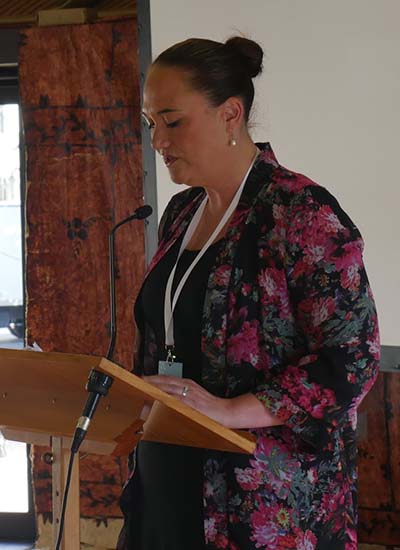
Oceans and Islands – a showcase for the region hosted by the NZ Institute for Pacific Research (NZIPR) – was opened by the Minister for Pacific Peoples, Carmel Sepuloni, this morning.

“I really do have the privilege of being able to witness the great contribution that Pacific leaders, academics and communities make to Aotearoa and globally,” the minister said.

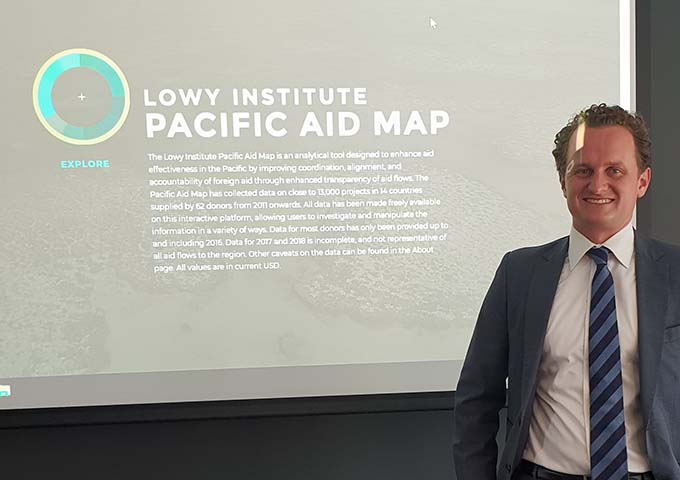
READ MORE: Pacific aid mapping tool aimed at improving transparency in region

Pacific Peoples Minister Carmel Sepuloni … “critical that Pacific people are meaningfully included in thought leadership and decision making”. Images: Blessen Tom/PMC

She acknowledged the excellence of Pacific research in New Zealand and welcomed the establishment of research agencies such as Moana Research and commended the leadership of Dr Teuila Percival, Jcinta Fa’alili-Fidow and Dudley Gentles.

The minister also shared some of the research initiatives that she is directly involved with such as the extended funding to the growing up in New Zealand study and Treasury’s Pasifika Economic Report.

-Partners-

“It is critical that Pacific people are meaningfully included in thought leadership and decision making. We must be the authors of our own solutions, and conferences like this support us towards that end,” she added.

Toeolesulusulu Associate Professor Damon Salesa … struggles faced by Pacific researchers. Image: David Robie/PMC

Many struggles
Toeolesulusulu Associate Professor Damon Salesa, who was recently appointed pro vice-chancellor (Pacific) of the University of Auckland, said: “Pacific research and Pacific knowledge matters.”

“It’s not simply research about the Pacific, by the Pacific that makes it Pacific research. It’s much more than that…and it has faced many struggles,” he added.

He talked about the struggles that researchers faced, such as not being properly resourced, the lack of opportunities to succeed, and the lack of proper recognition.

“These are the struggles NZIPR embarked on,” he said in a tribute to the institute that he was the founding director of. The achievements of NZIPR were:

• Creating a formal research programme – “five research programmes will be signed off completed or published by the end of this year.”

• Disseminating research through both online and offline platforms, and establishing a research repository to make visible the different kinds of knowledge.

• Building research capability and the research recognition of a diverse range of researchers that includes 12 scholarships and sponsorship for individual researchers and research projects.

He also remarked that NZIPR had “achieved so much so quickly”.

Indigenous principles
Dr David Welchman Gegeo led the third keynote session when he gave full recognition to indigenous ethical principles that guide the social construction of knowledge in Pacific island communities.

“Why do we keep doing research on Pacific communities?” and “Are we alone?” asked David Gegeo.

“Pacific Island’s epistemic communities are not alone in the quest for the indigenisation or oceanisation of research and knowledge construction in the Pacific,” he said.

“I think we have a better chance of answering some of our lingering questions in research when we work together as this team.”

He advocated the working together of university epistemic community, metro-centrist epistemic community and Pacific village epistemic community for research and construction of pacific knowledge.

Dr Gegeo holds a research position in the Office of Research and Postgraduate Studies at the Solomon Islands National University.

Professor Kapua’ala Sproat … proactive indigenous responses to “pernicious impacts of global warming”. Image: Blessen Tom/PMC
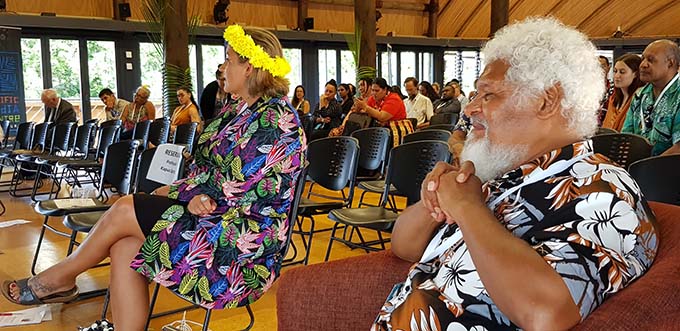
Dr Kapua’ala Sproat is a professor of law at the University of Hawai’i’s Richardson School of Law and the director of Ka Huli Ao Center for Excellence in Native Hawai’ian Law.

Her keynote explored indigenous people’s proactive responses to the pernicious impacts of global warming.

‘Sense of culture’
“I’m incredibly grateful that I grew up with a strong sense of self and culture because I think that really has rooted both myself and but also my work,” she said.

Professor Sprout examined Native Hawai’ians’ potential deployment of local laws that embody restorative justice principles to fashion meaningful remedies for the environmental and cultural damage as a result of the global climate crisis.

“Our identity as indigenous people is inextricably tied to these islands and our natural and cultural resources” said Professor Sprout and “Global Warming threatens our island home and our identity as a people”.

The final keynote session of the day was addressed by Leina Tucker-Masters, Eliza Puna and by Dr Jamaima Tiataia- Seath.

Their presentation canvassed the journeys of three Pacific women researchers throughout their academic careers.

“Engaging in research as an undergraduate student helped me connect with my Pacific culture while at university,” said Leina Tucker-Masters, a medical student at the University of Auckland.

Research methodologies
Tucker-Masters talked about her experience with Pacific research methodologies and how they influenced literature.

“I learned about Pacific health initiatives that use Pacific ways of thinking to heal Pacific people”.

“Postgraduate research gives you an opportunity to carry out very ethnic specific research and it allows for in depth engagement and helps to bridge academia and our communities,” said Eliza Puna, a doctoral candidate in Pacific Studies at Auckland University.

Dr Jemaima Tiatia-Seath is currently co-head of school and head of Pacific studies, Te Wananga o Waipapa, School of Māori and Pacific Studies, University of Auckland.

She talked about her experience as one of six panelists on the government’s Mental Health and Addiction Enquiry.

The Oceans and Islands conference will conclude tomorrow evening.

Sri Krishnamurthi and Blessen Tom of the Pacific Media Centre are working as part of a PMC partnership with the NZ Institute for Pacific Research.

NZIPR research manager Dr Evelyn Marsters and one of the keynote speakers, Professor David Gegeo of the Solomon Islands, at the Oceans and Islands conference in Auckland today. Image: David Robie/PMC

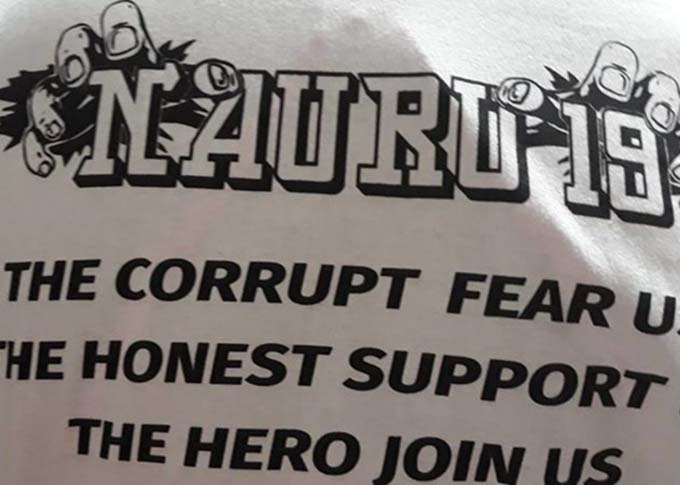
Print Friendly, PDF & Email

Article by AsiaPacificReport.nz

Nauru 19 to appear in first sitting of nation’s new Court of Appeal

]]>
T-shirts worn by family and supporters of the 19 Nauruans who were prosecuted by government for staging a protest outside of Parliament in 2015. Image: RNZP/Nauru 19/ Facebook

By RNZ Pacific

The group known as the Nauru 19 will go back to court next week in what will be the first sitting of the Nauru Court of Appeal.

The Nauru 19 were charged over an anti-government protest more than three years ago and are facing an appeal from the Nauru government.

The group, which includes a former Nauru president, had sought a permanent stay on legal proceedings against them, arguing the trial process dragged on too long and that the government had not met a court directed order to pay some of the expenses of the group’s Australian lawyers.

Justice Geoff Muecke, who was brought in by the Nauru government to hear the case, granted a permanent stay on the proceedings, saying the government’s conduct throughout had been a “shameful affront to the rule of law”.

Now the government is appealing this decision.

The Nauru Court of Appeal was set up after the government secretly ended its use of the Australian High Court as Nauru’s appellate court earlier this year.

-Partners-

The Nauru 19 believe this move was another attempt to deny them a fair trial.

The judges hearing the appeal are high ranking members of Pacific judiciaries – Tonga’s Chief Justice Michael Scott, Kiribati Chief Justice John Muria and PNG Supreme Court judge Nicholas Kirriwom.

This article is republished under the Pacific Media Centre’s content partnership with Radio New Zealand.

Print Friendly, PDF & Email

Article by AsiaPacificReport.nz

France tax rebate to boost New Caledonia’s AirCalin airliner fleet

]]>
An AirCalin promotion poster at Tontouta International Airport, New Caledonia. Image: David Robie/PMC

By RNZ Pacific

New Caledonia’s international airline, AirCalin, has been given tax rebates by France to buy two new Airbus airliners.

The French High Commission in Noumea announced the Economics and Finance Ministry had approved the concession for the purchase of two Airbus A330-900neo planes, which are expected to be delivered in May next year.

The statement did not say how much the airline had saved.

It said this support would help AirCalin develop its activities, be it for tourism or medical evacuations.

The statement said this was also a sign of the French state’s support for the airline and for New Caledonia.

AirCalin flies to destinations in the Pacific, including Auckland in New Zealand, and also provides a service to Japan to link passengers from and to France.

-Partners-

This article is republished under the Pacific Media Centre’s content partnership with Radio New Zealand.

Print Friendly, PDF & Email

Article by AsiaPacificReport.nz

The Indigenous community deserves a voice in the constitution. Will the nation finally listen?

]]>

Source: The Conversation (Au and NZ) – By Eddie Synot, Academic, Learning Assistance Officer, GUMURRII Student Support Unit, Griffith Law School, Griffith University

The Joint Select Committee on Constitutional Recognition relating to Aboriginal and Torres Strait Islander Peoples handed down its final report today. It follows the committee’s interim report, which noted significant community support for a constitutionally enshrined First Nations voice and asked for further submissions relating to the nature and design of a voice. The report is also the eighth of its kind in the past eight years.

The committee’s report will be cautiously received by many in the Indigenous community. Rather than recommend a referendum to enshrine a First Nations voice, the committee has instead insisted on a further design process, ignoring the submissions and wishes of many community members.

It also emphasised a lack of clarity that’s prevented movement toward a referendum due to the multiple design models it’s received. This is a disappointing conclusion that misrepresents the sentiments of the Indigenous community and what a First Nations voice would be.

Rather than represent disagreement, the multiple design submissions are better understood as a normal result of a law reform process. Far from representing disunity, the many submissions are remarkably consistent in their support for a First Nations voice to be enshrined in the constitution.

It is also disappointing that the committee has not considered in greater detail the Uluru Statement from the Heart or Submission 479, which was authored by Indigenous members of the Referendum Council and the key technical advisers who assisted delegates at the regional dialogues and national convention prior to the Uluru Statement.

Both documents are the only ones that are representative of the authoritative will of the Indigenous community.

It is correct to say that some members of the Indigenous community disagree about the way forward. But that does not mean we should not proceed. In what other section of the Australian community do we demand absolute unity and bipartisanship? This demand misrepresents the challenge of law reform as being insurmountable and further misrepresents what a First Nations voice would be.


Read more: Indigenous recognition in our Constitution matters – and will need greater political will to achieve


The First Nations voice would not be singular; it would belong to no individual member or organisation. Rather, the voice is comprised of many, as Indigenous voices always have been. The enshrinement of that voice in the Constitution does not limit or divide, but rather provides the necessary foundation from which to renew, correct and negotiate a fundamental relationship at the nation’s core.

What the committee has achieved is another opportunity for the voice of Aboriginal and Torres Strait Islanders to be heard. It is this voice that resounds more than any limitation.

Our ability to speak, and of non-Indigenous people to hear us – to actually hear us – has long been at the centre of problems in the relationship between Indigenous and non-Indigenous Australians. This process will provide the necessary structural change to that relationship to enable our voice be heard on matters that affect us.

Others have pointed to what they believe are limitations of a First Nations voice. This position too narrowly understands the importance of constitutional recognition in being able to affect the culture of the country. From abstract theories of how we should be governed, to everyday realities of our lives, a First Nations voice will finally enable the changes that Indigenous Australians have been demanding and those the nation so desperately needs.


Read more: A new way to recognise an Indigenous nation in Australia


More promising for the Indigenous community than the committee’s final report has been Opposition leader Bill Shorten’s media release this past Tuesday.

Labor has reiterated its commitment to “establish a voice for First Nations people” and enshrine it in the constitution. This announcement was significant.

The Indigenous community had been concerned that Labor would give priority to a referendum on a republic, if elected into power, instead of addressing the question of a First Nations voice. Labor’s renewed commitment to this issue is promising. It’s also demonstrative of the national political leadership needed to achieve this momentous reform. It is a commitment that the Indigenous community is ready to organise around, ensuring Labor keeps its word.

Political bi-partisanship aside, what is clear is that there is an authoritative will within the Indigenous community to achieve a First Nations voice in the constitution. The proposal also has broad public support, with polling in the Constitutional Values Survey in 2017 showing that a majority of Australians back the enshrinement of a First Nations voice.

The question remains, will we be finally heard? Many of us are hopeful that time has finally come.

ref. The Indigenous community deserves a voice in the constitution. Will the nation finally listen? – http://theconversation.com/the-indigenous-community-deserves-a-voice-in-the-constitution-will-the-nation-finally-listen-107710

Summer forecast: scorching heat and heightened bushfire risk

]]>

Source: The Conversation (Au and NZ) – By Catherine Ganter, Senior Climatologist, Australian Bureau of Meteorology

Large parts of Australia are facing a hotter and drier summer than average, according to the Bureau of Meteorology’s summer outlook.

Drier than average conditions are likely for much of northern Australia. Most of the country has at least an 80% chance of experiencing warmer than average day and night-time temperatures.

The threat of bushfire will remain high, with few signs of the sustained rain needed to reduce fire risk or make a significant dent in the ongoing drought.

Expect extreme heat

Large parts of Western Australia, most of Queensland and the Top End of the Northern Territory are expected to be drier than usual. Further south, the rest of the country shows no strong push towards a wetter or drier than average summer, which is a change for parts of the southeast compared to recent months.

Bureau of Meteorology

Queensland has already seen some extraordinary record-breaking heat in recent days, with summer yet to truly begin. With the summer outlook predicting warmer days and nights, combined with recent dry conditions and our long-term trend of increasing temperatures, some extreme highs are likely this summer.

Bureau of Meteorology

All of this means above-normal bushfire potential in eastern Australia, across New South Wales, Victoria and Queensland. The bushfire outlook, also released today, notes that rain in areas of eastern Australia during spring, while welcome, was not enough to recover from the long-term dry conditions. The current wet conditions across parts of coastal New South Wales will help, but it will not take long once hot and dry conditions return for vegetation to dry out.


Read more: Sydney storms could be making the Queensland fires worse


What about El Niño?

The Bureau is currently at El Niño ALERT, which means a roughly 70% chance of El Niño developing this season.


Read more: Australia moves to El Niño alert and the drought is likely to continue


However, not all the ducks are lined up. While ocean temperatures have already warmed to El Niño levels, to declare a proper “event” there must also be a corresponding response in the atmosphere to reinforce the ocean – this hasn’t happened yet.

That said, climate models expect this event to arrive in the coming months. The outlook has factored in that chance, and the conditions predicted are largely consistent with what we would expect during El Niño. In summer, this includes drier weather in parts of northern Australia, and warmer summer days.

Once an El Niño is in place, weather systems across southern Australia tend to be more mobile. This can mean shorter but more intense heatwaves in Victoria and southern South Australia. However, in New South Wales and Queensland, El Niño is associated with both longer and more intense heat waves.

The exact reason why the states are affected differently is complicated, but relates to the fast-moving cold fronts and troughs that sweep through Victoria and South Australia in the summertime, creating cool changes. These weather systems don’t influence areas further north so when hot air arrives, it takes longer to clear.


Read more: Drought, wind and heat: when fire seasons start earlier and last longer


The heavy rains seen in parts of eastern Australia in October and November have provided some welcome short-term relief to drought-stricken farmers, but longer-term rainfall relief has not arrived yet. If El Niño arrives, this widespread relief may only be on the cards in autumn.

ref. Summer forecast: scorching heat and heightened bushfire risk – http://theconversation.com/summer-forecast-scorching-heat-and-heightened-bushfire-risk-107893

Instrument of torture? In defence of the recorder

]]>

Source: The Conversation (Au and NZ) – By Alana Blackburn, Lecturer in Music, University of New England

As AusMusic month closes, it’s a good opportunity to consider an instrument that has made quite a contribution to the musical life of Australia. The notorious recorder has been feared by parents and called an “instrument of torture”. But what has this instrument given us that we might not realise?

This month, the ABC has aired a docuseries Don’t Stop the Music, highlighting the importance of music education. The series featured the research of Dr Anita Collins, which shows that learning a musical instrument improves memory, language learning, teamwork and brain function. Visual, aural and fine motor skills also develop, and strengthen with repeated practice. This isn’t specific to any one instrument.

The recorder has been played in Australian primary schools since the 1930s. Many students have had the chance to learn music because of its availability and reasonable price. One early study revealed the benefits of using the recorder as a tool for music education, including reading music notation, breath and finger control, and musical expression.

Additionally, the recorder family has different sizes – descant, treble, tenor, bass, and more. When played together, harmony, timing, and verbal and non-verbal communication are developed. Students learn to listen actively and react to the sounds around them.

So why the bad reputation? One reason is that many school music teachers aren’t trained recorder players. They can play some notes, but they might lack proper technique. Like any instrument, the intricacy of fingering, breath pressure and tonguing to perfect intonation and sound quality needs to be learnt. If a teacher is unaware of these, how can the recorder be taught well?

Also, cheap and badly made recorders are often sold in discount and retail stores. A good instrument from a reputable company will make a big difference to sound and tuning. Professional recorder players who now teach in schools are aiming to improve these two areas.

Many kids in Australian schools have plastic recorders. unmatched value/Flickr

Contributing to our wider culture

The benefits don’t stop after school. Australia is home to a number of adult amateur recorder players, who have formed societies in most capital cities. These societies hold social occasions where members can rehearse and perform together. This is an opportunity to give the brain a full workout (assisting with information processing and fine motor skills). Research has shown that music helps with self-identity, maintaining wellbeing, and associating memories in older people.

The increase in professional recorder players in Australia has not only made a mark on recorder teaching and music education, but also on Australian culture.

The recorder is a very old instrument. The oldest surviving one dates back to the 13th century. It was one of the most popular instruments in the Baroque period with music composed by Bach, Handel, and Purcell. The rise of historical performance practice in Australia, which attempts to recreate the sounds of these Baroque composers, has presented more authentic early music to audiences.

Many conservatories offer the recorder as a major area of study, and graduates are finding performance opportunities with small baroque groups and larger ensembles. Opportunities exist for recorder players in Australian Brandenburg Orchestra, Australian Chamber Orchestra, and Orchestra of the Antipodes. It has also featured as a solo instrument with some major Australian symphony orchestras.

The Australian Music Centre has over 200 modern works written for the recorder. The earliest piece is Peggy Glanville-Hicks’s 1938 Sonatina, and at least 24 new works have been listed in the past ten years.

Australian composers use the instrument’s full range of sounds and sizes, creating new works based on baroque styles such as Elena Kats-Chernin’s Re-inventions performed by Genevieve Lacey and the Flinders Quartet.

Or more experimental works like Eve Klein’s Between the Palms of the Hands performed by Alana Blackburn and Joanne Arnott.

Australian recorder players have won ARIA awards (Genevieve Lacey for Best Classical Album in 2011 with the Australian Brandenburg Orchestra and Best Original Show with Paul Kelly, James Ledger and ANAM Musicians in 2013), represented Australia through cultural exchanges, and received Australia Council Fellowships. They are certainly ambassadors for Australian music culture.

Despite its bad rap, the recorder has made a significant contribution to Australia’s music education and cultural life.

ref. Instrument of torture? In defence of the recorder – http://theconversation.com/instrument-of-torture-in-defence-of-the-recorder-107699

When it comes to race and justice, ‘colour-blindness’ is not good enough

]]>

Source: The Conversation (Au and NZ) – By Selda Dagistanli, Senior Lecturer in Criminology, Western Sydney University

This piece is part of a series on race and racism in Australia. The series examines this complex and incendiary topic, and the role it plays in contemporary Australia. You can read the rest of the series here.


During a family holiday in the United States this year, I took my children to the Rosa Parks Museum in Montgomery, Alabama. I tried to explain that Rosa Parks broke the laws of the day to protest Black oppression and segregation, and this was a catalyst for the civil rights movement.

As we stood there, a Black American woman walked by with her husband and smiled at my daughter’s awestruck silence. She said:

We love Rosa Parks too, honey! If it weren’t for her, I wouldn’t be able to sit next to you on a bus.

Bewildered, my daughter turned to me and asked why people who had darker skin couldn’t sit next to people who had lighter skin. Why were the people who made those rules so “mean and rude”? Why indeed.


Read more: Who was Rosa Parks, and what did she do in the fight for racial equality?


Racism: not just ‘mean and rude’ but systemic

Try explaining to a seven-year-old that racism and segregation go beyond individuals being “mean” and “rude”? That it is a social, structural and systemic issue that has largely been normalised and individualised under premises of colour-blindness, formal equality and justice for all, with whiteness at the helm as a privileged site of moral neutrality.

How would I explain that while we don’t have official segregation or slavery – Jim Crow Laws – in the present day, racism and racial segregation thrive in other complex ways? This is especially so in the criminal justice system, as Michelle Alexander tells us.

Australian society certainly has its own version of racial segregation. This can be seen in the Australian government’s treatment of Aboriginal peoples, immigrants and asylum seekers. As Frantz Fanon argues, in societies built on colonial violence, race and economic infrastructures are co-constitutive:

You are rich because you are white, you are white because you are rich.

Aboriginal Australians, like Black Americans, are overwhelmingly poorer, have less access to education and health care, lower life expectancy and are more likely to be targeted by police, incarcerated and ill-treated in detention, even if they’re just kids. We only need to look at the appalling and degrading treatment of Aboriginal youth in the Don Dale Juvenile Detention Centre, recommended for closure by the Royal Commission into the Protection and Detention of Children in the Northern Territory. Commissioners Margaret White and Mick Gooda said of the distressing treatment of children and young people: “These things happened on our watch, in our country, to our children.”

Perhaps it comes as no surprise then, that Aboriginal incarceration rates in Australia are the highest in the world, followed by rates of Black incarceration in the USA. This further perpetuates the cycle of disadvantage.

Aside from this, Australians are telling non-white people that they can’t live in “our country” and intercepting asylum seekers at the border to be sent to uninhabitable offshore detention centres. Tellingly, US President Donald Trump applauds this as a good idea.


Read more: FactCheck Q&A: are Indigenous Australians the most incarcerated people on Earth?


Dark-skinned immigrants who do manage to come here, such as the Sudanese communities in Melbourne, are constructed as threatening. Some have committed crimes. But then they are all seen as complicit in the crimes of a few.

Now, apparently all dark-skinned immigrants instil fear in white Melburnians. Even if the crime statistics show otherwise. There are plans under way to deport any Sudanese person who has committed a crime, even children. Luckily, however, the majority of Melbournians repudiate such views, as the recent Victorian election results show.

Yet the fact remains that the bodies of all Sudanese people have been implicated in the armed robberies of a handful of Sudanese youth.

“It’s exhausting,” says one young, Sudanese-background man describing his lived experience in Melbourne.

You feel like you’re representing your skin colour for everyone that’s just like you. So you have to be an extra nice person, extra smart … You just have to have a smile on, because if you don’t, you look scary.

This is something white people never have to experience because they are, after all, the morally neutral norm. Race is the burden of racial subjects.

Sheer luck has made you white and middle class, I tell my daughter. Part of the privileged class. You know life could be different for you. Even though she has more than “a drop” of immigrant blood from her maternal grandparents.

Whose justice? Colour-blindness and the myth of white neutrality

A trickier thing to explain to a child was why norms and rules enshrined by the law were sometimes unfair or unjust, and why Rosa Parks’ resistance to Jim Crow laws was the right thing to do.

In societies built on colonial invasion, such as the USA and Australia, being white is a privilege, because those societies were built on the premise that whiteness is superior and therefore white people are entitled to have access to a better life.

In those societies, Black American women such as Rosa Parks, because of who they are and how the rest of society sees them, have to fight for equality rather than take it for granted. Fighting for equality means sometimes breaking the law in protest.

My daughter and I walked on and saw summaries of American civil rights legal cases. One struck me in particular, pertaining to the Louisiana case of Plessy v Ferguson (1896). Homer A. Plessy, who was one-eighth black, was arrested for sitting in a white-only coach on a train. Eventually, the Supreme Court held that laws requiring “separate but equal” accommodations for blacks and whites were not unconstitutional, that prejudicial social customs could not be overcome by law but by the voluntary consent of individuals. Only Justice Harlan of the Supreme Court dissented by maintaining:

Our Constitution is color-blind and neither knows nor tolerates classes among its citizens.

While Justice Harlan dissented, he premised his dissent on the argument of colour-blindness, which leaves unquestioned the normative white baseline – the site of privilege and moral neutrality from which “coloured” people are judged.

The rest of the Supreme Court subscribed to the idea of racism as the preserve of individuals, rather than as a systemic issue perpetuated, reproduced and protected by the law.

Unfortunately, not enough has changed since the Plessey case. As Eduardo Bonilla-Silva argues, colour-blindness reinforces the perpetuation of racism through denial in a “post-race” era. He argues that colour-blind racism is more insidious than overt racism, because most white people insist they “don’t see any colour, just people”.

These myths of colour-blind neutrality sit in apparent tension with the racially inequitable markers of the criminal justice system. White people and their institutions don’t “see colour” and they certainly don’t see their own privilege. We all have a social responsibility to own our white privilege as the authors and beneficiaries of a colonial system built on racist violence.

There have been Australian legal examples acknowledging Aboriginal disadvantage (for example, Bugmy 2013), but our criminal justice systems do not go far enough in acknowledging the normative colonial frameworks on which they were built. Hence we are complicit in the enduring shame of racial inequality.

In the end we are all answerable. And we need to be able to answer a seven-year-old’s mystified question: Why were people separated based on colour when they are people, just like you and me? Why, despite the subjugation and violence embedded in their colonial histories, do white people see themselves as better and as more entitled to social privilege? Why indeed.

ref. When it comes to race and justice, ‘colour-blindness’ is not good enough – http://theconversation.com/when-it-comes-to-race-and-justice-colour-blindness-is-not-good-enough-106250

Digital assistants like Alexa and Siri might not be offering you the best deals

]]>

Source: The Conversation (Au and NZ) – By Rob Nicholls, Senior lecturer in Business Law, UNSW

Your home digital assistant is always listening. But is it always offering you the best content, the cheapest deals, and the right search results?

Digital assistant devices such as Alexa, Google Home, Siri and Cortana are increasingly prevalent. These devices listen for every command, their platforms know where you are, and they have a deep and evolving understanding of your preferences.

But there’s a catch. The device can only provide one answer to each question, and that answer will almost certainly be the one that keeps you in the device’s ecosystem.

Each of the major platforms, known as FAANG (for Facebook, Amazon, Apple, Netflix and Google), has its own ecosystem, and advertising revenue is maximised for the platform when a user stays within it. So while personal digital assistants might be helpful, that help is likely to be limited.


Read more: Smart speakers could be the tipping point for home automation


Shopping around is difficult

More than one in five people now say they shop via voice commands.

So what happens when you request a price for a particular product? It probably won’t come as a surprise to learn that if you’re asking Alexa, the assistant will usually offer the price that’s available on Amazon. After all, Alexa is an Amazon product, and Amazon promotes this feature.

Apple’s assistant Siri, on the other hand, will use two pieces of information: the product that you requested, and websites that have pricing. So Siri might suggest Amazon, but it’s unlikely that Alexa will suggest Apple, unless you ask for an Apple product. That means, depending on your device, Siri may offer more options.

At the moment, a Google Home Hub doesn’t allow you to shop, even though Google Shopping, which is accessible online, does.

Smart home devices aren’t always compatible

Digital assistants can also help you automate smart devices in your home, which can help minimise energy bills. But here too, you might be restricted by your chosen assistant.

At the moment, most Wi-Fi light globes can be controlled by any of the ecosystems. But as these smart devices become more prevalent, there is a risk that they will be controllable only by one type of assistant.

The smart home manufacturing company Nest, which is owned by Google’s parent, Alphabet, has some devices that can be managed by Alexa and Siri. For example, Nest thermostats and cameras can be controlled by Alexa. The Nest alarm system, however, is linked to Google Home.

This is an area where there is a risk of “tipping”. That is, where a market leader becomes the preferred provider. Once that happens, products like smart globes no longer need to be compatible with multiple ecosystems, and can be designed to work only with the dominant player. That choice is made by the smart globe manufacturer, not by consumers. `


Read more: Do I want an always-on digital assistant listening in all the time?


What your assistant knows about you

While compatibility and getting a good deal are both important, so is your privacy.

All digital assistants listen all of the time. They are listening out for the words that trigger an activity (such as “Hey, Google”). It’s important to recognise that the assistants don’t actually understand the questions that they are asked. Instead, they capture audio and provide the best response to their representation of that audio. This means that assistants are not really listening to your every word. The Alexa app will tell you what Alexa has heard and responded to.

It’s also worth noting that the assistant probably knows when you’re not home. This awareness might flow from you actually telling the assistant that you are off to work, but it’s also available from other parts of the ecosystem.

For example, if you provide your location to use Google maps, your Google Home device will know you’re not at home and that it doesn’t need to listen for your instructions. It may also mean that the advertisements that you are served reflect the fact that you’re on the move.


Read more: The existential case for ditching Alexa and other AI


Weighing up the options

Once you’ve figured out what each assistant might know about you via related products, the next step is deciding on the ecosystem.

As we’ve seen, each personal assistant reinforces a specific infrastructure. For example, Alexa has aligned with Sonos for playback hardware, and you cannot currently control Sonos through Google Home.

As a consumer, you get to decide whether the limitations that leave you in a single ecosystem are worthwhile for the convenience offered. The most important question here is whether anyone is informed enough to be able to make that call.

If you really want to know the limitations of your digital assistant, one logical way of learning that might be to ask it. But if you ask a range of assistants what their terms and conditions of service are, you get answers like:

I’m sorry, I’m not sure about that.

I can’t help you with that right now, but my team is working on it.

I don’t really like talking about myself.

Choosing whether to use a home personal assistant means making a choice about privacy. It also means deciding which ecosystem will best meet your needs. Unfortunately, the assistant itself will not help you much in discovering the limitations of the service that you have chosen.

ref. Digital assistants like Alexa and Siri might not be offering you the best deals – http://theconversation.com/digital-assistants-like-alexa-and-siri-might-not-be-offering-you-the-best-deals-107597

Malcolm Turnbull accuses his critics of “paranoia”

]]>

Source: The Conversation (Au and NZ) – By Michelle Grattan, Professorial Fellow, University of Canberra

Malcolm Turnbull has struck back angrily at a report that he has been helping independent Kerryn Phelps, his successor in Wentworth, as chaos continues to fracture the Liberals.

Responding to a front page-lead story in The Australian headed “Turnbull plays invisible hand”, the former prime minister tweeted, “Attribution bias – blaming others for the consequences of your own actions is a common symptom of paranoia.

“Imagining “invisible” people are out to get you is also a classic symptom. Not often on the front page of course…“

The report said Turnbull had been in regular contact with Phelps and had had a former electorate office staffer work for the new member for three days to help in the transition.

It also said Phelps had counselled MP Julia Banks before the Victorian MP’s defection from the Liberal party to the crossbench this week.

The story was another manifestion of the deep bitterness still consuming the Liberals from the leadership coup, which has been reactivated by the Banks’ defection. Banks made a stinging attack on those who ousted Turnbull in her speech to parliament.

Phelps said on Thursday that Turnbull had had no contact with her during the Wentworth campaign. Afterwards he had offered assistance for a smooth transition. She said she and Turnbull had not discussed Banks.

She told Sky that “Mr Turnbull enabled a couple of his staff members to come in to instruct my staff members on the changeover.”

Phelps confirmed that Banks had approached her before defecting.

“Julia reached out to me for some consultation about what that process might look and feel like, and I indicated that I would be there to support her in that transition and the three female crossbenchers were there to support her when she gave her statement,” she said.

Meanwhile embattled right wing Liberal Craig Kelly, who faces losing preselection, has changed tactics in his fight to survive.

After earlier repeatedly refusing to rule out defecting to the crossbench, Kelly – wearing a T-shirt with the face of Robert Menzies on it – told the ABC he would not do so.

He said he had a contract with the people of his Hughes electorate to serve through the terms as a Liberal member.

He did not rule out running as an independent if he lost preselection, saying “I haven’t considered that”. He claimed to be confident of being re-endorsed – although the numbers are against him.

Posing with the T-shirt wearing Kelly, Tony Abbott tweeted, “Always good to be with a real Liberal!”.

The Senate on Thursday voted to alter the government’s sitting timetable for next year to ensure Senate estimates hearings will he held on the April 2 budget before the election is called. The timetable released earlier this week would not have had estimates hearing before the poll.

Labor is also introducing in the Senate its own bill to protect LGBTI students against discrimination, after negotiations between the government and the opposition on a bill reached an impasse.

ref. Malcolm Turnbull accuses his critics of “paranoia” – http://theconversation.com/malcolm-turnbull-accuses-his-critics-of-paranoia-107891

Pacific aid mapping tool aimed at improving transparency in region

]]>

By Sri Krishnamurthi

A new Pacific aid mapping tool developed by the Lowy Institute think tank is set to immeasurably improve transparency in aid in the region.

In an Auckland first, the aid mapping tool was put on show last night by the NZ Institute for Pacific Research as a curtainraiser to the two-day inaugural Oceans and Islands conference which opened at Auckland University’s Fale Pasifika today.

The guest demonstrator and speaker at Auckland University’s Owen Glenn Business School last night was Jonathan Pryke, director of the Lowy Institute’s Pacific Islands Programme.

READ MORE: The Oceans and Islands conference

He was introduced by senior lecturer in Pacific Studies at Auckland University Dr Lisa Uperesa.

“This is a part of the seminar series that has been part of the mandate for the NZIPR which is about growing capacity and disseminating research,” Dr Uperesa said.

Jonathan Pryke, director of the Lowy Institute’s Pacific Islands Programme, introducing the Pacific Aid Map at Auckland University last night. Image: Sri Krishnamurthi/PMC

-Partners-

Jonathan Pryke traced the beginnings of the mapping tool to Dr Penelope Brant and her PhD project which was charting every aid project that Papua New Guinea was engaged in, in the Pacific, subsequently the project turned into the Chinese aid in the Pacific map that the Lowy Institute released in 2015.

“This map made quite a splash, first because it was in interactive form that they haven’t seen before in the Pacific, Pryke said.

China’s spread
“It also made a splash because people hadn’t fully come to grips with just how far China had spread into the Asia-Pacific Island countries that support the one-China policy.”

“We had two major pieces of feedback from this tool. The first was from the Chinese government saying, ‘thanks guys, we had no idea how much we were doing’ and second piece of feedback was this is fantastic but why don’t we do this for every donor because it is very hard to find out what Australia, New Zealand, Japan and all these guys are doing?”

Transparency leads to good governance and that was needed around the world, he said.

“There is one good reason to enhance transparency around aid, not just in the Pacific but globally, there is global mandate to improve transparency which was agreed upon by all traditional donors in 2005 in the Paris accord,” said Pryke.

“It revolves around three main reasons why transparency in aid is important.

“In theory the first is, it should improve and make it easier for donors to co-ordinate with one another in the aid space,” he outlined.

“In the Pacific Island region there is more than 62 donors operating, that is countries or multinational agencies operating in the Pacific at any given time.

“So it’s really critical in all contexts that donors are able to co-ordinate with one another to prevent overlap, to reduce the drag on recipient governments and just to be more efficient,” he said.

‘Enhancing transparency’
“The second reason for enhancing transparency is to help align what donors are doing with receiving government priorities,” Pryke said.

Toeolesulusulu Associate Professor Damon Salesa speaking at the opening of the NZIPR Islands and Oceans conference at the Fale Pasifika at the University of Auckland today. Image: David Robie/PMC

“We spent a lot of time on this project talking to Pacific Island governments about how they go about keeping track what donors are doing in the Pacific and pretty much all of them told us they couldn’t help us because they didn’t have sophisticated data telling them what the donors were doing

“It is a very messy thing to get hold of, and so having a tool like this just helps them to see what is happening in their own countries.

“So, they can better steer what donors are doing with their own development priorities.

“Having more information, and easier access to it should help Pacific countries better align aid to the priorities,” Pryke said.

The third reason for enhanced transparency was that it improves accountability of aid in the region for the media, civil society for academics, he pointed out.

“There is a lot of money going into the Pacific every year with very little oversight on how it is done outside of those giving it and those receiving it and so it is pretty more out there in the public domain.

‘Improving accountability’
“It should improve accountability and put the pressure on both sides of the equation, sender and receiver to improve the way that aid is delivered,” he summed up the third reason.

“We really were keen to do this project and so we started conversations with the Australian government to fund it.

“How we did it, from 2011 until today we requested data on 13,000 aid projects from 62 donors. We have a data from most donors be it an NGO or private sector contractor so there is a huge wealth of information.

“We had to take this huge database and put into a user-friendly, publicly available, interactive, visually-appealing interface that anyone that anyone in the world can access and actually make sense of, and so we put together this tool,” he said.

The Oceans and Islands conference was opened this morning by the Minister for Social Development and Disabilities Carmel Sepuloni and founding NZIPR director Associate-Professor Damon Salesa, who is now pro vice-chancellor (Pacific) of Auckland University.

Keynote speakers today were Dr David Welchman Gegeo of the Solomon Islands and  Professor Kapua Sproat of Hawai’i.

Emeritus Professor Richard Bedford, acting director of NZIPR, will close the conference tomorrow afternoon. About 120 people are taking part in the showcase of Pacific research.

Sri Krishnamurthi and Blessen Tom of the Pacific Media Centre are working as part of a PMC partnership with the NZ Institute for Pacific Research.

The Pacific Media Centre’s team at the NZ Institute for Pacific Research conference … Sri Krishnamurthi (left) and Blessen Tom. Image: David Robie/PMC

Print Friendly, PDF & Email

Article by AsiaPacificReport.nz

Politics with Michelle Grattan: Josh Frydenberg on Liberal troubles

]]>

Source: The Conversation (Au and NZ) – By Michelle Grattan, Professorial Fellow, University of Canberra

Josh Frydenberg, who became treasurer and deputy Liberal leader in the tumultuous events of August, said the party has “big challenges”.

While the government is “disappointed” by this week’s defection of Julia Banks to the crossbench they “remain as a group focused on the challenges ahead. And we have big challenges, there’s no doubt about that.” He said he “absolutely” will be keeping in touch with Banks.

Frydenberg reiterates that the Liberal party is still a “broad church” and says he isn’t concerned about other MPs like Craig Kelly following Banks’ suit. “I know that Craig is a strong Liberal and that Craig will continue to put the government’s case.”

ref. Politics with Michelle Grattan: Josh Frydenberg on Liberal troubles – http://theconversation.com/politics-with-michelle-grattan-josh-frydenberg-on-liberal-troubles-107887

The problem with Apu: why we need better portrayals of people of colour on television

]]>

Source: The Conversation (Au and NZ) – By Sukhmani Khorana, Senior Lecturer (Media and Culture), University of Wollongong

This piece is part of a series on race and racism in Australia. The series examines this complex and incendiary topic, and the role it plays in contemporary Australia. You can read the rest of the series here and here.


While giving a talk at a community arts organisation in Parramatta on why the stories of diverse areas like Western Sydney are not seen on mainstream screens, I was introduced to a screenwriter who had formerly worked for one of Australia’s longest-running soaps, Home and Away.

His take was that having studied post-colonial theory as a white person in the 1990s, he was hesitant to write stories based on experiences and cultures other than his own. Another prominent producer on the panel declared that he never thought about diversity when deciding what stories to invest in.

These perspectives – avoidance for fear of offending and a colour-blind disregard for diversity, respectively – are emblematic of our faltering progress on the issue of media diversity. Most recently, the issue has been in the spotlight due to reports that the controversial character of Apu is going to be written out of the iconic animated sitcom, The Simpsons.


Read more: Goodbye Apu — here’s what you meant to us


The problem with Apu

The fact that the Apu issue has made international headlines speaks to not only the wide appeal of The Simpsons, but also the grief this characterisation has caused viewers of South Asian origin over the years.

In his 2017 documentary The Problem with Apu, Indian-American comedian Hari Kondabolu explored how this prime-time stereotyping has been a source of racial micro-aggressions and slurs, even for Simpsons’ fans who appreciate the bent rules of comedy.

‘It’s funny because it’s racist,’ Kondabolu says of Apu’s characterisation.

The controversy surrounding Apu is not a case of taking offence at a benign joke. Research has shown that being exposed to certain comedic devices and conventions over the long term naturalises racial stereotypes and differences for audiences of all backgrounds.

The characterisation of Apu has real implications for the lives of people of colour who bear the brunt of bullying based on the character, and for actors of South Asian origin who are only seen as authentic if they sound and act like they run a Kwik-E-Mart.

Kondabolu’s documentary recognises Apu as a form of “brownface”, where a white actor dons the exaggerated characteristics of another racial group. Turning characters into caricatures, this practice perpetuates demeaning stereotypes and distances the viewer from the characters in question.

A non-Indian actor (Hank Azaria) voicing Apu in a thick, exaggerated accent may not have been out of place in 1990. However, a growing awareness of the potentially harmful repercussions of such characterisations means that it is no longer so.

Apu is characterised by an exaggerated Indian accent and his stories often draw on racial stereotypes.

So what are the alternatives for maintaining the essence of good comedy while portraying non-white communities in a substantive and ethical manner?

The need for stories created by people of colour

Since 2016, I have been working on an Australia Research Council-funded Linkage project that examines the parallel histories of migration and television in Australia. Through interviews with creators of “diverse” content, it has become evident that comedy is often a lightning rod for broader conversations about racial stereotyping. For people of colour, it can serve as a specific narrative tool to help them create their own authentic stories.


Read more: Shock horror: the big end of town has finally discovered Australia’s media is a whitewash


Part of comedy’s draw is its ability to comment on current cultural and social issues in an often more engaging way than the traditional news media. In the context of racial representation, comedy can be used as a hook to engage audiences who might not otherwise watch a show explicitly about race.

Ben Law, the writer of SBS’s The Family Law (a comedy centred around a Chinese-Australian family), addressed this in my interview with him:

We want to make a show that is as dramatically hefty as it is funny… We are writing it as a comedy to invite people in.

By drawing in people from a range of class and ethnic backgrounds, comedy can explore complex issues of difference with nuance and without reverting to stereotypes.

Besides audience engagement, comedy is a powerful medium for people of colour to tell their own stories on their own terms. Kondabolu has referred to stand-up routines as “direct to consumer, farm to table”. The genre allows those previously underrepresented and misrepresented to set their own agendas and create their own narratives, rather than waiting for mainstream institutions and their decision-makers to change.

However, we must be wary of letting comedy created by people of colour get shunted to the side as a subcategory of the genre. Rob Shehadie, who has a long career in “wog comedy” in Australia, told me these labels can make the stories seem less accessible to people who don’t identify with specific ethnic backgrounds.

It’s not like I don’t like doing ethnic comedy. I’m an ethnic and I do comedy. I try to water it down because people go, ‘Oh you’re doing an ethnic comedy, a multicultural comedy’, but really I’m telling my life or my experiences and I’m born in Australia, so really I’m an Australian doing Australian comedy.


Read more: Fresh Off the Boat and the rise of niche TV


This speaks to why media created by people of colour need to be seen as within the mainstream, in line with an evolving and multicultural Australian identity. Comedy is a touchstone for how immigrant nations creatively mediate belonging.

So what do we do about Apu?

An episode of The Simpsons earlier this year responded to Kondabolu’s documentary by simplistically implying that political correctness is antithetical to good storytelling.

The Simpsons’ response to the Apu controversy.

However, if the success of stories with diverse casts is anything to go by, good storytelling is also a matter of taking the pulse of the current socio-political context and creating content to match.

Comedy is often most incisive when it reflects the time and place it is situated in. Looking at The Simpsons’ declining ratings over the years, we may draw the conclusion that this has happened because other animated sitcoms are better keeping up with the times.

In response to The Simpsons episode above, producer Adi Shanker crowdsourced a solution to the problem of Apu by inviting scripts that re-imagined the character and challenge stereotypes.

Headed by people of colour, projects that critically engage with the complicated history of the character represent a potential way forward. A better way forward, in fact, than cutting off discussion by discarding the offensive subject in question altogether. The time now is ripe to re-write and re-voice Apu.

ref. The problem with Apu: why we need better portrayals of people of colour on television – http://theconversation.com/the-problem-with-apu-why-we-need-better-portrayals-of-people-of-colour-on-television-106707

Feeding cities in the 21st century: why urban-fringe farming is vital for food resilience

]]>

Source: The Conversation (Au and NZ) – By Rachel Carey, Research Fellow, University of Melbourne

This article is part of a series focusing on the politics of food – what we eat, how our views of food are changing and why it matters from a cultural and political standpoint.


When you pick up supplies at your local supermarket for tonight’s dinner, the produce will likely have come from many parts of Australia and from distant parts of the world. But some of the fresh produce may also have come from one of the highly productive foodbowls on the fringes of Australia’s state capitals.

The role that city fringe farmers play in feeding cities is sometimes overlooked in an era of sophisticated supply chains that enable food to be sourced from all over the world. But city foodbowls make a significant contribution to Australia’s fresh food supplies, and cities can do more to support them.

Areas outside Melbourne identified as ‘foodbowls’ for city-fringe farming. Foodprint Melbourne

Why being close to cities makes sense

Many cities now recognise the need to strengthen relationships with local farmers as a way to increase the resilience of their food supplies to climate change and make efficient use of scarce natural resources.

Retaining food production close to urban areas can reduce food shortages if transport routes into the city are cut off (for example, by a major storm or flood). Recycled water from city water treatment plants can also be used to grow food during a drought, and food waste can be processed into organic fertilisers for use on nearby farms.


Read more: To feed growing cities we need to stop urban sprawl eating up our food supply


Strengthening links between cities and farms on the fringe can improve farmer livelihoods and grow the local economy.

Farmers on the city fringe are caught in a tight “cost price squeeze” with very high land prices (and rates) and low farm-gate prices. Many are small-scale farmers who find it difficult to compete through economies of scale. But there are also advantages to being close to the city, such as the proximity to city markets and access to recycled water.

The Foodprint Melbourne project has just released an infographic that showcases the mutually beneficial relationships that can be developed between cities and the farmers on their fringes. These ideas were developed in workshops that brought Victorian stakeholders together from across sectors (farmers, industry, local government, state government and civil society) to explore how the viability of farming on Melbourne’s fringe could be strengthened.


How food can make its way from the city fringes to urban residents. Foodprint Melbourne


The infographic shows how strong links between cities and local farmers can create a two-way exchange. Farmers can capture a higher share of the food retail dollar by selling direct to local consumers (through farmers markets or community-supported agriculture) or local businesses (such as cafes and restaurants). City residents benefit from access to fresh, local produce and from opportunities to participate in agri-tourism activities on nearby farms (such as pick your own produce and farm-gate bike trails).

Food from Melbourne’s foodbowl can also be sold directly to local families, shops and restaurants in the city, in addition to being transported interstate and overseas via city airports. A new provenance brand could be introduced so consumers and businesses can easily recognise food from the area and support local farmers.


Read more: Urban sprawl is threatening Sydney’s foodbowl


State and local governments could introduce food procurement standards so that government services, such as hospitals, prisons and “meals on wheels” programs, are encouraged to buy food from Victorian farmers. Government food procurement standards like these are already used in other countries, such as the United States and Canada.

Farmer incubators could be established to help new farmers access land and begin farming on the city fringe, mentored by experienced growers. Farmer-owned food-processing co-operatives could enable these growers to add value to their produce and take greater control of the food supply chain.

Governments are slowly starting to realise the importance of city fringe farming and providing greater protections. Foodprint Melbourne

How to encourage city fringe farms to thrive

Cities around the world now recognise the importance of actively strengthening links with farmers on the city fringe. The UN Food and Agriculture Organisation has released a “city region food system toolkit” that supports cities in building closer links with nearby farmers to improve farmer livelihoods, grow local economies and increase access to healthy, sustainable food.

A key step is to provide certainty about the future of farming areas close to cities by introducing laws that protect them for the long term. The city of Portland, Oregon, for instance, has created rural reserves that protect important farming areas for at least 50 years.

Measures to promote the viability of farming are equally important. In Ontario, the provincial government funds the Friends of the Greenbelt Foundation to promote farming, tourism and conservation in the agricultural area surrounding Toronto.


Read more: Farming the suburbs – why can’t we grow food wherever we want?


The links between cities and the farmers on their fringes have weakened as modern food supply chains have developed, but there is renewed interest among consumers in reconnecting with where their food comes from.

To improve access to locally grown food and increase the resilience of food systems to climate change, we need to build mutually supportive relationships between cities and the growers on their fringes, so that farms thrive as our cities grow.

ref. Feeding cities in the 21st century: why urban-fringe farming is vital for food resilience – http://theconversation.com/feeding-cities-in-the-21st-century-why-urban-fringe-farming-is-vital-for-food-resilience-106162

Heatwaves threaten Australians’ health, and our politicians aren’t doing enough about it

]]>

Source: The Conversation (Au and NZ) – By Paul Beggs, Associate Professor and Environmental Health Scientist, Macquarie University

Extreme heat affects the mental health of Australians to the same degree as unemployment, yet Australia’s policy action on climate change lags behind other high-income countries such as Germany and the United Kingdom.

As Australia approaches another summer, we face the inevitability of deadly heatwaves. Our report published today in the Medical Journal of Australia concludes that policy inaction, particularly at the federal level, is putting Australian lives at risk.

The report, The MJA–Lancet Countdown on health and climate change: Australian policy inaction threatens lives, builds on an earlier publication in The Lancet medical journal, which concluded climate change is the biggest global health threat of the 21st century.


Read more: Climate mitigation – the greatest public health opportunity of our time


Australia is the first to prepare its own country-level report. Developed in partnership with the Lancet Countdown – which tracks the global connections between health and climate change – it adopts the structure and methods of the global assessment but with an Australian focus.

How Australians’ health suffers

Australians are already facing climate change-related exposures that come from increasing annual average temperatures, heatwaves and weather-related disasters. Australian deaths during the 2014 Adelaide heatwave and Melbourne’s 2016 thunderstorm asthma event are examples of the risk climate poses to our health.


Read more: Keeping one step ahead of pollen triggers for thunderstorm asthma


Our report was produced by a team of 19 experts from 13 universities and research institutes. We aimed to answer what we know about climate change and human health in Australia and how we are responding to this threat, if at all.

To do this, our team examined more than 40 indicators that enable us to track progress on the broad and complex climate change and human health issue. Health impact indicators included the health effects of temperature change and heatwaves, change in labour capacity, trends in climate-sensitive diseases, lethality of weather-related disasters and food insecurity and malnutrition.

We also developed an indicator for the impacts of climate change on mental health. This involved examining the association between mean annual maximum temperatures and suicide rates for all states and territories over the last ten years.

We found that, in most jurisdictions, the suicide rate increased with increasing maximum temperature. In Australia’s changing climate, we urgently need to seek ways to break the link between extreme temperature and suicide.

Adelaide’s 2014 heatwave had a significant effect on people’s health. Ben Searcy/AAP One

Across other indicators, we found workers’ compensation claims in Adelaide increased by 6.2% during heatwaves, mainly among outdoor male workers and tradespeople over 55 years.

And we found the length of heatwaves increased in 2016 and 2017 in Australia’s three largest cities – Sydney, Melbourne and Brisbane. Heatwave length varied from year to year, but between 2000 and 2017, the mean number of heatwave days increased by more than two days across the country.

Policy action we need

Australia’s slow transition to renewables and low-carbon electricity generation is problematic, and not only from a climate change perspective. Our report shows that pollutants from fossil fuel combustion cause thousands of premature deaths nationwide every year. We argue even one premature death is one too many when there is so much that we can do to address this.

Australia is one of the world’s wealthiest countries with the resources and technical expertise to act on climate change and health. Yet Australia’s carbon intensity is the highest among the countries we included in our comparison – Germany, United States, China, India and Brazil.

A carbon-intensive energy system is one of the main drivers behind climate change. Australia was once a leader in the uptake of renewables but other nations have since streaked ahead and are reaping the benefits for their economies, energy security and health.

Despite some progress increasing renewable generation, it’s time we truly pull our weight in the global effort to prevent acceleration towards dangerous climate change.

Policy leaders must take steps to protect human health and lives. These include strong political and financial commitments to accelerate transition to renewables and low-carbon electricity generation. The government lacks detailed planning for a clean future with a secure energy supply.


Read more: What would a fair energy transition look like?


Our MJA-Lancet Countdown report will be updated annually. Now that Australia has begun systematically tracking the effects of climate change on health – and given its poor performance compared with comparable economies globally – further inaction would be reckless.

ref. Heatwaves threaten Australians’ health, and our politicians aren’t doing enough about it – http://theconversation.com/heatwaves-threaten-australians-health-and-our-politicians-arent-doing-enough-about-it-107793

The five not-so-easy steps that would push wage growth higher

]]>

Source: The Conversation (Au and NZ) – By Andrew Stewart, John Bray Professor of Law, University of Adelaide

It’s been an extraordinary four years since wages grew by anything like the 3-5% per year they used to.

Ever since 2015, wage growth has been closer to 2% per year, moving only in a narrow band between 2.3% to 1.9% and back again. It’s the slowest sustained rate of wage growth since the 1930s great depression.

Opinion polls suggest it will be one of the hottest issues in the lead-up to next year’s election.


It concerns the government directly, because its budget forecasts are based on much higher wage growth, climbing to 2.75% by June next year and 3.25% by June 2020.

It also concerns it indirectly, because weak wage growth means weak growth in living standards and consumer spending.

Given this, it is not surprising that the stagnation of Australian wages has elicited concern from the Governor of the Reserve Bank, leading business executives, and traditionally conservative international organisations such as the International Monetary Fund.


Read more: This is what policymakers can and can’t do about low wage growth


Some, like Prime Minister Scott Morrison, counsel Australians to be patient, and wait for the forces of supply and demand in the labour market to solve the problem.

As this somewhat ugly graph prepared by the Commonwealth Bank demonstrates, wage growth has fallen instead of increased as forecast in nearly every budget this decade.


Budget forecasts versus reality, wage growth 2007 to 2020

Wage Price Index, annual growth. Commonwealth Bank


There’s no particular reason to think that wage growth will meet the budget forecast this time either.

In good news, the Australian Bureau of Statistics Wage Price Index rebounded slightly in the September quarter, climbing 2.3 percent year over year (up from 2.1 percent).

But the rebound was almost entirely due to two things that have nothing whatever to do with “market forces”.

Wages are better, but no thanks to market forces

One cause was the unusually large 3.5% increase in minimum wages for award-reliant workers delivered by the Fair Work Commission.

The other was an apparent acceleration of wage settlements in the more highly unionised public sector.

The lesson seems to be that if we want wages to grow, we may have to push them up.


Read more: Why are unions so unhappy? An economic explanation of the Change the Rules campaign


To investigate the wages crisis in more detail, we convened a workshop earlier this year featuring leading experts from universities, business, regulatory agencies, unions and community organisations.

Out of that event has come an edited collection of essays, The Wages Crisis in Australia, published today by the University of Adelaide Press and freely available online.

As it acknowledges, many things have been depressing wages, including the widespread underemployment, technological change, and global competition.


But there has also been a significant weakening of employee power, reflected in the continuing drop in union density and a marked recent dip in collective bargaining coverage.

The institutional framework established by the Fair Work Act has proved to be largely ineffective in countering these trends, and in some instances has perpetuated them.

Among other factors, growth in precarious forms of employment, migrant labour and “indirect” or ‘”fissured” work arrangements (such as sub-contracting, labour hire and franchising) have made workers less likely to join a union or take collective action.

Many of these workers are under pressure to accept sub-standard wages or even unlawful working arrangements.


Governments themselves have deliberately held down wage growth for their own workers and encouraged companies that sell to them to do the same.

The five not-so-easy steps

There is no one solution. But in our book, we advance a five-point plan that we think might work:

  1. End active wage suppression by governments, both for their own workers and in sectors that rely on public funding or procurement. Governments must set a lead, not just in what they pay their own employees, but in the funding they provide for others, especially in growing sectors such as aged and disability care.

  2. Revitalise collective bargaining, including by creating paths to industry-level agreements, at least in those sectors where enterprise bargaining is not currently working.

  3. Strengthen minimum wage regulations, by enabling the Fair Work Commission to set a “living wage”, and encouraging it to lift award wages over time while dealing with the gender pay gap.

  4. Address the “fissuring” of work, by expanding the definition of employment and holding businesses responsible for underpayments by the subsidiaries over which they exert influence or control.

  5. Improve compliance with minimum wage laws, including by increasing funding to the Fair Work Ombudsman, making it harder for repeat offenders to stay in business, and creating faster and cheaper redress for underpayment claims.

Not everyone will agree with these proposals.

But as the research compiled in our book illustrates, something has to be done. Australia’s once-vaunted reputation as a fair and inclusive society depends on it.

Free digital copies of The Wages Crisis in Australia: What it is and what to do about it, published by can be downloaded from the publisher.

ref. The five not-so-easy steps that would push wage growth higher – http://theconversation.com/the-five-not-so-easy-steps-that-would-push-wage-growth-higher-107510

We made deceptive robots to see why fake news spreads, and found a weakness

]]>

Source: The Conversation (Au and NZ) – By Carlo Kopp, Lecturer in Computer Science, Monash University

Only a small amount of fake news is needed to disrupt any debate or discussion on an issue, according to research published today in PLOS ONE.

But there is a way to discourage those spreading fake news, and even to wipe it out altogether.

The research is experimental, based on modelling and simulations, but it does at least show that it is possible to counter the spread of misinformation.

The rise of fake news

The spread of mischievous and false information has plagued human societies for centuries.


Read more: What are tech companies doing about ethical use of data? Not much


In this era of instantaneous global digital connectivity, the current incarnation of “fake news” has become a scourge and is exploited for personal or political gain.

Social media, designed to encourage users to contribute and share content, has become the great enabler of the spread of fake news.

From nations meddling in the politics of democracies and political parties trying to manipulate public opinion, to a profit-centred “fake news” industry, all have exploited this spread for gain, sowing confusion and discord in the victim populations they target.

The simulation game

We did some experiments aiming to understand the more fundamental mechanisms determining the behaviour of fake news in populations.

We were especially interested in two questions:

  1. how much impact fake news can have on consensus-forming in a population
  2. the impact of the cost of distributing fake news on its ability to infest a population.

In the real world, costs can be external, such as fines, penalties, exclusions, expenditures in creating and distributing fakes; or they can be internal, such as feelings of loss or embarrassment due to being ridiculed or shamed.

The tool we used was an evolutionary simulation, in which simple software robots in a population interact, playing the well-known Prisoner’s Dilemma game. Basically, a prisoner who betrays another wins big, while the betrayed loses badly, while both only win modestly if they cooperate, and suffer equally if they betray one another.

Unlike previous work in this area, we made some of these software robots a little devious, by adding code that allowed them to deceive each other. The victim of such a deception is made to be confused about the opposing player’s intent, or convinced the opposing player is an unselfishly cooperative “good guy”.

Our code made use of our work in information-theoretic modelling of deceptions, allowing known deceptions to be mapped into game theory models. Every deceiver in the simulation incurred a cost when they deceived, which was then subtracted from the payoff they earned in the prisoner’s dilemma game.

How much fake news to disrupt consensus?

We found that even a very small percentage of deceiving players in the population – in our simulations less than 1% – could catastrophically disrupt cooperative behaviours in the simulated population.

In the extreme case of cost-free deceptions – where fake news producers are unhindered – cooperative behaviours vanished altogether. Only where the cost of deceptions was larger than zero, did cooperation survive. Where costs were very high, cooperation actually thrives.

We also found that for all simulations, the ability of deceiving players to survive depended very strongly on the cost of deceptions. If the cost was high enough, deceivers could not survive in the population.

Applying this to the spreading of fake news, very high costs will lead to its extinction.

From experiment to real world

What do these experimental results tell us about the real world of fake news distribution in social and mass media?

The first and arguably more important result is that very little fake news is required to create mayhem in a population, and prevent consensus forming that is critical to public debates. Whether victims are confused, or believe falsehoods, is immaterial. It’s their ability to reach consensus that is disrupted.

Our modelling focused on small groups of influencers who actively debate issues. Where influencers cannot agree, followers in turn cannot align to a consensus. This is one of the reasons why fake news is so destructive to democratic societies.

The second result of broader interest is that attaching a high cost to the production, but especially the distribution of fake news may prove to be the most effective tool we have to defeat its spread. A high societal investment in raising these costs is worthwhile, because the effects of fake news are so disruptive.

Breaking the chain

Information warfare research over a decade ago found that proxy delivery was a major multiplier in the distribution of toxic propaganda.

For example, mass media distributing violent imagery and footage produced by terrorists were acting as proxies for the terrorists producing the propaganda, whether they knew it or not.

Social media users who share fake news are likewise acting as proxies for the producers of fake news. Such users are typically cast as victims of fake news – which they usually are – but every time they share fake news they become participants in the fake news producer’s deception.

Attaching a cost to the distribution of fake news in social media is not straightforward. The informal outing of habitual posters of fake news is one option, which accords with the evolutionary psychology of cheater detection.

Social media organisations such as Facebook say they are trying to be more proactive in detecting fake news and false news either by machine learning technology or third-party fact checkers, and says it has had some recent successes.

But both of these ideas run into the stickier problem of determining exactly what is or is not fake news. Unpalatable facts are too often labelled as “fake news”.

Fact checkers’ reliability and objectivity can vary widelyground truths are often obscured by bias, and limitations in understanding.


Read more: How Australia’s Mandarin speakers get their news


At this time, contrary to claims by some social media providers, AI is not up to the task of finding and weeding out fake news, which puts the onus back on us humans.

We can all help simply by thinking a little before we like, share or retweet any information on social media. Maybe do a few search checks to see if the information is known to be true or fake.

Pest control is an established practice in biological ecosystems, and is clearly overdue for the information ecosystem.

ref. We made deceptive robots to see why fake news spreads, and found a weakness – http://theconversation.com/we-made-deceptive-robots-to-see-why-fake-news-spreads-and-found-a-weakness-104776

Much at stake as Donald Trump and Xi Jinping meet at G20

]]>

Source: The Conversation (Au and NZ) – By Tony Walker, Adjunct Professor, School of Communications, La Trobe University

When US President Donald Trump meets his Chinese counterpart, Xi Jinping, on the margins of the G20 summit in Buenos Aires between November 30 and December 1, nothing less than a reasonably healthy global trading system and continued economic growth will be on the table.

It is one of the most significant meetings between two global leaders in the modern era.

It carries the kind of tension and gravity of the high-wire diplomacy between Ronald Reagan and Mikhail Gorbachev in the 1980s, which signalled the end of the Cold War and, as it happened, the disintegration of the former Soviet Union.

Or, before that, Richard Nixon’s visit to China in 1972, which resulted in the signing of the Shanghai Communique and an end to decades of hostility between the United States and China.


Read more: The risks of a new Cold War between the US and China are real: here’s why


World markets unnerved by an evolving trade conflict between the world’s two largest economies will take their cues from this encounter between an unpredictable US president and a Chinese leader who will not want to be seen to yield ground. Or, to give it an oriental description, lose face.

This is a fractious moment in world economic history.

Billions of dollars in global equity markets will rest on a reasonable consensus in the Argentine capital. The two sides will reach for a compromise that will enable relative stability to be restored to an economic relationship that is threatening to unravel.

Since a ragged outcome, or even failure, is in no-one’s interests, it is hard to believe Washington and Beijing will not seek to calm legitimate concerns about the risks of a full-blown trade war and its impact on global growth.

US-China trade tremors are already having an impact on growth projections for 2018-2020.

In its latest World Economic Outlook, the International Monetary Fund reports the world economy is plateauing, partly due to trade tensions and stresses in emerging markets.

The IMF has scaled back its global growth projections from its July Outlook forecast for 2019 to 3.7% from 3.9%. It has marked down US growth by 0.2 percentage point to 2.5%, and China by a similar margin to 6.2%.

However, if trade disruptions persist, fallout will become more serious in 2020 with global growth projected to be down by 0.8%, and with it US and China growth down significantly.

Trade wars have consequences, including risks of a global recession.

All this invests the Trump-Xi encounter with more-than-usual significance. A bad outcome will heighten risks of an accelerating global slowdown.

In the lead-up to the G20, American and Chinese officials have been preparing the ground, with the Chinese side anxious to reduce tensions following a November 1 phone call between the two presidents.

But it is less clear that Washington is willing to ease pressure on China to liberalise further a foreign investment environment, seek ways to reduce a trade gap and make more conspicuous efforts to tone down concerns about Chinese pilfering of its intellectual property.

In a media briefing in Beijing, Chinese officials underscored China’s desire for a reasonable outcome in Buenos Aires. Wang Shouwen, a vice commerce minister, said:

We hope China and the US are able to resolve their problems based on mutual respect, benefits and honesty.

However, Trump is continuing to threaten further increases in tariffs on US$200 billion of Chinese imports now set at 10% but due to increase to 25% from January 1. He told The Wall Street Journal this week:

The only deal would be China has to open up their country to competition from the United States.

Trump also threatened to slap tariffs on an additional US$267 billion worth of Chinese imports if negotiations with Xi are unsuccessful:

If we don’t make a deal, then I’m going to put the US$267 billion additional on [at a tariff rate of either 10% or 25%].

This next batch of Chinese imports might include laptops and Apple iPhones, which are among China’s biggest exports to the US.

Further complicating the possibility of a satisfactory negotiation in Buenos Aires is a lingering dispute between the US and China over reforms to the World Trade Organisation to strengthen its dispute resolution and appeal mechanisms.

The US also objects to China’s continued description as a “developing country” under WTO rules. This includes provisions that are favourable to Chinese state-owned enterprises.

A collapse in efforts to reform the WTO would strike another blow at a multilateral trading system that is under more stress than at any time since globalisation gathered pace in the 1990s.

The US-China trade conflict, which is threatening to become a full-blown trade war with unpredictable consequences, cannot be separated from a more general deterioration in relations.

These were given expression last month by Vice President Mike Pence in a speech to the Hudson Institute, in which he lambasted China in a way that prompted talk of a new cold war.

Pence accused China of deploying:

… an arsenal of policies inconsistent with free and fair trade, including tariffs, quotas, currency manipulation, forced technology transfers, intellectual property theft and industrial subsidies handed out like candy. These policies have built Beijing’s manufacturing base, at the expense of its competitors – especially the United States.

The US trade deficit with China reached US$375 billion last year – nearly half the US global trade deficit.

None of this augurs well for a constructive resolution of US-China differences at the G20, although you might hope Trump’s approach would be tempered by concerns about the economic consequences of a conspicuous failure.

What seems most likely, given the stakes involved, is for officials from both countries to be tasked with responsibility for addressing a range of American concerns, with the aim of resetting the relationship.

This would seem to be a best-case scenario.

In the meantime, officials working on the draft of a final communique will be struggling to satisfy competing demands from G20 participants for clear-cut statements on protectionism and climate change.

These have been staples of such communiques since the G20 was formed ten years ago amid a global financial crisis.


Read more: In the economic power struggle for Asia, Trump and Xi Jinping are switching policies


Washington is reportedly resisting an explicit call to fight protectionism. It is also demanding a watering down of the G20’s commitment to the Paris Agreement on climate change.

Consensus on these issues is proving elusive, further undermining efforts to address global challenges.

This underscores a dramatic shift in the global geopolitical environment since Trump gained office.

At the 2016 G20 summit in Hangzhou, world leaders agreed on a “rules-based, transparent, non-discriminatory, open and inclusive multilateral trading system with the World Trade Organisation playing the central role in today’s global trade”.

On climate, the G20 committed itself “to complete our respective domestic procedures in order to join the Paris Agreement”.

Two years later, a “rules-based” trading system is being shredded and the Paris Agreement is at risk of unravelling. These are troubled times, not helped by an American pullback from the stabilising role in global affairs it has played since the second world war.

ref. Much at stake as Donald Trump and Xi Jinping meet at G20 – http://theconversation.com/much-at-stake-as-donald-trump-and-xi-jinping-meet-at-g20-106774

Land makes the housing market different, so changing planning rules won’t fix affordability

]]>

Source: The Conversation (Au and NZ) – By Brian Feeney, Adjunct Fellow, School of Earth and Environmental Sciences, The University of Queensland

A commonly held view is that changing planning rules could significantly increase housing supply and hence make housing more affordable. Recent commentary, including in The Conversation, repeats this. It’s a view that glosses over the special features of land, which allow property developers to control housing supply to a significant extent.

To understand what’s going on, we need to look at why land makes the housing market different from any other.


Read more: Affordable housing policy failure still being fuelled by flawed analysis


Economic theory and the special features of land

Land has special features that other goods don’t usually have. The most fundamental of these features is fixed location.

What’s more, land does not physically degrade over time. As a result, it doesn’t have to be sold but instead can be withheld from sale without financial cost.

These features are important when considering the application of standard supply-demand theory to housing markets.

Economic theory says increasing the supply of a good will lower the price for a given level of demand. Like a lot of economic theory, this is based on simplifying assumptions. The following assumptions are particularly relevant when considering land:

  • the good is homogeneous
  • all market participants have full information about the market
  • no participant has an undue influence on the market
  • there are no barriers for new market participants.

However, we know that land is not homogeneous. Location is particularly important.

And property developers generally have much more knowledge of the market than individual buyers, potentially giving developers undue influence.

The capacity of developers to withhold land from sale and the fact that new developers wanting to enter the market face significant barriers – importantly the financial capacity to hold back land when demand and sales are reduced – are also at odds with the assumptions of supply-demand theory.

UK economist Josh Ryan-Collins notes that current economic theory does not differentiate between land and capital (such as machinery). This may well be one of the main reasons the special features of land are often overlooked in discussions about housing supply.


Read more: Why rents, not property prices, are best to assess housing supply and need-driven demand


Governments don’t control housing supply

In the past, governments developed more housing directly, but over the past 20-30 years the role of government has been mainly to enable private developers to provide housing.

Governments may release enough land for the expected population, but private developers decide how much housing is offered for sale at any time. It’s no secret that, for larger residential estates in particular, demand dictates the rate at which lots are released to market. This is a logical business strategy, but much of the commentary on housing supply fails to acknowledge this.

Off-the-plan sales are one way developers ensure projects only go ahead when prices suit them. James Ross/AAP

In the Gold Coast region, for example, where a relatively small number of larger estates provide most of the new residential land, the median price of vacant residential land has remained remarkably stable since the GFC despite large fluctuations in the number of sales. This suggests something other than the standard supply-demand theory is operating.

As noted above, developers of new estates in outer areas can “drip-feed” the market to keep prices up.

For new apartments in established suburbs, off-the-plan sales allow developers to test the market before building. If interest in the apartments at prices set by the developer is insufficient, the project will not go ahead. Of course, there can still be an oversupply of apartments if future demand is overestimated.


Read more: Australia’s almost a world leader in home building, so that isn’t a fix for affordability


Planning rule changes won’t make much difference to supply

Markets for residential land are distorted by three main factors:

  • location is very important
  • land is a not a homogeneous good
  • developers can influence supply.

This means that changing planning rules is unlikely to make much difference to housing supply or affordability. Housing supply can’t readily be increased without direct government construction. Even then developers will be likely to respond by restricting overall housing supply if they can.

With supply restricted, price is significantly influenced by demand factors. These include finance interest rates, tax concessions and buyers’ expectations of future capital gains.

Therefore, policy that focuses on managing demand factors offers much more hope of improving housing affordability than do changes to planning rules.


Read more: Facts sink glib housing supply mantra – the focus must be on affordable rental


ref. Land makes the housing market different, so changing planning rules won’t fix affordability – http://theconversation.com/land-makes-the-housing-market-different-so-changing-planning-rules-wont-fix-affordability-107182

Explainer: what is irritable bowel syndrome and what can I do about it?

]]>

Source: The Conversation (Au and NZ) – By Suzanne Mahady, Gastroenterologist & Clinical Epidemiologist, Senior Lecturer, Monash University

Irritable bowel syndrome (IBS) is a common disorder that affects one in ten Australians, and twice as many women as men. Its symptoms include chronic abdominal pain, constipation or diarrhoea, and bloating. These have a significant impact on a person’s quality of life.

Many people use the term irritable bowel syndrome to describe general symptoms of gut and bowel dysfunction. But diagnosis requires meeting strict, diagnostic criteria. Known as the ROME criteria, these require a person to be experiencing abdominal pain, on average, at least one day per week. The pain must be associated with two or more of the following:

  • defecation
  • a change in the frequency of stool
  • a change in the form (appearance) of stool
  • having occurred over the last three months with symptom onset at least six months before diagnosis.

Tests aren’t always needed for a diagnosis if these symptoms are present. But an accurate diagnosis of IBS is important as some symptoms, such as pelvic pain, may overlap with other diseases such as endometriosis or inflammatory bowel disease. If other symptoms are present, a doctor may need to perform blood tests, pelvic ultrasound, endoscopy or stool tests to rule out similar disorders.


Read more: I have painful periods, could it be endometriosis?


Some symptoms are considered “red flag” symptoms and should prompt further testing and specialist referral. For example, if you have rectal bleeding, weight loss and are aged over 50 when symptoms start, it is not IBS.

What causes it?

A single cause for IBS has not been identified. IBS may run in families, but we still don’t know if this is due to shared genetics or environmental factors. An episode of gastroenteritis, an infection caused by viruses or bacteria, increases the risk of developing IBS. But this is usually temporary and symptoms gradually improve.

People with IBS often also have anxiety and depression. Research suggests early childhood trauma can predispose some people to IBS in later life. This is because the gut and brain talk to each other through nerve signals, the release of gut or stress hormones, and other pathways.

We have long known that emotions can directly alter gut function. But studies now show that gut function also affects emotions. One Australian study indicated that for some people gut symptoms occur first and the psychological symptoms occur as a result. But this is not true for all people with IBS.


Read more: Stomach and mood disorders: how your gut may be playing with your mind


What do I do?

Non-drug treatments should be considered initially, and more than one treatment strategy may be needed to help improve symptoms.

Good-quality evidence shows a low-FODMAP diet reduces IBS symptoms. FODMAPs are carbohydrates that produce excess gas when digested. They can be found in roots such as onions and garlic, and fruits (or seeds) like legumes, apples, pears and mangoes. For the best result, a person should start a low-FODMAP diet under the guidance of an experienced dietitian.

It’s a common misconception that people should keep to a low-FODMAP diet for life. Foods like onions, which are high in FODMAPs, are also good prebiotics and promote the growth of friendly gut bacteria. Restricting these can result in low gut bacterial diversity, which is linked to autoimmune diseases and obesity. That’s another reason a dietician should guide people through the diet over a few weeks and avoid unnecessary dietary restriction.

FODMAP foods include onions, but these also promote the growth of friendly gut bacteria. from shutterstock.com

Simple dietary measures include adding more soluble fibre to the diet. This can include psyllium, which can be bought as a powder from chemists and health food shops. Insoluble fibres like bran are generally unhelpful.

A trial of probiotics might help. These could be trialled for one month and then re-evaluated by the GP, but are unlikely to be useful if used indefinitely. Exercise has been shown in randomised trials to improve gut symptoms in people with IBS.

Managing stress and anxiety are key to improving symptoms for many people. Psychological therapies have been shown in trials to help symptoms more than placebo or other interventions. This is particularly so when the psychologist is interested in IBS.

Clinical trials have also shown that, for some people, hypnotherapy that is directed at the gut is just as effective as a low-FODMAP diet. The benefits are still seen at six months. Hypnotherapy is not for everyone, however, and multiple sessions are needed for symptoms to improve.

Peppermint oil can help reduce stomach cramps related to IBS. from shutterstock.com

What about medications?

IBS affects quality of life but it doesn’t change a person’s risk of early death or cancer. So, treatments should have few side effects to be acceptable. Clinical trials have shown that medications such as peppermint oil (usually given in capsules) can reduce troublesome abdominal cramps with minimal side effects.

Melatonin can improve symptoms through better sleep quality where sleep is disturbed.

The choice of drug should be tailored to each person’s symptoms. For instance, low-dose antidepressants can be helpful for some people, especially where significant depression or anxiety symptoms exist together with IBS. Medications that reduce inflammation are generally unhelpful, as consistent and clinically apparent inflammation is not part of the syndrome.


Read more: So you think you have IBS, coeliac disease or Crohn’s? Here’s what it might mean for you


A few new approaches are being trialled for IBS, including faecal transplants and new medications. But all of these need better long-term data before they appear on the market.

ref. Explainer: what is irritable bowel syndrome and what can I do about it? – http://theconversation.com/explainer-what-is-irritable-bowel-syndrome-and-what-can-i-do-about-it-102579

Does the G20 summit really make a difference? World leaders reckon it does

]]>

Source: The Conversation (Au and NZ) – By Adam Triggs, Research fellow, Australian National University

“The secret to success is sincerity. Learn to fake that, and you’ve got it made.”

So goes an old gag. Many might be wondering something similar about this weekend’s G20 summit in Buenos Aires.

Each year the leaders of 20 of the world’s largest economies get together and make a lot of promises about working together to make the world a better place.

Are those promises kept? Are they just committing to do things they would have done anyway?

In short, does the G20 summit really make any difference?


Read more: What on earth is the G20 and why should I care?


To find out, I interviewed dozens of politicians and officials from every G20 country about the influence and importance of the annual gathering since its first meeting in 2008.

My analysis shows most G20 promises are kept, and the forum really does exert a positive influence on its member nations.

Cooperation or coincidence?

Before I started my research I had reasons to be sceptical.

For example, at the G20’s second meeting, in London in 2009, the assembled leaders committed to fiscal stimulus packages worth a combined US$5 trillion in response to the 2008 global financial crisis. Central banks, like the Reserve Bank of Australia, also committed to aggressively cut interest rates.

US president Barack Obama at the G20 Summit in London, England 2 April 2009. Shawn Thew/EPA

The data shows they did what they promised. But didn’t countries have an incentive to do what they did anyway? What role did the G20 play?

Similarly in 2010, at the G20 meeting in Toronto, spooked by the European debt crisis, leaders promised to halve deficits by 2013 and stabilise debt-to-GDP ratios by 2016.

Many countries achieved this. But weren’t many countries, such as Australia, already on the “back to surplus” bandwagon? Did the G20 have any influence?

More than just a talkfest

Was the G20 a real influence, or were countries just promising to do what they would have done anyway?

To find out, I interviewed a total of 63 senior politicians and officials from every G20 country.

They included former Australian prime minister Kevin Rudd, former Australian treasurers Wayne Swan and Joe Hockey, US Federal Reserve chairperson Janet Yellen and her predecessor Ben Bernanke, former US Treasury secretary Jack Lew, Bank of Japan governor Haruhiko Kuroda, and Bank of England governer Mark Carney.

I asked them whether they believed the G20 had influenced their and other countries’ policies.

The answer was yes – sometimes.

It depended on the country, the policy area and other things, like whether there was an international economic crisis. But the influence was definitely there.

According to Kevin Rudd, who oversaw the Australian government’s successful response to the global financial crisis:

The G20 played a positive role in the quantum of Australia’s fiscal stimulus.

Politicians from ten other countries said the same thing – verified with data, where possible.


Read more: FactCheck: did Kevin Rudd help create the G20?


Sharing experiences, shaping thinking

What about the G20’s influence on central banks?

These banks have domestic mandates. The Reserve Bank of Australia can’t refuse to change interest rates because it annoys New Zealand, for example. It must do what is best for the nation. What room is therefore left for G20 co-operation?

My research suggests the G20 does influence the thinking of central bankers and, through them, central bank policies.

“There is a lot of exchange of views in the G20 which I think is influential,” Ben Bernanke, who chaired the US Federal Reserve from 2006 to 2014, told me.

Mark Carney, who was governor of the Bank of Canada before heading the Bank of England, said the G20 was “a useful forum in which central banks can explain the reasons for their policy decisions”.

Bank of England governor Mark Carney at the meeting of G20 finance ministers and central bank heads in Buenos Aires in July, 2018. G20/EPA

What about those 1,000 structural reforms?

According to Joe Hockey, Australia’s treasurer from 2013 to 2015:

The G20 growth strategy process absolutely resulted in countries doing things differently, particularly by learning from one another.

US officials agreed, confirming they got the idea of an asset-recycling initiative – where governments lease existing infrastructure assets to private companies and invest the proceeds in new infrastructure projects – from Australia through the G20.

A place to learn

German officials said because of G20 commitments their government developed a financial literacy and education program to better equip Germany’s citizens, particularly young people, in their engagement with the financial system.

Russian officials said Vladimir Putin embraced their 2017-2020 reform agenda on female economic participation after learning about the benefits through the G20.

The G20 has also prevented nations embracing “beggar-thy-neighbour” policies that improve the country’s relative economic position by harming others. It has pressured members not to devalue their currencies in pursuit of competitive trade advantage. It has helped countries resist resorting to trade protectionism. It has defused tensions around controversial policies such as quantitative easing, and improved the communication of central banks on future policy changes.


Read more: The G20’s economic leadership deficit


Janet Yellen, former chair of the US Federal Reserve, said she “genuinely took to heart” concerns expressed at the G20 about aspects of US policy.

There are exceptions

The G20’s influence is not universal. Large countries are less influenced than smaller ones. Said a former senior US official:

Most Americans, and many in Congress, are proudly indifferent to what the rest of the world thinks.

Jacob Lew, US Treasury Secretary from 2013 to 2017, agreed:

There can be a backlash in the United States if you make the argument that you are doing something to comply with international rules.

The full results have been published by the Brookings Institution (available here).

So if commentators complain about the G20 being a pointless talkfest, just remember there is evidence to the contrary. It might not grab the headlines but the G20 plays an important role behind the scenes. We will be relying on it now, more than ever, to calm global tensions.

ref. Does the G20 summit really make a difference? World leaders reckon it does – http://theconversation.com/does-the-g20-summit-really-make-a-difference-world-leaders-reckon-it-does-107505

So what’s a secretary to do? Banking Royal Commission raises questions about what’s in minutes

]]>

Source: The Conversation (Au and NZ) – By Ellie Chapple, Professor, QUT Business School and research leader Accounting for Social Change research team, Queensland University of Technology

The Financial Services Royal Commission last week challenged the chair of the Commonwealth Bank Catherine Livingstone about her claim that she confronted management during a 2016 board meeting, saying it wasn’t recorded in the minutes.

“Do you understand that a failure to comply with the requirements in relation to the keeping of minutes under section 251A of the Corporations Act is an offence?” Counsel Assisting asked.

“The explanation is the minutes don’t usually record verbatim what is discussed at the board meeting,” Ms Livingstone replied.

Minutes came into question again on Tuesday.


Read more: Here’s a tip that could make banks phenomenally successful: radical honesty


National Australia Bank chairman Ken Henry was invited to consider whether a board meeting had discussed a dispute between the bank and the Australian Securities and Investments Commission over adviser service fees.

Then he was shown the minutes of that meeting and asked to agree that it had not.

“It’s very probably the case. I can’t say for sure obviously, but it’s very probably the case, yes,” he conceded.

So, ought the minutes of company board meetings to be a complete record of what’s discussed?

Ought company secretaries to be “shaking in their boots” as a result of the Royal Commission hearings, as the Financial Review has suggested they are?

What’s a secretary to do?

All the law requires is that the “proceedings and resolutions” of directors’ meetings be recorded within one month of the meeting.

It offers no guidance about how to do that, and offers no template for the format.

Although it is usually assumed that it is the company secretary who takes the minutes, there is no actual statutory requirement for the person who occupies that position to do so.


Read more: The way banks are organised makes it hard to hold directors and executives criminally responsible


And some smaller companies operate without a company secretary.

Where there is one, that person does much more than take minutes.

With QUT research student Robyn Trubshaw, we have conducted a series of interviews with high profile company secretaries and discovered that what they think matters most is “courage” – the courage to call out lapses of process.

They said it was their job to ensure reasons for decisions were documented, and also, according to some, to act as a “filter” for deciding what was recorded.

By determining what went into the minutes in concert with the board they acted as “shared conscience” of the company.

On their toes

Our interviews also revealed a heightened awareness about the importance of getting the right balance between reporting outcomes and recording discussion.

Company secretaries are already acutely aware that every set of minutes of every board meeting might one day end up as evidence.


Read more: Solving deep problems with corporate governance requires more than rearranging deck chairs


So this suggests the royal commission will not be the game changer for company secretaries that some think it will be.

They are already on their toes.

Whether it’s a chess club, a bowls club, a school board, a small or medium sized enterprise or one of Australia’s largest corporations, the role of the secretary matters.

The good ones already know how to get the balance right.

ref. So what’s a secretary to do? Banking Royal Commission raises questions about what’s in minutes – http://theconversation.com/so-whats-a-secretary-to-do-banking-royal-commission-raises-questions-about-whats-in-minutes-107509

Why it is (almost) impossible to teach creativity

]]>

Source: The Conversation (Au and NZ) – By Robert Nelson, Associate Director Student Experience, Monash University

Industry and educators are agreed: the world needs creativity. There is interest in the field, lots of urging but remarkably little action. Everyone is a bit scared of what to do next. On the question of creativity and imagination, they are mostly uncreative and unimaginative.

Some of the paralysis arises because you can’t easily define creativity. It resists the measurement and strategies that we’re familiar with. Indisposed by the simultaneous vagueness and sublimity of creative processes, educators seek artificial ways to channel imaginative activity into templates that end up compromising the very creativity they celebrate.

For example, creativity is often reduced to problem-solving. To be sure, you need imagination to solve many curly problems and creativity is arguably part of what it takes. But problem-solving is far from the whole of creativity; and if you focus creative thinking uniquely on problems and solutions, you encourage a mechanistic view – all about scoping and then pin-pointing the best fit among options.

It might be satisfying to create models for such analytical processes but they distort the natural, wayward flux of imaginative thinking. Often, it is not about solving a problem but seeing a problem that no one else has identified. Often, the point of departure is a personal wish for something to be true or worth arguing or capable of making a poetic splash, whereupon the mind goes into imaginative overdrive to develop a robust theory that has never been proposed before.

For teaching purposes, problems are an anxious place to cultivate creativity. If you think of anyone coming up with an idea — a new song, a witty way of denouncing a politician, a dance step, a joke — it isn’t necessarily about a problem but rather a blissful opportunity for the mind to exercise its autonomy, that magical power to concatenate images freely and to see within them a bristling expression of something intelligent.

New ideas are more about a blissful opportunity for the mind to exercise autonomy. shutterstock

That’s the motive behind what scholars now call “Big C Creativity”: i.e. your Bach or Darwin or Freud who comes up with a major original contribution to culture or science. But the same is true of everyday “small C creativity” that isn’t specifically problem-based.


Read more: Creativity is a human quality that exists in every single one of us


Relishing the independence of the mind is the basis for naturally imaginative activity, like humour, repartee, a gestural impulse or theatrical intuition, a satire that extrapolates someone’s behaviour or produces a poignant character insight.

A dull taming

Our way of democratising creativity is not to see it in inherently imaginative spontaneity but to identify it with instrumental strategising. We tame creativity by making it dull. Our way of honing the faculty is by making it goal-oriented and compliant to a purpose that can be managed and assessed.

Alas, when we make creativity artificially responsible to a goal, we collapse it with prudent decision-making, whereupon it no longer transcends familiar frameworks toward an unknown fertility.

We pin creativity to logical intelligence as opposed to fantasy, that somewhat messy generation of figments out of whose chaos the mind can see a brilliant rhyme, a metaphor, a hilarious skip or roll of the shoulders, an outrageous pun, a thought about why peacocks have such a long tail, a reason why bread goes stale or an astonishing pattern in numbers arising from a formula.

We pin creativity to logical intelligence as opposed to fantasy. Shutterstock

Because creativity in essence is somewhat irresponsible, it isn’t easy to locate in syllabus and impossible to teach in a culture of learning outcomes. Learning outcomes are statements of what the student will gain from the subject or unit that you’re teaching. Internationally and across the tertiary system, they take the form of: “On successful completion of this subject, you will be able to …” Everything that is taught should then support the outcomes and all assessment should allow the students to demonstrate that they have met them.

After a lengthy historical study, I have concluded that our contemporary education systematically trashes creativity and unwittingly punishes students for exercising their imagination. The structural basis for this passive hostility to the imagination is the grid of learning outcomes in alignment with delivery and assessment.

It might always be impossible to teach creativity but the least we can do for our students is make education a safe place for imagination. Our academies are a long way from that haven and I see little encouraging in the apologias for creativity that the literature now spawns.

My contention is that learning outcomes are only good for uncreative study. For education to cultivate creativity and imagination, we need to stop asking students anxiously to follow demonstrable proofs of learning for which imagination is a liability.

ref. Why it is (almost) impossible to teach creativity – http://theconversation.com/why-it-is-almost-impossible-to-teach-creativity-105659

Tension as scientist at centre of CRIPSR outrage speaks at genome editing summit

]]>

Source: The Conversation (Au and NZ) – By Merlin Crossley, Deputy Vice-Chancellor Academic and Professor of Molecular Biology, UNSW

I am currently at the Second International Summit on Human Genome Editing, where controversial CRIPSR scientist Jiankui He presented his research just a few hours ago. He also answered questions from gene experts Robin Lovell-Badge (Crick Institute) and Matt Porteus (Stanford), plus assembled audience members and the media.

It’s just two days since reports first aired that Jiankui He had used CRIPSR to edit human embryos, and that twin girls, Lulu and Nana, had been born.


Read more: Researcher claims CRISPR-edited twins are born. How will science respond?


The mood of the meeting is tense. Before these reports, there had been confidence among those in the field that the world was moving as one – cautiously inching forward with CRISPR gene editing technology.

But suddenly the forbidden fruit has been plucked, and some even worry that public confidence may falter.

Jiankui He arrives to speak at the 2nd International Summit on Genome Editing, Hong Kong November 28, 2018. Merlin Crossley, Author provided

Jiankui He focused on removing a gene called CCR5, critical for the HIV virus to enter cells. He aimed to mimic a natural mutation which confers resistance to HIV. This work is now on hold and an uncomfortable international discussion has begun.

The stories, and a video published by Jiankui He in which he explains the apparent work, have created widespread condemnation on scientific and ethical grounds.

If the claims are correct, and they are certainly plausible, this is the first time CRIPSR has been used to create permanent changes in human genomes – changes that would be passed on to future generations.

Jiankui He himself is experienced in using CRIPSR – he first carried out pilot experiments in mice, monkeys, and then non-viable human embryos. He also says he carried out a genomic analysis on the embryos before implantation, and that he had enrolled and worked with a further six couples in this trial before it was paused. One of the additional women may be in the very early stages of pregnancy.


Read more: World’s first gene-edited babies? Premature, dangerous and irresponsible


International consensus

China is a major scientific power. The capability of Chinese researchers is highly respected, but if the international consensus on being transparent and cautious about gene editing does not hold the future is difficult to predict.

Jiankui He’s host institution – the Southern University of Science and Technology – published a statement saying he had been on leave at the time of the trial and that it was not conducted at their institution.

Currently other Chinese researchers in attendance at the conference are among the strongest critics of this work. Several have indicated that it breaks the rules governing genetic research in China.

Robin Lovell-Badge (Crick Institute), Jiankui He and Matt Porteus (Stanford) prepare to talk on stage. Merlin Crossley, Author provided

Be that as it may, the results seem clear. Today’s presentation suggests this was a thoroughly planned and executed project, where Jiankui He carefully communicated his results, first by video, and then followed up with his conference talk to share his data. Details on the process, the specific mutations and analysis used to screen for potentially harmful “off-target” genomic changes were also presented today.

On the data shown, it does look like genome editing was achieved. Though the actual mutations did not end up mimicking naturally occurring mutations in CCR5, so we can’t tell – and indeed may never know – whether the twins are resistant to HIV.

He also indicated the work had been submitted for publication in a peer reviewed journal.

Many questions

Hosting panel members Robin Lovell-Badge and Matt Porteus asked questions of Jiankui He after he had finished presenting – the whole presentation and the Q&A is available for viewing here.

The Chair of the Summit, Nobel Laureate David Baltimore, spoke from the floor after the panel session. He expressed concerns that the work did not comply with the commitments made at the first Gene Editing Summit held three years ago, whereby:

it would be irresponsible to proceed with any clinical use of germ line editing unless and until the safety issues had been dealt with.

He added:

I don’t think it has been a transparent process. We only found out about it after it’s happened and after the children are born. I personally don’t think that it’s medically necessary.

And further:

I think there’s been a failure of self-regulation by the scientific community because of a lack of transparency.

He emphasised these comments came entirely from himself.

A statement from the organisers of the summit will be released tomorrow, and I expect it will re-iterate the need for caution, openness in planning and full transparency.

And, despite the shock, that’s what I hope we’ll get – ultimately CRISPR technology is slow, expensive and is used at the level of individuals not populations.

There won’t be a tsunami but there will be plenty to discuss. And we will have time, just as we did when other expensive medical landmarks occurred – heart transplants, test tube babies, and somatic gene therapy. This is bigger, but I believe we can still get back to a consensus and find the right path.

ref. Tension as scientist at centre of CRIPSR outrage speaks at genome editing summit – http://theconversation.com/tension-as-scientist-at-centre-of-cripsr-outrage-speaks-at-genome-editing-summit-107807

View from The Hill: Morrison’s authority deficit on show at home and abroad

]]>

Source: The Conversation (Au and NZ) – By Michelle Grattan, Professorial Fellow, University of Canberra

When a prime minister has diminished authority, people don’t bother so much with the niceties.

Scott Morrison admitted on Wednesday that Julia Banks had not given him notice of her intention to announce in parliament at midday on Tuesday that she was jumping ship. Asked by Alan Jones, “Did she tell you?” Morrison said, “No she didn’t and of course that’s disappointing”.

This was surprising in itself – it would have been normal courtesy to inform the PM.

In other circumstances, however, it mightn’t have mattered – and Morrison has a thick skin.

But to have his 11:45am news conference – which was called to put out the date of next year’s budget – hijacked by word filtering through of Banks’ bombshell was highly embarrassing.

It said everything about a prime minister not in touch with what was going on in his own ranks.

Then on Wednesday it was revealed that Morrison does not have a bilateral meeting with President Trump scheduled when they’re at the G20, for which he departs on Thursday.

The official explanation from the Prime Minister’s Office was lame. A spokesman said: “The PM will no doubt have the opportunity to touch base [with Trump] during the G20 meetings. Given we have no pressing bilateral issues at the moment and the PM had an extensive opportunity with VP Pence at APEC, there is no pressing need for a formal bilateral at this stage. The relationship is being well managed.”

There is speculation of a so-called “pull aside” – an informal meeting on the fly, but the impression is that the Americans are treating the Morrison government somewhat dismissively. It seems rather galling after all the recent talk of the government’s pivot to the Pacific and co-operation with the US in the Manus naval base.

A meeting with the Vice-President is no substitute for one with the President.

The seeming brush off can be put down to what might be expected from a capricious president. But it was quickly seen by some as a judgement by the Americans that Morrison won’t be in office very long.

Meanwhile the Liberal party meltdown has caused Treasurer Josh Frydenberg, who is deputy Liberal leader, to drop plans to accompany Morrison to the G20. His place will be taken by Finance Minister Mathias Cormann.

Pressed in Parliament about his change of plans Frydenberg could only dodge.

When Frydenberg won the deputy leadership (by an overwhelming vote, defeating Greg Hunt and Steve Ciobo) in the August mayhem, he was regarded as a consensus figure who commands considerable respect across the party. He will need to draw on all that respect in the next few months.

As if he didn’t have a big enough job getting on top of his Treasury portfolio in the run up to the December budget update and then an early budget, Frydenberg is finding himself strongly tested in the deputy role, which becomes especially important in an unsettled and fractious party.

The Liberals this week are shell-shocked and unnerved after the Victorian rout and both the fact and implications of Banks’ desertion.

The parliamentary party is flakey on many fronts. Turnbull supporters seem to have become angrier as time has gone on. Continued talk about the Liberals’ “women’s problem” is undermining the government’s efforts to appeal to female voters. High profile former Liberal deputy Julie Bishop is off the leash, with provocative comments on subjects ranging from energy policy to Home Affairs Minister Peter Dutton’s parliamentary eligibility.

The Dutton issue hangs menacingly over the government. If the opposition can muster the numbers to have him referred to the High Court, it would be seriously destabilising.

Dutton would not have to resign from parliament while the case was heard but to have him remain on the frontbench (as Barnaby Joyce did) would see the government distracted by a fresh crisis.

Despite the Coalition falling further into minority government with the loss of Banks, the opposition hasn’t this week moved against Dutton.

He is absent from parliament after injuring his shoulder and Labor would prefer, for the sake of appearances, not to act in his absence. More to the point, however, it does not yet have the numbers locked in.

It needs six of the now seven crossbenchers, and whether they can be corralled appears to be a day-to-day proposition. Banks and Kerryn Phelps, sworn in on Monday, on Tuesday discussed Dutton’s eligibility in a meeting with Attorney-General Christian Porter.

The government has five more sitting days to struggle through before parliament finishes for the year. It has produced a parliamentary calendar for next year, with its April 2 budget, that provides for only some 10 sitting days before the election is called for May 11 or 18. There are no sittings at all in March.

The minimal sittings speak volumes about a government that lacks the numbers in the House – and its position could worsen, if rightwinger Craig Kelly, who faces losing preselection, defected to the crossbench – and usually is at its chaotic worst when parliament is in session.

ref. View from The Hill: Morrison’s authority deficit on show at home and abroad – http://theconversation.com/view-from-the-hill-morrisons-authority-deficit-on-show-at-home-and-abroad-107813

Sydney storms could be making the Queensland fires worse

]]>

Source: The Conversation (Au and NZ) – By Claire Yeo, Supervising Meteorologist, Australian Bureau of Meteorology

A strong low-pressure system has meant severe thunderstorm and hail warnings are in effect for much of the New South Wales South Coast. At the same time, very dry conditions, strong winds and high temperatures are fuelling dozens of bushfires across Queensland.

The two events are actually influencing each other. As the low-pressure system moves over the Greater Sydney area, a connected wind change is pushing warm air (and stronger winds) to Queensland, worsening the fire conditions.


Read more: Drought, wind and heat: when fire seasons start earlier and last longer


These lows over NSW are the kind we might see a couple of times a year – they’re not just regular weather systems, but neither are they massively out of the ordinary.

However, when combined with the current record-breaking heat in Queensland, the extra wind is creating exceptionally dangerous fire conditions. Queensland’s emergency services minister, Craig Crawford, has warned Queenslanders:

We are expecting a firestorm. We are expecting it to be so severe that it won’t even be safe on the beach […] The only thing to do is to go now.

The Deepwater area bushfire has razed 16,000 hectares and destroyed at least two homes. Qld Fire & Emergency/AAP

Conditions in Queensland

At least 80 bushfires were burning in Queensland on Wednesday, with more than a dozen fire warnings issued to communities near the Deepwater blaze. Queensland Police Deputy Commissioner Bob Gee said that “people will burn to death” unless they evacuate the area.

These fires have come during a record-breaking heatwave. On Tuesday Cooktown recorded 43.9℃, beating the previous November high set 70 years ago by more than two degrees. Cairns has broken its November heatwave record by five whole degrees.

Grasslands and forests are very dry after very little rain over the past two years. Adding to these conditions are strong winds, which make the fires hotter, faster and harder to predict. This is where the storm conditions in NSW come in: they are affecting air movements across both states.

NSW low is driving winds over Queensland

A large low-pressure system, currently over the Hunter Valley area, is causing the NSW storms. As it moves, it’s pushing a mass of warm air ahead of it, bringing both higher temperatures and stronger winds across the Queensland border.

Once the low-pressure system moves across the Hunter area to the Tasman Sea east of Sydney, it will drag what we call a “wind change” across Queensland. This will increase wind speeds through Queensland and temperatures, making the fire situation even worse.

This is why emergency services are keeping watch for “fire tornado” conditions. When very hot air from large fires rises rapidly into a turbulent atmosphere, it can create fire storms – thunderstorms containing lightning or burning embers. Strong wind changes can also mean fire tornadoes form, sucking up burning material. Both of these events spread fires quickly and unpredictably.


Read more: Turn and burn: the strange world of fire tornadoes


What does this mean for the drought

Unfortunately, it’s not likely the heavy rains over NSW will have a long-term effect on the drought gripping much of the state. While very heavy rains have fallen over 24 hours, the drought conditions have persisted for years.


Read more: Trust Me, I’m An Expert: Australia’s extreme weather


The wet weather may bring some temporary relief, but NSW will need much more rain over a longer period to truly alleviate the drought.

In the meantime, the Bureau of Meteorology will be monitoring the Queensland situation closely. You can check weather warnings for your area on the bureau’s website.

ref. Sydney storms could be making the Queensland fires worse – http://theconversation.com/sydney-storms-could-be-making-the-queensland-fires-worse-107789

Computing faces an energy crunch unless new technologies are found

]]>

Source: The Conversation (Au and NZ) – By Daisy Wang, Postdoctoral Fellow, UNSW School of Physics, UNSW

There’s little doubt the information technology revolution has improved our lives. But unless we find a new form of electronic technology that uses less energy, computing will become limited by an “energy crunch” within decades.

Even the most common events in our daily life – making a phone call, sending a text message or checking an email – use computing power. Some tasks, such as watching videos, require a lot of processing, and so consume a lot of energy.

Because of the energy required to power the massive, factory-sized data centres and networks that connect the internet, computing already consumes 5% of global electricity. And that electricity load is doubling every decade.

Fortunately, there are new areas of physics that offer promise for massively reduced energy use.


Read more: Bitcoin’s high energy consumption is a concern – but it may be a price worth paying


The end of Moore’s Law

Humans have an insatiable demand for computing power.

Smartphones, for example, have become one of the most important devices of our lives. We use them to access weather forecasts, plot the best route through traffic, and watch the latest season of our favourite series.

And we expect our smartphones to become even more powerful in the future. We want them to translate language in real time, transport us to new locations via virtual reality, and connect us to the “Internet of Things”.

The computing required to make these features a reality doesn’t actually happen in our phones. Rather it’s enabled by a huge network of mobile phone towers, Wi-Fi networks and massive, factory-sized data centres known as “server farms”.

For the past five decades, our increasing need for computing was largely satisfied by incremental improvements in conventional, silicon-based computing technology: ever-smaller, ever-faster, ever-more efficient chips. We refer to this constant shrinking of silicon components as “Moore’s Law”.

Moore’s law is named after Intel co-founder Gordon Moore, who observed that:

the number of transistors on a chip doubles every year while the costs are halved.

But as we hit limits of basic physics and economy, Moore’s law is winding down. We could see the end of efficiency gains using current, silicon-based technology as soon as 2020.

Our growing demand for computing capacity must be met with gains in computing efficiency, otherwise the information revolution will slow down from power hunger.

Achieving this sustainably means finding a new technology that uses less energy in computation. This is referred to as a “beyond CMOS” solution, in that it requires a radical shift from the silicon-based CMOS (complementary metal–oxide–semiconductor) technology that has been the backbone of computing for the last five decades.


Read more: Moore’s Law is 50 years old but will it continue?


Why does computing consume energy at all?

Processing of information takes energy. When using an electronic device to watch TV, listen to music, model the weather or any other task that requires information to be processed, there are millions and millions of binary calculations going on in the background. There are zeros and ones being flipped, added, multiplied and divided at incredible speeds.

The fact that a microprocessor can perform these calculations billions of times a second is exactly why computers have revolutionised our lives.

But information processing doesn’t come for free. Physics tells us that every time we perform an operation – for example, adding two numbers together – we must pay an energy cost.

And the cost of doing calculations isn’t the only energy cost of running a computer. In fact, anyone who has ever used a laptop balanced on their legs will attest that most of the energy gets converted to heat. This heat comes from the resistance that electricity meets when it flows through a material.

It is this wasted energy due to electrical resistance that researchers are hoping to minimise.

Recent advances point to solutions

Running a computer will always consume some energy, but we are a long way (several orders of magnitude) away from computers that are as efficient as the laws of physics allow. Several recent advances give us hope for entirely new solutions to this problem via new materials and new concepts.

Very thin materials

One recent step forward in physics and materials science is being able to build and control materials that are only one or a few atoms thick. When a material forms such a thin layer, and the movement of electrons is confined to this sheet, it is possible for electricity to flow without resistance.

There are a range of different materials that show this property (or might show it). Our research at the ARC Centre for Future Low-Energy Electronics Technologies (FLEET) is focused on studying these materials.

The study of shapes

There is also an exciting conceptual leap that helps us understand this property of electricity flow without resistance.

This idea comes from a branch of mathematics called “topology”. Topology tells us how to compare shapes: what makes them the same and what makes them different.

Image a coffee cup made from soft clay. You could slowly squish and squeeze this shape until it looks like a donut. The hole in the handle of the cup becomes the hole in the donut, and the rest of the cup gets squished to form part of the donut.

Topology tells us that donuts and coffee cups are equivalent because we can deform one into the other without cutting it, poking holes in it, or joining pieces together.

It turns out that the strange rules that govern how electricity flows in thin layers can be understood in terms of topology. This insight was the focus of the 2016 Nobel Prize, and it’s driving an enormous amount of current research in physics and engineering.


Read more: Physicists explore exotic states of matter inspired by Nobel-winning research


We want to take advantage of these new materials and insights to develop the next generation of low-energy electronics devices, which will be based on topological science to allow electricity to flow with minimal resistance.

This work creates the possibility of a sustainable continuation of the IT revolution – without the huge energy cost.

ref. Computing faces an energy crunch unless new technologies are found – http://theconversation.com/computing-faces-an-energy-crunch-unless-new-technologies-are-found-106060

Passion and beauty: the paintings of Tony Tuckson

]]>

Source: The Conversation (Au and NZ) – By Joanna Mendelssohn, Honorary Associate Professor, Art & Design: UNSW Australia. Editor in Chief, Design and Art of Australia Online, UNSW

I first met Tony Tuckson when I was interviewed for a curatorial position at the Art Gallery of New South Wales. He was the panellist who asked pointed questions on the specifics of the artists I had researched in my honours year. All went well until I mentioned that I had just accepted a Teachers College scholarship. I was abruptly told by the Public Service Board representative that I was therefore not eligible for any public service position. I burst into tears and left. Weeks later a telegram arrived to tell me I had the job. The person who had engineered this reversal of sclerotic regulation was Tony Tuckson.

Tony Tuckson, 1972. Art Gallery of New South Wales Archive Photo: Margaret Tuckson

Until just before his death at the end of 1973, Tuckson was both the enabler and enforcer at the gallery. He was the client who worked with the architect Andrew Andersons to make the 1972 building one of the most delightful of all small art museums. He was the enforcer of professional ethics and took no excuses, including train strikes, for work not being completed on time.

He was as tough on himself as he was on others. Tuckson was passionate about the collection of Aboriginal art, working closely with Yolngu and Tiwi people, respecting their knowledge. The Trustees did not share his enthusiasm. In 1973, the year Sydney’s Opera House was opened, the Gallery was given extra funding for an exhibition of Aboriginal art, which according to the Trustees’ minutes, was supposed to last three months.

Unknown photographer. Tony Tuckson getting the story of Mungarrawuy’s hunting painting with Wandjuk (right) translating 1959

A space was allocated to give it the appearance of permanence. Tuckson knew he was ill, but did not stop working on the exhibition. His face became so deeply etched with pain that, framed by his whitening hair, he began to look like one of the New Guinea masks that he had brought into the collection. Four weeks before he died, Tony Tuckson was diagnosed with cancer of the spine.

One of his last conscious acts was to give Margaret, his wife, folders with the caption information for the exhibition. The death of the curator was less important than the art. The exhibition of Aboriginal Art stayed on view for the next five years and was generally assumed to be permanent.

Tuckson did not talk about his art at the Gallery. After his first solo exhibition at Watters in 1970, the Trustees had bought one painting as a part of the practice of purchasing art made by staff members. But it remained in storage. In 1973 shortly before his second exhibition, I saw drawings on the floor of his office – stark lines on white paper, breathtaking in their simplicity.

Tony Tuckson,‘White lines (vertical) on. ultramarine’ [TP73] 1970–73, diptych: styrene-based house paint, polyvinyl acetate and pigments on hardboard 213.5 x 244.6 cm (overall) Art Gallery of New South Wales, Sydney, gift of Annette Dupree 1976 © The estate of the artist

He no longer had any curatorial responsibility for Australian art, so was free to show the artist he had become. Daniel Thomas, as senior curator, insisted that one of Tuckson’s large paintings be shown in Recent Australian Art, the survey of contemporary art that was on view at the gallery when Tuckson died. A memorial exhibition, curated by Thomas, aided and abetted by close colleagues, was held at the AGNSW in 1976.

Painting in private

Now, 45 years after his death, Denise Mimmocchi, a curator from a generation that has only ever known Tuckson as a major Australian artist, has created a generous but dispassionate examination of the pathways of his art. It all leads to abstraction.

Early studies in colour and thick line show his fascination with the paintings by Soulages and Hartung, shown in the 1953 travelling exhibition, French Art Today. Tuckson’s work at the gallery surrounded him with art, and he was active in installing travelling exhibitions as well as bureaucratic tasks.

In addition, the small library subscribed to major international art journals so that the small professional team of Hal Missingham, Tuckson and later Daniel Thomas, could keep abreast of events outside Australia. In 1958, the Seattle Art Museum initiated a travelling exhibition, 8 American Artists, which came to Sydney. This was Australia’s introduction to the Abstract Expressionist artist, Mark Tobey. While it is impossible to precisely date Tuckson’s work, the delicate, scribbly lines of some of his paintings made about 1960, appear to indicate an interest in Tobey’s use of paint.

Tony Tuckson. ‘White on black, with paper’ [TP87] 1970– 73 synthetic polymer paint and paper collage on hardboard 244 x 122 cm Art Gallery of Ballarat, purchased 1974 © The estate of the artist

In 1967-68 Tuckson visited the USA on a study tour, where he saw Abstract Expressionist paintings while researching possible directions for the new gallery building. But even more importantly, in 1967, New York’s Museum of Modern Art sent Two Decades of American Painting to Australia.

While it is most commonly remembered as Australia’s introduction to Andy Warhol and its impact on the next generation of colour field painters, Two Decades included paintings by Cy Twomby, Robert Motherwell and Barnett Newman – artists whose work is very much in sympathy with Tuckson.

Until 1962, Tuckson occasionally exhibited with local art societies, but then he stopped until 1970. While he made this decision because of a potential conflict of interest, it was also the case that the very conservative AGNSW Trustees would not have appreciated knowing that a very reliable staff member was one of Australia’s most radical artists.

By painting in private, Tuckson was freed from the opinion of others. He was able to experiment, to succeed or fail, taking only his own judgement into account.

The red, black and white series of the early to mid-1960s, are both passionate in their intensity and rigorous in their limited palette and control. Because he did not exhibit, and did not keep a detailed catalogue of his work, dating Tuckson’s output can be difficult – with the exception of one group of paintings.

Tony Tuckson. ‘Four uprights, red and black’, c1965 polyvinyl acetate and pigment on hardboard 122 x 183 cm Art Gallery of New South Wales, Sydney, gift of Frank Watters 2018, donated through the Australian Government’s Cultural Gifts Program © The estate of the artist

It is reasonable to assume that the works made on the pages of the Sydney Morning Herald’s classified advertisements were made within months of the paper being printed. His choice of medium was purely aesthetic, as fine type of the newspaper contrasts with the bold strokes and wild swirls of paint.

Shortly after his 1970 solo exhibition, Tuckson’s style changed, The drawn lines became longer and looser, the brush strokes larger and more painterly. Some of these great, achingly beautiful paintings comprise of a single, wandering line tracking meditatively down the surface, while others have the fierceness of a broad brush wielded across the picture plane.

It was as though, having at last come out publicly as an artist rather than as an administrator, Tony Tuckson gave himself permission to be wild and free, to become as one with the paint.

Tuckson: the abstract sublime is at the Arts Gallery of NSW until 17 Feb 2019.

ref. Passion and beauty: the paintings of Tony Tuckson – http://theconversation.com/passion-and-beauty-the-paintings-of-tony-tuckson-107591

Curious Kids: Why do people get cancer?

]]>

Source: The Conversation (Au and NZ) – By Darren Saunders, Associate professor, UNSW

This is an article from Curious Kids, a series for children. The Conversation is asking kids to send in questions they’d like an expert to answer. All questions are welcome – serious, weird or wacky! You might also like the podcast Imagine This, a co-production between ABC KIDS listen and The Conversation, based on Curious Kids.


Why do people get cancer? – Sascha, age 8, Hurstbridge, Victoria.


This is a really tough question, Sascha. Lots of very clever people are working hard to try to answer it. I have worked on this problem for many years, and to be honest it still blows my mind to really think about just how complex it is.

Before we talk about why we get cancer, it helps to understand how we get cancer.


Read more: Interactive body map: what really gives you cancer?


All living things are made of tiny building blocks called cells. In humans there are hundreds of different kinds of cells, all with special jobs to do. They build our various organs like our skin, brain and bones. Some cells (such as brain and bone) can live for many years, while others (like red blood cells) live only a few weeks.

A human body is made up of trillions of individual cells, many more than all the stars you can see in the night sky.

As we grow, our body needs to make new cells. And as cells get old or damaged, they die and need to be replaced. That helps to keep us healthy.

The simplest way to think of a cancer is that sometimes, one of those trillions of cells starts to grow out of control and refuses to die. This out-of-control cell then divides and makes millions of copies of itself. It can grow to form a tumour – or, in some cases such as leukaemia, spreads through our blood.

An out-of-control cell can divide and make millions of copies of itself, and can grow to form a tumour. Shutterstock

Cancer cells can also spread to other parts of our body where they would not normally be found. This can cause important organs to stop doing their job and make us very unwell, or die.

Copying the code – and making mistakes

The really incredible thing about cells is that they contain the instructions for making copies of themselves. These instructions are stored in a code called the genome, made of a quite beautiful chemical called DNA.

And if you took the DNA from all the cells in a human and lined it all up, it would stretch around the Moon and back six or seven times.

The alphabet cells use to write this DNA code is made of just four different chemical “letters”: A,C,T, and G. And the instructions in each cell are made of about 6 billion of these chemical letters, which need to be copied exactly every time a cell divides to make a copy of itself.

To help you understand this amazing feat of biology, imagine trying to copy the entire Harry Potter book series in handwriting a thousand times over. That’s what a cell needs to do every time it divides, and it’s happening millions of times every day in our bodies.

You can watch an animation of the incredible, tiny machine cells use to copy DNA here:

With all that DNA to copy, cells are bound to make the occasional spelling mistake – we call these mistakes “mutations”. Sometimes, those mutations change the meaning of a cell’s instruction book, causing it to grow out of control and form a tumour.

This is what we call cancer.

But why?

Now, back to the question of why we get cancer.

Different scientists are having a bit of an argument over this question, but it seems to come down to a combination of bad luck and various experiences you might have in life. Things like too much sunshine, certain chemicals (such as tobacco smoke), alcohol, some foods and even some viruses can increase our chances of getting mutations in our DNA.

Because those mutations in DNA take time to build up, cancer is most commonly seen in older adults. Children do sometimes get cancer but thankfully it is relatively rare. Usually, evolution would mean not many people would get such a horrible disease like cancer. But because most people get cancer after they have had kids, evolution is almost blind to cancer. People who might have a higher cancer risk because of their genes live long enough to pass those genes onto their kids.

You can reduce your chance of cancer by making healthy, sensible lifestyle decisions but it is not possible to completely prevent it. Unfortunately, as I said before, it’s at least partly down to bad luck.

Importantly, we can almost never say for sure why an individual person has cancer.


Read more: Curious Kids: Is there anything hotter than the Sun?


Hello, curious kids! Have you got a question you’d like an expert to answer? Ask an adult to send your question to us. They can:

* Email your question to curiouskids@theconversation.edu.au
* Tell us on Twitter

CC BY-ND

Please tell us your name, age and which city you live in. You can send an audio recording of your question too, if you want. Send as many questions as you like! We won’t be able to answer every question but we will do our best.

ref. Curious Kids: Why do people get cancer? – http://theconversation.com/curious-kids-why-do-people-get-cancer-106069