In the heart of Takapuna, north-central Auckland, is a natural lake – Pupuke – while a little way offshore lies the volcanic Rangitoto Island. Long ago, a family of giants lived at Takapuna until one day, ill-advisedly, they insulted the irascible fire goddess Mahuika. Enraged, Mahuika tore a hole in the land where the giants lived, creating what became Lake Pupuke, dumping the material offshore to form Rangitoto Island.
Similar to other Maori stories about volcanic activity in New Zealand, this one is consistent with memories of the formation of Lake Pupuke and that of Rangitoto Island, the latter erupting into existence about AD 1312, perhaps just decades after people arrived in NZ.
Lake Pupuke sunset through trees.Wikimedia Commons
Lake Pupuke formed far earlier, through a singular process involving liquid rock (magma) rising up through fissures in the earth’s crust until – close to the surface – it encountered bodies of cold groundwater. The juxtaposition of the cold and the extremely hot resulted in a spectacular explosion, splattering solidifying rock fragments into the air that settled to produce a ring of rock enclosing a crater.
These types of volcanoes are known as maars, after a German name given them in the Eifel Mountains where they are especially abundant. After maar craters form, most become filled with water, forming lakes like Lake Pupuke.
Many maars are polygenetic – they are sites of periodic volcanic activity – and it may well be that Lake Pupuke showed signs of activity at the same time as Rangitoto Island formed, leading Maori observers of the events to link them.
Since people arrived in Australia, maar volcanoes have erupted in both the southeast and the northeast of the country. Stories of these eruptions have been told, so convincingly that it is difficult to suppose they are not eyewitness accounts. As an example, the Dyirbal story of the formation of the Lake Eacham maar in Queensland recalls
The camping-place began to change, the earth under the camp roaring like thunder. The wind started to blow down, as if a cyclone were coming. The camping-place began to twist and crack. While this was happening there was in the sky a red cloud, of a hue never seen before. The people tried to run from side to side but were swallowed by a crack which opened in the ground.
Lake Eacham in Queensland.Wikimedia Commons
Science shows us that Lake Eacham formed more than 9,000 years ago, meaning that the Dyirbal story is probably at least this old. Perhaps even older stories may apply to the formation of nearby Lakes Barrine and Euramoo.
Recent research has focused on ancient “maar stories” worldwide, highlighting their similarities but, most importantly, using these memorable events to illustrate the extraordinary longevity of human memories. Many maar stories must have endured for thousands of years, passed orally across hundreds of generations.
Minimum ages for some maar stories (after Nunn et al., 2019, Annals of the American Association of Geographers).
Some of the best-documented are those from the Lago Albano maar that towers above the Ciampino Plain, southeast of Rome (Italy). Formed maybe as recently as 8,000 years ago, stories about the Albano maar that were first written down about 2,000 years ago originated as oral traditions many millennia earlier.
Periodically, the Albano maar gurgles and moans as liquid rock and superheated water is shunted around within the Colli Albani volcano, of which it is part. Sometimes this causes the form of the maar crater to abruptly change shape, leading the lake to spill over its rim, events that flood the plains below.
Painting by Jacob Philipp Hackert (AD 1800), View of Lake Albano with Castel Gandolfo (Blick auf den Albaner See mit Castel Gandolfo), showing the contemporary form of the Lago Albano maar.
About 2,400 years ago (in 398 BC), during a prolonged drought, there are records showing that the lake level rose slowly and calmly up to the crater rim. According to the account of Dionysius of Halicarnassus, the pressure “carved out the gap between the mountains and poured a mighty river down over the plains lying below”.
To prevent such events reoccurring, the Romans built a tunnel through the Lago Albano crater wall, an incredible 70 metres below the rim, that can still be seen today. No-one seems entirely clear how this engineering feat was accomplished or whether, as some accounts hint, the tunnel simply re-excavated an Etruscan tunnel built centuries earlier!
And so to Mexico, the eastern part of which is bisected by the active Trans-Mexican Neovolcanic Belt, parts of which are peppered with maars. Of one, Aljojuca, the story goes that countless years ago during a prolonged drought, a cow belonging to a poor family went off wandering and, some days later returned home, its feet wet.
Following the cow’s footprints, the family located a “puddle” where today lies a maar crater with a lake (axalapaxco). The story may recall the formation of Aljojuca Maar more than seven millennia ago.
How many more ancient stories might there be hidden under our noses, within tales we have hitherto dismissed as myth? Should we continue to conveniently dismiss all these stories or would we gain something from treating them as accounts of memorable events, conveyed in the language of science as it was known thousands of years ago?
Patrick Nunn acknowledges his collaborators, Loredana Lancini and Rita Compatangelo-Soussignan (Le Mans Université, France) and Leigh Franks and Adrian McCallum (University of the Sunshine Coast, Australia).
But this is about more than just which company’s poles and wires will provide internet for your phone and movie downloads in the future.
Choices the US, Australia and other nations make around how they set up 5G will determine how we use technology for collaboration, innovation and global business.
Huawei’s 5G is becoming a global standard
5G is the fifth generation network for mobile connectivity. It has been described as “game changing” due to high speeds and high capacity, and provision of superior service to high numbers of users.
5G relies on standardisation – the technical specifications used in mobile networks – supported by patents and licensing agreements.
In mobile networks, standard essential patents (SEPs) are those patents that any company will have to license when implementing 5G. History suggests companies holding SEPs benefit significantly from royalties.
Data from April 2019 shows China, collectively, owns over one-third of the world’s SEPs for 5G.
China lost its opportunity in 1G and 2G, learned an expensive lesson from its failed 3G standard, and achieved substantial catch-up in 4G. It is determined to lead in 5G.
Chinese tech companies such as Huawei and ZTE understand that transition to 5G opens a window of opportunity for them to achieve this goal. To do this they need to build followers – and momentum is already moving in this regard.
By the end of March 2019, Huawei had reportedly been awarded 40 5G commercial contracts from carriers around the world (including 23 from Europe, six from the Asia Pacific, ten from the Middle East and one from Africa).
The battle of radio spectra
In addition to standardisation, radio spectrum is another critical factor in 5G. Radio spectrum is a limited resource that is used for communications from Earth to space.
Spectrum allocation is at the heart of 5G competition.
Huawei’s 5G technology has been developed for mid-band spectrums which are available for commercial use in many countries, including Australia.
The best plan for Australia is that mid-band solutions be used to cover the bulk of 5G networks, with high-band technologies to provide complementary coverage in densely populated areas.
The US has limited access to mid-band spectrums for commercial 5G, as most in this range are for defence use. So the US developed its 5G technologies for high-band spectrums – which presents that country with a dilemma.
It is not easy for the US to switch from high-band to mid-band 5G in a short time. And it’s not likely the rest of the world will give up using mid-band solutions, which provide wider coverage and require less investment in infrastructure.
A short-term answer is for the US to push its allies to jointly exclude Huawei from their 5G networks. This might be sought to protect the US from 5G “isolation”, and perhaps have other commercial or political implications – or a combination of these factors.
The consequence is that Australia, as one of those allies, would likely need to spend more money on base stations and the necessary infrastructure and wait a longer time for a fully operational 5G system.
For example, a Huawei 5G base station is only one-third the size of its 4G equivalents and weighs only 20 kilograms: it’s easier to install, and the technology is at least 18 months ahead of its competitors such as Nokia. This advantage is lost if Australia continues to block Huawei.
Australia’s fourth mobile telco, TPG, argues that there is “no credible case” to rollout its 5G as planned without Huawei.
5G will support many applications such as industry automation, self-driving cars, massive machine-to-machine communications, internet of things, smart cities and more.
This means the growth of 5G will accelerate development of an ecosystem in which different countries can co-exist and co-develop, supported by interconnected and interdependent supply chain networks.
Such ecosystems are built on mobile network infrastructures, upon which are layered technology platforms for manufacturing, medical treatments and payments (for example) and then applications for working, studying and living.
For example, in the future this sort of system might be used by Australian and Chinese academics and industry experts to work together on innovations related to health care, environmental protection or industrial automation.
But this may fall down if the involved countries build their 5G infrastructures differently.
Australia’s final 5G plan could have profound implications for Australia’s economic development into the future.
Many people think there is one “good” posture. But actually, there isn’t just one way of sitting. Different ways of sitting will place different physical stresses on our bodies, and variety is good.
To work out if a posture is “good” or not, we can assess it based on several things:
the amount of muscle activity required to hold the position (too much muscle activity could be a problem as it can result in fatigue if held continuously for a long period)
the estimated stress on joints, including the discs between the vertebral bones of the spine (too much physical loading stress could be a problem as it may cause pain in the joints and ligaments or muscles around them)
whether the joints are in the middle of their range of movement or near the extreme (awkward, near end-of-range postures may put more stress on tissues around joints)
the amount of fidgeting people do (moving about in your seat, or fidgeting, can be an early indicator of discomfort and may suggest a risk of later pain).
Given these criteria, research suggests there are three main options for how you can sit well at a desk. Each option has different pros and cons, and is suitable for different tasks.
Option 1: upright sitting
This is probably the posture you think of as “good” posture. The defining feature of this option is that the trunk is upright.
A key component of upright sitting is that the feet can comfortably rest on a surface, whether the floor or a footstool. This position also makes it easy to adjust posture within the chair (fidget) and change posture to get out of the chair.
It’s also important the arms hang down from the shoulders vertically with elbows by the trunk, unless the forearms are supported on the work surface. Holding unsupported arms forward requires the muscles connecting the shoulder and neck to work harder. This often results in muscle fatigue and discomfort.
The head should be looking straight ahead or a little downwards. Looking upwards would increase tension in the neck and likely lead to discomfort.
This posture is useful for common office tasks such as working on a desktop computer.
The defining feature of this posture is that the trunk is angled forward, and the arms are rested on the work surface. Allowing the thigh to point down at an angle may make it easier to maintain an inward curve in your lower back, which is suggested to reduce low back stress.
For a time special chairs were developed to enable the thigh to be angled downwards, and usually had a feature to block the knees, stopping the person sliding off the angled seat base.
By perching on the front of an ordinary chair and resting your elbows on the work surface, you can use this posture to provide variety in sitting. This posture is useful for tasks such as drawing or handwriting on a flat work surface, either with paper or a touch screen device.
The defining feature of the third option is the trunk is angled backward, supported by the chair’s backrest. Back muscle activity is lowest in this posture, as some of the upper body weight is taken by the chair.
This position may reduce the risk of fatigue in the back muscles and resultant discomfort. But sitting like this for hours each day may result in the back muscles being more vulnerable to fatigue in the future.
This posture is useful for meetings and phone conversations. But it doesn’t work well for handwriting or using a computer as the arms need to be held forwards for these things, requiring neck and shoulder muscle activity likely to result in discomfort.
consider how much time you spend sitting each day, and if it’s more that around seven hours, look for ways to reduce the total amount of time you spend sitting. For example, if you’re an office worker you can stand instead of sit for some tasks (but don’t stand for too long either)
break up long periods of sitting with movement. Aim never to sit for longer than 30-60 minutes without allowing your body to experience alternative posture and movement, such as a short walk
vary your sitting posture using the three options outlined above so your body has changes in the stresses placed on it
remember there is no one good posture, but any posture held for a long period of time becomes a bad posture. Our bodies are meant to move regularly.
Eric Tapakau … a trusted and respected voice and skilful communicator whose advocacy
and ability to connect with local people will be sorely missed. Image: BCL
By Denika Seeto, communications manager of Bougainville Copper Ltd
BOUGAINVILLE Copper Limited (BCL) lost both a dear friend and esteemed colleague with the untimely passing of Eric Tapakau on May 19 after a brief illness.
Tapakau, 44, was a highly regarded member of our Bougainville team having joined the company in September 2017 as media and communications adviser.
As a testament to his capabilities and leadership, he was quickly promoted to a senior project officer position just four months later.
One of Eric’s great qualities was his natural affinity with people and his ability to effectively engage with those at all levels of the community.
He was deeply committed to the betterment of Bougainville and its people and had earned widespread respect. Those who knew him best, including former work colleagues and school friends, recall how people loved being in Tapakau’s company. He was warm and welcoming and, also possessed a quick wit and wicked sense of humour.
“ET”, as he was affectionately known, was able to lighten the mood of any room no matter the situation, and it was often hard to keep a straight face when he was around.
Panguna mine
Eric Tapakau was born on 28 February 1975 in Siredonsi Village, Bougainville, and had a happy and active childhood growing up around the Panguna mine where he was often entertained by simply watching mine-related activities.
He attended Sipatako Primary and several high schools, including De La Salle in Port Moresby where he played rugby league as a willing front rower.
Tapakau was a passionate rugby league fan with sworn allegiances to the Penrith Panthers and NSW Blues. He also loved music, particularly hard rock and heavy metal, with Metallica one of his favourite bands.
Always inquisitive and interested in current affairs, Eric Tapakau undertook a Bachelor of Journalism and a Diploma in Media Studies at the University of Papua New Guinea.
He was a proud and worthy recipient of a Bougainville Copper Foundation scholarship which assisted him in his tertiary studies.
His education provided the foundation for a successful and rewarding career which commenced with a graduate position with the PNG Banking Corporation as a marketing officer.
He then joined the Post-Courier newspaper where he was business editor and Bougainville bureau chief from 2002-2010.
On top of stories
Tapakau gained a reputation as a hard-working and enthusiastic newsman who was always on top of the latest story.
After eight years with the Post-Courier, he took on a public relations role with the Mineral Resources Development Company and also served as public affairs and media coordinator at Hides Gas Development Company where he made many close friends from village through to government levels.
In 2017, he returned to his beloved Bougainville and began working with BCL, which benefited greatly from the connections and relationships he had forged across the community, everyone from landowners in Panguna to business people, government officials and other community leaders.
Eric Tapakau was a terrific team member who thoroughly enjoyed his engagement work in Central Bougainville working alongside BCL’s other project and village liaison officers. He believed the vision of Panguna’s future redevelopment was a worthy one to pursue due to its potential to make Bougainville a more prosperous place.
Tapakau got great satisfaction out of helping to implement programmes that made a positive difference to the lives of Bougainvilleans whether it be in sport, education, health or local industry development.
He was a trusted and respected voice and skilful communicator whose advocacy and ability to connect with local people will be sorely missed.
A loving family man, Eric Tapakau is survived by his wife Rose and their five children, Anthony, Sylvia, Emmanuel, Zoe and Rosil, of whom he was extremely proud. His parents Anthony and Patricia mourn the loss of their son being the eldest of brothers Raymond, Kenneth and sisters Shirleen, Natasha and Ireen.
Gone too soon, but he will never be forgotten.
Eric Tapakau was one of Cafe Pacific publisher David Robie’s UPNG graduates in the late 1990s where he was dedicated and talented student journalist. Republished from PNG Attitude.
The UPNG journalism class of 1997 at their end-of-year picnic in the National Botanical Gardens in Gerehu.
Eric Tapakau is circled in a hat at the rear, just behind Michael Miise. Journalism coordinator David Robie
is on the left with his wife Del, a St Joseph’s school teacher in Boroko, on the right.
Senior Post-Courier journalist Gorethy Kenneth is in the front. Image: Michael Miise
Source: The Conversation (Au and NZ) – By Andy Davis, Director – Institute for Conservation Biology and Environmental Management, University of Wollongong
Curious Kids is a series for children. Send your question to curiouskids@theconversation.edu.au. You might also like the podcast Imagine This, a co-production between ABC KIDS listen and The Conversation, based on Curious Kids.
How would the disappearance of anglerfish affect our environment? – Bella, age 6, Sydney.
As I am sure you know, anglerfish live deep in the ocean. The females have an enlarged fin overhanging their eyes and their mouth that acts as a lure – much like bait on a fishing line – and this explains their name. (“Angling” is a method of fishing.)
The fact is we understand very little about the deep sea and how its inhabitants, including anglerfish, will respond to change. In fact, more people have walked on the Moon than have been to the bottom of the ocean.
Close your eyes and imagine a spider’s web. All parts of it are connected, and if a bug gets tangled in one part, it can cause a completely different part of the web to wobble or break.
It helps to remember that all species are interconnected via something called the “food web”. The food web is not a real web like a spider’s web. It’s just a way of thinking about how species are connected to each other. Basically, the food web tells us who eats whom.
If you make a change to one part of the food web, that can have an ripple effect that can cause changes on another part of the web.
Here’s an example of a food web (not every animal is included in this one, but you get the idea).Shutterstock
Less of one animal can mean more of another
Anglerfish usually eat small fish, as well as relatives of shrimp.
It is likely that if all the anglerfish in the ocean disappeared, their prey would explode in number and another predator would then “step in” to replace them.
And any species that likes to eat the anglerfish would have to start eating another species instead – or risk dying out.
At the height of the whaling industry, about 100 years ago, whales nearly disappeared. That meant that the number of krill (the tiny animals that whales eat) exploded, providing a feast for other animals that also eat krill – such as seals. That is how a food web works.
This anglerfish was found in very deep water off the coast of Queensland.AAP/Queensland Brain Institute
Weird and wonderful
There are around 200 different types of anglerfish. Although one giant species grows to over a metre, most anglerfish are tiny – less than 10cm long.
Only female anglerfish have lures. These lures often glow in the dark, thanks to the bio-luminescent bacteria inside them, which presents a tempting (but fake) meal to their unsuspecting prey.
Anglerfish don’t form large schools like many other fish and this represents a problem for them – they need to find a mate. The tiny males have found a solution: if they do happen to find a female, they grasp onto her with their mouths and never let go.
These males tap into the females’ blood stream and never have to eat again. Scientists call this behaviour parasitic. Sometimes more than one male can be attached to a single female. Imagine someone’s father being 100 times smaller than their mother and being permanently attached to her.
Nature is truly weird and wonderful.
This picture shows the larger female has two smaller parasitic males attached to her body to fertilise her eggs.Shutterstock
Among the biggest problems for a lot of fish species are disease and overfishing by humans. But it’s highly unlikely that these threats could wipe out anglerfish.
Anglerfish are found between 300 and several thousand metres of water. At this depth, it is constantly dark and the water is cold.
As they live in such deep water and do not form schools, they are not targeted by fishermen, a common threat for many shallow water fish.
And anglerfish are so widely spread across the world’s oceans that any disease is highly unlikely to spread among them.
There is one threat that might affect angler fish – the threat of global warming. Temperatures in the deep ocean are very stable, they simply don’t change much.
Anglerfish live their entire lives at depth with near constant temperatures; hence even small shifts in temperature may affect them. It remains unclear whether increasing temperatures really will threaten angler fish – only time will tell.
Hello, curious kids! Have you got a question you’d like an expert to answer? Ask an adult to send your question to us. You can:
* Email your question to curiouskids@theconversation.edu.au * Tell us on Twitter by tagging @ConversationEDU with the hashtag #curiouskids, or * Tell us on Facebook _
The Coalition is likely to win 19 of the 40 Senate seats up for grabs at the 2019 election. As they hold 16 of the 36 that are not up for election, they will probably have 35 of the 76 total seats (up four since the pre-election Senate). The new Senate sits from July 1.
Labor is likely to have 26 total seats (no net change), the Greens nine (steady), One Nation two (steady), the Centre Alliance two (steady). Cory Bernardi was not up for election, and Jacqui Lambie regained her Tasmanian seat following her disqualification on Section 44 grounds. While One Nation lost a WA seat, they probably regain Malcolm Roberts after his disqualification.
The likely losers were Fraser Anning, Derryn Hinch, the Liberal Democrats, Brian Burston (who had shifted from One Nation to United Australia Party), and Tim Storer, who did not contest his SA seat.
The Coalition plus One Nation and Bernardi is 38 seats for the right. To pass legislation opposed by Labor and the Greens, the Coalition’s best path will be these 38 votes, plus either Lambie or the Centre Alliance.
With six senators to be elected in each state, a quota is one-seventh of the vote, or 14.3%. With two to be elected in each territory, a quota is one-third of the vote, or 33.3%. Voters are instructed to number at least six boxes above the line, or at least 12 below, though only one above or six below is required for a formal vote. All preferences are voter-directed.
The Senate count is now at 84% of enrolled voters, while the House count is at 91%. The last few percent in the house count have been good for the Greens and bad for the Coalition, but this is unlikely to make a difference to the Senate seat outcomes. Senate results will be finalised by a computer preference distribution, probably by late next week.
Here is the table of likely Senate results for each state and territory. The Coalition was defending just two seats in each state except SA, where it was defending three seats.
Likely Senate 2019 results.
In NSW, the Coalition has 2.70 quotas, Labor 2.10, the Greens 0.60 and One Nation 0.34. Labor preferences should assist the Greens, with One Nation too far behind to catch either the Greens or Coalition. Both Labor and the Coalition gain at the expense of the Liberal Democrats and Burston.
In Victoria, the Coalition has 2.54 quotas, Labor 2.19, the Greens 0.73 and One Nation and Hinch Justice both on 0.19. The Coalition appears too far ahead of everyone else to be caught. The Coalition is likely to gain at the expense of Hinch.
In Queensland, the LNP has 2.75 quotas, Labor 1.59, One Nation (Roberts) 0.71 and the Greens 0.68. Whoever finishes last out of the final four after preferences misses out, and that is likely to be Labor. The LNP and One Nation are likely to gain at the expense of Labor and Anning.
In WA, the Liberals have 2.90 quotas, Labor 1.93, the Greens 0.82 and One Nation 0.39. The top three are too far ahead. The Liberals gain at the expense of One Nation.
In SA, the Liberals have 2.65 quotas, Labor 2.13, the Greens 0.75 and One Nation 0.33. The Liberals and Greens are too far ahead. Labor gains at the expense of Storer.
In Tasmania, the Liberals have 2.21 quotas, Labor 2.15, the Greens 0.88, Lambie 0.61 and One Nation 0.24. The Greens and Lambie are too far ahead. Lambie gains at Labor’s expense.
In the ACT, Labor has 1.18 quotas, the Liberals 0.97 and the Greens 0.52. The Liberals will win the second seat. There will be no change.
In the NT, Labor has 1.11 quotas and the Country Liberals 1.10. Preferences are not required for either seat. There will be no change.
The reason for the right’s three-seat lead over the left is Queensland, where six of the 12 senators are likely to be LNP, One Nation two, Labor just three and the Greens one. All other states are likely to split evenly between the right and left, except for Tasmania (6-5 to the left plus Lambie). SA is tied 5-5 with two Centre Alliance.
The table below shows the seats up for election at the next half-Senate election, due by early 2022. While state senators have six-year terms, territory senators are tied to the term of the House.
Senators up for election in 2022.
The Coalition will be defending three seats in every state except SA, where they are defending just one seat. A bad Coalition performance would put their third seat in some states at risk. However, if the Coalition does as well as they did in 2019 in the mainland states, and wins a third Tasmanian seat, the Coalition and One Nation combined would have a Senate majority (39 of 76 seats).
The three senators most likely to lose at the next election are Bernardi and the two Centre Alliance senators, all in SA. At this election, Centre Alliance won just 2.6% or 0.18 quotas and Bernardi’s Conservatives had 1.5% or 0.10 quotas.
The Greens will be happy with their defence of the six senators they had up for election. A similar performance in 2022 would give the Greens 12 senators – the most they have had. But Labor needs to improve greatly to give the left a chance to gain the four senators they would need in 2022 to control the Senate.
Coalition’s national Senate vote increased over 3%
Senate vote shares are currently 38.3% Coalition (up 3.1%), 28.9% Labor (down 0.9%), 10.1% Greens (up 1.5%), 5.4% One Nation (up 1.1%), 2.4% UAP, 1.8% Help End Marijuana Prohibition, 1.7% Shooters, 1.2% Animal Justice and 1.1% Liberal Democrats. Vote shares in the House are 41.5% Coalition (down 0.5%), 33.3% Labor (down 1.4%), 10.3% Greens (up 0.1%), 3.4% UAP and 3.1% One Nation (up 1.8%). One Nation contested 59 of the 151 House seats.
One reason for the increase in the Coalition’s Senate vote is a favourable ballot paper draw. In all states and territories, the Coalition was placed to the left of the Liberal Democrats, so they were not hurt by name confusion. In 2016, the Coalition was to the right of the Liberal Democrats in NSW, Queensland and the ACT.
By state, the Coalition’s vote was up 2.8% in NSW, 3.2% in Victoria, 4.2% in Queensland, 1.7% in WA, 5.3% in SA (helped by the collapse of Centre Alliance since 2016) and up 0.2% in Tasmania. The Coalition’s gain in Victoria could be due to a 3.3% drop for Hinch Justice and a 9.7% drop for Senate groups that stood in 2016, but not 2019.
Another explanation for the Coalition’s vote jump in the Senate is that those with a lower level of educational attainment disliked both Malcolm Turnbull and Bill Shorten in 2016, and were thus likely to vote for other right-wing parties. In 2019, these people liked Scott Morrison. There are many parties to choose from in the Senate, so the Coalition’s higher vote should be seen as an endorsement of Morrison.
In the House, the Coalition’s vote is down 0.5% from 2016. Far fewer right-wing parties stood for the House in 2016 than in 2019, so voters’ choices were more limited in 2016. If the same sorts of candidates had stood in the same seats at both elections, the Coalition’s primary vote would probably have increased in the House too.
Turnout for House increases on 2016
Contrary to this article in Nine newspapers that suggested turnout had fallen to its lowest level since compulsory voting was introduced, official turnout for the May 18 election is currently 91.07%, up 0.06% from 2016. There are many votes outstanding, so turnout will increase further.
As the electoral roll is more complete than it has ever been, this increase in turnout is more impressive than it seems.
It is likely that Labor will hold Macquarie, the last seat in any doubt. That will give the Coalition 77 of the 151 seats, Labor 68 and six crossbenchers.
The national two party count is currently at 51.63-48.37 to the Coalition; the Coalition’s peak was 51.77% on May 30. There are 15 “non-classic” seats that are excluded from this count – ten are likely to favour the Coalition and five Labor. The current two party count therefore understates the Coalition.
Conservatives and Labour smashed at UK’s European elections
I wrote for The Poll Bludger that at the UK’s European Union elections held on May 23, the Brexit party won 32% of the vote and 29 of 73 seats, the Liberal Democrats 20% and 16 seats, Labour just 14% and ten seats, the Greens 12% and seven seats, and the Conservatives 9% and four seats.
Theresa May will resign as Conservative leader on June 7, and the next PM is likely to be a hard Brexiteer.
In the European Union overall, the Liberals and the Greens performed well.
Curious Kids is a series for children. If you have a question you’d like an expert to answer, send it to curiouskids@theconversation.edu.au You might also like the podcast Imagine This, a co-production between ABC KIDS listen and The Conversation, based on Curious Kids.
When I swipe the matchstick how does it make fire? Thank you. – Laura, aged 5, Brisbane.
I’m glad you asked this, Laura. I have been interested in the science of fire and fireworks for a long time, and can tell you there is a lot happening in the very short time it takes to light a match.
But first I want to give an important warning: matches are dangerous and they shouldn’t be used without supervision. You can hurt yourself, your friends and family, destroy your home, or damage the environment.
To learn how the match can catch fire, we first need to understand something called “friction”. Friction is when you rub two things together and it creates heat or warmth. Have you ever rubbed your hands together on a cold morning to warm them up? That’s friction.
(For the adults reading, friction converts kinetic energy into thermal energy.)
Friction is important for the first part of lighting a match. You rub the match head against the red strip on the side of the matchbox.
This strip on the box contains a bit of powdered glass to make it extra rough. Scratching the rough match head against the rough strip leads to friction. That creates just enough heat to start a series of chemical reactions.
Chemical reactions
You probably know about chemical reactions. That’s when one chemical interacts with another chemical, and a change occurs. Maybe you’ve added vinegar to bicarb soda to create a mini volcano. That’s a chemical reaction. Heat can help kick off some chemical reactions or make them happen faster.
There are a lot of chemical reactions involved in the lighting of a match.
Surprisingly, the first chemical to react is not on the match, it is on the box!
This chemical is called “red phosphorus”. To our eyes it just looks like a red powder. But if you zoomed right in to see how all its atoms are arranged, it would look like a bunch of triangles and other shapes stuck together into a long chain.
When you rub the match on the box, you get friction, which means you get heat. This heat causes a small amount of the red phosphorus chain to be broken apart.
When that happens, some of the red phosphorous changes into another chemical called “white phosphorus”. It reacts immediately with a gas in the air called oxygen. This will create a lot more heat.
So the story so far: the friction breaks the red phosphorous chain, which allows the white phosphorous to react with oxygen and the match starts to get hot.
But that’s not the end of the story.
Fuel + heat + oxygen = fire
You need three ingredients for a fire: fuel, heat, and oxygen.
Friction and white phosphorus have provided the starting heat, and now the match needs fuel and oxygen to continue to burn.
The fuel comes from the sulfur (that’s another chemical) and wax in the head of the match. It also comes from the wood in the matchstick.
When it comes to oxygen, the match has a secret supply. Stored inside the match head is another chemical called “potassium chlorate”. When it gets hot, it releases a lot of extra oxygen and heat. This makes the match head burn quickly and strongly.
When you put it all together – the heat, the fuel, and the oxygen – you get a flame! And amazingly, all this chemistry happens in a fraction of a second.
When you swipe a match, friction and the reaction of red phosphorus on the box to highly reactive white phosphorus provides the starting heat. Animation, editing and voiceover by Chynthia Wijaya. Additional illustration by Wes Mountain.
‘Strike anywhere’ matches
What I’ve described are safety matches, which are the kind you probably have at home.
But maybe you’ve seen an old cowboy movie, or a cartoon, where a character has lit a match with their boot, a wall, or something else that’s not a matchbox.
These matches are known as “strike anywhere” matches, and they work very similarly to safety matches.
The difference is that the phosphorus component is in the match head rather than on the box.
While this is convenient, it is also much more dangerous!
So please remember — any kind of match can be very, very dangerous, so never use them without adult supervision.
The last Australian Prime Minister to visit Honiara was Kevin Rudd in 2008.
Morrison touched down at the Honiara International Airport at 5.20pm yesterday to a colourful welcome.
-Partners-
His party was greeted on arrival by Prime Minister Sogavare, his wife Madam Emmy Sogavare, Foreign Affairs Minister Jeremiah Manele and other top government officials.
After being welcomed and garlanded, Morrison then inspected a guard of honour on the tarmac.
Bilateral talks Both prime ministers will hold bilateral talks later today.
A highlight is expected to be discuss about China’s presence in the region.
Other issues at the top of agenda will be climate change, labour mobility and ongoing Australian support to Solomon Islands.
Morrison has also announced a financial package to support Solomon Islands workers getting employment in Australia over three years.
Prime Minister Morrison will also meet with the Solomon Islands Football Federation (SIFF) president William Lai today to look at ways that Australia can assist the country in football.
It is understood Morrison will also meet with former Prime Minister Rick Hou today.
One of the major projects being supported by the Australian government is the the undersea cable which is set to be completed and is due to be launched September.
The Moon has always served as an inspiration for humanity, and there are many potential benefits for further exploration of our planet’s rocky satellite.
But we need to establish guidelines to prevent unethical behaviour on the Moon, particularly regarding the use of natural resources and off-planet labour.
How humans should interact with space and celestial objects is central to the emerging field of space ethics. It’s something I’ve been involved with since 2015, when I taught my first class on consent for the use of celestial objects at Yale University’s Summer Bioethics Institute.
As we prepare to celebrate the 50th anniversary of the Moon landing, here are five things we need to reflect on regarding ethical considerations for various future uses of the Moon.
1. Human settlement on the Moon
Some people believe establishing human settlements on the Moon – and other bodies – may help lessen the environmental burden of overpopulation on Earth.
While the practical issues of survival and maintaining communication receive a lot of attention in discussions of Moon settlements, the ethical considerations are often overlooked.
These include whether Moon-based humans would have the same legal and human rights as their counterparts on Earth. Would children born on the Moon even share the citizenship of their parents, or would they be stateless on Earth?
And would they have a different physiology to Earth-born humans due to the reduced gravity on the Moon? A new breed of Moonians? Moonlings?
We need to consider the complexities of establishing independent governance of a Moon base to promote the development of a fair society for those living there. The Moon Village Association, a non-governmental organisation, is one body focused on exploring the possibilities of Moon settlement.
As with all mining projects on Earth, there are concerns about environmental sustainability and whether it is appropriate for mining corporations to profit from the commercialisation of natural resources in space.
Then there is the concern over worker safety regulations and how these could be enforced at such a distance from Earth. Miners may be exploited, as it would be difficult to leave in search of better working conditions.
The 1967 UN Outer Space Treaty rejects the idea that anyone can own a celestial object, so one ethical question is whether mining resources violates this non-ownership principle?
Also, how will countries that have not ratified the treaty be regulated? What about transnational private corporations?
It could be argued that the Moon’s resources should not be used for the benefit of people living on Earth, especially once there are settlements on the Moon itself.
3D printing organs on the Moon, where gravity is one-sixth that on Earth, could be the next step in addressing the shortage of organs available for transplant. Then there’s the possibility of other medical research on the Moon.
There are strict regulations for medical research in most countries on Earth, and experiments on the ISS are done under the watch of the station’s partners. But there is no global system in place to review whether proposed medical studies on the Moon are ethically acceptable.
Given that the history of medical research involves many violations of people on Earth, there is significant grounds for concern when considering what kind of research could go ahead off-planet, where monitoring will be more difficult.
The UN space treaty dictates that the use of space should benefit all of humanity, not just countries or organisations wealthy enough to conduct research in space.
From an ethical perspective, this recognises that many of the benefits associated with human interactions with space have the potential to affect all people on Earth, but this is also true for potential harms. One example is biosecurity, the risk of contaminants being transported to Earth from space, with the potential of causing disease.
4. Tourism on the Moon
The private interest in the space industry means space tourism is likely to become a lucrative business. Tourism trips around the Moon are already being planned, and landing missions will no doubt follow.
A tourist trip to the Moon by 2023?
This carries the same concerns regarding sustainability and ownership as mining, but it also introduces consumer health and safety issues.
While astronauts must be in peak physical condition before serving on a mission, it is unclear what restrictions might be applied to tourists wishing to visit the Moon.
Australia’s space archaeologist Alice Gormanwants to know how the lunar landscape can be culturally preserved in the face of tourism, especially the sites of the Apollo landing missions.
Some things need protecting from tourists: An astronaut’s bootprint from the Apollo 11 mission, the first to land people on the Moon.NASA
5. Moon based planetary defence
The Czech-based political scientist Nikola Schmidt and his team advocate for the development of laser defence systems on the far side of the Moon. This should have the capability to destroy various asteroids and comets on an impact trajectory with Earth.
But there are ethical questions that need to be answered regarding such planetary defence systems. We would need to establish who would decide on the best course of action in an impact emergency.
For example, if an asteroid could only be partially diverted, who decides which areas of the planet are protected from any impact? Most importantly, how could we regulate who could control the planetary defence technology to ensure they are not used as weapons in warfare?
The far side of the Moon could be home to a planetary defence base.NASA
These are just five areas I raise as a concern, questions that need to be answered soon. While the area of space law is rapidly expanding, space ethics needs to catch up to ensure human interactions in space are safe, fair and benefit all of humanity.
Source: The Conversation (Au and NZ) – By Katherine Downing, Alfred Deakin Postdoctoral Research Fellow; Institute for Physical Activity and Nutrition (IPAN), Deakin University
The availability of junk foods and screens is increasingly creating challenges for parents.
But in the home environment, parents have the opportunity to shape their children’s diet, activity, screen time and health. This includes managing the foods they eat and the activities available to them – and the expectations around these.
We know early childhood is a key time to influence and establish health-related behaviours, so this is important right from the beginning.
Although it can be hard to think about the longer term impacts of meals and screen time during the early years, setting in place a few key healthy and sustainable practices could save a lot of effort and conflict in the long run.
That being said, making changes to your family routine is possible at any time.
Setting up healthy family practices and expectations
The Australian government has guidelines around healthy eating, physical activity and screen time for children to promote optimal health and development. The recommendations vary by age group, but essentially encourage a balanced diet, plenty of movement, and limited screen time.
Taking these guidelines into account, healthy routines can include:
• eating meals as a family, with everyone eating the same food. Evidence suggests parents’ eating and role modelling are important influences on children’s food intakes. Eating together at any meal or snack time lets parents role-model eating and enjoying healthy foods. It also enables parents to set expectations around eating – like encouraging children to eat to their appetite, rather than to finish their plate
• switching off the TV/screen and setting screen time limits. It can be easy to get into the habit of turning the TV on before breakfast or after dinner every day, or leaving it on when a show is finished. But “background TV” reduces childrens’ attention spans during playtime and lowers the quality of parent-child interactions. Although it might sound obvious, setting screen time rules will reduce children’s time in front of the screen. Try setting a screen time limit, having one or two screen-free days per week (this includes the whole family), or only allowing recreational screen time on weekends
• structuring regular family activities around physical activity rather than screen time. Although watching TV shows and movies together is recommended to help children understand what they’re seeing, it can unintentionally ingrain screen time habits as normal family practice. Try replacing things like watching a movie together with a family bike ride or an outing to the park. This is an easy way to reduce overall screen time, and parents and young children who participate in physical activity together are more active all round.
Out of sight, out of mind
Another strategy is to set up your home environment so it encourages healthy behaviours, and minimises temptations for unhealthy ones. For example:
• having active play equipment (like balls, bats, and bikes) readily available to children. Among older children, having easier access to equipment within their home prompts more physical activity. Providing lots of different types of equipment, which can be borrowed or shared between families, is even better
Putting a limit on screen time is worth considering.From shutterstock.com
• having screen-free bedrooms, and putting electronic devices out of sight in living areas. Having a TV in the room where a child sleeps, not surprisingly, results in children watching more TV and creates another thing parents need to police. By removing the cues to engage in these behaviours, children are less likely to want to participate in them
• filling your fridge and pantry with foods you want your child and family to eat. The foods available at home are associated with children’s diet quality. Fresh fruit, cut vegetables, yoghurt, cheese, wholegrain breads and unsweetened breakfast cereals are good choices. Limiting junk food in the home means children simply have to choose between healthy options.
Making big changes to family routine can seem overwhelming, so starting with something achievable from wherever your family is at can make the changes more manageable for everyone.
Try nominating one screen-free day, having one additional family meal, or planning one additional outdoor family activity per week – and then build on your success.
Humans have a long history of living on water. Our water homes span the fishing villages in Southeast Asia, Peru and Bolivia to modern floating homes in Vancouver and Amsterdam. As our cities grapple with overcrowding and undesirable living situations, the ocean remains a potential frontier for sophisticated water-based communities.
The former tourism minister of French Polynesia, Marc Collins Chen, and architecture studio BIG advanced the proposal. Chen is involved with the Seasteading Institute, which is seeking to develop autonomous city-states floating in the shallow waters of “host nations”.
While this latest proposal has gained UN attention, it is an old idea we have repeatedly returned to over the past 70 years with little success. In fact, the Oceanix City proposal has not reached the same level of technical sophistication as previous models.
The architecture community was fascinated with marine utopias between the 1950s and ’70s. The technological optimism of this period led architects to consider whether we could build settlements in inhospitable places like the polar regions, the deserts and on the sea.
The Japanese Metabolists put forward incredible projects such as Kenzo Tange’s 1960 Tokyo Bay Plan and the marine city proposals of Kikutake and Kurokawa.
These proposals were directed at solving the impending urban crises of overpopulation and pressures on land-based resources. Many were even sophisticated enough to be patented.
The arc of this global architectural discussion was captured during the first UN Habitat conference (“Habitat I”) in Vancouver in 1976. In many ways, the UN has returned to the Vancouver Declaration from Habitat I to “[adopt] bold, meaningful and effective human settlement policies and spatial planning strategies” and to treat “human settlements as an instrument and object of development”.
We are seeing a pivoting that began in 2008 with Vincent Callebaut’s “Lilypad” – a “floating ecopolis for ecological refugees”.
Where floating cities were once dismissed as too far-fetched, the concept has been repackaged and is re-emerging into public consciousness. This time in a more politically viable state – as a means of addressing the climate emergency.
The technology and types of floating city structures
No floating settlements have ever been created on the high seas. Current offshore engineering is concerned with how cities can locate infrastructure, such as airports, nuclear power stations, bridges, oil storage facilities and stadiums, in shallow coastal environments rather than in deep international waters.
Two main types of very large floating structures (VLFS) technology can be used to carry the weight of a floating settlement.
The first, pontoon structures, are flat slabs suitable for floating in sheltered waters close to shore.
Transforming oil rigs into liveable structures. Ku Yee Kee and Hor Sue-Wern’s entry in the 2011 eVolo Skyscraper Competition.Ku Yee Kee & Hor Sue-Wern/ eVolo, CC BY
Oceanix City is based on the pontoon structure. This would restrict it to shallower waters with breakwaters to limit the impacts of waves. This sort of structure could serve as an extension of a coastal city, as a life raft for island communities inundated by rising waters, or to provide mobile essential services to residents of flood-prone slums.
While some early marine utopian proposals were responses to emerging urban issues, many proposals conceptualised “seaborne leisure colonies”. These communities would be independent city-states allowing inhabitants to circumvent tax laws or restrictions on medical research in their own countries.
This sort of floating city was conceived of as a micronation with sovereignty and ability to provide citizenship to its occupants. The example was set by the Principality of Sealand, off the coast of Britain.
The Principality of Sealand is a micronation situated on Roughs Tower, a platform off the coast of Britain.Ryan Lackey/Flickr, CC BY
None of these proposals have succeeded. Even modern attempts such as the Freedom Ship and the Seasteading Institute’s plans for an autonomous floating settlement under French Polynesian jurisdiction have stalled. A recent attempt at creating a sovereign micronation (seastead) off Thailand led to its proponents becoming fugitives, potentially facing the death penalty.
Technology is not a barrier to floating cities in international waters. Advances in technology enable us to create structures for habitation in deep sea waters. These schemes have never really taken off because of political and commercial barriers.
While this time round proponents are packaging floating cities in a more politically viable concept as a life raft for climate refugees, commercial barriers remain. Apart from the UN, few organisation have the economic and political influence or reason to deliver a satellite floating city in the ocean.
In my view, the future of ocean cities is in technology campuses and in tourism. Given the significant risk of a community in extreme isolation in international waters, the solution to bringing people together in mid-ocean requires us to think about what connects us: technology, work and play. In these three elements we see, perhaps, the two lowest-hanging fruits (or the most buoyant of possibilities) for ocean cities.
The first is in floating tech campuses where large technology companies set up floating data centres and campuses in international waters. Situated outside national jurisdictions, these campuses could circumvent increasingly onerous privacy regimes or offer innovative technological services without having to negotiate regulatory barriers.
The second prospect is a return to the seaborne leisure colonies of the past. Companies like Disney could expand on their cruise offerings to build floating theme parks. These resorts could be sited in international waters or hosted by coastal cities.
Given our fascination with living on water, even if Oceanix City does not suceed, it won’t be long before we see another floating city proposal. And if we get the mix of social, political and commercial drivers right, we might just find ourselves living on one.
By mid-June, if everything goes as expected, Adani Australia will receive the final environmental approvals for its proposed Carmichael coal mine and rail line development.
Newspaper reports based on briefings from Adani suggest that, once the approvals are in place, the company could begin digging “within days”.
On Friday the Queensland government approved Adani’s plan to protect a rare bird, apparently leaving it with just final regulatory hurdle: approval for its plan to manage groundwater.
But several big obstacles remain. Even after governments are out of the way, it will have to deal with markets and companies that aren’t keen on the project.
Obstacles aplenty
First up, there’s the problem of access to Aurizon’s rail line. Adani originally planned to build its own 388km railway from the Galilee Basin to its coal terminal at Abbot Point.
However, in the scaled-down version of the project announced last year, Adani plans to build only 200km of track, before connecting to the existing Goonyella line owned by the rail freight company Aurizon.
That requires an agreement of access pricing and conditions. Aurizon is legally obliged to negotiate with Adani, but has shown itself to be in no hurry to reach a deal.
Then there’s insurance. Faced with rejection by every major bank in the world, Adani announced it would fund the project from its own resources. But now insurers, including nearly all the big European firms and Australia’s own QBE, are saying the same sort of thing as the financiers.
Without insurance the project can’t proceed, and the pool of potential insurers is shrinking all the time.
But the most fundamental problem may lie within the Adani group itself. The A$2 billion required from the project will ultimately come, in large measure, from chairman Gautam Adani’s own pocket.
With an estimated wealth of A$7 billion, he can certainly afford to pay if he chooses to. But it would represent a huge bet on the long-term future of coal-fired electricity, at very bad odds.
In my analysis of the original Carmichael mine proposal in 2017 I concluded that the profit from operating the coal mine would be around A$15 per tonne.
A recent analysis of the revised project by David Fickling for Bloomberg yielded a marginally more favorable estimate of US$16 per tonne, or US$160 million a year for the initial output of 10 million tonnes a year.
That’s an 8% rate of return on $US2 billion, before considering overheads and depreciation.
It’d need a long life…
Such an investment could only be profitable on the basis of a mine with a long life and substantial potential for future expansion. How likely is that? When the start of construction was re-announced last November, it was suggested the coal might be shipped by 2021. With six months’ delay, and the insurance problem noted already, 2022 seems like the earliest possible date.
But by that time, the current construction pipeline for coal-fired plants in India will have been worked through, and very few new ones will be being commissioned. A mere 8 gigawatts of new coal-fired power was commissioned in 2017-18, partly offset by 3.6GW of coal-fired power stations that closed down.
The Indian government has stated that no new coal plants will be needed after 2022, or 2027 at the latest.
…which it might not get
In these circumstances, newly opened coal mines will be able to sell coal only if they can displace existing suppliers. This suggests prices will have to fall to a level sufficient to ensure further closures of existing mines. Such a fall would erode or eliminate Adani’s already thin margins.
By 2030, with the project still in its relatively early stages, most developed countries will have stopped using coal-fired power. The others will be moving fast in that direction. So far under President Trump, the United States has closed 50 coal-fired power stations, and will almost certainly never build another.
The only glimmer of hope for coal has been in less developed countries in Asia. But over the course of this year, even these hopes have dimmed. Major banks in Japan and Singapore have withdrawn from funding new coal projects, following the lead of the global banks based in Europe and the US.
That leaves South Korea and China as potential sources of funding. Korea is already phasing out coal-fired power domestically and its banks are being pressured to divest globally. The option of relying solely on China is problematic to say the least.
To sum up, unless current trends change dramatically, the economic life of the Carmichael mine is unlikely to be more than a decade – nowhere near enough to recover a A$2 billion investment.
Explaining Adani
So what could be going on? Perhaps Gautam Adani is willing to lose a large share of his wealth simply to show he can’t be pushed around. Alternatively, as on numerous previous occasions, his promises of an imminent start to work may prove to be baseless.
The third, and most worrying, possibility is that the political pressure to deliver the promised Adani jobs will lead to a large infusion of public money, all of which will be lost.
The A$900 million Adani sought from the Northern Australia Infrastructure Facility in 2017 would be enough to keep the project going for a couple of years, without the need for Mr Adani to risk his own money. It now appears that a similar sum might be sought from the Export Finance and Insurance Corporation.
All this is speculation. Assuming the approvals come through by the Queensland premier’s self-imposed deadline of June 13, we will find out soon enough whether something happens, or whether something else will stay in the way.
Source: The Conversation (Au and NZ) – By Peter Holland, Professor in Human Resource Management and Employee Relations, Swinburne University of Technology
In Back to the Future II (1989), fingerprints are used to lock and unlock doors. It’s a benign technology, apart from the rise of “thumb bandits” who amputate thumbs. Gattaca (1997) envisages a bleaker future, where corporations collect DNA samples and genetic discrimination reigns.
Three decades on, “biometric recognition” technology is no longer science fiction. Should we embrace it or fear it?
That question faced Jeremy Lee, a sawmill worker in the town of Imbil, Queensland. when his employer, Superior Wood Ltd, introduced fingerprint scanning to verify clock-on and clock-off times.
Lee refused to comply. He was sacked as a result.
Lee then lodged an unfair dismissal claim in the Fair Work Commission. His claim was rejected last November.
But last month Lee won his case on appeal before a full bench of commissioners.
Their ruling was particularly critical of the employer’s lack of process and failure to understand its employees’ right to privacy.
It’s concerning management appeared to not understand the sensitivity of such data, and believed it had the right to demand it for something so mundane.
But what is most disturbing about this case, the first of its kind in Australia, is that just one employee out of about 400 resisted having their biodata taken. Every other employee acquiesced, despite management failing to provide any information about how it planned to store and protect such sensitive data.
Boundaries of consent
Biometrics refers to any technology that measures and analyses unique physical and distinctive behavioural characteristics considered innate, immutable and unique to the individual.
Physiological markers include fingerprints, hand geometry, eyes and facial features. Behavioural markers include gait or voice patterns.
You don’t have to look far to see these technologies in use. Fingerprint and facial scanning is now common as a security measure on phones and computers.
The advantages are obvious. The drawbacks less so.
The problem is when they are used by others to collect information about us.
Facial recognition technology is used in toilet paper dispensers in China. This one is at the Temple of Heaven Park in Beijing. The machine dispenses a 60cm length of paper following a face scan. The user then has to wait nine minutes before getting more.How Hwee Young/EP
In Australia, our political system may protect us from the prospect of biometric surveillance becoming omnipresent, as in the case of China, but we do face the potentially coercive power of employers wanting to use it.
Their reasons may be benign, possibly even quite compelling, but demanding that information might still cross a line that infringes privacy rights.
Once we agree to give up those rights, what guarantees do we have the information won’t end up being used for other ends, legal or illegal?
Biodata is forever
This is why you, like Jeremy Lee, should be concerned.
Biometrics information can reveal a huge amount of information about you. If may even reveal information you don’t know. Fingerprint data, for instance, could potentially detect genetic disorders.
There needs to be clear boundaries, so information can only used for the purpose to which an employee has actively consented. Otherwise there is potential for systematic discrimination in recruitment, promotions and conditions of employment.
Perhaps an even greater risk is the security of this data.
Biometric data is vulnerable as any other digital form in an era of sophisticated hacking. It could prove just as valuable to criminals as credit-card details.
Cards can be replaced and passwords changed. Biodata cannot. The level of security protecting biodata should be much greater.
In the case of Jeremy Lee vs Superior Wood, the company admitted the data was stored at multiple sites with access by multiple sources.
Lee ultimately won his case because the commissioners decided the company had not abided by the Privacy Act (1988). That law says collecting sensitive information should be “reasonably necessary” – in this case there were other ways to verify when employees clocked on and off. It also prohibits collecting sensitive information without an individual’s consent.
Thanks to Jeremy Lee, we now know any employer seeking to collect biometric data has the same obligations. And any employee has the right to object.
In recent years, there has been a surge in “female empowerment” stories in the Australian picture book market. This long-overdue movement was largely inspired by the success of the crowdfunded book Goodnight Stories for Rebel Girls, spawning many imitations since its publication in 2016.
In April 2019, I examined the 100 bestselling picture books at Australian book retailer Dymocks: an almost 50/50 mix of modern and classic stories (the majority being published in the past five years). I discovered that despite the promising evolution of the rebel girl trend, the numbers tell us that picture books as a whole remain highly gendered and highly sexist. Worse – female protagonists remain largely invisible.
Ballerinas and princesses
In the Dymocks bestsellers list, 46% of books had male protagonists, while only 17% had female protagonists (in 32% of books there was no lead character). There were only seven female led books in the top 50, compared to 26 male led books.
Sixteen books in the list showed characters in specific occupations (outside of parenthood). In the female-led stories, protagonists only showed ambition for traditional feminine pursuits. There were three ballerinas, three princesses and one fashion designer – Claris, a mouse, who “dreamed about clothes” and “read about handbags in Vanity Fair”. (In this story, a misbehaving girl is also chastised for being “neither proper nor prim!”)
In comparison, the male-led stories showed protagonists in roles ranging from farmers and chefs to zookeepers and scientists.
Not much has changed in the past 20 years. A 1998 study found there were four primary occupations for female characters in picture books – scullery maid, daughter, princess and mother, while there were ten for males – which included detective, aircraft inventor and knight.
Goodreads
Zog and the Flying Doctors (2016), one of the books from the Dymock’s bestsellers list, attempts to rectify this gender imbalance, but doesn’t quite manage it.
Consider the first line: “Meet the flying doctors – a dragon, knight and girl, their names are Gadabout the Great, and Zog, and Princess Pearl.” Both Zog (the dragon) and the knight are male characters. The human characters are both doctors, and it is later shown that Pearl bemoans traditional princess duties. However, the male lead is a “great” knight, while our female lead is first introduced as a “girl” and then identified as a princess.
Of course, there is nothing wrong with ballerinas and princesses, nor with celebrating femininity. What is problematic, however, is the lack of other roles presented to young girls. When there is little variety in female-led stories, and female ambition is restricted, picture books become part of a bigger problem.
Parental roles are also represented in largely conventional ways in picture books. In a 2005 study of 200 picture books not a single father was shown kissing or feeding a baby. While mothers were always shown as active parents (feeding, holding and caring for baby), fathers were rarely shown performing parenting duties.
In my study, mothers were similarly shown as much more active parents, but also much more cautious and serious than fathers. No One Likes a Fart (2017) is a good example of this: a mother sits daintily on the couch next to a stack of books, drinking tea. The father stands with the remote control in his hand when he farts. “Do you have to?” the mother asks crossly, as he laughs.
Fathers are portrayed as sillier and more easy-going than mothers – but fathers are also often shown to be less engaged with raising their children. For example, in the classic Australian picture book Edwina the Emu, part of the comedy is meant to come from Edwina’s partner Edward’s reluctance to be a parent (“You must be joking!”) and subsequent difficulty and annoyance in caring for his eggs (“‘You’re late,’ muttered Edward, ‘and I need a rest’”).
Goodreads
Where are the girls?
Perhaps most worrying of all is how little female characters are represented – male protagonists are far more common. A recent study showed that of the top 100 Australian picture books published in 2017, it was more common for a book to have no lead character than a female lead character. Characters with speaking parts were also much more likely to be male, and 31 of the books had all male characters while only six had all female characters.
Male protagonists have long been the default in picture books. Consider favourite protagonists like Max from Where the Wild Things Are, Spot the Dog, Peter Rabbit and Hairy MacLary – even the Very Hungry Caterpillar is a “he”. This is common throughout picture books: a character may be an animal or creature and not even have a name, but will most likely be referred to as a “he”.
Even the Very Hungry Caterpillar is a ‘he’.
Of the books in the Dymocks bestseller list, 24.6% had either all male characters or used all male pronouns – even when characters weren’t human and had no discernible gender. Conversely, only one used all female pronouns and there were no books with all female characters.
Courageous girls and loving fathers should not be radical concepts, nor do we need to continue dividing gender so severely: girls can be sweet and brave with scientific minds, boys can be adventurous and kind with a penchant for tea parties.
None of these traits are defined by gender. It’s time we stopped limiting the things that kids can be.
Kristina Keneally is continuing her rise and rise, appointed to “shadow” Home Affairs minister Peter Dutton, in Anthony Albanese’s frontbench bench line up announced on Sunday.
After last week obtaining a place in the shadow ministry and becoming Labor’s deputy Senate leader, with two men standing aside to make way for her, Keneally now takes on one of the toughest players in the Coalition. She’ll also cover immigration, which comes under the home affairs portfolio but has a separate minister in the government’s ranks.
At Bill Shorten’s side all through the election campaign, Keneally didn’t recoil from the task of head kicking. She called Dutton a “thug” and “the most toxic man in Australian politics”.
Dutton is a head kicker from way back. On Sunday he was quickly out of the blocks.“Kristina Keneally I predict will be somebody who is very spiteful, very nasty and very personal in her attacks, that’s been her history, he said, adding, “I’m not going to attack Kristina Keneally on a personal basis”.
They could make the perfect matchup for those into political bloodsports.
The appointment does mean, and Albanese confirmed, that the opposition is committed to the home affairs portfolio long term, despite Labor’s platform providing for a review.
Asked “now that you have a home affairs shadow minister, does that mean you will preserve the portfolio if in power?”, Albanese said: “Obviously the position we have as a shadow ministry is the one that we hope to take to an election and one that we hope to then implement if we were in government”.
Keneally tweeted:“@AlboMP ‘s decision to introduce a Shadow Home Affairs portfolio sends a clear message that Labor will ensure Australians are kept safe. Labor fully supports offshore processing, boat turnbacks where safe to do so, and regional resettlement”.
Another notable feature of the Albanese frontbench is Bill Shorten’s appointment as shadow for the National Disability Insurance Scheme and government services, where he will be up against minister Stuart Robert.
It brings Shorten (who wanted health) back to where he started on the ladder after arriving in parliament at the 2007 election, when he was appointed parliamentary secretary for disabilities and children’s services. His work in the disabilities area laid a foundation for the NDIS.
NDIS is now politically important
This is not a high profile post for Shorten but because both he and Robert will have a good deal to prove, it could further ensure the NDIS gets a lot of attention, which will be a good thing.
Albanese made a point of his shadow cabinet having equal numbers of men and women, 12 each, when shadow cabinet secretary Jenny McAllister is included.
The four new members of the shadow cabinet are all women: Keneally, Katy Gallagher, Terri Butler and Madeleine King.
At every opportunity Labor highlights that it does way better on the gender front than the government; frequently, Scott Morrison seeks to argue he is doing better than the Liberals did before.
Chalmers is Labor’s voice on economics
As expected, former finance spokesman and Queenslander Jim Chalmers becomes shadow treasurer. Chalmers has a formidable job in front of him, having simultaneously to carry the day-to-day economic argument while being at the centre of the overhaul of Labor’s most controversial election policies.
His colleagues and the public will have abundant opportunity to assess someone who aspires to be leader in the longer term.
Chalmers’ first task and Labor’s first test will be when the new parliament considers the income tax cuts legislation at the start of July. Finance Minister Mathias Cormann reiterated on Sunday that the government will not split the package, which includes tax relief for higher income earners in later years.
As part of the new economic team Gallagher, one-time ACT chief minister – who has returned to the Senate from her exile in the citizenship crisis – becomes shadow minister for finance.
Albanese performs a balancing act
Former shadow treasurer Chris Bowen will be health spokesman; the previous occupant of that post, Catherine King, moves to infrastructure, transport and regional development.
Tony Burke goes from environment to industrial relations, with Brendan O’Connor, who previously had employment and workplace relations, keeping the former but losing the latter and acquiring industry. This removes the conflict of interest he had, with his brother Michael being secretary of the Construction Forestry Maritime Mining and Energy Union.
A number of shadows remain in their old portfolio spots – one is the new deputy leader Richard Marles (defence). Others include Penny Wong (foreign affairs), Tanya Plibersek (education), Mark Butler (climate change and energy), and Michelle Rowland (communications). But Plibersek loses responsibility for women, which goes to Julie Collins. It remains to be seen how much refashioning Butler will have to do to Labor’s climate policy.
There will be the odd interesting balancing act, such as on coal issues. Queenslander Terri Butler, from the left, gets environment and water; Joel Fitzgibbon, from the right, who was concerned how the coal debate swung votes against him in his mining seat of Hunter, has resources added to his responsibility for agriculture.
Linda Burney will cover Indigenous Australians in addition to her previous responsibilities of families and social services. It will be important how she and the Minister for Indigenous Australians, Ken Wyatt, both themselves Indigenous, choose to balance conflict and consensus in this area.
Leigh gets looked after, Husic declines offer
Shayne Neumann has taken a big tumble, from immigration and border protection and a member of shadow cabinet, to veterans affairs and defence personnel in the outer shadow ministry.
Pat Dodson is shadow assistant minister for reconciliation, and Andrew Leigh, who lost his shadow ministry because he didn’t have a faction, has been awarded a position as shadow assistant minister for treasury.
But Ed Husic, who stood down so Keneally could get one of the right’s spots in the shadow ministry, is not even in a shadow assistant minister position. He could have had one – they were in the gift of Albanese – but declined. Which is rather a pity, given his talents.
As the new Prime Minister of Papua New Guinea, you have your work cut out for you. You have to try to get a lot of it done within two years before the 2022 elections.
That’s a big job.
Do what is right by the people. Listen to their voices through social media. Not all of it is fake news. Take counsel from those who disagree with you, publicly and privately, in the interest of your 10 million people.
Be brave enough to listen to the criticisms and find the threads of truth in them.
Be truthful about the state of Papua New Guinea’s health system. The people of Papua New Guinea deserve a government that tells the truth. There is a severe shortage of medicine. Puka Temu did a bad job and he did not admit to it as Health Minister.
-Partners-
Many of our aid posts are closed and our hospitals don’t have medicine. Yet the media is accused of “being political” when we highlight these “open secrets”.
Be truthful about the Tuition Fee Free Education (TFF). It’s not working for us. Our schools don’t get the money on time.
Tell people straight If we have to pay for school fees, tell that to the people straight as it is. Papua New Guineans are resilient and hard working. They do not deserve to be lied to.
Please appoint an education minister who will find out why teachers continue to have their pays cut when they do not have outstanding loans.
Remove the companies that are benefiting from the cumbersome procurement processed in the health and education at the expense of our people. Investigate and prosecute the kaikaiman and kaikaimeri who suck the systems dry. Send them to jail.
Provide housing for our people.
Fix the National Housing Corporation. It is a hub of corruption that has existed for decades. Papua New Guineans deserve affordable housing not unaffordable rentals meant for fly-in-fly-out company executives. They deserve a government that has the guts to dump the garbage and restore integrity.
Lower the taxes. Our people are suffering. Tax the companies that enjoy tax holidays.
Reduce internet costs. If we are going to empower our millennials, make it easy for them to be independent of their parents. Make it possible for them to own their own homes by providing the means for them to make money from tools they grew up with.
Don’t kowtow to foreign interests They deserve a government that is able to stand up for them and not kowtow to foreign interests.
We have agreed, as a government, add to the miseries of other human beings by keeping them in a prison camp on Manus in exchange for aid. We cannot continue with that shameful legacy.
Don’t persecute the media. Don’t threaten journalists. It doesn’t do much for your credibility.
There’s a lot to be said and not enough time and space.
One final thing: For goodness sake, sell the Maseratis. Get back our money. It was of no benefit to us in the first place.
You were part of a government that bought them during APEC. Please do the right thing by the people and get rid of them.
Scott Waide’s blog columns are frequently published by Asia Pacific Report with permission. He is also EMTV deputy news editor based in Lae.
The Queensland government has ticked off a crucial environmental approval for Adani’s Carmichael coalmine, bringing the contentious project a step closer to becoming reality.
It has approved Adani’s proposed management plan for the endangered black-throated finch, less than a month after the state’s environment department announced a delay in approval because the plan was judged to be inadequate.
Four days after the May 18 federal election, in which the mine’s future was a prominent issue, Queensland Premier Annastacia Palaszczuk called for an end to the delays and uncertainty.
In a statement issued today, the government said it has now approved a “strengthened” version of the plan, submitted by Adani earlier this week.
Under the revised plan, Adani has now committed to:
“establish enhanced understanding” of the finch, with the help of “appropriate population studies”
implement “appropriate monitoring protocols” to track the finch’s population over time
restrict grazing in nearby areas.
The only remaining state environmental approval for the project now is Adani’s groundwater management plan, on which a decision is due by June 13.
Bad plan caused the delays
As members of the scientific panel that reviewed the finch management plan, we can understand the Premier’s frustration. There is no excuse for such a poor plan to have been put forward for approval when the company has been aware for almost a decade that the land it wants to mine is home to the largest known remaining population of the black-throated finch.
There has already been ample time to undertake the studies Adani has pledged to carry out in the future. Had it done so before now, it could have put its claims to be able to manage the finch’s extinction risk on a much more solid footing.
As it is, the plan we reviewed made biologically improbable assumptions about the finch, while ignoring what is known about the finch’s precipitous decline so far. Under the plan, people with the curious title of “fauna spotter-catchers” were to find finches and move them “to suitable habitat adjacent to the disturbance, if practical” before the habitat is destroyed.
It sounds impractical, and will in all likelihood prove to be so. If the adjacent habitat already has finches, it is likely to be “full” and so won’t be able to support mining refugees. If it lacks finches, there is probably a very good reason.
The finch has been observed only a handful of times in just a tiny proportion of the area purchased for conservation purposes near the mine site. The finch has had more than 10,000 years to occupy and breed in the proposed conservation area that is supposed to offset the impact of the mine. It hasn’t, and it probably won’t.
As far as can be determined by overlaying the available maps, the proposed conservation area has a different geology and soil type. Adani has categorically failed to provide robust scientific evidence to demonstrate that the conservation reserve will adequately offset the loss of the finches and the habitat in the mined area. It has had more than 10 years to conduct the science to provide the evidence.
Meanwhile, before the existing habitat is mined, the plan had talked about grazing being used to control bushfire fuel loads and reduce the abundance of a weed called buffel grass. Yet grazing is thought to be the main reason the finches have disappeared from most of their once vast range – they once occurred from the Atherton tablelands to northern New South Wales.
The new plan is said to “restrict grazing” but no details are yet available. Under the original plan, the cattle would have got fat on the buffel grass pastures just as they did in all the places where the finch once lived.
Rigorous research
What must really frustrate the Queensland Premier is the contrast between Adani’s efforts with the black-throated finch and the much more rigorous work done by mining companies who find themselves in similar situations. Rio Tinto, for example, is currently funding high-quality research on two other birds, the palm cockatoo and red goshawk, ahead of its planned expansion of bauxite operations on Cape York Peninsula.
In criticising Adani’s plan, we are not criticising mining. Like all Australians, we use the products of mining every day. We enjoy a high standard of living that is delivered partly by royalties from mining. We also understand that miners (and politicians) in Queensland want to see jobs created.
Most mining companies, however, provide jobs while willingly abiding by national and state legislation. They compromise where necessary to minimise environmental harm. And crucially, they commission research to demonstrate how they can mitigate damage well before that damage occurs, rather than when their operations are already underway.
In contrast, the so-called research and monitoring that went into Adani’s finch plan seems only to conclude that more research is needed. After nine years, Adani did not even know the population size of the finch, how it moves around the landscape, or even what it eats.
Given the time available, this bird could (and should) have been among the best-studied in Australia. The management plan could then have been based on robust evidence that would show how best to safeguard the finch population.
Now the research and monitoring is a hurried add-on with no proof that the threat posed to the finch can actually be solved and an extinction averted. Given the high stakes involved, Australians might reasonably have expected something altogether more rigorous.
Sign up to the Beating Around the Bush newsletter here, and suggest a plant we should cover at batb@theconversation.edu.au.
The Kakadu Plum fruiting season in the Top End is just finishing. Over one weekend, I was able to find a few fruits on the ground beneath some trees in the Eucalypt woodland near Darwin.
This is the best way to eat Kakadu plums – fresh, fully ripe, and fallen from the tree. The fruit is smooth, fleshy and ovoid in shape with a short beak, and yellow–green or slightly reddish when ripe.
Initially, the taste seems somewhat bland, but with a definite sour and astringent finish. While that’s probably not a very inspiring description to encourage a tasting, a professional flavour profile describes the taste as “a stewed apple and pear aroma with cooked citrus and a floral-musk note” – so it’s perfect for jam, sauces and relishes.
With small, creamy white flowers in long spikes clustered towards the tips of the branches, the Kakadu plum, Terminalia ferdiandiana, is just one of about 29 species of Terminalia found in Australia.
But the extraordinary properties of the Kakadu plum makes it attractive for a diversity of food, beverage and even cosmetic products. And this demand is creating supply problems as competition to cash in on the fruit increases.
The Conversation
A plum by any other name
Kakadu plums are abundant in the Eucalypt woodlands of the northern savannas. There are a plethora of Aboriginal names that reflect the distribution of the species and the broadly held knowledge across numerous language groups, such as “Gubinge”, a name from the Bardi people north of Broome.
Common names such as “billygoat plum” or “green plum” are also sometimes used. But thanks to marketing success, the common name “Kakadu plum” is the most well known, although it’s misleading.
Kakadu plums are found from the Kimberley to Cape York.Author provided (No reuse)
While the species is found in Kakadu National Park, its distribution extends to the savanna vegetation, from the Kimberley to Cape York.
Getting ‘superfood’ status
The rise of the Kakadu plum to international fame as a “superfood” may appear to have come about almost overnight. But this story has been a long time in the making.
Aboriginal people have valued this plant for thousands of years for its food and medicinal properties. The health benefits of the fruit were certainly recognised, but more specifically, the red inner bark was used to treat skin conditions and sores.
The findings of western scientists also go back a little way. Pioneering analysis of the composition of bush foods in the early 1980s found phenomenally high vitamin C content in Kakadu plums.
Citrus fruits are known for being good natural sources of vitamin C, which makes up around 0.5% of their weight.
But the Kakadu plum tops the scale, with vitamin C levels of 3.5-5.9% of its weight. This is about 50 times more vitamin C than in oranges.
Chemicals in the plum also have antioxidant, anti-inflammatory and antimicrobial properties, and recent research has shown extracts have excellent preservative qualities. This means the plum is now used in the seafood industry to extend the shelf life of, for instance, cooked prawns.
Environmental scientist Emma Lupin uses Kakadu plums to make bliss balls.Taste of the Top End, Author provided (No reuse)
Opportunities for Indigenous-owned business
Now, increased demand for the fruit has produced opportunities for Indigenous communities to create enterprise on country.
Many communities in the Top End and the Kimberley are now engaged in fruit harvesting, which, for the most part, takes place from the wild on Indigenous-owned land.
I spoke to the Community Development Officer at Thamarrurr Development Corporation there, Melissa Bentivoglio, who said:
Thamarrurr Plums [Kakadu plums], based at Wadeye, has been evolving over the past 10 years as a locally owned and operated Indigenous enterprise. This year’s plum season saw over 250 local women harvest over 10 tonnes of plums from their clan estates in the Thamarrurr Region.
The community continue to carefully discern their way forward in this local enterprise to ensure community ownership and long-term sustainability.
But Indigenous representation over the entire supply chain and processing is poor. The participation rate in the bush food industry is reported to be less than 1%.
Indigenous groups are actively seeking mechanisms to see greater recognition and returns from their traditional knowledge.
In 2007, for instance, the American-based cosmetic company Mary Kay Inc. was granted a patent for Kakadu plum extracts in a skin cosmetic product.
These patents were opposed following concerns around the recognition of the Indigenous knowledge and the lack of any benefit-sharing arrangements with relevant Indigenous communities. They were rejected by IP Australia on the grounds of lack of novelty – there were serious claims of biopiracy – commericially exploiting natural material – a cloud of uncertainty around the legal acquisition of the plant material.
Competing interests: food, cosmetics, bandicoots
The increasing demand for the fruit and sustainability concerns of the harvest has led the Northern Territory government to draft a management plan for Kakadu plum. It was released for public comment last year.
Ecologists also know the fruits of Kakadu plum form an important part of the diet of a suite of small native mammals, such as possums, rock rats, tree rats, and bandicoots. The recently observed decline in these populations can, in part, be attributed to overly frequent fires which are detrimental to small trees in the wild like the Kakadu plum.
The NT government’s management plan will need to ensure commercial harvest doesn’t add to the pressure on these native mammals.
What’s more, the traditional medicinal uses are being tested in a current research project through a Cooperative Research Centre for Developing Northern Australia (CRCNA) funded collaboration to assess potential for establishing a medicinal plant agribusiness on Indigenous land.
Source: The Conversation (Au and NZ) – By Kate C. Prickett, Director of the Roy McKenzie Centre for the Study of Families and Children, Victoria University of Wellington
New Zealand’s budget 2019 promised to usher in a new era of policy addressing well-being. It was meant to go beyond the status quo of measuring how we do by a fiscal measure and prioritise spending based on what a set of measures shows matters to our well-being.
Interestingly, then, a budget built on measuring the impact of government spending on well-being seems to be missing the well-being of 20% of the New Zealand population. That is, the close to 1 million children under 15 years of age.
The United Nations Convention on the Rights of the Child, which New Zealand has ratified, states that children’s voices need to be heard and acted upon when deciding policy and state intervention that affects them. But aside from international legal obligations, there is one really important reason to hear children’s voices.
Children’s ideas about what well-being means for them likely differ from what it means for adults. As parents we may think we know what matters most for our children. But any parent with a teenager knows we miss the mark. If we listen to what children say matters to them, they might also help us understand what the policy solution is.
Of course, there are important considerations when collecting these data, such as the age-appropriateness of questions and gathering information from children who can’t speak, such as babies and those with nonverbal autism. There is also the potential conflict between what children want and the risk of that, like the freedom to drive at earlier ages. But these challenges can be overcome.
When kids were asked what was important to having a good life, the findings were clear. They wanted:
to have enough money for the basics (but perhaps a treat once in a while)
to have strong and healthy relationships with their families and peers
to be accepted as they are, free of bullying, racism and discrimination.
Does poverty equal well-being?
In the coalition government’s budget, tackling child poverty is considered a “child well-being” strategy. Yes, reducing poverty matters. But, according to the kids interviewed, it is not well-being.
If we take the findings from the children’s commissioner’s report as measures of children’s well-being, how does this budget stack up?
Two budget announcements will help families living in poverty to meet more of their basic needs. One is the change that welfare benefits will be indexed to wage growth, rather than inflation. The other is an increase in the amount parents can earn before they start losing benefits.
While these are big changes to the way benefits are structured, they don’t have the serious punch that last year’s Families Package did to keep us on track to hit targets to reduce child poverty. For example, Treasury estimated that the Families Package in the 2018 budget would lower child poverty by 41%. With the inclusion of benefits indexing in Budget 2019, that forecast has, oddly, been revised to between 24% and 37%.
Helping children have strong and healthy family relationships is tackled through several avenues. In particular, there is an increase in funding of over NZ$1 billion for children experiencing the most severe of family breakdowns — those who are exposed to family and sexual violence and in the care of Oranga Tamariki.
But does this budget help to make sure children are free from discrimination, bullying and racism? This is a measure of a good life that 86% of youth and children in the study identified as an issue the government should act on.
Better data, better outcomes
It is not an insurmountable challenge to include children in the Living Standards Framework. The Department of the Prime Minister and Cabinet (DPMC) is embarking on a more holistic understanding of child well-being, by talking with children and Māori representatives, identifying key areas of what makes a good life, and thinking about how we might measure those. One outcome of this effort needs to be an annual data collection from children, consistent over time, that is included in Treasury’s official well-being indicators.
Each year we’ll see these well-being indicators. Ministers and politicians will make their budget bids based on the impact they expect to have on moving the well-being needle. If we don’t make children part of the well-being equation, above and beyond a focus on those living in poverty, they might begin to look more and more like the budget losers over time.
The New Zealand Government's Wellbeing Budget, 2019.
For each Budget, the government of the day spends huge amounts of resources getting its message and branding across about its spending decisions. Careful attempts at framing their Budget are made, and all of this largely gets reported. This year is no different, and so you can read, watch and listen to hundreds of media stories about how Grant Robertson’s Budget is a “wellbeing” one, a “step in the right direction”, or even “radical”.
The front page of the Christchurch Press declared it to be the “Helping Hand Budget”, while for the Dominion Post it was “The People’s Budget”. However, there’s another side to the Budget coverage that also deserves some attention – the more critical examinations, which raise questions about the shortcomings and substance in yesterday’s announcements.
Of course, there are always the usual partisan Opposition criticisms, which can be put aside (and really don’t amount to much this year anyhow). Even the business community’s criticisms were half-hearted and, in fact, many businesspeople seemed entirely positive about the Budget. More interesting, are the leftwing or “critical thinking” analyses, which question some of the fundamentals of what has been delivered – or not delivered.
It’s certainly worth thinking about whether the Government’s own constituency – beyond the cheerleaders – will be satisfied by what’s on offer. This was my thinking in an initial analysis piece I wrote for RNZ yesterday afternoon, in which I suggested that the hopes of many on the left might be dashed by what is a rather pedestrian Budget – see: A status quo Budget when transformation was promised.
I argue that this is not the budget of a “transformational government” and it delivers little for supporters when it needed to deliver so much
Many leftwing commentators have also been critical. The most important analysis comes from Gordon Campbell, who comprehensively eviscerates Robertson’s Budget for being timid and orthodox – see: On the ‘morning after’ feeling from the Wellbeing Budget.
Campbell says that instead of anything like “socialist red”, the Budget is more of a “lighter shade of pink that’s been spread thinly across a slew of social and infrastructural spending initiatives that – with a couple of exceptions – are disappointing in their scale and scope. It isn’t transformational.”
Even the increase in mental health funding, which takes that funding to a total of $1.9bn over five years, isn’t as impressive as it might look: “To some extent, those headline funds for mental health will be met from other areas of operation. For example: about $213 million of the funding to enhance mental health and addiction services will be ‘ring-fenced’ from within the funding boost delivered to DHBs. The downside of that situation is that DHBs have received a limited level of extra funding”.
Campbell argues that if the Labour-led Government really cared about fixing the infrastructure deficit or getting rid of child poverty, they simply could have spent proper amounts of money on those projects. Instead they’re “doing relatively little” because of their fiscal orthodoxy that they share with the National Party.
He points out that even National had been spending up on KiwiRail when it was in government, and there doesn’t seem to be any “transformational” plans for rail at all – just playing catchup on necessary expenditure.
Likewise, on the question of benefits being indexed, Campbell argues much more is needed, and “Nowhere was the gap between the caring rhetoric and substance made more clear than in the Budget’s treatment of beneficiaries.” The lack of any generous funding for this group, as for many others, has him concluding that it all “felt more like well-being on a budget, rather than a Wellbeing Budget.”
So, will the political left be disappointed? Herald columnist Rachel Stewart says today that “The left will secretly feel hacked off. And, if not, they need to ask themselves why” – see: Rail on track but climate challenges ignored.
Stewart suggests that much of the big spending initiatives were inevitable under any government and Labour has simply made a virtue of a necessity. Even on the praise-worthy mental health plans, she says this focus isn’t adequate: “it pays to temper such praise with reality. Poverty is also a driver of family violence. So, again, funding initiatives for family violence are just more ambulance/bottom/cliff stuff. Until the lowest-paid workers and beneficiaries see significant gains in their capacity to pay for the basics, the mental health/violence/addiction stats will remain static.”
In fact, the limitations of both the indexing of benefits and the mental health programme are being criticised by some high-profile campaigners. Although Grant Robertson credits Children’s Commissioner Andrew Becroft as giving momentum to the indexing of benefits, Becroft has come out today to say it’s not enough. Isaac Davison reports that “he also felt there needed to be a ‘catch-up’ increase in payments which took into account the fact that benefit levels had fallen behind over the last 25 years” – see: Beneficiaries will get $17 more a week – eventually.
On the topic of a large increase in benefits, Becroft says “That’s what we are waiting for”. And Davidson’s article points out that the “Welfare Expert Advisory Group said earlier this month that core benefit payments should be raised urgently, and recommended an increase of between 12 and 47 per cent.”
In the same article, anti-poverty campaigner Ricardo Menendez complains that “the lift in benefit payments was small when the costs of living continued to rise”. He says: “The Government needs to introduce a wider range of welfare reforms and invest on public housing if it is serious about the wellbeing of low-income people. This budget, unfortunately, failed to deliver on these two crucial issues.”
Menendez has also spoken out on the limitations of the large mental health spend, saying that the “Budget may be handing an impressive boost to mental health but without addressing what’s causing mental health problems, the $1.9 billion investment won’t mean much” – see 1News’ Anti-poverty campaigner says Budget 2019 gives ‘breadcrumbs for people on the benefit’.
He says: “We welcome the fact that there’s been an injection of cash for mental health wellbeing but what has been left behind is the determinants of mental health which is incomes and housing… Access to adequate incomes and adequate housing is one of the most important things for your wellbeing.”
Of course, such large spending on wellbeing isn’t being considered by the Labour-led Government. Victoria University of Wellington’s Max Rashbrooke argues the government is being held back by its fiscal conservatism: “the Government’s predetermined fiscal rules severely limit its ability to enhance wellbeing. It plans to keep public spending at 28.8 per cent of GDP by 2023, even though many developed nations spend 40 per cent or more. Yet greater wellbeing is going to require a greater tax take” – see: For term wellbeing to be meaningful, Budget spending must be assessed across society.
Rashbrooke says that although the Budget “doesn’t deliver a transformation”, he’s still hopeful that the new wellbeing approach will lead to that. But ultimately more taxation and spending is necessary: “We’re also going to need to spend serious cash on things like renewable energy if we’re to avert disastrous climate change. The absence of any notable spending here is the Budget’s greatest blind spot.”
Others such as Greenpeace’s Russel Norman have raised similar concerns. And in her column, Rachel Stewart also draws attention to the lack of spending on climate change: “Where is the money for massive solar projects, or battery tech to start the huge task of reshaping our transport and industrial systems? If the Government won’t change their emphasis on solving the biggest crisis facing all of us, when will they? After the next election? After the next climate calamity?”
For a similar critique, see No Right Turn’s blog post, A deckchairs budget. Here’s his main point: “It’s the only policy that matters, and next to it everything else is deckchairs on the Titanic. But that’s what we got: deckchairs. No money for a major decarbonisation of our electricity system. No money for a major decarbonisation of our transport system. No money, in short, to stop us poisoning the planet. Governments show what they value with money. Jacinda Ardern’s government has shown what it values today, and it is not the future.”
Not spending money to deal with these issues was a deliberate choice made by the Government, according to Bernard Hickey: “it is essentially deciding that keeping interest rates low is more important than getting kids out of poverty and reducing the stress of painfully high housing costs. New Zealand could easily increase its net debt to 50 percent of GDP over the next 10 years without either hurting our credit rating much or sparking a spike in interest rates. The Government should be using that flexibility to address New Zealand’s massive infrastructure and social deficits” – see: What the Wellbeing Budget should have been.
Hickey argues that the Government should be borrowing “$150 billion over 10 years to rebuild the housing and transport infrastructure in our major cities in a way that drives down housing and transport costs and sets us up for a carbon neutral economy by 2050. That extra investment would drive up productivity and then flow through to increases in both GST and income tax revenues to pay the slightly higher interest bill. That $150 billion could be invested in rail lines, bus networks, brownfield housing infrastructure, EV vehicle subsidies, and better education and health spending to improve the health and skills of young workers, who’ll be needed for that re-engineering of New Zealand.”
Similarly, economist Ganesh Nana said in the Herald today that the Government had the fiscal ability to be much bolder in the Budget: “Is it transformative? Sadly, not really. Debt is is projected at a meagre 18.7 per cent of GDP in 2023 – and there is a surplus track of $1.3b, $2.1b, $4.7b and $6.1b. With these numbers it is somewhat surprising that this Government did not use more of this elbow room to trigger a dramatic transformation in business, economy, and communities across Aotearoa.”
If not borrowing, the Government could be raising more money to pay for such necessary spending according to The Spinoff’s business editor Maria Slade: “Tax is the elephant in the room. If the government wants to continue down the wellbeing route it has to be able to pay for it. It’s in the ballpark this year with an expected surplus of $3.5b and new spending of $3.8b, but at some stage New Zealand will be forced to face the fact that a large proportion of our revenue comes from taxing salaries and wages” – see: The well-meaning budget.
Slade says although the Budget is “a well-meaning start… it could hardly be described as transformational.” She acknowledges change takes time, but says it’s not clear much is being achieved at all: “Rome wasn’t built in a day. Nonetheless you’d hope the Romans achieved a metre or two of roading in a 24-hour period.”
Similarly, RNZ’s political editor Jane Patterson argues the Budget was a long way off “creating a seismic political shift” – see: Wellbeing Budget: Laudable, but not transformational. Patterson says many of the changes were more about easing “some of the pressures that have been building up since the election of the coalition”.
In the area of welfare, she says despite “promised transformation” Labour and the Greens “have delivered only incremental changes.” Other traditional areas of leftwing importance are also being neglected financially – for example we’ve seen “in education not enough money to keep up with operational spending.”
University of Canberra Deputy Vice-Chancellor Geoff Crisp speaks with Michelle Grattan about the week in politics. They discuss the Coalition’s new ministry, including Indigenous Minister Ken Wyatt and Stuart Robert who will oversee the NDIS and service provision, what could happen with treasurer Josh Frydenberg’s tax package, and Labor’s frontbench and former leader Bill Shorten’s place in it.
A decade ago, one of New Zealand’s leading scientists, the late Sir Paul Callaghan, put forth his vision for the country in his book Wool to Weta. He envisaged New Zealand emphasising green high-technology industries and reducing dependence on agriculture.
This approach would lift productivity and reduce pollution, but it would need an increased investment in research and development. It was then woefully low at around 1% of GDP, compared to the OECD average of 2.4%.
Last December, the government signalled that it was on board with this vision. Two of the government’s five spending priorities reflect this: one a goal to create opportunities for productive businesses to transition to a low-emissions economy, and another to support a thriving nation in the digital age through innovation.
A new NZ$300 million venture capital fund will support early stage companies. There is an additional NZ$157 million of direct support to businesses to develop high-value, low-emissions products. It appears these are on top of the NZ$100 million Green Investment Fund established last year and due to launch shortly.
Last year’s budget also moved NZ$657 million from a grant scheme into an estimated NZ$1 billion research and development tax incentive. Since this kicked in only in April 2019, it’s too soon to tell if it is having an effect.
But research and development is certainly on the right track in New Zealand. Over the five years between 2014 and 2018, spending has grown 38% in real terms to reach 1.37% of GDP. The target is 2% of GDP by 2027. Notably, the lion’s share of the increase has been from business, not state, investment.
These investments are crucial. Studies have shown that disruptive innovation emerges when small start-ups and grassroots enterprises are given resources to pilot concepts, learn, adjust and scale up.
This investment will bring much-needed new rolling stock, track improvements and new ferries for the critical link between islands. Rail carries 15% of New Zealand’s freight and growth has the potential to reduce emissions and make roads safer.
The investment includes NZ$300 million from the Provincial Growth Fund for regional rail initiatives. This could include a proposal for regional rapid rail linking Auckland with other centres in the north of the country, or investment for the beleaguered commuter lines linking the capital with surrounding regions. It could also go towards an upgrade of the partly mothballed rail link north of Auckland.
Unfortunately, we don’t know yet which projects will go ahead. There appears to be only NZ$34 million for regional rail in the coming year.
Research into agricultural greenhouse gases, the only area in which the New Zealand government funds research overseas, continues. There is money to set up and run a climate change commission. There is also money for policy advice on a “just transition to a low‐emissions economy”. But there’s nothing that will specifically reduce emissions in the coming year.
Electric vehicle proponents, alarmed by the growth in transport emissions (up 82% since 1990, and up 6% in 2017 alone) and stagnant EV sales and encouraged by hints last year about coming incentives, will be disappointed. But the long-term strategy remains in place, with a focus on passing the zero carbon bill, currently open for submissions, with bipartisan support this year.
The big winner in environment and climate funding in this budget is agriculture. NZ$229 million is going towards cleaning up waterways and improving wetlands and sustainable farming. Much of this will go directly to farmers.
Freshwater quality was a key issue in the 2017 election. Agricultural intensification, especially dairy farming, is the main reason for the continuing decline in water quality in rivers and lakes. There is NZ$122 million for “enabling the transition in agriculture”, primarily advice to farmers and improvements to data collection. A further NZ$184 million goes towards the One Billion Trees Program, currently on track and a key part of the present plan to lower net emissions.
A decade ago, Wool to Weta seemed like a pipe dream. Even Paul Callaghan did not foresee that, by 2019, New Zealand would be a spacefaring nation. Today, the technology and creative sectors are booming and we are embarking on the low-emission transition.
Who’d make a decision that would give a household with an income of A$150,000 an extra $100,000 to $120,000 of borrowing power? APRA, that’s who. APRA is the Australian Prudential Regulation Authority. It was hived off from the Reserve Bank and insurance and superannuation regulators in the late 1990s in order to set rules for institutions whose size meant they could threaten the stability of the financial system.
Often it does the right things too late, and often not enough of them, or too much.
Although it is increasingly seeming like a like a distant memory, there was a time not long ago where Sydney and Melbourne home prices were soaring.
APRA got worried, about people borrowing too much and defaulting, and also about banks getting stuck with bad loans.
So, after prodding by the Reserve Bank, it imposed a bunch of what are known as “macroprudential regulations” – those are regulations that have an effect on the economy, achieving the same sort of thing the Reserve Bank does by moving interest rates, but by different means.
APRA made lending harder
In late 2014 it introduced a rule that required lenders to assess an intending borrowers ability to repay not against the actual interest rate they would be charged, but against the actual interest rate plus two percentage points, or a rate 7%, whichever was higher.
It told the banks “good practice would be to maintain a buffer and floor rate comfortably above these levels,” meaning that in practice they were required to refuse to lend to anyone who couldn’t handle an interest rate of 7.25%.
At the time, the actual rates for new mortgages of 5%, so it had quite an effect.
Ten days ago it wrote to lenders saying it was considering removing the rule and replacing it one that merely required a buffer of 2.5 percentage points, meaning that when mortgage rates fall below 4%, banks will only be required to assess a borrower’s ability to handle 6.5%.
Now, it wants to make it easier…
It’ll mean households with incomes of $150,000 could have their ability to repay assessed against a 0.75% lower rate, enough to give them the capacity to borrow an extra $70,000 or so.
It’s not the only extra borrowing power about to be bestowed on households.
It is all but certain that Reserve Bank will cut interest rates by at least 0.25 points next week, and perhaps more at coming meetings. Assuming the major banks pass this through – and in the wake of the Royal Commission they would be crazy brave not to – that will give prospective buyers even more borrowing power.
It’s not implausible, then, to think that a household with an income of $150,000 might have an extra $100,000 to $120,000 of borrowing power in the next few months.
Measured against median home price even in Australia’s most expensive city, Sydney, of $1 million, it’s significant.
…which could reignite home prices
Home prices have fallen from their peaks of around 18 months ago, at least in Sydney and Melbourne by double digits. One explanation has been a credit crunch by the banks brought on by the royal commission.
The actions of APRA and the Reserve Bank could offset that crunch, perhaps more than fully.
Given that pre-crunch it looked like we were in the midst of a housing bubble it is quite possible that APRA and the Bank combined will reignite the bubble.
Suppose this is right. What should we conclude about APRA and the Reserve Bank?
First the Bank. If/when it do cut rates it will not, repeat not, be because it wants home prices and household debt to gallop away again. It’ll be because it is worried about continuing to miss its inflation target and sluggish wage growth.
Pumping up household borrowing will be collateral damage.
It instituted its macroprudential rule in late 2014 – well into the unprecedented run-up in home prices. It was asleep at the switch about the magnitude and danger of interest-only loans, acting on it way too late.
Now, just as the housing market is correcting, it wants to pull out the economic version of a cattle prod.
As the cool kids say: “What’s up with that?”
It might be too much too late
Macroprudential regulation is a profoundly important tool for ensuring against large financial risks. It is particularly important in property-obsessed Australia.
But it is important to get it right. Risks have to be seen early and action needs to be decisive. Being late can be the same as being wrong. Wild swings, with rules coming on and coming off seemingly out of nowhere, are dangerous.
And they can themselves lead to significant financial instability – precisely the opposite of the goal.
Or to put it another way: what APRA does is great, except when it’s not.
You may have seen news in recent days of the suspected demise of the Victorian grassland earless dragon – now thought to be the first lizard species to be driven to extinction by humans in mainland Australia.
That suspicion arose on the basis of a newly published study in Royal Society Open Science by our research team, in which we discovered that the grassland earless dragons of southeastern Australia are not a single species, but four distinct ones: one that lives around Canberra, two in New South Wales, and one restricted to the Melbourne region.
The most recent confident sighting of the Melbourne species was 50 years ago, in 1969 – hence the fears that the Victorian species has already succumbed.
But despite this worrying news, we’re not leaving this lizard for dead just yet. Conservationists are now combing remaining grassland around Melbourne in a search for survivors.
Although no lizard species have previously been declared extinct on the Australian mainland, the grassland earless dragons (Tympanocryptis) of southeastern Australia have long been the subject of conservation concern. Even before being split into four separate species, they were already officially listed as endangered.
The Victorian grassland earless dragon (Tympanocryptis pinguicolla) is known only to occur in the native grasslands around Melbourne. A review of historical collections at Museums Victoria show that it was found at several locations including Sunbury, Maribyrnong River (then called “Saltwater River”), and as far west as the Geelong area until the late 1960s.
Although there is little information available about the ecology of this species, it was described by Lucas and Frost in 1894 as:
Inhabiting stony plains and retreating into small holes, like those of the ‘Trap-door Spider,’ in the ground when alarmed […] Often met with under loose basalt boulders.
The last confirmed sighting was near Geelong in July 1969.
First mainland extinction?
Globally, 31 reptiles have been listed as extinct or extinct in the wild, according to the IUCN Red List, the global authority on the status of species. Two skinks and one gecko species have been declared extinct in the wild on Christmas Island, a remote Australian territory in the Indian Ocean. But until now there have been no recorded reptile extinctions on the Australian mainland.
Yet it is too early to give up on the Australian grassland earless dragon. Zoos Victoria researchers have completed a mapping analysis of potential grassland habitats. But this doesn’t give us enough information to say whether or not any grassland earless dragons remain.
There are several factors that leave open the possibility that the Victorian grassland earless dragon is still clinging to survival. There are some remaining habitat areas that have not yet been surveyed, and this species is small, secretive and hard to find. We urgently need more surveys to try and find any remaining populations.
If these lizards are not yet extinct, their protection will clearly become an urgent conservation priority. But it is hard to develop a conservation program without knowing where the target species actually lives, or indeed whether it is still alive at all.
Zoos Victoria is now leading a campaign, alongside expert ecologists and local communities, to try and confirm the presence or absence of the Victorian grassland earless dragon. This involves various methods, including habitat mapping, camera trapping, and active searching. The team is also working to identify unsurveyed areas that might potentially be home to these elusive lizards.
Last year the team deployed a series of small pitfall traps at two locations in Little River. Unfortunately, no earless dragons were detected during the survey and few lizards of any species were caught, despite the fact that these locations seemed to offer appropriate food and habitat.
The team is not giving up yet and is committed to continuing the search, with Zoos Victoria researchers having identified sites with suitable habitat both within and outside of the historical distribution, which they aim to survey intensively over the coming years. Meanwhile, reptile keepers at Zoos Victoria are developing husbandry techniques to help look after the grassland earless dragon species from Canberra and NSW.
The conservation challenge has got harder, because where previously we were tasked with looking after one species, we now have to safeguard at least three – and hopefully four!
This article is based on a blog post that originally appeared here. It was coauthored by Adam Lee and Deon Gilbert of Zoos Victoria.
This year marks the 200th anniversary of the birth of Walt Whitman, America’s most admired poet. Celebrations will be especially joyful around his birthday on May 31 and in New York City, whose citizens were often depicted in his poems. But the poetry many people now love won him notoriety before it won him fame.
Whitman’s life was interesting and varied. He was born in 1819 and grew up in and around Brooklyn, moving often as his family tried to make money from farming and real estate. His formal education ended when he was 11. He worked by turns in Manhattan and Brooklyn as a printer’s apprentice, a schoolteacher and a newspaper publisher, before resolving to become a writer.
Having had some success – a novel and newspaper pieces – he became chief editor of the Brooklyn Eagle, but lost this position when his opposition to the spread of slavery clashed with the views of the newspaper’s owner. Luckily, an opportunity arose to work on a newspaper in New Orleans. Whitman enjoyed this different culture, but never lost his horror of slave auctions.
On learning his brother George might have been injured during the Civil War, Whitman travelled to Washington DC and Fredericksburg, Virginia, to look for him. Fortunately, George’s wound was only superficial, but Whitman stayed on in Washington as a nurse, where he attended to sick, maimed and dying soldiers.
Working in field hospitals, Whitman’s health deteriorated, and at the age of 53 he suffered a stroke. Although he made a partial recovery, he was cared for by friends until he died almost 20 years later in March 1892. By then, he was admired for his writing in England, but the thousands who lined the streets in New Jersey for his funeral procession were probably more curious about his enormous tomb, which he had designed himself, than his writing.
We don’t know how or why Whitman began to invent his extraordinary poetry. In 1842 he listened to “The Poet”, a lecture in which philosopher Ralph Waldo Emerson called for a national bard who could write about the US in all its diversity. But Whitman’s daring originality seems more than a mere response to Emerson’s demands.
It is clear he thought of his book of poems, Leaves of Grass, as an experimental project. He took the opportunity of having the best compositors, the Rome brothers, typeset his poems, and he supervised the work closely, revising his poetry to fit the page. He even set about ten pages of the type himself.
The book’s long non-rhyming lines are reminiscent of bible verses. Each seems to correspond with a single breath or a single gesture. Words or phrases are often repeated at the beginning of a series of lines, building up a rhythmical pattern. However, Whitman is careful to break the pattern before it can become mere rhetoric. The reader is constantly being called to attention:
Smile O voluptuous cool-breath’d earth!
Earth of the slumbering and liquid trees!
Earth of departed sunset – earth of the mountains misty-topt!
Earth of the vitreous pour of the full moon just tinged with blue!
Earth of shine and dark mottling the tide of the river!
Earth of the limpid grey of clouds brighter and clearer for my sake!
Smile, for your lover comes. (“Song of Myself”, canto 21)
Leaves of Grass was Whitman’s sole book of poetry. Rather than publish several collections containing new poems, he revised and expanded this single volume, so that the first edition of 12 poems eventually became a thick book of close to 400 poems.
There are six editions of the book (nine, if you count different type-settings). As soon as one was published Whitman would revise, regroup and add to the poems, treating the published book as a manuscript to be edited and republished.
The overall result of this practice is that Whitman’s poetry is seen always to flow from a single being; it is as unified and as singular as the man who made it.
The first edition of Leaves of Grass did not even contain the author’s name on the title page, but he was instantly recognisable from his picture on the frontispiece – a working man in his prime, open-shirted, hat on the back of his head, hand on hip, looking straight out at the reader.
Walt Whitman, 1854, frontispiece to Leaves of grass, Fulton St., Brooklyn, N.Y., 1855, steel engraving by Samuel Hollyer from a lost daguerreotype by Gabriel Harrison.Wikimedia Commons
The poet of democracy
Emerson’s influence – or Whitman’s agreement with Emerson – can be seen in Whitman’s insistence on democracy as a central value of American society. People are equal, according to Whitman, because we are all mortal; moreover, we all have immortal souls.
In “Song of Myself”, we can see the connection between democracy, equality and immortality in the symbolic use of grass, which grows everywhere:
[…] I guess it is a uniform hieroglyphic, And it means, Sprouting alike in broad zones and narrow zones, Growing among black folks as among white, Kanuck, Tuckahoe, Congressman, Cuff, I give them the same, I receive them the same. […]
Tenderly will I use you curling grass, It may be you transpire from the breasts of young men, It may be if I had known them I would have loved them, It may be you are from old people, or from offspring taken soon out of their mothers’ laps, And here you are the mothers’ laps. […]
What do you think has become of the young and old men? And what do you think has become of the women and children?
They are alive and well somewhere, The smallest sprout shows there is really no death […]
All goes onward and outward, nothing collapses, And to die is different from what any one supposed, and luckier.
In this passage the grass signifies equality, by making no distinction where it grows. A “hieroglyphic” symbol might need an expert – such as Whitman – to translate it, but it grows “uniform[ly]”, giving everyone the same rights and the same chances to mean something in the great poem that is America, as Whitman saw it.
Poet of the soul
As a result of Whitman’s habit of revision, we can witness the growth of many poems. The Sleepers, generally agreed to be among his finest, was worked on over the course of his career.
It is one of his most ambitious poems, with a triumphant ending that seems genuinely earned. It poses questions about the limitations of a single human life. How can one life, or one death, or one gender, be enough for a man, a poet, consumed by curiosity?
Whitman wants to dream every sleeper’s dream, be every sleeper’s lover, know every person’s meaning in the larger scheme, live everyone’s life and die everyone’s death.
In the third section of the poem, he envisages a beautiful swimmer, who comes to grief on rocks and dies. His body is then retrieved and laid out in a barn, with others, to be mourned just as the slain soldiers in the Revolutionary War (1775-83) were mourned by General Washington.
A Native American woman comes to visit the man’s mother, and then goes on her mysterious way, before everyone else returns to their rightful place: immigrants return home, colonial masters return to their countries of origin, the dead (including the beautiful swimmer), those waiting to be born, the sick, the disabled, the criminal are all likened to one another and restored in sleep.
At the end of the poem, all of the restored sleepers begin to awaken, an event described in terms of reconciliation and resurrection:
The sleepers are very beautiful as they lie unclothed, They flow hand in hand over the whole earth from east to west as they lie unclothed, The Asiatic and African are hand in hand, the European and American are hand in hand […]
The felon steps forth from the prison, the insane becomes sane, the suffering of sick persons is reliev’d, The sweatings and fevers stop, the throat that was unsound is sound the lungs of the consumptive are resumed, the poor distress’d head is free […] Stiflings and passages open, the paralyzed become supple, The swell’d and convuls’d and congested awake to themselves in condition, They pass the invigoration of the night and the chemistry of the night, and awake. (Canto 8)
Only at the end of the poem does Whitman state that he has been previously afraid to trust himself to the night, but that now he is at peace with the rhythm of night and day, sleeping and waking, which governs the world.
Poet of the body
Whitman’s poetry was initially unpopular. Not only was his new verse form considered outlandish, but his insistence on the worthiness of the body put him beyond respectability. Emerson originally endorsed him, “greet[ing him] at the beginning of a great career”, but when Whitman published Emerson’s approving letter without permission in the next edition of the book, he put Emerson in an awkward position.
Emerson tried to dissuade Whitman from publishing explicit poems about sex and sexuality, but Whitman did so anyway. The 1860 edition of Leaves of Grass introduced a Children of Adam section, depicting robust heterosexual love, and a Calamus section, which celebrated love between men:
Not heat flames up and consumes,
Not sea-waves hurry in and out,
Not the air delicious and dry, the air of ripe summer, bears lightly along white down-balls of myriads of seeds,
Wafted, sailing gracefully, to drop where they may,
Not these, O none of these more than the flames of me, consuming, burning for his love whom I love […]
There were a few enthusiastic anonymous reviews for Leaves of Grass, but they were written by Whitman. His friends William Douglas O’Connor and John Burroughs allowed Whitman to make bold claims for his poetic achievements under their names. One pamphlet, ostensibly by O’Connor, was called The Good Grey Poet, an image of wholesomeness that went some way toward transforming and boosting Whitman’s image. Eventually, in 1881, Whitman had the opportunity to publish an edition of his book with a major publisher, Osgood.
However, no sooner had 1,500 copies of this definitive edition been printed than the publisher had to withdraw it, under threat of litigation for promoting obscenity. Then, in 1882, Leaves of Grass was banned in Boston. Fortunately, he was taken up by another publisher, and made more than $1000 in royalties on this edition.
Whitman’s overtly homoerotic poems won him friends as well as enemies. The English socialist writer and reformer Edward Carpenter visited him twice, and Oscar Wilde was also pleased to meet him. John Addington Symonds, an English poet and critic, wrote to Whitman over many years, urging him to state explicitly what he meant by the love of comrades.
At last Whitman emphatically disavowed any claim made by Symonds about the possibly sexual nature of the Calamus poems and stated that he had fathered six children. No evidence has been found to substantiate this claim.
Only after his death were Whitman’s romantic letters to streetcar conductor Peter Doyle published. Today Whitman is claimed as a champion of same-sex love, although whether or not it was consummated is still a matter of debate and probably unknowable.
In one of the appraisals that Whitman ghost-wrote, he claimed to be better appreciated across the Atlantic than he was in America. There is truth in this: a censored English edition had found its way to a band of fervent supporters in industrial Bolton, near Manchester. They sent him a birthday message and ten pounds, and eventually two of them, J. W. Wallace and Dr John Johnson, went to visit the poet, by then gravely ill.
A lively transatlantic correspondence ensued that lasted long beyond the death of the poet and the two leaders of the Bolton Whitman reading group. Whitman’s birthday is still celebrated with a walk led by Bolton Socialist Club members.
The transformation of Whitman from shunned outsider to national poet-hero happened in fits and starts. Whitman’s own critical efforts and those of his transatlantic disciples began it. Then Whitman’s “spiritual son”, Horace Traubel, wrote a nine-volume work called With Walt Whitman in Camden, published between 1906 and 1996, designed to make Whitman’s thought more generally known.
Wealthy collectors of Americana began to exhibit the various editions of Whitman’s books. Readers began to appreciate Whitman’s insistence on the body and the value he placed on manly love. Whitman’s poetry began to be studied wherever American literature was taught, and he was taken up by popular culture.
Whitman’s birthplace in Huntington, New York, is now a museum, close to the Walt Whitman Shops on Walt Whitman Road. You can take a tour through his last residence – the only house he ever owned – in Camden, New Jersey.
He is now considered the father of free verse (although he was not the first poet to use it), the father of modern poetry, and, according to one critic, the “imaginative father and mother” of every American, whether a poet or not.
Whitman is also recognised with parks in Washington DC and New York. Among the most moving tributes is the Dupont Circle train station in Washington DC, which contains an inscription from his poem “The Wound Dresser”.
Originally written about the Civil War, these lines in their new context become a tribute to those who cared for sufferers during the AIDS crisis. One senses that the poet would be gratified at last to be given the recognition craved by this generous, embracing imaginative personality.
Source: The Conversation (Au and NZ) – By Alex Reilly, Director of the Public Law and Policy Research Unit, Adelaide Law School, University of Adelaide
The Coalition’s election victory on May 18 had an immediate psychological effect on the refugees on Manus Island, with reports of several people attempting suicide.
Two class-action lawsuits currently before the High Court allege “torture”, “persecution” and “other inhumane acts” in Australia’s offshore detention centres. This action follows an action for damages in 2018 that the federal government settled for A$70 million, effectively admitting that the claims of mistreatment were well-founded.
The Iranian-Kurdish journalist and poet Behrouz Boochani, who has been detained on Manus for six years, has borne witness to a cruel system in his book, No Friend But the Mountain. Written secretly on a mobile phone, the book has won a swag of major Australian literary awards.
As a result of the testimonials of Boochani and others, the terrible conditions on Nauru and Manus are well-known. There are regular reports of physical and mental illness due to unsanitary conditions, cruel treatment and hospitals with no capacity to deal with the extent and severity of the health crisis among the refugee populations.
These reports reinforce the underlying cruelty of subjecting innocent human beings to indefinite and arbitrary detention in the first place. And to what end?
There is no justification for offshore detention
For many years, there has been no justification for the detention of asylum seekers on Manus and Nauru.
The original justification of deterring others from making the dangerous journey from Indonesia to Australia carries no weight. The point has been well and truly made that attempting to reach Australia by boat is a futile exercise. In the words of the allegations in the class action, the journey will result in years of:
…arbitrary, indefinite detention in tents, barrack-style buildings, or small, hastily constructed dwellings where living conditions lead to poor health […] physical, sexual and psychological abuses, [and] systemic mental distress.
The government claimed that the medivac law passed in February risked a new wave of boat arrivals and spent over A$180 million reopening the Christmas Island detention centre in preparation for new arrivals. The government has since committed to closing Christmas Island again. The expense involved in this political exercise is staggering, with absolutely no benefit to the taxpayer.
There has also been no new wave of boat arrivals. Deputy Prime Minister Michael McCormack revealed Thursday that a boat from Sri Lanka had been intercepted near Christmas Island this month. However, the details of who was on board, and why the boat was in Australian waters has not been made publicly available.
There will always be the occasional refugee boat arriving Australian waters for a variety of reasons, but it is important to distinguish these isolated occurrences from a reigniting of the people-smuggling trade.
It’s high time the government ceased linking detention on Manus and Nauru to stopping the boats. The evidence does not stack up. As I, and others, have argued previously, the experience during the Howard years suggests that simply the possibility of offshore detention is a sufficient deterrent.
When the government settled asylum seekers on Nauru in Australia and New Zealand from 2002-04, without dismantling the offshore detention regime, asylum seekers did not begin arriving by boat.
Most asylum seekers in Indonesia are registered with the UNHCR and are waiting for resettlement through the UNHCR process. Their situation is admittedly desperate. Nonetheless, when interviewed after the passing of the medivac law, asylum seekers in Indonesia testified that they did not see taking a boat to Australia as an option.
It’s important to remember that asylum seekers have done nothing wrong in seeking our protection. Australia is a signatory to the UNHCR Refugee Convention, which establishes a responsibility to protect people who arrive on our border seeking protection. If offshore detention can be justified as deterrence at all, it must surely be kept to the bare minimum, in the context of our protection obligations.
Long-term detention is simply cruel and rightly labelled a “crime against humanity”.
Alternatives to detention
If there is even a remote possibility of a boat arriving in response to resettling refugees from Manus and Nauru in Australia and New Zealand, the government has many deterrence strategies at its disposal.
One novel strategy that avoids the need for offshore detention is Labor’s 2011 Malaysia arrangement. The deal was a simple one. In exchange for the transfer to Malaysia of 800 asylum seekers who arrived in Australia by boat, Australia would provide financial assistance to Malaysia and resettle 4,000 UNHCR-recognised refugees on top of existing commitments to resettle refugees from the region.
An important part of the arrangement was that those asylum seekers returned to Malaysia would not be penalised, and would be provided with housing, the right to work, and access to education for children.
The arrangement would act as an effective deterrent to people taking a boat to Australia to seek asylum because their expensive and dangerous journey would just result in their return to Malaysia. The Malaysia arrangement had the benefit of refocusing Australia’s response to asylum seekers and drawing in our neighbours to a regional response.
It’s critical that the Australian government take a new direction in refugee policy and move beyond its tired and false rhetoric of deterrence as a justification for detaining refugees on Nauru and Manus.
The well-being of Pacific people in New Zealand has been recognised in this year’s Budget with increases in funding for the community in education, languages, health and business.
The government said the initiatives announced in the Budget would provide Pacific peoples with more scope to lift their own well-being.
It also said that by embracing Pacific values and co-designing initiatives with Pacific peoples, equality can start to be a reality.
Boost for Pacific education
The Budget provides NZ$27.4 million over four years to ensure Pacific students and their families have the skills, knowledge and opportunities to pursue education.
This includes Pacific PowerUP, an educational programme that aimed at actively supporting Pacific parents, families and communities to support their children’s learning.
-Partners-
The Budget will also provide $NZ14.5 million to the Ministry for Pacific Peoples to grow opportunities for young people not in employment, education or training.
Minister for Pacific Peoples Aupito William Sio said the the funding will grow opportunities with education providers in Auckland, Wellington and Christchurch to place up to 2220 Pasifika young people into employment, education or training though the Pacific Employment Support Service.
Pacific Language Unit to be established A major boost for Pacific Languages was also announced in the Budget.
It allocated NZ$20 million over four years so the Ministry for Pacific Peoples can establish a new Pacific Language Unit, with a set of language support functions to help ensure their survival.
New Zealand currently holds Samoan, Cook Island, Tongan, Tuvaluan, Fijian, Niuean and Tokelauan language weeks every year.
Many Pacific languages are struggling to survive within their communities in New Zealand and Aupito said that without action Pasifika risk losing their wisdom, culture, and sense of belonging.
Funding for Pacific peoples’ health and well-being An important part of delivering improved health outcomes for Pacific peoples will be to increase their health workforce.
This will be done with funding of NZ$14.3 million over four years for a strengthened training pathway, from secondary school to tertiary study, work experience and work placements including increasing the number of Pacific people who are nurses and midwives.
There will also be increased investment of NZ$9.8 million over four years in developing innovative Pacific community initiatives, including some aimed at sharing evidence-based Pacific models of care.
The Budget also provides NZ$12 million in funding for rheumatic fever programmes to reduce the incidence rate among Māori and Pacific peoples and support better management of the illness.
In addition it invests $NZ1 million to research how a whānau-centred approach to primary healthcare can improve outcomes for Māori and Pacific peoples.
There was a focus on mental health in the Budget and there has been provision to fund up to eight programmes for Māori and Pacific people designed to strengthen personal identity and connection to the community.
Transforming the Pacific economy The Budget provides NZ$11 million over four years to boost the Pacific Business Trust.
This funding will expand the delivery of business services, and support industry and community economic development activities focused on growing Pacific businesses and job opportunities.
It will also include research, monitoring and evaluation of Pacific peoples’ contribution to New Zealand’s economy.
This article is published under the Pacific Media Centre’s content partnership with Radio New Zealand.
Scott Morrison travels to Europe for D-Day commemorations next week. While there, he may also hold talks with leaders such as German Chancellor Angela Merkel ahead of the G20 meeting in Japan in June.
With the UK and US in the midst of internal and international repositioning –otherwise known as turmoil – and with China continuing to flex and grow, safeguarding Australia’s strategic and commercial interests has rarely been more complicated, nor more of a singular Australian responsibility.
Somewhat perversely, this may explain why Morrison’s first stop as a freshly re-elected prime minister will not be London or Washington, or even Berlin, but rather, the Solomon Islands capital of Honiara.
That is significant. Whoever won the May 18 election, the regional “backyard” was set to become a renewed priority for Australia.
Attention now turns to small and micro nations, who suffer in varying degrees from the effects of remoteness, narrow economies, endemic poverty, poor infrastructure, and, most existentially, rising sea levels. These countries are eager for assistance in securing their futures, whether sourced from old friends like the US and Australia, or new enthusiasts like China.
Labor’s new deputy, Richard Marles, has long championed improved development aid and other assistance to Australia’s nearest neighbours, arguing it is Australia’s moral responsibility. That’s a given, but so is the strategic case for a renewed presence. Namely, the expanding diplomatic and strategic reach of Beijing.
Morrison is alive to it too.
China’s influence across the region – particularly as an infrastructure and project financier – is growing. This is seen in Canberra as a serious threat, with both major parties looking for ways to strengthen ties with Pacific nations that had been allowed to fray.
Darwin-based Labor MP Luke Gosling told me he would make the Northern Territory capital the official base for Australia’s renewed regional extension.
“Whether it is responding to earthquake, cyclone, tsunami, or terrorist attack – it should be the hub for humanitarian, emergency and disaster assistance to the region, but more importantly involved in capacity building with our regional neighbours,” he said.
Valid though this is, success will turn not so much on a change of arrangements internally, as a whole new basis to Australia’s regional pitch.
Experts say the key to closer relations is talking to smaller countries about their concerns, rather than the tendency we’ve had to date to talk about ours.
For Morrison, that is a political challenge with distinct domestic characteristics. It means acknowledging the contemporaneous real-world effects of global warming, including the direct contribution to carbon emissions from mining and burning coal.
For low-lying island countries including Kiribati, with a population of just 110,000, and Fiji, this is no abstract debate but rather one of life and death, here and now.
“It’s their top security priority,” Michael Wesley, Dean of the College of Asia and the Pacific at the Australian National University, told Sky News “whereas our top security priority in the Pacific is China”.
“Pacific leaders have made it very clear that they don’t see China in the Pacific as a threat, so we’ve got an immediate mismatch of what we perceive to be the problems between us and the Pacific Islanders.”
Wesley described global warming as an existential concern “happening to them right now”.
“We have to be extremely sensitive about how things like the Adani coal mine, [and] a new coal-fired power plant perhaps being opened, will play out in the Pacific, it goes down like a lead balloon.”
As with Mr Morrison’s visit to Honiara, the order of things matter when communicating internationally.
Fiji’s Prime Minister Frank Bainimarama was among the first to congratulate Morrison on his surprise election win. The pair had struck up a warm relationship when they met earlier this year. But now, as then, the Fijian used the opportunity to seek stronger climate leadership from the region’s wealthiest economy.
His longer post on Facebook provided the kicker:
In Australia, you have defied all expectations; let us take the same underdog attitude that inspired your parliamentary victory to the global fight against climate change. By working closely together, we can turn the tides in this battle – the most urgent crisis facing not only the Pacific, but the world. Together, we can ensure that we are earthly stewards of Fiji, Australia, and the ocean that unites us. Together, we can pass down a planet that our children are proud to inherit.
It was a similar message from Samoa, where Prime Minister Tuilaepa Sailele Malielegaoi welcomed the election result, but noted in an interview with The Guardian that “[Australia] has been lagging behind,” regarding the need for action on the climate emergency.
And it’s a fair bet the content will be the same in Honiara.
The finer points of diplomacy have not been a strength of Morrison, who, even after his recent electoral endorsement, is still less than a year in the top job.
A plainly cynical suggestion made during the Wentworth byelection of moving the Australian embassy in Tel Aviv to Jerusalem caused nothing but embarrassment. More recent comments depicting the US as our friend and China as merely our client raised eyebrows in Beijing.
But a desire to succeed, a personable nature, and an avowedly conservative disposition, suggest the Australian prime minister does not envisage significant direction changes in Australia’s stance on either regional or global affairs. That is a reality likely to prove disappointing to Pacific Island leaders looking for a lot more than kind words as their citizens face inundation.
Many people seek complementary treatments for various ailments. Perhaps herbal remedies to cure a cold, or acupuncture to ease lower back pain.
“Complementary medicine” refers to practices outside Western medicine, adopted from other cultures, and often used in high-income countries.
But “traditional medicine” covers a range of practices and therapies indigenous to their practising population. Based on historical and cultural foundations, it operates outside of mainstream health care.
So for example, traditional Chinese medicine is indigenous to the Chinese and is therefore classified as a traditional medicine. But when it’s used by non-Chinese ethnicities, we’d call it a complementary medicine.
While many people use complementary medicines, traditional medicines form a particularly important influence on the way migrants look after their health.
This can present a challenge in the delivery of Western medical care to diverse communities in their destination countries.
But even where there’s little consensus around their efficacy, as we strive to achieve better health outcomes for culturally and linguistically diverse people, we must recognise traditional and complementary medicines as an essential component of their health care.
A holistic approach
Traditional and complementary medicines used among culturally and linguistically diverse populations include herbal medicine, acupuncture, massage, traditional Chinese medicine, yoga, ayurveda, homeopathy, and tai chi. Different modalities are favoured in different communities.
Ayurveda is more than 5,000 years old and native to India. It combines lifestyle, diet, exercise and predominantly plant products as treatment options. Translating to “life science”, it aims to cleanse a person of disease-causing substances and restore balance in the body.
Ayurvedic practitioners believe this approach is effective in managing a number of acute and chronic conditions including diabetes, cancer, anxiety and rheumatoid arthritis.
While some studies point to its efficacy – one found ayurvedic formulations were comparable to conventional medicines such as glucosamine to treat knee osteoarthritis – varied results and limited study designs make it difficult to draw firm conclusions.
Meanwhile, traditional Chinese medicine has evolved since it was first used more than 2,000 years ago. But it remains grounded in its aim to treat the whole body, rather than targeting the problem alone.
Traditional remedies often accompany migrants to their destination countries.From shutterstock.com
Encompassing practices including tai chi, acupuncture, and a variety of herbal remedies, Chinese medicine is today used to prevent and treat many conditions.
Patients with knee osteoarthritis who practised tai chi recorded significant improvements, while there have been positive results for acupuncture in relieving lower back pain and nausea associated with chemotherapy.
A recent review found certain Chinese medicines may control some risk factors for heart disease, like diabetes and high blood pressure. But several studies were limited by small sample sizes and flawed research designs.
Herbal remedies from Chinese medicine and beyond are employed to treat a range of conditions. St John’s wort has been used to treat mild depression, Ginkgo Biloba for memory loss, and ginseng for musculoskeletal conditions.
Despite some promising results, a substantial gap still exists between the strength of evidence supporting many of these practices and consumers’ use and acceptance of traditional and complementary medicines.
If the evidence is limited, why should we pay attention?
Some migrant communities experience poorer health than their host populations. For example, the rates of type 2 diabetes are higher among migrants than in the wider Australian population.
It’s important to recognise that for minority groups, feeling as though a doctor doesn’t understand their cultural needs can be a barrier to help-seeking.
For instance, if a person doesn’t believe their doctor will approve of their use of traditional medicines, they may not disclose it. We know non-disclosure of traditional and complementary medicine use is common among culturally diverse groups.
This can be dangerous, as some traditional and complementary medicines can negatively interact with other drugs.
Where patients feel their practitioners are non-judgemental or even accepting of their traditional medicine use, they are more likely to disclose it.
So medical providers may benefit from education around different types of traditional and complementary medicines, including culturally sensitive methods to enquire about their use.
Acupuncture, a popular complementary therapy, has its roots in Chinese medicine.From shutterstock.com
What does Australia need to do?
The most mature integrative health care systems are evident in Asia. Countries like South Korea and India have regulated traditional and complementary medicines into their national health policies.
To effectively tackle health inequities, our health systems need to consider and address the impact of cultural influences on patients’ health-care decisions. This is vital even when the treatments they value may not be grounded in evidence.
Investigating and considering these practices will ultimately help us to design and facilitate safe, effective, culturally sensitive and coordinated care for all patients and communities across Australia.
The Victorian state government was recently reported to be investigating whether it could make it easier for bullying victims to sue schools. This was prompted by the case of a 13-year-old boy who had to undergo surgery after being bullied at a private school in 2016.
All forms of bullying have the potential to create long-term and often disastrous psychological as well as physical effects. Some young people who have died by suicide were found to have done so after persistent bullying.
Outside school, physical bullying behaviour such as pushing and punching would be assault and dealt with in the criminal justice system.
State lawmakers now further addressing different forms of bullying. For example, the Crimes Amendment (Bullying) Act 2011 (Vic) focuses on stalking and other behaviour designed to threaten or cause physical or mental harm, and the proposed Statutes Amendment (Bullying) Bill 2017 (SA) criminalises bullying behaviour including threatening, degrading, humiliating, disgracing or harassing another person face to face or online.
There is no reason any of these laws would not apply within schools.
External complaint avenues and criminal ramifications are one thing. But what about cases where a child was bullied persistently and whose complaints to the school went unheeded? Can a school be sued for the harm caused to a student?
Notable cases
The New South Wales courts have said yes. In three notable cases, former students received compensation by proving the school was negligent due to its inaction. Jazmine Oyston, David Gregory and Ben Cox proved they had suffered ongoing mental harm from bullying that their schools failed to address.
In holding the schools liable, the courts set valuable parameters of a school’s legal responsibility.
A school owes a legal duty of care to its students directly and through its staff. This duty exists when the situation is in the school’s area of control – on school grounds, on or waiting for school transport, and on school-organised excursions or activities.
Satisfying this requirement becomes more fuzzy when the harm occurred through digital media, or outside what could strictly be called school activities, such as sports or work experience.
In 2009, David Gregory, 30, received compensation from the NSW government for the psychiatric illness found to be caused by bullying when he was at school in the ’90s.Paul Miller/AAP
Once control is established, the extent to which the school knew or ought to have known of the bullying is the next concern. In each of the above cases, the evidence details a litany of complaints and concerned parent contact with the school.
Jazmine Oyston’s school days were stained by pushing, name calling and harassment. The school was aware of this due to her complaints and her severe anxiety and panic attacks (at one stage an ambulance was called to the school).
David Gregory and Ben Cox had similar stories of physical bullying. Ben’s mother was called to the school on several occasions when he had varying degrees of physical harm. She had voiced her deep concerns to the principal.
What school personnel did or did not do is the next focus. In Ben’s case, even after these incidents, the school failed to recognise the bullying behaviour of the other pupil, even telling Ben “bullying builds character”.
Schools may point to their anti-bullying policies if conduct like this occurs, but these are not enough if the school can’t show policies were known and followed.
For the school to be liable for damages, the school’s inactivity must be proven to have caused the harm. This can be easier to prove when it comes to physical harm, but the link between bullying and a psychiatric illness may be more difficult.
This is especially problematic when the psychiatric condition develops some time later as other factors in the person’s life may come into play. But it has been done.
David Gregory was in his 30s when he made the claim his psychiatric illness was a direct result of the persistent bullying he suffered when at school more than a decade earlier. He was awarded nearly half-a-million dollars compensation from the NSW government.
Greater recognition
The above cases and others where this kind of harm is central now show a much greater recognition of delayed development of psychiatric harm.
While the law for proving when and why a school should pay is now reasonably clear, argument on the facts may provide some wriggle room for educators and their insurers less inclined to accept liability, as is the case with the Melbourne schoolboy reported above.
Court action may go over many years with several appeals before final determination – in Jazmine’s case from 2007 to 2013.
It rarely serves the parties well, particularly when weighed against the cost, time, energy and anxiety already on top of significant harm.
When the facts point to a school’s liability, its priority and that of its insurers should be to acknowledge shortcomings and accept responsibility for the harm. They should focus on reaching a fair and just settlement rather than devising means to oppose or delay the claim.
If you are being bullied and need help, contact kidshelpline on 1800 55 1800.
If you or anyone you know is experiencing suicidal thoughts, contact Lifeline on 13 11 14.
Source: The Conversation (Au and NZ) – By Steven Rowley, Director, Australian Housing and Urban Research Institute, Curtin Research Centre, Curtin University
The report is based on a survey that collected responses from just over 3,600 Australians across three states – New South Wales, Queensland and Western Australia – with 75% of responses from metropolitan locations and 25% from regional areas.
Similar surveys were conducted in 2015 and 2017. This allows for comparisons across the three periods.
Housing costs
The survey asked respondents to estimate the proportion of their gross income spent on housing costs. Around 40% of all households reported living rent/mortgage-free (outright owners, young adults living with parents etc). The chart below shows the distribution across six bands for the remaining households.
Just under half reported paying over 30% of their income on rent or mortgage costs. We see little change over the three surveys, although slightly fewer households are now paying more than 50%.
For 2019, slightly more private renters pay over 30% compared to owners with a mortgage, but renters are more likely to be in the highest burden groups. The main difference is 60% of renters are forced to take on these high housing costs while 72% of owners take them on by choice.
Households are very sensitive to changes in housing costs: 40% of those surveyed said a 10% increase in costs would have a major impact on their financial position. The expected impact was greater for renters than owners with a mortgage (44% compared to 38%). A 3% increase in the mortgage interest rate would have a major impact on the financial position of 63% of owners.
The impact of sustaining such costs can be severe: 46% said high housing costs affected their mental health and 30% their physical health.
The chart below shows the proportions of households struggling to meet their housing costs. Again, we see only slight improvement across the three surveys.
Among all households, 37% reported difficulty regularly meeting housing costs (at least a few months a year). This rose to around half of all renters and low-income households and to 56% of one-parent families.
Housing affordability is not just about paying the rent or mortgage. It also includes running costs such as utility bills and maintenance. The survey asked respondents to rate the affordability of their housing on a ten-point scale and the results were collated into three ranks.
The chart below shows some improvement across surveys in the proportions of households rating their housing as affordable. These households are largely outside the lower-income groups.
The deposit gap is the biggest barrier for potential home buyers, almost double the importance of the next barrier – a lack of stable employment. Other barriers largely revolve around a lack of suitable stock.
Help for first home buyers is now embedded. Around three-quarters of potential purchasers regard government help through the various mechanisms shown in the chart below as quite or very important while two-thirds would like access to their superannuation to fund a deposit.
For those without help from the “bank of mum and dad” these policies can mean the difference between home ownership and many more years living with parents or renting. It is difficult to see how such help can be equitably removed from the housing system.
The survey included a number of questions for respondents owning an investment property and for those thinking about buying one. The capital gains tax (CGT) discount was more important to investors that negative gearing. However, only 15% regarded the latter as unimportant.
Around a quarter of investors said they wouldn’t have bought their property if negative gearing were not available and CGT was half its current rate. And 28% said they would not buy an investment property in the absence of negative gearing.
Such results suggest a modest impact on investment demand which could impact on local housing markets, depending upon the balance between investors and owner-occupiers in those markets.
Policy development
Between the 2017 and 2019 surveys, house prices and rents fell in large areas of the three states. Yet our analysis shows little impact on affordability for low-income households. Intervention is required to deliver housing affordable to such households.
Large numbers of households are struggling with their housing costs, and not meeting these costs can result in homelessness. This points to the need for more investment in public and community housing.
Ultimately, there is a mismatch between incomes and house prices. Major housing system reform is necessary to redress the balance.
In the meantime, a large and sustained supply of subsidised rental housing and a secure private rental sector that offers a real alternative to ownership are essential components of any future Australian housing system.
Source: The Conversation (Au and NZ) – By Jim Stanford, Economist and Director, Centre for Future Work, Australia Institute; Honorary Professor of Political Economy, University of Sydney
The Fair Work Commission has announced a 3% hike in the national Minimum Wage, effective July 1 – taking it to A$19.49 per hour, or $740.80 per week.
The increase will apply to over one-fifth of Australian employees: not just those working for the absolute minimum, but also those working under award-determined wages that are set in relation to that minimum.
This year’s increase is higher than inflation, and higher than wage increases on offer in non-award jobs, but it is lower than the 3.5% increase that the Commission granted last year. And despite appearances, it’s inadequate to meet both the needs of the economy and low-wage workers.
In explaining its decision to slow down wage growth for the lowest-paid Australians, the Commission argued the recent slowdown in economic growth (raising the spectre of Australia’s first recession in 28 years) necessitated extra caution – an argument that could, of course, be turned on its head.
A weak economy cuts two ways
The weakest component of economic growth over the last year has been retail sales – which, when seasonally adjusted, were actually weaker in volume terms in the three months to March than in the three months to December.
Consumer spending accounts for more than half of gross domestic product, and nothing boosts consumer spending more directly than higher wages. So if the Commission had been truly concerned about weak GDP growth, it could be argued that it ought to have erred on the side of ambition for wages rather than caution.
Another issue raised by the Commission in justifying a 3% rather than a 3.5% increase is also unconvincing. It pointed to the benefits of the tax offsets of up to $1080 promised by the Coalition. But for low earners on less than $37,000 per year they are worth only $255 – just $4.90 per week.
Tax offsets barely benefit low wage workers
Workers on even less, up to $20,000 (as are many on the minimum wage workers who face inadequate hours as well as low rates), will get no benefit whatsoever from the tax offsets. For these people, the Fair Work Commission was wrong to conclude the tax changes were a reason to slow increases.
Finally, the Commission suggested the recent decline in inflation (symptomatic of a weak economic climate) also justified a smaller increase.
Certainly it is true that this 3% wage increase is significantly higher than the current inflation rate of 1.3%. And in March, the quarterly rate came in at zero, meaning there was no net increase in prices at all.
And low inflation also cuts two ways
Inflation has indeed languished well below the Reserve Bank’s 2% to 3% target for years now, and weak wages are a key reason why.
The Commission faces a chicken-and-egg problem: if wage increases are restrained purely because of low inflation, they will ensure low inflation continues and create the conditions for wages and prices to chase each other down in the future, with a recession the likely result.
In one respect, the Commission’s judgement was assertive and convincing. It noted that its last two increases (3% in 2017 and 3.5% in 2018) both exceeded inflation, and yet did not have any “adverse employment or other effects” – contrary to the scaremongering of employer lobbyists, who predictably warn each year that the economic sky will fall if real wages go up.
Indeed, there is growing consensus both in Australia and overseas that minimum wage increases do not “destroy” jobs. Stronger purchasing power helps offset other sources of weakness in the economy, including very weak business investment.
In fact, increases such as the one we have just been granted are one of the only things preventing wage growth from decelerating even further. My research suggests that wage growth for workers not covered by awards has been creeping along at less than 2% per year.
Waiting for “market forces” to reverse recent record weakness in wage growth hasn’t worked. Nothing does more to create sustainable economic momentum than strong, sustained increases in the minimum wage. The Fair Work Commission is helping, but it could have been more ambitious.
With the final approval of the Adani Carmichael coal mine now apparently imminent, it is important to ask how it has seemingly defied the assessment of experts that it is not financially viable.
After all, it’s only a week since the Chinese owner of another mine planned for the Galilee Basin, the China Stone mine, suspended its bid for mining leases because of commercial considerations.
But such a purely financial analysis ignores the political forces driving the development of the coal industry in both India and Australia.
Mates in in India, mates in Australia
In short, both are locked into what I describe as a model of crony capitalism, in which special deals are handed out to projects such as Adani that tip the scales in favour of development.
The actions of China and Japan in deploying enormous state power to export their respective coal technologies to Southeast Asia strengthens the hands of those pushing such developments.
In my recent book, Adani and the war over coal, I outline a network of power that for several decades has promoted the development of Australia’s coal resources in the interests of national and international corporations.
The mining companies, then the big four banks became part of it, lending billions in the rush to develop Australian coal mines as Asian countries sought to lock in long-term supplies. The Minerals Council of Australia, the New South Wales Minerals Council and the Queensland Resources Council, with their collective close ties to both political parties, handled public relations.
Yet they have faced resistance from the rise of an anti-Adani movement that links grassroots environmentalists, peak environmental lobby groups and progressive organisations such as GetUp!
By mid-2018, these campaigners seemed to have backed the Carmichael mine into a cul de sac by scaring off both Australian and foreign investors. They had also pressured the Queensland government to withdraw its support for a loan to the project from the Commonwealth government’s Northern Australia Infrastructure Facility.
Then Adani surprised them by announcing that it would scale back the project and fund it from its own resources. On the face of it this seemed unlikely, but it had help.
Adani and Modi have history
The chairman and founder of the Adani group, Gautam Adani, has had a long relationship with the recently re-elected Prime Minister of India, Narendra Modi.
Modi played a decisive role in paving the way for Adani’s latest mega deal: selling coal-fired power from a plant in the Indian state of Jharkhand to nearby Bangladesh.
The power for Bangladesh is set to be fired by Carmichael coal. Many Australians would be concerned to learn that our coal is to be used to power one of the most climate-challenged countries on the planet, but we have this on the authority of Adani’s previous Australian-based chief executive, Jeyakuma Janakaraj.
Twelve days before the 2019 Indian election date was announced, the Modi government gave approval for an Adani project in Jharkhand to become the first designated power project in India to get the status and benefits of a Special Economic Zone, saving Adani billions of dollars in taxes, including clean energy taxes.
The Indian state will provide land, infrastructure and water for the project and shoulder the burden of pollution. The cost of the power to Bangladesh is not expected to be cheap.
Will we be asked for more?
Adani’s form suggests it might come back to Australia for more. Following the re-election of the Morrison government it is already being speculated that the pro-coal Minister for Resources, Matt Canavan, will revisit the original proposal for a billion-dollar government-sponsored loan from the Northern Australia Infrastructure Facility to construct the railway from the Galilee Basin to the Abbot Point coal port.
The Adani saga points to a critical flaw in the Paris climate agreement. It is an agreement between nation states, but what those states do is often determined by arrangements between politicians and private companies that feel no particular obligation to keep global warming to less than two degrees.
We are pawns in a larger, climate-destroying game.
Last year two Danish librarians – Christian Lauersen and Marie Eiriksson – founded Library Planet: a worldwide, crowdsourced, online library travel guide. According to them, Library Planet is meant to inspire travellers “to open the awesome book that is our world of libraries, cities and countries”.
The name of the online project is a deliberate nod to the Australian-made Lonely Planet. The concept is simple and powerful. Library lovers contribute library profiles and images from their travels; the founders then curate and publish the posts, with the ambition of capturing library experiences and library attractions from around the world.
Why make libraries a focus of travel? There are a thousand practical and aesthetic reasons, as well as cultural ones. Libraries for the most part are safe and welcoming places. And they tell unique stories about the people who build and appreciate them. If books are the basic data of civilisation, then nations’ libraries provide windows on national souls. They are precious places in which to seek traces of the past, and reassurance about the future.
Library Planet now has dozens of intriguing profiles – including from Burma, Iceland, Tanzania and French Polynesia. A recent entry celebrated the Melbourne Cricket Club library at the MCG. The site has rapidly become a favourite among the bibliographical communities and subcultures of Instagram and Twitter, such as #rarebooks, #amreading and #librarylove.
The hashtag #librarylove is popular on Instagram.
The Grand Tour – of libraries
Library Planet may be new, but library tourism has been around a long time. In the Western Renaissance, Italian humanists visited derelict monastic libraries throughout Europe to rescue the unique manuscripts that had fallen into mouldy neglect in the late Middle Ages. In the 18th century, old libraries were a focus of the Grand Tour, and the subject of a rich travel literature.
Not all visits went smoothly. The author and historian Friedrich Hirsching called the directors of Germany’s public libraries “arrogant misanthropes who look upon their positions as sinecures”.
Radcliffe Camera, a part of Oxford University’s Bodleian Library, and All Souls College to the right, in Radcliffe Square, looking north from the tower of St Mary’s Church.Tejvan Pettinger/Wikipedia Commons
Well into the 19th century, people were still touring libraries and they were still rescuing manuscripts. In 1843, the bibliographer Obadiah Rich wrote to the bibliophile Sir Thomas Phillipps:
More manuscripts are destroyed by ignorant people than by civil wars. I once found a bookseller at Madrid occupied in taking off the parchment covers from a large pile of old folios and throwing them into his cellar to sell by weight to the grocers: I opened one, and immediately bought the whole (120 volumes) at about two shillings per volume: you will hardly believe that among them was one of the most precious volumes in your collection; a volume of original documents relating to England in the time of Philip the second!
The era of the biblio-treasure hunt extended, Indiana-Jones style, into the 20th century. In the spring of 1910, villagers were digging for fertiliser at the site of the destroyed Monastery of the Archangel Michael, in Egypt’s Fayyum oasis, near present-day Hamuli. In an old stone cistern the villagers found 60 Coptic manuscripts. Evidently, early in the tenth century, the monks had buried the monastery’s entire library for safekeeping, shortly before the monastery closed for good.
Written in Sahidic (a Coptic dialect) and ranging in date from 823 to 914 AD, the manuscripts formed the oldest, largest and most important group of early Coptic texts with a single provenance.
Dealers and bibliographers relished the discovery. Soon the illustrious American banker and bibliophile J. P. Morgan would buy most of the manuscripts, and they are now among the treasures that visitors can see at New York’s extraordinary biblio-temple, the Morgan Library and Museum.
The Morgan Library and Museum, New York.Wikimedia Commons
A modern pilgrimage to old libraries
In 2017, my wife Fiona and I retraced the steps of some of the first library tourers. With our two young daughters (aged five and one at the time), we visited libraries in Switzerland, such as the spectacular Abbey Library of St Gall (Sankt Gallen), a former monastery, and the handsome Zentralbibliothek in Zurich. In Britain, we called on the Bodleian Library, the Wellcome Library, Lambeth Palace Library, University College Library and the irreplaceable British Library.
Our library touring also took us to North America, Asia, Oceania and major state and regional libraries in Australia. Visiting institutions like the Morgan, the Library of Congress, the Smithsonian Libraries, Harvard’s Widener and Houghton libraries, the New York Public Library, the Boston Public Library, the National Library of Australia, the state libraries of Victoria and NSW and national and university libraries in China and Indonesia and New Zealand; these were life-changing experiences.
A fifth floor view of the Reading Room at the State Library of Victoria.Wikimedia Commons
Which libraries were our favourites? A few institutions stand out as having done everything right: beautiful, welcoming buildings; important and accessible holdings; and internal spaces designed for future scholars as well as current ones. Prominent members of this Goldilocks category include the Boston Athenaeum Library, the NYPL, the Folger Shakespeare Library and its larger Washingtonian neighbours.
In 2018, the four of us embarked on another library tour, this time of Japan. We sought out major libraries and everyday ones. An example from the first category is Japan’s principal public library, the National Diet Library. (The Diet is Japan’s national parliament.) The Tokyo Main Library in Chiyoda, a civic and parliamentary precinct, is the Diet Library’s principal site. It serves members of parliament and is also open to members of the public, who must register before entering.
The building itself features boarded concrete beams, stained glass and chunky tiles. The “high brutalist” style reminded us of a Dr Who set. The library is rich in Japanese and foreign literature, rare books and manuscripts, technical and official volumes and a multitude of other holdings. The total collection numbers in the tens of millions of items, making it one of the world’s largest and most important.
Also in the Chiyoda district, the building that houses the National Archives of Japan is a poignant place that contains Japan’s foundational documents, such as the decree that changed the city of Edo to Tokyo; the documents that returned to Japan its sovereignty after post-war occupation; and those that returned to Japan the ownership of Okinawa.
Children need special permission to enter the Tokyo Main Library – special permission that my daughters did not have. But a few suburbs north of Chiyoda, in the cultural precinct near Ueno Park, is the excellent International Library of Children’s Literature. Visitors can access this library without charge and without a library card.
The International Library of Children’s Literature, in Tokyo.Stuart Kells
Another priority for our visit was on the hilly, green outskirts of Tokyo. A private university, Meisei University is home to the world’s second largest collection of Shakespeare First Folios. (The Folger has by far the largest collection. The New York Public Library and the British Library are among the small number of institutions that also hold multiple copies.) In addition to its cache of First Folios, Meisei also possesses other early Shakespeare editions, and much else of Shakespearean interest including artworks and artefacts.
Kyoto, the former capital of Japan, is a city of libraries. Many of its beautiful old buildings and neighbourhoods have been preserved. Those neighbourhoods are peppered with large and small libraries, such as the Kyoto Library of Historical Documents, the Kyoto Prefecture Library, the Kansai Library (another branch of the National Diet Library) and the glorious temple of pulp: the Manga Museum.
All hail the librarian
So what did we learn from all this library touring? Reports of the death of the library are certainly exaggerated. People, including young people, continue to use and appreciate libraries. People are still investing in libraries, and they are still buying and reading books. But the libraries and their custodians are engaged in hot battles on multiple fronts, including the fight against underfunding and creeping volunteerism, and the epochal clash between analogue and digital content.
Libraries as physical spaces have been transformed. Library architecture is a wonderful site of experimentation. (Great examples include the new Library of Alexandria, China’s amazing Tianjin Binhai Library, the University of Zurich’s ultra-modern Law Faculty library, and the stylish Melton Library and Learning Hub in Victoria.) Library spaces now permit an expansive variety of uses, including noisy and smelly ones. As welcoming, non-commercial and non-judgemental “third spaces”, libraries are increasingly serving a generous variety of pro-social purposes.
The Tianjin Binhai Library, which is also called ‘The Eye’, opened in 2017.aap
In their curation and display of books and manuscripts, comics and posters and realia, libraries are telling rich and important stories – about women’s rights, LGBTIQ rights, civil rights, counter-culture movements, climate change and the crimes of history. Libraries and librarians are contributing to social inclusion directly and in practical ways, such as by helping people write their CVs, and by lending ties, handbags and briefcases for job interviews.
In our world of gobbling capitalism and pervasive consumerism, libraries continue to be founded on humanism. The diverse roles of libraries as places of education and participation are becoming more urgent each day. Libraries are part of our knowledge system and our civic and social infrastructure; their accessibility is meant to transcend class, race, gender, sexuality and all the other classifications that elsewhere can divide us. Not everyone, though, has got the memo.
In all the battles about what libraries are for and who can use them, librarians are in the trenches, fighting the good fight. Both on-line and in-world, the latest renaissance of library appreciation has naturally seen much respect and affection directed towards librarians, who for the most part are certainly not “arrogant misanthropes”, and who generally don’t conform to the bookish, shushing stereotype.
But in this new world of library love, librarians also need personal space. They emphatically don’t want random kisses or hugs or cakes. They want you to use their libraries, relish their services, and listen to what their collections and resources say about our collective past, present and future.
If libraries didn’t exist, we’d have to invent them
In the curation and mobilisation of collections and resources, librarians are making the best of our digital future, without discarding our analogue past (though many rightly bemoan the loss of physical card catalogues and the tangible, fractal, serendipitous experiences that came with them).
Rare and fragile books are being digitised on a massive scale; scandalous and hitherto hidden books are being let out; and librarians are helping to curate and navigate the messy, unbounded and uncooperative soup that we call the internet.
Librarians are also welcoming library tourists as well as regular users and other visitors. In 2016, the New York Public Library reportedly hosted 18 million visitors – many of them from other municipalities, states and countries. That same year, the National Library of China, the largest library in Asia, welcomed 5.6 million visitors. Our very own domed library, the wonderful State Library of Victoria, is also among the world’s most visited libraries. According to that institution’s latest annual report, the library hosted precisely 1,937,643 visitors last year, and had more than twice as many on-line interactions.
An installation at The State Library of Victoria during White Night in 2014. The library hosted almost 2 million visitors last financial year.Kerry O’Brien publicity
Glue or gum?
Is there a downside to all this visiting? Are we just setting up another tension, in which libraries are victims of their own success, and locals compete with tourists for library space and time? Could our best libraries come to resemble parts of Amsterdam and Venice: pseudo-historical theme-parks; mere caricatures of civic spaces, more for tourists than for locals? Could the “social glue” of libraries be replaced by tourists’ discarded chewing gum?
At showcase libraries such as St Gall and the Library of Congress, tourists are in the majority, but those libraries are fully ready for them – and their gum. In our more humble municipal libraries, the library tourists certainly don’t outnumber the locals, but there is definitely tension between the demands of different types of library users. Nevertheless, I’m optimistic about the future, in part because those tensions are exactly what librarians are deft at resolving.
I’m optimistic, too, because of the progressive and truth-telling roles that libraries are increasingly playing. In Japan, the National Library and the National Archives tell candid and affecting stories about Japan and its fraught modern history. In the US and the UK, libraries such as the Houghton and the British Library have infinite potential to be crusty and excluding. But instead, through exhibitions of books, posters, artefacts and artwork, they are telling diverse stories from marginalised voices about the fight for fairness and social inclusion. These are stories and voices that everyone should hear.
Who exactly are libraries for? Much of the history of libraries is concerned with matters of access. In British and European libraries, for example, people have been shut out at different times based on their gender, class, age, nationality and religion. Each of these exclusions has been, in its turn, the subject of hot debate. But all the arguments have landed us in a good place: today’s library ethos of openness and welcome.
The modern library is a humanist project, founded on inclusion rather than division. Today, it is possible for libraries to be islands of humanity. In the future, if we are unlucky, they might become its warehouses. But with luck, they’ll be its wellsprings.
Benjamin Netanyahu is now in the fight of his turbulent political life. The stakes for Israel’s prime minister could hardly be greater. His continuance in office, his own reputation, his legacy, his immunity from prosecution on various corruption charges, and possibly jail are all at play.
Israel’s political history is marked by volatility. But few moments since the proclamation of the Jewish State in 1948 have involved such high drama in attempts to form a government.
This will be a re-run of elections in April. But this does not mean Israeli voters, fed-up with the melodrama surrounding Netanyahu’s alleged corruption, his attempts to secure immunity from prosecution, and now a political meltdown, will return the same result.
If they do not, Israel may find itself gripped by another lengthy period of uncertainty as various players, including Netanyahu, seek to forge a coalition that would command a Knesset majority.
All this political upheaval also vastly complicates attempts by the Trump administration to advance a Middle East peace process in what Donald Trump himself has described as the “deal of the century”.
His son-in-law Jared Kushner’s plans to convene a peace forum in Bahrain in June to discuss the outline of a possible way forward may be curtailed.
The event was in trouble anyway. Palestinian representatives would not attend, nor would Palestinian business figures from the diaspora.
Representatives from Gulf states, and further afield from countries like Morocco, might question attending when a caretaker Israeli government is living on borrowed time.
What is remarkable in all this is that just a few months ago, Netanyahu was being acclaimed as a political maestro after managing to win what appeared to be his fourth term in office.
He would become Israel’s longest-serving prime minister.
When his nationalist Likud Party won 35 Knesset seats out of 120, it was assumed he would comfortably get the numbers to form a government in alliance with other parties of the right. This includes the powerful ultra-orthodox religious bloc.
But as the days and weeks passed, such an outcome began to seem more problematic. So it proved.
What eventually stymied his attempt to build a majority was disagreement over what has long been one of the most contentious issues in Israeli politics.
That issue is the exemption accorded ultra-Orthodox men from serving in the military. A new law had been proposed that would set modest quotas for the enlistment of ultra-Orthodox males.
Netanyahu’s prospective coalition partner, Avigdor Lieberman of the ultranationalist Yisrael Beiteinu party, insisted this requirement be adhered to. But ultraorthodox components of a coalition refused to compromise.
In essence, Israel’s attempts to form a government foundered on this issue.
However, beyond the military exemption issue it is also clear that political rivalry and personal differences between Netanyahu and Lieberman stymied a compromise.
Former allies on the Israeli right – Lieberman had served as foreign minister and defence minister in Netanyahu-led governments – the two are now locked in a bitter personal standoff. This will overshadow the election campaign.
Lieberman insists his motives are simply to secure passage of the military exemptions law, in fairness to secular Israelis who bear the burden of defending the homeland. However, his published remarks indicate a broader purpose. He said in a Facebook post:
I am for the state of Israel. I am for a Jewish state, but I am against a state based on Jewish religious law.
By forcing an election re-run, Lieberman’s gambit is also being seen in Israel as a direct leadership challenge posed to a weakened Netanyahu, compromised by bribery allegations.
Nahum Barnea, a columnist for the Yediot Ahronot, puts it this way:
He is seizing leadership. He wants to prove that despite Netanyahu taking him for granted he, with his five seats, can cause turmoil.
Chief beneficiary of this bitter family feud on the right is the so-called Blue and White alignment of the centre, led by former army chief Benny Gantz.
Gantz’s alignment won the same number of seats as Likud in the Knesset elections in April, but could not marshal sufficient backing on the left to match Netanyahu’s support on the religious right.
Gantz also proved to be an awkward political campaigner against the seasoned Netanyahu. Presumably, he will be more accomplished this time.
Another wild card in events in the Middle East these days are the actions of the Trump administration. Since his election in 2016, Trump has signalled that he would accommodate Netanyahu’s nationalist impulses.
He broke with all his presidential predecessors in his pledge to relocate the American embassy to West Jerusalem. In the process, he did not acknowledge Palestinian claims to East Jerusalem as their capital.
Provocatively, he has also recognised Israel’s annexation of the Golan Heights. He has not questioned Israel’s settlement activities in the West Bank.
Unlike his predecessors, he has accommodated one of the most nationalist governments in Israel’s history. The question becomes what he might consider doing to save it.
New Zealand’s first “well-being budget” has landed, prioritising well-being over economic growth. So how is it different to any budgets that we have seen in the past?
The government has moved away from GDP as a sole indicator of our nation’s prosperity. It justified this move because GDP is a good measure of economic growth but doesn’t provide us with any information about the quality of the economic activity or the well-being of people.
GDP doesn’t tell us whether people are struggling to meet basic needs or if everyone has access to health care and education. Neither does it give insight into whether people have social connections, feel safe, are happy and feel proud to live in New Zealand.
A nation’s well-being
In order to quantify these social concerns, the New Zealand government has decided to take a more holistic approach to measuring how well we are doing as a nation. It developed the Living Standards Framework (LSF) as a practical set of meaningful well-being indicators to guide policy advice. Overall, there are 12 domains that describe and capture how New Zealanders experience well-being.
Shutterstock/The Conversation
At a first glance, the government is doing something different. But given the close link between well-being and economic growth, it might simply be called budget 2019. Without a well functioning economy, we don’t have the resources to spend on well-being. And, if you look at the key dimensions of the LSF – health, housing, income, environment, employment, education and safety – you’d be right to think that they are the same focus areas we’ve seen in previous budgets.
So, does the budget earn the government’s well-being title? To answer this question, we have to check if spending matches up with the domains of the LSF. This is not straight forward, as some of the domains have intangible components. For example, while it is relatively easy to see if funds are allocated to some of the domains, it is less straightforward to determine the impact of the domains of civic engagement, cultural identity, time use, social connections and subjective well-being.
In December last year, finance minister Grant Robertson announced five main spending areas: creating a low-emission economy, supporting social and economic opportunities, lifting Māori and Pacific incomes and opportunities, reducing child poverty and supporting mental health. These priorities are not substantially different from priorities of previous budgets, but they cover the key LSF domains.
Let’s now take a close look at the actual budget figures. Mental health is getting NZ$1.9 billion over five years – its biggest investment to date with NZ$200 going into new mental health and addiction facilities.
Whānau Ora, a programme that puts Māori families in control of the services they need, gets an NZ$80m injection over four years. There is NZ$1.7b going towards fixing hospitals and child welfare is receiving funds, as promised, with NZ$1.1b is going to the child welfare agency Oranga Tamariki. An additional NZ$200m will be spent on improving the welfare system and NZ$320m will go towards tackling family and sexual violence.
Housing First also gets a boost with NZ$197m from within the mental health budget. This should help tackle homelessness but it is not enough to address the housing shortage in our main cities.
Conservative spending on security, education
Safety and security receive a relatively conservative injection, with corrections receiving NZ$183m and justice NZ$71m. There is also NZ$98m being spent on trying to break the cycle of Māori re-offending and imprisonment.
There will be NZ$1.2b going into new schools and classrooms over the next ten years, with a further NZ$95m towards increasing the number of teachers. But looking at the current and ongoing teacher strikes, this doesn’t appear to be enough to meet the demands and expectations of teachers.
Primary and secondary teachers took to the streets for aAAP/Boris Jancic, CC BY-ND
There is little in the budget targeting income and employment other than a NZ$530m package to index main benefits to wage growth from April 2020. This means that benefit payments will rise in line with wages, not inflation.
There is a surprisingly large NZ$1b injection into Kiwirail to revitalise rail networks. The benefits of this in terms of well-being are not yet clear.
The government delivered on most of its pre-budget promises and covers a variety of its specified well-being measures. But is it a well-being budget? Yes, but the real difference to other budgets remains to be seen in terms of whether the associated social development initiatives will actually raise the living standards of all New Zealanders.
Well-being happens at the front line in people’s homes and workplaces. Time (and next year’s numbers for the Living Standards Framework domains) will tell if the money allocated translates into a real improvement to people’s perceived sense of well-being. Only then will it have justified its new title.
James Marape, Papua New Guinea’s former Finance Minister and the man who led the defections that brought down the Peter O’Neill government, was today elected the country’s eighth prime minister.
Another Highlands leader as member for Tari-Pori, Marape was the power-broker in the moves to shake up the government.
The 48-year-old politician, first elected to Parliament in 2007 beginning his portfolio as Secretary for Works under Prime Minister Sir Michael Somare, eventually moving to become Education Minister and then Finance Minister under Peter O’Neill – until last month when he led the breakaway.
Continual disagreement’s with O’Neill saw Marape leave his position, resigning as Finance Minister, the first crack in the once solid government dam.
The month that followed, was an arena of intense politicking, punctuated by widespread public dissatisfaction on the leadership of now ex-Prime Minister Peter O’Neill.
-Partners-
Verbal sparring on the one hand, and divisive beliefs on the other, all played out for the country to see.
O’Neill had been a major influence on the state of affairs in a nation teeming with natural resources, and who had been accused on multiple occasions of corruption amid a failing economy.
Camly sidestepping Earlier this month, O’Neill had appeared unperturbed, calmly sidestepping his opponents in suave fashion before speaker Job Pomat adjourned Parliament.
That three-week hiatus, however, creating a snowball effect that would see Marape build up his own coalition of alliances, with some of the country’s most influential leaders, all answering the calls to his banner.
He adopted Oro Governor Gary Juffa’s slogan “Take back PNG” to maximum effect, using multiple media platforms to get that message across.
It worked.
Marape was the darling of the media, captivating audiences.
With statistical evidence yet to be presented, public reactions so far show Marape as being the most popular leader in the nation.
For observers, Marape comes as a breath of fresh air, bringing with him the vibrancy of youth, against the backdrop of a maturing democracy in Papua New Guinea.
Leadership confidence The confidence in his leadership was evident, with an overwhelming 101 – 8 votes in Parliament today, ahead of other prime ministerial nominee, another former PM, Sir Mekere Morauta.
Morauta had been Prime Minister under similar circumstances after a political crisis that saw 1999 Prime Minister late Sir William (Bill) Skate deposed.
Moving forward for Marape, the feeling of euphoria will undoubtedly be shortlived.
Papua New Guinea’s current failing economy, a loss of investor confidence and on-going public service issues, will be a major hurdle to be overcome.
Hurdles that have both been inherited from the previous administration in power, and that he had had a contributing hand in, something that he himself admitted to when queried three weeks ago about the controversial Swiss bank UBS dealings regarding Oil Search share acquisitions which were subsequently released by the PNG Ombudsman Commission.
And with these issues only a fraction of what needs to be addressed, a looming 2022 election gives Marape little time to make any serious changes.
And while there is the aura of euphoria, scepticism still remains, with Morauta declaring “we have a new prime minister but the same government”.
Barrage of criticism Prime Minister Marape knows the level of accountability that he will be held to, with Papua New Guinea’s 8 million citizens, and outspoken parliamentarians all watching – one of whom is the firebrand Bryan Kramer whose constant barrage of criticism over the past two years has seen the public now more politics-savvy than ever before.
Marape is quite attuned to what the nation is saying.
In his inaugural speech, Prime Minister Marape paid heed to the collective influences that will shape his time in office.
“I am encouraged and strengthened and comforted by the fact that I have energy, youth and strength and stamina in many first-timers and second-timers who are in this house on both sides of the floor.”
This formed the crux of one of his arguments in the lead up to today, that it was time for a new generation of leaders to hold the reins of government.
It is no revelation that the old guard of PNG politics is fading into folklore: Sir Mekere, Sir Julius and Paius Wingti, are among the only elder statesmen – Grand Chief Sir Michael Somare and Sir Rabbie Namaliu the only absentees – from PNG’s post-independence era.
More decisions and discussions will follow over the course of Parliament, Papua New Guinea and the international community are watching intensely, Marape’s opportunity has come, and with it, the burden of an office that saw his predecessor relegated.
For many young women who take the contraceptive pill and don’t experience any side effects, seeing a doctor to renew your prescription each year is a nuisance.
For some women, it’s enough to put them off taking the pill, placing them at increased risk of unwanted pregnancy.
So why isn’t it available over the counter at pharmacies?
More than half a century of research has generated an extensive body of evidence showing the modern contraceptive pill is safe and effective. Despite this, women in most developed countries need a current prescription from a doctor to access the pill.
The idea of reclassifying the pill has had a mixed response in Australia.
Queensland Health will soon undertake a pilot, in which pharmacists will be allowed to prescribe repeats of the pill.
The Victorian Liberal Party last year promised to make the pill accessible over the counter if elected. But it lost the 2018 state election. The Labor government said it would look at the proposal but has not yet made any announcement.
Nationally in 2015, a committee of Australia’s Therapeutic Goods Administration (TGA) rejected a proposal to make the pill available over-the-counter. This was largely based on safety concerns, such as a small increased risk of stroke and venous thromboembolism.
The committee didn’t consider the potential health benefits and cost savings from making the pill more accessible to women.
So what are the risks and benefits?
As with all medications, the pill has some potential side effects. These include headaches, breast tenderness, bleeding irregularities, nausea, reduced libido and, less commonly, depression.
Use of the pill instead of condoms may also increase the risk of sexually transmitted infections.
Reclassifying the pill could reduce unintended pregnancies from women using less effective contraception methods (such as withdrawal or the rhythm method), and reduce the number of miscarriages, stillbirths, ectopic pregnancies (when a fertilised egg implants outside the uterus), and abortions.
We estimated more women would use the pill, and fewer would use no contraception or less effective contraceptive methods such as withdrawal and the rhythm method.
It would also mean fewer women using long-acting reversible contraceptives – such as implants placed in the arm, IUDs (intra-uterine devices) and injections – which tend to be more effective at preventing pregnancy than the pill.
Our modelling suggests if the pill became available without a doctor’s prescription, we would see an 8.3% reduction in pregnancies, resulting in fewer miscarriages, abortions, ectopic pregnancies, and stillbirths.
On the downside, each year around Australia we could expect to see 122 more cases of sexually transmitted infections, 97 more cases of depression, five more strokes, and four more heart attacks.
But we estimated there would be 22 fewer deaths due to pregnancy, ovarian cancer and other complications. Overall, the net health benefits of reclassifying the pill outweigh the risks.
The move would also save the nation A$96 million per year in avoided health costs.
Where to from here?
The Therapeutic Goods Administration (TGA) is currently investigating whether some prescription-only medicines, including the pill, should be reclassified so only a pharmacist must be consulted.
The TGA says there would be benefits to the consumer, but it would require “strong caveats and controls around when pharmacists can/cannot supply” the pill.
This latest review must take these factors into account and come to a decision that benefits individual women and the health system as a whole.
Further research is needed to develop a protocol for pharmacists to follow when supplying the pill without a prescription. The upcoming Queensland pilot may provide some new insights.



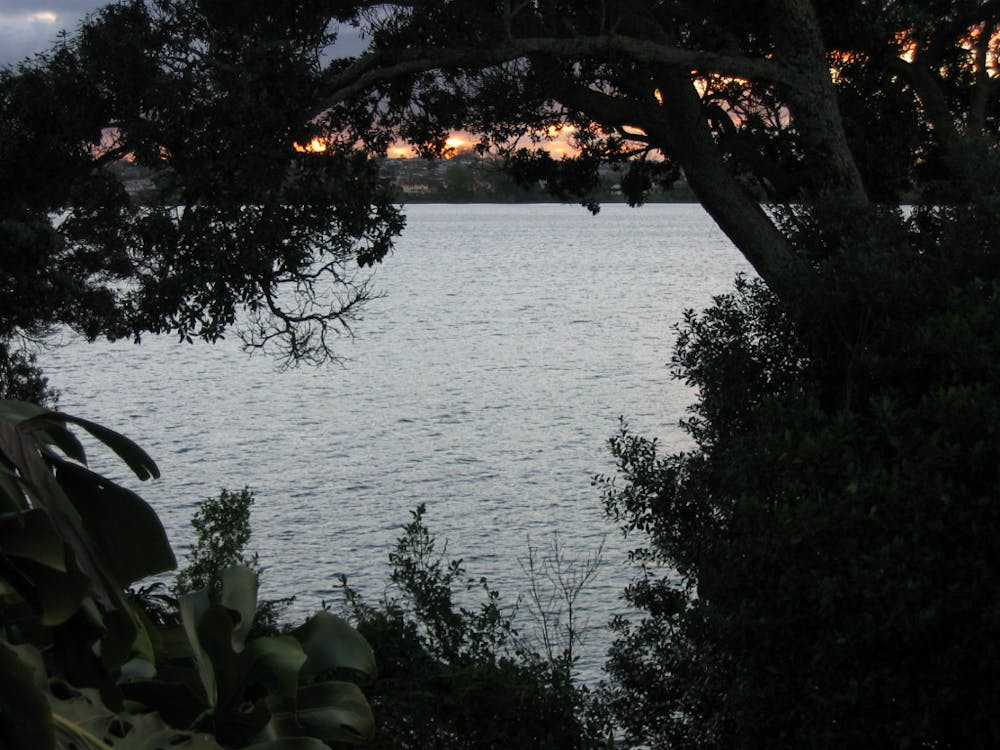
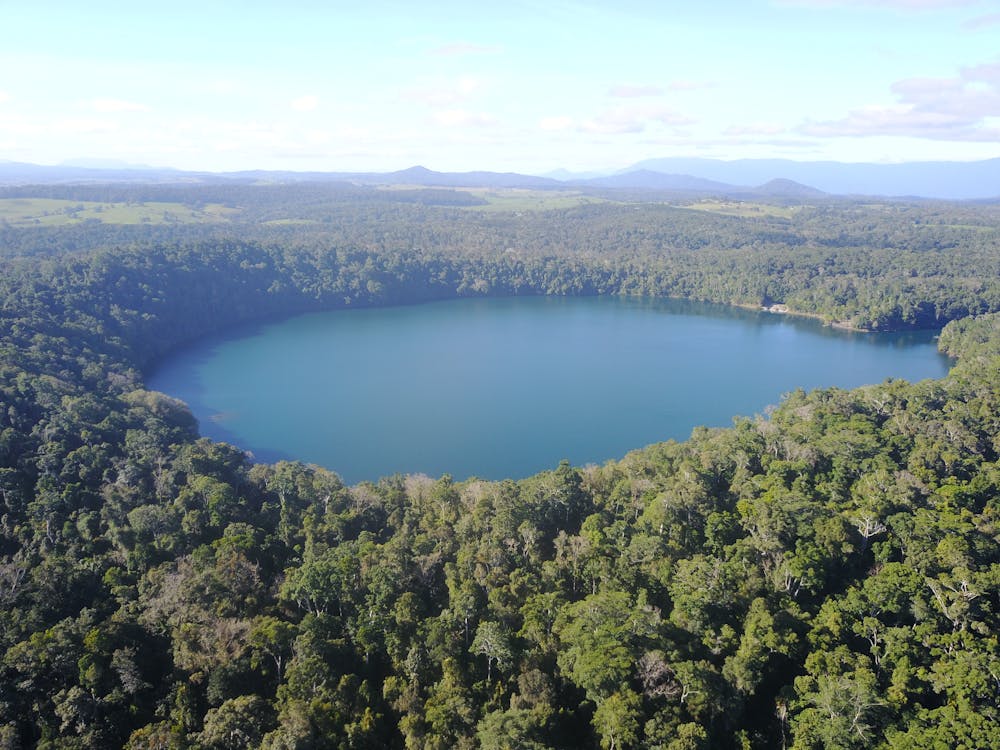




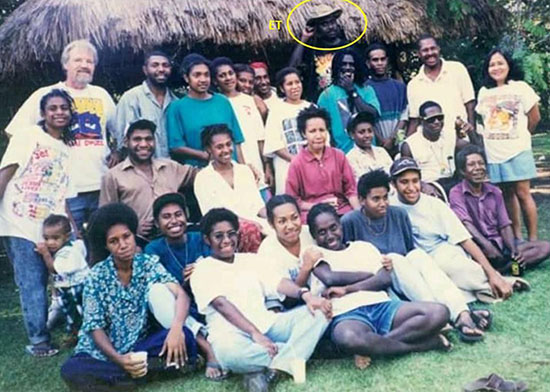

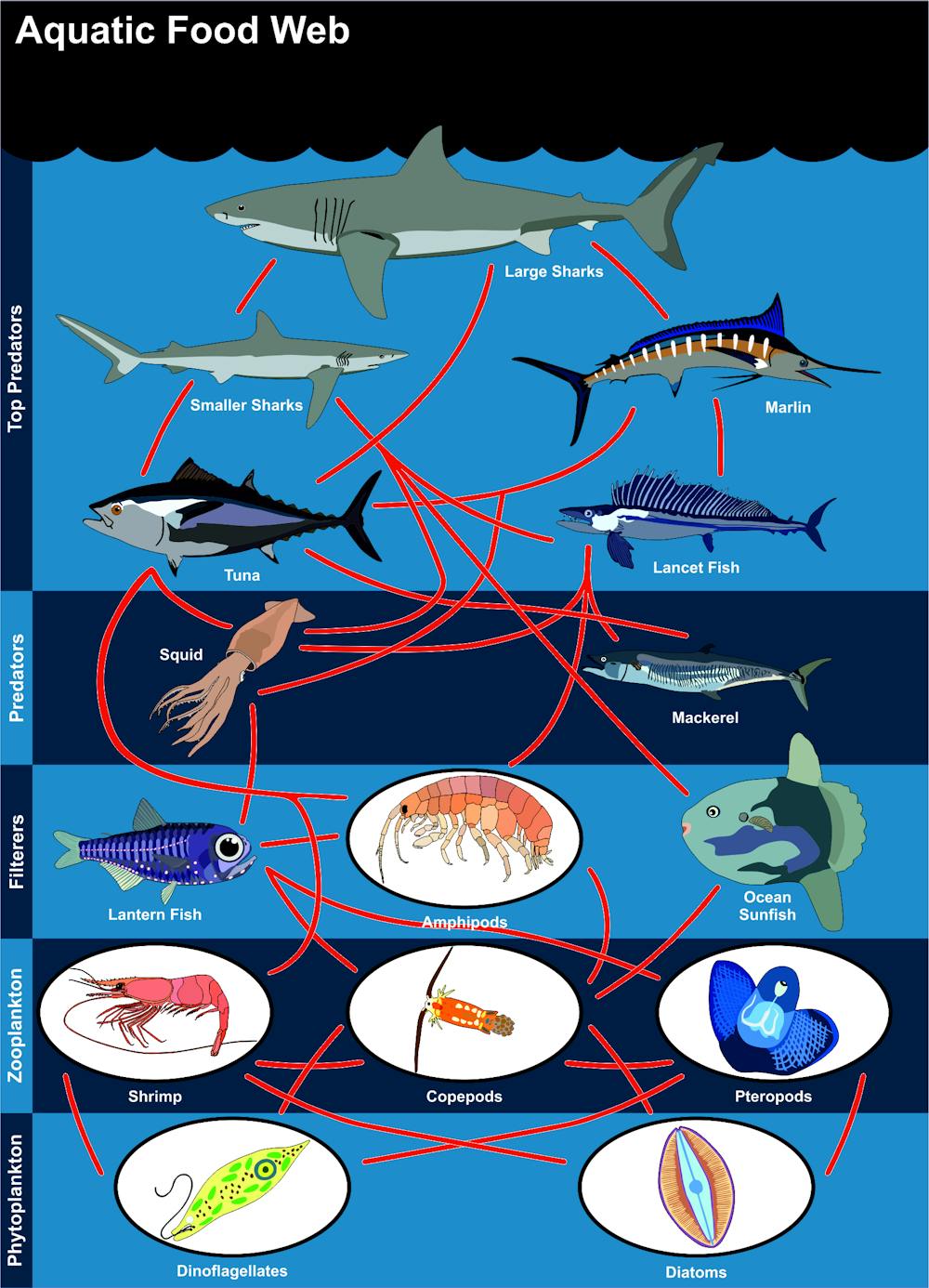
















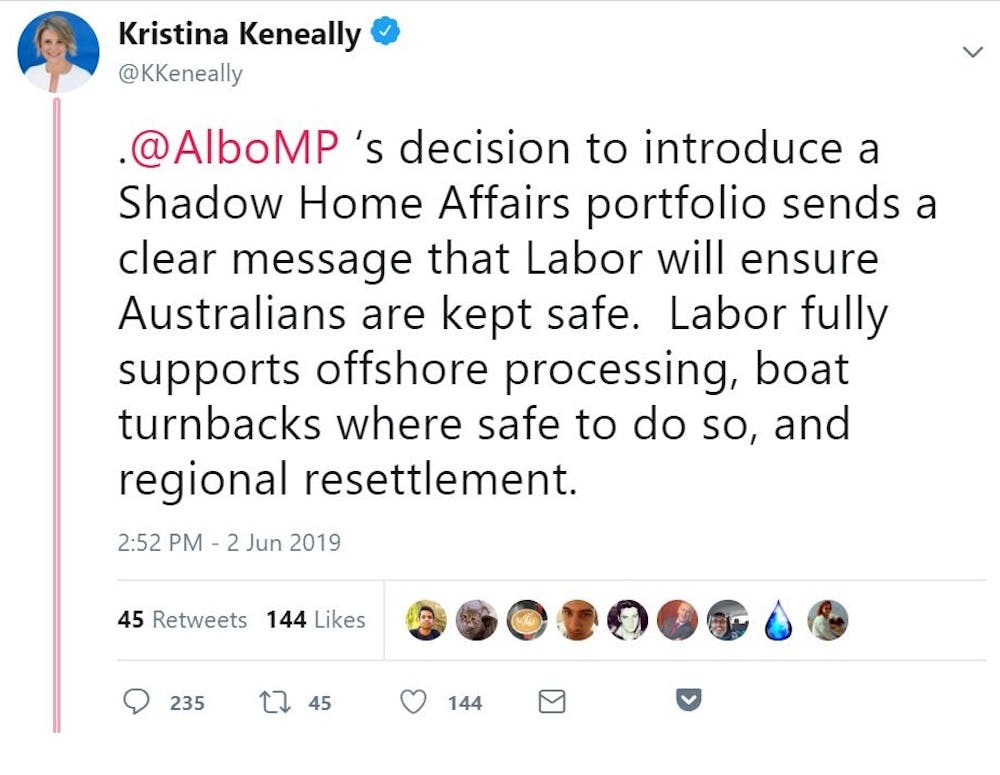
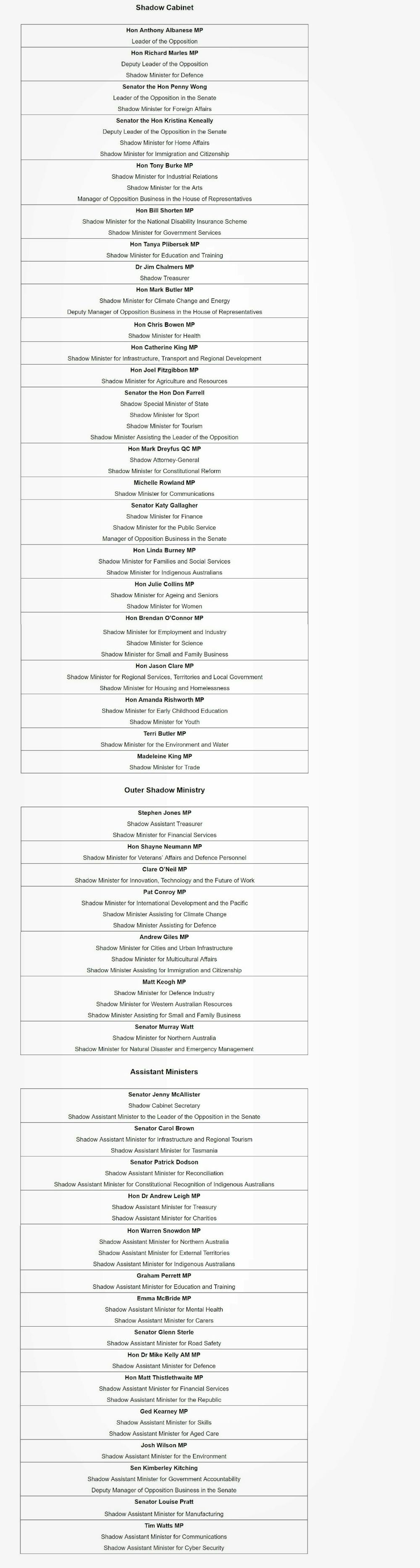


















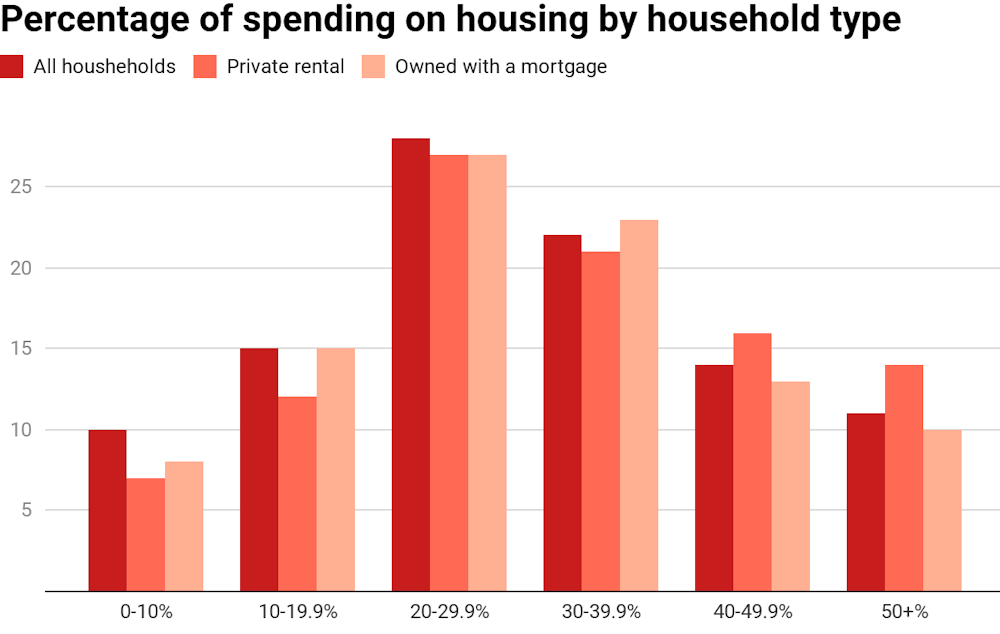
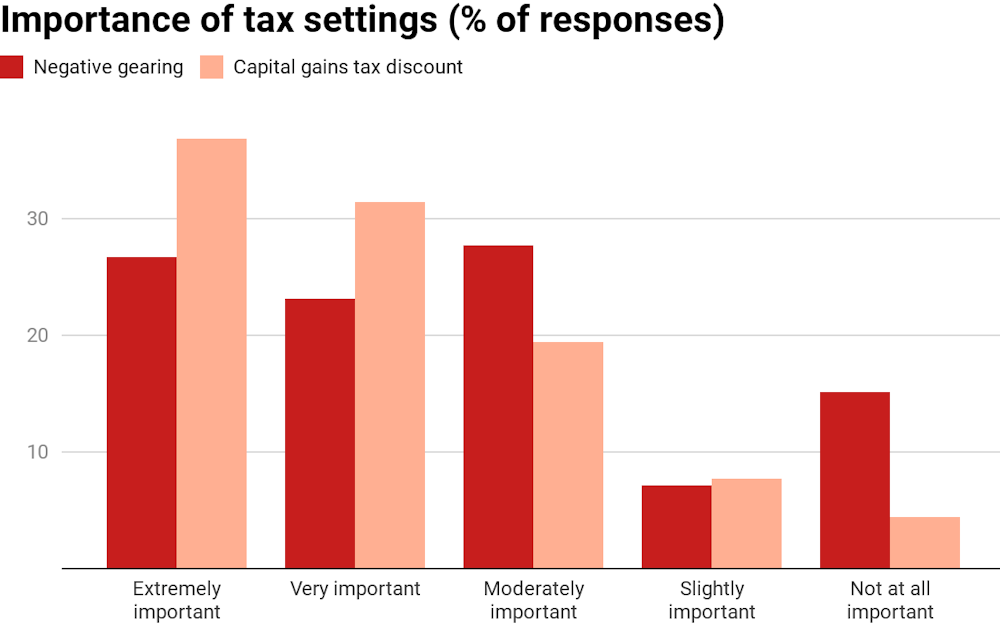













#/media/File:Tokyo_Bay_Plan_by_Tange_1960.jpg)

_-_1887_-_ritr._da_Eakins,_Thomas_-_da_Internet.jpg)
