Page 1091

Papuan activists dispute Indonesia’s poll numbers, claim boycott success

By Evan Wasuka on ABC Pacific Beat

It may be more than a month since Indonesians went to the polls, but the country is still being shaken by violence related to the election, including in the Papua region.

At least six people died in clashes in the capital Jakarta, during protests against the election outcome that saw President Joko Widodo declared the winner over Prabowo Subianto.

There are also reports in the Jakarta Post that post-election violence erupted in the troubled Papua region with investigations taking place into the deaths of four protesters allegedly killed by Indonesian soldiers.

READ MORE: Four shot dead in postelection violence in Papua

LISTEN: ABC Pacific Beat podcast

It comes as President Widodo’s re-elected government has promised greater infrastructure development in Papua province.

-Partners-

But West Papuan activists pushing for independence from Indonesia have declared their election boycott was a success, saying that a majority of West Papuans did not vote.

Benny Wenda, the exiled leader of the United Liberation Movement, called for the peaceful boycott to show that West Papuans were not interested in electing Indonesia’s president.

After the preliminary count came in he claimed that 60 percent of West Papuans had not taken part in the election.

However, the official results from the electoral commission show that 88 per cent of West Papuans did vote.

ULMWP spokesman Ronny Kareni said that while West Papuan activists were glad that Joko Widodo remained in power, they did not think anything would change citing that Joko Widodo had not addressed any of the human rights cases in Papua that he said he would in his first term.

“The trust that has always been there, that gap is widening,” he said.

“The general feeling is that nothing will change, even though Jokowi is back serving for the second time”.

Print Friendly, PDF & Email

Article by AsiaPacificReport.nz

Why the raids on Australian media present a clear threat to democracy

Source: The Conversation (Au and NZ) – By Rebecca Ananian-Welsh, Senior Lecturer, TC Beirne School of Law, The University of Queensland

The Australian Federal Police has this week conducted two high-profile raids on journalists who have exposed government secrets and their sources.

On Tuesday, seven AFP officers spent several hours searching News Corp journalist Annika Smethurst’s Canberra home, her mobile phone and computer. The AFP linked the raid to “the alleged publishing of information classified as an official secret”.

This stemmed from Smethurst’s 2018 article, which contained images of a “top secret” memo and reported that senior government officials were considering moves to empower the Australian Signals Directorate (ASD) to covertly monitor Australian citizens for the first time.

Soon after, 2GB Radio Presenter Ben Fordham revealed he had been notified by the Department of Home Affairs that he was the subject of a similar investigation, aimed at identifying the source of classified information he had reported regarding intercepted boat arrivals.

And then on Wednesday, the AFP raided the ABC’s Sydney headquarters. This dramatic development was in connection with the 2017 “Afghan files” report based on “hundreds of pages of secret defence force documents leaked to the ABC”. These documents revealed disturbing allegations of misconduct by Australian special forces.

The reaction to the raids was immediate and widespread.

The New York Times quoted News Corp’s description of the Smethurst raid as “a dangerous act of intimidation towards those committed to telling uncomfortable truths”. The Prime Minister was quick to distance his government from the AFP’s actions, while opposition leader Anthony Albanese condemned the raids.

But to those familiar with the ever-expanding field of Australian national security law, these developments were unlikely to surprise. In particular, enhanced data surveillance powers and a new suite of secrecy offences introduced in late 2018 had sparked widespread concern over the future of public interest journalism in Australia.

The crackdown of the past few days reveals that at least two of the core fears expressed by lawyers and the media industry were well-founded: first, the demise of source confidentiality and, secondly, a chilling effect on public interest journalism.

Source confidentiality

Upon finding out he was the subject of an investigation aimed at uncovering his sources of government information, Ben Fordham declared

The chances of me revealing my sources is zero. Not today, not tomorrow, next week or next month. There is not a hope in hell of that happening.

Source confidentiality is one of journalists’ most central ethical principles. It is recognised by the United Nations and is vital to a functioning democracy and free, independent, robust and effective media.

One of the greatest threats to source confidentiality is Australia’s uniquely broad data surveillance framework. The 2015 metadata retention scheme requires that all metadata (that is, data about a device or communication but not, say, the communication itself) be retained for two years. It may then be covertly accessed by a wide array of government agencies without a warrant. Some reports suggest that by late 2018, some 350,000 requests for access to metadata were being received by telecommunications service providers each year.


Read more: Data retention plan amended for journalists, but is it enough?


The government was not blind to the potential impact of this scheme on source confidentiality. For example, obtaining metadata relating to a journalist’s mobile phone could reveal where they go and who they contact and easily point to their sources.

This led to the introduction of the “Journalist Information Warrant” (JIW). This warrant is required if an agency wishes to access retained metadata for the direct purpose of identifying a professional journalist’s source.

So, access to a professional journalist’s metadata in order to identify a confidential source is permitted, provided the access has a particular criminal investigation or enforcement purpose and the agency can show it is in the public interest and therefore obtain a JIW.

This week’s raids suggest that either JIWs could not be obtained in relation to Smethurst, Fordham or the ABC Journalists, or the journalists’ metadata did not reveal their sources, or the AFP did not attempt to access their metadata.

Alternatively, if metadata had identified the journalists’ sources, it is less clear why these dramatic developments took place.

After 2015, journalists were advised to avoid using their mobile devices in source communications. They were also encouraged, wherever possible, to encrypt communications.

But in 2018, the government went some way to closing down this option when it introduced the complex and highly controversial Telecommunications and Other Legislation Amendment (Assistance and Access) Act 2018.

As well as expanding computer access and network access warrants, the Act provided a means for government agencies to co-opt those in the telecommunications industry to assist agencies with their investigations. This could include covertly installing weaknesses and vulnerabilities in specific devices, circumventing passwords or allowing encrypted communications to be decrypted. A warrant would then be required to access the device and communication data.

It is impossible to know whether Australian journalists have been targeted under the Act or had weaknesses or spyware installed on their personal devices. This week’s raids suggest the AFP would be prepared to target journalists under this framework in order to identify journalists’ confidential sources.

However, this could only be done for some purposes, including in the investigation of a secrecy offence.

Secrecy offences

In June 2018, the government introduced a suite of new espionage, foreign interference and secrecy offences. This included an offence of current or former Commonwealth officers communicating information, obtained by virtue of their position, likely to cause harm to Australia’s interests. This offence is punishable by imprisonment for seven years. If the information is security classified or the person held a security classification, then they may have committed an “aggravated offence” and be subject to ten years’ imprisonment.

This week’s raids reveal just how common it is for public interest journalism to rely on secret material and government sources.


Read more: Government needs to slow down on changes to spying and foreign interference laws


But the journalists themselves may also be facing criminal prosecution. The 2018 changes include a “general secrecy offence”, whereby it is an offence (punishable by imprisonment for five years) to communicate classified information obtained from a Commonwealth public servant. Fordham’s radio broadcast about intercepted boat arrivals was, for example, a clear communication of classified information.

Again, journalists are offered some protection. If prosecuted, a journalist can seek to rely on the “journalism defence” by proving that they dealt with the information as a journalist, and that they reasonably believed the communication to be in the public interest. The meaning of “public interest” is unclear and, in this context, untested. However, it will take into account the public interest in national security and government integrity secrecy concerns as well as openness and accountability.

Protecting media freedom

Australia has more national security laws than any other nation. It is also the only liberal democracy lacking a Charter of Human Rights that would protect media freedom through, for example, rights to free speech and privacy.

In this context, journalists are in a precarious position – particularly journalists engaged in public interest journalism. This journalism is vital to government accountability and a vibrant democracy, but has a tense relationship with Australia’s national interests as conceived by government.

National security law has severely undercut source confidentiality by increasing and easing data surveillance. National security laws have also criminalised a wide array of conduct related to the handling of sensitive government information, both by government officers and the general public.

And these laws are just a few parts of a much larger national security framework that includes: control orders, preventative detention orders, ASIO questioning and detention warrants, secret evidence, and offences of espionage, foreign interference, advocating or supporting terrorism, and more.

JIWs, and the inclusion of a journalism defence to the secrecy offence, recognise the importance of a free press. However, each of these protections relies on a public interest test. When government claims of national security and the integrity of classifications is weighed into this balance, it is difficult to see how other interests might provide an effective counterbalance.

One of the most disturbing outcomes is not prosecutions or even the raids themselves, but the chilling of public interest journalism. Sources are less likely to come forward, facing risk to themselves and a high likelihood of identification by government agencies. And journalists are less likely to run stories, knowing the risks posed to their sources and perhaps even to themselves.

Against this background, the calls for a Media Freedom Act, such as by the Alliance for Journalists’ Freedom, have gained significant traction. It may take this kind of bold statement to cut across the complexities of individual laws and both recognise and protect the basic freedom of the press and the future of public interest journalism in Australia.

ref. Why the raids on Australian media present a clear threat to democracy – http://theconversation.com/why-the-raids-on-australian-media-present-a-clear-threat-to-democracy-118334

Electronic monitoring bracelets are only crime deterrence tools, they can’t ‘fix’ offenders

Source: The Conversation (Au and NZ) – By Lacey Schaefer, Senior Lecturer in Criminology and Criminal Justice, Griffith University

The man arrested after a deadly gun attack in Darwin Tuesday night is reported to have been on parole and wearing an electronic monitoring bracelet.

This leads to the same reaction we see following any high-profile crime. How could such a thing happen?

People may speculate that the criminal justice agencies involved have somehow dropped the ball. The offender was on their radar, after all.


Read more: Online tools can help people in disasters, but do they represent everyone?


While this finger-pointing may serve a cathartic function, it is important we also question our expectations before assuming a failure occurred.

We need to understand what electronic monitoring intends to achieve, how it works, and what are its capabilities and limitations.

Electronic tagging

In the context of the corrections system, electronic monitoring refers to the tagging of a person as a form of surveillance, usually in the form of a GPS-enabled ankle bracelet.

In Australia, each state and territory uses electronic monitoring differently, guided by their own legislative frameworks.

Practices vary considerably between jurisdictions. For example, in some places, certain offenders are targeted (high-risk recidivists, those who repeatedly reoffend, for example). In others, specific types of offences are the focus (such as child sex offences).

The application of electronic monitoring even differs between offenders, as the supervising agency uses it for reasons specific to each person.

A police department might use electronic monitoring to ensure a domestic violence perpetrator does not visit the victim before a trial. A probation officer might require an offender to wear a bracelet for 12 months to ensure they are attending treatment and meeting their curfew. A parole officer could place the GPS tracking condition on an offender for the first three months following release from prison to better understand how the parolee spends his or her time.

Each of these experiences will be quite different, as each is intended to fulfil a unique aim.

Ordinarily, electronic monitoring is used as a tool of incapacitation and deterrence.

In the first instance, an offender may be told to follow a particular rule – for example, to be home by 8pm, to stay away from the victim, to attend a treatment program, or not to go within 1km of a school. Electronic monitoring allows authorities to monitor the person’s compliance with such a condition.

In the latter instance, an offender may be deterred from certain behaviour if they believe their actions are likely to be detected through electronic monitoring.

Monitoring actions

When an offender is subject to electronic monitoring, a computer database is updated with information about the rules he or she has been instructed to follow. Each jurisdiction and each agency may have their own database, so where the offender appears in the database will depend on who is supervising the electronic monitoring order.

The database is then monitored by enforcement authorities, although this is sometimes outsourced to private providers or overseas companies. While the data is generally sent from the offender’s GPS device to the monitoring agency in real time, there can be delays in how long it takes for that information to be passed to police or corrective services.

What occurs when an offender breaches one of the rules and a computer alert is generated depends on factors such as legislation and the priority of a case influencing the response. The database includes information about what to do in the event of specific kinds of breaches with specific offenders.

In some cases, an alarm on the device may go off or, very rarely, the police may be immediately notified.

Most often, for routine cases and ordinary breaches, the monitoring agency will notify the offender’s supervisor (such as a parole officer or a local police department), who will then determine how to proceed.

There may be a lag of several days during this process. For example, if a low-risk offender misses their home curfew on Friday night (as determined by the GPS bracelet), the parole officer will not receive notification of this breach until Monday morning.

The pros and cons of tagging

There are a range of benefits and disadvantages to the electronic monitoring of offenders.

It can be effective in holding offenders accountable, protecting victims and enhancing community safety and preventing crimes. These come with important cost savings, particularly when offenders can be safety monitored in the community in lieu of imprisonment or as a mechanism of early release from prison.

But some of the downfalls are that offenders can tamper with their devices, and there can be GPS dead zones – particularly in a geographically vast country such as Australia. There may also be human error in using the systems, such as improper monitoring or unreasonable decision-making after an alert.

Yet collectively, the research evidence highlights that electronic monitoring can be an effective tool for discouraging recidivism. But it is only that: a tool.

The most effective practices for supervising offenders in the community include those that identify and reduce a person’s risks for continued criminal behaviour.


Read more: AI can help in crime prevention, but we still need a human in charge


Electronic monitoring will be most effective when it is used to support supervision that limits a person’s access to chances to commit crime. Such supervision should help them redesign their routines so that any risky settings are avoided and are replaced with more positive influences.

Thus, rather than simply giving offenders a long list of rules for what not to do, effective probation and parole strategies help offenders lead productive lives.

More broadly, it is imperative that correctional authorities provide rehabilitative interventions that address the underlying factors that contribute toward a person’s criminal behaviour. The most effective approaches use cognitive-behavioural techniques to give offenders skills that encourage good decision-making.

Yet electronic monitoring cannot “fix” an offender’s impulsivity, lack of empathy, or any other underlying crime-conducive traits. Thus we should not confuse a technological aid with meaningful treatment.

ref. Electronic monitoring bracelets are only crime deterrence tools, they can’t ‘fix’ offenders – http://theconversation.com/electronic-monitoring-bracelets-are-only-crime-deterrence-tools-they-cant-fix-offenders-118335

Press, platforms and power: mapping out a stronger Australian media landscape

Source: The Conversation (Au and NZ) – By Tim Dwyer, Associate Professor, Department of Media and Communications, University of Sydney

In his first address to the caucus after Labor’s shock election loss, Bill Shorten pointed to conservative interests

spending unprecedented hundreds of millions of dollars advertising, telling lies, spreading fear … Powerful vested interests campaigned against us through sections of the media itself, and they got what they wanted.

He was, of course, talking about News Corp press and “Sky after dark”, which campaigned heavily against the ALP during the election and have shown no sign of letting up since.


Read more: Outrage, polls and bias: 2019 federal election showed Australian media need better regulation


Experts agree that this campaigning style’s impact is cumulative and broadly agenda-setting, shaping the party-political landscape. Importantly, it also influences political and business elites in shaping the parameters and tone of debates.

In his new book, former prime minister Kevin Rudd argues a royal commission is required to rein in the power abuse and unethical journalism practices at the Murdoch news brands.

What can be done about media bias?

This is more than simply an ethical matter for media. It goes beyond more vigilant application of self-regulatory codes of conduct administered by the Australian Communications and Media Authority (ACMA) and the Australian Press Council (APC), or tightening political advertising rules. It requires tough legal and regulatory measures to prevent further structural damage at a time when media businesses are under threat from US platforms. Rules to stop further media concentration should be a priority for democratic governments.

The ACCC’s final report into Google and Facebook, due at the end of the month, may make some recommendations to assist this situation. Its preliminary report signals the need for stronger regulatory steps, recommending that:

… the regulatory authority could also monitor, investigate and report on the ranking of news and journalistic content by digital platforms and the provision of referral services to news media businesses.

It also recommends a wholesale review of the regulatory frameworks that offer patchwork oversight in relation to news consumption in Australia.

Increasing our understanding of the interaction between new and old media pluralism will require an assessment of the changing online news landscape. It will also need us to look more widely to understand the public mood. For example, the comments below articles and on social media are a neglected avenue for research.

Given the popularity of comment reading – about half of users read them and for longer than the article on average – comments’ potential contribution to pluralism matters.

While adding a new voice, comments onsite and on social media can also invite risk; comments on Chinese social media site WeChat played a key role in spreading misinformation that may have had a significant impact on the federal election. But there is little debate on how these spaces should be regulated.

Media ownership needs reform

The serious structural problem with media diversity in Australia will require more active regulation to avoid further damage to our democratic institutions. The removal of the two-out-of-three rule in 2017 led to the take-over of a major independent media company, Fairfax Media, by Nine Entertainment – a company known more for its tabloid style than independent journalism.

The 2018 merger was widely anticipated when the federal government repealed these anti-concentration laws. News Corp and Nine Entertainment now control the bulk of Australia’s newspaper sector.


Read more: A modern tragedy: Nine-Fairfax merger a disaster for quality media


Astonishingly, going into the federal election, only the Greens had elaborated media policies.

The UK government, through Ofcom, the main media regulator, has recognised that online news access is increasingly important as a news source, and plurality concerns continue in the online world. There is an ongoing debate about how current rules can be extended to online media, including the administration of the mergers public interest test and the national cross-media ownership rule.

In 2015, Ofcom updated its processes for assessing media pluralism. It has been required to review the UK’s ownership rules at least every three years since 2003. The restrictions in place include:

  • a rule limiting cross-media ownership of newspapers and TV at a national level to 20% (the “20/20 rule”)

  • a rule for administering a media public interest test in relation to mergers.

The secretary of state oversees the UK’s media-specific pluralism test and has the power to stop media mergers found to be against the public interest.

Ofcom is required to undertake a review of ownership patterns every three years. In its most recent statutory review in 2018, Ofcom concluded the rules needed to be retained to protect pluralism.

In response to the review, the key UK reform group MRC noted that media plurality concerns would require ongoing reassessment if the importance of TV news and newspapers continued to decline.

In this new framework, Ofcom has in place a range of indicators that are designed to assess the availability of news sources, their consumption and their impact on users. Australia is yet to even consider this approach, let alone investigate how a local version might be developed.

Keeping up with changing news consumption

As a source of news, Australian online (including social) news consumption now sits at 82%, according to recent research. Taking this changing consumption into account in policy is even more important when we know these platforms are not neutral: their algorithms manipulate what news content people are exposed to.

Under the UK approach, various aggregated metrics are necessary to allow regulatory agencies to track changes in patterns of news consumption and the diversity of available news sources.


Read more: Enough ‘gotcha’ campaign coverage. Here are five ways the media can better cover elections


Although it was an important first step to track the morphing consumption of news sources across platforms, Ofcom’s metric is still arguably incapable of assessing the operation of “real world” power and influence. That’s why regular reviews of shifting media power are so important for making policy.

Responsible policy-making obliges governments to monitor these developments, gathering the information needed to evaluate whether or not the current policy intent remains. Strong regulatory tools (including web traffic analysis software and news data analytics) are needed to do that.

Australia needs to develop a “thermometer” to measure media pluralism via an initial benchmark study followed by periodic reviews. We also need a robust, independent, public interest test that can be applied in merger environments.

ref. Press, platforms and power: mapping out a stronger Australian media landscape – http://theconversation.com/press-platforms-and-power-mapping-out-a-stronger-australian-media-landscape-117987

It’s perfectly legal for doctors to charge huge amounts for surgery, but should it be allowed?

Source: The Conversation (Au and NZ) – By Louisa Gordon, Associate Professor – Health Economics, QIMR Berghofer Medical Research Institute

Australia’s Chief Medical Officer Brendan Murphy will investigate how to better protect patients from doctors charging “really unjustifiable, excessive fees” of up to A$10,000 or more for medical procedures.

Murphy said it was potentially unethical for doctors to charge such high out-of-pocket fees that left families in severe financial pain, and that contrary to some patients’ hopes, paying more didn’t equate to better outcomes.

The call comes as desperate families increasingly turn to crowdfunding, remortgaging their homes and eating into their superannuation to raise tens of thousands of dollars for surgeries and other medical expenses.


Read more: We need more than a website to stop Australians paying exorbitant out-of-pocket health costs


It is perfectly legal for a doctor working in private practice to charge what they believe is fair and reasonable. It’s a private market, so buyers beware.

But that doesn’t mean it’s right, or that it should be allowed to continue.

Not everything is available in the public system

Some patients’ out-of-pocket costs are from the gap between what their private health insurance and/or Medicare will pay for a procedure or treatment.

But some treatments aren’t funded by Medicare or offered in public hospitals because their safety, efficacy and value for money have not yet been demonstrated.

Medical technologies, devices and surgical techniques need to be rigorously tested in clinical trials to demonstrate safety and clinical effectiveness. They will only be widely adopted when they have a strong evidence base.

Out-of-pocket costs can be particularly high for patients with cancer. From shutterstock.com

When the government pays for a health service, value for money is also considered. For really expensive services and medicines that have the potential to greatly benefit patients, the government will try to negotiate prices down, to reduce the impact on the health budget.

While a lack of evidence of a benefit does not necessarily mean the procedure does not benefit patients, the outcomes need to be reviewed and demonstrated to justify its ongoing use.

Sometimes new technologies are adopted prematurely based on weak evidence and strong marketing which can lead to poor investment decisions. This was the case with robotic surgery for prostate cancer, offered early in private practice in Australia, only to find later it was no better than traditional surgery.

If a patient chooses to spend money on a high-risk surgery, is it really anyone’s business?

Sometimes patients will choose to undergo high-risk surgery, not covered under the public system, and are willing to pay out of their own pocket, or raise the funds through crowdsourcing or remortgaging their home.

Some will argue the value is whatever the patient is willing to pay for it and it’s up to the patient’s own risk-benefit preferences.

There are some major problems with this. Patients often make health decisions while distressed, ill and emotional. They may not be able to determine the best course of action or have all the information at hand. They must trust the doctor and his or her superior knowledge and experience.


Read more: Specialists are free to set their fees, but there are ways to ensure patients don’t get ripped off


Health economists call this “asymmetric information”. The doctor has extensive years of training, expertise and qualifications. The patient has Dr Google.

A key reason governments intervene in health care systems is to avoid market failure arising from unequal information and the profiteering of providers.

Our ‘fee-for-service’ system is failing

In the private system, doctors are paid a fee for each service they provide. This creates an incentive for doctors to provide more services: the more services they provide, the more they get paid.

But the high volumes of testing, consultations and fragmented services we’re currently seeing aren’t translating to a better quality of care. As such, economists are calling for major reforms of our fee-for-service private health system and the way that doctors are paid.

This could involve paying doctors for caring for a patient’s medical condition over a set period, rather than each time they see the patient, or charging private patients a “bundled fee” for all the scans, appointments and other costs associated with something like a hip replacement.


Read more: More visits to the doctor doesn’t mean better care – it’s time for a Medicare shake-up


Out-of-pocket costs are very high for some Australians with cancer. A quarter of Queenslanders diagnosed with cancer will pay provider fees of more than A$20,000 in the first two years after diagnosis.

While what constitutes “value” will be in the eye of the beholder, a well-functioning and sustainable health system is one that puts patients’ interests above all others and holds health providers accountable.

Australia’s universal health care system is one of the best in the world and we need to work hard to preserve it. Surgeries costing tens of thousands of dollars will continue unless the government regulates private medical practice or reforms the way doctors are remunerated.

It’s time to cap what physicians can charge for services and provide incentives for specialists to bulk-bill their patients.


Read more: Why do specialists get paid so much and does something need to be done about it?


ref. It’s perfectly legal for doctors to charge huge amounts for surgery, but should it be allowed? – http://theconversation.com/its-perfectly-legal-for-doctors-to-charge-huge-amounts-for-surgery-but-should-it-be-allowed-118179

Australia should give victims a voice in tackling environmental crimes

Source: The Conversation (Au and NZ) – By Hadeel Al-Alosi, Lecturer, School of Law, Western Sydney University

Contrary to popular belief, crimes against the environment are not “victimless”. They affect many people, animals, plants and landscapes. Crimes against the environment should not be taken lightly.

Broadly defined, environmental crimes are those that harm the environment. This includes acts such as polluting water or air, illegal fishing or trade in wildlife, and water theft. The international Environmental Investigation Agency reports environmental offending is “one of the most profitable forms of criminal activity”.

Australia is currently missing out on a hugely useful tool in the fight against environmental crime: restorative justice. This approach, which has been used successfully in New Zealand, deserves a nationwide commitment.


Read more: Why a narrow view of restorative justice blunts its impact


Restorative justice conferencing

Australia is a world leader in using restorative justice to deal with both adult and young offenders.

Simply defined, restorative justice is a process in which the victim, offender, and other parties affected by a crime come together to discuss the aftermath of the offence and its impact. Each party plays a role in resolving the dispute with the help of an impartial facilitator.

Restorative justice is all about restoring harm, preventing the crime from reoccurring, and fixing (or building) relationships.

Research has found that, compared with the traditional criminal court process, restorative justice can reduce the chances of reoffending, increase victim satisfaction, and prompt offenders to feel more responsibility for their actions.

During a conference, victims can explain the effect a crime had on them, and ask questions – giving them a voice in traditional proceedings. Offenders can give reasons why the crime happened, and apologise. A range of other outcomes may be agreed to in a conference, including compensation and community work.

However, our research reveals that conferencing is underused when it comes to environmental crimes in Australia.

New Zealand leads the way

New Zealand is leading the world in using restorative justice to deal with environmental crimes. This is largely a result of two pieces of legislation passed in 2002. First, the Victims’ Rights Act 2002 says that, if possible, the court (or other representative) must arrange a restorative justice conference at a victim’s request. Second, the Sentencing Act 2002 makes it mandatory for a judge to take into account any outcomes reached in a conference.

While more research focusing on the precise benefits is needed, anecdotal evidence from shows New Zealand’s approach is effective. Several judges, prosecutors and facilitators have praised environmental justice in addressing environmental crime.


Read more: Three rivers are now legally people – but that’s just the start of looking after them


Australia is failing to reap the benefits

Unlike New Zealand, Australian courts have not embraced restorative justice for environmental offending. In fact, Australia has only used restorative justice conferencing in two cases of environmental crime: Williams (2007) and Clarence Valley Council (2018).

Both Williams and Clarence Valley Council involved offending against Aboriginal cultural heritage, in breach of New South Wales’s National Parks and Wildlife Act. The outcomes reached in the conferences went well beyond what a court could have imposed on the offenders.

For example, in Williams, where a mining company built exploratory pits and a private railway siding across areas of Indigenous significance, the maximum penalty at the time was a fine of A$5,500 and 6 months’ imprisonment. The judge suggested the parties engage in a restorative justice conference, during which Craig Williams donated A$32,200 worth of items to the local Aboriginal people.

In Clarence Valley Council, which concerned the council cutting down a protected tree, the council agreed in the conference to donate A$300,000 to the local Aboriginal community to fund research into cultural heritage. The council also agreed to create employment opportunities and youth initiatives for Aboriginal people.

These outcomes are far better in repairing the damage done than a mere fine or prison term.

Complementary to traditional prosecution

Despite these significant benefits, restorative justice conferencing is not a replacement for prosecution. It should be used only after the offender has been assessed as suitable, as in the cases of Williams and Clarence Valley Council.

Restorative justice conferencing can be suitable for all sorts of environmental crime, from water pollution to breaches of planning laws. In the case of offending against Aboriginal cultural heritage, conferencing may be appropriate given its ability to give a voice to members of the Aboriginal community who would otherwise be unable to participate in the formal court process.

The ideal time to integrate conferencing is after conviction but before sentencing, which we refer to as a “back-end model” of conferencing (the method most commonly used in New Zealand).

Typically, a back-end model involves the prosecution bringing charges before the court. The court then considers holding a restorative justice conference and, if appropriate, the proceedings are postponed to allow the conference to occur. The matter is later referred back to the court for sentencing.

This creates an opportunity for the sentencing judge to consider any results from the conference, but maintains a court’s essential oversight role by ensuring the outcomes reached are adequate, achievable and legally binding.

A more environmentally friendly response

Restorative justice conferencing can provide a more effective way of dealing with environmental harms because, according to Trevor Chandler, a facilitator in Canada, “punishment makes people bitter, whereas restorative solutions make people better”.

Of course, conferencing is not without limits. Just as restorative justice may not work for all young people, it may not work for all environmental offenders. Conferencing can require more time, money and energy than traditional court processes. However, this may be an investment well worth making for the environment.


Read more: Restorative justice may not work for all young offenders


It is time for Australia to follow New Zealand’s example by embracing a back-end model of restorative justice.

This would give victims a much-needed voice in the process, and create a better chance to heal ruptured relationships and restore the harm done to the environment as far as possible.

ref. Australia should give victims a voice in tackling environmental crimes – http://theconversation.com/australia-should-give-victims-a-voice-in-tackling-environmental-crimes-115711

MEAA blasts ‘disturbing assaults’ on press freedom after new ABC raid

Pacific Media Watch Newsdesk

Two raids by the Australian Federal Police (AFP) on journalists and media organisations within the last 24 hours represent a disturbing attempt to intimidate legitimate news journalism that is in the public interest, says the union for Australian journalists, the Media, Entertainment and Arts Alliance (MEAA).

Yesterday’s raid on a News Corporation Australia journalist, and today’s raid on the public broadcaster ABC (Australian Broadcasting Corporation) and three of its journalists, suggest that no media organisation is immune from government attacks on press freedom.

“A second day of raids by the AFP sets a disturbing pattern of assaults on Australian press freedom. This is nothing short of an attack on the public’s right to know,” said MEAA media section president Marcus Strom in a statement.

READ MORE: ABC’s Sydney headquarters raided by Australian Federal Police over Afghan Files stories

“Police raiding journalists is becoming normalised and it has to stop.

“These raids are about intimidating journalists and media organisations because of their truth-telling.

-Partners-

“They are about more than hunting down whistleblowers that reveal what governments are secretly doing in our name, but also preventing the media from shining a light on the actions of government,” Strom said.

“It is equally clear that the spate of national security laws passed by the Parliament over the past six years have been designed not just to combat terrorism but to persecute and prosecute whistleblowers who seek to expose wrongdoing.

‘Poisonous laws’
“These laws seek to muzzle the media and criminalise legitimate journalism. They seek to punish those that tell Australians the truth.

“Yesterday’s raid was in response to a story published a year ago. Today’s raid comes after a story was published nearly two years ago.

“Suddenly, just days after a federal election, the Federal Police launches this attack on press freedom. It seems that when the truth embarrasses the government, the result is the Federal Police will come knocking at your door,” Strom said.

“MEAA demands to know who is responsible for ordering these coordinated raids, and why now. We call for the government and opposition to take collective responsibility for the legal framework they’ve created that is allowing for what appears to be politically motivated assault on press freedom,” Strom said.

“For years the Liberal and Labor parties have engaged in a high-stakes game of bluff which has seen the introduction of anti-democratic laws in the guise of national security legislation.

“It is time that the government and opposition had a common sense approach to defusing these poisonous laws that are effectively criminalising journalism. This attack on the truth must end.”

Print Friendly, PDF & Email

Article by AsiaPacificReport.nz

The gene therapy revolution is here. Medicine is scrambling to keep pace

Source: The Conversation (Au and NZ) – By Elizabeth Finkel, Vice-Chancellor’s Fellow, La Trobe University

This article is an edited extract from Elizabeth Finkel’s address Gene therapy: cure but at what cost? to the National Press Club June 5 2019.

We’re publishing it as part of our occasional series Zoom Out, where authors explore key ideas in science and technology in the broader context of society and humanity.


Gene therapy – for so long something that belonged to the future – has just hit the streets.

A couple of weeks back, you might have picked up a headline alerting us to the most expensive drug in history – a one off gene therapy cure for spinal muscular atrophy. Novartis have priced the drug Zolgensma at A$3 million (US$2.1 million).

Traditionally a parent of a baby with spinal muscular atrophy was told: take your baby home and love her or him. Have no false hope, the baby will die paralysed and unable to eat or talk by the age of two.

What’s the narrative going to be now? There is a cure but it costs A$3 million.

I think we are in for some poignant dilemmas.


Read more: Boyer Lectures: gene therapy is still in its infancy but the future looks promising


‘Heads up’ from a mother

The person who gave me a recent “heads up” on the gene therapy revolution was not a scientist. She is the mother of two sick children.

I met Megan Donnell last August 29th at a Melbourne startup conference called “Above All Human”.

Megan Donnell is a person who strikes you with her vibrancy and charisma. What you can’t immediately see is her life’s greatest tragedy and her life’s greatest mission.

Both of her children suffer from the rare genetic illness Sanfilippo syndrome. They lack a gene for breaking down heparin sulphate, a sugar that holds proteins in place in the matrix between cells. The high levels of the sugar poison the organs, particularly the brain. In the normal course of the disease, the children die in their teens, paralysed, unable to talk or eat.

When Megan Donnell’s kids were diagnosed at the ages of four and two, she was told “do not have false hope”. She didn’t listen.

The one time IT business manager started the Sanfilippo Childrens’ Foundation, raised a million dollars and invested in a start-up based in Ohio that was trialling gene therapy to treat the disease. Part of the deal was that the company would conduct trials in Australia as well as in the US and Spain. So far 14 children have been treated worldwide.

I’d missed a revolution

Megan Donnell’s story stunned me.

I’d written two books about coming medical revolutions: one on stem cells, the other on genomics. But when a medical revolution actually arrived, I’d missed it. It was all the more remarkable because for six years I’d been the editor of a popular science magazine – Cosmos.

We scanned the media releases for hot papers each week but gene therapy never came up on our radar.

Probably because we’d been dazzled by CRISPR – the powerful technique that can edit the DNA of everything from mosquitoes to man. But CRISPR has barely entered clinical trials.


Read more: What is CRISPR gene editing, and how does it work?


Meanwhile there are already five gene therapy products on the market. And with 750 working their way through the pipeline, the US Federal Drug Administration (FDA) predicts that by 2025 between 10-20 gene therapy treatments will be added to the market each year.

Some of the gene therapies are having incredible effects.

The star example is the Novartis treatment for spinal muscular atrophy. Untreated babies die paralysed by the age of two. But those treated with Zolgensma have now reached the age of four and some are walking and dancing.

In 2017, the FDA approved Luxturna, now marketed by Roche. This gene therapy can restore sight to children suffering from a form of retinal blindness that begins months after birth.

For the first time I can recall, medical researchers are using a four letter word for some diseases: cure.

These treatments appear to have fixed the underlying conditions. Especially when they are given early. Indeed spinal muscular atrophy treatment is being offered to babies a few month old – before their motor neurons have started to wither.

30 years in the making

These gene therapy treatments have been over thirty years in the making. And the saga of their journey to the clinic, I suspect, reveals some common plot lines.

The potential of gene therapy, was obvious as soon Marshall Nirenberg cracked the genetic code back in the 1960s.

The New York Times opined: “The science of biology has reached a new frontier”, leading to “a revolution far greater in its potential significance than the atomic or hydrogen bomb.”

In a 1967 editorial for Science, Nirenberg wrote:

This knowledge will greatly influence man’s future, for man then will have the power to shape his own biological destiny.

But if the end goal was obvious, the pitfalls were not.

What made the dream of gene therapy possible was viruses. They’ve evolved to invade our cells and sneak their DNA in next to our own, so they can be propagated by our cellular machinery.

Throughout the 1980s, genetic engineers learned to splice human DNA into the viruses.

Like tiny space ships, they carried the human DNA as part of their payload.

By 1990, researchers attempted the first gene therapy trial in a human. It was to treat two children with a dysfunctional immune system, a disease known as severe combined immunodeficiency (SCID).

The results were hardly miraculous but they were promising. Researchers raced to bring more potent viruses to the clinic.

Children have died

In 1999, 18 year old Jesse Gelsinger paid the price.

He had volunteered to try gene therapy for his inherited condition: ornithine transcarbamylase deficiency. It meant he couldn’t break down ammonia, a waste product of dietary protein. But his condition was largely under control through medication and watching his diet.

Four days after his treatment at the University of Pennsylvania, Jesse was dead – a result of a massive immune reaction to the trillions of adenovirus particles introduced into his body. These are the same viruses that cause the common cold.

Tragedy struck again in 2003. This one involved so-called “bubble boys”.

They too carried an immune deficiency, X-SCID, which saw them confined to sterile bubble; a common cold can be fatal. This time round the gene therapy appeared far more effective. But within a few years of treatment, five of 20 boys developed leukaemia. The virus (gamma retrovirus) had activated a cancer-causing gene.

The two tragedies set the field back. Many researchers found it very hard to get funding.

But the huge clinical potential kept others going.

The key was to keep re-engineering the viral vectors.

It was a project that reminds me of the evolution of powered flight. From the biplanes that the Wright brothers flew in 1903 to the epic Apollo 11 flight in 1963, took 60 years.

The virus engineers have been a lot faster.

Use engineered viruses

Ten years after the disaster of the leukaemia-causing viruses, researchers had re-engineered so-called lenti viruses not to activate cancer genes. They had also found other viruses that did not provoke catastrophic immune responses.

Instead of the adenovirus, they discovered its mild-mannered partner – known as adeno associated virus (AAV). There’s a whole zoo of these AAVs and some species are particularly good at targeting specific organs.

It is this new generation of vectors that are responsible for the results we are witnessing now. The AAV 9 vector for instance can cross into the brain, and that’s the one used to treat spinal muscular atrophy.

Turning the table on viruses, and hacking into their code: this is the bit that particularly fascinates me in telling the story of gene therapy.

But another intriguing aspect is that, contrary to long held wisdom, we are seeing big pharma galloping in to treat rare diseases.

In the US, the spinal muscular atrophy market is probably around 400 babies per year. Luxturna might treat 2,000 cases of blindness a year.

It’s not the sort of market size that would bring joy to investors. But clearly the companies think it’s worth their while.

For one thing, the FDA has provided incentives for rare, so-called “orphan diseases” – fast-tracking their passage thought the tangled regulatory maze.

And there is a convincing business case. If gene therapy is a one shot cure then it really may end up saving health systems money.

That justifies, they say, some of the most extraordinary prices for a drug you’ve ever heard of.

Of course, all this relies on the treatments being one time cures.

And though the patients seem to be cured, whether or not the treatments last a lifetime remains to be seen.

The situation in Australia

Historically, this country has been a world leader when it comes to bargaining down exorbitantly priced cures.

In 2013 when the drugs for curing Hepatitis C first came out, the price was around A$100,000 for a 12 week course. But in Australia, all 230,000 of those living with Hepatitis C will be treated for the lowest price in the world. Prices are much higher in the US.


Read more: Australia leads the world in hepatitis C treatment – what’s behind its success?


Greg Dore at the Kirby Institute of NSW participated in Australia’s Hepatitis C pricing discussions, and believes our model will work for the new gene therapy drugs – notwithstanding their eye-popping price tags – and the fact that the patient populations for these rare genetic diseases will be tiny.

However, the real reason companies are getting into gene therapy is not just to treat rare disease. It’s because they realise this technology will be a game changer for medicine.

They have already entered the field of cancer with a gene therapy approved for acute lymphoblastic leukaemia – CAR-T cells. Health Minister Greg Hunt announced this year the government will pay the cost (around A$500,000 per treatment).

But after cancer, what then?

If you have a vector than can take a gene to the brain and cure spinal muscular atrophy, what else could you cure. Alzheimer’s disease, strokes?

Australian researchers are jostling to be part of the gene therapy revolution.

Paediatrician Ian Alexander together with virologist Leszek Lisowksi are engineering the next generation of vectors in their labs at The Children’s Hospital at Westmead, Sydney. They are designing them to home efficiently to specific organs and produce therapeutic levels of proteins.

Curiously it turns out that a major bottleneck is scaling up the production of these exquisitely engineered viruses. Who’d have thought there’d be a problem churning out the most abundant organism on the planet?


Read more: Explainer: how do drugs get from the point of discovery to the pharmacy shelf?


Researcher David Parsons in Adelaide is refining methods to deliver vectors across the viscous mucus of children with cystic fibrosis.

Scientist John Rasco in Sydney is a pioneer when it comes to treating patients with gene therapy, having been a part of international trials treating patients with beta thalassemia.

Medical researcher Elizabeth Rakoczy in Perth is developing a treatment for macular degeneration.

And Alan Trounson, who spent six years at the helm of the world biggest stem cell institute, the California Institute for Regenerative Medicine, is advancing a technology to develop off the shelf, universally compatible, CAR-T cells, to attack ovarian cancer.

One thing is for sure: medicine is set for a major disruption from the arrival of gene therapy.

As we enter an era, where once incurable diseases become curable; be prepared for some challenging debates about how to pay for gene therapy and the value of a human life.

ref. The gene therapy revolution is here. Medicine is scrambling to keep pace – http://theconversation.com/the-gene-therapy-revolution-is-here-medicine-is-scrambling-to-keep-pace-118329


New Caledonia anti-independence parties fear losing control of Congress

By RNZ Pacific

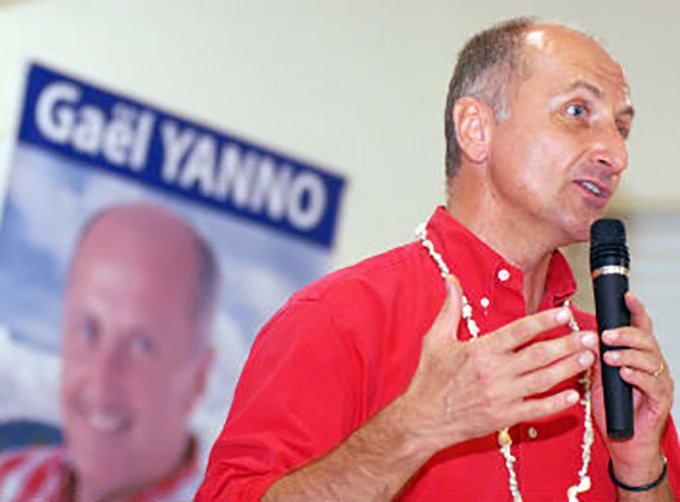
The former president of New Caledonia’s Congress, Gael Yanno, says he is worried a mainly pro-independence government will be elected next week.

Yanno made the comment on local television after he officially handed over the reins of Congress to the pro-independence politician Roch Wamytan who was elected Congress president last week.

Wamytan was chosen after securing the support of the new kingmaker the Pacific Awakening party, representing Wallis and Futuna islanders.

READ MORE: Kanaky independence campaign rolls on … encouraged by ballot result

Yanno said for the first time in history all key positions in the legislature are held by the pro-independence camp.

“The loyalists are in a minority in all the commissions of Congress and they have also elected a pro-independence vice-president and a pro-independence president of the permanent commission.

-Partners-

“That’s the outcome of the fratricidal fight among the loyalists.”

Another anti-independence politician and former Congress president Thierry Santa said it would be “grotesque” if a pro-independence government emerged after most voters had opted to stay with France in the referendum on independence last November.

  • This article is published under the Pacific Media Centre’s content partnership with Radio New Zealand.
  • More New Caledonia stories
Print Friendly, PDF & Email

Article by AsiaPacificReport.nz

We taught bees a simple number language – and they got it

Source: The Conversation (Au and NZ) – By Scarlett Howard, Postdoctoral research fellow, Université de Toulouse III – Paul Sabatier

Most children learn that written numbers represent quantities in pre-school or junior primary school.

Now our new study shows that honeybees too can learn to match symbols and numerosities, much like we humans do with Arabic and Roman numerals.

Honeybees have learnt to associate signs with numerosities. Scarlett Howard, Author provided

Read more: Can bees do maths? Yes – new research shows they can add and subtract


Human language and mathematics

Language is the ability to learn and use a system of symbolic representations for communication. This includes a capacity to relate signs to abstract information.

For example, letters grouped together make a word which we can read, and sounded words put together in the correct order allow us to have a conversation. Human language can incorporate spoken, written, visually signed, or tactile forms like braile.

Around the world humans have developed many different spoken and written languages. However, mathematics in particular is often regarded as a “universal language” since the mathematical concepts that describe values and equations do not depend on cultural or other frameworks.

We are interested in the question of whether numerical symbols are truly universal – that is, whether they also work for species that are not human.

The language of honeybees

The honeybee is a super organism for the study of comparative information processing in a brain. In 1973 Karl von Frisch was awarded a Nobel Prize in the field of Physiology and Medicine for his demonstrations that the honeybee can communicate with hive mates via a symbolic dance language.

von Frisch showed that a foraging bee which locates rewarding flowers can fly back to a hive and signal both the direction and distance of the nutritious flowers via a “waggle dance”. Other bees can interpret the dance language to know where to fly to collect nectar.

We wondered if such an impressive communication system meant that honeybees could learn another type of symbolic language, a basic symbolic number system.

Interestingly, chimpanzees, Rhesus monkeys, pigeons, and a single African grey parrot named Alex have demonstrated the skill to learn either Arabic numerals or English names for numbers. This shows us that while no non-human species appear to have developed a symbolic representation of number, it is not because they lack the brain capacity to understand such representations.

Our work has already shown honeybees can learn and apply challenging numerical concepts such as greater vs. lesser items, a quantitative valuation of “zero”, and simple arithmetic.

We took this knowledge a step further with our latest research.


Read more: Bees join an elite group of species that understands the concept of zero as a number


How do bees learn?

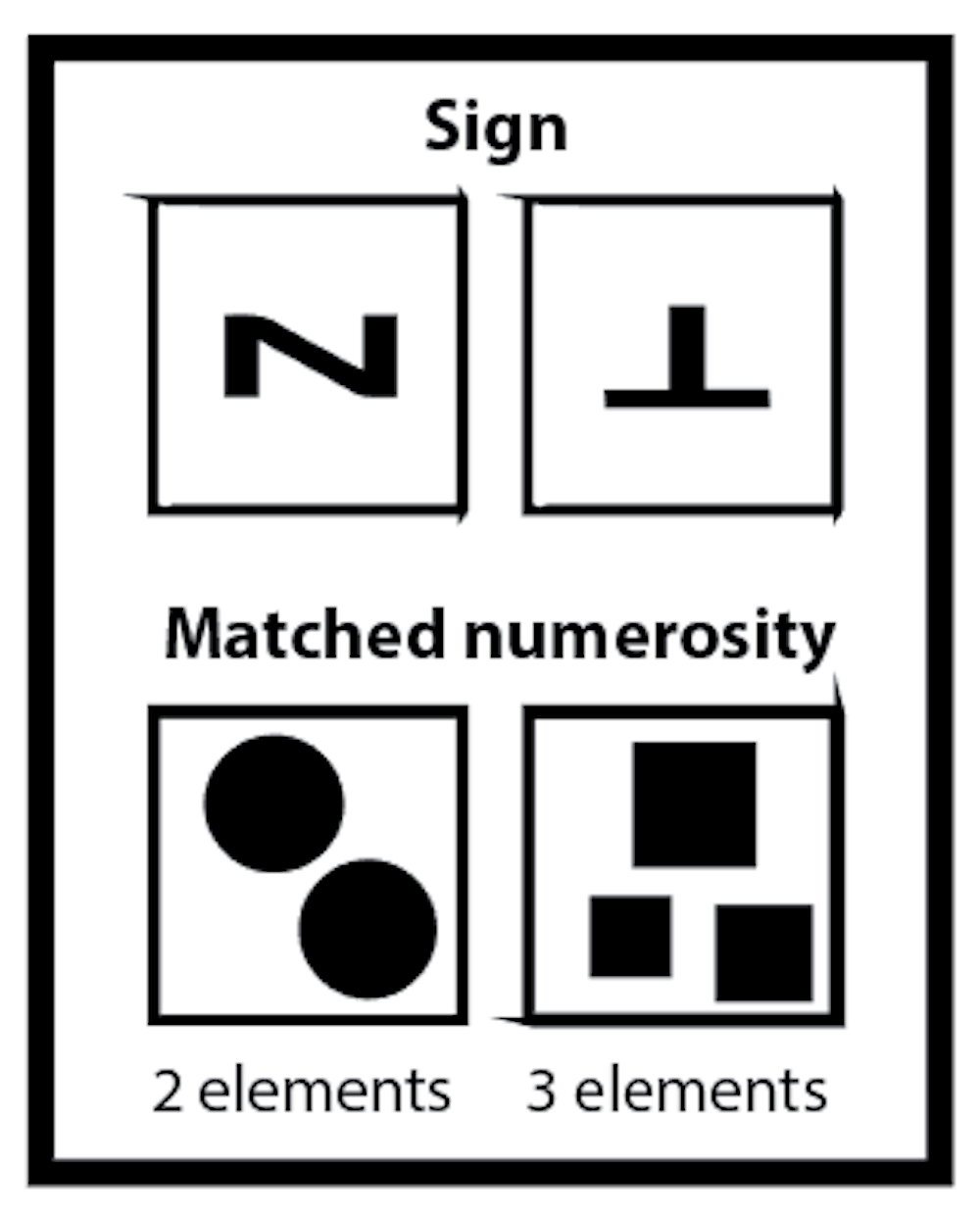
To train honeybees to match symbols (called “signs”) and number amounts (called “numerosities”), we used a subset of the symbols previously used to train pigeons on a similar task.

The signs and numerosities used in the study. Scarlett Howard, Author provided

Bees were trained to fly into a Y-shaped maze. Inside the maze the bee would view a stimulus. The bee would then fly into the decision chamber were it would view two options, one correct and one incorrect.

One group of bees was trained to match a sign to a numerosity, while a second group was trained to match a numerosity to a sign.

If bees were learning to match a sign to a numerosity, they would first see the sign and then have the option to choose two or three shapes. If bees were learning to match a numerosity to a sign, they would first see a number of items, such as three squares, and then have the option to choose from two signs.

For example, if a bee viewed an N-shaped sign, she would need to choose a display presenting two items. She would need to be able to do this regardless of the shape, pattern, or colour of the items presented.

If the bee chose correctly she would receive a sugar solution, but if she chose incorrectly, she would taste bitter quinine (which does not hurt the bee but is not pleasant for her). Importantly, neither the quinine nor the sugar can be smelled by the bee, so the only cue for decision making is the visual one.

Matching symbol to number

Bees were trained for 50 trials to match an N-shape sign with the number “two”, and an inverted T-shape sign with the number “three”, and achieved an accuracy of about 75%. This is the first time symbol matching to number has been shown in an invertebrate.

The Y-maze apparatus and examples of stimuli used. Bees were trained to either match a sign with a numerosity or a numerosity with a sign. Scarlett Howard, Author provided

After training was completed bees were tested in several conditions with completely novel patterns, colours and shapes and continued to prefer to match the sign with the numerosity, or the numerosity with the sign.

Interestingly, however, we found bees were unable to reverse their learnt tasks. If a bee had learnt to match a sign to a numerosity, she could not then match a numerosity to a sign, or vice versa. It appears the association between the number and the symbolic representation was only learnt in one direction and was unable to be reversed.

Interestingly, these kinds of learning outcomes – referred to as “operational schemas” – are sometimes applicable to how humans learn too.

What does this mean?

While no other species besides humans has spontaneously developed a language for numbers, our research suggests an insect can understand and learn basic representation of numbers through symbols.

The system we taught to bees was limited in several ways. For example, we trained bees to link just two quantities and two symbols. Also we do not yet know if bees gave quantitative value to the symbols; we simply know that they can link the symbol and quantity together.


Read more: Our ‘bee-eye camera’ helps us support bees, grow food and protect the environment


And yet it is remarkable bees displayed some capacity to understand numbers through symbols.

We’re left wondering whether we as humans are so very special after all – that perhaps the ability to learn mathematics could be universal.

Despite the limitations of the current research, we have demonstrated, to a small extent, symbolic communication with an insect species, which we have been separated from by over 600 million years of evolution.

Our research is laying the foundations for developing a communication system with very different animal species, and shows the differences between human and non-human animals are not as great in some regards as we might previously have thought.

ref. We taught bees a simple number language – and they got it – http://theconversation.com/we-taught-bees-a-simple-number-language-and-they-got-it-117816

Mixed reactions to NZ Budget initiatives for Pacific people

By RNZ Pacific 

A range of initiatives for Pacific people was announced in the New Zealand Budget last week.

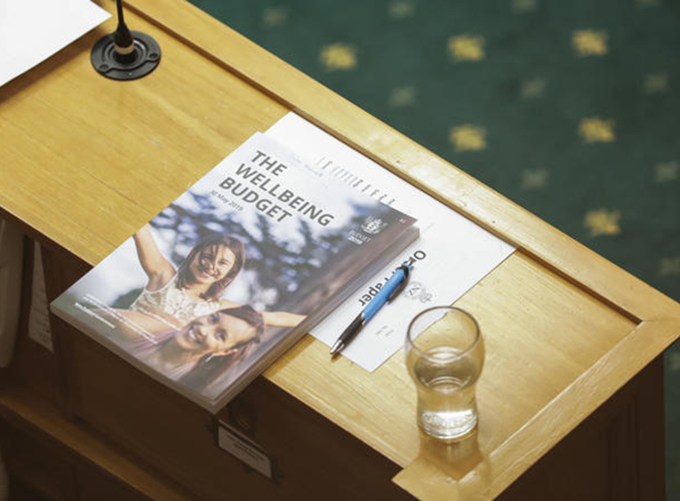
This Wellbeing Budget included increases in funding for Pacific health, education, language and economic development.

While the Ministry of Pacific Peoples has hailed it as an unprecedented support package for Pacific people, there is concern that it does not go far enough to address issues in the community.

LISTEN: Mixed reactions to NZ Budget initiatives for Pacific people

AUDIO TRANSCRIPT
Porirua community leader John Fiso says considering Pacific people figure in the lowest end of health and housing statistics, and have the lowest median income in New Zealand, the budget is disappointing.

He says the government talked about providing an equity model, but it should have focused on a needs model.

-Partners-

“What do we mean by equity? Because if it’s based on needs [for] Pacific it falls well short. I think we’ve got to come back to the key requirements for Pasifika – it is health, it is education, it is economic development. We can talk about it all we want, but there doesn’t seem to be any resources following it.”

Fiso says while the budget is known as the Wellbeing Budget, he believes it should focus on specific issues.

“What we don’t have, is we don’t have houses, we have pay that’s $12,000 – the lowest in the country, we have the highest health statistics in terms of needs. Those are the things you can measure if you are improving on. How happy you feel – disregarding those factors and to Pacific people, are you happy? It’s a redundant question for me.”

He says there should have been an emphasis on targets that are measurable and achievable.

“If I was telling a third form group to set their goals for the future, two of those things would be measurable and achievable. I’m not sure you can achieve or measure happiness – and I’m not sure you can achieve a whole lot of these other things that are on the table. If it’s not measurable for me, then it’s almost a negative for Pacific or under-served communities because you’ve got no way of holding anybody to account.”

The Wellbeing Budget included a particular focus on improving mental health in New Zealand.

The chief executive of the Pasifika mental health organisation Le Va is Monique Faleafa. She says that from her perspective the budget’s holistic approach to Pasifika wellbeing was encouraging.

“So it’s a budget, not with just an economic and fiscal outlook, but it’s included health and welfare and even the environment. So that holistic approach we know will benefit Pasifika communities.”

But Dr Faleafa says that access to support services is the biggest issue for Pasifika people in New Zealand and this needs to be further supported by the community, alongside the funding boost.

“Now the trick is in how do we get Pacific leadership to co-design and communities, and people with lived experience, these services that are going to be more accessible. Because they’re still not going to be accessible no matter how much funding they’ve got.”

Minister for Pacific Peoples Aupito William Sio says the budget was unprecedented in what it provided for Pacific people in New Zealand.

He says there is NZ$13.2 million specifically tagged for Pacific people, but additional funding will also be provided through a number of government initiatives.

He says that he sees it as a package that addresses issues that Pacific have faced for a long time in New Zealand.

“The package that we’ve put together is the first package ever, that in my view lays the foundation of tackling the long-term issues that Pacific peoples have always faced.”

Aupitoa says the budget aims acknowledge that well-being Pacific people is more than just in economic terms, but also is also centred around language, culture and spiritually.

  • This article is published under the Pacific Media Centre’s content partnership with Radio New Zealand.
  • More Pacific stories
Print Friendly, PDF & Email

Article by AsiaPacificReport.nz

Climate sceptic or climate denier? It’s not that simple and here’s why

Source: The Conversation (Au and NZ) – By Peter Ellerton, Lecturer in Critical Thinking; Curriculum Director, UQ Critical Thinking Project, The University of Queensland

Climate change is now climate crisis and a climate sceptic now a climate denier, according to the recently updated style guide of The Guardian news organisation.

The extent to which the scientific community acknowledges climate change is very close to the extent to which it also sees it as a crisis. So the move from “change” to “crisis” recognises that both rest on the same scientific footing.

The Guardian’s editor-in-chief, Katharine Viner, said:

We want to ensure that we are being scientifically precise, while also communicating clearly with readers on this very important issue.

But the move from “sceptic” to “denier” is more interesting.


Read more: Whose word should you respect in any debate on science?


Sceptics need to earn the name

Many people who do not accept the findings of climate science often mark themselves as “sceptics”. It is, in part, an attempt to portray themselves as champions of the Enlightenment: imagining that they refuse to believe something based solely on the word of others, and opt to seek the evidence themselves.

It is true that scepticism is an essential component of science – indeed, one of its most defining characteristics. The motto of the Royal Society, perhaps the world’s oldest scientific institution, is “nullius in verba” or “take nobody’s word for it”.

But scepticism has two imperatives, each buttressing the other. The first is the imperative to doubt, so nicely captured in the above motto. The second is the imperative to follow the evidence, and to give more credibility to claims that are well justified than those which are not.

In other words, it’s fine to ask questions, but you also have to listen to the answers.

Too often, so-called sceptics do not want to have their views challenged (let alone changed) and do not wish to engage with the science. Even worse, they may choose to adopt any number of justifications for rejecting science, not from their own free inquiry but from a ready-made selection provided by commercially or ideologically motivated industries.

This move away from “sceptic” might, therefore, be seen as simply an improvement in accuracy. But the move to “denier” might be seen as derogatory, especially as the term is associated with nefarious stances such as holocaust denial.

But is it, at least, accurate?

Three categories of climate science disbelief

Let’s consider three possible categories of people who do not accept the consensus and consilience of human-induced climate change:

  1. those who engage in scholarly disagreement through the literature

  2. those who are not engaged with the debate and have no clear view either way

  3. those who associate climate science with conspiracy, wilful ignorance or incompetence (or even see in it an unpalatable truth).

The first category is the rarest. Several papers with reliable methodology unchallenged in the literature show an enormous majority of climate scientists agree that the planet is warming and humans are largely responsible.

But contrary positions are not unknown. Some questions regarding the credibility of some aspects of climate models, for example, exist for some working academics.

While these scientists do not necessarily doubt all aspects of climate science, issues of reliability of methodology and validity of conclusions in some areas remain, for them, alive.

Whether they are correct or not (and many have been responded to in the literature), they are at least working within the broad norms of academia. We might call these people “climate sceptics”.

The second category is quite common. Many people are uninterested in science, including climate science, and have no real interest in the debate. This attitude is easy to criticise, but if there are pressing concerns regarding the availability and security of food, health and safety in your life, you may be preoccupied with these things and not marching for action on climate science.

Others may simply not spend much time thinking about it, nor care very much one way or the other — such is the nature of voluntarily participatory democracy. They might not believe in climate science, but that doesn’t mean they have rejected it. We might call these people “climate agnostics”.

The third category is the most problematic and arguably the most high-profile. It could be subdivided into:

  • people convinced of the incompetence of scientists and having a naïve view of their own analytical powers (or common sense)

  • folks motivated to reject climate science because of its implications for social or economic change, who consequently see climate science as a conspiracy of social or political engineering

  • those accepting of climate science but not caring about the consequences and seeking only to maximise their opportunities in any resulting crisis – which may include continuing existing business models based on fossil-fuel technologies (and hence encourage those who reject the science for social reasons).

Let’s call these subdivisions, in order: climate naives, climate conspiracists, and climate opportunists. Certain combinations of the above are also possible and are probably the norm.

The term “contrarian” is also a common one, but since it basically means only to go against public opinion, it seems a bit shallow in this analysis.

What is it to deny?

The definition of denialism is not uniform. In psychology it is to reject a widely accepted claim because the truth of it is psychologically discomforting (to that extent, there are many aspects of reality we all deny, ignore or minimise for the sake of our sanity).

In popular culture, including discussions of history and climate science, it is an active act of rebellion against the consensus and consilience of experts, often motivated by ideological factors. These are quite distinct and it may not pay any persuasive dividend to blur them together.

The latter definition does not seem appropriate for climate sceptics or for climate agnostics. But for the rest of the disbelievers, it does seem to resonate. So let’s try it here for a moment.


Read more: How do you know that what you know is true? That’s epistemology


This taxonomy of disbelief is not built on any psychological model, but is simply descriptive.

In summary, three categories of climate science disbelief are: sceptic, agnostic and denier. Three subdivisions of deniers are: naive, conspiracists and opportunists.

Is The Guardian right to use the blanket term “deniers” instead of any of the above? Arguably, they have a technical case in some instances, but I would say not in others.

What’s wrong with calling someone a climate agnostic instead of a climate denier, if that is a better description of their state of belief?

But for those who are deniers – and let’s be clear, the evidence is bearing down on all humans like a freight train – then a failure to act is more than negligence, it is a failure of moral courage. I would not want to be remembered as someone who denied that.

ref. Climate sceptic or climate denier? It’s not that simple and here’s why – http://theconversation.com/climate-sceptic-or-climate-denier-its-not-that-simple-and-heres-why-117913

Budget lessons in the politics of Indigenous self-determination

Source: The Conversation (Au and NZ) – By Dominic O’Sullivan, Associate Professor of Political Science, Charles Sturt University

Support for Māori communities was a funding priority in New Zealand’s well-being budget. In a Facebook post, Labour MP Meka Whaitiri celebrated the new targeted investment of NZ$593 million as “simply unprecedented”.

The budget makes a significant contribution to Māori self-determination. It may improve policy effectiveness in areas like education, criminal justice and the previous government’s flagship Māori well-being policy, Whānau Ora. But there is no guarantee of improvements, because money alone does not assure well-being.

Policymakers’ values influence decisions about how and why money is spent. It is equally important for Māori people and values to hold influence when policy decisions are made.

New Zealand does this well in some respects, but not in others. There is a significant Māori presence in government. On the other hand, the increased number of Māori children being removed from their families by the state welfare agency, Oranga Tamariki, is an example of deep chaos at the policy implementation level. A change in values may have greater impact than money.


Read more: Racism alleged as Indigenous children taken from families – even though state care often fails them


New spending

Whānau Ora, an initiative that puts whānau (family) at the centre of well-being, received an additional NZ$80 million following a review that showed its integrated and culturally grounded approach to health and social service delivery is effective.

The government’s Māori language strategy aims to have a million people with at least a basic competence in the language by 2040. It received an additional NZ$19.8 million over four years, while Māori language broadcasting received an additional NZ$14 million over two years. Culturally grounded measures in housing and criminal justice also received additional funding.

The highly successful Te Kotahitanga teacher professional development program, which had previously morphed into other educational initiatives, will resume its distinctive contribution to effective teaching practices with NZ$42 million over three years.

New philosophy

Budgets are statements of political philosophy. They involve more than governments supporting pet projects from an endless list of worthy causes. The Whānau Ora minister, Peeni Henare, said his portfolio’s additional funding will “support whānau to achieve their aspirations and … play a key role in local decision-making”.

The associate education minister, Kelvin Davis, expects Te Kotahitanga to “boost the capability of the education workforce to better support Māori achievement, and transform the learning experiences of Māori”.

Self-determination is the philosophy behind these two observations. The inspiration is to support Māori independence and to create space for Māori to participate in public institutions.

For example, Te Kotahitanga’s guiding presumption is that Māori should be able to learn and achieve at school as Māori. It is based on Māori high school students’ accounts of what works for them and what makes effective engagement with teachers.

Culture is not an artefact to be left at home. It is an internationally recognised human right and conditions how and why people learn. The presumption is that school is not a Pākehā (non-Māori) institution, but a place where everybody can expect to achieve in ways that are personally meaningful.

This is not a simple or straightforward aspiration for an education system, but the budget explicitly affirms a particular philosophical direction.

Bicultural partnership or self-determination

The idea that “culture counts” in all fields of human endeavour is evident in the well-being budget’s attention to language. But the purpose of language is understated in Māori development minister Nanaia Mahuta’s observation that language “will strengthen the partnership between Crown and Māori”.

The idea of Māori policy as a partnership with the Crown originates in the bicultural interpretations of the Treaty of Waitangi, which prevailed during the 1980s and 1990s.


Read more: Explainer: the significance of the Treaty of Waitangi


Biculturalism was a philosophy of basic respect for Māori culture and values. It laid the foundations for a more robust and far-reaching concept of self-determination, which is a right for everybody, but in distinctive ways.

The limitations of biculturalism are that it positions the Crown as the “senior partner”, confuses the Crown with the Pākehā population and assumes that Māori and Pākehā always run “on separate parallel train tracks”. It ignores the implications of intermarriage and other cross-cultural social and economic relationships.

Language has a bigger purpose and self-determination has the potential to create political relationships and understandings that are bigger than a Crown/Māori or Pākehā/Māori binary.

Māori citizenship

Whānau Ora and Te Kotahitanga are examples of initiatives that go beyond that binary. They do so by creating space within public institutions (the Crown) for distinctive and culturally grounded Māori citizenship.

Iwi (tribes) and other Māori entities have long pursued independent economic and social measures. Independent self-determination is an important matter of principle and contributor to Māori well-being. But self-determination may be better served through independent institutions alongside a Māori right to participate in the affairs of the state as Māori, enjoying different but substantively equal citizenship.

Budgetary appropriations do not, on their own, determine effective public policy. The underlying political philosophies that determine how public institutions operate are important. It is not just that Whānau Ora has the financial ability to make decisions, or that a school has the financial capacity to teach Māori people, that is important. It is equally important that Māori people, as citizens and as professionals, may bring their culturally framed values and aspirations to these decisions.

Māori representation in parliament has been guaranteed since 1867. There was much consternation when for a brief period (1993-1996) under the Bolger government (1990-1999) a non-Māori minister held the Māori affairs portfolio. In contrast, for the first time in the 118 years since the Australian Federation, an Indigenous person has now been appointed minister for Indigenous Australians.


Read more: Ken Wyatt faces challenges – and opportunities – as minister for Indigenous Australians


Indigenous participation at this level of government is important. But public authority is widely dispersed and there are many sites of decision-making that have a bearing on people’s well-being. This means that, rather than focusing on partnership, a budget of Māori well-being needs to be a budget of independence as well as of active and equal, though different, citizenship.

ref. Budget lessons in the politics of Indigenous self-determination – http://theconversation.com/budget-lessons-in-the-politics-of-indigenous-self-determination-118118

Our national anthem is non-inclusive: Indigenous Australians shouldn’t have to sing it

Source: The Conversation (Au and NZ) – By Keith D. Parry, Senior Lecturer in Sport Management, University of Winchester

It is traditional at major sports events to begin with a rendition of the national anthem. At the State of Origin rugby league clash between New South Wales and Queensland on Wednesday, however, at least four Indigenous rugby league players have vowed to remain silent – a protest against an anthem they feel doesn’t represent them.

It’s the second such protest in recent months. Before a rugby league match between the Indigenous All Stars and the Māori All Stars in February, a number of Australian players chose to remain silent when the anthem was played. One of them, team captain Cody Walker, called for a wider discussion into the anthem’s appropriateness – a feeling echoed by many Aboriginal people.

Afterwards, former Queensland Origin coach and player Mal Meninga called for a referendum on the issue, saying:

We can have a national debate and let the people of Australia have their say. If we have a national anthem that offends our Indigenous people, let’s see what all of Australia thinks.

The Colin Kaepernick effect

A growing number of athletes are using their celebrity status to speak out on social issues. For example, English footballer Raheem Sterling has been praised for tackling racism in the sport, while Australian rugby player David Pocock was a vocal supporter of same-sex marriage.

But such protests can sometimes spark a backlash among fans, particularly when it comes to sensitive issues like the national anthem.

The most famous example of this is the response to American football player Colin Kaepernick’s decision to kneel during the US national anthem to protest police violence. The protests mushroomed to envelop the entire league and divide the nation – and Kaepernick soon found himself out of a job.

President Donald Trump (among others) called the national anthem protests “unpatriotic” – a powerful charge that made many teams unwilling to sign Kaepernick. To this day, he remains without a playing contract. And fears that player protests are a threat to the NFL brand and television ratings remain.

Colin Kaepernick’s kneeling anthem protest eventually cost him his NFL career. John G. Mabanglo

Kaepernick’s boycott inspired calls for similar action in Australia. One of the leaders of this effort, Paul Gorrie, a Gunai/Kurnai and Yorta Yorta musician, artist and activist, said a similar protest was necessary here because:

the national anthem is a representation of our colonial history and black deaths in custody are the impacts of our colonial history and the racism that continues to this day.

He and boxer Anthony Mundine called on players to refuse to sing the anthem during the NRL and AFL Grand Finals in 2016, but their plea was met with a mixed response. Despite support from former players, then-Prime Minister Malcolm Turnbull said “everyone should sing and everyone should be proud about our country.” Aboriginal AFL player Lance Franklin even described the protest as “pretty stupid”.

Muted criticism of the protest

The silent dignity of players refusing to sing the anthem during this week’s State of Origin match may motivate others to join in. Yet, the Australian anthem protest movement, thus far, has not been as controversial as the one in the US led by Kaepernick – or had the uptake that Gorrie hoped.

To be sure, the NSW and Queensland players have been criticised by some commentators and fans for their stance on the anthem.


Read more: Booing Adam Goodes – racism is in the stitching of the AFL


But the boycott hasn’t attracted the same level of opposition among league officials or, notably, politicians. Indeed, Queensland captain Daly Cherry-Evans has backed the protests, and there has been no team pressure on the players to sing the anthem.

Significantly, the NRL is also offering tacit support to the protest, with no threat of punishment for those choosing not to sing.

This is in marked contrast to AFL player Adam Goodes’ more vocal stance against racism in sport, which was much more confronting to the country’s dominant racial ideologies.

It is unlikely the State of Origin players will be forced out of the game in the same way that Goodes was. But it would also be naïve to assume that racism is not present in rugby league or other sports today. Aboriginal and Torres Strait Islander athletes continue to be viewed as “Australians when they’re winning, and Aborigines at other times”.

Slow progress on changing the anthem

The lack of a widespread backlash is a good thing. But the lack of dialogue on the anthem issue is not. So far, the hope of a wider discussion of the anthem – and whether it is inclusive of all Australians – has not happened.

As retired Aboriginal player Jonathan Thurston said of the initial reaction to the All Stars protest:

The stand the team took on not singing the national anthem … it was like it was just brushed over.

The National Rugby League, however, has attempted to listen to Indigenous peoples’ concerns about the anthem in the past. For instance, the national anthem has been performed in a number of Aboriginal languages before previous rugby league All Star matches. But the Wurundjeri elders, the traditional inhabitants of the land on which the All Star game was played this year in Melbourne, refused to translate the anthem into the Woiwurrung language.


Read more: Young and free? Why I declined to sing the national anthem at the 2015 AFL Grand Final


The NRL has also played an alternative anthem during the league’s Indigenous rounds with lyrics written by Judith Durham, the lead singer of The Seekers, and Muti Muti singer songwriter Kutcha Edwards. Unlike Advance Australia Fair, this alternative version has received more support from prominent Aboriginal players and officials.

It is time to put Anglo-Celtic sensibilities aside and admit that not all Australians will want to sing an anthem that has associations with the White Australia policy and the country’s colonial past.

In the words of Josh Addo-Carr, another of the State of Origin boycotters:

If it’s not going to stand for my people, why should I sing it?

ref. Our national anthem is non-inclusive: Indigenous Australians shouldn’t have to sing it – http://theconversation.com/our-national-anthem-is-non-inclusive-indigenous-australians-shouldnt-have-to-sing-it-118177

How to know if your child is addicted to video games and what to do about it

Source: The Conversation (Au and NZ) – By Joanne Orlando, Researcher: Technology and Learning, Western Sydney University

If your child spends long hours playing video games, you might be worried they’re addicted.

“Gaming disorder” is real, and has now been classified as a disease in the World Health Organisation’s International Classification of Diseases and Related Health Problems (ICD). The new ICD will be adopted in 2022.

If you are worried about your child’s gaming, this new classification will help you identify whether they have a problem and if you need professional help.

Gaming disorder is not just for kids – it can be experienced by gamers of all ages: children, teenagers and adults.

The condition isn’t defined by gaming too much, or the number of hours played, but rather it’s when gaming interferes with a person’s daily life.


Read more: I WANT MY iPAD! Are our kids getting addicted to technology?


To be diagnosed, a person will demonstrate all three of the following symptoms for at least 12 months:

  • losing control over gaming
  • prioritising gaming to the extent that it takes precedence over other activities and interests
  • continuing to game despite negative effects on work, school, family life, health, hygiene, relationships, finances or social relationships.

The classified disorder focuses on gaming only, it doesn’t include other digital behaviours such as overuse of the internet, online gambling, social media, or smart phones.

It also relates to gaming on any device, although most people who develop clinically significant gaming problems play primarily on the internet.

Serious health condition

While millions of kids and adults around the world play video games, only a small number are expected to meet the WHO criteria.

Like other diagnosable addictions, gaming disorder is an extreme mental health condition expected to affect only 0.003 to 1% of the population who engage in video-gaming activities [https://www.psychiatry.org/patients-families/internet-gamin].

This small percentage still however incorporates a lot of people. Drawing from a random sample of 1,234 people of all ages, around 67% of Australians play video games. This would mean that around 5,000-16,500 Aussies could potentially be diagnosed with the disorder.

Not everyone agrees this is a disorder

While it feels like this classification is a fait accompli, the designation of gaming disorder as an addiction remains hotly debated.

The American Psychiatric Association (APA) is still not convinced. Two things are holding it back.

The first is that problem gaming often occurs alongside other factors such as loneliness, or mental health conditions such as anxiety and depression. The APA argues problematic gaming may be a symptom of these, rather than a unique condition in its own right.


Read more: Could playing Fortnite lead to video game addiction? The World Health Organisation says yes, but others disagree


The second issue for the APA is the lack of strong evidence and research to support gaming disorder as an addiction in its own right.

Other experts have also weighed into this debate suggesting the classification is simply a response to the huge community concern and moral panic about video games.

How gaming disorder should be treated

An important impact of the classification of gaming disorder as an addiction is it lays the path for treatment by health professionals.

But like the classification of the disorder, research-based treatment plans are also in their infancy.

A survey of psychiatrists in Australia and New Zealand found only 16.3% felt confident managing the disorder.

So what should you expect from professional treatment?

The are two common forms of treatment: one focuses on understanding the gamer’s situation; the other focuses on learning new behaviours.

Treatment often includes therapy sessions with an addiction counsellor. The sessions may take the form of individual sessions, group sessions and/or family sessions. Each session dynamic has a different focus. For example, family therapy sessions focus on exploring and addressing issues in the patient’s family that may contribute to the addiction.

The second common treatment is cognitive behavioural therapy (CBT). This often takes place in addition to counselling sessions. CBT is based on the premise that thoughts determine feelings and it is used to treat many psychiatric disorders, such as substance use disorders, depression and anxiety. CBT teaches the gamer different ways to think, behave, and respond to stressful situations.

Other medical treatments proving to have some success include art therapy and exercise therapy.

Research on suitable medication is also continuing.

Treatment plans are designed according to the needs of the individual. It may involve a series of CBT sessions, for example, plus individual therapy sessions, plus family therapy sessions. Treatment is tailored to the age of the person, their faith, their professional status or other factor important to their treatment.

At this stage, no treatment can claim a 100% success rate and this is reflective of the need for more research.

Tips to manage your child’s gaming

While most gamers will not be diagnosed with gaming disorder, a child’s gaming habits can cause significant distress for parents. They may be concerned their child is spending too much time on video games, that they resist every time they are asked to get off, or that gaming is leading to an unhealthy or unbalanced lifestyle.

Here are some tips for supporting more healthy approaches to gaming for children include:

  • encourage sport and physical activity. This can increase blood levels of serotonin and have a positive effect on mood and symptoms of problematic gaming

  • talk to your child about what they enjoy about gaming and why they want to game regularly. Their answer will help you identify if there are others issues they may be experiencing and using gaming as an escape

  • when you call your child off their game, ensure they have an activity to shift to, such as a family outing or dinner. This will create a reason to get off

  • when calling your child off a game, give them time to finish the game. Continuously being asked to get off mid-game can be frustrating and lead to arguments. Ask them how much longer they will need to finish the game and then ensure they get off when the game is over.


Read more: Curious Kids: Why do adults think video games are bad?


With video games such a significant aspect of young people’s lives, it’s important to guide healthy, balanced approaches as young as possible.

Central to this is ensuring you include gaming and any other technology activities in family discussions. This will help keep the lines of communication open and will help identify any problem behaviour early on.

ref. How to know if your child is addicted to video games and what to do about it – http://theconversation.com/how-to-know-if-your-child-is-addicted-to-video-games-and-what-to-do-about-it-118038

What does a koala’s nose know? A bit about food, and a lot about making friends

Source: The Conversation (Au and NZ) – By Ben Moore, Senior Lecturer in Ecology, Hawkesbury Institute for the Environment, Western Sydney University

The koala’s nose is distinctive – it’s a big black leathery rectangle in the middle of a round, grey face that’s surprisingly soft to the touch. And every koala nose is unique.

A study of 108 wild koalas found distinctive patterns of pigmentation around the nostrils allowed observers on the ground to reliably recognise individual animals, even when they’re in the trees.


Read more: A report claims koalas are ‘functionally extinct’ – but what does that mean?


But more importantly for the koala, the nose is an important connection between this iconic marsupial and the world it lives in, from sniffing out toxins to saying hello.

And it starts right at birth. The tiny newborn koala, despite weighing only half a gram, already has the ability to smell and feel its way towards the milky scent of the pouch and its mother’s teats.

The koala’s basic diet of eucalyptus leaves means there a few odours to learn. Author provided (No reuse)

A koala’s nose knows how to sniff out toxins

Koalas, famously, spend most of their time sleeping or resting. When they’re not sleeping or resting, they are mostly feeding or moving between trees. In both of these activities – or in other words, for most of their waking hours – they follow their nose.

Koalas nearly always smell their food carefully before eating. So many koala experts were surprised to learn recently that koalas don’t have particularly many genes for olfactory receptors – the receptors found on nerve cells in the nasal cavity for detecting different smells.


Read more: Koalas sniff out juicy leaves and break down eucalypt toxins – it’s in their genome


This matches up with anatomical observations that also suggest that among marsupials, the koala’s sense of smell is probably relatively poor, partly as a result of features associated with conserving water.

Gum leaves are chock full of natural plant toxins and other unpleasant chemicals, and koalas choose trees that minimise their exposure to the worst of these.

The smell of a molecule in eucalyptus oil helps koalas determine whether other dangerous toxins exist in the leaf. Author provided (No reuse)

But most of the toxins that influence koala feeding are not volatile – they have no smell. It falls to the koala’s sense of taste (and genes for taste receptors are especially abundant in the koala genome) to make a final decision on whether a leaf is safe to eat.

Fortunately for the koala, the only-slightly-toxic compounds called terpenes (the invigorating scent of Eucalyptus oil) are highly volatile and offer a useful cue to the levels of other toxins in a leaf.

And one advantage of being a specialist feeder with a basic diet, is that there are relatively few odour cues to learn. It’s also fortunate the leaves koalas are checking out are right in front of their noses!

The koala’s nose might not only smell plant toxins, it may also play a minor role in detoxifying them.


Read more: A cull could help save koalas from chlamydia, if we allowed it


We know enzymes in our own noses can detoxify certain drugs, and in other specialist herbivores, such as woodrats, many of the same enzymes that detoxify natural plant toxins and drugs in the liver are also expressed in the lining of the nose.

These enzymes likely help stop the nose from becoming overwhelmed by odours and maintain sensitivity. Critically, they also protect the central nervous system, as nasal tissue is the only thing separating inhaled toxins from the brain.

A koala’s nose knows how to make friends

Sniffing out food is important, but it’s not the koala’s biggest forte. So why the big schnoz? The answer may lie with the importance of social communication.

Although the koala genome has relatively few olfactory receptors, it’s rich in vomeronasal receptors, which are expressed in cells in the nasal cavity that are sensitive to moisture-borne molecules like pheromones.

Koalas are generally solitary creatures, but that’s not to say they don’t know their neighbours. Along with the distinctive loud bellowing of male koalas during the breeding season, olfactory communication is what koalas use to find or avoid each other.

A male koala’s breeding season bellow. Video: Denise Dearing.

Koalas of both sexes often spend considerable time smelling the base and trunk of a tree before they decide whether to climb up or move on elsewhere. When they enter or leave a tree, koalas commonly dribble a stream of urine down the trunk, leaving a trail of chemicals that potentially reveal information about the koala’s sex, identity, dominance, relatedness to other koalas, readiness to mate, disease status and even what they’ve been eating.

But if koala urine is a book written in scent, the secretions of the male koala’s sternal gland are more like a barcode.

This gland is obvious as a yellow-brown stained patch of bare skin in the middle of male koalas’ chests, and offers a straightforward way to tell the sexes apart.

In this photo you can see a male koala’s triangular sternal gland, and its odour is an unmistakable badge of identity for each koala. Author provided (No reuse)

It secretes an oily mixture of fatty acids and other chemicals, which are then transformed into an even more complex chemical mixture by the unique bacterial community occupying each koala’s gland. The end result is a distinctive bouquet and an unmistakable badge of identity for each koala.

Nose kisses from a koala

Aside from these fascinating nasal abilities, there is one more thing that we love about the koala’s nose.

When wild koalas are brought into captivity, they continue to rely on their nose to learn about the strange new world around them – that includes their food and branches, but also the scientists and carers moving around them.


Read more: Drop, bears: chronic stress and habitat loss are flooring koalas


They will pull anything of interest into smelling range, making them one of the few wild animals that will rub noses to say hello with humans and fellow koalas, even when barely acquainted!

But wild koalas are highly sensitive to human handling, which can generate sub-lethal stress through the stress hormone, cortisol.

Without question, the koala’s nose is fascinating and a marvel of evolution, but no matter how strong the temptation to touch it, please leave those koalas in peace!

ref. What does a koala’s nose know? A bit about food, and a lot about making friends – http://theconversation.com/what-does-a-koalas-nose-know-a-bit-about-food-and-a-lot-about-making-friends-117754

Chilly house? Mouldy rooms? Here’s how to improve low-income renters’ access to decent housing

Source: The Conversation (Au and NZ) – By Edgar Liu, Senior Research Fellow at City Futures Research Centre, UNSW

People’s quality of life, their health and their comfort can suffer when living in poor-quality housing. It can also impose high ongoing costs of maintenance, repairs, heating and cooling. And these problems are more likely to affect low-income households, as our report for Shelter NSW shows. In it, we review the evidence on housing quality problems and consider ways to resolve these, especially for low-income households.

There is extensive evidence of the impacts of poor-quality housing on physical health, mental wellbeing and comfort. For example, poor design and maintenance can lead to the build-up of mould.


Read more: Is this a housing system that cares? That’s the question for Australians and their new government


These negative impacts vary by income groups and tenure. From the recently completed Australian Housing Conditions Dataset we know, for example, that renters on very low incomes (the bottom fifth of households for gross income, about $20,000 a year) are most likely to have unmet repair needs. They also have a harder time staying comfortable during winter and summer, as the table below shows.

Source: Australian Housing Conditions Dataset, Author provided

What are the reasons for poor-quality housing?

There are several underlying reasons for substandard housing.

Properties may enter the rental market after years in owner-occupation with no formal checks on their state of repair.

Another problem is some private renters do not assert – or feel unable to assert – their legal right to habitable premises in a reasonable state of repair and upkeep. This is often because of the insecurity of their leases and lack of affordable alternative housing.


Read more: Life as an older renter, and what it tells us about the urgent need for tenancy reform


Another issue is “split incentives” – landlords decline to upgrade properties because they would not receive any benefit themselves.

There are also problems in public housing. Disinvestment by governments has both reduced the supply of housing and caused a backlog of maintenance for much of the remaining stock of dwellings.


Read more: Tenants’ calls for safe public housing fall on deaf ears


Housing quality is covered by myriad regulatory regimes. Lately, governments have been focused on questions of how best to regulate construction of new buildings. Less attention is given to the ongoing use of existing buildings.

Recent state and national reviews have highlighted problems in the certification of building design and construction, and in the public agencies that oversee the certifiers. Some state governments have begun to respond. The New South Wales government, for instance, is moving to consolidate the regulation of construction practitioners under a new building commissioner.

We spoke to a range of housing sector stakeholders and the theme from the recent reviews that most struck a chord was inadequate policy governance. There was no comprehensive overview or oversight of the issues of housing quality. As a result, some important issues escape policymakers’ attention.

Many stakeholders indicated that the current focus on problems in new buildings is an example of this. Although that’s plainly an issue in need of attention, other problems in existing buildings and more fundamental solutions are being overlooked – such as increasing social and affordable housing supply.


Read more: Australia needs to triple its social housing by 2036. This is the best way to do it


So what are the solutions?

Empowering tenants and regulators

One way in which the quality of existing housing is regulated is through tenancy laws. This will become more important as rental housing becomes an increasingly common option, particularly for the long term.

Recently, some state governments have amended tenancy laws to specify “minimum standards” for rental housing. Our research participants supported these moves, but said security of tenure also had to be improved to protect renters when they assert their rights. The onus of legal enforcement could also be shifted from tenants to regulators.

Mandating improvements to overcome the split incentive problem

The split incentive problem for housing quality means some landlords are reluctant to pay for upgrades – such as insulation or other energy-efficient features – where tenants are the beneficiaries. As a result, renters, especially those on low incomes, are likely to be living in housing of lower standards or quality.

A potential solution is for governments to take the minimum standards approach and legislate energy efficiency and other improvements as mandatory. This is already commonplace overseas.

One of our workshop participants observed that “energy poverty” was another way of framing the policy issue that had proved compelling in overseas jurisdictions. While this framing had not had the same impact in Australia, this may be changing.

Improving transparency of housing standards

Social housing providers have a role in leading by example. Increased investment in social housing could contribute to improved quality across the housing system.

To this end, social housing landlords – particularly state and territory public housing authorities – need to be more accountable to tenants and the general public. Transparent reporting on property conditions, maintenance and tenant satisfaction, led by the social housing sector, can and should be rolled out as standard practice across the sector.

To do this, however, enough funding must be provided to reverse decades-long underfunding in the sector.

Collectively, these options can deliver more equitable housing outcomes, not only to low-income households but to all. The challenge lies in having the political and industry will to act on them.


Read more: Australia needs to reboot affordable housing funding, not scrap it


ref. Chilly house? Mouldy rooms? Here’s how to improve low-income renters’ access to decent housing – http://theconversation.com/chilly-house-mouldy-rooms-heres-how-to-improve-low-income-renters-access-to-decent-housing-116749
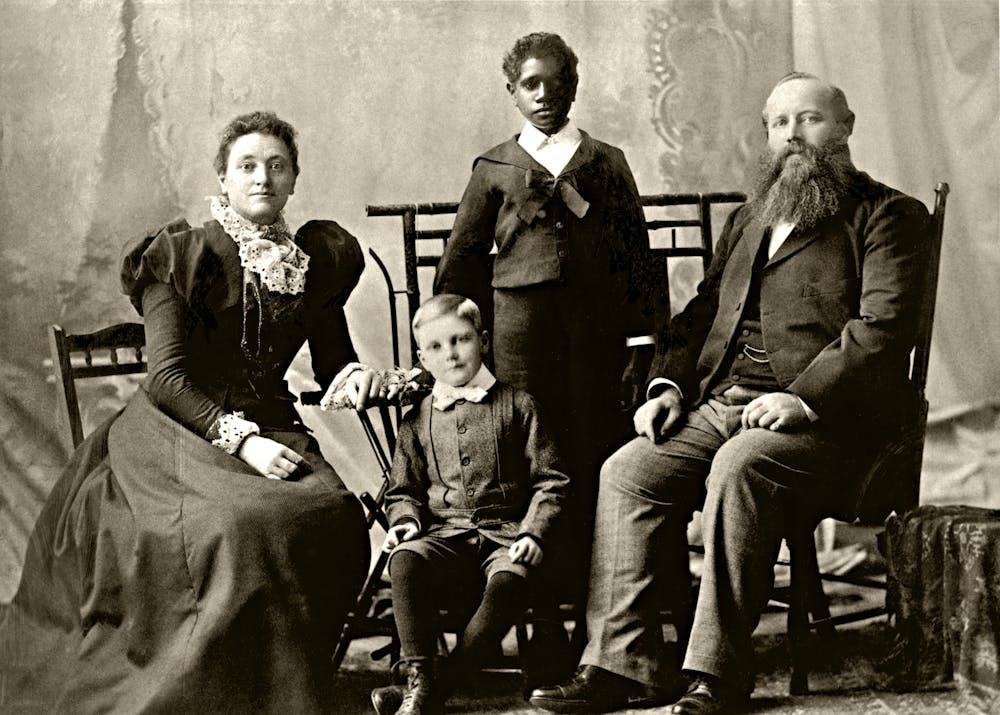
How we tracked down the only known sculpture of a WWI Indigenous soldier

Source: The Conversation (Au and NZ) – By Tom Murray, Senior Lecturer and former ARC DECRA Fellow in Screen Media, Macquarie University

Germany, 1918. Wünsdorf prisoner-of-war camp, not far from Berlin. An Australian Indigenous POW, Douglas Grant, sits as a model for a portrait bust by a German Jewish sculptor, Rudolf Marcuse.

The completed work is remarkable and of national significance. As Aaron Pegram, senior historian at the Australian War Memorial, recently explained:

It is the only known sculpture of an Indigenous member of the Australian Imperial Force made during the First World War.

But the whereabouts of the bust has remained a mystery for decades – until now.

Photograph of Douglas Grant. Courtesy of the National Archives of Australia

A few tantalising details of the sculpture were on the public record. An entry in The Australian Dictionary of Biography, for instance, states that Grant “became an object of curiosity to German doctors, scientists and anthropologists” and that Marcuse, who was sent to the camp to sculpt portraits of inmates, modelled Grant’s bust “in ebony”. Other biographies have mentioned a bronze or marble bust. But no-one seemed to know where it was – indeed, some questioned whether it existed at all.

After years spent searching European archives and contacting museums and art dealers, we have now found the bust in a small village in rural Wiltshire, England.

It belongs to a retired accountant, Rupert O’Flynn, who keeps it on a plinth in his sitting room and was delighted to hear of its extraordinary history and significance. Cast in bronze (not carved in ebony or marble as conjectured), it is a good likeness of Grant.

The sculpture photographed in 2016. Tom Murray

A story of art, war, propaganda and race

The creation of this sculpture is a story of art, war, propaganda, race, and two individuals forced to flee state violence and oppression. Grant’s life is itself remarkable. Born around 1885 in the Australian Indigenous Nations of the tropical Queensland rainforest, he was “rescued” and adopted in 1887 by a Scottish-born couple, Robert and Elizabeth Grant. They later claimed his parents had been killed in a “tribal disturbance”, a commonly used euphemism for massacre at the time.

Douglas Grant with his adoptive family, c. 1896. National Archives of Australia, Canberra, SP1011/1, 2176. Reproduction courtesy NAA.

Raised by his adoptive parents in Sydney, Grant trained and worked as a draughtsman before joining the Australian Imperial Force in 1916. He embarked for Europe the same year as a private with the 13th Battalion. In early 1917, he fought alongside around 6000 Australians in the disastrous First Battle of Bullecourt. Half of them were killed, wounded or taken prisoner.

Grant was among the 1,170 Australians captured. As Pegram puts it, they were

the largest loss of Australians as prisoners of war in a single action until the Fall of Singapore in 1942.

Master of sculpture, Rudolf Marcuse. Reproduction courtesy SMB-ZA.

Marcuse, meanwhile, was born in 1878 in Berlin. He studied at the city’s Royal Academy of the Arts and his life-size bronzes and decorative statuettes of public figures were well regarded, with Kaiser Wilhelm II and the King of Siam (now Thailand) among his customers.

When war broke out, the director of Berlin’s National Gallery tasked Marcuse with creating busts and statuettes of the “colourful mixture of peoples amongst our enemies”. The plan was to display them in an Imperial War Museum commemorating Germany’s anticipated victory. Marcuse’s search for “racially genuine types” led him to Wünsdorf, where the Royal Prussian Phonographic Commission, an organisation created to record the languages and folk songs of “exotic” POWs, was conducting a scientific experiment.

Only a handful of Indigenous Australians were interned in German POW camps. This made Grant “the prize capture”, according to Roy Kinghorn, an AIF colleague and friend from the Australian Museum. Brought up by white foster parents and with only a bookish knowledge of Aboriginal culture, he was, in fact, a disappointment to the cultural anthropologists. But evidently not to Marcuse.

Sadly, neither man wrote in detail about their meeting, but Marcuse’s lively descriptions of other POWs he sculpted show that he was interested in his models as individuals with unique life stories.

Tracking down the bust

The whereabouts of Marcuse’s bust of Grant had been unknown for decades, until we found a published photograph of it on the website of the Jewish Museum in Berlin.

‘Aboriginal Australian.’ Photogravure on paperboard. Marcuse (1919a, n.p.). Reproduction courtesy Jüdisches Museum Berlin.

The museum has digitised large parts of its collections in recent years, including a portfolio of photographs of Marcuse’s busts and statuettes, published in 1919 under the title “Ethnic Types from the World War”. In this context, the bust of Grant was anonymously described as “Australian Aborigine” and sandwiched between a “Siberian” and a “Somali”.

We then tracked the bust from one art and antiques dealer to the next. Finally, we found a British dealer who remembered a “Negro” sculpture similar to the one in our photograph, and the name of the man who had bought it.

O’Flynn had bought the sculpture from the London Olympia Art & Antiques Fair a few years before we met him in 2016. He was thrilled to hear its story. “It has got a presence to it and it is big and bold,” he told us. “It’s just the sort of thing I like and it has a reality to it – it’s fantastic!”

He also mused on the strange journey this sculpture – a German bronze of an Aboriginal man – had taken. “It’s just bizarre for it to end up with me.”

Of national significance

Douglas Grant with the ornamental pond and replica Sydney Harbour Bridge that he designed and built with colleagues at Callan Park in 1931. State Library of NSW.

Both Grant and Marcuse struggled to find a niche in later life. Grant returned to Sydney, was a confidant to Henry Lawson, and campaigned for the rights of Indigenous Australians. But it was a prejudiced era and he had difficulty finding permanent work. He spent most of the 1930s in a “hospital for the insane” and died in 1951, aged about 66.

Marcuse fled Nazi Germany for England in 1936. He had applied to join the British war effort as a freelance artist when he died in Middlesex Hospital in 1940, aged 62.

This sculpture is a unique record of their meeting. Given its national importance, we hope that one day it will find its way back to an Australian institution.

ref. How we tracked down the only known sculpture of a WWI Indigenous soldier – http://theconversation.com/how-we-tracked-down-the-only-known-sculpture-of-a-wwi-indigenous-soldier-117246

Media Files: Investigative reporter Louise Milligan on Cardinal Pell and redactions in the Royal Commission’s report

Source: The Conversation (Au and NZ) – By Matthew Ricketson, Professor of Communication, Deakin University

Cardinal George Pell’s appeal against child sexual assault convictions kicks off this week, but when that’s over Pell still has another reckoning to face: the unredacted findings of Royal Commission into Institutional Responses to Child Sexual Abuse.

When the royal commission handed down its massive report in late 2017, several sections were redacted until after any legal proceedings against Cardinal Pell were concluded.

In this episode of Media Files, Matthew Ricketson talks with ABC investgative reporter Louise Milligan – author of Cardinal: the rise and fall of George Pell – about the issues and incidents the royal commission investigated.

New to podcasts?

Podcasts are often best enjoyed using a podcast app. All iPhones come with the Apple Podcasts app already installed, or you may want to listen and subscribe on another app such as Pocket Casts (click here to listen to Media Files on Pocket Casts).

You can also hear us on any of the apps below. Just pick a service from one of those listed below and click on the icon to find Media Files.


Additional credits

Producer: Andy Hazel.

Theme music: Susie Wilkins.

Image

David Crosling/AAP

ref. Media Files: Investigative reporter Louise Milligan on Cardinal Pell and redactions in the Royal Commission’s report – http://theconversation.com/media-files-investigative-reporter-louise-milligan-on-cardinal-pell-and-redactions-in-the-royal-commissions-report-117981

19 years of personal data was stolen from ANU. It could show up on the dark web

Source: The Conversation (Au and NZ) – By Nicholas Patterson, Lecturer, Deakin University

Today it was revealed the Australian National University (ANU) fell victim to a cyber security attack two weeks ago. Stolen was a substantial amount of data dating back 19 years relating to staff, students and visitors.

We don’t know for sure how long the cyber attackers were inside the ANU systems in this case. However, the university revealed details of other attempted attacks last year.


Read more: Hackers cause most data breaches, but accidents by normal people aren’t far behind


The ABC reported that the types of data stolen were “names, addresses, dates of birth, phone numbers, personal email addresses and emergency contact details, tax file numbers, payroll information, bank account details, and passport details. Student academic records were also accessed.”

These are very critical data. Privacy and security are at risk when this sort of information, especially people’s personal and financial details, are hacked.

The question now is what will happen with the stolen data.

There are three likely outcomes:

1. Invitation to pay a ransom

The hackers who stole the data might ask ANU to pay a ransom and they will “erase” the data they stole (or at least say they will). If the ransom is not paid, they will probably release it to the public.

We have seen cases like this before around the world. A recent example involved stolen coding tools.

Another example is an attack on a German IT company, Citycomp, where hackers broke into its systems and stole a lot of critical data. Citycomp was asked to pay a ransom of $5,000 – but did not. The hackers published the data.

2. Free public release of data

The hackers may release the stolen data to the public without asking for any payment. This might happen as a show of strength, to provide evidence of their capabilities, or to cause chaos.

The consequences are still very serious in this case. It could lead to serious breaches of personal privacy, fake identities being created and important intellectual property becoming available to competitors or other hackers.

More broadly, the university may attract fines from the government if it was later found that correct data protection practices were not followed. That said, there is no evidence this is the case here.

3. Sell for profit on the dark web

The hackers may sell the data on the dark web to make a profit. Others could buy the data to create fake identities and as a result fake credit cards.

An example where hackers have stolen data involving up to 150 million users and sold it on the dark web involved Under Armour’s MyFitnessPal app.

The entire stolen data set is reportedly available for an asking price of less than $20,000 in bitcoin – around one year after the breach occurred.

Hackers are hard to stop

What makes this ANU case very interesting is that in 2018 The Guardian reported that ANU had spent many months fighting off a threat to its systems. There were unverified reports this might have come from hackers based in China.

This means the ANU has known it was being targeted for a while now, and was still not able to fend off the data breach revealed today.

You might ask why the university hadn’t bolstered its cyber defences in response. The answer is the ANU probably did, to the best of its abilities.

However, when you are dealing with elite hackers and those using “zero day exploits”, it means your chances of preventing a hack are quite limited. Zero day-based exploits focus on vulnerabilities that are not yet known to anti-malware companies or for which no targeted solutions are available, such as patches or updates.


Read more: From botnet to malware: a guide to decoding cybersecurity buzzwords


This is still a dangerous situation

There are still aspects of this situation that will present concerns to the ANU and its stakeholders.

For example, it’s possible the hackers could still be in the systems, but hidden. They may have user names and passwords for student accounts or hidden backdoors the university has not yet discovered.

It could be worse than we know

Another issue is whether the hackers have stolen even more data than is being reported.

It currently appears data not stolen includes “credit card details, travel information, medical records, police checks, workers’ compensation information, vehicle registration numbers, and some performance records”.

ANU vice-chancellor Brian Schmidt has said: “We have no evidence that research work has been affected. But the university may not yet know for sure. A very concerning aspect for the university will be the potential for intellectual property and unpublished academic works to be accessed. This could be very valuable to sell off online or even to other universities.”

This has happened before: Iranian hackers targeted 76 universities across 14 countries to steal intellectual property from research projects in 2018.

Only time will reveal what happens next. The bad news is that hackers have stolen critical data and it’s in the wind. The outcomes could be minimal or they could be disastrous, depending on the hackers’ intentions.

A big concern will be if the hackers still have access to the university systems, via an established backdoor, and are siphoning off critical data as it emerges.

ref. 19 years of personal data was stolen from ANU. It could show up on the dark web – http://theconversation.com/19-years-of-personal-data-was-stolen-from-anu-it-could-show-up-on-the-dark-web-118265

The Reserve Bank will cut rates again and again, until we lift spending and push up prices

Source: The Conversation (Au and NZ) – By Peter Martin, Visiting Fellow, Crawford School of Public Policy, Australian National University

The Reserve Bank cut interest rates on Tuesday because we aren’t spending or pushing up prices at anything like the rate it would like. And things are even worse than it might have realised.

As the board met in Martin Place in Sydney, in Canberra at 11.30 am the Bureau of Statistics released details of retail spending in April, one month beyond the March quarter figures the bank was using to make its decision.

They show the dollars spent in shops fell in April, slipping 0.1%, notwithstanding weakly growing prices and a more strongly growing population.

The March quarter figures the board was looking at were adjusted for prices. They show that the volume of goods and services bought, but not the amount paid for them, fell in seasonally adjusted terms during the March quarter.

Adjusted for population, the volume bought would have fallen further.

We’ll know more on Wednesday

The Bureau of Statistics will release population-adjusted figures as part of the national accounts on Wednesday.

The figures for the September quarter show that income and spending per person barely grew. The figures for the December quarter show income and spending per person fell.

A second fall in the March quarter will mean two in a row – what some people call a per capita recession.


Australian National Accounts

Even unadjusted for population, economic growth is dismal.

During the September and December quarters the economy grew just 0.3% and 0.2% – an annualised rate of just 1%.

That’s well short of the 2.75% the treasury believes we are capable of, and the lower than normal 2.25% it has forecast for the year to June.


Australian National Accounts

We’ve been doing it by ourselves. As Reserve Bank Governor Philip Lowe said in announcing the rates decision on Tuesday:

The main domestic uncertainty continues to be the outlook for household consumption, which is being affected by a protracted period of low income growth and declining housing prices.

The bank wants both inflation and employment higher, and it wants us to spend more in order to do it. Lower rates should help, although not for everybody. This cut will free up an extra A$60 a month for a typical mortgage holder. One more cut will free up a total of $120.

It’s not much, and there’s doubt about whether it would do much, but interest rates are about the only tool the Reserve Bank has.

It is required by its agreement with the government to aim for an inflation rate of between 2% and 3%, “on average, over time”.

Treasurer and Reserve Bank Governor, Statement on the Conduct of Monetary Policy, September 19, 2016. Reserve Bank of Australia

It is also required to aim for full employment.

It says while employment growth has been strong, of late there have been “little further inroads into the spare capacity in the labour market”.

The underemployment rate suggests it is possible for employers to more fully employ more people, if necessary paying higher wages in order to do it – if only employers were confident enough.

The Bank believes hopes lower rates will give them than confidence, in order to “assist with faster progress in reducing unemployment and achieve more assured progress towards the inflation target”.

If that doesn’t happen, it will cut again. Tuesday’s statement as good as said so:

The board will continue to monitor developments in the labour market closely and adjust monetary policy to support sustainable growth in the economy and the achievement of the inflation target over time.

This cut and the next will take it into uncharted waters, where its so-called cash rate – what it pays to banks to deposit money with it overnight – is close to zero.

As far as can be discerned it has never been that low in the 100+ years the Reserve Bank has been in operation, originally as the Commonwealth Bank of Australia.


Reserve Bank cash rate since 1990

Reserve Bank of Australia

Should inflation still not pick up and employment still not fall as far as it believes it could, it will have to effectively cut its cash rate below zero, forcing cash into the hands of banks by aggressively buying government bonds, giving them little choice but to lend it to households and businesses, in a process known as quantitative easing. It has been done in the United States, Europe, the United Kingdom and Japan, and is by now anything but unconventional.

It would prefer the government to pull its weight by cutting tax and spending more, especially on infrastructure. As the governor said in a major speech just after the election, relying on only one policy instrument “has limitations”.

Treasurer Josh Frydenberg gets it. He points out that the yet-to-be-approved tax offsets in the budget will give Australians on up to $126,000 a cash bonus of up to $1,080 when they submit this year’s tax return. He said

the combination of the tax cuts and today’s Reserve Bank decision could see a two-income family, for example a teacher and a tradie, each earning $60,000 a year, with a $400,000 mortgage, almost $3,000 a year better off as a household.

His biggest concern, and the biggest concern of the governor, might be that they don’t spend it. Another concern would be that the banks don’t pass the rate cut on.

Already the ANZ has said it will only cut mortgage rates by 0.18 points instead of the full 0.25, a decision Frydenberg said “let down” customers.

Governor Lowe made his own position clear when announcing the cut. He said bank funding costs had “declined further, with money-market spreads having fully reversed the increases that took place last year”.

Reserve Bank of Australia

Read more: Cutting interest rates is just the start. It’s about to become much, much easier to borrow


ref. The Reserve Bank will cut rates again and again, until we lift spending and push up prices – http://theconversation.com/the-reserve-bank-will-cut-rates-again-and-again-until-we-lift-spending-and-push-up-prices-118263

Keith Jackson: Marape’s commitment to PNG a checklist for judging him

ANALYSIS: By Keith Jackson

Following the election of James Marape’s as Papua New Guinea’s Prime Minister, on Sunday, he issued a declaration on Facebook that soon had the foreign media (and social media) agitating over just one phrase.

“Work with me,” he wrote, “to make PNG the Richest Black Christian Nation on earth.”

True, they were rather provocative words, and they were repeated in his statement, but there was more – much more – that Marape had to say.

READ MORE: A message to PNG’s Prime Minister James Marape

And in that more was plenty for the rest of us, and indeed for the world beyond Papua New Guinea, to chew on.

But before I move to that, let me pause for a moment and be a bit grateful that Papua New Guinea now has a Prime Minister willing to commit his thoughts, values and aspirations to social media.

-Partners-

Marape promises to continue to “communicate with the nation using this medium”.

I guess it’s inevitable he will attract the usual low life trolling, mocking, attacking and denigrating, but let’s hope he does manage to find the time and patience to communicate in this way.

It will make a big difference to both the governors and the governed to know what the Prime Minister has on his mind.

So what were the most significant ideas and issues Marape decided to open with?

Marape ‘up for change’
First of all, he said he is up for change. There is no indication in the statement that he sees his role as anything other than a disconnect from the O’Neill era.

And in handing down a number of explicit commitments, he offered the PNG people a checklist by which he and his administration – now being formed – can be judged in the coming weeks and months.

“I am set for the bigger and greater challenges, in changing the course our country must travel on for better development for our people,” he said.

“I have a band of like-minded leaders sitting on both sides of the national parliament and we are driving an agenda to grow the economy in a safe, secured and educated country where all citizens are making an honest productive living….”

It is a clear indication of his intent to draw talent from “both sides of the aisle”, as the Americans say.

Unity government
This is good news for PNG because, if the Marape era is to be characterised by something akin to a “unity government”, it will have the opportunity to work in a more Melanesian style than the adversarial style of the Westminster system upon which its Parliament is structured.

And, as Martyn Namorong writes, if this Melanesian form can be successfully achieved it will be culturally and politically more congruent with the how Papua New Guinean society functions.

Marape also showed astuteness in explaining why he had chosen particular members of the caretaker cabinet ahead of appointing a full ministry, anticipating commentators like me whose eyebrows had soared at this group that seemed to pay more tribute to the immediate past than the future.

“I did a caretaker arrangement to appreciate the political structure we had,” he said, “but this week I will fill in ministers I assess can work in key sectors for productivity and not just for political convenience.”

How this eventuates in practice will provide the rest of us with an early marker of whether the promised bipartisan approach to parliament will be implemented. Much talent rests among those steadfast MPs who, at some considerable cost, refused to join O’Neill in his depredations – people like Juffa, Kua, Kramer and Morauta.

Corruption
Now let me turn to the word that dare not pass DFAT’s lips – corruption.

Marape dared let it pass his lips, and its presence hovered over much of his declaration, especially here: “I will instruct the new justice minister to bring Independent Commission Against Corruption (ICAC) in the first instance, so let us all play by the rules now going forward.”

He told both private and public sectors what the new regime would mean for them in this context.

“Our contractors now have a Prime Minister who expects nothing in return for giving state contracts. All we expect is: do your fair bidding with the right price and get your job done.

“Don’t offer inducement to me or any ministers or public servants in the chain of procurement and contract management.”

And further: “Public servants and politicians, earn your salary and don’t ask for special favours. It must start now if it hasn’t started yet!”

Warning to multinationals
And for the big guys, a long distance early warning: “To multinational companies who operate in our resources sectors, I am not here to chase you away but to work with you so that we can add value to the benefits that emanate from the harvest of our natural endowment.

“All projects agreements that are in compliance (with) and congruent to all our laws will be honoured (and) I will be meeting with key resources sector and I request you all to assist me as to how we must grow my Papua New Guinea economy.”

Marape said he has a fresh team of PNG advisors looking into all resource laws and that he intends to tailor new legislation for implementation in 2025. Thus having neatly assuaged any fears about sovereign risk, he took a step towards a different future for resource exploitation in PNG.

At the same time, Marape said he will ask the National Procurement Commission to ensure contracts under K10 million (NZ$4.6 million) are “strictly” reserved for citizens and local companies and that contracts above that threshold must also have local partnership involvement.

“To local (small to medium sized enterprises) and contractors, we have a special incentive plan for you,” he said.

“Tidy your company books, pay your honest tax and, if you want to go the next phase of your business, we will inject very soft term loans (possibly 5 percent repayment rate over a 40 year period)…. Prepare to be part of our programme to resuscitate our businessmen and women.”

‘Take back PNG’
Marape added that he will be asking “all young educated PNG citizens” for their views on Governor Gary Juffa’s motto to “Take Back PNG”.

“We will organise for your voices to be heard,” he said. “I don’t buy into outside advisers, we have in the intelligent and experience pool in country, let us mobilise into cohesive units.”

Calling himself the “chief servant of my country, Papua New Guinea,” he said he was willing to make hard calls and asked of citizens to offer him “a good law and order environment” including stopping tribal fights (with an plea to his own province, “my Hela, please!”).

Tonight, at a time to be advised but surely ahead of the State of Origin rugby league clash, Marape is expected to deliver a state of nation address on radio and television.

“But for now,” he stated, “you can see where my mind is and those of you who want to work with me please align here or offer me better solution to make PNG the Richest Black Christian Nation on earth, where no child in all part of our country is left behind.”

  • This article is republished by Asia Pacific Report with permission and was originally published by Keith Jackson’s blog PNG Attitude.
  • More PNG stories
Print Friendly, PDF & Email

Article by AsiaPacificReport.nz

Why reducing unemployment should have been a focus for NZ’s well-being budget

Source: The Conversation (Au and NZ) – By Simon Chapple, Director, Institute for Governance and Policy Studies, Victoria University of Wellington

In its much awaited first well-being budget, New Zealand’s coalition government missed a major trick in not making unemployment one of their central well-being priorities.

As of March 2019, New Zealand’s unemployment rate was at 4.4% (not seasonally adjusted). The figure is slightly below the OECD average of 5.2%, and 12 OECD countries have lower rates.

Treasury forecast the rate to decline moderately to 4% this year and then to rise to 4.3% by 2023. While some might trumpet this as success, it is not good by New Zealand’s historical standards.

Between 1956 and 1981, our unemployment was never above 2% and often below 1%. In the mid-1980s, the then 4% rate was considered unacceptably high and offered as a rationale for the economic reforms of the time.


Read more: New Zealand’s ‘well-being budget’: how it hopes to improve people’s lives


Low unemployment is central to well-being

Considerable amounts of research conclusively shows that when people become unemployed, their well-being, measured by their self-assessed life satisfaction, falls sharply. Should they remain without a job, the unemployed do not adapt to this new and traumatising experience. Their well-being remains low until they are re-employed.

The research suggests that the main impact of unemployment on well-being is not through people’s lower income. Rather it likely hits people through the loss of social status, loss of life structure and purpose, and lack of a positive social context.

In addition to being a direct cause of low well-being, unemployment is also strongly connected to other 2019 well-being budget priorities. Parental unemployment is a major cause of child poverty, which is one of five budget priorities. Unemployment is also likely to contribute to mental health problems and alcohol and drug problems, another priority. A third budget priority is reducing income and employment gaps for Māori and Pacific people. Given these two groups are over-represented among the unemployed, lower overall unemployment would also contribute to achieving that priority.

Do nothing approach to unemployment

Treasury’s budget assessment of the unemployment rate at which the economy is stable (strictly speaking their estimate of the Non-Accelerating Inflation Rate of Unemployment, or the NAIRU) is 4.25%.

Following discussions with Treasury about the range of possible estimates around the 4.25% number, officials indicated they had no direct sense of its softness. But they did suggest that estimating the rate using different statistical models delivered quite different results. They didn’t state the size of these differences.

The Treasury criteria for choosing a specific statistical model behind the budget’s stable unemployment rate was not discussed in budget documents. A cynic might suggest that proximity of the estimated stable rate to the actual current rate of unemployment – which generates a do-nothing policy conclusion – might have been on decision-makers’ minds when selecting the “best” model.

Some indication of how different statistical models can generate quite different stable unemployment rates comes from recent work at the Reserve Bank of New Zealand. The bank takes two approaches to estimating the stable unemployment rate – the results can differ at times by more than 2%. Consequently, it is difficult to take the precise 4.25% unemployment estimate, used to justify the do-nothing approach, seriously as a hard policy constraint.

The well-being budget did contain some new but minor unemployment initiatives. But they really amount to fiddling around the micro edges of a macro unemployment problem.

Lower unemployment is achievable

Even in today’s globalised trading economies, much lower unemployment rates than New Zealand’s current 4.4% are achievable. For example, the best OECD performer is currently the Czech Republic, with an unemployment rate of 2.1%. Japan is next at 2.4% and Iceland is at 2.7%.

The questioning of the very notion of a stable unemployment rate, and the suggestion that macro policies can have significant impacts on unemployment, is also attracting serious intellectual consideration internationally. Top US economist Lawrence Summers recently remarked:

[T]he issue that’s preoccupied monetary policy for the generation before the financial crisis – the avoidance of inflation – is no longer the top issue.

Rather, for Summers, that top issue was “getting to full employment”.

The government has missed an opportunity to use macroeconomic tools to test whether we can have a society which once again has low rates of unemployment, as we used to between 1938 and the early 1980s when they were between zero and 2%.


Read more: What is full employment? An economist explains the latest jobs data


From the 1938 Social Security Act on we have had a welfare system designed to work best when high numbers of New Zealanders are in work. Despite all the changes to the working age welfare system since the 1970s, it still functions best when the unemployment rate is considerably lower than what we have settled for today.

Full employment and low rates of unemployment were what economist Wolfgang Rosenberg described in the late 1970s as the fulcrum of our social welfare system. Perhaps much lower unemployment should once again be the fulcrum of what we might now call our social well-being system. To place it in such a position of prominence would be to inaugurate policies considerably more transformational than this coalition government has thus far delivered.

ref. Why reducing unemployment should have been a focus for NZ’s well-being budget – http://theconversation.com/why-reducing-unemployment-should-have-been-a-focus-for-nzs-well-being-budget-118061

Why NZ’s well-being budget should have focused on lifting employment rates

Source: The Conversation (Au and NZ) – By Simon Chapple, Director, Institute for Governance and Policy Studies, Victoria University of Wellington

In its much awaited first well-being budget, New Zealand’s coalition government missed a major trick in not making unemployment one of their central well-being priorities.

As of March 2019, New Zealand’s unemployment rate was at 4.4% (not seasonally adjusted). The figure is slightly below the OECD average of 5.2%, and 12 OECD countries have lower rates.

Treasury forecast the rate to decline moderately to 4% this year and then to rise to 4.3% by 2023. While some might trumpet this as success, it is not good by New Zealand’s historical standards.

Between 1956 and 1981, our unemployment was never above 2% and often below 1%. In the mid-1980s, the then 4% rate was considered unacceptably high and offered as a rationale for the economic reforms of the time.


Read more: New Zealand’s ‘well-being budget’: how it hopes to improve people’s lives


Low unemployment is central to well-being

Considerable amounts of research conclusively shows that when people become unemployed, their well-being, measured by their self-assessed life satisfaction, falls sharply. Should they remain without a job, the unemployed do not adapt to this new and traumatising experience. Their well-being remains low until they are re-employed.

The research suggests that the main impact of unemployment on well-being is not through people’s lower income. Rather it likely hits people through the loss of social status, loss of life structure and purpose, and lack of a positive social context.

In addition to being a direct cause of low well-being, unemployment is also strongly connected to other 2019 well-being budget priorities. Parental unemployment is a major cause of child poverty, which is one of five budget priorities. Unemployment is also likely to contribute to mental health problems and alcohol and drug problems, another priority. A third budget priority is reducing income and employment gaps for Māori and Pacific people. Given these two groups are over-represented among the unemployed, lower overall unemployment would also contribute to achieving that priority.

Do nothing approach to unemployment

Treasury’s budget assessment of the unemployment rate at which the economy is stable (strictly speaking their estimate of the Non-Accelerating Inflation Rate of Unemployment, or the NAIRU) is 4.25%.

Following discussions with Treasury about the range of possible estimates around the 4.25% number, officials indicated they had no direct sense of its softness. But they did suggest that estimating the rate using different statistical models delivered quite different results. They didn’t state the size of these differences.

The Treasury criteria for choosing a specific statistical model behind the budget’s stable unemployment rate was not discussed in budget documents. A cynic might suggest that proximity of the estimated stable rate to the actual current rate of unemployment – which generates a do-nothing policy conclusion – might have been on decision-makers’ minds when selecting the “best” model.

Some indication of how different statistical models can generate quite different stable unemployment rates comes from recent work at the Reserve Bank of New Zealand. The bank takes two approaches to estimating the stable unemployment rate – the results can differ at times by more than 2%. Consequently, it is difficult to take the precise 4.25% unemployment estimate, used to justify the do-nothing approach, seriously as a hard policy constraint.

The well-being budget did contain some new but minor unemployment initiatives. But they really amount to fiddling around the micro edges of a macro unemployment problem.

Lower unemployment is achievable

Even in today’s globalised trading economies, much lower unemployment rates than New Zealand’s current 4.4% are achievable. For example, the best OECD performer is currently the Czech Republic, with an unemployment rate of 2.1%. Japan is next at 2.4% and Iceland is at 2.7%.

The questioning of the very notion of a stable unemployment rate, and the suggestion that macro policies can have significant impacts on unemployment, is also attracting serious intellectual consideration internationally. Top US economist Lawrence Summers recently remarked:

[T]he issue that’s preoccupied monetary policy for the generation before the financial crisis – the avoidance of inflation – is no longer the top issue.

Rather, for Summers, that top issue was “getting to full employment”.

The government has missed an opportunity to use macroeconomic tools to test whether we can have a society which once again has low rates of unemployment, as we used to between 1938 and the early 1980s when they were between zero and 2%.


Read more: What is full employment? An economist explains the latest jobs data


From the 1938 Social Security Act on we have had a welfare system designed to work best when high numbers of New Zealanders are in work. Despite all the changes to the working age welfare system since the 1970s, it still functions best when the unemployment rate is considerably lower than what we have settled for today.

Full employment and low rates of unemployment were what economist Wolfgang Rosenberg described in the late 1970s as the fulcrum of our social welfare system. Perhaps much lower unemployment should once again be the fulcrum of what we might now call our social well-being system. To place it in such a position of prominence would be to inaugurate policies considerably more transformational than this coalition government has thus far delivered.

ref. Why NZ’s well-being budget should have focused on lifting employment rates – http://theconversation.com/why-nzs-well-being-budget-should-have-focused-on-lifting-employment-rates-118061

Facebook is now cleaner, faster and group-focused, but still all about your data

Source: The Conversation (Au and NZ) – By Belinda Barnet, Senior Lecturer in Media and Communications, Swinburne University of Technology

Have you noticed your Facebook feed looks different lately?

It’s a bit more “zen”, uncluttered and faster. Instagram-like story posts are displayed first, and a separate feed allows you to keep up with the latest activity in your groups.

Someone has assembled a ring of comfy chairs in your lounge room and invited the local mums and bubs group over for hot cocoa and biscuits. Even the hearts are squishier.

Facebook hearts are now bigger and squishier. Screen shot June 4 2019

According to Facebook’s CEO Mark Zuckerberg, it’s “the biggest change to the app and website in the last five years”.

This cosmetic change could represent the first step in Facebook’s “privacy pivot” announced in March 2019. But we’re still waiting to hear exactly what will be happening with our data as part of this gradual change.


Read more: Privacy pivot: Facebook wants to be more like WhatsApp. But details are scarce


Pile on Facebook

Facebook has been under immense pressure from both the Federal Trade Commission in the United States, and governments around the world in the wake of a string of privacy scandals (including Cambridge Analytica).

After live-streamed terrorism in New Zealand, Jacinda Ardern is leading a global charge for regulation and oversight. The recent Christchurch Call meeting resulted in tech companies and world leaders signing an agreement to eliminate terrorist and violent extremist content online.

Everyone is piling on Facebook, even Zuckerberg’s original platform co-founder Chris Hughes.

Hughes said “it’s time to break up Facebook” and “the government must hold Mark accountable”. He was referring to the huge power Zuckerberg holds through controlling the algorithms that keep Facebook – and more recently acquired platforms Instagram and Whatsapp – ticking over. Those algorithms functionalise Facebook’s vast body of user data.


Read more: The ‘Christchurch Call’ is just a start. Now we need to push for systemic change


Putting it lightly

Zuckerberg admits that changes must be made, saying in April:

I know we don’t exactly have the strongest reputation on privacy right now, to put it lightly.

Facebook’s business model is built on harvesting platform data about its users, crunching that to generate behavioural inferences like “divorced, male, no children, interested in weight loss”, and then selling this package to advertisers.

Technology scholar Shoshanna Zuboff calls the process of collecting and selling user data “surveillance capitalism”.

Privacy was never part of Facebook’s floor plan.

In its defence, it doesn’t sell identifiable data, and it has clamped down on developer access to its data.

That’s because developers are not the customer – nor are the users who are clicking on like buttons or buying yoga pants. Facebook’s customers are advertisers.

Facebook sells one product: a powerful capacity to personalise and target ads that is unparalleled in any other platform. This turned a profit of US$16 billion in the last quarter of 2018.

It seems reasonable to assume it’s going to do everything it can to protect its ability to keep collecting the raw material for that profit.

But recent questions put to Facebook by US Senator Josh Hawley reveal that Facebook is still not willing or able to share its plans on privacy relating to metadata collection and use.

In response to the senator, Kevin Martin, Vice President of US Public Policy at Facebook said:

[…] there are still many open questions about what metadata we will retain and how it may be used. We’ve committed to consult safety and privacy experts, law enforcement, and governments on the best way forward.

Chat, shop, watch … and wait

You can now easily navigate straight to Groups, Marketplace and Watch on Facebook. Screen shot June 4 2019

At a developer conference last month, Zuckerberg outlined his proposed changes: mainly, change the focus to communities and privacy, make messaging faster and encrypted, and transform the user experience.

The square logo is now a circle. There’s a lot of white space, and someone KonMari’d the title bar.

Shopping within Facebook is prioritised through the Marketplace feed, and you can watch shows and online videos in groups through the Watch function.

Facebook Messenger loads faster, the interface is cleaner and a dating service may soon be available in Australia.

What hasn’t changed is the core product: the capacity for Facebook to collect platform data and generate behavioural inferences for advertisers.


Read more: Why are Australians still using Facebook?


ref. Facebook is now cleaner, faster and group-focused, but still all about your data – http://theconversation.com/facebook-is-now-cleaner-faster-and-group-focused-but-still-all-about-your-data-118048

Was there an ‘ethnic vote’ in the 2019 election and did it make a difference?

Source: The Conversation (Au and NZ) – By Andrew Jakubowicz, Emeritus Professor of Sociology, University of Technology Sydney

Many factors appear to have contributed to the unexpected victory of the Coalition in the May 18 election. Two factors were predictable and had a devastating impact on the ALP vote where they were activated – ethno-religious prejudices around sexuality and gay culture, and fears about perceived threats to economic stability in some ethnic communities.

This “ethnic” vote in the big cities stopped the ALP in its tracks in many Coalition electorates that were expected to swing to it, while pushing others firmly into government heartland.

What is an ethnic vote?

An “ethnic vote” exists not just where there are large numbers of people from particular cultural backgrounds, but where their ethnicity and cultural mores (and, where relevant, religious beliefs) shape and finally determine their views and therefore votes on particular issues in an election.

The conditions for such a situation can vary, though social media now play key roles. However, the “ethnics” have to be citizens, so simple birth country data can be misleading. For an example of how this is changing the landscape, in the period 2011 to 2016 Victoria had an increase in citizenship among Indian-born (70%), China-born (27%), Philippines-born (31%) and Iraq-born (35%) residents, while traditional groups accelerated their demise (Greeks -10%, Italians -12%).

Ethnic groups are not just people born outside Australia, but also their descendants. In 2016, 509,000 Australian residents were Chinese-born (including from the Chinese diaspora), while 705,000 claimed Chinese ancestry – about 200,000 were born in Australia. In the two years after the 2016 Census, the India-born population rose 30%.


Read more: Foreign-born voters and their families helped elect Turnbull in 2016. Can they save ScoMo?


The safe-schools/same-sex-marriage problem became a major issue in 2016 for Chinese (often not of any faith), Muslim, Pasifika Pentacostalists and Eastern rite Christians, among other faith communities.

These issues generated a nexus that shepherded Malcolm Turnbull into a tight election win in 2016. Chisholm in Victoria (new Liberal MHR Gladys Liu masterminded the process there), Banks, Barton and Reid in Sydney were lined up as likely Labor wins. All except Barton went to the Coalition.

In 2019, these were “must wins” for Labor; the three from 2016 stayed with the Coalition, though this time going directly to the Liberals rather than through a religious proxy such as the Christian Democratic Party. In other very safe ALP seats the incumbents’ vote dropped significantly.

Campaign of whispering hit home

Across Western Sydney, seats with significant Chinese, South Asian, Pasifika, Middle Eastern and Southeast Asian populations heeded the whisperings about supposed Labor death taxes, or the supposedly likely Labor-induced collapse of the property market, while remembering how their Labor representatives had abandoned them in 2017 over gay marriage.

This last issue was intensified by the Israel Folau conflict with the Australian Rugby Union over anti-gay/religious freedom posts. Inter-ethnic tensions were also triggered – propaganda about a threat of rapidly increasing elderly Muslim parents swamping hospitals and services in the west if the ALP won were aimed at the supposed antipathies of Chinese- and Filipino-born voters towards Muslims and Arabs.


Read more: How social conservatism among ethnic communities drove a strong ‘no’ vote in western Sydney


However, the “Bowen thesis”, that the ALP has lost faith communities, does not hold up. Bowen’s major problem in his Blaxland seat was a huge vote for One Nation and the UAP (12% first preferences altogether), with the Christian Democratic Party halving its vote from 2016.

Rather, the Labor offer to faith and ethnic communities (especially Muslims, Eastern rite Christians, Indians and Chinese) for expanded parental reunion opportunities may in fact have backfired along that Muslim/non-Muslim fault line, scaring both non-Muslim ethnic and non-ethnic voters towards the ultra-right.

Banks – Morrison’s miracle machine at work

Banks provides the most interesting case, with local member and Immigration Minister David Coleman’s close work with Chinese communities paying off for him. In 2013, Coleman won the seat from the ALP. In 2016, his first-preference vote declined from 47% to 44% as the Christian parties benefited from the social media campaign on same-sex issues (8.1%); he then picked up their preferences almost totally. In 2019, the Christian party vote declined and it went straight to Coleman, along with a chunk of the ALP vote, giving him a first-preference vote of 51% and another 5% on 2PP.

Our detailed analysis of Banks tracks Chinese and other voters through key booths in the electorate. In Banks, over 30,000 residents identify as having Chinese ancestry, similar to the adjacent Barton. In Barton, the ALP improved its vote (on the base of very much higher numbers of South Asian and Muslim residents). In Banks, the Liberal vote improved significantly, similar to the switch in Western Sydney seats against Labor.

The suburbs where more than a quarter of residents claim Chinese ancestry are: Hurstville (49.4%), Allawah (29.5%), Narwee (29.2%), South Hurstville (27.2%), Riverwood (27.2%) and Beverly Hills (26.5%).


Read more: After his ‘miracle’ election, will Scott Morrison feel pressure from Christian leaders on religious freedom?


Residents of these suburbs tend to be more highly educated than in Banks overall. For example, 35% of Hurstville residents have a university degree, compared with 26% for Banks. However, their median household incomes are lower – for example, $1,382 per week for Hurstville compared to $1,598 for Banks. They are more likely to report having no religion – 43% for Hurstville, compared to 24% for Banks overall.

In Hurstville, three out of four polling booths recorded a majority vote for the Liberals for the first time. The Liberal Party had invested heavily in Hurstville, recruiting small armies of Chinese-speaking workers to greet voters at polling booths. Meanwhile, votes for Christian minor parties (Family First was the main vector in 2016, not running in 2019), fell by as much as 8% between 2016 and 2019. This was a bigger fall than in Banks overall.

In addition to Hurstville, the booths with the largest swing to the Liberals in 2019 were in Riverwood (two booths recorded a swing of more than 11%). Like Hurstville, median incomes in Riverwood are below average compared to the electorate as a whole.

In contrast, comparatively higher-income areas in this group, such as Allawah, Beverly Hills and South Hurstville, recorded much smaller swings towards the Liberals. One booth in Beverly Hills even had a swing away from the Liberal Party.

Across all of the 12 polling places in the Chinese-heavy suburbs listed above, average first preference votes were:

  • Liberal 45.7% (up 7% since 2016)
  • ALP 41.1% (down 4%)
  • Greens 5.8% (down 0.4%)
  • Christian minor parties 3.3% (down 4.7%).

These swings were largely in line with Banks overall, though there was a slightly greater swing away from the ALP (by 0.4%) and slightly smaller swing away from the Christian minor parties (by 0.6%).

Compared to Banks overall, Chinese-heavy booths in 2019 were 5% less likely to give their first preference to the Liberals, and 5% more likely to vote ALP, though this time the quantum support for Labor dropped significantly. This pattern has remained consistent across the last three federal elections.

In 2019, though, in the suburbs with substantial portions of Chinese-background voters, comparatively lower-income areas recorded the biggest swings to the Liberals, with the size of the swing declining as incomes rise.

Chinese-Australian voters are therefore largely in sync with patterns that have been observed nationally this election. This suggests that where there are many issues with salience for ethnic groups, the outcomes for specific groups will look like the overall situation; where there are specific issues, for instance those of particular concern to South Asian and Muslim communities, then the “ethnic vote” will become apparent.

ref. Was there an ‘ethnic vote’ in the 2019 election and did it make a difference? – http://theconversation.com/was-there-an-ethnic-vote-in-the-2019-election-and-did-it-make-a-difference-117911

Are you burnt out at work? Ask yourself these 4 questions

Source: The Conversation (Au and NZ) – By Michael Musker, Senior Research Fellow, South Australian Health & Medical Research Institute

It’s normal to feel stressed at work from time to time. But for some people, the stress becomes all-consuming, leading to exhaustion, cynicism and hatred towards your job. This is known as burnout.

Burnout used to be classified as a problem related to life management, but last week the World Health Organisation re-labelled the syndrome as an “occupational phenomenon” to better reflect that burnout is a work-based syndrome caused by chronic stress.

The newly listed dimensions of burnout are:

  • feelings of energy depletion or exhaustion
  • increased mental distance from one’s job, or feelings of negativism or cynicism related to one’s job
  • reduced professional efficacy (work performance).

Read more: Extinguished and anguished: what is burnout and what can we do about it?


In the era of smartphones and 24-7 emails, it’s becoming increasingly difficult to switch off from the workplace and from those who have power over us.

The new definition of burnout should be a wake-up call for employers to treat chronic stress that has not been successfully managed as a work health and safety issue.

How do you know if you’re burnt out?

If you think you might be suffering burnout, ask yourself the following questions:

  1. has anyone close to you asked you to cut down on your work?

  2. in recent months have you become angry or resentful about your work or about colleagues, clients or patients?

  3. do you feel guilty that you are not spending enough time with your friends, family or even yourself?

  4. do you find yourself becoming increasingly emotional, for example crying, getting angry, shouting, or feeling tense for no obvious reason?

If you answered yes to any of these questions, it might be time for change.

These questions were devised for the United Kingdom Practitioner Health Programme and are a good starting point for all workers to identify if they are at risk of burning out.

(You can also complete the British Medical Association’s online burnout questionnaire, although it’s tailored for doctors so the drop-down menu will ask you to select a medical specialty).

If you think you’re suffering burnout, the first step is to talk to your line manager or workplace counsellor. Many workplaces now also have confidential external psychologists as part of their employee assistance programme.


Wes Mountain/The Conversation, CC BY-ND

What causes burnout?

We all have different levels of capacity to cope with emotional and physical strains.

When we exceed our ability to cope, something has to give; the body becomes stressed if you push yourself either mentally or physically beyond your capacity.


Read more: Three reasons to get your stress levels in check this year


People who burn out often feel a sense of emotional exhaustion or indifference, and may treat colleagues, clients or patients in a detached or dehumanised way. They become distant from their job and lose the zeal for their chosen career.

They might become cynical, less effective at work, and lack the desire for personal achievement. In the long term, this is not helpful for the person or the organisation.

While burnout isn’t a mental health disorder, it can lead to more serious issues such as family breakdowns, chronic fatigue syndrome, anxiety, depression, insomnia, and alcohol and drug abuse.

Who is most at risk?

Any worker who deals with people has the potential to suffer from burnout. This might include teachers, care workers, prison officers or retail staff.

Emergency service workers – such as police, paramedics, nurses and doctors – are at even higher risk because they continually work in high-stress conditions.

A recent survey of 15,000 US doctors found 44% were experiencing symptoms of burnout. As one neurologist explained:

I dread coming to work. I find myself being short when dealing with staff and patients.

French research on hospital emergency department staff found one in three (34%) were burnt out because of excessive workloads and high demands for care.

When you’re close to burnout, there’s a fine line between coping and not coping. gpointstudio/Shutterstock

Lawyers are another professional vulnerable to burnout. In a survey of 1,000 employees of a renowned London law firm, 73% of lawyers expressed feelings of burnout and 58% put this down to the need for a better work-life balance.

No matter what job you do, if you are pushed beyond your ability to cope for long periods of time, you’re likely to suffer burnout.

It’s OK to say no to more work

Employers have an organisational obligation to promote staff well-being and ensure staff aren’t overworked, overstressed, and headed towards burnout.

There are things we can all do to reduce our own risk of burnout. One is to boost our levels of resilience. This means we’re able to respond to stress in a healthy way and can bounce back after challenges and grow stronger in the process.


Read more: Corporate resilience training works – but what are we being asked to bear?


You can build your resilience by learning to switch off, setting boundaries for your work, and thinking more about play. As much as you can, inoculate yourself against job interference and prevent it from ebbing into your personal life.

No matter what your profession, don’t let your job become the only way you define yourself as a person.

And if your job is making you miserable, consider moving jobs or at least have a look at what else is out there. You may surprise yourself.

If you or anyone you know needs help or support, you can call Lifeline on 13 11 14.

ref. Are you burnt out at work? Ask yourself these 4 questions – http://theconversation.com/are-you-burnt-out-at-work-ask-yourself-these-4-questions-118128

Infographic: who’s who in Labor’s shadow ministry

Source: The Conversation (Au and NZ) – By Emil Jeyaratnam, Data + Interactives Editor, The Conversation

There were a couple of big questions before the new Labor leader, Anthony Albanese, announced his shadow ministry on Sunday.

One of those was where would former leader Bill Shorten end up after the party’s humbling loss in last month’s federal election. (The answer: head of the NDIS and government services portfolio.)

One of the biggest beneficiaries of Albanese’s changes was Kristina Keneally, who was handed the powerful portfolio of home affairs – opposite an immediately dismissive Peter Dutton – in addition to immigration and citizenship. She will also be the deputy opposition leader in the Senate.

Our experts have already analysed the chief challenges faced by the new ministers in Prime Minister Scott Morrison’s cabinet – now, we’re asking them to look at Labor’s shadow ministers, as well.

In some cases, the shadow ministers hold more than one portfolio. To simplify the policy analysis, we’ve chosen a key policy area for which they’re responsible and asked our experts to analyse this.

ref. Infographic: who’s who in Labor’s shadow ministry – http://theconversation.com/infographic-whos-who-in-labors-shadow-ministry-117820

Thirty years on, China is still trying to whitewash the Tiananmen crackdown from its history

Source: The Conversation (Au and NZ) – By Chongyi Feng, Associate Professor in China Studies, University of Technology Sydney

General Wei Fenghe, China’s defence minister, surprised the world over the weekend.

In a speech at Singapore’s Shangri-La Dialogue — an annual Asian security defence summit – he said the Chinese government made the “correct” decision ordering a military crackdown on the student-led, pro-democracy protests at Tiananmen Square in 1989:

That incident was a political turbulence and the central government took measures to stop the turbulence.

Then, on Monday, the English-language Global Times newspaper, a mouthpiece of the communist government, ran an editorial further defending the June 4 Tiananmen massacre:

As a vaccination for the Chinese society, the Tiananmen incident will greatly increase China’s immunity against any major political turmoil in the future.

The June 4 [crackdown][http://factsanddetails.com/china/cat2/sub7/item77.html] has been one of the most sensitive and taboo subjects in China over the past three decades. So why is the government now justifying the brutal military violence against unarmed citizens in such an open fashion?

A harsh crackdown and immediate denial

The Chinese government has good reason to worry about open discussions about the Tiananmen crackdown. The 1989 pro-democracy protests were one of the largest and most peaceful social movements in modern world history. The students and other participants did not take violent actions or put forward radical demands. They simply appealed for the government to reform itself.

The protests involved over a million students and other citizens in Beijing (as well as other cities), but were so peaceful and well-organised that the protesters did not smash a single window along the capital’s streets during seven weeks of demonstrations.


Read more: Why remember the past? The case of Tiananmen


The moderate wing of the CCP at the time, led by General Secretary Zhao Ziyang, accepted the movement as “patriotic” and the demands for reforms as legitimate.

The moderates supported the principle of “resolving the issues on the track of democracy and rule of law” and conducted conciliatory discussions with the protesters. They were also prepared to allow greater press freedom and independence in China, loosen the constraints on civil society organisations, and tackle corruption in the government.

It is a shame the hardliners, led by Army Chief Deng Xiaoping, dismissed Zhao and his followers and sent over 200,000 soldiers equipped with machine guns, tanks, cannons and helicopters to take lethal action against the protesters, resulting in the death of hundreds of innocent citizens, if not more.

The order to shoot civilian citizens was so shameful that most soldiers defied it to reduce casualties. And despite two to three months of propaganda attempts to praise the soldiers as heroes, the CCP and Chinese People’s Liberation Army (PLA) later altered its description of the event from the “pacification of a counter-revolutionary riot” to the “Tiananmen disturbance” or the “Tiananmen incident”.

The Chinese government has also banned any discussions of the subject in classrooms, in print and online. This attempt to erase history prompted one author to call China the “People’s Republic of Amnesia.”

Whitewashing of history

Wei’s comments in Singapore and the Global Times editorial reflect the party’s longstanding line on the crackdown.

During and right after the military response, the CCP regime constructed a narrative that portrayed the peaceful protests as a conspiracy of hostile forces backed by Western powers to create turmoil and divide China. The government justified its crackdown as necessary for maintaining stability, paving the way for China’s rise and eliminating “the thought trend of bourgeois liberalisation”.

It also launched a comprehensive and sustained “campaign of patriotic education” to indoctrinate students from kindergartens to universities with this party-approved narrative, omitting any inconvenient facts.


Read more: Rewriting history in the People’s Republic of Amnesia and beyond


Today, students are either taught nothing about the Tiananmen massacre or told the protesters were criminals. Some Chinese students in my university classes in Australia have even refused to consider readily available information about the event after several years of studying abroad.

Worse still, many Chinese immigrants coming to Australia after 1989 share the same wilful ignorance.

The Tiananmen crackdown is remembered every year with protests in Hong Kong. In mainland China, the event has been erased from the public consciousness. Jerome Favre/EPA

In the modern world, repressive authoritarian rule is not a necessary condition for economic development and prosperity, and never should be. All stable and well-developed economies around the world are liberal democracies, including Australia.

The rapid economic growth in China over the last four decades did not result from the communist dictatorship, which condemned China to utter poverty for 30 years during the Mao Zedong era. The primary factor contributing to China’s rise was the evolution of the country from a totalitarian society to a more open one. This allowed for more personal autonomy and greater exposure to globalisation, including the transfer of capital, technologies, skills and new ideas.

Indeed, when the Tiananmen massacre took place, few could imagine the CCP regime would last another three decades, let alone become a superpower second only to the United States in economic and military might.


Read more: Tiananmen 25 years on: CCP now fears the masses gathering online


However, as a “fragile superpower”, China is mired in a host of problems. These include systematic corruption, environmental degeneration, loss of public trust in government, enormous wealth inequality, burgeoning debt, and growing tensions between “stability maintenance” and the defence of human rights. Despite the government’s soft power moves abroad, the world also remains suspicious of its actions in the South China Sea and initiatives like One Belt, One Road.

The government’s defence of the 1989 crackdown demonstrates a paranoia that a “colour revolution”, or another popular uprising, will someday come to challenge the regime.

One can only hope this insecurity becomes a self-fulfilling prophecy and the zeitgeist of the June 4 generation is one day breathed back to life.

ref. Thirty years on, China is still trying to whitewash the Tiananmen crackdown from its history – http://theconversation.com/thirty-years-on-china-is-still-trying-to-whitewash-the-tiananmen-crackdown-from-its-history-118178

The Blues have to battle the numbers if they’re to make it two-in-a-row in State of Origin

Source: The Conversation (Au and NZ) – By Stephen Woodcock, Senior Lecturer in Mathematics, University of Technology Sydney

The 2019 State of Origin rugby league series kicks off with game one in Brisbane on Wednesday – and bookies and many experts are tipping the New South Wales Blues to win consecutive series for the first time since 2005.

Queensland’s Maroons side had 11 series wins in 12 years. But mainstays of that team – Cameron Smith, Darren Lockyer, Johnathan Thurston, Billy Slater and Greg Inglis – are all retired and there is optimism south of the Tweed that in coming years the Blues will reverse recent fortunes.

But a quick glance at the numbers suggests the Blues will have to buck a few historical trends if they are to retain the shield for the first time in almost a decade and a half.


Read more: Gamers use machine learning to navigate complex video games – but it’s not free


Home sweet home advantage

As well as the traditional games in the capital cities of New South Wales and Queensland, game two of the 2019 series will be played in Perth on June 23.

Queensland Maroons player Ben Hunt during team training in Brisbane. AAP Image/Glenn Hunt

This model of each side having one home game, one away game and one game at a neutral venue has been used 11 times before, always previously with the neutral game in Melbourne. It will be repeated next year too, playing at Adelaide Oval for the first time.

Given the partisan nature of local crowds, it is perhaps unsurprising that both sides have won the majority of their home games (NSW 24 wins from 45, Queensland 35 wins from 55).

The Blues do have that advantage of winning more of the neutral venue games.

But, looking at the margins of victory, these games at a neutral site have typically been closer. The average margin of victory (around 6.3 points) is lower than for games in Sydney (around 8.1 points) or Brisbane (12.2 points).

Only once has the margin of victory been greater than ten points for games outside the traditional locations, a 14-0 Blues victory at Melbourne’s MCG in game two in 1994.

First in best dressed

It is easy to note that the strongest predictor of winning a series is getting off to the best possible start with a win in game one.

Only eight times in the 37 best-of-three-era series has a team lost game one but come back to win the series. Of those eight comebacks, only two were Blues series wins (1994 and 2005).

In most of these years, hosting game one also meant hosting game three, so much of this effect is attributable to simple home advantage.

Maroons finishing strongly

Where the record books provide more worrying reading for New South Wales supporters is their rival’s record when it matters most.

If the series is not decided before game three in Sydney in July, then history is even more firmly on the Maroons’ side. The Queenslanders have won the final game in the series more than twice as often as their southern counterparts (11 NSW wins, 2 draws, 24 Queensland wins).

If you exclude dead rubbers – games when the series winner is already decided after game two – the history books are even sweeter reading for Queensland. Of the 19 times that the final game has been a series decider, the Blues have walked away with the shield just four times.

To win the series this year, the Blues will either need to improve on this ugly record in deciders or to win two games out-of-state, which they have managed just four times in 27 attempts.

After a successful debut series as coach in 2018, NSW coach Brad Fittler will be looking to overcome Kevin Walters’ Queenslanders again this year. If he does so, he will be breaking new ground for a Blues coach.

Of the eight previous coaches who faced the same Maroons coach for their first two series, none of them managed to walk away with two series victories.

Hail the returning hero?

One of the most intriguing storylines hanging over this year’s series is currently nothing but a rumour. Despite retiring from the Origin arena two years ago, stories have circulated that longtime captain Cameron Smith may consider making himself available for selection once more.

Such dramatic returns are not without precedent and, in both cases, have resulted in series wins for their respective sides.

After losing 2005 game one, New South Wales recalled Andrew Johns despite his having barely played at all in the previous 18 months. He took man-of-the-match honours in game two en route to a 2-1 series win.

Even more dramatically in 2001, Queensland sneaked 35-year-old former Brisbane Bronco Allan Langer back into the country after he had first retired from the sport, then gone to Europe to play in Super League with Warrington Wolves.

Langer’s vintage performance helped a Queensland side that has been whitewashed 3-0 a year before to clinch a decisive game three victory.

Queenslander!

Don’t believe the hype

Given the once-in-a-generation talent Queensland has lost in recent years, it is not surprising the Maroons enter the series as underdogs.


Read more: The long and complicated history of Aboriginal involvement in football


But the favoured Blues must be keenly aware that Australian rugby league’s showpiece and television ratings behemoth has thrown up many twists and turns over the years.

A quick glance at the record books might provide more sobering reading for the Blues than some recent sports journalism or bookmakers’ odds.


Andrew Ferguson of Rugby League Project, rugby league researcher and historian, contributed to this article.

ref. The Blues have to battle the numbers if they’re to make it two-in-a-row in State of Origin – http://theconversation.com/the-blues-have-to-battle-the-numbers-if-theyre-to-make-it-two-in-a-row-in-state-of-origin-118175

Had pre-eclampsia in pregnancy? These 5 things will lower your risk of heart disease

Source: The Conversation (Au and NZ) – By Clare Collins, Professor in Nutrition and Dietetics, University of Newcastle

Pre-eclampsia is a serious condition triggered by pregnancy that starts with an increase in blood pressure and the detection of protein in the woman’s urine.

While most cases are mild, if left untreated, women with pre-eclampsia can develop dangerously high blood pressure which damages vital organs – including the brain, liver and kidneys – and can cause seizures and strokes.

The unborn baby’s growth can also be affected, leading to premature birth or stillbirth.

One in 30 pregnant women in Australia are diagnosed with pre-eclampsia. Each year, two Australian women die from pre-eclampsia or other high blood pressure conditions.


Read more: Explainer: what is pre-eclampsia, and how does it affect mums and babies?


Signs and symptoms of pre-eclampsia usually resolve by about two months after the birth. However, women then have four times the risk of developing high blood pressure and twice the risk of having heart disease over their lifetime. The greatest risk is in the first ten years following pre-eclampsia.

Yet a survey of 127 Australian women with a history of pre-eclampsia found only two-thirds were aware of their increased heart disease risk, with most discovering this by their own efforts.

The good news is lifestyle changes can help lower heart disease risk. If you’ve had pre-eclampsia, here are five ways you can improve your heart health:

1. Have regular heart health check-ups

Regular heart health check ups means having your blood pressure and blood cholesterol checked by your doctor every five years, as a minimum.

Your GP can help monitor and manage factors that put you at higher risk of heart disease.

2. Develop heart healthy eating habits

Using the Heart Foundation’s Heart Healthy Eating Principles as a guide, aim to include:

  • five serves of vegetables and two serves of fruit per day. This can seem like a lot, but try having some at each meal: adding fruit to breakfast cereal or as a snack; including salad vegetables at lunch; and a vegetable-based stir fry or salad at dinner

  • wholegrain and high-fibre breads and cereals. This could include a wholegrain sandwich at lunch time and brown rice or wholemeal pasta at dinner

  • a variety of lean protein sources including fish and seafood, lean meat and poultry, legumes, nuts and seeds

  • avoid highly processed meats such as salami, ham, sausages and bacon

  • reduced-fat dairy, including unflavoured milk, yoghurt and cheese. This helps reduce your total kilojoule intake

  • heart-healthy fat sources, including nuts, seeds, avocados, olives and oils higher in monounsaturated and polyunsatured fats such as olive and canola oil for cooking

  • herbs and spices to flavour foods, instead of salt

  • choosing water as your preferred drink.

Following these recommendations will boost your intake of fibre, phytonutrients and unsaturated fats (omega-3 and omega-6). In the longer term this will help reduce high blood pressure and high blood cholesterol, which are major risk factors for heart disease.

Check your eating habits by taking the Healthy Eating Quiz and get some brief advice on how to boost your score. Or visit an accredited practising dietitian for tailored advice.

Fruits and vegetables, legumes, wholegrains and fish are among the foods good for our heart health. From shutterstock.com

3. Be physically active

Regular physical activity helps reduce heart disease risk in women who have had pre-eclampsia. It does this by improving your blood pressure, blood cholesterol and blood glucose (sugar) levels and helping achieve a healthy weight after childbirth.

A study of 24 women with a recent history of pre-eclampsia found that a 12-week exercise intervention helped improve indicators of heart function.

Doing any physical activity is better than doing none. But if you are returning to exercise after recently giving birth, talk to your GP or an exercise physiologist or physiotherapist about how best to start.

Australia’s exercise guidelines recommend women be active for 30 to 60 minutes on most, if not all days of the week. Include moderate intensity activities (that don’t make you too breathless) or vigorous intensity activities (that make you huff and puff) or a combination of both.

It’s also recommended that women do muscle strengthening activities – such as pilates, yoga, or activities that include lifting weights or resistance training – twice a week.

Finally, when sitting, it’s important to get up and move every 30 minutes.

4. Aim for a healthy body weight

It takes time for women to return to their pre-pregnancy weight.

About half of pregnancy weight gain is commonly lost in the first six weeks postpartum, due to birth of the baby and the placenta, and the loss of blood and fluids needed to support the pregnancy.

Pre-eclampsia affects about one in 30 pregnant women. From shutterstock.com

While some of the remaining weight gain is intended to support the energy cost of breastfeeding, it can be much harder to shift. A study in 152 women found 68% of women had retained around 4.5kg of their pregnancy weight gain at 12 months post-partum.

Fad diets are not recommended, especially while breastfeeding. By focusing on healthy eating and regular physical activity, it’s reasonable for women to expect to lose 0.5-1 kg per week.


Read more: Forget bouncing back, balance is the healthiest way to manage weight post-pregnancy


Your non-pregnant waist circumference is another indicator of heart health and reflects the amount of fat stored around your internal organs. The target waist circumference for women for optimal heart health is is less than 80cm. Measuring your waist circumference is an easy check you can do at home.

If appropriate, a long-term goal can be to aim for a body mass index (BMI) in the “healthy weight” range (18.5 to 24.9 kg/m2) to help reduce heart disease risk.

Just keep in mind that BMI is a population-level indicator of health risks; it’s not an accurate measure of body fat for everyone.


Read more: Health Check: what’s the best diet for weight loss?


5. Quit smoking

Women who smoke one cigarette per day have double the risk of developing heart disease.

Quitting smoking can halve your risk of a heart attack.

Your GP can provide advice about quitting, or you can call Quitline on 13 QUIT (137 848) or use the Heart Foundation’s Quit Smoking Action Plan.

With education, knowledge and support, women with a history of pre-eclampsia can take control of their heart health.

ref. Had pre-eclampsia in pregnancy? These 5 things will lower your risk of heart disease – http://theconversation.com/had-pre-eclampsia-in-pregnancy-these-5-things-will-lower-your-risk-of-heart-disease-114297

A deadly fungus threatens to wipe out 100 frog species – here’s how it can be stopped

Source: The Conversation (Au and NZ) – By Deborah Bower, Lecturer in Ecosystem Rehabilitation, University of New England

What would the world be like without frogs? Earth is in its sixth mass extinction event and amphibians are among the hardest hit.

But in the island of New Guinea, home to 6% of the world’s frog species, there’s a rare opportunity to save them from the potential conservation disaster of a chytrid fungus outbreak.

The amphibian chytrid fungus is a microscopic, aquatic fungus that infects a protein in frog skin. It interferes with the balance of electrolytes and, in turn, effectively gives frogs a heart attack.


Read more: Tiny frogs face a troubled future in New Guinea’s tropical mountains


If the amphibian chytrid fungus invades New Guinea, we estimate 100 species of frogs could decline or become extinct. This disease, which emerged in the 1980s, has already wiped out 90 species of frogs around the world.

The New Guinean horned land frog, Sphenophryne cornuta, with young. These frogs are under threat from a fungus that has wiped out 90 frog species around the world. Stephen Richards

Collaborating with 30 international scientists, we developed a way to save New Guinea’s frog species from a mass extinction, one that’s predictable and preventable. We need urgent, unified, international action to prepare for the arrival of the deadly fungus, to slow its spread after it arrives and to limit its impact on the island.

It’s rare we can identify a conservation disaster before it occurs, but a long history of amphibian declines in Australia and South America has equipped us with the knowledge to protect areas where the amphibian chytrid fungus is yet to reach.

Why we should care about frogs

Like Australian frogs, New Guinea frogs may be particularly vulnerable to the chytrid fungus. These frogs share a close genetic relationship suggesting that, if exposed, New Guinea frogs may respond similarly to Australian ones, where around 16% of frog species are affected.

Impacted frogs include corroboree frogs, Australian lacelid frogs and green and golden bell frogs.


Read more: Australian endangered species: Southern Corroboree Frog


Losing so many species can have many terrible impacts. Tadpoles and frogs are important because they help recycle nutrients and break down leaf litter. They are also prey for larger mammals and reptiles, and predators of insects, invertebrates and small vertebrates. They help keep insect plagues, such as those from flies and mosquitoes, in check.

A torrential stream frog habitat in the Star Mountains, New Guinea. Author provided (No reuse)

Frogs are also an important source of human medical advancements – they were even used for a human pregnancy test until the 1950s.

A call to action to protect frogs

Frogs are one of the most threatened groups of species in the world – around 40% are threatened with extinction.

And species conservation is more expensive once the species are threatened. They can be more costly to collect and more precious to maintain, with a greater need for wider input from recovery groups to achieve rapid results.

In our study, we highlight the increased costs and requirements for establishing captive breeding for two species of closely related barred frog, one common and one threatened. We determined that waiting until a species is threatened dramatically increases the costs and effort required to establish a successful breeding program. The risks of it failing also increase.

Efogi tree frogs, Litoria prora, from the Southern Highlands. Author provided (No reuse)

Our research draws on lessons learned from other emerging diseases and approaches taken in other countries. By addressing the criteria of preparedness, prevention, detection, response and recovery, we detail a call for action to protect the frogs of New Guinea. It will require dedicated funding, a contingency plan for the likely, eventual arrival of the disease and a task force to oversee it.


Read more: Frogs v fungus: time is running out to save seven unique species from disease


This task force would oversee active monitoring for disease and prepare an action plan to implement on the disease’s arrival. We have already begun to establish facilities that can handle captive breeding and gene banking for frogs in collaboration with PNG counterparts.

The need for amphibian conservation in New Guinea also presents an opportunity for investment and training of local scientists. More species unknown to science will be described and the secret habits of these unique frogs will be discovered before they are potentially lost.

Conservation in New Guinea is complicated

The island of New Guinea is governed by Papua New Guinea on the eastern side and Indonesia on the western side. So it will take a coordinated approach to reduce risks in both countries for successful biosecurity.

Historically, New Guinea has had little import or tourism. But as the country develops, it becomes more at risk of emerging diseases through increased trade and and entry of tourists from chytrid-infected regions, especially with little biosecurity at entry ports.

What’s more, many species there are unknown to science and few ecological studies have documented their habitat requirements. Unlike Australia, many of New Guinea’s frogs have adapted for life in the wet rainforest.

Cornufer citrinospilus from the Nakanai Mountains in New Guinea. Author provided (No reuse)

Rather than developing into tadpoles that live in water, more than 200 frog species in New Guinea hatch from their eggs as fully formed baby frogs. It’s difficult for us to predict how the amphibian chytrid fungus will affect these frogs because Australia has only a handful of these types of species.

We don’t know how to remove the amphibian chytrid fungus from large areas once it has invaded, so strict biosecurity and conservation contingency planning is needed to protect New Guinea’s frogs.


Read more: Friday essay: frogwatching – charting climate change’s impact in the here and now


For example, all incoming goods into New Guinea should be inspected for possible hitchhiker frogs that could carry chytrid. Camping or hiking equipment carried by tourists should also be closely inspected for attached mud, which could harbour the pathogen, as is the case in Australia.

International researchers have experience in emerging amphibian diseases. Papua New Guineans and Indonesians have traditional and ecological expertise. Together we have the opportunity to avert another mass decline of frogs. Without taking action, we could lose a hundred more species from the world and take another step towards mass extinction.

ref. A deadly fungus threatens to wipe out 100 frog species – here’s how it can be stopped – http://theconversation.com/a-deadly-fungus-threatens-to-wipe-out-100-frog-species-heres-how-it-can-be-stopped-117842

Preschool benefits all children, but not all children get it. Here’s what the government can do about that

Source: The Conversation (Au and NZ) – By Jen Jackson, Education Policy Lead, Mitchell Institute, Victoria University

Leading up to the election, Labor campaigned on an ambitious suite of early childhood policies, including 15 hours of funded preschool for every Australian three-year-old and A$4 billion to increase childcare subsidies.

The Coalition said little about early childhood reform. It did put in place a reformed set of childcare subsidies that came into force in July 2018. These streamlined a previously complex funding system and benefited some (but not all) low-income families.

Yet Australia is still far from having an early childhood sector that delivers what children and families need. Here’s where the next government needs to look to ensure an effective, affordable early childhood sector for Australia.

1. Invest more in preschool, keep an eye on evidence

The evidence for the benefits of quality preschool is well established. So far, the Coalition has committed to another 12 months of funding for four-year-old preschool. But there is a strong case for long-term investment.


Read more: Both major parties are finally talking about the importance of preschool – here’s why it matters


School readiness among Australian children has improved since the first national partnership agreement on four-year-old preschool funding in 2009. Ongoing funding would also improve efficiency in preschool provision by allowing providers to plan ahead.

Evidence also shows the earlier children can access quality early childhood services, the better their longer-term learning outcomes are likely to be.

But the jury is still out about what kind of model will best provide these opportunities to Australian children.

The earlier children can access early childhood education, the better the outcomes. Photo by Markus Spiske on Unsplash

Australia has a complex early childhood sector. An estimated 57.8% of Australian three-year-olds are already enrolled in preschool – although the Australian Bureau of Statistics advises caution in reporting preschool data. This is because “preschool” can mean many things, including stand-alone services, programs in childcare, or preschools located in schools.

Different models for three-year-old preschool are emerging across Australia. Victoria is providing subsidised preschool to three-year-olds in all settings (including long daycare); NSW is funding community preschools only; while the ACT is yet to release details. Other jurisdictions are targeting preschool to three-year-olds who require additional support.

The federal government would be smart to keep a close eye on the relative costs and benefits arising from different models as an evidence base to guide future investment.

2. Ensure every educator can help children learn

Preschools aren’t the only places Australian children can learn. Of all Australian children aged 0–5, around 43% receive some kind of government-subsidised early childhood education and care.

But there is a widening gap in participation in early childhood services based on family income. Fewer than one-quarter (22.4%) of young children from low-income families used preschool or childcare services in 2017, with a steady decline over the last five years.

While it may be too soon to see an impact from the Coalition’s childcare subsidy reforms, the government should aim for this figure to increase.


Read more: What outcomes parents should expect from early childhood education and care


There’s also plenty to be done to keep improving quality across the early childhood sector. Again, wide gaps exist across income groups. Early childhood service quality is lower in less wealthy communities, especially in the crucial area of educational quality.

The Australian E4Kids study – which followed around 2,500 children for five years –found only 7% of disadvantaged children received high-quality educational support compared to 30% of the wealthiest children.

Expanding access to preschool is one way to improve the teaching quality younger children receive. In 2016, 92% of preschools met or exceeded national standards in their educational program, compared to 74% of long daycare services.

One reason is that most preschool educators have degrees and higher qualifications are associated with higher-quality teaching. Effective three-year-old preschool requires skilled teachers who can design specific programs to meet the learning needs of younger children.

Most of the staff working in early childhood don’t have a university degree – the government could expand their qualifications to improve quality. from shutterstock.com

If the federal government’s appetite for preschool investment is limited, it could also look into developing the skills of the many educators who do not hold university degrees. They make up around 80% of the Australian early childhood workforce.

Australia urgently needs a national strategy to support all educators to develop the skills they need to provide children with high-quality learning experiences.

The national training package for vocational early childhood qualifications is being updated alongside the major review of the Australian Qualifications Framework, which provides the blueprint for Australia’s entire tertiary education sector.

This is the perfect time for governments to take a fresh look at the full suite of education and training options for professionals working with Australia’s youngest children.

3. Ensure investment meets its goals

Government investment in Australia’s early childhood sector has risen dramatically over the last decade. Quality reforms, such as higher ratios of adults to children, explain part of the increase.

The Coalition’s childcare subsidy package also represented a A$2.5 billion increase in government investment.

Yet educators’ wages have remained unacceptably low over this period. Staff turnover has also increased – the proportion of educators employed for three years or less (the period of time many children attend childcare) has climbed from 30.3% to 38.2% from 2010 to 2016.


Read more: Low-paid ‘women’s work’: why early childhood educators are walking out


This is not only inefficient, but undermines the stable, caring relationships that help children learn.

The government should look closely at how investment is flowing through the early childhood sector, especially appropriate models of support for for-profit providers. The profitability of early childhood services varies widely, but corporate providers recorded healthy profits during the last decade of government investment. However, this has recently eased due to oversupply.

Given profitability and quality don’t always mix, funding models must ensure every dollar delivers benefits for children and families.

Targeted programs can also help ensure investment reaches those most in need. The evidence base for Australian-based targeted early childhood programs is growing, building on international research.

One example is the Early Years Education Program, providing 145 vulnerable children with three years of tailored high-quality early childhood education and care. This program is already showing an impact on children’s IQ.

Early childhood advocates have long encouraged the two major parties to adopt policies that, evidence shows, will deliver the best opportunity for Australian children to thrive. The challenge is for the Coalition government to design a package of support for early learning that optimises investment and gets the best out of all the types of early childhood services children and families use.

ref. Preschool benefits all children, but not all children get it. Here’s what the government can do about that – http://theconversation.com/preschool-benefits-all-children-but-not-all-children-get-it-heres-what-the-government-can-do-about-that-117660

How big data can help residents find transport, jobs and homes that work for them

Source: The Conversation (Au and NZ) – By Sae Chi, Research Associate at Planning and Transport Research Centre (PATREC), University of Western Australia

Thanks to the media, more people now know that you have to protect your personal data from being misused for commercial gains. Many of you are probably more conscious of what to share on Facebook or Instagram than you were two to three years ago. But, when used appropriately, data can be a great resource that informs urban management and planning.

For example, the RailSmart Platform, a Smart Cities 2019 award winner last Thursday, integrates numerous sets of data from the Australian Bureau of Statistics and other data sets such as the public transport ticketing system to work out how the city of Perth functions and how people move around.

Typically, people want to know what areas they can afford that best suit their work and travel requirements. You can use this platform to find out about house prices by location, travel times, locations of strategic jobs and how to get to them.

When you look up the locations of businesses you can see which train stations or major bus stops provide easy access to jobs. If you know the types of jobs, then you will also know whether those jobs are strategic jobs – jobs that create and attract other jobs. If you also look at real estate data, you can then find out the property values and rental prices of nearby properties.

To create this platform, we analysed the big data for Perth and visually represented what we found. To make this information accessible, we created a user-friendly digital mapping interface to display the modelled data.

So what sort of data are we talking about?


Read more: Explainer: what is big data?


Property values

House prices are one of the key economic indicators that people often pay attention to. Average house prices in Australian capital cities are easy to find, but what about more location-specific prices? You may be renting at the moment and thinking of moving elsewhere, or you may be a prospective property buyer.

Using real estate data, we have mapped the values of properties in different locations. For example, we can show you the number of different types of properties sold (e.g. house, unit, land and other types) and the average sale price of those properties. We can also show the rental values of different locations.

The RailSmart dashboard can display rental values – dark green shows higher rental price. RailSmart Dashboard, Author provided (No reuse)

Read more: We need to talk about the data we give freely of ourselves online and why it’s useful


Access to where people live

Ever wondered how good (or bad) your local road network is? How about your local public transport? The app can help you with this too.

Using the road network, the public transport network and the timetable data, we have mapped how accessible train stations and major bus stops are to houses, units and apartments. Based on prior research, the tool maps and models real-time analysis of accessibility to people, houses or jobs.

For example, we can show the locations you can get to from a specific train station using your own car or public transport on a map. Our data show that 66% of all dwellings in Perth can be accessed within 60 minutes using a private vehicle from Perth station.

Accessibility of Perth station to dwellings – dark red areas show dwellings that can be reached within 30 minutes. RailSmart

Read more: Here’s what smart cities do to stay ahead


Locations of ‘strategic’ jobs

Strategic jobs include jobs in IT and in academia. For planning purposes, you want to have more strategic jobs that will attract and create more employment.

We can show where strategic jobs are located on a map. In other words, we can show you the locations where you can expect to see more jobs concentrated and created.

Strategic job locations – dark green areas show where more strategic jobs are located. RailSmart

Looking at two maps, the access to jobs and the strategic job locations, we can see that only limited strategic jobs can be accessed from Joondalup station.

Accessibility of Joondalup Station – dark red shows jobs that can be reached from Joondalup station within 30 minutes using public transport. RailSmart, Author provided (No reuse)

The power of data

Some of you may be wondering how and where we got all these data. Is the dystopian world created by George Orwell in his fictional work Nineteen Eighty-Four coming true, with “Big Brother” watching your every move?

Fear not. The RailSmart analysis does not use any personalised data and all the data sets we used can be freely accessed by anyone.

The platform relies on aggregated data. This means it uses groupings of data or user types – for example, students, or geographic areas such as suburbs. It is impossible to tell what an individual is doing or even the sale price of individual properties; the platform represents trends as patterns of users and areas.

What makes the platform so powerful is when a set of data that seems unimportant is analysed along with another set of data and all of a sudden the two sets of data actually indicate something of significance.

Vist RailSmart and see the power of big data (login required, free to sign up).

ref. How big data can help residents find transport, jobs and homes that work for them – http://theconversation.com/how-big-data-can-help-residents-find-transport-jobs-and-homes-that-work-for-them-116832

What’s the difference between credit and debt? How Afterpay and other ‘BNPL’ providers skirt consumer laws

Source: The Conversation (Au and NZ) – By Saurav Dutta, Head of School at the School of Accounting, Curtin University

Credit used to be straightforward. A company that let you own something and pay for it over time was called a credit provider. It might be a bank, a department store or a credit-card company.

Now there are “buy now, pay later” (BNPL) businesses. They too let you own something and pay for it over time. Yet these companies are not classified as credit providers.

Why is this?

A key reason is they don’t technically charge interest.

Credit is defined in the dictionary as “a method of paying for goods at a later time, usually paying interest as well as the original money”. Debt is simply “the amount of money you owe to someone else”.

It’s due to such distinctions that so many BNPL companies – including Afterpay, Zip and Splitit – have set up in Australia. Definitions in Australia’s national credit law have created loopholes that enable BNPL companies to operate free of the obligations applying to credit providers.

The question therefore arises as to whether the law should make any distinction between credit and debt.

Legal loophole

The ways by which BNPL providers are not covered by the National Credit Act was examined by the Australian Securities and Investments Commission (ASIC) in 2018. The regulator looked at six leading BNPL companies and found:

  • two of the companies (Afterpay and Oxipay) were not regulated under the National Credit Act because they did not technically charge consumers a fee on their debt
  • the other four companies (zipMoney, Certegy, Openpay and Brighte) were not regulated because they charged upfront or periodic fees that were fixed, did not vary according to the amount of credit provided and were less than minimum specified amounts under the law.

Read more: How Zip Pay works, and why the extra cost of ‘buy now, pay later’ is still enticing


Let’s take a closer look at Afterpay, because it is an industry leader. Note the exact way other BNPL companies collect revenue might differ considerably, as indicated by the following data compiled by ASIC.


Because BPNL companies are not regulated under the Credit Act, Afterpay is not legally required to observe the Act’s responsible lending obligations, which include performing a credit check and verifying a customer’s income and ability to pay a debt back.

As The Sydney Morning Herald put it:

“It’s a stroke of genius – from the perspective of the company and its shareholders. From the perspective of consumer groups, not so much.”

Afterpay reserves the right to do credit checks (according to clauses 6.1 and 6.2 of its customer agreement) but it can otherwise approve a customer request almost instantly. This makes it very convenient; but also increases the risk it will be dishing out money to people that can’t afford to get into debt.

Interest alternatives

In lieu of charging interest, Afterpay relies on two mechanisms to make a profit.

About three-quarters of its revenue comes from merchant fees. On every purchase, Afterpay charges the merchant a commission of 4-6% of the value of the transaction, plus 30 cents.

The other quarter comes from late fees, imposed on customers when they fail to make repayments on time.

Afterpay’s standard repayment period is two months, with customers expected to make four equal payment every two weeks. If you miss a repayment to Afterpay, you will be charged $10, and a further $7 if the payment remains unpaid seven days after the due date.

So late fee could really add up. On a debt of $150 (the average order, according to Afterpay) just one $10 late fee translates to an effective interest charge 6.67% for the fortnight. Just consider what having to pay a couple of late fees would equal in terms of an effective annual interest rate.

A growing reliance

As the above comparative chart of revenue sources indicated, late fees make up a larger portion of Afterpay’s than other BNPL providers.

The proportion of its annual revenue coming from late fee has also been increasing as its total revenues escalate. In the 2016 financial year, late fees contributed 16.25% of Afterpay’s revenue. In 2018 it was 24.6%.


By way of comparison, late fees, on average, comprise less than 1% of revenue for Alinta Energy, and 7.35% for credit card companies.

Encouraging irresponsibility

About 75% of Afterpay’s customers are aged 17 to 37, according to the company. This means its customer base is skewed more towards younger people than BNPL providers generally. ASIC estimates 60% of BNPL users are aged 18 to 34, and 40% earn less than A$40,000 a year.

The nature of BNPL services encourages customers to make impulse purchases. As a result, ASIC’s research has found:

  • 81% of users agreed BPNL arrangements allowed them to buy more expensive items than what they could afford in a single payment
  • 70% agreed BNPL allowed them to be “more spontaneous”
  • 64% agreed BNPL enabled them to spend more than they normally would, and
  • about 16% had either become overdrawn, delayed bill payments or borrowed more money because of a BNPL debt.

Read more: Four common debt traps: payday loans, consumer leases, blackmail securities and credit ‘management’


What this suggests is there are good grounds to close the legal loopholes that allow debt providers to operate under a different set of rules to credit providers.

ref. What’s the difference between credit and debt? How Afterpay and other ‘BNPL’ providers skirt consumer laws – http://theconversation.com/whats-the-difference-between-credit-and-debt-how-afterpay-and-other-bnpl-providers-skirt-consumer-laws-113464

The search for an alternative to GDP to measure a nation’s progress – the New Zealand experience

Source: The Conversation (Au and NZ) – By Murray Graham Patterson, Professor in Ecological Economics, Massey University

There is consensus among New Zealand policymakers and researchers that GDP is not a good measure of a nation’s well-being. But the debate about what metric should replace GDP is ongoing.

Last week’s well-being budget was based on the Livings Standards Framework (LSF), a set of well-being measures that include cultural identity, environment, income and consumption, and social connections. But these provide no overall index of the nation’s performance.

Our research uses the Genuine Progress Indicator (GPI). It shows that by that measure, New Zealand may be only half as well off, compared to conventional measures such as GDP.


Read more: New Zealand’s well-being approach to budget is not new, but could shift major issues


Accounting for costs and benefits of economic activity

Globally, the GPI is the most widely used method to replace GDP. It is essentially a macro-scale analysis of the costs and benefits of activities associated with economic activity. It includes personal consumption of goods and services as one of the largest benefits, but it balances this with costs, which may include social factors such as income inequality and environmental factors such as water pollution and the emission of greenhouse gases.

We show that overall, on a per capita basis, New Zealand’s GDP has increased by 91% since 1970. But the GPI gives a more accurate measure of the nation’s well-being, an increase of only 53%.

Personal consumption is the highest value in both GPI and the GDP during the 1990s. It grew strongly with an improving economy, but there is a widening gap between GDP and GPI because of the increasing cost of environmental problems and other externalities, such as the high cost of increasing commuting time.


Read more: It’s time to vote for happiness and well-being, not mere economic growth. Here’s why:


Sustainability as the beacon

The struggle to find something better than GDP has a long history in New Zealand. The first attempts to find a GDP replacement were heavily influenced by the idea of sustainable development as an overarching concept of societal progress. In 2002, the Ministry for the Environment commissioned a review of headline indicators for tracking progress towards sustainability. This identified seven factors that were considered critical for successful indicators of progress. Of the 33 indicators reviewed, two were eventually implemented: the ecological footprint and the genuine progress indicator.

In 2008, towards the end of the Labour government term, Stats NZ developed a conceptual framework for measuring progress towards a “sustainable development approach”. This substantive work did not come up with a replacement for GDP, but instead listed trends under 15 topic areas, grouped under the themes of environmental responsibility, economic efficiency and social cohesion. From an analytical standpoint, it was hard to see how this laundry list of indicators explicitly linked to the concept of sustainable development, which this tool set was purportedly measuring.

With the National Party coming to power in 2009, sustainability literally became a banned concept. All the work on sustainability was halted and, in many cases, annihilated. The Ministry for the Environment removed commissioned reports on ecological footprints from its website.

Living standards research

From 2011, Treasury began developing the Livings Standards Framework (LSF) as an alternative to GDP. Many took notice as Treasury, one of the last true believers in GDP, was questioning its usefulness as the indicator of national progress. The framework is based on the idea that four capitals – human, financial, social and natural – provide the basis for “intergenerational well-being”. It includes 12 measures of well-being.

CC BY-SA

The theoretical underpinnings of this framework are diverse, drawing on concepts of sustainability as well as a capabilities framework, as outlined in economist Amartya Sen’s 1985 book Commodities and Capabilities. Treasury released the well-being indicators last year.

Unfortunately, when you drill down into the detail of these indicators, you realise that, in many cases, they are very subjective and dependent on how survey questions are framed. For example, there are subjective questions like “the perceived state of New Zealand’s environment on a 1 to 5 scale”. In my view, that could be much better answered if hard environmental data, like water quality indicators, were used.

The living standards indicators also provide no guidance on whether the country is worse off or better off in an overall sense. The data is deliberately disaggregated and there is no attempt to come up with an overall index of the nation’s performance.

Progress indicators for the regions

From 2007 onwards, there were a number of useful attempts by central and local government to develop workable progress indicator systems. The Waikato Regional Council, developed a composite index for their region, covering economic, social and environmental aspects of progress. The Wellington Regional Council’s index was derived by adding up 85 equally weighted indicators covering economic, environmental, social and cultural well-being.

The struggle to find a replacement for GDP has not led to any firm conclusions, and one can’t ignore the role of politics at both a government and inter-departmental level.

Governments of various persuasions have attempted to impose their own view of what a GDP replacement would look like. Until this situation stabilises, and there is an enduring and robust replacement that is accepted by all, then by default GDP will continue to be the pre-eminent indicator of the nation’s progress.

ref. The search for an alternative to GDP to measure a nation’s progress – the New Zealand experience – http://theconversation.com/the-search-for-an-alternative-to-gdp-to-measure-a-nations-progress-the-new-zealand-experience-118169

Firepits of the Gods: ancient memories of maar volcanoes

Source: The Conversation (Au and NZ) – By Patrick D. Nunn, Professor of Geography, School of Social Sciences, University of the Sunshine Coast

In the heart of Takapuna, north-central Auckland, is a natural lake – Pupuke – while a little way offshore lies the volcanic Rangitoto Island. Long ago, a family of giants lived at Takapuna until one day, ill-advisedly, they insulted the irascible fire goddess Mahuika. Enraged, Mahuika tore a hole in the land where the giants lived, creating what became Lake Pupuke, dumping the material offshore to form Rangitoto Island.

Similar to other Maori stories about volcanic activity in New Zealand, this one is consistent with memories of the formation of Lake Pupuke and that of Rangitoto Island, the latter erupting into existence about AD 1312, perhaps just decades after people arrived in NZ.

Lake Pupuke sunset through trees. Wikimedia Commons

Lake Pupuke formed far earlier, through a singular process involving liquid rock (magma) rising up through fissures in the earth’s crust until – close to the surface – it encountered bodies of cold groundwater. The juxtaposition of the cold and the extremely hot resulted in a spectacular explosion, splattering solidifying rock fragments into the air that settled to produce a ring of rock enclosing a crater.

These types of volcanoes are known as maars, after a German name given them in the Eifel Mountains where they are especially abundant. After maar craters form, most become filled with water, forming lakes like Lake Pupuke.

Many maars are polygenetic – they are sites of periodic volcanic activity – and it may well be that Lake Pupuke showed signs of activity at the same time as Rangitoto Island formed, leading Maori observers of the events to link them.


Read more: Essays On Air: Monsters in my closet – how a geographer began mining myths


Since people arrived in Australia, maar volcanoes have erupted in both the southeast and the northeast of the country. Stories of these eruptions have been told, so convincingly that it is difficult to suppose they are not eyewitness accounts. As an example, the Dyirbal story of the formation of the Lake Eacham maar in Queensland recalls

The camping-place began to change, the earth under the camp roaring like thunder. The wind started to blow down, as if a cyclone were coming. The camping-place began to twist and crack. While this was happening there was in the sky a red cloud, of a hue never seen before. The people tried to run from side to side but were swallowed by a crack which opened in the ground.

Lake Eacham in Queensland. Wikimedia Commons

Science shows us that Lake Eacham formed more than 9,000 years ago, meaning that the Dyirbal story is probably at least this old. Perhaps even older stories may apply to the formation of nearby Lakes Barrine and Euramoo.

Recent research has focused on ancient “maar stories” worldwide, highlighting their similarities but, most importantly, using these memorable events to illustrate the extraordinary longevity of human memories. Many maar stories must have endured for thousands of years, passed orally across hundreds of generations.

Minimum ages for some maar stories (after Nunn et al., 2019, Annals of the American Association of Geographers).

Some of the best-documented are those from the Lago Albano maar that towers above the Ciampino Plain, southeast of Rome (Italy). Formed maybe as recently as 8,000 years ago, stories about the Albano maar that were first written down about 2,000 years ago originated as oral traditions many millennia earlier.

Periodically, the Albano maar gurgles and moans as liquid rock and superheated water is shunted around within the Colli Albani volcano, of which it is part. Sometimes this causes the form of the maar crater to abruptly change shape, leading the lake to spill over its rim, events that flood the plains below.

Painting by Jacob Philipp Hackert (AD 1800), View of Lake Albano with Castel Gandolfo (Blick auf den Albaner See mit Castel Gandolfo), showing the contemporary form of the Lago Albano maar.

About 2,400 years ago (in 398 BC), during a prolonged drought, there are records showing that the lake level rose slowly and calmly up to the crater rim. According to the account of Dionysius of Halicarnassus, the pressure “carved out the gap between the mountains and poured a mighty river down over the plains lying below”.

To prevent such events reoccurring, the Romans built a tunnel through the Lago Albano crater wall, an incredible 70 metres below the rim, that can still be seen today. No-one seems entirely clear how this engineering feat was accomplished or whether, as some accounts hint, the tunnel simply re-excavated an Etruscan tunnel built centuries earlier!


Read more: Ancient Aboriginal stories preserve history of a rise in sea level


And so to Mexico, the eastern part of which is bisected by the active Trans-Mexican Neovolcanic Belt, parts of which are peppered with maars. Of one, Aljojuca, the story goes that countless years ago during a prolonged drought, a cow belonging to a poor family went off wandering and, some days later returned home, its feet wet.

Following the cow’s footprints, the family located a “puddle” where today lies a maar crater with a lake (axalapaxco). The story may recall the formation of Aljojuca Maar more than seven millennia ago.

How many more ancient stories might there be hidden under our noses, within tales we have hitherto dismissed as myth? Should we continue to conveniently dismiss all these stories or would we gain something from treating them as accounts of memorable events, conveyed in the language of science as it was known thousands of years ago?

Patrick Nunn acknowledges his collaborators, Loredana Lancini and Rita Compatangelo-Soussignan (Le Mans Université, France) and Leigh Franks and Adrian McCallum (University of the Sunshine Coast, Australia).

ref. Firepits of the Gods: ancient memories of maar volcanoes – http://theconversation.com/firepits-of-the-gods-ancient-memories-of-maar-volcanoes-116808

Blocking Huawei’s 5G could isolate Australia from future economic opportunities

Source: The Conversation (Au and NZ) – By Marina Yue Zhang, Associate Professor of Innovation and Entrepreneurship, Swinburne University of Technology

Trade conflict between the US and China has accelerated towards the brink of trade war.

A recent Trump executive order preventing US companies from working with “adversaries” (China fits this description) was hammered home by a ban on selling US high-tech products to Chinese tech company Huawei.


Read more: Blocking Huawei from Australia means slower and delayed 5G – and for what?


Australia too has put a halt on 5G infrastructure coming from China.

But this is about more than just which company’s poles and wires will provide internet for your phone and movie downloads in the future.

Choices the US, Australia and other nations make around how they set up 5G will determine how we use technology for collaboration, innovation and global business.

Huawei’s 5G is becoming a global standard

5G is the fifth generation network for mobile connectivity. It has been described as “game changing” due to high speeds and high capacity, and provision of superior service to high numbers of users.

5G relies on standardisation – the technical specifications used in mobile networks – supported by patents and licensing agreements.

In mobile networks, standard essential patents (SEPs) are those patents that any company will have to license when implementing 5G. History suggests companies holding SEPs benefit significantly from royalties.

Data from April 2019 shows China, collectively, owns over one-third of the world’s SEPs for 5G.

China lost its opportunity in 1G and 2G, learned an expensive lesson from its failed 3G standard, and achieved substantial catch-up in 4G. It is determined to lead in 5G.

Chinese tech companies such as Huawei and ZTE understand that transition to 5G opens a window of opportunity for them to achieve this goal. To do this they need to build followers – and momentum is already moving in this regard.

By the end of March 2019, Huawei had reportedly been awarded 40 5G commercial contracts from carriers around the world (including 23 from Europe, six from the Asia Pacific, ten from the Middle East and one from Africa).

The battle of radio spectra

In addition to standardisation, radio spectrum is another critical factor in 5G. Radio spectrum is a limited resource that is used for communications from Earth to space.

Spectrum allocation is at the heart of 5G competition.

Huawei’s 5G technology has been developed for mid-band spectrums which are available for commercial use in many countries, including Australia.

The best plan for Australia is that mid-band solutions be used to cover the bulk of 5G networks, with high-band technologies to provide complementary coverage in densely populated areas.

The US has limited access to mid-band spectrums for commercial 5G, as most in this range are for defence use. So the US developed its 5G technologies for high-band spectrums – which presents that country with a dilemma.

It is not easy for the US to switch from high-band to mid-band 5G in a short time. And it’s not likely the rest of the world will give up using mid-band solutions, which provide wider coverage and require less investment in infrastructure.

A short-term answer is for the US to push its allies to jointly exclude Huawei from their 5G networks. This might be sought to protect the US from 5G “isolation”, and perhaps have other commercial or political implications – or a combination of these factors.


Read more: US ban on Huawei likely following Trump cybersecurity crackdown – and Australia is on board


The consequence is that Australia, as one of those allies, would likely need to spend more money on base stations and the necessary infrastructure and wait a longer time for a fully operational 5G system.

For example, a Huawei 5G base station is only one-third the size of its 4G equivalents and weighs only 20 kilograms: it’s easier to install, and the technology is at least 18 months ahead of its competitors such as Nokia. This advantage is lost if Australia continues to block Huawei.

Australia’s fourth mobile telco, TPG, argues that there is “no credible case” to rollout its 5G as planned without Huawei.


Read more: Stakes are high as US ups the ante on trade dispute with China


Fractured globalisation?

5G will support many applications such as industry automation, self-driving cars, massive machine-to-machine communications, internet of things, smart cities and more.

This means the growth of 5G will accelerate development of an ecosystem in which different countries can co-exist and co-develop, supported by interconnected and interdependent supply chain networks.

Such ecosystems are built on mobile network infrastructures, upon which are layered technology platforms for manufacturing, medical treatments and payments (for example) and then applications for working, studying and living.

For example, in the future this sort of system might be used by Australian and Chinese academics and industry experts to work together on innovations related to health care, environmental protection or industrial automation.

But this may fall down if the involved countries build their 5G infrastructures differently.

Australia’s final 5G plan could have profound implications for Australia’s economic development into the future.

ref. Blocking Huawei’s 5G could isolate Australia from future economic opportunities – http://theconversation.com/blocking-huaweis-5g-could-isolate-australia-from-future-economic-opportunities-117968