Page 1083

The lowdown on Libra: what consumers need to know about Facebook’s new cryptocurrency

Source: The Conversation (Au and NZ) – By Ernest Foo, Associate Professor, Griffith University

Cryptocurrencies have become a global phenomenon in the past few years. Now Facebook is launching it’s own cryptocurrency, in association with Visa, MasterCard, Uber and others. The stated aim of Libra is to “enable a simple global currency and financial infrastructure that empowers billions of people”.

The announcement has sparked fears that Libra could be a threat to traditional banks, warnings to be cautious, and sceptical commentary of claims that it will help developing countries.

But let’s go back to the basics and look at what Libra is, how it compares to other cryptocurrencies and whether you should be concerned about using it when it eventually arrives.


Read more: With cryptocurrency launch, Facebook sets its path toward becoming an independent nation


What is a cryptocurrency?

Currency is a system of money that is commonly used in exchange for goods and services and, as a result, holds value. Cryptocurrencies are digital currencies that are secured using cryptography.

The more popular recent cryptocurrencies are based on blockchain technology which uses a cryptographic structure that is difficult to change. One of the key properties of this structure is a distributed ledger that keeps account of financial transactions, which anyone can access.

What is Libra?

Libra is a new currency that is being proposed by Facebook. It’s considered a cryptocurrency because cryptography will be used to help protect the value of the currency from tampering – such as double spending – and to protect the payment process.

Libra has the potential to become successful because of the backing from the Libra Association, which is made up of large international corporations such as Facebook, Uber and Vodafone. MasterCard and Visa have also thrown their hats in the ring, but no traditional banks are on the list.

What’s different about Libra compared with other cryptocurrencies like Bitcoin?

Cryptocurrencies like Bitcoin and Ethereum are quite egalitarian in nature. That’s because there is no single authority that verifies transactions between parties, so anyone could potentially do it.

To authorise a Bitcoin transaction you would have to prove that you have done the work, known as a “proof of work”. For Bitcoin, the proof of work is to solve a mathematical puzzle. People who successfully solve the puzzle (proving they have done some work), can add transactions to the blockchain distributed ledger and are rewarded with Bitcoins. The process is known as mining.

The good thing about this is that it reduces fraud. Since anyone can potentially mine Bitcoins, it’s harder to collude as you wouldn’t know who the next person to mine a coin would be. And it’s simple to verify that the person is authorised because anyone can check that the puzzle has been solved correctly.

Based on the initial descriptions of the currency, it sounds like the difference with Libra is that it will verify transactions using a consensus system known as “proof of stake”, or a variation of this method. Under this system, transactions would be authorised by a group of people who have a stake or ownership in the currency.

This makes it easier to predict who the next person to authorise a transaction might be (since there are a relatively small number of authorising group members), and then collude to launder funds without other group members knowing.

It appears the criteria to become a founding member of the Libra Association is to contribute a minimum of US$10 million entrance fee, have a large amount of money in the bank and be able to influence a large number of people.


Read more: Is Facebook today’s Compuserve? How Libra could hasten its demise


What are banks and regulators worried about?

Cryptocurrencies affect governments and tax systems since they have little to no transaction costs when money is transferred across borders. So while the low transaction costs would be good for everyday users, the advent of a new cryptocurrency with a potentially very large user base has governments and traditional banks very concerned.

While Libra is open source – meaning the source code is available for all to view, use and modify – it’s the members of the association who will be overseeing the currency. Libra could herald a shift away from traditional government taxes and banking fees to a new international monetary system controlled by corporate entities like Facebook and Uber. That’s a concern because of the lack of oversight from regulatory bodies.

What should everyday people expect from Libra?

The backing of software giants means it’s likely that the user interface for Libra coins would be smooth and simple to use.

Low transaction costs would benefit users and the Libra Association promises to control the value of the currency so that it does not fluctuate as much as other cryptocurrencies. It’s unclear how they plan to do this. But value stability would be a great advantage in times of uncertainty.

What are the risks?

The everyday consumer probably wouldn’t know the difference between the “proof of work” and the “proof of stake” mechanisms. But since Facebook has a large database of users that are known to use Libra, it may be able to link Libra transactions to individuals. This could be a privacy concern. (Bitcoin transactions are anonymous because account numbers used in Bitcoin transactions are not linked to an individual’s identity.)

Recent cybersecurity breaches have contributed to a growing awareness of the vulnerabilities of IT systems. As with all software, the Libra implementation and management could be vulnerable to attack, which in turn could mean users could lose their money. But that is a risk that all cryptocurrency users face, whether they are aware of it or not.


Read more: Libra: four reasons to be extremely cautious about Facebook’s new currency


What steps could consumers take to protect themselves?

No matter what cryptocurrency you choose to use, your funds are still accessible through the same interfaces: a web page or a mobile app. And the way you control access to your personal funds is by authenticating with a password.

Make sure you keep your password safe by making sure it is complicated and hard to guess. Look for applications that allow you to use two-factor authentication and make sure it’s turned on.

Libra is yet to prove its claims of making financial transactions safe and convenient. Only time will tell if its uptake will become widespread following its expected launch next year.

ref. The lowdown on Libra: what consumers need to know about Facebook’s new cryptocurrency – http://theconversation.com/the-lowdown-on-libra-what-consumers-need-to-know-about-facebooks-new-cryptocurrency-119391

Infecting healthy people in vaccine research can be ethical and necessary

Source: The Conversation (Au and NZ) – By Michael Selgelid, Director, Centre for Human Bioethics; Director, World Health Organization Collaborating Centre for Bioethics, Monash University

Medical experiments involving intentionally infecting people with bacteria, viruses, and parasites are surprisingly common. And they are becoming more common worldwide, particularly in developing countries.

The ultimate aim of these “human challenge studies” is usually to test potential new vaccines.

However, because of the risks involved, this kind of research raises difficult ethical questions. For example, who should be infected? And which pathogens would be too dangerous to use?


Read more: Care and consent: the fraught ethics of international clinical trials


In many challenge studies, people are first vaccinated with an experimental vaccine, then deliberately exposed to a pathogen and monitored to see if the vaccine protected them against infection.

These studies can be especially valuable from a scientific perspective. They can be significantly faster and less expensive than other kinds of vaccine research. They are also usually much smaller, because fewer people need to be given experimental vaccines (that might not turn out to be safe or effective).

These studies sometimes involve infecting people with deadly diseases such as malaria. In such cases, however, researchers are especially careful to minimise risks by ensuring study participants are provided with treatment.

How can this be ethical?

The very idea of intentionally infecting humans with diseases will likely strike many people as unethical.

The history of human challenge studies is tarnished. Some of the most blatantly unethical medical research ever conducted involved intentional infection. During world war two, for example, German and Japanese researchers infected prisoners with diseases such as tuberculosis and plague, killing them in the process.


Read more: Two steps forward, one step back: how World War II changed how we do human research


According to most bioethicists who have discussed this topic, however, intentionally infecting people in a clinical trials isn’t necessarily unethical, at least under certain conditions.

Rather than intentional infection, the problem with the infamous historical cases is they involved cruel and brutal treatment of people against their will.

But human challenge studies can be ethically acceptable so long as we meet basic research ethics requirements.

Among other things, this should involve proper informed consent and minimising risks. There should also be legitimate scientific reasons for performing the study.


Read more: Human experiments – the good, the bad, and the ugly


Modern human challenge studies are regularly approved by research ethics committees. They have been safely conducted with no deaths or severe lasting harms.

Other types of research with healthy volunteers are sometimes more dangerous. One UK trial of an experimental drug had life-threatening consequences for six volunteers. One reportedly remained in hospital for four months, and all his toes had to be amputated. By comparison, infections in challenge studies are usually much more predictable and easier to treat.

Should this occur in developing countries?

Most recent human challenges studies have taken place in wealthy, developed nations. This might partly reflect the aim of scientists to avoid conducting experiments on especially vulnerable people in developing countries.

But a recent development is the expansion of human challenge studies into low- and middle-income countries – such as Thailand, Colombia, Kenya (and other African countries) – where diseases of interest are more common.

One motivation for this shift is to obtain results more relevant to the populations in these countries. For instance, the diseases and/or vaccines might affect these populations differently to people in developed nations due to variation in immunity, genetics or nutrition.


Read more: How researchers assess whether medications work


Beyond being merely permissible, there may be an ethical imperative to conduct more challenge studies in countries where the target disease is endemic or widespread.

The fact that participants from endemic countries are more likely to be partially immune to diseases being studied means that conducting local challenge studies might involve less risk to them.

Studies can also sometimes directly benefit trial participants. That’s because infection during a study can lead to immunity against a disease to which they otherwise would have been at risk, or because they receive a vaccine that protects them.

Such benefits do not usually result when challenge studies are conducted in rich countries where the disease does not normally occur.

What ethical issues remain?

Though human challenge studies can be ethical – even in low- and middle-income countries – there are numerous unresolved issues about the conditions under which this kind of research should be conducted.

Who should take part in these studies?

Some studies have aimed to recruit university students because, being more educated, they may be better able to provide adequate informed consent. But students might not provide a good representative sample of the general population, or they might feel pressure to participate in research being conducted at their institutions or by their academic superiors.

How much should participants be paid?

It is generally agreed that subjects should be paid for the costs they incur while taking part in a study. This might include the costs of travel or loss of usual income.

Whether, or the extent to which, they should receive further payments reflecting the risks or other burdens endured, is more controversial.

Some say higher levels of payment reflecting burdens or risks endured would be appropriate, just as some workers receive higher pay for doing dangerous jobs.

Others worry that high levels of payment might be an irresistible lure, especially for poor people. It appears that payment has been a major motivation for people to participate in challenge studies in both high-income and low-income countries.

Should children be involved?

Would it ever be acceptable to involve children in challenge studies?

Because diseases and/or vaccines might affect children differently, conducting research with adults might not always provide reliable enough information about the safety and efficacy of vaccines for children.

But children are widely considered especially vulnerable because, among other reasons, they cannot provide informed consent.

Are there some pathogens that should never be tested?

In general, challenge studies involving high risks that cannot be easily controlled should presumably not be permitted. The use of pathogens like HIV, for example, should be off limits.

In a nutshell

Human challenge studies are sometimes ethically acceptable. And it may be important to conduct them, especially in low- and middle-income countries where neglected diseases are most common.

Yet we still need bioethicists, policymakers and the general public to discuss unresolved ethical questions about where, when and how they should be conducted.

ref. Infecting healthy people in vaccine research can be ethical and necessary – http://theconversation.com/infecting-healthy-people-in-vaccine-research-can-be-ethical-and-necessary-116263

Herald paywall could turn readers to Stuff, says AUT lecturer

By RNZ

The New Zealand Herald’s new premium paywall could turn readers to digital competitor Stuff, according to Auckland University of Technology communications lecturer Dr Merja Myllylahti.

The Herald started charging for some of its content at the end of April; a move many in the industry viewed as risky.

In fact, the first full month of digital news websites’ audience numbers since the paywall was introduced showed the Herald dipping and Stuff gaining in both unique viewers and page views.

However, the paywall has since yielded positive results with 10,000 people subscribing to the premium content within the first six weeks.

READ MORE: NZ Herald launches premium paywall – how will it impact on other media?

A Pacific Media Centre contributor and co-director of the Journalism Media and Democracy (JMAD) research centre at AUT, Myllylahti said the early sign-ups bode well for the paywall, but the Herald will need to keep a close eye on the numbers over the next couple of months.

-Partners-

“It’s encouraging early signs, but we have to be careful because when that two month offer runs out, a lot of people might have taken that offer for two months, and then they might drop out,” she says.

10,000 is also the paper’s first-year goal.

“We’re obviously thrilled,” said Herald editor Murray Kirkness.

“I think people now understand that if you want something you now have to pay. For a long time in the digital world that perhaps wasn’t the case.

“In the news sense, no matter where you look around the world – certainly in the western world – it’s now almost the norm to have some paywalled content rather than it all being free,” he says.

Annual subscriptions to the paywall cost $199, or readers can pay $5 per week to access the premium content. For the first couple of months the Herald is offering a discounted rate; half price access, as a sweetener to get people on board.

Just over a third of the current 10,000 subscribers signed up for a whole year, leaving two thirds paying per-week.

“We’re obviously aware of churn, and that’s something that any subscription model has to deal with every day,” said Kirkness.

“Of course, we’ve had subscribers for a very long time in terms of print… so we’re well used to managing that business arrangement.”

The Herald has opted for a soft paywall, so most of its stories remain free to readers.

However, in New Zealand and around the world newsrooms are trialling other models too.

Newsroom.co.nz has both paywalled content in its Newsroom Pro section, and asks for donations to continue its journalism. The National Business Review requires readers to subscribe to read its content.

Internationally, the New York Times and Washington Post let readers view a set number of articles a month before bringing up the paywall. Like Newsroom, The Guardian newspaper – which is run by a charitable trust – asks readers to support its journalism by making donations.

This article is published under the Pacific Media Centre’s content partnership with Radio New Zealand.

Print Friendly, PDF & Email

Article by AsiaPacificReport.nz

From molten lava to cobbled laneways: how bluestone shaped Melbourne’s identity

Source: The Conversation (Au and NZ) – By Stephanie Trigg, Redmond Barry Distinguished Professor of English Literature, University of Melbourne

If we think of the bluestone in Melbourne, we may first think of the famous cobbled laneways intersecting the urban grid.

Initially, these laneways were used for the collection of night soil – human excrement collected at night from buckets or privies – and they are still useful routes for collecting rubbish and recycling bins. But laneways are increasingly being reclaimed as lively strips for cafes, bars, restaurants and galleries in the city, or re-made as gardens in the suburbs.

Laneways are an important part of Melbourne’s heritage infrastructure, protected by legislation and design guides. And they are often defended by enthusiasts whenever a local council threatens to remove the bluestones or pave them over with asphalt.

The other thing we might think of when it comes to bluestone in Melbourne are landmark buildings such as Pentridge Prison (still known affectionately as the “bluestone college”) and the Old Melbourne Gaol in Russell St.


Read more: Once a building is destroyed, can the loss of a place like the Corkman be undone?


Then there is the more elegant gothic style of St Patrick’s Cathedral, or the brutal modernism of the National Gallery of Victoria. Several blocks further down St Kilda Road are the grand Victoria Barracks, festooned with gorgeous crimson Boston Ivy in autumn.

The Boston ivy covering the bluestone of the Victoria Barracks can stop you in your tracks. Adam Selwood/Flickr, CC BY

Deep bluestone foundations also underpin some of the city’s most famous sandstone buildings: the Victorian Parliament, the Treasury, the Town Hall and the Supreme Court.

These dark grey stones that line and frame its streets and buildings are an important feature of Melbourne’s urban identity. Here’s how it began.

From furious beginnings

Cobbled bluestone in a Melbourne laneway. Author provided (No reuse)

The formations of bluestone are paradoxically both fast and slow, and begin with explosions of fire and rock.

In successive periods of volcanic activity to the north and south-west of Melbourne (some from 4.5 million years ago, some as recent as 10,000 years ago), rocks and boulders were thrown up as flaming projectiles or poured out of volcanoes as molten lava.

From these furious beginnings, basalt settles into the heavy dark stones we now associate with stability and endurance.

But the consistency of bluestone varies widely, depending on how it was formed. When it cools slowly, it’s hard and smooth, with barely a flaw, or at most a delicate thread of tiny bubbles. This is the highest grade stone, used for smooth surfaces such as hearthstones and front-facing walls.


Read more: Friday essay: war crimes and the many threats to cultural heritage


But if a flying boulder lands in water, it cools more rapidly, so pockets of gas produce bubbles, even sometimes a honey-comb effect.

The quality, colour and consistency of bluestone used in Melbourne also varies according to the quarries from which it’s sourced; or whether it comes from Australia or overseas.

Uses in Indigenous culture

Geological time is almost beyond our reckoning, though Indigenous culture and history helps us read these formations on a human scale. A stone axe-head, found deep beneath layers of volcanic ash at Tower Hill, suggests Indigenous people would have witnessed some of the volcanic activity on this site.

A sketch from 1837 showing The Falls, a stretch of bluestone crossing the Yarra that acted as a natural bridge. State Library of Victoria

Important traces of Indigenous knowledge and use of bluestone have also been discovered throughout Melbourne and elsewhere in Victoria.

For instance, bluestone was used for an eel trap system carbon-dated to 6,600 years old, developed near Lake Condah in the sacred Budj Bim landscape.


Read more: The detective work behind the Budj Bim eel traps World Heritage bid


There’s also the natural basalt-bluestone ledge across the Yarra river — known as “The Falls” — which separated fresh and salt water. It was used as a meeting place for different tribal groups, but was removed in the 1880s.

And there are basalt stones arranged as astronomical markers at Wurdi Youang, near Lara.

Settler buildings

Bluestone was the obvious choice for construction when Melbourne was a booming gold-rush city in the 1850s. It was cheap and plentiful, and there was convict labor to cut and haul its heavy weight.

But as early as the 1880s, bluestone had become unfashionable, perceived as too dark, somber and forbidding.

Bluestone has a somber, dark appearance – an appropriate material for the Old Melbourne Gaol. Shutterstock

Bluestone buildings were increasingly lightened with sandstone or white stucco edges and borders, while granite and sandstone became the stones of choice for grand public buildings.

Now, bluestone is prized again for its heritage value. But “heritage” is always a movable category, susceptible to changes in both fashion and feeling about the past.


Read more: Rediscovered: the Aboriginal names for ten Melbourne suburbs


There is something compelling about the way stone helps us think about time, history and change. As Jeffrey Jerome Cohen observes:

to lay hand upon stone is to press against time in material form.

Bluestone is prized today for its markers of history

In my own work researching bluestone, I’m collecting more recent personal narratives about this stone.

Many Melburnians have powerful stories about the way its characteristic square “pitchers” and long rectangular building blocks are bought and sold, collected and dispersed, recycled or moved from one site to another, from public buildings to suburban gardens and makeshift walls. It’s as if the citizens were playing a mysterious, long-range collective game of Lego.


Read more: Heritage value is in the eye of the beholder: why Fed Square deserves protection


Some of the most prized stones are those that seem to bear the ancient marks of wheels, or of convict labor, whether in the form of initials and arrows chiselled into the stone, or the more mundane markers of manual work.

Gardeners, builders and diggers of cellars struggle with the large “floaters” under old houses and in the gardens in the north and western suburbs, straining to lever them from the black sticky clay of the Merri Creek soil, famously used as the basis of the MCG cricket pitch.

Melbourne’s bluestone history is not just geological and cultural: it is also an emotional one, as we constantly redefine our relationship with this distinctive stone.

ref. From molten lava to cobbled laneways: how bluestone shaped Melbourne’s identity – http://theconversation.com/from-molten-lava-to-cobbled-laneways-how-bluestone-shaped-melbournes-identity-118755

Indonesian police accused of torture in May postelection riots

By Marguerite Afra Sapiie in Jakarta

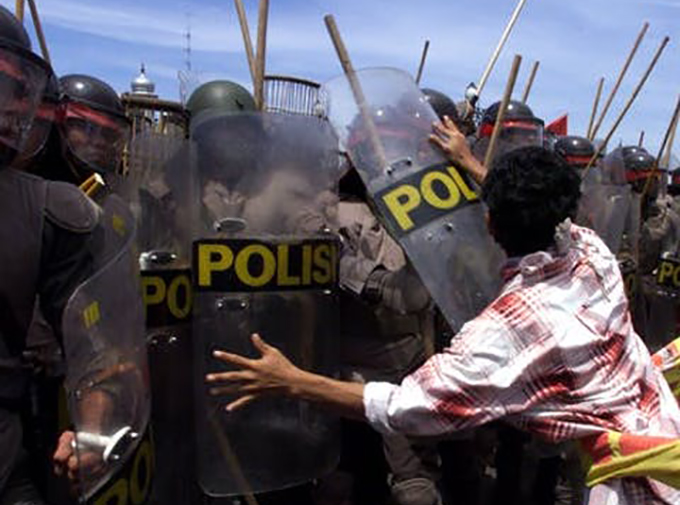
Indonesia’s National Police are facing increased pressure as investigations by human rights organisations have found alleged use of torture by Mobile Brigade (Brimob) officers during the recent postelection protests that escalated into riots in Central and West Jakarta.

According to rights group Amnesty International, at least 12 people suffered torture and illtreatment by Brimob personnel during crackdowns on suspected rioters on May 21-23.

In its report released on Tuesday, Amnesty said the alleged use of violence occurred in areas near the Elections Supervisory Agency (Bawaslu) building, the center of the protests, including in Kampung Bali, where reports of police brutality had previously emerged.

READ MORE: Jakarta’s postelection riots

The group declined to reveal the alleged victims’ identities out of concern of their safety as well as of their families.

“The public has the right to know about what happened on May 21-23”, said Amnesty International Indonesia executive director Usman Hamid.

-Partners-

In its findings, which are the result of a month-long verification process and interviews with witnesses, victims and their families, Amnesty claimed some Brimob personnel had tortured at least five people at an empty parking lot in Kampung Bali.

The incident reportedly took place at around 5:30 a.m. on May 23 after a sweep of the area.

Beaten, dragged
Amnesty said that one victim – who was unarmed – was beaten and dragged by around 10 Brimob officers, video footage of which was captured by a witness in a nearby building and uploaded onto social media.

Meanwhile, among the four other victims who were beaten in the same parking lot, one was so badly injured, he had to be taken to the Kramat Jati Police Hospital’s emergency unit in East Jakarta and was placed under “strict monitoring by the police”, the rights group said.

“This was clearly a crime because the officers used excessive force,” Usman said.

Thousands of supporters of losing presidential candidate Prabowo Subianto took to the streets to protest incumbent President Joko “Jokowi” Widodo’s reelection victory late last month.

What started as a peaceful rally turned into full-fledged riots that triggered clashes between rioters and security forces, leaving nine dead and injuring hundreds.

After the video of an unarmed man being beaten by Brimob personnel went viral, the police admitted that the footage was real and the incident had taken place.

They confirmed that the man in the video was Andri Bibir, a rioter who had been arrested.

Marguerite Afra Sapiie is a reporter with The Jakarta Post.

Print Friendly, PDF & Email

Article by AsiaPacificReport.nz

Bellingcat’s report on MH17 shows citizens can and will do intelligence work

Source: The Conversation (Au and NZ) – By Tim van Gelder, Enterprise Research Fellow, University of Melbourne

Amid the news last week that the perpetrators responsible for shooting down Malaysia Airlines Flight 17 (MH17) will be put to trial next March, a report was released identifying further suspects responsible for escorting the missile to and from the launch site.

Who were the investigators behind the report? The CIA? MI6? No. It was Bellingcat, a large group of mostly volunteers working from laptops using only information available to anyone with an internet connection.

In February, Bellingcat also identified a third suspect alleged to have been involved in the poisoning of MI6 double agent Sergei Skripal and his daughter Yulia in the United Kingdom last year.

Bellingcat describes itself as citizen journalists, but its activities illustrate a growing phenomenon my colleagues and I call “citizen intelligence.” This is work that would count as intelligence gathering or analysis within an intelligence organisation, but it’s undertaken by citizens operating outside the traditional intelligence ecosystem.

Bellingcat’s Eliot Higgins and Christo Grozev Christo holding a press conference outside parliament in central London in October 2018 after the organisation identified the second suspect responsible for poisoning of the Skripals. Andy Rain/AAP

Read more: How clever people help societies work together better


The rise of citizen intelligence

Citizen intelligence has been made possible by the internet in various ways.

Since its advent, we’ve seen an explosion of “open source” information. That is, data that’s accessible without any special organisational privileges. For example, just by opening Google Earth you can view satellite data of the kind only available to analysts in government agencies not many years ago.

There are now free new tools for gathering and analysing these vast troves of information, such as the analysis platform Maltego. Aspiring citizen analysts can now train themselves using resources available online or in workshops offered by various organisations.

Expertise in intelligence work is no longer the preserve of those hired and trained by traditional organisations. Powerful collaboration platforms, such as Google Docs, allow interested individuals to work effectively together, even when scattered around the world.

It could get even bigger

We’ve all seen how global, cloud-based marketplaces such as Amazon, Airbnb and Uber have transformed their respective domains. Citizen intelligence could grow even faster if a suitable marketplace is developed. At the SWARM Project, we’ve begun exploring the potential design of a platform where those seeking intelligence can transact with those willing to provide it.

What might that look like? A marketplace for citizen intelligence could be built on a “sponsored challenge” crowdsourcing model.

Imagine an organisation with an intelligence question. Say, for example, the organisation wants to identify potential threats to a proposed infrastructure development in an unstable region. The organisation pays to have the question posed as a challenge on the platform, with a prize for the best answer. Groups of citizen analysts self-organize and submit reports. When the deadline is up, the best report garners the prize – and bragging rights.


Read more: We can’t expect intelligence services to prevent every terrorist attack


Why crowdsourced citizen intelligence could be effective

There are reasons to think that crowdsourced citizen intelligence could match, or outperform, traditional intelligence organisations on some kinds of tasks. Traditional organisations have advantages, such as access to classified information and highly trained analysts, but crowdsourcing has compensating strengths.

Scale

Many intelligence organisations are small and under-resourced for the number and complexity of issues they are supposed to handle. Crowdsourced intelligence can potentially draw from much larger pools of citizens. For example, the analytics crowdsourcing platform Kaggle has over a million people signed up, and it gets literally thousands of teams competing on big challenges.

Diversity

With scale comes diversity. Large groups inherently possess more diverse knowledge, expertise and perspectives. A question like the one in the example above might require fluency in an obscure dialect, or specific technical know-how. No intelligence agency can maintain in-house everything it might need for any problem.

Agility

Crowds can be more agile than agencies, which are risk-averse bureaucracies. For example, individuals can more quickly access and use many of the latest analytical methods and tools.

Passion

Perhaps most importantly, intelligence work by unpaid volunteers is driven primarily by passion. Passion certainly exists within agencies, but is often stifled in various ways.


Read more: How popular culture gets Australian spy work wrong


The SWARM Project ran a tournament-style experiment in 2018 that illustrated how everyday citizens can sometimes beat the professionals. Teams tackled four tough, fictional intelligence problems over four weeks. Some teams were made up of analysts provided by organisations with intelligence functions, some of analysts recruited via Facebook, and some of citizens (non-analysts) recruited via Facebook.

On average, the citizen teams outperformed the professional analysts – and some of the citizen reports were astonishingly good.

How this could affect the intelligence industry

Citizen intelligence will likely create some headaches for intelligence agencies. For example decision makers might increasingly look to citizen sources over formal intelligence agencies – particularly where citizen intelligence delivers reports more quickly, or with more “convenient” findings.

On the other hand, citizen intelligence could have a lot to offer intelligence organisations. A suitably designed marketplace might enable the traditional agencies to take advantage of the power inherent in the crowd. Such a platform could be a “force multiplier”, at least for certain aspects of intelligence.

In view of these potential threats and opportunities, the Australian intelligence community should get on the front foot, shaping the future of citizen intelligence rather than just reacting to it.


This is a condensed version of a presentation given at the Technology Surprise Forum, Safeguarding Australia Summit, Canberra May 2019

ref. Bellingcat’s report on MH17 shows citizens can and will do intelligence work – http://theconversation.com/bellingcats-report-on-mh17-shows-citizens-can-and-will-do-intelligence-work-118836

Trade war tensions sky high as Trump and Xi prepare to meet at the G20

Source: The Conversation (Au and NZ) – By Tony Walker, Adjunct Professor, School of Communications, La Trobe University

The word “consequential” is a popular fallback for commentators seeking to invest a particular event with the significance it might warrant. On occasions, the word is misused to inflate a moment that does not rise to the level of “consequential”.

However, it would be difficult to argue against the proposition that leaders of the world’s largest economies are meeting late this week in Osaka at what is potentially a consequential moment in the reordering of a global power balance.

China’s rise and America’s ragged – sometimes bellicose – response under a Donald Trump administration is proving to be the most disruptive event in world economic and geopolitical history arguably since the allies prevailed in the second world war.


Read more: US-Iran conflict escalates again, raising the threat of another war in the Middle East


Whether Osaka proves to be a constructive occasion in an evolving and messy rivalry or simply a wasted opportunity remains to be seen. But stakes are very high indeed.

The proposed meeting between US President Donald Trump and his Chinese counterpart Xi Jinping to cauterise a simmering trade war is shaping as one of the more significant encounters between leaders of competing superpowers since the end of the Cold War.

Trump and Xi have spoken on the telephone in the lead-up to Osaka. Both sides indicated a desire to achieve a compromise on a long list of American complaints about what are perceived to be China’s mercantilist trading practices.

These include manipulation of its currency to make its exports more competitive; intellectual property theft that seeks to short-circuit its acquisition of advanced technology; a discriminatory regulatory environment that tilts the playing field against American companies seeking to do business in China; and use of companies like technology giant Huawei to spy on the west.

A looming “technology war” in which the US and China are at each other’s throats in the technology space is one of many disruptive elements of a trade conflict.

The Trump administration’s stated aim is to overcome a sizeable trade gap between the two countries. As a provocative down payment it imposed 25% tariffs on $250 billion worth of Chinese imports, with threats to expand those tariff penalties to another $300 billion.

China has retaliated by imposing its own tariffs on US imports.

If Trump and Xi cannot agree on steps that would enable their trade officials to return to the negotiating table, a highly disruptive trade war may well ensue, with unpredictable consequences for the global economy.

The World Bank, International Monetary Fund and G20 leaders, including Australia’s Prime Minister Scott Morrison, have been calling for a common sense approach to avoid a further deterioration in a global trading environment.

In a keynote foreign policy speech on the eve of the Osaka summit, Morrison called on Washington and Beijing to arrive at a compromise on their differences.

This will require the exercise of their special responsibilities by these great powers to resist a narrow view of their interests

It is therefore important that US-China trade tensions are resolved in the broader context of their special power responsibilities, in a way that is WTO consistent and does not undermine the interests of other parties, including Australia.

Given the sensitivities around Australia’s alliance relationship with the US, Morrison skated around America’s significant responsibility for a deteriorating global trading environment. Washington’s undermining of the World Trade Organisation, reduced to an empty shell, is part of this story.


Read more: As tensions ratchet up between China and the US, Australia risks being caught in the crossfire


As a trading nation heavily dependent on open markets, Australia risks being wedged between its security guarantor and its main economic partner. China receives one third of Australian exports.

Trade tensions between an established power and a rising one are disruptive enough on their own. But world leaders are meeting in Osaka against a background of a slew of other challenges that are threatening global stability.

These include a slowing global economy, due partly to uncertainties surrounding the US-China trading relationship. There is also the threatened war in the Middle East that would interfere – and possibly sever – an oil lifeline. Then there are localised conflicts such as those in Venezuela, which risk further destabilisation of regions in which they reside. And perhaps most serious issue of all is the erosion of America’s global leadership role.

Washington’s retreat into an “America First” mindset is depriving the world of what has been taken for granted since the end of the second world war. This is US leadership in guiding and nurturing institutions that constitute a post-war architecture.

Bodies like the United Nations, the International Monetary Fund, the World Bank, the General Agreement on Tariffs and Trade (GATT) as a forerunner to the WTO, the North Atlantic Treaty Organisation (NATO) and a host of other institutions would not have been possible without American inspiration and leadership.

Now, a Trump administration seems intent on diminishing these global overseers of a rules-based international order. Indeed, it is not clear whether Washington even believes in a rules-based order, as opposed to one in which it is everyone for themselves.

This is the toxic environment confronting leaders of 19 individual countries plus the European Union, who represent 90% of gross world product, 80% of world trade and two-thirds of the world’s population.

As is normal at these events, global leaders will face an agenda that includes, as the most important topic, “bolstering global growth, trade, and investment”.

This comes against a background of slowing global growth to 3.3% this year from an earlier forecast of 3.5%. The International Monetary Fund is predicting a slight pick-up in 2020, but this will depend on a resolution of US-China trade tensions.

Overlaying concerns among world leaders about a slowing global economy will be the threat of “de-globalisation”, in which supply chains are disrupted more generally.

What this portends is global economic fragmentation in which there is a breakdown in a WTO-supervised system, however imperfect.

This risks decades of relatively orderly global economic expansion that has lifted hundreds of millions out of poverty. In China’s case, it has enabled one of the more remarkable transformations in world economic history.

What might help us to appreciate the significance of this gathering is to go back a decade to the first G20 in 2008, when the world found itself in the maw of a global financial crisis that threatened to bring an international financial system crashing down.

Australian Prime Minister Kevin Rudd meets with Us President George W Bush at the first G20 summit in Washington in 2008. AAP/EPA/Ron Sachs/pool

On that occasion, world leaders came together in Washington to put in place confidence-building measures that helped stabilise a global economy under enormous stress.

At that inaugural meeting, the G20 proved its worth under American leadership. The US Treasury Secretary at the time, Henry Paulson played an important role in measures adopted to strengthen global economic governance.

A critical element of deliberations in 2008 was a resolve to reject protectionism and refrain from imposing new barriers to investment or to trade in goods and services inconsistent with WTO principles.

Today, there is a lack of consensus between America and its allies on a host of issues. These range from how to deal with the Iran crisis to the need to bolster a rules-based international order.

Ten years on from the 2008 G20, the world should hope that a similar crisis does not arise that would require American leadership of the order was demonstrated a decade ago. It is not clear such leadership would be forthcoming.

ref. Trade war tensions sky high as Trump and Xi prepare to meet at the G20 – http://theconversation.com/trade-war-tensions-sky-high-as-trump-and-xi-prepare-to-meet-at-the-g20-119460

Our ailing aged care system shows you can’t skimp on nursing care

Source: The Conversation (Au and NZ) – By Apil Gurung, Lecturer, University of the Sunshine Coast

Staff shortages and a lack of training have once again emerged as key issues underpinning the nation’s aged care crisis, as the aged care royal commission hears testimony in Perth.

Registered nurse Noleen Hausler shared the experience of her 98-year-old father, Clarence, who was force-fed, assaulted and had a serviette held over his nose by a carer who was later convicted of aggravated assault.

Aside from this criminal behaviour, Ms Hausler said the standards at her father’s aged care facility declined after a new operator reduced staffing levels and employed carers with little training. Call bells went unanswered, she said, and incontinence pads were rationed.

Ms Hausler has called for increased ratios of registered nurses in aged care facilities, and better training and registration for carers.

Under-staffing and inadequate training have long been problems in Australia’s aged care facilities, with aged care facilities employing fewer registered and enrolled nurses and more carers who have lower levels of training.


Read more: Nearly 2 out of 3 nursing homes are understaffed. These 10 charts explain why aged care is in crisis


Who does what in aged care?

A registered nurse (RN) provides nursing leadership and clinical supervision in aged care facilities. They are skilled clinicians who can respond to medical emergencies and are qualified to carry out assessments.

Registered nurses undergo three years of undergraduate study at university and are registered with the Australian Health Practitioner Regulation Agency (AHPRA) in order to practise in health care setting across Australia.

An enrolled nurse (EN) conducts observations and assessments, and collaborates with and seeks assistance from the registered nurse in charge. Enrolled nurses are registered with AHPRA and undergo an 18-month diploma of nursing at TAFE.

Finally, care workers form the bulk of the aged care workforce and perform tasks such as showering, dressing and feeding residents. Titles for carers vary and include assistant in nursing, personal care worker, personal care attendant, and aged care worker, to name a few.

Care workers are required to complete a certificate III-level course, which can take up to six or seven months, but don’t require registration.

Carers cost less than nurses

There is no clear legislation requiring a certain number of registered nurses, enrolled nurses and carers to be on duty at certain point in time. The Aged Care Act 1997 is open to interpretation, so aged care providers are largely free to set their own staffing levels.

As a result, in recent years aged care operators have recruited proportionally fewer registered and enrolled nurses and increasing numbers of unregulated carers.

Residents in aged care have complex needs, and those looking after them need to be equipped. From shutterstock.com

The changing make up of the aged care workforce is mainly influenced by economic advantage: hiring carers is cheaper than hiring registered or enrolled nurses.

It can also be difficult to find enough nurses. Nurse retention in aged care has been a major challenge for the industry because aged care providers often pay lower wages than hospitals.

But nursing care is worth the investment

Research shows having a greater number of registered nurses increases patients’ well-being and safety. Better staffing levels allow nurses to spend more time caring for residents and reduces the likelihood that vital information is overlooked.

Adequately staffing aged care facilities has economic benefits by reducing staff turnover related to burnout and job dissatisfaction.

Employing skilled registered nurses in aged care facilities can also save the health system money by reducing the number of costly hospital admissions that arise because residents can’t be adequately cared for in their aged care facility.


Read more: Want to improve care in nursing homes? Mandate minimum staffing levels


Aged care residents often have mental health issues, face cognitive decline or dementia, take multiple medications each day, are physically frail, and often have multiple chronic conditions such as heart disease, diabetes, cancer, arthritis or asthma.

But it’s difficult to meet the needs of these patients with the current aged care staffing and skill levels.

More than 50% of the residents in a residential aged care facilities have some form of dementia, for example, yet more than 50% of aged care workers have no dementia training.

Substituting registered nurses with lesser skilled carers has meant tasks such as medication management have been assigned to carers in some aged care facilities, despite this being a high-risk task that requires a high level of skill and experience.

What are the solutions?

Carers currently make up around 70% of the aged care workforce. We need to reset aged care staffing levels and ensure we have the right skill sets, which industry bodies suggest is: 30% registered nurses, 20% enrolled nurses and 50% care workers.

It’s also time to professionalise caring roles with better regulation and the introduction of carer registration.

Registration would clarify carers’ roles and allow only the delegation of tasks which are deemed safe for carers to carry out within their scope of practice. It would also ensure minimum training standards are met and that quality and safety is maintained.

The aim is not to vilify carers, who are the backbone of our aged care system, but rather to highlight the need for the right level of training, education and support to strengthen the aged care workforce and complement the care provided by registered and enrolled nurses.

Finally, we also need to increase the number of registered and enrolled nurses in the aged care workforce with guided pathways to attract and retain nurses. Well-structured graduate nurse programs, for instance, can provide support and guidance to the graduates who are considering a career in aged care.


Read more: Don’t wait for a crisis – start planning your aged care now


ref. Our ailing aged care system shows you can’t skimp on nursing care – http://theconversation.com/our-ailing-aged-care-system-shows-you-cant-skimp-on-nursing-care-115565

Competition for the kerb is rising, and cities are going to have to manage it

Source: The Conversation (Au and NZ) – By Neil Sipe, Professor of Urban and Regional Planning, The University of Queensland

In case you missed it, 2018 was designated the Year of the Kerb by Sabrina Sussman, Zipcar’s public partnerships manager. This is because competition for limited kerb space has been increasing over the past few years, particularly in cities.

The kerb is the place that provides “access” between the street and the footpath. The definition tends to include the lane beyond the kerb that is used for car parking, bus stops, taxi pickups and dropoffs, and loading and unloading goods.


Read more: The battle to be the Amazon (or Netflix) of transport


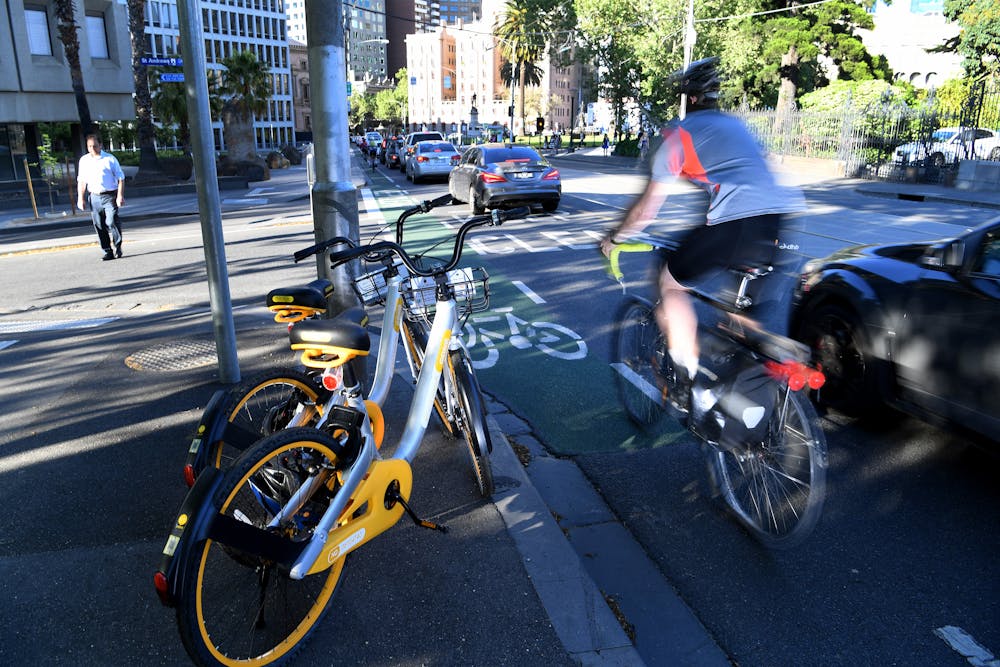
But kerb competition is increasing from a range of new users including: car sharing, ride sharing, e-scooter share, bike share and e-bike share, food delivery, online order deliveries and, in coming years, autonomous vehicles.

Share bikes are just the start of the many competing claims on kerb space. Joe Castro/AAP

And this increasing focus on the kerb is highlighted in recent reports by the Institute of Traffic Engineers, the International Transport Forum and North America’s National Association of City Transportation Officials (NACTO).

With this range of new users, cities need to rethink how they manage this contested real estate. Without better kerb management, cities will face increased congestion on local streets from vehicles circulating to access the kerb and on footpaths from a range of shared mobility devices.

E-scooter share schemes also need kerb space for parking. EPA/AAP

One change cities will need to make to accommodate these new users is to repurpose kerb space, which has traditionally been used for parking, to other uses. This change will most likely have a significant financial impact.

One survey of the 25 largest US cities found parking-related revenues totalled US$5 billion in 2016, or about US$129 per person. While repurposing kerb space will not affect all of this revenue, it will have an impact on city budgets. To minimise this impact, cities will need to think about if, and how, to charge new users of kerb space.


Read more: Of all the problems our cities need to fix, lack of car parking isn’t one of them


To manage kerbs, first identify the uses

The City of Seattle is one of the leaders in kerb management. The city categorised kerb use into six key functions:

  1. mobility for travel lanes, bike lanes and bus lanes
  2. access for people using bus stops, bike parking and loading zones
  3. access for commerce to deliver goods
  4. activation for small parks, food trucks and public art
  5. greening for plantings, rain gardens and bio-swales
  6. storage for parking, bus layovers and construction.

One of the first in-depth analyses of the kerb was in San Francisco. As part of this 2018 study, commissioned in 2018 by Uber Technologies, the consultants (Fehr and Peers) developed a Curb Productivity Index (CPI). The index considered three things to compare productivity of kerb use.

  1. number of passengers using kerb space by mode
  2. time period the activity was observed
  3. total space dedicated to that use.

How to calculate kerb productivity

The CPI is a useful way of quantifying the various competing uses for the kerb.

It’s calculated by dividing the amount of activity by the amount of space used, multiplied by the unit of time. For example, the CPI for a bus stop that uses 45 metres of kerb for 250 arriving and departing passengers over four hours would be: 250 passengers/(45 metres x 4 hours), or 1.39 passengers/metre-hours.

Alternatively, the CPI for a car space that uses five metres of kerb that services two passengers over four hours would be: 2 passengers/(5 metres x 4 hours), or 0.1 passengers/metre-hours.

The CPI shows a bus stop is 13.9 times (1.39/0.1) more productive than a car park.

This analysis of usage data provides some rigour in developing a kerb management plan.

Base management on ‘measurement over myth’

As a way forward, Fehr and Peer recommend a management strategy with three components:

  1. relocation of existing kerb uses to other areas
  2. conversion, which involves eliminating some current uses and replacing them with new uses
  3. flexibility, so kerb uses change depending on the time of day.

Trials of flexible kerb management are under way in Washington DC, San Francisco and Fort Lauderdale.

In changing how the kerb is managed, the 2018 report from North America’s National Association of City Transportation Officials recommends a “measurement over myth” strategy when converting parking to other uses.

Surveys on arrival mode consistently show public transport and active travel modes deliver more customers to adjacent businesses than private motor vehicles. Before-and-after studies confirm that replacing parking with public transport or bike lanes increases sales for area businesses.


Read more: Do the sums: bicycle-friendly changes are good business


To manage the conflicting needs of car and bike users for roadside space, San Jose has created kerbside bike lanes separated from the road by car parking. Will Buckner/Flickr, CC BY

While new mobility startups are part of the reason cities need to develop kerb management plans, other startups are developing new ways to manage this increasingly contested space. Some of these new companies include:

  • Open Curbs from Coord, a spin-off of Sidewalk, that provides wheelchair cuts, fire hydrants, bus stops and other physical kerb assets
  • Populus, a San Francisco transport company that has developed a mobility manager that provides data on e-scooter and e-bike share parking data
  • Remix, which has developed the New Mobility tool to analyse and visualise data-streaming feeds.

These startups have raised millions of dollars, due in part to the recognised value of the kerb.

Cities need to make the transition from parking cities to pickup/dropoff cities and to flexible cities. For this to happen, cities will need to think strategically about how to manage their kerbs with the emergence of new users and new mobility management options.

One of the first steps in this transition is for cities to ensure data standards and data-sharing arrangements are established as part of the basis for giving new users permission to access the kerb.


Read more: For Mobility as a Service (MaaS) to solve our transport woes, some things need to change


ref. Competition for the kerb is rising, and cities are going to have to manage it – http://theconversation.com/competition-for-the-kerb-is-rising-and-cities-are-going-to-have-to-manage-it-117410

See What You Made Me Do: why it’s time to focus on the perpetrator when tackling domestic violence

Source: The Conversation (Au and NZ) – By Camilla Nelson, Associate Professor in Media, University of Notre Dame Australia

Review: See What You Made Me Do: Power, Control and Domestic Abuse by Jess Hill. (Black Inc).

You will not sleep if you read Jess Hill’s new book. Nobody should.

Anybody familiar with Hill’s work as an investigative journalist will have seen her Walkley Award-winning reports on family and domestic violence, including blistering interviews with women and child survivors.

Four years of intensive journalistic investigation have produced See What You Made Me Do, a book that vividly conjures the scale of the problem with fresh terror. It brings together stories of domestic violence and survival from all walks of life – from the affluent neighbourhoods of Sydney’s Bible Belt where “the streets are immaculate, and the houses are huge”, to struggling remote and regional communities.

Hill scrutinises the social and psychological causes of domestic abuse, its terrifying consequences, and – most hauntingly – the failure of our legal and social institutions to adequately respond.


Read more: How domestic violence affects women’s mental health


At the centre of her book is an idea that shines bright in its clarity. Instead of asking “Why didn’t she leave?” – or embarking on yet another public awareness campaign to change attitudes to gender, which might have an impact in 20 years time – we need to invest more in justice programs that focus squarely on the perpetrators, holding them to account.

Hill argues this requires that we turn our habitual understanding of domestic violence on its head. Instead of allowing a public discourse to flourish that verges on the edge of victim-blaming we need to “think about his actions as much as we think about hers”. If we can do this, she writes, “we can stop perpetrators – not in decades to come, but right now”.

In Australia, Hill reports, a country of almost 25 million, one woman is killed every week by somebody she has been intimate with. She estimates that Australian police are called to a domestic abuse incident every two minutes.


Read more: Pregnant women are at increased risk of domestic violence in all cultural groups


“There are criminal offences committed within domestic abuse, but the worst of it cannot be captured on a charge sheet,” she writes. “A victim’s most frightening experiences may never be recorded by police or understood by a judge.”

It’s not a crime to tell your wife what to wear, writes Hill, or how to clean the house, or what groceries she’s allowed to buy. “It’s not a crime to convince her that’s she’s worthless, or to make her feel that she shouldn’t leave the children alone with you.” It’s not a crime to gaslight or “break her sense of what’s real”. These are the “red flags” for domestic homicide. But “by the time that crime occurs, it’s too late”.


Read more: Pregnant women are at increased risk of domestic violence in all cultural groups


The effect on children

The stories that Hill tells about children, and her interviews with child survivors, form the most chilling part of this book.

Child survivors, she writes,

know all the best places to hide, and how to make themselves disappear when the yelling starts. They hold their mother while she cries and they help wash off the blood …

And yet, there is little reliable data on how many children are affected by domestic violence. “It’s simply not officially measured,” writes Hill. An oft-cited Australian Institute of Criminology survey based on a small sample places the figure at 23%. Hill cites other studies that put it potentially higher.


Read more: ‘Silent victims’: royal commission recommends better protections for child victims of family violence


But in media reports of domestic violence, children are barely mentioned. Journalists are not equipped to interview children, rightly fearing they may inflict further trauma. The unintended result is that children often feature as objects, possessions or extensions of their parents. This treatment is repeated in institutions such as the Family Court of Australia where, Hill writes, children’s voices are not heard in any direct way.

In one chapter, Hill returns to interview the child survivors she first spoke to in her landmark 2015 article in The Monthly. She tells the story of “Carly” and her brother “Zac” who were placed in the care of their father and denied contact with their mother “Erin” by court order after “Erin” had fled with the children interstate, fearing violence.

Hill quotes Carly’s 2016 letter to a victim’s rights advocate, Robyn Cotterell-Jones. “I am extremely unhappy living with my father and I fear for my safety … I’m so frightened that I never fail to lock my door whenever I enter my room …”

Hill argues that the silencing of children like Carly is “patently dangerous”. She writes:

The family law system too often treats kids as little more than parental property, and domestic abuse as an adults-only affair that is resolved once parents separate.“

The adversarial system of the Family Court does not serve domestic violence victims well. Hill writes of those who appear “disorientated and anxious” and “terrified their children will be ordered to see or live with someone they regard as dangerous”. In court, perpetrators more often appear “calm and rational” – thus their version of the story can appear more believable and they are seen as the “better parent”.

Hill’s book draws attention to the suffering of children subject to what she calls the court’s “whims”. She interviews a barrister who stayed in a violent relationship for ten years because she knew “just how unsafe the Family Court could be for victims” and their children.

A recent report of the Australian Law Reform Commission has recommended that the federal system of family courts be abolished and the powers be returned to the states and territories who are better equipped to deal with issues of child protection.


Read more: FactCheck: is domestic violence the leading preventable cause of death and illness for women aged 18 to 44?


An obscure figure

Perpetrators don’t assault women and children because society says it’s okay. Hill argues they more often assault women because they experience a sense of “shame” that conflicts with socially sanctioned models of masculinity that tell them they are entitled to be in control. The media label these attitudes “toxic” – as in the popular phrase “toxic masculinity”, which refers to the dense network of attitudes and beliefs that give rise to gender violence.

But words such as “toxic” carry the unfortunate connotation that such attitudes can be isolated and purged from the system; that another awareness campaign will fix them. Hill argues that while public awareness campaigns play a useful role, continuing to “blame the patriarchy” is an inadequate response.


Read more: Not just a slick TV ad: what makes a good domestic violence awareness campaign?


The problem in public and media discourse is that the perpetrator remains an obscure figure. In media reports the actions of the perpetrator are linguistically and symbolically silenced.

Violence is often claimed to be “bizarre” or “unexplained” or “out of the blue”. Shadowy linguistic forms hide a murderous reality. “Axe slashes a family apart,” reads one headline. Similarly, the myth of the “good bloke” who is “driven” to murder his daughter and grandchildren elicits the headline, “He was in a bad place”.

Sometimes, victims – mostly women – are focused on and their lives and hopes or dreams discussed. Still, the question most articles ask are: “why didn’t she leave”? The behaviour of the perpetrator is rarely questioned.

Hill describes a revealing conversation with a counsellor from the Safe Steps 24-hour family response line.

“You must get so frustrated when you think a woman’s ready to leave and then she decides to go back,” I say.

“No,” replies the counsellor pointedly. “I’m frustrated that even though he promised to stop, he chose to abuse her again.”

Instead of “penning yet another ‘call to action’ – one more on the teetering pile” Hill asks that justice and law enforcement programs place the perpetrator at the centre of their crime fighting efforts.

Hill nominates as an example the interventionist approach of civic authorities in High Point, North Carolina, which successfully halved a domestic homicide rate that had been running at twice the US national average. In Australia, she draws attention to a “justice reinvestment” program in Bourke, NSW, which has seen domestic violence related assaults drop by 39%.

This book traverses terror and ends with a plea. Recording her own struggle as a writer and journalist, Hill describes “grasping for the perfect combination of words that will make you, the reader, feel it so acutely, with such fresh horror, that you will demand – and keep demanding – drastic action.”

Inaction is easy, she writes. All the perpetrator asks is that you say nothing.

ref. See What You Made Me Do: why it’s time to focus on the perpetrator when tackling domestic violence – http://theconversation.com/see-what-you-made-me-do-why-its-time-to-focus-on-the-perpetrator-when-tackling-domestic-violence-119298

Media chiefs unite on press freedom, but will it result in any action?

Source: The Conversation (Au and NZ) – By Colleen Murrell, Associate Professor, Journalism, Swinburne University of Technology

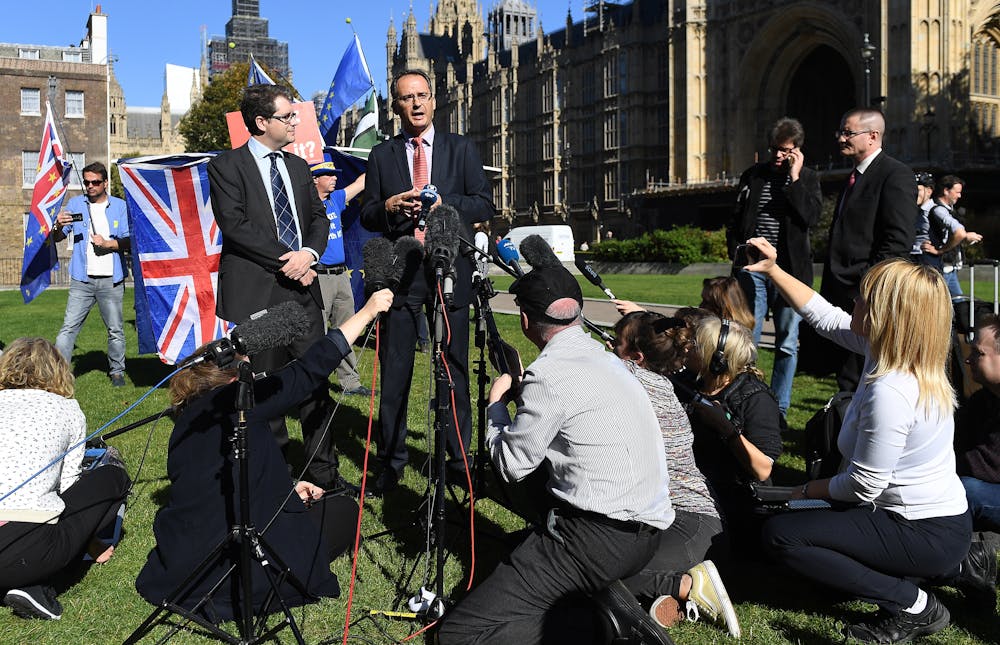
In a rare show of unity, the heads of Australia’s biggest news organisations – the ABC, Nine and News Corp – have called for stronger legal protections for press freedom in the wake of this month’s police raids on journalists.

Sharing a panel at the National Press Club in Canberra, the media chiefs outlined several key demands:

  • search warrants to be contestable before the arrival of police
  • better protection for whistleblowers
  • a limitation on the number of documents being marked secret by various government bodies
  • a review of freedom of information laws
  • an exemption for journalists from being prosecuted under national security laws

First to address the lunchtime crowd was the ABC’s managing director, David Anderson, who called the fact that he was seated alongside News Corp Australasia executive chairman Michael Miller and Nine chief executive Hugh Marks “an unlikely coalition of the willing.”

But he underlined that unity was imperative because “the stakes are so high.”


Read more: Explainer: what are the media companies’ challenges to the AFP raids about?


Anderson made a passionate speech that stressed the ABC’s record of “speaking the truth to the community”. He listed the many investigative reports by ABC journalists that led to royal commissions, from Chris Masters’ 1987 “Moonlight State” report on corruption in Queensland’s police force to more recent ones in banking and aged care.

He also referred to the work of ABC journalists Dan Oakes and Sam Clark on a series of stories called the Afghan Files, the reporting that led to the AFP raid on the ABC’s Ultimo headquarters in Sydney.

Anderson argued that it was difficult for the media to do its job with the “patchwork of laws” in place and whistleblowers running the risk of “being cowed out of existence”. Most importantly, he stressed that

decriminalising journalism is a mandatory first step.

‘Balance too weighted towards secrecy’

Marks claimed that press freedom had been eroded in Australia due to a mix of technological change, bad legislation and over-zealous officials. He said it was now

more risky and it’s more expensive to do journalism that makes a real difference in this country than ever before.

Like Anderson, Marks also emphasised the important investigative public interest journalism carried out by Fairfax and Nine journalists in recent years, including work by Laurie Oakes, Adele Ferguson, Joanne McCarthy and Chris O’Keefe.


Read more: Four laws that need urgent reform to protect both national security and press freedom


He argued that media freedom was under threat because “governments and institutions are becoming more secretive” and that national security was sometimes invoked to shut down debate on spurious grounds. He believed

the balance is too weighted towards secrecy.

Marks took issue with various current laws, arguing that defamation laws didn’t achieve what they were meant to and the huge rise in suppression orders and complexity of Freedom of Information laws led to an “obstacle course of legal hazards”. Bearing this in mind he said:

This would be the stuff of pantomine were it not so serious.

Miller drew attention to Australia’s slide down the 2019 World Press Freedom Index to number 21 – below Suriname and just ahead of Samoa – and commented that Australia should instead be “leading by example”. He believed that two AFP raids in two days, plus “strong information that other raids were planned” equalled “intimidation not investigation”.

Miller said News Corp had called on Attorney-General Christian Porter to make sure that its journalist, Annika Smethurst, doesn’t face criminal charges after the raid on her home.

He said many of the faults in our laws could be “easily corrected to reset the balance between security and the right to know”.

But there is a deeper problem – the culture of secrecy. Too many people who frame policy, write laws, control information, and conduct court hearings, have stopped believing that the public’s right to know comes first.

More action, fewer promises

The most interesting part of the discussion came when ABC’s Matthew Doran asked the panellists if they thought the public would get behind changing laws to suit a group of privileged journalists. Marks said it was a start.

Freedom of speech feels very personal to me. We have to make it feel personal for the public.

But there were some in the room who appeared less reassured by the rhetoric on display. The Guardian’s Katherine Murphy pointed out that when these laws were passed “tranche by tranche” in recent years, there was not much media focus on these changes.


Read more: To protect press freedom, we need more public outrage – and an overhaul of our laws


Sky’s David Speers also seemed unimpressed that the media chiefs weren’t calling for a parliamentary inquiry, asking to whom they were speaking in regard to change. Miller’s reply was that they were releasing a document outlining their key demands and that the three of them being there together indicated the importance of the issue.

At the end of the day, perhaps the presence of all three media chiefs united together was singular. Immediately following the event, press freedom campaigner and University of Queensland Professor Peter Greste said “that rare show of unity is hard to understate” and that the AFP raids had

created a rare moment of opportunity that we need to seize.

Nonetheless, he thought it

deeply concerning that none of them seemed to have had any meaningful commitments to action from the government.

News Corp is taking its battle to the high court as it believes that the search warrant on Smethurst’s house was vague and incomplete.

The ABC, likewise, is challenging the police raid on its premises in federal court. Anderson would like the ABC’s downloaded data returned and wants there to be a “threshold test” regarding the justification for when the police can enter media premises.

The publicity from this unified initiative is no doubt positive, but it is entirely possible that a newly elected government could sit back and wait for these legal cases from News Corp and the ABC to pass through the courts before taking any action.

There is little pressure on governments to make concessions to an unpopular press in an era of suspicion of the media, whipped up by populist movements around the world.

ref. Media chiefs unite on press freedom, but will it result in any action? – http://theconversation.com/media-chiefs-unite-on-press-freedom-but-will-it-result-in-any-action-119405

Is Australia’s electricity grid vulnerable to the kind of cyber attacks taking place between Russia and the US?

Source: The Conversation (Au and NZ) – By Andrew Dowse, Director, Defence Research and Engagement, Edith Cowan University

The New York Times reported earlier this month that the United States was increasing its cyber attacks on Russia’s power grid. The attacks are seen as a warning against Russian intrusions into US systems, but one that carries a risk of escalation.

The public reporting of previously covert cyber attacks earned a retort from US President Donald Trump, who accused the New York Times journalists of a “virtual act of treason”.

But the story has been useful in generating discussion about the reasons for – and potential consequences of – such actions. It also raises the question of how vulnerable Australia’s power grid is.

So let’s take a look at who is capable of carrying out these kinds of attacks, how they work, and whether Australia is doing enough to protect itself.


Read more: What’s critical about critical infrastructure?


Are these attacks limited to the US and Russia?

Recent events may be newly reported, but the events themselves aren’t that new. Russian cyber attacks on US infrastructure may have been going on for years. According to the New York Times report, the US may have been undertaking similar intrusions in Russia since 2012.

While the story is limited to discussing cyber conflict between the US and Russia, there are many nation states with the ability to carry out such attacks.

To make things more complex, non-government actors can also launch cyber attacks. That includes individuals, organised crime groups, and proxies for nation states.

Why are we learning about this now?

When we talk about cyber security, and how to defend against threats from nation states, we’re usually talking about protecting confidential information. But when it comes to power grids, confidentiality isn’t particularly important. What is important is continuity of service, also called “availability”.

An adversary’s power availability would be a high-priority target during a conflict. Outside of conflict, the only logical rationale for a nation state to intrude on such systems would be to undertake reconnaissance and deploy malware that can remain dormant until needed.

In this regard, it doesn’t make sense that the US would intentionally leak its efforts, as appears to have been the case. It would prompt Russia to find the malware and, by disclosing intrusion techniques, it would “burn capabilities”.

Additionally, evidence of attacks could lead to an escalation of cyberwar between the US and Russia. Escalation is unlikely as long as responses to counter cyber attacks are undertaken in line with the principles of necessity and proportionality. But the uncertainty of attribution and consequences creates a potential for miscalculation in conducting cyber attacks.

The New York Times article was notable because it suggested the US president gave his commanders authorisation to undertake cyber attacks without his oversight. To avoid miscalculation, a balance is needed between a speedy response in cyber “active defence” and the kind of proper deliberation that will ensure the response is appropriate.

To date, there is no evidence that nation-state delivered attacks have resulted in power outages in the US or Russia. The apparent leak to the New York Times may not relate to a specific counterattack against the Russian power grid. Instead, it may be a form of diplomacy intended to signal US willingness and capability to counterattack.


Read more: Internet of Things: when objects threaten national security


How are such attacks possible?

Critical infrastructure is a term that refers to chemical production plants, power stations, oil platforms, and water pump stations. The technology that operates such infrastructure is called “operational technology” (OT). OT is a cyber-physical system that controls electricity generators and valves that mix chemicals in vats or transfer gas through pipelines.

To understand the threat, it helps to contrast OT with information technology (IT).

Confidentiality is a primary consideration for IT staff, who are focused on securing data from threats. They are well practised in patching vulnerable systems under their control. In an OT environment, availability is the primary driver, so keeping the plant working is considered more important than protecting against cyber threats.

Another difference between the IT and OT worlds is the lifetime of assets. OT system devices are built to last a long time before replacement. Using legacy OT technology that still works in itself is not a problem, as long as that technology is separated from other systems.

But the IT and OT worlds are converging to enable remote control and access to real-time plant operating data. Aside from the tension between priorities of confidentiality and availability, this convergence opens up OT vulnerabilities to attack.

When OT systems were developed decades ago, there was little thought of security, since most systems were only accessible on-site or through dedicated networks. With IT-OT convergence, keeping systems secure becomes a priority, but not at the expense of availability. Stopping a system, either for an update or due to a cyber attack, results in lost revenue and impact upon customers who could, for instance, lose power to their homes.

Have we seen successful attacks in the past?

Cyber attacks on Ukrainian power stations in 2015 and 2016 affected more than 200,000 customers, and provided lessons for the rest of us.

These events showed that an attack was more than just theoretical in the domain of energy systems. Engineers needed to physically visit each substation to return systems to operation.

As similar technology is used worldwide, the power grids of other nations are potentially vulnerable. Additionally, the malware used to command and control attacks is increasingly available for hire as cyber crime moves to a service-based model. And more sophisticated tools mean attackers require less skill to locate and attack internet connected devices.


Read more: Why we should be wary of expanding powers of the Australian Signals Directorate


How vulnerable is Australia’s power grid?

In 2016, Australia’s Chief Scientist Alan Finkel released a review into the future security of the national electricity market. Following advice that the cyber threat to the national energy market was increasing, Finkel recommended stronger security measures be put in place.

By 2017, some action had been initiated to mitigate threats in the energy sector. Subsequently the Security of Critical Infrastructure Act 2018 was passed. The Act contains elements to help the government better appreciate the risk and to make certain directions to service providers to increase security.

The government is reportedly considering a proposal to enable the Australian Signals Directorate (ASD) to access the networks of companies operating critical infrastructure to defend them against cyber attacks.

In 2018, the Australian Energy Market Operator (AEMO) released the first annual report into the cyber preparedness of the market, identifying that current provisions are inadequate. AEMO has established a framework for operators to assess their security maturity, and strengthen measures.

Notwithstanding these efforts, recent reports suggest the number of attacks on critical infrastructure is growing. Meanwhile, the ability to prevent, detect or respond to these attacks remains low.

For many critical infrastructure systems, OT is a sunk investment that would be expensive to replace. Implementing substantial security improvements to upgrade the legacy energy environment will also be expensive, and it’s likely that costs will be passed onto customers. But there are cost-effective ways of improving security, including threat/vulnerability system monitoring. Some companies in Australia are doing this.

Cyber warfare is a reality. We should expect that cyber criminals and nation states adversaries could have some impact our lives in future by attacking critical infrastructure, such as the electricity grid.

Securing our infrastructure is a priority for the government and increasingly recognised as such by the market participants. The cost and need for security mitigations may seem unpalatable to many, but steps need to be taken to prevent a return to the dark ages.

ref. Is Australia’s electricity grid vulnerable to the kind of cyber attacks taking place between Russia and the US? – http://theconversation.com/is-australias-electricity-grid-vulnerable-to-the-kind-of-cyber-attacks-taking-place-between-russia-and-the-us-119157

Sydney declares a climate emergency – what does that mean in practice?

Source: The Conversation (Au and NZ) – By Chris Turney, Professor of Earth Science and Climate Change, ARC Centre of Excellence for Australian Biodiversity and Heritage, UNSW

Late on Monday night, the City of Sydney became the first state capital in Australia to officially declare a climate emergency. With climate change considered a threat to human life, Sydney councillors unanimously supported a motion put forward by Lord Mayor Clover Moore to mobilise city resources to reduce carbon emissions and minimise the impact of future change.

The decision sees Sydney join a variety of local and national governments around the world, in a movement that is increasingly gaining momentum. In total, some 658 local governments around the world have made the same declaration, with the UK and Canada committing their national governments to the global movement in just the past two months.

An official declaration of climate emergency puts a government on a “wartime mobilisation” that places climate change at the centre of policy and planning decisions.


Read more: UK becomes first country to declare a ‘climate emergency’


While interpretations differ on what a “climate emergency” means in practice, governments have established a range of measures to help meet the targets set by the Paris climate agreement. Under this agreement, 197 countries have pledged to limit global temperature rise to less than 2℃ above pre-industrial levels, and ideally no more than 1.5℃.

With 2018 having brought all manner of record-breaking climate extremes, and global average temperatures projected to reach 3.2℃ above the pre-industrial average based on current national pledges and targets for greenhouse emissions, Sydney’s recognition of a national emergency is both highly appropriate and also a major turning-point for Australia.

Although a signatory to the Paris Agreement, Australia’s greenhouse emissions have risen over the past four years since the repeal of the carbon price. With Australian emissions most notably increasing around transport, the United Nations climate discussions currently being held in Bonn have raised concerns over the nation’s ability to meet its Paris commitments.

Economic impacts

With the global cost of inaction on climate change projected to reach a staggering US$23 trillion a year by the end of the century (equivalent to around five 2008 global financial crises every year), several nations are already ramping up their Paris Agreement commitments ahead of schedule. The UK recently announced its intention to be carbon-neutral by 2050.

Australia is particularly vulnerable to the future financial costs of climate change, with economic models suggesting losses of A$159 billion a year through the impact of sea level rise and drought-driven collapses in agricultural productivity. The cost for each household has been put at about A$14,000.


Read more: Cutting cities’ emissions does have economic benefits – and these ultimately outweigh the costs


After Sydney’s declaration, 150 faith leaders on Tuesday signed an open letter endorsing the decision, and describing the climate issue as a moral challenge that transcends religious belief. They have called for an urgent mobilisation to reach 100% renewable energy by the year 2030, and for an end to the approval of any new coal and gas projects, including Adani’s controversial Carmichael coal mine in Queensland.

The recent court ruling against the proposed Rocky Hill coal mine in the New South Wales Hunter Valley – a decision made partly on climate grounds – could mark a crucial turning point in the fortunes of future mining projects.


Read more: Landmark Rocky Hill ruling could pave the way for more courts to choose climate over coal


As part of its emergency declaration, Sydney has also called on the federal government to establish a “just transition authority” to support Australians currently employed in fossil fuel industries. This is an urgent issue and a crucial part of the transition to a low-emissions economy.

A major nationwide training program will be needed to help re-skill the estimated 8,000 people who work in fossil-fuelled electricity production, and to help fill the tens of thousands of new jobs in renewable energy-related fields.

With the scale of change required to decarbonise the global economy and hopefully avoid a 2℃ warmer world, the need to support communities across Australia and overseas will likely become an increasing challenge for governments around the world. Putting ourselves on an emergency footing could help provide precisely the impetus we need.

ref. Sydney declares a climate emergency – what does that mean in practice? – http://theconversation.com/sydney-declares-a-climate-emergency-what-does-that-mean-in-practice-119387

Inside the story: Coach Fitz and the accidentally comic voice

Source: The Conversation (Au and NZ) – By Debra Adelaide, Associate Professor, Creative Practices Group, University of Technology Sydney

Why do we tell stories, and how are they crafted? In this series, we unpick the work of the writer on both page and screen.

Early in Tom Lee’s debut novel, Coach Fitz, the narrator declares his intention to pay for an intensive program of training as a runner by saving money. He proposes to take on several menial jobs – window washing, school playground supervision, cocktail bartending – but also to adopt personal austerity, which includes “fulfilling the long-held dream of living in my car, an early model maroon Honda Odyssey”.

This is just one example of the book’s humour, a technique that is a vital aspect of its intriguing, multilayered appeal. This humour is much more than a device: it is an intrinsic part of a narrative that seeks to disrupt conventions of the novel by inverting reader expectations of the form.

At the same time, however, its anti-hero narrator, Tom, is cast in the mould of time-honoured tradition: Tom is an awkward everyman, a naïve Don Quixote, a digressive Tristam Shandy.

Giramondo

The story is a simple one: Tom has returned to Sydney after some time away – which has involved a failed relationship – and decides to focus solely on improving his physical fitness.

This is matched with a desire to strip down his life, as well as open it up: at the same time that Tom is living in his car and using outdoor beach showers, he is traversing and exploring the Sydney terrain, and absorbing lessons from his new coach on architecture, philosophy, the environment, and psychology, particularly tht of young males.

There is perhaps no immediate comic effect of the line about Tom living in his Honda, but the fact is the more I re-read it the funnier it seems. It is typical of the humour that ripples through every page: measured, grave, almost sober.

This humour relies entirely on the personality and thus voice of the narrator, and yet this narrator at first glance is far from comical: indeed, his voice is fussy, pedantic, and endlessly self-regarding.

It is not surprising to learn that two authors for whom voice is paramount have influenced this novel: W. G. Sebald, in particular his 1995 novel The Rings of Saturn, and closer to home the fictions or “reports” of Gerald Murnane, such as Barley Patch.

Comedy is possibly not the first quality that springs to a reader’s mind when considering these two authors either, however in both Sebald and Murnane we also hear voices of pedantic precision and obsessive reflection that at times strike comic notes.

Like Tom, the narrators of these texts seem entirely unaware of the humour of their utterances. For instance, in Murnane’s 1982 novel, The Plains, the narrator at one point confides in great detail to the reader his plans for seducing his patron and host’s wife, but without any apparent understanding of how preposterous these plans are.


Read more: The case for Gerald Murnane’s The Plains


Coach Fitz author Tom Lee has been influenced by authors Gerald Murnane and WG Sebald, for whom voice is paramount. Aaron Seymour

To claim that comedy is not content-driven, but relies entirely on voice, is of course hardly new: voice is also essential for any stand-up comedian, however this is expected – it’s the object of a comic routine. The narrative of Coach Fitz is not a routine, and the comedy is part of the journey, not the destination.

Although there is this innocence, or lack of self-consciousness, paradoxically, the narrator is also consciously considering every aspect of his existence. Nothing is left unexamined in his pared-back running and training life: sourdough bread, outdoor exercise gyms, internet cafes, muscle tone, horse racing, domestic architecture, urban native vegetation, the Six Foot Track in NSW, and the eccentric eponymous coach herself, an endless source of scrutiny who eludes ultimate comprehension.

Context is also vital in this comic effect. It is possible to open the novel almost at random and extract a sentence that chimes harmoniously and delivers this measured, sober comedy, but I suspect if I were to select another line as I have above, it would not sound funny out of context.

The narrator is profoundly contradictory. He is pompous but his earnestness makes that forgivable. He is well-informed, indeed over-informed, passing on to the reader his knowledge of everything from topography and birdwatching, to the best breakfast to be found in the eastern suburbs’ cafes, and yet knowledge does not necessarily deliver understanding. For example, Tom is unable to anticipate or deal with the main crisis thrust upon him when Coach Fitz makes a drunken lecherous move on him.

Indeed, for all this knowledge, Tom remains an innocent. Having cast off Coach Fitz he decides to become a trainer himself, and selects as his first pupil the brother of the woman he hopes to get back together with: the reader can see how that will go down a mile off, but he cannot.

Lee’s narrator strikes the reader as someone with whom you would happily spend a day with, exploring an urban track before sharing a picnic of bread, cheese, figs and olives, but whose singular charm would wear thin soon enough. Despite that I yearn to hear this voice again.

ref. Inside the story: Coach Fitz and the accidentally comic voice – http://theconversation.com/inside-the-story-coach-fitz-and-the-accidentally-comic-voice-117976

Explainer: could the Australian Christian Lobby be investigated for its Israel Folau fundraiser?

Source: The Conversation (Au and NZ) – By Renae Barker, Lecturer in Law, University of Western Australia

This week, the Australian Christian Lobby set up an online fundraising campaign on behalf of Israel Folau to help defray the cost of his legal battle against Rugby Australia over the recent termination of his contract. The campaign has earned more than A$1.8 million thus far in donations.

But in the latest twist in this saga, the Australian Charities and Not-for-profit Commission (ACNC) has confirmed that it has

received multiple requests to comment on the Australian Christian Lobby’s decision to support Israel Folau’s fundraising for legal costs.

The Australian Christian Lobby (ACL) is a registered charity with the ACNC and is subject to its reporting and governance rules. If raising funds to support Folau’s legal action falls outside the ACL’s charitable purpose, it could risk losing its status as a registered charity – and all the benefits that come with that.

The managing director of the ACL, Martyn Iles, strenuously denies the Folau fundraising campaign is in breach of its charitable purpose, saying this includes

the advancement of the Christian religion and advocating for changes in law and public policy. It’s clear that [Folau’s] case is a matter of both religious freedom and legal advocacy.

What is the ACNC?

The Australian Charities and Not-for-profit Commission was established in December 2012. It has three objectives:

  1. maintain, protect and enhance public trust and confidence in the sector through increased accountability and transparency
  2. support and sustain a robust, vibrant, independent and innovative not-for-profit sector
  3. promote the reduction of unnecessary regulatory obligations on the sector.

As part of its mission, the ACNC maintains a publicly searchable register of Australian charities. There are currently around 56,000 charities in its database.

While registration is not mandatory, there are powerful incentives for charities to do so. For example, income tax exemptions are only available for charities registered with the ACNC. Registration also confers a certain element of legitimacy on a charity and increases public confidence in its work.


Read more: Why the Israel Folau case could set an important precedent for employment law and religious freedom


In order to register with the ACNC, an entity must be not-for-profit and have a charitable purpose in the public benefit. The Charities Act 2013 currently list 12 different charitable purposes, such as advancing health, education, religion or culture.

Once registered with the ACNC, charities must report annually on their activities and provide information about their finances.

The ACNC also oversees the activities and work of charities. If a member of the public is concerned about a charity, they can lodge a complaint and the ACNC will investigate. One of the essential roles of the ACNC is to ensure charities do not use the mantle and privileges of their charitable status to engage in conduct that is not charitable in nature.

As part of this function, the ACNC will investigate accusations that a charity has used funds or assets

for the private benefit of its members, or these have been stolen.

However, the ACNC cannot investigate complaints related to fundraising itself.

Prior to the creation of the ACNC, there was no publicly searchable register of charities in the country. Nor were charities required to make information about their activities and finances publicly available.

As a result, it was sometimes difficult to be confident that charities were, in fact, engaging in charitable work. Registration and reporting have brought much-needed transparency to the sector.


Read more: Why Christians disagree over the Israel Folau saga


Why are there concerns about the ACL?

The ACL is registered as a charity for the advancement of religion. According to its 2018 annual information statement, its main activities are focused on religion, education, research and advocacy, and civic work. It aims to

advance Christianity by seeing Christian principles and ethics influencing the way Australia is governed, does business and relates as a community.

The ACL’s decision to raise funds for Folau’s fight against Rugby Australia raises concerns about the role of charities in assisting individuals to take legal action to protect their rights and freedoms.

There are a lot of unknowns in the Folau saga. We are at the beginning of what may be a protracted social and legal debate over issues such as freedom of speech, freedom of religion, LGBTI+ rights and the ability of employers to control the behaviour of their employees, to name just a few.


Read more: Australian Christian Lobby: the rise and fall of the religious right


Despite these unanswered questions, it is important to have clarity around the role charities can play in litigation by individuals. It matters not just for the ACL, but the myriad other charities that may wish to support people in taking legal action to defend their rights.

If the ACL really is confident that Folau’s case is a matter of “both religious freedom and legal advocacy”, it should welcome the investigation. A finding in its favour would clear the way for the charity to financially support further legal actions in freedom of religion cases in Australia.

ref. Explainer: could the Australian Christian Lobby be investigated for its Israel Folau fundraiser? – http://theconversation.com/explainer-could-the-australian-christian-lobby-be-investigated-for-its-israel-folau-fundraiser-119457

Banning mobile phones in schools: beneficial or risky? Here’s what the evidence says

Source: The Conversation (Au and NZ) – By Neil Selwyn, Distinguished Research Professor, Monash University

Victorian education minister James Merlino’s announcement mobile phones will be banned for all students at state primary and secondary schools is certainly a bold move.

The policy has been justified as a direct response to mounting levels of cyberbullying, concerns over distractions and schools struggling with discipline relating to students’ misuse of phones.

Students will have to switch off their phones and store them in lockers from the start of the school day until the final bell. In case of an emergency, parents or guardians can reach their child by calling the school.

The minister said in a statement:

The only exceptions to the ban will be where students use phones to monitor health conditions, or where teachers instruct students to bring their phone for a particular classroom activity.

Whether to allow student use of mobile phones is school is certainly a hot topic in education. The Victorian announcement follows a French government ban on mobiles in school in 2018. Debates on the issue are also taking place in Denmark, Sweden and the United Kingdom.

There is considerable public support for banning mobiles. In our recently conducted survey of more than 2,000 Australian adults, nearly 80% supported a ban on mobile phones in classrooms. Just under one-third supported an outright ban from schools altogether.

Support for a classroom ban was remarkably consistent across different demographics, including political affiliation and age group.

But while banning phones from classrooms, and from school altogether, might seem sensible, there are number of reasons to be cautious. It’s clear we need to carefully consider how we want to make use of digital devices being brought into schools. But previous experience, such as in New York, suggests a blanket ban might introduce even more problems.

And the little research evidence that addresses the issue is mixed.

What’s the evidence?

Reports of cyberbullying have clearly gone up among school-aged children and young people over the past ten years, but the nature and precedents of cyberbullying are complex.

Research suggests there is a large overlap between cyberbullying and traditional forms of bullying, which wouldn’t then follow that digital devices are somehow causing these behaviours.

Cyberbullying also often takes place outside school hours and premises. There is a danger banning phones from classrooms might distract education staff from having to continue with efforts to address the more immediate causes of cyberbullying.


Read more: Teenagers need our support, not criticism, as they navigate life online


There is also a growing literature exploring the links between digital devices and classroom distractions. The presence of phones in the classroom is certainly found to be a source of multi-tasking among students of all ages – some of which can be educationally relevant and much of which might not.

But the impact of these off-task behaviours on student learning outcomes is difficult to determine. A review of 132 academic studies concluded, it is

difficult to determine directions and mechanisms of the causal relations between mobile phone multitasking and academic performance.

There is also a strong sense from classroom research that issues of distraction apply equally to laptops, iPads and other digital devices.

All told, the sense from academic literature is that the realities of smartphone use in classrooms are complex and decidedly messy. Our own research into how smartphones are being used in Victorian classrooms highlighted the difficulties teachers face in policing student use (what some teachers described as requiring “five minutes of firefighting” at the beginning of every lesson).

Despite this, we also found instances of students using smartphones for a range of beneficial purposes – from impromptu information seeking to live-streaming lessons for sick classmates.


Read more: Schools are asking students to bring digital devices to class, but are they actually being used?


These benefits are also reflected in classroom studies elsewhere in the world. Research from Stanford University has demonstrated, for instance, that with proper support and preparation, teachers in even the most challenges of schools can “build on the ways students already use technology outside of school to help them learn in the classroom”.

There is now a whole academic field known as “m-Learning” where researchers have explored the pedagogical and learning advantages of using mobile devices (including phones) in lessons.

But what about a blanket ban from school altogether? Experience from elsewhere suggests enforcing a mobile ban in schools may not be as easy as it sounds.

What we can learn from others

The New South Wales government announced a review into the benefits and risks of mobile phone use in schools in June 2018, led by child psychologist Michael Carr-Gregg. At the review’s completion, the government said it would only ban mobile phones from the state’s primary schools, leaving secondary schools free to make their own choice.

It noted

We recognise that technology plays an important and increasing role as students progress through their education […] We want to give secondary schools the flexibility to balance the benefits and risks of technology in the way that best supports their students.

Perhaps the most pertinent example is the ban enforced in New York City from 2006, that was eventually lifted in 2015.

The reasons given for this reversal highlighted several of the concerns the new ban in Victoria will likely face. They include practical difficulties of enforcing a ban in the classroom being exacerbated by banning of phone use during break times and lunchtimes.

First, it was clear the New York ban was being inconsistently enforced by schools – with better resourced schools in more affluent areas more likely to bend the rules and permit student use. In contrast, schools in lower-income areas with metal detectors were more likely to be rigidly enforcing the ban.

Other motivations for lifting the ban were concerns over student safety such as the need for students to contact family members during break times and lunchtimes. Families were also incurring costs to store phones securely outside of the school. There was also a recognition teachers should be trusted to exercise their professional judgement as to how they could be making good educational use of devices in their lessons.


Read more: We asked five experts: should mobile phones be banned in schools?


At the same time, it was reckoned government resources were better directed toward supporting students to learn how to use technology responsibly through cyber-safety lessons.

All these reasons are as relevant now to Victorian schools as they were to New York City schools in 2015. The use (and non-use) of mobile phones in schools is certainly an issue we need to have a proper conversations about. But it might not be as clear-cut as the recent policy announcements suggest.

ref. Banning mobile phones in schools: beneficial or risky? Here’s what the evidence says – http://theconversation.com/banning-mobile-phones-in-schools-beneficial-or-risky-heres-what-the-evidence-says-119456

Explainer: what are the media companies’ challenges to the AFP raids about?

Source: The Conversation (Au and NZ) – By Rebecca Ananian-Welsh, Senior Lecturer, TC Beirne School of Law, The University of Queensland

In the first week of June, the AFP raided the home of News Corp journalist Annika Smethurst and the ABC’s Sydney headquarters.

The raids concerned stories published over a year earlier, based on documents leaked from the Department of Defence. This week, the ABC and News Corp launched separate legal challenges to those raids. As David Anderson explained, the ABC is challenging the warrant “on several technical grounds that underline the fundamental importance of investigative journalism and protection of confidential sources”.


Read more: Why the raids on Australian media present a clear threat to democracy


The ABC commenced proceedings in the federal court, whereas News Corp took its challenge directly to the High Court. Nonetheless, both cases will raise similar legal issues, with press freedom at the heart of each challenge.

Both the ABC and News Corp are arguing that the AFP warrants infringe the “implied freedom of political communication” protected by the Australian Constitution. This challenge sets national security and press freedom against one another and could lead to groundbreaking developments in constitutional law.

But a closer look reveals the thinness of the implied freedom as a true protection for press freedom and the need for clearer protections.

The Australian First Amendment? The implied freedom of political communication

The Australian Constitution contains very few rights. None resemble the US Constitution’s First Amendment which protects, among other things, free speech and a free press.

In 1992, the High Court read between the lines of our Constitution to hold that it protects the free flow of political communication. This implication was justified as necessary to protect our system of representative and responsible government and, specifically, to enable voters to make an informed choice at elections.

The implied freedom is not a right to free speech. First, it only protects political communication, not speech generally. Secondly, it is not a personal right that may be wielded against the government. Instead, the implied freedom is a limit on legislative power, and not an absolute one at that. This means the Constitution only prohibits Commonwealth, state and territory governments from passing legislation that unjustifiably limits political communication.

In recent High Court decisions, safe access zones around abortion clinics were upheld as justified restrictions on political communication, and in NSW, caps on third party political donations were struck down as unjustified restrictions.

The courts will consider three questions when they determine whether the law that supported the AFP raids violates the implied freedom. It is far from clear whether the media organisations’ challenges will pass this three-stage test.

Step 1: A burden on political communication?

The first question is whether the law burdens (restricts) political communication. In this case, the burden is unclear. The warrants were issued to further investigations into government leaks and the handling of classified information, but the leaks had happened and the stories published over a year earlier. In this sense, the political communication had run its course unhindered. If no burden on political communication is established then the challenge will fail.

On the other hand, the execution of the warrants is almost certain to stifle public interest reporting. The raids may deter journalists from investigating and publishing stories based on classified materials, even where they reveal corruption or misconduct.

Even more seriously, the raids will deter potential whistleblowers from speaking out. This impact may be too vague for the High Court to engage with – after all, how could a lawyer present evidence of a general chilling effect? Nonetheless, it is a serious and severe consequence of police crackdowns on media, with a direct impact on each voters’ capacity to make a true and informed choice at the ballot box.

Step 2: A legitimate purpose?

If there is a burden on political communication, the second stage of the test will ask whether the burden is for legitimate purpose – that is, a purpose compatible with our system of government.

While some may criticise the AFP raids as reflecting an illegitimate purpose of targeting journalism critical of the government, the warrants also undoubtedly had a legitimate aim: the maintenance of national security by ensuring the integrity of government secrets.

Step 3: A proportionate measure?

This third stage of the test is the trickiest. It asks whether the restriction on political communication is justified and proportionate in light of its legitimate purpose. Is it tailored to that purpose? Were there alternative, less-restrictive measures that could have been adopted? In this kind of balancing exercise, reasonable minds can, and will, differ.

National security is a serious concern that goes to the very existence of the nation. It is universally accepted that some rights and freedoms must bend to the security of the nation.

Press freedom, on the other hand, including source confidentiality and the capacity to report on government misconduct, is critical to the rule of law and our democratic system. The courts will be faced with the question of when national security justifies the erosion of press freedom, and when it does not. This is no easy or predictable task.

In the context of the AFP raids, the present threat to national security posed by the published articles appears to be weak. On one view, the burden on political communication was severe and arguably unjustified, provided the court accepts the chilling effect that the raids will have on journalists and whistleblowers.

Alternatively, the limit on communication may be nonexistent, as the raids didn’t prevent the stories from being published. There are likely to be further interests and facts that weigh into this balance.

On available information, it is only clear the ABC and News Corp will face a number of complex and unpredictable hurdles in convincing a court that the warrant powers violate the Constitution.

The protection of press freedom

The implied freedom of political communication serves an important purpose in protecting political speech from unjustified infringement. Its capacity to protect press freedom remains untested before the High Court, and this challenge presents a golden opportunity for the court to recognise the place of the fourth estate within our constitutional framework.

But the implied freedom is not a right to free speech or a free press. It hinges on the concept of “justification”, and when national security is placed on the scales it is difficult to find a counterweight to meet it. Hence national security is regularly invoked to justify infringements of our basic rights and freedoms, and it is difficult to know how and when these infringements are unnecessary.


Read more: Media raids raise questions about AFP’s power and weak protection for journalists and whistleblowers


Robust protection of press freedom in Australia is unlikely to be achieved through the interpretation of a Constitution that makes no reference to the fourth estate, freedom of speech, the rule of law, or other basic rights or freedoms. Clearer protections are needed. This could take the form of legislative recognition of press freedom.

Charters of Rights such as those in Victoria, the ACT and Queensland also operate to ensure basic freedoms are taken into account, not just in court but in parliament and across all public sector decision-making. This approach has clear advantages over the technical and unpredictable application of implied constitutional freedoms months after the event.

In the absence of these kinds of reforms at a national level, we wait to see if the High Court will once again read between the lines of our Constitution and recognise a central place for the free press in Australia.

ref. Explainer: what are the media companies’ challenges to the AFP raids about? – http://theconversation.com/explainer-what-are-the-media-companies-challenges-to-the-afp-raids-about-119382

Climate crisis: Bold call for security partners to prevent ‘catastrophe’

ANALYSIS: By Pip Hinman in Sydney

Long-time Australian climate campaigner David Spratt and former fossil fuel company executive Ian Dunlop have issued a bold call for unlikely partners to work together to avoid climate catastrophe.

In particular, their policy paper, Existential climate-related security risk: A scenario approach appears to call on the national security sector to step in and save the day.

The 10-page paper put out by the climate-focused think tank Breakthrough is a succinct warning of the dire consequences of not acting on the climate science now and spells out possible scenarios of doing little to nothing.

READ MORE: Existential climate-related security risk: A scenario approach

It points out that the Paris Agreement was a “political fix” and is not enough to stop runaway climate change.

It also says that the International Panel on Climate Change has been too cautious — even conservative — in its projections regarding the prospects of climate catastrophe.

-Partners-

The paper affirms that more than 1.5°C warming will lead to “catastrophic” outcomes for the Earth. Some scientists are saying 1.5°C warming is imminent in 10 years.

In another decade we may well see an Arctic free of summer sea ice — a circumstance that two decades ago was not expected to happen for another 100 years.

Global mobilisation
While Spratt and Dunlop’s call for some kind of global emergency mobilisation is welcome, its (admittedly) vague proposal for an alliance with the national security sector is odd.

They say that “a massive global mobilisation of resources is needed in the coming decade to build a zero-emissions industrial system and set in train the restoration of a safe climate”.

The paper also backs calls for “a drastic, economy-wide makeover … within the next decade”.

They then say: “The national security sector has unrivalled experience and capacity in such mobilisation, and can play a unique role in its development and implementation, as well as educating policy makers of the existential security risks in failing to do so”.

Their short list of recommendations urges policy makers to examine how the national security sector can play a role “in providing leadership and capacity for a near-term, society-wide, emergency mobilisation of labour and resources, of a scale unprecedented in peacetime, to build a zero-emissions industrial system and draw down carbon to protect human civilisation.”

While vague, this proposal contains a lot of assumptions about the national security sector and comes across as eco-authoritarian.

It also reveals the problematic nature of thinking up “solutions” to the climate emergency while ignoring the existing balance of forces.

Real change
Do Spratt and Dunlop really believe that the security sector would be willing to go after the 100 fossil fuel producers (including privately held and state-owned companies) responsible for 71 percent of the greenhouse gas emissions released since 1988?

Let’s not forget where the power for real change resides. As Jeff Sparrow wrote in Overland, “we might all be in this together but, politically, we are not”.

Winning a safe climate future has to include holding those most responsible for the current crisis to account.

There is no doubt about the need to chart a new direction for a safe climate. But to pull that off, society would have to mobilise on a scale capable of forcing governments to do so. To achieve this, the climate movement has to significantly expand and deepen.

The climate movement has to be looking out for all possible allies, but it has to prioritise natural allies such as the global student-led climate strike movement.

The climate movement has to devote time to winning people over to take action — and the student strikers are leading the way.

They have called for another global strike on September 20 and are asking for help. They want everyone on board. The challenge is now on us to expand the organising.

Democratic movement
If the climate movement is going to be able to grow to the point where governments find it is politically impossible to continue with business-as-usual, the movement has to be democratic, inclusive and capable of building united fronts, including with unlikely partners.

As the big struggles against wars, racism and sexism show, there are no top-down short-cuts to creating the kind of system change we need.

Those who think the urgency to act may necessitate some sort of eco-authoritarian measures — a kind of 21st century Malthusianism — will find they will lose their best and most powerful ally: the global student strike movement.

Supporting the students must be our key policy recommendation.

Print Friendly, PDF & Email

Article by AsiaPacificReport.nz

Keith Rankin’s Chart of the Month – First-Past-the-Post in Action: Ontario 2018

Are the Progressives the Winners? Chart by Keith Rankin.

I was in Ontario for a week in May. The premier of Ontario is Doug Ford, leader of the ‘Progressive Conservative’ party; brother of the late (and somewhat notorious) Mayor of Toronto, Rob Ford. Ford is indeed the leading rightwing personality in Canadian politics.

The chart shows what we in New Zealand would call the ‘progressive parties’ (ie leftwing) in red and green. Together they got 58 percent of the vote. What we in New Zealand would call a landslide win to the Left.

But no, the result was actually a landslide win to the Right – and quite a belligerent Right, given the new government’s propensity to cut back on government-funded services. The PC party scored 61 percent of the seats, leaving just 39 percent to the Left; the Conservatives are comfortably in charge in Ontario.

Canadian democracy is horribly distorted by the socalled ‘firstpastthepost’ voting system (never mind that the PCs never got close in Ontario to the 50% ‘post’ that constitutes a popular majority). Divided and ruledover is the fate of the Left in Ontario, and probably Canada too, especially when Ford moves over into Federal politics.

I cannot see much momentum to change. Ontario had a referendum in 2007. FPP soundly defeated MMP. A similar result (61% to 39%) occurred in British Columbia last year. Federal Prime Minister Justin Trudeau abandoned his party’s commitment to electoral reform soon after taking office in 2016. The only hope seems to be little Prince Edward Island, which did support MMP in a popular referendum in 2016, and will hold another in October this year.

In a socially progressive (but arithmetically challenged) country, the divided Left can only beat the remorseless FPP arithmetic when it throws up charismatic personalities (such as Trudeau) as its leaders.

———————–

People living in rural areas may be at lower risk of Alzheimer’s disease

Source: The Conversation (Au and NZ) – By Thomas Astell-Burt, Professor of Population Health and Environmental Data Science, NHMRC Boosting Dementia Research Leadership Fellow, University of Wollongong

People who live in regional or remote areas may be at lower risk of developing Alzheimer’s disease, according to our recent research.

Using data from more 260,000 adults in New South Wales who were aged 45 and over, we found those living in regional or remote areas of the state had a 6% to 19% lower risk of being diagnosed with Alzheimer’s disease over 11 years, compared with their city counterparts.

We identified diagnosed Alzheimer’s disease using the first prescription of a group of medications collectively referred to as cholinesterase inhibitors and memantine. These are prescribed after someone gains a mini-mental state examination score consistent with Alzheimer’s disease, which is then confirmed by a specialist.

Some previous research suggests people living in rural areas may be at a higher risk of developing Alzheimer’s disease. But our results tell a different story.


Read more: Nine things that can affect whether you get dementia – and what you can do about them


The role of air pollution

Research has long told us that air pollution is bad for our health. Emerging research suggests air pollution could also play a role in the development of Alzheimer’s disease.

The problem isn’t just the stuff in the air you can see. The tiny particles you can’t see are the most harmful. Once you breathe them in, they can enter the bloodstream and travel to every major organ, including the brain.

People living in Australia’s largest cities are generally exposed to higher levels of air pollution, which could help to partly explain why we found a higher risk of Alzheimer’s disease it city dwellers.

But it’s unlikely to be the only factor.

What’s happening in the brain?

Let’s consider the pathway by which many scientists think Alzheimer’s disease may develop, and then work backwards.

Many scientists, though not all, suggest Alzheimer’s disease coincides with – and may be caused by – an abnormal build-up of a particular type of protein, called amyloid beta peptide, in the brain.

Accumulating large amounts of amyloid beta peptide may create plaques that cause inflammation, destroy synapses, kill neurons and result in the death of brain cells consistent with Alzheimer’s disease.


Read more: What causes Alzheimer’s disease? What we know, don’t know and suspect


If this hypothesis is correct, we’re looking for ways to reduce the abnormal accumulation of amyloid beta. Admittedly that is a big “if”, given largely disappointing outcomes of drug trials focused on clearing amyloid beta so far.

Research on mice suggests sleep may be able to help clear amyloid beta.

Studies in humans also suggest that regular physical activity and social interactions may help to reduce the risk of developing Alzheimer’s disease, potentially via amyloid beta reduction.

These things might be harder in cities

It’s not always easy to get a good night’s sleep. Studies suggest environmental factors that co-occur within urban areas, such as chronic noise, air quality and heat may influence how much sleep you get and whether you feel sufficiently refreshed when you wake up.

Urban planning can influence participation in physical activity. Car-centred urban sprawl, for example, remains a major barrier in getting people walking and moving in many Australian cities.

Cars can be a major barrier to physical activity. Shuang Li/Shutterstock

Meanwhile, men and women over 65 living in Australia’s major cities were more likely than their regional peers to report a lack of social support.

All of these factors, including air pollution, may contribute some explanation to the results of our study.

But it’s important to note that accessibility to health care may play a role. People in regional and remote NSW generally have to travel longer distances and have less choice than those based in cities. This may lead to lag times in the detection of Alzheimer’s disease, which would affect our results.

Connect with nature, wherever you are

Living nearby more green space has been associated with better cognition among adults living in Spain, Scotland and England.

These studies are backed up by decades of experimental studies that show contact with nature can provide stress relief and lower blood pressure.

Public green spaces have the added benefit of providing spaces for outdoor social and physical recreation and may also help to improve our sleep.


Read more: Green space – how much is enough, and what’s the best way to deliver it?


Green space tends to be more abundant in regional and remote areas compared with major cities, which may help to explain why we found an elevated risk of Alzheimer’s disease in major cities.

But no matter whether you live in the country or city, try to make use of whatever green spaces you have around you. Relax in the garden or make regular visits to local parks – your older self will thank you for it.

ref. People living in rural areas may be at lower risk of Alzheimer’s disease – http://theconversation.com/people-living-in-rural-areas-may-be-at-lower-risk-of-alzheimers-disease-112417

Most Australian teachers feel unprepared to teach students with special needs

Source: The Conversation (Au and NZ) – By Jane Jarvis, Senior Lecturer in Education, Flinders University

Less than half (38%) of Australian teachers feel prepared to teach students with special needs when they finish their formal training. This is despite 74% having trained to teach in mixed-ability settings as part of their studies.

The latest Teaching and Learning International Survey (TALIS) shows teachers across the OECD felt professional development opportunities were particularly inadequate for teaching students with special needs.

Students with special needs are students for whom a learning need has been formally identified due to cognitive, physical or emotional difficulties.

According to the TALIS report, nearly 30% of teachers in Australia work in classes where at least 10% of students have special needs. The report adds to a body of research suggesting teachers feel unprepared to teach students with special needs in mixed-ability classrooms.

So, how can we better prepare and support teachers for the reality of diverse Australian classrooms? Investing in high-quality pathways to qualification for special education teachers, and expecting every Australian school to employ at least one specialist teacher to support teachers and students, would be a worthwhile place to start.

Better teacher preparation to begin with

Depending on the data source, between 8% and 20% of school-age children have identified disabilities or special educational needs.

Teachers are expected to design learning experiences for students of all abilities and support students with disabilities to participate in learning. This is set out in a national set of professional standards, introduced in 2011, that guide the program content for initial teacher qualifications.

But some critics believe the standards don’t go far enough in relation to teaching students with special needs. Typically, teacher education programs include a semester unit related to teaching students with special needs.

Traditionally, the content was taught “categorically”, meaning lecturers provided introductory information about multiple categories of special need. Contemporary units have shifted away from the categorical model, recognising that teaching in diverse classrooms is more complex than just responding to one individual need at a time.

But while a semester unit can focus on key concepts and practices, these need to be reinforced throughout the program. In fact, given the nature of today’s classrooms, they should be at the heart of the program. Preservice teachers need support to understand evidence-based inclusive practices, address common concerns and misconceptions about inclusion, and apply strategies in practice.

One semester of a specialist education program won’t be enough for teachers to feel confident teaching students with special needs. Sarah Shaffer/Unsplash

Even with excellent preservice education, a graduating teacher, by definition, is inexperienced. Teaching students with special needs requires skills that develop with time and ongoing support.

Yet, only 37% of early career teachers (those in their first five years of practice) in the survey said they work with an assigned mentor.

Employ qualified specialist teachers

In the TALIS report, almost one in five principals reported the quality of their school’s inclusive education was hindered by a shortage of teachers who were competent in teaching students with special needs.

Not every school is required to employ qualified special education teachers. And the percentage of schools with at least one qualified special education teacher is not known.

One study found even when schools advertise for a special education teacher or coordinator, they often fail to list formal special education qualifications among the selection criteria. And less than one-third explicitly call for special education experience.

Further, there is no nationally recognised pathway to qualification as a special education teacher in Australia. Special education is not a recognised area of specialisation in the standards that guide accreditation of teacher education programs.

This makes it difficult to design specialist undergraduate degrees. At the same time, there is no financial incentive for teachers to do postgraduate qualifications. Under these conditions, it is hard to see how the shortage of qualified specialist teachers will be addressed.

Countries including the US and the UK have developed national, professional standards detailing essential knowledge and skills for special education teachers. These have been formally adopted and guide the content of accredited teacher education programs.

Both countries have clear regulations about qualifications and/or licensure for employment as a special education teacher or coordinator (in the US, these are supported by legislation).

Australia is lagging behind in these key areas, despite calls from researchers and professional associations.

Quality professional development

The TALIS report shows teachers prefer professional development opportunities in which they collaborate with colleagues, such as through peer learning or coaching. Attending one-off workshops remains the most common option for professional development (reported by 93% of teachers), despite the lack of evidence for its effectiveness.

There are promising national efforts to improve induction, mentoring and professional development for teachers.

But the content of professional development also matters. Mentors should understand and be able to support evidence-based inclusive practices. Professional development should also be facilitated by those with expert knowledge. And teachers need ongoing access to information, advice and support in their daily work.

Professional development for inclusive practice can be effective when it:

  • actively engages teachers over extended periods
  • has clear links to student learning in local contexts
  • allows teachers to learn together as part of communities of practice
  • is supported by strong school leadership.

Preparing teachers who feel confident to teach students with special needs is essential to having inclusive schools as part of an inclusive society. We shouldn’t underestimate the challenge of teaching for a very broad range of students. Equally, we shouldn’t underestimate the capacity of good teachers to do so, given the right support.

ref. Most Australian teachers feel unprepared to teach students with special needs – http://theconversation.com/most-australian-teachers-feel-unprepared-to-teach-students-with-special-needs-119227

Australia’s social housing policy needs stronger leadership and an investment overhaul

Source: The Conversation (Au and NZ) – By Julie Lawson, Honorary Associate Professor, Centre for Urban Research, RMIT University

Australia will need another 730,000 social housing dwellings in 20 years if it is to tackle homelessness and housing stress among low-income renters. These are the findings of a new report from the Australian Housing and Urban Research Institute (AHURI), which shows social housing is in urgent need of direct public investment.


Read more: Budget 2017 charts new social and affordable housing agenda


Instead of directly investing in social housing, the federal government has sought to establish investment opportunities for other actors, such as pension funds and private corporations.

The vehicle for this investment is the National Housing Finance Investment Corporation (NHFIC), which was established to offer lower cost finance to social housing providers.

The federal government has also encouraged states and territories to focus public resources on supply, land policy reform and the use of planning methods such as inclusionary zoning to deliver affordable and social housing.


Read more: England expects 40% of new housing developments will be affordable, why can’t Australia?


These initiatives are worthy, but they won’t generate enough new social housing supply on their own. Without direct public investment in the form of a needs-based capital investment program, the government is unlikely to fill the social housing gap.

Needs-based capital investment is where decisions on what to invest is not only based on financial return, but also on other factors like the effects on society (so infrastructure investment is one which is needs based).

And needs-based capital investment provides the most cost effective mechanism to influence the scale, location and quality of housing produced.

Social housing supply is dangerously lagging

The Australian Bureau of Statistics estimated 116,000 people were homeless in 2016, living in improvised and severely overcrowded homes.

Our further analysis of the 2016 Census shows 315,000 households rely on very low incomes, paying more than 30% of their income on rent. This is known as housing stress.

Right now, 430,000 social housing units are needed in Australia to address homelessness and housing stress. Shutterstock

To address homelessness and housing stress right now, we need an additional 430,000 social housing dwellings. And this will grow over time.

Between 1951 and 1996, Australian jurisdictions built 8,000 to 14,000 social housing dwellings per year. In those years, social housing building programs were funded through direct public investment, with grants and long-term loans.

But without direct investment, social housing construction levels have languished since the mid 1990s.

In fact, the total number of Australian households increased by 30% from 1996 to 2016, and yet social housing grew by just 4%. This means there is a substantial backlog in supply, and the need for resources is now urgent.

Subsidies alone won’t cut it

It’s naive to think social housing systems can be adequately resourced through demand-side subsidies alone, such as cash support to tenants. In the UK, for instance, we’ve seen that while rent assistance budgets have grown, they haven’t helped to grow an affordable supply of homes, especially in tight, unregulated private rental markets.

In Australia, the Productivity Commission found that even after rent assistance is paid to eligible pensioners, 40.3% of them pay more than 30% of their incomes on rent. This leaves little for life’s other essentials, such as food, medical care and electricity.


Read more: Chilly house? Mouldy rooms? Here’s how to improve low-income renters’ access to decent housing


What’s more, the spatial distribution of need for social housing is just as important as the overall volume, as the costs for these dwellings vary from A$146,000 to A$614,000, depending on local land values, building types and construction costs in different regions.

So it’s imperative any public investment program is carefully designed and spatially nuanced.

The AHURI report calls for a new National Housing Authority

The AHURI report also assesses the costs of land and construction needed for social housing, which would underpin a capital investment program.

The Collingwood Housing Estate in Melbourne, featuring a mural of four tower residents. There is a substantial backlog in social housing supply, and the need for resources is urgent. AAP Image/Supplied by Common State

It calls for the creation of a National Housing Authority to inform, co-ordinate and fund the expansion of new social housing supply through a needs-based capital investment program, together with the existing National Housing Finance Investment Corporation (NHFIC).

In the past, social housing relied on external industry bodies, such as the National Housing Supply Council, to advise on Australia’s future housing needs.


Read more: Social housing protects against homelessness – but other benefits are less clear


But a national housing authority would provide more effective, consistent and authoritative leadership. It would have the responsibility and resources to plan for and fund more inclusive and sustainable housing outcomes. And it would co-ordinate this effort with other key stakeholders including state Housing Authorities, not for profit community housing providers, the National Disability Insurance Scheme and Clean Energy Finance Corporation.

A net benefit to society

The way cost-benefit assessments are conducted must be changed so the social benefits of social housing are properly quantified. This is necessary not only to capture both productivity and social gains, but also for making a coherent rationale for social housing investment.

But there is more work to be done to improve methods for cost-benefit analysis for social housing, the report says.

In contrast to conventional infrastructure, the housing sector has suffered from a long-term lack of investment. This means the methods for cost-benefit analysis are not yet as advanced.


Read more: Is social housing essential infrastructure? How we think about it does matter


It’s clear there is no fundamental barrier to government sourced large-scale investment in social housing. An improved cost-benefit analysis method can provide assurance to funding agencies that a long-term social housing construction program is viable and cost effective.

ref. Australia’s social housing policy needs stronger leadership and an investment overhaul – http://theconversation.com/australias-social-housing-policy-needs-stronger-leadership-and-an-investment-overhaul-119097

How English-speaking countries upended the trade-off between babies and jobs without even trying

Source: The Conversation (Au and NZ) – By Daniel Dinale, PhD Candidate, University of Sydney

The traditional understanding of women’s economic empowerment is that, as participation in paid employment increases, fertility decreases.

This was certainly true in industrialised nations up to the early 1980s.

But then things began to change. OECD data now shows a positive correlation between higher female labour participation and higher fertility rates.

This fact may not be widely known, but it has been well-documented. Why it has occurred, though, is more of a mystery – and the focus of our research.

Scandinavian nations have been at the forefront of the reversal – but that’s not surprising. Countries like Sweden and Denmark have strong state support for working mothers and high cultural acceptance of gender equality. It’s easy to see how they have made it easier for women to reconcile family and career.

The puzzle is that English-speaking nations aren’t too far behind the Scandinavian countries, despite high childcare costs and relatively little policy to support working mothers.

Our research points to a set of factors in Anglophone economies not typically identified as tools for women’s empowerment: in particular, flexible labour markets.

Understanding all the factors that contribute to a positive relationship between paid employment and fertility is profoundly important for policy makers the world over. It may help countries such as Japan, which is grappling with the consequences of birth rates falling below population replacement level. It can also help countries such as India, where female economic participation rates remain stubbornly low.


Read more: The conspicuous absence of women in India’s labour force


Reversing the trend

The following graph shows the situation in nine industrialised nations, exemplifying different varieties of capitalism, government policy and cultural clusters, in 1970: the trend line indicates higher female labour force participation is associated with a lower fertility rate.


This relationship began to change in the mid-1980s. Now, across the developed world, greater female participation in paid work is associated with a higher national fertility rate.


This shows having babies and having careers need not be mutually exclusive – that it is possible, in economic terms, for a nation to produce and reproduce.

Leading the way have been Sweden and Denmark. Their welfare systems provide generous conditions such as parental leave and subsidies for childcare. Sweden’s public expenditure on childcare is 1.1% of total national income – the highest in the world.

These nations are also characterised by a relatively high degree of gender equality within households. Men are more likely to share the responsibilities of looking after children, for example, making it easier for their partners to pursue careers.

Flexibility is a key

So what about developed English-speaking economies? These nations have relatively limited support for working parents, especially when compared with social democratic nations like Denmark or Sweden.

Australia, Britain, New Zealand and the United States are among the most expensive in the world for childcare, according to 2018 data from the OECD. On average, in these countries couples spend about third of their combined income on childcare costs. This compares to the OECD average of 13%, and 4% in Sweden.


So why do these countries trail the Scandinavian countries only slightly, combining relatively high female employment rates with relatively high fertility?

We suggest the answer may lie in the structure of their economies.

Their manufacturing sectors – traditional bastions of male employment – have declined. But their services sectors have expanded relatively more. In the United States, for example, 80% of all employment is in the services sector, compared with 70% in Germany and 68% in Italy.

One advantage of the services sector is that, on average, it is more tolerant of employment interruption. This makes it friendlier to the need of mothers. In the US, the sector employs 91% of women, compared with 68.5% of men.

The sector also provides more opportunities for workers with “general skills”. Teachers, for example, have skills that can be transferred across schools, and are likely to remain valuable despite interruptions from the labour market.

Traditional jobs, traditional attitudes

The economies of Germany and Japan have maintained their manufacturing bases – but perhaps at the cost of lower fertility. Manufacturing jobs tend to favour continuous and uninterrupted employment, and therefore better suit men, not women trying to juggle paid work and family.

Countries like Spain and Italy, meanwhile, have low childcare costs but also tend to retain more traditional attitudes towards gender roles. Less support from men in the home to sharing responsibilities traditionally done by mothers seems, counter-intuitively, to suppress both female labour force participation and the birth rate.


Read more: How many humans tomorrow? The United Nations revises its projections


The lesson from Scandinavian nations is that generous childcare and other parental benefits can help boost female employment and women’s ability to have children.

The lesson from English-speaking nations is not everything is down to government. The structure of the labour market is also crucial for women to balance employment and family commitments, and to be free to choose what suits them best.

ref. How English-speaking countries upended the trade-off between babies and jobs without even trying – http://theconversation.com/how-english-speaking-countries-upended-the-trade-off-between-babies-and-jobs-without-even-trying-118459

Australians’ feelings sour towards China: Lowy poll

Source: The Conversation (Au and NZ) – By Michelle Grattan, Professorial Fellow, University of Canberra

The attitudes of Australians towards China have soured dramatically in the past year, according to the Lowy Institute’s annual poll released on Wednesday.

Only 32% trust China to act responsibly in the world – which is a drop of 20 points from the 2018 poll and the lowest level in the 15 years of the poll.

Despite this, more Australians have confidence in China’s President Xi Jinping than have confidence in United States President Donald Trump.

Only 25% have confidence in Trump to do the right thing in world affairs (down five points since 2018), compared with 30% for Xi (a fall of 13 points since last year). Among those aged 18-29, none expressed “a lot” of confidence in Trump and 66% had “no confidence at all” in him.

The poll was done March 12-25, of 2130 people.

The results come as Scott Morrison, ahead of attending the G20 in Japan later this week, will address Australia’s relations with China, the increasing US-China tensions and the changing regional power balance in a major foreign policy speech on Wednesday.

He will say that while Australia will be “clear-eyed” about the fact political differences will affect aspects of its engagement with China, “we are determined that our relationship not be dominated by areas of disagreement.”

Lowy senior fellow Richard McGregor, who has previously reported as a journalist from Beijing, said the relentless coverage of China’s political system, allegations of interference in Australia’s politics, and its poor relations with its neighbours “seems to have finally registered” with the Australian public.

The results for China might have been worse if it were not for the Trump factor muddying the picture, he said. “There’s a recognition that we’re in for a much tougher time with China, and that’s accurate,” McGregor said.

On the Lowy “feelings thermometer” Australians’ feelings towards China have cooled nine degrees to 49 degrees since 2018, while their feelings towards the US have fallen four degrees to 63 degrees. The US rates behind both New Zealand and the United Kingdom.

Lowy says: “In 2019, trust in and warmth towards China are at their lowest point” in its poll’s history.

“Most Australians say that Australia’s economy is too dependent on China and Australia should do more to resist China’s military activities in our region. Scepticism continues about Chinese investment in Australia and China’s intention in the Pacific.”

Nearly three quarters (74%) agree “Australia is too economically dependent on China”. Almost half (49%) say foreign interference in Australian politics is “a critical threat” to Australia’s vital interests – a rise of eight points from last year.

Some 77% believe “Australia should do more to resist China’s military activities in our region”. This is up 11 points since 2015. Six in ten people would support the Australian military conducting freedom of navigation operations in the South China sea.

There remains high concern about Chinese investment, with 68% saying the government is “allowing too much investment from China”, although this is a little lower than the 72% high point of last year.

Reflecting Australians’ mixed feelings as the country balances its relations with the US and China, 50% believe the government “should put a higher priority on maintaining strong relations with the United States, even if this might harm our relations with China”.

But 44% believe it should “put a higher priority on building stronger relations with China, even if this might harm our relations with the United States”.

With Australia’s policy pivot towards the Pacific being driven in substantial part by China’s expanding interest and influence in the region, 55% think that “if China opened a military base in a Pacific island country” this would be “a critical threat” to Australia’s interests. 73% agree “Australia should try to prevent China from increasing its influence in the Pacific” – although views are split about spending more money there.

When people were asked about their confidence in nine leaders, New Zealand’s Jacinda Ardern rated highest – 88% have a lot or some confidence in her. Behind her are Scott Morrison (58%), then opposition leader Bill Shorten (52%), Indonesia’s President Joko Widodo (34%), Xi (30%), Trump and Myanmar’s Aung San Suu Kyi (both on 25%. “This means President Trump is only ahead of Russia’s Vladimir Putin (21%) and North Korea’s Kim Jong-un (7%),” Lowy said.

The Trump factor has complicated attitudes to the US but the alliance retains overwhelming support with 72% saying it is very or fairly important for Australia’s security (down four points in a year). But 66% think Trump has weakened the alliance and only 52% trust the US to act responsibly in the world. This is little changed from last year but the lowest trust in the US since the question was first asked in 2006 and 31 points lower than in 2009.

In other results:

  • climate change is rated highest among the threats to Australia’s vital interests. Nearly two thirds (64%) rated it as a “critical threat”, up six points since last year and 18 points since 2014.

  • 75% say free trade is good for their own standard of living, and 71% believe it is good for Australia’s economy.

  • 47% (a fall of seven points since 2018) say the number of migrants coming is too high.

ref. Australians’ feelings sour towards China: Lowy poll – http://theconversation.com/australians-feelings-sour-towards-china-lowy-poll-119392

Australia’s PM Morrison warns of widespread pain if US-China trade tensions are not contained

Source: The Conversation (Au and NZ) – By Michelle Grattan, Professorial Fellow, University of Canberra

Scott Morrison will warn of the danger of any further escalation in US-China tensions and declare Australia won’t let its relations with China be dominated by inevitable differences, in a major speech ahead of this week’s G20 meeting.

Walking a line between Australia’s major ally and its largest trading partner in a Wednesday address on the economic dynamics of the Indo-Pacific region, Morrison will stress the need for these two great powers “to resist a narrow view of their interests”, noting that with great power comes great responsibility.

He will also emphasise the range of Australia’s regional involvement and promote its willingness to play its role as a middle power in a moveable scene. “We won’t be fazed, intimidated or fatalistic”.


Read more: Partner or customer? Why China is Scott Morrison’s biggest foreign policy test


Morrison’s speech to Asia Link, issued ahead of delivery, follows his outlining of the re-elected government’s immediate domestic economic priorities on Monday.

“The world’s most important bilateral relationship – the US-China relationship – is strained,” Morrison says, pointing to the spreading collateral damage of the rising trade tensions. “The global trading system is under real pressure. Global growth projections are being wound back. The impact of any further deterioration of the relationship will not be limited to these two major powers,” he says.

“The balance between strategic engagement and strategic competition in the US-China relationship has shifted.”

Australia has and would continue to welcome China’s growth and development, Morrison says.

“However, the ground has now shifted. It is now evident that the US believes that the rule-based trading system – in its current form – is not capable of dealing with China’s economic structure and policy practices.”


Read more: US-China relations are certainly at a low point, but this is not the next Cold War


Morrison acknowledges the legitimacy of many of the concerns about China, such as its intellectual property theft and industrial subsidies.

“The rules-based system is in need of urgent repair if it is to adequately respond to these new challenges, including the rise of large emerging economies, changing patterns of trade and new technologies,” he says.

“Our prosperity, and that of our Indo-Pacific partners, depends strongly on the maintenance of an open global economy and a rules-based trading system in which the rights of all states are respected.

“It will also depend on a positive, productive and cooperative bilateral relationship between China and the US,” Morrison says.

“As a rising global power, China also now has additional responsibilities.

“It is therefore important that US-China trade tensions are resolved in the broader context of their special power responsibilities, in a way that is WTO-consistent and does not undermine the interests of other parties, including Australia.

“It is in no-one’s interest in the Indo-Pacific to see an inevitably more competitive US-China relationship become adversarial in character,” he says.

“There are risks of further deterioration in key relationships and consequent collateral impacts on the global economy and regional stability.

“There is also the challenge of adjusting to the potential for decoupling of the Chinese and American economic systems, whether this be in technology, payments systems, financial services or other areas.

“But these are not insurmountable obstacles,” Morrison says.


Read more: Avoiding the China trap: how Australia and the US can remain close despite the threat


Australia would not be a passive bystander but would play its part, based on principles including a commitment to open markets with trade relationships based on rules.

While continuing to work with other partners in the region, Australia would also “deal directly with our great and powerful friends”.

Its relationship with the US “has never been stronger,” Morrison says.

“Our alliance with the US is the bedrock of Australia’s security, providing us with irreplaceable hard power capabilities and intelligence. Australia is a stronger regional power because of the US alliance.

“We are committed to working with the US internationally because we agree it has borne too many burdens on its own. Australia will continue to pull its weight.

“And we will work with the US to reform international institutions, including the WTO, to ensure they’re fit for purpose and serve their members’ interests.”

The government is also “committed to further enhancing our relationship with China” – a relationship with “many strengths”.

“While we will be clear-eyed that our political differences will affect aspects of our engagement, we are determined that our relationship not be dominated by areas of disagreement.

“The decisions we make in relation to China are based solely on our national interests, just as theirs are towards Australia, and these are sometimes hard calls to make.

“But they are designed always to leave large scope for cooperation on common interests and recognise the importance of China’s economic success. This success is good for China, it is good for Australia.”

ref. Morrison warns of widespread pain if US-China trade tensions are not contained – http://theconversation.com/morrison-warns-of-widespread-pain-if-us-china-trade-tensions-are-not-contained-119424

Tahiti’s Flosse ordered to repay millions in ‘phantom jobs’ case

By RNZ Pacific

French Polynesia’s former president, Gaston Flosse, and 12 others have been ordered to jointly repay millions of francs they misspent on so-called phantom jobs.

In 2013, the group was found to have funded a vast network of supporters of Flosse’s Tahoeraa Huiraatira Party for almost a decade from the late 1990s.

Tahiti-Infos reports the ruling to reimburse US$4.2 million was made by France’s highest court more than a week ago, rejecting an appeal lodged two years ago.

READ MORE: Tahiti’s scandal-plagued ‘Old Lion’ bounces back

The 13 must pay the government US$3.4 million and the assembly US$900,000 with the bulk of the money owed by the 87-year-old Flosse.

A former member of the French National Assembly, Bruno Sandras, and two leading unionists, Jean-Marie Yan Tu and Cyril Le Gayic, also have to repay money.

-Partners-

A minor sum is to be paid by the current government minister Jean-Christophe Bouissou.

The current President of Tahiti, Edouard Fritch, accepted a court order in 2016 to repay US$65,000 to the public purse.

In 2014, Flosse was given a four-year suspended prison sentence and forced to resign as president while incurring a ban from holding public office for three years.

The phantom job case was the biggest of its kind in French legal history.

Print Friendly, PDF & Email

Article by AsiaPacificReport.nz

To protect us all, babies travelling overseas may need the measles shot at 6 months instead of 12

Source: The Conversation (Au and NZ) – By Nicholas Wood, Associate Professor, Discipline of Childhood and Adolescent Health, University of Sydney

This year, we’ve seen a resurgence of measles around the globe. The World Health Organisation (WHO) recorded more than 230,000 cases in the first five months of 2019, compared to 160,000 in a similar period in 2018.

Australia has had 128 measles cases since the beginning of the year compared to a total of 103 cases for all of 2018.

Measles causes fever, cough and a rash. But it can also cause more serious illness and even death. Babies and people with weakened immune systems are at the greatest risk of complications.


Read more: Prepare for a healthy holiday with this A-to-E guide


The best protection against measles is vaccination. Two doses of a measles-mumps-rubella (MMR) vaccine has a success rate of more than 98%.

Under Australia’s National Immunisation Program, children receive two doses of MMR. The first dose is given at 12 months of age and a second dose at 18 months.

But given the rise of measles cases around the world, doctors are now calling for infants travelling overseas to be assessed by their GP to see whether they need the measles vaccine at six months.

Measles spreads easily

Many adult Australians may not have received two doses of MMR vaccine, as only one dose was recommended before 1992 (a single dose is around 95% effective).

Unvaccinated travellers to countries with a higher prevalence of measles can unknowingly bring measles back to Australia. Current measles hot spots include Israel, Thailand, Vietnam, Japan, Ukraine, Philippines and the United States (especially New York).

People can catch up on their measles vaccinations at any age. From shutterstock.com

Measles is highly infectious. Once imported from overseas, it’s adept at seeking out and infecting the unvaccinated in a population.

The recent resurgence of measles has led experts to advise that people ensure they have had two lifetime doses of the MMR vaccine prior to travel.


Read more: Six myths about vaccination – and why they’re wrong


Mums protect their babies in the beginning

As the first MMR vaccine is not given until 12 months of age, infant travellers who are too young to have received their first dose of MMR are particularly at risk of contracting measles.

We don’t routinely recommend MMR immunisation for infants younger than 12 months because of the presence of maternal antibodies. During pregnancy, antibodies which protect against many diseases, such as measles, whooping cough and influenza, are actively transferred through the placenta to the baby.

Most mothers have antibodies to protect against measles either from receiving the MMR vaccine themselves during childhood or adolescence, or as a result of prior infection.

But during the first year of life, the antibodies protecting the baby naturally wane. The antibody levels are usually high enough in the first six months of life to protect against measles.

Once an infant reaches 12 months of age, the measles antibodies have usually sufficiently disappeared and can no longer provide protection. For this reason, we give the first dose of MMR vaccine at 12 months old.


Read more: Why people born between 1966 and 1994 are at greater risk of measles – and what to do about it


Changing the recommendations

Maternal antibodies can interfere with and reduce the response to an MMR vaccine given to an infant before 12 months of age.

The WHO Expanded Program on Immunisation recommends the first dose of MMR vaccine be given at nine months old. This is because in many countries the rates of measles are higher than in Australia, and the increased risk of infection outweighs any reduced vaccine response because of persisting maternal antibodies.

The WHO recommends that for countries like Australia that have achieved low rates of transmission, it’s better to give the first MMR vaccine at 12 months, because higher protection occurs among older infants as there is less interference from maternal antibodies.


Read more: No, combination vaccines don’t overwhelm kids’ immune systems


Until recently, our immunisation handbook stated that children as young as nine months could receive the MMR vaccine in certain circumstances, including travel to highly measles-endemic areas and during outbreaks.

But given the rise in measles globally, the recommended age at which Australian infants can receive MMR vaccine in special circumstances has been lowered from nine months to six months.

The US and England also state vaccination from six months of age can occur for travellers and to help control outbreaks.

Babies inherit antibodies that protect against measles from their mums while they’re in the womb, but these wane over time. From shutterstock.com

While MMR vaccines are normally free, because this early dose is not part of the National Immunisation Program, parents would have to pay around A$50 to get it. Check with your local pharmacy.

Importantly, if MMR is given before 12 months old, infants still need two further doses of measles-containing vaccine. This is to account for the possibility the early dose may not have been completely effective because of interference from the maternal antibodies.

They should receive the next dose of MMR vaccine at 12 months of age or four weeks after the first dose – whichever is later. They should then receive their final dose of measles-containing vaccine – an MMR and varicella (chickenpox) combination, known as MMRV – at 18 months. Both these vaccine doses are free under the National Immunisation Program.

MMR is safe and effective for babies

A recent review of MMR vaccines in infants under nine months found the overall effectiveness was 72%. So it’s not quite as effective as the near complete protection afforded by vaccination at 12 months and older, but still has a very strong chance of being effective.

MMR vaccine in infants from six months old was considered safe, with no reports of serious events recorded across seven studies in the review. Fever and rash were the most common adverse reactions, occurring in 5-10% of infants. This is similar to vaccination at 12 months old.


Read more: Health Check: are you up to date with your vaccinations?


Parents of young infants planning international travel should talk to their GP. The GP will consider factors including the length of the trip and destination countries when giving advice.

Adult travellers, too, should review their own vaccination record and speak to their GP if they are unsure they are fully protected.

ref. To protect us all, babies travelling overseas may need the measles shot at 6 months instead of 12 – http://theconversation.com/to-protect-us-all-babies-travelling-overseas-may-need-the-measles-shot-at-6-months-instead-of-12-119230

Why Christians disagree over the Israel Folau saga

Source: The Conversation (Au and NZ) – By Geoff Thompson, Coordinator of Studies: Systematic Theology, Pilgrim Theological College, University of Divinity

For many Christians, Israel Folau has become the talisman in the fight for religious freedom.

This week, some Australian Christians rallied behind Folau’s legal battle against Rugby Australia, stepping in when the rugby star’s GoFundMe campaign was shut down. On its first day, the new campaign raised more than A$750,000 in donations – and counting.

Some Christian leaders have urged the newly re-elected Coalition government to make religious freedom protections a priority in the wake of Folau’s sacking by Rugby Australia.

There’s even been talk among some conservative Coalition MPs of pushing for a “Folau Law”, or a new statute that would exempt religious beliefs from employment contracts.

Flashpoints in theology

The debate is a perfect storm of race, religion, sport, politics, sex, law and rights. But for me, neither Folau himself, nor his personal faith, are the issue.

Certainly, I find his use and interpretation of the Bible cavalier and uninformed, disturbingly indifferent to its impact, and strikingly incurious.

But beyond those issues, the question that warrants exploration is why he has so galvanised portions of the Christian community around him.

For many, it doesn’t seem to matter how he’s used or interpreted the Bible. They support him because he’s upheld traditional Christian teaching and been prepared to take a stand on it.


Read more: After his ‘miracle’ election, will Scott Morrison feel pressure from Christian leaders on religious freedom?


But there seems to be another reason behind much of the support. As some Christians see it, Folau is holding the line against the dominant beliefs in contemporary Western culture on the flashpoints of gender and sexuality. And for this, some Christians especially honour him.

The question remains, though – why have these issues, and not others, have become flashpoints? There are other equally provocative biblical teachings that don’t generate the same passions among Christians.

Imagine if a high-profile Christian sportsman, for instance, tweeted Jesus’ teachings about how difficult it will be for the rich to enter the kingdom of God (especially if it was paraphrased as “Hell awaits you”).

In this scenario, it is very easy to imagine a less fraught response from many Christians. Instead of wholeheartedly backing his stand against wealth, the athlete’s Christian supporters might demur on the issue, saying how the teachings on wealth need to be “interpreted” in their context.

Some Christians don’t feel the need to similarly interpret biblical references to sexuality and gender. Their meaning is taken as straightforward.

As always, sex, like money, does strange things to theology.

Shifting the line in the sand

As Simon Smart has argued, the changing cultural mores around questions of sex, gender and sexuality are at the centre of the debate over Folau’s social media posts and the reaction among Christians to his sacking.

These new cultural mores are posing significant legal, doctrinal, and ethical challenges to Christian churches. For many, the identity of Christianity is at stake. The traditional line on sexuality and gender must be held – so it is said.


Read more: Why Australia needs a Religious Discrimination Act


But not all Christians see it that way. The line is not so sharply defined.

There are many other Christians who find it hard to understand how traditional teachings on sexuality and gender have been elevated to such a prominent place within some strands of Christianity.

That’s not to say that these Christians automatically disregard the theological arguments for traditional stances on these issues. For instance, Christian proponents of same-sex marriage can accept there are carefully worked-out arguments against it, even if they are unpersuaded by them.

The puzzle, to many, is how these issues have become so definitive to Christian thinking. For these Christians, there’s also a deep disquiet that sexuality and gender are being held up as a test case for religious freedom in Australia.

Time for a more nuanced debate

Even apart from the churches’ involvement in the child sexual abuse scandals, the public’s perception of Christianity has been deeply affected by the church’s frequently moralistic stance on sexuality. This often obscures the other important themes of Christianity – love, hope and compassion as they are embodied in the example of Jesus.

A 2017 McCrindle survey found that the church’s objection to homosexuality was the biggest obstacle preventing people from becoming more religious in Australia, much more so than the role of women in Christianity and the debate over science and evolution.

It’s worth comparing the current angst over sexuality with the long-running debate in the church over science and evolution.

There was a similar line-in-the-sand reaction (and there still is) by some Christians to the theory of evolution. But the willingness of many Christians to navigate that debate with care and informed theological reflection has produced deeper understandings of Christianity, especially its doctrine of creation.


Read more: Is there a place for religion in the science classroom?


So why hasn’t the same thing happened in the debate over sex, gender and sexuality?

For one, the fault lines around these issues within Christianity are complex. There aren’t simple divisions between “conservative” and “progressive” versions of Christianity, or between those who read the bible “literally” and those who read it “metaphorically.”

There are deeper underlying differences between Christians over the extent to which Christianity can be open to exploring new forms of itself while staying true to its founding message. Recognising this would involve a serious discussion of the diverse theological meanings of tradition, culture and ethics.

But if we’re able to have this deeper discussion within Christianity, it could affect how we view those “lines in the sand” between the church and broader society – and whether religious freedoms are truly at stake. And the world at large might get better insights into the breadth of contemporary Christianity.

ref. Why Christians disagree over the Israel Folau saga – http://theconversation.com/why-christians-disagree-over-the-israel-folau-saga-118773

5 things to know about the traditional Christian doctrine of hell

Source: The Conversation (Au and NZ) – By Philip Almond, Emeritus Professor in the History of Religious Thought, The University of Queensland

Martyn Iles, managing director of the Australian Christian Lobby, dodged the question this week when asked by Lisa Wilkinson on The Sunday Project if he believed that homosexuals go to hell. Apparently we are all going there, he suggested, unless we find salvation through Jesus.

The Australian Christian Lobby is now hosting an online crowd-funding appeal for Israel Folau’s legal battle against Rugby Australia, after Folau was sacked over an Instagram post warning that homosexuals will go to hell. It has donated $100,000 to his cause.

Israel Folau in 2018. Jan Touzeau/EPA

The churches that belong to the Australian Christian Lobby (mostly Pentecostal and Baptist), along with conservative Catholic and Protestant churches continue to follow the traditional Christian view of hell.

It is not a doctrine for the fainthearted. So what is this hell like? Here are five things about it worth knowing.


Read more: Why the Israel Folau case could set an important precedent for employment law and religious freedom


Most of us are going there

“We’re all doomed!” St. Paul, as Folau has reminded us, believed that homosexuals, the immoral, idolaters, adulterers, thieves, the greedy, drunkards, revilers and robbers would not inherit the Kingdom of God (1 Corinthians 6.9).

Jesus said nothing about homosexuals. But he clearly indicated that most of us enter hell through the wide gate that leads to destruction and few through the narrow gate that leads to life (Matthew 7.13-14). In short, the vast majority are doomed to hell. For centuries, this was the default position for both Catholics and Protestants.

Responding to Wilkinson, Iles said rather blandly that the “mainstream Christian belief on this is that all of us are born going to hell” and we will end up there if “we decline the sacrifice of Jesus Christ on the cross”.

For modern conservative Protestants, while in principle, God has the final say on who is saved and who is damned, the clear expectation is that only those who are “born again” have any sort of a chance.

Eternal torments

In traditional Christian doctrine, hell was conceived as a place, generally beneath the earth, where the wicked would be punished for eternity. There would be both psychological torment – at our knowing we had lost the opportunity for salvation – and physical ones inflicted by the Devil and his demons. There were gnawing worms and unquenchable fires. No escape from hell or mitigation of eternal torment was possible.

God would laugh at the sufferings of the damned, said the English puritan Richard Baxter. “Is it not a terrible thing,” he asked, “to a wretched soul, when it shall lie roaring perpetually … in the flames of Hell, and the God of mercy himself shall laugh at them?”

The judgement

The decision as to whether we went to heaven or hell was made by God at the time of our deaths. (The general judgement of all the resurrected dead on the final Day of Judgement merely confirmed God’s previous one.) As the greatest Catholic theologian Thomas Aquinas rather elegantly put it, “the soul will remain perpetually in whatever last end it is found to have set for itself at the time of death, desiring that state as the most suitable, whether it is good or evil”.


Read more: Friday essay: what might heaven be like?


William Blake, The Day of Judgment, 1805. Wikimedia Commons

Still, Christianity has never quite worked out whether heaven or hell is the consequence of righteous or wicked lives, or whether God is completely arbitrary in his decision making about our final destination.

The Australian Christian Lobby, however, follows the conservative Protestant tradition: so infected are we with the original sin of Adam and Eve, we are all doomed to hell from the moment of our birth and only Jesus can save us from it.

Purgatory

Amidst the gloom, there was one bright spot in the traditional Christian doctrine of hell. Our punishment there would be proportionate to our sins just as our rewards in heaven would be proportionate to our virtues.

This sense of proportionality led around the year 1000 CE to the invention of another place between heaven and hell – a place of purification of our sins. It arose from the recognition that while most of us were not sufficiently meritorious to deserve heaven instantly after death, most of us were also not sufficiently wicked to deserve eternal punishment.

Gabriel von Max, Purgatory, circa 1885. Wikimedia Commons

Purgatory was the place where those who were judged worthy of heaven eventually were purged, purified and punished for their sins before going on to their heavenly reward.

Purgatory thus became the default destination after death. Divine justice and mercy were better served by a place where souls, who, like most of us, were not really all that good at being really bad, could be both punished and perfected. Hell then was reserved only for the most incorrigible.

Even so, Purgatory was no holiday resort. The inhabitants were purified by fire. The heat was at times so intense, Dante tells us in his Purgatory, that “I could have flung myself … for coolness, in a vat of boiling glass.”

Purgatory purged

The Protestant reformers of the 16th century hated the idea of Purgatory and threw it out. They saw it as the root cause of corruption within the Church as people paid money on earth to the Church to try to lessen their time there.

Protestant Christianity therefore returned to the harsh either/or of heaven or hell, determined by God at the time of death (or birth). Humanity was again classified into only two classes – the saved and the damned.

Some Protestants from the 17th to 19th centuries attempted to mitigate this harsh idea of hell. Some argued that, after a period of time in hell, all souls would eventually be saved. Others suggested that souls would be annihilated after having done their time of punishment in hell.

By the 20th century, liberal Christians, Protestant and Catholic, were finding it difficult to square away belief in a God of love with the doctrine of eternal torments in the fires of hell. For them, “hell” has been rethought as a state (but no longer a place) of life after death in which we freely choose to stay alienated from God and from which we can eventually be saved if we so wish.

Today’s conservative Christians, however, remain unmoved by the possibility of eventual salvation from hell for everyone. The doctrine of eternal torments in hell has stayed on their theological agenda.

ref. 5 things to know about the traditional Christian doctrine of hell – http://theconversation.com/5-things-to-know-about-the-traditional-christian-doctrine-of-hell-119380

Curious Kids: why can’t we do whatever we want?

Source: The Conversation (Au and NZ) – By Jade Sheen, Associate Professor, School of Psychology, Deakin University

Curious Kids is a series for children. If you have a question you’d like an expert to answer, send it to curiouskids@theconversation.edu.au You might also like the podcast Imagine This, a co-production between ABC KIDS listen and The Conversation, based on Curious Kids.


Why can’t we do whatever we want? – Flynn, aged 6.


Thanks, Flynn. That’s a really good question. When you are younger you can feel like all the rules around you are unfair. You may also feel like you don’t get much say in things. Doing whatever you want seems like a great idea!

You might wonder, what is the point of all these boring rules? Usually, Flynn, rules help us with two things: learning and staying safe.


Read more: Curious Kids: Why do adults think video games are bad?


Kids should make some decisions – but not all

Let’s think about learning. When you are six, you are learning new things every day. I’m sure that if you think back to only a year ago you will realise how much you have changed! Many of those annoying rules that you worry about are there to help you to focus on learning and playing and having fun.

Without rules, you would have a lot of decisions to make every day. Too many decisions would get in the way of your learning and make you feel overloaded. Being in charge of a lot of decisions can sometimes be quite stressful and can sometimes make people feel worried and anxious. This is why it’s important to allow kids to make some decisions – but not all of them.

I also mentioned safety. While I am sure that you are very smart, there are a lot of things you don’t know about the world yet. These are the things that you will learn from now until you are a grown up, like how to drive a car, who to trust and how to spend your money wisely.

Until you know all these things, the rules are there to keep you safe. The rules make sure people always know where you are, that you won’t get hurt and that you get what you need to be happy and healthy in life.

We’ve all been there. Flickr/Chirag Rathod, CC BY

Your parents can relax the rules a little as you grow

You may not know this yet, but the rules will also change as you get older. Think about the differences between now and when you were a toddler.

At six, you probably have a later bedtime, are allowed to watch more TV and do different things and have a lot more of your own friends.

This is because it is important to encourage children to take on more decisions as they get older.

Think of it like a ladder. You might not be at the top right now, but each new thing you learn takes you a step closer and means your parents can relax the rules a little.

Finally, I should say that the rules don’t go away completely even when you are a grown up. Grown ups still have to work and pay bills and follow the rules. Even we can’t do whatever we want!


Read more: Curious Kids: are robots smarter than humans?


Hello, curious kids! Have you got a question you’d like an expert to answer? Ask an adult to send your question to curiouskids@theconversation.edu.au

CC BY-ND

Please tell us your name, age and which city you live in. We won’t be able to answer every question but we will do our best.

ref. Curious Kids: why can’t we do whatever we want? – http://theconversation.com/curious-kids-why-cant-we-do-whatever-we-want-118606

USP journo students head to Solomons for environmental reporting project

By Rosalie Nongebatu in Suva

Three journalism students from The University of the South Pacific in Suva have been selected to participate in a week-long environmental reporting project in the Solomon Islands.

After a stringent selection process, students Rosalie Nongebatu, Romeka Kumari and Ben Bilua were chosen to be part of the project titled, “Adapting to and mitigating effects of climate change and island sea level rise”, made possible through the Internews/Earth Journalism Network (EJN) Asia-Pacific and Bay of Bengal 2019 media grants.

The project involves journalism students conducting climate change reporting in the Cook Islands and the Solomon Islands.

READ MORE: USP wins US$20,000 grant to boost Pacific environmental journalism

Led by Wansolwara editor and USP Journalism staff member Geraldine Panapasa, the team is expected to visit areas in Honiara that are susceptible to the devastating impacts of climate change as well as report on vital efforts undertaken by stakeholders to address climate impacts on vulnerable communities.

Kumari, who is also the sports editor for USP Journalism’s student training newspaper Wansolwara, said climate change was an urgent issue that needed to be addressed at all levels.

-Partners-

“There are many untold stories of the threat and risks of climate changed faced by many Pacific Islanders, including those in the Solomon Islands,” she said.

“The trip is an opportune time to put faces to the stories of climate change and to re-emphasise the reality and gravity of the situation for grassroots people in these vulnerable communities.”

Epeli Lalagavesi…”it will enable me to witness, learn and report on climate change injustice…”Image: SRI KRISHNAMURTHI/PMC/WANSOLWARA

Benefitting aspiring journalists
Second-year journalism student, Epeli Lalagavesi, who will join the environmental reporting team to the Cook Islands later in the year, said the project would benefit aspiring journalists.

“I am excited about the trip to the Cook Islands for two reasons. First, it will enable me to witness, learn and report on climate change injustice as well as the challenges faced by the people of Cook Islands,” he said.

“Secondly, I hope to learn new skills, especially the concept of ‘mojo’ or using mobile journalism tools to disseminate information.”

Boost for environmental reporting
USP Journalism coordinator Dr Shailendra Singh said the grant was a boost for solidifying the foundations of environmental reporting for the future.

He said the Pacific was at the forefront of climate change impacts, on top of various other problems, such as the exploitation of fisheries and forestry resources, plastic pollution and waste disposal and management.

“Environmental issues in the Pacific are under-reported compared to the magnitude of the problems and because of the smallness of the Pacific media industry, journalists are generalists by necessity, with no specific beats such as environmental journalism,” Dr Singh said.

Although USP Journalism lacks resources to offer specific courses in environmental journalism, students report on the environment as part of their assessed news assignments, using the expertise available at other USP faculties as resource material.

Authentic learning
“The $US20k grant from EJN would take authentic learning – the idea of incorporating the classroom with the real world – to another level, with two teams of the best student reporters sent to the Cook Islands and the Solomon Islands to report on community mitigation efforts,” Dr Singh said.

He said the project was geared towards expanding coverage horizontally beyond Fiji, and vertically down to the grassroots level, building future capacity through student journalism.

The trip will take place from June 24 until July 1.

The Pacific Media Centre and Asia Pacific Report have a publishing partnership with the University of the South Pacific journalism programme.

Print Friendly, PDF & Email

Article by AsiaPacificReport.nz

Can you be liable for defamation for what other people write on your Facebook page? Australian court says: maybe

Source: The Conversation (Au and NZ) – By Michael Douglas, Senior Lecturer in Law, University of Western Australia

When you go online and write something nasty about a person, or even a small business, you risk being sued for defamation.

But if someone else goes online and writes something nasty about a person on your social media page, can you be held liable even though you didn’t write it? Depending on who you are: maybe.

A recent decision of the Supreme Court of New South Wales determined that media companies could be liable for the defamatory comments made on news stories on their Facebook pages.

That is, media organisations could be held liable for the comments of random people on the internet. Journalists, the companies that employ them, and a bunch of people on Twitter are not happy.


Read more: Before you write that scathing online review, beware of defamation


Voller’s case

Dylan Voller is the young man whose treatment in custody inspired a Royal Commission. His case attracted significant press coverage, as well as “commentary” which seems to pass itself off as news but is really something else.

Voller sued the publishers of The Sydney Morning Herald, The Australian, the Centralian Advocate, Sky News Australia and The Bolt Report. He sued them for defamation for content on their Facebook pages.

What makes this case unique is that Voller did not sue based on posts made by the media companies who were responsible for the pages. Rather, he sued based on comments made by members of the public on ten Facebook posts, arguing that the media companies behind the pages were responsible.

The media defendants argued that Voller’s case was based on an incorrect understanding of the law. Justice Rothmam disagreed, holding that they were “publishers” of third-party comments on their public Facebook pages.

Anyone can be a ‘publisher’ of defamation

The case turns on the concept of “publication”.

To be liable for defamation, you must publish something that is defamatory. In defamation law, publication is the process of communication of defamatory “matter” to a person other than the plaintiff.

This means that a publisher of defamatory content is not necessarily the author of the defamatory content. For example, consider a defamatory letter to the editor. Although the newspaper does not author that letter, it may still be treated as a publisher because it communicated that defamatory letter.

“Publication” does not even require a positive act: in certain cases, an omission may constitute a publication of defamation. More than 90 years ago, an English court determined that owners of a golf club could be liable for defamation posted on the club notice board which they did not author. The court reasoned that the owners knew of the defamation, and could have prevented it, but didn’t.

The common law adapts that old reasoning to the internet age. Before Voller’s case, a New Zealand court held that a host of a Facebook page could be liable for defamatory comments on their page if the host actually knew about the comments and failed to remove them in a reasonable time.

Providers of digital forums and platforms – from businesses with Facebook pages, to Google itself – could be liable for defamatory content authored by other people if they know about it and fail to act.


Read more: Protecting Google from defamation is worth seriously considering


A landmark case?

In some ways, this case just adapts the old authorities on publication to a modern situation. It is also a fact-specific decision, made with reference to evidence of the particular moderation functionality available to the hosts of these particular pages on particular dates.

But the reasoning deployed in Voller’s case does have broader significance. The fact that the Facebook pages of the defendants allowed them to vet comments in advance meant that they had some control over those comments. The defendant companies could have dedicated staff to ensure any comments were not defamatory before making them visible, but failed to do so. Their control over the comments opened the door to their responsibility for the comments as “publishers”.

The court also considered the business model of the defendants. It should go without saying, but it is important to remember that the production of news and commentary is a business. Media companies depend on broad readership to make money. Arguably, social media platforms like Facebook have helped media companies build readership by linking to news websites. The public’s “engagement” with media companies’ social media content via the comments sections of news posts could be one of the factors keeping those companies alive.

The court heard evidence that the appearance of defamatory comments was a “thoroughly predictable” result of posting a relevant article onto a public Facebook page. Social media defamation risk is a moral hazard of the modern media business.

Here is the controversial gist of Voller’s case: by encouraging engagement, the media walked into this mess. In the judge’s words:

[a] defendant cannot escape the likely consequences of its action by turning a blind eye to it.

This means that media companies, and anyone who drums up social media engagement with controversy, are well advised to dedicate more resources to content moderation.


Read more: Can you sue someone for giving you a bad reference?


The sky has not fallen in

According to my friend and professor of media law David Rolph, the case “seems to go further than any decision in the common law world holding intermediaries liable for defamation as publishers”.

It is, however, a first-instance decision, which may be appealed. Justice Rothmam’s decision is on the issue of publication, not liability.

Further, even if an “intermediary” like a media company is held to be a publisher, it may still escape liability. In certain cases, would-be publishers will have an innocent dissemination defence for the publication of defamatory content they did not know about.

A NSW-led law reform process is considering bolstering that defence even further. The parts of Voller’s case which media companies do not like may be short lived.

Until then: be wary of what people say on your social media pages.

ref. Can you be liable for defamation for what other people write on your Facebook page? Australian court says: maybe – http://theconversation.com/can-you-be-liable-for-defamation-for-what-other-people-write-on-your-facebook-page-australian-court-says-maybe-119352

Iconic Tongan publisher Kalafi Moala eyes new digital media challenge

Tongan journalist, publisher and broadcaster Kalafi Moala talks to Pacific Media Watch project’s Sri Krishnamurthi. Video: Sri Krishnamurthi/Blessen Tom

By Sri Krishnamurthi

After 30 years as chief editor and publisher of Tonga’s flagship Taimi ‘o Tonga newspaper, the iconic Pacific media personality Kalafi Moala has sold his business and is looking to move on.

He plans to explore greenfield operations in Tonga in the digital era by presenting news through a mobile phone platform.

“I want to be engaged in something where we continue to produce news and maybe deliver news in a different platform maybe online, digital or maybe something to do with the phone,” he said in a recent interview with the Pacific Media Centre in Auckland.

WATCH: The interview with Kalafi Moala

“Who needs a newspaper, who needs a television set, who needs a computer when you have a telephone, in Tonga everybody has a telephone.

-Partners-

“The mobile phone is a major thing that has changed the life of Tongans and we want to use that platform.”

Moala expressed his concerns too about the “sovereignty” of Pacific peoples who he said were being subjected to “colonisation through other means”.

He has sold his publishing and broadcast business Taimi Media Network to enterprising businessman Tausinga Taumoefolau and his company Keitahi Limited.

Moala spoke to the PMC’s Pacific Media Watch freedom project as part of a series of interviews for a forthcoming mini-documentary, Pacific Media Watch – The Genesis.

Print Friendly, PDF & Email

Article by AsiaPacificReport.nz

Explainer: what is surveillance capitalism and how does it shape our economy?

Source: The Conversation (Au and NZ) – By Donell Holloway, Senior research fellow, Edith Cowan University

I recently purchased a bedroom bundle (mattress, bed base, pillows and sheets) from a well known Australian startup for my son, who has flown the nest. Now I’m swamped with Google and Facebook ads for beds and bedding. The week before it was puffer jackets.

Ever wonder why and how this happens? The answer is surveillance capitalism.

Surveillance capitalism describes a market driven process where the commodity for sale is your personal data, and the capture and production of this data relies on mass surveillance of the internet. This activity is often carried out by companies that provide us with free online services, such as search engines (Google) and social media platforms (Facebook).

These companies collect and scrutinise our online behaviours (likes, dislikes, searches, social networks, purchases) to produce data that can be further used for commercial purposes. And it’s often done without us understanding the full extent of the surveillance.

The term surveillance capitalism was coined by academic Shoshana Zuboff in 2014. She suggests that surveillance capitalism depends on:

…the global architecture of computer mediation […] [which] produces a distributed and mostly uncontested new expression of power that I christen: “Big Other”.


Read more: Is it time to regulate targeted ads and the web giants that profit from them?


The big data economy

The late 20th century has seen our economy move away from mass production lines in factories to become progressively more reliant on knowledge. Surveillance capitalism, on the other hand, uses a business model based on the digital world, and is reliant on “big data” to make money.

The data used in this process is often collected from the same groups of people who will ultimately be its targets. For instance, Google collects personal online data to target us with ads, and Facebook is likely selling our data to organisations who want us to vote for them or to vaccinate our babies.

Third-party data brokers, as opposed to companies that hold the data like Google or Facebook, are also on-selling our data. These companies buy data from a variety of sources, collate information about individuals or groups of individuals, then sell it.

Smaller companies are also cashing in on this. Last year, HealthEngine, a medical appointment booking app, was found to be sharing clients’ personal information with Perth lawyers particularly interested in workplace injuries or vehicle accidents.

Cambridge Analytica was a wake-up call

Last year’s Cambridge Analytica revelations highlighted the extent to which internet companies surveil online activity. Cambridge Analytica’s actions broke Facebook’s own rules by collecting and on-selling data under the pretence of academic research. Their dealings may have violated election law in the United States.

Despite the questionable nature of Cambridge Analytics actions, the bigger players and leading actors in surveillance capitalism, Facebook and Google, are still legally amassing as much information as they can. That includes information about their users, their users’ online friends, and even their users’ offline friends (known as shadow profiling). A shadow profile is a profile created about someone who hasn’t signed up to particular social platform, but might have some data stored about them because they have interacted with someone who has. Platforms make huge profits from this.

In this sense, Cambridge Analytica was small player in the big data economy.


Read more: Big brother is watching: how new technologies are changing police surveillance


Where surveillance capitalism came from

Surveillance capitalism practices were first consolidated at Google. They used data extraction procedures and packaged users’ data to create new markets for this commodity.

Currently, the biggest “Big Other” actors are Google, Amazon, Facebook and Apple. Together, they collect and control unparalleled quantities of data about our behaviours, which they turn into products and services.

This has resulted in astonishing business growth for these companies. Indeed, Amazon, Microsoft, Alphabet (Google), Apple and Facebook are now ranked in the top six of the world’s biggest companies by market capitalisation.

Google, for instance, processes an average of 40 searches per second, 3.5 billion per day and 1.2 trillion per year. Its parent company, Alphabet, was recently valued at US$822 billion.

Sources of data are increasing

Newly available data sources have dramatically increased the quantity and variety of data available. Our expanding sensor-based society now includes wearables, smart home devices, drones, connected toys and automated travel. Sensors such as microphones, cameras, accelerometers, and temperature and motion sensors add to an ever expanding list of our activities (data) that can be collected and commodified.

Commonly used wearables like smart watches and fitness trackers, for example, are becoming part of everyday health care practices. Our activities and biometric data can be stored and used to interpret our health and fitness status.

Shutterstock

Read more: How artificial intelligence systems could threaten democracy


This same data is of great value to health insurance providers. In the US, some insurance providers require a data feed from the policyholder’s device in order to qualify for insurance cover.

Connected toys are another rapidly growing market niche associated with surveillance capitalism. There are educational benefits from children playing with these toys, as well as the possibility of drawing children away from screens towards more physical, interactive and social play. But major data breaches around these toys have already occurred, marking childrens’ data as another valuable commodity.

In her latest book, The Age of Surveillance Capitalism, Zubboff suggests that our emerging sensor based society will make surveillance capitalism more embedded and pervasive in our lives.

ref. Explainer: what is surveillance capitalism and how does it shape our economy? – http://theconversation.com/explainer-what-is-surveillance-capitalism-and-how-does-it-shape-our-economy-119158

Peter Dutton is whipping up fear on the medevac law, but it defies logic and compassion

Source: The Conversation (Au and NZ) – By Alex Reilly, Director of the Public Law and Policy Research Unit, Adelaide Law School, University of Adelaide

With all the hyperbole about the medevac law, it is easy to lose sight of its purpose.

Refugees have been transferred off Nauru and Manus Island for emergency medical treatment since offshore detention restarted on these islands in 2013. The Department of Home Affairs reported to Senate estimates that 898 refugees and asylum seekers had been sent to Australia for medical treatment prior to the passage of the medevac law earlier this year. Of those, 282 were returned to Manus and Nauru after receiving treatment, and the rest remained in Australia in detention.

These transfers occurred in response to pleas from doctors and health professionals on an ad hoc basis. And it was up to the Home Affairs Department and Minister Peter Dutton whether to comply with such a request. Medical emergencies could include life-threatening brain or heart conditions, complex abortions, or emergency psychiatric care for children at risk for suicide – all of which are beyond the capacity of the health systems on Nauru and Manus to treat.

Although some refugees were granted emergency medical evacuation, many others were not. In response, legal cases were brought against the government for breaching its responsibility to care for the refugees.


Read more: Explainer: how will the ‘medevac’ bill actually affect ill asylum seekers?


This required the federal court to convene at short notice to hear cases. It also required the expenditure of huge amounts of taxpayer money to call expert medical witnesses and file thousands of pages of supporting documentation.

Because of the delays in treatment, these legal battles were enormously risky for those in need of medical care.

Through these early cases, the court established that it was a breach of the government’s duty not to provide refugees with emergency medical treatment. And yet, the Home Affairs Department continued to fight applications for transfers for emergency medical treatment, only to be overturned by the courts, time and time again.

How the process works under the medevac law

The medevac law was passed due to concerns the department was rejecting transfer applications for political rather than medical reasons. The point was to provide an expedient, objective process to determine whether transfers were required.

And despite the Coalition government’s opposition to the bill, the process for determining which refugees are moved off Nauru and Manus for treatment remains highly deferential to the minister and Department of Home Affairs.


Read more: Australia’s asylum seeker policy history: a story of blunders and shame


There are two stages to this process.

First, two doctors must assess the person and make a recommendation for transfer. The federal court recently ruled it was possible to make this medical assessment based on documentation alone, as opposed to an in-person or teleconference assessment. This was a necessary adjustment to the law, given that the Nauru government has banned teleconferences for residents.

The minister is required to approve or refuse the recommendation for transfer within 72 hours. There are three grounds for refusal:

  1. the person is deemed a security risk
  2. the person has a “substantial criminal record” (which equates to having been convicted of an offence with a sentence of imprisonment for 12 months or more)
  3. the minister does not accept the transfer is necessary on medical grounds.

If the minister rejects the transfer on medical grounds, the second stage of the process kicks in, with an independent health advice panel (IHAP) assessing the doctors’ recommendation. It is important to note that this panel is comprised of government medical officers and other health professionals appointed by the minister.

To date, there have been 31 medical transfers under the law. In addition, nine recommendations were refused by the government. The panel of health experts upheld seven of the minister’s refusals, and overturned two.

Dutton’s claims don’t stand up under scrutiny

Dutton has made a number of claims about the impact of the medevac law that he argues justify its repeal. All defy reason and logic.

First, the minister has claimed “activist doctors” were using the law to bring people to Australia when they do not require emergency medical care.

This is frankly highly offensive to the medical profession in Australia, and contradicts the clear intention of the law to take politics out of transfer decisions. Even if doctors making the initial recommendation are too left-leaning for Dutton, the expert panel is stacked with medical practitioners of his choosing.


Read more: There are 70 million refugees in the world. Here are 5 solutions to the problem


Second, the minister has argued that the capacity to be transferred to Australia for emergency medical treatment will lead to a resumption of the people-smuggling trade.

This is patently absurd. It is true that people smugglers can make up all sorts of stories about Australia relaxing its policies and it being easier to get to Australia. But the facts are crystal clear: the Coalition government maintains a policy of boat turn-backs and indefinite offshore detention for anyone thinking of making the journey.

Medical transfers to Australia are for a temporary period. Once people have been treated, they are returned to detention on Nauru or Manus. It is true that many asylum seekers have remained in Australia for extended periods for ongoing treatment, but these refugees remain within the immigration detention system. They are escorted to medical appointments and remain under guard while receiving treatment. They are given no hope of putting down roots in Australia.

The deterrent to people smugglers remains overwhelming. And, unsurprisingly, we have not seen a restarting of boat arrivals following the passage of the medevac law. Dutton’s own department has signalled this is unlikely in a briefing:

[Potential illegal immigrants] will probably remain sceptical of smuggler marketing and await proof that such a pathway is viable, or that an actual change of policy has occurred, before committing to ventures.

The only possible messaging that people smugglers might use to persuade people to get on a boat is the Coalition government’s own dire warnings of reopening the floodgates and political stunts like the brief resurrection of the Christmas Island detention centre at the staggering cost to taxpayers of over A$180 million.

Dutton’s third claim is that some refugees are refusing resettlement offers in the US because of the medevac law.

Again, it defies logic for refugees to refuse the US option – it is the only hope of resettlement currently on offer. One wonders whether the minister is using this claim as a cover for the fact that transfers to the US have come to a grinding halt under President Donald Trump.

The medevac law and human compassion

For over six years, successive Australian governments have maintained an unwavering narrow focus on stopping refugee boats with no concern for the victims of this policy – the innocent people on Manus and Nauru.

These people are under Australia’s care. It is Australia that pays the governments of Nauru and PNG to house offshore detention centres to create the disincentive for others to travel by boat to Australia. It is Australia that pays the security companies to keep them detained. And so it is Australia that is responsible for the dramatic decline in their mental and physical health.

It is the narrowest of concessions to offer emergency medical treatment in Australia to people we have so mistreated.

ref. Peter Dutton is whipping up fear on the medevac law, but it defies logic and compassion – http://theconversation.com/peter-dutton-is-whipping-up-fear-on-the-medevac-law-but-it-defies-logic-and-compassion-119297

You can’t get influenza from a flu shot – here’s how it works

Source: The Conversation (Au and NZ) – By Allen Cheng, Professor in Infectious Diseases Epidemiology, Monash University

Influenza is a moving target for vaccines. Each year, up to four different strains circulate, and they are constantly evolving to escape our immune system.

So rather than childhood jabs giving long lasting immunity, we need annual flu shots to provide optimal protection against influenza.

But while you might sometimes get sick after having a flu shot, it’s a myth that having a flu shot can give you the flu.

A quick history of the flu vaccine

Influenza vaccines were first developed in the 1930s and 1940s, starting with the isolation of the influenza virus.

Back then, we learned there were many different influenza strains. To be effective, early research showed the vaccine needed to be matched to the circulating strains, and to be able to stimulate a response from the immune system.


Read more: When’s the best time to get your flu shot?


The process to produce modern influenza vaccines now occurs on a much more refined and industrial scale. Hundreds of thousands of influenza viruses are collected by hundreds of national influenza centres around the world.

From these, four strains are selected for the annual flu vaccine, based on the viruses that are circulating at that time, how well the vaccines activate the immune system, how the strains are evolving, and the effectiveness of previous vaccines.

Modern flu vaccine development is slow and labour-intensive process. hotsum/Shutterstock

Most modern vaccines are manufactured by growing large quantities of live virus – mostly in chicken eggs or less commonly animal cells – which are then purified, deactivated and split into smaller components. These vaccines are inactive and cannot replicate.

There are also two new “enhanced” vaccines that are used in older people, who don’t tend to respond as strongly to vaccines: Fluzone High Dose and Fluad, which is designed to better stimulate immunity and draw immune cells to the site of vaccination.


Read more: High-dose, immune-boosting or four-strain? A guide to flu vaccines for over-65s


How the immune system fights the flu

The human immune system has several strategies to protect against infection. For viral infections such as influenza, the key strategy is known as adaptive immunity. This part of the immune system can “remember” previous exposure to pathogens.

When you get an influenza infection, the virus enters and hijacks the machinery of the host cell to replicate itself, before releasing these copies to infect more cells.

T lymphocyte cells of the immune system can recognise this viral incursion. T cells protect against further spread of the virus by activating pathways that cause infected cells to trigger a “suicide” process.

Another strategy the body uses is to produce antibodies, which are molecules produced by B cells that recognise components of the viral capsule. These antibodies work by sticking to the surface of the influenza virus to prevent it spreading and facilitating disposal.

Flu shots help mount a quicker defence

On a first exposure to a pathogen, our B cells take at least two weeks to ramp up production of antibodies. However, on subsequent challenges, antibody production occurs much more quickly.

Influenza vaccines harness this arm of the immune system, known as “humoral” immunity. By “practising” on viral components, vaccines allow the immune system to react more quickly and effectively when faced with the real virus.

The flu shot takes about two weeks to start protecting you against influenza. DonyaHHI/Shutterstock

So why do you sometimes get sick after a flu shot?

There are several reasons why you might feel a bit off after getting your flu shot.

First, your flu shot only protects you against influenza and not other respiratory illness which might causes similar cold or flu symptoms. This includes RSV (respiratory syncytial virus), which is common in late autumn and early winter.


Read more: Sick with the flu? Here’s why you feel so bad


Second, stimulating the immune system can result in symptoms similar to that of influenza, although much milder and short-lived. These include local inflammation (redness, pain or swelling at the site of the vaccine) and more general symptoms (fever, aches and pains, tiredness).

Third, vaccine-induced protection isn’t complete. In some years, the vaccine is not well matched to circulating strains. Usually this is due to mutations that may develop in circulating strains after the vaccine strains are selected.

The flu vaccine also doesn’t “kick in” for two weeks after vaccine administration. In some people, particularly those who are older and those who have weakened immune systems, antibody production is not as strong, and the level of protection is lower.

Despite this, studies have consistently shown that vaccinated people are less likely to get influenza or complications from the flu than those who aren’t vaccinated.


Read more: Flu vaccine won’t definitely stop you from getting the flu, but it’s more important than you think


A better way to protect against the flu

A problem with current vaccines is the reliance on eggs, which results in a relatively slow and labour-intensive production process.

Current work is aiming to speed up this process by using different technologies so that vaccine manufacturers can react more quickly to changes in circulating viruses.

The “holy grail” for influenza vaccines is to stimulate an effective immune response to a component of influenza that doesn’t change each year, so annual vaccination is not required.

These efforts have proved elusive so far.


Read more: The Holy Grail of influenza research: a universal flu vaccine


A better strategy might be to harness T cell immunity. Recent work has shown that a type of T cell, known as “killer” T cells, can recognise other parts of the influenza virus, and therefore can provide broad protection against seasonal and pandemic strains.

But while we wait for a better alternative, getting an annual flu shot is the best way to avoid the flu.

ref. You can’t get influenza from a flu shot – here’s how it works – http://theconversation.com/you-cant-get-influenza-from-a-flu-shot-heres-how-it-works-118916