Page 1082

Two dozen candidates, one big target: in a crowded Democratic field, who can beat Trump?

Source: The Conversation (Au and NZ) – By Brendon O’Connor, Associate Professor in American Politics at the United States Studies Centre, University of Sydney

An unprecedented 24 Democrats are currently running to be their party’s 2020 presidential nominee. Why are so many well-qualified, ambitious and smart people in the race?

The answer is Trump. The triumphant Democrat will face a president who was elected in 2016 with a historically high unfavourability rating, and the party is hoping this could mean an easy path to victory. In fact, many potential Democratic candidates are already significantly outpolling Trump.

In addition, those running view Trump as an existential threat to America, which means their candidacy can be spun as a calling rather than a career move.

On top of Trump’s ignorance, misogyny and frequent lying, he is despised by Democrats for his cruel immigration policies, loosening of environmental regulations, tax cuts for the wealthy, appointment of conservative anti-abortion judges, and habitual praise for dictators.


Read more: Math explains why the Democrats may have trouble picking a candidate


Yet despite his policies and character, the president could well be re-elected. As Hillary Clinton discovered, running against Trump has its challenges. His attack-based, fear-mongering style is more electorally effective than many would hope.

Pundits frequently write about the loyalty of Trump’s base – rusted-on Republicans and whites without college degrees. However, Harvard voting data suggests that, in key swing states, registered independents and self-described moderates switched parties or turned out to deliver Trump victory.

So many Democrats are running for the nomination, the field was split in two for the first debate. Giorgio Viera/EPA

The leader: Biden

Last week, we saw the 2020 election season officially kick off, with two televised debates featuring ten Democratic candidates apiece. But while the stages were packed, only a few candidates seem to have a genuine chance of taking out Trump: former Vice President Joe Biden; senators Bernie Sanders, Elizabeth Warren and Kamala Harris; and Pete Buttigieg, mayor of South Bend, Indiana.

Currently, Biden is well ahead in the polls. He also claims to be the most “electable” Democrat in the field. However, primary voting does not start until February, and early leads can evaporate between the first debate and the first vote.

And since May, Biden’s polling average has declined from around 41% to 31%, according to an average of eight major polls. Right now, he’s riding name recognition and the warm glow of association with still-popular former President Barack Obama.

Joe Biden suddenly finds himself in unfamiliar territory as the front runner. Tannen Maury/EPA

We’re particularly cautious about Biden’s chances, because when he campaigned to be president in 1987-88 and 2007-08, he was unimpressive. The former vice president remains notoriously gaffe-prone and his speech-making abilities are middling. In 2006, Washington Post columnist Richard Cohen wrote:

The only thing standing between Joe Biden and the presidency is his mouth.

Biden’s policy record is also full of controversial positions that are already being challenged. He supported the 2003 Iraq War, has a long-standing record of opposition to the federal funding of abortion clinics, and has been notoriously tough on urban crime. He also has a history of being on the side of financial institutions, backing a bankruptcy bill that was supported by credit card companies.

But in the race, Biden will look to highlight some of his positive policy achievements, such as his advocacy for landmark 1994 Violence Against Women Act and his involvement in promoting global poverty alleviation goals through proposed bills such as the 2007 Global Poverty Act.

The progressives: Warren and Sanders

Biden’s career of centrism and bipartisanship contrasts starkly to those of Sanders and Warren, his two closest competitors. Warren has been steadily improving her position in national polls in recent months, as Sanders’ has slightly declined – Sanders now averages around 17% of Democratic primary voters and Warren 13%.

Both have staked out left-of-centre policies the like of which have not been prominent in American presidential campaigns since the beginning of the Cold War. They support a progressive tax code and higher minimum wage. Both want to significantly cut US defence spending and curtail America’s overseas military involvements. Addressing climate change is also a priority.


Read more: Democrats should avoid pledges to overturn the Trump revolution – there hasn’t been one


They have shifted the tone. Conversations about decriminalising illegal immigration to the US, expanding Medicare to all Americans, and cancelling more than a trillion dollars in student debt – all unthinkable in mainstream American politics even three years ago – are suddenly being taken seriously.

Why has America arrived at a moment where progressive policies are popular and it is conceivable Sanders or Warren could become the next US president?

The short answer is that status quo politics and economics have failed many Americans and the nation seems open to new solutions. Those “solutions” might still look like Trump, but they might also take the form of leftist policies that have long been considered irrelevant or unrealistic.

In the past, the Democrats have offered younger voters a less moralistic and more inclusive form of capitalism. Sanders and Warren, in particular, are now promising a social democratic vision that is far easier to communicate to the electorate than the complicated social policies promoted by the Clintons.

Gaining ground: Harris and Buttigieg

Harris and Buttigieg both sit to the left of Biden, but to the right of Sanders and Warren. Harris performed especially well in the debate – she effectively attacked Biden’s political history, and used her own past as a prosecutor to push for a ban on assault weapons. After the debate, one poll showed her moving from 6%-12% among Democratic voters.

Harris’ own history as San Francisco’s district attorney and California’s attorney general, however, could prove a weakness, particularly in an environment where candidates are being challenged on progressive terms. In January, a New York Times op-ed argued that, when in power, Harris failed to push criminal justice reform and worked to uphold wrongful convictions.

A debate clash with Biden helped raise Kamala Harris’ profile among voters. Etienne Laurent/EPA

Buttigieg is attempting to stake out the ground of the “scholar politician,” echoing Obama’s Ivy League credentials. He’s a graduate of Harvard and Oxford, and reportedly speaks seven languages. He also served in the US military and would be the first openly gay presidential nominee.

Popular among progressives, Buttigieg has made electoral reform a central policy platform – supporting abolishing the electoral college and introducing automatic voter registration – and has called for restructuring the Supreme Court to enshrine political balance.


Read more: Fighting words for a New Gilded Age – Democratic candidates are sounding a lot like Teddy Roosevelt


Among the challenges confronting Buttigieg is his response to the shooting of a black man by a police officer in his city, South Bend. At the Democratic debate, he was asked why he has been unable to improve African-American representation on the city’s police force. Buttigieg responded, “Because I couldn’t get it done”.

As the campaign wears on, we will likely see increasingly heated debate among the winnowing field, with any weakness that puts a candidate at risk of being defeated in the presidential race ruthlessly confronted and thoroughly interrogated.

As we approach February 2020, when the first votes are cast in the Iowa caucuses, the Democrats will continue to go through an existential struggle between those who believe the time has come for fundamental social reform, and those who believe such a platform would make a candidate un-electable, even against Trump.

ref. Two dozen candidates, one big target: in a crowded Democratic field, who can beat Trump? – http://theconversation.com/two-dozen-candidates-one-big-target-in-a-crowded-democratic-field-who-can-beat-trump-119295

Morrison ‘very confident’ of winning support for tax passage, as he looks to crossbench

Source: The Conversation (Au and NZ) – By Michelle Grattan, Professorial Fellow, University of Canberra

Labor has left the way open to wave through the government’s tax package in its entirety by the end of the week, but is continuing to play a game of brinkmanship by strongly attacking the third stage, which does not start until 2024-25.

If the legislation – consideration of which is being fast-tracked with Labor’s co-operation – is passed this week, the tax offset could be available to be paid from about a week later.

Scott Morrison on Monday night said he was “very confident” of the package being passed. Asked on the ABC what his pathway was for getting the full $158 billion plan through the parliament, he nominated “working with the crossbench”.

Leaving Labor aside, the government needs the support of four of the six member non-Green crossbench. It has on side Centre Alliance’s two senators and independent Cory Bernardi. It needs just one more out of One Nation’s two senators and Jacqui Lambie.

Sources last night believed Lambie was sympathetic to the government’s position. Lambie’s staffer said she was consulting but was not talking to the media.

Pauline Hanson, who has been critical of the package, said the government was not interested in talking to her about it. “I’m not in the mix,” she told Sky. “They are not interested in what I have to say.”


Read more: Grattan on Friday: Those tax cuts test Albanese and provoke Hanson


The opposition is still refusing to state its final position, saying it will press amendments in both the House of Representatives and the Senate. But it has carefully left open what position it will adopt if the Senate rejects its amendments.

Shadow cabinet and the caucus considered the tax plan on Monday, ahead of its introduction to the House of Representatives on Tuesday, immediately after the formal opening of parliament.

Labor’s amendments are to split the three stage package, and bring forward part of the second stage.

The package will go to the Senate on Thursday. Labor is making it clear it is anxious to see the fate of the package determined by the end of the week. The first tranche was due to take effect from July 1.

The first stage gives an offset to low and middle income earners. The second stage, beginning in 2022-23, increases the income threshold for the 32.5% rate from $90,000 to $120,000 (the part Labor wants brought forward) and also increases the top income threshold for the 19% bracket from $41,000 to $45,000.

The third stage would apply a rate of 30% on incomes from $45,000 to $200,000.


Read more: Frydenberg declares tax package must be passed ‘in its entirety’


Anthony Albanese told caucus: “The government is trying to change the country. What they are trying to do with stage three is an attempt to permanently reduce the amount of help the government is able to give to people.”

Shadow treasurer Jim Chalmers also continued to attack stage three, telling a news conference: “We don’t think it’s responsible to sign up to stage three of the tax cuts, which cost $95 billion and won’t come in for another five years.”

He said bringing forward some of stage two would give the economy a desperately needed boost.

Meanwhile on Monday Albanese reaffirmed that he will press ahead with seeking the expulsion from the ALP of construction union official John Setka, although Setka, whose expulsion was due to be considered by the ALP national executive on Friday, has now been given until July 15 to prepare his case. Albanese told caucus: “No individual is more important than the movement.”

ref. Morrison ‘very confident’ of winning support for tax passage, as he looks to crossbench – http://theconversation.com/morrison-very-confident-of-winning-support-for-tax-passage-as-he-looks-to-crossbench-119684

Stages 1 and 2 of the tax cuts should pass. But Stage 3 would return us to the 1950s

Source: The Conversation (Au and NZ) – By Danielle Wood, Program Director, Budget Policy and Institutional Reform, Grattan Institute

The first item of business when parliament resumes today will be the proposed tax cuts.

They are actually three rounds of tax cuts, up to half a decade apart – each very different in its cost, beneficiaries and rationale.

The government’s refusal to “split the bill” holds the first and most sensible of the three hostage to the fate of the third and least affordable.

Stage 3 is not due to be delivered until 2024-25, in the lead-up to the election after next.

Stage 3 costs many times Stage 1

All three stages are already legislated. What’s before the parliament now is supercharging each, boosting the cost of Stage 1 by two thirds, increasing the cost of Stage 2 by half, and tripling the cost of Stage 3.

Stage 1, the Low and Middle Income Tax Offset (the so-called “lamington”) was set to cost around A$20 billion over four years. The boost, extending it to a tax offset of up to $1,080 for taxpayers earning up to $126,000, will cost an extra $14 billion.

Stage 2, which largely compensates low and middle income earners for the withdrawal of the lamington in 2022-23 while extending the benefits to high-income earners was set to cost $87 billion out to 2029-30. The boost would cost another $45 billion.


Stage 3, which delivers the same marginal tax rate of 32.5 cents for all income between $45,000 and $200,000 in 2024-25 was to cost $46 billion. The boost, which would cut that rate to 30 cents from July 2024, would on our estimates cost an extra $85 billion.

The treasury’s estimate is bigger – $95 billion. There are big questions about whether this is affordable, on top of the substantial costs of the already legislated cuts.

The government says that the budget numbers point to a decade of surpluses, exceeding 1% of GDP by 2026-27, even with the tax cuts.


Read more: It’s the budget cash splash that reaches back in time


But beyond the next two years those budget numbers look highly optimistic. The projections assume that the economy grows at a healthy pace every year for the next ten years and that the government is able to keep spending growth at a level below that achieved by any government in the past half century.

Should things be less rosy, the cuts would prevent the government from delivering on its promise of surpluses on average over the economic cycle.

The economic case for Stages 1 and 2 is clear

The extra Stage 1 tax cuts are well timed to offer stimulus as the economy softens. They will put money in the hands of low and middle income earners who will likely spend it.

Some estimates say these tax cuts will have an impact equivalent to a 50-point cut in interest rates.

There is also a broader economic case for tax cuts. Over time, as wages grow, bracket creep will push more of people’s incomes onto their highest marginal tax rate, eroding incentives to work and invest. Tax cuts hold bracket creep at bay.

Stages 1 and 2 would give back some bracket creep, right across the income distribution. Stage 3 would over-compensate for bracket creep but only for the top 15%.


Read more: Your income tax questions answered in three easy charts: Labor and Coalition proposals side by side


The government has emphasised the benefits of Stage 3 in boosting incentives to work and maintaining reward for effort. But more targeted interventions would deliver a much bigger “bang for buck” in terms of workforce participation.

The group most responsive to effective tax rates in work decisions are second-earners (mainly women) working part-time.

Those on the highest wages who would benefit the most from Stage 3, are among the least likely to be responsive.

Stage 3 would make income tax the least progressive since the 1950s

The distributional effects of the tax package have been hotly contested.

Our new work finds that if all three stages of the plan were enacted, the top 15% of income earners would pay a lower share of their income in tax than they do now, but middle-income earners would pay a higher share of their income in tax.

Using a simple measure of progressivity (the difference in the proportion of income taxed between someone on half average earnings and someone on two and a half times average earnings) we find that that the Stage 3 cuts would make income tax its least progressive since the 1950s.


Australia would go from having a relatively progressive income tax system by international standards to having one below average among OECD countries.

Whether this is desirable or not is a values decision, but it is a decision that parliament should make with its eyes open.

Stage 3 can wait

The tax bill unnecessarily bundles together three very different cuts.

The Stage 1 and 2 cuts should pass without encumbrance. They are likely to be needed and they are nowhere near as expensive – they should not be held hostage to Stage 3.

The case for – or against – Stage 3 will be clearer nearer to 2024-25. There are few benefits (and big economic and budget risks) from locking it in now.


Read more: Buckle up. 2019-20 survey finds the economy weak and heading down, and that’s ahead of surprises


ref. Stages 1 and 2 of the tax cuts should pass. But Stage 3 would return us to the 1950s – http://theconversation.com/stages-1-and-2-of-the-tax-cuts-should-pass-but-stage-3-would-return-us-to-the-1950s-119637

Politics with Michelle Grattan: ACTU president Michele O’Neil on John Setka and the government’s anti-union legislation

Source: The Conversation (Au and NZ) – By Michelle Grattan, Professorial Fellow, University of Canberra

The ACTU leadership has pushed controversial construction boss John Setka to quit his union job but its president Michele O’Neil says the final decision on his leadership rests on the union membership.

She told The Conversation “members of unions elect their leadership and that’s an important principle”.

In this podcast episode O’Neil denounces the government’s plan to bring back to parliament the Ensuring Integrity Bill – which would give the government greater power to crack down on union lawbreaking – saying it is a “very extreme and dangerous bit of law”.

“It is not about integrity, it’s a political attack,” she says, citing the ability of banks and politicians to adopt voluntary codes of practice.

O’Neil is highly suspicious of Scott Morrison putting industrial relations back on the policy agenda, with a review now in train, to which the unions, unlike business, haven’t yet been invited to contribute. But she flags they will strongly argue their case over coming months, saying “we’ve written to Christian Porter asking why he hasn’t asked to meet with us…[this] won’t stop us advocating and putting forward what we think because it’s important for workers”.

New to podcasts?

Podcasts are often best enjoyed using a podcast app. All iPhones come with the Apple Podcasts app already installed, or you may want to listen and subscribe on another app such as Pocket Casts (click here to listen to Politics with Michelle Grattan on Pocket Casts).

You can also hear it on Stitcher, Spotify or any of the apps below. Just pick a service from one of those listed below and click on the icon to find Politics with Michelle Grattan.

Additional audio

A List of Ways to Die, Lee Rosevere, from Free Music Archive.

Image:

AAP/PETER RAE

ref. Politics with Michelle Grattan: ACTU president Michele O’Neil on John Setka and the government’s anti-union legislation – http://theconversation.com/politics-with-michelle-grattan-actu-president-michele-oneil-on-john-setka-and-the-governments-anti-union-legislation-119594

A radical new adaptation eviscerates the dominance of male voices in Wake in Fright

Source: The Conversation (Au and NZ) – By Denise Varney, Professor of Theatre Studies and co-director of the Australian Centre in the School of Culture and Communication, University of Melbourne

Review: Wake in Fright, Malthouse Theatre


Australian literary classics are currently enjoying a comeback at our major theatre companies. Over the past three years Cloudstreet, Picnic at Hanging Rock and The Drover’s Wife, among others, have been adapted for the stage. At their best, stage adaptations recognise the cultural value of the original texts, while offering fresh insights for new audiences through the medium of theatre.

In keeping with this trend, Declan Greene has reinterpreted Kenneth Cook’s 1961 novel Wake in Fright at the Malthouse Melbourne. Greene’s is a radical adaption that tells the story of teacher John Grant’s outback nightmare through a multivocal and physical performance by actor Zahra Newman (who is also a co-creator of the piece).

Newman is alone on stage for the duration of the 70-minute performance, flanked by two members of the technical crew who, like musicians, annotate her performance with visual and aural spectacle.

In the novel and play, Grant finds himself in the fictional mining town of Bundanyabba or “the Yabba” on his way back to Sydney.

Grant is fresh meat for the alcoholic men of the town, who pour beer down his throat, lure him into a two-up joint, revive him with stringy meat, offer him a sweet girl, and send him on a kangaroo hunt and an endless night of debauchery. “New to the Yabba? Best place in Australia,” says everyone he encounters.

He is inducted into a menacing, bullying, violent masculinity that takes him to the abyss of despair. Our protagonist finally returns to Tiboonda with more questions than answers about the meaning of human life.

In Greene’s adaptation, Cook’s story is told with one actor accompanied by visual and aural spectacle. Pia Johnson

Read more: In Cloudstreet, nostalgia all too easily redeems Australia’s colonial past


Those familiar with the novel, or with Ted Kotcheff’s 1971 film adaptation, enter the Beckett theatre with some trepidation. How will the young teacher’s nauseating beer-binge, and the infamous moments of kangaroo slaughter, be staged?

Instead, we’re unexpectedly greeted by the mascot Lead Ted – the friendly, cuddly bear designed in the 1990s to teach the children of Broken Hill how to avoid lead poisoning (Bundanyabba is said to be based on Cooke’s impressions of Broken Hill). Once everyone is seated, Newman appears from within the bear to banter with the audience about contemporary immigration politics, the exploitation of Uber drivers, and lead poisoning in Broken Hill. This introduction welcomes the audience and establishes a contemporary context for the adaption.

As Newman kindly warns the audience about noise levels, one suspects she’s also setting up for an imminent loss of audience rapport. Indeed, once the house lights dim, an invisible curtain descends between performer and spectator. As the story of John Grant’s hellish bender progresses, Newman digs deeper into the character and the separation is almost complete.

She brilliantly narrates the story, alternately voicing the town’s people and embodying Grant with a physicality that manifests his deteriorating mental state. Newman’s enactment of Grant’s unlucky night at the crowded two-up joint is a highlight. She shows how, like a boxer, he is up for a round, and then, dancing around the stage high on power and luck, he bets it all and loses.

Newman next voices the trio of manipulative alcoholics – Crawford the cop, Tydon the doctor (interpreted in the play as an expat white South African), and the Irishman Tim Hynes – who present the now-penniless Grant with a solution: have another beer. In this world, women are either housekeepers or sexualised daughters used as bait for male bonding rituals. Hynes’ daughter Janette is offered to Grant, who manages only to vomit noisily; Newman enacts his writhing and wretching on the stage floor covered in dust.

Zahra Newman acts as both narrator and a cast of characters in Wake in Fright. Pia Johnson

The horror depicted in the novel’s kangaroo hunt is translated into a techno nightmare of melting coloured images, glimpses of kangaroos, and loud amplified sound effects. While drawing on aspects of the hunt that are described in the novel as a “rush of visual effects”, a problem for the spectator with this virtuoso performance is that the specific cruelty of the kangaroo hunt is obscured. The audience is spared the detail of what lies behind the spectacle and with it the explanation of Grant’s breakdown.

The reader of the novel, on the other hand, experiences an innocent young “hero” undergoing a cruel initiation into outback life. Within that social environment, he finds himself capable of disembowelling dying kangaroos. In the book, only this act of human cruelty to an animal explains why Grant attempts suicide.

In the performance, the sight of Newman’s body harnessed to and suspended from a pulley ends the story, as a voiceover simultaneously explains that Grant returns to Tiboonda Station to begin another year of teaching – creating ambiguity about his fate.

Newman and the creative team wisely reject a naturalistic adaptation of the novel, full of fake beer and blood. The use of a sole narrator to voice and embody the multiple characters, the presentational style of direct audience address and the cross-gender representation of masculinity is engaging.

The spectator certainly experiences a theatrical take on the original – Newman’s female voice eviscerates the dominance of the male voices that endure in the novel. The question that remains in this adaptation is whether the audience has enough access to the background of the spectacle to leave the theatre with new knowledge of this Australian classic.


Wake in Fright is on at Malthouse Theatre until July 14.

ref. A radical new adaptation eviscerates the dominance of male voices in Wake in Fright – http://theconversation.com/a-radical-new-adaptation-eviscerates-the-dominance-of-male-voices-in-wake-in-fright-119645

Search goes on for missing Indonesian military Mi-17 helicopter in Papua

Pacific Media Watch Newsdesk

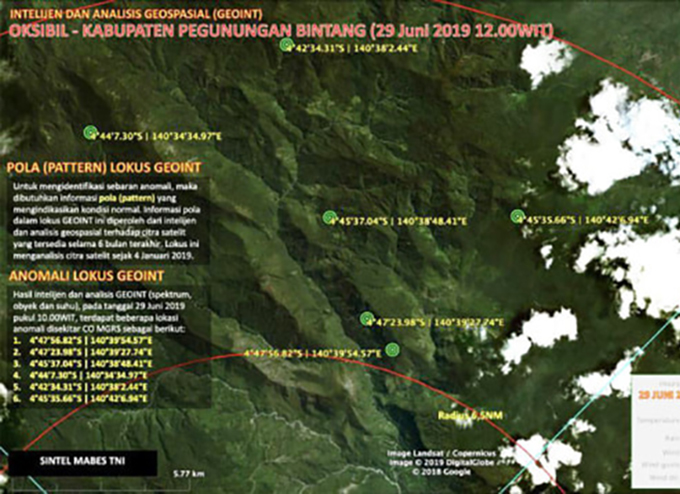
The search for the missing Indonesian military Mi-17 helicopter, which disappeared on Friday, continues around the Mol and Aprok mountains near Jayapura, Papua, Jakarta news media reported today.

“We are currently searching over ground and air, with a helicopter unit dispatched as well,” said Lieutenant-Colonel Chandra Dianto of the Jayawijaya Military Command as quoted by Antara.

The search was halted yesterday afternoon and was expected to be continued today, reported the Jakarta Post.

READ MORE: Indonesian Army helicopter with 12 on board goes missing

The ground team had climbed the Mol and Aprok mountains and reached 762m above sea level.

Chandra also said that the air search had covered the route the Mi-17 had used to return from Oksibil.

-Partners-

“There’s no sign of the Mi-17 as of now,” Chandra added.

The local air traffic control lost contact with the Mi-17 helicopter at the same time as a cumulonimbus cloud suddenly appeared over the district of Oksibil in the Bintang mountains, according to the Meteorology, Climatology and Geophysics Agency (BMKG), region V, of Jayapura.

A cumulonimbus cloud is considered dangerous as it possesses elements that could disrupt flights.

The Mi-17, registration number HA-5138, carried 12 passengers and air crew who were assigned to Okibab prior to the incident. The flight was carrying supplies for on-duty soldiers in the region.

RNZ News reported that rescue efforts were focused on the mountainous Pegunungan Bintang regency on the Papua New Guinea border.

A military spokesperson, Muhammad Aidi, said four helicopters and a surveillance aircraft are being sent out today.

Print Friendly, PDF & Email

Article by AsiaPacificReport.nz

At the G20, a focus on sideshow diplomacy and photo opps, with limited material gains

Source: The Conversation (Au and NZ) – By Caitlin Byrne, Director, Griffith Asia Institute, Griffith University

What a weekend it been: global leadership, diplomacy and theatrics, all at play on the world stage. US President Donald Trump – never one to shy away from the spotlight — has dominated. Significant breakthroughs, including a pause in the escalating China-US trade war and the resumption of dialogue between the US and North Korea, have been achieved.

One might question the strategy and motivations behind Trump’s latest diplomatic engagements. Known for his unorthodox approach to diplomacy, Trump’s latest activities are more likely driven by the prospect of a fight in the 2020 US elections than a genuine concern for regional and global stability. Trump’s turn towards dialogue has averted the immediate disaster of a trade war and confrontation with North Korea, but the longer-term implications point to a more significant shake-up in global diplomacy.

Limited success and blurred optics

As host of the 2019 G20 summit, Japan’s Prime Minister Shinzo Abe is to be credited for his efforts in bringing global leaders together under what appeared to be difficult circumstances.

It was always going to be a tough meeting. Overshadowed by the US-China trade war, and set against a global backdrop of widening political fault lines, seething populism and fraying institutions, Abe certainly had his work cut out for him.


Read more: Trade war tensions sky high as Trump and Xi prepare to meet at the G20


Just bringing together the leaders and other officials from 19 of the world’s biggest economies, plus the European Union, for a summit on global economic governance was, in itself, a major achievement. They were joined by a raft of invited guests, including the leaders of Singapore, Vietnam and Thailand, as well as representatives of key international organisations.

The summit delivered expected consensus support for “strong, sustainable, balanced and inclusive economic growth”, alongside renewed commitments to reform the World Trade Organisation and agreement on key initiatives on digital innovation and e-commerce, financial inclusion for ageing populations, and marine plastics.

More importantly, it provided the much-needed platform for US-China dialogue, bringing the escalating trade war to a halt.

Ultimately, though, the G20 gains were limited. The final communiqué reflected the deep political tensions globally at the moment and the overriding domestic focus of many leaders. For example, it stopped short of affirming the G20’s customary commitment to anti-protectionist measures and included watered-down language on climate change action.

One might be forgiven for mistaking the leaders’ summit for a glorified photo opportunity. G20 pics – ranging from the rambling family photos of leaders and spouses to awkward moments on the sidelines — dominated the weekend Twittersphere.

Of course, optics matter, and the images revealed much about the diversity and dynamics at play within this “premier” economic forum. Trump’s friendly interactions with Russian President Vladimir Putin and Saudi Arabia’s Crown Prince Mohammad bin Salman, for instance, raised eyebrows and ire at home.

But it’s not all about the photo opps. The G20 leaders’ summit is the culmination of months of intense negotiations, and most importantly reinforces the underlying habits of cooperation so desperately needed for ongoing global economic stability.

Theresa May and Vladimir Putin shared one of the weekend’s more cringe-worthy moments. Mikhail Metzel/Tass handout/EPA

Side-show diplomacy

As with any major summit, the G20 gathering offers the opportunity for leaders to engage in bilateral or minilateral discussions. For many, this is the main event, and for Abe, especially, the stakes on the sidelines at this G20 were high.

Saturday’s bilateral meeting between Trump and China’s President Xi Jinping did not disappoint, with both leaders agreeing to resume trade talks, stalled since the last G20 in Buenos Aires. Notably, Trump announced his suspension of some US$300 billion in threatened tariffs and eased restrictions on US companies selling components to Chinese telco, Huawei.


Read more: US-China relations are certainly at a low point, but this is not the next Cold War


Other G20 sideline events, including Trump’s bilateral with Putin created their own drama, but it was Trump’s Saturday morning tweet suggesting a spontaneous visit with North Korean leader Kim Jong Un during his subsequent trip to Korea, that caught everyone off guard.

And with that, arrangements fell miraculously into place for Trump to take a historic first step for a sitting US president into North Korea, and for Kim and Trump to spend an hour in conversation in Freedom House on the South Korean side of the demilitarized zone.

Importantly, the two have now agreed to further talks intended to advance their ongoing denuclearization negotiations. Spectacle aside, there may well be positives to come from this interaction, but for the moment the endgame just isn’t clear.

Thumbs up for Morrison

Australian Prime Minister Scott Morrison performed remarkably well at his second G20 leaders’ summit, marking a positive turn from last time round.

To be fair, Morrison attended his first G20 summit in November just three months into his term as prime minister following the Coalition leadership spill. He was unknown and inexperienced at the time.


Read more: In his first major foreign policy test, Morrison needs to stick to the script


In Japan, Morrison was attending his first G20 as Australia’s elected leader, with decent summitry experience and far more established relationships with his global counterparts in place. His key message – that a US-China trade war was in nobody’s interests – was well-prepared, and it resonated with key G20 counterparts.

Other highlights for Morrison included his dinner on the eve of the summit with Trump. While the press pool may have been unimpressed, the fact that this was Trump’s first bilateral event of the summit is significant, even if it was, as some suggest simply to fill a gap in Trump’s program. Trump’s reflection on the US alliance with Australia, and Morrison’s election win with Australia was replete with praise.

Scott Morrison had plenty of face-time with Donald Trump over the weekend. Lukas Coch/AAP

More importantly, though, Morrison’s win on curbing terrorist activities via social media was an important contribution to the summit outcome. G20 leaders were unanimous in their backing for the proposal that would increase pressure on tech giants like Facebook to block or remove the spread of violent extremism online.

The fact that Morrison shared news of the outcome with New Zealand Prime Minister Jacinda Ardern added to the credibility of the concept within the G20 grouping and lifted its profile at home.

No clear path ahead

In all, the G20 summit was an important exercise in diplomacy and resulted in a positive outcome for Abe. This sort of cooperation is so desperately needed if the institutions, rules and norms underpinning economic governance are to carry any weight at all. And as Japan hands the G20 reins over to the 2020 host, Saudi Arabia, supporting diplomacy and cooperation will be more important than ever.

Trump’s sideshow-style diplomacy certainly stole the limelight. The resumption of dialogue with both China and North Korea reaffirms the necessary place of diplomacy in the region. But Trump is navigating dangerous territory, and the lack of clear strategy, dubious motivations and self-serving tactics should have everyone – including his allies – on guard.

ref. At the G20, a focus on sideshow diplomacy and photo opps, with limited material gains – http://theconversation.com/at-the-g20-a-focus-on-sideshow-diplomacy-and-photo-opps-with-limited-material-gains-119461

Regardless of what the Federal Court says, you shouldn’t put ‘flushable’ wipes down the loo

Source: The Conversation (Au and NZ) – By Ian Wright, Senior Lecturer in Environmental Science, Western Sydney University

On Friday the Australian Federal Court found in favour of Kimberly-Clark’s “flushable wipes” in a legal action brought by the Australian Competition and Consumer Commission (ACCC).

There was insufficient evidence to convince Justice Gleeson that Kimberly-Clark’s wipes were primarily responsible for significant blockages and were therefore unsuitable for flushing down the toilet.

This was a very different outcome to a 2018 court case, also in the Federal Court, in which White King Flushable Wipes were fined A$700,000 for misleading claims.


Read more: Don’t believe the label: ‘flushable wipes’ clog our sewers


The water industry has responded with disappointment to the latest ruling. Sydney Water claims 75% of sewer blockages involve wet wipes. Part of the problem is that, once flushed, wipes are anonymous and the blame for blockages cannot be laid at a specific company’s door.

This case highlights the need to determine what “flushable” really means. Does it mean you can physically flush it down a toilet? Or that it will biodegrade without major issue in the sewerage system, in the manner of toilet paper?

Flushable problems

ACCC Chairman Rod Sims explained that the commission pursued the case against Kimberly-Clark because of increasing reports from Australian water authorities of “non-suitable products being flushed down the toilet and contributing to blockages and other operational issues”.

Consumer groups such as Choice have also expressed concern about the impact of these products for years. Choice has produced a video that demonstrates how poorly some wipe products disperse in water, compared with toilet paper.

The water industry is frustrated with frequent sewer blockages, many of which are caused by materials people should not have flushed down the toilet. The industry slogan is that only the “three Ps” – pee, poo, and (toilet) paper – should be flushed down the toilet.

What is all the fuss about?

Blocked sewers are deeply unpleasant for everyone involved: professionals who have to unblock them, local residents, and the animals and plants that live nearby.

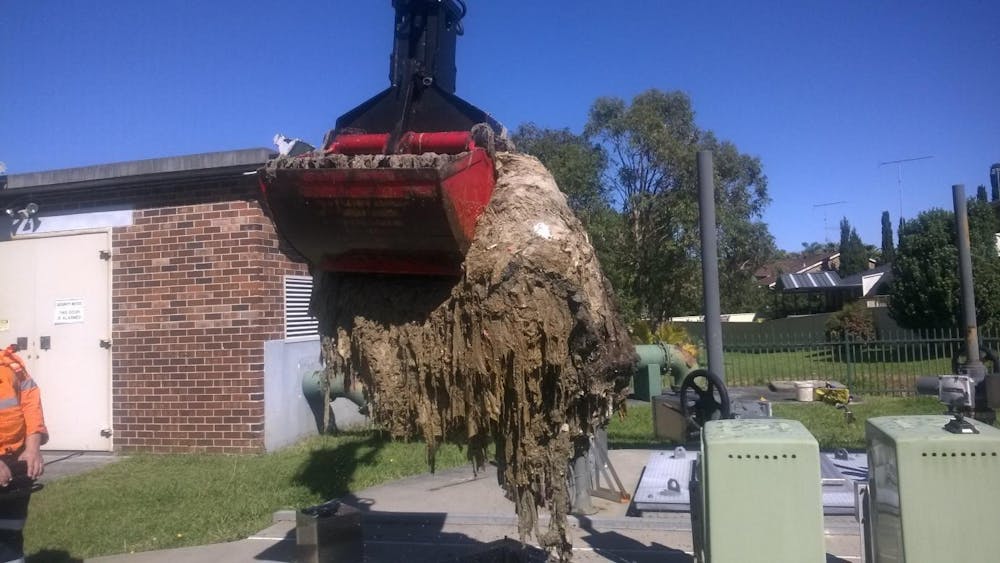
This is also linked to another chronic problem in sewers: fats. These mainly come from cooking fats and oils that coagulate in sewers. They have combined to create horrific “fatbergs”, often photographed with disgusted fascination.

‘Fatbergs’ are made when fats and oils coagulate in sewers, trapping other material – like so-called ‘flushable’ wipes. Courtesy of Sydney Water

Much less common are the images showing the discharge of liquid sewage due to the blockages. In my previous career as a scientist in the water industry, I visited hundreds of such scenes.

They are smelly and unsightly, but of more concern is the public health hazard they pose. Raw sewage is dangerous due to its abundance of disease-causing organisms. Overflows can happen anywhere, often in very public places.

Sewers are underground, and often beside waterways. This means they might be blocked and leak raw sewage for weeks before it is noticed.

Tree roots and drought

Drought and trees are also contributing to the problem wipes pose. Currently much of southeastern Australia is in drought. Many trees in our cities are desperate for water, and their roots invade sewers.

Wipes and similar materials are readily entwined in tree roots. Wipes have a well-known tendency to become entangled and accumulate gradually to build a blockage.

Whose standard do you believe?

The industry body Water Services Australia is currently working on an Australian industry standard for testing “flushability”. This is expected later in the year.


Read more: Microplastic pollution and wet wipe ‘reefs’ are changing the River Thames ecosystem


On the other hand, many wipes companies claim their products do break down when flushed – although Kleenex, for example, advises not flushing more than two wipes at a time. These wipes comply with an existing industry standard for “flushability”, although this standard was developed by two trade associations that represent wipe manufacturers.

The development and application of a comprehensive Australian standard is urgently needed to address this problem.

ref. Regardless of what the Federal Court says, you shouldn’t put ‘flushable’ wipes down the loo – http://theconversation.com/regardless-of-what-the-federal-court-says-you-shouldnt-put-flushable-wipes-down-the-loo-119639

Health Check: why do we crave comfort food in winter?

Source: The Conversation (Au and NZ) – By Megan Lee, Academic Tutor and PhD Candidate, Southern Cross University

It’s winter and many of us find ourselves drawn to bowls of cheesy pasta, oozing puddings, warming soups, and hot chocolate with marshmallows.

These and other comfort foods can make us feel good. But why? And why do we crave them in winter and not in summer?

Research tells us there are three good reasons.


Read more: Health Check: how food affects mood and mood affects food


1. The gut ‘speaks’ to the brain

We know from the relatively new field of nutritional psychiatry that our stomachs produce the “happiness chemicals” dopamine and serotonin. When we eat, a complex process involving the brain means these neurochemicals trigger feelings of happiness and well-being.

These happiness chemicals are also produced when we exercise and are exposed to sunlight, which decline in winter.

This results in a change in the fine balance between the good and bad bacteria that live in our stomachs, and consequently, the relationship between the gut and the brain.

So, in winter when we eat our favourite comfort foods, we get a rush of happiness chemicals sent from the gut to our brain and this make us feel happy and content.


Read more: Essays on health: microbes aren’t the enemy, they’re a big part of who we are


2. Evolution may have a hand

The second reason we crave more comfort foods during the winter months could be evolutionary. Before we enjoyed technological advances such as housing, heating, supermarkets and clothing, humans who increased their body weight during winter to keep warm were more likely to survive their environmental conditions. Craving carbohydrate and sugar rich foods was therefore a protective mechanism.

Although we are not still living in shelters or foraging for food today, food cravings in winter may still be programmed into our biology.


Read more: Caveman cravings? Rating the paleo diet


3. Psychology, craving and mood

Social learning theory says people learn from each other through observing, imitating and modelling. In the context of food cravings this suggests that what our caregivers gave to us in winter as children has a striking impact on what we choose to eat in winter as adults.

A review of studies on the psychological reasons behind eating comfort food says this food may play a role in alleviating loneliness and boosting positive thoughts of childhood social interaction.

We may also naturally experience lower mood in winter and low mood has been linked to emotional eating.

In winter due to it being darker and colder, we tend to stay indoors longer and self-medicate with foods that are carbohydrate and sugar rich. These types of foods release glucose straight to our brain which gives us an instant feeling of happiness when we are feeling cold, sad, tired or bored.


Read more: Here comes the sun: how the weather affects our mood


Comfort food can be healthy

For all the comfort they provide, comfort foods generally receive a bad rap because they are usually energy and calorie dense; they can be high in sugar, fat and refined carbohydrates.

These types of foods are usually linked to weight gain in winter and if you eat too much over the longer term, can increase the risk of heart disease and diabetes.

However, not all comfort foods are created equally, nor are they all bad for our health.

You still get a comforting feeling with a hearty bowl of soup, but without the extra calories. from www.shutterstock.com

You can get the same comforting feelings from winter foods containing ingredients that are good for you. For example, a hearty bowl of soup with a slice of wholegrain bread can give you all the components you need for optimal physical and psychological health. Steaming bowls of chilli and curries can provide immunity boosting properties with the use of their warming spices. So too are all the wonderful citrus fruits that become available in the winter.

If you are craving something that is carbohydrate rich, try swapping white varieties for wholegrain versions that will dampen carbohydrate cravings. If you crave a hot chocolate try swapping the cocoa powder for cacao which has a higher concentration of vitamins and minerals.

More good news

The good news for all of us who crave comfort foods in winter is studies that assess intuitive eating — eating when you are hungry, stopping when you are full and listening to what your body is telling you to eat — suggest people who eat this way are happier with their body image, feel better psychologically and are less likely to have disordered eating.

So, embrace this wonderful chilly weather. Rug up in your favourite woolly jumper, sit by the fire, cuddle up with a loved one, make some healthier swaps to your classic comfort foods, remove the food guilt and listen to what your body is telling you it needs during these cold winter months.

ref. Health Check: why do we crave comfort food in winter? – http://theconversation.com/health-check-why-do-we-crave-comfort-food-in-winter-118776

Indonesia to make major Pacific pitch at NZ expo amid human rights scrutiny

By RNZ Pacific

Indonesia will use a landmark business and trade exposition next week in New Zealand to launch a fresh diplomatic push in the Pacific, as the Southeast Asian nation continues to face regional scrutiny over alleged human rights abuses in West Papua.

The Pacific Exposition, which will take place in Auckland from July 11-14, is expected to bring together the foreign ministers of Indonesia, New Zealand and Australia, as well as senior government officials from across Polynesia and Melanesia. A bilateral agreement is to be signed with the Cook Islands at the same time.

The event is the latest foray in a determined diplomatic outreach in the Pacific region that Indonesia’s government of Joko Widodo has overseen in the past few years.

READ MORE: Indonesia’s political system has ‘failed’ its minorities – like West Papuans

Jakarta has made no bones about its aim of greater connectivity with a region that has been critical of Indonesian administration of restive Papua. The Auckland expo is the strongest sign yet of Indonesia’s intent.

Pitched as a trade, investment and tourism forum, it will involve dozens of government and private sector representatives from several Pacific Island countries, with most of their expenses paid for by the Indonesian government.

-Partners-

“The exposition is also the first step towards connecting goods and people of the Pacific and Southeast Asia,” reads a flier for the event.

Vanuatu refuses invite
Indonesian embassy officials — who in April quietly toured several Pacific nations to drum up support for the forum — said it has been well-received across the region. Still, according to one person who has advised embassy officials, Vanuatu’s government has refused to attend, the only Pacific nation approached to do so.

The person, who requested anonymity because they were not authorised to discuss the matter, said Indonesia also hoped to establish a trade “hub” in one Pacific Island country which it could use to facilitate the flow of goods throughout the region.

The Pacific Exposition…Indonesia’s pitch to the Pacific as it continues to face scrutiny over alleged human rights abuses in West Papua. Image: RNZ Pacific

Although Indonesian embassy officials stressed that the event was apolitical and trade-focused, they said they were worried it would be protested by activists and advocates critical of Indonesia’s handling of human rights in Papua. Local government officials from Papua and West Papua will be in attendance and stalls promoting investment in the two provinces will be set up as part of the trade show.

It comes as Papua has reentered the spotlight, after an escalating war between the West Papua Liberation Army and Indonesia’s military forces since December sent the Central Highlands region into chaos.

Rights groups estimate tens of thousands have been displaced by the violence — which was sparked in part by the massacre of at least 16 Indonesian construction workers by the Liberation Army in Nduga regency. Disputed accounts from military forces and rebel fighters indicate dozens on both sides have been killed in ongoing skirmishes.

High level attendance
New Zealand’s Foreign Minister Winston Peters, who is expected to attend the expo alongside his Australian counterpart Marise Payne, last month said he would raise concerns over human rights abuses in West Papua with Indonesia’s Foreign Minister, Retno Marsudi.

It is unclear whether talks would take place during the exposition, and the offices of Peters and Payne did not respond to emailed questions.

Senior Indonesian cabinet members have in recent months openly talked about influencing the Pacific Islands into supporting its claims over Papua.

In September, local media reported Indonesia’s top security minister, Wiranto, as proposing $US4 million in funding toward convincing South Pacific nations that Jakarta was promoting development in Papua. He also invited the leaders of Vanuatu and Nauru to see the positive work in Papua for themselves. Neither took up his offer.

Marsudi, the Foreign Minister, recently said her country considers the Pacific Islands as “family”, noting that technical cooperation and capacity building with regional countries will grow significantly in the coming years.

Indonesia’s pitch
Despite their strong ties with New Zealand, Niue and the Cook Islands have been in Indonesia’s sights and bilateral relations are expected to open for the first time in the coming weeks. In March, while pitching the opening of ties to Indonesia’s House of Representatives, Marsudi said the two countries did not support “separatism” in Papua.

Cook Islands Prime Minister Henry Puna will be attending the exposition next week — the only head of state to do so — and an official with his office said a cooperation agreement would be signed on July 12 in Rarotonga. Niue Premier Sir Toke Talagi was also slated to attend the event and sign a similar agreement but illness has reportedly expected to prevent him from attending.

Among those attending will be New Zealand Tourism Minister Kelvin Davis and Maori Development Minister, Nanaia Mahuta. According to a draft agenda of the event, Tonga’s Deputy Prime Minister, Semisi Lafu Kioa Sika is also expected to attend. Tonga’s Prime Minister Akilisi Pohiva is a vocal supporter of West Papuan self-determination aims. His government advocates for the re-listing of West Papua on the agenda of the UN Decolonisation Committee so that there is UN oversight over the human rights of West Papuans.

Vanuatu is preparing a UN resolution along these lines, but will be hard pushed to gain majority support in the General Assembly, given Indonesia’s growing influence.

The appearance of high level officials will be a boon for Indonesia’s investment pitch to the Pacific, a region where strategic competition between western powers and China has overshadowed Indonesia’s growing economy and regional leadership ambitions.

A western diplomatic source who spoke on condition of anonymity said Indonesia had “relentlessly pursued” Pacific Island nations into attending the event, adding that its no-expenses-spared policy of providing travel and accomodation costs to delegates had likely encouraged many to attend.

This article is published under the Pacific Media Centre’s content partnership with Radio New Zealand.

Print Friendly, PDF & Email

Article by AsiaPacificReport.nz

Curious Kids: how can penguins stay warm in the freezing cold waters of Antarctica?

Source: The Conversation (Au and NZ) – By Jane Younger, Research Fellow, University of Bath

Curious Kids is a series for children. If you have a question you’d like an expert to answer, send it to curiouskids@theconversation.edu.au You might also like the podcast Imagine This, a co-production between ABC KIDS listen and The Conversation, based on Curious Kids.


How can penguins and polar bears stay warm in the freezing cold waters of Antarctica? – Riley, age 8, Clarksville, Tennessee USA.


Thanks for your question, Riley. The first thing I should probably say is that while a lot of people think polar bears and penguins live together, in fact they live at opposite ends of the Earth. Polar bears live in the northern hemisphere and penguins live in the southern hemisphere.

I’m a penguin researcher so I’m going to explain here how penguins can stay warm in Antarctica.

There are four species of penguins that live in Antarctica: emperors, gentoos, chinstraps, and Adélies.

Here’s an Adélie penguin. Jane Younger, Author provided (No reuse)

All these penguins have special adaptations to keep them warm, but emperor penguins might be the most extreme birds in the world. These amazing animals dive up to 500 metres below the surface of the ocean to catch their prey, withstanding crushing pressures and water temperatures as low as -1.8℃.

But their most incredible feat takes place not in the ocean, but on the sea ice above it.

Surviving on the ice

Emperor penguin chicks must hatch in spring so they can be ready to go to sea during the warmest time of year. For this timing to work, emperors gather in large groups on sea ice to begin their breeding in April, lay their eggs in May, and then the males protect the eggs for four months throughout the harsh Antarctic winter.

It’s dark, windy, and cold. Air temperatures regularly fall below -30℃, and occasionally drop to -60℃ during blizzards. These temperatures could easily kill a human in minutes. But emperor penguins endure it, to give their chicks the best start in life.

Emperor penguins have special physical and behavioural adaptations to survive temperatures that could easily kill a human in minutes. Flickr/Ian Duffy, CC BY

A body ‘too big’ for its head

Emperor penguins have four layers of overlapping feathers that provide excellent protection from wind, and thick layers of fat that trap heat inside the body.

Emperor penguins have a small beak, small flippers, and small legs and feet. This way, less heat can be lost from places furthest from their main body. Anne Fröhlich/flickr, CC BY-ND

Have you ever noticed that an emperor penguin’s body looks too big for its head and feet? This is another adaptation to keep them warm.

The first place that you feel cold is your hands and feet, because these parts are furthest from your main body and so lose heat easily.

This is the same for penguins, so they have evolved a small beak, small flippers, and small legs and feet, so that less heat can be lost from these areas.

They also have specially arranged veins and arteries in these body parts, which helps recycle their body warmth. For example, in their nasal passages (inside their noses), blood vessels are arranged so they can regain most of the heat that would be lost by breathing.


Read more: Curious Kids: Why do sea otters clap?


Huddle time

Male emperor penguins gather close together in big groups called “huddles” to minimise how much of their body surface is exposed to cold air while they are incubating eggs.

This can cut heat loss in half and keep penguins’ core temperature at about 37℃ even while the air outside the huddle is below -30℃.

The biggest huddles ever observed had about 5,000 penguins! Penguins take turns to be on the outer edge of the huddle, protecting those on the inside from the wind.

Incredibly, during this four-month period of egg incubation the male penguins don’t eat anything and must rely on their existing fat stores. This long fast would be impossible unless they worked together.

The biggest huddles ever observed had about 5,000 penguins! Flickr/Ars Electronica, CC BY

Changing habitats

Emperor penguins are uniquely adapted to their Antarctic home. As temperatures rise and sea ice disappears, emperors will face new challenges. If it becomes too warm they will get heat-stressed, and if the sea ice vanishes they will have nowhere to breed. Sadly, these incredible animals may face extinction in the future. The best thing we can do for emperor penguins is to take action on climate change now.


Read more: Curious Kids: is water blue or is it just reflecting off the sky?


Hello, curious kids! Have you got a question you’d like an expert to answer? Ask an adult to send your question to curiouskids@theconversation.edu.au Please tell us your name, age and which city you live in. We won’t be able to answer every question but we will do our best.

ref. Curious Kids: how can penguins stay warm in the freezing cold waters of Antarctica? – http://theconversation.com/curious-kids-how-can-penguins-stay-warm-in-the-freezing-cold-waters-of-antarctica-116831

To carve out a niche in space industries, Australia should focus on microgravity research rockets

Source: The Conversation (Au and NZ) – By Gail Iles, Lecturer in Physics, RMIT University

Australia now has a space agency, and our federal and South Australian governments are looking to grow a prosperous space industry to boost productivity and employment.

The challenge for Australia is to find a niche in the expanding global race to commercialise space.

I suggest we should focus on microgravity experiments.


Read more: Australia: well placed to join the Moon mining race … or is it?


First of all, let’s get the definition of microgravity right.

Micro means very small, so the term microgravity is used interchangeably with “Zero-G” or zero gravity.

If you’ve seen videos of people floating on board an aircraft known as the “vomit comet”, they’re in microgravity. That doesn’t mean there’s no gravity; it means they are in freefall.

It’s the same sensation you may have felt at an amusement park, or in a fast-moving elevator when your stomach lifts up.

Objects in freefall are all falling towards something at the same speed. So in the vomit comet: the aircraft, the people and everything inside are all falling towards the ground at the same speed.

A spherical flame

Microgravity research makes use of that freefall condition to conduct scientific experiments. It’s particularly interesting to do so because most systems we understand well usually behave differently in microgravity.

For example, on Earth the flame from a struck match looks like an inverted teardrop shape and is orange. In microgravity, that same flame is spherical and blue in colour. This is because heat transfer is very different in microgravity than in normal gravity.

We learn in school that heat rises: this is what makes the match flame become pointed at the top – all the heat in the flame is rising upwards.

In microgravity, heat doesn’t rise. It stays exactly where it is. So the flame in microgravity keeps its heat focused around the match and burns much hotter, which is why it appears blue.

Understanding these simple processes allows scientists and engineers to design equipment for use in spacecraft, which experience microgravity all the time.

Experiments at microgravity

There are more than 300 experiments currently happening aboard the International Space Station, making it the largest off-world scientific laboratory. From biotechnology to earth and space science, and from physics to human research, we are continually finding out new things about our world from experiments in microgravity.

Scientifically, such experiments have great value. For example, crystal forms of a protein involved in the disease cystic fibrosis – a life-threatening lung disease caused by a genetic mutation – can be grown in microgravity. Without the effects of gravity, the crystals grow much bigger and with higher purity. Researchers can use these “super crystals” to determine protein structure, and improve the drugs currently used to treat cystic fibrosis. More efficient drugs reduce the need for lengthy lab-based research and development and improve the quality of life of patients.

Data from observations of how liquid metals solidify in microgravity has been used to change how we cast turbine blades on Earth. Changes to these models and processes has resulted in the manufacture of lighter and stronger blades for aircraft engines. Lighter aircraft leads to lower fuel consumption and so less greenhouse gas emission resulting in reduced airfares to the consumer.

Opportunity for Australia

Australia has little involvement with the International Space Station and we don’t have a Zero-G aircraft. So we must look to other types of microgravity platform to conduct any research.

Up until the 1970s we launched sounding rockets from Woomera, South Australia – but as a defence project those flights stopped when other countries pulled out.

A sounding rocket is so-called from “sonda” the Latin word for “probe” – it’s a rocket that takes measurements.


Read more: Lost in space: Australia dwindled from space leader to also-ran in 50 years


In 2019 the Australian Youth Aero Association held the inaugural Australian Universities Rocket Competition to boost new capability in sounding rocket technology in Australia.

The rocket launches with a rapid acceleration which lasts for a few seconds. After the motor has used up all its fuel, the rocket traces out a huge arc in the sky, where everything inside is in zero gravity before it falls back down to earth.

Because we only need the rocket to be in freefall to achieve microgravity, the rocket doesn’t even need to go into space to conduct the experiment.

This growing number of microgravity platforms available in Australia provides scientists with a new environment in which to conduct experiments.

Cost versus risk

Student-built rockets are low cost – however, model rocketry is also high-risk, and not ideal for precise scientific measurements. If the safety parachute fails to deploy, the rocket risks a ballistic landing, destroying the rocket and everything on board – including that valuable scientific experiment.

Many nations have active sounding rocket programmes using reliable rockets that regularly launch to altitudes well above 100 km, the boundary that separates aeronautics from astronautics and the commonly accepted “edge of space”.

In Australia, Equatorial Launch Australia (ELA) are working with The Gumatj Corporation Limited, Developing East Arnhem Limited and the Northern Territory Government to build Australia’s first spaceport.

The site in the Northern Territory is sufficiently well advanced that NASA recently announced they would work with ELA to launch sounding rockets into sub-orbital space from the Arnhem Space Centre in 2020.

Thanks to the proximity of northern Australia to the equator and expertise in ground station operation, Australia has an opportunity to carve out a niche in launching sounding rockets to conduct microgravity research.

ref. To carve out a niche in space industries, Australia should focus on microgravity research rockets – http://theconversation.com/to-carve-out-a-niche-in-space-industries-australia-should-focus-on-microgravity-research-rockets-119225

Thirty years on, the Fitzgerald Inquiry still looms large over Queensland politics

Source: The Conversation (Au and NZ) – By Chris Salisbury, Research Associate, School of Political Science & International Studies, The University of Queensland

This week marks 30 years since the landmark Fitzgerald Inquiry report was handed down in Queensland.

It’s no overstatement to suggest the inquiry’s findings transformed Queensland’s political landscape more than any event in the past six decades. Such was the inquiry’s impact that the state’s politics are now typically characterised in “pre-” and “post-Fitzgerald” terms.

‘Players in a vast drama’

The Fitzgerald Inquiry – officially the Commission of Inquiry into Possible Illegal Activities and Associated Police Misconduct – was a watershed moment in exposing entrenched police and government corruption.

It’s regarded as having established important procedural precedents for investigating official malfeasance. These included granting indemnities to witnesses for providing crucial evidence, and holding public hearings with open media access.

The inquiry was instigated by Queensland’s police minister and deputy premier, Bill Gunn, in May 1987. Gunn was prompted to act following media reports of barely restrained criminal activity in Brisbane “vice dens”, under the protection of police officers.

Most notable among this media coverage were reports by Courier-Mail journalist Phil Dickie, and the now renowned Moonlight State Four Corners episode, filed by ABC investigative reporter Chris Masters.

Earlier Queensland investigations into illicit activities, such as the Sturgess Inquiry in 1985, had resulted in little change to police practices and were largely overlooked by government.

Gunn wanted an inquiry to root out the problem of corruption in police ranks, but expected the task to last only a matter of weeks. Premier Joh Bjelke-Petersen warned his deputy that “you’ve got a tiger by the tail, and it’s going to bite you”.

Undeterred, Gunn eventually appointed little-known barrister and judge Gerald “Tony” Fitzgerald QC to head a Commission of Inquiry, established by Order in Council while Bjelke-Petersen was absent on a US trade mission.

Referred to colloquially as the “Fitzgerald Inquiry”, its twice-broadened terms of reference and later expanded powers of investigation helped lay bare a secretive political establishment and a sordid network of police graft (known as “The Joke”), depicted recently in unprecedented detail in Matthew Condon’s gripping trilogy.


Read more: Issues that swung elections: the dramatic and inglorious fall of Joh Bjelke-Petersen


The inquiry’s hearings lasted almost two years, with startling evidence from 339 witnesses broadcast regularly to an incredulous public. Several senior police figures – including disgraced Police Commissioner Terry Lewis – and three state government ministers were found to have engaged in corrupt conduct and were later jailed.

“Minister for Everything” Russ Hinze was also identified as corrupt, but died before facing court. At the very top, Bjelke-Petersen was charged with perjuring himself before the inquiry, but his 1991 trial was abandoned with a hung jury.

Fitzgerald’s broad and immediate impact

The Fitzgerald report has been described since as a “blueprint for accountability” in Queensland. Previously, commitment to this principle had been sadly lacking.

The report, and Fitzgerald’s interim media briefings, were damning of not only a defective police leadership, but also a self-serving political culture of patronage and unaccountability. It made dozens of recommendations intended, in Fitzgerald’s words, “to bring about improved [administrative] structures and systems”. The bulk of these went to criminal justice oversight and electoral law reform.

In the slightly frenzied aftermath of Bjelke-Petersen’s drawn-out resignation in December 1987, new Premier Mike Ahern might have been expected to sideline such reform proposals and concentrate primarily on readying Brisbane to host World Expo ‘88.

As Queensland premier, Mike Ahern was determined to tie his government to Fitzgerald’s recommendations. AAP/Dave Hunt

Yet Ahern preemptively – and quite deliberately, as he later told Masters in a Four Corners interview – tied his government to Fitzgerald’s recommendations “lock, stock and barrel”.

Ahern’s sincerity towards the accountability agenda was evident in late 1988 when he established the long called-for Public Accounts Committee to scrutinise government expenditure.

Despite such commitments, the repercussions for the National Party from the inquiry’s findings, delivered in Fitzgerald’s report on July 3, 1989, were politically grave and probably unavoidable.

Shortly afterwards, and barely two months out from an election, the rattled Nationals jettisoned Ahern for Russell Cooper as leader. But they could not stem the popular tide turning against a government seen as lacking legitimate authority.

After Wayne Goss was elected premier in December 1989, his government was quick to begin the electoral reform and public administration overhaul that marked its first term in office.

Goss’ win signalled “the end of the Bjelke-Petersen era”, as he put it on election night. He might have added, the “beginning of the Fitzgerald era”.

Labor leader Wayne Goss claims victory in the 1989 Queensland state election. AAP/Queensland ALP

An Electoral and Administrative Review Commission (EARC) and Criminal Justice Commission (CJC), major recommendations of the inquiry report, had been legislated or instigated under Ahern and then Cooper. In both cases, their implementation, staffing and resourcing were rounded out and given momentum by Goss.

Notably, Goss had a “fractious” relationship with the CJC’s inaugural commissioner, Sir Max Bingham, and revealed in interview prior to his premature death his personal misgivings about the Commission’s operations while he was premier.

Several other “Fitzgerald reforms” and initiatives were promptly implemented by Goss’ administration, including freedom of information (FOI) provisions, MPs’ pecuniary interest registers, and the right to peaceful public assembly. It also dismantled the state’s system of electoral malapportionment (the long-derided “gerrymander”).

The Electoral Act 1992 established an electoral redistribution based largely on the principle of “one vote, one value”, applying for the first time at the September 1992 state election – at which Goss was duly returned.


Read more: Wayne Goss, a modernising leader who left Queensland a better place


Yet even under Goss’ leadership, the full extent of reforms mapped out in Fitzgerald’s report were not wholly realised.

Lasting legacy, or unfinished business?

Changes to Queensland’s accountability systems since the Fitzgerald Inquiry have been significant, if not committed to consistently by ensuing administrations.

Critics point to periodic regressions or executive reluctance to maintain the reform process. Insufficient whistleblower protections and impediments to FOI access, among other transparency failings under governments on both sides of politics, have at times dulled the shine on the post-Fitzgerald integrity framework.

Fitzgerald himself has seen fit on occasion to highlight Queensland politicians’ departures from a commitment to reform and accountability.

Campbell Newman found this to his cost when sustained criticism of his “undermining” of the judiciary’s independence, or harking back to Joh-era electoral pork-barrelling, eroded his hold on executive authority.

Equally, the current Palaszczuk government’s changes to Queensland’s voting laws, opportunistically reverting to full preferential voting, were decried as being against the intent of Fitzgerald reforms.

An often-cited illustration of improved accountability is the example of Gordon Nuttall, the former Beattie government minister sacked then convicted in 2009 and 2010 on charges of corruption and perjury. He was sentenced to a total of 12 years in prison.

As Queensland political scientist Rae Wear eloquently put it:

…denial [of corruption] of the kind practised by Bjelke-Petersen and Russ Hinze was no longer a viable option. Nor was the acceptance of cash in brown paper bags.

The CJC and its successor, the Crime and Misconduct Commission (now the Crime and Corruption Commission) – as well as New South Wales’ ICAC, established in 1988 – are held up as models for corruption watchdog agencies, potentially including a future federal ICAC.

The inquiry’s report has become something of an article of faith within Queensland’s civic life. Noted Queensland historian Raymond Evans described it as the product of “the most remarkable Commission of Inquiry in Australia’s history”.

Indeed, elected members (including the current Labor Premier) have been known to brandish the report in parliament, manifesto-like, to cast aspersions of impropriety at their opposite numbers. This reflects the extent to which the Fitzgerald Inquiry became a millstone around the necks of conservative Queensland politicians at its inception over 30 years ago.

The taint of official corruption exposed by the inquiry, and the public’s faith in accountability reforms embodied in Fitzgerald’s report, can partly explain why the Nationals and Liberals (now LNP) have struggled to regain and hold office over the past three decades in Queensland.

But the accountability agenda is one that leaders on both sides of Queensland politics have pursued before and should commit to upholding still.

ref. Thirty years on, the Fitzgerald Inquiry still looms large over Queensland politics – http://theconversation.com/thirty-years-on-the-fitzgerald-inquiry-still-looms-large-over-queensland-politics-119167

‘Have you been feeling your spirit was sad?’ Culture is key when assessing Indigenous Australians’ mental health

Source: The Conversation (Au and NZ) – By Maree Hackett, Professor, Faculty of Medicine, UNSW

If a doctor suspects a patient may be at risk of depression, they will likely ask about the person’s mood, appetite, sleep patterns, and energy and concentration levels, among other questions.

But understandings of mental health differ across cultural groups. So when a doctor is screening for mental illness, it’s important they consider the patient’s culture.

Many Aboriginal and Torres Strait Islander Australians take a holistic view of health, which may differ from non-Indigenous Australians, who often take a more individualistic approach. In terms of mental health, social and emotional well-being is central to the “spirit” of many Aboriginal and Torres Strait Islander peoples.

For Australia’s First Nations peoples, routine screening tools have not always seemed appropriate. Earlier research has found many questions are being lost in translation. Some people who should have scored highly to indicate their risk of depression scored much lower, missing out on potential opportunities for treatment.


Read more: Australia has been silent on Indigenous suicide for too long, and it must change


Where a diagnosis of depression is based on the answers to a set of questions, it’s important the language used in these questions aligns with a person’s understanding of mental illness.

The good news is, we now have a validated culturally specific tool, developed with Aboriginal and Torres Strait Islander community members, to screen for depression in Indigenous Australians.

We anticipate this will allow doctors to identify many Aboriginal and Torres Strait Islander people with mental illness who might have otherwise gone undiagnosed. And the better our capacity to accurately diagnose depression, the better our capacity to treat it.

The new screening tool

The culturally specific screening tool is called the aPHQ-9. It’s an adapted version of the existing tool, called the PHQ-9 – nine questions routinely used by doctors in Australia and overseas to screen for depression.

In our research published today in the Medical Journal of Australia, we’ve shown the culturally specific tool to be effective in screening for depression among Aboriginal and Torres Strait Islander Australians living in urban, rural and remote areas.

GPs now have access to a questionnaire designed to spot depression specifically among Aboriginal and Torres Strait Islander Australians. From shutterstock.com

Some 500 Aboriginal and Torres Strait Islander participants completed the new questionnaire, then took part in a structured psychiatric interview by a trained clinician who hadn’t seen their answers.

We compared the questionnaire results with the interview results, and found the new tool reliably identified those who need further assessment of their mood and those unlikely to have depression.

The culturally specific tool contains questions about the same topics as the original one, but it’s presented in a way that better aligns with Aboriginal understandings of mental health and well-being.


Read more: Aboriginal Australians want care after brain injury. But it must consider their cultural needs


How do the questions differ?

Alongside differences in understandings of mental health, there are important differences between communication styles used in non-Indigenous Australian culture, and those of Aboriginal and Torres Strait Islander peoples. For example, white Australians will often use a more direct communication style.

This example shows how the new tool factors in the subtle differences in cultural understandings of mental health, and communication styles.

The original questionnaire asks “Over the last two weeks, how often have you been bothered by any of the following problems:

  • little interest or pleasure in doing things?
  • feeling down, depressed or hopeless?”

The adapted tool asks “Over the last two weeks:

  • have you been feeling slack, not wanted to do anything?
  • have you been feeling unhappy, depressed, really no good, that your spirit was sad?”

Words like “slack” and “spirit” are more consistent with Aboriginal English. Spirit implies a holistic understanding of health consistent with the definition of health held by many Aboriginal and Torres Strait Islander Australians.


Read more: What do Aboriginal Australians want from their aged care system? Community connection is number one


Another question asks about “letting your family down”. This is also consistent with a holistic view of health and the importance of family in Aboriginal and Torres Strait Islander culture, but might seem out of place in a consultation with a non-Indigenous Australian.

Many Aboriginal and Torres Strait Islander people will recognise that the language in the new tool has been respectfully developed in a culturally appropriate way. They may be more likely to trust the clinician and service administering the questionnaire, and give answers that reflect their true state of mind.

Doctors can now use the new tool

In 2014-15, more than half (53.4%) of Aboriginal and Torres Strait Islander peoples aged 15 years and over reported their overall life satisfaction was eight out of ten or more. Almost one in six (17%) said they were completely satisfied with their life. These positive data are testament to Aboriginal and Torres Strait Islander peoples’ ongoing endurance.

But over the years, events like colonisation, racism, relocation of people away from their lands, and the forced removal of children from family and community have disrupted the resilience, cultural beliefs and practices of many Aboriginal and Torres Strait Islander Australians. In turn, these factors have impacted their social and emotional well-being.

This may explain why Aboriginal and Torres Strait Islander peoples are twice as likely to be hospitalised for mental health disorders and die from suicide than their non-Aboriginal counterparts.

Teenagers aged 15 to 19 are five times more likely than non-Indigenous teenagers to die by suicide.

The importance of being able to more accurately identify those at risk can’t be understated.


Read more: Why are we losing so many Indigenous children to suicide?


While screening all Aboriginal and Torres Strait Islander peoples who present to general practice for depression is not recommended, the new questionnaire is a free, easy to administer, culturally acceptable tool for screening Aboriginal and Torres Strait Islander peoples at high risk of depression.

People who might be at heightened risk of depression include those with chronic disease, a history of depression and those who have been exposed to abuse and other adverse events.

Without a culturally appropriate tool, Aboriginal and Torres Strait Islander people with depression and suicidal thoughts might fly under the radar. This questionnaire will pave the way for important discussions and the provision of treatment and services to those most in need.

If this article has raised issues for you or you’re concerned about someone you know, call Lifeline on 13 11 14. Visit the Beyond Blue website to access specific resources for Aboriginal and Torres Strait Islander people.

ref. ‘Have you been feeling your spirit was sad?’ Culture is key when assessing Indigenous Australians’ mental health – http://theconversation.com/have-you-been-feeling-your-spirit-was-sad-culture-is-key-when-assessing-indigenous-australians-mental-health-119463

Demolish your front fence. It would be an act of radical kindness

Source: The Conversation (Au and NZ) – By Katherine Wilson, Journalist, author and educator, Swinburne University of Technology

A few years ago, I reflected on years of doctoral field-notes documenting the homes of tinkerers — people with an extraordinary commitment to DIY living. It occurred to me that despite their DIY skills, few of these tinkerers had built or maintained front fences.

In a culture where fences are fixtures in the urban landscape, these people tended not to have clear boundaries between their homes and the street, and their gardens spilled into civic space.

This might be significant at a time of populist momentum to “build a wall” between nation-states, and when 65 million refugees are seeking new homes globally.

The tinkerers I studied shared values of “open”: open source, open access, open gardens, a sharing economy, creative commons and a transparent government. And those who inhabited fenceless homes didn’t show any signs of feeling insecure.

They were connected with the commons — that is, shared public resources such as nature strips, neighbourhood parks and public transport. Their tinkering at home was a source of belonging and identity against deregulated job markets — a force driving the populist sentiment that’s displacing people globally and erecting barriers between them.

Their stories support research suggesting that fences – or their absence – can reflect and even shape our political commitments.

Fences that alienate people

Many scholars explain how our structures align with our politics. As American sociologist Langdon Winner described it: “artifacts can contain political properties”.

One of his examples is the low-clearance bridges around parklands on Long Island, New York. Their structural peculiarity seems charming, but historical documents reveal the bridges were designed as fences-in-disguise.

Poor people and racial minorities, who normally used public transport, were discouraged from accessing the parklands because buses couldn’t fit through these overpasses. The bridges were designed so the elite could enjoy the “public” parks free from the underclasses.

And many other civic structures function materially or psychologically to exclude people.

Anti-skateboarding architecture is a civic structure aimed at excluding people. Shutterstock

Known as hostile architecture, these include bus shelters designed to prevent homeless people sleeping in them, and benches embedded with metal skate deterrents to prevent skateboarders gliding over them.


Read more: Designed features can make cities safer, but getting it wrong can be plain frightening


Retreat from civic responsibility

Similarly, fenced properties can “shrink the notion of civic engagement and allow residents to retreat from civic responsibility”, according to Edward Blakely, a Berkley professor of urban design.

Fenced properties encourage castle doctrines (a mindset of fortification) and social splitting (which justifies us-versus-them thinking).

For instance, at the 1987 inception of Sanctuary Cove, Australia’s first gated community, the developer told reporters:

the streets these days are full of cockroaches and most of them are human. Every man has a right to protect his family, himself and his possessions, to live in peace and safety.

Yet according to a United Nations Habitat report, fenced communities can experience more crime than unfenced ones, and they foster paranoia and social division. This is because, as British international affairs journalist Tim Marshall describes it: “physical divisions are mirrored by those in the mind.”

First Australians didn’t need fences

Historian Bill Gammage describes pre-colonial Australia as “a farm without fences”.

He explains why settler-descendants find it difficult to conceive of our country – or of agriculture – as a commons and a continuum in ways First Nations Australians did. In other words, colonists experienced the environment as separate from themselves, regarding it as an economic resource that could be demarcated and privatised.

Fences to control pests, like the famous Rabbit Proof Fence, are causing an ecosystem crisis. Steve Collis/Flickr, CC BY

“Fences on the ground,” Gammage explains, “create fences in the mind”.

For millennia, First Australians practised animal husbandry by being attuned to — rather than fencing off — their surrounding environment. Even in introduced farming systems, it’s possible to manage livestock without fencing, using rotational herd grazing which doesn’t involve permanent fences.

Australia now has the longest fences on earth. One, the Rabbit Proof Fence, stretches 3,256 kilometres and featured in a 2002 film of the same name.

These have lessened the impact of introduced pests, but they have also prevented wildlife migration, causing ecosystem catastrophes and mass die-offs of emus and other species.


Read more: From Australia to Africa, fences are stopping Earth’s great animal migrations


An act of civic kindness

Urban fences, too, arrived with colonisation, and demolishing them is an act of civic kindness – if not a step towards decolonisation.

This idea isn’t new: in 1924, Canberra’s civic planners placed a ban on front fences to:

encourage people to be good citizens [therefore] making a community and not allowing people to form ghettos.

The ban persists to this day.

More recent urban developments such as street libraries and verge gardens (nature strips) have challenged perceived borders between civic and private spaces. These potentially involve struggles between citizens, public authorities and private industries, opening legal frontiers around duty of care and rights of access.

Yet they’re proliferating without incident, and operating as gestures of civic generosity.

Tasmanian philosopher Jeff Malpas believes we rehearse conversations and metaphors in our architectural constructions. One example might be our use of “white picket fence” to describe a cluster of bourgeois or aspirational values.

Wire fencing is associated with asylum seeker imprisonment. Shutterstock

As one of the world’s biggest markets for razor wire fencing, we frequently invoke wire fencing as a shorthand for asylum-seeker imprisonment.

Recent research into displacement by Tony Blair’s former policy advisor concluded:

the route to power to change society starts at home.

Thinking outside the fence — or demolishing it completely — may be a good start.

ref. Demolish your front fence. It would be an act of radical kindness – http://theconversation.com/demolish-your-front-fence-it-would-be-an-act-of-radical-kindness-119390

Nearly 30% of kids experience sibling bullying – as either bully or victim

Source: The Conversation (Au and NZ) – By Rachael Sharman, Senior Lecturer in Psychology, University of the Sunshine Coast

Australia has invested an extraordinary amount of time and effort into putting in place bullying prevention programs – especially across schools. But what happens when your bully is your own flesh and blood, and lives with you, so you have no escape?

Sibling bullying tends to fly under the radar, in large part because many bullies and victims see it as a normal part of sibling relationships.

But sibling bullying is different to typical sibling spats, teasing or playing rough. It is ongoing and repeated use of physical or psychological power to control and dominate another person.

A recently published study tracked more than 6,000 children in the United Kingdom. It explored just about every factor you could nominate in family bullying including family, parent and child characteristics such as the number of family members, and individual mental health, IQ, personality, social skills and self-esteem.

The authors came to some surprising conclusions that overturned a few previously held assumptions.

What is sibling bullying?

In the study, 28% of children reported being involved in sibling bullying – either being the bully, victim, or taking turns being both. The onset of bullying typically occurred around eight years old.


Read more: Not every school’s anti-bullying program works – some may actually make bullying worse


The study defined sibling bullying as repeated aggressive behaviour between siblings intended to inflict harm, either physically (for instance hitting, kicking or pushing), psychologically (for instance saying nasty and hurtful things), socially (for instance by telling lies or spreading rumors) or property based (such as stealing or damaging property).

For it to be classified as bullying, the behaviour must involve a real or perceived power imbalance.

Who is at risk?

The strongest factors that predicted whether sibling bulling would occur was the presence of older males (especially first-born), families with larger numbers of siblings, or in households under financial stress.

Households with older boys tended to be at higher risk of experiencing sibling bullying. from shutterstock.com

Parents in a high conflict relationship with each other slightly increased the odds of children experiencing bullying.

Children who displayed antisocial characteristics in early childhood were more likely to bully their brother or sister. And children with higher self-esteem were slightly protected from the risk of being bullied.

Surprisingly, single-parent households and lower parental education or social class didn’t increase the risk of sibling bullying. Social conditions and parenting factors, even including parental maltreatment mattered only slightly, if at all.

Nefariously, bullies were found to have more advanced social skills, allowing them to adapt and hone their bullying behaviours to maximum effect.


Read more: Rebel teens can quickly make friends, but in the end, it’s the nice ones who have the most


Impacts of sibling bullying

Other research shows that sibling bullying increases the risk of the victim becoming the target of peer bullying and developing emotional problems in adulthood. The child who is bullied by both siblings and peers is in a particularly awful predicament, as their childhood is marred with no escape from this treatment.

The impacts of sibling bullying have been shown to persist long-term. The experience can damage the possibility of a healthy relationship between the siblings, and double the risk of the victim experiencing depression and self-harm in adulthood.

Playing favourites

Research also shows if one child is favoured over another, this can compound hostility and jealously between siblings well into adulthood. While favouritism is often denied by parents, parents can favour a child based on gender, and similar personality or interests.

Parents should remain vigilant and ensure they are giving similar levels of attention, time and interest to all their children.

Extreme levels of favouritism are particularly pronounced in narcissistic parenting where a “golden child” is showered with love and attention and can do no wrong while another child is deliberately cast into the role of the family scapegoat and can do no right.

Parents often play favourites, even if they deny it. from shutterstock.com

This pathological style of parenting is especially damaging. It typically increases the likelihood of the golden child becoming narcissistic themselves and the scapegoat developing a raft of mental-health, addiction and identity problems.


Read more: Why some children think they’re more special than everyone else


Advice for parents

The research paints a particular picture: bullying among siblings is more likely to occur when parental resources such as time, money, attention and affection are stretched too thin between siblings. This is especially the case in a family with males who are older or first born.

Such findings are in line with recent Australian research that showed adding a brother or sister to keep the elder child company typically backfires, and instead just places the family under further pressure.

The take-home message for parents is to thoughtfully plan your family structure.

ref. Nearly 30% of kids experience sibling bullying – as either bully or victim – http://theconversation.com/nearly-30-of-kids-experience-sibling-bullying-as-either-bully-or-victim-118684

Dolphin researchers say NZ’s proposed protection plan is flawed and misleading

Source: The Conversation (Au and NZ) – By Elisabeth Slooten, Professor, University of Otago

The New Zealand government recently proposed a plan to manage what it considers to be threats to Hector’s dolphins, an endemic species found only in coastal waters. This includes the North Island subspecies Māui dolphin.

Māui dolphins are critically endangered and Hector’s dolphins are endangered. With only an estimated 57 Māui dolphins left, they are literally teetering on the edge of extinction. The population of Hector’s dolphins has declined from 30,000-50,000 to 10,000-15,000 over the past four decades.

The Ministry for Primary Industries (MPI) and the Department of Conservation (DOC) released a discussion document which includes a complex range of options aimed at improving protection.

But the proposals reveal two important issues – flawed science and management.


Read more: Despite its green image, NZ has world’s highest proportion of species at risk


Flawed science

Several problems combine to overestimate the importance of disease and underestimate the importance of bycatch in fishing nets. For many years, MPI and the fishing industry have argued that diseases like toxoplasmosis and brucellosis are the main cause of decline in dolphin populations. This is not shared by New Zealand and international experts, who have been highly sceptical of the evidence. Either way, it is not an argument to ignore dolphin deaths in fishing nets.

Three international experts from the US, UK and Canada examined MPI’s work. They concluded that it is not possible to estimate the number of dolphin deaths from disease, much less claim that this impact is more serious than bycatch. On the other hand, it is easy to obtain an accurate estimate of the number of dolphins dying in fishing nets, as long as enough observers are allocated. MPI has failed to do so. Coverage has been so low that MPI’s estimate of catch rates in trawl fisheries is based on one observed capture.

It would be possible to estimate dolphin deaths in trawl nets if enough observers were allocated. Supplied, CC BY-ND

The MPI model used in the public discussion document (and described in more detail in supporting materials) is complex, and a one-off. It is based on a “habitat model” of dolphin distribution, but fits actual dolphin sightings poorly.

Another problematic aspect of the method is that there is no clear time frame for the “recovery” of dolphin populations to the specified 90% of the unimpacted population size for Hector’s dolphins and 95% for Maui dolphins. This is one of the first things any decision maker would want to know. Would Māui dolphins be held at the current critically endangered population level for another 50 years? If so, this dramatically increases their chance of extinction.

Flawed management options

The second set of problems concerns the management options themselves. These are a complex mix of regulations that differ from one area to another, for gillnets and trawling. They frankly don’t make sense. The International Whaling Commission (IWC) and International Union for Conservation of Nature (IUCN) have recommended banning gillnet and trawl fisheries throughout Māui and Hector’s habitats. MPI’s best option for Māui dolphins comes close to this in the middle of the dolphins’ range, but doesn’t go as far offshore in the southern part of their range.

The South Island options for Hector’s dolphin are much worse. MPI’s approach has been to try to reduce the total number of dolphins killed to just below the level they believe is sustainable. MPI has invented its own method for calculating a sustainable number of dolphin deaths, which is much higher than the well-tested method used in the United States. The next step has been to find areas where the greatest number of deaths can be avoided at the least cost to the fishing industry.

Several Hector’s dolphin populations in the South Island are small, but they act as a bridge between larger populations. Supplied, CC BY-ND

This sounds reasonable, but fixing the problem only in the places where the largest number of dolphins is being killed will have several negative consequences. Experience shows that fishing effort shifts beyond protected areas, merely moving the problem.

For example, MPI’s proposals leave a large gap on the south and east side of Banks Peninsula, in prime dolphin habitat. If the nearby areas are protected, this gap will be fished, and dolphin bycatch will continue unabated. What’s needed is protection of the areas where dolphins live.

MPI’s focus on reducing the total number of dolphin deaths also ignores the fact that it really matters where those deaths occur. Several Hector’s dolphin populations in the South Island are as small, or smaller, than the Māui dolphin population.

Entanglement deaths have much worse consequences in such small populations, which form a bridge between larger populations. Yet they get no attention in the current options. MPI’s proposals would lead to the depletion of small populations, with increased fragmentation and extinction of local populations.

Only one option

If we want to ensure the long-term survival of these dolphins, there is only one realistic solution: to remove fishing methods that kill dolphins from dolphin habitat. The simple solution is to use only dolphin-safe fishing methods in all waters less than 100 metres deep. This means no gillnets or trawling in harbours and other coastal waters up to the 100 metre depth contour.

There is no need to ban recreational or commercial fishing, but we must make the transition to selective, sustainable fishing methods. These include fish traps, longlines and other hook and line methods. Selective, sustainable fishing methods also use less fuel than trawling and avoid impacts of trawling and gillnets on the broader marine environment.

We also need more observers and more cameras on fishing boats. MPI’s estimate of how many dolphins are dying in fishing nets is almost certainly an under-estimate. It depends heavily on assumptions that are not supported by data.

With observers on only about 2-3% of the inshore fishing boats, the chances of missing bycatch altogether is very high. Low observer coverage also means boats can fish differently on the days when they have an observer aboard (for example, avoiding areas where they have caught dolphins).

Selective fishing methods would protect dolphins and the broader marine environment. Supplied, CC BY-ND

We know what works

Despite getting a poor report card from the international expert panel, MPI presented a virtually unmodified analysis to the IWC’s scientific committee last month. The committee identified most of the same issues and concluded it needed more time to decide whether MPI’s approach is fit for purpose. Meanwhile the IWC reiterated its recommendation, which it has been making for eight years, to ban gillnets and trawl fisheries throughout Māui dolphin habitat.

In the meantime, dolphins continue to be killed in fishing. We need to make decisions on the basis of scientific evidence available now. All of the population surveys, including those funded by MPI, show Hector’s and Māui dolphins live in waters less than 100 metres deep.

The best evidence of what works comes from Banks Peninsula, where the dolphins have had partial protection since 1988, and detailed follow-up research. This population was declining at 6% per year before gillnets were banned to four nautical miles offshore and trawling to two nautical miles. Even though there was no management of disease, the rate of population decline has dropped dramatically to less than 1% per year. If disease were a serious problem, the restrictions on gillnets would have made little difference.

A general principle in conservation is that the longer you wait, the more difficult and more expensive it will be to save a species, and the more likely we are to fail.

ref. Dolphin researchers say NZ’s proposed protection plan is flawed and misleading – http://theconversation.com/dolphin-researchers-say-nzs-proposed-protection-plan-is-flawed-and-misleading-118997

Buckle up. 2019-20 survey finds the economy weak and heading down, and that’s ahead of surprises

Source: The Conversation (Au and NZ) – By Peter Martin, Visiting Fellow, Crawford School of Public Policy, Australian National University

During the election we were promised jobs and growth. But in 2019-20 The Conversation’s forecasting panel is predicting an economic growth rate as weak as any since the financial crisis, as well as dismal consumer spending, no improvement in unemployment or wage growth, and an increased chance of recession.

As in January, The Conversation has assembled a forecasting panel of 20 leading economists from 12 universities across six states. Among them are macroeconomists, economic modellers, former Treasury, IMF, OECD and Reserve Bank officials, a former government minister and a former member of the Reserve Bank board.

Whereas in January only three members of the 20-person panel expected the Reserve Bank to cut interest rates, and most expected an economic growth rate approaching 3% (which is the Treasury’s estimate of the best that can be achieved on a sustained basis), this time all but two expect the bank to cut again, and most expect a growth rate closer to 2% – one of the most anaemic since the financial crisis.


Read more: No surplus, no share market growth, no lift in wage growth. Economic survey points to bleaker times post-election


On the upside, the panel expects iron ore prices to stay higher for longer than did the budget, it expects home prices to stabilise, and it is predicting the lowest government bond rate on record, making it cheaper than ever before for the government to borrow and spend its way out of trouble.

The panel predicts a surplus in name only in 2019-20, and overwhelmingly believes the government should be prepared to abandon it if it has to in order to keep the economy growing.

Economic growth

The panel’s average forecast for year-on-year growth is 2.1%. Year-on-year growth is the measure used in the budget. It compares economic activity throughout all of one financial year with activity throughout all of the previous financial year. The budget forecast for 2019-20 is 2.75%.

Respected forecasters including former Reserve Bank board member Warwick McKibbin and former OECD director Adrian Blundell-Wignall expect much lower growth than 2.1%. McKibbin expects 1.8%; Blundell-Wignall expects 1.5%. Only three of the panel’s 20 forecasts are close to Treasury’s. The rest are lower.


Some panellists submitted forecasts for Chinese economic growth under sufferance. They made it clear they were forecasting “official” growth, not actual growth which they think is much lower. Even so, most expect official growth to slow as the trade war between the United States and China intensifies. Nigel Stapledon says unless it is reined in (and he thinks it will be) it could bring on recessions.

Other panellists including Rebecca Cassells say the impact of US tariffs on Chinese goods has so far been positive for Australia. China has responded by investing in infrastructure projects that need Australian iron ore and coal. This, together with reduced competition from other suppliers of iron ore after the collapse of a tailings dam and mine closures in Brazil, has lifted the price and volume of Australian exports to levels not seen for some time.

The panel expects robust United States growth of 2.6% in 2019, although many members are concerned about the year that will follow. The only panellist to forecast low US growth in this year (1%) is Blundell-Wignall, who until last year analysed world economies in his role as special advisor to the OECD secretary general.

Living standards

Jobs growth will disappoint both the Treasury, which has forecast unemployment of 5% by the end of the financial year, and Reserve Bank Governor Philip Lowe, who has adopted a target of “4 point something”.

All but three of the 20-person panel expect the rate to stay above 5%. The average forecast is 5.3%, which is close to the present 5.2%.

Stapledon says Australia’s recent strong employment growth has been “out of kilter” with slower GDP growth and the winding down of housing construction, meaning jobs growth is set to slow down, pushing up unemployment.


Brendan Coates says underemployment is also climbing as more people work fewer hours than they would like, making it harder for them to push for wage rises. Rebecca Cassells points out that full-time employment has grown almost twice as fast among women than men, which, given the low rates of pay in the industries that traditionally employ women, is likely to further depress average wages.

The headline measure of living standards, GDP per capita, has been falling, but a better measure, real net disposable income per capita, which takes better account of buying power, has been continuing to climb. The panel expected to climb a further 1% over the year to June 2020, after climbing 1.3% in the year to March.

Nominal GDP, which takes full account of mining revenue and drives company profits and the budget revenue, has grown 5% over the past year and is expected to grow 3% in the year ahead.

The risk of recession

The panel regards a recession as more likely than it did in January, assigning a 29% probability to a conventionally defined recession in the next two years, up from 25%.

Economic modeller Janine Dixon says the bulk of Australia’s recent economic growth has come from higher commodity prices via exports.

She says without them, Australia would be reliant on weak wage and consumption growth, although she believes high population growth will be enough to ensure economic activity doesn’t shrink for two consecutive quarters which would be the conventional definition of a recession.


Former Treasury and ANZ Bank economist Warren Hogan says with consumers tightening their belts, an external shock could easily knock Australia into a recession.

Julie Toth, an economist at the Australian Industry Group who has also worked for the Productivity Commission, says with growth already low, it won’t take much to turn it negative.

Debt theorist Steve Keen, who assigns a 95% probability a recession (as he did in January) says Australia escaped that fate during the global financial crisis in part by boosting grants to first home buyers, which made Australian households among the most indebted in the world and “put off the day of reckoning” when those debts would be unwound.

Through a mix of good luck and good management, Australia has avoided a recession during three global downturns since the early 1990s: the 1997 Asian economic crisis, the early 2000s dotcom collapse, and the 2007-09 global financial crisis. If it succeeds again it will enter its fourth decade recession-free in this term of government in mid-2021.

Wages and prices

The panel expects continued historically wage growth of only 2.2% in 2019-20, slightly weaker than the latest reading of 2.3% and well short of the budget forecast of 2.75%. If that average forecast is right, it will be the seventh consecutive year in which wage growth has fallen short of the budget forecast.


The good news (for wage earners) is that even that unusually low rate of wage growth would be well above the rate of inflation, which is expected to be only 1.5%, or 1.4% on the so-called “underlying” basis watched closely by the Reserve Bank.

The bad news for the Reserve Bank is that it will put inflation well outside the bank’s target band of 2-3% for the fifth consecutive year, raising questions about whether there is any point to the band.


For years now, inflation has mostly been below the band. ABS 6401.0

Mark Crosby, Warren Hogan and Adrian Blundell-Wignall suggest broadening the target band to 1-3%. Tony Makin and Nigel Stapledon suggest cutting it to 1-2%.

Richard Holden and Warwick McKibbin suggest ditching it altogether and replacing it with a target for nominal GDP growth. McKibbin suggests a nominal GDP target of 6%, which given the present forecast for weaker nominal GDP growth would mean interest rate cuts. In better times it would mean rate rises.

Chris Edmond and Craig Emerson defend the 2-3% inflation target saying that what is really concerning is the bank’s preparedness to stay beneath the target band for extended periods.

Home prices

The panel expects only modest falls in Sydney and Melbourne house prices of 2-3% in each city after falls of 10% over the past year. It is more optimistic on home building than is the Treasury, expecting housing investment to fall by 4.9% rather than the budget forecast of 7%.


Business

None of the panellists expects household spending to grow by the 2.75% forecast in the budget. On average, the panel expects spending growth of just 1.9% in 2019-20, which is little better than the present 1.8% and only few points above population growth.

Janine Dixon blames continuing weak growth in wages and incomes. Nigel Stapledon says much of it flows from the weaker housing market. Household furnishings drive household spending growth. Household spending drives GDP growth, accounting for more than half of it.

In better news, the panel expects mining investment to rebound after sliding for most of the last five years. Its forecasts of growth in mining investment of 4.4%, and growth in non-mining investment of 4%, are in line with budget forecasts.


Interest rates and the budget

Perhaps surprisingly given its forecasts for weak employment growth, weak economic growth and weak inflation, the panel’s average forecast for interest rates is for just one more cut, perhaps as soon as July 2, but some time in the second half of the year.

Only five panellists expect a followup cut in the first half of next year, but among them are Craig Emerson, Richard Holden and Steve Keen, who were the only three to correctly) forecast in January that there would be a rate cut at all this year.

Holden expects two further rate cuts in the second half of this year, taking the Reserve Bank cash rate to 0.75%, and then a further two in the first half of next year, taking it to just 0.25%. Keen expects one further cut on the second half of this year and another two in the first half of next year, taking it to 0.5%.

Warwick McKibbin is the only panellist expecting the Reserve Bank to change course, expecting one further cut this year and then a series of increases as ballooning debt makes the Reserve Bank and other central banks realise they cut too far, pushing the cash rate back up to 1.5%.


The panel expects a government 10-year borrowing rate of just 1.5%, which is about the lowest it has ever been. A year ago the 10-year bond rate was 2.7%. The ultra low rate will both make it easier for the government to borrow and cut the cost of servicing its existing debt as loans are rolled over.

In further good news for the budget, the panel expects a substantially higher spot iron ore price than does the government, of US$95 a tonne by mid next year instead of the fall to US$55 assumed by the Treasury.


The forecast is somewhat above the Department of Industry’s new July forecast of US$95 a tonne by the end of this year trending down to US$61 by the end of 2020, but are way in excess what was forecast in the budget. A sensitivity analysis included in the budget said that for every US$10 that the iron ore price was higher than budgeted, the government’s tax take would be A$1.1 billion higher in 2019-20 and A$3.7 billion higher in 2020-21.

The panel expects the Australian dollar to remain broadly where it is at just below 70 US cents as the upward push from strong commodity prices offsets the downward push from domestic economic weakness.

Yet despite the iron ore price and lower borrowing costs the panel expects a much weaker budget outcome than the A$7.1 billion surplus forecast in April.

Its average forecast is for a surplus of only $1.2 billion, which is a mere sliver of GDP (0.07%), practically indistinguishable from a deficit of the same amount.


The forecasts come after Finance Department figures for May released on Friday raised the possibility of an early return to surplus in 2018-19. They suggest that surplus is at risk in 2019-20 and beyond, both because of economic weakness and an because of an increasingly urgent need to respond to that weakness through spending or further tax cuts.

Asked whether should the government strive to continue to deliver its promise of a surplus if economic growth remains weak or weakens further, former OECD director Adrian Blundell-Wignall replied bluntly, “of course not”.

The only panellists prepared to defend the continued pursuit of a surplus in the economy remained weak or weakened were Ross Guest, who said it was a worthwhile aim given the steady rise in government debt to GDP ratio, and Tony Makin, who qualified his reply by saying the surplus should be achieved by pruning unproductive expenditure such as industry assistance rather than deferring tax cuts.

Former government minister Craig Emerson regretfully forecast that the government would deliver a surplus whatever the economic circumstances, for political reasons.


The Conversation 2019-20 Forecasting Panel

Click on economist to see full profile.

ref. Buckle up. 2019-20 survey finds the economy weak and heading down, and that’s ahead of surprises – http://theconversation.com/buckle-up-2019-20-survey-finds-the-economy-weak-and-heading-down-and-thats-ahead-of-surprises-119455

Murder charges laid in case of Tahiti journalist missing for 22 years

By RNZ Pacific

Murder charges have been laid in the case of the French Polynesian journalist Jean-Pascal Couraud, who vanished in 1997.

The accused are Couraud’s ex-partner Miri Tatarata and a friend, Francis Stein, who are said to have had an affair at the time.

The two, who are both top officials in the French Polynesian administration, were charged after being detained for two days of interrogations.

READ MORE: Walter Zweifel feature on the background to the case of “JPK”

Jean-Pascal Couraud
Jean-Pascal Couraud was believed to be investigating links between Gaston Flosse and French President Jacques Chirac when he vanished. Image: RNZ/AFP/Couraud family

French Polynesian journalist Jean-Pascal Couraud, who disappeared 20 years ago, was believed to be investigating links between Gaston Flosse and French President Jacques Chirac.

The pair have been released but are under judicial control pending further action.

-Partners-

Tatarata’s lawyer has described the murder charge as scandalous.

Reports say the two accused have given conflicting accounts of the day when the journalist, known locally as “JPK”, was last seen.

Courarud was famous for researching the affairs of the then-strongman and territory president, Gaston Flosse, who ruled a militia known as the GIP.

Read more about the 1997 disappearance of Jean-Pascal Couraud.

An investigation was first opened in 2004 after a former spy claimed that Couraud had been kidnapped and killed by the GIP, which dumped him in the sea between Mo’orea and Tahiti.

Murder charges against two members of the now disbanded militia, the GIP, were dismissed five years ago, after incriminating wiretaps were ruled inadmissible because they were obtained illegally.

This article is published under the Pacific Media Centre’s content partnership with Radio New Zealand.

Print Friendly, PDF & Email

Article by AsiaPacificReport.nz

Indonesian Army helicopter with 12 on board goes missing in Papua

By Gemma Holliani Cahya in Jakarta

Silas Papare Air Force base in Sentani, Jayapura, has reported that an Mi-17 helicopter belonging to the Indonesian Army lost contact after departing from Oksibil airport in Pegunungan Bintang regency, Papua, yesterday afternoon.

The helicopter took off from Oksibil, where it had stopped to refuel, at 11:44 a.m. local time and was scheduled to arrive at Sentani airport, Jayapura, at 1:11 p.m.

The Silas Papare tower officer reported that at 11:49 a.m., five minutes after it took off from Oksibil, the helicopter lost contact.

It had 12 members on board, with seven crew members and five members of the Infantry Battalion 725/Waroagi task force who were being transferred to another post.

Cendrawasih Military Command spokesperson Colonel Muhammad Aidi said a joint search and rescue team comprising military personnel and members of the National Search and Rescue Agency (Basarnas) was deployed on Friday afternoon to search for the missing helicopter.

“At 9:00 p.m. we decided to stop the search because it was raining really hard in the area. We will continue the search tomorrow morning,” Aida said.

-Partners-

Aidi said the helicopter was in good condition when it departed from Oksibil. The weather that day was forecast as foggy but with clear visibility at around 6 to 7 km.

However, Aidi said, the Meteorology, Climatology and Geophysics Agency (BMKG) later informed that the weather at several points along the flight route was changing drastically.

“We still cannot say what really happened but, when it comes to mountains in Papua, we often see extreme and drastic weather changes,” he said.

The Mi-17 helicopter started its trip on Friday morning, bringing food and supplies from Sentani to the border security post at Okibab district in Pegunungan Bintang.

Aidi said the trip happened monthly because the post could only be reached by air.

Gemma Holliani Cahya is a reporter with the Jakarta Post.

Print Friendly, PDF & Email

Article by AsiaPacificReport.nz

White cedar is a rare bird: a winter deciduous Australian tree

Source: The Conversation (Au and NZ) – By Gregory Moore, Doctor of Botany, University of Melbourne

Sign up to the Beating Around the Bush newsletter here, and suggest a plant we should cover at batb@theconversation.edu.au.


White cedar (Melia azedarach) grows naturally across Queensland and northern New South Wales, but is widely planted as an ornamental tree all over Australia. It also grows across much of Asia, and belongs to the mahogany family.

This wide dispersal sees the species given a very wide and diverse range of common names, including: umbrella cedar, pride of India, Indian lilac, Persian lilac, and Chinaberry. It Australia it is known as white cedar due to its soft general-purpose timber.

The name Melia was the Greek name given to the ash tree, which has similar foliage, and azedarach means “poisonous tree” – parts of it are toxic.


Read more: This centuries-old river red gum is a local legend – here’s why it’s worth fighting for


White cedar is something of a rarity among Australian native trees, as it loses its leaves in winter or early autumn. Winter deciduous trees are highly valued in landscape design as they provide all the benefits of summer shade, but allow winter light.


The Conversation

While Australia has an abundance of evergreen tree species and a variety of summer deciduous trees that lose their leaves in summer when water is scarce, we have few winter deciduous native trees. White cedar fits the bill beautifully, and despite a few shortcomings has some very attractive traits.

White cedar is usually a small spreading tree with a rounded canopy up to about 6m in height, but under the right conditions trees can be more than 20m tall, with a canopy spread of 10m or more. They have quite dense foliage composed of dark compound leaves up to 500mm long, which transition from dark green to a pale yellow in autumn.

As a winter deciduous tree they are a very popular native tree that has been widely planted as street trees and in domestic gardens, where specimens of 10-12m are common. The trees are often considered to be short-lived (around 20 years), but in gardens and where irrigation is available some may live for 40 years or longer.

Good specimens of white cedar have many small flowers (20mm) that are white with purple/blue stripes and a wonderful, almost citrus-like scent. The fruits are about 15mm in diameter and bright orange in colour. They are usually retained over winter and so the trees provide a seasonal smorgasbord – shade in summer, autumn foliage colour, orange fruits in winter, and attractive scented flowers in spring.

Many specimens are prolific in their production of fruits and seeds, which readily germinate, underscoring the weed potential of the species under the right circumstances. They can be an invasive species in some parts of Asia and Africa.

Unfortunately as the fruits mature and dry they become as hard as ball bearings. If you mow over them they can fire from under a mower like bullets, and if they land on a hard paved surface they can be a tripping hazard for people who unexpectedly find themselves skating. The fruits and foliage can also be quite toxic if eaten. So this would appear to put a bit a dampener on the use of the tree. However, in recent years non-fruiting varieties of white cedar have become available and these have proven popular as street and garden trees.

A toxic treat

Many parts of the tree are toxic – interestingly, though, not the fleshy part of the fruit. It has evolved to be attractive to the birds that disperse seed. However the seeds are very poisonous, and as few as 6 or 8 seeds can be fatal for children. Fortunately, the seeds are very hard and do not taste very pleasant, so the risk of humans eating them is quite low.

Despite this, white cedar has been widely used as a medicinal plant by indigenous cultures, especially for intestinal parasites. The seeds have been widely used to make beads by indigenous peoples in Asia and Australia, and in some places the tree is called the bead tree.

An easy grower

One of the good things about white cedar is they are easily grown, and cope quite well with the low rainfall in many parts of Australia. They also tolerate a variety of soil types, which is why they have been so widely and successfully spread.

The trees are quite resistant to termite damage and their poison does protect them from grazing mammals and some insects. They can be prone to root problems and it is not uncommon for their trunks to break off at ground level, especially if they have been poorly propagated or planted, which can be a big problem when they are planted as a street tree.


Read more: Built like buildings, boab trees are life-savers with a chequered past


Although they are related to mahogany, their wood can be quite brittle and easily broken, which means care should be taken when pruning or working on them. When the wood dries it shatters easily and can send shards in all directions when you try to snap it. In Australia the wood can range from light cream to dark brown in colour, and while it is quite a useful wood for carving and furniture, it is not widely used.

As a winter deciduous native tree of smallish stature, with many attractive characteristics, the white cedar really is an Australian rarity, despite how widely it occurs or is planted.


Sign up to Beating Around the Bush, a series that profiles native plants: part gardening column, part dispatches from country, entirely Australian.

ref. White cedar is a rare bird: a winter deciduous Australian tree – http://theconversation.com/white-cedar-is-a-rare-bird-a-winter-deciduous-australian-tree-118837

After defamation ruling, it’s time Facebook provided better moderation tools

Source: The Conversation (Au and NZ) – By Fiona R Martin, Senior Lecturer in Convergent and Online Media, University of Sydney

After a NSW Supreme court judge ruled this week that Australian publishers are liable for defamatory comments on their Facebook sites, it’s clear that page owners need to get serious about social media management.

The ruling suggests that operators of commercial Facebook pages may need to hide all comments by default so that they can be checked for defamation before they are seen by the public.

The problem is that Facebook was not designed for users to pre-moderate comments. It was built to deliver us “frictionless”, immediate communication.

Judge Stephen Rothman’s contentious ruling relied on expert evidence that Facebook publishers can use a software hack to block comments from appearing. By adding common words like pronouns or “the” and “a” to their page moderation filter, owners can ostensibly hide then un-hide comments once they’ve been checked for illegal content.

This is obviously impractical. Hiding comments will stop many people from posting, because they won’t see their contributions appear as they do elsewhere on Facebook. It will also stymie conversations, unless companies hire 24/7 moderation services. The cost would be prohibitive for most businesses.

An appeal against the decision is likely. In the meantime, companies with a Facebook presence should be doing two things:

  1. hiring expert community managers
  2. lobbying platforms for better moderation tools.

Better moderation tools might include introducing moderation dashboards and audit trails, giving users the chance to pre-moderate all comments, the ability to edit and move comments, and easier means of managing suspended and banned users.


Read more: Can you be liable for defamation for what other people write on your Facebook page? Australian court says: maybe


Why we need professionals

Community managers are a new and highly educated sector of the digital workforce. They build and facilitate online groups, as well as oversee moderation.

The results of the Australian Community Manager’s (ACM) network annual survey released this week show that this is a smart and highly feminised workforce. 82% have graduate qualifications and 72% are women.

Oddly, while most companies now use Facebook for customer engagement and promotion, many don’t yet employ senior professionals to oversee their community building.

Many employers and recruiters still see social media and online community manager roles as “junior and low skilled”. This is despite the fact that these professionals are often on the front line of client relations. They manage complex social infrastructure and handle tricky publishing decisions – such as what comments are legal, and which ones could lead to toxic conversations.

Venessa Paech, an expert in community management, addresses SWARM, the Australian Community Managers conference. Author provided

Only 22% of community professionals surveyed by the ACM said their role is understood and valued by the organisations they work with.

In light of the Rothman ruling, ACM founder and convenor Venessa Paech says:

…now more than ever companies need to recognise the value of having professionals manage their communities and social media sites, and planning ways to discourage the posting of harmful content.


Read more: Facebook is all for community, but what kind of community is it building?


Facebook’s platforms are popular

The ACM survey looked closely at the types of platforms managers businesses are using to host online groups. It found Facebook hosted the most used non-specialist applications for building community:

  • Instagram
  • Groups
  • Workplace.

Facebook Groups, the platform’s initial venture into community software has increased in popularity from 20% to 23% since last year’s survey. Facebook Workplace, its move into enterprise online community, grew 10% in the same period.

The ACM revealed that the issues community managers most wanted to discuss with their platform hosts were better management and moderation tools.

Top issues community managers most want to discuss with their platform provider

ACM Career Survey 2019

As one respondent said:

I run a project that is often impacted by hate speech and online harassment. I would love to have a closer relationship with the platform provider’s staff to ensure they support us and share insight into how content and comment moderation is evolving on their end.

That brings us to the second step Australian publishers need to take to tackle illegal speech online – lobbying Facebook and other platforms for effective community management and moderation tools.


Read more: We need to talk about the mental health of content moderators


Better moderation tools are essential

The Rothman ruling, unworkable as it is, is just the latest indication of how the judiciary and governments worldwide are bent on regulating platforms to control illegal speech.

As digital law scholar Nic Suzor has noted, there is an increasing sense that technology companies do not have our consent to govern the social world in the way they have been for the past decade.

The question then is whether it’s more effective for regulators to work with platforms to devise better moderation approaches, than to unilaterally punish them, or their users (such as media outlets), for breaches of speech laws.

While Rothman’s ruling does the former, Scott Morrison’s recent Sharing of Abhorrent Violent Materials Act does the latter. And yet there is no guarantee that either is a solution to preventing harmful content from being posted and spread.

Instead, as UN Secretary-General António Guterres said on Wednesday, in order to tackle the “tsunami of hatred” that is gathering speed across the world online it’s necessary to work with the platforms towards solutions.

So if you’re a Facebook publisher the time is ripe to reach out, to tell the platform what you need to keep your community safe and successful. And if you don’t know where to start, hire an online community manager to help.

ref. After defamation ruling, it’s time Facebook provided better moderation tools – http://theconversation.com/after-defamation-ruling-its-time-facebook-provided-better-moderation-tools-119526

Period pain is impacting women at school, uni and work. Let’s be open about it

Source: The Conversation (Au and NZ) – By Mike Armour, Post-doctoral research fellow, Western Sydney University

Menstrual symptoms including pain, heavy bleeding and low mood may be linked to nearly nine days of lost productivity per woman every year, according to a new study published in the British Medical Journal this week.

The researchers evaluated lost productivity associated with menstrual symptoms, as measured by time off from work or school (absenteeism) and working or studying while feeling ill (presenteeism), in 32,748 Dutch women between the ages of 15 and 45.


Read more: Health Check: are painful periods normal?


While just under 14% of respondents said they had taken time off from work or school during their periods, more than 80% said they had continued to work or study while feeling unwell, and were less productive as a result.

These findings tell us we need to better recognise the impact menstrual symptoms are having on women.

Period pain is common

We recently reviewed the literature and found that globally, almost three-quarters (71%) of adolescents and women under 25 reported having period pain.

Period pain (dysmenorrhoea) is perhaps the most common symptom associated with menstruation. It’s characterised by pain in the lower abdomen that usually occurs just before or during the first few days of a woman’s period. Period pain can be mild for some women, but more severe, and even debilitating, for others.

Primary dysmenorrhoea is the most common type of period pain and is mostly caused by changes in hormone-like compounds called prostaglandins, which are responsible for the cramping feeling many women report during their period.

Secondary dysmenorrhoea occurs when pain is caused by an underlying problem in the pelvis, such as endometriosis or adenomyosis.


Read more: Adenomyosis causes pain, heavy periods and infertility but you’ve probably never heard of it


Missing class and missing out

In our research, one in five young women (20%) reported missing school or university due to period pain. Two in five (41%) said pain affected their concentration or performance in class.

Many of these young women run the risk of falling behind during their final years of schooling – a crucial time in their academic lives.

More than 70% of adolescents and young women up to 25 experience period pain. From shutterstock.com

Women in our research also missed social activities, other school activities and sporting activities because of their menstrual symptoms. This is concerning as social interaction and participation in physical activity are important for good health, particularly during adolescence.

Just part of being a woman?

Many women think of period pain and other menstrual symptoms as “normal”. They don’t always recognise that their pain may be a health problem, and often believe it’s just something they need to “put up with”.

So most young women use self care to manage the pain themselves rather than seeking medical care. This is likely due to a variety of factors, including not discussing menstruation because of social or cultural taboos, a lack of quality education on menstruation, feeling dismissed by medical professionals, or the pain occurring for so long it just becomes “normal”.

While mild pain or discomfort could be seen as part of a “normal” menstrual cycle, if pain or any other menstrual symptoms are enough to prevent normal activities such as going to school or work, it’s important to go and speak to your doctor.

Moderate to severe period pain alone doesn’t necessarily mean you have a condition like endometriosis, but it’s likely that something can be done to help reduce the impact of your pain.


Read more: I have painful periods, could it be endometriosis?


What can be done?

There is a range of effective treatments for period pain, although there’s no “one-size-fits-all” approach that works for every woman. Some women may require multiple strategies to get their pain and symptoms to a level that doesn’t impact their daily lives.

Non-steroidal anti-inflammatories such as ibuprofen, and to a lesser extent the oral contraceptive pill, can be effective in treating primary dysmenorrhoea. Both treatments carry the risk of side effects, so should be discussed with a doctor.

Paracetamol, despite being commonly used for period pain, doesn’t appear to be particularly effective.

There’s some evidence that heat and regular physical activity can help. Heat seems to work best if used when pain is present, whereas exercise, such as yoga, is better if it’s done regularly throughout the month.

‘Period’ isn’t a dirty word

While symptom management is important, increasing young women’s health literacy around menstruation is equally vital. Improving education on menstruation may help women make better self-care choices like choosing more effective pain-relieving medications and taking the correct dose.

Several programs in Australia and New Zealand have been designed to help young people better understand the menstrual cycle. These include programs aimed at early adolescents, either at home or school.

The content of school-based programs varies but includes topics such as what a “normal” menstrual cycle looks like and how to identify symptoms that might indicate more serious conditions. Importantly, these programs generally target boys too, which should help reduce the stigma around discussing periods.


Read more: Cups, lingerie and home-made pads: what are the reusable options for managing your period?


Whether at school, university or in the workplace, menstrual symptoms cause absenteeism and presenteeism among a significant proportion of women. We need to break down barriers that prevent open discussion of periods, so women of all ages feel they can discuss any period-related problems with their boss, teachers, family or doctor.

Secrecy and shame around periods can prevent access to effective health care. Ensuring menstruating women of all ages have the information they need to choose the best way to manage their pain and symptoms is vital.

ref. Period pain is impacting women at school, uni and work. Let’s be open about it – http://theconversation.com/period-pain-is-impacting-women-at-school-uni-and-work-lets-be-open-about-it-118824

How the ‘Sydney School’ changed postwar Australian architecture

Source: The Conversation (Au and NZ) – By Davina Jackson, Honorary Academic, School of Architecture, University of Kent

Australia’s architectural historians have struggled to explain the “Sydney School” of nature-responsive modern houses built after the second world war. As well as arguing about whether any “school” existed, they also overlooked some of the movement’s pioneering designers and residences.

Studies of vintage Australian architecture and home publications suggest a hillside house at Church Point, built in 1948 by long-forgotten architect John Lander Browne, was Sydney’s first notable postwar interpretation of Frank Lloyd Wright’s organic (“natural”) principles for designing houses.


Read more: Building a nation: the state of play in Australian architecture


Rustic materials vs white paint

Wright’s Prairie houses (1906-09) ignited one side of modernism’s “great dialogue” about designing buildings either to harmonise with their natural surroundings or to appear superior – like abstract sculptures glistening above manicured lawns. At first he avoided painting his exteriors — in contrast to 1920s European modernists (led by Bauhaus School professors Le Corbusier, Walter Gropius, Marcel Breuer and Ludwig Mies van der Rohe).

They pioneered the “international style” of whitewashed masonry and steel-framed glass houses.

Sydney School residences were labelled “nuts and berries” because they exposed rustic materials like brick, timber and stone. This differentiated them from modern Sydney houses that were painted.


Read more: Sublime design: Le Corbusier’s Villa Savoye


The argument of Sydney’s postwar organic versus international style usually has been exemplified by Peter Muller’s brick and timber Audette House in Castlecrag (1954), in contrast to Harry Seidler’s pristine white Rose Seidler House at Wahroonga (1950).

Architect Peter Muller talks about his design of the Audette house.

Muller became the most internationally successful architect from the Sydney School. He transferred Wright’s principles and his own Asia-Buddhist experiences to produce supra-romantic village resorts in Indonesia.

And Seidler became Australia’s stellar modernist across all building types, especially the symbols of American capitalism: skyscrapers.


Read more: Reshaping Sydney by design – few know about the mandatory competitions, but we all see the results


‘A new eclecticism’

Most Sydney architects didn’t take sides in the style war as starkly as Muller and Seidler.

They copied new ideas from America, Britain, Scandinavia and Europe and combined these with traditional Mediterranean, South American, colonial and Oriental concepts that were introduced to Sydney before the war.

In a 1948 article for Britain’s Architectural Review (AR), visiting English architect Ryan Westwood “looked in vain for something that might be called an ‘Australian’ architecture”.

He noted:

inspiration has evidently sprung from Europe with latterly a crop of plagiarisms from California.

In AR’s September 1951 edition, Melbourne architect-critic Robin Boyd satirised the visual similarities of houses by Australian architects who were thought to be ideologically opposed. Boyd applauded signs of “a new eclecticism”.

Robin Boyd featured Harry Seidler’s Rose Seidler House at Wahroonga in his article on ‘opposing schools’. A New Eclecticism, Architecture Review, September 1951

Magazines show that in the late 1940s and early 1950s (pre-television) many Sydney architects were planning houses around prominent fireplaces and chimneys that were hand-built with rough-hewn sandstone blocks. And most avoided the modern concept of flat roofs, which often leaked and were usually opposed by local councils and neighbours.

One Sydney architect, John D. Moore, included no flat roof among his 14 proposals for postwar modern houses, published in Home Again! Domestic Architecture for the Normal Australian (1944).

Sketch by Sydney architect John D. Moore for a practical suburban house that could be built for young families. Home Again! (1944)

Mid-career practitioner Sydney Ancher won the Royal Australian Institute of Architects’ 1945 Sulman Medal (best building in New South Wales) for a slate-gabled house. It was painted pale pink to suit the gum trees on his Killara site.

John Lander Browne’s Church Point house. Houses of Australia, George Beiers (1948)

John Lander Browne’s organic house included one of Sydney’s first postwar flat roofs. Set high on a steep site, it was accessed via a garden path and sandstone steps leading up to large terrace. Both storeys were clad in dark-stained weatherboards, offset by white window frames. (This was a Swedish strategy that might have helped to refract Northern Europe’s faint sunlight indoors.)

The house featured in George Beiers’ 1948 book, Houses of Australia, and in Westwood’s AR article.

Wright’s organic approach also inspired England-born architect Douglas Snelling, who switched from commercial graphics and interior design after his second working visit to Los Angeles in 1948. He was overlooked in key articles about Sydney modernism — by Milo Dunphy (1962), Jennifer Taylor (1970s-1990s), Stanislaus Fung (1985) and other postmodernist historiographers who aim to retrospectively define Sydney modernism.

But Snelling’s brick, cedar and sandstone residences were strongly promoted in 1950s magazines. They deserve recognition now as pioneering contributions to the Sydney School.

The Hay (Richmond) House at St Ives, by Douglas Snelling (1950-53). Max Dupain, Author provided
Derek Wrigley’s first owner-built house at Dee Why (c1949). Author provided

Another English architect, Derek Wrigley, built two modest homes for himself on steep sites at Dee Why in the late 1940s and early 1950s.

Today, he claims these reflected the Bauhaus teachings of his main design professor in Manchester. But old Sydney magazines show a Wright-style stone fireplace in Wrigley’s butterfly-roofed first house (OB1) and a California conical metal fireplace resting on a large rock projecting into the living room of his second residence (OB2).

Wrigley and Snelling both seem to have appreciated innovation, but they shared Wright’s basic alignment with nature.

East Sydney Tech lecturer Phyllis Shillito’s 1954 book, 60 Beach and Holiday Homes, included a varnished weatherboard house in Hunters Hill by J. Lindsay Sever, another forgotten Sydney modern architect. This was influenced by Wright’s Taliesin West compound in the Arizona desert and deserves inclusion in future histories of the Sydney School.

House by J. Lindsay Sever at Hunters Hill (1954). Ted Wood, in 60 Beach and Holiday Homes, Phyllis Shillito, Author provided

Shillito’s book also includes classic white residences by Sydney Ancher and Arthur Baldwinson, and key European emigrés — Hugo Stossel, Aaron Bolot, Hans Peter Oser and Harry Divola — whose houses are excellent interpretations of the international style, built on remarkable coastal and bush sites in Sydney. But their works seem inconsistent with the basically Wrightian organic agenda that underpinned the Sydney School.

The heyday of the Sydney School was the mid-1950s to the early 1970s. During this time, younger Sydney architects were interpreting Wright’s followers in southern California and Scandinavia.

Wright died in 1959, causing the CIAM group leading the international style to disband. Then Wright’s greatest opponents, Le Corbusier, Gropius and Mies, died in the mid-to-late 1960s. And modernism moved on.

Sydney’s 1960s “humanists” (who followed Scandinavian architects in trying to synthesise European communist and American democratic/capitalist ideologies, and who were responsive to nature) included Ken Woolley, Peter Muller, Hugh Buhrich, Philip Cox, Neville Gruzman, Bruce Rickard, John Allen, Russell Jack, Ian McKay, Bryce Mortlock, Peter Johnson, John James, Ross Thorne and Don Gazzard.

Many favoured face brick and stained timber and replaced flat roofs with canopies raked at unusual angles. Some also introduced a cross-sectional strategy of central staircases and staggered floor levels. Their houses were intended not merely to harmonise with their sites but to dramatise Sydney’s extraordinary topography and vegetation.

Where does Brutalism fit in?

There is one major conundrum involved in classifying modern Sydney houses built after the second world war. Does Brutalism belong to the Sydney School?

Brutalism was a deliberately crude and visually aggressive style of building with rough-cast, unpainted cement. It was pioneered by Le Corbusier and artist Jean Dubuffet after their 1945 visit to Switzerland, gathering artworks by patients in mental asylums.

Dubuffet’s 1947 Art Brut manifesto celebrated primitive and psychotic creativity. Le Corbusier’s later housing complex, Unité d’habitation in Marseille (1947-52), physically expressed Dubuffet’s words with béton brut (raw concrete).

Because concrete is made with natural substances (cement and water), it could be interpreted as another strand of the Sydney School’s emphasis on earthy materials.

But Brutalist architecture, as interpreted in late 1940s-1950s Scandinavia and Britain — and by Australians John Andrews and Colin Madigan in the 1960s and 1970s — was mostly limited to government buildings for education, administration, health care and public housing (notably the Tao Gofers-designed Sirius building at Circular Quay).


Read more: Saving Sirius: why heritage protection should include social housing


Sydney School historian Jennifer Taylor identified only one residence, by Tony Moore at North Sydney (1959), as being brutalist in style. Heritage architects from Docomomo now contradict her because Moore’s house was a romantic composition of bricks, timber and tiles. (Although concrete also could appear romantic, as demonstrated in the 1920s by Wright’s protegés, Walter and Marion Griffin, with their Knitlock houses at Castlecrag.)

Today’s specialist on Sydney Brutalism, Glenn Harper, has listed the Harry and Penelope Seidler house in Killara (1966-67), the Hugh and Eva Buhrich House 2 in Castlecrag (1968–72), the Peter Johnson House in Chatswood (1963) and the Bill and Ruth Lucas House in Castlecrag (1957) as examples of Brutalism (although the steel and glass Lucas house and the brick, timber and tile Johnson house did not emphasise concrete, while several all-concrete “60s spaceship” houses by Stan Symonds are often ignored).

Intriguingly, most of the few Sydney houses that have been labelled Brutalist were designed by architects for their own occupation.

It was difficult to persuade aspirational clients to pay for architecture that British theorist Reyner Banham, in a 1955 AR article, recognised for “precisely its brutality – je-m’en foutisme, its bloody-mindedness”.


Read more: Brutalism, a campus love story – or how I learned to love concrete


ref. How the ‘Sydney School’ changed postwar Australian architecture – http://theconversation.com/how-the-sydney-school-changed-postwar-australian-architecture-114367

Xi Jinping’s grip on power is absolute, but new threats to his ‘Chinese dream’

ANALYSIS: By Bates Gill of Macquarie University

As China solidifies its new status as superpower and cementing its influence in the Pacific, The Conversation is launching a series looking at what this means for the world – how China maintains its power, how it wields its power and how its power might be threatened.

Chinese leader Xi Jinping took power as head of the Chinese Communist Party – the most important position in China – in late 2012. Today, nearly seven years on, he is one of the most recognisable figures on the world stage.

Yet, while he already commands the destiny of some 1.4 billion Chinese people, and seeks to shape, in his words, “a common future for mankind”, he remains an enigmatic leader.

READ MORE:
China’s ambition burns bright – with Xi Jinping firmly in charge

In a short period of time, Xi has concentrated power to himself and established a remarkably influential role, nearly unprecedented among Chinese leaders since 1949.

Yet, while he is certainly powerful, he is also vulnerable. He faces massive challenges on the grandest of scales: a simmering trade war with the US, slowing economic growth, increasing concern among China’s neighbours about his more assertive use of the country’s economic and military might.

Given these enormous internal and external challenges, the biggest question for Xi is how he will maintain his absolute grip on power and legitimacy in the eyes of the Chinese people.

-Partners-

He has promised them a better life in a stronger and more prosperous China. And he has gone a long way to deliver on those promises. But many challenges loom ahead.

From princeling to party leader
This year, the People’s Republic of China turns 70. And Xi, its paramount leader, turned 66 last month. No other Chinese leader’s life so closely parallels the life of the PRC – and that explains a lot about Xi’s mindset and his ambitions for China.

As the son of a vice premier and revolutionary hero, Xi was born into great privilege in June 1953. He was considered a “princeling”, the term for the children of the country’s most powerful elites.

In his youth, he attended the August 1st School for the children of high-ranking cadres in Beijing and spent time inside the walls of Zhongnanhai, the seat of Communist Party power. He was destined for leadership.

Xi Jinping’s father meeting the Panchen Lama in 1951. Image: Wikimedia Commons

All of this came crashing down in 1962 when Mao Zedong purged Xi’s father from the party, accusing him of harbouring dangerous “rightist” views.

When the Cultural Revolution descended on China in the late 1960s, the younger Xi was sent to the countryside. He spent seven formative years – from age 15 to 22 – in rural Shaanxi province, working with the local peasantry.

By 1979, when Deng Xiaoping launched China on its historic reform drive, Xi embarked on his own fast track to the top. Over the next 30 years, he ascended through party and government ranks, serving in increasingly senior postings, mostly in the rapidly growing eastern provinces of China.

In early 2007, he became the party chief of Shanghai, but was only in that post for seven months before he was elevated to the Politburo Standing Committee, making him one of the nine most powerful men in China. Five years later, he was installed as general secretary of the Chinese Communist Party and, the following year, became China’s president.

In those 60 years, Xi experienced China’s own coming of age, from its early struggles with nation-building, to the depths of Maoist excess, to its spectacular rise to great power status.

This life experience has made him what he is today: a confident risk-taker who remains insistent on the communist party’s indispensable role in the country’s success and tenaciously focused on achieving China’s expansive national ambitions.

Surveillance, crackdowns and absolute power
Once in power, Xi moved to solidify his position. He saw weakness at the heart of the party, owing to lax ideological discipline and pervasive corruption. And so he launched attacks on both.

Much of his early popularity among the Chinese public came from his high-profile anti-corruption drive targeting the country’s elites. This campaign not only sent fear across ranks of the party and the People’s Liberation Army (PLA), it also helped Xi remove rivals and roadblocks to his grand plans for national revival.

Xi’s supporters also made powerful use of the party’s propaganda machinery to create an aura of wisdom and benevolence around Xi – one not seen since the days of the “Great Helmsman”, Chairman Mao.

And Xi set out visionary goals centred around the “Chinese Dream” and the “great rejuvenation of the Chinese nation”, which tapped into a deep reservoir of national pride and further solidified his popularity.

By 2015, he was able to launch a massive reorganisation of the PLA to transform it from a bloated, corrupt, untested and inward-looking military to one far more capable of projecting China’s power abroad and far more loyal to Xi and the party.

The new-look People’s Liberation Army. Image: Wu Hong/EPA

At the same time, he has also overseen the most sweeping crackdown on dissent since the Tiananmen protests in 1989, introducing all manner of surveillance, censorship, and other intrusions into people’s lives to ensure order and obedience to the party’s authority.

He also centralised decision-making authority ever closer to himself, eclipsing the authority of Premier Li Keqiang. Xi is now in charge of nearly all the key bodies overseeing economic reform, foreign affairs, internal security, innovation and technology, and more.

And, just to be sure everyone understands who is boss, Xi orchestrated the inclusion of “Xi Jinping Thought” into the party’s constitution to guide the country into a “new era” of national rejuvenation. He also saw to the removal of term limits on his presidency, in effect allowing him to stay in power for life.

Xi has been equally bold as a leader on the international stage, setting out an extremely ambitious foreign policy agenda.

His record includes launching the Asian Infrastructure Investment Bank, asserting Chinese claims in the South China Sea via massive land reclamation projects and an expanding military footprint, and, boldest of all, the Belt and Road Initiative, a geopolitical play connecting China through trade, investment and infrastructure across Eurasia and beyond.

Under Xi’s watch, China has greatly expanded surveillance over its citizens. Image: Roman Pilipey/EPA

Xi who must be obeyed?
It would seem Xi has had a remarkable run. But, strangely, his actions make it appear otherwise. A quick checklist of Xi’s moves in the past seven years suggests an increasingly nervous leader:

  • increasingly consolidating power to himself
  • imposing obedience within the party and public
  • reasserting party control over the PLA
  • blanketing the country with intrusive surveillance systems
  • demanding an obsequious and unquestioning media
  • imprisoning hundreds of thousands of Muslim Uighurs in “re-education” camps.

He surely has much to worry about. His reforms and crackdowns have created many enemies and much disgruntlement, especially among elites. Income disparity has grown as wealth has become concentrated in fewer hands. The pace of China’s economic growth is slowing. Localised unrest is common.

Analysts say much bolder economic reform is needed to avoid the stagnation of the “middle income trap.” China is also facing a perilous demographic future as the population ages and people have fewer children. And Xi’s ambitions at home and abroad are increasingly being met with push-back – not least from the United States – leading some in China to question whether he has over-reached.

Xi Jinping has sought to reclaim China’s status on the global stage, raising fears about its long-term objectives. Image: Alexei Druzhinin/Sputnik pool/EPA

But the biggest challenge is how to continue maintaining economic growth and social stability without losing the party’s absolute political control. It’s the same challenge every Chinese leader since Deng has faced.

Embarking on political and economic reforms would help ensure a more prosperous, stable and just future for the country. But doing so would surely undercut the one-party rule of the communist party.

On the other hand, foregoing these changes in favour of tighter control risks future stagnation and possibly instability.

Xi has chosen to double-down on the latter course. He clearly sees the party’s extensive system of ideology, propaganda, surveillance and control as absolutely necessary to achieving the Chinese Dream – the country’s re-emergence as a powerful, wealthy and respected great power.

From this perspective, we will likely see a continued tightening of the party’s grip on power for as long as Xi is in charge, which could well last into the late-2020s or beyond.

Whether or not the outside world ultimately respects Xi’s autocratic approach to power and leadership, he is convinced it is best for China and, by extension, benefits the world.
The Conversation

Dr Bates Gill is professor of Asia-Pacific security studies at Macquarie University This article is republished from The Conversation under a Creative Commons licence. Read the original article.

Print Friendly, PDF & Email

Article by AsiaPacificReport.nz

PMC collaborator wins $10,000 grant for Pacific journalism

By Michael Andrew

A Pacific Media Centre collaborator has won the inaugural Sean Dorney Grant for Pacific Journalism at the 2019 Walkley Mid-Year Celebration.

Vanuatu-based Australian photojournalist Ben Bohane was awarded the $10,000 grant out of 22 applicants for his ongoing work in the Autonomous Region of Bougainville in Papua New Guinea.

According to academic and principal of TNC Pacific Consulting, Dr Tess Newton Cain, who helped establish the grant, the money will allow Bohane to spend a period of about four weeks in Bougainville as the people of that province prepare to cast their votes in an independence referendum on October 17.

READ MORE: Ben Bohane: China? No, let’s face the elephant in the Pacific room

“His was one of several proposals that focused on Bougainville,” she said.

Bohane has covered the Pacific for 30 years. His work has been both acclaimed and arresting and has featured photos and interviews from all South Pacific conflicts, including West Papua and East Timor.

-Partners-

He has the largest personal photo archive of the South Pacific in the world and two of his portfolios have featured in Pacific Journalism Review.

While travelling and living with tribal groups in the Solomon Islands in the early 1990s, he was able to secure the first pictures of Bougainville Revolutionary Army leader Francis Ona and the only interview and pictures of Guadalcanal warlord Harold Keke.

Civil War coverage
“Ben has been covering Bougainville for many years, including during the civil war period,” Newton Cain said.

“It was in Bougainville that he and Sean Dorney first met.”

Grant namesake Sean Dorney is an Australian journalist and foreign correspondent who covered Papua New Guinea and the Pacific for 40 years.

The grant was sponsored in recognition of his huge contribution and the importance of getting the real stories of the Pacific and of Pacific people in front of Australian audiences, Newton Cain said.

“I hope this grant will go some way to stimulating an interest in the Australian media to tell their audiences more and better stories about the countries in their immediate region.”

“Next to seeing this grant awarded, the best news I could hear is that an editor has said to one of the unsuccessful applicants “that Pacific story you pitched is an important one, we are going to do it anyway.””

Award recipients in other categories included Oliver Gordon who won the Walkley Young Australian Journalist of the Year for his ABC investigation: The Black & White Hotel: Inside Australia’s Segregated Hotel Rooms.

Another was Laura Murphy-Oates who won the Public Service Journalism award for her SBS story exploring historical abuses against Aborigines. 

A dozen other journalists won awards for coverage ranging from the Australian African community to the gender disparity in the Australian theatre.

The full list can be found at the 2019 Walkley Mid-Year Celebration website.

  • Michael Andrew is contributing editor of the PMC’s Pacific Media Watch project.
Ben Bohane, winner of the the inaugural Sean Dorney Grant for Pacific Journalism at the 2019 Walkley Mid-Year Celebration. Image: Walkley Foundation
Print Friendly, PDF & Email

Article by AsiaPacificReport.nz

How we closed in on the location of a fast radio burst in a galaxy far, far away

Source: The Conversation (Au and NZ) – By Keith Bannister, Astronomer, CSIRO

Astronomers have spent the past dozen years hunting for fast radio bursts (FRBs) – flashes of radio waves that come from outer space and last just milliseconds. And after a dozen years of work we still don’t know exactly what causes them, only that it must be something very powerful, as they’ve clearly travelled a long way (billions of light-years).

FRBs are difficult to study because they’re unpredictable, hard to detect, and when you find one you need a special kind of telescope to get the right resolution to work out which galaxy it came from.

Most FRBs appear only once, although a couple of per cent of them are “repeaters” that reappear at the same spot in the sky (although not in any regular pattern).

In research published today online in Science, we’ve managed to locate the home galaxy of a one-off FRB – the first time anyone has done this. In 2017, another team determined the home galaxy of a repeater, but that’s (relatively) easy job: it repeats, so you get a chance to point other telescopes at that spot on the sky. Our challenge was much harder.

Our FRB is called 180924. We determined it originated in a galaxy with the catchy name of DES J214425.25–405400.81, which is about 4 billion light years away in the constellation of Grus (the crane).

The discovery of the precise location of a powerful one-off burst of cosmic radio waves was made with CSIRO’s new Australian Square Kilometre Array Pathfinder (ASKAP) radio telescope in Western Australia. Credit: CSIRO/Sam Moorfield

Read more: Fast Radio Bursts: new intergalactic messengers


So how did we do it?

For some years we’ve been using CSIRO’s newest telescope, the Australian Square Kilometre Array Pathfinder (ASKAP), to find quite a few fast radio bursts.

But in the past few months we’ve been setting up our new killer app, a “live action replay” that would let us localise an FRB for the first time.

One of us (Shivani) was working late one night, studying a previously discovered FRB and also monitoring the ongoing ASKAP observations. Around 1am she noticed that ASKAP’s software had stopped working, and ASKAP wasn’t recording any data. She restarted the software and headed to bed.

The next morning Shivani woke up, checked her inbox, and saw ASKAP had sent her a lovely message: it had found an FRB!

Top panel: FRB180924 was only 1.3 milliseconds long. Bottom panel: This image shows the brightness of FRB180924 at different radio frequencies and times. The curved shape from top-left to bottom-right is due to an effect called dispersion. The gas the FRB travels through slows down the FRB at lower frequencies, causing it to arrive later. This effect allows astronomers to measure how much gas the FRB has gone through on its journey to the Earth. CSIRO/Shivani Bhandari

But it meant more than that: we knew that our new live action replay had worked, and we would finally be able to find out this FRB’s home.

Keith saw ASKAP’s message too, and ran cheering through his house, waking up his children (who were as pleased as he was, having lived through their dad’s quest for FRBs from day one).

Then followed a ten-day frenzy of data processing, coding, checking and double-checking. We would stop at nothing less than the name, address and phone number of this burst.

We split our team into two groups that worked independently. When it came time for the final check, we put two images on top of each other and they agreed. The two groups had localised this FRB to exactly the same part of the sky. We had determined its position to within the size of a galaxy. If there was a galaxy there, we would know the FRB’s home.


Read more: More ‘bright’ fast radio bursts revealed, but where do they all come from?


Home sweet home

We searched an archive of optical images and quickly found a galaxy at the right spot. Then we notified our collaborators around the world, who had been waiting to trigger telescopes when we gave them a galaxy to look at.

They used three of the largest optical telescopes in the world – Keck, Gemini South, and the European Southern Observatory’s Very Large Telescope – to make a detailed image of the galaxy and take spectra (which give us its distance).

False color image of DES J514425.25-405400.81, the host galaxy of FRB 180924. This image was taken with the Very Large Telescope (VLT). FRB180924 came from somewhere inside the black circle, roughly 13,000 light years from the center of the galaxy. Curtin-ICRAR/Jean-Pierre Macquart

When the data came in, everything was a surprise. The only other “home” galaxy we had to compare it with was the repeater’s. Our FRB’s galaxy was 1,000 times bigger, and contained much older stars.

What’s more, our FRB came not from the centre of the galaxy, as some astronomers had expected, but from its outskirts (or at least its suburbs). At the very least, this means our FRB wasn’t produced by a gigantic black hole at the galaxy’s centre (one of the many ideas that’s been on offer).

Even with just a sample of two, we can say that FRBs have diverse home galaxies.


Read more: The search for the source of a mysterious fast radio burst comes relatively close to home


A cosmological goldmine

The Milky Way galaxy stretches above the core group of CSIRO’s Australian Square Kilometre Array Pathfinder (ASKAP) radio telescope. CSIRO/Alex Cherney

What’s more, now we can pinpoint where the bursts come from we can use them as tools.

FRBs interact with matter as they travel through space and are altered by all these encounters. We can “read” these alterations, combine them with how far the FRBs have come from, and work out how much matter they’ve met.

We hope that this will uncover the so-called “missing matter” that astronomers have been fretting over for years. This is not the notorious “dark matter” (whose nature we don’t know), but just run-of-the-mill baryonic matter that we think should be in space yet haven’t been able to detect very well. At long last we’ll be able to tidy up our cosmic accounting.

What’s in store?

The next task is to localise many FRBs so as to obtain enough to understand their cosmic evolution, the type of galaxies they come from and ultimately solve the mystery of their origins. The fun has just begun!

ref. How we closed in on the location of a fast radio burst in a galaxy far, far away – http://theconversation.com/how-we-closed-in-on-the-location-of-a-fast-radio-burst-in-a-galaxy-far-far-away-119177

If Dutton had defeated Turnbull, could the governor-general have stopped him becoming prime minister?

Source: The Conversation (Au and NZ) – By Anne Twomey, Professor of Constitutional Law, University of Sydney

Who decides who is to be prime minister?

When Malcom Turnbull was challenged by Peter Dutton in August 2018 for the leadership of the Liberal Party, and ultimately the prime ministership, Turnbull apparently asserted that the governor-general would not appoint a person whose eligibility to hold the office was in doubt.


Read more: Explainer: is Peter Dutton ineligible to sit in parliament?


His attorney-general, Christian Porter, reportedly replied that Turnbull was “wrong in law” and that the governor-general could only have regard to issues of confidence.

Who was right, and what might have happened if Dutton had been chosen as leader of the Liberal Party?

Not a choice between Dutton and Turnbull

The governor-general can only act to fill a vacancy in the prime ministership if there is one. If Dutton had defeated Turnbull in a leadership challenge, this would not itself have vacated the office of prime minister. Turnbull would have continued as prime minister until he resigned (or in extreme circumstances, was dismissed). So the governor-general would not have faced the question of whether or not to appoint Dutton as prime minister until Turnbull had indicated he was going to resign.

The choice would then have been between Dutton and whoever else the governor-general considered was most likely to hold the confidence of the house. It would be unlikely that the governor-general would seek to reappoint the prime minister who had just resigned, unless he was the only person who could hold the confidence of the lower house.

This would seem most unlikely in the circumstances.

What if Turnbull had advised the governor-general to appoint someone else?

The more plausible scenario would have been that Turnbull resigned as prime minister but advised the governor-general to appoint someone other than Dutton, such as Julie Bishop, due to concerns about Dutton’s possible disqualification under section 44 of the Constitution. This raises the question of whether the advice of an outgoing prime minister about who should be his or her successor is conventionally binding on the governor-general.

Ordinarily, the principle of responsible government requires the governor-general to act on the advice of ministers who are responsible for that advice to parliament, and through parliament to the people.

But that principle only works when the minister continues to be responsible for that advice. An outgoing prime minister necessarily ceases to be responsible to parliament for advice about his or her successor. The governor-general is instead obliged, by convention, to appoint as prime minister the person who is most likely to command the confidence of the lower house, regardless of what the outgoing prime minister advises.

While this is the orthodox constitutional position, there is still some controversy about it. When Kevin Rudd defeated Julia Gillard for the leadership of the Labor Party in 2013, it was not clear whether the crossbenchers who supported the minority Gillard government would support Rudd.

The then governor-general, Quentin Bryce, sought advice from the acting solicitor-general as to whether to appoint Rudd as prime minister on the basis of Gillard’s advice. The acting solicitor-general advised that the governor-general should do so, and appeared to take the view that the outgoing prime minister’s advice was conventionally binding.

He did not advise the governor-general that her sole consideration should be who held the confidence of the house.

Who advises the governor-general on legal issues?

If, in 2018, the governor-general had sought legal advice about his powers and the conventions that govern them, two questions would have arisen. First, who should provide the advice? Should it be the solicitor-general, the attorney-general, or the even the prime minister?

In 1975, when the governor-general asked for legal advice, the prime minister, Gough Whitlam, said it could only come through him. The attorney-general and the solicitor-general prepared a joint draft advice, but it was not provided promptly.

When a frustrated governor-general, Sir John Kerr, called in the attorney-general to get the advice, he was presented with a draft that the attorney-general apparently said he had not carefully read and did not necessarily reflect his views. Kerr later, controversially, sought the advice of the chief justice, Sir Garfield Barwick.

In more recent times, the solicitor-general has provided advice to the governor-general, as occurred in 2013. Even then, that advice was controversial, as it addressed how the governor-general “should” act, rather than simply advising on the powers and conventions that applied and leaving the governor-general to decide how to apply them.

There is currently no clear position in Australia on who should provide legal advice to the governor-general and the constraints upon the type of advice that should be given. This needs to be addressed in the future.

What happens when advice conflicts?

The second question is how the governor-general should deal with conflicting advice, which in 2018 was a real possibility.

For example, the solicitor-general could have taken the same view as the previous acting solicitor-general – that the advice of the outgoing prime minister is binding. The attorney-general, Christian Porter, apparently took the view that it was not binding, and that the governor-general should only consider who held the confidence of the house.

The prime minister is likely to have taken the view that the governor-general was bound to act on his advice not to appoint Dutton as prime minister, or that if the governor-general had a discretion, he should take into account the doubts about legal eligibility and refuse to appoint a person who might be disqualified from parliament.

There is no rule book that tells the governor-general how to deal with conflicting legal and ministerial advice. Ultimately, in this case, it was a reserve power that was in question and the discretion was a matter for the governor-general to exercise.

Confidence and eligibility when appointing a prime minister

Assuming the governor-general accepted the orthodox view that the appointment of a prime minister is a reserve power governed by the convention that the prime minister should hold the confidence of the lower house, what should he have done in this scenario?

The first issue is one of confidence. It is not certain that even if Dutton had been appointed leader of the Liberal Party, he would have held the confidence of the house. There may well have been defections that altered the balance of power.


Read more: The government was defeated on the ‘medevac’ bill, but that does not mean the end of the government


Hence the governor-general, as occurred in 2013, could have required an assurance to be given by the prospective prime minister that he would immediately face the house to allow it to determine confidence.

The second issue concerns eligibility. The governor-general is obliged to obey the Constitution. If the Constitution plainly prohibits action, such as appointing a prime minister in certain circumstances, the governor-general is obliged to obey it.

But where the legal question is contestable, it is not up to the governor-general to determine it. In this case, the Constitution and the law confer the power on the relevant house, or the High Court acting as the Court of Disputed Returns, to determine disqualification from parliament.

Further, the Constitution allows a person to be a minister, without holding a seat in parliament, for up to three months. So the governor-general could legally have appointed Dutton as prime minister, but might first have required his assurance that he would ensure his eligibility was resolved by a reference to the High Court.

In this way, the governor-general would have protected the Constitution and the rule of law while still complying with the principle of responsible government. Of course, he may have had some difficulty persuading Dutton to give those assurances. But this is precisely why we appoint as governor-general people with the authority and gravitas to ensure that the Constitution is respected and upheld.

ref. If Dutton had defeated Turnbull, could the governor-general have stopped him becoming prime minister? – http://theconversation.com/if-dutton-had-defeated-turnbull-could-the-governor-general-have-stopped-him-becoming-prime-minister-119524

Xi Jinping’s grip on power is absolute, but there are new threats to his ‘Chinese dream’

Source: The Conversation (Au and NZ) – By Bates Gill, Professor of Asia-Pacific Security Studies, Macquarie University

As China solidifies its new status as superpower, we’re launching a series looking at what this means for the world – how China maintains its power, how it wields its power and how its power might be threatened.


Chinese leader Xi Jinping took power as head of the Chinese Communist Party – the most important position in China – in late 2012. Today, nearly seven years on, he is one of the most recognisable figures on the world stage.

Yet, while he already commands the destiny of some 1.4 billion Chinese people, and seeks to shape, in his words, “a common future for mankind”, he remains an enigmatic leader.

In a short period of time, Xi has concentrated power to himself and established a remarkably influential role, nearly unprecedented among Chinese leaders since 1949.

Yet, while he is certainly powerful, he is also vulnerable. He faces massive challenges on the grandest of scales: a simmering trade war with the US, slowing economic growth, increasing concern among China’s neighbours about his more assertive use of the country’s economic and military might.

Given these enormous internal and external challenges, the biggest question for Xi is how he will maintain his absolute grip on power and legitimacy in the eyes of the Chinese people.

He has promised them a better life in a stronger and more prosperous China. And he has gone a long way to deliver on those promises. But many challenges loom ahead.

From princeling to party leader

This year, the People’s Republic of China turns 70. And Xi, its paramount leader, turned 66 last month. No other Chinese leader’s life so closely parallels the life of the PRC – and that explains a lot about Xi’s mindset and his ambitions for China.

As the son of a vice premier and revolutionary hero, Xi was born into great privilege in June 1953. He was considered a “princeling”, the term for the children of the country’s most powerful elites. In his youth, he attended the August 1st School for the children of high-ranking cadres in Beijing and spent time inside the walls of Zhongnanhai, the seat of Communist Party power. He was destined for leadership.

Xi Jinping’s father meeting the Panchen Lama in 1951. Wikimedia Commons

All of this came crashing down in 1962 when Mao Zedong purged Xi’s father from the party, accusing him of harbouring dangerous “rightist” views.

Xi Jinping (left) with his brother, Xi Yuanping, and father, Xi Zhongxun, in 1958. Wikimedia Commons

When the Cultural Revolution descended on China in the late 1960s, the younger Xi was sent to the countryside. He spent seven formative years – from age 15 to 22 – in rural Shaanxi province, working with the local peasantry.

By 1979, when Deng Xiaoping launched China on its historic reform drive, Xi embarked on his own fast track to the top. Over the next 30 years, he ascended through party and government ranks, serving in increasingly senior postings, mostly in the rapidly growing eastern provinces of China.

In early 2007, he became the party chief of Shanghai, but was only in that post for seven months before he was elevated to the Politburo Standing Committee, making him one of the nine most powerful men in China. Five years later, he was installed as general secretary of the Chinese Communist Party and, the following year, became China’s president.

In those 60 years, Xi experienced China’s own coming of age, from its early struggles with nation-building, to the depths of Maoist excess, to its spectacular rise to great power status.


Read more: China’s ambition burns bright – with Xi Jinping firmly in charge


This life experience has made him what he is today: a confident risk-taker who remains insistent on the communist party’s indispensable role in the country’s success and tenaciously focused on achieving China’s expansive national ambitions.

Surveillance, crackdowns and absolute power

Once in power, Xi moved to solidify his position. He saw weakness at the heart of the party, owing to lax ideological discipline and pervasive corruption. And so he launched attacks on both.

Much of his early popularity among the Chinese public came from his high-profile anti-corruption drive targeting the country’s elites. This campaign not only sent fear across ranks of the party and the People’s Liberation Army (PLA), it also helped Xi remove rivals and roadblocks to his grand plans for national revival.


Read more: Understanding Chinese President Xi’s anti-corruption campaign


Xi’s supporters also made powerful use of the party’s propaganda machinery to create an aura of wisdom and benevolence around Xi – one not seen since the days of the “Great Helmsman”, Chairman Mao.

And Xi set out visionary goals centred around the “Chinese Dream” and the “great rejuvenation of the Chinese nation”, which tapped into a deep reservoir of national pride and further solidified his popularity.

By 2015, he was able to launch a massive reorganisation of the PLA to transform it from a bloated, corrupt, untested and inward-looking military to one far more capable of projecting China’s power abroad and far more loyal to Xi and the party.

The new-look People’s Liberation Army. Wu Hong/EPA

At the same time, he has also overseen the most sweeping crackdown on dissent since the Tiananmen protests in 1989, introducing all manner of surveillance, censorship, and other intrusions into people’s lives to ensure order and obedience to the party’s authority.

He also centralised decision-making authority ever closer to himself, eclipsing the authority of Premier Li Keqiang. Xi is now in charge of nearly all the key bodies overseeing economic reform, foreign affairs, internal security, innovation and technology, and more.

And, just to be sure everyone understands who is boss, Xi orchestrated the inclusion of “Xi Jinping Thought” into the party’s constitution to guide the country into a “new era” of national rejuvenation. He also saw to the removal of term limits on his presidency, in effect allowing him to stay in power for life.

Xi has been equally bold as a leader on the international stage, setting out an extremely ambitious foreign policy agenda.

His record includes launching the Asian Infrastructure Investment Bank, asserting Chinese claims in the South China Sea via massive land reclamation projects and an expanding military footprint, and, boldest of all, the Belt and Road Initiative, a geopolitical play connecting China through trade, investment and infrastructure across Eurasia and beyond.

Under Xi’s watch, China has greatly expanded surveillance over its citizens. Roman Pilipey/EPA

Xi who must be obeyed?

It would seem Xi has had a remarkable run. But, strangely, his actions make it appear otherwise. A quick checklist of Xi’s moves in the past seven years suggests an increasingly nervous leader:

  • increasingly consolidating power to himself
  • imposing obedience within the party and public
  • reasserting party control over the PLA
  • blanketing the country with intrusive surveillance systems
  • demanding an obsequious and unquestioning media
  • imprisoning hundreds of thousands of Muslim Uighurs in “re-education” camps.

He surely has much to worry about. His reforms and crackdowns have created many enemies and much disgruntlement, especially among elites. Income disparity has grown as wealth has become concentrated in fewer hands. The pace of China’s economic growth is slowing. Localised unrest is common.

Analysts say much bolder economic reform is needed to avoid the stagnation of the “middle income trap.” China is also facing a perilous demographic future as the population ages and people have fewer children. And Xi’s ambitions at home and abroad are increasingly being met with push-back – not least from the United States – leading some in China to question whether he has over-reached.

Xi Jinping has sought to reclaim China’s status on the global stage, raising fears about its long-term objectives. Alexei Druzhinin/Sputnik pool/EPA

But the biggest challenge is how to continue maintaining economic growth and social stability without losing the party’s absolute political control. It’s the same challenge every Chinese leader since Deng has faced.

Embarking on political and economic reforms would help ensure a more prosperous, stable and just future for the country. But doing so would surely undercut the one-party rule of the communist party.

On the other hand, foregoing these changes in favour of tighter control risks future stagnation and possibly instability.


Read more: Rewriting history in the People’s Republic of Amnesia and beyond


Xi has chosen to double-down on the latter course. He clearly sees the party’s extensive system of ideology, propaganda, surveillance and control as absolutely necessary to achieving the Chinese Dream – the country’s re-emergence as a powerful, wealthy and respected great power.

From this perspective, we will likely see a continued tightening of the party’s grip on power for as long as Xi is in charge, which could well last into the late-2020s or beyond.

Whether or not the outside world ultimately respects Xi’s autocratic approach to power and leadership, he is convinced it is best for China and, by extension, benefits the world.

ref. Xi Jinping’s grip on power is absolute, but there are new threats to his ‘Chinese dream’ – http://theconversation.com/xi-jinpings-grip-on-power-is-absolute-but-there-are-new-threats-to-his-chinese-dream-118921

Go home on time! Working long hours increases your chance of having a stroke

Source: The Conversation (Au and NZ) – By Libby Sander, Assistant Professor of Organisational Behaviour, Bond Business School, Bond University

Australia is in the bottom third of OECD countries when it comes to working long hours, with 13% of us clocking up 50 hours or more a week in paid work.

These long hours are bad for our health. A new study from France has found that regularly working long days of ten hours or more increases our risk of having a stroke.

Other research has found that employees who work long work hours are likely to have poorer mental health and lower-quality sleep.

Long working hours have also been shown to increase likelihood of smoking, excessive drinking, and weight gain.


Read more: Long hours at the office could be killing you – the case for a shorter working week


Long hours are bad for our health

The effects of regular long work hours on our health are wide-ranging.

The new French study of more than 143 ,000 participants found those who worked ten or more hours a day for at least 50 days per year had a 29% greater risk of stroke.

The association showed no difference between men and women, but was stronger in white-collar workers under 50 years of age.

Another meta-analysis of more than 600,000 people, published in the British medical journal The Lancet, found similar effects. Employees working long hours (40-55 hours per week) have a higher risk of stroke compared with those working standard working hours (35-40 hours per week).

The association between long working hours and stroke was stronger among white-collar workers. Bonneval Sebastien

Irregular work hours, or shift work, has also been associated with a range of negative health and well-being outcomes, including the disruption of our circadian rhythm, sleep, accident rates, mental health, and the risk of having a heart attack.


Read more: Power naps and meals don’t always help shift workers make it through the night


And it’s not just the physical effects. Regularly working long hours results in poor work-life balance, leading to lower job satisfaction and performance, as well as lower satisfaction with life and relationships.

Why are we working more?

Although many countries have imposed statutory limits on the work week, worldwide around 22% of workers are working more than 48 hours a week. In Japan, long work hours are such a significant issue that karoshi – translated as “death by overwork” – is a legally recognised cause of death.

Concerns around automation, slow wage growth, and increasing underemployment are some of the reasons Australians are working longer. A 2018 study showed Australians worked around 3.2 billion hours in unpaid overtime.


Read more: Are you burnt out at work? Ask yourself these 4 questions


And work doesn’t end for many people when they leave the office. If they aren’t doing extra work at home, taking calls, or attending after-hours meetings online, working second jobs is increasingly becoming the norm. Many Australians now work additional jobs through the gig economy.

The influence of job control

Autonomy and “decision latitude” at work – that is, the level of control over how and when you perform your duties – is a contributing factor to the increased risk of health problems.

Low levels of decision latitude, as well as shift work, are associated with a greater risk of heart attacks and strokes. Individual control plays a significant role in human behaviour; the extent to which we believe we can control our environment considerably impacts our perceptions of and reactions to that environment.

Early psychology research, for example, showed that reactions to the administration of an electric shock were very much influenced by the perception of control the person had over the stimulus (even if they did not actually have control).

Workers who have little autonomy or control are more likely to experience health problems than those who have a high level of control. NeONBRAND

Read more: Teachers are more depressed and anxious than the average Australian


These findings were echoed in data from the Australian Institute of Health and Welfare. It found that a lack of alignment between an individual’s preferences and their actual working hours resulted in lower reported levels of satisfaction and mental health. The results applied both to workers who worked long hours and to those who wanted more hours.

What can employers do?

Effective communication with employees is important. Employees may be unable to complete their work in standard hours, for example, as a result of having to spend excessive amounts of time in meetings.

Employers can take steps to implement policies to ensure that long work isn’t occurring regularly. The Australia Institute holds an annual Go Home on Time Day to encourage employees to achieve work-life balance. While this initiative raises awareness of work hours, going home on time should be the norm rather than the exception.


Read more: Business owners’ control of their work-life balance is the fine line between hard work and hell


Increasing employees’ input into their work schedule and hours can have positive effects on performance and well-being.

The design of the workplace to promote well-being is an important factor. Research on shift work has shown that enhancing the workplace by providing food, child care, health care, accessible transport, and recreational facilities can reduce the effects of shift work.

By improving conditions and benefits, employers can help ameliorate the negative health impact of shift work. Asael Peña

Finally, implementing flexible work practices, where employees have some control over their schedule, to encourage work-life balance has been shown to have positive effects on well-being.

Such initiatives require ongoing support. Japan instituted Premium Friday, encouraging employees to go home at 3pm once a month. Initial results, however, showed that only 3.7% of employees took up the initiative. The low take-up can be attributed to a cultural norm of lengthy work days, and a collectivist mindset where employees worry about inconveniencing peers when they take time off.

Given the rise in concerns about future work, and workplace cultures where long hours are the norm, change may be slow in coming about, despite the negative health effects of long work hours.

ref. Go home on time! Working long hours increases your chance of having a stroke – http://theconversation.com/go-home-on-time-working-long-hours-increases-your-chance-of-having-a-stroke-119388

Academia can help humans and large carnivores coexist

Source: The Conversation (Au and NZ) – By Euan Ritchie, Associate Professor in Wildlife Ecology and Conservation, Centre for Integrative Ecology, School of Life & Environmental Sciences, Deakin University

Bears, wolves, lions and other top predators have a long history of conflict with people – they can threaten our safety and kill livestock.

In our recent study, published in Conservation Biology, we outline how conventional conservation approaches are unlikely to lead to effective coexistence between humans and large carnivores in human-dominated landscapes.


Read more: Guardian dogs, fencing, and ‘fladry’ protect livestock from carnivores


This wicked problem encompasses public safety, agriculture, conservation, animal welfare, and more. Each facet is commonly managed by a different institution working in isolation – often failing to reflect the reality of our highly connected world.

Academia can help foster better institutional arrangements, especially in places like Romania, India and Brazil, where there are substantial populations of people and large carnivores in shared spaces.

In Romania, for instance, bears and wolves live in the same places used by shepherds and their livestock. Guardian dogs typically help protect livestock from being attacked.

Similarly, Australia’s own dingo occurs across agricultural and pastoral regions, with sentiments ranging from protected native species to disliked pest.

Brasov city garbage disposal officers work with wildlife management to help remove attractants that draw bears into the Romanian city. Photo credit: John Linnell, Author provided (No reuse)

Why institutions fail carnivore-human relationships

From bears in Romania to dingoes in Australia, large carnivores are found in an array of places. This means they regularly affect the interests of a range of institutions, from agriculture to forestry.

But the current arrangements are poorly suited to facilitate a peaceful coexistence between humans and large carnivores.

Typically, institutions focus on a small subset of concerns. Forestry and agricultural sectors, for instance, may not feel responsible for large carnivore conservation because they are primarily interested in timber and agricultural production.

On the other hand, institutions for transport, energy and border security might be indifferent towards large carnivores. But they can negatively affect these animals if they put up barriers restricting predator movement and inappropriately handle roadkill.

These compartmentalised, and often conflicting, institutions are poorly suited to helping wildlife, especially when large carnivores, such as leopards, wolves and bears, live in human-dominated regions.

A role for academia

Academia has solutions to offer.

Most environment-related professionals, like foresters, wildlife managers and conservation biologists, are trained in a range of academic institutions. Unfortunately, they are often taught narrowly within their sector or discipline.

However, all these future professionals passing through the same institutions provides a great opportunity for a broad change in how we approach difficult conservation challenges and conflict with wildlife.

A leopard being rescued from a well in rural India, where the animals interact with locals regularly. Photo credit: John Linnell

There are at least three ways in which academia could help address the challenges of human and large carnivore coexistence:

1. Break down the silos

Academic institutions need to create special centres to better support teaching and research across different disciplines.

Conservation – and, on a broader level, how humans should relate to the natural world – cannot be siloed away in wildlife management courses.

2. Broaden the view

We need to actively foster a broader perspective that does not see large carnivores as an “enemy”, while still safeguarding human life. This is a complex and multifaceted challenge.

By working across disciplines, universities have the chance to actively foster this broader perspective. This may seem like a nebulous point, but the collapse of species around the world has highlighted how ineffective our current approach to conservation is. We need to move beyond tinkering around the edges of our extinction crisis.

Conservation policy is already equipped to address individual targets such as regulating carnivore populations and legally protecting species. It is the larger aim of changing norms, challenging values and ensuring all these various institutions are pulling in the same direction that we need to tackle – a tactic called the “leverage points approach”.

3. Work outside the academy

Academia could support existing collaborations. When people with shared interests come together to pool knowledge and address a particular issue, we call it a community of practice. Academia can contribute to these communities by offering the skills and expertise of its graduates, but also broader social and industry connections (where required), knowledge sharing, collaborative research, education and technological innovation.

The survival of jaguars in central Brazil is in the hands of stakeholders as diverse as farmers, foresters, road planners, hydro-power and mining engineers, landless peasants, Indigenous people, conservation NGOs and global financial institutions. Photo credit: John Linnell, Author provided (No reuse)

We need big carnivores and they need us

Large carnivores are critical for the health of ecosystems globally, and we need to provide them with enough space and tolerance to survive.

The ongoing controversy regarding the management of the dingo, Australia’s largest land-based predator (aside from humans), provides a perfect test case for this new approach to managing human-wildlife conflict.

If we can achieve more harmonious relations with the world’s top predators, many of the myriad other species that coexist with them are also likely to benefit from both better habitat management and conservation and the important ecological effects large carnivores can have, such as keeping herbivore and smaller predator numbers in check. This can be a positive step towards addressing Earth’s mass extinction crisis.


The authors would like to thank John Linnell, Senior Research Scientist at the Norwegian Institute for Nature Research, for his contribution to this article.

ref. Academia can help humans and large carnivores coexist – http://theconversation.com/academia-can-help-humans-and-large-carnivores-coexist-115467

Access across Australia: mapping 30-minute cities, how do our capitals compare?

Source: The Conversation (Au and NZ) – By David Levinson, Professor of Transport, University of Sydney

Accessibility – the ease of reaching valued opportunities such as jobs, workers and shops – is the whole reason cities exist. There is no reason to locate anywhere but to be near things, far from things, or to possess things. Access measures this.

Locations with better accessibility to urban opportunities generally have higher development density and more expensive real estate. This is because places with higher accessibility are more productive, so their workers earn higher wages. And modes of transport that reach more opportunities – that is, provide access to places where people work, live, shop, and more – tend to have higher market share.


Read more: Growing cities face challenges of keeping the masses moving up, down and across


Our new report, Access Across Australia, for the first time generates a set of consistent maps and graphs of 30-minute access to jobs and workers by each transport mode for each of the eight capital cities. This covers around 70% of the nation’s resident workers and employment opportunities.

The full report compares 10-minute to 60-minute accessibility to both employment locations and to workers’ homes by four modes of transport – car, public transport, walking, and cycling – for each city. It also reports the overall job-worker balance, comparing how many workplaces can be reached to how many competing workers want to reach those same workplaces.

The accessibility measures take into account the effects on travel times of traffic congestion and the walking and transfer elements of the public transport mode.

Accessibility captures the combined effect of land use and transport infrastructure. The faster and more direct the network, the higher the access. The more opportunities (people and places) that can be reached, the higher the accessibility.

This value varies across and between regions. For this article, we show this in maps for Sydney – the full report has maps for all four transport modes, for both jobs and labour (resident workers), for all eight cities. In the table, city-level accessibility numbers are reported as a metropolitan average, weighted by the number of people who experience that accessibility (population-weighted accessibility), to best represent the experience of the working population.

Population-weighted 30-minute accessibility to jobs; cities ranked by the size of employment opportunities. Hao Wu and David Levinson

The rankings in the table are discussed below for each mode.


Read more: ’30-minute city’? Not in my backyard! Smart Cities Plan must let people have their say


Cars

Cars have higher accessibility than public transport, walking, or cycling. Perth has the greatest number of jobs and workers reachable by car within 30 minutes.

At time thresholds of 40 minutes and longer, residents of Sydney and Melbourne have higher accessibility than other cities. During the morning peak period, Melbourne has moderately better car accessibility than Sydney, despite Sydney being larger and having more opportunities overall. This indicates that roads in Melbourne are faster than those in Sydney.

30-minute job accessibility by car in Sydney. Hao Wu and David Levinson

Read more: Three changes in how we live could derail the dream of the 30-minute city


Public transport

Public transport accessibility incorporates time to reach transit stops and station on foot, and equals the minimum of walking and transit times between an origin and destination. It remains at a significant disadvantage compared to car travel, reaching between 12% and 18% of the urban opportunities accessible by car under a 30-minute threshold.

Public transport accessibility tends to be high in city centres and low in other places. The disparity with cars peaks at 20-30 minutes’ travel time.

Sydney and Melbourne have the best public transport accessibility among Australian cities, followed by Perth and Brisbane. It could be higher still with better-located station entrances and exits.

30-minute job accessibility by public transport in Sydney. Hao Wu and David Levinson

Read more: How to increase train use by up to 35% with one simple trick


Cycling

This report identifies cycling as a viable option for improving accessibility. Assuming cyclists are willing to ride on the street, people cycling can reach about twice as many jobs as people on public transport within 30 minutes in all eight Australian cities, and around one-third of job opportunities reachable by car (except for Perth, which is 16%). Sydney and Melbourne have the highest cycling accessibility.

Of course, it should be recognised that many potential bicyclists are extremely uncomfortable riding in traffic. Their accessibility on a more limited network of residential streets and protected bike lanes would be much reduced.

30-minute job accessibility by cycling in Sydney. Hao Wu and David Levinson

Read more: Cycling and walking are short-changed when it comes to transport funding in Australia


Walking

People walking cannot travel as fast as those on other modes, particularly over longer distances, where public transport and cars can travel at much higher speeds. Not surprisingly, walking has the lowest accessibility of all four modes. The presence and timing of traffic signals that give priority to cars significantly reduces walking accessibility.

Walking accessibility is closely related to urban density. City centres, especially those in larger and denser cities, tend to have better walking accessibility.

Among the eight major Australian cities, Sydney and Melbourne have the best walking accessibility. Hobart and Darwin have the lowest.

30-minute job accessibility by walking in Sydney. Hao Wu and David Levinson

Read more: How traffic signals favour cars and discourage walking


Job-worker balance

The job-worker balance of a place is measured dynamically as the ratio of jobs and resident workers reachable within 30 minutes. City centres have superior accessibility to both jobs and workers, and less pronounced advantage in car accessibility compared to other modes. Higher jobs-to-workers accessibility ratios in city centres show that, in general, jobs are distributed closer to and better connected with city centres than residential locations.

The job-worker balance is a potent indicator for identifying urban centres and for measuring the strength of centres.

Ratio of 30-minute job accessibility to worker accessibility by car in Sydney. Hao Wu and David Levinson

Read more: How close is Sydney to the vision of creating three 30-minute cities?


Conclusions

This research gives us a baseline accessibility measurement using the best available data for 2018. Repeating this analysis over time will enable long-run tracking of accessibility as a performance measure.

This will enable us to answer questions such as: is accessibility by a particular transport mode rising or falling? Is that due to congestion, network contraction, new infrastructure, or changes in residential or employment density? Are policies working to expand accessibility for the population as a whole, and for areas within cities? Which investments give the most accessibility “bang for the buck”?

Some of the results are surprising – in particular, the observation that the speed of Perth’s freeway and street network more than compensates for more limited scale in producing 30-minute car accessibility.

But this result is just an indicator of broader accessibility, which includes additional relevant opportunities, more times of day and more information than is presently at hand. This is likely to become more widely available in an era of big data if governments choose to actually implement the open data claims they advertise.


Read more: Australians want to support government use and sharing of data, but don’t trust their data will be safe


ref. Access across Australia: mapping 30-minute cities, how do our capitals compare? – http://theconversation.com/access-across-australia-mapping-30-minute-cities-how-do-our-capitals-compare-117498

Australian household wealth has taken its biggest dive since the GFC, but things are looking up

Source: The Conversation (Au and NZ) – By Warren Hogan, Industry Professor, University of Technology Sydney

The latest data from the Australian Bureau of Statistics confirms household wealth has fallen, on the back of falling house prices, in the past year.

But it’s not all bad news. There are signs of hope in the portents for the next six months.

During the first quarter of this year, the net worth of all Australian households rose 0.2% to A$10.2 trillion. Total household net worth in March 2019 was 0.7% lower than in March 2018, largely because of steep falls over the final six months of 2018.

The per capita annual decline was larger, falling by about 2.4%, because of population growth. This means the average wealth of Australians dropped by about A$9,500, from A$414,400 to A$404,900.


ABS

This household “balance sheet event” – defined as an annual decline in household sector net wealth – is the third in the past 30 years. The other two were through the Global Financial Crisis of 2008 and immediately after.

Housing (land and dwellings) comprises 52% of household-sector assets. Superannuation comprises 24%. Property values fluctuate with real estate prices, while superannuation is highly exposed to volatility within the financial markets.

Consumer spending

The next chart highlights the relationship between changes in household net worth and spending on discretionary items and durable goods.


ABS

But what is interesting is that consumer sentiment has not been significantly affected.

The following chart shows household net worth vs Westpac’s consumer sentiment data. This is the first major downturn in household net wealth in 30 years that has not coincided with weaker consumer sentiment.


ABS & Westpac

It’s hard to know for certain why consumer confidence has remained relatively steady, but two things stand out.

First, the consumer financial adjustment has been orderly and deliberate as opposed to rapid and forced. It appears people have consciously adjusted spending and savings patterns to achieve long-term savings goals.

Second, there has been ongoing strength in the labour market. Despite falling wealth, people still have jobs and this reinforces confidence.

Shares and housing stocks

It is safe to say consumers will start spending more once they feel their asset position has stabilised.

Strong equity markets have played a big role in shoring up household wealth since the start of this year. As the next chart demonstrates, they could continue to do so over the period ahead.


ABS & Bllomberg

But the big swing factor is house prices – specifically land values. The Reserve Bank’s interest rate cuts should help stabilise house prices over the second half of 2019.

Our last chart suggests this appears to have started, with auction clearance rates improving in recent months.


ABS, CoreLogic & Bloomberg

This all suggests household wealth could start growing again in the second half of the year. That should go a long way to stabilising the economy.

ref. Australian household wealth has taken its biggest dive since the GFC, but things are looking up – http://theconversation.com/australian-household-wealth-has-taken-its-biggest-dive-since-the-gfc-but-things-are-looking-up-119001

Vital Signs: having a bob each way on US and China is Australia’s own super power

Source: The Conversation (Au and NZ) – By Richard Holden, Professor of Economics, UNSW

Ahead of this weekend’s G20 meeting in Osaka, Australia’s Prime Minister Scott Morrison gave a speech that was pretty accurate in framing the problem facing his nation as trade tensions between the United States and China rise.


Read more: Trade war tensions sky high as Trump and Xi prepare to meet at the G20


As Morrison put it:

The world’s most important bilateral relationship – the US-China relationship – is strained. Trade tensions have escalated. The collateral damage is spreading. The global trading system is under real pressure.

One might be tempted to characterise his speech, to use the Australian vernacular, as having a bob each way.

At one point, he seemed to be channelling former White House press secretary Sarah Sanders when he said:

It is now evident that the US believes that the rules-based trading system, in its current form, is not capable of dealing with China’s economic structure and policy practices. Many of these concerns are legitimate. Forced technology transfer is unfair. Intellectual property theft cannot be justified. Industrial subsidies are promoting overproduction.

At another point, he noted China’s importance for Australia:

We share a comprehensive strategic partnership and free-trade agreement with the People’s Republic of China, with a broad and deep relationship underpinned by people-to-people ties; evidenced by the fact we are home to 1.2 million ethnic Chinese and are host to 1.4 million Chinese visitors and 205,000 Chinese students each year.

What Morrison’s speech shows is that Australia is in a bind.

Both China and the US are indispensable economic partners for Australia.

The quarter of our exports going to China make it a crucial trading partner. Without China our best universities would be bankrupt.

But as I documented in a 2017 report for the United States Studies Centre, two-way investment between Australia and the US dwarfs that between Australia and China.

US investment constitutes more than a quarter of all foreign investment in Australia, and has done for decades. Its cumulative worth – now A$860 billion – is nearly double that of Britain and about ten times more than Chinese investment.

So Australia can’t afford to pick sides economically, or strategically.

International institutions

Morrison pointed out that China’s rise has not been a “zero sum” game. Its economic gains have not all come at the expense of other nations, particularly the US.

What he seems to favour – and it makes sense – is to emphasise the importance of international institutions like the World Trade Organisation.

The challenge, of course, is that US President Donald Trump doesn’t like being constrained by international institutions any more than China. His presidency thus far has been characterised by moves away from mulitilateralism, to bilateral negotiations, where the US can better leverage its power to its own advantage.

Trump fancies himself a “deal guy”, not an “institutions and rules” person.

This isn’t just a challenge for Australia but for the whole G20.

As the noted economist Nouriel Roubini has pointed out, there are multiple scenarios where relations between the US and China end up in a very bad place, and not too many where they turn out well.


Read more: What’s worse than the US-China trade war? A grand peace bargain


But so long as both countries remain engaged with international bodies like the G20, there is the possibility such forums can act as a kind of pressure-release valve on simmering tensions. Mutual friends like Australia have a chance to help keep the peace. Morrison’s admonition about China’s rise not being “zero sum”, for example, is no doubt a message for the American president.

Vulnerability is our strength.

In this sense Australia’s economic vulnerability might also be our strength.

We cannot afford for the US and China to end up in a “hot” economic war, and the current situation isn’t great either. As long as Australia has to essentially pick sides issue by issue, we will end up annoying both China and the US. Witness the Chinese reaction to Australia’s Huawei 5G ban.

So we have a vital interest in seeing them get along better, working with other nations within the G20 to nudge things toward a more acceptable outcome.

As Morrison himself said after his speech: “What choice do we have?”

ref. Vital Signs: having a bob each way on US and China is Australia’s own super power – http://theconversation.com/vital-signs-having-a-bob-each-way-on-us-and-china-is-australias-own-super-power-119510

Friday essay: how 19th century ideas influenced today’s attitudes to women’s beauty

Source: The Conversation (Au and NZ) – By Michelle Smith, Senior Lecturer in Literary Studies, Monash University

In the 19th century, a range of thinkers attempted to pinpoint exactly what it was that made a woman beautiful. Newly popular women’s magazines began to promote ideas about the right behaviours, attitudes, and daily routines required to produce and maintain beauty.

The scientific classification of plants and animals – influenced by Charles Darwin – also shaped thinking about beauty. It was seen to be definable, like a plant type or animal species. Increasingly, sophisticated knowledge of medicine and anatomy and the association of beauty with health also saw physicians weigh into the debate.


Read more: Guide to the classics: Darwin’s On the Origin of Species


A look at three significant books that focused on beauty shows several influential ideas. These include the classification of distinct beauty types, the perception of “natural” beauty as superior to the “artificial”, and the eventual acceptance of beauty as something that each woman should try to cultivate through a daily regimen of self-care.

Classifying beauty types

‘The three species of beauty as affecting the head and face’ in Alexander Walker’s Beauty; Illustrated Chiefly by an Analysis and Classification of Beauty in Woman (New York: William H. Colyer).

Alexander Walker, a Scottish physiologist, wrote three books on the subject of “woman”. The first was Beauty; Illustrated Chiefly by an Analysis and Classification of Beauty in Women. Here, Walker focuses on women’s beauty because he suggests it is “best calculated to ensure attention from men”. He assumes that men have the power to choose sexual partners in a way that women do not, therefore men have a crucial responsibility “to ameliorate the species”.

Given that one of its key functions is to signal fertility, a woman’s appearance is therefore not a frivolous topic. It is linked to the development of humanity.

Walker defines three types or “species” of female beauty: locomotive, nutritive, and thinking. These types derive from a knowledge of anatomy and each is related to one of the bodily “systems”.

‘Front view illustrating mental beauty’ in Alexander Walker’s Beauty; Illustrated Chiefly by an Analysis and Classification of Beauty in Woman (New York: William H. Colyer).

The locomotive or mechanical system is highly developed in women with “precise, striking, and brilliant” bodies. The nutritive or vital system is evident in the “soft and voluptuous”. The thinking or mental system is conducive to a figure “characterised by intellectuality and grace”.

Walker’s ideal is the mental or thinking beauty. She has less pronounced breasts and curves and admirable inner qualities that are evident in her “intensely expressive eye”.

Not coincidentally, he understands intelligence to predominate in men. Walker’s ideal thinking beauty is effectively most like his idea of a man in contrast to the locomotive beauty (connected with the lower classes) and the nutritive beauty (primed to have children).

‘Firm and elastic’ breasts

Daniel Garrison Brinton was an army surgeon in the American Civil War. He later became a professor of ethnology and archaeology and edited The Medical and Surgical Reporter. In 1870, he and medical editor George Henry Napheys published Personal Beauty: How to Cultivate and Preserve it in Accordance with the Laws of Health.

The book proposes ideal measurements for areas such as the forehead and the most distinctive features of the female body. Breasts are viewed as essential to beauty and the ideal they describe is youthful, with “firm and elastic” tissue that forms “true hemispheres in shape”.

Very specific distances between nipples, the collar bone, and between the breasts themselves are specified, setting out perfect proportions.

Very specific distances between breasts were specified in this beauty manual. Wikimedia Commons

Brinton and Napheys claim that few European and American women meet these requirements, owing to the “artificial life” adopted in both locations. Controversially, they remark that such breasts do not exist in America, apart from in “some vigorous young country girl, who has grown up in ignorance of the arts which thwart nature”. The idea that beauty was more often destroyed by “artificial” beauty methods than improved by it was predominant.

Personal Beauty promotes a device for improving the shape of the breast through suction because it meets the criteria for “natural” improvement. It is described similarly to breast enlargement pumps that are sold today as an alternative to breast augmentation.

Brinton and Napheys’ reference to the potential of such a device to “restore the organs in great measure to their proper shape, size, and function” suggests they are referring to breasts that may have lost their fullness and symmetry after breastfeeding.

It is unclear how such a device would not only improve the shapeliness of breasts, but also render them “better adapted to fulfil their functions”. However, the notion that function, which is reliant on health, is essential to beauty helps to support a medicalised understanding of the topic.

Beauty destroyed

This emphasis on health contributes to a tendency to focus on the ways that women destroy their own beauty through clothing, cosmetics, or certain types of exercise. A specific target in this book is the wearing of garters below the knee, which the authors claim is the reason why a “handsome leg is a rarity, we had almost said an impossibility, among American women”.

Tightly-laced corsets, sucked-upon lips, and white face powders are frowned upon for potential harms to health. Yet, as doctors, Brinton and Napheys embrace early manifestations of cosmetic surgery, such as the removal of skin that might hang over the eyes.

A significant point in guiding the acceptability of cosmetic usage is whether such a practice appears natural and undetectable. Imitation itself is not described as distasteful, if it can be achieved convincingly, but “the failure in the attempt at imitation” does inspire revulsion.

As such, a wig that meshes with a women’s age and appearance can be acceptable. In contrast, it is “contrary to all good taste” to “give to the top of the head an air of juvenility which is flatly contradicted by all other parts of the person”.

Personal Beauty focuses on preventative measures for retaining beauty and delaying the visible onset of ageing, rather than remedying flaws once they have taken hold. The book ultimately concludes that if all the measures recommended are undertaken, “there will be little need for the purely venal cosmetic arts, such as paint, powder, patches, or rouge”.

Embracing beauty culture

This understanding of cosmetics as pure reflections of vanity and as separate from beauty practices related to health was gradually challenged by women writers towards the end of the 19th century.

Frontispiece, Mrs H.R. Haweis, [1878] 1883. The Art of Beauty. London: Chatto & Windus.

Eliza Haweis wrote about the decoration and stylistic adornment of the home and body in British magazines and a series of books, the first of which was The Art of Beauty (1878). Its premise is that personal beauty and adornment of the body is of “the first interest and importance” for women.

Many beauty manuals warned against any significant attempts to alter the face or body beyond basic health and hygiene. Such practices, as academic Sarah Lennox suggests, were seen as “objectionable — as a hiding of inner truth”. Haweis, however, encourages young women to enhance their beauty and older women to continue to use methods that “conceal its fading away”.

The methods that Haweis advocates reproduce prevalent ideas found in women’s magazines and beauty manuals that discouraged any visible sign of artifice and which championed the “natural”.

Hygienic and cosmetic intervention are framed as exposing or fostering physical qualities as they ought to be seen, or providing a delicate “veil” for flaws, rather than attempting to entirely transform them.

However, Haweis goes further than many beauty advisors at the time. Unlike many male writers, she is not opposed to cosmetics. She likens their use in “hiding defects of complexion, or touching the face with pink or white” to adding padding to a dress, piercing ears, or undergoing cosmetic dentistry.

Eliza Haweis. Author provided

Part of the reason Haweis supports cosmetics and other methods of improving the appearance is because she observes that ugly people are treated differently.

Walker sees beauty as a sign of higher intelligence. Many publications at the time presented a similar line of reasoning in suggesting that mean-spirited and nasty individuals would age horribly.

Haweis, however, is unique in her entertainment of the possibility of ugliness negatively influencing character. She proposes that “an immense number of ill-tempered ugly women are ill-tempered because they are ugly”. She acknowledges that ugliness is in fact an “impediment” and a “burden”, which thereby supports her call to all women to work to improve their appearance.

Beauty today

Our understanding of what makes a woman beautiful is influenced by dominant cultural beliefs and hierarchies. Though Walker’s physiological beauty types were replaced by acceptance of the idea that women can retain beauty into older age or remedy unappealing features, many historic precepts about beauty continue to influence modern beauty culture.

Ideas about “natural” beauty as superior to “artificial” beauty are reflected in cosmetic advertisements and plastic surgery procedures, with a “natural” or “undetectable” look to any product, facelift, or implant being the desired outcome for many women.

Most of all, the idea that beauty is of prime importance to girls and women remains predominant, even as the cultural conditions surrounding marriage, employment, and family have substantially transformed since the 19th century.

Haweis’ ideas about the significance of self-care resonate with contemporary feminists who point to women’s pleasure and empowered use of cosmetics.

We have recently seen the emergence of male beauty bloggers and YouTubers. However, the continued sense that beauty is largely women’s preserve and a unique form of power that requires a continual fight to keep shows how an emphasis on women’s physical appearance is still entwined with gender inequality.

ref. Friday essay: how 19th century ideas influenced today’s attitudes to women’s beauty – http://theconversation.com/friday-essay-how-19th-century-ideas-influenced-todays-attitudes-to-womens-beauty-111529

Grattan on Friday: Folau affair shows Morrison heading into religious freedom morass

Source: The Conversation (Au and NZ) – By Michelle Grattan, Professorial Fellow, University of Canberra

Scott Morrison is riding high after his “miracle” win, but that will be just a memory come the next election due in early 2022. It’s what he does from now on that will determine whether the Coalition can secure a fourth term.

Morrison got himself elected with tax, written in capital letters, on an otherwise largely blank page. Moreover, given he was in campaign mode from the day he replaced Malcolm Turnbull, it was hard to get a feel for how he would operate as a prime minister off the (immediate) election trail.

More than a month into the new term, we are seeing the first outlines of Morrison’s approach and priorities. Central to it are outcomes and what some dub “achievables”.

Christopher Pyne once famously described himself as “a fixer” (in his case, something of a misnomer). At the centre of how Morrison sees running government is fixing things, oiling the tracks, if you like – whether this is in service delivery (such as improving the way the National Disability Insurance Scheme works), the approval processes for getting big projects underway (regulatory “congestion busting”), or smoothing the operation of the industrial relations system.

He’s lectured public service chiefs about the importance of delivery, and appointed Stuart Robert to a new services portfolio, based on Services NSW (which aims to “simplify the way customers do business with government” and has generated a high level of satisfaction from those using it).


Read more: Here’s what needs to happen to get the NDIS back on track


In general, the signs are that Morrison is focused on government in terms of managing, as well as on responding to what he judges the public want, especially his “quiet Australians” in that public.

Ears pricked this week when he put more industrial relations reform on the table, beyond the fresh attempt that will be made to secure passage of the Ensuring Integrity legislation.

The new industrial relations minister, Christian Porter, is to conduct a review running until the end of the year or beyond, and businesses are being encouraged to bring forward their suggestions.

But, at least from what’s being said now (things can always change), this is not a frolic towards a new “WorkChoices” destination. The attention is especially on administration, for example dealing with the blow out in the time taken to approve enterprise agreements, and on seeking information.

The focus on management reflects and fits with Morrison’s relatively non-ideological belief system. But amid this pragmatic, even low key, approach to governing, Morrison is committed to dealing with one highly charged values issue – protecting religious freedom.


Read more: Morrison wants to unleash economy’s ‘animal spirits’ and foreshadows new look at industrial relations


Turnbull bequeathed this hornets nest to his successor. The then prime minister set up an inquiry, led by a former Howard government minister Philip Ruddock, to appease the right, those on the losing side in the same-sex marriage fight. The subsequent report recommended a religious discrimination act.

The case of Israel Folau, turfed by Rugby Australia following his homophobic Instagram post based on the bible, has injected a huge amount of heat into an issue already fraught. That intensified this week when GoFundMe removed from its site Folau’s appeal to finance legal action against Rugby Australia. If intensity can be measured in dollars, the Folau campaign has so far raised more than $2 million.

When Turnbull set up the inquiry, he was seeking to throw a blanket over a matter dividing his party. Inevitably there would be a day of reckoning and, as bad luck would have it, the Folau imbroglio has widened the debate, which formerly had centred primarily on religious institutions, particularly schools.

The issue falls into the category of what political scientists label “wicked problems”. There is no easy or satisfactory path through a maze of conflicting rights.

Some in the government try to push aside the Folau case, saying it is just a matter of his contract. But if the aim of legislation is to prevent a person being discriminated against on the basis of their religion, wouldn’t this logically mean bans on contracts stipulating employees can’t spruik certain religious beliefs? And if not, where does that leave the Folau backers?


Read more: Why the Israel Folau case could set an important precedent for employment law and religious freedom


It’s notable that a couple of netball corporate sponsors bought into the affair, after Folau’s netball-playing wife shared his post asking for funds. They immediately came under attack, including from the former head of the Human Rights Commission, Gillian Triggs, who condemned such “bullying”.

Modern companies are increasingly sensitive to the cultural changes in society over recent years, as we saw in the interventions by some businesses in the same-sex marriage debate.

The merging of the commercial and the moral (which has outraged for example Home Affairs minister Peter Dutton) can be viewed in “market” terms. While in certain cases a company’s positioning may be driven by the personal values of its leadership, more generally many companies, and organisations like Rugby Australia, will want their “brands” in line with what they see as their customers’ likely values.

Religious freedom, in a pure form, can run up against companies’ rights to embrace values, just as their actions – in terms of restrictions they may seek to impose on their employees – can circumscribe free speech.

Morrison, who is deeply committed to his Pentecostal faith and thinks there should be more protection for religious freedom, may be starting to realise just what he could be getting into. Asked this week whether he supported the GoFundMe decision, he said “I think that issue has had enough oxygen”.

Some in government are viewing this in partisan terms, believing they can wedge Labor. After the election Chris Bowen, who is from western Sydney with its high ethnic populations, highlighted that it had been raised with him that “people of faith no longer feel that progressive politics cares about them”. In government eyes, the ALP could be wedged every which way on religious freedom legislation, caught between conservative (often ethnic) supporters and progressives.

That may be. But it is also possible a rift could open in Liberal ranks too, between conservatives and moderates, each tapping into sections of the community.

The risk for Morrison is that the debate becomes a distraction, a noisy and divisive intrusion into what he wants to be a steady-as- she-goes style of government.

ref. Grattan on Friday: Folau affair shows Morrison heading into religious freedom morass – http://theconversation.com/grattan-on-friday-folau-affair-shows-morrison-heading-into-religious-freedom-morass-119468

Turnbull slams Porter for “nonsense” advice

Source: The Conversation (Au and NZ) – By Michelle Grattan, Professorial Fellow, University of Canberra

Malcolm Turnbull has accused Attorney-General Christian Porter of providing advice to him that was constitutional “nonsense”, as the divisive events around the former prime minister’s removal are revisited.

Turnbull launched his acerbic Twitter attack following reports that the day before he was deposed last August, he clashed with Porter over trying to involve Governor-General Peter Cosgrove in the leadership crisis. Turnbull was seeking to ensure Peter Dutton did not become prime minister if he won the leadership.

Meantime, Dutton has revealed that before the May election he removed himself from involvement in a family trust – an involvement that last term had raised doubts about his eligibility to sit in parliament. The trust received money from his wife’s child care business, and child care receives government subsidy.

Dutton always maintained he was on safe constitutional ground and his spokeswoman on Thursday reaffirmed that he had had legal opinions saying he was not in breach of section 44. During the leadership crisis the Solicitor-General provided advice, taking the view Dutton was eligible, though he left some doubt.

“Nonetheless, to silence those who are politically motivated and continue to raise this; prior to the minister’s nomination at the May election, he formally renounced any interest in the trust in question,” she said.


Read more: Explainer: is Peter Dutton ineligible to sit in parliament?


Accounts of the contretemps between Turnbull and Porter were published in Thursday’s Australian and by Nine newspapers.

Turnbull argued Cosgrove should refuse to commission Dutton, if he won the leadership, on the grounds he might be constitutionally ineligible to sit in parliament.

Porter insisted Turnbull’s suggested course would be “wrong in law” – that the eligibility issue was not a matter for the governor-general – and threatened to repudiate Turnbull’s position if he advanced it publicly at an imminent news conference.

The Attorney-General had a letter of resignation with him, in case he needed to provide it.


Read more: Solicitor-General supports Dutton’s eligibility for parliament, but with caveats


The events of last year will be extensively raked over coming weeks in books by journalists Niki Savva and David Crowe. They featured in a Sky documentary this week.

Turnbull refought his battle with Porter on Thursday, tweeting: “The discretion to swear in a person as PM is vested in the Governor General. The proposition advanced by Mr Porter that it is none of the GG’s business whether the would be PM is constitutionally eligible is nonsense. The GG is not a constitutional cypher.

“During the week of 24 August 2018 there was advice from leading constitutional lawyers Bret Walker that Dutton was ineligible to sit in the Parliament and thus ineligible to be a Minister, let alone Prime Minister. I ensured we sought the advice of the Solicitor General.

“I took the responsible course of action, obtained the necessary advice, published it and the Party Room was informed when it made its decision to elect Mr Morrison, rather than Mr Dutton, as leader.”

Porter, speaking on radio on Thursday, confirmed the accuracy of the media reports, including the tense nature of the meeting. “Sometimes meetings in government aren’t all potpourri and roses,” he said.

Porter said an attorney-general’s role was to provide advice they considered accurate and legally correct.

“Sometimes that advice is not always what people want to hear. But I’ve always taken very seriously the role and the fact that the role requires to give advice to the best of your legal knowledge and ability you think is accurate and correct.

“And that’s what I’ve always tried to do, that’s what I did during the course of that very difficult week.”

ref. Turnbull slams Porter for “nonsense” advice – http://theconversation.com/turnbull-slams-porter-for-nonsense-advice-119549