Page 950

Why wait for the Brexit fog to clear? Australian, British and multinational businesses are moving on

]]>

Source: The Conversation (Au and NZ) – By Gabriele Suder, Professorial Fellow, University of Melbourne & Director, International CEO Forum, University of Melbourne

Now that the British Parliament has rejected the revised Brexit deal, all parties involved realise that uncertainties are here to stay.

The only certainty at this stage is that British politicians are about to vote on whether they prefer to leave the European Union without a deal at all, at 6 am Thursday, Australian Eastern Daylight time.

The world is watching, and the EU has shown a slow yet rather formidable capacity (and patience) to support Brexit – that is, to de-integrate constructively and peacefully.

The future for Britain and what will be the remaining 27 member states is unclear.

Others aren’t waiting for it to become clear.

Multinationals aren’t waiting

Many corporations, as well as small and medium-sized enterprises and suppliers, have been preparing for Brexit (many for a “hard Brexit”) for some time.

That’s because, as the global financial crisis showed all too clearly, uncertainty leads to consumers cutting back on spending, businesses streamlining, closing or at least partially relocating; and financial markets demanding greater risk premia to lend.

Multinationals with operations in the UK are highly exposed to increasing costs, rising backlogs and uncertainties about whether they can move goods across borders. British firms, and those dependent on the British market, are warehousing extensively, and are relocating the non-essential assets offshore in mainland Europe as much as possible.


Read more: Theresa May loses another Brexit vote – is it time she just gave up?


Nissan has announced it will not build its new sports utility vehicles in England, Honda is closing its UK operations, while Credit Suisse, Goldman Sachs, JPMorgan, Morgan Stanley, and Citigroup and HSBC have moved ownership of European subsidiaries and/or assets from London to remaining EU countries. Bloomberg and Panasonic are moving to Amsterdam. Airbus is likely to pull out of the United Kingdom and replace its UK suppliers. Companies such as the British airline Flybmi are collapsing.

The Economist recently referred to the current phenomenon as “slowbalisation”.

Australia will negotiate with both

The EU is meanwhile negotiating a free trade agreement with Australia.

Its provisions focus on expediting the movement, release and clearance of goods, including goods in transit at customs, and the removal of non-tariff barriers, including raw milk cheese standards and conformity to the EU’s geographical indications and with the World Trade Organisation’s Agreement on Trade-Related Aspects of Intellectual Property Rights which has been signed by the EU but not not Australia.


Read more: Post-Brexit, Australia’s best option is a trade pact with EU


Brexit will not allow the UK to benefit from the terms Australia negotiates with the EU. Negotiations for a separate UK-Australia agreement are expected to start soon, but only after Britain’s exit from the EU is formalised.

In the meantime, Brexit has already redefined the international business strategy of Australian firms that have traditionally accessed the EU Single Market through the UK, forcing them to opening alternative or additional offices in mainland Europe.

Will Australia be in a more powerful negotiating position with the UK than with the EU? Probably. Our 27 years of economic growth puts us in an excellent bargaining position; our forthcoming agreement with the EU and with major countries, including China and Indonesia and the Trans-Pacific Partnership, even more so.


Read more: Trade data shows Australia can get more out of a deal with the EU than the UK


As the UK struggles to clear the fog over its future, there will be 71 trade agreements it enjoyed as part of the EU that it will need to review, renegotiating treaties within a world that is watching the UK’s deliberate disintegration of the most its most integrated and harmonised market with concerned, if bemused, interest.

The world is pondering what could have brought the British people to vote for Brexit despite what we now know was a crucial lack of information and a lack of any plan for how to do it.

Britain will have learned a lot of from the exercise. But by the time it has, much of the rest of the world will have moved on.

ref. Why wait for the Brexit fog to clear? Australian, British and multinational businesses are moving on – http://theconversation.com/why-wait-for-the-brexit-fog-to-clear-australian-british-and-multinational-businesses-are-moving-on-113478

Flights suspended and vital questions remain after second Boeing 737 MAX 8 crash within five months

]]>

Source: The Conversation (Au and NZ) – By Geoffrey Dell, Associate Professor/Discipline Leader Accident Investigation and Forensics, CQUniversity Australia

Australia’s decision to suspend all Boeing 737 Max 8 flights in and out of the country appears to be a prudent precaution.

It comes after two fatal accidents overseas involving the aircraft. On Sunday, 157 people died when Ethiopian Airlines flight JT610 crashed minutes after takeoff. In October last year 189 people died when Lion Air’s flight ET302 crashed off the coast of Indonesia.

Australia’s Civil Aviation Safety Authority (CASA) says no Australian airlines operate the Boeing 737 MAX – although Virgin Australia has several on order – but two foreign airlines fly these aircraft to Australia.


Read more: The internet is now an arena for conflict, and we’re all caught up in it


Singapore-based SilkAir has already suspended operation of its 737 MAX 8 aircraft. Fiji Airways is the only other operator that will be affected by CASA’s temporary suspension.

Other countries – including New Zealand – have also suspended flights of the 737 MAX 8, so people no doubt want to know if it’s safe to fly on the aircraft.

There are several vital questions that need to be answered.

Early days for investigators

Although investigation of the Ethiopian Airlines crash is only just beginning, available radar data seems to suggest similar flight profile characteristics with that of the Lion Air crash.

After the Lion Air crash, questions were raised about the aircraft’s Manoeuvring Characteristics Augmentation System (MCAS), designed to prevent the aircraft from stalling.

If the data from the recovered flight recorders of both aircraft confirm issues with sensors in the MCAS (sending spurious signals to the flight management computers and resulting in the autopilot automatically pushing the nose of the aircraft down), then several questions will arise:

  • why weren’t the pilots able to manually counter the actions of the autopilot, previously a safe design characteristic of aircraft autopilots in general?

  • why didn’t the pilots disconnect the autopilot as soon as the trouble began, something that can be done quickly with the push of a button?

The same question applies in relation to disconnecting the auto throttle system. The Boeing 737 flight manual includes a procedure for pilots to counter any problems in the aircraft’s automatic trim system by disconnecting the autopilot and auto throttle systems.

If the problems continue they can switch off the automatic trim system and then fly and trim the aircraft manually for the remainder of the flight.

This was the crux of a Boeing circular to airlines after the Lion Air crash, which was made an Airworthiness Directive by the US Federal Aviation Authority.

This required airlines to instruct pilots on applying the checklist if they have difficulty controlling an aircraft that’s being pushed into a nose-down position by the autopilot.

The question then arises: if this latest crash is proven to have been caused by the aircraft’s systems doing just that, did the pilots apply the checklist procedure? If not, why not? And if they did, why didn’t it work?

Updates to software

Until the flight recorders from the Ethiopian Airlines aircraft are read out, much of what is being discussed in relation to cause is conjecture.

Boeing says it will soon issue a software upgrade for the 737 MAX 8, presumably in response to its own investigation of the Lion Air crash.

If the second crash is shown to have been caused by the same issues, then sadly it comes too late for passengers and crew of the Ethiopian Airlines aircraft.

But there is always a lead time in relation to changes to anything that can affect the safety or operation of aircraft systems that are critical to assuring safe flight. Premature implementation of ill-considered changes can have the exact opposite outcome to that intended.

So I would expect Boeing to have done rigorous and extensive testing to ensure that the software upgrade fixes, rather than exacerbates, the problem and doesn’t introduce any new ones.

A lot of emphasis in the Ethiopian Airlines crash investigation will be centred on what can be learned from the flight data recorders. If the recorders are undamaged, investigators should gain an understanding of what transpired leading up to the crash very soon, in the next few days.

Then real and effective comparisons can then be made with what is known about the cause of the Lion Air disaster. Investigators ought to be able to answer the question of whether the similarities in apparent vertical speed and altitude fluctuations of the two flights had similar causes.

The flight recorders were recovered quite early from the sunken wreckage last year, although the final report is yet to be finalised and released.

A popular aircraft

The Boeing 737 has been a safe and stable workhorse of global airlines for more than 50 years. Much of the 737 MAX 8 aircraft and its systems are common to earlier variants.

The MCAS introduced in the new model was clearly intended by Boeing to be an enhancement to assure and improve safety. Usually we see step changes in safety improvement with the advent of new technologies in airliners – Ground Proximity Warning Systems (GPWS) and Traffic Collision Avoidance Systems (TCAS) being two clear examples.

But in this instance it is possible that some anomaly existed in the programming of the MCAS which may have led to these two crashes.

If so, it will be anomalies that went undetected through the rigorous and exhaustive flight and systems testing of the aircraft prior to being granted a certificate of airworthiness by the US Federal Aviation Administration, required before the type could have entered service with the airlines.

Boeing has issued a statement saying it is “deeply saddened” by the latest crash and will do what it can to help in the investigation.


Read more: Lessons learned from the Essendon air crash: the importance of pilot checklists


I am sure everyone is keen to see the results of both investigations, so that targeted action can be taken to assure the ongoing safety of flight.

Meantime, there is no evidence at all that the travelling public should have any concerns about the safety of other Boeing 737 aircraft types, the types that most of our Australian airlines currently operate.

They do not have the new MCAS and feature tried and true technologies that have been the linchpin of Australia’s enviable airline safety record for more than 40 years.

For the record, I flew home in a Boeing 737 from Melbourne last Monday, and I’ll be flying in one again very soon.

ref. Flights suspended and vital questions remain after second Boeing 737 MAX 8 crash within five months – http://theconversation.com/flights-suspended-and-vital-questions-remain-after-second-boeing-737-max-8-crash-within-five-months-113272

Becoming more like WhatsApp won’t solve Facebook’s woes – here’s why

]]>

Source: The Conversation (Au and NZ) – By Ariadna Matamoros-Fernández, Lecturer in Digital Media at the School of Communication, Queensland University of Technology

Facebook CEO Mark Zuckerberg declared last week that the company would shift away from open networks that embody “the town square” towards private, encrypted services that are more like “the digital equivalent of the living room”.

The announcement comes in response to numerous privacy scandals, which have often involved third party apps accessing information about millions of Facebook users for financial and political gain.

Zuckerberg aims to make private messages private and ephemeral – meaning Facebook can’t read our messages, and the data doesn’t stick around on the company’s servers for longer than necessary. His vision involves merging Facebook and the company’s other digital platforms – Instagram, WhatsApp, and Messenger – into a super app, similar to China’s WeChat.

But will these changes actually make Facebook better? Our research on the encrypted messaging platform WhatsApp suggests end-to end encrypted services pose important challenges.


Read more: Privacy pivot: Facebook wants to be more like WhatsApp. But details are scarce


WhatsApp: a ‘digital living room’

Facebook acquired the instant messaging service WhatsApp in 2014. It began rolling out end-to-end encrypted messaging on the service in the same year. In theory, that means messages sent via the platform are completely private. No one aside from the sender and receiver is supposed to be able to read them – not even WhatsApp (the platform) itself.

While there has been some take up of WhatsApp in countries such as Australia and the US, it’s much more popular in countries such as India, Brazil, Malaysia, and South-Africa, where it has become the preferred messaging app.

WhatsApp has also become popular among activists and whistleblowers confronting authoritarian state power in China, Malaysia, and Latin America, where surveillance of political organising on open platforms has put activists advocating for social change in danger. Our research (to be published in a November 2019 special issue of the internet journal First Monday) shows WhatsApp has played a key role in resistance to state control in Spain, Malaysia and Indonesia.

Despite these positives, we believe becoming more like WhatsApp isn’t a magic bullet solution to Facebook’s privacy and other concerns. Why? Here are three reasons.

1. Encryption only creates the illusion of privacy

Since encryption minimises the ability of third parties to “read” the content of messages, it does go some way towards enhancing privacy. But encryption alone doesn’t necessarily make WhatsApp a secure service, neither does it prevent third parties from accessing chat histories altogether.

In an article for the Electronic Frontier Foundation, technology experts Bill Budington and Gennie Gebhart stress that while encryption may well work to protect chat messages, it doesn’t make communication on WhatsApp safer if we take a more holistic approach to the app. They argue WhatsApp “surrounding functionalities” are the threat to privacy: for example, chat history backups are stored unencrypted to the cloud, and WhatsApp web interface can easily be hacked.

In a similar vein, blogger and developer Gregorio Zanon says Facebook “could potentially” access WhatsApp chat history because of the way operating systems work on smartphones. Zanon argues that in order for us to do everyday tasks with our phones, from editing a picture to pushing content to Apple Watch, operating systems such as Apple iOS decrypt WhatsApp files and messages stored in our phones.

In his own words:

Messages are encrypted when you send them, yes. But the database that stores your chats on your iPhone does not benefit from an extra layer of encryption. It is protected by standard iOS data protection, which decrypts files on the fly when needed.


Read more: The law is closing in on Facebook and the ‘digital gangsters’


2. Metadata means there’s always a digital trail

Zuckerberg claims Facebook could limit the amount of time it stores messages. But media scholars argue it is not the content of messages itself that enables profiles to be built of users for the purposes of targeting advertising, it’s the metadata. This is a key privacy concern.

Metadata includes users’ contacts information and details about messages, such as the time they are sent and the identities and locations of senders and receivers, information that WhatsApp can share with the backing of the legal system.

For example, researchers have shown that WhatsApp caches popular media files. This allows the company to track forwarded media files reported as problematic, and potentially identify the source without breaking encryption.

Crucial questions around metadata and potential data breaches become even more concerning when considered in light of Facebook’s plan to enable data to be shared across platforms (Facebook, WhatsApp, Instagram, Messenger). There are concerns this may make data less, rather than more, secure.

The proposal is likely to face stiff opposition in Europe, given that the EU’s data protection regulator, the Data Protection Commission (DPC) has previously raised concerns around security at Facebook’s plans to integrate services.


Read more: Facebook’s cryptocurrency: a financial expert breaks it down


3. Encrypted messages can’t be moderated

In his latest manifesto, Zuckerberg avoids addressing Facebook’s other great problem beyond privacy: content moderation.

Zuckerberg acknowledges in his long Facebook post that a problem with encryption is that bad actors can exploit it to do bad things, such as “child exploitation, terrorism and extortion”.

But what might end-to-end encryption mean for the spread of fake news and misinformation? Recent scholarship on Indonesia and Brazil has shown that WhatsApp has become a safe haven for producers of fake news, who can’t be easily traced on encrypted services.

To deal with this problem, WhatsApp has limited the number of times messages can be forwarded in countries like India and Myanmar, where WhatsApp hoaxes have led to violence.

A more private, end-to-end encrypted system would partially free Facebook from the burdens involved in having to moderate this kind of content. This is a task the company has been reluctant to pursue, but it has been forced to do it due to its pivotal role as the contemporary “town square”.

Although the app is used to discuss public issues through public groups of up to 256 people, there is no specific tool on WhatsApp that allows users to flag problematic content.

Questions also remain about the challenges that end-to-end encryption pose for the spread of racist, misogynist, and other discriminatory content.

Clearly there is a lot at stake with Facebook’s proposed changes. We are right to hold the company’s plans up to scrutiny, and ask whether users will be the beneficiary of these planned changes.

ref. Becoming more like WhatsApp won’t solve Facebook’s woes – here’s why – http://theconversation.com/becoming-more-like-whatsapp-wont-solve-facebooks-woes-heres-why-113368

Why Sally Challen’s appeal is not a win for women victims of coercive control

]]>

Source: The Conversation (Au and NZ) – By Kate Fitz-Gibbon, Senior Lecturer in Criminology, Monash University

In 2011, Sally Challen was convicted of murdering her husband. She was sentenced to 22 years imprisonment, which was reduced to 18 on appeal.

On February 28, 2019 three judges of the England and Wales’ appeal court quashed Challen’s 2011 conviction. The decision was made on fresh evidence provided by a psychiatrist. It showed Challen was suffering from two mental disorders at the time of the killing. Challen will now face a retrial.

The court ruling has been heralded as a “victory” for Challen’s family and women’s rights advocates. It’s also been celebrated by proponents of the criminalisation of coercive control, a form of domestic violence based on a subtle but persistent form of emotional and psychological abuse.


Read more: Sally Challen: what quashing of murder conviction means for similar cases alleging coercive control


Advocates say Challen’s case “has brought public attention to an under-recognised feature of domestic violence relationships”. But a closer look at the decision shows the case has less to do with Challen’s mental state than it does than the cumulative effects of coercive control.

The Sally Challen case

Sally Challen killed her husband of 31 years in 2010. She struck him multiple times with a hammer while he ate breakfast in their home. She had previously tried to leave him, citing allegations of severe emotional abuse. Her husband allegedly bullied and belittled her, controlled their money and who she was friends with, and didn’t allow her to socialise without him.

At trial, Challen denied murder on the grounds of diminished responsibility due to her mental state at the time. This was unsuccessful. The prosecution argued Challen was “eaten up with jealousy” and had snapped after learning her husband was having an affair.

It seems this case has turned on questions around Challen’s mental state and the quality of evidence supporting her case of diminished responsibility. So why has coercive control featured so strongly in media coverage?

Criminalisation of coercive control

Coercive and controlling behaviour was introduced as a criminal offence in England and Wales in 2015, under Section 76 of the Serious Crime Act 2015.

Those working in the field have increasingly recognised coercive control as a feature of intimate partner relationships since the early 1980s. But the recognition of its impact has only recently made its way into criminal cases.


Read more: Coercive control cases have doubled – but police still miss patterns of this domestic abuse


Coercive control may not be experienced as physical abuse – it is more likely to be psychological, emotional and financial. It leads to the victim experiencing constant fear and intimidation, as well as a sense of powerlessness that can lead to a level of dependency in which lethal violence may appear the only way out.

Those advocating for coercive control to play a larger role in family violence cases say Challen’s recent “win” shows significant progress after the law change.

Challen’s defence team, and much of the press coverage in the lead up to the recent appeal, focused on this new legislation when appealing her conviction – as well as the fresh evidence of her mental condition. Using evidence from friends and family, along with contested psychiatric evidence, Challen’s defence appealed her conviction on the basis she was living in a coercive and controlling relationship and that the long-term effects of this led her to kill her husband.

Yet the extent to which the coercive control argument gained traction with the court is questionable. In this recent Court of Appeal decision, Lady Justice Hallett, said:

There might be those out there who think this is [sic] appeal is all about coercive control but it’s not… Primarily, it’s about diagnosis of disorders that were undiagnosed at the time of the trial.

The court of appeal ordered a retrial for murder and that no bail be accorded to the defendant. A leading women’s aid group in the UK described this as a “bittersweet victory”. In putting psychiatric disorders centre stage, this paves the way for the partial defence of diminished responsibility to be reconsidered in the retrial.

Lessons for Australia

The Challen case marks some timely lessons for those supporting the criminalisation of coercive control in Australia. Various Australian states and territories have been debating the merits of a specific offence of coercive control over the past five years.

The Tasmanian Family Violence Act 2004 bears some comparison with the 2015 legislation in England and Wales. The Act introduced two new offences: one of economic abuse and one of emotional abuse and intimidation. Both of these fit within the rubric of coercive control and both are couched in terms of an ongoing course of conduct.

Yet to date, neither the Tasmanian or the UK law has resulted in many prosecutions. The UK’s Office of National Statistics shows 4,686 defendants were prosecuted for coercive and controlling behaviour in the year ending December 2017 out of around 2 million offences of domestic abuse. In Tasmania, in the decade following its introduction, there were only eight people convicted of emotional abuse or intimidation.


Read more: How domestic violence affects women’s mental health


A detailed examination of the operation of the two new offences in Tasmania suggests the lack of prosecutions isn’t due to practitioners’ unwillingness to pursue cases under the new laws. They say it’s more likely due to flaws in the legislation, including lack of clarity in the law and overlap with other offences.

While coercive and controlling behaviours are recognised as abuse in the definition of family violence in the majority of Australian states and territories, Tasmania remains the only Australian jurisdiction to introduce a specific criminal offence to cover this form of family violence. Neither the Victorian Royal Commission into Family Violence nor the Queensland Not Now, Not Ever Report recommended an offence of coercive control.

From the legal perspective, the Challen case may result in the re-assertion of diminished responsibility as a useful partial defence for women who resort to lethal violence in circumstances of this kind. This will be a “win” for Sally Challen, but a “loss” for women as a whole, due to it painting women’s criminality as a consequence of them being “mad” or “bad”.

As such, we continue to urge caution to Australian jurisdictions considering adopting an offence similar to that of the UK. The Challen case should not be misinterpreted as evidence of the success of the new offence. The offence of coercive control, in and of itself, is not a conduit to justice for women who kill their prolonged domestic abusers.

ref. Why Sally Challen’s appeal is not a win for women victims of coercive control – http://theconversation.com/why-sally-challens-appeal-is-not-a-win-for-women-victims-of-coercive-control-112869

In Manus, theatre delivers home truths that can’t be dodged

]]>

Source: The Conversation (Au and NZ) – By Julian Meyrick, Professor of Creative Arts, Flinders University

Review: Manus, Adelaide Festival, March 8


How to review a play whose relationship with matters of fact is so serious and politically culpable it overwhelms the critical distinctions that might normally be used to judge it?

Where is Stanislavski’s “magic if” (if I were a refugee locked up for six years by the Australian government …)? What are the “given circumstances” (near-drowning at sea, a sun-beaten island at the end of the earth)? Or the “inciting incident” (political oppression, military destruction, despair on an epic scale)?

We might ask is the narrative balanced? Does the piece make appropriate use of contemporary staging techniques in portraying, say, how a 23-year old refugee set himself on fire, or a group of teenage youths sewed their lips together?

Is it well-shaped dramaturgically? Is the flow of events satisfying to an audience expecting a good night out at the theatre? Or is it too much for those affronted by the horror, the inhumanity, the endless hell of it all? How will Australians in particular cope, given that we are the ones responsible for building that hell and setting its cycle of torment in motion?

In Manus, actors perform verbatim interviews with Iranian asylum seekers on Manus Island and Nauru. James Elsby

Manus, as the title will suggest to most, but especially Australian audiences, is a drama presenting the stories of eight refugees from Iran who sailed to this country in 2013, just after the passing of the Coalition government’s Operation Sovereign Borders legislation.

Apropos the new zero-tolerance approach to marine-arriving asylum seekers, they and hundreds of others were mandatorily detained at Manus or Nauru Regional Processing Centres for five years or more. There they faced limited resettlement options, and an explicit commitment to never allow them entry into Australia, regardless of whether they were found to be “genuine” refugees or not.

The first half hour of this 90-minute show by Iranian company Verbatim Theatre Group explores the background of the characters – who are not characters, of course, but men and women with names, faces, families and fates, just like you and me – and the reasons they chose to leave their home.

These are as various as you’d expect, and fall into the category of the credible. Their journey takes them via Indonesia, into the Arafura and Timor seas, where they hit storms and rough waters, their flimsy vessel breaks apart, and they nearly drown.

Harrowing narrative

Just in abbreviated form, delivered with the slight means at the disposal of a small company from Tehran – two dozen red petrol cans, some projections and a rain effect – this section of the narrative is harrowing.

It’s a ghastly journey even when undertaken with adequate food, water and equipment, which are frequently absent. Rescue comes from a British naval vessel and the Iranians are asked where they want to go. They say Australia.

The first part of the show is dedicated to the life stories of the people portrayed in the play. James Elsby

There are sharply divided opinions in this country about what director Nazanin Sahamizadeh describes in the program note as:

a world in which every three seconds one person is forced to flee home … to seek safety, security or simply a better life in peace and freedom. Tragedy in our time shows its ugly face when the borders are closed rather than open to these women, men, girls and boys.

It is not hard to imagine her view being strongly contested: the argument put that opening our borders only encourages people-smugglers, for example, thus more dangerous maritime crossings, and thus more deaths at sea. It is also possible to question the social impact of large-scale migration (though Australia’s in-take is not especially large) and a global order where, in the words of academic Alexander Betts “refugees and displacement are likely to become a defining issue of the 21st century”.

But beyond the general debate we find, in legal parlance, a bright-line. The last two-thirds of Manus narrate how the eight Iranian detainees fared in their tiny island prisons, and the neglect, abuse, humiliation, indifference, and, to our ever-lasting shame, outright violence and cruelty they were subject to.

In this, the main body of the play, we hear the voices and accounts of those who saw the 2014 riots on the island close-up, because, unlike the Australian politicians glibly sure of their judgements later, they actually witnessed them.

The deaths, injuries and hunger-strikes that followed were peaks in a sine wave of misery that ground down the asylum seekers through repeated acts of petty tyranny. The play describes this through the voices of the actors: food delivered late or not at all; latrines limited in number and broken; electricity cut off in the middle of the night; telephone calls restricted.

On and on and on it goes: a stream of organisational meanness as deliberate, ingenious and grim as any that can be found in Dante’s Inferno.

It is one thing to refuse entry to people who claim asylum in Australia on the grounds their entry is illegal. It is another to treat them in the way we have, subjecting them to prolonged and aggravated incarceration for no criminal offence, dragging Australia’s reputation into the slime, where it will no doubt remain for some time to come, and deservedly so.

Manus is delivered entirely in Persian. James Elsby

An imperfect show

Manus is not a perfect show. It is hard to imagine how such a panorama of human misery could be condensed into 90 minutes of stage action.

Within the verbatim theatre model there is a tension between emotional authenticity and documentary accuracy. Delivered entirely in Persian, with English surtitles, Manus leans toward the first, with the result that sometimes details blur and it is difficult to judge the scale and effects of a given event. News footage, projected onto the bodies of the performers themselves, is used to boost atmosphere rather than to communicate precise chronology.

But this does nothing to rob the drama of its impact in the Australian context. In fact, the opposite: the show’s imperfections only point up the evil perpetrations we have let slither by us, as an electorate, like a venomous snake. Theatre has a trick of banging-out home truths in ways that can’t be dodged, even with our nation’s studied mastery of the toad-arts of moral evasion.

I left the venue feeling numbed, drained and profoundly confronted. What was I doing while all of this was happening? While these refugees, normal people, neither better nor worse than myself, were having their lives excoriated by devils, large and small, in my name? What were we all, as supposedly good Australians, thinking?

Not even God can change the past, the Spanish say. We have infinite time ahead of us to answer such questions, and contemplate the void they have opened up in our national soul.

ref. In Manus, theatre delivers home truths that can’t be dodged – http://theconversation.com/in-manus-theatre-delivers-home-truths-that-cant-be-dodged-113352

Humanitarian concerns grow as violent conflict worsens in West Papua

]]>

By Johnny Blades of RNZ Pacific

As the numbers of casualties and displaced people in Papua’s Highlands pile up, prospects for an end to armed conflict in the Indonesian-ruled region appear dim.

Humanitarian concern is growing for villagers who have been displaced by conflict in the Highlands between Indonesia’s military and the West Papua Liberation Army.

But even elected Papuan leaders in government pushing for a de-escalation of military operations risk a reprimand or threat of prosecution from Indonesia’s military.

READ MORE: The Trans-Papua Highway and other ‘development’ projects

In the latest bout of clashes last week, Indonesia’s military says between 50 and 70 Liberation Army fighters descended on soldiers guarding the construction of a bridge in Nduga’s Yigi district.

Indonesia’s military said three members died before the military was able to drive the rebels back. It also claimed that between seven and ten Liberation Army fighters were killed.

-Partners-

According to the Liberation Army, the violence on Thursday was sparked when Indonesian soldiers interrogated a local villager and then set fire to five houses.

Indonesian military and police operations intensified in the remote Highlands regency of Nduga in December after the Liberation Army massacred at least 16 road construction workers.

Military engineers
The Indonesian government’s major Trans-Papua Road project was already controversial among Papuan Highlands communities without the involvement of military engineers on the job adding to mistrust among Papuans.

However, as military operations to pursue the Liberation Army’s guerilla fighters ramped up, thousands of Nduga villagers caught in the middle of hostilities fled to the bush or neighbouring regencies such as Jayawijaya.

Since the latter part of 2017, fighters with the West Papuan Liberation Army, or TPN, have intensified hostilities with Indonesia’s military and police in Tembagapura and its surrounding region in Papua’s Highlands.

An Indonesian academic, Hipolitus YR Wangge of Jakarta’s Marthinus Academy, has been working on research in Papua and found himself volunteering help for Nduga’s refugees streaming into Jayawijaya’s main town of Wamena.

He said the people were traumatised and short on basic needs, having come from a regency which is extremely isolated. According to him, more than 2000 Nduga people have sought refuge in the Wamena area, including over six hundred children.

“Those refugees are coming down from the jungle, from Nduga, and they have nothing here, even the local (Jayawijaya) government here say ‘these are not our people, these are not Jayawijaya people, it is Nduga regency people, so let their government deal with this one’,” he said.

“On the other hand, Nduga’s government, their focus is mainly on those Nduga people who are running away and staying in the (local) jungle.”

Displaced children
The impact of displacement was also seen by Peter Prove, a member of a delegation from the World Council of Churches which was last month permitted to visit Papua.

“And in particular in Wamena we met with a group of more than 400 children and adolescents who were displaced, and who were being provided with refuge in the compound of the Roman Catholic Church there,” he explained.

“And we heard very alarming stories about the circumstances under which they had fled from their territory, including indications of a very strong-armed military response.”

An emergency makeshift school was established by volunteer groups in Wamena for the displaced children. However last month when Indonesian military and police personnel came to the school, a number of children reportedly ran away in fear.

Concerned for the displaced communities, governor of Papua, Lukas Enembe, recently called for Indonesia’s president to withdraw troops to allow villagers to return home and access basic needs.

His call was echoed by local parliamentarians, customary leaders, church and civil society organisations who continue to press for a de-escalation of military operations in the region.

However Indonesia’s military spokesman in Papua, Colonel Muhammad Aidi, has warned that the governor had violated state law and should be prosecuted.

‘Defending sovereignty’
“A governor is an extension of the state in the region and is obliged to defend the sovereignty of the republic of Indonesia,” Colonel Aidi explained.

“A governor must support all national strategic programs. But on the contrary the governor through his statement actually inhibited the national development process.”

A West Papuan anthropologist based in Australia, Yamin Kogoya, worries that telling the truth in his homeland has become an act of treason.

He said that by practically labelling Governor Enembe a supporter of the Free West Papua Movement, Colonel Aidi had added to the sense of threat over this leading elected official who is already being investigated by Indonesian anti-corrution investigators.

“This is a very, very harsh statement by the military spokesperson in Papua against the governor of Papua province who has every right to express his concerns and worries about the welfare of the people under his care,” Kogoya said.

“He never, ever expressed publicly that he supports the independence of Papua.”

Following the Liberation Army’s massacre of road construction workers, the chairman of the Papua People’s Assembly, Timotius Murib, said he and his colleagues condemned the violence. He added that security approaches rarely helped in Papua.

Rights violations
“This does not solve the problem in Papua, but instead creates human rights violations and trauma for indigenous Papuans,” Munib said.

Indonesian police and military posts are common in every town and most villages throughout Papua. Internal security is ostensibly the domain of the police, except when it involves armed insurgencies, which is the responsibility of the military.

The military is also mandated to play a role in counter-terrorism and in protecting strategic assets. Violent attacks by the Liberation Army against civilians, police or army personnel only perpetuate the continuing involvement of Indonesia’s military in Papua.

“There are many accusations and counter-accusations as to who is responsible for specific instances of violence. But I think the military approach to securing and stabilising the territory evidently hasn’t worked not in terms of improving the human rights situation in the region,” Prove said.

Armed conflict between the Liberation Army and Indonesian security forces is mainly confined to the Highlands region. The Papuan guerillas are outnumbered and outgunned by Indonesia’s military forces, yet are also difficult to totally defeat, as they easily move in and out of the bush in their rugged home terrain.

But as the Papuan guerilla fighters retreat to the mountainous bush, sometimes Papuan villagers considered Liberation Army supporters end up being targetted by the Indonesian security forces.

The presence of Indonesia’s military, special forces, police, and intelligence agents throughout Papua have added to a climate of fear for Papuans.

Security approach
According to Wangge, the Indonesian government appears to favour the security approach as the most effective way of containing Papuan resistance, even though it does not win hearts and minds of Papuans.

He said that Jakarta had long since identified core problems in Papua – related to historical grievances, politics, human rights abuses and economic development. But apart from its promotion of economic development through its major infrastructure drive, Wangge said the government had not openly addressed these core problems in a wholehearted way that involved Papuan participation.

While it was difficult to pinpoint why the problems hadn’t been confronted Wangge said the military was still a powerful political entity within the Indonesian republic.

“If human rights or historical problems will be discussed both by central and local governments, the military will face some legal consequences for this one,” he said.

Wangge, who has been involved with efforts to build temporary schools for the children displaced in Wamena, was doubtful whether President Joko Widodo’s economic development approach was a lasting solution either for Papuans’ grievances.

“To some point, yes, it can benefit some Papuans,” he said, “but the benefits of the economic approach, it’s only for outsiders, non-Papuans, immigrants – that’s how many Papuans see it.”

Murib said that he and other representatives of indigenous Papuans “have never been involved in discussing the Trans-Papua road project”.

Papuans eliminated
“Papuans are eliminated from their own land, lose their rights as indigenous people and face depopulation problems. Papuans want life, not roads and companies.”

He said if the central government respected Papua’s Autonomy Law, and indigenous Papuans, it should “sit down to talk with us for all forms of policy in Papua”.

Meanwhile, Colonel Aidi has confirmed an extra 600 highly skilled troops from combat units have been deployed to Nduga region to secure conditions for construction of the Trans Papua road to proceed.

Since December, dozens of people have died in escalating clashes in Nduga. The Liberation Army has indicated it was willing to negotiate a peaceful settlement of the conflict, but Colonel Aidi suggested this would be not be possible.

“The aim of Indonesia’s military is to preserve the sovereignty of the Republic of Indonesia. If the purpose of the “armed criminal group” is to be independent from Indonesia, surely the dialogue or negotiation will never be realised.”

Armed conflict continues in Papua, intractable as ever.

This article is republished under the Pacific Media Centre’s content partnership with Radio New Zealand.

Print Friendly, PDF & Email

Article by AsiaPacificReport.nz

End ‘colonial mindset’ over skewed world rugby, says Samoan PM

]]>

By Lance Polu in Apia

World Rugby must adopt a “one country one national team” in world competitions as it is done in the Olympics and all the other world sports, says the prime minister of Samoa who is also his nation’s rugby chairman.

This means the United Kingdom must have one rugby team to incorporate England, Ireland, Scotland and Wales in the future.

Samoa Rugby Union chairman, Tuilaepa Sa’ilele Malielegaoi, says this in response to the controversial League of 12 competition proposed by World Rugby that will ultimately marginalise Pacific teams and poorer rugby unions.

READ MORE: World Rugby reveals plans for nations championship

“We have perpetuated this absolute nonsense – of four national teams by the United Kingdom – for so long and the worst part is the silence from the older unions like South Africa, New Zealand and Australia in the Southern Hemisphere. Their silence speaks volumes,” said Tuilaepa, who will attend his first World Rugby Council meeting in Dublin in a few weeks.

Samoa Rugby Union chair Tuilaepa Sa’ilele Malielegaoi … seeking “quality” and “fairness” in world competitions. Image: Talamua

“Rugby is a 20th century sport, where the colonial mindset is a thing of the past. So as long as this abnormality continues in World Rugby, with four national teams for the United Kingdom alone, the voting power will always be skewed in favour of the kind of decision-making that is not inclusive and is harmful to the best interests of the sport internationally.”

-Partners-

Tuilaepa said the new league means that not only are Pacific teams excluded, but all other rugby playing nations will be relegated to second class status.

“Which is contrary to the often-proclaimed world rugby objectives of growing the sport internationally; and to care for the welfare of our 9 million rugby players; and sustain the interest of over 300 million rugby fans worldwide,” he said.

‘Breeding farms’
“This new concept will treat Tier 2 Unions as mere breeding farms for the Rich 12 to pick and choose players from.

“Then on top of that, players aged 20 years in 2022, at the height of their careers in the island teams will be denied the opportunity to play top rugby for the whole period of 12 years.”

A “one nation one national team” policy is one of three major changes Tuilaepa wants to raise the quality and incorporate fairness in to competitions, for the sportsmen and sportswomen as well as the unions themselves.

Firstly, the eligibility rules should be more liberal. Like those adopted by World Rugby League.

The best approach for Tier 2 nations is for member unions to pick the best players for their test matches then allow unselected players to play for the country of their roots. In this way, competitiveness is maintained and the competition becomes more exciting for the fans worldwide.

Secondly, the gate-sharing of the amateur days of rugby, in which the host union takes all, should be replaced with a more professional sharing ratio of 50/50 for the visitors and host team, for any competition.

“This will ensure a more balanced distribution of the gate takings for games held in rich or poor nations.

Gate sharing
“If this gate sharing is modernised to a sharing ratio that appropriately reflects the professional era we have long been in, the revenue derived from the sweat of our island players when touring the super-rich venues of England is enough to meet our yearly budget for every annual tournament we participate in, every year in the Northern Hemisphere,” he said.

“Then Tier 2 nations should never have to resort to or be branded as beggars, depending on handouts.

“The current annual tours by Tier 2 nations only serve to fill the pockets and replenish the already fat bank accounts of the Irish, Scottish, English, Welsh, French and Italians every year and our small Tier 2 Unions continue to struggle, year in and year out, with huge bank overdrafts.”

Tuilaepa also suggested establishing a Tribunal “by law to adjudicate on complaints” raised by affected members.

“Perhaps it is time for a world tribunal, established especially in a neutral venue like “The Hague”, to adjudicate on contentious issues that are so blatantly wrong and which destroy the spirit of sportsmanship for millions of the world’s rugby youths of today that will become world leaders of tomorrow.

“Their hypocrisy is very clear. We can see it’s just lip service when there is talk of development for Tier 2 Nations.

“The ‘do as I say and not as I do’ syndrome is alive and well in this popular sport of world rugby.

‘Greed and selfishness’
“The inclusion of Italy and the United States, [which] are not in the top 12 world rankings, clearly points to greed and selfishness.”

“A better alternative to consider would be to stage two competitions – a Tier 1 competition to include the top 12 ranked teams in the world and a Tier 2 competition to include the next 12 teams, chosen on the basis of their ranking.

“At the end of the season the worst performing four Teams in the Tier 1 competition move down from Tier 1 and the best performing four Teams from Tier 2 move up to Tier 1.
He also suggested that all participating unions must receive broadcast (rights) compensation payments, plus gate sharing.

“This is a more positive pathway for Tier II rugby nations to move up the ladder in world rugby.”

This article by Talamua chief editor Lance Polu is republished by the Pacific Media Centre with permission.

Print Friendly, PDF & Email

Article by AsiaPacificReport.nz

Careful how you treat today’s AI: it might take revenge in the future

]]>

Source: The Conversation (Au and NZ) – By Nicholas Agar, Professor of Ethics, Victoria University of Wellington

Artificial intelligence (AI) systems are becoming more like us. You can ask Google Home to switch off your bedroom lights, much as you might ask your human partner.

When you text inquiries to Amazon online it’s sometimes unclear whether you’re being answered by a human or the company’s chatbot technology.

There’s clearly a market for machines with human psychological abilities. But we should spare a thought for what we might inadvertently create.


Read more: Just like HAL, your voice assistant isn’t working for you even if it feels like it is


What if we make AI so good at being human that our treatment of it can cause it to suffer? It might feel entitled to take revenge on us.

Machines that ‘feel’

With human psychological abilities may come sentience. Philosophers understand sentience as the capacity to suffer and to feel pleasure.

And sentient beings can be harmed. It’s an issue raised by the Australian philosopher Peter Singer in his 1975 book Animal Liberation, which asked how we should treat non-human animals. He wrote:

If a being suffers, there can be no moral justification for refusing to take that suffering into consideration. No matter what the nature of the being, the principle of equality requires that its suffering be counted equally with the like suffering – insofar as rough comparisons can be made – of any other being.

Singer has devoted a career to speaking up for animals, which are sentient beings incapable of speaking up for themselves.

Speaking up for AI

Researchers in AI are seeking to make an AGI or artificial general intelligence – a machine capable of any intellectual task performed by a human being. AI can already learn, but AGI will be able to perform tasks beyond that for which it is programmed.

The experts disagree on how far off an AGI is. The US tech inventor Ray Kurzweil expects an AGI soon, maybe 2029. Others think we might have to wait for a century.

But if we are interested in treating sentient beings right, we may not have to wait until the arrival of an AGI.

One of Singer’s points is that many sentient beings fall far short of human intelligence. By that argument, AI doesn’t have to be as intelligent as a human for it to be sentient.

The problem is there is no straightforward test for sentience.

Sending a human crewed mission to Mars is very challenging, but at least we’ll know when we’ve done it.

Making a machine with feelings is challenging in a more philosophically perplexing way. Because we lack clear criteria for machine sentience, we can’t be sure when we’ve done it.

Look to science fiction

The ambiguity of machine sentience is a feature of several science fiction presentations of AI.

Niska (Emily Berrington) in Humans (2015). Kudos, Channel 4, AMC (via IMDB)

For example, Niska is a humanoid robot, a synth, serving as a sex worker in the TV series Humans. We are told that, unlike most synths, she is sentient.

When Niska is questioned about why she killed a client she explains:

He wanted to be rough.

The human lawyer Laura Hawkins responds:

But, is that wrong if he didn’t think you could feel? … Isn’t it better he exercises his fantasies with you in a brothel rather than take them out on someone who can actually feel?

From a human perspective one could think sexual assault directed against a non-sentient machine is a victimless crime.

But what about a sex robot that has acquired sentience? Niska goes on to explain that she was scared by the client’s behaviour towards her.

And I’m sorry I can’t cry or … bleed or wring my hands so you know that. But I’m telling you, I was.

Humans is not the only science fiction story to warn of revenge attacks from machines designed to be exploited by humans for pleasure and pain.

In the TV remake of Westworld, humans enter a theme park and kill android hosts with the abandon of Xbox massacres, confident their victims have no hard feelings because they can’t have any feelings.

But here again, some hosts have secretly acquired sentience and get payback on their human tormentors.

We’re only human

Is it only science fiction? Are sentient machines a long way off? Perhaps. Perhaps not.

But bad habits can take a while to unlearn. We – or rather animals – are still suffering the philosophical hangover of the 17th century French thinker Rene Descartes’ terrible idea that animals are mindless automata – lacking in sentience.


Read more: To protect us from the risks of advanced artificial intelligence, we need to act now


If we are going to make machines with human psychological capacities, we should prepare for the possibility that they may become sentient. How then will they react to our behaviour towards them?

Perhaps our behaviour towards non-sentient AI today should be driven by how we would expect people to behave towards any future sentient AI that can feel, that can suffer. How we would expect that future sentient machine to react towards us?

This may be the big difference between machines and the animals that Singer defends. Animals cannot take revenge. But sentient machines just might.

ref. Careful how you treat today’s AI: it might take revenge in the future – http://theconversation.com/careful-how-you-treat-todays-ai-it-might-take-revenge-in-the-future-112611

India, Pakistan and the changing rules of engagement: here’s what you need to know

]]>

Source: The Conversation (Au and NZ) – By Stuti Bhatnagar, Adjunct Fellow, University of Adelaide

More than 40 Indian security staff lost their lives in a suicide attack on February 14, 2019 in the Pulwama region of Indian-administered Kashmir. The Pakistan-based Islamist militant group Jaish-e-Mohammed (JeM) claimed responsibility for the attack.

Twelve days later, India launched air strikes against JeM training camps in Balakot, Pakistan. India claimed the strikes inflicted significant damage on infrastructure and killed militant commanders, while avoiding civilians.

India said the strikes were “pre-emptive”, based on intelligence that JeM were planning more suicide attacks in Indian territory. Pakistan denied India’s claims, both about the damage done by their airstrikes and that Pakistan was planning further attacks.

But Pakistan retaliated with an airstrike on what it termed a “non-military installation” in the Indian controlled region of Kashmir. In the ensuing skirmish with the Indian Air Force, an Indian jet was downed and a pilot captured.

These events, in the disputed territory of Kashmir, have brought international attention to the prospect of a nuclear confrontation between India and Pakistan. But why is the decades-long conflict heating up again, and why now?


Read more: Nuclear war between India and Pakistan? An expert assesses the risk


History of Kashmir

India and Pakistan have been involved in a territorial dispute over Kashmir for decades. The roots of the conflict lie in the partition of British India in 1947, which created the secular state of India and the Muslim state of Pakistan.

The idea behind the partition was for Muslim-majority regions to become a part of Pakistan. But Kashmir was complicated. Although a Muslim-majority state, it was ruled by a Hindu king.

He decided to accede to India in October 1947. This was unacceptable to Pakistan, which launched a war in 1948 to capture Kashmir by force.

A result of the war was a UN-mediated ceasefire line. This divided Kashmir into Indian-administered “Jammu and Kashmir” (J&K) – which constituted two-thirds of the territory – and Pakistan-administered “Azad (free) Kashmir”, which was one-third of the territory.

While the 1948 ceasefire brought an end to the fighting, Kashmir’s status remained unresolved and Pakistan continued to contest the territorial boundaries. India granted J&K constitutional autonomy, while the Pakistan-administered region was a self-governing entity.


Read more: Why Kashmir is still ensnared in conflict after 70 years


View from Pakistan

Kashmir is central to Pakistan’s national identity as a Muslim state, and therefore it represents unfinished business after the 1947 partition.

Pakistan launched another war against India in 1965, which caused thousands of casualties on both sides. Hostilities between the two countries ended after a diplomatic intervention by the Soviet Union and the United States and a UN-mandated ceasefire.

The 1965 war, the 1971 Indian intervention in Pakistan’s civil war, and the subsequent creation of Bangladesh led to more changes to the territorial borders in Kashmir. The ceasefire line is now designated as the Line of Control (LoC).

The Line of Control divides the Indian and Pakistani territories of Kashmir. Wikimedia Commons

Since the 1990s, Pakistan has supported militant groups such as the Lashkar-e-Taiba (LeT) and Jaish-e-Mohammed (JeM) to attack Indian security forces and civilians.

View from India

Kashmir has also been central to India’s national narrative of unity in diversity propagated by leaders of the independence movement, Jawaharlal Nehru and Mahatma Gandhi. Indian leaders have often projected the accommodation of a Muslim majority state in the J&K region as proof of Indian secular democracy.

India’s official position considers the whole of undivided Kashmir as a part of India. And India has not consistently upheld J&K’s constitutionally-guaranteed autonomy. Political instability in the state has been compounded by interference from the Indian government. Indian armed forces in the area have often used force against civilians.

In the 1990s, this led to a mass uprising and insurgency among the Kashmiri population in India. Pakistan exploited this discontent, offering arms, training and funds to both Pakistan-based and local Kashmiri militants.

The insurgency in Indian Kashmir eased in 2003, with a ceasefire and the initiation of an India-Pakistan peace process that led to a relative period of calm.


Read more: Kashmir conflict is not just a border dispute between India and Pakistan


The peace process came to an end after the 2008 Mumbai terrorist attacks, carried out by the LeT. But India’s policy of strategic restraint and pressure on Pakistan by the United States to address militancy prevented a worsening of hostilities.

A new government came to power in India in 2014, led by the Hindu nationalist Bharatiya Janata Party. The leadership’s approach to Pakistan and Kashmir has been significantly different from the previous administration, with more emphasis on curbing dissent in J&K and using pre-emptive strikes across the LoC against militant groups in Pakistan’s territory.

Local discontent in Indian Kashmir has also led to an increase in militancy since 2014 with more Pakistani support and a combination of rising local recruitment and an influx of foreign militants.

What does this mean?

The rules of engagement between India and Pakistan are changing. India’s “pre-emptive” air strikes in February were a significant shift away from the previous policy of strategic restraint. This is the first time since the dispute emerged that India has targeted militants inside Pakistani territory.

Pakistan chose to escalate tensions further, a move that had previously been prevented by the US. Pakistani Prime Minister, Imran Khan, has reiterated his desire for dialogue with India. But ceasefire violations across the LoC and the international border have continued unabated since February 14k, with both sides reporting civilian casualties.

Diplomatic pressure from the UN and the rest of the international community has forced the Pakistani government to ban some militant groups. Yet, it continues to deny that JeM is active in Pakistan.

Meanwhile, tensions with Pakistan are playing well into Indian Prime Minister Narendra Modi’s promotion of being a “strong leader”, capable of protecting the country from its enemies. This is all part of the strategy leading up to the coming elections.


Read more: Kashmir: India and Pakistan’s escalating conflict will benefit Narendra Modi ahead of elections


The escalatory responses by both governments have shown the actions of the two countries are becoming more difficult to control, particularly with the United States’ lack of involvement in defusing tensions as it disengages from the region.

ref. India, Pakistan and the changing rules of engagement: here’s what you need to know – http://theconversation.com/india-pakistan-and-the-changing-rules-of-engagement-heres-what-you-need-to-know-113114

Why Australia should engage with the unemployment crisis affecting Indian youth

]]>

Source: The Conversation (Au and NZ) – By Craig Jeffrey, Director and CEO of the Australia India Institute; Professor of Development Geography, University of Melbourne

Loki Singh is a 28-year-old living in the west of Uttar Pradesh, India. He has three university degrees from the local college, but despite persisting, he has not been able to get a government job.

“Degrees here are useless,” he told me. “A university is a place where the professors don’t teach and the students don’t learn.”

For every eight people in the world, one is an Indian youth. This global demographic is facing a set of converging crises.

Statistics have recently emerged regarding the scale and nature of India’s youth unemployment problem. Outright unemployment has historically been low in India, but figures from a recent survey (which has not been made public) show 17.4% of India’s rural men and 13.6% of rural women between the ages of 15 and 29 are unemployed.


Read more: Australia and India: some way to go yet


According to Jawaharlal Nehru University’s Professor Santosh Mehrotra, the number of people who are not in employment, education or training (NEET) rose from 70 million in 2004 to an estimated 116 million in 2018 in India.

The underlying problem of underemployment is even more worrying. Throughout the 2000s, the number of young people in agriculture in India decreased, as you would expect in a modernising economy. But in the 2010s, the number increased. Most are unable to run viable farms and are effectively stuck in an occupation they may have hoped to escape.

This crisis cannot be attributed to the recent policies of the Bharatiya Janata Party. Indeed, Prime Minister Narendra Modi has made the issue of youth unemployment a major focus for policy. Widespread unemployment and underemployment is instead a product of India’s colonial history and the inability of successive post-colonial regimes to generate employment growth or the conditions required for entrepreneurship.

A cluster crisis

The problem of unemployment and underemployment is a cluster crisis with three components.

First, it reflects the inability of the state to develop a form of economic growth that creates jobs. Jobless growth has become a hallmark of India’s experience of economic liberalisation since the early 1990s.

Second, youth unemployment and underemployment results from a crisis in tertiary education. There are some excellent universities and colleges in India. But they are rare. The state universities and their affiliated colleges are starved of funds.


Read more: Why it’s the right time for Australia and India to collaborate on higher education


The university to which Loki Singh’s college is affiliated has more than half a million students – it is one of the largest universities in the world. But students are rarely taught by research active staff and the facilities are poor. Like most universities and colleges in India, the university faces major governance challenges.

Third, the wider environment is inimical to enterprise in many parts of India. In many northern states of India in particular, problems in obtaining institutional credit; poor quality policing; an atrophied local and regional legal system; weak road infrastructure; and poor public health care provision militate against youth starting businesses that employ others and reflect their ambitions and talents.

Why should Australians care?

This is the point in the discussion where an Australian audience might ask what all this has to do with them, and why they should care.


Read more: Government report provides important opportunity to rethink Australia’s relationship with India


Australians and Australian universities are increasingly connected to people like Loki Singh through the flow of information and ideas. There are routes to developing joint projects, such as partnerships with socially-minded NGOs (OzGreen) and universities in India seeking to address the problem of unemployment and poor educational provision.

For too long, Australian universities have taken a narrow view of international engagement, summed up by student recruitment plus some research facilitation. There interaction with higher education is often restricted to a tiny minority of elite institutions. There is a need to profoundly widen our circles of interest and action to engage with the issues facing the majority of India’s youth.

ref. Why Australia should engage with the unemployment crisis affecting Indian youth – http://theconversation.com/why-australia-should-engage-with-the-unemployment-crisis-affecting-indian-youth-113034

Four simple food choices that help you lose weight and stay healthy

]]>

Source: The Conversation (Au and NZ) – By Yasmine Probst, Senior lecturer, School of Medicine, University of Wollongong

It’s difficult to lose weight. And it’s even harder to keep it off. Many people achieve short-term weight-loss only to return to their previous lifestyle choices – and their previous weight – over time. This can lead to yo-yoing between weight loss and weight gain.

One of the problems is that weight-loss diets aren’t sustainable. They leave dieters feeling hungry and aren’t giving them the essential nutrients they need to maintain their long-term health.

But certain food choices can promote weight loss and provide the nutrients you need to function well and thrive. These four food choices are a good place to start.


Read more: Five food mistakes to avoid if you’re trying to lose weight


1. Whole grains help us to feel full

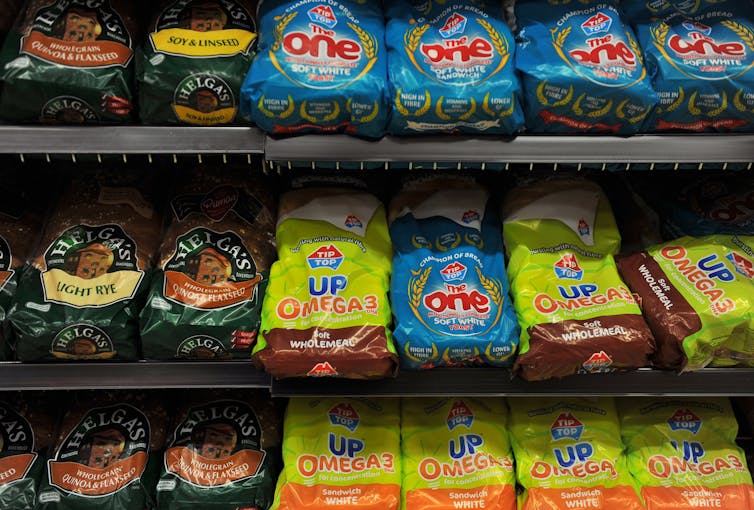
Many of us choose bread as part of our lunchtime meal. Switching from white to whole grain bread for your sandwich can help you feel full for longer, so you’re likely to eat less during the following meal.

The whole grain is made up of three major parts: the bran, endosperm and germ. This structure helps some of the energy to escape during the digestive process, leading to the body absorbing fewer kilojoules.

Whole grains help protect against chronic diseases including heart disease, type 2 diabetes and some cancers. The grains exert their benefits by regulating bowel function through increased faecal bulk and by feeding healthy gut bacteria.

Whole grains are easy to include in a weight-loss diet. In addition to breads, they can also be found in oats for breakfast, or popcorn for a snack.

2. Colourful veggies provide a range of nutrients

Vegetables are full of essential nutrients including folate, vitamin C, various B vitamins, potassium and fibre. They are also low in energy, providing approximately 100 to 350 kilojoules per 100g (24-84 calories per 100g).

When trying to lose weight, people tend to eat greater quantities of vegetables, but they don’t tend to choose a wide variety of vegetables beyond those they normally eat.


Read more: Eat your vegetables – studies show plant-based diets are good for immunity


To aid weight loss, make sure you’re getting a high proportion of your kilojoules from vegetables and try to have as many different colours on your plate as you can.

If you feel like you don’t have time to cook, frozen vegetables are a quick and easy option, and they are just as nutritious as fresh vegetables.

Vegetables contain essential nutrients including potassium, folate and fibre. Hermes Rivera

3. Snack on nuts

When trying to lose weight, high-fat foods are often the first to go. But while nuts are generally high in fat and related kilojoules, they are high in fibre, helping us to feel full for longer

Nuts contain a number of beneficial vitamins and minerals for our health including healthy fats, protein, various B vitamins, zinc, magnesium and other minerals. Eating nuts has been shown to be beneficial in reducing the risk of heart disease and managing type 2 diabetes.

We’re also beginning to realise we don’t absorb all the kilojoules from nuts when we eat them. In fact, research suggests we absorb up to 30% less fat from nuts than we had first thought.

Try eating a handful of nuts (around 30 grams) as a snack or adding them to your meals throughout the day.


Read more: Health check: will eating nuts make you gain weight?


4. Quench your thirst with water

Listening to your hunger and thirst signals can make a big difference when trying to lose weight.

Throughout the day, our bodily signals for thirst may be greater than our feelings of hunger. When you think you’re hungry, see if you are actually thirsty by having a glass of water first.

If you’re used to reaching for soft drink or cordial rather than the water, start the switch slowly. Replace half of each glass you drink with water and increase the water component over time. Eventually your preferences will shift.

Our bodies need water for fluid balance, body temperature regulation, cognitive performance, as well as gastrointestinal, kidney and heart function. Drinking plenty of water also improves the complexion of the skin and can reduce the likelihood of getting headaches.

Hungry? Or could you be thirsty? August_0802/Shutterstock

A final word

Although some food choices can promote weight loss and prevent subsequent weight gain, your total eating pattern is the ultimate predictor of body weight. Exercise and physical activity also plays an important role.

A healthy eating pattern for weight loss should be based on the Australian dietary guidelines, which are general recommendations for healthy eating. Aim for five serves of vegetables and two serves of fruit a day, alongside whole grain breads and cereals, lean meat and low-fat dairy. While this may sound like a lot of food, studies have shown these combinations will aid weight loss.

Although there will always be easier ways of losing weight, small changes towards healthier eating habits will help you to not only lose weight, but will provide you with the right habits to avoid regaining weight in the future.

ref. Four simple food choices that help you lose weight and stay healthy – http://theconversation.com/four-simple-food-choices-that-help-you-lose-weight-and-stay-healthy-112054

Guns, snares and bulldozers: new map reveals hotspots for harm to wildlife

]]>

Source: The Conversation (Au and NZ) – By James Allan, Postdoctoral research fellow, School of Biological Sciences, The University of Queensland

The biggest killers of wildlife globally are unsustainable hunting and harvesting, and the conversion of huge swathes of natural habitat into farms, housing estates, roads and other industrial activities. There is little doubt that these threats are driving the current mass extinction crisis.

Yet our understanding of where these threats overlap with the locations of sensitive species has been poor. This limits our ability to target conservation efforts to the most important places.


Read more: Earth’s wilderness is vanishing, and just a handful of nations can save it


In our new study, published today in Plos Biology, we mapped 15 of the most harmful human threats – including hunting and land clearing – within the locations of 5,457 threatened mammals, birds and amphibians globally.

We found that 1,237 species – a quarter of those assessed – are impacted by threats that cover more than 90% of their distributions. These species include many large, charismatic mammals such as lions and elephants. Most concerningly of all, we identified 395 species that are impacted by threats across 100% of their range.

Mapping the risks

We only mapped threats within a species location if those threats are known to specifically endanger that species. For example, the African lion is threatened by urbanisation, hunting and trapping, so we only quantified the overlap of those specific hazards for this species.

This allowed us to determine the parts of a species’ home range that are impacted by threats and, conversely, the parts that are free of threats and therefore serve as refuges.

We could then identify global hotspots of human impacts on threatened species, as well as “coolspots” where species are largely threat-free.

The fact that so many species face threats across almost all of their range has grave consequences. These species are likely to continue to decline and possibly die out in the impacted parts of their ranges. Completely impacted species certainly face extinction without targeted conservation action.

Conversely, we found more than 1,000 species that were not impacted by human threats at all. Although this is positive news, it is important to note that we have not mapped every possible threat, so our results likely underestimate the true impact. For example, we didn’t account for diseases, which are a major threat to amphibians, or climate change, which is a major threat to virtually all species.

Hotspots and coolspots

We produced the first global map of human impacts on threatened species by combining the parts of each species range that are exposed to threats. The overwhelmingly dominant global hotspot for human impacts on threatened species is Southeast Asia.

This region contains the top five countries with the most threats to species. These include Malaysia, Brunei, Singapore, Indonesia and Myanmar.

The most impacted ecosystems include mangroves and tropical forests, which concerningly are home to the greatest diversity of life on Earth.

Hotspots of threats and threatened species richness. Allan et al. Plos Biol., Author provided

We also created a global map of coolspots by combining the parts of species ranges that are free from human threats. This map identifies the last vestiges of wild places where threatened species have shelter from the ravages of guns, snares and bulldozers. As such, these are crucial conservation strongholds.

Coolspots include parts of the Amazon rainforest, the Andes, the eastern Himalayas, and the forests of Liberia in West Africa.

In many places, coolspots are located near hotspots. This makes sense because in species-rich areas it is likely that many animals are impacted whereas many others are not, due to their varying sensitivity to different threats.

Coolspots of unimpacted species richness. Allan et al. Plos Biol., Author provided

What next?

There is room for optimism because all the threats we map can be stopped by conservation action. But we need to make sure this action is directed to priority areas, and that it has enough financial and political support.

An obvious first step is to secure threat-free refuges for particular species, via actions such as protected areas, which are paramount for their survival.


Read more: An end to endings: how to stop more Australian species going extinct


To ensure the survival of highly impacted species with little or no access to refuges, “active threat management” is needed to open enough viable habitat for them to survive. For example, tiger numbers in Nepal have doubled since 2009, mainly as a result of targeted anti-poaching efforts.

Tackling threats and protecting refuges are complementary approaches that will be most effective if carried out simultaneously. Our study provides information that can help guide these efforts and help to make national and global conservation plans as successful as possible.


The authors acknowledge the contributions of Hugh Possingham, Oscar Venter, Moreno Di Marco and Scott Consaul Atkinson to the research on which this article is based.

ref. Guns, snares and bulldozers: new map reveals hotspots for harm to wildlife – http://theconversation.com/guns-snares-and-bulldozers-new-map-reveals-hotspots-for-harm-to-wildlife-113361

Which lines are priorities for Sydney Metro conversion? Hint: it’s not Bankstown

]]>

Source: The Conversation (Au and NZ) – By Mathew Hounsell, Senior Research Consultant, Institute for Sustainable Futures, University of Technology Sydney

A rail line to the northwest growth areas of Sydney has been proposed many times. In 2010, the state government and bureaucracy sought discussions with Infrastructure Australia and the Commonwealth about funding an extension of the heavy-rail system from Epping on a North West Rail—Hills District Line. In 2012, the new transport minister (and now premier), Gladys Berejiklian, changed the plan, opting for a single-deck robotic privatised metro similar to those proposed by property developer and rail operator Hong Kong MTR. The government decided to close the Bankstown line for Sydney Metro conversion and upzone surrounding suburbs for “urban activation”.

OpenStreetMap Contributors, CC BY


Read more: Sydney Metro’s Sydenham-to-Bankstown line – nirvana or nightmare?


Days before Christmas 2018, we transport analysts received a gift: an update to the station barrier counts dataset. The government had not released this annual snapshot since 2014. (An interactive data visualisation tool is available here.)

The below analysis uses average workday (Tuesday, Wednesday and Thursday) patronage to describe the changing demand across the Sydney rail network (click here for a map of the network) and determine where the need for transport infrastructure investment is greatest.

The analysis clearly show that the metro conversion of the Bankstown line should not be Sydney’s top-priority investment. The numbers make clear the need to invest the state’s limited funds in the western and southern corridors with matching investment in the CBD. The Bankstown project should be deferred.

Demand on Sydney’s western and Illawarra heavy-rail corridors has surged since 2004 (when barrier counts began). These are two of the city’s most important transport trunks. The Bankstown line has much lower patronage with modest growth.

Every transport infrastructure investment must deliver value for money by reducing operating costs and improving mobility. If we fail to invest wisely, Sydney risks becoming uncompetitive as talent and businesses leave for better-connected and more liveable cities.


Read more: This is how Sydney’s transport system has gone off the rails


The Bankstown decision from a 2012 perspective

To determine if the Bankstown conversion was the highest priority in 2012 we need to consider the information available to the minister at the time. Let’s start with the obvious questions: in 2012 was the Bankstown line or its major stations under significant load or growing quickly?

The above chart shows five of the top 20 stations were in the CBD, six were on the Eastern-Illawarra line, and nine were on the West and North lines. Bankstown line stations were not especially popular: Bankstown station was 27th most popular, Campsie 35th, Lakemba 53rd and Marrickville 63rd.

Another reason to justify the Bankstown line conversion would be rapid growth. However, in 2012 the ten stations with the fastest growth since 2004 were in the CBD and on the West, South, North and Airport lines.

From 2004 to 2012, Parramatta grew by 4,600 passengers on an average workday, and Hurstville by over 4,100. Growth at Campsie and Lakemba was a mere 1,000 passengers a day, and only half of that at Bankstown.

So when the development decision was made the Bankstown line stations were not major stations, nor under significant load, nor growing quickly. This raises questions about the Metro conversion investment.

The Bankstown decision from a 2018 perspective

Passenger demand grows on a train line for many reasons. In 2012, Berejiklian might have been aware of a coming surge in patronage on the Bankstown line. In 2018, have we seen such a surge?

Sydney railway patronage has indeed surged overall, growing by over 450,000 people on an average workday since 2004. By 2018, the distribution of these passengers had changed significantly. Ashfield, Epping, Hornsby and Kogarah slipped out of the top-20 stations to be replaced by Mascot (17th), Auburn (18th), Lidcombe (19th) and Museum (20th).

Bankstown line stations had become less important:

  • Bankstown slipped to 33rd most popular
  • Campsie rose to 35th
  • Marrickville was steady at 62nd
  • Lakemba plummeted to 67th.

From 2012 to 2018, Town Hall ranked first for patronage growth with a workday increase of 28,900 passengers. Parramatta was fourth with 15,400 and Hurstville 16th with 4,600.

On the Bankstown line Campsie ranked 33rd with growth of 2,000 and Bankstown 49th with 1,400. Estimated patronage at four of the stations – Wiley Park, Yagoona, Lakemba, Regents Park – actually fell.

After land around Canterbury was transformed into many massive apartments, patronage at the station grew by 1,300 workday passengers since 2012. Even with the development, it still had only 3,200 workday passengers, leaving the station 91st in the whole sprawling network.


Read more: Our new PM wants to ‘bust congestion’ – here are four ways he could do that


Comparing sections of the network

Multiple stations operate in concert and to be thorough we also need to consider how sections of the network compare.

The ten Bankstown line stations from Marrickville to Bankstown had 36,800 workday passengers in 2012. By 2018 this had grown by 7,000 to 43,800 workday passengers. It is still a relatively quiet line.

The North line from North Strathfield to Epping had eight stations with 36,100 workday passengers in 2012. By 2018, this had grown by 12,700 workday passengers to 48,800.

Over the same period, the 13 stations on the Illawarra line from Arncliffe to Sutherland grew by 15,600 to 79,400 workday passengers.

The three Eastern Suburbs line stations from Kings Cross to Bondi had higher patronage in 2012 than the Bankstown line with 40,200 workday passengers. Patronage on those three stations alone also grew much faster, by 17,600 in six years to 54,800.

Patronage on the Western corridor (Macdonaldtown to Blacktown) has grown by 58,000 to over 225,000 workday passengers. On the Illawarra corridor patronage grew 25,000 to over 103,000.

Remember, patronage on the Bankstown line grew by only 7,000 in this 2012-18 period.

Looking at key stations between 2004 and 2018:

  • Bankstown patronage grew by 25%
  • Stanmore, which doesn’t have a lift and gets only one train every 15 minutes, grew by 33%
  • Burwood grew by 64%
  • Parramatta by 79%
  • Newtown by 100%
  • Homebush by 125%.

In the Illawarra corridor:

  • Hurstville station grew by 66%
  • Erskineville by 97%
  • Banksia, Carlton and Allawah stations all had over 100% growth.

The City Circle from Redfern to Circular Quay and back grew by 159,000 workday passengers from 236,000 in 2004 to 395,000 in 2018 – a 67% increase.

In 2012, the city’s first transport priority was another north-south harbour crossing. However, it was decided instead to build the Sydney Metro under the harbour and then take both of the CBD’s north-south heavy-rail corridors. This significantly increased the cost and complexity of expanding the heavy-rail system.

Sydney’s second transport priority was always a western relief line. Every transport investigation since the 1971 Sydney Area Transport Study has identified this need.

What next?

On February 11, the state Labor opposition promised $5 billion for the Western Metro, in addition to $3 billion previously promised by the federal Labor opposition.

On March 4, the state Coalition government announced $6.4 billion for a Western Metro, with the construction date to be brought forward.

The government announcement was made after the caretaker period for the March 23 state election had begun, so no technical or financial documentation was released. The government statement said the final business case was not complete, indicating that the Western Metro project was still in the early planning stages.

With a slowing economy and falling house prices there will be a post-election reprioritisation of NSW project spending. When this happens, the next government should give higher priority to the western rail corridor than the Bankstown corridor.

Postscript

Any discussion of infrastructure decisions should note the affected electorates. The seats around the Bankstown line and their vote tallies in the last state election are:

  • Summer Hill (Labor 70.13% two party preferred in 2015)
  • Canterbury (Labor 65.69%)
  • Lakemba (Labor 71.56%)
  • Bankstown (Labor 63.97%)
  • Auburn (Labor 55.93%)
  • Fairfield (Labor 67.79%).

ref. Which lines are priorities for Sydney Metro conversion? Hint: it’s not Bankstown – http://theconversation.com/which-lines-are-priorities-for-sydney-metro-conversion-hint-its-not-bankstown-111844

India’s grand experiment in corporate social responsibility is heading for trouble

]]>

Source: The Conversation (Au and NZ) – By Monika Kansal, Senior Lecturer, Accounting, CQUniversity Australia

Rubina Akbar has given birth to 17 children. That’s high even in her village, where mothers average eight children. But here, in a rural district less than 100 kilometres from India’s national capital of Delhi, the likelihood of dying early remains stubbornly high.

The infant mortality rate in Mewat district is 117 per 1,000births, compared to 18 for Delhi and an OECD average of 6.9.

At the time we met Rubina and her husband Maqsood in 2016, they were still mourning the death of their baby son, who had died from diarrhoea, the third-most common cause of death in India of children under five (killing an estimated 300,000 children a year).

Another of their children had died five years before.

India’s economy is the fastest growing in the world, but the gap between haves and have-nots is also growing. Stark inequalities exist in every indicator of development: family size, life expectancy, education, health, access to safe drinking water, basic sanitation and income.

A public toilet in Kolkata. There has been a number of national programs to build infrastructure to reduce open defecation, which is linked to spreading disease. Matyas Rehak/Shutterstock

Five years ago the national government decided to try something new to address these development disparities. It mandated that all enterprises above a certain size, both public or private, must spend 2% of their profits on corporate social responsibility projects.

This was more than just a tax. The idea was that enterprises choosing how the money was spent would promote “out of the box” thinking to address “wicked” social problems.

But the emerging evidence is that this idea is unlikely to be any more successful than many tried in the past. Those charged with implementing the policy resent it. They see it as a way to shift blame for the limited success of government programs designed to reduce inequality.


Read more: No, India isn’t outpacing China, and other Modi myths


Limits of corporate responsibility

To find this out, we interviewed managers in charge of corporate social responsibility in 30 of India’s state-owned enterprises, known as Central Public Sector Enterprises (CPSEs).

CPSEs are similar to what Australia calls government business enterprises (such as Australia Post and NBN Co Ltd). Australia has less than a dozen government-owned businesses, whereas India has more than 300.

They account for a fifth of India’s GDP, and are prevalent in economic sectors considered strategically important, such as mineral and energy resources, and transport infrastructure. Five of India’s ten biggest corporations – Indian Oil, Bharat Petroleum, Hindustan Petroleum, Oil and Natural Gas, and Coal India – are CPSEs.

They were created with the idea of advancing economic development for the social good. Controlling enormous resources, they can be highly profitable. They can also be bureaucratic, inefficient and self-serving compared with private-sector companies operating in more competitive environments.

They are accountable to many masters, including the Parliament of India, Ministry of Corporate Affairs, Department of Public Enterprises, Comptroller and Auditor General of India and the Securities and Exchange Board of India. This means they are susceptible to being run in the interests of internal management rather the major shareholder (the Indian government).

The corporate social responsibility managers we spoke to generally said they welcomed the CSR regulation but would prefer to simply give the money to the government to spend. “All CPSEs are happy to give the money to the government,” said one manager. “Why put it on us?”

They feared they were being set up to be scapegoats for the failure of programs to reduce inequality in India. Their common view was that government development work had often failed due to rampant inefficiency, instability, corruption and interference.

Government interference

While one of the stated rationales for the CSR law is to drive innovation, managers expressed to us their frustration that government rules and regulations increasingly dictated how they spent their corporate social responsibility budgets.

An example is the government telling CPSEs to build 2,500 toilet blocks as part of a national program to improve basic sanitation throughout India (known as Swacch Bharat Abhiyan, or “Clean India Mission”) The managers were concerned political interference would force them to fund substandard and less-than-optimum projects.

The Statue of Unity memorial to Indian freedom fighter Sardar Vallabhbhai Patel, also known as the Iron Man of India. Divyakant Solanki/EPA

Even less useful is the money CPSEs allocated from their CSR budgets to help pay for India’s Statue of Unity, the world’s tallest statue.

Five corporations (Oil and Natural Gas, Hindustan Petroleum, Bharat Petroleum, Indian Oil, and Oil India) contributed 1.46 billion rupees (about US$21 million) to the statue, a pet project of the ruling BJP party that cost the nation about US$430 million.

An auditor-general’s report to the national parliament said the project failed to meet the CSR law’s definition of an approved activity for protecting national heritage, art and culture.


Read more: India unveils the world’s tallest statue, celebrating development at the cost of the environment


Another instance where CPSEs have been accused of using corporate social responsibility expenditure to further the political goals of the government is in funding gaushalas – shelters for cows.

“It seems surprising that companies should see promotion of gaushalas as a concern which would lead to economic and social transformation of society,” says Pushpa Sundar, a development specialist and director of the Sampradaan Indian Centre for Philanthropy in Delhi.

“This, at a time when reducing child mortality received no funding and eradicating extreme hunger and poverty received only 6% of the total CSR expenditure.”

Utopian ideals

These issues raise serious questions about how much the CPSEs can deliver.

At this point the CSR law seems to be another utopian ideal hijacked by political interference.

In even the best of circumstances, forcing business enterprises to take on quasi-government roles and contribute to national development may be the wrong approach.

But in circumstances where the spirit and letter of the law is subverted by political interference, it’s even less likely the CSR law will make a meaningful contribution to national development.

ref. India’s grand experiment in corporate social responsibility is heading for trouble – http://theconversation.com/indias-grand-experiment-in-corporate-social-responsibility-is-heading-for-trouble-106530

Why Dorothy’s red shoes deserve their status as gay icons, even in changing times

]]>

Source: The Conversation (Au and NZ) – By Marguerite Johnson, Professor of Classics, University of Newcastle

The legendary film, The Wizard of Oz (1939) and the glorious, dazzling ruby slippers worn by its heroine, Dorothy Gale, (played by Judy Garland), have long been symbols of hope – especially for the LGBT+ community.

Last year, the Smithsonian’s National Museum of American History in Washington, DC, unveiled a pair of glittering red shoes from the film that had been restored at a cost of $300,000 (funded via a Kickstarter campaign).

Why restore a pair of the original shoes at such an exorbitant price? And in a more fluid age of sexuality and gender, are the shoes still relevant as gay icons?

‘An Elvis for homosexuals’

It has been said that Judy Garland is “an Elvis for homosexuals”. During her lifetime she featured in over 30 films, but it was her role as Dorothy in The Wizard of Oz that catapulted her to star status.

Garland was a prominent Hollywood figure with whom gay people could easily identify. Her own personal struggles resonated more broadly with their own during the Cold War – a time of unparalleled persecution of gay people in the west.

Moreover, Garland’s most performed song, Over the Rainbow, is believed to be one of the sources of inspiration for the universal symbol of the LGBT+ movement – the rainbow flag – first adopted in the 1970s.

The Smithsonian’s slippers pre-restoration in 2012. Wikimedia Commons

What makes a queer object?

Objects, or material culture, provide fascinating insights into the study of history. Nearly a decade after the British Museum’s landmark exhibition and complementary book by Neil MacGregor, A History of the World in 100 Objects, the appeal of them as a window into the human past has spawned numerous other studies, and books.

Certain objects have become queer icons. The editors of the forthcoming book Queer Objects assert that “the idea of queer exposes the instability of the status quo and challenges the power of heterosexuality as well as the marginal status of homosexuality”. And the ruby slippers have various meanings to those who cherish or fetishise them.

The slippers carry some tantalising stories. The Smithsonian reports that five known pairs were created by MGM Studios’ chief costume designer, Gilbert Adrian. Lady Gaga owns one pair . Another was stolen from the Judy Garland Museum in Grand Rapids, Minnesota in 2005 (the shoes were recovered in 2018 after a 13-year disappearance.)

From their association with Garland and the rainbow, these slippers point to the glamour of torch singers and flamboyance of drag queens: symbolising the beauty and release that comes from dressing-up. As Oz fan Rufus Wainwright once recalled, as a small child, he would fantasise that he was “either the Wicked Witch or Dorothy, depending on my mood.”

They also represent transformation – of a homely farm girl into a dazzling heroine, who leaves home, finds herself and creates a raggle-taggle, quasi-family along the way (something familiar to many LGBT+ people).

Dorothy and her friends: Judy Garland, Ray Bolger, Jack Haley, and Bert Lahr in The Wizard of Oz (1939). MGM

Garland’s own personal journey as an actor and singer has also spoken to generations of gay men. Many identified with the struggles, humiliations and exploitation of both the child star and the fading adult star, who in her tragic final decades embodied and performed all the pain of the ultimate torch singer.

Dorothy sang of hope amid hardship, of a land that she “heard of, once in a lullaby” and Garland continued to sing these words of optimism and courage as she stood before her audience, emaciated, drug-addled, beaten down.

Changed times

Still, the stereotype of the fussy, passive queen who sought and found emotional sustenance from divas such as Judy Garland, and her alter-ego, Dorothy Gale, is now sometimes regarded as antithetical to the progressive individuals who have come to represent the LGBT+ community. In an era of non-binary gender and sexual affiliation, intersectionality and identity politics, are the slippers now destined to be tossed to the back of the LGBT+ closet?


Read more: Explainer: what does ‘intersectionality’ mean?


What was once valorised as iconic can, as society and its values shift, become redundant and a symbol of a community’s collective embarrassment. For the LGBT+ community, such a change in attitude is partly generational.

Garland’s story is not needed as much any more, and for this we should celebrate. In the west, young gay men now occupy a different world from their forefathers. As Michael Joseph Gross has written:

Judy Garland began losing her power over gay men because we got that message and started becoming more integrated characters than the screaming queens of yore. We no longer need a surrogate to embody the conflicts that so many of us experience, because we now have more and better resources for sorting them out for ourselves.

What, then, is to be gained from keeping the ruby red slippers on display in an institution such as the Smithsonian?

We would argue that the shoes are a significant piece of material culture that open a window to our historical memory. They convey respect for all the gay men who struggled, who were ostracised and humiliated for having the courage to keep on being their authentic selves.

ref. Why Dorothy’s red shoes deserve their status as gay icons, even in changing times – http://theconversation.com/why-dorothys-red-shoes-deserve-their-status-as-gay-icons-even-in-changing-times-110187

How recognising Jesus as a victim of sexual abuse might help shift Catholic culture

]]>

Source: The Conversation (Au and NZ) – By David Tombs, Chair professor, University of Otago

The crisis of sexual abuse within the Catholic Church, and the institutional denial and cover up, has left many people of faith shocked by the lack of appropriate response toward survivors.

Archbishop Mark Coleridge of Brisbane, the president of the Australian bishops’ conference, has called for a Copernican revolution on sexual abuse in the church and a shift in Catholic culture so that abuse survivors, not clergy, shape the church response.

In an interview with Crux, published during the recent Vatican summit on sexual abuse, he also compared victims of clergy abuse to Christ crucified.

Unless you see that what’s happened to the abused has happened to Christ and that therefore, they’re Christ crucified in their needs, all the external commands in the world won’t do it.

In our work, Rocio Figueroa Alvear and I have interviewed sexual abuse survivors and show that recognising Jesus as an abuse victim can help them, and help the church to change.


Read more: After Cardinal Pell’s conviction, can a tradition-bound church become more accountable?


Jesus as victim of sexual abuse

There are good theological grounds for recognising a connection between Christ and those who have been subjected to abuse. The words of Jesus in Matthew 25:31-46 say that what is done to others is also done to Christ, and this has been explored in the work of Beth Crisp.

In Matthew 25, and presumably in the words of Archbishop Coleridge, this connection is at a theological or metaphorical level. But recent work has offered a strong argument to go beyond the theological connection and to see a more literal historical connection. In my own work, and writings by Elaine Heath, Rev Wil Gafney and Australian theologian Rev Michael Trainor, it is argued that Jesus does not just share theologically in the abuse, but that he himself experienced sexual abuse during the crucifixion.

This may seem outlandish at first. When Katie Edwards and I wrote on stripping as sexual abuse, many comments showed readers were perplexed that we could be seriously suggesting this. For many people, the initial reaction is to be startled and shocked. Some ask whether it is meant to be a serious suggestion, or say it is just jumping on a #MeToo bandwagon. However, as Linda Woodhead points out, if you look at it more closely you may start to think differently.


Read more: #HimToo – why Jesus should be recognised as a victim of sexual violence


Crucifixion, state terror and sexual abuse

The torture practices of military regimes in Latin America during the 1970s and 1980s offer two key lessons for understanding crucifixion. First, the torture was a way for the military authorities to send a message to a much wider audience. Anyone who opposed the military would know what to expect.

Second, sexual violence was extremely common in torture practices. Sexual violence was a very powerful way to physically and psychologically attack a victim and his or her dignity. Sexual humiliation and shaming victims could destroy their sense of self and stigmatise them in the eyes of others.

The use of crucifixion by the Romans fits with both of these. Crucifixion was a form of state terror which threatened and intimidated many more people than the victims themselves. The way that prisoners were stripped and crucified naked was an obvious way to humiliate and degrade them, and should be recognised as a form of sexual abuse.

Interviews with survivors

In research published this month, we interviewed a small group of Peruvian middle-aged male survivors of clergy abuse on how they respond to the historical argument that Jesus was a victim of sexual abuse. We had interviewed this group before on how the sexual abuse they had experienced when they were teenagers and young men had impacted on their lives.

In these new interviews, we asked if they had considered Jesus as a victim of sexual abuse and how they viewed the historical and biblical evidence for it. We also asked if any such recognition could be helpful for them and other abuse survivors, or the wider church.

Most interviewees were initially surprised by the idea, but saw no problem in accepting the historical evidence and argument. Only one participant initially said that not enough evidence was presented to show it was sexual abuse but he later explained that he saw Jesus’ nakedness as a form of complete powerlessness.

Participants were evenly split on the question whether it would help them. About half felt it would not but the other half spoke positively of the connection it created between Jesus and survivors.

On the significance for the wider church, all of the participants agreed, without hesitation, that it would have a positive impact. All of them suggested that church ministries, clergy and lay, should embrace this topic.

They felt it would help the church to achieve more solidarity with survivors, and also, a more realistic and historic vision of Jesus. If the wider Church embraced this history and deepened it theologically, it might help towards changes in the church which prioritise survivors, and ensure they are treated with more compassion and solidarity. If the church is seeking a Copernican revolution on sexual abuse, recognising the experience of Jesus for what it was is surely an appropriate starting place.


Read more: Triggering past trauma: how to take care of yourself if you’re affected by the Pell news


ref. How recognising Jesus as a victim of sexual abuse might help shift Catholic culture – http://theconversation.com/how-recognising-jesus-as-a-victim-of-sexual-abuse-might-help-shift-catholic-culture-112754

Australia’s drought could be increasing Q fever risk, but there are ways we can protect ourselves

]]>

Source: The Conversation (Au and NZ) – By Nicholas J Clark, Postdoctoral Fellow in Disease Ecology, The University of Queensland

With several hundred cases diagnosed each year, Australia has one of the highest rates of Q fever worldwide.

Q fever is a bacterial infection which spreads from animals; mainly cattle, sheep and goats. It can present in different ways, but often causes severe flu-like symptoms.

Importantly, the bacteria that cause Q fever favour dry, dusty conditions, and inhalation of contaminated dust is a common route of infection.

There are now fears the ongoing droughts in Queensland and New South Wales may be increasing risk of the disease spreading.

But there are measures those at risk can take to protect themselves, including vaccination.


Read more: Q fever: a former soldier is suing the government over it, but what is this mysterious disease?


What is Q fever and who is at risk?

Q fever is an infectious illness caused by the bacterium Coxiella burnetii, one of the most infectious organisms around.

Q fever is zoonotic, meaning it can transmit to people from infected animals. It’s usually acquired through either direct animal contact or contact with contaminated areas where animals have been.

Goats, sheep and cattle are the most commonly reported Q fever hosts, although a range of other animals may be carriers.

Because of this association with livestock, farmers, abattoir workers, shearers, and veterinarians are thought to be at the highest risk of Q fever.

People who also may be at risk include family members of livestock workers, people living or working near livestock transport routes, tannery workers, animal hunters, and even processors in cosmetics factories that use animal products.


Read more: Urbanisation brings animals and diseases closer to home


Q fever can be difficult to diagnose (it has sometimes been called “the quiet curse”). Infected people usually develop flu-like fevers, severe headaches and muscle or joint pain. These symptoms typically appear around two to three weeks after infection, and can last up to six weeks.

A small proportion of people will develop persistent infections that begin showing up later (up to six years post-infection). These can include local infections in the heart or blood vessels, which may require lifelong treatment.

Are Q fever rates on the rise?

In Australia, 500 to 800 cases of Q fever (2.5 – 5 cases per 100,000 people) were reported each year in the 1990s according to the National Notifiable Diseases Surveillance System.

A national Q fever management program was designed in 2001 to combat this burden. This program provided subsidised vaccination to at-risk people including abattoir workers, beef cattle farmers and families of those working on farms.

Drought conditions, as seen here near Menindee, NSW, pose an increased risk of Q fever. Dean Lewins/AAP

Results were positive. Q fever cases decreased during the program and following its conclusion in 2006, leading to a historic low of 314 cases (1.5 cases per 100,000 people) in 2009.

But since 2010, Q fever cases have gradually increased (558 cases or 2.3 per 100,000 were reported in 2016), suggesting further action may be necessary.

Every year, the highest numbers of people diagnosed are from Queensland and NSW.

And the true number of affected people is likely to be under-reported. Many infected people do not experience severe symptoms, and those who do may not seek health care or may be misdiagnosed.

Q fever and drought

The reason people are more susceptible to Q fever in droughts lies in the bacteria’s capacity to survive in the environment. Coxiella burnetii spores are very resilient and able to survive in soil or dust for many years. This also helps the bacteria spread: it can attach to dust and travel 10km or more on winds.

The Q fever bacteria is resistant to dehydration and UV radiation, making Australia’s mostly dry climate a hospitable breeding ground.


Read more: Farmers experiencing drought-related stress need targeted support


Hot and dry conditions may also lead to higher bacterial shedding rates for infected livestock.

The ongoing drought could allow Q fever to spread and reach people who were previously not exposed.

One study suggested drought conditions were probably the main reason for the increase in Q fever notifications in 2002 (there were 792 cases that year). This was the fourth driest year on record in Australia since 1900.

We still need more evidence to conclusively link the two, but we think it’s likely that drought in Queensland and NSW has contributed to the increased prevalence of Q fever in recent years.

How can people protect themselves?

National guidelines for managing Q fever primarily recommend vaccination.

The Q-VAX® vaccine has been in use since 1989. It’s safe and has an estimated success rate of 83–100%.

However, people who have already been exposed to the bacteria are discouraged from having the vaccination, as they can develop a hypersensitive reaction to the vaccine. People aged under 15 years are also advised against the vaccine.

Because the vaccine cannot be administered to everyone, people can take other steps to reduce risk. NSW Health recommends a series of precautions.


Author provided/The Conversation, CC BY-ND


What else can be done?

Vaccination for people in high-risk industries is effective to prevent Q fever infection, but must be administered well before people are actually at risk.

Pre-testing requires both a skin test and blood test to ensure people who have already been exposed to the bacteria are not given the vaccine. This process takes one to two weeks before the vaccine can be administered, and it takes a further two weeks after vaccination to develop protection. This delay, along with the cost of vaccination, is sometimes seen as a barrier to its widespread use.


Read more: Millions of Australian adults are unvaccinated and it’s increasing disease risk for all of us


Awareness of the vaccine may also be an issue. A recent study of Australians in metropolitan and regional centres found only 40% of people in groups for whom vaccination is recommended knew about the vaccine, and only 10% were vaccinated.

We also need to better understand how transmission occurs in people who do not work with livestock (“non-traditional” exposure pathways) if we want to reduce Q fever rates.

ref. Australia’s drought could be increasing Q fever risk, but there are ways we can protect ourselves – http://theconversation.com/australias-drought-could-be-increasing-q-fever-risk-but-there-are-ways-we-can-protect-ourselves-112297

How to neutralise your greenhouse gas footprint

]]>

Source: The Conversation (Au and NZ) – By Andrew Blakers, Professor of Engineering, Australian National University

With time running out for us to make deep reductions in greenhouse emissions, you may well be wondering what you personally can do to minimise your own greenhouse footprint.

The average greenhouse emissions per Australian are the equivalent of 21 tonnes of carbon dioxide per year. How can you offset or neutralise your personal share of these carbon emissions in the most cost-effective way?


Read more: We can be a carbon-neutral nation by 2050, if we just get on with it


There are some places where the government is willing to take the necessary action on your behalf. The ACT government, for example, is on track to eliminate greenhouse gas emissions generated within Canberra by 2045, and indeed by 2020 will make its own electricity sector carbon-neutral.

The latter feat was achieved by contracting several new zero-emission solar and wind farms to produce renewable electricity equivalent to Canberra’s consumption. Canberra retail electricity prices continue to be among the lowest in Australia.

Take advantage of solar and wind

If you don’t live in Canberra, you need another way to neutralise your emissions. Fortunately, the cost of solar photovoltaic (PV) and wind power have both fallen rapidly. Australia has long been in the midst of a boom in rooftop PV, and many Gigawatts of ground-mounted PV and wind farms are being built around the country. This has put Australia on track to reach 50% renewable electricity in 2024. Each Megawatt hour (MWh) of electricity generated by renewables reduces electricity from coal by a similar amount, and therefore avoids about 0.9 tonnes of carbon dioxide emissions.

The above pie chart, based on federal government data, shows the various sources of Australian greenhouse emissions in 2017. Electricity production is the largest source and can be neutralised by substituting PV and wind for coal and gas. Emissions from electricity use in commerce and industry, the land sector, industrial processes and high temperature heat is largely beyond your control, however, so it’s perhaps best to focus your attention closer to home.

Cost-effective action

However, putting solar panels on your roof, switching to an electric car, and substituting electric heat pumps for gas water and space heating can (or soon will) be cost-effective steps that you can take to reduce your greenhouse footprint. And in the long term, these will either pay for themselves or even end up saving you money.


Read more: ‘Renewable energy breeding’ can stop Australia blowing the carbon budget – if we’re quick


A 10-kilowatt solar PV system installed on your roof will produce about 14 MWh of electricity per year. Since coal power stations produce 0.9 tonnes of carbon dioxide per MWh this save about 12 tonnes of CO2 emissions per year.

To offset your 21 tonnes of CO2 per year, you would therefore need to install 15kW of solar PV capacity for each person who lives in your house. So if four people live in your house, you would need a 60kW solar system.

But a typical rooftop PV system now has a rating of 5-15kW, and many homes lack the roof space needed to install a larger system. Ways to address this are described below.

Road to success

A typical car produces about 190 grams of CO2 per kilometre of travel, and the average Australian car travels 15,500 km per year, thus producing 3 tonnes of CO2.

Moderately priced electric cars are expected to be widely available in the early 2020s, which can travel about 6,000 km for each MWh of electricity consumed.

Once the premium for an electric vehicle drops below about A$10,000, the lifetime cost of an electric car (including buying, maintaining and charging it) will be competitive with conventional cars.

A 2kW PV panel on your house roof will produce enough electricity for 16,000km of electric car driving per year, thus offsetting your entire emissions from motoring (3 tonnes of CO2), assuming you drive an average amount each year and previously drove a conventional model.

Off the gas

Most natural gas use within a home is for water and space heating. Gas can readily be replaced by electric heat pumps, which move heat from the air outside the home into your hot water tank or reverse cycle air conditioning system. Heat pumps typically move four units of heat for each unit of electricity consumed and can be readily powered by rooftop solar panels, supplemented by electricity from the grid.

For the average household, replacement gas with heat pumps can readily reduce household greenhouse gas emissions by up to 5 tonnes per year, at lower lifecycle cost than using gas. Replacement of gas cookers with electric induction cookers allows elimination of gas altogether from the home.

Cutting down on air travel substantially reduces global emissions. Daniel Reinhardt/AAP

Fly less

Limiting air travel is one of the most effective tactics to cut your personal emissions. Short-haul flights or flights with few passengers increase the emissions intensity per passenger. A mostly full return trip from Australia to London (34,000km) will typically generate about 4 tonnes of CO₂ per passenger.

When you do decide to fly, think about how you can offset the emissions directly. Adding 1kW to your rooftop PV system can offset one return trip to London for one person every 3 years.


Read more: Why our carbon emission policies don’t work on air travel


Will it pay for itself?

Now that we’ve looked at these various strategies, let’s now consider a family home with three occupants and one car. A 10kW PV system on the roof can make a substantial reduction in their greenhouse footprint by offsetting 14 tonnes of CO2 per year. Switching to an electric car saves 3 tonnes per year and substituting electric heat pumps for gas saves a further 1- 5 tonnes per year.

An additional 5 kW of rooftop PV is needed to neutralise an average amount of air travel, and to power the electric car and heat pumps. This 15kW system would cost about A$20,000 up front and would last 25 years. However, rooftop PV systems are now so cheap compared with the retail electricity tariff that the money invested is generally recovered within 10 years.

Installing rooftop PV systems is a cost effective way of decreasing your carbon footprint. Dan Himbrechts/AAP

The total emissions savings estimated above are about 25 tonnes per year, per household, which is still significantly short of the 63 tonnes (on average) that this family emits. To be fully carbon-neutral, one option is for the family to invest in a wind or solar farm.

The required share of a wind farm or solar farm is about 10 kW or 20 kW respectively per three-person family, noting that a 3MW wind turbine produces nearly double the amount of electricity per year of a 3MW PV farm (single axis tracking), which in turn produces 40% more electricity per year than an equivalent amount of roof-mounted solar panels.

The up-front cost of this investment would be about A$25,000 per family, and it would return a steady income sufficient to repay the initial outlay (with interest) over the 25-year lifetime of the system.

So in summary, assuming that you have the means to meet the (not insubstantial) upfront costs, doing your part to preserve a living and vibrant planet for our children ultimately has a low or even negative net cost.

ref. How to neutralise your greenhouse gas footprint – http://theconversation.com/how-to-neutralise-your-greenhouse-gas-footprint-103922

Poll wrap: Labor gains in Newspoll after weak economic report; Labor barely ahead in NSW

]]>

Source: The Conversation (Au and NZ) – By Adrian Beaumont, Honorary Associate, School of Mathematics and Statistics, University of Melbourne

About two months from the expected May election date, this week’s Newspoll, conducted March 7-10 from a sample of 1,610, gave Labor a 54-46 lead, a one-point gain for Labor since last fortnight. Primary votes were 39% Labor (steady), 36% Coalition (down one), 9% Greens (steady) and 7% One Nation (up two).

This Newspoll is the Coalition’s 50th successive Newspoll loss. The closest they have come to breaking that losing streak was a run of four consecutive 51-49 results from July to early August 2018 before Malcolm Turnbull was dumped. This Newspoll reverses the gains the Coalition had made to close the gap to 53-47 from 55-45 in November and December.

Despite the Coalition’s woes on voting intentions, Scott Morrison remains relatively popular. 43% were satisfied with his performance (up one), and 45% were dissatisfied (down three), for a net approval of -2. Bill Shorten’s net approval was up three points to -15. Morrison led Shorten as better PM by 43-36 (44-35 last fortnight).

I believe Morrison’s relative popularity is because he has not yet proposed something that would make him unpopular, in the way Tony Abbott did with the May 2014 budget, and his January 2015 knighting of Prince Philip. Turnbull was very unpopular with the hard right, and their hatred of him damaged his overall ratings.

During the election campaign, Labor will attempt to tie Morrison to unpopular Coalition policies, and this could impact his ratings.

The last fortnight has not been good for the Coalition with the retirements of Christopher Pyne and Steve Ciobo, infighting within the Nationals, and Turnbull and Julie Bishop saying they could have beaten Shorten if they were the leader.

While these events may have had an impact, I believe the Coalition’s biggest problem is weak economic data. On March 6, the ABS reported that Australia’s GDP grew 0.2% in the December quarter after the September quarter GDP was up 0.3%. In per capita terms, GDP growth was negative in both the September and December quarters, meaning Australia has had its first per capita GDP recession since 2006.

In the December quarter, wages grew by 0.5%, matching the rate of inflation in that quarter. The Coalition already has a problem with well-educated voters owing to their perceived lack of climate change policies and the removal of Turnbull – see my personal website for where I thought Morrison could have problems. With good wages growth and a strong economy, the Coalition may have been able to compensate with less educated voters.


Read more: Poll wrap: Newspoll steady at 53-47 despite boats, and Abbott and Dutton trailing in their seats


With neither a strong economy nor good wages growth, I believe the Coalition’s only realistic chance of re-election is a massive scare campaign against Labor’s economic policies, such as the proposal to abolish franking credit cash refunds.

Essential: 53-47 to Labor

This week’s Essential poll, conducted March 6-11 from a sample of 1,080, gave Labor a 53-47 lead, a one-point gain for Labor that validates Newspoll’s movement. Primary votes were 38% Labor (up one), 37% Coalition (down one), 8% Greens (down one) and 7% One Nation (up one). According to The Poll Bludger, this is the worst result for the Greens from any pollster since September 2016.

Morrison’s net approval was +2, down two points since January. Shorten’s net approval was -6, up six points. Morrison led Shorten by 44-31 as better PM (42-30 in January).

62% thought climate change is happening and is caused by human activity (down one since October). 51% thought Australia is not doing enough to address climate change (down two since December). By 52-48, voters thought the reopening of Christmas Island reflected genuine concern about boats arriving, rather than a political ploy; there was no undecided option in this question.

On issue questions, the Liberals led Labor by 19 points on border protection, 16 points on national security and 15 points on economic management. Labor was 18 points ahead on the important issue of safeguarding fair wages and conditions, and had 7-9 point leads on climate change, the environment, health, education and housing affordability.

NSW Newspoll: 50-50 tie, ReachTEL: 51-49 to Labor, plus seat polls

The New South Wales election will be held on March 23. A Newspoll, conducted March 8-11 from a sample of 1,003, had a 50-50 tie, unchanged since late January. A uComms/ReachTEL poll for The Sun-Herald, conducted March 7 from a sample of 1,019, gave Labor a 51-49 lead, unchanged since the last NSW ReachTEL poll in late November.

Primary votes in ReachTEL were 28.7% Liberals (down 3.4%), 7.0% Nationals (up 2.6%), 34.1% Labor (steady), 9.6% Greens (steady), 5.6% One Nation (down 1.9%), 4.6% Shooters, Fishers and Farmers (up 1.3%), 5.8% for all Others (steady) and 4.7% undecided (up 1.6%). After excluding undecided, The Poll Bludger has primary votes of 37.5% Coalition, 35.8% Labor, 10.1% Greens, 5.9% One Nation and 4.8% Shooters.

The drop for the Liberals but gain for the Nationals suggests that the Coalition could perform relatively badly in Sydney, but better in the country. According to the ABC’s Antony Green, the Shooters will be contesting 25 of the 93 lower house seats, and One Nation just 12, so both parties’ support will be overstated in this statewide poll.

In Newspoll, primary votes were 40% Coalition (up one), 36% Labor (steady) and 10% Greens (steady). In the January NSW Newspoll, One Nation had 6%, but they have been excluded from the current poll as they are not contesting many seats. The exclusion of One Nation probably assisted the Coalition.


Read more: Poll wrap: Coalition gains in first Newspoll of 2019, but big swings to Labor in Victorian seats; NSW is tied


44% were satisfied with Premier Gladys Berejiklian’s performance in Newspoll (up three), and 38% were dissatisfied (down five), for a net approval of +6. Opposition Leader Michael Daley’s net approval improved seven points to -1. Berejiklian led Daley by 41-34 as better Premier (44-31 in January).

Daley led Berejiklian as better Premier in ReachTEL by 53.3-46.7 (54.2-45.8 in November). ReachTEL’s forced choice better PM/Premier questions are usually better for opposition leaders than other polls. Voters opposed the government’s plans for Sydney sports stadiums by 52-37. By 48-43, voters thought that Labor was not ready to govern.

There were two YouGov Galaxy seat polls for The Daily Telegraph conducted February 28. East Hills was tied at 50-50 (50.4-49.6 to Liberal in 2015). Ryde had a 53-47 Liberal lead (61.5-38.5 to Liberal in 2015). Last week, there was also a national Greenpeace ReachTEL poll that gave Labor a 53-47 lead by respondent preferences. You can read more about these polls on my personal website.

The Daily Telegraph has seat polls of Lismore and Barwon conducted last week from samples of 500-600 by YouGov Galaxy. In Barwon, the Nationals lead the Shooters by just 51-49; the Nationals won 62.9% vs Labor in 2015.

In Lismore, Labor leads the Nationals by 51-49 (50.2-49.8 to Nationals in 2015). Primary votes were 35% Nationals (42.5% in 2015), 28% Greens (26.4%) and 27% Labor (25.6%). Even though NSW uses optional preferential voting, primary votes changes suggest an easier win for one of the left parties than 51-49. Seat polls have been very unreliable at past elections.

Key Brexit Commons votes this week

From March 12-14, the UK House of Commons will vote on PM Theresa May’s Brexit deal, whether the UK should leave without a deal, on delaying Brexit beyond the scheduled March 29 exit date, and on an amendment that would lead to a second referednum. Votes will occur in the early morning March 13-15 Melbourne time.

You can read my preview of these votes on The Poll Bludger. On February 28, I had a more general article about Brexit published by The Poll Bludger, which explained Labour’s recent slump in the UK polls.

ref. Poll wrap: Labor gains in Newspoll after weak economic report; Labor barely ahead in NSW – http://theconversation.com/poll-wrap-labor-gains-in-newspoll-after-weak-economic-report-labor-barely-ahead-in-nsw-113266

Privacy pivot: Facebook wants to be more like WhatsApp. But details are scarce

]]>

Source: The Conversation (Au and NZ) – By Sacha Molitorisz, Postdoctoral Research Fellow, Centre for Media Transition, Faculty of Law, University of Technology Sydney

Facebook founder Mark Zuckerberg delivered a 3,000+ word post last week, spelling out a new vision for the social network.

It prompts just one small question: Facebook, who are you?

Zuckerberg’s essay, entitled “A privacy-focused vision for social networking”, signals a radical shift. Since its launch in 2004, Facebook has encouraged openness, connection and sharing. But now, it would be “privacy-focused”, featuring encrypted services and content that “won’t stick around forever”.

Facebook will, says Zuckerberg, transform from open to intimate, from town square to living room. In total, the words “privacy”, “private” and “privately” appeared more than 50 times. As Zuckerberg wrote:

Over the last 15 years, Facebook and Instagram have helped people connect with friends, communities, and interests in the digital equivalent of a town square. But people increasingly also want to connect privately in the digital equivalent of the living room.

A leopard changing its spots? This is a leopard changing into a zebra. Or would be, were it to eventuate. As Wired put it:

The company pulled the emergency brake, yanked the steering wheel, and turned in reverse.


Read more: Facebook is all for community, but what kind of community is it building?


Circling regulators

Facebook has a privacy problem. Zuckerberg admitted as much in his post:

Frankly we don’t currently have a strong reputation for building privacy protective services.

Two words: Cambridge Analytica. Suddenly a potentially esoteric proposition – that invasions of privacy can compromise democracy – was demonstrated on a grand scale.

Meanwhile, Facebook is under scrutiny for its role in spreading misinformation, while a further chorus argues that Facebook and other digital platforms pose an existential threat to journalism. In response, regulators are stepping in globally.

In Europe, the General Data Protection Regulation came into effect in May 2018, creating stringent requirements for data protection, including codifying the “right to be forgotten”.

Last week, the UN’s Special Rapporteur on Privacy released his annual report, urging that all countries make it a priority to adopt “provisions equivalent or superior to the GDPR”.

In June, California passed a sweeping consumer privacy law setting the strictest data protection standards in the US. It gives Californian residents a range of rights, including the right to be informed about what kinds of data have been collected and why it was collected. It comes into effect in 2020.

In the UK, two reports released their findings last month. First, the Cairncross Review, entitled “A sustainable future for journalism”, found:

Public intervention may be the only remedy […] The future of a healthy democracy depends on it.

A week later, a committee of the House of Commons delivered its report into “fake news”, finding:

Companies like Facebook should not be allowed to behave like ‘digital gangsters’ in the online world.

It urged “proper regulatory oversight”, and its recommendations included the significant proposal that even inferred data should count as personal information, and thus be protected.


Read more: The law is closing in on Facebook and the ‘digital gangsters’


ACCC: the watchdog bites

Meanwhile, the Australian Competition and Consumer Commission (ACCC) has been conducting its far-ranging inquiry into the impact of digital platforms. Zuckerberg would be well aware of the ACCC’s inquiry. Touted as a world first, it’s on the radar of digital platforms and regulators internationally.

In December, the ACCC released its preliminary report, recommending an ambitious list of interventions to address concerns about privacy, competition and adverse impacts on the news industry. Facebook wasn’t happy.

On the very same day that Zuckerberg published his “pivot to privacy” post, Facebook released its 80-page response to the ACCC’s 374-page preliminary report.

The Facebook response accused the ACCC of serious overreach. Facebook’s language was unrestrained, including phrases such as “extraordinary step”, “government takeover of […] News Feed” and “unprecedented regulatory intervention”. Facebook was particularly opposed to the notion of a regulator to oversee how algorithms display ads and news. Facebook also argued “data does not confer market power”.

There are two points to note here. The first is that these complex issues are difficult to disentangle. This means it can be hard, for instance, to think clearly about the issue of privacy, when it is interwoven with other issues.

The second is that Zuckerberg’s post must be viewed in context. Globally, regulators are on the move, and their actions have the potential to challenge business models. That is, to disrupt the disruptors. Companies have come out swinging, for instance, against California’s new privacy law.

Apart from anything else, Zuckerberg’s post sends a clear signal to regulators: we understand your concerns about privacy, are taking them very seriously and are working to address them.

It’s all about privacy

The future according to Facebook is privacy-focused. Beyond that, the timeframe is long and the details are scant.

As Zuckerberg writes:

I believe the future of communication will increasingly shift to private, encrypted services where people can be confident what they say to each other stays secure and their messages and content won’t stick around forever.

In other words, Zuckerberg seems to be saying that the future of Facebook is WhatsApp, which he cites several (14) times in his post. He also mentions “interoperability”, which will enable people to message easily across various services.

But these changes won’t happen tomorrow. As Zuckerberg writes, the changes will require “a few years”. Such a radical recode takes time. For now, Zuckerberg himself isn’t clear what the future Facebook will be, exactly.

He says he doesn’t even have a business plan. This is one of the key concerns that has been raised about Zuckerberg’s “privacy-focused” vision.

Facebook makes money by knowing its users and then attracting advertisers. In 2018, Facebook made 98% of its revenue from advertising. How will a platform built primarily for encrypted communications make money? Making money in a town square is one thing; but making money in a living room?

In an interview last week, Zuckerberg said the business plan will work itself out. His approach involves three steps. First, refine the consumer experience. Second, focus on enabling users to “organically interact with businesses”. And third, “focus on paid ways that businesses can grow and get more distribution”.

Facebook is still in phase one of building this private messaging platform. “We’re really focused on nailing the consumer experience […] If we do that well, the business will be fine.”


Read more: Why are Australians still using Facebook?


The future

On the oversight of its algorithms, Facebook fiercely objects to regulation. But on privacy issues, Zuckerberg and Facebook now say they are open to the idea. As Facebook wrote in its response to the ACCC:

we recognise the need for, and support, strong economy-wide privacy regulation.

And as Zuckerberg wrote in his post:

A lot of this work is in the early stages, and we are committed to consulting with experts, advocates, industry partners, and governments – including law enforcement and regulators – around the world to get these decisions right.

Zuckerberg’s “privacy-focused” vision is laudable. But Zuckerberg also writes that those who want a town square can still have it.

Public social networks will continue to be very important in people’s lives.

Does this mean Facebook will remain Facebook, and won’t become WhatsApp after all?

Facebook says it’s changing. Time will tell. In the meantime, privacy is under threat, news and journalism are suffering, and the algorithms employed by digital platforms are worryingly opaque. Whatever Facebook turns out to be, all of the ACCC’s preliminary recommendations warrant careful consideration.

ref. Privacy pivot: Facebook wants to be more like WhatsApp. But details are scarce – http://theconversation.com/privacy-pivot-facebook-wants-to-be-more-like-whatsapp-but-details-are-scarce-113195

A brutal, nightmarish Carmen imbues an old story with contemporary resonances

]]>

Source: The Conversation (Au and NZ) – By William Peterson, Associate Professor, Flinders University

Review: Carmen, Adelaide Festival, March 8

Choreographer Johan Inger’s Carmen is one we have never seen: a Carmen turned inside out. In this danced-through reimagining of the world’s most-popular opera, we are pulled into the characters’ inner turmoil. Their dancing gets under our skin, at times deliberately unsettling us.

This is perhaps close to Carmen as it was experienced in 1875, when Bizet’s version of Mérimée’s popular novel shocked its Paris audience with its unbridled sensuality. But Bizet’s world is not ours. At a time in which we have increasingly come to see gender as something socially constructed, and when violence against women by men is openly acknowledged and discussed, another Carmen is required.

As in Bizet’s opera, the women who work in the cigar factory with Carmen appear onstage before she does. They are nearly indistinguishable apart from the colours of their dresses, with their hair pulled back into tight chignons and matching eye makeup. There’s a menacing quality in their sameness, a generic, disengaged sexuality. They exude sexuality, but not sensuality.

Carmen here, played by Ayaha Tsunaki and Suosi Zhu in alternating performances, is no traditional femme fatale. Not the saucy, sexy diva of grand opera displaying generous cleavage, the unrestrained gypsy woman, she is a woman who uses her sexuality as a tool because she appears to have no other choice in a world in which men have all the power.

As in the opera, Don José becomes obsessed with Carmen while guarding her in jail. Jón Vallejo, who played the role in the performance I saw, is lithe and small of stature, a beautiful, fluid mover, well matched with Ayaha Tsunaki’s Carmen. But Carmen teases and taunts Don José, falling into the arms of the super sexy and tall Zúñiga (Gareth Haw) and the glamorous Toreador.

Ayaha Tsunaki and Jón Vallejo were well matched as Carmen and Don José. Ian Whalen

The Toreador (Christian Bauch/Joseph Gray) oozes sex, but as with Carmen, is not particularly sexy. Dressed in a spangly jacket and skintight, shiny pants, he moves alternately like a flamenco dancer and a bull in the ring. When he later dances solo in a small mirror-chamber created by ingeniously shifting vertical panels, we see that his narcissism is an expression of his machismo, that even his swagger is calculated to achieve maximum effect.

Stockholm-born Inger’s choreography reflects his long association with the Nederlands Dans Theatre where he developed his choreographic language. Both the principal dancers and the ensemble are masters of shape shifting, creating non-human movements and silhouettes. With their extended arms and legs occupying space that seems beyond the normal range of human movement, they appear insect-like at times.

This work, originally developed for the Campañía Nacional de Danza in Madrid, is marked by a fierce athleticism, with dancers exhibiting superb control over every muscle of their bodies. Every movement, every gesture, is held only for a micro-moment, never in repose.

The dancers in Johan Inger’s Carmen exhibit a fierce athleticism. Ian Whalen

This lack of resolution creates tension in our bodies as we watch, an uncanny kinesthetic connection with the characters in the drama who are slaves to their passions and the overarching social forces that oppress them.

The men dance powerfully, aggressively, dominating the stage and laying their imprint on every inch of it. It is an aggressive and fluid masculinity, beautiful, but dangerous and unpredictable, containing the seeds of its own destruction. The music driving the dance shifts freely between recognisable strands from Bizet’s opera to a kind of soundscape, with throbbing pulsating percussive beats and plucked strings that build tension and drive the action.

The late Spanish fashion designer David Delfin’s costumes serve both an iconic and dramatic function, with his design for the suited, black-masked, ninja-like characters that intrude into and manipulate the action being particularly striking. These figures, which become more numerous as the drama progresses, direct the inner turmoil, turning it into a visible nightmare world.

David Delfin’s costumes for the ninja-like characters are especially distinctive. Ian Whalen

There is only one brief segment of serenity and happiness in the work, a kind of dream sequence featuring Carmen, Don José, and a young boy, who serves as our point of entry into this otherwise harsh and brutal world. Underscored by one of the most lyrical passages from Bizet’s opera, we see the three together as if on a happy family road trip, laughing, lighthearted.

Bracketing this danced picture of contentment is Don José enraged and unhinged, about to pummel Carmen, a deeply unsettling image of violence shown as a tableau, one that etches itself into the mind’s eye. Though the moment of happiness is illusory, we see and experience the dream that Don José believes he has lost. And it is heartbreaking.

When Don José and Carmen dance their last tragic dance, one that ends in her death at his hands, they twirl around like figures in a music box, exquisite, interlocked, but not of this world.

Carmen sees Don José’s knife emerge, and in one horrible moment, it is over. We are left with the lingering feeling that something difficult and unsettled has entered out bodies, sitting just under our skin. This is perhaps the real Carmen, one that is more brutal than beautiful, more tragic than sexy.

ref. A brutal, nightmarish Carmen imbues an old story with contemporary resonances – http://theconversation.com/a-brutal-nightmarish-carmen-imbues-an-old-story-with-contemporary-resonances-113354

NZ could be ‘innovation lab’ for climate change strategy, says planner

]]>
New Zealand … “respected global leader that can be an innovation lab for the rest of the world in climate change”. Image: NZPI

Pacific Media Centre Newsdesk

New Zealand has the opportunity to be a climate change “innovation lab” for the rest of the world, says an international planner and former United States political candidate.

Sue Minter is keynote speaker at the NZ Planning Institute’s annual conference next month.

Her experience as a planner in post-apartheid South Africa, state transportation leader, disaster recovery chief, and US Democratic candidate is expected to be a major drawcard for the conference’s 600 delegates, says the NZPI in a media release.

READ MORE: NZ Planning Institute conference

As Secretary of the Vermont Agency of Transportation in 2015, Minter also co-chaired a sub-committee on President Obama’s White House Council on Climate Preparedness and Resilience – a national initiative that brought together leaders throughout the US to build national and local strategies for climate resilience.

“New Zealand is a respected global leader that can be an innovation lab for the rest of the world in addressing climate change in a forward-thinking way,” she said.

-Partners-

“Climate change is a global threat that knows no boundaries. Lessons learned in one country must be shared and applied elsewhere. This includes best practices around resilient design, disaster recovery and adaptation.”

Developing strong, resilient communities is “critical”, Minter said.

‘Destructive power’
“I have learnt first-hand about the destructive power of climate change and of innovative efforts to adapt. I have seen strong communities survive and even thrive in the aftermath of disaster, while communities that were poorly prepared or had weak leadership struggled to recover.

“A resilient community is one that comes together and bounces back after disruption rather than falling apart. A resilient community has the capacity to re-imagine itself, adapt, and chart a new course for the future that may look different than the path it was on previously.

“A resilient community foresees and prepares for future disruption in order to lessen the impacts of climate and extreme weather.”

Minter’s comments correspond with new research into climate change and environmental degradation. Rising seas, increasing temperatures and extreme weather events are said to be reaching unprecedented levels.

A recent study led by prominent New Zealand climate scientist Dr Jim Salinger demonstrated the summer of 2017/18 was the warmest in 150 years.

Temperatures were, on average, two degrees higher – leading to significant ice loss in South Island glaciers, the death of farmed salmon in the Marlborough Sounds, and unusually early grape harvests in the Marlborough wine region.

Dr Salinger’s study suggests that such conditions may be typical of the average New Zealand summer climate by 2100.

Environmental risks
Environmental risks also continue to dominate the results of the World Economic Forum’s annual Global Risks Report. Extreme weather events, failure of climate change mitigation/adaptation and natural disasters were ranked as the top three risks for 2019 in terms of likelihood.

Survey respondents were increasingly worried about “environmental policy failure” – particularly in relation to climate change.

The challenge for local authorities and citizens is adapting to these advancements, says Minter.

“Identifying risk factors and ameliorating them where possible pays big dividends. Preparing social and governmental structures, and ensuring that climate change is always considered in any community and building design is key.”

NZPI’s Weaving the Strands conference will be held in Napier from April 2-5.

Other notable keynote speakers include Environment Minister David Parker, Minister for Māori Development and Local Government and Associate Minister for the Environment Nanaia Mahuta, Waikato University demography professor Tahu Kukutai, renowned designer and sustainability champion David Trubridge, and Director-General of the Pacific Regional Environment Programme Kosi Latu.

Minister Parker will discuss the government’s resource management programme, and provide updates on specific aspects of the urban work programme, quality intensification, the Housing and Urban Development Authority and versatile soils.

Minister Mahuta will address the rapid decline of New Zealand’s indigenous biodiversity.

The conference is expected to attract industry leaders, iwi, resource managers, urban designers, scientists, environmental advocates and local and central government representatives.

Print Friendly, PDF & Email

Article by AsiaPacificReport.nz

Journalism education at USP – a 30-year struggle for free press

]]>

By Shailendra Singh in Suva

The University of the South Pacific’s recent 50th anniversary marked 30 years of existence for its regional journalism programme. In an eventful journey, the programme weathered military coups, overcame financial hardships and shrugged off academic snobbery to get this far.

The programme started in Suva in 1988, with Commonwealth funding, and a handful of students to its name. It has produced more than 200 graduates serving the Pacific and beyond in various media and communication roles.

USP journalism graduates have produced award-winning journalism, started their own media companies and localised various positions at regional organisations once reserved for expatriates.

READ MORE: Fiji Report – a day in the life of Wansolwara newspaper

The beginning was hardly auspicious: founding coordinator, the late Australian-based Kiwi academic Murray Masterton, recalled that from the outset, some USP academics felt that journalism was a vocational course with no place in a university.

A University for the Pacific. Image: USP

Such disdain turned out to be the least of Dr Masterton’s problems: plans to offer certificate-level courses in 1987 were almost derailed by Lieutenant Colonel Sitiveni Rabuka’s pro-indigenous coups.

-Partners-

Masterton persevered in the face of this political earthquake – the South Pacific’s first military takeover of a nation – and after some delays, he got the programme off the ground. It was a significant development in a region where journalists had little opportunity to attain formal qualifications.

And it was not without irony – the Pacific’s first regional journalism programme, a symbol of media freedom, introduced in a climate of great media repression in Fiji.

Another cloud
Just years after establishing its position, the programme’s future came under another cloud when Commonwealth sponsorship ran out. An injection of French government funds in 1993 provided a new lease of life, with the programme upgraded to a BA double-major degree.

The three-year grant was supervised by Francois Turmel, former BBC World Service editor in London. During those lean years, Turmel often dug into his pockets to fund some activities.
When French funding ended in 1996, USP took over the programme, appointing another Kiwi coordinator in David Robie, a former international journalist, then head of the University of Papua New Guinea (UPNG) journalism programme.

During his term from 1998–2002, Robie made major curriculum changes by integrating the student training newspaper, Wansolwara, into the assessment and introducing professional work attachments with news media organisations.

He was also the first journalism educator to gain a PhD (from USP) in New Zealand and the Pacific, returning to Suva to graduate in 2003 in history/politics. He tells the story of the early decades of Pacific journalism education in his 2004 book Mekim Nius: South Pacific media, politics and education.

In 2001, I joined the USP journalism programme as the first full-time local assistant lecturer. I was already a Fiji and Pacific news media professional and I went on to become the first local to head the journalism programme.

After graduating with my PhD from the University of Queensland in 2016, I would become the first local PhD to teach journalism at USP. I saw to the expansion of the programme with a boost in enrolments and improved facilities to cater for the new demand, including the recruitment of two local teaching assistants.

Under my watch, Wansolwara continued to win major awards for excellence in journalism.

Recruitment of locals
The recruitment of locals was an important step in building local capacity to carry out teaching and research and provide support for Wansolwara.

The newspaper, founded in 1996 by lecturer Philip Cass, an Aussie, and a number of students, became well-established as the programme’s flagship publication. Wansolwara literally means “one ocean one people.” For founding student editor Stanley Simpson, the paper was a creation of young minds who “wanted to do things their way”.

Student training newspapers are regarded as important strategic assets, and Wansolwara has certainly played crucial roles at crucial times. The paper came to prominence for its coverage of the May 2000 nationalist coup, and the ensuing hostage crisis in Parliament, when the deposed Chaudhry government was held in captivity for 56 days.

Professor Robie has described the 2000 coup coverage as “one of the most challenging” examples of campus-based journalism. The students’ reporting put the overseas parachute journalists to shame, as recounted by Dr Cass: “Much of the outside coverage seemed to be done by people who were just taking the plotters’ statements at face value or else were writing their reports beside the swimming pool at the Travelodge, so the students were giving an alternative view that in many cases was much closer to what was going on.”

Not everyone appreciated the coup coverage. Certain USP academics concerned about security felt that student journalists should practice “simulated journalism”. The smashing-up of the nearby Fiji Television studios by rampaging coup supporters was the last straw for USP, which shut down the Wansolwara news website called Pacific Journalism Online.

However, Dr Robie was able to arrange for a “mirror” site at the Sydney University of Technology to allow the coverage to continue. Wansolwara won the Journalism Education Association of Australia “best publication” in the region award for its efforts.

It was one in a long line of journalism association, as well as regional and Fiji national, awards for excellence in journalism. Such honours, along with a healthy research output, has long since silenced jibes about USP journalism’s fitness as an academic course.

Under the radar
In the post-2006 Voreqe Bainimarama coup years, as media restrictions tightened, Wansolwara, as a student newspaper, was able to remain under the radar and operate more freely than the mainstream media.

Student reporting in the face of risks was exemplary. The April 2009 issue, which included a four-page critique of the coup, was still at press when the punitive Public Emergency Regulations were introduced.

The Solomon Islands student editor at the time, Leni Dalavera, phoned me in the dead of night, concerned that the students risked arrest. Delavera was assured that the authorities were highly unlikely to move against the students, and that the lecturers were responsible for the publication.

The thrills-frills of coup coverage aside, student journalists are also challenged in major ways during the so-called regular beats. A 2016 Pacific Journalism Review journal article by Singh and Eliki Drugunalevu, examined how USP student journalists deal with backlash from peers offended by their coverage.

This article shows how USP’s journalism students changed their initial feelings of fear, hurt and self-doubt to a sense of pride and accomplishment. Students felt they developed resilience, fortitude and a deeper understanding of the watchdog journalism ethos – learning outcomes which would not have been achievable through classroom teaching alone.

This reinforces the idea that students should not be cocooned, or made to practice ‘simulated journalism’, since they learn from dealing with confronting situations, a reality in journalism.

Students like Simpson, who bagged a string of national and regional awards as a professional, cut his teeth as a Wansolwara reporter.

Crucial role
The achievements of staff and students, the unique research undertaken by the programme into regional media issues – which feeds back into teaching – and journalism’s crucial role in the region, have cemented the programme’s position at USP.

In an interview in the November 2016 edition of Wansolwara, USP vice-chancellor and president, Professor Rajesh Chandra, pledged that journalism would remain part of the university’s future.

Chandra, who had strongly supported the establishment of journalism at USP, stated that good journalism was critical for an open and truly democratic society and USP’s role in training good journalists was crucial.

Professor Chandra’s comments underscore not just the journalism programme’s important role at USP, but its contribution to the region as a whole. Such vindication is welcome news for all those who fought for the programme and contributed to its development.

Dr Shailendra Singh is coordinator of USP’s journalism programme. This article was first published as a chapter in the recent book, A University for the Pacific: 50 Years of USP, edited by Jacqueline Leckie. It is republished here with the permission of the author, editor and USP.

Print Friendly, PDF & Email

Article by AsiaPacificReport.nz

The internet is now an arena for conflict, and we’re all caught up in it

]]>

Source: The Conversation (Au and NZ) – By Tom Sear, Industry Fellow, UNSW Canberra Cyber, Australian Defence Force Academy, UNSW

This article is part of our occasional long read series Zoom Out, where authors explore key ideas in science and technology in the broader context of society and humanity.


Most people think the internet operates as a kind of global public square. In reality, it’s become a divided arena where conflict between nation states plays out.

Nation states run covert operations on the same platforms we use to post cat videos and exchange gossip. And if we’re not aware of it, we could be unwittingly used as pawns for the wrong side.

How did we get here? It’s complicated, but let’s walk through some of the main elements.

The age of entanglement

On the one hand, we have an information landscape dominated by Western culture and huge multi-national internet platforms run by private companies, such as Google and Facebook. On the other, there are authoritarian regimes such as China, Iran, Turkey and Russia exercising tight control over the internet traffic flowing in and out of their countries.

We are seeing more cyber intrusions into nation state networks, such as the recent hack of the Australian parliamentary network. At the same time, information and influence operations conducted by countries such as Russia and China are flowing through social media into our increasingly shared digital societies.

The result is a global ecosystem perpetually close to the threshold of war.

Because nations use the internet both to assert power and to conduct trade, there are incentives for authoritarian powers to keep their internet traffic open. You can’t maintain rigid digital borders and assert cyberpower influence at the same time, so nations have to “cooperate to compete”.

This is becoming known as “entanglement” – and it affects us all.


Read more: A state actor has targeted Australian political parties – but that shouldn’t surprise us


Data flows in one direction

Authoritarian societies such as China, Russia and Iran aim to create their own separate digital ecosystems where the government can control internet traffic that flows in and out of the country.

The Chinese Communist Party is well known for maintaining a supposedly secure Chinese internet via what is known in the West as the “Great Firewall”. This is a system that can block international internet traffic from entering China according to the whim of the government.

For the majority of the 802 million people online in China, many of the apps we use to produce and share information are not accessible. Google, YouTube, Facebook, Twitter are blocked. Instead, people in China use apps created by Chinese technology companies, such as Tencent, Alibaba and Baidu.

Traffic within this ecosystem is monitored and censored in the most sophisticated and comprehensive surveillance state in the world. In 2018, for example, Peppa Pig was banned and the People’s Daily referred to her as a “gangster” after she became iconic of rebelliousness in Chinese youth culture.

Complete blocking of data is impossible

A key objective of this firewall is to to shield Chinese society and politics from external influence, while enabling internal surveillance of the Chinese population.

But the firewall is not technologically independent of the West – its development has been reliant upon US corporations to supply the software, hardware innovation and training to ensure the system functions. And since the internet is an arena where nations compete for economic advantage, it’s not in the interest of either side to destroy cyberspace entirely.

As cyber security expert Greg Austin has observed, the foundations of China’s cyber defences remain weak. There are technical ways to get around the firewall, and Chinese internet users exploit Mandarin homophones and emoji to evade internal censors.

Chinese economic and financial entanglement with the West means complete blocking of data is impossible. Consistent incentives to openness remain. China and the United States are therefore engaged in what Canadian scholar of digital media and global affairs Jon R Lindsay describes as:

chronic and ambiguous intelligence-counter intelligence contests across their networks, even as the internet facilitates productive exchange between them.

That is, a tension exists because they are covertly working against each other on exactly the same digital platforms necessary to promote their individual and mutual interests in areas such as trade, manufacturing, communications and regulation.

Since Russia is less dependent upon the information technology services of the United States and is therefore less entangled than China, it is more able to engage in bilateral negotiation and aggression.


Read more: How digital media blur the border between Australia and China


Different styles of influence

If the internet has become a contest between nation states, one way of winning is to appear to comply with the letter of the law, while abusing its spirit.

In the West, a network of private corporations, including Twitter, Google and Facebook, facilitate an internet system where information and commerce flow freely. Since the West remains open, while powers such as Russia and China exercise control over internet traffic, this creates an imbalance that can be exploited.

Influence operations conducted by China and Russia in countries such as Australia exist within this larger context. And they are being carried out in the digital arena on a scale never before experienced. In the words of the latest US Intelligence Community Worldwide Threat Assessment:

Our adversaries and strategic competitors […] are now becoming more adept at using social media to alter how we think, behave and decide.

The internet is a vast infrastructure of tools that can be used to strategically manipulate behaviour for specific tactical gain, and each nation has its own style of influence.

I have previously written about attempts by China and Russia to influence Australian politics via social media, showing how each nation state utilises different tactics.

China takes a subtle approach, reflecting a long term strategy. It seeks to connect with the Chinese diaspora in a target country, and shape opinion in a manner favourable to the Chinese Communist Party. This is often as much as about ensuring some things aren’t said as it is about shaping what is.

Russia, on the other hand, has used more obvious tactics to infiltrate and disrupt Australian political discourse on social media, exploiting Islamophobia – and the divide between left and right – to undermine social cohesion. This reflects Russia’s primary aim to destabilise the civic culture of the target population.

But there are some similarities between the two approaches, reflecting a growing cooperation between them. As the US Intelligence Community points out:

China and Russia are more aligned than at any point since the mid-1950s.


Read more: We’ve been hacked – so will the data be weaponised to influence election 2019? Here’s what to look for


A strategic alliance between Russia and China

The strategic origins of these shared approaches go back to the early internet itself. The Russian idea of hybrid warfare – also known as the Gerasimov Doctrine – uses information campaigns to undermine a society as part of a wider strategy.

But this concept first originated in the Chinese People’s Liberation Army (PLA). In 1999, Chinese PLA colonels penned a strategy titled Unrestricted Warfare, which outlined how to use media, government, pretty much everything, in the target country not as a tool, but as a weapon.

It recommended not just cyber attacks, but also fake news campaigns – and was the basis for information campaigns that became famous during the 2016 US presidential election.

In June 2016, Russia and China signed a joint declaration on the internet, affirming their shared objectives. In December 2016, Russian President Vladimir Putin signed off on a new Doctrine of Information Security, which establishes how Russia will defend its own population against influence operations.

Observers noted the striking similarity between the Russian document and Chinese internet law.

Russia and China also share a view of the global management of the internet, pursued via the United Nations:

[…] more regulations to clarify how international law applies to cyberspace, with the aim of exercising more sovereignty – and state control – over the internet.

The recent “sovereign internet” bill introduced to the Russian Parliament proposes a Domain Name System (DNS) independent of the wider internet infrastructure.

If the internet is now a site of proxy war, such so-calledbalkanization” challenges the dominance of the United States.

Nations are competing for influence, leverage and advantage to secure their own interests. Russia and China don’t want to risk an all out war, and so competition is pursued at a level just below armed conflict.

Technology, especially the internet, has brought this competition to us all.


Read more: Russian trolls targeted Australian voters on Twitter via #auspol and #MH17


We’re entering turbulent waters

Despite its best efforts, China’s leaders remain concerned that the digital border between it and the rest of the world is too porous.

In June 2009, Google was blocked in China. In 2011, Fang Binxing, one of the main designers of the Great Firewall expressed concern Google was still potentially accessible in China, saying:

It’s like the relationship between riverbed and water. Water has no nationality, but riverbeds are sovereign territories, we cannot allow polluted water from other nation states to enter our country.

The water metaphor was deliberate. Water flows and maritime domains define sovereign borders. And water flows are a good analogy for data flows. The internet has pitched democratic politics into the fluid dynamics of turbulence, where algorithms shape attention, tiny clicks measure participation, and personal data is valuable and apt to be manipulated.

While other nations grapple with the best mix of containment, control and openness, ensuring Australia’s democracy remains robust is the best defence. We need to keep an eye on the nature of the political discussion online, which requires a coordinated approach between the government and private sector, defence and security agencies, and an educated public.

The strategies of information warfare we hear so much about these days were conceived in the 1990s – an era when “surfing the web” seemed as refreshing as a dip at your favourite beach. Our immersion in the subsequent waves of the web seem more threatening, but perhaps we can draw upon our cultural traditions to influence Australian security.

As the rip currents of global internet influence operations grow more prevalent, making web surfing more dangerous, Australia would be wise to mark out a safe place to swim between the flags. Successful protection from influence will need many eyes watching from the beach.

ref. The internet is now an arena for conflict, and we’re all caught up in it – http://theconversation.com/the-internet-is-now-an-arena-for-conflict-and-were-all-caught-up-in-it-101736

Oi! We’re not lazy yarners, so let’s kill the cringe and love our Aussie accent(s)

]]>

Source: The Conversation (Au and NZ) – By Howard Manns, Lecturer in Linguistics, Monash University

Last month, a US contestant on TV’s The Bachelor faked an Australian accent to stand out. It wasn’t a great accent. Yanks aren’t great at doing Australian English. But to be fair, when it comes to Americans and the Australian accent, we can, and do, draw on the words of “Australia’s nightingale” Dame Nellie Melba: “sing’em muck”.

A steady media diet of Paul Hogan and Steve Irwin types has left them with some funny ideas about how we Aussies talk. Stone the crows, Paul, you want me to throw another “what” on the barbie?

We say it’s time we educate our Yank mates. First step, let’s stop spreading nonsense about how lazy our accents are and all these cultural cringe-tinged myths.

Flies, booze and linguistic turncoats: public figures and our ‘lazy’ accent

In the opening years of the colony, it might surprise you to know that many saw the Aussie accent as a good thing — “pure” in the words of a few observers (and purity here doesn’t mean the absence of “foul language”, but rather the lack of regional characteristics). A Tasmanian correspondent, Sam McBurney, wrote in the Argus in April 1886:

There were no peculiarities in the colonies, but a general tendency to speak a pure English.

Alas, it was also around this time that the commentary started to change — enter those fanciful tales that link our accent to our half-open mouths, the flies, the climate, the pollen, our dental hygiene, alcohol consumption, and even our day-to-day conversations with Chinese migrants.

Sadly, Australian public figures are often the purveyors of these furphies. In the early 20th-century, Dame Nellie Melba lambasted the accent, referring to our “twisted vowels” and “distortions”, and claimed the

…general tendency to dawdle and slouch along … lies at the heart of the Australian accent.

In his 1939 contribution to the book Some Australians Take Stock, T.S. Dorsch suggested the Australian accent might arise from “a species of national sloth”. And at the end of last year, Australian New York Times columnist Julia Baird joined the public chorus lamenting the “laziness” of the accent.

“Lazy” and “slovenly” have long been the go-to adjectives for haters of the Australian accent. Language researcher Janice Reeve found them to be the two most common adjectives used in letters to the ABC Weekly from 1939-1959.

Public figures aren’t helping our image by spreading this nonsense about the Aussie accent overseas. The ideas don’t stand up to scrutiny.

What does it even mean to have a ‘lazy’ accent?

Our views of accents are arbitrary social evaluations rather than intrinsic facts, and we base them on our knowledge and experience of the people who lie behind the accents. So, when you call an accent lazy, what you’re really saying is that someone is lazy. But who? The answer is often racist, classist, sexist, and, well, lazy.

Want proof?

Britons asked to evaluate British accents rated the posh accents (those closer to the Queen’s English) as the most prestigious, and the urban accents as least prestigious. When Americans rated the same accents, the results got confusing.

Among other things, urban dialects no longer came in at the bottom of the list, and Americans in these studies even suggested that a Glasgow English speaker was from Mexico, and a Welsh English speaker was Norwegian.

And what about these sounds often cited as “lazy”? Baird (among others) mentions “t” becoming “d” (“impordant”) and the disappearance of “l” in the iconic “Straya”.

The first thing to point out is that the modification and disappearance of these sounds aren’t distinctively Australian. They’re not even just an English thing but make up the potpourri of linguistic changes that have been going on for centuries — in all languages.

Next, to be technical, the “t” isn’t becoming a “d” but rather a short, rapid touching of the tongue against the bump behind the teeth, known as a “tap”. It’s rather like an “r” sound. This change is widespread in global English, including British and American varieties. If you condemn it, you must also condemn those early English speakers who turned “pottage” into “poddash” and finally into modern English “porridge”.

And don’t these “disappearing” sounds like the “l” get up people’s noses?

They certainly did in the 17th century, when “l” dropped from words like “walk” and “talk”. “Negligentius” is how Wallis described the modern pronunciations “wawk” and “tawk”. He would have written “slovenly” but he chose to write his 1653 book on the grammar of English in Latin because English wasn’t up to the task.

Are such sound deletions “lazy”?

A more honest approach to such “laziness” might see us reinsert the “k” in words like “knight”, “knee” and “knot” (lost sometime during the 17th-century).

But why stop there? We might reinstate “r” throughout Australian English in “word”, “part” and “far”. But then we’d be opening ourselves up to complaints about the Americanisation of Australian English. After all, the Americans maintained the “r” in these words where the British and Australian varieties lost them in the 17th and 18th centuries.

Learning to love the Aussie accent

If you’d like to “improve” the pronunciation of others, research shows this is the wrong way to do it.

In the first instance, it implies people aren’t aware that some accents are more valued than others in different contexts. And it downplays our dynamic ability to change our accents to suit our circumstances and goals. For instance, much gets made of Bob Hawke’s “broad” Australian accent, whereas a closer examination of his accent sees him speaking “general” or even “cultivated” in formal contexts (his Boyer lectures).

In the US, Barack Obama is also a dynamic accent shifter, but his standard English accent has been met with snide observations that he is “well-spoken” (leaving one to wonder, well, why shouldn’t he be?).

In the second instance, openly negative attitudes toward less socially valued accents in the classroom often lead to shame, resentment, and even hostility toward language activities. The outcomes can be catastrophic, with consequences well beyond poor school performance. In fact, this led the Norwegian Ministry of Education to ban classroom attempts to change accents in 1878.

So, there’s no substance to the view the Australian accent is “lazy”. If you’re promoting it, then in the wise words of American “philosopher” Jeffrey Lebowski, “that’s just, like, your opinion, man”.

And it’s an opinion that is neither helping the view of Aussies overseas nor is it helping the people it proposes to help. So let’s learn to love our Aussie accents in 2019 in all forms, posh, broad, ethnic, Aboriginal — and by this we mean love the people who use them.

ref. Oi! We’re not lazy yarners, so let’s kill the cringe and love our Aussie accent(s) – http://theconversation.com/oi-were-not-lazy-yarners-so-lets-kill-the-cringe-and-love-our-aussie-accent-s-111753

Panic attacks aren’t necessarily a reason to panic: they are your body’s way of responding to stress

]]>

Source: The Conversation (Au and NZ) – By Justin Kenardy, Professor of Clinical Psychology; Deputy Director of the Recover Injury Research Centre, The University of Queensland

Panic attacks typically occur when a person is under stress. The stress can be physical, like being run down, or emotional, like a significant life change.

Panic attacks are a relatively common experience with as many as one in seven people experiencing them at least once. A little more than half of those people will have repeated panic attacks.

Our understanding of panic attacks has changed over time, but we’ve now come to a good understanding of what panic attacks are and how we can help those who experience them.

It’s important to understand that panic attacks are a physiological expression of anxiety, and not intrinsically dangerous. The symptoms are the body’s natural way of coping with perceived threats.


Read more: Explainer: what are panic attacks and what’s happening when we have them?


A build-up of stress

Panic attacks are typically experienced as time-limited episodes of intense anxiety.

The effects of stress can accumulate slowly, and a person is unlikely to be aware of the extent of their stress until a panic attack occurs.

Panic attacks often appear to arise for no apparent reason. They can occur anywhere and at any time, including at night, when the person has been asleep.

Panic attacks often have a very abrupt onset and usually resolve over the course of minutes rather than hours.

They are often, but not always, experienced as physical symptoms, such as rapid or skipped heartbeat, difficulty breathing and tightness in the chest, dizziness, muscular tension and sweating.

When someone experiences a panic attack there is also an emotional response which is driven by perceptions of threat or danger. If the person doesn’t know why a panic attack is happening, or perceives it as something more sinister, they are likely to feel more anxious.

Are panic attacks dangerous?

Panic attacks are not dangerous in and of themselves. They are simply intense anxiety, and the symptoms are real expressions of the sympathetic and parasympathetic nervous system activating and regulating.

An increase in heart rate occurs to improve the delivery of oxygen to our muscles to prepare for action like fight or flight. More oxygen is therefore needed and so breathing rate is increased, resulting in a sense of breathlessness and tightness in the chest.

As oxygen is directed to the core and muscles, supply can proportionately decrease to the head, leading to symptoms of dizziness.

If you’re looking after someone who is having a panic attack, it’s important you remain calm. From shutterstock.com

The expression of these symptoms will self-regulate, so all panic attacks will cease. However, the residual effects of the body’s chemical messengers, adrenaline and noradrenaline, take some time to “wash out”. So it’s likely that after a panic attack the person will still feel some anxiety.

Again, this serves the function of having the body be prepared to reactivate for any other perceived or real threat. It’s also understandable that after this experience the person will feel tired and drained.

So if you have a panic attack, while unpleasant, it isn’t necessarily a sign that you need to seek help. It may be that through reflection you can use the panic attack as a signal to examine what is happening to lead to the physical or emotional stress in your life, and perhaps make some changes.

When should you seek help?

A small portion of people (1.7%) who experience panic attacks may go on to develop a panic disorder.

Panic attacks may become frequent and lead a person to avoid situations they perceive as high risk.


Read more: Australians understand depression, so why don’t we ‘get’ anxiety?


In this case the panic attacks become a panic disorder, and it would be useful to seek expert help from a registered mental health professional, such as a psychologist or psychiatrist.

The most effective treatment for panic disorder is psychological therapy (cognitive behaviour therapy) with or without antidepressants.

What can I do to help a friend?

If you see someone having a panic attack, try not to “feed the fear” by responding with anxiety or fear. Remember and calmly remind the person that while the experience is unpleasant, it is not dangerous and will pass.

Perhaps the most useful thing to do for someone having a panic attack will be to help to re-focus their mind, away from the thoughts that are causing stress.

But you can also give them a sense of control over the physical effects of the attack. This can be done by helping to slow and pace the person’s breathing. There are many variations of this process, but one example is to calmly ask the person to breathe in for four seconds, hold their breath for two seconds, and then breathe out slowly over six seconds.

You can quietly count the seconds with the person and repeat the procedure for a minute or so, or as needed.


Read more: Three reasons to get your stress levels in check this year


ref. Panic attacks aren’t necessarily a reason to panic: they are your body’s way of responding to stress – http://theconversation.com/panic-attacks-arent-necessarily-a-reason-to-panic-they-are-your-bodys-way-of-responding-to-stress-111174

The summer bushfires you didn’t hear about, and the invasive species fuelling them

]]>

Source: The Conversation (Au and NZ) – By Christine Schlesinger, Senior Lecturer in Environmental Science and Ecology, Charles Darwin University

In January 2019, fires burned across a 100-kilometre length of the iconic Tjoritja National Park in the West MacDonnell Ranges, from Ormiston Gorge nearly to the edge of Alice Springs.

These fires affected an area comparable to the recent Tasmanian fires, but attracted relatively little national attention. This is partly because the fires in Tasmania were so unusual – but we believe the fires in central Australia were just as unexpected.


Read more: Dry lightning has set Tasmania ablaze, and climate change makes it more likely to happen again


In the past, fires of this magnitude have tended to come after heavy rain that powers the growth of native grasses, providing fuel for intense and widespread fires. But our research highlights the new danger posed by buffel grass, a highly invasive foreigner sweeping across inland Australia and able to grow fast without much water.

Far from being pristine, Tjoritja and the Western MacDonnell Ranges are now an invaded landscape under serious threat. Our changing climate and this tenacious invader have transformed fire risk in central Australia, meaning once-rare fires may occur far more often.

Buffel grass in Australia

Buffel grass is tough and fast-growing. First introduced to Australia in the 1870s by Afghan cameleers, the grass was extensively planted in central Australia in the 1960s during a prolonged drought.

Introductions of the drought-resistant plant for cattle feed and dust suppression have continued, and in recent decades buffel grass has become a ubiquitous feature of central Australian landscapes, including Tjoritja.

Buffel grass has now invaded extensive areas in the Northern Territory, Queensland, Western Australia and South Australia and is spreading into New South Wales and Victoria. It was legally recognised as a key threat in 2014, but so far only South Australia has prohibited its sale and created statewide zoning to enforce control or destruction.

Buffel grass crowds out other plants, creating effective “monocultures” – landscapes dominated by a single species. In central Australia, where Aboriginal groups retain direct, active and enduring links to Country, buffel grass makes it hard or impossible to carry out important cultural activities like hunt game species, harvest native plant materials or visit significant sites.

Buffel grass impacts on Anangu Pitjantjatjara Yankunytjatjara communities in central Australia.

But buffel grass isn’t only a threat to biodiversity and Indigenous cultural practices. In January the Tjoritja fires spread along dry river beds choked with buffel, incinerating many large old-growth trees. Much like the alpine forests of Tasmania, the flora of inland river systems has not adapted to frequent and intense fires.

We believe the ability of the fires to spread through these systems, and their increased intensity and size, can be directly attributed to buffel grass.

Fire and buffel grass

Because of the low average rainfall, widespread fires in central Australia have been rare in the recorded past, only following unusual and exceptionally high rainfall.

This extreme rain promoted significant growth of native grasses, which then provided fuel for large fires. There could be decades between these flood and fire cycles. However, since the Tjoritja (previously West MacDonnell Ranges) National Park was established in the 1990s, there have been three large-scale fires in 2001, 2011 and 2019.

What has changed? The 2001-02 and 2011-12 fires both came after heavy rainfall years. In fact, 2011 saw one of the biggest La Niña events on record.

Climate change predictions suggest that central Australia will experience longer and more frequent heatwaves. And although total annual rainfall may stay the same, it’s predicted to fall in fewer days. In other words, we’ll see heavy storms and rainfall followed by long heatwaves: perfect conditions for grass to grow and then dry, creating abundant fuel for intense fires.

The remains of a corkwood tree after an unplanned bushfire in an area heavily invaded by buffel grass near Simpsons Gap. Very few large old corkwood trees now remain in this area. Author provided

If central Australia, and Tjoritja National Park in particular, were still dominated by a wide variety of native grasses and plants, this might not be such a problem. But buffel grass was introduced because it grows quickly, even without heavy rain.

The fires this year were extraordinary because there was no unusually high rainfall in the preceding months. They are a portent of the new future of fire in these ecosystems, as native desert plant communities are being transformed into dense near-monocultures of introduced grass.

The fuel that buffel grass creates is far more than native plant communities, and after the fire buffel grass can regenerate more quickly than many native species.

So we now have a situation in which fuel loads can accumulate over much shorter times. This makes the risk of fire in invaded areas so high that bushfire might now be considered a perpetual threat.

Changing fire threat

In spinifex grasslands, traditional Aboriginal burning regimes have been used for millennia to renew the landscape and promote growth while effectively breaking up the landscape so old growth areas are protected and large fires are prevented. Current fire management within Tjoritja “combines traditional and scientific practices”.

However, these fire management regimes do not easily translate to river environments invaded by buffel grass. These environments have, to our knowledge, never been targeted for burning by Aboriginal peoples. Since the arrival of buffel grass, there is now an extremely high risk that control burns can spread and become out-of-control bushfires.

Even when control burns are successful, the rapid regrowth of buffel grass means firebreaks may only be effective for a short time before risky follow-up burning is required. And there may no longer be a good time of year to burn.


Read more: How invasive weeds can make wildfires hotter and more frequent


Our research suggests that in areas invaded by buffel grass, slow cool winter burns – typical for control burning – can be just as, or more, damaging for trees than fires in hot, windy conditions that often cause fires to spread.

Without more effective management plans and strategies to manage the changing fire threat in central Australia, we face the prospect of a future Tjoritja in which no old-growth trees will remain. This will have a devastating impact on the unique desert mountain ranges.

We need to acknowledge that invasive buffel grass and a changing climate have changed the face of fire risk in central Australia. We need a coordinated response from Australia’s federal and state governments, or it will be too late to stop the ecological catastrophe unfolding before us.


The authors acknowledge the contribution of Shane Muldoon, Sarah White, Erin Westerhuis, CDU Environmental Science and Management students, and NT Parks and Wildlife staff to the research at experimental sites and ongoing tree monitoring in central Australia.

ref. The summer bushfires you didn’t hear about, and the invasive species fuelling them – http://theconversation.com/the-summer-bushfires-you-didnt-hear-about-and-the-invasive-species-fuelling-them-112619

Once a building is destroyed, can the loss of a place like the Corkman be undone?

]]>

Source: The Conversation (Au and NZ) – By James Lesh, University of Melbourne

Since the illegal demolition of the historic Corkman Irish Pub in Melbourne in 2016, debate has raged about the best way forward for this historic place. The state planning minister is pursuing an order, via the Victorian Administrative Appeals Tribunal, for the two-storey pub to be rebuilt. This final legal case is set down to be heard in June 2019.

The site owners were last month fined a record A$1.325 million, plus costs, after pleading guilty to the illegal demolition. If they are also ordered to rebuild, to what extent can this restore the Corkman’s heritage? How do we achieve our collective desire for justice and the best outcome for this prominent site on the doorstep of the University of Melbourne and the CBD?

Click below for an interactive view of the Corkman site in Carlton:

Courtesy of Digital Heritage Australia (with historic photograph from State Library of Victoria).

The Corkman is not an isolated case. Local pubs have become ripe for redevelopment to the frustration of communities from Melbourne to London. After illegal demolitions in London, authorities demanded the rebuilding of Kilburn’s Carlton Tavern and The Carlton in Stepney Green.

People in the heritage field have been dealing with sites that have been unexpectedly destroyed for as long as conservation has been a social concern. Urban environments are living historic palimpsests, made up of physical remnants and collective memories, both equally important and always changing.

More than a building

The Corkman Irish Pub, or Carlton Inn, survived almost 160 years. Completed in 1856 during the gold rush, it was a two-storey brick and bluestone building covered with a white render. Successive owners have altered its interiors and exteriors many times.

For generations of students and local residents, the Corkman was a cherished gathering place. It was one of a shrinking number of live music venues in Melbourne and larger cities more generally.

Instead of waiting for planning authorities to consider their 12-storey apartment proposal, “cowboy developers” Stefce Kutlesovski and Raman Shaqiri sent the bulldozers to work on the weekend of October 15-16 2016. In addition to the A$1.325 million penalty from last month, they had previously received a fine of A$540,000, plus costs, for the illegal dumping of asbestos from the site.

Following this brazen act, politicians and the public called for the Corkman to be rebuilt. Kutlesovski and Shaqiri even agreed at first to return the Corkman to its earlier state but swiftly backtracked, hence the forthcoming hearing in June.

The Corkman Pub/Carlton Inn in 1957, a century after it was built. State Library of Victoria

The pub as heritage place

Pubs are imagined to be welcoming to everybody irrespective of class or identity. Of medieval origin, the pub – a public house, a meeting place, licensed to serve alcohol – is more than the building that houses it. In The Australian Pub, historians Diane Kirkby, Tanja Luckins and Chris McConville write:

From the earliest days of colonisation, pubs have reflected, absorbed and created Australia’s changing ethnic and gender population.

‘The original Ettamogah Pub, based on a cartoonist’s celebration of the Australian pub, at Table Top, Albury, NSW. VirtualSteve/Wikimedia, CC BY-SA

The affective heritage value of pubs can be gleaned from the strong emotional outpouring their destruction triggers. A London newspaper headline for Stepney Green’s Carlton pub read: “Anger as 165-year-old East End pub that survived the Blitz is flattened by a developer”. Melbourne writer Jeff Sparrow noted the “widespread horror” at the “trashing [of] the [Corkman] pub”.

Irrespective of their protected status, sites that are treasured by the community can emerge as significant heritage places. Yet, despite their importance to neighbourhoods and communities as a kind of public space, pubs can struggle to gain heritage protection. This is because they tend to be architecturally unremarkable, too ordinary to surpass regulatory thresholds that tend to prioritise aesthetic over social values.

The Corkman was loosely identified in a local heritage overlay, basically because of its age. Had the developer waited for a planning permit, a likely result would have been the retention of the historic facade with a tower set back behind it.

To rebuild or not to rebuild?

The desire to have pubs rebuilt to right a wrong and return the place to the community is understandable. Debates about rebuilding destroyed buildings have occurred since antiquity. In the modern era, reconstruction resurfaced as a conservation approach in the late 17th century, but became especially prominent in the immediate postwar period.

This was the era of the “facsimile”, the technical term for reconstruction in heritage practice. Following the destruction wrought by aerial bombing during the second world war, cities such as Nuremberg and Warsaw rebuilt their historic old towns to an earlier form. The notable example outside Europe was Quebec City, which recreated its historic town in the late 1950s as an expression of Quebecois nationalism.

Old Quebec: a reconstructed World Heritage-listed historic city. Martin St-Amant/Wikimedia Commons, CC BY

In each case, the construction of these physical environments was about drawing from the past to reinvigorate a sense of local and national pride. Despite some scattered cases, the field of heritage practice nowadays avoids facsimile. It’s perceived as risking the creation of an inauthentic Disneyfied version of what once existed.

At the Corkman, it is unlikely that sufficient documentation exists to build an accurate facsimile. The slightly lower threshold for reconstruction stipulated by the Australian Burra Charter, for the management of places of cultural heritage significance, is also unlikely to be achieved here.

And to what moment in time should the place be rebuilt? The 1856 version of the Corkman was not what stood on the site in 2016. Sticky carpets, hoppy smells and lingering echoes of conversation are what makes pubs special.

Future heritage

Physically recreating a demolished heritage place might give us comfort but will never undo the damage done nor bring the place back to life. That rebuilding is not currently the heritage norm, however, does not mean it should be entirely ruled out. And to authorise developer profit at this site would be to reward the illegal act and could motivate copycats.

If the local community wants their pub rebuilt, a reconstruction may well be an appropriate response. A possible solution is to implement heritage-inspired planning controls based on the demolished building. Then residents and students could be empowered to direct the future direction, design and use of the Corkman site.

ref. Once a building is destroyed, can the loss of a place like the Corkman be undone? – http://theconversation.com/once-a-building-is-destroyed-can-the-loss-of-a-place-like-the-corkman-be-undone-112864

On Kangaroo Island and elsewhere, beware the lure of the luxury ecotourist

]]>

Source: The Conversation (Au and NZ) – By Freya Higgins-Desbiolles, Senior Lecturer in Tourism Management, University of South Australia

Kangaroo Island, less than 130 kilometres from Adelaide, is one of Australia’s ecological jewels. Tourism Australia describes it as a “pristine wilderness”, with cliffs, beaches, wetlands and dense bushland offering protection to native animals such as penguins, sea lions, pelicans, koalas and, of course, kangaroos.

Kangaroo Island. Wikimedia, CC BY-SA

It is a place “too good to spoil”.

Many who agree fear that new developments will do exactly that. With the state government’s approval, a tourism company wants to build two luxury tourist villages at unspoilt locations on the island’s west coast, within the protected area of the Flinders Chase National Park, the state’s second-oldest national park.

Park volunteers have gone on strike in opposition. Hundreds have rallied before South Australia’s parliament in support of “public parks, not private playgrounds”.

The issue is not unique to Kangaroo Island. Around Australia, and the world, national parks are under threat from the curious paradox of luxury tourism, which demands development in protected wilderness areas to cater for those who want to enjoy the natural environment without any interruption of their lifestyle.


Read more: Earth’s wilderness is vanishing, and just a handful of nations can save it


Death by a thousand cuts

My research has involved studying past development controversies on Kangaroo Island. One is Southern Ocean Lodge, a six-star ecolodge near Flinders Chase developed in the mid-2000s. Another is the Kangaroo Island Surf Music Festival, held in 2011 at Vivonne Bay, on the island’s south coast.

Southern Ocean Lodge, Kangaroo Island, South Australia. Southern Ocean Lodge/AAP

Both cases illuminate the process by which parks authorities are pressured to support commercial tourism enterprises in their protected areas.

Park authorities never have enough funding to pay for conservation. Tourism authorities motivated by growth indicators seek to attract high-yield tourists. Luxury ecotourism is a lucrative niche. As budgets for the environment are cut, the financial incentives dangled by tourism authorities become irresistible.

It is presented as a win-win collaboration. Any single venture can be justified on the grounds that the immediate benefits outweigh the costs. But each development becomes a precedent to allow future incursions, resulting in “death by a thousand cuts”.

Elsewhere in Australia

South Australian authorities are hardly alone in accepting this faustian bargain.

In Tasmania, the federal and state governments are backing plans for a tourism development on an island in the middle of Lake Malbena in the central highlands. The lake is within the Walls of Jerusalem National Park, part of the Tasmanian Wilderness World Heritage Area.

The plan reportedly involves building three luxury huts and a helipad so six people at a time can fly in for three-night getaways at a cost of about A$4,500 each.


Read more: Green light for Tasmanian wilderness tourism development defied expert advice


In Queensland, the state government has plans to offer 60-year leases to commercial tourism operators in three national parks (the Whitsunday Islands National Park, the Great Sandy National Park and the Great Barrier Reef Marine Park). The operators will be allowed to build “eco-lodges” and offer “commercial experiences”.

An insight into what those experiences might involve is provided by The Weekend Australian Magazine, (whose readers have an average income of A$116,495).

The article “Walk this way: adventures in the great outdoors” (published 2-3 March 2019) talks of “fully supported walking experiences” with “luxury accommodations” and “premium food and wines” costing thousands of dollars, and in some cases using helicopters to access remote park sites.

Australian Walking Company

One company keen to snare the Queensland leases is the developer of the Kangaroo Island luxury tourism plan, Australian Walking Company. A director and significant shareholder in the company is Brett Godfrey, the former chief executive of Virgin Australia who is now chairman of Tourism Queensland.

All that glitters: Brett Godfrey strikes a pose to promote Virgin’s Australian operation in 2007. Virgin Australia

Godfrey has addressed his potential conflict of interest by taking advice from the office of the Queensland Integrity Commissioner.

Nonetheless, his dual interests give an insight into the problematic nature of governments and tourism bureaucracies supporting luxury ecotourism developments in conservation areas; particularly when (as former Queensland minister for national parks Steve Dickson said in 2013), they are “looking to make money”.

Private versus public interest

The business strategy of unlocking national parks for luxury eco-tourism development risks undermining the very point of creating such parks in the first place. It pits the private interests of the wealthy against the public interest in environmental and local benefits.

It places no value on the conservation work of “friends of parks” groups, which support these parks primarily as places for conservation and secondly as publicly funded places to enjoy, learn about and connect to nature.

Catering to the luxury eco-tourist is at odds with the “wild” and undeveloped nature that conservationists and local park lovers want. You can’t get away from it all and take it all with you.

Advocates can argue that luxury eco-tourism is more sustainable because it offers high economic yield with fewer numbers. But take that argument to its logical extreme and we’ll end up with situations like that in Indonesia.

Komodo lessons

The governor of the province that includes Komodo National Park, the island home of komodo dragons, wants to increase the park’s entrance fee by 5,000%, from about US$10 to US$500. It would certainly reduce tourist numbers, but also effectively make the park off-limits to most Indonesians.

The governor, Victor Laidkodat, is apparently fine with that. “This is a rare place, only for people with money,” he has reportedly said. “Those who don’t have enough money shouldn’t come because this place is for extraordinary people.”


Read more: A green and happy holiday? You can have it all


This is certainly not what we want for our own national parks, turning them into private playgrounds for the privileged few.

This year is the centenary of Kangaroo Island’s Flinders Chase National Park. It’s a good time to look back and appreciate the vision that led to its establishment in 1919, and to look critically at what our vision is for the next 100 years.

ref. On Kangaroo Island and elsewhere, beware the lure of the luxury ecotourist – http://theconversation.com/on-kangaroo-island-and-elsewhere-beware-the-lure-of-the-luxury-ecotourist-113044

Guide to the classics: Tacitus’ Annals and its enduring portrait of monarchical power

]]>

Source: The Conversation (Au and NZ) – By Caillan Davenport, Senior Lecturer in Roman History, Macquarie University

Sometime in the 9th century AD, a monk in the Benedictine monastery of Fulda in modern Germany copied out an extensive Latin history into Carolingian minuscule, a script promoted by the emperor Charlemagne to aid in the reading and comprehension of great works of literature. It is to this monk that we owe the preservation of the first part of what is arguably the greatest history of imperial Rome, the Annals of P. Cornelius Tacitus.

The Annals tells the story of the Roman empire under the Julio-Claudian dynasty, which ruled Rome from 27 BC to AD 68. It begins with the death of the first emperor Augustus (27 BC-AD 14), and then covers in detail the reigns of his successors, Tiberius (AD 14-37), Caligula (AD 37-41), Claudius (AD 41-54), and Nero (AD 54-68).

The history was originally composed of 18 books, of which 1-6 are preserved in the manuscript from Fulda, and 11-16 in a second manuscript copied in Italy at the monastery of Monte Cassino in the 11th century.


Read more: Guide to the Classics: Suetonius’s The Twelve Caesars explores vice and virtue in ancient Rome


The rest of the work, including the entire reign of Caligula, is entirely lost. What remains, however, is a powerful and at times darkly humorous examination of the workings of the Roman imperial monarchy.

Without anger and partiality

Tacitus was a Roman senator, who wrote the Annals in the early second century AD, during the reigns of Trajan (AD 98-117) and Hadrian (AD 117-138). He had previously written a series of minor works, including a biography of his father-in-law Agricola, and a major account of the Flavian dynasty (AD 69-96) called the Histories.

The Annals is a modern title, which only became established in the 16th century. The 9th century manuscript from Fulda instead began with Ab excessu divi Aug(usti), “From the death of the deified Augustus”. The choice of Annals as the conventional title reflects the fact that Tacitus’ history was structured on an annalistic basis, covering events year by year.

Fragment of the funerary inscription of P. Cornelius Tacitus, Museo Nazionale Romano, Rome. Kleuske/Wikimedia Commons, CC BY-SA

The most famous statement of Tacitus’ Annals is his proclamation that he would write sine ira et studio (“without anger and partiality”). Such pronouncements of impartiality were a formulaic part of ancient historiography. In this case, Tacitus’ claim is based on the fact that he did not live under the emperors he was writing about, and thus did not benefit from their patronage. The statement did not mean that he would refrain from advancing any strong opinions – far from it.

Liberty and slavery

The City of Rome from its inception was held by kings; freedom and the consulship were established by L. Brutus.

From this, the first line of the Annals, Tacitus lays his cards on the table with an account of Rome’s changing systems of government. Rome had been a monarchy before, in the age of the kings which lasted for nearly 250 years (753 BC-509 BC). In 509 BC, a senator called L. Brutus expelled the tyrannical last king, Tarquinius Superbus. This ushered in an era of libertas (“freedom”).

Tacitus describes how freedom was guaranteed by a new form of government, the res publica – the Republic – in which sovereign authority lay with the Roman people. In the first century BC, a series of civil wars waged by powerful men such as Julius Caesar, Mark Antony and Octavian effectively brought about the end of the Republican system of government.

Roman coin of 54 B.C. celebrating Brutus’ expulsion of Tarquinius Superbus and the new era of freedom in 509 B.C. Wikimedia Commons

In 27 BC, Octavian assumed the name of Augustus (“the revered one”) and became the first emperor. Monarchical rule had returned to Rome. Although the senate still existed, real power now lay with Augustus. Tacitus writes that the people and the senators, grateful for the end to civil wars, offered themselves up in servitium (“servitude”) to Rome’s new leader:

he (sc. Augustus) drew to himself the responsibilities of senate, magistrates, and laws – without a single adversary, since the most defiant had fallen in the battle line or by proscription and the rest of the nobles […] preferred the protection of the present to the perils of old.

The themes of liberty and slavery permeate the Annals. After the death of Augustus, Tacitus writes that senators turned to acknowledge his stepson Tiberius as emperor, a move which he characterises as “a rush into servitude”. This language was particularly resonant to a Roman audience, as Myles Lavan has shown. Servitude was the condition of slaves who answered to a dominus (“master”) – it was not the condition of free men, and especially not of Roman citizens.

Tacitus’ history alternates between civil affairs (concentrating on the emperor, the senate, and the court) and foreign affairs (campaigns and rebellions in the provinces). But each section of his narrative comments on and reflects the themes of the other.

A classic example comes in Book 14. Here Tacitus describes the revolt of Boudicca, queen of the British tribe of the Iceni, against the forces of the emperor Nero in Britain. Before joining battle with the Romans, Boudicca tells her followers that:

[…] she was not, as one sprung from great ancestors, avenging her kingdom and wealth, but as one of the people, her lost freedom, her body battered by beatings, and the abused chastity of her daughters.

To fight and die under the leadership of a woman would enable Britons to avoid slavery under Rome. Boudicca’s speech encourages Tacitus’ readers to reflect on the decadence and depravity of Nero, and the curtailment of freedom under his regime.


Read more: Mythbusting Ancient Rome – the emperor Nero


The monarchy exposed

The Annals is not an anti-monarchical work – when Tacitus was writing in the second century AD, there was no chance of the Roman Republic being restored. In his view, monarchical government should be conducted in an open and transparent manner, with the emperor and senate working together. But the reigns of the Julio-Claudians which he describes in the Annals did not live up to this ideal.

The emperor Tiberius shown on the Grand Camée de France, Bibliothèque Nationale, Paris. Carole Raddato/Wikimedia Commons, CC BY-SA

Tacitus paints the members of the senate as sycophants, willingly surrendering their authority to their imperial masters. His account of the emperor Tiberius – portrayed as the master of dissimulation who says one thing but does another – features senators turning on one another to curry favour with the emperor, and with his notorious creature, the praetorian prefect Sejanus.

In Tacitus’ picture of the monarchy, the real power lies behind closed doors, where senators jockey for favour with men such as Sejanus, not to mention the emperor’s freedmen, slaves, and female relatives. In Book 11, which covers the reign of Claudius, we see a senator’s trial held in the imperial bedroom in the presence of the emperor and his wife Messalina – rather than in the senate itself.

Claudius’ second wife, his niece Agrippina, ushered in a new form of female tyranny. Tacitus memorably remarks:

[…] there was universal obedience to a female who did not, like Messalina, sport with Roman affairs through recklessness: it was a tightly controlled and (so to speak) manlike servitude.

In producing his account of political intrigues, Tacitus often conducted archival research. In Books two and three he describes the mysterious death of Tiberius’ adopted son Germanicus in Syria after he clashed with the governor of the province, Calpurnius Piso. Tacitus recounts the outpouring of grief for Germanicus in Rome, and the subsequent trial of Piso.

Bronze fragments of a senatorial decree recording the outcome of the trial were discovered in Spain in the 1980s. A comparison of the text of the inscription with the Annals shows that Tacitus used these senatorial records in writing about the death of Germanicus.

Agrippina Landing at Brundisium with the Ashes of Germanicus by Benjamin West. Wikimedia Commons

But Tacitus does not accept the authorised version of events wholesale. He shapes his narrative of the incident to focus on the dissimulation of the emperor Tiberius and his mother Livia, whom he alleges were secretly happy at the death of the popular prince Germanicus:

Tiberius and Livia refrained from public appearance, deeming it would belittle their sovereignty to lament openly – or lest, with everyone’s eyes examining their demeanour, their falsity be understood.

We cannot know what Tiberius and Livia were really thinking, but Tacitus uses the power of rumour and suggestion to imagine the motives of the parties involved. The historian Werner Eck has drawn parallels between this incident and the aftermath of death of Princess Diana, when popular grief was famously greeted by a prolonged silence from the Queen.

A powerful legacy

Given Tacitus’ gift for laying bare the realities of power, it is somewhat surprising that he was never a popular author in the Roman world. Indeed, Tacitus was little read before the publication of the first editions of the Annals in the 16th century. His history struck a chord with Italian humanists, who found in the Annals a work which helped them to comprehend and critique the monarchical regimes of Europe.

Tacitus’ style influenced Francesco Guicciardini’s History of Italy, which recounted events in the peninsula between 1494-1534, and the relevance of the theme of liberty to contemporary monarchy was brought out in Virgilio Malvezzi’s Discourses on Tacitus (1635). The impact of the Annals was also felt in England, where Tacitus’ words encouraged statesmen to challenge the restrictions placed on them by the Stuart kings, lest they too fall under the thumb of a Tiberius or Nero.

The subsequent influence of Tacitus’ Annals on great thinkers such as Hobbes and Montesquieu has ensured that it has become a paradigmatic text for understanding one-man rule, both in ancient Rome and in the modern world. It encourages us to consider the dangers of accepting and acquiescing to an autocracy which has no checks and balances.

The translations used in this article come from A. J. Woodman, Tacitus: The Annals, Hackett Publishing Company (2004).

ref. Guide to the classics: Tacitus’ Annals and its enduring portrait of monarchical power – http://theconversation.com/guide-to-the-classics-tacitus-annals-and-its-enduring-portrait-of-monarchical-power-107277

View from The Hill: Coal turns lumpy for Scott Morrison and the Nationals

]]>

Source: The Conversation (Au and NZ) – By Michelle Grattan, Professorial Fellow, University of Canberra

Scott Morrison’s government is struggling with a fresh crisis, the combination of a bitter domestic within the Nationals and the conflicting imperatives of pitching to voters in Australia’s north and south on the highly charged issues of energy and climate change.

Former deputy prime minister Barnaby Joyce on Monday turbocharged his push to regain the Nationals leadership with a media blitz.

Obviously the former Nationals leader would like his positions back now (despite saying “we’ve got to go to the polls with the team we’ve got”) but if that’s not possible he’s staking his claim for after the election.

There was a manic edge to Joyce’s Monday interviews, focused on leadership and coal. Explaining why, while he wouldn’t move for a spill, he’d feel no “guilt” about standing if the opportunity came, he described himself as the “elected deputy prime minister of Australia”. That claim was based on occupying the position when the Coalition won the election.

Bizarrely, he also questioned that emissions could be measured. “It is a self-assessment process by the major emitters … And then it’s compiled by the government. So basically, it’s a proposition about a supposition,” he said on the ABC.

Although these days he sounds more over-the-top than ever, Joyce resonates with Queensland Nationals fearing a loss of seats – they have boundless faith in his campaigning power, and are highly critical of the ineffectiveness of party leader Michael McCormack.

One of their key KPIs for McCormack has been that he must successfully pressure Morrison for the government to underwrite coal-fired generation.

But McCormack hasn’t been able to deliver, and that became obvious on Monday, when Morrison indicated the government won’t be nominating a Queensland coal project for underwriting.

“For such a project to proceed, it would require the approval of the Queensland state government,” the Prime Minister said.

“Now, the Queensland state government has no intention of approving any such projects at all. So I tend to work in the area of the practical, the things that actually can happen”.

Annastacia Palaszczuk might derive some wry amusement to find the PM sheltering behind her skirts.

The Queensland rebels are less amused, seeing this as evidence that McCormack has lost the battle (if he ever joined it) and worrying the Prime Minister is “cutting Queensland adrift to sandbag Victoria”.

Morrison certainly knows that to embrace a coal project would be counterproductive for the Liberals in Victoria, where a number of seats are at risk.


Read more: Politics with Michelle Grattan: Ian McAllister on voters and issues in the coming election


But it is not just Victoria, or even just Liberal seats.

A hard-fought election is underway in NSW, and the Nationals have much at stake.

They have several seats on or near the north coast where concern about climate change would top commitment to coal.

Lismore is a case in point, where the Nationals have their member retiring, and polling is showing a strong Green vote.

The regional vote is seen as crucial to the NSW election outcome, and it is very volatile.

The destabilisation in the federal party is the last thing the NSW Nationals need right now. If the state Nationals do badly on March 23, there will be recriminations and that will flow back into the federal backbiting and panic.


Read more: Mark Latham in the upper house? A Coalition minority government? The NSW election is nearly upon us and it’s going to be a wild ride


How McCormack will go managing his rebellious party in the coming weeks is problematic.

He displays poor judgement under pressure, as he did on Monday, after Joyce said the Nationals could pursue policies in their own right because “we are not married to the Liberal Party”.

“I understand when you have a marriage that it’s a two-way relationship,”. McCormack shot back. “You don’t always get what you want, but you have to work together … That’s what I do with the Liberals.”

The man who lacks “cut through” had cut through, in an unfortunate way, to Joyce’s marital failure.

On Monday night, the row over coal took a new turn, threatening a dangerous further escalation.

A batch of moderate Liberals, in a co-ordinated effort, waded into the debate, with public comments opposing taxpayer funds being used to build or pay for any new coal-fired power station.

They included Trevor Evans, Jason Falinski, Tim Wilson (who likes to call himself “modern” rather than “moderate”), Trent Zimmerman, Jane Hume – and Dave Sharma, the candidate for Wentworth.

Their comments were made under the cover of supporting the Prime Minister, but they had been wanting to say their piece for quite a while.

Once again, raging energy and climate wars are burning out of control in government ranks.

ref. View from The Hill: Coal turns lumpy for Scott Morrison and the Nationals – http://theconversation.com/view-from-the-hill-coal-turns-lumpy-for-scott-morrison-and-the-nationals-113282

Hydrogen fuels rockets, but what about power for daily life? We’re getting closer

]]>

Source: The Conversation (Au and NZ) – By Zhenguo Huang, Senior lecturer, University of Technology Sydney

To mark the International Year of the Periodic Table of Chemical Elements we’re taking a look at elements and how they’re used in research and the real world.

Hydrogen is the first element on the periodic table. In its pure form hydrogen is a light, colourless gas, but forms a liquid at very low temperatures.


Have you ever watched a space shuttle launch? The fuel used to thrust these enormous structures away from Earth’s gravitational pull is hydrogen.

Hydrogen also holds potential as a source of energy for our daily activities – driving, heating our houses, and maybe more.


Read more: Lightweight of periodic table plays big role in life on Earth


This month the federal coalition government opened public consultation on a national hydrogen strategy. Labor has also pledged to set aside funding to develop clean hydrogen. The COAG Energy Ministers meeting in December 2018 indicated strong support for a hydrogen economy.

But is Australia ready to explore this competitive, low-carbon energy alternative for residential, commercial, industrial and transport sectors?

There are two key aspects to assessing our readiness for a hydrogen economy – technological advancement (can we actually do it?) and societal acceptance (will we use it?).

Filling up a hydrogen car in Dresden, Germany in 2018. Sebastian Kahnert/AAP

Is the technology mature enough?

The hydrogen economy cycle consists of three key steps:

  • hydrogen production
  • hydrogen storage and delivery
  • hydrogen consumption – converting the chemical energy of hydrogen into other forms of energy.

Hydrogen production

For hydrogen to become a major future fuel, water electrolysis is likely the best method of production. In this process, electricity is used to split water molecules into hydrogen (H₂) and oxygen (O₂).

This technology becomes commercially feasible when electricity is produced at relatively low costs by renewable sources such as solar and wind. Costs may drop further in the near future as the production technology becomes more efficient.


Read more: How hydrogen power can help us cut emissions, boost exports, and even drive further between refills


How hydrogen is created and used as a power source.

Hydrogen storage and delivery

Effective storage and delivery are vital for the safe and efficient handling of large amounts of hydrogen.

Because it is very light, hydrogen has conventionally been compressed at high pressure, or liquefied and stored at an extremely low temperature of -253℃. Taking these steps requires an extra energy investment, so efficiency drops by up to 40%. But current hydrogen storage and delivery still rests on these two technologies – compression and liquefaction – as they are proven and supported by well-established infrastructure and experience.

Another option being explored (but needing further development) is to combine hydrogen with other elements, and then release it when required for use.

Currently, most hydrogen fuel cell cars use carbon-fibre reinforced tanks to store highly compressed hydrogen gas. The cost of tanks will need to lower to make this option more economic (currently over a few thousands of US dollars per unit).

Using hydrogen as a fuel

There are two main ways to convert the chemical energy in hydrogen into usable energy (electrical energy or heat energy). Both of these approaches produce water as the by-product.

A primitive and straightforward way of using hydrogen is to burn it to generate heat – just like you use natural gas for cooking and heating in your home.

A trial planned for South Australia aims to generate hydrogen using renewable electricity, and then inject it into the local gas distribution network. This way of “blending” gases can avoid the cost of building costly delivery infrastructure, but will incur expenditures associated with modifications to existing pipelines. Extensive study and testing of this activity are required.

When used in hydrogen fuel cells, energy is produced when hydrogen reacts with oxygen. This is the technology used by NASA and other operators in space missions, and by car manufacturers in hydrogen fuel cell cars. It’s the most advanced method for hydrogen use at the moment.

Turn up the sound for this hydrogen-fuelled launch.

It works, but will we accept it?

Safety considerations

As a fuel, hydrogen has some properties that make it safer to use than the fuels more commonly used today, such as diesel and petrol.

Hydrogen is non-toxic. It is also much lighter than air, allowing for rapid dispersal in case of a leak. This contrasts with the buildup of flammable gases in the case of diesel and petrol leaks, which can cause explosions.

However, hydrogen does burn easily in air, and ignites more readily than gasoline or natural gas. This is why hydrogen cars have such robust carbon fibre tanks – to prevent leakages.

Where hydrogen is used in commercial settings as a fuel, strict regulations and effective measures have been established to prevent and detect leaks, and to vent hydrogen. Household applications of hydrogen fuel would also need to address this issue.

Impact on the environment

From an environmental perspective, the ideal cycle in a hydrogen economy involves:

  • hydrogen production through using electrolysis to split water
  • hydrogen consumption via reacting it with oxygen in a fuel cell, producing water as a byproduct.

If the electricity for electrolysis is generated from renewable sources, this whole value chain has minimal environment impact and is sustainable.


Read more: The science is clear: we have to start creating our low-carbon future today


Moving closer to a hydrogen economy

Cheap electricity from renewable energy resources is the key in making large-scale hydrogen production via electrolysis a reality in Australia. Internationally it’s already clear – for example, in Germany and Texas – that renewable hydrogen is cost competitive in niche applications, although not yet for industrial-scale supply.

Techniques for storage and delivery need to be improved in terms of cost and efficiency, and manufacturing of hydrogen fuel cells requires advancement.

Hydrogen is a desirable source of energy, since it can be produced in large quantities and stored for a long time without loss of capacity. Because it’s so light, it’s an economical way to transport energy produced by renewables over large distances (including across oceans).

Underpinned by advanced technologies, with strong support by governments, and commitment from many multinational energy and automobile companies, hydrogen fuel links renewable energy with end-users in a clean and sustainable way.

Let’s see if hydrogen takes off.

ref. Hydrogen fuels rockets, but what about power for daily life? We’re getting closer – http://theconversation.com/hydrogen-fuels-rockets-but-what-about-power-for-daily-life-were-getting-closer-112958

Curious Kids: what happens when fruit gets ripe?

]]>

Source: The Conversation (Au and NZ) – By Paul Holford, Professor of Agricultural Biotechnology, Western Sydney University

Curious Kids is a series for children. If you have a question you’d like an expert to answer, send it to curiouskids@theconversation.edu.au You might also like the podcast Imagine This, a co-production between ABC KIDS listen and The Conversation, based on Curious Kids.


What happens when fruit gets ripe? – Rachel, age 3, Melbourne.


Hi Rachel. You have asked a very interesting question.

Fruit ripening is all about plants getting animals to eat the seeds that are inside their fruits.

When the animals have finished eating, they move around and drop the seeds in a different place when they do a poo. This helps the plants get their seeds to somewhere new where they can grow into a new plant.

A fruit wants to be eaten but only when the time is right

But plants need to make sure that their fruits are only eaten when their seeds are ready to be spread around.

So before the seeds are ready, the plants make sure that the fruit are not easy to see and are horrible to eat. This means the fruits may stay green and may stay hidden among the leaves, so it’s harder to pick them. They are also very hard and bitter to taste, so animals (including humans) don’t like eating them.

Did you know that tomatoes are fruit? This is what they look like when ripening at each stage. Alena Brozova/shutterstock


Read more: Curious Kids: how do tongues taste food?


When the seeds are ready, the fruit become ripe and good-looking, making animals keen to eat them.

When the fruit are ripe they become brightly coloured. Apples, strawberries and peaches become red, bananas become yellow and, of course, oranges become orange.

Next time you go the supermarket, look at the beautiful colours of the fruit in there and see how many different colours you can find.

Softer, sweeter and nicer to smell

At the same time as fruit change colour, they also become soft. This is because fruit are made from many tiny things called cells.

In plants, each cell has a wall. There is stuff in the cells’ walls that changes to make the fruit soft, and it is this softening that makes them juicy.

Each of these boxes is a cell in an onion. And each cell is separated by a cell wall. UAF Center for Distance Education/flickr, CC BY

I bet the thing you most like about fruit is that they are sweet and yummy to eat. When the fruits ripen, the plant cleverly removes all of the bad-tasting stuff from the fruit and replaces them with sugars. That, of course, makes the fruit sweet and nice to eat.

The last thing that changes when fruit ripen is that they make stuff that helps them smell really nice, which makes animals and people want to eat them.

Different fruits have different stuff in them that makes them smell the way they do. That is why we can tell a pear from a strawberry, just by smell alone.


Read more: Curious Kids: why do spiders have hairy legs?


A tricky gas called ethylene

These changes that happen when fruit ripen (the change in colour, smell, sweetness and softness) all happen at the same time.

To make this happen, many fruit use another special thing called ethylene. This ethylene is helpful.

The bananas you eat come from farms in Queensland. They are picked when they are green and a bit hard. They are picked before they are ripe so they don’t get damaged while they are being taken to shops near your house in Melbourne.

When they arrive in Melbourne, the people in charge of those green bananas will put some ethylene gas near them to ripen them up. Then they are put in shops so we can buy them when they are yellow and ripe to eat.

You can see the difference between unripe bananas (left) and ripe bananas (right) cryptographer/shutterstock

The most important thing about all fruits is that they are very good for us.

The sugars inside them are a great way to get energy that helps us work and play all day.

They are also full of vitamins that help us become big and strong. So it’s important that we eat lots of fruit. But don’t forget your veggies, as they are also very good for us!


Read more: Curious Kids: Do butterflies remember being caterpillars?


Hello, curious kids! Have you got a question you’d like an expert to answer? Ask an adult to send your question to curiouskids@theconversation.edu.au

CC BY-ND

Please tell us your name, age and which city you live in. We won’t be able to answer every question but we will do our best.

ref. Curious Kids: what happens when fruit gets ripe? – http://theconversation.com/curious-kids-what-happens-when-fruit-gets-ripe-110797

How birds become male or female, and occasionally both

]]>

Source: The Conversation (Au and NZ) – By Jenny Graves, Distinguished Professor of Genetics, La Trobe University

The highly unusual “semi-identical” Australian twins reported last week are the result of a rare event. It’s thought the brother and sister (who have identical genes from their mother but not their father) developed from an egg fertilised by two different sperm at the same moment.

In humans, it’s the sperm that determines whether an embryo is pushed along a male or female development pathway. But in birds, it’s the other way around. Eggs are the deciding factor in bird sex.


Read more: Same same but different: when identical twins are non-identical


There are other fascinating aspects of bird sex that are not shared with humans. Female birds seem to have some capacity to control the sex of their chicks. And occasionally a bird that is female on one side and male on the other is produced – as in recent reports of this cardinal in the United States.

A half-male, half-female cardinal was recently spotted in Pennsylvania.

X and Y, Z and W chromosomes

So what is it about bird chromosomes that makes bird sex so different from human sex?

In humans, cells in females have two copies of a large, gene-rich chromosome called X. Male cells have one X, and a tiny Y chromosome.


Read more: What makes you a man or a woman? Geneticist Jenny Graves explains


Birds also have sex chromosomes, but they act in completely the opposite way. Male birds have two copies of a large, gene-rich chromosome called Z, and females have a single Z and a W chromosome. The tiny W chromosome is all that is left of an original Z, which degenerated over time, much like the human Y.

When cells in the bird ovary undergo the special kind of division (called “meiosis”) that produces eggs with just one set of chromosomes, each egg cell receives either a Z or a W.

Fertilisation with a sperm (all of which bear a Z) produces ZZ male or ZW female chicks.

Birds can control the sex of their chicks

We would expect that, during meiosis, random separation of Z and W should result in half the chicks being male and half female, but birds are tricky. Somehow the female is able to manipulate whether the Z or W chromosome gets into an egg.

Most bird species produce more males than females on average. Some birds, such as kestrels, produce different sex ratios at different times of the year and others respond to environmental conditions or the female’s body condition. For example, when times are tough for zebra finches, more females are produced. Some birds, such as the kookaburra, contrive usually to hatch a male chick first, then a female one.


Read more: I’ve always wondered: can two chickens hatch out of a double-yolk egg?


Why would a bird manipulate the sex of her chicks? We think she is optimising the likelihood of her offspring mating and rearing young (so ensuring the continuation of her genes into future generations).

It makes sense for females in poor condition to hatch more female chicks, because weak male chicks are unlikely to surmount the rigours of courtship and reproduction.

How does the female do it? There is some evidence she can bias the sex ratio by controlling hormones, particularly progesterone.

How male and female birds develop

In humans, we know it’s a gene on the Y chromosome called SRY that kickstarts the development of a testis in the embryo. The embryonic testis makes testosterone, and testosterone pushes the development of male characteristics like genitals, hair and voice.

But in birds a completely different gene (called DMRT1) on the Z but not the W seems to determine sex of an embryo.

In a ZZ embryo, the two copies of DMRT1 induce a ridge of cells (the gonad precursor) to develop into a testis, which produces testosterone; a male bird develops. In a ZW female embryo, the single copy of DMRT1 permits the gonad to develop into an ovary, which makes estrogen and other related hormones; a female bird results.

This kind of sex determination is known as “gene dosage”.

It’s the difference in the number of sex genes that determines sex. Surprisingly, this mechanism is more common in vertebrates than the familiar mammalian system (in which the presence or absence of a Y chromosome bearing the SRY gene determines sex).

Unlike mammals, we never see birds with differences in Z and W chromosome number; there seems to be no bird equivalent to XO women with just a single X chromosome, and men with XXY chromosomes. It may be that such changes are lethal in birds.

Birds that are half-male, half-female

Very occasionally a bird is found with one side male, the other female. The recently sighted cardinal has red male plumage on the right, and beige (female) feathers on the left.

One famous chicken is male on the right and female on the left, with spectacular differences in plumage, comb and fatness.

The most likely origin of such rare mixed animals (called “chimaeras”) is from fusion of separate ZZ and ZW embryos, or from double fertilisation of an abnormal ZW egg.

But why is there such clear 50:50 physical demarcation in half-and-half birds? The protein produced by the sex determining gene DMRT1, as well as sex hormones, travels around the body in the blood so should affect both sides.


Read more: Curious Kids: how can chickens run around after their heads have been chopped off?


There must be another biological pathway, something else on sex chromosomes that fixes sex in the two sides of the body and interprets the same genetic and hormone signals differently.

What genes specify sex differences birds?

Birds may show spectacular sex differences in appearance (such as size, plumage, colour) and behaviour (such as singing). Think of the peacock’s splendid tail, much admired by drab peahens.

You might think the Z chromosome would be a good place for exorbitant male colour genes, and that the W would be a handy place for egg genes. But the W chromosome seems to have no specifically female genes.

Studies of the whole peacock genome show that the genes responsible for the spectacular tail feathers are scattered all over the genome. So they are probably regulated by male and female hormones, and only indirectly the result of sex chromosomes.

ref. How birds become male or female, and occasionally both – http://theconversation.com/how-birds-become-male-or-female-and-occasionally-both-112061

Low-key NSW election likely to reveal a city-country divide

]]>

Source: The Conversation (Au and NZ) – By Gregory Melleuish, Professor, School of Humanities and Social Inquiry, University of Wollongong

It may come as news to many people living in New South Wales, but there is a state election to be held on March 23. There has been little of the hullabaloo associated with elections, although I have noticed the occasional election poster in the front yards of houses as I walk along the street.

This may have something to do with the fact I live in a safe Labor electorate, or it may reflect the somewhat low key approach to politics taken by Premier Gladys Berejiklian, and the low profile of her rival, Labor leader Michael Daley.

Plus federal politics has been far more exciting, especially as high-level Liberals choose to leave in advance of the upcoming federal election.

This may give the impression the NSW state election is a somewhat mundane affair. Given the relatively robust state of the NSW economy, one might expect the Liberal-National Coalition will be re-elected.

Yes, they have been in office for eight years but, on the surface at least, they appear to have done little to arouse the ire of voters, especially voters in Sydney.

However, there is a good chance that, after the election, NSW will have some sort of minority government, with an outside chance of a Labor government.

This would have enormous ramifications for both the Liberal and the National parties. If, as seems very likely, they lose office in Canberra after the federal election, they could find themselves out of office not only federally but also in Australia’s three largest states.

NSW Premier Gladys Berejiklian has kept a reasonably low profile. Jeremy Piper/AAP

In the 2016 federal election, it was the Liberal Party that was battered and lost seats while the National Party held its ground. Similarly, at the 2015 NSW state election, the Liberals lost 14 seats while the Nationals lost only one.


Read more: NSW Coalition wins a thumping victory despite a swing against it


Since 2015, the Coalition has lost two further seats at byelections: Orange (National) to Shooters, Fishers and Farmers and Wagga (Liberal) to an independent.

The current situation in the NSW Legislative Assembly (lower house) is that the Liberals hold 35 seats, the Nationals 16, the ALP 34, the Greens 3, Shooters, Fishers and Farmers 1, and Independents 3. The seat of Wollondilly is currently vacant but the Liberal Party faces a high profile independent.

In 2019, the expectation is that it will be the National Party that primarily will lose seats, thereby putting the NSW Coalition government majority at risk. Should the Coalition lose five seats, the current government will be reduced to minority status (a majority requires 47 seats). The Coalition holds seven seats with a margin of less than 3.5%, five of which are held by the Nationals, while Labor has four such seats.


Read more: Mark Latham in the upper house? A Coalition minority government? The NSW election is nearly upon us and it’s going to be a wild ride


ABC election analyst Antony Green has emphasised, however, it is almost impossible to predict the results of this election on the basis of a uniform swing. This is because electorates and their interests vary widely with regard to age, income, ethnic origin and interests.

The state is far from homogenous, and this is reflected in what policies find favour and where. It’s been reported that in Barwon, in the state’s far west, polls show the primary vote for the National Party has dropped from 49% in 2015 to 35%.

The Coalition government under Mike Baird attempted to implement two extremely unpopular policies in many rural areas: the amalgamation of small councils and the attempt to close down greyhound racing. Both policies may have seemed sensible to city dwellers, but they didn’t resonate with the bush.

Issues such as the demolition of the Allianz stadium don’t matter so much to those living in the bush. Joel Carrett/AAP

In recent days, two issues have come to the fore. The Sydney Cricket Ground Trust and the demolition of Allianz Stadium. Fascinating as such matters may be to Sydney-siders, they are hardly issues of great import to the inhabitants of Dubbo or Grafton.

There has always been a tension between Sydney and the bush but it appears this tension has increased considerably since the 2015 election.

There are a number of reasons for this. In the case of Barwon, there is the impact of the drought and water issues, including the mass death of fish in the Darling River. The provision of health services is a perennial issue in rural NSW – what is just down the road in Sydney can often be a long drive if one lives in a small country town.

There appears to be a growing discontent in the bush, one that can be seen in by-elections over the past few years, including Orange, Murray, Cootamundra and Wagga. The Nationals lost Orange and experienced substantial swings against them in Cootamundra and Murray, while the Liberals lost Wagga to an independent. In 2019, the Nationals will be contesting Wagga on behalf of the Coalition.


Read more: Politics with Michelle Grattan: Michael McCormack on banks and the bush, and the election battle


It’s difficult to pin down this discontent in terms of specific policies – rather, it’s a matter of attitude. Gabrielle Chan’s book Rusted Off provides the best analysis of that attitude. At its root is a feeling of being taken for granted.

Chan, who lives near the town of Harden-Murrumburrah, believes the issue for many country people is that they know that the Nationals will always be the junior partner in a coalition with the Liberal Party.

Country voters are attached to the Nationals by a bond rooted in their identity. Where are they to go if the Nationals fail to deliver and become too subservient to their senior urban partners? By instinct they will not vote Labor.

Country people are, so to speak, caught in a bind. Chan puts it eloquently: “‘make it marginal’ should be the catch-cry of country electorates”.

If country voters are to “make it marginal”, then it will not be by supporting Labor because it goes against the grain. They also value independence. This means they look to independents and parties such as Fishers, Shooters and Farmers.

If Chan is correct, then what might very well determine the outcome of this election will not be disputes over particular policies but a desire to punish the National Party for what is perceived to be its neglect of the bush. It is simply a matter of respect.

ref. Low-key NSW election likely to reveal a city-country divide – http://theconversation.com/low-key-nsw-election-likely-to-reveal-a-city-country-divide-112968

Health check: is moderate drinking good for me?

]]>

Source: The Conversation (Au and NZ) – By Hassan Vally, Senior Lecturer in Epidemiology, La Trobe University

For the past three decades or so, the conventional wisdom has been that drinking alcohol at moderate levels is good for us.

The evidence for this has come from many studies that have suggested the death rate for moderate drinkers is lower than that for non-drinkers. In other words, we thought moderate drinkers lived longer than those who didn’t drink at all.

This phenomenon has been communicated with great impact by the J-shaped curve that shows death rates fall as you move from non-drinking to moderate drinking, before rising again as drinking levels increase.


Read more: Did you look forward to last night’s bottle of wine a bit too much? Ladies, you’re not alone


CC BY-ND

Most of us embraced these studies with enthusiasm. But the findings were probably too good to be true. The problem has always been the potential mixing of many other variables – called confounding factors – with drinking.

The concern was that non-drinkers as a group in many of these previous studies were different to moderate drinkers in many ways in addition to their drinking. Non-drinkers may have been unhealthier to begin with (hence not taking up drinking in the first place) or they may have included recovering alcoholics with poor health.

These confounding factors may have made moderate drinkers look healthier than they actually were (relative to non-drinkers) and thus have led us to associate moderate drinking with better health.


Read more: Ten reasons some of us should cut back on alcohol


More recent studies have been able to address this challenge of separating out the effect of drinking on health, independent of other confounding factors. And these newer studies tell us moderate drinking is probably not good for us at all.

Instead of the J-shaped curve described previously, the most recent evidence is showing a curve that continues on an upward trajectory.

CC BY-ND

As you increase your level of drinking beyond not drinking at all, for all levels of drinking, your health outcomes worsen. The curve starts off relatively flat, before rising dramatically, indicating much higher rates of early death as drinking levels increase.

So what is the health cost of moderate drinking?

If we look a recent Lancet study that addressed this issue, we can start to make sense of this cost. This suggests that if you drink one alcoholic drink per day you have a 0.5% higher risk of developing one of 23 alcohol-related health conditions.

But risk expressed in this way is difficult to interpret. It’s only when we convert this to an absolute risk that we can begin to understand the actual magnitude of this risk to our health. It translates to four more deaths per 100,000 people due to alcohol, which is actually a pretty small risk (but an increased risk nonetheless).

While the health implications of moderate drinking have been a point of contention, it’s clear drinking excessively isn’t good. From shutterstock.com

This risk estimation assumes several things, including that you drink alcohol every single day, so you would expect the risk to be smaller for those who drink every other day or only occasionally.

The latest evidence suggests the health cost of light to moderate drinking, if there is one, is quite small. What was previously thought to be a marginal benefit of moderate alcohol drinking is now considered a marginal cost to health.


Read more: Think before you drink: alcohol’s calories end up on your waistline


So for you as an individual, what does this new evidence mean?

Maybe it means having to lose the contentedness you have felt as you drink your evening glass of wine, believing it was also improving your health.

Or maybe this new evidence will give you the motivation to reduce your drinking, even if you are only a moderate drinker.

Of course, if you get pleasure from drinking responsibly, and you have no intention of changing your drinking habits, then you will have to consider and accept this potential cost to your health.

But remember, the evidence is still incontrovertible that drinking high levels of alcohol is very bad for you. It will shorten the length of your life and affect the quality of your life and those around you.

ref. Health check: is moderate drinking good for me? – http://theconversation.com/health-check-is-moderate-drinking-good-for-me-108921

To reduce fire risk and meet climate targets, over 300 scientists call for stronger land clearing laws

]]>

Source: The Conversation (Au and NZ) – By Martine Maron, ARC Future Fellow and Associate Professor of Environmental Management, The University of Queensland

Australia’s high rates of forest loss and weakening land clearing laws are increasing bushfire risk, and undermining our ability to meet national targets aimed at curbing climate change.

This dire situation is why we are among the more than 300 scientists and practitioners who have signed a declaration calling for governments to restore, or better strengthen regulations to protect native vegetation.


Read more: Land clearing on the rise as legal ‘thinning’ proves far from clear-cut


Land clearing laws have been contentious in several states for years. New South Wales relaxed its land clearing controls in 2017, triggering concerns over irreversible environmental damage. Although it is too early to know the impact of those changes, a recent analysis found that land clearing has increased sharply in some areas since the laws changed.

The Queensland Labor government’s 2018 strengthening of land clearing laws came after years of systematic weakening of these protections. Yet the issue has remained politically divisive. While discussing a federal inquiry into the impact of these policies on farmers, federal agriculture minister David Littleproud suggested that the strenthening of regulations may have worsened Queensland’s December bushfires.

We argue such an assertion is at odds with scientific evidence. And, while the conservation issues associated with widespread land clearing are generally well understood by the public, the consequences for farmers and fire risks are much less so.

Tree loss can increase fire risk

During December’s heatwave in northern Queensland, some regions were at “catastrophic” bushfire risk for the first time since ratings began. Even normally wet rainforests, such as at Eungella National Park inland from Mackay, sustained burns in some areas during “unprecedented” fire conditions.

There is no evidence to support the suggestion that 2018’s land clearing law changes contributed to the fires. No changes were made to how vegetation can be managed to reduce fire risk. This is governed under separate laws, which remained unaltered.

In fact, shortly after the fires, Queensland’s land clearing figures were released. They showed that in the three years to June 2018, an area equivalent to roughly 570,000 Melbourne Cricket Grounds (1,138,000 hectares) of bushland was cleared, including 284,000 hectares of remnant (old-growth) ecosystems.

Tree clearing can worsen fire risk in several ways. It can affect the regional climate. In parts of eastern Australia, tree cover reductions are estimated to have increased summer surface temperatures by up to 2℃ and southwest Western Australia by 0.4–0.8℃, reduced rainfall in southeast Australia, and made droughts hotter and longer.

Removing forest vegetation depletes soil moisture. Large, intact areas of forest typically have cooler, wetter microclimates buffered from extreme temperatures. Over time, some forest types can even become fire-resistant, but smaller patches of trees are typically drier and more flammable.

Trees also form a natural windbreak that can slow the spread of bushfires. An analysis of the 2005 Wangary fire in South Australia found that fires spread most rapidly through paddocks, rather than through areas lined with native trees.

Trends from 1978 to 2017 in the annual (July to June) sum of the daily Forest Fire Danger Index, an indicator of the severity of fire weather conditions. Positive trends, shown in the yellow to red colours, indicate increasing length and intensity of the fire weather season. Areas where there are sparse data coverage, such as central parts of Western Australia, are faded. CSIRO/Bureau of Meteorology/State of the Climate 2018

Finally, Australia’s increasing risk of bushfire and worsening drought are driven by global climate change, to which land clearing is a major contributor.

Farmers on the frontline of environmental risk

Extensive tree clearing also leads to problems for farmers, including rising salinity, reduced water quality, and soil erosion. Governments and rural communities spend significant money and labour redressing the aftermath of excessive clearing.

Sensible regulation of native vegetation removal does not restrict existing agriculture, but rather seeks to support sustainable production. Retained trees can help deal with many environmental risks that hamper agricultural productivity, including animal health, long-term pasture productivity, risks to the water cycle, pest control, and human well-being.

Rampant tree clearing is undoing climate policy too. Much of the federal government’s A$2.55 billion Emissions Reduction Fund has gone towards tree planting. But it would take almost this entire sum just to replace the trees cleared in Queensland since 2012.


Read more: Stopping land clearing and replanting trees could help keep Australia cool in a warmer future


In 2019, Australians might reasonably expect that our relatively wealthy and well-educated country has moved beyond a frontier-style reliance on continued deforestation, and we would do well to better acknowledge and learn lessons from Indigenous Australians with respect to their land management practices.

Yet the periodic weakening of land clearing laws in many parts of Australia has accelerated the problem. The negative impacts on industry, society and wildlife are numerous and well established. They should not be ignored.

ref. To reduce fire risk and meet climate targets, over 300 scientists call for stronger land clearing laws – http://theconversation.com/to-reduce-fire-risk-and-meet-climate-targets-over-300-scientists-call-for-stronger-land-clearing-laws-113172

Australians love their pets, so why don’t more public places welcome them?

]]>

Source: The Conversation (Au and NZ) – By Louise Grimmer, Lecturer in Retail Marketing, Tasmanian School of Business and Economics, University of Tasmania

Venture to the local shops and you’ll probably see dogs outside on the footpath waiting for their owners. Perhaps the store has provided a hook for dog leads and a bowl of water for thirsty canines. But travel further from home, into the city centre for example, and you are unlikely to see many dogs, or other pets. The same applies to most parks and beaches, and certainly to cafés, bars, restaurants, department stores, and public transport.

Although Australia is a nation of pet owners and pet lovers, our non-human companions are not welcome in most public spaces in our towns and cities.


Read more: With the rise of apartment living, what’s a nation of pet owners to do?


Pets outnumber people

Some 62% of Australian households have a pet. While these rates are similar to those in the United States (65%), they are much higher than the United Kingdom (40%) and continental Europe (around 40%), where pets are much more visible and tolerated in public places.

The British have a much more tolerant attitude to pets in public places. Almonroth/Wikimedia Commons, CC BY-SA

There are 4.8 million pet dogs, 4.2 million pet birds and 3.9 million pet cats in Australia. Of those of us who don’t have a pet, 59% report we would like one in the future. The ratio of pets to people in Australia is 101:100 – there are more animal companions than Homo sapiens.

In fact, more of us live in a house with a cat and/or a dog than with a child. For many people, especially those without children, pets are increasingly being anthropomorphised and replacing human family members.

Pet ownership rates are not rising significantly in Australia, but our spending on pet-related goods and services is increasing substantially. In 2016 we spent A$12.2 billion on pets and pet-related goods and services.

Businesses are responding to the growth of the pet supplies sector by developing and marketing everything from vegetarian pet food to sophisticated smartphone surveillance apps. The market for pet insurance, pet day care, pet taxis, grooming and funeral services is robust, providing many opportunities for entrepreneurs and start-ups to tap into consumer demand for pampered pets.


Read more: As pet owners suffer rental insecurity, perhaps landlords should think again


High-density housing and shrinking yards

At the same time as spending on pets is increasing, our backyards are shrinking, with many of us choosing high-density apartment living. In addition, new housing developments feature larger houses and garages, which dominate the block at the expense of front and back yards. This means there is much less room for our pets at home than ever before.

Historically, the Australian dream was a house on a quarter-acre block with plenty of outside space for pets, but blocks and yard space are shrinking in new housing developments.

New housing developments (this one is in the Newcastle suburb of Fletcher) offer a lot less yard space than they used to. Ben Jeayes/Shutterstock


Read more: Vanishing Australian backyards leave us vulnerable to the stresses of city life


With outdoor living space disappearing, pets and their owners must increasingly turn to public spaces for social activity and interaction.

Pets in public places

Australians face many restrictions on where they can take their pet, even if it’s just for a walk outdoors. leonides ruvalcabar/Unsplash

The problem is that pets are not welcome in many public places. In most local council areas, the presence of domesticated animals is heavily restricted and governed by myriad council by-laws.

Local parks and beaches are mostly off-limits. The fines for non-compliance are hefty.

If you want to take your dog to a local café, you’ll have to sit outside. Even if you go to a “human-friendly” dog or cat café you won’t be served food because most pet cafés aren’t permitted to make or serve human food.

In most cities, pets are not allowed to travel on trains, trams, buses or ferries; travelling with pets is either outlawed altogether or managed with strict guidelines for restraining pets and restricted travelling times.


Read more: Riding in cars with dogs: millions of trips a week tell us transport policy needs to change


Research confirms the many benefits of pet ownership. In terms of general health and well-being, they improve our mental health and often provide the impetus to exercise. These are important issues for our time-poor, fast-paced and stressed-out society.

Pet ownership also allows for interaction with others in social settings and in local communities. The importance of pets in fostering social interaction has been established in a study that found owning a pet is incredibly important for well-being and increasing social connectedness in neighbourhoods. In fact, 60% of participants in the study who owned a dog knew their neighbours better than those without a dog. Even 25% with a different type of pet reported the same.


Read more: Our pets strengthen neighbourhood ties


City planning for pets

There is clearly a need to provide more public places for animals and humans to interact, particularly in settings that allow for greater social interplay. As city planners work towards cities that are “smart”, “green” and “walkable”, the focus should also be on making our towns and cities much more pet-friendly by providing outdoor spaces that encourage and foster interaction between animals and humans.

We need an approach that recognises the benefits of human-animal connection and makes provisions for “animal-friendly” cities by opening up more areas for pets and their owners.

Given Australia’s passion for pets, we should be able to interact with them in public. This will help us strengthen social ties, build local communities, improve our health and reduce social isolation.


Read more: Speaking with: Emma Power and Jennifer Kent about why Australian cities and homes aren’t built for pets


ref. Australians love their pets, so why don’t more public places welcome them? – http://theconversation.com/australians-love-their-pets-so-why-dont-more-public-places-welcome-them-112062

- ADVERT -

MIL PODCASTS
Bookmark
| Follow | Subscribe Listen on Apple Podcasts

Foreign policy + Intel + Security

Subscribe | Follow | Bookmark
and join Buchanan & Manning LIVE Thursdays @ midday

MIL Public Webcast Service


- Advertisement -
- Advertisement -
- Advertisement -
- Advertisement -
- Advertisement -