Page 827

How George Pell won in the High Court on a legal technicality

Source: The Conversation (Au and NZ) – By Ben Mathews, Professor, School of Law, Queensland University of Technology

The High Court today granted Cardinal George Pell special leave to appeal, and unanimously allowed the appeal. In other words, Pell won. His convictions were quashed and he will be released from prison.

Pell’s prosecution has been socially explosive and legally complex. The cardinal’s convictions by unanimous jury verdicts were a landmark event in Australian history. The High Court’s decision will be, too – both for the legal world and for society more broadly.

For many, it will be impossible to understand how the unanimous jury verdicts of guilty, further supported by a Court of Appeal majority of two judges, can now be overturned.

The High Court decision may undermine confidence in the legal system, especially in child sexual abuse prosecutions.

Civil legal actions against Pell are ongoing, so his legal battles aren’t over yet. More civil lawsuits may well follow, especially after the release of the Royal Commission’s findings about his conduct in Ballarat.

This case is exceptionally complex. It is important for the public to understand the legal process and key issues.

This High Court appeal did not ask whether Pell committed the offences. It asked whether the two majority judges in the Victorian Court of Appeal, in dismissing Pell’s earlier appeal, made an error about the nature of the correct legal principles, or their application.

Here is a summary of the key events.

The jury decision

In 2018, a jury unanimously found Pell guilty “beyond reasonable doubt” of five child sexual offences. This standard of proof is high, but does not require absolute proof. The jury believed the complainant, and rejected Pell’s defence.

The Court of Appeal decision

Pell argued the verdicts “could not be supported on the whole of the evidence”. The question for the court was not whether it thought Pell was guilty, but whether (in its opinion after reviewing all the evidence) it was “open to the jury” to be satisfied beyond reasonable doubt the accused was guilty.

As discussed elsewhere, to show the verdict was “not open”, Pell had to meet a very high legal threshold.


Read more: What did the High Court decide in the Pell case? And what happens now?


Jury decisions cannot be undermined without exceptional circumstances. Pell had to show more than the jury “might have” had a reasonable doubt. He had to show the evidence “precluded” a guilty verdict.

When a complainant is credible, and their account is detailed, plausible, and consistent, it is difficult to show a jury must have had a reasonable doubt.

To meet the standard of “beyond reasonable doubt”, evidence is assessed as a whole. Every piece of evidence does not itself have to be proved to that standard. It is “open to the jury” to convict even if aspects of the evidence are “imperfect”.

All three Court of Appeal judges thoroughly and independently considered all the evidence. Two judges thought the verdict was open to the jury, and one did not.

In other words, two judges thought it was open to the jury to be satisfied beyond reasonable doubt the accused was guilty – and one did not.

Accordingly, the court dismissed the appeal.

A court sketch of Cardinal George Pell at the Supreme Court of Victoria last year. Jeff Hayes/AAP

The case goes to the High Court

The High Court allowed “special leave to appeal”. This is unusual, as special leave applications arguing an unreasonable verdict are frequently refused, including in child sexual offence cases.

It can only grant leave if the case involves a question of legal principle, or if – as found here – there’s a question of the administration of justice.

Pell claimed the Court of Appeal misapplied the legal test, causing a miscarriage of justice.

The question for the High Court in whether to give special leave was not whether Pell was guilty, or whether the jury was right.

It was whether the case involved an issue engaging the interests of the administration of justice.

The High Court found the interests of the administration of justice required their involvement. This does not itself indicate any view about Pell’s guilt.

What did Pell argue in the High Court?

Pell argued the Victorian majority judgment’s application of the “open to the jury” test was wrong.

He argued they effectively required him to prove it was impossible for the offending to occur, reversing the onus and standard of proof. He argued the majority’s belief in the complainant was not enough to overcome evidence about lack of opportunity to commit the offences.


Read more: We knew George Pell was guilty of child sex abuse. Why couldn’t we say it until now?


He also argued there was sufficient doubt about whether the offending was possible, as the complainant’s account required them to be alone in the sacristy for five to six minutes.

There was enough doubt about this, his legal team argued, the majority on the Court of Appeal incorrectly found it was open to the jury to find the offending occurred during this period.

The Crown rejected these claims. They argued there was no reversal of the onus of proof, and the majority judges were justified in concluding the evidence about lack of opportunity was not persuasive enough to create a doubt that “obliged” the jury to find him not guilty.

Supporters of abuse victims outside the Victoria Supreme Court building in August. Today’s decision was handed down in a near-empty High Court building. Julian Smith/AAP

Pell won today on a legal technicality

Based on their summary reasons, the High Court found the Court of Appeal majority judgment did not apply sufficiently cogent reasoning when it assessed the evidence.

In their full reasons, the High Court concluded an independent assessment of the evidence by the Court of Appeal should have concluded there ought to have been sufficient doubt in the jury’s minds to preclude the verdict from being open.

They found the majority’s judgment failed to consider whether there was a reasonable possibility the offending had not taken place, such that there ought to have been a reasonable doubt as to Pell’s guilt.

They also found that despite the complainant’s credibility and reliability, the evidence of the witnesses required the jury, acting rationally, to have entertained a reasonable doubt as to Pell’s guilt.


Read more: Victims of child sex abuse still face significant legal barriers suing churches – here’s why


It is difficult to reconcile this outcome with the fact this is exactly the conclusion the jury did make. The jury’s conclusion was further supported by the Appeal Court majority judgment’s careful and extensive evaluation of that same evidence.

The High Court has given claims about lack of opportunity an elevated technical legal status that outweighs the jury’s belief in Pell’s testimony and their evident discounting of Pell’s claimed lack of opportunity. This appears perilously close to re-trial by the court.

A jury found the cardinal guilty beyond reasonable doubt of five offences.

In doing so, the jury assessed the testimony and credibility of the complainant. They also considered the strength of the claims made by the cardinal about the timing of his whereabouts, who was with him at the relevant times and whether the offences could have happened.

The jury saw and heard all the evidence, in the context of the trial. It was their legal function to make this decision.

Careful analysis of the full reasoning of the High Court is required to fully assess it. But for now, this extraordinary outcome is strange justice indeed.

Pell has won today on a legal technicality, but he will continue to be assailed by multiple lawsuits.

In contrast, the complainant has been believed by a jury, by a majority judgment, and by a substantial body of public opinion.

ref. How George Pell won in the High Court on a legal technicality – https://theconversation.com/how-george-pell-won-in-the-high-court-on-a-legal-technicality-133156

US private schools often inflate student grades. This could happen in Australia if we cancel year 12 exams

Source: The Conversation (Au and NZ) – By Ilana Finefter-Rosenbluh, Lecturer, Faculty of Education, Monash University

The unfolding COVID-19 situation has brought many changes to school education. NAPLAN tests have been cancelled for 2020 and most children are learning online.

Education minister Dan Tehan is meeting with the states on what to do with year 12 exams and criteria for university entry. One option flagged is for universities to look at a mixture of students’ year 11 and year 12 assessments to date.

With regards to the end of school qualification in New South Wales, the Higher School Certificate (HSC), the state’s education board has already given

principals or system authorities the power to make decisions about the number and weighting of HSC formal assessment tasks for their school in 2020.

The board went on to say it “affirms its complete trust in principals and teachers”.

This is similar to what was done in the UK. Their GCSE and A-level exams have been cancelled and replaced with teacher assessment, based on low-stakes testing, coursework and class performance.

While Australia should be looking at creative solutions for assessing students’ end of school results and criteria for university entry, a focus on teacher assessments may be problematic.

Teachers can be prone to a phenomenon known as grade inflation. This is essentially where students are awarded higher marks without demonstrating higher levels of mastery.

Our research showed teachers in private schools are more likely to inflate grades due to pressure from students and parents.


Read more: COVID-19 has thrown year 12 students’ lives into chaos. So what can we do?


External exams and internal assessments

Grade inflation is a worldwide problem, both in schools and universities. As the Atlantic reports, a US study of the history of college grading found, in the early 1960s, an A grade was awarded in colleges nationwide 15% of the time. But today, an A is the most common grade given in college – the percentage of A grades has tripled, to 45% nationwide.

The United States has borne the brunt of the criticism towards grade inflation in schools, due to its grading system.

In Australia, year 12 exams – which are weighted heavily in the total score for a student’s school certificate – are marked externally. But in the US, all grades are given to students by their teachers. For extra credit, students may take external Advanced Placement (AP) exams.


Read more: Educators must commit now to tackle grade inflation


At the end of their final school year, or year 12 equivalent, US students’ grades are averaged out to provide a Grade Point Average (GPA).

Students who wish to apply to a college or university will most likely have to take an external Scholastic Aptitude Test (SAT) or an American College Test (ACT) – general tests to evaluate their written, verbal and mathematical and/or scientific reasoning skills. While these tests are used as criteria for admission to most US colleges or universities, many institutions are now test-optional, meaning they don’t require such tests at all.

While every institution balances and counts the “absolute merit” of GPA and test scores in its own way, admissions offices seem to question the grading system and search for other metrics. They acknowledge the average US teacher experiences a great deal of pressure from students and parents anxious about college admissions.

Such pressures are more prevalent in wealthier, white and private schools.

Teachers facing pressure

Our research showed how inflated expectations of students and parents led to teachers’ ethical grading dilemmas in one private prestigious school in the US. We found teachers engaged in “grade massaging” due to either an “ethic of care” toward their students (due to concern about their students’ motivation, psychology or life prospects) or due to extensive school or parent pressures.

One science teacher told us parents feel “they are paying and they deserve for their kids to get As”. As a result, she noted, there is substantial

pressure on teachers to inflate grades, to give do-overs and all that kind of thing.

Another math teacher admitted to “overlooking” a struggling student’s missing work and shoddy study habits, giving her a B+ so she “could just finish the year”.

And another English teacher lamented

there is a moral thing that I need to figure out with myself […] We just take part in this thing […] I am a partner in crime […]

These cases are not unique. Another study showed highly-ranked US public schools, which served mainly middle and upper-middle class students, advanced those they initially identified as having the most privileged background by marking others’ work harsher.

The latter students had a disadvantage when trying to enter elite universities, compared to equivalent students in less prestigious schools.

What could happen in Australia?

Educational inequality is alive and kicking in Australia. Inequitable funding settlements continue to entrench privilege in private elite schools that advance their students to accrue further advantage.

Research shows Australian low socioeconomic schools offer students less access to the core academic curriculum subjects that are important for university entry. Students from disadvantaged backgrounds are less likely to complete year 12, and are increasingly locked out of competitive education and job markets.


Read more: Aussie parents are under pressure to buy their kids academic advantage too


Unethical practices can also be found in our schools. A study that explored Australian private schools’ strategies of self promotion revealed how they have taken certain statistics or results out of a larger context (“partial reporting”) to give themselves a successful image. Another study discussed how schools manipulating NAPLAN data to secure a good image.

A petition to cancel year 12 exams this year has received thousands of signatures. While weighing up the prospects of this, governments must consider the implications to society, and particularly how this might affect more disadvantaged students.

Although pressing times are calling, teachers should not be left to their own devices to deal with parents, community and other school pressures. Social inequality is already here. Do we really want to take the risk of increasing it?

ref. US private schools often inflate student grades. This could happen in Australia if we cancel year 12 exams – https://theconversation.com/us-private-schools-often-inflate-student-grades-this-could-happen-in-australia-if-we-cancel-year-12-exams-135051

Despite US Military Threats against Venezuela, Country Remains Strong against COVID-19

Source: Council on Hemispheric Affairs – Analysis-Reportage

By Danny Shaw
From New York

In the midst of the public health emergency ripping through the world, the United Nations and progressive forces throughout the Americas have called for a unified effort, transcending ideological differences, in defense of human life in the face of the COVID-10 pandemic. Russia and China have answered this call by providing logistical and material support to both third world and first world nations, including Europe and the United States. Cuba has continued to deploy its international medical mission in those countries hardest hit by the novel coronavirus.

Yet, Washington not only continues to impose economic sanctions which block urgently needed medical supplies to Venezuela and other nations which resist US domination; the US is now threatening military intervention against Caracas in a bid to overthrow the constitutional government of President Nicolás Maduro.

Venezuela now faces a perfect storm. At this moment thousands of Venezuelans seek repatriation. The US economic war has intensified, with a naval blockade underway to maximize the collective pain. Hostile paramilitary groups are training in camps along the Colombian-Venezuelan border. A dearth of chemical additives has caused a gasoline shortage; and the novel coronavirus has now spread to some of the popular barrios of Caracas. All this is happening at the very time a dialogue between the government and moderate opposition has been making significant progress and legislative elections are being planned for later this year.

Support this progressive voice and be a part of it. Donate to COHA today. Click here

President Maduro, facing an increasingly bellicose posture by the United States military, has written to the US American people urging peace and cooperation. It appears that Washington does not want to give mutual respect and co-existence a chance. Given the recent US–Colombian military exercises and the US naval presence off the coast of Venezuela, Caracas is bracing for some sort of provocation or false positive that could ignite an escalating conflict.

Intrigue on the High Seas

According to Venezuelan authorities, on March 29th, at 23:55, close to the Island of La Tortuga, the Coast Guard spotted and established contact with the German-owned Resolute cruise liner.[1] La Tortuga is 85 kilometers from the state of Miranda.[2] Following diplomatic protocols, the Venezuelans inquired as to why the unauthorized ship was in its territorial waters. The responding captain speaking in English reported that there were “thirty two crew” on board, according to audio that has been released. The captain of the Resolute ignored the Coast Guard’s orders “to detain their movement.”[3] According to Venezuelan Navy Commander Giuseppe Alessandrello, the Coast Guard boat, the Naiguatá, then intercepted the cruise liner and sought to lead it to the closest Venezuelan island to inquire about its destiny. The Venezuelan’s followed a gradual escalation protocol which ultimately involved firing warning shots. The cruise ship which flew the flag of Portugal switched course abruptly and intentionally rammed the coast guard ship several times with a force of 8,400 tons. The purpose-built polar expedition vessel with the capacity to break ice in the Arctic intentionally sank the Naiguatá. Amidst the pandemonium, someone fired shots from the foreign vessel. With the sailors jumping from the capsized ship and life jackets scattered in the ocean, the Resolute fled towards Curaçao.[4] They shut off their Automatic System of Investigation until they arrived in that Dutch colony. The Venezuelan sailors survived because of their training and the prompt arrival of their comrades in other boats to save them.[5]

Prevention and containment measures have been intense in Venezuela. So far, the country has 165 people infected by COVID-19 and 7 deaths (Photo Credit: Presidency of Venezuela)

The BBC and CNN ran headlines claiming that the Venezuelan coast guard intentionally rammed into this innocent cruise liner and fired on the tourists. CNN waited several days before even picking up the story.[6] The BBC reported that Columbia Cruise Services-operated Resolute, “was carrying out routine engine maintenance”[7] when the Coast Guard slammed into it. As if the Venezuelan leadership suffered from unfounded paranoia, the BBC wrote “President Nicolás Maduro has previously accused the United States and other countries of plotting to overthrow him.”

More Questions than Answers

The confrontation raises a number of questions. Why was a cruise liner touring the Caribbean during the coronavirus pandemic? With Trump’s highly publicized announcement of encircling Venezuela with the US Navy because of supposed “drug concerns,” what cruise ship would recklessly drift so close to Venezuela?[8] Why didn’t the Resolute heed orders and follow international protocols even after the Coast Guard warned they would escalate and use force if necessary? Were there mercenaries aboard? The Venezuelan leadership has not concluded its investigation. Since this incident occurred in the context of a US naval presence, the Bolivarian militias and the entire civic-military alliance have been placed on high alert. [9]

Prelude to military aggression?

On March 26th, Attorney General William Barr announced the Department of Justice’s indictment of Nicolás Maduro and other Venezuelan leaders for “narco-terrorism, corruption, money laundering, and drug trafficking.”[10] On April 1st, Trump sent the US navy “to crack down on “counter-narcotics operations, [and] also aimed at denying funds to Maduro and his closest allies.”[11]

The mainstream media has echoed the far-right’s preposterous claim that Venezuela has been charged with flooding America’s streets with drugs.[12] Breaking with the official line, a Newsweek article challenged the administration’s argument that the US Navy is taking up these aggressive positions to stop drug smugglers from capitalizing on the coronavirus pandemic to send more drugs to the US. According to Newsweek, the White House shifted its messaging: “Rather than saying the mission was intended to stop traffickers from exploiting the pandemic, an official linked it to stopping the proliferation of the disease.”[13] It is striking that the mainstream media has not made more of the fact that most of the production and export of cocaine come out of Colombia, a close ally of the US. ,[14]

Thousands of Refugees Return Home

As the U.S. intensifies its military and economic threats and attacks on the Bolivarian revolution, Venezuela faces a humanitarian challenge– the return of thousands of its citizens from neighboring neoliberal states. At a time when all nations need maximum solidarity, xenophobia and economic hardship faced by Venezuelan immigrants in Peru, Chile, Colombia and Ecuador, have led to a growing exodus back to Venezuela.

Around 1.8 million Venezuelans now live in Colombia. Since many of these immigrants work in the informal sector, they receive no assistance as these markets are either reduced or closed on account of the coronavirus pandemic. Many Venezuelans have found themselves without  a source of income, which on average was a mere $8 a day, and without public assistance.[15] Now that public buses are shut down, if the Venezuelan government cannot offer transportation, many are braving the elements and walking back to their homeland. The Colombian government has not offered any food, water or transportation to families gearing up for the two to three-week journey home. Bloomberg news reported on the arduous trek back but ignored the xenophobia and the role the US-led international blockade had on creating this refugee crisis.”[16]

In response to the flow of returning Venezuelan immigrants in a time of pandemic, the Maduro administration has set up testing sites on the border to determine who may be carrying the virus. [17] Authorities announced “The Bolivarian Shield Safe Health 2020” plan to provide housing and COVID-19 testing for the thousands of Venezuelans crossing the border.[18] Those who test positive will be referred to Centinelas Hospitals and those who are asymptomatic will stay in one of 21 hotels in the state of Táchira. As of right now, Venezuela has a relatively low number of COVID-19 positive citizens at 165, and 7 deaths.[19] Medical officials are taking the utmost care to ensure that the influx of returning refugees does not introduce hundreds of new contagious individuals into the population.

These refugees, of the economic sanctions and depressed oil prices which have stalled Venezuela’s efforts to implement more economic reforms, are returning without any illusions about the inhospitable conditions which they had to endure in their host countries. Maduro sent Conviasa planes[20] to retrieve 100 Venezuelans who voluntarily returned from the Dominican Republic.[21] He offered to do the same for any Venezuelans in the US who wanted to return, stating: “We are keeping track of all of our countrymen and women who are victims of xenophobia and have decided to return to Venezuela, their homeland. We extend our arms to you as we have millions of people who have found in our country peace and hope. Welcome home!”[22] Trump ignored the offer.

The Bolivarian Shield Safe Health effort is consistent with Venezuela’s nationwide effort to contain the spread of COVID-19. Not only is there a national quarantine, the government is being proactive in trying to identify infected persons nationwide by means of a survey, the Patria Poll, which is linked to a national identification card. The Patria poll was lauded by the World Health Organization (WHO) for its ability to detect infections early on.[23] Jorge Rodríguez, Minister of Communication and Information, reported the following: “Of 17,13,4230 people who filled out the surveys, 111,877 showed some type of symptom, allowing for massive early detection intervention. Of those 111,887, we visited 92,237 of them. 8,115  showed some type of symptom: coughing, nasal congestion, headaches and throat pain.” All of these measures demonstrate that despite the sanctions, which make it more difficult for this South American nation to obtain medical supplies, the government has quickly mobilized its limited resources in an effort to curtail the spread of COVID-19.

The Naval Blockade

The Naval blockade further restricts Venezuela’s access to key imports to keep its economy running. The vice president of Economics, Tareck el Aissami, explained how the US naval blockade seeks to undermine the country’s access to fuel supplies: “With this perverse naval blockade and recurring intimidation of potential suppliers, the U.S. is impeding the supply of chemical additives and spare parts necessary for the productive process that distributes fuel throughout our national territory.”[24]

Should a military attack occur, Colombia would likely provide the proxy paramilitaries and eventually be drawn into a larger conflict. This has raised alarm bells in the Colombian legislature.[25] The bellicose posture of the U.S. and its allies in the region has also drawn the condemnation of the Human Rights Network,[26] Russia,[27] Mexico[28] and other state and non-state actors around the world.

Conclusion

With UN Secretary-General António Guterres calling for a global ceasefire in order to unite efforts against COVID-19, a US Panama or Grenada style invasion of Venezuela would involve a high political cost and have an unpredictable outcome. It also appears that a number of Colombian lawmakers have no appetite for a proxy war launched from Colombia. So it is likely, for the moment at least, that the US naval blockade is aimed at increasing the devastating impact of the economic sanctions at the very time Venezuela is battling a pandemic which threatens the entire world. Despite two decades of attacks on the Bolivarian revolution, Washington may once again be underestimating the determination of the Venezuelan civic-military alliance to resist foreign domination and choose its own destiny, even against all odds.

Danny Shaw is an academic at City University of New York and Senior Research Fellow at COHA

Photo Credit: Presidency of Venezuela


End Notes

[1] “Armada Bolivariana presentó pruebas del ingreso de un buque portugués en aguas venezolanas”, http://www.correodelorinoco.gob.ve/armada-bolivariana-presento-pruebas-del-ingreso-de-buque-portugues-en-aguas-venezolanas/

[2] “La Tortuga: A Paradise to discover”,  https://steemit.com/travel/@sofathana/la-tortuga-a-paradise-to-discover

[3] Armada Bolivariana “Interacción comunicación entre buque Naiguatá and buque Resolute”, https://www.youtube.com/watch?v=7dKuaORsZEQ

[4] Press Conference of Vladimir Padrino López and Nicolás Maduro on March 31st, 2020.  “Supuesto barco de pasajeros embiste y hunde a buque de la armada y se refugia en Curazao”,
https://www.youtube.com/watch?v=79BImCkclPE

[5] “Video-Prueba: Todo sobre como fue el ingreso ilegal del buque ‘Resolute’ en aguas venezolanas y su guardacostas Naiguata”, https://www.laiguana.tv/articulos/698013-video-prueba-ilegal-ingreso-buque-resolute-ataque-naiguata/

[6] “Venezuelan naval boat rams passenger cruise liner, damages itself, sinks”, https://www.cnn.com/2020/04/03/americas/venezuela-navy-cruise-liner-incident-intl/index.html

[7] “Venezuela navy vessel sinks after ‘ramming cruise ship”, https://www.bbc.com/news/world-latin-america-52151951

[8] “Trump: US to Deploy Anti-Drug Navy Ships near Venezuela”, https://www.military.com/daily-news/2020/04/02/trump-us-deploy-anti-drug-navy-ships-near-venezuela.html

[9] US intelligence has done everything to find a crack in the Bolivarian armed forces. They have been unsuccessful. Despite the crippling effect of hyperinflation and hoarding by anti-Bolivarian actors, Chavismo is still strong at the state level and among different segments of the working class. This is interesting to contrast with the Bolivian armed forces which did not come out in defense of Evo Morales against the coup. Venezuela continues to push forward through its own “special period” but the Bolivarian spirit is strong. The leadership and masses continue to study Hugo Chávez and how he dealt with these very threats. The slogan and hashtag this week  throughout Venezuela was #FuriaBolivariana.

[10] Attorney General William P. Barr Delivers Remarks at Press Conference Announcing Criminal Charges against Venezuelan Officials https://www.justice.gov/opa/speech/attorney-general-william-p-barr-delivers-remarks-press-conference-announcing-criminal

[11] “US expands Navy presence in Caribbean. Is military action against Maduro more likely?”, https://www.heraldmailmedia.com/news/nation/us-expands-navy-presence-in-caribbean-is-military-action-against-maduro-more-likely/article_9179f430-24d6-5870-956f-e2d525ba2e33.html

[12] Trump’s Narcoterrorism Indictment of Maduro Already Backfires”, https://www.codepink.org/trumps_narcoterrorism_indictment_of_maduro_already_backfires

[13] “Trump Administration Used Venezuela Anti-Drug Operation to Distract from Coronavirus Crisis at Home, Officials Say”, https://www.newsweek.com/trump-administration-drug-venezuela-operation-distract-coronavirus-1496044

[14] “Trump’s Narcoterrorism Indictment of Maduro already Backfires”, https://www.codepink.org/trumps_narcoterrorism_indictment_of_maduro_already_backfires

[15] “Colombia: Miles de venezolanos regresan a Venezuela ante medidas de Duque por el COVID-19”, https://www.aporrea.org/venezuelaexterior/n353937.html

[16] “Pandemic Sends Families on a 1,000 mile Trek to Maduro’s Venezuela”, https://www.bloomberg.com/news/articles/2020-04-03/pandemic-sends-families-on-1-000-mile-trek-to-maduro-s-venezuela

[17] “Miles de venezolanos en la frontera son atendidos en su regreso a la Patria tras escapar de xenofobia y pandemia en Colombia”, https://www.aporrea.org/actualidad/n353963.html

[18] “Anuncian Plan de Alojamiento para viajeros que ingresan por la frontera”, http://www.ultimasnoticias.com.ve/noticias/pulso/anuncian-plan-de-alojamiento-para-viajeros-que-ingresan-por-la-frontera/

[19] Corona Virus Update Live https://www.worldometers.info/coronavirus/ and “Sistema Patria, herramienta fundamental en el combate del coronavirus”, http://www.ultimasnoticias.com.ve/noticias/politica/sistema-patria-herramienta-fundamental-en-el-combate-del-coronavirus/

[20] Conviasa is the nationalized and sanctioned Venezuelan airline. The Secretary of State of Venezuela stated that some 500 Venezuelans wanted to come home from the United States.

[21] *https://twitter.com/PresidencialVen/status/1243004788318646273?s=08*

[22] https://twitter.com/NicolasMaduro/status/1242297235838316544?s=08 and https://twitter.com/nicolasmaduro/status/1246860281462079489?s=12

[23] “Sistema Patria, herramienta fundamental en el combate del coronavirus”, http://www.ultimasnoticias.com.ve/noticias/politica/sistema-patria-herramienta-fundamental-en-el-combate-del-coronavirus/

[24] “Venezuela denuncia bloqueo naval de EE.UU. que impide abastecimiento de combustible”, https://www.telesurtv.net/news/venezuela-gasolina-combustible-bloqueo-eeuu-20200403-0016.html

[25] “Congresistas piden a Iván Duque no participar en planes de EE.UU. contra Venezuela”, https://www.telesurtv.net/news/congresistas-piden-ivan-duque-no-participar-planes-eeuu-contra-venezuela-20200405-0002.html

[26] “REDH rechaza nuevas acciones de EE.UU. contra Venezuela”, https://www.telesurtv.net/news/redh-rechazo-amenazas-eeuu-pueblo-gobierno-venezuela-20200402-0033.html

[27] “Rusia repudia nueva agresión de EE.UU. contra Venezuela”, https://telesurtv.net/news/rusia-rechaza-posicion-occidente-contra-venezuela-20200402-0025.html

[28] “Venezuela agradece a México digna posición contra EE.UU.”, https://www.telesurtv.net/news/venezuela-agradece-mexico-posicion-antimperialista-20200403-0040.html

ICU ventilators: what they are, how they work and why it’s hard to make more

Source: The Conversation (Au and NZ) – By Berto Pandolfo, Senior Lecturer Product Design, University of Technology Sydney

Around the world, people are racing to design and manufacture much-needed ventilators to address a global lack of supply. One New York hospital has reportedly attempted treating two patients per ventilator out of desperation.

On March 26, a joint statement published by the American Society of Anaesthesiologists advised in regards to COVID-19 patients that:

… sharing mechanical ventilators should not be attempted because it cannot be done safely with current equipment.

Ventilators help a patient breathe by assisting the lungs to inhale and exhale air. These machines are used to treat patients suffering from conditions including pneumonia, brain injury and stroke.

The SARS-CoV-2 virus (which causes the COVID-19 disease) attacks the respiratory system. When infected, a patient’s ability to breathe is compromised. In mild cases, breathing or respiratory support can be provided using noninvasive means, such as delivering oxygen-rich air through a face mask.

In more severe cases, when a patient suffers acute respiratory distress, an invasive form of respiratory support is required. This is provided through an artificial airway. A tube attached to a ventilator is inserted into the patient’s the mouth or nose (and down the windpipe), or via a surgically-made hole in the neck.


Read more: What steps hospitals can take if coronavirus leads to a shortage of beds


Breathe in, breathe out

The principle function of a ventilator is to pump or blow oxygen-rich air into the lungs; this is referred to as “oxygenation”. Ventilators also assist in the removal of carbon dioxide from the lungs, and this is referred to as “ventilation”.

One basic type of ventilator is the Bag Valve Mask (BVM). The BVM, also known as the Ambu Bag, is operated manually by a person squeezing a self-inflating bladder. This is an essential tool for ambulance crews, first responders and critical care units. It is light, compact and easy to use.

However, in situations where a steady and controlled air exchange (oxygen in, carbon dioxide out) is needed, mechanical ventilators are required. These look like a quintessential medical product.

The Conversation/EPA/AAP

A mechanical ventilator comprises a computerised box that sits on top of a mobile trolley. There is an array of screens, dials, data cables, power cords and gas tubes. Modern mechanical ventilators are highly complex and sophisticated pieces of equipment. Their increased complexity in comparison with the Ambu Bag allows a superior level of care.

The extra features and control measures of mechanical ventilators allow adjustments such as:

  • how long inhalation for a patient lasts
  • how much air is received
  • how often air is received
  • the concentration of oxygen within the air (air is about 21% oxygen, but in some cases the percentage of oxygen is increased)
  • how much pressure the patient’s lungs are inflated to
  • the temperature and humidity of the air.

Ventilators – a DIY project?

Making a mechanical ventilator requires considerable expertise in research, design and manufacturing. To make a commercial mechanical ventilator means ensuring reliability, serviceability and adherence to strict regulatory standards.

All of this is vital, as mechanical ventilators are often used in life and death situations. And this is why, like other specialist medical devices, they are not cheap. One mechanical ventilator can cost up to US$50,000 (about A$82,000).


Read more: How are the most serious COVID-19 cases treated, and does the coronavirus cause lasting damage?


Responding to a global need in mechanical ventilators, various groups from around the world have emerged with alternative ventilator designs, each claiming their design works and can be manufactured quickly and cheaply.

A number of these DIY mechanical ventilators are based on the Ambu Bag design, including open lung ventilation and proposals from Triple 8 Racing, Richard Branson’s aerospace company Virgin Orbit and British home and garden appliance company Gtech.

However, instead of relying on manual activation like the Ambu Bag bladder, these designs use mechanical automation to press and release the bladder at desired intervals. Some basic controls are available, but the most significant advantage is their inherent simplicity.

Big players join the race

More complex ventilator proposals have also appeared. The Mechanical Ventilator Milano (MVM) was inspired by a 1960s design and uses the pressurised medical oxygen available in hospitals to drive the ventilator. This simplifies the unit considerably, as it doesn’t need a motor.

The MVM was designed by more than one hundred academics and researchers from around the world. It even features a control system enabled through wifi connectivity.

One proposal that more closely mirrors existing ventilators was developed by Dyson, following an urgent request from British Prime Minister Boris Johnson, who was moved to ICU last night as he battles COVID-19. The Dyson ventilator, unsurprisingly, incorporates a motor from one of its iconic vacuum cleaners.


Read more: Who needs to be in an ICU? It’s hard for doctors to tell


Dyson is an internationally recognised design and manufacturing company. Pivoting its resources to a mechanical ventilator is not as difficult as it would be for other companies. After all, managing the movement of air is a core function of Dyson’s products (mainly vacuum cleaners, fans and hair dryers).

Importantly, Dyson will only release its ventilator once it meets British health authority specifications.

But while the race to design and manufacture much-needed ventilators continues, health workers on the front lines must make do with what they have. Let’s hope these collective efforts can soon alleviate some of their stress.

ref. ICU ventilators: what they are, how they work and why it’s hard to make more – https://theconversation.com/icu-ventilators-what-they-are-how-they-work-and-why-its-hard-to-make-more-135423

NZ Health Minister offers to resign over beach trip in virus lockdown

Minister of Health, David Clark.
Evening Report
Evening Report
NZ Health Minister offers to resign over beach trip in virus lockdown
Loading
/

By RNZ News

New Zealand’s Health Minister David Clark has revealed that he took a trip to the beach during the alert level 4 lockdown and has offered to resign.

Dr Clark said he drove his family 20km from his house in Dunedin to Doctor’s Point Beach for a walk during the first weekend of the lockdown in breach of the rules.

Prime Minister Jacinda Ardern said under normal conditions she would sack him but to avoid disruption she would be demoting him instead.

LISTEN TO RNZ: ‘I have made a fool of myself – I have got this completely wrong’ – Health Minister David Clark

Dr Clark said he provided the Prime Minister last night with a complete picture of his activity outside his home during alert level 4, as part of his preparation for the Epidemic Response Committee.

He said the trip to Doctor’s Point Beach was a clear breach of the lockdown principles of staying local and not driving long distances to reach recreation spots.

– Partner –

“As the Health Minister it’s my responsibly to not only follow the rules but set an example to other New Zealanders.

“At a time when we are asking New Zealanders to make historic sacrifices I’ve let the team down. I’ve been an idiot, and I understand why people will be angry with me.”

Apologised to PM
He said he had apologised to the prime minister for his lack of judgement and offered her his resignation.

“In the interest of full disclosure, since the lockdown began I have also driven my family to a walking track approximately two kilometres from our house for a walk and gone for occasional runs, all of which were local and within the rules, and one bike ride which is already in the public domain.”

In a statement, the prime minister said New Zealand expected better.

“Under normal conditions I would sack the Minister of Health. What he did was wrong, and there are no excuses.

“But right now, my priority is our collective fight against Covid-19. We cannot afford massive disruption in the health sector or to our response. For that reason, and that reason alone, Dr Clark will maintain his role.

“But he does need to pay a price. He broke the rules.

“While he maintains his Health portfolio, I am stripping him of his role as Associate Finance Minister and demoting him to the bottom of our Cabinet rankings.

‘I expect better’
“I expect better, and so does New Zealand,” Ardern said.

Dr Clark told RNZ Morning Report he acknowledged that his ministerial judgement was now in question and that he needed to rebuild trust with the public, who were making huge sacrifices during the lockdown.

“Clearly I have a job to rebuild the confidence of New Zealanders,” he said.

“The Prime Minister has made it clear that in ordinary times she would have sacked me but for the fact we are facing a global pandemic. I need to focus on the job at hand and make sure I don’t commit any more errors of judgement.”

The minister suggested he was unaware of rules regarding non-essential travel outside his local area when he took his trip to the beach and it only occurred to him after being pulled up at the weekend about a second breach involving a car trip to a mountain biking track.

“I discovered that when I was going back over things having rightly been chastised for going for a bike ride locally.

“Obviously as Minister of Health I need to not only follow the rules but set an example to others. I’ve let people down.”

Refused to answer
He refused to answer when asked whether he would have continued to flout the rules if it had not been for the electoral vehicle he used being spotted when he went mountain biking.

“It’s not even worth speculating on that. I got it wrong, I’m not making any excuses,” he said.

He played down the damage the revelations may have caused to the government’s efforts to maintain the level-4 lockdown rules.

“The government itself has been, in my view, taking good decisions, but I’ve clearly taken the wrong decision here,” he said.

Dr Clark said the prime minister had not told him whether she would have him in the next Cabinet if Labour formed the next government again after the general election.

This article is republished by the Pacific Media Centre under a partnership agreement with RNZ.

Print Friendly, PDF & Email

Article by AsiaPacificReport.nz

The bar necessities: 5 ways to understand coronavirus graphs

Source: The Conversation (Au and NZ) – By Mark Sanderson, Professor of Information Retrieval, RMIT University

Wrapping your head around the scale of a global pandemic is not easy, and the volume of stats and data can be bewildering.

What, for instance, are we to make of the fact Australia recorded just 109 new cases in its daily count for April 6? Given this figure peaked at around 400 new cases per day, does this mean the rate of infection is now tapering off?

And what, apart from sadness, are we to make of more gruesome statistics, such as the 969 COVID-19 deaths reported in a single day in Italy on March 27?


Read more: Coronavirus: how long does it take to get sick? How infectious is it? Will you always have a fever? COVID-19 basics explained


Which stats are most useful in making sense of the situation? To help interpret and understand the mountains of COVID-19 data, we’ll look at five commonly used methods, and explain the pros and cons of each.

To illustrate each method, we’ll use Johns Hopkins University data for Italy during the 43 days from February 23 to April 5.

1. Daily increases

Much of the COVID-19 data is presented as a daily count of new confirmed infections for the preceding 24 hours. For example, on April 5, Italy had 4,316 new cases.

Such numbers accurately convey the horrific scale of the pandemic, but are less good at revealing how the situation is evolving. Without knowing the previous daily totals, it is impossible to say whether the trend is up or down. We need a way to put it into context.

2. Bar chart of daily new cases

One way to provide context is with a bar chart, also called a histogram, showing each new daily case count.

The graph below shows the number of new cases in Italy, from February 23 (the first day with over 100 new cases, and which we have labelled day 1), to 4,316 on April 5 (day 43).

Histogram of daily numbers of new cases. Johns Hopkins Univ.

This type of graph can reveal meaningful trends at a glance. We can see the number of new cases began to stabilise on about day 26, and may even have begun to trend downwards.

But while large trends are obvious, we need to be careful when it comes to smaller trends – they may merely be random variations in the daily counts.

3. Graph of cumulative cases

Daily counts tell us how fast the epidemic is growing, but they don’t tell us how big it has grown overall. For that, we need a graph of the total number of cases so far.

This is called a cumulative graph, because each day’s data point is the sum total of all the previously confirmed cases.

Increase in the total number of people infected with COVID-19 over time. Johns Hopkins Univ.

This is an excellent tool for visualising the full extent of the outbreak so far. But the danger is that it makes things look much worse than they are, because the total number of confirmed cases since the beginning of the outbreak can only go up, not down.

This method also makes it hard to see when growth rates are slowing, because you have to look for a plateau in the curve, rather than a drop.

4. Cumulative cases (log scale)

To compensate, we can present the same data on a logarithmic (or log) scale. This means the graph’s vertical axis (y-axis) is graduated by orders of magnitude (1, 10, 100, 1,000) rather than in equal increments (10, 20, 30, 40).

This basically “squashes” the y-axis so large numbers do not skew the whole graph. If an epidemic is growing exponentially, it arguably makes more sense to plot it this way because the trend line can “keep up” with the numbers instead of shooting off into the stratosphere.

Increase in the total number of people infected with COVID-19 over time with log scale. Johns Hopkins Univ.

The log scale graph above shows the same data as the previous graph, but now it clearly tells the story of how Italy’s infection rates actually began to slow before day 26.

One downside is that this is clearly a more abstract way of looking at the data, so you need to know how a log scale works before you can make meaningful sense of it.

5. Percentage growth of the total

A less common, although extremely important, way to present the data is to express the daily number of cases as a percentage of the total so far. This is another good way to put the situation in context.

Percentage daily increase in the total number of people infected with COVID-19 over time. Johns Hopkins Univ.

Like the log scale graph, the graph above also shows that the daily rate of increase in total cases has dropped steadily over the 43 days.

This method is perhaps the most useful for demonstrating the effectiveness of social distancing and other public health measures for “flattening the curve”.

However, one drawback of using percentages is that this method does not reveal the actual numbers involved. It also risks lulling people into a false sense of security – the percentage graph can trend downwards even though the virus is still widespread, and the risk of resurgence still exists.

There’s no ‘best’ way to present the data

These five different ways of presenting exactly the same data can give five different impressions of the situation.

There is also the question of the wider population context in which these numbers are presented.

Italy now has more than 128,900 confirmed cases, compared with a reported 82,600 in China. Given the differences in population (Italy: 60.4 million, China: over 1.4 billion), that means 1 person in 468 has been infected in Italy, compared with just 1 in 16,949 in China.

In tiny Luxembourg, infections stand at 1 person in 223 – an even higher per capita infection rate than Italy.

Countries can also have large differences between regions. New South Wales, the hardest-hit state in Australia, accounts for 46.5% of the country’s cases, despite having 32% of the population.

Testing times

Another crucial piece of context is the total number of tests conducted. This varies hugely, both between countries and over time. When interpreting data on case numbers, it is important to know what proportion of the population has been tested.

Number of positive COVID-19 tests per 1,000 people (blue) and overall testing rates (orange) for selected countries. Mark Osborn, Author provided

Widespread testing also helps to improve estimates of the true fatality rate among those infected with the virus.


Read more: The coronavirus looks less deadly than first reported, but it’s definitely not ‘just a flu’


As we strive as a society to flatten the curve, it will be heartening to know when our efforts are beginning to bear fruit. The better we understand the data, the easier that will be.

Not only is this important as we all try to come to terms with our new normal, but it will no doubt be crucial in convincing people of the necessity for various restrictions and lifestyle changes as the months drag on.

ref. The bar necessities: 5 ways to understand coronavirus graphs – https://theconversation.com/the-bar-necessities-5-ways-to-understand-coronavirus-graphs-135537

More Australians are worried about a recession and an increasingly selfish society than about coronavirus itself

Source: The Conversation (Au and NZ) – By Alexander Saeri, Research Fellow, BehaviourWorks Australia, Monash Sustainable Development Institute, Monash University

More Australians are worried about the longer-lasting, societal effects of the COVID-19 pandemic – specifically that the health system could be overburdened and the country could enter a recession – than they are about the more immediate changes to their own lives, our new survey of 1,000 Australians reveals.

In a world where social distancing is becoming the norm and many Australians are working apart from one another, it would be reasonable to expect society to become more selfish.

Surprisingly, people were more worried about this exact thing – society becoming more selfish – than they were about losing their jobs, feeling lonely or catching the virus themselves.


The findings are part of a study developed in collaboration with researchers around the world, gauging people’s behaviours and concerns related to the COVID-19 pandemic.

The Australian version of the survey, conducted from March 27-30 and including people of all age groups, sought to understand:

  • what people are thinking, feeling and doing in relation to COVID-19,
  • drivers of key behaviours,
  • where people are getting their information from,
  • who they trust to fix the problem,
  • beliefs about the virus and
  • their own wellbeing.

We hope to repeat the survey throughout the pandemic to keep track of Australians’ thoughts, feelings and behaviours, and to support evidence-informed policy responses that help encourage people to take actions to protect each other and themselves.

Australians are generally following the rules

Recent data suggests some of the strict self-isolation measures put in place by the government may be starting to slow the rate of infection.

That said, it is still difficult to know what behaviours Australians are actually committing to, particularly since some are less publicly visible than others.

Our findings show that behaviours related to hygiene and social distancing had largely been adopted in the seven days prior to the survey.


Read more: Acting selfishly has consequences right now – why ethical decision making is imperative in the coronavirus crisis


For example, 87% of people said they often or always washed their hands, while 86% reported often or always staying home and 86% often or always staying two metres away from others.

We also found a majority of respondents denying panic buying of any sort. When we asked if people had bought larger than normal amounts of various items, we found 65% said they never did so for medicine, 54% for disinfectants and just under half for everyday items.

Just 37% said they never bought larger than normal amounts of food, and on the flip side, only 14% said this was something they often or always did.


To be sure, there is still some room for improvement. For instance, a significant number of Australians report not consistently performing protective measures like physical distancing. Worryingly, more than 30% of participants also reported they did not consistently cancel gatherings or meetings with vulnerable populations in the last seven days.

But overall, our findings run counter to the images we have seen in the media in recent weeks of Australians flouting social distancing rules and panic buying toilet paper and other supermarket items.

While these stories get attention because the images are so outrageous, our data suggests they are the exception rather than the rule.

Most people are doing what is recommended. They’re worried, they’re taking protective action and they’re listening to the government. This is what people need to hear: that people like them are doing the right thing, so they should, too.

Younger people more worried than older people

Our survey also looked at what people in different age groups were concerned about and how they were behaving.

Younger people have been the target of scorn in the media, with some suggestions they are not taking COVID-19 seriously and are not undertaking the same level of precautions as older Australians.

Data from our survey shows this may not be true. Those aged 18-29 are taking preventative measures, such as social distancing, staying at home and avoiding travellers from overseas, at the same rate as those in older age brackets.


Read more: Young people are anxious about coronavirus. Political leaders need to talk with them, not at them


Interestingly, younger people (aged 18-49) were more worried about some impacts of the virus than older people (over 50), such as becoming infected with coronavirus themselves, being lonely, the health system being overloaded and becoming unemployed.

However, we also found young people admitting to buying larger than normal amounts of medication and food than older people. Nearly a quarter of people aged 18-29 said they often or always did this, compared to less than 10% of those over 50.

Younger people were also less likely to respond to the recommendations of health authorities and political leaders. People under 50 were more likely to follow recommendations from social media than people over 50.

Whose advice do Australians follow?

We asked the sample about where they get their COVID-19 information. The most common sources were the media (73% indicated they often or always get information from this source) and health authorities (71%).

However, when we asked whose advice they followed, health authorities (80% of people responded “often” or “always”) were the clear leaders. Despite trust in politicians generally being low, 64% of respondents also indicate they often or always followed their advice.


The least popular sources of information were coworkers (81% of respondents said they never, rarely or only sometimes got information from this source) and social media (70%).

Not surprisingly, advice from these sources was also rarely followed (80% never, rarely or sometimes for social media and 77% for coworkers).

Taken together, these findings emphasise the importance of well-communicated advice from health authorities and political leaders – people are listening and generally following the advice they are getting.

With further analysis of the data, we also hope to uncover what kinds of messages are more or less effective in encouraging Australians to take preventative health measures, including over the next months.


Read more: Are you complicit in deaths if you don’t stay home? How to do good during the virus lockdown


Who do Australians trust to fix the problem?

Among other questions, we asked Australians who they had confidence in to minimise the harm caused by COVID-19 on a scale of 1-7, from “very low confidence” to “very high confidence”.

Our data showed health authorities to be the most-trusted to minimise harm, with 64% of respondents indicating scores of 5 (“a lot of confidence”) or higher. In fact, respondents expressed significantly greater confidence in health authorities to fix the problem than either state or Commonwealth leaders.

Interestingly the World Health Organisation ranked second with 59% of Australians indicating “a lot of confidence” or higher, suggesting people understand the global nature of COVID-19 and that flattening the curve in one country will not end the pandemic for everyone.

This is also why we have built an international collaboration to share the study materials and data, and are coordinating with other international efforts (the iCARE study and the International Survey on Coronavirus) to understand the crucial role of behaviour change in reducing the harm from COVID-19.

ref. More Australians are worried about a recession and an increasingly selfish society than about coronavirus itself – https://theconversation.com/more-australians-are-worried-about-a-recession-and-an-increasingly-selfish-society-than-about-coronavirus-itself-135297

The mushroom cloud’s silver lining: how the Cold War is helping the biggest fish in the sea

Source: The Conversation (Au and NZ) – By Mark Meekan, Senior Principal Research Scientist, Australian Institute of Marine Science

It might surprise you to learn that nuclear bomb tests during the Cold War are now helping conserve whale sharks, the largest living fish.

Growing up to 18 metres – longer than the average bus – whale sharks live in all tropical oceans. In Australia, they are found off tropical coasts in the north, particularly in Western Australia.

Whale sharks face a number of threats. Globally they are listed as endangered, and their numbers continue to decline.


Read more: Whale shark mugshots reveal teenage males hang around WA’s coast


Until recently, key information about the life history of whale sharks was missing, which prevented informed choices about how they were managed. In particular, scientists were not able to accurately assess their age and growth patterns.

Our research, published today in Frontiers in Marine Science, changes that. We examined the skeleton of whale sharks, using carbon from Cold War atomic bomb testing as a “time stamp” to reveal their true age. The findings will help protect these beautiful animals into the future.

Until now, it’s been difficult to assess the age of whale sharks. Wayne Osborn

Gentle giants

Whale sharks are placid “filter feeders”, which basically means they eat by opening their massive mouths and straining small fish and plankton that pass through the gills.

They are covered in a pattern of stripes and spots that provide camouflage as they bask at the surface. Whale sharks’ gentle nature and striking appearance has made them a drawcard for tourists who pay to snorkel or dive with the animals.

Whale shark ecotourism is big business. At Ningaloo Reef off Western Australia, the industry is worth an estimated A$12.5 million per year.

The industry is also valuable for small island nations such as the Maldives and developing countries including the Philippines and Indonesia. It has lifted thousands of villagers from poverty and provided an impetus for governments to protect whale sharks.


Read more: Poor Filipino fishermen are making millions protecting whale sharks


But all is not plain sailing for these animals. In some parts of the world they are hunted for their fins, meat, oil and skin. The flesh resembles tofu when cooked, and is a popular menu item in parts of Asia, particularly China.

When shipping lanes are established near whale shark habitat, the animals are frequently struck by vessels and either die or suffer propeller injuries such as fin amputation. Their habit of basking at the surface of the ocean during the day puts whale sharks at particular risk of ship strike.

This combined with other threats – such as warming sea surface temperatures due to climate change – has created an uncertain future for these charismatic and valuable animals.

A whale shark carcass on the shore of Teluk Betung beach in West Sumatra, Indonesia, last year. The animal is considered endangered. RAJO BATUAH/EPA

The silver lining on the mushroom cloud

Just how vulnerable whale shark populations are to these threats is not clear. Growth rates of fish species – or how many years they take to reach a certain size – determine their resilience, and how fast populations are likely to recover if severely damaged.

But determining the age of whale sharks has, to date, been very difficult. Their vertebrae feature distinct bands, similar to the rings of a tree trunk, which increase in number as the animal grows older. But the bands could not conclusively be used to determine age because some scientists believed a ring formed every year, but others suggested one formed every six months.

Cross section of a whale shark vertebra from Pakistan, showing 50 growth bands. Paul Fanning/ Pakistan node of the UN Food and Agricultural Organisation

To settle the debate, we turned to the radioactive legacy of the Cold War’s nuclear arms race – specifically, carbon-14.

Carbon-14 is a naturally occurring radioactive element. But in the 1950s and early 1960s, nuclear weapons tests by the US, Soviet Union, Great Britain, France and China released enormous amounts of carbon-14 into the air.

It travelled into the world’s oceans, and into every living organism on the planet – including the skeletons and shells of animals.

We analysed the vertebrae of two whale sharks collected many years ago in Taiwan and Pakistan. By counting back from the peak carbon-14 level, we concluded the rings were formed once per year. This meant that for the first time, the age and growth rate of a whale shark could accurately be determined; a 10-metre shark was 50 years old.

We know whale sharks can grow to almost twice the length of the animals we analysed, and have been estimated to live as long as 100 years. The results of our study makes that prediction now seem more likely.

Whale sharks can live as long as 100 years. Wayne Osborn

What does this mean for whale sharks?

Slow-growing species with long lifespans are typically very susceptible to threats such as fishing. This is because it takes many years for animals to reach reproduction age, and the rate at which individuals are replaced is very slow.

Our study explains why fisheries targeting whale sharks almost immediately collapse: the species is not built to cope with the added pressures of human harvests.

Whale sharks populations take a very long time to recover from over-harvesting. Governments and management agencies must work together to ensure this iconic animal persists in tropical oceans – for both the future of the species, and the many communities whose livelihoods depend on whale shark ecotourism.


Read more: Whale sharks swim near surface to keep warm


ref. The mushroom cloud’s silver lining: how the Cold War is helping the biggest fish in the sea – https://theconversation.com/the-mushroom-clouds-silver-lining-how-the-cold-war-is-helping-the-biggest-fish-in-the-sea-135429

We just spent two weeks surveying the Great Barrier Reef. What we saw was an utter tragedy

Source: The Conversation (Au and NZ) – By Terry Hughes, Distinguished Professor, James Cook University

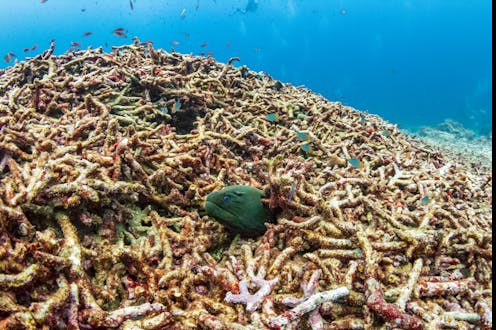
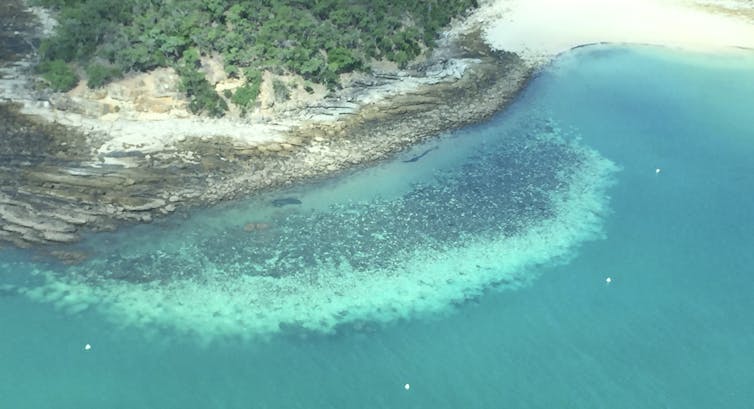
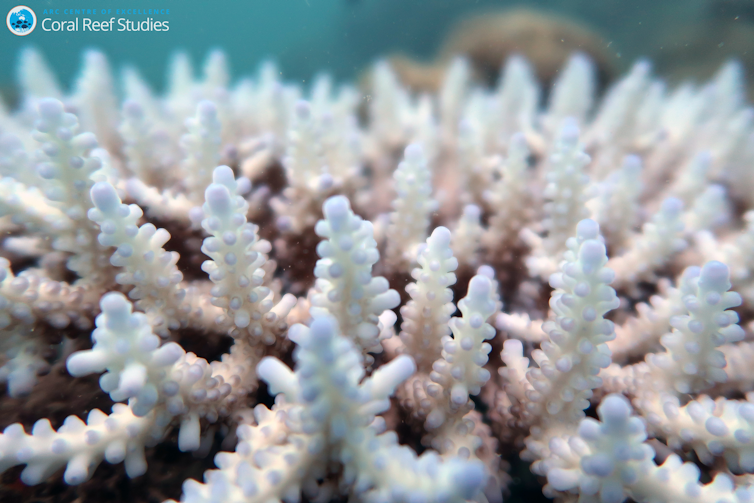
The Australian summer just gone will be remembered as the moment when human-caused climate change struck hard. First came drought, then deadly bushfires, and now a bout of coral bleaching on the Great Barrier Reef – the third in just five years. Tragically, the 2020 bleaching is severe and the most widespread we have ever recorded.

Coral bleaching at regional scales is caused by spikes in sea temperatures during unusually hot summers. The first recorded mass bleaching event along Great Barrier Reef occurred in 1998, then the hottest year on record.


Read more: ‘This situation brings me to despair’: two reef scientists share their climate grief


Since then we’ve seen four more mass bleaching events – and more temperature records broken – in 2002, 2016, 2017, and again in 2020.

This year, February had the highest monthly sea surface temperatures ever recorded on the Great Barrier Reef since the Bureau of Meteorology’s records began in 1900.

Coral bleaching at Magnetic Island, March 2020. (Video by Victor Huertas)

Not a pretty picture

We surveyed 1,036 reefs from the air during the last two weeks in March, to measure the extent and severity of coral bleaching throughout the Great Barrier Reef region. Two observers, from the ARC Centre of Excellence for Coral Reef Studies and the Great Barrier Reef Marine Park Authority, scored each reef visually, repeating the same procedures developed during early bleaching events.

The accuracy of the aerial scores is verified by underwater surveys on reefs that are lightly and heavily bleached. While underwater, we also measure how bleaching changes between shallow and deeper reefs.


Read more: Attention United Nations: don’t be fooled by Australia’s latest report on the Great Barrier Reef


Of the reefs we surveyed from the air, 39.8% had little or no bleaching (the green reefs in the map). However, 25.1% of reefs were severely affected (red reefs) – that is, on each reef more than 60% of corals were bleached. A further 35% had more modest levels of bleaching.

Bleaching isn’t necessarily fatal for coral, and it affects some species more than others. A pale or lightly bleached coral typically regains its colour within a few weeks or months and survives.

The 2020 coral bleaching event was the second-worst in more than two decades. ARC Centre of Excellence for Coral Reef Studies

But when bleaching is severe, many corals die. In 2016, half of the shallow water corals died on the northern region of the Great Barrier Reef between March and November. Later this year, we’ll go underwater to assess the losses of corals during this most recent event.

Compared to the four previous bleaching events, there are fewer unbleached or lightly bleached reefs in 2020 than in 1998, 2002 and 2017, but more than in 2016. Similarly, the proportion of severely bleached reefs in 2020 is exceeded only by 2016. By both of these metrics, 2020 is the second-worst mass bleaching event of the five experienced by the Great Barrier Reef since 1998.

The unbleached and lightly bleached (green) reefs in 2020 are predominantly offshore, mostly close to the edge of the continental shelf in the northern and southern Great Barrier Reef. However, offshore reefs in the central region were severely bleached again. Coastal reefs are also badly bleached at almost all locations, stretching from the Torres Strait in the north to the southern boundary of the Great Barrier Reef Marine Park.


CC BY-ND

For the first time, severe bleaching has struck all three regions of the Great Barrier Reef – the northern, central and now large parts of the southern sectors. The north was the worst affected region in 2016, followed by the centre in 2017.

In 2020, the cumulative footprint of bleaching has expanded further, to include the south. The distinctive footprint of each bleaching event closely matches the location of hotter and cooler conditions in different years.

Poor prognosis

Of the five mass bleaching events we’ve seen so far, only 1998 and 2016 occurred during an El Niño – a weather pattern that spurs warmer air temperatures in Australia.

But as summers grow hotter under climate change, we no longer need an El Niño to trigger mass bleaching at the scale of the Great Barrier Reef. We’ve already seen the first example of back-to-back bleaching, in the consecutive summers of 2016 and 2017. The gap between recurrent bleaching events is shrinking, hindering a full recovery.

For the first time, severe bleaching has struck all three regions of the Great Barrier Reef. ARC Centre of Excellence for Coral Reef Studies

After five bleaching events, the number of reefs that have escaped severe bleaching continues to dwindle. Those reefs are located offshore, in the far north and in remote parts of the south.

The Great Barrier Reef will continue to lose corals from heat stress, until global emissions of greenhouse gasses are reduced to net zero, and sea temperatures stabilise. Without urgent action to achieve this outcome, it’s clear our coral reefs will not survive business-as-usual emissions.


Read more: I studied what happens to reef fish after coral bleaching. What I saw still makes me nauseous


ref. We just spent two weeks surveying the Great Barrier Reef. What we saw was an utter tragedy – https://theconversation.com/we-just-spent-two-weeks-surveying-the-great-barrier-reef-what-we-saw-was-an-utter-tragedy-135197

Why coronavirus impacts are devastating for international students in private rental housing

Source: The Conversation (Au and NZ) – By Alan Morris, Professor, University of Technology Sydney

About half of international students in Australia are private renters and more than half of them rely on paid work to pay the rent, but most of the casual jobs they depend on have been lost in the coronavirus pandemic. The results of our recent survey (conducted pre-COVID-19) of international students living in private rental accommodation suggest up to half of them may now be unable to pay their rent. Many also live in quite crowded conditions, so will struggle to self-isolate even if they don’t lose their current housing.

Our survey covered all three post-secondary sectors – universities, vocational education and training, and English language (ELICOS) – and we received over 7,000 valid responses from students in the private rental sector in Melbourne and Sydney. Although the survey closed in mid-December and we have yet to finalise the report, the data suggest the knock-on effects of COVID-19 will have profound impacts on international students. About 565,000 are in Australia now, the government estimates.


Read more: Why housing evictions must be suspended to defend us against coronavirus


Working to pay the rent

Paying the rent was a major worry for many international students even before the pandemic. Just over one in three respondents agreed or strongly agreed they “worry about paying the rent each week”.

A staggering 22% said they “quite often go without necessities like food, so I can pay for my accommodation”. In response to the question, “In the last year, have you ever felt that you could become homeless?”, 17% said, “Yes”.

A critical finding is that just under half (46%) said they had to have a paid job to be able to pay the rent. Of the 43% who had a paid job (which suggests most of those who had to work to pay the rent had found a job), 44% worked in food services or hospitality. It is likely almost all employed international students are in casual jobs and thus have minimal job security.

The scale of recent job lay-offs in the hospitality industry suggests almost all these students will have lost their jobs. Most of the 16% who worked in retail and the 9% in health care and social assistance are probably also now jobless, along with those employed in other sectors.

When we asked students whether losing their job would mean they would not be able to pay the rent, 57% agreed or strongly agreed. Only a quarter disagreed or strongly disagreed. The results suggest 40-50% of the international students renting privately – about 150,000 people – may now be unable to pay their rent.

Although recent measures to prevent landlords evicting tenants who are in financial distress due to COVID-19 will help in some cases, the moratorium does not appear to prevent landlords evicting tenants for other reasons. “No grounds” evictions are seemingly still in place.

A spike in instances of discrimination related to COVID-19 could add to the risk of these students losing their accommodation.


Read more: Homelessness and overcrowding expose us all to coronavirus. Here’s what we can do to stop the spread


To add to their vulnerability, international students are not eligible for sick leave or any of the recently announced government benefits. They will not be able to apply for the increased unemployment benefit or youth allowance. They are also not eligible for the recently announced wage subsidy.

The lack of any income support could encourage an international student to continue working while ill. They might then infect fellow workers, housemates and the general public.

Living in crowded share housing

The survey indicated half of the international students in the private rental sector had at least three housemates and 19% had five or more. One in four respondents shared their bedroom with someone other than a partner. About one in five shared their bedroom with two or more people.

What the data indicate is that the housing conditions of a large proportion of international students provide fertile ground for the coronavirus to spread. If an international student tests positive for COVID-19, they will probably not have a space where they can self-isolate.


Read more: Tracking the rise of room sharing and overcrowding, and what it means for housing in Australia


Ignorant of rights as tenants

Only one in four students disagreed or strongly disagreed that it was “difficult to find out what my rights are as a renter”. Just over half strongly agreed or agreed they “understand [their] rights as a renter”.

As well as not knowing their rights, another factor that could make students more vulnerable is only 60% said they were renting from a landlord or real estate agent. The rest are renting from a flatmate, families they may or may not know, their educational institutions, or student accommodation (Iglu, Urbanest, etc).

The rights of tenants in these situations are complex. Many would not have written agreements and are not necessarily covered by residential tenancy law.

Sector must stand up for students

Clearly, the situation of many international students in private rental accommodation is extremely precarious. COVID-19 could be a tipping point for many. Not only will they have no income, but they could find themselves homeless with no possibility of flying home to their families.

They might also not be able to pay their fees – around A$20,000 a semester for university students. This could result in their “confirmation of enrolment” being cancelled and their student visa being withdrawn. Students will then be in Australia illegally and could find themselves in immigration detention.

The post-secondary education sector has long depended on the revenue international students provide. There were 758,154 full-fee-paying international students in 2019. The situation demands that educational institutions urgently insist that government extend a helping hand to these students. They desperately need the same protections that local students and workers enjoy.

ref. Why coronavirus impacts are devastating for international students in private rental housing – https://theconversation.com/why-coronavirus-impacts-are-devastating-for-international-students-in-private-rental-housing-134792

Open letter to the prime minister: extend coronavirus support to temporary workers

Source: The Conversation (Au and NZ) – By Peter Whiteford, Professor, Crawford School of Public Policy, Australian National University

Many temporary Australian residents will be excluded from the JobSeeker Payment and Coronavirus Supplement to be provided to permanent residents. In this open letter to the prime minister, 40 leading Australian experts on public policy argue this is in no-one’s interests.


Dear Mr Morrison,

The Australian government has achieved a great deal with its far-reaching responses to the risks to the Australian people and the economy as a result of the Covid19 pandemic.

The temporary increases to social security benefits through the introduction of the Coronavirus Supplement and the introduction of the JobKeeper Payment have done much to boost public confidence as Australia along with the rest of the world faces the most challenging economic environment in 100 years.

The combination of these two payments should provide a robust safety net for those who qualify for one or other of the payments.

However, there is a serious gap in the government’s response that needs to be filled as soon as possible. This is the situation facing temporary visa holders in the workforce who are not currently eligible to access the COVID-19 crisis measures.

On April 4, the acting minister for immigration announced announced that most temporary visa holders with work rights will now be able to access their Australian superannuation to help support themselves during the crisis, but that others would be encouraged to return to their home country.

The Minister’s Statement sets out the scale of this issue:

  • there are 2.17 million people presently in Australia on a temporary visa

  • of these, there are more than 672,000 New Zealanders in Australia on a subclass 444 visa

  • there are 565,000 international students in Australia, mainly studying in the higher education or vocational education sector

  • There are around 139,000 temporary skilled visa holders, on either a 2 year or 4 year visa

  • There are about 118,000 people in Australia on a Working Holiday visa (or backpacker visa)

  • There are another 185,000 other temporary visa holders in Australia, about half of them temporary graduate visa holders

The minister has acknowledged the crucial role that these temporary visa holders play in the Australian economy.

For example, his statement points out that international students “are an important contributor to our tertiary sector and economy, supporting 240,000 Australian jobs.”

Permanent Australian residents have been queuing at Centrelink offices. AAP

Many of those on working holiday visas are working in “the critical sectors of heath, aged and disability care, agriculture and food processing, and childcare”.

Temporary skilled visa holders “were provided the visa to fill a skills shortage – a shortage that may still be present when the crisis has passed”.

Also on April 4, a joint statement from the Deputy Prime Minister, the Minister for Agriculture and the Minister for Immigration announced temporary changes to visa arrangements to help farmers access the workforce they need to secure Australia’s food and produce supply during COVID-19.

Pointing out that “these visa holders fill a critical workforce gap in this sector,” the government announced that, before moving to other parts of the country, working holiday makers will need to self-isolate for 14 days.

The JobKeeper and the JobSeeker Payments will cover some temporary visa holders, but not all.

For example, it appears that New Zealanders in Australia will be eligible for the JobKeeper Payment, but only if they have been with the same employer for 12 months or more. They will only be entitled to the JobSeeker Payment and the Coronavirus Supplement if they have been in Australia for 10 years or more.


Read more: Coronavirus supplement: your guide to the Australian payments that will go to the extra million on welfare


Non-New Zealanders will have only their super to rely on (which may have plummeted in value), a wholly inadequate solution.

The government has already made the very positive move of extending access to social security benefits to permanent residents who previously were not eligible for many payments for up to four years.

Refusing income support to temporary migrants who lose their jobs poses risks to public health and their own welfare, will create shortages of workers in vital sectors now and when the economy restarts, and breach Australia’s global responsibilities.

These workers have all been making valuable contributions to the Australian economy.


Read more: Why closing our borders to foreign workers could see fruit and vegetable prices spike


Many will not be able to, and should not have to, return “home”.

If temporary migrants find themselves without income and unlawfully resident here, Australia will face a humanitarian crisis and an even worse health situation for us all.

Such migrants may be made homeless or will be forced to live in crowded situations and may be forced into illegal work.

We believe that as a matter of urgency that entitlement to the JobSeeker Payment and the Coronavirus Supplement should be extended to these workers for the period of the current health emergency.

The minister for families and social services has wide-ranging discretionary powers to make regulations to achieve this, but the sitting of parliament this week provides the opportunity for the government to make a firm commitment to fill this gap in their response to this unprecedented crisis.

Yours sincerely,

Associate Professor Laurie Berg, Faculty of Law, University of Technology Sydney

Professor Sharon Bessel, Crawford School of Public Policy, The Australian National University

Associate Professor Anna Boucher, The University of Sydney

Associate Professor Bruce Bradbury, Social Policy Research Centre, UNSW

Dr Stephen Clibborn, The University of Sydney Business School

Professor Jock Collins, Professor of Social Economics, UTS Business School, University of Technology Sydney

Professor Rae Cooper, The University of Sydney Business School

Professor Jean-Philippe Deranty, Department of Philosophy, Macquarie University

Dr Norbert Ebert, Department of Sociology, Macquarie University

Associate Professor Bassina Farbenblum, Director UNSW Human Rights Clinic, UNSW Law

Professor Karen R Fisher, Social Policy Research Centre, UNSW

Professor Susan Goodwin, The University of Sydney

Professor Matthew Gray, Centre for Social Research and Methods, The Australian National University

Associate Professor Dimitria Groutsis, The University of Sydney Business School

Dr Nicholas Harrigan, Department of Sociology, Macquarie University

Professor Paul Henman School of Social Science, The University of Queensland

Associate Professor in Law Joanna Howe, University of Adelaide

Dr Evan Jones, Department of Political Economy, The University of Sydney

Peter Mares, Adjunct Fellow, Centre for Urban Transitions, Swinburne University

Professor Greg Marston, Professor of Social Policy, School of Social Science, The University of Queensland

Professor Gabrielle Meagher, Honorary Professor, Department of Sociology, Macquarie University

Professor Alan Morris, University of Technology Sydney

Associate Professor Gaby Ramia, The University of Sydney

Professor Alex Reilly, Law School, University of Adelaide

Associate Professor Shanthi Robertson, School of Humanities and Communication Arts, Western Sydney University

Professor Nicholas Smith, Department of Philosophy, Macquarie University

Dr Ben Spies-Butcher, Department of Sociology, Macquarie University

Dr. Adam Stebbing, Department of Sociology, Macquarie University

Professor Miranda Stewart, Tax Group, University of Melbourne Law School

Professor Joo-Cheong Tham, Melbourne Law School, The University of Melbourne

Scientia Professor Carla Treloar, Centre for Social Research in Health; Social Policy Research Centre, University of New South Wales

Associate Professor kylie valentine, Social Policy Research Centre, University of New South Wales

Associate Professor Diane Van Den Broek, The University of Sydney Business School

Associate Professor Selvaraj Velayutham, Department of Sociology, Macquarie University

Professor Ariadne Vromen, Department of Government and International Relations, The University of Sydney

Professor Peter Whiteford, Crawford School of Public Policy, Australian National University

Associate Professor Shaun Wilson, Macquarie University

Professor Amanda Wise, Department of Sociology, Macquarie University

Associate Professor Chris F Wright, The University of Sydney

Associate Professor Kyoung-Hee Yu, University of Technology Sydney

ref. Open letter to the prime minister: extend coronavirus support to temporary workers – https://theconversation.com/open-letter-to-the-prime-minister-extend-coronavirus-support-to-temporary-workers-135691

Keith Rankin – Universal Basic Income (or Basic Universal Income) and Covid‑19

Keith Rankin.

Article by Keith Rankin

A Plea for Political Commentary with a Semblance of Accuracy

Keith Rankin.

Once again it was very disappointing to hear a radio programme poo-pooing the idea of a Universal Basic Income by misrepresenting it.

Refer: (The Panel, National Radio, 6 April 2020)
https://www.rnz.co.nz/national/programmes/thepanel/audio/2018741718/a-universal-basic-income-to-all-its-citizens

And my previous attempt (Keith Rankin on Universal Basic Income and Covid‑19) to rebuff the incorrect information.

This example was disappointing because the invited guest – Max Rashbrooke – is familiar with my work, and made no attempt to discuss anything like what I have been advocating for many years. And the panellist Janet Wilson made a very over‑the‑top and totally ignorant dismissal of the proposal.

My proposal for a Basic Universal Income (BUI) is very straightforward. (I will use this name to distinguish my proposal from the various ‘straw man’ versions of UBI that are in circulation.)

New Zealand should (and can easily) adopt a flat income tax rate of 33% and an annual Basic Universal‑Income of $9,080, which amounts to $175 per week.

Max Rashbrooke was considering a UBI of $13,000 without any changes to income taxes. (I dismissed this idea on 25 March by saying: “It is not possible to offer any kind of Universal Basic Income … at the level of New Zealand Superannuation”.) He also said that a UBI of anything less would be of minimal benefit, so therefore unworthy of consideration.

Max Rashbrooke’s suggestion was that a new unfunded universal benefit payable to working‑age New Zealanders was a very inefficient way to use all that extra money (which I calculate to be about $40 billion). But nobody has ever advocated what Max Rashbrooke was suggesting.

Then Janet Wilson said that it was completely ridiculous to pay a highly paid person such as herself an annual UBI of $11,000. Rather she favoured an extremely targeted (and necessarily bureaucratic) form of helping people affected by the present emergency. She did not realise that a properly-structured UBI would only affect her if her circumstances changed.

Five Examples

So let’s consider five imaginary people:

  • Janet, who grosses $100,000 a year before tax
  • Max, who grosses $70,000 a year before tax
  • Bob, who grosses $40,000 a year before tax
  • Jill, a student with a student loan; she lives with her parents
  • Fred, a beneficiary

Janet.
At present she pays $23,920 in income tax, leaving her with $76,080.
Under my proposal she receives $67,000 after tax and receives a Basic Universal Income of $9,080, leaving her with $76,080. If she is content with $76,080 under the old formula, she should be content with $76,080 under the new formula.

Max.
At present he pays $14,020 in income tax, leaving him with $55,980.
Under my proposal he receives $46,900 after tax and receives a Basic Universal Income of $9,080, leaving him with $55,980. If he is content with $55,980 under the old formula, he should be content with $55,980 under the new formula.

Bob.
At present he pays $6,020 in income tax, leaving him with $33,980.
Under my proposal he receives $26,800 after tax and receives a Basic Universal Income of $9,080, leaving him with $35,880. He is better off by $1,900.

Jill.
At present she receives an annual student loan living allowance of about $8,000. This has to be repaid when she is in subsequent employment.
Under my proposal she receives a Basic Universal Income instead. And she pays tax on any parttime work at a rate of 33 percent. If she has no parttime employment, she is better off by $1,000 today, and does not have to repay the money in the future.

Fred.
Fred is a beneficiary, receiving a jobseeker (unemployment) benefit (after tax) of about $13,080 per year.
Under my proposal he receives a BUI of $9,080 plus a Jobseeker Benefit of $4,000.
So his disposable income does not change.

Of these five people, only Bob and Jill would see an immediate rise in the income available for them to spend. However, all five benefit from the Basic Universal Income.

Janet and Max benefit because, if either loses their job (or their business), they would have an immediate tideover weekly income of $175 to call upon, and they may decide not to bother applying for an unemployment benefit (leaving the benefit queue to the needy).

Bob benefits directly, and substantially more if, for example, he is asked to take a 25 percent pay cut. In that event he would be grossing $30,000 a year, instead of $40,000.
Under the present income tax scale, with a $30,000 wage Fred would receive $25,730 after tax.
Under my BUI proposal he would receive $20,100 in after tax wages, plus a BUI $9,080, totalling $29,180. Bob would be $3,450 better off. The BUI is a very real cushion to the blow of having to work shorttime and take a wage cut. And he does not have to apply to MSD to receive that cushion; he has it already.

Jill gains what is effectively a Universal Student Living Allowance. She is no longer treated as if she is a child until she is aged 25. She can of course take out a student loan to pay her course fees, and to pay for other course-related costs. And, by paying tax at 33 percent, she is discouraged from taking on too much paid work at the expense of her studies. She has a better study‑life balance.

Fred gains, because if he accepts a casual, parttime or precarious job, he still gets to keep the first $9,080 of his benefit. And if he loses or otherwise finishes that job, there is no benefit stand‑down. He still gets his BUI, and may decide to wait before applying for the extra $4,000 Jobseeker Benefit; instead he can devote his time and effort into finding further employment.

Looking Ahead

A Basic Universal Income – as outlined – is modest, affordable and technically easy to implement. It is a future‑looking policy that benefits every working‑age adult, and hurts nobody.

It has one other major benefit. Once there is a BUI in place (with the flat tax that underpins it), then, if an emergency (such as the present Covid‑19 emergency) deepens, then it is an easy matter to address the situation by raising the BUI (eg from $175 to $200 per week), allowing everyone to benefit in a very immediate, democratic and straightforward way.

A Basic Universal Income is not a wage. It is much better understood as a basic productivity dividend. High productivity societies cannotafford to not pay productivity dividends. The consequence of failure to pay productivity dividends is unsustainable inequality and social discord.

Criticism?

I have been pushing this proposal for a long time now. And I have yet to hear a single argument against it. With the present public health and economic emergency in place, it is high time that this proposal – not some other straw man proposal – was subject to an informedpublic discussion.

My sense is that, despite the simplicity of the proposal, it is not properly understood. I think that the misunderstanding has something to do with the flat tax rate that is central to the proposal. Possibly many people do not understand the difference between a flat income tax and the prevailing alternative?

Crises should not be wasted. Now is an especially good time to look to the future.

NZ lockdown – day 12: Nation needs to ‘stay the course’, says PM Ardern

Former New Zealand Prime Minister, Jacinda Ardern.

By RNZ News

Prime Minister Jacinda Ardern does not want New Zealand to be at level four for “a minute longer than needed”, but says there is no plan to lift it earlier than the planned four weeks.

As New Zealand approaches the halfway point of the four-week lockdown, Ardern said today the country needed to stay the course.

“We can expect to see cases and contacts of those cases coming through,” she said.

“We also need to better understand the cases of community transmission.”

READ MORE: Al Jazeera coronavirus live updates – US braces for ‘hardest week’

She said New Zealand needed to be at level four for four weeks because it took time for symptoms to be seen and some people may have passed on Covid-19 before the lockdown and those symptoms will only just be starting to be seen now.

– Partner –

“No matter what technology can offer us for contact tracing, it will still be critical that we have those one-on-one interviews where we interrogate people.

She said the country needed to be absolutely sure it was not missing “silent outbreaks” and this was why surveillance testing was important.

Ardern also spoke about the issue of mental health while addressing media after a meeting of Cabinet on the level 4 national response to the Covid-19 outbreak.

The government is launching a campaign and resources to help New Zealanders cope with stresses created by Covid-19.

She said many people felt distressed, anxious or worried and this was completely understandable.

“No-one should be too hard on themselves at this particular point in time.”

She said the new campaign would focus on providing people with the tools they needed “to be able to manage their worries, look after their mental health and connect with loved ones, despite operating from their own bubbles at this time”.

The Prime Minister has also confirmed that the Covid-19 Wage Subsidy Scheme has paid out $5.3 billion to 876,000 New Zealanders.

“MSD is still working hard through applications … to support those many employees and businesses.”

The Treasury estimates that between $8 billion and $12 billion will eventually be paid out in wage subsidies.

There are 39 new confirmed cases of Covid-19 and 28 new probable cases in New Zealand, bringing the country to a total of 1106, the Health Ministry announced this afternoon.

Director-General of Health Dr Ashley Bloomfield said 13 people were in hospital, and three were in ICU – one in Wellington and two in Auckland. One of the people in ICU is in a critical condition.

There are now 12 significant clusters, with 72 cases linked to Marist College, a Catholic girls’ school in Auckland. The cluster associated with a wedding in Bluff now has 62 cases, and the Matamata cluster has 58.

This article is republished by the Pacific Media Centre under a partnership agreement with RNZ.

  • If you have symptoms of the coronavirus, call the NZ Covid-19 Healthline on 0800 358 5453 (+64 9 358 5453 for international SIMs) or call your GP – don’t show up at a medical centre.
  • RNZ’s Covid-19 news feed
Print Friendly, PDF & Email

Article by AsiaPacificReport.nz

Head lice drug Ivermectin is being tested as a possible coronavirus treatment, but that’s no reason to buy it

Source: The Conversation (Au and NZ) – By Andrew McLachlan, Head of School and Dean of Pharmacy, University of Sydney

Researchers testing the head lice drug Ivermectin as a possible treatment for COVID-19 have seen promising results in lab studies.

But the research is in its early stages and the drug is yet to be tested on people with COVID-19. There’s so much we don’t know, including the right dose and delivery method for people with coronavirus infection.

So if you’re thinking of buying some just in case, think again.


Read more: Coronavirus: how long does it take to get sick? How infectious is it? Will you always have a fever? COVID-19 basics explained


What is Ivermectin currently used for?

Ivermectin is an antiparasitic agent that was isolated in the 1970s from the fermented broth of a species of bacteria called Streptomyces avermitilis.

The drug has been used since the 1980s to treat and prevent diseases related to parasites in humans, pets and livestock, and works by paralysing invertebrate parasites.

In Australia, Ivermectin is mainly used topically in creams and lotions for head lice.

It’s also used in tablet form to treat roundworm infection and as a second-line treatment for scabies and rosacea, a skin condition that causes redness and visible blood vessels in your face.

Ivermectin is a second-line treatment for scabies. Shutterstock

The pharmaceutical company that makes Ivermectin, MSD, has also been donating the drug to developing countries to treat the parasitic diseases river blindness and elephantiasis for the past 30 years.


Read more: How 2015 Nobel Prize drug might rid Africa of ancient scourges


What are the side effects and potential harms?

When used at the recommended dose, Ivermectin is generally well tolerated. Some of the common side effects include diarrhoea, nausea, dizziness and drowsiness.

Less common is a lack of energy, abdominal pain, constipation, vomiting, tremors, rashes and itching.

Ivermectin may also interact with some medicines, such as the blood-thinning drug warfarin, or worsen some conditions such as asthma.

Ingesting Ivermectin found in topical products for head lice is dangerous. If this occurs, contact the Poison Information Hotline.

How might Ivermectin treat COVID-19?

Recent laboratory data from scientists at Monash University and the Doherty Institute suggests Ivermectin is able to stop SARS-CoV-2, the virus that causes COVID-19, from replicating.

Ivermectin has also been shown to stop other viruses (such as HIV, dengue, influenza and Zika) replicating, at least in the laboratory.

The researchers found Ivermectin had an effect on SARS-CoV-2 after one exposure to the drug. Viral replication was shut down within 24 to 48 hours.

It’s still not clear exactly how Ivermectin works. But it appears to stop the processes that allow proteins to move within the virus. These proteins would normally dampen the body’s antiviral response, allowing the virus to replicate and enhance the infection.

Where is the research on Ivermectin for coronavirus up to?

This research on Ivermectin has been conducted in cell culture (cells grown in a laboratory) and is very preliminary. It provides some promise, but not evidence of an effective treatment in people (yet).

Rigorous clinical trials in people with or exposed to COVID-19 infection are needed to establish the drug works and is safe to use, and in what doses. The laboratory studies of Ivermectin suggest higher concentrations of the drug may be needed beyond a standard dose to have an antiviral impact. So safety monitoring will be important.

Lab studies suggest higher concentrations may be needed for COVID-19. Shutterstock

If Ivermectin is found to work on people with COVID-19, it needs to be studied as a potential treatment. So researchers need to know: does it prevent COVID-19 infection, reduce the severity of the associated illness, or improve the time to recovery? These are important questions to be answered before it becomes a treatment for COVID-19.

On a positive note, re-purposing drugs such as Ivermectin as a potential treatment for COVID-19 is ideal because development can move quickly to clinical trial testing because we already know it’s safe to use in humans at currently recommended doses.


Read more: In the fight against coronavirus, antivirals are as important as a vaccine. Here’s where the science is up to


Should I buy some just in case?

No. It’s too soon to know if the promising laboratory test results will translate into a safe and effective drug for COVID-19 patients. The researchers were very clear Ivermectin should not be used to treat COVID-19 until further testing is complete.

We certainly shouldn’t be stockpiling the drug to use later, especially since we don’t yet know the best way to take Ivermectin, including the right dose. And it could lead to unintended medicine shortages for people who need the drug to treat serious diseases caused by parasites.

ref. Head lice drug Ivermectin is being tested as a possible coronavirus treatment, but that’s no reason to buy it – https://theconversation.com/head-lice-drug-ivermectin-is-being-tested-as-a-possible-coronavirus-treatment-but-thats-no-reason-to-buy-it-135683

Morrison sees massive ratings surge in Newspoll over coronavirus crisis; Trump also improves

Source: The Conversation (Au and NZ) – By Adrian Beaumont, Honorary Associate, School of Mathematics and Statistics, University of Melbourne

This week’s Newspoll, conducted April 1-3 from a sample of 1,508 people, showed a huge boost in Prime Minister Scott Morrison’s approval rating based on his leadership thus far in the coronavirus crisis.

Nearly two-thirds of people (61%) were satisfied with Morrison’s performance (up a massive 20 points) and 35% were dissatisfied (down 18), for a net approval of +26, up 38 points.

Anthony Albanese also improved his net approval by nine points to +9. Morrison led Albanese as better PM by 53-29%, another large improvement from the last Newspoll, which was a closer 42-38%.

Analyst Kevin Bonham says these are the biggest poll-to-poll jumps for a PM in Newspoll history on both net approval and better PM. His tweet shows the largest net approval rises for PMs, and when they occurred.

The Newspoll also gave the Coalition a 51-49% lead over Labor in the two-party preferred question, a two-point gain for the Coalition since the last Newspoll three weeks ago.

Primary votes were 42% Coalition (up two points), 34% Labor (down two), 13% Greens (up one) and 5% One Nation (up one).

Major crises tend to produce a “rally round the flag” effect for incumbents, though it doesn’t always last.

An example of a major crisis that produced an initial rally-round-the-flag effect, but nothing else, is the Queensland floods in December 2010 to January 2011, which affected over three-quarters of the state.

From October to December 2010, the Labor state government was trailing the opposition LNP by a landslide 59-41% margin. Based on Premier Anna Bligh’s handling of the floods, Labor surged ahead by 52-48% in the January to March 2011 polling, but then fell back immediately to a 60-40% deficit in April to June 2011.

Labor never recovered and was reduced to just seven of 89 seats at the March 2012 state election.


Read more: Thanks to coronavirus, Scott Morrison will become a significant prime minister


There are currently far fewer coronavirus cases and deaths in Australia than in European countries and the US. If the crisis is resolved relatively painlessly in Australia, I believe Morrison’s ratings will stay high during the crisis, but then drop back after it ends.

In other Newspoll questions, 84% of respondents were worried and 14% confident about the economic impact of coronavirus (76-20% previously). On the preparedness of the health system, 57% were worried, compared to 41% confident.

An overwhelming majority (86%) supported the JobKeeper scheme. While 64% thought the $1,500-per-fortnight payment for qualifying workers was about right, 16% thought it was too much and 14% not enough.

Some 67% were worried about catching the virus, 38% about higher government debt, 36% about losing their jobs and 35% about their superannuation balance.

Is Trump’s modest ratings boost sustainable?

In the FiveThirtyEight polling aggregate, US President Donald Trump’s current ratings across all polls are 45.8% approve, 50.0% disapprove (net -4.2%).

In polls of registered or likely voters, Trump’s ratings are 45.6% approve, 50.9% disapprove (net -5.3%). Trump’s net approval has improved five to six points in the last three weeks and is at its highest since early in his term.

Despite the rise in Trump’s approval, the RealClearPolitics average of national polls gave virtually certain Democratic presidential nominee Joe Biden a 5.9% lead over Trump in the November 2020 election, down modestly from 8.5% three weeks ago.

A recent Fox News national poll gave Trump a 51-48% disapproval rating. However, 53% thought a quicker response from the federal government could have slowed the spread of coronavirus, while 34% said it was so contagious nothing could stop it spreading.


Read more: Our politicians are not fit to oversee the coronavirus response. It’s time they got out of the way


Despite the higher rating for Trump, the same poll gave Biden a 49-40% lead in the presidential election.

Trump’s gains so far are dwarfed by then US President George W. Bush’s gains in approval of over 30 points after the terrorist attacks of September 11 2001.

Other current leaders and governing parties have had far bigger bounces in their ratings than Trump, including Morrison.

In Britain, two recent polls gave the Conservatives 54%, up from the mid-to-high 40s. In Germany, the conservative Union parties are in the mid-30s, up from the mid-20s before the crisis. A recent French poll gave President Emmanuel Macron a -8 net approval, up 26 points.

Even in the US, Trump’s bounce is far less than the bounce for New York’s Democratic Governor Andrew Cuomo. Cuomo’s net favourable rating improved from -6 to +48 in a New York Siena College poll. New York has the most coronavirus cases in the US so far.

If the coronavirus crisis is resolved relatively quickly, people will likely be more focused on other factors by the November presidential election. In that case, how much damage the economy takes and whether it is clearly recovering are likely to be the most important factors.

The more likely scenario is that coronavirus will damage the US both economically and in health terms for a long time. The US already has far more cases than any other country. I do not believe Trump’s ratings gains will be sustained if the US falls into a massive health and economic crisis.

The crisis has already had an economic impact: in the week ending March 21, almost 3.3 million new jobless claims were submitted, far exceeding the previous record of 695,000. In the week ending March 28, jobless claims jumped massively again to over 6.6 million. Weekly jobless claims are published every Thursday.

In March, the US unemployment rate rose 0.9% to 4.4%. The survey period was in mid-March, before the massive late-March losses.

In the household survey, employment was down almost 3 million people, compared to a mere 701,000 in the headline establishment survey. While average hourly wages rose 11 cents, this probably reflects the shedding of lower-paying jobs.
As average weekly working hours fell, average weekly wages dropped almost US$2 from February.

ref. Morrison sees massive ratings surge in Newspoll over coronavirus crisis; Trump also improves – https://theconversation.com/morrison-sees-massive-ratings-surge-in-newspoll-over-coronavirus-crisis-trump-also-improves-135693

A coronavirus spike may put ICU beds in short supply. But that doesn’t mean the elderly shouldn’t get them

Source: The Conversation (Au and NZ) – By Paul Komesaroff, Professor of Medicine, Monash University

Although recent encouraging news suggests the rate of new coronavirus cases in Australia is slowing, our medical facilities could still be overwhelmed at some point.

One modelling study has suggested that, if public health measures are not observed or do not work, demand for the existing 2,200 intensive care unit (ICU) beds in Australia will be exceeded within a few weeks. More optimistic views of our achievable ICU capacity would merely delay this event for a few weeks.

Critical shortages of ICU beds and other medical resources overseas have resulted in large numbers of deaths. In these countries there have been vigorous debates about which of many eligible patients should be given access to care facilities in short supply.

This discussion is now underway in Australia.

For many clinicians, the question of who has access to limited ICU beds presents disturbing challenges, especially in view of a widely disseminated proposal that has gained particular support in Italy. This bases decisions about who is granted access to ICU beds on calculations of the future years of life that could potentially be achieved through treatment (or, in some proposals, “quality adjusted” years of life).

This would deny access to people above a certain age as well as to people with disabilities and certain medical conditions.


Read more: People with a disability are more likely to die from coronavirus – but we can reduce this risk


What is a person worth?

This approach is deeply problematic.

It has taken many years for us to move away from judging the value or worth of a person by their age, race, sexual preference, physical ability, religion or other personal characteristics.

The worst outrages of the 20th century resulted directly from such approaches, which were often claimed at the time to be supported by “ethical” justifications.

Decisions should not be made based on calculations about how many years a person has to live. Shutterstock

There has also never been a public discussion, and certainly there is no agreement, about whether the “ethical value” of a person can be calculated mathematically on the basis of the total number of years he or she might live.


Read more: The coronavirus pandemic is forcing us to ask some very hard questions. But are we ready for the answers?


The alternative, which has been developed and routinely employed in hospitals around Australia for years, applies a process of rigorous discussion about the potential benefits and burdens of treatments proposed for every individual patient, taking into account all relevant clinical features and whether acute problems can be overcome.

It entails a detailed analysis of technical issues and results. It involves open discussion with the patient, medical carers, family members, and expert ICU staff, about medical, social, emotional and ethical issues.

It embraces flexibility and a readiness to adapt and change protocols with changing circumstances. It takes into account the specific circumstances of individual patients’ lives, including their personal preferences and religious and cultural beliefs.

It leaves aside personal characteristics not relevant to the medical decision at hand, such as race, gender, sexual preference and ethnicity.

Age can be relevant

This is not to say that age can never be a relevant consideration. Indeed, in some conditions, advanced age is closely linked with the likelihood of a poorer response to a treatment.

Sometimes this is because increasing age is directly linked to age-related diseases that reduce the likelihood of a successful outcome from treatment, such as certain types of cancer.

Sometimes age can be a factor but it’s more of a signifier of other considerations. Shutterstock

At other times, for reasons that are much less clear, age itself appears to predict poor outcomes of treatment, leading to its inclusion in many scoring systems for predicting outcomes of treatment, including in intensive care and cancer care.

In both cases it is valid that age be taken into account in decision-making. It is also possible that age may be relevant to more philosophical considerations, for example, whether older people consider themselves to have already lived a “fair innings” or whether young people should be given the opportunity to live a life and gain their potential.


Read more: The ‘dreaded duo’: Australia will likely hit a peak in coronavirus cases around flu season


While these may also be relevant considerations, and be accepted by many, including sometimes by older people themselves, they are much less clear and much more contested, and require ongoing debate.

The key point is that, even in these cases, age is never taken as a defining quality or characteristic of a person but rather as a potential signifier of other relevant characteristics or risk factors. Its relevance is linked to what it implies for the particular person, not to an assumption that old people have diminished value and are less worthy of treatment.

In extreme settings, time and resource constraints may add greatly to pressures on the decision-making process but the same principles still apply. In fact, it is exactly in these contexts that it is most important to resist resorting to criteria that are not founded on evidence or valid ethical arguments.

How do we respond?

The ethical strength of a society is revealed in how it responds to serious challenges. If we have values worth defending, this is the time to fight for them.

Most of us do not want to move to a society based on the arbitrary imposition of measures that discriminate against people on the basis of ethically or medically irrelevant personal characteristics.

Future generations will judge us on how we respond to this crisis and whether we have been able to defend our core values. This is the time, perhaps more than any other, when we have to keep our ethical nerve.


Read more: How we’ll avoid Australia’s hospitals being crippled by coronavirus


ref. A coronavirus spike may put ICU beds in short supply. But that doesn’t mean the elderly shouldn’t get them – https://theconversation.com/a-coronavirus-spike-may-put-icu-beds-in-short-supply-but-that-doesnt-mean-the-elderly-shouldnt-get-them-134782

Coronavirus support packages will reshape the future economy, and that presents an opportunity

Source: The Conversation (Au and NZ) – By Ilan Noy, Professor and Chair in the Economics of Disasters, Te Herenga Waka — Victoria University of Wellington

Governments across the world have rolled out extensive financial packages to support individuals, businesses and large corporations affected by the COVID-19 pandemic.

Equally, central banks have decreased their lending rates to almost zero, and have announced extensive and previously untested direct lending to private corporations and financial companies.

In many wealthy countries, the support packages are record-breaking in their size and scope, such as the US$2.2 trillion stimulus package for the US economy.

The US and Australian stimulus packages each represent about 10% of GDP. New Zealand’s program is about 5% of GDP, but each country is experiencing the economic shock differently, has different existing safety nets and priorities, and different mechanisms to deliver this assistance.

These support packages will play a significant role in shaping our world for many years, and we should not allow the clear emergency of the situation to stop us questioning their design.


Read more: New Zealand outstrips Australia, UK and US with $12 billion coronavirus package for business and people in isolation


Goals for financial support

Our work on economic recovery following natural hazards and disasters defines a set of build-back-better goals, and how they should be assessed.

This kind of thinking applies equally to our current predicament. We argue that globally, the purpose of COVID-19 stimulus packages should be threefold, and we should assess them against these three goals:

  1. make sure people’s basic needs are satisfied

  2. make it possible for the economy to spring back into action once the necessary social distancing measures are relaxed

  3. use these funds to create positive change, and rebuild areas we previously neglected (in many countries, this will mean investing in public health systems).


Read more: Five principles to follow if your job is to lead your staff through the coronavirus crisis


To achieve the first goal of making sure people can meet their basic needs, many high-income countries – including the US, Greece, the UK and France – are either providing direct payments to all citizens (as in the US) or targeted support to those who lost income or jobs.

These payments are sometimes a fixed proportion of each recipient’s previous income, up to a cap (as in the UK), or are identical for everyone who has lost income (as in New Zealand).

From an economic perspective, it is clearly more efficient to provide support only to the people who really need it – those who have lost income and would not be able to support themselves and their dependants.

But these programs are also shaped by politics and ethics, and different countries chose different ways to distribute this assistance, not always based on need.

Restarting economies

Even better are programs that provide the wage subsidies through existing employers, such as Germany’s famed Kurzarbeit program (which translates to “work with shorter hours”) which was implemented during the 2008 global financial crisis.

New Zealand’s wage subsidy package is a similar program. It supports businesses to continue paying their staff even if they are unable to work.

Details of payments to businesses are posted online, to make sure employers comply and transfer these funds to their employees. This initiative was trialled after the 2011 Christchurch earthquake.


Read more: Three reasons why Jacinda Ardern’s coronavirus response has been a masterclass in crisis leadership


A similar support was also implemented in Australia.

Generally, wage subsidies allow for continued employment of individuals who would otherwise be let go, and they will also assist in achieving the second goal of resuming economic activity once restrictions are relaxed.

Such programs have been shown to be effective in Germany and New Zealand in ameliorating unexpected shocks.

While employees need support, directly or indirectly, it is also important that small and medium-sized businesses are propped up so they are ready to forge ahead once it is possible to do so. They should receive grants and subsidised loans to pay their costs, other than wages. Otherwise many businesses will fail, and the recovery will be slow and hard.

Global impacts

Whether large corporations need to receive support depends partly on the longer-term importance of their sector. It is easier to justify support for national airlines, which are an important linchpin in many countries’ global ties, than to support fossil fuel producers, for example.

Nor are there many reasons why taxpayers (present and future) should bail out wealthy individual owners of large businesses, when these businesses could be restructured in bankruptcy proceedings that should not lead to their shutdown.

But the COVID-19 pandemic has impacts well beyond individual countries and their economies and may require global support mechanisms.

Most low- and middle-income countries have either not yet announced any assistance or their packages are less than 1% of GDP. They typically cannot afford more with their existing debt levels.

It is therefore incumbent on high-income countries that can afford larger fiscal support packages to help countries that cannot. But so far only a handful of high-income countries, including Finland and Norway, have provided such support.

The international institutions supported by the rich world, such as the International Monetary Fund (IMF) and the World Bank, should pull out all the stops and lend enough, and at concessionary rates, to low-income countries so they can, at the very least, provide for their people’s basic needs.

Without that support, the virus will continue to spread in low-income countries and defeat the draconian social distancing measures that almost every country is implementing now.

Finally, it is important that we scrutinise these programs carefully now, rather than only once the public health emergency has passed and they have been entrenched. The sums involved are incredibly large and we will be remiss if we mis-spend what we are now borrowing from our children and grandchildren.

* Stay in touch with The Conversation’s coverage from New Zealand experts by signing up for our weekly newsletter – delivered to you each Wednesday morning.

ref. Coronavirus support packages will reshape the future economy, and that presents an opportunity – https://theconversation.com/coronavirus-support-packages-will-reshape-the-future-economy-and-that-presents-an-opportunity-135296

Southern Cross covers host of issues in fast-moving Covid-19 time

Pacific Media Watch

From the second week of lockdown in New Zealand, to Covid-19 in the Pacific and an “authoritarianism creep” by governments in the Asia-Pacific region provided a fast-changing landscape on the Pacific Media Centre’s Southern Cross radio programme on 95bFM today.

New Zealand had crossed the 1000-case threshold on Sunday with 89 new cases and one death, reports Sri Krishnamurthi on the programme.

However, the pandemic was starting to affect the Pacific with Guam being the worst-hit with 93 cases and four deaths and there was also the curiosity of an American aircraft carrier docked in Guam with 155 cases on board.

Ironically, captain Brett Crozier, 50, who was “relieved” after he sent a letter which ended up in hands of a San Francisco Chronicle reporter, saying that conditions were dire on board was himself reported now to be suffering from Covid-19

Meanwhile, people in Fiji were still not taking the threat seriously with 134 arrested on Saturday for flouting lockdown rules, with Prime Minister Voreqe Bainimarama threatening unleash the army if lockdown rules were not obeyed.

If that was not enough, some governments were using Covid-19 to clamp down on people and the media as authoritarianism began to raise its ugly head in the Philippines – where on person was shot on Saturday, Cambodia, Indonesia, Papua New Guinea and Vanuatu.

– Partner –

There was much angst too, over the way Bauer Media New Zealand toppled costing 237 jobs as the media continues its run of bad news.

And, as fate would have it, category 5 cyclone was bearing down on Vanuatu as well as on-track to hit Fiji, after devastating the Solomon Islands.

Print Friendly, PDF & Email

Article by AsiaPacificReport.nz

How do viruses mutate and jump species? And why are ‘spillovers’ becoming more common?

Source: The Conversation (Au and NZ) – By Steve Wylie, Adjunct Associate Professor, Murdoch University

Viruses are little more than parasitic fragments of RNA or DNA. Despite this, they are astonishingly abundant in number and genetic diversity. We don’t know how many virus species there are, but there could be trillions.

Past viral epidemics have influenced the evolution of all life. In fact, about 8% of the humane genome consists of retrovirus fragments. These genetic “fossils” are leftover from viral epidemics our ancestors survived.

COVID-19 reminds us of the devastating impact viruses can have, not only on humans, but also animals and crops. Now for the first time, the disease has been confirmed in a tiger at New York’s Bronx Zoo, believed to have been infected by an employee. Six other tigers and lions were also reported “showing symptoms”.

According to the BBC, conservation experts think COVID-19 could also threaten animals such as wild gorillas, chimps and orangutans.

While virologists are intensely interested in how viruses mutate and transmit between species – and understand this process to an extent – many gaps in knowledge remain.

Skilled in their craft

Most viruses are specialists. They establish long associations with preferred host species. In these relationships, the virus may not induce disease symptoms. In fact, the virus and host may benefit each other in symbiosis.

Occasionally, viruses will “emerge” or “spillover” from their original host to a new host. When this happens, the risk of disease increases. Most infectious diseases that affect humans and our food supply are the result of spillovers from wild organisms.

The new coronavirus (SARS-CoV-2) that emerged from Wuhan in November isn’t actually “new”. The virus evolved over a long period, probably millions of years, in other species where it still exists. We know the virus has close relatives in Chinese rufous horseshoe bats, intermediate horseshoe bats, and pangolins – which are considered a delicacy in China.

Smuggled pangolins are killed for their scales to be used in traditional Chinese medicine. They are suspected to be the world’s most-trafficked mammal, apart from humans. Shutterstock

Past coronaviruses, including the severe acute respiratory syndrome coronavirus (SARS-CoV), have jumped from bats to humans via an intermediary mammal. Some experts propose Malayan pangolins provided SARS-CoV-2 this link.


Read more: Coronavirus origins: genome analysis suggests two viruses may have combined


Although the original host of the SARS-CoV-2 virus hasn’t been identified, we needn’t be surprised if the creature appears perfectly healthy. Many other coronaviruses exist naturally in wild mammal and bird populations around the world.

Where do they keep coming from?

Human activity drives the emergence of new pathogenic (disease-causing) viruses. As we push back the boundaries of the last wild places on Earth – felling the bush for farms and plantations – viruses from wildlife interact with crops, farm animals and people.

Species that evolved separately are now mixing. Global markets allow the free trade of live animals (including their eggs, semen and meat), vegetables, flowers, bulbs and seeds – and viruses come along for the ride.


Read more: The new coronavirus emerged from the global wildlife trade – and may be devastating enough to end it


Humans are also warming the climate. This allows certain species to expand their geographical range into zones that were previously too cold to inhabit. As a result, many viruses are meeting new hosts for the first time.

How do they make the jump?

Virus spillover is a complex process and not fully understood. In nature, most viruses are confined to particular hosts because of specific protein “lock and key” interactions. These are needed for successful replication, movement within the host, and transmission between hosts.

For a virus to infect a new host, some or all protein “keys” may need to be modified. These modifications, called “mutations”, can occur within the old host, the new one, or both.

For instance, a virus can jump from host A to host B, but it won’t replicate well or transmit between individuals unless multiple protein keys mutate either simultaneously, or consecutively. The low probability of this happening makes spillovers uncommon.

To better understand how spillovers occur, imagine a virus is a short story printed on a piece of paper. The story describes:

  1. how to live in a specific cell type, inside a specific host
  2. how to move to the cell next door
  3. how to transmit to a new individual of the same species.

The short story also has instructions on how to make a virus photocopying machine. This machine, an enzyme called a polymerase, is supposed to churn out endless identical copies of the story. However, the polymerase occasionally makes mistakes.

It may miss a word, or add a new word or phrase to the story, subtly changing it. These changed virus stories are called “mutants”. Very occasionally, a mutant story will describe how the virus can live inside a totally new host species. If the mutant and this new host meet, a spillover can happen.

We can’t predict virus spillovers to humans, so developing vaccines preemptively isn’t an option. There has been ongoing discussions of a “universal flu vaccine” which would provide immunity against all influenza virus mutants. But so far this hasn’t been possible.

Let wildlife be wildlife

Despite how many viruses exist, relatively few threaten us, and the plants and animals we rely on.

Nonetheless, some creatures are especially dangerous on this front. For instance, coronaviruses, Ebola and Marburg viruses, Hendra and Nipah viruses, rabies-like lyssaviruses, and mumps/measles-like paramyxoviruses all originate from bats.

Given the enormous number of viruses that exist, and our willingness to provide them global transport, future spillovers are inevitable. We can reduce the chances of this by practising better virus surveillance in hospitals and on farms.

We should also recognise wildlife, not only for its intrinsic value, but as a potential source of disease-causing viruses. So let’s maintain a “social distance” and leave wildlife in the wild.

ref. How do viruses mutate and jump species? And why are ‘spillovers’ becoming more common? – https://theconversation.com/how-do-viruses-mutate-and-jump-species-and-why-are-spillovers-becoming-more-common-134656

Guide to the Classics: Albert Camus’ The Plague

Source: The Conversation (Au and NZ) – By Matthew Sharpe, Associate Professor in Philosophy, Deakin University

Some weeks ago, I got an email from a student who had returned to Northern Italy over Christmas to see family.

Unable to return to Australia, they were in lockdown. The hospitals were filling up fast, as COVID-19 began to spiral out of control. Sales of Albert Camus’ 1947 novel The Plague (La Peste) were spiking. Everyone was buying it.

Rereading The Plague over these past weeks has been an uncanny experience. Its fictive chronicle of the measures taken in the city of Oran against a death-dealing disease that strikes in 1940 sometimes seemed to blur into the government announcements reshaping our lives.

Oran is a city like anywhere else, Camus’ narrator tells us:

Our citizens work hard, but solely with the object of getting rich. Their chief interest is in commerce, and their chief aim in life is, as they call it, ‘doing business’.

Like people anywhere else, the Oranians are completely unprepared when rats begin emerging from the sewers to die in droves in streets and laneways. Then, men, women and children start to fall ill with high fever, difficulties breathing and fatal buboes.

The people of Oran initially “disbelieved in pestilences”, outside of the pages of history books. So, like many nations in 2020, they are slow to accept the enormity of what is occurring. As our narrator comments drily: “In this respect they were wrong, and their views obviously called for revision.”

The numbers of afflicted rise. First slowly, then exponentially. By the time the plague-bearing spring gives way to a sweltering summer, over 100 deaths daily is the new normal.


Read more: Coronavirus weekly: as the world stays at home, where is the pandemic heading?


Emergency measures are rushed in. The city gates are shut, and martial law declared. Oran’s commercial harbour is closed to sea traffic. Sporting competitions cease. Beach bathing is prohibited.

Soon, food shortages emerge (toilet paper, thankfully, is not mentioned). Some Oranians turn plague-profiteers, preying on the desperation of their fellows. Rationing is brought in for basic necessities, including petrol.

Meanwhile, anyone showing symptoms of the disease is isolated. Houses, then entire suburbs, are locked down. The hospitals become overwhelmed. Schools and public buildings are converted into makeshift plague hospitals.

A convention centre in London has been transformed into a 4,000-bed hospital.

Our key protagonists, Dr Rieux and his friends Tarrou, Grand and Rambert, set up teams of voluntary workers to administer serums and ensure the sick are quickly diagnosed and hospitalised, often amongst harrowing scenes.

In these circumstances, fear and suspicion descend “dewlike, from the greyly shining sky” on the population. Everyone realises that anyone – even those they love – could be a carrier.

Come to think of it, so could each person themselves.

The failure of the governors to consistently impose “social distancing” is shown up spectacularly in the novel’s most picturesque scene. The lead actor in a rendition of Gluck’s Orpheus and Eurydice collapses onstage, “his arms and legs splayed out under his antique robe”.

Terrified patrons flee the darkened underworld of the opera house, “wedged together in the bottlenecks, and pouring out into the street in a confused mass, with shrill cries of dismay”.

Arguably the most telling passages in The Plague today are Camus’ beautifully crafted meditative observations of the social and psychological effects of the epidemic on the townspeople.

Epidemics make exiles of people in their own countries, our narrator stresses. Separation, isolation, loneliness, boredom and repetition become the shared fate of all.

In Oran, as in Australia, places of worship go empty. Funerals are banned for fear of contagion. The living can no longer even farewell the many dead.

A gravedigger in Rio de Janeiro, Brazil, April 1 2020. Around the world, mass graves are being dug and funerals are being banned. Antonio Lacerda/EPA

Camus’ narrator pays especial attention to the damages visited by the plague upon separated lovers. Outsiders like the journalist Rambert who, by chance, are marooned inside Oran when the gates shut are “in the general exile […] the most exiled”.

Today’s world knows many such “travellers caught by the plague and forced to stay where they were, […] cut off both from the person(s) with whom they wanted to be and from their homes as well”.

Multiple allegories

Camus’ prescient account of life under conditions of an epidemic works on different levels. The Plague is a transparent allegory of the Nazi occupation of France beginning in spring 1940. The sanitary teams reflect Camus’ experiences in, and admiration for, the resistance against the “brown plague” of fascism.

Camus’ title also evokes the ways the Nazis characterised those they targeted for extermination as a pestilence. The shadow of the then-still-recent Holocaust darkens The Plague’s pages.

When death rates become so great that individual burials are no longer possible – as in scenes we are already seeing – the Oranaise dig collective graves into which:

the naked, somewhat contorted bodies were slid into a pit almost side by side, then covered with a layer of quicklime and another of earth […] so as to leave space for subsequent consignments.

When this measure fails to keep up with the weight of these “consignments”, as with the genocidal actions of the Einzatsgruppen, “the old crematorium east of the town” is repurposed. Closed streetcars filled with the dead are soon rattling along the old coastal tramline:

Thereafter, […] when a strong wind was blowing […] a faint, sickly odour coming from the east remind[ed] them that they were living under a new order and that the plague fires were taking their nightly toll.

Camus’ plague is also a metaphor for the force of what Dr Rieux calls “abstraction” in our lives: all those impersonal rules and processes which can make human beings statistics to be treated by governments with all the inhumanity characterising epidemics.

For this reason, the enigmatic character Tarrou identifies the plague with people’s propensity to rationalise killing others for philosophical, religious or ideological causes. It is with this sense of plague in mind that the final words of the novel warn:

that the plague bacillus never dies or disappears for good; that it can lie dormant for years and years in furniture and linen-chests; that it bides its time in bedrooms, cellars, trunks, and bookshelves; and that perhaps the day would come when, for the bane and the enlightening of men, it would rouse up its rats again and send them forth to die in a happy city.

Ordinary hope

There is nevertheless truth in the description of Camus’ masterwork as a “sermon of hope”. In the end, the plague dissipates as unaccountably as it had begun. Quarantine is lifted. Oran’s gates are reopened. Families and lovers reunite. The chronicle closes amid scenes of festival and jubilation.

Camus’ narrator concludes that confronting the plague has taught him that, for all of the horrors he has witnessed, “there are more things to admire in men than to despise”.

Unlike some philosophers, Camus became increasingly sceptical about glorious ideals of superhumanity, heroism or sainthood. It is the capacity of ordinary people to do extraordinary things that The Plague lauds. “There’s one thing I must tell you,” Dr Rieux at one point specifies:

there’s no question of heroism in all this. It’s a matter of common decency. That’s an idea which may make some people smile, but the only means of fighting a plague is common decency.

It is such ordinary virtue, people each doing what they can to serve and look after each other, that Camus’ novel suggests alone preserves peoples from the worst ravages of epidemics, whether visited upon them by natural causes or tyrannical governments.

The heroes of Camus’ The Plague are the health workers. Kelly Barnes/AAP

It is therefore worth underlining that the unheroic heroes of Camus’ novel are people we call healthcare workers. Men and women, in many cases volunteers, who despite great risks step up, simply because “plague is here and we’ve got to make a stand”.

It is also to these people’s examples, The Plague suggests, that we should look when we consider what kind of world we want to rebuild after the gates of our cities are again thrown open and COVID-19 has become a troubled memory.

ref. Guide to the Classics: Albert Camus’ The Plague – https://theconversation.com/guide-to-the-classics-albert-camus-the-plague-134244

NZ passes 1000 cases threshold, but Bauer collapse main talking point

PACIFIC PANDEMIC DIARY: By Sri Krishnamurthi, self-isolating in Auckland under New Zealand’s Covid-19 lockdown as part of a Pacific Media Watch series.

As New Zealand edges toward the third week of lockdown having passed 1000 cases threshold (1039) with 89 new cases, 12 clusters and one death on day 11 the bigger angst during the week was for the 237 jobs lost with the folding of the magazine giant Bauer New Zealand.

While Prime Minister Jacinda Ardern said yesterday the projections were for 4000 cases by now she was relieved it had not come to that.

“Modelling showed we had the potential to face as many as 4000 cases this weekend, we’re instead just over 1000 those 3000 fewer cases shows the difference that cumulative action can make,” she told her televised press conference.

READ MORE: Al Jazeera coronavirus live updates – Italy, France record lower deaths

PACIFIC PANDEMIC DIARY – DAY 12

However, the bigger debate during the second weekend of lockdown was whether or not the German magazine corporate had intended to pull out of New Zealand even before the Covid-19 crisis.

Bauer, in a media statement, said the closure was due to the “severe economic impact of Covid-19”.

– Partner –

However, not so said the minister responsible for media Kris Faafoi, who said no one from Bauer ever lobbied his office on that point, and the company had rejected any government assistance through the wage subsidy.

He and the prime minister insist Bauer’s exit is unrelated to the Covid-19 crisis.

Sudden collapse
“The government actively sought assist Bauer through this period,” Ardern of the dramatic and sudden collapse of the company on Thursday.

That assertion was backed up by Paul Dykzeul, who was hired to lead the company here when Bauer Media moved into New Zealand in 2012.

“No doubt they have been working on this for some time,” he told RNZ’s Mediawatch.

“Bauer is involved in much more media than just magazines now. They’ve been looking at publishing business around the world five years ago and exited from some countries because the model is in decline,” Dykzeul said.

“Government support for the media should include community newspapers,” said Journalism Education Association of New Zealand (JEANZ) president Dr Greg Treadwell last  week.

“If the government is going to act it is a pretty good place to start.”

The other issue during the Covid-19 pandemic to raise its ugly head was the creeping authoritarianism that was starting to take hold in the Pacific.

‘Responding with paranoia’
“While the Pacific infection rates are still relatively low, many governments have been responding with panic, paranoia and especially in relation to freedom of information, media independence and constructive and accurate communication, so vital in these critical times,” wrote my colleague Pacific Media Centre director Professor David Robie in  Saturday’s Pacific Pandemic Diary.

Such as President Rodrigo Duterte of the Philippines who has ordered his troops to “shoot dead” anyone caught violating Manila’s three-week lockdown period.

The first death happened on Saturday when a 63-year-old man was shot dead in the Philippines after threatening village officials and police with a scythe at a coronavirus checkpoint.

In Indonesia, President Joko Widodo’s government has pressed ahead with fast track a debate to adopt three controversial laws.

In Papua New Guinea, East Sepik Governor Allan Bird, controversially called for a “shoot to kill” order to frontier troops against border-crossers from Indonesia.

And, Vanuatu, despite having no Covid-19 cases has seen the government conveniently use the pandemic to introduce draconian, authoritarian rule and censorship last week.

Covid-19 cases escalate
It was a week which saw Covid-19 cases escalate in the Pacific with Tahiti, Guam and Hawai’i all experiencing a rise is cases.

New Caledonia now has 18 cases, while recorded five new cases on the weekend to take its tally to 12 including one who is suspected of contracting the disease at a religious festival in India.

Meanwhile, Fijians do not seem to be taking the threat of Covid-19 seriously with 134 people being arrested for breaching curfew regulations on Saturday night with 24 of them found drinking kava or holding drinking parties.

If that was not enough, Tropical Cyclone Harold – now category 5 – was bearing down on Vanuatu today and could reach Fiji early this week.

Print Friendly, PDF & Email

Article by AsiaPacificReport.nz

‘Stay at home’ – sweeping virus curfew arrests as Fiji braces for TC Harold

Pacific Media Watch

Authorities are cracking down to try and stop the spread of the coronavirus in Fiji, which already has 12 cases, reports TVNZ One News.

Police have arrested more than 240 people in the last two days for breaching curfew.

“This level of lawlessness is irresponsible, un-Fijian and not just plain stupid,” Fijian Prime Minister Voreqe Bainimarama said.

“Stay at home, otherwise we will bring in the military and police to lock down all of Fiji. It’s that simple.”

READ MORE: TC Harold now a category 5 cyclone

Fiji’s crackdown comes as TVNZ Pacific correspondent Barbara Dreaver reports on a major storm – TC Harold – heading towards Vanuatu, and then Fiji, with fears it could turn into a category five.

– Partner –

Barbara Dreaver’s video report.

Fiji has a mounting problem with coronavirus spread.

One of its positive cases came in from overseas and did not quarantine.

“This individual proceeded to ignore it by hopping from Nadi to Suva to Labasa in the span of a week, potentially spreading Covid-19 by land, air and sea just over a few days,” Bainimarama said.

One person who did self-isolate is a 20-year-old who appears to have carried Covid-19 from Auckland on March 22.

Procedures in place
New Zealand’s Director-General of Health, Dr Ashley Bloomfield, said there were procedures in place for when that happened.

“Whenever there is a situation like this where someone has travelled from one country to another, there is a formal notification made to kick off any contact tracing,” he said.

The number of Pasifika cases in New Zealand have nearly tripled in a week, now up to 33.

“I expect that we will see the Māori and Pacific portions start to grow as we see more close contacts confirmed or community transmission,” Dr Bloomfield said.

That is one reason Tonga extended its lockdown yesterday, with police checkpoints in evidence.

“It makes us have lots of eyes everywhere,” says acting deputy police commissioner Atunaisa Taumoepeau.

Health authorities are tracking down more than 400 passengers who flew in from New Zealand and Fiji before the borders were closed.

Tonga has limited safety gear and medical equipment, no capacity to test for Covid-19 and small numbers of medical staff.

The pressure is on to do the almost impossible and stop Covid-19 from spreading.

Barbara Dreaver’s TVNZ reports are republished with permission.

Print Friendly, PDF & Email

Article by AsiaPacificReport.nz

Keith Rankin Chart Analysis – Covid19: Known, Serious and Fatal Cases

USA still far from worst. Chart by Keith Rankin.

Analysis by Keith Rankin

USA still far from worst. Chart by Keith Rankin.

Looking at known cases of Covid19, as for Friday 3 April, we still see the dominance of the jetsetter enclaves – including the tax shelters of Europe. We also see the Norse ‘viking’ cluster of Norway, Iceland and the Faeroe Islands. And west‑central Europe in general. New Zealand’s incidence, shown for comparison, is very much lower. While the United States and United Kingdom do not feature, four British enclaves do feature: Channel Islands, Isle of Man, Gibraltar, Montserrat.

When we move on to serious hospitalised cases, these British enclaves drop out of the picture, replaced by the French enclaves (Martinique and Guadeloupe), Iran, the rest of Scandinavia (especially Sweden), Ireland, and the United States. The new entrant countries are ones for which the known cases are almost certainly a smaller proportion of total (known and unknown) cases, compared to the countries that dropped off the chart. And the Netherlands has moved much higher up the chart.

USA still far from worst. Chart by Keith Rankin.

For the final chart, we see the most seriously affected countries. The new entrants here include the United Kingdom and the Dutch/French resort island (in the Caribbean) of Sint Maarten (St. Martin for the French part). Countries prominent here have an actual caseload much higher than the known caseload, or are the countries that dominated the March headlines (like Italy, Spain, Iran). We note that the three Norse countries are missing from this last chart; while they caught Covid19 early and unawares, they have managed their case better than most, substantially limiting their serious cases and especially their deaths.

USA still far from worst. Chart by Keith Rankin.

The USA features more strongly in the death chart than in the other charts. We can be confident that the American situation will be the big April news story, even if it continues to be worse than the USA in the likes of France, Switzerland, United Kingdom, Ireland, Netherlands, Belgium and Sweden. And while New York is really bad, it will probably never be as bad there as in Milan and Madrid.

When it comes to serious and fatal cases, New Zealand and Australia are very much less affected than the countries featured here. Further testing data in New Zealand and Australia suggest that our peak will come much sooner, and at a much lower level, than in most of the countries featured in these charts. Just as well, with winter coming.

Three reasons why Jacinda Ardern’s coronavirus response has been a masterclass in crisis leadership

Source: The Conversation (Au and NZ) – By Suze Wilson, Senior Lecturer, Executive Development, Massey University

Imagine, if you can, what it’s like to make decisions on which the lives of tens of thousands of other people depend. If you get things wrong, or delay deciding, they die.

Your decisions affect the livelihoods of hundreds of thousands of people, resulting in huge economic disruption, mass layoffs and business closures. Imagine you must act quickly, without having complete certainty your decisions will achieve what you hope.

Now imagine that turning your decisions into effective action depends on winning the support of millions of people.

Jacinda Ardern/Facebook

Yes, you do have enforcement capacity at your disposal. But success or failure hinges on getting most people to choose to follow your leadership – even though it demands sudden, unsettling, unprecedented changes to their daily lives.

This is the harsh reality political leaders around the world have faced in responding to COVID-19.

As someone who researches and teaches leadership – and has also worked in senior public sector roles under both National and Labour-led governments – I’d argue New Zealand’s Prime Minister Jacinda Ardern is giving most Western politicians a masterclass in crisis leadership.


Read more: Why New Zealand’s coronavirus cases will keep rising for weeks, even in level 4 lockdown


Three communication skills every leader needs

When it comes to assessing New Zealand’s public health response, we should all be listening to epidemiologists like Professor Michael Baker. On Friday, Baker said New Zealand had the “most decisive and strongest lockdown in the world at the moment” – and that New Zealand is “a huge standout as the only Western country that’s got an elimination goal” for COVID-19.

But how can we assess Ardern’s leadership in making such difficult decisions? A good place to start is with American professors Jacqueline and Milton Mayfield’s research into effective leadership communication.

The Mayfields’ research-based model highlights “direction-giving”, “meaning-making” and “empathy” as the three key things leaders must address to motivate followers to give their best.

Being a public motivator is essential for leaders – but it’s often done poorly. The Mayfields’ research shows direction-giving is typically over-used, while the other two elements are under-used.

Ardern’s response to COVID-19 uses all three approaches. In directing New Zealanders to “stay home to save lives”, she simultaneously offers meaning and purpose to what we are being asked to do.

In freely acknowledging the challenges we face in staying home – from disrupted family and work lives, to people unable to attend loved ones’ funerals – she shows empathy about what is being asked of us.

The March 23 press conference announcement of New Zealand’s lockdown is a clear example of Ardern’s skillful approach, comprising a carefully crafted speech, followed by extensive time for media questions.

In contrast, British Prime Minister Boris Johnson pre-recorded his March 24 lockdown announcement, offering no chance for questions from the media, while framing the situation as an “instruction” from government, coupled with a strong emphasis on enforcement measures.

Where Ardern blended direction, care and meaning-making, Johnson largely sought “compliance”.


Read more: As NZ goes into lockdown, authorities have new powers to make sure people obey the rules


Enabling people to cope with change

Ardern’s approach also strongly reflects what well-known Harvard leadership scholar Professor Ronald Heifetz has long argued is vital – but also rare and difficult to accomplish – when leading people through change.

Ardern has used daily televised briefings and regular Facebook live sessions to clearly frame the key questions and issues requiring attention.

Extracts from Jacinda Ardern’s evening Facebook Live from home on March 25, hours before New Zealand went into level 4 lockdown.

Also consistent with Heifetz’s teachings, she has regulated distress by developing a transparent framework for decision-making – the government’s alert level framework – allowing people to make sense of what is happening and why.

Importantly, that four-level alert framework was released and explained early, two days before a full lockdown was announced, in contrast with the prevarication and sometimes confusing messages from leaders in countries such as Australia and the UK.

Jacinda Ardern’s March 21 explanation of New Zealand’s four-level alert system.

Persuading many to act for the collective good

The work of another leadership scholar, the UK’s Professor Keith Grint, also sheds light on Ardern’s leadership approach during this crisis.

For Grint, leadership involves persuading the collective to take responsibility for collective problems. Much of the prime minister’s public commentary has been dedicated to exactly that – and it’s been overwhelmingly effective, at least so far, with a recent poll showing 80% support for the government’s response to COVID-19.

Grint also argues that when dealing with “wicked problems” – which are complex, contentious and cannot be easily resolved – leaders must ask difficult questions that disrupt established ways of thinking and acting.

It’s clear this has happened in New Zealand, as shown in the suite of initiatives the government has taken to respond to the pandemic, including its decision to move to a national lockdown relatively fast compared to many – though not all – countries.


Read more: Where are we at with developing a vaccine for coronavirus?


Of course, not everything has been perfect in New Zealand’s or Ardern’s COVID-19 response. Ongoing, independent scrutiny of the government’s response is essential.

But as my own research has argued, expecting perfection of leaders, especially in such difficult circumstances, is a fool’s errand.

It’s never possible. Nor should we allow the “perfect” to become the enemy of the “good” when speed and enormous complexity are such significant features of the decision-making context.

Whether you’re comparing Ardern’s performance against other Western leaders, or assessing her efforts using researchers’ measures of leadership excellence, as a New Zealander I think there is much to be grateful for in how she is leading us through this crisis.

Stay in touch with The Conversation’s coverage from New Zealand experts by signing up to our weekly newsletter – delivered to you each Wednesday.

ref. Three reasons why Jacinda Ardern’s coronavirus response has been a masterclass in crisis leadership – https://theconversation.com/three-reasons-why-jacinda-arderns-coronavirus-response-has-been-a-masterclass-in-crisis-leadership-135541

Sorry to disappoint climate deniers, but coronavirus makes the low-carbon transition more urgent

Source: The Conversation (Au and NZ) – By John Hewson, Professor and Chair, Tax and Transfer Policy Institute, Crawford School of Public Policy, Australian National University

Climate deniers have been hanging out for the United Nations’ next big summit to fail. In a sense, the coronavirus and its induced policy responses have more than satisfied their wildest dreams, precipitating a global recession that they no doubt hope has pushed the issue of the low-carbon transition well down the political and policy agenda.

The next round of international climate negotiations – the so-called COP26 in Scotland – has been delayed until 2021. Presumably, climate sceptics hope governments and policy authorities will now be consumed by, in the words of our prime minister, the need to “cushion” the impact of the recession and ensure “a bounce back on the other side”.


Read more: While we fixate on coronavirus, Earth is hurtling towards a catastrophe worse than the dinosaur extinction


Deniers argue that further disruption to economies and societies will be avoided at all costs.

Sorry to be the harbinger of denier disappointment, but there is every reason to expect that the virus crisis will strengthen and accelerate the imperative to transition to a low-carbon world by mid-century.

Climate deniers will use coronavirus to argue against climate action. DPA

Time is of the essence

As Christiana Figueres, former executive secretary of the UN’s Framework Convention on Climate Change, states in her recent book:

“We are in the critical decade. It is no exaggeration to say that what we do regarding emissions reductions between now and 2030 will determine the quality of human life on this planet for hundreds of years to come, if not more.”

This will require about a 50% reduction in emissions by 2030 – way more than is contemplated in the Paris agreement – to achieve even net zero emissions by 2050 .


Read more: Coronavirus is a wake-up call: our war with the environment is leading to pandemics


There are a few “pluses” from the experience of coronavirus. Emissions are falling (although clearly no one would advocate a global recession as a climate strategy). And the response of governments to the crisis has seen decisive domestic action – working individually, but together, in meeting what is a global challenge.

Individual governments have demonstrated how quickly they can move once they accept the reality of a crisis. We’ve also seen just how far they’re prepared to go in terms of policy responses – lockdowns, social distancing, testing, rapid and historically significant fiscal expansions, and massive liquidity injections.

It’s noteworthy that issues that in “normal times” could not have been ignored – such as civil liberties and concerns about intrusive governments and effective competition – have so easily been set aside as part of emergency responses.

The pandemic has slowed global emissions growth. EPA/MAST IRHAM

The global picture

The lowered emissions provide an opportunity to “reset” the base for the climate transition. Any effective bounce back from recession should involve strategic thinking and planning as to what industrial and trading structures, and social norms, will be appropriate.

The climate transition offers opportunities to develop and exploit new technologies, and generate new businesses, new industries, new jobs and sustainable growth.

Some nations may use the cover of coronavirus to sneak out of even their low-ambition Paris commitments. Japan, for example, last week reaffirmed its 2015 Paris goal, despite the UN urging much tougher action.

But I suspect the major nations will continue to lead the way in transition. UK Prime Minister Boris Johnson has led a global call to reach net-zero emissions by 2050. Presumably, Johnson saw the UK’s hosting of COP26 as a chance to substantiate his position as a leader on climate. Europe and China will also undoubtedly seize the opportunity to lead.


Read more: Here’s what the coronavirus pandemic can teach us about tackling climate change


It’s significant that their governments remain committed to what was a pre-COP bilateral meeting later this year. I suspect they will work towards pulling each other up on their coat tails.

The US situation is harder to judge. If President Donald Trump survives to a second term, expect more chaotic, negative rhetoric and action on climate, even from the depths of what is shaping as the biggest US economic slump since the Great Depression.

But if Trump loses – an increasingly likely proposition as his irresponsible and destructive manoeuvring around coronavirus hurts him politically – the US would probably seek to assume more of a leadership role on climate.

Not only did Trump pull out of the Paris agreement, but he embarked on a campaign to weaken environmental obligations on industry, weaken the Environmental Protection Authority, and reverse vehicle emissions reduction standards. However, Trump’s campaigns were offset somewhat as key cities, states and industries pushed ahead on the transition anyway.

President Donald Trump has withdrawn the US from the Paris accord. EPA/MAST IRHAM

On the home front

Unfortunately, there are similarly low expectations of the Coalition government’s future positions on climate. This is clearly a test of Morrison’s leadership.

He made a mess of his bushfire response, on top of a mediocre handling of the drought, so has sought to reestablish credibility with his response to COVID-19.

The jury is still out on this, especially given his inconsistency of message, and attempts to reduce scrutiny by limiting Parliament, delaying the federal budget and resisting the release of medical and economic modelling.

However, Morrison will come to recognise that it will take more than his “bounce back” slogan to recover from what could be a very long period of depressed economic activity.

Pre-virus, Australia had a weak and weakening economy, with many serious structural challenges. The government now faces a very significant financing and debt management task, with limited capacity to restrain spending, and a political reluctance to raise taxes.

My hope is that Morrison will recognise the imperative, and the development opportunities, of an effective transition to a low-carbon Australia over the next three decades.

ref. Sorry to disappoint climate deniers, but coronavirus makes the low-carbon transition more urgent – https://theconversation.com/sorry-to-disappoint-climate-deniers-but-coronavirus-makes-the-low-carbon-transition-more-urgent-135419

What if I can’t pay my rent? These are the options for rent relief in Australia

Source: The Conversation (Au and NZ) – By Mark Giancaspro, Lecturer in Law, University of Adelaide

You’ve lost income because of the coronavirus crisis and finding it hard to pay the bills. What if you can’t pay your rent?

The short answer, if you live in Australia, is that rules changes give you more time – at least six months – before you face eviction.

But that’s all. Nothing else has changed. As Prime Minister Scott Morrison has said, the moratorium on evictions “doesn’t mean there’s a moratorium on rents”.


Read more: The insecurity of private renters – how do they manage it?


Whatever rent you don’t pay you will still owe, with consequences eventually.

There’s unlikely to be any other national assistance for residential tenants along the lines the commercial tenancy market might get.

But there may be other assistance on offer according to your state and territory. In Queensland, for example, you may be eligible for a one-off rental payment.

So this is how your options stand.

Eviction moratorium

The National Cabinet – incorporating the federal cabinet and state and territory leaders – announced the eviction moratorium on March 29. Rental law is a state and territory matter, so legal enforcement depends on these governments enacting legislation.

Tasmania was the first to do so, pre-empting the National Cabinet decision with a four-month ban on evictions. It’s likely a good indication of what other states and territories will do.

The Tasmanian legislation prohibits commercial and residential landlords from serving notice to vacate for rent arrears for the duration of the “emergency period”, unless:

  • the lease is non-fixed term and property is being sold (with notice being served before April 3)
  • the Residential Tenancy Commissioner orders termination because of “severe hardship” to either party.

Severe hardship is an established part of tenancy law. It allows parties to apply for a fixed-term lease to be terminated without penalty. It is possible a landlord could argue financial hardship based on needing rent to cover their own debts, but commissioners (or tribunals in other jurisdictions) are likely to scrutinise such applications closely.

(Severe hardship is discussed further below, under “What if I want to break the lease?”).

What if I don’t pay my rent?

If you don’t pay your rent, your debt will keep accruing. Once the moratorium ends, you face eviction.

Your landlord will have the right to keep your bond to cover the rent. If you owe more, they can chase it up through debt collectors or file court proceedings. If this happens, your personal credit rating could take a hit, and costs may be added to any judgment against you.

So take the Prime Minister’s advice: negotiate with your landlord or agent.

Try to work out an arrangement both sides can live with. Remember, many private landlords rely on rent to pay the mortgage. Even with the major banks offering mortgage relief during coronavirus crisis, the interest on that debt will keep accruing.

Can I get any rent assistance?

There are generally no special provisions for rent assistance during the coronavirus crisis.

So far only Queensland is offering any form of special rental assistance – a one-off payment of up to $2,000, paid directly to your lessor. To be eligible, you must have lost your job due to the pandemic and have applied to Centrelink for income support.

In other states the usual rules for rent assistance apply. You need to first qualify for Centrelink income support, such as the JobSeeker payment, Youth Allowance or the Parenting Payment. Centrelink provides up to A$139 a fortnight if you’re single, and A$164 for a couple with two children.

What about a rent reduction?

As mentioned, there’s no sign there’ll be direct subsidies for residential tenants, though there may be a national package to reduce commercial rents.

link text

The closest thing so far announced is the Australian Capital Territory’s encouragement to residential landlords to lower rents by at least 25% through direct tax relief equal to half the discount (up about $100 a week). The scheme is voluntary, so it remains to be seen how effective it will be.

What if I want to break the lease?

If you’re not on a fixed-term lease, but a monthly or weekly tenancy, you simply have to give the required notice to the landlord (usually 21 days).

If you’re on fixed-term lease, state and territory laws allow both tenants and owners to apply to break the lease without penalty if its continuation causes “severe hardship”.

But this option “should be seen as a last resort,” advises the Tasmanian government. “It is best to maintain a positive relationship between owners and tenants. The best way to do this is for owners and tenants to discuss their concerns.”

It is possible your lease may contain a force majeure clause providing for suspension or termination when unforeseeable events (for which neither party is responsible) occur. Unfortunately, such clauses are extremely rare in leases, and unlikely to cover pandemics.

Is there anything else to consider?

Any time you miss a rent payment, you risk going on a “black list” – a privately owned tenancy database that real estate agents use to screen tenants. Any bad payment history can mean a black mark on a future rental application.

So the bottom line: talk with your landlord.

ref. What if I can’t pay my rent? These are the options for rent relief in Australia – https://theconversation.com/what-if-i-cant-pay-my-rent-these-are-the-options-for-rent-relief-in-australia-135312

Great time to try: 5½ ways to make movie masterpieces at home

Source: The Conversation (Au and NZ) – By Aaron Burton, Lecturer in Media Arts, University of Wollongong

Being in isolation might be a great time to try something new. In this series, we get the basics on hobbies and activities to start while you’re spending more time at home.


Isolation is a common theme in cinema: stranded on an island (Cast Away), in space (Gravity or The Martian), on a boat (Life of Pi), stuck in the desert (127 hours), or simply confined to an apartment (Rear Window). But what about when the filmmakers themselves are stranded?

Luckily, most of us are carrying sophisticated cameras in our pockets and have easy access to online film libraries and creative collaborators.

As psychoanalytic approaches to filmmaking reveal, our screens have a unique ability to see beyond reality. Our screens reach into the deepest depths of our desires, fantasies, and emotional landscapes.

Here are five approaches to filmmaking that can challenge our perception of the world, from the (dis)comfort of your own home:

1. Video diary

I’m not referring to the kind of YouTube vlogging that made Jenna Marbles a millionaire, nor the diary room confessional of Big Brother, but a visual rendition of expressive journal keeping.

Avant-garde filmmaker Jonas Mekas pioneered the film diary in the 1960s by experimenting with the camera’s limits – incorrect exposure, disorderly movement, re-arranging time, and injecting a poetic voice. The challenge here is to portray your inner experience and not let the recording device simply “capture” it.

Jonas Mekas – Always Beginning | TateShots.

If diaristic wanderings prove difficult, Gillian Leahy’s My Life Without Steve is a beautiful example of what can be achieved in a single apartment. The reflective narration from protagonist Liz guides us through emotional turmoil, memory, and theories of lost love.

Additionally, the meticulous still-life compositions by cinematographer Erika Addis, entirely restricted to the apartment space, offer an intimacy and familiarity beyond words: streetlights dancing on the water, a steaming kettle, floral wallpaper …

Still image from My Life Without Steve (1986) directed by Gillian Leahy. Ronin Films

2. Location home

Sometimes the location can be more significant than the person. This is certainly the case in films documenting imprisonment such as Berhouz Boochani’s experience of Manus Island detention centre in Chauka, Please Tell Us The Time, or Jafar Panahi’s discrete autobiography This Is Not A Film recorded under house arrest in Iran. In 2015, The Wolfpack told the unusual tale of seven brothers confined to a New York apartment with Hollywood movies as their window onto the world.

Isolation offers an opportunity to interrogate the politics of home. The 1970s feminist movement gave rise to scathing critiques of gender-based domestic roles. Martha Rosler’s video art performance Semiotics of the Kitchen has inspired generations of classroom appropriations. The crude infomercial inspired performance undermine both the authority of the camera and the kitchen as a space of domination.

Semiotics in the Kitchen (1975)

Chantal Akerman’s Jeanne Dielman, 23, Quai du Commerce, 1080 Bruxelles, also released in 1975, offers a less obvious subversion of domesticity. The protagonist is a single mother undertaking sex work as part of her daily routine to provide for her child. Rather than sensationalising prostitution, the camera respectfully captures the subtle gestures and emotions of the working mother.

Jeanne Dielman, 23, Quai du Commerce, 1080 Bruxelles.

3. Online collaboration

Collaborative media comes in many forms: participatory video, citizen media, user-generated and crowd-sourced content.

Collaborative approaches to filmmaking were pioneered by visual anthropologists attempting to accurately and ethically record foreign cultures. Handing the camera over was seen as a way to access insider knowledge. YouTube and Instagram could be considered large-scale collaborative media projects. More coherent and meaningful projects focus on a particular theme or creative parameter.

User-generated content (UGC) and fan-based creations have since become common to the genre, such as The Johnny Cash Project, Shrek Retold, and Man With A Movie Camera: The Global Remake.

Joseph Gordon-Levitt’s HitRecord is one of the most innovative UGC platforms with more than 750,000 contributors and the opportunity to get paid if the production makes money. By investing in personal contributions, the audience gains a sense of proprietorship over the project and boost distribution through their social networks.

The best examples of collaborative media are highly curated and elaborately produced. The National Film Board of Canada (NFB) and Katerina Cizek have produced a series of ambitious multimedia compilations under the Highrise projects. Of these projects, Out My Window is perhaps the most relevant to our current experience, featuring 13 participants from around the globe sharing personal stories from their highrise homes.

Collaborative media offers a multitude of voices to common themes and experiences. The trick to maintaining cohesion and continuity is to formulate detailed instructions for how to contribute.

Highrise / One Millionth Tower | National Film Board of Canada.

4. Found footage

Found footage documentaries are composed entirely from existing media. The recent surge in this genre such as Apollo 11, Maradona, Amy, and The Final Quarter about footballer Adam Goodes, all demonstrate that filmmakers need not touch a camera to produce a cinematic masterpiece.

While we may not individually be able to acquire rights to copyrighted material, most of us are unwittingly accumulating extensive media archives of our lives. The popular 1 Second Everyday app demonstrates how existing phone footage can be transformed into a revealing and enthralling sequence through rhythm-based montage.

1 Second Everyday.

5. Machinima

Machinima (machine-cinema) is an innovative alternative to animation, in which detailed 3D graphics engines of computer games are used as cinematic stages. Most of the productions in this genre mimic mainstream comedy and action movies but there are a few examples of how the artform can interrogate our relationship to virtual worlds.

Nominated for the “Weird” category of the Webby Awards for online excellence, the narrator of Grand Theft Auto Pacifist navigates the ultra-violent game world, understood as an extension of our lived society, in a hilarious experiment to see if he can exist peacefully.

Grand Theft Auto Pacifist.

But be warned, the first person I knew to go down the machinima path disappeared without a trace for two months, lost to the World of Warcraft.

The ½ – since it’s not for everyone

Lastly, my half recommendation. While not something I can recommend to students, during this difficult period of social distancing those of us fortunate enough to be isolated with loved ones might use the opportunity to master the elusive art of sexual desire … erotica.

Kim Basinger and Mickey Rourke in Nine ½ Weeks (1986) IMDB

Again, the camera need not be enslaved as a witness but can be recruited to explore the psychological and physical playing field of our desires.

And not all of your filmmaking need be shared around.

ref. Great time to try: 5½ ways to make movie masterpieces at home – https://theconversation.com/great-time-to-try-5-ways-to-make-movie-masterpieces-at-home-134907

NZ lockdown – day 11: Nation has ‘made a good start’, says PM

Prime Minister of New Zealand, Jacinda Ardern.

By Jane Patterson, political editor of RNZ News

Prime Minister Jacinda Ardern says it’s too early to claim success against the spread of Covid-19 but 11 days into lockdown, New Zealand has made a good start.

At today’s media briefing, Ardern was reluctant to draw too many conclusions from the number of new positive tests but said in the last few days cases had been relatively steady.

“We have made a good start, and the decisions that we’ve made to date have made a difference,” she said.

READ MORE: Al Jazeera coronavirus live updates – ‘A lot of death ahead’ in US

She cited scientific modelling by Rodney Jones that had estimated there could be 4000 confirmed cases by this weekend, but measures taken by the government had limited that to just 1000.

“Those 3000 fewer cases shows the difference that cumulative action can make. Three thousand fewer people sick with Covid-19, 3000 fewer people passing the virus onto others and into others,” she said.

– Partner –

“We can and we must continue to break the chain of transmission.”

Compliance overall had been “generally strong” except for a few exceptions, Ardern said.

“There are still some who I would charitably describe as idiots.

“A 38-year-old Christchurch man arrested last night after being seen on a video online coughing at people in a supermarket, I include in that description.”

He will appear in court tomorrow charged with endangering life by criminal nuisance and obstruction of an officer of health.

Exit plan
Ministers and senior officials are now starting to talk about a possible exit plan, and what the picture would have to look like before moving out of Alert Level Four.

They will be looking at the number of new cases, what’s happening with community transmission and the success of contact tracing for the various clusters, Ardern said.

“All of that information will tell us whether or not we have got control back of Covid-19 in New Zealand, and whether we’re in a position to move to different elite levels.

“I’m wanting to dig deeper into some of what we need to be looking for.”

Getting a true idea of the level of community infection was key and would be helped by the big increase in testing, Ardern said.

“What we want to make sure is that we’ve got enough regional spread in that testing.

“So if these areas we were not seeing enough data, that we are spreading out that testing so that it can give us the intelligence we need.”

She also presented new data from the Ministry of Foreign Affairs, which compared how long countries took to close their borders after recording their first case.

“We closed our borders 25 days after our first case: Germany took 49 days, Spain 52. Australia , Singapore 61. Our first economic package was in place 18 days after the first case – most countries took more than 40 days,” she told reporters.

Director General of Health Dr Ashley Bloomfield said detailed analysis of the clusters and the level of community transmission remained important.

“To find out if we, for example, assume they were all community transmission, where are they? What’s the geographical pattern, what’s the age distribution and so on.”

Sunday’s update:

  • 89 new cases of Covid-19, bringing New Zealand’s total to 1039.
  • 15 people are in hospital, and three are in intensive care. Two of those people are in Auckland and one is in Wellington. One person has died.
  • So far, 36,209 tests have been carried out, 3093 tests were processed yesterday.

This article is republished by the Pacific Media Centre under a partnership agreement with RNZ.

  • If you have symptoms of the coronavirus, call the NZ Covid-19 Healthline on 0800 358 5453 (+64 9 358 5453 for international SIMs) or call your GP – don’t show up at a medical centre.
Print Friendly, PDF & Email

Article by AsiaPacificReport.nz

Refugees, asylum seekers flag fears over possible Brisbane virus hotspot

By Stefan Armbruster of SBS News in Brisbane

Refugees and asylum seekers in Brisbane have begun daily protests urging for their release after doctors and human rights lawyers flagged fears that a repurposed hotel could become a coronavirus infection hotspot.

In response to the Covid-19 pandemic, the UN Human Rights Commissioner this week issued a global call for detainees to be released, where possible, for their safety.

Concern among more than 80 detainees at the Kangaroo Point Central Hotel has been heightened after a guard employed by contractor Serco tested positive last month.

READ AND WATCH: The full SBS story and video

In a statement, the Department of Home Affairs said “infection control plans are in place” and “no detainees across the immigration detention network have tested positive to Covid-19.”

Most of the detainees at Kangaroo Point were medivaced from Australian offshore-processing on Manus in Papua New Guinea and Nauru. Some have been held there for medical treatment for more than six months.

– Partner –

This article has been republished in brief with SBS and the author’s permission.

Print Friendly, PDF & Email

Article by AsiaPacificReport.nz

Pacific coronavirus: Cases rise in Tahiti, Guam and Hawai’i

By RNZ Pacific

The number of people with Covid-19 in the Pacific continues to climb with French Polynesia hitting 40 cases, Guam now over 90 and the US state of Hawai’i suffering its third coronavirus death.

In the past day, another person tested positive for Covid-19 in French Polynesia.

However the number of carriers in hospital was unchanged at one.

READ MORE: Al Jazeera coronavirus live updates – US cases rise above 300,000

In the US territory of Guam six positive tests have taken the number of cases there to 93.

Four people have died there, two confirmed this weekend.

– Partner –

The official count for the territory does not include the more than 155 cases that are reported to have occurred on the USS Theodore Roosevelt, which is docked in Guam.

Earlier the commander of the coronavirus-stricken aircraft carrier was stood down after he issued a memo pleading for help from Washington, DC, one which quickly became public.

Meanwhile, the US state of Hawai’i suffered its third death from Covid-19 with an elderly O’ahu resident, who had been hospitalised in critical condition on life support for several weeks after travelling to Washington, the latest to die from the virus.

Hawai’i currently has at least 319 cases.

New Caledonia back at 18 cases
New Caledonia’s tally of Covid-19 cases is again reported to be 18.

Another case had been recorded after the retesting of a separate presumed carrier returned a negative result.

For a day the number of confirmed cases had dropped to 17.

New Caledonia President Thierry Santa … in self-isolation. Image: Jamie Tahana/RNZ

Meanwhile, territorial President Thierry Santa has moved into self-isolation after a member of his crisis management team tested positive for the coronavirus.

On Friday, the President of the Southern Province, Sonia Backes, said one of her close work associates tested positive to the Covid-19 virus and was in hospital.

Backes said she had also been tested and the result was negative.

Fiji with 12 Covid-19 cases
Over the weekend Fiji recorded five cases of Covid-19, bringing its total to 12.

Two of the new cases included a 20-year-old woman from Nadi who had returned from New Zealand on March 22 and a 39-year-old woman from Lautoka who is linked to the country’s first case.

The other three cases are all linked to the Suva couple who tested positive to the coronavirus on Thursday.

All five patients were stable and isolated in hospital.

Fiji Prime Minister Voreqe Bainimarama appealed for the public to adhere to a nationwide curfew and city lockdowns to stop the spread of the coronavirus.

This article is republished by the Pacific Media Centre under a partnership agreement with RNZ.

  • If you have symptoms of the coronavirus, call the NZ Covid-19 Healthline on 0800 358 5453 (+64 9 358 5453 for international SIMs) or call your GP – don’t show up at a medical centre.
Print Friendly, PDF & Email

Article by AsiaPacificReport.nz

Creeping authoritarianism in Pacific not the answer to virus pandemic

PACIFIC PANDEMIC DIARY: By David Robie

A rather beautiful Guåhan legend is rather poignant in these stressed pandemic times. It is one about survival and cooperation.

In ancient times, goes the story, a giant fish was eating great chunks out of this western Pacific island. The men used muscle and might with spears and slings to try to catch it.

This didn’t work. So, the women from many villages got together while washing their hair in a river. They wove their locks into a super strong net, caught the fish and saved the island.

READ MORE: Al Jazeera coronavirus live updates – World Bank says economic crunch will hit poorest nations most

PACIFIC PANDEMIC DIARY

Now modern day Guåhan, or Guam, is the Covid-19 coronavirus epicentre in the Pacific, if we leave out the US state of Hawai’i. With the latest five more cases, Guam now has 82 infections – more than double the next worst island territory, French Polynesia with 37; there have also been three deaths so far.

For long time observers, the plight of Guam is not exactly a surprise.

– Partner –

“Epidemics or outbreaks of disease have been a persistent part of Guam’s history since first contact with Europeans,” writes local author, artist and activist Michael Lujan Bevacqua in the Pacific Daily News. “From the start of Spanish colonisation in 1668, you can provide a historical outline of Guam’s history over the next two centuries simply in terms of disease outbreaks.

“As the Spanish brought new diseases into the Marianas, their mere presence was deadly to CHamorus. As the first priests under San Vitores began to spread out across the Marianas, their arrival was often announced through microbes, with someone dying a strange and unsettling death, even prior to a priest actually visiting a village.”

Death by colonial ship
Death by epidemic always entered the territory the same way – by ship.

Although the last major outbreak happened back in 1918, writes Bevacqua, when the world was engulfed by the Spanish flu with 868 people dying locally (6 percent of the island population), some people still recall the horror.

And now Guam is host again to the worst Covid-19 outbreak in the Pacific. To make matters worse, another ship is involved with the colonial masters seeking sanctuary. The landing of almost 3000 crew members from the USS Theodore Roosevelt yesterday by Governor Lou Leon Guerrero to be quarantined in hotels ashore has been branded as a “dangerous” gamble by community leaders.

Seventy seven confirmed cases were on board with three deaths and the captain feared a disaster with the cramped quarters on board.

While the Pacific infection rates are still relatively low, many governments have been responding with panic, paranoia and creeping authoritarianism, especially in relation to freedom of information, media independence and constructive and accurate communication, so vital in these critical times.

Perhaps they are borrowing some ideas from not-so-distant neighbours in Southeast Asia. For example, the Philippines where President Rodrigo Duterte gave a controversial order to troops to “shoot dead” violators of the capital Manila’s three-week coronavirus lockdown, including those protesting for food.

Duterte’s ‘shoot them dead’ virus order to troops slammed as dangerous

Duterte’s government, intolerant of the news media at the best of times, has also cracked down on journalists. The Paris-based media freedom advocate Reporters Without Borders (RSF) has called on Philippine prosecutors to abandon all proceedings against media under a new law that is claimed to combat “false information” about the coronavirus pandemic “but in fact [it] constitutes a grave violation of press freedom”.

Two journalists face prison
Two journalists based in the southern province of Cavite – Latigo News TV website editor Mario Batuigas and video blogger and online reporter Amor Virata – are facing the possibility of two months in prison and fine of 1 million pesos (NZ$68,000) along with a local mayor as a result of charges under the new law brought by the police last weekend.

According to RSF, they are accused of spreading “false information on the Covid-19 crisis” under section 6(6) of the “Bayanihan [community] to Heal As One Act,” which President Duterte signed into law on March 25 granting himself special powers.

Philippines checkpoint
Philippines troops vet citizens at a Manila checkpoint. Image: PMC screenshot/Al Jazeera

In Cambodia, people who violate the extensive new state of emergency powers fast-tracked into law yesterday face up to 10 years in prison, according to a draft of the pending legislation.

“The law includes 11 articles divided into five chapters and gives the government near limitless powers to repress public gatherings and free speech during times of threats to national security and public order — or in times of health crises — and gives authorities wide powers to arrest people as they deem necessary,” reports Cambojanews.

In Indonesia, President Joko Widodo’s government has pressed ahead with fast a track  debate to adopt three controversial laws, including the revised Criminal Code and a weakening of the anti-corruption law, widely interpreted to collectively cement legal intolerance to dissent just at a time when the Covid-19 crisis public restrictions prevent any demonstrations.

Critics are stunned that the Parliament is determined to press ahead with this debate at the time of the health emergency that some critics have described as a “slowly-ticking coronavirus bomb nearing the point of detonation”.

Lacking public oversight
According to The Jakarta Post in an editorial: “It seems fairness is not something many of our politicians, either in the legislative and executive branches of power, believe in strongly. The deliberation of the three bills, which have met widespread opposition given to their contentious articles, will lack public oversight, which is essential.”

But as Gadjah Mada University communication lecturer Wisnu Prasetya Utomo notes in his Indonesia at Melbourne blog: “A key element of responding to the coronavirus outbreak must also involve efforts to eliminate or challenge misinformation. Minimising fear and panic as a result of hoaxes and misinformation is half the job in responding to this evolving crisis, which as yet has no end in sight.”

Allan Bird
East Sepik Governor Allan Bird … “This is a fight for survival.” Image: PNG Post-Courier

The Indonesian “bomb” across the border in Papua stirred an angry response in neigbouring Papua New Guinea from East Sepik Governor Allan Bird, who controversially called for a “shoot to kill” order to frontier troops against border-crossers. He later explained his views in a blog.

“This is a fight for survival. If we spend all our bullets (resources) and deploy our troops in the wrong corridor, we will lose the war,” he wrote.

“So what’s the strategy? Where should we deploy our assets to fight the virus? Where are we most vulnerable? And where can we mount our best defence? To me it’s at the entry point. Our borders… That’s the front line.

“Who do we need on the frontline? Soldiers and policemen. Well resourced. That should be 60 percent of our effort.”

Draconian rule, censorship
In Vanuatu, the caretaker government, taking cover from last month’s post-election confusion, has introduced draconian, authoritarian rule and censorship this week with the public barely noticing, as my colleague Sri Krishnamurthi revealed yesterday in Asia Pacific Report.

Vanuatu using Covid-19 to impose censorship on media, citizens

A regional media freedom advocacy group, Pacific Freedom Forum, has voiced concerns over governments taking advantage of emergency powers to impose restrictions on Pacific media. The detention and charging of two high profile Fiji citizens with breaching the Public Order Act over social media comments about Covid-19 brought the issue to a head.

The forum also noted that the Cook Islands had just passed information restrictions in its new Covid-19 legislation, levelling heavy fines and jail terms for those spreading “harmful information” over the pandemic.

“The state of emergency is not an excuse to treat newsrooms as a one-way channel to the public, or to gag dissent, social media commentary, and hard questions with restrictions and legislation,” warned Melanesia co-chair Ofani Eremae, a Solomon Islander.

As Governor Bird says, a comprehensive strategy is needed – not only for his country, but also for the Pacific region: “Burning roadside markets and beating up our women who sell food is not a smart strategy. Why is this our focus?”

Those legendary Guåhan women had the right idea: strategy, strength in unity and collaboration.

Print Friendly, PDF & Email

Article by AsiaPacificReport.nz

Masking power in the age of contagion: China’s two faces over coronavirus

ANALYSIS: By Haiqing Yu of RMIT University and Michael Keane of Curtin University

China has gradually emerged out of its shadow of despair as the epicentre where the coronavirus pandemic started. Now, there is face saving required – as well as agenda-setting in the global power play.

China played a decisive role in combating the invisible enemy. Chinese officials and academics are taking this opportunity to rescript the narrative and place China as the new world leader.

In the quest for this leadership, China seems to be playing the game of “white face” (friendly face) and “red face” (hostile face). Similar to the Western concept of good cop/bad cop, white face and red face uses seemingly opposing actions to achieve a singular goal.

READ MORE: Do homemade masks work? Sometimes. But leave the design to the experts

The red face is Zhao Lijian, a Chinese foreign ministry spokesman who suggested the virus originated in the US and was brought to Wuhan by American soldiers.

The white face is providing medical supplies to countries now battling the pandemic, gestures of goodwill described as “mask diplomacy” or “medical diplomacy”.

– Partner –

By understanding the context for these donations, we can understand a lot about how China embeds symbolism within its soft power diplomacy.

Guarding life
Chinese people have a long history of wearing masks as protection from disease, chemical warfare, pollution, and severe weather. As early as the 13th century, court servants would cover their noses and mouths with a silk cloth when bringing food to the emperor.

As China increasingly encountered foreign powers through Treaty Ports at the turn of the 20th century, disease control became a critical concern. Despite the long legacy of traditional medicine, China was seen as an unhygienic place by the Western occupiers of these ports.

China’s opening to the West in 1978 led to a greater awareness of hygiene. The Chinese word for hygiene weisheng (literally “guarding life”) was incorporated by health reformers in numerous applications, from wooden disposable chopsticks to toilet paper.

In China, not wearing masks in the current health crisis is seen as unhygienic, irresponsible, and even transgressive. Punitive measures are taken by authorities, with non-mask-wearers publicly shamed and humiliated on Chinese social media.


Authorities in China are humiliating citizens caught not wearing face masks. They see the masks as key in tackling the coronavirus epidemic. Videos of the confrontations are escaping censorship and going viral on sites like Weibo. Video: Daily Telegraph

In the West, masks have been widely viewed with suspicion. The official advice from Australian health authorities is if you are not sick, don’t wear masks.

This has lead to anxiety and discontent among Chinese Australians, frustrated by what they see as bad advice. The general public attitude toward mask wearers compounds the problem as Chinese Australians are unfairly targeted with racist slurs.

International diplomacy
At the height of the Wuhan outbreak, government, private companies and individual citizens in Japan donated thousands of masks. But more significant than the masks was the symbolism. Emblazoned on cargo boxes from the Japan Youth Development Association were Chinese characters reading “Lands apart, sky shared”, a line from an ancient Chinese poem.

A month later, the Jack Ma Foundation reciprocated with a large donation of masks to Japan, with a quote from the same poem: “Stretching before you and me are the same mountain ranges; let’s face the same wind and rain together.”

Millions of masks and thousands of testing kits are being sent overseas, coordinated and endorsed by Chinese government organisations and taking place at the government-to-government level; by the private sector through companies and charity foundations; and by individuals helping their overseas friends.

Mask diplomacy is part of China’s new dual level power play: aiding to foreign countries to regain face and demonstrate its role as a responsible global power; and sharing conspiracy theories about the origins of the virus to attack the opponent.

China is being aided in this messaging by inefficiency of the US in handling the crisis. By finger pointing at the US, some say China is hoping to “distract from domestic government incompetence.”

This effort to rewrite the virus narrative through mask diplomacy is a strategic gambit to claim the moral high ground and assert international power.

Changing faces
Perhaps a clue to what is now unfolding comes from the world of theatre.

In Chinese Sichuan opera, the performer magically changes masks. A skilled performer can accomplish ten mask changes in 20 seconds. This is one of the great accomplishments of Chinese culture, part of its soft power arsenal. The term used in Chinese, bianlian (literally “changing face”), however, is also a synonym for suddenly turning hostile.

China may have dodged a bullet. But if the pandemic spirals further out of control, China will have a lot more work to do to deliver its charm offensive.

The next few months will be crucial. Much of the global leadership in this global warfare will depend on the US, with its own president appearing to change face at any moment.

Power in the age of global contagion requires more than the dual faces of white and red. The world needs healing, and so the Chinese government will need to carefully moderate its propaganda. Triumphalism over the success of its own military-style control strategies and finger pointing at others may evoke blowback in the theatre of geopolitics.The Conversation

Dr Haiqing Yu is associate professor, School of Media and Communication, RMIT University and Dr Michael Keane is professor of Chinese digital media and culture, Curtin University. This article is republished from The Conversation under a Creative Commons license. Read the original article.

Print Friendly, PDF & Email

Article by AsiaPacificReport.nz

NZ lockdown – Day 9: How many Covid-19 cases does nation really have?

Every day at 1pm New Zealand’s Director-General of Health Dr Ashley Bloomfield announces precise figures on the number of confirmed and probable cases of Covid-19 in the country.

He is working on the best information available, and during this week the level of community transmission was put at around 1 percent.

But Sir David Skeggs, a renowned professor of epidemiology, does not believe the health authorities really know what the level is.

READ MORE: Al Jazeera coronavirus live updates – US deaths 6000, infections top 240,000

He explained why when he appeared before Parliament’s Epidemic Response Committee at its first meeting on Tuesday.

“Testing has been heavily skewed towards people who have returned from overseas or their contacts, so it’s no surprise that most of the cases detected have links to overseas travel,” he said.

– Partner –

“The actual number of people who have been infected will be far higher than the 589 notified, and we really have no idea of the extent of community spread.”

When Bloomfield was asked at his daily briefing to comment on what Sir David had said, he replied: “We have some idea, so I disagree with him in that sense. We know where our cases of community spread are, we know we have these clusters, which are being investigated to see what the source of infection is.

‘We have some idea’
“So we have some idea. The more testing we do, the more we will get a picture of community transmission.”

After 10 days of lockdown, it has become clear that more testing needs to be done. The number of people returning from overseas is finite, it is steadily dropping. The people they have had contact with have been and are being traced.

It is the way we deal with community spread that will determine whether we can beat Covid-19, and when the lockdown can be lifted.

The government knew this from the beginning. “Stay home, save lives” was Prime Minister Jacinda Ardern’s message.

What it doesn’t know is how effective the restrictions are as people go to supermarkets and other essential services, mostly but not always obeying the social distancing rules.

On Wednesday the testing criteria was broadened, and in Bloomfield’s words the requirement of having been overseas or having been in contact with someone who had returned, or having been in contact with a known case, was “decoupled” from symptoms.

Anyone with symptoms that could mean a person has Covid-19 will be tested.

Random testing not ruled out
Random community testing has not been ruled out, but will depend on capacity.

The capacity to carry out tests has also been an issue. By the end of the week it had ramped up to more than 2000 a day and the aim is to reach 5000. Current capacity is put at around 4000 and is increasing.

Scrutiny of the effectiveness of the lockdown restrictions is also ramping up, and the Epidemic Response Committee is the lead player. There are 11 MPs on it, two-thirds opposition and one third government.

They meet remotely and have been calling in cabinet ministers, experts such as Sir David Skeggs, and department heads. Questioning is intense and so far there has been very little of the point scoring that usually goes on in Parliament.

The meetings are livestreamed and RNZ’s website carries it, which is the easiest way to find it. Details of when it meets are on Parliament’s website, it is essential for anyone who wants to know what is going on.

Publishing shock
The horrendous economic impact of the lockdown becomes more evident as each day passes, the latest shocking news being the decision by the publishing house Bauer to shut down magazines including The Listener and Woman’s Weekly.

The publisher turned down the wage subsidy on offer, which left Ardern “extraordinarily disappointed“. It was believed to have been in difficulty before Covid-19 and said it couldn’t see advertising revenue rising to pre-lockdown levels when Level 4 is lifted. Not being allowed to publish for four weeks appears to have pushed it over the edge.

The National Party wants the government to be more transparent with economic data, such as the number of people applying for the unemployment benefit.

Finance spokesman Paul Goldsmith told RNZ on Friday the extent of the consequences of the lockdown must be made clear. The absence of data on the wage subsidy scheme, for example, made it difficult to assess its effectiveness.

“It was set up early on when we were talking about the West Coast and tourism,” he said. “Now we’re dealing with a situation where very large parts of the economy have zero revenue.”

Goldsmith also raised an issue that has become critical for business survival – rents. Most commercial landlords don’t appear to have been giving their small business clients a break.

“The second biggest cost for most businesses is their rent and there’s huge pressure on that at the moment, Goldsmith said.

‘Zero revenue, things pile up’
“If you’ve got zero revenue, you might have a bit of a wage subsidy to help pay employees, but the costs around rent and other things are just piling up.”

National is not criticising the government for imposing the lockdown, but it is becoming increasingly worried about the number of businesses that will fail and never reopen.

Right at the core of the economic impact is how long the lockdown will last, and that depends on the success of the war the health authorities are waging on Covid-19.

Bloomfield, while acknowledging more testing needs to be done, has pointed out that our per capita rate is double that of the UK and 50 percent higher than South Korea, which is considered to be the benchmark country.

Compared with other developed countries, New Zealand with one death so far is doing very well. More testing will help authorities discover the extent of community spread and by this time next week it may be possible to see how close the light at the end of the tunnel really is.

New cases number drops
RNZ reports that the number of new Covid-19 cases has dropped from yesterday’s daily high of 89 to 71 today, but the number of clusters throughout the country has risen from seven to 10, the Health Ministry has confirmed.

Director-General of Health Dr Ashley Bloomfield said there were 49 new confirmed cases and 22 new probable cases of Covid-19, bringing New Zealand’s total cases to 868.

Peter Wilson is a life member of Parliament’s press gallery, 22 years as NZPA’s political editor and seven as parliamentary bureau chief for NZ Newswire.

Article by AsiaPacificReport.nz

‘Stupid coronavirus!’ In uncertain times, we can help children through mindfulness and play

Source: The Conversation (Au and NZ) – By Ben Deery, Lecturer in Early Childhood Education, University of Melbourne

“Stupid coronavirus!” I heard my six-year-old mumble while talking in her sleep.

Earlier that day her swimming and basketball lessons were cancelled, a birthday party postponed, and she had to race with me between several meetings before the university campus shut down. “Stupid coronavirus indeed!”

Hearing this reminded me these are strange and worrying times for young children. While we need to look after ourselves and others, we also need to consider how all this is affecting our kids, and how we can help them through it.


Read more: Kids at home because of coronavirus? Here are 4 ways to keep them happy (without resorting to Netflix)


Kids and anxiety

Australian research found child anxiety diagnoses almost doubled from 2008 to 2013. It’s difficult to say whether this is due to a true increase or we’re simply recognising anxiety better in children.

Feeling anxious or worried sometimes is a part of healthy development. But at times, children may feel more anxious or worried than usual.

Climate change, the bushfires, and COVID-19 may have contributed to and continue to fuel increased anxiety. We need research to better understand the effects these crises have had on children’s well-being.

We can support children during these times and also keep an eye out for when they might need more help than we can give. If their anxiety is interfering with typical childhood activities or family life, it could be time to see a GP, paediatrician or psychologist.

But there are many things you can do as a parent or caregiver.

Mindfulness for children?

Mindfulness is the regular and repeated act of directing our attention to the present moment. Mostly, our attention follows whatever is most interesting; mindfulness helps us to focus without judging ourselves when we can’t.

It’s commonly used to reduce stress, improve well-being, and address mental health, which it does reasonably well. In a broader sense, the goal of mindfulness is to help us to sit with our experiences whether they are pleasant, unpleasant, or somewhere in between.


Read more: 6 strategies to juggle work and young kids at home: it’s about flexibility and boundaries


Mindfulness practices have become more popular over recent years. Many people practise mindfulness in their day-to-day lives, often using apps (though we need more research to explore the benefits of these). Mindfulness programs are also run in workplaces and other settings.

Large numbers of parents, teachers, and entire schools are also turning to mindfulness.

But what does the evidence say about mindfulness for children?

The evidence is mixed

A recent review of over 60 studies of school-based mindfulness programs involving preschool to secondary students suggested gains in social-emotional and cognitive skills.

The researchers didn’t observe similar gains in academic achievement or student behaviour. They noted the quality of research, much like that in adults, was not strong enough to make the claims many would like to make about the widespread benefits of mindfulness.

Children are not immune to the stress and anxiety many of us are feeling right now. Shutterstock

Short-term early childhood mindfulness programs and those delivered using audio-guided tracks have so far provided questionable results at best.

One small but promising study used classroom mindfulness activities (for example, listening to sounds), emotion coping skills (like “where in my body do I feel anger?”), and breathing techniques (such as breathing with a soft toy on the tummy).

At the end of the first year of this program, pre-schoolers displayed better learning skills. After two years, children displayed higher vocabularies and reading scores.


Read more: What is mindfulness? Nobody really knows, and that’s a problem


Our own pilot work teaching pre-schoolers about mindfulness found benefits too. While there was little difference immediately after the intervention, three months later, children who learned mindfulness showed significant benefits to their mental well-being compared with those who didn’t.

Adapting mindfulness activities

Obviously, you can’t ask a five-year-old to sit still and focus on their breath for 45 minutes. Techniques commonly used in adults just won’t work with kids.

Mindfulness for children should be interactive, play-based, and focused on sensory and body awareness. It should use emotional vocabulary and sensory language (for example, talking about sounds, taste, textures and smells), be hands-on where possible, and most importantly, it should be fun.

Mindfulness-based activities will look different for children than they do for adults. Shutterstock

Given the lack of strong empirical evidence for mindfulness on its own for young children just yet, we should integrate aspects of mindfulness-based activities with other components.

Think playful learning about emotions, like colouring in where we notice certain feelings in our bodies, or drawing how music makes us feel. These activities take from other well-known psychological approaches called cognitive behaviour therapy and psycho-education.

3 mindfulness activities for kids

1. Belly breathing with a “buddy”

  • find a favourite soft toy (with some weight is good), a plastic bath boat, or similar
  • have your child lie down and place the object on their tummy
  • get them to pay attention to it by looking and touching
  • encourage them to focus on how the object moves up and down as they breathe (you can suggest calm and slow breathing might even put the toy or people in the boat to sleep)
  • this activity can be great as part of bath time or getting ready for bed.

2. “Robot” child

  • ask your child to pretend they are a robot lying on the ground
  • use a remote control (you can make one from cereal box) and pretend to “shut-down” your child/robot’s body
  • begin with their feet/legs, move up the body to arms/hands, before getting to the face/brain
  • ask “robot” if they can still feel any “electricity” in that body part after it’s been shut down
  • as your child gets better with this activity, you can get more detailed with robot body parts (for example, toes, fingers, noses, ears)
  • a variation is to get your robot-child to tense and relax (and reset) each body part as you control it with your remote.

3. A mindful walk or “sensory countdown”

  • go for a walk outside and try to notice or find: five different sounds, four matching colours, three different textures, two different smells
  • add different sounds, sights, shapes, and textures to tick off on a bingo-style checklist
  • this activity can be adapted for inside play.

Read more: 8 tips on what to tell your kids about coronavirus


Play School will air a special episode “Mindfully Me” on Monday April 6 at 9am AEST on ABC Kids and the ABC Kids app. The program is accompanied by family and educator notes online.

ref. ‘Stupid coronavirus!’ In uncertain times, we can help children through mindfulness and play – https://theconversation.com/stupid-coronavirus-in-uncertain-times-we-can-help-children-through-mindfulness-and-play-135317

‘Zoombombers’ want to troll your online meetings. Here’s how to stop them

Source: The Conversation (Au and NZ) – By David Tuffley, Senior Lecturer in Applied Ethics & CyberSecurity, Griffith University

Zoombombing” in case you haven’t heard, is the unsavoury practice of posting distressing comments, pictures or videos after gatecrashing virtual meetings hosted by the videoconferencing app Zoom.

With hundreds of millions around the world now reliant on the app for work, this unfortunate trend is becoming more common, often involving a bombardment of pornographic imagery.

In some cases, online trolls have crashed alcohol support group meetings held via the app. “Alcohol is soooo good,” the trolls reportedly said to one group of recovering alcoholics.

In another incident, a Massachusetts-based high school teacher conducting an online class had someone enter the virtual classroom and shout profanities, before revealing the teacher’s home address.

Easy targets

The problem is that Zoom meetings lack password protection. Joining one simply requires a standard Zoom URL, with an automatically generated nine-digit code at the end. A Zoom URL looks something like this: https://zoom.us/j/xxxxxxxxx


Read more: Working from home risks online security and privacy – how to stay protected


Gatecrashers may only have to try a handful of code combinations before successfully landing a victim. The meeting’s host doesn’t need to grant permission for others to join. And while hosts can disable the screen share function, they’d have to be quick. Too slow, and the damage is done.

Last week, Zoom upgraded security on its default settings, but only for education accounts. The rest of the world needs to do this manually.

Video conferencing is incredibly valuable

Video conferencing technology has matured in recent years, driven by massive demand even before COVID-19.

With social distancing restriction, virtual meetings are now the norm everywhere. Platforms like Zoom, Microsoft’s Skype and others have stepped up to meet demand.

Zoom is a cloud-based service that allows users to freely talk to and share video (if bandwidth allows) with others online. Notes, images and diagrams can also be shared to collaborate on projects. And meetings can have up to hundreds, even thousands, of participants.

How to stop the trolls

Zoom is primarily a corporate collaboration tool that allows people to collaborate without hindrance. Unlike social media platforms, it was not a service that had to engineer ways to manage the bad behaviour of users – until now.

In January, Zoom issued a raft of security patches to fix some problems. If you get a prompt from Zoom to install updates, you should – but only if these updates are from Zoom’s own app and website, or via updates from Google Play or Apple’s App Store. Third-party downloads may contain malware (software designed to cause harm).


Read more: Coronavirus could spark a revolution in working from home. Are we ready?


While up-to-date software is your first line of defence, another is to keep your meeting URL away from public forums such as Twitter. Anyone with meeting’s URL can join, after which they’re free to post comments, pictures and videos at will. If you’re hosting a meeting that gets Zoombombed, disable the “screen sharing” option as quickly as possible.

Another option for more security is to use the “waiting room” function. This makes people wanting to join visible to the host, but keeps them out of the main meeting until they’re allowed in. This option is turned off by default. You can enable it by signing-in to your Zoom account at https://zoom.us/ and clicking “Settings”.

Other tips:

  • ensure screen sharing is possible for the host only

  • turn off the function that allows file transfer

  • turn off the “allow removed participants to rejoin” setting

  • turn off the “join before host” setting

  • turn on the “require a password” setting for meetings.

This video explains the ins and outs of setting up a safe Zoom session.

Who are the trolls?

With many Zoomombing attacks being on educational institutions, it’s likely a large number of these trolls are simply mischievous students who obtain meeting URLs from other students or chatrooms.

But zoombombing is by no means restricted to the classroom. With the world in lockdown, extremists of all kinds are finding ways to relieve their confinement frustration. We’ve known for some time that being able to operate anonymously on the web does not bring out the best in people.


Read more: Dark web, not dark alley: why drug sellers see the internet as a lucrative safe haven


At present, it doesn’t appear Zoombombing is an organised criminal activity. That said, it’s probably only a matter of time before someone finds a way to leverage financial reward from the practice. This could take the form of business intelligence gleaned from listening in to the meetings of rivals and competitors, in a similar fashion to planting a “bug” in the room.

Similarly, we could see a black market for Zoom URLs emerge among professional hackers, who would have new incentives to hack various systems to obtain valuable URLs.

Cybersecurity experts, privacy advocates, lawmakers and law enforcement are all concerned Zoom’s default privacy settings don’t do enough to protect users from malicious actors.

The bottom line

As the COVID-19 pandemic leads the world to do their work online in isolation, the technology that allows this freedom must come under close scrutiny.

Zoombombing is progressing from a student prank to more serious incidents of racist, sexist and anti-semitic hate speech.

Fortunately, safeguards aren’t difficult to build into such videoconferencing technologies. This just requires a willingness to do so, and needs to be done as a matter of urgency.

ref. ‘Zoombombers’ want to troll your online meetings. Here’s how to stop them – https://theconversation.com/zoombombers-want-to-troll-your-online-meetings-heres-how-to-stop-them-135311

Can I visit my boyfriend or my parents? Go fishing or bushwalking? Coronavirus rules in the Northern Territory and Tasmania

Source: The Conversation (Au and NZ) – By Sunanda Creagh, Head of Digital Storytelling

Editor’s note: The following is current as at April 3, 2020. Things are changing quickly so best to keep an eye on the latest information from the NT government, the Tasmanian government and the federal government.

This article adds to the information we’ve published for New South Wales, Queensland and Victoria, on South Australia and the ACT and Western Australia. We will bring you more information as we collect it.

According to Google Trends, some of the top coronavirus searches nationally in the past few days include “can I visit my parents coronavirus Australia?”, “can I go fishing during coronavirus?” and “can I go for a drive during coronavirus Australia?”

“Can I visit my boyfriend during coronavirus Australia?” was also a common one.


Read more: Sleep won’t cure the coronavirus but it can help our bodies fight it


We asked legal experts Ros Vickers at Charles Darwin University in the Northern Territory and Brendan Gogarty at the University of Tasmania to help shed some light on what the new rules might mean for residents of their state and territory.

Can I visit my parents?

Wes Mountain/The Conversation, CC BY-ND

Ros Vickers, NT: The short answer is yes, provided you comply with the social distancing being less than 10 people inside or outside with 4m² available to each.

The answer differs if your parents are in an aged care facility. If you classify as, “a person providing care and support to a resident of the facility” you can visit for up to two hours per day.

But you must meet the other criteria of health and non-exposure to COVID-19.

Brendan Gogarty, Tas: It depends.

If they live in their own home, the policy answer is no; there is a stay at home declaration. However, this has been written on the fly and there are some significant gaps in it that suggest maybe you can.

The exceptions are to provide social support, which is not defined. The other exception is provision of care to attend to another person’s compassionate needs – well, care is a really broad word; it could mean a lot of different things.

If you are going to your parents house to provide “social support” and “care” you can probably do it.

If they live in a care facility, the owner of the facility is under strict public health rules so it depends on the facility. That includes, at the least, restricting the number of visitors in a room, the distance between them, and other measures intended to stop the transmission of COVID-19. These override a family member’s right to visit the relative.

The general policy is don’t do it.


Read more: Can I still go to the dentist? How coronavirus is changing the way we look after our teeth


Can I go bushwalking/fishing?

Ros Vickers, NT: Most national parks are now closed, although you can still go bushwalking on local trails provided you practise social distancing.

Campgrounds, multi-day walks, swimming spots and high-use day areas are closed.

The NT chief minister Michael Gunner said you can go fishing with your family or your housemates and maintain social distancing with other people.

Wes Mountain/The Conversation, CC BY-ND

Fishing in remote communities is not allowed as you are not able to get a permit to enter Remote communities in the NT. The following places are open for fishing:

  • Darwin Harbour
  • Dundee
  • Leeders Creek
  • Bynoe Harbour
  • Channel Point
  • Adelaide River (mouth)
  • Cox Peninsula
  • Shoal Bay

Brendan Gogarty, Tas: No and no. But also maybe yes.

All national parks and state reserves are closed by law in Tasmania. That means no camping, walking, or any recreational activity – some research and volunteering exceptions exist, but these are limited – and all gates and access points are shut. Some smaller parks do fall under local council authority and those may be on a case-by-case basis.

Fishing is not an exception to the stay at home declaration, so technically this is not permitted (unless you count it as “exercise”).

However, there is conflicting policy (not law) advice from the department that regulates recreational fishing in Tasmania, which says you can do it so long as you respect social distancing rules. Of course, departmental websites aren’t law, but it could be seen as a “reasonable excuse” under the present stay at home declaration.

For the minute, it is better not to do it, although you probably could make an excuse to do it.


Read more: Can mosquitoes spread coronavirus?


Can I go for a drive?

Wes Mountain/The Conversation, CC BY-ND

Ros Vickers, NT: Essential travel is allowed, being travel to work, education, grocery shops or medical help.

At present there are no police checks regarding movement, and no indication that this will be monitored by police. You can ride a bike within certain restrictions.

Border restrictions apply at the NT borders.

Brendan Gogarty, Tas: You can drive to and from whatever essential service you need to get to like work, going to the vet or to get food. But no recreational driving.


Read more: If coronavirus cases don’t grow any faster, our health system will probably cope


Can I visit my girlfriend/boyfriend?

Wes Mountain/The Conversation, CC BY-ND

Ros Vickers, NT: Yes, you can visit their private residence or exercise with them.

Essential travel does not clearly include visiting partners, but visiting others and allowing guests in your house is allowed while practising social distancing.

Brendan Gogarty, Tas: That’s the same as your parents. The policy is you shouldn’t do it. You should both stay in your homes for the period of the crisis. But you have the same exceptions – provision of social support and care and attending to a person’s compassionate needs.

Again, I don’t think the police would necessarily stop you but its contrary to the policy behind the law – reducing people’s movement outside of their “primary” residence to only those journeys which are absolutely essential to sustaining life and health.


Read more: The coronavirus lockdown could test your relationship. Here’s how to keep it intact (and even improve it)


Can I go for a walk around my neighbourhood or sit on a park bench?

Wes Mountain/The Conversation, CC BY-ND

Ros Vickers, NT: Yes, as long as you maintain social distancing of 1.5m with those who are not part of your household.

You can also go for a bike ride alone or with one other person, or with the people that you live with. (See Michael Gunner, chief minister of NT’s Facebook page.)

Brendan Gogarty, Tas: Yes, you can go for a walk if it is exercise. Sitting on a park bench is not exercise so I’d avoid doing it.


Read more: Coronavirus: tiny moments of pleasure really can help us through this stressful time


ref. Can I visit my boyfriend or my parents? Go fishing or bushwalking? Coronavirus rules in the Northern Territory and Tasmania – https://theconversation.com/can-i-visit-my-boyfriend-or-my-parents-go-fishing-or-bushwalking-coronavirus-rules-in-the-northern-territory-and-tasmania-135549

Can I visit my boyfriend or my parents? Go fishing or bushwalking? Coronavirus rules in Western Australia

Source: The Conversation (Au and NZ) – By Michael Lund, Commissioning Editor, The Conversation

Editor’s note: The following is current as at April 3, 2020. Things are changing quickly so best to keep an eye on the latest information from WA Health, as well as the federal government.

This article adds to the information we’ve published for New South Wales, Queensland and Victoria and on South Australia and the ACT. We will bring you more information on other states as we collect it.

According to Google Trends, some of the top coronavirus searches nationally in the past few days include “can I visit my parents coronavirus Australia?”, “can I go fishing during coronavirus?” and “can I go for a drive during coronavirus Australia?”

“Can I visit my boyfriend during coronavirus Australia?” was also a common one.


Read more: Can I visit my boyfriend? My parents? Can I go fishing or bushwalking? Coronavirus rules in NSW, Queensland and Victoria explained


We asked legal experts in Western Australia – Natalie Skead and Michael Douglas from the University of Western Australia – to help shed some light on what the new rules might mean for residents of their state.

Can I visit my parents?

Wes Mountain/The Conversation, CC BY-ND

It depends.

If you’re a child with parents who live apart, and you move between each of your parent’s homes, then you can keep doing that.

Aside from that, you can’t organise a prohibited gathering, which includes more than two people in “a single undivided indoor space” like a room or even a patio, unless you maintain 4m² distancing.

So, yes, you can visit your parents if you each stay sufficiently far from one another, but you can’t hug mum! Sunday family dinner is off the cards for now.

There is an exception “for the purposes of providing care or assistance … to a vulnerable person or providing emergency assistance”. The terms “care” and “vulnerable person” are not defined. If one of your parents has a disability or a health condition, and you want to look after them, then visiting them is okay.

It also depends on where your parents live. The parents of one of the authors (Michael) live down south, while he lives in Perth. It was his dad’s birthday on Wednesday. The intra-state travel restrictions meant he could not visit the elder Douglas. They all had a FaceTime birthday dinner instead.

Birthdays during pandemic. Douglii

The Prohibition on Regional Travel Directions say you cannot enter another “region” in WA unless certain exceptions apply. “Regions” are defined in the Planning Act.

But there’s an exemption for “compassionate grounds” — like one of your parents is seriously ill, or an immediate family member has died. Visiting a parent on their birthday is not enough.

If your parents live in certain parts of the Kimberley, or a remote Aboriginal community, visiting may require quarantine under restrictions made by both the state and federal governments, if it is permissible at all under the Prohibited Regional Travel Directions. The situation there is not good and by the time you read this, visiting may be prohibited.

If your parents are interstate and you are in WA, then the answer is more complicated. Seek legal advice.


Read more: Can I still go to the dentist? How coronavirus is changing the way we look after our teeth


Can I go fishing or bushwalking?

Wes Mountain/The Conversation, CC BY-ND

The Preventative Restriction of Activities Directions do not specifically address fishing or bushwalking. But doing either with more than two people would be a prohibited gathering. That means you can only walk in the bush with the people who you are currently living with or one other person you don’t live with, but even then stay appropriately socially distanced.

Fishing is a bit murkier. Western Australia appears to have taken some guidance from a since deleted Facebook post, by the Queensland Minister for Transport and Main Roads, Mark Bailey, who attempted to clarify the boating and fishing rules as permitting boaters to fish for food to travel locally in their community.

The latest advice from the WA government is the social distancing rules for gatherings of no more than two in public places apply on the land and the sea, meaning they apply to both boat- and land-based fishing.

So, you can fish for food with one friend, or those you live with. If you’re going out on a boat, though, it will need to be a biggish one to accommodate the 1.5m/4m² distancing rule.

It also depends on where you propose to fish or bushwalk. You can’t do either outside your “region”.


Read more: Can mosquitoes spread coronavirus?


Can I go for a drive?

Wes Mountain/The Conversation, CC BY-ND

The Australian government’s Department of Health says “all Australians are required to stay home unless it is absolutely necessary to go outside”.

This means you can only go for a drive to buy essential food, to attend to health needs (visiting a doctor or a pharmacy), or on compassionate grounds (for example, to care for a vulnerable person). So you should not go for a leisurely drive just to get out the house.

You can’t drive outside your region.


Read more: If coronavirus cases don’t grow any faster, our health system will probably cope


Can I visit my boyfriend/girlfriend?

Wes Mountain/The Conversation, CC BY-ND

Under the directions, a gathering of two people indoors is not permitted “where there is not at least 4m² of space for each person at the gathering”.

This means you can visit your girlfriend or boyfriend provided the room you’re in is big enough, but you cannot touch them!

One might argue spending time with the girlfriend or boyfriend falls under the “care for vulnerable person” exception. That’s a weak argument.

An important exception applies where the “gathering” is with a member of the same household, meaning two or more persons who usually reside at the same place, irrespective of whether those persons are related to each other.

So if you immediately move in to your partner’s place, and then stay there, you may be okay to touch them, legally speaking. But you may be putting each other at unnecessary risk.

If your partner lives in another “region”, then you cannot visit them (even to move in).


Read more: The coronavirus lockdown could test your relationship. Here’s how to keep it intact (and even improve it)


Can I go for a walk around my neighbourhood or sit on a park bench?

Wes Mountain/The Conversation, CC BY-ND

A walk around your neighbourhood — or on the beach — to get some fresh air or catch up with a friend, is not currently covered by state restrictions provided you limit it to a walk with only one friend or those with whom you live.

That said, given your walk would flout the federal Department of Health requirement we all “stay home unless it is absolutely necessary to go outside”, we suggest you think twice before heading out.

Sitting outdoors on a park bench or other public space with members of your household or one other person observing the social distancing rules, is not prohibited by WA’s restrictions against public gatherings. But, again, the federal government cautions strongly against hanging out in public, so you probably shouldn’t.


Read more: Coronavirus: tiny moments of pleasure really can help us through this stressful time


ref. Can I visit my boyfriend or my parents? Go fishing or bushwalking? Coronavirus rules in Western Australia – https://theconversation.com/can-i-visit-my-boyfriend-or-my-parents-go-fishing-or-bushwalking-coronavirus-rules-in-western-australia-135544

What does the coronavirus pandemic sound like? The voices of people struggling, secluding and surviving around the world

Source: The Conversation (Au and NZ) – By Sunanda Creagh, Head of Digital Storytelling

What does the COVID-19 pandemic sound like?

For this episode, Dallas Rogers – a senior lecturer in the School of Architecture, Design and Planning at the University of Sydney – asked academic colleagues from all over the world to open up the voice recorder on their phones and record a two minute report from the field about their city.

Many of those who responded to the call are struggling, just like us, to make sense of their experience in the COVID-19 city.

The resulting stories reflect on hygiene, disease, quarantine, social control and the urban environment from cities around the world.

If you want to hear all the stories in full, you can find them here, and read more about the project here.


Contributors

Roger Keil (@rkeil), Professor at York University

Jason Byrne (@CityByrne), Professor at the University of Tasmania

Kurt Iveson (@kurtiveson), Associate Professor at the University of Sydney

Tanja Dreher (@TanjaDreher), Associate Professor at the University of NSW

Carolyn Whitzman (@CWhitzman), Professor and Bank of Montreal Women’s Studies Scholar at the University of Ottawa

Tooran Alizadeh (@DrTooran), Associate Professor at the University of Sydney

Eugene McCann (@EJMcCann), Professor at Simon Fraser University

Beth Watts (@BethWatts494), a Senior Research Fellow at Heriot-Watt University

Amanda Kass (@Amanda_Kass), PhD candidate at the University of Illinois at Chicago

Elle Davidson, Aboriginal Planning Lecturer at the University of Sydney

Creighton Connolly (@Creighton88), Senior Lecturer at the University of Lincoln

Kelly Dombroski (@DombroskiKelly), Senior Lecturer at the University of Canterbury

Kate Murray (@katiemelbourne), Connected Cities Lab at the University of Melbourne

Em Dale (@carnivoresetal), at Oxford University

Matt Novacevski (@places_calling), PhD candidate at the University of Melbourne

Mirjam Büdenbender (@MBuedenbender), advisor to the chair of the social-democratic parliamentary group in Berlin

Natalie Osborne (@DrNatOsborne), Lecturer at Griffith University

Ash Alam (@urbanmargin), Lecturer at University of Otago

Cameron Murray (@DrCameronMurray), Post-doctoral fellow at the University of Sydney

Deepti Prasad (@Deepti_Prasad_), PhD candidate at the University of Sydney

Madeleine Pill (@pillmad), Senior Lecturer at the University of Sheffield

Matt Wade, (@geminidluxe), Post-doctoral Fellow at the National University of Singapore is with Renae Johnson, an independent artist, in Singapore

Susan Caldis (@SusanCaldis), PhD candidate at Macquarie University

Paul Maginn (@Planographer), Associate Professor at the University of Western Australia

Music Credits

Crop circles by Craft Case, Inspri8ion by Pulsed, The city below by Marten Moses, Someone else’s memories by So Vea. https://www.epidemicsound.com/

Theme beats by Unkle Ho from Elefant Traks.

Production credits

Project coordinated by Dallas Rogers.

Audio edited by Miles P. Herbert, with additional audio editing by Wes Mountain.

Lead image

AAP/EPA/ANDY RAIN


Read more: Coronavirus is stressful. Here are some ways to cope with the anxiety


ref. What does the coronavirus pandemic sound like? The voices of people struggling, secluding and surviving around the world – https://theconversation.com/what-does-the-coronavirus-pandemic-sound-like-the-voices-of-people-struggling-secluding-and-surviving-around-the-world-135539

- ADVERT -

MIL PODCASTS
Bookmark
| Follow | Subscribe Listen on Apple Podcasts

Foreign policy + Intel + Security

Subscribe | Follow | Bookmark
and join Buchanan & Manning LIVE Thursdays @ midday

MIL Public Webcast Service


- Advertisement -
- Advertisement -
- Advertisement -
- Advertisement -
- Advertisement -