Page 1084

Is Australia’s electricity grid vulnerable to the kind of cyber attacks taking place between Russia and the US?

Source: The Conversation (Au and NZ) – By Andrew Dowse, Director, Defence Research and Engagement, Edith Cowan University

The New York Times reported earlier this month that the United States was increasing its cyber attacks on Russia’s power grid. The attacks are seen as a warning against Russian intrusions into US systems, but one that carries a risk of escalation.

The public reporting of previously covert cyber attacks earned a retort from US President Donald Trump, who accused the New York Times journalists of a “virtual act of treason”.

But the story has been useful in generating discussion about the reasons for – and potential consequences of – such actions. It also raises the question of how vulnerable Australia’s power grid is.

So let’s take a look at who is capable of carrying out these kinds of attacks, how they work, and whether Australia is doing enough to protect itself.


Read more: What’s critical about critical infrastructure?


Are these attacks limited to the US and Russia?

Recent events may be newly reported, but the events themselves aren’t that new. Russian cyber attacks on US infrastructure may have been going on for years. According to the New York Times report, the US may have been undertaking similar intrusions in Russia since 2012.

While the story is limited to discussing cyber conflict between the US and Russia, there are many nation states with the ability to carry out such attacks.

To make things more complex, non-government actors can also launch cyber attacks. That includes individuals, organised crime groups, and proxies for nation states.

Why are we learning about this now?

When we talk about cyber security, and how to defend against threats from nation states, we’re usually talking about protecting confidential information. But when it comes to power grids, confidentiality isn’t particularly important. What is important is continuity of service, also called “availability”.

An adversary’s power availability would be a high-priority target during a conflict. Outside of conflict, the only logical rationale for a nation state to intrude on such systems would be to undertake reconnaissance and deploy malware that can remain dormant until needed.

In this regard, it doesn’t make sense that the US would intentionally leak its efforts, as appears to have been the case. It would prompt Russia to find the malware and, by disclosing intrusion techniques, it would “burn capabilities”.

Additionally, evidence of attacks could lead to an escalation of cyberwar between the US and Russia. Escalation is unlikely as long as responses to counter cyber attacks are undertaken in line with the principles of necessity and proportionality. But the uncertainty of attribution and consequences creates a potential for miscalculation in conducting cyber attacks.

The New York Times article was notable because it suggested the US president gave his commanders authorisation to undertake cyber attacks without his oversight. To avoid miscalculation, a balance is needed between a speedy response in cyber “active defence” and the kind of proper deliberation that will ensure the response is appropriate.

To date, there is no evidence that nation-state delivered attacks have resulted in power outages in the US or Russia. The apparent leak to the New York Times may not relate to a specific counterattack against the Russian power grid. Instead, it may be a form of diplomacy intended to signal US willingness and capability to counterattack.


Read more: Internet of Things: when objects threaten national security


How are such attacks possible?

Critical infrastructure is a term that refers to chemical production plants, power stations, oil platforms, and water pump stations. The technology that operates such infrastructure is called “operational technology” (OT). OT is a cyber-physical system that controls electricity generators and valves that mix chemicals in vats or transfer gas through pipelines.

To understand the threat, it helps to contrast OT with information technology (IT).

Confidentiality is a primary consideration for IT staff, who are focused on securing data from threats. They are well practised in patching vulnerable systems under their control. In an OT environment, availability is the primary driver, so keeping the plant working is considered more important than protecting against cyber threats.

Another difference between the IT and OT worlds is the lifetime of assets. OT system devices are built to last a long time before replacement. Using legacy OT technology that still works in itself is not a problem, as long as that technology is separated from other systems.

But the IT and OT worlds are converging to enable remote control and access to real-time plant operating data. Aside from the tension between priorities of confidentiality and availability, this convergence opens up OT vulnerabilities to attack.

When OT systems were developed decades ago, there was little thought of security, since most systems were only accessible on-site or through dedicated networks. With IT-OT convergence, keeping systems secure becomes a priority, but not at the expense of availability. Stopping a system, either for an update or due to a cyber attack, results in lost revenue and impact upon customers who could, for instance, lose power to their homes.

Have we seen successful attacks in the past?

Cyber attacks on Ukrainian power stations in 2015 and 2016 affected more than 200,000 customers, and provided lessons for the rest of us.

These events showed that an attack was more than just theoretical in the domain of energy systems. Engineers needed to physically visit each substation to return systems to operation.

As similar technology is used worldwide, the power grids of other nations are potentially vulnerable. Additionally, the malware used to command and control attacks is increasingly available for hire as cyber crime moves to a service-based model. And more sophisticated tools mean attackers require less skill to locate and attack internet connected devices.


Read more: Why we should be wary of expanding powers of the Australian Signals Directorate


How vulnerable is Australia’s power grid?

In 2016, Australia’s Chief Scientist Alan Finkel released a review into the future security of the national electricity market. Following advice that the cyber threat to the national energy market was increasing, Finkel recommended stronger security measures be put in place.

By 2017, some action had been initiated to mitigate threats in the energy sector. Subsequently the Security of Critical Infrastructure Act 2018 was passed. The Act contains elements to help the government better appreciate the risk and to make certain directions to service providers to increase security.

The government is reportedly considering a proposal to enable the Australian Signals Directorate (ASD) to access the networks of companies operating critical infrastructure to defend them against cyber attacks.

In 2018, the Australian Energy Market Operator (AEMO) released the first annual report into the cyber preparedness of the market, identifying that current provisions are inadequate. AEMO has established a framework for operators to assess their security maturity, and strengthen measures.

Notwithstanding these efforts, recent reports suggest the number of attacks on critical infrastructure is growing. Meanwhile, the ability to prevent, detect or respond to these attacks remains low.

For many critical infrastructure systems, OT is a sunk investment that would be expensive to replace. Implementing substantial security improvements to upgrade the legacy energy environment will also be expensive, and it’s likely that costs will be passed onto customers. But there are cost-effective ways of improving security, including threat/vulnerability system monitoring. Some companies in Australia are doing this.

Cyber warfare is a reality. We should expect that cyber criminals and nation states adversaries could have some impact our lives in future by attacking critical infrastructure, such as the electricity grid.

Securing our infrastructure is a priority for the government and increasingly recognised as such by the market participants. The cost and need for security mitigations may seem unpalatable to many, but steps need to be taken to prevent a return to the dark ages.

ref. Is Australia’s electricity grid vulnerable to the kind of cyber attacks taking place between Russia and the US? – http://theconversation.com/is-australias-electricity-grid-vulnerable-to-the-kind-of-cyber-attacks-taking-place-between-russia-and-the-us-119157

Sydney declares a climate emergency – what does that mean in practice?

Source: The Conversation (Au and NZ) – By Chris Turney, Professor of Earth Science and Climate Change, ARC Centre of Excellence for Australian Biodiversity and Heritage, UNSW

Late on Monday night, the City of Sydney became the first state capital in Australia to officially declare a climate emergency. With climate change considered a threat to human life, Sydney councillors unanimously supported a motion put forward by Lord Mayor Clover Moore to mobilise city resources to reduce carbon emissions and minimise the impact of future change.

The decision sees Sydney join a variety of local and national governments around the world, in a movement that is increasingly gaining momentum. In total, some 658 local governments around the world have made the same declaration, with the UK and Canada committing their national governments to the global movement in just the past two months.

An official declaration of climate emergency puts a government on a “wartime mobilisation” that places climate change at the centre of policy and planning decisions.


Read more: UK becomes first country to declare a ‘climate emergency’


While interpretations differ on what a “climate emergency” means in practice, governments have established a range of measures to help meet the targets set by the Paris climate agreement. Under this agreement, 197 countries have pledged to limit global temperature rise to less than 2℃ above pre-industrial levels, and ideally no more than 1.5℃.

With 2018 having brought all manner of record-breaking climate extremes, and global average temperatures projected to reach 3.2℃ above the pre-industrial average based on current national pledges and targets for greenhouse emissions, Sydney’s recognition of a national emergency is both highly appropriate and also a major turning-point for Australia.

Although a signatory to the Paris Agreement, Australia’s greenhouse emissions have risen over the past four years since the repeal of the carbon price. With Australian emissions most notably increasing around transport, the United Nations climate discussions currently being held in Bonn have raised concerns over the nation’s ability to meet its Paris commitments.

Economic impacts

With the global cost of inaction on climate change projected to reach a staggering US$23 trillion a year by the end of the century (equivalent to around five 2008 global financial crises every year), several nations are already ramping up their Paris Agreement commitments ahead of schedule. The UK recently announced its intention to be carbon-neutral by 2050.

Australia is particularly vulnerable to the future financial costs of climate change, with economic models suggesting losses of A$159 billion a year through the impact of sea level rise and drought-driven collapses in agricultural productivity. The cost for each household has been put at about A$14,000.


Read more: Cutting cities’ emissions does have economic benefits – and these ultimately outweigh the costs


After Sydney’s declaration, 150 faith leaders on Tuesday signed an open letter endorsing the decision, and describing the climate issue as a moral challenge that transcends religious belief. They have called for an urgent mobilisation to reach 100% renewable energy by the year 2030, and for an end to the approval of any new coal and gas projects, including Adani’s controversial Carmichael coal mine in Queensland.

The recent court ruling against the proposed Rocky Hill coal mine in the New South Wales Hunter Valley – a decision made partly on climate grounds – could mark a crucial turning point in the fortunes of future mining projects.


Read more: Landmark Rocky Hill ruling could pave the way for more courts to choose climate over coal


As part of its emergency declaration, Sydney has also called on the federal government to establish a “just transition authority” to support Australians currently employed in fossil fuel industries. This is an urgent issue and a crucial part of the transition to a low-emissions economy.

A major nationwide training program will be needed to help re-skill the estimated 8,000 people who work in fossil-fuelled electricity production, and to help fill the tens of thousands of new jobs in renewable energy-related fields.

With the scale of change required to decarbonise the global economy and hopefully avoid a 2℃ warmer world, the need to support communities across Australia and overseas will likely become an increasing challenge for governments around the world. Putting ourselves on an emergency footing could help provide precisely the impetus we need.

ref. Sydney declares a climate emergency – what does that mean in practice? – http://theconversation.com/sydney-declares-a-climate-emergency-what-does-that-mean-in-practice-119387

Inside the story: Coach Fitz and the accidentally comic voice

Source: The Conversation (Au and NZ) – By Debra Adelaide, Associate Professor, Creative Practices Group, University of Technology Sydney

Why do we tell stories, and how are they crafted? In this series, we unpick the work of the writer on both page and screen.

Early in Tom Lee’s debut novel, Coach Fitz, the narrator declares his intention to pay for an intensive program of training as a runner by saving money. He proposes to take on several menial jobs – window washing, school playground supervision, cocktail bartending – but also to adopt personal austerity, which includes “fulfilling the long-held dream of living in my car, an early model maroon Honda Odyssey”.

This is just one example of the book’s humour, a technique that is a vital aspect of its intriguing, multilayered appeal. This humour is much more than a device: it is an intrinsic part of a narrative that seeks to disrupt conventions of the novel by inverting reader expectations of the form.

At the same time, however, its anti-hero narrator, Tom, is cast in the mould of time-honoured tradition: Tom is an awkward everyman, a naïve Don Quixote, a digressive Tristam Shandy.

Giramondo

The story is a simple one: Tom has returned to Sydney after some time away – which has involved a failed relationship – and decides to focus solely on improving his physical fitness.

This is matched with a desire to strip down his life, as well as open it up: at the same time that Tom is living in his car and using outdoor beach showers, he is traversing and exploring the Sydney terrain, and absorbing lessons from his new coach on architecture, philosophy, the environment, and psychology, particularly tht of young males.

There is perhaps no immediate comic effect of the line about Tom living in his Honda, but the fact is the more I re-read it the funnier it seems. It is typical of the humour that ripples through every page: measured, grave, almost sober.

This humour relies entirely on the personality and thus voice of the narrator, and yet this narrator at first glance is far from comical: indeed, his voice is fussy, pedantic, and endlessly self-regarding.

It is not surprising to learn that two authors for whom voice is paramount have influenced this novel: W. G. Sebald, in particular his 1995 novel The Rings of Saturn, and closer to home the fictions or “reports” of Gerald Murnane, such as Barley Patch.

Comedy is possibly not the first quality that springs to a reader’s mind when considering these two authors either, however in both Sebald and Murnane we also hear voices of pedantic precision and obsessive reflection that at times strike comic notes.

Like Tom, the narrators of these texts seem entirely unaware of the humour of their utterances. For instance, in Murnane’s 1982 novel, The Plains, the narrator at one point confides in great detail to the reader his plans for seducing his patron and host’s wife, but without any apparent understanding of how preposterous these plans are.


Read more: The case for Gerald Murnane’s The Plains


Coach Fitz author Tom Lee has been influenced by authors Gerald Murnane and WG Sebald, for whom voice is paramount. Aaron Seymour

To claim that comedy is not content-driven, but relies entirely on voice, is of course hardly new: voice is also essential for any stand-up comedian, however this is expected – it’s the object of a comic routine. The narrative of Coach Fitz is not a routine, and the comedy is part of the journey, not the destination.

Although there is this innocence, or lack of self-consciousness, paradoxically, the narrator is also consciously considering every aspect of his existence. Nothing is left unexamined in his pared-back running and training life: sourdough bread, outdoor exercise gyms, internet cafes, muscle tone, horse racing, domestic architecture, urban native vegetation, the Six Foot Track in NSW, and the eccentric eponymous coach herself, an endless source of scrutiny who eludes ultimate comprehension.

Context is also vital in this comic effect. It is possible to open the novel almost at random and extract a sentence that chimes harmoniously and delivers this measured, sober comedy, but I suspect if I were to select another line as I have above, it would not sound funny out of context.

The narrator is profoundly contradictory. He is pompous but his earnestness makes that forgivable. He is well-informed, indeed over-informed, passing on to the reader his knowledge of everything from topography and birdwatching, to the best breakfast to be found in the eastern suburbs’ cafes, and yet knowledge does not necessarily deliver understanding. For example, Tom is unable to anticipate or deal with the main crisis thrust upon him when Coach Fitz makes a drunken lecherous move on him.

Indeed, for all this knowledge, Tom remains an innocent. Having cast off Coach Fitz he decides to become a trainer himself, and selects as his first pupil the brother of the woman he hopes to get back together with: the reader can see how that will go down a mile off, but he cannot.

Lee’s narrator strikes the reader as someone with whom you would happily spend a day with, exploring an urban track before sharing a picnic of bread, cheese, figs and olives, but whose singular charm would wear thin soon enough. Despite that I yearn to hear this voice again.

ref. Inside the story: Coach Fitz and the accidentally comic voice – http://theconversation.com/inside-the-story-coach-fitz-and-the-accidentally-comic-voice-117976

Explainer: could the Australian Christian Lobby be investigated for its Israel Folau fundraiser?

Source: The Conversation (Au and NZ) – By Renae Barker, Lecturer in Law, University of Western Australia

This week, the Australian Christian Lobby set up an online fundraising campaign on behalf of Israel Folau to help defray the cost of his legal battle against Rugby Australia over the recent termination of his contract. The campaign has earned more than A$1.8 million thus far in donations.

But in the latest twist in this saga, the Australian Charities and Not-for-profit Commission (ACNC) has confirmed that it has

received multiple requests to comment on the Australian Christian Lobby’s decision to support Israel Folau’s fundraising for legal costs.

The Australian Christian Lobby (ACL) is a registered charity with the ACNC and is subject to its reporting and governance rules. If raising funds to support Folau’s legal action falls outside the ACL’s charitable purpose, it could risk losing its status as a registered charity – and all the benefits that come with that.

The managing director of the ACL, Martyn Iles, strenuously denies the Folau fundraising campaign is in breach of its charitable purpose, saying this includes

the advancement of the Christian religion and advocating for changes in law and public policy. It’s clear that [Folau’s] case is a matter of both religious freedom and legal advocacy.

What is the ACNC?

The Australian Charities and Not-for-profit Commission was established in December 2012. It has three objectives:

  1. maintain, protect and enhance public trust and confidence in the sector through increased accountability and transparency
  2. support and sustain a robust, vibrant, independent and innovative not-for-profit sector
  3. promote the reduction of unnecessary regulatory obligations on the sector.

As part of its mission, the ACNC maintains a publicly searchable register of Australian charities. There are currently around 56,000 charities in its database.

While registration is not mandatory, there are powerful incentives for charities to do so. For example, income tax exemptions are only available for charities registered with the ACNC. Registration also confers a certain element of legitimacy on a charity and increases public confidence in its work.


Read more: Why the Israel Folau case could set an important precedent for employment law and religious freedom


In order to register with the ACNC, an entity must be not-for-profit and have a charitable purpose in the public benefit. The Charities Act 2013 currently list 12 different charitable purposes, such as advancing health, education, religion or culture.

Once registered with the ACNC, charities must report annually on their activities and provide information about their finances.

The ACNC also oversees the activities and work of charities. If a member of the public is concerned about a charity, they can lodge a complaint and the ACNC will investigate. One of the essential roles of the ACNC is to ensure charities do not use the mantle and privileges of their charitable status to engage in conduct that is not charitable in nature.

As part of this function, the ACNC will investigate accusations that a charity has used funds or assets

for the private benefit of its members, or these have been stolen.

However, the ACNC cannot investigate complaints related to fundraising itself.

Prior to the creation of the ACNC, there was no publicly searchable register of charities in the country. Nor were charities required to make information about their activities and finances publicly available.

As a result, it was sometimes difficult to be confident that charities were, in fact, engaging in charitable work. Registration and reporting have brought much-needed transparency to the sector.


Read more: Why Christians disagree over the Israel Folau saga


Why are there concerns about the ACL?

The ACL is registered as a charity for the advancement of religion. According to its 2018 annual information statement, its main activities are focused on religion, education, research and advocacy, and civic work. It aims to

advance Christianity by seeing Christian principles and ethics influencing the way Australia is governed, does business and relates as a community.

The ACL’s decision to raise funds for Folau’s fight against Rugby Australia raises concerns about the role of charities in assisting individuals to take legal action to protect their rights and freedoms.

There are a lot of unknowns in the Folau saga. We are at the beginning of what may be a protracted social and legal debate over issues such as freedom of speech, freedom of religion, LGBTI+ rights and the ability of employers to control the behaviour of their employees, to name just a few.


Read more: Australian Christian Lobby: the rise and fall of the religious right


Despite these unanswered questions, it is important to have clarity around the role charities can play in litigation by individuals. It matters not just for the ACL, but the myriad other charities that may wish to support people in taking legal action to defend their rights.

If the ACL really is confident that Folau’s case is a matter of “both religious freedom and legal advocacy”, it should welcome the investigation. A finding in its favour would clear the way for the charity to financially support further legal actions in freedom of religion cases in Australia.

ref. Explainer: could the Australian Christian Lobby be investigated for its Israel Folau fundraiser? – http://theconversation.com/explainer-could-the-australian-christian-lobby-be-investigated-for-its-israel-folau-fundraiser-119457

Banning mobile phones in schools: beneficial or risky? Here’s what the evidence says

Source: The Conversation (Au and NZ) – By Neil Selwyn, Distinguished Research Professor, Monash University

Victorian education minister James Merlino’s announcement mobile phones will be banned for all students at state primary and secondary schools is certainly a bold move.

The policy has been justified as a direct response to mounting levels of cyberbullying, concerns over distractions and schools struggling with discipline relating to students’ misuse of phones.

Students will have to switch off their phones and store them in lockers from the start of the school day until the final bell. In case of an emergency, parents or guardians can reach their child by calling the school.

The minister said in a statement:

The only exceptions to the ban will be where students use phones to monitor health conditions, or where teachers instruct students to bring their phone for a particular classroom activity.

Whether to allow student use of mobile phones is school is certainly a hot topic in education. The Victorian announcement follows a French government ban on mobiles in school in 2018. Debates on the issue are also taking place in Denmark, Sweden and the United Kingdom.

There is considerable public support for banning mobiles. In our recently conducted survey of more than 2,000 Australian adults, nearly 80% supported a ban on mobile phones in classrooms. Just under one-third supported an outright ban from schools altogether.

Support for a classroom ban was remarkably consistent across different demographics, including political affiliation and age group.

But while banning phones from classrooms, and from school altogether, might seem sensible, there are number of reasons to be cautious. It’s clear we need to carefully consider how we want to make use of digital devices being brought into schools. But previous experience, such as in New York, suggests a blanket ban might introduce even more problems.

And the little research evidence that addresses the issue is mixed.

What’s the evidence?

Reports of cyberbullying have clearly gone up among school-aged children and young people over the past ten years, but the nature and precedents of cyberbullying are complex.

Research suggests there is a large overlap between cyberbullying and traditional forms of bullying, which wouldn’t then follow that digital devices are somehow causing these behaviours.

Cyberbullying also often takes place outside school hours and premises. There is a danger banning phones from classrooms might distract education staff from having to continue with efforts to address the more immediate causes of cyberbullying.


Read more: Teenagers need our support, not criticism, as they navigate life online


There is also a growing literature exploring the links between digital devices and classroom distractions. The presence of phones in the classroom is certainly found to be a source of multi-tasking among students of all ages – some of which can be educationally relevant and much of which might not.

But the impact of these off-task behaviours on student learning outcomes is difficult to determine. A review of 132 academic studies concluded, it is

difficult to determine directions and mechanisms of the causal relations between mobile phone multitasking and academic performance.

There is also a strong sense from classroom research that issues of distraction apply equally to laptops, iPads and other digital devices.

All told, the sense from academic literature is that the realities of smartphone use in classrooms are complex and decidedly messy. Our own research into how smartphones are being used in Victorian classrooms highlighted the difficulties teachers face in policing student use (what some teachers described as requiring “five minutes of firefighting” at the beginning of every lesson).

Despite this, we also found instances of students using smartphones for a range of beneficial purposes – from impromptu information seeking to live-streaming lessons for sick classmates.


Read more: Schools are asking students to bring digital devices to class, but are they actually being used?


These benefits are also reflected in classroom studies elsewhere in the world. Research from Stanford University has demonstrated, for instance, that with proper support and preparation, teachers in even the most challenges of schools can “build on the ways students already use technology outside of school to help them learn in the classroom”.

There is now a whole academic field known as “m-Learning” where researchers have explored the pedagogical and learning advantages of using mobile devices (including phones) in lessons.

But what about a blanket ban from school altogether? Experience from elsewhere suggests enforcing a mobile ban in schools may not be as easy as it sounds.

What we can learn from others

The New South Wales government announced a review into the benefits and risks of mobile phone use in schools in June 2018, led by child psychologist Michael Carr-Gregg. At the review’s completion, the government said it would only ban mobile phones from the state’s primary schools, leaving secondary schools free to make their own choice.

It noted

We recognise that technology plays an important and increasing role as students progress through their education […] We want to give secondary schools the flexibility to balance the benefits and risks of technology in the way that best supports their students.

Perhaps the most pertinent example is the ban enforced in New York City from 2006, that was eventually lifted in 2015.

The reasons given for this reversal highlighted several of the concerns the new ban in Victoria will likely face. They include practical difficulties of enforcing a ban in the classroom being exacerbated by banning of phone use during break times and lunchtimes.

First, it was clear the New York ban was being inconsistently enforced by schools – with better resourced schools in more affluent areas more likely to bend the rules and permit student use. In contrast, schools in lower-income areas with metal detectors were more likely to be rigidly enforcing the ban.

Other motivations for lifting the ban were concerns over student safety such as the need for students to contact family members during break times and lunchtimes. Families were also incurring costs to store phones securely outside of the school. There was also a recognition teachers should be trusted to exercise their professional judgement as to how they could be making good educational use of devices in their lessons.


Read more: We asked five experts: should mobile phones be banned in schools?


At the same time, it was reckoned government resources were better directed toward supporting students to learn how to use technology responsibly through cyber-safety lessons.

All these reasons are as relevant now to Victorian schools as they were to New York City schools in 2015. The use (and non-use) of mobile phones in schools is certainly an issue we need to have a proper conversations about. But it might not be as clear-cut as the recent policy announcements suggest.

ref. Banning mobile phones in schools: beneficial or risky? Here’s what the evidence says – http://theconversation.com/banning-mobile-phones-in-schools-beneficial-or-risky-heres-what-the-evidence-says-119456

Explainer: what are the media companies’ challenges to the AFP raids about?

Source: The Conversation (Au and NZ) – By Rebecca Ananian-Welsh, Senior Lecturer, TC Beirne School of Law, The University of Queensland

In the first week of June, the AFP raided the home of News Corp journalist Annika Smethurst and the ABC’s Sydney headquarters.

The raids concerned stories published over a year earlier, based on documents leaked from the Department of Defence. This week, the ABC and News Corp launched separate legal challenges to those raids. As David Anderson explained, the ABC is challenging the warrant “on several technical grounds that underline the fundamental importance of investigative journalism and protection of confidential sources”.


Read more: Why the raids on Australian media present a clear threat to democracy


The ABC commenced proceedings in the federal court, whereas News Corp took its challenge directly to the High Court. Nonetheless, both cases will raise similar legal issues, with press freedom at the heart of each challenge.

Both the ABC and News Corp are arguing that the AFP warrants infringe the “implied freedom of political communication” protected by the Australian Constitution. This challenge sets national security and press freedom against one another and could lead to groundbreaking developments in constitutional law.

But a closer look reveals the thinness of the implied freedom as a true protection for press freedom and the need for clearer protections.

The Australian First Amendment? The implied freedom of political communication

The Australian Constitution contains very few rights. None resemble the US Constitution’s First Amendment which protects, among other things, free speech and a free press.

In 1992, the High Court read between the lines of our Constitution to hold that it protects the free flow of political communication. This implication was justified as necessary to protect our system of representative and responsible government and, specifically, to enable voters to make an informed choice at elections.

The implied freedom is not a right to free speech. First, it only protects political communication, not speech generally. Secondly, it is not a personal right that may be wielded against the government. Instead, the implied freedom is a limit on legislative power, and not an absolute one at that. This means the Constitution only prohibits Commonwealth, state and territory governments from passing legislation that unjustifiably limits political communication.

In recent High Court decisions, safe access zones around abortion clinics were upheld as justified restrictions on political communication, and in NSW, caps on third party political donations were struck down as unjustified restrictions.

The courts will consider three questions when they determine whether the law that supported the AFP raids violates the implied freedom. It is far from clear whether the media organisations’ challenges will pass this three-stage test.

Step 1: A burden on political communication?

The first question is whether the law burdens (restricts) political communication. In this case, the burden is unclear. The warrants were issued to further investigations into government leaks and the handling of classified information, but the leaks had happened and the stories published over a year earlier. In this sense, the political communication had run its course unhindered. If no burden on political communication is established then the challenge will fail.

On the other hand, the execution of the warrants is almost certain to stifle public interest reporting. The raids may deter journalists from investigating and publishing stories based on classified materials, even where they reveal corruption or misconduct.

Even more seriously, the raids will deter potential whistleblowers from speaking out. This impact may be too vague for the High Court to engage with – after all, how could a lawyer present evidence of a general chilling effect? Nonetheless, it is a serious and severe consequence of police crackdowns on media, with a direct impact on each voters’ capacity to make a true and informed choice at the ballot box.

Step 2: A legitimate purpose?

If there is a burden on political communication, the second stage of the test will ask whether the burden is for legitimate purpose – that is, a purpose compatible with our system of government.

While some may criticise the AFP raids as reflecting an illegitimate purpose of targeting journalism critical of the government, the warrants also undoubtedly had a legitimate aim: the maintenance of national security by ensuring the integrity of government secrets.

Step 3: A proportionate measure?

This third stage of the test is the trickiest. It asks whether the restriction on political communication is justified and proportionate in light of its legitimate purpose. Is it tailored to that purpose? Were there alternative, less-restrictive measures that could have been adopted? In this kind of balancing exercise, reasonable minds can, and will, differ.

National security is a serious concern that goes to the very existence of the nation. It is universally accepted that some rights and freedoms must bend to the security of the nation.

Press freedom, on the other hand, including source confidentiality and the capacity to report on government misconduct, is critical to the rule of law and our democratic system. The courts will be faced with the question of when national security justifies the erosion of press freedom, and when it does not. This is no easy or predictable task.

In the context of the AFP raids, the present threat to national security posed by the published articles appears to be weak. On one view, the burden on political communication was severe and arguably unjustified, provided the court accepts the chilling effect that the raids will have on journalists and whistleblowers.

Alternatively, the limit on communication may be nonexistent, as the raids didn’t prevent the stories from being published. There are likely to be further interests and facts that weigh into this balance.

On available information, it is only clear the ABC and News Corp will face a number of complex and unpredictable hurdles in convincing a court that the warrant powers violate the Constitution.

The protection of press freedom

The implied freedom of political communication serves an important purpose in protecting political speech from unjustified infringement. Its capacity to protect press freedom remains untested before the High Court, and this challenge presents a golden opportunity for the court to recognise the place of the fourth estate within our constitutional framework.

But the implied freedom is not a right to free speech or a free press. It hinges on the concept of “justification”, and when national security is placed on the scales it is difficult to find a counterweight to meet it. Hence national security is regularly invoked to justify infringements of our basic rights and freedoms, and it is difficult to know how and when these infringements are unnecessary.


Read more: Media raids raise questions about AFP’s power and weak protection for journalists and whistleblowers


Robust protection of press freedom in Australia is unlikely to be achieved through the interpretation of a Constitution that makes no reference to the fourth estate, freedom of speech, the rule of law, or other basic rights or freedoms. Clearer protections are needed. This could take the form of legislative recognition of press freedom.

Charters of Rights such as those in Victoria, the ACT and Queensland also operate to ensure basic freedoms are taken into account, not just in court but in parliament and across all public sector decision-making. This approach has clear advantages over the technical and unpredictable application of implied constitutional freedoms months after the event.

In the absence of these kinds of reforms at a national level, we wait to see if the High Court will once again read between the lines of our Constitution and recognise a central place for the free press in Australia.

ref. Explainer: what are the media companies’ challenges to the AFP raids about? – http://theconversation.com/explainer-what-are-the-media-companies-challenges-to-the-afp-raids-about-119382

Climate crisis: Bold call for security partners to prevent ‘catastrophe’

ANALYSIS: By Pip Hinman in Sydney

Long-time Australian climate campaigner David Spratt and former fossil fuel company executive Ian Dunlop have issued a bold call for unlikely partners to work together to avoid climate catastrophe.

In particular, their policy paper, Existential climate-related security risk: A scenario approach appears to call on the national security sector to step in and save the day.

The 10-page paper put out by the climate-focused think tank Breakthrough is a succinct warning of the dire consequences of not acting on the climate science now and spells out possible scenarios of doing little to nothing.

READ MORE: Existential climate-related security risk: A scenario approach

It points out that the Paris Agreement was a “political fix” and is not enough to stop runaway climate change.

It also says that the International Panel on Climate Change has been too cautious — even conservative — in its projections regarding the prospects of climate catastrophe.

-Partners-

The paper affirms that more than 1.5°C warming will lead to “catastrophic” outcomes for the Earth. Some scientists are saying 1.5°C warming is imminent in 10 years.

In another decade we may well see an Arctic free of summer sea ice — a circumstance that two decades ago was not expected to happen for another 100 years.

Global mobilisation
While Spratt and Dunlop’s call for some kind of global emergency mobilisation is welcome, its (admittedly) vague proposal for an alliance with the national security sector is odd.

They say that “a massive global mobilisation of resources is needed in the coming decade to build a zero-emissions industrial system and set in train the restoration of a safe climate”.

The paper also backs calls for “a drastic, economy-wide makeover … within the next decade”.

They then say: “The national security sector has unrivalled experience and capacity in such mobilisation, and can play a unique role in its development and implementation, as well as educating policy makers of the existential security risks in failing to do so”.

Their short list of recommendations urges policy makers to examine how the national security sector can play a role “in providing leadership and capacity for a near-term, society-wide, emergency mobilisation of labour and resources, of a scale unprecedented in peacetime, to build a zero-emissions industrial system and draw down carbon to protect human civilisation.”

While vague, this proposal contains a lot of assumptions about the national security sector and comes across as eco-authoritarian.

It also reveals the problematic nature of thinking up “solutions” to the climate emergency while ignoring the existing balance of forces.

Real change
Do Spratt and Dunlop really believe that the security sector would be willing to go after the 100 fossil fuel producers (including privately held and state-owned companies) responsible for 71 percent of the greenhouse gas emissions released since 1988?

Let’s not forget where the power for real change resides. As Jeff Sparrow wrote in Overland, “we might all be in this together but, politically, we are not”.

Winning a safe climate future has to include holding those most responsible for the current crisis to account.

There is no doubt about the need to chart a new direction for a safe climate. But to pull that off, society would have to mobilise on a scale capable of forcing governments to do so. To achieve this, the climate movement has to significantly expand and deepen.

The climate movement has to be looking out for all possible allies, but it has to prioritise natural allies such as the global student-led climate strike movement.

The climate movement has to devote time to winning people over to take action — and the student strikers are leading the way.

They have called for another global strike on September 20 and are asking for help. They want everyone on board. The challenge is now on us to expand the organising.

Democratic movement
If the climate movement is going to be able to grow to the point where governments find it is politically impossible to continue with business-as-usual, the movement has to be democratic, inclusive and capable of building united fronts, including with unlikely partners.

As the big struggles against wars, racism and sexism show, there are no top-down short-cuts to creating the kind of system change we need.

Those who think the urgency to act may necessitate some sort of eco-authoritarian measures — a kind of 21st century Malthusianism — will find they will lose their best and most powerful ally: the global student strike movement.

Supporting the students must be our key policy recommendation.

Print Friendly, PDF & Email

Article by AsiaPacificReport.nz

Keith Rankin’s Chart of the Month – First-Past-the-Post in Action: Ontario 2018

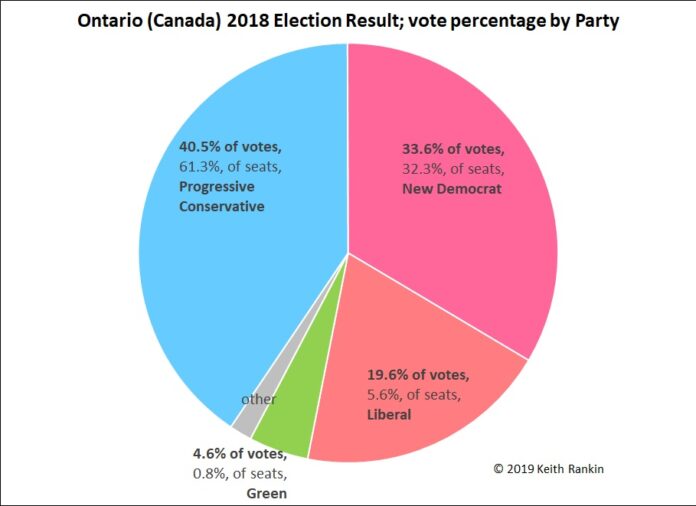
Are the Progressives the Winners? Chart by Keith Rankin.

I was in Ontario for a week in May. The premier of Ontario is Doug Ford, leader of the ‘Progressive Conservative’ party; brother of the late (and somewhat notorious) Mayor of Toronto, Rob Ford. Ford is indeed the leading rightwing personality in Canadian politics.

The chart shows what we in New Zealand would call the ‘progressive parties’ (ie leftwing) in red and green. Together they got 58 percent of the vote. What we in New Zealand would call a landslide win to the Left.

But no, the result was actually a landslide win to the Right – and quite a belligerent Right, given the new government’s propensity to cut back on government-funded services. The PC party scored 61 percent of the seats, leaving just 39 percent to the Left; the Conservatives are comfortably in charge in Ontario.

Canadian democracy is horribly distorted by the socalled ‘firstpastthepost’ voting system (never mind that the PCs never got close in Ontario to the 50% ‘post’ that constitutes a popular majority). Divided and ruledover is the fate of the Left in Ontario, and probably Canada too, especially when Ford moves over into Federal politics.

I cannot see much momentum to change. Ontario had a referendum in 2007. FPP soundly defeated MMP. A similar result (61% to 39%) occurred in British Columbia last year. Federal Prime Minister Justin Trudeau abandoned his party’s commitment to electoral reform soon after taking office in 2016. The only hope seems to be little Prince Edward Island, which did support MMP in a popular referendum in 2016, and will hold another in October this year.

In a socially progressive (but arithmetically challenged) country, the divided Left can only beat the remorseless FPP arithmetic when it throws up charismatic personalities (such as Trudeau) as its leaders.

———————–

People living in rural areas may be at lower risk of Alzheimer’s disease

Source: The Conversation (Au and NZ) – By Thomas Astell-Burt, Professor of Population Health and Environmental Data Science, NHMRC Boosting Dementia Research Leadership Fellow, University of Wollongong

People who live in regional or remote areas may be at lower risk of developing Alzheimer’s disease, according to our recent research.

Using data from more 260,000 adults in New South Wales who were aged 45 and over, we found those living in regional or remote areas of the state had a 6% to 19% lower risk of being diagnosed with Alzheimer’s disease over 11 years, compared with their city counterparts.

We identified diagnosed Alzheimer’s disease using the first prescription of a group of medications collectively referred to as cholinesterase inhibitors and memantine. These are prescribed after someone gains a mini-mental state examination score consistent with Alzheimer’s disease, which is then confirmed by a specialist.

Some previous research suggests people living in rural areas may be at a higher risk of developing Alzheimer’s disease. But our results tell a different story.


Read more: Nine things that can affect whether you get dementia – and what you can do about them


The role of air pollution

Research has long told us that air pollution is bad for our health. Emerging research suggests air pollution could also play a role in the development of Alzheimer’s disease.

The problem isn’t just the stuff in the air you can see. The tiny particles you can’t see are the most harmful. Once you breathe them in, they can enter the bloodstream and travel to every major organ, including the brain.

People living in Australia’s largest cities are generally exposed to higher levels of air pollution, which could help to partly explain why we found a higher risk of Alzheimer’s disease it city dwellers.

But it’s unlikely to be the only factor.

What’s happening in the brain?

Let’s consider the pathway by which many scientists think Alzheimer’s disease may develop, and then work backwards.

Many scientists, though not all, suggest Alzheimer’s disease coincides with – and may be caused by – an abnormal build-up of a particular type of protein, called amyloid beta peptide, in the brain.

Accumulating large amounts of amyloid beta peptide may create plaques that cause inflammation, destroy synapses, kill neurons and result in the death of brain cells consistent with Alzheimer’s disease.


Read more: What causes Alzheimer’s disease? What we know, don’t know and suspect


If this hypothesis is correct, we’re looking for ways to reduce the abnormal accumulation of amyloid beta. Admittedly that is a big “if”, given largely disappointing outcomes of drug trials focused on clearing amyloid beta so far.

Research on mice suggests sleep may be able to help clear amyloid beta.

Studies in humans also suggest that regular physical activity and social interactions may help to reduce the risk of developing Alzheimer’s disease, potentially via amyloid beta reduction.

These things might be harder in cities

It’s not always easy to get a good night’s sleep. Studies suggest environmental factors that co-occur within urban areas, such as chronic noise, air quality and heat may influence how much sleep you get and whether you feel sufficiently refreshed when you wake up.

Urban planning can influence participation in physical activity. Car-centred urban sprawl, for example, remains a major barrier in getting people walking and moving in many Australian cities.

Cars can be a major barrier to physical activity. Shuang Li/Shutterstock

Meanwhile, men and women over 65 living in Australia’s major cities were more likely than their regional peers to report a lack of social support.

All of these factors, including air pollution, may contribute some explanation to the results of our study.

But it’s important to note that accessibility to health care may play a role. People in regional and remote NSW generally have to travel longer distances and have less choice than those based in cities. This may lead to lag times in the detection of Alzheimer’s disease, which would affect our results.

Connect with nature, wherever you are

Living nearby more green space has been associated with better cognition among adults living in Spain, Scotland and England.

These studies are backed up by decades of experimental studies that show contact with nature can provide stress relief and lower blood pressure.

Public green spaces have the added benefit of providing spaces for outdoor social and physical recreation and may also help to improve our sleep.


Read more: Green space – how much is enough, and what’s the best way to deliver it?


Green space tends to be more abundant in regional and remote areas compared with major cities, which may help to explain why we found an elevated risk of Alzheimer’s disease in major cities.

But no matter whether you live in the country or city, try to make use of whatever green spaces you have around you. Relax in the garden or make regular visits to local parks – your older self will thank you for it.

ref. People living in rural areas may be at lower risk of Alzheimer’s disease – http://theconversation.com/people-living-in-rural-areas-may-be-at-lower-risk-of-alzheimers-disease-112417

Most Australian teachers feel unprepared to teach students with special needs

Source: The Conversation (Au and NZ) – By Jane Jarvis, Senior Lecturer in Education, Flinders University

Less than half (38%) of Australian teachers feel prepared to teach students with special needs when they finish their formal training. This is despite 74% having trained to teach in mixed-ability settings as part of their studies.

The latest Teaching and Learning International Survey (TALIS) shows teachers across the OECD felt professional development opportunities were particularly inadequate for teaching students with special needs.

Students with special needs are students for whom a learning need has been formally identified due to cognitive, physical or emotional difficulties.

According to the TALIS report, nearly 30% of teachers in Australia work in classes where at least 10% of students have special needs. The report adds to a body of research suggesting teachers feel unprepared to teach students with special needs in mixed-ability classrooms.

So, how can we better prepare and support teachers for the reality of diverse Australian classrooms? Investing in high-quality pathways to qualification for special education teachers, and expecting every Australian school to employ at least one specialist teacher to support teachers and students, would be a worthwhile place to start.

Better teacher preparation to begin with

Depending on the data source, between 8% and 20% of school-age children have identified disabilities or special educational needs.

Teachers are expected to design learning experiences for students of all abilities and support students with disabilities to participate in learning. This is set out in a national set of professional standards, introduced in 2011, that guide the program content for initial teacher qualifications.

But some critics believe the standards don’t go far enough in relation to teaching students with special needs. Typically, teacher education programs include a semester unit related to teaching students with special needs.

Traditionally, the content was taught “categorically”, meaning lecturers provided introductory information about multiple categories of special need. Contemporary units have shifted away from the categorical model, recognising that teaching in diverse classrooms is more complex than just responding to one individual need at a time.

But while a semester unit can focus on key concepts and practices, these need to be reinforced throughout the program. In fact, given the nature of today’s classrooms, they should be at the heart of the program. Preservice teachers need support to understand evidence-based inclusive practices, address common concerns and misconceptions about inclusion, and apply strategies in practice.

One semester of a specialist education program won’t be enough for teachers to feel confident teaching students with special needs. Sarah Shaffer/Unsplash

Even with excellent preservice education, a graduating teacher, by definition, is inexperienced. Teaching students with special needs requires skills that develop with time and ongoing support.

Yet, only 37% of early career teachers (those in their first five years of practice) in the survey said they work with an assigned mentor.

Employ qualified specialist teachers

In the TALIS report, almost one in five principals reported the quality of their school’s inclusive education was hindered by a shortage of teachers who were competent in teaching students with special needs.

Not every school is required to employ qualified special education teachers. And the percentage of schools with at least one qualified special education teacher is not known.

One study found even when schools advertise for a special education teacher or coordinator, they often fail to list formal special education qualifications among the selection criteria. And less than one-third explicitly call for special education experience.

Further, there is no nationally recognised pathway to qualification as a special education teacher in Australia. Special education is not a recognised area of specialisation in the standards that guide accreditation of teacher education programs.

This makes it difficult to design specialist undergraduate degrees. At the same time, there is no financial incentive for teachers to do postgraduate qualifications. Under these conditions, it is hard to see how the shortage of qualified specialist teachers will be addressed.

Countries including the US and the UK have developed national, professional standards detailing essential knowledge and skills for special education teachers. These have been formally adopted and guide the content of accredited teacher education programs.

Both countries have clear regulations about qualifications and/or licensure for employment as a special education teacher or coordinator (in the US, these are supported by legislation).

Australia is lagging behind in these key areas, despite calls from researchers and professional associations.

Quality professional development

The TALIS report shows teachers prefer professional development opportunities in which they collaborate with colleagues, such as through peer learning or coaching. Attending one-off workshops remains the most common option for professional development (reported by 93% of teachers), despite the lack of evidence for its effectiveness.

There are promising national efforts to improve induction, mentoring and professional development for teachers.

But the content of professional development also matters. Mentors should understand and be able to support evidence-based inclusive practices. Professional development should also be facilitated by those with expert knowledge. And teachers need ongoing access to information, advice and support in their daily work.

Professional development for inclusive practice can be effective when it:

  • actively engages teachers over extended periods
  • has clear links to student learning in local contexts
  • allows teachers to learn together as part of communities of practice
  • is supported by strong school leadership.

Preparing teachers who feel confident to teach students with special needs is essential to having inclusive schools as part of an inclusive society. We shouldn’t underestimate the challenge of teaching for a very broad range of students. Equally, we shouldn’t underestimate the capacity of good teachers to do so, given the right support.

ref. Most Australian teachers feel unprepared to teach students with special needs – http://theconversation.com/most-australian-teachers-feel-unprepared-to-teach-students-with-special-needs-119227

Australia’s social housing policy needs stronger leadership and an investment overhaul

Source: The Conversation (Au and NZ) – By Julie Lawson, Honorary Associate Professor, Centre for Urban Research, RMIT University

Australia will need another 730,000 social housing dwellings in 20 years if it is to tackle homelessness and housing stress among low-income renters. These are the findings of a new report from the Australian Housing and Urban Research Institute (AHURI), which shows social housing is in urgent need of direct public investment.


Read more: Budget 2017 charts new social and affordable housing agenda


Instead of directly investing in social housing, the federal government has sought to establish investment opportunities for other actors, such as pension funds and private corporations.

The vehicle for this investment is the National Housing Finance Investment Corporation (NHFIC), which was established to offer lower cost finance to social housing providers.

The federal government has also encouraged states and territories to focus public resources on supply, land policy reform and the use of planning methods such as inclusionary zoning to deliver affordable and social housing.


Read more: England expects 40% of new housing developments will be affordable, why can’t Australia?


These initiatives are worthy, but they won’t generate enough new social housing supply on their own. Without direct public investment in the form of a needs-based capital investment program, the government is unlikely to fill the social housing gap.

Needs-based capital investment is where decisions on what to invest is not only based on financial return, but also on other factors like the effects on society (so infrastructure investment is one which is needs based).

And needs-based capital investment provides the most cost effective mechanism to influence the scale, location and quality of housing produced.

Social housing supply is dangerously lagging

The Australian Bureau of Statistics estimated 116,000 people were homeless in 2016, living in improvised and severely overcrowded homes.

Our further analysis of the 2016 Census shows 315,000 households rely on very low incomes, paying more than 30% of their income on rent. This is known as housing stress.

Right now, 430,000 social housing units are needed in Australia to address homelessness and housing stress. Shutterstock

To address homelessness and housing stress right now, we need an additional 430,000 social housing dwellings. And this will grow over time.

Between 1951 and 1996, Australian jurisdictions built 8,000 to 14,000 social housing dwellings per year. In those years, social housing building programs were funded through direct public investment, with grants and long-term loans.

But without direct investment, social housing construction levels have languished since the mid 1990s.

In fact, the total number of Australian households increased by 30% from 1996 to 2016, and yet social housing grew by just 4%. This means there is a substantial backlog in supply, and the need for resources is now urgent.

Subsidies alone won’t cut it

It’s naive to think social housing systems can be adequately resourced through demand-side subsidies alone, such as cash support to tenants. In the UK, for instance, we’ve seen that while rent assistance budgets have grown, they haven’t helped to grow an affordable supply of homes, especially in tight, unregulated private rental markets.

In Australia, the Productivity Commission found that even after rent assistance is paid to eligible pensioners, 40.3% of them pay more than 30% of their incomes on rent. This leaves little for life’s other essentials, such as food, medical care and electricity.


Read more: Chilly house? Mouldy rooms? Here’s how to improve low-income renters’ access to decent housing


What’s more, the spatial distribution of need for social housing is just as important as the overall volume, as the costs for these dwellings vary from A$146,000 to A$614,000, depending on local land values, building types and construction costs in different regions.

So it’s imperative any public investment program is carefully designed and spatially nuanced.

The AHURI report calls for a new National Housing Authority

The AHURI report also assesses the costs of land and construction needed for social housing, which would underpin a capital investment program.

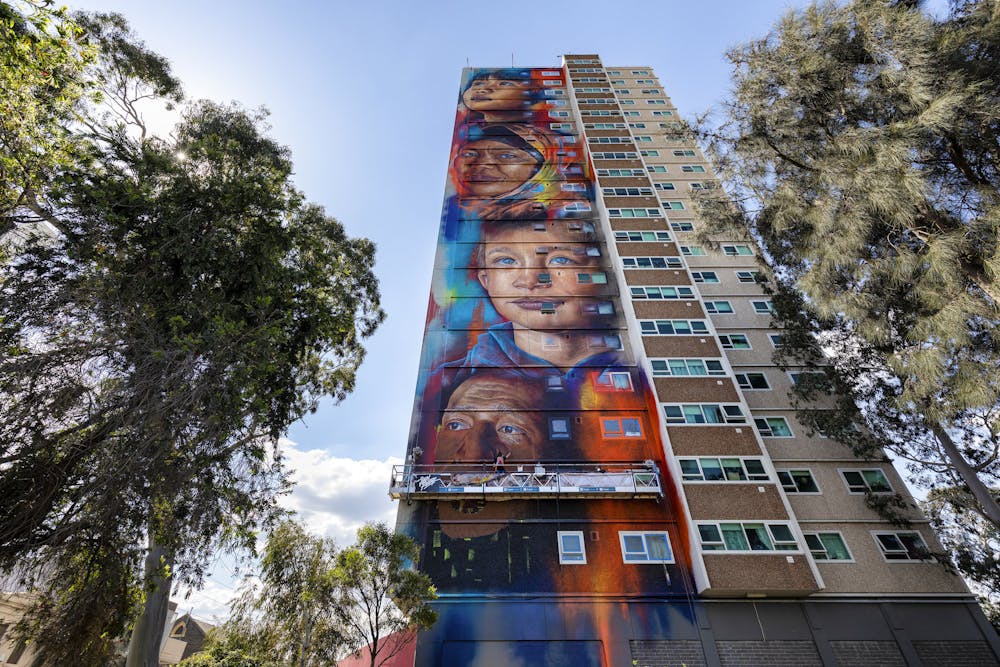
The Collingwood Housing Estate in Melbourne, featuring a mural of four tower residents. There is a substantial backlog in social housing supply, and the need for resources is urgent. AAP Image/Supplied by Common State

It calls for the creation of a National Housing Authority to inform, co-ordinate and fund the expansion of new social housing supply through a needs-based capital investment program, together with the existing National Housing Finance Investment Corporation (NHFIC).

In the past, social housing relied on external industry bodies, such as the National Housing Supply Council, to advise on Australia’s future housing needs.


Read more: Social housing protects against homelessness – but other benefits are less clear


But a national housing authority would provide more effective, consistent and authoritative leadership. It would have the responsibility and resources to plan for and fund more inclusive and sustainable housing outcomes. And it would co-ordinate this effort with other key stakeholders including state Housing Authorities, not for profit community housing providers, the National Disability Insurance Scheme and Clean Energy Finance Corporation.

A net benefit to society

The way cost-benefit assessments are conducted must be changed so the social benefits of social housing are properly quantified. This is necessary not only to capture both productivity and social gains, but also for making a coherent rationale for social housing investment.

But there is more work to be done to improve methods for cost-benefit analysis for social housing, the report says.

In contrast to conventional infrastructure, the housing sector has suffered from a long-term lack of investment. This means the methods for cost-benefit analysis are not yet as advanced.


Read more: Is social housing essential infrastructure? How we think about it does matter


It’s clear there is no fundamental barrier to government sourced large-scale investment in social housing. An improved cost-benefit analysis method can provide assurance to funding agencies that a long-term social housing construction program is viable and cost effective.

ref. Australia’s social housing policy needs stronger leadership and an investment overhaul – http://theconversation.com/australias-social-housing-policy-needs-stronger-leadership-and-an-investment-overhaul-119097

How English-speaking countries upended the trade-off between babies and jobs without even trying

Source: The Conversation (Au and NZ) – By Daniel Dinale, PhD Candidate, University of Sydney

The traditional understanding of women’s economic empowerment is that, as participation in paid employment increases, fertility decreases.

This was certainly true in industrialised nations up to the early 1980s.

But then things began to change. OECD data now shows a positive correlation between higher female labour participation and higher fertility rates.

This fact may not be widely known, but it has been well-documented. Why it has occurred, though, is more of a mystery – and the focus of our research.

Scandinavian nations have been at the forefront of the reversal – but that’s not surprising. Countries like Sweden and Denmark have strong state support for working mothers and high cultural acceptance of gender equality. It’s easy to see how they have made it easier for women to reconcile family and career.

The puzzle is that English-speaking nations aren’t too far behind the Scandinavian countries, despite high childcare costs and relatively little policy to support working mothers.

Our research points to a set of factors in Anglophone economies not typically identified as tools for women’s empowerment: in particular, flexible labour markets.

Understanding all the factors that contribute to a positive relationship between paid employment and fertility is profoundly important for policy makers the world over. It may help countries such as Japan, which is grappling with the consequences of birth rates falling below population replacement level. It can also help countries such as India, where female economic participation rates remain stubbornly low.


Read more: The conspicuous absence of women in India’s labour force


Reversing the trend

The following graph shows the situation in nine industrialised nations, exemplifying different varieties of capitalism, government policy and cultural clusters, in 1970: the trend line indicates higher female labour force participation is associated with a lower fertility rate.


This relationship began to change in the mid-1980s. Now, across the developed world, greater female participation in paid work is associated with a higher national fertility rate.


This shows having babies and having careers need not be mutually exclusive – that it is possible, in economic terms, for a nation to produce and reproduce.

Leading the way have been Sweden and Denmark. Their welfare systems provide generous conditions such as parental leave and subsidies for childcare. Sweden’s public expenditure on childcare is 1.1% of total national income – the highest in the world.

These nations are also characterised by a relatively high degree of gender equality within households. Men are more likely to share the responsibilities of looking after children, for example, making it easier for their partners to pursue careers.

Flexibility is a key

So what about developed English-speaking economies? These nations have relatively limited support for working parents, especially when compared with social democratic nations like Denmark or Sweden.

Australia, Britain, New Zealand and the United States are among the most expensive in the world for childcare, according to 2018 data from the OECD. On average, in these countries couples spend about third of their combined income on childcare costs. This compares to the OECD average of 13%, and 4% in Sweden.


So why do these countries trail the Scandinavian countries only slightly, combining relatively high female employment rates with relatively high fertility?

We suggest the answer may lie in the structure of their economies.

Their manufacturing sectors – traditional bastions of male employment – have declined. But their services sectors have expanded relatively more. In the United States, for example, 80% of all employment is in the services sector, compared with 70% in Germany and 68% in Italy.

One advantage of the services sector is that, on average, it is more tolerant of employment interruption. This makes it friendlier to the need of mothers. In the US, the sector employs 91% of women, compared with 68.5% of men.

The sector also provides more opportunities for workers with “general skills”. Teachers, for example, have skills that can be transferred across schools, and are likely to remain valuable despite interruptions from the labour market.

Traditional jobs, traditional attitudes

The economies of Germany and Japan have maintained their manufacturing bases – but perhaps at the cost of lower fertility. Manufacturing jobs tend to favour continuous and uninterrupted employment, and therefore better suit men, not women trying to juggle paid work and family.

Countries like Spain and Italy, meanwhile, have low childcare costs but also tend to retain more traditional attitudes towards gender roles. Less support from men in the home to sharing responsibilities traditionally done by mothers seems, counter-intuitively, to suppress both female labour force participation and the birth rate.


Read more: How many humans tomorrow? The United Nations revises its projections


The lesson from Scandinavian nations is that generous childcare and other parental benefits can help boost female employment and women’s ability to have children.

The lesson from English-speaking nations is not everything is down to government. The structure of the labour market is also crucial for women to balance employment and family commitments, and to be free to choose what suits them best.

ref. How English-speaking countries upended the trade-off between babies and jobs without even trying – http://theconversation.com/how-english-speaking-countries-upended-the-trade-off-between-babies-and-jobs-without-even-trying-118459

Australians’ feelings sour towards China: Lowy poll

Source: The Conversation (Au and NZ) – By Michelle Grattan, Professorial Fellow, University of Canberra

The attitudes of Australians towards China have soured dramatically in the past year, according to the Lowy Institute’s annual poll released on Wednesday.

Only 32% trust China to act responsibly in the world – which is a drop of 20 points from the 2018 poll and the lowest level in the 15 years of the poll.

Despite this, more Australians have confidence in China’s President Xi Jinping than have confidence in United States President Donald Trump.

Only 25% have confidence in Trump to do the right thing in world affairs (down five points since 2018), compared with 30% for Xi (a fall of 13 points since last year). Among those aged 18-29, none expressed “a lot” of confidence in Trump and 66% had “no confidence at all” in him.

The poll was done March 12-25, of 2130 people.

The results come as Scott Morrison, ahead of attending the G20 in Japan later this week, will address Australia’s relations with China, the increasing US-China tensions and the changing regional power balance in a major foreign policy speech on Wednesday.

He will say that while Australia will be “clear-eyed” about the fact political differences will affect aspects of its engagement with China, “we are determined that our relationship not be dominated by areas of disagreement.”

Lowy senior fellow Richard McGregor, who has previously reported as a journalist from Beijing, said the relentless coverage of China’s political system, allegations of interference in Australia’s politics, and its poor relations with its neighbours “seems to have finally registered” with the Australian public.

The results for China might have been worse if it were not for the Trump factor muddying the picture, he said. “There’s a recognition that we’re in for a much tougher time with China, and that’s accurate,” McGregor said.

On the Lowy “feelings thermometer” Australians’ feelings towards China have cooled nine degrees to 49 degrees since 2018, while their feelings towards the US have fallen four degrees to 63 degrees. The US rates behind both New Zealand and the United Kingdom.

Lowy says: “In 2019, trust in and warmth towards China are at their lowest point” in its poll’s history.

“Most Australians say that Australia’s economy is too dependent on China and Australia should do more to resist China’s military activities in our region. Scepticism continues about Chinese investment in Australia and China’s intention in the Pacific.”

Nearly three quarters (74%) agree “Australia is too economically dependent on China”. Almost half (49%) say foreign interference in Australian politics is “a critical threat” to Australia’s vital interests – a rise of eight points from last year.

Some 77% believe “Australia should do more to resist China’s military activities in our region”. This is up 11 points since 2015. Six in ten people would support the Australian military conducting freedom of navigation operations in the South China sea.

There remains high concern about Chinese investment, with 68% saying the government is “allowing too much investment from China”, although this is a little lower than the 72% high point of last year.

Reflecting Australians’ mixed feelings as the country balances its relations with the US and China, 50% believe the government “should put a higher priority on maintaining strong relations with the United States, even if this might harm our relations with China”.

But 44% believe it should “put a higher priority on building stronger relations with China, even if this might harm our relations with the United States”.

With Australia’s policy pivot towards the Pacific being driven in substantial part by China’s expanding interest and influence in the region, 55% think that “if China opened a military base in a Pacific island country” this would be “a critical threat” to Australia’s interests. 73% agree “Australia should try to prevent China from increasing its influence in the Pacific” – although views are split about spending more money there.

When people were asked about their confidence in nine leaders, New Zealand’s Jacinda Ardern rated highest – 88% have a lot or some confidence in her. Behind her are Scott Morrison (58%), then opposition leader Bill Shorten (52%), Indonesia’s President Joko Widodo (34%), Xi (30%), Trump and Myanmar’s Aung San Suu Kyi (both on 25%. “This means President Trump is only ahead of Russia’s Vladimir Putin (21%) and North Korea’s Kim Jong-un (7%),” Lowy said.

The Trump factor has complicated attitudes to the US but the alliance retains overwhelming support with 72% saying it is very or fairly important for Australia’s security (down four points in a year). But 66% think Trump has weakened the alliance and only 52% trust the US to act responsibly in the world. This is little changed from last year but the lowest trust in the US since the question was first asked in 2006 and 31 points lower than in 2009.

In other results:

  • climate change is rated highest among the threats to Australia’s vital interests. Nearly two thirds (64%) rated it as a “critical threat”, up six points since last year and 18 points since 2014.

  • 75% say free trade is good for their own standard of living, and 71% believe it is good for Australia’s economy.

  • 47% (a fall of seven points since 2018) say the number of migrants coming is too high.

ref. Australians’ feelings sour towards China: Lowy poll – http://theconversation.com/australians-feelings-sour-towards-china-lowy-poll-119392

Australia’s PM Morrison warns of widespread pain if US-China trade tensions are not contained

Source: The Conversation (Au and NZ) – By Michelle Grattan, Professorial Fellow, University of Canberra

Scott Morrison will warn of the danger of any further escalation in US-China tensions and declare Australia won’t let its relations with China be dominated by inevitable differences, in a major speech ahead of this week’s G20 meeting.

Walking a line between Australia’s major ally and its largest trading partner in a Wednesday address on the economic dynamics of the Indo-Pacific region, Morrison will stress the need for these two great powers “to resist a narrow view of their interests”, noting that with great power comes great responsibility.

He will also emphasise the range of Australia’s regional involvement and promote its willingness to play its role as a middle power in a moveable scene. “We won’t be fazed, intimidated or fatalistic”.


Read more: Partner or customer? Why China is Scott Morrison’s biggest foreign policy test


Morrison’s speech to Asia Link, issued ahead of delivery, follows his outlining of the re-elected government’s immediate domestic economic priorities on Monday.

“The world’s most important bilateral relationship – the US-China relationship – is strained,” Morrison says, pointing to the spreading collateral damage of the rising trade tensions. “The global trading system is under real pressure. Global growth projections are being wound back. The impact of any further deterioration of the relationship will not be limited to these two major powers,” he says.

“The balance between strategic engagement and strategic competition in the US-China relationship has shifted.”

Australia has and would continue to welcome China’s growth and development, Morrison says.

“However, the ground has now shifted. It is now evident that the US believes that the rule-based trading system – in its current form – is not capable of dealing with China’s economic structure and policy practices.”


Read more: US-China relations are certainly at a low point, but this is not the next Cold War


Morrison acknowledges the legitimacy of many of the concerns about China, such as its intellectual property theft and industrial subsidies.

“The rules-based system is in need of urgent repair if it is to adequately respond to these new challenges, including the rise of large emerging economies, changing patterns of trade and new technologies,” he says.

“Our prosperity, and that of our Indo-Pacific partners, depends strongly on the maintenance of an open global economy and a rules-based trading system in which the rights of all states are respected.

“It will also depend on a positive, productive and cooperative bilateral relationship between China and the US,” Morrison says.

“As a rising global power, China also now has additional responsibilities.

“It is therefore important that US-China trade tensions are resolved in the broader context of their special power responsibilities, in a way that is WTO-consistent and does not undermine the interests of other parties, including Australia.

“It is in no-one’s interest in the Indo-Pacific to see an inevitably more competitive US-China relationship become adversarial in character,” he says.

“There are risks of further deterioration in key relationships and consequent collateral impacts on the global economy and regional stability.

“There is also the challenge of adjusting to the potential for decoupling of the Chinese and American economic systems, whether this be in technology, payments systems, financial services or other areas.

“But these are not insurmountable obstacles,” Morrison says.


Read more: Avoiding the China trap: how Australia and the US can remain close despite the threat


Australia would not be a passive bystander but would play its part, based on principles including a commitment to open markets with trade relationships based on rules.

While continuing to work with other partners in the region, Australia would also “deal directly with our great and powerful friends”.

Its relationship with the US “has never been stronger,” Morrison says.

“Our alliance with the US is the bedrock of Australia’s security, providing us with irreplaceable hard power capabilities and intelligence. Australia is a stronger regional power because of the US alliance.

“We are committed to working with the US internationally because we agree it has borne too many burdens on its own. Australia will continue to pull its weight.

“And we will work with the US to reform international institutions, including the WTO, to ensure they’re fit for purpose and serve their members’ interests.”

The government is also “committed to further enhancing our relationship with China” – a relationship with “many strengths”.

“While we will be clear-eyed that our political differences will affect aspects of our engagement, we are determined that our relationship not be dominated by areas of disagreement.

“The decisions we make in relation to China are based solely on our national interests, just as theirs are towards Australia, and these are sometimes hard calls to make.

“But they are designed always to leave large scope for cooperation on common interests and recognise the importance of China’s economic success. This success is good for China, it is good for Australia.”

ref. Morrison warns of widespread pain if US-China trade tensions are not contained – http://theconversation.com/morrison-warns-of-widespread-pain-if-us-china-trade-tensions-are-not-contained-119424

Tahiti’s Flosse ordered to repay millions in ‘phantom jobs’ case

By RNZ Pacific

French Polynesia’s former president, Gaston Flosse, and 12 others have been ordered to jointly repay millions of francs they misspent on so-called phantom jobs.

In 2013, the group was found to have funded a vast network of supporters of Flosse’s Tahoeraa Huiraatira Party for almost a decade from the late 1990s.

Tahiti-Infos reports the ruling to reimburse US$4.2 million was made by France’s highest court more than a week ago, rejecting an appeal lodged two years ago.

READ MORE: Tahiti’s scandal-plagued ‘Old Lion’ bounces back

The 13 must pay the government US$3.4 million and the assembly US$900,000 with the bulk of the money owed by the 87-year-old Flosse.

A former member of the French National Assembly, Bruno Sandras, and two leading unionists, Jean-Marie Yan Tu and Cyril Le Gayic, also have to repay money.

-Partners-

A minor sum is to be paid by the current government minister Jean-Christophe Bouissou.

The current President of Tahiti, Edouard Fritch, accepted a court order in 2016 to repay US$65,000 to the public purse.

In 2014, Flosse was given a four-year suspended prison sentence and forced to resign as president while incurring a ban from holding public office for three years.

The phantom job case was the biggest of its kind in French legal history.

Print Friendly, PDF & Email

Article by AsiaPacificReport.nz

To protect us all, babies travelling overseas may need the measles shot at 6 months instead of 12

Source: The Conversation (Au and NZ) – By Nicholas Wood, Associate Professor, Discipline of Childhood and Adolescent Health, University of Sydney

This year, we’ve seen a resurgence of measles around the globe. The World Health Organisation (WHO) recorded more than 230,000 cases in the first five months of 2019, compared to 160,000 in a similar period in 2018.

Australia has had 128 measles cases since the beginning of the year compared to a total of 103 cases for all of 2018.

Measles causes fever, cough and a rash. But it can also cause more serious illness and even death. Babies and people with weakened immune systems are at the greatest risk of complications.


Read more: Prepare for a healthy holiday with this A-to-E guide


The best protection against measles is vaccination. Two doses of a measles-mumps-rubella (MMR) vaccine has a success rate of more than 98%.

Under Australia’s National Immunisation Program, children receive two doses of MMR. The first dose is given at 12 months of age and a second dose at 18 months.

But given the rise of measles cases around the world, doctors are now calling for infants travelling overseas to be assessed by their GP to see whether they need the measles vaccine at six months.

Measles spreads easily

Many adult Australians may not have received two doses of MMR vaccine, as only one dose was recommended before 1992 (a single dose is around 95% effective).

Unvaccinated travellers to countries with a higher prevalence of measles can unknowingly bring measles back to Australia. Current measles hot spots include Israel, Thailand, Vietnam, Japan, Ukraine, Philippines and the United States (especially New York).

People can catch up on their measles vaccinations at any age. From shutterstock.com

Measles is highly infectious. Once imported from overseas, it’s adept at seeking out and infecting the unvaccinated in a population.

The recent resurgence of measles has led experts to advise that people ensure they have had two lifetime doses of the MMR vaccine prior to travel.


Read more: Six myths about vaccination – and why they’re wrong


Mums protect their babies in the beginning

As the first MMR vaccine is not given until 12 months of age, infant travellers who are too young to have received their first dose of MMR are particularly at risk of contracting measles.

We don’t routinely recommend MMR immunisation for infants younger than 12 months because of the presence of maternal antibodies. During pregnancy, antibodies which protect against many diseases, such as measles, whooping cough and influenza, are actively transferred through the placenta to the baby.

Most mothers have antibodies to protect against measles either from receiving the MMR vaccine themselves during childhood or adolescence, or as a result of prior infection.

But during the first year of life, the antibodies protecting the baby naturally wane. The antibody levels are usually high enough in the first six months of life to protect against measles.

Once an infant reaches 12 months of age, the measles antibodies have usually sufficiently disappeared and can no longer provide protection. For this reason, we give the first dose of MMR vaccine at 12 months old.


Read more: Why people born between 1966 and 1994 are at greater risk of measles – and what to do about it


Changing the recommendations

Maternal antibodies can interfere with and reduce the response to an MMR vaccine given to an infant before 12 months of age.

The WHO Expanded Program on Immunisation recommends the first dose of MMR vaccine be given at nine months old. This is because in many countries the rates of measles are higher than in Australia, and the increased risk of infection outweighs any reduced vaccine response because of persisting maternal antibodies.

The WHO recommends that for countries like Australia that have achieved low rates of transmission, it’s better to give the first MMR vaccine at 12 months, because higher protection occurs among older infants as there is less interference from maternal antibodies.


Read more: No, combination vaccines don’t overwhelm kids’ immune systems


Until recently, our immunisation handbook stated that children as young as nine months could receive the MMR vaccine in certain circumstances, including travel to highly measles-endemic areas and during outbreaks.

But given the rise in measles globally, the recommended age at which Australian infants can receive MMR vaccine in special circumstances has been lowered from nine months to six months.

The US and England also state vaccination from six months of age can occur for travellers and to help control outbreaks.

Babies inherit antibodies that protect against measles from their mums while they’re in the womb, but these wane over time. From shutterstock.com

While MMR vaccines are normally free, because this early dose is not part of the National Immunisation Program, parents would have to pay around A$50 to get it. Check with your local pharmacy.

Importantly, if MMR is given before 12 months old, infants still need two further doses of measles-containing vaccine. This is to account for the possibility the early dose may not have been completely effective because of interference from the maternal antibodies.

They should receive the next dose of MMR vaccine at 12 months of age or four weeks after the first dose – whichever is later. They should then receive their final dose of measles-containing vaccine – an MMR and varicella (chickenpox) combination, known as MMRV – at 18 months. Both these vaccine doses are free under the National Immunisation Program.

MMR is safe and effective for babies

A recent review of MMR vaccines in infants under nine months found the overall effectiveness was 72%. So it’s not quite as effective as the near complete protection afforded by vaccination at 12 months and older, but still has a very strong chance of being effective.

MMR vaccine in infants from six months old was considered safe, with no reports of serious events recorded across seven studies in the review. Fever and rash were the most common adverse reactions, occurring in 5-10% of infants. This is similar to vaccination at 12 months old.


Read more: Health Check: are you up to date with your vaccinations?


Parents of young infants planning international travel should talk to their GP. The GP will consider factors including the length of the trip and destination countries when giving advice.

Adult travellers, too, should review their own vaccination record and speak to their GP if they are unsure they are fully protected.

ref. To protect us all, babies travelling overseas may need the measles shot at 6 months instead of 12 – http://theconversation.com/to-protect-us-all-babies-travelling-overseas-may-need-the-measles-shot-at-6-months-instead-of-12-119230

Why Christians disagree over the Israel Folau saga

Source: The Conversation (Au and NZ) – By Geoff Thompson, Coordinator of Studies: Systematic Theology, Pilgrim Theological College, University of Divinity

For many Christians, Israel Folau has become the talisman in the fight for religious freedom.

This week, some Australian Christians rallied behind Folau’s legal battle against Rugby Australia, stepping in when the rugby star’s GoFundMe campaign was shut down. On its first day, the new campaign raised more than A$750,000 in donations – and counting.

Some Christian leaders have urged the newly re-elected Coalition government to make religious freedom protections a priority in the wake of Folau’s sacking by Rugby Australia.

There’s even been talk among some conservative Coalition MPs of pushing for a “Folau Law”, or a new statute that would exempt religious beliefs from employment contracts.

Flashpoints in theology

The debate is a perfect storm of race, religion, sport, politics, sex, law and rights. But for me, neither Folau himself, nor his personal faith, are the issue.

Certainly, I find his use and interpretation of the Bible cavalier and uninformed, disturbingly indifferent to its impact, and strikingly incurious.

But beyond those issues, the question that warrants exploration is why he has so galvanised portions of the Christian community around him.

For many, it doesn’t seem to matter how he’s used or interpreted the Bible. They support him because he’s upheld traditional Christian teaching and been prepared to take a stand on it.


Read more: After his ‘miracle’ election, will Scott Morrison feel pressure from Christian leaders on religious freedom?


But there seems to be another reason behind much of the support. As some Christians see it, Folau is holding the line against the dominant beliefs in contemporary Western culture on the flashpoints of gender and sexuality. And for this, some Christians especially honour him.

The question remains, though – why have these issues, and not others, have become flashpoints? There are other equally provocative biblical teachings that don’t generate the same passions among Christians.

Imagine if a high-profile Christian sportsman, for instance, tweeted Jesus’ teachings about how difficult it will be for the rich to enter the kingdom of God (especially if it was paraphrased as “Hell awaits you”).

In this scenario, it is very easy to imagine a less fraught response from many Christians. Instead of wholeheartedly backing his stand against wealth, the athlete’s Christian supporters might demur on the issue, saying how the teachings on wealth need to be “interpreted” in their context.

Some Christians don’t feel the need to similarly interpret biblical references to sexuality and gender. Their meaning is taken as straightforward.

As always, sex, like money, does strange things to theology.

Shifting the line in the sand

As Simon Smart has argued, the changing cultural mores around questions of sex, gender and sexuality are at the centre of the debate over Folau’s social media posts and the reaction among Christians to his sacking.

These new cultural mores are posing significant legal, doctrinal, and ethical challenges to Christian churches. For many, the identity of Christianity is at stake. The traditional line on sexuality and gender must be held – so it is said.


Read more: Why Australia needs a Religious Discrimination Act


But not all Christians see it that way. The line is not so sharply defined.

There are many other Christians who find it hard to understand how traditional teachings on sexuality and gender have been elevated to such a prominent place within some strands of Christianity.

That’s not to say that these Christians automatically disregard the theological arguments for traditional stances on these issues. For instance, Christian proponents of same-sex marriage can accept there are carefully worked-out arguments against it, even if they are unpersuaded by them.

The puzzle, to many, is how these issues have become so definitive to Christian thinking. For these Christians, there’s also a deep disquiet that sexuality and gender are being held up as a test case for religious freedom in Australia.

Time for a more nuanced debate

Even apart from the churches’ involvement in the child sexual abuse scandals, the public’s perception of Christianity has been deeply affected by the church’s frequently moralistic stance on sexuality. This often obscures the other important themes of Christianity – love, hope and compassion as they are embodied in the example of Jesus.

A 2017 McCrindle survey found that the church’s objection to homosexuality was the biggest obstacle preventing people from becoming more religious in Australia, much more so than the role of women in Christianity and the debate over science and evolution.

It’s worth comparing the current angst over sexuality with the long-running debate in the church over science and evolution.

There was a similar line-in-the-sand reaction (and there still is) by some Christians to the theory of evolution. But the willingness of many Christians to navigate that debate with care and informed theological reflection has produced deeper understandings of Christianity, especially its doctrine of creation.


Read more: Is there a place for religion in the science classroom?


So why hasn’t the same thing happened in the debate over sex, gender and sexuality?

For one, the fault lines around these issues within Christianity are complex. There aren’t simple divisions between “conservative” and “progressive” versions of Christianity, or between those who read the bible “literally” and those who read it “metaphorically.”

There are deeper underlying differences between Christians over the extent to which Christianity can be open to exploring new forms of itself while staying true to its founding message. Recognising this would involve a serious discussion of the diverse theological meanings of tradition, culture and ethics.

But if we’re able to have this deeper discussion within Christianity, it could affect how we view those “lines in the sand” between the church and broader society – and whether religious freedoms are truly at stake. And the world at large might get better insights into the breadth of contemporary Christianity.

ref. Why Christians disagree over the Israel Folau saga – http://theconversation.com/why-christians-disagree-over-the-israel-folau-saga-118773

5 things to know about the traditional Christian doctrine of hell

Source: The Conversation (Au and NZ) – By Philip Almond, Emeritus Professor in the History of Religious Thought, The University of Queensland

Martyn Iles, managing director of the Australian Christian Lobby, dodged the question this week when asked by Lisa Wilkinson on The Sunday Project if he believed that homosexuals go to hell. Apparently we are all going there, he suggested, unless we find salvation through Jesus.

The Australian Christian Lobby is now hosting an online crowd-funding appeal for Israel Folau’s legal battle against Rugby Australia, after Folau was sacked over an Instagram post warning that homosexuals will go to hell. It has donated $100,000 to his cause.

Israel Folau in 2018. Jan Touzeau/EPA

The churches that belong to the Australian Christian Lobby (mostly Pentecostal and Baptist), along with conservative Catholic and Protestant churches continue to follow the traditional Christian view of hell.

It is not a doctrine for the fainthearted. So what is this hell like? Here are five things about it worth knowing.


Read more: Why the Israel Folau case could set an important precedent for employment law and religious freedom


Most of us are going there

“We’re all doomed!” St. Paul, as Folau has reminded us, believed that homosexuals, the immoral, idolaters, adulterers, thieves, the greedy, drunkards, revilers and robbers would not inherit the Kingdom of God (1 Corinthians 6.9).

Jesus said nothing about homosexuals. But he clearly indicated that most of us enter hell through the wide gate that leads to destruction and few through the narrow gate that leads to life (Matthew 7.13-14). In short, the vast majority are doomed to hell. For centuries, this was the default position for both Catholics and Protestants.

Responding to Wilkinson, Iles said rather blandly that the “mainstream Christian belief on this is that all of us are born going to hell” and we will end up there if “we decline the sacrifice of Jesus Christ on the cross”.

For modern conservative Protestants, while in principle, God has the final say on who is saved and who is damned, the clear expectation is that only those who are “born again” have any sort of a chance.

Eternal torments

In traditional Christian doctrine, hell was conceived as a place, generally beneath the earth, where the wicked would be punished for eternity. There would be both psychological torment – at our knowing we had lost the opportunity for salvation – and physical ones inflicted by the Devil and his demons. There were gnawing worms and unquenchable fires. No escape from hell or mitigation of eternal torment was possible.

God would laugh at the sufferings of the damned, said the English puritan Richard Baxter. “Is it not a terrible thing,” he asked, “to a wretched soul, when it shall lie roaring perpetually … in the flames of Hell, and the God of mercy himself shall laugh at them?”

The judgement

The decision as to whether we went to heaven or hell was made by God at the time of our deaths. (The general judgement of all the resurrected dead on the final Day of Judgement merely confirmed God’s previous one.) As the greatest Catholic theologian Thomas Aquinas rather elegantly put it, “the soul will remain perpetually in whatever last end it is found to have set for itself at the time of death, desiring that state as the most suitable, whether it is good or evil”.


Read more: Friday essay: what might heaven be like?


William Blake, The Day of Judgment, 1805. Wikimedia Commons

Still, Christianity has never quite worked out whether heaven or hell is the consequence of righteous or wicked lives, or whether God is completely arbitrary in his decision making about our final destination.

The Australian Christian Lobby, however, follows the conservative Protestant tradition: so infected are we with the original sin of Adam and Eve, we are all doomed to hell from the moment of our birth and only Jesus can save us from it.

Purgatory

Amidst the gloom, there was one bright spot in the traditional Christian doctrine of hell. Our punishment there would be proportionate to our sins just as our rewards in heaven would be proportionate to our virtues.

This sense of proportionality led around the year 1000 CE to the invention of another place between heaven and hell – a place of purification of our sins. It arose from the recognition that while most of us were not sufficiently meritorious to deserve heaven instantly after death, most of us were also not sufficiently wicked to deserve eternal punishment.

Gabriel von Max, Purgatory, circa 1885. Wikimedia Commons

Purgatory was the place where those who were judged worthy of heaven eventually were purged, purified and punished for their sins before going on to their heavenly reward.

Purgatory thus became the default destination after death. Divine justice and mercy were better served by a place where souls, who, like most of us, were not really all that good at being really bad, could be both punished and perfected. Hell then was reserved only for the most incorrigible.

Even so, Purgatory was no holiday resort. The inhabitants were purified by fire. The heat was at times so intense, Dante tells us in his Purgatory, that “I could have flung myself … for coolness, in a vat of boiling glass.”

Purgatory purged

The Protestant reformers of the 16th century hated the idea of Purgatory and threw it out. They saw it as the root cause of corruption within the Church as people paid money on earth to the Church to try to lessen their time there.

Protestant Christianity therefore returned to the harsh either/or of heaven or hell, determined by God at the time of death (or birth). Humanity was again classified into only two classes – the saved and the damned.

Some Protestants from the 17th to 19th centuries attempted to mitigate this harsh idea of hell. Some argued that, after a period of time in hell, all souls would eventually be saved. Others suggested that souls would be annihilated after having done their time of punishment in hell.

By the 20th century, liberal Christians, Protestant and Catholic, were finding it difficult to square away belief in a God of love with the doctrine of eternal torments in the fires of hell. For them, “hell” has been rethought as a state (but no longer a place) of life after death in which we freely choose to stay alienated from God and from which we can eventually be saved if we so wish.

Today’s conservative Christians, however, remain unmoved by the possibility of eventual salvation from hell for everyone. The doctrine of eternal torments in hell has stayed on their theological agenda.

ref. 5 things to know about the traditional Christian doctrine of hell – http://theconversation.com/5-things-to-know-about-the-traditional-christian-doctrine-of-hell-119380

Curious Kids: why can’t we do whatever we want?

Source: The Conversation (Au and NZ) – By Jade Sheen, Associate Professor, School of Psychology, Deakin University

Curious Kids is a series for children. If you have a question you’d like an expert to answer, send it to curiouskids@theconversation.edu.au You might also like the podcast Imagine This, a co-production between ABC KIDS listen and The Conversation, based on Curious Kids.


Why can’t we do whatever we want? – Flynn, aged 6.


Thanks, Flynn. That’s a really good question. When you are younger you can feel like all the rules around you are unfair. You may also feel like you don’t get much say in things. Doing whatever you want seems like a great idea!

You might wonder, what is the point of all these boring rules? Usually, Flynn, rules help us with two things: learning and staying safe.


Read more: Curious Kids: Why do adults think video games are bad?


Kids should make some decisions – but not all

Let’s think about learning. When you are six, you are learning new things every day. I’m sure that if you think back to only a year ago you will realise how much you have changed! Many of those annoying rules that you worry about are there to help you to focus on learning and playing and having fun.

Without rules, you would have a lot of decisions to make every day. Too many decisions would get in the way of your learning and make you feel overloaded. Being in charge of a lot of decisions can sometimes be quite stressful and can sometimes make people feel worried and anxious. This is why it’s important to allow kids to make some decisions – but not all of them.

I also mentioned safety. While I am sure that you are very smart, there are a lot of things you don’t know about the world yet. These are the things that you will learn from now until you are a grown up, like how to drive a car, who to trust and how to spend your money wisely.

Until you know all these things, the rules are there to keep you safe. The rules make sure people always know where you are, that you won’t get hurt and that you get what you need to be happy and healthy in life.

We’ve all been there. Flickr/Chirag Rathod, CC BY

Your parents can relax the rules a little as you grow

You may not know this yet, but the rules will also change as you get older. Think about the differences between now and when you were a toddler.

At six, you probably have a later bedtime, are allowed to watch more TV and do different things and have a lot more of your own friends.

This is because it is important to encourage children to take on more decisions as they get older.

Think of it like a ladder. You might not be at the top right now, but each new thing you learn takes you a step closer and means your parents can relax the rules a little.

Finally, I should say that the rules don’t go away completely even when you are a grown up. Grown ups still have to work and pay bills and follow the rules. Even we can’t do whatever we want!


Read more: Curious Kids: are robots smarter than humans?


Hello, curious kids! Have you got a question you’d like an expert to answer? Ask an adult to send your question to curiouskids@theconversation.edu.au

CC BY-ND

Please tell us your name, age and which city you live in. We won’t be able to answer every question but we will do our best.

ref. Curious Kids: why can’t we do whatever we want? – http://theconversation.com/curious-kids-why-cant-we-do-whatever-we-want-118606

USP journo students head to Solomons for environmental reporting project

By Rosalie Nongebatu in Suva

Three journalism students from The University of the South Pacific in Suva have been selected to participate in a week-long environmental reporting project in the Solomon Islands.

After a stringent selection process, students Rosalie Nongebatu, Romeka Kumari and Ben Bilua were chosen to be part of the project titled, “Adapting to and mitigating effects of climate change and island sea level rise”, made possible through the Internews/Earth Journalism Network (EJN) Asia-Pacific and Bay of Bengal 2019 media grants.

The project involves journalism students conducting climate change reporting in the Cook Islands and the Solomon Islands.

READ MORE: USP wins US$20,000 grant to boost Pacific environmental journalism

Led by Wansolwara editor and USP Journalism staff member Geraldine Panapasa, the team is expected to visit areas in Honiara that are susceptible to the devastating impacts of climate change as well as report on vital efforts undertaken by stakeholders to address climate impacts on vulnerable communities.

Kumari, who is also the sports editor for USP Journalism’s student training newspaper Wansolwara, said climate change was an urgent issue that needed to be addressed at all levels.

-Partners-

“There are many untold stories of the threat and risks of climate changed faced by many Pacific Islanders, including those in the Solomon Islands,” she said.

“The trip is an opportune time to put faces to the stories of climate change and to re-emphasise the reality and gravity of the situation for grassroots people in these vulnerable communities.”

Epeli Lalagavesi…”it will enable me to witness, learn and report on climate change injustice…”Image: SRI KRISHNAMURTHI/PMC/WANSOLWARA

Benefitting aspiring journalists
Second-year journalism student, Epeli Lalagavesi, who will join the environmental reporting team to the Cook Islands later in the year, said the project would benefit aspiring journalists.

“I am excited about the trip to the Cook Islands for two reasons. First, it will enable me to witness, learn and report on climate change injustice as well as the challenges faced by the people of Cook Islands,” he said.

“Secondly, I hope to learn new skills, especially the concept of ‘mojo’ or using mobile journalism tools to disseminate information.”

Boost for environmental reporting
USP Journalism coordinator Dr Shailendra Singh said the grant was a boost for solidifying the foundations of environmental reporting for the future.

He said the Pacific was at the forefront of climate change impacts, on top of various other problems, such as the exploitation of fisheries and forestry resources, plastic pollution and waste disposal and management.

“Environmental issues in the Pacific are under-reported compared to the magnitude of the problems and because of the smallness of the Pacific media industry, journalists are generalists by necessity, with no specific beats such as environmental journalism,” Dr Singh said.

Although USP Journalism lacks resources to offer specific courses in environmental journalism, students report on the environment as part of their assessed news assignments, using the expertise available at other USP faculties as resource material.

Authentic learning
“The $US20k grant from EJN would take authentic learning – the idea of incorporating the classroom with the real world – to another level, with two teams of the best student reporters sent to the Cook Islands and the Solomon Islands to report on community mitigation efforts,” Dr Singh said.

He said the project was geared towards expanding coverage horizontally beyond Fiji, and vertically down to the grassroots level, building future capacity through student journalism.

The trip will take place from June 24 until July 1.

The Pacific Media Centre and Asia Pacific Report have a publishing partnership with the University of the South Pacific journalism programme.

Print Friendly, PDF & Email

Article by AsiaPacificReport.nz

Can you be liable for defamation for what other people write on your Facebook page? Australian court says: maybe

Source: The Conversation (Au and NZ) – By Michael Douglas, Senior Lecturer in Law, University of Western Australia

When you go online and write something nasty about a person, or even a small business, you risk being sued for defamation.

But if someone else goes online and writes something nasty about a person on your social media page, can you be held liable even though you didn’t write it? Depending on who you are: maybe.

A recent decision of the Supreme Court of New South Wales determined that media companies could be liable for the defamatory comments made on news stories on their Facebook pages.

That is, media organisations could be held liable for the comments of random people on the internet. Journalists, the companies that employ them, and a bunch of people on Twitter are not happy.


Read more: Before you write that scathing online review, beware of defamation


Voller’s case

Dylan Voller is the young man whose treatment in custody inspired a Royal Commission. His case attracted significant press coverage, as well as “commentary” which seems to pass itself off as news but is really something else.

Voller sued the publishers of The Sydney Morning Herald, The Australian, the Centralian Advocate, Sky News Australia and The Bolt Report. He sued them for defamation for content on their Facebook pages.

What makes this case unique is that Voller did not sue based on posts made by the media companies who were responsible for the pages. Rather, he sued based on comments made by members of the public on ten Facebook posts, arguing that the media companies behind the pages were responsible.

The media defendants argued that Voller’s case was based on an incorrect understanding of the law. Justice Rothmam disagreed, holding that they were “publishers” of third-party comments on their public Facebook pages.

Anyone can be a ‘publisher’ of defamation

The case turns on the concept of “publication”.

To be liable for defamation, you must publish something that is defamatory. In defamation law, publication is the process of communication of defamatory “matter” to a person other than the plaintiff.

This means that a publisher of defamatory content is not necessarily the author of the defamatory content. For example, consider a defamatory letter to the editor. Although the newspaper does not author that letter, it may still be treated as a publisher because it communicated that defamatory letter.

“Publication” does not even require a positive act: in certain cases, an omission may constitute a publication of defamation. More than 90 years ago, an English court determined that owners of a golf club could be liable for defamation posted on the club notice board which they did not author. The court reasoned that the owners knew of the defamation, and could have prevented it, but didn’t.

The common law adapts that old reasoning to the internet age. Before Voller’s case, a New Zealand court held that a host of a Facebook page could be liable for defamatory comments on their page if the host actually knew about the comments and failed to remove them in a reasonable time.

Providers of digital forums and platforms – from businesses with Facebook pages, to Google itself – could be liable for defamatory content authored by other people if they know about it and fail to act.


Read more: Protecting Google from defamation is worth seriously considering


A landmark case?

In some ways, this case just adapts the old authorities on publication to a modern situation. It is also a fact-specific decision, made with reference to evidence of the particular moderation functionality available to the hosts of these particular pages on particular dates.

But the reasoning deployed in Voller’s case does have broader significance. The fact that the Facebook pages of the defendants allowed them to vet comments in advance meant that they had some control over those comments. The defendant companies could have dedicated staff to ensure any comments were not defamatory before making them visible, but failed to do so. Their control over the comments opened the door to their responsibility for the comments as “publishers”.

The court also considered the business model of the defendants. It should go without saying, but it is important to remember that the production of news and commentary is a business. Media companies depend on broad readership to make money. Arguably, social media platforms like Facebook have helped media companies build readership by linking to news websites. The public’s “engagement” with media companies’ social media content via the comments sections of news posts could be one of the factors keeping those companies alive.

The court heard evidence that the appearance of defamatory comments was a “thoroughly predictable” result of posting a relevant article onto a public Facebook page. Social media defamation risk is a moral hazard of the modern media business.

Here is the controversial gist of Voller’s case: by encouraging engagement, the media walked into this mess. In the judge’s words:

[a] defendant cannot escape the likely consequences of its action by turning a blind eye to it.

This means that media companies, and anyone who drums up social media engagement with controversy, are well advised to dedicate more resources to content moderation.


Read more: Can you sue someone for giving you a bad reference?


The sky has not fallen in

According to my friend and professor of media law David Rolph, the case “seems to go further than any decision in the common law world holding intermediaries liable for defamation as publishers”.

It is, however, a first-instance decision, which may be appealed. Justice Rothmam’s decision is on the issue of publication, not liability.

Further, even if an “intermediary” like a media company is held to be a publisher, it may still escape liability. In certain cases, would-be publishers will have an innocent dissemination defence for the publication of defamatory content they did not know about.

A NSW-led law reform process is considering bolstering that defence even further. The parts of Voller’s case which media companies do not like may be short lived.

Until then: be wary of what people say on your social media pages.

ref. Can you be liable for defamation for what other people write on your Facebook page? Australian court says: maybe – http://theconversation.com/can-you-be-liable-for-defamation-for-what-other-people-write-on-your-facebook-page-australian-court-says-maybe-119352

Iconic Tongan publisher Kalafi Moala eyes new digital media challenge

Tongan journalist, publisher and broadcaster Kalafi Moala talks to Pacific Media Watch project’s Sri Krishnamurthi. Video: Sri Krishnamurthi/Blessen Tom

By Sri Krishnamurthi

After 30 years as chief editor and publisher of Tonga’s flagship Taimi ‘o Tonga newspaper, the iconic Pacific media personality Kalafi Moala has sold his business and is looking to move on.

He plans to explore greenfield operations in Tonga in the digital era by presenting news through a mobile phone platform.

“I want to be engaged in something where we continue to produce news and maybe deliver news in a different platform maybe online, digital or maybe something to do with the phone,” he said in a recent interview with the Pacific Media Centre in Auckland.

WATCH: The interview with Kalafi Moala

“Who needs a newspaper, who needs a television set, who needs a computer when you have a telephone, in Tonga everybody has a telephone.

-Partners-

“The mobile phone is a major thing that has changed the life of Tongans and we want to use that platform.”

Moala expressed his concerns too about the “sovereignty” of Pacific peoples who he said were being subjected to “colonisation through other means”.

He has sold his publishing and broadcast business Taimi Media Network to enterprising businessman Tausinga Taumoefolau and his company Keitahi Limited.

Moala spoke to the PMC’s Pacific Media Watch freedom project as part of a series of interviews for a forthcoming mini-documentary, Pacific Media Watch – The Genesis.

Print Friendly, PDF & Email

Article by AsiaPacificReport.nz

Explainer: what is surveillance capitalism and how does it shape our economy?

Source: The Conversation (Au and NZ) – By Donell Holloway, Senior research fellow, Edith Cowan University

I recently purchased a bedroom bundle (mattress, bed base, pillows and sheets) from a well known Australian startup for my son, who has flown the nest. Now I’m swamped with Google and Facebook ads for beds and bedding. The week before it was puffer jackets.

Ever wonder why and how this happens? The answer is surveillance capitalism.

Surveillance capitalism describes a market driven process where the commodity for sale is your personal data, and the capture and production of this data relies on mass surveillance of the internet. This activity is often carried out by companies that provide us with free online services, such as search engines (Google) and social media platforms (Facebook).

These companies collect and scrutinise our online behaviours (likes, dislikes, searches, social networks, purchases) to produce data that can be further used for commercial purposes. And it’s often done without us understanding the full extent of the surveillance.

The term surveillance capitalism was coined by academic Shoshana Zuboff in 2014. She suggests that surveillance capitalism depends on:

…the global architecture of computer mediation […] [which] produces a distributed and mostly uncontested new expression of power that I christen: “Big Other”.


Read more: Is it time to regulate targeted ads and the web giants that profit from them?


The big data economy

The late 20th century has seen our economy move away from mass production lines in factories to become progressively more reliant on knowledge. Surveillance capitalism, on the other hand, uses a business model based on the digital world, and is reliant on “big data” to make money.

The data used in this process is often collected from the same groups of people who will ultimately be its targets. For instance, Google collects personal online data to target us with ads, and Facebook is likely selling our data to organisations who want us to vote for them or to vaccinate our babies.

Third-party data brokers, as opposed to companies that hold the data like Google or Facebook, are also on-selling our data. These companies buy data from a variety of sources, collate information about individuals or groups of individuals, then sell it.

Smaller companies are also cashing in on this. Last year, HealthEngine, a medical appointment booking app, was found to be sharing clients’ personal information with Perth lawyers particularly interested in workplace injuries or vehicle accidents.

Cambridge Analytica was a wake-up call

Last year’s Cambridge Analytica revelations highlighted the extent to which internet companies surveil online activity. Cambridge Analytica’s actions broke Facebook’s own rules by collecting and on-selling data under the pretence of academic research. Their dealings may have violated election law in the United States.

Despite the questionable nature of Cambridge Analytics actions, the bigger players and leading actors in surveillance capitalism, Facebook and Google, are still legally amassing as much information as they can. That includes information about their users, their users’ online friends, and even their users’ offline friends (known as shadow profiling). A shadow profile is a profile created about someone who hasn’t signed up to particular social platform, but might have some data stored about them because they have interacted with someone who has. Platforms make huge profits from this.

In this sense, Cambridge Analytica was small player in the big data economy.


Read more: Big brother is watching: how new technologies are changing police surveillance


Where surveillance capitalism came from

Surveillance capitalism practices were first consolidated at Google. They used data extraction procedures and packaged users’ data to create new markets for this commodity.

Currently, the biggest “Big Other” actors are Google, Amazon, Facebook and Apple. Together, they collect and control unparalleled quantities of data about our behaviours, which they turn into products and services.

This has resulted in astonishing business growth for these companies. Indeed, Amazon, Microsoft, Alphabet (Google), Apple and Facebook are now ranked in the top six of the world’s biggest companies by market capitalisation.

Google, for instance, processes an average of 40 searches per second, 3.5 billion per day and 1.2 trillion per year. Its parent company, Alphabet, was recently valued at US$822 billion.

Sources of data are increasing

Newly available data sources have dramatically increased the quantity and variety of data available. Our expanding sensor-based society now includes wearables, smart home devices, drones, connected toys and automated travel. Sensors such as microphones, cameras, accelerometers, and temperature and motion sensors add to an ever expanding list of our activities (data) that can be collected and commodified.

Commonly used wearables like smart watches and fitness trackers, for example, are becoming part of everyday health care practices. Our activities and biometric data can be stored and used to interpret our health and fitness status.

Shutterstock

Read more: How artificial intelligence systems could threaten democracy


This same data is of great value to health insurance providers. In the US, some insurance providers require a data feed from the policyholder’s device in order to qualify for insurance cover.

Connected toys are another rapidly growing market niche associated with surveillance capitalism. There are educational benefits from children playing with these toys, as well as the possibility of drawing children away from screens towards more physical, interactive and social play. But major data breaches around these toys have already occurred, marking childrens’ data as another valuable commodity.

In her latest book, The Age of Surveillance Capitalism, Zubboff suggests that our emerging sensor based society will make surveillance capitalism more embedded and pervasive in our lives.

ref. Explainer: what is surveillance capitalism and how does it shape our economy? – http://theconversation.com/explainer-what-is-surveillance-capitalism-and-how-does-it-shape-our-economy-119158

Peter Dutton is whipping up fear on the medevac law, but it defies logic and compassion

Source: The Conversation (Au and NZ) – By Alex Reilly, Director of the Public Law and Policy Research Unit, Adelaide Law School, University of Adelaide

With all the hyperbole about the medevac law, it is easy to lose sight of its purpose.

Refugees have been transferred off Nauru and Manus Island for emergency medical treatment since offshore detention restarted on these islands in 2013. The Department of Home Affairs reported to Senate estimates that 898 refugees and asylum seekers had been sent to Australia for medical treatment prior to the passage of the medevac law earlier this year. Of those, 282 were returned to Manus and Nauru after receiving treatment, and the rest remained in Australia in detention.

These transfers occurred in response to pleas from doctors and health professionals on an ad hoc basis. And it was up to the Home Affairs Department and Minister Peter Dutton whether to comply with such a request. Medical emergencies could include life-threatening brain or heart conditions, complex abortions, or emergency psychiatric care for children at risk for suicide – all of which are beyond the capacity of the health systems on Nauru and Manus to treat.

Although some refugees were granted emergency medical evacuation, many others were not. In response, legal cases were brought against the government for breaching its responsibility to care for the refugees.


Read more: Explainer: how will the ‘medevac’ bill actually affect ill asylum seekers?


This required the federal court to convene at short notice to hear cases. It also required the expenditure of huge amounts of taxpayer money to call expert medical witnesses and file thousands of pages of supporting documentation.

Because of the delays in treatment, these legal battles were enormously risky for those in need of medical care.

Through these early cases, the court established that it was a breach of the government’s duty not to provide refugees with emergency medical treatment. And yet, the Home Affairs Department continued to fight applications for transfers for emergency medical treatment, only to be overturned by the courts, time and time again.

How the process works under the medevac law

The medevac law was passed due to concerns the department was rejecting transfer applications for political rather than medical reasons. The point was to provide an expedient, objective process to determine whether transfers were required.

And despite the Coalition government’s opposition to the bill, the process for determining which refugees are moved off Nauru and Manus for treatment remains highly deferential to the minister and Department of Home Affairs.


Read more: Australia’s asylum seeker policy history: a story of blunders and shame


There are two stages to this process.

First, two doctors must assess the person and make a recommendation for transfer. The federal court recently ruled it was possible to make this medical assessment based on documentation alone, as opposed to an in-person or teleconference assessment. This was a necessary adjustment to the law, given that the Nauru government has banned teleconferences for residents.

The minister is required to approve or refuse the recommendation for transfer within 72 hours. There are three grounds for refusal:

  1. the person is deemed a security risk
  2. the person has a “substantial criminal record” (which equates to having been convicted of an offence with a sentence of imprisonment for 12 months or more)
  3. the minister does not accept the transfer is necessary on medical grounds.

If the minister rejects the transfer on medical grounds, the second stage of the process kicks in, with an independent health advice panel (IHAP) assessing the doctors’ recommendation. It is important to note that this panel is comprised of government medical officers and other health professionals appointed by the minister.

To date, there have been 31 medical transfers under the law. In addition, nine recommendations were refused by the government. The panel of health experts upheld seven of the minister’s refusals, and overturned two.

Dutton’s claims don’t stand up under scrutiny

Dutton has made a number of claims about the impact of the medevac law that he argues justify its repeal. All defy reason and logic.

First, the minister has claimed “activist doctors” were using the law to bring people to Australia when they do not require emergency medical care.

This is frankly highly offensive to the medical profession in Australia, and contradicts the clear intention of the law to take politics out of transfer decisions. Even if doctors making the initial recommendation are too left-leaning for Dutton, the expert panel is stacked with medical practitioners of his choosing.


Read more: There are 70 million refugees in the world. Here are 5 solutions to the problem


Second, the minister has argued that the capacity to be transferred to Australia for emergency medical treatment will lead to a resumption of the people-smuggling trade.

This is patently absurd. It is true that people smugglers can make up all sorts of stories about Australia relaxing its policies and it being easier to get to Australia. But the facts are crystal clear: the Coalition government maintains a policy of boat turn-backs and indefinite offshore detention for anyone thinking of making the journey.

Medical transfers to Australia are for a temporary period. Once people have been treated, they are returned to detention on Nauru or Manus. It is true that many asylum seekers have remained in Australia for extended periods for ongoing treatment, but these refugees remain within the immigration detention system. They are escorted to medical appointments and remain under guard while receiving treatment. They are given no hope of putting down roots in Australia.

The deterrent to people smugglers remains overwhelming. And, unsurprisingly, we have not seen a restarting of boat arrivals following the passage of the medevac law. Dutton’s own department has signalled this is unlikely in a briefing:

[Potential illegal immigrants] will probably remain sceptical of smuggler marketing and await proof that such a pathway is viable, or that an actual change of policy has occurred, before committing to ventures.

The only possible messaging that people smugglers might use to persuade people to get on a boat is the Coalition government’s own dire warnings of reopening the floodgates and political stunts like the brief resurrection of the Christmas Island detention centre at the staggering cost to taxpayers of over A$180 million.

Dutton’s third claim is that some refugees are refusing resettlement offers in the US because of the medevac law.

Again, it defies logic for refugees to refuse the US option – it is the only hope of resettlement currently on offer. One wonders whether the minister is using this claim as a cover for the fact that transfers to the US have come to a grinding halt under President Donald Trump.

The medevac law and human compassion

For over six years, successive Australian governments have maintained an unwavering narrow focus on stopping refugee boats with no concern for the victims of this policy – the innocent people on Manus and Nauru.

These people are under Australia’s care. It is Australia that pays the governments of Nauru and PNG to house offshore detention centres to create the disincentive for others to travel by boat to Australia. It is Australia that pays the security companies to keep them detained. And so it is Australia that is responsible for the dramatic decline in their mental and physical health.

It is the narrowest of concessions to offer emergency medical treatment in Australia to people we have so mistreated.

ref. Peter Dutton is whipping up fear on the medevac law, but it defies logic and compassion – http://theconversation.com/peter-dutton-is-whipping-up-fear-on-the-medevac-law-but-it-defies-logic-and-compassion-119297

You can’t get influenza from a flu shot – here’s how it works

Source: The Conversation (Au and NZ) – By Allen Cheng, Professor in Infectious Diseases Epidemiology, Monash University

Influenza is a moving target for vaccines. Each year, up to four different strains circulate, and they are constantly evolving to escape our immune system.

So rather than childhood jabs giving long lasting immunity, we need annual flu shots to provide optimal protection against influenza.

But while you might sometimes get sick after having a flu shot, it’s a myth that having a flu shot can give you the flu.

A quick history of the flu vaccine

Influenza vaccines were first developed in the 1930s and 1940s, starting with the isolation of the influenza virus.

Back then, we learned there were many different influenza strains. To be effective, early research showed the vaccine needed to be matched to the circulating strains, and to be able to stimulate a response from the immune system.


Read more: When’s the best time to get your flu shot?


The process to produce modern influenza vaccines now occurs on a much more refined and industrial scale. Hundreds of thousands of influenza viruses are collected by hundreds of national influenza centres around the world.

From these, four strains are selected for the annual flu vaccine, based on the viruses that are circulating at that time, how well the vaccines activate the immune system, how the strains are evolving, and the effectiveness of previous vaccines.

Modern flu vaccine development is slow and labour-intensive process. hotsum/Shutterstock

Most modern vaccines are manufactured by growing large quantities of live virus – mostly in chicken eggs or less commonly animal cells – which are then purified, deactivated and split into smaller components. These vaccines are inactive and cannot replicate.

There are also two new “enhanced” vaccines that are used in older people, who don’t tend to respond as strongly to vaccines: Fluzone High Dose and Fluad, which is designed to better stimulate immunity and draw immune cells to the site of vaccination.


Read more: High-dose, immune-boosting or four-strain? A guide to flu vaccines for over-65s


How the immune system fights the flu

The human immune system has several strategies to protect against infection. For viral infections such as influenza, the key strategy is known as adaptive immunity. This part of the immune system can “remember” previous exposure to pathogens.

When you get an influenza infection, the virus enters and hijacks the machinery of the host cell to replicate itself, before releasing these copies to infect more cells.

T lymphocyte cells of the immune system can recognise this viral incursion. T cells protect against further spread of the virus by activating pathways that cause infected cells to trigger a “suicide” process.

Another strategy the body uses is to produce antibodies, which are molecules produced by B cells that recognise components of the viral capsule. These antibodies work by sticking to the surface of the influenza virus to prevent it spreading and facilitating disposal.

Flu shots help mount a quicker defence

On a first exposure to a pathogen, our B cells take at least two weeks to ramp up production of antibodies. However, on subsequent challenges, antibody production occurs much more quickly.

Influenza vaccines harness this arm of the immune system, known as “humoral” immunity. By “practising” on viral components, vaccines allow the immune system to react more quickly and effectively when faced with the real virus.

The flu shot takes about two weeks to start protecting you against influenza. DonyaHHI/Shutterstock

So why do you sometimes get sick after a flu shot?

There are several reasons why you might feel a bit off after getting your flu shot.

First, your flu shot only protects you against influenza and not other respiratory illness which might causes similar cold or flu symptoms. This includes RSV (respiratory syncytial virus), which is common in late autumn and early winter.


Read more: Sick with the flu? Here’s why you feel so bad


Second, stimulating the immune system can result in symptoms similar to that of influenza, although much milder and short-lived. These include local inflammation (redness, pain or swelling at the site of the vaccine) and more general symptoms (fever, aches and pains, tiredness).

Third, vaccine-induced protection isn’t complete. In some years, the vaccine is not well matched to circulating strains. Usually this is due to mutations that may develop in circulating strains after the vaccine strains are selected.

The flu vaccine also doesn’t “kick in” for two weeks after vaccine administration. In some people, particularly those who are older and those who have weakened immune systems, antibody production is not as strong, and the level of protection is lower.

Despite this, studies have consistently shown that vaccinated people are less likely to get influenza or complications from the flu than those who aren’t vaccinated.


Read more: Flu vaccine won’t definitely stop you from getting the flu, but it’s more important than you think


A better way to protect against the flu

A problem with current vaccines is the reliance on eggs, which results in a relatively slow and labour-intensive production process.

Current work is aiming to speed up this process by using different technologies so that vaccine manufacturers can react more quickly to changes in circulating viruses.

The “holy grail” for influenza vaccines is to stimulate an effective immune response to a component of influenza that doesn’t change each year, so annual vaccination is not required.

These efforts have proved elusive so far.


Read more: The Holy Grail of influenza research: a universal flu vaccine


A better strategy might be to harness T cell immunity. Recent work has shown that a type of T cell, known as “killer” T cells, can recognise other parts of the influenza virus, and therefore can provide broad protection against seasonal and pandemic strains.

But while we wait for a better alternative, getting an annual flu shot is the best way to avoid the flu.

ref. You can’t get influenza from a flu shot – here’s how it works – http://theconversation.com/you-cant-get-influenza-from-a-flu-shot-heres-how-it-works-118916

‘Like tearing a piece of cheese’: here’s why Darwin was rocked so hard by a distant quake

Source: The Conversation (Au and NZ) – By Brendan Duffy, Lecturer in Applied Geoscience, University of Melbourne

The magnitude 7.3 earthquake that struck at a depth of about 200km beneath the Banda Sea on Monday prompted office buildings to be evacuated in Darwin, some 700km away.

This is a complex and seismically active region, where the Australian tectonic plate collides with microplates on the edge of Asia in the Indonesian region.

The location of this earthquake is no surprise. Three earthquakes greater than magnitude 6 occurred within a few kilometres of each other and within the same general area in 2016 and 2018. Nor is the size of the quake particularly out of the ordinary. A magnitude 7.1 earthquake struck here in 1962, and a magnitude 7.3 earthquake in 1983.

The quake’s epicentre was in the Banda Sea about 700km north of Darwin. US Geological Survey

Why is this zone so active?

Even though this seismic zone is at the boundary between two tectonic plates, these earthquakes occur within the Australian tectonic plate, and owe their character to variations in the type of crust that makes up the northern part of the plate.

Where the Australian Plate collides with Asia, some of it has slid (subducted) under the volcanoes of Eastern Indonesia, and is descending into the mantle. This process is driven by buoyancy (the tendency of material to sink or float). Continental crust is more buoyant, and thus resists sinking into the mantle. Ocean crust, meanwhile, is denser and has more of a tendency to sink. As the Australian Plate travels northward, the front edge is high-density ocean crust, and the part following behind it is lower-density continental crust.


Read more: What a crack up: hefty continents got tectonic plates moving


Where one part of a plate subducts easily and starts to sink and the other wants to float and refuses to subduct, a tear can develop, and this is what we believe is happening north of Darwin. The northern edge of the Australian Plate used to be made up of ocean crust that is now completely subducted. The buoyant Australian continent is refusing to subduct, and as a result the ocean crust is tearing off as it sinks into the mantle.

In the region of Timor this tearing seems to have happened already, so there is virtually no seismicity at similar depths for several hundred kilometres west of this earthquake in the vicinity of Timor. Earthquakes cannot occur where there is a hole in the plate, and instead they mainly happen at the spot where the tear is growing.

A useful analogy to visualise this is tearing a piece of cheese – the kind of pre-sliced, soft cheese that you put on your sandwiches. The picture below shows a piece of cheese that is bent around a cylinder (representing the descent of the plate into the mantle), and is torn along one edge.

A cheese analogy for the Banda Sea earthquake. The cheese represents the Australian plate, which is bending down as it slides (subducts) under Indonesia and Timor. Brendan Duffy/Mark Quigley, Author provided

As the tear in the cheese (plate) gets longer, earthquake activity stops where there is no longer any cheese (plate) present, and gets more intense at the point where the tear is happening.

The official earthquake record from the US Geological Survey indicates that this earthquake consisted of a combination of lateral displacement and vertical extension (lengthening), which is consistent with our cheese analogy.

The vertical extension is caused by the stretching of the crust while lateral displacement, known as strike slip, probably accommodates the eastward movement required by the continuing attachment of the slab east of the earthquake.

Why did it rock Darwin so hard?

Earthquakes such as this occur within the Australian plate, and the seismic waves travel through the cold, strong Australian plate quite efficiently. This means that it did not lose much of its energy before reaching Darwin.

This is particularly true for long-period (low frequency) waves, which disproportionately affect tall buildings, causing them to move quite violently. This is consistent with news reports that offices in Darwin’s central business district were evacuated and are now being assessed for damage.

In contrast, the city of Dili, which is closer to the earthquake, experienced only minor wobbling for less than 10 seconds, according to Federation University geology lecturer Nicole Cox, who is visiting Dili. Seismic waves emanating from the lower plate have already weakened considerably by the time they pass through the upper plate to reach Dili.


Read more: Why some earthquakes are so deadly


Local earthquakes are relatively infrequent around Darwin, because like the rest of Australia it sits on strong continental crust, relatively far from a plate boundary. However, earthquakes like today’s are quite common. Queensland seismologist Kevin McCue has compiled a long list of earthquakes that affected Darwin, including many from the region of the Banda Sea that produced today’s earthquake. Even in 1900, local people recognised the relative normality of severe Banda Sea earthquakes.

Aftershock sequences from these types of events commonly include a few earthquakes greater than magnitude 6, and ten or more above magnitude 5. The key to managing this hazard is preparedness and carefully considered action in the aftermath of the earthquake.

Now is probably as good a time as any for Territorians and other Australians to re-read the advice of state emergency services on how to be safe when an earthquake strikes, and the best places to take cover.

ref. ‘Like tearing a piece of cheese’: here’s why Darwin was rocked so hard by a distant quake – http://theconversation.com/like-tearing-a-piece-of-cheese-heres-why-darwin-was-rocked-so-hard-by-a-distant-quake-119306

‘Sadness, disgust, anger’: fear for the Great Barrier Reef made climate change feel urgent

Source: The Conversation (Au and NZ) – By Matt Curnock, Social Scientist, CSIRO

Media coverage of mass coral bleaching on the Great Barrier Reef may have been a major tipping point for public concerns around climate change, according to research published today.

Severe and extensive bleaching during the summers of 2016 and 2017 has been directly attributed to human-caused climate change. Much of the ensuing media coverage used emotional language, with many reports of the Reef dying.


Read more: Back-to-back bleaching has now hit two-thirds of the Great Barrier Reef


While the physical effects of the bleaching have been well documented, we wanted to understand the social and cultural impact.

Our research, including a study published today in Nature Climate Change, has compared survey responses from thousands of Australians and international visitors, before and after the bleaching event.

Reef grief

Our research team conducted face-to-face interviews with 4,681 visitors to the Great Barrier Reef region, in 14 coastal towns from Cooktown to Bundaberg, over June to August in both 2013 and 2017. We asked more than 50 questions about their perceptions and values of the Reef, as well as their attitudes towards climate change.

We found a large proportion of respondents, including Australians and overseas visitors, expressed forms of grief in response to loss and damage to the iconic ecosystem. Negative emotions associated with words given in short statements about “what the Great Barrier Reef means to you”, included sadness, disgust, anger and fear.


Read more: Hope and mourning in the Anthropocene: Understanding ecological grief


Emotional appeals are widely used in media stories and in social media campaigns, and appealing to fear in particular can heighten a story’s impact and spread online.

However, a side-effect of this approach is the erosion of people’s perceived ability to take effective action. This is called a person’s “self-efficacy”. This effect is now well documented in reactions to representations of climate change, and is actually a barrier to positive community engagement and action on the issue.

In short, the more afraid someone is for the Great Barrier Reef, the less they may feel their individual efforts will help to protect it.

While our results show a decline in respondents’ self-efficacy, there was a corresponding increase in how highly they valued the Reef’s biodiversity, its scientific heritage and its status as an international icon. They were also more willing to support action to protect the Reef. This shows widespread empathy for the imperilled icon, and suggests greater support for collective actions to mitigate threats to the Reef.

Researchers surveyed thousands of visitors to the Great Barrier Reef in 2013 and 2017. Matt Curnock, Author provided

Changing attitudes

We observed a significant increase in the proportion of people who believe that climate change is “an immediate threat requiring action”. In 2013 some 50% of Australian visitors to the Great Barrier Reef region agreed climate change is an immediate threat; in 2017 that rose to 67%. Among international visitors, this proportion was even higher (64% in 2013, rising to 78% in 2017).

This represents a remarkable change in public attitudes towards climate change over a relatively short period. Previous surveys of Australian climate change attitudes over 2010 to 2014 showed that aggregate levels of opinion remained stable over that time.

Comparing our findings with other recent research describing the extent of coverage and style of reporting associated with the 2016-2017 mass coral bleaching event, we infer that this event, and the associated media representations, contributed significantly to the shift in public attitudes towards climate change.

Moving beyond fear

As a source of national pride and with World Heritage status, the Great Barrier Reef will continue to be a high profile icon representing the broader climate change threat.

Media reports and advocacy campaigns that emphasise fear, loss and destruction can get attention from large audiences who may take the message of climate change on board.

But this does not necessarily translate into positive action. A more purposeful approach to public communication and engagement is needed to encourage collective activity that will help to mitigate climate change and reduce other serious threats facing the Reef.

Examples of efforts that are underway to reduce pressures on the Reef include improvements to water quality, control of crown-of-thorns starfish outbreaks, and reducing poaching in protected zones. Tourism operators on the Reef are also playing an important role in restoring affected areas, and are educating visitors about threats, to improve Reef stewardship.

Clearly there remains an immediate need to reduce greenhouse gas emissions to ensure the Reef’s World Heritage qualities are maintained for future generations.

However, maintaining hope, and offering accessible actions towards attainable goals is critical to engaging people in collective efforts, to help build a more sustainable future in which coral reefs can survive.


The authors would like to acknowledge Nadine Marshall, who co-wrote this article while employed by CSIRO. We thank our other co-authors of the Nature Climate Change paper, including Lauric Thiault (National Center for Scientific Research, PSL Université Paris), Jessica Hoey and Genevieve Williams (Great Barrier Reef Marine Park Authority), Bruce Taylor and Petina Pert (CSIRO Land and Water) and Jeremy Goldberg (CSIRO & James Cook University). The scientific results and conclusions, as well as any views or opinions expressed herein, are those of the authors and do not necessarily reflect those of the Australian Government or the Minister for the Environment, or the Queensland Government, or indicate commitment to any particular course of action.

ref. ‘Sadness, disgust, anger’: fear for the Great Barrier Reef made climate change feel urgent – http://theconversation.com/sadness-disgust-anger-fear-for-the-great-barrier-reef-made-climate-change-feel-urgent-119232

Jobs are changing, and fast. Here’s what the VET sector (and employers) need to do to keep up

Source: The Conversation (Au and NZ) – By Pi-Shen Seet, Professor of Entrepreneurship and Innovation, Edith Cowan University

This essay is part of a series of articles on the future of education.


Technological developments are expected to majorly, and rapidly, disrupt or change the nature of employment. The multiplier effect of these disruptions interacting with each other has led to what has been termed the fourth industrial revolution (i4.0).

The first industrial revolution took us from agrarian to industrial economies and the second used resources like electricity and steel to create mass production. The third refers to technology advancing from analog and mechanical devices to the digital technology available today.

The fourth industrial revolution represents ways technology has become embedded in societies by the fusion of technologies, or what is known as cyber-physical systems. For example, 3D printing needs advanced materials with printers linked to the internet, which are increasingly intelligent and autonomous.

The consensus among experts is that our training providers and employers aren’t adapting fast enough to meet the skill needs of the fourth industrial revolution. This is reflected in a growing technological and digital skills gap. But there are some things the sector can do to catch up.


Read more: Fewer Australians will have uni or TAFE skills if governments don’t reform tertiary education


Doom or opportunity?

Commentators have polarising views on the possible effects of the fourth industrial revolution. Some see technologies offering limitless new opportunities while others see major economic disruptions – the so-called dark side of technological change.

The pessimistic perspective is provided in an often cited 2013 study by labour researchers Carl Benedikt Frey and Michael A. Osborne, who argue 47% of total employment in developed economies is at risk of automation. This figure also underlies eye-catching headline such as:

Could a robot do your job?

Artificial intelligence and automation are coming, so what will we all do for work?.

In Australia, the Productivity Commission estimates 40% of employment is at risk of being digitally disrupted by automation over the next 10-15 years. The Australian Industrial Transformation Institute estimates the level of disruption to be between 5-10%.

But an important point often overlooked in these and related studies based on Frey and Osborne’s modelling, is that they investigate the potential for existing jobs to be automated. They don’t take into account the net effect of automation on jobs and that new jobs may be created as a consequence of automation.

More recent reports address this issue and point to a less pessimistic future. The World Economic Forum recently projected that while 75 million jobs will likely be displaced by robots, 133 million new jobs will be created. This means a net gain of more than 50 million jobs globally.

Robots will take some jobs, but more might be created. from shuttrestock.com

This suggests by 2022, some established roles such as data analysts and software developers – as well as so-called emerging roles such as machine learning specialists and robotics engineers, together with existing roles based on distinctively human traits such as customer service workers and people and culture specialists – will rise from 16% of the labour force to 27%.

On the flip side, as algorithms replace workers, declining roles such as accountants and telemarketers, currently representing around one third of the labour force, will fall to one in five workers.

In Australia, Deloitte Access Economics estimates more than 80% of jobs will be created between now and 2030 for knowledge workers.

Should we be worried?

The suggested net employment gains are not a foregone conclusion. There is growing consensus developed economies like Australia must take urgent steps to mitigate the negative effects of technological disruption and take advantage of opportunities.

The fourth industrial revolution is predicted to be as, if not more, disruptive than the preceding three, in part as a consequence of the pace of change and magnitude of skill shifts. Australian workers are growing increasingly worried they will be displaced by technology because of irrelevant skills.

More than half expect they will need skills they currently lack within five years and that they will need to upskill, reskill and retrain.

Skills are a Darwinian, survival issue, not only for workers, but for the organisations that employ them. Two-thirds of employers say technology-related skills shortages are impacting them now (not in five years) and have noted their biggest challenge is to re-skill employees.


Read more: What’s the point of education? It’s no longer just about getting a job


Recent research shows that while disruptive technology has reduced the need for some jobs, the main issue facing Australian employers is the changing the nature of existing jobs.

This is particularly the case for the expanded range of tasks workers are expected to do. Employers seeking external training report difficulties finding VET providers delivering training in disruptive technologies.

Accordingly, larger firms will likely resort to in-house training, while smaller firms with fewer resources look to hire skilled workers.

Employers also often view university graduates with technology-related skills as more valuable than employees with VET qualifications. The result is a decline in confidence in the ability of the VET sector to deliver training that meets the challenges of technological disruption.

What kind of skills will future jobs need?

Much of the recent debate related to digital disruption has focused on the dichotomy between the importance of hard or technical skills (such as industry 4.0 programming, software engineering and data science) and soft or non-technical skills (such as creativity, design and teamwork).

For example, about half of Chief Information Officers favour hard skills while the other half prefer soft skills among future employees.

This divide is driven by modelling based on a technology-centred (automation) scenario. But it ignores two other important scenarios, as reported by German researchers, into the fourth industrial revolution: the hybrid and specialisation scenarios.

More than half of Chief Information Officers prefer soft skills in future employees.

Under the hybrid scenario, the distribution of tasks between people and technologies is based on the relative strengths and weaknesses of workers versus machines, and employees will face increased demand to be highly flexible. Control tasks will still need to be performed through technologies that require people for monitoring and directing.

Under the specialisation scenario, people use cyber-physical systems to aid decision-making. Cyber-physical systems are technologies that enable bringing the virtual and material dimensions together to produce a fully networked domain in which intelligent objects interact with each other.

For example, in new smart production systems, there will be less need for employees with administrative, production and monitoring competencies. But there will be a growing need for qualified and ultra-specialised employees with IT competencies, in particular those who can integrate them with production—technical competencies.

Applying this to the Australian context, disruptive technologies are influencing the demand for both hard and soft skills in many occupations, with some skills in decline and others in demand. Industry needs both technical and non-technical skills to “future-proof” Australian workers.

What needs to be done?

The VET sector requires increased collaboration between industry, educators and governments. It also needs responsivess and flexibility in delivering skills, from formal qualifications to micro-credentials or non-formal education to reflect the needs of rapidly changing technologies.

A good example of this is the first nationally recognised qualification in automation, launched in Perth earlier this month. This came out of a collaboration led by Rio Tinto, South Metropolitan TAFE and the WA government.


Read more: The government keeps talking about revamping VET – but is it actually doing it?


Employers should alsotake a lead with experimenting and testing new methods to meet future skill needs. A South Australian electronics firm, REDARC, is preparing employees to become ready for the fourth industrial revolution by engaging experts to run dedicated sessions on the application of an overarching i4.0 lens across the core competencies of mechanical, chemical and electronic engineering.

The VET sector can play a complementary and reinforcing role. Besides catering for current students and apprentices, VET providers need to work with industry to build systems to facilitate continual learning (such as through flexible micro-courses) to ensure the skills of VET graduates or alumni are upgraded responsively.

Federal and state governments need to work to restore the confidence of employers and students in the VET sector. An important first step is to implement the early recommendations of the Joyce Review on VET.

Recent initiatives indicate the VET sector, industry and government have recognised these issues. They will need to pick up the pace to ensure vocational education provides students – and businesses that employ them – with the future-ready skills needed to succeed in the fourth industrial revolution.


Read other essays in this series here.

ref. Jobs are changing, and fast. Here’s what the VET sector (and employers) need to do to keep up – http://theconversation.com/jobs-are-changing-and-fast-heres-what-the-vet-sector-and-employers-need-to-do-to-keep-up-118524

Facebook’s Libra plan: talk of the demise of central banks is greatly exaggerated

Source: The Conversation (Au and NZ) – By John Hawkins, Assistant professor, University of Canberra

Facebook’s proposed new digital currency, if even modestly successful, will hand over much of the control of monetary policy from central banks to Facebook and a group of partner companies including Uber and eBay.

So says Chris Hughes, a Facebook co-founder. He calls the plan frightening. “This currency would insert a powerful new corporate layer of monetary control between central banks and individuals,” he writes in the Financial Times.

But fear not, central banks are more resilient than this.

What is Libra, and who is behind it?

At this point there’s no guarantee Facebook will succeed in establishing its own currency (called the Libra) that you can use to make payments with a digital wallet integrated into Facebook’s Messenger and WhatsApp applications.

But let’s assume it does.

Key to the success of any currency is ubiquity. Facebook has that (in most parts of the world). Along with its enormous customer base, and wealth, it also has the backing of 27 other corporations. These include key global players in electronic payments – Mastercard, Visa and Paypal.


Read more: Facebook’s cryptocurrency: a financial expert breaks it down


Joined together in a Swiss-based not-for-profit entity called the Libra Association, these companies are particularly interested in the prospect of billions of people making payments using a mobile phone without ever needing a bank account. There are, tellingly, no banks in the group.

The Libra’s utility as a payment system is underlined by its design differences to a cryptocurrency like Bitcoin. The value of Bitcoin fluctuates wildly. The Libra’s value will instead be stabilised. This will be done using a private sector version of a mechanism known as a “currency board”.

The threat to monetary policy

A goal of the Libra Association is to “move toward increasing decentralisation”.

As Hughes notes, central banks were established to deal with the problems that came with a decentralised financial system. “After many mistakes, we have learnt that we want a central bank to act to increase or decrease the monetary supply in moments of contraction or expansion.”

To understand why decentralisation might pose a threat to the role of central banks, let’s recap how they exercise monetary policy.

The power of a central bank comes from setting interest rates.

The Reserve Bank of Australia, for example, does this through operating what is called the Interbank Overnight Money Market. Banks must deposit enough currency with the RBA to cover obligations to other banks. The RBA effectively sets the floor and ceiling in the market by offering to take deposits or lend in the market at rates 25 basis points below and above its target interest rate. It also transacts in the market by buying and selling bonds and derivatives.

Doing this keeps the interest rate in the market very close to the RBA’s target. Changes in the rate are generally reflected in interest rates on bank loans. These in turn affect economic activity and inflation.

The concern is that a substantial move towards using electronic money for payments could reduce banks’ importance as money lenders, and therefore the role of the interbank markets. If the central bank’s balance sheet is smaller, its ability to influence the interest rates offered by financial institutions is theoretically weakened.

But the vast bulk of loans made by banks are to consumers to buy homes and cars, and to companies to buy capital equipment. These do not seem the types of goods likely to be paid for in Libras.

The central bank could also expand its balance sheet by issuing its own central bank bills or bonds.

And so long as a government requires taxes to be paid in its national currency, the demand for the interbank market will never totally dry up.

So at this point, even if successful, I think it’s an exaggeration to suggest the Libra poses a threat to the important role of central banks in keeping economies stable through monetary policy.

Will the Libra project even succeed?

Other concerns, though, such as the use of cryptocurrencies for money laundering, should be taken seriously.

But let’s also take a reality check. There is no certainty the Libra project will succeed.

In the 1990s Mondex and Digicash were promoted by some major banks as the payments systems that would replace cash. They never achieved critical mass.

Bitcoin has been much hyped for more than a decade but still only accounts for a miniscule proportion of transactions (which is a good thing given the process of creating bitcoins is so energy-intensive).


Read more: How low will Bitcoin now go? The history of price bubbles provides some clues


Many other similar cryptocurrencies have come and gone.

A decade ago Facebook had ambitions to establish a “safe and secure way” to make online payments with its Facebook Credits system. It abandoned the project after three years.

So it is unsurprising that Reserve Bank of Australia economists “see little likelihood of a material take-up of cryptocurrencies for retail payments in Australia in the foreseeable future”.

ref. Facebook’s Libra plan: talk of the demise of central banks is greatly exaggerated – http://theconversation.com/facebooks-libra-plan-talk-of-the-demise-of-central-banks-is-greatly-exaggerated-119165

E. coli in milk won’t necessarily make you sick – but it signals risks from other bacteria

Source: The Conversation (Au and NZ) – By Tom Ross, Professor in Food Microbiology, Centre for Food Safety and Innovation, Tasmanian Institute of Agriculture, University of Tasmania

Last Thursday, dairy company Lactalis Australia recalled eight varieties of milk over concerns the products could be contaminated with the bacteria Escherichia coli (E. coli).

This recall affects several brands of milk purchased at Coles, Woolworths, IGA and other retailers in Victoria and southern New South Wales with a use-by date of July 2.

Milk provides many of the nutrients needed for human growth and development, including protein, fat, carbohydrates (lactose) and calcium. But because milk is such a complete mix of nutrients, it’s also an ideal breeding ground for bacteria. This is why milk spoils quickly, particularly when it’s left out of the fridge.

But the presence of E. coli in food – including the recalled milk – doesn’t necessarily mean the food is unsafe. It means the product is more likely to cause illness, and indicates further testing is needed. To minimise risk to public health, it’s advised that implicated products are not consumed.


Read more: Science or Snake Oil: is A2 milk better for you than regular cow’s milk?


Cow’s milk

Milk from a cow is laden with bacteria. The bacteria come from the skin on the teats of the cow, and sometimes directly from the milk if the cow has mastitis (a bacterial infection in the udder).

The same is true of human breast milk – the milk itself contains bacteria, while bacteria can also come from the mother’s skin. But a difference in a cow is that the cow’s udder is close to its anus, so contamination of the udder with the cow’s faeces is common.

Pathogenic bacteria (those that cause illness) that can occur in cow’s milk include some strains of E. coli, Listeria monocytogenes (L. monocytogenes), salmonella, Bacillus cereus (B. cereus) and Staphylococcus aureus (S. aureus).

While B. cereus and S. aureus can cause unpleasant illnesses, most people recover quickly and completely.

But some strains of E. coli and L. monocytogenes can cause more serious illness and even death. A raw (unpasteurised) milk product contaminated with pathogenic E. coli was found to have caused the death of an infant in Victoria in 2014.


Read more: Explainer: what is E.coli?


L. monocytogenes and S. aureus can be present in the milk in the cow’s udder, or on the udder itself, while B. cereus is found in the soil on dairy farms and in milking shed environments.

E. coli, however, arises from faecal contamination of the udder. While every effort is made by dairy farmers to clean cows’ udders before the milking begins, it’s not possible to do this with complete certainty. A low risk remains that faecal bacteria will enter the raw milk.

E. coli won’t necessarily make you sick

E. coli is commonly found in the faeces of warm-blooded animals, including mammals and birds. Most strains of E. coli are not harmful. Rather, the presence of E. coli is widely used in public health management as an indicator of faecal contamination (called an “indicator bacterium”).

It’s important we measure faecal contamination in food and water sources because gastrointestinal pathogens can be released from the infected host (in this case, the cow) through their faeces.

So faecal contamination of food or water represents a risk that a person exposed to those sources would become ill from gastrointestinal pathogens including pathogenic strains of E. coli, salmonella, norovirus, Clostridium perfringens, and many others.

Those infected would then be likely to repeat the cycle of infection – that is, to shed the pathogens that made them sick via their faeces into their environment, and from there, to infect other people.

E. coli bacteria makes its way into milk from cows’ faecal matter. Stijn te Strake/Unsplash

Testing can relatively quickly detect E. coli in foods or water. The presence of E. coli is an indication there is a much greater risk of infections because of the concurrent risk of other pathogens, like those listed above, being present.

So from a positive E. coli result, further testing might be conducted to see whether other pathogens are present. Generally, the presence of E. coli is enough to cause alarm and recall of contaminated foods, or to advise people not to swim in water that has been contaminated, to minimise the risk of infections.

Pasteurisation and testing

The government has mandated that milk sold in Australia should be pasteurised to eliminate any harmful bacteria and protect public health. This process also extends the shelf-life of the product by reducing other bacteria that cause milk spoilage.

Pasteurisation involves heating the milk for sufficient time to eliminate the pathogenic bacteria; usually to 72–74°C for 15–20 seconds. The time and temperature of pasteurisation are monitored in real time and, if the conditions are less than required, the “suspect” milk is diverted and not filled into retail containers.

As an additional check, the pasteurised milk is subjected to further testing for the presence of E. coli after those processes. These tests, however, typically require 12–20 hours to obtain results. Because of all the other safeguards in place, the milk is assumed to be safe for sale and distributed before the test results are obtained, unless the other tests show a process failure requiring a product recall.


Read more: Explainer: what is raw milk and why is it harmful?


This recall shows the system is working

This recent recall of milk from Australian retail markets after the detection of E. coli is a very rare event. In this case, the causes of the possible pasteurisation failure remain unknown. The “back-up” testing for E. coli in the milk, however, did reveal a failure in the system that will now be investigated to prevent recurrence.

Importantly, the detection of E. coli does not mean the milk is unsafe, but indicates that it could be.

The identification of E. coli in the milk initiated a rapid product recall of specifically “at-risk” products, and removal from sale of all potentially contaminated milk, alongside alerts to consumers. These actions are part of the food safety systems in place in Australia and many other nations.

This process was also implemented earlier this month when another eight milk varieties were recalled by the food safety regulator over concerns they may be contaminated with cleaning solution.

Zoe Bartlett, an early career researcher at the University of Tasmania, contributed to this piece.

ref. E. coli in milk won’t necessarily make you sick – but it signals risks from other bacteria – http://theconversation.com/e-coli-in-milk-wont-necessarily-make-you-sick-but-it-signals-risks-from-other-bacteria-119229

USP staff want Fiji’s pro-chancellor Thompson to step aside in abuse probe

By Peni Komaisavai in Suva

Staff of the University of the South Pacific at the university’s main Laucala campus in Suva have called for pro-chancellor Winston Thompson to step aside to allow for an independent investigation into alleged abuse and mismanagement to proceed.

This was one of three demands USP staff made in a petition they presented today to the university’s senior management team.

The petition was signed by 500 staff members comprising academic and administrative, and addressed to pro-chancellor Thompson, who is also the university council chair, as well as to his deputy chair Aloma Johansson of Tonga, council members and the university’s vice-chancellor and president, Professor Pal Ahluwalia.

READ MORE: USP’s new boss – saviour or destroyer?

The June edition cover of Islands Business featuring vice-chancellor Professor Pal Ahluwalia. Image: IB

Demand number two in the petition calls for pro-chancellor Thompson to “be recused from council chair immediately,” adding “his public defence of those implicated in the allegations is premature and unprofessional and compromises his position as chair.

“Furthermore, his recent public statements against VC&P Pal Ahluwalia are unprofessional, prejudicial and damaging to the university.”

-Partners-

To regional governments who are owners of the USP, as well as donor partners “especially Australia and New Zealand,” university staff in their petition wanted them to ensure that the investigation into the alleged abuses would be fair, thorough and remedial actions effected.

Closely watching
University staff are closely watching the investigation process being led by the USP audit and risk committee.

The committee is headed by Mahmood Khan, a Fiji government nominee to the USP Council, and a chartered accountant who used to work in New Zealand.

In a statement last week, the university council deputy chair Aloma Johansson of Tonga said four Auckland-based accounting firms had been invited to submit bids to undertake the probe.

She said then that the Khan-led committee would meet tomorrow to select the investigation firm.

This Islands Business article is republished with permission.

Print Friendly, PDF & Email

Article by AsiaPacificReport.nz

The trust trap: why older Australians are more trusting, and what that means for them

Source: The Conversation (Au and NZ) – By Phoebe Bailey, Associate Professor of Psychology, Western Sydney University

Populations around the world are ageing rapidly. Almost one in four people will be aged 60 or more by 2050. This growing cohort of older adults is often portrayed as too trusting – why should this be so?

Trust may be particularly important for the successful functioning of older adults as they come to rely more on others in the face of physical and cognitive decline.

Trust is also important for establishing and maintaining cooperation between individuals and groups, and promoting social behaviour, good health, life satisfaction, and longevity.


Read more: Low income, no assets, large credit-card debt: why more older Australians are declaring bankruptcy


Our new meta-analysis aggregating data from 38 independent studies suggests that the short answer is “yes”: older people are more trusting than younger people.

But are they trusting the right people?

Financial versus non-financial trust

In research terms, trust is defined from a multidisciplinary perspective as

a psychological state comprising the intention to accept vulnerability based on positive expectations of the intentions or behaviour of another.

Our meta-analysis shows that when trust is expressed non-financially, older adults are more trusting than young adults, regardless of the trustworthiness of the recipient of that trust.

The clear downside of greater trust is increased vulnerability to deception and exploitation. A common perception is that wealth accumulated over a lifetime combined with trusting natures makes older adults targets for financial exploitation.

There are two primary types of elder financial exploitation: elder financial fraud and scams and elder financial abuse. The two types are differentiated by the absence or presence of trust.

Fraud and scams do not rely on trust. One in 18 cognitively healthy older adults is reported to experience financial fraud each year, with this figure likely to be even higher due to under-reporting. But contrary to popular opinion, consumer fraud is less common among older adults than younger adults.

Elder financial abuse on the other hand is defined by the relationship of trust within which it occurs, and is one of the fastest growing crimes. Financial trust involves investing money with some expectation of a return on investment. Our meta-analysis shows that, relative to young adults, older adults invest more financial trust in the untrustworthy, but not the trustworthy.

If greater financial reserves were the sole explanation for older adults investing more in the untrustworthy, we would expect to see them investing more in the trustworthy too.

But this was not the case for financial trust. A better explanation might be found in the age-related positivity effect. This effect refers to a well-documented finding that older adults are less likely to remember and pay attention to negative information (for example, untrustworthiness) relative to positive information (such as trustworthiness).

Age-related positivity

There are both empirical and theoretical grounds for predicting that trust in the untrustworthy relative to trustworthy increases disproportionately with age.

Socioemotional selectivity theory attributes this age-related shift in information processing to changes in motivation across the lifespan.

Young adults, who see their lives stretching ahead of them, tend to prioritise future-oriented goals such as gaining knowledge. Older adults with shorter time horizons are motivated to prioritise present-focused goals such as emotional satisfaction and positivity.

Further evidence for the age-related positivity effect comes from studies measuring changes in brain activity. With age, activity in a region of the brain called the amygdala decreases in response to negative stimuli, but is maintained in response to positive stimuli.

Another region, the anterior insula, is thought to be responsible for “gut feelings” associated with risk. This region is less active in older adults when viewing faces with an untrustworthy appearance.

Genuine versus superficial trustworthiness

It’s important to keep in mind that, sometimes, information about trustworthiness can’t be trusted. Fraudsters can have trustworthy-looking faces. Think Bernie Madoff. These superficial appearances are by no means a reliable indicator of trustworthiness.

Interestingly, our meta-analysis found that reliability of the cue to trustworthiness has no effect on age-related differences in trust. Older adults are more trusting than young adults in response to both genuine cues to trustworthiness (such as past behaviour) and superficial cues like facial appearance.

This is dangerous when trust is extended to the wolf in sheep’s clothing. But it is an advantage when trust is given to a worthy recipient who may otherwise appear untrustworthy.

Older adults are generally more trusting than their younger counterparts. But to be considered “too trusting” conveys only negative implications. Trust not only increases risk of financial abuse, it also confers many benefits, especially in older age.

ref. The trust trap: why older Australians are more trusting, and what that means for them – http://theconversation.com/the-trust-trap-why-older-australians-are-more-trusting-and-what-that-means-for-them-119092

Cook Islands backtracks on Rocketman ban

Pacific Media Watch Newsdesk

The Cook Islands censor has backtracked on its initial decision to ban Rocketman.

Instead, the Cook Islands Internal Affairs has followed the New Zealand censor’s classification and rated the film R18, reports Cook Islands News.

The censor announced the ban last week, after Samoa banned screenings of the film due to its homosexual content.

However, the announcement was met with public backlash, including a local lawyer threatening legal action if the ban were to go forward.

READ MORE: Israel Folau ‘misuses’ Bible to justify hatred, says Samoan Minister

A Cook Islands News editorial acknowledged Internal Affairs Secretary Anne Herman and Chief Censor Dennis Tangirere’s decision to cancel the ban.

-Partners-

“It’s difficult to do a public about-turn – we all know that. So Herman and Tangirere deserve acknowledgement for their willingness to listen to public opinion and reverse Internal Affairs’ initial position.”

Te Tiare Association secretary and LGBTI spokesperson Valery Wichman welcomed the about-turn from the Secretary of Internal Affairs reports the Cook Islands News.

“We were happy that it was not banned or condemned but rated 18,” she said.

Fundamental human rights
“This means that our fundamental human rights have been upheld. We can now enjoy another expression of art and a good story.” 

However, the owner of the empire cinema Kathleen Napa-Bergin claimed that she was not informed about Internal Affairs decision to cancel the ban.

The cinema has not screened the film since the censor’s request to pull it 10 days ago and as its license run has now ended, it is unlikely that it will be screened again.

Cook Islands News editor Jonathan Milne hopes that this will change.

 Special screening
“I hope Empire Cinema boss Pa Napa can somehow negotiate to bring it back for a special screening – and if he does, I’ll happily pay my 11 bucks to see it,” he wrote.

“Because, by all accounts, this is not a raunchy, sexual film.”

“If anything, it is an inspiring story of a young man’s triumph over the demons of drugs, alcohol and abuse.”

“It offers hope to young adults trying to make sense of who they are in a confusing world.”

Print Friendly, PDF & Email

Article by AsiaPacificReport.nz

West Papua child soldiers in ‘cycle of violence’ with Indonesia military

By RNZ Pacific

Doused in black warpaint, draped in ammunition and clutching guns almost as big as some of them, the boys stare with hardened gazes into the camera.

The photo, taken somewhere in Papua’s remote hills, is like countless others released by the West Papua Liberation Army, a rebel group waging war on the Indonesian military and proclaiming independence from the state.

But unlike the stream of propaganda showing what the group says is its burgeoning guerrilla force, the ceremoniously staged scene in May appears to show children fighting within the Liberation Army’s ranks.

READ MORE: West Papuan Liberation Movement applies for full MSG membership

“These children automatically become fighters and opponents of the colonial military of Indonesia,” said Sebby Sambom, a spokesperson for the Liberation Army.

He said about a dozen soldiers between the ages of 15 and 18 were currently fighting for the rebel group in different parts of Papua.

-Partners-

Under international human rights laws, 18 is the minimum legal age for the recruitment and use of children in hostilities, according to the UN Working Group on Children and Armed Conflict.

Using children under the age of 15 as soldiers is defined as a war crime by the International Criminal Court.

Necessary combatants
Sambom, who is based in Papua New Guinea, accepted the Liberation Army was in violation of international conventions but said the enlistment of children as combatants was necessary because of what he described as oppression by the Indonesian military in Papua.

He said children had been fighting for various rebel groups in Papua for decades.

The Liberation Army has been under the spotlight since a renewed campaign in the Central Highlands regency of Nduga since late last year.

In December, its fighters massacred at least 16 Indonesian construction workers in Nduga who were working on a state roading project, the Trans-Papua Highway.

The attack, which also killed an Indonesian soldier, was the bloodiest in years and sparked a huge military-led hunt for the rebel fighters which has seen dozens killed on both sides in the past six months.

Scorched earth
The Liberation Army has accused Indonesia of a scorched earth campaign, which the military has denied.

Rights groups have documented a widespread displacement of civilians from Nduga as the Liberation Army and Indonesian military and police engage in frequent gunfights.

In April, the Irish human rights group Front Line Defenders said more than 32,000 people had been displaced from the regency since December.

Children have also been caught up.

The Humanity Volunteer Team of Nduga said in April there were more than 700 students at an emergency school for displaced people from Nduga that was set up in nearby Wamena.

Cycle of violence
Experts say the use of child soldiers in Papua is part of a cycle of violence, with many joining the fight after their parents die in battles with Indonesia’s military.

“Some of them feel angry. If there is no trauma healing process for these kids, it is a matter of time in coming years, in coming months, they will join their fellow friends in the jungle,” said Hipolitus Wangge, an Indonesian researcher who interviewed people displaced from Nduga this month.

He said one boy he interviewed in a Wamena displacement camp – who he estimated was aged between 10 and 11 – expressed a desire to join the Liberation Army, which is led in Nduga by Ekianus Kogoya, an ambitious commander who’s about 20 years old.

“To some refugees, they still see Eki as the commander, as one of the strongmen in the Highlands at the moment. Because he can fight, he can kill, and to some he can be a symbol of Papuan resistance,” said  Wangge.

Chris Wilson, a senior lecturer at Auckland University who specialises in terrorism and conflict in Indonesia, said the use of child soldiers would prolong the violence in Papua by enlisting young people in the conflict before they are fully developed.

“It’s going to be very difficult for them to be reintegrated into society once they’re involved in the actual violence from that type of age.”

“Overwhelming force”
Wilson said their presence would also complicate any clashes for Indonesia’s military, which would be likely prevented from using “overwhelming force” if it was aware of children within the rebels’ ranks.

A spokesperson for Indonesia’s military, Mohammed Aidi, said he did not know of the use of child soldiers by the Liberation Army.

This article is published under the Pacific Media Centre’s content partnership with Radio New Zealand.

Print Friendly, PDF & Email

Article by AsiaPacificReport.nz

Julie Gough’s ‘Tense Past’ reminds us how the brutalities of colonial settlement are still felt today

Source: The Conversation (Au and NZ) – By Julie Shiels, Lecturer – School of Art, RMIT University

The phrase “colonial settlement” sounds benign, but Julie Gough’s Tense Past presents compelling evidence to the contrary.

Since 1994, Gough has been searching the archives, piecing together the evidence and representing Tasmania’s overlooked history of dispossession and frontier war.

She has made art installations by collecting maps, correspondence and text, found objects and natural materials, and by recording her own movement – walking, running and driving – through her ancestors’ land.


Read more: Tasmania’s Black War: a tragic case of lest we remember?


In this major exhibition, surveying 25 years of her work, Trawlwoolway artist Gough generously shares her own, and her family’s experiences as Tasmanian Aboriginal people to skilfully entwine the past with the present.

Julie Gough’s major exhibition reconnects us to the consequences of the frontier wars. Photo Credit: Dark Mofo/Rosie Hastie, 2019

A legacy of early Australian landscapes

We understand our colonial history through art. In Hunting Ground Pastoral, Gough counters the bucolic and idyllic narrative of Australian colonial paintings.

Representing new lives in a “new” land, colonial painters like John Glover and Joseph Lycett helped to create — and continue to maintain today — an official story of peaceful settlement in their paintings of Australia.

Their early landscapes give the impression of Europeans farming a fertile and ordered countryside. Aboriginal people are generally not present at all, but if they are, they are portrayed in some parallel Antipodean Arcadia, living harmoniously in an environment unaffected by European settlement.

In this video, Gough corrects the visual record. She recreates hidden scenes from the Black Wars by animating a series of historic prints of familiar Tasmanian locations such as the village of Richmond, a major tourist destination just outside Hobart.

Julie Gough, Hunting Ground (Pastoral) Van Diemen’s Land, 2017.

As the video progresses, each print is slowly inscribed with quotations from historical documents detailing a massacre that occurred at the same site:

Launceston … pursuit 12 miles … four men, one woman and a child killed.

Blood red arrows, crosses or circles appear beneath the superimposed words and a blood red stain seeps into the landscape. Each image is then slowly obscured by soil until it is completely buried, just as these colonial paintings in their gilded frames have painted out a history in which the hunting grounds of Gough’s ancestors become the site where they themselves were hunted and murdered.

Brutal dispossession

Field plan of military movements against Aboriginal inhabitants of Van Diemen’s Land, 1831. Author provided

Curated by Mary Knights, Gough’s sculptures, videos and installations are deftly supported by colonial artworks and artefacts from TMAG and other major collections.

And just as Gough re-inserts Aboriginal resistance fighters into the landscape of the colonial painting, these genteel portraits, items of furniture, cutlery and letters remind us that Tasmanian history was not some abstract process, but a series of deliberate acts carried out by men and women of refined tastes.


Read more: Peta Clancy brings a hidden Victorian massacre to the surface with Undercurrent


The 1830 Black Line map graphically illustrates the tactical manoeuvres of a cordon of soldiers, police and settlers moving across the island north to south, attempting to force all remaining Tasmanian Aboriginal people off their land.

A campaign desk with a sealed box provides the staging to re-imagine the moment that the plan of attack was conceived, approved, activated and managed.

And in her piece, We Ran/I am, Gough gives human form to these brutal attempts to dispossess Aboriginal people and links herself to her ancestors. Retracing the Black Line on foot, she captures her own body running and stumbling in 14 still images.

Julie Gough, We ran/I am. Journal of George Augustus Robinson 3 November 1830, Swan Island, North East Tasmania – ‘I issued slops to all of the fresh natives, gave them baubles and played the flute, and rendered them as satisfied as I could. The people all seemed satisfied with their clothes. Trousers is excellent things and confines their legs so they cannot run’ (2007). Photo by Craig Opie, Author provided (No reuse)

Above the prints hang seven, earth-stained pairs of calico trousers that she recreated to resemble those described in a journal entry by the “protector” of Aborigines George Augustus Robinson as “excellent things”, because they made it impossible to run.

The first stolen generation

One of the most powerful ways in which Gough connects the past with the present is through the stories of children. In a sound installation she sings a Tasmanian Aboriginal children’s song, Song for the Aborigines, that was transcribed by Mrs Maria Logan in 1856. The historic manuscript is also displayed in the gallery.

But she also tells us about the first generation of stolen children, long before the term was first adopted, in her piece, “Missing or Dead”.

Over a ten-year period, Gough gathered the names of Aboriginal children who had been living with non-Aboriginal people up until 1840.

She identified more than 180 individuals and created a haunting memorial to these forgotten children by inscribing some of these names (including three of her ancestors) onto unfinished tea-tree spears.

Julie Gough, Some Tasmanian Aboriginal children living with non-Aboriginal people before 1840, 2008. Dark Mofo/Rosie Hastie, 2019, Author provided

Bundled together and constrained by the suspended frame of a broken chair, names like “Girl x”, “Goldie” and “Charley x” are burnt onto the bare wood, offering a sharp, poignant glimpse of their lives and so resisting their erasure from history.

Beyond the gallery, Gough extends this work in a temporary memorial that forms part of the Dark Mofo’s Dark Path program.


Read more: Explainer: how Tasmania’s Aboriginal people reclaimed a language, palawa kani


More than 180 posters bearing the names of stolen and missing children are nailed to the trees in Queen’s Domain, referencing how proclamations were displayed in colonial times.

This work illustrates the tragedy and scale of child removal while also alluding to white anxieties about losing children in the Australian bush.

Gough tells us she has only been able to track ten of these missing children’s descendants through the archives. The tragic loss is not confined to the past but continues through time: the stolen children of the 19th Century are the missing generations of today.

Julie Gough, Missing or Dead. Posters of stolen or missing children are nailed to trees along Dark Mofo’s ‘Dark Path’. Dark Mofo/Rémi Chauvin, 2019

Tense Past reconnects our hearts and minds to the consequences of the frontier wars, the missing ancestors and lost generations, and the impact of colonisation on Tasmania’s first people — then and now.


Julie Gough – Tense Past Presented by Dark Mofo and the Tasmanian Museum and Art Gallery Tasmanian Museum and Art Gallery, Hobart 7 June – 3 November 2019.

ref. Julie Gough’s ‘Tense Past’ reminds us how the brutalities of colonial settlement are still felt today – http://theconversation.com/julie-goughs-tense-past-reminds-us-how-the-brutalities-of-colonial-settlement-are-still-felt-today-118923

Curious Kids: why do spiders need so many eyes but we only need two?

Source: The Conversation (Au and NZ) – By Samantha Nixon, PhD, The University of Queensland

Curious Kids is a series for children. If you have a question you’d like an expert to answer, send it to curiouskids@theconversation.edu.au You might also like the podcast Imagine This, a co-production between ABC KIDS listen and The Conversation, based on Curious Kids.


Can you find out why spiders need six eyes but we only need two? – Amos, age 3, Newcastle.


Hi, Amos. Thanks for your excellent question.

The first thing we should say is that while it’s true that some spiders have six eyes, most actually have eight.

The short answer to your question is that animals have evolved different eyes that best suit the lives they lead.


Read more: Curious Kids: What are spider webs made from and how strong are they?


Humans have two eyes that face forward. Our eyes are very good at seeing colours and shapes. Having two big eyes in the front of our head means they can work together to guess how far away something is (we call this “judging distance”). That makes it easier for us to catch another animal so we can eat it.

Spiders are also hunters and they need eyes that help them find and catch their food. In fact, most spiders can’t see very well, and use touch and taste to explore the world. But the kind of eyes they have tells us something about the food they eat and the lives they live.

Spider eyes for spider lives

Jumping spiders are active hunters, like tiny lions chasing down their prey (bugs). They usually have eight eyes: two very large front eyes to get a clear, colour image and judge distance, and extra side eyes to detect when something is moving. Here’s a picture of an Australian jumping spider.

Jumping spiders need two big eyes on the front so they can guess how far away their prey is. Michael Duncan., Author provided

Some spiders make nets to catch their prey. These net-casting spiders also need to see clearly and judge distances. Some have developed huge, scary-looking black eyes that stare straight ahead, so they are nicknamed ogre spiders! These gigantic eyes help the spider to see a wide area and accurately throw down its spider web net to catch its prey. Here’s a picture of a net-casting spider.

This net-casting spider is from the Deinopis family. The little dots that look like nostrils are actually eyes! Michael Duncan, Author provided

Some spiders live in caves that are completely dark, where eyes are no use at all. They have to rely on other senses to find their food in the dark. To save energy making eyes, these spiders lost their eyes during evolution, so now some of them have no eyes at all. You can see a picture of a spider like that here.

So why did most spiders end up with so many eyes?

Both human and spider eyes are the result of slowly evolving to help us survive in our different environments. One reason our human eyes are different from spiders is because our bodies and brains are also built differently.

For example, spiders don’t have necks. So they can’t turn their heads to look at things like we can. Having extra eyes around their heads is one way that spiders see more of the world around them, helping them to quickly spot prey or a potential predator.

Human eyes and spider eyes also do different jobs. Our two eyes are very complex and are good at doing many jobs at once, while spiders have different sorts of eyes that do different jobs.

For example, the large central eyes of jumping spiders are best for seeing shapes, but the simple side eyes have the important job of watching out for predators.

So a two-eyed spider or even an eight-eyed human isn’t impossible. But the two eyes we have and the eight eyes most spiders have are perfectly suited to help each of us live our lives just the way they are.


Read more: Curious Kids: why do spiders have hairy legs?


Hello, curious kids! Have you got a question you’d like an expert to answer? Ask an adult to send your question to curiouskids@theconversation.edu.au

CC BY-ND

Please tell us your name, age and which city you live in. We won’t be able to answer every question but we will do our best.

ref. Curious Kids: why do spiders need so many eyes but we only need two? – http://theconversation.com/curious-kids-why-do-spiders-need-so-many-eyes-but-we-only-need-two-116821