This month the world has been celebrating the 50th anniversary of Neil Armstrong setting foot on the Moon. But this week sees another scientific anniversary, perhaps just as important for the future of civilisation.
Forty years ago, a group of climate scientists sat down at Woods Hole Oceanographic Institution in Massachusetts for the first meeting of the “Ad Hoc Group on Carbon Dioxide and Climate”. It led to the preparation of what became known as the Charney Report – the first comprehensive assessment of global climate change due to carbon dioxide.
It doesn’t sound as impressive as landing on the Moon, and there certainly weren’t millions waiting with bated breath for the deliberations of the meeting.
But the Charney Report is an exemplar of good science, and the success of its predictions over the past 40 years has firmly established the science of global warming.
What is this ‘greenhouse gas’ you speak of?
Other scientists, starting in the 19th century, had already demonstrated that carbon dioxide was what we now call a “greenhouse gas”. By the 1950s, scientists were predicting warming of several degrees from the burning of fossil fuels. In 1972 John Sawyer, the head of research at the UK Meteorological Office, wrote a four-page paper published in Nature summarising what was known at the time, and predicting warming of about 0.6℃ by the end of the 20th century.
But these predictions were still controversial in the 1970s. The world had, if anything, cooled since the middle of the 20th century, and there was even some speculation in the media that perhaps we were headed for an ice age.
The meeting at Woods Hole gathered together about 10 distinguished climate scientists, who also sought advice from other scientists from across the world. The group was led by Jule Charney from the Massachusetts Institute of Technology, one of the most respected atmospheric scientists of the 20th century.
The Report lays out clearly what was known about the likely effects of increasing carbon dioxide on the climate, as well as the uncertainties. The main conclusion of the Report was direct:
We estimate the most probable warming for a doubling of CO₂ to be near 3℃ with a probable error of 1.5℃.
In the 40 years since their meeting, the annual average CO₂ concentration in the atmosphere, as measured at Mauna Loa in Hawaii, has increased by about 21%. Over the same period, global average surface temperature has increased by about 0.66℃, almost exactly what could have been expected if a doubling of CO₂ produces about 2.5℃ warming – just a bit below their best estimate. A remarkably prescient prediction.
Despite the high regard in which the authors of the Charney Report were held by their scientific peers at the time, the report certainly didn’t lead to immediate changes in behaviour, by the public or politicians.
But over time, as the world has continued to warm as they predicted, the report has become accepted as a major milestone in our understanding of the consequences our actions have for the climate. The current crop of climate scientists revere Charney and his co-authors for their insight and clarity.
Strong science
The report exemplifies how good science works: establish an hypothesis after examining the physics and chemistry, then based on your assessment of the science make strong predictions. Here, “strong predictions” means something that would be unlikely to come true if your hypothesis and science were incorrect.
In this case, their very specific prediction was that warming of between 1.5℃ and 4.5℃ would accompany a doubling of atmospheric CO₂. At the time, global temperatures, in the absence of their hypothesis and science, might have been expected to stay pretty much the same over the ensuing 40 years, cooled a bit, possibly even cooled a lot, or warmed a lot (or a little).
In the absence of global warming science any of these outcomes could have been feasible, so their very specific prediction made for a very stringent test of their science.
The Charney Report’s authors didn’t just uncritically summarise the science. They also acted sceptically, trying to find factors that might invalidate their conclusions. They concluded:
We have tried but have been unable to find any overlooked or underestimated physical effects that could reduce the currently estimated global warmings due to a doubling of atmospheric CO₂ to negligible proportions or to reverse them altogether.
The report, and the successful verification of its prediction, provides a firm scientific basis for the discussion of what we should do about global warming.
Over the ensuing 40 years, as the world warmed pretty much as Charney and his colleagues expected, climate change science improved, with better models that included some of the factors missing from their 1979 deliberations.
This subsequent science has, however, only confirmed the conclusions of the Charney Report, although much more detailed predictions of climate change are now possible.
Viral photo app FaceApp has taken the world by storm. Launched in 2017, the app has recently enjoyed mass popularity due largely to Hollywood celebrities posting their humorous edited pictures online.
FaceApp uses “neural network” artificial intelligence technology to alter people’s faces with various filters. Users simply take or upload a photo from their phone and the app’s algorithms do the rest. You can make yourself look younger or older, swap your gender, or transform your expression.
The ageing filter is easily the most popular, with Drake, Hilary Duff, Gordon Ramsay, and LeBron James among the celebrities who showcased their future faces on social media.
Last week, the app was in the headlines for all the wrong reasons, with keen-eyed observers pointing out that the app’s terms of use give its Russian parent company, Wireless Lab, a very broad, global and lifelong licence to use the images.
In short, once you sign up and use the app, the company can do pretty much whatever it likes with your photos. It could plaster a wrinkled version of your face across a billboard, website or the side of a skyscraper, and you would have no legal recourse.
Of course, as experts have correctly pointed out, this is extremely unlikely to happen. Russia’s only interest in your photo data would be for facial recognition software development. Wireless Lab has also publicly stated that most photos are deleted within 48 hours of upload and no information is sent to Russia, but rather is stored temporarily on the company’s American servers.
Other hidden dangers in the fine print
More concerning, however, is the range of other disturbing conditions users unwittingly sign up to with FaceApp. The terms of use comprise a legally binding contract, yet research tells us that virtually no one ever reads the fine print.
This is worrying, given that section 15 of FaceApp’s terms all but bans you from taking legal action against the company. You are only permitted to lodge small claims (up to certain limits) or seek specific court orders. You are otherwise required to resolve all legal disputes through confidential arbitration held in California.
Thankfully, you can opt out of this provision – but you only have 30 days from registration to do so, meaning most of the app’s 100 million existing users are already too late.
For those who have recently bought into the hype, the clock is ticking. You can opt out by sending written notification to:
Wireless Lab OOO
16 Avtovskaya 401
Saint-Petersburg, 198096, Russia
You must include your full name and indicate your clear intent to opt out of binding arbitration. If you do this, standard Californian law applies and you retain your legal right to sue if you want.
If you downloaded FaceApp within the past week and you’re based in Australia, you’ll want to act quickly, given that letters take up to 14 business days to reach Russia via international post.
Section 17 of the terms is also concerning. This clause gives Wireless Lab the right to change the terms at any time, and that the company “may” attempt to notify users but will otherwise simply post the updated terms online.
In theory, there would be nothing to stop the company suddenly imposing a usage charge, and the only way to find out would be to continuously check the terms of use for updates, or your App Store-linked bank account for withdrawals.
You might be giving away more than your face.Shutterstock.com
Section 10 also deserves a mention. It states that you will “indemnify, defend, and hold harmless” FaceApp and its “officers, directors, agents, partners and employees” from “any loss, liability, claim, demand, damages, expenses or costs” relating to your use of the app.
Basically, you cannot sue them for any loss or injury you suffer through the app (such as damaged reputation or embarrassment caused by Wireless Lab using your photos). It also means you agree to cover all legal fees for third-party claims against FaceApp arising from your use of the app, yet you surrender all control over the legal action.
In stark terms, this means you effectively can’t sue FaceApp, and if anyone else tries, you’re picking up the bill.
Any playful app that spreads joy can be a good thing. It is crucial, however, that users know what they are signing up for, otherwise many of their legal rights will vanish and their legal exposure will be extraordinary.
As if wrinkled skin and grey hair weren’t bad enough.
Source: The Conversation (Au and NZ) – By Greg Barton, Chair in Global Islamic Politics, Alfred Deakin Institute for Citizenship and Globalisation, Deakin University
A key element in the success of countering terrorism in Australia has been a series of new and amended pieces of legislation – at least 75 – developed to respond to an evolving threat.
This includes legislation produced in October 2014 (Section 119.2 and 119.3 of the Criminal Code) that declared areas of Iraq and Syria, including the city of Raqqa, the de facto capital of the so-called Islamic State (IS) caliphate, illegal for Australian citizens to enter. Anyone who has lived in this territory and seeks to return to Australia will have to prove they were not assisting IS or face prosecution and a possible punishment of up to 25 years in prison.
Innovative pieces of legislation like the proposed Temporary Exclusion Orders (TEO) bill introduced by Home Affairs Minister Peter Dutton are difficult to argue with. Existing national security laws already place Australia in a much stronger position than any other Western nation when it comes to managing the prosecution and detention of returning IS fighters.
Nevertheless, there is a limit to what legislation itself can do. Moreover, for every possible advantage, there are also possible disadvantages that need to be weighed up.
There is not a whole lot more the new TEO bill can be reasonably expected to achieve. And as the weight of legislation increases, there are reasonable questions to be asked about checks and balances and proportionate implementation.
In other words, the devil is very much in the detail.
Questions that need answering
Three questions need to be asked:
First, what is the actual need for this bill? And what is the likelihood the proposed legislation can meet this need?
Second, what are the potential downsides that might come with enacting this legislation?
Third, in the light of the first two questions, what then should be done?
There is no question, that with at least 80 individuals who have fought with IS now in a position to possibly return, any legislative tool that can help manage this risk is worth considering.
Specifically, there is clearly a benefit to being able to delay somebody’s return by at least two years, and through a process of extensions perhaps many more years. There is also an advantage, when they do return, of being able to legally impose conditions on who they meet with and where they go.
The government has pointed out that around 40 Australians have already returned from Syria and Iraq under suspicion of being involved with terrorist groups. To have been able to delay and then manage the return of these 40 fighters clearly would have been very useful.
If the need was so urgent, why wasn’t a temporary exclusion order introduced in late 2014 when we first began to process a raft of counter-terrorism bills and amendments? Or in 2015 when the UK introduced similar legislation?
First line of defence
There is, in fact, no immediate crisis, and undue haste in passing further security legislation should be avoided because it is very dangerous to national security.
If TEOs are applied excessively, and without sufficient discrimination, a number of risks arise. Individuals currently detained in overcrowded detention centres in Syria or Iraq might be released if their repatriation to Australia is delayed by years.
Or, they could be broken out of detention by IS insurgents, who remain deadly and numerous. This happened on dozens of occasions when IS needed to replenish its ranks.
Allowing our citizens to be somebody else’s problem, out of sight and out of mind, does not actually make the security risk to Australians go away. Leaving them offshore leaves open the very real possibility that they will eventually slip away into the terrorist underground or rejoin the IS insurgency.
Should they do so, they immediately become a risk through their ability to influence others online and via social media.
It is likely that TEOs will be also applied to women and children we really should be repatriating. This would pass the buck to others to look after and secure these women and children, such as the Syrian Democratic Forces (SDF), who are already overstretched and unable to deal with the burden of indefinitely detaining those who have fled the decaying IS caliphate.
There is also a real risk this legislation, much like other bills that allow Dutton to strip somebody of their citizenship on the grounds they potentially have access to alternative citizenship, could undermine confidence and trust within key communities in Australia.
As then-Prime Minister Malcolm Turnbull said after the murder of Sydney police accountant Curtis Cheng by a 15-year-old recruited by IS supporters in 2015, our first line of defence in fighting groups like Islamic State is the Muslim community.
Intelligence is key to countering terrorism and working with communities and families to encourage people to speak up when they see something of concern. To the extent that trust and confidence are eroded, national security will be directly diminished.
Our existing oversight is inferior and, in my view, almost non-existent. This is unacceptable and we should ensure our inferior parliamentary oversight of security agencies is changed and oversight is enhanced.
Cameron is not the only one to express concerns. This bill was first introduced into the 45th Parliament. The Liberal-dominated Parliamentary Joint Committee on Intelligence and Security (PJCIS) produced an extensive review and a detailed report on the bill.
Labor Senator Kristina Keneally, a member of the PJCIS, has since complained that the government had
rejected four of the PJCIS recommendations in whole, rejected six in part and ignored one.
This, despite the fact that these recommendations came as a result of the considered reasoning of senior figures from both the Liberals and Labor.
One of the key amendments recommenced by the PJCIS is that the minister of home affairs should only be empowered to order a temporary exclusion order if he or she
reasonably suspects the person is, or has been, involved in terrorism-related activities outside Australia
And that a TEO should only be made
if it would substantially assist in preventing the provision of support for, or the facilitation of, a terrorist act.
The principle of being able to impose TEOs certainly bears consideration. While this is no “silver bullet”, there is a case for passing the bill after including the amendments thoughtfully proposed by the PJCIS.
Without a better system of oversight, we risk undermining community trust and confidence by setting in place policy that leads to dire consequences and diminishes our national security.
Now is not the time to make haste at the expense of national security, as well as the very values that define us as Australians.
Around one-quarter of the world’s population menstruate. That’s more than 1.9 billion people in the world who will bleed, on average, for 65 days a year.
The reusable menstrual cup and disposable tampon were both developed in the 1930s. But due to the tampon’s greater commercial potential, tampons were aggressively marketed, which is thought to be the reason behind their much greater uptake.
Growing concern about the environmental impact of disposable tampons and sanitary pads, as well as the need to offer more options for menstrual management in low- and middle-income countries, has led to a resurgence of menstrual cups.
A recent Lancet Public Health study found menstrual cups were a safe and effective alternative to manage periods.
The menstrual cup is a reusable device for collecting menstrual fluid. Most are bell-shaped and designed to sit low in the vagina.
Most menstrual cups sit low in the vagina.Speck-Made
Some cups are designed to sit up against the cervix, and have a flatter, disc shape.
The most comparable menstrual product is the tampon, as it also inserts into the vagina. The main differences in use between the two are:
tampons are disposable (although reusable ones are available); menstrual cups are not (although disposable versions exist)
tampons absorb menstrual fluid whereas menstrual cups collect it
tampons hold about half the volume of menstrual fluid compared with cups, and therefore need to be changed more frequently.
Menstrual cups are made from medical-grade silicone, latex rubber or elastomer, and can hold 10–38ml of fluid.
Depending on the heaviness of menstrual flow and the cup itself, menstrual cups need to be emptied every 4-12 hours.
One cup can be used for up to ten years.
Similar levels of leakage
The Lancet study’s authors conducted an extensive search of academic and “grey” literature (documents published by various organisations such as government and industry and in a range of formats besides academic journals), as well as websites with information about cost and availability of menstrual cups.
The researchers found 199 brands of menstrual cup, with availability in 99 countries.
They analysed the findings from 43 research studies involving a total of 3,319 people. The studies varied in purpose, design and quality.
Four studies made direct comparisons in leakage between the menstrual cup and tampons or pads, and found that it was similar or lower for cups.
Leakage rates are similar or lower for cups.Julie Johnson
Safety issues and side effects
There was no increase in infection rate among menstrual cup users compared with other products in a range of studies across several countries.
Toxic shock syndrome, once associated with super-absorbent tampon use, was reported in five people, though only one of these was confirmed (where the cup had been in place for 18 hours).
One trial compared toxic shock syndrome between menstrual cup and pad use among several hundred schoolgirls in rural Kenya, and found zero cases of toxic shock syndrome in either group.
Other studies found either no, or reduced, association of cup use with infections such as bacterial vaginosis and candidiasis (thrush).
One study reported on seven cases of IUD (intrauterine device) dislodgement during removal of the menstrual cup, which appeared to be related to the length of the IUD string and the pressure exerted when pulling the cup out.
This highlights the importance of releasing the vacuum seal of the cup before removing it. This can be done by placing a finger up the side of the cup towards its rim and squeezing gently. The cup can then be pulled out at an angle.
Other safety issues identified included difficulty removing the cup, vaginal or pelvic pain, vaginal irritation, and allergic reaction to silicone.
It takes time to get used to cups
Studies exploring the acceptability of menstrual cups among users found issues such as discomfort or pain with insertion or removal.
Overall, 11% discontinued use, while 73% of participants across 15 studies with relevant data wanted to continue to use it.
In addition, the review authors found that awareness of menstrual cups was low, and that information about cups was lacking on educational websites.
So it’s important that women and girls who are thinking about using the menstrual cup have access to good information and peer support while they familiarise themselves with how the menstrual cup works and feels. An adolescent anticipating their first period also deserves to know all the options available to them.
The review authors listed several websites dedicated to the menstrual cup, and while not endorsed by them, suggest Put a Cup In It FAQ and Cleveland Clinic as useful resources. CHOICE also compiled a useful product guide for Australian consumers earlier this year.
Source: The Conversation (Au and NZ) – By Therese Keane, Associate Professor, Deputy Chair Department of Education, Swinburne University of Technology
A cute human-like robot taught students in a small, rural school how to code while also helping them learn their local Aboriginal language.
The Maitland Lutheran School is an independent, co-educational primary and middle school in the farming district of Maitland, Yorke Peninsula, in South Australia. It is located on the traditional lands of the Narungga people.
The school has around 240 students from Kindergarten to Year 9, and 16% of them are Aboriginal or Torres Strait Islander. Many of these students have Narungga heritage.
The school wanted to support its students to connect with the heritage of the Narungga people, in partnership with the local Aboriginal community.
Past research has shown digital technologies can help rediscover lost Indigenous languages. Technologies with culturally responsive ways of teaching have also been shown to improve engagement and learning among Indigenous students in STEM subjects.
So, the school’s principal, David Field, decided to employ a small robot named Pink to help students understand their local culture and language. And it worked.
By learning to program a humanoid robot, students developed 21st-century skills while also engaging with an Indigenous culture and language. The project also strengthened the connection between school, home and Country.
Why did Pink work so well?
The Maitland Lutheran School had long wanted to connected its students with Narungga culture and language. About eight years earlier, the school bought paper dictionaries of Narungga, but children had shown little interest in them.
The principal engaged the only fluent speaker of Narungga to work with the school’s teachers and students. The aim was to engage the school’s Aboriginal and non-Aboriginal students in learning about both innovative technologies and Narungga culture.
Humanoid robots look like humans and have movements that are human-like. So students are drawn to them and want to make them function like a human, by making them talk, move their arms and walk.
Some research has shown school students feel more comfortable – less anxious and self-conscious – learning a new language when they can practise on a robot compared to a human.
Apart from the cuteness factor, students believe the robot is not judgmental when they make mistakes.
It didn’t take long for Pink to captivate the students. Students formed a relationship with the robot and became attached to it. One of the teachers said her students treated the robot like “they would a younger child”.
Another teacher said the students:
… humanised the robot within seconds, came and touched Pink’s hand to shake it and waved goodbye on leaving the room. All students wanted to be the first to talk, touch and engage with Pink.
As the students’ enthusiasm and confidence using the robot increased, they wanted Pink to have more functionality, so they started learning how to program her.
They wanted Pink to speak Narungga. But they discovered Pink could not pronounce the Narungga words when they typed the words correctly into the programming language.
So, using their problem-solving skills, students trialled the phonetic spelling of the words until they achieved the correct Narungga pronunciation.
A Year 1 and 2 teacher said:
Deep learning occurred in terms of cultural awareness and language acquisition. Most of the students knew very little, if any, Narungga words. (Some did not even know the word Narungga!) In terms of information technologies the students have truly grown from not understanding that Pink was programmable to programming her to do a variety of things.
So, the students at Maitland Lutheran School learnt not only the Narungga language but also how to use a programming language to control a humanoid robot. It was a steep learning curve to learn and understand two different ways of communicating, one old and one new.
The work with the robot turned into community engagement as students’ enthusiasm involved many teachers and the wider school community. Teachers observed students saying “Hello” in Narungga to other staff members.
The principal said the school community was starting to express pride in the traditional culture of the area, which was not evident before. The principal said:
This has not only engaged our students; it has engaged our staff as well. It has given them encouragement in what they have seen from the students to keep progressing with the [Narungga] language as well as the digital side of things.
It hasn’t just been for our Narungga students, it’s been across the board with all of our students. It’s been a great way of getting them to network together […] to work on something that has an Indigenous perspective but means a lot to everybody.
Emerging technologies can play a role in engaging young people with the languages and cultures of Australia’s First Peoples.
The educators in this school recognised the importance of coding and robotics for their students’ future and the far-reaching opportunities to integrate this technology in ways that build respect and understanding between cultures.
This project was part of a larger three-year study investigating the impact of humanoid robots on students’ learning and engagement.
This article was co-authored with Monica Williams, Educational Consultant at the Association of Independent Schools of South Australia.
Source: The Conversation (Au and NZ) – By Will Rifkin, Chair in Applied Regional Economics and Director, Hunter Research Foundation Centre, University of Newcastle
How uncertainty plays a central role here can be seen in a little known but classic piece written 50 years ago by a cultural anthropologist. Professor Elizabeth Colson drafted “Tranquility for the Decision-maker” for a volume, Cultural Illness and Health.
Colson had studied the Gwemba Tonga of east-central Africa, in what is now Zambia. Villages of the Gwembe Tonga were faced with displacement due to the building of a dam on the Zambezi River. They were given a choice of where to settle.
However, the construction zone barred the villagers’ access to the ritual grounds where they traditionally made such decisions. An inability to arrive at a decision resulted in prolonged uncertainty. Colson witnessed behaviour that suggested the harm that uncertainty had on individual and community mental health.
Colson also told of how the group dealt with drought. Farmers had seed they could plant and then tend, but if they planted it too soon before the rains, the seed would be lost. If they planted it too late or failed to tend it, then the plants would not reach maturity, and they would have no crops for food and no seed for the next year.
Villagers figured that they could find a way to cope with having no crops; they had a “plan B”. However, each day they dithered about whether to plant, going out to the fields but then returning again. The uncertainty had harmful effects on the villagers, Colson explained. They lacked a way to determine whether to adopt “plan B” or stick with “plan A”.
Such an analysis suggests that we can deal with good fortune and bad fortune. What really drives us up the wall is uncertainty.
This uncertainty can be generated by the unpredictability of nature or the volatility of international markets. It’s made worse in situations where clear and unambiguous information is missing.
More problematic are complex and costly situations where delay results from blaming and manoeuvring to avoid paying the financial or political cost of a decision. These two elements can occur in unison: a lack of knowledge and potentially responsible parties evacuating the “blame avenue”.
Situations where uncertainty is playing a role include farmers facing drought, as in Colson’s case, and potential climate change impacts – such as severe weather events for coastal communities.
In these examples, costs to individuals and families are potentially great relative to their resources. Resolution often requires a central role for large institutions, whether government agencies or multinational corporations.
Uncertainty due to a lack of information is being addressed in certain arenas. For instance, mathematical models to predict the weather are improving. The same can be said for models to predict shifts in international commodity prices.
Institutional responses make uncertainty worse
Also needing attention are institutional decision-making processes. Decision-making is often fragmented, as it involves disparate organisations or silos in organisations. Add to that a propensity to avoid taking the blame and shouldering the financial or political cost or the potential impact to one’s career.
This domain falls under the banner of “allocation of responsibility”, an area addressed historically by social and cultural anthropologists looking at law and moral codes. Attempting to avoid blame can contribute to delay in decision-making, which prolongs and potentially deepens uncertainty.
Collaborative efforts can reduce such delays and uncertainty. Collaboration requires the building of trusting working relationships among agencies and organisations – a form of what is called “collective impact”. One also needs openness with affected individuals, families and communities – an element in procedural fairness.
A February 2019 cladding fire at the Neo200 apartment building in Melbourne threw the lives of evacuated residents into chaos.Ellen Smith/AAP
These aspects are relatively easy to identify but challenging to implement and even more challenging to sustain for a prolonged period.
The point here is that the true impact on residents of cracks in their apartment block, flammable cladding, an uncertain migration status, or PFAS in the groundwater is not merely the inconvenience or out-of-pocket expense. The impact includes prolonged uncertainty about very significant elements of their well-being. That has an impact on individual and community mental health, with potential flow-on effects to physical health.
The remedy involves a greater willingness by organisations and agencies to take on responsibility without delay and improved institutional relationships to arrive at suitable resolutions for the long term. So, our concern should not only be about the cracks in the buildings but about the fissures separating those who together could implement remedies.
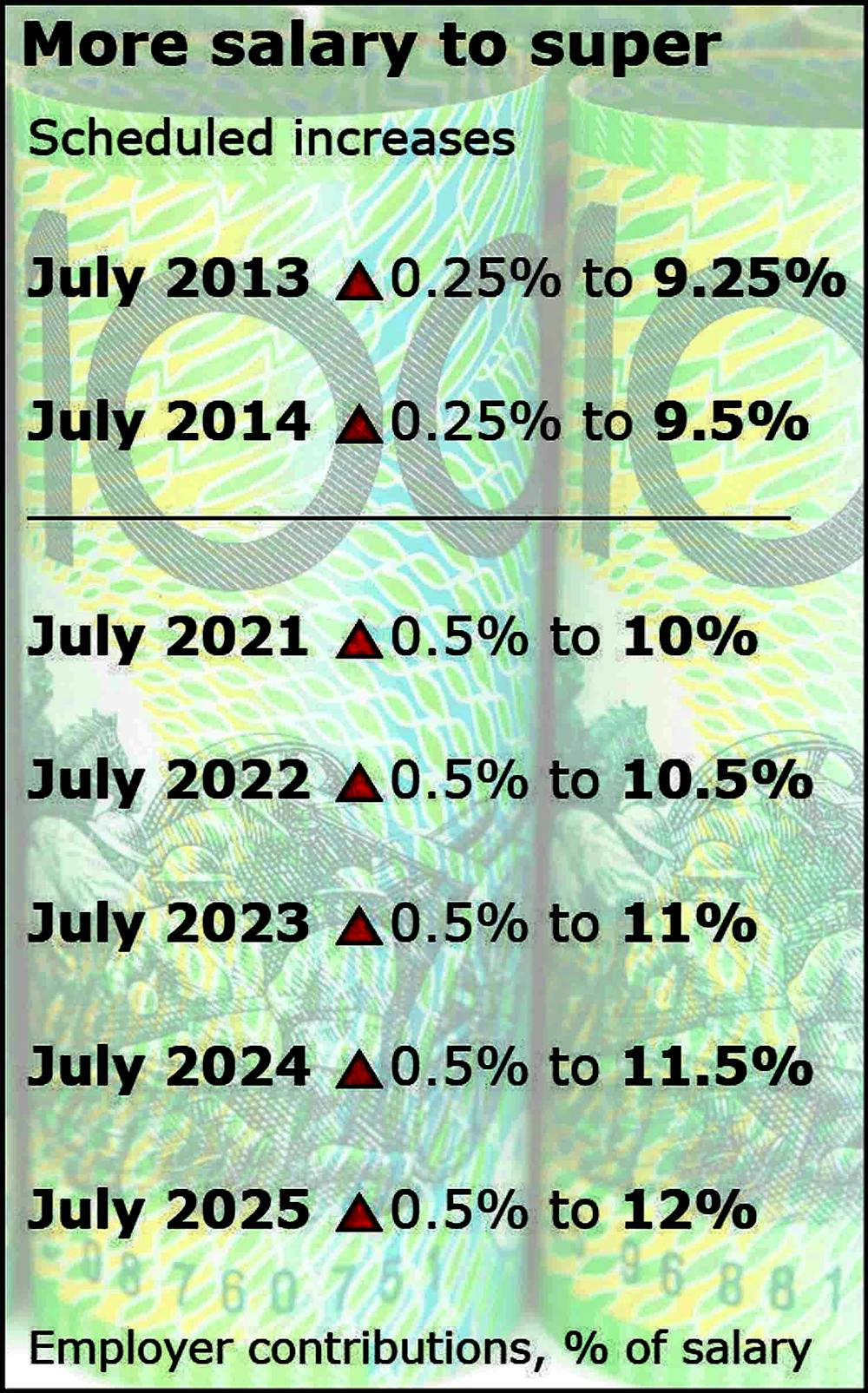
There is a case for not proceeding with, or at least further deferring, the legislated increase in employers’ compulsory superannuation contributions from 9.5% to 12%.
But the Grattan Institute’s latest analysis, published in The Conversation and elsewhere, does not make this case.
Rather, it demonstrates extremely well a totally different problem with our retirement incomes system, and falsely ties it to our 9.5% so-called “super guarantee”.
That problem is that the pension assets test, tightened in 2017.
The problem is the pension assets test
For a significant group of middle income earners, Grattan finds that an increase in savings through the super guarantee would lead to a reduction in lifetime incomes.
But that is equally true of a voluntary increase in savings, in any form other than increased investment in the family home.
A better designed assets test, preferably through a merging of the income and assets tests, would ensure that increased savings boosted at least retirement incomes. It would ensure that we didn’t penalise thrift.
Whether we should attempt to compulsorily increase in savings through the super guarantee is an entirely separate issue.
Grattan is right to point out that any increase in the guarantee would come at the expense of increases in wages. It falsely accuses proponents of an increase of insisting this would not be the case.
Perhaps some proponents of an increase do believe employers would or should bear much of the cost, but that is not consistent with the history of the super guarantee, one of whose strengths has been the sustainability of its funding by not adding to the cost of labour or inflation.
Those super ‘tax breaks’ scarcely exist
Another annoying aspect of the Grattan piece is the continued presentation of superannuation tax arrangements as “tax breaks”.
It is true that a shift in payments from wages to superannuation savings does, at that point in time, reduce tax revenue because of the difference between the contributions tax (generally 15%) and wage earners’ marginal tax rates (for most, at least 30%).
But what is the appropriate tax on savings, particularly savings that cannot be accessed until age 60?
The convention internationally is to exempt from tax entirely contributions and the earnings they generate, but to tax in full the benefits as they are paid out. If we did this, we would be imposing a greater immediate cost on the budget which would presumably be an even greater “tax break”. In reality we would be providing an appropriate tax regime for those looking to spread their lifetime earnings, in the knowledge that tax would be paid at the time they took money out.
Work done a few years ago for the Committee for Sustainable Retirement Incomes concluded that, after the Turnbull government’s superannuation tax reforms, our regime of a limited but progressive tax on contributions and earnings and no tax on benefits, produced very similar results to the conventional approach at all income levels, although it is implemented the other way around.
It means that by international standards there isn’t a tax break.
Moreover, as Grattan has demonstrated with its analysis of lifetime incomes, the impact of superannuation on age pensions disadvantages many people precisely because it saves the budget money in the long term.
The goal ought to be a comfortable retirement…
What would really help is if Grattan articulated what it considers to be the objective of the retirement incomes system, and focused its analysis on whether increasing the super guarantee would or would not help to achieve that objective, and at what cost.
The objective surely ought to be that Australians have secure and adequate incomes at and through retirement. “Adequacy” here has two components:
sufficient to ensure no aged person lives in poverty (the role of the age pension); and
sufficient to maintain pre-retirement living standards (which the role of superannuation and other savings, with the age pension contributing for people on less than average incomes)
There are legitimate debates about how to determine “adequacy”, particularly the second component.
Grattan claimed last year not only that the current 9.5% super guarantee would do the trick, but also that most current retirees (who have not accumulated anything like a lifetime of 9.5% of compulsory super savings) already receive adequate retirement incomes.
I remain convinced this is an extreme view, not consistent with international practice or analysis.
…which might mean contributions of more than 12%
For those not eligible for an age pension (likely to be at least 40% of retirees into the future), maintaining pre-retirement living standards will require contributions of 15-20% (18% is the OECD average); for those eligible for some age pension, the contribution rate required will be lower but, even at typical earnings, would most likely be more than 12% according to Committee for Sustainable Retirement Incomes analysis.
Whether such a contribution rate should be compulsory is a legitimate question.
Perhaps the current low rate of wages growth warrants a longer deferral of the next legislated increase (though it will be seven years since the last set of two 0.25% increases when the next increase of 0.5% is due to come into force in 2021, and real wages will have increased by much more than this in the meantime).
Perhaps the burden on some young families of increasing compulsory savings would be more than their circumstances allow (although there are other ways of assisting them).
A concern I have, however, is that Grattan seems to suggest not only that the super guarantee not be increased beyond 9.5% but that we would not then need to encourage most workers to voluntarily save more beyond that, including after their children grow older and become financially independent.
That seems to me short-sighted, and accepts a greater reliance on the age pension in the future than is desirable.
Review: Margaret Olley: A Generous Life, and Quilty, QAGOMA
Margaret Olley’s exhibition at QAGOMA is titled A Generous Life, referring to her capacity to maintain enduring friendships, her support for her artist peers (it is said she would cover their fares to travel and publish books for them), her role as mentor to younger artists, and her enormous generosity as a philanthropist to galleries in Australia, as well as to other arts organisations like the Australian Chamber Orchestra.
Olley donated her own work (in the case of the Orchestra, to auction), that of her peers and younger artists, and works from her own collection. She also made major donations to public collections, such as a donation to the Art Gallery of New South Wales that included works by Cezanne and Picasso.
Margaret Olley, Australia, 1923-201. Margaret Olley: A Generous Life exhibition views at the Gallery of Modern Art (GOMA), Brisbane.Images courtesy the Queensland Art Gallery | Gallery of Modern Art (QAGOMA). Photograph: Natasha Harth, QAGOMA
At the launch of Ben Quilty’s exhibition in the adjoining gallery two weeks after Olley’s, curator Lisa Slade said Quilty’s exhibition could also be called “A Generous Life”.
Slade was referring to Quilty’s passion for speaking out in support of human rights and against injustices. For example, his determination to address the ignorance around official versions of Australian history, which obscure the truth of violence to Indigenous people; his response as a War Artist in Afghanistan to the way the trauma of war seeps through all ranks; his amplifying the voices of refugee children in Greece, Syria and Lebanon, revealing the anguish of living with war.
And then there was his friendship and support for Myuran Sukumaran and Andrew Chan of the Bali Nine and the battle to turn public opinion and legal might against the death penalty, and his actions urging us not to ignore the tragedy of refugees and asylum seekers detained in our own waters. Quilty has made all these issues the subject for painting and activism.
Portrait of Margaret Olley and Ben Quilty, 2005.Image courtesy: Steven Bacon / Fairfax syndication.
Quilty’s exhibition of works from the last seven years (travelling from the Art Gallery of South Australia) and Olley’s exhibition of 100 works from across her professional life (curated by QAGOMA’s Michael Hawker) are brought together by good planning. The artists are said to be an odd couple or as arts critic John McDonald says “a legendary Aussie duo” (the others he cites are Burke and Wills, and Kath and Kim!).
However the two exhibitions don’t so much fit together (the subject matter, the artistic approach and intent, could not be further apart) as somehow build together.
Perhaps not unlike the way Olley and Quilty’s friendship built. In 2002, Olley, a judge for the Brett Whiteley Travelling Scholarship, awarded the scholarship to Quilty. From then on, she was his mentor, buying his work and gifting it to state and regional gallery collections, and introducing him to her influential friends of the art world.
Their friendship grew such that towards the end of her life, Olley agreed to sit for Quilty for a 2011 Archibald Prize portrait, which Quilty won. Just as Olley’s artist career was affirmed through William Dobell’s winning portrait of her in the 1948 Archibald, so in an inverse sort of way, Quilty’s career has similarly been affirmed through his 2011 winning portrait of Olley.
Ben Quilty, Australia, born 1973. Margaret Olley 2011. Oil on linen / 170.0 x 150.0 cm.Collection of the artist. Courtesy the artist.Photograph: Mim Stirling
Olley is the only person to have been the subject of an Archibald Prize winning portrait twice (excluding self portraits) – at the beginning of her artist life and at the conclusion. Olley died three months after Quilty’s win. Happily, both intriguing portraits of her are in the Olley exhibition.
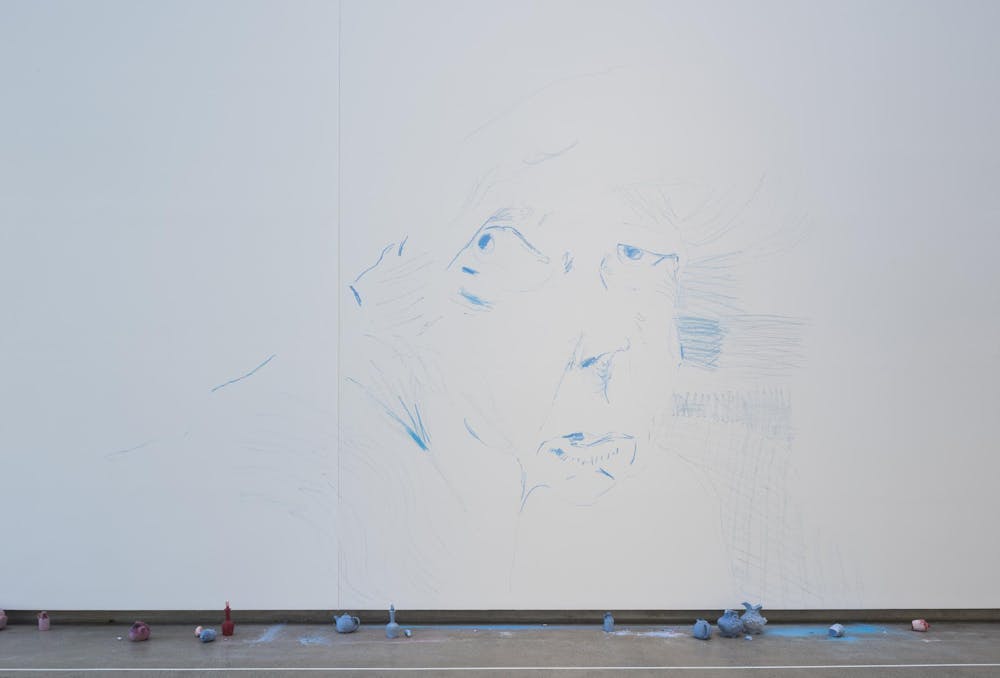
In preparing viewers to navigate between these shows, Quilty has created on the North Gallery wall interfacing Olley’s exhibition large line drawings of Olley taken from his preparatory sketches for the Archibald portrait. Just as the finished oil paint portrait exists through the slightest suggestion of paint, so these chalk drawings are equally ethereal, with a presence that just lingers.
Ben Quilty, Australia, b.1973. Sketches for Margaret 2019. Site-specific pastel wall drawing / cast pastel.Commissioned by QAGOMA for the AGSAtouring exhibition ‘Quilty’. Photograph: Natasha Harth
Interestingly, the chalk is created from red, pink and blue chalk casts of jugs, teapots and lidded jars – gifts from Olley’s vast collection to Quilty over the years. In their cast forms, these objects appear in the gallery as clusters of fragmented empty vessels below the wall.
On the opposite North Gallery wall adjoining Quilty’s exhibition, Quilty has reconfigured his work Inhabit (2010). This consists of 16 cell-like images that move us from abstracted matter to discernable images of James Cook, and then to Cook as a cadaver, to a cranium, to Quilty, and onto a mere spatial presence. In this iteration, these figures appear to be present at a dinner party. They are within two large tables with baroque flourishes created by black spray paint onto the wall.
Throughout Quilty’s exhibition there is an urgency to look deeper, to step back, to weigh up, to know more, to reassess, to unravel, to grieve and occasionally smile at the absurdities served up. Justin Paton, head curator of International Art at the Art Gallery of NSW, refers to recent Quilty work as “painterly-political grotesque”. He describes Quilty as a “painter of conflict, turbulence, knots, double binds, dark laughter and awkward resistance”. There are certainly demons and the macabre that won’t go away, nevertheless somehow there is empathy and compassion. It is this that holds us.
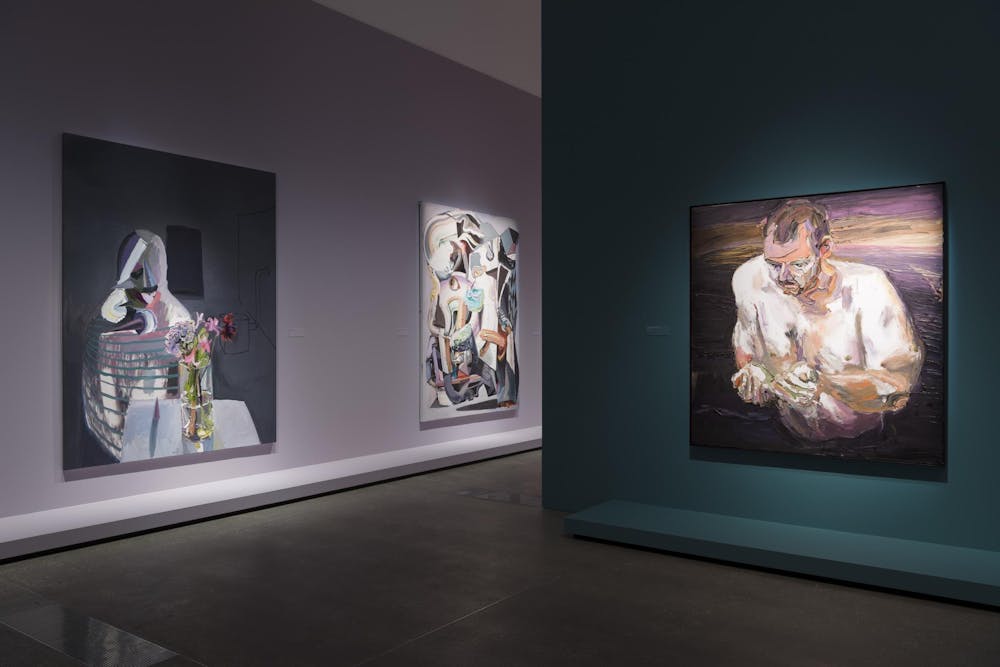
Ben Quilty, Australia, born 1973. Flowers for Heba (installation view) 2016Oil on linen / 265.0 x 202.0 cm. Private collection. The Last Supper no.9 (installation view) 2017Oil on linen / 265.0 x 202.0 cm. Private collection. Baino, after Afganistan (installation view) 2013Oil on linen / 180.0 x 170.0 cm Private Collection.Image courtesy the Queensland Art Gallery | Gallery of Modern Art (QAGOMA).Photograph: Natasha Harth, QAGOMA.
Olley’s inspiration
In Olley’s exhibition her family home of Farndon becomes the central site of inspiration and reference. We enter the exhibition past a huge (possibly dusty) flower arrangement, and into a dimly lit hallway with a wood detailed archway, familiar in old Queenslanders. Farndon is where Olley lived and worked for stretches of time after her father died and then from time to time between her stays in Sydney and Newcastle (keeping paintings and materials in all three locations), until the house burnt down in 1980.
Margaret Olley, Australia, b. 1923. Interior IV 1970. Oil on composition board / 121.5 × 91.5cm.Gift of the Margaret Olley Art Trust through the Queensland Art Gallery Foundation 2002 Collection: Queensland Art Gallery | Gallery of Modern Art, Brisbane
Hawker says Farndon had a calming presence on Olley, with its high ceilings, generously sized rooms, and plays of latticed-light across the floors. It was surrounded by lush vegetation that we see, all but bursting in the room in her paintings Interior 1V, and VII (1970).
Olley is said to have avoided having her own work on white walls and in this spirit, the gallery walls are a distinct mood setter of rich green, grey and salmon. Just as in Olley’s paintings of interiors where paintings, artefacts, furniture and, of course, flowers, create her universe, so this effect is created in the exhibition in several places.
The exhibition charts Olley’s early work in Brisbane (1946-48) where she paints iconic buildings (Old Masonic Lodge, Treasury Building, Queensland Club), her delicate Boonah (Qld) landscapes, and then portraits of young Indigenous men (with guitars and bananas), and most interestingly Aboriginal women (with dazzling, jostling flowers) and as nude subjects.
Margaret Olley, Australia, b.1923. The Treasury Building (Brisbane) 1947. Oil on panel / 61 × 76cm.Gift of the artist, 1997 Collection: Museum of Brisbane
To me, her figures always look a little uncomfortable – slightly halted, detached, even frozen. From the mid 60s, Olley left figure painting and focused more and more on still life.
Ironically, it is when Olley focuses on still life that I feel her subjects (in fact objects), create a highly animated world. Space became a keenly articulated interest for Olley. It is where the subtle dramas can be created or insinuated. “Space is the secret of life”, she has said. “[I]t is everything, and I have used it to suit me not only in my surroundings but over time.”
Margaret Olley, Australia, b.1923. Cornflowers with lemons (Cornflowers with Turkish coffee pot) 1984. Oil on board / 76 x 102cm.Private collection
What ultimately brings both these exhibitions together in a satisfying way is that each artist has developed their own sense of direction and a studied sense of purpose.
At the exhibition opening, Quilty said that after Olley awarded him the Brett Whiteley travel scholarship, she asked him “Are you one of us or one of them?” He says he has never has worked out what she meant.
Given what we know about Olley, we could say she was asking Quilty – is art central to your life and the reason to be? It was for Olley, and it would appear to be for Quilty.
Martin Parkinson, secretary of the Prime Minister’s department, has cleared Christopher Pyne and Julie Bishop of breaching the government’s code of ministerial standards with their post-politics jobs. But it’s doubtful the average voter would take such a literal or generous view of their conduct.
Scott Morrison had flicked to Parkinson the row over the part-time positions the two high flyers have taken that clearly overlap their previous portfolios, when the rules provide for a longer separation period.
Pyne, former defence minister, is advising EY, which operates in the defence area. Bishop, former foreign minister, is joining the board of Palladium, a global group working in aid and development.
The code says:
Ministers are required to undertake that, for an eighteen month period after ceasing to be a Minister, they will not lobby, advocate or have business meetings with members of the government, parliament, public service or defence force on any matters on which they have had official dealings as Minister in their last eighteen months in office.
Ministers are also required to undertake that, on leaving office, they will not take personal advantage of information to which they have had access as a Minister, where that information is not generally available to the public.
The government on Monday was quick to gag an embarrassing opposition move in the lower House calling for Parkinson to probe further into the circumstances of Bishop, who told him she didn’t have any contact with Palladium while foreign minister. A video had been posted by the company, labelled “Australia’s Foreign Minister, Julie Bishop, commends Shared Value and Palladium’s Business Partnership Platform”. (Government sources said later that the video – in which Bishop did not use Palladium’s name – was a congratulatory one about a Foreign Affairs initiative.)
In the Senate, the government lacked the numbers to prevent the conduct of Pyne and Bishop being referred to a committee. The motion from Centre Alliance’s Rex Patrick won support from Labor, Greens and non-Greens crossbenchers, passing 35 to 29. The committee has three opposition members, two government senators and a One Nation representative. Pyne and Bishop will be invited to appear and could be required to do so.
The greyest area of the post-ministerial employment provision is the stipulation not to take advantage of private information acquired as a minister.
Parkinson says in his report to Morrison: “a distinction should be drawn between experience gained through being a minister and specific knowledge they acquire through performing the role. It is the latter which is pertinent to the Standards”.
In practice, however, this can fade into a distinction without a difference. As Parkinson also says: “It is not reasonable to think that former Ministers can or will ‘forget’ all information or knowledge gained by them in the course of their ministerial roles”.
Pyne initially said he would be “providing strategic advice to EY, as the firm looks to expand its footprint in the Defence Industry”. EY initially talked up his role but then quickly qualified it in the face of the controversy.
Parkinson spoke to both Pyne (who had already issued a long public written explanation) and Bishop.
In Parkinson’s account, Pyne seems to have done a lot of talking with EY about what he can’t do. EY is paying, of course, for what he can do.
Parkinson says he considers Pyne “has put in place mechanisms to ensure that, whilst his engagement with EY will appropriately draw on his 26 year experience as a parliamentarian, he will not impart direct or specific knowledge known to him only by virtue of his ministerial position”.
Bishop, who will have been out of the ministry for a year next month, has said little publicly about her non-executive directorship. She told Parkinson she had yet to attend a board meeting and that “Palladium does not expect her to engage on any Australian based projects”.
Patrick suggested the terms of reference given to Parkinson were limited – designed to fix a “political problem”.
This is not new ground. Former trade minister Andrew Robb took up employment (annual remuneration of $880,000) with the Chinese Landbridge Group soon after he was trade minister. He has strongly rejected criticism of his action (and since left the group).
Two former ministers with responsibility for resources, the Liberals’ Ian Macfarlane and Labor’s Martin Ferguson quickly accepted positions with the sector. Stephen Conroy, a former communications minister overseeing online gambling laws, came under fire on becoming a lobbyist for the gambling industry – he points out this was three years after he was a minister.
Going back further (when the ministerial code of conduct did not include a post-separation provision) Peter Reith segued from the defence portfolio into advising defence contractor Tenix.
The Senate inquiry, reporting by September 10, will look at “action taken by the Prime Minister and the Department of the Prime Minister and Cabinet to ensure full compliance by former Ministers” with the relevant section of the ministerial standards.
At the end of his letter to Morrison, Parkinson highlights the impotence of a PM once members of his team are out in the wide world.
“While there are certain actions available to you when considering the conduct of a current serving Minister, and a possible breach of the Standards, there are no specific actions that can be taken by you in relation to former Ministers once they have left the Parliament”.
Either some way should be found to make the code enforceable or, if that is too hard, let’s skip the hypocrisy and admit it is no more than an exhortation to departees to act properly – complying with not just its letter but its spirit.
Indonesia recently hosted a bold public relations window-dressing expo in Auckland presenting itself as a “Pacific” nation while attempting to provide an unconvincing impression of normality in the two Melanesian provinces known collectively as West Papua.
The atrocious current conditions in West Papua were highlighted yet again last week with a report by the relief aid group Solidarity Team for Nduga claiming that at least 139 people have died in internal refugee camps in the Highlands of West Papua and more than 5000 people have been displaced since renewed fighting broke out between the Indonesian military and West Papua pro-independence rebels last December.
Prepared by researcher Pelagio Da Costa Sarmento of the respected London-based Indonesian human rights agency Tapol and editor Victor Mambor of the Jayapura-based newspaper and website TabloidJubi, the submission was in response to an inquiry by the Commons Select Committee into the Foreign and Commonwealth Office (FCO) and Global Media Freedom in an effort to combat disinformation.
“Over the last 10 years, journalists and news organisations have faced serious threats to their personal security, as well as being targeted by digital disinformation campaigns that aimed to disrupt the work of legitimate news sources and reporting,” the declaration said.
“The death of two local journalists, assaults on multiple others and several cases of international journalists being deported from Indonesia for reporting on or in West Papua underscores the lack of media freedom of West Papua.”
“His presidency was marked by serious media freedom violations, including drastic restrictions on media access to West Papua … where violence against local journalists keeps on growing.”
Tabloid Jubi editor Victor Mambor at a media freedom in West Papua summit in Jakarta during World Press Freedom Day in May 2017. Image: David Robie/PMC
Victor Mambor and I shared the podium in an “alternative” media freedom forum in Jakarta at the time of the UN World Press Freedom Day conference in May 2017 and my Media Asia article about the crisis outlined efforts to “gag” discussion about media freedom in West Papua.
Mambor has been a strong advocate for the Alliance for Independent Journalists (AJI) over the West Papuan media freedom cause.
The submission by Tapol and Jubi declares:
There are patterns of threats that implicate the safety and security of local journalists in West Papua.
A clearing house, “an intricate red-tape”, was re-introduced in May 2019 to select foreign journalists coming to West Papua. (Once a permit is granted, security forces supervise the selected journalists during their work in West Papua).
Over the past 10 years, there have been two deaths, multiple assaults, arrests on local journalists and deportation of international journalists. (Most of the cases remain open with no clear investigation process).
Disinformation using bogus online media disrupts the work of legitimate news sources.
Pacific Media Centre director Professor David Robie sharing a “Free press in West Papua” panel with human rights lawyers and Victor Mambor in Jakarta during the World Press Freedom Day conference in May 2017. Image: AJI
Human rights violations “West Papuans have been experiencing serious human rights violations including torture, imprisonment and extrajudicial killings by the Indonesian security forces (police and military),” the submission says.
“The West Papuans have long expressed their desire for self-determination since Indonesia took over the territory in 1963. It was officially incorporated into the Indonesian state in 1969 after the ‘Act of Free Choice’.
“Simmering low level conflict between various pro-independence groups and the Indonesian army have been ongoing since then, with the continued existence of local armed groups in West Papua. Indonesia has maintained a significant military presence in the region.”
However, in recent years “civil resistance movements have gained traction organising protests against human rights violations in West Papua and demanding the right to self-determination”.
The submission says that as a result the Indonesian government has “tightened security control over West Papua by maintaining the presence of both military and police forces and deploying these state security forces to stop rallies or discussions on human rights and/or political issues, and clamp down on the freedoms of expression, association, and assembly”.
Human rights violations and extrajudicial killings by the military and police in West Papua “rarely make the headlines in the mainstream media,” says the submission.
There have been many cases since where access to foreign media has been limited or refused. There have also been several cases of foreigners visiting West Papua being deported from Indonesia “on suspicion of being journalists”.
Relaxed media rules While four journalists from New Zealand (from RNZ Pacific and Māori Television) took advantage of a brief period of relaxed media rules in 2015 after President Widodo took office to visit West Papua, none have been there since.
In May 2019, the head of the immigration division in the regional office of the Ministry for Law and Human Rights in Papua Province reaffirmed a “clearing house” system for any foreign journalists wanting to visit West Papua.
If a permit is granted the foreign journalist would then be supervised by the security forces during their entire working trip in West Papua.
Here is a list of human rights violations against journalists documented by Tapol and Jubi researchers over the past decade:
Local journalists: 2010: Journalist Ardiansyah Matrais, a correspondent for Jubi and Merauke TV, was reported missing on July 28. Two days later, his tortured body was retrieved from the Gudang Arang Merauke river. The police autopsy report said he was still alive when he had been thrown into the river. His case remains unresolved.
2011: Journalist Banjir Ambarita, correspondent of the Jakarta Globe daily and Vivanews.com, was stabbed while driving a motorbike. It is suspected that the motive was related to an article he had written on the sexual abuse of a detainee by three police officers. No further investigation undertaken.
2012: Leiron Kogoya, a journalist for Pasific Post and Papua Pos Nabire, died when gunmen plane shot down his plane at an airport in Papua province. Though he was not specifically the target, his death served as a reminder of the dangers that journalists face in West Papua.
2015: Abeth You, a journalist writing for Jubi was attacked by police in October when covering a demonstration on human rights violations in West Papua.
2017: Journalist Ardi Bayage, a reporter for Suarapapua.com, was arrested when covering a protest during World Press Freedom Day in 2016. Bayage showed his press card to the police, however the police ignored and accused him of lying. He was held for several hours in the police headquarters in Jayapura.
2018: Journalist Abeth You of Jubi in May captured the police beating his colleague Mando Mote on his mobile phone. He was choked by a member of the police; his mobile phone was taken away and his press card was destroyed.
Foreign journalists: 2006: Five Australian journalists from Channel Seven were detained and put under surveillance in Jayapura, Papua province, and then deported. Naomi Robson, Rohan Travis, Peter Andrew, Paul Richard and David John were detained on charges of entering the province with tourist visas. They were forced on a flight back to Jakarta on September 14 from where they were expelled from the country.
2014: Two French journalists, Thomas Dandois and Valentine Bourrat, were detained in August in Papua province. They were doing a report on West Papua for the Franco-German TV channel Arte. They were charged with violation of immigration regulations and promoting instability. Their local guide and interpreter were also arrested and interrogated by the police for 36 hours.
2016: A visa was denied for French journalist Cyril Payen to report in Papua. On January 8, the Indonesian Embassy in Bangkok informed Payen that his application for a visa to visit Indonesia and carry out reporting in Papua province had been denied. The Indonesian Ministry of Foreign Affairs officials later informed the French Embassy in Jakarta that the denial was because his previous reporting on the pro-independence movement was “biased and unbalanced”.
2017: French journalist Basil Longchamp and his camera crew were deported from Indonesia after being granted permission to work on a documentary in Indonesia covering West Papua. On their arrival in Indonesia, they were expelled and banned from returning to Indonesia.
2018: Rebecca Henschke, an Australian journalist working for the BBC and her crew received an official permit to cover a military aid operation in West Papua. However, when the authorities found out about her Twitter post showing troops providing only non-nutritious foodstuffs, the journalist and her crew were expelled on the grounds that her post “hurt the feelings” of the soldiers.
Researcher Belinda Lopez … detained by Indonesian authorities in Bali’s Denpasar airport. Image: Belinda Lopez/FB
2018: Australian doctoral candidate Belinda Lopez doing Indonesian studies at Macquarie University, Sydney, was detained in Denpasar, Bali, after arriving from Australia for her honeymoon in Indonesia.
“She was also planning to visit West Papua to attend a festival. Immigration officials told her that her name was blacklisted without offering any justification She had formerly worked as a reporter in Jakarta and had already been deported from West Papua once in 2016 on suspicion of being a journalist.”
The researchers said the evidence demonstrated “acute risks and barriers for journalists working in West Papua”.
‘Bogus online media’ The submission also declared that West Papua suffered from the existence of “bogus online media”.
According to a 2018 investigation by Jubi and a Jakarta-based website, Tirto, there were about 18 online media platforms that were “dubious and bogus”.
“Their style of reporting includes producing hoaxes and propaganda regarding West Papua, quoting fictitious sources and conveying strong bias in favour of the police and the military in West Papua,” stated the submission.
“Their work severely disrupts the work of genuine media organisations which also have an online presence. They make a major contribution to the spread of disinformation to the public regarding the issues in West Papua.
“They also affect the work of civil society organisations that have limited access to the region, and that rely on the online news reporting that comes out of West Papua.”
In their report, Tapol and Jubi cite an example of how a bogus online media had “disrupted critical humanitarian work”.
Describing the difficulties in verifying information and human rights violations allegedly taking place in Nduga regency, in the Central Highland of West Papua, the submission explains how Indonesian police and military have been conducting a joint operation against the West Papua Liberation Army since last December.
Nduga lockdown “Independent sources have been very difficult to reach, and the military has been the sole source of information. Any accounts differing from the military are declared as a hoax, whereas not a single press worker can access Nduga due to the lockdown,” states the submission.
“A local Papuan senator was reported to police when he stated that there were civilian deaths resulting from the operation. This makes balanced and accurate reporting from the ground nigh on impossible.
“It is also undermining the image of a free and fair media in Indonesia – one of the largest democratic nations in the world. There is very limited accountability on the part of the authorities towards the ongoing human rights crisis in West Papua.”
In the past two UN Universal Periodic Reviews of Indonesian human rights, New Zealand and France have called for Indonesia to respect press freedom and open access to national and international journalists to West Papua.
Call for protection Among recommendations by Tapol and Jubi are:
The United Kingdom – as host of the recent Global Media Freedom conference – should ensure freedom of the press is upheld universally, including in West Papua.
Indonesia ought to “maintain its credibility” by providing access to national and international media so that they can provide unrestricted coverage in West Papua.
Indonesia should be pressed to protect journalists working in West Papua and ensure that they are free from any harassment by security forces.
Indonesia must bring to justice those responsible for attacks and killings of journalists in West Papua.
Development aid funding should be increased to strengthen capacities of local organisations, media outlets, and journalists in West Papua, and to enable greater transparency and credible documentation of the ongoing human rights crisis in West Papua.
West Papuan fighters have killed an Indonesian soldier in a renewed threat to Jakarta’s road project there.
State news agency Antara reported the hit-and-run attack on Saturday took place in Nduga regency, where pro-independence forces are waging war on the Indonesia’s military.
An Indonesian researcher, Hipo Wangge, said it was the ninth killing of a security officer by the West Papua Liberation Army since April.
The soldier was reportedly securing the Trans-Papua road project, a major effort by the Indonesian government to develop remote areas of Papua.
In December, part of the project near Nduga was put on hold when Liberation Army fighters massacred 16 construction workers.
– Partner –
The attack – the bloodiest in years to take place in Papua – prompted a massive deployment of Indonesian military and police to Nduga in a hunt for the fighters, sparking sporadic gunfights which have taken dozens of lives in the months since.
Rights groups have said that thousands of people have been displaced from Nduga. According to one group, at least 139 displaced people have died of malnutrition and disease in a temporary camp in nearby Wamena city.
Indonesian military spokesperson Muhammad Aidi told Antara that in Saturday’s attack the soldier suffered a gunshot wound to his waist and later died, with a helicopter rescue effort hampered by bad weather.
This article is published under the Pacific Media Centre’s content partnership with Radio New Zealand.
According to media reports, Mitchell Brindley repeatedly created fake Instagram accounts under the name of his ex-girlfriend and posted nude photographs of her on the site.
Image-based sexual abuse (or IBSA) is defined as the non-consensual creation, distribution or threats to distribute nude or sexual images (photos or videos) of a person. It also includes altered imagery in which a person’s face or identifying marks appear in a pornographic photo or video, known colloquially as “deep fakes.”
Also known as “non-consensual pornography” or “revenge porn”, IBSA is an invasion of a person’s privacy and a violation of their human rights to dignity, sexual autonomy and freedom of expression.
According to research we conducted for the Office of the eSafety Commissioner in 2017, one in ten Australian respondents had experienced a nude or sexual image of themselves being distributed to others or posted online without their consent. Young women aged 18 to 24 were among the most commonly victimised, as were Indigenous Australians and those with a mobility or communicative disability.
Prevalence of image-based sexual abuse among demographic groups in Australia.Office of the eSafety Commissioner
In a separate survey we conducted, we found the creation of nude or sexual images was even more prevalent. Of the 4,274 Australians aged 16 to 49 years that we surveyed, 20% said that someone had taken or created a nude or sexual image of them without their consent. Of those surveyed, 9% had experienced threats that a nude or sexual image of them would be shared.
When the creation, distribution and threats to distribute a nude or sexual image were combined, we found that more than one in five (23%) Australians had experienced at least one of these behaviours.
We also asked our survey participants whether they had ever perpetrated image-based sexual abuse. One in 10 reported they had taken, distributed or made threats to distribute a nude or sexual image of another person without that person’s consent. Men (13.7%) were almost twice as likely as women (7.4%) to admit to doing this.
How does IBSA impact victims?
Though the term “revenge porn” implies that the non-consensual sharing of nude or sexual images is based on the spiteful actions of jilted ex-lovers, research suggests the motivations for these behaviours – and the impacts on victims – are far more varied.
For instance, image-based sexual abuse is one way perpetrators of domestic violence attempt to coercively control a current or former intimate partner. Police and service providers have also described to us how images are used to threaten victims of sexual and domestic violence in order to prevent them from seeking help and reporting to police.
In other cases, nude and sexual images have been used as a form of bullying and harassment, particularly of young people. This can have severe impacts on a victim’s mental well-being, sometimes resulting in self-harm.
Many victims also experience high levels of psychological and emotional distress. In our study, we found approximately one in three people who experienced IBSA felt fearful for their safety – an indicator of potential stalking or intimate partner abuse being linked to the sharing of images online.
The impacts of image-based sexual abuse on victims.Office of the eSafety Commissioner
Several states and territories also allow victims of domestic or family violence to order their partners to destroy any intimate images they may have and prohibit them from distributing such images.
Yet some victims of IBSA don’t want to go through the emotional burden of pursuing criminal charges against a perpetrator. They just want the abuse to stop and the images to be taken off the internet, removed or destroyed. In such cases, victims can report their case to the Office of the eSafety Commissioner, which can issue formal removal notices to social media companies and other online platforms.
Image-based sexual abuse remains a social, health, legal and criminal policy challenge. Sadly, our previous research has found that not all Australians take this form of harm seriously, though there is widespread support for a criminal justice response which reflects the harm image-based sexual abuse can cause.
It is therefore important we continue with a multifaceted approach including education, prevention and training, as well as support services and justice responses, in order to properly address this type of intimate harassment and abuse.
The Office of the eSafety Commissioner operates an online portal with information, advice and assistance for victims of image-based sexual abuse. Visit https://www.esafety.gov.au/image-based-abuse/
The National Sexual Assault, Family and Domestic Violence Counselling Line – 1800 RESPECT (1800 737 732) – is available 24 hours a day, seven days a week for any Australian who has experienced, or is at risk of, family and domestic violence and/or sexual assault.
The Morrison government has introduced new legislation responding to recent protests by animal rights activists in Australia. The bill –named The Criminal Code Amendment (Agricultural Protection) Bill 2019 – will tighten up existing laws, creating harsher penalties for those who incite others to trespass on farms.
Minister for Agriculture Bridget McKenzie and Attorney-General Christian Porter have said this legislation will deliver on the government’s
election commitment to protect the privacy of Australian farmers and primary producers […] from the unlawful actions of animal activists”.
The legislation may not affect the sanctions animal activists already face for protests like the recent unauthorised sit-in in Melbourne CBD. Instead, it would mean activists may have to be more careful about distributing evidence of animal cruelty online to encourage people to take action against the meat industry.
But the legislation makes no mention of a farmer’s personal safety, instead targeting behaviour that would cause problems to a business. And it adds to a recent spate of legislation that prevents people from protesting with more than just symbolic actions.
In his election campaign, Scott Morrison promised to protect the privacy of Australian farmers.Mick Tsikas/AAP
Who does the bill target?
The legislation targets online actions of animal rights activist groups such as Aussie Farms, a charity that recently published a map of Australian farms allegedly engaged in animal cruelty.
The group’s professed goal is to
end commercialised animal abuse and exploitation by […] increasing industry transparency and educating the public about modern farming and slaughtering practices.
The charity contends most farms rely on secrecy and deceptive practices such as using images of happy animals rolling in the sunshine alongside words such as “free range” or “humanely slaughtered”. But secret footage reveals questionable slaughtering practices such as the use of gas chambers.
On the other hand, farmers have complained that the actions of Aussie Farms threaten their own privacy and safety, and the biosecurity of their sites.
What are the new offences?
The bill introduces two new criminal offences for cases where a person uses a carriage service, such as social media or a website, “to transmit, make available, publish or otherwise distribute material” with an intention to incite another person to
trespass on agricultural land, or
unlawfully damage or destroy property, or commit theft, on agricultural land.
“Agricultural land”, in this case, refers to land used for “primary production business”. This includes chicken farms, piggeries, and businesses operating as an abattoir or an animal saleyard.
The first offence carries a maximum of 12 months’ imprisonment, while the second offence may lead to up to five years’ imprisonment.
Importantly, the bill also specifies that the offences wouldn’t apply to a news report
which is in the public interest and is made by a person working in a professional capacity as a journalist.
Who does bill really protect?
The government claims this bill will protect farmers’ privacy and security, and avoid risks of biosecurity hazards posed by unauthorised entries of activists.
But if this were really the goal, we would not need a new bill. The use of “a carriage service to menace, harass, or cause offence” is already punishable under section 474.17 of the Criminal Code.
In fact, the legislation doesn’t even mention farmers’ personal safety. Rather, its target is behaviour that “would cause detriment to a primary production business”.
The bill’s Explanatory Memorandum (a document accompanying each bill to explain its intention) further states:
it is irrelevant if detriment to a primary production business actually occurs as a result of incited trespass. All that is needed […] is that the offender was aware there was a substantial risk that trespass could cause detriment to a primary production business.
So it isn’t clear how this bill will “protect” the well-being of farmers.
What is clear, however, is that this bill is part of a growing trend of creating heavy-handed “special offences” punishing protesters that go beyond merely symbolic actions. Meanwhile, the government claims to respect the freedom of assembly and right to protest.
And in 2015, the Border Force Act made it a crime to report on patients’ medical conditions in off-shore detention centres.
Rather than engaging with activists’ demand for more transparency in the meat industry, the government has now made it a crime for them to “demand” more transparency, when the latter might be detrimental to the business.
What’s more, farmers aren’t the only ones facing personal threats. Activists who have taken action to denounce the unethical practices allegedly employed in Australian abattoirs have also been subject to serious threats because of their choice to criticise the meat industry.
But the government seems less concerned with the privacy and safety of citizens when their conduct may cause “detriment” to the interests of business.
People can cough on purpose or spontaneously in a protective reflex action. The aim is to both protect the airways from material that shouldn’t be there (like dust) or to clear the secretions that come with respiratory diseases, such as the mucus and phlegm that come with colds and flu.
Nerve receptors throughout the lungs, and to a lesser extent in the sinuses, diaphragm and oesophagus (food pipe), detect the irritant or mucus. Then, they send messages via the vagus nerve to the brain. The brain, in turn, sends messages back through the motor nerves supplying the diaphragm, chest muscles and vocal cords.
This results in a sudden, forceful expulsion of air.
Your cough may be a one off. Alternatively, you can have a run of repeated coughs, especially in whooping cough, which people describe as a bout, attack or episode.
Which type of cough do I have?
There are many different types of cough but no one definition that everyone agrees on. This can be confusing as patients classify their cough in descriptive terms like hacking or chesty, while doctors classify them on how long they last: acute (under three weeks), subacute (three to eight weeks) and chronic cough (more than eight weeks).
Patients tend to describe coughs using descriptive terms, like hacking or chesty, while doctors talk about how long the cough has lasted.from www.shutterstock.com
Coughs can also be called wet or dry. Officially, you have a wet cough when you produce more than 10mL of phlegm a day.
For people with chronic coughs, their cough can further be classified after an x-ray — either with lung pathology to indicate something like pneumonia or tuberculosis, or without signs of underlying disease (an x-ray negative cough).
What caused my cough?
Whether you have a wet or dry cough may tell you what has caused it.
A wet cough is more common in people with sinus and chest infections, including influenza, bronchitis and pneumonia, and serious infections such as tuberculosis. A smoker’s cough is usually wet, as the precursor to chronic bronchitis. As it progresses, or when complicated with infection, larger amounts of mucus may be coughed up daily.
Then there is a dry cough associated with a cold or flu that turns into a moist cough. People tend to describe this as “chesty” and it makes them worry the infection has moved to their lungs.
Yet mostly their lungs are clear of infectious sounds when examined with a stethoscope. Even a small amount of mucus stuck around the vocal cords or back of the throat may produce a moist sounding cough. But this is not necessarily a wet or “productive” (producing lots of mucus) cough.
One study showed even doctors struggled to make an accurate diagnosis based only on the sound of the cough. Their diagnosis of the cough was correct only 34% of the time.
For people with chronic “unexplained cough”, a common hypothesis is that cough receptors become more sensitive to irritation the more they are exposed to the irritant. These cough receptors are so sensitive that even perfumes, temperature changes, talking and laughing may trigger the cough.
People with upper airway cough syndrome may feel mucus secretions moving down the back of the throat, causing them to cough. New evidence suggests the cough is caused by the increased thickness of the mucus and slowness of that mucus being cleared by cilia (hair like structures in lining cells whose job is to move mucus along).
This mechanism keeps the chronic cough going through a feedback loop I call the “cough and mucus” cycle. In other words, the more the throat is irritated by the sticky mucus, the more you cough, but the cough is poor at shifting the mucus. Instead, coughing irritates the throat and fatigues the cilia, and the mucus becomes stickier and harder to shift, stimulating further coughing.
When coughing gets too much
Coughing is hard work so no wonder you can feel physically exhausted. In one study, people with asthma coughed as many as 1,577 times in one 24-hour period. But for people with a chronic cough, it was up to 3,639 times.
The high pressures generated in vigorous coughing can cause symptoms including chest pains, a hoarse voice, and even rib fractures and hernias. Other complications include vomiting, light-headedness, urinary incontinence, headaches and sleep deprivation. Chronic cough may also lead to people becoming embarrassed and avoiding others.
Is it true?
People still seemed surprised and worried when a cough persists after a cold and flu despite the fact cough outlasts other symptoms in most cases. When an Australian study followed 131 healthy adults with an upper respiratory tract infection, 58% had a cough for at least two weeks and 35% for up to three weeks.
Then there’s the colour of your mucus. Patients and doctors commonly interpret discoloured mucus, particularly if green, as a sign of bacterial infection. But there’s clear evidence that the colour alone is not able to differentiate between viral and bacterial infections in otherwise healthy adults.
Another study found that people with acute cough who coughed up discoloured phlegm were more likely to be prescribed antibiotics, but they did not recover any faster than those not prescribed antibiotics.
When and how should I treat my cough?
Due to the multiple causes and types of cough there is not room to cover this question adequately. A safe approach is to diagnose the disease that is causing the cough and treat it appropriately.
For chronic dry coughs and coughs that last after acute upper respiratory tract infections, the cough is no longer serving a useful function and treatments can be targeted at breaking the cycle of irritation and further coughing. The evidence for effective treatments is patchy, but cough suppressants, steam inhalation and saline nasal irrigations, as well as prescribed anti-inflammatory sprays may help.
A spoonful of honey reduces cough in children more than placebo and some cough mixtures. It is thought that the soothing effect on the throat is the way this works.
There’s no good evidence that cough medicines work, and they could harm children.from www.shutterstock.com
However, there is no good evidence for the effectiveness of commonly used over-the-counter medicine (cough medicine or syrup) to alleviate acute cough, yet they are still sold. Some contain drugs with the potential to cause harm in children, such as antihistamines, and codeine-like products.
It is fine to try to treat yourself, but if a cough persists or is bothersome, your doctor may be able to suggest or prescribe treatments to reduce your symptoms.
If you cough up blood or are becoming more unwell, consult a doctor, who will investigate further.
Children who cough up phlegm for more than four weeks have been found to benefit from medical investigations and antibiotics.
Papua New Guinea Prime Minister James Marape wants Australia to close the detention centre it has been running on PNG’s Manus island for six years.
According to Australian media, Marape has asked Canberra to give him a timeline for closing the facilities where Australia has been holding refugees and asylum seekers who are not allowed to enter Australia.
Marape met the Home Affairs Minister Peter Dutton and told the ABC that he would like the offshore processing to end as soon as possible.
The Victorian government introduced 24-hour public transport on Friday and Saturday nights in Melbourne from January 1 2016. Services mostly run every hour from 1am to 5am on all metropolitan lines with some additional tram and bus services. The initiative, originally labelled “Homesafe”, was proposed as a convenient and safe way to travel in and out of the city throughout the night. But our research shows it did not reduce alcohol-related violence and road accidents.
The budgeted cost of the program is almost A$300 million through to 2020. This includes the cost of protective services officers whose sole role is to patrol train stations and associated areas, ensuring the safety of night-time public transport users.
Our research evaluated the introduction of 24-hour public transport from two different perspectives.
For our first study, we conducted covert observations of four nightclub venues in Melbourne in the year before and after 24-hour public transport was introduced. Patrons’ observed levels of intoxication inside venues increased after 24-hour public transport was introduced (see figures 1a-d).
Figure 1. Proportions of patrons: a) in venue by time of observation; b) showing intoxication signs; c) too intoxicated; d) showing signs of drug use.Author provided
Our second study used data on police assaults, alcohol- and drug-related ambulance attendances, road crashes from the areas serviced by public transport, Myki public transport card touch-ons, and pedestrian counts to determine the impact of 24-hour public transport on alcohol-related harms in the city.
Figure 2 shows an immediate increase in police-recorded assaults, until increased police resources were allocated. A temporary reduction followed, although more recent data from the Victorian Crime Statistics Agency (see table 1) show serious assaults have remained stable with a peak in 2018.
Figure 2. Number of police-recorded assaults resulting in arrest or summons in postcode 3000 during high-alcohol hours, 2015 and 2016.Author providedTable 1. Serious assaults recorded on a street/lane/footpath or licensed premises in postcodes 3000 and 3006 during high-alcohol hours, April 2015 to March 2019.Data: Victorian Crime Statistics Agency, Author provided
Road crashes in the areas serviced by public transport remained relatively stable from 2015 to 2016, as figure 3 shows.
Figure 3. Average number of road crashes during high-alcohol hours, 2015 and 2016.Author provided
There was little change in the number of people attending the central business district. Figure 4 shows pedestrian counts around Flinders Street Station throughout the night before and after 24-hour services began.
Figure 4. Count of pedestrians by Flinders Street Station foot traffic counter during high-alcohol hours, 2015 and 2016, by day and hour.Author provided
While correlation doesn’t necessarily equal causation, the measures clearly failed to achieve any substantial reduction of alcohol-related harms.
If the aim of the policy was to boost “Melbourne’s 24-hour lifestyle”, then it may be considered successful. More people were in the city later in the evening, using public transport and attending bars and clubs, resulting in higher levels of intoxication in these venues. This is clearly a massive win for the alcohol industry and others that profit from very late-night drinkers on the streets.
These findings, which assess the effects of more than A$300 million in state expenditure, are also important when considering current reviews of liquor laws in Sydney and Queensland, where the alcohol industry and aligned interest groups are proposing 24-hour public transport.
What else could be done?
Other jurisdictions around the world have chosen a range of approaches to reduce alcohol-related harm. By far the most evidence-based policy option is to close venues earlier in the night.
In 2016, Queensland implemented similar restrictions as well as mandatory ID scanning. This means banned patrons are reliably detected before entering venues. Findings from a two-year evaluation are soon to be released.
Our findings suggest the money spent on 24-hour public transport is associated with increases in intoxication and violence.
Another consideration is that reducing taxi queues is no longer the issue it once was. The rise of Uber has provided much more flexibility in nightlife transport.
Governments should trial different policy options to determine what works for their jurisdiction. These trials should be rigorously and independently evaluated. Effective measures can then be identified, unintended consequences addressed and ineffective or overly costly measures replaced.
If the first week of the 46th Parliament was heavily ceremonial – dominated by the new governor-general, a raft of first-time MPs and Bob Hawke condolence speeches – the next two weeks will mark a return to normal programming.
And where the opening week allowed just one proper sitting day to thrash out the modestly titled, A$158 billion “Treasury Laws Amendment (Tax Relief so Working Australians Keep More of Their Money) Bill, 2019”, the next fortnight will revert to the usual combination of substantive legislation, otherwise known as “government business”, and the inevitable Question Time theatrics.
Both should prove instructive about the longer-term presentation of the Morrison government, and that of the Anthony Albanese-led Labor opposition.
Upcoming bills
Albanese has already signalled several stylistic changes from Bill Shorten’s leadership. This includes the design of sharper, less rhetorical parliamentary questions, a willingness to bipartisanship on some issues like drought funding, and an aspiration to lift the tone of political combat. This was most recently shown via an instruction to MPs to avoid calling their opponents “liars”.
The House of Representatives program released on Friday contains uncontroversial measures, such as legislation to establish the Future Drought Fund, a bill for Farm Household Support, and a bill to criminalise the use of social media to incite farm invasions on grounds of political/environmental activism.
The Coalition’s deliberately minimalist election pitch rested on four pillars: generous income tax cuts, the claimed dangers of a Labor government; surplus budgets into the future; and the continuation of a strong economy.
For Treasurer Josh Frydenberg, the urgent challenge is to find ways to boost business and consumer confidence.Joe Castro/ AAP
Already, with just one legislative day under its belt, the tax cuts are through. The mega-spend even gained Labor’s support – once the crossbench numbers were in the Senate, anyway.
Self-evidently, Labor was not elected. So that’s another goal happily ticked off for the Coalition.
But when it comes to the string of budget surpluses and the promised strong economy, things get more problematic.
In the short time since the election, the Reserve Bank has already dialled in two (count them, two) cash rate cuts, while signalling that a third could lower the official rate to a staggering 0.75% before the end of the year.
Clearly, getting the economy going again has emerged as the central bank’s number one priority.
For Morrison, and Treasurer Josh Frydenberg, the urgent challenge is to find ways to boost business and consumer confidence. They also need to kick Australia’s sluggish wage growth into gear, without pulling the levers Labor had in mind.
To that end, the pair has made it clear the government will risk its A$7.1 billion projected surplus for the end of financial year 2019-20, despite suggestions from some economists that the political bragging rights of a surplus should be sacrificed in the interests of emergency stimulus for a pallid economy.
The government rejects these arguments. It points to the expected effervescence from stage one of its aforementioned tax cuts package of up to A$1,080 as an immediate tax rebate via a measure outlined in the pre-election Budget.
The government also points to major infrastructure spending as its A$100 billion future works program rolls out, with some of that brought forward and fresh requests to the states to do likewise.
Minimalist governing
While further direct measures are possible on the fiscal side should the economy slow further, the Coalition’s strong disposition is to a less interventionist response.
Rightly or wrongly, the Coalition views its election reprieve as a blunt rejection of Shorten’s big-spending, big-taxing approach.
And conservative commentators have aided this view, urging the Coalition to avoid grand plans and big ideas, and do no more than simply govern well.
Yet dangers loom, not least of which are the ever-present threat of internal divisions and a sense of policy drift.
The sparseness of a major policy narrative has already elevated an ideological push for a religious freedom/anti-discrimination bill of some kind, despite zero pressure from mainstream voters.
Reactionaries were also quick to flex their muscles in the hours after the new Minister for Indigenous Australians Ken Wyatt used a National Press Club speech to open a new and deliberately non-prescriptive invitation to a co-design process.
The concerning thing for the Morrison government is the speed with which Wyatt’s potentially game-changing approach brought forward the same voices who fanned internal divisions within the Turnbull government over marriage equality, energy policy and climate change.
In a world run ragged by multiple crises and an unravelling of American global leadership, military confrontation in the Gulf poses risks that extend well beyond the region itself.
A Gulf crisis is the last thing the world needs when confidence between Washington and its European allies has been undermined by an unpredictable Donald Trump administration.
Tensions between the US and China over multiple trade and other issues are not helping.
These are high octane moments in the Gulf as America and its allies confront difficult choices in how to deal with an Iran that has clearly decided to test the limits of western tolerance.
Iran’s seizure in international sea-lanes of a British-owned tanker in the Gulf of Oman at the entrance to the Strait of Hormuz and the Persian Gulf itself is highly provocative.
Britain, with Boris Johnson likely to be installed as its new prime minister this week, is facing a test of its resolve. Its ability to navigate its way through this crisis carries with it real risks of wider conflict.
Iran’s wider purpose is to raise the costs to the west of maintaining security in the Persian Gulf in response to American-imposed sanctions that are strangling the Iranian economy.
Attacks on oil tankers and facilities in the Gulf over the past month are widely attributed to Iran or its proxies. These attacks have reminded the international community that one-third of the world’s seaborne oil passes through the Strait of Hormuz every day.
Iran has the ability, if only temporarily, to shut down a choke point that is critical to the well-being of the global economy. Interference with oil shipments from the Gulf would prompt a spike in prices and prove a drag on slowing economic activity globally.
Reports of sporadic civil unrest over rising prices and shortages attest to the challenges facing the regime.
Sanctions are crippling Iran’s ability to export its oil, overwhelmingly its main source of foreign exchange. The US says that since oil sanctions were tightened last November, Iran has lost something like US$10 billion in revenue foregone.
The International Monetary Fund reports that Iran’s economy shrank by 3.9% last year. It is expected to shrink by a further 6% this year. Unemployment has risen sharply.
At the same time, the value of the Iranian rial against the US dollar has collapsed by 60% in the past year, adding to cost of imports and fueling inflation.
It is against this background that Tehran has clearly embarked on a campaign to remind the West of its ability to increase the costs of maintaining regional security.
Tehran’s message is this is not a zero game.
For Washington and its allies, the question becomes: how does the international community respond to Iranian provocations?
Does it allow the US, egged on by the Sunni Gulf state like Saudi Arabia, to lead it into a military confrontation with Iran, or does it seek to deescalate potential conflict?
This is a question the federal government needs to ponder since it is likely Australia would be asked to make a contribution in the event of a continued deterioration of the security environment.
Given the stakes involved, the wisest course would seem to be reopening discussions with Tehran about Gulf security and an American-imposed sanctions regime.
However, this will be easier said than done.
Washington would need to unscramble an ill-advised decision to abrogate a 2015 agreement to freeze Iran’s nuclear program. The US reimposed sanctions that had been eased under the Joint Comprehensive Plan of Action (JCPOA) negotiated painstakingly over some months by the Barack Obama administration.
Trump’s decision to abandon the JCPOA and reimpose sanctions is what has brought the Gulf to the brink. If conflict results, this will be a heavy price for capricious American policymaking.
Iran was complying with its obligations under the JCPOA. But it has now indicated it will resume enriching uranium above agreed levels.
Faced with the possibility of renewed conflict in the Gulf, Trump himself has offered to talk to Iranian leaders “without preconditions”. Tehran has said it will not negotiate without an easing of sanctions.
Overcoming this impasse will require concessions Washington has not yet indicated it is prepared to make. In the meantime, the risk of wider conflict grows.
This is just the scenario Middle East experts have been warning about.
Over recent months, the news has been saturated with headlines claiming we’re experiencing a “killer flu season”. Researchers watching laboratory data are using the term “flunami”.
Increased testing for influenza and a very early start to the flu season have driven these high figures. Meanwhile, we’ve seen heightened community awareness and concern as the media continue to report on the high numbers of flu cases.
Tragically, influenza causes deaths every year, including among infants and healthy young people. This still comes as a surprise to many. News coverage of these deaths presents human stories that make the risk feel real and threatening.
We can see the impact of this by looking at the trends in Google searches for “flu deaths” and “flu symptoms” in Australia this year. The steep rise is closely aligned with media reporting of deaths from early May.
The Google search interest in deaths in 2019 dwarfs the 2017 interest, when media reports of influenza deaths appeared more sporadically.
The fear of a uniquely severe and dangerous flu season leads more people to go to their GP or emergency department for an assessment if they’re experiencing flu-like symptoms. In turn, it may also lead more doctors to test for influenza, resulting in increased influenza counts.
Every Monday morning in winter our Flutracking survey asks around 45,000 Australians about their influenza-like symptoms (fever and cough). We also ask ill Flutrackers if their doctor tested them for influenza.
Every year, more and more Flutrackers answer yes. Comparing the percentage of Flutrackers with cough and fever who reported being tested for influenza during April and May increased markedly from 2016, with a very significant increase in 2019.
The season is earlier, but it’s not more severe
Since at least 2011, there has been an increasing summer to autumn blip in influenza activity. That trend has been particularly pronounced this year.
Systems like Flutracking are showing higher levels of influenza-like illness for this time of year, but the figures are not nearly as high as the typical August to September peak seen over the last five years.
Flutracking is not perfect, tracking only “influenza-like” symptoms. Influenza surveillance relies on multiple imperfect streams of data; each contribute to our understanding of the whole picture.
Another system providing objective information on the severity of influenza is the New South Wales death registration data. It showed a few unseasonal spikes in February and March, but is otherwise low and around half the rate we see in the middle of a typical influenza season.
Hospitalisation rates for influenza are high across many hospitals for this time of year, and some may approach peak winter rates seen in 2017. But looking at the proportion of patients admitted to hospital with the flu requiring intensive care, there’s no indication the early influenza season is deadlier than usual.
The simplest way to describe the season is early, but average so far. The rates of influenza are high for this time of year, but the illness is no more severe compared to the typical peak we see in the middle of winter.
Comparing 2019 to 2018, which was a very mild year, further exaggerates the difference.
So when will it end?
In describing the season as “early”, the question arises as to how long it will last. No one knows. The dynamics of an influenza season are a mix of the particular strains circulating, underlying population immunity to the circulating strains from past infection or immunisation, levels of population density and interactions, and weather – all highly unpredictable factors.
If there is no change in the circulating strains then it’s possible the number of susceptible people in the community could be exhausted and the influenza season could “burn out”. If not, it could be a big year for influenza.
Note that this is a broad brush overview of a large country. Western Australia appears to be having a different experience this year with very high rates of laboratory notifications and influenza related hospitalisations. After experiencing a series of mild influenza seasons it may now have a much larger pool of people susceptible to influenza infection.
So far, the season is early but average. It’s not the worst flu season on record and not a “flunami”.
Is there any harm in the media being hyperbolic about the nature of each flu season? Some see no downside in using media interest as an opportunity to educate the public about influenza or promote research.
At the same time, there is a danger in tying reasonable public health advice to unreliable interpretations of what is actually happening. Crying wolf may undermine trust in public health messaging.
Hopefully, the messages around flu remain clear. You don’t want to get influenza, and if you do get it, you don’t want to spread it to other people. Immunisation, hand hygiene, anti-viral treatment and staying home if ill can all help.
Last week saw the release of the rebooted The Lion King, an attempt to capitalise on the billion-dollar success of the 1994 original. With a star-studded cast, the reboot closely follows the plot of the first movie (spoilers to follow, obviously).
Mufasa, king of the lions (and of every other creature in his territory), raises his son Simba to follow in his footsteps. But Mufasa is murdered by his jealous brother Scar, and his young heir is chased into the desert. Years pass, and eventually Simba reclaims his rightful place as the ruler of Pride Rock.
The remake is likely to be the box office hit of 2019. But in my job as a big cat biologist, I spend plenty of time with Pride Rock’s real-life counterparts. While Disney was somewhat accurate, the real life dynamics of a lion pride in Uganda or Tanzania’s national parks can be far more Game of Thrones than The Circle of Life.
Lion life is more Game of Thrones than the Circle of Life.Alexander Braczkowski, Author provided (No reuse)
Sarabi’s pride: the anchors of lion society
The key to survival in lion society is strength in numbers, and lionesses are the anchors of lion prides. They form a matrilineal society, and generally stay in the territory of their birth. It is the males that leave.
The Lion King gets the fundamental premise of pride society right: its strength is the number of lionesses in a pride.
You might assume this would be for successful hunting, but far more fundamentally, it is the key to successfully raising young. Lionesses will often give birth at a similar time (usually a few months apart). This means they can suckle each others cubs.
Cubs are cared for communally by lionesses, who nurse and protect each other’s young.Alexander Braczkowski, Author provided (No reuse)
Genetically, this makes sense, as they are related as mothers, sisters, aunts and nieces. If one lioness dies, a relative will raise her offspring. Moreover the strength of numbers means lionesses can defend their cubs from males trying to kill them.
Males (typically not the father) will kill cubs to force their mothers back into heat. Infanticide is one of the the leading causes of death for young lions; about 25% of all lion cubs will die in this way. It is perhaps understandable why Disney chose to omit this aspect of lion society from their children’s films.
Scar and Mufasa would be partners, not enemies
Where the Lion King takes a turn towards fiction is in the relationship between Scar and Mufasa. In the film they are brothers, and enemies. But in real life they would be partners and rely intimately on each other.
In lion society, young males are evicted from their mothers’ pride once they mature. To survive they band together, looking for a new pride they can take up residency in and sire offspring.
The more males in a coalition, the higher the likelihood they will secure tenure in a new female pride. Yes, Mufasa and Scar may have had the odd squabble over mating rights to females in the pride, but they wouldn’t kill each other.
Instead, their fight would be with other males. Arguably the best example of this was seen in the mid-2000s in South Africa’s Sabi-Sands game reserve. A coalition of six adolescent males, known as the Mapogos (meaning rogues or vigilantes), joined forces to rule an area of 170,000 acres for six years.
They sired a multitude of offspring, but killed at least 40 cubs, females and adult males during their reign, before finally being dispatched by two other lion coalitions (the Majingilanes and the Southern Pride).
Interestingly, in the 1994 original Scar was the bearer of a gorgeous, black mane, far darker than his brother Mufasa’s. Seminal experiments with dummy lions showed lionesses prefer males with darker manes.
Scar’s dark mane would be irresistible to lionesses. In real life, however, lions generally do not command armies of hyenas.
Those same dark-maned males feature more testosterone and can heal up quicker after big fights. Rather than the outcast Scar is made out to be, his black mane would be an important indicator of fitness and very sexy to lionesses!
Run away and (really) never return
One of the key moments in The Lion King is Simba leaving his mother’s pride, fuelled by guilt over Mufasa’s death.
The act of leaving is dead right, but it would not have been voluntary. Adult lions cannot stand the presence of young and upcoming males in their areas, although they will tolerate young cubs to a degree. When males are between two and a half and about four, they are forcibly evicted by their fathers, uncles and other pride members.
I recently saw one of my favourite Ugandan lions, a 3 year-old male called Jacob (pictured below), get swatted around by a coalition of three massive mature males. Jacob immediately submitted, laying on his back and cowering. Simba’s journey away from home would not have been a smooth one.
When lions leave their birth pride, they’re setting out on a long, arduous journey (which makes it all the more important to have your brother or cousin with you).
Jacob a young male on the cusp of leaving his natal pride.Alexander Braczkowski, Author provided (No reuse)
Lions can move hundreds of kilometres in search of a new “home”, a new pride they can challenge the incumbent males for. They can cross electrified fences into new reserves, move across cattle farms and even international borders.
The likelihood of Simba returning to his mother’s pride are next to none, barring some extreme event resulting in the males dying (for example trophy hunters or poachers). Of course, if he did return, it would be to mate with as many lionesses as he could, many of whom – if not all – would be closely related to him.
While I personally revel in the opportunity to study lion society in its totality, even the fights and hardships, I can understand why Disney chose to skim over some of these aspects of lion life in favour of fantasy.
Although the story of the Lion King is ultimately positive, African lions are thought to have undergone a 50% decline since the original film. The new Lion King gives us all an opportunity to be inspired by this magnificent cat and help its conservation in the wild.
Over the past few weeks, artists from around Australia have been creating small artworks depicting the endangered black-throated finch and sending them to politicians involved in decision-making around the Adani Carmichael mine in Queensland’s Galilee Basin. Before being mailed, the artworks are photographed and uploaded to Instagram. Over 1,400 have been mailed to date.
This is not the first time Australian artists have banded together in protest. In 2014 Transfield Holdings was forced by artists’ protests to withdraw as principal sponsor of the Biennale of Sydney – a philanthropic role reaching back 40 years – when participating artists learned that a then-related company was involved in Australia’s offshore detention program.
Similarly, in 2017 artists led a successful campaign calling on the National Gallery of Victoria to sack its contracted security firm, Wilson, which is also active in the detention of asylum seekers.
One of the artworks from the Black Finch Project.Robyn Rich
To penetrate the public consciousness, however, artist-led protests need to move beyond the relatively niche arenas of art museums and Instagram. Peter Drew’s series of poster campaigns that began in 2015 with Real Australians Say Welcome, for example, have become accepted, even expected images in public spaces across the country. Brisbane artist Richard Bell took his Embassy project to the Venice Biennale this year, where it was embraced by the international art community and its thousands of acolytes, few of whom had prior understanding of the Aboriginal rights movement in Australia.
Peter Drew’s Real Australians Say Welcome posters have become widely recognised around the country.RaeAllen/flickr
The current Black Finch Project takes its name from the tiny, almost extinct bird whose last key habitat is threatened by the Adani mine. There are thought to be only 1,000 of the species remaining and scientists have warned that the native finch may well be wiped out by the habitat-destroying mining operation.
Adani’s management plan for the endangered bird was initially rejected by the Queensland state government, before a revised plan was approved on May 31. Despite the revisions, scientists have serious reservations about the finch’s ability to survive.
The Black Finch Project was launched by Melbourne artist Charlotte Watson, who proposed that “we send the QLD government 1,000 black finches; drawings, sculptures, anything to make known the lives of these creatures. No text. No slogans. No messages of rage. Just dead finches”.
The results are a mix of professional and amateur art, mostly realistic portrayals of the little bird either standing alone or dead and upturned. Echoing the seemingly casual disregard by politicians for the finch, Laura E. Kennedy designed a circular panelled portrait of the small bird with a speech bubble that simply says “bye”; also clear in its message, Stephanie Hicks has contributed a pair of monochrome images in which the finch itself is whited out.
The Black Finch Project artworks have been referred to in the media as “heartbreaking”, with the federal environment minister Sussan Ley rather patronisingly describing some of those received by her office as “heartfelt”, saying she could recognise the “passion” and “creativity” behind them.
If she had described them, conversely, as “informed”, “insightful” and “thought-provoking”, the creators of the artworks could at least be satisfied that their message had hit their target.
The Black Finch Project was designed to contain no messages of rage – ‘just dead finches’.Linda Studenta
Making art and craft can be therapeutic. The artist might achieve a sense of catharsis and even empowerment. Yet unless the artwork’s targeted audience is an openminded one, the artwork, no matter how accomplished, will have little impact on the status quo.
While the Black Finch Project is gaining traction on Instagram and successfully building public awareness of the issue, it will take more than art to stop the Adani juggernaut in Queensland.
History shows that art does have the potential to illuminate, educate and even change minds. As Friar Michele da Carcano explained in the late 1400s, narrative art commissioned by churches was introduced for three reasons.
First, for the benefit of “simple” folk who are unable to read, a reason which today might more appropriately be applied to impatient people unwilling to invest the time to read news and analyses; secondly, on account of what he called the “emotional sluggishness” of those who are not easily moved by words but can be influenced by pictures; and finally because many people cannot retain in their memories what they hear, but they do remember if they see images.
The Black Finch Art project is gaining awareness, but will this be enough?Amaya Iturri
Economics generally trumps science, which always trumps sentiment in environmental debates. Unlike 15th century churchgoers, today’s politicians are pragmatic, not easily swayed by emotion, let alone art.
The threatened extinction of the black-throated finch is more than an emotional issue. If art is going to have an impact in debates which rely on scientific fact to provide gravity for environmentally-based protest movements, it needs to take a leaf out of Friar da Carcano’s book and tell the full story. Sentimental images of baby Jesus, no matter how creative, passionate and heartfelt, were never solely relied upon during the Renaissance to effectively convey biblical tales.
Ironically, despite the Black Finch Project’s request for “no text”, one of the most succinct contributions is not by an artist but by Melbourne tour guide Matthew Webb, well placed to explain what we’re looking at. It includes the words “If the land Adani has set aside for the black-throated finch was suitable, they’d already live there”. That message is clear, even to the most time-poor, emotionally sluggish and forgetful of people.
New South Wales Premier Gladys Berejiklian made a “captain’s call” in recent months that raised the ire of many parents, teachers and education groups. She announced NSW would build a 49th selective school. It will be the first new fully selective school in the state in 25 years.
Selective schools are public schools that take high-achieving students. They are meant to offer opportunities for any higher achiever, regardless of social class, but research has consistently shown a high proportion of students in selective schools are from more advantaged households.
Despite this, NSW has 48 fully or partially selective schools, which is more than all other states combined. Victoria, for instance, has only four. This is because, over the last 150 years, NSW has responded to the demand for public secondary schooling differently from the rest of Australia.
A history of Australia’s public schools
Australian states have distinct histories when it comes to public secondary education. NSW began such schooling in the 1880s and Victoria not until just before the first world war. Queensland also held back founding public high schools, due to the earlier foundation of state grammar schools.
In Victoria there was some successful early opposition to government secondary schooling. The private, then church, colleges were the only available schools for most of the wealthy and professional middle class. Victoria developed a pattern of non-government school loyalty.
In the 1890s, state Labor parties campaigned for greater educational opportunity for working-class youth and higher, and technical education for youth generally. As demand rose for universal secondary schooling, a parallel system was established from the 1920s for the “less clever” and the “less likely to succeed” with academic subjects.
So central, home-science and junior technical schools were established. These attempted to meet the assumed vocational aspirations of working-class youth (home-making and domestic service for girls, of course). This was the beginning of the great age of vocational guidance, usually based on intelligence tests.
Schools were differentiated, based on high or low IQs. This system gained criticism in the late 20th century for trapping children in educational streams that determined narrow futures. With the economy expanding after the second world war, pressure built for more schools and secondary schooling that opened, rather than closed, opportunities.
Schools like Sydney Girls High School, established in 1883, were selective from the beginning.NSW State Archives/Flickr, CC BY
This led to the introduction of comprehensive secondary schools. These would take in all young people from a defined geographical area (usually zoned) regardless of students’ prior accomplishments at primary school.
In NSW, the director of education, Harold Wyndham, released a 1957 report that recommended comprehensive secondary schools replace the previous differentiated system. All high schools were to be turned into comprehensives.
Through the Wyndham Scheme in the early 1960s, NSW was an early adopter of the comprehensive ideal. The technical schools were subsequently closed. There was also the possibility NSW would no longer have any selective high schools (public) at all, unlike Victoria with its continuing dual system of academically oriented high schools, and technical schools.
But the Wyndham Plan didn’t suit everyone. Old scholar and parent communities associated with the inner-city selective high schools, such as Fort Street, fought hard against their schools turning into comprehensives. Such schools had educated a large proportion of the professional middle class – proportionately more than similar schools in Victoria.
As the Wyndham Plan was progressively implemented in the 1960s, many of the high schools that had selective entrance, including Newcastle High for example, were converted into comprehensive schools. But not all. A rump of selectives survived, usually close to inner Sydney.
Fort Street High, the four single-sex Sydney and North Sydney high schools and the agricultural high schools, James Ruse and Hurlstone, formed an institutional base from which new selective establishments could be justified in the 1990s.
Why the small group of selective schools survived
In the 1970s and 1980s, two arguments shored up the acceptability of the surviving selectives. First, there were too few selective schools to affect the effectiveness of the comprehensive schools. The latter could attract, keep and promote opportunity for the academically able.
Second, the examination results of the selective schools brought distinction to the public education system. It was in the interest of public education that the “best” schools in NSW were public.
In 1988 the NSW Greiner Liberal-National government’s education minister, Terry Metherell, saw an injustice. Why should the mainly middle-class and professional families of the gentrifying inner city and suburbs have access to selective high schools that others in the outer suburbs did not?
He decided that NSW needed more selective schools, at least across the outer suburbs of Sydney and in Newcastle and Wollongong. So, the Wyndham comprehensive project came to a halt. New selective schools were founded, usually through converting former comprehensive schools.
When the Carr Labor government came to power in 1995, it was too late for the democratic vision of the comprehensive high school. The Carr government’s contribution to selection in public education was to stream several comprehensive high schools as partially selective.
Old scholar and parent communities associated with the inner-city selective high schools fought hard against converting them to comprehensive schools. (Sydney Boys’ High School rowing team, ca 1925-1940).Photographer Sam Hood/State Library of New South Wales/Flickr, CC BY
Not only would there be selective schools, but separated, selective streams would be created in new dual-purpose schools. For example, Newtown Performing Arts High School had a selective entrance stream, but also enrolled local students in its comprehensive stream.
Historically, the professional and aspiring middle classes have been the most successful in managing their children in ways that ensured their access to and success in academically selective schools.
With the rise in youth unemployment since the late 1970s, the anxieties associated with finding a school that may advantage a child have heightened, initially for the middle classes but increasingly for all.
More recently, traditional Anglo-Australian users of NSW selective schools have been losing the competition to migrant families, many of these from South and East Asia, who have been even more determined for their children to gain selective places.
Whether the young people come from migrant families or other groups, the students in such schools and streams usually come to expect they will enter the more prestigious universities.
A market of schools has been fostered since the 1980s, as federal governments have deliberately increased the number of non-government schools and made access financially easier for parents. State governments have re-introduced differentiation in the public school sector (sports, language, performing arts and visual arts high schools, for instance.)
The ideal of the comprehensive school – a common school with a common curriculum for all youth in a community – has not been sustained. Many so-called comprehensive public high schools in high-unemployment areas have neither sustained enrolments nor a broad or comprehensive curriculum.
The survival of a small group of selective schools in NSW, with strategic and loyal support from left and right in politics and society, enabled the selective system’s rapid expansion from the 1980s, especially as public policy responded to new enthusiasm for markets – not only in schools.
Australia’s biggest city is abuzz with news of yet another housing development declared unsafe for human habitation. This time it is apartments built on a toxic dump the local council fears was not properly cleaned up.
In the past 12 months three other significant Sydney developments have all been evacuated due to major building defects. The plight of residents forced from their homes has focused national attention on issues to do with shoddy apartment construction, such as poor regulation and lax enforcement.
What gets less media attention is a greater systemic problem: the fact that hundreds of thousands of Australians are forced into inadequate or unhealthy housing by high housing costs. Thousands are evicted by landlords wanting higher rents. Some end up homeless.
These problems are underlined by the latest data on housing occupancy and costs from the Australian Bureau of Statistics.
Growing disparities
The figures show Australia has an excess of housing on average, but not enough for those in the greatest need.
Across Australia, an estimated 116,000 people are homeless while more than 300,000 households would like a home with an extra bedroom. Yet there are about 12 million empty bedrooms. One-third of all Australian homes have one unused bedroom. Another third have two, and 13% have three or more.
As you might expect, home owners are more likely to have an excess of bedrooms, while renters are more likely to need more space – and we’re increasingly a nation of renters than owners. Now 32% of households rent, compared with 27% a decade ago.
The main reason for all of this, unsurprisingly, is escalating housing prices.
After taking account of inflation, housing costs over the past decade increased 40% for home owners with a mortgage, but more than 50% for renters (both public housing and private).
Over the years governments have hatched schemes to address the issue of affordability, but the ABS data indicates such policies have made no real difference.
Across the board, these rising housing costs have bitten hardest on those with low incomes, as shown below. This chart tells us renters fare worse than home buyers and owners – and the gap is getting greater.
It’s a catch-22. Because homes cost so much to buy, you need a bigger deposit to get a mortgage. Because rents are so high, you cannot save enough for a deposit. It’s condemning whole generations to remain as tenants.
Unhealthy homes
The impacts of high housing costs affect households in many ways – from long-term financial stability to health.
Our research, using the household, income and labour data collected by the Melbourne Institute, for example, suggests 2.5 million Australians (about 10% of the population) live in homes harmful to their well-being and health.
Is a slowly accumulating impact. Usually there isn’t one part of housing that erodes health. It involves high housing costs hurting mental health as individuals struggle over years to pay their bills. It might be combined with living in, say, a damp and mouldy house that makes asthma or respiratory infections more likely. It includes living in a home that isn’t secure or distant to services such as a doctor.
Unhealthy housing doesn’t affect people at random: those most affected tend to be the sickest, poorest and most vulnerable.
As a nation we are right to sympathise with those forced out of their homes by circumstances beyond their control. But there’s something perverse if the attention only goes to cases affecting middle-class Australians, to affluent apartment developments and owners worried about their investments.
There’s a more fundamental housing problem in Australia. It is a problem of our own making, and we created it by thinking too much about rising house prices and the wealth they generated for owners. Booming housing markets have had a huge down side also. It has meant some people have gone without proper food or heating or medicines to keep a roof over their head.
Here we have what economists call a market failure. It can only be fixed by acknowledging it. Earlier generations of policy makers – including the Productivity Commission’s predecessor, the Industry Commission – recognised government provision was the most effective way to provide low-cost housing. It’s time our current generation of politicians did the same.
It’s a case of not just individual developments being built on contaminated ground, but an entire system.
New Zealand’s unprecedented “internet-native mass shooting” attack on two mosques, the New Caledonia independence referendum, Fiji’s general election and news media responses are featured in the latest Pacific Journalism Review being published next week.
The latest Pacific Journalism Review … now in its 25th year.
“Including reflections in the wake of Christchurch, she shows how lack of media representation feeds into hateful stereotypes,” says PJR.
The research journal critiques the united stand taken by New Zealand’s mainstream news media over a set of agreed protocols for coverage of the trial of the accused perpetrator over the killings of 51 people – including one victim who died later – on 15 March 2019.
– Partner –
PJR notes in an editorial that “although many commentators view the protocol and coordinated policy around coverage as a considered and responsible approach to the atrocity and maintaining the principles of ‘open justice’, there has also been some criticism, especially internationally”.
The journal includes strong criticism of social media responses such as by Facebook and highlights the research on representations of Islam in New Zealand by assistant PJR editor Khairiah A. Rahman and Azadeh Emadi of Glasgow University published in the October edition, which was given widespread international coverage.
He was determined to come to grips with the legacy of the “coup culture” and PJR publishes his analysis while Jope Tarai of the University of the South Pacific examines the impact of social media.
November also was the controversial referendum in New Caledonia when both Kanak and Caldoche (settler) citizens voted on whether the island territory should become independent from France.
Although the predicted “non” vote happened, it was far less decisive than expected, opening the door to two more referenda on independence and ongoing political fallout.
The journal, published by the Auckland University of Technology and now in its 25th year, is edited by David Robie and Philip Cass, assisted by Khairiah A. Rahman and Nicole Gooch.
As well as the hard copy edition, Pacific Journalism Review publishes on the open access indigenous Tuwhera digital platform at AUT and on several global databases:
This weekend marks 50 years exactly since humans first walked on the Moon. It also marks Australia’s small but significant role in enabling NASA to place boots on the lunar landscape – or at least to broadcast the event.
Those literally otherworldly images – beamed into countless schools, homes and workplaces – were at times routed through the Parkes Radio Telescope in New South Wales.
Thanks to a strong radioastronomy program dating back to the 1950s, a warm political relationship, and a geographically useful position in the Southern Hemisphere, Australian facilities have served NASA’s Deep Space Network for well over half a century.
The Spaceflight Operations Center at NASA’s Jet Propulsion Laboratory, where the Australian component of the Deep Space Network can often be seen relaying data.NASA JPL/Caltech
Today, if you walk into the Spacecraft Operations Facility at NASA’s Jet Propulsion Laboratory in Pasadena, California (which served as backup control room for the Apollo missions), you’re sure to notice an Australian flag positioned near a monitor showing a live stream of data from the Deep Space Network. The symbol for the Australian relay flashes as data arrive from spacecraft orbiting objects in the inner Solar System, and from others operating beyond the orbit of Pluto.
Through the Canberra Deep Space Communication Complex, Australia’s telescopes and tracking stations have played a role in every deep space mission since Apollo. However, our involvement is largely serendipitous rather than intentional, with generations of Australian governments having shown close to zero interest in space science.
Until the formation of the Australian Space Agency, almost 49 years to the day since the Parkes dish helped people everywhere watch the moon landings, Australia was the only OECD country without a national space agency.
Yet we were once a genuine space power. Australia was the third nation to launch a satellite from within its national borders, and the seventh overall. During the Apollo era, Woomera was the largest land-based test range in the Western world.
Notwithstanding a recently reinvigorated commercial light launch industry and a range of Earth observation and communications satellites, space science has followed a downward trajectory in Australia ever since. Deep space exploration in particular is viewed as the exclusive playground of superpowers, far too expensive for a middling nation.
Yet examples abound of smaller nations punching well above their weight in deep space. Take Canada, a country of comparable population and wealth to Australia, which has contributed numerous payloads to international missions. The Shuttle Remote Manipulator System, better known as the Canadarm, has worked on both the Space Shuttle and the International Space Station, inspiring a generation of robotics students along the way.
Canada’s Remote Manipulator System (RMS) seen from the Space Shuttle Discovery in 2005.NASA
Canada will now build and operate a similar instrument on the Lunar Orbital Platform-Gateway, the first stepping stone for astronauts headed to Mars.
Canada will build a new arm for NASA’s Lunar Gateway space station (right).NASA
Looking towards the next favourable launch window for Mars, which will occur in mid-2020, the United Arab Emirates (with a GDP less than a quarter of Australia’s) will launch its Mars orbiter. The European and Russian space agencies will launch a combined orbiter, lander and rover mission. China is on track to launch the first Chinese Mars rover in the same window, and shortly thereafter India will launch a new Mars orbiter based on the tremendously successful (and, at US$73 million, surprisingly affordable) Mars Orbiter Mission.
NASA’s upcoming Mars 2020 rover mission will carry contributions from France, Norway, Denmark and Italy, to name a few.
These and many other nations have a front-row seat on multibillion-dollar missions designed to address some of the biggest questions in science. The experience gained will all but ensure they stay on board for yet more ambitious international collaborations in the future.
This sort of contribution is within Australia’s compass, and we are well placed to collaborate with established space powers including the US, Europe, Japan and China. As more of the Solar System is explored and settled by robots, missing out means losing our voice on space policy issues.
Now we have a national space agency, we can at least rebuild the legal framework needed for international collaboration, and develop technologies to pitch to future missions. One hurdle here is the chicken-and-egg problem of having no current product pipeline because of no previous funding.
Fortunately, despite the near-total absence of a local space industry for decades, there is a considerable contingent of Australian expats working in space agencies overseas. This valuable talent pool can hopefully be enticed home.
NASA is developing a nuclear-powered unmanned aerial vehicle for exploring the surface of Titan, one of Saturn’s moons.
A diverse and ambitious array of deep space missions is currently in development. Almost every part of the Solar System is receiving some attention. NASA is developing a lander to study organic molecules on Europa, and has just announced a nuclear-powered drone for exploring Titan. Numerous missions to comets, asteroids and Kuiper Belt Objects are in planning or already underway.
Where might Australia get the best bang for our buck? What’s the next “Moon shot”? After all, we might as well hitch our wagon to the largest beast in the yard.
Arguably, the next grand challenge is to bring Mars samples back to Earth. Both NASA and the Chinese Space Agency are planning missions that could culminate in achieving this during the 2030s.
Samples from Mars, some of which will be older than any surviving rocks on Earth, will provide new insights into the evolution of our own planet. They may even answer the question of whether life has evolved elsewhere in the Solar System, and thus whether we are likely ever to encounter living organisms beyond Earth.
This 2.7 bilion-year-old stromatolite grew in a lake environment that was probably similar to the lake that formed the sediments in Jezero Crater on Mars – the landing site for NASA’s next flagship Mars rover mission.David Flannery
Australia can help answer these kinds of questions, given our expertise in mining geology and remote sensing – not to mention studying the world’s oldest evidence for life on Earth: the ancient microbial fossils of Western Australia.
In this and in other deep space science opportunities, all we lack is the courage to imagine what is possible, and the confidence in our ability to succeed.
University of Canberra Vice-Chancellor Professor Deep Saini discusses the week in politics with Michelle Grattan – one with a reduced pace, despite the 24 hour news cycle. They talk about whether this new pace is a better way to govern, and what the next sitting week will bring on, including legislation to bring erring union officials into line. They also canvass Scott Morrison’s relationship with Donald Trump in light a State Dinner in his honour when Morrison visits Washington DC in September.
The Building Ministers’ Forum (BMF) met yesterday yet again to discuss implementing the February 2018 Shergold-Weir Report they commissioned in mid-2017. The BMF is responsible for overseeing the Australian Building Codes Board (ABCB) and building regulation across Australia. The BMF announced yesterday it’s going to “strengthen” the ABCB, which will be “expanded to include greater representation and engagement from industry”.
This is the same regulator and the same industry that have been responsible for producing the dud buildings that have been making news across the country: Lacrosse, Opal, Neo200, Mascot Towers, the Gadigal Avenue apartments and countless others that have leaked, cracked and failed, but in less newsworthy ways.
On being appointed by the federal Coalition government in November 2017, the current chair of the ABCB, ex-NSW premier John Fahey, had this to say about his priorities:
The reform must reduce significantly red tape and have an over-riding focus of industry affordability.
In other words, the ABCB was to improve compliance by reducing red tape and focusing on “affordability”, which is about making buildings cheaper at completion. As the White Queen said in Alice in Wonderland: “Why sometimes I’ve believed as many as six impossible things before breakfast.”
Self-regulation has failed
Needless to say, virtually no progress has been made to re-regulate the industry, provide protection for consumers, or improve the durability and safety of buildings in the 19 months Fahey has held the reins.
Both major political parties have played a role in creating the policy and self-regulation regime that has produced so many faulty buildings over the last 30 years. It is about time the ALP, the Coalition, the BMF and the ABCB admitted that self-regulation has failed. NSW Liberal Premier Gladys Berejiklian has already done so:
We allowed the industry to self-regulate and it hasn’t worked. There are too many challenges, too many problems, and that’s why the government’s willing to legislate.
The building ministers should instruct the ABCB to dump its focus on self-regulation and also require the regulator to start taking into account whole-of-life building costs, not just cost at completion. Senior ABCB staff, including the chair, appear to be part of the problem. Asking for their resignation or sacking them would not be unreasonable in the circumstances.
Regulations are far from watertight
Section F of the National Construction Code (NCC), which controls waterproofing, should be immediately rewritten to make it clear buildings should be waterproof. Section FP1.4 now reads:
A roof and external wall (including openings around windows and doors) must prevent the penetration of water that could cause — (a) unhealthy or dangerous conditions, or loss of amenity for occupants; and (b) undue dampness or deterioration of building elements.
What are “unhealthy or dangerous conditions”? What constitutes a “loss of amenity”? What is “undue dampness”?
No one can answer these questions, which is why builders and developers regularly try to dodge responsibility for leaks, by claiming moisture ingress is due to occupants “taking too many showers” or that “a bit of moisture is normal”.
The ABCB should change this clause to read:
A roof and external wall including all penetrations and inclusions must prevent the ingress of water and water vapour to the habitable part of a building for a minimum period of 40 years, without any maintenance.
Specifying durability standards is important. At present, most of the test methods in the NCC are satisfied if a sample component performs once in a lab. This does not deal with issues that occur in practice.
We know that any joint depending entirely on a sealant or paint is likely to last for only between seven and ten years if it is exposed to typical Australian sunlight and atmoshpheric conditions. That is nowhere near good enough on a tall building, where the entire facade will have to be scaffolded to rectify defects.
Unfortunately, we can’t sack the past state and federal ministers who have presided over this fiasco. But the least the current politicians can do is not appoint them to the authorities that are supposed to be cleaning up the mess.
In 1996, according to ABS data, nearly one in five (18%) of all Australia’s occupied apartments were four storeys or over. By 2016 this had more than doubled to 38% of all occupied apartments (or 463,557 in total in 2016).
All of these buildings have been completed during a period where there has been “an over-riding focus on affordability” to use Fahey’s words. If the research we have is any guide, between 80% and 97% of these buildings may have serious defects.
If these buildings are defective, the owners and tenants have virtually no recourse. Development companies and building companies are routinely wound up after a building is completed, state governments have withdrawn from the insurance market and private insurers have been proven to provide limited protection – some have now withdrawn indemnity insurance.
What we need now is concerted and urgent action to stop defective buildings being built and a plan to help residential apartment owners rectify their buildings. (The commercial and government sector by-and-large can look after itself.)
The highest priority is to replace combustible cladding on tall residential buildings. The Victorian government should be congratulated for going forward with a scheme to achieve this.
Meanwhile, the BMF and the ABCB are still fiddling while Rome burns. They need to get on with it.
When so much of a resident’s waking hours is spent either at a meal, or thinking of a meal, the meal can either make or break an elderly person’s day.
So why are some aged care providers still offering residents meals they can’t stomach?
It comes down to three key factors: cost-cutting, aged care funding structures that don’t reward good food and mealtime experiences, and residents not being given a voice. And it has a devastating impact on nutrition.
Our research from 2017 found the average food spend in Australian aged care homes was A$6.08 per resident per day. This is the raw food cost for meals and drinks over breakfast, morning tea, lunch, afternoon tea, dinner and supper.
This A$6.08 is almost one-third of the average for older coupled adults living in the community (A$17.25), and less than the average in Australian prisons (A$8.25 per prisoner per day).
Over the time of the study, food spend reduced by A$0.31 per resident per day.
Meanwhile the expenditure on commercial nutrition supplements increased by A$0.50 per resident per day.
Commercial nutrition supplements may be in the form of a powder or liquid to offer additional nutrients. But they can never replace the value of a good meal and mealtime experience.
Cutting food budgets, poor staff training and insufficient staff time preparing food on-site inevitably impacts the quality of food provided.
At the royal commission, chefs spoke about using more frozen and processed meals, choosing poorer quality of meats and serving leftover meals in response to budget cuts.
My soon-to-be-published research shows disatisfaction with the food service significantly influences how much and what residents eat, and therefore contributes to the risk of malnutrition.
Malnutrition impacts all aspects of care and quality of life. It directly contributes to muscle wasting, reduced strength, heart and lung problems, pressure ulcers, delayed wound healing, increased falls risk and poor response to medications, to name a few.
Food supplements, funding and quality control
Reduced food budgets increase the risk of malnutrition but it’s not the only aged care funding issue related to mealtimes.
Aged care providers are increasingly giving oral nutrition supplements to residents with unplanned weight loss. This is a substandard solution that neglects fundamental aspects of malnutrition and quality of life. For instance, if a resident has lost weight as a result of ill-fitting dentures, offering a supplement will not identify and address the initial cause. And it ends up costing more than improving the quality of food and the residents’ mealtime experience.
Our other soon-to-be-published research shows the benefits of replacing supplements with staff training and offering high-quality food in the right mealtime environment. This approach significantly reduced malnutrition (44% over three months), saved money and improved the overall quality of life of residents.
However, aged care funding does not reward quality in food, nutrition and mealtime experience. If a provider does well in these areas, they don’t attract more government funding.
It’s not surprising that organisations under financial pressure naturally focus on aspects that attract funding and often in turn, reduce investment in food.
A research team commissioned by the health department has been investigating how best to change aged care funding. So hopefully we’ll see changes in the future.
It’s not just about the food. Residents’ mealtime experiences affect their quality of life.Ranta Images/Shutterstock
Aged care residents are unlikely to voice their opinions – they either won’t or can’t speak out. Unhappy residents often fear retribution about complaining – often choosing to accept current care despite feeling unhappy with it.
We lived in an aged care home. This is what we learned
New Aged Care Quality Standards came into effect on July 1 (I was involved in developing the guidelines to help aged care providers meet these standards).
However, they provide limited guidance for organisations to interpret and make meaningful change when it comes to food, nutrition and mealtime experience. Aged care providers will need extra support to make this happen.
We’ve developed an evidence-based solution, designed with the aged care industry, to address key areas currently holding aged care back. The solution offers tools and identified key areas essential for a happier and more nourishing mealtime.
At the end of 2018, our team lived as residents in an aged care home on and off for three months. As a result of this, and earlier work, we developed three key solutions as part of the Lantern Project:
a food, nutrition and mealtime experience guide for industry with a feedback mechanism for facilities to improve their performance
free monthly meetings for aged care providers and staff to discuss areas affecting food provision
an app that gives staff, residents and providers the chance to share their food experiences. This can be everything from residents rating a meal to staff talking about the dining room or menu. For residents, in particular, this allows them to freely share their experience.
We have built, refined and researched these aspects over the past seven years and are ready to roll them out nationally to help all homes improve aged care food, nutrition and mealtime experience.
Instagram is running a social media experiment in Australia and elsewhere to see what happens when it hides the number of likes on photos and other posts.
If you have an Instagram account, you’ll get to see the numbers but your followers won’t – at least, not automatically. They will be able to click and see who liked your post, but will have to count the list of names themselves.
The trial is taking place right now in six countries: Australia, Brazil, Canada, Ireland, Italy, Japan and New Zealand. Canada has just finished its trial.
We want your friends to focus on the photos and videos you share, not how many likes they get.
Likes, and their public tallying, have become the heart of Instagram and many other social media platforms. By hiding them, does Instagram risk devaluing a crucial currency?
Receiving loads of likes can feel like getting a gold star. It’s a public affirmation that you’re doing good work – a useful bit of quantitative feedback on your photographic skills or creativity. Under the new trial you’ll still get the gold star, but in private, and without broader recognition.
Nevertheless, the mental health repercussions of counting likes cannot be ignored. The design of social media promotes social comparison. You don’t have to spend long on Instagram to find a plethora of people who are evidently better-looking, more successful, and more glamorous than you.
As a result, young people can be left feeling inadequate and unworthy. Teens report that social media makes them feel closer to friends (78%), more informed (49%), and connected to family (42%). Yet many teens also report feeling pressure to always show the best versions of themselves (15%), overloaded with information (10%), overwhelmed (9%), or the dreaded “fear of missing out” (9%). These positive and negative reactions can see-saw, depending on a person’s particular mindset at the time.
Will comments become the new likes?
Without a public tally of likes, it is likely that comments will become an even stronger indicator of how people are interacting with a particular Instagram post.
Of course, comments can consist of anything from an emoji to an essay, and are therefore much more varied and adaptable than likes. Yet they can still affect users’ emotions and self-worth, particularly because (unlike likes), comments can be negative as well as positive.
The reaction among Australian Instagram users has so far been mixed. Many are disgruntled about the change, feel manipulated by the platform, and argue that the change will reduce Instagram’s appeal, particularly among those who use it to support their business.
But others have applauded the move on mental health grounds, while others still have reported that they are already feeling the difference that the experiment is designed to deliver.
Nevertheless, people could potentially move away from Instagram if they don’t feel it benefits them in the way they want. This could conceivably leave the market open for new social media platforms that unabashedly count likes for all to see.
Finally, there is the question of whether this is nothing but a PR stunt by a global mega-brand.
It’s perhaps natural to be sceptical where the social media industry is concerned. But if this is a genuine move by Instagram to ameliorate the negative mental health effects of social media, then it’s a valuable experiment, and the results may be very beneficial for some. Let’s hope so.
Sign up to the Beating Around the Bush newsletter here, and suggest a plant we should cover at batb@theconversation.edu.au.
Billabongs in the northern Kimberley are welcome oases of colour in an otherwise brown landscape. This one reflected the clear blue sky, broken up by water lilies and a scattering of yellow Nymphoides flowers. A ring of trees surrounded it, taking advantage of the permanent water source.
My student and I approached with excitement. We had spent a week searching barren habitats, but now on the final day of our expedition we were ecstatic about the potential of this watering hole.
Between us we had been plant-hunting in northern Australia for nearly 20 years and knew well that where water seeped over sandstone, carnivorous plants often grew.
Hunting carnivorous plants in the North Kimberley.Adam Cross, Author provided
Clambering along some rocks at the edge of the billabong, I looked down by chance into a small rockhole and nearly fell in. Floating between two water lily leaves was a short stem of whorled leaves. And at the end of each leaf, a tiny snapping trap.
Looking out into the middle of the billabong I saw thousands of plants, and even a few tiny white flowers protruding above the surface of the water. After a decade of fruitlessly searching the swamps, creeks and rivers of the Kimberley for it, I had stumbled across a new population of Aldrovanda vesiculosa, the waterwheel plant.
The Conversation
The waterwheel plant must surely be among the most fascinating plants in the world. Its genus dates back 50 million years, and although we know of many species from the fossil record, A. vesiculosa is the only modern species.
The waterwheel plant is a submerged aquatic plant, first discovered by botanists in 1696 and studied by the likes of Charles Darwin, and is the only species to have evolved snap-trap carnivory under water. It takes just 100 milliseconds for the snapping leaves to close upon small, unsuspecting aquatic invertebrates such as mosquito larvae – one of the fastest movements in the plant kingdom.
Although the waterwheel plant also photosynthesises, it needs to eat prey to get enough nutrients to grow. And while its traps may be small, up to 1cm long, it can efficiently catch tiny insects and even small fish and tadpoles.
Mr Worldwide
Uniquely, the waterwheel plant is a global clone, with virtually no genetic differentiation between populations on different continents.
It has one of the largest and most disconnected distributions of any flowering species, growing in more than 40 countries across four continents, from sub-Arctic regions of northern Russia to the southern coast of Australia, and from western Africa to the eastern coast of Australia. Yet despite this global distribution, the waterwheel plant occupies a very small ecological niche, and grows only in the shallow and acidic waters of nutrient-poor freshwater swamps.
The waterwheel plant is sensitive, and is often the first species to disappear when these habitats become degraded.
As a result, this unique species has undergone a catastrophic global decline as humans have systematically degraded and destroyed nearly two-thirds of the world’s wetland habitats.
The past century has seen the systematic extinction of the waterwheel plant from more than half the countries it once occupied, and a rapid deterioration in almost all others. From more than 400 populations recorded since the 18th century, fewer than 50 now remain.
Three-quarters of these are in the exclusion zone surrounding the Chernobyl nuclear disaster site, with the rest spread thinly across Africa, Australia and Europe, and isolated from each other by thousands, and sometimes tens of thousands, of kilometres. The species can be seen as a harbinger of the perilous state of our world’s freshwater ecosystems.
Waterwheel plants flourish in this oasis in the remote North Kimberley.Adam Cross, Author provided
Conservation
Ecologists are working hard at conserving the waterwheel plant: monitoring habitats, reintroducing it into areas where it has become extinct and detailed study of its ecology and reproductive biology.
But ultimately, its future depends on the survival of wetlands – complex and sensitive ecosystems that can be affected by even small changes throughout their catchment area. Wetlands are often linked together by waterbirds and other animals that disperse plant seeds and spores between them, so the degradation of one area can have significant knock-on effects even for distant locations.
Without concerted wetland conservation, individual conservation for species like the waterwheel plant become little more than band-aids.
For the waterwheel plant, a single isolated population in a remote and untouched corner of the North Kimberley could represent a crucial refuge. It gives a thin sliver of hope that this remarkable species will still exist for future generations to marvel at.
You’ve probably heard that this week marks 50 years since humans first set foot on the Moon – a feat that still boggles the mind given the limitations of technology at the time and the global effort required to pull it off.
If you’re as fascinated as we are about the history and future of space exploration, check out The Conversation podcast, To the moon and beyond, a five-part podcast series from The Conversation. We’ve featured a little taste of it on Trust Me today.
Through interviews with academic experts around the world – from space scientists to historians, lawyers, futurists and a former astronaut – science journalist Miriam Frankel and space scientist Martin Archer look at the past 50 years of space exploration and what the 50 years ahead have in store.
Episode two features Australia’s own space archaeologist, Alice Gorman, in conversation with Sarah Keenihan about why Apollo 11 landing spots could become heritage sites for future generations of visitors to the Moon.
But today, The Conversation’s Molly Glassey sits down with a panel of astrophysicists to ask the big questions about space, like: what’s the next big thing that’s happening in space research, the thing that will blow us away or bring us together the way the Moon landing did back in 1969? And what’s the likelihood we’ll be living on Mars or the Moon in future?
Podcasts are often best enjoyed using a podcast app. All iPhones come with the Apple Podcasts app already installed, or you may want to listen and subscribe on another app such as Pocket Casts (click here to listen to Trust Me, I’m An Expert on Pocket Casts).
You can also hear us on Stitcher, Spotify or any of the apps below. Just pick a service from one of those listed below and click on the icon to find Trust Me, I’m An Expert.
Credits:
To the moon and beyond is produced by Gemma Ware and Annabel Bligh. Sound editing by Siva Thangarajah. Thank you to City, University of London’s Department of Journalism for allowing use of their studios for To the moon and beyond, and to .
As strange as it might sound, whistleblowers in Australia have reason to rejoice – so long as they are in the private sector.
Thanks to new laws that came into effect this month, private-sector whistleblowers have a range of new protections. This includes, in certain prescribed circumstances, the prospect of being compensated if they experience adverse outcomes after taking their concerns to the the media.
The timing is ironic, given last month Australia’s federal police launched raids on journalists and media outlets who received and published disclosures from public-sector whistleblowers. If identified and prosecuted, those whistleblowers could face lengthy prison sentences.
In fact, private-sector whistleblowers now have, for the first time, greater protection than their public-sector counterparts.
What the new laws do
The catalyst for the new laws was a parliamentary inquiry into whistleblower protection established in November 2016. The inquiry’s final report, published in September 2017, made a total of 35 recommendations. Though 19 were rejected by the federal government, the outcome is still a vast improvement on the previous provisions.
For the first time, federal legislation now defines, in broad terms, the following.
Who qualifies as a whistleblower. The list of those protected for making disclosures goes beyond company officers and employees. It includes suppliers, employees of suppliers, and relatives and dependants of officers, employees and suppliers.
What is a disclosable matter. Whistleblower protection isn’t just for disclosing illegal conduct. It also covers “misconduct” or an “improper state of affairs” (not including concerns about personal work-related grievances).
Who to make a disclosure to. To qualify for protection, whistleblowers no longer need to raise their concern through a “formal” whistleblowing channel. They can go to any officer or senior manager in a company, or to an auditor, or to regulators. Disclosures to journalists and members of parliament also qualify for protection in certain prescribed circumstances.
What constitutes detriment. Detrimental outcomes for whistleblowing are not constrained to dismissal or demotion. They include discrimination, harassment or intimidation, harm or injury (including psychological), and damage to property, financial position or reputation.
Above all, the legislation empowers the courts to order payment of compensation to whistleblowers who experience detriment. To avoid any liability, organisations must demonstrate they have taken steps to protect whistleblowers.
Promoting protection
The prevailing view is that whistleblowing is a sure path to career suicide. The stories that loom large in the public consciousness are those of whistleblowers who, despite acting in the best interests of the organisations that employ them, are ostracised and abandoned.
Whistleblowing, to be sure, is an arduous undertaking that will always take some type of toll. But this prevailing narrative of significant adverse consequences is misleading.
I say this for two reasons.
The first is personal. In 2004, I was one of the whistleblowers in a major governance failure at the National Australia Bank. It led to four colleagues being jailed and senior executives resigning. Despite this, I went on to spend a further 12 years at the bank. The bank endorsed a book I subsequently wrote about the origins of ethical failure. Chairman Ken Henry even wrote the foreword.
National Australia Bank’s chief executive, John Stewart, explains in March 2004 how four foreign exchange traders exploited loopholes to hide A$360 million in losses and protect their bonuses.Julian Smith/AAP
The second, more importantly, is the evidence. The world-leading Whistling While They Work Research Project at Griffith University surveyed close to 18,000 people working in public and private sector organisations across Australia and New Zealand. Of the 4,382 respondents who reported wrongdoing in their organisations, 21% said they were treated well by both management and colleagues, compared to less than 13% who said they were treated badly.
There is no denying whistleblowers sometimes pay a significant price, but these results show positive outcomes are possible.
Beyond ‘tick-the-box’ compliance
The new whistleblowing laws aim to increase those positive outcomes and provide avenues for compensation when whistleblowers aren’t treated well.
The challenge for organisations now is making this happen.
A first step is to put in place a whistleblower policy. The legislation requires that all publicly listed and large proprietary companies have one. Among other things, the policy must detail:
the internal channels through which whistleblowers can make disclosures
how thorough, independent investigations will be conducted
how the interests of the whistleblower will be protected.
As important as formal whistleblowing policies and programs are, however, they are not sufficient. Any “tick-the-box” compliance approach will inevitably fail to promote positive outcomes for whistleblowers without an ethical culture.
Organisations must work hard to create environments that support those who raise concerns, and where leaders listen and take action. This will reduce potential liabilities for organisations and help shift the prevailing narrative surrounding whistleblowing.
We are now in a new era for private sector whistleblowers. Of course, the true litmus test will be when the laws are tested in the courts. But my hope is not just that the courts richly (and deservedly) compensate whistleblowers who suffer detriment. I hope the legislation is a catalyst for organisations to create environments that support whistleblowers, recognising the tremendous value they bring to any workplace.
Two Vanuatu Daily Post journalists were literally given a pat-down by the police criminal investigation unit yesterday over a story they had written about the vehicle of the Chairman of the Public Service Commission, Martin Mahe, being detained.
The heavy-handed tactic against journalists took place amid confirmation by police that a complaint has been lodged against the Vanuatu Broadcasting and Television Corporation by Mahe.
The Daily Post journalists were initially told in a phone call that they needed to be questioned over the word “detained” used in the story as it is believed the vehicle was “not detained”.
But both journalists say police traffic officers had verbally informed them that they had confiscated the key to the vehicle and it was effectively under their custody even though the car was not physically taken to the Central Police Station due to a flat tyre.
– Partner –
In other words, police had detained the vehicle.
The VBTC Chief Executive Officer could not be reached for comment yesterday on this issue but the Media Association of Vanuatu President, Stevenson Liu, told the Daily Post that no written formal complaint had been received by the association.
Public interest Meanwhile, the Daily Post media director, Dan McGarry, said the reporting was made in the public interest.
”Frankly, I think Martin Mahe is behaving childishly,” he said.
”If he believes a news report is grounds for a criminal complaint, then we have to ask if he understands either the media or the law.
”The police took his keys from him for a reason, and the public deserves to know why.
”This is clearly in the public interest.
”The chairman oversees the conduct of all public servants.
”He has been quoted numerous times in our newspaper about vehicle misuse.
”Mr Mahe has a professional duty to hold himself up to the same standards he enforces.
”It’s the media’s job to point this out,” McGarry said.
After the questioning of Daily Post journalists yesterday, police said no complaint was lodged against this newspaper.
Papua New Guinean Prime Minister James Marape will visit Australia this weekend for a week-long state visit and the Bougainville independence referendum in less than three months is expected to be high on the agenda.
Marape will leave Port Moresby on Sunday and will start his visit with a meeting with his Australian counterpart Scott Morrison in Canberra.
He will be accompanied by several cabinet ministers and will also be the first foreign leader to visit Australia since the re-election of Morrison in May.
The two men will discuss a wide range of issues, but specifically focus their discussions on opportunities to boost trade and investment, ways to address shared regional challenges, and strengthen bilateral co-operation on labour mobility, defence and security.
It is understood the Bougainville referendum, for which writs would be issued next month, will be a draw card for discussions because Australia has been and is playing a major role in the referendum vote in October.
– Partner –
It has been reported widely by Australian media that Australia could soon have a new country as a neighbour when Bougainville goes to poll in October, an issue which is also close to Australia’s agenda.
“Discussions will focus on opportunities to boost trade and investment, ways to address shared regional challenges, and strengthening our bilateral co-operation on labour mobility, defence and security,” Morrison’s office said in a statement yesterday.
“Marape will be in Australia from July 21 to July 26.”
It is understood Marape will be in Canberra for his bilateral meeting with Morrison before his Royal Australian Air Force trip and visits to Perth, Sydney and Brisbane.
Gorethy Kenneth is a senior Post-Courier political journalist.
Source: The Conversation (Au and NZ) – By Christine Griebsch, Specialist and Senior Lecturer in Small Animal Medicine, University Veterinary Teaching Hospital Sydney, Sydney School of Veterinary Science, University of Sydney
Recently reported cases of the often fatal bacterial infection leptospirosis in dogs in Sydney have raised the issue of animal diseases that also affect humans.
This zoonotic disease is spread by rats and other rodents. However, this latest cluster in dogs has not been accompanied by human cases in the Sydney area so far; dog cases aren’t always accompanied by human cases nearby.
So what is leptospirosis? And what can we do to protect ourselves and our pets from this potentially fatal disease?
There have been at least six confirmed cases of canine leptospirosis so far in Sydney’s inner west and city in 2019, with three in May and June. Five of the six dogs died.
So far, these cases have been confined to one part of Sydney but we don’t know the source of the infection. Some people have speculated that recent building work may have dispersed rats and spread contaminated water through flooding.
How is it spread?
Leptospirosis is caused by Leptospira bacteria that rodents and other animals can transmit to animals and humans.
Dogs can become infected by direct contact (for instance, from a rat bite or from eating rats) or via indirect contact (for instance, by drinking urine-contaminated water).
Clinical signs might not show up in dogs for about seven days. Early signs can be vague — fever, lethargy, anorexia (loss of appetite), vomiting and diarrhoea.
Dogs can also shed bacteria in their urine without being clinically sick (“silent shedders”). This and contact with sick dogs poses a potential risk to other dogs and people coming in contact with their urine.
Severely affected dogs can develop acute kidney failure, liver injury and jaundice (yellow discoloration of the skin), uveitis (inflammation of the eyes), bleeding and in severe cases bleeding into the lungs leading to breathing difficulties. These clinical signs are the result of damage to the blood vessels (vasculitis) and resulting damage to organ blood supply.
Veterinarians can confirm the diagnosis after taking blood and urine samples. In suspicious cases, treatment with antibiotics needs to start quickly, even before the disease is confirmed by lab tests, to minimise organ damage. Severely ill dogs will require intensive care, ideally in an intensive care unit.
How do humans catch it?
As well as being exposed to bacteria from their infected pets’ urine, humans can become infected by rodents themselves. This can be directly (from a rat bite) or if a wound is exposed to soil or water contaminated with rat urine. Eating contaminated food or drinking contaminated water can also be responsible for transmitting the bacteria.
Humans might not have symptoms for two to 25 days. But in 90% of human cases, these are mild and mimic influenza.
Less commonly, more severe disease can develop, which can be similar to what we see in dogs, and is known as Weil’s disease.
According to NSW Health, these more severe symptoms include kidney failure, jaundice (yellow colouration of the skin and eye balls which indicates liver disease), and haemorrhage into skin and mucous membranes. Meningitis (inflammation of the lining of the brain) and bleeding in the lungs can also occur. Most people who develop severe disease need to go to hospital, and severe leptospirosis can sometimes be fatal.
Leptospirosis is a notifiable disease in humans which means that laboratories have to notify cases of leptospirosis to the local public health unit. This year, 51 cases have been reported so far in Australia, but none of these have been linked to the current outbreak in dogs.
How do we prevent it?
We can prevent leptospirosis by limiting contact we and our pets have to sources of infection, and by vaccinating our dogs.
Make sure dogs don’t swim in and drink from stagnant water like ponds, lakes or puddles.
Wash your hands after contact with stagnant water, soil, urine from rodents, dogs or cats or simply after any contact with pets, especially before eating.
Similarly, avoid contact with rodents, and make sure you correctly dispose of garbage to reduce the chance of attracting rats.
Until now, leptospirosis has rarely been reported in Sydney. So, dogs are not routinely vaccinated. But we currently advise vaccination for all dogs in the inner west and city area.
The vaccine available in Australia protects against one serovar (type of the bacterium), and we do not know if this is the only type causing recent problems. Vaccines against multiple serovars are available overseas.
To learn more about the current cluster, we have started a research project. This will investigate the geographical distribution of the recent outbreak and the serovars of the bacteria involved. We are also collaborating with Sydney veterinarians who, with pet owners’ consent, are taking blood and urine samples from dogs before they get vaccinated against leptospirosis.
Hopefully then, we can better understand this latest cluster and how we can protect animal, and ultimately, human health in the future.
The role Australia played in relaying the first television images of astronaut Neil Armstrong’s historic walk on the Moon 50 years ago this July features in the popular movie The Dish.
But that only tells part of the story (with some fictionalisation as well).
What really happened is just as dramatic as the movie, and needed two Australian dishes. Australia actually played host to more NASA tracking stations than any other country outside the United States.
Our geographical location was ideal as US spacecraft would pass over Australia during their first orbit, soon after launch. Tracking facilities in Australia could confirm and refine their orbits at the earliest possible opportunity for the mission teams.
To maintain continuous coverage of spacecraft in space as the Earth turned, NASA required a network of at least three tracking stations, spaced 120 degrees apart in longitude. Since the first was established in the US at Goldstone, California, Australia was in exactly the right longitude for another tracking station. The third station was near Madrid in Spain.
Australia’s world-leading place in radio astronomy was another factor, having played a key role in founding the science after the second world war. Consequently, Australian engineers and scientists developed great expertise in designing and building sensitive radio receivers and antennas.
While these were great at discovering pulsars and other stars, they also excelled at tracking spacecraft. When the CSIRO Parkes radio telescope opened in 1961 it was the most advanced and sensitive dish in the world. It became the model for NASA’s large tracking antennas.
The Parkes dish with Moon in 1969.CSIRO, Author provided
The Commonwealth Rocket Range at Woomera, South Australia, also allowed Australians to gain experience in tracking missiles and other advanced systems.
The dish you need is at Honeysuckle Creek
NASA invested a considerable amount in its Australian tracking facilities, all staffed and operated by Australians under a nation-to-nation treaty signed in February 1960.
For human spaceflight, the main tracking station was at Honeysuckle Creek, near Canberra. Its 26-metre dish was designed as NASA’s prime antenna in Australia for supporting astronauts on the Moon.
Honeysuckle Creek antenna in 1969.Hamish Lindsay, Author provided
NASA’s nearby Deep Space Network station at Tidbinbilla also had a 26-metre antenna but with a more sensitive radio receiver. It was called on to act as a wing station to Honeysuckle Creek, enhancing its capabilities, and ultimately tracked the orbiting command module during Apollo 11.
Over in Western Australia, Carnarvon’s smaller 9-metre antenna was used to track the Apollo spacecraft when initially in Earth orbit, as well as to receive signals from the lunar surface experiments.
To augment the receiving capabilities of these stations, the 64-metre Parkes radio telescope was asked to support Apollo 11 while astronauts were on the lunar surface. The observatory’s director, John Bolton, was prepared to accept a one-line contract:
The Radiophysics Division would agree to support the Apollo 11 mission.
The original plan
The decision to broadcast the first moonwalk was almost an afterthought.
Originally, the tracking stations were to receive only voice communications and spacecraft and biomedical telemetry. What mattered most to mission control was the vital telemetry on the status of the astronauts and the lunar module systems.
Since Parkes was an astronomical telescope, it could only receive the signals, not transmit. It was regarded as a support station to Honeysuckle Creek, which was also tasked with receiving the signals from the lunar module, Eagle.
When the decision was made to broadcast the moonwalk, Parkes came into its own. The large collecting area of its dish provided extra gain in signal strength, making it ideal for receiving a weak TV signal transmitted 384,000km from the Moon, using the same power output as two LED lights today.
One giant leap
On Monday, July 21 1969, at 6.17am (AEST), astronauts Neil Armstrong and Buzz Aldrin landed the Eagle lunar module on the Sea of Tranquillity.
‘The Eagle has landed.’
It occurred during the coverage period of the Goldstone station, while the Moon was still almost seven hours from rising in Australia.
The flight plan had the astronauts sleeping for six hours before preparing to exit the lunar module. Parkes was all set to become the prime receiving station for the TV broadcast.
This changed when Armstrong exercised his option for an immediate walk – five hours before the Moon was to rise at Parkes. With this change of plan, it seemed the moonwalk would be over before the Moon even rose in Australia.
But as the hours passed, it became evident that the process of donning the spacesuits took much more time than anticipated. The astronauts were being deliberately careful in their preparations. They also had some difficulty in depressurising the cabin of the lunar module.
Meanwhile, moonrise was creeping closer in Australia. Staff at Honeysuckle Creek and Parkes began to hope they might get to track the moonwalk after all – at least as a backup to Goldstone in the US.
Bad weather hits
The weather at Parkes on the day of the landing was miserable. It was a typical July winter’s day – grey overcast skies with rain and high winds. During the flight to the Moon and the days in lunar orbit, the weather at Parkes had been perfect, but this day, of all days, a violent squall hit the telescope.
The Parkes radio telescope with the passing storm that almost stopped the dish from broadcasting the images from the Moon.CSIRO/David Cooke, Author provided
Still, the giant dish of the Parkes radio telescope was fully tipped down to its 30-degree elevation limit (the telescope’s horizon is 30 degrees above the true horizon), waiting for the Moon to rise in the north-east.
As the Moon slowly crept up to the telescope’s horizon, dust was seen racing across the country from the south. The dish, being fully tipped over, was at its most vulnerable, acting like a huge sail.
The winds picked up and two sharp gusts exceeding 110km/h struck the large surface, slamming it back against the zenith angle drive pinions that controlled the telescope’s up and down motion. The control tower shuddered and swayed from this battering, creating concern in all present.
The atmosphere in the control room was tense, with the wind alarm ringing and the 1,000-ton telescope ominously rumbling overhead.
Parkes had two radio receivers installed in the focus cabin of the telescope. The main receiver was on the focus position and a second, less sensitive receiver was offset a very short distance away, which gave it a view just below the main receiver.
Fortunately, as the winds abated, the Moon rose into the field-of-view of the telescope’s offset receiver, just as Aldrin activated the TV at 12.54pm (AEST). It was a remarkable piece of timing.
NASA and CSIRO staff at the Parkes radio telescope.CSIRO/David Cooke, Author provided
The 64m antenna at Goldstone, the 26m antenna at Honeysuckle Creek and the 64m dish at Parkes all received the signal simultaneously.
At first, NASA switched between the signals from Goldstone and Honeysuckle Creek, searching for the best-quality TV picture.
After finding Goldstone’s image initially upside down and then of poor quality, Houston selected Honeysuckle’s incoming signal as the one used to broadcast Armstrong’s “one giant leap” to the world.
You can listen to the conversations between the Australian and US teams as Armstrong’s first step on the Moon was captured by Honeysuckle Creek (at 2’39”) and Aldrin’s descent was captured by Parkes (at 21’30”).
Eight minutes into the broadcast, at 1.02pm (AEST), the Moon finally rose high enough to be received by Parkes’ main, on-focus receiver. The TV quality improved, so Houston switched to Parkes and stayed with it for the remainder of the two-and-a-half hours of the moonwalk, never switching away.
Honeysuckle continued to concentrate on their main task of communications with the astronauts and receiving that vital telemetry data.
A close-up shot of the monitor showing the moonwalk signal from Apollo 11 as it happened.CSIRO/David Cooke, Author provided
Throughout the moonwalk, the weather remained bad at Parkes. The telescope operated well outside safety limits for the entire duration. It even hailed toward the end, but there was no degradation in the TV signal.
It’s hailing on the dish. CSIRO, Author provided321 KB(download)
The moonwalk lasted a total of 2 hours, 31 minutes and 40 seconds, from the time the Eagle’s hatch opened to the time the hatch closed.
Australians saw it first
In Australia, the Apollo 11 feed was split. One feed was sent to NASA mission control for broadcast around the world. The other went directly to the ABC’s Gore Hill studios, in Sydney, for distribution to Australian TV networks.
As a result Australians watched the moonwalk, and Armstrong’s first step through Honeysuckle, just 300 milliseconds before the rest of the world.
An estimated 600 million people, one-sixth of the world’s population at the time, watched the historic Apollo 11 moonwalk live on TV. At the time it was the greatest television audience in history. As a proportion of the world’s population, it has not been exceeded since.
The success of the Apollo 11 mission was due to the combined effort, dedication and professionalism of hundreds of thousands of people in the United States and around the planet.
Australians from Canberra to Parkes, remote Western Australia to central Sydney played a critical role in helping broadcast that historic moment to an awestruck world.
Parkes gives NASA the best TV pictures yet. NASA/CSIRO, Author provided267 KB(download)
Apollo 11 commander Neil Armstrong back inside the lunar module on the Moon after the moonwalk.NASA
You can hear more about the Moon landing in our special podcast series, To the Moon and beyond.
In Australia’s social security laws, the “couple rule” is used to determine if a person is in a relationship, tying access to Centrelink payments to the income and assets of their partner.
For victims of domestic violence, it ties a woman’s access to social security payment to the perpetrator.
Recently I analysed Administrative Appeals Tribunal (AAT) couple rule decisions from 1992 to 2016 that involved domestic violence. The full array of violence was represented in my sample of 70 decisions – from rape and enforced marriage to financial abuse.
I found that the very tactics perpetrators used to control and intimidate women were often used as evidence for a relationship. For example, financial abuse can be misinterpreted as “sharing finances”, which can indicate a relationship in the criteria of the couple rule.
As a result, women experiencing domestic violence were denied payment, made to repay a social security debt, or both. Some women were also be prosecuted for social security fraud through criminal courts.
And since many domestic violence victims rely on social security payment to become financially independent of the perpetrator, the couple rule must be seriously reviewed to give women a chance to begin a new life free from violence.
Criteria for the couple rule
The couple rule outlines criteria to determine if someone is in a relationship when it’s unclear.
The criteria considers various aspects of a relationship – financial, living arrangements, social, sexual (yes, they do ask), and commitment. A wide array of evidence is gathered to make this decision – from ATM records to children’s school records, and even hospital records.
But the criteria rarely make an exception for domestic violence, despite difficulties determining when a violent relationship ends, as women often make multiple attempts to leave.
In the sample, the AAT decided that more than half (49 out of 70) of the women experiencing domestic violence were in a legitimate relationship.
Abuse tactics that indicate a relationship
Centrelink and AAT decision-makers used perpetrator tactics as evidence for a relationship.
For example, refusing to leave the family home when asked, and visiting a woman’s new address if she leaves, are examples of control over living arrangements. But cohabitation and “frequent visiting” could be considered indicators of a continuing relationship.
Perpetrators stealing money and denying finances to meet women’s and children’s basic needs are examples of financial abuse. But “sharing financial resources”, whether consensual or not, can be considered to be an indicator of a relationship.
And controlling information flow was recorded in the sample. In this case, the perpetrator can mould the image that Centrelink sees about the relationship. For instance, preventing a woman from receiving her own mail means he can make her miss important notifications and doesn’t respond to requests for updated relationship information.
Using police and hospital reports
Also concerning was the use of hospital and domestic violence police reports by social security decision-makers as evidence of a continuing relationship.
Centrelink has extensive legislative powers to compel the release of evidence from their customers, a person they believe to be the customer’s partner, and public and private institutions.
More than half of the decisions in the sample, 41 out of 70, used this type of information, and they have a very real impact on domestic violence victims receiving social security payments.
For example, a woman admitted to hospital with injuries from her partner, which included him as next of kin, was considered an indication of a relationship.
Similarly, a woman asking for police support when harassed in her new home by her former partner was also considered evidence because he referred to her as his partner. A women’s opinion of her own relationship is only part of the evidence considered. Alarmingly, a perpetrator can also be asked to give evidence.
Victims can be punished for relationship fraud
The couple rule not only ties women’s access to social security payment to the assets and income of perpetrators, but it also puts them at risk of debt and imprisonment.
Women experiencing domestic violence and found to be in a relationship can be, and often were, asked to repay a Centrelink debt. And they can, and were, also be tried in criminal courts for social security fraud and imprisoned.
In a 2016 study, I found women could be doubly punished by being asked to repay a Centrleink debt through the AAT, and simultaneously tried for criminal prosecution and imprisoned through criminal courts.
Essentially, the couple rule in Australian social security law punishes the victims of domestic violence. It needs serious review in both its application, and its legislative basis.
The National Sexual Assault, Family & Domestic Violence Counselling Line – 1800 RESPECT (1800 737 732) – is available 24 hours a day, seven days a week for any Australian who has experienced, or is at risk of, family and domestic violence and/or sexual assault.
We live in a society obsessed with performance. For both young and old, competitions, awards and rankings are an inescapable feature of life.
How well we do – in the classroom, at work, on the sports field or even in life in general – influences how others see us, but also how we see ourselves. In some cases, this influence can be so strong that we come to see our performance as a key part of who we are.
Our research focuses on this potential identification with how good we are at what we do, and we argue that we need to recognise and better understand what we call performance-based identities.
A performance-based identity arises when a person not only knows that they excel (or at the other extreme, are completely inept) at something, but feels fundamentally defined by that level of performance. Should they cease to perform to the same standard for any reason, they can lose their sense of self (or a big chunk of it).
Put simply, they’d struggle to answer that age-old question “who am I?” This in turn would raise all sorts of tricky questions about their place in the world, and their purpose and possibilities in life.
Not everyone will develop a performance-based identity, but we’re all potential candidates. This is simply because we all live in a world that constantly tells us doing well is important. This obsession with performance is pervasive beyond the realm of work and formal performance reviews. It is a part of our culture.
A recent survey of the values of more than 80,000 people worldwide found that over 65% of respondents thought being very successful or having others recognise their achievements was important to them. We see this focus on performance in all sorts of ways in everyday life. The most popular television shows are all about outperforming others on some activity, be it singing, cooking, creating a home, dating – or even marriage. In politics, voters are increasingly attracted to candidates who manage to portray themselves as “winners”, regardless of how much the evidence justifies their claims.
Not a new phenomenon
While the concept of performance-based identity is new, the phenomenon itself isn’t. About a century ago, the eminent German sociologist Max Weber developed the idea of the Protestant work ethic. He proposed that this religiously rooted drive to work hard was the psychological fuel of capitalism. In the 80s and 90s, Stanford University psychologist Albert Bandura and colleagues produced a mass of research on the origins and outcomes of self-efficacy – what many people (to Bandura’s dismay) know as confidence.
More recently, another Stanford psychologist, Carol Dweck, has garnered a lot of popular interest for her research on “mindsets” – people’s assumptions about the changeability of their own skills and abilities. All these ideas point to the impact performance can have on how we see ourselves, and how we behave.
Yet the idea that people might go so far as to identify with their performance, at a very personal level, has so far eluded researchers’ attention, and recognition in everyday life. We aim to change this with our work, as we suspect that performance-based identities could be an influential part of many people’s mental makeup.
Why it matters
More often than not, we tend to think of performance-based identities in positive terms, and as having positive consequences. Think of the iconic status granted to boxer Muhammad Ali, and his famous “I am the greatest!” poem. Likewise, people usually admire – even envy – the intense self-belief demonstrated by the world’s top CEOs, movie stars and musicians.
It is indeed plausible that performance-based identities have many positive consequences for those who hold them. Defining yourself as exceptionally good at something presumably does wonders for self-esteem and confidence. Such an identity is also likely to provide protection during periods of poor performance or failure. If you and others know you are a top performer, moments of not so stellar performance will be brushed off as temporary anomalies.
Performance-based identities are also likely to inoculate against the well documented “impostor syndrome”, where people discount the role their own skills and abilities played in their achievements, which in turn leads to feelings of self-doubt and inadequacy.
Still, there’s undoubtedly a dark side to these identities as well. A positive performance-based identity could leave a person feeling as though they have no room to improve, making them overconfident and complacent about practice and development. Elite athletes sometimes speak about trying to avoid developing a performance-based identity for this very reason.
Problems can also arise when people define themselves as top performers, but aren’t entirely certain of this identity. In these situations, people may be upset by even the most constructive feedback on their performance, or avoid helping (or sometimes even sabotage) their colleagues out of fear they’d lose their place at the top of the hierarchy.
Finally, negative performance-based identities – where individuals define themselves not as top performers but as exceptionally poor ones – are also likely to have a range of negative outcomes, such as low self-esteem and avoidance of challenging tasks.
More research that explores how performance-based identities impacts our lives is needed. In the meantime, Aristotle’s remark that “knowing yourself is the beginning of all wisdom” reminds us all of how our own sense of self might be shaped by the pervasive pressures to excel.